Learn about China’s economic model with Beijing-based scholar Roland Boer, a professor at Renmin University and author of the book “Socialism with Chinese Characteristics: A Guide for Foreigners”
RADHIKA DESAI: Hi everyone, welcome to this eighth Geopolitical Economy Hour, the fortnightly show on the political and geopolitical economy of our times. I’m Radhika Desai.
MICHAEL HUDSON: And I’m Michael Hudson.
RADHIKA DESAI: And this will be the fourth and final show on de-dollarization. As you know, we initially decided to do a couple of shows on de-dollarization, but Michael and I have written lots about it, both jointly and individually. And we have lots to say.
So it eventually became three programs, and even then it wasn’t over. So today we are into the fourth and final program. And as you know, we’ve divided our discussion into several questions.
So Paul is behind the scenes, our videographer. So Paul will be showing the slides. So Paul, can we show the question slides , please?
So as you know, there are these ten questions and we’ve dealt with the first nine. And today we’ll be dealing with the final question, which is: What are the dimensions of the crisis of the dollar system today?
And of course, as the Chinese saying goes, every crisis is an opportunity. So Michael and I also want to talk very much about: What are the opportunities contained in this current crisis for a policy paradigm, which is much kinder and better for development and for the prosperity of ordinary people around the world than has been possible over the last several decades of dollar dominance?
So that’s what we are going to talk about, isn’t it, Michael?
If you have been fascinated by the advancement of Artificial Technology (AI), pause for a moment to learn a bit about the massive threat AI poses to our very existence right now. It is not a joke, AI is already being developed for very unethical and dangerous pursuits.
One AI pioneer, Prof. Stuart Russell from University of California, Berkeley, an AI expert shared this warning video over 5 years ago, people didn’t take note much: https://www.youtube.com/watch?v=DK6IGG5zRU8
Now, the situation is really dangerous. There are some really evil people controlling Big Tech and most powerful organisations such as central banks, UN bodies and elected governments. Humanity is being largely hoodwinked by a global conspiracy aimed at vastly reducing the global population and enslaving the remaining in a technocratic autocratic rule controlled by the richest of the rich. AI is at the centre of it.
Already these top AI tech experts have signed this petition:
Yoshua Bengio, Founder and Scientific Director at Mila, Turing Prize winner and professor at University of Montreal
Stuart Russell, Berkeley, Professor of Computer Science, director of the Center for Intelligent Systems, and co-author of the standard textbook Artificial Intelligence: a Modern Approach”
Bart Selman, Cornell, Professor of Computer Science, past president of AAAI
Analysts said that the $2.69 billion, includes a 1.4 billion US dollar currency swap from China with conditions attached to its usage.
Debt-ridden Sri Lanka’s foreign currency reserves improved to $2.69 billion in March 2023 from a mere $50 million in May last year, giving indications of marginal improvement of the island nation’s economy, data from the Central Bank said on Friday.
Sri Lanka has been in financial turmoil and its total debt is $83.6 billion, of which foreign debt amounts to $42.6 billion externally and domestic debt amounts to $42 billion.
In April 2022, Sri Lanka declared its first-ever debt default, the worst economic crisis since its independence from Britain in 1948, triggered by forex shortages that sparked public protests.
According to Central Bank of Sri Lanka data, the island’s foreign currency reserves had improved to 2.69 billion dollars in March 2023, an improvement from under 50 million in May last year.
Analysts said that the $2.69 billion, includes a 1.4 billion US dollar currency swap from China with conditions attached to its usage.
Therefore the usable reserves would be just 1.6 billion dollars, the analysts say.
By May last year, the country was deeply plunged into its worst-ever economic crisis since 1948.
Reserves not sufficient to pay for imports led to shortages of essentials and power cuts.
Sri Lanka was then thrown a lifeline with an Indian line of credit worth $4 billion which paid for the imports of essentials and fuel.
This triggered public protests which culminated in the resignation of the then President Gotabaya Rajapaksa.
The International Monetary Fund (IMF) bailout which was released mid-March amounts to nearly 3 billion dollars to be disbursed over 4 years.
The $2.69 billion dollar boost at the end of March was including the first tranche of over 300 million dollars released by the IMF.
One of the key objectives of our IMF programme is to rebuild our foreign currency reserves. The IMF program and our reform agenda will work together to balance the economy and keep the external sector in check,” the central bank statement which shows the data said.
The government is under political pressure for introducing tough reforms on IMF diktat as they have begun to restructure debt both external and internal.
The plan to restructure local debt is to be announced this month, officials said.
South Asian nations are using anti-American rhetoric to push back against the US’s demands for internal reforms and signal their agency and increasing importance
Last month, Sheikh Hasina, Prime Minister of Bangladesh, delivered a parliamentary speech strongly condemning the United States (US) for attempting to eliminate democracy in the country. Hasina’s remarks indicate an emerging trend of anti-American rhetoric in South Asian nations, such as Bangladesh, Nepal, and Sri Lanka. As the US has increased its outreach in South Asia, elites and political parties in the region are promoting anti-American rhetoric to the public. This rhetoric is emerging from intertwined sources, such as pre-existing reservations against the US, nationalism, domestic politics, and the increasing importance and agency of South Asian nations.
Pre-existing reservations
Principally, South Asian nations continue to have some reservations against the US. In the case of Bangladesh, small yet influential Islamist groups have promoted a negative portrayal of the Americans. America’s invasion of Afghanistan and Iraq, and anti-Western ideology and extremism in Bangladesh have fuelled anti-American protests and attacks against US citizens in the past. Some sections of society have also celebrated the Taliban’s return to Afghanistan as a victory for Islam. Subsequent governments have either accommodated these hardliners in mainstream politics or at least tried to appease them. Thus, sustaining this rhetoric and challenge.
America’s invasion of Afghanistan and Iraq, and anti-Western ideology and extremism in Bangladesh have fuelled anti-American protests and attacks against US citizens in the past.
In Sri Lanka, scepticism over the US’s intentions has prevailed since the 1970s. However, Washington’s ambiguity during the final phase of the civil war, followed by the United Nations High Commissioner for Refugees’ (UNHCR) resolutions and narratives on human rights and reconciliation have made the US deeply unpopular among certain sections. In the past, nationalist groups have demanded a boycott of American commodities, organised anti-Western demonstrations, and have also disrupted meetings and events. Exploiting this Sinhala nationalism for electoral purposes has only exacerbated these reservations against the US. In Kathmandu, too, starting from the 1950s, concerns have prevailed over America using Nepal’s territories to promote unrest in Tibet and spy on China.
Nationalism
Besides these pre-existing reservations, the US consistently demands that these countries strengthen democratic institutions, curb corruption, and promote reconciliation and human rights. It considers these reforms as a precursor to its cooperation, engagement, and investments, as they are crucial to promoting the values-based order in the Indo-Pacific region.
As a result, in Bangladesh, the US sanctioned the Rapid Action Battalion and some high-level officials in December 2021 for their alleged involvement in human rights violations and enforced disappearances. In Sri Lanka, the US government has been insisting on strengthening democracy and promoting the reconciliation of Tamils. The Biden administration sanctioned four high-level military officials and has continued to sponsor UNHCR resolutions against Sri Lanka. The latest resolution reinforces the Office of the High Commissioner for Human Rights (OHCHR) to analyse, collect, and preserve evidence of human rights violations and war crimes in Sri Lanka. Nepal, which was rarely criticised by the US for its human rights record, is now under scrutiny too. It has been urged to counter corruption and money laundering, and promote human rights and market reforms.
The Biden administration sanctioned four high-level military officials and has continued to sponsor UNHCR resolutions against Sri Lanka.
This policy has been counter-productive though. South Asian countries have called out the US’s hypocrisy. They perceive this policy as an American attempt to weaponise human rights and democracy so that it can leverage it against these South Asian countries, and woo them against China. Essentially, South Asian nations see these tactics as a means of ‘coercion’, which has only furthered nationalist sentiments and strong anti-US rhetoric from political parties and sections of the society.
Domestic politics
Domestic politics have significantly contributed to this phenomenon too. Political parties have often attempted to muster nationalist sentiments by politicising their opponents’ engagement and criticising them for collaborating with the US and compromising the country’s sovereignty. The US is also increasingly accused of interfering in domestic politics and elections. Political parties have often favoured one major power (India, US, China) over the other. And sections that championed anti-Indian nationalism and scepticism for electoral purposes, are now redirecting their speculations against the US as it continues to cooperate and collaborate with India in the region. This has politicised the US’s investments and diplomatic activities in the region, fuelling more suspicion of the country.
For instance, as Bangladesh heads to elections this year, the US’s increasing engagements with the Bangladesh National Party leaders compelled Sheikh Hasina to criticise the US for promoting a ‘non-democratic’ opposition to overthrow the government. In Nepal, the US’s Millennium Challenge Corporation (MCC) project was subject to misinformation and disinformation, especially as elections drew closer. The communist parties and other politicians close to China protested against the agreement and circulated speculations of the MCC compromising sovereignty and bringing American troops to the country. Prime Minister Deuba was criticised for being pro-US and deciding to place a vote on the MCC project. In Sri Lanka, President Wickremesinghe continues to be criticised for being pro-US. The US’s increased assistance to the country during the economic crisis has even furthered scepticism of the US establishing a military base in Sri Lanka and also reviving the controversial Status of Forces Agreement. Leftist parties and former coalition partners of the Rajapaksas have continued to fuel these speculations against the US.
The communist parties and other politicians close to China protested against the agreement and circulated speculations of the MCC compromising sovereignty and bringing American troops to the country.
Geopolitics and exercising agency
Finally, the increasing importance and agency of South Asian nations have further contributed to the anti-American rhetoric. As tensions between China and the US and its partners escalate, major powers are trying to stay increasingly relevant in the region.
With Bangladesh, the US has signed the draft General Security of Military Information Agreement (GSOMIA), even as China continues to export military hardware to the country. In Nepal, the US pushed the country to decide on MCC and also requested it to be part of the Security Partnership Program (SPP), while China has requested the same to be a part of the Global Security Initiative (GSI). Similarly, over last year alone, the US has offered Sri Lanka humanitarian assistance worth US$270 million, –i.e., nearly 13.5 percent of its total assistance to Sri Lanka since the 1950s. Further, in an attempt to woo these countries against the US, the Russian embassy censured the US for intervening in Bangladesh’s domestic politics, and China has strongly criticised the US for intruding in Nepal’s internal affairs and decision-making process.
South Asian countries are responding to these developments by balancing and exercising agency. Bangladesh has continued to promote trade and defence cooperation with the US, even as it reaches out to China for trade, military hardware, and investments. Dhaka also continues to seek Russia’s assistance for its nuclear energy project. A recovering Sri Lanka has continued to import cheap oil from Russia and has not criticised Russia for the Ukraine conflict. It has shown sensitivity to China’s interests and has also sought the US’s assistance with International Monetary Fund (IMF) negotiations and humanitarian assistance. Nepal has accepted the US’s MCC and has continued with some Chinese projects like the Pokhara International Airport and cross-border railway. However, it is also pushing China for grants and soft loans for its Belt and Road Initiative (BRI) projects. It has also displayed its agency by not offering identity cards to Tibetans in Nepal as suggested by the US or by extraditing them to China as desired by Beijing.
Bangladesh has continued to promote trade and defence cooperation with the US, even as it reaches out to China for trade, military hardware, and investments.
There is a growing realisation among the South Asian countries that the US, like the rest of the major powers, will continue investing in the region, despite its demands for reforms. For instance, the US Secretary of State met his Bangladeshi counterpart, even after Sheikh Hasina’s parliamentary speech against the US. The US has also reached out to the new government in Nepal, despite Prime Minister Prachanda’s dubious role in the MCC deal. In Sri Lanka, too, the US began engaging with the pro-Chinese Rajapaksas when the crisis began. All this even as democracy and human rights situation has pretty much stayed the same in these countries.
And to best leverage this growing importance, South Asian countries are using the balance to their favour. With major players wooing them and countries having new development partners, South Asian nations are using anti-American rhetoric to push back against US’s demands for internal reforms and signal their agency and increasing importance.
Aditya Gowdara Shivamurthy is a Junior Fellow at the Strategic Studies Programme, Observer Research Foundation.
Before the European invasion, the economic policy of Sri Lanka was believed to be maintaining a production economy to endure people and make savings for the future. The definition of production is a dynamic aspect that product creation related to agriculture, industry, construction and services. It is an assumption based on historical views as interpreted by historians that Sri Lanka had a production economy and such policy was not written in any document, but many written literature books endeavoured to explain Sri Lanka was a prosperous economy based on many productions. The production economy in history gave priority to absorbing grains and related industrial products such as mamoty, knives, plough equipment and many others. The policymakers of historical administration were not economic scholars, and they used traditional knowledge for policy determination based on the general conduct of people. The existing society gave directions for economic activities based on traditional knowledge of products and services.
The production policy was not officially declared by the government that existed at that time. This focus has been changed during the foreign controls of the country, the foreign control means the European controllers and various factors may have contributed to the change in the policy focus from time to time. It is quite difficult to appraise the policy directions of invaders as the purpose of invaders concerned with many aims, which were not disclosed and were a secret to the public who were not too much concerned about politics like today. The colonial policy did not concern with the economic prosperity of people. Invaders did not express policy concerns about the economy and it can imagine that they had hidden motives for the invading activities. For example, the Portuguese aimed to introduce Catholicism.
According to historical analysts, the major reason to invade the country was to promote trade between invading countries and Sri Lanka, now it is easy to assume that the invaders were concerned with a hidden policy focus that was not disclosed to people, but it was a secret administration strategy of invaders. This assessment has been made by me assessing the closed economic activities in the colonial period.
Under the leadership of domestic kings and Indian rulers, the concept of production economy was generally accepted and gave priority to the concept as it was supporting the prosperity of the public. The priority of Indian invaders on the available information disclosed that they were also traders and they had no declared reasons to stop domestic agriculture and related industrial work. In terms of historical literature, the policy of Indian invaders was not concerned to work against the aspect of the production economy.
The promoting trade between Sri Lanka and European invaders gave new elucidation to the concept of production economy, which meant that producers could have earned profits than hoarding production in material format and the opportunities to participate in international trade was a vital opportunity for domestic producers, however, the concept of production economy has been diversified under the European invaders because they too had diversified aims of invasion.
The application of the concept of welfare economy by European invaders especially the British rulers had potential to disadvantaged people because the welfare economic policy of them encouraged promoting domestic producers. Invaders generally focus to promote between Sri Lanka and in their countries, and they were forced to apply the concept of welfare economy in Sri Lanka as democratic aspects of invading countries discouraged imposition of the use of domestic labour and increase domestic production to gain profits. The negative effect was local producers animated to depend on welfare payments despite hanging in the concept of production economy, this nature appeared in Western countries after 1980s.
There has not been accomplished to radical changed in the fundamental policy aspect of the Western invaders as the any activities of them were subject to critical evaluation of the policy development and implementation.
Since the era of Donor more system which introduced certain feature of Western democratic administration the concept of production economy has gradually been locked by the welfare concept of especially the British rulers. Recent negotiation with the International Monetary Fund and the outcomes of such negotiations highlighted in media it is not clear whether IMF has focused on the tradition concept of production economy.
In spite of my most diligent efforts, there would unquestionably be some raping.” –Gen George S Patton
As a result of combat stress, there can be marked personality changes in a combatant. Sometimes these changes can affect his libido, sexual orientation, and sexual behavior. After facing stressful combat situations, soldiers can experience loss of libido and erectile dysfunction without any organic causes. Depression and anxiety may be the reasons for the above-mentioned condition. Paradoxically in some combatants, the libido increases as a consequence of combat stress. The exact mechanism is not known. Some experts think that hyper-libido or sex addiction is a form of stress outlet – a compensatory mechanism to evade stress factors that are experienced by the combatant. Some argue it is following the experiences that were encountered by the combatant in war situations and is later strengthened through classical conditioning.
We still do not know whether sexual deviant behaviors appear as one of the complications of battle stress. How does a disciplined soldier turn into a rapist or a sexual molester after experiencing combat trauma? Numerous case studies show that traumatic experiences affect libido and sexual orientation and sexual preferences. Therefore, stranded research would be needed to establish whether there is a correlation between combat trauma and sexually deviant behavior.
Sexually deviant behavior during war situations varies in extent and takes distinctforms. Rape, sexual mutilation, bestiality, etc. were recoded from the war zones since the ancient days. In ancient times, victorious soldiers raped and enslaved women after they had conquered a city or a tribe. Sexual torture was a part of post-war act. Sexual violence was used to humiliate and frighten the enemy.
Rape is an extreme form of sexual sadism. Soldiers with sexual sadistic impulses derive pleasure from harassing, humiliating, physically beating, mutilating, and raping women. They often justify these acts as measures to win the war. In modern time rape has been documented in many armed conflicts including the WW1, WW2, Vietnam War etc.
Author Maria B. Olujic explains sexual violence on the battlefield thus.
“Rape was a weapon of terror as the German Hun marched through Belgium in World War I; gang rape was part of the orchestrated riots of Kristallnacht which marked the beginning of Nazi campaigns against the Jews. It was a weapon of revenge as the Russian Army marched to Berlin in World War II, it was used when the Japanese raped Chinese women in the city of Nanking when the Pakistani Army battled Bangladesh, and when the American G.I.s made rape in Vietnam a ‘standard operating procedure aimed at terrorizing the population into submission’.”
Susan Brownmiller an investigator who gathered data on sexual crimes committed by the American GIs in Vietnam points out that a few perpetrators were brought to justice. Susan Brownmiller highlights that based on the US Army court-martial statistics for rape and related charges: only 58% of those tried between 1965 and 1973 were convicted. She further says,
“A sentence of two to eight years at hard labor might be typical for rape, even in cases in which the victim had been murdered; sodomy attempted rape and attempted sodomy were preferred as charges because they carried lesser penalties; and sentences were routinely cut in half by a board of review.”
Rape in a war zone is often motivated by violent and vengeful anger toward the enemy. It has been used to demoralize and terrorize the enemy and their supporters. Sometimes it is an expression of brutal power and domination.
During the 1971 JVP insurrection in Sri Lanka Lieutenant Alfred Wijesuriya, of the 3rd Gemunu (Volunteer) Watch Sri Lanka Army and Corporal Amaradasa Ratnayake were charged with torture, rape, and murder of the 18-year-old girl Premawathi Manamperi of Kataragama in Southern Sri Lanka. Later the two accused were sentenced to 16 years of rigorous imprisonment.
When the Indian Peace Keeping Force (IPKF) was deployed in Sri Lanka, it was increasingly accused of raping Tamil women. According to the Amnesty International Annual Report, 1988 for the period January to December 1987, the IPKF had been responsible for seven cases of rape in December. In 1988, two Indian soldiers were court-martialed for raping of two girls during a cordon and search operation at Ariyampathi in the East of Sri Lanka. When the Indian Peace Keeping Force was charged with rape in the Northern Peninsula. Brigadier Kahlon of the Indian Army replied: The Indian army are not angels. We are not devils either. We are just humans. ‘Rape happens even in the West”
Rapes had been reported on the Northern War Front. On the 7th of August 1996, Krishanthi Kumaraswamy –a 19-year-old school girl was raped and murdered by Lance Corporal Somaratne Rajapakse of the Sri Lanka Army. Lance Corporal Somaratne Rajapakse and five other soldiers who were directly involved in the rape were sentenced to death by the court.
Considering all these facts, we have to think seriously about whether combat stress has any effect on a soldier’s moral code. How does a good family man turn into a sexual predator or a monster? Does the battle stress trigger Paraphilias, which are sometimes referred to as sexual deviations or perversions?
From 2002 -2006, we clinically interviewed 824 soldiers that were referred to the Psychiatric ward of Military Hospital Colombo and found a small number of combatants suffering from sexually deviant behaviors. They were treated with medication and CBT with the help of the Consultant Psychiatrist of the SLA Dr. Neil J. Fernando. Among the deviations, we found Voyeurism was the commonest deviation.
Dinesh Gunawardena Prime Minister Democratic Socialist Republic of Sri Lanka
The Vesak full moon day is the most sacred day of all Buddhists around the world. From time immemorial, the discipline inculcated from Buddhism greatly influenced the strengthening of national and religious harmony, and it also helped us to stand proudly in front of the world. Today, the mankind is so keen in defining the life and there is growing interest to follow the path of Buddhism as it teaches the true philosophy of life. When people become disgruntled with the materialistic world, they are naturally tempted to search the tranquility taught in Buddhist philosophy. Not only that, the self-management taught in Buddhism can also contribute to alleviating the crisis situation we are facing today. Ekena bhoge bhunjeyya- dvihi kamman payojaye Cattuttam ca nidhapeyya- apadasu bhavissati”
The Buddha taught that a person should divide the income into four portions; one to be used for daily expenses, two portions for the progress of the profession and the last to be deposited carefully for use in the future and in case of emergency. Let us work towards a society that values Loving-kindness (metta), Compassion (karuna), Sympathetic Joy (muditha) and Equanimity (upekkha) the four states of mind which leads to true happiness shown in sublime teaching of the Buddha. Siyalu Sathwayo Niduk wethwa, Nirogi wethwa, Suwapath wethwa!
Dinesh Gunawardena Prime Minister Democratic Socialist Republic of Sri Lanka
Sri Lanka was in a severe economic catastrophe before the IMF came to a rescue with $2.5 billion. President endeavoured to clear the fuel station queues and people lining up at gas stations for petrol & kerosine. Unfortunately, the opposition parties did not assist the Ranil Wickremasinghe Government. However, credit should go to President Ranil Wickremasinghe for evading a complete collapse of the economy. IMF loan is not a happy occasion to celebrate with a kiri bath” (a traditional Sri Lankan dish made from rice and Coconut) and crackers. At least, Sri Lankans should treat this as a life-saving move for the country as it serves as a breathing space for Sri Lanka.
Bankruptcy
Sri Lanka failed to pay the overseas commitments in April 2023, and the nation was declared bankrupt. This was significantly due to reduced expatriate income from $437 million to $ 259 in the past few months. It was due to policies adopted by the previous governments for the last seventy-five years and Covid -19, and the complete recession in the world economy. Also, some main political parties openly suggested not sending expatriate workers money through the Central Bank. Some expatriates decided to send their money via informal channels such as Undiayal” to obtain a higher rate for their foreign exchange. Although the Central Bank imposed restrictions on foreign remittances, other banks followed suit.TV advertisements often state to send foreign remittances through a bank.
Authorities were concerned with declining exports, such as textile, rubber, and tea. At present, everyone hopes that exports will increase in due course. Tourism has been the dollar earner. The Tourist Board expects 1.55 million tourists in 2023, with a targeted income of US$5 billion. Protestors blocking roads through various marches have caused tourism to deplete. The tourist arrivals in 2018 were the highest on record so far. To improve the influx of tourism, the Tourist Board has an enormous task in attracting international and local tourists to woo them to different types of hotels rather than helping hotels that have suffered during the past two years. Hotels should cater for all tourists without exhibiting a colonial attitude toward foreign and domestic tourists. The management hotel staff should be responsible for management to see that it is functional.
How to enhance Tourism.
The Immigration & Emigration Department should set up a help desk to answer any questions on entry visas and passports to eradicate tourists’ time, thereby minimising their valuable time in wasting time in long queues at Immigration offices. If there is an embarkation tax for tourists and Sri Lankans living overseas should be abolished.
Liquor such as local Gin and many brands of wine should be available duty-free” in wine shops and supermarkets for passengers coming into the country and leaving. Duty-free outlets should have a good selection of wine, foreign liquor, and many brands of cigarettes available for tourists. It should be the responsibility of each outlet to ensure that Sri Lankans abroad and Asians from other countries qualify for such resolves by requesting them to bring their passports with the date of arrival.
All levels of services at airports need improvement. Airports should have ‘a para-medics team. Most of the ‘tuk-tuk’ drivers are a pest to tourists; not only do they pose a danger in transporting tourists, but checking whether they have passenger cover with an insurance company is essential.
Beggars should be removed from tourist areas. English-speaking courteous guides and especially trained police officers must be deployed to feel safe for tourists. All ditches and drains need to be cleaned and in good repair. Private beachesshould be a must to avoid peeping toms and thieves.
Equally, bus drivers speeding at high speed and overtaking may help the wind of the buses sufficiently to knock someone down in areas of Unawatuna and Hikkaduwa, where there are no pavements for tourists to walk on. Recently tourists were fed up with coercion. They toured everywhere in Sri Lanka and faced bribery and corruption everywhere. Some tourists photographed anglers sitting on a pole and fishing in the seas as souvenirs from Sri Lanka. After taking such photographs, tourists were harassed by the locals demanding money for taking pictures.
Free-thinkers
Pro-government and unbiased individuals think that IMF acceptance will help Sri Lanka with external debts and improve the country tremendously. One of the major clauses of the IMF agreement stands to reason by eradicating corruption which is common everywhere in the country, including the tourist industry. New anti-corruption laws proposed by the Independent Prosecution Office of the Presidential Secretariat will boost investor confidence,” said Dr Harsha de Silva of Samagi Balwegeya. The opposition parties have always been fussy, saying, Ranil Wickremasinghe favours the Rajapaksa family. Introducing the New anti-corruption bill in the parliament as a legal document will be able to gash such gossip. Implementing the best anti-corruption Law is best in Asia. The Law is hoped to boost foreign investors and the Sri Lankan government’s confidence.
All parliamentarians and non-elected members of political party members should refrain from immoral and dishonest collaborators with public money. They should come together for the country’s sake and refrain from interrupting the overall economy in the future.
All previous governments for seventy-five years have given the general public everything free of charge, such as education, once rice and essentially everything free, which caused the previous governments to borrow from international agencies largely, which has caused the present economic chaos!
Therefore, to bring the economy back to a safe level, it is practicable to have an economic policy as suggested by the current President. IMF funds of $2.9 billion over four stages need to be improved to pay off the government’s commitments to international agencies, from which the Sri Lankan government had to borrow on various projects to resurrect the economy. Meanwhile, the Sri Lanka government should concentrate on external funds such as exports, tourism and remittances from expatriate workers. It is vitally important to compromise with professional trade unions and not aggravate the situation.
New holiday trend has been backed by doctors who have warned that excessive screen time can hamper sleep.
India and Sri Lanka are popular destinations due to their religious and spiritual significance
Thousands of Britons are travelling to remote locations in India and Sri Lanka for a digital detox”, research found.
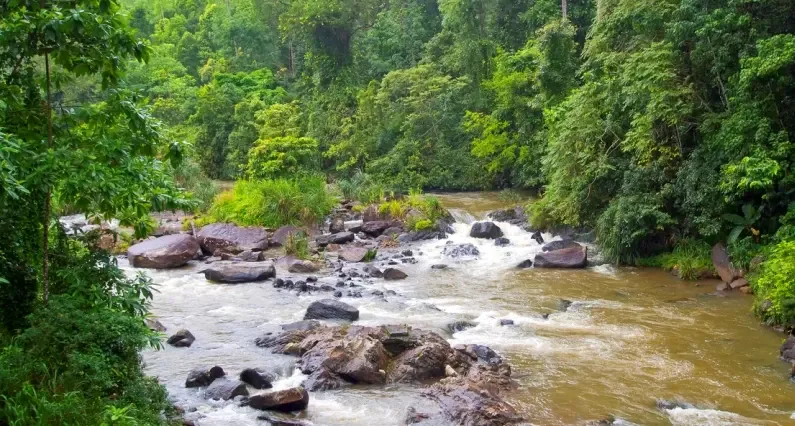
Sinharaja Rainforest in southwest Sri Lanka and the Valley of Flowers in Uttarakhand. which is popular with hikers, have been named as among the most popular hotspots for people aiming to slash their screen time and break mobile phone habits.
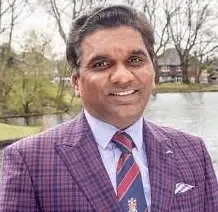
Dr Chandra Kanneganti
Luxury cruise company Panache Cruises reported an increase in demand from customers seeking to escape to locations beyond the reach of a phone signal and the internet. And the new holiday trend has been backed by doctors who have warned that excessive screen time can hamper sleep, lead to mental health problems and muscle aches.
Dr Chandra Kanneganti, a GP in Staffordshire, said he has seen an increase in patients for phone-related problems.
Kanneganti, president of the British International Doctors Association, told Eastern Eye: It’s not just teenagers or youngsters, we are seeing it across the board, [with people] spending eight-10 hours a day watching a screen.
The constant exposure can cause lack of sleep, insomnia, lack of concentration, and can lead to depression and other mental health issues. It’s a vicious cycle.
Constant exposure to screen light can also cause migraines, affect eye sight as you need sunlight for vitamin D for your bones to stop aches and pains.
Such detox centres should come to the UK too. The phone has become like a part of our body – when we wake up, the first thing we do is look at our phones.
I am glad these places are open in India to help people addicted [to their devices].” Panache Cruises said its survey also found that the Koija Community Starbeds lodge in Kenya and Mumbo Island in Malawi were other popular wi-fi-free destinations this year.
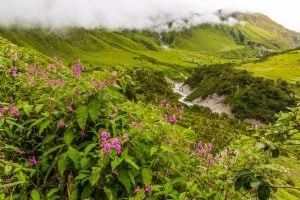
On the Valley of Flowers national park, the Lancashire- based company said: Perfect for hikers wanting to escape social media and their phones, this destination is a 17km trek from the nearest town, Joshimath.
The National Park is full of some of the world’s rarest and endangered animals such as snow leopards and the Asian black bear. With an extensive rocky and rugged landscape, the park sits within two mountain ranges – easily blocking out all phone signals for visitors to the area. A blanket full of colourful, diverse flowers and fauna, the Valley of Flowers is one of the most beautiful destinations for those looking to unplug.”
James Cole, founder and managing director of Panache Cruises, said: We are seeing increasing popularity for remote holiday destinations, with many customers reporting they are looking forward to switching off their phones and escaping technology for a while.
Some really struggle to switch off, but by choosing to journey to a truly remote location where even on-board connections will be slow at best, they may find it easier to go cold turkey.”
Luckily even in 2023, there are still some spots on earth beyond the reach of the internet and mobile phone signals.
When you go on holiday it’s now become standard to upload pictures of your travels on social media – but with a completely unplugged trip away, it instead becomes mandatory to take in the memories for yourself and look at the stunning landscapes and exotic wildlife through our own eyes, rather than through a screen.
Getting away from technology and hectic schedules is a great stress-buster. The Valley of Flowers in India is full of some of the world’s most exotic and endangered animals, and Antarctica is truly one of those destinations where you can completely escape from the chaos of everyday life.”
However, Kamran Uddin, a technology writer, said it was hard for people to switch off unless they go off grid” or travel abroad to have a digital detox.
He told Eastern Eye: The latter is less extreme than the former, and after the Covid pandemic where people have been stuck at home with electronic devices for two years, I can understand why some might be itching to just get away from life here in the UK.
India and Sri Lanka are popular destinations due to their religious and spiritual significance. Both countries are also densely covered by mountains, trees and rivers, where research has shown are key ingredients for our mental wellbeing.
The respective countries are also home to lots of religious saints from different faiths such as Islam, Hinduism, Sikhism and Buddhism.
When you look into their lives, most of these saints preached detachment of the material world and reformation of one’s inner diseases such as ego, pride and jealousy to their followers.”
Aman Sunner is a self-worth and confidence mentor at Aman Sunner Mentoring.
She said: So many of us live such busy lives. With the constant hustle and bustle of work, family, social life and with social media on top, we rarely get time to switch off.
All of these aspects are energy leaks in our daily life, but we often don’t see the digital side of things as a physical leak, so it can be overlooked.
However, the truth is when you show up on stories or social media, you are giving your energy out to hundreds and possibly thousands of people on a daily basis.
Often we see ‘shutting off’ as a negative thing because of the societal conditioning that sitting still or not doing anything is lazy: whereas in actual fact, breaking away from the normal hamster wheel of life and stepping into flow to fill yourself back up can ignite your life.
Next time you feel the need to take a break from people or do a digital detox, don’t feel bad. Remember, you are a human being, not a human doing.”
Officials say Iqbal alias Bali Khayara was wanted for 26 cases of terrorism and targeted killings
Terrorist Iqbal alias Bali Khayara, who was a member of Al-Qaeda and Tehreek-e-Taliban Pakistan (TTP) Khayara group, was killed in a police encounter near Fateh Moor in Dera Ismail Khan, police officials confirmed.
Iqbal was one of the most wanted terrorists, and the Khyber-Pakhtunkhwa and Punjab police had announced a reward of Rs10.5 million for his capture, dead or alive.
Inspector-General of Khyber-Pakhtunkhwa Police (IGP) Akhtar Hayat Khan, while speaking to a private TV channel on Thursday, said the police retaliated after an attack carried out on them by Iqbal and killed him, along with an accomplice.
He said that Iqbal was wanted for 26 cases of terrorism and targeted killings. He was accused of targeted killings, terrorism and abduction of Shia Muslims in 21 cases by CTD DI Khan whereas he was also wanted by Multan police in five other cases.
Additionally, DI Khan police officials say that Iqbal was also involved in a recent suicide bombing at the District Headquarters Hospital, as well as the 2009 attack on the Sri Lankan cricket team in Lahore.
The attack on the Sri Lankan cricket team claimed the lives of seven police officials and left seven players including Mahela Jayawaredene, Kumar Sangakkara, Ajantha Mendis, Thilan Samaraweera, Tharanga Paranavitana and Chaminda Vaas injured.
The attack drove cricket and most other international sports from Pakistan for years which only returned after the security significantly improved in the terror-hit country.
The kankariya dance all started with a legendary demon queen named Kuweni
How This Demon Dance Banishes Illnesses in Sri Lanka’s Remote Jungles
Sri Lanka. Elaborately dressed dancers spin and swirl as their ornate silver headpieces gleam and bright red ribbons trail behind them. Their chests rise and fall beneath silver-beaded breastplates and two large mango-shaped earrings adorn their ears. The dancers carry candle-lit, hollowed-out coconuts and chant verses inviting gods and demons to their ritual. Sweet-smelling smoke from jasmine incense fills the air, obscuring the view of a banana bark altar with pictures of various Buddhist deities. As hundreds gather, the dancers tell the sad tale of the mythic, magical queen Kuweni.
This is kohomba yak kankariya. Several times a year, often in April, Sri Lankans in the country’s mountainous, central region hold this ritual to cure illnesses, prevent diseases from spreading, and seek blessings from the supernatural world. While today the ceremony tells Kuweni’s story, whose name is sometimes spelled Kuveni or Sesapathi, in ancient times, the ritual was believed to have lifted the illness-causing curse Kuweni had placed on the province.
According to legend, Kuweni was born in the 6th century BC to a yakka king who ruled Sri Lanka. The Sinhala word yakka is derived from the Pali word yakkha (Pali is a liturgical language often used in Buddhist texts) and the Sanskrit term yaksha, which translates to demon.” Dipavamsa, the oldest historical account of Sri Lanka, describes yakka as a disorderly tribe of demons who eat human flesh and fight with each other. Although her father was a demon, Kuweni may not have been one herself.
Then Prince Vijaya, a legendary Indian prince, and 700 of his followers invaded demon-controlled Sri Lanka. Kuweni appeared before the prince disguised as a hermit spinning cotton. Vijaya soon promised to marry Kuweni and make her his queen. Trusting him, she betrayed her father and demon brethren and helped the prince slaughter them. Only a few of the yakka escaped into the Sri Lankan jungles. After Vijaya took power, he broke his promise to Kuweni and married a South Indian princess, establishing the Sinhalese people who today make up the majority of Sri Lanka’s population. Jilted and angry, Kuweni cursed Vijaya and his successors before the remaining yakka killed her out of revenge.
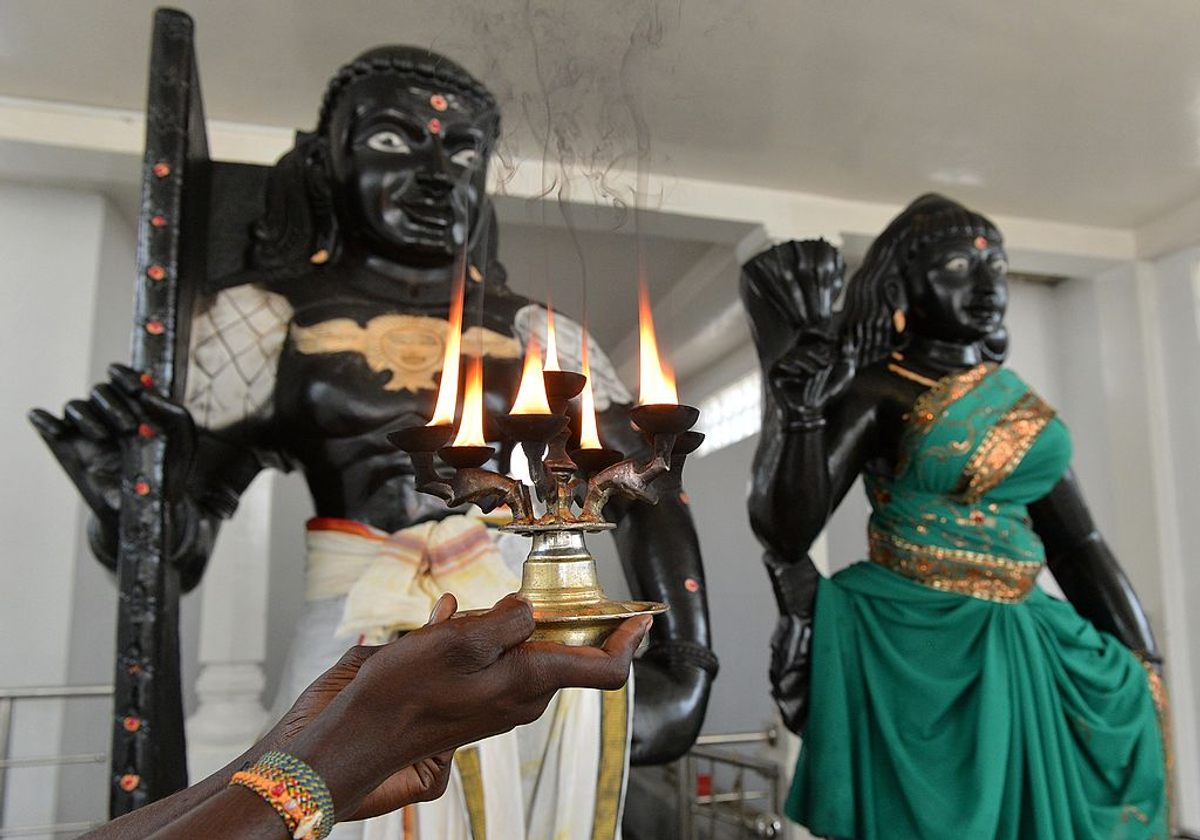
A Hindu priest holds a lit coconut oil lamp in front of statues of Prince Vijaya (left) and Kuweni (right) at the Sri Subramaniam temple in the southern Sri Lankan town of Matara. ISHARA S.KODIKARA/STRINGER/GETTY IMAGES
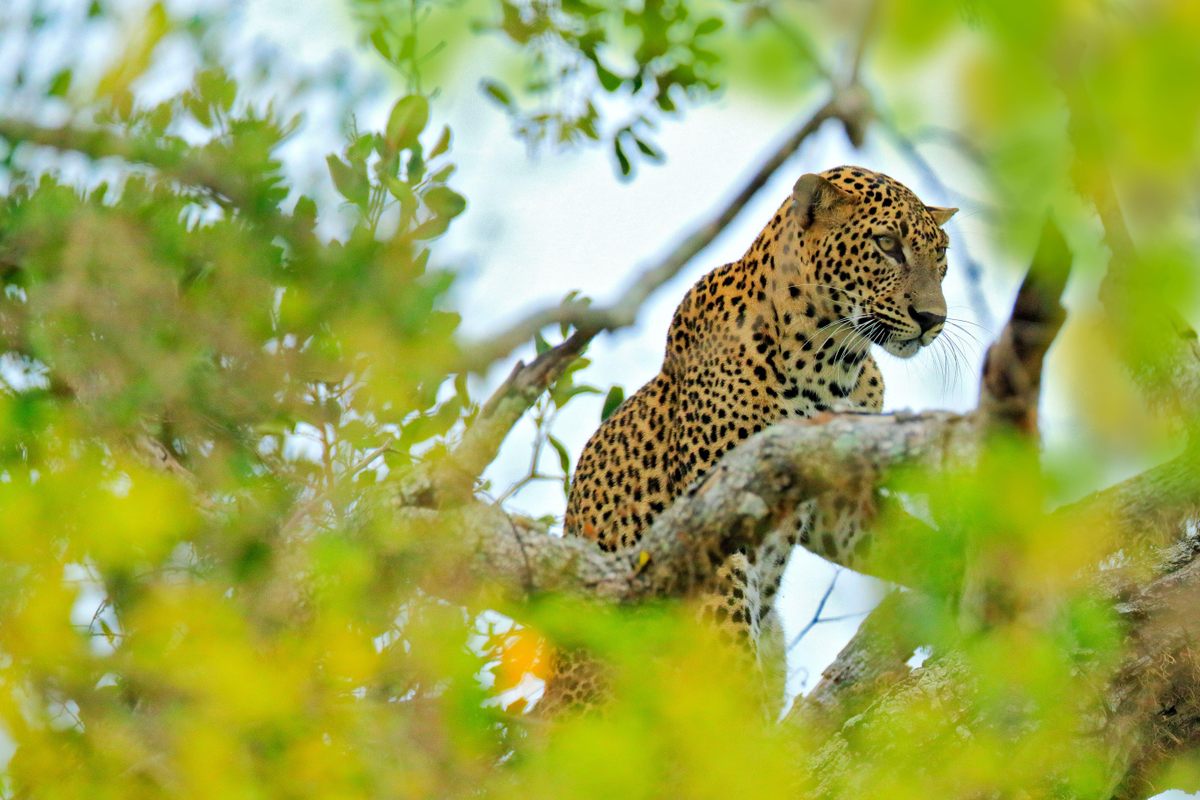
Later, when Vijaya’s nephew Panduwas arrived in Sri Lanka to take the throne as his uncle’s successor, Panduwas began to suffer from a mysterious illness. He couldn’t sleep. Night after night, Kuweni, in the form of a leopard, appeared in his dreams and tried to kill him. Sleep deprivation drove Panduwas insane. Kuweni finally had her revenge.
In his book Kohomba Kankariya: The Sociology of a Kandyan Ritual, social anthropologist Sarath Amunugama wrote that Kuweni’s leopard is a symbolic representation of the fatal lie that was uttered by Vijaya to Kuweni to facilitate his conquest.” Panduwas suffered due to his uncle’s lie to the queen, wrote Amunugama.
When Lord Sakra, the ruler of heaven in Buddhist cosmology, sees Panduwas unjustly suffering for his uncle’s deceit, he tells an Indian king about a ritual that will cure the ailing Panduwas. The king performs the ritual, and Panduwas recovers. Later on, the king instructed a local prince named Kohomba to perform the ritual any time it was necessary to repel Kuweni’s illness-fueling ire. Since then, the ritual, called kohomba yak kankariya in honor of the prince, is performed any time a mysterious illness descends upon the community.
Today, folk priests—village priests who conduct ancient rites such as the kankariya—continue to perform the ritual dance whenever local communities are plagued with diseases, such as chickenpox. One such priest is 29-year-old Abheeth Shilpadhipathi, whose father and grandfather taught him the kankariya. Recently, when Shilpadhipathi drummed in a kankariya, it was to ward off the Covid-19 pandemic that plagued the country. Originally, the ceremony would’ve lasted for about seven days, but today it takes less than a day.
Queen Kuweni was said to stalk the nightmares of King Vijaya’s nephew, Panduwas, in the form of a powerful leopardess. ONDREJ PROSICKY/ALAMY
Before [the kankariya] begins, the chief [folk] priest pledges to the gods their intention in conducting the ceremony,” Shilpadhipathi says. In the past, individual families performed a kankariya to cure diseases, but because it’s an elaborate, expensive event, families rarely host them anymore. Buddhist temples and large social groups now conduct them annually or seasonally both as a healing and fertility ritual and sometimes just to keep the tradition alive. People do it to show their gratitude for a good harvest or good fortune,” says Shilpadhipathi.
People also perform the kankariya ritual to bestow good health, wealth, and even good school grades, says Sanushki Athalage, choreographer at Thaala Asapuwa, a Sri Lankan Dance Academy in Victoria, Australia, where they teach the kankariya along with other traditional dances. It is also about giving and being selfless in return for a prosperous life. It is a beautiful concept that brings larger communities together in a common goal,” Athalage says.
Buddhism in Sri Lanka is a complex system that incorporates shrines, rituals, and priests” who negotiate with a vast pantheon of gods, deities, and demons, says Amunugama. Sri Lankan Buddhists believe that prayers and rituals, such as the kankariya, are a way to seek blessings and build good karma.
Religious ceremonies are also a way to prevent meddlesome demons from interfering in people’s lives. Kuweni isn’t the only entity that can cause illnesses. Local folklore is full of demons who hunt humans and make them ill. When someone becomes sick, local priests are called in to identify the specific demon causing the illness. Once identified, the priest summons and vanquishes the demon in a dance or ritual, similar to the kankariya. One popular ritual performed in southern Sri Lanka is the Daha Ata Sanniya, which is sort of a catch-all ritual that can cure illnesses caused by 18 different demons.
Even today, the mountainous jungles of central Sri Lanka teem with legends of demons, known as yakkas. EFESENKO/ALAMY
Rituals like these are performed to relieve anxieties around mysterious diseases,” says Athalage. When families are anxious, they seek blessings and help from higher powers to cure something that they don’t understand.” For the villagers, this excursion into the supernatural” will help them live a relatively untroubled life,” wrote Amunugama in his book. These rituals are a way to understand the incomprehensible, like why a loved one falls ill.
Although Kuweni caused illnesses like other demons, Shashiprabha Thilakarathne, a folklore scholar at the University of Moratuwa in Sri Lanka who researches Kuweni, explains that the demon queen might’ve been human. It’s difficult to say who she is. Folk literature tells us that she has supernatural powers. Sometimes she could even take the form of different animals,” Thilakarathne says, explaining that her magic” made Vijaya’s weapons fall on demons’ bodies.”
But in the last few decades, Kuweni has appeared as a character in pop culture, from television dramas to songs and plays. Kuweni has become relatable—her motives clearer. Today Vijaya is often recast as the villain and Kuweni as the maligned anti-hero. She has shifted from a female demon spawn who cursed Sinhalese people to an embodiment of the modern woman, Thilakarathne explains. She is a wife, daughter, and mother. While Kuweni shares many traits with traditional yakka, she also stands out from them. She’s demon-like, but not a demon herself.
Kuweni, as I understand, is a model we can apply to our modern society. At one point, she’s a daughter, then a lover and parent. She goes through many different challenges in life,” Thilakarathne says, she represents us.”
Sri Lankan firm Browns Investment Plc has bought an undisclosed stake in multinational tea firm James Finlay Kenya in a deal that will see locals hold a 15 percent ownership through a co-operative.
Finlay, with farms in Kericho and Bomet counties, will also retain the Saosa tea extraction facility, which will be used to source and process green leaves from outgrowers.
Finlay Kenya’s managing director, Simeon Hutchinson, said the deal would be completed in the next few months.
We undertook a rigorous process when identifying a buyer for this unique business, prioritising what was best for James Finlay Kenya and its community,” James Woodrow, Finlays group MD, said.
The multinational has had long-running disputes with local communities, trade unions and county governments over mechanisation of its tea estates, which resulted in massive layoffs of pluckers.
As part of the sales agreement Browns and Finlays have mutually agreed to acknowledge the long-standing support of the local community by selling 15 percent of shares in James Finlay Kenya to a locally owned co-operative,” the firm said.
Mr Hutchinson said talks are ongoing with the unnamed co-operative.
He said the sales deal would not affect the terms of current employees.
Browns is part of the LOLC Holdings conglomerate, which acquired Finlays tea estates in Sri Lanka two years ago.
Colombo, May 4: The High Commission of India in Sri Lanka is holding a special exhibition of India’s rich Buddhist heritage as part of the Buddha Rashmi National Vesak Festival at Seemamalakaya, Gangaramaya Temple in Colombo.
The exhibition shows the digital recreations of the Ajanta cave paintings marks the Buddhist festival of Vesak. It is open for public viewing from 5-7 May .
The President of Sri Lanka, Ranil Wickremesinghe, accompanied by High Commissioner Gopal Baglay, senior Ministers and other dignitaries visited the exhibition at the soft opening of the Vesak Festival, jointly organized by the President’s Secretariat, the Prime Minister’s Office and the Gangaramaya Temple on 3 May.
ADVERTISEMENT
The exhibition, which commemorates the birth, enlightenment and Mahaparinirvana of The Buddha on the Vesak Full Moon Poya Day, underlines the civilizational connect between India and Sri Lanka.
The exhibition displays digital recreations of the fresco paintings from the world-famous UNESCO Heritage Site the Ajanta caves of India, depicting significant episodes from Lord Buddha’s life and the Jataka tales.
The Ajanta Caves are Buddhist cave monuments in Maharashtra, in India, dating back to 2nd and 1st centuries B.C.
The Exhibition is yet another testimony to India’s untiring efforts to preserve and restore the Buddhist heritage in India and across the world.
The Curators of the exhibition Ankur Naik and Prasad Pawar gifted a replica of the digitally restored Padma of the renowned ‘Padmapani’ on an original basalt stone to President Ranil Wickremesinghe, in what is a vivid example of the impressive restoration work which is being carried out in the Ajanta caves.
The exhibition was displayed at the first Global Buddhist Summit held in New Delhi in India from 20-21 April 2023. Prime Minister Narendra Modi had viewed this Exhibition at the Summit.
Colombo, May 4: The Pakistan High Commission set up a Pakistan Pavilion near Gangaramaya Temple, Colombo as part of the National celebrations of Buddha Rashmi” Vesak Festival, 2023. The soft inaugural of the festival was done by the President of Sri Lanka Rani Wickremesinghe on 3rd May.
During the visit, the President and the Foreign Secretary Aruni Wijewardene signed the Pakistan Embassy’s ‘Visitors’ book. The pavilion was appreciated by all visitors
The Pakistan Pavilion beautifully show-cased the rich Buddhist heritage of Pakistan. The statues of the Fasting Buddha, preaching Buddha, meditating Buddha and replicas of many other artifacts indigenous to Pakistan Gandhara Civilization are the highlights of the pavilion. Moreover, photographs of the 2500 years old Buddhist civilization found during excavations over decades are also part of the exhibition.
This year, the Vesak Festival brings the two friendly nations further close as 2023 marks the 75th year of the establishment of diplomatic relations and friendly ties between Pakistan and Sri Lanka.
The Pakistan Pavilion situated next to the Colombo City Center will remain open for public from 5 to 7 May from 7:00 pm till 12:00 am daily.
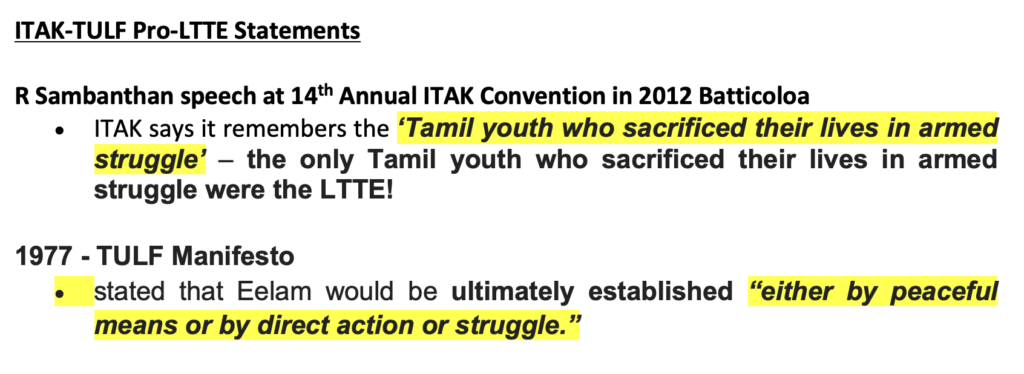
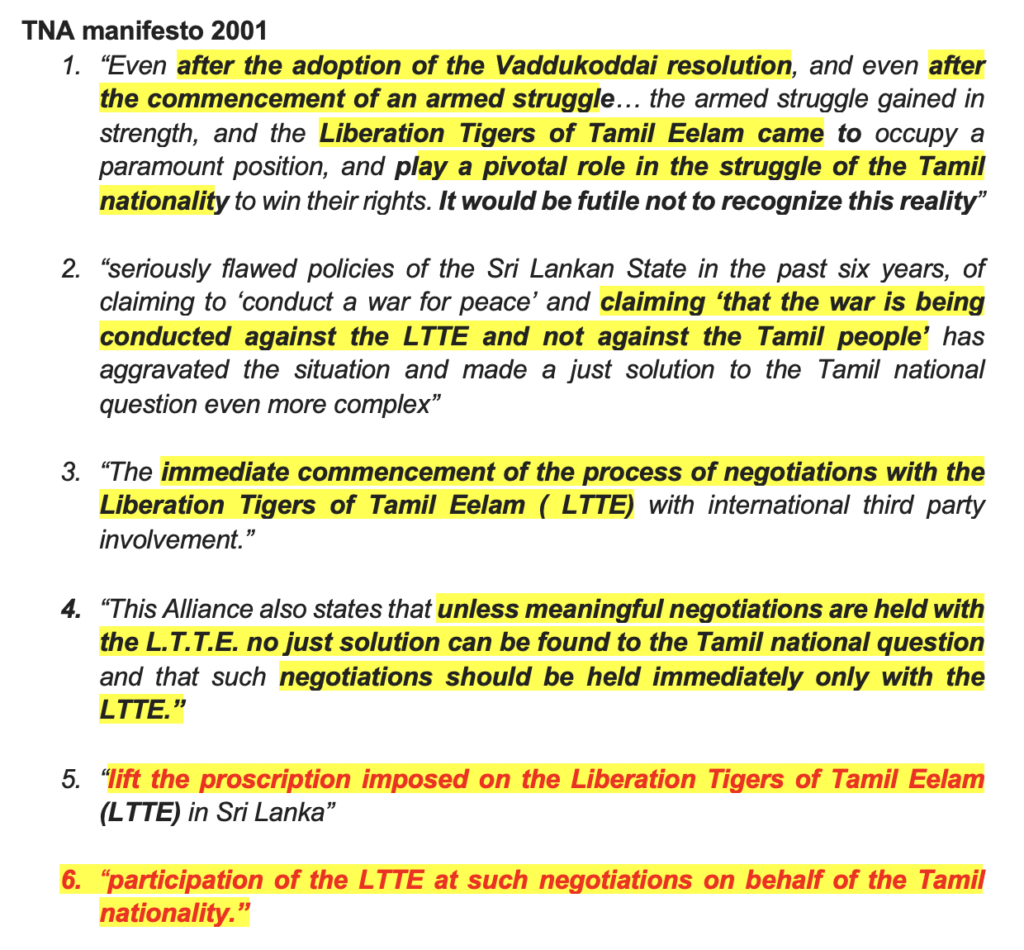
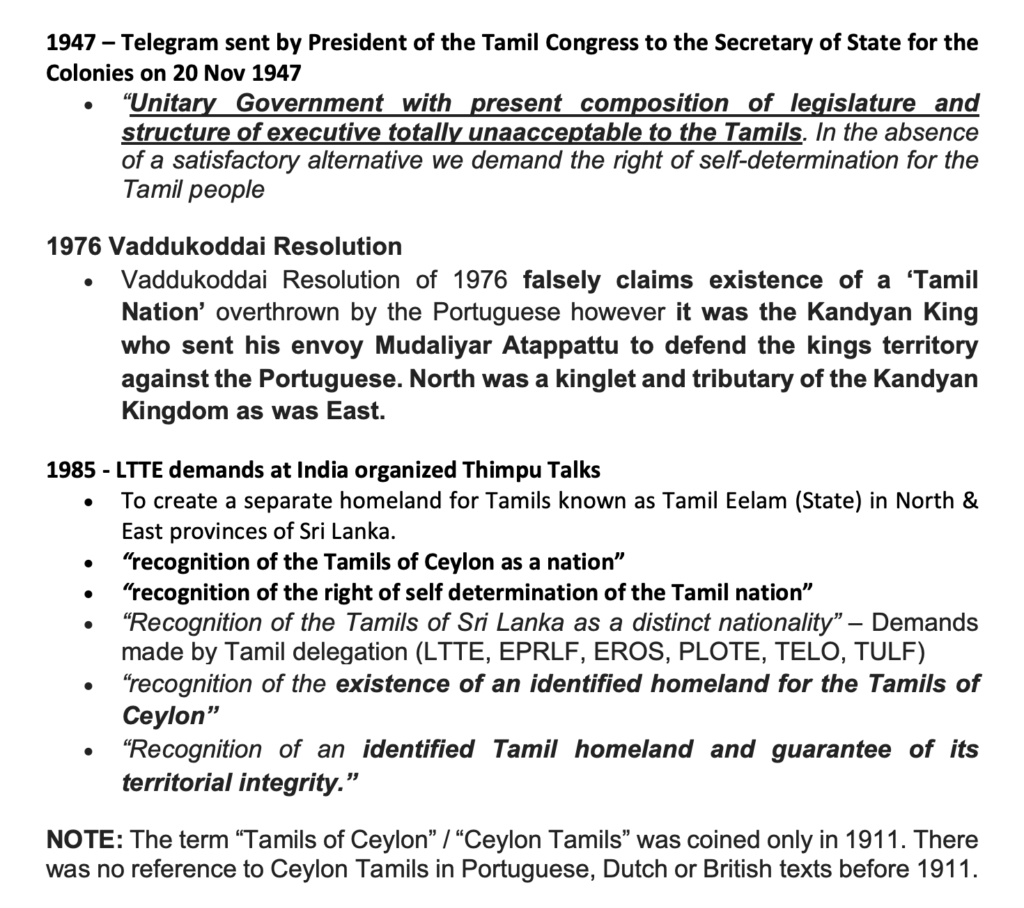
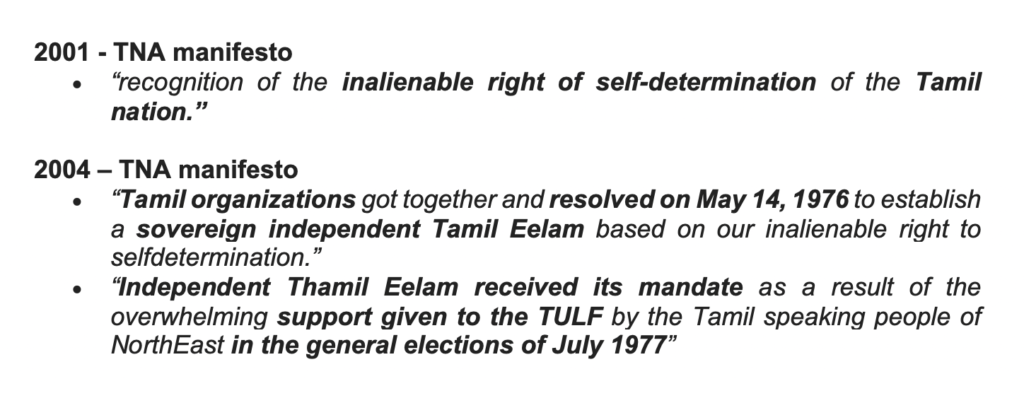
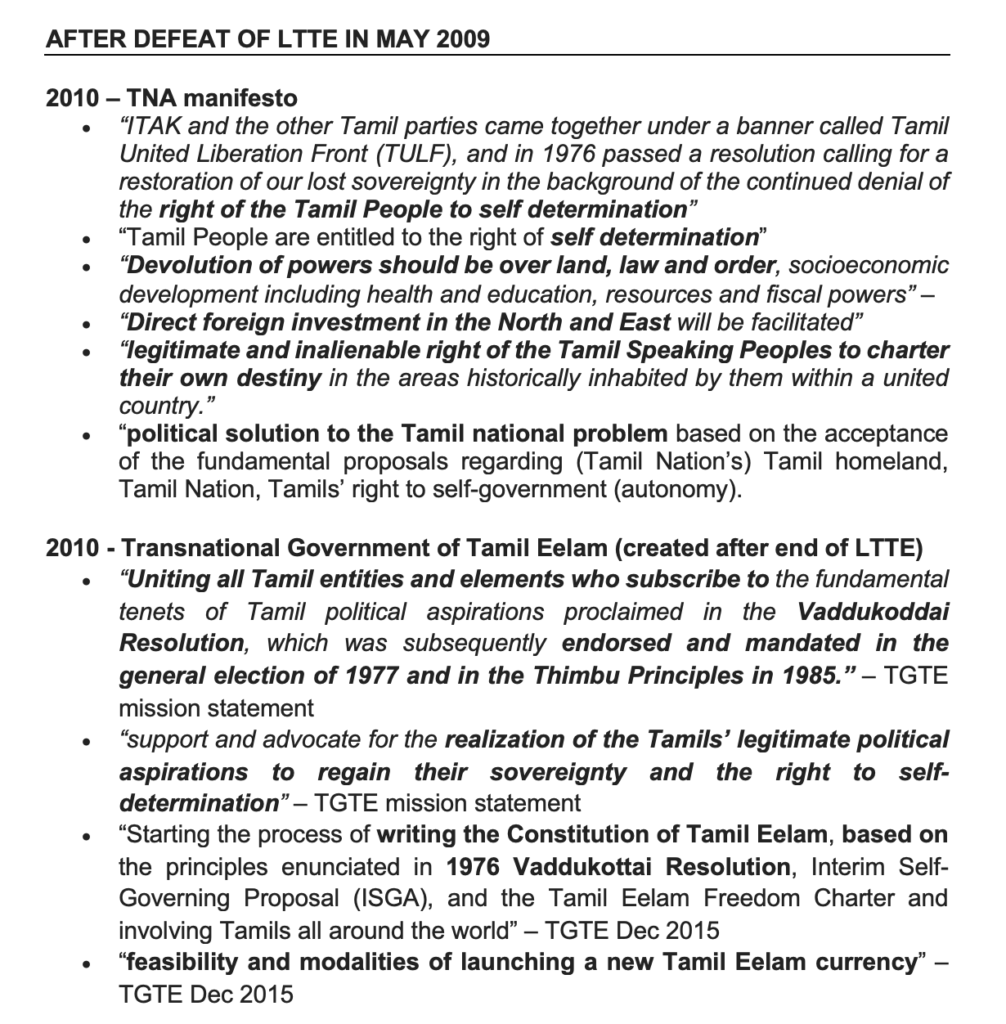
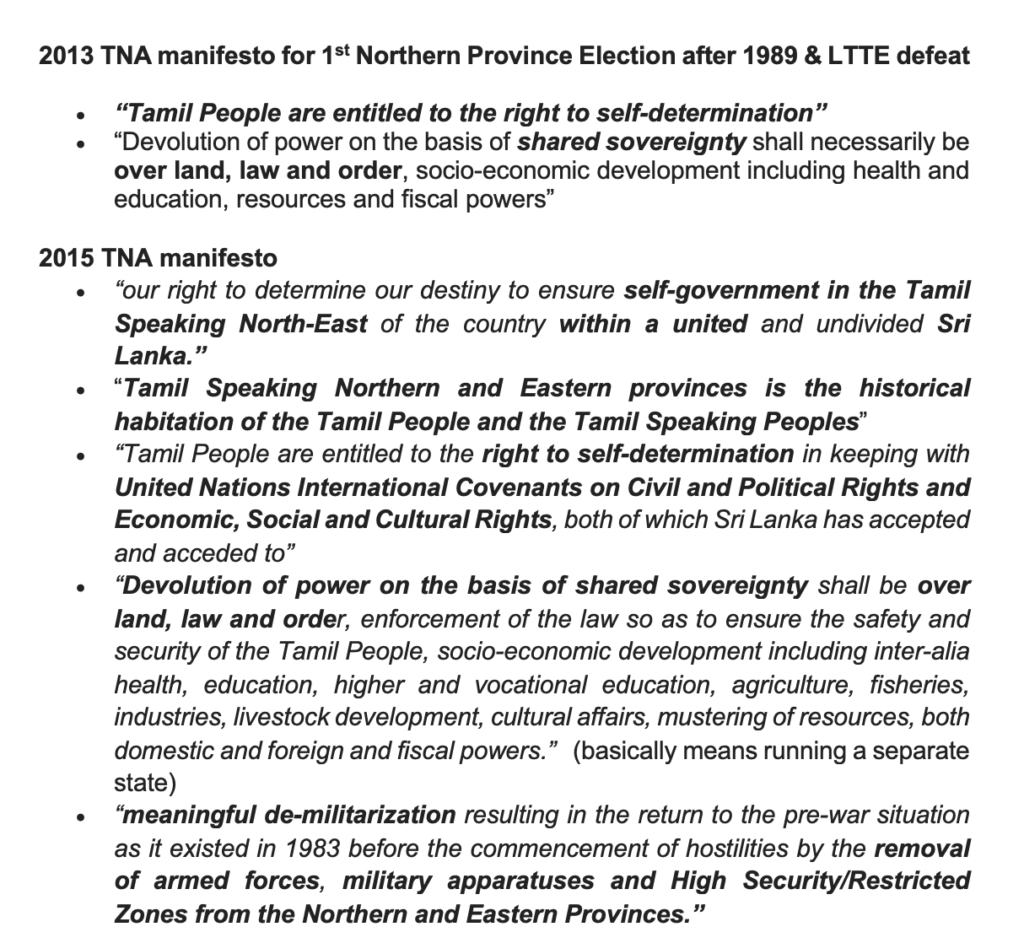
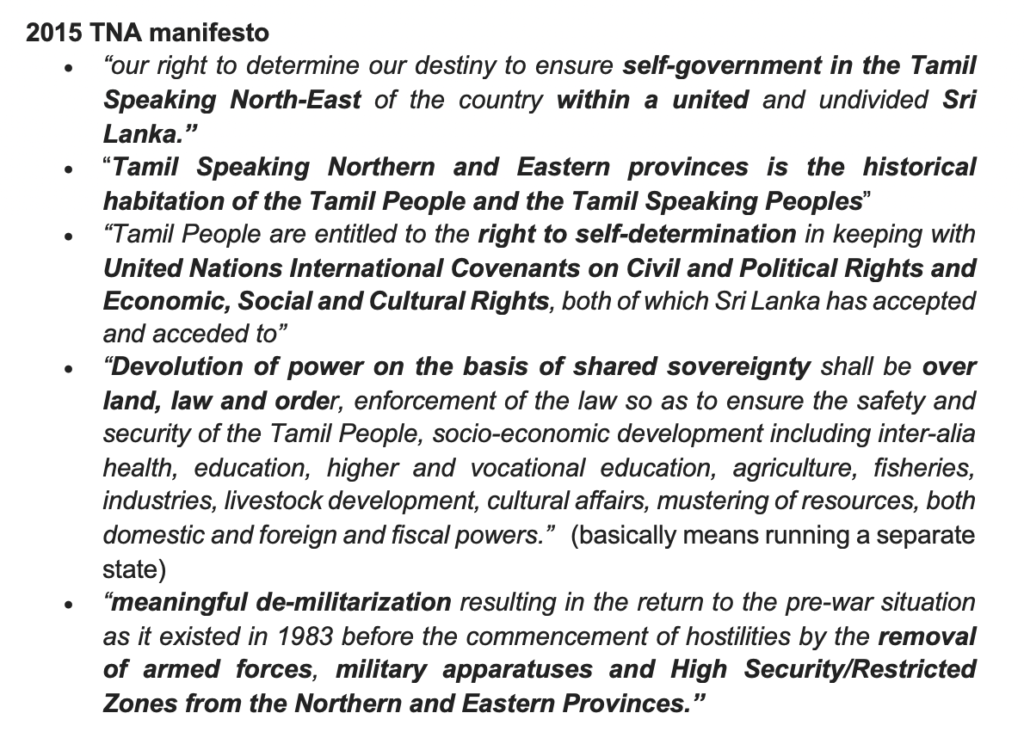
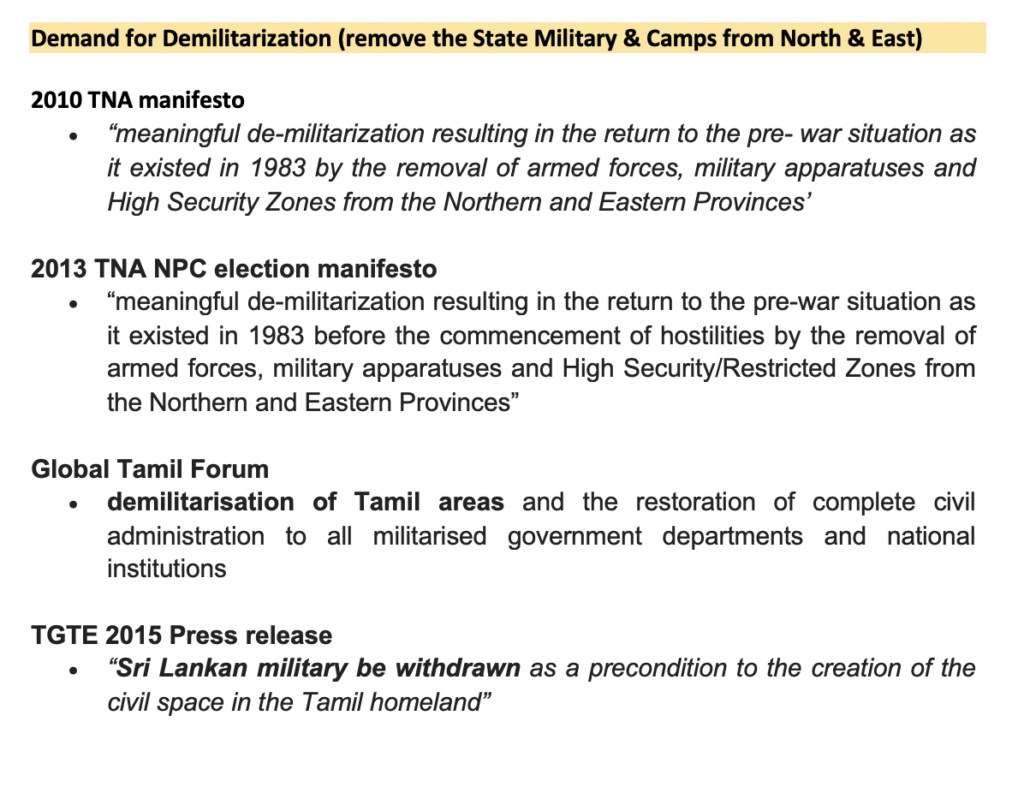
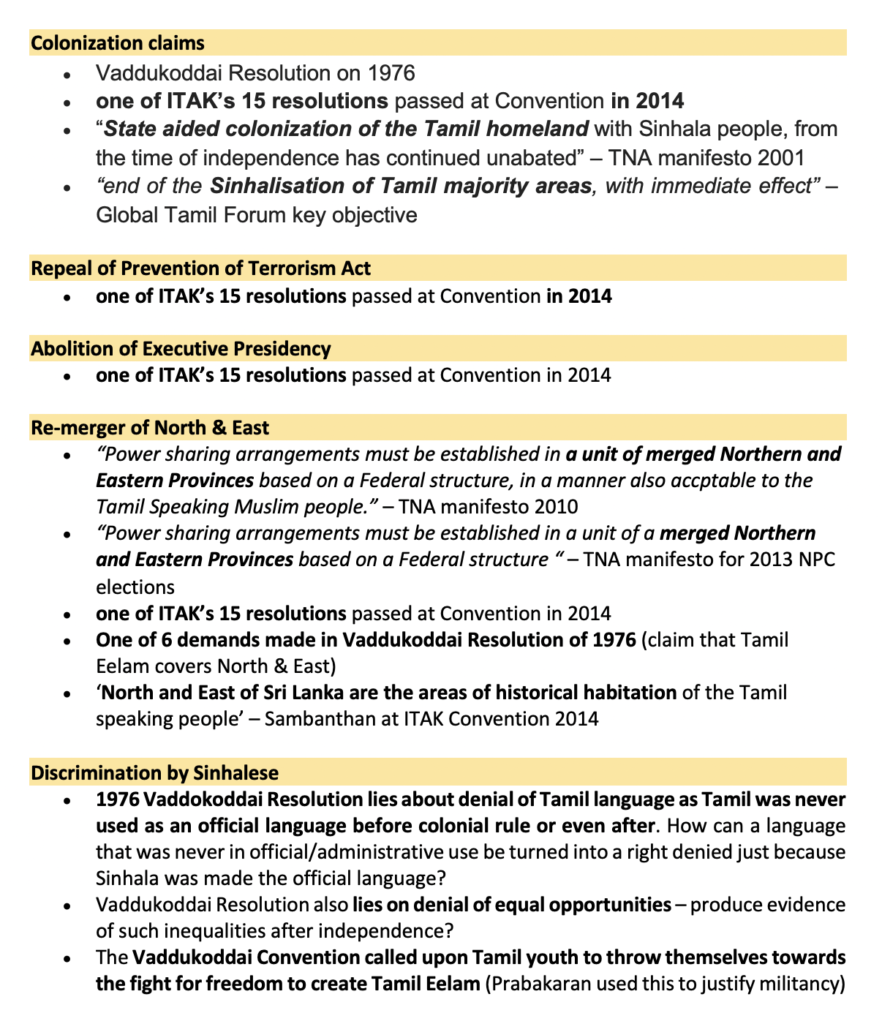
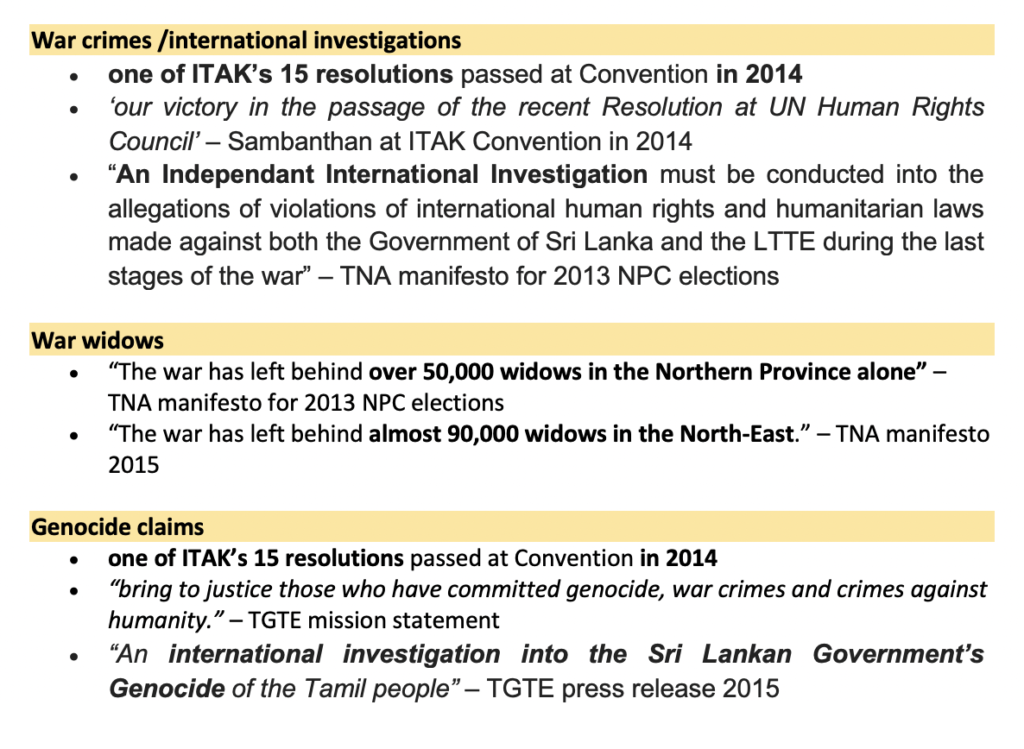
LTTE is demanding a separate Tamil Eelam – so is TNA & even LTTE fronts. Anyone in doubt need only to take their statements, press releases, election manifestos, webpages, interviews to relieve their doubt. What no one can forget is that TNA was created as the political wing of the LTTE no sooner US declared its War on Terror in 2001. Majority of the TNA members were part of the TULF that openly advocated a separate Tamil Eelam in 1976 via Vaddukoddai Resolution. It was in that same year that Prabakaran rechristened his Tamil New Tiger movement as LTTE. However, the US-India regime change in 2015 propped TNA/ITAK as leader of the Opposition. That same year Sri Lanka went on to co-sponsor the UNHRC resolution politically accepting war crimes by Sri Lanka’s armed forces & lifting bans on LTTE fronts. While Tamil politicians, LTTE & LTTE fronts seek a separate state, why would West, India & UN apparatus support this contrary to what they preach diplomatically?
If the statements by LTTE & Tamil political parties as well as echoed even inside the Jaffna university which is run with public funds, are virtually on par with each other, it means they share a common ideology.
However, with the defeat of LTTE in May 2009, the military arm of that ideology was quelled. What the political players failed to understand was that the ideological arm of separatism continued & began to thrive thereafter in fusion with geopolitical agendas.
To a certain extent the LTTE quelled the rise of the political ideology through Prabakaran’s military might, yet no sooner he was eliminated the separatist worms came out of the political closet both in Sri Lanka & overseas. They saw the weaknesses of Sri Lanka’s political parties & players & used their funds to accentuate their separatist quest to another level, that would have been impossible had Prabakaran been alive. Confounding matters was the manner that geopolitical players & their agents gave oxygen to this quest.
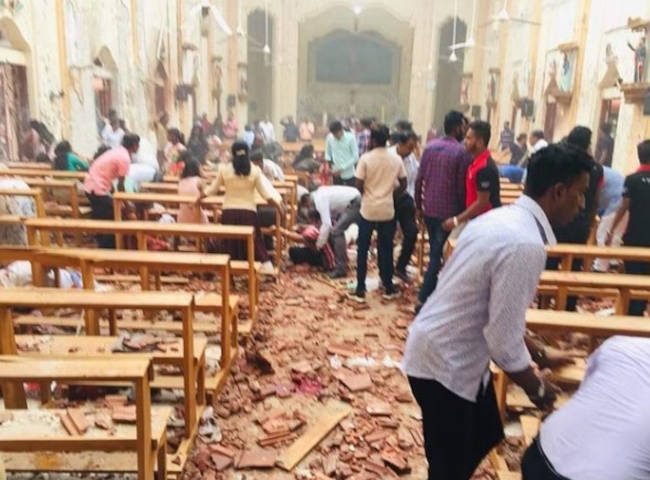
This is why all of the players that were on the side of LTTE have become the post-LTTE champions of reconciliation” peace doves” and accountability” crusaders. This surely exposes their hypocrisy. They ganged up to bring terror on Sri Lanka & now they are ganging up to bring a different form of terror. These come in the form of organizing street protests to remove military & camps in the North & East and not allowing Sinhalese & Muslims chased out from the North to return to their original habitats.
Will the countries that demand Sri Lanka close its camps in North & East, first leave the illegally occupied countries they are keeping their troops for over 20 years.
The quest to separate though initially launched in South India was encouraged in Sri Lanka via Tamil politicians. The 50-50 demand, to the formation of ITAK (Tamil State Party) in 1949 & thereafter the Vaddukoddai Resolution in 1976. The Church played a key role throughout & perhaps considered the architects of the slogans that were used. Fast forward to present day politicians – the younger politicians screaming for homelands” are all linked to some form of Church.
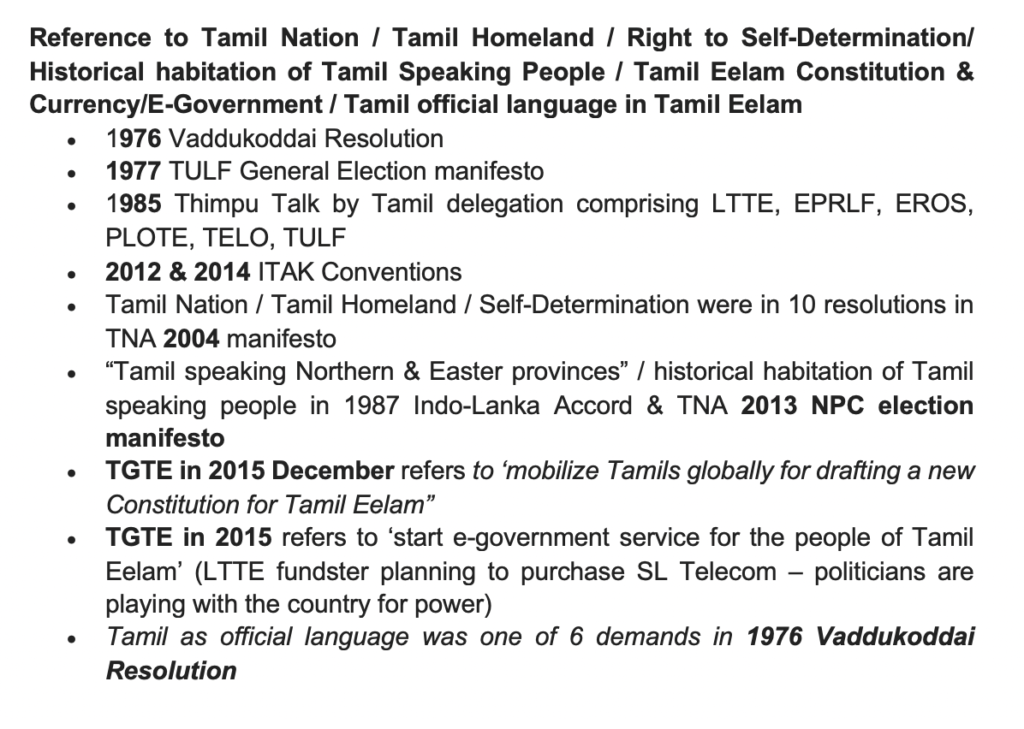
The TULF contested the 1977 general elections using the 1976 Vaddukoddai Resolution.
12 years later in 2001, LTTE took reigns & formed the TNA alliance which comprised TULF, All Ceylon Tamil Congress, India created TELO & EPRLF.
8 years later the Global Tamil Forum was created in 2009 & had as its policy advisor Joan Ryan, Labor MP. Following the demise of Prabakaran, a plethora of LTTE fronts began emerging to claim stake to the LTTE kitty as well as take the Eelam” demand to another level. These outsourced eelamists” must be the only foreign-passport holders claiming a ‘separate homeland’ that they will never live in but are able to generate funds & churn stories of history that even historians should feel embarrassed about.
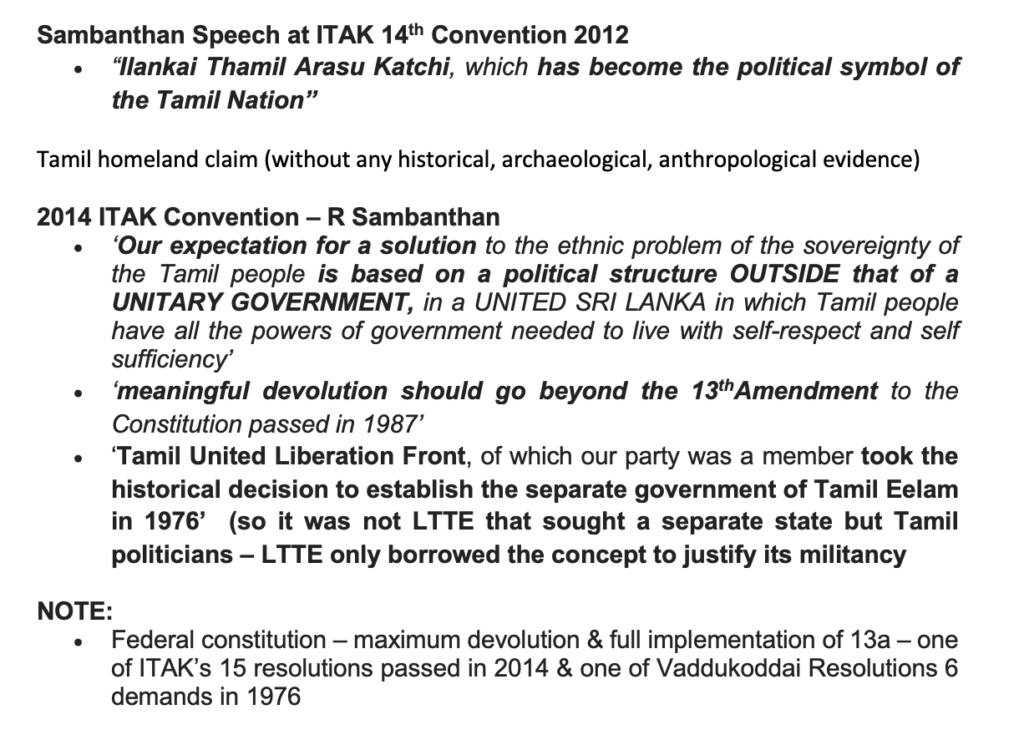
With LTTE military defeated & LTTE leader eliminated, the baton to ‘separate Sri Lanka’ was passed to ITAK which was echoed at the ITAK 2014 Convention – ITAK is now the legitimate representative of the Tamil people”.
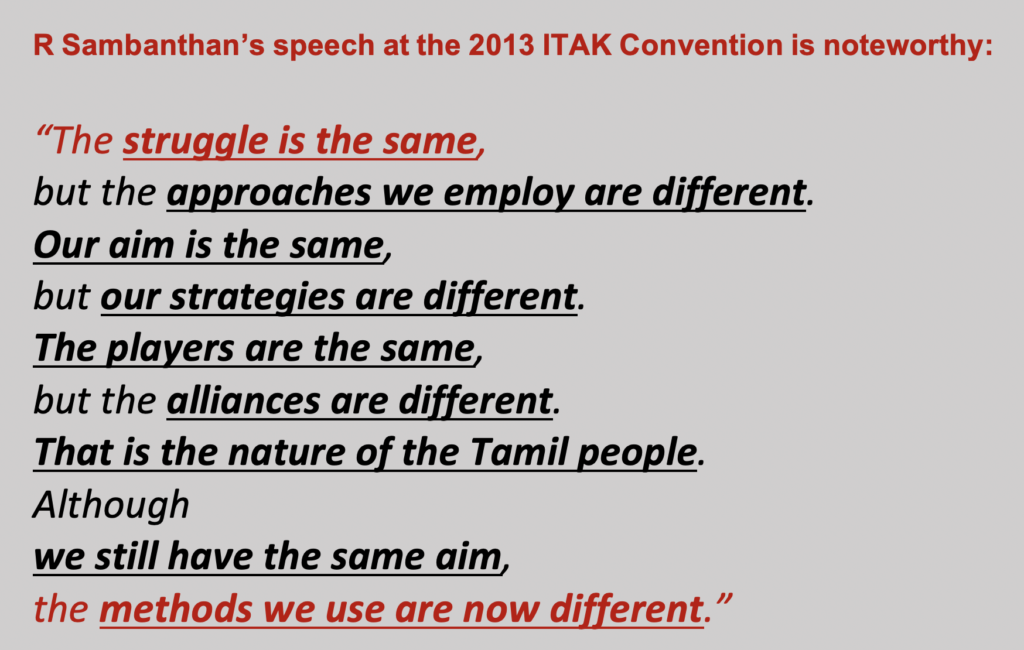
It was at this same ITAK convention that R. Sambanthan its leader declared that India will never welcome a political solution in Sri lanka that does not accord with the interests of India”.
In short it meant that whatever solutions” were being laid on the table had to be advantageous to India not the Sri Lankan Tamils. While the Sri Lankan politicians both Tamil & Sinhalese are well aware of this fact, majority of Tamils are ignorant.
Thimpu Talks got nowhere because it was not ‘advantageous to India’,
The Federal Constitution got nowhere because it was not ‘advantageous to India’.
Indo-Lanka Accord stands in limbo until India can secure its hold of key assets/resources in North & East & thereafter it will push for full implementation & autonomous rule. Another area that Sri Lanka’s politicians & policy advisors have failed to comprehend the scope of threat.
There is a steady pattern to the demands that were initiated by Tamil political parties & not the LTTE. All of Sri Lanka’s governments have failed to see these patterns & devise strategies to address them. Government police makers have failed to read the constitutions of TULF, ITAK, TNA, LTTE fronts & put the puzzle of their ultimate goals & aims. All of Sri Lanka’s Governments have fallen for the reconciliation bogey and followed a cuckoo land scenario thinking everything to be honky dory by spreading love while the enemy is busy preparing the grounds to declare self-determination.
There is no reason for any elected government to be negotiating with any party if their aspiration is to separate Sri Lanka under whatever nomenclature in an armed or political effort. This political bargaining, that is not based on the interest of the citizens, must stop.
Rahula College, Matara, a secondary school made a notable contribution in the Divisional Council Development Programme(DDCP) of Sri Lanka(1970-1977)
As the Government Agent of the District, I was in charge of implementing the DDCP in the Matara District and in order to commence a new industry I decided to try to make crayons, an item which was imported. I had a Planning Officer Vetus Fernando, a chemistry hons. graduate of the University of Colombo. He was helped by two science teachers from Rahula College and the Science Inspector, the late Major Rajapaksa. With a few evening experiments at my Residency, it was found that more science equipment was essential. I met Mr Ariyawansa, the Principal of Rahula College and requested the use of the science laboratory after school hours for our use. He readily agreed. The science lab was thereafter our domain from six in the evening to midnight every working day, when the Planning Officer helped by the Science Teachers did a myriad experiments. In two months we found the art of making crayons of unsuitable texture. The Planning Officer who had passed out of the University the earlier year, then came forward with idea of his proceeding to obtain help from his professors at the University of Colombo. He specially mentioned that the science lab at the University had better equipment that would enable success. I authorized the trip and he took off. Four days later the Planning Officer turned up, a broken down man. He explained that he had met the professors who had taught him and begged of them for help repeatedly on three days, but was turned away on the ground that they were too busy with their teaching work and correcting answer scripts. This rejection of help made us more determined and we recommenced our nocturnal activity of experiments at Rahula College Science Lab. I myself was present on a large number of days when a myriad experiments were repeatedly done. Finally in a months’ time we found the art of making crayons. I sat by the Planning Officer finalizing the art for the crayons to be equal in quality to Reeves Crayons, the best of the day. All this was achieved in a sparsely equipped science lab at Rahula College, Matara.
Then the question cropped up as to how we could establish an industry. It was a simple task for me to summon one of the industrialists in Matara- Harischandra was one of them personally known to me. However we decided that it should belong to the people and a cooperative was aimed at. I summoned Member of Parliament for Deniyaya, Sumanapala Dahanayake, a son of Sri Lanks, possibley a old boy of Rahula. who happened to be the President of the Morawak Korale Multipurpose Cooperative Union and authorized him to manufacture cooperatives using cooperative funds.. I decided on him because he could be trusted and had admirable leadership qualities in working with people. He was a maverick and would not step back. I had no authority to use cooperative funds but for the cause of national development decided to bend rules and regulations. The equipment was purchased and a portion of the Morawaka Cooperatives was cleared and the katcheri staff- six of them moved in, including the Planning Officer to commence training youths to make crayons. I was present on the first few days to ensure success. The officers trained the youths day and night. It was a handmade crayon where every crayon had to be carefully done. It took two weeks, working on a 24 hour basis and Coop Crayon emerged successfully established. Crayons were made to fill two large rooms in the two weeks and the sales were declared open by the Minister for Industries, Mr T.B.Subasinghe. When Mr T.B. Illangaratne, the Minister of Trade came to know of the crayons he was surprised and even allocated funds for importing dyes, from the foreign funds earmarked for the import of crayons. He even insisted that I should open a crayon factory in his electorate, Kolonnawa, which I managed to put off. Coop Crayon was a highly successful industry and was developed to have island wide sales. It employed over fifty in production and sales. This Coop Crayon was very successful under the direction of Sumanapala Dahanayake and became the flagship industry of the DDCP. It became the envy of President Jayawardena who was elected as the President of Sri Lanka in 1977. The Sirimavo Government lost the 1977 election. President Jayawardena even sent a special investigation squad to find fault with Coop Crayon and punish Sumanapala. The Deputy Director of Cooperative Development AT Ariyaratne the leader of the investigation squad concluded after a lengthy investigation that Coop Crayon was a successful, viable, profitable industry. However under IMF instructions Coop Crayon was closed down.
Today we import endless stocks of Crayola Crayons from the USA. My blood boils in me when I see Crayola Crayons on sale in Sri Lanka today.
This is a definite instance of how an educational institute, Rahula College was helpful in providing expertise to develop our Motherland, playing the Land Grant University role of the USA. The attitude of the professors of the University of Colombo is sad and indicates how Universities have sidetracked the economic development of our country.
Sri Lanka’s Lanka IOC unit which piggy backs on the pricing of state-run Ceylon Petroleum Corporation but has a leaner operation reported profits of 7.1 billion rupees in the March 2023 quarter up 112 percent from 3.3 billion a year earlier. I wonder whether IOC is paying land rent to the Government at least and taxes.
If IOC with 211 filling stations can make this wonder why can’t the CEPETCO with 850 odd filling stations can’t make a profit and make a loss of billions. This is the billion dollar question any ordinary man in this country will ask. The only answer is poor management, pilferage and may be political involvement as well or connivance of local management with the IOC to support the government’s plan to denationalize the entire business and collect the commissions.
If the IOC can make this miracle why can’t the Government find out as to how it makes such big profit and apply that formula for CEPETCO as well and make profit instead of handing over the entire distribution of fuel to China, USA and Australia as already proposed by the Government
If that is not possible why not we hand over the whole process of Governance also to these countries or hand it back to UK again and be a vassal state or ever.
Either govern the country properly according to the Kautillyan principles of Raksha. Paalana and YoegakShema and make this country prosperous and the people happy or depart without completely ruining this country, that was once hailed as the pearl of the Indian Ocean.
Russia is now India’s largest supplier of crude oil. New Delhi has ignored US-led Western sanctions on Moscow and not chastised Russia’s invasion of Ukraine. Russia is proposing to invest – its vast export earnings from its oil sales to India – in India’s industry, for export to Russia. India is adopting the Russian financial messaging system for cross-border payments. Russia is accepting Indian Ru-Pay cards and Unified Payments Interface (UPI) in Russia, and India is accepting Russia’s MIR cards and Fast Payments System in India. A Maritime Corridor is connecting Vladivostok & Chennai! (See ee Sovereignty, Pivotal moment in India-Russia relations).
So, what gross venality has prevented similar interactions with Sri Lanka, which could have easily forestalled supposed finance, fuel & fertilizer scarcities?
Last ee showed how US economic policy is determined by JP Morgan & Co. With the passing by parliament this week of the IMF deal, and the proposed new Central Bank Act, Sri Lanka’s economy will now be more fully hostage to such Wall Street Banks, and their high-interest bonds.
*
Meanwhile, China and India’s militaries held their 18th round of China-India Corps Commander-level Meeting at the Chushul-Moldo border point on the Chinese side on April 23. The Shanghai Cooperation Organization defense ministers’ meeting will be held soon in India.
India & China, the 2 most populous countries in the world, have a long rich history, recalled by China’s old name for India as Tianxi – Western Heaven. The English term ‘China’ is from Qina, the Indian derivation from the 1stQin dynasty of Zhongguo (Middle Kingdom, China’s name for itself). ‘Mandarin’ (for official, & language) is from the Indian word for Minister – Manthri. The irony is Sri Lanka has a much deeper and richer relationship with China. Our Black-whites seek to tarnish this (see ee 14 Jan 2023, Transmission Belt for Steel Technology).
As for Europe, they keep buying Russian oil & petroleum products from Indian companies at much higher prices. The 27 EU countries are happily doing business with Russia! Even Ukraine is buying oil from Russia! France, Italy & Germany, accounting for 50+% of EU’s GDP, also happen to be China’s largest EU trading partners.
Midst such advances, what have Sri Lanka’s richly compensated diplomats & officials being doing? Accusing China of salivating to eat Sri Lankan monkeys’ brains!
*
Sri Lanka’s Minister of Agriculture, with supine media in tow, is hyping fake tales about monkeys being exported to China as food, stories to curry favor with the US embassy, who prompts such fakery. The truth: US & English agricultural machinery, fertilizer, wheat & soya multinational companies (MNCs) have fully hijacked the Ministry of Agriculture, and University Agriculture Departments.
Intellectual monkeys who are making a career out of crying ‘corruption’, happily yaba-yaba-yabber also about China eating these rilaw brains. But it’s these intellectuals’ simian brains who have already been scooped out by the same yankee cutlery. (ee Sovereignty, Amaraweera’s ‘monkey business’)
*
• So! Why & how is Sri Lanka sabotaged from directly pursuing such relations with China & Russia, let alone with Africa? Why is there no modern industrial plan or program that must presuppose any trade relationship? It comes down to this: The very essence of Sri Lanka’s history since 1948 is the undermining & prevention of modern industrial policy. This was not new. Just the continuation of English colonial policy that declared it would prevent the production of ‘one nail’ in its colonies. While its settler colonies, then the newly liberated countries, have long escaped such prohibitions – no such plans are allowed for us, a colonial economy, an accident waiting to happen.
Our well-decorated intellectuals (let alone media, let alone our celebrated English Department), who use such fancy terms as ‘entrepreneur’, do not even know what modern industry means. They are paid to keep distorting industry as handicraft, assembly, manufacture, services!
LFormer Parliamentarian J. Sri Ranga was today granted bail after being produced before Colombo Fort Magistrate’s Court regarding the investigations over the incident of setting fire to President Ranil Wickremesinghe’s private residence in Colombo.
Sri Ranga was ordered to be released on a cash bail of Rs.Rs.20,000 with a Rs. 5 million surety bail by Acting Magistrate Bandara Ilangasinghe. The CID had named Sri Ranga as a suspect alleging that he had actively participated in a protest near President’s private residence on July 9 last year and aided and abetted to damage the property after being a member of an unlawful assembly. The CID further alleged that the suspect could be also charged for criminal trespassing with the intention of committing mischief to the property. However, defence counsel argued that his client has been named as a suspect by CID while he was discharging his duty as a journalist.
The Court had earlier issued an order directing the Prison Authorities to produce J. Sri Ranga before Court regarding this incident. A group of protesters had torched President Ranil Wickremesinghe’s private residence on July 9, last year causing extensive damages to the property.
Former MP J. Sri Ranga was in remand custody for allegedly influencing the witnesses of a fatal traffic accident in Vavuniya in 2011.(Lakmal Sooriyagoda)
Retired Admiral of the Fleet Wasantha Karannagoda has, in a letter to US Ambassador Julie Chung, challenged the legality of the US decision to blacklist him in violation of the principle of natural justice.
Referring to media disclosure that Foreign Affairs Minister Ali Sabry, PC, had been informed of the blacklisting ahead of the US State Department announcement, the former Navy Commander said that the purported designation has been given a veneer of legality” by reference to section 7031(c) of the Department of State Foreign operations and related programmes Act 2023, conveying the impression that it has been lawfully made following the Due Process of The Law” which forms the bedrock of the Constitution of the United States of America.
Whereas, you are aware that:
4.1 The Secretary of State never notified me of any allegations made against me of which he is taking cognisance; he has not sought my observations on any of these imputed allegations: the purpored designation has not been notified to me, being the person affected, although you hastened to inform the Minister in advance” and followed up by releasing it to the media.
In the circumstances, the purported designation has been made in total violation of the Principles of Natural Justice, recognized and respected by all civilised Nations, and in total violation of the Due Process of the Law”, being the Constitutional safeguard which carries with it as the central promise as assurance that all levels of American government must operate within the law (legality”) and provide fair procedures”.
As you are well aware, I have not applied for Visa to enter United States of America, for the past 14 years, and I have not submitted myself for any review by you, or any authority in the United States of America, as to my eligibility to enter that country. Therefore purported review of my eligibility has been carried out in contravention of the Due Process of the Law” without any cause or reason and your hasty communication to the Minister made in advance” and the subsequent media release has been done for a collateral purpose, of giving publicity, in this country, of a wrongfully imputed significant corruption and/or gross violation of human rights” on my part.
Aforesaid imputation constitute serious attack on my honour and reputation” in violation of article 17 of the ‘INTERNATIONAL COVENANT ON CIVIL AND POLITICAL RIGHTS’, acceded to by the United States of America, being foremost instrumental in International Law Protecting Human Rights (referred to in the purported designation made by the Secretary of State).
Article 17 cited below;
1. No one can be subjected arbitrary or unlawful interference with his privacy, family, home or correspondence, nor to unlawful attacks on his honour and reputation.”
2. Everyone has the right to the protection of the law against such interference or attacks”.
The unwarranted publication made by you in advance” to the Minister imputing that I have been involved in gross corruption and gross violation of human rights followed up by further publication of the same tenor by your media spokesperson acting as aforesaid, is subject to the Common Law of Sri Lanka in terms of which ‘any outrage upon a man’s honour and good name’ is action able as defamation being species of injuria’. Thus the Law of Sri Lanka is in accords with Article 17 cited above and I have a right safeguarded by Article 17 (2) to seek redress in a Court of appropriate jurisdiction in Sri Lanka.
The imputation of gross violation of human rights on my part as the Commander of the Navy is totally untenable and the Ambassador of USA in Colombo Robert O Blake at the relevant time was constantly in touch with me and in fact assisted in the operations of the Sri Lanka Navy in the war against terrorism by providing strategic information and equipment which referred to in my book Adhishtanaya”
Wrongful imputations made by you has seriously affected my honour and reputation” earned over a period of over 45 years of unblemished Government service. Your action is directly violating of my rights under Article 17 of the ICCPR cited above and intend to seek redress through the legal process for gross violation of my human rights in terms of applicable Law in Sri Lanka.