Sri Lanka is not a poor country but a poorly managed country. According to the list by Credit Suisse published in 2022 pertaining to Total Wealth of Countries and reported by Wikipedia the value of total assets of Sri Laka was 400 Billion US dollars and the country is placed 57 out of 158 countries reporting. Countries like Kenya, Argentina, Ghana, and Nepal are placed below SL.
This is the proven wealth and not the full potential of the resources of the country. If the wealth of our marine resources of the 200-mile economic zone, the hydrocarbon, and mineral resources are added it would be much more. Port City could add another 15 billion US dollars. Total external debt of 51 billion US dollars is only a fraction of this. According to the Minister of Justice, the amount of foreign exchange not repatriated by exporters to the country is 53 billion US dollars. The total loss from 2009 to 2021 on trade mis-invoicing is estimated at $ 50.833 billion. If the country was well managed SL would be enjoying a net foreign exchange reserve of around US dollars 50 billion. Deprivation of this is the crime of the economic assassins of the Ministry of Finance, the Central Bank, the Department of Customs, and the banking community.
Even if we saved 100 billion US dollars on total export income and mis-invoicing, we would not have still attained the full potential of the country. Our obvious economic fragility is in the balance of trade. Our imports have been hovering around double the value of exports. There too the bulk of our exports are in the three major commodities and in low technology garments. For some time the balance of payments gap was compensated with increased remittances from foreign employment and income from tourism. However, the vulnerability of these sources was realized with both these sources drying up due to the Corvid 19 pandemic. That demonstrated that we need to develop more sustainable sources to maintain a healthy trade and payments balance.
At the time of independence, Sri Lanka had a well-established political system with a universal franchise, reasonable infrastructure, and a sound public administration. Our per capita was one of the best in Asia and was only lower than that of Japan. So much so that sociologist Snodgrass queried what more could a newly independent nation want?’. Our economy was able to maintain a free health service and free education.
In 1944, the State Council resolved to launch a State Project of Industrialization in Ceylon. In the same year, there was the – Industrial Corporation Bill. The concept of socialist industrialization was keenly advocated by the Marxist parties which believed that full employment could be achieved only through industrialization. In the same year, J.R. Jayawardene (JR) moved a motion in the State Council for the preparation of a complete plan for industrialization. There was a firm bipartisan consensus on industrialization with a different emphasis on ownership. D.S. Senanayake (DS) was a prime mover of the plan for industrialization. The interest in industrialization changed with the failure of the UNP to get a majority at the 1947 General Election and being forced to form a coalition government with the Tamil Congress of Ponnambalam. The left movement though divided had become a threat to the UNP. No doubt DS as an astute politician apprehended that industrialization which would result in organized labor would strengthen the left movement. Instead of industrialization, he opted to build a peasant community which would be the mainstay of the UNP. In addition, self-sufficiency in rice and restoration of the ancient irrigation works were popular platforms.
The abandonment of the industrialization policy of the State Council was also the result of a lacuna in the system of a lack of a clear process of national development. Even as early as 1938 India had a mechanism of a National Planning Committee which blossomed into a National Planning Commission after independence. India since then has had 10 rounds of five-year plans. The main task of the Commission was to formulate a plan for the most effective and balanced utilization of the country’s resources. In contrast, the then UNP government did not adhere to a balanced utilization of resources but focused on a narrow trajectory of development. But for the political bias, DS could have steered a two-pronged strategy for the development of the country leading to food security and full employment through industrialization. SL had the funds, physical and human resources, and infrastructure to venture into manufacturing. But politics prevailed and we missed the most important opportunity for an early start of a manufacture-based economy with an export orientation.
Shifting people out of subsistence farming into formal manufacturing jobs would have made the agriculture sector more efficient and improved productivity in agriculture.
A strong manufacturing sector with increased productivity would have enhanced economic growth. Most innovation and technological advances originate in the manufacturing sector.
Manufacturing creates demand for skills, inputs, manufacturing components, transportation, and storage. Growth in manufacturing boosts growth throughout a broader set of activities, including in the service sector. The then UNP government did not fully appreciate the importance of manufacturing in the development of the economy particularly in creating productive employment and earning foreign exchange.
DS denied SWRD Bandaranayake (SWRD), who was at the time the leader of the House, his due place, and maneuvered to get his son Dudley Senanayake to succeed him as Prime Minister. This resulted in SWRD creating a new party resulting in both positive and negative consequences. The split created divisive politics based on ideology and ethnicity. This was the dawn of the era of chauvinistic and emotional politics.
This maneuver also kept JR, the best brain in the party, out in the cold. If JR succeeded DS, he who believed in planned industrialization could have introduced industries with modern technology with the help of the Japanese who were under obligation to him for his open support to Japan, at the war reparation conference in San Francisco in 1951, where he rejected reparations and quoted the Buddhist saying Nahi Verena Verani.
An irony of the development scenario during that time was while agriculture was the exclusive priority in the Sinhalese dominant areas there were a few projects in the industry like Kankesanthurai Cement Factory, Paranthan Caustic Soda Chemical Factory, and Valaichchenai Paper Mill established in the Tamil majority areas by the Minister of industries G.G.Ponnambalam of the Senanayake Cabinet.
With the Korean Boom’” in 1949 Sri Lanka had a trade surplus and the plantation sector was strong and bringing in sufficient foreign exchange. This background may have made the policymakers of the time complacent about the performance of the economy and other than a few import substitution industries, industrialization on a larger scale was not contemplated.
Without industrialization, we have lagged behind most Asian countries. Even after 1977, we did not learn from the experience of export-oriented industrial development of the Far Eastern Tiger Economies. Instead, we preferred to follow the prescriptions of the IMF and World Bank. Not only did we not believe in national planning we did not even have national policies on any major sector of the economy. We need to have not only an industrial policy but also a technology policy backed by an enlightened education policy. Our policymakers and professionals have not shown either the capability or the inclination to change the prevailing systems.
The consequence of God Delusion in the West largely among the mainstream Christian populace is the increasing search for Sati ( Mindfulness) originally taught by the Buddha in India over 2,500 years ago. Sati Meditation is filling a huge void in the Western consciousness due to the collapse of Monotheistic belief systems. The Buddha was the first major figure in world history to openly advocate self-reliance over-reliance on an external savior. The Buddha said that right worship is neither killing innocent animals as offerings to an unknown God(s) or indulging in meaningless prayers to someone who fails to answer your prayers ( for example, ask Palestinians in the current context) but giving up hatred, greed and envy, and embracing loving – kindness and compassion to all living beings. Panna ( Wisdom) should be the ultimate aim of every human and achieved via Samadhi(the practice of mindfulness) and Sila (the practice of right ethics). Sila, Samadhi, and Panna in a nutshell constitute the Noble Eightfold Path as taught by the Buddha.
The people of Sri Lanka have also contributed to the onward march of the Dhamma to the West in a major way. Heading the list of Sinhala Buddhist missionaries to the West are Anagarika Dharmapala ( the World’s first Global Buddhist Missionary) and Asoka Weeraratna ( later known as Ven. Mitirigala Dhammanissanti Thero) who founded the German Dharmaduta Society (1952), the Berlin Buddhist Vihara in Germany ( 1957) within Das Buddhistische Haus founded by Dr. Paul Dahlke in Berlin – Frohnau in 1924, and the Mitirigala Nissarana Vanaya (1967).
Sanctions force people to prolong the use of older vehicles that burn fuel less efficiently, while making it impossible for Iran to obtain equipment and technology to reduce emissions.
With the arrival of the cold season, the air pollution in Iran’s capital Tehran has reached an alarming level and is hazardous for the health of local residents. Domestic and foreign experts pointed out that under the years-long U.S. sanctions, the forced use of old vehicles, which should have been scrapped long ago, is the cause of the terrible air quality in Tehran.
Over the past weeks, Tehran’s local authorities decided to shut down school and university classes for some days and switched to online learning.
Abed Maleki, deputy director of Civil Affairs Coordination of Tehran Governorate, announced on Monday the continuation of remote working of sensitive groups of employees, including pregnant women, employees aging above 50, and those who have heart, lung, respiratory and rheumatic diseases as well as ones with diabetes, high blood pressure and cancer problems, according to official IRNA news agency.
Maleki said that based on the approvals of the air pollution emergency working group, universities and all educational levels of Tehran will continue online learning for two more days until Wednesday, while sports activities in open spaces are also canceled.
The even-and-odd plans for motorists are implemented as traffic rationing measures under which private vehicles with registration numbers ending with an odd digit will be allowed on the streets on odd dates and those with an even digit on even dates.
Besides, a daily permit license to enter the restricted traffic zones in Tehran will not be issued by Tehran Municipality until Wednesday, Maleki said, urging the citizens to refrain from unnecessary activities outdoors.
RESULT OF SANCTIONS
Abbas Shahsavandi, the head of the air health and climate change department of Iran’s Health Ministry, pointed out that the traffic of old cars and diesel motorcycles is the main reason behind Tehran’s air pollution. There are many clunker vehicles and diesel motorcycles in Tehran, which must be removed from the consumption cycle, Shahsavandi said.
Also, Abdollah Motevalli, deputy director of Iran’s Standards and Quality Inspection Company, said that some 83 percent of air pollution in Tehran and 70 percent in other Iranian big cities are caused by vehicles, according to the report.
On Dec. 20, 2022, a group of UN human rights experts announced that “it is no surprise that Tehran is one of the world’s most polluted cities. U.S. sanctions force people to prolong the use of older vehicles that burn fuel less efficiently, while making it impossible for Iran to obtain equipment and technology to reduce vehicle emissions.”
The sanctions also prevent Iranian scientists from engaging in joint environmental research projects abroad, and prevent Iranians from accessing online databases and courses about environmental issues and sustainability, they pointed out.
NEW SOLUTIONS
On Monday, Mojtaba Shafiee, managing director of the Transport and Traffic Organization of Tehran Municipality, stressed that new ideas are needed to tackle the traffic and air pollution in Tehran.
Elaborating on the effect of the even-and-odd plan from the door of the homes on reducing air pollution, he noted that if the plan is implemented correctly, it will be effective in reducing air pollution.
He also announced the holding of the 19th International Conference on Transportation and Traffic Engineering in Tehran in March, with its focus on public and smart transportation among other topics.
Regarding the development of cycling routes in the capital, he stated that the use of shared bicycles is one of the main models of traffic management around the world that should be considered in Tehran.
In the meantime, Motevalli said that all motor vehicles used by government, public and non-government sectors are required to obtain a technical examination certificate, which can be highly effective in reducing air pollution, optimizing fuel consumption and car safety, and consequently the health of citizens.
Kanjipani Imran alias Mohammed Imran fled to Rameswaram in Tamil Nadu.
The Sri Lankan government on Tuesday (3) raised concerns over the country’s intelligence network after notorious underworld gangster and drug lord Kanjipani Imran alias Mohammed Imran fled to India after his release on bail.
Imran, wanted by the Sri Lankan authorities for various offences, including murders and criminal intimidation, was arrested in Dubai in 2019 and deported to the island nation. He was in judicial custody till a local court on December 20 last year granted him bail on payment of two sureties, each 5 million local currencies.
The Sri Lankan police last week said Imran fled to Rameswaram in Tamil Nadu days after his release on bail.
Speaking to reporters here, Cabinet spokesperson Bandula Gunawardena said Imran’s fleeing to India has raised concerns on the working of the Sri Lankan intelligence agencies and they must be questioned on the issue.
He said similar concerns over Sri Lanka’s intelligence network were also raised after the Easter Sunday attack. The local intelligence was inactive even after being alerted by their Indian counterpart about the 2019 bombings carried out by ISIS-related terrorists
President Ranil Wickremesinghe issued orders to the Chairmen of Sri Lankan Airlines & Ceylon Petroleum Corporation calling for a report on the payment of bonuses at a time when both institutions were running at a loss.
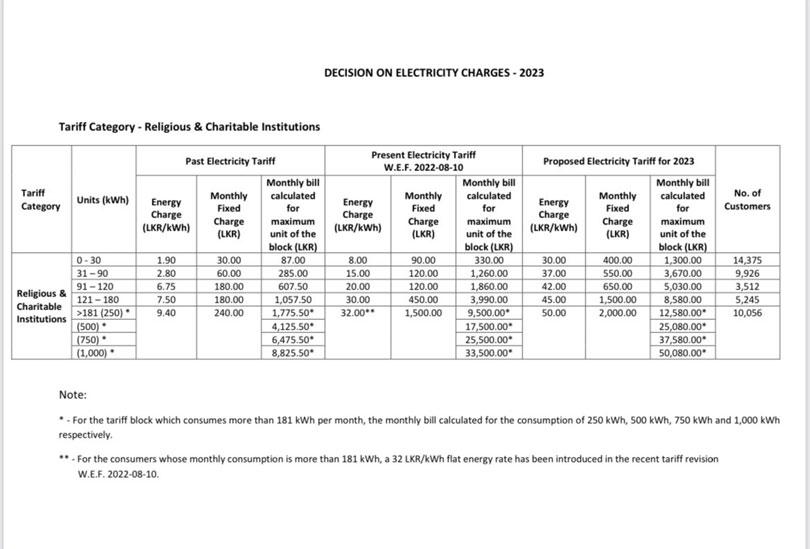
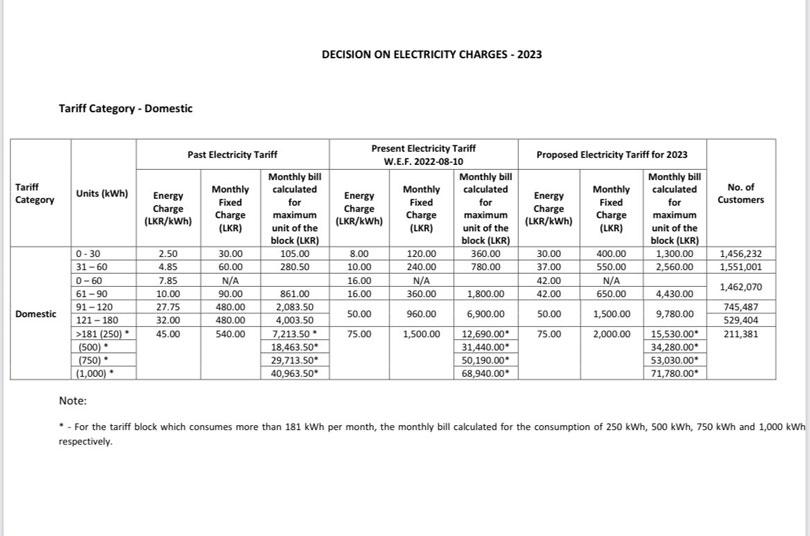
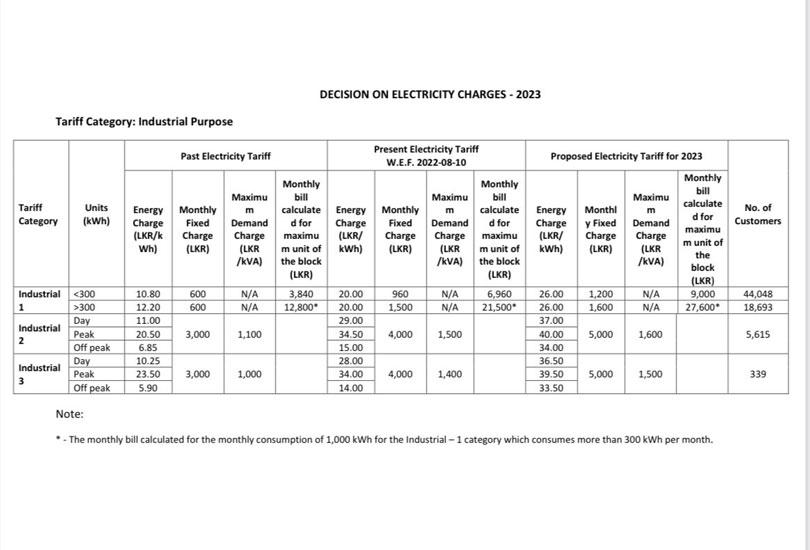
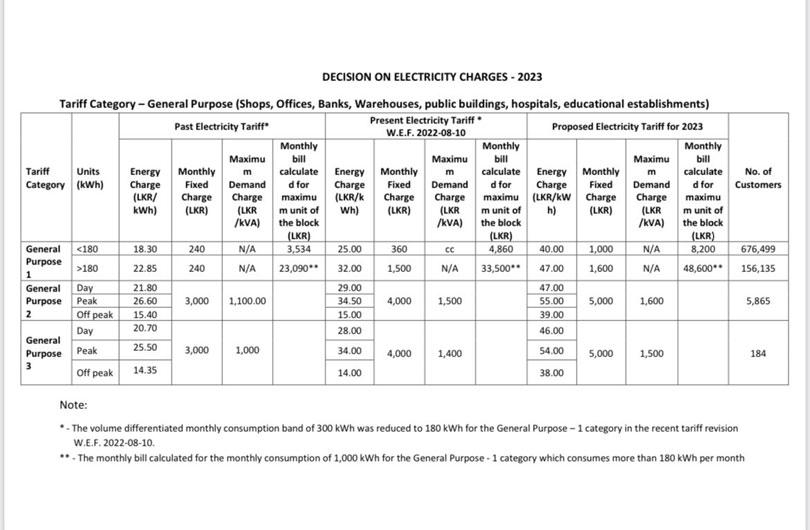
Power and Energy Minister Kanchana Wijesekera today reiterated that the proposed tariff structure had been proposed by the Ceylon Electricity Board (CEB).
The minister has shared the proposed tariff structure for a cost-reflective electricity pricing formula on his official Twitter account as an official message.
Accordingly, there are details relating to the tariff structure that was effective from 2014 to August 2022, the revised tariff structure in August 2022, and the proposed tariff structure for January 2023.
The decision on electricity charges is as follows: (Chaturanga Pradeep Samarawickrama)
The cabinet that met on Monday for the first time in 2023 has decided to strictly adhere to restrict the number of students to a maximum 40 for Grade 1 – 5 and 45 students for Grade 6-11 from this year, cabinet spokesman, Minister Bandula Gunawardana said today.
He told the weekly cabinet news briefing that a new admission system will be introduced from 2023 for students from grade 2 to grade 11 – except grade 6 – in government schools by further streamlining the current circular provisions.
The new system also aims at identifying student groups that really need to change their schools and to create fair and equal access opportunities to enrol in to intermediate grades and to keep the maximum number of students for grades 1-5 classes at 40 and for grades 6-11 at 45 unchanged under the new system.
One of the biggest problems faced by the Education Ministry over the years is the heavy congestion of students in classes. This has become a big issue among students as well as teachers, that affect the education and performance of students directly. Restriction of the number of students in a class to a manageable level will be a relief to students as well as teachers,” Minister Gunawardana stressed. (Sandun A. Jayasekera)
Sarath Wijesinghe President’s Counsel, former Ambassador to UAE and Israel, Former Chairman Consumer Affairs Authority and President Ambassador’s Forum (Sarath7@hotmail.co.uk)
Egg
Egg is an essential part of the Sri Lankan diet as it is affordable and freely available when the prices of meat and fish is exorbitant. Citizen is going through the most difficult era with 72% inflation ever rising currently the 7th position in the world. It is the requirement of the governance via the main regulatory instrument act no 9 of 2003 by the name Consumer Affairs Authority with 77 sections within with intentions stating in the preamble that ’’Whereas it is the policy of the government of Sri Lanka to provide for the better protection of the consumers through the regulation of trade and the prize of goods and services and to protect traders and manufactures against unfair trade practices and restrictive trade practices.’’ Egg is the talk of the town with accusations to many on the fast rising of eggs skyrocketing the cost of living of the consumer at the mercy of the trader, manufacturer, regulator and according to news reports the emerging ‘’Mafia’’ on eggs. Going back to the definition Mafia is a criminal gang flourishing in other parts of the world on Drugs, Gambling and many kinds of illegal activities by international gangsters’ powerful even overriding and overstepping governments and international police network. Prize of egg as in the case of other consumer items are rising rapidly with no control from the CAA despite the prizing under section 18 of the CAA act empowering the line Minister and the CAA to decide on prizes of selected items that are necessary for the citizen under circumstances based on a research by the CAA to act upon unfortunate overlooked by the trader leaving governance and CAA helpless allowing the prize of eggs to float freely giving the trader a free hand to decide the prizes of eggs. It seems egg has become a barometer on the strength and applicability of the governance and the main regulator on the cost of living of the citizen taking egg as a barometer in the prizing and cost of living index showing the incompetence and the weakness of the application of the act no 9 of 2003 which is the only legislation available with no changes since 2003. Whether it is the incompetency of the governance or defects of the legislation than any way needs reforms is a matter for a public debate expecting for a long time. Who is in a position to give some relief to the suffering masses is uncertain as nobody takes the responsibility and do not seem to be powerful to bring down the prize of many consumer items including eggs, with a monopoly of the egg prodder’s people say are powerful politically and otherwise. There is news that the head of the egg mafia is the brother in law of a minister between two ministers on trade and agriculture moth of whom are not taken serious in any respect. Both are living on politics with humble beginnings now no longer in need of wealth.
Competition and Competition Law
Ironically the Preamble states that it is the duty of the government to protect traders and manufacturers against unfair trade practices and restrictive trade practices. At the same time the Government is Sri Lanka is also desirous of promoting competitive prising wherever possible and ensure healthy competition among traders and manufactures of goods and service. Competition and competitive trade is the basis of modern trade and academics give specie attention on the competitive law and practical application world over. Main functions of the Consumer Affairs Council (s39) is to stream line anti-competitive practices based on section 41 of CAA Council being satisfied that an anti-competitive practice exists but such anti-competitive practice does not operate or is nt likely to operate against public interest by order made in that behalf authorise such anti-competitive practice or (b) an anti-competitive practice exists and that it operates against public interest by order in that behalf provide for (1) the termination of such anti-competitive practice in such manner as may be specified in that order and (2) such other actions as the Council may consider necessary for the purpose of remedying or preventing the adverse effects of any anti-competitive practice are the safeguards provided to protect the consumer and trader from cartel mafia exist world over including Sri Lanka in trade including egg trade now completely out of control in the hands of the mafia. This is the law and practice and the solution is in the hands of the governance and the line Misters in power frequently on media.
Powers of CAA
What other powers have the CAA and the governance to provide relief to the grieved consumer currently purchasing eggs at any price sole by the trader as a part of the mafia. Under regulation of trade in Part two Section9 the Authority may undertake such studies in respect of the sale or supply of any class of goods and services as would ensure the availability to the consumer of such goods and services of satisfactory quality at reasonable prices and adequate quantities. (b) to promote assist and encourage the state of other organizations of consumers for the purposes describe in paragraph (a) and (c) assist encourage associations of traders to enter into agreements with the authority of for the purpose described in section14. (Agreement to provide for maximum prize and of goods. Other provisions such as hording of goods, are of no relevance due to the severe shortage of eggs and the monopoly on price and distribution.
Other avenues and way out
There are no further avenues or ways to give relief the consumer showing the nature of the legislation which is powerless with no teach to take steps for relief to the citizen apart from a direct political solution outside the ambit of the CAA act which unfortunate powerless and unable to give any further relief to the citizen and it is timely to amend or introduce new legislation suited for the country. Author could be contacted on sarath7@hotmail.co.uk/sarathdw28@gmail.com
In recent decades, one of the political West’s favorite strategies have been the so-called decapitation strikes” against various countries or non-state actors. One of the first examples of this happened in the 1990s in Europe, during the US aggression against Yugoslavia. At the time, NATO forces directly targeted the Serb/Yugoslav leader Slobodan Milosevic. In complete disregard for the safety of his family, NATO destroyed Milosevic’s mansions and residencies, causing casualties among civilians in the process. Although the attacks failed, the Serb/Yugoslav leader was still deposed and later imprisoned in the aftermath of a successful NATO-orchestrated coup.
A similar approach was used against Saddam Hussein in Iraq. These attacks failed, but after the US-led invasion forces occupied most of the country, he was taken prisoner by American troops and after a show trial by the new puppet regime in Baghdad, executed in 2006. A very similar fate awaited the leader of Libya, Muammar Gaddafi, who was also directly targeted during the 2011 NATO aggression on Libya. Unlike Saddam Hussein, Gaddafi never got a show trial, but was instead brutally killed by a mob. Again, in both cases, NATO strikes on the residencies of both leaders resulted in the deaths of their immediate family members and any civilians in their vicinity.
It should be noted that these decapitation strikes brought mixed results. While they did destroy much of the command structure of the targeted country or organization, the ensuing chaos and power vacuum were usually filled by someone with little regard for meaningful dialogue and brought even more suffering to the people of the affected country, causing decades of instability and factionalism. Such strikes were always conducted with impunity, as the targeted countries had no means to respond. It seems this has become such a favorite strategy in the Pentagon, that the US simply forgot that certain countries can return the favor”, so now they’re suggesting the same against global powers such as Russia.
For months, in complete disregard of reality, some US officials have been calling for the elimination of Russian leadership. Threatening a country incapable of retaliating is one thing, despite how morally and legally reprehensible that is, but threatening a country whose response could quite literally end the world is a clear indicator of just how detached the US establishment has become. And yet, this doesn’t stop the said officials from continued calls for decapitation strikes against Russia, as stated by former CIA head David Petraeus, or direct calls for Putin’s assassination by both former US National Security Advisor John Bolton and a sitting US senator Lindsey Graham.
The comments by these US officials inevitably caught Russia’s attention, including its Foreign Minister Sergei Lavrov. In an interview with Russia’s TASS news agency published on Tuesday, he condemned that Washington DC obviously doesn’t rule out the assassination of President Vladimir Putin. The foreign minister noted that some unnamed officials from the Pentagon actually threatened to conduct a ‘decapitating strike’ on the Kremlin… What we are talking about is the threat of the physical elimination of the head of the Russian state.” Moscow’s top diplomat cautioned against such a line of thinking. If such ideas are actually being nourished by someone, this someone should think very carefully about the possible consequences of such plans,” Lavrov warned.
His comments were most likely directed at a late September article by Newsweek, when several Pentagon officials suggested a decapitation strike to kill Putin in the heart of the Kremlin.” At the time, Putin stated that Moscow would use all means necessary to defend Russia and its people”. As per usual, the Western mainstream propaganda machine immediately (and deliberately) took the Russian president’s words out of context and suggested that the remarks are a clear sign” of Moscow’s planned usage of thermonuclear weapons. However, Russia has repeatedly stated that it doesn’t plan to deploy any of the weapons of mass destruction from its massive arsenal.
Lavrov also warned that some of the US vassals and satellite states are openly embracing this confrontational approach. They seem to have gone completely beyond the bounds of decency,” he said, referring to a statement by former UK Prime Minister Liz Truss, who without a shadow of a doubt declared during the election debates that she was quite ready to order a nuclear strike.” Russia’s top diplomat once again cautioned against such statements, but also recalled that they’re even worse in the case of the Neo-Nazi junta. I am not even mentioning the Kiev regime’s provocations that go off the chart. Volodymyr Zelensky went as far as to demand preventive nuclear strikes by NATO countries on Russia. This is also beyond the bounds of what is acceptable,” he warned.
Indeed, such rhetoric is quite disturbing, to say the least. Given how heavily armed the global powers are, calls for decapitation strikes or assassinations of any of their leaders are extremely dangerous. However, such statements aren’t coming from Moscow or Beijing, as they are aware of the irreversible consequences of such actions. Unfortunately, this doesn’t seem to be the case in Washington DC, where a complete lack of etiquette (diplomatic or otherwise) seems to have become the norm. How exactly this could affect the world remains to be seen, as Russia is exercising restraint for the time being. This approach is the only sensible one, but the issue is that the political West often sees it as a sign of weakness”.
Sri Lanka Mission observed from the numerous inquiries it received from members of the Polish public and Sri Lanka well-wishers, the high appreciation of and increasing demand for Ceylon tea, spices, handloom items (sarongs, beach wraps, and shawls and accessories, etc.), handicrafts, including traditional masks and woven reed/rattan baskets, handbags, etc., porcelain tableware and giftware, and Ceylon gem encrusted costume jewelry.
Unquote
When you read the news above start ordering whether Sri Lanka can do better than this to earn more foreign currency
by selling petty things like tea handlooms and other small items rather than promoting investment in heavy industries like shipbuilding. Steel plants manufacturing agriculture equipment and mining etc
What is the purpose of having an embassy in Poland where well-clad fashionable ladies sell these petty things?
Sri Lanka should think big
We should employ knowledgeable export promoters who can identify the need for Sri Lanka at this moment
Poland is a highly developed European country that can invest in Sri Lanka where commodities can be manufactured using our skilled labour
Colombo, December 31: With renewed interest regarding narcotics abuse by the student community, many have questioned why Sri Lanka has been unable to stem the flow of illicit drugs to the island nation.
As part two of a three-part series, The Sunday Morning will explore Sri Lanka’s contemporary drug abuse issues.
According to the National Dangerous Drugs Control Board (NDDCB), the apex Government agency on the control of narcotics, abuse of narcotics by school children has been an ongoing concern for decades, with the issue coming under the spotlight again, possibly as a result of the reopening of educational institutions after a prolonged closure due to Covid-19-related public health restrictions.
ADVERTISEMENT
While the broader problem of narcotics abuse is a complex issue which requires a holistic approach, the containment of narcotics – which are trafficked into the island through 1,340 km of coastline – and the need for persistent monitoring of nearly 510,000 sq. km of the island’s Exclusive Economic Zone (EEZ) to prevent such pose significant challenges. Today, widespread abuse of narcotics has become a key national security concern, while many have argued that it also needs to be addressed as a public health issue.
Over the last three months, The Sunday Morning has reported about poor prioritisation of funds and lack of effective policies for Sri Lanka’s national security apparatus, which is poorly equipped and underprepared to meet modern and evolving threats to the nation. This, despite continued colossal State expenditure on defence over the last decade.
Ice a concern, but bigger threats persist
According to NDDCB Chairman Shakya Nanayakkara, while the proliferation of synthetic drugs, also known as methamphetamine (‘ice’ being one of the many street names) is a concern, the continued use of ‘gateway narcotics’ remains a significant threat to the schooling population.
We have not received any tangible evidence yet to support the claim that the abuse of ice or other methamphetamines is prevalent among the student community. Of course, we are concerned about an increase in abuse of narcotics like ice. However, when it comes to the student community, there are other narcotics and gateway drugs like tobacco, marvo, thamel, arecanut products, and tobacco products – ones which are chewed – and cannabis, which are widely used by the student community. Tobacco, alcohol, and cannabis remain the main narcotics abused by students,” Nanayakkara explained.
According to him, the recommencement of ordinary school schedules following prolonged closures may be a contributing factor to the sudden increase in the reported use of narcotics by students. However, Nanayakkara stated that a survey, which would commence this month, would provide a data-based understanding of narcotic use among students, enabling an evidence-led decision process to identify countermeasures.
He urged educators, parents, and students who come across any samples of narcotics found among students or in school to urgently forward such substances through the Police department to the NDDCB for analysis at its laboratories. Nanayakkara added that such information was vital to develop a more informed approach to the spread of narcotics within the school system and to identify the proliferation of methamphetamines such as ice.
Inflows to SL – push factors
According to United Nations Office on Drugs and Crime (UNODC) findings, opium cultivation in Afghanistan increased by 32% over the previous year to 233,000 hectares, making the 2022 crop the third largest area under cultivation since monitoring began.
This, in the aftermath of the Taliban regaining power of the country after the rapid disintegration of the US and the EU-backed Government in Kabul, following the abrupt exit of Western nations from the troubled country after a decade.
The UNODC estimates that the 2022 harvest (6,200 tonnes) can be converted into 350 to 380 tonnes of heroin of export quality, at 50-70% purity, even though it is around 10% less than the 2021 harvest due to drought. Further, the UNODC has been reporting about an increase in synthetic drug production and intercepts coming out of the Myanmar, Cambodia, and Laos regions.
There are concerns that internal conflicts in the Southeast Asian region, particularly in Myanmar, may be a contributing factor to an uptick in synthetic drug exports, with suspicion that some State and non-State elements are involved in the industrial-scale manufacture of methamphetamine/ice to fund ongoing conflicts.
Challenges for maritime interdiction
Being an island nation, other than cannabis and small quantities of locally-manufactured tobacco and arecanut-based narcotics, most drugs need to be trafficked into the country.
Historically, much of the narcotics that enter the island do so by illegal sea routes via the Indian Ocean, with only a fraction found to be smuggled to access points such as the port, airports, and through the post.
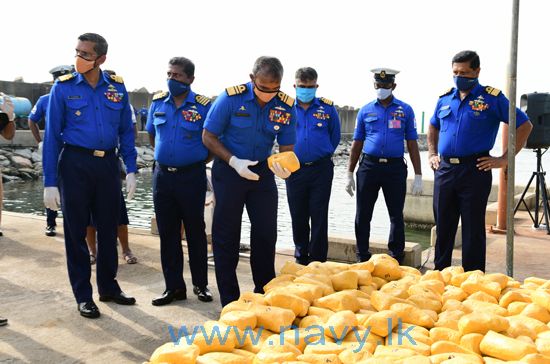
Over the last decade, maritime drug interdiction has been a key method employed by the State to counter trafficking, with the Sri Lanka Navy (SLN), Sri Lanka Air Force (SLAF), Sri Lanka Coast Guard (SLCG), and the Police working together to net dozens of drug shipments. However, the vast expanse of ocean around Sri Lanka makes the efforts challenging.
Over the last seven years, the Sri Lanka Navy has shown some success in intercepting a number of drug trafficking efforts, with nearly 30 foreign vessels (unflagged, unregistered) carrying narcotics, which are then offloaded on to Sri Lankan deep sea fishing trawlers to make the last leg of the journey to the island. Between 2016 and June 2021, the Sri Lanka Navy had intercepted 14 such trafficking attempts. However, between 2020 and early December 2022, 12 such foreign vessels have been intercepted.
Most of the foreign vessels involved in trafficking are suspected Iranian fishing ‘dhows’ (a traditional form of Arabian fishing vessels – mechanised). The UNODC terms the narcotics smuggling route from the Iranian/Pakistani Makran coast to Sri Lanka and beyond (Indonesian archipelago) as the ‘Southern Route’.
The Sunday Morning asked the Sri Lanka Navy and the Air Force about the key challenges they faced when intercepting narcotics shipments to Sri Lanka.
According to SLAF Commander Air Marshal Sudarshana Pathirana, the main challenge faced by the SLAF in carrying out maritime air operations for drug interception in the area of responsibility covering the EEZ (which is seven times greater than the land of Sri Lanka/furthest point is 200 nm (nautical miles) from Hambantota Port) and the Sri Lanka Flight Information Region (FIR) (which is 27 times greater than the land of Sri Lanka/furthest point is 815 nm from Mattala Airport) is the vast expanse of Sri Lanka’s maritime domain.
The lack of aerial platforms with long-range endurance to cover this expanse is a main difficulty in respect of maritime air operations. In addition, SLAF is also facing difficulties in maintaining the serviceability of the existing aircraft fleet. Further, the economic crisis has affected the acquisition of new/advanced technologies which are connected with maritime operations. The limited number of serviceable aircraft with the SLAF has adversely affected the frequency of maritime operations, with the lack of spares also aggravating the situation,” Pathirana told The Sunday Morning.
When asked about how the SLAF works with the Sri Lanka Navy to monitor the sea approaches to Sri Lanka in an effective manner, Pathirana stated: Use of air assets over maritime domain is cost-effective (reach and large area of observation). In the present context, SLAF has initiated joint operations with SLN and SLCG. The information obtained during the maritime air operations are shared with SLN/SLCG. However, several more platforms and UAVs may be required to enhance the effective operations to cover the entire EEZ, for which the cost factor appears as the main constraint of enhancing operations. SLAF also continuously engages in dialogues with regional and other stakeholders with regard to sharing of information and resources to cover the EEZ/FIR.”
Pathirana also said that the SLAF would initiate plans to acquire long-range Unmanned Aerial Vehicles (UAVs), real-time data links for existing platforms, and long-range maritime patrol aircraft specially for maritime air operations in consultation with the Government and other stakeholders.
The Sri Lanka Navy also echoed the sentiments of the Air Force regarding the vastness of the large sea areas across which they needed to mount surveillance. It includes the territorial sea, contiguous zone, and EZZ, which is 21 times the country’s landmass.
When considered drug trafficking, surveillance tasks extend to high seas – even more than 1,000 nm from land, as transfer locations/areas (exchange points) that are used by smugglers are far away from the coast,” Navy Commander Vice Admiral Priyantha Perera told The Sunday Morning.
According to Vice Admiral Perera, most maritime crimes around Sri Lanka are carried out with the assistance of local fishermen and those in the fishing community.
A colossal number of fishing craft engage in both littoral seas and high seas. Therefore, it is a big challenge for the Navy to check each and every vessel at sea. This challenge is aggravated as these vessels don’t have any tracking devices. However, through external assistance, the Department of Fisheries is in the process of installing a tracking system for multi-day fishing vessels. The Navy, Coast Guard, and Fisheries Department take every attempt to check these vessels prior to leaving and entering the harbour to identify vessels engaged in maritime crime and they have been successful to some extent,” Perera explained.
When asked about the resources the SLN can muster for the counter narcotics operations at sea, Perera said: Availability of units to patrol the island’s waters has also become a challenge. However, with the acquisition of new Offshore Patrol Vessels (OPVs) such as the SLNS Vijayabahu, the Sri Lanka Navy has been able to respond to operational requirements by maximum utilisation of available resources in an efficient and effective manner to achieve the national aspiration of eradicating the drug menace from the country. The fuel shortage has also become a challenge to operational efficiency. Despite this, Sri Lanka is being assisted by other states as well in preserving maritime security, especially considering the extensive commitment of the Sri Lanka Navy in engaging in the prevention of maritime crime in the Indian Ocean region.”
Perera added that narcotics bought mainly via sea into Sri Lanka were organised by powerful worldwide networks and drug barons, both local and foreign. Many local smugglers are based overseas and not in Sri Lanka. Narcotics trafficking at sea and land is increasingly carried out with new technologies and communication, with coordination via cyberspace, thus the challenges in obtaining information regarding them are growing.”
Restoring human intelligence
According to a former Police Narcotics Bureau (PNB) detective who spoke to The Sunday Morning on conditions of anonymity, two of the core challenges local law enforcement agencies face in countering drug trafficking is the eroded public faith in the Police, the State, Judiciary, and systemic corruption within the agencies. Both issues affect how information regarding narcotics trafficking is received by law enforcement agencies that depend on intelligence derived from such to carry out targeted operations.
The lack of public faith in the Police and the justice system is a key issue. People are not willing to come forward to provide information due to the fear of reprisal, they don’t trust the Police to keep their information. Many confidential sources we have developed within the trafficking community are no longer coming forward with information because they fear that corrupt cops will leak information to the drug network, where they intimidate or kill the informants. We have seen eyewitnesses – persons who have been involved in trafficking and turned State witnesses – being killed or disappeared. Therefore, human intelligence aspects which are invaluable to interdict drug trafficking are rapidly dwindling,” the former PNB official said.
The retired senior Policeman also told The Sunday Morning that the custodial deaths of several high-profile drug traffickers had also sown suspicion among the narcotics trafficking community that they would not get fair treatment or due process by the law if arrested, thereby pushing many into maintaining silence about the trafficking networks.
The Government, Police, and the public must understand that if we turn a blind eye to abuse of Police powers and the arbitrary killing of suspects, justice will not prevail. Yes, we all want drug dealers behind bars, but killing them is not the answer; there are hundreds more who will readily replace them. This is a lucrative business,” he said.
The rot from within
Recently, Minister of Justice Dr. Wijeyadasa Rajapakshe told Parliament that he suspected some Police officers were involved in narcotics trafficking. The statement from the Minister of Justice would have been startling, but many in Sri Lanka had long suspected that members of law enforcement agencies were compromised to elements of organised crime and politicisation. He told Parliament that laws would be enacted to punish such officers.
The arrests of 13 PNB officers over alleged links to a narcotic smuggling network in 2020 were a clear indication that even the apex drug enforcement agency was compromised and in the pockets of some drug kingpins, many of whom control local operations from overseas.
A senior intelligence officer who spoke to The Sunday Morning stated that a number of senior Police officers were suspected to be involved with several narcotic trafficking networks.
There are some officers, some in senior positions, who are in league with certain drug networks. They use the Police officers to pressure and eradicate their opponents and other networks to gain new territory. These drug kingpins provide some of these corrupt Police officers tip-offs to raid and apprehend rival networks’ drug stashes. This in turn wins some officers accolades and promotions. This is how organised crime works; they penetrate the law enforcement agencies and use them for their benefit,” the intelligence officer said, adding that at times, the Sri Lanka Navy and other stakeholders were reluctant to share critical intelligence with some segments of the Police due to fear of compromising their ongoing operations.
Imagine if we develop an agent to penetrate a network and the Police leak the information to the network about an impending raid or search operation; our asset is then under significant threat. Their life will be in danger. Our agents take a lot of risks. We have to protect them,” the intelligence officer said, stressing that given the state of law enforcement and political involvement with organised crime in Sri Lanka, specialised vetted units for counter narcotics operations were a necessity. The intelligence officer also stated that an independent unit to check compliance and investigate Police corruption and malpractice was a need of the hour.
Reducing the demand
According to the National Dangerous Drugs Control Board (NDDCB), while robust measures are necessary to stem the inflow of narcotics, a greater emphasis is required to reduce demand.
Responding to a question, the NDDCB Chairman told The Sunday Morning that Sri Lanka needed to do more to improve awareness about narcotics abuse and work to reduce the stigma around those who become addicted to substance abuse.
The NDDCB’s mandate is to reduce demand. We are empowered to carry out awareness and treatment programmes to help addicts to recover. One key aspect is outreach to communities, such as the student community, to improve awareness of the risks, to cut through the marketing strategies of drug peddlers and peer pressure, and explain the dangers, the risk, and the life-changing impact of narcotic addiction. Prevention is better than cure,” Nanayakkara opined.
He said that recent moves by the Government to change legal options for drug abusers to seek rehabilitation in place of incarceration was a welcome move. However, much more needs to be done to build awareness and reduce the stigma of being labelled a ‘drug addict’ (‘kudda’), which prevents many families from seeking early intervention for their loved ones who have become victims of narcotics.
When asked if the NDDCB is adequately resourced for its role in demand reduction, Nanayakkara acknowledged that the agency, particularly its awareness, outreach, and rehabilitation programmes, were under-resourced. We do need more resources. In this economic climate, it is difficult to ask for funds. What we ask for, not all is given. What is given is mostly for recurrent expenditure. However, we are working with international organisations like the WHO, the UN, JICA, UNDP, and UNODC which support us.”
Nanayakkara said that Sri Lanka could learn from other countries, particularly from the European Union, about demand reduction and rehabilitation, but would need to tailor such best practices to meet local realities.
He added that Sri Lanka needed to expand drug rehabilitation programmes and make them more accessible to those who needed treatment.
According to Nanayakkara, Sri Lanka needs to develop competent resource personnel and counsellors to help drug abusers and their families seek intervention and treatment.
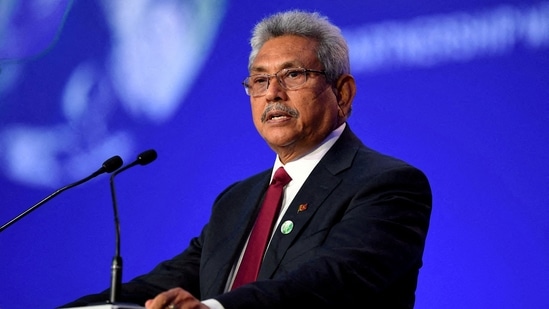
Gotabaya Rajapaksa US Citizenship: In 2019, Gotabaya Rajapaksa had renounced his US citizenship to contest the presidential polls.
Gotabaya Rajapaksa US Citizenship: Sri Lanka’s former president Gotabaya Rajapaksa.(Reuters
Sri Lanka’s ousted president Gotabaya Rajapaksa applied for restoration of his US citizenship, a report claimed. This comes as he failed to get asylum in any country, the report said. Gotabaya Rajapaksa had fled Sri Lanka in July last year. He then returned after nearly two months. Although, the US government is yet to consider the request, The Sunday Times newspaper reported.
In 2019, Gotabaya Rajapaksa had renounced his US citizenship to contest the presidential polls owing to Sri Lankan constitution rules which state that dual citizenship holders are barred from contesting elections.
The former president has appealed for the restoration of his US Citizenship after he failed to seek asylum in any country upon fleeing Sri Lanka. Gotabaya Rajapaksa had left Sri Lanka on July 13 last year during the anti-government protests in 2022. He then went to Maldives after which he travelled to Singapore and Thailand.
“An appeal by his lawyers to the US government — more pointedly the Department of State to restore his citizenship, which he renounced to contest the November 2019 presidential election, has still not been considered,” the report said.
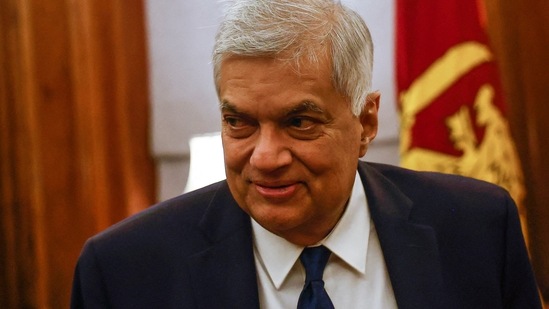
Sri Lanka Economic Crisis: Sri Lankan president Ranil Wickremesinghe brought a decision to reduce the retirement age from 65 to 60.
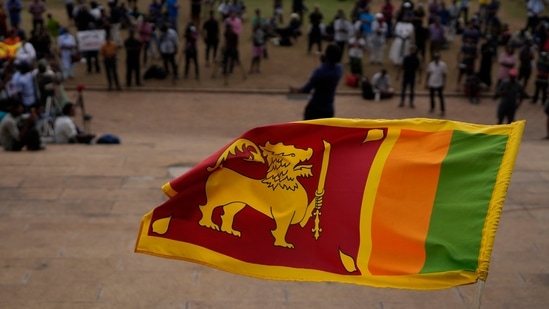
Sri Lanka Economic Crisis: A Sri Lankan flag is waved by a protester.(AP
Sri Lanka began a fresh austerity drive under which there will be no government recruitment. In the island nations new taxes and higher electricity prices were started as the authorities aim to secure an IMF bailout, news agency AFP reported. As one of the preconditions to securing the $2.9 billion bailout from IMF is achieving debt sustainability, Sri Lanka has been bringing new changes after the country defaulted in April as its economy went into crisis.
The IMF had earlier asked Sri Lanka to cut down on its 1.5 million strong government jobs, raise taxed and sell off state-owned enterprises. In December, a record 20,000 civil servants retired which was eight times than previous years, according to the public administration ministry.
This happened after Sri Lankan president Ranil Wickremesinghe brought a decision to reduce the retirement age from 65 to 60.
Almost double personal income and corporate taxes aimed at increasing state revenue kicked in, while electricity prices rose 65 percent, AFP reported. Ranil Wickremesinghe came to power after Gotabaya Rajapaksa fled the country and resigned in July following months of protests amid economic crisis in the country.
Our problems have not been resolved yet. We need to reduce our debt burden if we are to move forward,” Ranil Wickremesinghe said.
Sri Lanka has also banned non-essential capital expenditure amid new measures owing to which officials who authorise investments over 500 million rupees without clearing them with the treasury first will be personally accountable for the same.
Minister of Power and Energy Kanchana Wijesekara has submitted the Cabinet Paper on the proposed revision of electricity tariffs to the Cabinet of Ministers at today’s meeting.
Meanwhile, it is reported that the Cabinet has postponed considering and reaching a decision on the cabinet paper to next week’s meeting.
In addition, Minister Wijesekara has mentioned that he briefed the ministers on the requirements, proposed tariff structure, energy forecast and finances.
In a Twitter message, he further pointed out that an additional one week was given to the cabinet of ministers for their observations on the proposals.
Proposed Electricity tariff revision was discussed at the Cabinet meeting held today. Briefed the ministers on the requirements, proposed tariff structure, energy forecast and finances. One week was extended for the cabinet of ministers for their observations on the proposals,” he added.
Sarath Wijesinghe President’s Counsel /former Ambassador to UAE and Israel
Cost of Living
A proper consumer regime is a prerequisite for a smooth and successful management of economy which is directly interconnected to consumerism which controls and pushes the economy of a country. Consumer regime is the proper balance of the consumer trader and the governance that has a direct relevant on the economy. Consumer regime is governed by the legislature, government policy and competition on a democratic capitalist social mixed with socialism. In the circumstances the cost of living cannot be controlled as in a socialist structure where the price of the goods and services increase in a steady pattern. In socialist bloc the price of consumer goods do not rise as fast as in a capitalist regime due to economic factors as the economy of a socialist controlled and planned based on the government policy currently in Sri Lanka the cost of living is rising in an unprecedented rate due to inflation, mismanagement, and internal and external economic factors the governance has no control over. Structure is Current hot topic nationwide is the cost of living and price of consumer items and services. Cost of living is not a static scenario due to changes in trade production and the change of social structure on various factors and angles. Finger of the citizen always points -quite correctly- at the governance empowered to manage affairs of the citizen in the capacity of a trustee of the Nation for a given number of years. Who is responsible for the prices of consumer items and what the remedial measures to provide the citizen (the consumer) with products and services of quality at an affordable price? In any society beating cost of living depends on the conduct and strategies of the consumer and how sharp he is in planning when to buy, where to buy how to buy and what to buy the consumer items in the market challenging the trader and producer assisted and supervised by the state (CAA in SL). Sri Lanka lacks organized consumer organizations, sharp consumers and just traders for a good consumer/trade regime. Consumerism and trade is interconnected and the reader is invited to read the reading materials given below. Undoubtedly the regulator/s play a major part in Sri Lanka led by the main regulator Consumer Affairs Authority. Is the CAA( Consumer Affairs Authority) is living up to the expectations of the intentions and aspirations of the citizen is a question the consumer is in a position to answer. But it is a sorry state of affairs that the CAA as well as the citizen is in a helpless situation when the exploration of the trader, industrialist added to the misery the inefficiency of CAA with no teeth and proper management and leadership leading to unfortunate state of affairs.
Consumer
CONSUMER (S75 CAA act 9 of 2003) is any actual or potential user of any goods or services made available for a consideration by any trader or manufacture with the promotion that every citizen is a consumer an important member of the society. Note that any potential consumer and services come within the ambit of the definition which includes professionals and all kinds of services. Consumer is protected and looked after by the legislation (in Sri Lanka act no 9 of 2003 and many legislations and regulations) to some extent when the consumer worldwide is organized and protected due to power of organization and consumer education. ‘’John Kennady’’ in (1963) who initiated the world consumer day and consumer organization in USA that consumer then is the least protected in the society needing assistance of the governance which is fast changing for good today except in Sri Lanka. In many parts of the world the consumer is named an uncrowned King mighty powerful to bring the governments and the trader to knees by the organizational power. In Sri Lanka is consumer the king? Or powerful is a moot issue to be discussed. Consumer day is celebrated annually worldwide on various themes on current topics such as on 15th of March every year to promote consumerism and good practices on trade and commerce for the development and prosperity of the respective nations and consumers worldwide. CAA is scheduled to take part in the international event on 15th march 2020 with the international community. International activism should trickle down to the world citizen in protecting consumer and maintaining equilibrium in trade. Consumer is defined in many ways in different jurisdictions in the same theme except in Sri Lanka even a potential consumer comes within the ambit of the definition consumer. Every citizens a consumer as everybody is required to purchase goods and obtain the services of services. Section8 (f) of CAA says it is the duty of the CAA to promote, assist, and encourage the establishment of consumer organizations Sri Lankan consumer organizations are in the lowest ebb compared to even India the immediate neighbor more advanced that Sri Lanka in many respects. India has consumer courts and the judiciary and media is helpful to the consumer unlike in Sri Lanka- a sorry state.
Law and Practice
Consumer regime prior to the CAA act was governed by English Law (act no 1/79 consumer Protection, 1/87 Fair Trading Act, consumer Prices act -chapter 173- which was replaced by CAA act which is a combination of Australian, Canadian, and English Law with complete transformation from price control concept to regulatory powers for the performance of the current consumer regime. Whether the CAA act is effective or living up to the needs and expectation is a matter left to the citizen to decide. It appears that the consumer is not satisfied and the Consumer Affairs Authority is not providing cover and protection to the consumer, industrialist, and the trader based the regulatory powers with powers to impose decisions towards a proper consumerism structure to the citizen. CAA is empowered to impose restrictions, implement regulations and directions, in addition to civil law remedies available in the court structure. CAA act needs complete overhaul and changes on policy and implementation which is in the final stages of fine tuning at the CAA. Is CAA making use of the powers vested properly for the implementation of the regulatory power? Change o legislation is inevitable and a necessity today. It may be Sri Lanka would have been better off under English Legal system which is replaced by CAA as the consumer regime in UK is excellent with the intervention of the department of trade an d industry.
Consumer Protection / Consumer Education
Consumer should be protected and while trade is regularized for the development of the economy. Some objects ( S7 ) of the CAA is to protect consume against marketing of goods and services hazarders to life and property, protect against unfair practices, ensure adequate access, seek redress from unfair trade practices by Regulation of Trade ( Part 2 of the act) connected regulations and practices. As price control is the history some consumer items which the Minister believes essential to the society could be could be identified to impose the maximum price (S18) as has been implemented in Rice, Gas and their identified items. It is a requirement to display the price list (S26) in the absence of the prize control regime, with implied warranties and maintain the quality and standards with the condition that a receipt to issue (S28) all the consumer items and services provided. Consumer protection is strengthened by organization as in other parts of the world with international networks such as Consumer International (USA) and famous WHICH” magazine based in UK acting as giants on protecting consumer and assist the state in regularizing trade. CAA in SL requires to promote assist and encourage establishment of consumer organizations and how for this is implemented is in question. It is the duty of the NGO’s, Schools, and citizens in general to set up consumer organizations in all levels, and also duty of the governance to promote consumer education schools, Universities and for the public in general. Consumer education is to be promoted in all levels including in schools and Universities in addition to scientific public awareness programs.
Rice Gas and regulated items under S18 to be essential to the life of the citizen/Hoarding is an Offence
Determination of rice prices is complicated due to the complexity of the process connected to the paddy farmer, intermediate trader and small and large scale rice millers, State (CAA), and the consumer whose stable diet is mainly rice. Paddy famer spends a substantial part of the year with challenges and risks with no proper security for storage, insurance and sale of the products readily purchased /collected by the paddy trader receiving the major part of the profits when the monopoly and decisions of the products is in the hands of the trader, and the state as the regulator with substantial powers to maintain equilibrium in fair trade. Good practices previously with Paddy Board with enormous storage facilities, CWE with large network of storage, outlets were willfully destroyed by the errant politicians and fat cat selfish traders still haunting to get the maximum from the farmer sandwiched between trader, state, consumer and regulator. Until the CAA act is amended and a proper consumer regime is set up we must find ways and means to give relief to the consumer whilst maintaining equilibrium with the trader and regulator. It is in news that errant and few traders have stored the major portion of the paddy aiming at large prefects creating artificial shortages and price increases. Hording goods by and trader is an offence (S17) and the storage capacity can be determined by the regulator. It is also the mandate and duty of the consumer organizations to come forward to safeguard and protect the citizen backed by the media in maintaining the price quality and standards. Now there is news of hording large stocks by errant traders/mill owners and it is time to implement law to the last word. Before the introduction of CAA the price control mechanism was in force and the situation has been more consumer friendly in deed.
Collective Efforts is required with a scientific and long term strategy for a proper consumer regime based on consumer education and consumer organization- WAY FORWARD
Consumer and the famer is helpless in the hands of the errant trader and the wrong system inherited which needs complete overhaul with a new vision with the involvement and intervention of the Departments of Agriculture, Trade, Regulators, Trader/Chambers/Consumer and Trade Organizations, cooperatives, Banks, with a genuine political vision and a leadership in which the Ministry of Finance, Trade, Consumer affairs to play a main part. News items of some traders taking consumer to hostage to be punished and dealt with no sympathy. The plan to be drafted at the drawing board level initially by changing the concept and the ineffective and powerless CAA act and consensus to be agreed upon with the regulator trader and the consumer with short/long term genuine affords aiming at making drastic changes at the level of the legislature in formulating and implementing short/long revolutionary plans for a proper consumer regime and successful internal and external trade in line with the policy and the future prosperity of the nation. Consumer Education to be given priority instead of punishing the trader and leaving the consumer in the dark which is lacking in Sri Lanka and the regulators should be geared for collective actions with the help of local authorities and government departments strategized by the CAA and the Trade Ministry- Lack of involvements by the Chambers of Commerce and trade organizations are noted and everybody should take the issue forward as a national movement for the good of the citizen at large. On the whole it is the CAA that is responsible to lead the campaign with the resources and the battery of experts to assist the wish and will of the citizen awaiting a developed prosperous society with a developed consumer and a trade regime. It is time to rethink whether to reintroduce the old system of price control fair trading etc. which is functioning well in UK with the involvement of DTI-Department trade and Industry with the powerful and organized consumer movement. A though study and new approach is essential with change of the legal system and outdated legislation.
(Reference material – all by the author authored two books on consumerism – Junk Food Daily News- Island / Wise consumer Daily Mirror 19/12 – 2018 / Alert consumer 6/1/2008 Daily news -Protecting Consumer Sunday Observer 15/3/2018 /Target self-sufficiency in milk Daily News -3/Aug/2007 /Rice eating culture 14/Aug/2007-/6/1/2008-CAA ACT/ Rice price and cost of living 20/4/2008 /Simple life 6/July 2008/ 27/May 2007-Regulatory powers-observer gas prices 22/July 2007-14/Sept/2006 towards an International Consumer Charter-rice based products 4/1/2007 Daily News all could be retrieved from the internet and in the book on consumerism authored by me sarathdw28@gmail.comsarath7@hotmail.co.uk- 0094777880166)
Sarath Wijesinghe President’s Counsel, former Chairman Consumer Affairs Authority, former Ambassador to UAE and Israel-President Ambassador’s Forum
Regularization Procedure
Regularization is a part of administration and government process in Sri Lanka and world over often used in governance and delegation of powers to subsidiary bodies and institutions, which is not a successful process in Sri Lanka. In the UK Europe and USA this process is successful such as Rail Regulator and regulatory body’s functions on gas, electricity water which is semi privatized in UK where the companies have set up subsidiary companies as agents on gas, water and electricity regularized by the main companies and the government by way of regulation and in USA where the regulatory process is functioning well especially in the insurance sector thriving in the medical field in the absence of NHS as in UK. Office of the Rail Regulator in UK (ORR) monitors national highways licensing and operating by the act passed in 1998 running smoothly after the privatization of Rail introducing a new era functioning by the process of regularization successfully. There is a regulatory process in Sri Lanka on transport which is only on paper. Privatization and regularization runs close to each other in UK and the west. It seems Sri Lanka too is planning to follow privatization follows by regularization in some areas such as water and such natural resources. Regularization is a process of acquiring responsibility of managing, running and administering public organizations following the directions answerable to the main authority in given areas. Sometimes regulators go out of control. Today PUSCL chairman acts independently challenging the line Minister and even the cabinet on some policy matters including the price and tariff increases , because he is protected due to appointment through the constitutional council and his change needs Parliamentary approval. In USA, and Sri Lanka Consumer protection, Enforcement of Banks and insurance are some areas subject to regularization process in practice. In Sri Lanka one of the main regulators is the Consumer Affairs Authority established under Act o7 of 2003 which is one of the main establishments enacted responsible for the day to day life of the citizen (consumer) that needs lot of changes and improvements that will be a detailed discussion in a deferent forum. There are many similarities of the way regulatory bodies function in USA, UK, India and Sri Lanka varying the success rates in different degrees. Main regulator CAA is not a successful piece of legislation due to the inherent defects on the implementation of the intentions of the legislature as anticipated thereby it has been a failure on application. Some of the other regulatory bodies in Sri Lanka are TRC Telecommunication Regulatory Commission set up by act no 27 of 1996, Public Utilities Commission appointed by the constitutional council with independence to act independently of even ministerial supervision set up by act no 35 of 2002, TVEC set up under vocational education act no 20 of 1990 supervised by the Ministry of education, for various purposes in addition to many other regulatory institutions and bodies taking only the above examples for this discussion. Let us ascertain whether these institutions are successful and whether any reforms or changes are required to be institutions for the development and functioning of the governance.
Telecommunication regulatory Commission – in Sri Lanka- is a massive money making institution regulating entire telecommunication process to promote sustainable development in the country and the telecommunication sector originally a government sector privatized with foreign investments and controlling body that brings a massive income to the government. It is similar to TRAI of India –Telecommunication Authority in India that covers India and controlling the entre telecommunication sector as in Sri Lanka. Dialog, ‘’Suntel’’, ‘’Sri Lanka Mobital’’ Hutch , Airteltol, are controlled by the TRC which is the regulatory authority acts independently as the regulator in the field as a giant business enterprise. Another author functioning is the National Medicine Regulatory authority set up under act no5 of 2015 regulating the drugs which is an important aspect of the citizen.
Insurance and also under the EU directions mostly insurance and health regulatory systems. In the United Kingdom the process of regularization is successful in water and gas In the USA regulatory process successfully functioning for example in the insurance when the health sector is private unlike in UK and Sri Lanka. This is successfully adopted in the private actor worldwide. One of the main regulators in Sri Lanka is the Consumer Affairs Authority set up under act no 9 of 2003 and many others set up under different acts, by laws, executive and processes of administration in many parts of the administrative system. CAA consisting of 77 sections was set up after abolishing the English modeled consumer law system with the new regulatory mechanism based on a mixture of Australian/Canadian/UK regulatory process regulating trade and consumerism in a different way. It was set up with most ambitious intentions which unfortunately have not been achieved due to the ineffective regulatory procedure. This process may be used for convenience speedy implementation and implementation of jobs with less complications on implementation of government rules and regulations. Regulation is expected to derive optimism and effective results with consumer friendly and less compacted procedure. Regulatory procedure is adopted worldwide in water, electricity, gas, health, Insurance and many other sectors in day to day life and in food, education, health, industry, many areas on regulatory procedures in place of direct governance may be for flexibility and convenience. In Sri Lanka in addition to Education, Health, Industry, Commerce, trade, and many ministries and departments it is worth mention some ordinances linked to regularization as follows. Trade Marks Ordinance, Prison Opium and Dangerous Drugs Ordinance, Control of Prices Ordinance, Weights and Measures Ordinance, food and Drugs Act, Control of Prices Act, food Control Act, food Control Possession Act, Licensing of Traders Act, Bureau of Standards act, national Prices Control Act, Consumer protection act, Code of Intellectual Property act, Petroleum Products Act, food Act, Cosmetic Devices and Drugs Act, consumer credit Act, Sri Lanka Standards Institution act, fair Trading Commission act, measurements units standards and services act, unfair contracts terms act are some connected to regularization in addition many under various Ministries and Departments in force. It is time to regularize regularly process in the implementation of the most crucial and important sectors such as Private Hospitals, Casinos, Private tuition classes, Trades on various sectors, Hiring sector including three wheel drivers, Sports especially cricket, and institutions that are inefficient and lossmaking due to bribery and corruption, and many ongoing and future government and semi – government institutions. They need strict regulations, laws, by laws or special regulatory bodies as citizen is exploited, mishandled, misdirected, and pushed from place to place with no mercy or protection. For example the Casinos, Private Hospitals and Private Tuition Classes are money making centers function freely unregulated with no supervision on booming and encouraging bribery corruption and inefficiency rampant like air.
Why is regulatory process necessary and adopted in governance?
Why is it necessary and why is it not successful in Sri Lanka. It is necessary as the Public and some segment of the private sector is inefficient requiring efficient and rejuvenation. Most of the regulatory bodies operating in Sri Lanka appear to be not up to the expected standards. Nation as a unit is lazy and indifferent requiring a powerful leadership and a vision of a visionary leader. Obviously regulatory biddies too follow suit accelerated by the corrupt government sector. This shows a regulatory process is needed to the entire nation with a new vision and a program, starting a proper regulatory procedure from schools up to the other institutions such as Hospitals, government and semi government institutions that already has a legal system and a procedure. Regulatory procedure on media is frequent with local and international impact on the image and economy of the country. It maintains with international precedents and standards regulating by different institutions executive and otherwise. It is used in sectors such as Insurance, Electricity, Water, Health, media, Transport, Energy, worldwide in many ways, where traditional governance process is inadequate, convenient or inefficient classic example in Sri Lanka being the TRC (Telecom Regulatory Commission) and the Telecom monitoring system once backward to wait for years for a telephone connection before restructuring and introduction the regulatory procedure. Many sectors act freely with independence free of rules laws or regulations. Education sector is the cradle of future generation that needs a proper legal and regulatory structure, with no proper rules or regulations for Private Schools and tuition classes thriving with enormous amounts of funding. Vocations Schools have some semblance of regulatory structure yet incomplete and ineffective in the in comparative and other semi-governmental institutions. Vocational Training is an area where the regularization is applied in the respective cooperate bodies.
TVEC tertiary vocational education centers
TVEC – Tertiary vocational Education centers run under the Education Ministry regularizing the vocational and training centers and institutions. Process, Procedure effectiveness and competence of the institutions is in question as the officers are not up to the modern requirements and subject to inefficiency and corruption, acting as a lame duck. This is not satisfactory as the nation today depending on tourism and employment in the recovery process. The line Ministers must take notice of these defective processes and attitudes as an urgent need in the process of recovering the downward trend. Their duties are development of tertiary education and development which is a burning need today due to the shortages of employment lack of trained labor to the foreign market with the fast growing demands. It is noted that it is time to improve and encourage the trained labor to boost the foreign employment market by improving the education and training sector to cater the foreign and local job market. TRC the telecomm nation regulatory commission dealt with previously, PUSCL- the Public Utilities Commission, Condominium regulatory authority, National Transport, Central Bank that regulates the banking system, are few of the many regulatory bodies worth mentioning in the process of the current discussion.
Reshaping Economy and Polices with modern Trends
Changes are necessary in development and re – shaping the economy in line with the policies in new directions Electricity, Water, Petroleum, telecom, insurance, Bank, Finance, medicine, Food and drugs, and consumerism are areas that needs new shaping and vision to meet new trends with unexpected challenges which are proposed and indicated in the budget proposals. Most of these institutions are running at a loss with unpleasant memories and white elephants with burden to the tax payer not serving up to the expectations of the citizen yet compelled to live with. Airlines, electricity, and water are few eating into billions of tax payers’ money to waste. At the same time regulation is a part of good governance encouraging transparency and efficiency of public and private enterprises and establishments governed by the State with tax payer’s money. Regulations and Regulation is common worldwide and a basic requirement for state and private sector efficiency. There are different kinds and modes of regulation and regulators. Rail regulator in the UK has enormous powers which is followed in Sri Lanka. Public Utilities Board, Consumer Affairs Authority TVEC body set up tertiary education, regulatory body on drugs TRC telecom regulatory board, Electricity Board, Water Boards in UK and Sri Lanka are some of the institutions on regulating the needs of the citizen parallel to the general administration with somewhat independently managed yet with influence on politicos and line ministers.
Public Utilities Commission
PUSL is the regulator appointed under 35 of 2002 to regulate Energy, Petroleum Water, Telecom and other utilities through the Chairman and members appointed by the minister which is in a way duplication of duties and purposes for which the Consumer Affairs Authority No 9 or 2003 is established. PUSCL is expected to assist, regulate, organize and protect the consumer which of course a replication of the CAA which is the instrument established one year before PUSCL indication that government policies have not properly scrutinized during the drafting process. There is a proposition to do away with the PUSL and there is a protest that it has to be done based on due process and by or strengthen the CAA with a strong regular procedure and promoting competition law which is lacking in CAA act which are ingredients of the purposes of both acts enacted. There is infighting and a media circus with the Chairman Minister and the cabinet on the price increase and number technical issues with unpleasant confrontations with the Chairman who is a multi- milliner – minister and the government alleging has personal and business interests on the price increase and traffics which is unfortunate.
Energy Sector
Electricity Board act no 20 of 2009 is very traditional semi pollicised ailing statutory body incurring a loss of 85000 million rupees following the normal rigid format without considering the commercial aspect to manage with no loss making and mostly looking for the interest of the consumer by incorporating PUSL (Section 3-7-(e) protecting the consumer when the Consumer Affairs Authority is covering a wider area including the rights of the electricity consumer. Energy sectors are money spinners in other countries. In the United Kingdom the fierce competition of energy companies have brought down the cost of energy and telecom cost while the profit was soaring upwards. In Israel with no natural resources nuclear power has made the energy sector powerful. Sri Lanka is full of natural rivers, waterfalls and sunlight over the year with potentials for wind power in dry seasons. But we are trying to purchase power installed ships in addition imported coal and diesel. This is why changes in outlook and attitudes are needed with out of the box and innovative solution to be taken fearlessly with innovative challenges.
Petroleum Sector
Petroleum Corporation was established by act no 28 of 1961 (chapter 220) to import, export, sell, regulate and deal with petroleum including refinery which before nationalisation under the foreign hands has been a money spinner which now has become a while elephant with the accrued loss of around 1.5 billion when. It is a simple process of buying and selling with price fluctuations based on international markets. Sale of money making fuel stations and leasing of the oil farms which are great value to India for their defence is the most foolish and unwise step taken by a Sri Lankan governance ever which one cannot understand the reason behind when the Indian company formed is running at a tremendous profit margin and when we are in need of storage of oil at time when the oil prices are rock bottom.
Water Sector
Water is an essential element without which the animal kingdom will perish which is in abundance on 80% of the earth and % of the human body. Water is not evenly distributed and in some part of the world and even in Sri Lanka poor walks over miles for water which is so essential for living. Clean and pure water is a blessing to a human body and expensive and cumbersome to find. Sri Lanka is considered to be a wet country with semi desert areas are available in north and Deep South making the peasants to find water for drinking and agriculture. Sri Lankan peasant consumed natural water from rivers, and streams and manmade wells until the introduction of the tap water system by the British on the British Model colleting water on giant tanks after purifying. Water managed by the water board act no 2 of 1974 in chapter 541 at a loss of 505 million when water Is a money spinner many parts of the world including in UK where the pipe water system was introduced to Sri Lanka extracting profit of millions of pounds by way of profits by water companies (Thames ect ) spread countrywide collecting water from the rivers headed by Thames River and smaller river and reservoirs countrywide. In the water system substantial quantity is wasted when water is freely available in abundances to be purified and distributed. Water is sold via distribution centres when % of the population is provided .If most of the regulatory bodies are acting below standards resulting inefficient and unproductive output there is no option but to find a solution to correct the system. One should ascertain why some regulatory bodies are successful in Sri Lanka and many oversees are functioning well. Is it Law, system, attitude or management are matters to be looked into and find answers and solutions. TRC is a (rare) success story on efficiency and profitmaking after restructuring giving some sort of independence of management.
Way forward to success and efficiency of regulatory bodies
Undoubtedly the regularity system and regulatory bodies in Sri Lanka has not been successful due to many factors previously discussed. Then why it is successful in other countries including India? It is the want of concept, procedure, lay out and the implementation with the proper team .It is time regulatory institutions are restructured and regularized by supervisory bodies/or bodies to increase efficiency and proper implementation of the intentions of the legislature. A serious of serious discussions are needed with the governance, legal teams and the line ministers before formulating a detailed and concrete plan with solutions to implement. Hope the line ministers of the institutions discussed will bell the cat for the proposed intended reforms that are urgently and properly implemented to regularize and supervise the regulatory institutions. Author could be contacted on sarathdw28@gmail.com/sarath7@hotmail.co.uk
Ethical values and moral traditions could vary from place to place as social norms and traditions change with the change of region. Things morally acceptable in US might not be socially acceptable in China or Russia. For example leering or staring a woman is a serious crime in US but in India such actions are treated as routine matters” and in Afghanistan the culprits involved in such ‘routine matters’ have to face beheading. In the Western countries, we see that morality is considered the center of gravity and axis around which the whole system revolves; and this is the basic ingredient of all their success and all their achievements. Be it President Bill Clinton or anyone else; people in the West never forgive any kind of moral misconduct. They consider negation of ethical values as well as denial of moral traditions, the first step to deterioration process of any society. That is the reason that they never compromise on ethical values and moral traditions.
You all must be remembering George Floyd, a black man who was brutally killed by a police officer in the last week of May 2020 in Minneapolis, United States. This brutality was strongly condemned by the whole nation. The moral values of the American people did not let them stand with a murderer though he was a white man. After that murder of a black man, the streets of Minneapolis thronged with thousands of protesters who were raising slogans in favour of the murdered black man and demanding strict action against the culprit. It was no doubt the public pressure that the Minneapolis government agreed to pay $27 million to settle a wrongful death lawsuit brought by Floyd’s family on March 12, 2021. Moreover the police officer Chauvin was sentenced to 22.5 years in prison on June 25, 2021.
Same moral values you would find followed by Jacinda Ardern, the Prime Minister of New Zealand and her people when in two consecutive mass shootings on two mosques in Christchurch more than 50 people were killed and 40 injured. The horrible incident occurred on 15th March 2019. Jacinda, in spite of being a Christian, not only condemned this cruelty but also stood with the Muslim community. She did all her best to trace the culprit and to send him behind the bars. The whole nation also accompanied her in this journey to justice and impartiality. This all could have been possible only because a set-pattern of ethical values and moral traditions is always there to be followed by everyone from US to New Zealand.
Unfortunately the situation of human rights, justice and impartiality is not very much praise-worthy and appreciating in the Third World countries particularly in the South Asian countries like India and Afghanistan. Recently the news of Afghanistan government’s putting ban on higher education of females in Afghanistan has mentally tortured not only the international world but specifically the Muslim world also. How could the followers of a religion which again and again emphasizes the need of education for all men and women, create hurdles for those yearning for education; it is no doubt a very valid question. Though the international peace-makers and care-takers of human-rights are trying all their best to unstiffen the situation but it is not easy to waive-off the instant mental impact of such policies. It is the same type of impact which the people of Gujarat had to face in 2002 after the well planned massacre of the Muslims by the BJP hooligans under the ‘kind’ leadership of Mr. Modi, the present Prime Minister of India. More painful is the fact that this year (2022) in the month of June, the Supreme Court of India handed over a clean chit to Mr. Modi who was then the Chief Minister of Gujarat. The National Human Rights Commission (NHRC) of India, had filed a petition for seeking an independent probe into the 2002 Gujarat riots cases, unfortunately that petition was also ‘flatly’ turned down. By showering blessings on the BJP and Mr. Modi, the Supreme Court of India intentionally ignored the bitter fact that Mr. Modi had been banned till 2014 from entering countries such as the United States because of his direct involvement in the Gujarat massacre as the Chief Minister of Gujarat. The bitter fact of the matter is that not only the Indian Muslims but almost all minorities are living in an inferno of human rights violations in India.
Apoorvanad, a well-known analyst on minority affairs, is a professor at the Delhi University of India. Recently the Wire published his article with the title ‘The Escalating Attacks on Christians’. The writer says, The insistence of India being secular does not change the reality for the violated Christians. Their houses have been broken if not demolished, their belongings looted or destroyed and they have been driven out of their habitats. They have been turned into internally displaced people pleading for relief. They want to return to what was and continues to be their homes.” The BJP government is struggling for reshaping India as a ‘Minorities Free” country. Recently ‘The Maulana Azad National Fellowship’ given to minority students for higher education has been discontinued by the government. The Muslim community has expressed serious reservations on this act of the BJP government. All this unfairness rather injustice is only because of negation of ethical values and moral traditions. Where gone the morality orated in the holy Gita and sacred Rig Veda; where gone the lesson of humanity preached by the gods and goddesses; someday, someone will have to answer these questions.
Sufian Siddique Independent researcher and freelance columnist, Dhaka
Newly appointed Ambassador of China to Bangladesh Yao Wen arrived in Dhaka on Wednesday evening (December 28).
He will replace outgoing Chinese Ambassador to Bangladesh Li Jiming as the 16th ambassador of China to Bangladesh.
Chinese embassy in Dhaka said Yao expressed his great pleasure to come to Bangladesh, the Pearl of the Bay of Bengal, to serve as 16th Ambassador of China to Bangladesh.
Yao thanked and paid a tribute to Bangladeshi friends from all walks of life for their kind help and stern support for the betterment of China-Bangladesh relations.
The newly appointed ambassador said under the strategic guidance of Chinese President Xi Jinping and Bangladesh Prime Minister Sheikh Hasina, the China-Bangladesh Strategic Partnership of Cooperation has been developing fast and steadily.
We keep enhancing mutual political trust, proactively synergize development strategies, promote cooperation in all fields, understand and support each other on core interests and major concerns, and jointly uphold international justice and true multilateralism,” said the envoy.
Acknowledging that China has embarked on a new journey toward a modern socialist country in all respects while Bangladesh is striving with no effort spared for the splendid dream of ”Sonar Bangla” by following the country’s Vision 2041 perspective plan, the envoy said their common goals would definitely bring about more powerful dynamics, more vigorous vitality, and an even brighter future for the bilateral relations.
Yao said he is ready to work with friends from all walks of life to steadily implement the important consensus reached by the leaders of the two countries, continuously explore new growth areas and write a new chapter for the Bangladesh-China Strategic Cooperative Partnership.
Yao expressed his great pleasure to come to Bangladesh, the Pearl of the Bay of Bengal, to serve as 16th Ambassador of China to Bangladesh. As an important country in South Asia and a rapidly emerging economy, Bangladesh is playing an irreplaceable role in regional and international affairs. Yao thanked and paid a tribute to Bangladeshi friends from all walks of life for kind help and stern support to the betterment of China-Bangladesh relations.
Yao said that under the strategic guidance of Chinese President Xi Jinping and Bangladeshi Prime Minister Sheikh Hasina, the China-Bangladesh Strategic Partnership of Cooperation has been developing fast and steadily. We keep enhancing mutual political trust, proactively synergize development strategies, promote cooperation in all fields, understand and support each other on core interests and major concerns, and jointly uphold international justice and true multilateralism.
Acknowledging that China has embarked on a new journey toward a modern socialist country in all respects while Bangladesh is striving with no effort spared for the splendid dream of Sonar Bangla” by following the country’s Vision 2041 perspective plan, our common goals would definitely bring about more powerful dynamics, more vigorous vitality, and an even brighter future for our bilateral relations. Yao said that he is ready to work with friends from all walks of life to steadily implement the important consensus reached by the leaders of the two countries, continuously explore new growth areas and write a new chapter for China-Bangladesh Strategic Cooperative Partnership.
Yao said that as the new Ambassador of China to Bangladesh, he would like to keep in extensive contacts with all Bangladeshi friends, familiarize himself with and respond to expectations of local people towards China-Bangladesh relations, continuously explore new growth points, and let the bilateral relations better benefit the people and the community at large. All happiness in life are results of unswerving efforts. For a promising tomorrow of China-Bangladesh relations, let’s trail the blaze, lead the way, and strive for the best.
Arriving at the Dhaka Hazrat Shahjalal International Airport, Ambassador Yao Wen received warm hospitality from protocol official of the Ministry of Foreign Affairs of Bangladesh, major leaders of the Chinese Embassy and other Embassy staffs as well as Chinese and Bangladeshi journalists.
China and Bangladesh have had diplomatic relations since 1976, five years after Bangladesh gained its independence. Since then, the two nations have built a Closer Comprehensive Partnership of Cooperation” based on the values of equality, friendliness, and mutual benefit. Following that, both countries exchanged high-level meetings and visits, and they stepped up communication between their governments, legislatures, political parties, militaries, and non-governmental organizations. They enhanced channels for bilateral collaboration, such as diplomatic consultations, and joint economic and trade committees, and fostered communication and cooperation at the government-to-people level. Chinese ambassadors to Bangladesh have historically taken the lead in helping to establish this link. In this course, Li Jiming’s contributions to strengthening Bangladesh-China bilateral relations are commendable and worthy of recognition.
It is important to note that Bangladesh was the first nation in South Asia to join the Belt and Road Initiative (BRI) and sign the relevant MoU. BRI has made a lot of progress during the last three years. Payra Power Plant, Karnaphuli Tunnel, 8th Bangladesh-China Friendship Bridge, Dasherkandi Sewerage Treatment Plant, and Bangladesh-China Friendship Exhibition Center are a few examples.
For 12 years in a row, China has been Bangladesh’s top trading partner. During the last three years, some major advancements have been made. China increased its investment in Bangladesh by almost triple in 2021, to $1.26 billion. Bangladesh is now enjoying duty-free access to 99 percent of products in Chinese market. Li Jiming predicts that the trade volume between the two countries will exceed $28 billion this year. It would be a historic record high in Bangladesh-China bilateral trade.
The future of China-Bangladesh friendship is highly correlated with the educational cooperation and exchanges between the two countries. Praising Ambassador Li for his significant contribution to advancing China-Bangladesh relations in the area of educational exchanges, Dr. Dipu Moni, Bangladesh’s Minister of Education, said the country has made significant development in this area in the last three years. She also lauded China for its support of Bangladeshi students studying there during the Covid-19 pandemic and for facilitating students stranded in Bangladesh returning to China to complete their higher studies.
Expectations from the New ambassador
In order to give the bilateral ties a positive direction and establish a strong rapport with Bangladesh, Ambassador Li Jiming accomplished an outstanding job. Bangladesh has enough reasons to thank Li Jiming. Bangladesh does, however, also anticipate that the momentum of the Bangladesh-China relationship would continue thriving further in the days to come. The incoming Chinese ambassador in Dhaka is expected to comprehend Bangladesh from his own perspective.
The outing Chinese ambassador expressed optimism that the Rohingyas will begin to return home by the next year. The new envoy can play an instrumental role to find a sustainable and dignified solution that will work for both the host and Rohingya communities. It is important to note that more than 1.2 million Rohingya have been generously hosted by Bangladesh. A country with 166 million people that is already overpopulated has been greatly impacted socioeconomically by these refugees. The Centre for Policy Dialogue estimates that it will cost about $7 billion to accommodate and support the Rohingyas in Bangladesh for the first five years before repatriation.
The new envoy has numerous opportunities to improve current bilateral ties. In 2026, Bangladesh is expected to leave the Least Developed Country (LDC) category. Bangladesh’s access to various LDC-specific preferential treatments and facilities will be restricted as a result, which will negatively affect its exports to European and North American markets, particularly those of RMG. The new ambassador could support Bangladesh in this area by offering technical assistance in formulating policies and export-development strategies that would enable Bangladeshi products to enter the Chinese market to meet its post-graduation hurdles.
Bangladesh expects increased FDI from China to help the economy of the nation. Chinese direct investment in Bangladesh has increased by 300 percent, and through the Belt and Road Initiative, China has pledged to invest more than $40 billion in joint ventures and infrastructure projects. These investments will greatly assist the Bangladeshi government by energizing economic activity, generating employment, boosting assets, and improving people’s quality of life through the development of infrastructure. The incoming Chinese ambassador must be aware of Bangladesh’s development priorities and work closely with that nation.
Advanced studies and enhanced cooperation are required in order to advance the Global Development Initiative (GDI), zero-tariff treatment to 99 percent of Bangladeshi exports to China, Bangladesh-China FTA, the taka-renminbi currency swap, promotion of the MoU on the Special Assistance Plan for Disaster Prevention and Mitigation and common development of Bangladesh-China economy. The new envoy can play a crucial role in these areas.
Along with upholding international diplomatic standards, the ambassador is also expected to expedite ties in the fields of technology, renewable energy, and educational scholarships. There are certain areas where the relationship between the two nations needs to be improved, including trade trips, cultural exchanges, and people-to-people connections. Without a doubt, the incoming envoy’s friendly efforts will have a significant impact on whether all of these goals are realized. Bangladesh, therefore, expects China to send a seasoned and competent diplomat who will elevate” the two nations’ relationship to a new height”.
‘The growing Indian role in Sri Lanka is accelerated by the US-controlled IMF deliberately delaying much needed assistance’, observed National Freedom Front (NFF) MP Wimal Weerawansa in June 2022. The PM (then: Ranil Wickremasinghe) was also ‘delaying getting fuel from Russia’. Weerawansa suspected the Quad and the West would use their ‘Right to Protect’ policy to launch ‘international’ military operations against Sri Lanka, (ee 18 June 2022, IMF Delays Dollars to Fuel the Flames).
• 6 months hence, it is the end of 2022, and IMF stalling continues. They keep beating about the tea bush. They are threatening the collapse of local banks and pension funds. The stalling enables the US, India, Japan and EU to make studied inroads into the polity and economy. Meanwhile, a supine capitalist media has amplified their blaming of China for the deliberate dawdling by the IMF (see Random Notes, IMF Aiming for SL’s Pension Funds).
• Back in early 2020, as the pandemic struck, ee called for the Sri Lanka government to initiate a system of planning, production and distribution to ensure food and military security. ee pointed to certain ’emergencies’ in Sri Lanka: such as when the colonial English assured wages for workers and prices for cultivators, wishing to buy goodwill, while fearing invasion from Japan (ee 15 February 2020).
ee also recorded how US President D Trump invoked their powerful Defense Production Act (ee 21 March 2020), while Spain declared a state of emergency, mobilized their military, and nationalized all private hospitals & all healthcare providers.
No such ‘defense production’ or ‘nationalizing’ talk is allowed in Sri Lanka. Only the selling of national assets. So, despite the ‘landslide’ election of an at-least nominally nationalist government in 2019, foreign merchants, moneylenders and their media – anti-social media – have continued to rule. Their unchecked power has led to a struggle (aragalaya) not against these bankers and merchants, but to a hijacked and paralyzed administration.
• The ongoing standoff in Kosovo, with the NATO-EU-backed Albanian warlord demand to remove all Serb imagery from public buildings previews the playbook closer to home, deadlined for the 75th anniversary of independence (see Random Notes).
The push for an election to legitimize the IMF’s toxic therapies at the point of a brutal economic shakedown, manipulates petit-bourgeois anarchy and lumpen nihilism to impose the US and India’s writ, politically economically and militarily.
When the USA was 75 years old in 1851, it was on the verge of indulging in a major blood-slaughter on US soil. One more war to determine its future as a united and modern industrial economy. It was still trying to shake off its cotton plantations as a colony of England’s textile mills. It was a war finally decided by a large general strike of workers on those very southern plantations…
• The Central Bank of Sri Lanka has always been against the independence of the country, said SBD de Silva (to whom this blog is dedicated). Now the Central Bank wishes to be independent of the country. This week, the Central Bank Governor N Weerasinghe declared that only dollar-earning businesses will survive. He was then hailed by another of The Island‘s (newspaper’s) numerous anglomaniacs as ‘one genuine public servant and most important person to the economy of the country approved of by almost all’. Overmuch praise doth damn!
This is the governor whose first order was to declare one of the best-endowed nations in the world, rich in sweat and soil, as bankrupt. Not only that. After over 500 years of continued invasion and plunder – our interrogators have never come here to save souls and teach elocution – it is somehow we who owe the invaders. What accounting, what mathematics, what numeracy? And since the numbers are not forthcoming from our ‘chartered ‘accountants, and we only have words for almost free – what literacy is this?
Our illiteracy is the failure to fathom the field before us. The whites always preferred to hand over so-called power to a trained well-schooled (tanned) minority, with artistic airs and elocuted wit, who have no idea about what an independent nation requires: a modern industrial economy.
Speaking of governing central banks, the last Central Bank Governor of Afghanistan, before he had to book a seat on one of those overloaded US flights from Kabul, allowed the US to grab its entire reserves. Perhaps the ticket out was the reward. Now the US is giving Afghanistan lectures on their expertise of feminism, while promoting good-old terrorism from Tajikistan
Steps will be taken in 2023 to reduce key interest rates in Sri Lanka, said Governor of Central Bank of Sri Lanka (CBSL) Nandalal Weerasinghe on Sunday.
Weerasinghe told media that inflation is also expected to fall in 2023.
He said that Sri Lanka’s inflation rate eased to 57.2 percent in December from 61 percent in November, noting that this reflected that the policies they have taken from April 2022 were successful.
High interest rates have kept inflation down but the rates will be reduced as the economy stabilizes, he said.— Xinhua
Sri Lanka Economic Crisis: Sri Lanka was hit by an unprecedented financial crisis in 2022 due to a severe paucity in foreign exchange reserves.
Sri Lanka Economic Crisis: Sri Lanka’s President Ranil Wickremesinghe is seen.(Reuters)
Sri Lanka President Ranil Wickremesinghe on Sunday said 2023 will be a critical year” for the cash-strapped country, as his regime desperately scrambles to inject much-needed impetus to galvanise the beleaguered economy.
Sri Lanka was hit by an unprecedented financial crisis in 2022 due to a severe paucity in foreign exchange reserves that also sparked political turmoil in the island nation that led to the ouster of the all-powerful Rajapaksa family.
We are looking at the New Year 2023 after having undergone the bleakest of times, immense hardships, as well as the uncertainties and hopelessness of the last year,” Wickremesinghe said in his New Year’s message, as Sri Lanka turns 75 as an independent nation later this year.
I understand the great burdens that are placed on all of us and the setbacks that a majority of us have suffered due to the country’s abject economic collapse,” he said.
From April to July, chaos reigned supreme on Sri Lanka, with miles-long queues forming at fuel stations and irate residents coming out in thousands blocking roads with empty cooking gas cylinders.
The Sri Lankan government in May last year declared a debt default on over USD 51 billion in the foreign loan – a first in the country’s history.
Indeed, 2023 will be a critical year in which we plan to turn around the economy. 2023 is also the 75th year of independence from the British Empire,” he noted.
National Day, also known as Independence Day is celebrated on February 4 to commemorate the country’s political independence from British rule in 1948.
The resignations by President Gotabaya Rajapaksa in July and his elder brother Prime Minister Mahinda Rajapaksa in May 2022 amid massive anti-government protests subsided with the formation of a government led by their ally Wickremesinghe, who is now tasked with stabilising the economy and restoring the financial health of the economy, already hit badly by the pandemic.
We must boldly implement the proposed social, economic and political reforms to build a prosperous and productive Sri Lanka in the coming decade,” Wickremesinghe explained.
While explaining the roadmap ahead, the President assured that the worst in the country’s financial crisis may be over.
Yet I believe that we have already gone through the worst of these times,” he noted.
Wickremesinghe,73, thanked the citizens for their patience and courage as the government took the critical steps to stabilise the economy.
In August last year, Wickremesinghe said Sri Lanka’s economic woes would last for another year and it will have to think outside the box and look at new sectors such as logistics and nuclear energy to revive the bankrupt economy.
The President also lamented that Sri Lanka was trailing behind some of the other countries that attained independence from Great Britain around the same time.
Looking back, it is obvious that we have not done as well as other ex-colonies. This is why the youth of our country are calling for a system change – especially at this juncture. This cannot be ignored,” he added.
Last year, Sri Lanka and the IMF agreed on a staff-level agreement to release USD 2.9 billion over 4 years.
But the much-anticipated IMF bailout will have to wait as the country pursues talks with creditors to meet the global lender’s condition for the facility.
President Wickremesinghe recently said that India and Sri Lanka held “successful” talks on debt restructuring and the country will also begin discussions with China, as it tries to get assurances from major bilateral creditors to close the crucial deal with the IMF.
(AFP)Sri Lanka on Thursday welcomed the first Russian travellers aboard a new flight service that was launched after the bankrupt nation urged Moscow to help revive its beleaguered economy by sending tourists.
Russia was Sri Lanka’s biggest source of visitors at the start of the year but arrivals nearly ceased after the invasion of Ukraine and as the Indian Ocean island weathered its worst-ever economic crisis.A commercial dispute also saw direct flights between the two countries suspended for months, prompting then-president Gotabaya Rajapaksa to ask his counterpart Vladimir Putin to resolve the impasse.Thursday’s flight by Russian carrier Red Wings, carrying 398 passengers, was the first of a new biweekly direct service between Moscow and the southern port town of Hambantota.
The start of flights to Sri Lanka is a new milestone… a remarkable event for Red Wings, passengers and our countries,” the airline’s general director Evgeny Solodilin said in a statement.
The route complements existing flights between Moscow and Colombo by Russian national carrier Aeroflot, which resumed in October after a four-month suspension.
Aeroflot stopped its flights in June after a court ordered its Airbus A330 seized over a commercial dispute with an Irish company.The aircraft was released after government intervention but the incident led to a diplomatic spat that was only resolved after Rajapaksa called Putin to ask for the flights to be resumed.
Sri Lanka has maintained friendly ties with Russia despite Moscow’s pariah status since the invasion of Ukraine.It has also purchased discounted Russian oil, ignoring embargoes imposed by the United States and European Union.
Months of blackouts, rampant inflation and critical food and fuel shortages made life a misery for Sri Lanka’s 22 million people earlier this year.The government defaulted on its $46 billion foreign debt in April and is working to secure an International Monetary Fund bailout.
Rajapaksa resigned in July after fleeing the country when a huge crowd of protesters, incensed by the economic collapse and its resulting hardships, stormed his official residence.His successor has scrambled to repair Sri Lanka’s balance sheet by raising taxes and attempting to kickstart the hard-hit tourism industry — a key source of critically needed foreign currency.
ECONOMYNEXT –Sri Lanka is expecting companies from Japan, India, Japan, and New Fortress Energy of the US to jointly come up with a proposal to supply a liquified natural gas terminal, Power and Energy Minister Kanchana Wijesekera said.Sri Lanka is building two LNG-capable 300MW-sized combined cycle power plants but has no terminal to unload the fuel.
Minister Wijesekera claimed that a combined cycle known as Yugadanavi was already capable of running on LNG. Another 300MW plant known as Sobadanavi would be available from November 2023.
But the problem is the CEB unions and other went to court regarding the LNG supply. Without the supply and infrastructure,” Minister Wijesekera said.
So, we will execute a plan fast in January for infrastructure and supply of LNG.”
The CEB had earlier floated a tender for a build-operate-own floating storage re-gasification unit (FSRU) which will be financed by throughput charges and LNG will be supplied separately by competitive tenders like coal and fuel is supplied now.However the tender was not proceeded through after a controversial unsolicited deal with US based New Fortress Energy was made public.
The tender for the terminal had not been given,” Minister Wijesekera said. Before that there are two proposals. In 2017 a tripartite agreement between India, Japan and Sri Lanka had been signed.
In addition, there is another agreement with a company called New Fortress Energy. So we are looking to see what can be implemented most practically. Next steps will be taken accordingly.
I think those companies are talking among themselves to operate jointly as far as I know.
We will have to do this with all the companies after all those discussions are over.”
New Fortress and at least two other proposals had involved controversial take-or-pay energy deals involving compelling the CEB to buy LNG from the terminal owner or pay penalties had been opposed by unions.
It is still at discussion level,” Minister Wijesekera said when asked whether another take-or-pay deal was in the offing.
There is no firm decision yet. When there is a firm decision we will inform you.”
One cannot become a leader either by driving buses or by setting fire to buses, SJB MP Field Marshal Sarath Fonseka said.
He told this to reporters after an event today. “Driving buses is not a qualification to become a leader.
“He (Sajith) must be getting some satisfaction by donating a bus and driving it. One cannot become leaders by driving buses or setting fire to buses,” he said.
“Those things go with political culture of the country. My personal opinion is that this political culture should be changed,” he said.
President Ranil Wickremesinghe said 2023 will be a critical year in which Sri Lanka was planning to turn around the economy.
“We must boldly implement the proposed social, economic and political reforms to build a prosperous and productive Sri Lanka in the coming decade,” he said in his New Year message.
The full messege
We are looking at the New Year 2023 after having undergone the bleakest of times, immense hardships, as well as the uncertainties and hopelessness of the last year.
I understand the great burdens that are placed on all of us and the setbacks that a majority of us have suffered due to the country’s abject economic collapse.
Yet I believe that we have already gone through the worst of these times.
I sincerely appreciate all of you who are committed to our country first and I thank you for your patience and courage as we took the critical, initial steps to stabilise the economy.
Indeed, 2023 will be a critical year in which we plan to turn around the economy.
2023 is also the 75th year of independence from the British Empire.
Looking back, it is obvious that we have not done as well as other ex-colonies. This is why the youth of our country are calling for a system change – especially at this juncture. This cannot be ignored.
Therefore, we must boldly implement the proposed social, economic and political reforms to build a prosperous and productive Sri Lanka in the coming decade.
While the press was distracted with the chilling killing of Mr. Dinesh Shaffter, scion of a respected and powerful business family; ultra-nationalist ex-President of Sri Lanka and erstwhile US citizen, Gotabaya Rajapakse, slunk back into the United States via Dubai on an Emirates Airlines Flight from Colombo in the third week of December 2022.
Gotabaya Rajapakse had done his time and could now return home to the US: During the Aragalaya protests that hit global headlines earlier that year, President Gotabaya was an embarrassment and not welcome in his second homeland the US, or in many other countries. Thus the once powerful President and former war-winning Defense Secretary became a homeless gypsy for a couple of months in the Empire at large and a sad spectacle. He was taught a lesson for past arrogance and henceforth would abide by Uncle Sam, and go quietly into the night.
President Gota is on record stating that he always meant to retire in the US where his son works for the government. What he did for the Empire during his second coming as Sri Lanka’s Head Honcho, was for the most part on track but not quite fast enough, perhaps due to some of those consultations with Gnanakka in Anuradhapura framed by the Ruwanveli Seya!
Thus, Gotabaya was out-maneuvered by another US ‘Force’ backed hybrid project — the Aragalaya or so-called peoples protest’ that enabled sufficient distraction for the Sri Lanka’s first ever Debt Default in April 2022. This was followed by the unseating of the President and installation of ‘Force’ favourite, Ranil Wickramasinghe, a.k.a Ranil Rajapakse, who had authorized the Central Bank of Sri Lanka (CBSL), Bondscam in 2015. The New Force backed President whose ascent was enabled through and despite the protests was appointed in a constitutional coup in order to carry out debt restructuring with the IMF and Colonial Club de Paris following Sri Lanka’s first ever sovereign debt default in April 2022.
Gotabaya had initially delayed going to the Washington twins, the International Monetary Fund (IMF), and World Bank (WB) for ‘help’ to pay mounting International Sovereign Bond Debt, but was eventually guided by his brother and fellow US citizen, then Finance Minister of Sri Lanka, Basil Rajapakse, to deliver the desperately needed Staged Default for Washington’s progress into the strategic island as Cold War hotted up in the Indian Ocean. The Third brother, Prime Minister and Sinophile, Mahinda Rajapaksa was trumped by his Diasporic siblings and their American ambitions.
The Timeline for Full Spectrum Dominance in 2022: Virtual Reality in the Post/Colony
By now all sides of the equation are remote controlled to greater or lesser extent: This is termed Full Spectrum Dominance (FSD), Over the Horizon operations. The CIA/ NED/ USAID stage managed and funded sequence of events and dramatic timeline of 2022 with the Aragalaya chaos strategy, enabled the Washington Consensus and Colonial Club de Paris to enter and tighten their grip on Strategic Sri Lanka’s Economic, trade and National security policy and maritime zone, including Submarine Undersea Data Cables (UDC), despite the best intentions of many good citizens, genuinely fed up of the political corruption who hit the roads protesting in those heady days of Sri Lanka’s ‘Arab Spring’.
All this was done to target China whose alternative STATE-LED Capitalist development model and Belt and Road (BRI), project for global connectivity and trade are seen as an existential threat to Western hegemony and the nuclear sub War Machine (NATO-AUKUS). Meanwhile, India moving to assert itself as a ‘global power’ in this long predicted ‘Asian 21st Century”, remains the Wild Card, juggling China, Russia and the US.
The US has signaled it would confront China in the maritime domain and hence invented the Indo-Pacific” and AUKUS for nuclear Submarines some years ago. Enter, Sri Lanka at the center of the Indian Ocean as a key player, where there was a copious plastic spill by a mysterious ship MV Pearl from Dubai to Singapore that sank outside the Colombo port in 2021. Thus, USAID this week lunched a 5 year Deep Dive, Plastic cleanup operation of the Seas of Sri Lanka![i]
The million-rupee question at this time is: will the two Asian Giants who are not members of the Colonial Club de Paris that represent the bond traders responsible for Sri Lanka’s Default, and significant bi-lateral creditors of Sri Lanka, work together to ensure that the county does not become an Economic Proxy War site, like Ukraine is in the US-led NATO proxy war against Russia? Or even Afghanistan or Haiti.
Its geopolitical ‘wheels within wheels” and ‘turtles all the way down’ in the virtual reality of the post/colony where Full Spectrum Dominance (FSD) and Over the Horizon (OTH), operations are the name of the cyber-war game! Advantage US, as English is the dominant language of the Internet and social media where Psy Ops take center stage. FSD includes massive Psychological Operations through datafication, Artificial Intelligence (AI) generated shades of virtual reality and Disinformation, with contradictory Big Data, models, algorithms and indices, designed to cause Cognitive Dissonance, anxiety and fear by gaming the corporate and social media narrative in a Post-Truth Risk Society permanently wired to small screens– from cell-phones to laptops.
Meanwhile the real data and evidence, like the forensic audit reports of the 2015 Bondscam remain beyond the reach of citizens, just like certain key chapters in the investigation into the Islamic State (IS) claimed Easter Sunday 2019 attacks that were redacted and embargoed.
Exogenous Economic Shocks and Gotabaya’s Policy Train wreck:
How does South Asia’s richest and only upper Middle Income Country with the best human development and social indicators (HDI), in the region, become a debt-trapped train wreck in just four years? Was it pumped and dumped, and if so, by whom?
A series of cascading. staged hybrid war-style Exogenous Economic Shocks (EES), and the Gotabaya Rajapakse regime’s policy mistakes are legendary. These include two years of militarized economically devastating and unnecessary Covid-19 lockdowns albeit on the instructions and advice of the World Health Organization, which consolidated the path to Debt trap and the ISB Debt Default.
The Covid lockdown saw the Greatest transfer of wealth in Human History, with many countries in the Global South go into near debt Default. Sri Lanka is by no means an outlier when it comes to induced sovereign bond debt traps. The Covid-19 lockdowns and mass militarized injection/vaccination campaign of the population, in line with the Great Reset Global Governance agenda of the Global 1 percent, debilitated institutions, advanced Digital Colonialism, and enabled a pandemic of corruption and Disaster Capitalism.
Covid lockdowns were more egregious than the tax cut that followed the previous Exogenous Economic Shock—the mysterious ISIS-claimed Easter Sunday hybrid-war style attacks of 2019 on the tourist economy—whose masterminds are yet unknown. Those tax cuts were to boost a slumping economy at a time when the World Bank had upgraded Sri Lanka to MIC thus preventing access to concessionary borrowings, and forcing recourse to private market borrowing at predatory interest rates in the wake of an Exogenous Economic Shock, or IS terrorism. Subsequently, the CIA had notified Minster Harin Fernando that the mastermind of the IS claimed attacks was an internet bot called Sonic-Sonic” or was it moronic-moronic”? This was duly announced in Parliament after the CIA had removed materials evidence from the crime scene- the Suicide Bombers phones.
The other policy blunder was the Organic Fertilizer fiasco due to UN Climate Catastrophe narratives and Green Transition advice. In a midnight deal, Gota sold the Yugadanavi Power Plant to a US outfit, New Fortress company, for a clean green and ultra-expensive LNG transition, also jeopardizing Sri Lanka’s Energy security.
Various UN agencies did their part to assist the policy train-wreck towards Debt bondage, with Covid and Climate catastrophe stories. So too Blue-Green bonds have been promoted by the UNDP in IMF PC debt restructuring talks, alongside purchase of expensive green tech. vehicles, solar panels and wind energy projects etc. for which land and marine areas are being appropriated. This would kill two birds with one stone- increase the profit margins at both ends for BlackRock, the holder of the largest chunk of Sri Lanka’s ISBs, via partner Adani– to be gifted key coastal areas for green energy projects in Mannar and Poonerryn, while indigenous communities, fishers and farmers are denied access to their traditional lands, fishing grounds in the name of corporate funded environmental conservation.
The UNDP Green Transition chorus has compelled small countries with incompetent leaders to bear the costs of ‘Loss and Damage’ caused by the Industrialized West although islands like Lanka have not caused climate change and need not rush to get expensive green technology especially after the Covid-19 Lockdowns. This has given rise to concerns about climate colonialism and climate hypocrisy.
President Gota’s Green Masterplan for policy train wreck was also crafted with the advice of his Viathmaga SB Diaspora buddies. The organic fertilizer debacle enabled various corporate-funded UN agencies all in the Humanitarian Disaster Capitalism industry to claim that Sri Lanka, a fertile and lush tropic country on major trade routes would soon face a Famine! Thus UNICEF, FAO, WFP and other agencies could raise funds for various humanitarian activities in the island, where people were primed with handouts for the IMF’s magnanimous Digital Cash Transfer project for the Global Reset. But protesting Sri Lankan citizens do not want to be subjects of IMF handouts. Rather they seek Debt Justice and Climate Justice and a flat playing field to do their own thing! There was massive local currency depreciation after the ex-ante and ex-poste the Staged Default, instantly beggaring the county and triggering a spiral of inflation.
Epilogue: Semiotics of a Crime: It’s the Bonds, Stupid!
The Semiotics of the guillotine style killing of Mr. Shaffter left in his own car in broad daylight at the Colombo General Cemetery (Kannatte), after driving down roads packed with CCTV cameras, indicates a crime staged by perpetrators assured of immunity and impunity. It was a crime designed to send a chilling message to those who may seek the truth about various local and global bond trades and financial crimes that led to Debt Default, or dare speak truth to power.
Dinesh Schaffter was a primary material witness at the Presidential Commission that investigated the 2015 Central Bank bond scams, alleged to have been authorized by then Prime Minister and current President Ranil Wickramasinghe a.k.a Ranil Rajapakse, also to fund his party’s election campaign. The court case is on-going at this time. Mr. Shaffter whose company had placed bids at the time had inside knowledge.
At this time there are calls for transparency and information disclosure on local and international bond trades, Forensic Audit Reports, national asset valuations, and the identities of the bond holders. The IMF and Colonial Club de Paris which represents private creditors and bond holders, principle among them BlackRock, are pushing for a quick Debt restructuring deal for the Creditors at this time along with, a Firesale of strategic assets (lands, marine areas, energy, transport and telecom infrastructure), along with USD 1 billion worth of blu-green Bonds or DFNS. Protestors have called for a moratorium and ban on borrowing from private capital markets give the Odious nature of the Debt.
Sri Lanka is losing its energy, economic and trade policy sovereignty and independence on the eve of 75th year also amid increasingly, totalizing climate and pandemic) disaster narratives, promoted by various UN agencies. So too, the Right to Self-Determination of Peoples, National Policy autonomy and State Sovereignty — Founding Principles of the United Nations System have been turned on their head as various UN agencies funded by big corporations (big Pharma and Green tech), promote their products, Neocolonialism and SuperImperialism.
Finally, the not insignificant good news is that strategic Sri Lanka may well benefit from the current cycle of climate change, given the El Nino Southern Oscillation (ENSO). Many climate change models and empirical reality (rather than Virtual Realty) indicate that the island blessed with two annual monsoons will get more rain and hence have more arable land and clean, green hydro-electric energy in years to come although sea level rise may be cause for concern.
Welcome to 2023 and (virtual) reality in the Post-truth age!