Is Suicide Endorsed in Buddhist Dogma?

September 22nd, 2022

Sasanka De Silva Pannipitiya

Taking one’s own life and or assisting another person to end his or her life has never been endorsed by the Buddha.
If that is the clear teaching, how can someone dressed in robes and claiming to be a monk openly threatens the authorities with immolation if the electricity tariff for places of worship is not reduced?
It is clearly stated in the basic code of monastic discipline that the punishment for such an act is ex-communication for life.
Hence, there is no ambiguity in the teaching and why the concerned authorities are still silent and not taking the appropriate action against this person in robe.

Sasanka De Silva

Pannipitiya

Muddling through Lanka’s foreign exchange crisis

September 22nd, 2022

By Raj Moorthy Courtesy The Sunday times

Audience.

There are many debates these days as to why Sri Lanka must or must not reach out to the International Monetary Fund (IMF) for assistance in overcoming the current debilitating economic crisis.

Looking at four things about today’s economic situation that is historically unprecedented for Sri Lanka — the country’s reserves have fallen to one-and-a-half  month of imports, a record breaking low since the creation of the Central Bank; credit ratings are low and Sri Lanka has lost access to international financial markets; debt to GDP ratio has gone up by 24 per cent in two years and total public debt including state owned enterprises have risen to 119 per cent. The country’s interest cost to government revenue is 71 per cent, the highest in Sri Lanka’s history and the highest in the world.

These were some of the points that were debated last Tuesday when the Sunday Times Business Club (STBC) hosted a discussion on ‘Going to the IMF’ at the Taj Samudra Hotel in Colombo. Economists – LankaClear Chairman Dr. Kenneth De Zilwa and Verite Research Executive Director, Dr. Nishan De Mel shared their thoughts. Economics Prof. Sirimal Abeyratne was the moderator. It was the first physical meeting of the club in two years with this year’s host hotel being the Taj Samudra.

Dr. De Mel in his remarks stated, Sri Lanka going to the IMF 16 times in the past, is why we have a problem of governance. The government doesn’t know to manage its economy well.We need a diagnosis of whether it is the IMF’s prescriptions or Sri Lanka’s bad governance that has led Sri Lanka into difficulty. The country has a problem of a lack of commitment on good behaviour.”

IMF gives a programme and monitors it and when you are in the programme you must behave. It becomes an external commitment device because the internal commitment devices are not working. IMF locks up the government for better behaviour,” he added.

Sri Lanka had good growth for six years in the past out of which three years were when the country was under the IMF programme. The correlation and view people have that IMF leads to lower growth is unsubstantiated. Sri Lanka’s own history provides an example how the country was managed under the IMF programme and when it wasn’t, pointed out Dr. De Mel.

The only way forward for Sri Lanka is to restructure its debt. We need to reach out to the creditors and take a loss on the debt. The longer we wait the more fuel shortages, medicine shortages, inflation, rupee depreciation pain will increase on a weekly basis. The delay is costing the country’s economy enormously. The IMF is extremely important for restructuring the debt. They can do a debt sustainability analysis, build credibility confidence leverage to get you the best creditors, pay you if you stop paying the creditors,” he noted.

Expressing a different view, Dr. De Zilwa stated, Sri Lanka has to revisit the ‘profit story’ only through making the country’s export, manufacturing and industrialisation sector competitive that this can be achieved, not services, as we have seen now. It’s not by going to the IMF. The IMF will tell you to depreciate the currency, increase the interest rates, hands off reserves, this sounds good, but is extremely dangerous. Globally too the IMF has done the same thing. All developing countries that have sought IMF assistance have not prospered. These are destructive policies the IMF brings into countries which erode competitiveness.”

Revisiting the IMF now is going to be at the cost of business. The country has seen this cycle repeat itself for the last so many years from 1965, i.e. 16 times. If we did all what the IMF said through multiple governments and programmes given to us, couldn’t we have got our act right by now? It’s a shame on us to go for the 17th time,” he added.

He also noted, Due to accessibility to funding because of the perennial problem to finance the trade deficit, the country had to go to capital markets, borrow and finance. Trade deficit continues to widen which to date is the crux of the problem that has led us into a huge cash flow issue. The country has a US$10 billion gap that needs to be financed. The current account doesn’t sufficiently meet the adequate financing and therefore we are forced from 2009 to go to capital markets.”

He said, out of Sri Lanka’s total debt today, $12.5 billion is the capital market debt. The remaining is long term multilateral and bilateral debt which is not causing us anything and its average interest rates are manageable. It is the capital market debt that is causing the problem, because it’s short term. It is refinanced every two to three years depending on how we float bonds to finance the budget deficit. The budget deficit is also a chronic problem for us where our expenditures are relatively high and not managed well,” noted Mr. De Zilwa.

ගරු ජනාධිපති රනිල් වික්‍රමසිංහට සහ ගරු අග්‍රාමාත්‍ය දිනේෂ් ගුණවර්ධනට විවෘත ලිපියක්.

September 22nd, 2022

Geethanjana Kudaligamage

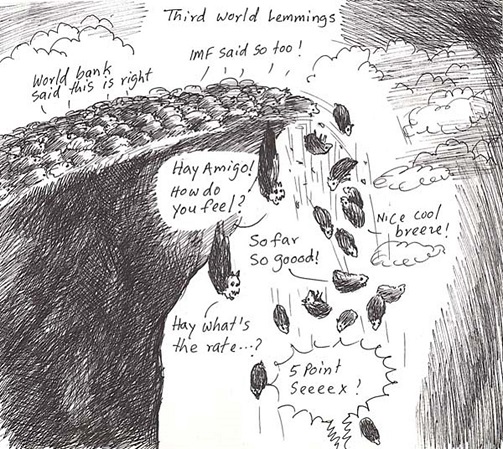
අපගේ රටට සිදුව ඇති නස්පැත්තිය වන්නේ අපගේ දිළිඳු කම නොව, අප ජීවත්වන වත්මන් ලෝකය පිළිබඳව අපට ඇති අනවබෝධයයි. එනම්, අද ලෝකයේ සිදුවන්නේ කුමක්ද, ජාත්‍යන්තර මුල්‍ය ආයතන වල කාර්ය භාරය කුමක්ද වැනි කරුණු පිළිබඳව අප සතු අනවබෝධයයි, නොදැනීමයි.  මෙම හේතුව නිසා අප එකම වරද සිය දහස්වර කරන්නෙමු. අප විසින් ඇසිය යුතුම ප්‍රශ්නය කිසිදු දේශපාලකයෙක් හෝ නිලධාරියෙක් විසින් අසන බවක් නොපෙනේ. අපගේ ආර්ථික විශේෂඥයෝ සිතන්නේ ලේමින්ග්ස් නමැති සතුන් සිතන ආකාරයටය. (මේ ලෙමින් නමැති සතා කෙතරම් මුග්ධද යත්, ඌ ඉදිරියේ සිටින උගේ සගයා ප්‍රපාතයකින් පහලට පැන්නොත් ඌද පැන දිවි නසා ගනී. P.B ජයසුන්දර වැනි අතිශය දුෂිත ආර්ථික විශ්ශඥයෝ එබඳු මුග්ධයෝය.)

දෙවන ලෝක යුද්ධයෙන් විනාශවූ යුරෝපය ගොඩ නැගීම පිණිස Marshall Plan එක යටතේ බිහිකළ ජාත්‍යන්තර මුල්‍ය අරමුදල හා ලෝක බැංකුව වැනි ආයතන, එම කාර්යය නිමා වූ පසුවත් ලෝකයේ පවතින්නේ මන්ද යන්න අපගේ ආර්ථික විශ්ශඥයෝ නොදනිති. ඔවුන් සිතන්නේ මේ ආයතන පවතින්නේ තුන්වන ලෝකය දියුණු කිරීමට කියාය. මේ ආයතන පිළිබඳව සොයා බැලීමටද ඔවුනට අවශ්‍ය නැත. ඇතැම්විට මේ නිලධාරීන් විකිණී සිටින නිලධාරීන් විය හැක. ජාත්‍යන්තර මුල්‍ය ආයතන විසින් දුෂිත රාජ්‍ය නිලධාරින් මිලයට ගැනීම තුන්වන ලෝකයේ සුලභ සංසිද්ධියකි.

ජාත්‍යන්තර මුල්‍ය අරමුදල හා ලෝක බැංකුව විසින් රට රටවල ආර්ථිකයන් විනාශ කරන ආකාරය පිළිබඳව විවිධ විශේෂඥයන් විසින් කෙතරම් සාක්ෂි ඉදිරිපත් කර තිබුනද අපගේ විශේෂඥයන්ට ඒවා වැදගත් නොවේ. ඊට හේතුව විය හැක්කේ එක්කෝ ඔවුන් අතිශය මුග්ධයින් වන හෙයිනි. නැතහොත්, ඔවුන්ද මේ රට විනාශකිරීමේ කුමන්ත්‍රණයේ කොටස් කරුවෝ නිසාය.

දැන් දැන් ජාත්‍යන්තර මුල්‍ය අරමුදල හා ලෝක බැංකුව පිළිබඳව අපගේ විශේෂඥයන් ගයන ප්‍රශස්ති ගායනා අපට අසන්නට ලැබේ. මෙය අතිශය කනගාටු දායක තත්වයකි.

ඔබ දෙපලට පොත් කියවීමට කාලය සොයා ගැනීමට අපහසු නම්, කරණාකර Prof මයිකල් හඩ්සන් ගේ සහ ජෝන් පර්කින්ස් ගේ පහත සඳහන් වීඩියෝ නරඹා මේ පිළිබඳව නැවත සිතා බලන ලෙස ඉල්ලා සිටිමි.

https://www.youtube.com/watch?v=L4MgWg-XQec
https://www.youtube.com/watch?v=NVGrSp1xRCQ&t=529s

Confessions of an Economic Hit Man : Perkins, John: 9781576753019: Amazon.com: Books

Super Imperialism. The Economic Strategy of American Empire. Third Edition: Hudson, Michael: 9783981826081: Amazon.com: Books

මැලේසියානු රැකියා 10,000 ලබාගැනීම  සදහා ගිවිසුම් අත්සන් කිරීම ඔක්තෝබරයේ – අමාත්‍ය මනුෂගේ ඉල්ලීමට මැලේසියානු රජයෙන් කඩිනම් ප්‍රතිචාර

September 22nd, 2022

Manusha Media

මැලේසියානු රැකියා 10,000 ක් මෙරට ශ්‍රමිකයින්ට විවෘත කිරීම සදහා වන ගිවිසුම අත්සන් කිරීම සදහා මැලේසියානු මානව සම්පත් අමාත්‍ය Datuk Seri M. Saravanan මහතා, මැලේසියානු කම්කරු කටයුතු අධ්‍යක්ෂ ජෙනරාල් ප්‍රමුඛ රාජ්‍ය තාන්ත්‍රික දූත පිරිස ඔක්තෝබර් මසදී ශ්‍රී ලංකාවට පැමිණීමට නියමිත අතර  එහි දී රැකියා දහදහසට අදාළ වන ක්ෂේත්‍රයන්, ගිවිසුම් කාල සීමා, වැටුප් ඇතුළු සියලු කොන්දේසි තීරණය කිරීමට නියමිතව ඇත.

මෙම රැකියා අවස්ථා මෙරට ශ්‍රමිකයින්ට ලබාදීම සම්බන්ධයෙන් වන ගිවිසුම අත්සන් කිරීම පිළිබද කම්කරු සහ විදේශ රැකියා අමාත්‍ය මනුෂ නානායක්කාර මහතා සහ මෙරට සිටින මැලේසියානු මහ කොමසාරිස්  Dato’ Tan Yang Thai මහතා අද දින (22) දිනයේදී කම්කරු සහ විදේශ රැකියා අමාත්‍යාංශයේදී පැවති හමුවකදී දීර්ඝ ලෙස සාකච්ඡා කළේය. මනුෂ නානායක්කාර ඇමැතිවරයා මැලේසියානු රජයෙන් පසුගිය ජුනි 23 වැනිදා කළ ඉල්ලීමට ප්‍රතිචාර දක්වමින් මෙම රැකියා 10,000 ලංකාවට ලබාදෙන බව මහ කොමසාරිස්වරයා අමාත්‍යවරයා වෙත නිල වශයෙන් දැනුම් දුන්නේය.

මෙතෙක් කල් මැලේසියානු රැකියා අවස්ථා බංගලාදේශය, ඉන්දියාව වැනි රටවල්වලට විවෘත වී තිබුණත්, මා පසුගිය ජුනි මස 23 වැනිදා  Datuk Seri M. Saravanan මහතාගෙන් කළ ලිඛිත ඉල්ලීමට කඩිනමින් සාධනීය ප්‍රතිචාරයක් ලබාදීම සම්බන්ධයෙන් සිය කෘතඥතාවය පුද කරන බව අමාත්‍යවරයාමහ කොමසාරිස්වරයා වෙත දැනුම් දුන්නේය.

මැලේසියානු රැකියා සම්බන්ධයෙන් නිල වශයෙන් ද්වී පාර්ශ්වික ගිවිසුමක් අනුව කටයුතු කරන ප්‍රථම අවස්ථාව මෙය වන අතර, මනුෂ නානායක්කාර මහතා විදේශ රැකියා නියෝජ්‍ය අමාත්‍ය වරයා වශයෙන් කටයුතු කළ 2018 වර්ෂයේ දී ද රැකියා පුහුණුවට අදාළ ව මැලේසියාව සමග අවබෝධතා ගිවිසුමක් අත්සන් කර තිබේ.

මෙය දෙරට අතර වසර හැට පහක රාජ්‍ය තාන්ත්‍රි සබදතා ඉතිහාසයේ සුවිශේෂී සන්ධිස්ථානයක්. මොකද මීට පෙර මේ රැකියා අවස්ථාවන් විවෘත වෙලා තිබුණේ බංග්ලාදේශය, ඉන්දියාව වැනි අනෙකුත් දකුණු ආසියානු රටවලට විතරයි. අපගේ ඉල්ලීම සලකා බලා මැලේසියානු රජයෙන් ගත් මෙම කඩිනම් පියවර සම්බන්ධයෙන් කම්කරු හා විදේශ රැකියා අමාත්‍යවරයා වශයෙන් මැලේසියානු රජයට ස්තුතිවන්ත වෙනවා. ඒ වගේ ම මේ හරහා දෙරට අතර රාජ්‍ය තාන්ත්‍රික සබදතාවන් තව තවත් ශක්තිමත් කර ගැනීමට අවස්ථාව ලැබීම සම්බන්ධයෙනුත් අපි මැලේසියානු රජයට ස්තුතිවන්ත වෙනවා. රටේ බරපතල විදේශ විනිමය අර්බුදයක් ඇති සමයක මැලේසියාව ගත් මෙම ක්‍රියාමාර්ගයට රටක් වශයෙන් අපි සියලු දෙනාගේ ම ස්තුතිය සහ ගෞරවය ලබා දිය යුතුයි” යැයි මේ සම්බන්ධයෙන් අදහස් දක්වමින් කම්කරු හා විදේශ රැකියා අමත්‍ය මනුෂ නානායක්කාර මහතා වැඩි දුරටත් පැවැසීය.

High Commissioner Moragoda and Indian National Security Advisor Doval review the status of the bilateral relations

September 22nd, 2022

Media Release Sri Lanka High Commission in India 

As part of the regular and ongoing dialogue between them, Sri Lanka’s High Commissioner to India Milinda Moragoda met with the National Security Advisor of India Shri Ajit Kumar Doval, at the latter’s office in New Delhi today (22 September 2022)

Their discussion centered on a comprehensive review of the status of the relations between India and Sri Lanka. Priority areas for future cooperation were also discussed.

Deputy National Security Advisor of India Ambassador Vikram Misri and the Deputy High Commissioner of Sri Lanka in New Delhi Niluka Kadurugamuwa also participated in the meeting.

Amid economic crisis, Sri Lanka’s inflation rate jumps to 70.2%

September 22nd, 2022

Courtesy Business Standard

Amid the worst-ever economic crisis since the country gained independence in 1948, Sri Lanka’s inflation rate jumped to 70.2 per cent in August, official data revealed on Thursday.

President to travel to Japan & Philippines for a series of meetings and to attend the funeral of Shinzo Abe

September 22nd, 2022

Courtesy Hiru News

President Ranil Wickremesinghe is scheduled to leave for Japan on September 26 to attend the funeral of former Japanese Prime Minister Shinzo Abe.

Abe, Japan’s longest-serving prime minister, was shot dead on 8 July, aged 67, at a campaign rally for his political party.

According to sources during the visit to Japan, the President is scheduled to meet Japanese Prime Minister Fumio Kishida and high-ranking representatives of the Japanese government.

After his visit to Japan, the President is scheduled to go to Manila, Philippines where he is going to meet Philippine President Ferdinand Marcos Jr. During his visit to the Philippines, the President will also participate in the Asian Development Bank Governors meeting to be held on September 29.

President Ranil Wickremesinghe is the Chairperson of the Board of Governors of the Asian Development Bank

President’s clarification on IMF agreement conveyed to parliament

September 22nd, 2022

Courtesy Adaderana

President Ranil Wickremesinghe has informed the Speaker of Parliament that the Cabinet of Ministers & the Opposition would be briefed on the staff-level agreement reached International Monetary Fund (IMF) soon.

Conveying the President’s clarification, Speaker Mahinda Yapa Abeywardena stated, The President has informed me that even the Cabinet has not been briefed about these discussions. Though they say that it has been agreed with the officials, it has to be approved by the board of the IMF.”

However, before that, the President needs to have discussions with the other creditor countries and their report will also be included in the finalized agreement, the Speaker explained.

After the President receives all the details, a Cabinet briefing will be called as the Cabinet of Ministers are yet to be informed about the matter, he added.

For this briefing, the Opposition and the Speaker of Parliament will be invited. Any other interested party can participate in the briefing as well, Speaker Abeywardena said further.

Sri Lanka receives another donation of urgently needed medicines, medical supplies from US

September 22nd, 2022

Courtesy Adaderana

Americares”, one of the world’s leading non-profit organizations focused on health and development, has donated urgently needed medical supplies for the people of Sri Lanka worth more than USD 773,000 (an estimated LKR 279,476,100.28).

The donation was made consequent to the request made by the Embassy of Sri Lanka in Washington D.C., and under the purview of Ambassador Mahinda Samarasinghe.

The donation includes prenatal and lactation vitamins, chronic disease medications, intravascular catheters, syringes, and gloves that are urgently required from the Sri Lankan Ministry of Health, according to the embassy.

As a result of facilitating this deed, an MOU was signed between the Ministry of Health in Sri Lanka and Americares enabling future donations to take place, the embassy said further in its statement.

A formal certificate handover ceremony took place at the Embassy of Sri Lanka in Washington, D.C. to mark the momentous occasion, with His Excellency Ambassador Mahinda Samarasinghe and Sadhana Rajamoorthi, Americares Deputy Medical Officer for Americares.

This endeavor is in cooperation with the Ministry of Health Sri Lanka, and at a time that international aid and medicinal supplies are of importance to the island nation, the people of Sri Lanka and the Embassy of Sri Lanka convey their sincere appreciation and acknowledgement to Americares in their generous efforts and commitment to assist the nation.

Americares is a health-focused relief and development organization that saves lives and improves health for people affected by poverty or disaster. Each year, the organization reaches 85 countries on average, including the United States, with life-changing health programs, medicine, medical supplies and emergency aid. Since its founding more than 40 years ago, Americares has provided more than $20 billion in aid to 164 countries, including the United States.

Fake News😒-Reports of student consuming coconut kernel is baseless – hotline for emergencies

September 22nd, 2022

Courtesy Hiru News

President’s Media Division releasing a statement says that the reported incident of a student consuming coconut kernel for lunch due to poverty, was found to be unfounded. ;However, a special prog is initiated on the directives of the President to assist any child/family facing such a situation. For assistance call hotline 0114354647.

The President’s Office has focussed its attention to the news in the national newspapers and social media about an incident in which a student had consumed coconut kernel for lunch due to poverty.

Accordingly, the Minuwangoda Regional Director Vajira Ranaraja and Gampaha District Secretary W.S. Satyananda had called for information regarding this incident from the Divulapitiya Divisional Secretary, Director of Divulapitiya Education Division of the Minuwangoda Education Zone and Principal of the Kongodamulla St. Anthony’s Junior College and the Grama Niladhari Officer and Development Officer where the student resides, and it was confirmed that such an incident has not been reported.

However, in view of the current economic situation in the country, if any child, person or family is in this situation anywhere in the country, a special program has already been implemented for them at the Divisional Secretariat level and District Secretariats.

On the special instructions of President Ranil Wickremesinghe, a Food Security Program Unit has been established at the President’s Office and information can be provided by contacting the unit on their hotlines 0114354647 or 0114354354 and extension number 5705/5707.

Samurdhi recipient families with more than 05 members, families with disabled and people with chronic illnesses, poverty stricken families with children below 05 years, families without a husband or wife, families with pregnant and lactating mothers and poverty stricken families who have not even received primary education who are facing severe food insecurity have been ;identified as criteria for providing assistance under the World Food Programme.

Accordingly, it is possible to provide Rs.15,000 monthly under the World Food Program for such families through Grama Niladhari Officers and Divisional Secretaries. This money will be provided to them for the first 03 months and a food program will be implemented for another 06 months.

In addition to this, the government has taken steps to provide a monthly allowance of Rs. 10,000, ;to 61,000 poverty stricken families for a period of six months

If there are families who are not included in any of these programs and are suffering from lack of food, there is a possibility of providing food for them on short-term basis and they should make a request through the Grama Niladhari Officers, Divisional Secretaries or the Food Security Program Unit of the Presidential Secretariat.

In addition, if there are families with malnourished children, a study will be conducted and food aid programs will be implemented for such families through programs such as the parental guardian system implemented by the government.

Further, school teachers can also intervene and forward information about families suffering from lack of food to the Food Security Program, and those who are willing and able to help such families also have the opportunity to get involved and contribute. Apart from that, Grama Niladhari Officers and Divisional Secretaries have the opportunity to contact the Food Security Program and coordinate the implementation of these programs.

Fake News😒 -Minister responds to questions on students fainting in school (Video)

September 22nd, 2022

Courtesy Hiru News

In the past few days, there have been reports of students fainting during school morning meetings in various parts of the island.

These incidents were reported in schools in Vilachchiya, Thanthirimale and Minuwangoda.

This was also discussed in the parliamentary session today (22), and the members of the opposition parties asked the Minister of Education about these reports.

However, in response to the question, Health Minister Keheliya Rambukwella said that no information has been received about such an incident in the school mentioned.

Health Minister Keheliya Rambukwella also stated that he spoke to the principal of that school and that there had never been a case of such a child fainting.

To confirm that, the minister also released a voice tape of the principal of the school in question to Parliament, but Speaker Mahinda Yapa Abeywardena blocked it and said that only the members of parliament can address the parliament.

POHOTTU AS USA’ S PROXY Part 8Me

September 21st, 2022

KAMALIKA PIERIS

Unlike other political parties, the JVP has actively intruded into the   university as a disruptive force. It has obstructed university education in several ways. It has hampered undergraduate studies, and made promising students leave university by torturing and sexually harassing them.

UGC survey on ragging (2018) observed that one of the consequences of the university   ragging is the promotion of an unhealthy campus environment, distancing staff from students, discouraging individual initiative, silencing students.

 JVP has tried to prevent freshers from obtaining the benefits of university education .Freshers were made to avoid computer classes and were told not to use computers. ICT training, stops, said academics.

 Raggers actively prevented freshers from learning English   They are under pressure not to attend English classes  or speak in English. This will affect their future, observed academics. These undergraduates would not be able to get a job without knowledge of English.

 Student leaders not only stop freshers from attending English classes, but ‘not using English’ is proudly claimed to be a part of the so-called sub-culture, reported Sujata Gamage. Freshers were not allowed to utter simple English words such as ‘assignment’ or ‘canteen’.

Studies in the degree subjects were also hampered. There were many assignments in the first year, but we didn’t have any place to discuss them because some areas were prohibited for us. If we go somewhere and discuss, then they get to know that as well and it creates more problems, said an undergrad. Academics observed that poor performance in the first year would affect the final exam result.  The final GPA score of the undergrad would be low since the first year score was poor.

Freshers complained that the seniors would not   let them use the library. They come there and ask why are you only here, said one undergrad at a talk show. Freshers also complained that they could not study at night.  They had to attend classes on politics at night.  This was compulsory.

 Raggers kept on tearing the T shirts the male freshers were wearing. This was not accidental. This was part of the organized ragging. This could be considered an obstruction to their studies. Freshers would not have wanted to attend lectures wearing torn clothes. They would have preferred to keep away.

The seniors set the freshers against the academic staff. This would have been laughable if it had not been so serious. The main purpose of coming to a university was to learn from the lecturers, not avoid them.

 During the familiarization course, a conscious attempt was made among the new entrants to create hostility towards academics, said Weeramunda. They create a barrier between the staff and students during indoctrination, and create suspicion and distrust within students with statements such as They are not from your social class. They go in cars with tinted glasses” (kalu kannadi dapu karvala).

Students were told lecturers were   asking for bribes and    sexual favors, reported undergraduates in a talk show. Students are told not to get close to the staff. Don’t talk to lecturers, keep a distance from the lecturers, they are advised.  Don’t ever try to meet the Vice Chancellor or the Dean. They are terrible.

They were told that University staff whether   academic, non academic or administration were of no use’. It was best to rely on the seniors. Seniors spoke of the difficulty of assignments and the need for the seniors’ notes.

The inhuman ragging of the JVP group, made promising undergrads drop out of university. Every year around 2000 students drop out as a result of ragging, reported Daily Mirror in 2019. Hettiarachchi observed in 2020 that JVP ragging has resulted in many students dropping out of university education while many others eligible for University education refrain from getting enrolled in state universities.  Two girls known to me were accepted to Kelaniya to read English and both decided not to go, because Kelaniya at the time was teeming with unrest.

Secretary at the Ministry of Higher Education stated in 2019, It has been a little over six months since I assumed duties and out of around 400 letters I receive, one or two of them bring tears to my eyes,” The letters include an experience by a son or a daughter. Each letter ends with a sentence that urges someone to listen to his or her grievance. These letters indicated that they would not continue with their university education.

Freshers left the university because of the obscene rag activities they were made to undergo. The experience made the freshers want to leave university, undergrads said at talk show. In one ragging experience, a female student stated We are marched towards the place where the male students are present. This is the most horrifying incident I have ever experienced and this forced many undergraduates to leave the campus.”

The physical torture they were subject to, also made freshers quit. In one university hostel, freshers including girls were made to go up five flights of stairs on their bottom, said undergrads at a talk show. One girl, who was bright and was doing well in her studies, left the university after this experience.

The pre-university meetings in their home towns were used to put students off the University as well as catch them before university. A lawyer father complained that his son had been severely scolded at a meeting he attended in Gampaha and had refused to go to university, though he had subsequently agreed to go.

Do Not Let Born Again Mafia Creeps into Sri Lanka Cricket

September 21st, 2022

Sasanka De Silva Pannipitiya.

Politics should not be used to advance religions and vice versa.
Similarly, avoid using sports to advance religions.
It will lead to both the nation’s and sport’s demise.
In fact, it should make illegal to make any religious gestures on a playing field.

Sri Lanka Cricket should take a very serious look at the incident involving one of their current players and take prompt action.

If any code of conduct is involved, then deal with it to bring him back to his senses.

Not that you shouldn’t have faith in paranormal forces!

Don’t market it to everyone!

Giving such accolades will undermine the performances of the others who were in the team.

And eventually, it will affect their level of contribution in future endeavours.

It holds true for all faiths.

Sasanka De Silva

Pannipitiya.

A Case for Wealth Tax: Top 1% Owns 32% Wealth, Bottom 50% only 3.7%

September 21st, 2022

Dilrook Kannangara

Sri Lanka’s current taxation system is only focused on taxing income and consumption. How about wealth? Sri Lanka has a horrible disparity between the top 1% and the bottom 50%. The top 1% (about 200,000 people) owns 32% of the wealth while the bottom 50% (over 11 million people) owns just 3.7% of the wealth. This is an unsustainable situation for a country in a deep debt trap and multiple economic crises.

If all income taxes and consumption taxes are removed, everyone will have more money to buy essentials, build up savings and invest in industry in time to come. The loss can be recovered by taxing the super rich via a wealth tax. Most of their wealth idles without earning a return.

Land and houses are a good starting place. Land and houses should be subject to wealth tax based on the total floor area, the extent of the land and the location. Each postcode, town or village has their average value. When the value of a property exceeds a certain threshold, it can be taxed at 5% of its assessed value. This can more than offset for the loss in income taxes and VAT.

If the economy was doing well, wealth taxes are counterproductive to some extent due to capital flight – that is people will sell local assets and invest elsewhere. However, given the dollar crunch, this is not possible today. Therefore, wealth tax can successfully increase government revenue without impacting income and consumption.

It is easier to administer as well and there are no dodgy deductions. Paying 5% of their wealth is no big deal for those with assets over the threshold. They too benefit by not having to pay taxes on their income and consumption.

Wealth tax will also lead to good economic and social behaviours. Overcrowding in cities will ease, there will be more dwellings for needy people, import of gold and other luxury goods will reduce, illegally earned money will be taxed (at the moment illegally earned money is totally tax free as income is not declared), tax collection will be fairer and the wealthy will put their assets to producing income.

Health Minister rubbishes reports of aflatoxin in ‘Thriposha’, vows legal action

September 21st, 2022

Courtesy Adaderana

Health Minister Keheliya Rambukwella says that the news reports being circulated claiming that the ‘Thriposha’ distributed among newborn babies and mothers contain the carcinogen called Aflatoxin is completely false.

Speaking in parliament today (21) the Health Minister said there is no Aflatoxin in Thriposha and that legal action will be taken against the health official who made that statement.

I asked about that story yesterday evening. I say it in this Parliament with responsibility that it is a blatant lie,” Rambukwella said. 

The minister said that he instructed the Secretary to the Health Ministry to take legal action against those involved in spreading this misinformation. 

He said this is a very unfair story because they are attempting to cause panic is society by claiming this contains the carcinogen Aflatoxin and that if they make such a statement, they need to get permission from the secretary.

Malaysia to recruit 10,000 workers from Sri Lanka

September 21st, 2022

Courtesy Adaderana

Malaysia’s Cabinet has agreed to recruit 10,000 workers from Sri Lanka after taking into account the state of the country which has been hit by an economic crisis, says Minister Datuk Seri M. Saravanan.

In a statement on Wednesday (Sept 21), the Malaysian Human Resources Minister said the Sri Lankan government had submitted an official application to supply manpower involving a quota of 10,000 workers.

The Cabinet, at its meeting last Sept 14, agreed to hire foreign workers to help Sri Lanka which is facing its worst economic crisis, he said, urging Malaysian industry and employers to support the government’s gesture by employing workers from Sri Lanka to fill vacancies in sectors allowed to hire foreign workers.

According to Saravanan, employers who have been given quota approval and have settled the levy payment should seize the opportunity.

As of last Sept 14, levy payments had been made for 416,634 applications for foreign workers, he said, adding that employers keen to hire foreign workers can contact the ministry’s Migrant Worker Management Division or the Peninsular Malaysia Labour Department for more information. 

– Bernama

–Agencies

NO TRUTH COMMISSION if foreign MPs linked to LTTE are not investigated

September 20th, 2022

Shenali D Waduge

Dravida Nadu was a Christian Missionary movement & Tamil Eelam is possibly too. How India got wrangled to train & arm LTTE in a project initially rooted by the Church is a puzzle and something for India to think about. However, while LTTE remains banned by

Watching the pomp and pageantry & honoring of traditions and customs for the Queens funeral saddened me because while our people are happy to praise the British history & its customs, they frown down on our own.

This is primarily the fault of our education system, poor communication & media & failure of the Maha Sangha and Buddhist associations to ensure the citizens of Sri Lanka knew their history, was aware of their traditions, heritage, culture & customs.

Many of these foreign MPs are issuing statements on ‘Genocide’ without having the common sense to even verify if such took place. A look at population statistics would make any to wonder how can genocide take place if Tamil population is increasing. As for war crimes – without names of supposed dead, without bodies, without skeletons without mass graves – how can a national army be accused of war crimes and murder! Some of the foreign MPs are even attending pro-LTTE commemorations where the hype is about ‘civilian’ dead when in reality these MPs are attending to foolishly mourn LTTE dead. Havent the foreign intel briefed these MPs before attending such functions. It is such a joke to see foreign MPs issue statements that are really meant for LTTE dead while it is virtually impossible to ascertain who were the civilian dead as LTTE had a trained civilian armed unit. Any LTTE civilian unit member dying during hostilities is not entitled to civilian status.

Moreover, how many of these foreign MPs can confirm that anyone dying inside the conflict zone were only killed by Sri Lankan forces and not LTTE. Didn’t they know that LTTE shot dead fleeing Tamil civilians? Didn’t their governments & envoys appeal to LTTE to release civilians? Didn’t UNSG also appeal to release children, women and the elderly? All appeals LTTE refused to oblige.

Since the end of the conflict numerous foreign MPs have taken part in petitions and have regularly issued statements and have been regular visitors to pro-LTTE events in their countries knowing their countries have banned LTTE. What is the meaning of banning an entity as terrorist when their own MPs attend events that promote these terrorists?

LTTE could not be defeated for 3 decades because of the foreign hands involved & linked to LTTE.

While the Church first inspired self-determination for Tamils, India gave its soil to train Tamil militants, Tamil Nadu politicians openly backed them, foreign intel also trained them, LTTE were allowed to freely open foreign offices & station LTTE members, while foreign govts banned LTTE, these offices ran without issue, LTTE’s international head quarters was London. Foreign MPs are in competition to issue the best statement on behalf of the LTTE, foreign governments have funded NGOs & INGOS to provide support to the LTTE & foreign media helped paint an ugly picture of the Sinhalese majority & Sri Lanka in general. Foreign funded human rights organizations were brought in to showcase trumped up charges which went into foreign funded reports and these became the Bible used in Geneva.

Any TRUTH COMMISSIOn cannot omit naming all of these foreign MPs who attended pro-LTTE events overseas, who gave speeches standing next to huge cut outs of Prabakaran, who attended mourning events of LTTE dead and issue statements for a homeland and separatism which goes against diplomatic protocols and constitute interference into the internal affairs, sovereignty of nations.

If a TRUTH COMMISSION is not going to be naming and shaming these foreign MPs – there is no need to spend money on such a commission for omissions that seek to camouflage the TRUTH.

What kind of joke is this – soldiers are dying to defend the nation from terrorists, foreign MPs are shaking hands with the terrorists!

POHOTTU AS USA’ S PROXY Part 8Md

September 20th, 2022

KAMALIKA PIERIS

Any insurgency has to have a base for the recruitment of cadres, training and indoctrination observed analysts. JVP decided to use the universities of Sri Lanka for this purpose. The university was ideal for this purpose. It was a loosely organized enclave.  The university is a good recruiting ground for the JVP, observed critics. First year students were the most vulnerable.

By 1978, JVP had established itself in the universities as the strongest group among the students. JVP has pushed out all the other political parties   and is able to dominate in student matters,  said an informant in 2007.      Other parties have no involvement now in student politics. The JVP leaders come in expensive vehicles, park them outside campus and walk into the campus.

Weeramunda   did a survey of ragging in three universities in 2007, University of Sri Jayewardenepura, University of Kelaniya and University of Colombo. He observed that the JVP alone, of all political parties, has succeeded in obtaining a firm foothold in the student bodies of all three universities.  UGC report on ragging (2018) stated that that JVP continued to maintain its foothold in the student bodies of universities.  

JVP does not have the support of the majority of students. The JVP group, who do the university ragging, are a minority compared to the overall student population in the universityobserved Hettiarachchi in 2020 Only 2.7 %of students who completed more than 75 % of attendance found to be harassing their juniors through ragging said UGC in 2018.  About 10 or 15 students are activists. Others follow like sheep, said an informant in 2007.

However, despite small numbers, JVP has succeeded in recruiting and indoctrinating new batches of enthusiastic supporters and activists every year from the university, said analysts.

JVP is   assured of a continuous supply of new entrants with the recruitment of new batches of entrants every year, they said. Through ragging, JVP managed to replenish its cadres, by catching some of the freshers into its net every year.

 Weeramunda (2008) stated that JVP has followed a systematic method to recruit and indoctrinate new batches of enthusiastic supporters and a hardcore of activists every year, from the new arrivals in the university. JVP’s methods were founded on the principle of making the most out of laxities and weaknesses of the university system, Weeramunda said.

The JVP modus operandi consist of a series of clandestine operations that takes the form of a hidden insurgency, Weeramunda continued. JVP starts by running awareness programme for new entrants before they enter the university by contacting them privately at the district level and preparing them for entering the university.

Next, when the freshers arrive in university, JVP administers an orientation programme for new entrants for a period of 3 months.  They do this with the approval of the university authorities. This is most effective in the Arts faculty where the freshers are more vulnerable and the JVP is strongest, observed Weeramunda.

During this period, the new entrant is given a new identity, with a new name, shown the administrative setup, the facilities available such as library, hostel and medical services and how to use them, names of seniors, and rules for behavior within the university. This would have been gratefully received by those coming from remote areas.

Freshers were also treated to lectures on free education, history of the JVP, JVP’s role as protectors of student rights and sacrifices made by JVP heroes. Freshers are forced to memorize the names and deeds of student heroes” and sing the student hero song at events, said informants. Many of these heroes died in the 1988-89 uprising after they had left the university. Those like Samantha Withanage who resisted ragging and were brutally murdered on campus are not mentioned. Dead activists were also commemorated on Vira Sisya Day.

Seniors then subjected the freshers to serious ragging. This was done for multiple purposes, one of which was to   replenish the JVP cadre in the university. Those who ragged well were made JVP union leaders or batch representatives in the university.

Every year, a new set of leaders are appointed from the     second years, for JVP work.  The JVP group meet and decided each year who is going to contest student union elections and who is going to rag, reported Weeramunda.

Seniors secured the loyalty of certain  pro-rag followers from among the freshers. These freshers then become informants  and betray their fellow peers, noted critics. They report on fellow freshers.  They act as messengers to the seniors.

Freshers now rag freshers in a new trend, informants reported in 2007. Undergrads failed to see the significance. They simply complained, we freshers have to rag other freshers. But this was a test to select JVP recruits. 

The ragging helped JVP to enroll its next generation of JVPers. It helped spot potential JVPers among the freshers. The more aggressive students and those who have earned a good ragging record from the first year batch are recruited into to the party, said Weeramunda. 

This small group were then secretly indoctrinated outside the campus on the JVP policies. They were given lectures on free education, history of the JVP and the JVP role as protectors of student rights and the sacrifices made by JVP heroes. JVP spends money on this and that cannot be stopped, remarked informants.

Weeramunda explained, those undergoing the ‘rag’ are watched and promising freshers are recruited into the JVP. The more aggressive students and those who ragged the freshers well were selected. They were then indoctrinated secretly, outside the campus on JVP ideology. They are taught the history of colonialism, its negative impacts on society and economy, JVP vision of a socialist state, JVP’s organization, and the responsibilities of JVP cadres. These recruits are promised jobs and told that their role is to influence other students. Student leaders believe they have power, said informants.

Outside elements then start to   control these students, said informants.  Student activists are given cell phones so that they could maintain contact with JVP leaders and carry out their instructions. JVP pays the activists and targets are set for them. These undergrads do not attend lectures. They assign students to stand in for them and copy notes.

The JVP seniors in the university puts the new recruits to work. They are made to paste posters, attend pickets and demonstrations and learn to lead various protests.  The party gives money to display expensive banners and posters.

At least once a month   undergrads are sent out across to all corners of the island to collect money for the JVP. Collecting (keta hollanawa) is done by the freshers, under JVP direction. JVP recruits were given  a monthly wage in return for organizing tin collections all over the country. A person from outside comes to collect the collection.

JVP has fulltime workers assigned to each university for this and they are given a target for every year. At Ruhuna each group was given one till and they were expedited to go everywhere, even to small places,   like Angunakolapalessa Walasmulla, as well as Beliatta, Tangalle. They get about 2 lakhs from a town, the total is about 10 million.

JVP used students to show to the public that they have power. There is a march every year for one reason or another in the university , directed against the  university administration. If there is a protest tomorrow, the leaders are there in the hostels tonight, informants said in 2007.

Students are also used for public demonstrations and protests. The  students activists are expected to synchronize  protests and demonstrations in all campuses so that they have  maximum impact .

First year students who support the JVP are made to participate in protests taking place outside the university . Freshers are placed right in front, while the seniors stayed safely at the back. These protests  mostly end with water cannons and tear gas and the freshers were the first to be affected.

Most of these students don’t even know why they  are demonstrating. They go unwillingly. We walk to UGC or Parliament. We have no idea what will happen, whether we would be sprayed with tear gas or water. But we had to go in the front, said undergrads.

In one instance we were taken to picket and 10 of our students were suspended. In another instance, seniors took us to picket and as a result, we were not able to attend lectures. They promised us that they would see  that we had no problem about attendance  but they did not do so   and we were penalized for not attending lectures. We trusted the seniors a lot but they let us down.

University students leave the university after four years and move onto adult life. JVP must be able to ensure their loyalty after they leave university . Weeramunda found that about 10-15 students per university continue  JVP  activities throughout their university  years and continue to work for the JVP after they have left the university . Student leaders are promised jobs after they leave.  This is welcome news for rural youth, who cannot be sure they would get a job after graduation. This gives them the chance also, of joining the power elite.

The university was also  used   for recruiting for the baby brigade of the JVP. The Students Union of  Kelaniya University,  holds arts festival called Bihi Dora   and invites schools to participate and compete in its events. They identify skilled  school children, give them prizes and certificates and catch them at an early age, said informants in 2007.

The programme to allow Sri Lankan migrant workers to import an electric vehicle launched

September 20th, 2022

Manusha Media

Minister Manusha Nanayakkara hands over the vehicle import permit to the first recipient’s nominee”

The nominated representative of the first recipient of the newly introduced programme to allow Sri Lankan migrant workers to import an electric vehicle after remitting money through official channels received the relevant vehicle import permit from Minister of Labour and Foreign Employment Manusha Nanayakkara today.

Daham Perera the authorized representative of the Sri Lankan migrant worker who imported the vehicle received the vehicle import permit from Minister Nanayakkara.

 The minister on the occasion noted that the decision to allow Sri Lankan migrant workers who remit money through official channels to import an electric vehicle has been much appreciated and inquiries in this regard by workers are increasing on a daily basis.

Any Sri Lankan who lives, works or holds dual citizenship in a foreign country are eligible  to import an electric vehicle under the scheme. Those sending USD 20,000 or more between May 1, 2022 and December 31, 2022, can obtain a permit to import an electric car. Those who remit USD 3000 or more via official channels from  May 1st 2022 to May 2023 are eligible to import an electric motorcycle.

The minister emphasized that it is mandatory remittances directed to Sri Lanka are sent through the legal channels such as the banking system to be eligible for this benefit. The minister further said that it was also mandatory that 50 percent of the money sent has been converted into rupees. He said the motorcycle or the car can be imported for a value not exceeding 50 percent of the amount remitted.

Minister Manusha Nanayakkara further said;

Importing vehicles to Sri Lanka is currently prohibited. But only foreign workers who send dollars to the country have the facility to import an electric vehicle. So make the most of this opportunity. Enjoy this reward. As a ministry, we fully support it. Similarly, the tax levied on the import of luxury vehicles will also be revised in the future.

But the permission is only to import electric vehicles. These vehicles should be unused vehicles. Either brand new or mileage should be ‘0’. Similarly, it is mandatory to import within one year of the first registration.

As the ministry, we hope that the battery pack and electric motor of this imported vehicle should have a warranty of at least three years. This should be ensured by the manufacturer, importer and exporter. It should also be ensured that the battery is disposed in accordance with international electric vehicle road safety standards and approved standard procedures. The remittances sent to Sri Lanka can be converted into rupees and the taxes for this can be paid. They must also be subject to Department of Motor Vehicles compliance. A car should have at least 200 kilometers mileage after charging once. Similarly, a report of all money remitted to Sri Lanka should be submitted through the relevant bank.The minister further said that the relevant application and information can be downloaded from the website of the Ministry of Labour or the Foreign Employment Bureau. He said after producing proof that money has been remitted through official channels and the documents related to the importation of the vehicle, the measures to initiate providing the vehicle import permit can be carried out.The vehicle imported in this way cannot be transferred to a third party until two years after its registration. The minister also said for persons wanting to transfer ownership before two years facilities have been provided to do so by making a payment in USD equivalent to 10 percent of the CIF value of the vehicle.


Bangladesh promotes military diplomacy for peace and stability in the Indo-Pacific region

September 20th, 2022

Kamal Uddin Mazumder Dhaka Bangladesh

As the Indo-Pacific region represents the world’s economic and strategic center of gravity, the Indian Ocean today is becoming the centerpiece of all geo-strategic play. So, Cooperation in the region is crucial to implementing the international community’s global agenda, including achieving the UN’s Sustainable Development Goals. Major powers like the US have enhanced and deepened their strategic engagement and leadership roles with countries in the region. The Indo-Pacific Armies Management Seminar, or IPAMS, is a U.S. Army Pacific (USARPAC) initiated conference that is aimed at facilitating and enhancing interactions among the armies of the Indo-Pacific region. This year’s 46th Seminar, co-hosted by the Bangladesh Army and US Army Pacific (USARPAC), concluded in Dhaka. The objective of IPAMS is to promote peace and stability in the region through mutual understanding, dialogue, and friendship. It is the largest conference for land forces in the region and one of the preeminent army engagements that provide a platform for the senior military leadership of Indo-Pacific regional ground forces to exchange views and opinions on peace and stability.

This year’s conference brought together senior officers of the military forces of 24 countries. Under the theme of “Possibilities and Challenges for Maintaining Peace and Security in the Indo-Pacific Region,” the main focus of the event was “robust peacekeeping,” “women empowerment,” and “land power in regional cooperation.” Apart from these, peacekeeping operations, humanitarian assistance, disaster relief, leadership development, countering transnational crime, and empowering women were being discussed.

Significance of Military diplomacy

Bangladesh has historically been part of ancient Indo-Pacific connectivity. It is indeed in Bangladesh’s interest to advocate and work for an open, resilient and interconnected Indo-Pacific. In a broader sense, its own continuing sustainability as an independent, sovereign, prosperous nation-state depends on this idea. With close to 40 nations comprising its make-up, the Indo-Pacific region covers more than half of the earth’s surface, home to 60% of the world’s population producing 60% of global GDP, contributing two-thirds of current global growth. By 2030, the overwhelming majority (90%) of the 2.4 billion new members of the middle class entering the global economy will live in the Indo-Pacific. 7 of the world’s 10 largest armies are in the region where border disputes and sovereignty concerns are headline events. Therefore, maintaining peace and security across the region is central to global progress.

However, the conference brings army senior leaders together to discuss differences, establish trust, mitigate miscalculations, resolve challenges, and find commonality among multinational-professional soldiers. There are issues that cannot be solved in isolation by just one or two countries. This platform allows military leaders in the region to get together, share their ideas, and find a collective solution to a pressing and immediate problems. The relationships developed throughout the seminar and through Army-to-Army engagements would help to identify issues of common interest for arriving at pragmatic multi-lateral solutions, and dealing with the escalating threats.

It is imperative to build trust at the strategic level. So, the armies need to work together with the public sector in policy-making and lay out a development foundation that links economic and social development with the protection of the environment and natural resources.  The IPAMS promotes network building among military chiefs at all levels to join forces in coping with the world’s various changes and challenges for sustainable advancement of the region. The forums provide a unique opportunity to advance understanding of key issues while showing respect for each other’s role in promoting security and stability. It would build interpersonal relations, mutual trust, and confidence among the ground forces in the region, which would reduce tensions. “The IPAMS can create a sense of friendship and warmth so that peace and stability prevail in the region,” PM Sheikh Hasina said while addressing the opening ceremony of the seminar.

The meetings are yet another symbol of the close cooperation between Bangladesh and the United States. It also paved the way for stronger cooperation between the armies of the two countries. Charles A. Flynn, commanding general of the U.S. Army Pacific, assured that the United States will cooperate with Bangladesh and other Indo-pacific countries to ensure the security of this important region. Again, the Bangladesh Army Chief expressed hope that working together will give the Bangladesh army a lot of scopes to learn as the US Army is one of the best in the world and very developed.

While the militaries of the participating countries discussed disaster management, transnational crime, security issues, and women’s empowerment, the issue of Rohingya refugees who have fled from violence in Myanmar is not overlooked. It is undeniable that since the Rohingya crisis erupted in the Indo-Pacific region’s heartland, it has all the potential to directly threaten the peace and stability in the region. Because of the prolonged stay of more than 1 million Rohingya refugees in crowded camps, the economy, environment, security, and socio-political stability in the region will be seriously affected. A delegation of top military officials from 24 countries, including the U.S., Canada, Australia, Japan, Indonesia, India, China, and Vietnam, visited the refugee camps in Cox’s Bazar, where Rohingyas expressed their desire to go back to their home country of Myanmar’s Rakhine State and not to any third country. The members of the group witnessed the plight of the Rohingyas firsthand and developed a “clear perception” of the gravity of the refugee crisis and the need for their repatriation to Myanmar.

Organizing such an international military conference is a great achievement for Bangladesh Army. Noteworthy, The Bangladesh military’s positive and active role has earned the nation an international reputation with political and diplomatic mileage. The Armed Forces of Bangladesh have glorified the country on the global stage through their brilliant participation in UN peacekeeping missions. As the UN peacekeeping operations have been evolving continuously, Bangladesh has regularly been carrying out the performance appraisal of its peacekeepers and taking measures to cope with future challenges. Despite being a late entrant (in 1988) as a troop contributor, Bangladesh has emerged as a credible UN partner over the last three decades. Since 1988, Bangladesh has participated in 54 peacekeeping missions in 40 different countries across 5 continents with more than 175,000 uniformed personnel, including over 1,800 female peacekeepers. Currently, there are over 7,000 troops and police deployed in 10 missions (as per data from the Armed Forces Division). Praising the Bangladesh Army, US Army General Charles A. Flynn said: “The Bangladesh Army is known for its leadership globally because of its contributions to UN peacekeeping operations. Its peacekeeping campus and training center are not just known within the region, they are known internationally. There are many, many things that the US Army and so many other armies can learn from the experiences of the Bangladeshi Army in their international and global commitment to humanitarian assistance, disaster relief, and peacekeeping operations. “ This acknowledgment has once again proved that our armed forces are a vital factor in upholding global peace and are able to keep our country safe from the subversive activities of internal and external enemies.

Last but not least, this conference is a critical opportunity to connect with the world’s military leaders to foster alliance partnerships and cooperative relationships. It is expected that dialogues like these will further strengthen ties between the Indo-Pacific countries and the Bangladesh Army and increase possibilities for mutual cooperation to cope with recent challenges in order for the region to move forward in a secure and sustainable manner.

CAATSA-THE MOST FATAL WEAPON

September 20th, 2022

ALI SUKHANVER

‘Countering America’s Adversaries through Sanctions Act’ commonly known as CAATSA is considered the most fatal weapon which is used against the countries not in good books of America. Just a few months back, it was in the news that the US authorities were considering imposing sanctions on India because of its trade ties with Russia. It was all being done as a part of US’ isolation strategy during the ongoing conflict between Russia and Ukraine those days. Situation became more serious when India stood in the line of those 35 countries which abstained themselves from voting at the United Nations against the Russian advancement in Ukraine. Certainly the Indian decision of going against the US will and desire was not very much encouraging rather pleasing for the US authorities, military as well as political. At political level both the Democrats and Republicans raised their concerns about India’s stance of ‘going against the wind’ and it was being apprehended that this decision would create distances between India and America. It was also in the air that the Biden administration might impose sanctions upon India under the ‘CAATSA law’ which imposes certain restrictions on the countries purchasing defense materials from Russia, North Korea and Iran but nothing such ever happened. In spite of all these fears and apprehensions India is still the ‘blue-eyed boy’ of US. Experts on the subject are of the opinion that this sheer misunderstanding on the part of the US authorities would prove a seriously painful shock to the US policy-makers, somewhere in near or far future.

of Trust- U.S. India relations from Truman to Trump’ Meenakshi Ahmed is considered an expert on India-US relations. Recently she penned down an article in the Atlantic with the title, ‘America Has Never Really Understood India’. She said, Russia’s invasion of Ukraine has resurrected Cold War hostilities, harkening back to a world in which the United States saw itself pitted in a Manichaean struggle, facing a choice between good and evil. The U.S. is using similar rhetoric today to persuade countries to isolate and punish Moscow.” She further says, President Joe Biden has garnered support among his NATO allies to impose crippling sanctions on Russia, but his efforts elsewhere have been only partially successful. Australia and Japan—which, along with the U.S., make up three-quarters of the Quad, a relatively new Asian-security grouping—have signed on, but India, the fourth member of the bloc, has declined to join the chorus of condemnation.” If India were a very serious and sincere partner of the US, it must have been the first one to offer all cooperation in this regard.

Almost eight years back in March 2015, Crispin Rovere penned down an article in The Interpreter with the title, ‘India is no ally of the US’. The writer said, As for India and the US, I find it astonishing that after more than 50 years of being repeatedly burned, some Americans still have not learned their lesson  and continue insisting that China and India are ‘natural competitors’. This is false. China and India are historical competitors, but such competition is not necessarily ‘natural’ and certainly nothing like the strategic competition that exists between China and the US. After all, any Chinese expansion in the Western Pacific will be at America’s expense. It is hard to argue that India’s expansion into the Indian Ocean is being actively resisted by China. India is not a pro-Western democratic bulwark, and never will be.”  Last year on April 15, 2021, same apprehensions were expressed by Chirayu Thakkar regarding uncertainty of US-India relations in an article appeared in the Stimson.

Chirayu Thakkar said, For the last 20 years, the United States has mostly overlooked its divergences with India in multilateral forums as the relationship paid economic, strategic, and political dividends bilaterally, whereas the costs of divergences at the multilateral level were negligible. In spite of such exceptionalism enjoyed by New Delhi, U.S. diplomats at all levels reminded their Indian counterparts that India’s obstinate role at the UN was increasingly at odds with our emerging strategic proximity.” With a restructuring of the global order, continuous assault on rules-based order, and China’s rise as a common strategic adversary, the costs of their inability to work together in the global governance arena can be much higher for both countries today.” Subrahmanyam Jaishankar’s book ‘The India Way: Strategies for an Uncertain World’ is no doubt an eye-opener to all those who are misguided by the notion that India would always remain an ally of the US, keeping all its national interest aside. The writer has very emphatically tried to explain that India has no plan to align itself fully with either the U.S. or China. He says, This is a time for us to engage America, manage China, reassure Russia, and bring Japan into play.” Dov S. Zakheim is a senior adviser at the Center for Strategic and International Studies and vice chairman of the board for the Foreign Policy Research Institute. In September 2021, his review on Shankar’s book was published in the Hill, in which he tried to make his readers realize that whatever Jaishankar said in his book, must not be taken for granted as he had been a former ambassador to both Washington and Beijing; moreover he is the son of Krishnaswamy Subrahmanyam who is recognized as the ‘father of India’s nuclear program’. Krishnaswamy Subrahmanyam is the person who maintained close ties with Moscow even as he was perhaps the leading advocate of the 2007 Indo-U.S. Agreement on Civilian Nuclear Cooperation. If such a well-informed and well-connected person does not find harmony in American and Indian interests, it means the actual situation is altogether different from what apparently seems. If India is not fair in its relationship with US, why US is wasting its resources on making India ‘the regional god-father’. It seems the most proper time when US must revise the list of its friends

Colombo ready to join Russian payment system

September 20th, 2022

by Arundathie Abeysinghe Courtesy AsiaNews

Discussions are underway between central banks to allow Russian credit cards to operate in Sri Lanka. Last year almost 17,000 Russian tourists visited the island. The country is in economic recovery and also hopes to obtain a loan to buy fuel.

Colombo (AsiaNews) – Sri Lankan authorities are considering joining the Russian Mir payment system: discussions are currently underway between the country’s central bank and that of Moscow. Launched in 2017, Mir is a payment and money transfer channel operated by the Russian National Payment Card System. 

According to senior government officials surveyed by AsiaNews, Mir is an easy payment system but ‘it is necessary to obtain the Central Bank’s approval’ for the talks to continue.

On 6 March, Visa and Mastercard suspended operations in Russia following the invasion of Ukraine. Since then, holders of Visa and Mastercard bank cards issued in Russia cannot pay for goods and services outside their country. The US and its allies have sanctioned Moscow with exclusion from Swift, the main international payments system, which is controlled by Washington.

The use of Mir, however, would allow Russian tourists to use their credit cards while in Sri Lanka, something that – government officials say – the local authorities “would be happy to allow”.

Data from the Sri Lanka Tourism Authority show that in 2021, despite the covid-19 pandemic, Russia was among the top countries in terms of the number of tourists visiting the island with almost 17,000 entries.

Since the protests that have affected the country in recent months “are now over and the island is a safe tourist destination”, visitors will mainly return in November and December, AsiaNews sources say. 

According to sources in the Ministry of Transport, “there is hope that flights between Sri Lanka and Russia will start by mid-October”.

Meanwhile, the authorities in Colombo are also continuing discussions with Moscow on the possibility of obtaining a loan for the purchase of Russian oil to ‘alleviate the fuel crisis in Sri Lanka’ that has gripped the country for months. The Wickmeresinghe administration expects ‘great support’ from Russia for economic recovery: according to sources in the Ministry of Transport and Highways, discussions on obtaining a loan are going ‘very well’. 

According to local officials, already ‘former President Gotabaya Rajapaksa had asked Russian President Vladimir Putin to provide Sri Lanka with a loan to buy oil from Russia’.

About 50 per cent of Russian exports to Sri Lanka are machinery and equipment, while about one third are grain, mainly wheat. Until 2018, Sri Lanka was one of the world’s largest buyers of Russian chrysotile asbestos, which is used in the construction industry, but the government has decided to stop using asbestos by 2029, so the volume of purchases has decreased significantly. Sri Lanka exports tea to Russia, which accounts for 50% of its exports, and textiles, which account for 40% of exports.

Bilateral relations between Moscow and Colombo also include agreements on science, technology and innovation, tourism, culture, space exploration and fisheries.

India’s lending to Sri Lanka proves critics of China’s loans wrong

September 20th, 2022

By Hu Weijia Courtesy Global Times

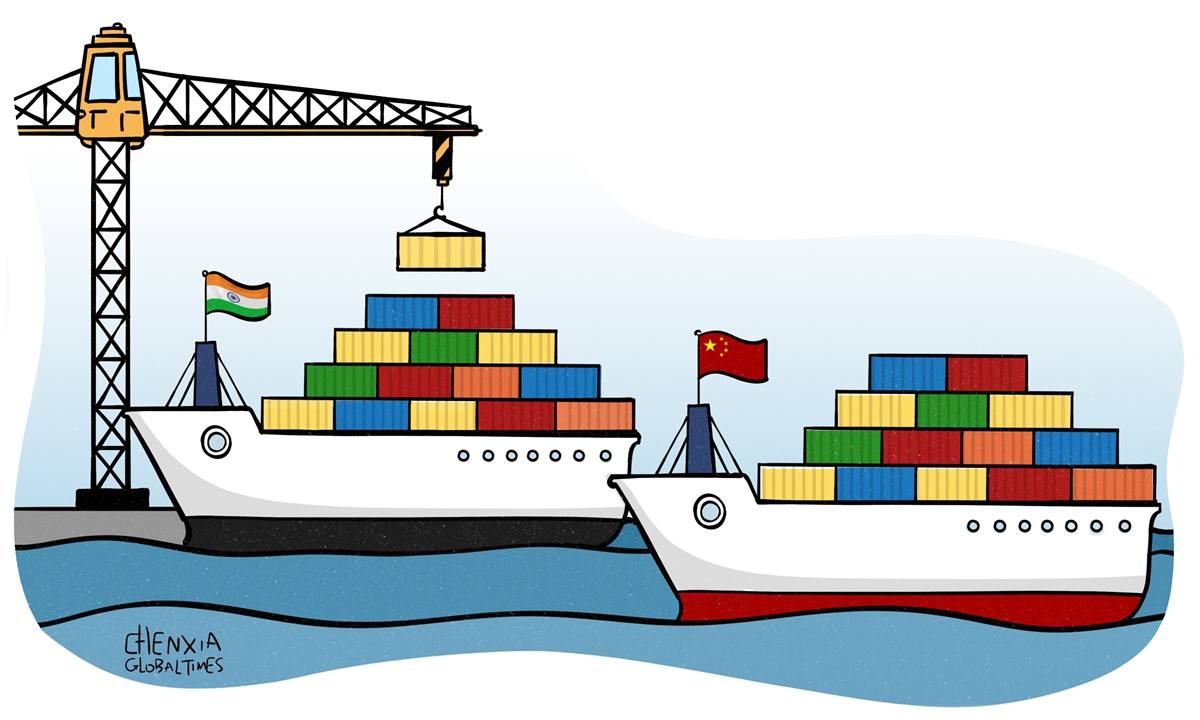
Illustration: Chen Xia/Global Times

Illustration: Chen Xia/Global Times
With a total of $968 million in loans in four months of 2022, India “has emerged as Sri Lanka’s largest bilateral lender, overtaking China in the process,” India’s ANI news agency reported on Monday, citing Daily Financial Times.

Sri Lanka has borrowed not only from China but despite this, Chinese loans have been specifically targeted by anti-China forces. Critics have accused China of what they call a “debt trap,” saying that the so-called “debt trap diplomacy” has “become a cause of Sri Lanka’s economic crisis.” Their debt trap lies is a narrative that the US-led camp has used to defame and smear China. The West’s anti-China narrative should not derail Sri Lanka’s cooperation with its friends.

Ruchira Kamboj, India’s permanent representative to the UN, was quoted by the ANI report as saying that India had provided nearly $4 billion in food and financial assistance to Sri Lanka. “In our immediate neighborhood, we are continuing to help our good friend and neighbor Sri Lanka to ensure food security,” Kamboj said.

Some Western observers have lauded India’s help to Sri Lanka, but China is being blamed by the West for providing same loans and economic assistance to the nation. Those observers should stop their double standards in criticizing a so-called Chinese debt trap. Loans and aid to Sri Lanka should not be treated differently based on which country they come from.

China is one of the largest infrastructure construction partners and main source of foreign investment of Sri Lanka. China has worked with Sri Lanka to help meet its financing needs and improve its ability for sustainable development. China does not impose its will on others or seek any political gains. This is why developing countries, Sri Lanka included, think highly of their cooperation with China.

Sri Lanka needs to pursue economic development and the country has the right to freely choose its cooperative partners. Sri Lankan Minister of Foreign Affairs Ali Sabry said in August that he thanked the Chinese government and people for their timely assistance to Sri Lanka in times of difficulty. “With special and long-lasting bilateral relationship, Sri Lanka and China have always trusted and supported each other,” Xinhua reported.

Sabry’s words came after some Western media outlets deliberately hyped up China-India competition over Sri Lanka’s economic woes. The BBC said in July that Sri Lanka’s desperate financial need, in a way, has helped New Delhi regain its influence in the nation after “China made inroads by offering loans and other forms of financial aid for infrastructure projects in the past 15 years.” 

Any attempt to incorporate geopolitical thinking into economic issues won’t help resolve the economic crisis unfolding in Sri Lanka. India does not have to view Chinese investments and loans in Sri Lanka from a competitive perspective. Countries should put geopolitical thinking aside and avoid falling into a trap set by the West, which aimed to heat up competition between China and India.

It is a false proposition that India has overtaken China to become Sri Lanka’s largest lender. China has stressed many times that it is neither the only creditor nor the largest creditor of Sri Lanka. Only around 10 percent of Sri Lanka’s external debt is owed to China.

China has pledged to do its utmost and to make full use of the channels available to deliver help to the Sri Lankan society. We believe India will do the same. India has also done a lot in helping Sri Lanka and its effort is commendable, but it will be meaningless if some attempt to compare India to China in terms of economic presence in Sri Lanka

China and India need cooperation, not competition in Sri Lanka. Chinese Foreign Ministry spokesperson Zhao Lijian said in June that China is ready to work with India and the rest of the international community to help Sri Lanka and other developing countries experiencing difficulty to pull through the hardship as early as possible. Although the West’s anti-China narrative deliberately hyped up China-India competition, India should be vigilant to avoid falling into the trap set by the West.

The author is a reporter with the Global Times.

Farmer dies after accidentally swallowing inch-long fish bone

September 20th, 2022

By Courtesy New York Post

A Sri Lankan farmer tragically perished after swallowing a fish bone, which pierced his intestine and triggered a fatal infection. A case report detailing the freak accident was published in the International Journal of Surgery Case Reports.”

The 60-year-old unnamed patient had reported to the coastal District General Hospital of Sri Lanka, after experiencing three days of abdominal pain, vomiting, constipation and a distended belly, per the report.

Suspecting he was going into septic shock, medics rushed the man to intensive care, where scans revealed that his abdomen was filling with fluid. This symptom suggested that his kidneys had stopped working — a possible sign of sepsis, where the body’s immune system attacks its own organs.

1of3

The fish bone post-extraction from the farmer's intestine.
The fish bone extracted from the farmer’s intestine.
The fish bone had created a small hole in the man's lower intestine.
The fish bone had created a small hole in the man’s lower intestine.
The patient didn't recall swallowing the fish bone.
The patient didn’t recall swallowing the fish bone.

A subsequent two-hour operation revealed a small hole in his intestine, which the medical staff discovered was caused by an 0.8-inch-long fishbone. However, the farmer didn’t recall ingesting the 2-centimeter shard, the Daily Mail reported.

Nonetheless, the seemingly innocuous bone fragment had reportedly perforated his bowel, causing fecal matter to seep out and infect his abdominal wall. As a result, the intestine ballooned in size while yellow pus accumulated around the hole.

In an attempt to save the patient, doctors sliced a 3.9-inch (10 cm) segment of the intestine and drained the perforation with the aim of reattaching the healthy bowel after the infection was eradicated. Despite their efforts, the patient passed away following cardiac arrest” just eight hours after his admission to the emergency room, per the report.

Interestingly, fish bones are the leading cause of gastrointestinal perforations,” the study authors wrote.

In regions where fish is a staple food, fish bones are not uncommon culprits of FBs [ingested foreign bodies],” the case report states. The jagged, sharp nature of fish bones makes them more prone to inflict mucosal injuries and subsequent perforations.”

A local fisherman holds a bucket of freshly-caught fish just after returning to shore in Mannar, Sri Lanka, August 16, 2022.
A local fisherman holds a bucket of freshly caught fish just after returning to shore in Mannar, Sri Lanka, on Aug. 16, 2022.
REUTERS

And while the outcome is favorable in most instances, nonspecific symptoms coupled with poor imaging resources can result in a delayed diagnosis, which doctors believed occurred with the aforementioned case.

ලංකාවේ විදෙස් ණය පියවන්න යන කාලය ගැන රනිල් බ්‍රිතාන්‍යයේදී ඩයස්පෝරාවට හෙළි කරයි

September 20th, 2022

උපුටාගැණීම  මව්බිම

සමෘද්ධිමත් ජාතියක් වීමට එකට එක්ව බංකොලොත්භාවයට එරෙහිව සටන් කළ යුතු බව ජනාධිපති රනිල් වික්‍රමසිංහ අවධාරණය කර තිබේ.

ඒ, බ්‍රිතාන්‍යයේ ශ්‍රී ලාංකික ඩයස්පෝරාව සමග ඊයේ (සැප්. 19) පැවති හමුවකදී ය.

එමෙන් ම, ඩයස්පෝරා කාර්යාල ව්‍යාපෘතිය ඇතුළු ශ්‍රී ලංකාවේ නිර්මාණය වී ඇති නව ආයෝජන අවස්ථා සඳහා එක්වන ලෙස ද ජනාධිපතිවරයා ඔවුන්ට ආරාධනා කර ඇත.

බ්‍රිතාන්‍ය ශ්‍රී ලංකා මහ කොමසාරිස් කාර්යාලය විසින් සංවිධාන කර තිබූ මෙම හමුවට බ්‍රිතාන්‍යයේ වෙසෙන ශ්‍රී ලාංකික ව්‍යාපාරිකයන්, ආයෝජකයන් සහ වෘත්තිකයින් රැසක් එක්ව සිට තිබේ.

මෙහිදී ජනාධිපතිවරයා බ්‍රිතාන්‍ය නව රජුගේ නායකත්වයෙන් පොදු රාජ්‍ය මණ්ඩලයීය රටක් ලෙස අනාගත අභියෝග ජයග්‍රහණය කරමින් ඉදිරියට කටයුතු කිරීම සම්බන්ධයෙන් ද පැහැදිලි කර ඇත.

අපි ඉදිරියට කටයුතු කරන්නේ කෙසේ ද යන්න පිළිබඳ 20 වන දා පොදුරාජ්‍ය මණ්ඩලීය මහලේකම්වරිය සමග සාකච්ඡා කරන්න මම බලාපොරොත්තු වෙනවා. පොදු රාජ්‍ය මණ්ඩලය ශක්තිමත් වී ඉදිරියට යාම අපට අවශ්‍යයි. එක්සත් රාජධානිය අපගේ දිගුකාලීන මිතුරෙක්. අපි එක්සත් රාජධානියේ පාලනය යටතේ සිටි අතර එක්සත් රාජධානිය සමග සබඳතා පවත්වන ස්වාධීන රටක්.

අපේ සබඳතාව දීර්ඝ කාලීන එකක්. එක්සත් රාජධානියේ පාලනය ලේබර් පක්ෂය, කන්සවේටිව් පක්ෂය, එහෙම නැත්නම් සභාගයක් හරහා සිදු වූව ද අපිට අපේ සබඳතා පවත්වන්න අවශ්‍යයි. රටක් ලෙස අපි ආර්ථිකමය ලෙස කඩා වැටී ඇති බව නොරහ‍සක්. මේ ප්‍රශ්න අපි ම විසඳා ගත යුතුයි. ජාත්‍යන්තර මූල්‍ය අරමුදල සමග දැනටමත් සාකච්ඡා ආරම්භ කර තිබෙනවා. අපි දැනටමත් ජාත්‍යන්තර මූල්‍ය අරමුදලේ කාර්ය මණ්ඩල මට්ටමේ ගිවිසුම අත්සන් කර තිබෙනවා.

අපි ඉන්දියාව චීනය හා ජපානය සමග ත් පුද්ගලික ණය හිමියන් සමග ත් කතා කළ යුතුයි. අපේ ණය ප්‍රශ්න දිහා බලන අතරේ අපි ගත්ත ණය ගෙවන්නත් තිබෙනවා. අද සිට ණය ගෙවන්න වසර 25ක් පමණ අවශ්‍යයි. ඒ කියන්නේ 2048 වන විට නිදහසට වසර 100ක් වන විට සමෘද්ධිමත් සමාජයක් වෙත අපට යා හැකියි.

අපි බොහෝ දෙනෙක් ඒ වනවිට ජීවත්ව නොසිටීවි. නමුත් අපි එයට දායක වූ පුරවැසියන් වෙන්න පුළුවන්. මෙහිදී දේශපාලන ක්‍රියාකාරකම් පිළිබඳ අවධානය යොමු කළ යුතු අතර, තරුණ පරම්පරාවේ බොහෝ දෙනෙකුගේ අදහස්වලට අප ඉඩ දෙන්නේ කෙසේ ද යන්න පිළිබඳ සැලකිලිමත් විය යුතුයි. නමුත් ප්‍රධාන වශයෙන්, ඔබට ප්‍රජාතන්ත්‍රවාදය අවශ්‍ය නම් ඔබට පාලනයක්, විනයක් සහ නීතියේ ආධිපත්‍යය තිබිය යුතුයි. එහිදී නිවාස පුළුස්සා දැමිය හෝ කාර්යාල අත්පත් කර ගැනීම කළ යුතුද යන්න කාටවත් තීරණය කළ නොහැකයි. එය ප්‍රජාතන්ත්‍රවාදය නොවේ. ප්‍රජාතන්ත්‍රවාදය යනු නීතියේ ආධිපත්‍යයට අනුව ක්‍රියා කිරීමයි.

පසුගිය මාර්තු සහ අප්‍රේල් මාසවලදී මේ රටේ ඇතැම් තරුණ පිරිස් කලහකාරි ලෙස හැසිරුණා. අපි ඔවුන්ගේ අදහස් උදහස් අධීක්ෂණ කාරක සභාවලට ඇතුළත් කර තිබෙනවා. පාර්ලිමේන්තුවේ අධීක්ෂණ කාරක සභා 19ක් තිබෙනවා. ඒවායේ තරුණ නියෝජනය පස් දෙනකුට අවස්ථාව ලබා දී තිබෙනවා. වෙන කිසි ම රටක් එහෙම කරලා නැහැ. එම කරකා සභාවල ඕනෑ ම වාර්තාවකට තරුණයින්ගේ අදහස් අතිරේක ලියවිල්ලක් හැටියට ඉදිරිපත් කළ හැකියි. අපි සමාජය නැවත හැඩගස්වාගත යුත්තේ, අනාගතය දෙස බලා, ඔවුන්ට අවශ්‍ය දේ මත මිස, අපට අවශ්‍ය දේ මත නොවේ. ඒ නිසා අපි සියලු කණ්ඩායම් සම්බන්ධ කර ගැනීමට විවිධ ක්‍රම සොයා බැලිය යුතුයි. කරු ජයසූරිය මහතා සහ වික්ටර් අයිවන් මහතා සෑම ග්‍රාම නිලධාරී කොට්ඨාසයක ම ජන සභා පැවැත්වීමේ තවත් රාජ්‍ය නොවන කාර්යයක නිරතව සිටිනවා.

උතුරේ ඉඩම් ප්‍රශ්නය, අතුරුදන් වූවන්ගේ ප්‍රශ්නය විසඳා අවසන් කළ යුතුයි. ඒ සම්බන්ධයෙන් තිබෙන ගැටලු අප විසඳා ගත යුතුයි. බලය බෙදීමේ මූලික කරුණු කිහිපයක් දෙස අවධානය යොමු කරන්න තිබෙනවා. 2018 දී අපි ආණ්ඩුක්‍රම ව්‍යවස්ථාව සමාලෝචනය කරන විට උතුරු නැගෙනහිරින් පිටත ප්‍රධාන අමාත්‍යවරුන් හත් දෙනෙකු සහ විපක්ෂ නායකවරයා යෝජනා මාලාවක් ඉදිරිපත් කළා. උතුරු නැගෙනහිර මන්ත්‍රීවරු සහ ප්‍රධාන ඇමතිවරු ඊට එකඟවීම සතුටට කරුණක්. දැන් අපට ඉදිරියට යන්න පුළුවන්. මම හිතන්නේ අපට එය කළ හැකියි.

අපි සැවොම සමෘද්ධිමත් ජාතියක් බවට පත්වීම සඳහා එකතු වී බංකොලොත්භාවයට එරෙහිව සටන් කළ යුතුයි. මෙහි සිටින ඔබ මෙහි රැඳී සිටීම නිසා ම සාර්ථකත්වය ළඟා කර ගෙන තිබෙනවා. මෙහි වෙසෙන ශ්‍රී ලාංකිකයන් 500,000 තමන් පළමු හෝ දෙවන පරම්පරාවේ ශ්‍රී ලාංකිකයන් ලෙස හඳුනා ගෙන තිබෙනවා.

විදේශයන්හි වෙසෙන ශ්‍රී ලාංකික සම්භවයක් ඇති පුද්ගලයින් ඩයස්පෝරාව ලෙස හැඳින් වෙනවා. අපි ඩයස්පෝරා කාර්යාල ව්‍යාපෘතිය නම් ව්‍යාපෘතියක වැඩ කරමින් සිටින අතර විදේශ අමාත්‍යංශය ඒ සඳහා කටයුතු කරමින් සිටිනවා. එය ජනාධිපති කාර්යාලය යටතේ පවතිනවා. නමුත් ටික කලකට පසු එය ජාත්‍යන්තර වෙළෙඳාම භාර ගන්නා බැවින් එය විදේශ අමාත්‍යංශය යටතට පත් වෙනවා. නමුත් අපට අවශ්‍ය වන්නේ මෙම කාර්යාලය සාර්ථක වීමටයි. අපි හැමෝම ඊට සම්බන්ධ වෙන්න ඕන. උතුරේ විතරක් නෙවෙයි, දකුණෙත් ආයෝජනය කරන්න පුළුවන්.

ඔබගෙන් සමහරෙකුට දකුණේ හෝ නැගෙනහිර ප්‍රදේශයේ සබඳතා තිබෙන්නට පුළුවන්. ඔවුන්ට උපකාර කිරීමට අවශ්‍ය විය හැකයි. කිසිම ප්‍රශ්නයක් නැහැ. ඔබට හැකි ආකාරයෙන් ශ්‍රී ලංකාවට උපකාර කරන්න.

UK Tour: Only important people accompanied President: President’s office

September 20th, 2022

Courtesy The Daily Mirror

It was only some  important people who had accompanied President Ranil Wickremesinghe on his recent tour to Britain to attend the funeral of British Monarch Queen Elizabeth II, a spokesperson from the President’s office confirmed today.

According to the spokesperson, only President Wickremesinghe, Ms. Wickremesinghe, a special aide, three security personnel and the Director International Affairs attached to the President’s office were in the tour party. The Director International Affairs had to join in the tour to organize media coverage in Britain,” she said.

She was responding to comments made by MP Kumara Welgama, who said the delegation which the President took to Britain was ‘a little high’. (Yohan Perera and Ajith Siriwardana)

Ukraine crisis: Aeroflot to resume services to Sri Lanka

September 20th, 2022

Courtesy The Daily Mirror

Following controversy over grounded aircraft by its government, Aeroflot has announced that it will resume services to Sri Lanka.

It is understood that from October, the Moscow-Colombo route will be reinstated, on conditions being promised by the Sri Lankan government that none of its planes will be grounded or arrested.

On top of this, Sri Lankan media have reported that another carrier is due to operate this route as well, which comes as no surprise given how lucrative the Russian market still is at present.

For example, the country is the ninth largest outbound market with annual spending of nearly $50bn for holidays abroad.

Back in June, Sri Lankan authorities grounded an Aeroflot Airbus A330 due to an arrest warrant approved on behalf of leasing giant GECAS.

The arrest warrant was issued on behalf of Selective Aviation Trading Limited, which is in alignment with aircraft lessor GECAS, as the leasing giant looks to acquire some aircraft stolen by the Russian Government.

Such nationalization of aircraft took place through the re-registering of aircraft back to the Russian registry of RA.

Now, these aircraft are doing international flights; this does open up the potential for groundings to occur once again, meaning the lessors will actually be able to get their aircraft back.

RA-73702 was the particular aircraft in question. Then, around three days after that, the Sri Lankan courts lifted the ban, allowing the aircraft to leave the country.

It is also understood that this is a result of political pressure from Russia, with the Sri Lankan Ambassador in Moscow being summoned to the Kremlin for an explanation, according to local media.

By the end of July, there was a lot of hope from travel authorities in Sri Lanka hoping that Aeroflot would resume services to Colombo from Moscow soon, following the grounded aircraft saga.
Such diplomatic rows have created a worsened relationship between Sri Lanka and Russia, but Aeroflot is interested in returning to the capital

A CAA official told the Daily Mirror in Sri Lanka: They have not committed yet. But we believe they are planning on resuming flights soon. However, they will likely run into the existing issues of jet fuel shortage and fund repatriation issues”.
On top of this, Aeroflot will want to make a comeback to the Sri Lankan capital, especially with UAEbased carrier Flydubai occupying a lot of its market share since the route suspension.

Flydubai currently accounts for 35.2% of Russian arrivals into Sri Lanka, with the obvious stopover in Dubai not putting travelers off from traveling to the region per se.

That being said, however, Russian tourist arrivals fell to 1,610 in June, which is a substantial decrease.
Either way, this will be good news more on the side of Aeroflot, who is looking to generate as much revenue where possible, given its destination list being limited due to the ongoing Ukraine Crisis. (Aviation source news)

Mahanayaka Theros write to President over electricity tariff hike

September 20th, 2022

Courtesy Adaderana

In a letter to the President, the Chief Prelates of the three Buddhist Chapters today request for a methodical and concessionary electricity tariff policy for places of religious worship.

The Mahanayake Theros, informing about the severe difficulty faced by religious places of worship due to the new electricity tariff revision, state that it is regrettable that the concessional electricity tariff system that was given to religious places until now has been cancelled.

The letter further pointed out that an extremely difficult situation has arisen due to the new revision of electricity tariffs, which they say has been done by underestimating the social service provided by religious shrines and treating them at the level of factories generating financial profit.

The joint letter is signed by Most Ven. Thibbatuwawe Sri Siddhartha Sumangala Mahanayaka Thero of the Malwathu Chapter, Most Ven. Dr. Warakagoda Dhammasiddi Sri Gnanarathabidhana Mahanayake Thero of the Siyamopali Maha Nikaya – Asgiriya Chapter, Most Ven. Dodampahala Chandrasiri Maha Nayaka Thero of Sri Kelayanivasa, Amarapura Maha Nikaya and Maha Nayaka Thero of the Ramanna Maha Nikaya, Most Ven. Makulewe Wimalaabhidana Thero. 

India starts debt-restructuring talks with Sri Lanka

September 20th, 2022

Courtesy Adaderana

India said on Tuesday it had begun talks with Sri Lanka on restructuring its debt and promised to support the crisis-hit neighbour mainly through long-term investments after providing nearly $4 billion of financial aid.

Sri Lanka, a tourism-dependent South Asian country of 22 million, is struggling with its worst economic crisis in more than seven decades, which has led to shortages of essentials and the ouster of a president.

The country earlier this month reached a preliminary deal with the International Monetary Fund for a loan of about $2.9 billion contingent on it receiving financing assurances from official creditors and negotiations with private creditors.

The High Commission of India in Colombo said it held the first round of debt talks with Sri Lankan officials on Sept. 16.

The discussions held in a cordial atmosphere symbolise India’s support to early conclusion and approval of a suitable IMF programme for Sri Lanka,” the High Commission said.

Sri Lanka will make a presentation to its international creditors on Friday, laying out the full extent of its economic troubles and plans for a debt restructuring. 

The Indian High Commission also said New Delhi would continue to support Colombo in all possible ways, in particular by promoting long-term investments from India in key economic sectors”.

India’s support to Sri Lanka this year has included a $400 million currency swap, a $1 billion credit line for essential goods and a $500 million line for fuel. In addition, India has also deferred payment on Sri Lankan imports of about $1.2 billion and given a credit line of $55 million for fertiliser imports.

Reuters reported last week, citing sources, that India did not plan to provide fresh financial support to Sri Lanka, as the island’s battered economy had begun to stabilise. 

The High Commission said India had ongoing development projects worth about $3.5 billion in Sri Lanka, whose president earlier this month asked his officials to resolve obstacles to projects backed by India. He did not specify the obstacles or the projects.

President Ranil Wickremesinghe has said Sri Lanka will turn a free trade agreement with India into a comprehensive economic and technological partnership.

Source: Reuters

–Agencies

How the Privatization of State Assets is not in the National Interest.

September 19th, 2022

Garvin Karunaratne, former Government Agent, Matara, 19/9/2022

The present Government has already embarked on a programme of privatization, despite the fact that it has no mandate from the people.

In the Presidential Election where over sixty percent of people voted and elected Gotabhaya as the President, as well as in the General Election where the Podujana Permuna was elected the premise was that State Assets would not be privatized. , Our former President, Mahinda Rajapaksa is an avowed personality on this issue. The Privatization of State Assets is not approved by him. Thus the present Government has no mandate from the people to privatize any State Asset. This is an important fact and our learned judiciary is kindly reminded of this fact, because if the Government yet moves on privatization it is only the Judiciary that the people have to depend on. .

The present Government should also take note and stop the privatization of State Assets forthwith, be they even incurring a loss forthwith.

The news today in Lankadeepa-18/9, discloses that many Government farms are to be privatized. They are all national assets- Bopatala in Nuwara Eliya- 1133 acres, Kottukachchiya- 500 acres, Nikaweratiys-1954 acres, Oyamaduwa- in Anuradhapura-1477 acres, Parangasweva-1632 acres, Weerawila- 412 acres. All these are areas where the State farms have to be worked to perfection to enable the maximum crop which will be held as achievable to farmers. Instead, if these are sold to the private sector it is a great loss as there is no guidance ever possible to show to the farmers. If any of these are not paying that is entirely due to their being run inefficiently and the managers and the officers above have to be held responsible. Instead of doing that task, trying to get rid of this by privatization is definitely not in the national interest.

The remedy for loss making institutions is to make them profitable. There is no other way. We do have administrators amongst us who can accomplish that task. I am definite as I was a member of the Administrative Service and am personally aware of the ability of our administrators. There should be no political meddling. Our administrators are veterans who can sort out anything. Recently petty political persons have been posted as the Head of the District Coordinating Committees. Dr Sudath Gunasekera, former Permanent Secretary to the Prime Minister Sirimavo has voiced himself that this is detrimental. In my days, the Government Agent was at the font of the district administration. If a petty political person is to be in charge why have Government Agents . Do away with them. Why have any staff officers; have a few clerical officers to carry out orders. If our Government is interested in performance the administrators have to be tasked.

Let us now step back and see how privatizations have not been in the interests of the country.

It will be found on any assessment that the Privatization of State Assets has ruined both Sri Lanka as well as Developed Countries. .

Let us consider what happened in Brazil: The Government of Brazil appointed a Committee of Inquiry that estabished that eleven transnational corporations brought into Brazil $ 298.8 million in capital, created and re invested profits of $ 693 million and repatriated as much as $ 744 million.(Latin America Economic Report: Jan 1976) Privatization brought heavy profits to investors, profits that should been with the people.

What happened in privatization of State Assets in the UK is revealing.

Take the UK. When I first stepped onto the fast trains in the UK in 1969, it was a marvel, the envy of the developed countries. Prime Minister Margaret Thatcher privatized it by dividing the routes and further taking the rail track away from the route rail companies. Rail track neglected maintaining the track. Instead of investing in new technology to ensure the safety of commuters, Rail Track paid fantastic salaries to the higher staff and paid plush dividends to the shareholders. Even safety devices

that are commonly used in France and other European Countries are not in place. The result- repeated rail crashes killing around a hundred people and in the Imperial British manner there are Royal Commissions that present reports. In the hands of Rail Track the reports end up in the garbage. Today the people avoid the railways like the plague.”

Recently there was a rail crash in London where four commuters lost their lives. It was found on investigation that the Railtrack in the UK does not follow the basic technology of an engine coming to a halt if it goes through a red light and proceeds on an unauthorized track. This is standard equipment in many other developed countries but not adopted in the UK because the multinational that has taken over the track does not want to spend a few million pounds to have this installed. To that multinational it is more important to make profits and provide a good dividend to its shareholders than to adopt safety measures that will save the life of its commuters.”

Take what happened in the USA. The Golden State of California a few years ago, privatized the electricity distribution system and a few years later found that the charges that were levied by the distribution companies was so high that an investigation had to be held. The companies were found to have jacked up the rates to the consumers and provided fantastic dividends to the shareholders and even a mighty company like Enron had cooked up its books to enable the distribution companies to make profits. The State of California had to buy back the two distribution companies.’

In Sri Lanka, take the privatization of Ceylon Oxygen: the ugly side is the fantastic increase in staff salaries amounting to as much as 680% between 1990 and 1998… 60% of the equity of the company is held by Norsk Hydro, a Norwegian Multinational… the loss of sovereignty is important…. After privatization the profit goes as follows: 60% to Norsk Hydro of Norway, 10% to the employees and the rest- 30% to the shareholders, mostly from Europe and USA!…. The profits is to the Government of Norway and to the affluent in Norway and Europe and America.” It is important to note that the profit was earlier coming to Sri Lanka benefitting every citizen.”

Take what happened to the Tyre Corporation of Sri Lanka, a factory donated by Russia, which according to its Chief Chemist Hector Perera, who installed it, had the capacity to make all the tyres Sri Lanka required.Privatization is hailed on grounds of efficiency on attracting foreign funds to expand and develop. What is not talked of is the fact that the foreign investor will earn fat profits and the country has lost control over its asset. The Tyre Factory that was privatized to a local industrialist got into the clutches of CEAT, an Indian Giant.” Henceforth the profits go to that foreign multinational and Sri Lanka is yet importing most of its tyre requirements.

Sri Lanka had a well developed Ceylon Transport Board- a bus service that provided a superb service. It was well run for the people and even the Chairman Anil Munasinghe often used it , unannounced. It had a state of the art factory that made bus bodies employing thousands of workers. This was privatized and the new owners pillaged the factory and sold off the machines and left valuable machines to rot. Today the bus service is very inefficient. That was the contribution of privatization.

Take the rice mills in Sri Lanka. Rice Mills was within my department- the Agrarian Services and once I was in charge of rice mills in the Southern Province. I had a state of the art Lewis Grant Rice Mill at Ambalantota milling a thousand bushels of paddy a day. It worked 24 hours a day and was serviced- with resurfacing rollers on Sundays. It worked not stop from Monday morning till Saturday evening milling paddy and employed two hundred workmen. When this was abandoned with the privatization programme, the rice mill- a valuable asset was laid to rot. Once in the Eighties I stepped in and gazed in reverence at the rice mill which was under me and cared for with my life as I would have been then sacked if it was neglected.

Paddy Seed Farms in Sri Lanka that found the miracle seeds- H4 and H8 which doubled the yield, found in the Fifties, years before the IRRI- the International Rice Research Institute was established, were privatized. Then Sri Lanka produced all the seed paddy it needed and plans were laid down for their systematic distribution to farmers. This caused increased yields. After the privatization of the seed farms the farmers cannot even find seed paddy.

The above true details of privatization both in Sri lanka as well as in Developed UK and the USA serve as an eye opener to our present leaders who are pursuing privatization programmes.

Privatization at times is said to have become a method of obtaining commissions in the selection of private companies and many allegations have been made.

As shown above in detail, privatization is not in the interests of the country and should be abandoned. It has also been shown that the present government though pursuing privatization has no mandate from the people. Someday the persons pursuing privatization will be held responsible and will have to pay for this misadventure.

(All quotes are from my book:How the IMF Ruined Sri Lanka & Alternative Programmes of Success: Godages:2006)


Copyright © 2026 LankaWeb.com. All Rights Reserved. Powered by Wordpress