The Stolen Asset Recovery Initiative – STAR

September 25th, 2022

By Dr Tilak S. Fernando

Recently, Chanaka Senanayake (we are only one nation-one country, one law and one nationality & one language organisation) interviewed the Sri Lankan media. He said Sri Lanka owes International Monitory Organisations a sum of US $55 billion in loans. However, out of that US$55, a sum of US$30 billion had been defrauded out of the country. He is on record by saying that ‘he is not bothered by whom did the fleecing took place, but there is a process to get that money back to the Sri Lanka treasury.’ It is known as STAR (The Stolen Asset Recovery Initiative). Chanaka Senanayake clarified that any country could seek STAR’s assistance by writing to its Secretariat Coordinator, the Chief UNODC (United Nations Office on Drugs and Crime Representative Or directly to the World Bank Country Director.

STAR

The Stolen Asset Recovery Initiative was formed in partnership with the World Bank and the United Nations on Drugs and Crime (in 2007 under a special Geneva Convention against State corruption). It helps particularly developing countries and aims to detect the laundering of funds illegally to facilitate in a systematic and timely manner to return such embezzled money to appropriate countries after thorough inquiries

United Nations Office on Drugs and Crime (UNODC) receives contributions for its support to STAR from Australia, Canada, France, Germany, Luxembourg, Norway, the United Kingdom and the United States of America. The main aim of STAR would be to help developing countries to set up the legal framework required to claim the ‘squeezed-out’ money through corruption and deposit them back into their treasuries. It will require specific skills to pursue such assets. STAR has competent staff to deal with such arduous tasks, and they provide ‘hands-on’ training in asset tracing in international operations on matters relating to illegal procedures. STAR has helped 259 countries so far (at the time Senanayake had the interview with the Sri Lankan media), through the jurisdiction to support asset recovery cases.

The basic principle behind STAR would be to generate knowledge on the legal and technical tools used to recover any corrupted money and to promote the World’s best practices in advocating the effective implementation of Chapter 5 of the UNCAC. Therefore, Star identifies and recovers the proceeds of illegal money back to the relevant countries.

Recovery Initiative uses up-to-date international standards to ‘detect, discourage and recover’ corrupted illegal money’ in safe havens. In their operation, STAR uses ‘the Conference States Parties and their Asset recovery working group – the Financial Action Task Force with other multinational groups.

STAR helps governments, regulatory authorities, donor agencies, financial institutions, civil society organisations and developing countries. It encourages collective responsibility and action to deter, detect, and recover stolen assets. ‘Recovery Initiative’ generates knowledge on the legal and technical tools used to recover the proceeds of corruption and promotes sharing of the World’s best practices.

Addressing the media

Chanaka Senanayake addressed the Sri Lanka media, which is also on YouTube and appears to be going viral. He related an interesting story about the previous President of Guatemala, who plundered billions of United States dollars, using his brother’s names and his friends (importers). He had been up to this game since General Ferdinand E. Marcos Philippines was in power. The President of Guatemala made a large amount of money by importing food items (especially sugar) and while it was in the Guatemala harbour, the President reduced taxes on sugar so that his brothers and his friends benefitted. Although the opposition made a hue and cry, he ignored them and said all such allegations were all fabrications. However, a young female suggested conducting a protest around the President of Guatemala’s official residence and invited her friends to gather. She was amazed over one thousand people assembled, and protesters shouted that the ‘President was a fraud.’ Finally, he sacked the deputy president and various Ministers in the Cabinet to escape the protests.

Meanwhile, the United Nations intervened and proved that the President of Guatemala was a fraud. The Sri Lankan ‘Aragalaya’ on the 9th of May 2022 was akin to the Guatemala protest. However, the missing link was the absence of the United Nations in Sri Lanka! The UN intervention in Guatemala helped the country to recover the plundered money and oust the corrupted President.

In Sri Lanka, heads of Government have borrowed loans masquerading as various projects. Therefore, Chanaka Senanayake requested the Sri Lankan media to question the 225 MPs and the vociferous members of the opposition as to why they were all silent until he (Senanayake) did all the spade work to recover the fleeced dollars. He says Sri Lanka does not have to pay a single dollar to recover the swindled money and every citizen, even those born in the future will be responsible for paying back such huge loans.

Already Contacted.

Chanaka Senanayake has already contacted the World Bank and the UN Dock (where meeting records, summaries of conferences, UN reports, treaties, maps, and yearbooks are maintained). He has already documented and spoken personally with the Director of STAR and completed all the paperwork relating to the fraud of billions of Dollars with a promise of getting one million signatures to back up his petition. He displayed a report from Global Financial Integrity (GFI) to the journalists present. It was issued from a Washington-based think tank focused on illicit financial flows and corruption that revealed about US$19 billion stolen between 2005-2014 from Sri Lanka. Chanaka Senanayake believes that there would be peace and tranquillity in Sri Lanka on the completion of the STAR investigations, as people live in Hell without food and medicine and with under-nourished children.

STAR Publications.

There are several publications by STAR dealing with politically exposed persons on the preventative measures for Banking section authored by Theodore S. Greenberg, Larissa Gray, Delphine Schantz, Carolin Gardner and Michael Latham. These books are invaluable for those in the banking sector.

The books mentioned above deal particularly with politically exposed persons. These books explain in detail how the banks’ policies and good practices make it harder for corrupt politicians to deal with wire transfers, account opening with various bank accounts and beneficial ownership forms.

 ‘A guide for recovering stolen assets’ draws on the experience of a wide range of countries and legal jargon in multiple languages.

A book on ‘Barriers to Asset Recovery’ deals with eight strategic actions and other recommendations for policymakers, legislators and practitioners.

A text on ‘Towards a Global Architecture for Asset Recovery identifies some measures that national authorities and international bodies could undertake to accelerate the pace of asset return back.

Chanaka Senanayake says let any guilt-ridden person may hide in the remotest corner in any part of the World. However, STAR will be able to detect that person and recover the stolen money.

tilakfernado@gmail.com

Sri Lanka pitches for multilateralism in the world order

September 25th, 2022

Courtesy NewsIn.Asia

Colombo, September 25 (newsin.asia): Foreign Minister Ali Sabry enunciated Sri Lanka’s vision in his address to the 77th Session of the UN General Assembly in New York on September 24.

Pitching strongly for multilateralism, Sabry said that now is indeed a watershed moment for the international community: a moment of great challenge and opportunity. And then he went on to say that the complex and interconnected crises that we face cannot be resolved by nations acting on their own. It is an opportunity to demonstrate global solidarity, diplomacy and collective efforts, leveraging the ideas and talents of all of our people and all segments of our society to find transformative solutions which leave no one behind.”

Multilateralism is a tool for diplomacy that rises above such challenges. Conflicts, disasters and crises will not stop at passport control. Multilateralism is not without its shortcomings, but undoubtedly it provides a solid framework for resolving contemporary challenges.”

This, I would say, is the mission of this August assembly, and perhaps the singular reason for which it was established 77 years ago. And that perhaps is the reason, why Sri Lanka and many others applied to be members, to participate, to be visible, to be heard, to embellish this organization with our own flavors, perspectives, history, and knowledge to this fine amalgam and grow from the common work discussions and disputes that we join issue with.”

He then quoted a former Sri Lankan Prime Minister who committed Sri Lanka to the way of a socialist democracy, to non-alignment and to an independent foreign policy, based on friendship with all countries, irrespective of differing ideological and social systems. The Prime Minister Sabry alluded to had said: We have to build up a new society for ourselves; one as I have said, which best suits the genius of our country. We should like to get some ideas and principles from this side, and some from the other, until a coherent form of society is made up that suits our people, in the context of a changing world today. That is why we do not range ourselves on the side of this power bloc or that.”

Changes in Sri Lanka

Significant changes have taken place in Sri Lanka since the last UNGA. The external and internal challenges we face provide an opportunity for implementing political, social and economic reforms that will lead to recovery and prosperity for our people. Sri Lanka believes that this is the moment to realise our collective vision for the future; an opportunity to build a more just, sustainable and prosperous future for all Sri Lankans, ‘to build back better’. We look forward to the cooperation and support of the international community including the United Nations, as we embark on this journey.”

Following prolonged social unrest and protests in the country, President Ranil Wickremesinghe, in his maiden speech in Parliament last month stated, I quote, ‘I will implement social and political reforms requested by the nation.’ These measures include a review of the present procedures, the strengthening of the institutional framework of democratic governance and adoption of urgent measures to restore long-term economic stability. We have understood that this will only be possible if we engage in a strict adherence to fiscal discipline and far-reaching economic and institutional reforms. We are committed to that process.”

It is envisaged that through the proposed legislative and constitutional amendments, democratic governance will be reinforced with independent oversight institutions as well as with enhanced public scrutiny. Legal and administrative frameworks are being strengthened to ensure transparency, integrity, accountability and inclusivity in providing access to justice. A greater participation of women and youth will be ensured in this process.”

We remain cognizant of and acutely sensitive to the events that have taken place in the recent past. The Government is extremely sensitive to the socio-economic hardships faced by our people. We are pleased to have reached a staff level understanding with the IMF. We have put in place measures to protect the vulnerable segments of society and will endeavor to ensure that these economic reforms will have a minimum impact on their lives. Our institutions and society have demonstrated remarkable resilience in the face of very difficult circumstances.”

We unconditionally recognize the fact that one has a fundamental right to the freedom of expression, which we all treat as being sacrosanct. However, it must also be appreciated that, this freedom must be within the constitutional order, and must be exercised having regard to one’s fundamental duty to express oneself within the confines of the law.

I am pleased to inform this August assembly that Sri Lanka’s nationwide strategy in containing the human health impact of COVID-19 has been largely successful as a result of proactive and nondiscriminatory measures by the government, and the effective delivery capabilities of our strong health care infrastructure. Our vaccination drive exceeded WHO targets.”

However, as a developing country we were highly vulnerable to the economic fallout of the pandemic. The virus has opened a window to the future which we must exploit, highlighting the importance of multilateral cooperation through global health networks.”

Climate Change

As a climate-vulnerable country, climate change has had the potential to adversely impact Sri Lanka’s socio-economic progress as well as food security and livelihoods. Sri Lanka has pledged to meet the targets of the Paris Agreement and our updated Nationally Determined Contributions (NDC) submitted to the UNFCCC last year with the aim of reducing emissions to achieve carbon neutrality by 2050. We firmly believe that these commitments should not adversely impact the green economic development objectives. We also appreciate that meeting the NDC targets and executing the corresponding energy transition towards renewable and sustainable energy and energy efficiency measures will require significant climate financing.”

We cannot do this alone. We believe that in tandem with our own efforts, the world’s largest emitters of greenhouse gases must fulfill their commitments and assist developing nations in adaptation and mitigation measures under a common but differentiated framework. We need to work towards a just, sustainable, resilient and inclusive recovery from the adverse impacts of climate change, and the energy transition.”

Turning to the ocean, as an island nation, we are acutely concerned about and sensitive to the impact of pollution and climate change on oceans. With rapid pressure on land resources, the world is turning towards the oceans for sustenance – not only for food security but also as a source of raw materials for industries and energy. We are committed to the sustainable use of the oceans and its resources in consonance with SDG 14.”

At the UNGA, in May this year, we were pleased to have led a small but significant Nature-based Solution to mitigate the impact of climate change, that led to the UN declaring 1st March as World Seagrass Day. Seagrasses are an important carbon sink and absorb significantly more carbon than tropical rain forests. There is a likelihood that the world will not reach the scheduled milestones to achieve Zero Hunger by 2030. It is predicted that food and nutrition security will be at great risk. Sri Lanka is paying serious heed to these warning signs. Sri Lanka supports sustainable transformation of agriculture to a modernized sector and encourages enhanced food production to ensure food security.”

Sri Lanka has initiated the national food security programme with the dual objectives of ensuring that no citizen should suffer for the want of food and no child should be a victim of malnutrition. Adequate nutrition is a sine qua non and vital to ensure that ch ildren of all socio-economic backgrounds can enjoy good health.”

Education and Health

The provision of quality education and health care for all, is at the core of Sri Lanka’s social protection policies and provided the foundation upon which Sri Lanka was able to mitigate the effects of the ‘global learning crisis’ during the COVID-19 pandemic. Rapid conversions to digital systems of delivery of education threatened universal access, participation and survival in the education system especially in children of low-income households. Sri Lanka aims to bridge the digital divide, and ensure that no child will be left behind.”

Despite severe challenges, we will endeavor to maintain the significant progress we have made towards achieving the 2030 Agenda on Sustainable Development. Our efforts have placed us in a leading position in the Asia- Pacific region for SDG data availability, thus enhancing Sri Lanka’s capacity for evidence informed policy making for SDGs in future. We recognize that investment in human capital is an indispensable essential for the future of our country. It is no surprise,  that Sri Lanka is ranked in the high Human Development category, occupying rank 73 out of 191 countries globally, and is the highest in the region.”

Challenges to SDG

Having said that, we are nonetheless concerned that current challenges have disrupted progress. The UN Secretary-General has in a serious warning made reference to rescuing the Sustainable Development Goals”. This warning is followed by an observation by the UNDP, that for the first time in 32 years, the Human Development Index has declined globally for two years consecutively.”

Geopolitical Tensions  

Geopolitical tensions among nations have heightened creating insecurity and polarization among States. Agreed frameworks for arms control, nonproliferation and disarmament have become fragile. At the 10th Review Conference of the NPT concluded recently, which remains the centerpiece of the global nuclear disarmament and on proliferation regime, we were regrettably unable to arrive once again at a consensus outcome.”

While we address contemporary challenges, we must not forget the lingering issue of Palestine. While restating Sri Lanka’s consistent and principled position that the Palestinian people have a legitimate and inalienable right to the natural resources in their territory and to statehood, we further recognize the legitimate security concerns of both the Palestinian and Israeli people and an urgent resolution of the matter on the basis of the UN Resolution on the attainment of the two-state solution.”

Cyberspace

The absence of a regulatory supervisory regime concerning the use of new technologies in cyberspace and in Artificial Intelligence needs to be addressed urgently. Their ability to cause large-scale disruption, disinformation and undermine scientifically established findings is of real concern; a danger we all face. Sri Lanka, which is implementing the nation’s first Information and Cyber Security Strategy, has identified the importance of establishing a partnership-based approach to protect cyber space in order to confront multinational cyber threats.

Terrorism

Sri Lanka was a victim of terrorism for several decades. Terrorists’ choice of targets, methods of financing and radicalization as well as the use of new technologies as weapons has been constantly evolving. Legislative measures and law enforcement mechanisms must be put in place to counter radical ideologies leading to violent extremism and to curb the terrorists’ use and abuse of the internet and social media platforms. At the same time it is necessary to develop the critical thinking capacity of youth, strengthen community bonds, foster a sense of civic responsibility, and build community resilience to mitigate the effects and influences of violent extremist ideology leading to terrorism.”

As our contribution to maintaining international peace and security, Sri Lanka looks forward to enhancing our participation in UN Peacekeeping Operations with professional men and women to serve as UN Peacekeepers. I take this opportunity to honor the thousands of men and women who, for decades, have helped countries navigate the difficult path from conflict to peace under the Blue Helmet. We have taken many measures to ensure that Sri Lankan Peacekeepers with a wealth of experience in counter-terrorism and counter-insurgency operations, are trained and equipped with theoretical and practical knowledge of all necessary functions of peacekeeping, including the promotion and protection of human rights.”

The 193 nations represented here jointly share the responsibility to establish justice, to maintain peace and ensure progress in a world that is in trouble as never before. We have a Charter and a formidable body of international law inclusive of our supreme law of the Constitution of the Republic and other local statutes. We are acutely conscious of the fact that notwithstanding all these sophistications, multipronged challenges remain.”

The Government of Sri Lanka is committed to overcoming these challenges. It is to that commitment that Sri Lanka pledges today, in the sincere hope that we will exploit the crisis that is at hand, build back better, leaving no one behind and rise to new horizons of freedom and progress.”

Wang Yi Meets with Foreign Minister Ali Sabry of Sri Lanka

September 25th, 2022

Embassy of the People’s Republic of China in the United States of America

On September 23, 2022 local time, State Councilor and Foreign Minister Wang Yi met with Sri Lankan Foreign Minister Ali Sabry on the sidelines of the United Nations General Assembly in New York.

Wang Yi expressed, China and Sri Lanka are each other’s strategic cooperative partner. The two countries have always shared weal and woe and sincerely helped each other. This year, which marks the 65th anniversary of the establishment of diplomatic relations between China and Sri Lanka and the 70th anniversary of the signing of the Rubber-Rice Pact, is of great significance for inheriting the past and ushering in the future. China is ready to work with Sri Lanka to carry forward the traditional friendship, consolidate strategic mutual trust and deepen and expand pragmatic cooperation. Congratulations to Sri Lanka on its initial results in stabilizing the situation and easing difficulties. China has provided medicines, rice, fuel and other emergency humanitarian assistance to Sri Lanka, and will continue to offer assistance within our capacity to help Sri Lanka overcome temporary difficulties.

Sabry said that the Sri Lanka-China friendship has a solid foundation. China has provided strong support for Sri Lanka’s economic and social development for a long time. In particular, China has offered timely help to Sri Lanka when it encountered difficulties. Sri Lanka will never forget that. China is an important development partner of Sri Lanka, and Chinese enterprises have made positive contributions to Sri Lanka’s efforts to accelerate development. The so-called “China’s debt trap” claim is an entirely groundless rumor. Sri Lanka welcomes investment from all countries, including China, and will strive to ensure the safety and reasonable returns of foreign investment. He thanked China for assisting Sri Lankan students in returning to China to resume studies.

Wang Yi said, the cooperation between China and Sri Lanka is part of South-South cooperation based on equality and mutual benefit. Certain countries created and spread the narrative of “debt trap”. But by so doing, they bring developing countries an “underdevelopment trap” in essence. China and Sri Lanka will continue the  understanding of and support to each other, and stand firmly together on the issues of sovereignty, independence and national dignity.

The two sides agreed to jointly advance high-quality Belt and Road cooperation, and give play to the effects of flagship projects such as the Hambantota Port and the Colombo Port City, so as to boost Sri Lanka’s economic recovery.

The two sides will speed up negotiations on a free trade agreement and strive to reach a deal at an early date, so as to inject strong confidence and stable expectations into economic and trade cooperation.

China and Sri Lanka to speed up negotiation process and strive for early conclusion of FTA

September 25th, 2022

Courtesy Adaderana

China and Sri Lanka have agreed to speed up the negotiation process and strive for an early conclusion of a free trade agreement, thereby boosting the confidence in and stabilizing the expectations for their economic and trade cooperation, the Chinese Embassy in Colombo said.

Chinese State Councilor and Foreign Minister Wang Yi met with Sri Lankan Minister of Foreign Affairs Mohamed Ali Sabry on Friday on the sidelines of the ongoing 77th session of the UN General Assembly in New York.

As strategic cooperative partners, Wang said, China and Sri Lanka have always shared weal and woe and sincerely helped each other.

This year marks the 65th anniversary of the establishment of diplomatic ties between China and Sri Lanka and the 70th anniversary of the signing of the Rubber-Rice Pact, which is an opportunity to build on their past achievements and take them forward, Wang said.

China stands ready to work with Sri Lanka to strengthen their traditional friendship, consolidate strategic mutual trust, and deepen and expand practical cooperation, he added.

Wang congratulated Sri Lanka on its progress in stabilizing the situation and alleviating the difficulties in the country. China has provided medicine, rice, fuel and other emergency humanitarian assistance to Sri Lanka and will continue to help the country overcome its temporary difficulties within its capacity, he said.

For his part, Sabry highlighted the solid foundation of the friendship between Sri Lanka and China.

Sri Lanka will never forget China’s strong support over the years to its economic and social development, especially when the South Asian country encountered difficulties, he noted.

China is an important development partner of Sri Lanka, and Chinese enterprises have made contributions to Sri Lanka’s growth, he said, underlining that the so-called Chinese debt trap” is an utterly groundless rumor.

Sri Lanka welcomes investments from all countries including China, and will ensure the security and reasonable returns of the investments, Sabry noted. He also thanked China for helping Sri Lankan students resume study in China.

China-Sri Lanka cooperation is South-South cooperation based on equality and mutual benefit, Wang said. The narrative of debt trap” created and spread by certain countries is essentially a trap of underdevelopment for developing countries, he added.

China and Sri Lanka will continue to render mutual understanding and support, and will stand firmly together on issues of sovereignty, independence and national dignity, Wang said.

Both sides agreed to jointly promote high-quality Belt and Road cooperation and help boost Sri Lanka’s economic recovery by leveraging the Hambantota Port, Colombo Port City and other flagship projects.

The two sides will speed up the negotiation process and strive for an early conclusion of a free trade agreement, thereby boosting the confidence in and stabilizing the expectations for their economic and trade cooperation.

Source: Xinhua

–Agencies

Donated medicines from China worth Rs 650 million to the country today – 5 billion worth medicines to follow

September 25th, 2022

Courtesy Hiru News

A new consignment of medicine worth 12.5 million RMB (650 million LKR) donated by China under its 500 million RMB emergency humanitarian assistance has departed Chengdu, China and is scheduled to arrive at Colombo Bandaranaike International Airport on Friday (23rd) evening via a charter flight of Sichuan Airlines.

With a total volume of 60.04 cubic meters and weight of 14.62 metric tons, the consignment consists of:
1) 100,800 PF.Syrs of Recombinant Human Erythropoietin Alpha Injection 4000IU<br />2) 270,000 doses of Rabies Vaccine for Human Use (Vero Cell) Freeze-dried
3) 4,500 bottles of Fat Emulsion Injection (C14-24)
4) 2,400 vials of Pemetrexed Disodium for Injection-100mg
5) 1,520 vials of Pemetrexed Disodium for Injection-500mg

In the coming months, more medicines and medical supplies with a total value of 5 billion rupees will be handed over to Sri Lanka and delivered to hospitals and patients across the island. The Chinese Embassy in Sri Lanka will continue working closely with the Sri Lankan authorities to provide more assistance to the Sri Lankan people who are affected by the ongoing difficulties.

IMF grant expected by year end – CBSL

September 25th, 2022

Courtesy Hiru News

Sri Lanka expects the International Monetary Fund board to approve a $2.9 billion loan by year-end, officials from the country’s central bank told investors during a virtual presentation on Friday, sources participating in the event said.

At least 84 arrested amidst Socialist Youth Union’s protest

September 24th, 2022

Courtesy Adaderana

The police have arrested at least 84 individuals today following the protest organized by the Socialist Youth Union this evening Sep. 24).

According to the police, two Buddhist monks and four females are also among the arrestees.

The national organizer of the union, Eranga Gunasekara has also been arrested by the police.

Earlier this evening, the police fired tear gas and used water cannons to disperse the protesters at Dean’s Road in Maradana.

The protest march commenced at the Lipton Roundabout and proceeded towards the Maradana area through Dean’s Road to reach the Colombo Fort railway station.

Meanwhile, seven protesters have been admitted to the National Hospital in Colombo for treatment. However, they are not in critical condition, the police added.

අරගලයේ නව ජවය විසුරුවා හැරේ! – විරෝධතාකරුවන් 84ක් අත්අඩංගුවට!

September 24th, 2022

 Lanka Lead News

අරගලයට නව ජවයක් – තරුණ බලය යළි කොළඹට” යන තේමාව යටතේ සමාජවාදී තරුණ සංගමය අද (24) කොළඹදී සංවිධානය කර තිබූ විරෝධතාව අතරතුර කලහකාරී ලෙස හැසිරුණු විරෝධතාකරුවන් 84 දෙනෙක් පොලිස් අත්අඩංගුවට ගෙන තිබේ.

කොළඹ පුරහල අසලින් ගමන් ආරම්භ කළ පාගමන කොළඹ කොටුව දක්වා ගමන් කිරීමට සැලසුම් කර තිබූවද විරෝධතාකරුවන් ඩීන්ස් පාර ඔස්සේ මරදාන දෙසට ගමන් කිරීමට උත්සාහ කිරීමේදී පොලීසිය විසින් සෞඛ්‍ය අමාත්‍යංශය ඉදිරිපිටදී කදුළු ගෑස් සහ අධි පීඩන ජල ප්‍රහිර එල්ල කරමින් පාගමන විසුරුවා හැරීමට පියවර ගත්තේය.

විරෝධතාවය අතරවාරයේ තුවාල ලැබූ විරෝධතාකරුවන් 7 දෙනෙකු ප්‍රතිකාර සඳහා කොළඹ ජාතික රෝහලට ඇතුළත් කර ඇති අතර අත්අඩංගුවට ගත් පුද්ගලයින් අතර ස්වාමීන් වහන්සේ දෙනමක්, පිරිමි පුද්ගලයින් 78 දෙනෙකු සහ කාන්තාවන් සිව්දෙනෙකු සිටින බව පොලීසිය සඳහන් කරයි.

සමාජවාදී තරුණ සංගමයේ ජාතික සංවිධායක එරංග ගුණසේකර ද අත්අඩංගුවට ගත් පිරිස අතර වන බව වාර්තා වේ.

Why do we go to the IMF?

September 24th, 2022

By Shahid Mehmood Courtesy The Island

HE resumption of the IMF package, that was badly needed to avert an external payments crisis, has reignited passions. As most countrymen wrestle with the question of whether or not the Fund is a tool of neocolonialism to keep countries like Pakistan sedated and subservient, what is lost in the debate is why we always wind up at its door. Let’s take a peek.

Energy is the relevant sector to get this conversation going as it constitutes the largest portion of our import bill. Economic growth and economic mobility depend on energy, whose demand rises as economies expand (along with other factors like population growth). A large portion of Pakistan’s entire energy edifice is dependent on imported fuels, given our meagre internal energy sources.

Aside from raw material, the machines and equipment underpinning our power production are also imported — from turbines at hydel power plants to equipment at LNG, coal and furnace oil plants. So, not only are we importing raw materials, we are also importing services to sustain them over the long term. All these have to be paid for in dollars.

Read: Wanted — a non-partisan economic plan

Here, let me address a misconception, that ‘indigenous’ sources of power will take care of the matter. Think again. These can’t be utilised without outside help. Decades after the construction of the Mangla and Tarbela dams, we still need foreign experts to solve critical issues related to them. Consider the Neelum-Jhelum run-of-the-river hydel power project, which has extracted gazillions from Pakistanis under the label of ‘surcharge’. Meant to utilise an ‘indigenous’ source of energy, hardly a year later it is down due to a ‘fault’ that required the services of foreign experts because our own ‘experts’ could not identify it. (It meant inflicting losses in the billions on consumers due to power production from expensive, imported fuel).

We are importing not only raw materials, but also the services to sustain them over the long term.The case of other indigenous sources is somewhat similar: we cannot build nuclear power plants without foreign help; we had to hire foreign experts to determine whether our coal plants could use Thar’s indigenous coal, etc.

This is not a revelation: there has been recognition for long that Pakistan creates problems for itself that, in turn, generate a demand for dollars, which we are usually short of. The Economic Survey of 1980-81, for example, recognised that long-gestation projects under the public investment garb was the main reason for saddling Pakistan with an external debt of $9bn. Yet, PSDPs refuse to budge! It’s still about grand projects like roads that incentivise an increase in vehicular traffic, in turn creating more demand for dollar imports, as the main components of the products of our highly protected car manufacturers are imported.

Let’s move to the role of public regulations. A few of endless examples will suffice. We have this infinite fascination with horizontal sprawls, complemented by ‘housing societies’ in the public and private sector. Aside from cities becoming administratively difficult to govern, a result of these endless sprawls is the need for more vehicles, leading to greater demand for energy products such as oil and diesel. There has, arguably, never been an estimate of the increase in energy imports that accrued to the country due to this endless expansion. But if ever such an exercise is carried out, the results will make other import-related issues — like IPPs — look puny.

These endless sprawls have resulted in millions of acres of fertile agricultural land being gobbled up over time. Given that more than 100 agricultural ‘research’ institutes are producing little or nothing in terms of higher land and crop productivity, complemented by a rapidly expanding population, there is little choice but to import food staples to meet our food requirements — so much for being an ‘agricultural country’.

Another good example: the illogical fascination with uniform pricing. In terms of the ultimately imported energy products, it leads to waste. Pakistan’s fast-depleting natural gas reserves are an apt illustration of this phenomenon. First, it was Balochistan, and now it is Sindh whose natural gas reserves are dwindling fast. There has, historically speaking, always been an incentive to consume it inefficiently because they have been under-priced, primarily due to uniform prices that are way below the market prices. Had the pricing been market-based from the start, there might not have arisen the need for importing expensive LNG or coal, which severely taxes our dollar earnings.

Moving away from big-ticket items, even the micro level does not inspire much confidence. Consider the common office chair. Some time back, they were in short supply, carrying a premium. That’s because they are merely ‘assembled’ here from imported parts. Most other products fare little better.

To summarise, Pakistan’s economic edifice is built in a manner that, unless we import, our economic activity will come to a standstill. And as GDP inches up, we end up importing more — to the extent that our dollar earnings will never be enough to pay for our imports. So whether it’s the IMF or anyone else, Pakistan will sooner or later knock at their door for dollars.

How to change all this? Before someone presents ‘import substitution’ as the Holy Grail, God save us from that predicament. Our earlier experiments only ended up producing rent-seeking seths and the likes of the car industry that sells low-quality tin for millions — the promised ‘localisation’ never happened. For a start, enough of brick-and-mortar ‘plans’ that create more liabilities than assets, besides raising pampered generations of subsidy-sucking businessmen under the banner of ‘infant industry’ and ‘qaumi mufaad’ (national interest). Neither do we need NOCs or hundreds of regulatory agencies to scare away foreign and domestic investors.

The way out of our dollar cash-flow troubles lies in greater global integration and trade, promoting competition and developing our human capital base. For a change, take the government out of business and let Schumpeterian creative destruction prevail on a level playing field. (The Dawn/ANN)

The writer is an economist and research fellow at PIDE.

State FM calls for report from IR, admits difficulty in punishing racketeers

September 24th, 2022

By Shamindra Ferdinando Courtesy The Island

Sugar tax scam: National Audit Office estimates Rs 16.7 bn revenue loss

State Minister of Finance, Economic Stabilisation and National Policies Ranjith Siyambalapitiya has asked for a report from the Inland revenue Department on the income tax returns of sugar importers who have allegedly benefited from an unprecedented reduction of duty on a kilo of sugar on 13 Oct., 2020.

The gazette pertaining to the duty reduction (Special Commodity Levy) from Rs 50 per kilo to 25 cents was issued by the Finance Ministry during the tenure of the then Prime Minister Mahinda Rajapaksa, who also served as the Finance Minister. S. R. Attygalle served as the Finance Secretary at the time.

State Minister Siyambalapitiya revealed his decision to call for a report during a visit to the Inland Revenue head office on Thursday (22).The Ministry spokesperson quoted Minister Siyambalapitiya as having told Inland Revenue Department officials that losses caused by the duty reduction couldn’t be recovered by re-imposing the duty even if a fraud had been perpetrated in the process. The State Minister was further quoted as having said that it wouldn’t be an easy task to punish those responsible for

the duty reduction. Those responsible could claim that their intention was to bring down the price of sugar, the SLFPer has said.The State Minister has intervened in the sugar tax scam in the wake of the National Audit Office recommending the recovery of revenue losses from those sugar importers. The National Audit Office has conducted a special audit to examine whether consumers benefited at all as a result of the sharp reduction of sugar tax.

The special audit revealed that within four months of reducing the tax (14th October 2020 to 8th February 2021) the cash-strapped government was deprived of tax revenue of a whopping Rs. 16.763 Billion.The audit investigation named one of the main sugar importers recorded a massive profit of some 1,222%.

The report underscored that the tax reduction did not provide relief to the people, but greatly benefited the importers and traders.The former Chairman of the Committee on Public Finance SLPP MP Anura Priyadarshana Yapa declared that consumers didn’t benefit from the duty reduction.

China says will continue to provide SL with assistance to overcome temporary difficulties

September 24th, 2022

Courtesy The Daily Mirror

Chinese State Councilor and Foreign Minister Wang Yi met with Sri Lankan Minister of Foreign Affairs Ali Sabry on the sidelines of the general debate of the UNGA 77 in New York on September 23. 

Wang Yi said that China and Sri Lanka established the relations of strategic partnership of cooperation, and the two countries have always shared weal and woe and treated each other with all sincerity. This year marks the 65th anniversary of the establishment of China-Sri Lanka diplomatic relations and the 70th anniversary of the signing of the Rubber-Rice Pact, which is of great significance to inherit the past and usher in the future. 

China is willing to work with Sri Lanka to carry forward traditional friendship, consolidate strategic mutual trust, and deepen and expand practical cooperation. China has provided Sri Lanka with emergency humanitarian assistance such as medicines, rice and fuel, and will continue to provide Sri Lanka with assistance within its capacity to overcome temporary difficulties. 

Sabry said that Sri Lanka-China friendship has a solid foundation. China has provided strong support to Sri Lanka’s economic and social development for a long time, especially when Sri Lanka encountered difficulties, which Sri Lanka will bear in mind. China is an important development partner of Sri Lanka, and Chinese enterprises have made positive contributions to the accelerated development of Sri Lanka. The so-called “Chinese debt trap” argument is a completely untenable rumor. 

Sri Lanka welcomes and will make efforts to ensure investment safety and reasonable returns from countries including China. Sabry thanks to China for providing assistance to Sri Lankan students returning to China for study. 

Aeroflot to resume flights to Sri Lanka in October

September 24th, 2022

Courtesy Adaderana

Aeroflot, Russia’s state-owned airline, has decided to resume flights from Moscow to Sri Lanka with effect from October 09, 2022. 

Starting from October, Aeroflot will resume regular flights to Colombo, Bangkok, and Goa. Flights will be operated on Airbus A330 aircraft,” the airlines said in a statement.

From October 09, the airline will resume Colombo flights, which will initially operate twice a week.

From October 30, Aeroflot will re-launch seven weekly flights to Bangkok, and from November 02, the airline will operate up to three weekly services to Goa. 

The sale of tickets for flights to Colombo and Bangkok is open, and the sale for tickets for flights to Goa will be launched shortly,” the airline said further.

The up-to-date schedule is available on Aeroflot’s website.

Sri Lanka to call for immediate tender on Tue to procure coal

September 24th, 2022

Courtesy Adaderana

Sri Lanka will be calling for an immediate tender on Tuesday (Sep. 27) to procure coal for the Lakvijaya power plant in Norochcholai after the coal tender that was awarded on August 25 was cancelled, says General Manager of Lanka Coal Company, Namal Hewage.

On Sep. 23, Minister of Power & Energy Kanchana Wijesekera announced that the selected supplier has pulled out after communicating the inability to perform the tender, while citing concerns about the impact on legal cases filed and payment guarantee risk.

Accordingly, the Lanka Coal Company will publish a new International Open Competitive Tender that will allow any suitable supplier that has the ability to provide Coal on a long-term credit basis.

POHOTTU AS USA’ S PROXY Part 8Mg

September 23rd, 2022

KAMALIKA PIERIS

Undergrads appeared on talk shows to protest against the ragging given to them. They describe the rag in detail and say how they felt .They show a deep sense of betrayal. This was not what they expected when they came eagerly to university. We did not come to university to experience this sort of thing, they complained. They are disappointed and angry. They feel betrayed by both the seniors and the university administration   . They do not see the political angle .They do not speak of the JVP.

There is no one to stand up for those who are ragged, they said. The Students Unions took the side of the raggers, not the victims. Therefore students are scared to complain or say anything against ragging.

University academic staff avoided the issue. Lecturers do not intervene when they see seniors ragging the freshers. When we complain to lecturers they say ‘just tolerate’, said undergrads at a talk show.

The undergrads feel let down by the administration, which they correctly feel should protect students. The administration knows exactly what is going on, but pretend they don’t, undergrads told the media. Despite many complaints made to the academic staff, no lecturers come to the canteen to stop the ragging.  In one instance freshers were woken up at 1 a.m. and ragged in the hostel. The staff warden, who was in a room close by, did not come to look into the matter, undergrads said. 

University administration did not take action when they complained, undergrads stated. Even when they provide evidence the administration does not investigate and no action is taken. The incidents go uninvestigated and the culprits aren’t prosecuted.

Using this seniors   point out that that there is no point in complaining to the authorities since no action will be taken. Strong willed students have surrendered to the seniors because the university administration has not taken adequate action to stop the rag when they complained. 

The police also ignore complaints made to them by undergrads, said indignant undergrads . Police refuse to get involved when undergrads complain to them. The JVP however had a strategy ready   in the event of a police complaint. Those accused of ragging do not appear before the police. They stay away.

  In the 2019 ragging incident in Ruhuna, Matara police had called the raggers three times, but they did not report to the police station.   Instead the head of the ragging team goes o the police station to inquire about the matter.  One person rags, another goes to the police to find out, said the undergrads

The university administration did not support undergrad complaints to police or law courts either. When we succeed in filing a complaint, University asks us to withdraw the case saying it will affect the good image of the university, complained undergrads.

In 2015 we were assaulted and hospitalized. About 200 hits us .Police took no notice. So we went to courts, said undergrads at a talk show. Now they have contacted our parents and asked them get the case removed because this will be bad for the University, it is the same with the media. If we try to alert the media, authorities say that the publicity will affect the institute.

But students do not always stay silent. Darsha Udayanga, an arts faculty undergrad at the University of Ruhuna went public in 2019 about the ragging he had been subjected to. He told his audience that he had alerted everybody he could think of. I informed UGC, University, HRC but nothing happened he said.He also told Silumina and the electronic media.

He said he got no support form University. I     told the Arts faculty, don’t allow this to continue. He approached the Vice Chancellor who advised him tocomplain to Matara police. Udayanga then went to the police.  I told them do something. Eventually the 19 undergrads named by Udayanga were arrested.

After that, Darsha Udayanga went on many You Tube channels to publicize the inhuman ragging going on, using his own experience as an example. There is one You Tube presentation where Darsha provides detailed information of the 19 raggers he had named to the Police. This is probably the only presentation available where the photographs and names of raggers are made known to the public.

Darsha had photographs of all of them on his laptop and showed them to viewers   giving the role each played in the ragging ritual. They all pretend to be innocent, he said.  All 19 are in the good books of the academics. He indicated where they came from, saying bluntly that would indicate their social background. One came from Galewala, another from Welimada. (https://youtu.be/02x3t9zFeNw  )

He showed a photo of one ragger and said here is the one who organized it all. He never appears at the ragging. Then he moved to other photos. These two pose as innocent but do the ragging. This one is the nivedaka, he said. He showed a photo of the person who developed the bonchi kadana rag. He openly enjoyed watching it. Followed by a photo of the person who supervised bonchi kadana rag. One photo was of a ragger who had subjected Darsha to extreme physical ragging, He refused to elaborate.

Even in this You Tube clip which was on inhuman ragging, Darsha made repeated mention of the tearing of T-shirts by those shown on his laptop. Another had torn the T-shirts of a very poor student. One had ragged him mercilessly ‘panna panna’ and tore his T-shirt twice. There was others who also tore and tore” his T shirts. Darsha had to keep mending them.

When Darsha reported this group to the police, a group of raggers went to my town to find out about me, continued Darsha. They had got two people to pretend they are my relatives and said that I was sexually abused before I went to university.  They put that on You Tube. Darsha responded with a complaint against two informants and the chap who put it on YouTube.

Subjugation, Looting, Bashing & More Looting?

September 23rd, 2022

Sasanka De Silva Pannipitiya

Colonial subjugation is no secret to many in the Indian subcontinent, and Sri Lanka is no different.

Talking about how much they have presumably looted from us is of no use now, after seven decades of independence.

There are many numbers circulating on many social media platforms suggesting the wealth taken away from us runs into billions of dollars.

How those numbers have been computed has no significance, but I have yet to see any credible number of the absolute value of the things the masters left behind for our use.

When the masters left, they left the country with no foreign loans taken in our name, and instead left a surplus of money in the treasury.

In fact, it is a known fact that Ceylon was able to loan some large sums of money to the United Kingdom to enable them to pay back some of the money borrowed to run the WW II effort.

They left us a functioning democracy.

very viable education, health, and legal systems.

Functioning rail and road transport systems.

Many airports are dotted around the country and two major harbour facilities.

we are not forgetting the fuel storage facility in Trincomalee.

I have seen many former Ceylon artefacts on display in London museums.

At least they are there for us to see and take some pride and consolation simultaneously.

Just imagine the plight of these artefacts if they were left in our care.

The Colombo Museum burglary and many other well-known artefacts have gone missing while they were in our care recently, which is no secret.

There are many more.

But what happened to those left for us to use and take care of?

Now it’s all in shambles.

Is it because they have taken away wealth from us or because we have squandered the facilities left for us to use, take care of, and improve later?

I see no reason to blame someone for their own mistakes.

Let us get our house in order first.

Improvement in the wealth of facilities left for our use can be addressed later.

Sasanka De Silva

Pannipitiya

Repealing PTA is Courting with Unmitigable Disaster

September 23rd, 2022

Dilrook Kannangara

The Prevention of Terrorism Act (PTA) was introduced in 1979 for very good reasons. Acts of terrorism was on the rise including the bombing of the Air Ceylon passenger plane by Tamil terrorists in 1978, attacks on banks and killing of politicians and police officers in the north. As visible around the world, terrorism has worsened since then, not reduced. Under these circumstances, repealing PTA is inviting far worse trouble than Sri Lanka has seen so far. Time to time politicians love to overuse the PTA which has to be curtailed by legal and political means. Throwing the baby with the bath water is not the solution.

Sadly, Sri Lanka has seen more than its fair share of organized violence using terror to demand political concessions. There were only eleven (11) peaceful years without acts of terrorism in the last 52 years. All the other 41 years out of 52 years had at least one terrorist act (Sansoni Commission Report and Defence Ministry statistics). In percentage terms that is close to 80% of the time. Only 20% of the time since 1970 were peaceful without acts of terrorism. This calls for the retention of PTA.

All countries have the same law as PTA or similar because terrorism is a global threat to civility. It is part of the legal system which means it stays well within the law, allows legal rights to anyone affected and places legal obligations on those who use it. All these are robust safeguards.

It is naïve to think a government would be less violent if PTA is repealed. On the contrary, a government and people will resort to unlawful means to wrest control of situations if legal mechanisms do not allow controlling a violent situation. Sri Lanka has seen these events in 1953, 1971 and 1989 to 1994. These mechanisms do not offer any protection to those affected and do not oblige authorities any responsibility for their actions. As they are para-legal means, there is no legal protection to the society from both terrorists and from authorities. This is the possibility the PTA prevented. In its absence unlawful and para-legal means will take centre stage while the citizenry will have to suffer terrorist attacks. Those who demand the removal of PTA must take responsibility when such mindless counter-violence happens. Remedy for misusing PTA is to bring all politicians under legal responsibility as everyone else, not to repeal the law that is there to protect people and their property.

ඉඳුරාගාරේ හිමියන්ගෙන් පක්ෂ නායකයින්ට තීරණාත්මක යෝජනාවක් 

September 23rd, 2022

Lanka Lead News

ඉඳුරාගාරේ හිමියෝ ජාතික එකඟතාවයකින් යුතුව විසඳුම් ඉදිරිපත් නොකර අර්බුදය උත්සන්න වීමට ඉඩ හැරීම මගින් ශ්‍රී ලංකාව ආපදා අධිරාජ්‍යවාදයේ ගොදුරක් බවට පත් කිරීමේ වරද පිළිබඳව පක්ෂනායකයන්ට ලිඛිතව කරුණු දැක්වීමට කටයුතු කර ඇති බව වාර්තාවේ. උන්වහන්සේ සියලුම පක්ෂ නායකයින් වෙත අදාල ලිපිය යවමින් ජාතික මහජන සභාව විසින් ඉදිරිපත් කරන ලද හැට එක් වැදෑරුම් සමාජ ගිවිසුම සම්බන්ධයෙන් අවධානය යොමු කරන ලෙසත් යම් හෙයකින් පක්ෂ නායකයින් එම යෝජනාවලිය පිළිගන්නේ නම් එම යෝජනාවලිය ක්‍රියාත්මක කිරීමට ආණ්ඩුවට බල කිරීමේ ක්‍රියාවලිය සඳහා උන්වහන්සේලාගේ දායකත්වය ලබාදීමට සූදානම් බව ද දන්වා සිටිති.

උන්වහන්සේ පක්ෂ නායකයන්වෙත යැවූ සම්පූර්ණ ලිපිය.

ජාතික එකඟතාවයකින් යුතුව විසඳුම් ඉදිරිපත් නොකර අර්බුදය උත්සන්න වීමට ඉඩ හැරීම මගින් ශ්‍රී ලංකාව ආපදා අධිරාජ්‍යවාදයේ ගොදුරක් බවට පත් කිරීමේ වරද පිළිබඳව

ඔබතුමන්ලා ඉතා හොඳින් දන්නා පරිදි මේ වන විට ගතවන සෑම දිනකම ආර්ථික අර්බුදය විවිධ මානයන්ගෙන් උත්සන්න වෙමින් පවති. අර්බුදයෙන් ගොඩ ඒම සඳහා එකම විසඳුම ණය ලබා ගැනීම ලෙස පෙන්වමින් ආණ්ඩුව ජාත්‍යන්තර මූල්‍ය අරමුදල පසුපස හඹා ගියද එම අපේක්ෂා යම් පමණකට හෝ කෙටිකාලීනව ඉටු නොවන බව ඉතා පැහැදිලිව දැක ගත හැක. ඔවුන් සඳහන් කරන්නේ සියලු ණය ප්‍රතිව්‍යුහගත කිරීමෙන් පසුව ශ්‍රී ලංකාවේ ඉල්ලීම් සලකා බලන බවය. එසේ ලබා දීමට නියමිතව ඇත්තේ ඩොලර් බිලියන 2.9 ක් වසර 4 ක කාල පරාසයක දී ය. ඒ අනුව පවතින අර්බුදයට ඒ මගින් විසඳුම් නොලැබෙන බව සාමාන්‍ය පෙළ සිසුවෙකුට වුවද තේරුම් ගත හැක. ඊට අමතරව ඉන්දියාව මේ වන විට ලබා දී ඇති ඩොලර් බිලියන 3.8 ක ණය පහසුකම් ප්‍රමාණයට අමතරව තව දුරටත් ණය ලබා දිය නොහැකි බව දන්වා ඇත.

එසේම මේ වන විට චීනයේ එක්සිම් බැංකුවට පසුගිය අප්‍රේල් මාසයේදී ගෙවිය යුතුව තිබූ ඩොලර් මිලියන 78 ක පොළී වාරිකයක් ඒකපාර්ශවීය නොගෙවා සිටීම නිසා අප රට එම බැංකුවේ ණය පැහැර හරින්නන් ගේ ලැයිස්තුවට ඇතුල් වී ඇත. ඊට අමතරව ශ්‍රී ලංකාවේ මහ බැංකුව විසින් රට බංකොලොත් වී ඇති බව ප්‍රකාශ කිරීම නිසා ජාත්‍යන්තර මූල්‍ය ආයතන අතර අප රටේ ගරුත්වය පහළ වැටී ඇත. තවද ඇමරිකාවේ හැමිල්ටන් රිසර්ච් බැංකුවට පසුගිය ජූලි මාසයේදී ගෙවීමට නියමිතව තිබූ ඩොලර් මිලියන 250ක් ස්වෛරී බැඳුම්කර වලට අදාල ගෙවීම් පැහැර හැරීම නිසා එම බැංකුව ශ්‍රී ලංකාවට එරෙහිව අධිකරණයට පැමිණිලි කර ඇත. ඒ අනුව ඉදිරි කාලය තුළ තවදුරටත් ජාත්‍යන්තර ස්වෛරී බැඳුම්කර නිකුත් කිරීම මගින් ණය රෝල් කිරීම” මගින් කෙටිකාලීනව අර්බුදයට මුහුණ දීමේ ඉඩකඩ ද ඇහිරී ඇත.

එවැනි තත්ත්වයක් තුළ ආණ්ඩුව ඔලුගෙඩි සහ පුටු මාරු කරමින් අර්බුදයට විසඳුම් සෙවීම විමතියට කරුණකි. ඒ දෙස නිහඬව හෝ වික්ෂිප්තව බලා සිටින විපක්ෂ බලවේග ඊටත් වඩා විමතිය දනවයි. දැනුවත්ව හෝ නොදැනුවත්ව හෝ යම්කිසි පිටපතකට අනුව හෝ එසේ නොමැතිව රඟ දැක්වෙන මෙම නාටකය දෙස ප්‍රේක්ෂක පොදු මහජනතාව කුතුහලයෙන් යුතුව බලාසිටිති. එහෙත් ඒ තව කොපමණ කාලකට ද යන්න කිව නොහැක.

ජාතික සංවිධාන ලෙස අප විසින් මෙම අර්බුදය ජය ගැනීම සඳහා නිශ්චිත උපායමාර්ගික යෝජනාවලියක් ගරු කථානායකතුමාට පිළිගන්වා ඇත. ඊට පසුව එම ලේඛනය ගරු අග්‍රාමාත්‍යතුමාට පුද්ගලිකව සහ පාර්ලිමේන්තු මන්ත්‍රීවරුන්ට තැපැල් මගින් ලබාදී ඇත. එහෙත් සැලසුමක් අත නැති ඒ කිසිවකු ඊට අභියෝග කිරීම හෝ ඊට වඩා සුදුසු ප්‍රවේශයක් ඉදිරිපත් කිරීමට හෝ ඒ පිළිබඳව තවදුරටත් අප සමග සාකච්ඡා කිරීමට ඉදිරිපත් වී නැති බව කණගාටුවෙන් වුවත් සඳහන් කළ යුතුය.

ඒ අනුව මෙම ලිපිය මගින් ඔබතුමන්ලා අමතනු ලබන්නේ අප විසින් ඉදිරිපත් කර ඇති උපාය මාර්ගික ප්‍රවේශය මත පදනම්ව ජාතික එකගතාවයකින් යුතුව මහජනයා පෙළගැස්වීම මගින් අර්බුදය විසඳීම සඳහා දායක වන ලෙසට ඉල්ලීම සඳහා ය. ඔබතුමන්ලා ඊට අසමත් වුවහොත් අර්බුදය ඛේදවාචකයක් බවට පත්වීමේ ඉඩකඩ වර්ධනය වන බව ඉතා පැහැදිලිය. එක් පැත්තකින් පීඩාවට පත්වන පොදු මහජනයා රට පුරා ප්‍රචණ්ඩ විරෝධතාවලට යොමු විය හැක. එය ගෝල්ෆෙස් දක්නට ලැබුණු මධ්‍යම පාන්තික පිරිස් සහ සිසුන්ගේ අරගලයට වඩා බියකරු විය හැක. අනෙක් පැත්තෙන් අප රට ඉන්දියාවේ දීර්ඝකාලීන භූ දේශපාලන උපාය මාර්ගයට ගොදුරු වීමේ අනතුරක් මතුවේ.

ඉන්දියාවේ සිටින ශ්‍රී ලංකා තානාපතිවරයා සඳහන් කරන ආකාරයට අර්බුදය තවදුරටත් උත්සන්න වීම වැළැක්වීම සඳහා ශ්‍රී ලංකාවේ ආර්ථිකය ඉන්දියාවේ ආර්ථිකය සමඟ ඒකාබද්ධ කළ යුතු බවය. එම ප්‍රකාශය තුළින් ඉන්දියාවේ දීර්ඝකාලීන භූ දේශපාලන උපාය මාර්ගය හෙවත් 1932 දී එළි දැක්වූ සංවර්ධන පනික්කාර් න්‍යාය පිළිබිඹු වේ. එම ක්‍රියාවලිය අවසන් විය හැක්කේ ශ්‍රී ලංකාව ඉන්දියාවේ 29 වැනි ප්‍රාන්තය බවට පත්වීමෙනි. ඊට අමතරව මෙවර ඉන්දියාවේ සහ මානව හිමිකම් කවුන්සිලයේ පීඩනයට යටත්ව 13වැනි සංශෝධනය බලාත්මක කළ හොත් 30වැනි ප්‍රාන්තය ද බිහි වනු ඇත.

එම නිසා අපි ජාතික සංවිධානය ලෙස ඔබතුමන්ලාට යෝජනා කරනු ලබන්නේ අප විසින් එළිදැක් වූ උපායමාර්ගික ප්‍රවේශය මත පදනම්ව සර්වපාක්ෂික එකඟතාවයක් ඇතිකර ගන්නා ලෙසය. ඒ සඳහා සර්වපාක්ෂික සමුළුවක් හෝ වටමේස සාකච්ඡාවක් යොදාගත හැක. ඉන්පසුව එම එකඟතාවය පිළිගන්නා ලෙසට ආණ්ඩුවට බල කිරීමේ ක්‍රියාවලිය සඳහා අපගේ දායකත්වය ලබාදීමට සූදානම් බව ද අවසාන වශයෙන් දන්වා සිටිමු.

මෙම ලිපිය සමග අප විසින් සකස් කරන ලද උපාය මාර්ගික ප්‍රවේශය වන 61 වැදෑරුම් සමාජ ගිවිසුම නැවත වතාවක් ඔබගේ අවධානයට ලක් කිරීමට කැමැත්තෙමු.

ස්තුතියි

මහාචාර්ය පූජ්‍ය ඉඳුරාගාරේ ධම්මරතන හිමි

ජාතික මහජන සභාව

ඊයේ පුවත් පත්වල පලවූ ප්‍රවුර්ති කීපයක් පහතින් දක්වමි. රටේ තත්වය  මෙසේ තිබියදී තව තවත් ඇමතිවරු පත් කරමින් මේ රජය නටන නාඩගම කුමක්ද?

September 23rd, 2022

සුදත් ගුණසේකර මහනුවර

ජනාධිපතිවරයා මේ සූදුව වහාම නතහර කර කැබිනට් ඇමතිවරුන් 15 ක් පමණක් පත්කොට  අදාල විෂයන් පිලිබඳ පූර්ණ වගකීම ඔවුන්ට පැවරියයුතුයි, එසේකොට සතියෙන් දෙකෙන් අසාර්ථක ඇමතිවරුන් ඉවත් කොට අලුතෙන් අය පත්කලයුතුය.රජයේ වැඩවලට  මාධ්‍යයෙන් පිලිතුරු දියයුත්තේ කැබිනට් අමාත්‍යවරුන් පමණකි. ඊනියාරාජ්‍ය ඇමතිවරුන් වහාම ඉවත් කොට ඇමතිකමක් නොමැතිව ජනාතාවට සේවය කිරීමට බැරි අය වහාම ගෙදර යවා මේ දේශපාලන බරින් රට නිදහස් කළයුතුය.

1 තන්ත්‍රිමලේ පාසැල්වල ලමයින් රෑටත් උදේටත් කාලා නෑ

2 ගම්පහ පැත්තේ ළමයි දවාලට කන්නේ පොල්මඳ

3 ලන්කාවේ මුළු ජනගහනයෙන් 1/3 ආහාර අහේනියෙන් පෙලෙනවා (ලෝක සෞක්‍ය සන්විධානය)

5 ළමා  මඳපෝෂනය ඉහලට

6 පාසැල්වල ලමයි බුදු කුටියේ බුද්ධ පූජාවත් කාලා.

7 රජයේ සේවකයින්ට වැටුප් ගෙවන්ටත්  සල්ලි නෑ.අච්චුගහනටත් බෑ (ප්‍රවාහන ඇමැති බන්ඩුල ගුනවර්ධන)

8 රටේ උද්ධමනය 70%

 9 තෙල් නැව් 5ක් සල්ලි නැතුව මුහුදේ හිරවෙලා

10 මාසප්තා රට හැර ලක්ෂ ගනන් පිට රට රැකියාවලට යනවා

11 හම්බන්ටොට 80% මන්දපෝෂ්නයෙන් පෙළෙනවා

12 වී ගන්ට සල්ලි නෑ ,රජයේ බැන්කු සල්ලි දෙන්නේ නෑ. නෑ,(කෘෂිකර්ම ඇමති සමවීර ) මේ ඇමතිවරයා මේ  රජයේ නොවේද ඔහුත් මේ රජ්යේනම රජයේ බැම්න්කුවලට අමාතය මම්ණ්ඩල තීරණැයක් මගින් අවස්‍ය මුදල් වහාම නිකුත් කරන මෙන් බැකුවලට නියෝගයක් දෙන්ට බැරි. එසේ කිරීමට ඔහුට බැරිනම් වහාම ඉල්ලා අස්වියයුටුයි.

මේ එක් දිනක ප්‍රවුර්ති.  ඇමතිවරු දෙන්නෙක්ම පාපෝච්චාරරණය කරලා

මගේ ප්‍රශනය මෙකයි.රටේ සැබෑ තත්වය මෙය නම්  එම තත්ව යෙන් රට මුදවා ගැනීමට  ක්‍රියා කරණු වෙනුවට ඒවා නොවිසඳා පාපෝච්චාරන කරමින් සිටීමට අමතිවරු මොකටද. ආණ්ඩු මොකටද 60,70 ගනන් ඇමතිවරු මොකටද කොටින්ම 225 ක පාර්ලිමේන්තුවක් මොකටද ඒ මඳිවාට පලාත් සභා 9, අණ්ඩුකරයෝ 9 දෙනෙක්, මහ ඇමතිවරු  9 දෙනෙක් මේ සියළු දෙනාටම කැබිනට් ඇමති වැටුප් සහ සියළු වර ප්‍රසාද.  පලාත් සභා ඇමතිවරු 36 ක් මන්ත්‍රී වරු 638ක්. පලාත් සභා කරත්තය ඇදීමට නිලධාරින් 36,000කි.  ප්‍රාදේශීය සභා 276  සහ සභිකයින්,   3614ක් මේවා කිය කියා රාජ්‍යසේවකයින් 16 ලක්ශයක්ද  නඩත්තුකරමින් පවත්වාගෙන යන්නේ ඇයි.මේ සියල්ලම වහාම  වසා දමා  සේව්‍ය අව්ශ්‍යතා අනුව පමණක් රාජ්‍යසේවකයින් බඳවා ගැනීමේ විධිමත් වැඩපිළිවෙලක් දැන්වත් ඇරඹිය යුතු නොවේද ඒ කාර්‍ය දේශපාලකයින් භාර නොගෙන   භාණ්ඩාගාරයේ සේවක හා සන්ක්‍යා අන්ශයට භාර දුන්නාම ඒ වැඩේ ඔවුන් කරයි. පලාත් සභා  සඳහා 2020 වසර සඳහා පමණක් රුපියල් බිලියන 313 ක් වැයවූ බව වර්තාවී ඇත. රටට සත 5ක වැඩක් නැති, පාර්ලිමේන්තුවේ සිටින 225 ට චන්දය එකතු කිරීම සඳහා සහ රට, පලාත්, දිසා සහ ප්‍රාදේශීය වශයෙන්  පාර්ලිමේන්තු මන්ත්‍රී වරුන්ගේ නෑ දෑයන්,හිතවතුන් සහ ආවතේව කාරයින්ට රැකියා ලබාදීම සහ ඔවුන් නඩත්තු කිරීම සඳහා පමනක් පවත්වාගෙන යන  පරපුටු දේශපාලකයින් පිරිසක් නඩත්තු කිරීම සහ වරප්‍රසා ලබාදීම දැන්වත්  ඉහත සඳහන් පරිදි රට බන්ක්ලොත් භාවයේ පතුලටම වැටී ඇති මේ අවස්ථාවේදී හෝ වහාම නතර කළයුතු නොවේද,?

ජනාදිපතිවරයා මේ සූදුව වහාම නතකර. කැබිනෙට් ඇමාත්‍යවරුන් 15 ක් පමනක් පත්කොට ඔවුන්ට අදාල විෂයන් පිලිබඳ පූර්ණ වගකීම පැවරියයුතුයි, එසේකොට සත්යෙන් දෙකෙන් අසාර්ථක ඇමතිවරුන් ඉවත් කොට අලුතෙන් අය පත්කලයුතුය.

Sri Lanka set to begin talks to restructure debt of $30 bln

September 23rd, 2022

Courtesy NewsIn.Asia

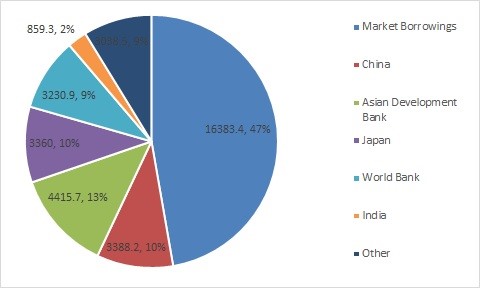
Sept 23 (Reuters) – Crisis-hit Sri Lanka will begin on Friday the tricky task of debt renegotiation with a raft of private and bilateral creditors, including China, India and Japan, to restructure and repay nearly $30 billion that it owes.

WHY THE NEED TO RESTRUCTURE DEBT?

Years of economic mismanagement and the fallout of the COVID-19 pandemic have pushed foreign exchange reserves to record lows in the worst economic crisis in more than seven decades.

Sri Lanka clinched a staff-level deal in September for a $2.9-billion bailout package from the International Monetary Fund after its central bank declared a default on some foreign debt in April, saying payment was challenging and impossible”. 

But the IMF will only start providing funds after the island nation of 22 million chalks out a sustainable repayment path. That in turn requires negotiation with private creditors and two-way lenders.

The finance ministry and its legal adviser, Clifford Chance, will hold a conference call on Friday with external creditors, to outline the economic woes, debt restructuring plans and the targets set by the IMF. 

WHO ARE THE KEY PLAYERS?

Total foreign currency debt of $38.7 billion amounts to 48.2% of GDP, the latest IMF report showed in March.

That includes $13 billion in international sovereign bonds held largely by private creditors, such as asset managers BlackRock (BLK.N) and Ashmore (ASHM.L).

The Paris Club informal group of creditor nations that includes India and Japan holds $4.9 billion of Sri Lanka’s debt, and China about $5 billion more.

WHAT ARE THE POTENTIAL COMPLICATIONS?

Debt crisis veterans cite uniquely tough problems.

Sri Lanka is the first middle-income country to default after the COVID-19 pandemic. It is outside the G20 framework set up to help poor countries navigate defaults. read more

Estimates of its complex borrowings range from $85 billion to more than $100 billion.

Foreign creditors could demand that the government also restructure $48.6 billion of domestic debt, equivalent to about 60% of GDP, potentially complicating and delaying recovery.

Competing regional powers China, India and Japan must also find common ground on how to reduce the debt they are owed.

WHAT IS AT STAKE?

If Sri Lanka is unable to get its debt restructuring on track in a timely way and lock down a IMF board level pact, it will lose out on additional financing to stabilise and reform its economy on the path to growth.

Without a solution, more unrest could threaten, after months of hardship, brought by shortages of essential items of food, fuel and medicines and inflation that soared to 70.2% in August.

Unprecedented street protests forced the resignation of then president Gotabaya Rajapaksa after he fled the country in July, allowing political veteran Ranil Wickremesinghe to take over.

Lessons Learnt from Commonwealth Games

September 23rd, 2022

By Dr. Tilak S. Fernando Courtesy Ceylon Today


The youngest Sri Lankan medallist in the history of the Commonwealth Games, Nethmi Hansika (18 years old) brought honour to her motherland, Sri Lanka. Nethmi managed in Birmingham, UK, at the 22nd Commonwealth Games in August 2022 to defeat her opponent, Australian Irene Symeonidis, to win the historic bronze medal for women. It was a 57 kg ‘Freestyle Wrestling’ event at the Commonwealth Games held in Birmingham. She chose to contest against the Australian competitor, forgetting her coach’s advice on her own to fight the competitor, who was twelve years senior and more experienced than Nethmi. Her coach’s advice was to fight the Indian competitor who fought against her in the semi-finals. 

Nethmi Fernando had a one-pointed resolution to bring honour to her motherland, as opposed to some elements who intermingled with the harmless protestors at the Galle Face Green, in an attempt to overthrow the Government and bring about a clean political structure, replacing the most corrupt political system in existence. Among the protestors, some were politically inclined. They managed to bring Sri Lanka to face the internationally lowest ebb.

Aragalaya

The months-long protest managed to oust President Gotabaya Rajapaksa from office. The latest information about the ex-President was that he went from Maldives to Singapore. Still, Singapore did not allow him to stay there, but extended his stay by two weeks. The latest is that he left Singapore and landed in Thailand. Finally, he returned to Sri Lanka.

However, the looters and arsonists did quite ignominious damage to the Presidential House, Presidential Secretariat, and the Prime Minister’s abode ‘Temple Trees’ and burned down historical belongings. The damage caused by irresponsible elements ran into a few million rupees worth of invaluable effects, that again need to be recovered by the citizens of Sri Lanka. Some jumped in and out of the Presidential pool, soaping and jumping back into the pool! One chap used the Presidential flag as a bed sheet and uploaded it to Facebook, which helped the Police arrest him quickly. The Police hunted down hundreds similarly.

Others who brought honour to Sri Lanka at the Commonwealth in Birmingham were Palitha Bandara (silver medal, Dilanka Kumara (bronze), and Yupun Abeykoon (bronze). The President of the Wrestling Federation’s intention would be for Nethmi Fernando to participate in a minimum of ten international tournaments before the 2024 Olympic Games in Paris. Meanwhile, National Olympic Committee (NOC) President Suresh Subramanium predicted wrestling has a possibility of winning medals, and he has arranged an erudition for Nethmi to train in Hungary. Meanwhile, TV Derana Chairman, Dilith Jayaweera, has promised to build a new house for Nethmi and allocate Rs 50,000 every month for her maintenance. Nethmi articulated on TV that she did not even have a mattress to practise for Commonwealth Games in Birmingham, UK.

It has been customary for a few people to take advantage of foreign visits on special tours such as cricket matches. Once, the British High Commission was taken by amazement by the ingenuity of some of the Sri Lankans who liaised with the High Commission (before HC shifted to Bauddhaloka Mawatha) wanting to do a feature film on the UK and how the British High Commission is liaising with the British Government. They even did the initial filming of the British High Commission and thereby managed to obtain visas for the whole film crew to enter the UK. But once they landed in the UK, everyone disappeared. The story is about how craftily they organised the scheme. The filming equipment, such as professional cameras, was obtained by this sneaky group on hire.

Likewise, officials of the Wrestling Federation of Sri Lanka were perturbed by the number of people who accompanied the Commonwealth athlete team (at least ten athletes) who had escaped before the Commonwealth Games closing ceremony in Birmingham in August 2022. According to press reports, seven Sri Lanka Army and three Navy personnel. They include two boxers and two beach volleyball players.

History

During the Commonwealth Games, athletes participate from the Commonwealth of Nations. In 1918, athletes with a disability were included as full members of the Commonwealth Games. It thus became the primary global multi-sport event for an equal number of men and women’s events in the Commonwealth Games. The event was first held in 1930, subsequently every four years. The sports were formerly known as the British Empire Games from 1930 to 1966. The name changed to Commonwealth Games from 1954 to 1966, and further metamorphosis occurred from 1970.

The sports competition managed to bring together members of the British Empire, primarily in 1891 by John Astley Cooper publishing a letter in the London Times. The contents of his letter proposed a Pan-Anglican Contest every four years to increase the goodwill and understanding of the British Empire.”

Following his letter published in the London Times, the ‘John Astley Committee’ was formed. The sporting events were held in Australia, New Zealand, and South Africa to promote a mental impression of people in each country. Following John Astley’s idea, the Olympic Games movement was established and started by Pierre de Coubertin.

First Occasion

In 1911, for the first time, the event was held at The Crystal Palace in South London, principally to celebrate the coronation of King George V with an Inter-Empire Championship. Crystal Palace was filled with athletes from Canada, South Africa, Australia, and the United Kingdom. They participated in events such as boxing, wrestling, and swimming. In London, a silver trophy was presented as the Championship Trophy by Lord Lonsdale. The ceremonial cup weighed 340 ounces. Canada managed to grab the cup in 1911.

Generally, the Commonwealth Games comes under the supervision of the CGF (Commonwealth Games Federation), which also controls the sports schedule to nominate the host cities. The IFS (International Sports Federation) and Commonwealth Games Association (CGA) become the organising committees for precise Commonwealth Games to be held. In 1928, during the Summer Olympics in Amsterdam, Melville Marks Robinson served as the Canadian Manager for the track and field team.

When the ceremonies open, there are innumerable customs and symbols for The Commonwealth Games, as the flag of the late Queen Elizabeth II’s Baton Relay. The sporting event includes 5,000 athletes, over 15 sports, and more than 250 events. Anyone who becomes first in any event gets a gold medal, second gets a silver medal, and the third a bronze medal.

In the UK, nineteen cities (including Scotland and Wales) participate separately. In Australia, the Commonwealth Games was held in 1938, 1962, 1982, 2006, and 2018, which accounts for more than any other nation. The two cities which have hosted more than once are Auckland in 1950 and 1990 and Edinburgh in 1970 and 1986.

Canada, England, Scotland, Wales, New Zealand, and Australia won gold medals in all Commonwealth Games. The Australian team became the highest accomplishing team for medals thirteen times, England seven times, and Canada only once. In April 2018, the Commonwealth Games was held in Gold Coast, Australia. The next Commonwealth Games will be held in March 2026. The venue will be the Australian state of Victoria.

tilakfernando@gmail.com

By Dr. Tilak S. Fernando

පන්සලේ ලයිටි බිල ලක්ෂ පහහමාරයි

September 23rd, 2022

උපුටාගැණීම ලංකාදීප (යොහාන් භාසුර)

විහාරස්ථානයක් මාසයකදී විදුලි ඒකක 8,500 ක් පාවිච්චි කිරීම නිසා රුපියල් ලක්‍ෂ පහමාරක විදුලි බිලක් ලැබී ඇති බවත් මෙවැනි ආකාරයට දැවැන්ත විදුලි පරිභෝජනයක් කරන ආගමික ස්ථාන පිළිබඳව රජය මැදිහත්විය යුතු බවත් මහජන උපයෝගිතා කොමිසමේ සභාපති ජනක රත්නායක මහතා පැවසීය.

එම විහාරස්ථානයේ පසුගිය මස විදුලි බිල රුපියල් 80,000 ක් යැයි එම විහාරස්ථානයෙන් පැමිණිල්ලක් යොමුකර ඇති බව කී රත්නායක මහතා කොළඹ 7 පිහිටි කාමර 35 කින් යුත් සිය හෝටලයේ මාසික විදුලි පරිභෝජනය ඒකක 7,500 ක් පමණක් බව ද සඳහන් කළේය.

මෙවැනි විශාල පරිභෝජනයක් ඇති ස්ථානවලට ලක්‍ෂ 5 කට වඩා වැඩි බිලක් ලැබීම වැලැක්විය නොහැකි බව කී රත්නායක මහතා සඳහන් කළේ පන්සල්වලට සහනාධාර දීම රජයේ කටයුත්තක් බවත්ය.

සමස්ත රට තුළ ඇති ආගමික ස්ථාන 48,500 ක පමණ සංඛ්‍යාවෙන් සියයට 75 ක් පමණ ඒකක 180 කට අඩු විදුලි පරිභෝජනයක් ඇති ඒවා බවත් සියයට 25 ක් පමණ වන විශාල පරිභෝජනයක් ඇති ස්ථාන ගැටලුවක් බවට පත්ව ඇති බවත් රත්නායක මහතා වැඩි දුරටත් කීය.

ප‍්‍රකට පන්සලක AC යන්ත‍්‍ර 15ක්.. AC නැතිනම් බිල ඉතා සාමාන්‍යයි.

September 23rd, 2022

උපුටා ගැන්ම ලංකා සී නිව්ස්

අගනුවර ආසන්න ප්‍රධාන පෙළේ විහාරස්ථානයක වායු සමීකරණ යන්ත්‍ර 10-15 අතර ප‍්‍රමාණයක් සවිකර ඇති බව වාර්තා වෙයි.

මේ බව හෙළි වී ඇත්තේ මෑතකදී රජය විසින් ආගමික මධ්‍යස්ථාන සඳහා විදුලි බිල නැංවීමත් සමග එම පන්සලට සුර්ය බල පද්ධතියක් සවි කිරීම සඳහා ආයතනයක් ගිය අවස්ථාවේදීය.

ස්ථාන පරීක්ෂාව සඳහා පැමිණි නිලධාරියා දැනුම් දී ඇත්තේ වායුසමීකරණ යන්ත්‍ර වලින් තොරව සෙසු විදුලි උපකරණ ක්‍රියාත්මක කරවීම සඳහා නම් පද්ධතිය ස්ථාපිත කිරීම සාමාන්‍ය මිලකට කළ හැකිව ඇති බවයි.

වායු සමීකරණ යන්ත්‍ර ක්‍රියාත්මක කරන්නේ නම් ඉතා විශාල මුදලක් වැය වනු ඇති බවත් ඔවුන් පෙන්වා දී තිබේ.

වායු සමීකරණ යන්ත්‍ර භාවිතා නොකරන්නේ නම් මසකට විදුලි ඒකක පන්සියයක ආසන්න සීමාවේ විදුලි භාවිතයක් රදවා හැකි වනු ඇති බවද නිලධාරියා පෙන්වා දී තිබේ.

President writes to Mahanayake Theros regarding electricity tariff revisions

September 23rd, 2022

Courtesy Adaderana

President Ranil Wickremesinghe has expressed his gratitude to the Venerable Maha Sangha for their contribution to conserving electricity at religious shrines and the precedent it sets for society.

The President said this in a special letter today (23) addressed to the Maha Nayaka Theras’ of the Malwathu, Asgiri, Amarapuraand Ramanya Chapters about the difficulties faced by religious institutions due to the electricity tariff revision.

In his letter, the President said that the electricity crisis has arisen as a direct result of the country’s snowballing economic crisis over the last few years, and that he sees it as the responsibility of the government led by him to resolve all these issues in a systematic manner for the benefit of the people and the entire religious community of the country.

By 2022, 42,950 Buddhist temples and other registered religious and social services in the country are connected to the country’s main power grid. In 2021, 91 million units of electricity (91 Gwh) have been provided.

Under the current system of electricity charges, the Electricity Board has charged Rs. 7.17 for a normal unit, and another Rs. 11.46 has been spent by the Electricity Board for each electricity consumption unit used by religious institutions.

Currently, 15,527 Buddhist shrines and other registered religious and social services use less than 30 units of electricity. Another 9,441 consume between 31-90 units of electricity, 3,274 places consume between 91-120 units of electricity and 4,972 religious places consume between 121-180 units of electricity.

Even under the new electricity charges, the highest monthly electricity bill of 33,214 registered Buddhist temples and other religious and social services, is less than Rs. 4,000. Only the nearly 9,800 locations that consume more than 180 units have higher charges.

Accordingly, these can be categorized into two groups as temples or other religious places that consume less than 180 units of electricity and those that consume more than 180 units of electricity. It is a fact that with the revision of the new electricity bill, places with high electricity consumption of more than 180 units will be affected.

The President has also mentioned in his letter that temples and other religious places with high electricity consumption will be identified and a proper study will be done to provide a continuous service for electricity demand management and electricity conservation to those places with the intervention of the government mechanism, under the leadership of the Ministry of Power and Energy. He noted that a program is necessary to appoint energy managers from among the lay people who are dedicated to the religious and social mission of taking care of the religious places and to provide them with formal training and to survey the work on a monthly basis.

President Ranil Wickremesinghe pointed out that it is very practical to install solar panels to religious shrines that have to pay very high electricity bills, adding that instead, opting for alternative mechanisms would only serve to provide short-term relief.

He said that these solar panels could be provided to these establishments at cost or they could be provided with the required funds to import such solar panels. The President also added that a suitable mechanism would be drawn up based on the advice and input of the Mahanayaka Theras and based on priority basis, these solar panels could be installed so that it will not hamper any of the religious events planned at these religious establishments in any manner. He noted that this endeavour is to ensure that the daily, monthly or annual religious rituals could be carried out without hindrance for the benefit of society.


-PMD

MPs nominated to National Council – announced by speaker in parliament

September 23rd, 2022

Courtesy Hiru News

Speaker Mahinda Yapa Abeywardena today (Sep 23) announced to the parliament the list of MPs who have been nominated for the “National Council”, which was established as per the proposal of Prime Minister Dinesh Gunawardena.

The National Council consists of members representing parliament from the respective political parties.

The Speaker of Parliament will serve as the chairman. The National Council will consist of the Prime Minister, Leader of the House, the Leader of the Opposition, the Chief Government Whip, the Chief Opposition Whip and not more than thirty-five (35) Members of Parliament.

Members of Parliament nominated to the &lsquo;National Council&rsquo; established are as follows:

Douglas Devananda, Naseer Ahamed, Tiran Alles, Sisira Jayakody, Sivanesathurai Santhirakanthan, Johnston Fernando, Rauff Hakeem, Pavithradevi Wanniarachchi, Wajira Abeywardana, A.L.M. Athaullah, Prof. Tissa Vitarana, Rishad Bathiudeen, Wimal Weerawansa, Vasudeva Nanayakkara, Palani Thigambaram, Mano Ganesan, Udaya Gammanpila, Rohitha Abegunawardhana, Namal Rajapaksa, Jeevan Thondaman, G.G. Ponnambalam, Ven. Athuraliye Rathana Thero, Asanka Navarathna, Ali Sabri Raheem, C.V. Wigneswaran,. Weerasumana Weerasinghe and Sagara Kariyawasam.

Since the names of a few other parliamentarians are to be received, the announcement of such names has been scheduled for the near future.

The resolution proposed by PM Gunawardena to constitute the Parliamentary Committee called &lsquo;National Council&rsquo; was passed in Parliament on September 20, 2022 without objection.

“The letter by Her Majesty Queen Elizabeth II was special” : President Ranil Wickremesinghe

September 23rd, 2022

Courtesy Hiru News

The statement made by President Ranil Wickremesinghe while participating in the vote of condolence on the demise of HM Queen Elizabeth II, moved in the Parliament today (23)

Amongst all the letters of congratulations I received on becoming the president, the one that was sent by Her Majesty Queen Elizabeth II was special. It would have been one of the last letters of congratulations, if not her last letter of congratulations.

Her Majesty has been very frail after the death of her husband. His Highness Prince Phillip the Duke of Edinburgh, but no one expected a sudden passing away like this.

The ceremonies are all over, but we have to grapple with the issue. What did Queen Elizabeth II mean to us, to Sri Lanka, to the United Kingdom, the Commonwealth and to the world. As Queen of Ceylon, her reign signified the transformation of our country from Ceylon to Sri Lanka. The great political upheaval started under her. The 1956 election victory, the emergence of the ethnic issue, the coming of the free education generation, the state control of the economy, two coup d&rsquo;etat against the government and the start of the armed uprisings in the South.

Her Majesty is a person who is a staunch Christian and held to her beliefs as a defender of the Anglican faith. But as Queen of Ceylon she also upheld the commitment to safeguard Buddhism under the Kandyan Convention of 1815. In fact, a little known item is that HM presided over the Buddha Jayanthi 2500 celebrations as the head of Ceylon together with the kings of Thailand, Laos, Cambodia and the President of Burma as Myanmar was then known.

When her term came to an end and we became a republic, there were also two issues that we had left behind which has still not been resolved. The conversion from a dominion of Ceylon into a unitary state of the Republic of Sri Lanka was the emergence of the ethnic issues which led, in turn to uprisings and still the last part of it has to be resolved.

Secondly, it was an issue that was raised, about if you want a figurehead why don&rsquo;t you have the queen? Why do you need a figurehead President? I remember the late Mr. Siriwardena, Editor of the &lsquo;Aththa&rsquo; wrote an editorial that we need not become a republic to become a socialist country. Then there was the issue that was raised by the then leader of the Opposition Hon. J.R. Jayawardena supported by his Chief Opposition Whip Ranasinghe Premadasa as to why we need a figurehead president. If we are to have a president, we should have an Executive Presidency on the model of France.

Now this is also still an unresolved question. Many have pledged and won elections to abolish the executive presidency but no one has done it.

In a sense, she represented not only the transformation of Sri Lanka but also the transformation of the rest of the world. The transfer of power from the West to Asia and Africa, the dismantling of the British Empire and the UK joining Europe, and then they left Europe and are now redefining its role as Global Britain.

Queen Elizabeth II was different. From Head of the British Colonies she became head of the Commonwealth of Nations, the transformation which represents her greatest success bringing together the West and the rest. This Commonwealth of Nations saw some of the most outstanding leaders of our time get together with HM the Queen.

Sir Winston Churchill, Dame Margret Thatcher, Pundit Jawaharlal Nehru, Sir Robert Menzies, Pierre Trudeau, Lester Pearson, Nelson Mandela, Kenyatta, Kenneth Kaunda, Nyerere, Nkrumah, Lee Kuan Yew and Tunku Abdul Rahman were amongst the others.

In this transformation, Queen Elizabeth II became to us a symbol of stability and a symbol of adaptability. No other queen would have jumped off a helicopter with James Bond. And she was a symbol of duty. As a global icon she outranked the UK, a nation which has now to charter its fortune without its greatest soft-power asset, Queen Elizabeth, who was 100 times more powerful than the aircraft carrier named after her.

It is to pay our respect to this global icon which took many of us to the funeral service in Westminster Abbey. It was a very moving funeral service. The most poignant moment became when all of us in the Abbey, Christian or non-Christian, joined in to sing her favourite hymn &lsquo;The Lord Is My Shepard&rsquo;. &lsquo;Goodness and mercy all my life shall surely follow me and in the god&rsquo;s house for evermore my dwelling place shall be ;.

Queen Elizabeth II is no more. Therefore, I request, Hon. Speaker, and I am supporting the motion moved by the Hon. Prime Minister to convey to HM King Charles III and members of the Royal Family our condolences.

I conclude this tribute to Queen Elizabeth II of Ceylon, the last of our royal line which began with King Wijaya with this verse. “;Anicca vata sankhara, uppadavaya-dhammino, Uppajjitva nirujjhanti, tesam vupasamo sukho.”
Impermanence our formations subject to rise and fall, having risen they cease, their subsiding is bliss.

Gazette issued declaring several areas as high security zones

September 23rd, 2022

Courtesy Hiru News

Gazette has been issued today declaring several areas as high security zones

High Security Zones include Parliament, Supreme, High court &amp; Magistrate Court- Colombo, AG Dept, Presidential Secretariat, President’s House, Navy, Air Force &amp; Police HQs, Ministry of Defence, SL Army Hq- Akuregoda, PM Office, Temple Trees, Official Residencies of Defence Sec &amp; Commanders of Tri Forces

EX-PRESIDENT IN RETROSPECT: A NOTE TO GALLE FACE PROTESTERS AND THEIR NEW MESSIAHS

September 22nd, 2022

By Sena Thoradeniya

1. DIDN’T GR HEAR THE GALLE FACE PROTESTERS SING”?

When the protesters were occupying the Galle Face Green and protesting at some other sites what were our intelligence personnel and Defense Ministry panjandrums doing was anyone’s guess. Did not the deposed President hear the slogans chanted by the protesters, see placards, banners and other visuals exhibited by the protesters? As a decorated old soldier turned into an IT expert, was he not exposed to what were posted in social media platforms?  Did not his advisors and intelligence officers brief him about the imminent events? We have no answers to these straightforward questions.

In our essay Culture of Galle Face Protesters” (LankaWeb: August 23.2022), we had stated providing many examples how the Galle Face Protesters in their songs, slogans, placards etc. etc. insulted, humiliated, vilified, disgraced and shamed the ex-President. To me and I think to the majority of people in Sri Lanka, whether voted for him or not, he was not a person to be treated in that vulgar manner.

The Protesters challenged the State, in other words called for the destruction of the State. Artists of the Fearless Community”, We are From Here Project” and Sisterhood Initiative” painted the Presidential Secretariat in flames. Their laser projections projected on to the façade of Presidential Secretariat challenged the unitary state of Sri Lanka.

He was apathetic when the protesters besieged his private residence at Pengiriwatta, Mirihana.  Many more incidents followed. The protest gathered momentum because the law was not enforced.

2. WAS HE PRESSURISED?

Can we believe that the ex-President was pressurised by Julie Chung day in and day out as claimed by MP Wimal Weerawansa; that the ex-Prsesident was keeping his options open to go back to America to be with his family without antagonising the Americans?  Former Professor Nalin de Silva also had said a similar thing, quoting a verse line from Sinhabahu”, that he acted like this because of his children – Daruwan Sanda”-thathe wanted to be with his children! A happy family re-union in America! If it is so, did he think that politics was something which has a smooth take-off, a flight with least air turbulences and a safe landing? I don’t think so.

I think that he was trapped by the US. We had some doubts why the US authorities allowed him to renounce his Us citizenship when there was a court case pending against him. It was the beginning of the grand conspiracy. They knew from which direction the prevailing winds blow. To hoodwink the general public, in connivance with the grand conspirators, three NGO chiefs utilising funds provided by the very same US Agencies filed FR applications in the Supreme Courts to debar him from entering the Presidential fray. Very soon the US understood that the newly elected President was not the man they wanted.  He was vacillating between India, China and US. By the time the New Fortress” deal was completed the narrative has been already scripted.

3. WAS HE A DICTATOR?

Many Columbians called GR a dictator”, an autocrat” a tyrant”, a despot”, all having more or less the same meaning. A pseudo-theorist who occupied VIyatha Maga” and Eliya” rostrums later called him an armed Dharmapala” (armed Dharmapalism”). This demonstrates that how the ex-President had failed to assess the careerists who surrounded him. To take somebody as your confidante you should study that person’s history, past deeds and the ideology he represented and advocated.

Foreign-funded think tank”, Pathfinder” has not done anything good for him. To appoint its key persons to strategic positions in the State and foreign service was calamitous. Whether foreign-funded Verite Research” and Advocata Group” had advised him, we are in the dark. His own creation Viyathmaga, in his own words founded to act like a think tank, had a sizable amount represented in the Parliament and five of them took oaths as State Ministers. In 2020, I wrote five articles about Viyathmaga” politics and I do not know whether to laugh or cry that many of my predictions have come true. Viyathmaga” grandees appointed to key positions in state institutions brought disaster not only to GR, but to the whole country, like the lizard who ruined his own mother’s funeral” as the Ibos say. What their MPs and State Ministers did in respect of course correction?  Now, after de-camping they say that GR did not listen to them!!  

Although many of GR’s adversaries tried to tarnish his image recalling Be a Hitler” call by an unsuspecting Anunayaka Thero of Asgiriya Chapter and Rathupaswela and Negombo shooting incidents.He was criticised for appointing ex-army officers to key administrative positions. This was painted as militarisation even by some prominent members of the clergy. But we saw some of these ex-military officers acting with kid gloves when crucial decisions had to be taken. Raiding hoarded sugar and rice stocks and handing over the same stuff to the hoarders itself was a case in point. Malady was the corrupt system, bribery, corruption, waste, indiscipline and extravagancy. That is why some people wanted a benevolent dictator”. They, including the protesters got only benevolence” and compassion!  

Recruiting a person who had worked in a media institution (this particular media group was actively involved in the Galle Face Protest from its inception) that opposed Rajapaksas tooth and nail as his Media Secretary and another from another private media institution owned by Lyca Group, (owned by a British-Sri Lankan Tamil entrepreneur, once alleged to have links to LTTE) as Media Director were disastrous. Following the MIrihana outrage Presidential Media Unit issued a Statement that those who resorted to violence wanted to enact an Arabi Wanantharaya (Arab jungle” instead of Arabi Wasanthaya” or Arab Spring”). Before the final onslaught one fellow left the country seeking greener pastures.  The other one decamped joining his former organization.

Ex-President’s critics said that he did not like others criticising his appointees or appointments given to certain people. This was clearly visible with the appointment of High Commissioner to India with ministerial powers.

Is this autocracy? Or liberalism? Considering what was being done was right is also a manifestation of liberalism. I am right”; I cannot go wrong”; I did the right thing”. What is needed is Doing Right Things Right, Always”. It is the Right Way; Not My Way. Only Frank Sinatra can sing I did it My Way”. 

Reprimanding public officers in public and in front of TV cameras (to be telecast in evening news bulletins) were GR’s biggest blunders that displayed his dictatorial tendencies. Why open in-house meetings to media? This is an undesirable habit introduced by the politicians and their media secretaries with the advent of TV and proliferation of TV channels to gain cheap publicity. Still this public spectacle continues.

Still NGOs, some sprang up with the Protest, (many new NGOs mushroomed with the Galle Face Protest; some are of bourgeois intellectuals and professionals) yell that he was vested with immense power, who directly or indirectly controlled most of the institutions in the country. If he had exercised the power bestowed upon him by the Constitution things would have ended completely different. Having power and not using that power are two different things. The ex-President although he had immense power due to 22 nd Amendment did not use that power. It was Ranil Wickremasinghe who executed that power, two days after becoming the President ordering the military to evict Galle Face Protesters.  

4. A LAISSEZ-FAIRE LEADER

To me GR was a laissez-faire leader, an abdicator, who practiced abdicracy, a leadership style as opposed to autocratic (authoritarian) style or democratic style.  He earmarked a space in front of his Secretariat for protesters to protest, which boomeranged.

Instead of occupying the official Presidential House, he lived in his modest house at Pangiriwatta.  He travelled with a minimum of security personnel minus an ambulance, a fire engine as his predecessors did; not only the President, Yahapalana Prime Ministers too had these in his security convoy. GR was criticised by a person none other than Sarath Fonseka for attending Parliament, to deliver the” Throne Speech” without pomp and pageantry, without mounted troops and gun salutes. When there were traffic jams, he took a detour to reach his destination. Once it was reported that he had rebuked security forces for closing roads for one of his visits against his instructions, later to find out that it was done for a Ministerial entourage.  We still remember how our motorists catcalling him when the approach road to Katunayake was blocked for a brief period to allow unhindered passage to a foreign dignitary. (Nobody thought at that time that something was brewing).  He did not use tear gas and water cannons or baton charged to disperse strikers and demonstrators.

After the victorious conclusion of the War he had every opportunity to be promoted as a General or even a Field Marshall.  He had precedents to follow: Ranjan Wijeratne, UNP’s Foreign Minister and Defense State Minister, a Lt. Col. of Sri Lanka Army Volunteer Force,{later Commanding Officer of the Second Battalion of the  recreated Sri Lanka Rifle Corps (SLRC), modelled on the Ceylon Planters’ Rifle Corps, a voluntary regiment made up of European planters in the Central Highlands in the colonial era; SLRC was formed with the upcountry planters to safeguard plantation interests from terrorist attacks : by virtue of being the Chairman of the State Plantations Corporation (SLSPC) Ranjan W. was appointed as the Commanding Officer of the second battalion; its first battalion consisted of planters of Janatha Estates Development Board (JEDB) commanded by JEDB’s then Chairman, Pemsith Seneviratne}, was posthumously promoted as a General by Premadasa. Anuruddha Ratwatte was made a General by CBK.

Sarath Fonseka was elevated to the position of Field Marshall by Sirisena. No one opposed; except Wijedasa Rajapaksa who called him Vel Vidane”.

I vividly remember how officers who were responsible for military debacles in the Wanni theatre got promotions under Yahapalana regime citing they were politically victimised under CBK. A Colonel (not in a fighting unit) who retired from active service and found employment in a foreign country later returned when CBK became the President, was promoted to the rank of Major General.  

5. SYSTEM CHANGE

At the time of campaigning and after his ascendance to Presidency GR called for a Systems Change”. As a person who taught Systems Theory” to hundreds of participants the writer thought that GR had a good knowledge of the said theory and was very happy and expected that GR would put into practice what he had learnt. But sad to state that before long we understood that by System Change” he had thought of making improvements. At Gama Samaga Pilisandarak” meetings with village folk and in his occasional flying squad” type visits to strategic institutions and televised sermons to top level officials although he repeated the call for a Systems Change”, it was nothing more than calling for improvements in the existing conditions.

To make improvements the Japanese had introduced the concept, Kaizen” or Continuous Improvement, a people-oriented and process-oriented approach which involves all ranks of employees from top management to workers, in every organisation, every function and in every activity of an employee’s work. It’s simply doing things today better than yesterday and doing things tomorrow better than today”.

Later System Change” entered our common parlance, described as a panacea for all problems. Even the protesters called for a system change”. We do not know what they meant and understood by SYSTEM” and CHANGE”.  Come July, it reached pandemic proportions. Had the protesters achieved their System Change”, ousting GR?

The System” continues.

GR had a penchant to use the term looking out of the box” coupled with his notion of System Change”. It is true that being in a box limits growth and movement”. But his Team kept people in boxes”!

6. HIRUNIKA – MODERN DAY ERIS IN GREEK MYTHOLOGY AND CALL FOR THE NEXT UPRISING”

GR allowed Hirunika, the defeated SJB candidate (modern day Eris, woman of strife, chaos, discord and contention in Greek Mythology) to protest in front of his private residence a week before 31 March. She became the warning sign of all destructive activities that followed beginning with: (i) Mirihana outrage (ii) Besieging Gnanakka’s Devalaya at Anuradhapura before Anuradhapura attacks that preceded May 09 (iii) Protesting in front of   RW’s private residence and (iv) In front of Presidential House, having an unrestricted passage. Inaction of security forces gave wrong signals to other protesters weeks before July 09. 

Did not the security establishment consider these acts as violent rehearsals before the final onslaught? 

The print and electronic media who portray Hirunika as a paragon of virtue should be reminded that her Defender Case” is not yet over and Ramanayaka Tapes” are still lingering in peoples’ minds. Her confrontation with Rajapaksas are purely personal in nature rather than political. A person who frequented Temple Trees when her father was MR’s Trade Union Director, later her mother an Advisor” to MR, once admitted that she was like a member of the Rajapaksa family”. GR pardoning Duminda Silva had intensified her wrath.

She recently predicted that: RW would face the same fate as his predecessor in the coming weeks” and that this government would not be able to stop the next wave of the uprising that will come sooner than thought.” The next uprising will be worse than the previous ones. Next time people will come to the streets armed at least with kitchen knives. None in this government will be able to stop it. Last time the leaders could save their lives. Next time the rioters will set houses of rich and wealthy businessmen too on fire”.

BEWARE: Those who have funded, provided material support, theorised and supported the Galle Face Protest!  This isnone other than calling for open revolt.

Let us take only a few incidents that took place in England soon after the death of Queen Elizabeth II. Andrew was heckled by a person as he walked behind Queen’s coffin: You Are a Sick Man”. The man was arrested. An anti-Monarchy demonstrator was arrested after shouting: Who Elected Him” at an accession Proclamation for the new King. A woman was arrested for holding an anti-Monarchy placard Abolish Monarchy”. A man was arrested for holding a Not My King” placard. A 74-year man was charged with breaching the peace”. Mourners who join a 10-mile queue were warned that they could wait up to 30 hours to see the coffin; food, water, banners, placards, flowers, teddy bears (may be Paddington Bears!), were not allowed; mourners who brought tents were not allowed to camp (Galle Face Tents!). Airport style security was maintained and mourners were not allowed to wait at the coffin. When Queen’s coffin was transported from Balmoral to Edinburgh, a six-hour journey by road, of approximately 175 miles, all vehicular traffic was stopped. Hundreds of household staff at Clarence House were given marching orders before even Queen’s corpse was brought to London. Birds of prey were brought to keep pigeons away at Westminster Abbey (animal rights!). Many services including health and operations were either disrupted or cancelled.

If these things happened in Sri Lanka, all our foreign-funded NGOs including BASL would turn the country upside down stirring a tornado.

Now many of Sri Lankan politicians are warning about an imminent uprising” along with Hirunika: Fonseka, JVP, FSP, IUSF, Rajitha, Champika, Dayasiri, dissidents of Pohottuwa, newly formed Nidahasa Group” and all those who have addressed the recently held rally at Hyde Park. Fonseka, true to his belligerent nature, again and again calls people to come to the streets.

How do we explain this phenomenon?  Have they formed a grand alliance? A revolutionary” united front? Have all of these politicians become rebels”, revolutionaries” or, Bolsheviks” overnight? Look at the individual characteristics of these people, what type of classes they represent and type of political lines they follow. 

It is none other than FEAR PSYCHOSIS.

7. FEAR PSYCHOSIS OF PARLIAMENTARIANS

 The term Fear Psychosis” entered our common parlance during 1988-1989 reign of terror. People did not tell anything ill about atrocities committed by JVP and its armed wing DJV. All including the upper-class people followed meekly the instructions given by the chit”. Recalling the orders given how to bury the killed is chilling.

Now after the destruction that took place on May 09, a new phobia had entered the minds of all parliamentarians. All have become supporters of protesters and they weep buckets of tears on behalf of them. Some who were manhandled and severely beaten, who saved their lives merely on luck, whose houses have been gutted, praise the protesters without naming who were responsible for these brazen crimes.

An SJB parliamentarian representing Southern Province had said that SJB did not have any reason to oppose the protesters and around 1200 lawyers affiliated to his party island wide were representing the interests of the protesters and they were continuously maintaining a dialogue with the protesters and do whatever possible for them.

On July 27, former army commander turned politician became the unofficial spokesperson of the protesters and he set August 09 as the date for the final battle” of the struggle. He called the people to come to Colombo on August 09 even to stay a month until toppling the government and asked the police and military not to interfere. He estimated that the number who would sacrifice their lives in the confrontations would be less than 100. Nobody took him seriously and on August 09 he was not seen on the streets. Two days later Sarvapakshika Aragalakaruwo” issued a statement not to be misled by him.

Opposition politicians went to see remanded protesters making them heroes and heroines issuing them certificates that they were not involved in any violence or taken part in any illegal act6ivity. Storming public institutions and occupying and damaging them also come under their fundamental rights”.

8. GR: POLITICIAN OR NOT?

For GR’s many shortcomings some attributed inexperience as the key reason, saying that he was not a politician”. I do not agree with this notion. Once a person enters the political arena, he or she becomes a politician. By the same token all experienced” politicians should be extremely successful persons.

A countless number of military leaders had become Heads of State in hundreds of countries in Asia, Africa, Latin America, The Caribbean, Europe and of course USA, Africa and Latin America leading the list. Two unique examples can be cited from Nigeria, army officers who captured power ousting democratically elected leaders later becoming Heads of State by a popular mandate. After the military Head of State Murtala Muhammad’s assassination Olusegun Obasanjo functioned as the Head of State from 1976-1979, conducted elections and established a civilian rule under Shehu Shagari paving the way for the Second Republic of Nigeria. Later in 1999 he was elected as the President by a popular mandate. Incumbent President Muhammadu Buhari a Major General, captured power deposing Shehu Shagari in 1983 and in 2015 was elected as the President. Did they become politicians only after getting a mandate from the people? I do not agree. (The writer was working in Nigeria when Buhari captured power; Buhari was rather lenient and the press cried, we need a military dose” as bribery, corruption, daylight robberies continued as in the days of civilian rule. In 1985 Buhari was ousted by his own military junta and a ruthless military rule continued until 1999. My novel Harmattan written in Sinhala (1998) deals with Nigerian politics during this turbulent period, combining with the lives of Sri Lankan expatriates in Nigeria and politics under JRJ in Sri Lanka.

MP Wimal Weerawansa once called GR to accept the leadership of Pohottuwa Party. For this he was castigated by the Pohottuwa General Secretary and some other minions. Had GR accepted the leadership of Pohottuwa Party he would have eliminated many barriers he had to encounter from within conducting a massive purification campaign” to purge all undesirable elements. Take for example, how one of the two leading rice millers in the country enjoying benefits as a State Minister had arbitrarily jacked up prices of rice and manipulated the paddy market along with his Polonnaruwa Cousin”.

Beginning with the sugar scam and garlic scam we can list down hundreds of examples to show how politicians and officials took advantage of President’s inaction and laissez-faire type management. These were repetitively discussed by friends and foes.

9. ULTRA-DEMOCRACY”

To me his downfall was due to him becoming an ultra-democrat”. Sword of Damocles”, sharpened by the Geneva neo-colonialists was hanging over his head which may have haunted him.

Mao had stated that ultra-democracy and laissez-faire destroy discipline. Ultra-democracy is a danger; it damages or even completely wrecks, weakens or completely undermines an organisation. This does not negate ensuring democracy under centralised guidance.”

It is also a manifestation of liberalism; to let things slide; to let things drift; to hear incorrect views; overlooking others harming”.

10. DECISION MAKING

Two important aspects of management and leadership are Decision Making and Problem Solving. There are two types of decisions: personal and organisational. All decisions related to governance and state craft are organisational decisions; but individual traits of the decision maker, such as his or her background, past experience, personality, attitudes, values, learning, motivational level and need for self-actualisation, perceptions and ideals (in GR’s case: organic agriculture), affect organisational decisions.

To what type of decisions, a leader should pay attention most? To decisions involving long range commitments, strategic decisions, not routine decisions, which can be delegated to subordinates easily. Decision making is closely interlinked with problem identification and propensity for risk; high aversion to risk or low aversion to risk. In a decision like changing to organic agriculture overnight, the risk is extremely high. This is associated with post-decision anxiety, or in other words potential for dissonance. Military decisions have a high aversion to risk. And there cannot be post-decision anxiety unless a major catastrophe occurs.

Many had misgivings looking at GR’s style of governance: was this the man who gave leadership to end the War? Military men cannot run civil organisations was a canard invented by his detractors. Problem is the individual and the environment and the people he has to work with. Armchair critics should understand that many management theories, decision making tools and quantitative techniques were developed to solve war-time problems. Even some training and human resource management techniques now in vogue were developed for the same purpose.

People make bad decisions. Those who quickly identify that they have made a mistake, quickly admit it and attempt to repair the damage are good decision makers. 

A leader should know that DECISION REVERSAL is not a weakness, but shows how one reacts positively to the changes that take place in political, economic, socio-cultural, international and technological environments. Decision reversals are common. It is our opposition who made a hue and cry when some decisions were reversed as they are excellent decision makers. Decision reversals have less impact upon the leader’s image. When a leader reverses a bad decision, it is not a crime to lose respect. If a bad decision is made the decision maker should acknowledge his part in it. A reversal is far more acceptable than a bad decision allowed to remain in force. When GR acknowledged that he had made mistakes (organic fertiliser issue) he was booed and jeered. This was done by them for political expediency not for the sake of the country or understanding the decision-making process. 

The problem is at what point you reverse the decision? Whether it is done to please one or more interest groups? A decision reversal does not help anybody after a severe damage has been done. GR was late in admitting the mistake. Issuing gazettes and revoking the same gazette was a mockery made by his dull-witted Ministers. These are not decision reversals. There was a State Minister whose duty was to rescind gazette notifications.

His decision to leave the country was a bad decision. By doing so he was treated in ignominy by the capitalist press, that he had fled the country.  Various columnists began to ask who foots his hotel bills.

One danger in Decision Making under a Cabinet System is the members of the Cabinet succumbing to the decisions of the Head of the Cabinet or the Group Decision Making. To avoid conflicts and disagreements and to safeguard their interests many keep quiet. The so-called Collective Responsibility” is used as a whip to maintain cohesiveness and to repress opposing views. This does not recognise minority opinions or unpopular views, which can be positive in the long-run. If no one speaks out against apparent consensus of poor group decisions disaster follows.  It is more pleasant to sit and agree with the leader and the group than to be a dissident, an unpopular critic and being ostracised. Heads of governments become dictators because of this apathy. Recent political crisis that preceded the economic crisis was an outcome of these happenings.

Now the Parliament has passed a bill to establish a Jathika Sabhawa”.  Can a Jathika Sabhawa” achieve what a Cabinet could not achieve is anybody’s guess.

WHEN THE PROTESTERS FLOCKED TO THE GALLE FACE GREEN, WE DO NOT THINK THAT THEY HAD ANY UNDERSTANDING ABOUT WHAT WE HAVE DISCUSSED ABOVE. THEIR ONLY CRY WAS GOGOTAHOME”.  THE PROTEST WAS THEORISED BY OUTSIDE PARTIES TO LOCATE IT AT AN INTERNATIONAL” LEVEL, AS A PART OF THE SO-CALLED PROTEST DEMOCRACY” CAMPAIGNS, AS A NEW VARIATION OF AGITATION EARMARKED TO THIRD WORLD COUNTRIES BY THE WEST.

11. SECURITY FORCES

How our security establishment was blind to what had happened for well over 100 days, we cannot comprehend. Why it was not possible for them to evict the protesters obstructing access to the Presidential Secretariat and Temple Trees? Why could not they ensure measures to prevent storming and occupying strategic institutions of the State?   They have not read the message conveyed to the State by laser projections projected on to the facade of the Presidential Secretariat and art works created showing the Presidential Secretariat enveloped with flames. Are security forces not responsible for not taking preventive action? Ensuring safety of public property?

Did not they expect such a vast crowd converging to Colombo? Did not they see trainloads of protesters coming from Kandy and Matara and how others walked from the five principal roads leading to Colombo? There was prior information that the people were coming to Colombo in thousands on July 09.

For Easter Sunday massacre intelligence services were blamed and still the Cardinal and the Catholic Church go after them. Recently the Fort Magistrate deciding to name Sirisena a suspect, issued notice directing him to appear before Courts over a private plaint regarding to Easter Sunday attacks.

Are the Cardinal and the Catholic Church now content with security forces for not taking prompt action on July 09?

The talk of the town was that the President did not want to take any action against the protesters even when the Presidential House was stormed. Can the Security Forces pay heed to such orders when the very existence of the State was in jeopardy and the life of the President was in danger? Only future Memoires will tell us the truth.

The Paris Club and Dollar Debt Colonialism: Reform of International Financial Architecture Needed

September 22nd, 2022

Darini Rajasingham-Senanayake

As the visiting International Monetary Fund (IMF), team boarded a return flight to Washington DC after a week in Colombo, the Paris Club (PC), stepped in though a revolving door at the strategic Indian Ocean island’s Bandaranaike International Airport in the first week of September.

The signing of a ‘Staff Level Agreement’ with the deeply unpopular ‘Ranil Rajapakse’ regime accused of Economic Crimes was announced before the IMF team’s departure. However, the contents of the agreement like the IMF’s Debt Sustainability Analysis Report on Sri Lanka remain shrouded in mystery except for news of a $2.9 billion loan to be disbursed over 4 years!

Stepping into Sri Lanka on the heels of the departing IMF team, the Paris Club (PC), issued a statement that it was ready to engage in the country’s (dollar-denominated) Debt Restructuring. This is in the wake of a Staged Default in April this year- for the first time in Sri Lanka’s history.

The PC also echoed the IMF’s admonition that the strategic island nation would need to get all its creditors’, particularly bi-lateral lenders, China and India, and other new Asian development partners’ consent to receive the $2.9 billion loan.

But what precisely is the Paris Club (PC), that few Sri Lankans have ever heard of and what is its role? The PC is in town to coordinate among the various categories of creditors who hold Sri Lanka Government (GoSL), debt since the IMF claims that burden sharing” and transparency among Creditors is necessary for any Debt Restructuring.

However, many civil society groups who have called for cancellation of the country’s ‘illegal’ and ‘odious’ Debt. They view much of the debt as the outcome of corrupt deals between shadowy Hedge Funds and/or international sovereign bond (ISB) traders and corrupt politicians and in some instances bi-lateral lenders, which are passed onto the citizens.

What is clear despite the murky blame game as to who is responsible for the debt and Default being played via global and local corporate media that craft the narrative ,is that the Dollar debt trap has ensured a significant loss of Sri Lanka’s economic and trade policy autonomy, sovereignty and independence, for the citizens of the country who are expected to pay the international creditors. 

Sri Lanka like many other countries caught in Covid-19 Lockdown induced debt-traps in the Global South, such as Argentina, Zambia and Lebanon would like to de-dollarize and import oil at discount rates from Russia, hit by US and EU sanctions. However, it has been unable to do so despite the economically debilitating oil, gas and energy shortage because of its reliance on Western financial and consumer markets.

It is hence that we may speak of Dollar Debt trap Diplomacy and the re-booting of Colonialism at this time in Sri Lanka, which is being asset stripped ex-ante the debt negotiations as strategic national energy and transport infrastructure is privatized. Indeed, dollar diplo debt diplomacy via the Washington Consensus (IMF and World Bank), and the Paris Club has ensured that the West has once again make deep inroads in the strategic Indian Ocean island’s economy that is perpetually in the cross-hairs of big power rivalry.

Debt: A Numbers Game amid Colonial Power/Knowledge Hierarchies

The precise amount of Sri Lanka’s external debt is still in question. While various numbers regarding Sri Lanka’s external, dollar denominated debt have been put forward – ranging from $ 51 billion at the time of Default to the much lower figure of $26 billion, debt increasingly appears to be numbers game depending also on who does the calculation! This is much like the Covid-19 Case Fatality Rate (CFR), numbers game that promoted, fear, economically devastating Lockdowns prescribed by the World Health Organization, and expensive mass militarized injection campaigns that benefited Big Pharmaceutical corporations in the past two years.

At this time with the Paris Club and Lazard, Clifford and Chance, which was hired by the Ranil Rajapakse regime in Colombo to represent the Government, Sri Lanka’s debt calculation and restructuring appears to be a Herculean task, a calculation worthy of Rocket Scientists, which hence must exclude native and national Sri Lankan accounting firms and legal firms that lack the expertise and perhaps mental capacities to represent themselves and the citizens of the country!

Debt numbers have been rendered opaque and unnecessarily complex given the number of Bond holders, Mutual and Vulture funds, bi-lateral and multilateral agencies and interests, internal and external rent-seekers, actors and shadowy off-shore financial networks at play in Sri Lanka. These appear to be fishing in the island’s troubled waters at the center of the Indian Ocean at this time of Cold War and Colonialism 2.0, as the US dollar is increasingly weaponized against Russia and other local currencies which are rapidly depreciated.

Principle among Sri Lanka’s debt wielders are US and EU- based shadowy International Sovereign Bond (ISB) holders who together hold nearly 50 percent of the strategic island’s debt. Additionally, there are bi-lateral or State parties (India, Japan, China and other governments); and multi-lateral or inter-governmental organizations like the Asian Development Bank (ADB), IMF and WB that hold GOSL Debt.

Debt Stock (by Major Lenders, US$ million)- External Resources Department

What is clear is that the Paris Club represents the US-and EU based Sovereign Bond (ISB) traders and hedge funds of the rich countries of the Organization for Economic Corporation and Development (OECD), that hold the lion’s share – almost 50 percent–of Sri Lanka’s external debt, as they do with many other post-colonial countries of Asia, Africa and South America.

While BlackRock, which got huge US Government Covid-19 bailout funds in 2020 to asset strip around the world holds the largest chunk of Sri Lanka’s ISB debt, Hamilton Reserve Bank of St. Kitts and Nevis in the Caribbean, an off-shore, tax haven has sued the GoSL for default on payments!

The Colonial Club de Paris vs. New Asian Development Partners

The PC has been described as ‘a powerful creditors’ cartel of the member states of the Organization for Economic Corporation and Development (OECD), based in France. Made up of 19 of the world’s richest nations, the Paris Club was formed in 1956 as an informal group of creditor governments to manage their collective debt portfolio.

According to the Committee for the Abolition of Illegitimate Debt (CADTM), the PC has evolved into one of many foreign policy tools that one-time colonial powers, like Britain and France, and neocolonial powers like the US use to maintain their influence over the resources of developing countries. [i] Japan was inducted into the PC operation of what may be termed dollar-denominated debt colonialism.

Although it is non official the PC’s recommendations have been till recently systematically followed because it forms a creditor countries’ united front to recover payment of debts.

On the other hand, each debtor country is alone and isolated while the IMF and Paris Club and (selected firms such as Lazard, Clifford and Chance in the case of Sri Lanka), calculate debt restructuring and the country situation is examined independently, although a Global Debt Tsunami due to Covid-19 Lockdowns recommended by the World Health Organization is on the horizon.

Colonial power/ knowledge hierarchies are all too evident in the IMF-PC- Lazard debt restructuring operation in Sri Lanka, which is bereft of transparency at this time. Thus, civil society groups seeking the out-right cancellation of Sri Lanka’s illegal and odious ISB Debt, have called for full disclosure of the IMF Debt Sustainability Analysis Report on Sri Lanka, the Lazard Report, and the IMF Staff Level Agreement.

These primarily Western OECD countries hegemony and control of international finance and development corporation are however being increasingly challenged by former colonies – China, India, Indonesia, Iran, Malaysia, Saudi Arabia, Vietnam working thorough South-South development Corporation frameworks at this time of increased Cold War between the rich West and the rest.  The new Cold war and Colonialism 2.0 increasingly appears to be targeting China and Russia and the Global South to stymie processes of de-dollarization in the wake of the Ukraine war and sanctions on Russia, amid geopolitical Block formation.

There are renewed calls for reform of the international financial and development corporation architecture long dominated by the West, and for debt trapped countries to come together and call for cancellation of illegal and odious debt accumulated by corrupt national politicians and international bond traders and Vulture funds.

The Euro-American western dominance of the IMF and WB is clear in the fact that while the head of the WB is always a US citizen the head of the IMF is always European, while the rest of the world is excluded from the top leadership of these supposedly global financial institutions.

It is hence that there are increasing calls for Debtor countries may soon form their own Club de Sud to negotiate with the Creditors, in the interest of Debt Justice and Climate Justice for the formally colonized countries of the Africa, Asia and South America – the Global South.

Colonialism, Corruption and Odious Debt: IMF and Economic Crimes

While the IMF teams announcement prior to its departure mentioned ‘corruption’, the IMF did not seem to have any qualms about signing agreements with the Ranil Rajapakse regime in Colombo, headed by a President, famous for Bondscams at the Central Bank of Sri Lanka (CBSL) in 2015, and elephantine cabinets of corrupt Ministers!

Bondscams contributed significantly to Sri Lanka’s debt trap and staged Default on debt repayments in April this year that resulted in a massive cycle of the Rupee currency depreciation against an increasingly Weaponized US dollar, deeper debt entrapment, and impoverishment of the citizens of the starategic island, perpetually in the cross-hairs of big power geopolitics.

What is increasingly clear, however, is that Sri Lanka’s dollar debt trap has already resulted in a loss of economic policy autonomy and sovereignty which has prevented the country de-dollarizing and buying oil from US-EU sanction- hit Russia as discount rates in rupees/ roubles conversiong, although Sri Lanka’s economic meltdown ex-post the Staged Default in April was due to oil, gas and fuel shortages.

Of course, the colonial structure and dependent structure of the island’s economy give excessive dependence for export earning on Western markets and failure of the business community, political elites and related experts and economic hitment to diversify markets and products given a colonial mentality also limits national economic and trade policy autonomy and soverigty which would best serve the interest of the dollar debt trapped citizens of Sri Lanka. Colonial dependence in GST trade concession and on veiled threats about removal by the EU have not enabled a singularly corrupt and incometent regime in Colombo to serve the interests of citizens through safe-gurading policy autonomy and sovereignty and economic and trade policy indepenedence.

During the IMF visit there were also calls from Civil Society groups for Debt Cancellation and Debt Justice, and Debt –proofing, including a Moratorium and Ban on government borrowing from private capital markets and bond traders in future.

But the PC like the IMF was in Colombo to bailout the International Sovereign Bond (ISB) traders ISBs, which hold almost 50 percent of the external, dollar denominated debt of Sri Lanka and ensure that the Government may keep borrowing from these Vulture fund bond holders. Principle among them is BlackRock which got huge US government Covid-19 bailouts), that had debt trapped the strategic island in partnership with politicians who are accused of ‘Economic Crimes”.

However, this same Western development industry which about twenty years ago was under scrutiny with calls for reform, maybe increasingly under threat as new development donors such as India and China have emerged from the post/colony in the Global South to challenge the financial hegemony and neoliberal Development model of the OECD countries, principally the BRICS countries, the New Development Bank and annew international aid infrastructure in the making.

As the new Asian development partners challenge the Euro-American, dollar dominated global financial architecture, the question is will Sri Lankans be hostage to geopolitical power plays? China and India, which are bilateral lenders (government to government), and State parties have signaled that they would restructure Sri Lanka’s debt bi-laterally and not with the PC and IMF process. This of course, puts Sri Lanka in an awkward position and Sri Lankan people and economy may become Guinea Pigs of geopolitical power plays.

Civil society groups meanwhile are calling for a moratorium and ban on government borrowing from ISBs, and for transparency, full disclosure und and the Right to Information– including the IMF Debt Sustainability Analysis Report on Sri Lanka, the Lazard Report and the IMF Staff Level Agreement as the bill for these Reports are also piled onto the debt-trapped citizens of Lanka!

Rather than acquiescence to the demands of the Washington Consensus and Colonial Club de Paris that all creditors sit together, the GoSL and civil society organizations would ideally seek to ensure maximum economic policy autonomy, sovereignty and independence from creditors seeking their pound of flesh from the people of Lanka.

As such, the interests of the Sri Lanka’s debt trapped citizens may be best served by debt restructuring with bilateral and multilateral creditors, while calling for out-right cancellation of ISB debt, given its odious nature and the lack of transparency regarding the identities of the ISB holders.

To be Continued.


[i] https://www.cadtm.org/At-50-is-the-Paris-Club-a-colonial

POHOTTU AS USA’ S PROXY Pt 8Mf

September 22nd, 2022

KAMALIKA PIERIS

It is important to understand exactly what the JVP is looking for among the freshers arriving in university .They are not looking for intelligence or knowledge or beauty. They are   looking for   young persons with a    propensity to strong, unwavering physical violence and cruelty. JVP is a movement that believes in prachandathvaya.  The university is its recruiting ground.

The rural student coming into the university from backward districts on district quota was ideal for this purpose. He was naturally violence prone. If someone opposes him, that person is attacked physically, noted Weeramunda. The type of student leader selected shows that violence is valued in the ragging culture, observed academics in 2007.

Out of a total of 9000 students, only 25 or 30 are directly involved in violence in Kelaniya said an informant in 2007. All are Arts students with two from Commerce. Arts has the most number of students from impoverished backgrounds.  Students who come from poor families have grievances. Almost all have psychological problems, noted Weeramunda. They can be easily manipulated.

The JVP controlled student unions focused on violence not studies. In University of Sri Jayewardenepura the Student Union has a unit known as kele polisiya” said informants in 2007. They   are skilled in the use of weapons such as kris knives, bicycle chains, as well as pistols and guns. Clearly they have been given training in using these weapons.

JVP had succeeded in intimidating the security service in the university, as well.  200 JVPers came with poles and assaulted 17 security officers in Ruhuna University, reported undergrads in a talk show. Security services in Kelaniya University were scared of the JVP, reported Weeramunda, they had been attacked by the JVP.

JVP used violence to repress all forms of dissent, critical thinking, also cultural activities such as drama festivals. Force is exerted through thuggery with support from outside elements, Weeramunda  was told.

Violence is there from start to finish in the ragging programme. There is   considerable value placed on physical violence in the ragging activities in the  university observed  analysts. Raggers use  words like  Marapiyavu.  Male freshers are regularly assaulted. At Ruhuna 15 activists had got hold of three freshers, put them on the ground and beat them for coming late  for a ragging  activity ( 2019).

Undergrads appearing on talk shows said  with deep feeling that the raggers engage in prachandathvaya. Mara bala prachandathvaya,” added  one speaker. About 200 hit us   and some  of us were hospitalized.

 JVP raggers caused physical  hurt. The raggers had cut off of a finger of an undergrad, and had also cut up the back of another student using a barber’s razor, he needed stitches. In University of Colombo the throat of a student had been cut during a fight  . The matter went to the courts and several were suspended,(2007).

There is  sadism. JVP engages in the torture of undergrads.  JVPers in University of Peradeniya had hired a house  a few miles away, took students there and tortured them. In Ruhuna they had built a torture chamber  on top of the canteen.

There have been violent clashes between the various political groups in the university. This violence was introduced by the JVP, said analysts. It was not  there before. JVP are strongly opposed to any rival group coming up in the university . There were clashes between JVP and   UNP in Peradeniya  student union elections of 1982.  There is a brawl among students every year said a Kelaniya informant in 2007. JVP directs activities from behind the scenes.

In Kelaniya, JVP was  controlling the Arts Faculty while a rival group, Sahayogatha Padanama was dominating the Science faculty. Sahayogatha  was open to students from all political parties  Sahayogatha  opposed ragging. JVP objected and the two groups assaulted each other. Some students were hospitalized.

JVP  also engaged in murderous violence. JVP killed students who opposed them. In 2002 IUSF   was accused of the murder of Samantha Vithanage, a third year Management student of the University of Sri Jayewardenepura, who pioneered an anti-ragging campaign in the university. Samantha was killed on November 7, 2002 while in a discussion to stop the brutal practice of ragging in the faculty.

I was a student  in Sri Jayewardenepura University from 2000 to 2005   said an informant in the Weeramunda  study. During my time, 2 students were killed. One was from arts and the other from science faculties. The case is still being heard in the courts. 40 students were arrested and remanded.

Violence is  very much present in the  clash between the pro-rag and anti rag groups in a university . In a normal situation, this would not lead to violence.  It would be settled amicably. In the case of JVP ragging, the raggers turn murderous, indicating clearly that this is no innocent rag.

Daily News  editorial  observed that from the early 1980s there were undergraduates in state universities who opposed the raggers secretly. In the 1990s there were undergraduates in almost all state universities who opposed them openly. No matter whether they expressed their views secretly or openly, the undergraduate thugs of the Student Union either killed them or attacked them with various weapons making them permanently disabled.

The anti-raggers in universities are not an organized movement. They oppose ragging and in return pay a heavy price in the form of being subjected to harassment, bullying and ostracism. The anti-raggers  see the  violent ragging as  an internal phenomenon. They   do not realize that that  they are unwittingly challenging an operation controlled by the murderous  JVP from outside. They  will be assaulted till they understand this aspect of the problem and change their strategy.

Violent clashes between raggers and anti-raggers  continues in university .In 2017,a second year student at University of Peradeniya  who had been very vocal against ragging and identified himself as an anti-ragger was assaulted. A group of third year students including two who came on a bike assaulted me,” said the victim, Patabendige. They slapped me, punched me on the head.

I called the student counsellor and one of the English instructors. They rushed to the place and I was sent to the university health centre and then Peradeniya Hospital .He was an active anti-ragger empowering freshers and the assaulters had been following him for the past few weeks. Anti-raggers are not allowed to go to the public canteen. They can’t even stay in the hostel as they are harassed,” said Patabendige.  He reported the assault to the police. An identification parade was held, and seven were identified and remanded. 

 In 2022 a group of Arts Faculty students at University of Peradeniya had attacked a group of Law students   who were having their meals in the university’s Gemba Canteen. Students who are against ragging have been banned from eating in the canteen. The law student were against ragging and the Arts group were in favor of it. Law undergraduates are against any form of ragging, and they have stood against ragging on several occasions.

This clash was included in the Derana 6.55 news programme of 20.9.2022. This is, as far as I know, the first time that such a clash has been publicized in  television news.  Daily News ran an editorial on it.

The Law Student Union (LSU) of the Sri Lanka Law College issued a statement where it expressed its solidarity with the Law undergraduates of the University of Peradeniya and demanded an inquiry. Law College did not permit ragging. Its policy was to help juniors.

LSU said in its statement that a mob of violent students have assaulted 12 students who were dining peacefully at the ‘Gemba’ canteen premises at the Faculty of Arts, University of Peradeniya. Four students who retained physical injuries consequent to the assault had been hospitalized. It is believed that this premeditated attack was made on the law students who had actively implemented a strict no-ragging policy. Hence this was an attack on the diligent effort put forward by the students to create a violence-free/no-ragging environment, LSU said.

 LSU pointed out, further that this attack violated the Prohibition of Ragging and Other Forms of Violence in Educational Institutions Act No.20 of 1998 and was therefore a clear abuse of the laws of the nation.

The JVP involvement in such attacks is now publicly recognized, though there is a reluctance to mention its name. With regard to the 2022 incident at Peradeniya   Daily News spoke of a group of students who are supported by certain political parties who are in favor of ragging in the university,”   In 2017  Daily Mirror  drew attention to the   brutish behavior by senior  university students with political backing  in  Peradeniya University.

අද පුවත් පත්වල පලවූ ප්‍රවුර්ති කීපයක් පහතින් දක්වමි

September 22nd, 2022

සුදත් ගුණසේකර මහනුවර. 22,9,2022

1 තන්ත්‍රිමලේ පාසැල්වල ලමයින් රෑටත් උදේටත් කාලා නෑ

2 ගම්පහ පැත්තේ ළමයි දවාලට කන්නේ පොල්මඳ

3 ලන්කාවේ මුළු ජනගහනයෙන් 1/3 ආහාර අහේනියෙන් පෙලෙනවා (ලෝක සෞක්‍ය සන්විධානය)

5 ළමා  මඳපෝෂනය ඉහලට

6 පාසැල්වල ලමයි බුදු කුටියේ බුද්ධ පූජාවත් කාලා.

7 රජයේ සේවකයින්ට වැටුප් ගෙවන්ටත්  සල්ලි නෑ.අච්චුගහනටත් බෑ (ප්‍රවාහන ඇමැති බන්ඩුල ගුනවර්ධන)

8 රටේ උද්ධමනය 70%

 9 තෙල් නැව් 5ක් සල්ලි නැතුව මුහුදේ හිරවෙලා

10 මාසප්තා රට හැර ලක්ෂ ගනන් පිට රට රැකියාවලට යනවා

11 හම්බන්ටොට 80% මන්දපෝෂ්නයෙන් පෙළෙනවා

12 වී ගන්ට සල්ලි නෑ ,රජයේ බැන්කු සල්ලි දෙන්නේ නෑ. නෑ,(කෘෂිකර්ම ඇමති සමවීර ) මේ ඇමතිවරයා කොයි රජයේද

මේ එක් දිනක ප්‍රවුර්ති.  ඇමතිවරු දෙන්නෙක්ම පාපෝච්චාරරණය කරලා

මගේ ප්‍රශනය මෙකයි.

රටේ සැබෑ තත්වය මෙය නම්  එම තත්ව යෙන් රට මුදවා ගැනීමට  ක්‍රියා කරණු වෙනුවට ඒවා නොවිසඳා පාපෝච්චාරන කරමින් සිටීමට අමතිවරු මොකටද. ආණ්ඩු මොකට 60,70 ගනන් ඇමතිවරු මොකටද කොටින්ම 225 ක පාර්ලිමේන්තුවක් මොකටද ඒ මඳිවාට පලාත් සභා 9, අණ්ඩුකරයෝ 9 දෙනෙක්, මහ ඇමතිවරු  9 දෙනෙක් මේ සියළු දෙනාටම කැබිනට් ඇමති වැටුප් සහ සියළු වර ප්‍රසාද.  පලාත් සභා ඇමතිවරු 36 ක් මන්ත්‍රී වරු 638ක් ප්‍රාදේශීය 276  සහ සභිකයින්,   3614ක් මේවා කිය කියා රාජ්‍යසේවකයින් 16 ලක්ශයක්ද  නඩත්තුකරමින් පවත්වාගෙන යන්නේ ඇයි.මේ සියල්ලම වහාම  වසා දමා  සේව්‍ය අව්ශ්‍යතා අනුව පමණක් රාජ්‍යසේවකයින් බඳවා ගැනීමේ විධිමත් වැඩපිළිවෙලක් දැන්වත් ඇරඹිය යුතු නොවේද

මේ සඳහා 2020 වසර සඳහා පමණක් රුපියල් බිලියන 313 ක් වැයවූ බව වර්තාවී ඇත. රටට සත 5ක වැඩක් නැති, පාර්ලිමේන්තුවේ සිටින 225 ට චන්දය එකතු කිරීම සඳහා සහ රට, පලාත්, දිසා සහ ප්‍රාදේශීය වශයෙන්  පාර්ලිමේන්තු මන්ත්‍රී වරුන්ගේ නෑ දෑයන්,හිතවතුන් සහ ආවතේව කාරයින්ට රැකියා ලබාදීම සහ ඔවුන් නඩත්තු කිරීම සඳහා පමනක්  පරපුටු දේශපාලකයි පිරිසක් නඩත්තු කිරීම සහ වරප්‍රසා ලබාදීම දැන්වත්  ඉහත සඳහන් පරිදි රට බන්ක්ලොත් භාවයේ පතුලටම වැටී ඇති මේ අවස්ථාවේදී හෝ වහාම නතර කළයුතු නොවේද,? 


Copyright © 2026 LankaWeb.com. All Rights Reserved. Powered by Wordpress