THE ECONOMY OF SRI LANKA Part 4 B4

May 17th, 2022

KAMALIKA  PIERIS

Sri Lanka’s gem-bearing gravels, called illam, are some of the richest in the world. The gravels yield sapphire, ruby, cat’s-eye and other chrysoberyls, spinel, garnet, beryl, tourmaline, topaz, quartz, and many other gemstones. The island was blessed with   geology that provided an ideal blend of chemistry, heat, pressure, time, weathering, for gem crystals to grow and be deposited in gravels.

Gemstone mining in Sri Lanka is mostly from these  deposits. The gravels  at Elahara show evidence of having traveled over long distances. They are often eroded,   which  suggests that the various kinds of gemstones found in the deposits have different origins.

In Sri Lanka gems are extracted from pit mines and rivers. The pit mine contains the main deposits, the residue is found in the rivers. The tributaries  known as ‘Kelani ganga’ and ‘Kalu ganga’ carry some of the world’s finest cornflower blue sapphires.

Gem deposits can also be found in the banks of rivers.  A tributary of the Mahaweli, known as Kalu ganga runs through the main gem area in Elahara. This  tributary  has been a major route for the transportation of  gem materials into the Elahara valley. This has resulted in accumulation of deposits on hill slopes as well as along the banks of the river at Elahara, said researchers.

River mining is usually carried out after the rainy season. Rivers in gem-producing areas  contain alluvial deposits where the river bends or otherwise slows down. River miners usually select a shallow, slow flowing area within the river and build a dam built of wood or rock where the water slows, allowing it to escape from one side. that water is directed through a funnel. The ‘illam’ flows through the funnel and are then filtered by an experienced ‘gem panner’.

Using metal blades attached to long wooden poles,the miners scoop up the gravel and remove the overburden until they reach the illam. Then they use long pointed steel rods to loosen the illam and drag it up, allowing the rushing water to wash the gem-bearing gravel. They remove any visible gemstones, and the remaining gravel  is given further washing.

The operation of a mine requires special skills and a long experience of the industry   prospecting for high value gem deposits is left to well-experienced professionals who use a variety of low tech but very effective methods. One commonly used method is driving a 10 foot long rod into a geographical depression and listening to a very distinct sound as it pierces through the earth. This process usually takes about one or two days and has a proven track record in many areas of Ratnapura and Balangoda.

One of the surprising aspects of gem mining in  Sri Lanka is that you come across traditional pit mines just driving down the roads .One mine was alongside a paved road, as was another shallow pit operation we found by accident right in front of a home and farm,  observed visiting gemologists.

Pit mines are  often dug in   paddy fields. There are two kinds of pit mining, surface mining (Goda patal) and deep  mining in tunnel pits ( Dona patal).Shallow circular pits are dug In areas where gem deposits are located near the surface. this method is economical, when the gem-bearing deposits are not far underground.  a shallow pit usually extends 3 to 10 meters in depth. Work in  shallow pits is usually finished within a couple of days.

Dona Patal, the deep mine pits,  have depths that  can range up to 50 meters, though most pits are between 5 and 25 meters. They are rectangular in shape and   consists of a vertical shaft that measures two by four meters.  A team of 10 laborers  dig a pit reinforced by wooden frames fitted to the walls. A system of air and water pumps are used to remove any water that may have seeped in to the pit and to provide breathable conditions as the laborers go deeper into the earth. The mines are  excavated horizontally,  creating tunnels  extending from 6 to 9 meters or more away from the shaft. It takes at least six months to finish work in a Dona Patal.

These tunnels  are beneath the farmlands so the disruption to the fertile fields is  minimal. . When the mine was  no longer useful, its shafts were filled, its sumps removed, and rice was planted over the  mine, making it impossible sometimes to locate an old mine site. 

Unlike in Africa, there are no unfilled, abandoned pits. National Gem and Jewellery Authority collects a cash deposit when a license is issued. If the mine owner does not rehabilitate the land after mining is complete, the NGJA uses the deposit money for that purpose.

Work in the gem pit starts at an auspicious date and time. Rituals are followed and offerings made to  the spirits at the opening of a new mine. Most of the gemstone mining in Sri Lanka was done by hand in open pits using hand tools They use picks and shovels to excavate the gem gravel. The gravel was removed in baskets on the miners’ shoulders.

A worker at the bottom of the pit removed  soil and gravel with a scraper and placed it in a basket held by another miner. With almost perfect coordination, the basket was tossed up to a chain of three miners, each one a bit higher up, until the basket was emptied and placed in a pile at the top of the pit. As the mud- and gravel-filled basket was tossed to the top, an empty basket was thrown back to the bottom of the pit in what looked like a juggling act,   an acrobatic tossing of baskets .

Gem mining in Sri Lanka has always been conducted  in this way ,using artisan methods, said researchers. This tradition is supported by government and industry to help  sustain the industry and minimize damage to the environment.  Trade and regulatory bodies are against large-scale gemstone mining. They consider traditional small-scale mines less harmful to the environment and a more stable source of employment for more people.

The use of back-hoes and gravel-washing plants has been limited to isolated cases where the gravel beds were known to contain only low concentrations of gems or the same plot of land had been worked by hand methods for many years.

Pit mining  decreased in Elahara  in the late 1980s, when the State Gem Corporation engaged in large-scale surface mining. It   used bulldozers, which lowers the costs involved and increases the yield of gem materials.

There are usually several people involved in a mining operation, including the landowner, the holder of the mining rights, the person who supplies the water pump to remove water from the pit, and the miners. They all receive a share of the proceeds from the sale of the gemstones.

The bearer of the license for  a mine is  considered the owner of the mine. He joins the group with the licence haula or share. Many have four to five mining pits on the property.

 The miners excavate the pit, collect gravel, and wash and examine the gravel in the search for gems. Miners are paid a weekly allowance, however they are entitled to a percentage of any profit received from the mine. Under current regulations, sales proceeds from  the rough stones are divided among the laborers, the land owners and the traders.

Miners form a group and share the costs, labor and profits from the sale of any gemstones found. Such a group is known as karu haula. The others involved in karu haula include the owner of the land, the owner of the water pump, and the supplier of timber and logs for lining the pit. they also receive their share by percentages calculated on the total gross realization. In Sri Lanka the miners are well taken care of and well paid unlike in other countriesby 1986, virtually all of the 650 miners  at Elahara were employed by the State Gem Corporation and licensed private enterprises.

Gem mining is  a complex trade , it  needs patience and involves massive expenses. Mining can last from a couple of months to several years and is often very expensive.  But the benefits reaped make it all worthwhile, said traders. It’ was  estimated  in 2014 that more than two million pits had been dug over the last 50 years.

In Sri Lanka mining is regulated so that the land is protected from overuse. Mining is restricted to small-scale operations where heavy machinery is forbidden. ‘large scale excavations’ using automated heavy machinery is not allowed. one can mine for gemstones in Sri Lanka only by obtaining a permit from the National Gem and Jewellery Authority. foreign nationals are prohibited from obtaining permits for gem mining The  mines  are peaceful and pretty much safe compared to other mining cities and countries, said  visiting gemologists.

Gem-mining activity in Sri Lanka escalated after the government established the State Gem Corporation in 1971. The corporation took over the functions of issuing gem-mining licenses and leasing government land for mining.

In Sri Lanka, gems found on private holdings or on government-owned land (forests, wildlife reserves) are considered government property. In the case of private land, mining rights are given to the land owner and the government collects license fees in lieu of a royalty.  In a gem rush situation the government imposes no immediate restriction, but eventually, the NGJA takes over the land . it is kept under armed protection until the mining rights are auctioned to the public.

Gems has been excavated at Elahera in ancient times. The evidence was there. it has been abandoned thereafter. in  the mid-1940s)a Sri Lankan engineer working on an irrigation project along the Amban Ganga  lost a ring along the side of the river while he was bathing. In the process of searching for the lost ring, he discovered a number of blue and red pebbles, which proved to be either corundum or garnets. He soon started mining but kept the discovery secret.

In the early 1950s construction workers on the Elahera-Pallegama road  found many pebbles of sapphire that had been exposed after a heavy rain. The news of their discovery gradually spread among the professional gem miners in Ratnapura, many of whom set up private, small-scale mining operations in the “new” district.The local farmers started mining in their paddy fields.

in the 1980s,  at Elahara Large-scale mining was being conducted by the State Gem Corporation in collaboration with the private sector. The corporation, at its own expense,  built a new road  to connect Elahera and Pallegama. in the 1980s,the project area was  closed to the public, and anyone who wishes to visit the mines must obtain a permit at the corporation’s head office in Colombo.  

at Kataragama site the mining site was situated within a forest with few settlements. Thousands rushed to the scene in search of sapphires and some even used excavators and dump trucks to remove loads of earth. However, the NGJA soon secured this area. The entire excavated area measured only about 60 sq meters. The NGJA divided this pit and the surrounding area into 49 blocks of about 10 perches(22 m2) each and   mining rights went up  for public auction.

Because of the  publicity surrounding these gems, there was a frenzy of bidding at the auction for one-year mining rights. The auction raised a staggering 270 million rupees, US$2.45 million.  Some of the claims sold for as much as US$80 million per sq meter, thereafter.  (part 4B  concluded)
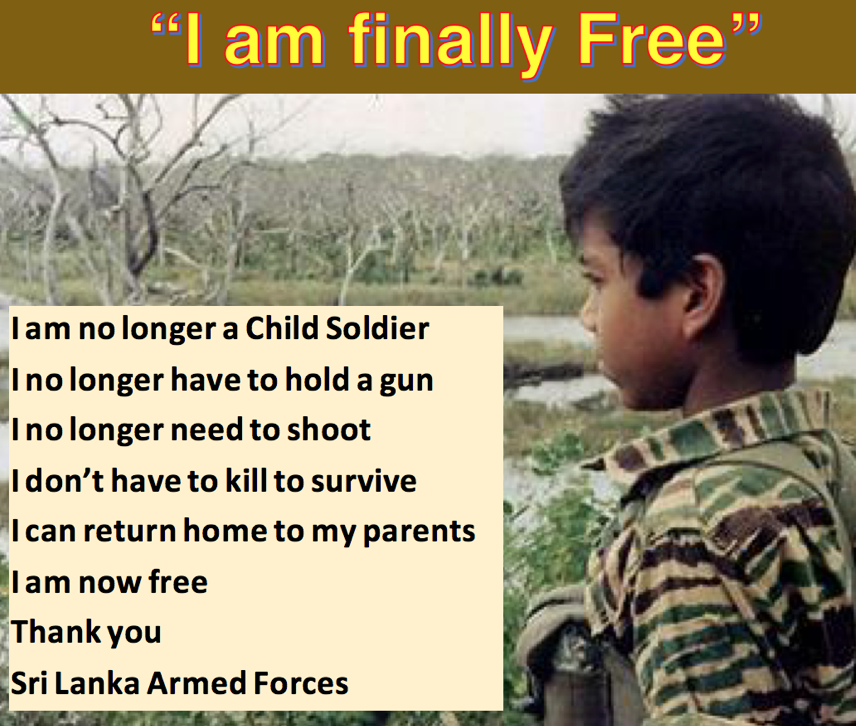
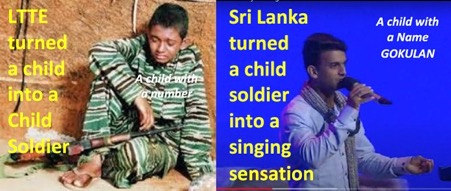
How about thanking Sri Lanka’s Armed Forces for saving Tamil children from becoming Child Soldiers!

May 17th, 2022

Shenali D Waduge

Bricks are easier to throw than Bouquets. Sri Lanka’s Armed Forces sadly have never got the accolades they deserve. They never will. Being grateful doesn’t fit into the scheme of things. Every time well-funded campaigns nit-pick on what they didn’t do ignoring all that they did. No national army in the world has successfully carried out a military cum humanitarian operation simultaneously. No national army has been able to eliminate the ground force of an internationally proscribed terrorist organization while saving close to 300,000 Tamils & accepting close to 12,000 LTTE combatants all of whom surrendered wearing civilian clothing. Out of these close to 12,000 LTTE combatants were 545 LTTE child soldiers. Sri Lanka’s President considered them victims of LTTE & gave them a presidential pardon, another first. No foreign government has looked at the humanitarian side of the terrorists – even child soldiers. These 545 became the last of batch of Tamil children who were kidnapped & turned into child soldiers by Tamil militants.

None of the so-called Tamil leaders in the political scene today uttered a word against LTTE & its recruitment of child soldiers. Today, the bellow in Parliament, but they did not even donate a bag of rice to the refugee camps following the end of the conflict.

While in the international arena, other than writing fancy reports – what did the UN, its rapporteurs, UN agencies for children & women or the human rights organizations do to stop LTTE child soldier recruitment from 1970s to 2009?

Do their reports reveal how many Tamil children between the ages of 7 to 18 years ended up kidnapped by LTTE?

Do their reports highlight from what homes these kidnapped Tamil children came from?

Do their reports reveal how many got killed since 1970s by LTTE during training or by LTTE while trying to flee training? How many fleeing children did LTTE shoot to death?

Do their reports cover the horrendous training they had to undergo in the thick jungles?

Do their reports cover the deaths of these children, trained to hold a gun & shoot at a national army?

Do their reports reveal how many child soldiers died at the hands of the LTTE while trying to flee during the last phase of the conflict?

Do their reports cover how many Tamil children would have died biting the cyanide capsule & committing suicide?

Have any of these international entities raised the demand for justice against LTTE for these war crimes against children?

It is indeed very sad, that the LTTE diaspora takes pains to demand accountability” and is promoting a bogus genocide” but they shy from answering questions related to the kidnapping of Tamil children and turning them into child soldiers or justice which will invariably turn to their accountability for aiding and abetting child soldier recruitment.

The LTTE Diaspora and their supporters in Sri Lanka are also shy to answer the question from what type of homes these children were kidnapped from?

They were kidnapped from LOW CASTE and IMPOVERISHED homes – parents who were too poor to even travel to a police station to complain, parents too scared to say anything against the LTTE, parents too poor to feed their children that they thought joining the LTTE would make their life better.

The ordeal these Tamil low caste & poor children went through is factual & nothing like the made up stories of genocide by LTTE rump overseas.

Why don’t the LTTE diaspora celebrate the LTTE children during these memorials? 

They dare not do so because it impacts negatively on them. LTTE will never highlight the child soldier regiments because it is a black mark on them. Notice how LTTE fronts have never covered any child soldier in their wailings about supposed killings by Armed Forces.

LTTE was an armed movement – they cannot expect the Sri Lanka Armed Forces to be firing roses. LTTE was an armed non-state actor in uniform and a clear hierarchy. If LTTE is firing with aim to kill, LTTE must expect the return. However, the scenario LTTE fronts are presenting to the world is that they were an innocent group of people getting shot at by the Sri Lankan Armed Forces. Obviously the world is oblivious to its list of crimes & any international body holding roses for LTTE should seriously look up LTTE’s crimes first.

The majority of Tamil community comprise low caste & poor.

LTTE used their own children to acquire international status as a terrorist outfit. LTTE had armed units comprising of child soldiers.

These children lost their youth, they lost their childhood, they were denied education, freedom of movement & the right to live in a happy environment with their parents.

No one can measure this loss.

When 545 child soldiers surrendered to Sri Lanka’s Armed Forces in May 2009, these 545 child soldiers became the last of the children that LTTE were able to steal from parents & turn into child soldiers.

Tamil children & their parents did not have to fear walking to school or returning home from school to get kidnapped on the way & taken to a thick jungle hide-out where they were training in combat operations, taught how to commit suicide & given a gun to kill. Sri Lanka’s Armed Forces saved the Tamil child and the Sri Lankan Armed Forces deserve more than bouquets for this.

Shenali D Waduge

පිච්චිය නැතත්…

May 17th, 2022

ප්‍ර සමරසිංහ

පොඩි වලවල් හාරා, ඒවට සීරුවට ගස්ලබු ඇට දමා, උදේ හවස වතුර වත් කර, පොහොර වර්ග දමා හැදු එකම ගස්ලබු ගහක් අපේ ගෙවත්තේ එකල තිබ්බේ නැත. වත්ත පුරා තැනින් තැන තිබුනේ ගස්ලබු ගස්ය. පැලේ ලොකු වෙන කොටවත් ඒ වටේට සුද්ද කර කොළ රොඩු ටිකක් යහමින් එකතු කලේද යලටමහටය. කිසි සාත්තුවක් නැතුව ලොකු වුන ගස් වල ගෙඩි හැදුනේ අපට කාල හමාර කරන්නටත් බැරි තරමටය. හුඟක් ගස් වල හැදුනු ගස්ලබු ඉතාමත් මිහිරිය, සමහර ගස්ලබු ගස්වල ගෙඩි දියරහය, කටේ තියන්නට බැරිය. දියරහ ගෙඩි අපි නොකෑවාට ලේන්නු, කුරුල්ලෝ උන්ගේ මනදොල එයිනුත් මනාව සන්තර්පණය කර ගත්තේ අපෙන් අවසර නොලබාය.

ඉඳුණු ගස්ලබු රසනහර පිනා යන පළතුරක්ය. දෙහි යුෂ හා මිශ්‍ර කර රසවත් බීමක් හදා බොන්නටද හැකිය, ප්‍රණිතය. පැහුණු ගස්ලබු උයන්නට හැක. ගස්ලබු මැල්ලුම, අලුකෙහෙල් බඩ හා ගස්ලබු එකට දැමු වැන්ජනය ද කෑම පිඟාන ගුණවත් කර රසෙන් නහවන්නේය. ගස්ලබු නැති අච්චාරුවක් වරදින අලුත් අවුරුද්දක් තිබුනා මතක නැත. යන්තමට ඉදි ගෙන එන ගස්ලබු, තීරු කපා තම්බා, උලුප්පා ගත් පොල් කෑල්ලක් එක්ක රස නොබැලු දිවකින් වැඩක් නැත. ලපටි ගස්ලබු කොළ වාෂ්පයෙන් තම්බා හෝ මැල්ලුමද බොහෝ රසය. ඉතා පෝෂ්‍ය ගුණයෙන් අනූන ගස්ලබු, මේ වනවිට වානිජකරණය වී, වසවිස පොහොර යොදා මහා පරිමාණයෙන් වගා කරන්නේය. ඒ නිසා වෙළඳපොලෙන් ගස්ලබු ගෙඩියක් මිලට අරන් කනවාට වඩා නොකා ඉඳීම ගුණදායකය.

වෙසක් පෝය සතියට කලාතුරකින් අටපට්ටමක් පැටව් එක්ක ගෙදර මිදුල හැඩ කලත් අපි වැඩිපුර කලේ පහන් පත්තු කිරීමය. මැටිපහන් ගෙදර තිබ්බේ නැත. ඒත් හොඳ ආදේශකයක් තිබුනේය, ඒ ගස්ලබුය. වත්තේ හැදුනු දියරහ ගස්ලබු ගස් කීපයක ගෙඩි ඇත්තටම හැදුනේ අපට වෙසක්, පොසොන් කාලයට පහන් පත්තු කරන්නටද වෙන්නට ඇත. තරමක් මෝරපු ගස්ලබු ගෙඩියක් දෙකට පලා ඇට අයින් කරන්නටත්, පහන්තිරය රඳවන්නට පොඩි කැපුමක් දමන්නටත්, අඩිය සමබර වෙන්නට පොඩි කොටසක් කපා ඉවත් කරන්නටත් මහ කාලයක් ගියේ නැත. ඒ වාගේ පහන් පහළොවක් විස්සක් පත්තු කර ලැබූ සුවය, ඒ සුන්දරත්වය අදත් මනස පුරා ඇත.

විවෘත ආර්ථිකයට පින්සිද්ධ වෙන්න අපි බොහෝ දෙනා ‘කුල්ටොයිඩ්’ වීමු. නා නා විධ සැරසිලි වෙළඳ පොලෙන් මිලට ගෙන ගේ දොර සැරසීම පොරත්ව හැසිරීමකි. වෙසක් කූඩු ද අටපට්ටම හා පැටව් ද ගන්නේ කඩෙනි. ලයිට් බලුබ් වැල්, බකට්, පහන් කඩෙන් ගේන්නේ අවුරුදු පතාය, එක එක සැම්පලේ ඒවා ඇත, මේ අවුරුද්දේ ගෙනාපුවා ඊගාව අවුරුද්දේ සරසන්නට යොදා ගන්නේ නැත. අතමිටේ කාසිය, කඩේ බඩුය, මිලට ගන්නේය, පාවිච්චි කරන්නේය, විසිකරන්නේය. පරිසරයට හෙන ගැහුවත් කමක් නැත. රිසයිකල් කිරීම කුල්ට් නැත. ලයිෆ් එක බිසී නිසා දරු මල්ලෝ එක්ක වෙසක් කූඩුවක් හදන්නට, පහනක් පත්තු කරන්නට වෙලාවක් නැත. ආමිස පූජාව හරියට කර ගන්න බැරි එකේ ප්‍රතිපත්ති පූජාව ගැන කතා කිරීමද අනුවණ කමකි. ඔලුබක්කෝ නටමින් දන්සල් වඳින, ධාරාණිපාත-තෝරන් බලන්න වාහනෙන් කොළඹ යන, කොටින්ම කානිවල් සිහියෙන් වෙසක් පෝය සැමරීම නූතන ට්‍රෙන්ඩ් එකය. අතහැරිමට වඩා මේ දවසටත් කෙරෙන්නේ තව තවත් බදාගැනීමය. සරල විය යුතු මේ දවසත් සංකීර්ණ කර ගෙන සසර දික් කර ගන්නා බුද්දාගම්කාරයෝ ගැන කතා නොකර සිටීම සුබදායකය.

හැම කුණු ගොඩක්ම කොවිඩ් වසංගතයට පටවා, කනුකුනු ගාමින් “අයියෝ! වෙසක් පෝය 2020දීත්, 2021දීත් හරියට සමරන්න බැරි වුනා, 1977 ඉඳල ඇතිකළ හොරගුහා සිස්ටම් එකේ ප්‍රථිපල වැල්පොලිය වාගේ වැඩි වෙලා, 2022 වෙද්දි අතේ පිච්චියම නැති වුනා, ඒ නිසා වෙසක් අපට නැතෝ” කියා ලතෝනි දෙන්නෝ වෙති. ‘කවදාවත් නොලැබෙන අපේ නිවන් සැප’ කියා දෙයක් ඇත්තේ ඕල්කොට්-බුද්දාගම්කාරයන්ටය. නිවන ‘ලබා ගන්නට’ බැරිය. නිවන ‘අපේ නිවනක්’ නොවේය. ‘නිවන් සැප’ කියා දෙයක් හෝ තැනක්ද නැත. සසර ඇවිද ගෙන යන අතරතුරක තමන් විසින්ම සම්මවබෝධයෙන් සසර නවතා ගත් ඇසිල්ලේ පටන් නිවනය.

වෙසක් පොහෝ කාලයට පහන් පෙළක් දල්වන්නට අතමිට සරු වෙන්නට වුවමනා නැත. මල් වට්ටියක් පුජා කර බුදුරදුන් වඳින්නට හතර මහ නිධානෙ පහල වී තිබිය  යුතු නැත. බණ පදයක් අහන්නට කාසි ඕන නැත. සිල් පදයක් රකින්නට හෝ ප්‍රතිපත්ති පූජාවට සාක්කුවේ ඇත්තේ සොච්චමක්ද මහා ධනස්කන්ධයක්ද යන්න බලපාන්නේ නැත. භාවනාවක යෙදෙන්නට කාළගුණය සතුරෙක් හෝ මිතුරෙක් වන්නේද නැත. නැති බැරි මනුස්සයෙක්ට දෙන්නෙක්ට, බත් පිඬක් දෙන්නට සප්ත සාගරය උතුරා යන තරමට කාසි ඕනත් නැත.

ඉබේ හැදෙන්නේ නැත්නං ගස්ලබු ගෙඩියක් හොයා ගෙන ඒ ඇට පැල කර, ගස් පහක් හයක් වස විසෙන් තොරව සාත්තු කර හදා ගන්නට කාලය ඇවිත් ඇත. දිව පිනවන්නේය. කුස පිරෙන්නේය. ශරීර-හොරු වීමෙන් වැළකෙන්නේය. ගස්ලබු ගෙඩියකින් පහනක් හදා, පහන් තිරයක් දා ආලෝක පූජාවේ යෙදීමෙන් ලැබෙන ප්‍රීතිය, විදුලි බලය වියදම් කරන ලයිට් බලුබ් වැලේ නැත. පරිසර හිතකාමිය. ඉන් සකල ලෝකයාට මහත් පල, මහත් ආනිසංශ ද ලැබෙන්නේය.

ප්‍රඥාව පහල වේවා!

How Can Sri Lankan PM Overcome the crisis by following Bangladesh’s ‘PM Sheikh Hasina Model’

May 17th, 2022

John Rozario Karnataka, India,

The Sri Lankan Prime Minister Ranil Wickremesinghe told the people of Sri Lanka on Monday, that he will fulfil the promises he had made to them when he assumed office last Thursday after the fall of the Mahinda Rajapaksa government.

In his first TV address after assuming office, Wickremesinghe listed the grave challenges ahead of him, but assured the people of his determination to meet them successfully. He also suggested the formation of a National Assembly comprising all parties, to arrive at solutions. There may be an example for him. He can Overcome the crisis by following Bangladesh’s ‘PM Sheikh Hasina Model’. Now the question is why and how. Let’s discuss.

The South Asian Island nation of Sri Lanka is currently going through an extreme economic crisis. Foreign exchange reserves have fallen so low that some school examinations have been closed indefinitely due to a lack of imported paper. In addition to cooking gas, there has been a shortage of kerosene and petrol.

The situation is so dire that due to inflation, high unemployment, and shortages of almost all necessities, many Sri Lankans are fleeing their country in the hope of a better life abroad. Countless Sri Lankans are now being forced to do something other than their main occupation as not everyone can afford to leave the country.The country has never been in such a bad situation since Independence in 1947. To cope with the situation, the Sri Lankan Government has asked for a new loan of US$ 1.5 billion from neighbouring India. When Sri Lanka faced problems, Bangladesh provided US$ 250 million for the first time. This was the first loan from Bangladesh for any country. They have again asked for a loan from Bangladesh. Besides, they have been repaying loans of different countries through the exchange of goods.

Sri Lanka was quite capable of human resources and internal prosperity. Then why their situation? Sri Lanka has undertaken several mega projects in their country for more than a century. These include seaports, airports, roads, and other projects that are currently considered unnecessary and redundant. Different governments of Sri Lanka have taken loans from different sources at home and abroad. As a result, their foreign exchange reserves gradually ran out. Instead of foreign investment, various governments have focused on borrowing.

The country’s government has issued sovereign bonds since 2007 to raise money. This type of sovereign bond is sold when the expenditure is more than the income of a country. Such bonds are sold in the international capital market to raise money. That is what Sri Lanka has done.

The once-self-sufficient country is also in dire straits due to tax cuts, reduced income from tourism remittances, and unplanned decisions in agriculture. Different countries including Bangladesh have to learn from this situation. The world economic situation has begun to change rapidly since the Russia-Ukraine war, at which time any country could fall into a new crisis. We are hopeful that friendly Sri Lanka will soon be able to return to normalcy with the help of various countries and organisations around the world.

On the other hand, Bangladesh is currently a wonder of development. It is Hasina’s contribution that has made a least developed country such as Bangladesh a developing country now, going by economic indicators. Sheikh Hasina changed Bangladesh from a basket case to a middle-income country. Strong leadership is one of the main reasons behind ‘Bangladesh model.

The implementation of big projects is now just a matter of time. City facilities have also been ensured in the villages. A Metrorail will be launched in a few days. The long Padma bridge is not a dream now, it is real. The implementation of such a project with the government’s own funding was at one time unimaginable. The country is moving forward with a sound plan.

On various indicators of human development, Bangladesh had shown significant improvement,” she said, adding, “Life expectancy in 2019 was 72.6 years, a gain of over 7 years since 2000, years of schooling were up from 4.1 to 6.2, and the country’s human development index value climbed from 0.478 in 2000 to 0.632 in 2019. As a result, Bangladesh’s index ranking is now 133rd out of a total of 189 countries.”

The High Commissioner pointed out that Bangladesh’s growth stems largely from its success as an exporter of readymade garments, which account for 83% of its total exports, and remittances from overseas, which amount to over 7% of GDP. However, the principal driver of growth is investments, which has risen from 24% of GDP in 2000 to 32% in 2019. When asked about Bangladesh’s amazing rise and economic growth, she put it down to the “Sheikh Hasina factor”.

The High Commissioner emphasised that during the Covid-19 pandemic, the government offered a 2% incentives bonus for Bangladeshis sending remittance back to the country, creating $2 billion to keep the growth going. In addition, the Bangladesh Government under Prime Minister Sheikh Hasina provided an exponential stimulus to the economy to protect the marginal fringes of the workforce. She also highlighted that completion of the Padma Bridge will make a huge contribution to the economy.

Nobody disputes the economic credentials of Sheikh Hasina’s government – the Asian Development Bank (ADB) is the latest member of a growing list of international institutions attesting to Bangladesh’s economic success. The ADB ranked Bangladesh as the fastest-growing economy in the Asia-Pacific region, eclipsing China, Vietnam and India. At the same time, our improvements in many socio-economic indicators are another object of envy to our neighbours.

When she returned to power in 2009, Sheikh Hasina knew that the energy shortage first needed to be mitigated to a tolerable extent, before embarking on long-term plans. As a temporary measure, she decided to allow private companies to build small-range power plants, known as quick-rental power plants. The decision received a barrage of criticism from many quarters — from opposition parties and economists to the press and think tanks — intimidating many in the bureaucracy.

But Sheikh Hasina refused to back down from what she thought was the right step forward. She defended her decision forcefully, making necessary amendments to clear any legal ambiguity, and focused on its implementation. Nearly 10 years on, no one doubts that the decision was instrumental in solving the persistent energy crisis.

While in power, Sheikh Hasina has opened up many sectors traditionally reserved for the public sector to the private sector, including health, banking, higher education, TV and even export processing and economic zones. At the same time, her government has substantially widened and expanded welfare programmes to lift the poorest and most neglected section of the population and increased subsidies for other crucial elements of the economy such as agriculture. Her development philosophy is a blend of capitalistic and socialistic virtues.

Propelled by a robust manufacturing sector and an enormous boom in infrastructure, Bangladesh has set a target of becoming a developed nation by 2041 to coincide with the platinum jubilee of its independence. Many commentators have called the goal ambitious, but even the government’s staunchest critics would think twice before questioning its plausibility.

The present government in Bangladesh has shown great prudence and foresight in the progress of Bangladesh. Bangladesh current regime has ensured political stability in the country, zero-tolerance policy against terrorism, illegal narcotics deal, empowerment of women, liberalism of economy, social welfare policy towards the people, increasing capacity building through training, inclusive economic growth policy, timely bold decisions etc. For this reason, there is nothing to be afraid of seeing the situation of any country as a nightmare. Around 100 economic zones are being formed. Investment is coming from different countries. Foreign exchange reserves are adequate (US$ 45 billion, January 2022), and remittances are satisfactory. It can be said that every economic foundation of Bangladesh is still in a strong position. The economy of Bangladesh was also active during COVID and emphasis has been laid on revenue collection and the agricultural sector of Bangladesh is very strong. Bangladesh is in a positive position in terms of foreign exchange reserves, remittances, and export earnings.

Bangladesh’s foreign exchange reserves now stand at more than US$ 45 billion, despite rising import costs. With which we will be able to meet the import cost of six months. Bangladesh’s growth rate was way above Pakistan, even before the pandemic; in 2018-19 it was 7.8% compared to Pakistan’s 5.8%. Various international organisations, including the World Bank, the World Economic Forum, and the Economic Intelligence Unit, have identified Bangladesh’s economic development as a wonderful puzzle”. While the current economy of Bangladesh is US$ 410 billion, the size of Pakistan’s economy is about US$ 260 billion.

Bangladesh has improved its quality of life, economic strength, prosperity, education, and research in every field. Due to the global coronavirus pandemic, Bangladesh’s growth has slowed down. But where the growth of all the developed countries of the world was negative in these years, the achievement of Bangladesh was also noticeable.

Premier Sheikh Hasina has achieved full potential to move from a least developed country to a developing country. It has been possible because of people’s hard-working, strong leadership. Political stability, the flow of FDI, empowerment of women, unique poverty alleviation model, inclusivity of economy, etc. That is the story of a South Asian country: ‘Bangladesh’ is a ‘miracle story’.

2022/05/15 දින අසිරිමත් තෙමගුල සිහිපත් කරමින් වෙසක් පොහෝ දින බර්ලින් බෞද්ධ මහා විහාරස්ථානයේ සිදු කරන ලද ශීල භාවනා වැඩසටහන

May 17th, 2022

බර්ලින් බෞද්ධ මහා විහාරස්ථානය

2022/05/15 දින අසිරිමත් තෙමගුල සිහිපත් කරමින් වෙසක් පොහෝ දින බර්ලින් බෞද්ධ මහා විහාරස්ථානයේ සිදු කරන ලද ශීල භාවනා වැඩසටහන පිණ්ඩපාත චාරිකාව සහ දන්සල යන ආදිය විශාල ශ්‍රී ලාංකික පිරිසකගේ දායකත්වය ඇතිව සිදු කරන ලදි. එම පිංකම් හා සහභාගී වීමට ශ්‍රී ලාංකිකයන් මෙන්ම ජර්මන් ජාතිකයන් තායි, බුරුම, බංග්ලාදේශ, චීන , ආජන්ටිනා ඇතුළුව විවිධ රටවල පිරිස් සහභාගී විය.  

https://m.facebook.com/watch/?v=1181625835930120&extid=WA-UNK-UNK-UNK-AN_GK0T-GK1C&ref=sharing

වෙසක් උත්සවය සදහා ඩෙන්මාර්කයේ කොපන්හේගන් බෞද්ධ මහා විහාරාධිපති ශාස්ත්‍රපති මාරතුගොඩ  උපරතන ලොකු හාමුදුරුවන් වහන්සේ ඇතුළු මහා සංඝ රත්නය හතර නමක් සහභාගී වූ අතර ශ්‍රී ලංකා තානාපතිනී මනෝරි උනම්බුවෙ මහත්මිය ඇතුළු  ගිහි පිංවතුන් විශාල පිරිසකගේ සහභාගිත්වයෙන් ඉතා උත්කර්ෂවත් ලෙස සිදු විය. විහාරස්ථාන පරිපාලක තිස්ස වීරරත්න මහත්මාද වැඩ සටහන් සංවිධානය සහ මෙහෙයවීම සිදු කරන ලදි.

Ven. Kusala Dhamma Thero

Resident monk

Das Buddhistische Haus

Berlin Vihara

Berlin – Frohnau

Germany

Worldwide Devastation-The history of the British Empire’s violence.

May 17th, 2022

By Howard W. French Courtesy The Nation

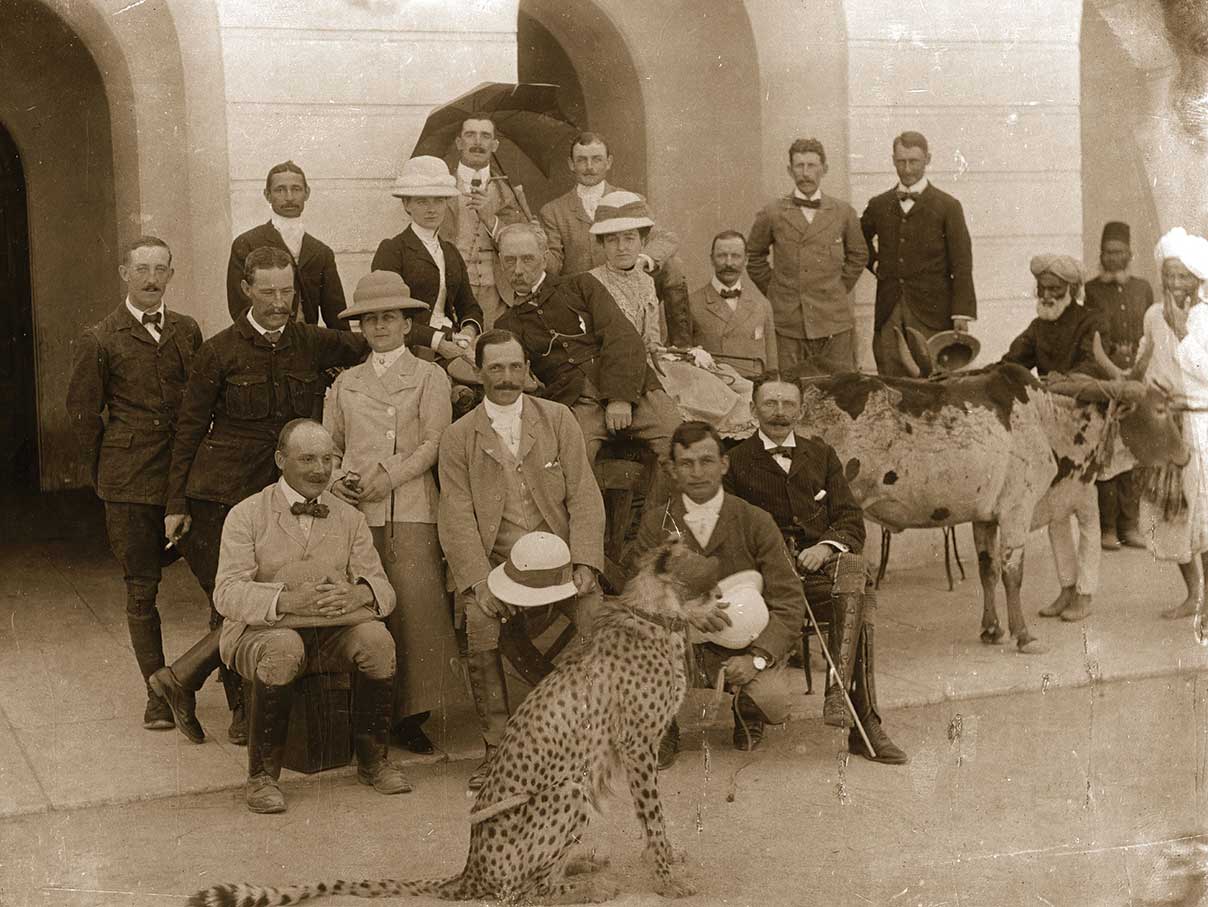
British colonials with a pet cheetah in Secunderabad, India, 1906. (Hulton Archive / Getty Images)

In 2005, Britain’s then–Labour chancellor of the exchequer, Gordon Brown, chose the backdrop of Tanzania to make a dramatic statement about his nation’s unmatched record of imperial conquest and rule. The time is long gone,” he said, when Britain needs to apologize for its colonial history.” The choice of locale for such a proclamation was, to be charitable, curious. A braver stage would have been Kenya, to pick an African nation that had experienced horrific violence during its independence struggle from British colonial rule, or India or Malaya, where extreme and brutal measures to sustain imperial control had been carried out on an even greater scale. But here we were, nonetheless.

Brown’s speech reflected the slow and creaky rotation of the wheel not so much of history but of historiography. Mirroring 19th-century historians’ and politicians’ polished encomiums to a beneficent British Empire, the speech brought elite assessments of Britain’s unparalleled dominion over one quarter of the globe, and over a similar fraction of the human population, almost full circle. Back in the 19th century, the task of ruling over myriad darker-skinned peoples around the world had been depicted less as a matter of self-interest than of moral obligation. It was Britain’s unique vocation to spread progressive constitutional freedoms and the rule of law, along with free trade and free labor, among the less fortunate barbarians. As the Whig politician and historian Thomas Babington Macaulay wrote of Britain’s empire: It is to her peculiar glory, not that she has ruled so widely—not that she has conquered so splendidly—but that she has ruled only to bless, and conquered only to spare.”

Such views remained fairly unchallenged until the 1960s, when space for more critical, revisionist accounts of the British Empire began to open up. Most famous among these were the histories by Jack Gallagher and Ronald Robinson, whose co-authored essay The Imperialism of Free Trade” helped launch the so-called Cambridge School of historiography, which argued that Britain had profited from empire through trade while avoiding extensive formal control over its colonies. According to the historian Richard Drayton, these new accounts stripped the traditional emphasis of high moral purpose” from the British narrative, replacing it with a franker acknowledgment of self-interest and realpolitik. Yet by the 1990s and 2000s, conservative British academics, followed by Tory politicians, had begun to revise the revisionists, reprising the old claims that empire, at least in its British form, had been good for the world, and they succeeded to such an extent that even Labour politicians like Gordon Brown felt confident enough in these claims of British-led progress to reiterate them before an audience of Africans.

Against this backdrop, a new wave of revisionist reconsiderations of the British Empire has resulted in a number of popular and prizewinning books. In Empireland, Santham Sanghera recently documented the neglect of pre-20th-century history in British education, as well as the country’s nativist attitudes toward the brown-skinned immigrants who had been encouraged to migrate to Britain in the postwar years in order to boost its economy. In Slave Empire, Padraic X. Scanlan examined the role that the wealth acquired from sugar plantation slavery in the Caribbean played in Britain’s economic rise. And in The New Age of Empire, Kehinde Andrews asserted that Western empire has continued in a new guise through Western-led institutions like the World Bank and others that still exert control over the Global South.

With Legacy of Violence, Caroline Elkins has stepped firmly into this arena—or, rather, reentered it—offering a sweeping and detailed history of the violence and brutality of the British Empire. The book marks a return to the scene of a previous battle for Elkins, whose Pulitzer Prize–winning Imperial Reckoning (2005) documented Britain’s colonial atrocities in Kenya by mining the long-buried official archives with such thoroughness that the British government was obliged to issue an official statement of regret for its actions in the 1950s and ’60s.https://buy.tinypass.com/checkout/template/cacheableShow?aid=NmGa4IzWHL&templateId=OTFVM3RHWZ0B&offerId=fakeOfferId&experienceId=EXAO0X9CQ04A&iframeId=offer_6a607d574eb5007ae5e3-0&displayMode=inline&widget=template&url=https%3A%2F%2Fwww.thenation.com

Kenya appears in this book, too, where Elkins brings her accounting up to date, but compared with that earlier work, Legacy of Violence also represents a formidable escalation on her part. With its enormous breadth and ambition, it amounts to something approaching a one-volume history of imperial Britain’s use of force, torture, and deceit around the world. As devastating as the details of these tactics are, even more damning is Elkins’s account of what she argues has been the persistent and perverse misuse of law to cast a veneer of justice and respectability over the remorseless exploitation of others. For all of the bluster and proclaimed moral certainty of British politicians, Elkins argues, much of Britain’s zeal in clinging to its control over others, even as the Age of Empire seemed increasingly destined to end, was driven not by self-confidence but rather by insecurity over the rapid rise of rival Western powers. It was global empire alone that, in this view, had prevented England from becoming, say, just another Sweden. There are not wanting those who say that in this Jubilee year our Empire has reached the heights of its glory and power, and that now we shall begin to decline, as Babylon, Carthage, Rome declined,” she quotes Churchill as saying in one 1897 exhortation. Do not believe these croakers but give the lie to their dismal croaking by showing by our actions that the vigor and vitality of our race is unimpaired and that our determination is to uphold the Empire that we have inherited from our fathers as Englishmen.” As Elkins makes clear throughout Legacy of Violence, the racialized aspect of empire—meaning clear notions of Britain’s Anglo-Saxon superiority over its Black, brown, and so-called yellow subjects—has been present from the beginning.

As its title suggests, Elkins’s book argues that violence was not just an incidental feature of the British Empire, not simply its midwife, so to speak. Rather, it was foundational to the system itself, a fact borne out in considerable detail. To flesh out the central role of violence in British imperial rule, Elkins shifts from the Indian Mutiny of 1857 to Jamaica’s Morant Bay Rebellion in 1865, to India’s northwestern frontier and South Africa in the 1890s, to Ireland at the dawn of the 20th century, and on from there to a dizzying variety of more recent locales: Palestine, Malaya, Kenya, Cyprus, and Aden, among others.

Assembling so many examples spread widely across space and time allows Elkins to build an impressively damning account of the British Empire. But her most original argument lies not in the violence itself but rather in London’s use and abuse of the notion of the rule of law, much touted by Britain as an elevating feature of modern Western civilization and a pillar of democracy. In Elkins’s hands, the rule of law in Britain’s many colonies becomes something more akin to lawfare: a system under which the use of codified rules was wielded to curtail freedoms rather than expand them, to expropriate land and property from Indigenous peoples, and to guarantee a steady flow of low-paid or sometimes unpaid workers to colonial mines and plantations, all under a veneer of principled legitimacy. When the genteel-seeming laws proved insufficient for these purposes, the empire was more than happy to resort to states of emergency and martial law, which conferred extraordinary authority upon its far-flung colonial governors. This legalized lawlessness,” as Elkins calls it, meant that Britain in effect became a recurrent conqueror of its subjects. States of emergency effectively turned organized resistance against the colonial regime itself into a forbidden or, at a minimum, highly circumscribed activity, and redefined people fighting for their freedom as criminals or terrorists. The forms of violence Britain employed in the enforcement of these writs, she continues, included corporal punishments, deportations, detentions without trial, forced migrations, killings, sexual assaults, tortures, and accompanying psychological terror, humiliation, and loss.”

Elkins documents this well-organized use of violence throughout the history of British Empire, from India and Jamaica in the mid-19th century to the South African War, the Irish War of Independence, the Arab Revolt, the Caribbean strikes, the Zionist uprising, and the states of emergency in Malaya, Kenya, and Cyprus. Writing about these different historical episodes, Elkins convincingly demonstrates that during the imperial era—indeed, she would probably say, since the imperial era as well—violence has been inherent to liberalism. Although liberalism has promised virtuous-sounding ideals like freedom, modernity, reformism, and the rule of law, it has freely used these ideals, time and again, as justifications for wreaking devastation on the subject peoples caught in its grip.

This self-serving hypocrisy will be familiar to those American readers who recall an infamous episode from the Vietnam War, when after the bloody Battle of Bến Tre, which left hundreds of civilians dead and thousands of homes destroyed, a US Army major explained to Associated Press reporter Peter Arnett, It became necessary to destroy the town to save it.” But for Elkins, it also demonstrates how liberalism’s willingness to ride roughshod over others has a long imperial pedigree that can be traced through a series of shockingly violent wars that are seldom recalled outside of the nations or regions in which they occurred.

DONATE NOW TO POWER THE NATION.

Readers like you make our independent journalism possible.

As a result of Elkins’s resourcefulness in digging into the colonial archives, we can also see how Britain’s imperial project became a vast tentacular atelier, with elite public schools and universities serving as the training grounds for generations of colonial administrators who refined both the repressive techniques used against native populations and the legal arguments used as cover and justification. With a surprising degree of recurrence, England’s original subalterns, the Scottish and especially the Irish, emerge as indispensable military cadres and hands-on functionaries who cycle from place to place in Britain’s increasingly global colonial project as the scale of atrocity grows.

Hence we see how, in response to the Indian Mutiny of 1857, British officials began to experiment with mass confinement measures aimed at putting down the revolt. This led to the incarceration of 20,000 Indian subjects, who were swept up in aggressive, broad-brush campaigns of repression and then exiled to the Andaman Islands in the distant reaches of the Bay of Bengal. By the turn of the century, tactics like these were being applied on an even larger and more brutal scale to put down the rebellion in South Africa. There, Elkins writes, about 100 concentration camps were built, where Afrikaner rebels were confined, along with women and children, and where Black undesirables” were herded into overcrowded detention centers by order of Lord Kitchener, in order to weaken them and bring them to their senses.” Elkins notes that the campaign against the Afrikaners was the first time a single ethnic group had been targeted for detention or deportation,” adding that 30,000 people, a disproportionate number of them children, died as a result. In the 64 camps reserved for Black South Africans, conditions were even worse: The emaciated and disease-ridden detainees undertook forced labor for reduced rations, and their death rates climbed, conservatively, to over 10 percent of the camp populations.”

What may feel disorienting for anyone who has been conditioned to believe in human progress is that this history doesn’t get any better as time progresses, even as the British Empire pursued tactical reforms. Worried about the potential spread of communism via the Chinese immigrant communities in Malaya—which, together with another commodity powerhouse, Ghana, was a leading source of financial sustenance for London in the immediate aftermath of World War II—Britain sent colonial officers to Malaya who had just overseen a brutal repression in Palestine in order to snuff out this resistance to its rule. The Chinese population, which had been growing in Malaya since the turn of the century, was declared alien” by the British, who then forcibly removed them from their villages, burning huts to the ground and salting the farmlands to prevent their return. The victims of this extrajudicial process were resettled in unfamiliar new areas, surrounded by barbed-wire fencing and kept under heavy surveillance. This resettlement campaign became what Elkins calls the British Empire’s largest forced migration since the era of the trade in enslaved people,” with 573,000 people, nearly 90 percent of whom were Chinese…relocated into 480 resettlements.” This campaign would be carefully studied by the United States two decades later and became a prototype for its war in Vietnam as well as the inspiration for one of that war’s most famous phrases: hearts and minds.” Elkins cites a top-secret British report from Malaya that argued that successes against bandit gangs, though essential to security…is only in effect a ‘rap on the knuckles’” and added: It is at the ‘heart’ that we must aim—to dominate the Chinese populated and squatter areas.”

Fittingly, Elkins’s book concludes where her original scholarly work began: with a return to Kenya. There, in the early 1950s, veterans of the British colonial schemes in Malaya, Palestine, and Greece converged in a bid to use emergency laws to thwart the rising political unrest in that East African colony. Following a familiar pattern, European settlers grabbed control of Kenya’s best farmlands to grow coffee and tea at great profit, separated the indigenous population by putative ethnic group, and relegated them to native reserves.”

The Kikuyu, an ethnic group based in the coveted highlands and other areas of central Kenya, which boasted some of the richest soils on earth, were hardest hit by this relocation campaign, with many rendered illegal squatters or sharecroppers on their own land. Simultaneously, pass laws” that required Africans to carry an ID showing their work history and current employer’s signature were imposed on the Indigenous population, as well as hut and poll taxes. Elkins says these taxes amounted to two months of a typical African’s wages. They fueled a stout resistance movement by the Kenya Land and Freedom Army, which came to be known as the Mau Mau (a term that Tom Wolfe later trivialized and perverted when he introduced it into contemporary political usage with a clearly derogatory meaning that suggested out-of-control radical violence, usually by Black Americans). In their efforts to resist the sweeping taxation and the takeover of their lands, the Mau Mau rebels killed 32 European settlers during the emergency, triggering an enormous and often indiscriminate crackdown. In the space of 18 months, 1,040,899 Kikuyu were forcibly relocated into newly created reserves built on the Malayan model. By the end of 1955, Elkins writes, colonial authorities had penned up nearly the entire Kikuyu population, employing the largest archipelago of detention and prison camps in the history of Britain’s empire.” One chilling paragraph gives the flavor:

White and Black agents of empire perpetrated horrific crimes in defense of British rule in Kenya. They used electric shock and hooked suspects up to car batteries. They tied suspects to vehicle bumpers with just enough rope to drag them to death. They employed burning cigarettes, fire, and hot coals. They thrust bottles (often broken), gun barrels, knives, snakes, vermin, sticks, and hot eggs up men’s rectums and into women’s vaginas. They crushed bones and teeth; sliced off fingers or their tips; and castrated men with specially designed instruments or by beating a suspect’s testicles till the scrotum burst,” according to Anglican church officials. Some used kiboko, or a rhino whip, for beating; others used clubs, fists, and truncheons. Bucket fatigue” was a routine practice, as were various forms of human excrement torture. Mau Mau suspects and detainees were forced to clean nightsoil buckets barehanded and run for hours around a compound holding a full nightsoil bucket aloft, which then spilled over, encrusting the person holding it with feces and urine. No Kikuyu—man, woman, or child—was safe.

Techniques of repression, policing, and dispossession were not the only things that were copied and refined as the British colonial officers moved from place to place within the empire; so, too, were stratagems for covering up the evidence. Elkins shows that what was already being done with no lack of efficiency in Malaya was improved on yet further in Kenya, where records of the kinds of tactics described above were systematically destroyed—showing, if nothing else, a deep consciousness of guilt. Within days of the signing of the treaty that paved the way for the independence of the Federation of Malaya in 1956, colonial officials began sorting, culling, transferring, and burning files.”

In 1958, Britain created a Public Records Act intended to preserve secret documents, including colonial records, and provide public access for all but the most sensitive after 50 years. The last chapter of Legacy of Violence describes Elkins’s search for evidence that the British hid or destroyed records pertaining to the suppression of the Mau Mau insurrection, which lasted from 1952 to 1963, when Kenya won its independence. Her research, as well as the documents produced by the British government in response to persistent disclosure requests lodged by plaintiffs in the 2009 Mau Mau case, which became key to proving the claims against London made by the Kenyan survivors of the colonial-era campaign to suppress the revolt.

Britain mounted a two-pronged defense: It asserted that the statute of limitations had expired for such claims, then said that the colonial Kenyan government had regardless acted independently with little British control. Working in collaboration with a British law firm, Elkins led a team of five Harvard student researchers in reviewing 30,000 pages of mostly previously uncatalogued files that would ultimately make this position untenable.

JOIN THE NATION’S BOOKS & THE ARTS NEWSLETTER

Please enter your email below and subscribe to our bi-weekly collection of the best of the Books & the Arts.

In June 2013, at the culmination of the case, hundreds of grizzled Mau Mau claimants gathered in downtown Nairobi’s Hilton Hotel to listen as Christian Turner, Britain’s high commissioner to Kenya, read a copy of the foreign secretary’s statement to the House of Commons:

I would like to make it clear now and for the first time on behalf of Her Majesty’s Government that we understand the pain and grievance felt by those who were involved in the events of the emergency in Kenya. The British Government recognise that Kenyans were subject to torture and other forms of ill treatment at the hands of the colonial administration. The British Government sincerely regret that these abuses took place and that they marred Kenya’s progress towards independence. Torture and ill treatment are abhorrent violations of human dignity, which we unreservedly condemn.

Only eight years had passed since Gordon Brown claimed that the time was long gone when Britain needed to atone for anything it had done as a colonizer. On this day, though, at least in this corner of the former empire, for once there was an apology.

Editor’s note: This article originally stated that Gordon Brown was prime minister in 2005. It had been updated to reflect that he was chancellor of the exchequer that year.

Sri Lankan lawmakers fail in no-confidence motion bid

May 17th, 2022

Courtesy Deutsche Welle (DW)

Prime Minister Ranil Wickremesinghe has said his country only has enough gasoline to last one more day, and is $74 billion short of funds to pay for essentials.

Ruling party lawmakers in Sri Lanka blocked quicker debate of a no-confidence motion against President Gotabaya Rajapaksa on Tuesday, as the country’s economic crisis intensified.

Opposition members of parliament had called the vote on fast-tracking the motion after new Prime Minister Ranil Wickremesinghe said in a speech on Monday that there was only about a day’s worth of petroleum and diesel left in the country.

He had said the country needed $75 billion (roughly €70 billion) to pay for essential supplies, but had less than a billion available.

“The next couple of months will be the most difficult ones of our lives,” he said in the speech. 

The bid to expedite the motion of no-confidence failed by 119 votes to 68, but it can be debated at a later stage as a normal proposal.

Any no-confidence motion passed by legislators would be non-binding, but would have a symbolic effect given the scale of the crisis.

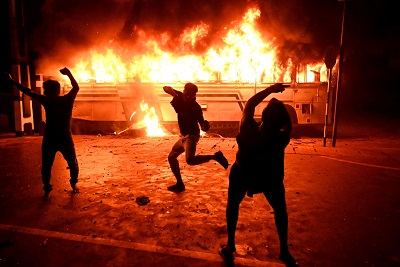
Protesters have demonstrated for weeks over the crisis, with worsening shortages of food, fuel and medicine affecting the entire country and some protesters attacking lawmakers’ homes.

Ongoing protests, as president tries to hold on

After the vote failed, Wickremesinghe wrote on Twitter that he had opposed the move as members of parliament in the ruling party wanted to debate attacks on their homes by protesters before any confidence motion. 

“I advised M.P. Sumanthiran on the 16th that this would be self-defeating, as government MPs who were wanting to debate the attacks on their houses would not vote in favor to immediately debate the Motion of Displeasure,” tweeted Wickremesinghe. 

Paikiasothy Saravanamuttu, founder and executive director of the Center for Policy Alternatives in the Sri Lankan capital, Colombo, told DW that protests will continue if the protesters’ core demands are not met.

“A time frame has to be set. The executive presidency has to be abolished and a definite date for new elections will have to be found,” said Saravanamuttu.

“There are people that don’t have three meals a day. There is a shortage of drugs. They [people] are constantly standing in queues for fuel and for gas. It is very grim and as the prime minister said, it is going to get worse.”

The ongoing protests have roiled the governing party, with Rajapaksa’s brother resigning as prime minister to be replaced last week by Wickremesinghe, who is a member of the opposition.

Rajapaksa has let go almost every one of his relatives in prominent positions in recent weeks, including his other brother and until recently his finance minister, Basil Rajapaksa. However the president himself seems to be hoping to ride out the storm while keeping his post.

New Prime Minister Wickremesinghe said Monday that some of the supply problems would be resolved to some extent through shipments from India.

Three ships carrying crude oil have been anchored off Sri Lanka for more than a month, according to Wickremesinghe. But the country needs to source US dollars to pay for them. The country defaulted on its foreign debts in April.

The protests have become serious enough to prompt authorities to impose curfews late at night.

Sri Lanka had aimed to become the first country in the world to bring in fully organic farming, banning imports of chemical fertilizers.

The government abandoned that effort late last year as crop yields plunged and prices of staple products increased.

MPs’ residences attacked from April 4: Minister

May 17th, 2022

Courtesy The Daily Mirror

Claiming that attacks on MPs’ residences were not restricted to May 9, Minister Kanchana Wijesekara said today MPs residences were being attacked from April 4.

He told Parliament that some organised groups started attacking the residences of MPs after the incident where the President’s private residence was surrounded by a group of protesters on April 3.

The Minister said his residence was first attacked on April 4.

“Carlton House and Roshan Ranasinghe’s house were first attacked on April 4 and 5. I reject the claims that the attack on MPs’ residences started on May 9. This is an organised attack,” he said.

He also refuted claims that the meeting at Temple Trees provoked the people who gathered there to attack protesters on Galle Face.

He said politicians of JVP, SJB and Frontline Socialist Party were responsible for making statements in Parliament and on stages provoking people against MPs.

“Law should be implemented against the MPs who made provoking statements,” he said.(Ajith Siriwardana and Yohan Perera) 

CID arrests MPs Sanath Nishantha and Milan Jayathilake

May 17th, 2022

Courtesy Adaderana

The Criminal Investigation Department (CID) arrested SLPP MPs Sanath Nishantha and Milan Jayathilake this evening, in connection with the attack on the anti-government protest sites in Colombo on the 9th of May.

The Attorney General, on Monday (May 16), instructed the CID to arrest 22 suspects including MPs Johnston Fernando, Milan Jayathilake, Sanath Nishantha, Sanjeewa Edirimanna and Senior DIG in charge of Western Province Deshabandu Tennakoon, if sufficient evidence is available against them over the attack on anti-government protest sites in Colombo last week.

If there is direct, circumstantial and technical evidence against the 22 suspects, they should be arrested as soon as possible, the Attorney General’s Department had said further.

The Attorney General’s Department also instructed the CID to file cases against the arrested suspects under the Criminal Procedure Code.

In its letter, the Attorney General noted that if the suspects are not found at their known addresses, they must present evidence and obtain an open warrant from a magistrate to arrest them or even seek public assistance to arrest suspects who are not found at such designated addresses.

The Attorney General’s Department had further instructed the CID that it is crucial to record the statements of those against whom foreign travel bans have already been obtained.

On May 12, the Fort Magistrate’s Court imposed a travel ban on former Prime Minister Mahinda Rajapaksa, MPs Namal Rajapaksa, Johnston Fernando, Sanath Nishantha and 13 others over investigations into the incidents near Temple Trees and Galle Face.

MPs Pavithra Wanniarachchi, Sanjeewa Edirimanna, Kanchana Jayaratne, Rohitha Abeygunawardena, C.B. Ratnayake, Sampath Athukorala and Milco chairman Renuka Perera, SLPP activist Mahinda Kahandagama, and Senior DIG Deshabandu Tennakoon are also among the officials who were barred from travelling overseas.

Ceypetco requests public not to queue up for petrol tomorrow

May 17th, 2022

Courtesy Adaderana

The petrol supplies will be limited tomorrow (May 18), the Ceylon Petroleum Corporation (Ceypetco) says.

Hence, the general public is requested not to queue up for petrol tomorrow (May 18) unless essential.

The petrol distribution process will resume on Thursday (May 19) as per usual, the Ceylon Petroleum Corporation added.

PM says existing parliamentary culture needs to be changed

May 17th, 2022

Courtesy Adaderana

Prime Minister Ranil Wickremesinghe says it is high time the existing parliamentary culture underwent a change.

Addressing today’s parliamentary session, the prime minister said the National Council should be established as the first step towards a change in the parliamentary culture.

The ruling party today blocked the motion expressing displeasure against the President by defeating the proposal to suspend Parliament Standing Orders. Accordingly, the motion expressing displeasure against the President was not taken up for debate in the House as a matter of urgency.

Delivering his speech, PM Wickremesinghe stressed that a new code of conduct should be introduced for the Members of Parliament. A Parliamentary Standards Act is also needed for this purpose, he added.

The prime minister appealed to the lawmakers of the ruling party and the opposition to unite to change the existing parliamentary culture. Let’s discuss our issues. If we cannot discuss them here, let’s talk them out outside the parliament.”

He also condemned the parliamentarians interrupting fellow members when they are delivering speeches in the House.

Proposal to suspend Parliament Standing Orders defeated

May 17th, 2022

Courtesy Adaderana

The proposal to suspend Parliament Standing Orders to take up the debate on the motion expressing displeasure against President Gotabaya Rajapaksa as a matter of urgency was defeated in the Parliament today (May 17).

The proposal tabled by Tamil National Alliance (TNA) MP M.A. Sumanthiran was rejected in the parliament by a majority vote of 51 votes.

A total of 119 lawmakers had voted against the motion while 68 voted in favour.

Thereby, the motion expressing displeasure against the President will not be taken up for debate in the House as a matter of urgency.

MP Ajith Rajapakse elected new Deputy Speaker of Parliament

May 17th, 2022

Courtesy Adaderana

The nominee of ruling party Sri Lanka Podujana Peramuna (SLPP) MP Ajith Rajapakse has been selected as the new Deputy Speaker of Parliament in a secret ballot that took place in the House today.

He obtained 109 votes in total. He was voted in with a majority of 31 votes as MP Rohini Kumari Wijerathna, the main opposition Samagi Jana Balawegaya’s nominee, secured 78 votes.

Following the commencement of parliamentary proceedings this morning, Speaker Mahinda Yapa Abeywardena announced the two nominations to the House.

Opposition Leader Sajith Premadasa had proposed the name of MP Rohini Kumari Wijerathna on behalf of the SJB. It was seconded by MP Lakshman Kiriella.

MP Ajith Rajapakse was nominated by Minister G.L. Peiris on behalf of the ruling party.

Accordingly, a secret ballot was called in the House to select one out of the two nominations for the Deputy Speaker position, which was left vacant after MP Ranjith Siyambalapitiya resigned from the post twice this year.

However, MP Wimal Weerawansa, opposing a vote to elect a new Deputy Speaker of Parliament, had stressed that a cost of approximately Rs. 9 million is required for this. The lawmaker said an agreement should be reached without opting for a secret ballot.

HOW TO GET OUT OF THE CURRENT ECONOMIC CRISIS IN SRI LANKA

May 16th, 2022

BY EDWARD THEOPHILUS

It is reported that Sri Lanka has a gigantic economic crisis. The major reason is the mismanagement of the economy since 1978, and money printing without control began in the late 1980s and has been continued by later governments.  There are reported cases in that the Rajapaksa family associated with investment projects and made money from them.

Sri Lanka could easily come out of the economic crisis if the following actions be taken. I always mention these policy actions.

  • All public investments in enterprises should be sold out and the proceeds gained from these privatised projects should be used for government expenditure.
  • If private enterprises are sold overseas Sri Lanka can receive sufficient  US dollars to pay out all foreign debts and increase the foreign reserves of the country.
  • No local money should be printed and it should be based on the increase in population
  • The Colombo Port City should be leased out to China for the US $ 300 billion for 75 years with an intention of 100 years and the money received should be put as foreign reserves for Sri Lanka. This action will quickly increase the foreign value of Sri Lanka’s official currency and there will not be a shortage of foreign currency in the country.
  • After 75 years Sri Lanka gets back the Colombo Port City like a rich Island Like Hong Kong.
  • If Sri Lanka wants to develop another Island Project that one could be developed in the Calpitiya area.

 If these basic proposals were implemented, the country could be converted into a rich country than Singapore.

Masks of democracy and energy geopolitics: Is Full Spectrum Dominance the endgame?

May 16th, 2022

 Dr. Darini Rajasingham-Senanayake

South Asia’s Arab Spring has arrived amid energy wars and slow tectonic shifts in power and wealth eastward to Asia and the Indian Ocean Region. This has been hastened by the new Cold War proxy-war in Ukraine, US-led sanctions on energy-rich Russia and a refugee crisis in Europe. 

Two regime change operations amid staged protests have transpired within a month in Pakistan and Sri Lanka. Pakistan’s Prime Minister Imran Khan known for his courage on an off the cricket pitch was removed on April 9:. He accused Washington of orchestrating his ouster on the heels of his visit to Moscow.

Exactly a month later in Sri Lanka on Monday May 9, as the Central Bank commenced talks with the International Monetary Fund (IMF), for a ‘bailout’ a regime change operation was launched in the strategically located Indian Ocean island perpetually in the cross-hairs of big power rivalry. The stage had been set by 6 weeks of peaceful protests at Galle Face, which tipped into coordinated violence the same day.

As talks with the IMF commenced hitherto peaceful demonstrators, some who even held pro-IMF posters” were inexplicably attacked and violence spiraled against ruling party politicians resulting in a mass resignation of the Cabinet. The violence was a prelude to curfew, lockdowns and the swift installation of a pro-Washington Prime Minister, Ranil Wickramesinghe. The timing of events was remarkable.

There was instant approval by US Ambassador Julie Chung who said: Ranil Wickremesinghe’s appointment and the quick formation of an inclusive government are first steps in addressing the crisis and promoting stability. We encourage meaningful progress at the IMF and long term solutions that meet the needs of all Sri Lanka.” A new regime that the IMF could ‘vibe with’ was being set up as noted by senior journalist Saeed Naqvi.

One of South Asia’s wealthier countries, Sri Lanka is caught like Greece and Lebanon in an International Sovereign Bond (ISB) debt trap. The island faces the usual cycle of currency depreciation against the US dollar, with clearly coordinated trade and supply chain disruptions in every sector resulting in fuel and food scarcities and along with cyber hacks and protests.

Simultaneously, as the Lankan rupee depreciates steeply against the US dollar, there have been calls to de-dollarize and end the reign of the ‘exorbitantly privileged” Petrodollar, and source Sri Lanka’s petrol, diesel gas, jet fuel and other energy requirements at discount prices from Russia, as India is already doing.

Such energy policy alternatives however would be stymied by the proposed privatization and IMF ‘firesale” of national energy assets and infrastructure (such as the Yugadanavi power plant that was sold to a dubious American company called New Fortress), which would further compromise Sri Lanka’s Energy Security at a time of global energy wars.

Mask of Democracy and Full Spectrum Dominance

Questions arise about the legitimacy of Washington’s Manchurian Candidate for the post of Prime Minister in Sri Lanka at this time. Wickramasinghe’s United National Party (UNP), the equivalent of the GOP, was decimated in the last elections and he did not win a single seat. He was sworn in on May while the military patrolled the streets and citizens were under curfew.

To what extent are democracy, society and economy gamed and controlled by external actors when a national parliament is convened via Zoom while citizens are locked down with military on the streets in an era of heightened Disinformation Playbook narratives, artificial intelligence, data wipes, and cyber war globally and locally?

Leaderless protestors at ‘Gota Gama’ were also organized anonymously via social media platforms and networks like Facebook (META) and Whatsapp chats via remote servers with invisible bots on the English-language based internet. Who or which intel agents and agencies backed and provided the digital intelligence? After all, Facebook Whistleblower Frances Haugen not so long ago had also revealed how social media were used to de-stabilize countries such as Myanmar and Ethiopia by spreading disinformation and hate and fueling ‘protests’ that also gamed election and other outcomes. On the ground the activities in Galle Face Green were organized by foreign funded local Non-Government Organizations NGOs mobilizing genuine grievances.

As protests continued a propaganda operation to continue economically debilitating lockdowns and supply chain disruptions was staged on Vesak Poya holiday: Several Indian news channels suddenly resurrected the Liberation Tigers (LTTE) and claimed that they planned attacks, just like the mysterious Islamic State (ISIS) claimed Easter Sunday attacks of 2019. Simultaneously, NDTV talked up a staged refugee crisis” to distract from the main plot.

There can be no better candidate for such abject surrender to Washington than someone as politically weak as RW” noted Delhi-based Naqvi. Wickramasinghe has always been supportive of an American presence in Sri Lanka and was promoting the Millennium Challenge Corporation (MCC) compact and Status of Forces Agreement when he was fired by former President Srisena.

But can the mask of democracy be sustained and for how long? Is this not a façade of democracy promoted by external actors – a new pro-western Prime Minister who has no moral legitimacy sworn to deliver debt trapped Sri Lanka into the IMF’s and Washington’s arms?

Are these masks of and for democracy in Sri Lanka and Pakistan sustainable? The outcome of talks with the IMF including the proposed firesale” of land, transport, energy and telecom assets in Sri Lanka have been hidden from scrutiny of the citizens of this strategic Indian Ocean island, kept distracted with food, fuel and energy shortages.

Is Full Spectrum Dominance (FSD), of the strategic island nation, a spaghetti junction of Undersea Data Cable (UDC) routes that keep the Indian Ocean and global financial system going, the endgame?

Meanwhile, regional hegemon and junior partner, India seems to be watching and waiting as her neighbourhood is destabilized and impoverished, seemingly benefiting from Washington’s Chaos strategy” in South Asia– to counter Chinese investment and development projects such as the Belt and Road initiative.

The same chaos strategy was visible in NATO’s exit from Afghanistan with the promise of Over the Horizon (OTH) engagement via remote servers and cyber and drone operations in that country.

India’s short term gains on China will however be long-term collective regional loss since no country can develop when its neighbourhood is in chaos. In the long term, the entire South Asia region, which is a development laggard in Asia relative to Southeast and West Asia has suffered another setback due to Washington’s new Cold War.

Wouldn’t it be in India’s own self-interest to shelve its differences for awhile and work with fellow Asian giant, China, to develop the South Asian region together?

Cold War dynamics in South Asia

Prior to the regime change operation in Pakistan and Sri Lanka, as Russian Foreign Minister, Sergey Lavrov, met Indian Prime Minister Narendra Modi in New Delhi in April, western pressure had mounted with almost simultaneous visits from various British, European and US emissaries who cautioned and questioned Delhi’s historic and close ties with Moscow. 

Simultaneously, Pakistani Prime Minister Imran Khan, who had visited Russia on a pre-planned trip a few weeks earlier, was subject to a “no confidence” motion. Khan pointed the finger at the United States as the foreign power behind events in Islamabad and a Regime Change operation by buying politicians and political parties. 

Prime Minister Khan showed material evidence of the ‘foreign conspiracy’ and named Assistant Secretary of State for south and central Asian affairs Donald Lu. A letter from Washington dated one day before the No Confidence was stated, “Pakistan would be forgiven if Imran Khan lost the No Confidence motion!” Washington had foreknowledge of events in Islamabad.

Ironically, Prime Minister Khan, who saved Pakistan’s economy from the economic destruction that almost two years of unnecessary WHO-recommended Covid-19 lockdowns caused in Sri Lanka and protected the Pakistani people and economy by refusing to lockdown Pakistanis, stating that the resulting poverty would kill more people than the lab-made virus, has been accused of economic miss-management even though he was proved right.

The World Bank had lauded Prime Minister Khan’s handling of the Covid Panicdemic’ in Pakistan. Imran Khan’s friendship with China and the recent visit to Moscow and Mr Putin, he noted, had irked Washington and was the reason that Pakistan was targeted. Washington, however, has been much softer on its Indian Quadrilateral Group QUAD partner’s friendship with Russia. There may yet be a new Asian confluence with China, India and Pakistan all refusing to follow NATO condemnation of Moscow following the NATO debacle in Afghanistan last year.

Geopolitics and IMF as Deus ex Machina

Remarkably, the Government, the Opposition, and even  some protestors see the IMF as a sort of ‘Deus ex machina” solution to the crisis triggered by an apparent dollar shortage after rating agencies downgraded the island in concert last year, making it difficult for the government to roll over the 7 billion debts to be paid this year owed primarily to Sovereign Bond traders.

Sri Lanka’s Creditors are mostly based in the USA” noted senior economist Dr. Dushni Weerakoon of the Institute for Policy studies. The island’s debt to GDP ratio is around 110 per cent, partly due to economic mismanagement, including lost tax revenue, and the Covid lockdown and injection policy debacle. But then Japan’s Debt to GDP ratio is over 200 per cent! Compared to America’s 20 trillion debt, Sri Lanka’s debt is around 67 billion.

Is the currency steeply depreciated as a precursor to IMF negotiation in March because of an apparent dollar shortage to clear goods and fuel from the targeted port staged? The saucy island dared to refuse the US Millennium Challenge Corporation (MCC) Compact and Status of Forces Agreement (SOFA) in 2019. The economic crisis has escalated to default, and an IMF bailout now appears inevitable.

The island was repeatedly downgraded by Rating agencies and could not roll over its debt. The Euro-American Financial system comprises rating agencies, sovereign bond traders and, of course, the Washington Consensus and OECD or Paris Club. 

To be fair the IMF has never pretended that it cares about poor people or inequality but instead prefers to impose austerity measures on the ordinary people which should be imposed on luxury-living politicians and business elites with, for and by which the IMF works. Is the IMF a Fake Solution offered by ALL—who are bought for a unity National Government?

Unlike Pakistani Prime Minister Imran Khan, known for his courage and integrity on and off the cricket field, the hybrid American-Sri Lanka Rajapaksa Regime would not point the finger at the external factors behind Sri Lanka’s 2019 Easter attacks, the blow to the tourism-dependent economy followed by lockdowns and travel warning and the compounding economic debacle of the past three years.

Lockdowns to devastate an Economy?

Keeping hapless citizens in economically debilitating curfews and lockdowns seem to be President Gotabaya Rajapakse’s and his foreign advises’ preferred response to the unexpected.

For the past four years, since the mysterious 2019 Easter Sunday Islamic State (ISIS), claimed attacks that the US Federal Bureau of Investigation (FBI), later farcically concluded were Master-minded by an internet bot named Sonic Sonic” in Malaysia, there have been economically-devastating Lockdowns in the months of March, April and May, the annual religious festivals season in this multi-religious land.

The Easter curfew were followed in 2020 and 2021 with militarized Covid Lockdowns recommended by the WHO that devastated economy, society and democracy. There were also mysterious cyber hacks of data on the Government Cloud and maritime trade and supply chain disruptions, including the burning and sinking of ships MV Pearl and MT Diamond. 

This year in the week that Pakistan’s PM Imran Khan faced a No-Confidence motion, Sri Lanka saw Arab Spring style’ protests unfold against former US citizen President Gotabaya and the Rajapaksa brothers’ regime, given the soaring cost of living, fuel and food shortages due to a much-hyped dollar shortage in the country and downgrades by rating agencies. 

A few weeks earlier, the Sri Lankan rupee was crashed, having lost 70 per cent of its value in a year against the exorbitantly privileged dollar—a precursor to an International Monitory Fund (IMF), “bailout” or is it “bail-in” negotiations in Washington DC?

Although Sri Lanka is one of South Asia’s wealthiest countries with high social and Human development indicators in REAL TERMS, a coordinated food, fuel and electricity crisis materialized after the rupee crash. There were long queues at petrol sheds and gas shops.

But the strategic island’s crisis may be more about Geopolitics and less about Economics. Since 2019 staged Easter Sunday attacks on Tourist hotels and the economy using religion as a smokescreen and the country’s rejection of America’s Millennium Challenge Corporation (MCC) Compact, this strategically located island amid Indian Ocean Sea Lanes of Communication (SLOC), appears to have been subject to a form of hybrid ECONOMIC and TRADE WAR with Supply Chain disruption and cyber hacking of Data.

Four years of hybrid economic and trade war

Retrospectively, the mysterious Islamic State (ISIS) claimed Easter Sunday attacks on coastal Hotels and the Tourism dependent economy in 2019, ten years after the defeat of the LTTE and the dawn of peace in Sri Lanka, may be seen to herald the onset of hybrid Economic War in Sri Lanka. The attacks used religion as a cover to hit the tourism-dependent economy and Chinese investments including the Shangri La Hotel where the leader Zaharan and another suicide bomber perished, signaling this was the most crucial target.

The US FBI which removed the cell phones Easter attackers claiming to be ‘helping’ with the investigations and cover-up subsequently claimed that the attacks were master-minded by an internet BOT named Sonic-Sonic!

The hybrid war style Easter 2019 attacks were followed by two years of Covid-19 biowar and fear narratives and economically destructive Lockdowns in 2020, 2021. There was massive health sector expenditure (almost 38 per cent of the budget) and 16 million useless and expensive Pfizer booster injections by Basil Rajapaksa, Head of the Covid Task Force.

At this time while the narrative is that there are no funds to purchase essential drugs, the 4th Pfizer booster injection is on offer although Covid has disappeared! All health institutions were also captured through Digital Colonialism by Big Pharmaceutical industry and external actors promoting the Covid narrative and LOCKDOWNS (Great Reset after Event 201).

Energy Security compromised on UN climate catastrophe narrative

The crisis was compounded during Covid lockdowns in 2021 by Agriculture and Energy policies that appeared to follow the UN climate catastrophe” narrative. Farmers were instructed to switch overnight to organic fertilizer without a transition plan. The result was fertilizer shortages, harvest failure and farmer’s livelihoods decimated. But President Rajapakse was awarded a prize at the UN for his ‘organic fertilizer’ policy!

So too the island’s Energy security was compromised during Covid lockdowns following the United Nation’s climate catastrophe narrative although Sri Lanka’s per capita carbon emissions are minute comparted to most countries in the world.

There was a rush to convert power plants to LNG and focus on renewables, without a phased transition plan, also given high levels of corruption in energy sector and oversight institutions like the Ceylon Electricity Board and Public Utilities Commission PUCSL. Meanwhile, the Yugadhanvi power plant at Kerawelapitiya was sold to an American company- further compromising national energy security during an energy crisis! The claim was that the answer to corruption in State owned enterprises (SOE) in privatization and sale of assets to foreign companies. Is this not a case of throwing a baby out with the bathwater?!

For the past four years then a pattern has emerged: Every March-April, a new round of destabilization and economically, socially and democracy debilitating lockdowns starts and since 2019, Sri Lankan citizens have been routinely put in LOCKDOWNS and CURFEWS. Meanwhile, foreign navies stage war games off the island’s coasts of this strategic island, as was the case with the Malabar War games that beached and killed pilot whales while Lankans were in lockdown in 2020.

Has the island been systematically targeted because it sits on the Indian Ocean Sea Lanes of Communication (SLOC), vital to securing America’s “Free and Open Indo Pacific” after refusing the MCC compact and SOFA? Geography is history in this strategic island in the Indian Ocean. Similarly, Pakistan was targeted for regime change after Imran Khan’s visit to Russia.

Former US Assistant Secretary for South and Central Asia, Alice G. Wells, once referred to Sri Lanka as a “valuable piece of real estate” and the island appears to be vital for maintaining America’s “Free and Open Indo Pacific”.

So too, the Sinhala Diaspora seems to have been Weaponized: Basil Rajapaksa, brother of the President and Prime Minister and Minister of Economic Disaster in Sri Lanka, is a US Citizen. Governance in Sri Lanka for the past three years has been a family affair of the hybrid American-Sri Lankan Rajapaksa family. Basil Rajapaksa was set to fly to Washington to the International Monetary Fund (IMF) after a staged parliamentary debate on April 8 but was later ditched as a liability.

Lawfare: Solutions when conspiracy theories come true

We live in a post-Covid world when conspiracy theories increasingly seem to come true. In a landmark decision the Supreme Court of India ruled last week, that ‘no one could be forced to be vaccinated’ and that that there was NO data to show more risk from unvaccinated persons than vaccinated individuals. This begs the question why and millions being spent on Covid injections and boosters?

At this time Protests may be useless without creative alternatives to the proffered IMF “solution” requiring foreign legal firms to take over Sri Lanka’s economic negotiations. 

Strategic Sri Lanka may need to look to look east, beyond India for help and development at this time of national humiliation and develop a strategy to de-dollarize and trade in a basket of currencies. It may consider an independent Economic, Trade, Energy and Foreign Policy and source its oil, gas, and other energy needs from Russia at discount prices like India is doing.

Going to the IMF and its aid conditionalities means that Sri Lanka loses policy autonomy and sovereignty and is rendered unable to have an INDEPENDENT FOREIGN, ECONOMIC, TRADE or ENERGY policy that serves the interest of her citizens.

Sri Lanka seems to be subject also to the phenomenon of lawfare as part of a Full Spectrum Dominance (FSD) remote Over the Horizon (OTH) operation. As documented in the regime change operation against Brazil’s leftist President Lula by the Central Intelligence Agency (CIA), lawfare has been identified as the process whereby a country’s legal system is subverted and weaponized against justice. 

There is a pattern of fundamental rights cases against government actions being dismissed while the people are distracted with food and fuel shortages and or Covid-19 lockdowns. Petitions that have been refused leave to proceed sometime by five-judge benches include challenges to the sale of the Kerawelapitiya Yugadhanavi Power plant at this time of Energy Crisis to a US company name New Fortress in a midnight deal by the President, the Central Bank Bond scam cases, the cases challenging the Covid-19 mass injections Gazette of 2022 which would impose digital vaccine certificates and discriminate those who are not injected from public places under a Fake Health Emergency etc. that would also enable surveillance, stop crowds and protest, stymie democracy and promote digital colonialism and control of citizens.

Are the citizens of strategic Sri Lanka being targeted in an Over the Horizon (OTH) Full Spectrum Dominance (FSD) operation for control, colonization and occupation as Cold War returns to South Asia with America’s ominous Pivot to the Indian Ocean region?

 [IDN-InDepthNews – 04 April 2022]

Photo: A Sri Lanka protestor. Source: DAWN

IDN is the flagship agency of the Non-profit International Press Syndicate.

Visit us on Facebook and Twitter.

We believe in the free flow of information. Republish our articles for free, online or in print, under Creative Commons Attribution 4.0 International, except for articles that are republished with permission.

වර්තමාන සමාජය ගිනිබත් කරන පෘතුගීසි ආභාෂය.

May 16th, 2022

චන්ද්‍රසේන පණ්ඩිතගේ විසිනි 

අපේ රට ගිනිබත් කලේ වරක් දෙවරක් නොවේ. මේ රට, ඉතිහාසය තුලදී දස දහස්වාරයක් ගිනිබත් කොට විනාශ කල රටකි. ඒ රටට බටහිර ජාතීන්ගේ ගලා ඒම ආරම්භවුයේ 1505 වසරේදී වන අතර, 1518දී එවකට කෝට්ටේ රාජධානිය පාලනය කල බුවනෙකබාහු රජතුමාගෙන්, ගෙරිහම් කඩක් එලා ගන්නට තරම් කුඩා භූමියක් ඉල්ලු පෘතුගීසින්, ඒ ගෙරිහම් කඩ එළිම ආරම්භ කල ස්ථානයට මිට මසකට පෙර කඩා වැදුන මෙරට “අරගලය” නම්වූ හමුදාව, ජනාධිපති ලේඛම් කාර්යාලයට ඇතුළුවන මුවදොර අවහිර කරමින් ආරම්භ කල අරගලය, මේ වෙනවිටත් අඛණ්ඩව ගලා යමින් පවතී. මෙය මෙරට මාධ්‍යට,හා නීතියට අනුව සාමකාමී නීති ගරුක අරගලයකි. මේ අර්ථකථනයට අනුව මෙරට ඕනෑම ස්ථානයකට ඇතුළුවන මුවදොර අවහිර කරමින්, විරෝධතා පැවැත්වීමට කිසිදු බාදාවක් නැත. ඒ සෑම අරගලයක්ම ප්‍රචණ්ඩත්වයෙන් තොර නම් නිත්‍යානු කුල අරගල යන කඩතුරාවට මුවාවෙ. ඒ අනුව ජනාධිපති මැදුර, අගමැති මැදුර, අගවිනිසුරු මැදුර, කතානායක මැදුර , උසාවියක මුවදොර, පොලිස් මුලස්තානයක මුවදොර, හමුදා මුලස්තානයක මුවදොර, මානව හිමිකම් කොමසාරිස් කාර්යාලය යන ඕනෑම ස්ථානයක මේ ආකාරයේ විරෝධතා පැවැත්වීම නිත්‍යානුකුල බව ඇඟවේ. ඒ ඒ ස්ථාන අනුව, “Go President go home”  කීමටත්, Go PM go home කීමටත්. Go CJ go home කීමටත්, Go  speaker go home කීමටත්, Go judge go home කීමටත්,…………..හැකි බවට නීතියට අර්ථ කතනයක් ලබාදී තිබේ. මේ නීතියට අනුව, පළමුව ජනපති හා  විරෝධතාකරුවන් අතර ප්‍රතිවිරෝධතාවයක්ද ,අගමැති හා විරෝධතාකරුවන් අතර ප්‍රතිවිරෝධතාවයක්ද, අගවිනිසුරු හා විරෝධතාකරුවන් අතර ප්‍රතිවිරෝධතාවයක්ද, කතානායකතුමා හා විරෝධතාකරුවන් අතර ප්‍රතිවිරෝධතාවයක්ද, අගවිනිසුරුතුමා හා විරෝධතාකරුවන් අතර ප්‍රතිවිරෝධතාවයක්ද, උසාවියේ විනිසුරුතුවරුන් හා විරෝධතාකරුවන් අතර ප්‍රතිවිරෝධතාවයක්ද, පොලිස්පති හා විරෝධතාකරුවන් අතර ප්‍රතිවිරෝධතාවයක්ද, යන ආකාරයට විරෝධතාවයට එරෙහිව ඒ ඒ පුද්ගල මනස තුල මේ විරෝධතාවයට එරෙහිව ප්‍රතිවිරෝධතාවයන් හට ගනී.

මෙහිදී ජනාධිපතිතුමා තුල හට ගන්නාවූ, ප්‍රතිවිරෝධතාවයට අනුව එතුමා සිය නිල කටයුතු කිරීම සඳහා ජනාධිපති මන්දීරය. දක්වා පසුබැස ගිය අතර, මෙතන සාමකාමිත්වය ආරක්ෂා කිරීමට කටයුතුකර ඇත්තේ ජනාධිපතිතුමා මිස අරගලකරුවන් නොවේ. මේ බව මෙරට මාධ්‍යට හෝ නීතියට තේරුණ බවක් දක්නට නැත.  ඔවුනට අනුව ජනාධිපතිගේ නිල කාර්යාලයට ඇතුළුවීමට ඉඩ නොතබා විරෝධතාව ගෙන යාම නිත්‍යානුකුල කටයුත්තකි. සාමකාමී අරගලයකි.

එදා 1518දී පෘතුගීසින් ඔය අරගල භූමියේම ගෙරිහම්කඩ එලා පෘතුගීසි බලකොටුව සෑදීම ආරම්භ කල දවසේ,එයට ආශිර්වාද කිරීමට රෝමානු කතෝලික පියතුමන්ලා සියල්ලක්ම එම ස්ථානයට රොද බදාගෙන පැමිණි අතර, එම ස්ථානයේ, ආරම්භකළ කොටුව ඉදිකිරීමේ බලපෑම ඒ අවට සියලු ප්‍රදේශ වලට ගලාගිය ආකාරයටම, මේ අරගල භුමියද ක්‍රම ක්‍රමයෙන් කොල්ලුපිටියේ අරලිය ගහ මැදුර දක්වා පැතිර ගියහ. එවිට අරලියගහ මන්දිරයේ, සිටි අගමැතිවරයා තුල හට ගත් ප්‍රතිවිරෝධතාවයහි ස්වරුපය ජනාධිපතිවරයා ගත් ස්වරුපයට සමාන නොවීම නිසා, පසුගිය 9 වෙනිදා මුළු රටම ගිනිගත් අතර, මේ ගිනි ගැනීම විරෝධතාකරුවන් අපේක්ෂාවෙන් ඉතා සංවිධානාත්මකව කටයුතු කිරීමේ පලයක් වශයෙන් විරෝධතා කරුවන්ට තමන් අපේක්ෂා කල ආකාරයේ ජයග්‍රහණයක් හිමිවිය.

දැන් හැමෝම කතා කරන්නේ  මහින්ද රාජපක්ෂ හිටපු අගමැතිතුමා සාමකාමී අරගලයට පහරදීම නිසා මේ ගින්න අවුලුන බවයි. දැන් මේ අරගල කරුවන්ගේ ගිනි තැබූ හනුමන්තලා රටපුරාම ගිනි තැබූ නිවාස හා මරා දැමු මිනිසුන් සම්බන්ධව කතා කරනවාට වඩා, මයිනාගමට පහර දුන් සිදුවීම හා ගොටාගමට පහරදීමට යාමේ සිදුවීම මේ විනාශයේ ආරම්භය ලෙස පෙන්වීමට උත්සහ කරයි.

දැන් සියල්ල සිදුවී හමාරය. නමුත් අරගලය තවත් ඉදිරියට ගලා යමින් පවතී. දැන් පොලිස් මුලස්ථානය වටලා අත්අඩංගුවට ගත් මිනිසුන්ව නිදහස් කරන ලෙසත්,මහින්ද රාජපක්ෂ හා ජොන්ස්ටන් ප්‍රනාන්දු අත්අඩංගුවට ගන්නා ලෙසත් බලකරමින් අරගලය පොලිස් මුලස්ථානය දක්වා ව්‍යාප්තව ගොස් ඇත. හෙට ඔවුනට එරෙහිව නඩු දමන විට අරගලය උසාවිය අබියසටද පැමිණෙනු ඇත. එවිට අරගලකරුවන් සම්බන්ධව විනිසුරුතුමන්ලා තුල හට ගන්නා වූ ප්‍රතිවිරෝධය සාධාරණත්වය ලෙස එලි බසී. එසේ වීමට පෙර අරගලය මැඩලීම තුලින් අධිකරණයේ ගෞරවයත්, පොලිස් සේවාවේ ගෞරවයත් රැකගත යුතු බව මෙරට ජනතාවගේ මතයයි. නව අගමැතිවරයෙක් පැමිණ රට ගොඩ ගැනීමට සැලසුම් සකසන මේ වෙලාවේ විනයගරුක පුරවැසියන්ව, කටයුතු කිරීම අරගලකරුවන්ගේ වගකීමයි.

THE ECONOMY OF SRI LANKA Part 4 B3

May 16th, 2022

KAMALIKA  PIERIS

Sri Lanka gems  are celebrated worldwide for  their high quality, their clarity, transparency and saturation. Some are  with private collectors, others are in prestigious museums, a few were bought for necklaces for royalty. In Britain,  a Sri Lanka gem  was at  the centre of the engagement ring worn by Diana, Princess of Wales, another  gem adorns the British  royal crown (the one that is put on the head).

ROYALTY

 The crown jewels of many monarchs gleam with extraordinary spinals, sapphires, and zircons mined from Sri Lanka streams”, said gemologist  Peter Bancroft. The Imperial Treasury of the Soviet Union houses a 400-carat red spinel of great beauty which was once given to Catherine the Great. The British Imperial Crown features a giant oval-cut spinel (previously supposed to be a ruby), known as the Black Prince.” Crowns in the Green Vaults of Dresden are covered with sapphires from Sri Lanka , he concluded.

The  170 carat Sri Lankan red spinel  known as Black Prince Ruby  forms the centerpiece of the imperial state crown of Great Britain. Princess Diana’s  engagement ring consisted of 14 diamonds surrounding a 12-carat oval blue Ceylon sapphire set in 18-karat white gold.

The  Timur Ruby is an un-faceted, 361-carat polished spinal set in a necklace for Queen Victoria in 1853. It was thought to be a ruby. British Royal Jewel is a 105 carat Chrysoberyl cat’s eye of exceptional quality, discovered in Sri Lanka. It was purchased for the British Royalty from a reputed London jeweler around 1900.

Empress Maria’s Sapphire, a splendid oval cut Sri Lankan blue sapphire of 260.37 carats , purchased by the Russian Emperor Alexander II at the London Great Exhibition of 1862 and presented to his wife Empress Maria Alexandronova. After  her death, the gem was donated to the State Diamond Fund of the Russian Federation and is presently  displayed at their museum in Gokhran, Russia.

Queen Marie of Romania Sapphire,  a 478.68 carat, cushion cut, deep cornflower blue of Sri Lankan origin  was originally purchased by King Ferdinand of Romania for  his Queen .the gemstone came up for auction at Christie’s  in 2003.The buyer is unknown.

MUSEUMS

Sri Lanka gems are exhibited in prestigious museums. Star of Lanka This grayish-blue star sapphire of 193 carats was sold to the Royal Ontario Museum in 1958by its owner, Allan Kaplan

Hope cat’s eye, at 500 carats is the world’s largest chrysoberyl cat’s eye. Once owned by wealthy British banker and gem investor Thomas P. Hope, the gem  is now on exhibit at the British Museum of Natural History.

Museum of Natural History in New York  received valuable gems from JP Morgan.  Midnight Star Sapphire is a 116.75 carat deep purple-violet star sapphire, discovered in Sri Lanka in the 19th century.  Star of India is a 563.35 carat grayish-blue star sapphire discovered in Sri Lanka.  It is almost flawless . it has stars on the both sides, which is extremely rare for its size. J.P. Morgan donated both to the American Museum of Natural History in New York in the 1900s.  Three blue star sapphires , 188 carats, 158 carats and 153 carats were also donated from J.P. Morgan’s personal collection, to this museum.

But the biggest haul of Sri Lanka gems went to the Smithsonian Museumof Natural History in Washington DC  ( USA). The following gems are displayed there.

Maharani Cat’s Eye a 58.19 carat honey colored sharp band of light chrysoberyl cat’s eye discovered in Sri Lanka , is one of the finest gems of its kind.

Rosser Reeves Star Ruby 138.7 carats ,is the world’s largest star ruby of comparable fine quality. It has rare features of excellent color, a well defined star and good transparency. Owned by advertising mogul Rosser Reeves, it was donated to the Smithsonian in 1965

Logan Blue sapphire  considered to be the second largest blue sapphire on record. It is a flawless specimen. A rich deep blue in color, weighing  423 ct it is set in a brooch and surrounded by twenty diamonds. It was gifted to the Smithsonian by Mrs. John A. Logan.

 Star of Bombay is a 182 carat violet-blue star sapphire discovered in Sri Lanka.  It was given as a gift to Mary Pickford by her husband Douglas Fairbanks in the 1920’s. She  bequeathed the gemstone to the Smithsonian.

Star of Artaban is a milky blue colour cabochon-cut star sapphire of 287 carat of Sri Lankan origin. The gem was purchased by a member of the Georgia Mineral Society toward the end of 1943.It was later presented anonymously by the  family to the Smithsonian .

Bismarck Sapphire a  98.6 carat cornflower-blue sapphire discovered in Sri Lanka in 1920. It was gifted to Countess Mona von Bismarck, by  her third husband, Harrison Williams in 1926.  Mona von Bismarck donated the stone to the Smithsonian in 1967.

PRIVATE COLLECTORS

Other valuable Sri Lanka gems went  to private collectors. The Naleem alexandriteis exceptional in size for this type of stone. It claims to be largest alexandrite in the world weighing  112 carats. it was  named after seller Al Haj Naleem, gem merchant from Beruwala. Believed to be the most expensive of its kind in the world, it is valued at over $100 million. Current owner unknown.

The Eye of the Lion is a spectacular gemstone of 465 carats. This Chrysoberyl cat’s eye gemstone  discovered in the late 1800’s in  a Pelmadulla paddy field, was  owned by  Iddamalgoda Kumarihamy, an aristocratic Chieftain in the Sabaragamuwa Province and Chief Custodian of Saman Devale.

She gifted the uncut Cats-Eye to her eldest daughter’s husband. The stone was preserved in its rough form and in turn inherited by his son, the first grandson of Iddamalgoda Kumarihamy. The family named the gem The Eye of the Lion.”     Smithsonian expressed interest in acquiring the gemstone in 1978. The stone  resurfaced in Thailand in  2006 in the hands of gemstone dealer Jeffery Bergman.

Star of Adam the largest blue star sapphire found in the world reportedly found near Adams Peak in Sri Lanka in 1902. O.L.M Macan Marker & Co purchased the rough  which weighed more than 600 carats. This impressive corn flower hued, cushion cut, blue  sapphire was the largest faceted blue sapphires of its kind at that time. With full saturation, intense medium blue color and orange red under ultraviolet light, the stone  was valued $7000 back in 1902.

Blue Giant of the Orient At 486.52 carats, this gem is considered to be the largest blue sapphire in the world.  Discovered in Sri Lanka in 1907, the gem was sold to an anonymous American collector.  Nothing was heard of the stone until 2004, when  it suddenly appeared at a Christie’s Magnificent Jewels sale held on May 19, 2004 in Geneva. Now this stone is in Switzerland.

Star of Ceylon  101 carat violet-blue star sapphire  from Sri Lanka  is  owned by a private collector in Seattle, USA.

Belle of Asia 400 carats cornflower-blue sapphire, was  discovered in the paddy field of Pelmadulla in 1926. The Blue Belle is held in the highest esteem among blue sapphires owing to its highly prized peacock blue colour and its excellent clarity. It was bought by Lord Naffield (Nuffield?) of Britain. The fate of the Blue Belle of Asia” after his death is not known. (Continued)

ජූලි චං අන්ර චූන්

May 16th, 2022

ජයන්ත හේරත්

යකා පේන තරම් කළු නැතය කියූ

බෝං-අගේන් අන්ර,

ජූලි චං

බැහැ දකින්නට ගියේය.

පස්ස දොරෙන් ඇතුළු වී

ඉස්සරහ දොරෙන් මතු විය.

දැන් දැන්

අවවාද අනුශාසනා

ලැබෙන්නේ

ඇමරිකන් එම්බසියෙන්ය.

උතුරු කොරියාවෙන්

කිම් ඉල සුං නොවේය.

වෙනස මරුය.

කියුබාව දෙස බලන්නට

අන්ර ජූලි චංට 

කිව්වද දන්නෙත් නැත.

කියුබාව පරෙස්සම් වෙන්න ඕන දැන් ය.

අන්රගෙ ස්ලෙව්ස්ලා 

එක්ස්ට්ර්ම්ලි කේපබල්ය,

දේපල වතු පිටි වාහන

පේන්නට බැරිය.

ශුන්‍ය ය.

පෙට්රොල්, භූමිතෙල් නැතත්

ගිණි තබන්නේය.

මිනිස් බිලි ගැන 

අමුතුවෙන් කිව යුතු නැත.

ශුන්‍ය ය.

ඇහේ කැටරැක්ට්ද දන්නෙත් නැත

පරික්ෂා කර ගෙන

ඔපරේෂන් කර

ඇස් පෙනෙන්නට

පටන් ගන්නා විට

බොහෝ ප්රමාදය,

අශ්වයා පැන ගොසින්ය. 

ජිල්

ජැක් නැතුව

ඔලේනා දකින්නට

කියැව් ගියාය

මදර්ස් ඩේ 

සර්ප්රය්ස්ය.

ඒවා එන්නත්ය,

පපටෙරියන් කාර්ය

වඩාත් පහසු කරන්නට රෙකමන්ඩ් කර ඇත.

එන්නත විතරක් මදිය

බූස්ටර ද දිය යුතුය.

ජිල් හා ඔලේනාට

නැළවිලි ගීයක් කියා

යුක්රේන් කාලුශ්

2022 යුරෝවිෂන් සෝන්ග් කන්ටෙස්ට් විනර් වුනේය.

ලංකාවට කෙලවෙන්න

ඔන්න මෙන්න තියා

ඉන්දියාව

යොහානි මැණිකේ උස්සා තැබීය.

ඉන්දියාවේ හිතේ ලංකාවය.

අඩු තරමේ මැණිකේ

බච්චන්ගේ හිතේවත් නැත.

එන්නතක්ය.

හිරාන්ට

බෙස්ට් ඩ්රාමා ඇට්ටර් කම

එංගෙලන්ත ඔලිවියර් අවොර්ඩ් එක හරහා ලැබුනේ

ගෝල්පීසේ සාම-ආරගලිස්ට්-බජව්ව යන අතරතුරේය.

බූස්ටර්ය.

සුබුද්දිට

බෙස්ට් ඇට්ටර්ස් කම

හම්බ විය,

ඒ වේදිකා ඒකාංගික නාට්ය ලෝක තරඟවලියකදීය.

බූස්ටර්

පිට පිටය.

ජාත්යන්තර සම්මාන

සංවර්ධනය වෙමින් පවතින රටවල

ඩ්රීම්ස් ය,

ගිගා ඩ්රීම් ප්රයිස් ය.

විශේෂයෙන් ලංකාවැස්සන්ට

ඊට වඩා ඩ්රීම් එකක් නැත.

ලංකාවේ විදේශ නය

ඇමෙරිකන් ඩොලර් බිලියන් 51ක්ය.

මුළු ජනගහනය මිලියන් 20

අතරේ බෙදුවත්

එකෙක් ඩොලර් 2500ක් විතර ණය ය,

මහ ලොකු ගානක් නොවේය.

පහුගියදා

crypto වාශ්ප විය,

ඩොලර් ට්රිලියන් එකක්ය

බිලියන් නම් 1000ක්ය.

ශුන්‍ය 12 ශුන්‍ය විය.

ඉලක්කං මැජික්ය.

සංවර්ධිත රටවල් එය

හොඳාකාරවම දනීය,

සංවර්ධනය වෙන රටවල

මොරාල් එක උස්සන්නට

බූස්ටර් දෙන්නේය,

තවත් සම්මාන මඟ එන්නේය.

මරුය!

Nancy Pelosi

ඇමරිකන්

කතා නායිකා වය.

3rd inline for President-Of-The-United-States ය  

යකඩය.

Thatcher ය.

Thatcher ගේ පිළිරුවටත් බිත්තර වැදුනේය.

ට්රුම්ප් ගේ

රාජාසන කතාව

ඉරා සුනු විසුනු කලේ

ට්රුම්ප් ගේ මූණ ඉස්සරහමය.

පහු ගියදා

Ukrain ගියේය.

Zelensky comedian ය

බිලියන 33 ක

පරණ 

යුද අවි

ආදාර ලැබුනේය.

Pelosy ට

ලී වලින් හැදු

Princess of olga

තෑග්ග ලැබුනේය.

උන්නහෙට හිනාය.

ඒ කට මටත් හිනාය.

මතක් උනේ

ලොකුම

pumpkin ගෙඩියේ කතාවය

ගොවියෙකුට

ලෝකයේ ලොකුම

වට්ටක්ක ගෙඩිය

හැදුනේය.

ඔහු එය රජුට තෑගී කළේය.

රජු දුප්පත් ගොවියාට

සල්ලි ඉඩ කඩම් තොගයක්

තෑගී කළේ

තව වට්ටක්ක වවන්නය.

මේක බලා හිටපු

මහා ධන පතියෙක්

රජුට විශාල  මුදල් සම්භාරයක් තෑගි  කළේය.

රජු ඔහුට

වට්ටක්ක ගෙඩිය

තෑගී කළේය.

තෑග්ගෙන් තෑග්ග

උතුම් තෑග්ගය.

චර්චිල් අගමැති වූනේ

4 න්ය

රනිල්

දිනුවේ එකෙන්ය.

ඇත්තම නම්

බින්දුවෙන් ය.

ශුන්‍ය යෙන්ය.

දේෂප්‍රිය

උප්පරවට්ටියෙන්ය.

රනිල්ට ඕනා

Churchil ට ත් 

වඩා ලොකු

කෙරුමෙක්

බව පෙන්නීමටය.

Uncle Nephew

පාර්ට්යේ

nephew ය

දැන් අන්කල්  උනාට.

අප්පමාදෝ අමතා පදන්ය.

ශුන්‍ය නරක නැත.

සුභ වෙසක් මගුලක් වේවා!

THE ECONOMY OF SRI LANKA Part 4 B2

May 16th, 2022

KAMALIKA  PIERIS

Sri Lanka is best known for the following gemstones: Agate, Amethyst, Aquamarine, Citrine, Cymophane, ‘Cats eye’, Garnet, Moonstone, Rose Quartz, Ruby, Sapphire, Spinel, Topaz, Tourmaline and Zircon.  

Agate is a semi-precious gem occurring in a wide range of colors including brown, white, red, grey, pink, black, and yellow. Sri Lanka is known for blue-tinted agate. Amethyst is the purple variety of the mineral quartz. Colored by Iron, Amethyst occur in transparent pastel roses to deep purples.  The finest amethyst color is strong reddish-purple to purple. The best varieties of amethyst can be found in Sri Lanka.

Flawless Aquamarines have been found in Ratnapura, Rakwana, Morawaka, Hatton, Nawalapitiya, Galle, Matara, Tissamaharama and Lunugamwehera.  Sri Lanka exports irregular amethysts heat-treated into Citrine.

The most popular Cat’s Eye gem in Sri Lanka  is the one belonging to the Chrysoberyl family. Chrysoberyls are cut into cabochons to best display their spectacular eyes and are much sought after in the local and global market. Cabochon is  a stone  cut with a domed top and flat bottom.  The reflected light is focused into a bright band that forms the “cat’s eye” of  the gemstone.

The Chrysoberyl species in Sri Lanka includes two types, Cymophane and Alexandrite..Alexandrite is a rare Chrysoberyl, but is abundantly found in Sri Lanka. It displays three different colors when viewed from different directions, green, orange, and purple-red. Their ability to shift colors from red to green when viewed under different light sources makes Alexandrite a highly sought after gemstone in the global market. The color of Cymophane goes from semi-transparent golden-yellow to slightly greenish-yellow or brownish-yellow color.

 Sri Lanka National Gem Authority collection  has a  Cat’s eye, named The Ray of Treasure’.  It is a 105 carat gem discovered in Sri Lanka. This gemstone is a fine example of the most desirable qualities of cat’s eye stones.  The excellent transparency of the stone and well defined silver ray makes this nearly a flawless specimen. Its cuts and proportion make this a highly desired cat’s eye, said experts.

Cat’s eye gems are widely distributed within the main gem producing regions. They are mainly found around Agalawatta, Alutgama, Ambalantota, Avissawella,Bulathsinhala, Bulutota, Deniyaya, Elahera, Horana, Kalapugama,Matugama,Mestiya, Morawaka, Panadura,  Pelawatte, Rakwana and  Ratnapura.

Gemstones belonging to the Garnet family are available in Sri Lanka in four of its six varieties. Sri Lanka is known for the almandine and hessonite varieties . The garnets  occur in a multitude of colors and some display a color change when viewed under different types of lighting

The world celebrated blue Moonstone comes from the Meetiyagoda mines. Classical moonstones are always cut as cabochons. Sri Lanka is a leading source for fine quality rose quartz rocks.

 Ruby deposits in Sri Lanka  are found together with other gemstones of the Corundum family  in the same mines. Most Sri Lankan Ruby varieties are of a pinkish red and display a tint of purple, caused by the presence of iron in addition to chromium oxide, which is unique to Sri Lanka. Ruby deposits in Embilipitiya and Uda Walawe yield rubies of high quality.

Spinel is a gemstone found in great abundance in Sri Lanka . They are attractive, colourful and affordable. In addition to the common varieties of spinel three other varieties, namely, Ceylonite, Gahnite and Ghanospinel are also found in Sri Lanka . Sri Lanka is the second largest supplier of spinel to the global  market.

Sri Lanka spinel has colors ranging from ruby red, pink, orange, shades of reddish-brown, purple, blue, bluish-green, mauve, greenish-black, black to colorless. Natural blue spinel colored by cobalt has been found in Sri Lanka, around Ratnapura, Okkampitiya and Embilipitiya.

Until the rise of modern gemology in the 19th and 20th Century spinels were often mistakenly identified as corundums, as they were mostly found in the same mine. Many gem enthusiasts are now  finding that their beloved rubies and sapphires are in fact spinels.

 Sri Lanka is an important location for  Topaz, especially  colorless Topaz. The rich Topaz deposit at Polwatta, near Matale is managed by the State Gem Corporation.

Tourmalines found in Sri Lanka are brown, yellowish-brown, reddish-brown, or nearly black in color.. Most of the brown and yellowish-brown varieties are located mainly around Uva, Ratnapura and Tissamaharama regions in Sri Lanka while Lunugala, Bibile, Passara, Nilgala region, Horana, Matugama, Pelawatte, Morawaka, Deniyaya, Rakwana areas in the country also produce impressive specimens.

Zircon is colorless  and is a popular substitute for diamonds. Zircon found in Sri Lanka is celebrated for its brilliance and flashes of multi colored light. They are mostly found in Matara and  are  known as Matara Diamonds.

The Ceylon Sapphire  needs special mention. Sri Lanka’s blue sapphire is considered one of the best in the world and has a very high demand from all over the world. The world’s  first, second and third largest blue sapphires are from Sri Lanka .

Ceylon Blue Sapphires are mined from the alluvial deposits located in the highland complex .  Ceylon sapphires  are acclaimed for their clarity, saturation, light blue and dark blue colours. The most valued blue sapphires were velvety blue to violetish blue, in medium to medium-dark tones. They command the highest prices. The most highly regarded blue sapphires are those which display  cornflower blue color.  

The  mines in Sri Lanka have steadily yielded  large size  blue sapphires . The discovery of a ‘gigantic’ blue sapphire  of 856 Carats, from a  gem pit at Hakamuwa close to Ratnapura  in 1998   caused much rejoicing. This  gem was named as “Pride of Lanka”.

 The owner of the mine stated that mines in the area has produced bigger and better stones earlier. They were sold in black market to avoid tax. This stone came out in the right time when the tax concessions was given. The massive stone was  displayed inside a glass box to the public before it went before buyers. This gem was considered to be  one of the largest blue sapphires found in Sri Lanka .

T. Piyadasa, Director of National Gem and Jewellery Authority listed some of the large  sapphires discovered by 2003. They are listed here by     size. A blue sapphire of 8042 Carats was found in a gem pit at Pelmadulla. It was named as “Splendour of Lanka”.

 Blue Sapphire of  4002 Carats  was found in a gem pit at Neelagama in Ratnapura district in 2000.  A transparent Blue Sapphire  of 2516 carats was found in a river bank at Ellawala in Ratnapura district. Blue sapphire of 1200 carats was found at Kosgala. Sri Lanka had maintained its lead in this race. In 2016 it was announced that the world’s largest blue sapphire to date had been  found in Sri Lanka.

In  February 2012 high-quality blue sapphires  were discovered at  a  road construction site at Thammannawa near Kataragama. The new deposit generated considerable excitement since the gems occurred as sharp-edged, well-formed crystals with a pure blue color  and  vitreous luster that is unprecedented in Sri Lankan sapphires. The blue color is different from the violetish blue typically observed in sapphires from other parts of the country.

Several kilograms of rough were taken.  Well-formed crystals large enough to facet fine blue sapphires weighing more than 20 ct. were obtained. Some crystals  were larger than 200 g.  Faceted blue sapphires of fine color and weighing more than 20 ct were cut from these crystals.

Sri Lanka is also known for its star sapphires. The presence of a star is quite rare, being only found in a tiny percentage of the sapphires mined around the world. Sri Lanka is  a source of large star sapphires of premium quality. Some of the largest star sapphires in the world including the Star of Adam have come from Sri Lanka    

Sri Lanka has been able to show large star sapphires exceeding 100 carats.  Sri Lanka National Gem Authority collection has a star sapphire, named Star of Lanka weighing 105 carats. It is a rich deep blue and has a well defined six rayed star.  It is the third largest star sapphire of similar quality in existence.  This collection has another star sapphire weighing 224 carats named Star of Asia” and a third unnamed gem of 393 carats discovered in 1970.

The world’s largest star sapphire cluster to date was found in   a backyard,  by accident in 2021. The stone was found by workmen digging a well in the home of a gem trader in Ratnapura area. The cluster weighs around 510 kilograms or 2.5 million carats. “I have never seen such a large specimen before. This was probably formed around 400 million years ago,”  said gemologist  Gamini Zoysa,. Experts say the stone, which is pale blue in color, has an estimated value of up to $100 million in the international market.

Sapphires from Sri Lanka are found in colours other  than the famous blue. They also occur in violet, green, yellow, orange, pink, purple, and intermediate hues.. These colored sapphires  are known as fancy sapphires.

The Ceylon Yellow sapphires are bright and does not exhibit mixture of green compared to Australian and Thailand sapphires , making  Sri Lanka one of the finest yellow sapphire producers in the world. Yellow sapphires from the Balangoda area in Sri Lanka are considered of high quality. A large yellow sapphire weighing 1.3 kilograms was found two kilometers from Ratnapura 

The pink  sapphires found in Sri Lanka are known as the ‘Hot Pink Sapphire’ or the ‘Sri Lanka Ruby’. The rare green sapphire found in Sri Lanka has a brown and black hue that  does not occur among the green-hued sapphires mined elsewhere. Ceylon lavender sapphires contain the most delicate shades of violet.  An orange sapphire of 825 carats emerged from a gem pit at Kuruwita. It was transparent and free of cracks.

Known as the rarest and the most valuable corundum found in Sri Lanka, the Padparadscha sapphire, features a delicate combination of pink and orange, a hue in between a ruby and a yellow sapphire. Resembling the tips of a new lotus flower at the dawn, the name derives from the Sanskrit term padmaraga for lotus blossom.

Although sapphires with pinkish and orange hues are also found in other countries, Sri Lanka is considered to be the true source for Padparadscha due to their unique color hues and zones. Purists believe that only the natural gem corundum with pinkish-orange hues sourced from Sri Lanka  should be called Padparadscha or Padmaraga. ( Continued)

“Gravitas Plus: Which countries could go the Sri Lanka way” on YouTube

May 16th, 2022

Sri Lanka’s debt crisis is a warning to the world. The World Bank says a global debt storm is coming. It could engulf 70 developing countries & make their economies fall like dominoes. What are the threats they face? How can they be averted? Palki Sharma explains.

THE ECONOMY OF SRI LANKA Part 4 B1

May 16th, 2022

KAMALIKA  PIERIS

Sri Lanka is one of the top gem bearing countries in the world. It has the highest density of gems in the world and is known the world over as a destination for over 75 varieties of precious and semi-precious gemstones.

Sri Lanka is best known for the following gemstones: Agate, ,Amethyst, Aquamarine, Citrine, Cymophane(Cats eye), Garnet, Moonstone, Rose Quartz, Ruby, Sapphire, Spinel, Topaz, Tourmaline  and Zircon.   Sri Lanka,  is  specially known for blue sapphire, yellow sapphire,  ruby, Alexandrite ,  Cat’s-eye  and Garnet, experts added. The Sri Lankan origin of the gemstone is determined by  certain characteristics, they said.

It has been estimated that nearly 25% of the total land area of Sri Lanka is potentially gem-bearing, making Sri Lanka one of the countries with the highest density of gem deposits compared to its landmass. Nearly all these gem formations are located in within the Highland and to a lesser extent Southwest complex, with  a few in the Eastern Vijayan Complex. About 30 years ago people in Passara and beyond realized, quite by accident, that they were living on rich gem land, said Milroy Ratwatte in 2004.

Gem deposits can exist within a couple of feet from the surface of the ground but some are only to be found at depths of 70-80 feet.  A unique feature in Sri Lanka  is that a variety of different gems may be found within the same pit. Gem deposits vary widely in the gems they contain. Most deposits mainly  contain chrysoberyl, garnet, ruby, sapphire, spinel, topaz, tourmaline  and zircon . The gemstones found in the deposits have different origins.  Residual deposits are mainly found in the  flood plains of rivers and streams.

Gem stones are found primarily in Ratnapura and Elahera. The Ratnapura and Elahera gem fields are extensively mined. Ratnapura contains the most gem deposits.  Gemstone rich Ratnapura region is a delta of sorts, with sapphire rich gravel buried 7-30 meters below the soil, in old river beds, observed an expert. The top layers of soil, which do not contain sapphire, are rich in other gems such as black tourmaline, quartz, zircon, and spinel.

Ratnapura, city of gems is still the heart of the industry, though new pits are being explored in other parts of the island, experts said. Yellow and blue sapphires from Ratnapura mines are the most sought after in the world. The sapphires of these mines have been used in some of the most premium jewellery grade pieces in the world.

Sri Lanka’s Elahera gem fields are located near the Wasgomuwa Nature Reserve. Because the soil in Elahera is relatively dry gem mining is less complicated than in wet zones like Ratnapura. The Elahera gem field is now second only to Ratnapura in the production of gemstones.  Elahera is considered an excellent source for large gem-quality corundums. Crystals weighing as much as 200 carat have been found .

Gunawardene and Rupasinghe (1986) said that while total exports of loose gems from Sri Lanka had dropped significantly from their 1980 peak of more than $40 million annually, they appear to have stabilized at between $15 million and $20 million in mid 1980s. Although specific production figures are as elusive for Elahera as they are for most others, they estimated, in 1986, that Elahera contributed 35% of these exports, or approximately 15,000kg of sapphires and 8,500 kg of other stones.

There are other gem mines in Sri Lanka which are not so well known. Sri Lanka also has the Bibile sapphire mines, which yield blue sapphires, Pelmadulla sapphire mines, Meetiyagoda moonstone mines and the mines at Morawaka in Matara district.

Pelmadulla mines are the traditional hand-dug pit mines found under paddy fields as well as mechanized small-scale mining operations, said experts. Pelmadulla yielded many white and cornflower-blue sapphires. Ceylon-blue and Padparadscha sapphires were also   found at Pelmadulla.

In 2005 The National Gem and Jewellery Authority found two large gem deposits covering more than six acres in Wellandura estate (Kahawatta) and Akarella estate (Opanayake). They contain aquamarine, topaz and quarts. A high quality  blue sapphire  deposit were found in the Kataragama klippe in the Thammannawa, Kataragama area in 2012.

RATNAPURA

Ratnapura mining region has produced an incredible variety of gemstones, many of them outstanding in comparison with stones from other countries said gemologist Peter Bancroft (1974). Sapphire occurs in all hues of blue, as well as yellow, violet, green, pink, and the remarkable pinkish-orange Padparadscha .

Ratnapura also had topaz in bright yellow with a reddish tinge, brownish yellow to cinnamon-colored Grossular, orange-yellow Spessartine, blood-red Pyrope and red to brownish red Almandine. The world’s finest Zircon in a broad spectrum including brown, yellow, orange, green, and colorless .

Green, yellow, and brown Tourmaline, and yellow, green, and brown chrysoberyl were also present in Ratnapura. A 5000-carat cat’s-eye” chrysoberyl, the size of a man’s fist, was found in a mine near Ratnapura in the 1970s. The unique white translucent variety of microcline with a blue sheen known as Moonstone and great quantities of Spinel in brown, green, blue, purple, violet, yellow, pink, and red were also found in Ratnapura.  Ratnapura also yielded unusual and rare stones such as Sillimanite, Andalusite, Scapolite, Enstatite, Kornerupine, Diopside and Sinhalite, said  Bancroft.

ELAHERA

Mahinda Gunawardene and Mahinda Rupasinghe (1986) studied the Elahera gem mines in the 1980s. They said that Elahera   produced a wide variety of gem materials.

The gems produced at Elahera included blue, pink, yellow, violet, and Padparadscha sapphires, marvelous color ranges of spinel, rhodolite and hessonite garnets, chrysoberyls including alexandrite and  other varieties,  brown, green ,yellow, reddish brown and yellowish brown zircons, lovely green and cognac” tourmalines.

Gem-quality Kornerupine is quite abundant in Elahera. The most common colors range from brownish green to greenish brown. Elahera also has near-colorless to yellowish or greenish Sinhalites. Many rare stones such as Sillimanite and Taaffeite were also found, Gunawardene and Rupasinghe  said.

Sapphires from the Elahera region are reputed to be the best in quality  Elahera produces particularly fine blue sapphires. The majority are of good to excellent quality, with even coloration and transparency. The Elahera gem field also produces fine yellow, pink, and violet sapphires. Ruby is not common in Elahera, but the locality is noted for the particularly fine pink sapphires found there. Yellow stones vary in color from intense “golden yellow” to light or pale yellow. Violet sapphires from Elahera are often heat treated to remove the reddish hue and obtain a blue color. Occasionally, good-quality Padparadscha  sapphires are found in Elahera, concluded Gunawardene and Rupasinghe. 

These pendants feature sapphires fromThammannawa
photo  Sherrif Rahuman.  https://www.gia.edu/doc/Sapphires-from-Thammannawa-Kataragama-Area-Sri-Lanka.pdf

KATARAGAMA.

In February 2012 high-quality blue sapphires were discovered in a in a road construction site at Thammannawa near Kataragama. The new deposit generated considerable excitement since the gems occurred as sharp-edged, well-formed crystals with a pure blue color and vitreous luster that is unprecedented in Sri Lankan sapphires. Their blue color is different from the violetish blue typically observed in sapphires from other parts of the country.

Several kilograms of rough were obtained. There were well-formed crystals large enough to facet fine blue sapphires weighing more than 20 ct. some crystals were larger than 200 g. Faceted blue sapphires of fine color and weighing more than 20 ct have been cut from these. Unlike other gem mines, the Thammannawa deposit had only corundum, mainly blue and a few yellow sapphires. Other deposits on the island contain several gem varieties. (Continued)

NATIONAL JOINT COMMITTEE STATEMENT ON THE PROPOSED 21ST AND 22ND AMENDMENTS TO THE CONSTITUTION SUBMITTED BY SJB / GROUP OF ELEVEN POLITICAL PARTIES AND THE PROPOSAL OF THE BAR ASSOCIATION TO ABOLISH THE EXECUTIVE PRESIDENCY

May 16th, 2022

National Joint Committee

The SJB has proposed an amendment to the Constitution to abolish the Executive Presidential system without changing the current electoral system or repealing the 13th Amendment. The Bar Association proposal to abolish the Executive Presidential System is on similar lines.

 The Need to Change the Electoral System.

The proportional representation system was introduced by the UNP to fulfil their political aspirations. Under the existing proportional representation system so introduced there is no space for honest and independent professionals and intellectuals to contest an election. Even though the popular demand is that all existing 225 members of Parliament should go home”, with expectation of electing honest men and women there is no way that an honest citizen can contest outside the existing party system at the next General Election. There is no internal democracy in any of these parties and only those who are supported by the corrupt leaders of these political parties could get nominations. The public have now unequivocally expressed the view that they have no faith in the existing party system. Therefore it is a sine qua non that we revert to the First Past the Post System” that existed prior to the promulgation of the present Constitution so that independent candidates not representing any political party could contest. At least 2/3rd of the Members of Parliament should be elected to represent electorates if we are to change the colour and culture of the legislature and ensure a cleaner Parliament.

Abolition of Executive Presidency

SJB and BASL proposes the abolition of the Executive Presidency, introducing a clause to the effect that the President should always act on the advice of the Prime Minister” (not the Cabinet). What difference would it make by replacing the President with a Prime Minister? Although it may be said that when executive power is vested with the Cabinet of Ministers the Prime Minister implement the collective will of the Cabinet. We know however that the reality is that when a powerful party leader is appointed Prime Minister he runs the show. The Ministers of the Cabinet will be beholden to the Prime Minister for appointing them and it would be unlikely, that any Minister would go against the Prime Minister’s decisions.

In the seventies, over 20,000 youth got killed and, the country was governed under emergency without any press freedom not under a Presidential system but under a Cabinet form of Government. Many a country, particularly in East Asia, recorded remarkable economic and social advancement under various forms of Presidential systems. Therefore, it is evident that the autocracy, mismanagement and corruption in Government stem not from the Presidential system, but due to the lack of an appropriate legal framework to curb corruption, and concentration of power in one power centre, without appropriate checks and balances. The abolition of the executive Presidency, in effect, is synonymous to concentrating all executive and legislative power in one power centre, namely the Parliament, which the NJC considers as inappropriate.

Besides, it is now obvious that, after the next General Election, it is likely that there would be a hung Parliament, with which, a future Prime Minister will be compelled to satisfy the political demands of his coalition partners and will not be acting in the national interest. This will be an ideal environment for extremist to flourish, and take control of the State as it has happened in the past. In this respect, it may be pertinent to underline that the Provincial Council System has given Provincial Councils powers with regard to 73 different subjects and functions of Government including Police and Land powers. If any of these provincial administrators act in a manner detrimental to national interest, it could not be possible to rectify any mischief with no Executive President and a hungParliament manipulated by extremists.  Therefore, we are strongly of the view that the executive presidency should be retained.

A set of 13 proposals have been submitted by the BASL. We appreciate their initiative to bring the Opposition to the negotiation table to resolve the present crisis. We understand that at an emergency meeting of the Bar Council had been hurriedly called and these set of proposals, including the Proposal to abolish the Executive Presidency, had been adopted without adequate notice to the members. The proposals were issued under the signature of the President of the Bar Association Mr. Saliya Peries, President’s Counsel and former Chairman of the controversial office of missing persons established by the Yahapalana Government. Whether a county needs an Executive Presidential System or a Cabinet form of Government cannot be decided by the Bar Association. The general membership of the Bar Association had no opportunity of expressing their views on this question. Whilst we recognise that the Bar Association should be vigilant to safeguard the rights of the ordinary citizen it has no role to play in deciding disputed political issues in the country. We would not be surprised if the present management of the Bar Association would next agitate to convert Sri Lanka from a unitary form of Government to a federal form of Government, a project which the Yahapalana Government was carrying through so enthusiastically. The Bar Association should stop pursuing objectives of political parties their leaders sympathise with.

No Attempt to Seriously Address Corruption

The SJB through their proposed Constitutional Amendment has proposed the reintroduction of the provisions in the 19th amendment. We have not forgotten the mess it created. The National Procurement Commission created by the 19th Amendment had no teeth they has no power to stop a corrupt deal. Corrupt deals continued under the 19th Amendments. The Hambantota port was handed over for 99 years without competitive bidding The conduct of the Election Commission and the Bribery and Corruption Commission was equally repulsive. Although allegation after allegation is made against the Rajapakse administration not a single successful prosecution was done. The reason for its failure is because the 19th Amendment in fact created politically motivated commissions replacing Public Officers from the SLAS. Their sole objective was to satisfy the political needs of their masters and not to address corruption.

Therefore the National Joint Commission wish to reiterate the following;

  • The Presidential System of Government should not be changed. Any constitutional reform to abolish it, should be adopted only if

 (a) The 13th Amendment is abolished and

(b) The First Past the Post System” introduced to enable a Member of Parliament to represent an electorate. However not more than 1/3 of the Members of Parliament can be accommodated under the proportional representation system to accommodate minority interest.

  • Police and Land powers should be removed from the Provincial Council List
  • Provincial Statutes should be subject to laws enacted by Parliament. Parliament should be able to repeal Provincial Statutes if they so wish.
  • Alienation of State land to foreigners, foreign states and foreign companies should be prohibited.
  • No Government contract or agreement relating to strategic enterprises and land should be permitted without approval of the Supreme Court and the Parliament.  However, when such contracts or agreements on strategic assets or lands being considered would have effective duration beyond the unexpired legitimate tenure of an incumbent Government, such contracts or agreements should also obtain 2/3rd majority of the Parliament, in addition to the approval of the Supreme Court, where the latter may even instruct to refer the matter for a referendum, if the said deal/contract/agreement could possibly have national (economic or political) sovereignty implications.
  • All Government procurement contracts which fall within the categories, referred to under (v), should be based on competitive bidding, but with a transparent margin of local preference given for Sri Lankan bidders, stipulated to encouragee domestic industrialization and national economic value added.

22nd Amendment of 11 Parties

We also observe that the 22nd amendment proposed by the Group of 11 parties (submitted on their behalf by Mr. Wijedasa Rajapaksha) fortifying the 13th Amendment and to ensure that the Provincial Police Commissions introduced by the 13th Amendment is untouched. The PHU, JNP and Yuthukama Sansadaya was against the 13th Amendment. It is unfortunate that they have forgotten these principles in such a short period.

Therefore, we urge the proponents of the 21st and 22nd Amendments to reconsider these proposals without taking this country towards further ruination.

In an address to the Nation yesterday the President said that he will take necessary action to abolish the executive presidency. However as for the present Constitution he does not have the mandate to do so.  

Yours faithfully,

Lt Col. Anil Amarasekera (Rtd.)                      

Mr. K. M. B. Kotakadeniya. Senior DIG.(Rtd.)

Co-Presidents National Joint Committee.

12th May 2022.

ලෙඩ්ඩු හරවා යවන්න නීතියෙන් ඉඩක් නැති ලන්ඩන් දොස්තරලා  

May 16th, 2022

ගාල්ලේ දෙව්සිරි පී. හේවාවිදාන ලන්ඩන් නුවර සිට ලියයි මැයි 15 ඉරිදා සති අග අරුණ

ලෙඩේ මොකක්ද ඔයා මොන පක්ෂෙද

තමන්ගෙන් ප්‍රතිකාර ගන්නට ආ ප්‍රසන්න රණතුංග මන්ත්‍රිවරයාට දේශපාලන හේතූන් මත ප්‍රතිකාර නොකළ විශේෂඥ වෛද්‍යවරයෙක් වන මහාචාර්ය රනිල් ජයවර්ධන එක් පිරිසකට වීරයෙකි. තවත් පිරිසකට ද්‍රෝහියෙකි. ඒ අතරේ සැත්කමට භාජනය කර සිටි විමලවීර දිසානායක මන්ත්‍රිවරයාට රෝහලේදි සෞඛ්‍ය කාර්ය මණ්ඩල සේවකයකු දේශපාලනය සිහි කරමින් අපහසුතාවට පත් කර තිබුණි. ඉකුත් 9 වැනිදා ප්‍රහාරයක් හමුවේ තුවාල ලබා ප්‍රතිකාර ගන්නට ආ පිරිසකට ජාතික රෝහලේදී සෞඛ්‍ය සේවකයෝ පහර දී තිබුණි. සැබවින්ම දේශපාලන හේතුවක් නිසා වෛද්‍යවරුන්ට මෙසේ හැසිරීමට හැකිද. මේ ලංකාවට බටහිර වෛද්‍ය ක්‍රමය ගෙනා එංගලන්තයේ ඒ ගැන ක්‍රියාත්මක වන ආකාරය ගැන ලියැවුණු ලිපියකි.  – කර්තෘ-                                                                                                                                                                                                                                                                                                                                        ශ්‍රී ලංකාවේ පවතින දේශපාලනය ගැන කලකිරීමට පත්වූ තරුණයින් විසින් අරඹන ලද ගෝඨා ගෝ ගමේ අරගලයට දැන් දවස් 36 කි.   පෞද්ගලික හා රජයේ ආයතන වල සේවය කරන විවිධ වෘතිකයන්මේ අරගලයට එක් වී හමාරය    දොස්තරවරු හෙදියන් උපස්ථායකයින්  ඇතුලු රෝහල් වෛද්‍ය වෘත්තිකයන් දහස් ගණනින්  අරගලයට සම්බන්ධ වී සිටිති.    වෛද්‍යවරු දෙතුන් දෙනෙකු රජයේ දේශපාලකයින් ට බෙහෙත්  කිරීම ප්‍රතික්ෂේප කර ඇති අතර මේට්‍රන්  වරු හා හෙදියන්  තමන් අකමැති තුවාල කරුවන්  රෝහල්වලට  ඇතුළු නොකරගෙන ආපසු හරවා යවන අන්දම අපි බීබිසියෙන් දුටුවෙමු.

බ්‍රිතාන්‍ය වෛද්‍යවරුන්ටත්  දේශපාලන හෝ සමාජයීය කරුණක් මත ලෙඩුන්ට ප්‍රතිකාර කිරීම ප්‍රතික්ෂේප කළ  හැකිදැයි අරුණ පත්‍රයේ පාඨකයින් බොහෝ දෙනකු මගෙන් අසා එවා තිබේ. ඉංජිනේරු වරයෙකු වන මට මේ ගැන ඇත්තේ සාමාන්‍ය දැනීමක් පමණි. එහෙත් අපි ජීවත්වන  කෙන්ට් ප්‍රාන්තයේ Ashford  නගරයේ මහ රෝහලේ වැඩ කරන ලාංකික දොස්තර මිතුරන්ගෙන්  ලබාගත්  කරුණුත් එකතු කොට ඔබේ දැනගැනීම සඳහා මේ ලිපිය ලිවීමට මා  අදහස් කළෙමි.

බ්‍රිතාන්‍යයේ ප්‍රධාන වෛද්‍යවරු කණ්ඩායම් දෙකක් සිටී. එක් කණ්ඩායමක් රෝහල් වෛද්‍යවරුන්ය. අනිත් කණ්ඩායම ජනතාවගේ එදිනෙදා රෝගවලට ප්‍රතිකාර කිරීම සඳහා වෛද්‍ය මධ්‍යස්ථාන පවත්වාගෙන යන වෛද්‍යවරුන්ය. ලංකාවේ මේ වගේ මධ්‍යස්ථානවලට අපි කියන්නේ අහවල් දොස්තර මහතාගේ ඩිස්පැන්සරිය කියාය. එංගලන්තෙ වෛද්‍ය මධ්‍යස්ථාන හඳුන්වන්නේ doctor’s surgery කියාය. එහි සේවය කරන වෛද්‍යවරුන්ට  කියන්නේ General Practitioner   හෙවත් GP කියාය. බ්‍රිතාන්‍ය ජාතික සෞඛ්‍ය සේවයේ ද ත්ත අනුව අද වන විට GP දොස්තරලා  27757  ක් රට පුරා ඇති surgery වල සේවය කරන අතර  වෛද්‍යවරු 123,813ක් හා හෙදියන් ඇතුළු කාර්ය මණ්ඩල සේවක සේවිකාවන් 3,85470 ක්  රජයේ හා පෞද්ගලික රෝහල් 1229 ක සේවය කරති.  බ්‍රිතාන්‍ය යේ රෝහලක හෝ  වෛද්‍ය මධ්‍යස්ථානයක හෝ වේවා එහි සේවය කරන වෛද්‍යවරු හා කාර්ය මණ්ඩලය විශේෂ නීති රාමුවක් හා ආචාර්ය ධර්ම පද්ධතියක් තුළ කටයුතු කිරීමට බැඳී සිටිති.

වෛද්‍ය මධ්‍යස්ථානයක හෝ වේවා රෝහලක හෝ වේවා එහිසේවය කරන වෛද්‍යවරු හා කාර්ය මණ්ඩලය විශේෂ නීති රාමුවක් හා ආචාර්ය ධර්ම පද්ධතියක් තුළ කටයුතු කිරීමට බැඳී සිටිති. රාජකාරියෙන් පිටත දී ඔවුනට දේශපාලන හා සමාජයීය කටයුතු කිරීමට  සම්පූර්ණනිදහස තිබෙන නමුත් තමාගේ වෛද්‍ය තනතුරට නිගාදෙන හෝ  වෛද්‍ය වෘත්තීයේ ගෞරවය විනාශ වන  කටයුතුවල පෞද්ගලිකව යෙදී සිටීමටත් ඔවුනට අවසරයක් නැත. උදාහරණයක් වශයෙන් කියනවා නම් දොස්තර කෙනෙකු  ගෙදරදී හොර රහසේ මත් කුඩු පාවිච්චි කරකර අසු වුවහොත් ඔහුට නඩු පැවරෙනවා පමණක් නොව සේවය ද වහාම අහිමි වේ.   ලංකාවේ ඔබට ඕනම දිස්පැන්සරි එකට ගොස් මුදල් ගෙවා ඕනම වෛද්‍යවරයෙකුගෙන් බෙහෙත් ගැනීමට හැකිය. නමුත් එන්ගලන්තයේ අපිට සාමාන්‍ය ලෙඩකදී බෙහෙත් ගත හැක්කේ අප ලියා පදිංචි වී ඇති surgery යේ වෛද්‍යවරයෙකුගෙන් පමණි.  ගෙදරින් ඈත  නගරකදී හදිසියේ රෝගී වුවහොත් ඒ පළාතේ වෛද්‍ය මධ්‍යස්ථානයකින් හෝ රෝ හලකින් අපට තාවකාලිකව ප්‍රතිකාර ලබා ගත් හැකිය. මෙම ක්‍රමය රෝගීන්ට හා දොස්තරවරුන්ට ලොකු  පහසුවකි. සෑම පුරවැසියෙකුටම උපන්දින සිට ඇතිවූ ඇතිවූ රෝග හා ප්‍රතිකාර සියල්ලම එම වෛද්‍ය මධ්‍යස්ථානයේ  පරිගණකවල   සටහන් ඇති වී නිසා අලුතෙන් පැමිණි  GP වෛද්‍ය වරයෙකුට පවා  රෝගියෙකුගේ   වෛද්‍ය  ඉතිහාසය බලා පහසුවෙන් වෙදකම් කළ හැකිය.  හදිසි අනතුරකදී හැරෙන්නට අපිට මහ රෝහලට ගොස් ශල්‍යකර්මයක් කරන ලෙස ඉල්ලා සිටීමට බැරිය. හර්නියා, හර්ද සැත්කම අක්ෂි කාච බද්ධකිරීම වැනි දහසක් ශල්‍යකර්ම සදහා රෝගීන්  මහ රෝහලට යොමු කරන්නේ ඔහුගේ GP වෛද්‍යවරයාය. .   ලංකාවේ ඔබට දොස්තර මහතාගේ ඩිස්පැන්සරියෙන්ම එම බෙහෙත් මිලදී ගත හැකිය.  නමුත් බ්‍රිතාන්‍ය surgery වල කෙරෙන්නේ  රෝගීන් පරීක්ෂා කිරීමත් ඉන්නන් ඉවත් කිරීම වැනි සුළු සුළු සැත්කම් කිරීමක් පමණි. GP දොස්තරවරයා අපේ බෙහෙත් තුන්ඩුව විද්‍යුත් මාර්ගයෙන් ළඟම ඇති ෆාමසියට යවයි. අප එහි යන විට බෙහෙත් සූදානම් කර තිබේ.  කුඩා ළමුන් ගර්භනී මව්වරුන් විශ්‍රාමිකයන් හා අඩු ආදායම්ලාභීන්ට සියලුම බෙහෙත් රජයෙන් නොමිලේ ලැබේ. අනිත් සියලු දෙ නාම එක බෙහෙත කට පවුම් නමය බැගින් ගෙවිය යුතුය. (අද ලංකා මුදලෙන්  එය රුපියල් 4600කි .)

. රෝගියෙකුට ප්‍රතිකාර කිරීමේ දී අඛණ්ඩතාවය ඉතා වැදගත්ය.කලින් තමන් විසින් ප්‍රතිකාර කරනලද රෝගියෙකුට  දේශපාලන මතභේද හෝ පෞද්ගලික කෝන්තරයක්  මත ප්‍රතිකාර කිරීම  නැවැත්වීමට දොස්තර කෙනෙකුට පුළුවන් කමක් නැත. එයට අමතරව ජාතිය, ආගම ස්ත්‍රී පුරුෂ භාවය, සමාජ මට්ටම, වයස, අංගවිකලත්වය , රෝගී තත්වයේ බරපතලකම යන කරුණු යටතේ රෝගියෙකු පරික්ෂා කිරීම ප්‍රතික්ෂේප කිරීමට  බ්‍රිතාන්‍යයේ කිසිම වෛද්‍යවරයෙකුට නීතියෙන් ඉඩක් නැත

අප ජීවත්වන Ashford නගරයේ මන්ත්‍රීවරයා වන්නේ කොන්සර්වටිව් පක්ෂයේ Damian Green ය. 1997 සිට අද දක්වා තිබූ මහ මැතිවරණ හතෙන්ම  තම ආසනය දිනා වාර්තා පිහිටවා  ඇති  ඔහු පළාතේ ඉතාම ජනප්‍රිය දේශපාලඥයාය.  තෙරේසා මේ ගේ අගමැති කාලයේදී උප අගමැති නිලයද හෙබවූ  අපේ මන්ත්‍රීතුමා ලියා පදිංචි වී සිටින්නේ අපේ පවුලේ අය බෙහෙත් ගන්නා වෛද්‍ය මධ්‍යස්ථානයේමය.  අපේ ලෙඩ බලන එක් සුදු GP දොස්තර වරයෙක්   ලේබර් පක්ෂයේ ප්‍රබල ආධාරකරුවකු හා  නගරයේ  පක්ෂ ශාඛාවේ ප්‍රධාන සංවිධායක ද වෙයි. ශාඛා රැස්වීම්වලදී ඔහු බොරිස් ජොන්සන්ගේ ආණ්ඩු පක්ෂය තරයේ විවේචනය කරන්නෙකි . එහෙත් තම රැකියාවට ඔහු දේශපාලනය ගාවා ගන්නේ නැත.Damien Green  මහතා ප්‍රතිකාර ගැනීමට පැමිණි  සෑම විටකම  ඔහුව සාදරයෙන් පිළිගන්නා අපේ GP දොස්තර මහතා  මන්ත්‍රීතුමාගේ  සෞඛ්‍ය තත්වය හොඳාකාරව පරීක්ෂාකර සුදුසු බෙහෙත් නියම කරයි. ඔහුව ඉතා ඕනෑකමින් බලා ගනියි.    එසේම කොන්සර්වටිව් පක්ෂයේ මන්ත්‍රී තුමා මගේ ලෙඩෙක්. එයාට අහවල් රෝගය තියෙනවා” කියා ජනමාධ්‍යවලටවොයිස් කට් දෙන්නටද අපේ දොස්තරවරයා පෙළඹෙන්නේ නැත. ලෙඩෙකුගේ රහස්‍ය භාවය රැක ගන්නට බ්‍රිතාන්‍ය වෛද්‍යවරු කටයුතු කරන්නේ මෙසේය.  තමන්ගෙ උතුම් වෛද්‍ය සේවාවත්   දේශපාලනයත් පටලවා නොගෙන ජාති ආගම් කුල පක්ෂ භේද නොතකා සෑම රෝගියාටම එක සේ සැලකීම ගුණාංගය බ්‍රිතාන්‍ය වෛද්‍යවරු  සතුව තිබීම අපේ ලොකු වාසනාවකි.

බ්‍රිතාන්‍ය වෛද්‍ය  වෘත්තියේ ආචාර ධර්ම පද්ධතිය අනුව  බරපතළ අනතුරකට ලක්ව ඇති  රෝගියෙකුගේ ජීවිතය  බේරා ගැනීමට  කළ හැකි හැම දෙයක්ම කිරිමට  මෙහි වෛද්‍යවරු බැඳී සිටී.  හදිසි අනතුරකදී හෝ ආපදාවකදී එයා මගේ ලෙඩෙක් නොවේ ” හෝ “මට හරි මාන්සියි”   කියා රෝගියෙකුට ප්‍රතිකාර කිරීම ප්‍රතික්ෂේප කිරීමට හෝ සිද්ධිය නොදැක්කා ලෙස එතනින් මාරු වී යෑමට බ්‍රිතාන්‍යයේ දොස්තවරුන්ට නීතියෙන්  අවසර නැත. එසේ කිරිම  ඔවුන්ගේ ආචාර්ය ධර්ම උල්ලංඝනය කිරීමකි  . උදාහරණයක් වශයෙන් මෙයට වසර විසි පහකට පමණ පෙර බර්මින්හැම් නුවර වෛද්‍ය මධ්‍යස්ථානයක් අසල මහ පාරේ ගමන් කළ පුද්ගලයකු රෝගී වී බිම ඇද වැටුණි. අසල්වාසීහු වහාම ගිලන් රථයකට ටෙලිෆෝන් කොට surgery  යට  දුවගොස් “අනේ ඩොක්ටර් අන්න පාරේ මනුස්සයෙක් වැටිලා ඉන්නවා ඉක්මනට එන්න”යි ඇවිටිලි කළහ.  නමුත් වෛද්‍යවරයා එය ගණන් ගත්තේ නැත. “අද  උදේ ඉඳන් ලෙඩ්ඩු බලල මට හරිම මහන්සියි. අනික මේක මගේ ලන්ච් ඉන්ටර්වල් එක. මම  විවේක ගන්න වෙලාවේ ලෙඩ්ඩු බලන්න මට කොහෙත්ම බැහැ”යි  කී දොස්තරවරයා තම කාමරයේ දොර වසා ගෙන නැවතත් සුළු නින්දකට වැටුණේය. ගිලන් රථය පැමිණෙන විටත්  අහිංසක මගියා  හෘදයාබාධයකින් මරණයට පත්ව තිබුණි.  මරණාසන්න රෝගියෙකුට ප්‍රතිකාර කිරීම උවමනාවෙන්ම ප්‍රතික්ෂේප කිරීමේ චෝදනාව යටතේ පොලිසිය ඔහුට විරුද්ධව නඩු පැවරූ  අතර බ්‍රිතාන්‍ය වෛද්‍ය කවුන්සලය විසින් ඒ රැකියාව අහිමි කරන ලදී.

එසේම දැනට වසර දහයකට පෙර බ්‍රිතාන්‍යයේ රෝහලක සේවය කරන වෛද්‍ය මහාචාර්ය වරයවරයෙකු තම වැඩ මුරය නිම කර බිරිඳ සමග M1 නැමැති අධිවේගී මාර්ගය ඔස්සේ ගමන් ගත්තේ වෛද්‍ය සගයෙකුගේ මංගල උත්සවයකට සහභාගි වීම සඳහා ය.  හදිසියේම ඔහු ඉදිරියෙන්  ගමන් ගත් මෝටර් රථ දෙකක්  ඝට්ටනය  වී පාරෙන් ඉවතට විසිවී ගිනි ගන්නට විය.  බොහෝ රියදුරන් වහාම තම   රථ නවත්වා තුවාලකරුවන් එළියට අදින්නත් ගින්න නිවන්නටත් පටන් ගත්හ.  නමුත් මෙම ඉන්දියන් වෛද්‍යවරයා තම මෝටර් රථය අනිත් මං තීරුවට දමා  වේගයෙන් එම ස්ථානයෙන් පලා ගියේ මගුල් ගෙදරට වෙලාවට යා යුතු බව බිරිඳට කියමිනි.  නමුත් ඔහුගේ අවාසනාවකට එතැන සිටි වෙනත් රියදුරුකු පලායන දොස්තරවරයා  කවුදැයි හඳුනාගත්තේය . අනතුරකදී තුවාලකරුවන්ට ප්‍රථමාධාර  ලබා නොදී පැන යෑමේ චෝදනාව යටතේ වෛද්‍ය කවුන්සලය මොහුට විරුද්ධව නඩු පැවරුවේය. අන්තිමේදී මේ විශේෂඥ වෛද්‍ය   මහාචාර්යවරයාට ජනතා නින්දා අපහාස මැද්දේ තම රැකියාවද අහිමි වීය. මෙයින් පැහැදිලි වන්නේ තුවාලකරුවකු හෝ හදිසි  රෝගියෙකු ජීවිතයත් මරණයත් අතර සටනක යෙදී සිටිද්දී නිදහසට කරුණු කියමින් අවස්ථාව මග හැර යාමට බ්‍රිතාන්‍ය වෛද්‍යවරුන්ට කිසිසේත් ඉඩ නැත.  .

බ්‍රිතාන්‍ය රෝහල්වල සේවය කරන  වෛද්‍ය නිලධාරීන්ට  තුවාලකරුවන්ගේ තරාතිරම බලමින්  ප්‍රතිකාර කළ යුත්තේ කාටද   කිසිම බෙහෙතක් නොදී  ආපහු හරවා   යැවිය යුතු ලේ පෙරෙන පුද්ගලයින්  කවුරුන්ද  කියා තීරණය කිරීමට  නීතිමය හෝ සදාචාරාත්මක අයිතියක් තිබේදැයි  විස්තර කරන ලෙසද අරුණ පාඨකයින් මගෙන් ඉල්ලා තිබේ.

දුම්රිය අනතුරකදී හෝ ජාතිවාදී අරගලයකදී මෙහි  රෝහලකට එකවර රෝගීන්  සිය ගණනක් ගිලන්රථ වලින් ගෙන එනු ලැබේ.  එවැනි අවස්ථාවක  තුවාලකරුවන්  100කට ම එකවර ප්‍රතිකාර  කිරීමට හදිසි අනතුරු අංශයට පුළුවන්කමක් නැත.  මෙහිදී ඔවුහු සමහර රටවල මෙන්  තමන්ගේ දේශපාලන  මතිමතාන්තර හෝ හිත තුළ ඇති ආවේගය අනුව ප්‍රතිකාර කිරීමේ  ප්‍රමුඛත්වය දිය යුත්තේ කුමන තුවාලකරුවන්ටදැයි තීරණය  කරන්නේ නැත .  මෙහිදී මුලින්ම ප්‍රතිකාර කළ යුත්තේ කාටදැයි  තීරණය කරන  ක්‍රමවේදයට ඉන්ග්‍රිසියෙන් කියන්නේ   triage  කියාය. Triage ක්‍රමය අනුව ඉක්මනට ප්‍රතිකාර කළ යුත්තේ කවුද කියා වෛද්‍යවරු තීරණය කරන්නේ තුවාලවල බරපතළකම අනුව මිස ලෙඩා ගේ හමේ පාට, ආගම, ජාතිය, රැකියාව හෝ දේශපාලනය අනුව නොවේ. 

මේ සඳහා හොඳම  උදාහරණය 2011 අගෝස්තු මාසයේ ඇතිවූ ලන්ඩන් කැරැල්ලේදී   රෝහල්වල නිලධාරීන් කටයුතු කළ ආකාරයය. මේ බිහිසුණු කැරැල්ල ඇති වූයේ Mark Duggan නැමැති අහිංසක කළු ජාතිකයෙකු පොලිසිය විසින් වෙඩි තබා මරා දැමූ නිසාය. මෙයින් කෝපයට පත් වූ කළු ජාතිකයන් දහස් ගණන් දිගට හරහට අත්බෝම්බ හා අවිආයුධ වලින් පොලිසි හා රජයේ ආයතන වලට පහර දෙමින් ඒවා ගිනිබත් කළහ. දවස් පහක් තිස්සේ ලන්ඩන් නගරයේ ඇති වුණු  කෝලහලවලින් පස් දෙනෙකු මිය ගිය අතර කැරලිකරුවන් 180 ක් හා පොලිස් නිලධාරීන් දෙසිය පනස් දෙනෙකු බරපතළ ලෙස තුවාල ලැබූහ.  ඒ අවස්ථාවේ ලන්ඩන් රෝහල් triage  ක්‍රමය අනුගමනය කරමින් බරපතළ තුවාල කරුවන් කෙලින්ම ශල්‍යාගාරයට ගන්නා ලදී . මෙහි රෝහල් කාර්ය මණ්ඩලවල සිටි බොහෝ වෛද්‍යවරු හා හෙදියන් හා කළු ජාතිකයන් වූ නිසා තමන්ගේ වරිගයේම  තරුණයකු අමු අමුවේ මරා දැමීම ගැන ඔවුන් පසු වූයේ බලවත් තරහකිනි. නමුත් නොදියුණු රටවල් වල මෙන් ඔවුන් ” අපි තමුසෙලාට බෙහෙත් කරන්නේ නැහැ තැනකට ආපහු   ගිහින් ලේ හලාගෙන   මැරෙන එකයි ඇත්තේ “කියා පොලිසියේ තුවාලකරුවන් ජීප් වල දමා ආපසු හරවා යැව්වේ නැත.   “පාරේ යන අහිංසකයින්ට ගහලා තමුසෙලා මහ බලු වැඩක් නේද කරේ” කියා තුවාල වී ට්‍රොලියේ වැටී සිටින අරගල කරුවන්ට ඔවුන් පරුෂ වචනයෙන් බැන් නේද නැත. ඉක්මනට ප්‍රතිකාර කළ යුත්තේ පොලිස් නිලධාරියාට  ද කැරලිකරුවාට ද  පාරේ ගමන් ගත් අහිංසකයාට ද කියා තරාතිරම අනුව ඔවුන් තීරණයක් ගත්තේ නැත. ඔවුන් කඩිනමින්ම ප්‍රතිකාර කොට  බේරා ගත යුත්තේ කාගේදැයි තීරණය කළේ triage  ක්‍රමය අනුවය.  එය කොතරම් වටිනා ක්‍රියාවක් ද. අන්තිමේදී කැරලිකරුවන් හා පොලිස් භටයන් එකම වාට්ටුවට ඇතුළත් කොට ඔවුන්ට කිසි භේදයක් නැතුව එක සේ ප්‍රතිකාර කරමින් රෝහලේ වෛද්‍ය මණ්ඩලය මහජනතාවගේ ජනමාධ්‍ය වල ප්‍රසංසා හා ප්‍රසාදය හිමි කර ගත්තේය.  අදත් බ්‍රිතාන්‍ය රෝහල් වල වෛද්‍ය කාර්ය මණ්ඩලය  කටයුතු කරන්නේ එදා  2011 ලන්ඩන් කැරැල්ලේ දී ඔවුන් තම සේවය ඉටු කළ උදාර අන්දමටමය.  රෝහලට රැගෙන එන තුවාලකරුවකු ගේ දේශපාලනය, රැකියාව ජාතීය  හා ආගම ගැන නොසලකා    triage ක්‍රමය අනුගමනය කරමින්  වෛද්‍ය අවශ්‍යතා අනුව ඔවුන්ට  ප්‍රතිකාර කරන බ්‍රිතාන්‍ය රෝහල් අනිත් රටවල් වලට  දෙන්නේ මහඟු ආදර්ශයකි.

එසේම තමන්ගේ ප්‍රතිකාර ලැබීමට එන පුද්ගලයා  විරුද්ධ පක්ෂයක දේශපාලනයෙකු,  වෙනත් ආගමක හෝ  ජාතියක පුද්ගලයකු   නිසා ඔහුට මම බෙහෙත් කරන්නේ නැතැයි යන වැරදි ආකල්පයේ නොසිට  හැමෝටම  සමානාත්මක ලෙස ප්‍රතිකාර කරන බ්‍රිතාන්‍ය  වෛද්‍යවරුන්ගෙන්    සදාචාරය කුමක්දැයි අපි කවුරුත් ඉගෙන ගත යුතුය

ගාල්ලේ දෙව්සිරි පී. හේවාවිදාන ලන්ඩන් නුවර සිට ලියයි.

Holidays to Sri Lanka cancelled as FCDO travel advice changes

May 16th, 2022

ByDanielle-Kate Wroe Steven SmithNetwork Content Editor Courtesy Cornwalllive

TUI has cancelled holidays to the destination until May 31

Holidays to Sri Lanka are being cancelled as the British government advises people not to travel there. TUI has cancelled all trips until May 31.

The Foreign Office has advised against all but essential travel to the country amid unrest there. Protests have been taking place across Sri Lanka against the backdrop of a growing economic crisis.

There have been shortages of fuel, medicines and food and electricity is being rationed, leading to power cuts. Protests began at the end of March and a state of emergency and curfew was declared earlier this month.

Violence against those peacefully protesting in recent days has prompted the Foreign Office to update its travel advice to warn UK travellers not to travel unless they have an essential reason, reports the MEN.

TUI has released a statement regarding the decision to stop all flights to Sri Lanka. It said: Due to the ongoing political and economic instability in Sri Lanka, the Foreign, Commonwealth & Development Office (FCDO) have advised against all but essential travel.

As a result, we’ve unfortunately had to cancel all holidays to Sri Lanka departing up to and including May 31, 2022. We will be proactively contacting all impacted customers in departure date order to discuss their options.

“Please note this advice does not apply to customers transiting through Sri Lanka’s international airport and customers currently in resort can continue to enjoy their holiday as planned. We will continue to monitor the situation and update customers should there be any further updates. We would like to thank our customers for their understanding at this time.”

The Foreign Office warns that “several incidents took place on May 9 involving violence against peaceful protesters” including areas in Colombo and Kandy, and that “further incidents could take place”.

If you have a holiday or trip booked to Sri Lanka, you’ll need to get in touch with your tour operator and airline directly.

When the Foreign Office advises against all but essential travel, travel firms such as TUI will usually cancel any trips they are operating and offer customers options such as rebooking to a later date, or receiving a full refund. They may also offer you an alternative holiday for the same dates you were due to travel on, which you can also choose if you wish.

Sri Lanka out of petrol as economic crisis deepens

May 16th, 2022

ByMary Izuaka Courtesy Premium Times

The Indian Ocean Island nation faces its worst economic crisis since independence in 1948.

Sri Lanka’s newly appointed prime minister, Ranil Wickremesinghe, announced Monday that the country has run out of petrol stock.

Reuters reports that Mr Wickremesinghe disclosed this in an address to the nation amid uncertainties over fuel and medicine shortages.

At the moment, we only have petrol stocks for a single day. The next couple of months will be the most difficult ones of our lives,” Mr Wickremesinghe said.

We must prepare ourselves to make some sacrifices and face the challenges of this period.”

The country needed to secure an urgent $75million in foreign exchange to pay for essential imports, he said, warning that fuel and electricity tariffs will be raised substantially and his government will also sell off its loss-making national carrier to reduce losses.

He urged Sri Lanka citizens to patiently bear the next couple of months” and vowed he would overcome the crisis.

Two shipments of petrol and two of diesel using an Indian credit line could provide relief in the next few days, he said, but the country is also facing a shortage of 14 essential medicines.

Sri Lanka, an Indian Ocean island nation, faces its worst economic crisis since independence in 1948.

The country said it has been hit hard by the COVID pandemic, rising oil prices and populist tax cuts by President Gotabaya Rajapaksa and his elder brother, former prime minister Mahinda Rajapaksa.

Since March, protests have been going on in the island nation between pro-government supporters and those calling for an immediate change in authority.

On Thursday, Mr Wickremesinghe assumed office after his predecessor, Mahinda Rajapaksa, was forced out in the wake of protests over the government’s handling of the economic crisis.

The next couple of months will be the most difficult of our lives, PM informs the nation

May 16th, 2022

Courtesy The Daily Mirror

Prime Minister Ranil Wickremesinghe, on Monday said the next couple of months will be the most difficult ones in the lives of all citizens and the country must prepare to make some sacrifices and face the challenges of this period.

In a special statement, Wickremesinghe said he had no desire to hide the truth and to lie to the public. Although these facts are unpleasant and terrifying, this is the true situation. For a short period, our future will be even more difficult than the tough times that we have passed. We will face considerable challenges and adversity. However, this period will not be long. In the coming months, our foreign allies will assist us. They have already pledged their support. Therefore, we will have to patiently bear the next couple of months. However, we can overcome this situation. Doing so will require taking a new path, Wickremesinghe said.

Full speech – 

Last Thursday, I accepted office as the Prime Minister. I did not request this position. In face of the

challenging situation facing the country, the President invited me to take up this position. I assumed
this duty not only as a political leader, but also as national leader who has benefited from free
education at the Faculty of Law of the University of Colombo.

At present, the Sri Lankan economy is extremely precarious. Although the former government’s
budget projected a revenue of SLR 2.3 trillion, SLR 1.6 trillion is the realistic projection of this year’s
revenue.

The estimated government expenditure for this year is SLR 3.3 trillion. However, due to the increase
in interest rates and additional expenditure of the former government, the total government
expenditure is SLR 4 trillion. The budget deficit for the year is SLR 2.4 trillion. This amount equals
13% of the GDP.

The approved debt ceiling is SLR 3200 billion. By the second week of May, we had spent 1950 billion.
Therefore, the remainder is SLR 1250 billion. Yesterday, a cabinet decision was made to present a
proposal to parliament to increase the approved limit for issuing treasury bills from 3000 billion to
4000 billion.

In November 2019, our foreign exchange reserves were at USD 7.5 billion. However, today, it is a
challenge for the treasury to find USD 1 million. The Ministry of finance is finding it difficult to raise
USD 5 million required to import gas.

Amidst all these issues we are faced with several grave concerns. To ease the queues, we must
obtain approximately USD 75 million within the next couple of days. At the moment, we only have
petrol stocks for a single day. Due to the diesel shipment that arrived yesterday, the diesel lack of
diesel will be resolved to some extent. Under the Indian credit line, two more diesel shipments are
due to arrive on the 18th May and 1st June. In addition, two petrol shipments are expected on 18th
and 29th May. For over 40 days 3 ships with crude oil and furnace oil have been anchored within the
maritime zone of Sri Lanka. We are working to obtain dollars in the open market to pay for these
shipments.

A quarter of electricity is generated through oil. Therefore, there is a possibility that the daily power
outages will increase to 15 hours a day. However, we have already obtained money to avert this
crisis. We must also immediately obtain USD 20 million to provide gas to consumers. The situation of
kerosene and furnace oil is even more urgent. At present, the Central Bank, local state and private
banks, and foreign banks functioning in Sri Lanka are all facing a dollar shortage. As you are already
aware, we possess a very low amount of US dollars. Nevertheless, we succeeded in bringing in a
diesel shipment yesterday despite these adverse circumstances with Indian assistance. Therefore,
you can obtain that diesel from today onwards. We will also work towards making a payment for the
gas shipment that arrived on Tuesday. Therefore, you will have some respite from the gas shortage.

Another grave concern is the lack of medicine. There is a severe shortage of a number of medicines
including medicine required for heart disease as well as surgical equipment. Payments have not
been made for four months to suppliers of medicine, medical equipment, and food for patients. The
payment owed to them amounts to SLR 34 billion. In addition, payments have not been made for
four months for medicine imported by the State Pharmaceuticals Corporation. As a result,
pharmaceutical companies are taking steps to blacklist the SPC. Unfortunately, our Medical Supplies
Division is unable to provide even two critical items of the 14 essential medicines that we currently
need. These two are a medicine used in treating heart disease and the anti-rabies vaccine. The latter
has no alternative treatment.

We have planned to present a new alternative budget to the development budget proposed for
2022. Intend to present it as a concessionary budget.

I further propose to privatise Sri Lankan Airlines which is incurring extensive losses. The loss for the
year 2020-2021 alone amounts to SLR 45 billion. By 31st March 2021, the total loss was at 372
billion. Even if we privatise Sri Lankan Airlines, this is a loss that we must bear. You must be aware
that this is a loss that must be borne even by the poor people of this country who have never
stepped on an airplane.

In the short term we will have to face an even more difficult time period. There is a possibility that
inflation will increase further.

At present, the government incurs a loss of SLR 84.38 per liter of 92 octane petrol, 71.19 per liter of
95 octane petrol, 131.55 per liter of diesel, 136.31 per liter of super diesel, and 294.50 per liter of
kerosene oil. The Petroleum Corporation can no longer bear this loss. Similarly, although the
Electricity Board charges SLR 17 per unit of electricity the cost of production is at around SLR 48
amounting to a loss of about SLR 30 per unit. This is also a serious problem.

Against my own wishes, I am compelled to permit printing money in order to pay state-sector
employees and to pay for essential goods and services. However, we must remember that printing
money leads to the depreciation of the rupee. Under the current circumstances, even the Petroleum
Corporation and the Electricity Board are unable to obtain rupees.

The next couple of months will be the most difficult ones of our lives. We must prepare ourselves to
make some sacrifices and face the challenges of this period.

I have no desire to hide the truth and to lie to the public. Although these facts are unpleasant and
terrifying, this is the true situation. For a short period, our future will be even more difficult than the

tough times that we have passed. We will face considerable challenges and adversity. However, this
period will not be long. In the coming months, our foreign allies will assist us. They have already
pledged their support. Therefore, we will have to patiently bear the next couple of months.
However, we can overcome this situation. Doing so will require taking a new path.

I thank the opposition leader and the leaders of the political parties who replied to the letters that I
sent them informing them of the current situation.

We must immediately establish a national assembly or political body with the participation of all
political parties to find solutions for the present crisis. This will enable us to discuss with all parties
and to arrive at decisions for short-, medium-, and long-term action plans that will enable us to
rebuild our nation within a specified time frame.

We will build a nation without queues for kerosene, gas, and fuel; a nation free of power outages, a
nation with plentiful resources where agriculture can freely flourish; a nation where the future of
the youth is secure; a nation where people’s labour need not be wasted in queues and in struggles; a
nation where everyone can lead their lives freely with three square meals a day.

I am undertaking a dangerous challenge. In the Caucasian Chalk Circle, Grusha crossed the broken
rope bridge carrying a child that was not her own. This is an even more difficult undertaking. The
precipice is deep and its bottom cannot be seen. The bridge is made of thin glass and there is no
handrail. I am wearing shoes with sharp nails that cannot be removed. My task is to safely take the
child to the other side. I am accepting this challenge for our nation. My goal and dedication is not to
save an individual, a family, or a party. My objective is to save all the people of this country and the
future of our younger generation. I will undertake this task willingly risking my life if needed and will
overcome the challenges facing us. I ask you to extend your support to me in this endeavour.

I will fulfill my duty towards our nation.

That is my promise to you.

230 arrested for recent violent incidents: Police seek public help to net more

May 16th, 2022

Courtesy The Daily Mirror

Some 230 people have been arrested over various charges including  violation of curfew, attacking public, causing damages to public and private properties since May 9.

Police spokesman SSP Nihal Thalduwa said 68 out of them have been remanded.

He said among the arrested, 71 were from the Western Province, 43 from Southern Province, 17 from Central Province, 36 from North Western Province, 47 from North Central, 13 from Sabaragamuwa and two from Uva Province. 

Meanwhile, Police today released pictures of several persons and seek public assistance to  identify and arrest them  for indulging in violent attacks on unarmed, peaceful protesters at Galle Face and Kollupitiya on May 9.

Police requested to alert the police by dialling the following telephone numbers: 071-8594901, 071-8594915 and 071-8592087. (Darshana Sanjeewa Balasuriya)

Buses burnt, like in middle of terrorism: Gemunu

May 16th, 2022

Courtesy The Daily Mirror

The buses that were provided to support the struggle by our association on May 9 were burnt as if they were destroyed during the height terrorist activities.

Therefore, the police should take action to arrest those involved the incidents, Lanka Private Bus Owners’ Association (LPBOA) Chairman Gemunu Wijeratne said.

He told media that some 45 private buses were completely gutted during the carnage.

“This was a willful attack launched by a section of the public. They have attacked and torched down private and Sri Lanka Transport Board (SLTB) buses involved in transporting passengers and the commuters in those buses too came under assault, he said.

Therefore, the Inspector General of Police (IGP) should swing into action to arrest those who involved. If not, there would be an uncertainty in conducting public transportation in the future, Wijerathne said.

Most of the parts from the destroyed buses were removed by looters in Maharagama, he said. He requested the IGP to provide security to the buses that were damaged during the unrest. (Chaturanga Samarawickrama)

Committee led by Ruwan to look into facilities at ’’GotaGoGama’’

May 16th, 2022

Courtesy The Daily Mirror

Prime Minister Ranil Wickremesinghe has appointed a committee led by former Minister Ruwan Wijewardene to look into the security, health and other needs of “GotaGoGama” at Galle Face.

The committee includes officials from the Colombo Municipal Council, Urban Development Authority, Health Ministry, Police and Army.

Prime Minister’s special statement

May 16th, 2022

Courtesy Adaderana

Prime Minister Ranil Wickremesinghe’s special statement addressing the nation commenced, a short while ago. 

He stated that last Thursday, he had accepted the Premiership of Sri Lanka. 

I did not ask for that position. In the face of the crisis situation in the country, the President invited me to accept this position,” he said. 

At this moment, Sri Lanka’s economy is at a very dangerous position, the PM said. 

He said that although the last Budget (2022) had forecasted government revenue of Rs. 2,300 billion for 2022, the actual revenue is now Rs. 1,600 billion. 

He said government expenditure for the rest of the year is Rs. 3,300 billion, however due to several reasons and extra expenditure it has climbed to Rs. 4,000 billion.

The PM said that the budget deficit is Rs. 2,300 billion or 13% of the GDP.   

He added that a decision was taken by the Cabinet of Ministers yesterday to table a proposal in parliament to increase the approved issuance limit of treasury bills from 3,000 billion to 4,000 billion.

He said Sri Lanka’s foreign exchange reserves were USD 7.5 billion in November 2019, however today the treasury is unable to find even one million US dollars.

He said the Ministry of finance is finding it difficult to raise USD 5 million required to import LP gas.

Wickremesinghe said that amidst all these issues the country is faced with several grave concerns. He said to ease the queues, they must obtain approximately USD 75 million within the next couple of days. 

At the moment, we only have petrol stocks for a single day,” he said, adding that due to the diesel shipment that arrived yesterday, the shortage of diesel will be resolved to some extent. 

He stated that under the Indian credit line, two more diesel shipments are due to arrive on the 18th May and 1st June. In addition, two petrol shipments are expected on 18th and 29th May. 

The PM said that for over 40 days three ships with crude oil and furnace oil have been anchored within the maritime zone of Sri Lanka. We are working to obtain dollars in the open market to pay for these shipments, he said.

The prime minister said that currently a quarter of electricity is generated through oil and that therefore, there is a possibility that the daily power outages could increase to 15 hours a day. 

However, we have already obtained money to avert this crisis. We must also immediately obtain USD 20 million to provide gas to consumers,” he said. The PM said the situation of kerosene and furnace oil is even more urgent. 

He said at present, the Central Bank, local state and private banks, and foreign banks functioning in Sri Lanka are all facing a dollar shortage. As you are already aware, we possess a very low amount of US dollars.” 

Nevertheless, he said that they succeeded in bringing in a diesel shipment yesterday despite these adverse circumstances with Indian assistance. Therefore, you can obtain that diesel from today onwards, he said. 

He said they will also work towards making a payment for the gas shipment that arrived on Tuesday. Therefore, the public will have some respite from the gas shortage, he said.

Another grave concern is the lack of medicine, the prime minister said. There is a severe shortage of a number of medicines including medicine required for heart disease as well as surgical equipment, he conceded.

He said payments have not been made for four months to suppliers of medicine, medical equipment, and food for patients while the payment owed to them amounts to SLR 34 billion. 

In addition, payments have not been made for four months for medicine imported by the State Pharmaceuticals Corporation. As a result, pharmaceutical companies are taking steps to blacklist the SPC, he said. 

Unfortunately, our Medical Supplies Division is unable to provide even two critical items of the 14 essential medicines that we currently need. These two are a medicine used in treating heart disease and the anti-rabies vaccine. The latter has no alternative treatment.”

The PM said they have planned to present a new alternative budget to the development budget proposed for 2022. Intend to present it as a concessionary budget.

He further proposed to privatise Sri Lankan Airlines which is incurring extensive losses. The loss for the year 2020-2021 alone amounts to SLR 45 billion. By 31st March 2021, the total loss was at 372 billion. 

Even if we privatise Sri Lankan Airlines, this is a loss that we must bear. You must be aware that this is a loss that must be borne even by the poor people of this country who have never stepped on an airplane.”

In the short term we will have to face an even more difficult time period.” There is a possibility that inflation will increase further, he warned.

Against my own wishes, I am compelled to permit printing money in order to pay state-sector employees and to pay for essential goods and services. However, we must remember that printing money leads to the depreciation of the rupee.” 

Under the current circumstances, even the Petroleum  Corporation and the Electricity Board are unable to obtain rupees, he revealed.

The next couple of months will be the most difficult ones of our lives. We must prepare ourselves to make some sacrifices and face the challenges of this period.”

I have no desire to hide the truth and to lie to the public. Although these facts are unpleasant and terrifying, this is the true situation. For a short period, our future will be even more difficult than the tough times that we have passed.” 

We will face considerable challenges and adversity. However, this period will not be long. In the coming months, our foreign allies will assist us. They have already pledged their support. Therefore, we will have to patiently bear the next couple of months. However, we can overcome this situation. Doing so will require taking a new path.”

I thank the opposition leader and the leaders of the political parties who replied to the letters that I sent them informing them of the current situation.”

We must immediately establish a national assembly or political body with the participation of all political parties to find solutions for the present crisis. This will enable us to discuss with all parties and to arrive at decisions for short-, medium-, and long-term action plans that will enable us to rebuild our nation within a specified time frame.”

We will build a nation without queues for kerosene, gas, and fuel; a nation free of power outages, a nation with plentiful resources where agriculture can freely flourish; a nation where the future of the youth is secure; a nation where people’s labour need not be wasted in queues and in struggles; a nation where everyone can lead their lives freely with three square meals a day.”

I am undertaking a dangerous challenge. In the Caucasian Chalk Circle, Grusha crossed the broken rope bridge carrying a child that was not her own. This is an even more difficult undertaking. The precipice is deep and its bottom cannot be seen. The bridge is made of thin glass and there is no handrail. I am wearing shoes with sharp nails that cannot be removed. My task is to safely take the child to the other side. I am accepting this challenge for our nation. My goal and dedication is not to save an individual, a family, or a party. My objective is to save all the people of this country and the future of our younger generation. I will undertake this task willingly risking my life if needed and will overcome the challenges facing us. I ask you to extend your support to me in this endeavour.”

I will fulfill my duty towards our nation. That is my promise to you,” he said in conclusion. 


Copyright © 2026 LankaWeb.com. All Rights Reserved. Powered by Wordpress