The government has decided to hold a debate on the IMF report when Parliament meets in the first week of April, says Chief Government Whip Minister Johnston Fernando.
Former Prime Minister and Leader of the United National Party (UNP), Ranil Wickremesinghe, had called for an immediate debate in Parliament on the IMF report on Sri Lanka.
As the Government has agreed to engage the IMF for financial assistance, the Parliament must be briefed on their plan of action,” he had said.
Chief Opposition Whip Lakshman Kiriella had also written to Speaker Mahinda Yapa Abeywardena requesting him to immediately call for a party leaders’ meeting in order to decide on a date for the debate on the IMF report, when parliament convenes between April 05 and 08.
The International Monetary Fund (IMF) on Friday released its Article IV consultation report on Sri Lanka which highlights that the island nation faces solvency” issues because of risks stemming from unsustainable debt levels that jeopardize the country’s economy.
Based on staff analysis, the fiscal consolidation necessary to bring debt down to safe levels would require excessive adjustment over the coming years, pointing to a clear solvency problem,” the IMF said.
The full report provides further analysis of Sri Lanka’s debt and finances. A summary of the report released earlier in the month said Sri Lanka faced unsustainable debt levels and needed a credible and coherent” strategy to restore stability.
Summon the Parliament Immediately to have an emergency debate as to how all these agreements have singed without prior Cabinet approval? I am asking this question, as a citizen of this country on behalf of the whole country, as neither the Leader of the Opposition nor any other MP including even Ranil or any other MP, the so-called representatives of the people, dares to raise this issue.
I also ask the question as to why the officers, who are veterans of the procedures on international Agreements didn’t refuse to sing them without proper Cabinet approval and I also query as to what the hundreds of highly paid so-called Advisors to the Government led by the Chief Advisor to the President were doing when this treasonable drama was in action in broad day light if they were not singed at midnight like the LNG Agreement?
I warned in advance in detail on this danger in my article captioned
Shame! Shame! For the Greatness of India! when Sri Lanka in dire distress, asked for a distress loan, for emergency supplies of food, fuel and medicines, instead of helping its neighbor, opportunist India is trying to fish in troubled Sri Lankan waters” that was published in Lankaweb and Ceylon Diary of 13th March and highlighted the danger of India’s tough conditions laid down for this US$ 1 billion loan bait.
” But as usual not only the President and the Government nor an opposition MP and not even a single responsible citizen of this country had paid any attention to my forewarning. They all were playing the fiddle, without taking any notice of the danger I was trying to prevent to save mother Lanka, like Nero who was doing the same thing. when Rome was in fire. Again, the next day, a day before Basil the American Finance Minister of Sri Lanka left for India, it was reported in papers that all conditions laid down in the Indian press release were met by singing all the agreements before Basil took off to New Delhi. I was surprised as to how all these treasonable agreements, with India were singed, at least without Cabinet approval, leaving aside the approval of the Parliament, where the sovereignty of the people is supposed to be vested, which I think should be made mandatory, for all international agreements,
Now that Sunil Handunhetti has exposed this treachery in the following news item, I wonder whether the President will take action immediately as to how the Minister of Finance, a citizen of America, did this treasonable act on behalf of the Motherland, without Cabinet approval.
Five defence agreements signed with India: Handunnetti
Posted on March 25th, 2022
Courtesy The Daily Mirror
(The Janatha Vimukthi Peramuna (JVP) today revealed that the government had entered into five defence agreements with India in line with the recently obtained US$1 billion credit facility, despite claims that no condition had been laid down in the credit line.
Former JVP MP Sunil Handunnetti told a news conference that these agreements had been signed violating the due procedure prior to Finance Minister Basil Rajapaksa’s visit to India.
Basil on his return from India said there were no conditions pertaining to the US$1 billion credit line obtained from India. But, just before his visit, several agreements had been signed. These agreements had been signed with a covering approval as they had to be signed before Basil’s Indian visit. President Gotabaya Rajapaksa and his government should reveal their stance on Basil Rajapaksa’s statement and signing of these agreements,” he said.
He said signing of these defence agreements is a clear threat to the nation’s security and added that this was betraying of sea, ground and aerospace pertaining to the national security.
He said agreements pertaining to Indian funded Maritime Rescue Coordination Centre (MRCC), grant of three Dornier Maritime Surveillance aircraft to Sri Lanka and a 4,000 MT floating barge have been signed.
Mr. Handunnetti questioned as to why these security equipment were needed in a hurry when people were suffering in queues for essential goods.
There was no need of these security equipment at all even during the war,” he said.
He also revealed that Cabinet approval has been sought to make an emergency purchase of diesel from a South African Company for up to five years on unsolicited basis. (Ajith Siriwardana0”)
End of news item.
Who empowered Basil to direct the officers concerned to sign these agreements? Will the President withhold the operation of these Agreements Sampur, Delf Island, Mannar and the rest) until a full inquiry is done? as to why and how the said illegal and treasonable agreements were signed? This is nothing but a blatant repetition of what he did on the LNG agreement singed at midnight without Cabinet approval. How long the nation is going to tolerate this naked treachery by one man. I want be surprised even if the papers report next time that Basil has signed an agreement with USA at midnight declaring Sri Lanka as suzerainty of USA with immediate effect.
My million Dollar question is, if one man can do all these miracles, then why we have a President and a Cabinet, government and a Parliament elected by the people.
The year began with the communal strife stirring news that A Tamil Genocide/ Mullivaikal Remembrance day ,along the lines of those in Ontario Canada, was to be observed at meeting to be held on the 18th May’21 in Auckland, , the day before the Ranaviru commemoration in Wellington. Spurred on by frustrations expressed by many in the community at this news, I wrote to Prime Minister Jacinda Arden expressing these frustrations, siting this as a violation of our human rights through being the targets of a now clearly disproven allegation. I provided the reasons why these allegations were false.. I asked that she uses her offices to ensure that at the very least in future such a meeting should designated as one that remembers the Tamil victims of our three decade long war rather than a remembrance of a genocide that never happened.
In response to this letter, I along with USLA President and Vice President were called to a meeting at the Parliament with MP’s Vanushi Walters and Greg O’Connor on the 12th of June to whom we repeated our concerns and requested MP Walters to discuss changing the designation of any future Tamil commemoration events in keeping with our request. She undertook to do so at a meeting with Tamil groups , due in a few weeks. We also requested both MP’s to explore using their offices opportunities to foster greater and cordial interaction between the two communities in NZ.
The Auckland Supermarket Bombing on the 5th of September by an ISIS inspired terrorist ,of Sri Lankan origin drew a swift response of condemnation and disapproval from President Mahesh to the Press. I reinforced this a day or two later and also conveyed the concern of many in the Sri Lankan community at Prime Minister Jacinda Arden , in her TV address to the Nation, giving too much prominence to his Sri Lankan origin when , the crime had nothing to do with that and all to do with his being ISIS inspired terrorist” , and that too while in NZ for the preceding 10years.
.
It was gratifying to note that in her subsequent addresses on the subject, she appeared to have paid heed to our concerns. This also led to my being given an opportunity by TV1 to repeat these same concerns on their 6pm News a few days later.
Many of us were also concerned to learn through the media a few weeks later in September of another couple being granted refugee status in NZ , having been under surveillance in Sri Lanka for possible links with Islamic terrorism. Given the significant similarities between the circumstances of this couple and those of the Auckland supermarket bomber, I wrote to the Prime Minister again , drawing attention to this and the associated risks to NZ from these. This caution also evoked considerable interest in the NZ media.
Much of my efforts as USLA spokesperson for the past several decades has been to counter misinformation adverse to Sri Lanka, levelled mostly by the Tiger Terrorists and their diaspora , aimed at, among others destroying the resolve and self belief of Sri Lankans to achieve success.
However , in the last year much of such challenges of orchestrated negative information and some times frank misinformation came not from overtly Tiger sources but apparently from other politically motivated sources, yet leading to the same result of a sense of hopelessness and despair among Sri Lankans which was quite the opposite of what was required if Sri Lanka was to overcome the many economic and other challenges it has been facing over the last year or so.
I have there for spent considerable efforts in the last few months to disseminate as widely as possible, positive information about Sri Lanka high lighting many of it’s commendable achievements like the highy successful covid control, high lights of infrastructure development like the commissioning of the Golden Gate Kalyani Bridge , the Mirigama Kurunegala section of the central highway, & the promenade of the Colombo port city and the resulting beautiful vistas. I have also disseminated information of the many new manufacturing achievements like with motor cars, tyres, pharmaceuticals, constructions in the Hambantota EPZ,, increased activity in the Hambantota see port and Mattala Airport, agricultural revivals like in the Sugarcane industry, natural gas exploration in the Mannar Basin, etc.
With these many positive developments on going in Sri Lanka, it is hoped that Sri Lanka will be able to overcome it’s other challenges too, with all sections of it’s populace responding to the call of it’s national anthem, Eka Mawakuge Daru Kala Bavina, Yamu Yamu Vi Nopama, Go forth without delay like children of one mother.
A surge in global crude prices and the loss of tourists because of the war in Ukraine exacerbated the country’s foreign exchange crisis.
People queue to buy oil for home use at a petrol station in Colombo, Sri Lanka, amid surging prices and shortages. AFP
Sri Lanka faces solvency” issues because of risks stemming from unsustainable debt levels that jeopardise the nation’s economy, the International Monetary Fund has said.
Based on staff analysis, the fiscal consolidation necessary to bring debt down to safe levels would require excessive adjustment over the coming years, pointing to a clear solvency problem,” the IMF said in its Article IV consultation report, released in Washington on Friday.
The full report provides further analysis of the South Asian island nation’s debt and finances. A summary of the document released earlier this month said Sri Lanka faced unsustainable debt levels and needed a credible and coherent” strategy to restore stability.The fiscal consolidation necessary to bring debt down to safe levels would require excessive adjustment over the coming years, pointing to a clear solvency problemIMF
The country’s debt overhang”, along with persistent fiscal and balance-of-payments shortfalls, will constrain growth and jeopardise macroeconomic stability in both the near and medium term”, the report said.
Rollover risk is very high,” the IMF said. [Foreign] debt service needs of $7 billion each year will require access to very large amounts of external financing at concessional rates and long maturities, sustained over many years.”
Since the IMF board considered the staff report in late February, a surge in oil prices and the loss of tourists because of the war in Ukraine exacerbated its foreign exchange crisis, forcing the government of President Gotabaya Rajapaksa to seek IMF aid.
Negotiations on a possible aid package are expected to start in April, when Finance Minister Basil Rajapaksa, a brother of the president, travels to Washington.
Sri Lanka has about $2bn of reserves against $3.9bn of foreign-currency debt due for the remainder of 2022, Bloomberg calculations based on central bank data show. This includes $1bn of sovereign bonds maturing in July.
The Central Bank of Sri Lanka stands ready for closer engagement with the IMF, working jointly with the government in order to ensure that the benefits of such an engagement outweigh any costs associated with the same, from the perspective of the general public, and the business and investor community”, the monetary authority said on Saturday.
Sri Lanka has to be prepared to manage the negatives”, central bank governor Ajith Nivard Cabraal said on Thursday, referring to entering an IMF programme. He did not elaborate.
The proposed US $ 1 billion loan to be obtained from China will be utilised to settle the previous loans from the Chinese banks, Daily Mirror learns.
Sri Lanka’s current loans from China also amount to nearly US $ 1 billion, a top source said. The latest method will be adopted since China does not have the concept of rescheduling debts.
The authorities of the two countries are currently negotiating terms and conditions of the new financial facility to be extended.
Besides, there will be another US $ 1.5 billion buyer’s credit from China to import materials from China. (Kelum Bandara)
The International Monetary Fund (IMF) says Sri Lanka needs to implement a credible and coherent strategy covering both the near- and medium-term to restore macroeconomic stability and debt sustainability.
In its Staff Report for the 2021 Article IV Consultation with Sri Lanka, the IMF recommended a comprehensive set of policies with specific measures.
The IMF noted that reforms should focus on strengthening VAT and income taxes through rate increases and base-broadening measures.
Fiscal adjustment should be accompanied by energy pricing reforms to reduce fiscal risks from loss-making public enterprises, the IMF said further, adding that institutions building reforms, such as revamping the fiscal rule, would help ensure credibility of the strategy.
The IMF also suggested that near-term monetary policy tightening is needed to ensure that the recent breach of the inflation target band is only temporary. Recent welcome steps to gradually unwind the Central Bank’s large treasury bill holdings should continue through close coordination with the Ministry of Finance.
It also recommended the gradual restoration of a market-determined and flexible exchange rate. To avoid disorderly movements in the exchange rate, the transition should be carefully sequenced and implemented as part of a comprehensive macroeconomic adjustment package.”
Social safety nets should be strengthened, by increasing spending, widening coverage, and improving targeting, to mitigate the adverse impacts of macroeconomic adjustment on vulnerable groups, the IMF said further.https://www.scribd.com/embeds/566624740/content?start_page=1&view_mode=scroll&access_key=key-ejtJWkR5FAQBTm34XMfj
Military diplomacy has long been one of the essential constituents of international diplomacy and an effective methodology, to foster bilateral and regional relationships. Military training cooperation is an essential component of military diplomacy and helps to build close ties with other nations. Such cooperation also helps to strengthen strategic security relationships and address common security concerns.
Bangladesh and Myanmar are two neighboring countries having 271 kilometers of the international boundary. After the independence of Bangladesh. Myanmar recognized Bangladesh on 13 January 1972 as a sovereign state. On 13 August 1973, a general trade agreement was signed between Bangladesh and Burma. Three memoranda of understanding were signed on Jnne1989 to start border trade and economic cooperation.
There is a vast scope for the bilateral relationship between the Myanmar military and the Bangladesh military. There are a number of areas where the two countries may cooperate and work together; the key area being the improvement of relations.
Myanmar, a country that was ruled by the military for several decades, the military-to-military interactions with other countries are important for Myanmar. Bangladesh’s military should also strengthen its ties with Tatmadaw. Myanmar military (Tatmadaw) should also foster their ties with the Bangladesh military for ensuring common bilateral interest.
Myanmar’s military can work together with Bangladesh’s military to broaden the scope of its relations and can explore deeper cooperation in areas such as counter-insurgency, counter-terrorism, Bangla-language skills, Burmese-language skills, joint naval and air exercises, and intelligence sharing in combating the traditional and non-traditional threats in the Bay of Bengal region. The two military forces can strengthen mutual cooperation such as training exchanges, intelligence sharing, joint patrolling along the Myanmar-Bangladesh border in countering trans-border crimes such as illegal arms trade, drug trafficking, human trafficking, etc.
Exchanging military delegation between Bangladesh and Myanmar can pave the path in resolving bilateral disputes with each other. Both parties can exchange and share their experience, expertise to deal with some common bilateral problems. Exchanging military training between the two-armed forces can help enhance the operational capabilities of both parties. Combined military exercise, UN peacekeeping operation (UNPKO) training, and disaster management cooperation, exchanging programs, senior-level visits and medical cooperation, sports event, adventure activities, military tourism, joint cycling expedition, and adventure training are some kinds of sectors of cooperation.
For example, Bangladesh’s then Chief Of Army Staff, Gen. Aziz Ahmed, began his four-day visit to Myanmar in 2019. The purpose of the visit was to improve the existing military ties of both countries and find out the scopes of cooperation with each other. General Aziz’s visit to Myanmar was a high-profile military visit from Bangladesh after more than five years. Former Chief of Bangladesh Army Gen. Iqbal Karim Bhuiyan visited Myanmar in 2014 to discuss issues including trans-border crimes and human trafficking between the two countries. Chief of Air Staff Air Marshal Muhammad Enamul Bari along with his five officers left Dhaka for Myanmar in 2019. On the other hand, U Ne Win, President of the Socialist Republic of the Union of Burma (Myanmar), arrived in Dhaka on 26 April 1974 for a four-day official visit. At the airport, he was received by Bangladesh President Mr. Muhammadullah and Prime Minister Bangabandhu Sheikh Mujibur Rahman. The then Commander in Chief of the Myanmar Air Force, Lt. General Myat Hein, arrived in Dhaka on a six-day visit to Bangladesh in 2011. However, these types of visits of high officials are essential for both Myanmar and Bangladesh to foster the ties for better bilateral understanding.
Myanmar defense officers participated in different training institutions in Bangladesh such as the National Defense College and Defense Service Command and Staff College (DSCSC) in the Past. But these training exchanges must be resumed for ensuring better interest. Thus, Bangladesh and Myanmar should proactively offer more training facilities to each other.
Joint initiatives taken by the two militaries can pave the way to bolster the ties between the two neighbors. Improved ties between the Bangladesh military and Myanmar military can smoothen the ties resolving the long pending issues such as the crisis of displaced persons from Rakhine who are currently living in Bangladesh, maritime dispute, border-related trans-border crimes.
Basically, the members of the armed forces of both Myanmar and Bangladesh should have a frequent exchange of visits, training, and joint exercise. These will reduce mistrust and enhance confidence and understanding. This can also help solve the long pending Rohingya refugee crisis in the region.
On the environmental front, both Bangladesh and Myanmar should make sure that the climate conferences at the global stage should not just focus entirely on climate issues, but also should set practically applicable measures and a constructive framework, with the genuine intention to ensure reduction of environmental deterioration.
For Bangladesh, the only relevant thing that is to be taken into account is that there are immense economic opportunities for Bangladesh within Myanmar. There should be no concern on Bangladesh’s part as to the military running the show in Myanmar. Bangladesh must push for closer ties with Myanmar irrespective of who holds Myanmar’s power. Military setup in Myanmar’s Constituent Assembly remains very strong. Opportunities have emerged for Bangladesh to earn billions from exporting to, and investing in, Myanmar. Therefore, being one of the five neighbors of Myanmar, Bangladesh should try to grab such opportunities, should bolster its relations with Myanmar, and take the benefit of Myanmar’s economic potential through military diplomacy between Bangladesh and Myanmar.
Countries like Bangladesh and Myanmar, which are the major victims of climate change with the worst victimization still awaiting, may work together in order to address the issues related to global environmental deterioration. Besides the major problems of poverty and illiteracy, Bangladesh and Myanmar’s vulnerability to environmental deterioration is very alarming. Basically, Tatmadaw and Bangladesh military can work together to mitigate the risk of regional environmental degradation through joint disaster management systems, operations, initiatives. Cyclone Nargis in 2008 was the best example to understand it. Both coastal countries were affected by this natural disaster. There are ample opportunities for both Myanmar and Bangladesh to work together in reducing the risk and loss of environmental degradation.
The relations between the two countries are the cross-border communication of general people from the two sides of Bangladesh and Myanmar. The people-to-people connection between two sovereign countries must be made the most effective way to progress together and to keep a peaceful relationship between the concerned countries. This factor is particularly important when the concerned countries are neighbors. There must be a smooth and vibrant relationship between the people of both Bangladesh and Myanmar. Basically, both militaries can promote Trade and Commerce with each other.
Being one of the closest neighbours of Myanmar, both countries should maintain a friendly relationship with each other. Bangladesh armed forces must take effective steps to improve the relations with Myanmar armed forces assuring the zero-tolerance policy of the Bangladesh government against terrorists, human traffickers, illegal drug traders criminals.
Myanmar’s military should take effective steps to foster the ties. It must understand that Bangladesh is a peace-loving country and friendly neighbours. Bangladesh believes in peaceful coexistence. Thus, engagement with Bangladesh would be beneficial for Myanmar also. Military ties between the two neighbouring countries can assure peace, harmony, regional stability, regional greater interest, etc. in the whole regions (South Asia and Southeast Asia)
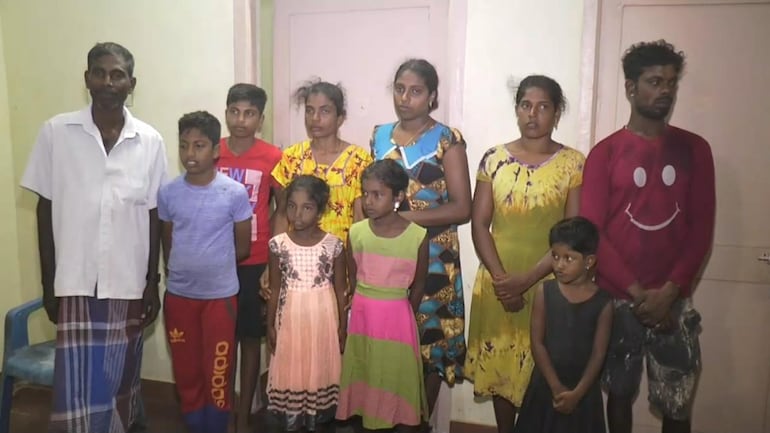
Prices of essential commodities are skyrocketing in Sri Lanka, deepening the ongoing economic crisis. Many Tamil refugees are crossing the sea and arriving in Tamil Nadu. Officials estimate that if the ongoing crisis continues, 2,000 to 4,000 refugees may land in Tamil Nadu.
A group of Sri Lankan refugees who arrived in Tamil Nadu in the midst of the economic crisis in Sri Lanka.https://trinitymedia.ai/player/trinity-player.php?language=en&gaAccountId=UA-795349-17&partner=IndiaTodayGroup&pageURL=https%3A%2F%2Fwww.indiatoday.in%2Findia%2Fstory%2Fas-sri-lankan-economic-crisis-deepens-officials-say-refugees-may-land-in-tamil-nadu-1929291-2022-03-25&unitId=2900004882&userId=cd441e7d-17a6-47d4-ae7e-64acf4161163&isLegacyBrowser=false&version=20220325_f962b3561135c6b59e675ccd44db018195416f39&useCFCDN=0&themeId=197
With the price of essential commodities skyrocketing, Sri Lankan refugees have begun to flock to Tamil Nadu. On Tuesday, March 22, a family of six Sri Lankan Tamils, including four children were found by the Indian Coast Guard near Fourth Island, Rameswaram and were handed over to the Coastal Security Group.
On Wednesday, another ten people, including five children, reached Indian shores. Sivasankari, one of the refugees, stated she decided to leave as there was no way to survive in Sri Lanka.
But, when crossing the sea, the engine failed, the anchor was lost and the refugees were stuck at sea, battling the hot sun. After a huge struggle, they managed to cross the sea and arrive in the middle of the night.https://embed.indiatoday.in/share/video/embed/1951
Siva, another refugee, stated that there was a shortage of rice, palm oil and petrol.
A kilo of rice costs Rs 250 – 300. I worked in Mannar. I left with my wife and my sister’s family. Many more families are getting ready to leave. We came to Tamil Nadu in 1990 and stayed at Mandap camp for 15 years and then went back. Now we have to return once again”, he said.
Long queues of frustrated people cooking outside gas stations and stationary shops were observed.
Officials from Mandapam have also estimated that if the crisis continues, between 2,000 to 4,000 refugees might land in Tamil Nadu.
Jacintha Lazarus, Commissioner of Rehabilitation and Welfare of Non Resident Tamils, visited the refugee camp in Mandapam.
Jacintha stated that 16 refugees from Sri Lanka have come to Tamilnadu so far, unable to survive there due to a severe economic crisis. But, as per protocol, a case was filed against them for coming to India without necessary documents.
We are conducting an inquiry and have submitted a report. Decisions about their status will only be decided after discussion between the Tamil Nadu government and the government of India. Already, CM Stalin has announced 12 schemes for Sri Lankan Tamils, such as building houses and providing skill training, of which eight have been implemented”, stated Jacintha Lazarus.
On Thursday, March 24, Tamil Nadu CM MK Stalin addressed the Sri Lankan economic crisis in the assembly and stated that he has been observing the sufferings of Tamils in Sri Lanka returning to Tamil Nadu.
He instructed officials to communicate with the Union Ministry and discuss how to handle the situation legally.
The Janatha Vimukthi Peramuna (JVP) today revealed that the government had entered into five defence agreements with India in line with the recently obtained US$1 billion credit facility, despite claims that no condition had been laid down in the credit line.
Former JVP MP Sunil Handunnetti told a news conference that these agreements had been signed violating the due procedure prior to Finance Minister Basil Rajapaksa’s visit to India.
“Basil on his return from India said there were no conditions pertaining to the US$1 billion credit line obtained from India. But, just before his visit, several agreements had been signed. These agreements had been signed with a covering approval as they had to be signed before Basil’s Indian visit. President Gotabaya Rajapaksa and his government should reveal their stance on Basil Rajapaksa’s statement and signing of these agreements,” he said.
He said signing of these defence agreements is a clear threat to the nation’s security and added that this was betraying of sea, ground and aerospace pertaining to the national security.
He said agreements pertaining to Indian funded Maritime Rescue Coordination Centre (MRCC), grant of three Dornier Maritime Surveillance aircraft to Sri Lanka and a 4,000 MT floating barge have been signed.
Mr. Handunnetti questioned as to why these security equipment were needed in a hurry when people were suffering in queues for essential goods.
“There was no need of these security equipment at all even during the war,” he said.
He also revealed that Cabinet approval has been sought to make an emergency purchase of diesel from a South African Company for upto five years on unsolicited basis. (Ajith Siriwardana)
A currency board is an extreme form of a pegged exchange rate. Management of the exchange rate and the money supply are taken away from the nation’s central bank, if it has one. In addition to a fixed exchange rate, a currency board is also generally required to maintain reserves of the underlying foreign currency.
KEY TAKEAWAYS
A currency board is an extreme form of a pegged exchange rate.
Often, this monetary authority has direct instructions to back all units of domestic currency in circulation with foreign currency.
Currency boards offer stable exchange rates, which promote trade and investment.
In a crisis, a currency board can cause substantial damage by restricting monetary policy.
How a Currency Board Works
Under a currency board, the management of the exchange rate and money supply are given to a monetary authority that makes decisions about the valuation of a nation’s currency. Often, this monetary authority has direct instructions to back all units of domestic currency in circulation with foreign currency. When all domestic currency is backed with foreign currency, it is called a 100% reserve requirement. With a 100% reserve requirement, a currency board operates similarly to a strong version of the gold standard.
The currency board allows for the unlimited exchange of the domestic currency for foreign currency. A conventional central bank can print money at will, but a currency board must back additional units of currency with foreign currency. A currency board earns interest from foreign reserves, so domestic interest rates usually mimic the prevailing rates in the foreign currency.
Currency Boards vs. Central Banks
Like most of the world’s large economies, the U.S. does not have a currency board. In the United States, the Federal Reserve is a true central bank, which operates as a lender of last resort. The exchange rate is allowed to float and determined by market forces, as well as the Fed’s monetary policies.
By contrast, currency boards are somewhat limited in their power. They mostly just hold the required percentage of pegged currency that was previously mandated. They also exchange local currency for the pegged (or anchor) currency, which is typically the U.S. dollar or the euro.
A currency board has less power to harm or help the economy than a central bank.
Advantages of a Currency Board
Currency board regimes are often praised for their relative stability and rule-based nature. Currency boards offer stable exchange rates, which promote trade and investment. Their discipline restricts government actions. Wasteful or irresponsible governments cannot simply print money to pay down deficits. Currency boards are known for keeping inflation under control.
Disadvantages of a Currency Board
Currency boards also have downsides. In fixed exchange-rate systems, currency boards don’t allow the government to set their interest rates. That means economic conditions in a foreign country usually determine interest rates. By pegging the domestic currency to a foreign currency, the currency board imports much of that foreign country’s monetary policy.
When two countries are at different points in the business cycle, a currency board can create serious issues. For example, suppose the central bank raises interest rates to restrain inflation during an expansion in the foreign country. The currency board transmits that rate hike to the domestic economy, regardless of local conditions. If the country with a currency board is already in a recession, the rate hike could make it even worse.
In a crisis, a currency board can cause even more damage. If investors offload their local currency quickly and at the same time, interest rates can rise fast. That compromises the ability of banks to maintain legally required reserves and appropriate liquidity levels.
Such a banking crisis can get worse fast because currency boards cannot act as a lender of last resort. In the event of a banking panic, a currency board cannot lend money to banks in a meaningful way.
Real World Example of a Currency Board
Hong Kong has a currency board that maintains a fixed exchange rate between the U.S. dollar and the Hong Kong dollar. Hong Kong’s currency board has a 100% reserve requirement, so all Hong Kong dollars are fully backed with U.S. dollars.1 While the currency board contributed to Hong Kong’s trade with the U.S., it also worsened the impact of the 1997 Asian financial crisis.
A top US economist has recommended the dumping of the rupee and installing a currency board as the only way to save Sri Lanka’s economy.
Steve H. Hanke of the John Hopkins University notes the country had such an entity from 1884 to 1950.
He tweeted, Today, I measure inflation in Sri Lanka at a roaring 49%/yr. Sri Lanka’s currency crisis and recent fuel price hikes are sinking LKA……”
Since January 1st 2022, the Sri Lankan rupee has depreciated ~26% against the USD. Sri Lanka’s severe balance of payments crisis and recent fuel price hikes are sinking LKA……”
……To ease the crisis, LKA needs to install a currency board, like the one it had from 1884 until 1950,” he added.
It is good news that we have reached an input of $ 1 billion aid from India and that China is considering and very likely to give a 2.5 b. loan, but this can bring us out of the economic mess we are in if only we act in a prudent manner. It all depends on how we spend the funds.
We do not have to wonder far, because if we closely copy the blueprint economic model of the days of Premier Dudley Senanayake, 1965-1970, days when we had no food, gas and fuel queues, we can be dead certain of victory. That was also the one model we followed earlier too when we built the Gal Oya Project spending dollars we had in 1950- 1954. when my father in law had purchased his A 40 brand new, as the first owner, not from the company but from someone who had deposited money and waited long. There were small allocations for valued imports. In 1958 I waited for two months to buy a new Peugeot 203. Then we did not provide any foreign exchange for foreign studies or for foreign travel. When I marched out of the Administrative Service and went abroad for study I was not given even a single dollar. I had to earn, live and study. Foreign exchange was a guarded item and we did not have private currency dealers, buying and selling dollars emassing a profit. The total intake of every bank was the property of the Government and disposed as decided by the Controller of Foreign Exchange of the Central Bank.
Today unless we are strict and spend for essentials first and see to an era of no queues for food and essentials like cooking gas, medicines and then detail a small allocation for fuel, etc we will not win. We have to forget skyscrapers, bridges, roads, flyovers for the time being till we do not have to hear of deaths of common people in food and gas queues. It is sad that four people have succumbed to deaths in queues by today(22/3). Then very small allocations were given for non essentials like cars, fridges, grapes etc. Working as the Additional Government Agent in Kegalla in 1969, I knew of no food queues or any shortages of essentials like food including medicines.
Our automobiles can easily guzzle out billions. We have that many. The rich have not one or two, but fleets of vehicles and enjoy endless travel. Allowing the rich to revel while some citizens are confined to be in queues for days to buy a can of gas is a No No situation that needs never to happen.
My mind travels back to my days at Matara as the Government Agent when the JVP struck on 5 thApril 1971, when the JVP actually controlled 90%of the District for close on three weeks. No fuel bowsers could be expected till roads were opened up. As the GA, I was in charge. Only some ten officers out of some 400 reported for work and that included my Assistant Govt Agent, Sugatadasa Jayawickrema. The two of us decided that we will impound all stocks of petrol and diesel. All petrol shed were closed to the public- told to issue only to army and police vehicles and on permits issued by either of us. Many big wigs in Matara criticised us but we were very firm and did not give in. If I had not made that decision the fuel would have run out and we would not have had any fuel for the army, police and essential services like the distribution of essential food. Then the Police withdrew the security at the katcheri, closed the Police station gates and barricaded the entrance with a large tree and were armed to the teeth with machine guns inside, awaiting the enemy- the JVP. Matara was saved by the Gemunu Watch volunteers running in katcheri jeeps with petrol found from my development funds, ensuring security and essential food transport for the area near Matara and the coast which we controlled at times. If I had not controlled the use of available fuel, the JVP would have had a walk over and we would not have lived to tell the tale. Casualties due to JVP bullets included my jeep driver, Major Wettasinghe and the Member of Parliament for Deniyaya, Sumanapala Dahanayake. Sumanapala had to be moved to Colombo. That morning Radio Ceylon reported that the JVP had shot dead a casualty in the Elpitiya Hospital and I myself wrote out a fake bed ticket for Sumanapala giving him a fake name so that if when passing a JVP held area Sumanapala would be safe. Had I not impounded fuel stocks the ambulance would not have had fuel. It is mandatory that we limit the use of fuel to produce electricity and for essential services. There is no other way ahead. Permits have to be issued by the Divisional Secretaries to owners of motor vehicles for the essential travel like going to work and for schooling. Unless this is done the dollars will end in smoke.
One can also look to the manner in which Mahatir Muhammed responded when the East Asian Financial Crisis hit East Asia. I quote from my book:How the IMF Ruined Sri Lanka & Alternative Programmes of Success(Godages:2006):
In 1997, the East Asian Financial Crisis caused the death of many economies in East Asia. Malaysia, Thailand, Indonesia, Korea succumbed and the malaise spread to Russia, Brazil and Argentina. All these countries had their currencies trashed and their economies ruined. Prime Minister Mahatir Muhhamed of Malysia declared war with the IMF by doing the exact opposite of the IMF advice. He effectively controlled the economy of his own country. He was entitled to do it. He imposed very strict controls. Every country earns foreign exchange through exports and services and remittances. He grabbed this money and did not allow any foreign bank or anyone to spend on unnecessary imports. He clamped severe restrictions on the use of foreign exchange. This even went to the extent of stopping funds for Malaysians studying abroad. There was Mayhem in student circles in London. Some of my students took leave of studies and flew home, those who stayed back were compelled to do menial work in restaurants etc to pay themselves.”(Pg.238)
It was only Malaysia that faced the crisis without falling into debt. Thailand was given a loan of $ 17.1 billion, Korea $ 58.2 billion, Indonesia $ 39.9 billion. Their foreign debts commensurately increased by that amount. In each case the IMF insisted that the local economy should be further prise opened more to foreign investment. This means that the doors are yet being wider and wider opened for foreign exploitation, As Professor Stiglitz states, the IMF chose to squeeze the countries further thus driving their banks and corporations to deeper crisis and worsening investor confidence”(Stiglitz: IMF policies make patient sicker)”. The IMF has come up with two Aid Schemes- the Highly Improvised Poor Countries Initiative(HIPC)and supplemented with the Multilateral Debt Relief Initiative(MDRI). Both declare loans as paid up but open up the country more for foreign investment. As Carrasco of the University of Ohio opines that the HIPC is, a program designed by creditors to protect creditor’s interests, leaving countries with unsustainable debt burdens.”(Foreign Debt Forgiveness & Repudiation,University of Iowa, Center for International Finance & Debt, 2007) . The MDRI is no better.
Sri Lanka is currently negotiating with the IMF. It is hoped that the IMF will provide a chance for Sri Lanka to wipe out the food and fuel queues and subsequently provide a development agenda, which is not yet on its books.
It is sad that the IMF despite helping- giving loans on strict conditions to some 80 odd countries, cannot quote a single instance where any country has developed under their tutelage. However it is hoped that this message will serve to open their eyes and enable them to speak of success.
These words come from someone who designed and implemented the largest and premier employment creation programme the world has known- the Youth Self Employment Programme (YSEP) of Bangladesh, created when he served as the Commonwealth Fund Advisor to the Ministry of Labour and Manpower in 1982. That happened in the face of an ILO programme that spent millions and failed to establish a self employment programme in Tangail, Bangladesh in 1980-1982. The YSEP has in its four decades 1982- 2022, guided over three million youths to be commercially viable entrepreneurs.
It is hoped that the IMF will kindly consider allowing Sri Lanka the chance to wipe out the food and fuel queues first and will also help the country to stand on its feet in development. May I suggest that the IMF detail that Sri Lanka should show the development starved world that it is possible to enable true economic development, creating production locally bringing about employment and incomes for the people , within a successful development programme.
Such a programme will be a feather in the cap for the IMF and will get into the history of successes in development like Mahatir Muhammed in Malaysia in the days of the East Asian Financial Conflict of 1997 and the Youth Self Employment Programme of Bangladesh. The Sri Lankan High Commissioner in Delhi, His Excellency Milinda Moragoda in his Manifesto for Mayor of Colombo in 2011 refers to a scheme to solve the problems of youth unemployment: In this regard, he should seek to implement the Youth Self Employment Programme of Bangladesh which incidentally was an amazingly successful scheme introduced to that country by a distinguished son of Sri Lanka, Dr Garvin Karunaratne, who served Bangladesh as an international consultant.”
Let me live in hope that the IMF will get this message.
Garvin Karunaratne, Ph.D Michigan State University.
Author of:
How the IMF Ruined Sri Lanka & Alternative Programmes of Success(Godages:2006)
How the IMF Sabotaged Third World Development, (Godages/Kindle:2017)
How the IMF’s Structural Adjustment Destroyed Sri Lanka(Godages:2022)
March 24 (Reuters) – Sri Lanka will seek World Bank assistance to stave off a severe economic crisis in addition to an International Monetary Fund (IMF) rescue plan to be discussed next month, two sources said.
A 70% drop in foreign exchange reserves since January 2020 has left Sri Lanka struggling to pay for essential imports, including food and fuel, leading to growing unrest and even military deployments at gasoline stations.
Holding paltry reserves of $2.31 billion as of February, the country must repay about $4 billion in debt over the rest of this year, including a $1 billion international sovereign bond that matures in July.
To seek a way out of the crisis, Finance Minister Basil Rajapaksa will fly to Washington DC next month to hold talks with the IMF and also officials from the World Bank, two sources with direct knowledge of the plans told Reuters.
What we need is budgetary support,” one of the sources said, referring to the financial assistance that the Sri Lankan government will ask the World Bank for.
The source was unable to provide the size of World Bank assistance that Sri Lanka could seek.
The World Bank typically extends support to boost exports, improve economic competitiveness and aid growth, analysts said.
In heavily indebted Argentina, for example, the World Bank is working on approving a $2 billion loan package for 2022 that includes support for infrastructure, health, social inclusion and environment projects.
Both sources, who declined to be named, since discussions were confidential, said such assistance would likely come after Sri Lanka entered into an IMF-supported loan programme.
In response to questions from Reuters, the World Bank said it was not currently in talks with Sri Lanka to provide budget support.
We are engaging with the authorities to identify a comprehensive structural reform program needed to ensure sustainable growth, and around which such support may be possible in the future,” the World Bank said.
Sri Lanka’s Finance Ministry did not respond to a request for comment.
‘DAMN TOUGH’
The amount of funding would depend on the specific goals set by an IMF programme as well as Sri Lanka’s trade and fiscal deficits, analysts said, estimating an annual requirement of up to $3 billion from several multilateral and bilateral sources.
If they have a credible IMF programme then there will be a period, perhaps six months to a year, maybe two, when it will be damn tough,” the second source said.
So how will people survive? That is where institutions like the World Bank will come in with budget support.”
An IMF programme will likely focus on external debt restructuring, greater exchange-rate flexibility and better-targeted subsidies, which may hit the poor, analysts said.
Transparent energy pricing is also likely to drive up fuel and electricity costs.
The World Bank could promote direct subsidy transfer, push green energy and develop human capital through improvements in health, education, and social protection, the second source said.
Karunawathie belongs to a community that represents the poorest of the poor in Sri Lanka and lives in Uva Wellassa, one of the least developed areas. She has been paying land tax (Akkara Badda) for the land she seeks a shelter and cultivates to earn her family a daily pot of rice. However, she was recently informed that the land she was living on, no longer belongs to her, and in fact will be taken away from her to be invested in a promising” multinational project of cultivating sugarcane.
Meanwhile, Karunawathie and others in Dehigama, Ridimaliyadda are now facing a bitter future, of having to consume contaminated water, increased human-elephant conflicts and in the long-term of being categorised as households with Chronic Kidney Disease of Unknown Aetiology (CKDu).
Those in Dehigama are concerned, as their neighbours, who belong to the indigenous Vedda community, risk losing their traditional lands, and the only water resource they had access for potable water, Rambakan Oya, being highly polluted and contaminated as a result of a similar multinational project of maize.
Background
In 2006, an area of land with a total extent of 65,000 acres in 11 Divisional Secretariat Divisions of Ridimaliyadda, Madagama, Bibile, Kandakatiya, Lunugala, Padiyathalava and Mahiyangana in the Badulla, Ampara and Monaragala Districts was earmarked for a sugarcane plantation project.
JVP Central Committee member Samantha Vidyaratna said the first company who intended to carry out the said project was a British multinational company. He added however when the initial project proposal was made, conservationists, after having inspected the aerial view of the plot of 500 acres land in Osu Uyana Aranyaya (Monastery), Nilgala Forest required for the construction of a sugarcane factory, protested against the move, observing that this land comprises a sensitive forest reserve.
He noted this was followed by a Chinese multinational company whose efforts were also defeated, adding that it was after these failed attempts, that the same project is being attempted to be brought forward in cooperation with a Singaporean company.
The company then looked for alternative lands in the Monaragala District and such effort was also opposed as the proposed land formed part of the Gal Oya National Park following which land in Dehigama was considered for the commencement of the long proposed project,” he added.
Senior adviser to the Centre for Environmental Justice (CEJ) and chair of friends of Earth International, Hemantha Withanage said in 2013, an Environmental Impact Assessment (EIA) was conducted on 300 hectares of land in Dehigama for a sugarcane factory, a power station and a plant nursery required for sugarcane which were all part of the project.
Withanage noted 300 hectares was only a portion of the total land required by the project for the construction and thereby the EIA has only been conducted on part of the land as opposed to the whole land as required by law. In addition to this, the company also required 3,000 hectares of land for Gliricidia, which would be used to establish a 16 MW power plant.
Concerns
The land proposed to be utilised in this project has been recognised as a ‘special area’ in terms of the Sri Lanka Mahaweli Authority Act No. 23 of 1979.
Majority of the lands consists of ‘Other State Forests’ governed under Section 20 of the Forest Ordinance (as amended) and located between Maduru Oya National Park and Gal Oya National Park, Nilgala Forest and Other State Forests in Puwakpale Reserve Forest which is an elephant corridor and has been an elephant habitat for a considerable span of time.
Vidyaratna added apart from the environmental impact of the project, implementation of this project will result in sociological issues, as this area is home to the indigenous population, while the people in the area will also be exploited through cheap labour that would in turn impact their standard of living.
Monoculture
There are currently a number of chena cultivations in the area which have been traditionally done by farmers paying a tax (Akkara Badda) to the Mahaweli Development Authority and the proposed sugarcane plantation will deprive them the arable lands for chena cultivation.
Vidyaratna said according to the Cabinet Paper submitted for the proposed project, a hectare of land will be handed over to farmers for a commercial tax for the cultivation of only sugarcane, resulting in monoculture.
Designating 65,000 acres of land for a monoculture cultivation such as sugarcane can lead to unsustainable environments such as building up diseases pressure and degradation of the soil (reducing particular nutrition in the soil) resulting in the excessive use of chemical fertilisers and pesticides, the CEJ said.
Furthermore, the reuse of the same soil instead of following a determined crop rotation can lead to pathogens and diseases in a large expanse of land.
Impact on environment and elephant corridor
There are several areas of a great environmental value in this proposed area including the Nilgala Reserve, Gal Oya National Park, Maduru Oya National Park and also comprises several irrigation systems and if forest reserves are cleared, the water sources will also be immensely polluted, Vidyaratna said.
The CEJ observed there is an imminent threat of the water resources in the area drying up if the forest areas are being cleared to make way for the sugarcane cultivation, and sugarcane also absorbs a lot of water for its growth and this would convert fertile land into a parched desert in a short span of time.
The movement of elephants to Kumana National Park through Nilgala and Puwak-kele Forest Reserve and from the elephant corridor between Dehigama and Akiriyankumbura will be obstructed if the land is cleared and utilised. Elephants will loiter into villagers in search of food, further aggravating the human-elephant conflict.
Archaeological sites
Vidyaratna also noted that in the land proposed for the construction of the sugarcane factory, over 7 archaeological sites were identified. He added that several petitions were signed when a Cabinet Paper was submitted during the former Government and a Petition was also signed with blood by clergy and those who were genuinely concerned with the implementation of the project.
Laws
Section 20 of the Forest Conservation Ordinance No.16 of 1907, as amended, provides for the acts prohibited in any such forests. As per the Sub Sections 20 (f) and (k), making any clearings and clearing or breaking up soil or digging any land for cultivation or any other purpose or cultivating any land already cleared is expressly prohibited and penal sanctions have been imposed for non-compliance and for aiding and abetting.
Due to the express prohibition spelt out in Section 20 of the Forest Conservation Ordinance No. 16 of 1907, such lands cannot in any manner whatsoever, be cleared and/ or be utilised for cultivation purposes.
Further, in terms of Section 22 of the Mahaweli Authority of Sri Lanka Act, any written laws specified in Schedule B thereto shall have effect in every Special Area subject to the modification that it shall be lawful for the Authority to exercise and discharge in such area any of the powers or functions vested by any such written law in any authority, officer or person in like manner as though the reference in any such written law to the authority, officer or person empowered to exercise or discharge such powers or functions included a reference to the Authority.
The Forest Ordinance has been listed under Schedule B of the Mahaweli Authority of Sri Lanka Act and hence, the Section 20 of the Forest Ordinance as amended shall have effect in Special Areas which falls under the preview of the Mahaweli Authority of Sri Lanka.
Other sugar factories
The Movement for Land and Agricultural Reform (MONLAR) moderator Chinthaka Rajapaksa said there are already four sugar industries that have been isolated and the land in which these industries have been set up, has been completely destroyed, adding that not even 10 per cent of the local sugar need in the country has been met through these four industries. He said thereby the current efforts are also for fraudulent income-earning mechanisms.
Rajapaksa said lessons have to be learnt from the past, as former similar projects have failed, and clearing of forests in areas of high environmental value has not in any manner contributed to the economy, and has also not enhanced the lives of those living in these areas.
He added that if there is any intention to develop these lands, the ongoing cultivation of different crops should be facilitated better instead of approving and implementing such projects that push farmers to practice monoculture.
Impact on Vedda community
Leader of the Vedda community, Uru Warige Wannila Aththo said within the lands required for the entire project, there are forest reserves that contain medicinal plants that are of great value for Ayurvedic treatment. He added that the waste of sugar factories will be discharged to the water sources and those inhabiting the area, including the Vedda population will not be able to consume this water, as it will have a huge impact on their health as well as on the agricultural practices in the area.
He added that there are several who voice in favour of environment conservation, but at the pace that forests are being cleared for development purposes, there will hardly be any forest reserves even for the indigenous population who have been hugely dependent on such forests. The indigenous population has already faced a huge crisis with the clearing of lands in Pollebedda, which has contaminated the Rambakan Oya,” he said, adding that this proposed project will however result in a much worse impact on them.
The Rambakan Oya is an embankment dam in Maha Oya and currently functions under the directions of the Ministry of Irrigation and Water Resource Management. The Rambakan Oya Reservoir Project is a multipurpose irrigation project that aims to remedy the drinking water and irrigation problems in the area.
Continuous concerns were in the past raised in regard to a proposed agriculture and livestock development project that was proposed to be implemented by clearing the water catchment area of the Rambakan Oya Reservoir.
Withanage said initially it appeared as though the direct impact of clearing the forest reserve was the environmental destruction and the risk it posed to the livelihood of the indigenous population in the area, but the broader picture was later discovered with the growth of Cyanobacteria in the Rambakan Oya Reservoir after the lands were cleared for maize cultivation.
It was noted that the Cyanobacteria content identified in Rambakan Oya is also higher than that normally contained in a reservoir and in certain countries when this is over the value of 20,000, a public announcement will be made, advising not to use that water for any purpose, but that the Rambakan Oya’s Cyanobacteria value is over 40,000. Cyanotoxin in Rambakan Oya is also higher than the standard and this could not be expected from a recently established reservoir.
SLPP MP Wijedasa Rajapaksha has handed over the 21st Amendment to the constitution under which he proposed the transformation of executive powers of President Gotabaya Rajapaksa to the cabinet and to elect a new President by Parliament forthwith.
The MP, when inquired by the Daily Mirror, confirmed that he had handed over the private members Bill to the Secretary General Parliament through which he had proposed the 21st Amendment to the constitution.
Mr. Rajapaksa said he has proposed in his private members Bill the executive powers vested in the presidency shall be transferred to the cabinet members, making them responsible to Parliament and the people. Thereby he had proposed that the legislature be given the power to monitor the exercise of executive powers.
Also he proposed the election of a new President and the office of the incumbent President shall cease with such an election.
He had also proposed the new President to appoint the Member of Parliament who commands a majority, as the new Prime Minister.
Mr. Rajapaksha in his private members Bill has proposed the appointment of an interim cabinet which comprises MPs from all parties which represent Parliament, The Interim government shall continue until the term of the House is over or when it is dissolved. The interim government should formulate long term and short term policies to restore the economy. (Yohan Perera and Ajith Siriwardana)
Sri Lanka can be made the Asian destination of tourists, says President Gotabaya Rajapaksa while pointing out that obstacles should be removed and plans should be made to attract tourists through global promotional programmes.
More than 260,000 tourists have arrived in the country in the first quarter of the year. That’s higher than last year’s overall tourist arrivals.
The government expects to achieve the target of 1.3 million tourists by the end of the year. The President pointed out that all sectors of the tourism industry should be prepared to achieve this target, the PMD reported.
The President had made these remarks during an inspection visit to the Sri Lanka Tourism Development Authority (SLTDA) in Colombo 03 today (24).
The Tourist Board was established in 1966 for rapid economic development through the systematic and streamlined development of the tourism industry and it later became the Sri Lanka Tourism Development Authority in 2005.
The Tourism Development Authority is empowered to oversee all areas related to the tourism industry, including tourist arrivals, planning resorts and accommodation facilities, registration and classification of tourist services including tourist hotels and travel agencies, and the issuance of licenses.
The President inspected the Sri Lanka Tourism Promotion Bureau (SLTPB), Institute of Tourism & Hotel Management, and Convention Bureau and commended the staff for their commitment to the promotion of the tourism industry.
The government aims to raise USD 10 billion annually from the tourism industry. The Easter Sunday attack was a major blow to the tourism industry. It was further devastated by the Covid-19 pandemic. The government has taken all necessary steps for the rapid development of the infrastructure in the tourism sector, the release said.
Minister of Tourism Prasanna Ranatunga says that the tourism industry is thriving again due to the success of the vaccination drive.
There are a large number of local as well as foreign employment opportunities associated with the tourism sector. The President said that training opportunities in this sector should be expanded accordingly.
President Rajapaksa pointed out that a large number of job opportunities could be created by planning to provide practical training and theoretical knowledge to the youth with the assistance of the hotel system spread across the country.
Various forms of planned propaganda are being carried out to destroy the tourism industry. Even in such a context, tourist arrivals remain high. Strict attention should be paid to the safety of the tourists.
The President said that it is the responsibility of the Tourism Development Authority to provide an attractive service with a high level of hospitality from the time of arrival to the time of return to their respective countries.
The President also instructed to take steps to increase the number of flights to Sri Lanka in consultation with the airlines.
Infrastructure development required to maintain Yala, Kumana, Minneriya and other wildlife parks and coastal areas as tourist attractions were also discussed, according to the President’s Media Division.
Minister of Tourism Prasanna Ranatunga, Principal Advisor to President Lalith Weeratunga, Ministry Secretary S. Hettiarachchi, Chairman of the Tourism Development Authority Kimarli Fernando and several others were present at the occasion.
The Committee on Public Enterprises (COPE) has observed that in 2017, some 47 people were involved in preparing fake documents and submitting fake information and have obtained loans to the tune of Rs. 68 million from the State Mortgage and Investment Bank (SMIB).
This was taken into discussion during the meeting of the Committee on Public Enterprises (COPE) chaired by Prof. Charitha Herath held on Wednesday (23), to examine the Auditor General’s reports and current performance of the State Mortgage and Investment Bank for the financial years 2017 and 2018.
The officials present said that cases have been filed against the persons identified as debtors and that the CID is still investigating the matter. Disciplinary inquiries against the staff in particular to this matter is in process and disciplinary action against those whose investigations have been completed has already been taken, the officials further said.
The officials also stated that two external parties related to the said matter have been arrested by the CID and one of them has passed away. It was also stated that prompt action has been taken to obtain these loans, especially after the appointment of the new Chairman and the Board of Directors.
Accordingly, the COPE Chairman instructed the officials present to carry out the measures properly.
Focus was directed towards increasing home loans during the said years whilst the committee members present were of the view that the amount of loans provided for industries and agriculture should be increased.
They also pointed out that this should be considered a need of the State Mortgage & Investment Bank in particular. Officials who were present at the committee meeting said that loans are already being given to small businesses with a focus on the aforementioned sectors.
The current vacancies at the bank were also taken into discussion. Officials said that steps have already been taken to fill several vacancies in the executive ranks and that some suitable candidates are not applying for vacancies in the executive ranks and some leave shortly after receiving appointments.
If remuneration for those posts is not sufficient, the COPE Chairman instructed to make the necessary amendments for the purpose of filling the vacancies.
There was also a discussion on the presence of the State Mortgage & Investment Bank in a building which has been leased for about 30 years.
The activities to set up an automated banking system were also discussed.
Minister Sarath Weerasekera, State Minister Indika Anuruddha, and Members of Parliament (Dr.) Susil Premajayantha, Eran Wickramaratne, (Dr.) Harsha de Silva and Madhura Withanage were also present at this committee meeting.
Currently, we are using hydrocarbons for all our energy needs. We use it for our transportation, for cooking, and production of some of the electricity. Due to global warming, it has become imperative that we start using renewable energy instead of hydrocarbons for our energy consumption. If we switch to electricity we can start switching our tuk-tuks, cars, trains, buses and cooking to electricity.
Most of the switching can be done by giving the correct tax incentives to consumers to switch to electricity. If it becomes cheaper for a household to use electricity for cooking they will do so gladly. We will be also rid of the problem of exploding gas cylinders and having to lug those heavy tanks home. It is the same with cars and tuk-tuks. It is a matter of providing the right incentives for people to switch. In Sri Lanka most of the distances are small. It will be easy for current electric vehicles which are manufactured to be used for transport since most of them have a capacity to travel about 200-300 miles on a charge. Some of the newer vehicles give even more. This means setting up charging stations in every town in the country. Again this can be done by the private sector if the right incentives are provided.
There is an added advantage in switching to electricity for transport since there will be less noise and air pollution when we switch to electric vehicles. I understand we cannot do it overnight and will have to be done gradually as our cars are wearing down. The maintenance on cars will be much less since there are very few moving parts in an electric car compared to a gas-powered car. There are supposed to be around 30,000 moving parts in a gas-powered car whereas the number of moving parts in an electric car will be about 10 at most. With the development of battery technology, each home can be independent of the grid and be self-sufficient in electricity needs for the home and for charging the car. This means no power cuts and it will be less work for the Govt too. There will be a certain part of the population who will need to connect to the grid such as high rises, and buildings that cannot have solar panels on the roof.
The question is where are we going to get cheap electricity? One of the most abundant things we have in Sri Lanka is sunlight and wind. We can get the full benefit from it and get all our energy needs from the sun and wind if we adopt what Germany did a few years ago. In Germany a few years ago, they introduced a guaranteed price for renewable energy for a period of 20 years. The net result is now Germany is leading in renewable energy. They shut down 84 coal plants and most of their Nuclear plants. The investment was mostly done by the Private Sector. Why don’t our leaders follow the same model that has worked for the Germans so well? If we do that, we could cut down on the import of coal, crude oil, and diesel, save Forex and solar energy electricity for all our needs such as cooking, vehicles, all powering, etc. In the USA too they give tax incentives for homeowners to install solar panels on the roofs. We need to think out of the box in terms of clean energy instead of using coal plants and diesel generators.
The Govt needs to appoint a panel of experts to study all these issues and make a long-term policy plan with ideas for tax incentives to bring about the required changes in our consumption of energy and also the generation of energy.
It is good news that we have reached an input of $ 1 billion aid from India and that China is considering and very likely to give a 2.5 b. loan, but this can bring us out of the economic mess we are in if only we act in a prudent manner. It all depends on how we spend the funds.
We do not have to wonder far, because if we closely copy the blueprint economic model of the days of Premier Dudley Senanayake, 1965-1970, days when we had no food, gas and fuel queues, we can be dead certain of victory. That was also the one model we followed earlier too when we built the Gal Oya Project spending dollars we had in 1950- 1954. when my father in law had purchased his A 40 brand new, as the first owner, not from the company but from someone who had deposited money and waited long. There were small allocations for valued imports. In 1958 I waited for two months to buy a new Peugeot 203. Then we did not provide any foreign exchange for foreign studies or for foreign travel. When I marched out of the Administrative Service and went abroad for study I was not given even a single dollar. I had to earn, live and study. Foreign exchange was a guarded item and we did not have private currency dealers, buying and selling dollars emassing a profit. The total intake of every bank was the property of the Government and disposed as decided by the Controller of Foreign Exchange of the Central Bank.
Today unless we are strict and spend for essentials first and see to an era of no queues for food and essentials like cooking gas, medicines and then detail a small allocation for fuel, etc we will not win. We have to forget skyscrapers, bridges, roads, flyovers for the time being till we do not have to hear of deaths of common people in food and gas queues. It is sad that four people have succumbed to deaths in queues by today(22/3). Then very small allocations were given for non essentials like cars, fridges, grapes etc. Working as the Additional Government Agent in Kegalla in 1969, I knew of no food queues or any shortages of essentials like food including medicines.
Our automobiles can easily guzzle out billions. We have that many. The rich have not one or two, but fleets of vehicles and enjoy endless travel. Allowing the rich to revel while some citizens are confined to be in queues for days to buy a can of gas is a No No situation that needs never to happen.
My mind travels back to my days at Matara as the Government Agent when the JVP struck on 5 thApril 1971, when the JVP actually controlled 90%of the District for close on three weeks. No fuel bowsers could be expected till roads were opened up. As the GA, I was in charge. Only some ten officers out of some 400 reported for work and that included my Assistant Govt Agent, Sugatadasa Jayawickrema. The two of us decided that we will impound all stocks of petrol and diesel. All petrol shed were closed to the public- told to issue only to army and police vehicles and on permits issued by either of us. If I had not made that decision the fuel would have run out and we would not have had any fuel for the army, police and essential services like the distribution of essential food. Then the Police withdrew the security at the katcheri, closed the Police station gates and barricaded the entrance with a large tree and were armed to the teeth with machine guns inside, awaiting the enemy- the JVP. Matara was saved by the Gemunu Watch volunteers running in katcheri jeeps with petrol found from my development funds, ensuring essential food transport for the area near Matara and the coast which we controlled at times. If I had not controlled the use of available fuel, the JVP would have had a walk over and we would not have lived to tell the tale. Casualties due to JVP bullets included my jeep driver, Major Wettasinghe and the Member of Parliament for Deniyaya, Sumanapala Dahanayake, the latter two moved to Colombo Hospitals in haste. We must limit the use of fuel to produce electricity and for essential services. There is no other way ahead. Permits have to be issued by the Divisional Secretaries to owners of motor vehicles for the essential travel like going to work and for schooling. Unless this is done the dollars will end in smoke.
One can also look to the manner in which Mahatir Muhammed responded when the East Asian Financial Crisis hit East Asia. I quote from my book:How the IMF Ruined Sri Lanka & Alternative Programmes of Success(Godages:2006):
In 1997, the East Asian Financial Crisis caused the death of many economies in East Asia. Malaysia, Thailand, Indonesia, Korea succumbed and the malaise spread to Russia, Brazil and Argentina. All these countries had their currencies trashed and their economies ruined. Prime Minister Mahatir Muhhamed of Malysia declared war with the IMF by doing the exact opposite of the IMF advice. He effectively controlled the economy of his own country. He was entitled to do it. He imposed very strict controls. Every country earns foreign exchange through exports and services and remittances. He grabbed this money and did not allow any foreign bank or anyone to spend on unnecessary imports. He clamped severe restrictions on the use of foreign exchange. This even went to the extent of stopping funds for Malaysians studying abroad. There was Mayhem in student circles in London. Some of my students took leave of studies and flew home, those who stayed back were compelled to do menial work in restaurants etc to pay themselves.”(Pg.238)
It was only Malaysia that faced the crisis without falling into debt. Thailand was given a loan of $ 17.1 billion, Korea $ 58.2 billion, Indonesia $ 39.9 billion. Their foreign debts commensurately increased by that amount. In each case the IMF insisted that the local economy should be further prise opened more to foreign investment. This means that the doors are yet being wider and wider opened for foreign exploitation, As Professor Stiglitz states, the IMF chose to squeeze the countries further thus driving their banks and corporations to deeper crisis and worsening investor confidence”(Stiglitz: IMF policies make patient sicker)”. The IMF has come up with two Aid Schemes- the Highly Improvised Poor Countries Initiative(HIPC)and supplemented with the Multilateral Debt Relief Initiative(MDRI). Both declare loans as paid up but open up the country more for foreign investment. As Carrasco of the University of Ohio opines that the HIPC is, a program designed by creditors to protect creditor’s interests, leaving countries with unsustainable debt burdens.”(Foreign Debt Forgiveness & Repudiation,University of Iowa, Center for International Finance & Debt, 2007) . The MDRI is no better.
Sri Lanka is currently negotiating with the IMF. It is hoped that the IMF will provide a chance for Sri Lanka to wipe out the food and fuel queues and subsequently provide a development agenda, which is not yet on its books.
It is sad that the IMF despite helping- giving loans on strict conditions to some 80 odd countries, cannot quote a single instance where any country has developed under their tutelage. However it is hoped that this message will serve to open their eyes and enable them to speak of success.
These words come from someone who designed and implemented the largest and premier employment creation programme the world has known- the Youth Self Employment Programme (YSEP) of Bangladesh, created when he served as the Commonwealth Fund Advisor to the Ministry of Labour and Manpower in 1982. That happened in the face of an ILO programme that spent millions and failed to establish a self employment programme in Tangail, Bangladesh in 1980-1982. The YSEP has in its four decades 1982- 2022, guided over three million youths to be commercially viable entrepreneurs.
It is hoped that the IMF will kindly consider allowing Sri Lanka the chance to wipe out the food and fuel queues first and will also help the country to stand on its feet in development. May I suggest that the IMF detail that Sri Lanka should show the development starved world that it is possible to enable true economic development, creating production locally bringing about employment and incomes for the people , within a successful development programme.
Such a programme will be a feather in the cap for the IMF and will get into the history of successes in development like Mahatir Muhammed in Malaysia in the days of the East Asian Financial Conflict of 1997 and the Youth Self Employment Programme of Bangladesh. The Sri Lankan High Commissioner in Delhi, His Excellency Milinda Moragoda in his Manifesto for Mayor of Colombo in 2011 refers to a scheme to solve the problems of youth unemployment: In this regard, he should seek to implement the Youth Self Employment Programme of Bangladesh which incidentally was an amazingly successful scheme introduced to that country by a distinguished son of Sri Lanka, Dr Garvin Karunaratne, who served Bangladesh as an international consultant.”
Let me live in hope that the IMF will get this message.
Garvin Karunaratne, Ph.D Michigan State University.
Author of:
How the IMF Ruined Sri Lanka & Alternative Programmes of Success(Godages:2006)
How the IMF Sabotaged Third World Development, (Godages/Kindle:2017)
How the IMF’s Structural Adjustment Destroyed Sri Lanka(Godages:2022)

:quality(70)/cloudfront-eu-central-1.images.arcpublishing.com/thenational/PMRT3NBKXFJUMNZH6KQXFRIKUU.jpg)