(Bloomberg) — Sri Lanka is turning to a veteran central banker as it seeks to bolster depleted foreign exchange reserves and service debt without seeking an international bailout.
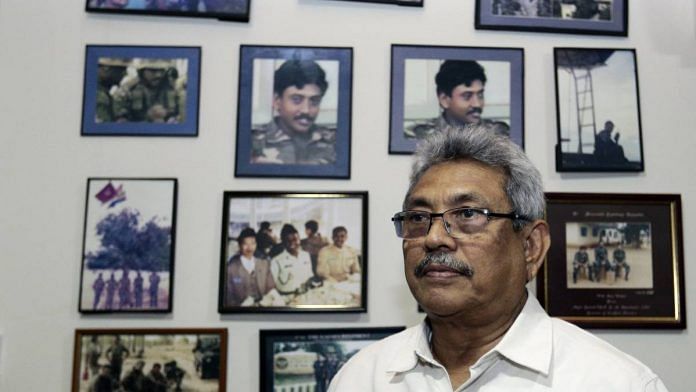
Ajith Nivard Cabraal, a former junior minister overseeing capital markets who led the Central Bank of Sri Lanka from 2006 until early 2015, will return as governor. Cabraal, who resigned from parliament earlier on Monday, confirmed his appointment in a phone interview. I will be concentrating on stability first, then growth,” Cabraal said.
During his previous governor term, Cabraal steered inflation to low single-digits and held down interest rates while foreign exchange reserves grew thanks to a resurgence in tourism and economic growth with the end of the island’s civil war.
He now faces a country virtually stripped of tourism dollars due to the coronavirus, as well as lockdowns to stem the virus that have hurt domestic activity. That’s drained the South Asian island’s foreign exchange reserves, a situation that triggered S&P Global Ratings to cut the country’s outlook to negative and now risks spiraling into a crisis.
Read more: Sri Lanka Is Running Out of Money for Imports as Delta Rages
For now, the central bank has limited the amount of foreign currency that can leave the country, as well as tightened import rules to discourage purchases of items including chocolates, wines, cosmetics and electronics.
Sri Lanka’s depleted reserves could force more aggressive tightening of monetary policy and even a bailout from the International Monetary Fund, according to investors of the nation’s dollar bonds. Cabraal has held that IMF help is unappealing, telling the BBC last week there is no need for Sri Lanka to go to the IMF and thereby cause unnecessary pain to its lenders and investors.”
Policy Responses
Cabraal replaces Weligamage Don Lakshman, who steps down Tuesday. Lakshman said Friday, when he announced his early retirement, that the monetary authority had to step in with resources” as the pandemic created an extraordinary period of disruption, and that an excessive money supply” created in the process could be easily reversed.
The central bank in August unexpectedly raised its policy rate, citing the role of low credit cost in a sustained increase in imports, which led to a widening trade deficit. The rate action was also to preempt the buildup of any excessive inflationary pressures, the bank said at the time.
Sri Lanka’s foreign exchange reserves rose 26% to $3.55 billion last month, after the nation converted into U.S. dollars the International Monetary Fund’s special drawing rights, the central bank said Friday.
The country’s forex reserves had dropped to $2.8 billion in July after it used a part to repay $1 billion of debt. That dragged the import cover to 1.8 months, compared with the desired minimum of three months.
Sri Lanka’s Capital Alliance (CAL) has recently made a foray into Bangladesh’s brokerage business. CAL is Sri Lanka’s leading investment bank, offering integrated investment and capital market solutions, and this becomes its first overseas foray.
CAL will hold a majority stake of CAL Securities, the company said in a press release yesterday.
The company’s local shareholders include Raihan Shamsi, former CEO of Accenture Bangladesh, and Salahuddin Ahmed, managing director of M&J Group.
“We are delighted to receive formal trading rights and are thankful to the Bangladesh Securities and Exchange Commission and Dhaka Stock Exchange for their support,” said Ajith Fernando, chairman of CAL Securities, Bangladesh and group CEO of CAL, Sri Lanka.
Sri Lanka and Bangladesh — both classified as frontier markets — have similarities in operating capital markets.
“With our deep experience in Sri Lanka and insatiable appetite for learning and growth, we are confident that we can extend our unique approach towards markets to investors in Bangladesh as well,” Fernando said.
“Our focus on creating market-leading insights has been our key differentiator in Sri Lanka,” said Deshan Pushparajah, managing director of CAL Securities, Bangladesh and managing director for global markets and investment banking at CAL, Sri Lanka.
“We are excited to bring these unique perspectives and approach to research to Bangladesh as well.”
VIJAY SAPPNI Courtesy Macdonald-Laurier Institute.
As Sri Lanka moves closer to China in its economic ties, concerns about the Indo-Sri Lanka bilateral relationship grow, writes Vijay Sappani in the ORF.
By Vijay Sappani, September 13, 2021
India and Sri Lanka have enjoyed a cordial and relatively stable relationship since their independence. In the post-Liberation Tigers of Tamil Eelam (LTTE) era, the neighbours align over key security and economic objectives, which includes maintaining freedom of navigation in the Indian Ocean region, combating the threat of terrorism, and working together towards a more prosperous South Asian neighbourhood. Yet the relationship is in need of a fresh impetus. Over the years, Sri Lanka has drifted towards China for economic support and views her as a more reliable partner in enabling domestic economic development. This has generated concern in New Delhi over the state of the bilateral relationship between the two countries, which views Beijing’s proximity to its neighbours as undermining India’s influence in the island nation.
Killing of Indian fishermen by the Sri Lankan Navy, as well as the cancellation of the East Container Terminal port contract to India are lingering issues that have added to these concerns. In addition, the Sri Lankan government led by the Rajapaksa family are historically known to be closer to China than India and these developments have made India and her allies worried about China’s growing clout in the Indo-Pacific waters. China, for instance, is set to commence the construction of a US $13 billion city on Sri Lanka’s seafront close to Colombo, according to a recent report in the Wall Street Journal.
Therefore, despite the convergence of objectives and interests, there is an urgent need for India and Sri Lanka to carefully and deliberately reinvigorate their bilateral relationship.
CHINA’S PRE-EMINENCE A GIVEN?
Over the last few years, Chinese footprint has increased dramatically in the island nation. Sri Lanka’s embrace of China largely stems from two factors. First, Sri Lankans continue to be suspicious about India’s motives vis-a-vis the Tamil cause. Second, India’s slow bureaucratic processes that delay approvals incite suspicions of India’s commitment to Sri Lanka. Last year, the Indian government took five months to approve a loan moratorium sought by Colombo while Beijing approved an additional US $500 million loan from its development bank in no time. China’s quicker decision making, and its far larger assistance makes them a more attractive partner.
Yet, this economic interaction with China has not been without ramifications for Colombo. Sri Lanka has been forced into a debt trap, and has had to sell its strategic assets though debt-equity swaps leading to creation of zones where its own sovereignty has been negated. Overtime, this is likely to force Sri Lanka to accord higher priority to diversity and balance in its foreign policy and international relations.
INDIA’S STRENGTHS
In education, healthcare, and tourism, India is a far stronger partner than China. Under the Indian Technical and Economic Cooperation Scheme and the Colombo Plan, Sri Lankan nationals can benefit from 400 slots for short- and medium-term training courses in a variety of technical and professional disciplines. Since 2017, students from the island nation can also appear for the National Eligibility cum Entrance Test (NEET) and IIT JEE (Advanced) exams.
India can build on these educational exchanges by establishing an Indian Institute of Technology (IIT in Sri Lanka’s planned education zone. In the country’s northeast, India can set up technical and English language training centres like the Sri Lanka-India Centre for English Language Training (SLICELT) in Kandy. In addition, India and Sri Lanka should look forward to extensive cooperation in pharmaceutical manufacturing, as announced in the joint statement issued during Jaishankar’s visit earlier this year.
LEVERAGING INDIA’S SOFT POWER
In the technology sector, India could create job opportunities by expanding the presence of its information technology companies in Sri Lanka. These organisations can create thousands of direct and indirect jobs and boost the island nation’s service economy—something that was recognised by both sides during Jaishankar’s visit. Aside from a special economic zone (SEZ) for pharmaceuticals, the two sides could also look into similar provisions for information technology and education, among other sectors.
As Sri Lanka embarks on the arduous project of drafting a constitution, India can lend its own experience in managing minority rights and diverse populations. It can help Sri Lanka draft policies ensuring linguistic and cultural freedom, access to grievance redressal, and reservation in representative bodies.
Last, India and Sri Lanka must look for ways to boost people-to-people contacts. The island nation’s greatest number of tourists come from India, but the scope of religious tourism is yet to be explored. Through Prime Minister Modi’s US $15 million grant for promotion of Buddhist ties with Sri Lanka announced last year, the two countries can look to create a Buddhism knowledge and tourism corridor. Finally, the grandeur and prevalence of cricket in both countries ought to be leveraged. Expanding the Indian Premiere League (IPL) to Sri Lanka in partnership with Lanka Premier League (LPL) will encourage people-to-people contact and boost tourism.
Cooperation in these sectors does not diminish concerns on issues where the two neighbours might not align: Tamil minority rights and China’s importance in Sri Lanka’s economy. However, history, cultural closeness and the constraints of geography poise India and Sri Lanka as natural and permanent partners to tide over these issues and explore synergies in new avenues to further their respective economic and developmental aspirations jointly.
Vijay Sappani is on the board of the Macdonald-Laurier Institute.
Seaweed farming is an increasingly important part of the global food system and provides a range of benefits, including sustainable coastal livelihoods and economic diversification, food production, export revenue, climate change mitigation and adaptation, pollution control, and organic fertilizer.
Sri Lanka used to have a prominent seaweed market in the 1930s, but today there’s only limited, small-scale seaweed farming in the country, mostly without processing or value addition.
With greater investments of money, technology, and know-how, Sri Lanka could offer the perfect location to cultivate seaweed either on its own or as integrated mariculture, for example with shrimps, mollusks, or sea cucumbers, experts say.
Farming seaweed in Sri Lanka could be a viable and highly beneficial part of expanding the blue economy if initial challenges are overcome and coastal communities engaged with support, guidance, technology, and quality control, experts say.
COLOMBO — In its territorial waters and exclusive economic zone, Sri Lanka is home to an abundance of coastal and marine resources. And while national policies and development visions already aim toward a blue economy, much of this natural wealth is currently not being used in a sustainable way or to its full potential, experts say.
Coastal fishing communities are vulnerable,” says Ruchira Cumaranatunga, a senior professor in the Department of Fisheries and Aquaculture at the University of Ruhuna. There is a need to create or enhance alternative livelihoods in coastal areas of Sri Lanka. While helping coastal fishermen to sustain their fishery activities, they should be provided with additional sources of income. The best method for this would be to promote small- and medium-sized enterprises based on fish processing, utilization of fishery waste or trash fish, and seaweed farming. Women and school dropouts in fisher families could be involved in these SMEs.”
Seaweed could help diversify the livelihoods of coastal fishing communities in Sri Lanka. Image courtesy of Ashan Karunananda.
The benefits of seaweed
Seaweed farming in particular offers a pathway for developing the blue economy and creating sustainable livelihoods, proponents say. Globally, seaweed aquaculture is one of the fastest-growing components of food production, with 99% of production taking place in Asia. If the sector is scaled up further, it could generate 500 million metric tons dry weight by 2050 and completely replace fishmeal and fish oil in animal feed, provide protein for humans, and save vast amounts of land and freshwater. There are many other ways in which seaweed is beneficial for humans, the environment, and the climate.
The commercially valuable types of seaweeds are species of algae that generally fall into three groups: green algae (Chlorophyta spp.), red algae (Rhodophyta spp,), and brown algae (Phaeophyta spp.). The different species of seaweed have many uses, and farming them has a small environmental footprint, as they do not significantly alter the existing coastal environment or require fertilizer input, freshwater resources, or medicines.
Seaweed species like Ulva lactuca [sea lettuce], Caulerpa racemosa, or Caulerpa lentillifera [sea grapes] are popular delicacies,” says Isuru U. Kariyawasam, a lecturer in the Department of Botany of the University of Sri Jayewardenepura. In addition, chemicals extracted from seaweeds can be widely used as nutraceuticals, pharmaceuticals, UV blockers, anti-cancer compounds, and many other applications.”
Dilanthi Koralagama, a senior lecturer at the University of Ruhuna, says seaweed farming could provide inputs for the organic fertilizer industry as well. As some seaweeds and microalgae contain comparatively high percentages of nitrogen,” she says, issues related to nitrogen content in organic manure can be solved up to an extent, which is not possible using terrestrial flora and fodder alone.”
Seaweed drying on the shore in Kalpitiya in Sri Lanka’s northwest. Image courtesy of Dilanthi Koralagama.
Seaweed can be grown rapidly and vertically, which makes efficient use of available water space and provides an opportunity to diversify the coastal blue economy. However, providing a sustainable source of income and employment for coastal communities is only one of the many benefits and opportunities that seaweed could provide.
Seaweed farming can provide alternative livelihoods,” says Sarath Jayanatha, research officer at the National Aquatic Resources Research and Development Agency (NARA). Income generation is a major output of seaweed farming, but if it can be initiated on larger scales, seaweed could also be important to mitigate climate change.”
Seaweed is highly versatile and useful when it comes to addressing the causes and impacts of climate change. On one hand, seaweed stores carbon dioxide, and can be used for biofuel generation, replacing inorganic fertilizer, or lowering methane emissions as cattle feed. On the other hand, seaweed is an effective adaptation tool that can reduce wave energy and protect shorelines, improve water quality, and alleviate the local effects of ocean acidification and oxygen loss.
Furthermore, seaweed can be used to clean up pollution in the marine and coastal environment by removing agricultural nutrient pollution. Such pollution is difficult to remove once it has entered the water, and seaweed is one of the few effective methods to address it.
Seaweed is versatile and has many different uses and benefits, including food and fodder production, fertilizer production, or chemicals. Image courtesy of Isuru U. Kariyawasam.
Seaweed farming in Sri Lanka
Currently, seaweed farming is only done on a small scale in Sri Lanka,” Cumaranatunga says. The seaweed is dried and exported without any value addition. Sri Lanka has a lot of living and non-living resources in the coastal belt, but at the moment, they are extracted and sold to other countries. Value addition within Sri Lanka could be a hugely important topic.”
Sri Lanka’s coastline abounds with seaweed species and habitats, for example along the southwest coast from Ambalangoda to Galle, or along the northern coastline near Jaffna, Palk Strait, and the Gulf of Mannar.
Seaweed farming or cultivation is a cheap, low-technology practice that requires little input and has been practiced in many Asian countries for decades or centuries,” Kariyawasam says. However, in Sri Lanka, it is still in its infancy. We have many sheltered bays, lagoons and estuaries that could be used, but so far, no large-scale attempts have been made to establish seaweed mariculture in the country.”
If such large-scale attempts would be made and seaweed farming enhanced alongside the coastal sector and its blue economy, Kariyawasam says, it opens up a future of many possibilities: Integrated Multitrophic Mariculture (IMM) systems are a very effective and sustainable method to culture seaweeds. Seaweed could be farmed in polycultures with shrimps and molluscs and even help to address problems of aquatic pollution and effluent water treatment for existing shrimp farms. Seaweed mariculture could also be integrated with sea cucumber farming to open up novel avenues for sustainable mariculture systems.”
Koralagama highlights the economic potential: Some seaweed species provide edible protein and are recommended as a dietary supplement. Growing such seaweeds for export could bring foreign exchange into the country, as there is already a well-established market in developing countries.”
Seaweed cultivation could help diversify the livelihoods of coastal fishing communities in Sri Lanka. Image courtesy of Ashan Karunananda.
Challenges and perspectives for Sri Lanka
Given all these benefits and applications, what is the potential for seaweed farming in Sri Lanka? If it is indeed a viable source of livelihoods that offers a range of co-benefits, why has it not been adopted at a larger scale yet?
Jayanatha from NARA says many companies are trying to get subsidies through seaweed projects. Therefore, many of these companies are not willing to invest their own money,” he adds.
It is important to note that seaweed farming requires sufficient capital and proper technical know-how to be set up,” Koralagama says. Therefore, support from the private sector is essential to scale up the seaweed industry in Sri Lanka.”
Even with financial support, however, there are still barriers and challenges that have to be overcome, Kariyawasam said. Some of the constraints to build a strong seaweed industry in Sri Lanka are lack of awareness and knowledge, lack of technology dissemination, lack of seed stocks, personal attitudes and lack of motivation among fishing communities, environmental fluctuations, and the short, seasonal lifecycles of certain seaweed species. Sri Lanka had a solid seaweed market in the 1930s, but it was lost due to adulterations done by our people. Therefore, it is very important to make high export-quality stocks when improving the seaweed industry in Sri Lanka.”
The scope to expand seaweed aquaculture is also limited by the availability of suitable areas, competition for these areas with other uses, the availability of engineering systems capable of coping with rough sea conditions, and market demand for seaweed products.
As the world increasingly becomes aware of the potential of a sustainable blue economy, investing in seaweed could provide many benefits for Sri Lanka, the experts say. In addition to providing a relatively cheap and low-technology option for economic diversification of coastal communities, they point out, seaweed farming also offers a range of use cases as well as serious co-benefits related to climate change mitigation, resilience, environmental protection, and pollution cleanup.
Banner image of seaweed on the beach near Mannar in northern Sri Lanka, courtesy of Dilanthi Koralagama.
Former State Minister Ajith Nivard Cabraal has been appointed as the Governor of the Central Bank of Sri Lanka by the President with effect from September 15, Presidential Media Division said.
The total number of people who fell victim to COVID-19 infection in Sri Lanka soared yet again as 135 more fatalities were confirmed by the Director-General of Health Services on Sunday (September 13).
The new development has pushed the official death toll from the virus outbreak in Sri Lanka to 11,431.
According to the data released by the Department of Government Information, the latest victims include 71 males and 64 females.
As many as 109 deaths were reported among elderly people who are aged above 60 years.
In addition, 26 individuals aged between 30-59 years have also succumbed to the virus infection.
The Epidemiology Unit of the Health Ministry reports that another 805 persons have tested positive for COVID-19 in Sri Lanka, moving the daily total of new cases to 2,560.
This brings the total number of confirmed cases of coronavirus reported in the country to 488,482.
As many as 414,295 recoveries and 11,431 deaths have been confirmed in Sri Lanka since the outbreak of the pandemic.
The Epidemiology Unit’s data showed that 62,758 active cases are currently under medical care.
The Attorney General has informed the court that there is a suspicion as to whether the deletion of data from the database of the National Medicine Regulatory Authority (NMRA) was an act by medicine traffickers.
Deputy Solicitor General Dileepa Peiris, appearing on behalf of the Criminal Investigation Department (CID), informed this when the case was taken before Colombo Chief Magistrate Buddhika C. Ragala today (September 13).
The Deputy Solicitor General stated that the responsibility for maintaining the database of the NMRA has been taken over by a private company called ‘Epic Lanka’ since five years ago.
However, the company had failed to fulfill its responsibilities and that the data had been deleted due to the negligence of the company, the Deputy Solicitor General alleged.
He pointed out that the agency had not taken proper steps to protect the NMRA and that it had not even taken steps to maintain a backup of the information.
He added that some pharmaceutical companies import the same drug under different names, stating that data on the composition of those drugs are stored in the database which has now been erased. This enables pharmaceutical companies to set the prices of drugs as they wish, the Deputy Solicitor General added.
Further, Deputy Solicitor General Dileep Peiris requested the court to give a date to make submissions after studying the database as there is a risk of deleting important information in it if it is updated under the supervision of the accused.
However, Colombo Chief Magistrate stated that the court could not intervene in the matter regarding the updation of the relevant database.
The Chief Magistrate stated that the recent order preventing the updation of the relevant database would be revoked and that the update should be done in consultation with all parties.
The court also directed that the case be taken up again on December 09 and directed the CID to report on the progress of the investigation on that day.
The Teachers ‘and Principals’ Trade Unions stated that they are still withdrawing from the process of applying for the GCE Advanced Level Examination and the Scholarship Examination.
The Ministry of Education has informed that applications for the two examinations should be submitted before 15 September.
Today is the 64th day of the trade union action to withdraw from online teaching based on the issue of teacher-principal salary anomalies.
Meanwhile, the Ministry of Education recently sent a letter to the principals through all the Zonal Directors of Education stating that the principals are responsible for submitting the GCE Advanced Level and Scholarship examination applications before the 15th.
It further stated that in case of any delay or omission in the submission of examination applications, the principals should take responsibility for it
By Shruti Menon and Ranga Sirilal BBC Reality Check and BBC Sinhala
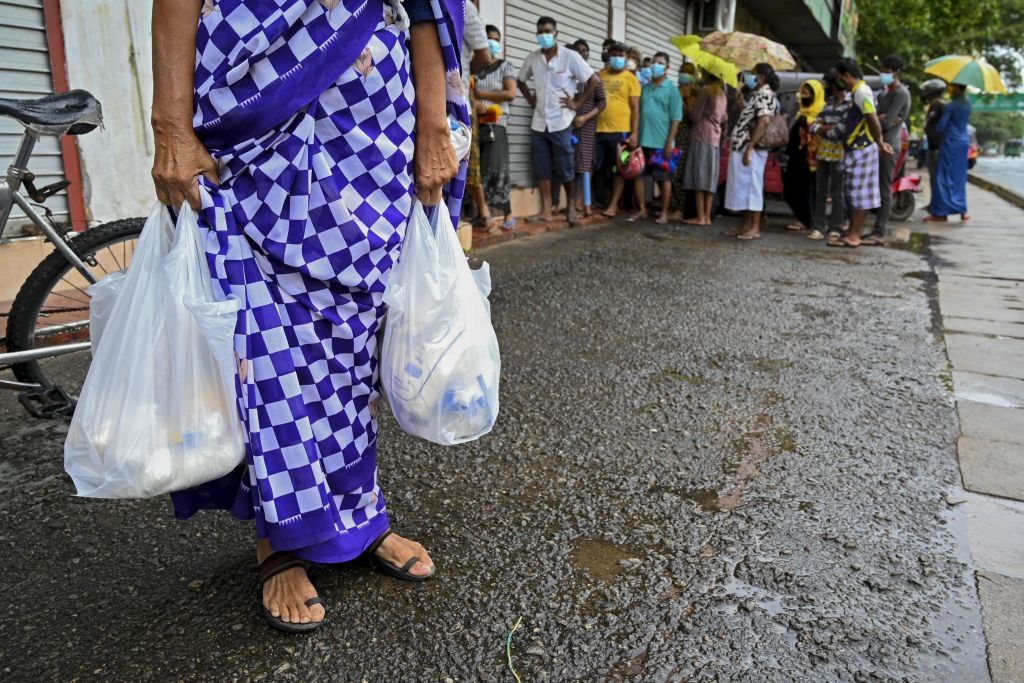
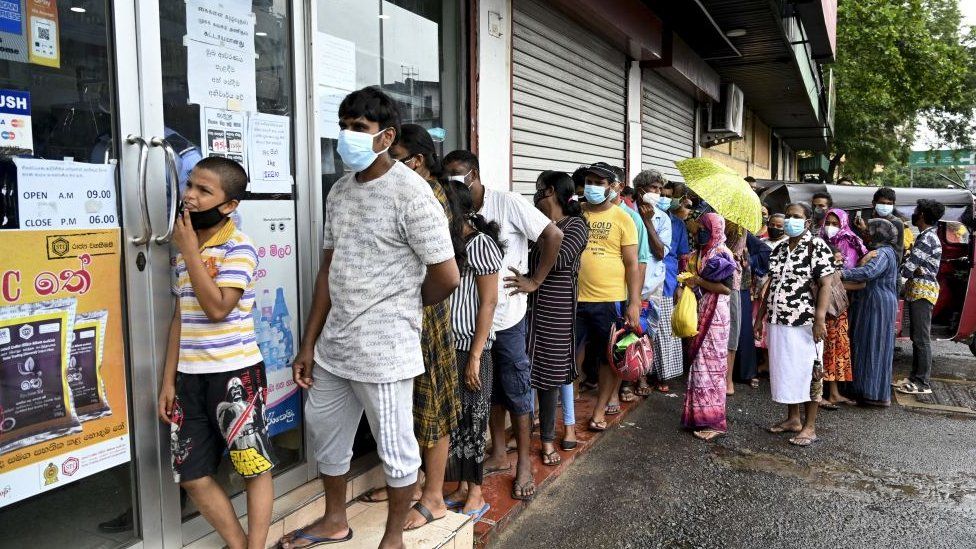
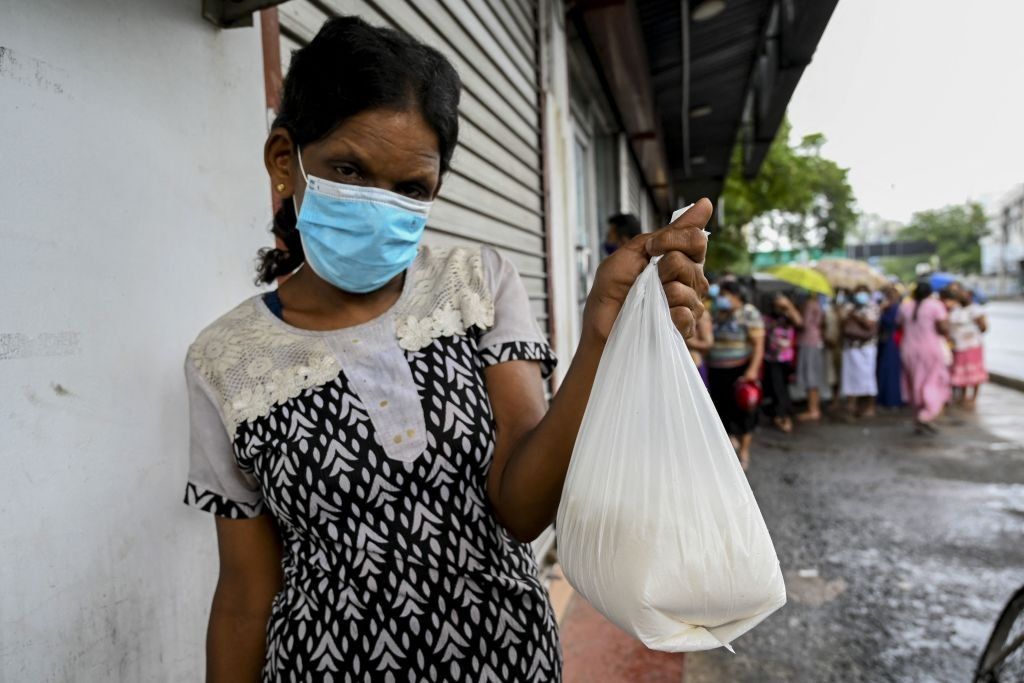
Sri Lanka has experienced long queues to buy essential items amid tight lockdown measures to control the spread of Covid-19.
Shelves at government-run supermarkets have been running low – some even empty – with very little stock remaining of imported goods like milk powder, cereal and rice.
The government denies there are shortages and blames the media for stoking fears.
It follows the government declaring a state of emergency and Sri Lanka’s Central Bank chief stepping down amid a foreign exchange crisis.
What has the government done?
On 30 August, President Gotabaya Rajapaksa announced strict controls on the supply of essential goods.
The government said this was needed to prevent traders hoarding food items and control inflation.
Sri Lanka is grappling with a depreciating currency, inflation and a crippling foreign debt burden.
The economic slowdown is of particular concern as until recently, Sri Lanka had one of the strongest economies in South Asia.
In 2019, it was upgraded to an upper middle-income country by the World Bank.
But at the same time, the country’s debt burden has also been growing – from 39% of Gross National Income (GNI) in 2010 to 69% in 2019, according to the World Bank.
What’s happened to food prices and supplies?
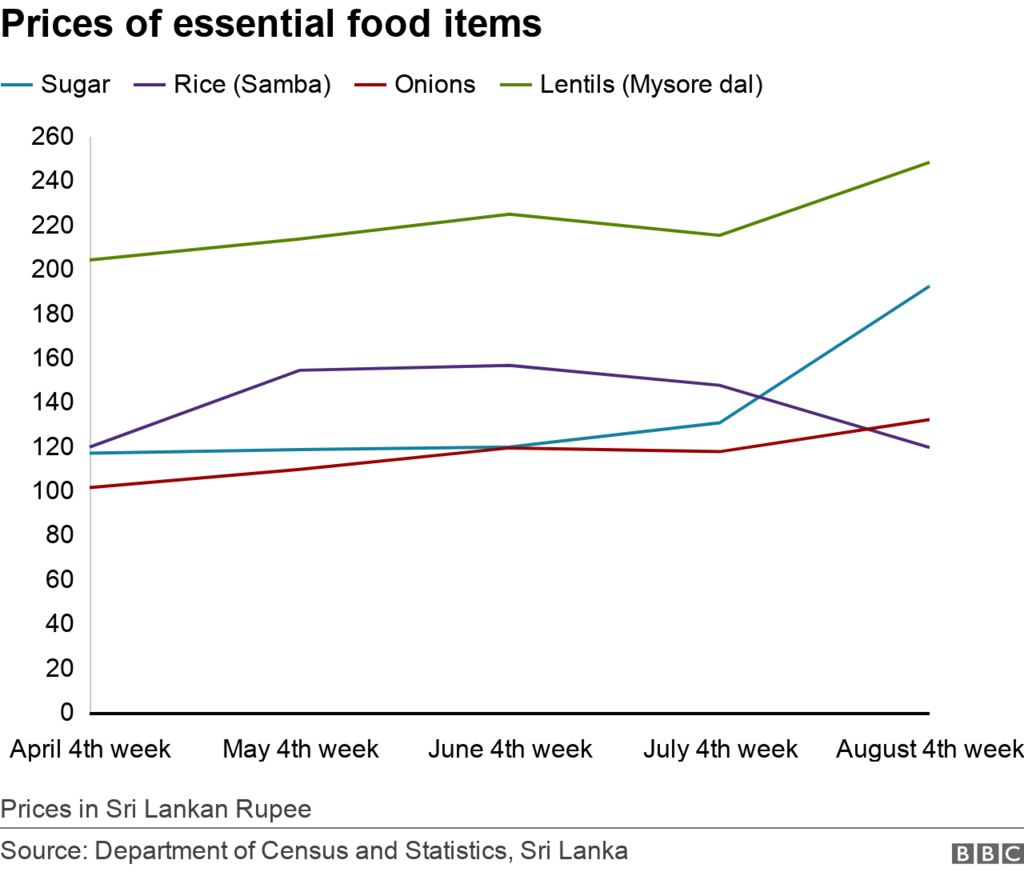
As a result of the economic crisis, the prices of some essential food items have been rising.
In recent months, items such as sugar, onions and lentils have been rising in cost.
Meanwhile, after rising in May, the price of rice has been falling and continued to drop following the imposition of a retail price cap from the start of September.
The emergency regulations allow the government to provide food items and other essentials at controlled prices by buying stocks from traders.
In regard to shortages, the country’s finance ministry told the BBC in a statement that these were “artificial”.
“The creation of an artificial shortage by unscrupulous elements will obviously lead to increases in prices of those items.”
The government has strongly denied that shortages are imminent.
“We can give a categorical and firm assurance that all essential items would be readily available at all times,” the finance ministry said in its response to the BBC.
State Minister Ajith Nivard Cabraal has blamed the opposition for “false reports” about food shortages.
However, long queues have been observed for items such as sugar, rice, lentils and milk powder.
“I was here in the queue for about 45 minutes and I got only one kilogram of sugar,” said Kumaradasa, a senior citizen.
Another person who did not want to be identified told the BBC that government-owned supermarkets which sell sugar at fixed prices had closed in the neighbourhood of Gampaha town, near the capital, Colombo.
image captionDespite strict lockdown conditions, long food queues have been reported
Members of parliament critical of the government’s policy have said other laws to monitor hoarding and price rises were already available and the decision to declare an emergency was made in “bad faith”.
”[The crisis] is merely a manifestation of a power struggle where the president and government are callously risking lives of citizens, with the hope of consolidating power,” Eran Wickramaratne, from the opposition SJB party, said in the Sri Lankan parliament.
Could organic farming be to blame?
In April, the government banned imports of chemical fertilisers, pesticides and herbicides, to encourage organic farming.
But the move and its implementation have been criticised.
“We are not against organic farming, but against sub-standard chemical fertilisers which were being imported,” said Namal Karunaratne, national organiser of All Ceylon Farms Federation.
However, he added that “the answer to that is not banning imports overnight.”
Some farmers say the rapid switch could significantly cut production.
“The productivity of the organic fertiliser is less than chemical fertilisers, it would decrease our production and make our survival more difficult,” said HC Hemakumara, President of Ampara district joint farmers association.
And the highest dependence on chemical fertilisers was among those growing rice, rubber and tea.
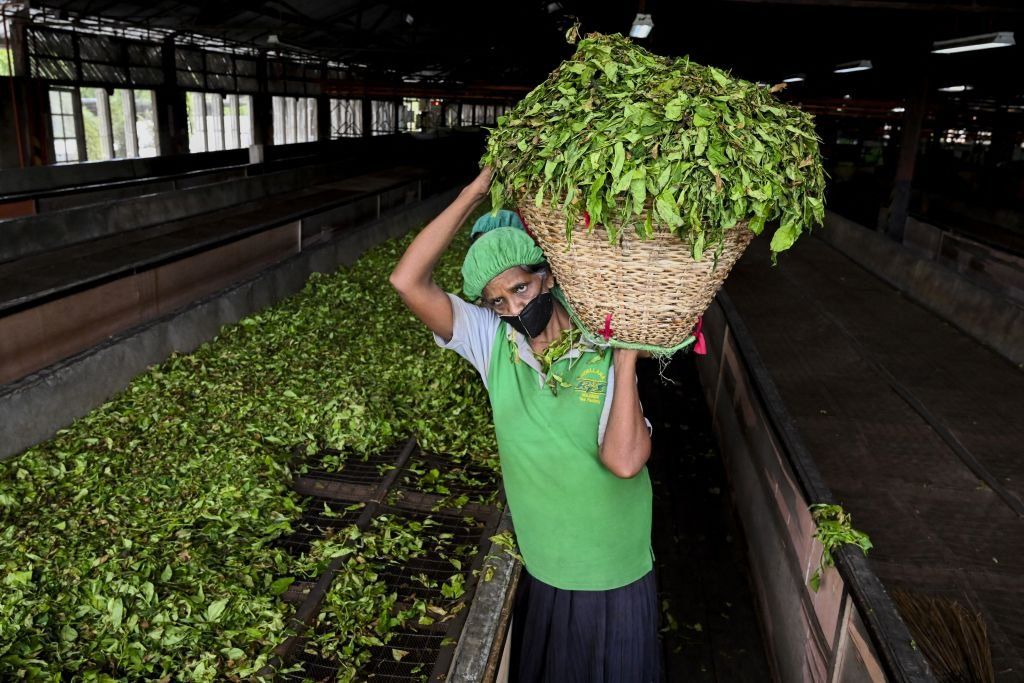
Tea accounts for 10% of export income, and some producers have said they may lose up to 50% of their crop production.
image captionGoing organic poses threats to Sri Lanka’s tea industry
Prof Sabine Zikeli, of the Centre for Organic Farming at the University of Hohenheim in Germany, says a rapid transition to organic could threaten a country’s food security.
“You can’t simply change these conventional cropping systems, you need transition periods,” she says.
“In organic farming, the normal transition period to adapt….about three years or even longer, depending on the country.”
In 2008, Bhutan introduced a policy of going 100% organic by 2020.
Sri Lanka could now face a similar situation, Prof Zikeli, who co-authored this study, says.
And its current economic crisis could add to the threats to its food security.
Sri Lanka is running low on foreign exchange – and the money it has is going towards debt settlement.
Its foreign reserves stood at $2.8bn (£2bn) at the end of July, down from $7.5bn in November 2019, when the government took office.
And it has outstanding foreign debts of about $4bn, on which it has to pay interest.
And that could affect essential imported items – such as sugar, wheat, dairy products and medical supplies – which might all face growing supply problems.
Sept 12 (MSN) – Sri Lanka has experienced long queues to buy essential items amid tight lockdown measures to control the spread of Covid-19.
Shelves at government-run supermarkets have been running low – some even empty – with very little stock remaining of imported goods like milk powder, cereal and rice.
The government denies there are shortages and blames the media for stoking fears.
It follows the government declaring a state of emergency and Sri Lanka’s Central Bank chief stepping down amid a foreign exchange crisis.
What has the government done?
On 30 August, President Gotabaya Rajapaksa announced strict controls on the supply of essential goods.
The government said this was needed to prevent traders hoarding food items and control inflation.
Sri Lanka is grappling with a depreciating currency, inflation and a crippling foreign debt burden.
The economic slowdown is of particular concern as until recently, Sri Lanka had one of the strongest economies in South Asia.
In 2019, it was upgraded to an upper middle-income country by the World Bank.
But at the same time, the country’s debt burden has also been growing – from 39% of Gross National Income (GNI) in 2010 to 69% in 2019, according to the World Bank.
In recent months, items such as sugar, onions and lentils have been rising in cost.
Meanwhile, after rising in May, the price of rice has been falling and continued to drop following the imposition of a retail price cap from the start of September.
The emergency regulations allow the government to provide food items and other essentials at controlled prices by buying stocks from traders.
In regard to shortages, the country’s finance ministry told the BBC in a statement that these were artificial”.
The creation of an artificial shortage by unscrupulous elements will obviously lead to increases in prices of those items.”
The government has strongly denied that shortages are imminent.
We can give a categorical and firm assurance that all essential items would be readily available at all times,” the finance ministry said in its response to the BBC.
State Minister Ajith Nivard Cabraal has blamed the opposition for false reports” about food shortages.
However, long queues have been observed for items such as sugar, rice, lentils and milk powder.
I was here in the queue for about 45 minutes and I got only one kilogram of sugar,” said Kumaradasa, a senior citizen.
Another person who did not want to be identified told the BBC that government-owned supermarkets which sell sugar at fixed prices had closed in the neighbourhood of Gampaha town, near the capital, Colombo.
Members of parliament critical of the government’s policy have said other laws to monitor hoarding and price rises were already available and the decision to declare an emergency was made in bad faith”.
”[The crisis] is merely a manifestation of a power struggle where the president and government are callously risking lives of citizens, with the hope of consolidating power,” Eran Wickramaratne, from the opposition SJB party, said in the Sri Lankan parliament.
Could organic farming be to blame?
In April, the government banned imports of chemical fertilisers, pesticides and herbicides, to encourage organic farming.
But the move and its implementation have been criticised.
We are not against organic farming, but against sub-standard chemical fertilisers which were being imported,” said Namal Karunaratne, national organiser of All Ceylon Farms Federation.
However, he added that the answer to that is not banning imports overnight.”
Some farmers say the rapid switch could significantly cut production.
The productivity of the organic fertiliser is less than chemical fertilisers, it would decrease our production and make our survival more difficult,” said HC Hemakumara, President of Ampara district joint farmers association.
About 90% of Sri Lanka’s farmers use chemicals, according to a survey in July.
And the highest dependence on chemical fertilisers was among those growing rice, rubber and tea.
Tea accounts for 10% of export income, and some producers have said they may lose up to 50% of their crop production.
Prof Sabine Zikeli, of the Centre for Organic Farming at the University of Hohenheim in Germany, says a rapid transition to organic could threaten a country’s food security.
You can’t simply change these conventional cropping systems, you need transition periods,” she says.
In organic farming, the normal transition period to adapt….about three years or even longer, depending on the country.”
In 2008, Bhutan introduced a policy of going 100% organic by 2020.
But it fell a long way short of achieving this target and a recent study shows yields from the organic farming it has introduced have been substantially lower, leading to a rise in dependence on imports.
Sri Lanka could now face a similar situation, Prof Zikeli, who co-authored this study, says.
And its current economic crisis could add to the threats to its food security.
Sri Lanka is running low on foreign exchange – and the money it has is going towards debt settlement.
Its foreign reserves stood at $2.8bn (£2bn) at the end of July, down from $7.5bn in November 2019, when the government took office.
And it has outstanding foreign debts of about $4bn, on which it has to pay interest.
And that could affect essential imported items – such as sugar, wheat, dairy products and medical supplies – which might all face growing supply problems.
Running out of foreign exchange amid an economic downturn and with looming debt-servicing obligations, the Sri Lankan government imposed a slew of import controls earlier this year.
Policies that respect the farmer’s economic freedom offer the best route to sustainable agriculture
Earlier this month, the Rajapaksa government imposed a state of emergency in Sri Lanka after its bungled response to a brewing foreign exchange crisis cascaded into food shortages. An army general has been put in charge of catching both hoarders of food and holders of foreign currency. Like a Greek tragedy, we know how things will unfold, but well-wishers of the Sri Lankan people are powerless to stop the avoidable suffering that lies ahead.
Running out of foreign exchange amid an economic downturn and with looming debt-servicing obligations, the Sri Lankan government imposed a slew of import controls earlier this year. Banning the import of automobiles, toilet fixtures, Venetian blinds, toothbrush handles and turmeric is one thing, but a complete ban on fertilizers is entirely another. Domestic production is critical for any food-importing country facing a foreign exchange crisis. In Sri Lanka’s case, it is even more important because it is a major exporter of tea. The fertilizer ban has left Sri Lanka both short of food and US dollars
The Rajapaksa government’s folly is a warning to all of us. When the fertilizer ban was announced, it was heralded as a progressive policy aimed at making Sri Lanka the first country in the world to completely embrace organic agriculture. Suitable references to a green socio-economic model of sustainable solutions to climate change” were made. In a few short months, however, reality caught up with the rhetoric and disaster followed.
Here’s the point. Across the world—and India is no exception—organic farming has been turned into a self-evident moral argument that dare not be questioned. Like all dietary preferences, individuals are free to attach morality to what they consume, but public policy has to be justified using reason and empirical evidence. We cannot push people into organic because we believe its a morally good thing to do. We need to make the policy case for organic, at the global, national and regional levels.
There is no simple, universal case for organic agriculture: Not even at a national, state or district level. Whether or not organic farming is a ‘good thing’ depends on crop, soil, geography and economic context. Pushing organic farming in a one-size-fits-all policy will inevitably lead to the kind of disaster that Sri Lanka currently faces. It is far better to leave cropping and farming decisions to the farmers themselves. Government and civil society can spread awareness and market knowledge, but must avoid embracing arbitrary targets of how much of agriculture ought to be organic. Indeed, studies that show ‘lack of awareness’ as the biggest factor holding back the growth of organic farming in India may well be indications that farmers are demonstrating greater awareness about their profession than the people who are trying raise it.
Ball-park estimates suggest that organic yields are 20-30% lower than their conventionally farmed counterparts. Subsidies trickling through an inefficient government system cannot override this. Would you accept a 30% pay cut for the sake of the planet, with an encouraging government offering you some tax deductions? I’m sure your hesitance is not due to lack of awareness. That is why I think it is unconscionable to ask a family earning less than ₹10,000 a month (that’s around the national average for farming households) to consider organic farming.
Nobody seems to have done the math on organic. I cannot see how the massively important task of doubling the incomes of farmers in the near future can be squared with increasing the area under organic cultivation. To double incomes, we need massive improvements in yield, a massive reduction in the number of farmers, or both. To increase organic output and income, we need more farmland and fewer farmers. More farmland means fewer forests. Fewer farmers would need more non-farm jobs. How can anyone claim to know what this means for the carbon footprint?
The solution to India’s agricultural crisis that has been clear for over 150 years is the creation of non-agricultural jobs. Far more than organic farming, it is industry that provides a ramp for farmers to attain better lives and livelihoods. Those who prefer to remain or venture into agriculture would then do it because it is worth their while. This is one reason why organic farming is catching on in Western economies and among India’s richer cultivators. Organic farming is a luxury—both for the farmer and consumer. Like all luxuries, it should be left to those who desire it.
None of this is to say that modern agriculture is unblemished. Far from it: reckless abuse of pesticides, fertilizers and hormones have pretty nasty effects on humans and the environment. These need to be fixed through better public policies and technology. Let us not forget this same modern agriculture proved everyone from Malthus to Ehrlich wrong. The world needs better governance of agriculture and food production, not a retreat from science.
The Sri Lankan experience will therefore be instructive. Amid mounting complaints of an acute shortage of fertilizers, the Rajapaksa government is currently giving farmers, well, organic manure in response.
(Nitin Pai is co-founder and director of The Takshashila Institution, an independent centre for research and education in public policy)
There has been less enthusiasm among the youth in Colombo City to get COVID-19 vaccines during the past few weeks, Chief Medical Officer Colombo Municipal Council (CMC) Dr. Ruwan Wijayamuni said yesterday.
We began giving the vaccines to those between 20 and 30 years old from Monday, September 6. However, the number of vaccines given to them was 30 per cent less than what we expected,” Dr. Wijayamuni said.
Dr. Wijayamuni told Daily Mirror that the CMC hoped to provide around 7,500 vaccines a day but managed to give around 5,000 until yesterday.
Many demanded Pfizer vaccines and when we said we don’t have it many of them went away. My advice to youth is that they should get the brand of vaccines which is available in order to prevent the spread of COVID. We will continue with the vaccine drive and be giving it during next week as well,” he said.
Dr. Wijayamuni earlier said that the pandemic is contained to some extent in Colombo city.(Yohan Perera)
The total number people died of COVID-19 infection in Sri Lanka moved up with 144 more fatalities were confirmed by the Director-General of Health Services on Saturday (Sep. 11).
The new development has pushed the official death toll from the virus outbreak in Sri Lanka to 11,296.
According to the data released by the Department of Government Information, the latest victims include 77 males and 67 females.
As many as 122 deaths were reported among the elderly people aged above 60 years.
In addition, 21 individuals aged between 30-59 years and one female below 30 years have also succumbed to the virus infection.
The Epidemiology Unit of the Health Ministry reported that 620 more people were tested positive for COVID-19 in Sri Lanka today (Sep. 12), moving the daily total of new cases to 2,642.
According to the Government Information Department, 2,641 of them have been associated with the New Year Cluster and the remaining one was identified as returnees from overseas.
This brings the tally of coronavirus infections confirmed in the country to 485,922.
Official data showed that more than 61,800 active cases are currently under medical care at hospitals, treatment centres and homes.
Total recoveries from the virus infection reached 412,812 earlier today as 1,579 more patients were discharged from medical care upon returning to health.
Meanwhile, Sri Lanka registered 144 new COVID-related fatalities confirmed by the Director-General of Health Services on Sep. 11. The new development pushed the official death toll from the virus outbreak in Sri Lanka to 11,296.
The Ministry of Health has stated that it will intervene if certain hotels are charging exorbitant rates from guests who are staying in hotels after conducting covid tests until the results are received.
Tourists have repeatedly accused hotels of charging exorbitant rates for their stay in the country once they return from abroad and are awaiting the results of the Coronavirus test.
About 2,000 local and foreign tourists are currently arriving in Sri Lanka daily from the Katunayake Bandaranaike International Airport, subject to travel restrictions.
Sri Lankans that have been vaccinated with both doses are also subject to hotel stays in quarantine until the fresh PCR results are available.
However, the quarantine travellers allege that the hotels charge exorbitant fees for a period of no more than one day while they wait g for the results of the test.
Our investigation revealed that a a particular star hotel charges $ 170 or Rs. 34,000 per person per day for a single room and $ 210 or Rs. 42,000 per room for two.
In addition, the hotel charges $ 40 for a covid test, $ 12 for insurance and $ 55 for airport transportation.
It was revealed that another hotel charges $ 231 or Rs. 46,000 for a single room and $ 265 or Rs. 53,000 for a double room.
In addition, the hotel charges $ 40 for a covid test, $ 12 for insurance and $ 55 for airport transportation.
Our news team revealed that another star class hotel charges around $ 235 or Rs. 47,000 for a single room and $ 297 or Rs. 60,000 for a room for two.
The visitors have to be quarantined at such a high cost for their stay until the results of the covid test are obtained in the background where rapid testing facilities are available at the Bandaranaike International Airport premises in Katunayake.
When inquired from the Katunayake Airport in this regard it was stated that if the health sector makes recommendations, Rapid testing will also be available at the airport for incoming passengers.
Hiru news team will continue to pay attention until this injustice to local and foreign tourists is resolved.
Meanwhile, a person in the area alleged that his mother and father who were infected with covid were sent to a hotel in the Negombo area for quarantine and were charged over a million rupees.
>He said that a sum of Rs. 1,015,000 was charged for a period of 07 days of quarantine in the hotel.
After
reporting Mr. Susil Siriwardane passed away, the debate on the elimination of
poverty re-emerged and it might be for a short period because the condition of
poverty in the country has not been eliminated so far. Mr. Susil Siriwardane
attempted to reduce poverty through his project JANASAVIYA and Mr.R. Premadasa assisted
the project and allocated budget funds, however, poverty in Sri Lanka seems to
be vicious nature among many people. It is a significant characteristic of the
economy of Sri Lanka.
Poverty
has been a specific feature of Sri Lanka since economic activities were beginning
by humans in the country. Marco Polo, in his report on Sri Lanka, gave short
details of poverty in Sri Lanka. According to historical information, no king
in the past attempted to eliminate poverty, and although published literature
mentioned the term poor people, what type of plans were implemented to eliminate
poverty are not mentioned. In history, poverty has been treated as a
characteristic of past life or a consequence of sin committed in a previous
life.
Poverty
is a feature or characteristic of any country in the world and economists have defined
people who are gaining income below the poverty line included in the category
of poor. The drawing of the poverty line is based on the income levels of
people, and it considers many factors and the ways people are gaining economic
advantages. All governments in the world have taken policy actions in a variety
of ways supporting the poor, and no country has eliminated poverty except the
volume of people under the poverty line. Therefore, the elimination of poverty
is a complicated task and it can see in some countries many poor, homeless
people while rich people are living in a luxury status.
Poverty
elimination is a vital part of the curriculum of economics in universities, and
some universities have identified the characteristics of poor countries
considering a variety of factors. The University of Sussex made much research
on the elevating of poverty and Sri Lanka was also included in such research.
What is the most effective policy action to eliminate poverty, it is difficult
to define? For example, a person gaining less than $1000 for a month is below
the poverty line, but such a person could not be poor in Sri Lanka, it
concerned the matter of purchasing power of a currency.
When
assessing the economy of Sri Lanka, the volume of people in the category of
poverty has been subjected to variation and the COVID-19 pandemic also
contributed to change the volume of poverty because the lockdown strategy to
control the pandemic was disadvantaged to poor people who were restricted by
limiting engagement of economic activities.
The
efforts in the elimination of poverty in developed countries composed of
various programs and providing subsidies for various expenses such as
electricity gas, rent, and many others, and skills development programs to
increase earning levels and encouragement in investments in projects that
create jobs are major efforts of poverty elimination. The elimination of
poverty is an impossible task. Whatever measures are used, many people include
in poverty because the general price level, exchange rate, and the value of
economic activities are changed for many reasons. When Mr.J.R. Jayawardane
elected the prime minister in Sri Lanka in 1977, he started a payment system
similar to dole in developed countries after about a few months, the program
was abandoned by the government and what was the reason was unknown. Most
probably, it was a lack of funds to afford.
Various
factors contribute to poverty in Sri Lanka. Lack of skills training in the
education system has been a major reason, and in early the 1960s, education
policy had changed to attract skills development in the school curriculum,
despite this effort, Marxist political parties protested against policy changes
and gave a terrible impression on the purpose of education. This attitude has
still not been changed in Sri Lanka. Many people go overseas for education
rather than investing in technical and vocational education. It does not kill
development but for theoretical knowledge development in business and finance.
The
higher population in the country is another major factor for poverty. I read. A
book in 1976 in which showed that the population in Sri Lanka was higher
(George, S (1976) How the Other Half Dies, The Real Reason for World Hunger,
Penguin Books p.57 and Sri Lanka had a population plan to maintain a lower rate
of population growth, however, the plan has not been properly monitored and
religions and racism encouraged to increase the birth rate of the country. I
noticed a TV Chanel encouraged to increase kids and offering presents to those
who have many kids in the family. While the death rate was reduced to very
lower for a thousand, the rate of birth for a thousand went above. Now medical
officers advise postponing pregnancy for young married women, it might increase
the death rate of pregnant women and the spread of the Delta variant. Sri Lanka
should have a 15 million population is the best option for the country, if it
wants to reduce the poverty. The current population in Sri Lanka is seven
million higher than it should be.
I
don’t want to suggest that Sri Lanka needs to implement Malthus’ theory, but
the imbalance of female and male population 48:52 also contributes to an
increase in population and makes a positive impact on poverty.
The
population classification race needs changing and many Muslim populations are
subjected to poverty as the religion motivates them to have more kids in a
family.
Before
going any further, I should thank the editor for his editorial titled
‘Shortages, half-truths and mistruths (07/09)’, which gave me the idea of
looking at ‘moles and mountains’ slightly differently, and then with a dash of slight humour too,
here and there.
Now please allow me to share my own two cents’ worth (pardon me for the
cliché) involving mountains and molehills. It is a fairly complex game of
downplaying and exaggerating depending on who is talking and the subject and
the specific outcomes.
Generally,
the former is a favourite weapon of engagement of the opposition and the
latter, mostly and for obvious reasons, of the government.
How
the opposition’s response to the commendable performance of the military
personnel (an idea coming from the president himself, it is said) working
alongside our dedicated health workers in our ongoing and excellent vaccination
programme, is a case in point in support of the former. And as for the
government, I do not wish to touch on anything specific as their achievements
and claims have always been on the exaggeration-mode.
Now
this molehill-mountain exchange, so to speak, must have come into being quite
possibly long time ago, when our distant ancestors finally gained the ability
to downplay and exaggerate too and now it has been well-established in all
spheres of human society and politics is no exception, and in the land like no
other, in particular
In
passing, I must also say that we Sri Lankans are said to be generally good at
giving, but not when it comes to criticism and praise, where the former is
preferred by many to the latter, even when it doesn’t seem right to many a
fair-minded person and our politicians and many other bigwigs have been
exemplary in this regard.
Lastly
the ‘molehill-mountain’ will have many more years ahead of it for sure, as long
as we have people and of course, governments and oppositions.
‘Manike Mage Hithe’ sung by young artiste Yohani De Silva has created history in Sri Lanka as her song been viewed by over 100 million users on YouTube.
Yohani is also the first female singer in Sri Lanka who has cross two million YouTube subscribers.
The song ‘Manike Mage Hithe’ is a song by Satheeshan Rathnayaka. This song was again sung by Yohani as a cover version in May 2021. The lyrics were written by Dulan ARX. The song went viral and within three months the song surpassed 60 million views on YouTube as it has become an instant hit worldwide especially in India and Bangladesh.
The song was also recently released in English and Hindi after earning massive online plaudits.
President’s Media Spokesman Kingsly Rathnayaka’s has issued a statement today (Sep. 11), dispelling the misconceptions about rice mill owners, rice traders and the rice shortage.
He says that large-scale rice mill owners have reduced their daily rice production and distribution by more than 50%, in the last few days.
It is a well acknowledged fact by everyone that this is an unbearable injustice to the consumer, who is suffering from the COVID-19 pandemic.”
During the raids carried out by the Commissioner-General of Essential Services on September 08, 2021 alone, a total of 807,375 kilograms of rice were recovered from warehouses owned by the large-scale mill owners, it read further.
You can easily understand the political agendas behind all these actions, as the people who have once accused the large-scale rice mill owners of creating a rice mafia, are now coming forward to protect them,” the presidential spokesman pointed out.
He added that the President is of the view that a people-centric economy and a prosperous country will be built by making decisions in accordance with the powers vested in him for the welfare of the people, affirming the mandate and trust given by the people to build a secure country.
The full statement issued by the Presidential Spokesman is as follows:
Ayubowan!
Given the current situation in the country and in line with the decision taken by the President, I would like to take this opportunity to inform the country of the views of President Gotabaya Rajapaksa and the Government dispelling the misconceptions about rice mill owners, rice traders and the rice shortage.
You are aware that President Gotabaya Rajapaksa issued a Gazette Notification on August 30 containing the emergency regulations under the Public Security Ordinance in accordance with the powers vested in him, regarding essential commodities including rice, flour and sugar. This decision was taken by the President with the primary objective of protecting the consumers, discharging responsibility of a people-friendly government. At the same time, a Commissioner General of Essential Services was appointed to coordinate and oversee the distribution of consumer goods, including paddy, rice and sugar, in order to maintain the livelihood of the people.
The proposal made by the President to enforce the emergency regulations was also tabled in Parliament recently. The entire country witnessed that it was passed by a majority of 81 votes of people’s representatives. The government has taken up a gigantic challenge to control the current Covid-19 situation. An amount of over Rs. 500 billion has already been spent for this purpose.
All this shows that the government led by the President is committed to the people in the face of the current situation, in order to ensure that the livelihood of the people is not disrupted. The President will never take any action to aggrieve any party when making the necessary decisions in this regard.
From the very beginning, the government took measures to resolve the issue of rice by reaching an agreement with all stakeholders. The government expected a fair system that would protect the farmer, the businessman as well as the consumer. President Gotabaya Rajapaksa held lengthy discussions with leading rice mill owners. Agreements were reached. The Ministers in charge of the subject as well as Prime Minister Mahinda Rajapaksa held discussions with the business community.
The government set a guaranteed price for paddy, which was between Rs. 30 to 32 per kilo, with the aim of strengthening the farmer community. Accordingly, approval has been granted to purchase a kilo of Nadu and Kekulu paddy for Rs. 50, Samba at Rs.52 and Keeri Samba at Rs.55.
However, despite the guaranteed price for paddy, the market price of rice rose and a kilo of Nadu rice sold at Rs. 125.00, a kilo of Samba rice at Rs. 150.00 and a kilo of Keeri Samba at Rs.225.00, leaving consumers stranded.
It was then that the Commissioner-General of Essential Services, who was appointed vesting full powers under the ‘Public Security Ordinance’, took measures to ensure maximum justice to the affected people. Accordingly, guaranteed prices were gazetted and the maximum price of a kilo of Samba rice is 103 rupees, while for Nadu it is 98 rupees, a kilo of Kiri Samba rice is 125 rupees and a kilo of Kekulu rice is 95 rupees.
You may recall that the business community then acknowledged the crisis facing the country at this time and issued public statements that they will not take actions to put pressure on the government and would act in accordance to overcome this calamity period. But unfortunately, the agreements they entered with the government were neglected. At the same time, in the last few days, large-scale rice mill owners have reduced their daily rice production and distribution by more than 50%.
It is a well acknowledged fact by everyone that this is an unbearable injustice to the consumer, who is suffering from the COVID-19 pandemic. During the raids carried out by the Commissioner-General of Essential Services on September 08, 2021 alone, 807,375 kilograms of rice were obtained from the rice warehouses owned by the large-scale mill owners at the government-controlled price and handed over to the Sathosa.
You can easily understand the political agendas behind all these actions, as the people who have once accused the large-scale rice mill owners of creating a rice mafia, are now coming forward to protect them.
However, the President is of the view that a people-centric economy and a prosperous country will be built by making decisions in accordance with the powers vested in the President for the welfare of the people, affirming the mandate and trust given by the people to build a secure country.
The total number people who fell victim to COVID-19 infection in Sri Lanka moved up as 157 more fatalities were confirmed by the Director-General of Health Services on Friday (Sep. 10).
The new development has pushed the official death toll from the virus outbreak in Sri Lanka to 11,152.
According to the data released by the Department of Government Information, the latest victims include 70 males and 87 females.
As many as 130 deaths were reported among elderly people aged above 60 years.
In addition, 23 individuals aged between 30-59 years and four youths below 30 years have also succumbed to the virus infection.
The Epidemiology Unit of the Health Ministry reports that another 914 persons have tested positive for COVID-19 in Sri Lanka, moving the daily total of new cases to 2,796.
This brings the total number of confirmed cases of coronavirus reported in the country to 483,280.
As many as 411,233 recoveries and 11,152 deaths have been confirmed in Sri Lanka since the outbreak of the pandemic.
The Epidemiology Unit’s data showed that 60,895 active cases are currently under medical care.
The Sri Lankan government would do well to listen to the country’s agricultural scientists and not to quacks masquerading as experts.
An influential section of Sri Lankan agricultural economists and scientists has deplored the recent course change in the country’s agricultural policy made by the Gotabaya Rajapaksa government. The decision by the government to ban the use and import of chemical fertilisers and pesticides in pursuit of a 100 per cent organic food producer” status for Sri Lanka has already had disastrous consequences for the economy of the island nation, the Sri Lanka Agricultural Economics Association (SAEA) warned in a letter to President Rajapaksa on May 25, 2021. It pointed to the adverse effects of the policy on food security, farm incomes, foreign exchange earnings and rural poverty.”
President Rajapaksa’s ill-conceived and extremist policy, announced in April this year, of banning the import of all chemical fertilisers and pesticides as a way of promoting organic farming, is threatening to plunge the country’s agriculture into a deep production slump. As a consequence, the export of tea, Sri Lanka’s primary agricultural export, and of other commodities are projected to decline. The economy appears set for a fall in foreign exchange earnings in the midst of the Covid-19 pandemic.
The SAEA letter provided the following detailed estimates of the potential economic loss to farmers due to the policy:
When converting from conventional agriculture into organic farming, the Government should weigh the technological, environmental, and economic costs and benefits. The preliminary findings of the studies conducted by the SAEA on potential economic losses of the import ban and respective estimations are given below for your consideration.
(a) Agronomic studies reveal that the average yields from paddy can drop by 25 per cent if chemical fertilisers are fully replaced by organic fertilisers. This loss in productivity could reduce the profitability of paddy farming by 33 per cent and rice consumption by 27 per cent if paddy is cultivated just with organic fertilisers with a complete ban on rice imports. In contrast, applying organic fertiliser with the recommended dosages of chemical fertilisers would improve the profitability of farming by 16 per cent.
(b) Absence of chemical fertiliser would drastically reduce the productivity of the Vegetatively Propagated Tea (VPT). With a 35 per cent productivity drop, the export volume of tea would go down from 279 to 181 million kg, causing an income loss of Rs. 84 billion. The estate sector will likely incur significant losses compared to those of tea smallholders. These losses could further be aggravated due to increased cost of labour to apply bulky organic fertilisers.
(c) The coconut yields would go down by 30 per cent if chemical fertilisers and pesticides are not applied. This situation will adversely impact fresh coconut availability for the production of coconut oil, desiccated coconut and other coconut products. The loss in foreign exchange earnings can be as high as Rs. 18 billion, based on the assumption that only 26 per cent of the total coconut extent is fertilised. When the additional cost for the importation of edible oils is considered, the loss of foreign exchange earnings will be even higher.
(d) The above results were derived considering the immediate effects on three agricultural sub-sectors. An analysis performed accommodating adjustments in the economy over the medium to long run reveals that a reduction in average agricultural productivity by 20 per cent could cause a decrease in Gross Domestic Product (GDP) by 3.05 per cent suggesting an overall contraction of the economy with the implementation of the import ban. (emphases added)
The letter requested the President to substitute the import ban on chemical fertilisers and pesticides with the set of alternative measures” that included making scientifically validated Good Agricultural Practices (GAP) as a mandatory national standard and disincentivising overuse of chemicals in agriculture through an appropriate mix of legal standards, taxes, subsidies and output price support. The letter also asked for the strengthening of agricultural extension to improve awareness of the safe use of chemical fertilisers and pesticides”.
On coming to office in 2019, President Rajapaksa promised subsidised imported fertilisers to farmers. Yet in a matter of just two years, the Sri Lankan cabinet approved Rajapaksa’s proposal to completely ban the import of inorganic fertilisers and all synthetic agro-chemicals — effectively, the imports of all chemical fertilisers, pesticides, fungicides and weedicides. A gazette notification on May 6, 2021 brought this into immediate effect. For any shipment after 6th May 2021, permissions for unloading were cancelled, and banks told not to issue Letters of Credit on the import of banned substances.
What caused this about-turn?
The two factors behind the change in policy direction, according to news reports, are first, Sri Lanka’s foreign exchange crisis, and second, the rise in food prices owing to the lockdowns and other disruptions induced by Covid-19. It is estimated that Sri Lanka spends about US$ 400 million on fertiliser imports annually. A ban on chemical fertilisers, it was thought, would reduce the pressures on foreign exchange. Added to this was the pressure from President Rajapaksa’s group of advisors that included a medical doctor, who reportedly convinced him that the use of chemicals in agriculture was leading to the spread of chronic kidney disease. Sri Lankan scientists have in fact argued that there are no links between the use of chemicals as farm inputs and kidney disease. They attributed the rise in kidney diseases to hard water in conjunction with fluoride present in many wells” (for a short review, see here). But these voices of reason were disregarded, and the organic farming lobby pushed the policy through.
On May 10 2021, the Presidential Task Force on Creating a Green Sri Lanka with Sustainable Solutions to Climate Change” was formed under President Rajapaksa’s Chairpersonship. The Task Force was authorised to implement the import ban and submit a plan to create a Green Sri Lanka”. Initially, the Task Force had 46 members, but later the number of members was reduced to 25 with Mahinda Amaraweera as the Chairperson. Many senior agricultural scientists were excluded from its membership, and it appears that it was filled with people with questionable scientific credentials. One member of this task force, for example, had once claimed to have identified a self-generating rice variety of yore that had fed the ten giant warriors of the Sinhala King Dutugemunu of the Anuradhapura Kingdom between 205 BC to 161 BC. Agricultural scientists tested the claim and found that the claimed variety was of sorghum and not of rice at all! Yet another member had claimed that glyphosate even dissolved reservoir bunds! Such was the state of scientific rigour within the Task Force.
A decision was also taken to import large quantities of compost, as well as boost the domestic production of compost, to substitute for chemical fertilisers. It is well-known that compost can hardly be classed as organic” as it contains many potentially toxic trace elements, a fact that, alas, has never persuaded the soldiers of organic agriculture to stop promoting it as an alternative to chemical fertilizers.
It is not just the SAEA that sounded the alarm over the outcome of the new policy. Growers of tea, which is the most severely affected crop in the present crisis followed by rice, pepper and cinnamon, are very worried. Herman Gunaratne, a master tea maker from Ahangama and a member of Task Force himself, says that Sri Lanka’s tea production of 300,000 tonnes may be halved due to the organic farming policy. Given that 10 per cent of Sri Lanka’s export incomes come from tea, this presents a serious potential problem. In an interview to the South China Morning Post, he said:
The ban has drawn the tea industry into complete disarray … The consequences for the country are unimaginable … The tea industry depends on nitrogen (N), phosphorus (P) and potash (K) … Mainly it is the nitrogen component that we cannot do without. Without it, you can expect the decline in production by as much as 50 per cent … I cannot subscribe to the view that it [i.e., going organic] helps the tea quality except for the fact that if we go completely organic, we will lose 50 per cent of the crop. [But] we are not going to get 50 per cent higher prices … And there is an extremely limited market for organic tea in the world. There is no way in which it can compensate for the decline in the crop.
Sensing trouble and responding to widespread protests from farmers and growers, the Rajapaksa government reversed some aspects of the policy by the end of May 2021. On 31st May 2021, the Cabinet approved the import of carbonic fertilisers, natural minerals and chelated herbal trace minerals”. A tender was also floated to import organic fertilisers with a minimum of 10 per cent nitrogen, even though such a product is not known to exist outside blood meal, which contains about 13.25 per cent nitrogen. On 31st July 2021, some fertiliser mixtures were permitted to be imported by the protected agriculture sector”. However, no detailed guidelines exist for the orders issued above, and much confusion exists on what can be imported and what cannot. A list of 25 agrochemicals were recommended for imports for emergency use by agricultural scientists, but this recommendation was rejected by the government. To top it all, even the import of compost was banned after officials raised questions about the violation of the regulations pertaining to plant and animal quarantine.
The muddled and unscientific policy has caused damage in other sectors as well. For instance, 20,000 out of 107,000 hectares of rubber in Sri Lanka are affected by Pestalotiopsis, a fungal leaf disease that is controlled by Carbendazim and Hexaconazole application through spraying. Further, chemical fertilisers need to be applied to promote better leaf growth. Neither are available in the market. As a result, the Colombo Rubber Traders Association expects rubber production to drop by 15-20 per cent. According to the Association, This leaf disease is possibly best described as the equivalent of Covid-19 in the case of the rubber industry, considering both its devastation and the rapid speed at which it is spreading.”
The havoc caused by the Sri Lankan experiment with organic farming is a warning to developing countries across the world against falling into a similar trap. The irrational reduction in chemical inputs to agriculture even at low levels of productivity can spell disaster. Take a country like India where soils are generally poor in organic matter content. An estimated 59 per cent of soils are low in available nitrogen, about 49 per cent in available phosphorus, and about 48 per cent in available potassium. Indian soils are also deficient in varying degrees in micronutrients such as zinc, iron, manganese, copper, molybdenum and boron. Micronutrient deficiencies are not just yield-limiting in themselves; they also disallow the full expression of other nutrients in the soil, leading to an overall decline in fertility.
Agricultural scientists have always been aware of the nutrient deficiencies of soil, as well as the perils of overuse of chemicals and the improper/imbalanced application of fertilisers. They therefore recommend location-specific solutions to nurture soil health and sustain increases in soil fertility. They suggest soil-test-based location-specific balanced fertilisation and integrated nutrient management methods combining organic manures (i.e., farmyard manure, compost, crop residues, biofertilisers, green manure) with chemical fertilisers. Thus, while they may advocate reducing the use of chemical fertilisers in some locations, they would promote its use in others.
Such a comprehensive and integrated approach requires a firm adherence to science and the scientific method, and an equally firm rejection of anti-science models dressed up as organic,” eco-friendly,” pro-nature” and so on. President Rajapaksa’s policy falls squarely into the latter category, much like the promotion of Zero Budget Natural Farming (ZBNF) by the present Government of India. Only the total withdrawal of this policy can save Sri Lankan agriculture. The Sri Lankan government would do well to listen to the country’s agricultural scientists and not to quacks masquerading as experts.
R. Ramakumar is NABARD Chair Professor, School of Development Studies, Tata Institute of Social Sciences, Mumbai. Views are personal.
The article originally appeared on the Foundation for Agrarian Studies website. It has been published with permission.
The importation of chemical fertilisers, pesticides and herbicides was banned by a Cabinet Memorandum dated April 27, 2021 to promote the use of organic fertilisers and natural pesticides. Accordingly, the Department of Import and Export Control started to regulate the import of chemical fertilisers, pesticides and herbicides. As a result, inorganic fertilisers such as urea, Triple superphosphate, Muriate of Potash and other agrochemicals (insecticides, fungicides etc.) became scarce.
The Soil Science Society of Sri Lanka, (SSSSL) the membership of which includes soil scientists representing the university academia, the Department of Agriculture, the Department of Export Agriculture, research institutes and the private sector, and Sri Lanka Agricultural Economics Association (SAEA) a professional body representing the agricultural economists of Sri Lanka indicated that banning import of inorganic fertilisers will have disastrous effects on the crop sector. A number of scientist in the field of agronomy, soil science, entomology in articles published in newspapers highlighted the undesirable effects of banning agrochemicals on food security, farm incomes, foreign exchange earnings and rural poverty. Farmers too protested over non-availability of inorganic fertilisers, especially urea.
In spite of all these protests, the Ministry of Agriculture (MOA) continued to ban import of inorganic fertilisers and pesticides. As a result, according to media reports, yields of food crops were reduced and the quantity and quality of export crops, specially tea which is Sri Lanka’s biggest single export, bringing in more than US $ 1.25 billion a year — accounting for about 10 percent of the country’s export income, were affected to a considerable extent.
The Agriculture Ministry in the meantime promoted the manufacture of organic fertilizers but they were unable to get sufficient amounts of organic fertilisers manufactured. An attempt was made to establish one organic fertiliser manufacturing centre per each Divisional Secretariat covering 29 Divisional Secretariats in Anuradhapura and Polonnaruwa. All these attempts failed. At a weekly media briefing held at the Presidential Media Centre, on 2 Sept. in view of the shortage of organic fertilisers and synthetic pesticides, it was revealed that arrangements will be made to import organic fertiliser of high international standard to address any shortage and also bio-pesticides. According to media reports Sri Lanka’s two state fertiliser companies have signed an agreement with a Chinese fertiliser supplier. A stock of 96,000 MT of organic fertiliser inputs in granular form, containing 10 per cent of Nitrogen and 3,000 MT of amino acid containing 15 percent of Nitrogen, will be imported for the forthcoming Maha season. Based on these decisions, the MOA need to make the people, especially those associated with the agriculture sector aware of the following:
(a) What has been added to the organic fertiliser to increase its N content to 10% ? Generally organic fertilizer contains only upto 5 % N.
(b) What amino acids containing 15% N will be imported ? and how these amino acids are going to be used?
(C) What are the bio-pesticides to be used?
Imported organic fertilisers pose a high risk of contaminating our soils and water resources. Even if they are sterilised it may have dormant weed seeds , pathogenic bacteria, and fungi which may cause disease outbreaks among crops, livestock and humans leading to heavy economic losses. Once the pollutants enter into our eco-system, it is not easy to recover from the damage. It is the people of the country who will have to face the brunt of this undesirable activity of the Ministry of Agriculture.
At the weekly briefing held on 2 Sept, at the Presidential Media Centre, it was revealed that financial incentives of Rs. 12,500 per hectare, up to a maximum of two hectares will be provided to farmers to encourage organic fertiliser production. Who will analyze the organic fertiliser produced by the farmers before Rs. 12,500 per ha is paid ? What are the specifications? Will Rs. 12,500 be paid irrespective of the nutrient content of the organic fertilizer? These data are important as the composition of O. Fertiliser could vary considerably depending on the raw material used. A few weeks ago it was revealed that the agric. Ministry will get all the soil samples of cropping areas analysed before the beginning of the Maha season, may be for N,P and K. Has this being done?
Probably the Finance minister, having realised the utter foolishness of banning the import of inorganic fertilisers and synthetic pesticides lifted the ban and issued a gazette notification on 3 August re-authorising the import of several types of chemical fertilisers to be used in the forthcoming Maha season. According to this gazette notification, permission has been granted theoretically for the importation of virtually all the chemical fertilisers, under import control licenses although the government has claimed that there is no shift in its organic agriculture policy!
The relaxation follows widespread concerns over the ban of inorganic fertilisers and its impact on short to medium term viability of the agriculture sector. Those who have been allowed to import inorganic fertilisers will be permitted to import ammonium nitrate with calcium carbonate. (Note : Most of the nitrate will be lost due to leaching and will result in many undesirable effects such as eutrophication. We have enough calcium carbonate in the country, why import?)