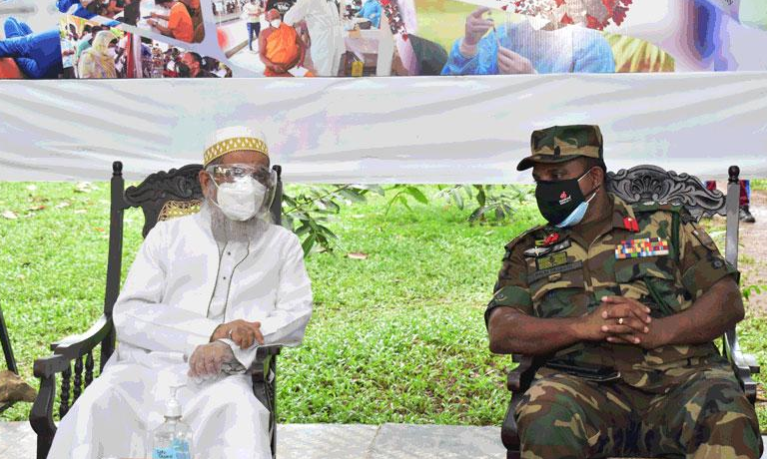
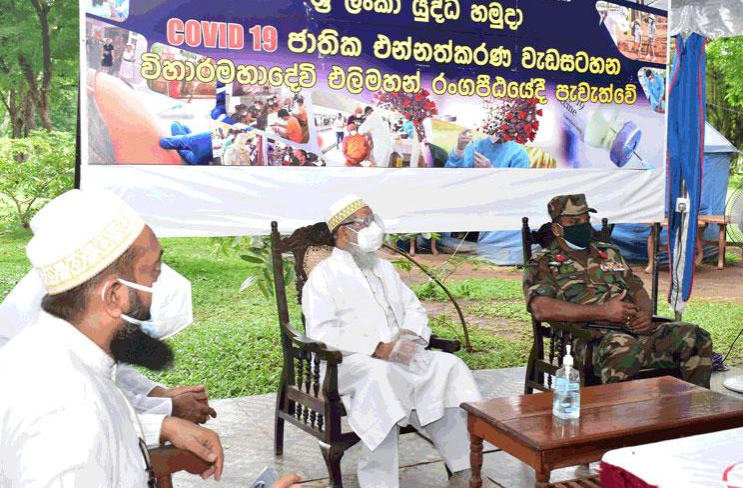
Army Commander General Shavendra Silva says that a decision has been taken to impose quarantine curfew across the island with effect from 10.00 p.m. today (20) until 4.00 a.m. on August 30 (Monday).
He stated that essential services, export, apparel and agricultural sectors will be allowed to function as normal during that period while pharmacies will also be permitted to operate as per usual.
He stated that this decision was taken during the meeting with the Special Committee on COVID-19 Control held at the Presidential Secretariat today.
The Army Commander further said that the Sri Lanka Army and health sector will continue to carry out the vaccination of persons over the age of 60 during the quarantine curfew period.
COVID-19 inoculation drive will continue despite the quarantine curfew, says General Shavendra Silva, the Head of National Operation Centre for Prevention of COVID-19 Outbreak (NOCPCO).
The army commander noted that vaccine recipients who are scheduled to receive their second doses can get themselves vaccinated at respective clinics.
An island-wide quarantine curfew came into effect from 10.00 pm today (August 20). It will be enforced until 4.00 am on the 30th of August (Monday).
Essential services, export, apparel and agricultural sectors are allowed to function as normal during that period while pharmacies will also be permitted to operate as per usual.
The decision was taken during the meeting with the Special Committee on COVID-19 Control held at the Presidential Secretariat today.
The total number people who fell victim to COVID-19 infection in Sri Lanka soared yet again as a record high of 195 new fatalities were confirmed by the Director-General of Health Services on Thursday (August 19).
This is the highest number of deaths reported within a day since the beginning of the pandemic.
The new development has pushed the official death toll from the virus outbreak in Sri Lanka to 6,985.
According to the data released by the Department of Government Information, the latest victims include 98 males and 97 females.
As many as 151 deaths were reported among the elderly people who are aged above 60 years.
In addition, 43 individuals aged between 30-59 years and one male below 30 years have also succumbed to the virus infection.
A total of 1,014 more people tested positive for COVID-19 today (August 17), increasing the daily count of positive cases to 3,839.
According to the Government Information Department, 3,835 of the latest cases reported today were associated with the New Year cluster. The remaining four are arrivals from foreign countries.
Following the new development, the country’s confirmed coronavirus cases tally now stands at 381,812, the Epidemiology Unit said.
Official data showed that as many as 320,810 patients who were infected with the virus have returned to health so far.
Meanwhile, the death toll reached 6,985 after a record daily high of 195 victims were confirmed by the Director-General of Health Services.
More than 54,000 active cases are currently under medical care at hospitals and treatment centres across the country.
A report based on the total of 5775 Covid-related deaths reported until the 13th of August, 2021 in Sri Lanka has been released.
According to reports over 5,000 Covid-related deaths reported (5,295) in Sri Lanka consist of people who have not received a single dose of the COVID-19 vaccine.
Therefore over 90% of the deaths (91.7%) in Sri Lanka were of those who were not vaccinated.
However, only 417 deaths (7.2%) are of those who have received at least a single dose of the Covid vaccine from the death toll of over 5,000.
Meanwhile, 63 of the Covid-related deaths are of people who had obtained both doses of the vaccine.
Director of the Department of Immunology and Molecular Medicine at Sri Jayewardenepura, Dr Chandima Jeewandara stated that for the first time in the world, patients have been found in Sri Lanka who are infected with three mutated strains of the Delta variant.
It is reported that the patients were found in Colombo.
One of the identified mutated strains has originated from Sri Lanka.
Rhys Blakely, Science Correspondent CourtesyThe Times (UK)
Fully vaccinated people are far more likely to develop symptoms if they catch the Delta variant of the coronavirus compared with earlier strains, a large study has shown.
Research that looked at more than 700,000 fully vaccinated adults found that more than half of those who became infected with Delta developed classic” Covid symptoms, such as a cough, fever and loss of taste and smell.
With the Alpha variant, which fuelled the wave of infections over the winter, the equivalent figure had been less than 10 per cent.
The research also found that people who were fully vaccinated and those who were unvaccinated had the same levels of virus in their nose and throats if they became infected with Delta. With the Alpha variant, virus levels in those vaccinated had been much lower.
It was stressed that both the Pfizer-BioNTech and Oxford-AstraZeneca jabs still provided good levels of protection, especially against severe disease and hospital admission. However, the findings will raise concerns that the Delta strain, now dominant in the UK, has reduced the effectiveness of both vaccines at limiting the spread of the virus. Signs of waning protection will be weighed as government advisers discuss any booster-shot campaigns.
Professor Sarah Walker, of the University of Oxford, who led the study, said it was plausible that higher peak levels” of virus would mean that vaccinated people with Delta were more infectious. You still are less likely to get infected if you’ve had two doses — but if you do, you will have similar levels of the virus to somebody who hasn’t been vaccinated at all,” she said.
The study compared the protection offered by the Pfizer and AstraZeneca vaccines before and after mid-May — roughly the point at which Delta, which was first identified in India, became the main variant in the UK.
Before May 16, only about 7 per cent of vaccinated people who caught the virus showed symptoms. At that time, the Alpha strain, first identified in Kent, was dominant. After May 16, when virtually all cases were Delta, the number of vaccinated people showing symptoms jumped to 55 per cent.
The fact that we’re seeing more symptomatic infections with Delta and infections with higher virus levels does mean there is the potential for hospitalisations to increase, but I would really stress that we don’t know that yet,” Walker said.
More research would be needed, she added. We don’t yet know how much transmission can happen from people who get Covid after being vaccinated. For example, they may have high levels of virus for shorter periods of time.
But the fact that they can have high levels of virus suggests that people who aren’t yet vaccinated may not be as protected from the Delta variant as we hoped. This means it is essential for as many people as possible to get vaccinated, both in the UK and worldwide.”
The study also found that two doses of Pfizer is initially more effective at preventing new infections than two doses of AstraZeneca. However, the Pfizer protection declined faster. Fourteen days after the second jab, Pfizer was 85 per cent effective at preventing any infection, falling to 75 per cent on day 90. For AstraZeneca it was 68 per cent on day 14 and 61 per cent on day 90.
The study suggested that after four to five months, both vaccines are likely to perform about as well as each other, and that the interval between doses does not affect effectiveness in preventing new infections, which may potentially support the argument for the present eight-week gap to be reduced.
Dr Koen Pouwels, a senior researcher at Oxford’s Nuffield Department of Population Health, said: The fact that we did not see any effect of the interval between first and second doses, and the greater effectiveness of having had two doses rather than one, supports the decision to reduce [the gap] to eight weeks now that Delta is the main variant of concern in the UK.
However, while vaccinations reduce the chance of getting Covid-19, they do not eliminate it. More importantly, our data shows the potential for vaccinated individuals to still pass on Covid, and the importance of testing and self-isolation to reduce transmission risk.”
The study also showed that people who caught Covid and later received a vaccine had greater levels of protection. For example, 14 days after a second dose of AstraZeneca, infections had dropped by 88 per cent among those previously infected. For those who had not had the virus, it was 68 per cent.
With Pfizer, a prior infection led to 93 per cent protection; without the prior infection, it was 85 per cent.
A British public health study has found that protection from either of the two most commonly used COVID-19 vaccines against the now prevalent Delta variant of the coronavirus weakens within three months.
It also found that those who get infected after receiving two shots of either the Pfizer-BioNTech or the AstraZeneca vaccine may be of greater risk to others than under previous variants of the coronavirus.
Based on more than three million nose and throat swabs taken across Britain, the Oxford University study found that 90 days after a second shot of the Pfizer or Astrazeneca vaccine, their efficacy in preventing infections had slipped to 75% and 61% respectively.
That was down from 85% and 68%, respectively, seen two weeks after a second dose. The decline in efficacy was more pronounced among those aged 35 years and older than those below that age.
“Both of these vaccines, at two doses, are still doing really well against Delta… When you start very, very high, you got a long way to go,” said Sarah Walker, an Oxford professor of medical statistics and chief investigator for the survey.
Walker was not involved in work on AstraZeneca’s vaccine, which was initially developed by immunology experts at Oxford.
The researchers would not project how much more the protection would drop over time, but suggested that the efficacy of the two vaccines studied would converge within 4-5 months after the second shot.
VIRAL LOAD
Highlighting the increased risk of contagion from the Delta variant, the study also showed that those who do get infected despite being fully vaccinated tend to have a viral load similar to the unvaccinated with an infection, a clear deterioration from when the Alpha variant was still dominant in Britain.
The Oxford findings are in line with an analysis by the U.S. Centers for Disease Control and Prevention (CDC) and come as the U.S. government outlines plans to make COVID-19 vaccine booster shots widely available next month amid a rise in Delta variant infections. It has cited data indicating diminishing protection from the vaccines over time.
Israel began administering third Pfizer doses last month to confront a surge in local infections driven by Delta. Several European countries are also expected to begin offering boosters to the elderly and people with weak immune systems.
Pfizer has said its vaccine’s efficacy drops over time. Last month AstraZeneca said it was still looking into how long its vaccine’s protection lasts and whether a booster dose would be needed to keep up immunity.
“The fact that we do see … more viral load hints (…) that indeed herd immunity might become more challenging,” said co-author Koen Pouwels, also of Oxford University.
Herd immunity is when a large enough portion of the population is immune to a pathogen, either by vaccination or prior infection, stopping infection numbers from growing.
“Vaccines are probably best at preventing severe disease and slightly less at preventing transmission,” said Pouwels.
The authors cautioned that the viral concentration in the throat was only a rough proxy for severity of symptoms and that they had no new data on the duration of infections.
The survey, which has yet to be peer-reviewed before publication in a scientific journal, underscores concerns by scientists that the Delta variant, first identified in India, can infect fully vaccinated people at a greater rate than previous lineages, and that the vaccinated could more easily transmit it.
To contrast periods before and after Delta became prevalent, the Oxford researchers analysed about 2.58 million swabs taken from 380,000 randomly picked adults between Dec. 1, 2020, and May 16, 2021, and 810,000 test results from 360,000 participants between May 17 and Aug. 1.
The study was conducted in partnership with Britain’s Office of National Statistics (ONS) and the Department for Health and Social Care (DHSC)
According to the data published by Worldometers.info website Sri Lanka reported being the worst Covid Management capability in the world except for a few African countries.
USA Cases reported during the last 7 days 2937 per million population and death in the last 7days 16 per million population. UK Cases reported during the last 7 days 3068 per million population and death in the last 7days 10 per million population. Russia Cases reported during the last 7 days 1032 per million population and death in the last 7days 39 per million population. Cuba Cases reported during the last 7 days 5439 per million population and death in the last 7days 49 per million population. Vietnam Cases reported during the last 7 days 662 per million population and death in the last 7days 23 per million population. Sri Lanka Cases reported during the last 7 days 1268 per million population and death in the last 7days 53 per million population
Chief Prelates of the Malwathu-Asgiri Sects have written to President Gotabaya Rajapaksa requesting a country-wide lock for a period of one week.
The Chief Prelates pointed out that the entire country is facing a catastrophe due to the spread of the coronavirus disease.
The letter also noted that the health sectors have warned of the severity of the new mutant virus strains and the difficulty in controlling them due to their rapid spread.
Further, the World Health Organization has also warned of a major health crisis in Sri Lanka in the coming months, the letter reads.
Thereby, Chief Prelate of Malwathu Sect Ven. Thibbatuwawe Sri Siddhartha Sumangalabhidhana Thero and Chief Prelate of the Asgiriya Sect Ven. Warakagoda Dhammasiddhi Sri Pagnananda Thero have urged the President to impose a lockdown on the country for at least a period of a week on the advice and recommendations of health experts.
The Theros appealed to the President to control the spread of the disease by providing the necessary facilities to the people during the lockdown and protect lives.
Ten allied political parties of the government have proposed to the President to lockdown the country for at least three consecutive weeks.
In a letter to President Gotabaya Rajapaksa, they have suggested seven measures to be taken to control the pandemic.
The political parties say that, despite being aware of the economic impact of closing the country, the number of COVID-19 cases will not go down to a level that can be handled by the hospital system without a lockdown.
The allied political parties have also suggested that an all-party mechanism be set up to deal with this national catastrophe and that a committee of experts from the health and economic sectors be appointed to advise it.
The letter also added that all officials involved in distorting data, especially in reporting on COVID-19 cases, should be punished without discrimination.
The letter was signed by Ven. Athuraliye Rathana Thero of Ape Jana Bala Pakshaya, Vasudeva Nanayakkara of the Democratic Left Front, Tissa Vitarana of the Lanka Sama Samaja Party, Wimal Weerawansa of the National Freedom Front, and Udaya Gammanpila of the Pivithuru Hela Urumaya.
In addition, A. L. M. Athaullah of the National Congress, Tiran Alles of the United People’s Party, G. Weerasinghe of the Sri Lanka Communist Party, Asanka Navaratne of the Sri Lanka Mahajana Party, and Gevindu Kumaratunga of the ‘Yuthukama’ Organization have also signed the letter.
According to the Ministry of Health, 97.7% of those who succumbed to COVID-19 as of August 13 had not been vaccinated against the virus.
As per the data, Sri Lanka had witnessed 5,775 deaths from the coronavirus. Reportedly, 5,295 of them had not received any COVID-19 vaccine.
The remaining 480 victims had received at least one dose of the COVID-19 vaccine.
Of those, a total of 417 had died after receiving only one dose. This accounts for 7.2% of the total deaths.
The health sector estimates that 63 people died from the infection while receiving both doses of the COVID-19 vaccine, which is only 1.1% of the total deaths.
The Ministry of Health reported that another 1,073 persons shave tested positive for Covid-19, increasing the daily count of new cases in Sri Lanka to 3,793.
All new cases confirmed today are associated with the ‘New Year’ Covid-19 cluster.
Accordingly, this brings the tally of confirmed cases of Covid-19 in the country thus far to 373,165.
A total of 47,847 infected patients are currently under medical care while total Covid-19 recoveries has increased to 318,714.
The death toll due to the virus in Sri Lanka is 6,604.
The Director General of Health Services has confirmed another 186 coronavirus related deaths for August 18, increasing the death toll in Sri Lanka due to the virus to 6,790.
This is the highest number of deaths reported within a day since the beginning of the pandemic.
According to the figures released by the Govt. Information Department, the deaths reported today includes 111 males and 75 females.
Four of the victims are below the age of 30 while another thirty-five are between the ages of 30 and 59.
It is reported that there are plans to impose an islandwide complete lockdown to curb the rapidly spreading Covid-19 pandemic.
The government is being pressured by various parties including the Chief Prelates of the Asgiriya and Malwaththa Chapters to impose a lockdown for a short period of time.
More than 25 cities on the island have voluntarily imposed lockdown.
Meanwhile, sources close to the Presidential Secretariat stated that the President is most likely to address the nation tomorrow (20).
The sources further stated that the President is scheduled to make a statement on how the lockdown will be imposed in the country according to the quarantine law.
Meanwhile, a six-hour curfew is in effect in the country every day from 10:00 p.m. to 04:00 a.m.
The Weligama Pradeshiya Sabha has decided to launch a program to deliver Ayurvedic medicines at home to those who are currently being treated and quarantined at home for Covid infections.
Accordingly, they have decided to deliver the relevant medicines to the homes every day from tomorrow (20).
People in the Weligama Pradeshiya Sabha area can call 070 5551470 for more information.
Trade Minister Bandula Gunawardena stated that a program has been launched to distribute a relief package of 20 essential items worth Rs.1,998 to the public for two weeks through the Sathosa from tomorrow (20).
He was addressing a media briefing in Colombo today (19).
The Minister pointed out that it is possible to get this relief package delivered to homes by calling the number ‘1998’.
The relief package, which includes 20 items that normally sell for more than Rs. 2,600 in the market, will be available at Sathosa branches islandwide from tomorrow.
In keeping with the Government’s commitment to address accountability a Domestic Mechanism was instituted by appointing a Presidential Commission of Inquiry headed by a Supreme Court Judge by Gazette No. 222111/55 of 21 January, 2021. The mandate of this Commission was: to investigate and inquire into, take necessary action or report on the following matters, namely”:
(a) Find out whether preceding Commissions of Inquiry which have been appointed to investigate into human rights violations, have revealed any human rights violations, serious violations of the international humanitarian law and other such offences;
(b) Identify what are the findings of the said Commissions and Committees related to the serious violation of human rights, serious violations of international humanitarian laws and other such offences and whether recommendations have been made on how to deal with the said facts;
(c) Manner in which those recommendations have been implemented so far in terms of existing law and what steps need to be taken to implement those recommendations together in line with the present Government policy;
(d) Overseen of whether action is being taken according to (b) and (c) above”
The reason for a Domestic Mechanism instead of a Hybrid Commission involving Foreign Commissioners as proposed in UNHRC Resolutions co-sponsored by the former Government is because it violates provisions of the Constitution of Sri Lanka. This was brought to the attention of the UN Human Rights Council by the former Government as well as by the present Government. This fact entitled the present Government to withdraw from obligations of co-sponsorship because Article 46 of the Vienna Convention invalidates any commitments undertaken whenever an internal law of fundamental importance” is violated.
However, since there are no restrictions to engage foreign personnel in processes limited only to investigations, the recommendation herein is to engage a mix of foreign and local personnel whose credibility in respect of their expertise is beyond question, with a mandate to carry out comprehensive investigations into alleged violations of Human Rights and /or International Humanitarian Laws. If there are constitutional impediments for such a mix, foreign experts could be engaged as consultants on the basis of their expertise to assist investigations.
SCOPE of the INVESTIGATIONS
The suggestion herein therefore, is to focus on investigations. However, unlike normal law and order situations when investigations into violations of human rights and/or humanitarian law could lead to prosecution depending on the comprehensiveness of the investigation, the intention is to limit investigations with the primary purpose of recording the acts relating to human rights law and/or humanitarian law violations that occurred during the conflict between February 22, 2002 when the Cease Fire Agreement was signed, and May 19, 2009 when the conflict ended.
If instead, investigations are permitted to be comprehensive enough to warrant prosecution, the most likely outcome would be that more persons who represented the Government of Sri Lanka and others who were associated with the conflict would have to face prosecution. Such persons could either be those alleged to have committed violations or those who exercised command responsibility. In contrast, it is more likely that few of those associated with the LTTE would have to face prosecution because either there is no evidence as who specifically committed the violations and acts of terror or even if their identities can be established they cannot be located since they have acquired new identities and are domiciled in foreign countries. Furthermore, others who were in positions to exercise command responsibility, cannot be prosecuted for the crimes committed such as, targeted assassinations and terrorist acts, conscripting civilians to take part in hostilities, taking over 300,00 civilians hostage and killing those who attempted to escape because they are no longer with the living.
The net effect of such an asymmetric outcome following a prosecutorial process would permanently damage the efforts advocated and undertaken to bring about reconciliation.by successive Governments. For the UNHRC to include the provision in several of its Resolutions that a credible justice process should include independent judicial and prosecutorial institutions….”, is to ignore this reality because the perception of the UNHRC is based on the premise that prosecuting the guilty would foster reconciliation. While such a premise may be applicable to normal law and order situations, it is certainly NOT applicable in the case of an armed conflict that spanned three decades involving two communities, if the prosecutorial process causes disproportionate outcomes as referred to above. Furthermore, if the outcome is such that more from the Sinhala majority community is prosecuted than from the minority Tamil community for whatever reason, the consequences would be so serious that reconciliation would not only be a pipe dream but it would also precipitate outcomes that may be unimaginable.
In view of the real possibility of such serious outcomes, it is imperative that the scope of the investigation be constrained to such a degree that legal prosecution is not possible. However, the scope of the investigation could be such that it is possible to establish the body of evidence associated with a particular incident, but not enough to prosecute those who actually committed the act. For instance, there is evidence that the security forces targeted temporary hospitals despite being aware of their location. However, there is also counter evidence that the LTTE directed artillery fire from such locations and moved their ordinance soon after, thus prompting the security forces to target these make-shift hospitals. The investigation would then be limited to what each party to the conflict did in a given situation and not go beyond as to who was culpable to warrant prosecution under the relevant laws. Investigations would thus be a record of actions taken by respective parties to the conflict without going further to establish which party was responsible for which violation of which laws – Human Rights or Humanitarian.
The majority of internal conflicts that either occurred in other countries or those that are currently ongoing, are essentially conflicts between State entities and non-State armed groups. Consequently, violations committed during such conflicts are governed by Human Rights Law. The conflict in Sri Lanka on the other hand, is recognized by the Office of the UN Human Rights Council in their Report on Sri Lanka (OISL) as a Non-International Armed Conflict governed by Common Article 3 of the Geneva Convention. Consequently, violations committed by either party to the conflict during the armed conflict are governed by International Humanitarian Law as codified in the Additional Protocol II of 1977 together with those Human Rights Laws that CANNOT be derogated by the ICCPR and by the Constitution of Sri Lanka during a declared Emergency; facts acknowledged in the OISL Report.
Article 6, titled Penal Prosecution” of the Additional Protocol II of 1977 sets out the procedures that need to be followed whenever prosecutions and punishment of criminal offences during an armed conflict are undertaken. Section 2(a) of Article 6 states: The procedure shall provide for an accused to be informed without delay of the particulars of the offence alleged against him…”. This means that if an accused is to be informed of the particulars of the offence alleged against him, the person concerned has to identified and located before he/she is prosecuted. While it may be possible to identify and locate more of those that were associated with the Sri Lankan Government for prosecution, it would be nearly impossible to identify and locate most of those who were associated with the LTTE for prosecution. In such a background a full blown prosecutorial process involving internationally recognized lawyers engaged by either side would NOT be in a position to navigate a meaningful outcome because the international lawyers engaged by the supporters of the LTTE would he armed with more material to prosecute Government’s agents while international lawyers engaged by the Government would have relatively few to prosecute. Consequently, the entire prosecutorial process would end up being skewed leading to the hardening and polarization of attitudes between the Sinhala and Tamil communities; an outcome that should be avoided at all cost.
The scope of the investigation should therefore be limited to finding the Truth as to the nature and extent of the violations committed by parties to the conflict. Going beyond and engaging in prosecuting those responsible for such violations by either party to the conflict would set in place trends with consequences that would be difficult to control. Therefore, as Governments have done in the past and continues to do, the recommendation in the last Section of Article 6 of the Additional Protocol cited below should be followed.
Section 5 of Article 6 states: At the end of hostilities the authorities in power shall endeavor to grant the broadest possible amnesty to persons who have participated in the armed conflict, or those deprived of their liberty for reasons related to the armed conflict, whether they are interned or detained”.
CONCLUSION
The approach pursued by repeated Resolutions of successive Human Rights Councils has been to investigate and prosecute those from both parties to the armed conflict in Sri Lanka who violated Human Rights and/or Humanitarian Laws from February 22, 2002 to May 19, 2009. However, if such an approach is adopted, it would lead to an asymmetric outcome resulting in the polarization of the two communities to a degree that could give cause for instability because the numbers associated with successive Governments who could be identified and prosecuted would in comparison be far in excess of those associated with the LTTE, since it would be next to impossible to identify and prosecute them because they are dispersed primarily in the West with fresh identities. Furthermore, while it would be possible to identify those associated with the Government responsible for command, it is NOT possible to identify the leaders of the LTTE who were responsible for command, because they are no longer among the living.
In light of this hard reality, the approach should be to limit investigations, not with the intent of prosecution, but with the intent of recording the events that occurred during the armed conflict, and which party to the armed conflict could be identified with the respective violations. Such an investigation should be undertaken by a panel made up of a mix of both local and foreign experts responsible to the appointed Commission. At the end of such investigations the present leadership of the parties to the conflict should acknowledge the serious omissions and commissions committed by both parties and move on by declaring the broadest possible amnesty to all who were associated with the conflict as stated in Section 5 of Article 6 of the Additional protocol II of 1977 cited above. Since such amnesties and pardons have been instituted starting with the release of child soldiers and nearly 11,000 plus former LTTE combatants and more recently the release of prisoners, the practice has been in operation from time to time. The need therefore, is to regularize this practice and bring closure to an issue whose time has come.
Early this month (August, 2021), a farmer in Vilavotei, Kilinochchi, whilst preparing his paddy field, detected a part of a uniform worn by Sri Lankan soldiers with skeletal remains. He promptly informed the Police.
The investigators found besides the aforementioned also evidenced that strongly suggested a site used by the LTTE as an execution ground. Surprisingly, or not, this news had not generated any interest in the Media, civil societies or amongst the nosy western diplomatic corps. Even the various groups that have sprung up in support of our war heroes are keeping mum.
On taxpayers’ money the high maintenance Office for Missing Persons (OMP) functions. In the year 2018 national budget, Rs 1.4 billion was allocated for the functioning of the OMP. In the 2019 April budget, another Rs 500 million was included to honour an interim report submitted by the OMP.
This additional sum was to provide the affected families with missing persons a monthly allowance of Rs 6,000/ until a suitable compensation package can be finalised through the Reparations Commissions. The necessity for this allowance was established on the basis that the surviving families could not proceed with their legal rights without a death certificate. Therefore, recognising a person as missing until his/her fate can be determined is important for the surviving family.
Responsibility of the OMP
It is the prime responsibility of the OMP to thus determine the identity of the victims in this mass grave. Since DNA testing is available locally this is not an impossible task. The work involved may be tedious but the Government has made a generous allocation to the OMP, so that they may execute their responsibilities without constraints.
Therefore, it is of great importance that the OMP submits to Parliament a progress report on the identity of the skeletal remains. The Parliamentarians too, especially those who won their seats by speaking on behalf of our war heroes, should push for such a report from the OMP.
Kilinochchi Mass Grave vs Mannar Mass Grave
When the Mannar mass grave was discovered in 2018 in the northwestern town of the then German ambassador himself visited the site with a Media crew on tow. The immediate presumption was that this was a crime committed by the Sri Lankan armed forces. The western diplomats and civil societies dependent on these western agencies were licking and smacking their chops with anticipation of finally finding evidence to prove their wild allegations against our war heroes. They did not even for a moment entertained the possibility that this mass grave could have been the works of the LTTE – even though the disrepute of LTTE included the indiscriminate killing of innocent civilians who they perceived as against them.
However, carbon data from the world’s most advanced labs proved that the mass grave was created by neither the Sri Lankan armed forces nor the LTTE. This was a crime committed during the forced European occupation and was few centuries old. Immediately, all interest on it vapourised. When the Mannar mass grave was still a hot topic, it was discussed even in Geneva.
On 20 March 2019, The United Nations Human Rights Commission’s High Commissioner Michelle Bachelet met a high profile Government delegation that comprised the then Foreign Minister Thilak Marapana, Parliamentarian Dr Sarath Amunugama, Governor of the Northern Province Dr Suren Raghavan, Secretary to the Ministry of Foreign Affairs Ravinatha Aryasinha and the Permanent Representative of Sri Lanka to the UN in Geneva Ambassador ALA Azeez.
It was reported that the High Commissioner greeted the Yahapalana Government delegation warmly and expressed satisfaction on the progress made by Sri Lanka in some of the key human rights commitments arising from HRC resolution 30/1. In what was described as frank and candid discussion between the two parties, the High Commissioner had also referred to certain information contained in the Office of the High Commissioner’s Report such as the ‘mass graves’ in Mannar.”
One-sided story reaching Geneva
Whether High Commissioner Bachelet would express similar interest on the mass grave with remains of Sri Lankan soldiers in the upcoming UNHRC September session is to be seen. It is unfair to predict a reaction before its time. However, it is not unreasonable to be doubtful as the news that reach the UNHRC only caters to a narrative that is supportive of the LTTE propaganda. There is a reason for the UNHRC to fail in forming a comprehensive picture vis a vis Sri Lanka. The highly politicised UNHRC picks on certain developments concerning Sri Lanka and not all news.
Despite the UN maintaining an office in Sri Lanka, the UNHRC tends to give more of a hearing to the Human rights groups, civil rights activists and other Non Governmental Organisations funded by the West that continuously carry tales against Sri Lanka to the UNHRC.
The UNHRC Resolution 30/1 brought against Sri Lanka in 2015 is a case in point. That Resolution hinges on the outrages allegation that 40,000 perished during the last phase of the war against terrorism. Yet, the UN Colombo office’s estimate of this figure is around 7,000.
This figure of 40,000 was first published in the illegal Darusman’s Report. When Rear Admiral Sarath Weerasekera challenged Yasmin Sooka, who made up the three-member panel that produced the Darusman’s Report, as to how the 40,000 figure was arrived at, all she could do was stare back dumbfounded. The Foreign Ministry is too entangled in negating these exaggerated or even false reporting and appeasing our accusers in the belief that will stop the hate campaign against the country.
Hence, as a State arm we are not as persistent in presenting a positive image of the country as those who are engaged in discrediting our country. For instance, 15 ex-LTTE combatants were recently given cash emoluments of Rs 100,000 each to initiate a means of self-employment. This is certainly not a one time event or something that took place for the first time since the annihilation of the LTTE.
No longer credible
Since the conclusion of the war against terrorism, the Sri Lankan Governments under Mahinda Rajapaksa and Gotabaya Rajapaksa have concentrated on aiding the former LTTE cadres to return to the civil society. From the rehabilitation programmes and thereafter, these two Governments have initiated many programmes that have helped former terrorists to rebuild their lives through various vocational programmes. In April 2017, hundreds of ex-LTTE gathered in protest against the move to hand over the farms and pre-schools managed under the Sri Lankan Army to the TNA-dominated Northern Provincial Council.
They insisted that their livelihoods would be adversely affected if these were given to be managed by the NPC. Therefore, they wish to work under the military in which they have more confidence. It is noteworthy the TNA once was the political stooge of the LTTE. Therefore, it is clear from these protests that the TNA is no longer a credible or accepted political entity amongst the very people who fought for a separatist movement.
These protests, unlike the howls generated over the disappeared persons, are not funded by any NGOs. This makes the protests by the ex-LTTE cadres a genuine cry and denotes the true state of affairs in the country. During the current recruitment drive, more than 1,600 from the Tamil community had joined the Army,” observed Army Commander Shavendra Silva when he toured the Northern peninsula in April, 2021.
The Tamil youth seeing career prospective in the Sri Lankan military is the best evidence we have of the harmony between the military and the civilians in the North and East. It is most unfortunate that the Sri Lankan Government and especially the Foreign Ministry fails to latch on to such developments. These developments are thus seen as isolated incidents and get dismissed even before the end of the day.
Treacherous Agenda in Discrediting Sri Lanka
Earlier this month, Canada announced funding to nine NGOs to the tune of CAD 300,000 under a programme labelled 2021-2022 Canada Fund for Local Initiatives. These nine Organisations include Centre of Human Rights and Development, Colombo Friends in Need Society, Comdu.it, Chrysalis, Media Law Forum, Save the Beach Maldives, Transparency International Sri Lanka, Verite Research and Women & Democracy.
According to the press statement released by the Canadian High Commission on 04.08.2021, this initiative is to support and empower Organisations addressing local issues while strengthening ties with civil society and local communities. This year, the statement further read, this initiative will contribute to promoting and advancing inclusive governance, women’s empowerment, environment and climate action and growth that works for everyone in Sri Lanka and the Maldives. The statement admits that this is a highly competitive and sought out programme.
Here lies the problem, which the Defence Ministry should take serious note. This substantial funding and support is only given to those that meets the Canadian criteria. In simpler terms, this award is given to those with the most brown noses. This is an absolutely unacceptable situation. The role of an embassy is to establish and strengthen bilateral relations between its Government and the administration of the host country. As such, an embassy cannot be seen to be intervening in internal matters of its host country.
This includes all attempts at moulding societies, groups and organisations to carry an external agenda. However, these local societies that are funded by these embassies and Western Governments do not work towards strengthening the positioning of their own country but rather to discredit it. The persistent demand to release Easter Attack suspects as Hejaaz Hisbulla and former CID Director Shani Abeysekera who fabricated false evidence against Yahapalana Government’s political opponents is made by such civil societies.
The fact that they did not make a hum when the military intelligence officers were similarly incarcerated on flimsy charges that had no evidence highlights their hypocrisy. The West for centuries operated on a divide and rule principle. In this context, they always created confusion and chaos in non-white supremacist countries. They do not wish to see our countries progress. Thus far, US ambassador Alaina Teplitz has been exposed twice over misleading comments made on the Colombo Port City, the key project that will strengthen our economy.
First she claimed that the Port City would be a haven for money laundering. Recently she falsely implicated that the US has one of the companies working on the Port City Development on our sanctions list,” and further commented that doing business with that company may not be something that’s advisable.” She made these comments to a select group of journalists.
This in itself proves that the US embassy is not as big on Media freedom as they claim. CHEC Port City Colombo (Pvt) Ltd was quick in correcting this falsehood. The response noted that neither this company nor its parent company China Harbour Engineering Company (CHEC) and China Communications Construction Company (CCCC) have been listed in the US sanctions announced in August 2020, nor are these two companies engaged in any business with companies in the US sanction list.
In fact, the CCCC is a Fortune 500 company currently ranked in the 78th position. The silence maintained by the Foreign Ministry over these developments is a matter of grave concern. The damage done by these civil societies is immense. The recent trade union actions instigated by the JVP have put the whole country in jeopardy.
If not for the teachers’ protests, Sri Lanka would have resolved the pandemic to a great extent by September. Instead, today the country is in danger of another lockdown of at least three weeks. This will affect the daily wage earners as well as the overall economy of the country sinking under the weight of debt taken by the Yahapalana Government.
Therefore, the Defence Ministry must take stern action against these nefarious elements behind these protests. At the same time, the Foreign Ministry must put the embassies and ambassadors in their due place. Otherwise, these so-called civil societies will continue to strain in the most uncivilised manner to release a big dump on our heads. ranasingheshivanthi@gmail.com
The magnitude of the United States’ failure in Afghanistan is breathtaking. It is not a failure of Democrats or Republicans, but an abiding failure of American political culture, reflected in US policymakers’ lack of interest in understanding different societies. And it is all too typical. Almost every modern US military intervention in the developing world has come to rot.
It’s hard to think of an exception since the Korean War. In the 1960s and first half of the 1970s, the US fought in Indochina – Vietnam, Laos, and Cambodia – eventually withdrawing in defeat after a decade of grotesque carnage. President Lyndon B. Johnson, a Democrat, and his successor, the Republican Richard Nixon, share the blame.
In roughly the same years, the US installed dictators throughout Latin America and parts of Africa, with disastrous consequences that lasted decades. Think of the Mobutu dictatorship in the Democratic Republic of Congo after the CIAbacked assassination of Patrice Lumumba in early 1961, or of General Augusto Pinochet’s murderous military junta in Chile after the US-backed overthrow of Salvador Allende in 1973.
In the 1980s, the US under Ronald Reagan ravaged Central America in proxy wars to forestall or topple leftist Governments. The region still has not healed. Since 1979, the Middle East and Western Asia have felt the brunt of US foreign policy’s foolishness and cruelty. The Afghanistan war started 42 years ago, in 1979, when President Jimmy Carter’s administration covertly supported Islamic jihadists to fight a Soviet-backed regime.
Soon, the CIA-backed Mujahedeen helped to provoke a Soviet invasion, trapping the Soviet Union in a debilitating conflict, while pushing Afghanistan into what became a forty-year-long downward spiral of violence and bloodshed. Across the region, US Foreign Policy produced growing mayhem.
In response to the 1979 toppling of the Shah of Iran (another US-installed dictator), the Reagan administration armed Iraqi dictator Saddam Hussein in his war on Iran’s fledgling Islamic Republic. Mass bloodshed and US-backed chemical warfare ensued. This bloody episode was followed by Saddam’s invasion of Kuwait, and then two US-led Gulf Wars, in 1990 and 2003. The latest round of the Afghan tragedy began in 2001.
Barely a month after the terror attacks of 11 September, President George W. Bush ordered a US-led invasion to overthrow the Islamic jihadists that the US had backed previously. His Democratic successor, President Barack Obama, not only continued the war and added more troops, but also ordered the CIA to work with Saudi Arabia to topple Syrian President Bashar al-Assad, leading to a vicious Syrian civil war that continues to this day.
As if that was not enough, Obama ordered NATO to oust Libyan leader Muammar el-Qaddafi, inciting a decade of instability in that country and its neighbours (including Mali, which has been destabilised by inflows of fighters and weapons from Libya). What these cases have in common is not just policy failure.
Underlying all of them is the US Foreign Policy establishment’s belief that the solution to every political challenge is military intervention or CIA-backed destabilisation. That belief speaks to the US Foreign Policy elite’s utter disregard of other countries’ desire to escape grinding poverty. Most US military and CIA interventions have occurred in countries that are struggling to overcome severe economic deprivation. Yet, instead of alleviating suffering and winning public support, the US typically blows up the small amount of infrastructure the country possesses, while causing the educated professionals to flee for their lives. Even a cursory look at America’s spending in Afghanistan reveals the stupidity of its policy there.
According to a recent report by the Special Inspector General for Afghanistan Reconstruction, the US invested roughly $946 billion between 2001 and 2021. Yet, almost $1 trillion in outlays won the US few hearts and minds. Here’s why. Of that $946 billion, fully $816 billion, or 86%, went to military outlays for US troops. And the Afghan people saw little of the remaining $130 billion, with $83 billion going to the Afghan Security Forces. Another $10 billion or so was spent on drug interdiction operations, while $15 billion was for US agencies operating in Afghanistan.
That left a meager $21 billion in ‘economic support’ funding. Yet, even much of this spending left little if any development on the ground, because the programmes actually support counterterrorism; bolster national economies; and assist in the development of effective, accessible, and independent legal systems.” In short, less than two per cent of the US spending on Afghanistan, and probably far less than two per cent, reached the Afghan people in the form of basic infrastructure or povertyreducing services.
The US could have invested in clean water and sanitation, school buildings, clinics, digital connectivity, agricultural equipment and extension, nutrition programmes, and many other programmes to lift the country from economic deprivation. Instead, it leaves behind a country with a life expectancy of 63 years, a maternal mortality rate of 638 per 100,000 births, and a child stunting rate of 38%. The US should never have intervened militarily in Afghanistan – not in 1979, nor in 2001, and not for the 20 years since. But once there, the US could and should have fostered a more stable and prosperous Afghanistan by investing in maternal health, schools, safe water, nutrition, and the like.
Such humane investments – especially financed together with other countries through institutions such as the Asian Development Bank – would have helped to end the bloodshed in Afghanistan, and in other impoverished regions, forestalling future wars. Yet, American leaders go out of their way to emphasise to the American public that ‘we won’t waste money on such trivialities.’ The sad truth is that the American political class and mass media hold the people of poorer nations in contempt, even as they intervene relentlessly and recklessly in those countries.
Of course, much of America’s elite holds America’s own poor in similar contempt. In the aftermath of the fall of Kabul, the US mass Media is, predictably, blaming the US failure on Afghanistan’s incorrigible corruption. The lack of American self-awareness is startling. It’s no surprise that after trillions of dollars spent on wars in Iraq, Syria, Libya, and beyond, the US has nothing to show for its efforts, but blood in the sand.
Jeffrey D. Sachs, University Professor at Columbia University, is Director of the Centre for Sustainable Development at Columbia University and President of the UN Sustainable Development Solutions Network. He has served as adviser to three UN Secretaries-General, and currently serves as an SDG Advocate under SecretaryGeneral António Guterres. His books include The End of Poverty, Common Wealth, The Age of Sustainable Development, Building the New American Economy, A New Foreign Policy: Beyond American Exceptionalism, and, most recently, The Ages of Globalisation. (Courtesy-www.projectsyndicate.org)
There has been a mini Cabinet reshuffle. One is at a loss to understand the rationale, if any, behind it. People would have been happy if at least one half of the Cabinet had been sacked. What made President Gotabaya Rajapaksa reshuffle only a few members of his ministerial team?
Pavithra Wanniarachchi, who held the health portfolio, has been appointed the Transport Minister. The Health Ministry drew heavy flak, on her watch, for its poor response to the pandemic. Wanniarchchi also blotted her copybook by promoting a shaman’s herbal concoction, which was touted as a cure for Covid-19, and failing to take timely action to contain the pandemic. But the question is whether she was given the freedom to do what needed to be done to manage the health emergency. If she is blamed for the failings of the Health Ministry, shouldn’t she be given a part of the credit for the country’s successful vaccination drive? Will the ills of the Health Ministry go away with her exit? What made the government think Keheliya Rambukwella, as the new Health Minister, would succeed where Wanniarchchi did not? Did he succeed as the Media Minister?
Sports Minister Namal Rajapaksa has got another ministerial portfolio—Development Coordination and Supervision, whatever that means. Why has he been entrusted with an additional responsibility? Has he performed exceptionally well in his present capacity? What has been his outstanding contribution to sports?
Prof. G. L. Peiris, who held the education portfolio, has been appointed the Minister of Foreign Affairs. Dinesh Gunawardena, who was the Foreign Minister, is now the Minister of Education. The Education Ministry has had to solve a teachers’ salary issue that has remained unsolved for decades. Not even Prime Minister Mahinda Rajapaksa has been able to sort it out in spite of having had talks with teachers’ trade unions. An attempt to rectify teachers’ salary anomalies will open a Pandora’s box with those in other services taking to the streets. So, how is Dinesh going to solve this seemingly intractable problem, and reopen schools and universities?
Prof. Peiris served as the External Affairs Minister under the previous Rajapaksa government. But the challenges that the incumbent government faces on the diplomatic front are too difficult for him to overcome. The Western bloc is all out to have a war crimes tribunal set up here, and will do everything in its power to tame or even destabilise the government, which is considered pro-Chinese.
Gamini Lokuge, who was the Minister of Transport, has been made the Minister of Power. We thought he would be appointed the Health Minister because he seems to know better than doctors; a few months ago, he had a lockdown in Piliyandala lifted, claiming that the spread of the pandemic could be curbed without the area being closed. His knowledge of public health being superior to that of doctors, doesn’t he deserve the Health portfolio?
As for electricity, Lokuge may know a power cable from a telephone line but that does not qualify him to be the minister in charge of the power sector, which is a highly specialised field. This does not mean the Minister of Power should necessarily be an engineer, but he or she should be knowledgeable enough to understand what is going on in this vital sector, and what needs to be done to improve it.
The Ministry of Power was functioning reasonably well, on Dullas Alahapperuma’s watch, compared to most other ministries. Why was Dullas removed from there and made the Media Minister? Are the Rajapaksas undermining senior politicians from Matara so that a member of their clan in Parliament, representing the same district, could emerge stronger there?
Dullas, a former journalist, is sure to gel well with journalists. But the government’s hostility towards the independent media may have a corrosive effect on his relations with the media personnel. Moreover, the task of controlling the state media institutions, which are political minefields, is as dangerous as shaving with a cut-throat razor in darkness. Dullas had better find a gorget to protect his throat.
The mini Cabinet reshuffle exemplifies a local saying; it is ‘like changing pillows as a cure for a headache’.
The US had its Saigon moment over the weekend in Kabul. The Americans have left behind another unfinished war. The US and its allies invaded Afghanistan two decades ago, promising to wipe out the Taliban, which harboured al-Qaeda, and bring order out of chaos. But today that country is back to square one. The Taliban are now in power, and their return to their old ways is only a matter of time. Although they have pledged, as part of the peace deal with the US, that they will respect human rights, it is not possible for them to honour this pledge because what drives them is religious extremism. Capturing territory is one thing, but running a country is quite another. The Taliban are desperate for some international legitimacy and claim to have no links to terrorist organisations. Ironically, what they have been doing all these years—executing dissenters, torture, violent suppression of people’s rights, especially those of women, etc— is terrorism in itself!
The US, which declared, after the 9/11 attacks, that it would never talk to terrorists, started making overtures to the Taliban. Washington would never have done so if it had not been convinced that it was fighting a never-ending war and had to get out of the Afghan imbroglio.
It has been reported that a whopping sum of USD 88 billion was spent on building the Afghan military to fight the Taliban, but its members surrendered en masse without a fight. All the money, mostly from the US taxpayers, has gone down the gurgler! This reminds us of the fate that befell the Tamil National Army (TNA) here after the withdrawal of the Indian Peace Keeping Force (IPKF); the TNA cadres ran away just like the Afghan soldiers, unable to face the LTTE. Ironically, both the LTTE and the TNA were created by India, which, too, lost more than 1,400 of its military personnel at the hands of the LTTE.
The US wanted to give the Russians their Vietnam in Afghanistan, and succeeded in its endeavour in the late 1980s, when the Russian troops had to withdraw, unable to defeat the US-backed Afghan guerrillas. The US owes an apology to the people of Afghanistan fleeing the Taliban, formed by a group of hardcore Mujahideen guerrillas, who, backed by the CIA, fought the Russians in the 1980s. If Washington had continued to help Afghanistan and developed the vital sectors there, especially education, after Russia’s pullout, the Taliban would not have emerged. If it had done so, bin Laden, created by the CIA during America’s proxy war against the Russians, would not have been able to use Afghanistan as a base later to launch his terror attacks, and perhaps the World Trade Centre complex would have been safe.
The US has been hoist with its own petard. It was able to have the Russians humiliated and driven out of Afghanistan, but a little over three decades on, had the same degrading experience; it had to swallow its pride, negotiate with the Taliban and make a tail-between-the-legs exit. Worse, the US had not assessed the Taliban properly even after fighting them for 20 years; it had made the same mistake in Vietnam about six decades back. Last month, President Joe Biden declared: There’s going to be no circumstance where you see people being lifted off the roof of an embassy of the United States in Afghanistan … The likelihood there’s going to be the Taliban overrunning everything and owning the whole country is highly unlikely.” He was left with egg on his face when the Taliban captured Kabul with ease.
While a red-faced Biden administration is trying to have the world believe that the humiliating US retreat from Kabul was not its Saigon moment, the success of the Taliban is sure to inspire other extremist outfits all over the world. The US and its allies have demonstrated that they are not equal to the task of fighting terror in spite of their military might.
One only hopes the Taliban have learnt their lessons and will mend their ways without turning Afghanistan into a hellhole again.
Chaturanga Samarawickrama Courtesy The Daily Mirror
The government has approved the purchase of nine million doses of Sinopharm and 14 million doses of Pfizer at the unit price and it has been decided to vaccinate all people over 18 years of age by September 30 in order to reduce the impact of the COVID-19 pandemic.
The decision was taken by the negotiating committee appointed by the Cabinet ministers for the vaccine requirements.
The COVID-19 vaccination program was planned to be administered to a population of 14 million initially with a view to protecting the population from the pandemic, and as at August 9, the country had received 19.49 million doses of vaccines. 11.26 million doses were used as the first dose and 3.25 million doses were used as the second dose out of that consignment.
President Gotabaya Rajapaksa has stated that the country cannot enter a lockdown. He emphasised that steps are being taken to tighten the travel restrictions imposed in the country.
The President stated this at a Cabinet meeting held last night (17).
The President has pointed out that if the country enters a lockdown, the country’s economy will collapse and those who depend on daily wages will face difficulties.
It said the vaccination process should be accelerated to control the spread of the virus.
Meanwhile, it is reported that the Minister of Finance Basil Rajapaksa has submitted a proposal to the Cabinet to purchase 164 vehicles including ambulances, water bowsers and double cabs required for essential field activities.
It is reported that this new proposal has been submitted to replace the program of purchasing jeeps which was cancelled after the letters of credit were opened subject to the approval of the Cabinet of Ministers.
New health guidelines issued with immediate effect until August 31. Gym’s, Spa’s, Children’s parks, Indoor Sports halls and swimming pools must be closed with immediate effect until August 31.
Musical events, beach parties & carnivals also cannot be held until August 31.
The Epidemiology Unit of the Health Ministry reports that another 1,232 persons have tested positive for COVID-19 in Sri Lanka, moving the daily total of new cases to 3,660.
This brings the total number of confirmed cases of coronavirus reported in the country to 369,359.
As many as 316,528 recoveries and 6,604 deaths have been confirmed in Sri Lanka since the outbreak of the pandemic.
The Epidemiology Unit’s data showed that 46,397 active cases are currently under medical care.