Wither the Sri Lankan Economy
September 14th, 2021by Garvin Karunaratne
Our Central Bank Governor Professor Luckshman is due to leave on 14 th September. Is important to note that when he assumed duties at the end of 2019 he vowed to follow neoliberal policies, negotiate with the IMF and aim at a stable and sustainable economy”(28/12/2019). He failed and in January 2021 decided that he will move away from an import oriented market economy towards a production oriented strategy”(FT 5/1/2021). The economy of Sri Lanka went into a tail spin due to the fact that Sri Lanka was in debt to the tune of $ 56 billion with a service payment of $ 4 to 5 billion a year, exacerbated due to the Covid epidemic which erased the incomes our economy derived from the Middle East Workers and Tourism. In Professor Colombage’s words, it was a severe situation.
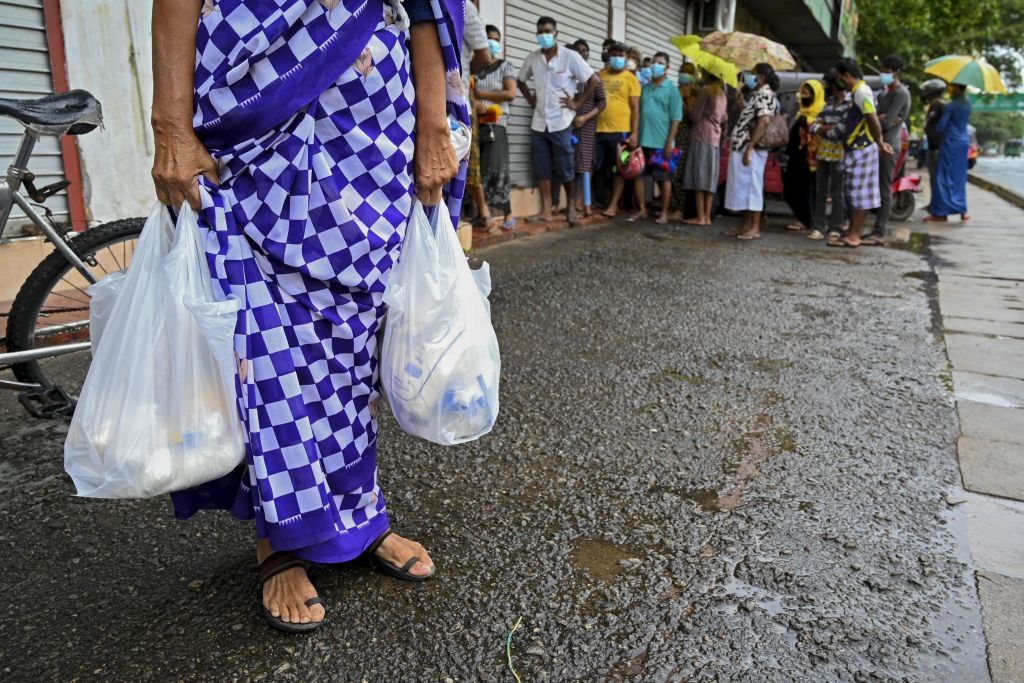
Externally, the country’s foreign reserves have fallen to less than $ 3 billion, as against the debt commitments of over $ 6 billion to be settled within the next 12 months, apart from having to meet day-to-day import outlays. The banking sector is running short of foreign exchange. As a result, the US dollar is traded at around Rs. 230 within the banking circles, despite the Central Bank’s insistence to keep it at Rs. 200 per dollar. The black-market rate is reported to be high as much as Rs. 260 per dollar.”
Professor Luckshman could only curtail imports of non essential items but had no further action taken either to collect all the foreign exchange that entered the country or to get things produced locally like what Premier Sirimavo did when she created a separate Ministry of Plan Implementation and head hunted the most eminent economist of the time Professor HAdeSGunasekera and came forth with the Divisional Development Councils Programme to create employment and production.
It is to be seen how the new Governor Cabral would handle the situation.
Sri Lanka was till 1977 a country that was not in debt. How did a country that had no foreign debt degenerate to have a foreign debt of $ 56 billion, within the five decades 1978 to today. Perhaps this long story is best detailed in my article:
Playing poodle to the IMF is not the way ahead
Posted on January 12th, 2020 in Lanka Web.
It is heartening to note that our new Governor of the Central Bank had understood that the IMF’s neoliberal economics that we have closely followed from 1978, has miserably failed.(Sri Lanka’s new chief flays Neo Liberalism”: Economy Next 28/12/19)
Following the IMF since 1978- for over four decades, has made us become a heavily indebted country, a situation from which there is no return. My two books, How the IMF Ruined Sri Lanka and Alternative Programmes of Success(2006: Godages) and How the IMF Sabotaged Third World Development(Godages & Kindle:2017) which happen to be the only books that are critical of the IMF’s teachings that also provide details of how salvation can be reached may be of service. In fact my guru, Professor George Axinn, Professor of International Development at Michigan State University in his introduction to my 2006 book: How the IMF Ruined Sri Lanka wrote: It is hoped that this timely book will enable international organizations to arrest the trend of failures.”
In detail, in the late Seventies, the IMF took on the new role of prescribing the path to be taken by the Third World countries to run their economies. This was the Structural Adjustment Program the IMF imposed on every country that sought financial help. In the Early Seventies the Oil Sheiks increased the price of oil threefold and many countries had to flock to the IMF for help. The IMF laid down conditions that the countries had to follow if they are to get financial assistance and following the neoliberal policies was insisted on.
. The IMF was the institution established by the United Nations to help and guide all countries in financial matters and no one questioned what the IMF did.
Since gaining independence the Third World Countries had to manage their finances. The incoming foreign exchange, mainly from exports, was carefully handled and spent with great care, for essential goods and items that were required for national development. I speak through sheer experience. I was once in charge of allocating foreign exchange for small industrialists in Sri Lanka. We registered them after inspection where we carefully looked into what they produced, whether it was required for our country. In case their production required any item imported- raw material or machinery, an allocation of foreign exchange was allowed. Anyone could apply for foreign exchange for travel or imports. Each case was looked into in detail by the Controller of Exchange of the Central Bank. No allocation of foreign exchange was made for foreign studies, unless the study could not be done in the country or the study was required for national development. A budget deficit was not heard of. A small deficit in any year had to be covered in the next year. It was a strictly controlled situation because the country had to manage with the foreign exchange it had. We had no other option whatsoever.
Countries had two budgets, a Foreign Exchange Budget and a Local Currency Budget. The foreign exchange budget had to manage all our foreign expenditure, within the incoming foreign exchange while the Local Currency Budget was managed with tax collection supplemented by printed local currency,
The IMF Model- the Structural Adjustment Programme, liberalized the use of foreign exchange. The IMF prescribed that the countries should allow anyone any amount of foreign exchange for everything-for luxury travel, for importing anything, for foreign studies and advised the countries to raise funds by privatizing State assets and also by borrowing foreign exchange if the country could not meet the demand. The IMF initially, gave loans at low interest and even gave periods of grace, when no repayment was charged. This helped the countries, and the leaders did not care about borrowing because they may not be in charge when the loans have to be repaid.
Even a small commercial entrepreneur, a sweets peddler on the street, will know that this Model of extravagant spending, without matching the expenses to what is available is a guaranteed recipe for disaster, but the IMF bluffed its way through, by retaining the likes of erudite professionals like Stiglitz and Sachs, with whom no one could ever argue and win.
The IMF laid down various conditions that had to be followed.
The conditions laid down were carefully decided to help the Developed Countries. Paul Volker tells us of how the conditionality was decided.
As Chairman of the Federal Reserve , along with administrative colleagues, major foreign Central Banks and especially the IMF, could arrange stop gap official financing and set out appropriate conditions for the heavily indebted borrower countries (determined) out of our common concern about threats to the American and the global banking system”(From Banker to the World)
The funds obtained on loan were actually used to pay the debts and because the debts were to the IMF and financial institutions of the Developed Countries. Thus the foreign exchange that came in was shunted back with profits (the interest), back to the Developed Countries. However the country’s books recorded the loan as a debt and this is the how the foreign debt has ballooned.
Imports were not to be controlled.
The incoming foreign exchange was to be collected by the banks and to be used for imports and payments. The Government provided a list of items which should not be imported. The banks were to decide the exchange rate at which they would buy and sell the foreign exchange that came into the country. It was no longer to be controlled by the Government. It was supposed to be done by the process of supply and demand, but because the relaxed use of foreign exchange caused a great demand, when the supply was inadequate, the local currency was inevitably devalued. Devaluation meant that all exports were discounted to the amount of the devaluation. In 1978 Sri Lanka devalued the Rupee by 101%. (Rs. 15.70 to Rs. 31.50) This devaluation meant that our exports were sold at half price while we had to pay double-101% more for imports.
A High interest rate was imposed. This meant that entrepreneurs in the country had to obtain loans at high interest rates. In Sri Lanka, when this Neo Liberal- Free Trade Model was enforced, the bank loan rate was raised to 25%. The local entrepreneurs could not compete with the imports that came in without paying tariffs or paying low tariffs. The result was that local entrepreneurs gave up their businesses. Instead they found easy money by depositing the money in Fixed Deposits. Imports took the place of local production and this increased the debt of the country. This was advantageous to the Developed Countries because they found buyers for their manufactures.
The Private Sector was enthroned as the engine of growth and the Public Sector activities were constrained. The problem is that the aim of the Private Sector is to gain the maximum profit while the aim of the Public Sector is the development of the Country.
The commercial infrastructure that the country had built to enable development had to be abolished. This included the guaranteed price scheme for paddy, loan schemes to spur production and these had to be abolished. In Sri Lanka this also included the Marketing Department that offered high prices for vegetables and fruits and simultaneously conducted sales at fair prices to consumers through a network of small shops to avoid inflation. The aim of the Marketing Department was to break even and therefore kept a margin of around 15% to cover cost of transport and wastage, while the Private Sector traders kept a margin of 100%. This Scheme helped the producer because a price higher than what was paid by traders was offered to producers. Simultaneously the produce was sold at cheap rates to consumers in cities, at Fair Price Shops. This effectively controlled inflation. The Marketing Department also ran a Cannery that purchased stocks of fruits and produced jam, food preparations and juice, making the country self sufficient thereby saving foreign exchange spent for imports. There was the Cooperative Wholesale Establishment that purchased essential items abroad and sold keeping a low margin to avoid importers charging high prices.
The Small Industries Department imported cotton yarn for distribution to textile makers. It also guided handloomers to get into production. It provided expertise for cooperative powerlooms to make fabric. The Department had a Research Unit at Velona to help the powerlooms. Thus Sri Lanka had a developed textile industry. We were self sufficient in producing all our textiles.
This entire commercial infrastructure necessary for national development was abolished at the instance of the IMF on the grounds that the Public Sector should not deal with commerce. This was inimical for development.
The IMF recommends that countries should obtain Foreign investment. Currently the Third World Countries are bending backwards to entice foreigners to invest in Sri Lanka.. Investors come in search of profits. One area of Foreign Investment is Water. Opening up water services for investors mean that foreign companies come in establish water storage and purification systems and sell water to the people. They(foreign companies) collect profits for ever. This is the process set up by the IMF for capital(foreign exchange ) to flow back from the Third World to the Developed Countries. Water services and purification systems are simple well known devices that can be easily set up by local entrepreneurs, but the locals are not provided with inducements like tax haven periods and loans at reasonable interest to get into business. What has happened when foreign investors invest in water is that the local resource of water too has been converted to foreign exchange to flow from Third World countries to the Developed Countries!
Third World countries have enticed McDonalds, Pizza Hut and such Multinationals to come in. They bring in a small sum of foreign exchange initially to establish their business. They get into local trading in the local currency, but take away the profits in foreign currency for ever without paying any taxes. It amounts to a net loss of our foreign reserves.
Foreign companies getting into trading in local Rupees – like Uber etc. also amounts to a net loss of our foreign exchange as though they calculate profits in Rupees they take away their profits in foreign currency. One of the latest inroads is hotel bookings by foreign companies over the internet. Hotel bookings done insist on payment in Rupees to the hotelier, but the internet companies gets fifteen percent of the payment paid to them in foreign currency. Again this goes from our reserves. It is sad that our Central Bank fails to even understand how our foreign reserves are being robbed by these foreign investors.
Overall all the economies of the Third World got restructured by the IMF’s Structural Adjustment Programme and foreign exchange flowed from the Third World Countries to the Developed Countries.
Tremendous funds were sent out of the Third World countries to the Developed Countries. The debt service alone flowing from Developing Countries to the Developed Countries amounts to $ 600 billion annually. This amounts to five times the Aid budget. The WTO’s Agreement on Intellectual Property (TRIPS) collects $ 60 billion annually. (Jackson Hickel: ‘Aid in Reverse: How Poor Countries develop Rich Countries’, in Global Policy(newleftproject.org)
Thus as far as Third World countries are concerned foreign investment bore a negative result.
On the whole every aspect of the IMF’s Structural Adjustment Programme caused poverty in Third World countries and created a situation where foreign exchange flowed from the Third World back to the IMF and the Developed Countries.
Milton Friedman of the Chicago School of Economics, the author of the Free Trade- Liberalization Neoliberal Model of the IMF died recently having taken all Third World countries and even some European countries to their graves.
All these countries have followed the Neo Liberal –Free Trade Model. This Model also brought riches in billions from the Third World to the Developed Countries.
Yet the IMF holds on to this Neo liberal-Free Trade Model, like flogging a dead horse. It is upto the IMF to understand their mistake and provide a growth strategy. The single strategy used by the IMF is to impose Austerity, which only brings about more poverty in the country. The rich are supported as their life style and mode of living- purchase of luxury cars and luxury items, travel, sending their offspring for foreign education and holidays all create a flow of foreign exchange from the Third World countries to the Developed Countries.
This is not a Model for Development; instead it is a Model designed to make the Third World countries indebted , create the flow of foreign exchange from the Third World countries to the Developed Countries, in short to make the Third World countries ‘colonies’ of the Developed Countries.
Isn’t it sad that the IMF despite its failures over the past four decades has failed to find an algorithm to bring about growth and prosperity. My book: How the IMF Sabotaged Third World Development(Kindle) documents this story of how the Third World countries were gradually brought under the IMF control. Their Model of Development actually enriched the Developed Countries at the cost of Third World Countries.
As far as economic development is concerned, the IMF Model of Development is not functioning in the interests of the Third World countries. Already the ruler of Ecuador has decided not to pay up the loans, because the loans were non developmental.
It is upto our leaders to ensure that loans are obtained for development purposes only and not used to provide for luxury living, the import of luxury cars and luxury travel all for the rich.
It is not surprising that the neoliberal policies imposed on Sri Lanka by the IMF has resulted in our having accumulated a foreign debt of some $ 55 to 60 billion, a debt to service which our country has to pay $ 4.8 billion in 2020.
The solution
In view of the fact that foreign direct investment has today a negative effect on our foreign resources, the only option available to the Government is to insist that where the profit comes from trading in the local currency, the profit cannot be taken away in foreign currency. In the days before the IMF introduced its Structural Adjustment Programme, the USA had to collect payments for the supply of food under the PL 480 in local currency. . Then the USA offered this money to US agribusiness firms at below market interest.(Wessel & Hantman: Trading the Future) The Government has to understand the basic fact that foreign investment brings a negative result to our own foreign reserves in case the investors trade in the local currency.
The only path available to the Government is to follow import substitution, where we ourselves produce what we import and stop imports. We save the foreign exchange spent for imports and also find incomes for workers in the process. This has to be done on a massive scale. Our country has a great deal of experience in handling import substitution type of industries. We hand a Marketing Department Cannery that was able to make Sri Lanka self sufficient in all food preparations, fruit juice and jam. It would be of interest to note that self sufficiency was achieved within three years-1955 to 1958. Once we produced around fifty percent of our Paper requirements. During the Divisional Development Councils Programme of Mrs Bandaranayake in 1971-1977 we established many successful industries. There was a Paper Making Industry established in Kotmale, a Mechanised Boat Making Industry was established at Matara. The Crayon Factory established in Morawaka is well known for its success. The art of making Crayons was unearthed at the Rahula College Science Lab at Matara after three month long experiments under my personal direction. A crayon is a sophisticated product and if we could have produced crayons and successfully marketed it, which we did achieve, we can be dead certain of being able to spearhead a programme of import substitution.
That to me is the only method of economic development available to us.
Over to our new leaders. Hope the message in this Paper reaches our leaders.
Garvin Karunaratne
Former G.A. Matara
Author of How the IMF Ruined Sri Lanka & Alternative Programmes of Success(Godages) 2006 & How the IMF Sabotaged Third World Development(Kindle & Godages)2017
13/01/2020