With 680 new COVID-19 positive cases reported in Sri Lanka today (May 05), the daily total so far has increased to 1,939.
According to the Government Information Department, 1,897 of the new cases reported today are associated with the New Year coronavirus cluster. Meanwhile, the remaining 42 have been identified as arrivals from foreign countries.
This brings the total number of confirmed cases of coronavirus reported in the country to 117,529.
As many as 100,075 recoveries and 720 deaths have been confirmed in Sri Lanka since the outbreak of the pandemic.
Epidemiology Unit’s data showed that 16,734 active cases are currently under medical care.
Government
MP Dr. Wijedasa Rajapaksa, a former Justice Minister and an ex-president of
the Bar Association of Sri Lanka, stated over a month ago that the
Muslim World League (owes) families of those who had perished or
suffered injuries in the Easter Sunday terror attacks USD 5 mn.” (‘Wijedasa
takes it up with Saudi-based outfit’ by Shamindra Ferdinando, The Island, March
25, 2021). This is money that the MWL general secretary Dr. Sheikh Muhammad
Abdul Kareem Al-Issa was said to have promised on behalf of his organization
towards the relief of the surviving victims of those attacks at a so-called
National Peace Conference held at Nelum Pokuna under the patronage of the then
President Maithripala Sirisena on June 30, 2019, a little over two months after
the Easter Sunday attacks carried out by eight Islamist suicide bombers in the
name of their religion. As claimed by MP Rajapaksa, the Sheikh made the promise
in the presence of the then incumbent Sirisena, and former presidents
Chandrika Bandaranaike and Mahinda Rajapaksa, among other dignitaries. The same
three past presidents dutifully attended the second National Peace Conference
on March 5, this year. MP Rajapaksa told The Island that he brought up the
issue with the MWL head. This was through a letter of his dated March 22, 2021,
where he urged the latter to fulfill what he had promised without further
delay. MP Rajapaksa stressed: Let us hope those who organised the Nelum Pokuna
event, too, will take up this matter with the Muslim World League and finalise
the transfer of funds before the second anniversary of 2019 Easter Sunday
carnage.”
The
failure of the MWL had been mentioned even at the PCoI, according to the MP,
who further said that he had raised the matter with the offices of the previous
and present presidents. Dr P.B. Jayasundara (secretary to the current
incumbent) had confirmed that the funds in question had not been received. A
letter that the then Western Province Governor A.J.M. Muzammil had received
from Muhammad Al-Issa, to which MP Rajapaksa refers, seems to have a hint about
the possible reason for the unexplained delay in the payment of the promised
financial assistance: it is probably being withheld pending Sri Lanka
providing information relating to the spate of suicide attacks”. Whether the
MP’s importunity in the given context is shared by the government is in doubt.
What should be of greater concern for the government is the fact that, by
contriving to get themselves identified as constituting the whole Muslim
community of the country, the handful of Islamist extremists who are widely
believed to have provided tacit or explicit support for the suicide bombers are
also foisting themselves on its (the MWL’s) powerful patronage. While being
grateful to this organization for offering welcome help at a moment of national
distress, Sri Lankan leaders must take care not to allow these Islamist
extremists tainted with suspected association with the terrorists who caused
that suffering to jeopardise its relations with the traditionally friendly
Muslim nations through subterfuge. At the same time, it behoves our
leaders to establish the genuineness of the MWL’s intentions and to have a
correct understanding of the rationale of its involvement in the post-attack
context, before accepting its
charity.
Islamist Jihadists and fanatical Christian proselytizers are
minorities that should not for a moment be identified with the traditional Sri
Lankan Muslim and Christian communities who have always lived in harmony with
the Sinhala Buddhists and Tamil Hindus for centuries. Sri Lanka must take
special care to prevent the problematic Islamist and Christian extremist sects
from pretending to the outside world that they respectively represent the
country’s Muslim and Christian mainstreams in order to subvert its foreign
relations as certain powerful Muslim politicos who have somehow contrived to
ingratiate themselves with the powers that be seem to be doing at the moment.
According
to the Wikipedia, the Muslim World League is a (Saudi) government-funded NGO,
which was founded in Mecca, Saudi Arabia in 1962. The name suggests that
it is about the pan-Islamic Muslim world, not the world in general, which
Muslims share with people of other non-Muslim faiths. It came into existence
for the purpose of serving Islam and Muslims. Its founding charter, according
to the information currently given in the Wikipedia, is as follows:
QUOTE
We
the members of the Muslim World League, representing it religiously, hereby
undertake before God, Almighty to: Discharge our obligation towards God, by
conveying and proclaiming His Message all over the world. We also reaffirm our
belief that there shall be no peace in the world without the application of the
principles of Islam. Invite all communities to vie with one another for the
common good and happiness of mankind, establish social justice and a better
human society. Call upon God to bear witness that we do not intend to
undermine, dominate or practice hegemony over anyone else. Hence, in order to
further these goals, we intend to: Unite the ranks of the Muslims, and remove
all divisive forces from the midst of the Muslim communities around the world.
Remove obstacles in the way of establishing the Muslim world union. Support all
advocates of charitable deeds. Utilize our spiritual as well as material and
moral potentialities in furthering the aims of this charter. Unify efforts in
order to achieve these purposes in a positive and practical way. Reject all the
pretenses of ancient as well as contemporary Jahiliyah (attitudes of the
pre-Islamic era). Always reaffirm the fact that Islam has no place for either
regionalism or racism.” END OF QUOTE
The organization has thus an extensive global agenda with
inevitable, wide ranging, religious, educational, cultural, legal, and
political implications, particularly for non-Muslim countries like Sri Lanka,
given that the organization is committed to foster the fiercely conservative
brand of Islam, Wahhabism (or Salafism), which is Saudi Arabia’s state
religion. It will, among other things, include laying down plans designed
to revive the role of the Mosque in the fields of guidance, education, preaching
and provision of social services, conducting a comprehensive survey of the
world’s Mosques and publishing the information gathered in book form and in the
shape of periodical bulletins, selecting and posting groups of well qualified
preachers on guidance missions throughout the Mosques of the world,
formation of board of directors to supervise the affairs of each and every
Mosque at the national as well as the regional levels, studying the ideas and
patterns of behavior that contravene the teachings of Islam, and helping in
rehabilitating and training Imams and khateebs for posting to the various
Muslim areas to lead Muslims in prayers, deliver sermons and guidance lessons
(a khateeb is a person who delivers a sermon during Friday prayers).
As the Wikipedia further tells us, all Saudi Arabian citizens are
legally required to be Muslims. They don’t have the right to freedom of
religion (as the term is understood in secular democratic countries); nor do
the expatriate workers employed in the Saudi kingdom. The official and dominant
form of Islam practiced in Saudi Arabia is Wahhabism (also called Salafism)
which emerged in the 18th century. Its adherents believe that its teachings
purify the practice of Islam of innovations or practices that deviate from the
seventh century teachings of Muhammad and his companions”. Saudi Arabia has
long been accused of being the principal exporter of Islamist extremism
(WikiLeaks cables). …..Saudi Arabia arguably remains the most prolific
sponsor of international Islamist
terrorism, allegedly supporting groups as disparate as the Afghanistan Taliban, Al Qaeda, Lashkar-e-Taiba (LeT) and
the Al-Nusra Front… Saudi
Arabia is said to be the world’s largest source of funds and promoter of Salafist
jihadism….. which
forms the ideological basis of terrorist groups such as al-Qaeda, Taliban, Islamic State of Iraq and the Levant and
others” (‘State-sponsored terrorism’/Wikipedia/Page last edited 14 April 2021).
Saudi Arabia denies these allegations, but the Wikipedia entry mentions the
prevalent argument that by its very nature Wahhabism/Salafism encourages
intolerance and promotes terrorism”.
The MWL, while propagating the religion of Islam, encourages
Dawah (lit. issuing summons to/euphemistically, inviting or calling non-Muslims
to join, i.e., preaching to them) and conversion of non-Muslims; funds
construction of mosques and provides financial relief for Muslims affected by
natural disasters; finances distribution of copies of the Quran and political
tracts on Muslim minority groups. Though the organization claims that they
reject all acts of violence and promote dialogue with the people of other
cultures, within their understanding of Sharia”, they are not free from
controversy on that point, having been the subject of several ongoing counter
terrorism investigations in the US related to Hamas, al Qaeda and other
terrorist groups”
However, since 2016, the Muslim World League has been claiming
to be dedicated to combating extremist ideology, and to confronting hatred,
disunity and violence closely associated with extremism. The US State
Department, in its 2019 Country Reports on Terrorism, stated that the Muslim
World League’s Secretary General, Muhammad Abdul Kareem Al-Issa pressed
a message of interfaith dialogue, religious tolerance, and peaceful coexistence
with global religious authorities, including Muslim imams outside the Arab
world.” The same document said that he conducted extensive outreach to
prominent U.S. Jewish and Christian leaders”. No doubt, the MWL is on the same
pious mission in Sri Lanka. We may be hopeful that the MWL leader will
similarly reach out to the non-Muslim 90% of the Sri Lankan population
comprising Christians, Hindus, and Buddhists.
But whether the assurances given to the powerful US will hold
for a small non-Muslim country like ours is still a moot point. The MWL’s
sponsor Saudi Arabia is an absolute monarchy without a legislature (Wikipedia),
let alone an elected legislature; its state religion Sunni Islam or
Wahhabism, is growing to be the majority Buddhist Sri Lanka’s scourge,
unless checked in time with the help of the predominantly Sufi mainstream
Muslim minority, who have peacefully coexisted with the majority Buddhist and
other non-Muslim minorities for centuries. The MWL’s post-April 21, 2019
interest or involvement in Sri Lanka should be judged according to its
uncompromising commitment to serving Islam and Muslims” everywhere as
explained in the foregoing account. The rich and powerful Saudi-funded,
Saudi-basedl Wahhabism-inspired NGO outfit’s patronage of Sri Lanka’s
approximately 10% Muslim minority is bound to have obviously important
repercussions.
One could argue that the so-called National Conference on Peace,
Harmony and Coexistence that introduced the MWL to the country just two months
after the April 21 Islamist terror bombings, in effect, both ‘nationalised’ and
‘internationalised’ Sri lanka’s still nascent Islamic fundamentalist problem.
Unless sorted out early, this is not going to do any good to the peaceful and
harmonious coexistence which all Sri Lankans of different ethnicities and
cultures have been enjoying to date mainly thanks to the influence of the
country’s extremely accommodating, tolerant Buddhist cultural foundation,
something that is today universally accepted and appreciated by all peaceful
non-Buddhist minorities. Through its friendly outreach to the non-Muslim
majority, the MWL can hope to further strengthen the already existing
interfaith harmony and peaceful coexistence in our island nation. It is
heartening that the Saudis now reject extremist ideology and terrorism.
However, unfortunately, this cannot be asserted without reservations.
According
to The Island news report mentioned above, secretary to former
president Sirisena, Samira de Silva, told the paper that the MWL was delaying
the payment because the National Peace Conference event organizers had still
not responded to the following questions: (1) the number of dead and wounded
(2) their faith (religion) (3) list of the dead and the wounded (4) collateral
damage to public property (5) number of widows and orphans (6) other relevant
information and (7) account number of the President’s or Prime Minister’s
charitable fund”.
To
my mind, these are not charitable questions that one would expect a genuinely
humanitarian organization to ask. Why should they demand specific information
about the victims’ religion and their particular identities? The term ‘collateral
damage’ refers to unintended, but unavoidable, accidentally caused, damage to
civilians’ lives and their property during a military conflict. The
serious implications of the use of the phrase in the jihadist terror context
are not difficult for those who are sufficiently informed about Islam to
understand. Also, the outfit’s slighting call for the account number of a
so-called President’s or Prime Minister’s charitable fund is indicative of an
unwarranted superciliousness towards the people of an independent sovereign
nation.
Why
all the dillydallying and cheeseparing for the insultingly derisory sum
of 5 mn US Dollars by a rich Saudi government funded NGO? For Saudi Arabia with
its relatively small population of 34.2 million (2019 estimate) and its GDP at
1.9 trillion US Dollars and per capita income at 56,817 US Dollars (Wikipedia),
it is peanuts. Of course, the 5 mn Dollar sum (roughly the equivalent of 1
billion currently debased SL Rupees) is, hopefully, not intended to sound like
a big amount to Sri Lankans, for that would be an affront to their general
knowledge.
The
Island report said: According to a missive received from Dr. Jayasundera, the
Muslim World League was to directly get in touch with the Prime Minister’s
Office to finalise the matter”. President Gotabaya Rajapaksa seems to have,
through his secretary, wisely assigned the slimy ‘matter’ to the PM to dispose
of.
Important note: The explicit and implicit criticisms contained in this article
are NOT directed at the government or the people of a particular country. No
disrespect is intended towards them. Only facts are stated as given in the
sources indicated. The write up is about how the writer as a free patriotic Sri
Lankan citizen views the Saudi-based MWL’s reported offer of help to the
families of the April 21, 2019 Islamist terror attack victims. The writer does
not mean to criticise the Islamic religion, the global Islamic outfit’s
religious ideology or its mission. There is no indictment of the NGO. His only
concern is with how to save his motherland from the looming threat of extremist
Islamist ideology and violence that the MWL itself has already rejected, as its
leader has assured to the Americans.
The writer firmly
believes that it would be impossible to overcome violent Islamist religious
extremism taking root in Sri Lanka, without the sincere support of the
country’s still unradicalized mainstream minority Muslim community. It is also
his conviction that, certain duplicitous politicians, both Muslim and
non-Muslim, who do not have a clear idea about the scope and nature of the
problem that they are required to deal with or pretend not to, form the
greatest obstacle to finding a solution. They are the real target of criticism
here, though they are hardly mentioned. Readers are free to accept or reject
the writer’s opinions as their own knowledge and judgement help them decide.
Quite a few writers, even doctors
among them, have expressed
their concerns with regard to the spread of the virus.
The large numbers of people gathered around shops and
places of worship during the ‘Avurudhu’ period, casting caution to the wind,
was a recipe for disaster.
And I fear that what is turning out to
be now is how they said it (or to that effect): A massive number of infections
that is now recorded, on a daily basis, which is almost thousand a day.
Needless to say, the actual numbers could be much higher than this.
Sadly, many people still don’t seem to
care about the extremely grave consequences that we will most certainly be
facing, if the irresponsible behaviour of the public at large and some
religious personalities/politicians is not going to change now and with
immediate effect?
And it looks like many people still do
so, not even giving two hoots about adhering to ‘rules’ established/imposed by
the authorities to curb the rate of propagation of the viral infections that
could sweep across the country like a viral tsunami.
Now kawum, kokis, kiribath, nakath and
several other customs/rituals made people forget how close we would be, to the
precipice, if the warnings were ignored.
Well, in a way how could they?
‘Sinhala/Dhamila aluth avurudhdha’ has a long history of ceremony and
celebration, and nothing can possibly stop people from following those long-standing
customs/rituals/traditions. Even something like ‘Covid’ cannot possibly do much
to change their mindset in this regard.
Yet extraordinary circumstances demand
extraordinary discipline from the people as well as the ones, who govern them,
and we are now facing such circumstances. The government should have done a lot
more than it apparently did to control the crowds during the ‘avurudhu’ period.
They quite possibly didn’t want to lose their popularity or whatever is left of
it by taking such measures that would have made many unhappy, if not
angry.
I pray to god that the pursuers will
be able to catch up with the runaway virus before it gains such a lead making
it beyond reach and then goes on to create a mega-health crisis in the country.
‘Alarm bells are ringing, non-stop and
red lights are flashing. Let’s all do the
right thing, to save the country’.
Colombo, May 4 (Daily Mirror) – Army Commander and Head of the National Operations Center for Prevention of COVID-19, General Shavendra Silva yesterday denied claims that his niece’s wedding had been held on Monday at a leading luxury hotel in Colombo amidst the pandemic, stating this was part of a campaign to sling mud at him.
Social media was rife yesterday with the pictures of a bride and groom being shared and another picture showing Silva hugging another military officer allegedly at the wedding, on several platforms claiming it was Silva’s niece’s wedding.
The pictures went with a caption stating that the authorities had decided to ban all weddings for two weeks from Monday midnight to allow this wedding to take place during the day yesterday. However Silva said these were all false claims stating his two nieces were aged 16 and 19 and they still had several years more to tie the knot.
My sister’s daughters are still students so this claim is absurd. I wish to reiterate that no one in my family or even in my distant family is planning on getting married for the coming two years atleast. The picture of me in uniform is from the day I was sworn in as the Army Commander,” Silva said.
He further urged people to stop wasting time slinging mud at him and encouraged people to follow all health protocols to prevent the further spread of COVID-19. Meanwhile, Army Headquarters in a statement said that a person, believed to have placed this false social media blog was found later on correcting his wrong report. (Jamila Husain)
One more review session of COVID-19 Task Force members on the control of the epidemic, chaired by General Shavendra Silva, Head, NOCPCO, Chief of Defence Staff and Commander of the Army, together with Dr Asela Gunawardena, Medical Specialist and Director General of Health Services got underway this afternoon (4) at the National Operations Centre for Prevention of COVID-19 Outbreak (NOCPCO) at Rajagiriya.
During this discussion, General Shavendra Silva updated the gathering as regards the present status of the pandemic and behaviour of the new COVID-19 variant during the 3rd wave as well as new isolated areas of the country, designed to prevent further transmission.
“The armed forces would supply normal beds and make camps available to function as Intermediate Care Centres for Covid-19 patients while simultaneously increasing the number of ICU bed capacity in hospitals. The government adopts two options at this moment, either to go for a total lockdown or to manage with the situation while running the country. At times, PCR numbers had to be increased to 15,000- 20,000 in order to locate new patients and isolate specific areas as necessary, considering the serious need for it.
“The COVID-19 Center (NOCPCO), now manned with more Officers would monitor developments throughout day and night and collect details about new patients from every MOH. Similarly, affected people who cannot find transport or other requirements to proceed to Care Centres can contact Hotline 1906 at NOCPCO and seek assistance for coordination. The Army will get 10,000 new beds to hospitals very shortly, and similarly the Army Seva Vanitha Unit after converting a building to be a Care Centre will provide 1200 more beds, NOCPCO Head revealed.
Talking about COVID-19 vaccination process, he told the gathering that the first consignment of 15,000 doses from Russia has arrived here and if scientific recommendations are okay, another stock of 185,000 vaccines could be brought down within a week. More stocks can be brought down in future, accordingly.
General Shavendra Silva also commented on the role of some Social Media elements who are working against national efforts at this critical juncture of the nation and cautioned against their false publicity gimmicks. He also instructed the Police to closely monitor the quarantine work, occurring at home fronts as it is necessary to be kept them in quarantine for 7 days to two weeks.
In the meantime, Director General of Health Services emphasized that the human behaviour would remain the most critical factor in today’s context which would eventually decide the future of the nation. Other stakeholders also discussed general matters, related to isolation, readiness of health sector, preparedness of essential services, oxygen supplies, health staff, arrival of expatriates, quarantine centres, procedures and process of vaccination, including second phase of the vaccine for all members who had already received the first dose.
More than 63 percent of the Sri Lankan population can be comprehensively vaccinated before the end of this year, Minister of Health Pavithra Wanniarachchi told the Parliament today (May 04).
This remark came as a response to an accusation levelled by Opposition Leader Sajith Premadasa that, who took aim at the government’s handling of the issue. He alleged that the government has failed to secure sufficient coronavirus vaccines.
In the first round, 924,987 people were given the vaccine, and in the second round 356,130 people are expected to be vaccinated. However, the government is short of 568,000 vaccine doses,” the Opposition Leader pointed out.
He also criticized the government for procuring the China-made Sinopharm vaccine and Russia-made Sputnik V vaccine who he said were not approved by the World Health Organization (WHO).
The health minister, in response, stated that according to the WHO’s guidelines, if the vaccine has been approved by two of Russia’s stringent authorities and Sri Lanka’s National Medicines Regulatory Authority (NMRA), the vaccine cane be used.
It is on these grounds that the NMRA approved the Sputnik V coronavirus vaccine for emergency use in Sri Lanka, she explained.
Speaking further, the health minister noted that the NMRA had studied and approved the Oxford-AstraZeneca coronavirus vaccine for local use even before the WHO did.
Accordingly, Sri Lanka is expected to receive 13 million doses of the Sputnik V vaccine, 8.4 million doses of Oxford-AstraZeneca vaccine under the COVAX facility and 5 million doses of the Pfizer vaccine from the United States within this year, Minister Wanniarachchi stated, adding that the country has 600,000 doses of Sinopharm vaccine at hand.
Before the end of this year, we will have enough vaccines to comprehensively vaccinate more than 63 percent of our country’s total population.”
Sri Lanka Navy has foiled the attempt of 11 Indian fishing vessels, with 86 individuals on board, to enter Sri Lankan waters today (May 04).
The interception was made during one of the special patrols conducted in the sea area close to the Palk Strait to prevent illegal immigrants from entering Sri Lankan waters.
Security in the north-western and northern waters has been stepped up by increasing 24-hour patrols, as there is a risk of the surge in the transmission of COVID-19 pandemic in the country due to possible illegal migration attempts via sea routes, the Navy said in a statement.
In a similar patrol carried out in the sea area south of Mannar, the Navy managed to prevent these 11 Indian fishing vessels, which were suspected to have attempted to enter into island’s waters, from their unlawful attempt, the statement read further.
Upon informing the Indian High Commission and Indian Coast Guard, arrangements are now in place to hand over the 11 Indian fishing vessels and 86 persons to Indian authorities for onward action.
Meanwhile, the Navy stressed that it would proceed to beef up surveillance in north-western and northern waters to prevent illegal immigrants from entering the country by sea.
A decision has been taken to reopen the Dambulla Dedicated Economic Centre for trading from tomorrow (05), under strict health guidelines.
Ada Derana reported said that the economic centre would be opened for trading from 5.00 a.m. tomorrow.
Major General Nishantha Manage, the Matale District Coordinating Officer for Covid-19 control, stated that permission would be granted to temporarily open the economic centre from 5.00 a.m. to 5.00 p.m. tomorrow (05), under strict health conditions.
He stated this during a committee meeting today (04) at the Dambulla Divisional Secretariat attended by state officials, police officers, representatives of traders’ associations, agrarian development dept. officers, health officials, municipal council officials, government agent and other officials.
The Dambulla Dedicated Economic Centre was temporarily closed on April 25 to minimize the risk of COVID-19 spreading.
This was after a total of 42 positive cases of COVID-19 had been identified from the economic centre following the conducting of random PCR testing.
However, on April 26 it was announced that the premises of the Dambulla Dedicated Economic Centre has been isolated for a period of two weeks.
The closure of the economic centre had caused immense hardships to vegetable farmers who were unable to sell their harvest.
Maj. Gen. Manage stated that the economic centre would have to be opened in order to sell the vegetables of the farmers from the Matale District in the first few days.
During a campaign visit to Hartlepool the prime minister said ministers would say more about travel “as soon as we can” but “we have got to be very, very tough”.
He said that “the way things are going” with the vaccine rollout, the 1m plus rule – which allows people to be 1m apart if they take extra precautions such as wearing face coverings – could end when England reaches the final step of its roadmap out of lockdown.
Mr Johnson said 50 million doses of coronavirus vaccine have been administered. That includes more than 34 million people who have had a first dose and more than 15 million who have had a second, according to the latest government figures.
He said he felt as though the next stage of reopening on 17 May – which covers indoor hospitality, entertainment and possibly foreign travel – would “be good”.
“I think we have got a good chance of being able to dispense with the 1m plus from 21 June,” he added.
“That is still dependent on the data, we can’t say it categorically yet. We have got to look at the epidemiology as we progress, we have got to look at where we get to with the disease. But that’s what it feels like to me right now.”
Labour leader Sir Keir Starmer said any easing of social distancing measures would have to be “cautious and careful”.
“All of us want to see the restrictions eased but also want to make sure we don’t go into another lockdown,” he said.
“I will listen to what scientists say – there are a number of weeks to run until 21 June. I hope we get to situation we can ease restrictions but have got to be led by science.”
Are we are on the brink of beating the virus? Talk of foreign travel and the end of social distancing raises the very real prospect we are.
It would be foolish to say, categorically, this is it.
Even with the continued successful rollout of the vaccination programme, there is still scope for the virus to spread, given the jabs are not 100% perfect and not everyone will get vaccinated.
Variants could also still cause problems – although there is plenty of evidence to suggest these will be more limited than sometimes seems to be the case. Experts remain confident that even if the mutations help the virus dodge some of the immune response from the vaccines, the jabs will still be very effective at preventing serious illness.
So while the virus is not going away (cases are certainly going to rise again) the risk it poses has been dramatically reduced.
And that means our response to it can be, too, so some of the non-Covid harms of the past year can really start to be tackled.
In Scotland, the government timetable for lifting Covid restrictions suggests physical distancing will be in place beyond “Level 0” – the lowest level of curbs – currently expected from late June.
In Wales, where “alert level 3” restrictions are in place, even its lowest alert level 1 suggests people should still observe “social distancing rules with people you do not live with or who are not in your exclusive extended household”.
The Northern Ireland Executive has described social distancing as part of the “personal responsibility to protect ourselves and others” that could be required “for some time”.
The British Beer and Pub Association said the prime minister’s comments offered the sector “hope of a return to normality and viability”.
Chief executive Emma McClarkin said: “Given pubs are financially unviable under the current restrictions they face, being able to reopen without any restrictions at all from 21 June is going to be vital to their survival.”
She added: “Our recovery only begins when the restrictions are removed.”
Speaking before Mr Johnson’s comments, Kate Nicholls, chief executive of trade body UKHospitality, said recommencing unrestricted trading on 21 June would be “critical” and would allow companies to “come off life support”.
“We urge the government to confirm reopening dates and these plans at the earliest opportunity, which will boost confidence and allow companies to step up planning and bring staff back,” she said.
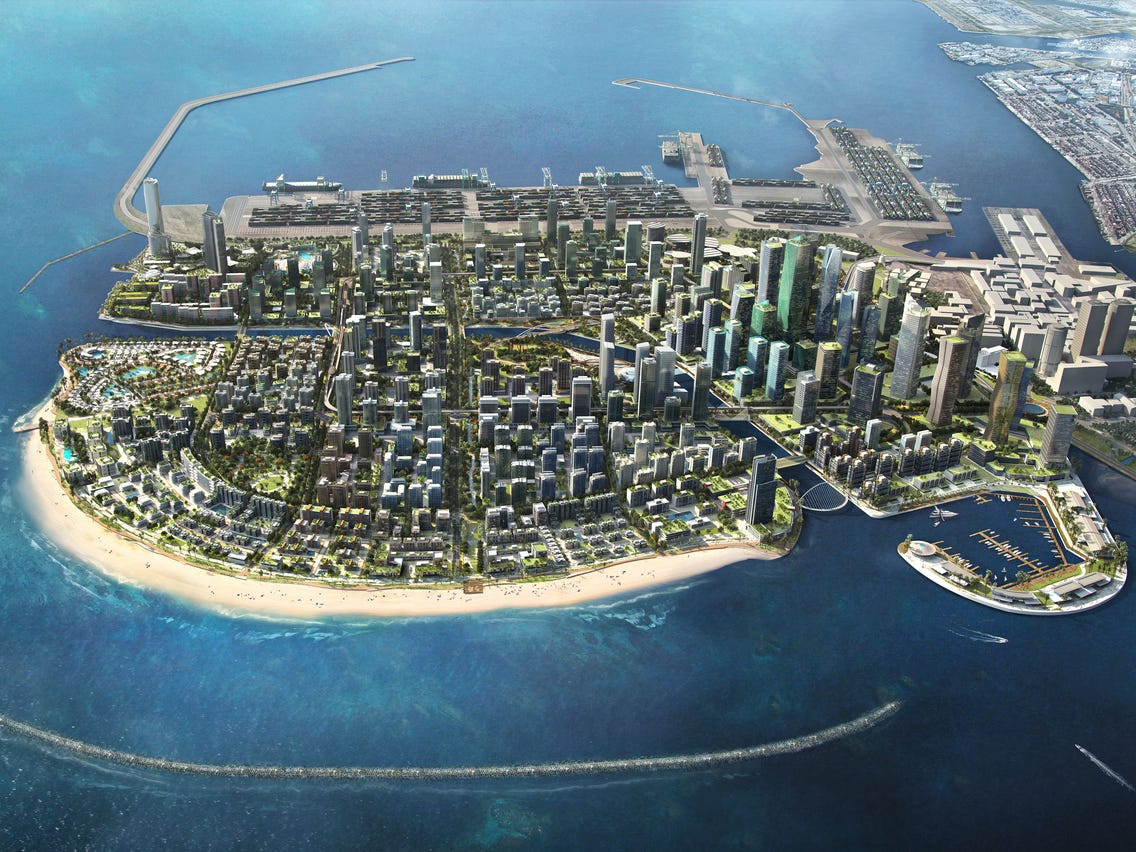
Colombo, May 3: The Port City Colombo project is a potential game changer for the Sri Lankan economy, being the country’s first Special Economic Zone (SEZ) in decades, projected to add about 1% to annual GDP (Gross Domestic Product) growth over the next 25 years while creating over 230,000 jobs.
SEZs with unique administrative structures and economic regulations are not a new phenomenon. Their frameworks are generally intended to lower costs of production and improve ease of doing business, with the ultimate aim of acquiring new technology, improving competitiveness of local firms, and raising foreign currency.
The first SEZ was established in Shannon, Ireland, in 1959. Sri Lanka experimented with the concept through the Greater Colombo Economic Commission in 1978, now known as the Board of Investment (BOI). China is perhaps the most famous example of a country that used SEZs to acquire technology, increase exports, and become the world’s leading manufacturer.
The Port City SEZ is envisaged to be a World-Class City for South Asia”, a financial center specializing in services such as international trade, shipping logistics, offshore banking, IT (information technology) and business process outsourcing, tourism, and more.
A financial SEZ may seem contradictory to government policy which has emphasized the need to develop production through agriculture and manufacturing. However, capital inflows to the Port City could have positive externalities on the real economy, leading to demand augmentation, technology transfer, and greater macroeconomic growth and stability, allowing for greater policy independence from the International Monetary Fund (IMF).
Demand augmentation
Once fully operational, the Port City is projected to have a transient population of about 250,000 people in a duty-free zone. Sri Lankan suppliers of goods and services can tap into this high-spending market, provided they improve their product standards. Off the bat, sectors such as agricultural processing, food and beverages, high-end apparel, furniture, and construction materials stand to gain from this new market.
An operational Port City is also projected to generate 232,000 jobs – equal to about half of the total unemployed population in Sri Lanka. The internationally competitive business standards and salary scales envisioned for Port City may also reduce brain drain. Professions such as doctors, bankers, financial analysts, and others who would otherwise leave the country can find employment within Port City and use their foreign currency earnings to spend, save, or invest within Sri Lanka.
On the fiscal side, the Government can make substantial revenue despite tax exemptions, thanks to income from sales and leases of land which will bring in about US$ 1.8 billion, according to a study by PwC. Construction of the Port City will bring in about US$ 2.8 billion in duties and taxes over 20 years. Once fully operational, the Government may earn up to US$ 0.8 billion per year through taxes and fees. This revenue will boost the Government’s balance sheets and help meet welfare expenditure.
Technology transfer
The Port City is ideally placed to test new financial instruments and open commodity exchanges to complement Sri Lanka’s role as a transshipment and commodity hub in the Indian Ocean. Indeed, Section 56 of the Port City Economic Commission Bill indicates that the SEZ will include financial instruments such as debentures, stocks, shares, funds, bonds, derivatives including futures and options”.
However, if the Port City is to cater to such high-end financial instruments, the entire country will have to scale up its IT and communication infrastructure, creating opportunities for investment in local production of electronic goods and components – manufacture of which has been traditionally neglected in Sri Lanka.
Similarly, Port City’s drive to be an example of a sustainable green city with low carbon emissions, international standards of construction, and modern waste and water management systems, will require technological inputs. This will be an opportunity for Sri Lankan firms to acquire green technologies and improve their environmental regulatory standards.
Finally, Port City’s relative isolation from the mainland makes it an ideal testing ground for new policies. For example, the Government can experiment with digital payment systems to improve ease of doing business, monitor transactions, and gain valuable insights into consumer habits. Such big data” can be used to improve policymaking as well as identify niche markets for local producers.
Macroeconomic growth and stability
In the decade since the end of the war, Sri Lanka’s GDP grew at an average 5% per year, and stood at US$ 84 billion in 2020. Assuming a modestly higher growth rate of 6% for the next 25 years, without the inclusion of Port City, GDP should reach US$ 360.5 billion by 2045.
However, when factoring in PwC’s projections of Port City’s contribution to GDP over 20 years of construction and five years of operation, GDP could reach US$ 431.9 billion in 2045. This amounts to an annual 7% growth, and a difference of US$ 71 billion. Port City’s 269 hectares of land could therefore contribute at least 1% of additional GDP growth every year.
According to a study by PwC, the reclamation, infrastructure, and land lease and construction of the Port City will attract about US$ 9.7 billion in Foreign Direct Investment (FDI) over about 25 years. Once fully operational, the Port City is projected to receive an annual FDI inflow of US$ 0.7 billion in reinvested profits, a significant boost to Sri Lanka’s current annual FDI inflows of between US$ 1 to 1.5 billion.
Inflows of foreign currency will have a direct impact on the country’s Balance of Payments (BOP), helping stabilize the exchange rate and ensure price stability for all Sri Lankans. The 20-year construction phase of Port City will add US$ 205 million per year to the BOP, while the operational phase will add US$ 4.6 billion per year.
An opportunity for IMF independence
Attempts at industrialisation in Sri Lanka have often been derailed by social and political instability, worsened by policy interventions by external entities. Starting from a weak production base at independence, Sri Lanka has historically consumed more than it can produce, leading to BOP crises which in turn require IMF bailouts.
However, IMF dictates to depreciate the currency, liberalize imports, and privatize State Owned Enterprises (SOEs) have done little to curb this cycle, as evidenced by the fact that Sri Lanka has gone to the IMF 16 times since 1965 with nothing to show by way of improvements. Foreign currency inflows projected by the Port City offer the country an opportunity to break this cycle.
Inflows of non-debt, non-conditional foreign currency will provide the country some much-needed breathing room to forge a more independent path of development and carry out policies that are crucial for industrialization, but antithetical to the ideology of the IMF.
(Econsult Asia is an economic research and management consultancy firm with an alternative development outlook, and the writer is a Research Analyst at Econsult Asia)
Colombo, May 3 (NewsWire) – The Police will conduct a special operation to raid parties and public gatherings conducted in violation of the Quarantine Law.
Police Spokesman DIG Ajith Rohana said reports have been received on parties and public gatherings with alcohol being organized in the night.
He said all territorial Police officers have been instructed to raid such events, and to take stern action against those organizing, providing their premises to host, and participating in it.
The Police Intelligence Agencies are reportedly tracking parties and public gatherings being planned in violation of the Quarantine Law.
DIG Ajith Rohana said those arrested in this regard will be charged under the Quarantine and Criminal Laws of Sri Lanka.
All parties, public gatherings, and weddings have been banned due to a significant spread of the coronavirus following the Sinhala and Tamil New Year.
The New Year Coronavirus cluster has seen over 1000 COVID-19 cases being reported in Sri Lanka over the last few days.
India and the US have designated themselves as ‘strategic partners’ with political, economic and military dimensions to the relationship. But the partnership has kept coming under strain.
The reasons are two-fold: Firstly, its contours are not defined. Secondly, Washington’s ‘America First’ policy and its tendency to pursue a foreign policy almost exclusively in its own immediate interest, clashes with India’s penchant for maintaining ‘strategic autonomy’ despite its increasing economic and military dependence on the US.
Vaccine Raw Material Controversy
The latest irritant was the US refusal to supply raw materials to India for the manufacture COVID-19 vaccines. The US said that it needs the raw materials for its own manufacturing programme. The Biden Administration quoted a law under which an item could not be exported if the US need for it was not met first. A US spokesman even went to the extent of saying: It is not only in the US interest to see Americans vaccinated; but it is in the interests of the rest of the world to see Americans vaccinated.”
It was only when India argued its case at the highest level amidst an uproar in India that the US relented. In Indian eyes, the strategic partnership seemed to be lacking in moral content. It was not even transactional because India had gone out of the way to help America when the pandemic was doing its worst in the US.
Violation of Exclusive Economic Zone
Earlier, the irritant was the intrusion of a US naval vessel into India’s Exclusive Economic Zone (EEZ) off the Lakshadweep islands in the Arabian Sea. The US 7th Fleet Commander announced that on 7th April 2021, the USS John Paul Jones (DDG53) (a guided-missile destroyer) asserted navigational rights and freedoms approximately 130 nautical miles west of the Lakshadweep Islands, inside India’s exclusive economic zone, without requesting India’s prior consent”.
The 7th Fleet further said this act was consistent with international law”. The statement added that India’s requirement of prior consent for military exercises or manoeuvres in its exclusive economic zone or continental shelf, was inconsistent with international law”. The US Navy asserted that the Freedom of Navigation Operation (FONOP) conducted by USS John Paul Jones upheld the rights, freedoms, and lawful uses of the sea recognized in international law by challenging India’s excessive maritime claims”.
For India, it was no consolation to be told that the US had conducted FONOP in the EEZs of its other allies like Japan, Thailand and South Korea. Ironically, India and Japan are part of the US-led Quad which is meant to safeguard lawful navigation (presumably as per the UN Law of the Sea) against any bid to bulldoze by any country (as China is allegedly doing in the South China Sea).
India countered the US position by stating that its stated position on the United Nations Convention on the Law of the Sea (UNCLOS) is that the convention does not authorize other states to carry out in the Exclusive Economic Zone and on the continental shelf, military exercises or manoeuvres, in particular, those involving the use of weapons or explosives, without the consent of the coastal State”. One of the reasons for the conflict is that while India has signed and ratified the UN Law of the Sea, the US has ratified it.
Apart from UNCLOS, there is the Indian Territorial Waters, Continental Shelf, Exclusive Economic Zone and others under Maritime Zones Act, 1976. Section 4(2) of this act allows foreign warships including submarines and other underwater vehicles to enter or pass through the territorial waters after giving prior notice to the Central Government.” These vessels are also required to navigate on the surface and show their flags.
According to a briefing paper of June 2017 by the Harvard Kennedy School, entitled: Freedom of Navigation in South China Sea: A Practical Guide”, over 40 states impose restrictions on the innocent passage of military ships, including requiring permission or notice prior to transit under innocent passage.
Strategic Partner
India did not expect such an arrogant behaviour from a strategic partner. In 2016, the US had designated India as a Major Defence Partner. In 2018, India was elevated to Strategic Trade Authorization Tier 1” status, which allows India to receive license-free access to a wide range of military and dual-use technologies regulated by the US Department of Commerce. India and US have concluded the four defence and security related foundational agreements”, namely, the Logistics Exchange Memorandum of Agreement (LEMOA), the Communications, Compatibility and Security Agreement (COMCASA), the Industrial Security Agreement (ISA) and the Basic Exchange and Communication Agreement (BECA).
The US’ sale of weapons to India has gone up from near zero in 2008 to over US$ 20 billion in 2020. Therefore, as the seller, the US too has gained enormously from the partnership.
Foreign Currency Manipulator
In December 2020, the United States once again placed India in its monitoring list of countries with potentially questionable foreign exchange policies” and currency manipulation”. The term ‘currency manipulator’ is used against a country which the US feels is engaging in unfair currency practices” by deliberately devaluing its currency against the US dollar. Devaluation means that the country in question is artificially lowering the value of its currency to gain an unfair advantage over others. Devaluation would reduce the cost of exports from that country. The US Monitoring List also includes countries which account for a ‘large and disproportionate’ share of the overall US trade deficit. The US has a trade deficit of US$ 25 billion with India, which it is trying to narrow.
In 2019, the US withdrew the Trade Preference Programme from India and raised import tariffs to serve local interests as per President Trump’s ‘America First’ project. Trump’s plea was that the US had lost 4.2 million manufacturing jobs and created US$ 15 trillion in trade deficits over the last quarter century.
India lost by the withdrawal of the concession considerably. Over 12 percent (worth US$5.58 billion) of all Indian exports to the US in 2017 had benefitted under the GSP scheme. Hurt by the US step, India hiked its tariffs by 10 to 25% affecting about US$ 1.32 billion of US exports. The Modi government also imposed a 100% tax on Harley Davidson motorcycles, angering Trump. On his appeal, Modi reduced it to 50%. But this did not satisfy Trump.
India’s bid to maintain strategic balance
India has considerably reduced its traditional dependence on Russian weaponry, and has gone in for purchases from the US in a massive way. But it would not want to put all its eggs in the US basket. It is therefore maintaining military ties with Russia. In recent years, India and Russia have signed a number of additional defence deals across domains, including guided missile frigates, T-90 battle tanks, and lease of a nuclear-powered attack submarine.
India is keen on buying the S-400 missiles from Russia because it is considered the best for its needs. But the US has been sanctioning countries buying weapons from Russia as Russia is considered an enemy. President Biden has dubbed Russian President Vladimir Putin as a killer”. As a warning to India, sanctions under the Countering America’s Adversaries Through Sanctions Act (CAATSA) were slapped on Turkey for the procurement of the S-400.
On April 27, Indian Prime Minister Narendra Modi spoke to President Putin, to thank him for Russia’s help and support in India’s fight against COVID-19 and also to discuss the establishment of a “2+2 ministerial dialogue” between the Foreign and Defence Ministers of India and Russia to add further momentum to the bilateral strategic partnership.
While arming itself with US weapons to face China and Pakistan, India is also negotiating with China on the border issue and is holding talks with Pakistan through the good offices of the United Arab Emirates.
Sri Lanka Navy says it has deployed more naval units to patrol the northern and northwesters waters of the island around the clock, following the possibility of illegal migrants entering the shores of Sri Lanka via sea routes, which could surge the transmission of COVID-19 pandemic in the country.
Accordingly, steps have been taken to deploy more ships (OPV & FGBs) and Fast Attack Craft to raise surveillance in the International Maritime Boundary Line (IMBL) as well as Inshore Patrol Craft to patrol the coastal waters of the island, SLN said in a statement.
Incidentally, the Eastern Naval Command has attached some of its ships and craft to the Northern Naval Command, whereas the Western Naval Command has deployed additional ships and craft to patrol the sea area extending from Chilaw to Mannar, for these special operations, it said.
Moreover, the Navy has increased foot patrols to add weight on the security in the coastal areas and has established Coastal Observation Points in selected locations as well.
Similarly, the Navy has urged the fishing community in respective areas to be vigilant regarding the possible arrival of illegal immigrants and inform relevant authorities, if any suspicious activity is observed in this regard. They have also been informed not to make contacts with foreigners engaging in smuggling activities at sea.
At this crucial juncture, the Navy urges all fishing communities to refrain from having any contact with foreign fishing vessels at sea and to provide information to the Navy if they know of any such smugglers,” the release said.
Meanwhile, the Navy has apprehended 04 Indian dhows, loaded with smuggled dried turmeric, cardamom, Kendu leaves and other consumer goods, together with 21 Indian nationals during operations carried out in Northwestern waters in the past two weeks.
The Indian nationals and the dhows held in these operations were repatriated back to Indian waters, taking in to consideration the prevailing spike in the transmission of COVID 19. The navy also emphasized that the increase in naval patrols led to the capture of foreign smugglers and their vessels in a short period of time.
The Director General of Health Services confirmed thirteen more coronavirus related deaths today, increasing the death toll due to the virus pandemic to 709.
01. The deceased is a 44-year-old Female resident in Divulapitiya. She was transferred from District General Hospital Kegalle to the Teaching Hospital Anuradhapura where she died on 01.05.2021. The cause of death is mentioned as acute Covid pneumonia.
02. The deceased is a 70-year-old female resident in Ja-Ela. She died on 03.05.2021 while undergoing treatments in a private hospital in Colombo. The cause of death is mentioned as Acute Covid pneumonia and hypertension.
03. The deceased is a 42-year-old male resident in Mawilmada. He was diagnosed as infected with Covid-19 while undergoing treatments in National Hospital Kandy and transferred to the Base Hospital Theldeniya where he died on 02.05.2021. The cause of death is mentioned as heart disease, acute Covid pneumonia and acute kidney injury.
04. The deceased is a 68-year-old male resident in Negombo. He died on 01.05.2021 while undergoing treatments in Krishnapura Covid Treatment Centre in Kilinochchi. The cause of death is mentioned as Covid pneumonia and multi organ dysfunction.
05. The deceased is a 66-year-old male resident in Malambe. He died on 02.05.2021 while undergoing treatments in IDH Hospital. The cause of death is mentioned as acute kidney failure, Covid pneumonia, Hypertension, Heart disease and chronic obstructive pulmonary disease.
06. The deceased is an 82-year-old female resident in Malabe. She died on 03.05.2021 while undergoing treatments in IDH Hospital. The cause of death is mentioned as Covid-19 infection and pneumonia.
07. The deceased is a 52-year-old male resident in Borella. He died on 2021.05.02 on admission to the National Hospital Colombo. The cause of death is mentioned as Acute Respiratory Distress Syndrome, Covid pneumonia, Hypertension, Diabetes and Hypercholesterolemia.
08. The deceased is a 59-year-old male resident in Nuwara Eliya. He died on 01.05.2021 while undergoing treatments in a private hospital in Colombo. The cause of death is mentioned as Acute Respiratory Distress Syndrome, Covid pneumonia, Heart Disease and Diabetes
09. The deceased is a 79-year-old female resident in Modara. She died on 30.04.2021 on admission to the National Hospital Colombo. The cause of death is mentioned as Covid pneumonia, Diabetes and Hypertension.
10. The deceased is a 68-year-old male resident in Nittambuwa He died on 03.05.2021 while undergoing treatments in Base Hospital Wathupitiwala. The cause of death is mentioned as Covid-19 lung infection.
11. The deceased is a 69-year-old female resident in Panadura. She was transferred from Base Hospital Panadura to the Teaching Hospital Anuradhapura where she died on 02.05.2021. The cause of death is mentioned as Covid pneumonia and Acute respiratory distress syndrome.
12. The deceased is a 77-year-old female resident in Bulathsinhala. She died on 30.04.2021 while undergoing treatments in Base Hospital Horana. The cause of death is mentioned as Covid pneumonia.
13. The deceased is an 80-year-old female resident in Gampaha. She was diagnosed as infected with Covid-19 virus and admitted to Kothalawala Defense University Hospital where she died on 03.05.2021. The cause of death is mentioned as Covid pneumonia and Multi Organ Dysfunction.
The Epidemiology Unit of the Health Ministry reports that another 867 persons have tested positive for Covid-19 in the country, pushing the daily total of new cases to 1,913.
All new cases reported today are associated with the ‘New Year’ Covid-19 cluster.
This brings Sri Lanka’s tally of positive Covid-19 cases confirmed thus far to 113,676.
14,771 patients infected with the virus are currently under medical care at hospitals and treatments centres across the country.
The Attorney General has exhibited information in the Colombo High Court consisting of 800 charges against former IGP Pujith Jayasundara and former Defence Secretary Hemasiri Fernando, in respect of those killed and injured in the Easter Sunday attacks.
The AG’s coordinating officer stated that they have been charged in two separate Trials-at-Bar for the offences of murder, attempted murder for their serious lapses and grave omissions to prevent the Easter Sunday bombings.
The former IGP and former defence secretary have been accused of neglecting the prior intelligence input on the impending attacks, thereby failing to prevent the loss of life.
Nine suicide bombers, belonging to local Islamist extremist group National Thawheed Jamaat (NTJ) linked to ISIS, carried out coordinated blasts that tore through three churches and as many luxury hotels in Sri Lanka on the Easter Sunday in 2019.
A special presidential panel recently recommended that criminal action be taken against both Fernando, Jayasundera and several other senior defense officials.
The trial of Fernando and Jayasundera is to be held before a 3-member bench for murder and attempted murder.
The MEP government of 1956
lasted for just three years during which it faced much opposition, but the
government still managed to get things
done. What the MEP
achieved in such a situation is truly impressive said Ananda Meegama. The impact of the 1956 MEP
government was such that there was no turning back from its gains, he concluded
SWRD gave legitimacy to the
aspirations of the Sinhala Buddhist public, said Sudath Gunasekera. Buddhist and Sinhala values were emphasized,
said Nayani Melegoda.1956 saw the rise of a viable religious and cultural
policy for the nation, said Ananda Guruge. The previous UNP government had failed to make
this change. DS Senanayake had refused to make Sinhala the state
language and Buddhism the state religion.
The MEP government gave
Buddhism its rightful place”. This was discussed in the preceding essay and
does not need elaboration here.
MEP supporters also wanted
a return to Sinhala. The 1956 government
made Sinhala the sole official language. This was a
historic decision, and a badly needed one. It was also self determination at
the highest level and must be recognized as such.
SWRD said in
his BBC interview that he supported
‘Sinhala only’ because Sinhala was spoken by about 75% of the population. That is not the correct answer. It was not the
percentage of speakers that mattered, it was the usage. Sinhala had never been
out of use.
Sinhala had
been the national language of Sri Lanka for over one thousand years. Sinhala
lost this position during colonial rule. The Portuguese and Dutch rulers administered their segment in the
Portuguese and Dutch languages .After 1815, the whole island was administered
in English. But Sinhala did not disappear. It continued in local use and it
kept pace with modern developments. When
the printing press arrived in Sri Lanka the Sinhala newspaper and other Sinhala
imprints started to appear.
Sinhala was not the
primitive backward language that the westernized elite thought it was.
In its heyday, Sinhala had been used for administration, business, manufacture,
science, technology as well as scholarly pursuits. Due to this, Sinhala had an
untapped base of root words, ready for use in the modern period. Sinhala
modernized quickly and effortlessly. The vocabulary expanded. Today, the
intelligentsia have no difficulty in explaining technical matters in fluent
Sinhala on television.
In 1956, Sinhala had to face the issue of relevance in the modern
world, both domestic and cosmopolitan. The westernized elite who were
vehemently opposed to Sinhala focused
on the cosmopolitan aspect, particularly education but also the cultural aspect
of Dickens, daffodils and Shakespeare. Their arguments cannot be ignored, but
in 1956, the ‘Sinhala only’ group was not thinking of daffodils or Shakespeare. They were focusing solely on the domestic
component.
During British rule, the domestic administration was in
English. Public administration and law courts
worked in English. Telegrams were sent in English. The total
number of persons in the Island who were able to read and write English in 1946, according to the Census of Ceylon 1946 was 367,622, or 6.3% of the population (aged
five years and over). I am unable to get
the parallel statistic from the Census
of 1953 due to Covid but it could be calculated to be not more than 10% because
in the Census of 2012, only 24 % spoke English.
This changed in 1956.Thanks to Sinhala only administration
and court proceedings were done in Sinhala. There was now a direct link between
citizen and government. This is a basic right of a citizen. This was one of the
permanent gains of the 1956 election. It must be applauded. In Parliament
too, more debates were conducted in Sinhala.
The emphasis on Swabhasha brought a hitherto submerged class onto center stage
and upward mobility. The 1956 government empowered the Swabasha educated
intelligentsia, through its policy on education and language and its emphasis
on indigenous culture and science, said Meegama. The urban
elite would no longer have a plentiful supply of servants in their homes.
The
1956 MEP government was the first government to see the need for a modern policy of
Industrialization for Sri Lanka. There were no local industries
when MEP came to power in 1956, everything was
imported. The country was importing everything, from a pin, comb, pencil, and
biscuit to mammoties, water pumps, agriculture and industrial machinery,
reported economists.
MEP had a long term plan for industrialization. The state would lead with a
few basic industries whilst the rest were left to the private sector. There
were three lists. The first list consisted of items
reserved for the state. They included iron and steel, cement, chemicals,
fertilizer, salt, mineral sands, sugar, power alcohol and rayon.
The second list had industries which were open to both state and
private sectors. They included textiles, tyres and tubes, tiles, asbestos products, bicycles,
industrial alcohol, acetic acid, sugar,
vegetable oil, ceramic ware, glass ware, leather products, plywood, paper,
electric bubs, dry cell batteries, accumulators, barbed wire, lumber,
agricultural implements, wood working, furniture and cabinetry, and concrete products.
There was a third list of 82 industries ranging from motor car
assembly to activated charcoal, reserved exclusively for the private
sector. Persons embarking on these
industries would receive tax concessions and tariff protection. Meegama observed that this period therefore
saw the beginning of a private sector in industry with government
encouragement. Industrialists promptly asked the government to stop imports in
the goods they are producing. The first industrial estate was established at
Ekala in 1960.
Those opposed to MEP had raised objections. There had been a
debate on large versus small industry. Daily News had said it was a waste of
money to invest on big schemes. What was needed for unemployment relief was
small industry. William Silva minister
for Industries replied that we cannot treat industry as unemployment
relief. Large industry, especially basic
industries are needed to develop a country. Small industry would also be
encouraged. The public will be invited to invest in small scale industries with
inducements such as tax concessions, and tariff protection.
This aspect of the 1956
government is important and I have emphasized this repeatedly in this series,
because this is the first and only time that Sri Lanka embarked on a modern
policy of industrialization. It was immediately scuttled by the right. No
industrialization policy was ever attempted thereafter in Sri Lanka, as far as
I can see. The industrialization policy of the 1956 MEP government remains an
isolated event. (Continued)
When I arrived in Mumbai, India was in denial. By the time I left the funeral pyres were raging. Now I pray my family will survive, writes Vidhi Doshi
hen I got the phone call, I buried my face in the folds of my grandmother’s sari and cried. In one way, it was good news. I had managed to get a seat on one of the last flights leaving India, just in the nick of time, before new travel restrictions to the UK were brought in. I had four hours to say my goodbyes and reach Mumbai airport to check in to London.
I put my head in my grandmother’s lap. She told me to say a prayer, and for the first time in years I didn’t give her sassy backchat or tell her I was an atheist. Instead, I prayed. Then she told me to pack.
My grandmother was diagnosed with breast cancer last year. As an Indian-born British citizen, I have homes and family in both places but with borders closed during the pandemic I felt enormous guilt at not being able to be with her.
Vidhi with her grandmother at her weddingVIDHI DOSHI
In February I travelled at last to India to see her — to start making up for years of separation. At the time, while the UK was battling its devastating second wave of Covid-19 infections, India was logging fewer than 100 deaths a day. The number of cases was falling.
Narendra Modi, the prime minister, was peddling a convenient myth. That India is young and strong. That our nation cheaply shielded itself against the virus by developing herd immunity, while helping the rest of the world to recover with Made in India vaccines. That we, a developing country, had better get on with the pressing business of building our economy and becoming a global superpower. The data we were shown seemed to support that story.
Islamabad/Dubai/Johannesburg, May 1: In their report in Wall Street Journal, Saeed Shah in Islamabad, Yaroslav Trofimov in Dubai and Gabriele Steinhauser say that the explosion of Covid-19 cases in India and other developing nations is adding momentum to a push to suspend intellectual-property restrictions on vaccines, putting pressure on Washington, other Western governments and pharmaceutical companies to do more to address the crisis.
Over 60 developing countries, led by India and South Africa, are drafting a new proposal to waive the World Trade Organization’s intellectual-property rules—something they say would allow a significant increase in vaccine production world-wide. The new proposal will be put to the organization in the next few days,” the reporters said quoting diplomats
The authors further said: Even as some 30% of Americans are fully vaccinated, less than 2% of Indians are. New Covid-19 cases are at record highs globally, largely due to an escalation in poor and middle-income countries such as Brazil, Turkey and Colombia. Pharmaceutical companies, which are quickly scaling up production to meet global demand, say waiving the intellectual property on the vaccines wouldn’t solve supply problems in the short term because contract producers lack familiarity with new technology behind the shots—technical know-how that isn’t shielded by patents.”
Modi’s Pressure on Biden
But pressure is building on Western governments, including the U.S. In a call earlier this week, Indian Prime Minister Narendra Modi pressed President Biden to support the waiver.
We have to evaluate whether it’s more effective to manufacture here and provide supply to the world, or the IP waiver is an option,” White House press secretary Jen Psaki said this week. She added that Mr. Biden hasn’t yet made a decision on whether the U.S. will support the waiver or push for other means to speed up immunization in developing countries.
More than 100 members of Congress support a waiver, the WSJ said. It quoted a recent letter to Biden from Vermont Sen. Bernie Sanders and nine Democratic senators, including Elizabeth Warren, which said that delaying vaccine deployment in the developing world to lock in profit-boosting patent protections threatens the safety of the American public that financed the vaccines in the first place.”
The WSJ pointed out that WTO rules, known as Trips, were amended to allow for countries to manufacture a medicine in an emergency, after India and South Africa led an effort to lift patents for AIDS medication in the 1990s, which according to the United Nations saved tens of millions of lives in poorer nations.
Even after the reform in the years after the AIDS crisis, the process is cumbersome, open to legal challenges and could take years to implement because every vaccine is based on a large number of separate patents. It is also aimed at localized disease outbreaks, not a pandemic, so exporting medicines around the world under this current exemption is difficult, the paper pointed out.
The World Health Organization has established a special technology-transfer pool for Covid-19 vaccines, but so far no manufacturer has contributed to it.
The market once again has failed in meeting the health needs of developing countries,” the WSJ quoted the U.S. Trade Representative Katherine Tai as saying at a WTO conference on vaccine equity in April.
Extraordinary times require extraordinary leadership…This challenge applies equally to the industry,” she stressed.
Vaccine Makers Oppose Waiver
A number of large pharmaceutical companies, including Covid-19 vaccine developers AstraZeneca PLC, Pfizer Inc. and Johnson & Johnson, wrote to Mr. Biden in March, urging him to oppose the waiver. They stated that Covid-19 manufacturers can produce a combined 10 billion doses of the vaccine this year under the existing intellectual-property system. Campaigners for the waiver, however, say that far less is likely to be produced this year.
Drug companies say the obstacles to scaling up production include the need to train technicians, source scarce ingredients and ensure quality checks. They say there is a limited number of manufacturers capable of large-scale vaccine production.
They also say that there are manufacturing techniques, and biological components such as cells for some vaccines, that need to be passed on to set up new assembly lines. Under licensing agreements, such technology has been passed on to other manufacturers to produce Covid-19 vaccines, but critics say that not enough of these deals have been done and that the agreements are opaque, the WSJ reports..
AstraZeneca’s Case
Last year, the University of Oxford was exploring opening up intellectual property related to its then-exploratory Covid-19 vaccine and other pandemic-related science and technology to expedite the development of no-profit or low-profit shots. But the need for a partner with extensive experience in clinical trials, regulatory approvals and manufacturing to launch a vaccine led Oxford to seal an exclusive arrangement with AstraZeneca.
AstraZeneca has since built a web of more than 20 manufacturing partners, including the Serum Institute of India, with ambitious plans to help deliver vaccines to lower- and middle-income countries through Covax, a WHO-supported facility.
The enormous surge of infections in India, however, prompted New Delhi to halt Covid-19 vaccine exports. Covax has shipped just 50 million doses around the world, out of a goal of two billion by the end of the year.
BioNTech SE’s case
Ugur Sahin, CEO of BioNTech SE, which makes a vaccine with Pfizer Inc., said this week his company could issue special licenses to other manufacturers, but dismissed calls to waive the intellectual property, saying it would take a year to master the technology and ensure quality control. Last year, it took a monthslong transfer of the messenger RNA technology for Pfizer to be able to produce the vaccine at scale because the technology is so new.
We don’t want to have a low-quality vaccine in Africa,” Dr. Sahin told WSJ.
According to a July 2020 report by McKinsey, it normally takes 18 to 30 months for a contract manufacturer to adapt the technology needed to make vaccines. But, the report says, that can be compressed to as little as six months.
Backers of the waiver proposal say there are more than a dozen drugmakers in developing countries that have passed quality checks by the WHO and the U.S. Food & Drug Administration and that could be equipped to produce the shots. That would require a transfer of the technical know-how from vaccine makers and funding from institutions such as the World Bank.
Limited Waiver
While India and South Africa first called for lifting patent restrictions last October, the developing nations’ new pitch at the WTO will have tighter language limiting the scope and duration of the measures, in an effort to make it more acceptable to the U.S. and other rich countries, WSJ quotes diplomats as saying.
Pharmaceutical companies in countries such as India, Bangladesh, South Africa and Senegal say they have the capacity to produce vaccines within a few months if Western manufacturers license or share their technology. Chinese and Russian Covid-19 vaccine manufacturers, meanwhile, are already pursuing licensing agreements in nations that include Brazil, Serbia and India, the report points out.
Bangladesh’s Incepta Pharmaceuticals Ltd., for example, says it has a production line that could make 350 million doses a year of protein sub-unit vaccines, such as that developed by Novavax Inc. Among the vaccines Incepta, which has 10,000 employees, already makes are shots against cholera and hepatitis B. The company also says it has a fill-and-finish” facility that could transfer another 500 million doses from bulk containers to final-use vials, saying that it could easily do this for mRNA vaccines.
Ready To Pay
We have a tremendous facility here lying idle. It is very frustrating,” said the company’s chairman, Abdul Muktadir, who dismissed safety concerns as pure nonsense.” Mr. Muktadir said he was ready to pay to use the intellectual property rights, but that his offer of a licensing deal received no response from U.S. manufacturers.
In Canada, where there is a shortage of vaccines, Ontario-based Biolyse Pharma has spent months trying to get a license, but received no offers, according to spokesman John Fulton. Its plant, capable of making 50 million doses a year, stands unused.
Pfizer-BioNTech and Moderna haven’t licensed their Covid-19 vaccines to any producers in the developing world so far.
BioNTech’s Mr. Sahin said this week that his company was contemplating potential production in South America and Africa, but offered no details.
Modern Non-Committal
A spokesman for Moderna said that actively sharing the know-how with manufacturers in the developing world would have pulled resources away from its own efforts to produce hundreds of millions of doses during the pandemic. He declined to say whether Moderna opposed the Trips waiver proposal.
Johnson & Johnson has struck a deal with India’s Biological E. Ltd. to produce its shots, while a plant in South Africa has been contracted to fill the vaccine into vials.
Here is the link to the original story in Wall Street Journal:
In recent years, the internet has been alight with speculation that a chart-like carving in Anuradhapura is a stargate: an ancient gateway through which humans can enter the Universe.
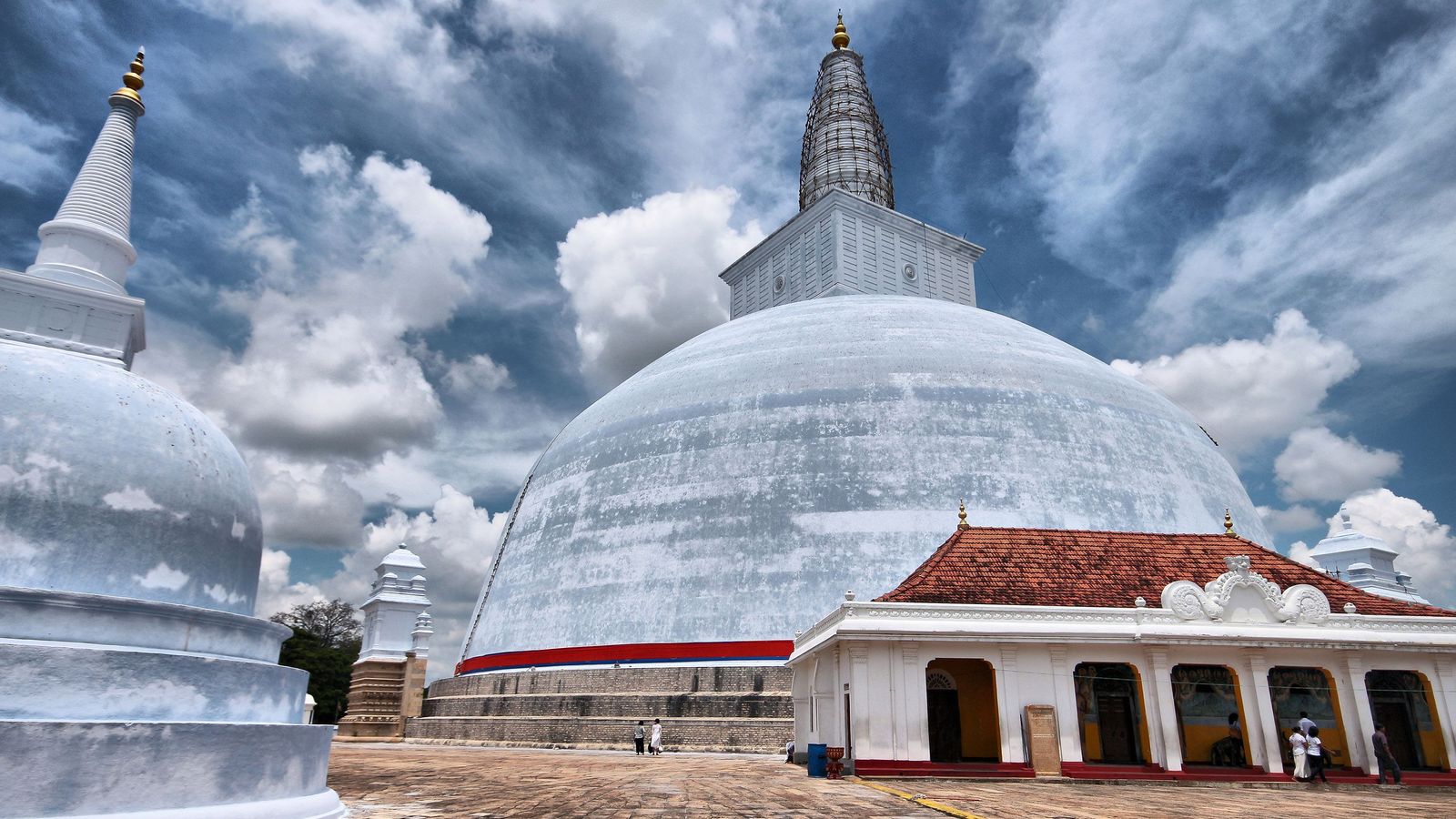
Sri Lanka’s sacred city of Anuradhapura is an unlikely place to be enmeshed in a fantastic tale of UFOs and otherworldly happenings. Locally known as Rajarata (Land of Kings), the Unesco World Heritage Site was the first established kingdom on the island (in 377 BC) and is at the heart of Sri Lanka’s Buddhist culture. Today, it’s one of the nation’s most visited places, attracting devoted pilgrims from around the country to its ancient Buddhist temples and giant dome-shaped stupas.
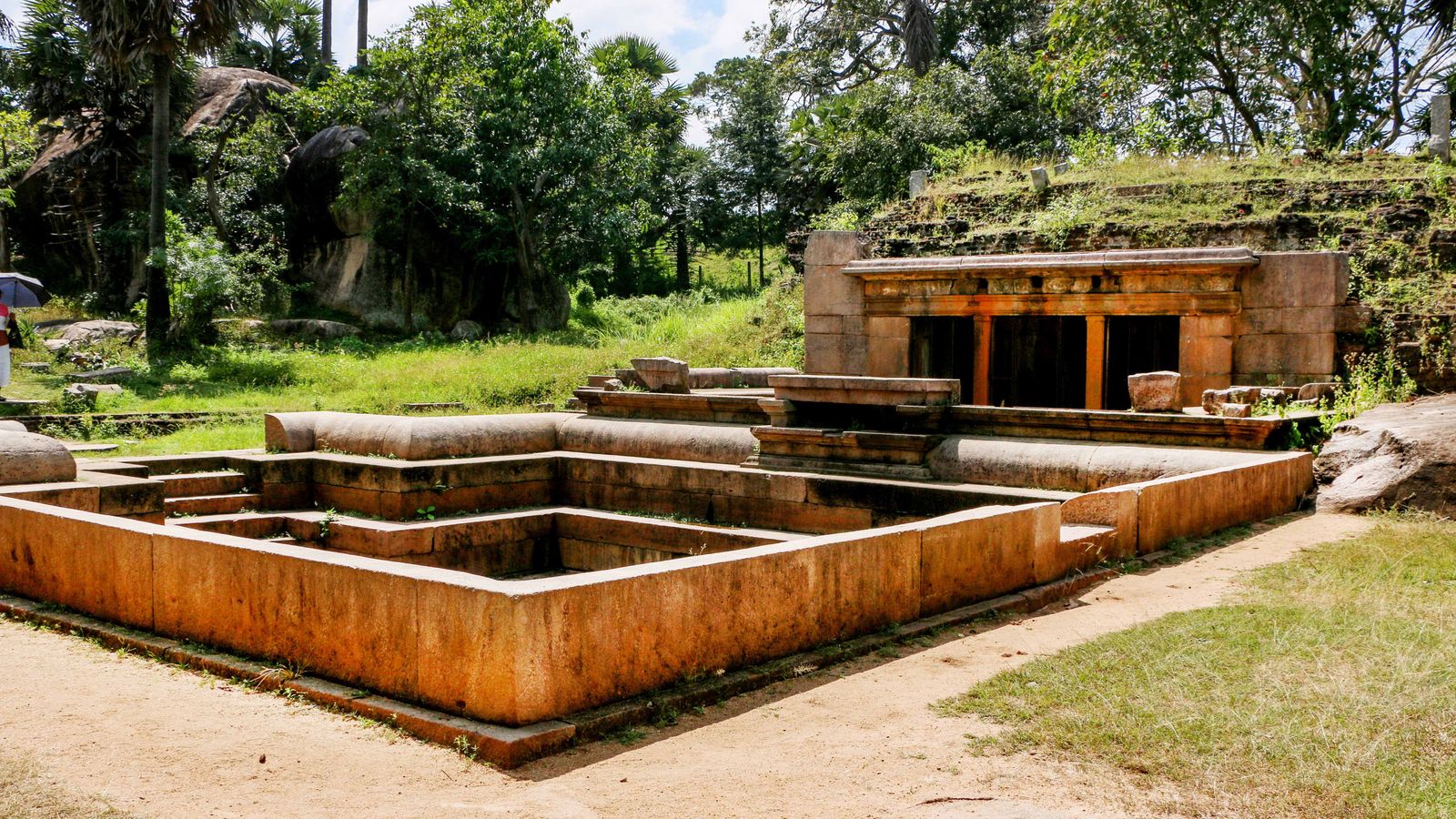
But this holy city is also home to something far more curious. Here, in Ranmasu Uyana (Golden Fish Park), a 40-acre ancient urban park surrounded by three Buddhist temples, is a chart that’s alleged to be a map to unlock the secrets of the Universe.
The Sakwala Chakraya has been variously interpreted as a cosmographical chart, a stargate and a building plan (Credit: Demi Perera)
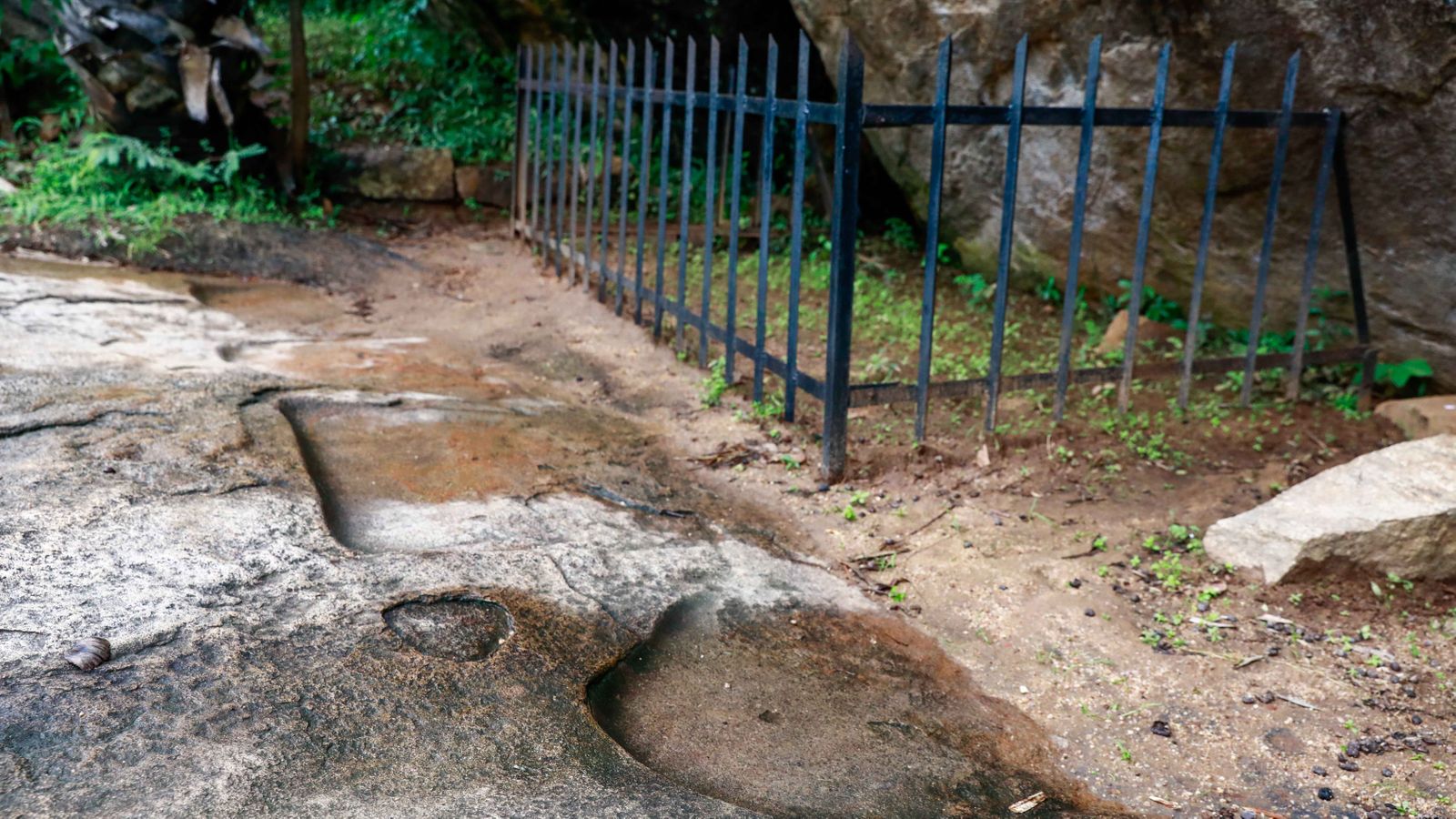
Measuring around 1.8m in diameter, Sakwala Chakraya (which translates to “Universe Cycle” in Sinhalese) is shallowly carved onto a low rock face among the protected park ruins. Its front facade can only be seen from ground level. In fact, four seats have been sculpted into a flat rock surface opposite that provide the ideal viewing area. Both the map and seats, which are also of mysterious origin, have puzzled historians, archaeologists and academics for more than a century.
Its existence, function or anything related to it is not mentioned in any historic records
“Ranmasu Uyana was used for a prolonged period in history,” said Professor Raj Somadeva, senior professor of archaeology at the University of Kelaniya, Sri Lanka. “The second major developmental phase seems to have begun in the 7th Century CE. During that period, several new buildings were added to the earlier garden layout. The chart could be a work of this period, but it’s impossible to know because its existence, function or anything related to it is not mentioned in any historic records, which were meticulously kept by Buddhist monks.”
While little is known about the chart and its purpose, the iconography is incompatible with other carvings of the Anuradhapura period (3rd-10th Century AD). The chart’s centre is made up of seven concentric circles divided by parallel vertical and horizontal lines. Rectangular compartments contain small, crossed circles. To the untrained eye, there are figures resembling umbrellas or bow and arrows, a kite, wavy lines and cylindrical shapes. An outer ring depicts marine animals: fish, turtles, seahorses.
When compared to other carvings from the same period such as the Sandakada Pahana, which depicts vines, swans and a lotus, all typical of Buddhist iconography, the chart is without religious context, leaving it without an obvious explanation as to why it is here.
Sri Lanka’s sacred city of Anuradhapura was the first established kingdom on the island (Credit: AnaG/Getty Images)
This has left it wide open to online speculation. Before the dawn of the internet, the chart garnered little attention in Sri Lanka. It is thought to have survived here, tucked away at the edge of a boulder, after the fall of the Anuradhapura kingdom; unremarkable in comparison to its breath-taking surroundings complete with twin ponds and bathing pavilions believed to have been used by kings. In fact, if aliens did arrive on Earth through here, they couldn’t have picked a nicer place – these sacred temple grounds, cloaked in thick, tropical jungle, are mostly uninhabited and protected by the authorities.
The first academic to note the chart’s archaeological importance was H C P Bell, a British civil servant appointed as the first Commissioner of Archaeology of Ceylon (Sri Lanka’s former name). Bell included a description of the chart in his 1911 report for the Governor of Ceylon, where he concluded that, “This ancient ‘map of the world’, perhaps the oldest in existence, is of quite extraordinary interest. Its presence… testifies to the antiquity of that astronomical lore still pursued in some of the Buddhist monasteries of Ceylon.”
While the chart does not resemble a map in a modern sense, Bell wrote that it depicts “an old-time cosmographical chart illustrating in naivest simplicity the Buddhistic notions of the universe”. He interpreted the circles, the symbols and marine life on the chart, based on his knowledge of Buddhism on the island, to mean the Earth, the seas, outer space and the Universe.
While discussions around the chart for many years were mainly confined within academic circles due to its historically important location, the explosion of photo-sharing on social media over the last few years has shone a global spotlight on the mystery. Eagle-eyed tourists have remarked on parallels between the chart in Anuradhapura and similar sites in other countries that are believed by some to be stargates – ancient gateways through which humans could enter the Universe. Their theory goes that the chart holds the secret code for unlocking the portal.
Ranmasu Uyana is a 40-acre ancient pleasure garden that includes the ruins of bathing pools (Credit: Sri Lanka Tourism)
Conspiracy theorists noted that the stargate of Anuradhapura had near-identical shapes and symbols to those found at Abu Ghurab in Egypt and La Puerta de Hayu Marka in Peru. The most striking similarity, it was said, as speculation around Sri Lanka’s stargate reached its peak, is its proximity to water. The nearby Tissa Weva reservoir, built in 300 BC, has been thrown around as conclusive evidence, since both Abu Ghurab and La Puerta de Hayu Marka were also built near water, which, according to the stargate theory, allowed extra-terrestrial beings to process gold from Earth’s water.
This otherworldly theory has been further fuelled by the chart’s proximity to Danigala mountain, also known as Alien Mountain, in the nearby sacred city of Polonnaruwa. Danigala, which lies deep in the jungle and is popular with hikers, has a unique circular shape and entirely flat top. This led internet sleuths to conclude that it must have, at one time, been used for UFO landings. Strangely, according to Sri Abeywickrama, a local tour guide, “villagers in the area do believe that Alien Mountain attracts more shooting stars and thunder and lightning above it than anywhere else.”
However, according to Somadeva, “There is little archaeologically to suggest that it’s a stargate.” Instead, Somadeva believes a more sensible conclusion is that the chart is an early map of the world, as suggested by Bell, because that explanation has religious and cosmological context that is logical, given the period and place in time.
According to Somadeva, “At least since 250 BCE, Sri Lankans had a clear idea of objects in the sky and outer space. In early Brahmi inscriptions, found in Sri Lanka, there are a number of names that refer to specific stars and concepts related to astronomy. One of the inscriptions in Kirinda, a religious and historic site on Sri Lanka’s southern coast, contains the phrase ‘aparimita loka datuya‘ meaning ‘the infinite universe’. What it suggests is that the person who engraved it had a very good understanding of the nature of the universe they lived in.”
Opposite the chart, four seats sculpted into rock provide an ideal viewing area (Credit: Demi Perera)
However, Shereen Almendra, senior lecturer of landscape design at the University of Moratuwa, Sri Lanka, offers a different, more earthly perspective. “I think the Sakwala Chakraya chart is a plan for a complex project similar to the enormous stupas that were being built at the time,” she said. “I lean towards it being a plan for Sigiriya.”
Sigiriya is one of Sri Lanka’s most recognised ancient landmarks, a 5th Century BC rock fortress, complete with flowing water, landscaped gardens and multiple living quarters. It lies just half an hour away from Anuradhapura within Sri Lanka’s Cultural Triangle, which is made up of three important ancient cities: Anuradhapura, Polonnaruwa and Kandy. “Given that the three seats carved in front of the chart appear to slightly face toward each other, it makes me think that it was a place for discussion – an ancient architect’s office if you like,” she said. “If the seats were built for a religious purpose, such as meditation, they would be in a straight line instead.”
According to Somadeva, the greatest challenge in identifying the function of the chart has been the lack of evidence to correctly date it. While Ranmasu Uyana and other parks and stupas in Anuradhapura are mentioned in chronicles and inscriptions dating as far back as 250 BC, the Sakwala Chakraya is not described in any historical records. “There would definitely have been a practical use for this diagram but it’s a huge challenge to figure out what that might have been when we can’t correctly date it,” he said.
So it seems that Sri Lanka’s enigmatic alleged stargate remains shrouded in mystery, its purpose and meaning still lost to time. The chart’s newly acquired cult status amongst sci-fi enthusiasts, however, has finally given it some well-deserved public attention. Thanks to their enthusiasm and the power of social media, it has finally stepped out of the shadow of larger-than-life Anuradhapura to stand apart on its own.
One expert suggested the chart may be a building plan for nearby Sigiriya, a 5th Century BC rock fortress (Credit: Anthony Asael/Art in All of Us/Getty Images)
Leader of Opposition Sajith Premadasa who announced a political ceasefire today urged the government and others to do their utmost to save Sri Lankans from the ongoing COVID-19 pandemic.
“We have gone into a political truce and is ready to do our utmost to save the lives of 20 million people of this country. I urge all political parties to do the same and forget their differences at a time such as this when the country has almost come to a standstill as a result of the pandemic,” Mr. Premadasa said.
“I also urge the government to forget its political objectives at this difficult time and do its part to save the nation,” he added.
The Director General of Health Services confirmed nine more Covid-19 related deaths in the country today (02) pushing the death toll due to the virus in Sri Lanka to 696.
01. The deceased is a 94-year-old male resident in Kebilithigollawa. He died on 29.04.2021 while undergoing treatments in Base Hospital Kebilithigollawa. The cause of death is mentioned as acute pneumonia due to Covid-19.
02. The deceased is a 51-year-old male resident in Polonnaruwa. He died on 01.05.2021 while undergoing treatments in Special Covid Treatment Centre, Welikanda. The cause of death is mentioned as chronic kidney disease and Covid pneumonia.
03. The deceased is a 72-year-old male resident in Lewla. He died on 01.05.2021 while undergoing treatments in National Hospital Kandy. The cause of death is mentioned as Covid pneumonia.
04. The deceased is a 79-year-old female resident in Thennekumbura. She was transferred from Panideniya Covid Treatment Centre to the Teaching Hospital Peradeniya where she died on 02.05.2021. The cause of death is mentioned as Covid pneumonia.
05. The deceased is an 86-year-old female resident in Maththegoda. She was diagnosed as infected with Covid-19 while undergoing treatments in Colombo South Teaching Hospital and transferred to IDH Hospital. She died on 02.05.2021and the cause of death is mentioned as Covid pneumonia, high blood pressure, diabetes, asthma and a heart disease.
06. The deceased is an 87-year-old male resident in Malambe. He died on 01.05.2021 while undergoing treatments in IDH Hospital. The cause of death is mentioned as Covid pneumonia, heart disease and chronic kidney disease.
07. The diseased is a 56-year-old male resident in Kanthale. He was diagnosed as infected with Covid-19 while undergoing treatments in Base Hospital Kanthale and transferred to Special Covid Treatment Centre in Kanthale. He died on 02.05.2021 and the cause of death is mentioned as Covid-19 infection and Covid pneumonia.
08. The deceased is a 53-year-old male resident in Warakamura. He was diagnosed as infected with Covid-19 virus while undergoing treatments in National Hospital Kandy and transferred to the District Hospital Katugasthota where he died on 02.05.2021. The cause of death is mentioned as Covid pneumonia.
09. The deceased is a 78-year-old male resident in Bandaragama. He died on 30.04.2021 at his residence and the cause of death is mentioned as Covid-19 Chest infection.
State Minister Sisira Jayakody says that permission has been granted to utilize Ayurveda Hospitals to treat coronavirus patients.
He stated that State Minister of Primary Health Care, Epidemics and COVID Disease Control Dr. Sudarshani Fernandopulle has permitted Ayurveda Hospitals to treat COVID-19 patients.
Accordingly, the Ayurveda Hospitals in Rajagiriya, Navinna and Pallekele have been granted permission to commence treating COVID-19 patients, he said.
The COVID patients directed to these hospitals will be provided with Ayurvedic indigenous medicines, the State Minister of Indigenous Medicine Promotion, Rural and Ayurvedic Hospitals Development and Community Health said.