All Madrasas will not be banned: Sarath Weerasekara

March 25th, 2021

Ajith Siriwardana and Yohan Perera Courtesy The Daily Mirror

While claiming that all the Madrasas will not be banned, Public Security Minister Sarath Weerasekara today reiterated that Madrasas that taught only religion and Arabic for children between the ages of five and 16 should be banned as they were against the National Education Policy.

He told Parliament that the Muslim society and organisations had already granted their approval to ban the Madrasas.

Responding to a statement made by SJB MP- S.M. Marikkar, the Minister said Madrasas that taught children above 16 years will not be banned.

I have never mentioned that all the Madrasas should be banned. A child in our country between five years of age and 16 should study according to the National Education Policy of the country without any racial difference. If there are Madrasas that teach only religion and language to children between five and 16, they should be banned,” he said adding that Muslim society and organizations had approved it.

MP Marikkar said that Madrasas were just like Pirivenas, cannot be banned and added that they should be operated subject to the syllabus of the Education Ministry and should not allow those coming from abroad to teach in the Madrasas.

The Minister said if someone wanted to become a Moulavi, there were a number of Madrasas that taught those above 16 and said such Madrasas will not be banned. 

Coronavirus: 271 positive cases detected on Thursday

March 25th, 2021

Courtesy Adaderana

Sri Lanka on Thursday (March 25) confirmed another 108 fresh cases of the novel coronavirus in the country as total infections detected within the day reached 271.

This brought the total number of Covid-19 confirmed in the country thus far to 91,289.

Department of Government Information said 20 of the newly -identified cases are returnees from foreign countries.

According to the Epidemiology Unit, 2,851 patients infected with the virus are currently under medical care at designated hospitals and treatment centres while total recoveries have reached 87,881. 

The death toll due to the Covid-19 pandemic in the country stands at 557.

UNHRC resolution seeks to interfere in matters within domestic jurisdiction – Foreign Min.

March 25th, 2021

Courtesy Adaderana

Minister of Foreign Affairs Dinesh Gunawardena the new resolution against Sri Lanka, adopted by the United Nations Human Rights Council (UNHRC) seeks to interfere in all matters that are essentially within the domestic jurisdiction of a country.

Sri Lanka considers the resolution to be unwarranted, unjustified and a violation of the relevant articles of the United Nations Charter, in particular, Article 2(7) and the relevant sections of the UN resolutions 60/251 that provides for the mandate of the HRC, the minister remarked, delivering a special statement during today’s parliamentary session earlier today (March 25).

For the above reasons the resolution against Sri Lanka is illegal, he added.

Although the resolution says it is guided by the purposes and principles of the Charter of the United Nations, it has violated Article 2(7) of the Charter which states that nothing contained in the present Charter shall authorize the United Nations to intervene in matters which are essentially within the domestic jurisdiction of any state.

We are a sovereign state that had been cooperating with the United Nations. We will protect our sovereignty. We are a democracy. We are the oldest parliamentary democracy in Asia. We have enjoyed universal suffrage for 90 years and today we are told that elections are not being held. We have held all the elections that could be held when the Election Commission decides.”
 
Foreign Minister says this resolution against Sri Lanka was pushed forward at the behest of a few countries representing one part of the world without the consent of Sri Lanka. It is therefore unhelpful and divisive.”

He stressed that there is no moral right to interfere in the affairs of a sovereign country in this manner.

No country has a greater interest in bringing about reconciliation among its people than Sri Lanka – a point that has been repeatedly been emphasized during the proceedings of the Human Rights Council.”

Minister Gunawardena, in his statement, pointed out that the list of co-sponsors of the resolution has amply demonstrated the divisive manner of such a country-specific initiative. He said it is clear from the result of the vote that there is no consensus within the Council on this resolution.

The resolution adopted on Tuesday (March 23), is intrusive of the sovereignty of the people of Sri Lanka and core values of the UN Charter, the minister said stressing that it can have an adverse effect on the ongoing efforts to maintain peace, reconciliation and development in Sri Lanka. It will lead to polarization of our societies.”

Sri Lanka categorically rejects the proposal in this resolution to expand the role of the OHCHR, the Foreign Minister reiterated. This sets a dangerous precedence and will have wide-ranging implications for all other countries.”

He went on to say that the Council cannot assume tasks that are not assigned to it by UN General Assembly in Resolution 60/251 or subsequent resolutions. This resolution is based on the rejected report on Sri Lanka by the UN High Commissioner for Human Rights presented at the 46th Session of the Human Rights Council which violates the principles of sovereignty and equality of all states and non-interference in internal affairs, he continued.

The report is one-sided and has exceeded the mandate of the Human Rights Council, Foreign Minister emphasized. He said the report contains unsubstantiated, unwarranted comments of essentially political nature, which no self-respecting sovereign nature can accept.

The minister pointed out that the report was compiled within months following the formation of the new government in Sri Lanka, without any field visits, while the whole world was grappling with the ongoing COVID-19 pandemic.

He said a well-orchestrated propaganda campaign was launched against Sri Lanka ahead of the 46th session of the Human Rights Council. This campaign was carried out with an extensive focus on Sri Lanka while reports pertaining to the situation in over 10 other countries were presented at relevant HRC session. The synchronized content of the propaganda against Sri Lanka and exploitation of the OHCHR mechanisms demonstrated a clear case of pre-mandated endeavour. 

The new resolution, in an unwarranted manner, seeks to interfere in all matters that are domestic affairs of a sovereign country, Minister Gunawardena said further. He questioned the UN members whether Sri Lanka represents a case warranting the immediate attention of Human Rights Council. Sri Lanka only defeated a terrorist campaign and acted within the legal rights to defend its territorial integrity, he elaborated.

The minister says the Sri Lankan government is determined to achieve its main targets to improve the lives of its people despite the distractions from international bodies. No sovereign government is bound to work according to the external prescriptions but be guided by the democratic aspirations of its people.”

The government remains committed to protecting those who have made immeasurable sacrifices to neutralize terrorism, to protect the territorial integrity of the country and to regain the right to life, he added.

It is regrettable that the proponents of the resolution seek to create ambiguous mechanisms with funds of millions of US dollars at a time of severe financial constraints faced by the UN.

Pointing out that the UNHRC is wasting money to engage in an unnecessary inquiry against Sri Lanka, the Foreign Minister called upon the proponents of the resolution to diversify the money allocated for the implementation of this proposal to improve the lives of people affected by the conflict. He urged them to direct the funds to a more positive cause.

Speaking on the vote on the UNHRC resolution, he highlighted the fact that some countries that voted in favour of Sri Lanka withstood immense pressure. He thanked the countries for braving such adversities to reject the resolution.

Despite the vote on the resolution against Sri Lanka, the island nation will pursue its domestic mechanisms as pledged before the UN agencies aimed at bringing about reconciliation and lasting peace, the minister stressed.

Sri Lanka will continue to engage constructively with the UN and its agencies in the same spirit of cooperation for the betterment of the people including through the achievement of sustainable development goals, in keeping with the domestic priorities and policies as well as international obligations and undertaking.”

adstudio.cloud


Sri Lanka can win the admiration of the world by resisting the UNHRC ‘ Inquisition’

March 24th, 2021

Senaka Weeraratna

Cuba is one of the most admired countries in the Global South. Cuba stood up for Sri Lanka at UNHRC, with a speech calling for defiance and resistance. These are the hallmark attributes of Cuba which have won global admiration. 

Likewise, China, Pakistan, Venezuela, Philippines, Bolivia and altogether eleven countries backed Sri Lanka resolutely. Our sincere gratitude is due to all of them. 

The speeches of the Delegates from Pakistan, Venezuela and the Philippines were masterly orations. It was a treat to listen to them. Great analysis and eloquence. 

The delegate from.Sri Lanka, Mr. C.A. Chandraprema, the veteran Columnist, read out a well prepared draft speech exposing the hypocrisy and the double standards of the proponents of the Resolution. The so called ‘ Core Group’ of nations. ‘Which country would be most concerned about the welfare of its own people than the country itself?’ he asked.

He echoed the defiance and never say die spirit of Sri Lanka. If we are to die then let us die fighting for the principles we believe in and not capitulate in abject surrender. We have done no wrong to any soul to feel any remorse or guilt, was Sri Lanka’s stance.

In hindsight, the wisdom of a Counter Resolution from Sri Lanka as suggested by International law specialist Mr. D. Laksiri Mendis, in a recent article published in a local newspaper, looms large. Sri Lanka’s version of the chronology of events set out in a recital of the draft Counter Resolution would have then entered the records of the UNHRC proceedings. It is an option worth considering in future sessions of the UNHRC.

These speeches deserve to be played back over and over again on local TV and Radio Channels. Law students, in particular students of International law must be exposed to the reasoning and exposition inherent in the brief speeches.

Sri Lanka is on the right side of history. With China as an ally and support of the rest of Asia ( bar one – South Korea) which did not vote in favour of the Resolution against Sri Lanka, the signs are clear of the Global Split. Between the rapacious Colonial countries of the Global North and ex – colonies of the Global South. 

Sri Lanka must be congratulated for requesting a Vote. We showed that we are not prepared to bow our heads down to Western Imperialism deceitfully masquerading as paragons of Human Rights. 

In Nuremberg and Tokyo Trials what prevailed was Victor’s Justice. For the first time in history the only country which defeated brutal terrorism ( LTTE – that is responsible for killing thousands of innocent Tamils, and the Prime Minister of India, Rajiv Gandhi) is being subject to the Justice of the Defeated. 

This is a retrogression or must be treated as an Aberration.

It is like hauling the Allied Commanders and political leaders of USA, Soviet Union, Great Britain, France before an International War Crimes Tribunal for Crimes against 

Humanity, Genocide and Mass Murder of civilians after the end of the second world war. Using the evidence of bombing of Dresden, Tokyo, Atomic bombs over Hiroshima and Nagasaki. And the Rape of countless  German women by Russian, American and British troops of the Allies, as the basis of the criminal charges.

How would the world respond to such a drama? 

Double standards of the UNHRC

This is exactly what confronts Sri Lanka. The Punishment for defeating the evil of terrorism.

In the Report of the UN High Commissioner for Human Rights there is hardly any mention of the serial killing and mass murder of innocent civilians committed by the LTTE. No condemnation. A document that is more appropriate to the proceedings of a ‘ Kangaroo Court’ than the hallowed precincts of a UN related international institution. 

UNHRC is now engaged in a shameless and morally indefensible exercise of white washing the LTTE and giving the status of Martyrdom to Prabhakar an. How would India respond if the UN system  recognized Godse, who killed Mahatma Gandhi, as a Martyr? The LTTE is no different. Its hands are stained with the blood of Rajiv Gandhi and over 1500 lives of IPKF soldiers. Yet the Foreign Minister of India, Jayshankar ( a Tamil from Tamilnadu) is totally indifferent to the sentiments of millions of Indians who have not forgotten the crimes of the LTTE perpetrated against Indians both on the soil of India as well as Sri Lanka.

Jayshankar wants India’s foreign policy to be forged by looking at Sri Lanka through the lens of Tamilnadu. This is suicidal for India. Tamilnadu is no longer an  exclusive Hindu state. Like the LTTE it pushes the Agenda of the Global Church. 

India will rue the day if a Dravidastan is formed. It will lead to the break up of India. By supporting Tamil aspirations for a Tamil Eelam, India is committing hara kiri. 

India no longer can claim leadership of South Asia. It failed to give support to a fellow South Asian country i.e. Sri Lanka, when three others namely Pakistan, Bangladesh, and Maldives ( all three Muslim countries)  showed South Asian solidarity and voted against the Resolution.

India is pushing all it’s regional neighbours to the warm embrace of China. 

Asia needs countries that  have a spine to lead this huge continent and stand up against the colonial West. The Historical  Adversary.

The East is East and the West is West. India is geographically in the East. Why did it not give voice to the concerns of Sri Lanka and join China, Pakistan, Philippines, Venezuela, Russia, Cuba, Bolivia?

Why did India join UK and USA and forget the history of humiliation and plunder under the British occupation ? The natural allies of India lie in Asia and not in the West. How can India forget this reality? 

We must take refuge in a value system that are non – negotiable. The grundnorm of our civilization and our links to each other. 

Unlike in a western country where almost every thing is for sale and values have significance only when they generate profit. It is not so in the East.

The image of India as a lackey of the West is causing enormous harm to India both within and outside India. Thanks to Jayshankar’s tribal driven agenda of foreign policy making for India. 

Posterity will never be kind to Indian Prime Minister Mody for having allowed a Tamilian (Jayshankar) to destroy India’ s millennial old links with Sri Lanka through a flawed foreign policy.

Singapore’s Foreign Affairs Minister is always an Indian or a Malay. Never a Chinese. Likewise a Tamilian Foreign Affairs Minister for India will not win the trust and confidence of Sri Lanka in respect to the latter’s existential problems. 

Tomorrow belongs to China, not India.

Pakistan, Bangladesh, Maldives and the rest of South Asia know that. The pattern of voting at UNHRC showed that clearly. 

Defiance should be the hall mark of Sri Lanka’s response to bullying tactics by Western colonial countries, both now and in the future. UN is a tool of Western Colonialism.

Sri Lanka can win the admiration of the entire world and put the current leadership of India to shame for showing spine when needed. Asia’s destiny is not subservience to the West. 

There was no greater embodiment of spine and moral courage than the great Netaji Subash Chandra Bose. Why is India failing him now? 

Sri Lanka can become the Cuba of Asia to the accompaniment of unceasing applause of Asia’s teeming millions yearning for moral leadership with backbone.

Senaka Weeraratna

THE GENERAL ELECTION OF 1956 Part 9A

March 24th, 2021

KAMALIKA PIERIS

The general election of 1956 introduced to its joyful and triumphant public something they never ever expected, political assassination.  SWRD Bandaranaike was assassinated in 1959. This was not the first assassination of a Head of state in South Asia. Liaquat Ali,  Prime Minister of Pakistan was assassinated in 1951. Bandaranaike was probably the second.

The first attempt at getting rid of Bandaranaike it appears was in August 1959.  CP de Silva had become severely ill at a cabinet meeting on 25 August 1959 after consuming a glass of milk and was flown to the UK for medical treatment. It was thought at the time, that the milk was intended for Bandaranaike.

KKS Perera said in Daily Mirror 7.4.2016 that CP’s own sister, the well-known Pediatrician, Dr. Ms. Stella de Silva, who was in USA, attending a seminar, rushed home on September 2nd, and on her initiation an eminent neurologist was summoned from UK. He accompanied CP to Hospital for Nervous Deceases in London on the 7th of September, where it was diagnosed as ‘acute nephritis’ or inflammation of kidneys due to either nephrotoxic effects of drugs and or toxins. The doctors were at a loss to describe exactly how such severe injury could happen so unexpectedly, but were convinced that it was caused from an ingestion of a toxic substance.” The fact that the poison could not be indentified easily in UK seems to show a foreign hand.

September 1959 was known to be a malefic period for Bandaranaike. Fortunately, SWRD was to address the UN General Assembly in first week of October and was to leave on September 28. This would help him escape the malefic period.

Bandaranaike‘s killers knew this. They first planned to kill Bandaranaike   at the opening of the new market in Kandy on the 23rd of September. The chosen assassin, the monk Somarama was to merge with the Asgiriya and Malwatte monks and vanish, after shooting Bandaranaike. But Somarama had panicked and the assassination did not take place.

SWRD was assassinated on Sept 26th. 1959   He was shot dead by, Talduwe Somarama a Buddhist monk at Bandaranaike’s residence in Rosmead Place, Colombo. Somarama however,   was only the tool. The brains behind the assassination was Mapitigama Buddharakkita, Viharadhipati of Kelaniya Rajamaha Vihara. Also founder and secretary of the Eksath Bhikkhu Peramuna of the MEP. 

Arrests were made and a Supreme Court trial before Justice TS Fernando started in February 1961. Somarama was defended by Lucian G.Weeramantry who appeared free of charge.  The Jury found the first accused Buddharakkita, second accused HP Jayewardena and fourth accused Somarama guilty by a unanimous verdict. All three faced death by hanging.

They appealed against their death sentence to the Court of Criminal Appeal. The Court of Criminal appeal dismissed all three appeals but amended the sentences imposed on Buddharakkita and Jayewardena from death to rigorous life imprisonment. Then the three convicted persons tried to get their verdicts reversed by the Judicial Committee of the Privy Council in the UK. Applications for special leave to appeal to Privy Council was refused by Privy Council in May 1962.

There was deep anger among the westernized elite regarding the convictions.   In Kandy, where I grew up, several elite persons    told my mother, angrily, that they would get the judgments squashed   by Privy Council in London.  My mother conveyed this to Justice TS Fernando, who was a close friend of my parents. Justice Fernando   replied, with contempt,    Wait and see. They will not   be given LEAVE to appeal.” He was correct.

Somarama was hanged in Welikada in July 1962. The life imprisonment sentences of the 1st and 2nd accused were commuted to 20 years by the UNP government of 1965. Mapitigama Buddharakkita died in 1967 of a heart ailment after serving time at Welikada prison. HP Jayawardena was released on August 4, 1977.

The Christian church got two converts after the Bandaranaike assassination. During the trial Somarama had stopped wearing the yellow robes when appearing in Courts.  Weeks before his execution Somarama was converted to Christianity and was baptized in his cell by an Anglican priest, said DBS Jeyaraj. Wimala Wijewardana whose name had been linked with Buddharakkita converted to the Catholic faith and left her property including Adisham, to the Church.

Those who planned the assassination would have considered it a great achievement to have got it done through the Sangha. They would have hoped that this would demoralize the Maha Sangha and make them run away from politics. That did not happen. The Maha Sangha were not shaken. But the public was, temporarily.

When Somarama assassinated SWRD, the public turned against the monks, said Ellawala Medhananda. They would put parcels of dirt into the begging bowl and would ask ‘pistole thiyanawada.  Monks did not venture out.

On the other hand, when Ellawala and other monks went to view SWRD’s lying in state, no one looked at them angrily or said anything.  Nobody said anything offensive to him when two weeks later he went by bus from Borella to Napawala, either. But on the bus from Avissawella to Napawala, one person,   known to Ellawala, had asked ‘pistole thinyanavada’. He later died an alcoholic.

The reason given for Buddharakkita wanting to kill Bandaranaike was that he did not get a lucrative contract he had asked for.   Buddharakkita had set up a company, Colombo Shipping Lines, in the name of HP Jayawardena, to carry freight for Sri Lanka government, specially rice from Burma. Stanley de Zoysa, MEP’s Minister of Finance and his brother Sidney, who was DIG, Police were also investors in Colombo Shipping Line.

 In May 1958 Buddharakkita made a bid for a tender to bring 200,000 tons of rice from Burma and carry a similar quantity for further period of three years. This was a very lucrative contract and the company stood to make enormous profits.

SWRD appointed a committee consisting of Philip Gunawardene, RG Senanayake and H.E.Pieris, Deputy Secretary to the Treasury, to examine the offer. Pieris did not think the company had the financial standing to undertake such a big venture and did not recommend it.  SWRD acting on the advice of the committee refused to give the contract to the company, resulting in great financial loss and disappointment to Buddharakkita and Jayawardena.   We are expected to believe that Buddharakkita got Bandaranaike killed for this. Not even a child will believe this.

The Bandaranaike assassination was a political assassination. Philip Gunawardene was the first to anticipate this. He had seen plenty of political intrigue at first hand, when he was living in UK, USA, and he could recognize high level intrigue when he saw it in Ceylon.  Philip announced in Parliament, Powerful forces, foreign and internal, which do not wish to see this government continue, are at work.  He turned to Bandaranaike and said,” Sir, your life is in danger”.

The 1956 MEP swing was not to the liking of UK or USA, observed historian Nayani Melegoda. It was seen as a blow to western prestige in Asia. Further, it is a blow in a place where a blow had not been anticipated, the west said.

UK was ‘bewildered ‘at this anti British vote.Sri Lanka was a country which had benefited greatly from it western connections and which had hitherto appeared to be such a staunch member of the Commonwealth. US was alarmed. Ceylon seemed to be swinging sharply left, it said. US sent Asst Secretary of State William Rowntree to Ceylon in 1958 to check this out.

When   the west comes across regimes they do not like, in newly independent states, they try to get rid of the head of state. The assassination is done through local agents who are supported in all sorts of ways.

The Bandaranaike assassination team appears to have had such external support. Bandaranaike‘s killers were defended by highly placed lawyers. At the Supreme Court trial Buddharakkita and Jayawardene were defended by reputed British Queen’s Counsel, Phineas Quass. Sir Dingle Foot QC, appeared on an honorary basis for Ven. Somarama, in London.

 DBS Jeyaraj says Buddharakkita had large sums of money at his disposal.   He had dished out Rs 50,000 to 60,000 in the 1952 election  to support  Wimala Wijewardena. In 1956 he had spent around one lakh on the election.  These were  huge sums of money in the 1950s and  the Sangha would not   normally have access to such sums . Temples did not run to that sort of money.

Buddharakkita    engaged  in business activity  at a level  far removed from  any business that a  bhikkhu would attempt. His businesses were in highly specialized   sectors. Clearly Buddharakkita had  business advisers in addition to donors.

Buddharakkita had his Colombo Shipping Lines. Buddharakkita had also invested in Metals and General Imports Co. This company together with the Czech firm Techno-export tendered for constructing the factory buildings at Sugar Corporation, Kantale. He won the contract. But the company got into difficulties and lost the contract. The link with a forieng firm shows that Buddharakkita had foreign business contacts.  

Buddharakkita has visited London. Buddharakkita and his associates made several trips to London spending substantial funds to obtain financial backing for the Colombo Shipping Company, said Meegama.  Sachi Sri Kantha says he had also visited London for a medical checkup.

Buddharakkita lived well. He travelled by car. Buddharakkita was openly disparaging about MEP high command. Buddharakkita used disparaging epithets for prominent political figures of the day, said Sri Kantha. Buddharakkita referred to Bandaranaike as  Sevela (slimy) Banda. Buddharakkita said of Philip, ‘there is no benefit to those who put him into power and power must be wrested from his hands’. He also used the term nondiya (cripple) to refer to RG Senanayake,  MP for Kelaniya, where his temple was located.  

Sachi Sri Kantha questions whether any ‘foreign hand’ was involved  in the Bandaranaike assassination. Was Buddharakkita contacted by the CIA, interested in toppling a Left-leaning prime minister into the Indian Ocean? It is no secret that the CIA was  involved inassassinations and assassination attempts on political leaders who were pro-Left during the period 1959 to 1962. Bandaranaike’s politics and actions were definitely pro-Left,  at  time when America was interested in Asia.

It may be of interest to delve into  ‘confidential’ records  to see whether Mapitigama Buddharakkita  had any direct or indirect contacts with international gumshoes, said Sri Kantha. Buddharakkita  died in prison (at a relatively young age of 46), when the UNP ,a pro-West government was in power. Has anyone taken the trouble to look seriously into this assassination,  Sri Kantha asked. ( Continued)

The Burqa Ban is not a “Mere Proposal”

March 24th, 2021

By Shivanthi Ranasinghe

Last week, the Pakistan High Commissioner Major General (Retd.) Muhammad Saad Khattak, in an unprecedented and shocking move took to Twitter to make a comment on an internal matter of Sri Lanka. His Tweet appeared shortly after Public Security Minister Rear Admiral (Retd.) Sarath Weerasekera made the long pending announcement that he signed the cabinet papers to present in Parliament to ban the burqa. Mr Khattak claimed that such a move would injure” the feelings of Muslims in Sri Lanka and elsewhere. 

Pakistan, who had been our all weather loyal friend had always prided itself for not being India. While India for decades had played politics with Sri Lanka by passing itself as a voice for Sri Lankan Tamils (whilst largely ignoring the Indian origin Tamils), Pakistan had maintained a strong relationship with the Sri Lankan Government. As such, Pakistan had been a friend to the nation as a whole without promoting or demoting any community in the Island. Despite the disparity in economy, territory and military strength, Pakistan had always treated Sri Lanka as an equal and given space for us to deal with our internal concerns as we see fit. 

Since the conclusion of the war against terrorism waged by the LTTE, there had been a concentrated effort by known and unknown parties to create tension between the Sinhalese and the Muslims. The incidents at Aluthgama and Digana had been twisted as attacks on the Muslim community. The provocation that led to these incidents or the bravery of the ordinary Sinhalese as well as the Buddhist clergy to protect the Muslims from the mob during these riots are being deliberately suppressed. The calm that prevailed after the vandalism of Buddhist statues in Mawanalla and even after the dastardly Easter Sunday Attack is also discounted. 

The West, masters of divisive politics, had not lost an opportunity to exacerbate the situation and portray that the Muslims are being marginalized by the Sinhalese. It was the West that took cudgels against Sri Lanka for cremating all COVID-19 deaths. The Islamic countries, other than perhaps a private inquiry, kept out of the debate. Even though the matter has been resolved the West remains still concerned” that the burials of COVID-19 deaths are only allowed in the remote parts of the Island. 

The irony is that the concern comes from the very elements that had reduced most Arabic countries to rubble. The resulting displacement of persons has been the largest since WWII. Countries like Germany pat their own back for absorbing large numbers of these displaced persons, but have never addressed the cause for this displacement in the first place. At the very least, none of these countries nor world bodies like the UNHRC had taken any measures to restore the destruction caused by these military invasions to alleviate the people from the consequential suffering. A case of point is the silence over NATO’s actions in 2011 to debilitate Libya’s water supply by targeting critical State owned water installations, including the factory that manufactured pre-stressed concrete cylinder pipes for the Great Manmade River (GMR) project that supplied water to over 70 percent of the Libyan population. 

The Islamic countries have refused to get duped by the hypocrisy promoted by the West. Hence, despite the propaganda against Sri Lanka on alleged discrimination against Muslims, the Islamic world had continued to be supportive to Sri Lanka. The West, to quote the British parliamentarian Lord Tariq Ahmad, is working hard to build support for the new resolution on Sri Lanka” at the UNHRC to make us accountable for all violations and abuses committed in Sri Lanka.” However, he fears that it would be an unwinnable” resolution. This means that they have been unable to muster the support for it outside the Western Hemisphere. 

It is at such a moment that Pakistan High Commissioner Khattak commented on a proposed action by the Sri Lankan Government. The Foreign Ministry’s response is however of greater concern. 

The ban is certainly not against the Muslim community and should not be misinterpreted as a move to intimidate a smaller community. The face covering veil that shrouds the entire body and thus enforcing an anonymity on the person, making it difficult even to distinguish the gender is not a religious or a cultural attire. It is a political stance to create exclusivity from the rest of the nation. Concerns over this alien costume has been coming from within the Sri Lankan Muslim community itself. 

Until the Easter Attack in April 2019, Sri Lankans with a sense of unease watched Muslim women in growing numbers opting to cover themselves in a burqa and some even with a niqab. However, this was seen as a matter that the Muslim community needed to resolve. This perception changed immediately with the Easter Attack. Then only the severity of the situation was grasped as it became clear that this dress code is a strong indication of extremism that will not hesitate at terrorism. Hence, even before the then Yahapalana Government could react, it was the people who reacted against the burqa by not allowing anyone in it from entering public premises, including buses. With everyone following this precautionary measures, the Yahapalana Government had little choice but to impose a temporary ban on the burqa. In turn, it did not provoke a reaction from Pakistan or any of our traditional friends. 

Traditionally, Sri Lankan Muslim women, especially the young women, did not cover their heads. They mostly wore the shalwar with a shawl loosely wound around or hanging from the neck. The older women used to cover the heads very loosely with their sari fold. Today, this has changed almost completely and those who do not wear the burqa often sports a hijab, which still covers the head but with a colorful scarf and done so quite artfully. This does not cover the face and thus does not hide the wearers’ identity. The burqa ban does not include the hijab. 

The burqa/niqab are not the only adaptations by the Muslim community that make the other Sri Lankan communities uncomfortable. The Halal certification for food has become a hidden cost for even the non-Muslims. Sunanda Deshapriya saw the Vesak lanterns hung by soldiers near their camp in the North as a religious invasion. However, this added cost due to the Halal certification to non-Muslims is yet to draw a likewise comment from Deshapriya and his cahoots. Still, though not vociferously communicated, this is a situation that most Sir Lankans are unhappy. 

Special banking facilities for the Muslim community alone is another unfair practice of the Muslims. The Muslim entrepreneurs are privy to bank loans at almost zero interest rates, which makes it harder for the other business communities to compete fairly at the market. 

Muslims also enjoy polygamy, which is an offense if committed by another community. However, the concern in many of the social groups is more on the underaged brides than of polygamy. 

The sharia laws and quasi courts also is extremely upsetting the other Sri Lankan communities. Yet, the immediate recommendation is to ban the burqa along with the niqab. This recommendation was once again reiterated by the Presidential Commission Investigating on the Easter Attack. 

Instead of explaining the background and reasons for the stance on the burqa, the Foreign Ministry has tried to dilute Rear Admiral Weerasekera’s statement and his move to legalize the ban. In a statement released by Foreign Ministry the Foreign Secretary Admiral (Retd.) Jayanath Colombage has stated that the ban is merely a proposal”. 

However, it is not and should not be treated or dismissed as a mere proposal”. Since the Easter Attack the extremism represented by the burqa along with the exclusivism certain sections of the Muslim community is enveloping themselves is cause for apprehension. Even before the Easter Attack, Rear Admiral Weerasekera had been highlighting the unforgivable acts of these extremist elements that also includes the flattening of the ancient Buddhist temple in Digavapi. 

When he contested at the 2020 General Elections he pledged to address this growing extremism that is threatening the ways, monuments and Iives of the non-Muslims in this country. When he started his election campaign he did not have a base in Colombo. Yet, after canvassing for a very short period of few months he got the largest mandate from the district. 

For a man who had always spoken against terrorism and extremism to win with an overwhelmingly large mandate from a liberal minded, cosmopolitan vote base as Colombo signifies the strongly worded message people wanted from the new Administration. No one has the right to dismiss this message as a mere proposal”. 

When Admiral Colombage was appointed as the Foreign Secretary there was hope that he will be without the prejudices afflicting our Foreign Ministry. Despite the numerous missions we maintain throughout the world, we have consistently failed to properly articulate our position to the outside. Instead, we are always aiming to appease and wilt at even the slightest glare. In the face of this abysmal failure to project Sri Lanka positively, the very 

need for our missions has been questioned. 

This sorry state of affairs was expected to change with Admiral Colombage at the helm. However, instead of explaining the reasons for the ban, he had opted to dilute Rear Admiral Weerasekera’s move and thereby have created the space for protest. It is not clear whether the same stance is adapted by the Foreign Minister Dinesh Gunawardena. 

Had the Foreign Ministry explained the basis for this ban, Pakistan would have understood and continue to support us. They too are deeply affected by undisciplined ideologists who harbor extreme views. Protecting the porous borders along the Pakistan territory, especially along Afghanistan is a tough challenge for the country. These border regions, which are often rural and cut off from the mainstream have schools taught by uneducated teachers. Their take on the religion is warped and seeks to twist young minds to view the world violently. It is mostly their action that the Western media often highlight to paint the entire country as a bomb exploding terrorist terrain. 

The statements made by the former western governor Azath Salley would have certainly helped the Foreign Ministry to build its case. Certainly a country cannot allow elements that would not accept or respect the Constitution or the law of the land. At the same time, a community – majority or minority – of a country cannot be allowed exclusive privileges denied to other communities based. 

Instead of taking the easy route to be in other countries’ good books for short term gains, our Foreign Ministry must get its act together. Its duty is not to create dispute over statements made by our policy makers but to articulate our position to the world. Therefore, instead of shooshing the people or their political representatives it is hoped that Admiral Colombage, one time Commander of the Sri Lanka Navy, too would have the same spine and courage as Rear Admiral Weerasekera, who was also a high ranking officer of the same Navy, to stand by the country by fearlessly speaking out the truth. 

ranasingheshivanthi@gmail.com 

Sri Lanka slams Western powers for bullying: after resolution passed at UNHRC

March 24th, 2021

 by Jamila Husain Courtesy NewsIn.Asia

Colombo, March 24 (Daily Mirror) – Speaking to media soon after the resolution on Sri Lanka was passed at the UNHRC, Gunawardena said that the fact that only 22 countries had voted in favour of the Resolution while 11 voted against and 14 abstained, showed that several countries were against this unfair pressure brought upon by the European and Western powers.

He further said that any resolution sponsored at the UNHRC should have the consent of the concerned country and without their approval no resolutions could be implemented. He maintained firmly that the government would not give into the unfair pressure brought upon by this new Resolution and would continue to conduct a domestic probe on allegations of human rights violations and other complaints during the war period.

This Resolution on Sri Lanka was moved by Britain and supported by the western powers who want to dominate the global south. Our call as well as the call from several countries were that our concentration should be on COVID-19 first and as the world as a whole we should defeat the virus first. Even now vaccinations have to be provided to over 100 countries,” Mr. Gunawardena said.

President Gotabaya Rajapaksa, soon after his election promised the country to withdraw from the resolution which was co- sponsored by the previous government. Cosponsoring such a resolution was not possible.

Even my predecessor Thilak Marapana mentioned this internationally that Sri Lanka constitutionally could not go forward with that resolution. President Rajapaksa said a domestic mechanism would be implemented where a commission was appointed headed by a Supreme Court Judge to entertain any allegations by any Sri Lankan citizen during the time we were facing the brutal conflict against the LTTE which is a banned organization today in Europe, US, India and even in the UK.,” he said.

However these western countries still want this resolution initiated leading to more dangerous objectives,” the Minister said.

Minister Gunawardena further thanked countries who had voted against the Resolution and those who had abstained from voting stating the fact that powerful countries such as India and Japan had abstained, only showed that they too were against the resolution.

He further said that Sri Lanka had been able to garner support from Latin America, South America, Cuba, Venezuela, Bolivia and other countries across three continents who had supported the voice against domination of what the Western Powers were seeking and Sri Lanka would continue its commitment to the UN and uphold its democratic rights. (Jamila Husain)

Factors behind India’s abstention on Lanka resolution at UNHRC

March 24th, 2021

By P.K.Balachandran Courtesy newsin.asia

Colombo, March 23: India on Tuesday abstained from voting on the UN Human Rights Council (UNHRC) resolution on Sri Lanka for a variety of reasons. The immediate reason perhaps lay in the April 6 elections to the Tamil Nadu State Assembly in which the Bharatiya Janata Party (BJP) is contesting 20 seats of the 234 seats in alliance with the ruling All India Anna Dravida Munnetra Kazhagam (AIADMK).

The alleged human rights violations in Sri Lanka against the Tamil minority is a key electoral issue in Tamil Nadu, a fact which the BJP cannot ignore. And the subject matter of the UNHRC resolution is the alleged violation of the human rights of the Tamils of Sri Lanka.

If India had voted against the resolution moved by the West-led Core Group on Sri Lanka, the BJP and its ally, the AIADMK, would have had to pay a heavy electoral price.

However, New Delhi chose to be neutral rather than vote for or against the resolution. This was because it could not alienate Sri Lanka either. Sri Lanka has great geo-political importance for India in the context of China’s ever widening footprint in the island nation in the economic  sphere. Dominance in the economic sphere could easily acquire an additional political and geo-strategic content.      

The resolution on Sri Lanka was adopted at the UNHRC with 22 of the 47 members voting for the resolution, 11 voting against, and 14 abstaining. India, Japan, Indonesia, Libya, Bahrain, Cameroon and Nepal were among the countries that abstained. China, Pakistan, Bangladesh, Philippines, Russia, Somalia, Uzbekistan, and Venezuela were among the countries that voted against the resolution.

The Resolution

The resolution requested the Office of the High Commissioner for Human Rights (OHCHR) to enhance its monitoring and reporting on the situation of human rights in Sri Lanka, including progress in reconciliation and accountability, and to present an oral update to the Human Rights Council at its forty-eighth session, as well as a written update at its forty-ninth session, and a comprehensive report that includes further options for advancing accountability, at its fifty-first session, both to be discussed in the context of an interactive dialogue.

The resolution also encourages the OHCHR and relevant special procedure mandate holders to provide, in consultation with and with the concurrence of the Government of Sri Lanka, advice and technical assistance on implementing the above-mentioned steps.

India’s View

The Indian representative said: India’s approach to the question of human rights in Sri Lanka is guided by two fundamental considerations. One is our support to the Tamils of Sri Lanka for equality, justice, dignity and peace. The other is in ensuring the unity, stability and territorial integrity of Sri Lanka. We have always believed that these two goals are mutually supportive and Sri Lanka’s progress is best assured by simultaneously addressing both objectives.”

India supports the call by the international community for the Government of Sri Lanka to fulfill its commitments on the devolution of political authority, including through the early holding of elections for Provincial Councils and to ensure that all Provincial Councils are able to operate effectively, in accordance with the 13th amendment to the Sri Lankan Constitution.”

At the same time, we believe that the work of OHCHR should be in conformity with the mandate given by the relevant resolutions of the UN General Assembly.”

We would urge that the Government of Sri Lanka carry forward the process of reconciliation, address the aspirations of the Tamil community and continue to engage constructively with the international community to ensure that the fundamental freedoms and human rights of all its citizens are fully protected.”

Voting in the UNHRC on the Sri Lanka resolution

Sri Lankan View

The Sri Lankan Representative C.A.Chandraprema said that the resolution was unwarranted, unjustified and in violation of the relevant articles of the UN Charter in particular article 2 sub section 07, and relevant sections of the United Nations General Assembly resolutions 60/251 that provides for the mandate of the Human Rights Council.”

He said all members of the council would agree that UNHRC cannot assume tasks not assigned to it by the UN General Assembly in resolution 60/251 or in subsequent resolutions.

The Sri Lankan envoy said the resolution violated the principles of sovereign equality of all states and non-interference in internal affairs. The resolution was presented without the consent of Sri Lanka as the country concerned and is therefore unhelpful and divisive.

No country has a greater interest in bringing about reconciliation among its peoples than the country concerned, a point that has repeatedly been emphasized during the proceedings of this council,”  Chandraprema said.

Notwithstanding the stated objectives of the proponents of the resolution, Sri Lanka is of the view that this resolution will polarize Sri Lankan society and adversely affect economic development, peace and harmony,” he added.

Fallout For Indo-Lankan Ties

Although Indian Prime Minister Narendra Modi is believed to have explained India’s predicament to the Sri Lankan President Gotabaya Rajapakasa over phone and had assured him that India would do no harm to Sri Lanka, the majority community in Sri Lanka, the Sinhalese, would not take kindly to the Indian abstention.

India-Sri Lanka -Lankan relations, none too good at the moment, will be further strained, observers believe. Relations had touched a new low after Sri Lanka disregarded a 2019 agreement to give India the project to construct the East Container Terminal in Colombo port. Losing faith in Colombo’s word, the government of India did not take Sri Lanka’s alternative offer of the West Contain Terminal, leaving the matter to a  private Indian company, the Adanis, to negtiate.

India is also apprehensive about the fate of the 13th.Amendment (13A) of the Sri Lankan constitution which gives the provinces (particularly the Tamil-speaking Northern and Eastern provinces) a measure of autonomy. The 13A flowed from the India-Sri Lanka Accord of 1987 which was meant to solve the Tamil question in Sri Lanka through devolution of power to provinces.

For the past few months Sri Lankan ministers, including the former Provincial Councils minister Adm.Sarath Weerasekara had been talking of repealing the 13A on the grounds that the provincial councils were wasteful and divisive. Following India’s expression of concern, Lankan President Gotabaya Rajapaksa relieved Weerasekara of the portfolio and later announced that Provincial Councils elections will be held in June after clearing the legal hurdles. But India continues to be apprehensive and its representative at the UNHRC Indra Mani Pandey made the fate of the 13A the burden of his speech.

Importance of Sri Lanka    

However, even though New Delhi is miffed with Colombo on several grounds, it cannot but build good relations with it in view of China’s growing economic footprint in Sri Lanka, which could acquire a political and geopolitical dimension. Geo-economics is the basis of geopolitics in this age of globalization.

Citing a security threat, New Delhi successfully thwarted Colombo’s bid to give some power projects in the Northern Province to a Chinese company. India made Sri Lanka a part of its Indian Ocean Maritime Security architecture with the responsibility to coordinate the mechanism’s activities by establishing a Secretariat in Colombo. Recently, in a thinly veiled attempt to show its military potential, India participated in the 70th.Anniversary celebrations of the Sri Lankan Air Force by sending its Tejas fighter aircraft and aerobatic teams to give demonstrations.

India bent over backwards to be the first to supply COVID-19 vaccines with the External Affairs Minister Dr.S.Jaishankar himself flying to Colombo to make the offer to President Gotabaya Rajapaksa. Although the second consignment of the COVISHIELD vaccines will be delayed because of supply constraints, to date, India is the only vaccine supplier in Sri Lanka.    India is continuing its house building projects in Sri Lanka and has a US$ 15 million project to help Buddhist institutions.

However, it remains to be seen how India will reconcile its long term interest to maintain good relations with Sri Lanka with the short term and immediate interest in keeping the Tamils of Tamil Nadu happy in the un-up to the April 6 State Assembly elections. Observers see India’s neutrality in the UNHRC as a way out of the sticky situation.

Resolution on Lanka is a bid to undermine its development and stability, China says

March 24th, 2021

Courtesy NewsIn.Asia

Geneva, March 23 (newsin.asia): The Chinese Ambassador in the UN Human Rights Council (UNHRC) Chen Xu  speaking on the resolution against Sri Lanka commended Sri Lanka for its commitment to promoting and protecting human rights, advancing sustainable economic and social development, improving people’s living standards, safeguarding the rights of vulnerable groups, advancing national reconciliation and combating terrorism, and congratulates the government of Sri Lanka on its achievements in the above-mentioned areas.

Ambassador Chen said that according to UN General Assembly resolution 60/251, the work of the Human Rights Council should be guided by principles of, among other things, universality, impartiality, objectivity and non-selectivity. All parties should promote and protect human rights through genuine dialogue and cooperation, and refrain from double standards and politicization of human rights.

We maintain that all countries should abide by the purposes and principles of the Charter of the United Nations, respect the sovereignty and independence of other countries, and abandon the practice of interfering in other countries’ internal affairs, and undermining their sovereignty and international cooperation under the pretext of human rights,” he said.

The sponsors of draft resolution L.1/Rev.1, ignoring the efforts and achievements made by the government of Sri Lanka in promoting and protecting human rights as well as the will of the people of Sri Lanka, attempt to interfere in Sri Lanka’s internal affairs and undermine its development and stability under the pretext of human rights. It is by no means aimed at the promotion and protection of human rights, but a typical example of politicization of human rights. This dangerous trend should not be encouraged at the Human Rights Council.”

In order to uphold the purposes and principles of the Charter of the United Nations and the principles established in General Assembly resolution 60/251, the Chinese delegation calls for a vote on draft resolution L.1/Rev.1 and will vote against it. We call on all members of the Human Rights Council to oppose this draft resolution,” Chen said.

Artificial beach between Kalutara and Mount Lavinia is a success: Coast Conservation Dept.

March 24th, 2021

Chaturanga Samarawickrama Courtesy Adaderana

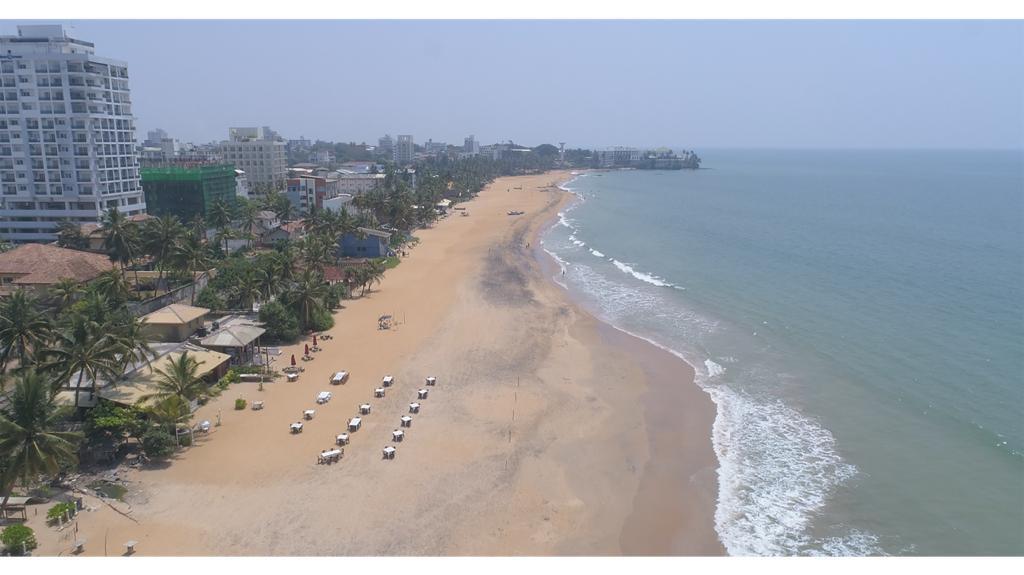
An artificial beach created along Kalutara’s Calido Beach, the Ratmalana-Angulana stretch and in Mount Lavinia, which raised strong protests from activists, has been successful, Coast Conservation and Coastal Resource Management Department Chief Engineer (Coastal Design & Research) Sujeewa Ranawaka said.

He told the Dailymirror that the project was implemented to build an artificial beach, stretching 2 km along Kalutara’s Calido Beach, 1 ½ km along the Ratmalana-Angulana stretch, and 500 m in Mount Lavinia.

He said the project aimed to create a 15m beach at Wellawatte through the sand engine method and 150,000 m3 of sand was placed on Mount Lavinia beach and is expected to be transported to Wellawatte.

“The pattern of sand accretion/deposition repeats at the canal outlets at Dehiwala and Wellawatte. The coastal structures had been built to prevent sand deposition at the outlet to keep it open,” he said. 

The coastline between Mount Lavinia and Wellawatte would remain relatively stable for many decades albeit with seasonal changes, Mr Ranawaka said.

“The sand deposited at Mount Lavinia had to pass three major natural and artificial structures. Many associations, organisations raised their opposition over the project claiming that the Government was attempting to destroy the natural habitat,” he said.

However, the current situation has changed and now we have a large beach area except the filled rock on coastal barriers.

From Mount Lavina to the Wellawatte area the beach had widened about 30 to 40 meters from the sea with natural protection to the coast.

With the effort of the Coast Conservation Department, the country has got a beautiful beach area which can help even to increase the tourism sector, Mr Ranawaka added.

Moreover, the Chief Chef of the Mount Lavinia Hotel Dr Pabilis Silva also claimed that the beach that created in front of the hotel is very precious for them. He claimed that he was also in the wrong manner overfilling the beach area with sand.

However, the artificial beach is a great success done by the Government, Dr. Pabilis Silva said. 

Murali rejects allegations by Fonseka

March 24th, 2021

Courtesy Adaderana

EC decides not to register political parties named after religions or ethnicities

March 24th, 2021

Courtesy Adaderana

The Election Commission has decided not to register political parties whose official names portray affiliations to religions or ethnicities.

The decision was taken at a meeting of the Elections Commission yesterday (March 23), Elections Commissioner-General Saman Sri Ratnayake said.

He stated that a political party is registered as a national party as per the existing law, therefore it was decided not to register parties named after religions or ethnicities.

During the meeting, it has also been decided to amend the official names of the recognized political parties which are currently registered with such religious or ethnic names.

Further, the relevant political parties will also be informed and given a reasonable time to amend any such clauses in the constitution of the party.

Two more COVID-19 deaths bring tally to 554

March 24th, 2021

Courtesy Adaderana

Sri Lanka has reported 02 more coronavirus-related deaths, the Director-General of Health Services confirmed today (March 24).

The new deaths bring the number of COVID-19 related deaths witnessed in Sri Lanka to 554 in total.

01. The deceased is a 65-year-old female resident from Colombo 15. She died on 21.03.2021at her residence and the cause of death is mentioned as  Covid-19 pneumonia and heart failure.

02. The deceased is a 76-year-old male resident from Kolonnawa. He was diagnosed as infected with the Covid-19 virus while undergoing treatments at a  private hospital and transferred to Kothalawala Defense University  Hospital where he died on 24.03.2021. The cause of death is mentioned as COVID-19 pneumonia with acute kidney injury, causing multiple organ failures.

COVID-19 238 new positive cases within the day-caseload in Sri Lanka climbs past 91,000

March 24th, 2021

Courtesy Adaderana

Sri Lanka has registered 106 more positive cases of Covid-19 today (March 24), the Ministry of Health confirmed.

Thereby, Sri Lanka has detected 238 new positive cases of COVID-19 within the day.

As per statistics, the total number of Covid-19 infections confirmed so far in the country now stands at 91,018.

Recoveries from the virus meanwhile climbed to 87,630 earlier today, as 324 more patients regained health.

However, 2,836 active cases are still under medical care at selected hospitals and treatment centers located across the island.

Total lives claimed by the pandemic outbreak sits at 552 at present.

Cabinet nod to purchase 7 million Russia’s Sputnik V COVID-19 vaccines

March 24th, 2021

Courtesy Adaderana

Cabinet of Ministers has given the nod to purchase 7 million Sputnik V coronavirus vaccines from Russia, the Department of Government Information said today (March 24).

The relevant proposal has been tabled by Minister of Health Pavithra Wanniarachchi.

National Medicine Regulatory Authority (NMRA) recently approved the emergency use of Russia’s Sputnik V vaccines in Sri Lanka.

The vaccine consignment is expected to be purchased for USD 69.65 million upon the recommendation of the Cabinet-appointed negotiation committee. 

According to Government Information Department, the Health Ministry plans to vaccinate 14 million Sri Lankans against the COVID-19 virus. As the first step, the Health Ministry is taking measures to vaccinate 5 million citizens.

The Russian Direct Investment Fund (RDIF) says 55 countries around the world including Argentina, Venezuela, Mexico, UAE and Iran have approved the Sputnik V vaccine. Hungary was the first to approve the Russian vaccine for emergency use.

Sputnik V vaccine was initially met with controversy for being rolled out before the release of final trial data.

However, last stage trial results published in Lancelet medical journal in February revealed that the vaccine gives 91.6% protection against SARS-CoV-2.

As per reports, the vaccine can be stored at temperatures of between 2 and 8C degrees (a standard fridge is roughly 3-5C degrees).

Have the Superpowers ever helped the Third World Countries?

March 23rd, 2021

by Garvin Karunaratne

Today at the UNHRC in Geneva we have seen the UK and other Developed Countries sponsor a vote against our country. In detail,  this resolution involves the UNHRC establishing a programme to document human rights violations and find and preserve evidence against our war heroes for prosecution in International courts for incidents where they had to use fire power to defend the sovereign country. It is time we stop adoring the UK. It  follows that sanctions will inevitably follow. 

 Even India that should have stood with us abstained. Yet we implement the 13 th Amendment imposed on our country by force- our President Jayawardena shivered in his boots and gave in and he even incarcerated his members of parliament in a Four Star Hotel and marched them to Parliament to approve the 13 th Amendment, the implementation of which will someday split our country into two. He held letters of resignation signed by his members of parliament which he threatened to use to deprive them of their seats in Parliament if they refused. That was the ‘democracy’ of Jayawardena, the Don Juan Dharmapala of our time who sold our country to India and the IMF.  

In this context it is worthwhile assessing whether the Superpowers ever helped our countries. 

From the Fifteenth Century, the Superpowers conquered over half the World and imposed their colonial domination. Sovereign countries that had till then enjoyed peace, had self reliant and self sufficient economies were structurally altered to produce crops for export and also to be the consumers of the manufactured products of the Superpowers. The highlands lands in the hills, that enabled people to obtain their firewood and building materials, where their cattle were tethered during the paddy cultivation and also retained water throughout the drought months for cultivation was taken over under the Crown Lands Ordinance which deemed that all unoccupied land belonged to the State. These lands were then sold to Europeans at some five shillings an acre for opening up plantations. 

In Sri Lanka the railways were built to bring down tea and rubber from the hill country. To build the Railway lines the British used Rajakariya- forced labour, (normally enlisted for two weeks a year,  to maintain the village infrastructure of tanks and channels), to pull down the forest, clear the rail track and laydown rails. People were forced to travel from far. It is reported that the number of people killed by snake bites while laying the rail track  is more than the number of sleepers on the rail track. 

The Superpowers benefitted from the colonial economies. From Bengal, a small state of India, when the East India Company defeated Shiraj Ud Daulah, the ruler of Bengal 2,750 million pounds was sent to Britain,- in the first eight years of Company rule, 5.9 million pounds were extracted out of Bengal…In the 1770 famine where a third of the population of Bengal died, more taxes were colleted than in the earlier year…. the yearly drain of wealth from India represents at least pounds 35 million.” This income from all colonies enabled Britain to become wealthy, build skyscrapers, develop social security and free health  systems for their entire population. 

When the colonies became sovereign states the Superpowers had to change their modus operandi.  Then it became controlling the countries very unofficially, covertly and at times enforced with threats. 

Let us see what happened. 

One can quote Professor Jeffery Sachs: The USA has thrown elections through secret CIA financing- putting foreign leaders on CIA payrolls.”(From; Commonwealth Economics for a Crowded Planet) 

In 1953, a  CIA Coup was staged in Iran.   . The CIA ousted the democratically elected ruler, Mohammed Mosadegh, ushered in a quarter century of brutal rule under the Shah and stimulated the rise of Islamic fundamentalism and anti Americanism in the Middle East.(Stephen Kinzer: All the Shah’s Men) 

Mossadegh had sought to make Iran a full democracy. He nationalized the Iranian Oil industry   that belonged to the Anglo Iranian Oil Company. In August 2013, the CIA formally admitted  that it was involved both in the planning and the execution of the coup, including the bribing of Iranian politicians, security and army high ranking officials as well as pre-coup propaganda.”(wikija.org) 

Rohith , a Director of Adult Education in Afghanistan was a batchmate of my doctoral studies at Michigan State University in 1978. He told me again and again to take a month’s leave after studies and come to Afghanistan when he promised to take me all over the country when he goes on circuit. Afghanistan was a prosperous country till the USA and Russia invaded it under various pretexts.  Today it is a country torn between war lords. 

The sovereign countries mustered their resources and developed their agriculture and industry. Sri Lanka was in the forefront and achieved self sufficiency in paddy, the staple crop by 1970 and did wonders in the import substitution type of industry. 

The countries developed their agriculture by having streamlined extension systems, also using people’s organizations like cooperatives and cultivation committees to plan and enlist the participation of the people. The USA itself- its,  Agency for International Development and  its  Ford Foundation backed by expertise at Michigan State University, spearheaded a rural development programme in the Kotwali Thana of the Comilla District. In under a decade the yield of paddy was doubled, industries were developed and poverty was totally alleviated. Kotwali Thana is today an oasis within a poverty stricken country. Its method was through cooperative extension work and total development, 

Third World agricultural development had to be stopped . 

This the Superpowers did in around 1978, through the World Bank. As each trained agricultural officer at the village level had over a thousand farmers, cooperatives were used to enable the farmers to cooperate. In Sri Lanka there were two peoples organizations- the multipurpose cooperatives and the cultivation committees to organize paddy cultivation. The World Bank barred agricultural officers from using peoples organizations. Instead the officers were asked to contact farmers direct.  To make the various countries accept this system, an Aid package was offered . The Training and Visit System is financed under IDA Credit where funds are brought in on foreign aid  to meet the salaries of local officers and servicing costs. The IDA Credit is also based on a grace period of 10 years so that the Government that takes the loan  has nothing to worry about the consequences of repayment.” (From: Karunaratne:Administering Rural Development in the Third World(1983) 

The adoption of the Training & Visit System totally destroyed the agricultural extension systems that had been built up in Sri Lanka and other similar countries. 

The USA was very keen to develop their sale of wheat. The USA came up with Public Law 480(PL480) which provided wheat at concessionary rates to Developing Countries. Food Aid was provided till the countries came to depend on it.  A USA Department of Agriculture Officer once said: We taught people to eat wheat, who did not eat it before.” Orville Freeman, US Secretary of State said; in the last seven years our agricultural exports to Taiwan climbed by 531%  and to South Korea by 643%.  PL480 makes good sense.”(From Lappe & Collins; Food First: Beyond the Myth of Scarcity)  It has been proved that the inroads of wheat sales has had a detrimental effect on local agriculture in that bread found a place and ousted local grains, yams etc. that  were consumed by people earlier. 

The Third World countries were at the forefront of developing new varieties of paddy,  Sri Lanka established seed producing stations  and developed new varieties well before 1955. This enabled the doubling of yields. To undo this the Superpowers through the IMF advised the privatization of seed farms. Many important seed farms were privatized. The USA also established the International Rice Research Institute in Manila, Philippines in 1990 and sought to undermine the  production of new varieties by countries.  In my words: Sri Lanka was the first country to come up with miracle paddy seeds. In 1955 we had H4 and immediately afterwards H 8. 

We privatized most seed farms and thereby cannot assure our farmers of high yielding certified seed. Distributing high yielding certified seed and organizing cultivation was the mantra by which we became self sufficient by 1970.  Our country was deprived of certified seed as well as the extension service through cooperatives, all at the behest of the World Bank. 

Further, multinationals in the USA  that deal with seeds  are engaged in a massive campaign to buy all the seed farms all over the World… Led by Monsanto they are buying seedfarms.. The multinationals are seeking patents for the seeds they develop and they have also developed ‘terminator technology’ whereby the crop that is produced from the certified seed does not germinate. It follows that once the multinationals develop new varieties the farmers even in the remotest areas  will have to purchase new seeds from the multinationals. Gone are the days when farmers can retain their stock of seeds from the earlier harvest to the next.”(From: How the IMF Ruined Sri Lanka) 

Sri Lanka is blessed with many resources. 

The Superpowers  have tried again and again to wrest control of these resources. Eppawela has a major Phosphate resource . A US multinational was interested in securing this phosphate and I quote from the Report done by scientists appointed by Minister Batty Weerakoon once Minister of Technology.(who passed away today-6/01/2019): 

The proposal of the US mining company will exhaust the resource in 30 years, with insignificant benefit to the country. The proposal is highly environmentaly damaging and does not serve in the national interest in any manner. Mountains of gypsum, an unwanted byproduct  will accumulate polluting the environment” 

The invasion on phosphate had to be stopped by a  Supreme Court order. 

In order to enable people-farmers to increase their production and thereby alleviate their poverty, Sri Lanka had in place a development infrastructure. This included the Marketing Department(MD) activities- the Vegetable and Fruit Purchasing Scheme under which the MD purchased vegetables and fruits from producers at a higher rate than what was offered by traders,  This produce was transported to the Cities and sold at Fair Price Shops at cheap rates. The MD kept a margin of 15% for handling and wastage as opposed to 100% kept by traders. The fruits were processed into Jam and Juice, which enabled the country to become self sufficient. The MD ran rice mills which milled paddy into rice. The MD had a Bakery which produced bread and pastries. The MD used to run canteens at festivals like Kataragama where food was sold at cheap rates, competing with hoteliers. This was the infrastructure we had to combat inflation. The International Monetary Fund (IMF) forbid the countries from attending to commercial undertakings and the MD was abolished.  With this the producers found it difficult to sell their produce and this reduced production. Imports increased. 

Under the advice of the IMF, which is run by the Superpowers, development was brought to a standstill. 

Once President Clinton tried to entice Bangladesh. Let me narrate what happened: 

Despite the overtures of President Clinton on his current visit to Bangladesh, the Prime Minister of Bangladesh has refused to change Bangladesh’s long held stance  against the liberalization of  of gas exports until local needs were met and a fifty year reserve was assured. President Clinton had earlier announced $ 97 million in food aid, $ 84 million in clean energy initiatives and $ 8.6 million to reduce abusive child labour, ‘debt for nature’ swap and forgave $ 6 million  in Bangladesh’s external debt but Prime Minister Sheik Hassina stood her ground stating, ‘we would like to lead a life of dignity’. The decision of the Government of Bangladesh disappointed US and British Companies as well as the World Bank. Their idea was to prise open the gas reserves of Bangladesh for exploitation by multinationals and the bulk of the wealth created would flow to the Western Companies.” 

One can go on for ever detaling how the Superpowers have tried again and again to ruin Third World countries. This is a never ending saga. They have never helped us. Instead they want us to produce raw materials, sell it to them and buy their manufactures. 

Sri Lanka is already trapped by the International Monetary Fund- the IMF by their imposing the Structural Adjustment Programme on us which advised us to spend foreign exchange which we did not have and advised us to meet the shortfall with loans. We are now an indebted country to the extent of $ 60 billion, of which say half was spent on development projects-Mahaweli, roads and armaments to win the war etc and half spent to help the rich, on IMF advice. 

It is time we shake off the shackles of domination from foreign Superpowers and their IMF. Instead we have to follow a non aligned path and develop our resources, help our people to increase production get employed in industry and alleviate poverty.. 

This paper will also appear in my forthcoming book: Selling the Motherland & Ideas for Development at Godages 

Garvin Karunaratne  

Former GA Matara. 23/3/2021

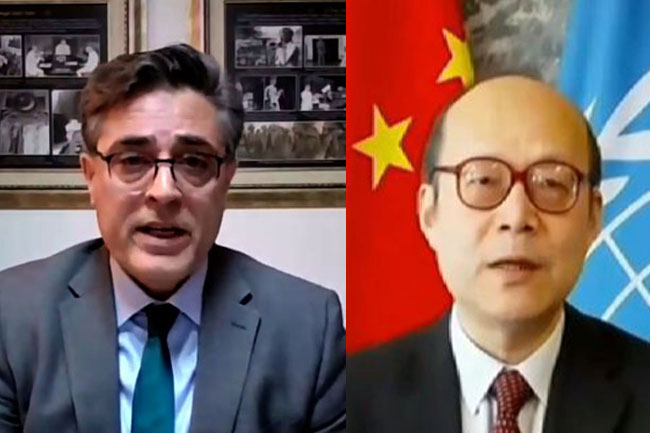
Pakistan, China speak out in support of Sri Lanka at UNHRC

March 23rd, 2021

Courtesy Adaderana

Pakistan, China speak out in support of Sri Lanka at UNHRC

The draft resolution L.1/Rev.1 brought against Sri Lanka by the United Nations Human Rights Council (UNHRC) has failed to condemn the crimes committed by the LTTE against Sri Lankan people, Pakistan says.

The Pakistani representative stated this speaking before the vote on the UNHRC draft resolution L.1/Rev.1 on Promoting reconciliation, accountability and human rights in Sri Lanka’.

The United Nations Human Rights Council (UNHRC) on Tuesday adopted the draft resolution against Sri Lanka tabled at council by the Core Group. Of the 47 states that took part in the vote in Geneva, 22 member states voted in favor of the resolution while 11 had voted against. A total of 14 member states abstained from voting.

Pakistan, voting against the resolution, stated that the resolution shies away from a call for accountability of LTTE and its sponsors and financiers. The representatives pointed out that the draft resolution appears to rekindle the sufferings rather than healing the wounds of the people of Sri Lanka.

China, also voting against the resolution claimed that the resolution disregards the efforts and achievements by the Sri Lankan Government to promote and protect human rights, ignores the wishes of the Sri Lankan people, and interferes in Sri Lanka’s internal affairs under the guise of human rights and disrupts the ‘excellent situation’ of Sri Lanka’s development and stability.

The country further said that the resolution is a typical example of politicizing human rights.

In addition to Pakistan and China, the Philippines, Venezuela, Russia, Cuba, Bolivia, Bangladesh, Eritrea, Somalia, and Uzbekistan also voted against the resolution proposed against Sri Lanka.

The Philippines while recognizing that no country has a perfect record in human rights, stated that this resolution pursues a political agenda that is blind to reason and methods of reasoning.

The Philippines envoy stating that there is no merit in the actions of the council pointed out that it disrespects the national processes, and is driven by simplistic generalizations of complex conditions of the ground.

Venezuela, addressing the council before the vote, pointed out that some countries which have promoted these draft resolutions have themselves committed, and are still committing, serious violations of human rights, but they themselves have never been subject to similar initiatives.

The Venezuelan representative stated that Venezuela rejects the baseless and interventionist attempts underway into the internal processes of Sri Lanka towards true national reconciliation.

The Russian Federation voting against the resolution claimed that instead of trying to support Sri Lanka’s delegation and encourage it to engage in dialogue the sponsors of the draft resolution have preferred to continue using a former practice of making allegations against it.

The Russian Federation also added that this draft resolution does not reflect balance or objectivity.

Meanwhile, Cuba said that this draft resolution will only further serve the ends of politicization, bias, and double standards which have crept into the [UNHRC] forum, which should be decried.

Bolivia also voted against the draft resolution stating that they do not accept the use of human rights as a political tool.

UNHRC adopts draft resolution on Sri Lanka

March 23rd, 2021

Courtesy Adaderana

The United Nations Human Rights Council (UNHRC) on Tuesday adopted the draft resolution against Sri Lanka tabled at council by the Core Group.

The vote on draft resolution L1/Rev.1 titled Promoting Reconciliation, Accountability and Human Rights in Sri Lanka” concluded, a short while ago, and was carried out via electronic voting during the meeting of the 46th Regular Session of the Human Rights Council.

Of the 47 states that took part in the vote in Geneva, 22 member states voted in favour of the resolution while 11 had voted against. 

Meanwhile a total of fourteen (14) member states abstained from voting.

Member states that voted in favour:

Argentina, Armenia, Austria, Bahamas, Brazil, Bulgaria, Ivory Coast, Czech Republic, Denmark, Fiji, France, Germany, Italy, Malawi, Marshall Islands, Mexico, Netherlands, Poland, Republic of Korea, Ukraine, United Kingdom of Great Britain and Northern Ireland and Uruguay.

Member states that voted against: 

Bangladesh, Bolivia, China, Cuba, Eritrea, Pakistan, Philippines, Russian Federation, Somalia, Uzbekistan and Venezuela.  

Member states that abstained: 

Bahrain, Burkina Faso, Cameroon, Gabon, India, Indonesia, Japan, Libya, Mauritania, Namibia, Nepal, Senegal, Sudan and Togo.

The vote on the draft resolution titled ‘Promotion of Reconciliation Accountability and Human Rights in Sri Lanka’ was initially expected to be taken on Monday (22) but officials in Geneva said it has been postponed to Tuesday owing to some scheduling issues.

On Friday, the final form of the Sri Lanka draft resolution was submitted, with the voting likely to be held on March 22-23.

The draft resolution, sponsored by United Kingdom, Canada, Germany, Malawi, Montenegro, North Macedonia, was formally submitted on March 12. The zero draft which had earlier been circulated was further strengthened during the consultations between the member states.

The changes in the final version inserts language calling on Sri Lanka to fulfill its commitment on devolution, including the holding of provincial council elections.

The draft resolution also calls upon Colombo to ensure that all provincial councils, including the Northern and Eastern Provincial Councils, are able to operate effectively, in accordance with the thirteenth amendment to the Constitution of Sri Lanka”.

The UNHRC draft resolution noted the persistent lack of accountability of domestic mechanisms” and calls to support trials in foreign countries. It also calls for strengthening the office of the UN human rights chief in collecting and preserving evidence related to human rights violations in Sri Lanka, to use them in future accountability processes.

The draft has been revised to state that Sri Lanka would be on UNHRC’s agenda every six months till September 2022. It also asks the UN Human Rights chief to give an oral update on Sri Lankan in September 2021 and then a written report in March 2022.

සබුද්ධි කවයේ NLSL සබුද්ධි පොත්ගුල අනුරාධපුරයට…

March 23rd, 2021

සබුද්ධි කවය

සබුද්ධි කවය සංවිධානය කරන, ශ්‍රී ලංකා ජාතික පුස්තකාලය (NLSL) හා ප්‍රලේඛන සේවා මණ්ඩලය ප්‍රමුඛ සංවිධාන ශක්තියෙන් එක් වෙන ”NLSL සබුද්ධි පොත්ගුල” මාර්තු වැඩසටහන අනුරාධපුරය මහවිලච්චිය තක්ෂිලා මහා විද්‍යාලයේදී ලබන සිකුරාදා පැවැත්වේ. ඒ විද්‍යාලීය විදුහල්පති චමින්ද සේමසිංහ මහතාගේ අධීක්ෂණයෙන් රාජ්‍ය අමාත්‍ය ෂෙහාන් සේමසිංහ මහතාගේ ප්‍රධානත්වයෙනි. වැඩසටහන උදෑසන 07.45ට ආරම්භ වෙයි.

NLSL සබුද්ධි පොත්ගුල ක්‍රීඩාව සහ කියවීම යන තේමාව යටතේ සබුද්ධිමත් පුරවැසියකු බිහි කිරීමේ අරමුණින් ක්‍රියාත්මක වන්නකි. එහි පළමු වැන්න හම්බන්තොට උඩමළල මහා විද්‍යාලයේදී පසුගිය මස 09 වැනිදාපැවැත්විණි. අනුරාධපුරය මහවිලච්චිය තක්ෂිලා මහා විද්‍යාලයේදී මේ මස 02 වැනිදා පැවැත්වෙන්නේ එම දෙවැනි වැඩසටහනයි. හුවමාරු පුස්තකාලය, කියවීමේ කඳවුර, සිතුවම් කඳවුර සහ නිර්මාණ කඳවුර NLSL සබුද්ධි පොත්ගුල වැඩසටහනේ ප්‍රධාන අංගයන් වේ. ශ්‍රී ලංකා ජාතික පුස්තකාලයේ සභාපති සොනාල ගුණවර්ධන, එහි සහකාර අධ්‍යක්ෂ මිහිර අරවින්ද, ජාතික ශිල්ප සභාවේ සභාපති සුදත් අබේසේකර,
රජරට ගුවන්විදුලියේ ප්‍රධානී ලාල් ආනන්ද අබේදීර, ගීපද රචක තුෂාන් නිසංසල, සාහිත්‍යවේදීනි ආශා රැළපනාව, පරිසරවේදී සඳුන් ජයවර්ධන සහ සබුද්ධි විධායක අධ්‍යක්ෂ සිරිනාම රාජපක්ෂ, සබුද්ධි සභාපති සාහිත්‍යවේදී ම. ප. තමීර මංජු යන මහත්ම මහත්මීන් මෙම වැඩසටහනට සම්පත් දායකත්වයෙන් එක් වෙයි.  මාධ්‍ය නිවේදනය මේ සමඟ අමුණා ඇත.

Lanka Property Show 2021 Virtual to Feature REAL TALK at the Virtual Conference

March 23rd, 2021

LankaPropertyWeb

LankaPropertyWeb, Sri Lanka’s number one real estate portal will be hosting the first ever Lanka Property Show 2021 Virtual Conference. The event will be held alongside the Lanka Property Show 2021 Virtual Expo that is set to go live from the 26th to the 28th of March.

The virtual conference will be conducted by over 20 industry professionals including lawyers, structural engineers, architects, interior designers, leading property agents, developers, and moderated by the Head of Research at LankaPropertyWeb.

Held over a course of 5 sessions, the Lanka Property Show 2021 Virtual Conference will be hosted for 3 days. The audience will be able to pre-register for the conference by visiting lpw.lk/conference.

It will feature topics catering to specific audiences such as real estate investors, real estate agents, private owners, first time home and land buyers, landlords and those looking to build homes.

Previous Lanka Property Shows featured in-person panel discussions on a range of real estate related topics with top industry experts. However, with the public gathering restrictions posed by the pandemic, the virtual conference provides a great opportunity for people to connect from the comfort of their home. They will be able to get answers to questions they might have on buying and selling a property and get insights into the secrets of property investments from actual investors,” said Daham Gunaratna, Managing Director of LankaPropertyWeb.

The sessions will be available live as per the following schedule;

Date Starting Time Topic Medium
26/03/2021 10:00 a.m. Becoming an Unstoppable Real Estate Entrepreneur English
27/03/2021 10:00 a.m. Paving the way to Real Estate Investments in Sri Lanka English
27/03/2021 3:00 p.m. Building a House Under the Budget in Sri Lanka Sinhala
28/03/2021 10:00 a.m. Becoming Healthy Wealthy and Rich through Real Estate English
28/03/2021 3:00 p.m. Secrets of Becoming a Successful Landlord English

The Lanka Property Show 2021 Virtual Expo will also be launching The Virtual Experience Centre powered by Marina Square, which will include a collection of 3D walkthroughs of exhibitors.

To offer this special feature for the first time, LankaPropertyWeb has partnered with MagicSpace by Viral Media (Pvt) Ltd capturing the show apartments of exhibiting developers using 3D walkthrough technology. Users will be able to walk through a range of developments virtually from the comfort of their home.

At the virtual property show, buyers will also be able to connect live through video calls with agents and developers and chat online, allowing them to select a property of their choice more conveniently.

The Lanka Property Show 2021 Virtual aims to connect developers with buyers locally and overseas without geographical limitations. It will also offer exclusive deals on property prices up to 15% off on current selling prices of the listed developments. These discounts provided by the developers will only be available exclusively during the property show.

What accountability, transparency at UNHRC?

March 23rd, 2021

JANAKI CHANDRARATNA Courtesy The Island

The UNHRC is an intergovernmental organisation, reporting directly to the United Nations General Assembly, with a mandate to promote and protect human rights in member countries, by making recommendations to address situations of human rights violations. It is to be expected that institutions that have authority to make recommendations, in particular, on the contravention of legal compliance, need to be free from bias, in order to be acceptable to the alleged erring parties. In fact, the Terms of Reference for OHCHR investigation on Sri Lanka (OISL) proclaims the investigation needs to be guided by principles of `independence, impartiality, objectivity, transparency and integrity’, and has mandated the investigations to cover violations of human rights and other related crimes by ‘both parties’, meaning the Sri Lankan Govt. and the LTTE, over the period covered by the Lessons Learnt and Reconciliation Commission (LLRC), which was from 21 February, 2002, to 19 May, 2009.

The UNHRC resolution, against Sri Lanka, is a bad example, where the reporting agency has not demonstrated, to its members, or the alleged offenders, that the processes followed were free from bias, and were based on proven evidence. In fact, the High Commissioner, Michelle Bachelet’s report of 27 January, 2021, was more of an alarmist expression of the newly elected Sri Lankan Government’s administrative appointments and COVID-19 burials, rather than explaining reasons for the failure of UNHRC resolutions in Sri Lanka.

Obviously, Bachelet has failed to see the causes of the annihilating defeat of the previous regime that co-sponsored UNHRC 30/1 resolution, at the 2019 Sri Lankan elections. She didn’t even note reasons for the recent withdrawal from 30/1; the rehabilitation of 300,000 Tamil civilians rescued from the LTTE human shield, development projects instituted in the North and the East to resurrect the economy, changes in the demographics in Colombo, where business is dominated by the so- called discriminated Tamils and Muslims, continuous religious and racial harmony among the civilian population, during and after the war; demonstrations of Tamil civilians against the LTTE proxy parties that has misled the West and UNHRC by propagating misinformation of racial abuse.

Bachelet has also failed to see the bias instituted in the UNHRC investigative process, due to the dependence on politically motivated complainants and co-sponsors, deliberate suppression of wartime official diplomatic cables, non- acceptance of humanitarian agency reports, such as that of the Red Cross, non- investigation of LTTE terrorist crimes; restriction of the mandated period of the investigation to the war-end incidents, which contravened the original mandate and non-release of so called evidence of war crimes for 30 years.

Also, Bachelet has failed to see that the Geneva debate is lopsided with a proliferation of pro-LTTE propaganda, although the Sri Lankan Govt., Lord Naseby, and many others, have highlighted the deficiencies of the Commissioner’s report. In fact, the Bachelet report, presented to the UNHRC member vote, is a hurriedly written document, confirming the views expressed in the last 10-year period, without any analysis of the developments that had taken place for the reconciliation efforts instituted by the Sri Lankan Govt.

It is also a crying shame that a state, like the United Kingdom, which had committed many atrocities in the world — including the biggest genocide in separating India and Pakistan, as well as a co-sponsor in annihilating the Middle Eastern countries, with spurious weapons of mass destruction allegations – is leading the UNHRC resolution against Sri Lanka!

It is a no brainer that the UNHRC investigation on Sri Lanka was doomed to be a failure from the beginning, because of the politicisation of the process undertaken. In fact, the investigation has discouraged Tamil parties to cooperate with Government reconciliation efforts, as they were engaging with the West and UNHCR to create a separate Eelam state, within the small independent sovereign State of Sri Lanka, the failed dream of the LTTE, with UNHRC intervention. The Sri Lankan Govt. and its people are tired with the 30-year terrorist war and 10 years of so called independent investigation, and are keen to find its own all-inclusive solution that is acceptable to the norms of a rational ethical country. To this end, Sri Lankans are hopeful the UNHRC member States would vote against the UNCHR resolution, and save themselves from being forced into biased vendettas for political reasons .

Has Geopolitics Virus infected UNHRC?

March 23rd, 2021

Donald Chandraratna Courtesy The Island

The pile-on over Sri Lanka by UNHRC is a blatant use of human rights as a political weapon in the geopolitics of today’s world. Many have argued in these columns that Sri Lanka cannot capitulate merely on the grounds of allegations, which are serious in nature, levelled without regard to due procedures of fact and evidence. In the world community of states, the rule of law must apply alongside the principle of ‘innocent until proven guilty’. But our pleas are to no avail when the cause of justice is conflated with a hidden quest for political acquiescence to a particular road map.

It is geopolitics that is driving the UNHRC agenda and demonstrates the unfortunate result when power, politics and principles collide. What the Commissioner of Human Rights is attempting to do, is to find Sri Lanka guilty, based on a fabricated report which is a monstrous perversion of justice, the likes we see in Orwell’s Animal farm or Arthur Koestler’s Darkness at Noon. We have to agree with Dr Laksiri Fernando’s claim that the failure of the UN to promote human rights and duties, guided by conscience, reason and morality, appear to be a major reason for the increasing conflicts, violence, chaos, and wars, not only in developing countries, but also increasingly in the developed societies.

If the hidden agenda is to do with geopolitics, there are sufficient grounds to believe that we are sandwiched in the tussle between the Western bloc and China. If so, no inquiries will resolve the issue, nor the facts. The core group that is behind the campaign is demanding a weaker test than the rule of law; such that Sri Lanka will be tainted, keeping the allegations alive. Such demands are filled with sophistry and hypocrisy. This is the new principle, and, if it succeeds, the efforts can be redeployed in the future. The editorial (11/3) gives us a good dissection of the issue. It says ‘many are those who flay the western bloc for duplicity and its handling of human rights issues. The West, in fact, deserves such criticism in that the powerful nations in the Global North are unashamedly using democracy as a weapon to further their geo-strategic interests; they manipulate the UN, especially the UNHRC…., to tame the nations that refuse to follow their diktats’.

It is official that there is a dire need on the part of the Core Group state parties to move to the Indo-Pacific region. The UK is pledging to shift its focus towards countries such as India, Japan and Australia, after a year-long review of its foreign policy. The UK Foreign Minister Dominic Raab said today that his government ‘would boost alliances in the Indo-Pacific region, describing it as, increasingly, the geopolitical centre of the world’.

The Biden Presidency in the USA has pledged to confront what it called Beijing’s attack on human rights, intellectual property and global governance.

Last week, Biden convened the first leader-level summit of the Quadrilateral Security Dialogue, an informal alliance among the US, Japan, India and Australia that aims to counter China’s rise. The US officials told reporters that the QUAD summit, as well as Secretary Blinken’s visit to Japan and South Korea, was part of the Biden administration’s effort to formulate a new China policy. The US made clear its deep concerns about a range of issues, Xinjiang, Taiwan, Hong Kong, and most importantly Chinese economic coercion of our allies and partners. Could we be one of the whipping boys of choice at the UNHRC! It will be an intellectual failure of the Sri Lankan Foreign Ministry not to come to terms with this scenario of geopolitics.

The editorial (11/3) made it exceptionally clear how another UN agency was overtaken by geo-politics in the same manner, when WHO recommendations were overridden by political fiat. The EU campaign against the Oxford AZ vaccine is more likely driven by Brexit-EU politics, which put paid to the global efforts to control the pandemic, disregarding the cost in human terms in their own backyard.

Dr Wijayawardhana pointed out (The Island 11/3) that the cases of blood clots detected among those given the Oxford AZ vaccine is slightly lower than the Pfizer jab in the general population, as stated by the WHO, British Authorities and the head of the European Medicines Agency. Yet political interventions seem to have dictated the EU anti-AZ stance. Is it bitterness over Brexit that is driving this agenda? Or, whether Germany had a different agenda: to make money for the German business BioNtech behind the Pfizer vaccine. If such are the machinations of geopolitics in the face of a deadly virus, what vaccination will match the geopolitical virus that has infected the UNHRC.

Donald Chandraratna

සිංහරාජ මායිමේ ඉදි කරන්නේ හෝටලයක් නොවේ.. නිවාස 04ක්.. අපට නවත්වන්න බෑ…- මද්‍යම පරිසර අධිකාරිය

March 23rd, 2021

උපුටා ගැන්ම ලංකා සී නිව්ස්

සිංහරාජ රක්ෂිත වන රක්‍ෂිතය ආසන්නයේ ආන්දෝලනාත්මක ඉඩම තුල ඉදි කරමින් ඇති ගොඩනැගිලි හෝටලයක් නොවන නිවාස තුනක් බව මධ්‍යම පරිසර අධිකාරිය පවසයි.

අධිකාරියේ සභාපති එස්. අමරසිංහ මහතා සඳහන් කරන්නේ එම නිවාස ඉදිකිරීම සඳහා ප්‍රාදේශීය සභාවෙන් අවසර ලබාගෙන ඇති බවයි.

එම ඉදිකිරීම් සඳහා මධ්‍යම පරිසර අධිකාරියේ කිසිදු මැදිහත්වීමක් සිදුකළ නොහැකි බවත් ඔහු පැවසීය.

නිවාස ඉදි කරන බව පවසා හෝටලයක් හෝ වෙනත් ව්‍යාපාරික කටයුත්තක් සඳහා ඉදිකිරීමක් කරන්නේ නම් එය තහනම් කිරීමට කටයුතු කළ හැකි බවද සභාපතිවරයා පැවසීය.

එකම පවුලේ සහෝදරයන් හතර දෙනකු මෙසේ නිවාස ඉදි කරන බව ද සිදුකරනු ලද සොයාබැලීම් වලදී හෙළි වූ බවත් එයත් කලින් තේ වවා තිබූ ඉඩමක් බවද සභාපතිවරයා තවදුරටත් පැවසීය.

හෙක්ටයාර් 1ට වඩා හෙළිපෙහෙළි කරන්නේ නම් මධ්‍යම පරිසර අධිකාරියේ අවසරය ගත යුතු නමුත් එවැන්නක් සිදුනොවන නිසා අවසර ගත යුතු නැතැයි ද කී ඔහු මෙම රක්ෂිත තීරුවේ පවුල් 135ක් පදිංචිව සිටින නිසා රක්ෂිතයක් ලෙස ප්‍රකාශයට නොකර අතහැර ඇති බවත් හෙතෙම කියා සිටියේය.

UN Resolution Against Sri Lanka Is Partisan And Unfair – OpEd

March 23rd, 2021

By  courtesy EurasiaReview

The UN Human Rights Council has thought it fit to pass a resolution by majority vote against Sri Lanka for what the resolution termed as human rights violation. While reading the resolution, it is necessary to keep in view that it is not a unanimous resolution, but only a resolution by majority votes.

After passing this resolution, one is not sure as to how the UN Human Rights Council would act against Sri Lanka and whether it would go into silence thinking that it has done its job”.

It is well known by past experience that the UN and the UN Human Rights Council would behave like a toothless tiger in the case of dealing with economically rich and militarily strong countries. Only in the case of weak and developing countries, Human Rights Council will act with courage of conviction.”

Sri Lanka government had to face strong separatist and militant groups for several years, who were fighting a bloody war demanding separate state for Tamils. In such a condition, the Sri Lanka government had no alternative other than fighting with back to wall to protect its sovereignty and territorial integrity. Every country in the world would have reacted in the same way and have been reacting in the same way in similar situations, as Sri Lanka government did.

Sri Lanka government suffered enormously due to the bloody war and the separatist militant groups were ruthless and have killed not only several Sri Lankans and Sri Lanka military personnel but also several Tamils in northern Sri Lanka, who refused to toe the line of the militants. There were several factions in the militant groups  and one faction fought with another faction and several Tamils were killed in the process.

For several years, the Sri Lanka government could not match its military strength with that of the strongly armed militant groups and it was a losing war for several years. Finally, when Sri Lanka  government could make it’s military strong and fought the war and successfully defeated the militants, there were casualties of hundreds of people on both the sides.

It is a fact that several countries who voted for the resolution against Sri Lanka government passed by the UN Human Rights Commission, provided sort of support to the militants on their soil by allowing them to carry on their activities .

These countries behaved in such a way ,clearly knowing that the accommodation that they provided to the militant groups would harm the territorial integrity of Sri Lanka.

No doubt, the human rights violation happened  during the civil war and it was inevitable in a war like situation and both Sri Lanka government and militants were responsible for this.

It is shocking that UN Human Rights commission has not meaningfully taken note of the human rights violation by the militant groups but has only condemned the Sri Lanka government. Is it not a partisan and prejudiced view, unbecoming of United Nations Organisation?

The countries which voted for the resolution are mostly the so called democracies of western countries, who   habitually only take note of the human rights violation in other countries and not in their own.

These days, very frequently, we hear about US police shooting down mercilessly those who indulge in terrorist like activities. In the same way, European countries such as France and others also ask the police to shoot down those indulging in terrorism. This is as it should be. But, why these countries condemn Sri Lanka government for acting in the same way to fight against the terrorists and violent prone separatists?

Several other countries in Africa  as well as China and Russia also kill the protestors mercilessly in the name of preserving the peace and public order.

The countries criticizing Sri Lanka for human rights violation” is like the pot calling the kettle black.

Certainly, any discerning and neutral observer would be justified in terming the resolution passed by U N Human Rights Council against Sri  Lanka as unwarranted and  partisan .

One only hopes that in future, the UN Human Rights Council would gain greater wisdom, so that it can view such human rights violation” in a holistic manner and  see the unavoidable reasons for it in proper perspective and without pre-conceived view.

Perfume and cosmetic items of Rs. 17.2 Bn imported within five years: Cabraal

March 23rd, 2021

Courtesy The Daily Mirror

It was revealed in Parliament that Rs. 17.2 billion has been spent to import perfume and cosmetic items within five years from 2015 to 2019.

It was also revealed that the amount of perfume and cosmetic items imported to the country during the said period was 13.8 million kgs.

These figures came to light when Ajith Nivard Cabraal responded to a question raised by Government MP Mohammed Muzammil.

MP Muzammil said the imported perfume and cosmetic items are of low quality and requested the Minister to look into the matter.

Minister Cabraal assured to implement a joint mechanism together with the Health Ministry to resolve this issue. (Ajith Siriwardana and Yohan Perera)

Wijedasa raises ambiguity over US$ 5 mn sent for Easter Sunday attack victims

March 23rd, 2021

Courtesy The Daily Mirror

While extending his gratitude for the benevolent decision to make an ex-gratia payment of US$ 5 million to the victims and their families of the Easter Sunday attack, MP Wijedasa Rajapaksa informed Saudi Minister of Justice Dr. Sheikh Mohammed Bin Abdul Karim Al-Issa, in a letter that the victims have not been given a single dollar.

The MP said he had inquired this from the former President and the incumbent President and President’s Secretary by his letter dated January 12, 2021 and added that they confirmed that Saudi Arabia had not given a single dollar, despite the wide publicity given about the donation.

There was a wide publicity given in the local and International media – both electronic and print – that you had made a donation of US$ 5 million to the said victims in the presence of the then President of Sri Lanka Maithripala Sirisena, Former Presidents Chandrika Bandaranayaike Kumaranathunga and Mahinda Rajapaksa at the end of the said conference held at “Nelum Pokuna Theatre,” he said.

I am hopeful that your consciences would be shocked to hear again the said catastrophe, and your humanity would compel you to fulfil the said undertaking with the height of your compassion, love and care towards the said victims,” MP Rajapakshe told Karim Al-Issa.

Covid deaths increase to 552

March 23rd, 2021

Courtesy Hiru News

Another death due to coronavirus infection has been reported in the country today (23).

The number of coronavirus infected deaths in the country has increased to 552.

Covid case load increased by 226 today

March 23rd, 2021

Courtesy Hiru News

Another 84 coronavirus infected persons have been reported in the country.

Accordingly, the total number reported in the country today is 226.

Sri Lanka says UN resolution will polarize society and adversely affect development, peace and harmony

March 23rd, 2021

Courtesy Adaderana

Sri Lanka says it considers the UNHRC’s latest resolution against the island nation to be unwarranted, unjustified and in violation of the relevant articles of the UN Charter and also rejected the ‘unprecedented’ proposal in the resolution to expand the role of the OHCHR.

This was stated by the Permanent Representative of Sri Lanka to the United Nations Office at Geneva, C. A. Chandraprema, while delivering remarks before today’s vote on the draft resolution. 

As the country concerned, the Sri Lankan representative was afforded time to deliver a statement before the vote on the resolution ‘L1/Rev.1’ titled Promoting Reconciliation, Accountability and Human Rights in Sri Lanka”.

He said it is deeply regrettable that a group of countries have tabled a country-specific resolution against Sri Lanka in spite of Sri Lanka’s consistent and  constructing engagement in the Human Rights Council and with the proponents of the resolution themselves. 

Sri Lanka considers the draft resolution to be unwarranted, unjustified and in violation of the relevant articles of the United Nations Charter, in particular article 2 sub section 07, and relevant sections of the United Nations General Assembly resolutions 60/251 that provides for the mandate of the Human Rights Council.”

The Sri Lankan envoy said the resolution is based on the ‘rejected report’ of the OHCHR on Sri Lanka, which was tabled at this session and which violates the principles of sovereign equality of all states and non-interference in internal affairs.

He stated that the resolution is presented without the consent of Sri Lanka as the country concerned and is therefore unhelpful and divisive.

No country has a greater interest in bringing about reconciliation among its peoples than the country concerned, a point that has repeatedly been emphasized during the proceedings of this council.” 

The list of co-sponsors of the resolution amply demonstrates the divisive nature of this resolution, he added.

He said Sri Lanka categorically rejects the unprecedented proposal” in this resolution to expand the role of the OHCHR. This is a dangerous precedence and will have wide-ranging implications to all countries”.

He said all members of the council would agree that UNHRC cannot assume tasks not assigned to it by the UN General Assembly in resolution 60/251 or in subsequent resolutions

In addition, I cannot emphasize enough the dangers posed to all nations, particularly those of the global south, by the trajectory taken in this resolution which is urging action on the basis of emerging trends and warning signs that is events that have not yet happened.”

In this context it is highly regrettable that the draft resolution that has been presented today appears to have ignored all these reservations and concerns, he added. 

Against this background, I call upon all members of the council to objectively assess whether Sri Lanka represents a situation that warrants the financial and human resources and the urgent attention of this council in this exaggerated and polarized manner at a time of severe financial constraints indicated by the secretariat.” 

He stated that over 2.8 million dollars is the estimated cost of this exercise and that over a dozen new staff members are to be recruited according to the programme budget implications (PBI).

Notwithstanding the stated objectives of the proponents of the resolution, Sri Lanka is of the view that this resolution will polarize Sri Lankan society and adversely affect economic development, peace and harmony.”

For all the above reasons, Sri Lanka rejected the draft resolution and requested the members of the council to reject the resolution by a vote.

The draft resolution against Sri Lanka was adopted by the UNHRC with 22 member states voting in favour of the resolution and 11 voting against while 14 member states abstained from voting.

Rebutting the HRC resolution against Sri Lanka, at Geneva, sponsored by UK “The Mother of all things evil” in the colonial world. UK The pot calling the kettle black?.

March 22nd, 2021

Dr. Sudath Gunasekara Mahanuwara, Sri Lanka

Today is the D day for Sri Lanka at Geneva. The chief sponsor of the Human rights resolution is UK.UK is the evil number one in the entire gang of European colonial aggressors. Judging by the atrocities and brutalities committed against the Sinhala natives in this country during the 1817-1818 and 1848  freedom struggles by the British, of all colonial aggressors UK stands out as the most savages and brutal and inhuman colonial power who has violated human rights all over the world during the period of Western Colonial Expansion during the 14th to 20th Century period. That was how UK an isolate small Island in a corner of the world became the world Empire whose sun never set as the say goes. In this horrendous, savages and brutal record of mass murder by the guns, swords, arson, poison and all other crimes inflicted against the defenseless natives of countries all over the world  to rob their lands, wealth and the spirit of their civilizations, the British always top the list in world history, may be followed by Portuguese, Spanish, French, Italians and Germans, birds of a feather flocked together in the European countries unified by the white colour and religion (variants of Catholicism) with the common objective of capturing the Asian and African countries and their enormously rich wealth  to build up their respective Colonial Empires. In this list of plunderers and murderers Britain came on the top defeating all neihgbouring European nations.

To give two classic example of how they have destroyed the Afro Asia continents I cite two cases. It was in 1884 African continent was parceled out among the European invaders like a pitza laid on a table, at a meeting of 13 European nations at a meeting held in Berlin presided over by  Sir Edward Mallet Ambassador to German Empire attended by Henry Morton Stanley, the delegate from USA. This was how the map of the African continent was redrawn and lands divided among them, thus scrambling the African Continent, as one writer had said. Resistance was met with brutal gun power. The second example is India. It was divided in to two ethnic and religious rival blocks . Hindu India and Muslim Pakistan (East and West) Fortunately the British could not do that here.  But they planted the poison seeds of ethnicity and religion to promote division in future. In addition to these shameful crimes they also left behind a generation of Black white colonial lackeys trained and armed with Westminster model of Governments with their political, legal, administrative and social, religious, cultural and ethical traits including their language and soaked with practically everything European as their proxies to complete the annihilation which they failed to do    Is it not this vision that they could not achieve before they left our shores, after nearly 500 years of suppression, oppression and plundering  they are desperately trying to fulfill at Geneva today. And that is how they finally became Great Briton, the greatest thief, murderer and human rights violator in the annals of human history. In addition to these horrendous crimes they also destabilized all native civilization all over the world by planting the seeds of ethnic, communal and religious hatred and destroyed all these countries by planting their divide and rule Machiavellian political strategies, converting these countries to eternal economic dependencies by transforming their native economies in to dependencies of Great Briton and the so-called British Commonwealth of Nations with the Queen as the Head. The net of the political, economic, trade and financial system linked to London was meticulously woven to last for centuries and left for home only when they found things were getting out of control after the 2nd World War.

Isn’t it this Great Briton, supported by its own white pack of European invaders in Canada, USA, South America, South Africa, Australia, New Zealand and the cohorts who have together plundered the whole world and conquered by murder and arson  who are collectively and singularly responsible for horrendous  crimes against humanity,  now jointly gunning at this small Island nation for human rights violation not knowing or pretending not to know that Sri Lanka, being a country with a refined  and unique culture based on  Buddhist teachings was, a country that has never violated even animal rights, no to talk of human rights.

 When these ugly colonial invaders, with their indelible records of stinking colonial aggression point their finger to us, they little realize that five fingers are pointing towards them. Isn’t it a case of the pot calling the kettle black? Is it not Ironical this pack of global thieves and murderers, led by UK ”The Mother of all things evil” as one writer called it, trying to harass small nations like us in the so called Third World to retain their global hegemony, or rather fast waning their power and prestige at the doors of emerging Indo-Pacific civilization of  the 21st century  as people like Samuel Johnson (Crisis of Civilization ) and Martin Jacques.(20 09) in his When China Rules the World: The End of the Western World and the Birth of a New Global Order.

I would like to request my readers and those in authority in Government to read the following write up (attached) published in Lankaweb to cull out further material in support of this argument.

Also I would like to call upon the government to refer to the horrendous human rights violations committed by UK against the Sinhalese during the freedom struggles of 1817-1818 (wellassa)and 1848 (Matale)  by murderers such as Brownwrigg , Torrington and their armies and what they continue to do up to date by promoting disention and separatism among the different ethnic and religious groups within this country to fulfill their ulterior objectives.

Finally I would like to ask those sponsors of this resolution to throw the first stone unto themselves before they try to fix responsibility on us who had done no wrong and no violation of any conceivable human right in 2009 or thereafter against any community in this country whereas we have fought only a battle against a misguided group of terrorist aided, abetted, funded and trained by these colonial elements and India to destabilize the democratically elected Government of the country and trying to divide this small Island in to separate ethnic states, thereby threatening the territorial integrity sovereignty and the freedom of this Island nation.


Copyright © 2026 LankaWeb.com. All Rights Reserved. Powered by Wordpress