With another uptick in Covid-19 figures observed today (09), total infections confirmed in Sri Lanka surpassed the 30,000 mark.
Department of Government Information confirmed that 335 more individuals linked to the Peliyagoda fish market cluster were tested positive for the virus.
Thereby, the country has confirmed a total of 694 new infections so far within the day.
Following the new development, total infections registered by the Minuwangoda-Peliyagoda cluster have reached 26,516.
Sri Lanka has recorded 30,072 infections since the first positive case was reported in March this year.
The Epidemiology Unit’s data revealed that 8,128 active cases are still under medical care.
Meanwhile, total coronavirus recoveries reported in the country increased to 21,800 earlier today.
The bodies of COVID-19 victims that are not claimed by relatives can be cremated under the terms of quarantine regulations, the Attorney General stated.
The Attorney General has notified the Director-General of Health Services with this regard, stated Coordinating Officer to the Attorney General State Counsel Nishara Jayaratne.
The bodies of 19 persons who died of COVID-19 infection are currently in mortuaries under the Colombo Judicial Medical Officer.
Health sectors charge that this situation has arisen due to the lack of proper action by authorities in this regard.
Health sectors also revealed that a request has been made in writing for the final rites to be held at the expense of the Colombo Municipal Council as the government has not approved funds.
Justice Minister Ali Sabry says that the Attorney General of Singapore has sought certain clarifications from the Attorney General’s Department of Sri Lanka with regard to the extradition request against former Central Bank governor Arjuna Mahendra.
He stated this in parliament today in response to a question pertaining to the present progress of the inquiry and the judicial proceedings pertaining to the Central Bank bond issue and the current status of the extradition request against Arjuna Mahendran, the former Governor of the Central Bank of Sri Lanka.
The minister said he followed the due process, wrote to the honorable Attorney General and sought a clarification as to the present status. The Attorney General had carefully prepared a document and submitted to me about the background, instructions to the CID and proceedings in the magistrate’s court.”
We will not rest until the last person who is responsible for this being brought before the courts,” he said.
On the extradition request, he said Singapore’s Attorney General’s Chambers has sought certain clarifications from the Sri Lankan side and that the process is ongoing.
The Singapore Attorney General has sought certain clarifications from our Attorney General’s Department regarding whether the kind of offence we have charged here the indicted falls within the first schedule of the extradition treaty between us and them.”
That is ongoing. The Attorney General will continue to make representations,” he added.
A Sri Lankan-born actress Thusitha Jayasundara has been included to the cast of the Amazon Original series based on the iconic The Lord of the Rings novels by J.R.R. Tolkien.
Thusitha Jayasundera is a Sri Lankan actress based in the United Kingdom.
She currently plays Ros Mahendra in the BBC drama Doctor Foster. On 17 March 2019 Jayasundera appeared in Midsomer Murders in the episode “Death of the small coppers” she played the role of Anika Sidana.
Jayasundera is part of the twenty additional cast members who will be joining the ensemble cast as announced by Amazon Studios recently.
It is reported that she and the newly selected cast for the series will be joining the filming which is currently underway in New Zealand.
Born in 1971, Thusitha graduated from the Academy of Drama in 1993 and has starred in several films, including ‘The Foreigner’, which premiered in 2017.
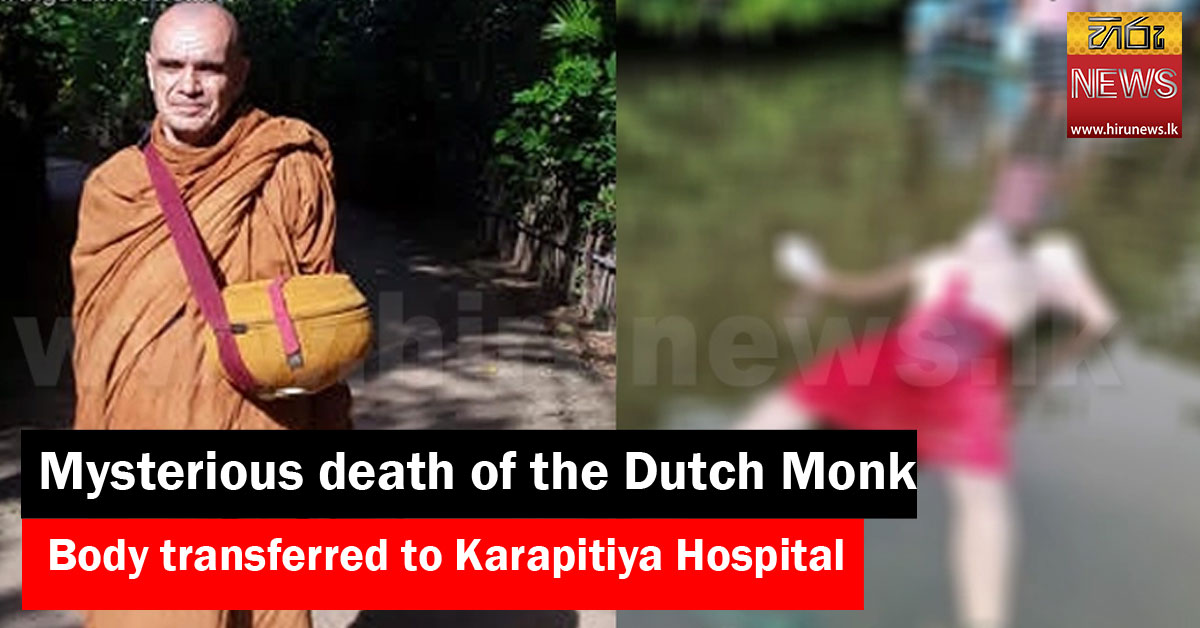
The Galle Chief Magistrate Harshana Kekunawela today (09) conducted an inquiry into the death of a Dutch monk who was found floating in the Rathgama Lagoon, Dodanduwa
The Dutch monk had previously resided at the Polgasduwa Forest Convent.
The Hiru local correspondent stated that the body of the 56-year-old monk was found in the lagoon yesterday (08) afternoon with a stone tied to his feet.
Following the magisterial inquiry, Chief Magistrate Harshana Kekunawela ordered that the body be taken to the Karapitiya Teaching Hospital for an autopsy.
Our Minister for Power is
over the moon with the opening of the Mannar 100MW Wind Farm today(8/12/20) by
no less a person than our Prime Minister Mahinda Rajapaksa.
This Wind Farm as well as
the Puttlam Wind Power Plant which a is
already open prove to the hilt that Sri Lanka can find all its energy
requirements through wind power within two to three years at most.
Once long ago I stayed a
night at the Ohio Forest Department Circuit bungalow. I was scared that my car
will be blown off. The winds were that strong. Having worked in Hambantota
where there is hardly any wind power,
where our experts sited the first wind turbines, perhaps with the idea
of proving that wind power is not feasible and also having worked in Nuwara
Eliya where one has to be extremely careful not to be blown off by the wind, I
have been convinced that all our power
requirements can be found from the wind, which abounds in our country.
Once touring the hills of
California in my son’s Nissan Z 200, I saw the thousands of wind turbines at
Altamont Pass. I stopped and gazed at the turbines for an easy fifteen
minutes wondering what my eyes really
did see. I could hardly imagine what I saw. This made me research further.
My interest made me write
papers proving that wind power is feasible and thanks to the editors of LMD,
the Island and Lankaweb the papers saw the light of day. Finally my interest
ended with a book: Wind Power for Sri Lanka’s Energy Requirements, published in 2019 by Godages. As usual I
submitted copies to both our new Hon
President and our Prime Minister- the books must be somewhere unread and
unknown. Recently I sent a copy to our Minister Mr Dulles Alahapperuma and I
hope he will have a read of it at least now that the Wind Turbines at Mannar
and Puttlam have caused him to open his eyes.
It so happened that one of
my papers in The Island somehow reached Mr Kanaga, the foreign engineer who
set up the wind turbines at Hambantota
who replied stating that the problem with Sri Lanka is that we are not siting
the wind turbines in the hilly country where there is plenty of wind and we
site them only on the coast where there is only a sea breeze.
I enclose sections of the
Conclusion of my book on wind power where I have invoked our leaders to decide
to set up wind turbines in our hilly country.
Let me end my paper making
a definite statement that Sri Lanka can easily be self sufficient in all the
power we need-some 2700 MW within two to three years at most and it will be a
feather in the cap of President Gotabhaya and Prime Minister Mahinda. This
requires very little foreign exchange as the towers and blades can be locally
made-I have seen these been made by locals in Spain. It is only the motor that
needs to be imported till a ‘Jinasena’ can make that too in our country.
The entirety of the GalOya
Project was accomplished within five years and building a few hundred wind
turbines will be an easier task. I speak as an experienced administrator and
many of us have worked in charge of successful development programmes.
I designed and established the Youth Self Employment Programme of Bangladesh in
1982, a programme that has withstood the sands of time by creating three
million self employed youths. This is to tell my readers that what I write is
not fiction. It is fact and if called upon, I will prove every statement of
mine. Anyone is invited to visit the nooks and corners of Bangladesh to see the
largest forced of ‘economists’ in action- the youth workers who were trained by
me in economic concepts and methods of extension. I enclose the Conclusion of
my book on wind power with the firm hope that this paper will reach our leaders.
By using the power of the
wind offered free to us by Mother Nature, the country will not depend on the
supply of coal and oil for power plants and the country can save all the
millions and billions being spent today
to import oil and coal.
Secondly it will provide
employment for thousands in erecting the turbine towers, in establishing the
wind turbines and in the manufacture of the turbine mechanism itself at the
later stages. In my travels in France, Spain and Portugal I have seen workers
making the towers, blades, transporting
them in long trucks, erecting the towers and maintaining them. That is no
difficult task for our engineers and workers.
One of my readers happened to be an engineer,
Mr Kanaga. who was involved with establishing the five wind turbines at
Hambantota, the first to be built in Sri lanka. What is most interesting in his
comment which I have totally enclosed in this book, is that the environmental lobby had decided that the
turbines should only be erected on the coasts and not in the mountains where
there is ample wind force.
It is sad that the
environmentalists were silent when the entire Kotmale Valley was denuded of
people and their activities all to create 200 MW of power. That could have been
easily achieved with fifty wind turbines scattered within Kotmale itself and
the inhabitants and the economy would have been spared extintion. The entirety
of Kotmale is dead today.
Many opine that wind is
undependable. To them my answer is that
the wind is an utterly dependable source of energy. Spain has gone all out to
build wind turbines and even sells power to France.
A reader of my Papers,
Susantha Wijeytileke has even commented that once at Madugoda he saw a cyclist
being blown off the road by the power of the wind.
I must mention that I am
not alone in advocating the siting of wind turbines in the mountainous areas of
Sri Lanka.
In Windfair, on line editorial journalist Trevor Sievert quotes Lakshman Guruswamy, Sri Lanka has the
potential to generate 24,000 MW electricity from wind.” (http://w3.windfair.net/wind-energy/news/1q543-sri-lanka-high-wind-energy-potential)
Professor Guruswamy further states that studies have shown that nearly 5000
square KM of windy areas are available for potential wind power generation in
Sri Lanka.” (Dated 12/04/2018.)
In www.windpower.lk,
it is stated that in wind power the potential for Sri Lanka is 20,740MW”
Wind
Power in Sri Lanka,a publication by The Asia
Business Office (//www.asiabiomass.jp/English/topics/1601_04.html) states that
the wind potential in Sri Lanka is 20,740 MW. In its words there is strong potential for
wind power in the North Western coastal regions of Northern Province, the
highland areas of the Central Province, Sabaragamuwa and Uva.”
In Sri Lanka Wind farm Analysis and Site
Selection Assitance, M. Young and R
Vilhauer of The Global Energy Concept, Kirkland, Washington state:
Sri Lanka has considerable available land with wind resource
potentialsufficient for development. However, the wind power capacity expansion is limited by
the electricity transmission infrastructure. CEB estimates that the grid cannot
accommodate additional wind capacity more thgan 7% of the peak load. The CEB
estimates that installing more than 20MW
of wind capacity in any given region may adversely impact local grid
instability and power quality.
This Study states that the windy land can provide 50,000 MW.”
It is important to note
that it is not the lack of wind power that holds up the utilization of wind
power to produce electricity. Instead it is the grid capacity. Tackling the
grid capacity is another kettle of fish. This is an area that has to be
addressed. I will not be surprised if our
experts who yet think that wind turbines should be built to harness the
sea breeze and not the wind power in our mountains will come up with another cock and bull story
stating that a grid cannot be built.
My thanks are also due to
the Editor of the Sunday Observer.lk who in Let there be Light” (Sunday
Observer:06/09/2009) commented that my suggestions are very valuable. Referring
tro my suggestion that the wind power in the Central Highlands should be
harnessed says, This is a timely and valid proposal and the authorities
should take appropriate action to locate
wind turbines in areas which will enable
them to reach their maximum potential.”
This study proves beyond all doubt that there is ample wind
capacity in Sri Lanka for self sufficiency in our power requirements through
harnessing the wind.. There is no question about this. However, as in any field
of development, be it agriculture or industry, there are problems that have to
be surmounted. As stated the national
grid has to be developed to carry the power from areas where it is generated to
the areas where the power is consumed. Perhaps there can be local grids to
carry the power generated from a local
wind farm to a local district capital. For instance if wind farms are located
in Dela on the Kirigalpotta hillock, a grid can carry the power to the town of
Ratnapura. In every district- and I have worked in many and have traveled all
over- there are many rugged hillocks which are inhabitable and will never be
used except to put up some pylons and structures like wind turbines.
I am dead certain that Sri Lanka can become self
sufficient in all its power requirements not for its present stage but also for
its future development through using wind power. The wind power in the Central
and Sabaragamuwa Hills is vast. Methods and systems have to be found to harness
this energy. However as long as we build wind turbines on the coastal areas and
ignore the areas where there is real wind power and satisfy ourselves with
studies of the difficulties and constraints,
our attempt will be like that of
a squirrel trying to empty the water in the ocean , carrying a bit of water on
its tail, endless.
Garvin Karunaratne, Ph.D. Michigan State
University, Former G.A.Matara.
Author of How the IMF Ruined Sri Lanka and
Alternative Programmes of Success, Godages, 2006
How the IMF saboitaged Third World Development,
Godages/Kindle, 2017
Papers on the Economic Development of Sri Lanka,
Godages,2012
A life example for some of our politicians who rush for Doctorates and ‘Paper’ qualifications !
*Humility and humbleness*
Cricketer Rahul Dravid was awarded with a doctorate degree by
the University of Bangalore, which Rahul Dravid gracefully returned. Not only
did he give back the degree, but he also gave a wonderful speech, he said
“My wife is a doctor, she has spent countless sleepless nights and days to
get this degree.”
“My mother is a professor of arts; she has waited a long
fifty years for her degree with perseverance. I worked hard to play cricket,
but I didn’t study that much, so how come I accept this degree?”
Einstein was offered the Prime Ministership by the Israeli
government in 1952. Einstein politely said, I am an inexperienced student of
physics. What do I understand about the governance and administration of a
state !!!”
Grigori Perelman, the world-renowned mathematician, returned the
Field Medals in 2006 and a large sum of money, regarded as the equivalent of
Nobel Prize in the field of Mathematics. He said We had a poverty driven
childhood in our family. We had to manage in a very calculative manner to save mother’s
earnings. May be, that’s the reason why I was able to develop a little skill in
mathematics since childhood. Since that phase of poverty is not there anymore
in my life, what do I do with so much of money?”
Seeing the humility of these people, one has to bow down one’s
head in respect and shame as well. When we look at ourselves and introspect, we
see in ourselves the image of how disobedient, arrogant, absurd person we have
been compared to the philosophy of these guys. These humble and down to earth
people remind us over and over again that being humble does not mean one gets
less dignified in the eyes of the society, rather it portrays in them a much
larger than life image.
Because we only become mean by our unruly arrogance, while we grow up real big by our repeated efforts in trying to become humble and true to ourselves.
The strongest truth in the world is that one has to be humble and simple to achieve greatness but there is no need for any efforts at all to become selfish and self centred. As there is a saying ‘Sky is the limit for humbleness while there is no limit at all to stoop down to any level”.
Lord Naseby, the Honorary
President of The All Party Parliamentary British Sri Lanka Group has, on
the basis of assurances received from the heads of ICRC, Colombo, on three
occasions; denied torture was taking place in post-war Sri Lanka. In a letter addressed
to Lord (Tariq) Ahmad, Minister of State for South Asia and the
Commonwealth, reminded the Minister how some Tamils caused self-harm
to gain entry into the UK.
The
following is the full text of the letter:
The
reference to Sri Lanka in the 20 November 2020 Ministerial Statement you made
on Human Rights Priority Countries for the period Jan -June 2020 is dreadful,
as it is riddled with factual inaccuracies and a total failure to reflect in
any way the efforts of Sri Lanka to achieve reconciliation following the end of
the terrorist conflict in May 2009. In fact the question arises as to why Sri
Lanka is in the list of our human rights priority countries when there are
countries with abysmal human rights records. I highlight the following:
1. I can understand
the frustration of the UN at Sri Lanka’s withdrawal from the UN Resolutions.
However, you know the background of the Foreign Minister Mangala Samaraweera
signing without having the agreement of the Executive President or seemingly
the Cabinet. Sri Lanka now has a new Government which is frustrated at the UN
approach and wishes now to handle the reconciliation internally. Indeed the new
Executive President highlighted ‘reconciliation’ in his inaugural speech and
the Foreign Minister in his address to the UNHRC session in February 2020.
Frankly I
draw an analogy with the UK. Following a Referendum of our people we are
leaving the EU so that we can make our own laws & be responsive to our own
legal system rather than being subservient to European laws & Courts.
Sri Lanka
is no different. They had a general election with a turnout of voters far
higher than we achieve and as a result the new Government were empowered to
give notice to leave the UN Resolutions and seek an internal solution. The
present Sri Lankan Government sought a mandate from the people for this which
was approved overwhelmingly by the voters. It is a sovereign decision of Sri
Lanka just as the decision of ours to leave the EU.
2. The
claim is made ‘Parliamentary elections were delayed twice because of COVID -19
without reconvening Parliament, which resulted in a lack of Parliamentary
oversight from March onwards’.
The
independent and highly regarded Election Commission who I can personally vouch
for, decided to postpone the parliamentary election from its initial date of 25
April 2020 to 20 June 2020 and finally to 5 August 2020 due to challenges posed
by the Covid 19 pandemic.
The eighth
Sri Lanka Parliament was dissolved on 2nd March 2020 invoking Article 70(7) of
the Sri Lanka Constitution in the context of an Emergency. The dissolution of
the Sri Lankan Parliament was done before the spread of the Covid 19 pandemic
and the election was duly held on 5 August, the earliest occasion it was
feasible to hold the election and Sri Lanka is among the few countries in the
world that successfully held elections in the midst of a pandemic.
Personally,
I see a comparable parallel to the UK. On the 23rd March Prime Minster Boris
Johnson made a TV address in which he asked people to stay at home and only
leave for very limited purposes. On 24th March Secretary of State Hancock made
a statement in the Commons saying that the PM announcement was not advice but
rules enforceable by the Police. Parliament rose for the Easter recess on 25
March and was not recalled. The Government stated the regulations were needed
urgently and therefore were brought into force without prior parliamentary
approval.
I am
astounded that our lead representative in Geneva chose to criticise Sri Lanka
with incorrect factual information made even worse as there was there was no
Parliamentary oversight in the UK. Indeed it is still worse in the UK as we
regularly receive SI’s in the Lords for debate weeks after they have been
implemented.
Furthermore,
since Sri Lanka’s ninth Parliament has been in session, no new laws have been
enacted to deal with COVID 19 pandemic which is clear evidence that the
existing laws were adequate to deal with the pandemic or any other situation
between March and August 2020.
3. The
UNHRC on freedom of religion or belief state there was an increase in
anti-Muslim sentiment ‘fuelled by disinformation around Covid 19’. Sri Lanka
like most Countries set up a Covid Committee with scientists, epidemiologists
and experienced health administrators. These experts stated that due to the
shallow water table in Sri Lanka and the possibility of those who died of
Covid-19 contaminating the ground water, normal burial would not be possible.
This was to apply to everyone and regardless of cause of death. However, taking
in consideration Muslim representations a Committee has been set up to examine
the possibility of burial in the dry areas. I would expect anyone with any
understanding would recognise in an emergency the science must be listened to,
after all we in the UK are told to do so. It may be noteworthy that recently,
people in Denmark have raised concerns about the possibility of groundwater
being contaminated in areas where culled mink are buried and urged the
authorities to burn the carcases of culled mink instead of burying for the same
reason.
4. I note
the UN makes no mention of the relative success of Sri Lanka in controlling the
Virus. I checked and as at 24.11.2020 Covid deaths were 90 for a population of
21 million which as a percentage is 0.0004% – the best in South Asia. We in the
UK as at 25th November had 56,533 deaths for a population of 67.88m which is a
ratio of 0.0832. This is the worst in Europe. In addition, there has been no
acknowledgement whatsoever to the rehabilitation and release of 12000 LTTE
cadres and the release of private land utilised by both the Indian military and
subsequently by Sri Lankan military during the 30 year conflict. This is
particularly significant in the context of the recent terror attacks in Vienna
where the perpetrator of the terror attack had been given an early release from
his prison sentence following a terror related conviction.
5. There is
criticism of the Presidential Task Force and use of the military. However, the
UK has used the military with success. Many of us think they should have been
used much more. Indeed, I note our Military are on standby during the festive
season. The deployment of armed forces along with other government officials to
assist people in natural calamities and in disaster management is nothing new.
It is not a practice limited to Sri Lanka. In fact, Sri Lankan armed forces
have always contributed to assist relief work following natural disaster such
as the Boxing Day Tsunami in 2004 as well as landslides, flooding and droughts
which are a common occurrence in Sri Lanka.
6.
‘Military appointments to government roles included individuals accused of war
crimes’. It is inevitable that former military senior officers will be accused
of alleged War Crimes by the LTTE who escaped and now control some of the
Diaspora Groups who pump out propaganda. I remind you and the UN that this was
a war and the law that operates is the law of armed conflict, otherwise known
as International Humanitarian Law. The Government of Sri Lanka sees that there
is no case against their senior Officers indeed Col Gash in his despatches
praises the Sri Lanka armed forces for the care they took to try to minimize
civilian casualties. I see nothing wrong at all in having a highly qualified
military surgeon assigned to lead the Government Health Service to good effect
looking at their Covid success in contrast to our NHS.
I make two
further observations: You will be aware that we in the UK have a Bill going
through Parliament – Overseas Operations (Service Personnel and Veterans) Bill.
The need for this legislation arises from bogus allegations of war crimes by
British Military in the Iraq war. I see a direct parallel with Sri Lanka in
relation to unfounded allegations principally from former LTTE leaders using
the Diaspora. Sri Lankan armed forces fought to neutralize a deadly terrorist
outfit which was a threat not only to Sri Lanka but the whole world. They did
not fight someone else’s war in another country. Given the allegations against
the Australian forces in Afghanistan, we must be cautious when we accuse the
armed forces of a country which fought to safeguard its own territorial
integrity and to rid the world of a ruthless terror outfit.
I also
remind you that we in the UK seem comfortable to have Mrs Adele Balasingham, a
British Citizen by marriage residing in the UK. It was she who as a LTTE leader
recruited and trained ‘Child Soldiers’ resulting in a heavy death toll as they
were put in the front line. There can be no greater War Crime than this. In
fact, according the Rome Statute to which the UK is a State Party, recruitment
of children is a war crime.
7.’Complaints
from Human Rights Activists and Human Rights defenders’. On my last three
visits I have been told by NGO activists that ‘Torture’ is happening in Sri
Lanka. Each time I question the head of the ICRC, as it happens a different
person each time, who state categorically that they have never seen or had any
evidence to substantiate the claims. You also know we have seen in the UK cases
of self-harm by certain Tamils trying to gain entry into the UK.
8.
‘Domestic Mechanism’ for reconciliation and accountability. The criticism
ignores the vital role of the missing persons Commission and the beginning of
Reparation payments. Furthermore, since notice was only given in April just as
the Pandemic struck and a General Election had to be held it is ridiculous to
imply nothing was really happening which is the tenor of this part of the UN
complaint.
9. The only
substantial point in the Report that warrants real attention is the holding in
custody of the Muslim Lawyer without being charged. I have raised this issue at
the highest level in Sri Lanka pointing out it is unacceptable. I am told that
evidence is being collected in relation to a possible association with the
Easter Sunday bombing atrocity. I have made it clear he should either be
charged or released.
I conclude.
You will be aware that the well-known and respected Legatum Institute who
annually assess 167 nations across 65 policy-focused elements, measured by
almost 300 country-level indicators enabling them to construct a thoroughly
comprehensive picture of prosperity across its institutional, economic and
social dimensions. They issued their latest report on14th November 2020.
Ironically,
they state in relation to Sri Lanka and I quote;
‘This
year’s Index will showcase the impressive performance of Sri Lanka over the
past decade in improving its ranking across a number of key social indicators.
Specifically, it will highlight the extent to which improvements to the
healthcare and education sectors have been key to delivering this increase in
prosperity, and how your approach might serve as an inspiration for other
nations confronted with similar challenges today’.
What a
contrast to the UNHCR report the UK Government has issued internationally full
of factual errors which is frankly unacceptable.
We in the
UK are beneficiaries of the mammoth investment by the Government of Sri Lanka
in its human capital given the large numbers of professionals of Sri Lankan
origin, including from the Tamil community serving in medicine, engineering,
accountancy and other fields.
There is a
misplaced vindictiveness towards a country with huge potential and talent well
able with encouragement to become the Singapore of South Asia. We have just
appointed a new Trade Envoy. In my judgement the UK now trading as a sovereign
country on its own needs to nurture these opportunities rather than sit on the
side-lines criticising.
Moreover,
Sri Lanka is a country that has supported the UK in the international arena. It
is among the handful of countries that voted with the UK on the UN resolution
in the 1980s on the Falklands issue. Recently, Sri Lanka was also amongst the
very few countries that abstained on the UN resolution on the issue of the
Chagos Archipelago. Sri Lanka must have done so irrespective of its close
relations with Argentina in the former case and Mauritius in the second, due to
the importance it accords to its relations with the UK. The UK should reciprocate
such goodwill and not attempt to victimise Sri Lanka for petty domestic reasons
at the behest of an extreme Sri Lankan Tamil Diaspora in the UK.’
The article of Vimal Dias which
appeared in the Sunday Island of February 24th, while recalling the enormous
contribution made by the late Senaka Bibile, as the Chairman of the State
Pharmaceutical Corporation (SPC), bemoans the fact that while on an UNCTAD assignment.
“He was also working on the
feasibility of establishing a pool procurement agency for small Caribbean
islands to lower drug prices and improve availability. Unfortunately he
couldn’t complete his assignment as he died suddenly and some say mysteriously,
in British Guyana of a severe heart attack”.
This article was followed by another
from Raj Gonsalkorale, which appeared in The Island newspaper of Wednesday 6th,
March wherein he states that –
“It is no secret that the
Pharmaceutical Industry is next only to the Arms Industry in the world, and
they are known to resist any incursions into their empires by whatever means,
including unethical means. The suspicion that Professor Bibile’s death in 1976
while working for UNCTAD in the Caribbean, extending and helping to implement
his policies which by now had gained international recognition and acceptance,
was not due to natural causes and that external forces had a hand in it,
lingers amongst some even to date.”
Excerpts from a few pages of the book
“Memoirs of Osmund Jayaratne” Professor of Physics of University of
Colombo which are appended below, gives details of Senaka Bibile’s life, work
and death in Georgetown.The details of his last rites in British Guyana had
been provided by Dr. R.O.B. Wijesekara, another Sri Lankan scientist who had
then being living in British Guyana and had been present at the cremation and
had even lit the funeral pyre of Senaka Bibile.
“Dr Senaka Bibile.
Senaka Bibile’s policy of
rationalizing drug imports was welcomed by the World Health Organization (WHO),
and adopted by several Third World countries like Bangladesh and some countries
in the Caribbean region. It was at this point that the WHO, together with the
UNDP, invited Senaka to proceed abroad, firstly to Geneva and later to some of
the Caribbean countries. He accepted their invitation, the purpose of which was
that he should explain his policies to other countries of the Third World.
In the Caribbean region, he made
Guyana his headquarters. In the same hotel in which he lived, along with his
wife Leela, there also stayed a prominent “person who was a Professor of
Medicine in the University of the West Indies. One night Senaka, his wife and
this professor were invited out to dinner at a certain hotel. They were
naturally served with drinks. Now Senaka had been for some time ailing from a
heart condition, and occasionally used to get a very fast heartbeat known as
Tachycardia. Soon after he and his wife returned after dinner to their room in
the hotel, he developed a very serious attack of Tachycardia. Normally he used
to control this by pressing an artery leading to his heart. However, this time,
although he adopted this method, the Tachycardia did not cease for several
hours. In spite of his protests, his wife Leela rushed to the Professor of
Medicine, who lived in the same hotel, and asked him to come and examine
Senaka. After doing so, he had a hearty laugh and said that the problem was not
with Senaka but with his wife, who was unnecessarily excitable. The Professor
returned to his room, but Senaka’s condition became worse from hour to hour. In
desperation, Leela summoned an ambulance, and took him promptly to a general
hospital in Guyana. In the ambulance, looking up at his wife, Senaka, realizing
the condition he was in, whispered to his wife, “I am sorry Leela, but
this time I do not think I will live.” To admit Senaka to the hospital, so
much red tape had to be undergone. The result was that before he could be
admitted to a ward Senaka passed away.
It was later discovered that the
Professor who had examined him first had close links with many multinational
pharmaceutical companies. It was also so surmised after his death, by other
friendly doctors in the region, that a couple of drops of digitalis, dropped
into a glass of liquor could have easily produced the symptoms that Senaka had
suffered from.A close friend and colleague, Dr R.O.B. Wijesekara, another
brilliant scientist unrecognized in his own country and then living in
Georgetown, Guyana, wrote thus of the last rites accorded to Senaka Bibile:
I drove with another young Sri
Lankan University lecturer to the cremation. It was 15 miles from Georgetown,
on a beach, that the remains of this loveable fellow became, as he would have
liked to say: CO2 + H2O and CaCO2 and K2CO3, etc. It was a home-built pyre —
all logs. On one side was the concrete sea wall, which stretches along the
entire coast from Georgetown.
There were thick South American
woods, and the roots of trees were washed away by the oscillating tide while
the massive trees stood their ground. A Hindu `cremator’ chanted ‘Shanthi’ a
few times, and the pyre was lit by one of the Guyanese colleagues of ‘Bibs’ and
myself. The camphor erupted in flames. Instead of the petroleum used in Sri
Lanka, the Guyanese used ghee. In a few hours it was a flaming memory, and I
have not yet overcome the daze which began with a telephone call from Gus Lee
(one of Senaka’s Guyanese colleagues), and which still lingers painfully as I
write at home.”
The readers could judge for
themselves the cause of the death of the late Senaka Bibile in British Guyana.
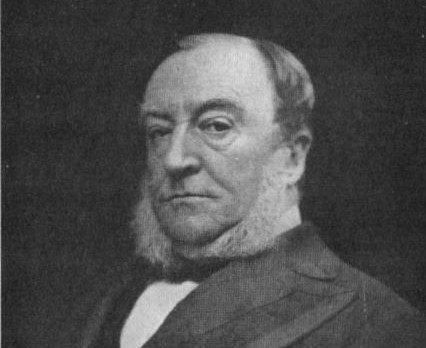
Governor William Gregory’s term from 1872 to 1877 was the golden age” of Ceylon coffee
Colombo, December 8: Today, Sri Lanka is synonymous with tea and not coffee. As on date, it is way down in the list of coffee producing countries, 43 rd. to be precise. But back in the 1870s, Ceylon, as Sri Lanka was then known, was among the top three coffee producing centers beaten only by Brazil and the Dutch East Indies, now known as Indonesia.
In the last quarter of the 19th.Century, over 111,000 hectares were under coffee in the island which exported 50,000 tons of it every year. It was the main source of income for what was then a British Crown Colony.
One of the British Governors who made coffee synonymous with Ceylon was Sir William Gregory. During his five year stint from 1872 to 1877, Gregory was passionately involved in economic growth, pioneering the development of plantations, roads, railways and the Colombo port. And while encouraging plantations, he did not neglect peasant agriculture. He encouraged local farmers to cultivate in succession, coffee, cocoa and cinchona in addition to paddy, and be part of the rapidly monetizing Ceylonese economy.
B.Bastiampillai, author of The Administration of Sir William Gregory, says that Gregory spent more lavishly than any other Governor on development projects. He loved Ceylon, which he described as a glorious island” and his darling object.”
As a matter of fact, coffee had established itself as a major commercial crop and an export commodity in Ceylon long before Gregory arrived. Investors had flocked to Ceylon from overseas and around 100,000 hectares of forest had been cleared to make way for coffee plantations. The term coffee rush” had been coined to describe this situation as early as 1840. However, it was when Gregory was Governor that the acreage under coffee expanded exponentially.
Surprisingly, the expansion took place even as a new and unfamiliar fungal disease Hemeleia Vastatrix had begun to eat into the vitals of the crop. The fungus was destined to bring the curtains down on the coffee industry by the 1890s. However, Gregory helped the coffee sector immensely by using the surplus generated by its burgeoning export earnings to build a network of roads and railways. He built a harbor in Colombo to replace the inconveniently situated and difficult to operate one in Galle.
With new areas opening up, investors rushed to Ceylon. For example, when Gregory came in 1872, Nuwara Eliya was largely empty, but by 1874, 84,000 acres (33.933 hectares) had come under coffee there. As Bastiampillai says: the Gregory era was the golden age” of Ceylon coffee. Higher sales and a 50% hike in the price of coffee in the 1870s in the West, brought in an abundance of cash.
Rape of forests for profit
Be that as it may, it cannot be denied that, in the initial stages, Gregory presided over a massive destruction of forests to enable coffee cultivation. The callousness of the British planters was best portrayed in a poem quoted by Richard Boyle in his article From ‘Coffee Rush’ To ‘Devastating Emily’: A History Of Ceylon Coffee (serendib.btoptions.lk). This is what the poet said about the British planter:
The ruthless flames have cleared his lands; No trace remains of green; When lost in thought our Planter stands, And views the sterile scene. In dreams he sees his Coffee spring Fed by the welcome rain; And berries many a dollar bring To take him home again.
Sensing the danger from deforestation, the then Director of the Botanical Garden in Peradeniya, Dr.D.H.K. Thwaites, wrote to the authorities in Colombo and London warning that soil erosion and decreased rainfall would follow unless the cutting of forests was regulated. Thwaites’ report caught the attention of the Kew Garden Director Dr.Joseph Hooker in the UK. With the backing of the Colonial Office, Hooker sent instructions to the Governors of British colonies to stop the rape of forests. Gregory, who was exceptionally liberal in meeting the planters’ demand for land, was warned” to take strong action. As a loyal soldier of the Crown, Gregory set about creating forest reserves. Bastiampillai notes that Gregory declared 9000 acres (3642 ha) as reserve forests.
Expectedly, the planters were livid. They got articles written in the press condemning the Governor. Dr.Thwaites was called a croaker” and dubbed planter’s enemy” .They sneered at the botanist’s suggestion that they switch from mono-cultural plantations to cultivating other crops also. Gregory, who was initially hesitant to deviate from coffee because it was fetching high prices abroad, was finally convinced that mono-cropping was fraught with danger. With scientific inputs and practical advice from Sir William Thistleton-Dyer from Kew Gardens and Colonial Office officials R.G.W.Herbert and R.Meade, seeds and pamphlets on diversifying plantation agriculture were distributed. Thwaite’s enthusiastic participation in this process made the Botanical Garden in Ceylon a seeds and ideas provider to several British colonies.
In 1876, Gregory opened botanical gardens in Henaratgoda to grow tropical plants which could not be cultivated at higher elevations in Peradeniya and Hakgala. His aim was not only to help the planters diversify and survive the blight, but to help small local peasants make money and improve their standard of living. In the words of Bastiampillai: Gregory systematically encouraged, for the first time, the peasantry of the Ceylonese to take to commercial agriculture.”
In the same year, Gregory learnt that the coffee grown in Liberia in Africa, was sturdy and resistant to the disease, that it could be grown in low areas, and that Liberian coffee was fetching high prices in America. He obtained Liberian seeds and set up a demonstration plant in Pasdun Korale for the benefit of local peasant farmers. However, Liberian coffee plants also fell victim to the same fungal disease Hemeleia Vastatrix.
Cinchona cultivation
All attempts to find a cure for Hemeleia Vastatrix failed. But hope of getting round the problem was not lost. In 1860, Sir Clements Markham had secured Cinchona seeds from Peru and Ecuador in South America and sent them to Ceylon to be experimentally grown in Hakgala. Cinchona was used to extract quinine, an antidote to malaria which was then ravaging tropical lands including Ceylon. In 1873, under Gregory’s watch, Ceylon followed the example of the Dutch in the East Indies and stated cinchona plantations. Production increased, and cinchona seeds, which were given free initially, began to be sold. And sales mounted. Peasant farmers in Ratnapura and Matale also set up private nurseries to meet the rising demand.
Meanwhile in 1876, Gregory tried to get from Java, in the Dutch East Indies, better seeds known as Calisaya and Ledgeriana, but these were damaged in transit. However, the acreage under Cinchona grew from 500 in 1872 to 6000 in 1876. Interestingly, cinchona was never grown as an independent crop but only as a subsidiary one in coffee plantations. Nevertheless, the crop had played the useful role of helping planters survive the coffee blight.
Enter Tea
Although experiments to grow Assam and Chinese tea in the Botanical Garden had begun in 1845, tea became a major Ceylonese crop only in 1885. Gregory encouraged its cultivation as a plantation crop in 1872 and 1873 when he found that in England, Ceylon tea was adjudged the best. It could be grown in the higher reaches where coffee could not be.
But tea, unlike coffee, needed a resident population of workers. Fortunately for Gregory, labor was easily available from neighboring South India. By the 1874, tea growing had expanded from Nuwara Eliya to Kegalle and Ratnapura. By the 1890s, Hemeleia Vastatrix had brought the curtains down on coffee’s reign over Ceylon, and tea had become the new queen of the island.
By Sheryl Gay Stolberg/New York Times Courtesy NewsIn.Asia
Dr. Jane M. Orient is the executive director of the Association of American Physicians and Surgeons promotes the anti-malaria drug hydroxychloroquine
Washington, December 6: A doctor who is skeptical of coronavirus vaccines and promotes the anti-malaria drug hydroxychloroquine as a Covid-19 treatment will be the lead witness at a Senate Homeland Security and Governmental Affairs Committee hearing on Tuesday, prompting criticism from Democrats who say Republicans should not give a platform to someone who spreads conspiracy theories.
Dr. Jane M. Orient is the executive director of the Association of American Physicians and Surgeons, a group that opposes government involvement in medicine and views federal vaccine mandates as a violation of human rights.
A public health threat is the rationale for the policy on mandatory vaccines. But how much of a threat is required to justify forcing people to accept government-imposed risks?” Dr. Orient wrote in a statement to the Senate last year, calling vaccine mandates a serious intrusion into individual liberty, autonomy and parental decisions.”
In a phone interview on Sunday, Dr. Orient, an internist who received her medical degree from Columbia University in New York, resisted being cast as an anti-vaxxer” and said she would not get a coronavirus vaccine because she had an autoimmune condition. She added that she opposed the government’s push for all Americans to be vaccinated against the coronavirus, noting that both vaccine candidates — one made by the Pfizer and the other by Moderna — use a new scientific method.
It seems to me reckless to be pushing people to take risks when you don’t know what the risks are,” Dr. Orient said, adding: People’s rights should be respected. Where is ‘my body, my choice’ when it comes to this?”
Her selection as a witness as federal health officials are trying to promote a vaccine as a way to end a pandemic that has killed more than 281,000 Americans prompted harsh criticism from Senator Chuck Schumer, Democrat of New York and the minority leader.
At such a crucial time, giving a platform to conspiracy theorists to spread myths and falsehoods about Covid vaccines is downright dangerous and one of the last things Senate Republicans should be doing right now,” Mr. Schumer said in a statement on Sunday.
But at least two Republican House members — Representative Andy Biggs of Arizona and Representative Jeff Duncan of South Carolina — appeared to embrace Dr. Orient’s warnings against government mandates. They took to Twitter to express those views.
Americans should have the freedom to take the COVID vaccine,” Mr. Duncan wrote on Saturday. Americans should also have the freedom to decline the vaccine.”
A spokesman for the chairman of the Senate committee, Senator Ron Johnson, Republican of Wisconsin, did not immediately return an email message asking why Dr. Orient had been invited to testify.
Federal health officials are trying to enlist lawmakers in a campaign to encourage Americans to accept the new vaccines. An F.D.A. advisory committee will meet on Thursday to review data on the safety and efficacy of Pfizer’s vaccine candidate. If the agency grants the vaccine emergency authorization, rollout could begin shortly after.
In a private briefing with a bipartisan group of senators last month, Moncef Slaoui, the chief scientific adviser to Operation Warp Speed, the Trump administration’s vaccine development program, said that it would help if senators got vaccinated,” according to a person familiar with the call.
Dr. Orient, who lives in Tucson, Ariz., said on Sunday that she would appear remotely during the hearing on early at-home treatment for Covid-19. She said in the interview that doctors were too often sending patients home with instructions to simply rest and ride out the disease.
The association has also sued the government in an effort to force it to release hydroxychloroquine from the national stockpile for use as a Covid-19 treatment, although the scientific evidence indicates that the drug is ineffective against the coronavirus. The case is currently before a federal appeals court.
Dr. Orient said she intended to use her testimony to call for government guidelines informing doctors about hydroxychloroquine as a potential treatment for Covid-19 patients, even though the Food and Drug Administration revoked an emergency authorization allowing the drug to be distributed from the national stockpile and has warned that it could harm those patients.
Dr. Orient’s organization has urged people to be cautious about the vaccine in blog posts with titles like Should We Line Up for a 90% Effective Vaccine?” In her interview, she raised particular concerns about vaccinations for young people because the effect on fertility has not been determined.” There is no evidence that any of the leading coronavirus vaccines affect fertility.
Dec 8 (Reuters) – Sri Lankan shares rose for an 11th straight session on Tuesday, riding on gains in financial and industrial stocks.
* The benchmark stock index ended up 1.39% at 6,564, its highest closing level since Feb. 23, 2018.
* Trading volume on the CSE All Share Index rose to 326.2 million from 213.5 million in the previous session.
* Browns Investments Plc and Hatton National Bank Plc were the top boosts to the index, ending the day 10.7% and 5.4% higher, respectively.
* Foreign investors were net sellers in the equity market, offloading 225.8 million Sri Lankan rupees ($1.21 million) worth of shares, according to exchange data.
* The Sri Lankan rupee was quoted at 186.1 against the U.S. dollar as of 11:39 GMT.
COLOMBO (AFP) – Sri Lanka announced yesterday the first large-scale Chinese investment in manufacturing in the country, a USD300-million tyre factory near a strategic deep-sea port.
Western nations, as well as regional power India, have long been concerned about Chinese influence in Sri Lanka through projects under its gargantuan Belt and Road infrastructure initiative.
The factory will be adjacent to the Hambantota port, which was leased to a Chinese company in 2017 after Sri Lanka failed to service the USD1.4-billion debt from Beijing used to build it.
Sri Lanka’s Cabinet approved the setting up of the tyre plant under legislation that allows generous tax concessions, Media Minister Keheliya Rambukwella told reporters in Colombo.
He said Shandong Haohua Tire Co Limited will export at least 80 per cent of production, with the option of selling the rest on the local market.
The announcement came just weeks after Prime Minister Mahinda Rajapaksa unveiled the country’s 2021 budget, banking on a huge Chinese real-estate development in Colombo to attract more investment and revive the island’s economy.
The Colombo Port City – a USD1.4 billion land reclamation project which started in 2014 – has doubled the size of Sri Lanka’s current financial district.
When Rajapaksa was president between 2005-15, Colombo borrowed billions from China, accumulating a mountain of debt for a string of infrastructure projects – including an international airport dubbed the world’s emptiest” by media for its lack of flights.
December 8 (Renewables Now) – Sri Lanka has today opened its largest wind farm — a 100-MW facility in Mannar District that received financial support from the Asian Development Bank (ADB) three years ago.
The wind park is owned by Ceylon Electricity Board (CEB) and was built at a total cost of about USD 150 million (EUR 124m) even though the developer had a USD-200-million ADB loan on its disposal, local media report. The facility consists of 30 units of 3.45-MW Vestas turbines.
CEB is now considering expanding the plant by 20 MW through the installation of six more turbines at the site, utilising the remaining ADB funds. Its chairman Vijitha Herath told Daily News Finance that, for the purpose, it will launch a Requests for Proposals (RfP) soon.
This commitment comes less than a month after the CEB launched a RfP for the construction of 60 MW of new wind parks, each with an individual capacity ranging from 1 MW to 10 MW and connected to the Madampe grid substation. The winning projects will receive 20-year power purchase agreements (PPAs) with CEB. The proposals should be submitted by mid-February 2021.
Co-Cabinet Spokesperson, Minister Dr. Ramesh Pathirana, stated that the country will see the end of the COVID-19 pandemic in the next three to six months.
He made this statement while addressing the media briefing held at the Government Information Department today (8).
The Minister said that the World Health Organisation (WHO) has already prepared a program to provide vaccines, and that the Ministry of Health has already held discussions with the WHO to obtain the vaccine.
Minister Pathirana also said that the Government would consider a locally produced drug to treat COVID-19.
Although the Terrorism Investigation Division (TID) was able to provide information on Islamic extremism to the State Intelligence Service (SIS), the SIS was hesitant to receive them, former TID Director DIG Nalaka de Silva today informed the PCoI probing Easter Sunday attacks.
Commencing the testimony, the Commissioners had played the voice recordings which former Police Informant Namal Kumara had released in 2018, where former TID Director DIG Nalaka de Silva made certain controversial statements over former SIS Director SDIG Nilantha Jayawardena.
Earlier, testifying before the Commission former SIS Director Jayawardena had submitted the voice recordings which had been released by Namal Kumara to the public in 2018.
Testifying before the Commission, former DIG Silva said that Namal Kumara was a casual informant who used to obtain certain information.
“Namal Kumara had direct links to Mahason Balakaya organisation and details related to Rohingya refugees. We used him to obtain this information,” former DIG said.
The witness said that according to the Government Analyst’s report regarding the voice recordings, all the recordings were edited and most of the parts were not included.
Commissioners then questioned the former TID Director regarding the statements he made to Namal Kumara against former SIS Director Nilantha Jayawardena.
Responding to the question the witness said that all he wanted to find was whether Namal was having a grudge with the former SIS Director and that part was not included in the recording.
“I had to find the actual motive behind this Namal Kumara and why he had made certain serious allegations against former SIS Director. To find out the point, I have to engage in an open conversation with him and that’s why I deliberately gave him some points against Nilantha. Only the parts where I made statements against Nilantha was included in the audio and the earlier conversation had been edited,” he said.
A recording played by the Commission also revealed a plan in which Namal Kumara had to assassinate former STF Commandant SDIG M.R. Latheef.
After listening to the recording former DIG Silva said that the recording had been deliberately edited and at the end of that conversation, he had immediately stopped the vehicle and threw Namal Kumara out of the vehicle.(Yoshitha Perera)
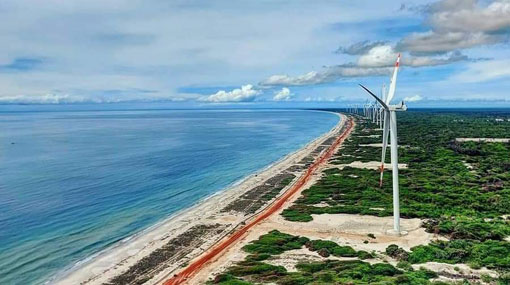
Sri Lanka’s first state-owned wind-powered electricity generating plant was declared open in Mannar this morning (December 08).
Located in Mannar ‘Thambapavani’ is the largest wind power plant complex in the country.
Marking a historic milestone in Sri Lanka’s power generation, the power plant was declared open by Prime Minister Mahinda Rajapaksa.
The phase of the wind power plant is expected to generate 100 megawatts of wind power.
‘Thambapavani’, operating as an eco-friendly project, is valued at USD 135 million. The project was completed within a period of less than one year.
The wind power plant can generate electricity for a cost as little as Rs 8 per unit, said Velu Chandrasekaran, the Environment and Social Security Officer of the project.
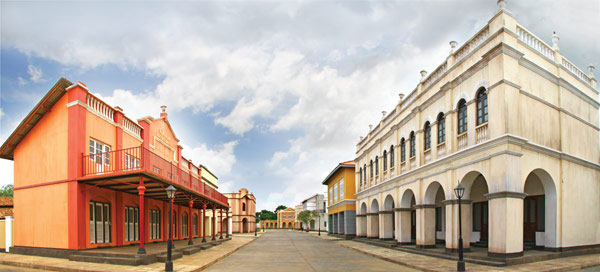
The Cabinet of Ministers has approved a proposal submitted by the Prime Minister for the allocation of funds from the General Treasury to perform essential renovation activities and rehabilitation of the Mahinda Rajapaksa National Tele-Cinema Park in Ranminitenna.
The government said the Mahinda Rajapaksa National Tele-Cinema Park has been established for earmarking a renaissance in the local cinema and tele creations sector across providing studios and shooting background facilities as well as accommodation and other facilities on a concessionary basis to the artists in the field.
It said that 13 local films, 18 tele dramas and 08 songs for advertisements have been completed since the year 2010 and that since this park has not been properly maintained for the past 04 years, most of the physical resources have deteriorated.
Therefore, it has been identified that prompt actions should be taken to carry out essential renovations of the tele cinema park and the Cabinet of Ministers approved the proposal submitted by Prime Minister Mahinda Rajapaksa as the Minister of Buddha Sasana, Religious and Cultural Affairs for allocating funds from the General Treasury during the years 2021 and 2022 for the purpose.
The Cabinet of Minister has given its nod to the proposal tabled by Minister of Power to initiate the procurement procedure by the Ceylon Electricity Board (CEB) – the licensee of transmission – to implement the Siyambalanduwa solar power project through private sector investments.
Approval was also granted to construct the power line from Medagama to Ampara by the CEB under the aforementioned project.
The Government Information Department said the necessary steps including the feasibility study, securing the lands and environmental evaluations, have been taken to implement the Siyambalanduwa solar power plant.
The assistance of the Asian Development Bank (ADB) was also received to conduct an analysis on the procedure that needs to be followed in order to develop the plant.
It has been proved by the analysis that the proposed project with transmission infrastructure should be implemented as a single procurement of 100 MV single power plant and transmission facilities in order to obtain a minimum power consume charge for the generation and transmission of a unit of electricity according to the various capacity opportunities that could be implemented, the Government Information Department said further.
Sri Lanka recorded its youngest Covid-19 related death as a 20-day-old infant, who had contracted the virus, passed away today (08).
Health authorities confirmed that the infant was admitted to the Lady Ridgeway Hospital for Children in Colombo last night and has been diagnosed with pneumonia.
https://youtu.be/q28M-mHynB4
However, a subsequent PCR test has confirmed that the infant was infected with Covid-19.
Director of the Lady Ridgeway Hospital, Dr G. Wijesuriya said, at the time of admission, the infant was in a critical condition with severe pneumonia.
It was further reported that the parents of the infants, who are residents of Thotalanga area, were tested negative for the virus.
A large number of people arrived in the Udumagama area in Kegalle today (08) violating quarantine laws to obtain a locally made syrup which was declared to be able to control the coronavirus.
Dhammika Bandara, the manufacturer of the local syrup, distributed it free of charge to the people and there was no sign of the visitors maintaining social distance of any sort.
Also, Dhammika Bandara who manufactured this drug was not seen wearing a face mask.
Meanwhile, Police Media Spokesperson DIG Ajith Rohana stated that the Kegalle SSP has been instructed to conduct an investigation and submit a report regarding reports that health guidelines have been violated at the location.
Meanwhile, the Editor of the Government Medical Officers’ Association, Dr. Haritha Aluthge stated that the effectiveness of this drug has not been confirmed yet.
Although we tried to contact Dhammika Bandara, the inventor of the syrup several times over the phone to inquire about this ‘so called miracle cure’, he did not respond
Part
18 of this series contains short updates on matters discussed earlier. This
essay provides an update on celebrations of the Eelam War.
In July 2020, a group of Jaffna undergraduates
celebrated Black Tiger Day on a Sunday night. Leading activists of several
student bodies organized the event. Student participants were asked to offer
flowers and light candles in front of pictures of the dead Black Tigers.
The
Black Tigers are members of the LTTE Suicide Squad. They were inspired by the
Lebanese Hezbollah bombing of the US marine barracks and French paratrooper HQ
bombings in Beirut in 1983. The first Black Tiger, Vallipuram Vasanthan, drove a
truck laden with explosives into the Army camp at Nelliady, Jaffna on 5 July
1987, killing and injuring 40 Sri Lankan soldiers. But the soldiers fought back and LTTE was
unable to take the camp.
In September
2020, the north decided they wished to commemorate the death of Thileepan”, Rasaiah Parthipan. Thileepan had held a
death fast on 11 September, 1987, to secure a five-point charter of demands
including the setting up of an LTTE-dominated Interim Administrative Council
for Northern-Eastern province, as part of the India-Sri Lanka Accord. The
authorities refused to accept this. Thileepan refused to give up his fast and
died after 11 days on 26 September, 1987. He
was a cancer patient and was not in a condition to undertake a fast. The fast took place in a specially built
dais near the Nallur Kandaswamy Kovil.
In
November, 2020, the law courts banned an event to commemorate
Thileepan in Vavuniya .The organizers made a second request which was also
refused. Northern parliamentarians wrote to the
government, asking to put up a statue to Thileepan. They said that that
commemorating the dead in the North is a human right and that they should be
granted permission to commemorate the war dead. If the government did not permit this then
there would be a hartal in the north.
This hartal
was held. TNA, Tamil People’s National Alliance, All Ceylon Tamil Congress and
the Eelam People’s Revolutionary Liberation Front participated. The police said that despite the
Hartal, all government departments and establishments were open and
despite a reduction in the number of private busses, the SLTB buses had
operated as usual. Shops in the
Vavuniya, Ampara, and Trincomalee remained open. However, some of the schools
had closed early due to the absence of teachers and relatively fewer students
attended.
Former Member
of Parliament M.K.Shivajilingam was arrested by the police in Kopay for
organizing an illegal celebration in memory Thileepan. Shivajilingam had sought permission to hold
the commemoration ceremony at the Thileepan memorial in Nallur, but the Jaffna
police got a court order banning it on the grounds that a leader of a banned
organization like the LTTE could not be commemorated and glorified.
Jaffna magistrate dismissed the argument that
Yahapalana government had had allowed the commemoration and banned the ceremony. However, Shivajilingam secretly changed the
venue of the commemoration to Kondavil and performed a ceremony there. He was
arrested and was subsequently released on bail.
Shivajilingam
was also arrested by the Valvettithurai police over celebrating the birthday of
Prabhakaran. Shivajilingam had been
detained almost every year for organizing ‘Mahaviru Day’ to glorify Velupillai
Prabhakaran. Shivajilingam though leader of rival organization, TELO, was related to Prabhakaran.
Mahaveer day
was held on the 27th of November every year to commemorate the LTTE cadres
who had lost their lives in the conflict. Commemoration had been held
continuously for period of over thirty years without interruption. Yahapalana
government had allowed it.
There were
plans to hold Mahaviru ceremonies in the north, as usual, in November; 2020. Military
and police intelligence services reported to Pohottu that plans were underway
to hold public gatherings and commemorative meetings across the Northern
Province from November 21-27.They wanted court orders prohibiting this. The
Pohottu government opposed the celebration of Mahaveer.
Attorney
General’s Department sent officers to make submissions at Mullaitivu,
Kilinochchi and Jaffna Magistrates’ Courts to prevent of Mahaviru Day. Courts upheld their submissions and ordered
the prohibition of any form of commemorative events to mark
the ‘Maveerar Naal’ or Great Heroes’ Day, on the grounds that they would pose a
health risk in view of the COVID-19 pandemic.
Police had
obtained a Court order for 14-days banning all protests and hartals in the North
and East in commemoration of any LTTE member. Kopay and Jaffna Police moved
motions separately seeking to stop preparations by Tamil political parties and
civil society groups in cemeteries where LTTE cadres had been buried. Jaffna
Magistrate issued the order.In Mallakam, Chavakachcheri,
Trincomalee, Mannar, Vavuniya, Kilinochchi, Mullaitivu and Batticaloa, courts
issued similar orders.
Restraining
orders have been obtained from the respective Magistrate’s Courts against LTTE
commemoration day to prevent celebrating and people who are living in Northern
Province had been informed regarding this.
There were
petitions against this order. The Jaffna High Court dismissed four petitions
filed in the court seeking a writ order to prevent Police and the health
authorities stop Mahaviru commemoration.
Attorney
General’s Department and Mullaitivu police then filed a motion to get the ban
extended. Mullaitivu Magistrate’s Court extended its ban on 46 persons
preventing them from holding LTTE commemoration events in Mullaitivu district
till 30th of November.
The
prohibition was not completely successful, Mahaviru was celebrated.Police
arrested 51 persons. Four people were
arrested by the Eravur Police for promoting LTTE Mahaviru commemorations
through the social media. The respondents’ lawyers said that remembering loved
ones who were killed in the separatist war was the basic right of the Tamil
people. Some of their own relatives were among those who fought for the Tamil
cause.
Senior lawyer
N. Srikantha told Court that he had the right to remember one of his close
relatives who died in the war and added that dead people could not be
considered as members of an organization which was defeated militarily a decade
ago.
Nobody
raises questions when the JVP remembers its fallen comrades and displays
pictures of Rohana Wijeweera in berets. But when the Tamils remember their
dead, the issue of terrorism is brought up, complained the Tamils.
Former
Northern Province Chief Minister C.V. Wigneswaran, MP, said that although the
Mahaviru Day” had been banned on a court order. Lamps would be lit in every
household in the Jaffna District in their memory.
MP Sarath Weerasekera
complained in Parliament that MP Sumanthiran had attended a remembrance service
of Pandithar, an LTTE leader. He had gone to the home of Pandithar’s mother, in
Valvettithurai, where he lit a lamp to commemorate the fallen LTTE leader.
MP
Sumanthiran explained. Sammanthurai Maheswari was one of my clients. I appeared
for her in a case at the Jaffna High Court where the learned judge told me that
she could not conduct remembrance in
public places but was allowed to remember her son who was killed in 1985
privately at home. I went there on that day and explained to my client the
instructions given by the judge.
The dead
person was a LTTE leader. He was a killer, said Weerasekera. Yes, he was a
member of the LTTE. Nevertheless, he was her son. Every mother has a right
to remember her children replied Sumanthiran.
The mother
can remember her son there is no problem, but an MP cannot go to such a place,
said Weerasekera. Sumanthiran pointed out that JVP was allowed to remember
Rohana Wijeweera in the streets of Colombo. LTTE tried to divide the country,
JVP did not, replied Weerasekera. The discussion ended with both persons
calling each other ‘racists’.
Pro-LTTE
activists in the United Kingdom are planning to commemorate ‘Heroes Day’ in
honor of their dead cadres on a grand scale announced critics in November 2020. They have put up posters, flags, banners and
cutouts of the slain LTTE leader Velupillai Prabhakaran mostly near Tamil-owned
shops in preparation for the annual event.
Despite a
strong protest by Sri Lanka’s High Commissioner in London, to the British
authorities, pro-LTTE groups in London went ahead with the planned ‘Great
Heroes Day’ commemoration on a grand scale.
On the night
of November 26, LTTE activists used high-powered laser beams to project on the
British Parliament building an image of a flower considered by the terrorist
group as their ‘national symbol of Tamil Eelam’ with the words ‘We remember’
underneath it.
On November
29, they hired a hall in East London for the celebrations. The venue was
decorated with LTTE flags and garlanded photographs of LTTE fighters killed in
the war were placed at the entrance to the hall. Makeshift tombstones draped in LTTE flags
and garlands scattered the floor of the hall. However,
due to Covid-19 restrictions in the country, only 15 people participated in the
commemoration.
LTTE activities
have been stepped up in the UK following the open judgment by the Proscribed
Organizations Appeals Commission to allow the appeal made by the Transnational
Government of Tamil Eelam challenging the decision of the UK Secretary of State
for Home Affairs to proscribe LTTE. (continued)
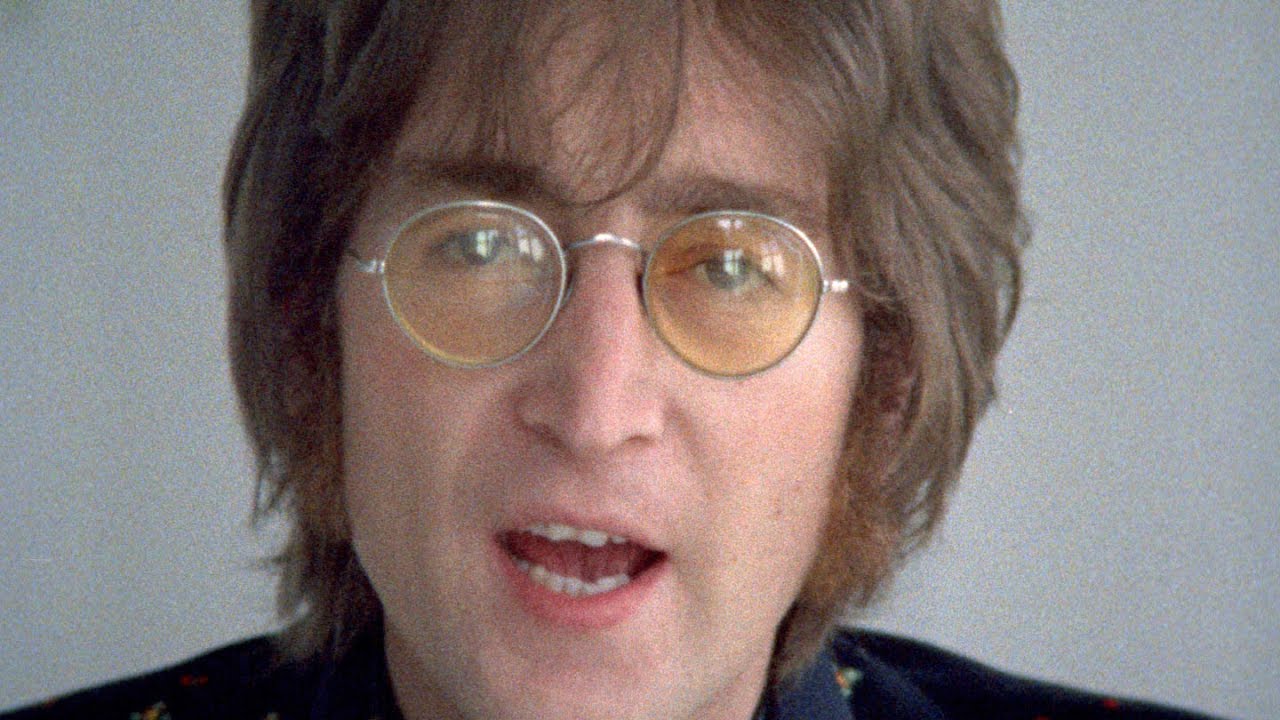
My role in society, or any artist’s or poet’s
role, is to try and express what we all feel. Not to tell people how to feel.
Not as a preacher, not as a leader, but as a reflection of us all.”
John Lennon
John Lennon who was an inspirational
character changed music in a new direction. He was one of the key figures in
the Post War generation whose music and ideology changed the world. Lennon was
a humanitarian. He condemned the violence and truthfully worked for peace. John
Lennon’s music, philosophy, and mission are still adored by millions of people.
He is an immortal in people’s hearts. Lennon was born to a working-class family
in Liverpool in 1940. His childhood was disrupted and when he was a teenager his
mother got killed in an accident. All the suffering he felt in his heart was
expressed in the form of lyrics in later years. In 1956 he met Paul McCartney
which was a turning point in his life. They began writing songs together and
formed the most popular group of all time the Beatles.
The Beatles were young revolutionists
in the field of music. Where ever they went they captured the hearts of
millions creating a Beatle’s mania. John Lennon was considered the most
energetic and the driving force behind the Beatles. John was enthusiastic and
transforming into a new wave. When he met his future wife and the soul
companion Yoko Ono they began to work collaboratively. The Beatles pronounced
their official breakup in 1970. With the breakup, Lennon began his solo career
in a more advanced way. Lennon’s songs began exploring profoundly political,
psychological, and existential themes.
John Lennon’s song Imagine is one of
the greatest songs of all time an anthem of universal hope. In this song,
Lennon tells us about an imaginary world where people live in peace and
harmony.
He further says …. Imagine no possessions I wonder if you can No need for greed or hunger A brotherhood of man Imagine all the people Sharing all the world…
One critic described Lennon’s
masterpiece Imagine as thus
Imagine,” the song, was unquestionably
Lennon’s finest moment. Its lyrical and conceptual clarity shone sunlight of
vision upon our dark and violent world. It urged us to imagine a world without
property, without religion, without nations, living in peace. It postulated an
economic order in which both greed and hunger would be impossible”.
John Lennon provided the intellectual,
political, and aesthetic influence to nations. They openly protested against
the Vietnam war. John Lennon began to make history with his painfully honest
and political songs. He wanted to change the world but not through violence.
Lennon clearly gives this message in his song Revolution.
You say you want a revolution Well, you know We all want to change the world You tell me that it’s evolution Well, you know We all want to change the world But when you talk about destruction Don’t you know that you can count me out?
October 1968 Lennon recorded Give
Peace a Chance” now which is a motto of the peace-loving community. His”Nowhere
Man” on Rubber Soul” (1965) carried a philosophical as well as psychological
theme which described alienation. He was sort of the vicar of Art Rock.
Lennon’s songwriting genius was uncanny. Author John Stevens explains Lennon’s
intuitive talent from a technical point of view, through the lens of
songwriting three basic elements: melody, harmony, and lyric.
John Lennon’s mission was unexpectedly
stopped on December 8, 1980. When Lennon was returning with Ono to their Dakota
apartment in New York City he was shot by Mark David Chapman a Beatles fan and
a person who suffered paranoid delusions. Although Lennon is dead his music
legacy continues still inspiring people around the world.
Killing of a Butterfly
On that doom s day Near the Dakota Building NY Mark David Chapman gun downed a legend The ex Beatle with circular lenses Paid the prize for the Generation of 60 s He is a phony Yelled the killer He is the one who said Imagine there is no possession But he had everything Expensive cars, boats and houses All the way Chapman came from Hawaii Waited many hours near the Dakota Building Until his prey returned with Yoko He was a nowhere man from nowhere land But he made his plans to kill somebody As Chapman said I was nobody until I killed somebody