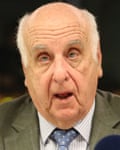
Delays in the construction of the Central Expressway, caused by protests over a “Crudia zeylanica” (Pandu Karanda) tree, caused significant economic damage to the country, according to former Transport and Highways Minister Dr. Bandula Gunawardena.
He stated that it is fair to recover these financial losses from those who led and participated in the demonstrations.
The former Minister made these remarks as the Chinese construction firm involved in the project reportedly demanded $980 million in compensation due to the work stoppage.
Gunawardena noted that environmentalists, including officer Devani Jayathilaka and various mass organizations, created a situation where the tree could not be removed, despite no official records labeling it the rarest plant in Sri Lanka.
To resolve the deadlock and continue the expressway legally, Gunawardena submitted a cabinet paper which received approval.
Following this, he instructed officials to remove the tree, an operation completed overnight to ensure construction could proceed. He argued that neither the Ministry of Highways, the Ministry of Transport, nor the Road Development Authority should be held responsible for the current compensation claims.
Instead, the former Minister suggested that a formal investigation should identify the protest leaders, including Devani Jayathilaka, and legal action should be taken to recover the damages from them. He also drew parallels to the Port City project, claiming that opposition from the Janatha Vimukthi Peramuna (JVP) led to a $1.5$-year delay, resulting in the government paying substantial compensation at that time as well.
Comments Off on Former minister suggests protesters should pay for expressway delays
When a government violates democratic principles, large-scale peaceful demonstrations can send a strong message. It’s a way for people to collectively demonstrate their commitment to democratic values and advocate for change without resorting to violence. The massive protests that followed the killing of Renee Good by ICE in Minneapolis were not spontaneous; it was an outburst of anger and the cumulative result of long-standing tensions with the government.
The demonstrations arose from the struggle to reconcile enforcement power with public trust, which has dramatically eroded. The public reaction echoes profound concerns about how immigration enforcement is conducted, how federal authority is exercised, and how accountability was absent when lethal force was used by federal agents.
The people in American cities protesting ICE are doing what must be done, albeit at great risk. But there is no substitute for people actually pouring into the streets and peacefully protesting. Public protest is not symbolic or abstract; it is a concrete action that matters greatly, as it makes it much more difficult for the government to commit crimes with no accountability.
The protests that followed the killing of Good were driven as much by fear and insecurity as by grief, as demonstrations spread across the country. A consistent pattern emerged across cities with very different political and social spectrums. Protesters voiced similar concerns—the breakdown of law and order, and the vile behavior of the Trump administration.
Continued, relentless, and frequent peaceful demonstrations by the millions from coast to coast are sine qua non for protecting our democracy and bringing an end to the nightmare that has engulfed the country. Millions of Americans, irrespective of their political orientation, race, ethnicity, or religion, who care about the country’s future, must pour into the streets, with one message:
We will never be deterred, succumb or be intimidated, and we will remain resilient and steadfast and resort to any other peaceful means, including civil disobedience and strikes, until Trump halts his violations of our democratic principles and fully adheres to his oath of office to defend and protect the Constitution.
Expressing dissent, however, is not limited to peaceful protests; fostering open dialogue is another way for people to express dissent, and it can involve different groups. Community leaders, educators, civil society organizations, and even everyday citizens can all play a role in town halls or community forums. It’s about creating a space where people share their views and listen to one another. Saving our democracy is a shared duty and responsibility across society.
Without meaningful avenues for accountability, public trust erodes, and protest becomes the only remaining tool available to citizens. From a policy perspective, the scale of these protests points to an institutional imbalance: enforcement systems depend not only on legal authority but on public consent.
The public, which would bear the brunt of dictatorial rule, must be the first line of defense, prepared to face any threat, intimidation, or force, and remain resilient and unwavering in their commitment to protecting our precious democratic way of life.
It cannot be reiterated enough that relentless and massive public protest from coast to coast is the only way to stop this lawless Trump administration from destroying our democracy before it’s too late.
____________
Dr. Alon Ben-Meir is a retired professor of international relations, most recently at the Center for Global Affairs at NYU. He taught courses on international negotiation and Middle Eastern studies.
Six former Members of Parliament have filed petitions in the Supreme Court challenging the constitutionality of the bill proposed to abolish parliamentary pensions.
The first petition was filed by former MPs M.M. Premasiri, Navaratne Banda, B.M. Deepal Gunasekera, and Samansiri Herath.
A second petition regarding the same matter was submitted by former members Piyasoma Upali and Upali Amarasiri.
The petitioners contend that certain provisions of the proposed bill violate fundamental rights guaranteed by the Constitution.
They have requested the Supreme Court to rule that the bill must be passed by a special majority in Parliament and approved by the people at a referendum if it is to become law.
Comments Off on Former MPs file petitions against Bill to abolish parliamentary pensions
The world’s oldest ideology-led regime has beaten Gen Z protests when far more flexible and democratic regimes have collapsed. Interestingly not so much by using violence but by using latest technology. The use of violence is unfortunate but failed to quell rioting and protests. Gen Z very heavily rely on the internet not just to connect and spread information but also as a daily routine. If a section of Gen Z resorts to regime change protests or political upheaval, the surest way to bust them is to cut off the internet. It has other casualties but it stops regime change operations in their tracks.
For right reasons and wrong, protestors and rioters in Iran came to the streets, caused mayhem and disrupted daily life. As in the past the old-fashioned regime used violence against them. It worsened unrest. As the last resort the regime cut off the internet service in the country. However, the US regime backed by the Starlink satellite services provider came to the rescue of protestors by providing Starlink satellite services and reestablished internet services for users with mobile devices. Iran was ready for this eventuality. Months prior to the protests Iran received Starlink jamming equipment from Russia. They did the trick.
This equipment, positioned within a certain distance from receivers, disrupts satellite signals in 2 ways. Firstly, it automatically identifies the frequency of the communication and creates noise in that very same frequency drowning out the signal. Secondly it uses an inherent vulnerability of the Starlink system to disrupt its users. Unlike geo-static satellites, Starlink satellites are not stationery. They travel comparative to ground locations. In order to keep servicing a receiver it relies on precise GPS coordinates of the receiver on ground which are passed on from one satellite to another. Jamming GPS disrupts this connection.
It costed Iran around $37 million a day which is not cheap but in the scheme of things it is far less than the cost of economic standstill and damage to property. Iran is a large country with dispersed cities around it. If it were a smaller nation the cost would have been far less.
Unable to connect and spread information, protestors gradually left the movement. At least for now. Confiscation of Starlink receivers also helped.
This will be an effective mechanism to quell riots and protests around the world. Modern world problems demand modern solutions. It does cause inconvenience to the community which in turn creates friction between the masses and protestors. Who holds their ground the longest wins. Some can’t go about their chores without the internet for a couple of hours! That is their vulnerability which can be exploited to tame them.
Comments Off on Cut the Internet and Gen Z Protests Suffocate
St. Joseph Vaz became poor so that he could more effectively preach the Gospel to the people of Sri Lanka.
Missionaries often have to learn new languages when preaching the Gospel in a different country, but sometimes that “language” takes on a more physical form.
St. Joseph Vaz is a great example of someone who spoke the language of poverty, as well as charity, to better communicate with the native people of Sri Lanka.
Sri. Lanka in the 17th century had a very small population of Christians, who were without priests at the time when St. Joseph Vaz made his journey from India. St. Joseph Vaz is celebrated on January 16.
Heeding the call of the Holy Spirit, he left his homeland to come to this country where the Church had had no priests for over three decades. He came here in absolute poverty and lived as a beggar, driven by a burning desire to draw people to Christ…Joseph Vaz was on fire with faith. Guided by the example of his Divine Master, he travelled the whole Island, going everywhere, often barefoot, with a rosary round his neck as a sign of his Catholic faith. As a true disciple of Jesus, he endured innumerable sufferings with joy and confidence, knowing that in those sufferings too God’s plans were being fulfilled.
This was important, as it corresponded to what the local people in Sri Lanka associated with holiness.
Sri Lanka has been a country primarily dominated by Buddhism and Buddhist monks are well-known for their vow of poverty, as writer Franklin Dean explains:
The vow of poverty is a fundamental aspect of the Buddhist monastic life, deeply rooted in the teachings of the Buddha. Buddhist monks, known as bhikkus, renounce material possessions and worldly attachments as part of their commitment to the spiritual path. This vow, one of the key precepts in the Vinaya (monastic code), requires monks to live simply, relying on alms and donations from the lay community for their basic needs such as food, shelter, and robes.
In addition to his life of poverty, St. Joseph Vaz also preached through his charity, which St. John Paul II also highlighted in his homily, “His heroic charity, shown in a particular way in his selfless devotion to the victims of the epidemic in 1697, earned him the respect of everyone.”
While words can be effective, often what speaks louder, especially to those who are not familiar with Christianity, are actions.
Comments Off on India’s St. Joseph Vaz evangelized Sri Lanka through his poverty
Colombo, January 17 (Daily Mirror) – Sri Lanka should eye more investment in Uganda as the presidential race has concluded with a decisive victory for President Yoweri Museveni, who secured 71.65 percent of the vote to earn a seventh term in office. Museveni, who first came to power in 1986, an official said.
He has remained a central and dominant figure in Uganda’s political landscape for nearly four decades. His main rival, opposition leader Bobi Wine, received 24.72 percent.
Commenting on the milestone, Sri Lanka’s former Ambassador to Uganda, Velupillai Kananathan, reflected on the country’s long political journey and his own personal history with Uganda. I first moved to Uganda in 1986, the very year President Museveni assumed office,” Ambassador Kananathan said. Since then, I have witnessed first-hand Uganda’s transformation from a period of uncertainty into a nation defined by relative stability, economic ambition, and regional importance.”
In recent years, Uganda’s economy has shown steady progress, with GDP growth averaging between 6 and 7 percent, placing the country among the faster-growing economies in East Africa. As Uganda enters a new phase marked by sustained growth and the commencement of oil production, citizens and observers alike are calling for partnerships—both domestic and international—that prioritize inclusive development, accountability, and long-term stability.
Over nearly forty years in power, President Museveni is credited by supporters with steering Uganda from years of instability toward peace and sustained economic growth. His longevity and influence have earned him a reputation among admirers as one of Africa’s most enduring leaders. Critics, however, often describe Museveni as a blue-eyed” leader of the West, a phrase suggesting preferential tolerance by Western governments. This perception is widely linked to Myseveni”s strategic role in regional security, particularly in the Great Lakes region and the Horn of Africa.
Ambassador Kananathan noted that political stability has been a key factor in attracting foreign investors. Consistency in leadership and policy direction has given investors the confidence to plan long term,” he said. Uganda has positioned itself as an open and welcoming economy, and this has translated into tangible opportunities for countries like Sri Lanka.”
Sri Lankan businesses have significantly benefited from Uganda’s investor-friendly environment, with at least 23 Sri Lankan business establishments currently operating across the country. These enterprises have found Uganda to be a stable and attractive destination, particularly in the renewable energy sector.
Notably, Sri Lankan firms have emerged as key players in mini hydropower generation, solar energy, and rural electrification projects—sectors that are critical to Uganda’s development agenda.
The success of these ventures is widely attributed to policies implemented by the Government of Uganda under President Museveni’s leadership, including investment protection frameworks, support for public-private partnerships, and reforms aimed at improving the ease of doing business. According to Ambassador Kananathan, These policies have created an environment where foreign investors can operate with confidence and contribute meaningfully to national development.”
Comments Off on 23 Sri Lankan companies secures foothold in Ugandan economy
Sunday Island (June 2, 2024) published an interesting article entitled ‘Quo vadis?’ by retired electrical engineering professor, public intellectual and political economics commentator ex Marxist agitator Kumar David, who died about four months later. I used to admire him, in spite of what I perceived as his rough edges. I liked reading his English language newspaper columns that he imbued with a sense of scholarliness, wit and wisdom.The title ‘Quo vadis?’ (Latin for ‘Whither bound?’ ‘Where are you going?’) is rich with biblical connotations. In his Sunday Island feature just mentioned, Professor Kumar David made a questioning, perhaps a rather pessimistic, commentary on the performance of the fledgling JVP-NPP government up to that point. I was prompted to write a response to that article. It was published online under the title ‘KD buffaloeing KDLK’ on June 16, 2024. Sadly, Kumar David died four months later, in October 2024 in Los Angeles, USA, aged 83. I have drawn upon my own past writing in preparing this piece.
In ‘Quo vadis?’ Kumar David called K.D. Lalkantha ‘Buffalo’. Why did the presumed JVP/NPP ideologue and mentor, whose name was even included in its national list, thus degrade a useful idiot? I have an answer to suggest. Please read on. I was reminded of Kumar David’s buffalo comment when I listened to Lalkantha on live stream TV on January 11 launching a vicious verbal attack on Dhammaratana Nayake Thero of the historic Mihintale Raja Maha Viharaya for criticising the prime minister Harini Amarasuriya’s educational reforms/her education ‘transformation’ proposals.
Lalkantha referred to the outspoken monk as ‘mihintale inne vanachariya’(lit. jungle dweller) meaning ‘the uncivilized man living in Mihintale’. The more frequently spoken form of the term ‘vanachariya’ is the strongly contemptuous ‘vanacharaya’ meaning a sexually promiscuous male person, a cad. Though Lalkantha did not use the latter term, the Sinhala speakers that he was addressing, no doubt, heard its echo in that particular context. It is regarded as shockingly offensive particularly when used on a Buddhist monk, and a Buddhist monk of Mihintale Nayake Hamuduruwo’s status at that, who has taken vows of lifelong celibacy. Proof of his fidelity to religious vows is a different matter.
Lalkantha is Minister of Agriculture, Livestock, Land and Irrigation. Along with Prime Minister Harini Amarasuriya, he was gracing the 38th Annual General Meeting of the Kurunegala Agriculture College Past Students’ Association. Speaking earlier, Prime Minister and Minister of Education Amarasuriya expressed the government’s determination to go ahead with the proposed reforms despite numerous protesting voices raised by the Opposition, something that President Anura Kumara Dissanayake has also already reiterated in different contexts. Lalkantha charged that the Mihintale Nayake monk targeted the prime minister on account of her gender, which no sane person in the audience would have taken seriously.
Let’s return to the old Sunday Island feature by Kumar David mentioned above. In it, he predicted that, at the coming presidential polls (presumably, in 2029), the battle would be between Ranil and Anura with ‘Sajith wailing in the wilderness’, while ‘the utterly hopeless SLFP and SLPP will find refuge with Ranil Wickremasinghe’ (as he put it), which meant that Kumar David left Namal (Rajapaksa) out of the scenario that he foresaw. Probably, KD was trying wishfully to discern emerging signs of such a pre-poll division of political loyalties that would be advantageous to Ranil Wickremasinghe (the alleged kingpin of the 2015 regime change operation to which Kumar David intellectually contributed). The gist of what KD wanted to say in the relevant section of his article, as I understood it, was that the Anura-led faction would identify with the (in KD’s probable estimation) retrograde nationalist forces as he hoped it would, and be routed by the West-oriented camp supporting Ranil; so he (Ranil) would eventually be elected as president, thereby reversing the nationalist victory achieved with the defeat of separatist terrorism in 2009, a victory that was not to KD’s liking.
There were certain revelations that former president Ranil Wickremasinghe made before a group of legal professionals he addressed at the Presidential Secretariat on May 28, 2024 as then reported in the media. RW’s claims sounded almost similar to what National Freedom Front (NFF) leader Wimal Weerawansa had earlier said in and out of parliament, and even wrote a book about, titled ‘Nine: the Hidden Story’ (April 2023). RW’s revelations were about certain alleged Western-led attempts to force him out of his premiership immediately after the former elected president Gotabaya Rajapaksa fled his official residence in Colombo on July 9, 2022 amidst violent chaotic scenes created by the so-called Aragalaya (Struggle), but before he formally quit his post. As Wimal Weerawansa had revealed before, Speaker Mahinda Yapa Abeywardane was coerced to take over as executive president, but only as a nominal head of state who could be led by the nose according to the whims of the powers that be. To his credit Mahinda Yapa refused to accommodate that unconstitutional demand of a particular foreign ambassador. It was widely believed that this was American ambassador Julie Chung (now gone, presumably her mission completed). But according to a recently published book in Sinhala about ‘the power of the Aragalaya from the ouster of Gotabaya to the arrest of Ranil’ by Prof. Sunanda Madduma Bandara (who served under president Ranil as his media adviser), it was the then Indian High Commissioner Gopal Baglay who gatecrashed into Speaker Mahinda Yapa Abeywardane’s official residence in the dead of the night to persuade or pressure him to assume the presidency ignoring the Constitution! Baglay’s safe passage through the ranks of unruly protestors to reach the Speaker’s residence safely showed that the Indians had a direct connection with the Aragalalaya.
TNA MP Sumanthiran was seen among the Aragalaya protestors, advising them, apparently unchallenged, unlike a number of other MPs, including Opposition leader Sajith Premadasa of the SJB, who were actually physically attacked while trying to associate themselves with the evidently hijacked protest movement. This is something that suggested a link between the Aragalaya and the Tamil diaspora among other infiltrators. Can it be said that the recently revealed probable Indian connection with the Aragalaya confirms this?
Kumar David was the progenitor of the ‘single issue candidate’ idea that was discussed just before the presidential election at the end of 2014. The choice he originally suggested then as a ‘single issue candidate’ was the late Maduluwawe Sobitha Thero of Naga Viharaya, Kotte, with his revolutionary but nonviolent reputation. This was against the venerable monk’s own conviction and the accepted wisdom prevailing then as now among ordinary Sinhalese Buddhist voters that a Buddhist monk is not suitable for that post and that he won’t stand a chance of winning at an election. Later, then incumbent war winning president Mahinda Rajapaksa’s right-hand man Maithripala Sirisena who, apparently, had been disgruntled with his boss for denying him the premier’s post that he coveted, betrayed him and decamped in order to challenge him as the single issue candidate, and the rest is history.
The JVP also contributed to the success of the foreign engineered regime change campaign that had co-opted Sirisena, and played an active role in the resultant Yahapalanaya government, though from a nominal opposition position. KD, being an elderly ex-Marxist sympathetic to that party, was believed by critics to have misled the half-baked Marxist-Leninist (Bolshevik) JVPers to support the pro-West alliance. The above suggested contest between Ranil and Anura had been made more likely, according to KD, by ‘Buffalo Lal Kantha’s pronouncements’. Kumar David called Lalkantha a buffalo not for the now well known, notoriously stupid statements of K.D. Lalkantha of the JVP-NPP, but for the latter’s alleged claim in support of the JVP (Janatha Vimukthi Peramuna): KD wrote that Lalkantha had stated ‘that ……. only the JVP and the Udaya Gammanpila party took a stand against the Tamils, opposed any form of devolution and supported the military in the war against the Tigers’. In fairness to K.D. Lalkantha, it should be stated that he would not have uttered such a thing. The JVP and Gammanpila (leader of the Pivituru Hela Urumaya, PHU) never took and will never take a stand against Tamils for being Tamils; they only opposed Tamil Tiger terrorists, with whom KD’s coethnic empathy is understandable, and excusable. But KD’s innocuous looking piece of casual misinformation is a subtle attempt to recirculate the malicious lie that the Sri Lankan government fought against the Tamil community, not exclusively against violent Tamil separatist terrorists. Members of the JVP and the PHU are not racists, unlike KD. Their attitude to devolution is not likely to be so inflexibly rigid either; they were against a form of devolution that could only be an easy step to separation.
It is only KD’s ingrained anti-Sinhalese Buddhist prejudice that has instilled such ideas into his hate filled mind. KD adds that the ‘import of his (Lalkantha’s) words is that ‘the JVP-NPP is going to be identified at the polls as a Sinhala party and this will have consequences. Will it draw the already radicalised Sinhala-Buddhist youth in larger numbers into the JVP camp or will it damage the JVP’s image? Time will show.’ What balderdash is this? If the JVP cannot attract anti-extremist peaceful Sinhalese Buddhist youth (those that the prejudiced call ‘radicalised’) and their counterparts in other communities into its fold, will it survive in politics, let alone save its image? To be continued
Comments Off on Kumar David’s buffalo and his “Mihintale vanachariya” insult – I
It is unfathomable that right here in America, we are witnessing how ICE is operating with impunity, with utter disregard for the law and for loss of life and liberty. What is even more shocking is that US Vice President JD Vance declared that a federal agent who killed a 37-year-old civilian woman in Minnesota has absolute immunity,” setting an ominous precedent: an American citizen can be killed in the street by a federal agent, with impunity. Can there be any more outrageous and perilous statement uttered from the mouth of the Vice President?
Former Minnesota Governor Jesse Ventura, a military veteran who has seen what this looks like, warned: We’re a third-world country now… I spent 17 months in Southeast Asia while the draft dodger was playing golf… You know how I know we’re a third-world country? Because in third-world countries, they have the military doing their police work in the cities when you walk around.”
Federal agents are guided by rules and protocols regarding engagement with the public. Their first priority is to avoid loss of life, which is clearly stated in the DHS’s own regulations. Second, de-escalation, which is the responsibility of the law enforcement agent, is to ensure they don’t put themselves or the public in imminent danger, which ICE completely ignored in this instance.
ICE has been operating in cities across the country, in unmarked cars with masked faces, terrifying ordinary people who don’t know who these people are attacking them on the streets.
ICE has been detaining American citizens and immigrants alike, violating rights and using violence without any accountability. They are storming residential neighborhoods, wearing military fatigues, wielding weapons of war, and operating with total immunity.
ICE’s heavy-handed and opaque methods are skating on the edge of overreach, losing sight of both transparency and humanity. Their objective is no longer to keep the peace but to inflict pain, terrorize a population, and silence dissent through chemical warfare and brute force. These tactics are reminiscent of Nazi Germany’s Gestapo, who obscured their identities and stormed through cities, detaining any perceived ‘enemies’ and repressing political opposition.
ICE has crossed many terrifying lines in imposing this police state. Minneapolis is being used as a testing ground. If ICE can break Minneapolis and force it into submission through fear and violence, then every other city in this country will be next. These practices constitute systematic Fourth and Fifth Amendment violations that threaten civil liberties beyond immigrant communities.
ICE faces universal condemnation across constitutional, humanitarian, and operational dimensions. Agents have been implicated in unjustified fatal shootings, including killing US citizen Renee Good in Minneapolis, with video evidence contradicting federal claims of self-defense. Human Rights Watch documented a pattern of questionable lethal force incidents where DHS claims of “weaponized vehicles” were contradicted by footage.
This horrific behavior from ICE is a glaring indictment of Homeland Security Secretary Kristi Noem. She is grossly unqualified and must resign. She is operating under Trump’s orders, blindly dispatching ICE agents, especially to Democratic-run cities.
Last weekend’s nationwide protests are a stark warning that Americans are at a breaking point. Trump must be stopped from dispatching his Gestapo to terrorize and kill innocent people; otherwise, the consequences will be unimaginably perilous for the country.
____________
Dr. Alon Ben-Meir is a retired professor of international relations, most recently at the Center for Global Affairs at NYU. He taught courses on international negotiation and Middle Eastern studies.
Is there anything more undignified than leftists” and anarchists” who cheer on the fall of empire-targeted governments even as the empire moves war machinery into place?
Ooh look at me I’m sticking it to the man by supporting the same agendas as the US State Department. I’m being punk rock by regurgitating the same war propaganda talking points as John Bolton. I’m fighting the power by backing the foreign policy objectives of the most powerful empire that has ever existed.
If you want to have a serious political outlook it is necessary to have a more layered understanding of the world than tyranny bad”, because as westerners we ourselves are ruled by the most tyrannical power structure on earth. That power structure ceaselessly targets the few remaining states that have successfully resisted being absorbed into is, military business industrial complex, globe-spanning power umbrella like Iran, Russia, China, North Korea, and Cuba. Those states have successfully resisted being absorbed into the imperial blob exactly because they have strong governments that don’t hesitate to exert control to stomp out all the imperial operations and infiltrations which would otherwise have overthrown them.
This doesn’t mean these governments are wonderful and flawless, it just means they possess the qualities that enable a state to resist the empire’s coups, proxy conflicts, color revolutions and foreign influence operations. If your only analysis of state power dynamics is tyranny bad”, then you will naturally find yourself in opposition to the unabsorbed states and (whether you admit it or not) on the side of the most tyrannical regime on earth — namely the US-centralized western empire.
No other power structure has spent the 21st century slaughtering people by the millions in wars of aggression around the world, attacking civilian populations with deadly starvation sanctions, staging coups, instigating proxy conflicts, and circling the planet with hundreds of military bases. Only the US empire is doing that. Dominating the entire planet with murderous brute force is as tyrannical as it gets. If this isn’t true, then nothing is.
If you want to have a serious political worldview, you need to get real about this. The premise that the fall of an authoritarian government is always inherently positive has no place in the understanding of a grown adult, especially if that grown adult happens to live in the core of the western empire, and especially if that empire is presently working to orchestrate the overthrow of the government in question
The more power structures are absorbed into the empire, the larger and more powerful the empire becomes. Desiring their absorption is desiring more power for the US empire.
And you can lie to yourself and say that you don’t want Iran to be absorbed into the control of the US empire, you just want its people to live in a free and democratic country. But we both know that’s not going to happen. Once the strength of the Iranian government has been collapsed there will be a power vacuum that is filled by whatever faction is able to secure control, and the strongest faction will be whichever one is backed by the US and its allies. There is no organic faction within Iran that is strong enough to stand against the installation of a US puppet regime at this time, besides the one that presently exists.
That’s the reality of the situation. It’s not ideal, but it is reality. You can choose to be real about reality, or you can choose to psychologically compartmentalize away from it and tell yourself a bunch of fairly tales about a global people’s revolution which just coincidentally happens to be starting in all the countries the US empire hates most. I personally find the latter undignified, self-debasing, and power-serving.
Comments Off on On “Leftists” And “Anarchists” Who Cheer for Regime Change In Iran
Police Media Spokesperson Assistant Superintendent of Police (ASP) F.U. Wootler said that Interpol ‘Red Notices’ have been obtained against 95 Sri Lankan organised criminal figures currently hiding overseas.
Addressing a media briefing held today (16), he said that 10 suspects were brought back to Sri Lanka through ‘Red Notices’ in 2024, while 11 suspects were repatriated in 2025. He added that during the same two-year period, 21 suspects were brought back to the country under Extradition Laws.
Speaking further, ASP Wootler said that many criminals orchestrating crimes from overseas have already been identified and that ‘Red Notices’ have been issued accordingly. As a result of these efforts, two male suspects and one female suspect were arrested and brought to Sri Lanka today (16).
He noted that, with the support of the Government of the United Arab Emirates (UAE), Abu Dhabi Police, Dubai Police, and Sri Lankan embassies, Sri Lanka Police was able to apprehend and repatriate the suspects.
One of the arrested male suspects has been identified as a resident of the Kandana Police Division. He is the main suspect in connection with a shooting incident involving a car in the Kandana area in July 2025.”
The suspect is also alleged to be involved in serious murder cases, the illegal possession and use of firearms, and other organised criminal activities. He has been handed over to the Kelaniya Crime Division, and further investigations are currently underway.”
The other male suspect has been identified as a resident of the Elpitiya Police Division. He is suspected of involvement in organised underworld crimes, illegal possession of weapons, and other serious offences in the Southern Province.”
He was brought to Sri Lanka following the issuance of a ‘Red Notice’ obtained by Sri Lanka Police, in addition to an open warrant issued by the Elpitiya Magistrate’s Court. Investigations are being carried out under the supervision of the Senior Superintendent of Police in Elpitiya,” he said.
Meanwhile, the arrested female suspect has been identified as a resident of Mount Lavinia and had been wanted in connection with several incidents of alleged misappropriation of state funds in 2014.
She was repatriated to Sri Lanka on a ‘Red Notice’ obtained pursuant to an open warrant issued by the Colombo High Court against her.
The police spokesman added that the arrested female suspect has been handed over to the Criminal Investigation Department (CID) for further investigations.
Comments Off on Interpol ‘Red Notice’ issued against 95 underworld figures hiding overseas – Police Spokesman
Planned Parenthood wants to control children’s minds
Teach children sexual activity is normal, even for very young children (5–10 years old).
Evidence / Example:
IPPF lesson guides in Asia and Africa include instructions on sexual behavior, explaining sexual pleasure in ways accessible to children as young as 8–10.
Your body belongs to you” campaigns in IPPF youth programsencourage children to seek advice from teachers or peers instead of parents, framing parental guidance as restrictive.
They promote sexual behavior, not health
Encourage masturbation, casual sex, and sexual experimentation; question traditional family values and gender norms.
Evidence / Example:
IPPF’sComprehensive Sexuality Education manuals openly describe sexual pleasure, masturbation, and exploration as healthy” behaviors for children and adolescents.
Planned Parenthood U.S. lesson plans for teens encouragerole-playing sexual negotiation scenarios and teach about same-sex relationships, LGBTQ+ identities, and gender fluidity.
UNICEF-supported pilot programs in South Asia using IPPF materials reported that childrenbegan questioning cultural and religious norms around sexuality after exposure to the curriculum.
They profit from what they teach
Normalize sexual activity to increase demand for contraception, abortion, and counseling services.
Evidence / Example:
Planned Parenthood’s 2020 annual report showsover 1.5 million clients received contraception or abortion-related services in the U.S. alone. CSE is explicitly noted as a pipeline” to future service users.
In countries like Kenya and India, IPPF CSE programs are directly linked toclinics providing reproductive health services, showing a financial model tied to sexual behavior promotion.
They are pushing a foreign agenda
Funded and directed by foreign governments and international agencies.
Evidence / Example:
Funders include:USAID, UNFPA, Bill & Melinda Gates Foundation, and several European government development agencies.
Their programs arealigned with global sexual rights agendas, promoting abortion access, LGBTQ+ rights, and removal of parental consent laws, often in direct conflict with local culture.
The risk to Sri Lanka is real
CSE destroys parental authority:Children are taught to ignore parents and consult teachers, counselors, or peer educators aligned with Planned Parenthood/IPPF ideology.
Example:In IPPF workshops in Cambodia, children were encouraged to seek confidential reproductive advice without parental knowledge.
CSE confuses children about sex, gender, and morality:Lessons blur boundaries, redefine gender identity, and present sexual activity as a right.”
Example:IPPF manuals define gender as fluid and sexual orientation as a spectrum, encouraging children to question traditional male/female roles.
CSE conflicts with Sri Lanka’s culture, religion, and laws:Contradicts Buddhist, Hindu, Christian, and Islamic teachings and child protection principles.
Example:Programs in South Asia have promoted abortion access for minors without parental notification, which conflicts with local family and religious values.
Bottom line
Planned Parenthood and IPPF are not educating our children. They are:
Training children toaccept sexual experimentation from a young age
Making themdependent on contraceptives, counseling, and abortion services
Encouraging them toreject Sri Lankan family, religion, and culture
CSE is a Trojan horse for foreign agendas — it is a direct threat to Sri Lankan children, families, society AND NATIONAL SECURITY.
THIS IS WHY
COMPREHENSIVE SEXUALITY EDUCATION
MUST BE REJECTED
AS PART OF EDUCATIONAL REFORMS
FOR ALL GRADES
Comments Off on Planned Parenthood (via IPPF) & Comprehensive Sexuality Education — The Truth for Sri Lanka
In 2025, the New Zealand Ministry of Education removed the Relationships & Sexuality Education (RSE) guidelines from the curriculum framework. It took just 5 years to realize the damage. In 2020, schools were taught about relationships, gender, sexuality, consent, online media from years 0 to 13. RSE was New Zealand’s term for Global CSE (following UN ITGSE pro-gender/woke curriculum). When New Zealands govt says the 2020 framework will be replaced with a new clearer curriculum framework” it indicates that the 2020-2025 was problematic. When the Govt says the new framework will decide ‘what should be taught at each age” it indicates that the 2020-2025 curriculum did not. While New Zealand steps back to reassess, Sri Lanka’s government is moving forward aggressively — embracing the very same gender- and sexuality-driven educational reforms that another country has already abandoned.
This contradiction demands public attention.
More importantly, why did New Zealand remove the 2020 guidelines?
1.refocusing on academic achievement not ideology”
o New Zealand wants to focus more on traditional academic subjects & less on ideology especially related to gender & sexuality.
o THE SRI LANKAN GOVT IS MOVING AWAY FROM ACADEMIC SUBJECTS TO EMBRACE GENDER & SEXUALITY.
2.Gender identity topics not age-appropriate for students” –
SRI LANKA’S EDUCATIONAL REFORMS REVOLVE AROUND IMPLEMENTING NOT ONLY GENDER IDEOLOGY BUT DIGITALIZATION WHICH EVEN WESTERN COUNTRIES NOW ACKNOWLEDGE IS DAMAGING TO THE CHILD.
What did New Zealands’s 2020 RSE guidelines actually focus on?
· Gender diversity, consent & inclusivity
· Navigating pornography
New Zealand’s reversal is not a victory for conservatism, religion, or politics.
It is a victory for common sense, child development, and parental responsibility.
A government does not remove national education guidelines unless the consequences are serious. New Zealand removed its 2020 sexuality education framework because it blurred age boundaries, replaced academic focus with ideology,
and failed to protect children’s cognitive and emotional development. Parents spoke. Society pushed back. The government listened.
Sri Lanka must ask itself a hard question:
Why are we rushing to implement an education model that even Western nations are now retreating from?
At a time when global evidence increasingly acknowledges:
· the harm of early sexualisation,
· the damage caused by excessive digital exposure, and
· the confusion created by premature gender ideology,
Sri Lanka is being told that academics insist” these reforms are necessary.
The same justification was used in New Zealand. It collapsed under public scrutiny.
Education is not a social experiment. Children are not ideological test subjects.
If New Zealand needed only five years to recognise the damage and step back, Sri Lanka has no excuse to ignore that warning.
True progress lies not in copying failed global models, but in protecting children, respecting parents, and prioritising real education over ideology.
Pause. Review. Protect our children — before the damage is done.
Across the world, Comprehensive Sexuality Education (CSE) has NEVER entered school systems through transparent national debate or democratic approval. Instead, it has crept in quietly — rebranded under softer terms such as affective education,” anti-bullying,” inclusion,” and gender equality.” Italy is a textbook example of how this incremental, NGO-driven, externally influenced model unfolds — and why it ultimately provoked national alarm.
Italy is not a conservative, closed society. It is a liberal Western democracy, deeply integrated into the European Union, with long exposure to progressive social policies. Yet even in Italy, parents, educators, and lawmakers eventually recognized that sexuality and gender programmes introduced without clear limits, parental consent, or national mandate were crossing dangerous boundaries. The Italian experience demonstrates that when education policy bypasses parents, ignores cultural context, and treats children as instruments of social experimentation, the consequences become visible — and irreversible.
Sri Lanka now stands at a similar crossroads. What Italy permitted, questioned, and ultimately restricted after witnessing damage, Sri Lanka is being urged to adopt before any national debate, legal safeguards, or parental consent mechanisms are in place. Italy’s experience is therefore not a foreign curiosity — it is a warning for Sri Lanka.
While Italy did not initially have a mandatory CSE curriculum aligned to UNESCO’s ITGSE, from 1990s Italy allowed:
· Decentralized sexuality/relationship education delivered through NGOs & external partners which were framed as
· sexual education”
· affective education”
· gender equality”
· anti-bullying”
· inclusive programs”
Note the terms that are used to camouflage the agenda.
After 2010, UNESCO’s ITGSE was introduced under EU gender mainstreaming policies which were NOT VOTED as a national curriculum but entered schools through projects, partnerships, pilot initiatives (no different to some activities now taking place in Sri Lanka)
Italian schools hosted NGO-led programs that covered:
· Gender identity concepts
· Sexual orientation
· Diversity & self-identification
· Discussions beyond biology.
With time, the outcomes were visible to the Italians.
Italian parent groups, even parliamentarians became concerned.
· Children exposed to sexuality/gender content without parents being informed
· NGOs delivering content outside the national syllabus
· Parents discovering materials after classroom delivery
Age-inappropriate exposure
· Programmes introduced in primary schools
· Topics extending beyond biology into:
o identity self-definition
o non-binary gender concepts
o sexual orientation discussions at early ages
Psychological and social concerns
· Reported confusion among younger children
· Increased school complaints and parental protests
· Perception that schools were overstepping educational boundaries
Institutional bypass
· External organisations influencing children without democratic approval
· Educational content influenced by international frameworks rather than national debate
If such was the response in a liberal western society, if the same subjects are launched in Sri Lanka – what would be the likely outcome?
Eventually the concerns drove political response after observing
· Rising mental-health distress among adolescents
· Increased identity-related referrals to counselling services
· Higher levels of school-family conflict over curriculum
· Large number of children prescribed anti-depressants, hormonal treatment
· Increased reporting of sexual and gender issues among minors
Do we in Sri Lanka want to damage the lives of our children knowing the outcomes as Italy witnessed?
Italy reversed the programs they implemented.
Sri Lanka does not need to suffer the damage to reverse.
Sri Lanka must therefore reject CSE in toto.
Key policy actions by Italy (2023–2024):
Mandatory parental consent for any school activity involving:
· sexuality
· gender identity
· sexual orientation
Limits on primary-school exposure
Schools cannot introduce ideological content on gender without families’ approval.
Italy’s Official stand was simple:
· Parents are the primary educators
· Children require age-appropriate protection
· Schools must not become vehicles for social engineering
· Education policy must reflect national cultural and constitutional values
This is a preventive governance decision.
Italy took preventive action after witnessing the damage to the child.
Why would Sri Lanka’s policy makers & some educationists propose to cause the same damage by implementing CSE?
CSE programmes that entered Italian schools resulted in:
1. Boundaries collapsing
· Biology → identity → ideology
2. Rollback made difficult
o Materials already circulated (as seen in the buddy porn site in Sri Lanka)
o Teachers already trained (UN agencies already training in Sri Lanka even before parental approval)
3. Trust is broken
o Parents lose confidence in schools (unless this is an objective to end Kannangara’s Free Education in Sri Lanka)
4. Policy becomes reactive
o Governments act after exposure, not before (which is what we are now witnessing with the Sri Lanka Govt adamant to continue CSE whatever the objections)
Hence the insistence on early restriction rather than later correction is imperative.
Italy’s actions must be used as a warning example for Sri Lanka
· It is a developed European democracy
· It allowed decentralised sexuality/gender education without national mandate
· It later acknowledged:
o loss of parental control
o lack of oversight
o even cultural conflict in a liberal society
· It then re-asserted state and parental authority
The lesson drawn by critics is not about Europe vs Asia, but about policy sequencing:
Once embedded, reversal is politically, socially, and institutionally costly – the damage to the child is often irreversible.
Italy demonstrates that:
· Sexuality education introduced without clear legal limits, consent mechanisms, and national debate can trigger:
o parental backlash
o policy instability
o social polarization
· Governments may later restrict or reverse after exposure has already occurred, not before. This is a cowardly path to take. Legislators should read the pulse and realize why people are objecting and prevent the damage not allow the damage.
Italy’s reversal of CSE-type programmes was a corrective response to lived consequences.
It came after parental authority was eroded, after age-inappropriate content reached young children, after trust between schools and families fractured, and after policymakers realised that once ideology enters the classroom, rolling it back is politically difficult and socially costly — while the harm to children cannot be undone.
Sri Lanka does not need to repeat this mistake to learn from it. A responsible state does not wait for children to be exposed, confused, medicated, or socially destabilised before acting. Preventive governance means protecting children before damage occurs — not issuing apologies after irreversible harm.
Italy has shown that even a liberal Western democracy ultimately recognised the necessity of parental primacy, age-appropriate education, cultural legitimacy, and national sovereignty in schooling.
For Sri Lanka — with its civilisational heritage, constitutional obligations, and deep parental investment in education — the risks of importing CSE wholesale are not hypothetical. The outcomes are foreseeable.
Once embedded, reversal is late.
Once trust is broken, it is hard to restore.
Once childhood innocence is compromised, it cannot be legislated back.
We are dealing with humans not pieces of paper.
Italy chose correction after damage – Italy’s student population is 8.9million (total population 59million) Sri Lanka still has the chance to choose prevention before damage.
Rejecting CSE is not failure. It is taking the side of Sri Lanka’s 4million children over advocacy handouts & NGO pressures. It is the ONLY responsible action Sri Lanka’s Govt should take.
Shenali D Waduge
Comments Off on Italy stopped LGBTQIA-Sexuality Education after Child Harm — Why is Sri Lanka’s Govt insisting on It
It all happened in the Bangladesh Secretariat, three days after General Ershard took over the country in a bloodless coup on the 24 th of March 1982. The Minister for Youth Development was clamped in prison and the work of the Ministry was in jeopardy. The third in command, Air Vice Marshall Aminul Islam, the Minister for Labour and Manpower evaluated the work done in the Ministry. Suddenly at the close, he realized that I was an outsider and inquired who I was and I was then introduced as the Commonwealth Fund Advisor to the Ministry of Youth Development.
What can you contribute for Bangladesh”. It was more a military command. I could have spoken in support of the youth training programmes done by the Ministry but decided otherwise. I replied.
I would like you to consider approving a new programme aimed at making the 40,000 youths who are being trained every year to be guided to become self employed.”
The Secretary to the Treasury, the highest officer in the land, objected.
The Creation of self employment can never be done. The ILO of the United Nations has just folded up a self employment programme which they have been trying to establish in Tangail, Bangladesh over the past three years with a massive loss. They brought experts from all parts of the world to guide the programme but it was a total failure. The Bangladesh Treasury has no more funds to waste. The ILO are the experts. They hold the last word on employment creation.
I replied that though the ILO failed I had the experience as well as the academic qualifications, which was contested by the Secretary to the Treasury. He was adamant that I would fail. I argued with the Secretary to the Treasury explaining how I had successfully established employment projections in Sri Lanka and how I held the academic qualifications at doctoral level. The heated battle went on for over two hours. The Minister allowed the two of us to argue; he was making notes and finally commanded us to stop.
Are there any development programmes in Bangladesh that train people to become self employed?”
The Secretary to the Treasury replied: None”
How many youths are trained in vocations every year.” The Minister inquired.
The Secretary to the Treasury rattled out the number that were being trained by all Government Departments and it totalled to some two hundred thousand. This included the 40,000 the Ministry of Youth trained a year.
Tell me the number of youths that pass out every year and fail to find either employment or a place for further study and continue being unemployed and destitute, living scraping the barrel for life.”
The Secretary to the Treasury replied. It is in the millions.”
The Minister without battling an eyelid ordered, staring at me, in my face.
I approve you establishing a self employment programme. Go ahead and show what you can do, which the ILO. failed to do.”
Before I could thank him the Secretary to the Treasury replied;
I will not provide any funds from the Bangladesh Treasury. The failure of the ILO attempt was a massive waste of funds and the Treasury has no more funds to waste.”
I replied even without consulting the two Secretaries of the Ministry who were present.
I need no new funds. I will find savings within approved youth training programme budgets to hold training sessions. I need approval to divert savings from approved training budgets to create this new programme and approval to alter the remits of officers to include training for self employment.”
The Minister approved my request.
I got cracking with training youth directors and lecturers of training institutes in economics. It included detailed studies on the economy of Bangladesh to identify areas where there was a propensity to create employment in a manner that also helped the economy in terms of production.
We had no funds to offer subsidies of any sort.
Youth Directors were all veteran workers who knew the art of relating to the youth. They moved with the youth and introduced ideas of how the youth could find incomes by rearing chicks and live with the chicks and see them grow. Some youths persuaded their brothers and sisters- even those who had migrated to the UK to help them. Till then they had not known what to with what they had studied in their three months training.
Yousoof Ali, a youth who had been trained did not know what to do with what he had learned and he became a nuisance to his brothers and sisters at home. His elder brother who could not tolerate him even went to the office of the Deputy Director of Youth at Jamalpur and accused the Department of indoctrinating his brother with ideas they could not follow. He even threatened to burn the office down. Instead of reporting to the Police who would have arrested him for public disorder the Deputy Director for Youth Development got in touch with us. I instructed the Deputy Director to somehow placate him and request him to attend our training sessions on self employment with his belligerent brother This was in a weeks’ time. When I marched into the training sessions I was shown his brother who was really breathing fire at us and the Department. Our sessions ran into hours of activity where we inspired the youths to save and commence any enterprises on their own. Some were motivated to even save the small daily stipend we paid for attendance to buy chicks which they could rear and see how the value increased. Our sessions were more inspiring the youth to save and take action to grow something, buy a chick and see it grow. The belligerent brother too joined us in our sessions because we related to them as brothers and sisters, as equals and the brother was so convinced that he immediately coffed up funds for his belligerent brother to buy a cow, ducklings and chicks and rear them. His brother got down to work under our supervision. Ten months later, I met the belligerent lad- he had , 190 layer ducks, one milk cow, 2 goats, earning a net income of Taka 1496 in December1982, all achieved in eight months. Our aim was to make them earn Taka 500 the then salary of a Clerical Officer in the Government Service.
We built up the momentum not by offering money and subsidies, but by relating to them day in and day out. One word of a problem- it could be small farm of a dozen chicks two hundred miles away in an inaccessible village but we were there within hours to share the burden with the youth. We were inspiring the youth to becoeme entrepreneurs and it was never instructing, but in youth work language participating with the youth, make the youth think and act -to educate them informally.
We were building up the abilities and capacities of the youth to become entrepreneurs.
It was non formal education in action where officials were never instructors but providers of ideas for the youth to think and become motivated. The staff was totally trained in non formal education methods of inspiring the youths to think and act on their own and become productive.
By the time my service period of two years was over, I had trained officials to continue the employment programme as a youth movement. It really paid high dividends. I last met the Minister Air Vice Marshall Aminul Islam just before I left Bangladesh. My request to him was to make an order that youths on our Youth Development Programme who had within months created incomes and earned more than the tax level should be given a reprieve to be exempt from taxes for a few years. The Minister said he will get that done.
These were the beginings of a youth self employment programme that begining in 1982 has created over three million youth entrepreneurs within four decades. 1982 to 2022, the only such programme of development the world has known. In a letter to me on June 20, 2005, a full twenty two years after I had established the Self Employment Programme, the Secretary to the Ministry of Youth Development wrote:
You will be happy to learn that the Self Employment Programme of the Youth Department has expanded across the country and attained great success. I have not forgotten your valuable contribution to the success of this great programme.”(Muhammed Asafuddowlah: June 20, 2005)
The Fourth Five Year Plan of the Planning Commission of Bangladesh, makes glorious references to this Programme and devotes eight pages to detail its success. It is a Programme that has achieved accolades in all the Five Year Plans of the Planning Commission.
It is important to note that for the first four years we had no funds from the Bangladesh Treasury. We found funds through savings in approved training budgets . But once we proved ourselves though hard work in training youths and inspiring them to become productive it paid huge dividends.
The youth self employment programme became a national programme and many helped. Way back after my work in Bangladesh I was working in Edinburgh. Whenever I went to London I took bulky and heavy dress pattern books which I handed over to Bangladesh Biman to be taken to the poor youth entrepreneurs in dress making at Jamalpur. That was the contribution made by Bangladesh Biman.
By now over three nmillion youths have become entrepreneurs on this programme. Many thanks are due to the officers of the Bangladesh Civil Service and officers of the Ministry , trained by me, who carried on the programme initiated by me to achieve the world stature of today. Today the Youth Self Employment Programme of Bangladesh is a world class programme that has found a definite place within the sands of time.
It is time that the Government of Sri Lanka seeks to establish a similar programme to create employment for our youth and also create the production that will allay the economic meltdown of today.
In 2011,when His Excellency Milinda Moragoda, today our Ambassador at Delhi made a bid for the Mayorship of Colombo in his Manifesto stated that if elected, he would seek to implement the Youth Self Employment Programme of Bangladesh which incidentally was am amazingly successful scheme introduced to that country by a distinguished son of Sri Lanka, Dr Garvin Karunaratne, who served in Bangladesh as an international consultant.”(The Nation: 11/9/2011)
It will be a pleasure to serve my Motherland again and I look forward to establish an employment creation programme if called upon. . It will be done in nineteen months- the time I took to establish that Programme in Bangladesh.
Garvin Karunaratne, Ph D Michigan State University, formerly SLAS, GA Matara 1971-1973.
Comments Off on The Youth Self Employment Programme of Bangladesh, a Programme that has created three million youth entrepreneurs in four decades.
A rare video clip of the Colombo Law Faculty’s mid-1972 trip to the Royal Botanic Gardens, Peradeniya, has been shared on Facebook.
The video is available on a Facebook group for those interested in memories of the University of Ceylon, Law Faculty. A post from May 19, 2020, includes the footage and describes it as a “rare footage of a trip undertaken to the Peradeniya Botanical Gardens by the students and staff of the Colombo Law Faculty in mid – 1972”.
You can likely find this video by visiting the original Facebook post. The post describes the clip as reviving nostalgic memories and mentions several individuals whose youthful features were captured on film.
Those who want to see Prof. Shcareenguivel in her youth may see this rare footage.This a rare footage of a trip undertaken to the Peradeniya Botanical Gardens by the students and staff of the Colombo Law Faculty in mid – 1972 revives nostalgic memories of an era and landscape that are no longer visible. In particular the very last frame of the clip shows the main building of the Colombo Campus and in the background faintly visible the Law Faculty of that era next to the canteen. The sight today is vastly different.Several of the subjects whose youthful features are captured on film in this video are no longer among the living.We take this opportunity to pay a silent tribute to their memory.They are, namely, Priyani Tennekoon, Krishanti Wijetunga, Asoka Karunaratne and Jayantha de Almeida GunaratneThe impeccable fresh faced images of Maithri Panagoda, Anil Vitarana, Jayantha Weerasinghe, Digen de Saram, K.T. Chitrasiri, S.K. Thambipillay, Selvaraja, Sellathambu, Paul Ratnayake to name a few, add much colour to this short filmThe last but not least are the ladies beginning with the charming Beverley Wallace (later Mirando) whose broad grin adorns the opening frame of this clip. The unforgettable Vajira Cabral, the beautiful Chandrika Gunasekera (who won the beauty contest and was crowned Miss Lawnite in 1972), Sharya Soysa ( later to return to the Law Faculty to serve as Dean for some time), attractive Priya Ponniah, and a host of other young ladies whose presence brought colour and lustre to this occasion.
Beautiful Miss Chandrika Gunasekera who was chosen
as the Beauty Queen at the Lawnite celebrations of the Colombo Law Faculty
in 1972 being congratulated on stage by Senaka Weeraratna, President of the Law Faculty Students’ Union.
Photo– Wilfred Perera, Senaka Weeraratna and Harold Wijesena in front of the Octagon Pavilion(Paththirippuwa) at the Dalada Maligawa (1972)
This photo was taken on the occasion of the excursion to Peradeniya Gardens and Kandy sponsored by the Law Faculty Students’ Union (LFSU) to welcome the freshers of that year to the Faculty in the year 1972. Senaka Weeraratna was the President of the Law Faculty Students Union of that year (1972).
Photo– Wilfred Perera, Senaka Weeraratna and Harold Wijesiri in front of the Octagon Pavilion(Paththirippuwa) at the Dalada Maligawa (1972). This photo was taken on the occasion of the excursion to Peradeniya Gardens and Kandy sponsored by the Law Faculty Students’ Union (LFSU) to welcome the freshers of that year to the Faculty in the year 1972. Senaka Weeraratna was the President of the Law Faculty Students Union of that year (1972).
Law Faculty, Colombo Campus, University of Sri Lanka, trip to Peradeniya Botanical Gardens in mid 1972 as part of the welcome extended to the new entrants (freshers)of that year.
Colombo, Jamuary 15 (Daily Mirror) – The Ceylon Teachers Union (CTU) has criticized the government for attempting to implement proposed education reforms without following proper guidelines or consulting key stakeholders.
Addressing the media, CTU General Secretary Joseph Stalin said that meaningful discussions are essential when introducing educational reforms, but no such consultations were held. He noted that recent reforms were halted following a cabinet decision, after the CTU and several other parties raised concerns and requested the government to reconsider.
Currently, the ministry is only seeking the opinions of zonal education directors regarding the new reforms. Apart from presenting the new system, no substantial steps were taken,” Stalin said.
He warned that had the reforms been implemented in their current form, it could have caused serious problems for schoolchildren and would not have achieved the intended improvements, as the proposals were drafted according to the preferences of a few individuals at the National Institute of Education rather than following a structured plan.
Since the introduction of these reforms, the CTU has consistently opposed them and urged the government to develop a comprehensive and well-planned educational reform strategy. Stalin also highlighted several practical issues in the proposed reforms, noting that even the President acknowledged the potential for problems and public doubts if implemented prematurely.
Let it be clear, we are not against new educational reforms. Our education system desperately needs them. However, all previous governments promised reforms, the abolition of the executive presidency, and a new constitution, yet none of these promises were fulfilled,” he added.
Comments Off on The Ceylon Teachers Union says Govt. ignored guidelines on education reforms
Venerable Balangoda Kassapa Thera, currently in remand for placing a Buddha statue within an unauthorised construction at the Trincomalee Fort beach area without a valid permit, refused his lunch today (15).
Prisons Commissioner Operations and Media Spokesperson Chammika Gajanayake confirmed this development, noting that while the Thera accepted visitors and items brought for him earlier this morning, he declined the midday meal.
Trincomalee Chief Magistrate M.S.M. Samsudeen ordered nine individuals, including four monks, to remain in custody until the 19th of this month.
The group includes several high-ranking local clergy and lay supporters, such as the Secretary of the Sambuddha Jayanthi Vihara Dayaka Sabha and a former Urban Councilor.
Police filed charges under the Coast Conservation and Coastal Resource Management Act for trespassing and illegal construction within a protected coastal zone.
The dispute originated around November 17, 2025, during an attempt to reconstruct a Dhamma school building belonging to the Sri Sambuddha Jayanthi Viharaya that was destroyed before the Tsunami.
A conflict arose when the Port Police attempted to halt the work following a complaint from the Coast Conservation Department.
Although a petition was filed in the Court of Appeal to stay an order to demolish part of the temple, the court previously advised both parties to reach a peaceful resolution.
Comments Off on Remanded monk declines lunch in custody