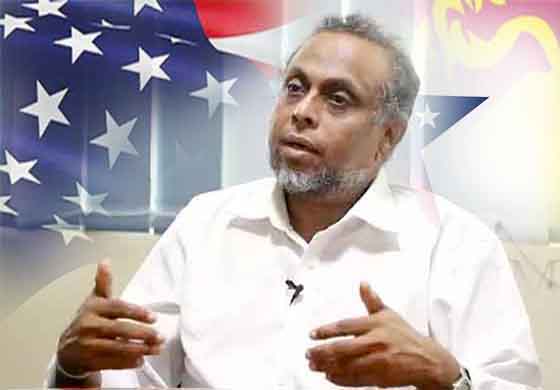
Convincing the importance of intelligence information to former Prime Minister Ranil Wickremesinghe was totally absurd, said former Chief of National Intelligence (CNI) Kapila Hendawitharana while testifying before the PCoI probing Easter Sunday attacks today.
Hendawitharana informed the Commission when Ranil Wickremesinghe was serving as the Prime Minister between 2001 and 2004, he did not care about intelligence information provided by military intelligence.
Hendawitharana said that although the army was restricted in many ways during his time as Directorate of Military Intelligence (DMI), army intelligence continued to work hard to prepare for the eventual clash with the LTTE.
“However, Mr. Wickremesinghe did not pay heed to our intelligence information,” he said.
A Commission member asked Hendawitharana whether he tried to convince Mr. Wickremesinghe about the need to take intelligence information seriously, he replied “You can lead a horse to water, but you can’t make him drink. This was what I know of them. That was why I tendered my resignation soon after the January 2015 election result. I knew the type of people who would come in. I knew well that I couldn’t work with them, that was why I left,” he said.
Prime Minister Mahinda Rajapaksa states that the aim of the United National Party and the Samagi Jana Balavegaya is to gain power at Sirikotha.
The Prime Minister made this statement participating at a public rally held at Katupotha, Kurunegala yesterday.
Meanwhile, the new Consular General for Australia, Sydney, New South Wales and Queensland, Lakshman Hulugalle met Prime Minister Mahinda Rajapaksa.
The National Archaeology Conference was held at the Sri Lanka Foundation Institute this morning under the patronage of Prime Minister Mahinda Rajapaksa.<
Shylock: Ay, his breast: So says the bond: doth it not, noble judge? ‘Nearest his heart:’ those are the very words. …………………………………… ………………………….. Portia: Have by some surgeon, Shylock, on your charge, To stop his wounds, lest he do bleed to death.
In Shakespeare’s play The Merchant of Venice, the vengeful usurer
Shylock’s wicked attempt to settle an old score with honest Antonio who stood
surety for a loan given to his friend and fellow merchant Bassanio is thwarted
by Portia; Shylock demands a pound of flesh cut off from nearest the
guarantor’s heart, as required in terms of a bond signed between him and the
friends in case of the debtor failing to repay it by the due date. Portia, the
rich lady love of Bassanio, contrives to hear the case herself, disguised as a
learned doctor of laws. She skillfully demonstrates that the terms of the bond
cannot be lawfully implemented if they are adhered to with literal strictness.
In her epic judgement, she delivers justice to both Antonio and Shylock so that
Antonio doesn’t have to die for his friend’s failure to repay the loan by the
end of the agreed period; Shylock is spared capital punishment for trying to
abuse the law to take revenge on Antonio, whom he hated. This sort of humane
resolution of a conflict between the letter and the spirit of the law hasn’t
happened in Sri Lanka recently. Ordinary Sri Lankans’ basic human rights have
been violated for nearly five long years courtesy the infamous ‘good
governance’ anarchy and its lingering legacy. They are demanding justice.
Anarchy is the antithesis of law and order, which is now being
gradually but expeditiously restored where possible. This is the fulfilment of
a basic need of government under the parliamentary system of democracy that we
believe we still have. Under this system, the three main branches of
government, legislative, executive, and judicial, are manned by humans (i.e.,
they operate through human agency). Men and women acting in these branches
(MPs, President, and Judges, and various government functionaries including
members of independent commissions) take moral as well as legal responsibility
for their decisions which directly bear on the lives of all the citizens of the
state including themselves. They can be relied upon to have a unique bond of
cultural affinity in addition to natural human empathy with the general mass of
the people, something we cannot and do not expect from foreigners. That is why
we hate even a suggestion of imperialist foreign interference in our domestic
affairs, particularly at the governance level, that involves the
aforementioned three organs of government. Under yahapalanaya, this reality
appeared not to have been sufficiently recognized. Further, there was a
crazy disjointedness or lack of articulateness between the main branches
of government, which ultimately made a mockery of democracy and national
sovereignty. The essential law and order foundation of governance was
undermined thereby.
With election campaigning hotting up, the Election Commission’s
unprecedented decision to implement the 1981 parliamentary elections laws to
the letter has run into controversy because it interferes with the accustomed
way of electioneering by the candidates. The 1981 election laws were in
abeyance or were ignored for forty years since their enactment. There has been
no complaint during that long period about any particular problems that had
resulted from their desuetude,.
Were these normal times, various reasons could have been offered to justify it.
The main reason would have to do with the much needed restoration of the
deteriorated law and order situation in the country.
But these are not normal times for the whole world, particularly
due to the Covid-19 pandemic. It is more so for Sri Lanka, which is passing
through the most critical phase of its political history since 1948, with what
could be seen as occasional stirrings of an attempted return of
separatist terrorism in the north and the deadly arrival of jihadist terror,
and the global superpower poking around with its own strategic geopolitical axe
to grind in the form of the MCC agreement. Sri Lankans are anxiously waiting to
elect a parliament that is capable of working with president Gotabaya. The EC’s
role in conducting the election process is an unenviable one, given the
unprecedented complications that have come up.
The unacceptable conduct of one of the EC members,
Ratnajeevan Hoole, (as shown, for example, in his advice, as reported in the
media, to members of his own Tamil community in his hometown Jaffna not to vote
for the SLPP) has brought that body to disrepute; the utterances and body
language of EC chairman Mahinda Deshapriya seems to betray unnecessary fears
about elections having to be held before the country is declared safe from
Covid-19. But the government is managing the Covid-19 situation admirably well
and the EC chairman need not wrack his brain about it. He has also given hints
of his being a believer in the fallacy of an alleged majoritarian tendency
among the majority Sinhalese Buddhist community that is peddled by racist
anti-nationalists, and implicitly expressed caution about it.
In view of such instances of possible lack of impartiality on
their part, the EC’s sudden decision to implement some absurd election
laws that had remained in abeyance for almost forty years since their passage
does not go down well with the public, particularly with the parliamentary
candidates. The stringent restrictions imposed on the free display of their
preferential numbers are very unfair. But such measures as the strict
imposition of a complete ban on the abuse of state property for propaganda work
by any party or individual candidate are very welcome. Yet, this is the worst
time imaginable for enacting so far safely ignored, unfairly restrictive, impractical
regulations relating to the holding of the polls. Why should the EC try to add
to the difficulties caused by unavoidable constraints slapped on physical
movements by health authorities in these dangerous pandemic hit times? At this
particular juncture, for Sri Lanka, the holding of free and fair elections in
which each and every adult citizen must feel obliged to use their franchise and
cast their vote without let or hindrance for whichever party or alliance of
their choice is of paramount importance.
This is because, the ordinary voters are set to elect the best
possible parliament under the circumstances at this historic hour. It will
definitely be a robust parliament filled with a majority of MPs with integrity
and pluck who are worthy of probably the most inspired, work-oriented president
the country has ever got. The already assured sweeping victory of the ruling
SLPP and the impending utter rout of the opposition that is in complete
disarray have rendered competitive campaigning somewhat lacklustre, and
uninspiring and unexciting like a game of cricket or football between two
widely unmatched teams. Unless the electoral contest is sufficiently
intense and exciting, the eventual voter turnout is likely to be affected; a
possible low turnout could proportionately diminish the value of the final
outcome. This is not good for the faction that is set to win, but the
losing side will like it for obvious reasons. A prominent government party
politician has suggested that the EC’s determination to make the polling
process relatively confusing and cumbersome might be a ploy to ensure
this result.
Elect good, honest, educated, and morally upright people as MPs”
is not a new slogan. It has been heard at least over the past half a century
without any indication of its being heeded by anybody. This is because the
voters have no choice over the matter. Parties nominate their candidates
subject to various considerations that have little to do with their moral
characters. This time, it may be assumed that there is a difference. The
education and the moral background of candidates must have been taken care
of by the nomination committees of the parties, at least to some extent.
Under the existing electoral system, people vote for a particular party, unlike
in the olden days, when widely known respectable individuals were elected to
represent a constituency. Then it was the individual candidate, as much as the
party, that was chosen. Today, for getting elected to parliament, a candidate
must get enough preferential votes among a number of contending candidates put
forward by each party for multi-seat constituencies; so naturally there is a
form of undeclared war among candidates within each political party. Displaying
their preferential number in a striking way for the voters to remember is of
vital importance for every candidate across the whole range of parties,
alliances, and groups. EC’s virtual obstruction of this essential and
reasonable propaganda requirement, through its unfair insistence on following the
law to the letter is going to be particularly disadvantageous for the two most
important types of candidates: the new and the materially poor. Candidates who
are poor cannot afford expensive media advertising; the little known new ones
find it hard to make their numbers stand out among the numbers assigned to
veterans whose already well known names and previous designations render them
conspicuous and memorable. So the veteran candidates of every party will not
object to the EC’s tough stand in this regard, for it will mean that they have
already won at least 75% of the internecine war for preference votes. This
situation is most prejudicial to the newer fresher competitors, and also
contrary to the generally shared desire among the voters to elect a decent lot
to the august body. (Both the UNP and the SLPP, please work out the
implications of this, and use the opportunity to get rid of the old rogues who
contributed to the yahapalana to the detriment of the nation out of pure
selfishness.)
It is high time the EC eased this restriction immediately, before
the thousands of candidates resort to some other innovative, but problematic
way to circumvent the formidable obstacle placed on their path. Let’s not
forget that there are more than one way to skin a cat.
I
find the Hiru News broadcasts alternatively display the following pictures
1 Galle Fort 2 Nelum pokuma Theatre 3 Ramboda Fall 4 Sigiiriya back side picture
I presume the idea of displaying pictures
on the TV back ground screen at such time is to inspire viewers on things like,
Natural scenic beauty, unique Cultural identity of a country, (like religious
and architectural) or engineering marvels
etc among such other
Out of the above 4 items only the waterfall
comes closer to this objective. Even then I would prefer St Clears, Devon, or
Diyaluma at least to appear alternatively.
Galle fort is only a remnant of ugly
colonial vestige that has nothing to do with our historical prestige. It only reminds us of a sad and ugly legacy of
repressive colonial past left behind by a colonial invade that haunts our minds
Nelum pokuna may be an important cultural place.
But the front picture does not display any such cultural beauty. It resembles
only an ugly iron railing to the human eye There is hardly any esthetic beauty
it displays.
The 4th item Sigiriya completely
deletes the popular image of Sigiriya we have in mind. I would appeal to those
responsible to replace it immediately with the magnificent front view of that
citadel and masterpiece by our ancient Sinhala engineers that is universally
accepted and acclaimed as Sigiriya the 8th wonder of the world
As a patriotic citizen (Sinhala Buddhist) I
would appreciate if all TV artists take my comments as constructive
Further I would like if all TVV could follow
this principle in future in selecting background shots to achieve objectives
like inspire the natives especially their children of the marvelous achievements
, of the ancestors, adds publicity to the
motherland among tourists so that you can attract more of them and leave
indelible mental images of this Resplendent Island, the Paradise on earth, the
Pearl of the Indian Ocean, the cynosure of the Great East W sea and Air roots,
Legendary Kingdom of mighty Ravana and the proud repository of marvelous
ancient Sinhala Buddhist Architecture and sculpturing, master pieces of
irrigation and agricultural technology like unique terraced paddy fields of Alagalla, Walapane and Poddalgoda .
To help you to achieve these objectives I
would like to mention few items here for your convenience.
Ruwanweliseya, Jayasri Mahaa
Bodhia,Galviharala, Avukana, Yapahuwa, Samadhi pilimata, Jetavanaraamaya the highest
brickwork and the 4th man made edifice in the ancient world, Sri Dalada Maligava Kandy
with the lake, Samanala kanda, the 18
bends on the Kandy Mahiyangana road, Nuwara Eliya, Hakgala an dPeradeniy
aBotanical gardens, Akasa Chaiyya
Mihintale, Victoria Dam in spill, Parakrama samudraya, Galoya Tank and Lakegala
(the Abode of Mighty Ravana from where he ruled his Lankapura and set the time
for his entire Empire and the biggest bare
rock outcrop on earth the only instant where a Rock has been named after
a Country and a country has been named
after a rock, conversely.
I am attaching a rare picture of Lakegala ‘The Legendary Abode of Ravana the Great” here for your convenience .
Dr. Sudath Gunasekara
(This was the picture I designed for my
book Cover ‘Lakegala Pamula_Meemure”. You can edit it to suit the screen by
deleting my name and the words Lakegala Pamula Meemure. But the legend Lokaye
visaalatama niravaranitha galkula Galaka namin Ratak Rataka namin galak” must
remain, as that is the focal message I want to give to the world).
PS: Special Attention of Mr Rangana De Siva: The versatile News
broadcaster and commentator
Government designates nine persons as terrorists for trying to revive
militancy in Punjab: Government declared nine persons including Gurpatwant
Singh Pannu, the US-based legal adviser of the banned pro-Khalistan
organisation, Sikhs For Justice (SFJ), as terrorists under the Unlawful
Activities (Prevention) Act (UAPA) for their involvement in acts of terror and
pushing Khalistan movement on July 1. The other individuals include – Wadhawa
Singh Babbar, Lakhbir Singh, Ranjeet Singh, Paramjit Singh, Bhupinder Singh
Bhinda, Gurmeet Singh Bagga, Hardeep Singh Nijjar and Paramjit Singh. The SFJ
is the brain behind the “Khalistan 2020 referendum” and Pannu has
been seen actively running a campaign against India and motivating Sikh youth
from Punjab to join militancy. The Tribune,
July 2, 2020.
Government blocks access to 40 websites run by SFJ in India:The Central Government on July 5 said that it has blocked nearly 40 websites that were being run and operated by the US-based pro-Khalistan outfit Sikh For Justice (SFJ), which has been declared as an “unlawful organisation” under the Unlawful Activities (Prevention) Act, 1967. The spokesperson of the Union Ministry of Home Affairs (UMHA) said the action has been taken following the banned outfit launched a campaign for registering supporters for its cause – ‘referendum 2020’. The Tribune, July 6, 2020.
SLPP Colombo District candidate Wijeyadasa Rajapakse leaving Presidential Commission on ‘Political Victimization’ at the BMICH recently (pic by Sujatha Jayartne)
One-time Justice Minister, Dr. Wijeyadasa Rajapakse, PC, recently questioned serious shortcomings in the parliamentary as well as political party system to address contentious issues which may have major security implications.
Against the backdrop of recent trouble, at the Colombo port, over the handing over of the East Container Terminal (ECT) to India, the Sri Lanka Podujana Peramuna (SLPP) Colombo district candidate Wijeyadasa Rajapakse discussed the controversial and highly dangerous deal with China over the Hambantota port. The outspoken politician emphasized the responsibility on the part of the next parliament to inquire into those inadequacies and take remedial measures.
Alleging that the country’s security is at stake, the former President of the Bar Association of Sri Lanka (BASL) PC Rajapakse called for a thorough public discussion on what he referred to as a matter that may cause further instability due to external interventions. The Easter Sunday carnage should be thoroughly investigated, taking into consideration a possible external role in the National Thowheed Jamaat (NTJ) terror project now being examined by a Presidential Commission of Inquiry (P CoI).
The former Justice Minister asserted that debilitating Western interventions would continue as long as the Hambantota port remained in the hands of the Chinese. Having realized further threats posed by powerful enemies, the then UNP lawmaker sought to introduce a Private Members’ Bill to abolish the agreement on the Hambantota port. Rajapakse told the writer: “Several months after I handed over the Bill to the Office of the Secretary General of Parliament, I was informed of the Attorney General Department’s decision with regard to my Bill. It is certainly an unfortunate situation.”
AG on Wijeyadasa’s Bill
The SLPP candidate made available a copy of a letter he received from Tikiri K. Jayathilake, Assistant Secretary General (Legislative Services).
The following is the text of Jathilake’s letter dated Feb 27, 2020: A Bill to abolish and repeal the concession agreement for the establishment of a Public-Private Partnership for Hambantota Port by and among Sri Lanka Ports Authority, Government of Democratic Socialist Republic of Sri Lanka, China Merchants Port Holdings Company Limited, Hambantota International Port Group (Private) Limited and Hambantota International Port Services Company (Private) Limited.
This has reference to the request made by you to introduce the above Private Members’ Bill in Parliament. The above Bill had been referred to Hon. Attorney General on 2nd Oct 2019 to obtain his opinion under Standing Order No 52 (3). As per the opinion of the Hon. Attorney General, repealing of the Concession Agreement will have an impact on the funds of the Republic, thus it attracts the provisions of Article 152 of the Constitution. In terms of the said Article such a Bill can only be introduced by a Minister unless such Bill or motion has been approved either by the Cabinet of Ministers or in such manner as the Cabinet of Ministers may authorize.
Therefore, I would like to inform you that a Private Member could not introduce a Bill in parliament, which attracts the provisions of Article 152 of the Constitution (end of letter).
Wijeyadasa Rajapakse handed over the Bill to Parliament on July 30, 2019. Rajapakse wanted to abolish and repeal the Concession Agreement entered into on July 29, 2017. The former minister cited four reasons for his decision to move a Private Members’ Bill against the Concession Agreement (1) The agreement hadn’t been endorsed by two thirds majority in parliament (11) in terms of Sri Lanka Ports Authority Act, the ownership, control and operation of all Sri Lankan ports are vested with SLPA, therefore the Concession Agreement is illegal (iii) the Concession Agreement has exposed Sri Lanka to severe danger and (iv) foreign powers continuously interfered and threatened Sri Lanka’s defence thereby exposing the country and its people to grave danger.
In case the parliament endorsed a Bill to abolish and repeal the Concession Agreement, gazette bearing No 2044/20 dated 66.11.2017 and gazette No 2048/32 dated 66.11.2017, too, would be abolished and void in law.
PCoI on Easter carnage proceeds
The police, attached to the PCoI inquiring into the Easter Sunday carnage, recently recorded a statement from the writer as regards several articles on NTJ operations published in The Island in 2019. The former UNP lawmaker’s unsuccessful move to take up the Hambantota port matter in parliament, in 2019, was brought to the notice of the PCoI by the writer. Copies of the Bill, in Sinhala and English, too, were handed over to the PCoI, along with a copy of the letter received by the former minister from Parliament Assistant Secretary General (Legislative Services) Tikiri K. Jayathilake.
Wijeyadasa Rajapakse entered parliament following the 2004 parliamentary polls during Chandrika Bandaranaike Kumaratunga’s tenure as the President. Kumaratunga accommodated Rajapakse on the National List. The new entrant received the appointment as the Chairman of the parliamentary watchdog committee COPE (Committee on Public Enterprises). Rajapakse took the COPE to new heights. The newcomer to parliament was soon on a collision course with the top SLFP leadership, following moves to accommodate a group of dissident UNPers in the government parliamentary group. Trouble began in the wake of UPFA moves in this regard, following the 2005 November presidential polls. The SLFP-led coalition went ahead with the questionable move, in spite of Wijeyadasa’s objectives. The MP declared his intention to function as an independent candidate in Nov., 2007, as some of those accommodated happened to be the ones exposed by Wijeyadasa’s COPE report. Wijeyadasa contested from the Colombo District at the 2010 parliamentary polls on the UNP ticket. The high profile politician was re-elected at the 2015 parliamentary polls. The former SLFPer received the Justice and Buddha Sasana portfolios. Wijeyadasa Rajapakse earned the wrath of the top UNP leadership for strongly opposing the politically motivated project directed at the wartime Defence Secretary Gotabaya Rajapaksa and similar investigations, as well as challenging the controversial Hambantota port deal.
The SLPP candidate told The Island: “The Concession Agreement violated the Constitution. In terms of Article 157 of the Constitution, such a pact cannot be finalized without having two-thirds parliamentary approval. The cabinet collectively violated the Constitution by handing over the strategically located port on a 99-year-lease to China, the emerging Super Power. Don’t get me wrong. I’m not against China or any other country. My constant stand that angered an influential section of the UNP is the opposition to privatization of state assets.”
Wijeyadasa sacked
Interestingly, the UNP found fault with Wijeyadasa Rajapakse for breaching the collective responsibility as a member of the cabinet. On the UNP’s request, the then President Maithripala Sirisena sacked Wijeyadasa Rajapakse in August 2017. The candid parliamentarian caused quite an uproar in the previous year (2016 Nov.) by openly declaring that Sri Lanka faced a serious Muslim extremist threat, with some in the UNF government even accusing him of having a tribal mentality. The yahapalana lot simply ignored the then Justice Minister’s timely warning. In May 2017, the UNP, in consultation with President Sirisena, brought in SLFPer Mahinda Samarasinghe as Ports and Shipping Minister. Samarasinghe replaced Arjuna Ranatunga, who rejected the Hambantota port deal. Ranatunga took a stand very much similar to that of Wijeyadasa Rajapakse. Minister Samarasinghe finalized the obviously illegal port deal prompting Rajapakse to go on the offensive. The then government brought in UNPer Thalatha Atukorale as the Justice Minister.
Wijeyadasa Rajapakse said that the port deal should be examined taking into consideration the entire range of issues – NTJ attacks, possible external links to that heinous project and regional and global political-economic and security aspects. “We should seek a thorough inquiry,” the former minister said, appreciating efforts made by the incumbent government to ascertain the truth.
Wijeyadasa Rajapakse, on July 30, 2019, explained the threats faced by the country. Addressing the media, at the Sri Lanka Foundation (SLF), the President’s Counsel declared that the Attorney General’s Department owed an explanation as to why it sat on hardcore NTJ member Zahran Hashim’s file for nearly two years. The AG’s Department lapse was revealed during the Parliamentary Select Committee (PSC) proceedings from May 2019-Oct 2019. The PSC consisted of Deputy Speaker Ananda Kumarasiri (Chairman), Ravi Karunanayake, Dr. Rajitha Senaratne, Rauff Hakeem, M.A. Sumanthiran, Dr. Jayampathy Wickremaratne, Ashu Marasinghe and Dr. Nalinda Jayatissa.
The writer, in his statement to the police unit, assisting the PCoI, pointed out the inclusion of the President’s Counsel in the PSC as he, just a week after the Easter Sunday carnage, at an event at the BMICH (where the PCol sits), publicly justified the NTJ operation. Later, Hakeem meeting Zahran Hashim and visiting the latter’s brother, in hospital, while receiving treatment for a bomb blast injury, transpired. The inclusion of two Easter Sunday bombers’ father in the JVP National List, at the 2015 parliamentary, didn’t discourage the then Speaker Karu Jayasuriya from accommodating the JVP in the PSC (Dr. Nalinda Jayatissa represented the JVP).
Nearly 270 perished in seven separate suicide blasts, and another 500 were wounded with the Colombo Shangri-La targeted by two persons, including Zahran. And quite a number of the wounded are maimed for life.
Wijeyadasa Rajapakse said that the AG’s Department couldn’t remain silent in the wake of shocking revelations made before the PSC.
Pointing out that the Terrorist Investigation Division (TID) had sought the AG’s approval, in June 2017, to take action against Zahran Hashim, in terms of the ICCPR (International Covenant on Civil and Political Rights), Rajapakse said the then AG Jayantha Jayasuriya, PC, had handed over Zahran’s file to Deputy Solicitor General Azad Navavi and then to State Counsel Malik Aziz.
Referring to the incumbent AG Dappula de Livera moving court against suspended IGP Pujith Jayasundera and the then Defence Secretary Hemasiri Fernando over their failure to thwart the Easter Sunday attacks, Rajapakse asked who would indict AG’s Department officers.
He underscored the importance of ascertaining why those who were authorized to decide whether Zahran could be arrested, as he posed a grave threat to the society, had refrained from doing so.
Rajapakse acknowledged that the PSC was quite useful, though he had written a letter to Speaker Karu Jayasuriya requesting him not to constitute it.
He, at the same time, however, insisted that the PSC was meant to clear All Ceylon Makkal Congress (ACMC) leader Rishad Bathiudeen, in addition to saving Pujith Jayasundera et al and placing the blame squarely on President Maithripala Sirisena.
AG’s Department role questioned
At the onset of his briefing, Rajapakse alleged that western powers had undertaken a high profile destabilization project here, consequent to the incumbent government handing over the Hambantota port on a 99-year-lease to China. The former Justice Minister alleged that the Muslim community and the Islamic State were used by interested parties (Easter Sunday attacks: UNP MP blames AG, H’tota port deal – The Island, July 31, 2019).
Wijeyadasa Rajapakse should seek an explanation from parliament regarding the delay in seeking Attorney General’s advice. Having received the then MP’s Bill, on July 30, 2019, why did parliament refer Wijeyadasa Rajapakse’s Bill to the Attorney General, only on Oct 2, 2019? When did the Secretary General’s Office receive the Attorney General’s Office response to the query from parliament? By the time Wijeyadasa Rajapakse was informed, by Assistant Secretary General Tikiri K. Jayathilake, about the Attorney General’s Department decision, there was consensus among all stakeholders, regarding the dissolution of Parliament on March 2.
The process took seven months. Parliament owed an explanation as to how such matters of public interest are conveniently ignored at the expense of the country’s well-being. Interested parties seemed hell-bent on subverting the parliamentary system of governance, though the former Speaker Karu Jayasuriya, is on record as having claimed that Sri Lanka’s parliament rated among some top 170 Parliaments.
The previous government seemed to have pathetically failed in its responsibilities, in spite of boasting of a mega US-funded project, implemented during 2016-2019, to improve state standards at a cost of staggering Rs 1.92 billion (USD 13 mn) .
Wijeyadasa Rajapakse questioned the dismissal of his Bill on the basis of the provisions of Article 152 of the Constitution that the repealing of the Concession Agreement would have an impact on the funds of the government. The former Justice Minister emphasized the pivotal importance of establishing the truth. Perhaps, the SLPP Colombo District candidate should seek a copy of the Attorney General’s opinion on the Hambantota port deal, in terms of the Right to Information Act, without delay. Did the Attorney General endorse the Hambantota transaction?
Did AG grant approval to MCC Compact?
It would be pertinent to mention that the Finance Ministry, on Oct 31, 2019, claimed to have received the Attorney General’s consent for the implementation of the MCC agreement. There is absolutely no reason to question the validity of the Finance Ministry’s statement as it was issued rather emphatically, just the day after Wickremesinghe declared his intention, at a Temple Trees briefing, to sign the MCC agreement in a rather cavalier fashion, in the run up to the last presidential election. Minister Samaraweera, in a statement, titled ‘MCC agreement drafted with the consent of AG will be presented in Parliament’, justified the project.
Samaraweera insisted: “The whole process and the final Agreements were done under the guidance of the Attorney General and well within the legal framework. The Attorney General is in the opinion that the Agreements are in order and there exists no legal impediment to execute same”. The agreements, referred to therein, were the Compact Agreement and the Programme Implementation Agreement.
Responding to The Island queries, Wijeyadasa Rajapakse asserted that his Bill needed to be endorsed by a simple majority in parliament. As the quorum was 20, the Bill could have been approved with just 11 votes if taken at a time only 20 members were present. But, obviously there was probably a wider agenda, the President’s Counsel charged, pointing out that the police didn’t file a ‘B’ report in court as regards the Easter Sunday carnage, carried out by a group of Islamic extremists, a minority among a minority in this predominantly Buddhist country, with sizeable Hindu and Christian populations, till April 28 – a good seven days after near simultaneous suicide attacks sent shock waves through the country, and even the world. The UNF government sacked Justice Minister, for being forthright, pointed out that the ‘B’ report referred to his complaint as the cause for the police to bring the Easter mayhem to the attention of the court. The police should at least now explain the inordinate delay in initiating investigations, the former Justice Minister said. The PSC as well as the on-going PCoI revealed the staggering extent of the law enforcement establishment’s failure, leading to the worst ever single coordinated attack carried out in Sri Lanka.
Alleging that the parliament lacked authority to inquire into the Easter Sunday attacks, against the backdrop of judicial process, Wijeyadasa Rajapaksa asserted that the external angle needed to be thoroughly investigated. At the time of the attacks, President Sirisena held both Defence and Law and Order portfolios, following the Oct 26, 2018 short-lived constitutional coup perpetrated by the SLFP-Joint Opposition combine.
ECT controversy
The continuing controversy over the Colombo Port’s East Container Terminal cannot be ignored. Hope the government remembers the battle between President Sirisena and Premier Wickremesinghe over the UNP’s agreement with New Delhi to handover the ECT to the nuclear armed neighbour that has been behaving often like a bully towards our country, from the time of the JRJ’s regime. May be Mrs. Indira Gandhi was justified in her behaviour at the time as Junius Richard Jayewardene, dubbed Yankie Dicky, because of his open admiration and support for the USA, having even wanting to give Trincomalee to Washington, while India, at the time, was firmly in the Non-Alignment Camp, but seen by the West as being more pro- Soviet Union
Subsequently, Japan was also brought into the ECT agreement. Recent protests at the Colombo harbour revealed discontent and suspicions among various trade unions over the incumbent government’s intentions. The crisis at the Colombo port should naturally be discussed, taking into consideration the rushed ‘illegal’ agreement between Sri Lanka and China as there’ll be no further discussions on the 99-year agreement, finalized in 2017.
With China aiming high, the US-India-Japan coalition is likely to pursue what can be described as their containment or ganging up policy against Beijing in respect of Sri Lanka and elsewhere in Asia. Finalized ACSA (Access and Cross-Servicing Agreement) as well as MCC (Millennium Challenge Corporation) and SOFA (Status of Forces Agreement) sought by the US are grim reminders of entanglements waiting to happen that could prove to be extremely beyond the country’s capacity to handle in the days to come for want of consensus among political parties, represented in parliament, without the government having a sound majority there. National security and foreign policy shouldn’t be part of the political agenda as the government and the Opposition battled for control of parliament, which the former Justice Minister once called the most corrupt institution in the country and to this day he has not retracted one bit.
The Attorney General Dappula De Livera has returned another 38 ‘incomplete’ investigation files on suspects arrested in connection with the Easter Sunday terror attacks, to the Acting IGP C. D. Wickramaratne.
On June 26, the Attorney General had returned 40 incomplete investigations files, pertaining to the suspects arrested in relation to the Easter attacks.
The Coordinating Officer of the Attorney General said the Acting IGP was also instructed by the AG to conclude the investigations properly.
No amendment has been made to the ‘Special Interest Scheme for Senior Citizens’ program, says Minister Bandula Gunawardena.
The Minister of Higher Education, Technology, Innovations, and Information & Mass Media mentioned this offering an explanation into a newspaper article published yesterday (06) under the caption ‘Senior Citizens Deposit Interest is falling to 8%’.
Gunawardena pointed out that the program Special Interest Scheme for Senior Citizens” has been implemented since 2014 with the aim of safeguarding the income status of senior citizens who have dedicated their youth to the development of the country.
He said that the program still continues as no amendment has been made to this benefit designed for senior citizens yet.
He pointed out that while the report also states that the income tax concession given to senior citizens on interest income has been withdrawn, the government has not taken such a decision.
Gunawardena added that:
The new Government has increased the tax-free monthly interest income of Rs 150,000 up to Rs. 250,000 with effect from January 01, 2020. Accordingly, income up to Rs 3,000,000 per year has been exempted from tax.”
Therefore, the tax exemption granted on interest income has not been abolished as stated in the article in question, he further said.
Inspector of Police (IP) Saman Wasantha Kumara, who is involved in passing drugs in the custody of the Police Narcotics Bureau (PNB) to drug dealers, has been detained for interrogation.
The Criminal Investigation Department (CID) will accordingly detain the suspect for 7 hours under the Prevention of Terrorism Act (PTA), Police Media Spokesperson said.
Earlier today, it was reported that Sri Lanka Police was seeking public assistance into apprehending the 49-year-old police officer named Weherawatta Kankanamlage Saman Kumara Wasantha.
IP Saman Wasantha Kumara, who was residing at the address 189, Kirikatta, Weliweriya, later surrendered to the Kadawatha Police.
He was then handed over to the CID for further investigations.
By Garvin Karunaratne, Ph.D. Michigan State University
Our President Gotabhaya has cleared
finance for banks by ordering the Central Bank to relax. This has
been done. Can the availability of finance by banks in itself bring about
development- create production, create employment and achieve the goal of
poverty alleviation. Import controls that have been imposed to save
foreign exchange, will inevitably cause a shortage of goods.
The responsibility of immediately
approving small industrial units to spring up to create the lost production
within our country falls on our new Government. This is a situation that has to
be faced and won.
My mind travels in nostaglia to
two world class development programmes which commenced without a
budget. I speak not from hearsay or reference, but
from sheer experience as I happened to be a major player in both programmes.
One is the Divisional
Development Councils Programme, the flagship programme of the Sirimavo
Government of 1970-1977. This Programme created employment for 33,270 youths.
The other is the Youth
Self Employment Programme of Bangladesh. a programme that was solely
designed and established by me within nineteen months, which, being implemented
later by officers trained by me, is today the premier employment
creation programme the world has known, a programme that has by now guided some
three million youths to become self employed.
I would kindly request our
leaders to read through this Paper which details – how we did implement major
programmes without a budget.
The Divisional Development
Councils Programme was implemented with great hopes- to create 100,000 jobs.
The leading economist in the island, Professor HAdeS Gunasekera was hand picked
and appointed as the Secretary of a new Ministry- the Ministry for Plan
Implementation. One senior SLAS Officer was his assistant and a staff of a
dozen clerical officers were detailed. This Ministry was housed in a section of
the Central Bank. I do not actually know how they were paid. However it would
not amount to any major deal.
In implementation, the Programme
was thrust on the Government Agents and the Divisional Secretaries. They were
not given any additional payment, not even a traveling allowance. The Programme
was given great prominence and to enable immediate implementation, even a
helicopter was placed for Professor Gunasekera’s travel. At the
District level, in the earlier Government of Premier Dudley Senanayake,
prominence was given to agriculture. What happened was that the Government
Agents decamped from attending to agriculture and concentrated on this new programme.
The Government Agent of a
District is in charge of a a dozen or more departments and in Matara
I selected the ablest staff officers to attend to this programme in addition to
their duties. In my eighteen years’ experience I have always found a
core of able patriotic officers who are prepared to do additional work without
any additional pay, provided they are convinced of the worth of the programme.
The DDCP was commenced by the
Government Agents through the Divisional Secretaries. There was no budgetary
provision but conferences and training workshops were held, work was
apportioned, development projects were sought, feasibility studies were done,
all without any budgetary expenditure. It took a few months for Graduate
Assistants to be selected and that required budgetary provision. Around fifteen
Graduate Assistants were posted to the District and they worked with the staff
officers who were already on the job. It was later that Planning Officers were
appointed- one per district.
The Development Councils made
suggestions and feasibility studies were done by staff officers in the
katcheri. The Graduate Assistants joined the service for the first time and
they were actually being trained by the katcheri staff officers and the
Divisional Secretaries. The task of development fell on katcheri staff that
were not paid any additional pay.
Feasibility Studies were done for
the establishment of industries aimed at the creation of employment
for the unemployed youth and also to make something that was
imported and after submission some of these were funded by the
Ministry of Plan Implementation. A Mechanized Boatyard was approved and this
was established in Matara within two months. We worked very fast to get a large
workshop built. I yet remember how the purchase of machinery was
shortcircuited- it would have taken months to call for tenders. Instead I
selected staff officers of the katcheri, officers who could be trusted fully,
accompanied by the Executive Engineer to proceed inspect the machinery,
negotiate and purchase the machinery. This was done within two days and the
machjnery was installed fast. This Boatyard made seaworthy boats and made
around 30 boats a year which were issued to cooperatives. Ran Ariyadasa, the
Divisional Secretary took the brunt of implementing this Boatyard with one
Development Assistant
This experience tells me that our
Government could make a decision to establish a dozen boatyards immediately and
the boats put on the seas can make our country self sufficient in
fish. It is nonsense to import fish to an island country, where the seas abound
in fish. Let us call it a day and decide to get going with building boats
straightaway. The cost of the machinery can easily be recouped
within the first years’ savings on imports.
The Ministry of Plan
Implementation was frightened of making decisions to establish new industries.
The Ministry wanted me to concentrate on small scale smithys, sewing units, the
type that was already done by the Department of Small Indiustry. My idea of
creating new industries was effectively silenced.
Finally I decided to make a
move.
It was my idea to find the
art of making crayons and establish an industry on our own as the Ministry of
Plan Implementation. I thought of establishing a major industry
and I with the Planning Officer, a chemistry graduate and other
interested staff officers were at the science lab of
Rahula College which we had requisitioned every night for our
experiments. It took three months of experiments locked up in the
Rahula school science lab, when we unearthed the art of making
crayons.
Later on when I finally decided
to establish the Coop Crayon factory and I decided that it be done in two
weeks, the Planning Officer, and other katcheri staff officers broke rest for
two weeks- it was a 24 hour a day operation. Finally, Coop Crayon, the work of
many an unpaid worker won the day to be the flagship industry of the
DDCP. That was also the hard work put in by Sumanapala Dahanayake
the Member of Parliament for Deniyaya, in his capacity as the President of the
Morawak Korale Cooperative Union. He was enthusiastic and his patriotism knew
no bounds as long as the task was developmental.
It so happened that all Districts
had established only small scale agricultural and industial projects like
sewing units and smithys. The only medium scale industries established were the
Boatyard and the Crayon Factory in the Matara District and the Paper Factory at
Kotmale in the Nuwara Eliya District. The twenty four Government
Agents in charge of the Districts, included major figures who later became Secretaries
of Ministries. However the major industries established were in only two
districts.
Judging from the total work done
I am of the opinion that easily seventy to eighty percent of the
work of the DDCP was done by staff officers of the districts without any
additional pay or even a traveling allowance, entirely in addition to their
normal duties.
This experience tells me that we
can easily make a move to establish some import substitution industries without
major funds. This is a task that awaits a word from our President to get
cracking. The players are cloistered within the Administrative Service. In my
forays into administrators whom I have casually met, I have spoken to some
administrators who are waiting for a chance to get cracking. The Adminsitrative
Service comprises a wealth of experienced personnel who can be utilized,
motivated and guided to attend to major tasks. That has been my experience.
The Youth Self Employment
Programme of Bangladesh
In 1982, when the military
government of General Ershard took over Bangladesh, I was working as the
Commonwealth Fund Advisor on Youth to the Ministry of Youth Development. The
Military Government was very skeptical and critical about the work done in the
Youth Ministry. A Conference was held to evaluate the programmes, when I was
ordered to detail what contribution I could make for Bangladesh. I recommended
that there should be a programme to guide youths in training to become self
employed because most of the 40,000 youths trained each year remained
unemployed. The Secretary to the Treasury, the highest ranking officer in the
service objected on the grounds that a self employment or employment creation
programme was something that can never be achieved. He quoted the miserable
failure of an attempt by the International Labour Organization(ILO) to
establish a self employment programme in Tangail, Bangladesh in the earlier
three years and vehemently insisted that I will never be able to establish a
self employment programme. I contested his views and persisted that I had the
experience as well as the academic qualifications and could be certain of
success. A bitter argument ensued, my detailing how I will succeed,
while he was adamant that I would fail. I had to offer a challenge- that though
the ILO of the United Nations with all their funds and world famed experts
failed, I will succeed. This battle in an intensive and
gruelling form went on for over two hours between the two of us till
the Minister had enough of it and ordered both of us to shut up. He then said
that he had been listening to both sides and that I had convinced him and
ordered that I should establish a self employment programme. There were no
Feasibility Reports and conferences. All details were uttered impromptu by me
and immediately assessed by the brain of an army commander who was convinced to
spur into action. The Secretary to the Treasury, the officer who
held the purse strings stumped stating that he will not be providing
any funds for any such programme as there were no funds to waste. I immediately
replied that I needed no new funds, but our Ministry should be
authorised to find savings within the aproved youth training budgets and
utilize such savings for establishing the self employment activities. I added that
our Ministry should be authorized to vary the remits of officers
working in the Youth Ministry. The Minister approved my suggestion to the
chagrin of the Secretary to the Treasury.
I started work the very next day
with around a few hundred youth workers, deputy directors of youth, who had
hitherto worked only on traditional youth work and lecturers who
were involved in vocational training. They volunteered to guide the trainees to
estabblish self employment projects in addition to their work. I
commenced teaching them elements of economics, national economic
priorities-how to identify areas where employment creation will result in
increases in production, how the youths should be guided to develop their
abilities and capacities as they engaged in activities to establish minor
income generating projects. This was national planning in detail and
motivating youths to take on the mantle of national development. It
was a combination of economics and non formal education. We were motivating the
youths to utilize the skills they were learning and get into a process of
action which will bring them incomes.
In nineteen months, by the time my assignment ended 2000
youths were being guided to become self employed. By March 1985 6024
youths had established income generating projects.
This Programme which commenced in mid 1982, continued entirely
funded from savings from other youth training budgets till 1985 when it was
accorded an annual allocation by the Five Year Plan of the Planning
Commission of Bangladesh.
With this allocation the Programme was developed further. Its
3 residential training centers in 1982 was increased to 10 by
1984/65 and to 64 by 1997.
By 2011 the Government of Bangladesh reported to the IFAD(FAO),
one of the funders, that two million youths had become self employed. Today it
is an ongoing programme where 160,000 youths are guided annually to become self
employed.
This YSEP is easily the premier programme of employment creation
the World has known that has by now(2020) guided over three million youths to
become self employed. The Youth Development Department that
implements this Programme today spends 95% of its time and budget to create
self employed youth out of school dropouts. All this was achieved by a
programme which was entirely funded from savings in voted budgets for the first
four years 1982 to 1985.
Today, in my eighties, I am proud to have designed and
established this world class programme, with the active support
of Bangladeshi administrators trained by me.
Over to our new leaders: Please
consider funding a few projects to be funded from savings. The quoted instances
prove that this can be done. May I suggest for kind consideration
that the projects selected be of the import substitution type, where there is
an immediate benefit in terms of obviating foreign exchange being used for
imports. There are many projects that can be commenced within months, which can
be made sustainable within a year.
Our country yearns for any such
initiative today.
Garvin Karunaratne
Former G.A. Matara
06/07/2020
Author of: How the IMF Ruined Sri Lanka & Alternative
Programmes of Success(Godages:2006)
Papers on the Economic Development of Sri Lanka,(Godages:
2010)
How the IMF Sabotaged Third World Development (Kindle/Godages:2017)
UK banned LTTE in 2001 but continues to turn a blind eye to LTTE fronts openly campaigning for LTTE and separatism. No amount of diplomacy or goodwill can change that. UK has also been sympathetic to Islamic extremism. There is little point in appealing to the UK Govt or authorities to realize the dangers. The best response was to simply wait until UK eventually learnt its lesson. Unfortunately, innocents have died as a result. UK and all other governments treating terrorists as pet poodles must wake up to the reality that these killers eventually bites the hand that rocked its cradle.
Michelle Ramsden 36 years of Hounslow, West London converted to Islam at the age of 24 and changed her name to Safiyya Shaikh. She planned to copy Sri Lanka’s Easter Sunday jihadi suicide bombers by attacking St. Pauls Cathedral. Just like Sri Lanka’s suicide bombers – her objective was to kill kafirs or non-believers and gain access to heaven. Her journey of radicalization started from 2007 following extremist preachers on Facebook. She even tells undercover officers that she would love to take the head off a kafir. It was as a result of undercover officers that the Britisher was prevented from killing innocent people. https://www.bbc.com/news/uk-53264640
On 21 April 2019, 9 Islamic suicide bombers killed close to 300 innocent people targeting hotels and churches across Sri Lanka. One of the suicide bombers Abdul Lathief Jameel Mohamed studied aerospace engineering at Kingston University between 2006 and 2007. He had also studied for a post-graduate degree in Australia.
In 2016, Minister Wijayadasa Rajapakse revealed some 32 Muslim family members had gone for ISIS training to Syria. An uncanny feature was that they were all from rich and educated families completely negating the notion that poverty inspired terrorism.
If we go a little further back to 2013 we can recall Samantha Lewthwaite, the Kenyan Mall Killer.
Part of the problem is to glorify terrorists and boast about being a terrorist. Adele Balasingham, Beate Arnestad and Niromi de Zoysa glorify terrorism & public killings and turn female terrorists into martyrs and in so doing people like Samantha Lewthwaite and now Michelle Ramsden emerge. Samantha Lewthwaite gunned down over 100 innocent people. Samantha converted to Sunni Islam when she was 17 and adopted the name Sherafiyah. Samantha became the ‘white widow’ and member of Al Qaeda affiliate Al-Shabab. Her husband Germain Lindsay blew himself up in a London underground train causing UK’s 7/7 that killed 52 people. Lewthwaite was eight months pregnant at the time with their second child, a daughter.Samantha is also wanted in connection with plotting attacks on hotels and restaurants in 2011. She is a wanted criminal but is being protected by a suicide squad of elite fighters
Aunty Adele the white nurse pioneered and trained female LTTE terrorists and turned children into child soldiers and instructed them to commit suicide biting a cyanide capsule. She has even written books boasting about her life in LTTE.
Beate Arnestad broke Sri Lankan immigration laws by entering Sri Lanka under a false name (Ms Smith) to make her film funded by the Norwegian Government. Norway would also remember the name Anders Behring Breivik who killed 77 people for no reason.
Niromi de Soysa claims to be a former child soldier and proceeds of her book was to go to her alma mater which was St. Joseph’s College, Jaffna. Niromi being female could not have attended an only boys school! She is exposed elsewhere too.
Since Commander Richard Smith, head of counter-terrorism at UK’s Scotland Yard understands the danger, we hope that the UK takes greater measures to deal with jihadi elements linked to Sri Lanka and the UK LTTE fronts hob-nobbing with UK politicians like they were long lost friends!
Foreign governments and their intelligence agencies as well as counter-terrorism units must first ask whether the lives of ordinary people are more important than providing safe haven to terrorists and using them as a covert/overt operation to put pressure on foreign governments. Ultimately Rajiv Gandhi had to pay the price with his life. LTTE assassinated him in his own country/India while campaigning.
Another aspect that even Sri Lankan authorities should not dilly-dally with is the reality that mushrooming Shariah madrassas proven to be breeding grounds for hate speech and hatred bordering brainwashing to kill infidels cannot be allowed and must be nipped in the bud. The arrest of a prominent lawyer connected to Sri Lanka’s Easter Sunday mass murder and his association with a madrassa that was training children to kill and use fire arms is a case in point. The discovery of a Arabic/Islamic Law College immediately questions what the modus operandi of setting up such a school is all about when the public echo the need to have ONE LAW in ONE COUNTRY for ALL. Anyone wishing to have this strict component of religious dogma are more than welcome to resettle in countries where only this law, this Shariah life and associated culture is practiced. But feigning ‘multicultural’ mask no one should be entitled to subtly change the ethos of the country by hiding behind the cloak of ‘minority discrimination’ and using that as a façade to create a parallel culturel, law & society in Sri Lanka and this is an issue that even people in the West are angry about and find fault with their governments for appeasement policy that has weakened the country and made the citizens vulnerable to extremist attacks.
Driving is not a right, it is only a privilege when the driving privilege has been abused that is about the violation of road discipline compromising of people safety, that needs to be dealt with heavy penalties by suspending the driving license.
We loose huge human capital daily due to road accidents and road safety issues in Sri Lanka. Statistics have publicly revealed 12,000 deaths occur each year in the country. It is indeed a national crisis to find solutions immediately. For many institutions, police, and road & highways a death of a person is just news. It shouldn’t be that way. Sri Lankan roads are not built with essential road safety features or roads are lacking essential safety protocols. The licensing method did not build to ensure safe driving principles. If a person unfit to turn wheels, but still driving the person has to face the consequences of impaired driving and breaking rules, killing innocent pedestrians. People do such impaired driving and killing people must be punished without considering their status. He or she must have been handcuffed until further notice by the law. In the modern world, road safety features are more prominent, and without those features, roads cannot be built with public money. In developed countries accidents of this nature not occurs, which is common in Sri Lanka. They ensure road safety with many features and educate the public in multiple ways of road signs to minimize road accidents in that way. Ministry of road and highways must start a public safety program through media to educate the public. It is a social responsibility as well to obey the rules as well. In the bigger picture, it is a collaborative task through public awareness. Driving is a privilege it is not a right. If reckless driving caught or resulted in a collision, the driver’s license must be suspended with a jail term by law. The time is quite right to examine road accidents & find out solutions to road safety. A national program of licensing and introduction of the demerit point system and monthly insurance system for drivers would be one of the solutions. This is the only way to ensure much-needed road safety for the public.
Driving is a privilege, not a right. We wish to own a car to make our life easier. The family daily needs to buy groceries, to go to a short distance with family or alone uses a vehicle. Life will become much convenient and efficient when anybody owns a car. Anybody will make use of the time efficiently when owns a car. Owning a car or vehicle is a big decision. Persons need to allocate some money from their monthly budget. It is important to change and introduce a whole lot of new codes and conducting rules in many areas of driving around. If we are unable to introduce new laws related to driving need to study how other countries succeeded in reducing road accidents and road safety for the public. The laws need to set up around people, driving records, road safety features, introducing of new developed commuting ways, and security.
When authorities built a new road to a community people not aware or they don’t talk about the features need to have on that road to ensure public safety. Politicians talk about how much money will spend on the road and probably how much of a commission could be earned from it. Even the contractors will not build it completely as they want to make money out of that road. This is really what happens in our country. These are the features of corrupt practice had been momentarily taking place in our country. There is none to take the responsibility of building a low-quality road in the country. I believe most of the interior roads and their maintenance belong to provincial councils. Those provincial councils have been taking ownership of these by roads to do a better public service. So the question is do they do it. We are again going back to square one by decentralizing one whole unit of responsibility and nobody is going to do the job.
When I was a child we had been educated at school about road safety. A civil police officer addressed road safety and how we need to walk and which side of the road need to walk on the road. Which was an excellent program? That is why I still remember the road safety program features. But now the road vehicles have been increased by almost 300%, roads have been built as well but not to as much. The question is have the authorities introduced enough road safety laws and measures? Do we have methods, policy, planning, and implementation ministry or authority? Usually, when a country holds this type of authority or ministry of infrastructure development they do planing for 10 years from now. They will introduce their research results to governments as the next 10 years forecast of data analysis on the development of roads, which has to happen according to those data. Good governing leaders rely on these data and plan the development of roads accordingly. When economic development continues we need the government to be very careful as the present-day development has to go hand in glove with ecological sustainability. If any development results to buy oxygen bags to walk and live in the metro Colombo metro; that development is no use. Policy planning and development have ignored the ecological sustainability.
When this much of road accidents happen in the country authorities need to pay attention to control and introduce new measures. One of the key aspects of such a control system would be of introducing a database of drivers and maintaining a record database of each driver. Yearly driving speeding ticketing documentation and monthly insurance system need to be maintained. It will be a driving history and an online record of driving details. This is the only way to reduce road accidents. This has introduced in developed countries. Initially, it might cost money to be introducing a database of island-wide drivers. It is because such a database need to be installed to traffic police vehicles while they are in patrol on roads. But it may bring enormous good results as it continuing. Drivers will be compelled more cautious of maintaining a good driving history to reduce insurance premiums. At the same time, law and order will have the opportunity of identifying and separating bad drivers from the street and fined them. This is the only way to reduce road accidents and maintain the safety of pedestrians, good drivers, and road safety in the modern world. Drink and driving must be identified and removed from the road.
China’s centralized authoritarianism and Hong Kong’s European traditions do not match and there are also geopolitical factors which force China to tighten its hold over Hong Kong
Hong Kong protesters waving American flags in the last agitation against the Extradition Law
When the British returned Hong Kong to China in 1997, at the end of a 99 year lease, China agreed to implement the concept of One Country, Two Systems” under which Hong Kong would continue to enjoy, for 50 years, its Western-oriented economic, political and judicial systems while being part of Communist China with its one-party rule and regimented system. The One Country, Two Systems” was part of the Basic Law” of new Hong Kong, the name of which was changed to the Hong Kong Special Administrative Region” (HKSAR).
But over the years, Beijing has tried to abridge Hong Kong’s autonomy for two reasons: First; the two systems, which are like chalk and cheese, cannot coexist. Western-oriented Taiwan, which China has been trying to take over, has rejected it outright. Second; China has been feeling increasingly threatened by the West led by the US. The West has been extremely uncomfortable with Beijing’s power projections in the Indo-Pacific region. It sees China’s infrastructure projects under the ambitious Belt and Road Initiative (BRI) as a determined bid to dislodge it from dominant positions in various parts of the world. Given the West’s stridently anti-China moves on the strategic and economic plane, Beijing has felt the need to tighten its grip over weak links like Hong Kong where Western influence is strongest.
This is the reason for Beijing’s resort to a series of security measures in Hong Kong since 2003, of which, the June 30 Hong Kong National Security Law is the latest, the hardest, and the most comprehensive.
Inherently uncomfortable with the One Country, Two Systems” concept, Beijing tried to outlaw speech, assemblies, or political activities endangering China’s security in 2003. But mass protests led to the Act’s withdrawal. Explaining the clashing stances of Beijing and the Hong Kongers, Brian Wong and John Mak wrote in Time last year: Beijing took the stance that democratization in Hong Kong must be accompanied by the guarantee that any such progress would not threaten China’s national security, while the Hong Kong public gradually developed the antagonistic perception that Beijing was reluctant to grant the city genuine political freedom.”
The attempt to substitute Cantonese by Mandarin as the official language of Hong Kong, the building of high speed rail links with mainland China and the big influx of Mainland Chinese into Hong Kong created fears of demographic change and cultural annihilation. Hong Kongers also wanted universal suffrage (as promised in the 1997 Basic Law) in place of choosing the territory’s leadership by an electoral college of 1,200 carefully screened persons. But for Beijing, instantaneous universal suffrage was dangerous as Chinese leaders were scared of instability and uncertainty which free elections could bring about. In 2010, a compromise was struck by which, universal suffrage would be introduced by 2017 but with the candidates being vetted by Beijing.
To change the anti-China mindset of the people, the Hong Kong government introduced Moral and National Education (MNE)”. But this was dubbed as brainwashing”, and the program had to be withdrawn. However, on Aug. 31, 2014, Beijing issued a White Paper in which stringent selection criteria for electoral candidatures were stipulated. This triggered the 79-day mass Umbrella Movement.”
In 2019 came the Extradition Law by which a trouble maker could be whisked away to the Mainland for interrogation. Following huge protests, this move was given up. China alleged that the movement was funded and mentored by some US NGOs.
National Security Law 2020
However, the 2020 National Security Law for Hong Kong still says that China is wedded to the One Country, Two Systems” principle. It says that the new law is for ensuring the resolute, full and faithful implementation of the policy of One Country, Two Systems under which the people of Hong Kong administer Hong Kong with a high degree of autonomy; while safeguarding national security; preventing, suppressing and imposing punishment for the offences of secession, subversion, organization and perpetration of terrorist activities, and collusion with a foreign country or with external elements to endanger national security in relation to the Hong Kong Special Administrative Region (HKSAR).”
It further says that human rights shall be respected and protected in safeguarding national security as stated in the Basic Law. The rights and freedoms, including the freedoms of speech, of the press, of publication, of association, of assembly, of procession and of demonstration, which the residents of the Hong Kong enjoy under the Basic Law and the provisions of the International Covenant on Civil and Political Rights and the International Covenant on Economic, Social and Cultural Rights as applied to Hong Kong, shall be protected.
Article 5 says: A person is presumed innocent until convicted by a judicial body. The right to defend himself or herself and other rights in judicial proceedings that a criminal suspect, defendant, and other parties in judicial proceedings are entitled to under the law, shall be protected.”
Center Acquires Over-riding Powers
What is noteworthy is that the new law gives the Central government in Beijing over-riding powers over the Hong Kong Establishment. The Central People’s Government has an overarching responsibility for national security affairs relating to the Hong Kong Special Administrative Region (HKSAR),” the new law says.
The Chief Executive of Hong Kong shall be accountable to the Central government for affairs relating to national security in Hong Kong and shall submit an annual report on it. There shall be a Committee for Safeguarding National Security which shall be under the supervision of and accountable to the Central government. Decisions made by the Committee shall not be amenable to judicial review. The Committee shall have a National Security Adviser, who will be designated by the Central government.
Article 16 says that the Hong Kong police shall establish a Department for Safeguarding National Security, which may recruit qualified professionals and technical personnel from the Mainland. There shall be a separate prosecution division for offences under the law and a special unrestricted fund.
Subversion
Among the crimes listed under subversion” are: seriously interfering in, disrupting, or undermining the performance of duties and functions in accordance with the law by public servants of China and Hong Kong; and attacking or damaging the premises and facilities used by the officials. Seeking foreign assistance to commit an act of subversion or terror is banned.
Terrorism
Among the listed terrorist activities are: Sabotage of means of transport, transport facilities, electric power or gas facilities, serious interruption or sabotage of electronic control systems for providing and managing public services such as water, electric power, gas, transport, telecommunications and the internet; or other dangerous activities which seriously jeopardize public health, safety or security.
Punishments
As regards punishments, there is no death sentence. The maximum punishment is Life Imprisonment. The law states that a person who is a principal offender or a person who commits an offence of a grave nature shall be sentenced to life imprisonment or a fixed-term imprisonment of not less than ten years; a person who actively participates in the offence shall be sentenced to fixed-term imprisonment of not less than three years but not more than ten years; and other participants shall be sentenced to fixed-term imprisonment of not more than three years, short-term detention or restriction.
Trouble Already Brewing
While the US is planning sanctions against China and Hong Kong to make China rescind its decision, hundreds of protesting Hong Kongers who took to the streets on July 1, were arrested. The slogans shouted called for Hong Kong’s independence”, clearly defying the new law.
Hong Kong’s Secretary for Justice, Teresa Cheng Yeuk-wah, said that the slogan was punishable, but hinted that the authorities will treat the protesters leniently. Government would take into account the context and intention of the offender,” Teresa said. By looking at the overall behavior, we will see whether evidence can prove the arrested person has a criminal intent,” she added. (The Citizen/Ceylon Today/newsin.asia)
’We will select and accept only those who would be useful to the country’
A group of Samagi Jana Balawegaya (SJB) candidates will join the UNP after the conclusion of the general elections, UNP General Secretary Akila Viraj Kariyawasam said today.
Mr. Kariyawasam who was responding to journalists at a media conference said a selected few from SJB will join the UNP after the elections. We will select and accept only those who would be useful to the country,” Mr. Kariyawasam said.
More than 15 who initially handed over nominations from SJB were engaged in a dialogue with us to come back if the nominations were cancelled but they were sad as the nominations were not cancelled. The UNP giants left the party in the past but they had to rejoin by paying the membership fees,” he added.
Asked whether the UNP could manage to win sufficient number of seats by fielding newcomers, Mr. Kariyawasam said the UNP was able to secure a five-sixth majority in 1977 by fielding its B team. The UNP managed to win a 5/6 majority in 1977 by fielding its B team. More than 90 UNP organizers left when late President J. R. Jayewardene suspended Rukman Senanayake from the party but still, the UNP managed to win the 1977 general elections by a massive majority,” he recalled.
We have fielded engineers, lawyers and even farmers this time. Criticizing the 225 members who are elected later will not serve any purpose if the people fail to vote the right candidates,” he therefore said.
The Sri Lanka Podujana Peramuna (SLPP) today said, under a government established by the SLPP, it will restructure laws to address pressing issues including underworld activities, drug smuggling and undeclared funds flowing in from foreign countries.
SLPP Chairman Prof. G.L. Peiris said a new SLPP government, backed by a two-thirds majority obtained at the general elections, would not hesitate to immediately attend to key identified issues.
He said all foreign funds flowing in should go through the External Resources Department at the Central Bank in order to ascertain their origin.
It is vital to find out who is sending funds, for what purpose and where these funds would end up. The current situation is not satisfactory in this regard. Procedures are not strong enough,” he said.
He said underworld figures and those involved in drug smuggling are using bank accounts registered under proxies when they transfer funds obtained illegally.
This has priority in our agenda. We will monitor transactions of underworld figures. We will also enter into or revisit extradition agreements and share information with other countries to take legal action against foreigners and Sri Lankans in foreign countries involved in drug smuggling,” Prof. Peiris said.
Meanwhile, he said there was maximum punishment for drug smuggling but no minimum punishment. A minimum punishment for drug smuggling is also required to deter drug smuggling,” he said.
Laws and regulations are needed to ensure transparency in transactions related to lands and properties, he said. These are pressing issues but not impossible to solve,” he said.
Another COVID-19 case has been detected among recent foreign arrivals hiking the number of cases in the country to 2,077.
The latest case is a person who had arrived from the Maldives, as per the Department of Government Information.
Currently, 149 active cases are under medical care at selected hospitals across the country.
Meanwhile, with 14 more patients regaining health and being discharged from the hospital today (06), the tally of recoveries in the country has spiked to 1,917.
Sri Lanka has witnessed 11 deaths from the virus so far.
DO NOT VOTE FOR ANY OF THE RECOGNISED POLITICAL PARTIES
Democracy is
the unfettered exercise of universal suffrage by the people of a Sovereign
State. Democracy in Sri Lanka has suffered; it has been hijacked by the
political Parties in the country.
It has been
our experience that a Party after being elected to power by the will of the
people, tosses out the will of the people and substitutes instead the will of
the Party leadership.
There is no
democracy in the country, only the simulacrum of democracy remains. This, the
Americans found to be very convenient.
Seeing how
easy it is in such a situation to capture State power, the Americans have
simply hijacked the hijacker; they have bought out the leadership of all the
political Parties of significance. To the Americans therefore, it matters not
which Party wins at the Elections; whichever Party wins, the Americans wins.
Heads I win Tails you lose.
The MCC is the
preferred instrument of the Americans to physically capture the geographic
territory of a country whose legislative, executive and administrative organs
are already under their control. The MCC is the coup de grace.
At this
juncture it is the people, AND THE PEOPLE ONLY, who can save Sri Lanka from the
Americans; the people must insist that Gota, Mahinda, Ranil,
Sajith, Anura Kumara, other party leaders and their candidates renounce
unambiguously, at all public rallies, the MCC, in any shape, form or
re-arranged form, and publicly pledge to rescind all laws and treaties that
have eroded the sovereignty of the country, if these Parties and their
candidates wish to receive their vote.
If the Party leaders and Gota fail to do so, the people are urged
to vote for any honourable, NON-PARTY candidate in the voting list
who publicly pledges to renounce and rescind the MCC, ACSA and SOFA.
I would like our authorities to give deep thought to the salient
points I have raised in an earlier paper of mine.
Our country is deeply in debt today by blindingly following the
IMF
It is sad that our dons in econ, the real people that matter on
this subject are silent.
I would kindly request our professors of economics to rethink
strategies and consider a move to commence studies on the Structural Adjustment
Programme of the IMF, following which our country became indebted.
This is not a subject in any university and the first university
to commence studies will gain immense prestige. It will also help all
Third World countries.
Why have our Universities
Failed?
By Garvin Karunaratne
I am a product of both Universities- Colombo and Peradeniya,
entering Colombo in 1950 and ending at Peradeniya in 1954.
In the initial period, called the Golden Age, our University did
shine and it held personages like Dr Malalasekera and Dr Ediriweera Sarathchandra,
who I think were in a super class, inspiring all of us.
Since then our Universities have been falling back. The World Ranking of Peradeniya is 2044 while
Colombo ranks 2191. Even by the QS(QuacquarelliSymonnds) ranking of Asian
Universities Peradeniya ranks at 242 while Colombo ranks 156.
The problem today is that Peradeniya as well as our other
Universities have concentrated more on teaching, whereas the emphasis should
have been wider- a contribution to the country and also to the world. To my
mind the many ills of our country today- its foreign debt that has gradually
built up, the poverty that engulfs the people etc. deserve attention by our
University dons.
In a discussion with my contemporary the late Professor
A.V.Suraweera, I was told that a major difference between then and now is that
the vibrant relationship that we students then had with the Faculty members are
not existent now because most professors decamp the campus after their
lectures. Then the Faculty happened to be a part of us throughout. I learnt my
econ ideas from Dr GVS de Silva though I was not a student in econ. The Faculty members inspired us. We were
bonded ; they would always give us a lift if they passed us in their cars and
they would even invite us for a morning drink of meera(sweet toddy), evening
tea or dinner. In the Kandy town samasamaja poster pasting campaign, done
discreetly at midnight, which was a weekly event, we worked using the cars of
Faculty members.. There were many informal sessions like learning Bengali songs
at Dr Sarkar’s residence, Nadagam songs at Dr Sarathchandra’s, where Faculty
and students participated informally.
There were faculty members who could have commanded hundreds of us impromptu.
That was a great relationship that inspired us and was an essential part of
campus life which appears missing today. At Michigan State University too,
where I was a doctoral student, we were close associates of professors. They
went out of their way to look after our well being.
To deal with another aspect, it so happens that Sri Lanka is
perhaps the only Third World country that has free tertiary education. It is
incumbent therefore that university
education should make a contribution to the development of Sri Lanka. Instead,
our universities have kept away from development. I quote specific instances:
At Matara I was the Government Agent in 1971 and we were
concentrating on creating employment for our youth. We had to attend to the
import substitution type of industry and I had a raw graduate in chemistry from
the University of Colombo as my Planning Officer. That was his first
appointment. I directed him to find the art of making crayons. In an earlier
posting of mine as Deputy Director of
Small Industries I had to approve small industries and in that I had
seen many items being made. I knew the ingredients, the process but little of
the proportions. I told him what I knew and he,
aided by Science teachers conducted
a myriad experiments closeted in the science lab at Rahula College, the most
equipped science lab in the District, after school hours. In about a month we
got somewhere but the product was far from satisfactory. Vetus Fernando, the
Planning Officer sought my approval to go to his professors at the Chemistry
Department of the University of Colombo from which he had graduated a year
earlier. I was elated and approved the request and he went off
enthusiastically. Vetus approached all the lecturers, spent three days going
behind them beseeching advice but was turned away. He was told that they were
too busy in lecturing, marking answer
scripts and tutorials. Vetus came back with his tale of woe, a broken down man.
I was not going to take it lying down. The refusal made us more determined than
ever. We doubled on endless experiments and in around a month we found the
formulae to make crayons. We perfected it. A Crayon Factory was established at
Morawaka and sales were opened by Minister Subasinghe, the Minister of
Industries. Minister Illangaratne when he saw the crayons we made insisted on
my establishing a factory at Kolonnawa. Coop Crayon had islandwide sales and became the flagship
industry of the DDC Programme. In the USA any State University would have
waited for such an opportunity. Any ailing industry would be closely studied- credits
given to a few students who will be assigned that task and professors will
ensure success. That is a great role of the State Universities in the USA.
It is important to note
that the success of the American economy of today is ascribed to the services
provided by the Land Grant State Universities– the State universities that took
charge of development in addition to teaching. University Teaching was related
to achievement in actual practice, a task in which our Universities failed.
Our country has since the late Seventies moved from a self
sufficient, self reliant economy that had no debts, to a country that following the IMF has today
piled up a foreign debt of some $ 60 billion. In the Fifties the entire Gal Oya
Development Scheme was built with the funds that Sri Lanka held. Not a cent was
borrowed.
Sri Lanka became a debt ridden country when from 1978 she followed the IMF teachings to be
liberal in spending foreign exchange, allow imports freely and when the
expenses exceed demand, was advised to borrow and continue spending. This was
the Structural Adjustment Programme of the IMF which was the conditionality to
which every country that wanted Aid had to agree to. The IMF has plodded on for
four decades, while none of the erudite dons in our Universities dared to
critique and prove the ridiculous nature of the IMF teachings. Instead, they
played poodle to the IMF. In 1996 I
addressed the dons in the Economics Department at Peradeniya in a lecture on
what the IMF was doing to Sri Lanka by imposing its Structural Adjustment
Programme. That was to be the beginning of a Visiting Lectureship for me. I
came back to Sri Lanka in 1995 and hoped to get engaged in something
worthwhile. None of them confronted my views. That lecture also ended my Visiting
Lectureship perhaps because the dons felt that I was indoctrinating them with
anti IMF and World Bank ideas. I rewrote the lecture and got it published in
1977: Microenterprise Development: A Strategy for Poverty Alleviation and
Employment Creation in the Third World: The Way Out of the World Bank and IMF
Stranglehold. (Sarasavi). That is
the first book contesting the IMF teachings. Professor Jeffery Sachs
spoke of the detrimental effects of the IMF only in 2005 in his book The End
of Poverty. That was a passing
reference stating that African countries were actually better off before the inroads of the IMF and the World
Bank. And later still the cat came out of the bag with John Perkins’ Confessions
of an Economic Hitman where he confessed to have designed Aid Packages
where the projects not only failed but also somehow shunted back the Aid sent
to the Donor Countries. That type of
programme was a planned method of the IMF
and such institutions to make our countries indebted!
Dons not only at Peradeniya but worldwide have kept away from
critiquing the Milton Friedman economics that underlie the IMF’s policies. The
only notable exception is Professor
Waldon Bellow of the University of Philippines. .Professors Stiglitz and
Jeffery Sachs have been critical of the policies of the IMF but they only make
criticisms but never get into finding an alternative path. They were themselves
in the pay of those Institutions and failed to fathom the detrimental effects
that their policies would bring to the Third World countries.
I can understand why the dons of Developed Country Universities
have desisted from critiquing the IMF’s policies because it is the IMF policies
in implementation that have seen droves of students flocking to their
Universities using the liberal use of foreign exchange that is borrowed. In
that process it is the fees that these students pay that help many universities
to survive. Some top ranking universities in the UK have even reduced the entry
criteria to grab students. The students also take away foreign exchange for
their upkeep. The IMF policies ensure that the Aid given to our countries and
the dollars we get on loans somehow move
back to the Developed Countries(the donors) leaving the country that
borrowed in debt. This is sad story narrated in mybook: How the IMF
Sabotaged Third World Development (Kindle/Godages: 2017)
It is time that one of our leading Universities takes on this mantle of delivering the Third
World Countries from the clutches of the IMF and that itself will bring great
worldwide prestige to any of our Universities. Our Universities at Colombo or
Peradeniya, our best equipped and ideally staffed Universities will be thrust
to the stature of the Ivy League if only they will dare to take on this challenge. That task could be achieved within
a year or two.
I do hope that my Alma Mater the Universities-Peradeniya or
Colombo will take on this subject, develop a course structure and conduct
research on this subject. They can be the first in the world if they dare. That
will also help our Motherland and other Third World countries to find a New
Paradigm for Development.
Garvin Karunaratne
B.A Peradeniya 1954, M.A. Peradeniya 1958
M.Ed. Manchester, M.Phil. Edinburgh & Ph.D. Michigan State
University
A
recent statement of the Prime Minister, Mr. Mahinda Rajapaksa after meeting
with executives of Ceylon Bank Employee’s Union regarding the investigation on
the irregular credits of government banks during the Yahapalana Regime,
expressed that the government is willing to appoint an investigation commission
to consider the irregularities incurred in credit approval of government banks. It is a vital action, however, many former
bankers in state banks have a question why this investigation limits to the
period of the Yahapalana Regime, and why couldn’t extend further covering from
1978 to 2019. The investigation of credit irregularities in government banks is
not limited to a political issue, but it is an issue to entire bank management
and concerning issues for maintaining viable credit assessment in the country.
In early 1990 decade credit approval was a serious issue in government banks
and the weak management forced the owner government to allocate a large volume
of budget funds to increase capital of government banks as the failed credits
was written off from the bank capital, banks supposed to come to a negative net
worth. This issue impacts the payment system of the country.
During
1978 – 2019, many credit irregularities recorded in government banks and
whether they were politically motivated or dishonesty of credit management in
government banks are critical questions to be investigated by a commission.
Sometimes, members of Ceylon Banks Employees Union may have involved in the
credit irregularities and it might reveal that CBEU in some instances acted to
protect members who participated in irregular activities than considering
justice to the country. Many bank
employees are of opinion that CBEU protected only the favourite members of the
union and the management.
There
may be evidence that corrupt executives of government banks protected credit
officers and managers who were members of CBEU.
If the government appoints a commission it should be covered a broader
area and independent members, knowledgeable and competent members should be
included to the proposed commission.
Credit
irregularities in government banks have done damages to the economy as well as
to the structure of government banks.
I
participated in a risk asset review in corporate lending and retail lending in
branches. The following are irregular
activities detected.
Approving credit on the
request of politicians without assessing the creditworthy of customers
Approving credits to friends,
relatives of bank management without assessing the customers quality
Approval of credits
taking commission or bribery from customers and such actions were not involved,
politicians
Some credit officers
approved credits to customers without properly assessing credit proposals
Credit officers who
approved credits were not properly trained by the banks to assess customers
credit quality (Industry environment, Competitive position, collateral quality,
credit structuring, and credit distribution covenants
Credit officers approved
credit without the knowledge of accounting, for example, millions of credits
granted to customers who had paid up-capital only Rupees 100 but the authorized
capital was billions. It was a cheating
Some customers financial
statements indicated that money was given to credit officers and such money
indicated as expenses in the income statement
Bank managers must daily
match the volume of deposit and credit balance to protect from the potential
liquidity problems and without doing this practice, credits were approved and
the banks faced to liquidity problems and had to borrow from overseas to settle
the problem.
Above
were only a few irregularities, but many were recorded.
Failing
credit repayment is natural in any country, however, credit management in
government banks treated these issues as simple matters, and some dishonest
managers were sent to overseas branches and honest managers were discriminated.
These
issues need to investigate and develop policies to protect government banks.
My dear Sajith, Re-Why you are an unsuitable person to rule Sri Lanka
The writer 78 years old expatriate Sri Lankan domiciled in Melbourne Sri Lanka in the past 43 years who never lost contact with his country of birth with worldly knowledge and abundance of experience in Medical science wishes to give you a piece of advice in your political campaign at the present time. First and foremost is that one must have a limit in whatever ambitions he or she aims at. Secondly, one must understand the feelings of the masses and have a clear conscience or plan and policies in what you offer. In plain and simple language I must say that you have neither of those to win the hearts and minds of the nation.
WHERE DID YOU FIND THE MONEY TO SPEND ON THE POLITICAL CAMPAIGN?
I doubt you can give an answer to this embarrassIng question when you have not earned a single cent in your lifetime. You are simply spending the taxpayers money so lavishly and living in absolute luxury. This proves you are not a hard working man to earn a living. How did you find a mint of money to live in a palatial bungalow worth millions and millions of dollars. People are not fools. They want to know how jenuine is your desire to sertve the masses. They want to know your future plans and policies to develop the country. You have neither of those. You became a filure in national housing scheme you undertook in Hambantota and wasted a colossal amount of money. You admitted after spending a colosal amount of money in the Presidential election and owing a one hell of a lot of money. Where did you find the kind of money to spend? The rumours are such that you robbed from the national housing budget that was under your ministry.
Your President father R.Premadasa’s mass murdering some 60,000 Sinhala youth is the biggest hurdle that you have to face.
Your President father R.Premadasa providing arms,ammunitions and bombs to the LTTE is aother biggesthurdle that you have to face with.
Your President father R.Premadasa instructing 600 police to surrender to LTTE. These 600 Sinhala police men were cold blooded murder by LTTE is another hurdle you have to face with.
Your sister getting caught red handed in printing counterfeight notes is another hurdle you have to face with.
You earning a name as niodahan hora is another hurdle you have to face with. During your father’s time as President you unearthed enormous amount of nidahans. Including, excavating Ruwanweli Maha Seya in search of the golden Sward of Dutu Gemunu.
You are in association with Bathiudin and Rauff Hakeem who are well known to be anti Sinhalese connected to islamist Terrorism in Sri Lanka. That is a biggest hurdle you have to face with. In this scenario all Sinhala voters are united to cast you out of the General Election on 5th August.
You are in association with Sampanthan and gang who are well known to be anti Sinhalese. This is a biggest hurdle you have to face with. In this scenario all Sinhalese are united vote two third to Rajapakses.
You have no family and therefore you are not recognisd as a family man by massess. This is a biggest hurdle you have to face with. The Sri Lankan constituency is such they want a familied man as the head of the state. That is why Ranil Wickremasinghe never became the President of Sri Lanka.
Rajapakses are the stalwerts of politics in Sri Lanka\ and you are no match to the Rajapakses. This is my independent analysis. My dear Sajith, you are only wasting your time and energy. You can never win the government of Sri Lanka. It is my honest opinion.
My dear Sajith, the above-mentioned rationale in point form are some of the major hurdles you have to face. I therefore suggest you withdraw from the race in dignified manner.
Yours Truly, Stanley Perera. Melbourne. Australia.
As part of the democratization of art sales, the Colombo Municipality allows artists to sell their works in the street outside the Viharamahadevi Park
Colombo, July 5 (Xinhua/newsin.asia/www.theculturetrip.com): Open-air art shows at Green Path in Colombo, the capital city of Sri Lanka, had disappeared temporarily due to a nationwide curfew imposed by Sri Lankan government to prevent the spread of COVID-19 since March 20. But after the curfew was lifted on June 28, artists gradually returned here to display their artworks, Xinhua reported.
The Chief of Bureau, Xinhua News Agency in Sri Lanka and the Maldives, Tang Lu, who took the pictures, told newsin.asia that there were hardly any patrons, though there were plenty of exhibits.
Perhaps because of the residual psychological effect of the pandemic, and also because the exhibition is located on a road which is not used much by pedestrians, not many people were there, Tang Lu said.
The absence of foreign tourists may be one reason for the poor turnout. Tourists come to the exhibition after they visit some of the tourist sites in the area, but the country is not yet open to tourists. However, the artists did not complain. In fact, they complimented the government for containing the COVID-19 pandemic,” she added.
Asked what he was doing during the two-month long lockdown, artist K.Jaisinghe, who seemed to be fond of elephants: I drew 26 elephants!”
Artist K.Jaisinghe, who is fond of elephants, said that he drew 26 elephants during the two-month lockdown. Photo: Tang Lu/ Xinhua
A vibrant explosion of creativity
Siobhan Ali, writing on The Culture Trip has the following to say on the exhibition:- Across the road from the scenic Viharamahadevi Park, Nelum Pokuna Art Street is a picturesque roadside attraction that characterises the beauty and local talent of Colombo, Sri Lanka. Aspiring young artists showcase their work at this market-style road, offering a unique insight into the thriving art scene.
Located directly behind the National Museum of Colombo, Nelum Pokuna Art Street is in the heart of city. Easily accessible to tourists, this roadside market is a kaleidoscope of colour, bringing the city streets to life.
A tuk tuk passes by at the roadside exhibition of art. Photo: Tang Lu/Xinhua
The art market allows visitors to immerse themselves in Sri Lanka‘s art scene directly through the paintings of locals. From canvases of traditional stilt fishermen and tea plantations, to Buddhist monks and elephants, the works offer an insight into key Sri Lankan symbols and their long-standing cultural connotations. This unique format allows a further understanding of the artworks, as you can interact with the artists and discuss their experiences and the inspiration behind each painting.
The market undoubtedly plays an important role for tourists to Sri Lanka’s capital city, with snapshots of the stalls featured in most travel albums. However, the market is also intrinsic to the professional careers of the artists themselves: many are students who are looking to sell their art to cover the cost of their university education, and Nelum Pokuna Art Street provides a stepping stone in their careers.
The works on display are varied. Photo: Tang Lu/Xinhua
Artists also hope to get recognition as they cannot afford the high fees charged by galleries – the street allows a client base to be developed and artists to receive patronage, with art being promoted as a lucrative career path. Artists here have been commissioned to brighten up the corridors of various international embassies in Sri Lanka as well the homes of high-profile clients such as diplomats, ambassadors and politicians. In this way, the tourist hub is able to give many budding artists their ‘big break.’ The market fosters creativity, giving back to the local community.
Annual Event Kala Pola
An annual event that celebrated its 25th anniversary this year, Kala Pola is an open-air art fair that is held in Colombo’s capital city. Allowing artists from all across Sri Lanka to come down and display their paintings and sculptures, Kala Pola is a national celebration of art and a beloved cultural event. As with the regular daily market, the event offers networking opportunities. In recent years, over 300 artists have presented their work and the market has welcomed 22,000 visitors and generated RS. 13 million (USD$82,300) in sales.
Patiently waiting for buyers. Photo: Tang Lu/Xinhua
As well as admiring and taking photos of the art, do try to show your support and purchase a painting (or two!). Most are quite affordably priced and you can haggle to negotiate a price that works for you and the artist. In this way, you can contribute to the local art scene, encouraging talent and allowing these young artists to continue doing what they love. You are also directly paying the artist themselves, rather than paying a gallery’s commission.
If you’re worried about transporting large canvases back home, don’t be! The artists can easily remove the painting from the canvas and roll it up for you to take along on your travels. They also sell painting storage tubes for added protection.
People walk past the roadside exhibition. Photo: Tang Lu/ Xinhua
The practice of adding your signature to your artwork is attributed to the Renaissance period. Unfortunately, many of the paintings sold along the Nelum Pokuna Art Street are lacking their creators’ unique insignias. With that in mind, do ask the artist if they would be willing to add their initials and the date to your painting or if they would like to pose with the painting. This will be a unique token for you to remember your trip and the artist behind the stunning work you will display in your home.