ERASING THE EELAM VICTORY PT 17 C 5b

September 9th, 2020

KAMALIKA PIERIS

 THIS ESSAY INCLUDES MATERIAL WHICH COULD NOT BE USED IN THE PREVIOUS ESSAY.

BOMBS

  • In 1970 JVP had experimented with making  safety bombs and Molotov cocktails.
  • JVP conducted training classes in bombs at Kandy, Matale, Nuwara  Eliya, Moneragala, Ampara, Polonnaruwa, Trincomalee, Kalutara.
  • In  1970 3000 bombs were sent  to Badulla, Anuradhapura, Trincomalee and Jaffna.   
  • JVP had underground stores for the bombs.

SCHOOLS

  • Principal of Polonnaruwa Rajarata Vidyalaya was threatened when he took down a black flag on Independence Day hoisted by pupils.
  • JVP regularly  organized demonstrations in schools.  There were widespread protests by school children in  1987-1988. These were well organized  within the JVP district and division structure.
  • In 1988  Several Colombo schools shut down   and  students of several small schools in Kandy boycotted classes.
  • The main feature of the October 1988 agitation was the large scale involvement of school children. On October 3 about two thousand children for the elite schools of Galle, St Aloysius, Mahinda, Richmond, Southlands Balika, Sanghamitta Balika and Ripon Balika demonstrated in Galle. Schools in Hambantota, Tangalle, Ambalantota, Tissamaharama, and Debarawewa were            closed following agitation form children.

In Matara students of Rahula College and Sujatha Balika were tear gassed.In Ambalantota an army detachment was attacked with stones by demonstrating school children.  In Kalutara the demonstrating school children had been tear gassed and chased away.

Demonstrations spread to Colombo and Kandy as well with Isipatana Vidyalaya in Colombo and Vidyartha in Kandy joining in.  Demonstrations erupted in Anuradhapura at St. Josephs College and Anuradhapura Central.  In Anuradhapura school children had stoned a police patrol and injured six policemen. In Matale, students of St. Thomas, Wijeya College and Science College had also joined in the street demonstrations.

Soon afterward alls schools were closed indefinitely. Later it was announced that 115 schools would remain closed while others would re-open. The schools to stay closed were the privileged schools in each district.  In Colombo it was Ananda, Nalanda, Thurstan, DSS Senanayake, Isipatana, Mahanama, as well as Ananda Sastralaya Kotte, Dharmapala Pannipitiya and Prince of Wales Moratuwa. In Galle it was Richmond, Mahinda, St Aloysius, and Ripon Balika. In Ambalangoda it was Dharmasoka, In Matara it was Rahula, Sujatha, St Thomas and St Thomas Balika.

Later when school reopened, demonstrations erupted again. Schools that were not previously affected now came out on strike. In Colombo district, Carey College, Lumbini, Mahabodhi, St Thomas ,Veluwana Maha Vidyalaya (Dematagoda), Janadhipathi (Kotte), Samudradevi ( Nugegoda). 

In remote areas of south and Uva striking school kids were heard calling out ‘Colombata kiri apita kekiri’. These  demonstrations centered on the  elite schools of the provinces. But none of the English speaking schools such as Royal , St Thomas , Ladies College in Colombo were involved, only the schools of the ‘Sinhala elite’ were in the demonstrations.

UNIVERSITIES

  • Universities were paralyzed in the period 1987-1989. University staff was held hostage
  • JVP dominated University through IUSF.
  • University agitation started in March 1987. JVP made undergrads demonstrate and protest at the slightest thing. Students were made to go in procession, they hung flags, put up posters, distributed leaflets, sprayed and wrote on buses.
  • University of Peradeniya was the one of the main centers of  JVP activity in Kandy, some members of University minor staff and University security were  in JVP military wing. 
  • Instructions for prison  attack and central command attack in Kandy were issued from Hilda Obeyesekera Hall, Peradeniya
  • Over one hundred staff and students saw  the Nagahawatte killing take place in the early afternoon. Gunman escaped in a push cycle warning the audience  In the Senate not to come out or use phone. No one dared to stop them.

PRISONS

  • There were  spectacular jail breaks in 1988. . At Pelawatte rehabilitation camp most JVP escaped through a tunnel they had cut. Welikada escape was  done with inside help. JVP had supported from the air force personnel guarding the prison.
  • In Nov 1988 ,there were  prison riots at Colombo, Kandy, Mahara, Anuradhapura , Negombo and Pelawatte.

BHIKKHUS

  • In 1988 there were  more than fifty monks in custody. It is estimated that over 100 monks had disappeared  or were killed in1989 .
  • In Jan 1988, army arrested  Ven. Nakkala Kusalnyana of Kumbukwella temple Galle. Kottegala Gantana of Ruhuna University  and  Ratanesa Upali.
  • Ven. Kotuhene Premawansa, chief prelate of  Nawalawatte temple in Tudella and Pohoddaramulle  Premaloka were killed in temple premises. Ven.Upali of Dickwella was killed in temple.
  • Others were abducted. The abducted monks  included  Ven. Balangoda Dhammissara, Gonadeniya Sirinanda, Medirigiriye Sumana, Godakande Mahinda,  Wattala Piyadassi, Kakuranpala Dhammananda. Parts of  four bodies  of bhikkhus who had been abducted   while visiting a temple in Galle were found on Hikkaduwa beach .

KILLINGS

  • Weapons training was one thing,    killing was another matter. To kill  one needed special expertise. When JVP needed large number of killers in 1987 they recruited professional killers. JVP had close links with Piliyandala mafia .

‘KOKU GAHANAWA’

  • To hook someone in, he is given  a task,  probably irregular,  which commits him to the JVP. He is  then involved inextricably in the movement.

POLICE HARASSMENT

  • The Police harassed JVP . Piyadasa Ranasinghe of Angunakolapalessa went to police to get a permit for a loudspeaker for  JVP rally  to be held in August 1978 and was assaulted by a sergeant, police officer and reserve constable.
  • When the police arrested and assaulted a person, JVP recruited him.

JVP COMMUNICATIONS

  • In most semi- urban and village areas  JVP were faceless. Threats came without the courier seen. JVP delivered messages,  tied to stones and thrown into gardens of the intended recipients. These had to be obeyed otherwise the JVP punishment was very severe.
  • There were message drops for the JVP members   
  • Aliases were used. The other members would know only that X was a member but not his position in the JVP .

JVP STRONGHOLDS

  • JVP started      in the south, . Then it went to the North Western Province and thereafter to Central province .
  • In 1989 main areas of JVP was Piliyandala, Homagama,  Hokandara, Kahatuduwa circle.
  • .JVP had always been weak in Ratnapura.

WEAPONS

  • The 1971 insurgency  fizzled out in Chilaw as  the weapons  were  too  few and unsatisfactory. 

JVP  VIOLENCE AND STRIKES 1988-1989

  • The wave of violence that swept in after 1987 cannot be explained . There were suddenly large number of people who were willing kill. And a larger number who were willing to accept this. There was a general increase in murder, rape, abduction and holdups.
  • The family of senior Police officer Udugampola were shot and burnt in their ancestral home.  His mother, brother, brother’s  wife, and their children  died. 100 per day of robberies and arsons and average of 20 people  killed each day in 1988.  Death rate was 100 per day in Dec 1988.
  • 1988 started a phase of open confrontation, fights with security forces. Forces personnel were regularly killed, defense installations attacked, prominent person and intellectual died every day, many left the country  . 
  • Trees were  cut and placed across roads, power pylons and transformers damaged and telephone exchanges were  sabotaged, , even hospitals were not functioning,  huge rallies  organized by JVP were well attended,  public brought in forcibly.
  • JVP wanted to keep the urban areas  of the country constantly on the boil.
  • June 1988 JVP said the first give voters for southern PC election would be shot. In Hambantota an early voter was shot dead.
  • From mid 1988 JVP made officials, government servants,  families of MPs and Provincial Councilors,  prominent business men and their families who supported the government   paste  JVP posters , stitch and hang flags, distribute leaflets and even  collect money.
  • From Sept 1988 JVP imposed unofficial curfew at least once a week. Sometime for over a week in a town or village, district or province . Those who defied were killed.
  • On Sept 12 1988 in most part  of country, not a single shop or pharmacy opened, no buses, few people on the road,  streets of villages deserted,  no sounds of  radio, tv 
  • Situation in Oct- Nov 1988 was unlike anything before.
  • Thanks to infiltrating the  trade unions, in 1988, banks were closed, buses did not run, harbor was dead, postal service were crippled, no supply of water no electricity and not even  food.
  • JVP ordered a strike on Oct 1988 , it was a total success. Workers in whole country were  told not to go to work on  Oct 26  railways stopped by threatening letters,  Tulhiriya textile Mills closed down. Mattakkuliya CTB depot 150 workers stopped work  on orders of JVP.  3 to 4 thousand had demonstrated carrying anti government posters. Government establishment in Anuradhapura, Polonnaruwa, Matale, Kandy, Nuwara Eliya, Panadura were closed. A  threatening letter  brought out demonstrators in Eppawela..
  • On the orders of JVP trade unions, professionals, student bodies, religious Association s and even  old boy Association of certain schools marched  in the funeral procession  of Thrimavithane  in 1988,   with prominently displayed  banners. Intelligence videoed the entire procession and this was used later to identify  JVP .
  • On Nov 3 1988, JVP ordered all shops, offices, hotels, business establishments to close. All state institutions to close, also  banks, state and private transport,   petrol stations . No one should watch  government TV or listen to government radio.  Switch off lights till midnight. All houses and institutions to  hoist red and black flags. The order was  signed Keerthi Vijayabahu. This protest was a great success. All obeyed orders to the letter reported Chandraprema. 
  • In Nov 1988 JVP ran the country .  It was in a  state of near anarchy. People were  threatened and they  kept  away from work. No transport, shortage of petrol, bus drivers who defied  orders were   killed. There were queues for kerosene.   Shops closed for weeks in certain areas. There was a  food shortage. Bank, postal and telecommunications came to a halt.
  • April 1989 there was a  landmine war  in south which showed signs of spreading .
  • May 1989 spate of strike in all sectors.
  • June 1989 Gam Udawa celebration in Mahiyangana  were attacked .
  • At 1988 Presidential  election despite JVP there was a turnout of 65%. Wave of terror continued and many families  were gunned down. On day of election four killed near polling booth at Tissamaharama. But still people voted and were relieved to have had elections.
  • In 1989  killings continued. There was arson, robbery, death squads murdered large  numbers  Mahaweli had an average of 70 bodies floating every day. Government  did nothing.
  • Spate of violence in south  in June 1989.
  • At the end of the June 1989 strike JVP had killed an estimated 130 SLTB employees, destroyed about 200 buses, in order  to keep the terror level ‘ high’.
  • In august 1989, JVP forced  government hospitals ,private hospital and dispensaries to stop work

DEFEAT

  • June 1989 JVP held a massive rally at Nugegoda. This was its last public show.
  • Around June 1989, Media personnel resigned or kept away from work. Security forces took over the work and the media functioned. Newscasters were navy men.
  • General strike in June 1989. Army   drove the buses and ensured there was public transport. And navy took charge of unloading food ships in port.
  • In August 1989 there was a partial hartal of government Departments, transport, banks after JVP issued threatening letters. This was JVP ‘s last hartal .
  • 1989 SLTB strike was the crucial tug of war between government and JVP .At the start SLTB could not say why they were on strike. Two leading JVP were killed and this shook the JVP and gave confidence to the public. Strike was a defeat for JVP .  It was the beginning of the end.  Two JVPers in CTB were killed.
  • A new element had   also come in. there was a new urban guerilla movement against the JVP . These persons  arrived at the most unexpected  times, and killed with cold blooded ruthlessness. They had accurate inside information, and had probably heavy infiltrated the   JVP. There was a  spate of killings of JVP .
  • The  public now realized that state was getting the upper hand.
  • Earlier, In Dec 1987 the army started to break through JVP , and gain control of  Embilipitiya area. They found an underground armory there, 9 feet long. Embilipitiya area was  cleared  in 1988. This was not easy,  there were  vast jungle tracts. 
  • A JVP   member had led army to a hideout at Kakkangodella on Embilipitiya Middeniya road.. Ruhuna ranahanda” had been issued from there. 
  • JVPers also led the authorities to  another hideout at Bando Kokkayaya near Panamure. Sophisticated radio equipment was discovered in a concrete bunker near latrine.
  • By 1989 JVP Colombo had been successfully infiltrated . Intelligence  knew  a least some JVP  centers, such as one in Ratmalana. Intelligence  had even worked their way into   the Ratmalana outfit. 
  • State Intelligence  had videoed the entire procession  at the Thrimavithane funeral. Informants with inside knowledge of the JVP were  brought in, given lists of names, shown the video and told to identify the people as faces appeared on the screen.
  • Most cadres  were caught   through information given by JVP activists in custody.
  • The moment  an arrest was made the  victim was blindfolded . Police did not give the bodies back.   
  • Most of the JVP cadres were liquidated in  October 1989.  ( continued)

ERASING THE EELAM VICTORY PT 17 C 5a

September 9th, 2020

KAMALIKA PIERIS

The JVP did not fade away after April 1971 as it would have done, had it been a purely local affair. Instead, JVP met secretly and reorganized.  JVP first retreated into their hideouts in the jungles of the North Central Province. They moved the camps from place to place.  They did not stay in one place for long. The leader at Namal oya camp was in a separate chena known only to couple of trustworthy members.

There were jail breaks. In November 1971 JVPers escaped from Vidyalankara, Vidyodaya and Weerawila camps. At Vidyalankara, they   escaped through a tunnel which they had dug.  Prison authorities had earlier reported that there was no tunnel  leading to the conclusion that JVP has accomplices in the prison. At Anuradhapura prison as they escaped, JVPers had freed the other prisoners as well.

The plan was to get back the original cadres rather than recruit new ones. JVP prisoners received visits by   persons pretending to be relatives. They carried JVP messages in and out of these camps and prisons.  JVP cadres   met them as they were released. One of the places used for this was the Peradeniya University.  It was done discreetly without arousing suspicions of undergrads, said Indradasa.

Cells were established throughout the country except North and East. Cells were set up in Colombo, Galle, Tangalle, Embilipitiya, Ratnapura, Polonnaruwa, Chilaw Kegalle and Moneragala.  There were cells of 25 in each police area  Cells were all linked with each other,  Cells were used for recruitment, indoctrination, and weapons training. Cells were  organized  in schools  as well. JVP also later  had   cells at Walkers and Central Finance Co in Kandy

The  five lectures  had originated in 1968 and were developed in 1969. In 1977 the five lectures were revised. They now focused on the need to capture power by force.  They were given by specially trained members.

After 1971, JVP made changes in its structure. All key points in the organization were held by those loyal to Rohana Wijeweera. A secret Central Committee was established, which gave the main directions.  The identities of this secret committee were known only to the district organizers. The leading JVPers had code names.

The JVP was wary of those who wanted to join them and they were first screened. There was tight control of information. Those who came for lectures were given places to meet at, from where they would be taken to a secret venue. The  organization structure of JVP was secretive. It was almost beyond destruction said Rohan Gunaratna. 

By 1977, Wijeweera had set-up an organization with thirteen Politbureau members and twenty-nine Central Committee members. The Politbureau Members were Rohana Wijeweera, Upatissa Gamanayake, Piyadasa Ranasinghe, Saman Piyasiri Fernando, P.B. Wimalaratne, Gunaratna Wanasinghe, Sumith Athukorale, Somawansa Amerasinghe, H.B. Herath, D.M. Ananda, Shantha Bandara, Nandatillake Galapatthi and Lalith Wijeratne. Names of the Central Committee members are given in the footnote below. [1]

The JVP Politburo never met in full session. They got together only in ones, twos or threes. It was D M Ananda the functionary number 1 in the JVP’ who conveyed decisions from one group to another.

The organization was divided into three Departments. The departments were directly placed under the Politbureau. Department No1” consisted of Zonal Committees. The island was divided into five zones, (i) Western/Sabaragamuwa; (ii) Central; (iii) Rajarata; (iv) Uva/Eastern, and (v) Southern.   Analysts noted that the North and North West were excluded. The names of the Zonal leader are given in the footnote below.[2]

The Zonal Committees were in turn divided into District Committees which were placed under the leadership of members of the Central Committee. The District Committees were headed By Central Committee members. Names of District committee members are given in footnote below. [3] 

Each district was divided into a number of Divisions. A district could have two or more Divisions, depending on the size and requirements. Each Division had a Divisional Secretary, and a Secretary each for education, finance, military organization, propaganda, youth, students, workers, bhikkhu and women. Rank wise, the Secretaries of the Divisions were just below the Central Committee. But often, a single person   held various ranks simultaneously.  The military wing had   an operation leader, trainer, intelligence specialist,  planner and strategist.

Divisions were classified and numbered .  Kandy district was divided into four divisions D1 to D4. D1 contained K 33, K 66 and K 99. K 33 was Mahanuwara, Senkadagala ,K 66 was Udunuwara, Yatinuwara   and K 99 was Galaha, Marassana and Talatuoya. D2 was Gampola and Nawalapitiya, D3 was Galagedera and Harispattuwa, D4 was Teldeniya, Ududumbara, Kundasala and Wattegama.  With the exception of Wattegama, l these are  the polling divisions of the Kandy electorate.

Department No. 2” consisted of National Committees. There were national committees for Education, Finance, Propaganda, and Military Organization. Gunaratne Wanasinghe headed the committee for education; Finance was Somawansa Amerasinghe, Propaganda, Upatissa Gamanayake and Military, Saman Piyasiri Fernando

Department No. 3” consisted of eight Front Organizations. They were Youth, Students, Bhikkhus, Women, Trade unions, Rural,  Cultural and Propaganda. Through these JVP   expanded its support among school children, university students, unemployed youth, Buddhist monks, the nationalist intelligentsia and intermediate layers of rural Sinhala society” said analysts. The Womens wing was started in  1983 and schools girls joined.

Regarding these fronts, there was  the Patriotic Students Movement for secondary schools. This was entirely controlled by the JVP though they avoided getting identified directly with it.  Branches of this organization were set up in several schools in Colombo and outstations.  The intention was to build up a membership, especially in the ‘A’ level classes, from which these students would enter university. This would ensure a readymade membership from among freshers.  JVP had put up posters near smaller schools so that an awareness of JVP would be in their minds when they reached A levels. This was one of their most valued sources of recruitment.

In the universities JVP started with action committees. From these developed a powerful apex organization, the Inter-University Student Federation (IUSF). The IUSF co-ordinated student activities in a national level. The IUSF  became the most powerful organization formed by JVP in the universities.   By 1985, the JVP came to dominate student politics   in school and University.

Analysts noted that the Arts students, who had traditionally given the lead, were now the followers. At the Peradeniya University, it was the Engineering students who took the lead, at the Colombo University it was the  Science undergrads and  at  Ruhuna , it was the medical students. 

Two powerful  bhikkhu fronts, Deshapremi Taruna Bhikshu Samidanaya and Manava Hitavadi Bhikkhu Sanvidanaya were set up by the JVP  in the 1980s  Young bhikkhus, some from University  joined these fronts  and were  very active. The possibility of some bhikkhus giving up their robes and joining the JVP/DJV cannot be ruled out, said Attanayake.  It is also  possible that members of the JVP, posing as priests, went to various temples to propagate their ideology. The robe  could be used to great advantage, observed Indradasa. The robe offered cover, and had impact on a Buddhist population.  

However, this was not the first JVP bhikkhu  organization . Young bhikkhus had participated in the 1971 insurgency. The decision to  start the 1971 attack was  taken in  the  Bhikkhu hostel of a university. In Kotmale insurgent activity had  centered around the Buddhist temple, where they coordinated the plan to attack the police station.   Fifty     six bhikkhus had been arrested by 1976. The correct figure could he much higher, said analysts.

These bhikkhus had gone to great lengths to provide all kinds of incidental help, said Attanayake. These bhikkhus had  assisted in raising funds for the organization. They  had provided shelter in abandoned temples to JVP members on the run. These temples were also used for storing weapons.

For the trade union front, JVP created their own trade unions and also infiltrated the trade unions of other political parties. JVP-led trade union, the Samastha Lanka Sevaka Sangamaya which only had about 500 to start  with, benefited by the July 1980 strike where the government dismissed over 40,000 workers. They also  benefited from the Nurses strike of 1986.   JVP tried to take over the GMOA but failed.

There were 17 JVP dominated or controlled trade unions in 1986. A trade union combine, called Janata Satan Peramuna, comprising all JVP trade unions was formed thereafter. When JVP trade unions were proscribed, JVP infiltrated the service itself.

JVP also set up  the Jatika Sisya Madyastanaya and the Jatika Kamkaru Satan Madyastanaya. Jatika Sisiya Madhastanaya handled all JVP action in schools and technical colleges . It formed committees of teachers, parents, and staff.  In 1986 JVP had support in over 2000 schools in island except in north and east.

 there were also ‘sympathetic  organisations’ such as   ‘Citizens Committee of Colombo’, ‘HR  organization of University teachers’ and  ‘international University bhikkhu Federation.

JVP conducted  its  propaganda at village, district and town level. JVP had monthly, bi weekly and weekly publications.  Publications had militant sounding titles,  such as Vedihanda”,” Ripalaya” (rifle)” Aragalaya”.  Some publications were targeted  towards specific groups, such as fishermen, school teachers, or  security forces. By 1987 these publications were popular at village level.  There was also the  JVP  radio transmissions. Postersgave time and frequency.

To attract mass support at village level JVP  organized several attractive campaigns in late 1970s and 1980s where  Wijeweera said that JVP was the leading left movement in the country. The JVP are the only saviors  of the workers ,unemployed, students and the masses. Speakers at public meetings of JVP were articulate, they were carefully handpicked, progress monitored. Many listened to speeches  even if they did not agree with all of it,  to hear the criticisms against those in power in the country. Hundreds joined JVP  from 1983-1987 and were indoctrinated.

JVP was  a major underground force from1983-1987.  JVP had   grass roots contacts and  knew exactly where to go and whom to meet  it was not possible to catch the JVP in a particular area, because there was absolute secrecy. they used five to ten aliases. . 

 leaders and cadres never operated in an area native to them. Nobody knew them.  . there was a rapid transfer of activists from one unit to another or from one zone to another.  if  the leader was caught, he would be rapidly replaced       Even if all are taken from one district those in the other district will oversee, said Rohan Gunaratna.  

By 1984, the JVP had decided on a second armed struggle.  in 1984 JVP  started camps for    military training in jungles between Ampara and Siyambalanduwa, there were camps at Hiniduma, Hambegamuva. Hambegamuwa camp was a major JVP training center.

Batches of 30 to 40 were trained for five to seven days. . these temporary training camps familiarized member with various types of weapons such as T56, AK 47, said Indradasa. This was done mainly by hand drawn sketches, and pictures of rifles. A rudimentary military training was given.  There were also classes in physical training. At the camp trainees were forbidden to divulge real name, and  place of residence,  only the leader knew the names.

in 1987 intelligence services had received reports of university students undergoing weaponry training in camps of the Deshapremi Janatha Vyapaaraya  DJV. The biggest such training camp was held in the Erathna area, near Sri Pada in January 1987. Maheepala Kodippili, following his arrest, admitted to the CID on June 19, 1987, that he had attended the training camp along with a group of university students under the direction of Sarath of the Colombo University.   JVP leader Padmasiri was asked to form an armed student battalion. there were at least 100 combat trained JVPers in University of Ruhuna. Undergraduates  had played a key role in the raid on Pallekelle army camp.

A separate military wing  was set up in 1986  and JVP started to collect weapons. Weapons were discovered in Ruhuna, Colombo  and Peradeniya  Universities.

1987–89 JVP INSURRECTION

JVP  staged a second uprising which lasted from 1987 to 1989. This was not an open revolt, but a low intensity conflict with the JVP resorting to assassinations, raids and attacks on military and civilian targets. With these practices of fear and intimidation, the JVP was able to bring the country to a standstill. This campaign virtually brought the country to a standstill confirmed Indradasa. It was known as  period of terror.

 JVP had some support initially among the public, especially in the southern and central districts, after JVP challenged the Indo-Sri Lankan Accord.  JVP seemed to enjoy public support  In Matara, Hambantota, Moneragala, Badulla, Kurunegala and in the Uva Province as well and successfully carried out various strikes, work-stoppages, protests and boycotts, in 1987. 

JVP resorted to sheer terrorism to bring about work stoppages, disruption to transport services,    and trade  JVP burned down post offices, robbed the collections from bus conductors, and destroyed their ticket machines, damaged industrial and domestic electricity and water meters. JVP forcibly collecting vehicle revenue licenses. JVP destroyed records held in kachcheries including files on local taxes and land registers.

 Almost two thirds of the country did not have an electricity supply for more than six weeks, because the power pylons in Matale were destroyed by the JVP.  JVP repeatedly went for electric transformers. There were other  acts of sabotage with the destruction of Government property.    There was also a campaign to boycott Indian goods.

JVP crippled the country with violently enforced general strikes for two years. Many individuals or organizations were warned or intimidated with messages dropped in the night in front of homes and with posters or graffiti on walls. Those that did not cooperate were brutally killed, with the repercussions extended to their family members.

JVP issued death threats to professionals, to lawyers and doctors so they could not work.  JVP called for hartals and work stoppages. JVPs repeated warning to State-owned media personnel to stay away from work and  increasing threats led to resignations. As a result, trains were not functioning properly, schools and college did not hold exams for almost two years.  For four years no one had graduated from any of the state universities. Medical College was not functioning for almost five years. Factories and work place were forced to close down for long periods resulting in the workers undergoing severe hardship and production suffered. Strikes paralyzed key government departments. Tourists were walking past immigration and customs   counters freely as the officers were not there.

JVP called upon the public to engage in a civil disobedience campaign by refraining from paying taxes and other dues such a bus fares. Posting letters’ without stamps. JVP said people must observe curfew and not leave homes, work places should shut down, transport must cease to operate, blackout must be observed from 6 pm. People should refrain from listening to radio or watching TV.  The public  were ordered not to go out of their homes. “Lights off” and “switch-off Radio and Television” orders were given.

Schools were targeted. Ellawala Medhananda recalled that when he was principal of Anura Maha Vidyalaya, Getahatta, his pupils informed him that they were ordered not to attend school and to congregate outside. Or they will be killed. They had to go on strike in school. Pupils were told they would be killed if they did not strike for at least   three days. The pupils obeyed, after informing Medhananda.

Medhananda also received a letter, from Kirti Vijayabahu”, threatening to kill him.  His temple received a letter telling  both monks to leave the temple .The two monks did so. Medhananda went back to the school and hid there.  In the night the JVP came to the school and searched it, watched by  Medhananda  who had hidden in a loft in the school.

In June  1989, a group of students at the Peradeniya University seized a jeep, killed the three inside, and burnt their bodies within university premises. A similar incident took place at Sri Jayewardenepura University. In July 1989 all universities were closed down indefinitely.

Initially the public did not take JVP orders seriously. But JVP started killing and the public realized that they dare not disobey these orders. Teachers who resisted interference of JVP activities were assassinated. JVP selectively conducted attacks on shopkeepers, drivers of public and private vehicles,   trade unionists, management staff of government and private institutions and burning buses of both private and public companies. These acts of terror served to create fear among the public.JVP made it a point to track down those who resisted  opposed or betrayed them and punished them. Principal of Mahakumbura college who opposed JVP  was shot and killed together with his two daughters.

From 1987 to 1989, the JVP  was  able to dominate in the affairs of the country. The  UNP government tried to appease it. 1988 JVP Imposed ban on Sinahla New Year shops in south ordered to close before that. University exams not held due to threats . there were spectacular jail breaks at Welikada, Bogambara, Badulla.

 At the height of the JVP’s attempted destabilization, police officers in and around Colombo given the task of fighting the JVP had to live at the end of their wits. They found that they could not hold conferences in police stations as the JVP had informants inside. They found themselves having conferences at odd hours in places like Galle Face Green and the Parliament Esplanade.

JVP reacted violently to exposure of their activities by newspapers, TV and radio. Newspaper agents were killed, vehicles transporting newspapers were burned, and employees of TV stations, Rupavahini, ITN and SLBC were threatened and ordered to give up employment. When these were ignored JVP killed important media personnel, including  DG of Rupavahini and SLBC,  a director of SLBC,  a radio and TV announcer. Gladys Jayawardene, Chairman of the State Pharmaceutical Corporation was also assassinated for not stopping the import of Indian pharmaceuticals.

Deshapremi Janatha Viyaparaya (DJV)   the military wing of the JVP  was the division responsible for the violence of the 1987 period. DJV trained it members, in the  jungles in the southern and western quarters, In central highland and a few in India. The training tactics were a closely guarded secret. JVP   first said that DJV, was a separate  organization which was being supported but not directed by the JVP Later, they abandoned this position. DJV openly  received instructions from JVP.

The head of the DJV was Keerthi Wijebahu”. Keerthi Wijebahu was the pseudonym of Saman Piyasiri Fernando leader of the military wing.. There was also another military wing, Deshapremi Sannadha Balakaya also under Keerthi Wijayabahu.

DJV  consisted of full time members, they had a cell structure. Communicating between one cell and another was  tightly controlled, so that even if one was caught he could not give info on more than ten members. Many gave  useless information  and stayed silent under extreme pressure when caught.

DJV   used the army. Soldiers who went on leave were used to attack security force installations.  Some were asked to desert and bring a weapon with them. DJV also roped in  those who were  suspended from the army.  The three who started the JVP  military campaign in south  were three deserters from the army in the north. DJV also used common criminals  and contract killers.

The DJV carried out a large number of murders. It killed more than 70 Members of Parliament between July 1989 and November 1989. The DJV murdered probably thousands of people, said analysts. Killings took place in both urban and rural areas . DJV targeted opponents.  On December 15, 1986, the DJV abducted and murdered Daya Pathirana, the leader of the Independent Students’ Union (ISU) of the Colombo University, which was a rival students’ union.. analysts see this as the significant starting point of  political assassinations.

Executions were mostly carried out at night with armed groups entering homes of victims and carrying them away to be tortured and executed. Occasional bombings also took place. Funerals of these victims were not allowed to be held.  Traditional final rights were not allowed and the caskets had to be carried below the knee level as a mark of disrespect.

There was also   a JVP Bhikkhu death squad called Kudahapola Balakaya, operating in the JVP insurrection in 1980s. These were Buddhist monks who were also terrorists.  At night they would done civilian clothes and go out and commit murders and as monks would do the last rights later on, said Chandraprema.

 JVP Killings

JVP killed 1342 government supporters, 353 government servants, 250 policemen, 284 policemen, 163 servicemen, and 80 home guards. 3 university dons, 2 education officers, 44 principals of schools, and 57 teachers. They destroyed 430 post offices, 78 DDC offices, 59 GA/AGA offices, and 59 agrarian centers, 17 Superintendants of estates were killed.

JVP assassinated some senior monks as well. They  included Pohaddaramulle Pemaloka, Thambugala Sumanasiri, Vellatota Pannadassi and Kotikawatte Sadhatissa.

Many civilians including a cultivation officer in Anamaduwa, cooperative chairmen of Weuda and a CTB driver were killed   these killings were all in Sinhala areas JVP also killed surrendering JVP cadres. They killed two families of surrendered cadres in Anuradhapura. Heads of some  people who were slain were arranged around the Peradeniya University pond.

Wasantha Bandara  General Secretary of the Patriotic National Movement (PNM) JVP assassin Lionel Ranasinghe widely believed to be responsible for at least 41 targeted high-profile killings. Ranasinghe’s victims included Sri Lanka Mahajana Pakshaya (SLMP) leader Vijaya Kumaratunga, Professor Stanley Wijesundera, Director, CID, Terrence Perera, UNP General Secretary Nandalal Fernando and UNP Colombo Municipal Council member Jayantha Mallimarachchi. Sub Inspector of Police T.C.D. Rajapaksa attached to the Counter Subversive Unit (CSU), Narahenpita police. Lionel Ranasinghe shot him at Ambagahapura, Maharagama on Sept 22, 1988. .

Here is a list of some persons killed.

   GOVERNMENT RESPONSE.

From 1987 to 1989, the JVP was able to dominate the country. On December 12, 1988, 170 JVP detainees escaped after breaching the prison walls in two simultaneous operations launched outside and within the prison. It stunned the UNP Government.

But the attitude changed in 1989. The government decided not to give in. When Thevis Guruge, head of SLBC was assassinated in 1989 for ignoring the threats of the JVP, security forces took charge of the Radio and Television Stations. The news was read by armed service personnel. 

The government under President Premadasa responded militarily in 1989. The army and police started shooting suspected JVPers and their families and burning their houses. In Kandy road barriers were put up at night time,   in places like Lewella. 

At mid-year, 1989 the Government began a massive crackdown on the JVP. It detained several thousand JVP suspects. By the end of the year, security forces had captured or killed much of the JVP’s top leadership.” Anti JVP operations of government   after July 1989 were effective and sophisticated. Impact felt only after August 1989. 

Initially there were five intelligence agencies working on JVP .They were National Intelligence Bureau, Counter Subversive Unit, Colombo Detective Bureau, Military Intelligence and Operations Combine . They could not function effectively because there were political barriers,   bureaucratic intervention, and operation  difficulties, said Gunaratna. He does not give further information on the subject.

Earlier  the Secretary Defence, Joint Operations Command and the army  could give orders for Ops Combine. Army now asked for and obtained full  control of Ops Combine .   Ops combines restructured. Under single authority,  troops better deployed , a new intelligence unit set up and Rapid deployment force was given specialist tasks.  Cops combine was to capture special targets covertly.  Ops combine  in Colombo was  given a lot of security forces. 

War against the JVP was a hit-job war. It was not superior weapons or training or numerical strength, it was accurate information and element of surprise. It was not difficult to kill off the JVP , observed Chandraprema.. A lot of work was also done by police.

The operations were  carried out by platoon commanders and corporal s .  Specially trained to work in small numbers army detachments were sent into jungles and villages throughout Sri Lanka . Troops moved light, often out of tents in mini groups. Most of the time they were out on operations moved by foot, keeping enemy under pressure, They divided into three, guard group to guard camp,  reinforcement group, and deep penetrating group. JVP now deterred from using small number attacking patrols,  forces also operated in small  numbers

Troops checked vehicles day and night. There were cordon and search operations as well. Sudden road blocks were  set up  every time at  different  places . Troops  were positioned there and also undercover . Troops in civil  were also at bus stand, tea boutiques and eating houses, trailing suspicious persons, keeping watch on houses.  They also engaged in ambushes, these were done mostly at night after 10 pm and would last till early hours of dawn.  Persons were picked up late in night or early morning.

Operations teams isolated themselves from the rest and kept mum about their work. Army used code words and were vigilant about infiltration.   Army watched soldiers when they went on leave.

 The teams were also asked to obtain public support. To encourage information from public, ask them identify infiltrators  and to indicate land mines. The teams were told that  they should go out and patrol impressively with canopy removed from the truck. They should give the  public confidence.

From August 1989 reprisal killings against JVP became common. Bodies began to appear on road daily. 16 decapitated heads were placed around the pond in University of Peradeniya . JVP had killed three army families in Anuradhapura . In retaliation, decapitated heads appeared on stakes, all over Anuradhapura district.

 Private armed groups emerged to counter JVP terrorism. JVP were killed by private vigilante groups,  such as  Black Panthers, Yellow Scorpions and the People’s Revolutionary Red Army, PRRA.

When JVP issued death  threats,   these vigilante groups issued counter threats. Posters appeared which said ape ekata thope dolahak.” The ‘Deshapremi Sinhala tharuna Peramuna’ circulated a letter to JVP.

This letter said  Dear father/ mother/ sister, your son, / brother/ husband has taken the lives of mothers like you, also sisters and innocent children.  They have killed the family members of heroic Sinhala soldiers who fought the Tamil tigers to protect the motherland.  Is it not justified  to put you also to death? Be  ready to die. May you attain Nirvana. Sgd Patriotic Youth Front. ( abridged )

Estates  employed private defence groups known as Green Tigers.  JVP had killed 17 estate superintendants. Lawyers who took up the causes of JVPers were also killed by these vigilantes. It was not possible for the security forces to  protect all threatened persons, so they encouraged the creation of these vigilance groups and provided them with shot guns. Political parties were given repeater shot guns for their protection.

By October, 1989  it became clear that although the JVP was still in a position to organize strikes and hit out at key state installations, its capacity to seize  state power had weakened considerably. It was running out of weapons and manpower. The fact that the JVP had been unable to kill more than 20 people from the ceasefire on 27th to the end of September, was an indication of their limited  strength. ·

Government of Sri Lanka eventually defeated the JVP. Intelligence cells  set up in police stations, had  good penetration and advance information  was received on JVP activities. The government set up the Operation Combine ,  the Joint Operations of the armed forces(“Ops Combine”) . in  July 1989 Ops Combine underwent certain changes. The Rapid Deployment Force (RDF) was given specific tasks and a new intelligence service unit was formed. One of the concepts of the “Ops Combine” was the capture of special targets secretly. 

In 1988 a large section of the elite was willing to bend over backwards to accommodate the JVP, but in 1989 JVP’s excesses had upset them. The Government was therefore able to obtain help from a wide spectrum of society including the opposition parties and particularly the Left in crushing the JVP. The Government was thus able to deploy methods from the crudest to the highly sophisticated.  They used persons who knew to handle different groups of people accordingly, said Rajan Hoole.

When the security forces and the vigilante groups launched an offensive against the JVP, younger monks were very vulnerable as they had been identified for having spearheaded public agitations. Many monks gave up robes, some died or disappeared.  By early 1990, there were 45 Buddhist monks, mostly university students, in detention camps. Some had surrendered. They criticized the JVP for misleading them and started supporting the government. Their statements were given wide publicity in the media.

Analysts had had much to say about the state operation against the JVP.  Certain analysts were more upset about the state killings than the JVP killings. This period, according to observers was as bad as the JVP offensive. Death squads were dominant and the government allowed them to function. . There seemed to be no difference between State armed forces and secret death squads. Both had only two objectives: eliminating subversives and injecting as much fear in the public mind as possible. As a result of this double violence the highest number of killings in Sri Lanka took place in August 1989.  , the target list of the JVP had also expanded at this time.

 Death squads and Joint Operations did not hesitate to take away any youths from their homes and no complaint was accepted by the police or army posts regarding those youths. The authorities kept quiet about the abductions and investigations were closed after the abductions took place.  Strict censorship of the mass-media prevented any coverage of events. On the whole, the result was terror and near-anarchy in the country.  

From August 1989 onwards, reprisal killings against the JVP became a regular feature. Bodies began to appear on road sides. Bullet riddled and burnt bodies were a common sight in rivers, wells, pits and by the road sides. That was the only evidence about how many youths were abducted per night.

A section of the JVP cadres made use of the ceasefire declared by the government over a period of three weeks and surrendered to the armed forces. The government announced that over 7,200 were under detention for involvement with the JVP.

In October 1989, Raja Mahattaya, the Colombo district division number two leader, was arrested. From information the army received from Raja Mahattaya and from others, they were able to trace D M Ananda to the Ratnapura area. His arrest was a major breakthrough for the government.

D.M.Ananda was the functionary number 1 in the JVP . He was also the political cum military leader of the Colombo/Sabaragamuwa area, the leader of the bhikkhu, women’s and workers’ fronts and the leader of the Jathika Kmart Satan Madyathanaya. These  made him the single most powerful person in the organization.”

Ananda was held in the Mattegoda army camp, where he divulged that Araliya Estate in Galaha was the group’s headquarters in the region. A special operations team of the army arrested Piyadasa Ranasinghe and H B Herat in Galaha. they were JVP leaders who met Rohana Wijeweera frequently.

Under interrogation, they told army investigators the whereabouts of Wijeweera and a few hours later Wijeweera was arrested at Ulapane, Kandy, at the estate bungalow where he lived, masquerading as a planter under the name of Attanayake. The next day, Upatissa Gamananayake, who was the General Secretary of the JVP, was also captured. He was captured in Panadura, where he was running a small shop under the pseudonym of Dias.

By November  1989 Rohana Wijeweera  and  12 of  the 13 JVP Politbureau members  were arrested. The only  Politbureau member to survive was Somawansa Amarasinghe who had fled the country as soon as the first arrest took place. ( continued)


[1] Central Committee Members were  Gamini Wijegunasekera, Kandewatte, Amarasiri, Lionel Fernando, Ragama Some, Upali Jayaweera, Norman Manawadu, Ananda Idagama, Ruwan, Jayatilaka. Palitha, Jude Anthnny, Mirigama Chandare, P. Thangarajah, Gamini Jayalath, Beligalla Siriwardene, Aruna Wijesuriya, Gunapala Satharasinghe, Ariyasena, Piyasena Ramanayake, Dharmawardhana Munasinghe, Indraratne, Samaranayake, Algiriye Munasinghe, Y.M. Aheyratne, K.G. Jinadasa, Sirimal, Ranjitham Gunaratnam and  Kitulagoda. 

[2] The Zonal Leaders were 1.Western/Saharagamuwa Zone Political Secretary: D.M. Ananda Military Secretary: Saman Piyasiri Fernando 2. Central Zone Political Secretary: Piyadas:1 Ranasinghe Military Secretary: H.B. Herath 3. Rajarata Zone Political Secretary: Lalith Wijeratne Military Secretary: Lalith Wijeratne 4. Southern Zone Political Secretary: Upatissa Gamanayake Military Secretary: Upatissa Gamanayake 5. Uva/Eastern Zone Political Secretary: Shantha Bandara Military Secretary: H.B. Herath( godahewa probably)

[3] Distdct Secretaries D.M. Ananda (Colombo), Dharmawardana Munasinghe (Gampaha), P.K.B.A. Indraratne (Kegalle), Mahinda (Puttalam), Upali Jayaweera (Kandy), Dhammika ldamegama (Matale), Ranjitham Gunaratnam (Kurunegale), Wimalaratne (Kalutara), S.K. Jayatilaka (Galle), Gamini Wijegunesekera (Matara), Ariyasena (Hambantota), Sumeda (Polonnaruwa), Tissa (AnUradhapura), Premakumar (Trincomalee), Shantha Bandara (Nuwara-Eiiya), Amarasiri (Badulla) and Kandewatte (Monaragale

.

Who is the Sun King, Raavana or Prabhakaran? Pseudo-histories of Tamils and Sinhalese.

September 9th, 2020

Chandre Dharmawardana.

Tamil Nationalists are making their myths, extending their history to ancient times and claiming that they were in Sri Lanka (and even in Africa, Babylon and Egypt) since the beginning of time, and that Tamil language is the source of the ancient Sumarian language. Wigneswaran, the ex-Chief Minster of the Northern province, has captured the lime light by repeating these unsubstantiated  fairy tales. He loves the publicity garnered from all this.

Some Sinhalese Nationalist groups are also undermining well-established history and reviving old stories (specifically, the Ravana story) by giving them a huge new dimension. This is driven by popular media and the search for a sense of grandeur. The Sinhalae” is said to be the center of all civilizations, with a history claimed to be going back to even 30,000 years BCE (i.e., some 275 centuries before the Buddha!). The Hela people are claimed to have developed a highly advanced civilization complete with airplanes, nuclear energy etc. The more modest Ravanaa supporters put Ravana’s reign to some 4000 years BCE and not 30,000 BCE!

All this started with people like Raepiyel Tennakoon, Areesen Ahubudu and the “Hela Hawluva” people initially led by Kumaratunga Munidasa. He even attacked the great poet Thotagamuwe Rahula as a plagiarist and a cheat. The Hela Hawala people were against the presence of Sanskrit and other “foreign” words in Sinhala, and wished to write only in pure Hela language. In the ensuing literary debates of the 1920s and 1930s, scholars like Sir Baron Jayatilleke, W. F. Gunawardena, Enulasiri Dharmawardhana, and writers like Martin Wickemasinghe and others wrote against Kumaratunga. A book on those literary debates (written in the early 1960s) appeared posthumously, a decade ago:. See Godage Publishers, 2010 Kukavi Vaada Satya Prakashanee, by Enulasiri Dharmawardhana.

But the Hela Huvala program was a low key linguistic effort, compared to what we have today. Their “plot” has been hijacked from them and highly amplified by modern media savvy operators. A monk who is a SJP graduate, Ven. Manewa Wimalaratne is said to  have an 8th century “pus-kola potha” (Ola Leaf book) that he allegedly refuses to show  to anyone! The Ola leaf book is supposed to give details of another ancient text (presumably more ancient than the Deepawamsa etc.) called the Vargapoornikaava” that no body had heard of up till now. It is claimed to delineate the story of the Hela Vargaya (Hela genealogy)). The monk has written many books in Sinhala ( I have not read his books) and they are supposed to give intricate details of the royal lineage and deeds of Hela kings and queens since very ancient times. The monk is said to have studied linguistics at the SJP university.

All Indo-Aryan languages (including Pali, Sanskrit) are claimed to be derived from Sinhalese by the Raavana cult. Not surprisingly, there are also a number of kindred Buddhist monks who have identified the Buddha’s birth place to be in Sri Lanka itself. A remarkable literature has been woven with the standard Buddhist history rejected as an anti-national conspiracy to hid the truth. They claim that the various places mentioned in the life of the Buddha are all locations in Sri Lanka.

Tele Drama programs, plays, novels and forth-coming films are minting money using the Raavana story. One novel is said to tell  a gripping story of the US forces coming into destroy a Ravana Fortress up in the Mountains, and how Gotabhaya Rajapaksa and his forces saved it in the nick of time, or some thing like that. Gotabhaya rajapaksa had already become a mythical figure of the Ravana movement, even before he came forward to seek votes.

It is amazing that the “political observers of the left, of the Right, and the weekly columnists of the well-funded NGOs that conduct ‘opinion polls” failed to take account of the political dimension of the Raavana narrative. It is a narrative  pushed forward, even by  English newspapers like the daily Mirror in weekly columns. If Colombo’s political “scientists”  follow what ignites the Sinhala media rather than long-dead European writers with failed political programs, then they would have known who is widely regarded as  the Avathar” of Raavana today!

Indian tourists also have their own version of the Ravana Myth and they travel to Sri Lanka to visit places related to Ravana and Sita. Place names like “Sheetha Ella” (Cold water fall) have been conveniently changed to “Sita Ella” (Sita’s waterfall).  The tourist board is also supporting the Ravana myth and neglects the traditional Buddhist heritage. Important politicians, and some of the nationalist “Chintanaya” people also like to identify themselves with this surge in popularity of Raavana, said to be of the “Soorya Wanasha”. This  has become the  new new Royal lineage of Lanka. Some of the people of Kelaniya ‘Sarasaviya’  who brought out various types of political “Chinthanaya” that reject rational scientific methodology are also said to support the Raavana belief system.  Their spiritual kin in the   “Hela Suvaya Vedakama” (which rejects western medicine)  wishes to establish a Sinhala medical system based on the revelations of Natha Deviyo and Vibhishaana.

The Raavana cults are very popular with such groups, and a statue of the  king Raavana has been erected circa 2014 in Kelaniya. Wigneswaran, during his five years as the Chief Minster also constructed a statue of King Sankili sitting on a horse to put some reality to his Jaffna Kindom” claims and fill the  archeological emptiness of the Sankilli rule. Why didn’t the Chief Minister  position King Sangkilli on a caparisoned Elephant and follow the South Indian Tradition? In Indian iconography, kings ride in chariots pulled by horses.  It is alleged that Wigneswaran was moved by statues of Western Monarchs on horse back!

Exhibitions and big Tamashas to commemorate Ravana have  been held in Colombo. Ravana has been the subject of an exhibition of paintings   titled ‘Indumini Ravana’ held in about a decade ago  in Colombo. The Devram Vihara monk, Ven. Kolonnuwe Sumangala (ex Member of Parliament) conducts an annual procession called the ‘Maha Ravana Perahera’. Gotabhaya Rajapaksa came to its inauguration procession in 2013.

The armed forces are often identified as a “Raavana Balaya”.

One of my old students from Vidyodaya University from the 1970s era who lived in Canada  had become a complete convert to the Ravana story. He  began to sent me letters attacking “The traitor Mahanama”, and asking me to read various Ravana books, and write articles in support of the nonsense, until we cut off communication. Labeling individuals opposed to the program as traitors is something that the ITAK and later the LTTE also did. The LTTE also decided that the traitors should be executed!

Some government ministry has even given “research funds” to carry out excavations to do “archaeological research” on  the Raavana civilization  hidden or destroyed by the Mahaviharin monks. Claims that Indian sages like Pulasthi knew how to build Rockets that could go to the Moon is being pushed also by the Hinduthva enthusiasts of Prime Minister Moodi in India. They think that modern science is not needed, and they only have to find what the Rishi’s said, and re-implement them, to recover the past glory of Bharatha. In Sri Lanka we have people who say that modern Science is actually Patta Pal Boru” (a well fabricated lie).

Meanwhile, Wigneswaran is pushing the Dravidasthan Myth (i.e., Greater Eelam that extends all the way from Tamil controlled electorates in North America through UK, EU, Tamil Nadu and to at least Malaysia). This surpasses the Hiduthva myths of Modi and remains only second to China’s Belt Road Initiative. The Sri Lankan Raavana myth has captured the imagination of the Sinhalese far more effectively than the Dravidasthan-Eelamist myth of the Trans National Government of Tamil Eelam (TGTE).  The Eelam myth which had its peak under Prabhakaran. Wigenswaran is merely one of the leading Jaffna representatives of the TGTE.

Kmalika Pieris has written about Ramayana and Sri Lanka, where some complementary material relevant to this topic may be found:


Chandre Dharmawardana.

ණය ලබාදීමේ ලිහිල් ප්‍රතිපත්තියක් අනුගමනය කරන්න – අග්‍රාමාත්‍යතුමා සියලු රාජ්‍ය බැංකු ප්‍රධානීන්ට උපදෙස් දෙයි

September 9th, 2020

අග්‍රාමාත්‍ය මාධ්‍ය අංශය

විවිධ ආර්ථික අර්බුධයන්ට ලක්ව සිටින ජනතාව ඉන් මුදා ගැනීම සඳහා ණය ලබාදීමේදී ලිහිල් ප්‍රතිපත්තියක් අනුගමනය කරන්නැයි විෂය භාර අමාත්‍ය, අග්‍රාමාත්‍ය මහින්ද රාජපක්ෂ මැතිතුමා අද 2020.09.09 දින රාජ්‍ය බැංකු ප්‍රධානීන්ට උපදෙස් ලබා දුන්නේය.

මුදල් අමාත්‍යංශයේ  ප්‍රගති සමාලෝචන රැස්වීම මුදල් අමාත්‍යංශයේ පැවති අවස්ථාවේ අග්‍රාමාත්‍යතුමා මේ බව සඳහන් කළේය.

ණය ගෙවා ගැනීමට අපහසු හා අලුතින් ණය ලබා ගැනීමට පැමිණෙන ජනතාව බැංකු තුළ අනවශ්‍ය ලෙස අපහසුතාවයට ලක් නොකරන්නැයි අග්‍රාමාත්‍යතුමා පැවසීය.

ශ්‍රී ලංකා ණය තොරතුරු කාර්යාංශයේ (CRIB) දත්ත පරීක්ෂා කිරීමේ කාර්යය තුළ මහජනතාවට සිදු වන අපහසුතාවන් පිළිබඳව මුදල් අමාත්‍ය අජිත් නිවාඩ් කබ්රාල් මහතා මෙහිදී අවධානය යොමු කළේය.

ණය නොගෙවූ පුද්ගලයෙකුගේ, ඇපකරුවෙකු වූ පමණින් ශ්‍රී ලංකා ණය තොරතුරු කාර්යාංශයේ (CRIB)  නම ඇතුළත් වීම නිසා ණයක් ලබා ගැනීමට එම පුද්ගලයා නුසුදුස්සෙකු කිරීම ඇතුළු කරුණු පිළිබඳව අවධානය යොමු කළ අග්‍රාමාත්‍යතුමා ඒ සඳහා සුදුසු සහන ක්‍රමවේදයන් පිළිපදින්නැයි පැවසීය.

පසුගිය රජය සමෘද්ධි ලබාදීමේදී පාක්ෂිකයින්ට විශේෂිත කොට එම ආධාර පිරිනමනා ඇති බව රාජ්‍ය අමාත්‍ය ෂෙහාන් සේමසිංහ මහතා පැවසීය.

මේ පිළිබඳව සොයා බලා දේශපාලන භේදයකින් තොරව අඩු ආදායම්ලාභී සියලුම පවුල් සඳහා සමෘද්ධි ලබාදීමට අවශ්‍ය පියවර ගන්නැයි අග්‍රාමාත්‍යතුමා උපදෙස් ලබා දුන්නේය.

සෞභාග්‍යයේ දැක්ම යටතේ සපිරි ගමක් ව්‍යාපෘතිය සඳහා රුපියල් බිලියන 28ක මුදලක් වෙන් කර තිබේ. ඒ අනුව දිවයිනේ ග්‍රාම නිලධාරී කොට්ඨාස 14021 ක් සඳහා රුපියල් මිලියන 2 බැගින් බෙදා දීමට නියමිතය.

ඒ අනුව අග්‍රාමාත්‍යතුමාගේ උපදෙස් මත ග්‍රාමීය ප්‍රජා කමිටු විසින් තෝරා ගත් පහත ව්‍යාපෘති ක්‍රියාත්මක වේ.

  • ග්‍රාමීය මාර්ග, පඩි, බොක්කු, කුඩා පාළම්, පැති කානු සංවර්ධනය
  • කෘෂි කාර්මික නිෂ්පාදන සඳහා අවශ්‍ය ගබඩා පහසුකම් සංවර්ධනය
  • ග්‍රාමීය මට්ටමේ ආර්ථික මධ්‍යස්ථාන, සති පොළවල්, වෙළඳපොළ ස්ථාන සංවර්ධනය
  • කුඩා වැව්, ඇළ මාර්ග, අමුණු, පොකුණු, කෘෂිකාර්මික ළිං ප්‍රතිසංස්කරණය
  • ප්‍රජා පානීය ජල සම්පාදන ව්‍යාපෘති
  • ග්‍රාමීය වෛද්‍ය මධ්‍යස්ථාන නවීකරණය හා වැඩි දියුණු කිරීම
  • පාසල් සඳහා විදුලිය, ජලය සහ සනීපාරක්ෂක පහසුකම් වැඩිදියුණු කිරීම
  • වන සතුන්ගෙන් මිනිස් වාසස්ථානවලට සිදු වන අනතුරු ඉවත් කිරීම හෝ අවම කිරීම සඳහා වන ව්‍යාපෘති

මෙම අවස්ථාවට මුදල් රාජ්‍ය අමාත්‍ය අජිත් නිවාඩ් කබ්රාල්, සමෘද්ධි ගෘහ ආර්ථික ක්ෂුද්‍ර මූල්‍ය, ස්වයං රැකියා ව්‍යාපාර සංවර්ධන හා ඌන උපයෝජන රාජ්‍ය සම්පත් සංවර්ධන   රාජ්‍ය අමාත්‍ය ෂෙහාන් සේමසිංහ, මුදල් අමාත්‍යංශ ලේකම් එස්. ආර්. ආටිගල, මහ බැංකු අධිපති දේශමාන්‍ය මාහාචාර්ය ඩබ්. ඩී. ලක්ෂ්මන්, රාජ්‍ය බැංකු සභාපතිවරුන් ඇතුළු නිලධාරී මහත්ම මහත්මීහු රැසක් එක්ව සිටියහ.

Backed by Buddhists, Tamil Hindus, Sri Lankan PM Pushes Proposal for Cow Slaughter Ban

September 9th, 2020

Courtesy Sputnik

A man walks past a poster of Sri Lanka's former president Mahinda Rajapaksa ahead of a general election, in Galle August 14, 2015

Rising Buddhist nationalism in Sri Lanka has prompted the government to revisit plans for a cow slaughter ban, with Prime Minister Mahinda Rajapaksa reportedly floating the proposal in a parliamentary meeting. The proposal has brought together Buddhists and Tamils who see such as law as in line with their religious sentiments.

Fresh from last month’s landslide poll victory, Sri Lanka’s ruling party is moving ahead with a longstanding demand of the country’s Buddhist population for a cow slaughter ban, local media has reported.

The proposal will be finalised into law after being approved by the Parliament. If approved, it would make the island nation the first in the world to impose a federal ban on cow slaughter.

The proposal was reportedly mooted in a parliamentary meeting of the ruling party, the Sri Lanka Podujana Peramuna (SLPP), on Tuesday by Prime Minister Mahinda Rajapaksa, who also holds the Buddha Sasana, Religious and Cultural Affairs’ Ministry.

Local English language media outlet the Daily Mirror quoted Trade Minister Bandula Gunawardana, also present at the meeting, as saying that no member of the parliamentary group objected to Rajapaksa’s proposal.

Cruelty towards animals is seen by many as being antithetical to Buddhist teachings, however importing beef for domestic consumption would be permitted once the new law takes effect.

Cow meat is eaten by the country’s minority populations, mainly Muslims and Christians.

The proposed cow slaughter ban has previously got as far as Parliament, but hasn’t seen the light of the day due to a lack of cross-party support, particularly from Muslims who constitute approximately 10 percent of the island’s around 22 million inhabitants.

However, observers say the country’s political landscape has undergone a sea change since the Easter Sunday bombings in April last year.

These were a series of six coordinated attacks targeting three churches and hotels in the capital Colombo that left 269 people dead.

In what has been viewed as a ‘national mandate’ to tackle the menace of Islamic extremism, the SLPP-led Sri Lanka People’s Freedom Alliance won 145 seats in the 225-member Parliament in last month’s elections.

The ban on cow slaughter is imminent and it reflects the sentiment of the Sri Lankan people, not only Buddhists but also the Sri Lankan Tamilian Hindus, who are the largest minority group,” Maravanpulavu Sachchithananthan, the leader of Siva Senai, a Jaffna-based group advocating rights of Sri Lankan Tamils, told Sputnik on Wednesday.

Despite being at odds with the government on many fronts dating back to the Civil War, Buddhists and Tamil Hindus find themselves on the same page when it comes to banning cow slaughter.

Our group had written to President Gotabaya Rajapaksa to demand an end to the practice,” revealed Sachchithananthan.

While individual Indian states have legislated against cow slaughter, there currently isn’t any federal ban on the practice.

Chinese investment will transform Sri Lanka’s landscape, says State Minister of Regional Cooperation

September 9th, 2020

Courtesy NewsIn.Asia

The US$ 1.4 billion Colombo Port City project is to bring in US$ 13 billion worth of investments and generate over 80,000 jobs.

Chinese investment will transform Sri Lanka’s landscape, says State Minister of Regional Cooperation
Tharaka Balasuriya, Sri Lankan State Minister for Regional Cooperation at Colombo Port City. Photo: Tang Lu/Xinhua)

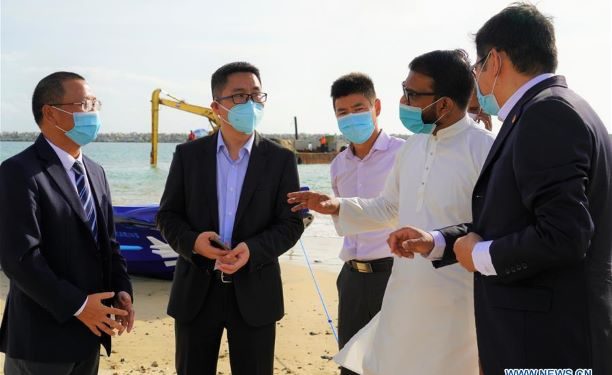
COLOMBO, Sept. 9 (Xinhua) — Sri Lankan State Minister of Regional Cooperation Tharaka Balasuriya said during a tour of Chinese-built projects in capital Colombo on Tuesday that Chinese investment will transform the landscape of Sri Lanka.

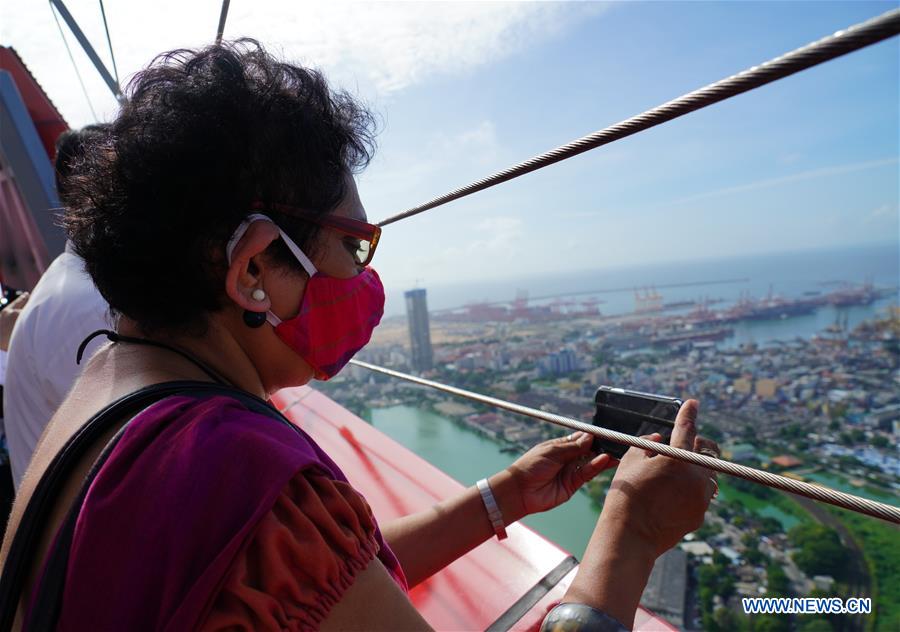
Balasuriya led a delegation of senior diplomats from the Ministry of Foreign Affairs on a tour of the 356-meter tall Lotus Tower and the 269-hectare Port City Colombo.

The tour was joined by officials of the Chinese embassy in Sri Lanka including Charge d’Affaires Hu Wei, and representatives of Port City Colombo developer CHEC Port City Colombo (Pvt) Ltd.

In an interview with Xinhua, Balasuriya said that the Sri Lankan government was glad to receive investments from China and would ensure that such investments were protected.

An official of the Sri Lankan Foreign Relations Ministry at the Colombo Port City. Photo: Tang Lu/Xinhua.

Chinese investments will transform the landscape of Sri Lanka. We want to work in partnership with the Chinese government and Chinese companies,” Balasuriya said.

Balasuriya said that the Sri Lankan government is interested in expediting the Port City Colombo, which was initiated with a 1.4 billion U.S. dollar investment from CHEC, and is projected to bring in 13 billion U.S. dollars worth of investments and over 80,000 jobs.

He added that Sri Lanka would endeavor to provide a suitable investment environment in Port City Colombo and that the project would be open to investors from any country in the world.

Hu Wei said that cooperation between Sri Lanka and China on Port City Colombo and other projects carries forward the spirit of the Ruber-Rice Pact.

The pact was signed between China and Sri Lanka in 1952, which was branded as an agreement of friendship.

Five (05) more persons confirmed for Covid -19: SL Country total increases to 3,147

September 9th, 2020

Courtesy Hiru News

05 more arrivals from Saudi Arabia tested positive for Covid-19, increasing total infected in Sri Lanka to 3,147.

PM instructs state-owned banks to adopt a lenient policy on lending

September 9th, 2020

Courtesy Hiru News

Prime Minister Mahinda Rajapaksa in his capacity as the Minister of Finance has instructed the heads of state banks to adopt a lenient policy in granting loans to the people who are facing various crises.

He was participating in the progress review meeting of the ministry.

It was a mistake to give priority to reconciliation – Former Chief of National Intelligence Sisira Mendis (Video)

September 9th, 2020

Courtesy Hiru News

Former Chief of National Intelligence Sisira Mendis has admitted that it was a mistake to prioritize reconciliation without prioritizing national security during the previous good governance government in which he served as the Chief of National Intelligence.

This was when he testified for the first time before the Presidential Commission of Inquiry probing into the Easter attacks.

Former Kaduwela Magistrate Dhammika Hemapala to be charged if he does not appear before the commission

September 9th, 2020

Courtesy Hiru News

Former+Kaduwela+Magistrate+Dhammika+Hemapala+to+be+charged+if+he+does+not+appear+before+the+commission

Former Supreme Court Judge Upali Abeyratne has stated that the suspended former Kaduwela Magistrate Dhammika Hemapala will be charged by the Presidential Commission of Inquiry into Political Revenge, if he does not appear before it on the 11th.

This was when a complaint lodged by former Secretary to the Ministry of Economic Affairs Dr. Nihal Jayatilleke was taken before the Commission today.

President instructs to renovate 5,000 tanks nationwide

September 9th, 2020

Courtesy Hiru News

President Gotabaya Rajapaksa directed relevant authorities to rehabilitate 5,000 tanks scattered across the island following a mechanism combining ancient technology and modern scientific methods. In parallel to this initiative, the National Food Production Contribution Programme” covering 120,000 abandoned paddy lands will also be launched.

Tanks will be rehabilitated under Wari Saubhagya” programme. The assistance of the Civil Defence Force will be secured to expedite the project.

The proposed programme was reviewed in length during the meeting to discuss future activities of the State Ministry of Development of Rural Paddy Fields and Associated Tanks, Reservoirs and Irrigation held at the Presidential Secretariat today (9).

A project to rehabilitate tanks was carried out earlier too. It came under to strong criticism by the experts as well as the public. This is due to the fact that despite dredging of tanks, ancient techniques and scientific methods of water retention were not used. Such shortcoming should be avoided and rehabilitation should proceed in a manner specific to each area and tank under a common criterion”, President said.

The capacity of tanks has been reduced due to their silting. There is large number of tanks with breached banks. The Chairman of the Presidential Task Force on Economic Revival Basil Rajapaksa pointed out the necessity of rehabilitating such tanks targeting Maha season.

President Rajapaksa highlighted the possibility of using tank water not only for paddy cultivation but also to meet the needs for drinking water and other irrigation requirements.

The Departments of Land Use and Agriculture have jointly conducted a survey on the pattern of agricultural land use depending on the irrigation system. Based on its findings, plans afoot to cultivate 17 identified crops in the intermediate and inter seasons supported by satisfactory water management system.

Rehabilitation of tanks should be carried out while preserving their related industries.it is imperative that the project should be implemented in conjunction with affiliated organizations and Farmers’ Societies. President Rajapaksa instructed to renovate the irrigation system including canals and dams in parallel with the project to rehabilitate tanks.

During the meeting attention was focused on the requirement of expediting Uthuru Meda Maha Ela” and Wyamba Ela” projects planned with the objective to supply irrigation and drinking water. Under this programme 80,000 hectares fed by 1500 tanks in North Central and North Western Provinces will be cultivated.

The necessity to include the irrigation systems of the island and all the forest reservoirs neighboring rivers in a gazette notification was among the topics discussed at the meeting.

President Rajapaksa also instructed the officials to rapidly renovate 500 small tanks located within reserves for the benefit of wild animals. A one year programme will be implemented to achieve this objective jointly by the Irrigation Department, Wild Life and Forest Conservation Department.

During this meeting special attention was drawn to the need of promptly filling the vacancies that exist in certain cadres such as Engineer and Technical Officer in the field of irrigation for a long period of time.

The progress of the ‘ Taruna Govi Saubhagya, Kabanika Govipala’ programme initiated with the aim of directing young entrepreneurs to use organic fertilizers for agricultural activities, was reviewed at this meeting. The project has been designed covering 5,000 acres from the Maduru Oya right bank. It was agreed to provide all the necessary infrastructure facilities for the project.

Minister Chamal Rajapaksa, State Minister Anuradha Jayaratne, Head of the Presidential Task Force on Economic Revival Basil Rajapaksa, Secretary to the President, P.B. Jayasundera, officials of the Cabinet and State Ministries and line institutes and representatives of the Farmers’ Associations were present at the discussion.

Travel with Chatura @ Lankagama , Sri Lanka – 23rd September 2017

September 8th, 2020
 
https://youtu.be/oPM8Kp34SgI

Who is the Sun king, Raavana or Prabhakaran?Myth-making is a past time of both sides – Tamils as well as Sinhalese.

September 8th, 2020

Chandre Dharmawardana

Tamil Nationalists are making their myths, extending their history to ancient times

and claiming that they were in Sri Lanka (and even in Babylon and Egypt)  since the beginning of time, and that Tamil language is the source of the ancient  Sumarian language. Wigneswaran has captured the lime light recently, with such fairy tales. He loves the  publicity garnered from all this.

Some Sinhalese Nationalist groups are also undermining well-established  history and reviving old stories (the Ravana story) by giving them  a huge new  dimension. This is  driven by popular media and the search for a sense of grandeur. They make claims to grandeur where the Sinhale was the center of all civilizations, with a history claimed to be  going back to even 30,000 years BCE (i.e., some 35 centuries before the Buddha!).  The Hela people are claimed to have  developed a highly advance civilization complete with airplanes, nuclear energy etc. Other Ravana supporters who are more modest  put Ravana’s reign to some 4000 years BCE  and not 30,000 BCE!

All this started with people like Raepiyel Tennakoon, Areesen Ahubudu and the “Hela Hawluva” people initially led by Kumaratunga Munidasa. He  attacked the great poet Thotagamuwe Rahula as a plagiarist and a cheat. The hela Hawala people were against the presence of Sanskrit and other “foreign” words in sinhala, and wished to write only in pure Hela language.  I know quite a bit about it as my father was one of the protagonists in the ensuing literary debate, with scholars like Sir Baron Jayatilleke, W. F. Gunawardena, and writers like Martin Wickemasinghe and others also wading in against Kumaratunga.    A  book on those literary debates (written by my father  appeared posthumously, a decade  ago: Godage 2010 Kukavi Vaada Satya Prakashanee, by Anulasiri Dharmawardana).

 But the Hela Huvala  program  was a low key  linguistic effort, compared to what we have today. Their “plot” has been snatched from them and highly amplified by modern  media savvy operators. A monk who is an SJP graduate, Ven. Manewa Wimelaratne even claims to have an 8th century “pus-kola potha”  (Ola Leaf book) that he refuses to show anyone! The ola leaf book is supposed to give details of another ancient text (presumably more ancient than the Deepawamsa etc) called the Vargapoornikaava that no body had heard of up till now. It is claimed to delineates the story of the Hela Vargaya. The monk  has written many books in Sinhala (that I have not read) and they are supposed to give intricate details of the royal lineage etc., of kings and queens since very ancient times. Sad to say, the monk is said to have studied lingustics at the SJP university.

All Indo-Aryan languages (including Pali, Sanskrit) are claimed to be derived from Sinhalese by the Raavana cult. Not surprisingly, there are also a number of Buddhist monks who have identified the Buddha’s birth place to  be  in Sri Lanka itself. A remarkable literature has been woven with the standard buddhist history rejected as an anti-national conspiracy to hid the truth which claims that the various places mentioned in the life of the Buddha are all locations in Sri Lanka.

Tele Drama programs, plays, novels and forth-coming films are minting money using the Raavana story.

One novel tells of a gripping story of the US forces coming into destroy a Ravana Fortress up in the Mountains, and how Gotabhaya Rajapaksa and his forces saved it or some thing like that (I haven’t read the Sinhala novel). It is amazing that Ranil Wickremasignhe, Premadasa, “political obserevers of  the left, and of the well-funded NGOs that conduct ‘opinion polls”  failed to take account of the political dimension of the Raavana narrative pushed forward every week by even English newspapers like the daily Mirror.  


Indian tourists also have their own version of Ravana Myth and they travel to Sri Lanka to visit places related to Ravana and Sita.  The tourist board is also supporting the Ravana myth and neglects the traditonal  Buddhist heritage.  The government, and some of the Nationalist “Chintanaya” people  also like to identify themselves with this  surge in popularity of Raavana of the Soorya Wamasa as the new new Roayal lineage of Lanka. The University of Kelaniya that brought out various types of political “Chinthanaya” that rejects rational scientific methodology,  also harboured  the “Hela Suvaya” vedakama which rejects western medicine and wish to establish a sinhala medical system based on the revelations of Natha Vediya. Raavana cults are very popular with such chinthanaya groups, and a statue to the king Raavana has been erected circa 2014.


The armed forces are often identified as a “Raavana Balaya”.

Exhibitions and big Tamashas  to commemorate Ravana have also been held. Ravana has been the suibject of  an exhibition of paintings by Indumini Bandara titled  ‘Indumini Ravana’ held in February 2011 in Colombo. The  Devram Vihara monk, Ven. Kolonnuwe Sumangala (ex Member of Parliament) conducts an annual procession called the ‘Maha Ravana Perahera’.   Gotabhaya Rajapaksa came to its inauguration procession in 2013. The Daily Mirror newspaper used to publish every week some material on the Raavana narrative.


One of my old students from Vidyodaya University from the 1970s era, a science graduate had become a complete convert to the Ravana story which he believed was essential to correcting Sri Lanka’s history once and for all, and began to sent me letters attacking “The traitor Mahanama“, and asking me to read various Ravana books, and support the nonsense, until we cut  off communication. Labeling individuals opposed to the program as traitors is something that the ITAK and later the LTTE also did. The LTTE also decided that the traitors should be executed!

Apparently, some  government ministry has even given “research funds”  to carry out excavations to  do “archaeological research” to find out more about the Raavana civilization that has been hidden or destroyed  by the Mahaviharin monks already in the 6th century.

This kind of going back to the past, with claims that Indian sages like Pulasthi knew how to build Rockets that could go to the Moon is being pushed by the Hinduthva enthusiasts of Prime Minister Moodi in India. They think that modern science is not needed, and they only have to find what the Rishi’s said, and re-implement them, to recover the past glory of Bharatha.
 

Meanwhile, Wigneswaran is pushing the Dravidasthan Myth (Greater Eelam that extends all the way from Ontario  through Tamil Nadu to at least Malaysia). This surpasses  the Hiduthva myths of Modi and remains only second to China’s belt road initiative. The Sri Lankan Raavana myth has captured the imagination of the Sinhalese far more effectively than the Dravidasthan myth of the Trans National Government of Tamil Eelam (TGTE). Wigenswaran is merely one of the Jaffna representatives of the TGTE. The Eelam myth had its  peak under Prabhakaran.

Kmalaika Pieris has written about Ramayana and Sri Lanka, where more material relevant this topic may be found:

Chandre Dharmawardana.

යස්මින් සූකා කොටි උපාසිකාවට පොටෝ මාරුවීම

September 8th, 2020

චන්ද්‍රසිරි විජයවික්‍රම, LL.B., Ph,D.

නොබෝදා කොටි ඩොලර් උපාසිකා යස්මින් සූකාට සිදුවූ අකරතැබ්බයක් ලංකාවේ මාධ්‍යවලින් වසන්‌කර තිබුණේය. ගෝඨාභය රාජපක්‍ෂ ජනාධිපතිධූරය වැනසීමේ ව්‍යාපාරයට උඩගෙඩි දෙන මැය, ලංකාවේ ඩොලර් කාක්කන් සමඟ හවුල්වී පින්තූර සටහනක් සදා එය ලංකා ටෙලිග්‍රාෆ් වෙබ් අඩවියේ නැවත නැවත පලකරවා ගත්තේය. එය ඇගේ ජාත්‍යන්තර ලංකා සත්‍යය හා යුක්තිය නම් සංවිධානයේ වැඩකි. මේ උපාසිකාවකගේ සත්‍යය හා යුක්තියට අදාල භාවනාවත්, ලක්‍ෂ සංඛ්‍යාත විශ්‍රාම ගත් හා නොගත් නිලධාරීන්ගෙන් කීපදෙනක් ගෝඨාභය විසින් තමාට ලංකර ගැනීමත් අතර ඇති සම්බන්‌ධය කුමක්ද?

එහි අරමුණවූයේ ගෝඨාභය වටකරගෙන ඉන්නේ යුදහමුදා නිලධාරීන් පිරිසක් යයි කියමින් ඔවුන්ගේ පින්තූර ලෝකයාට ප්‍රසිද්‌ධ කිරීමය. මෙහි යටි අරමුණ යහපාලනකාරයින්ගේ අළුත් නීති යටතේ මේ අය රටින් පිට ගියවිට යුද අපරාධකාරයින් සේ ඔවුන් අත් අඩංගුවට ගන්නට ඒ රටවල කොටි නියෝජිතයින්ට උල්පන්දම් දීමය. කෙතරම් තදියමින් අපරීක්‍ෂාකාරී ලෙස ඇය මෙය කලාද කිව්වොත්. මේජර් ජෙනරාල් සුරේෂ් සලි ගේ නම දමා එයට බ්‍රිගේඩියර් රවීන්ද්‍ර ඩයස්ගේ පින්තූරය දැම්මේය. මෙය මිනිසුන්ගේ ජීවිත සමඟ සෙල්ලම් කිරීමකි.

මේ නිසා රවීන්ද්‍ර ඩයස් ලක්‍ෂ පනහක වන්දියක් ඉල්ලා සූකාට එන්තරවාසියක් යැවුවේය. සූකා දණ ගැසුවේය. කල වරදට සමාව ඉල්ලුවේ ඇය සත්‍යය වෙනුවෙන් පෙනී සිටින නිසා බව පවසමිනි. යමෙකුට හානියක් කිරීමට සිතා වරදක් කර පසුව ඒ වරද පිළිගෙන සමාව ඉල්ලීම ලක්‍ෂ පනහ බේරා ගැනීමේ උපායක් පමණය. සූකාගේ එන්.ජී.ඕ එකටත්, එහි ඉන්නා ලංකාවේ ඩොලර් ඔත්තු කරුවන්ටත් මෙසේ හිතුවක්කාර ලෙස ක්‍රියාකිරීමට ඇති ඉඩකඩ ඇසිරීමට නීති කෙටුම්පතක් හදන ලෙස සුසන්තා ගුණතිලකට භාරදී තිබීම වැදගත් මේ නිසාය.

සූකිගේ අක්කා, නවනීතම් පිල්ලේ 2013 දී ප්‍රශ්ණ කලේ නිදහස් මන්දිරයේ බෞද්‌ධ කොඩියක් දමා ඇත්තේ ඇයිද කියාය.
Who is afraid of the Buddhist flag? (Educating Navanethem Pillay)
https://www.lankaweb.com/news/items/2013/09/04/who-is-afraid-of-the-buddhist-flag-educating-navanethem-pillay/

මොවුන්ට මෙසේ ලංකාව පාපිස්සක් සේ සළකන්නට ඉඩ දුන් යුගය 2020 න් පසු අවසාන වේය යන්න රටේ සිංහලයින්ගේ බලා පොරොත්තුවය. පිල්ලේව කසාද බඳින්නට මර්වින් සිල්වා විසින් ඇයට කල යෝජනාව, ඇයට දිය හැකිවූ හොඳම පිළිතුර නොවේ. නියම පිලිතුර දීපිකා උඩගම, නිර්‌මලා ප්‍රනාන්දු වැනි ලංකාවේ ඉන්නා ඇගේ හා සූකාගේ නංගිලා මොනිටර් කිරීමය.

රට තුල මෙවන් මඩ අසත්‍ය ප්‍රචාර කරගෙන යන එන්.ජී.ඕ. ඩොලර්‌කාක්කන්ට විරුද්‌ධව නඩු පැවරීමට රවීන්ද්‍ර ඩයස් ගත් ක්‍රියාව, සෙසු හානියට පත්‌වන අයටද ධෛර්යයක් වනු නිසැකය. සූකාගේ සමාව ගැනීම මෙහි පහතින් දැක්වේ.

Asian Mirror, September 5, 2020

Yasmin Sooka apologises to Sri Lankan Brigadier

Ms. Yasmin Sooka of International Truth and Justice Project Sri Lanka (ITJPSL) has apologised to Brigadier Ravindra Dias of the Sri Lanka Army for wrongfully using his picture to portray the same as that of Major General Suresh Salley, incumbent Director of Sri Lanka State Intelligence Service.
Brigadier Ravindra Dias through his Attorney at Law Nilanga Perera, has sent a letter of demand dated 06/07/2020 to Ms. Yasmin Sooka and ITJPSL for wrongfully using his picture. The letter of demand claimed that using Brigadier Ravindra Dias’ picture and portraying the same as that of Major General Salley’s, had put the Brigadier’s life at risk that would otherwise be faced by General Salley in his official capacity as Sri Lanka’s premier Intelligence officer and further demanded a sum of Rs. 5,000,000/- from Ms. Yasmin Sooka and/or ITJPSL.

Fr. Emmanuel Must Be Forgiven For His Sins by Cardinal Ranjith

September 8th, 2020

By Dr. Nilanga Samarasinghe Courtesy Ceylon Today

Fr. Emmanuel Must  Be Forgiven For His Sins  by Cardinal Ranjith

Father Sleemanpillai Joseph Emmanuel is back in Sri Lanka and appealing to the immigration for leave to remain. He wants to die in Sri Lanka, a country that he spent the last three decades demonising. In spite of his record of supporting the LTTE and glorifying violence by Velupillai Prabhakaran, the generous people of Sri Lanka have decided to accommodate his plea. 

The foundational culture of Sri Lanka has been compassion, mercy, and forgiveness. Buddhist thinking permeated moderating all other traditions permitting an environment for those with diverse views to coexist. It has been abused from time to time by Velupillai Prabhakaran who was influenced by the Tamil Nadu separatism and Zaharan Hashim by Wahhabi ideology of attacking other faiths. 

Father Emmanuel created the Global Tamil Forum, the premier LTTE international organisation to project Sri Lanka as a human rights violator and white wash the LTTE. To promote the LTTE message in Geneva, Father Emmanuel worked with Gary Anandasangari of the Canadian Tamil Congress that came up with the idea that there was ‘genocide’ in Sri Lanka. Gary Anandasangari was in contact with LTTE chief procurement and shipping officer Kumaran Pathmanathan and planned to visit him in Malaysia. After KP was arrested and deported to Sri Lanka, Father Emmanuel assumed LTTE global leadership and worked the British Tamil Front, Canadian Tamil Congress, and the Australian Tamil Congress, and other LTTE fronts. Father Emmanuel (87 years), spent the latter part of his life in Europe.

Meanwhile, efforts are being made to mobilise the Tamil Diaspora around the world for a relentless struggle to revive the Tamil racist autonomy struggle in the North, which had a tragic death, and to keep their interest alive. Fr. Emmanuel is trying to use the connections he has made through the Catholic Church for this.

The purpose of this article is to discuss the future of the struggle for the establishment of an independent state for the world Tamil Diaspora (not only Sri Lankan Tamils) in the North of Sri Lanka by the Priest, Fr. Emmanuel, of the Global Tamil Forum and how we as Sri Lankans could identify and defeat its strategy.

Emmanuel, born in Jaffna in 1934, is a graduate of the University of Colombo, (then University of Ceylon) with a degree in Mathematics and Physics. He holds a Ph.D. in Theological Philosophy from a private theological university in the Vatican.

Also, young Emmanuel worked briefly as a maths teacher and a freelance journalist, and later became a priest who now spends his entire life teaching and propagating Catholicism.

He fled to the Vanni jungle with the people of Jaffna in 1995 in the wake of the Jayasikuru Operation launched by the Sri Lankan Forces to liberate the Jaffna Peninsula from the LTTE terrorists and later sought refuge in Germany.

Pastor

During his entire career as a pastor in Jaffna, he became a supporter of the LTTE, differing only from a LTTE terrorist by hanging a cross around his neck instead of a cyanide capsule and holding a Bible instead of a T-56 weapon.

From the day he set foot in Germany, his dominant and sole task was to build the International Tamil Diaspora and to raise funds to facilitate the killing fields of Tamil terrorists in North and East of Sri Lanka. He was devastated and helpless by the decisive defeat of Tamil terrorism in 2009.

The money collecting project was hampered by the inability to provide a valid reason for further fundraising across Europe from Europeans as well as the Tamil Diaspora.

The meagre allowance he received as a priest and a refugee was not enough for him and his family to live a more luxurious life hereafter.

Emmanuel’s promise of establishing the ‘Eelam State’ today if not tomorrow had led many Tamils to borrow thousands of Euros from banks and their workplaces and send them to the LTTE to procure weapons for the Eelam war.

However, after the defeat of the LTTE, it was confirmed that the money would not be refunded by any of the existing LTTE, some Tamils committed suicide and are even homeless due to bankruptcy.

Upset by these incidents, Priest Emmanuel insists that the Sri Lankan Army should be labelled as a ‘Sinhalese Force’ that carried out a Tamil genocide. Now his accusations have been converted to hatred.

He was so blinded by racism that he could not comprehend that this inhuman racist outburst outside Sri Lanka would do more harm to his own ethnic Tamil people, who have become more and more helpless as a result of the 30-year War and the post-war frustration.

Pardoning and forgetting the ‘mistakes’ or ‘wrongdoings’ as done by the Priest Desmond Tutu of South Africa and moving towards for lasting peace, he is somehow managing to further separate Sinhala and Tamil communities. Emmanuel tried his best to do everything he could from Europe. He is working to rekindle a racial war against all the doctrines of Christianity that he preaches.

I suggest Father Emanuel should learn the teachings of Lord Jesus from Malcolm Cardinal Ranjith, Archbishop of Colombo, again. It would be nice if he could follow the way the Archbishop behaved during the Easter attack after Muslim extremists bombed two Catholic churches and one Christian church (Zion), in order to bring peace to those lives and their souls to rest in peace in the hands of God. Cardinal Ranjith did not spread hatred against Muslims, but extend an olive leaf of peace.

The Cardinal managed to stop all kinds of destruction around the nation. Therefore, with the blessing of the risen Jesus, he stopped the recurrence of the 1983 ethnic conflict throughout Sri Lanka.

We believe that if Cardinal Ranjith had asked for a tooth for tooth or flesh for flesh by igniting the flames of hatred, like Fr. Emmanuel, Sri Lanka today would be a hell of a place in the face of this Corona epidemic and the global economic crisis. 

Word of Jesus 

Recalling the Word of Jesus and behaving accordingly, which were forgotten by Fr. Emmanuel after the decisive defeat of the LTTE terrorists in 2009, will be the greatest service that can be rendered to his race, his nation (Sri Lanka) and his religion, if he could fulfil his national role in the latter part of his life at least.

He is not too late yet. All that is needed is the Appearance of God to him once. If that day happens in the near future, under his leadership, the light of the Dhamma lamp, lit by the World Tamil Forum from Europe, would reach the northern part of Sri Lanka. The Buddhist, Muslim, and Hindu clergy in the South too should follow the example set by Cardinal Ranjith.

We must understand that hatred does not quell hatred and that Tamil racism cannot be extinguished by the flames of Sinhala racism.

As we call on other ethnic groups to say, “Don’t be a racist,” we too, must be determined not to be racist, but to bring peace and equality among ethnic groups stand as one Sri Lankan nation.

The greatest support you can give today to the will of the vast majority of the people of the country is given to the Government led by President Gotabaya Rajapaksa to elevate Sri Lanka to a developed nation is, maintaining peace and equality among ethnic groups and providing the economic and social peace necessary for development.

For supporting terrorism, Father Emmanuel was designated as a terrorist personality together with his protégé Suren Surendiran under the United Nations Security Council Resolution 1373. 

According to Lt. Colonel Shammi Arjuna Kumara who ran a testimony before the Presidential Commission of Inquiry on 26 August 2020, both the GTF (Global Tamil Forum) leader Father Emmanuel and the BTF (British Tamil Forum) leader Suren Surendiran were blacklisted individuals upon information received by Intelligence sources. 

Colonel Shammi said, the then Foreign Minister Mangala Samaraweera had ordered him to remove the names of Father Emmanuel and Suren Surendiran, who were members of the LTTE, stating that they were ‘close associates’.

Samaraweera also stated, This is not the Rajapaksa regime and therefore, I should not work according to the needs of Gotabaya Rajapaksa,” he added.

Sri Lanka suffered an Easter Sunday attacks because national security was compromised. 

Sri Lanka should keep a sharp eye on Father Emmanuel and his network both in Sri Lanka and abroad as they pose a threat to Sri Lanka’s social harmony, political stability, and economic prosperity. 

Granting Father Emmanuel’s last wish to live his last years in Sri Lanka is in concert with Sri Lanka’s long-established tradition of compassion. However, it is paramount to ensure that he does not abuse the hospitality of Sri Lanka once more.

And it should be emphasised that any association of Father Emmanuel with the arising Tamil racism on Sri Lankan soil must be subjected to dispatch him to the place where he has come from. It should be one of the first priorities of Sri Lankan national security.

(The Writer is a Researcher at the University of Lucerne, Switzerland)

The Demarcation of Provinces in Ceylon under British Rule

September 8th, 2020

Michael Roberts Courtesy Thuppahi’s Blog

After the British imperial power consolidated its conquest of the island of Ceylon in 1815 and 1817/18, they began to ‘stitch the island together by commencing a road building programme; while the Colebrooke Cameron Commission which visited the island recommended the creation of five Provinces.”

As the Wikipedia account notes,[i] accordingly, on 1 October 1833 five provinces under one administration came into being”:

  • Central Province– composed of the central Kandyan provinces.
  • Eastern Province– composed of the maritime districts of Batticaloa and Trincomalee, and the Kandyan provinces of Bintenna and Tamankaduwa.
  • Northern Province– composed of the maritime districts of Jaffna, Mannar and Vanni, and the Kandyan province of Nuwara Kalawiya.
  • Southern Province– composed of the maritime districts of Galle, Hambantota, Matara and Tangalle, and the Kandyan provinces of Lower Uva, Saffragam and Wellassa.
  • Western Province– composed of the maritime districts of Colombo, Chilaw and Puttalam, and the Kandyan provinces of Three Korales, Four Korales, Seven Korales and Lower Bulathgama.

However, over the next fifty years four additional provinces were created, taking the total number to nine:

  • North Western Provincewas created in 1845 from northern Western Province (districts of Chilaw, Puttalam and Seven Korales)
  • North Central Provincewas created in 1873 from southern Northern Province (district of Nuwara Kalawiya) and north-western Eastern Province (district of Tamankaduwa).
  • Uva Provincewas created in 1886 from parts of Central Province, Eastern Province (district of Bintenna) and Southern Province (district of Wellassa).
  • Sabaragamuwa Provincewas created in 1889.

1833-45

   1845-73

 1873-86

    1886-1889

  1889-Present

ADDENDUM from https://en.wikipedia.org/wiki/Provinces_of_Sri_Lanka

The number of provinces remained static until September 1988 when, in accordance with the Indo-Lanka AccordPresident Jayewardene issued proclamations enabling the Northern and Eastern Provinces to be one administrative unit administered by one elected Council, creating the North Eastern Province. The proclamations were only meant to be a temporary measure until a referendum was held in the Eastern Province on a permanent merger between the two provinces. However, the referendum was never held and successive Sri Lankan presidents issued proclamations annually extending the life of the temporary” entity. The merger was bitterly opposed by Sri Lankan nationalists. On 14 July 2006, after a long campaign against the merger, the JVP filed three separate petitions with the Supreme Court of Sri Lanka requesting a separate Provincial Council for the East.  On 16 October 2006 the Supreme Court ruled that the proclamations issued by President Jayewardene were null and void and had no legal effect. The North-East Province was formally de-merged into the Northern and Eastern provinces on 1 Janaury 2007.

… AND NOTE https://thuppahi.wordpress.com/2015/10/04/a-starry-guide-to-ribbon-urban-development-in-south-western-lanka/

************

   END NOTES

[i] See https://en.wikipedia.org/wiki/Provinces_of_Sri_Lanka. Note that in some Wikipedia accounts the details  are erroneous [for eg Uva said to be created in 1993).

The Insidious and False Dimensions of the “Traditional Homeland” Thesis

September 8th, 2020

Gerald Peiris Courtesy Thuppahi’s Blog

The concept of the ‘Traditional Tamil Homeland’ as promulgated by its exponents is based on the notion that, from the distant past, the island of Sri Lanka comprised the territories of two distinct nationalities that were arbitrarily unified in the formation of British Ceylon in the early 19th century.  My survey, which draws from several authoritative writings, some of which have been authored by reputed Tamil scholars, shows that such a notion does not conform to known facts and unbiased interpretations of the country’s history.

There is no doubt that, following the collapse of the Rajarata civilisation in which the Tamils constituted a vital element, there was a long drawn out process of Tamilisation” ―both demographic and cultural― in the north and in certain localities of the eastern littoral.  However, the population pattern which prevailed at the culmination of this process in the early decades of the 20th century, considered against the backdrop of earlier trends, drives us to the conclusion that this process was scarcely felt in the interior of the eastern parts of the island which, indeed, remained throughout a ‘traditional homeland’ of the Sinhalese peasantry.  Accordingly, there is no basis whatever for the assertion that the aforesaid Tamilised” areas correspond to the Northern and Eastern provinces as these were demarcated by the British, somewhat arbitrarily, to suit their administrative conveniences in the 19th century, and as they remain demarcated at present.

The alleged Sinhalese encroachment into the areas traditionally inhabited by Tamils through the establishment of settlement schemes in the drier parts of the country is a myth.  State sponsorship has undoubtedly been vital for the development of such schemes which were meant for the poorest of the poor ―the landless peasantry drawn from all ethnic groups. But neither in this nor in government responses to encroachment of Crown land is there any evidence of discrimination against Sri Lankan Tamils.

According to the latest population estimates (2012), slightly less than 50% of the total Tamil population of Sri Lanka inhabit the Northern and Eastern Provinces which constitute about 29% of the total area of Sri Lanka. The Tamils of the north-east thus account for only about 9% of the country’ population. In these provinces, moreover, there are large Muslim and Sinhalese populations. In the Eastern Province, in particular, Tamils constitute less than 40% of the population. In a densely peoples country like Sri Lanka where the pressure of population on land is intense, 9% of the population claiming exclusive rights over 29% of its territory is itself somewhat unfair. But to insist (as the remnants of the LTTE and the supporters of its secessionist campaign do) that the aspirations of the ‘Tamil people of Sri Lanka’ (more than fifty percent of whom live outside the Northern and Eastern provinces) will not be met unless the claimed exclusive rights over the two provinces are accorded constitutional expression in the form of provision for self-determination (which includes the right of secession), in total disregard of the legitimate rights of other inhabitants of the two provincescould only be seen as an extremist demand that cannot be accommodated in a multi-ethnic democratic polity.

Despite the anomalies and distortions inherent to the ‘Traditional Tamil Homeland’ referred to above, even after the conclusion of the protracted secessionist war waged by the LTTE, the claims made by its exponents have continued to dominate the politics of Sri Lanka, especially in the guise of a demand for regional autonomy” for an area covered by the Northern and Eastern Provinces. In specific terms, what is now being demanded by the more prominent Tamil political parties representing the Northern Province is a package of statutory reforms that would provide for self rule” that would extend beyond the provisions of the ‘Thirteenth Amendment to the Constitution’ which was imposed on Sri Lanka in 1987 by the Government of India through a series of intimidatory interventions that made use of the intensely turbulent political conditions that prevailed in the island, and on the basis of a promise of ensuring the elimination of the secessionist insurrection which, ironically, the Delhi government itself had nurtured at its early stages. Needless to say, despite the fact that the Indian government failed to fulfil this pledge, even after the amazing success achieved by Sri Lanka twenty-two years later, despite the disruptive external interventions that continued to be placed against its efforts, the overtly friendly” Government of India has not abandoned its insidious interventions which so obviously has the impact of strengthening the ‘Eelam’ campaign.

The persistent demands of the ‘Sri Lanka Tamil’ political leadership, made so obviously in disregard of the facts referred to above, have tended to focus specifically on an enhancement of powers devolved to the Provincial Councils under the infamous ‘13th Amendment’ in respect of Land (See Appendix 1 of this volume) and of Law Enforcement.

THIS Item is a segment of Chapter 10 titled ‘Land Policy and Sri Lanka Territory’ of my recently published book titled Sri Lanka: Land Policy for Sustainable Development (Boralesgamuwa, Visidunu Publishers, 2017)

ALSO NOTE

Gerald H Peiris:  An Appraisal of the Concept of a Traditional Tamil Homeland in Sri Lanka,” paper presented at the international conference on ‘Economic Dimensions of Ethnic Conflict in Sri Lanka’, International Centre for Ethnic Studies, August 1985  …………. published in Ethnic Studies Report, IX (1): 1991: 13-39.

Gerald H Peiris: Twilight of the Tigers. Peace Efforts and Power Struggles in Sri Lanka, …. https://global.oup.com/academic/product/twilight-of-the-tigers-9780195699456?cc=lk&lang=en&

ශ්‍රී ලංකාවේ ඔස්ට්‍රේලියානු මහ කොමසාරිස් හා ගරු අග්‍රාමාත්‍ය මහින්ද රාජපක්ෂ මහතා අතර හමුවක්

September 8th, 2020

අග්‍රාමාත්‍ය මාධ්‍ය අංශය

ශ්‍රී ලංකාවේ ඔස්ට්‍රේලියානු මහ කොමසාරිස් ඩේවිඩ් හොලි මහතා හා ගරු අග්‍රාමාත්‍ය මහින්ද රාජපක්ෂ මහතා අතර හමුවක්   2020.09.07 දින අරලියගහ මන්දිරයේදී පැවැත්වුණි.

පසුගිය මැතිවරණ ජයග්‍රහණය සහ නැවත අග්‍රාමාත්‍යධූරයට පත්වීම සම්බන්ධයෙන් මෙහිදී මහ කොමසාරිස්වරයා අග්‍රාමාත්‍යතුමාට සුභ පැතුම් එක් කළේය.

මේ අතර COVID-19 වසංගත තත්ත්වයට සාර්ථකව මුහුණ දීම සඳහා ඔස්ට්‍රේලියානු රජය විසින් ශ්‍රී ලංකාවට ලබා දුන් අන්‍යෝන්‍ය සහයෝගය පිළිබඳව අග්‍රාමාත්‍ය මහින්ද රාජපක්ෂ මැතිතුමා මහ කොමසාරිස්වරයාට ස්තූතිය පළ කළේය.  ඔස්ට්‍රේලියානු රජය විසින් පුද්ගලික ආරක්ෂණ උපකරණ කට්ටල (Personal Protective Equipment PPE) ශ්‍රී ලංකාවට පරිත්‍යාග කර තිබේ.

එමෙන්ම වසර ගණනාවක් පුරා ඔස්ට්‍රේලියානු රජය ශ්‍රී ලංකාවට ලබා දුන් ශක්තිමත් සහයෝගයට ස්තූතිය පුද කිරීමට ද අග්‍රාමත්‍යතුමා එය අවස්ථාවක් කර ගත්තේය.

ඔස්ට්‍රේලියානු අගමැති ස්කොට් මොරිසන් මහතා පසුගිය මැතිවරණ ජයග්‍රහණය සඳහා සුභ පැතීමට තමාට ලබා දුන් දුරකථන ඇමතුමට ස්තූති කළ අග්‍රාමාත්‍යතුමා, COVID-19 වසංගත තත්ත්වය පාලනය වූ වහාම ශ්‍රී ලංකාවේ සංචාරය කිරීමට පැමිණෙන ලෙස අග්‍රාමාත්‍ය මොරිසන් මහතාට කළ ආරාධනාව සිහිපත්  කළේය.

නව රජයේ ප්‍රමුඛතා පිළිබඳව අදහස් දක්වමින් අග්‍රාමාත්‍යතුමා, කෘෂිකාර්මික අංශය සහ සියලු පුරවැසියන්ට ආරක්ෂිත පානීය ජලය සැපයීමේ රජයේ ඉදිරි සැලැස්ම පිළිබඳව අවධාරණය කළේය. නිදන්ගත වකුගඩු රෝගය (Chronic kidney disease CKD)  දෙරටේ ජනගහනය කෙරෙහි ඇති කරන බලපෑම පිළිබඳව ද මෙහිදී දෙරටේ නියෝජිතයින් අවධානය යොමු කරන ලදී.  ඕස්ට්‍රේලියානුවන් දස දෙනෙකුගෙන් එක් අයෙකු මෙම රෝගයෙන් පෙළෙන බව මහකොමසාරිස් හොලි මහතා පෙන්වා දුන්නේය.

අධ්‍යාපන, වෘත්තීය පුහුණුව සහ පශු සම්පත් අංශ මෙන්ම ත්‍රස්තවාදය සහ මත්ද්‍රව්‍ය ජාවාරම් මැඩපැවැත්වීම ඇතුළු දෙරටේ සහයෝගීතාව වර්ධනය වන ක්ෂේත්‍ර ගණනාවක් පිළිබඳව ද අග්‍රාමාත්‍යතුමා හා මහ කොමසාරිස්වරයා  සාකච්ඡා කළහ.

අපගේ සම්බන්ධතාවය සැලකිය යුතු ලෙස පුළුල් වී තිබේ,” ඕස්ට්‍රේලියාව ශ්‍රී ලංකාව ප්‍රවාහන මධ්‍යස්ථානයක් සහ ප්‍රධාන වෙළඳපොළ කේන්ද්‍රස්ථානයක් ලෙස දැකීමට කැමති” යැයි මහ කොමසාරිස්  හොලි මහතා පැවසීය.

Australian High Commissioner Calls on Prime Minister Rajapaksa

September 8th, 2020

Prime Minister’s Media Unit

Australian High Commissioner David Holly called on Prime Minister Mahinda Rajapaksa at Temple Trees yesterday (Sept. 7) afternoon.

While congratulating Prime Minister Rajapaksa for the election victory and reappointment as Prime Minister, Ambassador Holly thanked Sri Lanka for the mutual support in the fight against the COVID-19 pandemic. Australia has provided assistance to Sri Lanka by providing Personal Protective Equipment (PPE).

Prime Minister Rajapaksa thanked Australia for its strong support to Sri Lanka throughout the years. He also recalled his recent phone conversation with Australian Prime Minister Scott Morrison, who called Prime Minister Rajapaksa last month to congratulate him on the election victory. Prime Minister Rajapaksa invited Prime Minister Morrison to visit Sri Lanka once the Coronavirus situation is under control.

Speaking about priorities for the new Government, Prime Minister Rajapaksa highlighted the agricultural sector and the Government’s plan to provide safe drinking water to all citizens. The two delegations also spoke about the impact that chronic kidney disease (CKD) is having on the populations in both countries. One in ten Australians also suffer from CKD, said Ambassador Holly.

The two delegations also discussed a number of other areas of cooperation including the sectors of education, vocational training and dairy, as well as cooperation in counter-terrorism, and countering people smuggling and drug trafficking.

Our relationship has broadened considerably,” Ambassador Holly said, noting that Australia would like to see Sri Lanka as a logistics hub and a key market driver.”

සබරගමු පළාත තුළ දෙමළ ජනතාවගේ දරුවන්ට විද්‍යා හා ගණිත විෂය ධාරාවන් හැදෑරීම සඳහා පාසල් නොමැතිවීම සම්බන්ධවයි.

September 8th, 2020

ලංකා ගුරුසේවා සංගමය.

ගරු අධ්‍යාපන අමාත්‍ය,
ජී.එල්. පිරීස් මහතා,
අධ්‍යාපන අමාත්‍යංශය,
ඉසුරුපාය.
බත්තරමුල්ල.

අමාත්‍යතුමණි,

සබරගමු පළාත තුළ දෙමළ ජනතාවගේ දරුවන්ට විද්‍යා හා ගණිත විෂය ධාරාවන් හැදෑරීම සඳහා පාසල් නොමැතිවීම සම්බන්ධවයි.

සබරගමු පළාත තුළ අ.පො.ස. උසස් පෙළ විද්‍යා, ගණිත විෂය ධාරාවන් හැදෑරීම සදහා දෙමළ ජනතාවගේ සිසු දරුවන්ට තම මාධ්‍යයෙන් ඉගැනීමට අදාලව කිසිදු පාසලක් නොමැති වීම පිළිබදව ඔබගේ දැඩි අවධානය යොමු කරවන අප සංගමය ඊට කඩිනම් විස`දුම් ලබා දීමට මැදිහත් වන ලෙස ඉතා ඕනෑකමින් යුතුව ඉල්ලා සිටිමු.

  1. 2022 වර්ෂයට අදාලව මේ වන විට පාසල් වල අ.පො.ස. උසස් පෙළ පන්ති ආරම්භ වෙමින් තිඛෙන අවස්ථාවක දෙමළ සිසු දරුවන් රැසකටම එම අවස්ථාව අහිමිව සිටින බව වාර්ථා වන අතර දීර්ඝ කාලයක සිට පවතින මෙම ගැටලූව නොවිසදීම බරපතළ තත්ත්වයක් දක්වා වර්ධනය වී ඇත.මෙය එම සිසු දරුවන්ට සිදු කරන බලවත් අසාධාරණයක් මෙන්ම අධ්‍යාපනය ලැබිමට ඔවුන්ට ඇති මුලික මානව අයිතිය වැළැක්වීමකි.වසර 72 ක් ගත වුවද ලාංකීය ධනේෂ්වර පාලකයින් මෙවන් සරළ ගැටලූවක්වත් විසදීමට අපොහොසත් වීම ලැජ්ජා සහගත කරුණකි.
  2. පසුගිය කාලසීමාවෙහි මෙම සිසු දරුවන්ගෙන් කොටසක් පළාතෙන් බැහැරව වෙනත් පළාත් වෙත තම අධ්‍යයන කටයුතු සදහා යොමු වු නමුත් මේ වන විට අදාළ පළාත් වල පදිංචි සිසු දරුවන්ට විශ්ව විද්‍යාල ප්‍රවේශයේදී අසාධාරණයක් සිදු වන බව සදහන් කරමින් එම පළාත් බලධාරීන් විසින් සිය පළාත් වල පාසල් වලට ඇතුලත් වීමේ අවස්ථා අහිමි කර ඇත.
  3. එහෙයින් මේ පිළිබදව කඩිනම් අවධානය යොමු කර මෙවර එම අවශ්‍යතා ඇති සිසු දරුවන්ගේ අධ්‍යාපන කටයුතු සදහා අදාල පළාත් බලධාරීන් සමග සාකච්ඡා කර අවශ්‍ය විෂය ධාරාවන්ට ප්‍රමාණවත් ගුරුවරුන් බදවා ගනිමින් පාසල් තුළ පහසුකම් ගොඩ නැගීම සදහා මැදිහත් වන ලෙසත් එතෙක් අදාල පළාත් අධ්‍යාපන බලධාරීන්ට අ.පො.ස. උසස් පෙළ විෂය ධාරාව හැදෑරිම සදහා පහසුකම් සලසා දීමට නියෝග කරන ලෙසත් ඉල්ලා සිටිමු.

මෙයට,
විධායක සභාව වෙනුවෙන්,

මහින්ද ජයසිංහ,
ප්‍රධාන ලේකම්, 0718297022- සම්බන්ධීකරණය
ලංකා ගුරුසේවා සංගමය.

පිටපත් – 01. ගරු ආණ්ඩුකාරතුමා – සබරගමු පළාත් ආණ්ඩුකාරවර කාර්යාලය
02. ලේකම් – අධ්‍යාපන අමාත්‍යංශය

42 blasphemy cases registered in Pakistan in August:

September 8th, 2020

Naya Daur, September 2, 2020. SOUTH ASIAN DEFENCE REVIEW

According to data compiled by a social media user, at least 42 cases pertaining to blasphemy were registered across Pakistan in the month of August. Most of those accused of blasphemy belonged to the Shia community, who have been booked under 295-A and 298 sections of the Pakistan Penal Code (PPC) for allegedly ‘insulting the companions of Prophet Muhammad (PBUH)’. Similarly, members of Ahmadiyya and Christian communities are also among the people accused of blasphemy.

20A: SLPP rejects criticism, plans to secure its passage next month

September 8th, 2020

By Shamindra Ferdinando Courtesy The Island

Dismissing criticism of the proposed 20th Amendment that it would pave the way for a dictatorship, Education Minister Prof. Peiris yesterday (7) told the media at the SLPP office, Battaramulla, that it would be presented to Parliament next October ahead of the presentation of Budget 2021.

Prof. Peiris, who is also the Chairman of the ruling SLPP, said that the government wasn’t worried about the Samagi Jana Balavegaya (SJB) moving the Supreme Court against the 20th Amendment as it was gazetted having secured the Attorney General’s approval.

Flanked by Ports and Shipping Minister Rohitha Abeygunawardena and SLPP General Secretary attorney-at-law Sagara Kariyawasam, Prof. Peiris indicated that they didn’t see a requirement to make any changes to the 20th Amendment at the committee stage.

The minister said that the government enjoyed the required parliamentary support necessary for the passage of the 20th Amendment. The SLPP on its own secured 145 seats whereas its allies obtained half a dozen seats to ensure the required two-thirds.

Responding to a query, a smiling Prof. Peiris said SJB’s Lakshman Kiriella or any other party could seek legal recourse against the 20th Amendment. We are confident the 20th Amendment can be adopted without any hassle,” Prof. Peiris said, pointing out that finding fault with the 20th Amendment seemed ridiculous after the AG endorsed it without subjecting any of its provisions to a referendum.

Prof. Peiris said that the 19th Amendment enacted in the wake of 2015 presidential election, was meant among other things to deprive Namal Rajapaksa an opportunity to contest the presidency, disqualify Basil Rajapaksa and Gotabaya Rajapaksa from contesting either presidency or parliamentary election on the basis of them being dual citizens of US and Sri Lanka and Mahinda Rajapaksa from seeking a third term.

The 20th Amendment has proposed the eligibility of a 30 year –old to contest the presidency in addition to dual citizens the opportunity to contest national level elections.

Prof. Peiris said that those who had been critical of the 20th Amendment had conveniently forgotten it didn’t touch two of the most important features in the 19th Amendment. He emphasized that the two term limit on a President as well as both presidential and parliamentary terms being restricted to five years from the earlier six would remain intact under the 20th Amendment.

Asked why much desired constitutional bar to restrict the number of ministers to 30 and non-cabinet ministers to 40 had been proposed to be abolished, Prof. Peiris pointed out there was provision in the 19th Amendment to make ministerial and other appointments regardless of the restriction by simply forming a National Government. The UNP and the SLFP did form such a government and made appointments beyond the prescribed 30 cabinet and 40 non-cabinet limits, Prof. Peiris said.

Responding to another query, Prof. Peiris side-stepped the issue by pointing out that the SLPP, too, could have finalized such an arrangement by entering into an agreement with the EPDP (Eelam People’s Democratic Party). The EPDP won two seats in the Northern Province at the recently concluded general election.

Prof. Peiris also welcomed the Court of Appeal granting MP elect Premalal Jayasekera an opportunity to attend parliamentary sittings tomorrow (8).

Jayasekera is held at Welikada prison after being found guilty by Ratnapura High Court over a 2015 killing in the Kahawatte police area in the run up to the presidential election of that year. Prof. Peiris said that Jayasekera enjoyed the right to move both the Court of Appeal and the Supreme Court challenging the ruling given against him.

The Education Minister said that the SLPP received two mandates to do away with the 19th Amendment. Gotabaya Rajapaksa, in his capacity as the SLPP candidate won the presidential election by a staggering 1.4 mn votes whereas the SLPP secured a near two-thirds majority at the general election. Therefore, there couldn’t be any issue as regards the SLPP taking tangible measures to drastically alter the 19th Amendment before introducing a new Constitution.

Recently, the government announced a 9-member group led by Romesh de Silva, PC, to formulate the new draft Constitution.

The former Law Professor strongly defended the controversial decision to re-introduce emergency Bills while guaranteeing full immunity to the President. Referring to a Supreme Court case, Prof. Peiris emphasized that the country’s apex court had accepted the right of the President to receive immunity. Prof. Peiris said that emergency Bills were necessary in times of emergency such as the 2019 Easter Sunday attacks which plunged the entire country into crisis.

Prof. Peiris dealt with the continuing controversy over the 20th Amendment proposing a five-member Parliamentary Council in place of the Constitutional Council comprising ten. Of course the method of appointments to seven Commissions as well as key posts had been changed to give the President power to exercise his mandate, Prof. Peiris said, dismissing claims that the Commissions were being abolished. The proposed system reflected the will of the people whereas the 19A empowered the Constitutional Council at the expense of the President elected by the people of the whole country.

Prof. Peiris alleged that the Election Commission member Prof. Ratnajeevan Hoole and Constitutional Council member Javid Yusuf were two persons who abused their positions in the respective outfits to undermine the SLPP. Prof. Hoole once declared in Jaffna not to vote for the SLPP whereas attorney-at-law Yusuf openly campaigned against the SLPP’s push for a two-thirds majority to do away with the 19th Amendment, Prof. Peiris said.

Prof. Peiris said that their plans were on track though nearly ten months were wasted due to the inability on the part of the President to dissolve parliament immediately after winning the presidential election last November due to the shackles placed by the 19A and the subsequent crisis caused by the corona epidemic.

Prof. Peiris emphasized that the people’s President would exercise powers for their betterment.

My imprisonment was an act of political revenge: Premalal

September 8th, 2020

Ajith Siriwardana and Yohan Perera Courtesy The Daily Mirror

Ratnapura District MP Premalal Jayasekara said yesterday he was convicted on false charges levelled against him by the yahapalaana government to take political revenge from him.

In his maiden speech in Parliament he said he was sent to jail for a crime he did not commit.

My conscience knows that I am innocent. I have been engaged in clean politics. I have not been engaged in any fraud or corruption during my political career,” he said.

The MP said it was the yahapalana government and the then justice minister and the CID who were behind the moves to put him behind bars.

He said CID headed by its Director Shani Abeysekara manipulated the investigations against him for political reasons and filed false allegations.

The MP said CID officials who were behind moves against him should be investigated and arrested. 

Tamil-speaking people in East – Hakeem asked for separate admin district in 2015: PCoI told

September 8th, 2020

Yoshitha Perera Courtesy The Daily Mirror

Sri Lanka Muslim Congress (SLMC) Leader, MP Rauff Hakeem had requested former president Maithripala Sirisena and former prime minister Ranil Wickremesinghe to create a separate administrative district for Tamil-speaking people in the Eastern Province, the PCoI into the Easter Sunday attacks was told on Monday.

He said he had made this request during the 2015 presidential election and that it was a just proposal because people have to conduct their administrative work in their own language.

The SLMC was of the view that a separate administrative district should be given to the Tamil- speaking people in the coastal areas of the Ampara district and I do not think it was a barrier for reconciliation,” Mr. Hakeem said in response to a question asked by a representative of the Attorney General’s Department.

He said there was a vast difference between an administrative unit and a political unit and the administrative unit was convenient for people living in a particular area.

The AG’s representative asked Mr. Hakeem if this was part of the Oluvil declaration put forward by some university students during the then minister A.H.M. Ashroff’s tenure as SLMC leader.

Mr. Hakeem said it could be possible because by signing the Indo-Lanka agreement in 1987, the Muslims were severely affected and with the 30-year armed conflict, the Muslim leaders feared that Muslim community would take up arms.

However, Mr. Hakeem answered in the positive when told that most of the administrative activities in the Northern and Eastern Provinces were currently being conducted in Tamil. 

Parliamentary group approves PM’s proposal to ban butchering of cows

September 8th, 2020

Courtesy Adaderana

A proposal to ban butchering of cows in Sri Lanka has been approved by the parliamentary group of the ruling party.

A parliamentary group meeting of the governing party was held at the parliamentary premises at 11 am this morning (08).

The proposal has been submitted at the meeting by Prime Minister Mahinda Rajapaksa.

Prime Minister has made a proposal to importing beef from other countries instead of butchering cows for beef within the country.

Reportedly, the Premier’s proposal has been approved by the parliamentary group.

Oil Slick Spotted Near Burning VLCC Off Sri Lanka

September 8th, 2020

Courtesy gCaptain

A Sri Lankan Navy boat sprays water on the New Diamond, a very large crude carrier (VLCC) chartered by Indian Oil Corp (IOC), that was carrying the equivalent of about 2 million barrels of oil, after a fire broke out off east coast of Sri Lanka September 8, 2020. Sri Lankan Airforce media/Handout via REUTERS

By Waruna Karunatilake COLOMBO, Sept 8 (Reuters) – Sri Lanka’s navy said on Tuesday that an oil slick had been spotted a kilometre from a loaded supertanker off the country’s east coast, as efforts to extinguish a fire on board continued.

Sri Lankan officials are working to assess any damage to the environment and marine life from the incident, which began on Sept. 3, when a fire initially broke out in the engine room of the New Diamond supertanker.

The first fire aboard the ship, which was chartered by Indian Oil Corp to import some 2 million barrels of oil from Kuwait, was put out, but a second one broke out on Monday.

The ship has tilted slightly towards where the fire broke out due to the large amount of water sprayed to douse the fire,” Sri Lanka Navy’s spokesman Indika de Silva told Reuters, adding: Oil in the engine room appears to have leaked out to the sea”.

The New Diamond was being held some 40 kilometres (25 miles) east of Sri Lanka, while firefighting boats sprayed it with water, de Silva added.

An Indian Air Force plane stationed at the international airport in Hambantota had also dropped a specialized chemical mixture on the slick to control it, the Sri Lankan navy said in a statement.

The latest fire was on the right side of the vessel near the funnel and was not near the tanks holding the crude oil, Silva said earlier, adding it was still burning.

A salvage team was working at the site and additional assets, salvage personnel and fire fighting equipment” were on the way, he said.

Sri Lanka has deployed scientists and experts from its Marine Environment Protection Authority (MEPA), with one team examining the area around the ship and another coastal areas for signs of pollution, Jagath Gunesekara, deputy General Manager of MEPA, said. (Additional reporting by Arjuna Ranawana; Writing by Nidhi Verma and Zeba Siddiqui; Editing by Christian Schmollinger and Alexander Smith)

Bombay HC refuses bail to Finnish woman arrested for helping Sri Lankan national illegally migrate to Europe

September 8th, 2020

Courtesy The Hindustan Times

The Bombay high court last week refused bail to a 60-year-old Finnish national arrested for helping a Sri Lankan national to illegally migrate to Europe.

Justice Sarang Kotwal rejected the bail plea of Miira Mirva Helena Pasma observing that there were strong circumstances against her.

Pasma was arrested after Sri Lankan national Kuhapriya Thevarasa was found carrying a forged French passport issued in the name of Pasma on June 28, 2019, at Mumbai airport. Thevarasa was stopped from boarding a flight to Frankfurt after the airline staff suspected immigration stamps on her passport and handed over to the Sahar police.

Preliminary investigation revealed that Thevarasa had entered the airport with a ticket for Ahmedabad, whereas Pasma had a French passport and a ticket and boarding pass for the Frankfurt flight. Pasma allegedly passed on the forged passport with purportedly fake immigration stamps to Thevarasa after she cleared immigration check. Thevarasa attempted to board the Frankfurt flight based on the forged documents, whereas Pasma took a domestic flight to Ahmedabad, where she was apprehended on June 30, 2019.

Pasma’s interrogation revealed that she had come in contact with an agent who along with others was illegally sending Sri Lankan nationals to European countries from Mumbai, and Thevarasa’s parents had paid the gang Rs. 14 lakh. Pasma, who claimed to be a teacher was promised to be paid 1,500 Euros for helping Thevarasa migrate to Europe.

Both of them were then booked by Sahar police for offences punishable under sections 370 (dealing any person as a slave), 465 (forgery), 468 (forgery for cheating), 471 (using as genuine a forged document), 419 (cheating by personation), 420 (cheating) read with section 34 (common intention) of Indian Penal Code.

Pasma had moved HC for bail contending that the offences of human trafficking and cheating were not attracted in the case, as no one was being trafficked for exploitation and there was no dishonest inducement for cheating anybody.

Justice Kotwal agreed that there was no material to support the charge of human trafficking, but there was material supporting other charges levelled against the 60-year-old.

The offence is serious. The immigration officers of this country were deceived. Indian territory was used by these two accused for their gain,” said the judge.

HC refused to take a sympathetic view of the fact that she was behind bars for about 14 months and the trial has not started yet. Unfortunately, the trial could not start immediately, but, the Court cannot be oblivious to the current situation which has arisen because of COVID-19 pandemic. All the under-trial prisoners are similarly awaiting trial.”

Fires of communalism were fanned by anti-Sinhala-Buddhist ideologues

September 8th, 2020

H. L. D. Mahindapala

The abuse of history has been one of the major contributory factors that led to the exacerbation of the North-South relations. If our political/social scientists had balanced the mono-ethnic extremism of the North with the Southern forces rising against the provocative politics  of the peninsula (Example: 12% Jaffna Tamils demanding 50% of power at the centre) and given both the due weightage, the communal conflagration that kept the nation burning for 33 years could have been avoided. Instead the anti-Sinhala-Buddhist ideologues in academia and NGOs played foul by manufacturing and reinforcing the mono-causal perspective that pointed the finger only at the Sinhala-Buddhists. This  ideological thrust deflected the attention  away from the demonic  juggernaut that came rolling down from the North and destroyed everything in its wake.

Prof. S. J. Tambiah’s Buddhism Betrayed?: Religion, Politics  and Violence in Sri Lanka is a typical example of blaming only the Sinhala-Buddhists. This mono-causal theory does not fit into a universe consisting of multi-factorial causes. Tambiah’s attempt to brush aside the complexities and reduce the North-South conflict to a  single cause is a cheap exercise that appealed to the partisan ideologues committed to separatism. Tambiah went overboard to convince the world that all the evils originated only from Buddhism.

Woven into this was the other theory that claimed majoritarianism is the worst evil under the Sri Lankan sun. They refused to accept that minoritarianism can be – and has been – an evil worse than majoritarianism. In fact, the current global stability has been threatened by minoritarianism targeting majoritarianism and vice versa. It has replaced the Cold War rivalry that plagued the post-World War II period. Tambiah ignores the rise of minoritarianism as a destabilising force driven by mono-ethnic tyranny and focuses only on majoritarianism which fought the longest war within a democratic framework. The one-eyed view of Tambiah questions his claim to be multi-dimensional analyst. His book is such a juvenile exercise that any academic mug could have written a similar book titled Christianity Betrayed?, or Judaism  Betrayed?, or Gandhism Betrayed?, oreven Marxism  Betrayed?.

It is no great intellectual feat to string together a few negatives of any given subject and call it This-and-that Betrayed? Besides, history is one big mass grave in which the dry bones of noble ideals lie scattered with no one caring two hoots about it. Clearly, Tambiah’s academic exercise to pick only on Buddhism, ignoring the parallel Hindu forces of the North fathered by Arumuka Navalar, a caste fanatic, does not elevate him beyond that of a partisan charlatan.

The parallel force in the South was led by Anagarika Dharmapala who, like Navalar, was an anti-Christian, anti-Western reformist whose primary objective was to restore the traditional values of the indigenous people suppressed by the colonial masters. The difference, however, is that Navalar’s revision of Saivism, which was a political move to anoint the Vellalas as the Brahmin aristocracy of Jaffna, perverted the political culture of Jaffna, empowering the Vellalas as the God-given rulers of Jaffna. The Vellala-approved Tesawalamai, which codified the customs of Jaffna, also legitimized the  owning and exploitation of slaves. These Tamil  pariahs (outcasts) were reduced to subhuman slaves. The Vellala struggle was to retain the feudal and colonial privileges, positions and perks which they feared would decline with the sun going down in the British raj.

As the Vellala power and glory began to crumble under the invasive forces of modernity they took to mono-ethnic extremism as a last resort to survive in the competitive electoral politics, particularly in the post-Donoughmore period.  Vellala casteism, legitimized by Navalar’s Saivism, was no longer viable to retain their supremacy. Jane Russell delineates this phase in  her brilliant study of communalism under the Donoughmore constitution. ( Communal Politics under the Donoughmore Constitution, 1931 – 1947).  Mono-ethnic  extremism  was the only defence left to retain their grip on peninsular politics.  Eventually, the Vellala devotees of Navalar abandoned the non-violent mainstream – a path endorsed by casteist Navalar —  and declared war in the Vadukoddai Resolution (May 1976) to preserve their casteist supremacy. It was this struggle that led them all way, via Vadukoddai, to Nandikadal, the Waterloo of the Vellalas.

As opposed to this, Anagarika Dharmapala’s Buddhist revival advanced all the way to the latest triumph of the Rajapaksas raising non-violent democracy to its  peak. With all its imperfections, the triumph of the democracy in Sri Lanka is attributed to the power of tolerant Buddhism to nurture and foster a democratic culture. This was the original conclusion of Prof. A. J. Wilson, son-in-law of the father of Tamil separatism. (See below).  Going against this reality, after the Tamils took to separatism, Prof. Tambiah manufactured a mono-causal history partly to demonise the Sinhala-Buddhists as the prime cause of the raging ethnic conflict, partly to cover up crimes committed by the Tamil Vellalas against their own people in the feudal and colonial times, and partly to legitimize the fascist regime of Vellala supremacists, born out Hindu ideological distortions, indoctrinated by Arumuka Navalar. Manufacturing a mono-causal theory to point the finger only at one side in a conflictual situation where the ubiquitous opposites in history collide is, in the first place, against the known laws of history. Second, history happens only as a dialectical clash of two or more conflicting forces. The reverberating sounds of history do not echo in the passages of time with a one-hand clap.

The traumatic and the catastrophic events that shook the nation from the declaration of war at Vadukoddai in May 1976 to Nandikadal in May 2009 need not have occurred if the Vellala leadership had greater concern for the Tamil people. The tragic ending in Nandikadal exposes the short-sighted politics of a leadership that used its people to achieve their  goals. Their strategy was to create a bogeyman in the South and market mono-ethnic extremism as the only way out for the Tamils. They never offered the Tamil people alternative ideologies — liberal, socialist or any other  varieties of Marxism – that prevailed in the South. The ideologues who ganged up to manufacture their version of history constructed only a one-eyed narrative of blaming only the Sinhala-Buddhists. According to them the Yal Devi went only to the North and never came down. 

Take, for instance, the case of Dayan Jayatilleka who never fails to advertise that he is a political scientist”. If Prof. Tambiah is at the high-end of anti-Sinhala-Buddhist gang Dayan is at the very low end, parroting what his gurus had told him. Wearing his tinted blinkers made in Gramsci’s factories in Italy, he is wont to attack the Sinhala-Buddhists, naming in particular Anagarika Dharmapala, the anti-colonial reformist who awakened the Sinhala-Buddhists to the corrosive effects of the Christianized, Westernized and alien forces imposed by the imperial masters.

Dayan has failed to give equal weightage to the parallel forces unleashed in the North by the Saivite revisionist, Arumuka Navalar – the most pernicious casteist fanatic who is the demi-god of the Vellalas. He fathered Vellala casteist fascism that turned his devotees in Jaffna into relentless and merciless oppressors of the Tamil people. This high priest of Vellalaism told his Saivite followers that it is their duty to kill those who revile” Siva. And if they can’t kill they should hire someone else to do it for them. (p. 80 – The Bible Trembled, The  Hindu-Christian Controversies of Nineteeth Century Ceylon, R. F. Young and (Bishop) S. Jebanesan). Imagine, for instance, what Dayan Jayatilleka and his fellow-ideologues would have done if Anagarika had told the Buddhists to kill those who had reviled” the Buddha. Wouldn’t he have danced the kavadi to the drum beat of goo-ooo-rung, goo-ooo-rung in the streets of Colombo condemning it?

Dayan’s pseudo-political science is yet to give due weightage to the Vellala factor that over-determined the North-South relations from the colonial period. He has, in his abysmal ignorance, failed to weave in the decisive and destructive Vellala factor that collided with the Southern forces reacting to the Vellala grab for power in the dying days of colonialism. At the centre of the North-South conflict has been the Vellala thrust to grab disproportionate power at the expense of other communities. Dayan was blinded by various shades of Eurocentric theories, particularly Marxism, that hardly worked at the grassroot level in Sri Lanka. He could not get out of that box and come to grips with the mono-ethnic extremism of the North – the sole source of power of the Vellalas — winding its way inexorably to the Vadukoddai Resolution and, consequently to Nandikadal.

Like all anti-national political pundits, he fancies that if he throws in a few quotes from Gramsci, Althusser, Marx, Lenin etc., he could lasso the multifarious forces that  had bedevilled Sri Lankan politics and keep them under his control in his ideological stables. He believes that the solution lies in theoretical mumbo-jumbo spun in Eurocentric ideological factories. But how many Gramscis, Althussers and Lenins marched all the way to the polls that swept the Rajapakses into power? Which theory of our pundits predicted the annihilation of the UNP, or the rise and rise of the Rajapaksas? The presidential and the Parliamentary elections debunked the theoreticians parading as political scientists”. The Eurocentric theoreticians were among the victims of the Rajapaksa tsunamis that swept the nation.

This is only one example of how our political/social scientists blacked out the destructive forces that came down from the North and destroyed the ground laid for peaceful co-existence by the Founding Fathers of independence. Better political/social scientists than Dayan have played the ignominious role of betraying the fundamental principles of scholarship. They had no qualms in abandoning their own findings/theses at the end of years of research and plugging anti-Sinhala-Buddhist propaganda to buttress their partisan political agenda. I shall deal with more of it later. 

Before that let me first deal with the manner in which distorted history played its subversive  role in post-colonial politics. Each time history was dragged into the political arena it either ran into verbal fireworks with the clash of theories and interpretations, or exploded in bloody violence like the fireball that rolled all the way down to Nandikadal. In fact, the very first communal explosion that ripped the uninterrupted inter-ethnic harmony of centuries occurred when the up-and-coming leader of rising Tamil communalism, G. G. Ponnambalam, launched his attack debasing the Mahavamsa and the history of the Sinhalese in June 1939 in Nawalapitiya. Lashing out at the Sinhalese as a race of hybrids” he denigrated them as nobodies in the history of the nation. It didn’t take long for inter-ethnic clashes to ignite in the neighbourhoods of Passara, Nuwara Eliya, and Maskeliya.

Next month S. W. R. D. Bandaranaike was able to form a branch of the Sinhala Maha Sabha in Nawalapitiya. At the inaugural meeting he said: The Nawalapitiya Sinhala Maha Sabha should erect a statue of Mr. Ponnambalam as we should be grateful to him for provoking the formation of this Sinhala Maha Sabha.” (p.256 – Communal Politics under the Donoughmore Constitution, 1931 – 1947, Jane Russell, Tisara Prakasakayo, 1982.)

This was the time when Ponnambalam was going around whipping up support for his 50 – 50” demand. The ruling Vellalas who formed the power elite in Jaffna backed Ponnambalam to the hilt. The anti-caste, anti-communalist Jaffna Youth Congress, the one and only movement of the North to reject Tamil communalism, was critical of Ponnambalam. The Youth Congress, which was a formidable force in the twenties, stated: There has been plenty of false propaganda and exaggeration on both sides. Mr. Ponnambalam has been singing the glories of the Tamil race from public platforms, and by implication and direct statement casting slurs upon the Sinhalese people. Communalists flourish on one another. It is the existence and utterances of a Ponnambalam that provide the means for the rise to popularity and power of a Bandaranaike, and it is the latter’s acts and utterances that the former used to whip up a following.” (Ibid – pp. 255-6).

Jane Russel points out that 1938 and 1939 mark the nadir of communal relations in Ceylon”. (Ibid – 234). And she noted: In March 1938, G. G. Ponnambalam and D. P. R. Gunawardena came to blows in the corridor outside the chamber (of the State Council).” (Ibid – p. 257). Footnote to this said: The victor to this pugilistic contest was, not surprisingly, D. P. R. Gunawardena”.

Any serious study of Jaffna will confirm that despite the boasts of the greatness of the Jaffna Tamils they lack not only substantial evidence to back it up but also a historical consciousness comparable to that of the Sinhalese. So when Jaffna launched the separatist movement in 1948 it became an urgent political necessity to manufacture a history that could substantiate their political agenda. The history” contained in the Vadukoddai Resolution is a clear example of Tamils making history on the run. The frantic rush to make a new history was inevitable because the Tamils, unlike the Sinhalese, did not have a sense of history. Writing on the attitude of the Sinhalese and the Tamil towards their past, E. Valentine Daniels, Associate Professor of Anthropology, University of Michigan, said that the Sinhalese privilege history, whereas the Sri Lankan Tamils privilege heritage.” (p. 1.– Three Dispositions Towards the Past: One Sinhala, Two Tamil, Social Analysis, No.25:22-41, 1989).

Besides, the Mahavamasa, Chulavamsa, Deepavamsa point to the deep historical consciousness of the Sinhalese. The Tamils have not produced any comparable records of their past. In fact, the colonial masters had to urge them to produce a history for their guidance. The best known, Yalpana Vaipava Malai, was produced by poet Mylvakanam, because the Dutch Governor asked him to do so. Nobody asked the historian Mahanama to write the Mahavamsa. He did so in medieval times because he inherited the historical consciousness from his ancestors. It was in their blood. It was different with the Tamils of Jaffna. In the 20th century the Vellala casteist supremacists were desperately in need of a history not only to maintain their casteist grip on peninsula politics but also to extend their power beyond the boundaries of Jaffna.

They needed history to sanctify, justify and legitimize political violence which they launched in the end to achieve their elusive Eelam. The South too used history to justify their violence. But it has been more reactive than provocative. For instance, only the North has officially resorted to violence consciously and deliberately to achieve their political goals by declaring war against the South in the Vadukoddai Resolution (1976). No other leadership of any other community has officially declared war on a mono-ethnic ideology to achieve self-serving political goals at the expense of other communities.

The ending of Vadukoddai violence in Nandikadal confirm that history returns again and again to renew and reinforce the flow of the mainstream, dismissing fanciful and futile interpretations of theoreticians. History refused to be boxed in by narrow, self-serving theories. The most deplorable  part is the role played by the intellectuals. Re-reading Prof. Tambiah’s Buddhism Betrayed?, particularly in the light of subsequent events, makes you wonder about the integrity of intellectuals and their capacity to contribute gainfully to the welfare of people, particularly to people trapped in conflict situations. Dayan’s theories too can be dismissed as hollow sounds of an empty vessel. Whether it is on Cuba, his ideal state, or on Sri Lanka, his political theories and somersaults question not only his intellectual honesty but also his failure to grasp some of the essentials of the ground realities.

It is the betrayal of their own principles and the sacred standards set for sound scholarship that make the anti-Sinhala-Buddhist academics/theoreticians a bunch of hired hacks selling their talents to the highest bidder in the political market. Take the case of Prof. A. J. Wilson, son-in-law of the father of Tamil separatism, S. J. V. Chelvanayakam. In his early career he began by commending Buddhism as the force that has stabilised Sri Lanka and fostered democracy. Here’s what Calvin Woodard, an American scholar, wrote in a review of Wilson’s, Politics in Sri Lanka, 1947 – 1973, (Mac Millan Press, 1974): The uniqueness of Sri Lanka, Wilson points out, is that it has faced these challenges without veering  from the democratic path. Certainly then, the key to the future lies in an understanding of the  past. How and why, in other words, has the democratic experiment been able to work so well in Sri Lanka? The author investigates this and  concludes that the political stability so far maintained in Sri Lanka is due mainly to two forces, one of indigenous origin and the other the  result of Western implantation. Primary is the Buddhist ethos and the doctrine of tolerance. This, according to Wilson, has acted to dissuade the majority community from unduly imposing itself on the minorities and encourage it to respect the fundamental rights and distinctions of others in the plural society. Similar in effect to the Western notion of compromis, the doctrine of tolerance has facilitated compromise and  provided essential underpinning in society to the parliamentary system.” ( pp. 72-73, The  Ceylon Journal of  Historical and Social Studies, Vol III, July-December, 1973, No.2).

It should be noted that this was written after S. W. R. D. Bandaranaike, who is generally vilified by the Tamil ideologues as the evil force that unleashed Sinhala-Buddhism as a dominant political force.  Wilson’s ideological somersault is unacceptable. Yes, one could  take it from a prostituting politician selling himself to win votes but not from an intellectual who was the best-informed on the facts and issues of the day. Is there any intellectual integrity left in Wilson for turning against his own scholarly judgement? Is marrying the daughter of S. J. V. Chelvanayakam, the father of Tamil separatism, a valid reason for turning against the Sinhala-Buddhists?

Following in his father-in-law’s footsteps he too began to accuse the Sinhala-Buddhists of  being creatures of the Mahavamsa. Abandoning his own scholarly judgement, he had no compunction in using pop slogans like Mahavamsa mentality” to denigrate the Sinhala-Buddhists. Obviously, he has not read that masterpiece which declared that the ultimate objective of history was to make the island a fit-dwelling place for men” and  not for any particular community, certainly not for the Sinhala-Buddhists. This is another deplorable case of our intellectuals distorting history to serve their political ends.

This brief outline is only a part of the history of the anti-Sinhala-Buddhist  ideologues who had no compunction in selling  their souls for self-serving politics. Eventually these intellectuals reaped in Nandikadal the  hate politics they sowed in Vadukoddai. The tragedy is that they still keep on harping on the futile politics of blaming the Sinhala-Buddhists without examining seriously and honestly where they went wrong and why. How long are they going to keep on blaming  the Sinhala-Buddhists for their political blunders that took them nowhere?

Not knowing what to do next they are bent on going  back to their fathers’ and grand-fathers’ politics like G. G. Ponnambalam who talked of two nationalities” in Parliament on the opening day. I wrote this as prelude to deal with his attempt to go back in time to his grandfather’s divisive politics. Incidentally, his grandfather asked only for fifty-fifty” not a nation. Tamil nation” was a latter-day concoction. I shall go into some aspects of his politics in the next contribution.

To hide embarrassment to comrade Sooka/ITJPSL, LTTE diaspora campaigns against Sri Lanka’s Defense Attache in UK

September 8th, 2020

The International Truth & Justice Project (Sri Lanka) administered under EU funded Foundation for Human Rights in South Africa, has apologized to Brig. Ravindra Dias for wrongfully using his picture claiming it to be Maj. General Suresh Salley, the Director of Sri Lanka State Intelligence Service. This apology came 2 months after a letter of demand was sent by attorneys representing Brig. Dias to Sooka & ITJP(SL) on 6 July 2020. A sum of Rs.5,000,000 has also been demanded from Sooka and/or ITJP(SL). Naturally, the LTTE lobbyis embarrassed & what do they do about it – pluck out the name of Sri Lankan High Commissions defense attache & demand UK declare Brig. Bothota ‘persona non grata’ knowing he is anyway returning to Sri Lanka having completed his tenure. This they plan to turn into a major tiger achievement. Were these tiger lobbies in slumber for 2 years that Brig. Bothota was serving as defense attache in UK? How is it that after 2 years they suddenly remember Brig. Bothota is a ‘war criminal’ only after egg has got thrown at their comrade.  Sooka & ITJP(SL)’s troubles are not over. Obviously, this looks to be a shoddy damage control tactic by the tiger lobby in the light of the embarrassment Sooka has had to face and there’s more to come as well. Maj. Gen. Suresh Salley is also taking Sooka & ITJP(SL) to court.

There is nothing to be surprised about the inaccuracies & fallacious information of this tiger comrade. The Ban Ki Moon Panel of Expert Report of 2011 is littered in it.

The Sooka bandwagon gets agitated at the mention of Rajapakse’s and they must surely be having no sleep now that the Rajapakse’s are holding the top positions of Government, elected by the People to do so.

Just as Maj. Gen. Suresh Salley became a Sooka/ITJP(SL) target after his promotion, Brig. Bothota is now target after 2 years of serving as Sri Lanka’s defense attaché to UK’s Sri Lanka high commission and returning after tenure is over. In both cases, Sooka/ITJP has woken up from slumber having forgotten that Maj. Gen. Suresh Salley was in service before 2009 & after 2009 while Brig. Bothota has been in UK for the past 2 years.

There are some confusions that remain unanswered.

The Foundation for Human Rights South Africa is a EU funded entity to look into human rights issues in South Africa & South Africans.

Yasmin Sooka was Executive Director from 2001 to September 2019.

The International Truth & Justice Project has no mention in the Foundation for Human Rights website but in the ITJP(SL) website it claims ITJP(SL) is administered by FHR.

Does this mean the ITJP(SL) is also funded by EU?

If so, can EU explain why human rights funding for South Africa should have Sri Lanka project plugged into it?

Sooka was Executive Director of Foundation for Human Rights from 2001 to September 2019.

Thereafter Hanif Vally who served as Deputy Director was made Director and a facebook post on 31 August 2020 has promoted Hanif Vally as Foundation for Human Rights’ Executive Director.

31 August 2020 – Facebook post from Foundation for Human Rights mentions Hanif Vally as the FHR’s Executive Director

So the questions are

  • Who is funding ITJP(SL) which is administered within FHR – if not EU, who?

https://www.fhr-mirror.org.za/?ccm_paging_p_b2194=3

https://itjpsl.com

  • If Hanif Vally is new Executive Director for FHR and not Sooka, how is ITJP(SL) continuing to have Sooka as Executive Director? https://itjpsl.com/assets/press/English-PRESS-RELEASE-1-june-2020Suresh-Sallay-promotion.pdf#english
  • What is the connection with EU funded FHR & ITJP(SL)
  • If ITJP(SL) is administered through FHR – how can Sooka continue as its Executive Director and why is Hanif Vally not ITJP(SL)’s Executive Director.
  • Though Sooka left FHR as its Executive Director in September 2019 there has been 13 reports since September 2019 on Sri Lanka. 9 ITJP reports in 2020 alone.
  • If Sooka has left FHR as Executive Director is she still continuing the ITJP within the FHR or has ITJP been transferred elsewhere, if so, where to? ITJP’s latest report continues to be part of the FHR so we now question whether Sooka is still part of the FHR to continue ITJP work in which case EU, South African Government & FHR would need to provide Sri Lanka an explanation.

We would like some answers, please

In the meanwhile, the UK Government should not get too excited over the recent tiger communiques, this is just a face saving exercise by them to cover up the embarrassment in having to apologize to a Sri Lankan military officer by diverting attention to demanding the declaration of persona non grata of Sri Lanka’s defense attaché who is anyway departing UK as his tenure has ended.

Shenali D Waduge

It’s a lift-off: Russia’s ‘Sputnik V’ Covid-19 vaccine LAUNCHED into public circulation

September 7th, 2020

Courtesy RT

It’s a lift-off: Russia’s ‘Sputnik V’ Covid-19 vaccine LAUNCHED into public circulation

The first batch of Russia’s pioneering coronavirus vaccine Sputnik V has been greenlighted for public use and has already entered civilian circulation, the Russian Ministry of Health has announced.

The vaccine, developed by Moscow’s Gamaleya Research Institute of Epidemiology and Microbiology, has undergone necessary quality tests” and has entered civilian circulation,” the ministry said in a short statement on Tuesday.

More batches are on their way to be distributed across Russian regions, it added.

The announcement marks another milestone in the development of Gam-COVID-Vac, better known by its trade name Sputnik V. The immunization was registered on August 11 after successfully completing its Phase 1 and Phase 2 clinical trials, making Russia the first country to officially unveil its own coronavirus vaccine.

ALSO ON RT.COMSputnik V questions ANSWERED: Head of team financing world’s first Covid-19 vaccine explains formula to critics

The vaccine’s developers have faced allegations of rushing” Sputnik V to the market and cutting corners in the process, with skeptics pointing to the small number of trial subjects. Russian researchers have denied those charges, arguing that the trial for the vaccine, which is currently undergoing post-registration studies, was designed much more efficient and based on better assumptions,” than, for instance, the rival AstraZeneca trial. That allowed the Sputnik V trials to be carried out on a fewer number of volunteers, they said.

Earlier this week, one of the most respected medical journals, The Lancet, published Sputnik V’s Phase 1 and Phase 2 clinical trials, while noting that longer-term trials are still necessary to attest its quality.

Meanwhile, Moscow Mayor Sergey Sobyanin has revealed that Sputnik V’s post-registration trials in Moscow could last from two to six months. The mass vaccination program in the city, which has borne the brunt of Russia’s Covid-19 outbreak, is expected to start in late 2020 or early 2021.

ALSO ON RT.COMRespected British medical journal The Lancet publishes study showing Russia’s ‘Sputnik V’ Covid-19 vaccine to be 100% effective

Think your friends would be interested? Share this story!


Copyright © 2026 LankaWeb.com. All Rights Reserved. Powered by Wordpress