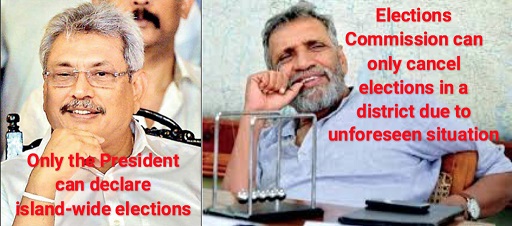
We have taller buildings but shorter tempers, wider Freeways, BUT NARROW VIEWPOINTS. We spend more, but have less, we buy more, but enjoy less. We have bigger houses and smaller families, more conveniences, but less time.
We have more degrees but less sense, more knowledge, BUT LESS JUDGEMENT. more experts, yet more problems, more medicine, but less wellness.
We drink too much, smoke too much, spend too recklessly, laugh too little, drive too fast, get too angry, stay up too late, get up too tired, read too little, watch TV too much, AND PRAY TOO SELDOM.
We have multiplied our possessions, but reduced our values. We talk too much, LOVE TOO SELDOM, and hate too often. We’ve learned how to make a living, but not a life. We’ve added years to life not life to years.
We’ve been all the way to the moon and back, but have trouble crossing the street to meet a new neighbor. We conquered outer space BUT NOT INNER SPACE. We’ve done larger things, but not better things. We’ve cleaned up the air, BUT POLLUTED THE SOUL.
We’ve conquered the atom, but not our prejudice. We write more, but learn less. We plan more, but accomplish less. We’ve learned to rush, but not to wait.
We build more computers to hold more information, to produce more copies than ever, but we communicate less and less. These are the times of fast foods and slow digestion, big men and small character, steep profits and SHALLOW RELATIONSHIPS.
These are the days of two incomes but more divorce, fancier houses, but broken homes. These are days of quick trips, disposable diapers, THROWAWAY MORALITY, one night stands, overweight bodies, and pills that do everything from cheer, to quiet, to kill.
By Sasanka Perera & Dev Nath Pathak Courtesy NewsIn.Asia
The multi-lingual broadcasts over Radio Ceylon culturally united communities divided into nation states after decolonization.
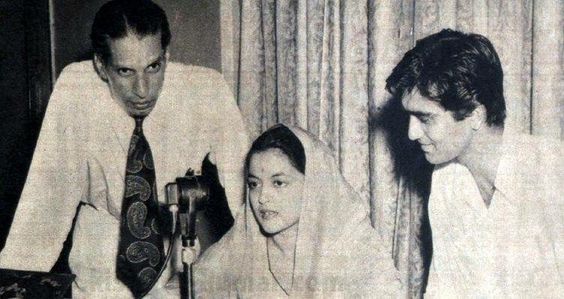
A young Sunil Dutt listening to Hindi film star Nalini Jaywant speaking over Radio Ceylon
New Delhi, May 6 (newsin.asia): Radio, in our view is not merely a matter of technology through which music, entertainment, information, news and increasingly fake news and many other forms of knowledge come to people. More importantly, by bringing all this, radio like all other forms of mass media also becomes a means of politics. When we refer to politics, we do not mean the contemporary popular understanding of the word that tend to denote divisive party politics in different national settings or across borders. Rather, we mean by it, a kind of social transformative politics of knowledge and ideas — whether actual programs on radio stations self-consciously tap into this potential or not.
And if there are intended politics by radio, there are also forms of cultural politics that come into being around radio. Such cultural politics engendered by radio programs, and listeners’ engagement with radio, could play a significant role in the formation of radio-communities across cultural contexts.
Communities of listeners in Sri Lanka, and in other parts of South Asia, could be bound by an invisible link created by waves of broadcasting. But this is not the same community that anthropologists have spoken of. The radio’s communities revel in partial anonymity, with partial unawareness of who all are tuned into radio to consume the same program. And yet, they are partaking on the same broadcast content, invisibly connected, and intangibly interacting with one another.
At times, the intangible interaction acquires tangibility as the anchor on the radio may announce the names of two or more listeners from different parts of the region sharing their sentiments and ideas.
It is in this latter broader understanding of politics that we would like to excavate two specific memories in this essay. One is the memory of Radio Ceylon itself and what it stood for in its time. The second is the iconic radio program, Binaca Geetmala, initially broadcast by Radio Ceylon, and later continued by the Sri Lanka Broadcasting Corporation (SLBC) when the former was renamed after the 1972 Constitution officially changed the name of the country. More specifically, what we have in mind is to explore briefly and reflect upon the cultural politics Radio Ceylon and Binaca Geetmala set in motion and to pose the question if such processes of politics is not possible in contemporary South Asia..
Cultural Politics of Radio Ceylon
Known as Colombo Radio, the precursor to Radio Ceylon was established in 1925 with the creative reuse of a radio transmitter ‘rescued’ from a sunken German submarine. It was effectively South Asia’s first public radio station. But the technical push that rapidly moved Radio Ceylon to write itself a more memorable history came in 1949 when the British military’s Radio SEAC managed by its South East Asia Command was moved to Colombo. Radio SEAC’s initial purpose was to entertain and provide information to British and allied troops in the region and beyond in the context of the Second World War.
In 1949, this World War Two military-cultural tool became Radio Ceylon. From this time onwards until its latter decline from the late 1960s onwards, Radio Ceylon’s sense of cultural politics and its interest in speaking to the world and to simultaneously bring the world of global culture to the region becomes apparent. It is in this context that V.S. Sambandan referred to this phase of Radio Ceylon as when Ceylon ruled the airwaves.”
Radio Ceylon’s sense of politics can be broadly identified in the following three ways:
1) First, to usher in a sense of professinal programing to radio in South Asia at a time such practices were literally unknown. In this context, and with particular reference to India Sambandan notes, for Indian radio enthusiasts of decades gone by, it was Radio Ceylon that set the standards” at a time when there were no commercial broadcasts in India for the purpose of entertainment. As such, listening to Radio Ceylon broadcasts was affectively taking a break from the monotonous, though informative, broadcasts of All India Radio (AIR)…”
2) Second, to speak to, entertain and inform the local population (in Ceylon) in Sinhala and Tamil and also in English.
3) Third, to speak to South Asia and particularly to India in English and Tamil (for India’s South, and particularly to what is known today as Tamil Nadu) and later in Hindi/Urdu (for the Hindustani belt) when Binaca Geetmala began. As noted by Sambandan, once tuned in, the listener was treated not just to music of the highest quality. The magnetic voices of broadcasters, Jimmy Barucha (English), Ameen Sayani (Hindi) and Mayilvaganam (Tamil), to mention just three, ensnared the listeners, taking Radio Ceylon to the top slot in the region’s radio network.”
At the height of Radio Ceylon’s popularity from the 1950s to 1970s, its following in India was considerable in addition to its local fan base. This was not only because of its offerings of Hindi movie songs via Binaca Geetmala as we will discuss later. But this was also because of the popularity of its English language songs and music from the West, which were not as readily available in India or elsewhere in South Asia at the time. As Nirupama Rao, the former Indian High Commissioner to Sri Lanka noted, I first heard The Beatles over Radio Ceylon. We grew up listening to songs over Radio Ceylon.”
It is this sense of cultural politics, which stands out as Radio Ceylon’s global cultural sensibility and cosmopolitanism. Its programs offered an opening to the country’s presence at the time as well as a window to global cultural fare. As Sambanadan notes, for Indians of the radio generation, Radio Ceylon was the first introduction to paradise-island and to the world of music.”
However since the late 1970s and more clearly since the 1980s there is a clear decline in Radio Ceylon’s and later Sri Lanka Broadcasting Corporation’s popularity both locally and in India. The reasons are quite similar.
The introduction of Vividh Bharathi, All India Radio’s commercial services offered an initial challenge to Radio Ceylon by presenting similar programs. It is no accident that Binaca Geetmala also moved to Vividh Bharathi and from Colombo to Delhi in 1989. On the other hand the cheap availability of prerecorded audio cassettes with popular music from 1970s onwards offered alternatives to Radio Ceylon’s programs, which people could listen to at their own time.
From the 1980s onwards the advent of television, private radio stations and finally FM stations also offered many more alternatives. These same conditions impacted the station’s local standing too. Equally crucially, over time, Sri Lanka Broadcasting Corporation could not live up to the standards Radio Ceylon had set in its own time. This was partly a matter of too closely entangling itself in the affairs of the state.
Also, as noted by Sambandan, SLBC lagged behind the times.” The ideal as he further notes should have been for SLBC to leverage its past and harness itself to the current developments in radio broadcasting.” This has simply not taken place.
Cultural Politics of Binaca Geetmala
The cultural politics of Binaca Geetmala has to be understood in the context the broader cultural politics of Radio Ceylon. Binaca Geetmala was a weekly program of radio countdown of Hindi cinema chart-busters blended with interesting infotainment on Hindi cinema anchored by Amin Sayani in what may be called ‘Hindustani,’ a mixture of Urdu and Hindi languages. It was aired via shortwave by Radio Ceylon from 1952 to 1988, and from 1989 to 1994 on All India Radio. Its peak however was during its run at Radio Ceylon.
The program had songs creatively interrupted by commentaries in the sonorous voice of Amin Sayani. The commentaries gave entertaining details of the songs, lyrics, and the singers. In other words, the songs were not merely presented for entertainment. They were also situated in their boarder socio-cultural context via the kind of information referred to above. The dramatic affect of the program was entrenched by fine editing and mixing. The songs that were added anew in each program were welcome with a bugle sound, which became iconic, and the songs, which stayed on in the program for many weeks, were also given an extraordinary bugle sound, an acoustic salute, referring to their longevity.
The memory of such an instance opens the locked secrets of cultural mobility beyond national territorial borders in South Asia. It also hints at the socio-cultural predilections toward something, which nation states might not have favored. After all, the Binaca Geetmala was not conceived by All India Radio (AIR), BBC, Voice of America or any other such national broadcaster of a powerful country with a variety of programs in different languages catering to linguistic communities across the world. These can only be seen as programs of power projection, which powerful countries have conventionally undertaken as in the case of BBC’s Sinhala, Hindi and many other language services and All India Radio’s Sinhala Service. Instead, Binaca Geetmala was a creation of Radio Ceylon, the national broadcaster of Sri Lanka, a country that had no interest or possibility of power projection across international borders. Nevertheless, in practice, Radio Ceylon, became a household name in the length and breath of India, which moved, The Hindu in a 2006 essay to describe the phenomenon as when Ceylon ruled the airwaves.”
In the political context in which Binaca Geetmala was conceived, it was a veritable godsend savior for Hindi cinema music lovers. In 1952, the same year that the program first aired, the government of India had banned Hindi cinema songs on All India Radio indicating its thinking on culture in extremely puritanical terms. B. V. Keskar, the Minister of Information and Broadcasting in the cabinet of Prime Minister Jawaharlal Nehru, was of the view that Hindi cinema songs will pollute the cultural sensibilities of post-independent India. At the time, it was state policy to encourage only what was thought to be pure, authentic, traditional, and classical music on the national radio in India.
It is in this specific context that the team of Binaca Geetmala approached Radio Ceylon, and quickly made arrangements to air the program from Colombo. Being hosted by the national broadcaster of Ceylon owned by the Ceylonese government, and that too to broadcast a genre of songs and music self-consciously banned by the Government of India on its own airwaves was quite a bold decision. It showed that democratic and independent decision-making was possible in Ceylon at the time even when it came to issues that literally crossed international borders.
Crucially however, this was the realm of culture and not politics as it is popularly understood. Nevertheless, the decision to broadcast Binaca Geetmala was clearly a political decision as it was also a subversive decision on the part of a government-owned radio station of a small country. It was a matter of very casually disregarding publicly stated cultural sensitivities of its bigger neighbor across the ocean.
The songs of Hindi cinema that Radio Ceylon broadcast were also received well by Sri Lankan listeners as well as audiences across India to whom the program was specifically targeted. This is in addition to secondary audiences in Nepal, Bangladesh and elsewhere in South Asia where short wave radio could reach, and where a taste for Hindi cinema songs was already established.
The growing listenership in Sri Lanka is particularly intriguing where Hindi is neither spoken nor understood. But it is Radio Ceylon’s Binaca Geetmala that played the most crucial role in popularizing Hindi film songs in Sri Lanka. In turn, this also ushered in another important dynamic of cultural politics. That is, the wholesale adaptation of the melodies of the most popular of these songs, to which Sinhala lyrics was introduced. For a short time in the 1960s the Sri Lankan government explicitly banned the practice of adapting Hindi movie song melodies for Sinhala lyrics. But given the porousness of the realm of culture, this was not a ban that could be sustained over time.
But the popularization of Binaca Geetmala and Radio Ceylon in India arose for different reasons. At one level, this phenomenon was not surprising since there was already a practice of Hindi language announcers joining Radio Ceylon to work in its Hindi service since the early 1950s. Partly, this was a lingering practice from the colonial era where colonial citizens could travel across to any country in the empire and particularly the region without much of a difficulty. This was also the time, the kind of restrictive nationalisms that took root in the region later, had not yet made its presence. So crossing borders and working across borders, particularly in the realm of culture was not embedded with the kind of anxieties one would experience today.
Also, as the earliest radio station in colonial South Asia, Radio Ceylon was a signpost for many artists willing to contribute to the realm of sound-art. Among many, Sunil Dutt was one of the announcers in the Hindi Service of Radio Ceylon. Later, Dutt became a well-known Hindi cinema star when he joined the film industry in Bombay. In other words, for listeners in India (not only in its Hindi belt, but in other language regions too), Hindi programming from Ceylon was a matter of ‘listening to the sounds of home’ and familiarization of the comfort-zone of home that were nevertheless emanating from beyond the borders of home.
More crucially, when this popular genre of songs was banned on All India Radio in 1952 as referred to above, Radio Ceylon was the only publicly accessible service, which offered such fare.
Besides all this, such a program also meant the production of commercial jingles for various products sold in India that added to the revenue of the government of Ceylon and later, Sri Lanka. On the other hand, Radio Ceylon also offered to Indian listeners music of the world through its very cosmopolitan English language service as referred to in the earlier section.
The transnational significance of the Radio Ceylon mapped a popular soundscape of South Asia. The popularity of Radio Ceylon and its presentation of popular Hindi cinema songs forced the cabinet of Pundit Jawaharlal Nehru to rethink its ban on cinema songs on the All India Radio. As a result, it decided to reinstate film songs on AIR in 1957. Moreover, All India Radio also started a special service called Vividh Bharti, which was dedicated to the songs of Hindi cinema was a direct response to the challenge from Radio Ceylon.
One of us (Dev Nath Pathak), as a growing boy in a small town in remote northern Bihar has anecdotal memory; Listening to radio was an important, and generic aspect of growing up; and amid various radio programs, it was particularly important to listen the Radio Ceylon. More importantly, the channel never appeared to be non-Indian and Ceylon seemed more like another town located somewhere very near though territorially afar. And despite the return of Hindi cinema songs on All India Radio later, Radio Ceylon remained popular among listeners until its pronounced decline.
Concluding Comments
In his 2006 essay on Radio Ceylon, Sambandan begins his discussion with the following observation and question: Once the pride of the region, Radio Ceylon is today a fading memory. Can the Sri Lanka Broadcasting Corporation regain its lost glory?” Sambandan’s reflections are an apt place to conclude our own thoughts.
There is no doubt that Radio Ceylon’s and Binaca Geetmala’s pioneering role in the soundscape of South Asia and particularly in India have been overtaken by radical cultural and technological transformations as briefly explained earlier. In this context, Radio Ceylon’s contemporary manifestation in the form of Sri Lanka Broadcasting Corporation, has become irrelevant in the South Asian soundscape since Binaca Geetmala went off the air in 1994.
Nevertheless the memories and histories of these earlier institutional innovations can be the ground for fertile thinking in the larger scheme of South Asia today. One source of memory is various recordings of Binaca Geetmala (particularly) which appeared in cassette and LP record forms, and now available on online music portals. These recorded programs remind a listener of what happened then. They concretize the listeners’ sense of nostalgia.
Even now, the Sri Lanka Broadcasting Corporation continues to have a Hindi Service and continues to receive letters from India requesting songs. But unlike in the past, the service now plays older songs produced before the 1970s and its listenership’s general age is about 50 years. The youth are not a part of its depleted fan base.
This brief history reveals a number of issues. One is a typical commonsense anxiety that popular music is a threat to traditional forms of music such as the folk and the classical. The nation state as well as some sections of the public operated on the premise of this anxiety. Efforts were made to protect what was thought of as the ‘authentic-traditions’, as in the case of the Indian example of banning Hindi cinema sings referred to earlier. The second alludes to the industry as well as a creative radio station such as Radio Ceylon, despite being owned by the Ceylonese state, catching up faster with the pulse of people than hegemonic and conventional national politics. This was evident from the soaring popularity of Radio Ceylon and its programs including Binaca Geetmala in India and Sri Lanka in particular and elsewhere in South Asia more generally. And the third refers to the fact that popular music travels across borders, and is capable of carving a sizable fan following, and also synergized diverse locals.
These three issues, put together, underlines the trans-local implications of what Radio Ceylon once stood for. It created a dynamic soundscape of South Asia inspite of the borders thrown up by nation states and the boundaries of minds. Radio was a window to the world and to the self. Radio Ceylon’s history, if understood within the nuances it offers, would provide and ideal basis to engage in cultural politics in contemporary times, albeit taking into account and addressing prevailing conditions, tastes and modes of broader politics.
( Authors Sasanka Perera & Dev Nath Pathak are from the Department of Sociology, South Asian University, New Delhi. This essay, drafted to organize the preliminary ideas for broader research project by the authors was initially published in Guvan Viduli Sameeksha, Volume 3; February 2020 published by the Department of Cultural Affairs, Government of Sri Lanka)
Acting Inspector General of Police has ordered the Terrorist Investigation Division (TID) to conduct a thorough investigation into the Non-Governmental Organisation, headed by lawyer Ejaaz Hizbullah, who is in the custody of the CID, as a suspect in connection with the Easter Sunday attacks.
The investigation into the NGO was ordered since it had been largely funded by two of the suicide bombers, who carried out the Easter Sunday attacks on churches and hotels, on 21 April 2019, Police headquarters sources said.
It has been revealed that the head office of the NGO is located in a building, purchased by the bombers.
The CID has received several reports that Mohammed Zahran Hashim, who planned the suicide attacks, on Easter Sunday, last year, had visited the building. The CID is conducting an investigation into the incident. The TID has been assigned to investigate the activities of the NGO.
Investigations have revealed that about six million rupees was credited to this NGO’s account, annually, and the NGO has spent a similar amount yearly. The account now has less than Rs. 20,000 and the cash flow, to the account, has ceased after the Easter Sunday attacks.
Investigators have also raised suspicions whether those involved in the Easter Sunday attacks also deposited the money in the NGO’s account, since the deposits made to the account ceased abruptly, after the attack.
It has been revealed that the Madrasa School, in Madurankuliya, was also started by the NGO, under investigation.
Investigations have revealed that the orphans were enrolled in the Madrassa school.
A senior CID officer said the orphaned children had been given jungle combat training and the CID had raided the training centre, in Wanathavilluwa.
The CID investigations have revealed that several politicians have worked closely with this NGO.
President Gotabaya Rajapaksa states that he is optimistic that the economy adversely affected by the COVID-19 pandemic could be re-built on a solid basis.
The Presidential Task Force in charge of the Economic Revival and Poverty Eradication has been entrusted with the responsibility of formulating a new economic model to achieve this objective. President directed that the Task Force should prepare economic plans with specified targets in different areas that come under its purview and implement them.
President expressed these views during a meeting with the members of the newly-appointed Task Force held at the Presidential Secretariat today (06) to discuss modalities relating to the resumption of civilian life and work from May 11th.
Apparel and tourism sectors which make a huge contribution to the national economy should be revitalized to suit the changing situations, President said.
President’s Media Division stated that the President is of the view that new opportunities are now open to attract tourists from countries where the COVID-19 virus has subdued.
Medical tourism can be promoted by highlighting the capabilities of an indigenous medical system that was used for the treatment of the virus-infected people. In order to encourage high-spending tourists, visa must be issued to them supplemented by an internationally recognized certificate, President noted.
President highlighted the possibility of strengthening the tourism sector by attracting long term travelers.
Members of the Task Force were directed to pay attention to promote domestic tourism so that the local hotel industry could be saved from collapse.
President also pointed out the possibility of attracting more foreign investors to invest in the Port City and the Industrial Zone in Hambantota. The Ministry Secretaries were entrusted with the responsibility of identifying opportunities for investments instead of seeking foreign loans.
During the last few weeks, a number of new innovations have been made in the country, and steps should be taken to introduce these products to the global market, said the President.
Head of the Task Force Basil Rajapaksa said that the newly instituted Task Force has the capability of fulfilling its mandate with a new vision in order to achieve objectives set out by the President. The Task Force will support new businesses and will extend the fullest cooperation to already existing large, medium and small scale enterprises, he stated.
Basil Rajapaksa stated that no loss of employment should take place both in the state and private sectors while the country is moving forward.
Recalling the recent requests by Sri Lankan students studying in other countries to return home, President remarked that it was an indication of the large number of students going overseas to pursue higher education. This has caused an immense outflow of foreign exchange income, he noted.
President Rajapaksa said that measures should be taken to expand investment opportunities in the field of tertiary education in the country so that outgoing foreign exchange could be saved while providing educational facilities to foreign students within Sri Lanka.
A large amount of money is being spent to import medicines annually when most of these medicines can be manufactured locally, said the President. The Task Force was requested to prepare the necessary background to develop pharmaceutical production in the country.
The production of vegetable and other seeds required by farmers domestically was also discussed at the meeting.
Secretary to the President P. B. Jayasundera, Secretary to the Prime Minister Gamini Senarath, several Ministry Secretaries and a number of leading businessmen also joined the discussion.
Sri Lanka Navy has not withdrawn from any operation pertaining to the anti-coronavirus campaign carried out in the country, Sri Lanka Navy said issuing a press release.
It points out that false information that the Sri Lanka Navy has temporarily withdrawn from the Covid-19 Control campaign is being circulated on several social networks and news websites.
However, it is emphasized that Sri Lanka Navy has not quit any operations carried out by the Navy in the national mechanism of controlling COVID-l9 and is doing its utmost contribution for the endeavor, said the Navy.
In addition, the press release also read that the Sri Lanka Navy has taken legal action against institutions and persons who published such false information.
A Fundamental Rights (FR) petition has been filed challenging the Gazette notification issued by the Election Commission declaring the General Election on June 20 as well as the Gazette notification on the dissolution of Parliament.
The General Secretary of Jathika Samagi Jana Balawegaya and former UNP Parliamentarian Ranjith Madduma Bandara has lodged the said petition.
The Attorney General in lieu of the President, Election Commission’s Chairman Mahinda Deshapriya and its members President’s Counsel N.J. Abeysekara and Prof.S. Rathnajeevan H.Hoole and the Attorney General have been cited as the respondents.
Mandatory provisions have been provided by the Constitution to fix a date for the parliamentary election and convene the new Parliament not later than 3 months from the dissolution of Parliament, the petitioner has said.
Accordingly, the President had published a Gazette notification on March 02, dissolving then-Parliament and the General Election was subsequently declared to be held on April 25, the petitioner stated, adding that the Election Commission later decided to postpone the poll to June 20 due to the local outbreak of COVID-19 virus.
However, the new date set for elections by the Election Commission is against the provisions of the Constitution, he has explained.
In addition, the Gazette issued by the President is invalid due to the failure to convene the new Parliament within 3 months of dissolution of the previous Parliament, the petitioner has argued.
According to the Appropriation Bill passed by the Parliament on the 23rd of October 2019, the current government is authorized to disburse state funds only until April 30, he argues further.
The petitioner went on to say that the President has rejected the requests made by the Joint Opposition to reconvene the dissolved Parliament and to approve necessary funds.
It is unconstitutional for the government to expend state funds without the approval of the Parliament, he added.
Hence, the petitioner seeks the Supreme Court to deliver a verdict that the government has violated fundamental rights through its actions.
He also requested the Supreme Court to rule that holding the General Election before the threat of COVID-19 is eliminated is a violation of fundamental rights.
The petitioner further urged the Supreme Court to issue an interim order declaring the temporary invalidation of the two gazette notifications on the dissolution of Parliament and holding the General Election on June 20.
Three persons who were previously identified as COVID-19 patients have been declared as COVID-19 negative today (06), stated Director-General of Health Services Dr. Anil Jasinghe.
Two residents of Rajagiriya and Kolonnawa and a nurse of Colombo National Hospital were identified to have contracted the novel coronavirus, yesterday (05).
However, following more testing as per protocol, it has been determined that the aforementioned individuals have not been infected by the virus, said Jasinghe.
Therefore, the Ministry of Health removed them from the registry of COVID-19 infections in the country, he added.
Considering the prevailing situation in the country, the Department of Railways has initiated a program to provide transport facilities for the employees who report for essential duties in the public and private sectors.
This scheme will be valid only for public and private sector employees who have obtained monthly or quarterly season tickets from both public and private sectors, said Deputy General Manager of Railways V. S. Polwattege.
Relevant tickets could be obtained by applying through the Heads of Institutions, he added.
However, passengers who are to receive the service should report to the station in advance, he further said.
Violent
extremism is easier to deal with. Authorities can locate venues of training and
gather groups being trained and even rehabilitate them. However, the task is
not simple when the masterminds of
violent extremism are disguised and camouflage themselves as high profile
persons, accepted & respected by society, holding powerful positions and
people who have by their actions built a name for themselves as model
personalities. When such an aura has been built around them, it is very
difficult for anyone to accept the news that they could even remotely harm a
fly. In such a scenario, there are many who may never believe, the high profile
persons linked to the Easter Sunday terror attacks in Sri Lanka. Sri Lanka is
dealing with an absolutely new phenomena of terrorism never before experienced.
Not only will Sri Lanka’s investigators have to investigate the likely next
targets but more troubling is to go into the minds of un-profiled personalities
and unveil their diabolical plans that are
camouflaged by their professions and the roles they play in society.
When
multiple acts of mass murder took place on 21/4 the attention and condemnation
automatically fell on the suicide bombers. In so doing, it emerged that the suicide bombers were rich, some foreign
educated and people who were from families respected in society. It was a
puzzle to all why rich & educated
Muslims living a good life would harbor so much hatred to destroy the lives of
people they did not know, people who did not harm them in any way.
It
was equally puzzling to those that knew them how they could have hidden their anger portraying themselves
differently. Their true face had been kept hidden. It is natural for many
to have doubts. People cannot be faulted for harboring doubt either. People
they never dreamed would harm another committed mass murder because of an
ideology they were following. But, the
most dangerous lot are disguised and camouflaged under various roles &
faces. They continue to drum a murderous ideology into the minds of others.
Ideological extremism taking the form
of disguise is the most dangerous threat to a country & its citizens. The entire society is made vulnerable. We do not
know the enemy. It is like COVID19. We cannot determine its shape or form. When
it hits us, it is too late. That’s what happened on 21/4.
The
rise in Islamic radicalism in Sri Lanka is nothing anyone can claim ignorance
of. Even the most ordinary citizen was watching the Muslims that once lived as
a co-partner with the heritage of Sri Lanka and embracing its ancient culture
slowly carving out a separate identity via dress, food, banking, marriage laws
and behavior. The problem took a political dimension after establishing the
SLMC and the increase in foreign funding together with foreign preachers most
of whom were preaching their own version of Islam and drew their following by
the power of the money they disbursed.
The community-clan protective shield was
adopted every time their motives and actions were brought to light by flagging global
slogans ‘hate speech, racism, minority discrimination’ to prevent action being
taken against them while at the business and political levels the threats were ‘you
will lose our vote’ ‘don’t expect political funding from us’. So the country was sitting on a volcano as a result
of these actions & inactions.
The
majority of terrorist organizations thrive in poverty stricken nations drawing
poor who take to arms as a means of livelihood and to gain a power over society
that they did not yield before. A good look at the terrorist groups operational
globally, it is not difficult to comprehend the poor backgrounds of the Islamic
terrorist groups and even the poverty of the Islamic terror victims. This is
indeed a very sad scenario. Confounding the situation is the reality that all of
these terror groups are being manipulated by non-Muslims giving arms to Muslims
to kill Muslims. However much, anyone may argue, this is the reality. So, we
have a group supplying the arms, another group supplying the training, another
group doing the radicalization, another group drawing the followers, another
group doing the promotions…likewise the groups increase but no one knows who
are the real figureheads manipulating some or all of these entities.
The frightening aspect is that those manipulating people
to kill are personalities we would least imagine.But, as the
Easter Sunday debacle will soon reveal the masterminds behind the mass killing
are people who were functioning under a disguise, pretending to be what they
are not and plotting to harm us while presenting to us that they are our
friend. Very frightening scenario for non-Muslims and even Muslims
The
question relevant and puzzling to all of us in Sri Lanka is, why did foreign
educated, rich and socially accepted set of Muslims decide to turn suicide
bombers and commit mass murder? How many more are waiting in disguise? How
volatile is the situation for the rest of the citizens? The situation should
worry both Muslims and non-Muslims for the simple reason that out of the blue a
group of people planned a commit mass murder. Even Muslims perished on Easter
Sunday. Their ideology did not wish to even protect their own!
One year on not only do we still not
know who are the real masterminds behind this but more importantly we do not
know why. At least, with LTTE
suicide bombers, we know they were indoctrinated to fight for a separate state.
Right or wrong, they believed they could achieve that through violence, terror
& gun. The same indoctrination spurred JVP to attack the State in 1970s and
1980s. But, this Islamic terror situation is baffling all of us and in reality
is the worst scenario. We do not know who among those we move around with can
be harboring hidden hatred to the extent of wanting to blow up people. There
are some who would jump to say such fear is exaggerated and unwarranted.
Ignoring 97 warnings is what led to the mass murder that took place on 21/4 and
we have every reason to not only be worried but translate the doubt and fear
into taking every precaution.
People
had every right to feel anger at what ensued on 21/4 Easter Sunday at multiple
locations. The discoveries of swords, detonators, satellite equipment, army
uniforms, mobile SIMs, revealing of radicalism in school textbooks, the
madrassas curricular etc increased their fear.
Given that the masterminds were
disguised & holding high-profile roles or were associated with nefarious
entities, they mitigated that fear by internationally and locally presenting a
rise in hate speech and racism to drown attention getting directed to unveiling
their roles in it. They were masters
at turning any bad situation to their advantage because they had the power,
funds and people in various roles to execute the task.
The
natural fears of people were quickly suppressed by spreading a notion that the
minority Muslims were being attacked. Such cover-up is not doing any good or
helping Sri Lanka to unearth other manifestations that may be cooking or
gathering momentum. Once, an attack of this nature has been committed no one
can expect things to be looked at in the same way as that took place before. Even
LTTE was supported by plenty of Tamils & non-LTTE and even after demise of
the LTTE there are many who continue to support LTTE fronts for separatism by
pen.
A
year after mass murder took place, we are seeing some shocking arrests and
disclosures. What is shocking is to come
to terms with the fact that very high-profile people were masterminds of Easter
Sunday. That they have people coming forward to defend them is either
through ignorance or they too are part of a cartel that are Satan’s
missionaries. The signatories darting to
defend the arrested, are the same names that rallied to defend LTTE separatists
or destabilizing operations in Sri Lanka.
What
should be shocking to all is that there are people who are disguising their
true intent working for or associated with global and socially accepted entities
and by virtue of that they are either globally defended or it becomes more
difficult for society to accept their true colurs. It is also a tedious task
for intelligence services to uncover their true intent & expose them.
It
is a real pity that none of those darting to defend the arrested never thought for
once to offer their services to the victims of the Easter Sunday, many who lie
crippled in hospital, on death bed or with no means to survive and traumatized
over what took place.
Ideological extremism, being promoted by people hiding their plans by high profile roles & using their positions to hide their extremism and advance their extremism is the danger Sri Lanka is now faced with. How does society deal with this new aspect?
Those masquerading as hr activists, academics, professionals, lawyers etc … and drilling murderous ideology are far more dangerous than those that commit suicide and carry out their orders.
Prior to the Presidential election, there were two main arguments, viz. 1. Abolition of Executive Presidency and 2. After 19A, the role of the Executive Presidency has no powers.
The abolition of EP is now a lost cause. In fact, the emerging facts and the ground support rallying around the EP, the incumbent Gotabaya Rajapakse is taking the nation towards the next level. Unlike in the past, Gota’s photos are not displayed on the walls of government departments and state corporations. He does not address the nation or issues special announcements on a daily basis. The key element of a Leader is the ability to delegate. President Gotabaya is a clever delegator and he selects the Right Person for the Right Job at the Right Time and put in Right Place.
Corona came in as a shock for the nation. The opposition gave no support to handle the situation. But President Gotabaya stamped his authority over the local political enemies and anti-Sri Lankan international forces to establish him as Leader of the nation, without the support of the Parliament. Mr. Jayayampathy Wickremaratne, a national list MP and a dual citizenship holder attempted to ruin the country with Ranil and foreigners. He failed. He is now hiding in Switzerland, the country that attempted to destroy the image of President Gotabaya by using Siriyalatha alias Gania Banister.
The
second argument that the 19A reduced the powers of the EP was a valid argument
for those who narrowly looked at 19A ignoring the Powers of EP
incorporated in the constitution. In addition, the way in which former
President Sirisena conducted his affairs eroded the role of EP to the level of
a street urchin.
Surely, we need to reduce or reallocate the powers of the Speaker, Election Commission, IGP, and Parliament, going forward. This will be discussed in a future article.
For now, with or without 19A, President Gotabaya is capable of delivering the goods.
This was a
unique cultural event held at the University of Toronto’s prestigious Robarts
Library, from May 21 to 30, 2005, to mark firstly, Vesak”, the most holy and venerated
time of the year for Buddhists, and secondly, in commemoration of 100 years of
Buddhism in Canada.
Vesak full-moon day, which usually falls in May, has threefold significance for Buddhists, namely, the birth of Prince Siddhartha the Buddha to be, his attainment of enlightenment and his final passing away referred to in Buddhism as the Buddha’s ‘mahaparinibbana’. For people of Sri Lanka, Vesak also marks the beginning of the Buddhist New Year and the arrival in Sri Lanka of Prince Vijaya, the founder of the island’s mainstream Sinhala community. Vesak has been the primary national festival of Sri Lanka since the 3rd century BCE, for almost 2300 years.
THE EXHIBITION
The highlight of this unique cultural event
held in Canada for was the Photographic Exhibition and Documentary Film show on
Sri Lanka’s rich Heritage of Buddhist Paintings. This public event was facilitated
by the University of Toronto, and was organized and presented by Dr. Daya
Hewapathirane and a team of enthusiastic
Buddhist youth volunteers from the University of Toronto, York
University and Ryerson University.
The exhibition highlighted the richness of Sri Lanka’s visual arts inspired by Buddhism and the Buddhist tradition. It displayed over 300 enlarged photographs of spectacular Buddhist works of art found in a wide assortment of Buddhist shrines located across Sri Lanka, thereby providing a comprehensive perspective of the island’s rich heritage of Buddhist art, spanning over a period that exceeds 2200 years. Exhibits were displayed chronologically, in the form of a visual pilgrimage to a wide assortment of Buddhist sites of Sri Lanka, including its World Heritage Sites” containing exquisite ancient Buddhist works of art.
In parallel with the Exhibition was the
screening in the University of Toronto theatre, of a Documentary Film titled Arts of the Ancient
World: Heritage of Buddhist Paintings of Sri Lanka”, produced by Dr. Daya
Hewapathirane, with the outstanding Art
Direction of Arjuna Samarakoon of
Trillion Design Inc. of Toronto. For
many who saw it, this film was an exciting experience, eliciting vividly the
richness of imagination, creativity, aesthetic sense and inspiration of Sri
Lankan artists.
This event was planned as a place where
people could see, appreciate and learn; a place that stimulates a sense of
pleasure, pride and discovery; as an experience, which provides an aesthetic
challenge resulting in a greater cultural awareness and discernment. Buddhist
paintings are among the most gentle and sublime art of mankind. They are among
the oldest surviving art of the historic period in the Indian subcontinent from
the 3rd century BCE when the Great Indian Emperor Ashoka was instrumental in
the spread of Buddhism to Sri Lanka and all over Asia. Sri Lanka became the
centre of the earlier Theravada Order of Buddhism from where the Buddhist
tradition traveled to the countries of South-East Asia. The religion and the
art associated with it had a transforming effect on the countries which it
reached and, till today, the art heritage of Buddhism flourishes in the Asian
continent.
Buddhism, which was introduced to Sri
Lanka in the 3rd century BCE, was the primary source of inspiration and
influence for artists, sculptors and architects of the country. Paintings form
a dominant component of the heritage of Sinhala Buddhists. A spectacular
collection of ancient sculpture and architecture further adorns the conspicuous
elements of the island’s Sinhala Buddhist culture. For some 2500 years, the Sinhala
people inhabited Sri Lanka as its dominant community. Up to the 16th
century, they accounted for over 99% of the population and all were Buddhists. They
form 75% of island’s present population and about 95% of them are Buddhists.
BUDDHIST
SITES WITH PAINTINGS
Innumerable ancient sites with paintings are scattered throughout the country – north, south, east and west, in the hill country and the coastal areas. The large majority of Buddhist paintings are found in Buddhist ‘vihara’ (shrine) and monasteries, the best known are those in ancient cities such as Anuradhapura, Polonnaruwa, Dambulla, Sigiriya, and Mahanuwara (Kandy). All these cities were designated by the UNESCO as World Heritage Sites, owing to their artistic treasures, considered as masterpieces of human creative genius. Paintings found in ancient cave temples are over 2000 years old and some more than a 1000 years. Most of the earliest paintings are found in a fragmentary form. Among the oldest paintings are those on rock surfaces in caves, and walls of relic chambers inside ancient ‘dagoba’ or ‘stupa’ (pagoda). Most of these sites are ‘Raja Maha Viharas’ or Buddhist temples established by Sinhala kings, or which received their patronage in ancient times. UNESCO has identified 1037 shrines with paintings which are more than 100 years old. Paintings are found on ancient cave and rock surfaces, walls, ceilings, doors, wooden surfaces, statues and other sculpture, pottery/earthenware and on cloth or textiles. Paintings were done on a layer of plaster applied over these surfaces. Material used on all surfaces were natural, obtained from the immediate environment. Some of these products were boiled and processed in different ways in order to obtain necessary shades of colours.
The predominant themes of ancient
artistic pursuits were the life of the Buddha, ‘Jataka Tales’ based on former
lives of the Buddha. Some narrative paintings are reflective of the teachings
of the Buddha. Paintings reveal the great adoration the artists had
towards the Buddha and the strong inspiration drawn from the Buddha’s life and
teachings. Buddhist
paintings have a strong impact on one’s inner spirit, transforming your mind to
a state of innocence and overflowing compassion, joy and peacefulness.
According to the Buddha’s teachings, developing tranquility of mind is
fundamental to the development of wisdom.
PERIODS OF ART
(from 3rd century BCE to 21st century)
Based on general differences in art traditions the
following major periods of art can be identified:
(1)
Classical Period
(a) Anuradhapura Period : 3rd century BCE to 10th c.CE
(b) Polonnaruwa
Period : 11th to 13th c. CE
(2) Period of Changing Capitals : 13th to 17th c. CE
(3) Mahanuwara Period : 18th to 19th c. CE
(4) Modern Period: 20th century onwards
The Classical Period
The classical
style of Sinhala art is naturalistic, exemplifying a transformation of nature
by imaginative contemplation. Paintings show a highly tasteful use of a variety
of colours and a skilful depiction of facial expressions of the figures. With the exclusion of Sigiriya, most of the
surviving ancient paintings of the Classical Period such as those of the Tivanka Pilimage in
Polonnaruwa, are found in fragmentary form. Most were destroyed when foreigners
invaded the Sinhala kingdoms of Sri Lanka.
Period Of Changing Capitals
Political instability of this period had
a negative impact on people’s artistic initiatives. South Indian invaders
plundered local settlements and inflicted widespread damage to Buddhist temples.
Mahanuwara (Kandyan) Period
Paintings exhibit a predominantly
stylized form, referred to by art professionals as ‘abstract symbolism’. It is
a unique art form of great appeal, with its own dynamics and structural
properties.
The Modern Period
Enchanting modern paintings are found the
Kelani Raja Maha Vihare, Gotami Vihare, and Bellanwila Vihara. Also, several
modern artists and photographers have contributed to the conservation of
ancient paintings by producing near perfect reproductions on canvas and some
commendable photographic reproductions.
SERENE JOY AND EMOTION
The exhibition and film show were occasions for those interested generally in art and art history, and for creative artists in general, to enjoy and draw inspiration from, an array of work of art ancient and modern, that are of great aesthetic appeal and artistic value. It was an occasion where art enthusiasts interacted freely and were sharing observations and feelings on Sri Lankan art. The exhibition and film show provided considerable opportunities for intercultural dialogue and appreciation by the diversity of visitors. Besides, judged by the reaction of some visitors, this event generated a good amount of interest in conserving and promoting these priceless treasures. Being a Canadian of Sri Lankan descent, initiatives of this nature which Canada encourages, inevitably makes me feel good about being a Canadian. Canada has been the meeting place of all cultures of the world and also a place where these cultures are well nurtured. Our sense of Canadian identity derives from an understanding of our shared cultures and the richness of our collective histories. We are hopeful that our endeavors will generate increased awareness of the richness of this cultural heritage, and lead to greater interest in its conservation.
The festive inauguration of the Exhibition Documentary Film show on May 21st 2005, was marked by a Buddhist Cultural Festival, attended by a large number of people, including Buddhists representing all Buddhist traditions, and non-Buddhists. Among the special invitees were dignitaries from the Toronto City, Universities and cultural establishments. This Cultural festival included musical recitals, traditional drumming, an assortment of traditional dances performed by youth and children, and a slide show on ancient Sinhala sculpture and architecture. The active participation of reputed performers and artists of the Ontario Sri Lanka community was a welcome addition to this spectacular cultural event (Latha Dissanayake (singing), Sampath Edirisinghe(singing and Music), Praneeth Alawatte (traditional drums), Dhuwaraka Sivathasam (table), Mitra Ramlakhan, Bakthi Deeyadaha (dance), Janani Nithiyeswaran(dance), Natalie Garth(dance), Rebecca Hettige(dance) and Keesha Jinadasa(dance).
Dr. Daya Hewapathirane
COMMENTS MADE
BY VISITORS
• A most impressive photo
documentation. Completely unique – We
had a detailed tour by Yoshani DeSilva.
Robert
Siebelhoff
• Thank you for such a wonderful
introduction to Sri Lankan Art. The tour was informative, the people receptive
and pleasant to talk to. We look forward to seeing the documentary film
tonight.
Razmiera
Justin (ineligible)
• Thank you so much for the personal
tour of the exhibition. You have inspired us to visit these wonderful sites ourselves
as soon as we can. Your images of sculpture and paintings are truly
stunning! With Thanks
Mary
& Ron Dergh (inelligeble)
• This is really fantastic. I enjoyed
it very much. Great work.
Loles (inelligeble)
• A really powerful display. Pity my
students can’t attend as a group for the great learning experience – self
identity and self esteem!
M.
Chang
• Wonderful exhibit! Students very
helpful and enthusiastic!! Spread this cultural exhibit throughout Canada for
others to enjoy.
B…
(inelligeble)
• I found the exhibit overwhelming – a
revelation, not only the beauty and
elegance – the sheer extent and variety – and exuberance and vitality.
James
Beckmann
• I enjoyed the documentary film
tremendously. The use of colour and the beautiful design work are simply
wonderful. I have two suggestions for editing. 1. the music in the first
section employing the mail narrator drowns out his voice. 2. the word capitals
is misspelled several times. Best wishes to you in finding a venue for future
exhibits.
Michelle
Farell
• Both events were very enriching and
have opened my eyes to such an artistic and spiritual culture. The movie was
very informative and detailed towards Buddhist art and culture and has kindled
a greater interest in understanding the different symbols and representations
used in Buddhist art work. Participating in the art exhibition was truly and
honour and privilege.
Mitra
Ramlakhan
• Excellent presentation. Very
interesting, informative and beautiful work.
Angela
Colm
• Wow! I was very impressed about the
quality of the production
(inelligeble)
• Good luck guys!!! You were moved from
the heart in undertaking this project. (keep it up)
Michael
Banate (inelligeble)
• Very educational and personally
interesting to learn about Buddhist history and art in Sri Lanka. A very good
documentary and surprising that it is a pioneer effort. I’m impressed about the
talent of everyone who worked on this project
Sujhan
P. (inelligeble)
• As an artist I am overwhelmed by the
time it took to paint all these surfaces. I have been reading and studying
Buddhism for the past year and finally found the spiritual outlet I needed – I
thank you for the tour and much enjoyed this exhibition.
Cynthia
Lineel (inelligeble)
• It’s wonderful! To get in the
buddha’s realm through the exhibition! Best wishes to keep going on! The
compassionate heart
Luat
Tran
• It’s good to see something which is
spirituality instead of just high technology and science. This exhibition
brings me one more step forward towards Buddhism. Nowadays people really need
this kind of information though they don’t think so. Keep going!!
Alan
• The most beautiful paintings of love,
peace, enlightenment, devotion and all that is good in our world. Thank You.
Peace, love and Blessings
Kathy
Mstapha- Ali (CTS Television)
• Thank You very much for letting me
have a good chance to view all these valuable historical remains. I am a visual
artist, so you will understand how I appreciate this exhibition. Also as a
Buddhist this exhibition is very important to me – educationally and in terms
of appreciation of art. Thanks for all you hard work and look forward to see
you next year.
Miranda
Mak (Canadian Multicultural Links Association)
• I am moved by the delicacy of detail,
the richness of colour, texture and motif and the endurance of the materials
over time
Mosa
Meshma Mcnelly (inelligeble)
• Quite encouraging. Lots of efforts
put. Thanks…., we viewers speak for you
Nishtha
Rajiv Dhiman
• A wonderful experience seeing the
photos was almost being in front of the images. May this exhibit continue to
delight and inform wherever it can go.
Dr.
Carol Farkas (inelligeble)
• This is really fantastic. I enjoyed
it very much. Great work.
Loles
(inelligeble)
• Really powerful display. Pity my
students cant attend as a group for this great learning experience it could be
for self identity and self –esteem!
• The photographs are amazing. Sorry I
missed the documentary film. Hopefully the documentary film contains the
history of the rich culture.
Loretta
Wong
M.Chang
• A wonderful exhibit! Students were
helpful and enthusiastic! Spread this great cultural exhibit throughout Canada
for others to enjoy!
B.
(inelligeble)
• We appreciate the art at you exhibit.
It is great job and big success to Sri Lanka.
G.
(inelligeble)
• Impressive exhibition.
Evelyn
Chan
• Thank You very much for the
comprehensive exhibit that are exquisite and informative and educational.
Enjoyed the Tour given by Yoshani and Discussion with Daya
Frank
Yong
• I really enjoyed ancient Buddhist
Paintings and Statues in Sri Lanka. These are all beautiful and attract my
interest. For sure I would travel to Sri Lanka to see them in an year.
Takashi
Igarashi
• Very informative and extremely
interesting. A spectacular exhibition! I would definitely recommend this show
case to friends and family who take interest in the Buddhist Tradition in South-East
Asia.
Sydney
Trang
• I would like to keep in touch about
future exhibitions. I belong to an art gallery and interested in various art
work
Kathy
Mac Isaac
• Please send me information on Jataka
Al
Karim Dharsee
• It’s a one of a kind exhibit, rare
historic serene images photographed in one of the most remote areas of the
world for all of us to enjoy and appreciate.
Neal
Van Meter
• Excellent Presentation. Should be
shown on Program Opening Night” Thursday Night on CBC.
(inelligeble)
• Excellent visual quality and contour
supports the magnificent contents of the film. Minor auditory problems in
presentation – could not always understand the male voice in early part of the
film – I think technical problems with the equipment. Otherwise, its perfect.
Neil
Van Meter
• Thanks for this wonderful film you
enabled me to see. Such an impressive and spiritual art of Sri Lanka. As a
person interested greatly in Buddhism I
was really impressed on all the art and I’d only encourage people to
visit Sri Lanka. Thank you so much.
Christine
Hiratsuka
• Wonderful! Best Wishes to success
& spiritual harmony
Luat
Tran
• Magnificent cultural and religious
achievements. Deserves greater knowledge!!
Robert
Siebelhoff
• Very interesting. I had not known any
of the history of Sri Lanka it’s art. This gave me some of both.
George
Bacon
• Very interesting and fascinating. I
enjoyed the documentary very much. It is very interesting to see Buddhist art
to compare to those of China. Thank you. Great work.
Lery
Lieng Chun (inelligeble)
• It is a wonderful exhibition. Third
time I saw in Toronto. Promoting our culture to the world through our Buddhist
Photos of Paintings is unique venture. Sri Lankan’s must be proud of your
scholarly works. All the best in your future endeavors too.
C.S
Poolokasingham (Consul General, Sri Lanka in Toronto)
• Once again, you’ve have done us Sri
Lankans living here as one Nation, proud! The Show you have put up this time
around is even greater and better! But the greatest thing about your flashing
vision is that now it has got wings and there’s a whole community to help you
soar… for the love of the country that have all of us, you and me, a name and
identity! Congratulations and Best Wishes.
Aloy
Perera
• I think I would underestimating my
feelings if I say that you have done a fantastic job, organizing an exhibition
of this nature. At times I was simply spellbound – to say the least. Please carry on the good work. We wish you
well.
Anonymous
Sri Lankans
• It’s a pleasure to be here today and
enjoy this incredible Buddhist painting exhibition after a long time. With
thank you so much for taking us 2500 years back and sharing the historical
information.
Anushka
& Bimal Abeywardena
• I was highly impressed by the great
work you have done. Even though I’m a Sri Lankan by origin and have tried to
visit most of these temples while I was there, there was so much that we missed
and I should note that some paintings that were exhibited were very rare ones,
those of which caught my mere attention. It made me realized ones again of the
great heritage we do hold but are not aware of. In a time where ancient things
are fading away gradually and especially in a foreign country, what you have
done is marvelous. But also the short but really factual and interesting
lectures, gave me a glimpse of many things I didn’t know. This step taken by
you to value our ancient Buddhist paintings is both a great asset to us Lankans
and foreigners living here. How beautiful these paintings are I simply feel
inexpressible to describe them. They so attractive and thank you so much for
all your hard work valuable time and money you spent in order to make this
event a success.
Dilini
Jayasinghe
• I really enjoyed this event. The
paintings you have brought here are so beautiful. Your effort was certainly
successful. Wish you all the best in continuing this kind of great events to
value are ancient heritage. Thank you.
Asoka
Perera
• I enjoyed the tour of the exhibition.
I understood more about the pictures with the explanations about them and it
made me enjoy and appreciate more. I enjoyed the modern paintings and the
pictures of Sigiriya. I like looking at the pictures in order because it made
more sense.
Anushie
Mahavitane
• I like the items in the exhibition.
Daya did a good job exhibiting these rare valuable paintings which reflect our
religion and culture. It made me proud to show the whole world about our
religion and culture.
Kushlan
Seneviratne
• Very well organized to demonstrate
how Buddhist art has evolved over the centuries. Pictures are breathtaking and
inspirational. Now when I visit the temples I will have a basic understanding
and appreciation of Buddhist culture.
Nilu
Mahavitane
• Thank you very much for the
exhibition of photo images of Buddhist paintings. I enjoyed it.
Nimna
Fernando
• I am so glad that Quintus and I were
able to make time even on the last day to visit City Hall. All of us visit
these Temples and marvel at the paintings and architecture, but we have never
had such detailed information to go along with what we have seen in terms of
Buddhist culture. The long hours of research, dedication and the obvious love
of history has made this Exhibition and eye opener to all of us. In short, it
was and AWESOME EXHIBITION!
Quintus
& Krishanthi Ratnayake
• Nice movie, it would be nice to have
something available online for further information.
Rodrigo
• It was a great pleasure to be a part
of this event
Predeep
Waragoda
• The arts are exhibited really well
and we enjoyed a lot seeing the heritage of Buddhist pictures. Hard work and
effort was well worth for reverse.
Lucky
and Champa Viswakula
• Great step taken to show the Sri
Lanka culture and the art to the world.
Thusitha
Weerasuriya
• It’s a great exhibition. Keep it up.
Chanaka
Gausaethige (inelligeble)
• It is really great that a culture and
art that as these are being promoted in a foreign country like Canada.
Shri
• Great effort, wonderful presentation.
Thank you very much.
Ranjan
& Neru Weerasinghe
• Very interesting, good work, enjoyed
very much.
Rupi
Wadugodapitiya
• It’s amazing to see how much work you
have put into this project! I thoroughly enjoyed it as it brought back so many,
many memories. I hope you will continue and make more of these available to
us!! Congratulations one job. Well done.
Krishanthi
Ratnayake
• Arju….Very well done. Enriching
experience, looking forwart to any future films…
K.B.
• WOW! That was so good .. we really
found most interesting and educational. Exceptionally good.
The third nikaya to emerge in Sri Lanka was
the Ramanna Nikaya. Ramanna nikaya was started byAmbagahawatte Saranankara. (b. 1832)
He had received the Kalyani Upasampada of the Siyam Nikaya from Benthara
Atthadassi, but later found that this
ordination was suspect. Instead of joining Amarapura nikaya, Ambahawatte
Saranankara decided to go to Burma and bring back a fresh Upasampada.
Kulatunge gives two possible reasons for this.
He says low country Siyam Nikaya had become disgusted with their own Nikaya,
which they said was corrupt and the bhikkhus immoral. Standards of the low country monks had deteriorated. Vagegoda Dhammakusala, of Rankotmale vihara,
Vagegoda, close to Tangalle, had some time before, written to Saranankara Sangharaja
about the unprincipled behavior of the low country Siyam monks.
Low country Siyam also found that Malwatte
looked down on them as second class. Low country Siyam monks were
not given equal status by Malwatte, though they were equally learned. It is
difficult to see how these could have been precipitating causes for Ven.
Ambagahawatte to run to Burma, but these are the explanations Kulatunge has
found.
Kulatunge says Ambahawatte Saranankara had
been influenced to go to Burma by his teacher Ven. Bulatgama Dhammalankara. Two bhikkhus who had got ordained in Burma
earlier, Pohoddaramulle Vanaratana and
Vaskaduwe Dhammakkhanda had also told him about Burma.
Ambahawatte Saranankara left for Burma in
1860, with Dipegoda Silakkandha, Palpola Dhammadassi, two samanera and two
laymen. He received higher ordination in
1861 in Ramanna desa in Lower Burma,
from Neyyadhamma
Munivara nanakitsiri Sangharaja of Ratnapunna Vihara. He was
given the name ‘Indasabhavaranana Sami’. He received a second ordination
at Udakukkhepa Sima, in Irrawaddy River.
The team returned in 1862 to Galle harbor, to
a great welcome. Those assembled to meet him included Ven. Bulatgama
Dhammalankara of Paramananda Vihara in Galle and Ven. Akmimana Sobhita of
Vijayananda Pirivena in Wellawatte in Colombo.
Thereafter the first higher ordination of the
new Ramanna Nikaya was performed in 1864 at Udakukkhepa sima at Mahamodera
Galle. Those ordained were all from Siyam nikaya. The delay of two years was because they were
waiting to join up with two other monks, Ven. Warapitiye Sumitta and
Puwakdandave Pannananda , who had also gone to obtain ordination from
Siam and Ramanna. Sumitta acted as the Preceptor for the Ramanna Upasampada.
Kulatunge also mentions another ordination. He says 16 from Matara nikaya and five from Ambagaswatte group had,
assembled at Sailabimbaramaya in Dodanduwa and got ordained and entered the
order under Mirisse Dhammananda. Ambagahawatte had signed as Ambagahawatte
Indasabhavaranana Sami in the articles of association of this
nikaya. It is not clear how these two
ordinations link up.
A second Ramanna Higher ordination ceremony
was held at Gampola in 1867. An Udakukkhepa sima was built on Mahaweli Ganga at
Rankada Ella near Gampola by the owner of Unambuwa walawwa, Gampola, with the
assistance of others. The bhikkhus of
the aranyavasi group received ordination from Ramanna there.
Ramanna Nikaya has looked to the forest monks
to increase its ranks. Most of the forest monks at the time were attached to
Asgiri. They were happy to leave Asgiri and join Ramanna as all sorts of charges
were made against Asgiri. Ramanna
Nikaya is today known for its vanavasi monks.
Ramanna spread in Nuwara Kalaviya, Sat Korale,
Satara Korale, Dumbara, Matale, Hevaheta, Uda palata. Ramanna also expanded into Kegalla and Dambadeniya,
helped by bhikkhus such as Minvane Dhamma kusala, Katugastota Sumanatissa and
Naranpanave Indrajoti.
There were other bhikkhu lineages that
supported the spread of Ramanna in the up country. They included, Sarananda
bhikku paramparava, whose center, Sarananda Pirivena was in Anuradhapura. Also
the Waduwatte parapura and the Handagala parapura in Nuwara Kalaviya. Handagala vihara in Hurulu palata is a
Ramanna vihara. The Vanavasi parapura of Kossokanda at Maradankadavala which
has links with the Handagala group also helped propagate Ramanna.
Ramanna nikaya had its own distinctive style.
They used begging bowls instead of plates. Instead of umbrellas, they used
folded palmyrah leaves, in the form of “bogava”. The
bogava introduced by Ambagahawatte was made usable by CB Nugawela, chairman of
the Up country Sabha for the Protection of Nikaya. They wore robes that
were dyed according to the traditional
rules.
More important, Ramanna did not allow devales
for various gods to be built in their
temples. They rejected the worship of the gods.In
1871 Ambagahawatte began a debate on the subject. The Deva puja vadaya” continued for three or four decades.
Ramanna Nikaya was considered to have pure,
disciplined, virtuous bhikkhus, stated Kulatunge. Ramanna gave ordination to
anyone without caste discrimination. These
practices impressed the intelligentsia and they supported the Ramanna nikaya,
said Kulatunge.
Ramanna succession led to many disputes and
the possibility of splits. However, Kulatunge reports that ‘all acted in unity while
performing Upasampada. Regional Samagri Samgha sabhas were set up, such as the
Up country Sri Athadassi Sangha sabha of the Gallangolla Samgha Community.
This Gallangolla samgha community, which is vanvasi,
objected to Ramanna obtaining registration from the government .They said that
in ancient times there was no such thing.
This was interference into their freedom. They split and formed the
Mulika Ramanna Nikaya in 1954. They reunited
with the rest of Ramanna in 1968.
The three nikayas were named after the places
from where they got their higher
ordinations. Siyam Nikaya simply took the name of the country the Upasampada came
from, Siam. In the case of Amarapura and Ramanna, they took the name of the
Burmese region that the ordination came from. Amarapura was in Upper Burma
close to present day Mandalay. Ramanna desa was in Lower Burma. Hamsavati was
one of the three divisions in Ramanna.
The Sangha never liked the fact that the two
Nikayas which had broken away from Siyam, Amarapura and Ramanna, were operating
as separate nikayas, bringing the total of main Nikayas to three. The Sangha
wanted to see the two ‘younger’ Nikayas brought together
A historic
agreement merging the Amarapura and Ramanna Chapters was signed in 2019.The two
chapters would hereafter be known as a single entity, the Sri Lanka Amarapura
Ramanna Saamagri Maha Sangha Sabha.”The agreement was signed by the Amarapura
Mahanayake, Ven. Kotugoda Dhammavasa and
the Ramanna Mahanayaka, Ven. Napana Pemasiri .The two prelates would function
as Joint Chairpersons of the new Sangha Sabha.
The agreement
marks a turning point in the history of the Buddha Sasana in the country, said
the Sangha. It was reached after years of talks. The reasons for this merger included the need
to take decisions jointly regarding issues affecting the Buddha Sasana and the
country, building a disciplined Sangha society and providing guidance to young
monks to face social challenges.
The Sangha community, it appears, is in no
hurry to add Siyam Nikaya to this list.
The Siyam Nikaya remains the most important of the three Nikayas. It
played a historical role. It is the Nikaya which saved Buddhism in Sri Lanka.
It is also Sri Lanka‘s sole royal nikaya. It was installed in Sri Lanka at a
high diplomatic level. The Dalada
Maligawa and the Raja Maha vihara come
under Siyam Nikaya. Siyam has the best Upasampada, one which can be traced
directly to the Sinhala Upasampada which had gone to Thailand long ago.
The division between the three Nikayas did not
get deeper over the years. There was
nothing to encourage further division
and plenty to discourage it. There were no doctrinal differences, no separate
congregations and no differences in ritual.
All three Nikayas ministered to
the same pool of lay Buddhists, uttering
the same gathas and reciting the same pirit.
In 1998 or so, Bellanwela Wimalaratne and Karagampitiye Jinaratana said in interview that divisions in terms of
nikayas are not there now in the way it was in the past. Today, the three
Nikayas work together and receive alms together. There is no division as such,
they said. Now everyone works together except in disciplinary proceedings. When
necessary monks live for extended periods in temples that do not belong to their own nikaya. The Sangha now
group themselves according to pupillary succession.
Until
the Siyam Nikaya was set up, there was no talk of caste in the sangha.the Pali
sentence used by Malwatte was also present in the Polonnaruwa and Dambadeniya katikavata.
There it was interpreted mean ‘suitable
persons’ which was always a condition in enrolling into the Sangha. The present
caste system was not in existence at the time, anyway.
Walpola Rahula in his book Satyodaya”, (Godage 1992) pointed
out that though Buddhism does not recognize
caste, caste is active in all three Nikayas in modern Sri Lanka . Siyam starts
with caste. In the case of Amarapura and Ramanna,though there is no caste
barrier to joining, ‘caste is alive and
active in the temple’ ,said Walpola Rahula. There is a secret presence of
caste.’
It is not that secret. The caste affiliation
of a Karawe temple, for instance, is
open knowledge. I think ( Kamalika Pieris)
that temples get linked to a
particular caste, not because of the
Sangha,but becase of the patrons, those who gave the money to build the
temple.These donors tend to come from just one caste. The chief priest
installed there would be someone known to them and therefore also of
the same caste and the pupillary descent would also go caste-wise. But the caste affiliation of a Buddhist temple
ends there.
Any Buddhist vihara is open to all Buddhists, whatever
the caste. They can come in and worship, attend bana, pirit, participate in a prerahera, give a dane, or simply sit there, regardless of their social status. Access
is not denied in a Buddhist temple on grounds of caste, or any other status.
There is also another twist to this. The
creation of Amarapura and Ramanna Nikayas indicate that Sri Lanka did not have a strong caste
system or indeed a caste system at all. In a normal caste system, never mind a strict one, castes which are
prohibited from ordination, cannot crash
in and create new Nikayas as they did here.
Kulatunge suggests that if the Amarapura and
Ramanna Nikayas were not created then
the non-govi castes would have gone Christian , ‘like Wattala Negombo and
Chilaw.’ This is unlikely. Sri Lanka has undergone 450 years of Christian rule and throughout this
period there was fierce resistance to
conversion.
Non-Buddhists, specially Christians working
in questionable NGOs , look at the
Nikayas and declare that Buddhism is a caste ridden religion. They seem unaware
that in India, Christianity was confined to the low castes. In Sri Lanka too the Christian church was obliged to respect
caste differences. Ralph Pieris told me that his family was living in Panadura
in late 1930s or early 1940s ( forget
which) and the Anglican Church they attended had two separate sets of pews for
Govigama and Karawe.
In Protestant
Christianity, each Christian is registered
with a church and attends services there. Baptisms are also carried out in that
church, with great sentiment. If a Christian is dying, you need to know the church the patient attended, before you can find a priest to give Extreme Unction. Otherwise they
will not come. Extreme Unction differs with each denomination, apparently. I speak from experience .In the Buddhist community, a bhikkhu will come to a
deathbed without asking any
questions.
To conclude, Amarapura and Ramanna
Nikayas did not arise due to doctrinal disputes and the wish to
start new religions, as in the case of Protestant Christianity. Nor was it an
excuse to engage in a purely caste exercise.
If so, all they had to do was to get a shoddy Upasampada from somewhere and
wave the caste flag. The non-Govigama castes, wanted instead to create a
non-govi Sangha that the island could be proud of and in this way contribute to the strength and integrity of the Sangha. This
essay is based on information from T.G. Kulatunge’s
Buddhist Nikayas in Sri Lanka
APPENDIX
Chandra R de Silva, historian has provided
some factual information on the nikayas..
CR
de Silva says Siyam Nikaya has over 18,000 monks. Amarapura has about 12,000
and Ramanna has between 6000 and 8000 monks.
Amarapura
nikaya split into divisions due to geography, caste identity and other
disputes. Each branch has its own
Mahanayake. The Constitution of the Amarapura Nikaya specifically forbids the
use of official titles when participating in political activity.
Ramanna
has a single Mahanayake and is organized into regional units. It is
particularly strong in the south west, but has expanded into other regions
during the last century. It has no
specific caste affiliation, but many of its prominent lay supporters are from
the Karava caste.
Seniority
and respect among peers is the key factor in advancement in the Nikaya
hierarchies. Ramanna is the most democratic in this respect. It allows a monk
with three months residence in an area to have a vote in the Regional council.
But the President and Vice President have to be ‘mahastavira’ or monks with at
least ten years of experience after their higher ordination. All other office
bearers also come from senior ranks.
In
the case of Amarapura, the Ruling Council of 43 is made up of the Mahanayakes
and the secretaries of the 21 constituent units plus the Chief Secretary
General of the Nikaya. It is this body of senior Bhikkhus who elect the Supreme
Chief, ‘Uttaritara Mahanayake’ who has life tenure. The executive committee of
11 bhikkhus that makes most of the decisions is equally tilted toward senior
monks, being made up of 6 office bearers and 5 other monks elected by the
Ruling council, Sri Lanka Amarapura Mahasanghasabhaa.
(Source Buddhism,
Conflict and violence in modern Sri Lanka, ed. by Mahinda Deegalle, 2006,
repr 2020) (Concluded)
The FT analyses the scale of outbreaks and the number of deaths around the world
The human cost of the coronavirus outbreak has continued to mount, with more than 3.5m cases confirmed globally and more than 242,700 people known to have died.
This is the chance for local manufacturers to grab
Let us capitulate is on this and produce items locally
During my time in Russia, I was having industrial training during the first year in a Factory in Moscow called Borets where large compressors were built with local materials. Body and parts were cast machined and assembled .in the same factory there were other productions of items such as carburetor for an Indigenous Russian car, electric kettle, etc for local consumption. This is how Russians managed the economy at that time.
I suggest that all-aluminum kitchen utensils are to be replaced with earthenware produced by locals.
Promote more biogasses for cooking.various manufacturers should have a product line other than the main product
The wildest idea is to collect illicit brewing barrels taken over by police and exercise in large tanks in local distillery companies and make ethyl alcohol for disinfection
Recycle plastics can be used to make building
materials such as windows and doors
There are many such products which can be replaced with
local manufacture
Dr. Sarath Obeysekera CEO Walkers Colombo Shipyard Colombo Sri Lanka
The first clash within the Sangha was between
the Udarata Siyam and Pahata rata Siyam. Udarata monks ridiculed the Pahata
rata monks. I think they saw them as ‘polluted’ since the Pahata rata was under
Dutch rule.
Pahata rata monks were not crushed by this. They
in turn, watched the sima debate between Asgiri and Malwatte. Asgiri had said
the Malwatte sima was no longer acceptable. Malwatte had removed the sima
stones to extend the sima and put it back wrong. Asgiri also said that Malwatte had polluted
its ordination, not because of sima but because of dishonest activity, such as conspiring
to kill king Kirti Sri. Also Malwatte had seized lands belong to Asgiri.
Pahata rata Siyam nikaya watched this with
interest. There is nothing about a sima in Buddhism and ordination without a proper
sima is also valid, they said. Without getting permission from Kandy they performed a higher ordination at
Telwatte Raja Maha Vihara in 1773 led by Ven. Vagegoda Dhammakusala. Another
ordination was performed in Tangalle in 1798
led by Induruwe Indrajothi.
There was a second clash on caste”. Malwatte
flatly refused to ordain persons who did not belong to the Govigama caste.
Malwatte was adamant about this. Malwatte said this was not their idea. They
were simply following the katikavata issued by king Kirti Sri.
This katikavata
included in it a Pali phrase taken from Dambadeni Katikavata, Pabbajentapi
sodetva pabbajeta sodetva upsampadadeta… jati gotra vicara kuladosa kriyadosa
nati pratigna kala kala” (Kulatunge p 79).
Malwatte used this to confine ordination to those of the Govigama caste
only.
Malwatte said that when ‘low castes’, such as
blacksmiths and gold smiths were ordained
they would still have to carry out their caste duties. Malwatte ended the argument
saying that though in the time of Buddha, low castes were given ordination it
was not possible to do so now. Because
now there was a royal decree against it.
According to Kulatunge, Karava and Durava
communities of the low country had written to Malwatte asking for higher ordination and
Malwatte said no”. Non-Govigama Buddhists were not prepared to accept this. They
would probably have said that it was ridiculous to have the Maha Sangha
confined to just one caste. And that this has not happened before in the
history of Buddhism in Sri Lanka.
They had to find their own way out of this. They
did so, without hesitation. They founded their own Nikaya, the Amarapura Nikaya with a fresh Upasampada
obtained from Burma. The Amarapura nikaya
arose due to the refusal of Malwatte to ordain ‘non Govigama’ into the Sangha.
The Govigama caste was considered the elite
caste by the British. But three non-Govigama castes, Durawe, Karawe and Salagama
were also very well placed in the British administration. Their names,
addresses and professions show that they had good status in the British administration,
said Kulatunge. These three castes had money, position and contacts. Their
money came from landholdings, arrack and professions. Going to Burma to bring
back a fresh Upasampada, was not a problem for them.
The first bhikkhu to go to Burma and bring
back the ordination was Ambagahapitiye Nanavimala Tissa (b. 1767) of
Balapitiya. Nanavimala had been ordained by Sangharaja Saranankara. Re-ordination
had been refused by Malwatte because he was of the Salagama caste. He decided
to go to Siam to obtain higher ordination but was advised to go to Burma
instead as Burma was more prosperous.
Ambagahapitiye went to Burma in 1799
accompanied by Ven. Madampe Uttamadhira, Bogahawatte Jayatujina Tissa and
Waturegama Dammadhara. He met King
Bodavpaya in his capital, Amarapura. King
Bodavpaya of Burma was no weakling. He had annexed Arakan in Upper Burma,
secured control over the Tenarassim coast, and was also ruling over Manipur and
Assam. In 1783 he had made Amarapura his
new capital.
King Bodavpaya was a fervent Buddhist. He
welcomed Ambagahapitiye and his team and treated them well. He built a vihara for them, the Lankarama. He
arranged for the religious tuition needed, and took Ambagahapitiye in a
palanquin, dressed in royal attire, for his ordination.
Ven. Ambagahapitiye was given Buddhist texts
to take back with him, also two letters dated Jan 1802 in Burmese and
Portuguese language. These probably certified the Upasampada. Four eminent
Burmese monks led by Ven. Aggasara were sent with him.
On arriving in Ceylon, Ambagahapitiye and his
team was taken in procession from Colombo harbour to Ambarukkaramaya at
Balapitiya. Ambagahapitiye set up a
sima in Madu Ganga and started Upasampada in 1803. This was the beginning of
the Amarapura Nikaya.
Others followed his example and went to Burma,
got higher ordination there, returned to Ceylon, and strengthened the Amarapura
Nikaya. Kataluve Gunaratana of the Karawe caste was one of these bhikkhus. Kataluve
had received two questionable higher ordinations
in Sri Lanka. He went to Burma in 1803, got ordained at Kalyani sima at
Hamsavati in Pegu and returned in 1810 to Dodanduwa. He set up the Amarapura Kalyani
vamsa. Five other Amarapura nikayas
sprang from this later on, in 1841, 1886, 1900, 1908 and 1915.
Bogahapitiye Dhammajothi of the Durawe caste,
left for Burma in 1806 with a team and
obtained higher ordination at Suwannabumi sima. He returned in 1807 and worked
in Uva and Sabaragamuwa. He set up the
Amarapura Dhammaraksita nikaya.
Ven. Attudawe Dhammaraksita and his team went
to Amarapura, in 1807, spent five years there, came back in 1813 to
Devundara, and formed the Amarapura Dhammaraksita nikaya in 1818. He was probably Karawe since he had joined Ven.
Kataluve Gunaratana and carried out joint Upasampada.
Ven. Kapugama Dhammaraksita went to Burma in 1807,
travelled to Rangoon and Ava and retuned after ordination. He started the
Dadalu faction of Amarapura in Matara. This was a nikaya consisting of monks from
a sub caste of the Salagama.
Kapugama Dhammakkandha, of Salagama caste, went
to Hamsavati in Burma for his higher ordination and returned in 1809. He was based at Walukaramaya,
Dadalla and the sima was on Gin Ganga at Gintota. Kapugama Dhammakkanda converted to
Christianity, gave up robes, and took
the name Nandoris Silva. This would have been a triumph for the Christians but
the nikaya activities would have continued undisturbed.
Malwatte was very antagonistic towards
Amarapura. Malwatte condemned these monks. Malwatte wrote to Siam saying that
low country weavers have taken to robes from Amarapura. King Bodavpaya had ruled that both shoulders of a monk should be
covered and Amarapura monks( and later
Ramanna) wore both shoulders covered. Malwatte objected to this too. But
Malwatte was unable to dislodge Amarapura.
The Amarapura nikaya was very successful from
the start. Kulatunge draws attention to the support given to Amarapura by the dayakas
of the temples. The low country non-Govi gave whole hearted support to bhikkhus
of their own caste, he observed.
Kulatunge reported that eighteen Maha theras
of Siyam Nikaya, including Puwakdandave Pannananda, Denipitiye Somananda, and
Akmeemana Sobhita had assembled at
Katutimbiriyawe Maha vihara, at Kuruvita and with the assistance of
Ekneligoda Maha Dissawe had obtained higher ordination with Tolangamuwe as
Kammacarya and Delgamuve as preceptor and entered the Amarapura Nikaya. Date
not given. (Kulatunge p 233)
The bhikkhus who went to Burma belonged to
Salagama, Durava, Karawe and Govigama castes.By 1861, according to a letter from Ven. Lankagoda Dhirananda of
Ratgama Mandalaramaya, the
Amarapura nikaya had Sangha from Salagama, Karava, Durava and
Goi. The caste divisions in the Amarapura nikaya were recognized by the British
administration. In 1825, the British
government appointed Ven. Nanawimala
Tissa as Nayake of the Bhikkhus belonging to the Salagama caste.” Chief priests were not appointed to the
other caste nikayas.
The Salagama caste had two main divisions, and
one section considered itself superior to the other. Therefore, no sooner was the Amarapura nikaya created,
there were two Salagama sima and two Salagama Amarapura sects.
There was a
serious controversy over the Salagama sima at Madu Ganga. This argument started in 1851 or so and went
on and on, with many temples joining
in. There were many unsuccessful attempts at settling the matter. Books and
letters were written on it, by the monks on the two sides to show that they
were correct. This went on till at least
1871. There is no information on whether it was ever settled, said Kulatunge.
There was also another Vadaya. In 1908, there
was a Banku vadaya” (bench). That arose because the westernized Buddhists did
not want to sit on mats to listen to bana, they were not used to it. They wanted to sit on banku.
Amarapura had many breakaway nikayas. Eventually, Amarapura nikaya divided
itself into 32 groups. The first
Amarapura nikaya, the Amarapura nikaya of Ambagahapitiye, had many breakaway
groups. Those who received the Upasampada
directly from
Ambagahapitiye formed the
Amarapura Mulavamsika Nikaya. Then two
groups broke away from Mulavamsika, to form Amarapura Maha Nikaya (1918), and
Amarapura Culagandhi nikaya. The leader of the second nikaya had received ordination from a Burmese monk Ven. Ukkama vamsamala when Ukkama came on
pilgrimage in 1886.
There was a string of breakaway groups from
the Bogahapitiye Dhammajothi group. From Udarata Amarapura nikaya came the
breakaway group of Udarata Amarapura Sri Samagri Samgha sabha ( 1955
approx). The Uva Amarapura nikaya(1844) divided into factions of which one was Udukinda Amarapura nikaya
(1932.) The Saparagamu Amarapura siri Saddhammavamsa
nikaya, produced two divisions, an Eknaligoda faction and a Pelmadulla faction. (1910)
Kapugama Dhammakkandha’s Dadella Nikaya led to three breakaway groups, Dadalu
paramparayatta Amarapura samagama,(1811) Amarapura siri saddhammavamsa Maha
nikaya, (1863) and Sri Lanka Swejin Nikaya. (1952). The breakaway Kalyani Vamsika Nikaya came
from Amarapura Kalyani nikaya.
Here are
four more breakaway groups, listed by name only. Amarapura saddhamma
yuktika Matara Maha nikaya. ( 1841.) Kalyanivamsika
Sri Dhammarama Saddhammayuktika Matara nikaya. (1886). Amarapura Ariyawansa Saddhamma Yuktika Maha
Nikaya (1900) Amarapura Mrammavamsabhidhaja Siri Saddhamayuttika Nikaya (1914)
The dates of breakaway indicate that most
partitions took place under British rule.
The breakaways seems to me, (Kamalika Pieris) to be related to three factors, the desire to
maintain teacher-pupil lineages, doctrinal
disputes and thirdly, practical considerations such as distance. The splintering of the Uva
Nikaya would have been due to the hilly
terrain.
There is no indication of rival factions.
There would have been disagreement on the pupillary succession, certainly, but
this does not seem to have resulted in disappointed monks marching off with
their followers. If so, the nikayas they set up would have had highly individual
sounding names. Instead, the names of
the new nikayas clearly indicate the Nikaya they are breaking away from. With
the result that all the breakaway nikayas have similar sounding names. I found
it very confusing.
The breakaway nikayas all seem to me, to be
stable nikayas, with unbroken lines of chief monks. They seemed set to go on
forever. But the Sangha had other plans. According to Kulatunge there
was an attempt to unite the different
factions of Amarapura Nikaya in 1940. The senior bhikkhus involved in this
attempt included Balangoda Ananda Maithri, Madihe Pannasiha, Kosgoda
Dhammavansa, Bibilegama Abhayatissa, and Talalle Dhammananda
The unification movement got a boost with the
MEP victory of 1956. SWRD Bandaranaike when he became Prime Minister took steps
to unite the Amarapura nikaya . He called a meeting of the Chief priests at
Vajirarama, Colombo in 1957. This
resulted in the creation of Samasta Lanka Amarapura Sangha sabha. Fifteen sub
groups were amalgamated in to this Sabha.
The longed for unification of Amarapura came at last in 1967 with the
creation of Sri Lanka Amarapura Maha Sangha sabha which brought all
the Amarapura nikayas together.
Balangoda Ananda Maitriya was its first chairman.
Sri Lanka Amarapura Maha samgha sabha took strong action to stop any further partitions. The constitution stated that to
be accepted as a new faction, the applicant
should posses at least 20 viharas and 50 Upasampada bhikkhus. This
immediately reduced the number of sub nikayas from 30 to 21.
This
organization had a Supreme Mahanayake for life and also a Judicial Conciliatory Council. The organization was aware of the threats to Buddhism
in contemporary Sri Lanka and the need to maintain a modern
profile. Assistant secretaries were
appointed to deal with the subjects of Vinaya Karma, co-ordination among local
factions, missionary activities, census,
education, public relations and
social services. This Sangha sabha
has worked well, said Kulatunge(2018). (
Continued)
President Gotabaya Rajapaksa reviewed in depth the mechanism in place to resume day-to-day life and work in the districts of Colombo, Kalutara, Gampaha and Puttalam from May 11 onward, at a meeting held at the Presidential Secretariat yesterday evening (5).
He said that both public and private sector entities should re-commence their work while strictly adhering to the Corona prevention guidelines prescribed by the Government and the Ministry of Health. The meeting was attended by the Provincial Governors and Ministry Secretaries. Heads of institutes were requested to present a comprehensive plan of action on the organizational operations to the health authorities. President emphasised the necessity of strict adherence to health guidelines in providing public transportation facilities as well. He also pointed out the possibility of arranging transport facilities for the members of the staff in liaison with Welfare Societies of respective organizations. The number of employees to be called for work should be decided in a manner which does not disrupt the service provided by each institute. Duty shifts can be decided based on the organizational structure. The time to report to work should be finalized according to the requirement of the institute. Recently, some organizations have developed a wide range of facilities to work from home. President instructed the Ministry Secretaries to further enhance these facilities by collecting information and responding to queries via e-mail and SMS. The President stressed that these modalities must be given legal acceptance. Future operations relating to National Identity Cards, passports and Department of Motor Traffic were also discussed. It was also decided to explore the possibility of re-opening selected schools in rural areas under the recommendations of Zonal Directors of Education. Special attention should be given to water supply, sanitation and health related matters. It was noted that development works in areas of electricity, water, irrigation, agriculture, renovation of tanks and building constructions have already begun in other districts. Such activities can resume in the districts where the resumption of civilian life will commence from May 11th. President also advised the officials to be vigilant about the health issues that can arise in relation to Rat Fever and Dengue in the future. Prime Minister Mahinda Rajapaksa, Head of the Presidential Task Force Basil Rajapaksa, Secretary to the President P. B. Jayasundera, Principal Advisor to the President Lalith Weeratunga and Secretary to the Prime Minister Gamini Senarath were also present during the discussion
Sri Lanka confirmed its 9th death due to COVID-19 as a 52-year-old female succumbed to the virus today (05).
The death is reported from the Infectious Disease Hospital (IDH) in Angoda, according to the Director General of Health Services Dr. Anil Jasinghe.
The deceased is said to be a resident of Modara, Colombo and was receiving medical treatments in the Incentive Care Unit of IDH Hospital.
She had reportedly been admitted to the Colombo National Hospital yesterday (04) due to an illness and was transferred to the IDH Hospital this morning after testing positive for the Coronavirus.
She had passes away while receiving treatment at the IDH Hospital this afternoon.
Meanwhile it is also reported that 15 persons from the housing complex where the victim was living in have been quarantined.
She is the second female to die of the coronavirus complication in Sri Lanka. The first female death was reported on Monday (04).
The country has detected a total of 755 positive cases of coronavirus so far while the recoveries count reached 197 earlier today as three patients were discharged from hospital after regaining health.
In the meantime, 549 patients continue to be under medical care at selected hospitals across the island.
Six new confirmed cases of Coronavirus have been reported increasing the total to 771 positive cases in the country, the Ministry of Health said.
As of 11.30 p.m. on Tuesday (05), a total of 549 patients are currently under medical care for COVID-19 while the number of recoveries in Sri Lanka has risen to 213, the Epidemiology Unit of the ministry said.
The ninth fatality due to the virus in the country was reported on Tuesday.
It is necessary to place Ayurveda in its correct perspective in the context of COVID. In this regard one cannot do justice to traditional medicine without reference to the development of early science and medicine. Ayurveda, ‘Sinhala Vedakama’ and other similar traditional medicine are scientific in the broad sense of the word. From early times up to the present there was only one science for there is only one nature to explore and one sensory system to do that. The science that developed in ancient civilizations in Mesopotamia, China, India and Arabia was similar in the areas of study and the methods employed. If one disregards the mystic and superstitious aspects, it is seen that the method was based on observation, experiment, and deduction which is what present day scientists basically do. Ancient man was bewildered and fearful of his environment particularly of disease and experimented with various remedies. This happened in all ancient civilizations which were geographically far apart and therefore it was an independent activity in each country driven by the mystery of nature and the inquiring mind of the human being.
Traditional medicine developed in China, India and Arabia and to some extent in Sri Lanka too. Ancient physicians developed remedies for different ailments depending mainly on experience. They wrote treatises on medicine and surgery and later this knowledge which was refined to a remarkable degree by the Arabian scientists traveled across to Europe which was lagging behind due to the ‘Dark Ages’, largely by the translation of the works into Spanish and Greek, a huge undertaking known as ‘The Great Greek Translation of the 12th Century’ which took place in Turin, Spain.
Thus traditional medicine including Ayurveda and ‘Sinhala Vedacama’ should be considered as precursors of today’s Western medicine rather than an entirely different entity. A good example that supports this idea is the fact that surgical techniques developed by the Indian Surgeon Sushrutha (600 BCE) are still being adopted by surgeons in the developed countries (nasal repair technique for example), and Sushrutha is considered the father of plastic surgery. His treatise on medicine ‘Sushrutha Samhitha’ is considered a comprehensive description of concepts and theories of causation of disease, classification of diseases, and their treatment and remains a major contribution to Ayurveda.
One may ask why early medicine in the East did not develop like in the West. The same fate that befell early science in these countries had befallen early medicine too. For instance science including medicine prospered in India during Buddhist era and declined with the decline of Buddhism. Sushrutha lived in Varanasi the centre of Indian Buddhism. Most of Indian science was absorbed by the developing science in Arab and eventually transmitted to Europe where it gained rapid advancement. Further, China until the 15th Century was far ahead of Europe but stagnated afterwards due to several reasons which have been extensively analyzed by Joseph Needham (1954).
The value of these ancient systems lies in the fact that the remedies are based on experience, or in other words empirical evidence. The Ayurvedic physician examines a patient and on the basis of clinical features that he has seen before arrives at a diagnosis and prescribes a treatment he knows works for that particular clinical picture. His theories of the cause, the disease process, how the remedy works may not stand up to modern scientific investigation. But we cannot, for that reason, throw the baby with the bath water because for some diseases their remedy works. These theories, remedies and medicines must be subjected to scientific inquiry and further developed forgetting hypocrisy and prejudices.
With regards to the claim that herbal and Ayurvedic preparations have a role in the treatment or prevention of COVID-19 there is no evidence either from clinical trials or laboratory studies that they have antiviral or immune boosting properties. Immunity is crucial in the fight against COVID as there is no antiviral drug or vaccine at present. Therefore the question is whether it is possible to improve the patient’s immune system. The concept of ‘boosting the immune system’, however, doesn’t seem to have scientific validity.
This is because the immune system is a system and not a single entity. It has several subsystems with two main divisions, the innate and the acquired and several mechanisms in each such as cellular and humoral. Vaccines induce the immune system to produce immunity against a specific foreign agent. While weakening of function in these subsystems due to disease and nutritional causes is possible, an improvement by an extraneous agent is not yet possible except by vaccination. To explain further, in a healthy person the cells responsible for immunity are produced in excess than required and there is no need to artificially increase their numbers. But in an immune-compromised person the system may be deficient, yet there is no agent-mediated mechanism to improve the immune system. Blood plasma from a person recovered from the infection may be used in patients who are fighting the infection hoping that antibodies may be present in the plasma to help the patient recover.
The nutritional factors and other health related measures like exercise may not, in effect, directly improve the compromised system but may help to overcome the disease condition that initially affected the immune system and thereby indirectly bring about an improvement of the immune system. Vitamin D for instance acts in symbiosis with T cells in the immune mechanism that kills viruses. A deficiency of vitamin D may weaken the immune system but an excess will not boost it.
It is the factors that affect general health that is important to maintain good immunity such as adequate nutrition, exercise, no smoking, alcohol in moderation, weight, stress control and very importantly adequate sleep. These factors have no ability in themselves to boost immunity but as good health is important for maintenance of immunity they have a role in the prevention and treatment of infections including COVID. Similarly diseases like diabetes which compromise immunity has to be controlled to ensure adequate immunity. Extra intake of micro-nutrients may not help but deficiency must be avoided. Herbs and plants may have these nutrients but so would a balanced diet.
The early practitioners of medicine knew about the antimicrobial properties of herbs and plants, for example turmeric, Kohomba, clove, cinnamon, thyme and cumin and these were used as disinfectants by our elders. Scientific proof of these effects is now available and in fact the potential of these as future antibiotic sources to fight antibiotic resistant bacteria is being explored, and there is hope that drugs may be extracted from these plants that may be effective even against the dangerous Methicillin resistant infections (International Journal of Molecular Sciences, June, 2017). But viruses are different and very few antiviral drugs are available and none against Corona. Therefore COVID could only be controlled by the measures presently adopted until a vaccine or an antiviral drug is available.
Nineteen more persons are confirmed to have contracted the novel coronavirus, says the Ministry of Health.
Accordingly, the number of new coronavirus cases detected today (04) has climbed to 33, thus raising the total of coronavirus cases in the country to 751 cases.
549 active cases are currently under medical care at hospitals across the island.
Ten patients have been discharged from hospitals today after recovering completely bringing the total recoveries to 194.
Meanwhile, Sri Lanka reported another death from the coronavirus, with a 72-year-old female, who previously suffered from kidney ailments, succumbing to the virus.
Thereby, Sri Lanka’s record of fatalities from COVID-19 stands at 8.
The recent article by Dr. Nihal Jayawickrema reconfirms the doubts many have that the Election Commission was up to mischief and committing a series of blunders. The situation requires the President and his legal advisors to promptly mitigate the crisis without allowing the President’s 2nd March proclamation to fall null & void by 2nd June whereby the Old Parliament would continue to exist. The Election Commission has no constitutional provision to declare 20 June as an Island wide election date. A constitutional crisis has not arisen; it has been created by the Election Commission.
NO ONE other than the President is empowered by Constitution to declare elections in Sri Lanka. It is a task that the President cannot even delegate to another.
Did President follow Article 70(5) – YES
The President issued a proclamation dissolving Parliament (2 Mar), fixing a date for elections (25Apr), setting nomination period (12-19Mar) and declared a date to summon new parliament not later than 3months from proclamation date (14May).
3 months from date of proclamation falls on 2nd June. The President is required to by constitution ensure a new Parliament is convened by 2nd June. If a new Parliament does not convene by 2nd June the President’s 2nd March proclamation falls null & void & the Old Parliament continues to exist. The President will then have to again dissolve Parliament and call for fresh elections. Without allowing this situation to arise, the President can declare a fresh election date as per Interpretation Ordinance.
A New Parliament must convene by LATEST 2nd June
The Constitution also has a restriction that Sri Lanka cannot function without a Parliament for 3 months. When the President by proclamation dissolved the Old Parliament on 2nd March and fixed date for elections and a new date for convening the new Parliament, it meant that by 2nd June LATEST the new Parliament had to convene.
In other words, no sooner the dates were announced, the task of the Election Commission was simply to conduct the elections.
Blunders of the Election Commission
Nowhere in the Parliamentary Elections Act 1981 does it give the Elections Commission to declare elections
Nowhere does it give the Election Commission to cancel the President’s proclamation which he did on 19 March.
24/3 Parliamentary Act does not give EC mandate to cancel an island wide election – he can only cancel an electoral district & when doing so he must give a fresh date for poll in that electoral district
Election Commission fumbled with dates – 19 March after cancelling entire election (which EC cannot do) he did not give a fresh date, but said he would give a date on 26th March, then EC issues a gazette that a date 14 days after 30 April would be given (which EC didn’t do),
On 20 April the EC declared elections for 20 June. In so doing, EC has usurped the powers vested in the President not vested in the Election Commission. Is 20 June election date, legally questionable?
The Election Commission was well aware that a new Parliament had to convene by 2nd Knowing this, why did the Election Commission declare 20 June as election date?
The 31st March letter to President, confirms the EC knew very well that Parliament had to convene by 1st June when he said elections could be held on 27 to 28 May. Question is why didn’t he plan to hold elections and instead write a letter again to the President the next day asking the President to seek advice of the Supreme Court?
With the Election Commission committing a blunder, what is the recourse action that the President can take?
As per Interpretation Ordinance, the President can amend, vary, rescind, revoke the Proclamation issued by him (Dr Nihal Jayawickrema)
This means the President is within his powers to before 2nd June declare a fresh date/dates for election and the Election Commission is bound to hold a free and fair election on the date/dates declared by the President.
According to Dr Nihal Jayawickrema the Election Commission has assumed upon itself the powers vested to the President via Constitution as well as amended Article 70(5) which only confers powers to the President and not to the Election Commission or to anyone else.
According to Dr Nihal Jayawickrema, the Elections Commission has only a limited power under 24(3) to change only the date of an election in an electoral district not the entire Island.
There was no ‘unforeseen emergency situation’ on 19th March that warranted the Election Commission to indefinitely postpone elections in an electoral district or presume he could cancel the island wide election declared by the President for 25 April.
This means Election Commission cannot use 24(3) and cancel island wide election date declared by the President and arbitrarily issue a date for election to the whole country. The Elections Commission simply does not have powers to declare elections for 20 June.
If Election Commission has usurped constitutional powers vested in ONLY the President, by declaring 20 June as election date for the whole island what is the legal implication and validity of this election?
Will this 20 June election result be constitutionally valid?
As per constitution when the President, dissolves Parliament and sets an election date and also declares when the new Parliament will reconvene, it means that within the 3-month window, elections must take place and the latest date for the new Parliament to convene is 2nd June.
If a New Parliament is not convened by 2nd June the proclamation of 2nd March by the President will have no effect in law.
This means if an election is not held and a new Parliament is not convened before 2nd June, the Old Parliament will remain in force and will not be considered dissolved.
Has the Election Commission purposely put the Country & the President in difficulty by its announcement of elections for 20 June instead of conducting elections as planned for 25 April or even holding elections 14 days after 30 April or even holding elections on 27 or 28 May which would still have given time for Parliament to convene by 2nd June?
The President must now take over as the Election Commission is not mandated to declare island wide election and the 20 Jun election would be constitutionally invalid, giving opportunity for many to petition the Court.
If Only the President is empowered to declare elections – then the President must set a new date/dates for Election and command the Election Commission to hold the election as he is bound by mandate to do.