Updated schedule for curfew announced

March 25th, 2020

Courtesy Adaderana

The President’s Media Division has announced the updated scheduled with the times for the lifting and re-imposition of the curfew currently in effect across the island.

The President’s Media Division has announced the updated scheduled with the times for the lifting and re-imposition of the curfew currently in effect across the island.

The on-going island-wide curfew will be lifted and re-imposed as follows:

1. The curfew currently in force in Colombo, Gampaha and Kalutara districts will continue until further notice.

2. The curfew currently in force in Puttalam, Vavuniya, Mannar, Kilinochchi, Mullaitivu and Jaffna districts will be lifted at 6.00 a.m. on Friday 27th March and will be re-imposed at 12 noon on the same day.

3. The curfew currently in force in other districts will be lifted at 6.00 a.m. on Thursday 26th (tomorrow) and will be re-imposed at 12 noon on the same day.

Movement from one district to another has been completely banned. Furthermore, taking foreign tourists from place to place is completely prohibited. 

People who engaged in agricultural activities and people engaged in small-scale tea production as well as export crops are allowed to carry out their usual activities in any district during the curfew hours. 

Transportation of media personnel and essential items including rice and vegetable is also permitted.

Airports and Ports services will also continue.

The subject Minister in charge of Agriculture and Trade should effectively coordinate these activities, the Government has directed.

Notice Regarding Curfew – PMD

March 25th, 2020

Courtesy Hiru News

The President’s Media Division (PMD) stated the following with regard to the enforcement of curfew and the times that curfew will be relaxed.

The Curfew currently enforced in Colombo, Gampaha and Kalutara districts will continue until further notice.

The existing curfew in Puttalam, Vavuniya, Mannar, Kilinochchi, Mullaitivu and Jaffna districts will be lifted at 6.00 am on Friday, 27 March and will be reinforced at 12 noon on the same day.

The curfew currently in force in all other districts will be lifted tomorrow, Thursday 26th at 6.00 am and will be reinforced at 12 noon on the same day.

Inter District travel – from one district to another has been completely banned.

Meanwhile, the President’s Media Division announced that taking foreigners from place to place will be strictly prohibited during this period.

PMD also stated that people from any district who are engaged in agricultural activities, tea small holders engaged in production as well as those who are engaged in export crops are allowed to carry out their relevant activities during the curfew period.

Transportation for media personnel and essential commodities including rice and vegetable will also be permitted during the curfew period.

Approval has been provided to maintain the Airport services for passengers and to continue port services.<br /><br />The notice has directed the subject Minister in charge of Agriculture and Trade to effectively coordinate these activities,

Commercial banks to be kept open – President

March 25th, 2020

Courtesy Hiru News

The President has instructed the heads of commercial banks to keep all the banks open to facilitate trade and other essential transactions

8 Ways To Enter The Present Moment

March 25th, 2020

How to enter the present moment? These are 8 ways! Eckhart Tolle – The Power Of Now (audiobook): https://amzn.to/31IrMWi (affiliate link)

THE WORLD ECONOMY IN CORONAVIRUS PANDEMIC AND POLICY OPTIONS FOR SRI LANKA

March 24th, 2020

BY EDWARD THEOPHILUS

It is reported that the world economy has commenced to unexpected backward as a result of the corona outbreak and many leaders have commented that this experience could be regarded as the main incident after a century of economic history.  The major impact would be unemployment and lower-income for families. It will impact the aggregate demand in all countries and the significant consequence will be declining the purchasing power of people forcing to restrict spending. It also encourages us to assume that the prices of certain goods and services might get a down turning trend as the demand for goods and services might reduce due to less money in hand. In this situation, the economic impact on companies is vital because it will reduce government tax revenue (combined impact of lower profit and unemployment) thereby reducing the capacity of governments to spending on welfare and investments.

Many developed countries have introduced incentive packages for individuals and businesses. Many countries in the world concern about the impact on small businesses as a result of social distancing which brings into being bad effects on the fashion industry, hospitality, tourism, and many other related business areas.  Some analysts indicate that incentive packages are not working as expected and others indicated that incentives are not enough to revive the economy. Many countries have problems with how to give incentives continuously when tax revenue has a down turning trend and the only way to governments borrowing for the purpose and it may adversely impact the medium term to many countries.  Some countries have limits to borrow.  Australia originally introduced A$ 17.0 billion package and later it has increased to $ 100 billion and economists have predicted that unemployment would rise to 7% at the end of this year, which is a similar situation in 2008. Although developed nations introduced large incentives (USA $ 1.7 trillion) Sri Lanka has no capacity for such a $ billion incentives and the country has limits to borrow. However, the presidential task force has introduced maximum possible reliefs and incentives and controls.

After the cold war, many developed countries shifted from manufacturing base to services and manufacturing industries were absorbed by China and other Asian countries. Corona epidemic badly hit the Chinese economy for a strong slowdown and restricted growth possibilities and it will be a blow to developed and developing countries.  Since the early 1990s, Sri Lanka’s economy also attracted service businesses especially tourism and hospitality, education and training, information technology, construction services, medical and dental services, fashion and many other services and they became areas of employment for the labor force.  Besides, employment overseas also played a considerable contribution to the country, but the corona crisis seems to limit foreign employment opportunities in short and medium terms. Many need to change the field of employment departing from the currently engage in, for example, I had to change my career field from banking and finance to education and training after a deep recession in the early 1990s and similar experience would become of the end of the current crisis.

According to Reuter report Mr. Chen Ulu, Deputy Governor of Peoples’ Bank of China stated that strengthening international cooperation regarding public health policies, trade policies, fiscal and monetary policies are vital policy actions to face international economic backwardness and Sri Lanka is not immune to this situation and it must go along with international cooperation and policy actions.

It is recorded that more than one million population of Sri Lanka are living exile and they send $ billions to the country supporting foreign exchange earnings and the government of Sri Lanka should have multiple strategies to expand foreign exchange reserves.  The Current backward economic environment needs rational thinking intending to maintaining a reasonable level of stability and providing employment opportunities for increasing the labor force. I believe that economic policymakers need to consider the following areas of rational actions despite politically motivating opposition to some rational policy actions.

  • Policy correction process must be continued directing lower spending for public enterprises and allowing private investments of Sri Lankan citizens without selling government assets to foreigners are, vital actions to strengthen the economy of Sri Lanka.  The country needs to maintain a safety net for the poor and some areas of spending must be limited widely using a user-pay system.  Many Sri Lankans living in the country and overseas can contribute to capital management of public enterprises and 30% of capital contribution from Sri Lankan will be supported to innovations, effective and efficient management, research and development and expanding market base of public enterprises.
  • Implementation of productivity enhancement program in the public and private sectors. The attitude of people is normally negative and selfish.  They like to get payments without contributing to the workplace.  They like more holidays and enjoyment.  Many people ready to work hard when they go to work overseas but they are not ready to work similar way in the country.  This situation needs to change and productivity must be the base of payment.  
  • Sri Lanka needs improvement in savings.  There is a considerable gap between savings and investment.  The current price level and inflation don’t permit to massively promote individuals from the salary and wages so superannuation systems should be the strong method of saving.  The superannuation management should be independent of the Central Bank, which is the regulatory authority of the financial system of the country.  The best option is to establish a sperate organization to manage super funds in the country combining the government pension, individual pension funds, EPF, ETF, and others.  This organization can provide at least 10000 employment opportunities.
  • Sri Lanka imports much agricultural produce such as rice, onion and many others. All these agricultural imports must stop and promoting import substitutions-all possible items should produce domestically.  In this way, Sri Lanka can save a large volume of foreign exchange.
  • It is recorded that the monetary unit of the country is badly depreciating and this situation has been influenced by several factors such as lower level of foreign reserves, lower level of product and services export, budget deficit, debt services, and many other factors. To improve the export economy Sri Lanka needs assistance from China and India.  China can help to improve product quality and there are many strategies such as exporting Sri Lanka products through China and India.  In China and India, many products could be improved and such policy action would help to become a nation with export power and strong export revenue flow.
  • Sri Lanka needs to consider and investigate possibilities of currency swap agreement with China and India for the US $ 50 billion which keeps as foreign reserves to settle agreements from exports to both countries.  This quite difficult negotiation and foreign policy-related matters.  Sri Lanka needs supports from China and India both and such diplomatic stewardship would be useful to the entire Asian region. Taiwan is equivalent to Sri Lanka in population and land area but it has more than the US $ 500 billion foreign reserves.  If Sri Lanka can build theUS $ 50 billion reserves within the next five years, there is no doubt that the foreign value of Sri Lanka Rupee radically increases and many international trade advantages could be gained.
  • Sri Lanka needs to maintain market economic policies with strong disciplines. I will generate more jobs and income to disadvantage people. This will support to reduce welfare payments and eliminate disparities in economic status.
  • As Sri Lanka is a small island it is easy to maintain a balanced growth, however, during the past 40 years, economic growth networked to Colombo and many skilled people pushed to go overseas for working than using knowledge and skills of them for the use of the country.  The government spending on education and training is gained by other countries giving small jobs and this situation could be changed by giving good value to Sri Lanka Rupee.  Before 1970, Sri Lanka’s monetary unit was comparatively strong and very fewer people looked for job opportunities in overseas and now all skilled people look jobs overseas.  This could change by improving the value of Sri Lanka rupee.

UNIQUE ACCOMPLISHMENTS OF THE SINHALA BUDDHIST NATION

March 24th, 2020

Dr. Daya Hewapathirane    

  • Sri Lanka is the only country in the world that was visited by the Buddha on three different occasions. During these visits, the Buddha set foot on 16 different places within the country which are still venerated as sacred sites (for details see Deepawamsa written in the 3-4th century CE).
  • Sri Lanka and Thailand are the countries with the largest collection of relics of the Buddha. The most venerated among these relics are The Tooth relic, the right collar bone and the Alms Bowl of the Buddha are enshrined in Sri Lanka. All stupas found across the island contain relics of the Buddha.
  • Sri Lanka’s Sangha Sasana or the organization of the ordained Buddhist community is the world’s oldest institution, which is unique in being still active and operational in Sri Lanka for over 2250 years.
  • The Sangha Sasana has survived in Sri Lanka for a continuous period that is longer than all dynasties of Chinese emperors, and much longer than the Roman and British Empires. It is noteworthy that it has survived without armies and weapons, but merely through the power of virtue and wisdom.
  • The oldest recorded tree in the world, the Sri Maha Bodhi, is in Sri Lanka. It is the southern branch from the historical Sri Maha Bodhi at Buddha Gaya in India under which Gotama Buddha attained Enlightenment. It was planted in 288 BCE and is the oldest living human-planted tree in the world with a known planting date. It is respected by Buddhists all over the world.
  • World’s oldest Buddhist, architecture, sculpture, monuments, dagabas, shrines and monasteries are found in Sri Lanka.
  • World’s oldest Buddhist paintings, literature including poetry are found in Sri Lanka.
  • Remains of world’s oldest royal palaces and landscaped gardens are found in Sigiriya, Sri Lanka.   
  • There is widespread evidence that Sri Lanka’s ancient Sinhala Buddhist builders and planners were quite familiar with the principles of building construction or structural engineering, and some of their structures have lasted for over 1600 years.
  • The Lovamahapaya (Brazen Palace) was the world’s oldest skyscraper, 145 feet high with nine stories and the building was about 400 feet in length. It took six years for the construction and accommodated about 1000 monks. Ruins of this building are found in Anuradhapura. 
  • The largest known brick structures of the world are the ancient Buddhist stupas or dagabas of Sri Lanka, prominent among them being Jetavanaramaya, Abayagiriya, Ruvanweliseya, and Tissamaharamaya. The Jetavanarama Stupa is about 400 feet high and is the largest brick structure in the world.
  • The high degree of sophistication in engineering technology and skills in surveying are well reflected in Sri Lanka’s ancient Buddhist structures and monuments. These skills were transferred to Buddhist architecture, sculpture, and other works of art.  Brickmaking, plasters for reinforcing bricks and rocks used in buildings and making of huge statues, both indoor and outdoor, are of special significance.
  • Engineering technology of the ancient irrigation system of the island is of special significance. The vast man-made reservoirs and irrigation systems that were developed by the nation’s Buddhist royalty in the past, which even today defy engineering interpretation. The earthen and stone dams and reservoir systems, the canal network and related water control and management structures and techniques display the skills of ancient Sinhala people. The canal system is characterized by minimum siltation. The Jayaganga is 54 miles long and its first 17 miles gradient is ONE inch per mile. Our ancient irrigation engineers, more than 2100 years ago, were the first inventors of both, the hydraulic surge chamber and the valve tower and to incorporate both principles in the same structure called the “bisokotuva”
  • Sustainable agriculture based on irrigation technology operational even today, some reservoirs being more than 2000 years old. Adoption of environmentally friendly and compatible Water and Watershed management systems where the protection of forest land, soil and water resources were given high priority, thereby promoting environmental protection and biodiversity.
  • The brilliant surveying tradition of the ancient Sinhala people is well reflected in the laying of the island’s sophisticated irrigation system and related agricultural land management system. A sound understanding of the topography, geology and structure of the land was necessary to plan and implement such sustainable water conservation and transfer systems and to identify where reservoirs to be located and associated irrigated lands to be developed.
  • Mathematics and Astronomy were highly developed in ancient Sri Lanka. The ‘Sandesha kavya’ (poetry) written in the 15th century refer to the teaching of Mathematics in Sri Lanka. Geometry would have been a highly developed science in the past, because all the massive and complex structures designed and built in the past had to utilize principles of geometry.
  • The sophistication of ancient City Planning is well evident in ancient cities of Anuradhapura, Sigiriya and Polonnaruwa in particular. It includes an amazing system of well laid out buildings and road network bridges, parks etc. Sigiriya had a system of underground canals.
  • A wealth of information on the country’s past scientific and technological history lies hidden in the numerous ancient ‘ola’ palm-leaf manuscripts stored in Buddhist shrines across the country, and in the National Archives and Museums.         
  • Special types of plasters were developed and used on rock and on brick wall surfaces to effect paintings, ensuring their durability.  Some paintings found on such ancient plasters are 1500 to over 2000 years old. Notably, the Hindagala, rock surface paintings are over 2000 years old, and those of Sigiriya are more than 1500 years. Pigments used in paintings are based on natural products and are used on varied surfaces – walls, ceilings, statues, wooden, cloth, earthenware.
  • Ancient Chinese reports refer to Sinhala ships”. The biggest ships that called at Chinese Ports during 4th-5th centuries were from Sri Lanka. This is evidence of the marine engineering skills of the ancient Sinhala people. Sinhala ships crossed the ocean to Java – as Indonesia was known at that time. The present Indonesia, Malaysia, Philippines and Maldives islands, and a good part of India were predominantly Buddhist in ancient times, and there were close interactions and travel between these countries. Sri Lanka was the ideal stop-over of the Ancient Sea farers sailing in the Indian Ocean to East Asia and Pacific. The ancient port of Mantota is reputed to have been an important port of call between China and Rome.
  • There was remarkable achievement in metal work industry – there were iron implements during the 4th and 5 century BCE. The Tara statue and the Avaloketheesvara statue of Sri Lanka exhibited in several European, British, and American museums are considered among the best metal works of the past – outstanding aesthetically.
  • Sri Lanka’s traditional pottery, ivory works, brass works, lacquer work have a long history of development in the island and are popular household items even at present.
  • Medical Science – Ayurveda was highly developed in Sri Lanka in the past. King Buddhadasa was a famous Ayurveda physician. Many books on diverse aspects and issues pertaining to medical science and health were written in Sri Lanka, in Sinhala, Sanskrit and Pali languages. Among books compiled by King Buddhadasa on medicine is the famous Saarartha Sangrahaya”. 
  • Sri Lanka is the first country in the world to have established a dedicated hospital in Mihintale, in the 3rd century BCE. There were several other hospitals built in other ancient cities. The ruins of the hospitals in Mihintale and Polonnaruwa are still well evident. Several surgical instruments were discovered in the ancient Polonnaruwa hospital premises.
  • There were great physicians and surgeons in the past including Veterinary surgeons and animal hospitals. There is reference to elephants being treated for various health ailments. The world’s first recorded animal hospital was at Mihintale, established by King Devanampiyatissa in the 3rd century BCE
  • The world’s first recorded wildlife sanctuary was at Mihintale, established in the 3rd century BCE, by the Sinhala Buddhist king Devanampiyatissa.  
  • Popular traditional food ingredients of Sri Lanka, especially the combination of spices popularly used in processing food namely ‘thunapaha’ including turmeric, ginger, garlic, curry leaf, cinnamon, coconut milk are among the recommended healthy nutritional items of contemporary times across the world.   
  • Sinhala language and literature originated in Sri Lanka. From historical times, the Sinhala language has been the defining element of the nation’s culture.  Sinhala is one of the world’s oldest living languages.  There have been a wide range of languages in the world, particularly in Asia which lived and died without leaving evidence of their existence, because they were never written down. This is not the case with the Sinhala language.
  • The Sinhala language grew out of Indo-Aryan dialects and exists only in Sri Lanka and has its own distinguished literary tradition. Overwhelming majority of people of Sri Lanka are distinguished by their language – Sinhala, which even today has a strong unifying effect in our motherland helping to reinforce the solidarity of our people as a unique cultural entity in the world. Almost all place names of the country from historic times, are in the Sinhala language – in the North, South, East, West and Central regions.
  • There is a rich tradition of Sinhala Literature  – prose , novels, poetry, lyrics, meaningful names, Sinhala Songs, Sinhala Films and Sinhala jokes, Sinhala ‘baila’ songs. Sinhala Dances, Sinhala Drama, Sinhala motifs, designs, decorations, costumes, jewellery, sculpture,  architecture, handicrafts, clothing, food and drinks. 

RECORED HISTORY OF SRI LANKA

A good part of the long history of the island, has been recorded in an unbroken continuous manner. This written history goes back to over 2500 years and is described chronologically, in detail, in the ancient chronicles namely, Deepavansa (3rd-4th century CE), Mahavamsa (6th century CE), Chulavamsa, besides the Rajavaliya, Pujavaliya, Dhatuvamsaya, Elu-Attanagaluvamsaya, Elu-Bodhivamsaya, Maha Bodhivamsaya,  Thupavamsaya, Daladavamsaya and Viharavamsaya. This written history is supported by archaeological evidence, and reports of foreign travelers of ancient times. Among archaeological evidence substantiating recorded historic information are rock inscriptions.  The written history of Sri Lanka is regarded as the second-most remarkable recorded history in existence of an ancient and cultured civilization. It is second only to the records maintained by the Shang dynasty of Chinese emperors. The historical chronicles narrate in detail the history of the country since the arrival of Buddhism in 237 BCE or 3rd century BCE or about 2246 years ago.

The accuracy of this historical record of ancient Sri Lanka is generally accepted by means of other numerous local and Indian edicts such as the  rock edicts of Indian Emperor Asoka and records of the Fa Hien the Chinese pilgrim monk, Roman historian Pliny and several others who have already been referred to. Also, by means of inscriptions, historical works, and literary works as well as by way of ruins, renovated historical and Buddhist monuments, ancient yet sophisticated irrigation networks, which extend the lifeline to date.  

HISTORIC MOTHERLAND OF THE SINHALA PEOPLE

Compared to the other 196 countries of the world, Sri Lanka, the motherland of the Sihala or Sinhala people, is small, in terms of area (65,610 sq. km) and population (21 million).  Sinhala is the ethnic group native to Sri Lanka, forming the mainstream or the dominant indigenous community of the island for more than 2500 years. In fact, Sri Lanka is the only national sovereign motherland of the Sinhala people. Their culture, way of life and their Sinhala language originated and developed in Sri Lanka. Sovereign national rights of Sri Lanka rests with the Sinhala people who form the original dominant community of this country.

The national culture of Sri Lanka is the Sinhala Buddhist culture, where Buddhist norms and principles and the Sinhala language form the foundations. With the arrival and spread of Buddhism in the island, there came an era of unsurpassed attainments and achievements.The island’s civilization achieved an individuality and identity that distinguished it from its neighbors. Sri Lanka’s identity is based on the Sinhala Buddhist culture and the Sinhala language which is the defining element of Sinhala culture. Despite foreign invasions, threats and various forms of challenges and atrocities, Buddhist culture has remained intact in the island, unlike the case with many ancient cultures in most other countries in the world.  Throughout most of its history, Sinhala kings and Buddhist institution of monks, played a major role in the development and maintenance of Buddhist culture and institutions in the island. The world recognition of the greatness of this unique Sinhala Buddhist culture is reflected by the UNESCO designating ancient sites, including the ancient royal capitals of the Sinhala people such – Anuradhapura, Polonnaruwa, Mahanuwara (Kandy), Sigiriya and Dambulla as World Heritage Sites.

There is only one nation in this island of Sri Lanka or Sinhale. A ‘Nation’ is a self-identifying group of people who share a common history, a common language, a common culture and most importantly a homeland. In other words, a nation is the most persistent alliance or organization of three main social components -people-culture- territory. Culture can be defined as the system of shared beliefs, values, customs, behaviors, and artifacts that the members of society use to cope with their world and with one another, and that are transmitted from generation to generation through learning.  In a broader sense, a subculture is any group within a larger complex culture who has interests that vary from those of the mainstream culture. In a more specific sense, it is a group with a distinct style and identity. Even though it is obvious that there are large number of sub-cultures within any given national culture, People live and think in ways that form finite patterns that can be mutually constructed through a constant process of social interaction. The country’s predominant culture is Sinhala Buddhist. Over the centuries, both Hindus and Buddhists have co-existed well despite occasional politically motivated power struggles. One should not be confusing the issue of citizens’ rights with that of a nation’s identity.

VICTORY OVER TAMIL TERRORISM

The historic victory over Tamil terrorism, with the elimination on 16 May 2009, of  Prabakaran, the ruthless terrorist leader, led to a spontaneous elated reaction on the part of all patriotic citizens of Sri Lanka. There was countrywide lighting of firecrackers and ringing of temple bells, and roadside gatherings of people serving and sharing traditional ‘kiribath’ in jubilation of the victory over terrorism and the dawn of peace in the country after nearly thirty years of terror. It was a spontaneous expression of the overflowing thrill, ecstasy and gratitude of ordinary people who were overwhelmed by this great victory over terrorism, a menace that plagued Sri Lanka for some three decades. Roadside banners and posters highlighted pictures of our gallant Army, Navy, Air Force, Civil Defence, Police and STF personnel, especially of those heroic ones who sacrificed their lives, fighting to save our nation from Tamil terrorists so that peace and stability would be restored in the country. They were expressions of the overflowing appreciation, joy and gratitude of our people towards the saviors of the nation – our heroic sons and daughters of the nation’s military and security forces.

Two weeks after the fall of Prabakaran, on June 03 009, our Nation celebrated on a formal basis, in a glorious manner, at the Galle Face grounds, our nation’s Victory over racist Tamil Terrorism,  the grandeur of which was perhaps never witnessed in our land in its living memory. Here, then President of the country in his speech said that … this great and glorious victory was achieved because of the younger generation …. Young men and women from the four corners of Sri Lanka joined the Security Forces to free their Motherland. Some mothers and fathers gave their children to the Armed Forces and the police. When the eldest child had already sacrificed his life for the country, they gave more children to the Armed Forces. He said, if anyone were to ask me what the secret of the victory is, I would extend my hands and show our beloved people, who include these mothers, fathers, wives who gave their closest and dearest for this battle. Our entire nation owes an immense debt of gratitude to these mothers, fathers and wives. They sacrificed their children and loved ones for the nation, to save the lives of others. In order to defeat racist terrorism, the people of the country have a mature knowledge of the threat before them. The fortune of a nation lies is such knowledge and maturity…”

VIOLATION OF NATIONAL INTERESTS                                                                                      

Patriotic Sri Lankans will not tolerate any person or community whilst living in this Sinhala Buddhist Nation and considering it their home, deliberately misusing such privilege by scheming and adopting violent and extreme actions or contributing to such actions violating the sovereignty, dignity, and territorial integrity of the Sinhala Nation. This includes the ridiculously false and unfounded claims made by Tamil and Muslim leaders in pursuit of carving out ethnic or religious enclaves within the Sinhala Nation, merely because some of them had lived in some specific places in the country for extended periods of time. Persons with such self-serving objectives and attitudes are traitors of the Nation and should be tolerated under any circumstances. There is no place in the Hela Nation for such traitors, double crossers, renegades, turncoats, collaborators of enemies, criminals and terrorists, conspirators, connivers, schemers and emissaries, spies, secret agents, undercover agents, and double agents of the enemies of the Sinhala Nation. The nation’s patriotic forces, including Buddhist monks who have from historic times been in the forefront in promoting and protecting the Sinhala Buddhist culture of the island will not tolerate any disintegration of the national sovereignty, the cultural integrity, and the long established territorial integrity of the country. 

Genuine and practicing Buddhists of our country, or in general, those who strictly follow the Five Precepts, should be more actively involved in politics either directly or indirectly. Most of the ills of our nation’s political life could be attributed to the absence or withdrawal of genuine Buddhists from the nation’s political arena and the domain of the media where they could be quite influential in bringing about necessary changes in public opinion of issues that are of national importance. Genuine Buddhists have a duty by the nation, which is founded on Buddhist principles, to be fully involved and participating in organizations working for the welfare of the nation. This is particularly relevant today because our nation is severely threatened at present by diverse negative forces both local and foreign. It is the realistic Buddhist perspective to public life and decision-making, that is most needed today, especially in the country’s political domain. We need well educated, upright and patriotic politicians and professionals with unselfish and mindful interest in the welfare of the country to get to the forefront today.

The nation is fortunate to have a leader with such qualities and foresight, in her popularly elected new President of the country, but he needs an equally sound support base to  bring about needed positive changes in public life which at present is increasingly infected with dishonesty, crime, and corruption. The impact and influence of patriotic and dedicated  politicians and professionals can make a big difference. They can help to generate a wholesome political culture, characterized by Buddhist approaches and attitudes and a truly Buddhist atmosphere conducive to the development of a healthy political climate in the nation, so that all nationals will benefit irrespective of their diverse origins and cultural-religious inclinations. It is time that our practicing Buddhists entered the public arena in various influential capacities. Buddhism has always been engaged in various socio-political contexts. The idea of interdependence is widely associated with Buddhism. Engaging in the lives of others through compassion, sacrifice and service is the worthy spiritual path that the contemporary world needs to observe. Buddhists should organize themselves or join legitimate organizations to become more socially engaged. They need to be better able to identify and understand social hardships, misery, and perils in their country, and do something tangible to relieve them.

Dr. Daya Hewapathirane                                                         

US Threatens Families Of Int’l Criminal Court Staff If They Try Americans For War Crimes

March 24th, 2020

by Tyler Durden Courtesy zerohedge.com

Authored by Ben Norton via TheGrayZone.com,

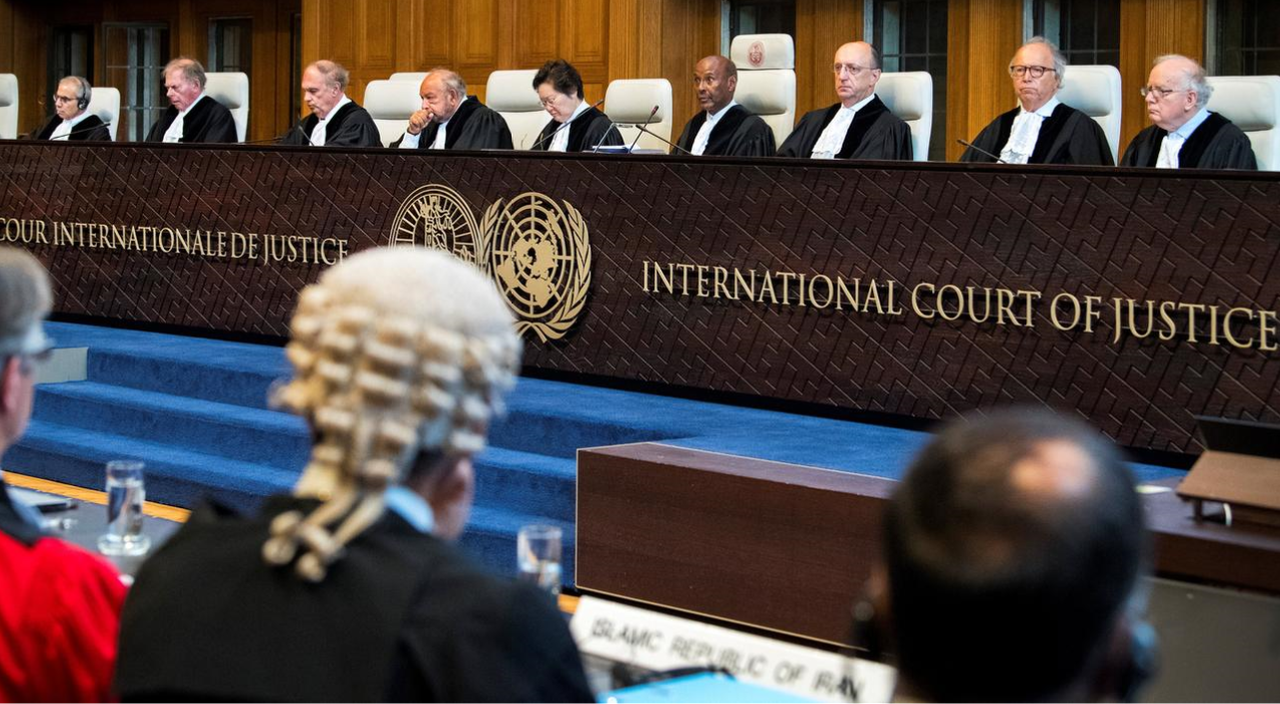
US Secretary of State Mike Pompeo has threatened the family members of International Criminal Court staff, vowing that Washington will take punitive action against them if the court tries American soldiers for war crimes.

Pompeo also announced an intensification of unilateral US sanctions on Iran and Syria, which are illegal under international law, and which are undermining the countries’ attempts to contain the coronavirus pandemic.

In March 2019, the Pompeo State Department threatened to revoke or deny visas to any International Criminal Court (ICC) personnel investigating crimes committed by American forces.

A year later, on March 5, 2020, the ICC took a defiant step forward, officially approving an investigation into allegations of war crimes and crimes against humanity committed by the US military and CIA in Afghanistan.

Pompeo responded by angrily condemning the court and its proceedings. His broadside was an apparent attempt at discrediting the institution, which the US government is not a party to.

In a subsequent State Department press briefing on March 17, Pompeo launched another tirade against the ICC, belittling it as a so-called court,” a nakedly political body,” and an embarrassment.” Pompeo, who previously served as director of the CIAtook the denunciations a step further, threatening the family members of ICC staff.

We want to identify those responsible for this partisan investigation and their family members who may want to travel to the United States or engage in activity that’s inconsistent with making sure we protect Americans,” Pompeo said, according to the US State Department’s official transcript.

Sarah Leah Whitson, the managing director for research and policy at the Quincy Institute for Responsible Statecraft, drew attention to the shocking attack” on Twitter. This isn’t just unlawful collective punishment against family members; it’s not just a disturbing attack on staff of a judiciary — where the US has voted to refer other nations for prosecution; it’s abuse of federal authority to use sanctions against actual wrongdoers,” said Whitson, who previously directed the Middle East and North Africa division at Human Rights Watch.

Whitson called on Democratic presidential candidates Joe Biden and Bernie Sanders to condemn this US State Department assault on the staff and FAMILIES of ICC – abuse of sanctions authority in flagrant attack on judicial independence, unlawful collective punishment.”

This blatant US threat against the family members of International Criminal Court prosecutors is part of a longer historical pattern of Washington attacking multilateral institutions.

At the beginning of the George W. Bush administration’s so-called war on terror, in 2002, the US Congress passed a bill called the American Service-Members’ Protection Act — more commonly known as the Hague Invasion Act.”

This unprecedented piece of legislation, which has no precedent anywhere else in the world, declares that the US government unilaterally grants itself the right to militarily invade the Hague if a citizen of the United States or any allied country is tried at the court. Nor are Secretary of State Pompeo’s threats the first time US government officials have targeted the family members of international organizations.

José Bustani, the former director of the Organization for the Prohibition of Chemical Weapons (OPCW), said hardline neoconservative John Bolton, a former under secretary of state for George W. Bush and national security adviser for Donald Trump, threatened him and his family when Bustani negotiated with the Iraqi government to allow in OPCW weapons inspectors.

You have 24 hours to leave the organization, and if you don’t comply with this decision by Washington, we have ways to retaliate against you,” Bolton reportedly told Bustani, according to his recollection.We know where your kids live. You have two sons in New York.”ICC, image via Reuters

Denigrating the Iranian government as terrorists” in his State Department press briefing, Mike Pompeo declared new sanctions on the social security investment company of Iran’s military, along with five Iranian nuclear scientists.

Moreover, Pompeo announced State Department sanctions on nine more entities, in South Africa, Hong Kong, and China, for doing business with Iran.

He also unveiled new sanctions on Syria’s minister of defense, citing the Syrian army’s battle to retake Idlib, the last remaining insurgent-held territory in the country, which is occupied by a rebranded al-Qaeda affiliate and other extremist Salafi-jihadists, backed by NATO member Turkey.

US sanctions on Iran have devastated the country’s health infrastructure, greatly exacerbating the coronavirus pandemic. A new study by researchers at the Sharif University of Technology in Tehran warned that millions of people could die due to Covid-19 — which Pompeo repeatedly referred to as the Wuhan virus” in his press briefing.

An article by German state broadcaster DW concisely explained how US sanctions have set the stage for mass death in Iran: Iran’s government applied for a $5 billion (€4.6 billion) loan from the International Monetary Fund (IMF) to fight the epidemic — the first time it has asked the IMF for assistance in over 50 years. Yet, even if it gets the loan, the administration won’t be able to shop for much-needed medical supplies: US sanctions make the banking transactions required to secure even medical supplies and humanitarian goods virtually impossible.”

Sri Lanka imposes indefinite curfew in 3 districts as COVID-19 cases hit 100

March 24th, 2020

Courtesy NewsIn.Asia

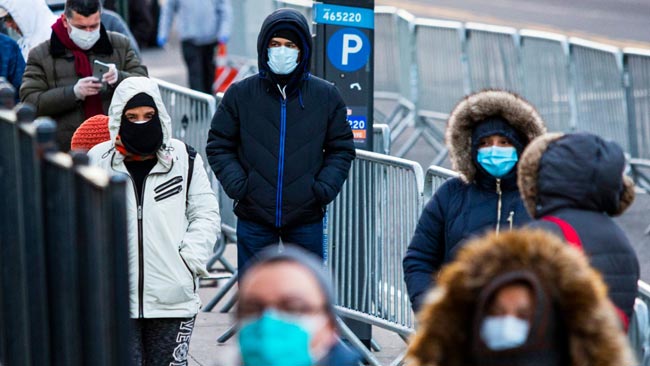
Colombo, March 24 (newsin.asia) — Sri Lankan authorities, on Tuesday declared three districts including capital Colombo as ‘high risk’ areas due to the rapid spread of COVID-19 and imposed an indefinite curfew there, a statement from the President’s Office said.

As a result of the curfew, the statement said essential items including medicines will be delivered to people’s doorsteps as the public had been banned from leaving their homes until further notice.

The decision was reached after large crowds gathered at supermarkets and grocery shops earlier Tuesday in Colombo, Gampaha and Kalutara in the outskirts of the capital and Puttalam in the north central province, when a curfew was lifted for 6 hours for people to re-stock on essential items.

Mandatory rules of maintaining a one meter distance was not maintained which led to Health Officials proposing essential items to be delivered.Large crowds in shops had been observed after curfew was lifted this morning in three districts. Health officials fear that this in turn could lead to a wider and faster spread of the virus,” the statement from the President’s Office said.

Therefore, the government has directed wholesale dealers to deliver essential consumer goods to the doorstep of each household until the situation is brought under control,” the statement added.

The President’s Office said to ensure the smooth operation of delivering essential consumer goods to each household, a special task force had been established. Vehicles used for delivery of these goods will be permitted on the roads during the curfew period.Sri Lanka has so far identified 100 COVID-19 positive patients while over 200 are under observation in the designated hospitals across the country.

Will warm weather really kill off Covid-19?

March 24th, 2020

Courtesy NewsIn.Asia

Some people hope that outbreaks of the new coronavirus will wane as temperatures rise, but pandemics often don’t behave in the same way as seasonal outbreaks.

March 24 (BBC) – Many infectious diseases wax and wane with the seasons. Flu typically arrives with the colder winter months, as does the norovirus vomiting bug. Others, such as typhoid, tend to peak during the summer. Measles cases drop during the summer in temperate climates, while in tropical regions they peak in the dry season.

Perhaps unsurprisingly, many people are now asking whether we can expect similar seasonality with Covid-19. Since it first emerged in China around mid-December, the virus has spread quickly, with the number of cases now rising most sharply in Europe and the US.

Many of the largest outbreaks have been in regions where the weather is cooler, leading to speculation that the disease might begin to tail off with the arrival of summer. Many experts, however, have already cautioned against banking too much on the virus dying down over the summer.

And they are right to be cautious. The virus that causes Covid-19 – which has been officially named SARS-CoV-2 – is too new to have any firm data on how cases will change with the seasons. The closely related Sars virus that spread in 2003 was contained quickly, meaning there is little information about how it was affected by the seasons.

But there are some clues from other coronaviruses that infect humans as to whether Covid-19 might eventually become seasonal.

There is some hope that as temperatures warm up in the Northern Hemisphere, cases of coronavirus will start to fall (Credit: Getty Images)

A study conducted 10 years ago by Kate Templeton, from the Centre for Infectious Diseases at the University of Edinburgh, UK, found that three coronaviruses – all obtained from patients with respiratory tract infections at hospitals and GP surgeries in Edinburgh – showed marked winter seasonality”. These viruses seemed to cause infections mainly between December and April – a similar pattern to that seen with influenza. A fourth coronavirus, which was mainly found in patients with reduced immune systems, was far more sporadic.

There are some early hints that Covid-19 may also vary with the seasons. The spread of outbreaks of the new disease around the world seems to suggest it has a preference for cool and dry conditions.

An unpublished analysis comparing the weather in 500 locations around the world where there have been Covid-19 cases seems to suggest a link between the spread of the virus and temperature, wind speed and relative humidity. Another unpublished study has also shown higher temperatures are linked to lower incidence of Covid-19, but notes that temperature alone cannot account for the global variation in incidence.

Further as-yet-unpublished research, predicts that temperate warm and cold climates are the most vulnerable to the current Covid-19 outbreak, followed by arid regions. Tropical parts of the world are likely to be least affected, the researchers say.

Pandemics often don’t follow the same seasonal patterns seen in more normal outbreaks

But without real data over a number of seasons, researchers are relying upon computer modelling to predict what might happen over the course of the year.

Extrapolating data about Covid-19’s seasonality based on endemic coronaviruses – meaning they have been circulating in human populations for some time – is challenging, not least because endemic viruses are seasonal for a number of reasons that might not currently apply to the Covid-19 pandemic.

Pandemics often don’t follow the same seasonal patterns seen in more normal outbreaks. Spanish flu, for example, peaked during the summer months, while most flu outbreaks occur during the winter. (Read more aboutwhat Spanish flu can teach us about Covid-19.)

Eventually we would expect to see Covid-19 becoming endemic,” says Jan Albert, a professor of infectious disease control who specialises in viruses at the Karolinska Institute in Stockholm. And it would be really surprising if it didn’t show seasonality then. The big question is whether the sensitivity of this virus to [the seasons] will influence its capacity to spread in a pandemic situation. We don’t know for sure, but it should be in the back of our heads that it is possible.”

We need to be cautious, therefore, when using what we know about the seasonal behaviour of other coronaviruses to make predictions about the current Covid-19 pandemic. But why are related coronaviruses seasonal, and why does that offer hope for this outbreak?

Coronaviruses are a family of so-called enveloped viruses”. This means they are coated in an oily coat, known as a lipid bilayer, studded with proteins that stick out like spikes of a crown, helping to give them their name – corona is ancient Greek for crown.

There are currently few studies that look at the impact the weather has on Covid-19 (Credit: Getty Images)

Research on other enveloped viruses suggests that this oily coat makes the viruses more susceptible to heat than those that do not have one. In colder conditions, the oily coat hardens into a rubber-like state, much like fat from cooked meat will harden as it cools, to protect the virus for longer when it is outside the body. Most enveloped viruses tend to show strong seasonality as a result of this.

Research has already shown that Sars-Cov-2 can survive for up to 72 hours on hard surfaces like plastic and stainless steel at temperatures of between 21-23C (70-73F) and in relative humidity of 40%. Exactly how the Covid-19 virus behaves at other temperatures and humidity has still to be tested, but research on other coronaviruses suggests they can survive for more than 28 days at 4C. (Read more abouthow long Covid-19 can survive on surfaces.)

A closely related coronavirus that caused the Sars outbreak in 2003 has also been found to survive best in cooler, drier conditions. For example, dried Sars virus on smooth surfaces remained infectious for over five days at between 22-25C and with a relative humidity of 40–50%. The higher the temperature and humidity, the shorter the virus survived.

Climate comes into play because it affects the stability of the virus outside the human body when expelled by coughing or sneezing, for example,” says Miguel Araújo, who studies the effects of environmental change on biodiversity at the National Museum of Natural Sciences in Madrid, Spain. The greater the time the virus remains stable in the environment, the greater its capacity to infect other people and become epidemic. While Sars-Cov-2 has quickly spread all over the world, the major outbreaks have mainly occurred in places exposed to cool and dry weather.”

A recent analysis suggests that this pandemic coronavirus will be less sensitive to the weather than many hope

His computer models certainly seem to match the pattern of outbreaks around the world, with the highest number of cases outside of the tropics.

Araújo believes that if Covid-19 shares a similar sensitivity to temperature and humidity, it could mean cases of coronavirus will flare up at different times around the world.

It is reasonable to expect the two viruses will share similar behaviour,” he says. But this is not a one-variable equation. The virus spreads from human to human. The more humans at any given place and the more they get into contact with each other, the more infections there will be. Their behaviour is key to understanding the propagation of the virus.”

A study from the University of Maryland has shown that the virus has spread most in cities and regions of the world where average temperatures have been around 5-11C (41-52F) and relative humidity has been low.

But there have been considerable numbers of cases in tropical regions, too. A recent analysis of the spread of the virus in Asia by researchers at Harvard Medical School suggests that this pandemic coronavirus will be less sensitive to the weather than many hope.

They conclude that the rapid growth of cases in cold and dry provinces of China, such as Jilin and Heilongjiang, alongside the rate of transmission in tropical locations, such as Guangxi and Singapore, suggest increases in temperature and humidity in the spring and summer will not lead to a decline in cases. They say it underlines the need for extensive public health interventions to control the disease.This is because the spread of a virus depends on far more than simply its ability to survive in the environment. And this is where understanding the seasonality of diseases becomes complicated. For a disease like Covid-19, it is people who are now spreading the virus, and so seasonal changes in human behaviour can also lead to shifts in infection rates.

Measles cases in Europe, for example, tend to coincide with school terms and decrease during the holidays when children are not spreading the virus to one another. The enormous migration of people around the Chinese Lunar New Year on 25 January has also been suggested to have played a key role in the spread of Covid-19 out of Wuhan to other cities in China and around the world.

The weather can also mess with our own immune systems to make us more vulnerable to infections, too. There is some evidence to suggest the vitamin D levels in our bodies can have an affect on how vulnerable we are to infectious diseases. In the winter our bodies make less vitamin D from sunlight exposure, mainly because we spend more time indoors and wrap ourselves in clothing against the cold air. But some studies have found this theory is unlikely to account for seasonal variation seen in diseases like flu.

More controversial is whether cold weather weakens our immune systems – some studies suggest it does, but others find the cold can actually boost the number of cells that defend our bodies from infection.

There is stronger evidence, however, that humidity can have a greater impact on our vulnerability to disease. When the air is particularly dry, it is thought to reduce the amount of mucus coating our lungs and airways. This sticky secretion forms a natural defence against infections and with less of it, we are more vulnerable to viruses.

Stopping contact between people should also bring down the infection rates

One intriguing study by scientists in China suggests there is some sort of relationship between how deadly Covid-19 can be and the weather conditions. They looked at nearly 2,300 deaths in Wuhan, China, and compared them to the humidity, temperature and pollution levels on the day they occurred.

Although it has yet to be published in an academic journal, their research suggests mortality rates were lower on days when the humidity levels and temperatures were higher. Their analysis also suggests that on days where the maximum and minimum temperature ranges were greater, there were higher levels of mortality. But this work is largely also based on computer modelling, so the exact nature of this relationship, and whether it will be seen in other parts of the world, is still to be explored.

As the virus causing the Covid-19 pandemic is new, it is unlikely many people, if anyone, will have immunity against it until they have been infected and have recovered. This means the virus will spread, infect and cause disease in a way quite unlike endemic viruses.

Air travel has been the main route by which the virus has spread around the world so rapidly, says Vittoria Colizza, director of research at the French Institute of Health and Medical Research. But once it starts spreading within a community, it is close contact between people that drives the transmission. Stopping contact between people should also bring down the infection rates. This is exactly what many governments have been attempting to do with the escalating lockdown of public places around the world.

Even if cases of Covid-19 do fall over the summer months, it is unlikely to disappear entirely and will return later in the year (Credit: Getty Images)

There’s no evidence yet for a seasonal behaviour of Covid-19,” says Colizza. The behavioural component may play a role, too.” But she warns it is too early to know if the measures put in place will be enough to stall the spread of the virus. By itself, it may partially reduce effective contagiousness due to the reduction of contacts along which the disease could be transmitted.”

And if cases of Covid-19 do indeed tail off over the coming months it could be for a number of reasons – prevention measures such as isolation and lockdowns are being successful; there is growing immunity in the population; or it may be an effect of the season, as Albert’s models suggest.

If there is a seasonal effect, it could mask the true impact of the other two,” warns Albert. In countries where a strong lockdown has meant not many people have been exposed, then I wouldn’t be surprised that we will see a second wave come the fall and winter.”

Even if Covid-19 does show some seasonal variability, it is unlikely to disappear entirely over the summer months, as some have suggested. But a dip in cases might bring some benefits.

The steps we are taking to flatten out the curve are expensive in economic terms, but they could help us push this pandemic into the summer,” says Albert. If there is some seasonality, it might buy health systems the time they need to prepare.”

And in a world scrambling to cope with the rapidly rising number of cases, it might just be time we desperately need.

Colombo, Gampaha & Kalutara districts classified Covid-19 high risk zones; curfew until further notice

March 24th, 2020

Courtesy Adaderana

US may become centre of coronavirus pandemic, WHO says

March 24th, 2020

Courtesy Adaderana

US may become centre of coronavirus pandemic, WHO says

The United States could become the new centre of the global coronavirus pandemic, according to the World Health Organization, which said case numbers were rising quickly there even as Donald Trump talked of re-opening the country for business.

We are now seeing a very large acceleration in cases in the US. So it does have that potential [to become the centre of the pandemic],” the WHO spokeswoman Margaret Harris said.

So far, 46,450 people in the US have become infected with the virus and there have been 593 deaths, according to the latest data from Johns Hopkins University.

There have been 46,369 confirmed cases across the US so far. The true number of cases is likely to be significantly higher.

Trump acknowledged that crucial healthcare supplies to protect frontline staff treating sick patients were becoming difficult to obtain.

In an early morning tweet, Trump said: The world market for face masks and ventilators is crazy. We are helping the states to get equipment, but it is not easy.”

But while more US governors were urging people to stay at home, Trump appeared to play down the crisis on Monday night.

The president said he was considering ways to restart the economy in the coming weeks and wanted to avoid the pandemic becoming a long-lasting financial problem”. It would not last as long as three or four months, he said.

Our country was not built to be shut down,” Trump said. This is not a country that was built for this.”

Trump’s top advisers referred to current government restrictions as a 15-day challenge” and pledged to revisit in a week’s time the need for sweeping measures to prevent the spread of the virus.
In Spain, meanwhile, the numbers infected and tested rose from 33,089 to 39,673 on Tuesday, according to the health ministry, while the death toll rose from 2,182 to 2,696.

Health workers accounted for nearly 14% of Spain’s total reported cases as of Tuesday, up from 12% the previous day, according to data presented by the health emergency chief, Fernando Simon.

An estimated 1.7 billion people around the world have been ordered to remain at home as governments take extreme measures to protect their populations. Britain became the latest country to enter lockdown, after bans on movement came into force at midnight on Monday.

France entered a two-month state of health emergency” on Tuesday that provides a legal framework for existing confinement and restrictive measures and allows the government to order further restrictions, including controlling the price of certain products and requisitioning people and property for the war” effort.

The Dutch government strengthened its containment measures, banning all public gatherings regardless of size until 1 June. Mayors have been empowered to close beaches, parks, campsites and other public spaces if people are not respecting physical distancing rules that are set in the Netherlands at a 1.5 metre gap between people. The prime minister, Mark Rutte, described the boosted measures as an intelligent lockdown”.

Meanwhile tens of millions of people living in Hubei province, the centre of China’s outbreak, were told they would be able to resume travel from midnight (1600 GMT), except in the city of Wuhan.

China claims to have largely brought its outbreak under control, reporting only imported cases of the virus and few or no new domestic cases in recent days. However the claims have been questioned by residents and analysts, who note that some hospitals are reportedly refusing to test for the virus, and that there are allegations of manipulated numbers, and rumours of unreported cases.

Source: The Guardian
-Agencies

311 quarantined persons return home

March 24th, 2020

Courtesy Adaderana

Political party reps endorse a national programme to fight Covid-19

March 24th, 2020

Courtesy Adaderana

Many political party representatives have expressed their support for a national programme to prevent the spread of coronavirus (Covid-19), instead of convening a Parliament session, Prime Minister’s Office says.

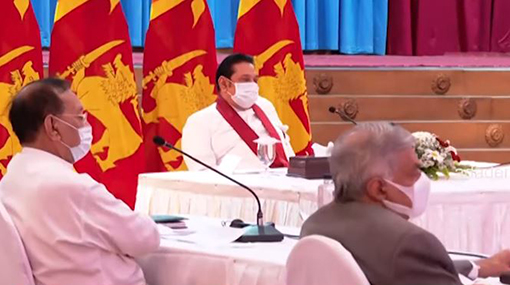
A meeting to discuss the current situation prevailing in the island, prompted by the Novel Coronavirus outbreak was worked off under the patronage of Prime Minister Mahinda Rajapaksa at the Temples Trees this morning (24).

Political party reps endorse a national programme to fight Covid-19

Steps taken by the government to curb the spread of the virus were discussed during the meeting.

Former President Maithripala Sirisena, former Speaker of Parliament Karu Jayasuriya, UNP Leader Ranil Wickremesinghe, Leader of Samagi Jana Balawegaya Sajith Premadasa, National Organizer of Sri Lanka Podujana Peramuna (SLPP) Basil Rajapaksa, Health Minister Pavithra Wanniarachchi and several other political party representatives and State officials joined this discussion.

Ranil Wickremesinghe, addressing the meeting, said: We need curfew to be in effect for some more time but there are issues regarding rural economy. So, I believe that we will be able to resolve this through discussion. We can give permit leave for all public servants who are not essential to be at work. I say that we should bring as much testing equipment as possible.”

He also lauded the measures put in place by the government in the fight against coronavirus while adding that it should be continued.

PM Rajapaksa appreciated the participants for sharing their views on how to save the country from the virus irrespective of political differences.

Colombo, Gampaha & Kalutara districts classified Covid-19 high-risk zones; curfew until further notice

March 24th, 2020

Courtesy Adaderana

Colombo, Gampaha and Kalutara districts have been identified as high risk areas for Coronavirus (Covid-19) and hence the curfew imposed on those districts will continue until further notice.

Districts of Colombo, Gampaha and Kaluthara have been identified as high risk zones in view of the spread of COVID-19, the President’s Media Division said.

Large crowds in shops had been observed after curfew was lifted this morning in three districts. Health officials fear that this in turn could lead to a wider and faster spread of the virus, the PMD said.

Therefore, the Government has directed wholesale dealers to deliver essential consumer goods to the doorstep of each household until the situation is brought under control. 

Sathosa, Keells, Laugfs, Arpico, Food City, Araliya, Nipuna and other wholesale dealers will be involved in this operation, the release said. 

Providing these essential consumer goods such as food, medicine, gas and other services will commence from tomorrow (25).

To ensure the smooth operation of delivering essential consumer goods to each household, a special task force has been established under the leadership of Mr. Basil Rajapaksa. 

The task force would be comprised of Secretaries to the Ministries, Government Agents, Divisional Secretaries and other relevant officers.

The curfew in the three districts that have been identified as high risk zones will continue until further notice, the PMD announced.

However, lorries, vans, three-wheelers and motorcycles that would be used for delivery will be permitted on the roads during this curfew period.

India’s 1.3 billion people go into full lockdown from midnight

March 24th, 2020

Courtesy Hiru News

India’s 1.3 billion people will go into full lockdown from midnight Tuesday(24), for 21 days in a bid to slow down the coronavirus pandemic

Lockdown measures were already in place from Monday in many major cities, but will now be extended to “every village, every district” in the nation, according to the prime minister said.

Speaking in a televised national address, PM Modi told Indians to forget what it feels like to leave their homes.

India%27s+1.3+billion+people+go+into+full+lockdown+from+midnight+%2824%29

He further stated that 21 days of lockdown is a long time but this is important for their safety and for the safety of their families.

If we don’t handle these 21 days well, then our country, your family will go backwards by 21 years said the Indian Premier in his address to the nation.

PM Modi said that some think social distancing is only for patients, and that’s not correct, social distancing is the only way to fight the virus, it is for every citizen, every family, every member, even for the Prime Minister.

2,405 arrested for violating curfew orders

March 24th, 2020

Courtesy Hiru News

Police have arrested 2,405 persons who violated curfew regulations this afternoon.

The Police Media Spokesperson’s office stated that 646 vehicles have been taken into custody during this period

Keep Children Safe from the virus

March 24th, 2020

Courtesy Hiru News

The accepted medical theory is that young children are at greater risk of getting sick

That is why every adult pays greater attention to young children.

How do you protect your children in the face of the Coronavirus pandemic.

This is the medical opinion.

SOME OBSERVATIONS ON EARLY BUDDHISM IN SRI LANKA Part 2

March 23rd, 2020

KAMALIKA PIERIS

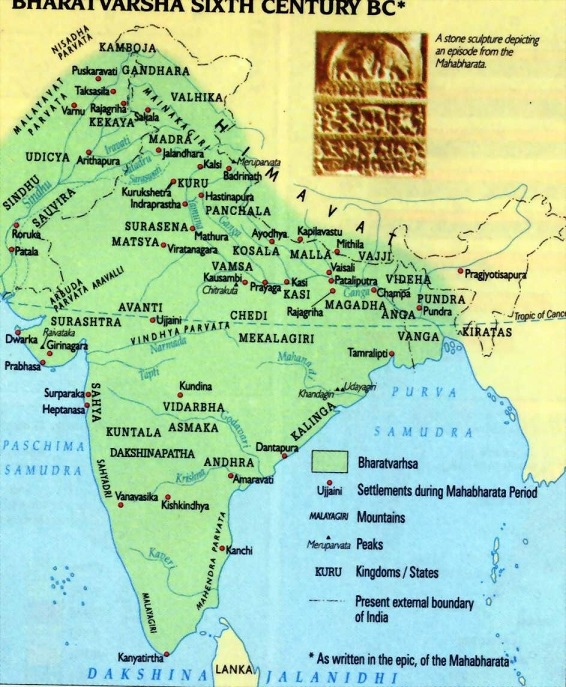
Buddhism was accepted with enthusiasm in the north Indian republics of the Ganges region. People took robes in considerable numbers. In the lifetime of the Buddha there were 29 monasteries. There were 18 at Rajagaha, 4 at Vesali, 3 at Kosala and 4 at Kosambi. Over time, it became clear that a set of rules governing the conduct of the Bhikkhus were needed. These rules became the Vinaya Pitaka.

The Vinaya rules were not commandments ordered from above. They were rules made by the Buddha for practical reasons. Most were to enforce discipline in the order, but they also took into account the ease and comfort of the bhikkhu. The Vinaya rules developed gradually, over time,  but they did not develop haphazardly. By the time Baddali sutta was preached there was a fairly large set of rules, observed Ven. Bellanwila Wimalaratana in his book A critical study of the Sri Lankan development of the rules of Vinaya (Sarasavi, 2018)

Vinaya rules did not remain static. They were amended when necessary.   Buddha made five amendments to the Vinaya for Avanti. He said higher ordination could be conferred with four bhikkhus, not eight,  the bhikkhus could wear sandals with thick soles as the soil was black, they could bathe regularly, sheepskin and goatskin could be used as coverlets, and robes could be accepted on behalf of a monk who had left the district and the robe need not reach the monk concerned within the prescribed ten days.  Ven. Wimalaratana observed that while the Buddha relaxed rules when he found it helpful for the monks, he also tightened rules when he found that there were laxities.

In a Vinaya inquiry, the monk concerned was given a hearing. No judgment could be passed without his presence.  He had the right to cross examine, and defend himself, raising legal issues. Bhikkhus had sometimes offered prize excuses. When charged with having engaged in sexual intercourse, one monk said he had taken off his robe, and another said he had done it naked.

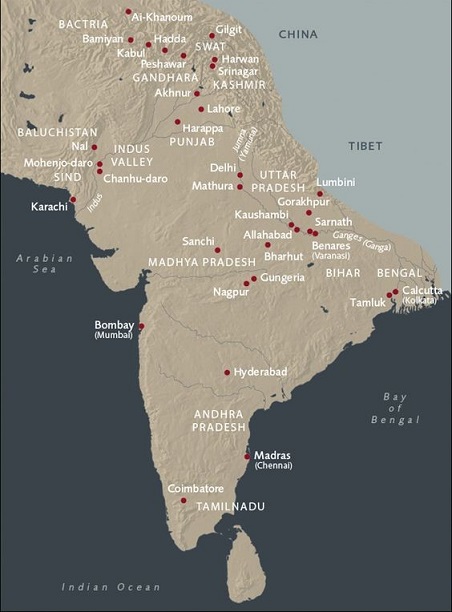
Each school of Buddhist thought had its own Vinaya, observed Ven. Wimalaratana.   There were at least 18 other schools of Buddhism, if not more by 3rd Buddhist Council and these would have had their own vinayas. Most of these Vinayas are lost, but some fragments were found in Eastern Turkistan and Nepal.  The Gilgit manuscript, containing the Pratimoksa of the Mahasangika School has been published.  Further vinayas are preserved in Chinese and Tibetan versions. The Mahayana does not possess a separate Vinaya. Mahayana Vinaya is contained in the Suttas itself.

With the passing away of Buddha the Vinaya     gradually began to assume a rigid form. The First Buddhist Council, held at Rajgir soon after the Buddha’s death, decided not to repeal any rules. The Theravada tradition faithfully holds that the whole Vinaya Pitaka was compiled  and recited  at the First Buddhist Council, observed Ven. Wimalaratana. But the present Vinaya Pitaka was not in existence at the time of First Council. Vinaya Pitaka was in an initial stage of evolution, during the First Council he said. The Second Council, held a hundred years later at Vaisali, was no better. There were sharp differences about the Vinaya rules. The matter was hotly debated and a committee appointed to look into the items under dispute.

Arahat Mahinda brought into Sri Lanka  the Theravada doctrine approved by the Third Buddhist Council held at Pataliputra in the reign of king Dharmasoka. This early Buddhism is glimpsed today in the Sutra Pitaka said Ven. Wimalaratana.The Vinaya, including   amendments   and the Vinaya commentarial tradition were brought in. The commentaries came in written form, said Malalasekera.

The Sinhala Sangha produced a vast commentarial literature on the Vinaya, with useful interpretations of the Vinaya rules. Buddhagosha used these Vinaya commentaries, in his Samantapasadika and Kanakavitarani.  Sinhala texts on Vinaya such as Sikavalanda and Sikha Valanda Vinisa shows that Vinaya underwent considerable development in Sri Lanka, said Ven. Wimalaratana.

The Vinaya Pitaka consists of Patikmokkha, Suttavibhanga, Khanadhaka and Parivara. Pattimokha is the code of rules, Suttavibhanga explains the rules and Khandhaka section dealt with new situations and changing conditions. The Parivara, consisting of 19 chapters, is a digest of the earlier parts of the Vinaya Pitaka. It does not contain anything new.

The Vinaya Pitaka introduced to Sri Lanka did not contain the Parivara, said Ven. Wimalaratana. The Parivara section is a later addition. It is believed to have been compiled by a Sri Lanka bhikkhu  in the early Anuradhapura period. Oliver Abeynayake said that the Parivara section of the Vinaya is not identical to that brought in by Mahinda. Sri Lanka has added to it.

The Theravada school thought that the Vinaya should be maintained and protected at all costs. Sri Lanka Buddhists also thought this. For them, the strict observance of the Vinaya was one of the main qualities of a good bhikkhu. This is one of the reasons why the forest monks were highly esteemed over those who were village dwelling, observed Ven. Wimalaratana.

The Sangha frequently needed purification, since there was no central authority and no hierarchy of control. Katikavatas to cleanse the Sangha started in Sri Lanka in the late Anuradhapura period. First there were vihara katikavata, such as the inscription of Mahinda V, Kaludiya Pokuna inscription of Sena IV and Puliyankulam inscription of Udamahaya. Udamahaya was first viceroy under Dappula IV. He ascended the throne as Udaya III.

Then came Sasana katikavat which applied to the whole Sangha. These started in the Polonnaruwa period and continued into the Udarata period. The first Katikavat was the Katikavata of Parakrama bahu I known also as Galvihara inscription. This was followed by Hatadage inscription of Nissanka Malla, Dambedeni Katikavata of Parakarama bahu II,   katikavata of Parakrama bahu VI, katikavata of Kirti Sri Rajasinha and Katikavata of Rajadhi rajasinha. Vijayabahu III also had issued a Katikavata. This has not been discovered.

Katikavat were initiated by the king. The rules were formulated by senior monks, the king gave his assent and the Katikavata became binding on the Sangha. The katikavata was like a royal decree.  It was compulsory for all monks.

The initiative for the katikavata of Parakrama bahu I came from the king himself. The rules were by Udumbara giri Maha Kassapa thera .  The Katikavata started with a preamble giving the reasons for the katikavata.  Then came 27 rules, mainly on the day to day behavior of monks including their daily routine. All monks had to meditate every day. This was compulsory.

Dambadeni Katikavata was also preamble and text. The Preamble had wealth of information on the declining state of Sangha. This katikavata created two separate headships, (Mahathera), for Gramavasi and Aranya vasi bhikkhus, with a Mahimi above both. Below them came the heads of the 8 ayatanas, and deputies, followed by the principals of Pirivenas. None of these offices are in the Vinaya.

The age limit to enter the order now became 12 years for grama vasi and 13 years for forest dwelling monks. Higher ordination could not take place where the bhikkhus wanted it, only with approval and consent of king. The quorum needed for ecclesiastical matters were amended. What was earlier carried out by 4 bhikkhus was now to be carried out by 8 bhikkhus. What had been done by 20 was now to be carried out by 30. This was to ensure that there was a minimum of monks of unblemished character in it, said Ven. Wimalaratana.

The katikavata also ruled on the behavior of Bhikkhus. Monks must walk in slow, unhurried manner and must abstain from laughing aloud. Monks cannot use harsh speech to laymen, or refer to their pedigree and caste.  Even a servant in the temple cannot be subject to such treatment. If so monk must apologize.  Bhikkhus had been composing flattering poems for lay people to get them to donate to the temple.  This was prohibited.  Bhikkhus cannot sell excess gifts. They cannot teach children of householders, they cannot teach poetry and drama  and they should not perform the exorcism duties of Kapuvas.

Ven Wimalaratana observed that, Vinaya rules were not sufficient to deal with the practical issues faced by the viharas. The monasteries had become extensive landowners, thanks to huge endowments of cash, land, tanks, paddy fields, villages. Sangha had to manage these lands and fields and villages.  Large scale economic management and managing peasants are not included in the Vinaya   pitaka. Vinaya pitaka rules were insufficient for this. Vinaya had blanket rules for opulence, but that was insufficient. Special rules were needed now.

Slab inscriptions erected in vihara premises tried to remedy this. Anuradhapura slab inscription of Kassapa V, Virankurarama slab inscription of Dappula V, Abhayagiri inscription of Mahinda IV and the second Vessagiri inscription,  contain various rules and regulations for conducting the affairs of that vihara, their properties and workers.  Also for admission to the order, settlements of disputes in monasteries and the role of government officer in settling disputes.

The inscription of Kassapa V says, when admitting a new monk into the order, there must be unanimous agreement.  Gifts should not be accepted when admitting someone into the order. Quarrelsome bhikkhus and those who violate the Vinaya should be expelled and exiled to India. Abhayagiri inscription said if the money provided for repairs to the monastery is insufficient, monks must use the money allocated for their personal needs.

Buddhism became popular in north India, very quickly and young men started to take to robes. This did not please everyone. Parents complained, accusing Buddha of breaking up families, making families devoid of sons and making young wives widows by encouraging young men to join the Maha Sangha. 

Therefore an alternative had to be found. The ‘lay disciple’ was created. Historians trace the creation of lay followers to the family of the bhikkhu Yasa. The young man, Yasa, son of a rich gild master in Benares, found his way to Gautama Buddha and eventually became a disciple. Yasa’s father went in search of his son, and ended up as the first lay disciple.

Buddha was invited by Yasa’s father for alms at his house the next day and with this started the growth of lay followers. At the start they were not considered a component of Buddhist society. They were like admirers, providing the basic needs of the ordained members. They were enthusiastic but did not have any particular practices to follow or any formal duty to perform.

 As time passed the lay followers wanted to be formerly recognized as followers of the Buddha with a practice approved by the Buddha himself. They also desired a particular goal to aspire for. Vyaggapajja sutta of Anguttara nikaya described how some members of the Koliyna clan headed by Digajanu made this request.

Buddha did so. He gave a series of actions to follow while remaining in lay life, and the possibility of a good future life. This consisted of    8 items, of which 4 were for this life and 4 were for the next. The lay followers had thus opted for the lesser goal of continuing samsara life, hoping for a better destiny in the future.

This makes an important juncture in the practice of Buddhism, observed Ven. Wimalaratana. The original aim was to put an end to dukkha, end of Samsaric existence. But lay followers opted for a lesser goal. Buddha agreed and approved the practice.

This was the best option to keep the lay community on the right track with the possibility of changing lanes in the future and attain final liberation. This approach provides a graduated practice, of the path of Buddhism, to suit the different personalities of the practitioners. In the relaxed practice approved for the laity, realization of NIbbana is not completely discarded. It is postponed for a future date.

The lay follower of the Buddha were enthusiastic, they were more in number than the ordained followers.  They came from all levels of society, royalty to the lowest. The prospect of   gaining good and happiness in this life as well as the next, they found very attractive.

A common aspiration was the accumulation of merit. Supporting those ordained was one way of accumulating merit. It was also an easy way. So they lavished their generosity on them. Now supporting the Sangha turned into a duty of the laity and in turn the Sangha became the guides of the laity, directing them on the proper path. The Sangha ranked above the laity.

This led to extremes in some cases. Spending excessively on dana to the Sangha, specially by wealthy persons, otherwise known to be utterly stingy, was ridiculed in Sri Lanka as ‘giving in this birth to get it back in the next’.  I have personally heard this said in the 1950s at a dane in Panadura.

The Sangha also did not like to   eat too much rich food. In 2012, Buddhist monks had told the Health Ministry  in Sri Lanka to advise the Buddhists to prepared proper alms for monks, as they were getting diabetes and heart problems due to the rich food they were given. The Danas contained great quantities of oil, starch, salt and sugar. They wanted a nutritious meal which did not have these.

Ven Beligalle Dhammajoti observed that during British rule, Buddhism was presented as an ‘other worldly’ religion, which was not rooted in everyday living.  It was so sublime that ordinary people could not practice it. That is incorrect. Buddhism is not an ‘other worldly’ religion.  And it is not asocial.  Buddhism is not an other worldly religion.  And it is not a-social.  Sigalovada sutta explicitly explained the family and social relations, and gives a set of instructions and ethical guideline that pertain to social living.

During British rule, non-Buddhists also said that Buddhist philosophy is interest only in higher morality and ignore the social and economic welfare. This is incorrect. Kutadanta sutta explains the way of developing a country with proper planning and the nature of socio-economic process. These ideas, it should be noted were propounded in the 6 century BC.  In Agganna sutta there is a theory of the origin of classes. Chakkavattisihanada sutta explains poverty, revolution, crime and the reasons for those social ills.

Gunadasa Amarasekera thought that Buddha’s interest was in social change, he notes that a large part of Buddha’s major preaching is meant for the layman and not for those who have renounced lay life. Most of the steps in the Ariya astangika margaya are meant to be followed by the layman.

Rajitha P Kumara writing on early Buddhist philosophy   (Economic Review, Peoples Bank, 2011) observed that Buddhism recognized the mental and physical needs of human beings. According to Agganna sutta the fundamental human needs are reproduction, existence and protection.

Buddhism recognized basic needs such as subsistence, economic stability, education, social interaction, mental and physical health, human dignity and social status.  Kutadanta, Agganna and Mahasuddassana sutta focus much attention on the economic condition of individuals and advice is given for the fulfillment of economic realities by the state.

Buddhist gave equal importance to all the sections of society. In the Pali discourses much emphasis is made of cultivation agriculture, movement service, business ventures and employment. The hoarding of wealth was condemned.

Buddhism emphasizes the appeasement of the divided sections of society by building a harmonious and cordial relationship among the conflicting sections of society.  It is necessary to be responsive to the need and expectation of others and to have a regard and respect for them. This sort of responsible social behavior is known as samacariya, observed Rajitha.

A system of good governance was needed in human society primarily for the maintenance of justice and peace. There should be a good system of law (justice) and order (peace) above everything. . It is the responsibility of any government to create a harmonious atmosphere in which justice and peace are enjoyed. (Concluded)

කුන්ඥ ගැලවීමට ගිය වඳුරාට සිදුවූ දේ නොවීමටනම්

March 23rd, 2020

සුදත් ගුණසේකර මහනුවර 

කොරෝනා වසන්ඟතය විසඳීමට මේ රටේ ප්‍රවීන යයි කියාගන්නා දේශපාලන නායකයින් තිදෙනෙකුගේ විසඳුම්

1.වහාම පාර්ලිමෙන්තුව කැඳවන්ට- සජිත් ප්‍රේමදාස හිටපු විපක්ශ නායක

2.“වහාම  සර්ව පාක්ෂික රැස්වීමක් කැඳවන්ට” – කරු ජයසූරිය -හිටපු කථානයක

3.“පක්ස නායකයින්ගේ රැස්වීමක් වහාම කැඳවන්ට”- රනිල් වික්‍රමසින්හ”              

ප්‍රවුර්තිකීපයක්

(එකෙක් රැවුළ පත්තුවී එය නිවාගන්ට දඟලන විට තව එකෙක් සුරුට්ටුව පත්තු කරගැනීමට සූදානම් වෙනව සහ  ජරමර අස්සේ බරකරත්ත, කියන ගැමි කතා දෙක මට මතක් උනේ  මේ කථා දකින විටය).

මේ යෝජනා දකින විටම මට ඇතිවූ පලමු ගැටලුව මේ දේශපාලන පක්ශ කියන ඒවා අද කොහේද තියෙන්නෙ යන්නය.දෙවැන්න මේ පක්ශ නායකයෝ කියන අය කොහේද ඉන්නෙ යන්නය. තෙවැන්න ප්‍රවීන යයි කියාගන්න නායකයින් වශයෙන් පෙනී සිටින මේ අයගේ බුද්ධි මහිමය මෙවැනිනම් ඊට පහලින් සිටින දේශපාආලකයින්ගේ බුද්ධිය තියෙන්නේ කොහේද යන්නය.ඊලඟ ගැටළුව රටක් කරවීමට මෙවැනි අය තුළ ඇති ඇති හැකියාව කුමක්ද යන්නය. මෙය වූ කළී මේ රටේ දේශපාලන ක්ශේත්‍රයේ ලොකුම ඛේදවාචකය නොවේද.? මෙවැනි අයට රටක් භාරදීම නරින්ට කුකුල් කොටුවක් භාරදීමක් නොවන්නේද? එසේම මෙවැනි අයගෙන් රටක් පාලනය වේයයි සිතීම ඉබ්බන්ගෙන් පිහාටු බලාපොරුත්තු විමක් වැනි දවල් හීනයක් නොවන්නේද.

ඔබ අප කවුරුත් මැනවින් දන්නා පරිදි මේ රටේ දැන් ශ්‍රි ළන්කා නිදහස් පක්සයක් නැත. එය 2014 නොවැ 10 වනදා පක්ශයේ නිර්මාතෘ බන්ඩාරනයක මහතාගේ අතිජාත දෝනියක් යයි කියන චන්ද්‍රිකා සහ එම පක්සයේ එවකට මහ ලේකම්වු අගමැති රෝගයෙන් දරුණු ලෙස පෙලුණු සිරිසේන විසින් කුමන්ත්‍රණකාරීව එය ඝාතනය කොට මිහිදන් කරන ලදී.

එසේම අද එක්සත් ජාතික පක්සයක්ද නැත.රනිල් වික්‍රමසින්හ සහ සජිත් ප්‍රේමදාස යන අඳ බාල මුග්ධයින් දෙදෙනාම එක්ව එයද විනාසකොට මේ වනවිට යළි කිසිදිනක නැගිටීමට නොහැකිවනසේ එයද මිහිදන්කොට හමාරය.

විජෙවීරගේ ජා,වි පෙ මුණද අනුර ප්‍රධානකොටැ ඇති දෙපයින් ලක්පොලවේ සිටියත් මනසින් රුසියාවේ  හෝ වෙනත් පිට සක්වලක මනෝලෝකයක සිටින දේශපාලන ලෝකයේ අතරමන්වූ පිරිසක් විසින් මරාදමා මිහිදන්න්කොට අවසානය.

දේශපාලන දාදු කෙළියේ සුදුවේ යෙදී සිටින දෙමළ සහ මුසල්මානුවන් වසර 2600 පැරණි ඉතිහාශයක් ඇති මේ ශින්හල බෞද්ධ රට අල්ලා ගැනිමට දිවා රෑ උගුල් අටවමින් නිදිවර්ජිතව සිටින ත්‍රස්ථවාදි කන්ඩායම් මිස කිසිලෙසකිනුත් දේසපාලන පක්ශ නොවේ. සමසමාජ් සහ කොමුනිස්ට් පක්ශද මියපාරලොව ගොස් වසර 70 කටත් වැඩිය.

මේ අනුව දැනට දේශපාලන කන්ඩායමක් ලෙස  ඉතිරිව ඇත්තේ පිපීමට දඟලන නෙලුම් පොහොට්ටුව පමණි. එහි නායකයා දැන් රටේ ජනාධිපති වශයෙන් කටයුතු කරන නිසා අද රටේ දේශපාලන පක්සයක් වශයෙන් සැලකිය හැකි එකම කණ්ඩායම පොහොට්ටුව පමණි. වසර ගනනකට පසුව එනම් 2009 ට පසුව අද ඒ කන්ඩායම රට පාලනය කරන බව පෙනේ. එය රටවැසියන් වන අපට එක්තරා අන්දමක සැනසීමකි

එබැවින් මේ රටේ නැති පක්ස රැස්වීමක් හෝ නැති පක්ස නායකයින්ගේ රැස්විමක් හෝ එසේම වසර 4 1/2 ක් තිස්සේ පිස්සු කෙළිය නීත්යානුකූල නොවන පර්ලිමේන්තුවද කැඳවීමට කෙරෙන ඉල්ලිම පිස්සුවක් නොවේද.

අනෙක් අතට පර්ලිමේන්තුව හෝ පක්ශනායක රැස්විමක් තියලා මෙ ප්‍රස්නෙ විසන්දන්නේ කොහොමද කියන එකයි අපට තියෙන ප්‍රස්නෙ. එහෙම පුලුවන්නම් ඉතින් වයිද්ය වරු අවස්ය නෑ නෙ. එක අයගෙ රාජකරියක් මිස මෙ අසමජ්ජාති දේසපාලකයින්ගේ වැඩක් නොවෙන බව ඔනෑම ගොනෙකුට තේරෙනව. මේ ජාතික ප්‍රස්නය විසදන්ට ජනාධිපති වරයා ඇතුලු අමාත්ය මන්ඩලය අවස්ය දේශපාඅලන නායකත්වය නොඅඩුව දැනටමත් දෙනවා. බෙහෙත් කරන්ට වයිද්ය වරු නිදි නොලබා සේවය කරනව . ත්‍රිවිද හමුදාව සහ පොලීසිය මෙන්ම රටේ පරිපාලන යාන්ත්‍රනය පැය 24 ක්‍රියාත්මක වෙනවා. මේ වනතුරු එක් අයකු හෝ තවම මියගොස් නැති එකම රට මේක.

රට පුරා මිනිස්සු සියළුදෙනාම පක්ෂ පාට නොබලා, පිස්සෝ ටික දෙනෙක් හැර, රජයේ වැඩපිලිවෙලට සම්පූර්ණ සහාය දෙනවා. මේ රෝගය පිටින් රටට ඇතුල්වීමට ඇති සියලු මාර්ග ගුවන් හා මුහුදු මාර්ග තහනම් කිරීමත්ට සහ පිටින් දිවයිනට පැමිනෙණ සියලුදෙනාම සති දෙකක් දැඩි නිරෝධායනයට ලක්කිරීමටත්  රජය පියවර අරන් තියෙනව

මෙම වැඩපිළිවෙල සාර්ථකව ක්‍රියාත්මක කිරීමට අවස්ය සියළු පියවර අරන් තියෙනවා.  නීතිය අකුරටම ක්‍රියාත්මක් කිරීම සඳහා හදිසි නීතිය අවස්ය පරිදි ජනතාවට අවහිරයක් නොවෙන පරිදි යොදා ගෙන තියෙනව.  වගේම රෝගීන්ට ප්‍රතිකාර කිරීම සන්දහා අවස්ය රෝහල්  බෙහෙත් ද්‍රව්ය සහ පිරිස් බලය නොඅඩුව සම්පාදනය කොට තියෙනවා

l එසේම ජනතාවට අවස්ය අහාරපාන ලබා දීම සඳහා  ඒවා ප්‍රවාහනය හා ජනතාවට බෙදාහැරීම සඳහා සතොස, සමුපකාර සමිති හා පුද්ගලික වෙළන්දුන් මගින් කටයුතු යොදා තිබෙණවා. එ වගේම එදිනෙදා කුලිවැඩ කර වේල සොයාගන්නා අයට විශේෂ සහන මල්ලක් ලබා දිම්මටද පියවර අරන් තියෙනවා.

 ඒ අතර නීති කඩන පුද්ගලයින්ට විරුධව ක්‍රියාකිරීමටද පියවර අරන් තිබෙනවා.

වගකිවයුතු රජයක් වශයෙන්  මේ අන්දමින් තත්වය පාලනය කිරිමට අවස්ය සියළු පියවර ගෙන තිබියදී මා මුලින් සඳහන් කළ දේශපාලකයින් විසින් කරණු ලබන අමණ ප්‍රකාශ අපි බැහැර කරමු.

අන්නෙක් අතින් ඔය පාර්ලිමේන්තුව කියන කෙහෙල්මළ රැස්වෙලා ඇති වැඩේ මොකක්ද කියන එක පාර්ලිමේන්තුවේ  එදිනෙදා කටයුතු කෙරෙන හැටි මේ රටේ මිනිස්සු දන්නව නෙ. මාසෙතම රැස්වීමට ඇති දින 8 වත් නො එන , ආවත් එකිනෙකාට බැනගනිමින් සණ්ඩුවෙමින් සත්තුමෙන් හැසිරෙන , එක් දවසකට රුපියල් ලක්ශ 45 කට වැඩිය වියදම් වෙන  , මාසික පඩිය සහ පැමිනීමේ ගාස්තුව වන2500 ගැනීමට පමණක් එන, රටේ සන්වර්ධනයට කිසිදු මෙහෙයක් නොකෙරෙන පාර්ලිමේන්තුව හෝ තම තමන්ගේ මඩිය පුරවාගැනීම සහ තමතමන්ගේ දේශපාලන බලය රැකගැනීම එකම අරමුනින්  මෙවැනි විකාර ප්‍රකාශන නිකුත්කරණවා වෙනුවට ඔවුන් කළයුත්තේ දැනටමත් වැඩේ හරියෙට කරන රජයට සහාය දීම නොවේද.

 එදා දඹදිව බුදුන් වහන්සේ බුදු බනින් කෙළ ලක්ශ ගනන් නිවන් දක්වද්දී තමන්ලඟ මිස බුදුන් ලඟ රහත් බැව් නැතයි කියමින් නිර්වස්ත්‍රව වීදි දිගේ පෙළැහැර පාමින්, තමන් හෙලුවෙන් යන බවවත් නොදැන ගිය නිගන්ඨයින්මෙන් නොහැසිරී, විකාර බස් නොදොඩා, දැන්වත් තමතමන්ගේ හෙළුව සහ අමණකම් මුලු ලොවටම නොපා නිවෙස්තුළම සිට පණකෙන්දහෝ බේරාගෙන සිටියේනම් වඩා මැනවයි මම යෝජනා කරමි.

අවසාන වශයෙන් ලනකාවෙබ් නෙව්ස් සයිට් එකේ ලොව දැවැන්තම කොරෝනා ඇන ගැනීම සජිත්ගෙන්යන මැය යටතේ  පලවී ඇති නොදන්නා දේ කිමට ගොස් සජිත් හත්පොලේම ගාගෙන තිබීම ගැන හිරන්ති නැමැත්තෙක්  ලියා ඇති පහත සටහනින් මම මේ සටහන අවසන් කරමි

Sajith replaced Anasley Dias, Berty Gunathilaka and Samuel Rodrigo trio.

Sajith, Ranjan and Sujeewa can bring back that entertainment to the public if they get together and continue this way.

They can get Hirunika to replace Mercy Edirisinghe”

The coronavirus wake-up call

March 23rd, 2020

By ASOKA BANDARAGE courtesy Asia Times

The Covid-19 pandemic has brought to light the dangers inherent in the dominant military-industrial complex

People wearing face masks attend obligatory Friday prayers at a mosque in Surabaya, East Java, on March 20, 2020. Photo: AFP / Juni Kriswanto

The number of people infected and dying from the Covid-19 pandemic is increasing exponentially. A massive loss of humanity, as occurred during the Spanish” flu of 1918 that killed 50 million to 100 million, is feared. The collapse of financial markets and economic supply chains, border and airport closings, lockdowns of communities, loss of personal incomes and life savings are deepening panic and despair around the world.

The multitudes in overcrowded refugee camps, detention centers and prisons as well as the millions without health insurance and employment benefits in the United States are especially vulnerable.

Controversy over origin and prevention

The origin of the virus and the disease is commonly attributed to an animal-to-human transmission (possibly from a bat) at a seafood market in Wuhan in Hubei province, China, in December. US President Donald Trump and some Western media refer to it as the Chinese virus” or the Wuhan virus.” While the Chinese government initially mishandled the response to the virus outbreak, it claims to have brought the spread of the coronavirus largely under control. 

Chinese officials are now saying that the novel coronavirus originated in the United States and not in China. They claim that American soldiers brought Covid-19 to China and refer to a March 12 US congressional oversight committee hearing during which the director of the Centers for Disease Control and Prevention (CDC), Robert Redfield, stated that some Americans who seemingly died from influenza were tested positive for novel coronavirus in the posthumous diagnosis.”

There is also speculation the US Army’s DARPA (Defense Advanced Research Projects Agency) research and testing involving bats and coronaviruses and gene editing bioweapons may have had a role to play in the outbreak of the virus in China. Scripps Research Institute in the US, however, has asserted that the Covid-19 epidemic has a natural origin and that no evidence exists that the virus was made in a laboratory.

At a time when global solidarity is needed to combat the worst pandemic to face humanity in more than a hundred years, the conflict over its origin only aggravates the growing economic and political rivalry between the US and China. 

Reports from China state that a pharmaceutical drug manufactured by Cuba, interferon Alfa 2B, has significantly helped to stop the spread of the virus there. However, this drug seems to be overlooked in the US. Trump has called for cutting red tape to quickly get experimental drugs to people outside of clinical trials although drug safety experts are concerned over long-term effects of such an approach.  

In the race to find a cure in the United States, strategic allies” of the DARPA agency including the two pharmaceutical companies, Inovio Pharmaceuticals and Moderna Inc, are being funded to develop vaccines that controversially involve genetic material and/or gene editing.” Again, there are safety and ethical concerns over possible future mandatory use of such biotechnologies.

In 2015, Microsoft co-founder Bill Gates warned of a huge threat of a global pandemic and conducted a simulation in late 2019 predicting up to 65 million deaths due to acoronavirus. Controversially, the Gates Foundation also funded the Pirbright Institute, which owns” the patent to the deadly virus and is working on a vaccine against it.

Notwithstanding dire predictions and calls for preparedness, the United States, considered the most advanced country in the world, now finds itself without adequate testing kits, respirators, hospital beds, medical personnel and the like. Policies promoting privatization and slashing state social welfare, introduced to developing countries by the World Bank and the International Monetary Fund, will also make it difficult for them to face the Covid-19 pandemic now. Is the lack of crisis preparedness a reflection of the pursuit of corporate profit over universal health care and human well-being?

Lessons learned?

While the future course of the Covid-19 pandemic is unknown, it has brought to light the dangers inherent in the dominant military-industrial complex. It is said that a crisis is a turning point, an opportunity to change. To understand where and how to turn, it is necessary to question the values and the unsustainability and inequality of this system.

How has prioritizing unbridled economic growth over environmental sustainability and human well-being contributed to the emergence of the Covid-19 pandemic? Is human expansion into the habitats of other animals a factor in easier transmission of viruses between species? How has the reliance on goods and products, including food and medicines produced mostly in China and transported across the world, resulted in massive shortages at this critical time?

Both the US and China want to return to normalcy” and jump-start their economies as soon as possible. Trump has avowed that in the post-pandemic world, US economic growth will be bigger than ever. China too will move forward with its massive Belt and Road Initiative despite social and environmental concerns associated with it.

The coronavirus crisis in the US has already led to calls for corporate deregulation (vaccine development) and corporate bailouts (airlines and cruise lines), which could further consolidate corporate and elite control over the society. Currently, the three richest billionaires in the US (Jeff Bezos, Bill Gates and Warren Buffett) own more wealth than all of the bottom 50% of the people in the country. The further shift of life online due to the coronavirus could widen and deepen surveillance and social control by the large tech companies. The pandemic could make helpless people succumb to experimental mind and gene altering vaccines of pharmaceutical corporations.

It is time to fashion a more balanced, ecological civilization that respect the environment, upholds bioregionalism and local communities as well as ethics and accountability in use of technology and online activity. The unprecedented global crisis brought forth by the Covid- 19 pandemic is making people more sensitive to the fragility and insecurity of life and our physical and emotional interconnectedness to each other and all of nature.

The crisis can teach us to open our hearts and minds, to overcome excessive greed and individualism and see the common suffering across cultural and ideological boundaries. It offers an opportunity to overcome despair and powerlessness and to collectively challenge oppressive social structures shifting the world in a more equitable and ecological direction.

Many faith traditions offer prayers and healing for troubled times, and they are now widely available online. During the Buddha’s time, the city of Vesali was plagued by disease and the townspeople called upon the Buddha for support. The Buddha arranged for the Ratana Sutta (Jewel Discourse) to be recited across the town resulting in the dispersal of the town’s fears and afflictions: May all beings be healthy, happy, strong and safe.”

වගකිවයුතු රජයක් ලෙස මෙම බැරෑරුම් අවස්ථාවේ දී රටේ ජනතාවගේ සෞඛ්‍යාරක්ෂණය මෙන්ම එදිනෙදා පරිභෝජනයට අවශ්‍ය ආහාර ද්‍රව්‍ය හිගයකින් තොරව ලබා දීමට බැඳී සිටිනු ඇත.

March 23rd, 2020

මාධ්‍ය නිවේදනය. චමල් රාජපක්ෂ අමාත්‍යතුමාගේ මාධ්‍ය ඒකකය.

වගකිවයුතු රජයක් ලෙස මෙම බැරෑරුම් අවස්ථාවේ දී රටේ ජනතාවගේ සෞඛ්‍යාරක්ෂණය මෙන්ම එදිනෙදා පරිභෝජනයට අවශ්‍ය ආහාර ද්‍රව්‍ය හිගයකින් තොරව ලබා දීමට බැඳී සිටිනු ඇත. ඒ අනුව අතිගරු ජනාධිපතිතුමන්ගේ උපදෙස් මත ගරු අමාත්‍ය චමල් රාජපක්ෂ මැතිතුමන් කි්‍රයාත්මක වී රජයේ ආහාර ගබඩා වල මෙන්ම සතොස ආහාර ගබඩාවලත් අත්‍යාවශ්‍ය ආහාර ද්‍රව්‍ය සංචිත මාස කිහිපයකට ප්‍රමාණවත්ව ගබඩා කිරීමට අවශ්‍ය වැඩ පිළිවෙල සකසන ලදී. ඇඳිරිනීතිය පැනවුවද එය තාවකාලිකව ඉවත් කරන සෑම අවස්ථාවකදීම සතොස වෙළඳසැල් වලින් සහ අනෙකුත් සුපිරි වෙළඳසැල් වලින් හිගයකින් තොරව භාණ්ඩ ලබා ගැනීමේ අවස්ථාව ජනතාව වෙත සලස්වා ඇත.

එමෙන්ම භාණ්ඩ වර්ග කිහිපයකින් යුත් පාර්සල් රුපියල් 500 සහ 1000 ආදී පැකේජයන් ලෙස නිවාස සංකීර්ණවලට හා ජනතාව වැඩි වශයෙන් පදිංචි වීඵි වලට සිවිල් ආරක්ෂක බලකායේද සහය ඇතිව ඛෙදාහැරීමේ වැඩපිළිවෙලක් සුදානම් කරමින් පවතී.
මීට අමතරව දඹුල්ල, මීගොඩ, නාරාහේන්පිට ඇතුළු දිවයිනේ පිහිටි සියළු ආර්ථික මධ්‍යස්ථානවල සිට එළවළු ලොරි මේ වන විටත් දිවයින පුරා ඛෙදාදීම සදහා පිටත් වී ඇත. එමෙන්ම ජාතික පශ= සම්පත් මණ්ඩලය සතු වතු වල පොල් අස්වැන්න හෙට දිනයේ පටන් ජනතාව වෙත සාධාරණ මුදලකට ලබා දීමට අවශ්‍ය පියවර ගෙන ඇත.
මේ වනවිට නිරෝධායන මධ්‍යස්ථානවල සිටින ජනතාවගේ පරිභෝජනය සඳහා සහාය වන ලෙසට ගරු චමල් රාජපක්ෂ අමාත්‍යතුමන් කරන ලද ඉල්ලීමට ප්‍රතිචාර දක්වමින් පී්‍රමා ලංකා සමාගම විසින් තිරිගු පිටි මෙට්්‍රක් ටොන් 200, කුකුල් මස් ටොන් 20, සොසේජස් ටොන් 2, බිත්තර 100000 සහ යෝගට් 5000ක් ලබාදුන් අතර, ඒවා නිසි කළමනාකාරීත්වයකින් ඛෙදා හැරීම සඳහා ශී්‍ර ලංකා යුධ හමුදාව වෙත භාරදී ඇත.
ඉදිරියේදී අත්‍යාවශ්‍ය ආහාර සදහා කිසිදු අනියත බියක් ඇති කර නොගන්නා ලෙසත්, ඇදිරි නීතිය ඉවත් කරන අවස්ථාවේදී රැස්කමින් කඩ සාප්පු වල රැදි නොසිටින ලෙසත්, අත්‍යාවශ්‍යම භාණ්ඩ පමණක් මිලදී ගැනීමට නිවසකින් එක් අයෙකු පමණක් පැමිණෙන ලෙසටත්, අනෙක් සෑම විටම තම නිවසට වී නිරෝධායන කටයුතු වලට සහයෝගය ලබා දෙන ලෙසට ශී්‍ර ලංකා රජය වෙනුවෙන් ලංකාවාසි ඔබ සැමගෙන් ඉල්ලා සිටි.
චමල් රාජපක්ෂ අමාත්‍යතුමාගේ මාධ්‍ය ඒකකය.

Coronavirus: Strict new curbs on life in UK announced by PM

March 23rd, 2020

Courtesy BBC

Strict new curbs on life in the UK to tackle the spread of coronavirus have been announced by the prime minister.

From this evening people must stay at home except for shopping for basic necessities, daily exercise, any medical need and travelling to and from essential work.

Shops selling non-essential goods are being told to shut and gatherings in public of more than two people who do not live together are to be prohibited.

The UK death toll has reached 335.

If people do not follow the rules police will have the powers to enforce them, including through fines and dispersing gatherings, Boris Johnson said in a televised statement from Downing Street.

Other premises including libraries, playgrounds and outdoor gyms, and places of worship must also close immediately.

Parks will remain open for exercise but gatherings will be dispersed.

The government is also stopping all social events, including weddings, baptisms and other ceremonies – but funerals will be allowed.

Mr Johnson said the country faced a “moment of national emergency” and staying at home was necessary to protect the NHS and save lives.

He said the restrictions would be kept under constant review.

“We will look again in three weeks, and relax them if the evidence shows we are able to,” he added.

Martin Hewitt, chair of the National Police Chiefs’ Council, said they were “working with the government and other agencies to consider how these new rules can be most effectively enforced”.

But Ken Marsh, chairman of the Metropolitan Police Federation, said he was already seeing “large amounts of sickness” among officers across London and enforcing the new restrictions would be “a real, real challenge”.

“We will be dealing with it, but I’m not sure we will have the resources to be able to see it through,” he added.

Home Secretary Priti Patel said in a tweet: “I know that the coming weeks will be testing for our front-line police officers.

“I will do everything I can to ensure that they have the resources they need to keep themselves and the public safe.”

Scotland’s First Minister Nicola Sturgeon said the new restrictions “amount to a lockdown” and are “not done lightly”.

“I am not going to sugarcoat it in any way,” she said. “Coronavirus is the biggest challenge of our lifetime.”

In a tweet, First Minister of Northern Ireland Arlene Foster urged people to follow the restrictions “to save lives and protect our hospitals”.

First Minister of Wales Mark Drakeford said “these are really big changes for us all”.

“We are making them because of the speed the virus is continuing to spread,” he added.

Labour leader Jeremy Corbyn said the measures were “the right response”.

“There now needs to be clear guidance to employers and workers about which workplaces should close – and the government must close the loopholes to give security to all workers, including the self-employed, as well as renters and mortgage holders,” he added.

The prime minister said the measures were necessary to tackle “the biggest threat this country has faced for decades”.

“Without a huge national effort to halt the growth of this virus, there will come a moment when no health service in the world could possibly cope; because there won’t be enough ventilators, enough intensive care beds, enough doctors and nurses,” he said.

“And as we have seen elsewhere, in other countries that also have fantastic health care systems, that is the moment of real danger.

“To put it simply, if too many people become seriously unwell at one time, the NHS will be unable to handle it – meaning more people are likely to die, not just from coronavirus but from other illnesses as well.”

Three more COVID-19 positive patients raise total to 97 cases

March 23rd, 2020

Courtesy Adaderana

The number of COVID-19 cases in Sri Lanka edges close to 100 as 3 more patients have been tested positive with the virus.

This raises the total number of COVID-19 positive cases to 97.

Minister of Health Pavithra Wanniarachchi speaking at 360 program on TV Derana, stated that 10 patients have confirmed of having contracted the virus, today (23) alone.

All patients who were tested positive for the coronavirus are currently receiving treatment at the Infectious Diseases Hospital (IDH) in Angoda.

Meanwhile, the first Sri Lankan to have contracted the virus was discharged from IDH after a complete recovery.

First COVID-19 patient in Sri Lanka discharged after complete recovery

March 23rd, 2020

Courtesy Adaderana

The first Sri Lankan who tested positive for COVID-19 has completely recovered from the illness, sources told Ada Derana.

Accordingly, he has been discharged from the Infectious Diseases Hospital (IDH), where he had been receiving treatment, this morning (23).

Reportedly, he was kept under observation at the hospital for two more days after his recovery.

The, now completely recovered patient, is a 52-year old tour guide from Mattegoda.

He had worked closely with a group of Italian tourists who had arrived in the country.

Once he was identified as a COVID-19 positive patient, he was admitted for treatment at the IDH in Angoda on March 10.

A dastardly attempt to use legal arguments to block government finances and sabotage the anti-Coronavirus campaign

March 23rd, 2020

MEDIA RELEASE Mahinda Rajapaksa Prime Minister

On the day that a countrywide curfew was declared to prevent the spread of Coronavirus – Friday the 20th March 2020 – UNP Leader Ranil Wickremasinghe issued a media release stating that the previous government led by him had not passed a Budget for 2020 but that they had passed only a Vote on Account which would last till the 30th April 2020. He contends that therefore, after the 30th of April 2020, the present government would not have the legal right to allocate funds for any purpose whatsoever. Former opposition leader Sajith Premadasa has also been repeatedly making the same assertion via the social media.

Under Article 150(3) of the Constitution, the President is vested with the power to allocate funds from the Consolidated Fund to maintain government services after Parliament has been dissolved. Hence the public should not entertain any fears about the availability of funds for the anti-Coronavirus campaign and to maitain other government services. Last month on the 20th February, when we tried to move Parliament to allocate funds to pay the arrears owed by the yahapalana government to the suppliers of essentials such as medicines and fertilizer and to ensure the smooth supply of these goods, the opposition led by Sajith Premadasa which had a majority in Parliament blocked it so as to make it impossible for the new government to ensure the smooth running of the day to day affairs of the country.

We were able to allocate the funds necessary to maintain essential services only due to the powers over government finance that the President assumes under Article 150(3) of the Constitution after the dissolution of Parliament. In a situation where there wasn’t a single Coronavirus infected patient in the country, the President dissolved Parliament on the 2nd March 2020 under Article 70(1) of the Constitution. Ten days later, when Sri Lanka’s first Coronavirus patient was discovered, the opposition led by Sajith Premadasa demanded the postponement of the election. Article 70(5) of our Constitution requires that the Gazette notification dissolving Parliament should also state the date on which the poll would be held and the date on which the newly elected Parliament would meet for the first time. Once such a proclamation has been issued, the President does not have any power to postpone the poll.  Under Section 24(3) of the Parliamentary Elections Act No: 1 of 1981, the Elections Commission is vested with the power to postpone the poll due to unforeseen circumstances or an emergency. The Elections Commission has postponed the poll accordingly.

The postponement of the date of the poll does not in any way change the financial powers vested in the President under Article 150(3) of the Constitution after the dissolution of Parliament. It can be seen that the two factions in the UNP are vying with one another to make political capital out of the Coronavirus epidemic. The entire country witnessed the manner in which former Opposition Leader Sajith Premadasa tried to sabotage the anti-Coronavirus campaign by giving encouragement to the Sri Lankan expatriate workers who made a commotion at the airport refusing to be quarantined. Because they failed to cut off funding for the new government using their majority Parliament, an attempt is now being made to achive that result by concocting legal arguments about the financial powers vested in the President at a time when Parliament has been dissolved.

We unreservedly condemn this attempt to sabotage the work of the government and the anti-Coronavirus campaign in the midst of the most serious epidemic that this country has ever faced. Despite such conspiracies against the nation launched by opportunistic elements, medical professionals, nurses and other hospital staff, members of the armed forces and all those engaged in the provision of essential services have been working day and night to bring the Coronavirus epidemic under control. I take this opportunity to express my appreciation and heartfelt thanks to them all.

Mahinda Rajapaksa

Prime Minister

නීති තර්ක වලින් ආණ්ඩුවේ මුදල් හිරකොට කොරෝනා මර්ධන ව්‍යාපෘතිය අඩාල කිරීමේ දුෂ්ඨ උත්සාහය හෙලා දකිමු.

March 23rd, 2020

මාධ්‍ය නිවේදනය මහින්ද රාජපක්‍ෂ අග්‍රාමාත්‍ය

කොරෝනා වෛරසය ලංකාවේ තවදුරටත් පැතිරීම වැලැක්වීමට මුලු රට පුරාම ඇඳිරිනීතිය පැනවූ දිනයේම, එනම් 2020 මාර්තු 20 වන සිකුරාදා එ.ජා.ප නායක රනිල් වික්‍රමසිංහ මහතා විශේෂ නිවේදනයක් නිකුත් කරමින් පවසා සිටියේ, තමන් නායකත්වය දුන් පසුගිය ආන්ඩුව 2020 වසර වෙනුවෙන් අයවැයක් සම්මත නොකොට 2020 අප්‍රේල් 30 වනදා දක්වා පමණක් බලපවත්වන අතුරු සම්මත ගිණුමක් සම්මත කොට තිබීම හේතුවෙන් අප්‍රේල් 30 වනදායින් පසු, මොනම දෙයකටවත් මුදල් වියදම් කිරීමට ආණ්ඩුවට නෛයිතික බලයක් නැතිවෙන බවයි.  සජිත් ප්‍රේමදාස හිටපු විපක්‍ෂ නායකවරයාත්, මුහුණුපොත හරහා මේ තර්කයම ඉදිරිපත් කරමින් සිටි.

පාර්ලිමේන්තුව විසිරුවා හැර තිබෙන අවස්ථාවක රජයේ සේවාවන් පවත්වාගෙන යෑම සඳහා අවශ්‍ය කරන මුදල් ඒකාබද්ධ අරමුදලෙන් නිකුත් කිරීමට ශ්‍රී ලංකාවේ ආණ්ඩුක්‍රම ව්‍යවස්ථාවේ 150(3) වගන්තිය යටතේ ජනාධිපතිවරයාට බලය පැවරේ. මේ නිසා කොරෝනා වෛරසය මර්දන ව්‍යාපෘතිය හා රජයේ සෙසු සේවාවන් පවත්වාගෙන යෑම සඳහා මුදල් ප්‍රතිපාදන තිබේද නැත්ද යන්න ගැන මහජනතාව කිසිඳු බියක් ඇතිකරගත යුතු නැත. පසුගිය පෙබරවාරි 20 වෙනිදා, යහපාලන ආණ්ඩුවේම බෙහෙත් හා පොහොර වැනි අත්‍යාවශ්‍ය භාණ්ඩ සැපයුම්කරුවන්ට හිඟ මුදල් ගෙවා සැපයුම අඛණ්ඩව පවත්වාගෙන යෑම සඳහා අපි යෝජනාවක් ඉදිරිපත් කළද, පාර්ලිමේන්තුවේ බහුතරය හිමිව සිටි සජිත් ප්‍රේමදාස විපක්‍ෂ නායකවරයා ඇතුලු පාර්ශවය අලුත් ආණ්ඩුව අපහසුතාවයට පත් කොට දේශපාලන වාසි ලබා ගැනීම සඳහා එයට විරුද්ධ විය.     

රටේ අත්‍යාවශ්‍ය සේවාවන් පවත්වාගෙන යෑමට අපිට මුදල් සොයා ගැනීමට හැකිවූයේ පාර්ලිමේන්තුව විසිරුවා හැරීමෙන් පසු, ආණ්ඩුක්‍රම ව්‍යවස්ථාවේ 150(3) වගන්තියෙන් ජනාධිපතිවරයාට ලැබෙන මුදල් බලතල නිසාය. මේ රටේ එකම කොරෝනා ආසාධිතයෙක්වත් නැති අවස්ථාවක 2020 මාර්තු 02 වනදා, ජනාධිපතිවරයා ආණ්ඩුක්‍රම ව්‍යවස්ථාවේ 70(1) වගන්තිය අනුව  පාර්ලිමේන්තුව විසුරුවා හැරියේය. ඊට දින දහයකට පසු ලංකාවේ පළමු කොරෝනා රෝගියා සොයා ගැනීමත් සමඟම සජිත් ප්‍රේමදාස ප්‍රමුඛ විපක්‍ෂය කලේ පාර්ලිමේන්තු මැතිවරණය කල් දැමිය යුතු යැයි හඩ නැගීමය. අපේ ආණ්ඩුක්‍රම ව්‍යවස්ථාවේ 70(5) (අ) වගන්තියට අනුව පාර්ලිමේන්තුව විසිරුවා හරින ගැසට් පත්‍රයේම පාර්ලිමේන්තු මැතිවරණය පවත්වන දිනයත් අලුත් පාර්ලිමේන්තුව මුල් වරට රැස් වන දිනයත් නියම කළ යුතු වේ. එම ප්‍රකාශය නිකුත් කළ පසුව, මොනම තත්වයක් යටතේවත් ඡන්දය පවත්වන දවස කල් දැමීමට ජනාධිපතිවරයාට බලය නැත. 1981 අංක 1 දරණ පාර්ලිමේන්තු මැතිවරණ පනතේ 24(3) වගන්තියට අනුව යම්කිසි අනපේක්‍ෂිත හෝ හදිසි තත්වයක් නිසා ඡන්දය පවත්වන දිනය කල් දැමීමේ බලය ලැබෙන්නේ මැතිවරණ කොමිසමටය. ඒ අනුව මැතිවරණ කොමිසම ඡන්දය පවත්වන දිනය කල්දමා ඇත.

මේ ආකාරයට මැතිවරණය පවත්වන දිනය කල් දමා තිබීමෙන්, ව්‍යවස්ථාවේ 150(3)  වගන්තිය යටතේ පාර්ලිමේන්තුව විසිරුවා හැර තිබෙන කාලය තුළ ජනාධිපතිවරයාට හිමි මුදල් බලතල කිසිවක් වෙනස්වන්නේ නැත. කොරෝනා වෛරස් උවඳුරෙන් දේශපාලන වාසි ලබා ගැනීමට එ.ජා.පයේ පාර්ශව දෙක තරඟයක නියැලී සිටින බව අපට පෙනේ. පසුගියදා පිටරට සිට ශ්‍රී ලංකාවට පැමිණ, නිරෝධායනයට යෑමට නොහැකි යැයි කියා ගුවන්තොටුපලේදී කලබල කළ පිරිස් දිරිගන්වමින් සජිත් ප්‍රේමදාස විපක්‍ෂ නායකවරයා ආණ්ඩුවේ නිරෝධායන වැඩ පිළිවෙලට අකුල් හෙලූ ආකාරය මුලු රටම දුටුවේය. අලුත් ආණ්ඩුවේ මුදල් සැපයුම කපා හැරීමට යහපාලන පාර්ශවය පසුගිය මාසයේ පාර්ලිමේන්තුව තුළ ගත් උත්සාහය වැරදුනු පසු, දැන් ජනාධිපතිවරයාට ආණ්ඩුක්‍රම ව්‍යවස්ථාවෙන්ම ලබා දී ඇති මුදල් බලතල ගැන නීති තර්ක ඉදිරිපත් කොට, දරුණු වසන්ගතයක් මධ්‍යයේ රට අකර්මණ්‍ය කිරීමට ගන්නා මේ උත්සාහය අපි හෙළා දකිමු.

අවස්ථාවාදී පාර්ශව රටට එරෙහිව දියත් කරන මෙවන් කුමන්ත්‍රණ හමුවේ වුවත්, ජනතාව කොරෝනා වෛරස් උවදුරෙන් ගලවා ගැනීමට තම ජීවිතත් පරදුවට තබා දිවා රෑ නොබලා වෙහෙසෙන වෛද්‍යවරුන්, හෙදියන් ඇතුළු සියලුම සෞඛ්‍ය කාර්‍යමණ්ඩල වලටත්, ත්‍රිවිධ හමුදාවේ සියලු සාමාජිකයන්ටත්, අත්‍යාවශ්‍ය සේවා සපයන සෙසු පිරිසටත් මම මේ අවස්ථාවේදී මාගේ ප්‍රණාමය පුද කර සිටිමි. 

මහින්ද රාජපක්‍ෂ

අග්‍රාමාත්‍ය

Why Tamils Do Not Contribute Proportionately as Others to the COVID-19 Battle?

March 22nd, 2020

Dilrook Kannangara

Muslims and Sinhalas have contributed heartily to the battle against COVID-19. Big and small hoteliers have given up their hotels to be used as quarantine centres, etc. Other Sinhala and Muslim businessmen have contributed millions each financially. Yet others have distributed masks in tens of thousands free of charge. It was reported that a smalltime Muslim tailor works around the clock to stitch masks and distribute them at no cost. Mostly Sinhala nurses have taken to make masks in their precious spare time to distribute to patients and caregivers. Buddhist monks stitch masks for the village and mostly Sinhala police officers have donated their well-earned lunch packets to the needy. The almost entirely Sinhala military is doing yeoman service to the nation. This is not their usual duty but they have put their lives on the line to save the nation and people once again.

There is a clear dearth of Tamil participation in comparison. Where are all the Tamil businessmen? Obviously, there are far more Tamil businessmen than Muslim businessmen. Have they gone into hiding?

It is the same and far worse when it comes to Tamil politicians who are hyper-active demanding rights but not to be found when it comes to responsibilities.   

Unfortunately, this is not the first time such dearth of Tamil participation was seen at a time of a national crisis.

Apart from Tamil Christians, other Tamils did not meaningfully help armed forces fight Tamil terrorism. In fact, they did everything possible to disrupt the good work of armed forces. An enormous amount of blood was needed to treat wounded soldiers and civilians. Tamil participation in blood donation was (and still is) extremely low.

2004 tsunami crisis also saw very little Tamil participation. If at all any participated that was to help affected Tamil people. Instead they exploited the situation to make devolution demands. A similar situation was seen following the 4/21 crisis. Despite threat to their lives Sinhala and Muslim blood donors participated but Tamils didn’t contribute their proportionate share.

No one can demand rights without shouldering equal responsibilities. And no one can claim ownership of the island or part of the island if they don’t defend it. The island gains nothing from them.

(A word of advice to those who find this factual revelation offensive – stop shooting the messenger, face ugly tribal facts within your own community and do your proportionate share. Prove me wrong. Hopefully this will change the bahaviour.)

SOME OBSERVATIONS ON EARLY BUDDHISM IN SRI LANKA Part 1

March 22nd, 2020

KAMALIKA PIERIS

Gautama Buddha lived and preached in the Uttar Pradesh and Bihar regions of north India in the 6th century BC.  The 6th century BC is of great significance in North India. The 6th   century is considered the beginning of the Early Historic Period of India. This period also corresponds to the classical period of ancient Greece.

Significant social changes took place in north India during the Early Historic Period. This period saw the establishment of urban civilization with a literate culture.    There was writing. During this time, a religious and economic reform movement started in the Ganges region. It was an ‘age of amazing religious creativity,’ which saw the rise of as many as 62 religious sects, said, scholars.

Prominent among them was the reclusive, itinerant Sramanas, highly critical of Brahmanism. Different Sramana groups held different views, with no consensus. The region was a beehive of religious activity. The religious sects were actively competing with each other.

From this religious ferment came two new religions, Jainism and Buddhism. Siddhartha Gautama’s entry into the fray was well calculated, said Ven. Bellanwila Wimalaratana.     It is now accepted, that Siddhartha left the palace openly, with the knowledge of his parents. He did not creep away secretly in the night, as romantically depicted.  It is stated in Ariyapariyesana sutta,   that he left home with his parents shedding tears.

The Ganges region had a full-fledged iron age by the sixth century BC. This led to a tremendous expansion in agriculture, which led to the growth of trade and commerce, which, in turn, led to a money economy. The earliest coins discovered in India are dated to the time of Gautama Buddha and beyond. These coins were issued by the merchants and bore punch-marks. The use of coins in this period seems to have become fairly common and even the price of a dead mouse is stated in terms of money.

Trade led to the emergence of towns and cities.  Remains of these urban centers have been found in archaeological excavations. The Vedic literature of the period says nothing about cities. The Buddhist texts, on the other hand, are full of references to and descriptions of cities and towns.  These towns and cities are labeled ‘nagaras’ and ‘puras’, distinct from villages, ‘gramas.’

As many as sixty cities figure in the Pali canonical texts. Six of these  cities stood out, Champa (near Bhagalpur, Bihar), Rajagriha (Rajgir, Bihar), Varanasi (Benares,), Kausambi (Kosam near Allahabad,), Sravasti (Sahet-Mahet, UttarPradesh), and Kusinagara (Kasia in eastern Uttar Pradesh). All these cities were located in the middle Ganges valley.

Some urban centers, such as Ujjayini and Taxila, functioned as political and market centers. Others, notably Varanasi and Sravasti were cultural centers as well as political and commercial centers. Buddhism and Jainism were more popular in these urban centres than in rural areas.

During this period, for the first time in Indian history, there arose political states. They were known as mahajanapada and janapada. The word janapada means a populated territory. Both Buddhist and Jain texts mention sixteen such states.

Many of them were much bigger than Greece and some of them were in existence up to the Maurya Empire. But apart from the Sakyas and Lichchavis, very little is known about the political history of these states

Not all states were kingdoms. Some were governed by councils of nobles . Modern scholars have labeled these as republics”. These were the only republics of the time, outside the Mediterranean.

The merchants, officials and those based in towns found the existing Vedic religion unsatisfactory. They did not like the fact that the Brahmin caste dominated religion.  They also did not like the rigid caste system embedded in the Vedic religion, and the compulsory rituals and sacrifices.

They wanted a religion that would abolish the supremacy of the Brahmin priestly class and do away with ‘Hindu’ caste. They began looking for a new religion, which would suit their needs. There were plenty of sects to choose from. They settled on Buddhism, which spoke against caste and Vedic rituals. Buddha dispatched 60 disciples to propagate Buddhism. They were asked to go in different directions.

Buddhism took off to a fine start, targeting kings, nobles and top traders. The first converts were the three Jatila brothers, Uruvelakassapa, Gayakassapa, and Nadikassapa who ruled Uruvela (Bodhgaya).  Gautama Buddha thereafter concentrated on converting royalty to his beliefs (Bimbisara, Pasenadi) and after that, the rich traders (Anatapindika). The advantages were obvious. Where kings led, subjects followed.  The traders provided money for further expansion of the religion. They also helped to spread it, traveling up and down the trade routes.

Kings, nobles and rich merchants accepted the Buddha when he was alive, and gave him food and other necessities. The Buddha and his disciples often accepted invitations to the houses of the rich men for the midday meal. However, they also accepted food and other requisites given by those who were not rich.

Gautama Buddha discoursed on many lay matters, including the creation of cities. He commented on various aspects of public life and concerns of government. He spoke of the righteous king.  Pali commentaries discussed both the republican government and monarchy.

The traders and merchants wanted a     religion that would specifically support trade. Buddhism obliged. Trade was not held in high esteem in the Vedic tradition. In sharp contrast to the Vedic attitude to trade and merchants, Gautama Buddha said trade (vanijja) was an excellent profession.

The Buddhist texts refer to a   wide range of merchants, from rich setti to caravan traders travelling to distant places. The traders and merchants also wanted religious approval for foreign trade and sea voyages.  The Vedic religion did not approve such voyages for Hindus. Buddhism approved sea-voyages.

Buddhism and trade thus went hand in hand from the very beginning. Trade was the main conduit for the transmission of Buddhism from India . Not only people and goods but ideas and religion also went along the Indian trade routes, said, scholars. The Archaeological Survey of India said that Buddhism was disseminated from India to other countries mainly through trade routes. The expansion of Buddhism can more or less be mapped on the Uttarapath, the Dakshinapath, the Silk Route and the maritime trading lanes. 

The notion that Buddhism first arrived in Sri Lanka in 3rd Century BC, during the rule of Emperor Dharmasoka in India, can no longer be accepted. That date gives the impression that Sri Lanka was so backward that it had to wait for 300 years after the birth of the Buddha,   to receive Buddhism. It was left to   King Dharmasoka to send Buddhism into Sri Lanka.  Until then, it appears, Sri Lanka, despite its close proximity to India, had not heard of Buddhism.  This ridiculous idea was probably developed during British rule when the Sinhala intelligentsia was persuaded that everything in Sri Lanka came to it from India.  Sri Lanka could only imitate, it was not capable of acquiring anything on its own.

The reality is different. Anuradhapura was capable of accepting Buddhism during the lifetime of the Buddha. There was an advanced civilization in Anuradhapura by 900 BC. High-quality pottery, iron tools, and copper artifacts emerged during excavation. Findings indicate that there was the cultivation of rice and the breeding of cattle and horses. The writing was found at the Citadel excavation in Anuradhapura at the level dated to 900BC.    Anuradhapura was therefore   in a position to accept Buddhism as it emerged in north India.

Buddhism would have come into the island in the lifetime of Gautama Buddha itself. There is evidence to suggest this and many scholars have independently put forward this view. Gunapala Malalasekera in his Pali Literature of Ceylon, (1928) said there exists evidence to indicate that Buddhism was known before the arrival of Mahinda. Buddhism would have come in during Buddha’s time. Sri Lanka was a very cultured community during the time of the Buddha, he said.

E.W. Adikaram in his Early History of Buddhism (1946) also said that Buddhism existed in Ceylon before the arrival of Mahinda. Large numbers of persons were arriving from India long before Mahinda, it is difficult to believe that there were no Buddhists among them, he said.   Almost every religious sect from India, such as Jains and Ajivakas were found in Pre Mahindian Ceylon.  Ajivakas were not as numerous in India as Buddhists, so Buddhists probably came too, said Adikaram.

Adikaram said there may have been Buddhists among the early settlers such as Yaksha and Naga, as well. Baddhacachhana who arrived in Ceylon with her retinue was the youngest daughter of Pandu, a cousin of Gautama Buddha. They may have been followers of the Buddha, he added. 

Mahiyangana stupa existed before the arrival of Mahinda. it was set up during the Buddha’s first visit. This could mean that long before Mahinda there were at least a few Buddhist monks in Ceylon and this chetiya was built by them, said Adikaram. There may have been some Buddhist missionaries from India before Mahinda. See how rapidly the conversion took place with Mahinda. After the very first discourse, 40,000  converted, observed Adikaram  and several were ready to take up robes.

Adikaram took the view that Arahat Mahinda came to set up the monastic order, not to introduce Buddhism. Mahinda came to formalize the monastic order and establish the Sasana in the island.  Buddhism became a state religion after that, he said.  Mahinda’s mission to Sri Lanka consisted of five fully ordained monks, a novice, and one male layperson, said Ven.  Wimalaratana.

Historians now agree that the meeting between Mahinda and King Devanampiyatissa was pre-arranged. That is obvious and historians should have realized this long ago. Dharmasoka had sent coronation robes to Devanam piyatissa. This shows that diplomatic relations had been established earlier between the two countries.

The Sinhalese had no difficulty in understanding Arahat Mahinda’s preaching. The Magadhi language, which Mahinda spoke, would have been similar to Sinhala. The Asokan inscriptions are similar to Sinhala inscriptions of 3rd century BC, said Adikaram. 

Ven. Walpola Rahula in his History of Buddhism (1956) took the view that Sri Lanka would have known about Buddhism during the time of the Buddha himself since there was regular contact between India and Sri Lanka during that period. S Paranavitana, in his Inscriptions of Ceylon (1970) also thought that Buddhism may have come into Ceylon before Asoka.

When this writer, (Kamalika Pieris), was researching on the ancient period,   she found that the research literature clearly showed extensive contact between the Ganges region of northeast India and Sri Lanka, in the critical   6 century BC period. Early Historic Period deposits of northern black polished ware and rouletted ware were found at Abhayagiri and Jetavana and at monastic sites in the hinterland of Anuradhapura. This indicated links to northern India.

Further, people were migrating freely from Bengal to Sri Lanka during this period.  According to Pliny, it took just twenty days to sail from Sri Lanka to Magadha. C.W. Nicholas (1958) stated that up to 3rd century BC Sri Lankans had shown expert skill and a great tradition of seafaring. Many voyages were made to and from the deltas of the Indus and the Ganges, he said.

There was a direct trade route between Anuradhapura and Tamralipti at the time.  Tamralipti, (today Tamluk, in Kidnaper, West Bengal) was the main port from northeast India to Sri Lanka during this period. North India had two major trans-regional trade routes at this time.  Uttarapath for the north and north-west and Dakshinapath for the center and south. Dakshinapath crossed the Indo-Gangetic plain and ended at the port of Tamralipti in the Bay of Bengal.

Tamralipti was the main port of the kingdom of Magadha.  Tamralipti was connected to the other Buddhist republics adjoining Magadha, as well, since the   Uttarapata, the great Northern road, included towns such as Pataliputra, Kausambi, and Taxila. Therefore Tamralipti was well placed to act as the port of embarkation for Buddhist teachings.

There was so much movement between northeast India and Sri Lanka in the time of the Buddha that it became clear to me that Buddhism would have come into Sri Lanka as soon as it appeared in India.  Buddhism simply HAD to come into Sri Lanka soon after it took root in north India. This could not be avoided. Sri Lanka would probably have had links with the various Buddhist kingdoms in the Ganges area as well.

 In the  1990s, when I was researching this, I did not have any archaeological evidence to support my conclusion. The first material evidence supporting this surfaced in 1984 when the Anuradhapura Citadel excavations   yielded Ganges Valley pottery with dates that ‘matched that of Gautama Buddha.’ Anuradhapura excavations unearthed a pot dated to 600-500 BC carrying Brahmi writing signifying ownership. This has pushed the lower boundary of writing by at least two centuries, to the times of the Buddha, said Siran Deraniyagala.

Speaking on these findings at a talk given to the British Scholars Association in 2007,   Siran Deraniyagala stated that Buddhism may have come into Sri Lanka then. In July 2015 at a talk, held at the Organization of Professional Associations auditorium, Siran Deraniyagala again said that he thought Buddhism had come in during the time of the Buddha, long before Mahinda. That would have been Dhamma in real-time, received while the Buddha was alive and preaching in India. [1] (Continued)

6th Centuary BC
5th centuary BC

[1] Siran Deraniyagala.  Origins of civilization in Sri Lanka”. Talk was given to British Scholars Assoc on 6.11.07.

Corona Virus on Astrological Prospective | Ashish Mehta

March 22nd, 2020

Ashish Mehta

A lot of people ask about the coronavirus these days. Out of curiosity or out of fear Everyone’s question remains, now what next. Let’s talk today about the coronavirus on the astrological perspective.

Any virus is born from the conjunctions of Rahu or Ketu or from the position. And due to the combination of Guru and Ketu, it intensifies. At this time, the coronavirus is attacked all over the world. And that too has been intensified due to the combination of Guru and Ketu.

Two things are mentioned in the scripture about Guru. Guru represents life and The one who intensifies it is the Guru. What makes a local thing to global is a guru.

So the coronavirus, which was a local thing in China, became global due to the Guru and Ketu’s conjunction. Fortunately, on 30th March, the guru is leaving Ketu’s alliance and entering Capricorn. That Means After March 30, we will all be free from the effects of the Coronavirus.

But it will start from 24th March. You will be surprised to know that Chaitra Shukla Prati Prada is said to be the day of origin of the world. Thighs are going to start change after 24th march. And its result will come before us after March 30.

After that the summer season will start from April 19, as soon as the summer season starts, the sun will come in Aries, its medicine will be available and the panic will end.

From March 24th, its panic will end in the whole world, we will start getting treatment from March 30. Just get focus. Don’t get panic, & Do take care of your self.

ශ‍්‍රී ලංකාවේ කොරෝනා මර්දනයට අපි එනවා..- චීන ජනපති ලංකාවට දන්වයි..

March 22nd, 2020

උපුටා ගැන්ම ලංකා ඊ නිව්ස්

ශ්‍රී ලංකාව සහ එහි ජනතාව මේ වනවිට මුහුණ දෙමින් සිටින කොරෝනා වෛරස ව්‍යාප්තිය පාලනය කිරීම සඳහා අවශ්‍ය සහාය ලබාදීමට චීන මහජන සමූහාණ්ඩුවේ වෛද්‍ය විශේෂඥයන් පිරිසක් වීම සඳහා ඕනෑම මොහොතක සූදානම් යයි චීන ජනාධිපතිවරයා විසින් ශ්‍රී ලංකා රජයට දන්වා තිබේ.

කොළඹ සිටින චීන තානාපතිවරයා හරහා මෙම විශේෂ දැනුම් දීම කර ඇත.

ශ්‍රී ලංකාව ඉල්ලා සිටින ඕනෑම මොහොතකට කොරෝනා මර්දනය සම්බන්ධයෙන් අත්දැකීම් සහිත වෛද්‍යවරුන් ඇතුළු විශේෂ පිරිසක් එවීමට සූදානමින් සිටින බවද සදහන් කර ඇත.

ශ‍්‍රී ලංකාව කොරෝනා මර්දනය සදහා මේ වන විට සිදු කරමින් ඇති වැඩපිලිවෙල අගය කර ඇති චීනය තව දුරටත මහාජන සහාය ලබා දුනහොත් ඉතා ඉක්මනින් කොරෝනා වසංචගතය ශ‍්‍රී ලංකාවෙන් පහව යනු ඇතැයිද පවසා තිබේ.


Copyright © 2026 LankaWeb.com. All Rights Reserved. Powered by Wordpress