As No One Can Remove 13A, Try the Next Best Option of Merging Seven Sinhala-Majority Provinces into One Province

March 7th, 2020

Dilrook Kannangara

It has been the dream and demand of all those who love Sri Lanka since 1987 to abrogate 13A. But it is never going to happen. No one has the courage or patriotism to do it. The worst option is to dream of no-13A while living with 13A. Each year that passes with the current form of 13A, the island nation comes closer to dismemberment along new lines of separation.

The worst offenders are those who demand removing 13A just to prevent anyone from changing the situation even by a little by promising the impossible. This can be perfectly explained by the pithy Sri Lankan proverb – නොකෙරෙන වෙදකමට කෝදුරු තෙල් හත්පට්ටයක් (it is like sending someone to source seven drams of a non-existent oil to perform a medical procedure that is impossible to perform. The point is to distract the hapless person to maintain the status quo and also to save the practitioner from blame).

Having turned the North Tamil-only and giving them a separate administration and trying (but failing) in the East, India is now eyeing the Upcountry. Indian interference in the Upcountry has increased astronomically since 2009. India builds Tamil-only schools, Tamil-only hospitals and Tamil-only shrines in the Upcountry in a repeat of what it did to the north and east.

While the entire Upcountry cannot be turned into what India and Tamil separatists call ‘Malaya Nadu’, the entire Nuwara Eliya district can be made into it unless corrective action is taken now. District based devolution accelerates this destruction as it gives Malaya Nadu on a platter! It must never be attempted.

We can rationalize 13A as it is not going anywhere unfortunately. It was introduced to fix the devolution demand of Tamils. So northern and eastern provinces can remain as it satisfies the local and international devolution demand. All other 7 provinces can be merged into one. It is insane to have 7 separate provinces outside the north and east as people in these areas never wanted devolution. They always demanded unitary status and unity. Provincial Council elections must be held for the entire province as a single unit.

Sinhala majority parts of Ampara district and connecting corridors to Sinhala majority areas of Trincomalee district can be merged with Badulla and Polonnaruwa districts respectively. That will keep all powerful stakeholders under control despite some howling for a short time. It will split the north from the east permanently with the large province wedging them. Most importantly it will take away Trincomalee Port from the Eastern Provincial Council. Nuwara Eliya district will be unable to influence any provincial election.

Existing provincial council boundaries follow British colonial needs of divide-and-rule. It promotes division and stops unity. The three province structure promotes unity among those who are willing to unite and frustrates separatism. It also drastically reduces administrative costs. Instead of 9 provincial health, education, etc. ministers there will be only 3. That is a 67% reduction in provincial administrative costs and corruption.

Instead of anymore distraction tactics that feed on extreme demands that are not possible, this must be done as soon as possible.

“ඇය දිරිමත්” වුවත් “රට සවිමත්” කිරීමට ඇයට අවස්ථාවක් නෑ – ශ්‍රී ලංකා මානව හිමිකම් කේන්ද්‍රය කියයි

March 7th, 2020

මාධ්‍ය නිවේදනය ශ්‍රීලංකා මානව හිමිකම් කේන්ද්‍රය

පවතින දේශපාලන වාතාවරණය තුළ  කාන්තා නි‍‍යෝජනය පළාත් පාලන ආයතනවලට සීමා කර අසරණ කර ඇතැයි ශ්‍රී ලංකා මානව හිමිකම් කේන්ද්‍රය අවධාරණය කරයි. එහි විධායක අධ්‍යක්ෂිකා සුරංගි ආරියවංශ මහත්මිය පෙන්වා දෙන්නේ පසුගිය පළාත් පාලන මැතිවරණයේදී  25% ක කාන්තා නියෝජනය අනිවාර්ය සාධකයක් වූ නමුත් ඉදිරි  මහ මැතිවරණයට සහ පළාත් සභා මැතිවරණයට එලෙස කාන්තා කෝටාවක් ප්‍රකාශයට පත් කර නැති බවයි. මේ නිසා පසුගිය පළාත් පාලන මැතිවරණයෙන් තේරී පත්වූ කාන්තාවන්ගේ ඉදිරි දේශපාලන ගමන ගැටළුකාරී වී ඇති බව ආරියවංශ මහත්මියගේ අදහසයි. වත්මන් පාර්ලිමේන්තුවේ සංයුතිය ගත හොත් ආසන 225ට ම කාන්තාවන් සිටින්නේ අතේ ඇඟිලි ප්‍රමාණයටත් වඩා අඩු ප්‍රමාණයක් බව පෙන්වා දෙන ඇය සඳහන් කරන්නේ මෙරට ප්‍රධාන ආර්ථික බලයේ ප්‍රමුඛතම සාධකය වන කාන්තාවට මෙරට දේශපාලනය සඳහා සම්බන්ධ වීමට ඇති අවස්ථාව හීන වී යාම බරපතල තත්වයක් බවයි.

මේ නිසා මෙවර මහමැතිවරණයට නාම යෝජනා සැකසීමේදී එම නාම යෝජනා ලැයිස්තුවල යම් ප්‍රතිශතයක් කාන්තාවන් සඳහා වෙන් කිරීමේ සදාචාරාත්මක හැකියාවක් දේශපාලන පක්ෂ නායකයින්ට ඇති බව පෙන්වා දෙන ඇය සඳහන් කළේ ඒ සඳහා වන උනන්දුවක් ප්‍රධාන දේශපාලන පක්ෂ වල දක්නට නොමැති බවයි.

වර්තමානයේ මෙරට ආර්ථිකය සවිමත් කරන  සවිමත් කරන ප්‍රධානතම සාධකය කාන්තාව බව පෙන්වා දෙන ආරියවංශ මහත්මිය  මෙරට වැඩිම විදේශ විනිමය උපයන අරාබි රටවල ගෘහ සේවයේ වැඩි වශයෙන් නිරත වන්නේ කාන්තාවන් වන අතර මෙරට තේ කර්මාන්තය රබර් කර්මාන්තය ඇඟලුම් කර්මාන්තය ආදී ඉහළ ආදායම් ලබා දෙන කර්මාන්ත සියල්ල කාන්තාවන්ගේ ශක්තියෙන් ගොඩ නැගී ඇති බව කියා සිටියි. එමෙන්ම මෙරට ඡන්ද ඡන්දදායකයින්ගෙන් වැඩි ප්‍රතිශතය වන්නේ ද කාන්තාවන් බව පෙන්වා දෙන ඇය සඳහන් කරන්නේ   දශක ගණනාවක් තිස්සේ මෙරට කාන්තාවට හිමි තැන සමාජීය හා දේශපාලන බලවේග විසින් අහිමි කර ඇති බවයි.

ගෘහස්ථ හිංසනයට පත්වන කාන්තාවන් පිළිබඳව,පොදු ප්‍රවාහන ප්‍රවාහන සේවා වල දී අතවරයට පත්වන කාන්තාවන් පිළිබඳව සාකච්ඡා කිරීමට අවකාශයක් නො වීම බරපතළ තත්ත්වයක් බවද  සුරංගි ආරියවංශ මහත්මිය සඳහන් කරයි. කාන්තාවන්ගේ ගැටලු නිවැරදිව  හඳුනා ගැනීමට එදා මෙදා තුර බලයට පත් වූ කිසිදු රජයක් සමත් ව නොමැති බව කණගාටුවෙන් වුව කිව යුතු බවත් බොහෝ රජයන් බල කාන්තා කටයුතු අමාත්‍ය ධූර පවා පිරිනැමුණේ පුරුෂ පාර්ශවයට බවත් ඇය පෙන්වා දෙයි.

“ඇය දිරිමත් රට සවිමත් “යන තේමාව යටතේ ඒ ලෝක කාන්තා දිනය සමරන මේ මොහොතේ දී  සත්‍ය වශයෙන්ම   ඇය දිරිමත් කිරීම සඳහා සමාජීය සංස්කෘතික හා දේශපාලන බලවේග විසින් ගෙන ඇති ක්‍රියා මාර්ග කිසිසේත් ම ප්‍රමාණවත් නොවන බව කිව යුතු යැයි ද ආරියවංශ මහත්මිය පෙන්වා දෙයි. ඇය දිරිමත් වුව හොත් රට සවිමත් වන බව සැබෑවක් බවත්  ගැටලුව ඇත්තේ ඇය දිරිමත් කිරීමට නිසි වැඩ පිළිවෙලක් නොමැති වීම බවත් සුරංගි ආරියංවශ මහත්මිය පවසයි.

මාධ්‍ය ඒකකය

ශ්‍රීලංකා මානව හිමිකම් කේන්ද්‍රය

2020 පෙබරවාරි 13 වනදා

New York declares state of emergency over coronavirus outbreak

March 7th, 2020

Courtesy CNBC

KEY POINTS

  • Gov. Andrew Cuomo declared a state of emergency on Saturday as the number of confirmed coronavirus cases in New York increased to 89. 
  • An emergency declaration will allow the state to buy supplies and hire workers more quickly and easily to help the health departments monitoring patients under self-quarantine, Cuomo said.
  • Eleven of the cases are in New York City and 70 are in Westchester County.
  • There are also signals of an ongoing spread, including a pair of cases in both Saratoga County and Rockland County, as well as four in Nassau County, according to the governor. 
Andrew Cuomo - 106427032

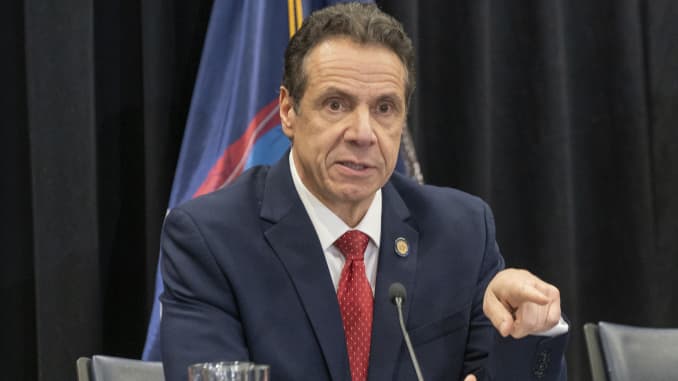
New York State Governor Andrew Cuomo briefing on updates on spread of covid-19 in New York State at NYPA White Plains Office.Lev Radin | Pacific Press | Getty Images

Gov. Andrew Cuomo declared a state of emergency on Saturday after the number of confirmed coronavirus cases in New York increased significantly.

Eighty-nine individuals have tested positive for the coronavirus in New York, according to the governor’s office. Eleven of the cases are in New York City and 70 are in Westchester County.  There are also signs of an ongoing spread, including a pair of cases in both Saratoga County and Rockland County, as well as four in Nassau County, according to the governor. 

An emergency declaration will allow the state to buy supplies and hire workers more quickly and easily to help the health departments monitoring patients under self-quarantine, Cuomo said during a Saturday press conference at the state Capitol.

The slew of cases in Westchester County trace back to a lawyer from Westchester, who was the second confirmed case in the state. 

Westchester is an obvious problem for us,” Cuomo said. They talk about the contagion in clusters, and the clusters tend to infect more and more people.” 

As of Friday, New York officials said that they’ve instructed about 4,000 people in the state to self-quarantine. At least 10 of the infected patients in New York are hospitalized, Cuomo said. 

The coronavirus has infected more than 102,000 people worldwide and killed at least 3,491 as of Saturday.

In the U.S., more than 400 cases are confirmed and at least 19 people have died, according to NBC News. California declared a state of emergency after the state announced its first virus-related death. Maryland, Washington state and Utah have also declared emergencies.

DILEMMA OF THE INDIGENOUS PEOPLE OF CANADA

March 7th, 2020

Dr. Daya Hewapathirane

Humans colonized the New World earlier than previously thought. Taken together, genetic, archaeological and geologic records suggest that the humans set out from Asian Siberia sometime between 25,000 and 15,000 years ago, entering the New World via Beringia as the ice sheets blanketing the Pacific coastal corridor and the interior corridor of North America receded. By 14,600 years ago, they had made their way to South America. What is beyond all doubt, is that the indigenous people of the two American continents have been a resilient and resourceful people, trailblazers who settled the longest geographic expanse ever settled by humans. Braving the unknown, they adapted masterfully to a vast array of ecosystems on two continents. These early Americans deserve our admiration. They exemplify the spirit of survival and adventure that represents the very best of humanity(Heather Pringle, The First Americans, Scientific American, Vol.305, No.5, Nov. 2011).    

INDIGENOUS PEOPLES – FIRST NATIONS

The indigenous peoples in Canada include the First Nations, Inuit, and Métis peoples. The First Nations are the predominant indigenous peoples in Canada south of the Arctic Circle. Those in the Arctic area are distinct and known as Inuit. The Métis, another distinct ethnicity, developed after European contact and relations primarily between First Nations people and Europeans. Within Canada, the term First Nations has come into general use for indigenous peoples other than Inuit and Métis. North American indigenous peoples have cultures spanning thousands of years.

There are 634 First Nations, and First Nations governments (or bands) recognized as such in Canadian law spread across Canada, roughly half of which are in the provinces of Ontario and British Columbia. Most of these First Nations live on designated reservations, mostly in rural areas. They are generally politically inactive and have little clout in provincial and national affairs. The indigenous people of USA, Australia and South American countries share a similar fate. Everywhere they exist, they do so on the fringes of society, subjected to white racism and neglect. Marginalised and patronised, many have sunk into apathy and despair.

GENOCIDE INVOLVING MASS KILLING OF ORIGINAL PEOPLES

Globally, it is a fact that in regions where white Europeans have settled for good, native populations have never really recovered from the trauma. With missionary zeal, white settlers and administrators have sought to erase every vestige of indigenous civilisations. Thus, continents like Australia, North and South America today have dominant white societies that have accepted and largely integrated with non-white migrants, but continue to ignore the plight of those they displaced. The political entities known as Canada and the United States of America owe their very existence as nation states to a genocide perpetrated against the original peoples of this continent. In Canada, this genocide was facilitated by the creation of the Canadian National Railway, and the consequent destruction of the buffalo, a critical component of Indigenous life and culture.

Highly hypocritical of Canada to speak of human rights violations in other countries, when Canada is overly guilty of worst forms of human rights violations during a long period of time. Canada is  responsible for genocide involving mass killing of indigenous peoples of this land. In the not too distant past, Canada was responsible for inflicting on these people, conditions of life calculated to bring about their total extinction. Going all the way back to the arrival of European ‘white man’ to the western hemisphere, the indigenous communities have been subjected to torture, terror, sexual abuse, massacres, and relocations.

THE INDIAN ACT OF 1876 AND RESIDENTIAL SCHOOL SYSTEM

The now infamous Canadian Indian Residential School system established under the 1876 Indian Act, subjected native children to forced conversions, sickness, abuse and was an attempt at Genocide. It was an attempt to force indigenous peoples off their lands, sever family ties and diminish traditional Indian culture. This Act and the Residential school system it enabled, ripped native children away from their parents and put them into institutions designed to assimilate them instead into Canadian society, the stated intention being ‘to kill the Indian in the child’. Forcible transferring of children from one group to another and widespread abuse of children was the order of the day in these Residential schools separating children from their indigenous culture and way of life. In Canada, attendance at residential schools was made compulsory for Indian children, as they were known in 1876 when this was made part of official policy. Thus, children were forcibly placed in these church-run schools where they were often subjected to physical abuse and sexual exploitation. It wasn’t until 1996 that the Indian Residential school system was dismantled, and it was as recent as June 11th, 2008, the Prime Minister of Canada made a formal apology to the indigenous people. The logic underlying this cruel social experiment was that in order to ‘civilise savages’, children had to be removed from the influence of their families. To further cut off their links to their own culture, they were forbidden to speak in their own languages in the residential schools.

This long process of deracination robbed entire generations of self-confidence and pride, turning them into the demoralised, unmotivated people so many of them have become. What took place in residential schools amounts to nothing short of cultural genocide – a systematic and concerted attempt to extinguish the spirit of Aboriginal peoples. It was the Canadian Chief Justice Beverley McLachlan who said in 2015, that Canada’s attempt to commit “cultural genocide” against aboriginal people “that began in the colonial period” is the “worst stain on Canada’s human-rights record”. In the light of Canada’s long history of severe human rights violations within the country, it is  hypocritical on the part of Canada speak of human rights obligations of other countries. Canada has consistently pressed Venezuelan authorities to address human rights violations and has imposed sanctions and suspended its diplomatic operations. Canada did the same against Nicaragua for its human rights violations. Canada has yet to suspend arms sales to Saudi Arabia- a country with a record of extreme forms of human rights violations. It is highly hypocritical of Canada to hold Myanmar accountable for an alleged genocide of the Rohingya people” and to join some western  governments to urge China to end detentions and violations against Muslims in Xinjiang region. In addition, it is hypocritical of Canada to be involved with USA and western countries on resolutions against Sri Lanka, Venezuela, Nicaragua, and Yemen at the UN Human Rights Council.

NATIONAL INQUIRY INTO PLIGHT OF INDIGENOUS WOMEN  

The missing and murdered Indigenous women epidemic is an issue currently affecting indigenous people in Canada and the United States, including the First Nations, Inuit, Metis (FNIM), and Native American communities. It has been described as a Canadian national crisis and a Canadian genocide. Responding to repeated calls from Indigenous groups, other activists, and non-governmental organizations, the Government of Canada established the National Inquiry into Missing and Murdered Indigenous Women and Girls in September 2016. The Final Report of this national Inquiry was published in June 2019. It reveals that persistent and deliberate human and Indigenous rights violations and abuses are the root cause behind Canada’s staggering rates of violence against Indigenous women, girls and other marginalized people. The report cites specific colonial and patriarchal policies that displaced women from their traditional roles in communities and governance and diminished their status in society, leaving them vulnerable to violence.

From 1997 to 2000, the rate of homicide for Aboriginal females was almost seven times higher than other females. Compared to non-Indigenous females, they were also “disproportionately affected by all forms of violence”. They are also significantly over-represented among female Canadian homicide victims, and are far more likely than other women to go missing. In the United States, Native American women are more than twice as likely to experience violence than any other demographic. One in three Native women is sexually assaulted during her life, and 67% of these assaults are perpetrated by non-Natives. The two-volume report calls for transformative legal and social changes to resolve the crisis that has devastated Indigenous communities across the country.

GENOCIDE IN THE  AMERICAS

In their book titled In American Philosophy: From Wounded Knee to the Present, authors Erin McKenna, Scott L. Pratt report a 90-95% decline in the Indigenous population of the Americas between 1491 and 1691. It is no small coincidence that the genocide has been beneficial for elite corporate interests, both domestic and foreign, seeking to profit from the land base over which various Indigenous peoples have title and sovereignty. In the past, Indigenous peoples were mercilessly decimated by diseases introduced by white settlers, made to sign unequal treaties that confined them to remote reservations and forcibly moved from their ancestral homes. And when it was decided that reservation lands were valuable, the Indians would be forced to move again to other locations.

HIGHLIGHTING OF INJUSTICES

Bruce Clark, Reuben George, John Ahniwanika Schertow, Thomas King, C. Backhouse, Yale D. Belanger, are among the many prominent scholars and authors who have highlighted the injustices and human rights violations against the native people of Canada. Bruce Clark, scholar, author and Canadian Native Rights Lawyer spent forty-six years defending the rights of Indigenous peoples across North America. Clark highlights how the legal system has been twisted and contorted to deliberately suppress indigenous sovereignty to the advantage of wealthy elites. He holds an MA in constitutional history and a PhD in comparative law jurisprudence and is a scholar specializing in the legal history of the evolving relationship between Natives and Newcomers. He is the author of a number of essays for Dissident Voice, and of the 2018 book Ongoing Genocide caused by Judicial Suppression of  the Existing” Aboriginal Rights”. Reuben George is the Chief or Manager of the Tsleil Waututh Nation Sacred Trust Initiative, which is mandated to stop the Trans Mountain Pipeline expansion from happening. Constance Backhouse’s publication was titled ‘Colour-Coded:A Legal History of Racism in Canada, 1900–1950, Yale D. Belanger wrote on Ways of Knowing: An Introduction to Native Studies in Canada.

John Ahniwanika Schertow is an award-winning journalist and multimedia artist of Mohawk and European descent. He is the founder and lead editor of Intercontinental Cry, an on-line media source of news of world-wide Indigenous struggle and resistance. As a poet and freelance journalist, John’s work has been featured in the Guardian, Toward Freedom, the Dominion, Madre, Swerve Magazine and many other publications. Thomas King’s widely read book The Inconvenient Indian: A Curious Account of Native People in North America’ (2012) is necessary reading for those interested in the plight of the indigenous people of North America. 

Fake gods

March 7th, 2020

Editorial Courtesy Island

The International Criminal Court (ICC) has given Uncle Sam a right royal wedgie. It has ruled that alleged war crimes by the US and others, in Afghanistan, be probed. The Trump administration has seen red. US Secretary of State Mike Pompeo, who condemns other countries that are not US allies for alleged human rights violations, lost no time in rejecting the ICC ruling and vowing to protect the US ‘citizens’. He minced no words when he called the ICC a ‘renegade, unlawful, so-called court’. Surprisingly, he stopped calling it a ‘cesspool of political bias’. He implied that retaliatory action would be taken. This is how the US reacts when allegations are levelled against it, but it relishes making such accusations against others.

If a country like Iran or Cuba had been at the receiving end of the ICC ruling, all major international human rights groups would have promptly welcomed it and even called for sanctions to ensure compliance. Curiously, they have chosen to remain silent on the war crimes probe ordered by the ICC. Is it that they are wary of antagonising the US government?

Shouldn’t the UN Secretary General appoint a special committee to probe the allegations of war crimes against the US? Marzuki Darusman, Yasmin Sooka and Steven R. Ratner could be its members. The US and its allies are full of praise for them, aren’t they? Former UNSG Ban Ki-moon could be appointed the head of that committee.

The US, which tried to be a hero in Geneva by condemning other countries for alleged human rights allegations, has become a villain in the Hague!

What will the UNHRC’s response to the ICC ruling be? Shouldn’t its members, especially the UK, move a resolution on the US, calling for an international investigation into the war crimes in Afghanistan and ask Washington to co-sponsor it? The western powers should practise what they preach to others, shouldn’t they? After all, they say such resolutions are beneficial to the countries against which they are moved.

Australia has denied visas to some Sri Lankan military personnel due to unsubstantiated allegations of war crimes against them. Will it mete out the same treatment to the head of the US army and other high ranking American military officers if they seek to enter its territory? There shouldn’t be double standards. As a country in the forefront of defending democracy and human rights, Australia shouldn’t be seen to be hypocritical.

Instead of trying to vilify the ICC and its judges, shouldn’t the US, being a self-proclaimed defender of human rights, across the world, face the war crimes probe to be launched and try to clear its name? This is what it keeps telling other countries to do as regards damning UNHRC resolutions that call for such investigations. It should lead by example since it considers itself the global policeman and standard bearer for human rights lest the various civil society outfits dependent on it for funds to protect democracy, the world over, should think less of it. What the US stands accused of, in the Hague, could be considered the human rights version of custodial rape.

Time was when the West could use human rights as a powerful weapon against the developing countries which it wanted to keep under it thumb to further its geo-strategic interests, on the pretext of protecting global democracy. But the ICC ruling, which has sent the US reeling, shows that they cannot fool the world any longer.

Being exposed for what they really are—a bunch of hypocrites—will not deter the self-styled western crusaders for human rights from continuing their campaign against other countries. But nothing will help them cover their nudity.

Lankan military in Jaffna engages in meditation with the Heartfulness meditation movement

March 7th, 2020

By Suryamithra Vishwa/DailyFT/Harmony Page

The meditation session was a profound experience for everyone who participated including 200 military officers.

Lankan military in Jaffna engages in meditation with the Heartfulness meditation movement

Early last month when I visited the Heartfulness Meditation Centre (also known as Sahaj Marg) in Colombo, I was asked if I would be interested in attending a meditation session to be held in Jaffna. I said yes, of course I would. The meditation it turned out was to be for military personnel of Jaffna and to be conducted by an Indian and Sri Lankan team of the Heartfulness – Sahaj Marg Movement.

In a lifetime of appreciating comparative spirituality and pursuing the path of spiritual oneness, my latest spiritual experience has been with Heartfulness meditation, which is a form of Raja Yoga.

Founded in 1945 at Utter Pradesh, Sahaj Marg – translated as the Natural Path, is overall under the Shri Ram C h a n d r a M i s s i o n i n I n d i a . Its current spiritual leader is Kamlesh D. Patel, also known as Daaji

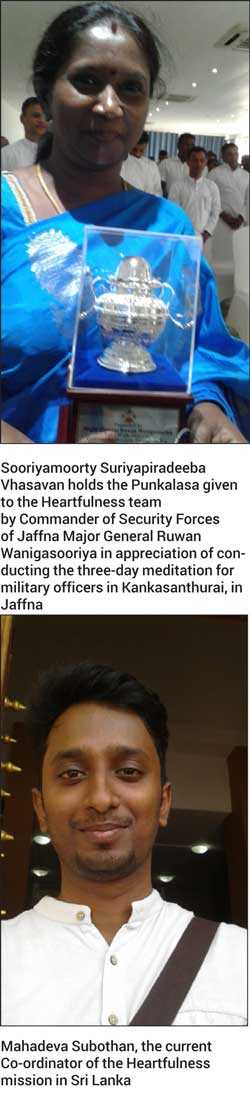
Sitting in the verandah of the Sri Lankan Sahaj Marg Centre in Wellawatte, Mahadeva Subothan, the current Co-ordinator of the Sri Lankan mission explained how the meditation for the military came to be organized.

An Amazing Story

It turned out to be an amazing story. A story connected with the heart, the core of every emotion that brings calm or chaos to the self and the world, depending on how we handle this vital compass of the human anatomy.

It turned out that a Heartfulness meditator in Jaffna, Sooriyamoorty Suriyapiradeeba Vhasavan who runs a beauty academy, had last November sent the Commander of Security Forces of Jaffna, Major General Ruwan Wanigasooriya an invitation to a certification awarding ceremony for her students that was to be held at the Jaffna University.

As she narrated to me later when I met her, she had been unsure if the Major General would take the time to attend a civilian function such as this. He had however attended the event and had been honored as the Chief Guest.

In the discussion that followed on the occasion, Suriyapiradeeba had happened to mention to him that she was affiliated with the Heartfulness meditation movement. Attempting to answer his questions about this meditation method, she had explained that the best way to understand it would be to experience the meditation.

What had followed was that the Commander of the Security Forces of Jaffna and Suriyapiradeeba had sat face to face, as is the tradition of the Heartfulness method, eyes closed for half an hour in meditation. The core element of the Heartfulness tradition is that it is begun with some prescribed relaxation techniques, then finally focuses on the heart and is induced with yogic transmission by a trainer which is known as ‘Pranahuti’ to better facilitate the evolution of the inner self of an individual.

Deep spiritual experiences cannot be explained. It is something one has to feel and words often may fail to describe it.

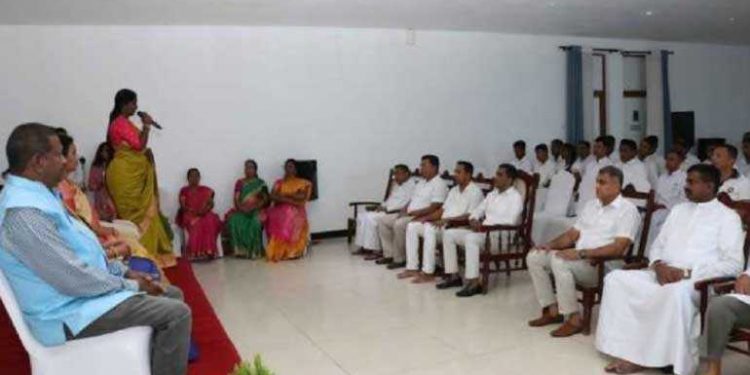
The outcome of that meditation session was that from 20 to 22 February, a Heartfulness meditation was organized for over 200 officers of the Jaffna based military who sat at the Kankasanthurai Thalsevana Army hotel hall, for half an hour for three mornings with a group of Sri Lankan and Indian Heartfulness Trainers, focusing on the purest light in their heart, transcending language, race or religion and transcending the past or future and being present in that moment, within the heart.

I thought they would be in military uniform,” exclaimed an Indian meditation trainer of the Heartfulness group who seemed amazed to witness at 7 a.m. on 20 February, the first day of the meditation, instead of uniforms, human beings, dressed in white, the color usually worn for meditation.

Meditation For The Military

Conducted by Dr. Kasthuri Venkatachalam, an Indian Heartfulness meditation trainer from Salem, Tamil Nadu, with 29 years of experience in facilitating Heartfulness meditation in India and abroad, the meditation session for the military focused on relaxation as well as the Heartfulness cleaning techniques, with an explanation that the ‘cleaning’ or purifying one’s mental and spiritual system is something that should be done daily to eliminate all accumulated complexities and impurities.

Anywhere in the world a soldier sacrifices a lot for his duty. They are away from their hometowns. They miss their family. This is a big sacrifice. Meditation practice therefore could be a great boon to them, giving inner resilience and this was how we shaped the meditation training. To bring resilience, happiness and harmony to the heart and promote human integration which are key purposes of the Heartfulness meditation method. Its core principal is based on love and compassion, the way of the Lord Buddha,” Dr. Venkatachalam explained.

Brother Subothan, in his explanation to the military officers, as to what the Heartfulness meditation is, emphasized that it is not part of any ‘religious’ tradition but solely a technique of exercising our minds towards unique deep spiritual stages of our hearts.

Video clippings were shown of Kanha Shanti Vanam, the Hyderabad-based global headquarters of the Heartfulness Institute which on 28 January observed the 75th anniversary of the organization. Said to be currently the world’s largest meditation center where 100,000 practitioners can sit and meditate at a time, it was explained that anyone can come to this center and reside free of charge for the purpose of meditation.

What matters is the spiritual capacity of every person to see oneself in another human being and know that our hearts are connected to everyone else and the whole of the universe. Changing the world starts from ourselves,” opined brother Subothan.

Varalakshmi Vijayakumar, an Indian Heartfulness meditation trainer and a psychologist by profession in her address spoke to the military personnel on the importance of work-life balance which they should focus on, given the commitments of their duty.

This Jaffna-based Heartfulness meditation was clearly a profound experience for everyone who participated.

To sit with over 200 military officers and consider them as brothers of the larger spiritual family and meditate with them was a profound experience as was the two days when I meditated with the Northern Commander, introducing him to the Heartfulness meditation,” opined Suriyapiradeeba.

In a roomful of meditating people, the energy is wonderful. It is this beautiful energy that was manifest during the Heartfulness meditation for military officers, with several of the officers giving their feedback to the trainers of the inner calm they felt and how the Heartfulness cleaning method helped them to have a better meditation experience.

Meanwhile, it is pertinent to mention the obvious humaneness and simplicity with which Major General Ruwan Wanigasooriya carries his official position which was not lost on the Sri Lankan and Indian visitors of the Heartfulness institute.

One take home from this meditation experience was that when we see ourselves as spiritual beings, the status quo of how we interact with each other changes and brings us closer to a beautiful path of love and peace that this world needs.

Demystifying Meditation

Kamalesh Patel in his book ‘Designing Destiny – The Heartfulness Way’ points out in chapter 4 on the topic of meditation: Simplicity is not a weakness. Purity is not a weakness. They are mighty signs if we allow them to be. As we nurture the subtle condition bestowed during meditation, over time they create a beautiful environment. Imagine what sort of environment can be created at home when we meditate, our family members meditate and our friends also come home and meditate. There will be so much lightness, peace and joy. Everyone will feel happy in that space.”

He further points out: An atmosphere that is created by our collective thoughts and feelings is called an egregore. When we all meditate together we create a subtle field of loving unity. And when enough people meditate, a particular tipping point in the egregore will be reached. Then the course of humanity will change.”

In the book ‘The Heartfulness Way’ by Kamalesh D. Patel and Joshua Pollock, it is stated under the chapter titled ‘Demystifying Meditation’: Through meditation, we are also able to better understand the wisdom of others who have walked the path before us. Unless we meditate, such knowledge tends to go over our heads. It does not resonate with our experience, so we cannot relate to it. Often a beginning meditator may read a spiritual book, but they may not understand much of it. If they read it again after having meditated for some time, they’ll start to find gems that they didn’t notice on the first read.”

The Heartfulness movement, currently headed globally by Kamlesh D. Patel, was introduced to Sri Lanka twenty years ago by Suntharamoorthi Chelliah, a Sri Lankan who established and co-ordinated the Sri Lankan chapter of this meditative path, until his retirement two years ago at the age of 80.

Those interested in Heartfulness meditation books or learning about the practice could contact Brother Subothan on 0777 076818.

(Suryamithra Vishwa is a Sri Lankan who strives to transcend beyond inherited birth identity. She cultivates trees in the central province as well as elsewhere in Sri Lanka and has a keen interest in comparative spirituality and indigenous knowledge. Her academic training has been in sociology and she is a curriculum writer and visiting lecturer in Mass Communication at a national university in Sri Lanka under her inherited family name. Her library of 20,000 books, of which a large number is on Ayurveda, agro forestry, healing, global literature, science, comparative religions and secular spirituality has been opened up for the public free of charge. Those interested in borrowing any book could contact 0812494285.)

The Samagi Jana Balawegaya experiment

March 7th, 2020

by C.A.Chandraprema Courtesy The Island

article_image

The present state of the UNP after the presidential election of November 16, 2019 is in many ways reminiscent of the state the SLFP was in the wake of the defeat of 1977, when the latter experienced declining public support and disunity within its ranks. As we pen these words, the UNP is on the verge of a major split, with the possibility that the Ranil Wickremasinghe faction will contest under the elephant symbol and the Sajith faction under a different symbol. This is reminiscent of the way the SLFP split after the 1982 presidential election. Things are now moving with a momentum of its own. The Parliamentary election has already been declared. Applications have already been called for postal voting. The Elections Commission is to begin accepting nominations on Thursday this week (12 March) to close on 19 March. If the political parties are to hand in nominations before the closing date they will have all of ten days between now and that deadline to finalize their lists – which is arguably the most difficult part at any parliamentary, PC or local government election.

During the ten days that remain until nominations close, the two warring factions of the UNP will have to decide who will be on the national list and who will contest in the districts. Once the lists are finalized, they cannot be changed without more conflict. Hence the coming days will be crucial for both factions of the UNP and particularly for the Sajith Premadasa faction which is the breakaway group. The UNP under Ranil Wickremasinghe is at a slight advantage because they represent the established political party with the party symbol, the party headquarters and the party branch organizations or what is left of them. The Sajith Premadasa faction will face the additional challenge of having to build a political party from scratch on the eve of a parliamentary election. The Samagi Jana Balawegaya which the Sajith faction has set up has a name and a symbol and a significant group of UNP parliamentarians supporting it. But they don’t have any grassroots party organizations.

Can the SJB do an SLPP?

The expectation obviously is that the present grassroots party organizations of the UNP will become the grassroots organizations of the Samagi Jana Balawegaya. That may be so in certain places where the electoral organizer is very strong. But when the two factions of the UNP field separate lists, the greater likelihood is that the grassroots organizations will split along the factional faultlines. If the sitting member of Parliament in a district goes with the Samagi Jana Balawegaya, the UNP will most probably field a provincial councilor or a local government opposition leader in his place. The replacement will also be a person from the area, with links to the grassroots party activists. So no one in the Sajith Premadasa faction will be able to carry the entire UNP support base with them into the Samagi Jana Balawegaya. In the coming days, these practical realities will begin to dawn on members of the Sajith Premadasa faction and no one should be surprised if there are mass defections from the Sajith faction to the UNP before nominations close.   

As this writer has pointed out previously in this column, even though the Samagi Jana Balawegaya has been inspired by the example of the Sri Lanka Podujana Peramuna, the Mahinda Rajapaksa model will not necessarily work for Sajith Premadasa. When Mahinda Rajapaksa was defeated in January 2015, he was the leader who had presided over what in this writer’s view was up to that time, the most successful government in Sri Lanka’s post-independence history. Intractable problems which had been festering for years were solved during that period. The FBI designated world’s deadliest terrorists were conclusively defeated, the Norochcholai and Upper Kotmale power plants which no government had the courage to go ahead with, were built. The government survived multiple global crises including the global food crisis of 2007, the global financial crisis of 2008-2009 which was the worst financial crisis since the Great Depression of the 1930s, and the high fuel price regime between 2010 and 2014. Despite the war and multiple glolbal crises, Sri Lanka’s per capita GDP in US Dollar terms increased threefold in the nine years that Mahinda Rajapaksa ruled the country.

When Mahinda Rajapaksa was defeated in January 2015, many people were shocked and angry. People from all over the country flocked to see the defeated leader at his house in Tangalle. This was the groundwell that led to the reorganization of the pro-Mahinda forces, the Nugegoda rally, the formation of the Joint Opposition and finally the SLPP. Sajith Premadasa does not have Mahinda Rajapaksa’s track record in government, nor does he have the groundswell of public support that Mahinda Rajapaksa had even in defeat. The only thing Sajith Premadasa has going for him is that in the run up to the presidential election, the vast majority of the UNP rank and file supported his candidacy over that of anyone else in the UNP. As this writer pointed out at that time, the rallies organized to promote Sajith’s candidacy drew vast crowds of party supporters and the party leadership simply could not ignore the signal sent by the rank and file as to who their candidate should be.

However that was in a context where the UNP rank and file actually thought Sajith Premadasa could win the presidential election. They thought that Sajith’s welfare and freebees approach combined with the support of the overwhelming majority of the minority votes would carry the day. But contrary to those expectations Sajith Premadasa was soundly defeated. In the defeated UNP, Sajith may still be the most feasible prime ministerial candidate, but whether that will confer on him the ability to ‘hollow out’ the UNP the way Mahinda Rajapaksa hollowed out the SLFP by contesting separately, is in doubt. There are several factors to be considered here. When Mahinda Rajapaksa and his supporters hollowed out the SLFP, that was done in stages and the circumstances were very different. One of the factors that enabled MR and his supporters to hollow out the SLFP was that after Maithripala Sirisena took over the SLFP, he made it a part of the UNP government.

Becoming the main

opposition force

Thus those who remained with Mahinda were from day one assured of becoming the main opposition force in the country. This is a key consideration which must never be lost sight of. In the context of the UNP, it should be noted that the Ranil Wickremasinghe faction has not become a part of the government and is still in the opposition. So there is no guarantee that the Sajith faction will be able to become the largest faction of the opposition. Members of the Sajith faction are trying to portray the Ranil faction as having an under the table deal with the government. Accusations like this can be made, but it’s obvious that the UNP faction led by RW is not a part of the SLPP government the way the Maithripala Sirisena led SLFP was a part of the yahapalana government. The Ranil Wickremasinghe faction is making the counter accusation that the Sajith faction is trying to split the UNP so that the SLPP gets a two thirds majority in Parliament.

The fact is that both these factions are in the opposition and so long as they remain there, they will share the opposition vote between them in the event that they contest separately. Last week, UNP leader Ranil Wickremasinghe attended a do organized by parliamentarian Mangala Samaraweera and lashed out at the SLPP led government and at Prime Minister Mahinda Rajapaksa characterizing the latter’s request made to India to reschedule Sri Lanka’s debt as a case of begging for alms.  So neither of the two UNP factions has a monopoly over anti-government rhetoric. Another fact that has to be considered is that even after Maithripala Sirisena had made the SLFP an appendage of the UNP, and after the Sri Lanka Podujana Peramuna had been formed, once the SLFP contested the local government elections separately, they were able to garner a significant number of votes despite being weakened by their association with the UNP government. Even when the UNP and SLFP were contesting the local government elections separately, SLFP ministers were serving in the same cabinet with the UNP.

The fact that the SLFP managed to put up a better than expected showing at the 2018 local government elections even in such circumstances should be an eye opener for the Sajith faction. In fact even at the Elpitiya Pradesheeya Sabha election which was held just before the presidential election, the SLFP which had by that time formed a collation with the SLPP got over 5000 votes in that local government area. The situation may have changed now because the SLPP candidate has been elected President with an overwhelming majority and the SLFP has all but been swallowed up by the SLPP. But so long as these two parties remained distinct, the SLFP also managed to retain a reduced but still significant following despite the fact that Maithripala Sirisena was no match for Mahinda Rajapaksa as a leader. If the Samagi Jana Balawegaya contests separately, there is the possibility that the UNP will retain a very significant following.

If the SJB is to eclipse the UNP, getting half the UNP vote bank will not suffice, they will have to get at least three to four times the number of votes that the UNP gets the way the SLPP prevailed over the SLFP at the 2018 local government election. The SLPP victory left no doubt in the minds of voters, which party was bigger and had better prospects. Even as of this moment, all members of the Samagi Jana Balawegaya appear before the public in their capacity as members of the UNP. Sajith Premadasa is the deputy leader of the UNP and the others are UNP parliamentarians and that gives them some status among the UNP constituency. However the moment they file two separate lists, the UNP will have to remove them from the party and it is yet to be seen whether firstly, the parliamentarians who are now with Sajith have the appetite to sever their links with the UNP and launch themselves into the unknown, and secondly, whether the UNP voters will vote for candidates who are no longer officially in the UNP?

One wonders whether the SJB experiment has been well thought out. When Gamini Dissanayake and Lalith Athulathmudali took on President Premadasa, in the early 1990s, they both had personal followings in the UNP. Besides, after about 14 full years of UNP rule, the incumbency factor was weighing heavily on the UNP government. In a situation where the SLFP which was then the main opposition political party was not showing signs of promise, the breakaway from the UNP provided the dynamism that was needed to galvanize the opposition. In this case, it’s obvious that Sajith Premadasa never had the kind of personal following that his father R.Premadasa, Lalith Athulathmudali and Gamini Dissanayke had in the UNP between 1977 and 1991. A following gathered around him for the purpose of ousting party leader Ranil Wickremasinghe. A similar gathering was seen around Karu Jayasuriya not so long ago and Sajith himself was a part of that gathering around Karu! What we now see around Sajith Premadasa are not those personally loyal to Sajith, but a fluid body of politicians in search of a leader to oust the incumbent leader. If Sajith had refused to lead them, they would by now have found someone else to lead them.      

A fluid body of dissidents

What will become apparent within the next ten days is whether the group that has gathered around Sajith not because they are personally loyal to him but only because they want to oust the incumbent leader will launch themselves into the wild unknown with Sajith as their leader. When Mahinda Rajapaksa was defeated, the majority of the MPs in the SLFP remained loyal to him. Even when Maithripala Sirisena who had taken over the control of the SLFP, deprived the MR loyalists of their party positions and electoral organizer positions, they still refused to abandon Mahinda. That was one of the great political acts of faith that we had witnessed in our lifetimes. For a politician to be deprived of his electoral organizer handle and to see it being handed over to someone else was the equivalent of death in political terms. All politicians are dependent on the electorates they nurse to get the critical base vote that will see them elected to Parliament. It is still a mystery to this writer as to how so many SLFP parliamentarians had the courage to stand by Mahinda Rajapaksa when they were being deprived of their very political lifelines.

We must remember that even though the Mahinda sulanga campaign to bring Mahinda Rajapaksa back into politics had begun 40 days after his defeat and had gathered momentum and there was a clear groundswell of opinion in favor of MR coming back into politics, the clearly ascendant Mahinda Rajapaksa faction in the SLFP/UPFA still thought it would not be feasible to contest separately without contesting under the  UPFA. So the 2015 parliamentary election was fought by the SLFP/UPFA with Mahinda Rajapaksa leading the election campaign, but with Maithripala Sirisena leading the party and the Mahinda Rajapaksa loyalists being in the opposition and the Sirisena loyalists being in the government! The moral of this story is that even Mahinda Rajapaksa who was clearly the most popular politician in the country at that time, had to think twice before breaking away completely from the mother organization even though the mother organization was already tainted by the fact that it was in a coalition with the UNP. If a politician like Mahinda had to think twice, Sajith Premadasa should think ten times before contesting outside the UNP.

Of course, it has to be said that in the case of Mahinda Rajapaksa, one of the reasons that motivated his group to contest together with the Sirisena controlled SLFP/UPFA instead of breaking away to contest separately, was because there was the hope that the UPFA would be able to win the 2015 parliamentary election. So people tended to err on the side of caution. This may have come to pass, if Maithripala Sirisena had not sabotaged the campaign of his own political party by making the public announcement that he would not make Mahinda Rajapksa the prime minister even if the UPFA won the election and following this up by sacking the general secretaries of both the SLFP and the UPFA on the eve of the poll and replacing them with his own loyalists. With that, the whole rationale in contesting together and not splitting the SLFP/UPFA was vitiated.

In the present context, it must be said that neither the UNP nor the Samagi Jana Balawegaya has any hopes or illusions about being able to form a government at the forthcoming parliamentary election so the two factions don’t have to be cautious like the MR faction in the SLFP before the parliamentary election of 2015. However, this gives rise to the question whether they can afford to be reckless? They are after all fighting for a share of the same dwindling opposition pie. If the UNP vote is split between these two factions, there is the possibility that both factions will fall in between two stools in the districts.

A UNP clone led by Sajith?

Another issue that needs to be thought out is that what Sajith Premadasa is offering the people is a carbon copy of the present day UNP without Ranil Wickremasinghe and with a garnishing of welfare measures such as Janasaviya on top of Samurdhi, low income housing and various freebees. Poya Day religious observances will also be thrown in for good measure. Other than such superficial changes, the Ranil Wickremasinghe UNP will be continued as it is at present by Sajith Premadasa. The SJB will have much the same people and much the same policies. This writer has in fact pointed out on a previous occasion that when it comes to constitutional reform, Sajith Premadasa had accepted the TNA position in toto in his presidential election manifesto.

Apart from that, the same minor parties that drove the UNP into the ground, the ACMC, SLMC, JHU and TPA are also seen surrounding Sajith Premadasa. The question that all this raises is whether the people of this country have an appetite for a Sajith led UNP which is a clone of the Ranil led UNP but with the welfare garnishing mentioned earlier. The expectation of the individuals and political parties surrounding Sajith Premadasa appears to be that the garnishing will get them the power they need to implement what is essentially the Ranil Wickremasinghe agenda.

Another major factor that has to be considered is that, the Samagi Jana balawegaya will be splitting from the UNP literally in the middle of an election. In the case of the SLPP, they had at least two and a half years to set up grassroots organizations, to hold separate rallies, including the historic Galle Face May Day rally of 2017 before they had to face an election in February 2018. In contrast to this, the SJB will be moving away from the UNP without any time to get their act together. This will have an impact on the breakaway faction because they would not have had the time to set up an islandwide party network and will be completely dependent on the individual politicians associated with the SJB to run the election campaign for them. When the new party is dependent on individual politicians in that manner, there will be large parts of every district that is not covered by the SJB’s man in the area. All in all, one does not get the impression that the SJB faction has thought things through carefully.

UNP to contest all 22 districts at General Election

March 7th, 2020

Courtesy Adaderana

The United National Party (UNP) has decided to contest all 22 districts at the forthcoming General Election.

The General Secretary of the party Akila Viraj Kariyawasam has informed this decision to the Election Commission.

In the meantime, a meeting on General Election 2020 is currently being held at the UNP headquarters, Sirikotha.

Speaking to Ada Derana, Kariyawasam stated that he would deliver a special statement following the conclusion of the said meeting.

President approves government’s expenditures

March 7th, 2020

Courtesy Adaderana

President Gotabaya Rajapaksa yesterday (06) granted the legal authority to the Secretary of the Treasury to incur all the expenditures of the government including the cost of election for the period of three months starting from March 6, 2020.

This was in accordance with the power vested in the President by the Constitution.

Accordingly, the Ministries will be able to settle outstanding dues and other expenditures, the President’s Media Division (PMD) stated.

එජාපය වෙනම තරඟ කිරීම සමඟියට බාධාවක් – සමඟි ජනබලවේගයෙන් ප්‍රකාශයක්

March 7th, 2020

උපුටා ගැන්ම  හිරු පුවත්

එක්සත් ජාතික පක්ෂය ඉදිරි මහ මැතිවරණයට තනිව තරඟ කරන්නේ නම්, එය සමගිය කඩා බිඳ  දැමීමක් බව සමගි ජනබලවේගයේ මහලේකම් හිටපු පාර්ලිමේන්තු මන්ත්‍රී රංජිත් මද්දුම බණ්ඩාර ප්‍රකාශ කළා.

ඒ කොළඹ අද (08) පැවති මාධ්‍ය හමුවකට එක්වෙමින්.

මැතිවරණ දිස්ත්‍රික්ක 22කටම එක්සත් ජාතික පක්ෂය තරඟ කරන බවට, එහි මහලේකම් අකිල විරාජ් කාරියවසම් අද ප්‍රකාශ කර තිබුණා.

ඔහුගේ අත්සනින් යුතු අලියා ලකුණ සහිත ලිපි ශීර්ෂයක් මගිනුයි අදාළ නිවේදනය මැතිවරණ කොමිෂන් සභාවේ සභාපති මහින්ද දේශප්‍රියට දැනුම් දී තිබුණේ.

කෙසේ වෙතත්, සමඟි ජනබලවේගයට සම්බන්ධ බොහෝ පිරිස් ඊට විරෝධය පළ කළ අතර, එහි මහලේකම් හිටපු පාර්ලිමේන්තු මන්ත්‍රී රංජිත් මද්දුම බණ්ඩාර කියා සිටියේ එක්සත් ජාතික පක්ෂ කෘත්‍යාධිකාරි මණ්ඩලයේ අවසරය මත සමගි ජනබලවේගය පිහිටුවූ බවයි.

එසේ තිබියදී වෙන වෙනම තරඟ කිරීම සමගියට බාධාවක් බවයි.

මේ අතර, සමගි ජනබලවේගයේ පක්ෂ කාර්යාලය සිරිකොත පක්ෂ මූලස්ථානයට ආසන්නව ස්ථාපිත කර තිබෙනවා.

ඒ අනුව, සමගි ජනබලවේගයේ කාර්යාලය එහි නායක සජිත් ප්‍රේමදාසගේ ප්‍රධානත්වයෙන් ලබන සඳුදා ආරම්භ කෙරෙන බව සදහන්.

පාස්කු ප්‍රහාරයට සම්බන්ධ ඉහළ සිට පහළට සියලුදෙනාගෙන් ප්‍රශ්න කළ යුතුයි – කාදිනල් හිමිපාණන්

March 7th, 2020

උපුටා ගැන්ම  හිරු පුවත්

පාස්කු ප්‍රහාරය සම්බන්ධයෙන් රජයේ ඉහළම තනතුරු දැරූ පුද්ගලයාගෙන් පවා ප්‍රශ්න කළ යුතු බව අගරදගුරු අතිඋතුම් මැල්කම් කාදිනල් රංජිත් හිමිපාණන් පවසනවා.

73 වන කොළඹ අගරදගුරු පදවි ප්‍රාප්තිය වෙනුවෙන් රාගම – බැසිලිකා දේවස්ථානයේ පැවති ළමාදින සමරු උත්සවයකට එක්වෙමින් උන්වහන්සේ මේ බව සඳහන් කළා.

උන්වහන්සේ එහිදී වැඩිදුරටත් කියා සිටියේ පාස්කු ප්‍රහාරයට සම්බන්ධ ඉහළ සිට පහළට සියලූදෙනාගෙන්ම අපරාධ පරීක්ෂණ දෙපාර්තමේන්තුව ප්‍රශ්න කළ යුතු බවයි.

එජාප අර්බුදය සහ වත්මන් දේශපාලන තත්ත්වය ගැන කියන කතා

March 7th, 2020

උපුටා ගැන්ම  හිරු පුවත්

එක්සත් ජාතික පක්ෂයේ මතුව ඇති අර්බුදය හා වත්මන් දේශපාලන තත්ත්වය සම්බන්ධයෙන් පක්ෂ විපක්ෂ දේශපාලනඥයින් අදත් අදහස් පළකළා.

සත්ව සුබසාධනයට නව පනතක් සකස් කිරීමට අගමැතිගෙන් උපදෙස්

March 7th, 2020

උපුටා ගැන්ම  හිරු පුවත්

සත්ව සුබසාධනය සඳහා නව පනතක් සකස් කරන ලෙස අග්‍රාමාත්‍ය මහින්ද රාජපක්ෂ බලධාරීන්ට උපදෙස් ලබාදී තිබෙනවා.

සත්ව සුබසාධන සංගම් සහ අග්‍රාමාත්‍යවරයා අතර පැවති සාකච්ඡාවකදී මෙම උපදෙස් ලබා දී ඇති බව සඳහන්.

අරලියගහ මන්දිරයේදී ඊයේ (06) මෙම සාකච්ඡාව පැවැත්වුණා.

Controversy about ‘Hathe Ape Potha’, a supplementary reader in Sinhala for Sexuality and Reproductive Health Education for Grade 7

March 6th, 2020

By Rohana R. Wasala

Recently, there was a heated discussion about a supplementary reader in Sinhala titled ‘HATHE APE POTHA’ for Grade 7 students in government schools in Sri Lanka for ‘sexuality and reproductive health education’, which is a novel subject to the country’s school education system. The writer believes that this controversy surrounding an insignificant relic of the disastrous Yahapalanaya is likely to prove an eye-opener for the new administration to be formed under President Gotabhaya Rajapaksa after the forthcoming general election in April. In fact, the issue of sexuality education for early adolescents was raised for the first time by the National Child Protection Authority in 2012 when the current prime minister was president.  The chairperson of the NCPA even recognized the need to train teachers for the purpose, but apparently the whole matter got shelved for some reason. The new president has a clear vision for the future of the country and a well thought out action plan for realizing that vision. Patriotic, value oriented intellectuals and committed professionals are required for driving this single minded national endeavour launched by the president who is himself a true intellectual and a proven professional. The debate over the sexuality education supplementary reader has revealed the sort of poor intellectual and professional specimens that should not be employed in the future; precious development funds should not be wasted on such fakes. The writer draws this conclusion without prejudice to the genuine intellectuals and professionals (the majority) who sat through the discussion sessions mentioned below in obvious discomfort and embarrassment at the poor show that the few Yahapalana conformists among them put up defending the book.

The booklet at the centre of the mostly frivolous argumentation was in the process of being introduced to schools after nearly four years of preparation (2016-19) during the past Yahapalana regime when it provoked a sudden storm of protest from some concerned Buddhist monks and lay persons. At a media briefing held about two months ago, Ven. Professor Medagoda Abhayatissa Thera of the University of Jayawardanepura, while agreeing with the past regime’s ministerial decision to introduce such instruction for school children, severely criticised the reader for the inappropriateness of the language used, the mismatch between the age range of the students (12-13 year olds) and the level of complexity at which the subject matter is approached in the text, and most importantly, for the strong suspicion that the book aroused particularly among nationalists  that there could be a subversive agenda behind the mode of delivery of the subject matter in that slim volume that is contrary to its purported educational purpose, something probably hidden even from the experts who produced the book and argued in its defence, as Ven. Abhayatissa conceded). 

He and another scholar monk, namely, Ven. Professor Induruwe Dhammaratana Thera of the University of Kelaniya, participated (presumably, as  invitees) in a workshop/seminar conducted on a later occasion with representative officials from the ministries of women’s affairs, health, and education, politicians (MPs), and experts including professors from the University of Kelaniya and the National Child Protection Authority; some interested civil activists who had probably been invited as well were present. (The writer has no knowledge of where these events – that is, Ven. Abhayatissa’s news conference, and the above mentioned discussion – took place, and hence is unable to specify the venues. He sincerely regrets this. His source of information about the latter colloquium, and about another similar meeting that followed it, apparently to dismiss those monks’ criticisms as irrelevant, is a pair of Sath TV videos edited and uploaded to the You Tube on January 23 and 25, 2020 respectively.)    

At the first discussion mentioned above (not the news briefing), Ven. Abhayatissa explained that he heard about the book from the grandmother of a girl of Grade 7 who attends the Dhamma school conducted at his monastery premises for school children. This child is a student of Mahanama Vidyalaya and, according to the monk, her grandmother is a highly educated woman, who is now a retiree from government service. She told him that she felt that the book in question is too coarse even for her as a senior adult, let alone children of her granddaughter’s age. So the monk got down a copy of HATHE APE POTHA  and read it through, and made the observations that he made. Ven. Abhayatissa said that by the time of this discussion the education ministry had already temporarily withdrawn the reader from circulation, probably, in response to his intervention as he believed. His argument was that the book seems to be designed to sexually titillate children at this tender age, rather than educate them through proper instructional materials and methods to restrain themselves from indulging in premature sexual activity. Restraint acquired through correct awareness is what is meant by the traditional Buddhist ethical principles of ‘kumari bambasara and kumara bambasara’, that is, chastity for young females and young males respectively. The meaning of bambasara (brahmacarya) in Buddhism is important in this context: it denotes sexual continence or abstinence. (The writer would like to add here that this is entirely compatible with what is recommended by the fully updated International Technical Guidance on Sexuality Education for quality Comprehensive Sexuality Education (CSE) document published by the UNESCO in February 2018. It says: ‘Programmes that combine a focus on delaying sexual activity with other content are effective’ (in delivering CSE to juveniles). Sexuality education is essential for promoting health and well-being, respect for human rights and gender equality among children and young people, and to empower them ‘to lead healthy, safe and productive lives’.)  

Ven. Abhayatissa hinted that, like a number of other policies and programs of the previous government, sexuality and reproductive health education was being made a pretext for undermining the entrenched Buddhist cultural foundation of the country. This culturally subversive scheme received the highest government patronage under Yahapalanaya. An LGBT ( lesbian, gay, bisexual, and transgender) office with the slogan ‘Think Equal’ operated from the then PM’s office. It was His Eminence the Cardinal, the monk claimed, who provided him information about this, and requested him to make the society aware of the fact in the interest of the safety and honour of children and women. Ven. Abhayatissa also made incidental reference, disapprovingly, to the new trend of healthy people kissing HIV+ patients in public to show that such body contact does not spread the disease. (In any case, isn’t kissing in public still taboo in Sri Lanka?) His contention was that though it is true that AIDS does not transmit through body contact, there is no need to treat someone who deserves others’ compassion and assistance to lead a normal life as a celebrity by giving them undue attention. 

Ven. Professor Dhammaratana, who spoke before Ven, Abhayatissa did, made a strong case for rejecting the supplementary reader and the erroneous approach to the subject which it is based on. His idea was that completely unnecessary sections on nocturnal emission and masturbation meant for children at the target age would encourage premature sexual  gratification rather than impart proper sexuality education. He suggested that something other than strict sexuality and reproductive health education of the young was behind the whole project: it was yet another attempt by anti-national forces to sabotage the traditional Buddhist ethical cultural foundation that supports the Sri Lankan state. It was not surprising that, being the professor of Sanskrit in his university, he found it easy to illustrate his point that there are proper culturally compatible decent ways of introducing sexuality and reproductive health instruction, by referring to the ancient Hindu classic Kamasutra (of Vatsyayana), which, he said, is without a single word that arouses ‘raga’ or lust, and that it is not pornography at all. The two monks never objected to or questioned, but fully recognized, the need for sexuality and reproductive health education for school children. Their only demand was for the subject to be delivered in a culturally acceptable manner after consultation with all stakeholders including parents, teachers, educational experts and child psychologists. 

Despite this, the Yahapalana appointed promoters of HATHE APE POTHA, it seemed, were determined to show the monks in a bad light as ignorant, irrational, change resisting, politically motivated reactionary chauvinists. The monk’s candid criticisms of the manner of presentation and of the lack of proper adaptation of the content to suit the impressionable young minds seemed to fall on deaf ears. This is something one could observe in both the videos mentioned above. It supports the two monks’ common charge that the HATHE APE POTHA project is a subversive attempt, one of many in fact (like the ‘Think Equal’ office that shared the former PM’s office space) directed against the long entrenched Sinhalese Buddhist cultural foundation that sustains the unitary Sri Lankan nation state. 

The second video mentioned above is of a meeting of mostly the same persons except for Ven. Abhayatissa and Ven. Dhammaratana, who were replaced by two other monks (whose names and designations are not known to this writer).  It was clear that the two new monks had been contracted to pooh-pooh the criticisms of the other two who had taken part in the first session. Only one of them – the senior looking one – spoke, but he only made some stale comments and the other one smiled and nodded his head in agreement. The speaker monk’s idea was that there was nothing wrong with the book and that it was OK for use with the children of Grade 7. He threw in a few  words in English, too. He said that when he contacted one of the dissenting monks on the phone and expressed his views, he had been asked to go and have his head checked by a psychiatrist, and that he returned the compliment in the same words. The writer’s opinion is that these two monks contributed little to the discussion beyond trying to rubbish the completely valid constructive criticisms that the two well informed scholarly monks had offered at the previous workshop. The senior of the monk duo who participated in the second meeting repeated what any person connected with education would say in such a context: that education means intellectual, physical, aesthetic, social, emotional, and moral development of the child, and that proper sexuality and reproductive health education was indispensable for adolescents. He held that HATHE APE POTHA is totally acceptable as it is. But it is difficult to agree with him on this, given the well-grounded arguments advanced by the more authoritative monks heard previously. 

In the course of advocating the immediate introduction of sexuality education for children he referred to the scandalous case of a thirty-five year old father seducing his fourteen year old daughter (her mother being away employed abroad) because she desired him to, as she revealed to the doctor she had been referred to by the police for examination. Here the monk was only repeating the dominant argument heard in both sessions in support of urging the immediate commencement of sexuality and reproductive health education in schools: Very young children (particularly girls, and certainly boys too) are easily vulnerable to sexual abuse, mostly at the hands of adults who are often close relatives or family friends. All speakers who found nothing wrong with the book under discussion dwelt on this theme  in order to urge its acceptance.They failed to acknowledge the obvious fact that the objections raised by the Vens. Abhayatissa and Dhammaratana were not based on a denial of this social reality, but on the non-ethical and deliberately subversive delivery strategies adopted in the book. 

The writer feels that this article has already become longer than he wants it to be. So he would like to skip over the patently inept contributions that certain other ‘resource persons’ (one of them a very very important serving government functionary with a future before him in his career) made, more to give the brush-off to the rational protests of the last mentioned two monks than to facilitate a possible answer to their legitimate concerns. One wonders whether the experts employed had sufficiently differentiated between sexuality and sex in their own minds. However, the (former/still sitting?) health ministry spokeswoman talked some sense, explaining the brief that was set to be addressed by the experts. Actual objections to the very idea of sexuality instruction for school children are likely to come from other quarters than Buddhist monks who, of course, have no issue with that, and are in fact playing a supportive role. Persons who could be expected to express discordant or modified views are not heard in the videos the writer watched. Their ideas should be considered as well, and accommodated if possible, in any government school teaching program.  

 The writer’s own opinion is that young Sri Lankans today, especially, post-millennials, that is, young people from 8 to 23 years of age by now (2020), are less inhibited and more open in social interactions with their peers of the opposite gender than their parents and their older siblings were. They can be relied on to be naturally and healthily receptive to sexuality and reproductive health education. Of course, there is no guarantee that all newfangled modes of behaviour that are embraced by them sit comfortably with the rest of the (adult) population. Local religious cultural sensitivities need to be respected (which is the point of the monks’ intervention in the issue). Fortunately, the Buddhist and Hindu religious values shared by the majority of the people tend to allow gradual integration of usefully harmless but alien behavioural trends into the local cultural setup provided they do not clash with the humanist ideals that are traditionally upheld in the Lankan society. For example, a couple of years ago, there was an outcry raised by some cultural crusaders against marking of the February 14th Valentine’s Day by a few, mostly city dwelling, local young men and women. But today the Valentine Day events seem to be taken for granted or pass unnoticed. Similarly, though legal granting of marital rights to gay couples is immediately inconceivable, the majority Buddhist population’s attitude to homosexuality (but not pedarasty or other forms of sexual crime or misdemeanour involving homosexuality), is amused connivance, as it has traditionally been the case. However, in a global context where responses to homosexuality vary from legal recognition of same-sex marriage to death penalty (only 28 out of the 193 countries represented in the UNO allow gay marriages while 6 countries execute persons for their homosexuality), gay rights issues need not be made a weapon in the hands of anti-national forces determined to destroy the Sri Lankan state, until they are resolved lawfully through democratic humanitarian consensus. The same warning is applicable to sexuality and reproductive health education for pubescent children.

Abolish the white elephant and the curse that is Provincial Councils and its root the JR/ Rajiv Accord of 29th July 1987 at least now.

March 6th, 2020

Dr.Sudath Gunasekara

(Please note that this is a revised version of an article I wrote to Lankaweb on 7.6. 2018 on the same subject updated to suit the present situation)  

Lakisuru Gothaabhaya Rajapaksha Metitumani!

Abolish the white elephant and the curse that is Provincial Councils and its root the JR/ Rajiv Accord of 29th July 1987 at least now, before this Indian born Rathaksiya gobbles up the Sinhala Buddhist Nation and this whole Island in its entirety in no time.

While congratulating again for the historic and unprecedented victory you have gained, as I predicted on the 14th   Nov via my E-mail, addressed to you (Published in Lankaweb) and also while adoring all patriotic and courageous steps you have already taken within these few days like no other, such as the brief but dignified speech you made at the Election Commissioners office on the day you were declared elected as the President of this country and your historic address to the nation at the swearing-in ceremony under the shadow of Ruwanweli Seya  (which I have been yearning for 14 years for the Head of the State to do), the most sacred Buddhist Stupa in the world and the crest jewel of the Sinhala Nation. Thereby you have restored an age-old tradition followed by our ancient Sinhala Kings, signifying a turning point in the history of this Island nation.

Furthermore, the lean Cabinet of 15 Ministers, the smallest since 1956, the excellent way you have handled all Indian politicians and the Indian press on you visit just concluded and many more wise and bold decisions you have taken since you assumed Office, I am writing this note to you to earnestly request you to abolish the JR/ Rajiv Accord of 1987 and the disastrous 13th Amendment that gave birth to Provincial Councils and many an inconsistency and historical travesties in the Island’s long and checkered history  (explained in detail below), to rescue this unique tiny Island nation from disappearing forever from this planet earth in few years due to disintegration, disunity and infighting between Bhoomiputra Sinhalese and intruder Tamil and Muslim ethnic groups, resulting from this well designed Indian political Atom bomb called the Provincial Councils, planted to destroy this 2500-year-old Glorious Sinhala Buddhist civilization, an all-time pride and a garland for human civilization on this planet.

I identify the following catastrophes resulting from these two Indian prescriptions.

  1. A complete breakdown of the district administration
  2. Complete disintegration and division of the Sri Lankan State into a number of different ethnic and religious enclaves at loggerheads fighting for its resources like land and water and supremacy over the others threatening its unitary status and sovereignty as a nation.

3 Destabilization of governance resulting in complete anarchy due to breaking down in governance

4 Colossal wastage of Public funds with no results with for the money spent

Since the first elections for Provincial Councils took place on 28 April 1988 this is how public funds have been spent or rather wasted on their upkeep.

Sri Lanka Provincial Councils: Expenditure

1996 – 2017 | Yearly | LKR mn | Ministry of Finance

 Sri Lanka’s Provincial Councils: Expenditure data was reported at 286,031.000 LKR mn in Dec 2017. This records an increase from the previous number of 276,147.000 LKR mn for Dec 2016. Sri Lanka’s Provincial Councils: Expenditure data is updated yearly, averaging 103,769.000 LKR mn from Dec 1996 to 2017, with 22 observations. The data reached an all-time high of 286,031.000 LKR mn in 2017. So with an average of almost 104 mn, you can visualize how much national wealth has gone down the drain for the past 31 years, which is approximately 3224 mn or 3.2 Billion. What a colossal wastage and apathetic and unpardonable misuse of public funds.”

The other important aspect is much of this money has gone for unproductive items like salaries and remunerations of Politicians and public Servants, buildings, vehicles, meaningless regular and luxury tamasic in five start hotels, foreign joy trips and other activities unrelated to development. Once the Secretary of the Ministry in charge of this subject told me that only 10 % of voted funds are spent on capital work and the balance 90 % is spent for recurrent activities which do not contribute anything for development.

With all this wastage of public funds, the billion-dollar question the people of this country ask is what benefit PCC has brought to the Country since 1987. Besides the colossal financial loss to the country, the political, and administrative and institutional mess, chaos and confusion by way of duplication of institutions, an increase of an utterly unproductive and lotus-eater set of politicians, and public servants. What benefits it has brought to the country over the past 31 years. Officials, offices, and expenditure have exponentially increased in the ratio of 1 to 15 with zero output. It also has brought about a complete breakdown of the once highly efficient District Administration in this country. Thus the Provincial Councils have come to stay as a veritable Huniyama for this country’s peril.

Why we should have Provincial Councils at all

In this backdrop, I pose the pertinent question as to why we should have Provincial Councils at all in this country; today the whole nation asks?  Who asked for Provincial Councils?  Was it a request by the people of this country or by some genius politicians for better governance? No one at Home asked for it. It was India who proposed it first, to appease the Tamilnadu electorate to consolidate power at Home by imposing it on the Sri Lankan President by force, almost at gunpoint, well-timed when there was an old and weak President as the Head of Government. I still remember how India invaded our air space with their war jets and dropped Parippu? to the north and how arrogantly and undiplomatically their Ambassador Dixit behaved in front of the elderly Statesman JR, the Head of this country at his Ward place residence as if Dixit was the viceroy of India conveying the message of the Indian ‘King,’ threatening a Head of a Vassal State of India of an imminent Indian invasion of the Island if he refuses to sign the Accord. 

The Accord was strategically designed by India, to divide and destabilize this country on an ethnic basis giving Tamils full power to own and rule nearly half of the country including the North and East and Central Sri Lanka (inclusive of Central, Sabaragamuwa and Uva Provinces), although India did not clearly specify these three Provinces. This was nothing but an extension of the same divide and rule policy started by the colonial British in 1832 by the creation of the Provinces in a different form. This Indian conspiracy becomes crystal clear when we analyze the following impositions India made in this country by the Rajiv/JR Accord of 29th July 1987.

1 The declaration of the Northern and Eastern Provinces comprising 1/ 3 the land area of the Island as the Traditional Homeland” of the Tamil People was a complete travesty of the Island’s authentic history. These two Provinces have never been a traditional Tamil land at any time of known history. On the contrary, this whole Island had been the traditional Homeland of the Sinhala people at least from 543 BC and it is a historical fact accepted by all historians, other than the Tamils and Indian politicians.

First, this Accord enabled the Tamils to claim 1/3 of the land area of the country for a mere 5 lakhs Tamils and thereby depriving any Sinhalese or Muslims being settled there while Tamils can settle down in any part of the Island

Second, giving Tamils the right to own 1/3 of the country, 2/3 the coastal belt and nearly 3/5 of the marine territory and its resources including the Trincomalee harbor, the best natural harbor in Asia and the second-best in the world.

Thus this Accord deprived the Bhoomiputras, the Sinhalese their birthright over their Motherland, which their ancestors have protected against all foreign invasions, both Indian and European for 2500 years and enjoyed for millennia as their beloved motherland from the dawn of history. This Accord was designed by India in order to fix the last nail on the Sinhala nation, with a vicious plan to annex the Island to India in the future.

 Third Made Tamil also an Official language, nullifying Sec 18 of the Constitution of the Republic whereas even in India Tamil is not recognized as an Official language in spite of the fact that there are nearly 70 million Tamils there.

Fourth forced  Sri Lanka to give Citizenship to all estate Tamils of Indian origin in the Central, Sabargamauwa and Uva Provinces and even Indians living in other parts of the country even if they are illicit immigrants, disregarding all internationally accepted norms and our own laws on the subject of granting citizenship to foreigners in any country.

Fifth imposed that the Northern and Eastern Provinces should be merged to form one Tamil Province with provision to merge two or more Provinces as one in the future.

Thus in sum the Accord completely destroyed the Independence, sovereignty, the Unitary status and the freedom of this Island Nation and i1987 Constitution as well, within few minutes, by one man Junies Richard Jayawardana against Island wide protests organized by the Opposition and the objections by some of his own Ministers, reducing this country to a veritable vassal State of the Subcontinent without any resistance. This was a meek submission on the part of JR he committed for survival.

 Therefore while taking action to abolish this Accord, I also earnestly request you to reverse the above 4 conditions as early as possible.

JR was forced to accept the Accord almost at gunpoint and India laid down these 4 serious conditions reducing the 1987 Constitution to mere paper scrap. Adding to this JR created PCC to all other Provinces as well accelerating the process of division and disintegration and leading to future political and administrative confusion. This Accord was signed under Island wide emergency and after confining all his MPP to a five-star Hotel having obtained their undated letters of resignation.

The implementation of this Accord, to its logical conclusion will definitely wipe out the Sinhala Buddhist nation from the surface of this planet in the long run. Therefore the crying need, to abolish it immediately, with no delay.

It is in this dangerous and disastrous backdrop that I urge all patriotic people to rise against this Accord and disastrous Provincial Councils to strengthen the President’s hands and request him to abrogate it immediately as it constitutes the foundation for the division of this small country into 9 antagonistic pieces and finally falling into the hands of India (As you know Sir a scrambled egg can never be un-scrambled).  This is exactly what the people of this country have been agitating and demanding every government, for the past 31 years. But tragically it has not fallen on the deaf ears of our selfish and timid and power-hungry politicians who have no concern for the country or the future of the people. The SLFP under Sirimavo protested against it right from the beginning although later it also embraced it without realizing the inherent dangers that underlies these clauses of the Accord.

Let us abolish this PCC immediately

As such why talk of PCC elections now, instead of abolishing this national curse and disaster immediately? This is a crucial political decision long overdue that has to be taken by a patriotic statesman like you, who loves this country and its people, in order to save this country from an imminent total political, economic, social and cultural disaster in the offing. In fact, this is a priority decision that has to be taken as early as possible by your Government. The whole country wants it to go. Once the Accord is abolished, the 13th A and the PCC set up under that will also get abolished automatically. We all expected MR to do this immediately after 2009 when he had all the power including a 2/3 in Parliament.  Had he done that then no one could have dared to contest it? But unfortunately, he did not do it.  Again he appears to promise the press today that as soon as the General election is over they will have the PC elections. I do not know whether he said so to garner the 2/3 and abolish it thereafter. If that is his plan the whole nation will admire him ore that his victory over the LTTE. I only hope he will not commit the same mistake he did after the 2010 Election.

Once the PCC are gone all superficial Officeholders such as the so-called 9 Governors, 9 ‘Cheap’ Ministers, 45 Provincial Ministers and all such parasitic politicians who bleed the nation to its bones will also go home relieving the burden they have overloaded on the country. Thereafter every one of them will at least plant a manioc stem that will do some service at least to a wild boar. The professional public servants presently working in these Councils will have no problem as they could be accommodated in suitable places in the public service until they retire.

Another reason why I argue for the abolition of PCC is the need to avoid a total disaster in District Administration that will make any retrieval of governance in this country impossible. Furthermore, that will put an end to all divisive political manipulations such as federal status, self-determination, self-rule of Muslims and EELAM dreams of the Tamils. It will also save billions of rupees now being spent for the upkeep of these monkey cages and piggeries called Provincial Councils infested with monkeys and goats, a political appendage and a dead weight around the nation’s neck that has burdened the country for the past 31 years and destabilized the total administration almost beyond recovery. Finally, it will also relieve us from any future subversive Indian or Arabian invasions and conspiracies hatched to divide this country on the ethnic basis with a dream of Indianization of this country or converting it to an Arab land as Hisbulla has planned in the Eastern Katthankudi area.

 I call upon all Patriotic people to make this request in one voice from the new President to abolish these monkey cages and dens of thieves that have exponentially increased waste and corruption and completely ruined the decent political culture of this country for the past 31 years and multiplied separatists tendencies and communal agitations dragging the nation to complete disintegration in future on ethnic lines with no chance of redemption in future

I know it very well that no political party, even the UNP that invented it under J.R. or even those who were against them in 1987 will ask for their abolition, as they use these Councils members to net votes at all elections for their political survival. But for the general public, these Councils are an eyesore when they see the way how public funds are been wasted criminally on the upkeep of these useless lotus-eater Governors, Chief Ministers, Ministers, Members, a plethora of officials and the institutions that house them. Other than enjoying the luxuries of office, attending openings, weddings, funerals school functions like sport meets, temple functions, and various other social and private teams, roaming all over the world on pleasure trips and running all over the country to show their loyalty to their political masters,  misusing public funds, and collecting votes and funds for their political leaders in Colombo and herding people for their meetings like Mayday rallies and propaganda meetings of their masters in Parliament who in turn ruin the whole country and throwing their weight on the innocent and helpless masses, on the other hand, I ask these parasitic creatures as to what service they have done to the people of the country that pay their salaries and ill-gotten fabulous perks 

Why can’t the SLPP, as a group who constitutes the majority who opposed the 13th A in 1987 at least now agitate for the abolition of this tragic national curse? The people hate this system and curse them too. Now that the SLPP already has the Pradesiya Sabhas, the live wires of Local Government in its hand to organize the election campaign for them at the village and the local levels there is no need for a Provincial apparatus for elections either.

Now that the country has functioned smoothly without these parasitic and wasteful institutions, almost for the past two and half years and has proved beyond all doubts their uselessness there is no justification for their retaining. A reorganize strong District Administration headed by professional administrators will ensure better governance as it had been the indigenous system of administration in the past. Even the British adopted certain aspects of this system to run the country very effectively and efficiently for 133 years.

The Provincial Councils have already become redundant and dysfunctional. As such if he SLPP can get them abolished, its vote base will rise up exponentially at all future elections.  Therefore the SLPP will not lose anything by getting them abolished. Instead, people will definitely rally round the party as a mark of appreciation and gratitude for relieving them of this 31-year curse and disaster. Furthermore, MR also can make use of this golden opportunity to punish all those ungrateful rascals and double-dealers who have betrayed him after the 2015 elections and send them permanently to the political wilderness. In this backdrop, if the SLPP does this, I can assure that the grateful masses who have suffered for the past 31 years under this curse will rally round it in a manner nobody would have ever imagined.  Besides increasing its vote base it will also be doing a yeoman service by this country and the nation, for liberating this country out of this wishful Indian trap that has already done enormous political and economic damage to this country and that will definitely play the main role in dividing and destabilizing this Island nation in future if we retained them.

 I can assure you that the abolition of the Provincial Council curse and its umbilical code, the Rajiv/JR Accord will not be second to liberating the country from the LTTE in 2009 and it could be even a bigger achievement of higher historical significance.  It will definitely go down in history as another historic landmark in the Rajapaksa legend.

India also cannot contest the abolition of the JR/Rajiv Accord as it had already been unilaterally broken by India at the very early stages, by not complying with its obligations in the Accord. As such it has ceased to have any legal validity as an international agreement signed between two countries

Finally, I also suggest you seek a mandate from the people at the coming up election for the abolition of these two items and other vital issues like the repealing of the 19th A and revising the electoral system by removing the preferential voting, District representative system, removing the crazy National List and reducing the number of MPP in Parliament to a meaningful level, say about 150, and laying down qualifications for politicians like minimum education, character, assets, and residence within the electorate, etc. so that returning to the democratic practice of electing their representatives and just governance is restored once again in this Island nation.

 1833 The British divided the island into 5 Provinces in 1833 viz N, S.E, W and S6 1845 NWP Kurunegala and Puttalam, 7 1873  NC, 8 UVa  1886 and 9 Sab   1897 the last

RAVAGES OF 2015 – Part III

March 6th, 2020

By : A.A.M.NIZXAM – MATARA

The imbecile and ignoramus Sirisena assumed power on January 8th, 2015 like a puppet without even knowing what he is going to do and what he has to do. After five years, since the end of the war, the terrorist realized that their dream of establishing an Eelam can never be realized as long as Mr. Mahinda Rahapaksa remained in power and subsequent to the ignominious 2012 UNP/Terrorist Singapore meeting the diaspora came forward to pump any amount of funds to launch a regime change similar to Arab Spring which replaced the rulers in Tunisia, Iraq, Egypt ad Libya. 

Accordingly a grand coalition of the terrorist diaspora, the local white-clothed terrorists, the UNP, the  CIA /M 16 and RAW undertook the task of launching a regime change operation with the blessings of their respective countries and they were joined by NGO vultures as well.  A plethora of diaspora funded outfits calling themselves as civil society organizations amounting to around 49 mushroomed overnight and joined the crusader gang who Misguided myopic Maduluwawe Sobitha Thero who stupidly believed that this evil gang is committed to abolishing the Executive Presidential System wholeheartedly supported but regretted his folly several days before his demise.         

Mr. Ranil Wickremasinghe immediately after assuming office took the Central Bank under his purview and appointed Arjun Mahendran, a Singapore national, a Sri Lankan born Tamil who had studied initially at Royal College, Colombo as the Governor of Central Bank.  This appointment was made even without obtaining consent from the President to appoint this individual, a foreigner, to this the most prestigious post. This was the first incident where Ranil Wickremasinghe boldly displayed that he is the omnipotent personality in the government and Sirisena became just a ceremonial and ignoramus puppet who has to dance to Ranil’s tunes.  Also, Ranil Wickremasinghe had a world of his own surrounded by tie-coat clad, English speaking, western servile old Royalists who were aloof to the views and aspirations of the ordinary people of Sri Lanka. 

This Singaporean appointed as the Governor of the Central Bank by Mr. Wickremasinghe became instrumental in making Sri Lanka’s largest-ever financial scam on 7th February 2015, even two months before establishing the Sirisena/Ranil government and this scam caused more than US$ 11 million losses to the nation. This grand robbery had taken place through the direct intervention of Arjun Maendran in the sale of Treasury Bonds on behalf of his son-in-law Arjun Aloysius who was the owner of the Perpetual Treasuries Limited. 

The treasury bond brigand

When the then COPE (Committee investigating malpractices in public Enterprises) Chairman MP DEW Gunasekera, who was also the leader of the Sri Lanka Communist Party was about to present to the Parliament a report highly critical of the bond transaction, Sirisena took a frivolous action to safeguard his patron Ranil and dissolved Parliament nullifying the hard work done by Mr. Gunasekera and called for elections on 17th August 2015.   

Emboldened by the protection provided by Sirisena/Ranil duo for the 1st Bond scam,

Mahendran /Aloysius couple carried out the second Bond Scam on 29th and 31st March 2016. 

In this instance the notorious Finance Minister Ravi Karunanayake who earned a reputation as the shark that swallowed the Sathosa establishment assisted Mahendran /Aloysius duo by instructing the State Banks and the Employees Provident Fund (EPF) to bid low and thereby making them lose the opportunity to buy the Bonds. Initially, the Central Bank (CBSL) advertised for Rs. 1Biillion worth Bonds to be offered but Mahendran asked the CBSL to accept bids up to Rs. 10 Billion. 

Financial Analysts said that the Arjun Mahedran’s decision caused interest rates to increase rapidly, and four months later PTL sold the same bonds to the EPF at a higher price and the

Perpetual Treasuries Limited made over Rs.5 Billion in profits over this controversial bond issue.

Meanwhile, Mr. D.E.W.Gunasrkera in an interview with Hiru news channel said that Arjun

Mahendran in his statement to the COPE Committee disclosed that Mr. Ranil Wickremasinghe instructed him on the mechanism to be adopted in the Treasury Bond issues.

When the term of office of Arjun Mahendran ended, Mr. Ranil Wickremasinghe despite

Mahendran’s involvement in Bond Scams nominated him to be appointed for a second term under his guarantee as to the Central Bank Governor but due to certain friction between Sirisena and Ranil at that time, Sirisena refused to accede to this request and appointed Indrajith

Kumaraswamy as the Governor of the Central Bank.

Arjun Mahendran sensing the dangers existing for him fled the country and Ranil

Wickremasinghe, when questioned about his fleeing from the country, said that he had gone only to attend a family wedding in Singapore. 

The Former Central Bank Governor Ajith Nivard Cabraal urged the government to hand over the investigation on Treasury Bonds scams to the CID and conduct an impartial investigation. Cabraal also asked the government to establish several specialized units to look into various aspects of the scams.

Issuing a media statement he said that “From the very beginning, the Ranil Wickremesinghe administration managed to divert the attention and evaded the implementation of the law. This has allowed the real nature of the scam as well as those who are really responsible in it to escape the law.”He has added that the best way to deal with any crime was to conduct a police probe followed by a judicial inquiry. However, the Sirisena/Ranil government established a number of other committees to look into the matter and this has allowed those without any judicial powers to investigate the incident indefinitely and these ‘investigations’ were in fact, ploys to allow culprits to remain free and escape from their crime against the State.


Referring to the recently released Forensic Audit Report related to Bond Scams Mr. Cabral has said that it had been conducted under the supervision of those who were involved in the scams and thus the report was based on false and distorted facts.

It is also pertinent to point out here how Bond Ravi (title attributed to him by Sunday Times) got benefited from this Treasury Bonds robbery.  A report published in Daily Mirror on 24th July 2017 stated that Aloysius paid Ravi’s penthouse lease rental: The report said that the former Finance Minister Ravi Karunanayake and his family leased out a penthouse at Monarch Residencies in Kollupitiya for the monthly lease rental of Rs.1.45 million being paid by Arjun Aloysius, a key witness revealed at the Presidential Commission of Inqyury (PCoI) proceedings yesterday.

Testifying at the PCoI, Construction Company Director Anika Wijesuriya said she had owned a Penthouse at Monarch Residencies in Kollupitiya which she wanted to rent-out during December, 2015.

In early January, 2016, former finance minister Ravi Karunanayake and his wife Mela had inquired from the witness’ brother about renting the apartment. Later the witness contacted Mrs. Karunanayake and carried out initial negotiations about renting the apartment.

Ms. Wijesuriya had later asked Mrs. Karunanayake to visit the apartment to examine it. It was revealed that during the examination Perpetual Treasuries Ltd. owner Arjun Aloysius had also arrived at the apartment and had assured the witness that he would lease out the apartment.Ms. Wijesuriya said she was aware at the time that Mr. Aloysius would be the lessor while the Karunanayake family would occupy the apartment.

When questioned by the PCoI, the witness said the apartment was leased at a monthly rental of Rs.1.45 million.Ms. Wijesuriya said she entered into a lease agreement with the Company called Walt and Row Pvt Ltd, to which payment was transferred by the Perpetual Capital Holdings Pvt Ltd, to be paid to her.

The witness confirmed that the Karunanayake family occupied the penthouse. This is how the Yahapalana gangsters enjoyed their posh life spending Rs. 1.45 Million per month as rental for their apartments while the ordinary people to whom everything under the sun was promised were struggling unable to feed their children three meals a day. 

It was also reported that MP Ajith P.Perera, a member of the footnote gang related to the 2nd COPE report too has received a luxury house from Arjun Aloysius.

Another of the footnote gang who is reported to have twice failed G.C.E. A/L first time passed only with 3 S passes and in the 2nd time with 2 Cpasses and 1 S pass and finally who had bought a doctorate from a certificate awarding outfit in the United States, speaking on the Forensic Audit report of the COPE report has acknowledged the failure on the part of Parliament to check corruption.

The SLPP said that UNP lawmaker Harsha de Silva couldn’t absolve himself of the responsibility for the Treasury Bonds scams, perpetrated between Feb 2015 and March 2016.

The SLPP flayed the big-mouthed UNPer at the weekly regular briefing at its Nelum Mawatha Office. SLPP Chairman Prof. G.L. Peiris and State Minister Rohitha Abeygunawardena commented on a range of issues including the forthcoming Geneva sessions, Opposition Leader Sajith Premadasa’s shameless proposal to cohabit with President Gotabaya Rajapaksa following the parliamentary polls in April 2020. How can it become conducive for this Padman to agree with President GR’s policies which he was severely criticized during the election campaign?  They said that President GR has completely discarded Tamil demands which the Padman has pledged to implement with priority.

Referring to media briefing given by MP de Silva at the Opposition Leader’s Office, Kalutara District MP Abeygunawardena alleged that the UNPer made a high profile bid to distance himself from Treasury bond racketeers, in vain. He said that MP de Silva was now singing a different tune and recalled how the Joint Opposition had to plead with TNA leader R. Sampanthan to secure sufficient time to speak in parliament regarding Treasury bond scams et al. The State Minister urged President Gotabaya Rajapaksa to initiate action to track down as to how Treasury bond thieves spent ill-gotten money. The MP raised the question whether funds were spent on elections.

In addition to above, it was reported that Arjun Aloysius had paid millions of rupees to 118 persons, mostly for UNP MPs to protect him against criticisms and the payment included Rs. 30 Million paid to MP Sujeewa Senasinghe to write a book whitewashing allegations against Aloysius.  Despite many demands made by the Joint Opposition members to investigate this reported payment and disclose the names of recipients of this money and the amounts each of them has received the government completely hushed up the issue.

Let us focus attention on relevant extracts from an editorial comment appeared in the Daily Mirror on 27th February 2020 which is given below:  The editorial is headlined saying Bond Scam – Debate over: Now Nab the Culprits”

The editorial states that two important events took place last week, one in Parliament and one within the Halls of Justice, which underscored the fact that all are equal before the law. One was the debate on the reports of the forensic audit on the Central Bank bond scams while the other was the unprecedented court ruling in which Colombo High Court Judge Adithya Patabendige sentenced former Homagama district judge Sunil Abeysinghe and his personal security officer(PSO), police constable Mahinda Kithsiri to 16 years rigorous imprisonment.   

The former judge was found guilty of soliciting and accepting a bribe of Rs.300,000 from a woman in 2013 on the undertaking that he would deliver a verdict in her favour while his PSO was found guilty of aiding and abetting in the act of bribery. They were ordered to pay back the bribe money of Rs.300,000 while each of the convicts was also imposed a fine of Rs.20,000 and two more years in prison in case of non-payment of the fine.   

 Prior to passing judgment, High Court Judge Patabendige observed that he had considered the damage done to the judiciary and hoped the severity of the sentence would act as a deterrent to other public servants who might contemplate committing such crimes using whatever means possible to amass filthy lucre by holding to ransom the people they are supposed to serve.   

 Meanwhile, the two-day debate on the forensic audit reports revealed the length and breadth of the Central Bank bond scams mainly with the connivance of Perpetual Treasuries Ltd.owned by Arjun Aloysius during the tenure of Ajith Nivard Cabraal, who was CB governor from 2006 to 2015 under the Mahinda Rajapaksa government and the scams that took place during the tenure of Arjuna Mahendran, who was CB governor from 2015 to 2016 under the Sirisena-Wickremesinghe government.   

The participants on behalf of Wickremasinghe government did their best to divert attention from the bond scams by insinuating that the two internationally-reputed companies, which carried out the forensic audit, were not above board and furthermore the reports had no legal basis and as such there was no purpose in holding a parliamentary debate. It appeared to be an attempt to kill the messenger often seen in such cases of unscrupulous financial manipulations.   

The forensic reports taken up for debate were compiled by two leading international audit firms KPMG and BDO and comprised the following:   

  • The Issuance of Treasury Bonds during the period January 1, 2002 to February 28, 2015 by the Central Bank’s Public Debt Department (PDD).   
  • Primary and secondary market transactions of the Employees’ Provident Fund (EPF) involving Treasury Bonds issued/transacted during the period from January 1, 2002 to February 28, 2015   
  • EPF transactions from January 1, 1998, to December 31, 2017, in listed and unlisted equities   
  • Issuance of Treasury Bonds and remittance of funds received to the General Treasury during the period from February 1, 2015, to March 31, 2016, by the PDD.   
  • The conduct of the supervisory and regulatory role by the Superintendent of Public Debt/Director, Supervision of Non-Bank Financial Institutions pertaining to selected Primary Dealers from January 1, 2009, to December 31, 2017   

The reports revealed that the Government had incurred an estimated loss of some Rs.10.47 billion through direct placements of Treasury Bonds by the Central Bank between January 1, 2015 and February 28, 2015, resulting from 4,504 direct placement transactions which were made by the PDD during this period. Now that the bond scam is over, We hope the government will now not waste any more time in nabbing the culprits involved in this financial crime.   

Violations of securities laws are not victim-less crimes. When insider traders gain windfall stock profits because they have bribed someone to leak confidential business secrets, when prices are manipulated and blocks of stocks secretly accumulated, our confidence in the underlying fairness of the market is shattered. We are all victims.”  (From the prologue of the book titled Den of Thieves by James B. Stewart)   

To be continued…………

රජය තරුණයින්ගේ රැකියා ගැටළු විසදීමේ වැඩපිළිවෙල ආරම්භ කරනු ලැබුවේ මැතිවරණය ඉලක්ක කරගෙන නොවේ

March 6th, 2020

ප්‍රවෘත්ති නිවේදනය

රජය තරුණ තරුණියන් රවටන වැඩපිළිවෙලක නියැලෙන බව විපක්ෂ නායක ලෙස කටයුතු කළ සජිත් ප්‍රේමදාස මහතා ඊයේ ප්‍රකාශ කර තිබෙන බවත්, බලයේ සිටියදී උස නම් සිකියුරිටි මිටිනම් කම්කර ලෙස උපාධිධාරි තරුණ තරුණයින් පොලිම් ගස්සවමින් තරුණ ජිවිත පාරට ඇද දැමීමට කටයුතු කළ මෙවැනි නායකයින් රටේ සිටීම ගැන කණගාටු වන බවත්, තරුණ ජීවිත තව තවත් අදුරු කරන්නට කටයුතු නොකරන ලෙස තමන් එතුමාගෙන් ඉල්ලා සිටින බවත්, හිටපු නිවාස පහසුකම් රාජ්‍ය අමාත්‍ය ඉන්දික අනුරුද්ධ මහතා පැවසීය.

රජය තරුණයින්ගේ රැකියා ගැටළු විසදීමේ වැඩපිළිවෙල ආරම්භ කරනු ලැබුවේ මැතිවරණය ඉලක්ක කරගෙන නොවන බව පෙන්වා දුන් ඉන්දික අනුරුද්ධ මහතා, මාධ්‍ය ඉදිරියේ අසත්‍ය ප්‍රකාශ නොකර හැකිනම් ප්‍රසිද්ධ විවාදයකට පැමිණෙන ලෙස තමන් සජිත් ප්‍රේමදාස මහතාට අභියෝග කරන බවද එතුමා පැවසීය.  

ඉන්දික අනුරුද්ධ මහතා මෙම අදහස් පළකලේ දිවුලපිටිය, මරදගහමුල ප්‍රදේශයේ පැවති මාධ්‍ය හමුවට අද (06) දින සහභාගී වෙමිණි.

මෙහිදී වැඩිදුරටත් අදහස් දැක්වූ එතුමා රජය තරුණයින් රවටන වැඩ පිළිවෙලක නියැලෙන බවත්, පෙබරවාරි මාසය වන තුරු රජය තරුණ ගැටලු වලට විසදුම් ලබා දීමට සමත් වි නැති බවත් සජිත් ප්‍රේමදාස මහතා ඊයේ ප්‍රකාශ කරලා තියෙනවා. ජනතාවත්, තරුණ පරපුරත් රවටමින් මෙවැනි ප්‍රකාශ නිතුත් කරන නායකයින් රටේ සිටීම ගැන මා කණගාටු වෙනවා.

තරුණයින් බලාපොරොත්තු වූවාට වඩා ඉක්මනින් තරුණ තරුණයින්ට රැකියා ලබා දීමේ වැඩපිළිවෙලක් ගෝඨාභය රාජපක්ෂ ජනාධිපතිතුමාගේ නායකත්වයෙන් ආරම්භ කළා. දේශපාලන භේදයකින් තොරව උගත්කමට, හැකියාවට අනුව සුදුස්සාට සුදුසු තැන ලබා දෙන වැඩ පිළිවලක් ආරම්භ කළා. උපාධිධාරින්ගේ පත්වීම් ලිපි තැපැල් මගින් නිවසට ලබා දීමට කටයුතු කළා. දැන් පත්විම් ලබා දී අවසන්. එම වැඩපිළිවෙල කඩා කප්පල් කිරීමේ අරමුණින් එතුමා මැතිවරණ කොමසාරිස්ට, මාධ්‍යයට හා ජනතාවට පිණිවිඩයක් දෙනවා මැතිවරණය ඉලක්ක කරගෙන රැකියා ලබා දෙනවා කියා. ආණ්ඩුව බලයට ආ දින සිට ක්‍රමානුකූලව රැකියා ලබා දිමේ වැඩපිලිවෙල ක්‍රියාත්මක කළා. මෙය මැතිවරණය ඉලක්ක කරගෙන ආරම්භ කළ එකක් නොවෙයි.

සජිත් සියඹලා ගස් යට සිටි උපාධිධාරින්ව හෑල්ලුවට ලක් කළා. දේශපාලන සම්බන්ධකම් මත උපාධිධාරීන්ව පොලිම් ගැස්සුවා. උස නම් සිකියුරිටි, මිටිනම් කම්කරු ලෙස තරුණයින්ව අපහාසයට ලක් කලා. එහෙම කරපු තැනැත්තා අද කියනවා තමන් අගමැති වී සතියෙන් රැකියා ලබා දෙනවා කියා. පසුගිය කාලයේ එතුමා අමාත්‍යවරයෙක් ලෙස සිටියදී දී දින 180 ක් යන්නට මත්තෙන් පත්වීම් අහෝසිවෙන ලෙස තරුණයින්ට පත්වීම් ලබා දී තරුණ පරපුර රවටා විශාල පිරිසක් පාරට ඇද දමා ඔවුන්ව අසරණ කළා. රටේ තරුණ තරුණියන් සාප කරන නායකයෙක් බවට එතුමා අද පත්වී සිටිනවා. එතුමාගෙන් රැකියා ලබා ගත් තරුණයින්, එතුමාට ගමට එන්න එපා කියා ප්‍රසිද්ධියේ ප්‍රකාශ කර තියෙනවා. 23% අඩු ඡන්ද ලබා ගත් සජිත්ට තම දිස්ත්‍රික්කය පවා වෙනස් කිරීමට සිදුවිම නිසා දැන් මානසික ආතතියෙන් මෙන් කටයුතු කරනවා.

එතුමාගේ පියාණන් වන රණසිංහ ප්‍රේමදාස හිටපු ජනාධිපතිවරයා 88 – 89 කාලයේදී තරුණ කැරළි දරුණු ලෙස මැඩ පවත්වා ඔහුගේ බලය තහවුරු කර ගැනීම සදහා තරුණ ජිවිත දහස් ගණනක් විනාශ කලා. එදා පියා සිදු කළ එම වැඩපිළිවෙල අනුගමනය කරමින්  අද සජිත් ප්‍රේමදාස මහතා තරුණ ජිවිත සමග සෙල්ලම් කරනවා. පසුගිය කාලයේ සිටි අසාර්ථකම අමාත්‍යවරයා ලෙස තරුණ තරුණියන් අසරණ කළේ සජිත් ප්‍රේමදාස මහතා. රාජ්‍ය ආයතන වල සම්පත් විනාශ කළා. තම ප්‍රතිරූපය ඉහළ දමා ගැනීම සදහා රුපියල් බිලියන ගණන් මුදල් වියදම් කර රට පුරා පෝස්ටර් ගසා තිබෙනවා. රූපවාහිනී මාධ්‍ය ආයතන වලට රුපියල් කෝටි ගණන් ණය වී තිබෙනවා. රාජ්‍ය ආයතන විනාශ කිරීමට එතුමා කටයුතු කරලා. එහෙම කරපු එතුමා අද රජයට බොරු චෝදනා කරනවා.

2019 වසරේදී ගෝඨාභය රාජපක්ෂ මහතා ජනාධිපතිධූරයට පත්විමත් සමග රටේ තරුණ තරුණියන් පිබිදුනා. තරුණයින්ගේ ශක්තිය එතුමාට ලැබුණා. තරුණයින් පාරට බැහැල චිත්‍ර අදින්න, පරිසරය පිරිසිදුව තබා ගන්න, පුරන් කුඹුරු අස්වද්දන්න වැනි යහපත් වැඩසටහන් ආරම්භ කළා. එතුමාගේ දැක්ම ප්‍රතිපත්තිය තරුණයින් හදුනා ගත්තා. ඒ නිසා තමයි කිසිදු දේශපාලනඥයෙක් ලග පෝලිම් ගසන්නේ නැති රැකියා සංකල්පය තරුණ පරපුර වෙනුවෙන් එතුමා ආරම්භ කළේ. සුදුස්සාට සුදුසු තැන ලබා දෙමින් රැකියා ලබා දී තිබෙනවා. උපාධිධාරීන්ට පත්විම් ලබා දී අවසන්. දැන් තිබෙන්නේ ඔවුන්ගේ රැකියා පුහුණුව ලබා දීම පමණයි.

යූ.එන්.පී ය තරුණ ජීවිත පෝලිම් ගැස්සුවා. තරුණයින් දේශපාලනඥයින්ට කඩේ යන සංස්කෘතිය වෙනස් කළේ ගෝඨාභය රාජපක්ෂ මහතා.  සුදුස්සාට සුදුසු තැන ලබා දුන්නේ එතුමා. එම වැඩ පිළිවෙලට බාධා කර තරුණ ජිවිත තව තවත් අදුරට ඇද දමන්න එපා කියා සජිත් ප්‍රේමදාස මහතාගෙන් ඉල්ලා සිටිනවා. එතුමාට ගැටළුවක් තියෙනවා නම් ඕනෑම මාධ්‍යයක මුහුණට මුහුණ වාද විවාද කරන්නට මා සූදානම්. මම එතුමාට අභියෝග කරනවා තමන් සමග ප්‍රසිද්ධ විවාදයට පැමිණෙන්න කියා. එතුමා පසුගිය කාලයේ කරපු දේවල් රටට හෙළි කරන්න අපි සූදානම්. දේශපාලන වශයෙන් අසරණ වී සිටන එතුමාගෙන් ඉල්ලා සිටින්නේ විදුරු ගෙවල් වල සිට ගල් ගසන්න එපා කියා. තම ප්‍රතිරූපය ඉහළ නංවා ගැනීම සදහා අසාර්ථක ලෙස අමාත්‍යාංශය මෙහයවීම නිසා රටට යහපතක් සිදුවූයේ නැහැ. එහෙම කෙනෙකුට පක්ෂ නායකත්වය දෙන්නේ කෙසේද ?

හිතක් පපුවක් ඇති මහින්ද රාජපක්ෂ මැතිතුමාගේ ජයග්‍රහණය වෙනුවෙන් අද ජනතාව පෙළ ගැසී සිටිනවා. එතුමාගේ වැඩපිළිවෙලට අභියෝගයක් වෙන්න සජිත්ට හැකියාවක් නැහැ. අප දිගින් දිගටම එතුමා සිදු කළ නීති විරෝධී ක්‍රියා රටට හෙළි කරනවා. තව තවත් සමාජයේ දෝශ දර්ශනයට, උපහාසයට ලක් වෙන්න එපා කියා මම එතුමාගෙන් ඉල්ලා සිටිනවා. මම පාර්ලිමේන්තුවේදී එතුමාට විවාදයට පැමිණෙන ලෙස අභියෝග කළා. එදා එතුමා පැනලා ගියා. මම නැවත එතුමාට අභියෝග කරනවා තමන් සමග ප්‍රසිද්ධ විවාදයට පැමිණෙන්න කියා.

එක්සත් ජාතික පක්ෂයේ දැන් තිබෙන අර්බුදය හමුවේ අපේ රජය 2/3 ක බලය ලබා ගැනීම වලක්වන්න බැහැ. සමගි ජනබලවේගයේ  නායකයින්ට අද ගමට යන්න බැහැ. ඉතින් කොහොමද මැතිවරණය මෙහෙයවන්නෙ. යූ.එම්.පී. ය විනාශ කරල, ජනතාවත් විනාශ කරල ඔවුන් මරාගෙන මැරිල අවසන්. නැවත ප්‍රකෘති තත්වයට ගේන්න කිසිම බලවේගයකට හැකි යැයි මා විශ්වාස කරන්නේ නැහැ. සමගි ජන බලවේගයේ පාර්ලිමේන්තුවට යා හැකි අතලොස්සක් දෙනා අපි සමග රහසිගතව සාකච්චා කරමින් සිටින්නේ 2/3 ක බලයෙන් රජය පිහිටුවන්නට දායක වෙන්න. ඔවුන්ගේ සහයෝගය ලබා දෙන්නෙ සූදානමින් සිටිනවා”  යනුවෙන්ද වැඩිදුරටත් පැවසීය.

2020.03.06

Exclusive Invitation – Sinhala and Tamil New Year Festival – Saturday, April 11, 2020

March 6th, 2020

Dear Sri Lankan Resident of the United States of America,

The Committee of Sri Lanka America Association of Southern California cordially invites you to celebrate the Sinhala and Tamil New Year Festival, which will be held on Saturday, April 11, 2020, from 9 am to 7 pm at Woodley Park, 6350 Woodley Ave, Van Nuys, CA 91436.

The festival is featured with the following activities and offers everyone a glimpse of the exotic Sri Lankan Tradition, Culture, Food and Heritage.

Time Program
9.00 am – 9.59 am Official Ceremony and Cultural Rituals
10.00 am – 11.00 am Authentic Sri Lankan Breakfast
11.00 am – 4.00 pm New Year Games – Avurudu Kreeda
4.01 pm – 5.00 pm Avurudu Kumari Contest
5.01 pm – 5.30 pm Cultural Show
5.31 pm – 6.45 pm Live Musical Show
6.46 pm – 6.55 pm Token of Appreciation
6.56 pm – 7.00 pm Vote of Thanks

The Committee has invited over 10 Vendors to keep the visitors happy and enjoy throughout the daylong event with the Sri Lankan authentic foods such as Hoppers, String Hoppers, Kotthu Roti, Poll Rotti, Rice & Curry, Fried Rice with Devilled Chicken, Chicken Biryani, Fish Biryani, Cutlets, Rolls, Petties, Vegetable Rotti, Ceylon Tea, Ice Coffee, Ice Cream, Traditional Sweets, fashion clothes and accessories.

Once again Sri Lanka Rupavahini Corporation will do the coverage of this event and telecast nationwide.

This invitation is extended to your family as well as friends.

Your presence will grace the occasion.

Let’s celebrate the traditional Sinhala and Tamil New Year Festival with the spirit.    

Sincerely,

Shanmuganathan Vaithilingam [Shan]
Secretary
Sri Lanka America Association of Southern California.
Cell: [213] 399 8964

Titanium Sands assays confirm THM depth resource potential at Sri Lankan project, shares up

March 6th, 2020

Jessica Cummins Courtesy Proactive Investors Australia

An upgraded mineral resource estimate will be finalised once the mineralogical studies underway have been completed.

Titanium Sands Ltd - Titanium Sands receives RC air core assays confirming depth resource potential at Mannar Island

Panning of samples from below the water table with the dark material being heavy minerals

Titanium Sands Ltd (ASX:TSL) has received all RC aircore assay results drilled in late 2019 at Mannar Island Heavy Minerals Sands Project in northwest Sri Lanka that confirm extensive depth resource potential.

All 473 holes indicate that the current shallow surface-exposed resource of 90.03 million tonnes at 6.60% total heavy minerals (THM) is underlain by large areas of deeper mineralisation.

While the results indicate the deeper mineralisation is likely, at least in part, to have lower grades than the shallow surface resource, it is laterally extensive and typically extends down to at least 5 to 12 metres below surface, under the surface resource.

Mineralogical analysis of the RC aircore samples is underway in preparation for a revised mineral resource estimate for the Mannar Island project.

Major depth potential”

Managing director James Searle said: The complete RC aircore results again demonstrate the major depth potential to substantially increase the previously reported surface-exposed mineralisation on the Mannar Island project.”

Shares have risen almost 7% today to 6.3 cents, a new 6-year high, and up from 3.1 cents on February 26.

The program was designed to test for below water table depth extension of the surface exposed mineral resource to a nominal depth of 12 metres.

Sampling of the RC aircore drill holes every metre was undertaken from surface down to a depth where water recovery with the sample was judged to potentially compromise the accuracy of the sample.

Location of the RC aircore drill holes

Potential to enhance resource

Typically, this occurred at depths of around 8 to 11 metres below surface, however, visual logging of material from the drill holes was carried from surface to the nominal 12 metres target depth.

Visual logging indicated that almost all holes contained significant concentrations of heavy minerals all the way to the target depth of 12 metres.

A further drill program utilising Sonic Core Drilling capable of sampling in water-prone materials is likely to provide accurate samples below the 8 to 11 metres achieved by the RC aircore drilling.

This could provide TSL with the potential to further enhance the resource.

Cross-section A-B showing RC drilling results beneath the existing mineral resource of Domain 1

Quick facts: Titanium Sands Ltd

Price: 0.062 AUDASX:TSL

Market: ASX
Market Cap: $30.21 m
Follow

30. Sep11. Nov9. Dec3. Feb2. Mar0.020.040.060.08010MZoom1m3m6m1yFromSep 6, 2019ToMar 6, 2020Highcharts.comMonday, Dec 16, 2019● Share price: 0.019● Volume: 52 631View company profile

President questions EC’s move to stop graduate training programme

March 6th, 2020

Courtesy The Daily News

President Gotabhaya Rajapaksa yesterday said that the directive by the Elections Commission to stop the training programme for graduate recruits to the government service was wrong.

Speaking to Newspaper Editors and electronic media heads at the Presidential Secretariat he said that they would be writing to the Commission soon explaining about it. I don’t understand why a training program should stop. Their appointment letters had been posted. It’s a training program given for the government recruits. I don’t understand why it should stop. The appointments were not political and they were not chosen on political criteria,” he said.

The President said that there should be a basis for what the Elections Commission had done. I don’t see any basis for it and we would be writing to them stating our position,” President Rajapaksa said.

When asked about the upcoming general election and as to why the government was seeking a two thirds mandate, the President said that there were many obstacles created in the form of constitutional amendments brought during the previous regime that hinders delivering promises given to the people. He said that a two thirds majority was needed to change such constitutional obstacles and fulfill the mandate given at the Presidential election.

He said there should be separation of powers between the different branches of the state for smooth governance and the powers of the executive and the legislative should not overlap with each other. When that happens it is difficult to govern and those who were instrumental in bringing these constitutional provisions too later realized it,” he said.

He questioned certain provisions in the 19th Amendment and asked whether the commissions created by the 19th Amendment were actually independent.

We could see that in the way some members of the elections commission acted during the last election. One member was writing his opinions in the newspapers,” he said.

He questioned the reason to have an in Independent Police Commission which in itself was politically appointed. How can a commission that is appointed politically be more independent than the IGP who himself has about 30-35 years of service in the department,” he asked.

Speaking about the government’s withdrawal from the co-sponsorship of the Geneva Resolution, President Rajapaksa said that it was done due the violation of the country’s sovereignty through that and the Western countries too would realize it. He said even the United States completely withdrew from the UNHRC calling it a cesspit.

When asked about the progress of investigations into the Easter Sunday attack, President Rajapaksa said that it was progressing well. He said that there was a commission appointed by the Previous President inquiring into it at the time he assumed duties. He said that He asked the Cardinal whether he was satisfied with it and whether any changes were needed to it. The President said that the Cardinal had been satisfied by the progress made by it and had not suggested any changes. President Gotabaya Rajapaksa said that apart from the investigations, they had taken stringent steps to enhance security and curtail extremist activities, thus ensuring security to all. 

Arrest warrant issued on Secretary of PCoI on political victimization

March 6th, 2020

Courtesy Adaderana

The Permanent High Court Trial-at-Bar in Colombo today (06) issued an arrest warrant on Pearl K. Weerasinghe, the Secretary of the Presidential Commission appointed to investigate alleged incidents of political victimization.

The judge-bench comprising  Justices Vikum Kaluarachchi, Dhammika Ganepola, and Aditya Patabendige issued the warrant for police to immediately arrest and produce her before the court, for ignoring the notice issued by the same court ordering her to appear before it.

The court also barred her from leaving the country, Ada Derana reporter said.

The court issued this order when the case filed against Samarappulige Niraj Roshan alias ‘Ali Roshan’ and seven others over the alleged illegal possession of five elephants, was taken up for hearing today (6).

The Attorney General had then filed 27 charges against ‘Ali Roshan’ and six other defendants under the Offences against Public Property Act, with regard to the possession of five elephants without licenses and racketeering.

Based on a complaint filed by the defendants of this case, the Presidential Commission of Inquiry appointed to probe alleged incidents of political victimization had commenced an investigation into this case and had taken the relevant documents into its custody.

However, the Permanent High Court Trial-at-Bar had issued a notice on the Secretary to the commission to present the documents before the court.

The Secretary to the commission had reportedly failed to appear before the court today while the judge bench deemed this contempt of court and issued a warrant for her arrest. 

Warrants issued for the arrest of Ravi and 9 others

March 6th, 2020

Courtesy Adaderana

The Colombo Fort Magistrate’s Court today issued warrants for the arrest of former Finance Minister Ravi Karunanayake and 9 others over the Central Bank bond auctions of March 2016.

The Attorney General on Tuesday directed the Acting IGP to obtain arrest warrants against several suspects in the Central Bank bond scam case including the former Finance Minister Ravi Karunanayake, former Governor of the Central Bank Arjuna Mahendran, Perpetual Treasuries Limited (PTL) owner Arjun Aloysius, CEO Kasun Palisena, former Director of the Public Debt Department of the Central Bank T.H.B. Sarathchandra and several others on charges of conspiracy, criminal misappropriation, cheating and market manipulation in respect of the bond auctions of March 2016.

In his letter to Acting IGP C.D. Wickramaratne, the Attorney General Dappula De Livera had states that there is reasonable suspicion against the following individuals with regard to the criminal wrongdoings which had occurred during the treasury bond issuances on March 29 and March 31, 2016 and that they could be considered as suspects:
 
1. Perpetual Treasuries Limited 
2. Sandesh Ravindra Karunanayake
3. Lakshman Arjuna Mahendran
4. Arjun Joseph Aloysius
5. Palisena Appuhamilage Don Kasun Oshada Palisena
6. Geoffrey Joseph Aloysius 
7. Chitta Ranjan Hulugalle
8. Muthuraja Surendran 
9. Ajahn Gardiye Punchihewa
10. Thuyya Handiyage Buddhika Sarathchandra
11. Sangarapillai Pathumanapan
12. Badugoda Hewa Indika Saman Kumara
 
The AG had instructs the Acting IGP to name the aforementioned individuals as suspects with the regard to the investigations, record statement from them and report information to the court naming them as suspects.

The AG further instructed to forward copies of their statements to him without delay and to carry out further investigations if necessary regarding the information uncovered from the statements.

He urged the police to report to the relevant magistrate’s court on the charges against them and to obtain warrants for their arrests.

On Wednesday, the Fort Magistrate stated that the decision on whether or not to issue arrest warrants on the accused would be announced today and imposed an overseas travel ban on the suspects.


මහ මැතිවරණයට භික්ෂූන් වහන්සේ ඉදිරිපත්වීම ගැන විවිධ අදහස්

March 6th, 2020

උපුටා ගැන්ම  හිරු පුවත්

ඉදිරි පාර්ලිමේන්තු මැතිවරණයට භික්ෂූන් වහන්සේ ඉදිරිපත්වීම සම්බන්ධයෙන් ස්ථාන කිහිපයකදී මෙලෙස අදහස් පළ වුණා.

ඉදිරි මාස 3 සඳහා රජයේ වියදම් පියවා ගැනීමට භාණ්ඩාගාර ලේකම්වරයාට බලය

March 6th, 2020

උපුටා ගැන්ම  හිරු පුවත්

අද (06) දිනයේ සිට ඉදිරි මාස 03ක කාලය සඳහා මැතිවරණ වියදම් ඇතුළුව රජයේ වියදම් පියවා ගැනීමට භාණ්ඩාගාර ලේකම්වරයාට බලය පවරමින් ජනාධිපතිවරයා විසින් අධිකාරි බලපත්‍රය නිකුත් කර තිබෙනවා.

ඒ ජනාධිපතිවරයාට ආණ්ඩුක්‍රම ව්‍යවස්ථාවෙන් පැවරී ඇති බලතල ප්‍රකාරවයි. <br /><br />රජය විසින් ගෙවීමට ඇති හිඟ බිල්පත් හා අනිකුත් ප්‍රමුඛතාවන්ට වියදම් කිරීමට ඒ අනුව අමාත්‍යාංශවලට හැකියාව ලැබෙනවා.

හිටපු ඇමති බදියුදීන්ට එරෙහි පැමිණිල්ල ගැන විමර්ශණ සිදුකර නැතැයි චෝදනාවක්

March 6th, 2020

උපුටා ගැන්ම  හිරු පුවත්

හිටපු අමාත්‍ය රිෂාඩ් බදියුදීන්ට එරෙහිව තමන් සිදුකළ පැමිණිල්ල තවමත් විමර්ශනය කර නොමැති බවට උතුරේ මුස්ලිම් ජනතාව නම් සංවිධානයේ ලේකම් රාසික් මොහොමඩ් කාදර් ඛාන් අල්ලස් හෝ දූෂණ විමර්ශන කොමිසමට චෝදනා කරනවා.

ඔහු පවසන්නේ තමන් හිටපු අමාත්‍යවරයාට විරුද්ධව පැමිණිල්ල සිදුකර අදට වසර 5ක් ගතව ඇති බවයි.

උතුරේ මුස්ලිම් ජනතාව සංවිධානයේ ලේකම් රාසික් මොහොමඩ් කාදර් ඛාන් මහතා අද අල්ලස් හෝ දුෂණ විමර්ශන කොමිසමට පැමිණ තමන් සිදුකළ පැමිණිල්ල පිළිබඳව විමසනු ලැබුවා.

අධිකරණ නියෝගයක් නොමැතිව ශානි අබේසේකර කළ දෙයක් ගැන ජනපති කොමිසමේදී හෙළිවෙයි

March 6th, 2020

උපුටා ගැන්ම  හිරු පුවත්

කොච්චිකඩේ ශාන්ත අන්තෝනි දේවස්ථානයට බෝම්බ ප්‍රහාරය එල්ල කළ සැකකරුගේ සහ ඔහුගේ බිරිඳගේ දුරකථන අධිකරණ නියෝගයකින් තොරව අපරාධ පරීක්ෂණ දෙපාර්තමේන්තුවේ හිටපු අධ්‍යක්ෂ ශානි අබේසේකර විසින් ඇමරිකාවේ එෆ්.බී.අයි. ආයතනයට සහ ඔස්ට්‍රේලියාවේ ෆෙඩරල් පොලිසියට භාරදී ඇති බවට අද අනාවරණ වුණා.

ඒ, අපරාධ පරීක්ෂණ දෙපාර්තමේන්තුවේ විශේෂ අංශයේ ස්ථානාධිපති ප්‍රධාන පොලිස් පරීක්ෂක ලලිත දිසානායක මහතා පාස්කු ප්‍රහාරය පිළිබඳ සොයන ජනපති විමර්ශන කොමිසම හමුවේ සාක්ෂි ලබාදීමේදී.

පාස්කු ප්‍රාහාරය පිළිබද සොයා බලන ජනාධිපති විමර්ශන කොමිෂන් සභාව හමුවේ අද සාක්ෂි ලබා දුන්නේ අපරාධ පරික්ෂණ දෙපාර්තමේන්තුවේ විශේෂ අංශයේ ස්ථානාධිපති ප්‍රධාන පොලිස් පරික්ෂක ලලිත දිසානායක මහතායි.

සාක්ෂි විමසීම ආරම්භ කරමින් රජයේ අධිනීතීඥවරයා විමසා සිටියේ පාස්කු ඉරිදා ත්‍රස්ත ප්‍රහාරය සම්බන්ධයෙන් ඔබට ප්‍රධාන විමර්ශනයක් භාර දුන්නේද යන්නයි ?

ඊට පිලිතුරු ලබා දෙමින් ප්‍රධාන පොලිස් පරික්ෂක ලලිත දිසානායක මහතා සදහන් කළේ තම ජ්‍යෙෂ්ඨ නිළධාරියා වන වී.එස් තිසේරා මහතාගේ උපදෙස් මත කොච්චිකඩේ ශාන්ත අන්තෝනී දේවස්ථානයේ බෝම්බ පිපිරීම සම්බන්ධයෙන් විමර්ශනයක් සිදු කිරීමට එම ස්ථානයට ගිය බවයි.

කොමිසම ප්‍රශ්න කර සිටියේ වවුනතිව්වලදී පොලිස් නිළධාරින් සිව් දෙනෙකු ඝාතනය කිරීම සමබන්ධයෙන් සැක සහිත පුද්ගලයින් බෝම්බ ප්‍රහාරයට සමබ්න්ධ වී ඇද්ද යන්නයි ?

ඊට පිළිතුරු දුන් ප්‍රධාන පොලිස් පරික්ෂකවරයා සදහන් කලේ සැකකරුවන් සිව් දෙනාගෙන් දෙදෙනෙකු බෝම්බ ප්‍රහාරයට සම්බන්ධ වී ඇති බවට විමර්ශනවලදී අණාවරණ වූ බවයි.

කොච්චිකඩේ දේවස්ථානයේ බෝම්බකරුගේ සහ ඔහුගේ බිරිදගේ දුරකතන විමර්ශන සදහා පොලිස් භාරයට ගැනීමට හැකිවූ බවත් අදාල දුරකතන 2019 මැයි මස 08 වැනිදා ඇමරිකාවේ ත්‍ඊෂ ආයතනයට සහ ඕස්ට්‍රේලියාවේ ෆෙඩරල් පොලිසියට භාර දෙන ලෙස අපරාධ පරික්ෂණ දෙපාර්තමේන්තුවේ හිටපු අධ්‍යක්ෂ ශානි අබේසේකර නියෝග කල බවත් සාක්ෂි ලබා දීමේදී ප්‍රධාන පොලිස් පරික්ෂක ලලිත දිසානායක මහතා අණාවරණ කළා.

ඒ හේතුවෙන් සාක්ෂි විනාශ වීමට ද ඉඩ ඇති බවත් අදාල සාක්ෂි ඇමරිකාවට සහ ඕස්ට්‍රේලියාවට ලබා දී ඇත්තේ ශානි අබේසේකරගේ උපදෙස් මතම පමණක් බවත් අධිකරණ නියෝගයකින් තොරව එයි සිදුව ඇති බවත් ලලිත දිසානායක මහතා සාක්ෂි ලබා දෙමින් කොමිසම හමුවේදී හෙළි කළා.

මහ මැතිවරණය සහ වත්මන් දේශපාලන තත්ත්වය ගැන විවිධ අදහස්

March 6th, 2020

උපුටා ගැන්ම  හිරු පුවත්

ඉදිරි මැතිවරණය හා වත්මන් දේශපාලන තත්ත්වය සම්බන්ධයෙන් විවිධ පාර්ශ්වයන් අදහස් පළකළා.

රටේ පවතින ගැටලු සහ තමා පිළිබඳ පැතිර යන කට කතා ගැන හිටපු ජනපති කතා කරයි

March 6th, 2020

උපුටා ගැන්ම  හිරු පුවත්

මේ දින වල රටතුළ මතුව ඇති ගැටලු සහ තමා පිළිබඳ පැතිර යන කට කතා සම්බන්ධයෙන් හිටපු ජනාධිපති මෛත්‍රීපාල සිරිසේන මහතා අදහස් පළ කළා.

ඒ ලංකාපුර කාන්තා තරුණ ගොවි සම්මේලණය අමතමින්

දේශපාලන හිතවතුන්ට රාජ්‍ය ආයතන තනතුරු දීමේ යුගය වෙනස් කළ බව ජනපති කියයි

March 6th, 2020

උපුටා ගැන්ම  හිරු පුවත්

දේශපාලන හිතවතුන්ට තනතුරු දීමට රාජ්‍ය ආයතන භාවිත කළ යුගය වෙනස් කිරීමට හැකි වූ බව ජනාධිපති ගෝඨාභය රාජපක්ෂ පවසනවා.

පෞද්ගලික ආයතන ශක්තිමත් කර ලාභ ලබන තත්ත්වයට පත් කළ අත්දැකීම් බහුල පිරිසක් වර්තමානයේ කිසිදු වරප්‍රසාදයක් නොමැතිව රාජ්‍ය ආයතන නගා සිටුවීමට තමන් සමග එක්ව සිටින බවයි ජනාධිපතිවරයා කියා සිටියේ.

රාජ්‍ය ආයතන කිහිපයකට අලූතින් පත් කෙරුණු සභාපතිවරුන් සහ අධ්‍යක්ෂ මණ්ඩල සාමාජිකයන් සමග අද දහවල් ජනාධිපති කාර්යාලයේදී පැවති හමුවකදී ජනාධිපතිවරයා ඒ සම්බන්ධයෙන් අදහස් දක්වා සිටියා.

රවී , මහේන්ද්‍රන් සහ ඇලෝසියස් ඇතුළු 10දෙනෙකු අත්අඩංගුවට ගැනීමට වරෙන්තු (වීඩියෝ)

March 6th, 2020

උපුටා ගැන්ම  හිරු පුවත්

බැඳුම්කර වංචාව සම්බන්ධයෙන් චෝදනා ලැබ සිටින හිටපු පාර්ලිමේන්තු මන්ත්‍රී රවී කරුණානායක, හිටපු මහබැංකු අධිපති අර්ජුන් මහේන්ද්‍රන්, අර්ජුන් ඇලෝසියස් ඇතුළු සැකකරුවන් 10 දෙනෙකු අත්අඩංගුවට ගන්නා ලෙස කොටුව මහේස්ත්‍රාත් අධිකරණය අද පස්වරුවේ වරෙන්තු නිකුත් කළා.

ඒ නීතිපති දෙපාර්තමේන්තුව අධිකරණය හමුවේ දැක්වූ කරුණු සැලකිල්ලට ගනිමින්.

මෙම නඩුවේ පළමු සැකකරුවෙකු ලෙස නම් කර ඇති පර්පෙචුවල් ටෙ‍්‍රෂරීස් සමාගමට ලබන 18 වනදා අධිකරණය හමුවේ පෙනී සිටින ලෙස සිතාසි නිකුත් කිරීමට ද කොළඹ කොටුව මහේස්ත්‍රාත් රංග දිසානායක නියෝග කළා.

එමෙන්ම, නඩුවේ 10 වන සැකකරු ලෙස නම් කර තිබූ ශ්‍රී ලංකා මහබැංකුවේ රාජ්‍ය ණය දෙපාර්තමේන්තුවේ අධිකාරි බුද්ධික සරත් චන්ද්‍රට එරෙහිව නඩුව පවත්වාගෙන යාමට ප්‍රමාණවත් සාක්ෂි නොමැති වීම හේතුවෙන් ඔහුට වරෙන්තු හෝ සිතාසි නිකුත් කිරීමක් සිදුවූයේ නැහැ.

කෙසේ වෙතත්, හිටපු පාර්ලිමේන්තු මන්ත්‍රී රවී කරුණානායක ඇතුළු 10 දෙනාට වරෙන්තු නිකුත් කිරීමේදී නීතිපතිවරයා විසින් ගොනුකළ පැමිණිල්ලේ කරුණු වලට අනුව නඩුකරයක් පවත්වාගෙන යාමට තරම්, සාක්ෂි පවතින බවට අධිකරණය තීන්දු කළා.

ඒ අනුව, සක්‍රිය ලෙස පර්පෙචුවල් ටෙ‍්‍රෂරීස් සමාගමට අයුතු ලාභයක් ලබාදීම සඳහා සැකකරුවන් බැඳුම්කර වෙන්දේසියේදී කටයුතු කළ බවට ප්‍රමාණවත් සාක්ෂි පවතින බවයි මෙහිදී මහේස්ත්‍රාත්වරයා සඳහන් කළේ.

2016 වසරේ මාර්තු 29 සහ 31 යන දෙදින තුල සිදුවූ බව කියන බැඳුම්කර වංචාවට අදාළව හිටපු පාර්ලිමේන්තු මන්ත්‍රී රවී කරුණානායක, පර්පෙචුවෙල් ටෙ‍්‍රෂරීස් සමාගමේ හිමිකරු අර්ජුන් ඇලෝසියස්, එහි ප්‍රධාන විධායක නිලධාරී කසුන් පලිසේන ඇතුලූ 11 දෙනෙකු වරෙන්තු ලබාගෙන අත්අඩංගුවට ගන්නැයි නීතිපතිවරයා පසුගියදා වැඩබලන පොලිස්පතිවරයාට උපදෙස් ලබාදී තිබුණා.

ඒ අනුව, මීට පෙර සැකකරුවන්ට විදේශ ගමන් තහනමක් ද පනවනු ලැබුවා. මේ අතර, අද උදෑසන නඩුව කැඳවූ අවස්ථාවේදී නීතිපති දෙපාර්තමේන්තුව වෙනුවෙන් පෙනී සිටි ජ්‍යෙෂ්ඨ සොලිස්ටර් ජෙනරාල් හරිප්‍රියා ජයසුන්දරට මහේස්ත්‍රාත්වරයා ප්‍රශ්ණාවලියක් ලබාදුන්නේ අධිකරණයට කරුණු කිහිපයක් තහවුරු කරගැනීමට අවශ්‍ය බව පවසමින්.

ඒ අනුව, එම ප්‍රශ්ණාවලියට පස්වරුවේ ලිඛිතව පිලිතුරු සපයන ලෙස කොටුව – මහේස්ත්‍රාත් රංග දිසානායක නීතිපතිවරයාට නියෝග කලා.

පිළිතුරු අධිකරණයට ඉදිරිපත් කල පසුවයි බැඳුම්කර වංචාවට අදාළව හිටපු පාර්ලිමේන්තු මන්ත්‍රී රවී කරුණානායක, හිටපු මහබැංකු අධිපති අර්ජුන් මහේන්ද්‍රන්, පර්පෙචුවෙල් ටෙ‍්‍රෂරීස් සමාගමේ හිමිකරු අර්ජුන් ඇලෝසියස්, එහි ප්‍රධාන විධායක නිලධාරී කසුන් පලිසේන ඇතුලූ 10 දෙනෙකුට වරෙන්තු නිකුත් කිරීම සම්බන්ධයෙන් වන තීන්දුව ප්‍රකාශයට පත් කෙරුණේ.  


Copyright © 2026 LankaWeb.com. All Rights Reserved. Powered by Wordpress