
“LTTE Diaspora speaks of “Genocide” — But say Nothing of the Genocide of Tamil Child Soldiers Childhood”
May 17th, 2025Shenali D Waduge
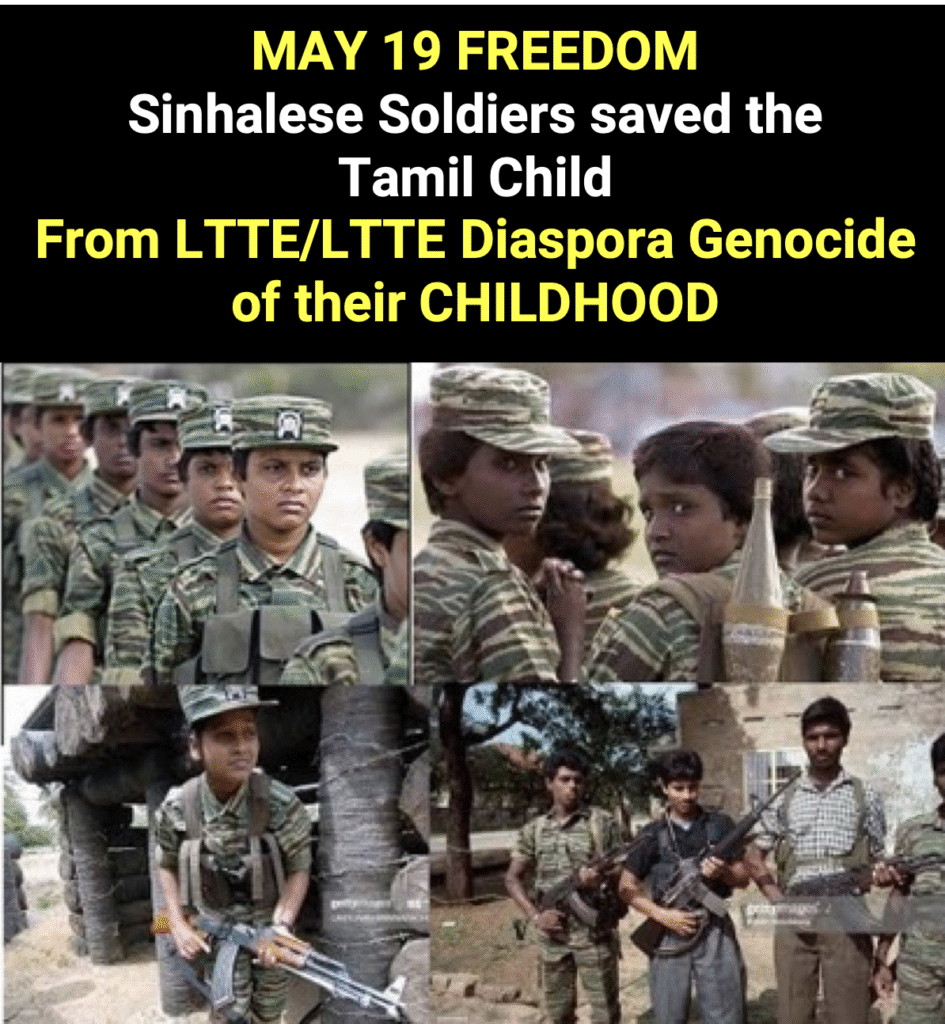
Has it never occurred to the international media or so-called international community or even UN/UNHRC Officials to question the silence of LTTE fronts to LTTE’s recruitment of Tamil children who were turned into child soldiers forming one third of LTTE’s ground force? How can LTTE fronts call for justice when hiding their own crime of creating child soldiers & sending them to their deaths over 3 decades? How can LTTE fronts who funded LTTE guns & watched child soldier recruitment have any moral authority to demand human rights or draft curriculum for bogus genocide week? How can LTTE fronts hide behind human rights rhetoric when for 30 years they encouraged Tamil children to be kidnapped & turned into child soldiers. They claim to fight for a separate state but don’t mind kidnapping their own people’s children & sending them to die. These were their own people’s children who were denied fundamental rights, plucked away from their homes & loved ones & taught to kill. Prabakaran is no more but LTTE fronts must answer for the Tamil children forced into war. Genocide of these Tamil children’s childhood should take international centre stage not a trumped up 40,000 figure for which no names, no skeletons, no police complaints, no birth certificates have been presented even 16 years after the conclusion of the conflict. These hypocrites in exile watched as LTTE kidnapped, trained their own children to kill & die while they happily sought asylum & sent their kids to foreign schools, universities & secured foreign jobs. Now their children are trained to continue the lies so the LTTE can continue their kitty.
LTTE fronts have taken great pains to open websites, hold conferences, panel discussions, woo international media, make documentaries, hold campaigns/fundraises, lobby politicians & retain lawyers – there’s nothing they have not done since end of LTTE ground force in 2009. They have presented themselves as paragons of virtue, fighting for their people & their rights and begging the people of the world to listen to their grievance. Arguments lined up to fit into their goal for a separate state.
Let’s stop there.
Did these paragons of virtue living in foreign shores not feel an iota of sorrow to watch their own people’s children plucked away from their parents, from schools or orphanages or while returning home & dumped into LTTE camps to be trained to kill? Obviously not.
What kind of a separate state is envisaged when one third or an entire generation of Tamil children have been denied their childhood?
Did these paragons of virtue not count the number of children some as young as 7 years as per Human Rights Watch reports, undergo gruesome training while those who fled were shot dead by LTTE?
Why did LTTE fronts — many based in safe, western democratic countries — not campaign against this grave war crime committed by the LTTE against their own community’s children? Because they were complicit & were well aware of the recruitment.
What a crying shame to live overseas, have one’s own children educated in Western schools while one’s own people in rural areas were handed rifles
Why has author Harrison who has been counting the dead since 2009, not bothered to count how many Tamil children were kidnapped from 1980s by LTTE – how many died as a result of LTTE training, how many Tamil children were shot dead by LTTE trying to flee? How many Tamil children were raped or served as sexual toys for LTTE men in bunkers?
The conspicuous silence of the UN Agencies is to also be questioned.
LTTE violated Article 38(3) of the UN Convention on the Rights of the Child & Optional Protocol on the involvement of Children in Armed Conflict (2000) which prohibits recruitment of children under 18?
What did UN do to stop LTTE over 30 years of child soldier recruitment?
According to the Paris Principles & Guidelines on Children Associated with Armed Groups, forcible recruitment of children not only violated humanitarian law but was considered a form of slavery under international law.
In over 30 years of recruitment of Tamil children, did the UN & associated agencies do anything to stop LTTE’s child soldier recruitment other than compile beautifully printed reports?
Why did diaspora leaders not rescue even one Tamil child soldier?
Why did Tamil political parties & Tamil politicians talking big in Parliament also not rescue one Tamil child soldier?
Yet LTTE Diaspora & Tamil politicians are happy to parrot genocide” ignoring their own community’s sin & betrayal of their own children.
A generation of children lost their childhood to satisfy an ideological dream of a handful.
How can LTTE Diaspora justify lobbying under banner of human rights” while conveniently ignoring the first & most sacred right – the Right of a Child to live free from war & forced combat.
The genocide” claim is nothing but a hyped charge sans facts or evidence only pumped by propaganda & sensationalism.
The genocide of the Tamil child used as child labor, for suicide, for ethnic cleansing, for assassinations, for killings is a bigger crime that has not received the international attention it should.
Under UN Security Council Resolution 1612 (2005) parties recruiting or using child soldiers must be held accountable.
Rome Statute of the International Criminal Court (Article 8) lists recruitment of children under 15 as a war crime.
Why was nothing done against LTTE?
The UN Basic Principles & Guidelines on the Right to a Remedy (2005) applies to all victims of human rights violations – not just those on one side of a conflict. Where is the justice for LTTE’s child soldiers denied childhood as well as the children LTTE killed from other communities including foreign children?
UK Govt stands guilty of harboring the woman who trained Tamil children as child soldiers. Why has no legal action been taken against Aunty Adele? Why is the aunty behind the cyanide capsule still free?
Optional Protocol to the CRC on the Involvement of Children in Armed Conflict (2000)
Article 4(1): Armed groups should not recruit or use children under 18 in any hostilities.
Article 6: States must take legal measures against those who violate the Protocol.
Why has the UK not prosecuted Adele Balasingham under this Protocol, which it ratified?
Rome Statute of the International Criminal Court (ICC)
Article 8(2)(b)(xxvi) – Conscripting or enlisting children under the age of 15 into armed forces or groups, or using them to participate actively in hostilities = War Crime.
Adele Balasingham trained child soldiers under 15 — and wrote about it. Why no ICC case?
UN Security Council Resolutions on Children in Armed Conflict
UNSC Resolution 1612 (2005) – Calls for accountability for persistent violators of children’s rights in armed conflict.
The LTTE was listed. Adele Balasingham was its face for child recruitment. Why is she not on any sanctions list?
To the UN & Human Rights NGOs:
Why have international investigators failed to name Adele Balasingham, despite her public role in training child soldiers and glorifying their deaths in her books?
How is justice credible if those who armed and trained children — not just used them — face no international consequences?
Why has there been no tribunal, arrest warrant, or even public inquiry into her actions, while she freely publishes and lectures abroad?
Denying a child their childhood is a tragedy & a crime against humanity, a theft of their innocence that no separatist cause can justify.
Turning children into soldiers is a genocide of their childhood. Recruiting children as soldiers is illegal & is a systematic destruction of their childhood, a soul lost forever, a genocide that cannot be ignored. No cause, no ideology, justifies turning a child into a killer.
LTTE fronts accuse the Sinhalese of discrimination. But it was not the Sinhalese who robbed Tamil children of their childhood. It was the LTTE who turned their own sons & daughters into weapons. It was the Sinhala soldier who ensured that from May 2009, not a single Tamil child was kidnapped or recruited & trained to kill.
The LTTE fronts who cry discrimination” are reminded that it was they who forced Tamil children to carry rifles instead of books – not the Sinhalese.
Tamil children were denied schooling by LTTE & LTTE Diaspora not the Sinhalese.
It was LTTE & its Diaspora cheer squads who took the childhood away from Tamil children.
It was the Sri Lankan Army who gave the Tamil child soldier a second chance at life.
If the Sinhalese are accused of injustice & discrimination what do you call those who train their own children to die killing?
The hypocrisy is that those who parrot genocide” were the ones who were happy to force their own children to wear suicide vests & cyanide capsules.
This same LTTE Diaspora made a huge ruckus over the deaths of Prabakaran’s children but not a hum for the thousands of Tamil children who were turned into killers by them.
The international media, the so-called international community & the mighty officials of the UN & associated agencies kindly advised to revisit Sri Lanka’s conflict & ask themselves where the real discrimination lay? Was it not in turning innocent Tamil children into child soldiers? Was this genocide of childhood not a bigger war crime for not only was these Tamil children’s childhood stolen from them, they were forced to kill & taught to commit suicide.
What have the international media/international community/UN done to deliver justice to the perished Tamil child soldiers by holding to account LTTE fronts & Tamil politicians & Political Parties for their role?
Shenali D Waduge
JVP Recorded Largest Ever LG Election Victory in History But Bankruptcy Looms Again When Debts Become Payable in 2027
May 17th, 2025Dilrook Kannangara
JVP won power in 265 LG bodies and the closest rival SJB only managed 14. ITAK and other minority parties are no challengers to the JVP. This is an astronomical election victory. UNP, SLPP, SLFP and others were essentially wiped out unable to win a single LG body! They lost the country and now the village too.
Though defeated, SJB has positioned itself as the next favored regime. Voters’ choice for the next leader is between Anura and Sajith. Others have been rendered irrelevant.
Comparing local government elections with parliamentary or presidential elections is unwise. Local government elections offer hope for small and independent groups and have always caused fragmented election results. However, national elections offer no hope for these groups and they vote for the main contestants only. The other factor is the low voter turnout at LG elections.
Building up grassroots level political structures is very important for all political parties. LG councilors are often the election organizers of their parties, essentially the backbone of any political campaign. SLPP suffered the largest drop in the number of LG bodies and councilors in Lankan history which will cost them dearly.
However, there is no time for celebrations for the government. It must quickly build up foreign reserves that fell to zero in January 2022 in the hope that by 2027 Sri Lanka will have sufficient amounts of dollars to repay foreign loans and their interest unpaid since 2022. Failing that it will be bankruptcy again. Global and regional challenges are unprecedented and will certainly have an adverse economic impact.
Need to attract FDI by developing offshore sector
May 17th, 2025Dr Sarath Obeysekera
Need to think out of the box to attract FDI and offshore sector development This is the single point mooring buoy purchased by Ceylon petroleum corporation in 1986/87
Colombo Dockyard offered to assemble the mooring buoy in Cololmbo Dockyard on behalf of SBM/ IMODCO but due to unknown reasons CPC paid higher price and imported it
We made a model in timber to ascertain assembly and welding on Licence and offered to build it
That was 40 years ago
We were to start offshore sector construction in 1985 since I returned from Norway after working in offshore industry
Since that time we could not make a break through to start except few rigs repaired after docking of rigs
Now it is 2025 and it is high time that part of Trincomalee Harbour is identified as a potential location
Such type of oil rigs are brought to Trincomalee for lay up
Sri Lanka should invite our own blue chip companies to invest and build workshop suitable to maintain equipment of rigs or assemble steel modules and re install using floating cranes
Such a high value industry which can generate much needed foreign exchange and support retaining of skilled youngsters leaving the country
Clappenburg area in Trincomalee where local company with possible collaboration of foreign investor is already earmarked
Both minister of industries and shipping with SLPA should take the lead now
Over to you President and ministers of Industry and shipping and SLPA
Regards
Dr Sarath Obeysekera
අධිකරණයකට අපහාස කිරීම පනත අහෝසි කළ යුතුද / නැද්ද විමසානීතීඥවරුන්ගේ ඡන්ද විමසීමක් පවත්වන ලෙස ශ්රී ලංකා නීතීඥ සංගමයේ සභාපතිට ඉල්ලීමක්….
May 17th, 2025මාධ්ය අංශය, වෛද්ය තිලක පද්මා සුබසිංහ අනුස්මරණ නීති අධ්යාපන වැඩසටහන
2024 අංක 8 දරන අධිකරණයකට, විනිශ්චය අධිකාරයකට හෝ ආයතනයකට අපහාස කිරීම පනත අහෝසි කළ යුතුද / නැද්ද විමසා ශ්රී ලංකා නීතීඥ සංගමය සියලුම නීතීඥවරුන්ගේ ඡන්ද විමසීමක් පවත්වන ලෙස වෛද්ය තිලක පද්මා සුබසිංහ අනුස්මරණ නීති අධ්යයන වැඩසටහනේ සමායෝජක නීතීඥ අරුණ ලක්සිරි උණවටුන මහතා සභාපතිවරයා වෙත ඉල්ලීමක් කර ඇත.
නොකළ වරදකට වසර 38ක් සිරගතකර සිටි පීටර් සුලිවන් 2025 මැයි 13 දින නිදහස් කිරීමට බ්රිතාන්යය ක්රියා කිරීම ජාත්යන්තර නීති ඉතිහාසයේ සංධිස්ථානයක් බවත්, විනිසුරුවරුන්ට එරෙහිව නඩු පවරන තැනැත්තන්, නෛතික කරුණු දැක්වීමට අධිකරණයට යන නීතීඥවරුන්, ඇප ලබා දීමට අධිකරණයට යන තැනැත්තන් දුරකථනය නාදවීමෙන් රක්ෂිත බන්ධනාගාරගත කරවන 2024 අංක 8 දරන අධිකරණයකට, විනිශ්චය අධිකාරයකට හෝ ආයතනයකට අපහාස කිරීම පනත අහෝසි කළ යුතුද / නැද්ද විමසා ශ්රී ලංකා නීතීඥ සංගමය සියලුම නීතීඥවරුන්ගේ ඡන්ද විමසීමක් පවත්වා එහි ප්රතිඵල ජනාධිපතිවරයාට, පාර්ලිමේන්තු කතානායකවරයාට, අධිකරණ ඇමතිවරයාට, විපක්ෂ නායකවරයාට සහ අධිකරණ අමාත්යාංශයේ ලේකම් වෙත දැනුම් දෙන ලෙස මෙමගින් ඉල්ලා ඇත.
2024 අංක 8 දරන අධිකරණයකට, විනිශ්චය අධිකාරයකට හෝ ආයතනයකට අපහාස කිරීම පනත
පිළිබඳ ජනාධිපති නීතීඥවරුන්ගේ විමර්ශන කමිටු මගින් තීරණ ගැනීම එකී පනත මගින් සිදුකර ඇති නීතීඥවරුන්ගේ වෘත්තීය ස්වාධීනත්වය සහ පුරවැසියන්ගේ අයිතිවාසිකම් අහිමි කරවීම නතර කිරීමට හේතු වන්නේ නැති බවද මෙම ඉල්ලීම මගින් වැඩිදුරටත් නීතීඥ සංගමයේ සභාපතිවරයාගේ අවධානයට යොමු කර ඇත.
මෙම ඉල්ලීමේ පිටපත් ජනාධිපති අනුර දිසානායක මහතාට, කතානායක වෛද්ය ජගත් වික්රමරත්න මහතාට,අධිකරණ අමාත්ය හර්ෂණ නානායක්කාර මහතාට, විපක්ෂ නායක සජිත් ප්රේමදාස මහතාට සහ අධිකරණ අමාත්යාංශයේ ලේකම් අයේෂා ජිනසේන මෙනෙවිය වෙත යොමු කර ඇත.
http://neethiyalk.blogspot.com/2025/05/blog-post_17.html?m=1
මාධ්ය අංශය, වෛද්ය තිලක පද්මා සුබසිංහ අනුස්මරණ නීති අධ්යාපන වැඩසටහන. දුරකථන 0712063394
(2025.05.17)
The lawyer who paid 500,000 rupees as legal fees is inquiring information about whether former Chief Justice Jayantha Jayasuriya has been appointed as the Permanent Representative of Sri Lanka to the United Nations.*
May 17th, 2025Media Unit, Dr. Thilaka Padma Subasinghe Memorial Legal Education Program
Lawyer Aruna Laksiri and another person filed cases in the Supreme Court to correct the errors in the Constitution and tried to correct them. In those cases, they had to pay the millions in legal fees to the state and the lawyer was ordered to pay 500,000 rupees as legal fees.
Lawyer Aruna Laksiri has requested the following information from the Information Officer of the Ministry of Foreign Affairs, Foreign Employment and Tourism.
1. 1. Has the former Chief Justice Jayantha Jayasuriya been appointed as the Permanent Representative of Sri Lanka to the United Nations?
1.2. If the answer is “Yes” or “Appointed”, when was it?
2. If the answer to question 1 above is “Yes” or “appointed”, were the facts that the 22nd Constitutional Amendment Bill was published in the Gazette on 18.07.2024, admitting by the Attorney General that there were 2 errors in Article 83 of the Constitution, before appointing former Chief Justice Jayantha Jayasuriya to Sri Lanka’s Permanent Representative to the United Nations who had imposed hundreds of thousands of rupees in legal fees which persons who had filed cases in the Supreme Court before 18.07.2024 to correct errors in the Constitution by claiming that there are errors investigated?
(A copy of the first page of the same Gazette is also attached herewith.)
http://neethiyalk.blogspot.com/2025/05/the-lawyer-who-paid-500000-rupees-as.html?m=1
Translation of the Article
* ලක්ෂ 5ක නඩු ගාස්තු ගෙවූ නීතීඥවරයා, හිටපු අගවිනිසුරු ජයන්ත ජයසූරිය එක්සත් ජාතීන්ගේ නිත්ය නියෝජිත ලෙස පත් කර තිබේද ඇතුලු තොරතුරු විමසයි.
http://neethiyalk.blogspot.com/2025/05/5.html?m=1
Media Unit, Dr. Thilaka Padma Subasinghe Memorial Legal Education Program. (2025.05.15)
පරිපූරක වෛද්ය සේවාව තුල නිර්මාණය වී ඇති ගැටළු විසඳීම සඳහා වර්තමාන සෞඛ්ය අමාත්යතුමාගේ සාධනීය මැදිහත් වීමක් නොවීම හේතුවෙන් වෘත්තීය ක්රියාමාර්ග වෙත එලඹීම.
May 17th, 2025G. A. Lesantha Chathuranga
මගේ අංකය: JCPSM/Gen/2025 (26)
දිනය: 2025.05.17
ගරු සෞඛ්ය හා ජනමාධ්ය අමාත්ය වෛද්ය නලින්ද ජයතිස්ස මැතිතුමා
ගරු සෞඛ්ය හා ජනමාධ්ය නියෝජ්ය අමාත්ය වෛද්ය හංසක විජේමුණි මැතිතුමා
සෞඛ්ය ලේකම් වෛද්ය අනිල් ජාසිංහ මහතා
අතිරේක සෞඛ්ය ලේකම් (පාලන) II චාමික H ගමගේ මහතා
සෞඛ්ය සේවා අධ්යක්ෂ ජනරාල් වෛද්ය අසේල ගුණවර්ධන මැතිතුමා
පරිපූරක වෛද්ය සේවාව තුල නිර්මාණය වී ඇති ගැටළු විසඳීම සඳහා වර්තමාන සෞඛ්ය අමාත්යතුමාගේ සාධනීය මැදිහත් වීමක් නොවීම හේතුවෙන් වෘත්තීය ක්රියාමාර්ග වෙත එලඹීම.
- මූලික හා ප්රධාන පර්ශ්වකරුවන් නොසලකා පක්ෂ දේශපාලනය අමාත්යාංශය තුලට ගෙන ඒම.
- ලොව දියුණු යැයි සම්මත විවෘත සාකච්ඡාමය ප්රවේශය නොසලකා හැරීම.
- ඉතා සරල, විසඳුම් සහිත ගැටළු සංකීර්ණ හා විසඳිය නොහැකි තත්වයට පත්කිරීම.
වර්තමාන සෞඛ්ය ප්රතිපත්තියට බවට පත්කර ඇති සෞඛ්ය අමාත්යවරයාගේ වැඩපිළිවෙලට එරෙහිව සිදු කරන එක් දින සංකේත වෘත්තීය ක්රියාමාර්ගය 2025.05.22 දින උදෑසන 8.00 සිට ක්රියාත්මක වේ.
පරිපූරක වෛද්ය සේවා ඒකාබද්ධ බලමණ්ඩලය ලෙස පරිපූරක වෛද්ය සේවාව තුල ඇති වන ඕනෑම ගැටළුකාරී තත්වයකදී සෞඛ්ය සේවා ලාභියාත්, සමස්ථ මහජනතාවත්, රජයත්, සෞඛ්ය අමාත්යාංශයත්, සෞඛ්ය බලධාරීන් හා නිලධාරීන් මෙන්ම පරිපූරක වෛද්ය වෘත්තිකයාත් ආරක්ෂා කර ගනිමින් අදාල ගැටළු විසඳා ගැනීමට නිල මැදිහත්වීම සිදු කර ඇත. එසේම සමහර අනාගත ගැටළු පුරෝකථනය කරනමින් එවැනි ගැටළු ඇති වීමේ අවධානම පවා ඉවත් කර ගැනීමටත් අප විසින් කටයුතු කර ඇත.
කෙසේ නමුත් වර්තමාන සෞඛ්ය අමාත්යවරයා විසින් ඉතාම උඩඟු ලෙස මෙම සාමය බිඳදමා ඇති අතරම රජයේ සහ පක්ෂයේ අනුදැනුම සහිතව හෝ රහිතව ඉතාම අත්තනෝමතික තීන්දු තීරණ ක්රියාවට නංවමින් පහත ගැටළු වලට අදාලව පරිපූරක වෛද්ය සේවාව හා සෞඛ්ය අමාත්යාංශය අතර දැඩි විරසකයක් නිර්මාණය කරමින් පවතී.
- උසස්වීම් වලට අදාල ගැටළුව.
- සතිඅන්ත හා නිවාඩු දින දීමනා වලට අදාල ගැටළුව.
- උපාධිධාරීන් බඳවා ගැනීමට අදාල ගැටළුව.
- සීමාවාසික පුහුණුව යන නාමයට අදාල ගැටළුව.
- වැටුප් හා දීමනා විෂමතාවයන්ට අදාල එකඟතා නොසලකා හැරීමේ ගැටළුව.
සාකච්ඡා මාර්ගයෙන් උක්ත කරුණු විසඳා ගැනීම සඳහා සෞඛ්ය අමාත්යවරයාගේ සහ සෞඛ්ය ලේකම්වරයාගේ දායකත්වය ලබා ගැනීම සඳහා මෙතෙක් දැරූ සියළු උත්සහයන් ව්යවර්ත වී ඇති අතරම තවදුරටත් වෘත්තීය සමිති ලෙස මෙම අන්තනෝමතික ප්රතිචාරය අනුමත කිරීමට නොහැකි බවත් පෙන්වා දෙමු. ඒ අනූව මේ වන තෙක් සිදු වූ සියල්ල පිළිබඳ සලකා බලමින් අකමැත්තෙන් හෝ වෘත්තීය ක්රියාමාර්ග වෙත අපතීර්ණ වීමට සිදුවී ඇති බව පෙන්වා දෙන අතරම සාකච්ඡා මාර්ගයෙන් උක්ත ගැටළු විසඳා ගැනීම සඳහා තව දුරටත් අප සූදානම් බවත් පෙන්වා දෙමු.
නමුත් ඊට අදාල කඩිනම් මැදිහත්වීම නොලැබෙන්නේ නම් 2025.05.22 වැනි දින යෝජිත සංකේත වෘත්තීය ක්රියාමාර්ගයකට අවතීර්ණ වන බවත් සෞඛ්ය අමාත්යාංශය ලෙස දක්වන ප්රතිචාරය මත ඉදිරි වෘත්තීය ක්රියාමාර්ග පිළිබඳ තීරණය කරන බවත් ඉතා ඕනෑ කමින් පෙන්වා දෙමු.
ස්තුතියි!
මෙයට විශ්වාසී
රවී කුමුදේශ් – සභාපති
චානක ධර්මවික්රම – ලේකම්
ලෙසන්ත චතුරංග – උප ලේකම්
පිටපත්:
- සියළු රෝහල් හා සෞඛ්ය අයතන ප්රධානීන්
- සියළු අනුබද්ධ වෘත්තීය සමිති සහ සමස්ථ සාමාජිකත්වය
- සියළු මාධ්ය ආයතන
G. A. Lesantha Chathuranga
MSc in Service Management, University of Colombo, Sri Lanka
EMSc in Digital Marketing, Asia E University, Malaysia
BSc (Hons) In Biomedical Science, KAATSU International University, Sri Lanka
EDSMgt (UoC), HNDMLT (MoH), HNDIT (MoHE)
Medical Laboratory Technologist (MLT) Base Hospital – Balapitiya
Secretary of CMLS.SL & AHP | Executive Member of SLSMLS | General Secretary (SlagMLT) | Asst. Treasure (JCPSM)
Mobile (voice) – 0770094225
Viber, Whatsapp, imo, Skype, FB, Instagram – 0712684421
Mihintale Ancient Hospital aka Oldest Hospital in the World, Mihintale (2018)
May 17th, 2025Sri Abeywickrema
The Tamil Genocide Monument in Brampton Area
May 17th, 2025Engr. Kanthar Balanathan DipEE(UK), GradCert(Rel Eng-Monash), DipBus&Adm(Finance-Massey) Former Director-Power Engineering Solutions Pty Ltd. Rowville Australia
To Canadian High Commission- Colombo
clmbo@international.gc.ca
Your Excellency,
I, as a Sri Lankan Tamil, would like to place my protest against the Brampton Municipal Mayor’s speech and the monument placed in protest of the SL government. I had already sent this protest to Mayor Patrick Brown. The cheapest practice here in the Western developed world is that Tamils who have minimal qualifications migrate to a foreign country, particularly the West, and engage in cheap politics. The weakness in democracy is that political candidates to get support from voters in India, etc., pay a collateral. In the west, it may not be the practice, but to get their vote support, they may stoop to a low level of supporting the migrants like the Tamils, etc.
I throw a challenge: What could be the IQ of Vijay Thanigasalam and Gary? Could it be over 100 or lower?
Mayor Patrick Brown, who may be educated, should not stoop to a low level of speech against Sri Lanka and blame the country as they have committed GENOCIDE. Was he there during the war and witness the genocide? For argumentative sake, my question is: why did the LTTE manufacture heavy weapons? Pictures attached. It was a war that struck in Mullivaykal. The fact that the Tamils lost the war, they are blaming SL for Genocide. They migrate in laks and then shout from Canada, London, as SL committed genocide. This statement is not factual and correct. Once they migrate, they plan to migrate into the politics of the host country and deliver speeches against Sri Lanka.
A question to the Europeans in Canada, the USA, etc. Why the hell did they mass murder native American Indians in millions? Why have they pushed them to areas defined as reservations? Tamils have free movement, and they are everywhere in Sri Lanka, bossing around politicians. Tamil politicians behave like rowdies. Most of the murderers are Tamil politicians now. You are in Colombo. You should be aware of the history of SL.
As per 2021 statistics, there are 240,000 Tamils in Canada. How did they migrate if there was a genocide in SL? Are they all scientists or engineers, or physicists? Maybe three-quarters of them would be coolies and mostly practice through eating houses. Any further tolerance of these Tamils would contaminate the European race in Canada and drive them to be another Asian or African country. These half-baked coolies, came to live in Canada. NOT TO GOVERN CANADA.
It could be assumed that Canada and the UK are opposed to the current government and are trying to destabilize the country. The UK is already contaminated with foreigners and filled with garbage on the roadside. If Canada is not careful, the same will occur and filled with garbage.
I had information that most of them became rich by misappropriating the LTTE funds.
Hope Canada would take steps to be careful, not racial, but practice true honesty with dignity, like Australia.
You can read my papers in Calameo, given below.
Kind Regards
Engr. Kanthar Balanathan
DipEE(UK), GradCert(Rel Eng-Monash), DipBus&Adm(Finance-Massey)
Former Director-Power Engineering Solutions Pty Ltd.
Rowville
Australia
Black Smoke Billows from Pelawatta Chimney: How the North-East Rejected NPP at the Local Polls
May 16th, 2025By Sena Thoradeniya
1. Introduction
In our essay titled, Have the Tamil Voters in the North and East (and in the Plantation Regions) Rejected Separatism, Racism and Politicians that Advocated Separatism, Racism?” posted on November 30, 2024, we have stated that it has become an amusing pastime of a plethora of Colombo-based journalists who write to English newspapers and political analysts who cater to the needs of the Western audiences to interpret November General Election as Tamil voters rejecting separatism, racism and politicians that advocated separatism and racism and this has unified the entire Island, a vote against divisive politics, division of the country or separation, a powerful message for national unity, unification of all Sri Lankans. We stated that it is all bunkum to say that it was a blow to those who still pursue separatist agendas. They wrongly attributed voting in the North and East in favour of the NPP, indicates the beginning of the end of divisive politics, dawn of a new, unified political landscape promoting a united Sri Lanka.
They seized this fallacy eagerly, gleaming with enthusiasm, convinced they had found the lost key to El Dorado, in pursuit of an idealistic goal, perhaps national unity.
Tracing the history of parliamentary elections in Sri Lanka we have elucidated how Tamil and Muslim voters voted with the so-called Southerners in previous occasions, Tamils electing Ponnambalam Kandiah from the Communist Party of Ceylon in 1956 and Tamils and Muslims being elected either from the SLFP or UNP respectively from the North and East. These analysts have forgotten how Jaffna voters voted for Kobbekaduwa, Tamils and Muslims voted for CBK, Fonseka, Sirisena and Sajith Premadasa at the respective Presidential elections.
Similarly, Sinhala voters elected Muslims as their representatives in the past in the Sinhala dominated areas rejecting as they say racial and religious biases” before the active interference of foreign-funded NGO cabal in Sri Lanka. One example is their own Anjana Umma of JVP being elected from Gampaha electoral district.
In 1947 all electorates in the plantation districts were won by Indian Tamils, that included Soumyamurthy Thondaman. After the introduction of the PR system many Tamil politicians of Indian origin were able to get elected from plantation districts. Members belonging to various splinter groups got the opportunity not only to enter the Parliament but to be kingmakers when Ranasinghe Premadasa reduced the cut-off point from 12% to 5%.
Rauff Hakeem of SLMC reminded the new NPP government at the inaugural session of the new Parliament that it was done as requested by his late leader Ashroff. By saying this Hakeem intended to emphasize that JVP/NPP would not have any representation in previous parliaments or an Anura Kumara Presidency or an NPP government would be a never dreamt dream if it not for Ashroff- Premadasa.
This shows relying solely on surface-level statistical indications, ignoring political and geopolitical factors, manipulations of foreign players and the psyche of Tamil and Muslim voters to form conclusions, can be highly misleading and potentially dangerous, leading to flawed judgements and misguided decisions.
In our essay we gave a detailed analysis on how the NPP became the most favourable party to Tamil voters rejecting the established Tamil political parties in the North and East. A repetition is not necessary.
But at the recently concluded Local Government Election the NPP suffered a severe setback in the North and East and the plantation regions.
Within a short period of six months, scarcely had those analysts and armchair theorists tightened their grip to the lost key, cracks began to form and fingers loosened. The excitement turned into confusion and dismay. What had seemed as the key to the closed door suddenly disappeared, leaving them stranded in the ruins of misdirected hope.
2. A Summary of Election Results
2.1 Jaffna District
ITAK secured majority in Jaffna MC, VVT UC, Delft PS, Velanai PS, Valikamam West PS, Valikamam North PS, Valikamam South West PS, Valikamam South PS, Valikamam East PS, Vadamarachchi South West PS, Point Pedro PS, Chavakachcheri PS, Nallur PS, (13); ACTC secured majority in Point Pedro UC, Karainagar PS (2); EPDP secured majority in Kayts PS (1); ITAK and ACTC tied in Chavakachcheri UC (1)
Total won by Tamil parties – 17
NPP fails to take control over local body.
2.2 Kilinochchi District
ITAK secured majority in Pachchilaipalli PS, Karachchi PS, Poonakary PS (3)
Total won by Tamil parties-3
NPP fails to take control over any local body.
2.3 Mannar District
ITAK secured majority in Mannar UC, Mannar PS, Manthai West PS (3); SJB secured majority in Musali PS (1); NPP secured majority in Nanattan PS (6 as against 10)
Total won by Tamil parties-3
Total won by SJB-1
NPP fails to take control over any local body.
2.4 Vauniya District
Vauniya MC (4 each by NPP, DTNA, SL Labour Party and others); Vauniya North PS (NPP 6 as against 15); Vauniya South (Tamil) PS (NPP 6 as against 20); Vauniya South (Sinhala) PS (NPP 7 as against 10)
SJB secured majority in Vengalasettikulam PS.
NPP fails to take control over the administration of any local body.
2.5 Mullaitivu District
ITAK secured majority in Mullaitivu PS, Thunukkai PS, Puthukkudiyiruppu PS, Maritime Pattu PS (4).
Total won by Tamil parties-4
NPP fails to take control over the administration of any local body.
2.6 Baticaloa District
ITAK secured majority in Baticaloa MC, Eravur Pattu PS, Koralai Pattu PS, Maumunai South & Eruvil Pattu PS, Maumunai Pattu PS, Maumunai West PS (6)
SLMC secured majority in Eravur UC, Kathankudi UC, Koralai Pattu West PS (3)
TMVP secured majority in Koralai Pattu North PS (1)
ITAK and TMVP tied in Maumunai South West PS, Porthiv Pattu PS (2)
Total won by Tamil parties-9 (2 tied)
Total won by Muslim parties-3
NPP fails to take control over the administration of any local body.
It is interesting to note that TMVP, the party headed by Sivanesathurai Chandrakanthan aka Pillaiyan now held in remand prison for the alleged abduction and causing disappearance of the Vice-Chancellor of the Eastern University, winning one PS, tying in two PSs and securing 38 members from Batticaloa District.
In 1989 JVP/DJV assassinated Prof. Stanley Wijesundera, Vice-Chancellor of Colombo University and Prof. Chandraratna Patuvathavithana Vice-Chancellor of Moratuwa University. No one was accountable, only the unidentified gunman.
2.7 Ampara District
National Congress secured majority in Akkaraipattu MC, Akkaraipattu PS (2)
ITAK secured majority in Navithanveli PS, Karaitheevu PS (2)
SLMC secured majority in Irakkamam PS, Pottuvil PS, Adalachchenai PS (3)
ACMC secured majority in Samanthurai PS, Ninthavur PS (2)
NPP secured majority in Ampara UC, Uhana PS (2)
An Independent Group secured majority in Thirukkovil PS (1)
Majority secured by parties other than NPP- Dehiatthakandiya PS, Mahaoya PS, Padiyathalawa PS, Lahugala PS (4)
NPP and ITAK tied in Alayadiwembu PS (1)
NPP and other parties tied in- Damana PS, Namaloya PS (2)
Total won by Tamil parties-4
Total won by Muslim parties-5
Total won by NPP-2 (Sinhala dominated PSs)
2.8 Trincomalee District
ITAK secured majority in Trincomalee MC, Verugal PS, Trincomalee Town & Gravets PS (3)
SLMC secured majority in Kuchchaveli PS, Muttur PS (2)
ACMC secured majority in Kinniya PS (1)
NPP secured majority in Morawewa PS, Gomarankadawala PS (Sinhala dominated PSs) (2)
Majority secured by parties other than NPP- Seruvila PS, Kanthale PS, Thambalagamuwa PS (3)
NPP tied with other Parties in Padavi Sripura PS (1)
Total won by Tamil parties-3
Total won by Muslim parties-3
Total won by NPP-2 (Sinhala dominated PSs)
2.9 Puttalam District (only Muslim/Tamil dominated Councils were taken for analysis)
Majority secured by parties other than NPP – Puttalam MC, Puttalam PS, Wanathavilluwa PS (3)
NPP tied with SJB – Kalpitiya PS (1)
Total won by NPP-8 (Sinhala dominated PSs)
2.10 Nuwaraeliya District
Now let us observe the voter behavior in two plantation districts, Nuwaraeliya and Badulla districts respectively.
Majority secured by parties other than NPP – Nuwaraeliya MC, Hatton-Dickoya UC, Thalawakele-Lindula UC, Maskeliya PS, Norwood PS (CWC tied with NPP), Ambagamuwa PS, Agarapathana PS (CWC and SJB tied with NPP), Kotagala PS (CWC tied with NPP), Nuwaraeliya PS, Kotmale PS, Hanguranketha PS, Walapone PS
Opposition parties secure control over the administration of all local councils (12).
2.11 Badulla District
NPP secured majority in Badulla MC, Bandarawela PS (2)
An Independent Group secured majority in Haputale UC (1)
Majority secured by parties other than NPP – Bandarawela MC, Mahiyangana PS, Soranathota PS, Meegahakivula PS, Kandeketiya PS, Lunugala PS, Uva-Paranagama PS, Haputale PS, Haldummulla PS (9)
NPP tied with other opposition parties- Rideemaliyadda PS, Passara PS, Welimada PS, Ella PS (4)
It should be noted that Mahiyangana, Meegahakivula and Kandeketiya are Sinhala dominated rural areas.
3. Analysis
Anura Kumara turned this election into a national election touring and addressing meetings in every nook and corner, what was not expected by a President of a country, like a top General taking part in training and drills, reconnaissance and patrolling, transporting supplies, maintaining equipment, ambushes, small-scale localized operations and tactical skirmishes. He personally led the campaign without delegating these affairs to his other leaders. This shows two things: he was overly self-assured, with an inflated sense of over confidenceand lack of trust on others. His utterances and promises bordering on arrogance, devalued the presidency into a lower depth. He toured and addressed meetings in former war zones such as Puthukkudiyiruppu and Prabakaran’s birth place Velivettthurai to garner votes of the families of former terrorists.
Colombo-based armchair critics and pseudo-theorists who write to English papers say that local government elections are about local issues; which party or individual close to the people can work with the people to attend to matters at local level; it is a misguided assumption that local government polls are about national issues. Still these so-called pundits live in the coffee age”, dwelling in the past, lost in antiquity.
If it so, why political parties hold mass rallies, transport supporters to distant venues and political leaders including the President address local council election meetings?
As school boys we had witnessed how our humble village folk contested Village Council (VC) elections and knew the work entrusted to and carried out by Village Councils. These simple structures were destroyed by Premadasa who aspired high office creating Pradeshiya Sabhas.
To catch votes in the Jaffna Peninsula the government of Anura Kumara, opened roads, land occupied by the security forces within the Jaffna HSZ was released, gold owned by the Northern people which was forcibly taken by the LTTE, later recovered by the security forces was released to the rightful owners. Imitating his bête noir Mahinda Rajapaksa, Anura Kumara even carried toddlers and fondled them.
At every meeting held in the North and East he said that his government has ended racial politics and there is no room for fomenting ethnic, racial, religious bigotry.
4. NPP Promises to Erect a Bronze Statue of Prabhakaran
The most despicable, disgraceful, abominable, wretched deed was committed by a Jaffna NPP MP as reported by the LTTE mouthpiece Tamil Guardian on May 4, 2025. Tamil Guardian carried a news item that the NPP has released a series of pro-LTTE campaign songs ahead of local elections embracing rhetoric and imagery associated with Tamil nationalism and LTTE.
Accordingly, these songs were circulated by NPP Jaffna District MP Elankumaran Karunanathan in his Facebook account, pledging to erect a bronze statue of Prabhakaran in Velivettithurai; in the name of Velupillai Parvathy Ammal (Mother of Velupillai Prabhakaran) and Prabhakaran’s father a new harbor and a memorial hall will be constructed; the Maveerar Thuyilumillam (Hallowed Ground of the Martyrs”) will be rebuilt; vows all PSs support the reconstruction and upkeep of LTTE cemeteries. The song also promises to rename Nallur’s Sankiliyan Park as Kittu Park”.
One song says that the principles of the NPP and those of the Tamil national leader” are one and the same. Another song compares the ideology of the NPP with that of Prabhakaran;
The ideology of the Tamil
National leader is Communism
The ideology of the National
People’s Party is also Communism.”
Tamil Guardian reported that a total of 28 such video songs have been produced and shared across NPP affiliated social media platforms.
Thereby NPP, invoked the memory of the LTTE armed struggle to win votes. Photographs of Prabhakaran’s former residence, footage of Maaveerar Naal (Day of the Martyrs”) commemorations , references to LTTE martyrs” feature in the music videos; they all contain NPP symbol and party name in three languages, video clips of NPP meetings, Anura Kumara and other leaders addressing rallies, shaking hands, his portrait in front of the Eaalam map, Mullivaikkal, portraits of MGR, Jaffna town, seascapes, kovils, people engaged in different economic activities, Catholic fathers and sisters, combat scenes, dances, parks and other features signifying Tamil culture.
When there was an uproar by the social media against this treacherous act, amidst the conspicuous silence of opposition parties including the so-called nationalists, the NPP General Secretary, true to his nature came to the rescue of his colleague, stating that they were tagged to the said NPP MP’s Facebook account by mischief makers.
This was a childish explanation; nowadays even a primary school child knows that if the account is tagged the account holder can remove the tag, review the tags before they appear on their timeline, block, report and take legal action against the perpetrators.
He only displayed that he was also a big liar, con artist, fabricator in the NPP bandwagon.
But with all these political gimmicks NPP was unable to wrest control in the North and East local bodies. Even the Tamil Guardian which reported this stated that critics have lambasted the NPP which has no historical alignment to Tamil nationalism” for this opportunistic mimicry. Southern parties cannot remain electorally relevant in the North-East without adopting to this language. NPP now appears to be leveraging the imagery of LTTE leaders and invoking the memory of the Tamil armed struggle to win support”. It further stated that this strategy of NPP has drawn criticism from Tamils who accuse the NPP of hypocrisy, trying to use LTTE martyrs” and LTTE history as campaign material”.
It has clearly understood that it is a part of an attempt to rebrand themselves during elections in the North-East, a performative gesture.
Now, would these aforementioned journalists in the English press and foreign-funded political analysts tell us that the Tamil voters in the North and East embraced again separatism, racism, politicians that advocated separatism, racism, divisive politics, division of the country or separation, rejecting national unity, unification of all Sri Lankans within a short period of six months?
The answer was given by Abraham Sumanthiran, ITAK stalwart, Anura Kumara’s one-time friend, political ally and fellow May Day marcher.
The Island” reported on 13 May, 2025 that Sumanthiran stating local government elections have dispelled the Anura Wave” and reaffirmed enduring strength of Tamil nationalism in the North and East, a clear commitment from the Tamil people to their nationalist aspirations, that it underscored the community’s continued faith in Tamil nationalist politics, even amid strong attempt by southern parties such as ruling NPP’s to make inroads into Tamil majority areas.
It is a forgone conclusion that ITAK will collaborate with other Tamil parties where necessary to form local councils.
We have stated in an earlier article that Tamil separatism cannot be advanced by the NPP because there are more seasoned, tried and tested Tamil separatist parties such as ITAK, ACTC or Vigneshvaran’s Thamizh Makkal Tesiya Kootani (TPNA). Readers will remember that the TNA/ITAK declared LTTE as the sole representative of Tamil people. So, the Tamils do not need new Messiahs to take them to the Promised Land and they unlike the Sinhalayas and our Mahanayakas have not forgotten the history of old JVP/DJV although it comes in a new garb as NPP.
4. How did Colombo and Kandy elites become Communists/ Socialists”!
Dear Readers, we refer to our articles titled, Why foreign media dub Sri Lanka’s new President as a Marxist?”, posted on October 3, 2024, Why English press in Sri Lanka in a state of euphoria hail Sri Lanka’s new President?”, posted on 9, November 2024 and 2024 Elections: Is it the defeat of elite politics, power transferred to a non-elite group or the beginning of a rule of lumpen elites? A grotesque mediocrity playing a hero’s part”, posted on December 20, 2024 respectively. In these articles we have categorically rejected that Anura Kumara is a Marxist/Socialist and JVP/NPP a Marxist/Socialist political outfit.
Recently held local government elections substantiate our thesis with compelling evidence. We take only two examples, Kandy MC and Colombo MC respectively.
In Kandy MC, NPP won Senkadagala, Mavilmada, Mahaveli Uyana and Aruppola (2 wards consisting of massive housing schemes of middle class and upper middle class voters), Ampitiya, Malwatta, Katukele, Wattarantenna, Mapanawatura, Asgiriya, Aniwatte- Dodanwela, Mahaiyawa , Mulgampola, Bowala and Getambe wards, all enclaves of upper middle class and middle class voters, gem merchants, businessmen, old feudal lords, nouveau riche, professionals and wealthy migrants.
Have these voters turned Marxists/Socialists”?
We have no qualms over NPP winning Watapuluwa, Yatiwawala, Galewatta, Poornawatta West, Deiyannewela and Suduhumpola wards, if NPP was a workers’ party.
In Colombo MC, Cinnamon Gardens (Kurunduwatta or Colombo 7), Bambalapitiya, Borella South, Thimbirigasyaya, Havelock Town, Kiriula, Wellawatte North and Wellawatta South wards were gained by NPP.
Have these voters turned Marxists/Socialists”?
Ironically SJB has won Summitpura, Mahawatta, Lunupokuna, Maligawatta East, Kettharama, Masangasveediya, Ginthupitiya, Kocchikade, Fort, Kochchikade South and Hulftsdorf East and UNP Hulftsdorf West and Grandpass North and SLPP Keselwatta respectively, all habitats of lower middle class, proletariat and lumpen proletariat.
In these wards the so-called Marxists/Socialists” have failed to appeal to lower middle class and proletarian voters! Ha! Ha!
The reason is clear. The present top echelon of Sri Lankan voters are brainwashed, conditioned, programmed and hypnotized by the English press, its editorialists and third grade, sensationalist, yellow journalists who had fallen down to the meanest level to describe Anura Kumara as a statesman” and Sirasa English news telecasts and its talk shows.
When Myths Become Memorials: Exposing the Politics Behind Patrick Brown’s Genocide Monument”
May 16th, 2025Shenali D Waduge
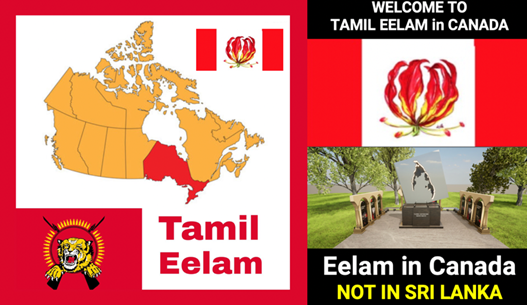
Go back to Colombo….you are not welcome in Brampton”, Mayor of Brampton chants racist slurs on anti-Genocide supporters. It is truly unbecoming for a Mayor to be making such wild statements. On what basis can he defend the creation of a Genocide Memorial – for whom is it? So far, even after 16 years since defeat of LTTE, no one has produced the names of 40,000 dead, some form of identification, skeletons of the dead or even police complaints of missing. Let it be pointed out that with no proof of the 40,000 killed, no one can point any finger of murder leave alone claim genocide”. Additionally, no LTTE dead can be mourned as civilian”. LTTE was a terrorist movement, a sovereign state has every right to deal with armed terrorists. Moreover, LTTE had a separate trained & armed civilian force. None of these dead can claim to be civilian” either. The LTTE holds annual commemorations for its dead. It’s hilarious to see foreign MPs actually attend these events shedding crocodile tears for ‘dead terrorists” fooling the rest of the world to think they are civilians”. The irony & hypocrisy is that these memorials are all decorated with LTTE symbols, insignia, Eelam flags but the media communications want the world to think they are mourning civilians” instead of dead LTTE terrorists. No wonder Brown wants to lift the ban on the LTTE too. Maybe next year he can pass a motion for a monument for Prabakaran too. Perhaps he can do monuments for all LTTE terrorist key leaders around entire Brampton.
As of the 2021 Canadian Census, approximately 1,555 residents of Brampton are Sinhalese while total Sinhalese living in Canada is said to be 18,000.
As of the 2021 Canadian Census, approximately 237,890 Sri Lankan Tamils live in Canada.
Who is Patrick Brown?
- Born 26 May 1978 (just 20 years when LTTE bombed the sacred Temple of the Tooth in Kandy in 1998 / just 30 years when Sri Lanka’s military liberated Eastern Province from LTTE)
- 51st Mayor of Brampton, Ontario since December 2018
- January 2018 – Brown was accused of sexual misconduct by 2 women & resigned as leader of Ontario PC Party
- In 2022 he was disqualified from race for federal Conservative leadership due to alleged violations of Canada Elections Act including issues related to campaign financing.
In April 2019, Patrick Brown introduced a motion in Brampton City Council to officially recognize May 18 as Tamil Genocide Remembrance Day. Brown who has never been to Sri Lanka was obviously influenced by the 9375 Tamil residents of Brampton (as per 2021 census). To please 1.6% of Brampton’s population Brown has created a Tamil Genocide Remembrance Day.
It is natural for any to wonder why a person who has not been to Sri Lanka, to be influenced enough to introduce a motion. This question is explained in the support given to him by the 9375 resident Tamil community in his bid for Conservative Party leadership via even financial assistance. His 2018 book he details how he utilized Tamil organizers who were promised appointments to various boards (The Pointer) This was one reason why he was disqualified from the leadership race for breaches of campaign finance rules including vote-buying. Thus, his genocide” claims come from the various sources that led to his disqualification.
Patrick Brown claims genocide deniers, you are not welcome in Brampton, you are not welcome in Canada. Go back to Colombo” – on what facts is Brown claiming genocide? Was he witness? Who are his sources? If it’s the pro-LTTE elements that financed his campaign, there is little that needs to be left to anyone’s imagination.
It is fascinating that the casualty figures of Sri Lanka & the UN Country Team matches with total less than 8000 while all of the sources quoting figures from their pro-LTTE friends claim 40,000 to 200,000 dead. These figures plucked from god knows where are only accompanied by well-funded campaigns with no facts or data. Surely, if anyone claims a figure as dead, they should accompany that with details of the dead. Simply throwing a number & claiming genocide” is unacceptable especially when it is directed at a National Army.
We cannot stop lies. We cannot stop people living in cuckoo worlds. All of the genocide noise comes from Tamils living overseas, holding foreign passports, educating their children overseas, employing their children in foreign jobs & unlikely to ever come & reside in Sri Lanka. While their next generation of children are also continuing the lies, a question the Tamil community never likes to answer is why they never sacrificed a single child to LTTE as a child soldier. Why was it always Tamil orphans kidnapped from orphanages & turned into child soldiers, why was it low caste & poor Tamil children kidnapped from their homes & turned into child soldiers. The Tamils drumming human rights from Canada & other western climes never considered the human rights of a single Tamil child soldier who comprised 1/3 of the LTTE fighting force. From the reports that have emerged these child soldiers served as comfort women, were raped, sexually abused apart from having their entire childhood denied to them. These are live cases and real stories unlike the genocide that Patrick Brown claims. If Brown & Co do not like to take up these real issues but think that putting up a monument is a big deal, they can put monuments all round Canada.
However, Brown’s actions should reach the Brampton Integrity Commissioner & the Ontario Ombudsman, given his controversial past.
Why would a Canadian mayor, who has never visited Sri Lanka, take such a strong stance on a foreign conflict?
Are vote-buying accusations linked to diaspora groups a sign of deeper political manipulation?
If former combatants are honored as civilians, what does that mean for the integrity of war narratives and justice?
Why do diaspora advocates focus heavily on genocide claims but never address LTTE’s use of child soldiers and other human rights abuses?
Should Canadian political figures be involved in foreign ethnic or national conflicts?
Frankly, we do not mind the new Public Security Minister one day becoming the Prime Minister of Canada & using these monuments to declare Eelam in Canada. Yet, Canada has secured all provisions to ensure such separatism cannot take place constitutionally, yet why is Canada advocating for such in other countries?
Shenali D Waduge
Insulting the heroic Kandyan Patriotic Sinhalese by saying that they betrayed this country to the British by the Kandyan Convention of March 02. 1815, must be stopped at least now.
May 16th, 2025Deshamaanya Dr. Sudath Gunasekara Former Permanent Secretary to Prime Minister Sirimavo Bandaranaike (1994) President of the Sri Lanka Administrative Service Association (1991-94)

This has reference to the article Defense Agreement signed with India on 05.04.2025. by President Disanayaka, is not second to the Kandyan Convention of 2nd Marh 1815. that appeared in the Sunday Aruna (Sinhala) newspaper.
I do not know whether this title given to that article was selected by the person who wrote the article, the scholar who gave the discussion, or the newspaper editor. Most likely, it could be the newspaper editor in charge of that page. Whoever it may be, first, I must categorically state that this assertion is a malicious and a diabolical lie. All available historical evidence proves that this assertion is a first-class myth, invented by anti-Kandyan elements in order to cover their own betrayals over a period for 310 years.
It must also be pointed out that the title too does not go with the content of this article at all. In introducing the scholar, who gave the opinion in the article, the writer has said last time such an agreement was signed between the two countries was 38 years ago”. I opine here that he is referring to the Rajiv/JR Acord of 29th July 1987.
As such I cannot understand as to why the Kandyan Convention was dragged in, in this context to insult the heroic Kandyan patriots, who defended the Sinhale Kingdom against three powerful Western colonial invaders for 310 years (1505-1815) at very high cost without allowing Sri Lanka becoming another America, Australia, New Zeeland or Philippine. If the heroic Kandyans were not there to defend the Motherland definitely there would have been no Sinhala country on earth today, for us to talk about.
I also pause an open question to this person who invented this myth as to what those who lived in the lowlands did, in contrast, to the Kandyans, to protect the motherland from these savages’ invaders from 1505 to 1815? Isn’t a shame that they befriended with the invaders, instead of defending the country. They took the invaders names, embraced their religion and customs and manners, including their dresses, language and practically all what was European. Thereafter they accepted state office under them and even honorary names like Mudaliyar and Mahamudaliyar conferred by the invaders as bribes for the services they rendered on to them. What is more is they also have worked under them as their loyal servants for 310 years enjoying all the benefits received for being loyal to them.
Therefore, whoever has chosen this topic, he has definitely made an unforgivable and grave mistake. Shouldn’t all these people who still share this mythical view of betrayal by the Kandyans, be ashamed for what they have done and be ever grateful to those who lived in the Sinhala Buddhist Kingdom on the hills, for defending the motherland for 310 years against the most powerful fire powers in the world at that time ,at very high cost and protecting the heritage of the traditional Sinhala Buddhist Kingdom with all its priceless great heritage coming down for millennia, for the present generation to be proud of their great heritage, that was a hallmark in the ancient world.
I also think the writer (or the person who used this derogatory word in this article) may not have read or even seen the Kandyan Convention, even in his dreams perhaps. Because if he had seen or read the Kandyan Convention, he would never have used such a derogatory headline against his own people, the Kandyan Sinhalese who saved this paradise Island for all of us to live cherish and be proud of. The person who chose this topic must be someone, who does not even know that the Udarata–Pahatharata division of the Sinhala nation is a cunning tactic used by the British to divide and rule the Sinhala race and the country. He must also be a person suffering from an anti-Kandyan Sinhala syndrome” who does not even know that there had never been two Sinhalese races in this country throughout its long history until Robert Percival the Englishman invented it in 1803. Thus, it was the British colonial rulers who first divided the Sinhala nation as Uadarata and Pathatharata, to divide the Sinhala nation in to two rival groups in order to make their dream of concurring this country easier and running the country thereafter by invoking the policy of divide and rule.
Udarata-Pahatharata Division
Since the writer has compared the Modi-Anura agreement with the Rajiv/JR agreement in introducing the scholar who expressed his views in this article, I do not understand as to why the Kandyan Convention was brought up here at all in the headline.
It is also, crystal clear from all the agreements signed by the current President with Modi that he has betrayed the motherland to India in a treasonous, anti-national, cowardly manner, in the same way JR did it by the Rajiv/JR agreement of 1987. But I would like to emphasize here that the Kandyan Convention has never betrayed the country or the nation to the British by it. Conversely it was those Sinhalese who lived in the coastal lowlands who first betrayed that part of the country to Portuguese in 1505 as the first step indirectly by yielding to the invader and supporting to consolidate on Lankan ground and second, to the Dutch and finally, to the British for 18 years from 1797-1815,directly by aiding and abetting through decoy and spy services to capture the Kandyan Kingdom.
As a traditional Kandyan Sinhala Buddhist whose brave ancestors had fought tooth and nail to defend the motherland, I express my deep displeasure over that unethical and childish statement the writer has made in that article. I also express my strong objection to this severe insult made to the proud Kandyan Sinhalese.
Whoever had chosen that title for this article, has done a great insult to the brave Kandyan Sinhalese who sacrificed their lives in hundreds of thousands in battles against enemies for 310 years from 1505-1815 while the Sinhalese in the lowlands were already under the invaders as their friends. Therefore, the Anura/Modi agreement has to be compared only with the Rajiv/J.R. and never with the Kandyan Convention. Because, both the Rajiv/JR Accord and the Modi/Anura agreements are very much similar as both have done the same job of criminally betraying the motherland and the Sinhala Nation. Moreover, both have been drafted in India, singed secretly without cabinet or Parliamentary approval. The overall negative consequences of both these agreements very much similar and as such they are like twin brothers that will bring nemesis, to mother Lanka.
Therefore, it is a grave and unpardonable mistake to compare the Modi/Anura agreements with the Kandyan Convention that was singed between two independent sovereign Kingdoms as equal partners after long discussions, where the British have clearly agreed to protect our religion Buddhism and also native political, legal and social institutions in writing, although they violated the mutually greed Convention in 1818, in keeping with their Viking sea pirate practices and carried on with their own system for the rest of their colonial exploitation until 1948.
My request to Aruna
In a country that, does not have an independent press culture, that support native culture or social values and where they only naively support the government in power for their own survival, independent readers of this country expect at least your papers to provide truthful information to the people.
I also request you to publish a public apology in the Sunday Aruna (Sinhala) newspaper for making such a false statement that humiliates the heroic Kandyan Sinhalese, who fought valiantly for generations against the Portuguese, Dutch and English invaders for 310 years from 1505 to 1815, sacrificing hundreds of thousands of lives, to save this country from becoming another America, Australia, New Zealand or Philippine, while the those on the maritime provinces slept with them for whatever reason it may be, without declaring war against them as the Kandyans did.
First of all, I express my deep displeasure and regret to all those who hold this false opinion, and I think that the publication of the myth that the Kandyan people betrayed the country to the British by the Kandyan Treaty of March 2, 1815, should be stopped immediately in all newspapers and other media. All Sinhalese, wherever they live in this world, are one race. I am extremely disappointed by the Sinhalese who do not even know that. Because since the birth of the Sinhalese nation in 543 BC, they have remained as one race called Sinhalese.
They were divided into two hostile camps in this way by the whites only. It was by a white man named Robert Percival in his An Account of the Island of Ceylon” (1803) who first named the people of the Upcountry as Candians (Upcountry people) and those who lived in the coastal lowland areas as Cinglese (Sinhalese).
Thus, it was the British who divided the Sinhalese of this country into two groups, the Kandyans and the Lowcountry Sinhalese. Although the two minorities in this country at that time, the Malabars and the Muslims (who were not citizens in this country by then), they were referred to as Jaathiin by the whites since 1799 (Cleghorn minute to Governor North).
Kandyans
In investigating the origin of the word Kandyans”, it is clear that it was the British prisoner in the Kandyan kingdom, Robert Knox (1660-1679) who used the word Cande for the first time in his book An Historical Relation of Ceylon” to refer to the Kandyan kingdom. It is also used as Candia in some places and the word Cande is used throughout his book up to page 347. It seems that he used Cande to refer to the Kandyan kingdom, what was then known as Kanda-Uda Pasrata. Thus, Robert Knox used Cande to mean the hill country.
On the other hand, the word Kandy was first used by John Davy, in his work An Account of the Interior of Ceylon (1821). Thus, it is clear that Kandyans is only a word used by the whites to refer to the Sinhalese who lived in the hill country. They called this country Ceylon in the sense the land of the Sinhalese”. Therefore, it is clear that all Sinhalese in this country were one nation by the time the Western sea pirates arrived on our shores
Division of the Sinhala nation into two antagonistic groups as Udarata and Pathatharata Sinhalayo.
The Sinhalese had never been divided into two nations, at any time in history, until 1803, when a white man named Captain Robert Percival divided the Sinhalese into two hostile camps, the Upland and the Lowland. The fact that this country had been known as the Thun Sinhale” throughout history confirms this. This also makes it clear that this country has been the land of the Sinhalese nation since the beginning of history. In short one country and one nation” the gospel truth, the present-day Sinhalese are unable to comprehend. The tragedy is there is no Sinhala leader, either political or national, to say this openly and organize the Sinhala rata and the Sinhala nation, at least after 77 years since the North Atlantic Sea pirates had physically left the shores of this Island.
The Heroic Udarata Sinhalayo
The Kandyan Sinhalese fought against the murderous Western invaders the Portuguese, Dutch and English, for 310 years from 1505 to 1815 AD, and saved this country from becoming another America, Australia, New Zealand or Philippines under the European colonial invaders.
It must be clearly stated here with pride as a Sinhalese man, that I have not heard or read of any such successful resistance for 310 years to their invasions any other nation in the whole British Empire. Therefore, as a Sinhalese Buddhist resident of the Udarata, I express my strong objections and displeasure on behalf of all the Udarata people for insulting them in the media in this way, and I request you to immediately stop publishing such false, baseless articles in a responsible newspaper like yours, at least in future.
I must clearly mention it here that there were no two Sinhalese races, called Kandyan Sinhalese and Lowcountry Sinhalese before the arrival of the British. They were all one race from 543 BC. That was, the proud Sinhalese race of the Lion descent. We also proudly declare that the Sinhalese are not a race that originated from a tiger, a wolf or a jackal. Their totem on the other hand is the majestic lion. Therefore, all such vituperative writings against heroic Kandyans should be stopped forthwith at least now.
Resulting from this pathetic and unfortunate background, today we are a nation divided like a scrambled egg or a claypot smashed on a stone in to pieces, that can never be unscrambled or reassembled. The only solution to this seemingly intractable tangle is for all Sinhalese to unite as one nation based on their millennia old Great Sinhala Buddhist civilizational matrix.
What is the Kandyan Convention?
Those who claim to be scholars but who do not even know what the Kandyan Kingdom is and invariably who have never read or seen the Kandyan Convention even in their dreams and also who do not know that there were no two Sinhalese races, ever in the historical past, I think should refrain from making this type of silly statements. The terms Kandyan and the Lowcountry Sinhalese were only inventions of the British to divide and rule the Sinhalese. Those who had lived in the maritime provinces under the white invaders for 310 years, under their repressive rule should understand this gospel truth. They should never try to throw mud at those Sinhalese who lived in the Kandyan Kingdom on the hills, as they were the people who saved this land of the Sinhalese for 310 years for all of us to live as Sinhalese Buddhists today. Such scholars and writers should immediately give up this pro-western mentality and resolve to stand united as one Sinhala nation and one country. Because without doing so, we will never be able to raise our heads once again as a great nation, as we had been for millennia from 543 BC.
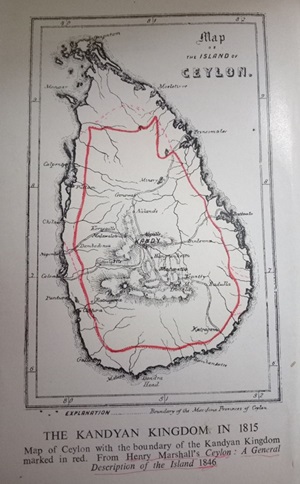
What is the Kandyan Kingdom?
The Kandyan Kingdom was the last link of that once pristine and glorious Sinhala Kingdom founded in 543 BC by King Vijaya, and transformed in to a Village Kingdom by establishing village boundaries on the whole island by King Pandukabhaya (394-307 BC) 10 years after he attained the throne, that was 384 BC and still later which was transformed in to a Sinhala Buddhist Kingdom after the arrival of Mahinda in the reign of King Devanam Piyatissa (247-207) in 384 AD.
After the fall of the Rajarta Civilization in the13th century due to Maga invasion, the Sinhale kingdom had been shifting from place to place eg; Yapahuwa, Kurunegala, Dambadheniya, Gampola and Kotte and finally to Kandy ,when Senaasammata Vikramabaahu declared his independence from the King of Kotte in 1474 and it lasted until it was ceded to the British by the Kandyan Convention in 1815, by a mutually negotiated International Convention between Brownrigg, the Governor of the British Empire on behalf of the King of England and the Adhikaaramas, Disawas and the representatives of the Sinhale Kingdom after the King was deposed as agreed.
(Meanwhile, I have recently come across a new view on the birth of the Sinhala nation and the Sinhala kingdom as given below.)
According to that view, the ancient Buddhist Sanskrit texts such as Karandavyuha and Divyavadana, written about a century and a half before the 5th century when the Mahavamsa was written, state that the Bodhisattva named Sinhala, the son of a nobleman named Sinha, who came to Sri Lanka from the Indus Valley region of western India, populated this country and started the Sinhala nation.”
After the discovery of the ancient Mohenjo-daro and Harappa urban civilizations buried underground in the Indus Valley region, the traditions mentioned in the above Sanskrit Buddhist texts were accepted as true, events by great archaeologists and Historians have confirmed this through various surveys.
The account of the origin of the Sinhala nation is recorded in the Divyavadana as follows:
Sinhalena ragna avasitamithi Sinhala Deepa: Sinhala Deepa ithi sangnaasanvurttha. Kin manadhyave, bhikkhu: yo sau Sinhala: ahameva thena Kalena Thena samayena”.
(It was inhabited by the Sinhalese king and the name Sinhala Island came in to being. Oh! Bhikkhus do you know who that Sinhala was? do you think that Sinhalese was? Oh, bhikkhus that was none other than me, during my time as a Bodhisatva.
(Preface. Piruvana pothvahanse. Buddhist Cultural Center. pages 446-464, P.L. Medical Edition😉
Whatever the origin of the Sinhala nation may be, 18 invasions by South India have occurred since the 2nd century BC up to the 13th century AD.
The Sinhalese Buddhist nation, that flourished from the 4th Century BC, was successively invaded by the South Indian invaders from the 2nd century BC Sena Gutthika, Elara and finally the extremely destructive Kalinga Magha (1214-1235 AD). All these invaders were clinically defeated by the local Kings like Dutugemunu, and they saved the country and the Buddhist religion.
The Kandyan Kingdom was the direct lineal successor to the great Sinhala Buddhist Kingdom which had flourished for nearly two thousand years in the Rajarata with its capitals at Anuradhapura and Polonnaruwa. Most importantly the Kandyan Kingdom was last independent, and sovereign Sinhala Buddhist kingdom as well that lasted until 1815. AD.
It was ceded to the British Throne in 1815.
It was the cunning intrigue, cleverly hatched by John Doily, the British Civil Servant and clever spy, that finally enabled the British to deceitfully capture the Unconquered Kandyan Kingdom, that lasted for 310 years from 1505 to 1815.
After the crushing defeat of the British in the Kandyan invasion of 1803, the British, realizing that they could not capture the Kandyan Kingdom through war, but through stratagem, only to be done through conspiracy and by dividing the Kandyan Aristocracy and by making the people of the country disillusioned with King Sri Wickrama Rajasinha. The leader of that conspiracy was John Doily. He was known as the most cunning civil servant, spy and the secret agent in the entire British Empire. Doily’s plan was to save Sinhale from the “oppressive and cruel Tamil King”. Doily succeeded to convince the Kandyan Chiefs lead by Ehelepola Maha Adikaarama and on March 2, 1815, the country was ceded to the British Crown as agreed by the Kandyan Convention concluded between the leaders of the Kandyan Kingdom and the British Government, two sovereign nations of equal status.
A few days before, on February 18, 1815, King Sri Wickremesinghe, who was fleeing to Meemure, that was best hideout in the Kandyan Kingdom was captured while hiding in Arachchige’s Atuwa, a house in Udupitiya, Galleha Watta, Medamanuwara, and arrangements had been made to send him to Colombo via the Royal Atuwas, at Teldeniya, Dambarawa and Weuda.
Meanwhile, the Ehelepola Maha Adikaram who met the Governor on February 27th had told him that he would not accept any other position, if he was not given the Sinhale Kingship as promised. Similarly, on the 28th, the Ehelepola Nilame had expressed the same position. This makes it very clear that the English, led by Doyli, had promised to give the Kingship to Ehelepola deceptively and had prepared the Coup de’etat, a master plan to capture the King with the help of the Ehelepola Maha Adikarama.
The agreement to be signed at Magul Maduwa on March 1, 1815 was also prepared and finalized. Before signing it on March 02nd, Mampitiyye, who met the Governor, had demanded that Buddhism be protected and the local administrative system like the country’s Disawa and Ratemahattaya be protected. Another group had requested that a white person be appointed as their leader (King?)
The Adikarams who gathered at Magul Maduwa at 4 p.m. on March 02nd, The Agreement was read to the officers. It is not stated that anyone signed the agreement that day. On the morning of March 3rd, before the chiefs who had gathered at Rajagedara, Walandure Mohottala, who met the governor again at 4 p.m. on the same day, said that no Sinhalese should be appointed to govern them and that even a white military officer would be suitable for that purpose. (This also could be a secret plan of Doily the King maker)
Thus, it is clear that the cunning Doyli had verbally promised to give the Sinhala kingship to Ehelepola Maha Adikarama in return to the services he rendered to the British and with his help, captured both the king and the kingdom, while on the other hand, he built an anti-Ehelepola rebellious group among the hereditary Nilames, and deliberately marginalized Ehelepola, and then took him into custody and sent him to Mauritius Island as a traitor and a criminal of the British government, and pretended to free this Sinhala country and nation, as well as the Buddha Sasana, from the tyrannical Tamil King. Ahelepola Adikarama, an extraordinary national hero, as I see had to die as a war prisoner of the British Empire in a prison cell in Mauritius Island. The cunning and clever spy and liar named Doyly, instead of giving the Sinhala kingship as promised, killed” that heroic Sinhala Aristocrat in a foreign land, and fulfilled his imperialist dream and died in Kandy in 1824.
One day, when the Ehelepola Maha Adikarama was walking around the Mauritius prison, his bodyguard, a French soldier, had asked him, What are you looking for, always looking down Nilame?” He replied, Looking for the freedom that we have lost in our Motherland and the Sinhala Nation.” One can imagine the kind patriotism and nationalism of that noble Sinhala leader even in these few words.
Kandyans Betraying the country is a diabolical myth.
Accordingly, I think you will agree that it is a blatant lie to say that the Kandyan people betrayed this country to the British through the 1815 Kandyan Treaty. The Sinhalese parties agreed to this agreement on the basis of the promises made by the British that the Tamils would be expelled and extinguished” (as stated in the K/Convention (clause 2) from this country and it would be handed over to them.
Kandyan Convention (main points)
Since the Aruna paper article had mentioned the Kandyan Convention, a summary of it is given below for the information of my readers.
Summary of the Kandyan Convention of March 2, 1815.
On the 2nd of March, 1815, Robert Brown Rigg, on behalf of the King of England, on the one hand, and the Adikaramas, Disaavas and Sinhalese state and other native officials on behalf of the native Sinhalese on the other hand, have agreed and ordered as follows. (The fact that no Buddhist clergy had been included on behalf of the Sinhale Buddhist Kingdom was big lapse)
Clause 1 and 2 of the Convention indicate that King Sri Wickrama Rajasinha and all those belonging to his tribe have been deprived of all rights and have been removed from power and that the Tamil race has been deprived of all rights to govern this Sinhala country.
(3) The Government of the Sinhala country shall be conducted by the agents of the British Government, with due regard for the rights of the native officials such as Adikaarams, Disavas, other native officials such as Mohottalas, the Koralas and Vidanes and their properties and other liberties will be safeguarded by the British Government, in accordance with the ancient customs and traditions which have existed among them.
5 The Buddha Sasana and the religion of the gods, as believed by the rulers and inhabitants of these countries, must not be violated, and its affairs, Sangha, temples, and shrines must be maintained and protected.
8. The civil rights of the inhabitants of the Sinhalese countries, such as the control of their lands, lands, and property, and the laws of this country and the laws of the country’s government, must be conducted by the nobles authorized by the laws of this country.
9. All civil and criminal cases of all foreigners (British) who are not Sinhalese citizens have been heard according to the legal system of England by the commissioners appointed by the governor according to the law of England.
Postscript 01
Except for the story of betrayal, I agree with all the conclusions and opinions mentioned in the article in the Aruna newspaper on 2025. 04. 06..
I am in full agreement with the opinion that all agreements signed between the Indian Prime Minister and President Anura Kumara are very dangerous and treasonous and blatant betrayals of the first order. That is why I strongly reject equating the Kandyan Agreement with those agreements. Because the Kandyan Agreement is an international agreement negotiated and agreed upon between two independent friendly states of equal status at least at the time of placing their signatures on it. Moreover, it is also not a secret agreement and it was a public document, still valid for that matter. Therefore, I strongly disagree and reject comparing this agreement with the Anura/Modis Agreements as it was a secret document prepared in India by Indian mandarins without the participation of Sri Lankan public officials and imposed on Sri Lanka in the same manner Just like the Rajiv/JR Accord of 29th July 1987.Therefore it is also first class betrayal of the motherland that treacherously has laid down the road map for the division of the country and the establishment of the Tamil dream of the EELAM. What is more treacherous and betraying is the story that all these agreements were made only in Hindi, Arabic, and English while none of them were prepared in the official language of this country which is Sinhala. Isn’t this a first-class betrayal of the motherland and its people. Therefore, this missing link by itself makes them illegal and unconstitutional and therefore, I opine they are not binding on our part.
The agreement signed between the President Anura and the Indian Prime Minister was signed in secret. It is said that the country’s Defense Secretary, Attorney General, the Tri-force Commanders, the Council of Ministers, and the Parliament also did not know anything about it. The biggest betrayal is that all these agreements have been prepared only in Arabic, English and Hindi. That itself makes the Agreements unconstitutional and illegal as it was not inked in the official language (Sinhala) of the first party to the Agreements.
By doing this, the current President, just like J.R. did in 1987, has blatantly betrayed the sovereignty of the people and the territorial integrity of the country and violated the Constitution. It is the responsibility of the opposition and the lawmakers to save the country from this great national disaster.
There is a story that J.R. betrayed this Sinhala country and the nation to India through the treaty because he is descendant of the Thambi Mudaliar dynasty that came from South India. There is also a similar story circulating among the people that President Anura Kumara may also be a Tamil who descends from the 12,000 Tamil prisoners brought here from the Chola country by King Gajaba (174-196 AD)
Many people believe that a true Sinhala Buddhist, could never betray his homeland, the Sinhala country and the nation, to India, without any fear or shame which is trying to swallow this country. On the other hand, for 310 years before the Kandyan Kingdom was ceded to the British by an honorable treaty on March 2, 1815, the entire coastal area had been handed over to the Portuguese in 1505 and since then to Dutch and British by the lowland Sinhalese. They served them as their underdogs with the exception of very few patriotic men like the extraordinary national hero of that era, Anagarika Dharmapala. All others living in the maritime provinces are equally responsible for the sin of betraying the entire coastal region of Sri Lanka to these three white invaders.
The fact that there was no Air warfare at that time had perhaps had greatly helped the Kandyans to keep the enemy at bay for 310 years confined to the lowlands. Even at the end had it not been for the support of the people, living in the maritime belt it would have been a dream for the whites to capture the Kandyan kingdom. The only patriot, nationalist and national hero who fought against the enemy even in the late 19th century in the low country to reclaim this Sinhala Buddhist land and the Buddha Saasana was the unrivaled national hero Anagarika Dharmapala, who was rejected by these people and finally expelled from this country. It was these same lowland Sinhalese people who became their obedient servants to Portuguese, Dutch and English masters from 1505 to 1815.
Postscript 02
The Doyly-Brownrigg conspiracy behind the Kandyan Convention.
When the Colonial Secretary accused Brownrigg for agreeing to some clauses of the Kandyan Treaty, he has said that if he did not agree to some of those demands, he could never have conquered the Kandyan Kingdom. As such it was only a part of a secret strategy to seize the country.
Keeping to their original pan The Kandyan Treaty was violated unilaterally by the British in 1817, even before the ink of the treaty got dried up with the famous Uwa Welassa first freedom struggle erupted as the British violated the provisions of the Kandyan Convention. The appointment of a Muslim named Hajji Marikkar by the Governor on the recommendation of Doyly as the Muhandiram of Madige, among many other violations of the promises made in the convention triggered up the anti-British rebellion. Keppetipola Disaava who was sent to suppress the rebellion, joined with the freedom fighters of Uva and returned the weapons given to him by the Governor.
This incident was followed by one of the most savages and brutal killing spree, arson, suppression, oppression and repressions in which Brownrigg and Doyly acted together in the most inhuman manner as John Davy had said. Under the newly enforced Royal Proclamation of November 21st 1818 declaring the Sovereignty of the British Empire over this Island and thereby threw the Kandyan Convention in to the dustbin of history.
Brownwrigg issued a gazette notification dated on 1st November 1818 under Royal Decree No. 01, ordering the killing of all Sinhalese males over 18 years of age, the breaking down and burning of all houses, the cutting down and destroying of all fruit-bearing trees for human consumption, the confiscation or destruction of all grain, the breaking down and destruction of all irrigation canals and rivers, the burning of houses, the cutting down and destroying of all fruit-bearing trees, the destruction of all tank embankments and rivers, and the immediate killing of all cattle and buffaloes belonging to the people in excess of the needs of the army.”
With the result there was not a soul left to rise up against this massive murder by Torrington in the Kandyan Kingdom in 1848 in the Matale rebellion. That was why Gongalegoda Banda and Puranappu, one from Moratuwa and the other from Kelaniya had to impersonate as Kandyans at the Matale rebellion 1848.
Finally, in 1948, the British constitutional lawyer Jennings, with his Solebury Constitution, imposed a dependent economy on us, relying solely on imports and export of raw materials, leaving us with a divided Sri Lanka, a broken nation, and a country and society burned by ethnic volcanoes, while retaining the three basic requirements of a free state, the Legislative, Executive, and Judicial powers, with them. But they called it independence. Those who took over the country in 1948 as their acolytes and agents also embraced it as Independence. British called it Dominion status within the British Commonwealth of Nations.
Thus In 1948, instead of giving us the freedom to build an independent and free state that we lost in 1815 they further tied our hands to a colonialist octopus called the British Commonwealth of Nations, to keep us trapped in their empire on which the sun never sets. It is a tragedy which our post 1948 politicians failed to understand, until Prime Minister Sirimavo Bsndaranayaka made this country a fully independent Republic in 1972 for the first time since 1815.
Thus, what actually happened in 1815 was an imperialist conspiracy led by John Doyle, with the support of the Sinhalese and Muslims in the maritime provinces. They used the Ahelepola Maha Nilame, as a pawn to capture Sri Wickrama Rajasingha, by promising him that he will be made the King immediately after the Convention was singed and the king was deported. But within no time he was arrested by the British and exiled to Mauritius along with several Kandyan chiefs without any cause. He died there in 1829 from cholera in exile. Thus, the ungrateful Doyly and Brownwrigg left that brave mahakaLu Sinhalayaa to die as a criminal and a prisoner in a prison cell in an Island 2000 miles away from his own land of birth for the crime of trying to defend and regain his own motherland from the South Indian rulers.
Meanwhile, as already stated above, Brownrigg ordered to kill all the males over the age of 18 in the Kandyan Kingdom and all the crimes stated there and plundered all the wealth of the Thun Sinhale for 133 years to build their Empire at home?
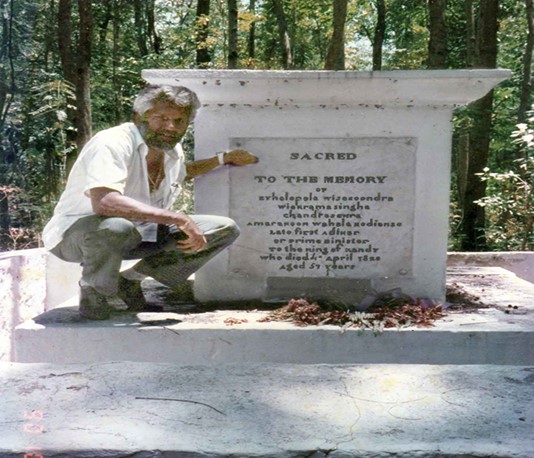
Is this Captain Elmo sitting in front of the mausoleum of that Great Sinhala Patriot Ehelepola Maha Adhikaarama?
Who are the real betrayers of the Kandyan Kingdom?
In fact, according to 310 years (1505-1815) of colonial history in this country, it is clear that it was the Sinhalese living in the lowlands, who had been under the white rule for 310 years, and not the Sinhalese living in the highlands, who really paved the way for the betrayal of the country, the Sinhala nation and the Buddha Saasana to the whites, by aiding and abetting the invaders.
Except for a few solitary patriots like the extraordinary national hero of the time, Anagarika Dharmapala (1864-1933), that was long after the Kandyan Kingdom was ceded to the British in 1815 all the others who lived in the coastal lowlands are directly responsible for betraying the country for personal gain and positions under their rule, ever since 1505. They never resisted the invaders, Portuguese, Dutch or the British. Instead, they lived with them, worked for them, made riches and often provided spy services against the Kandyan Kingdom.
But people like the writer of this article in Aruna Sinhala paper cry foul, saying that it was the Kandyan people who betrayed the country to the Western Colonial Invaders.
Doyle-Brownrigg Conspiracy and the annihilation of the Kandyan Sinhala patriots: some more details.
When the Colonial Secretary accused Brownrigg for agreeing to certain clauses of the Kandyan Convention, he has said that he agreed to certain demands of the Sinhalese because he could not have captured this country without doing so. The white men had violated the terms of the Kandyan Convention even before the ink had dried up. The secret plan that had been hidden in their minds was put into full action immediately after the Uva Wellassa rebellion against the British rule broke up in 1817. Despite the Kandyan Convention was legally binding, the whites had begun their immoral, barbaric, inhumane killing spree of suppressing the Sinhalese by the royal Proclamation issued by the Governor Brownwrigg on November 1, 1818 on the recommendation of Doyly, completely ignoring the Kandyan Convention, as if such a document never exist.
In addition to violating the Kandyan Convention they also carried out their colonial subversive agenda of dictatorial and imperialist destructions as listed below, after 1818 to completely subjugate this country, the Sinhala nation and the imprints of Buddhism together with its native Administrative and legal systems.
1.In 1833, the country was divided into 5 Provinces namely North, South, East, West and Central, bringing the entire Thun Sinhale, meaning the entire Island, under their colonial rule. This was the first time the whole Island was brought under any foreign power in its two millennia long history. A closer examination of this division clearly shows that the boundaries of the Northern and Eastern provinces have been drawn in accordance with the Cleghorn Report submitted to Governor North in 1797 which had declared that this country had two nations as Sinhalese and Tamil and two countries (Districts in that note) where the Tamil country starts at Puttlam and extends up to Walaveganga in the South via Jaffna Trinco and Batticaloa to Walave. Gamga.
2.The forcible taking over of all the traditional and prescriptive lands of the native Sinhalese by Act No. 12 of 1840
3.The establishment of Catholic English schools in place of the traditional educational system of this country, the Pirivena education.
(The fact that out of 105 such schools established throughout the island by 1845, 45 were in the Jaffna peninsula and only 3 schools were in the Central Province, located in Kandy and Matale shows the special privileges granted to the Tamils and the discrimination made against the native Sinhalese by the white British.)
4.The killing of all those who survived the 1817 -1818 Uwa-Wellassa Kandyan rebellion was completed during the Matale rebellion of 1848. This was the last uprising by the native Sinhalese. The uncivilized killing spree carried out by Governor Torrington and his men has gone down in world history as one of the most inhuman and savages’ human destruction, not witnessed anywhere else, ever carried out on this planet. Public shooting of monks like Kadahapola priest, the most pious, erudite, brave and patriotic monk who gave leadership to Gongalegoda Banda and Puran Appu without any evidence, even when their own Chief Justice was against it, Torrington saying that” even if the whole world says no I will kill him” and keeping the dead bodies of native Sinhalese who were murdered, hung at the four gates of the towns like Matale and Kurunegala for three four days, bare testimony as to how these brutish, British have built up their often quoted ‘Empire where the sun never set, definitely diving in rivers of human blood specially in Asia and Africa.
5.The forcible seizure of all the lands owned by the temples in 1853. By the Temple Land Ordinance
6.The seizure of all the remaining lands of the Sinhalese by the so-called Waste Land Act in 1897, driving the Sinhalese to the streets and jungle and making the paupers.
7.Deforesting nearly 1.35 million acres of forest land, in the hill country, that had been there since the sun and the moon appeared on this earth, were cut down and burned and coffee and tea cultivation was expanded throughout the hill country and thereby destroyed the physical stability of the Geographical Heartland of the country, resulting total disappearance of the wealth of centuries old fauna and flora, drying up of all 103 rivers that have their source here, that fed the entire Island, , unprecedented soil erosion and land degradation causing flash floods, silting up of all downstream areas.
8.As the proud native Sinhalese in the hills refused to work on those lands, more than 1.2 million Tamil slave laborers were imported from South India and settled in the heartland of this Sinhale Kingdom.
9.When the whites left in 1948, all those 1.2 million Indians labourers were left behind on these lands, looted from the native Sinhalese who were living in this part of the country for millennia.
10 While all such Indian labour gangs taken to countries like Burma, Malaysia, Tanganika, Uganda and other African countries by the British were ordered to go back immediately or integrate with the natives and they all protected the interests of their native people by their new governments as they got independence. Sri Lankan leaders on the other hand slept doing nothing to send them out allowing a massive political, economic, social, demographic and a security time bomb to be planted on mother Lanka. Our so-called leaders did nothing to send them out. With the result, today they are fighting for a Malayaha within the Kandyan territory saying that they have been here for more than 200 years. Just before the last Presidential election all three Presidential candidates, Ranil, Sajith and Anura have openly promised to give them the lands and houses on which they live. Meanwhile India has already completed 60,000 houses for these Indians. They also have a number of Ministries catering only to their needs. For example, the Ministry of Upcountry Villages and infrastructure Development is catering only to the plantation sector Indian Tamils.
Conversely there is no one to speak a single word on behalf of the native Kandyan Sinhala people who owned all these lands before 1815 and fought for 310 years against the enemies to protect these lands, although there are about 75 members of Parliament and thousands Provincial Council and Pradhesiya Sabha Members supposed to be representing the people at different levels.
11.Going back to the North and East, since the beginning of 1800, hundreds of thousands of South Indian Malaba Tamils have been settled in the North and East by the British to reduce the Sinhalese population in those parts of the country.
12.They were Malaba immigrants until 1901, when they were gazetted as Ceylon Tamils under the Colonial instructions and created a new nation called Lankan Tamils in this Sinhala country.
13 Establishing Catholic churches and schools throughout the island
14.Finally, in 1948, Britain is supposed to have granted political independence to this country via the Solebury Constitution, drafted by an English constitutional lawyer named Jennings, retaining their interests. For example, the three basic requisites of an independent country namely the Legislative, Executive and Judiciary, were kept with them and they left the shores leaving behind a legacy of a divided nation and a radar less” society, in the middle of high seas in the Indian Ocean.
Accordingly, from 1818 to 1948, the British ruled this country completely ignoring the clauses of the Kandyan Convention 1815. The British government’s royal decrees, issued in Britain superseded the Kandyan Convention. The British King/Queen remained the Head of the State. Laws were passed in Parliament in the name of the Queen of England and the appellate power of the supreme court was retained with the Privy Council. The Head of the State Governor General was appointed by the Queen.
However, since the 1815 Mar 02 Kandyan Convention was never repealed and was only kept in limbo. It was, an international agreement signed between two independent countries, never repealed. Therefore, I opine it is still a legally binding agreement even at present. As such I wonder whether we can sue the British government for violating the Kandyan Convention and also against all Orders issued by the Governors from 1817 up to 1948.
I leave it to a patriotic Sinhala Leader, if there is any, who loves this country and the Sinhala nation, to go to court and demand compensation for the crimes committed by the British against this country and the Sinhalese nation, more particularly to the Kandyan peasants from 1815 to 1948.
In 1948 they only established a government, an administrative system, run by their own agents and a dependent economy in this country that could fulfill the needs of their own empire only, instead of giving us full freedom to build an independent state with our own system that we lost in 1815.
Above all, handing over this country to a group of brainwashed Kalusudhas from whose heads the most fundamental traits such as patriotism, and the love for their own native language, religion customs and their own civilization had been completely removed and replaced with those of the white men, which they venerated as superior. This in brief was how the British Destroyed this land of the Sinhala Nation and their culture for 133 years of their rule.
J. R, Ranil and Anura Kumara are the best examples of this brainwashed traitor model and the sad legacy, the white men had left behind as they physically left the shores of this Island 1948. All three of them have completed the betrayal of our 2566 years old heritage, jealously guarded and protected by our ancestors from 22 invasions. (19 Indian and 3 Western), to India and the Western plunderers by secret agreements signed by them as dictators without the approval by the people or the Parliament, using the power vested in hem as the Executive Presidents, making this country a shear suzerainty of India and the colonial West.
In addition, they also have pawned this 2500 years old beautiful country to the West and India via the Western colonial imperial institutions such like the World Bank, the IMF, the Blackrock and the Indian government. They have not only completely pawned this country and the present generation but also the unborn generation to come as well, forever.
These three Presidents have completed the destruction of Sri Lanka and it’s Sinhala nation together with its millennia old great and unique Sinhala Buddhist civilization to India and the West that the Indian invaders, including Rama and his monkey army invasion in 5000 BC, followed by their successors starting in the 2nd Century BC and finally the 13th century Maga invasion the most devastating, followed by three Western colonial invasions from the 1505 AD to this day, failed to do.
The following prophecy made in 1931 by Sri Anagarika Dharmapala, the most outstanding patriot, mother Lanka had produced in the late 19th century has now come true.
I am quoting it here in his own words, in Sinhala, for you to fully comprehend as to what a visionary and a patriot that great savant had seen 95 years ago.
කවදා හරි සුද්දො මේ රට දාලා යනවා.උන්යන්නේ උන්ගෙ දරුවෝ වගෙ කළු සුද්දො විසිතිස් දාහක් මේ රටේ බෝ කලාට පස්සෙයි. ඊට පස්සෙ අපේ රට පාලනය කරන්නේ මේ කළුසුද්දො.උන් සින්හල භාශාව, සින්හල සිරිත් විරිත් වලට වෛරකරනවා. උන් උඹලාගේ දරුවන්ට උගන්වාවි ජාති ආගම් භේධයක් එපා කියලා. එහෙම කියලා උන් ඉන්ග්රීසියම රජ කරාවි.පන්සල් වටේ පල්ලි කෝවිල් හදාවි. උඹලා උඹලා වෙනුවෙන් දියසේන කුමාරයා උපදිනකම් බලාගෙන ඉන්නවා.උපදින්න ඉන්න දියසේන තිඹිරිගෙයිදීම මරා දාන්ට මේ කළු සුද්දන්ට පුළුවන් බව මතක තියා ගනිල්ලා. අපේ හමුදුරුවන්ටත් උන් එදාට ඉනා බේත් දෙනවා. ඊට පස්සෙ උඹලගේ කොල්ලො කෙල්ලන්ට ඇටිකෙහෙල් කාපු රිලව් වගේ නියෝ නියෝ ඉන්ට සිද්ධ වේවි.” අපේ හමුදුරුවන්ටත් උන් එදාට ඉනා බේත් දෙනවා. ඊට පස්සෙ උඹලගේ කොල්ලො කෙල්ලන්ට ඇටිකෙහෙල් කාපු රිලව් වගේ නියෝ නියෝ ඉන්ට සිද්ධ වේවි.”
1931දී ශ්රීමත් අනගාරික ධර්මපාල තුමා එදා දිව ඇසින් දැක කළ ඉහත සඳන් ප්රකාශය අද සැබෑ වී ඇත.
Even today the Western imperialist plunderers continue their cultural and economic invasions through their own predatory institutions and agencies such as the World Bank, the International Monetary Fund, the World Trade Organization, the United Nations and its affiliated organizations, and the Asian Development Bank, what they could not do with their guns and swords back in the days when they ruled this country.
The end result of this entire process is, today we have lost our identity as a distinct nation. There are no lay or monastic national leaders or national organization, no national political party with any concern or love for the country, the Sinha race and their religion either. They also ceased to have a nationality, national dress, language or national ideology. They don’t understand the geopolitical and geostrategic value or the natural and human wealth of this paradise Island on earth or the vast stretches of ocean that stretches to infinity right round the Island or its resources. A country that had been a proud mono Sinhala Buddhist state for more than 2500 years, today is often called a multi-ethnic, multi-religious, multi-lingual country by all our political buffoons, who have no vison or a mission and who does not know their own history are not suitable to run even a small sillara kade in a faraway village.
With the result unfortunately, this Island that had been once called the granary of the east, the pearl of the Indian ocean and the paradise on earth by renowned world citizens of has today undergone a complete political economic, social, cultural, moral and spiritual erosion, almost beyond redemption.
Therefore, I call upon all patriots of this country to stop all types of divisions among the Sinhala people and rise as one united formidable force as a nation on regional, political and religious grounds and rise from the ashes like the Phoenix, to save this paradise Island, thrice blessed by the Buddha, the Sinhala nation, the Buddha sasana and its pristine and unique civilization on this earth. That is the golden gate cum the portals to the Kingdom of unity, prosperity, happiness and all-round success.
Obstacle of reconciliation and progress.
Although 77 years have passed since the advent of the so-called bogus political independence in 1948, our so-called leaders never had the vision or the mission to restore the Sinhala nation to its pre-1815 patriotic majestic level. The seeds of divide and rule sawn by the colonial rulers from 1799, such as political, ethnic, linguistic and religious have completely ruined the Sri Lanka nation that was there in the pre-1815 days in our history and today we are a nation in pieces, with a westernized and fully scrambled collection of men and women who has no love to the motherland, its heritage or age-old values.
The main catalysts behind this destruction as I see it, are, a) westernized values adopted by our politicians and social elites, b) the western system of government and Westminster system of party politics and finally c) absence of national patriotic leaders with a far-reaching vision and mission of nation building as found in our neighbor India, Japan or China.
The time has now come for all people living in this Island to integrate and unite as one nation, as we were in the past, without these divisive ethnic, racial, religious or linguistic divisions which[S1] bread divided allegiance to other countries like India, Middle East or the Colonial West.
Tamils and Muslims, who wants to live in this country to earn their living, have to concede to the historical fact the this was the Kingdom of the Sinhala people, founded and civilization built and defended and protected by them for millennia against all invasions both from the neighboring India and the Colonial West. It is high time that the minorities give up their day dreams of carving out separate countries of their own, within the territorial boundaries of this country of the Sinhala nation and integrate with the Sinhalese as one nation in one country as it had been there from the beginning of history.
Tamils and most Muslims first, migrated in search of green pasture and second, were recently brought to this country by the colonial British between after 1840s as slave labour to work on their projects, toddy tapping and newly opened up plantations Sinhalese were original settlers on these lands at least from 543 BC, if not before, and they were the people who established the civilization on this land.They were the people who defended their motherland against all foreign invasions from the 2nd century BC up to 1948 at very high cost and who laid the permanent foundation for the great and unique Sinhala Buddhist civilization, the hallmark of this Island nation. Therefore, anyone who wish to make this country their future home must accept this historical gospel truth as inalienable and be prepared to live cordially with the Bhumiputhra Sinhalese the prescriptive legal owners of this Land. Once that status quo is re- established as it had been there throughout history, we Sinhalese Buddhists are ever prepared to treat all citizens as our own brothers and sisters with no discrimination whatsoever. They can have their own religion and cultural practices without creating problems for the Sinhala Buddhists, the sons of the soil. Those who disagree with this formula has no option but to get back to their motherlands from where they have come. To implement this all-time solution, we need a Sinhala Buddhist Government of patriotic national leaders
A Review of Rajendra Alwis’s book ‘Siddhartha Gauthama’
May 16th, 2025By Chandre Dharmawardana
Gautama Buddha has been such a towering figure for over twenty six centuries of human history that there is no shortage of authors attempting to put together his life story cast as that of a supernatural being. Asvaghosa’s Buddhacharita” appeared in the 1st century in Sanskrit. It is the story as narrated in the Lalitavisture Sutra that became translated into Chinese during the Jin and Tang dynasties, and inspired the art and sculpture of Gandhara and Barobudur. Tenzin Chogyel’s 18th century work Life of the Lord Victor Shakyamuni, Ornament of One Thousand Lamps for the Fortunate Eon is still a Penguin classic (as translated by R. Schaeffer from Tibetan).
Interestingly, there is no Life of the Buddha” in Pali itself (if we discount Buddhagosha’s Kathavatthu), and the thus have I heard” sutta’s of Bhikku Ananada, the personal assistant to the Buddha, contain only a minimal emphasis on the life of the Buddha directly. This was entirely in keeping with the Buddha’s exhortation to each one to minimize one’s sense of self ” to the point of extinction.
However, it is inescapable that the life of a great teacher will be chronicled by his followers. Today, there is even a collective effort by a group of scholars who work within the Buddha Sutra project”, aimed at presenting the Buddha’s life and teachings in English from a perspective grounded in the original Pali texts. The project, involving various international scholars of several traditions contribute different viewpoints and interpretations.
In contrast, there are the well-known individual scholarly studies, varying from the classic work of E. J. Thomas entitled The Life of the Buddha according to the Pali Canon”, the very comprehensive accounts by Bhikku Nanamoli, or the scholarly work of John Strong that attempts to balance the historical narrative with the supernatural, canonical with the vernacular [1]. Furthermore, a vast variety of books in English cover even the sociological and cultural background related to the Buddha’s life within fictionalised approaches and via fact-seeking narratives. The classic work Siddhartha” by Hermann Hesse, or the very recent Mansions of the Moon”, by Shyam Selvadurai attempts to depict the daily life of Siddartha in the fifth century BCE in fictional settings. Interpretive narratives such as The man who understood suffering” by Pankaj Misra provide another perspective on the Buddha and his times. In fact, a cursory search in a public library in Ontario, Canada came up with more than a dozen different books, and as many video presentations, in response to the search for the key-word Life of the Buddha”.
Interestingly, a simple non-exhaustive search for books in Sinhala on The Life of the Buddha” brings out some 39 books, but most of the content is restricted to a narrow re-rendering of the usual story that we learn from the well-known books by Bhikku Narada, or Ven. Kotagama Vachissra, while others are hagiographic and cover even the legendary life of Deepankara Buddha who, according to traditional belief, lived some hundred thousand eons (kalpa”) ago!
However, as far as I know, there are hardly any books in Sinhala that attempt to discuss the sociological and cultural characteristics of the life and times of the Buddha, or discuss how an age of inquisitiveness and search for answers to fundamental philosophic questions developed in north Indian city states of the Magadha, Anga and Vajji regions that bracketed the River Ganges. In fact, Prof. Price, writing a preface to K. N. Jayatilleke’ s book on the Early Buddhist Theory of Knowledge states that the intellectual ambiance and the epistemological stance of the Buddha’s times could have been that of 1920s Cambridge when Bertrand Russell, Wittgenstein and others set the pace! A similar intellectual ambiance of open-minded inquiry regarding existential questions existed in the golden age of Greece, with philosophers like Heraclitus, Socrates and others who were surely influenced by the ebb and flow of ideas from India to the West, via the silk route that passed through Varanasi (Baranes Nuvara of Sinhalese Buddhist texts). The Buddha had strategically chosen Varanasi, le carrefour of the East-West and North-South silk routes, to deliver his first sermon to his earliest disciples.
This usual narrowness found in the books on the Life of the Buddha” available in Sinhala is to some extent bridged by the appearance of the book Siddhartha Gauthama- Shakya Muneendrayano” (Sarasavi Publishers, 2024) [2] written by Rajendra Alwis, an educationist and linguist holding post-graduate degrees from Universities in the UK and Canada. The book comes with an introduction by Dharmasena Hettiarchchi. well known for his writings on Buddhist Economic thought. Rajendra Alwis devotes the first four chapters of his book to a discussion of the socio-cultural and agricultural background that prevailed in ancient India. He attempts to frame the rise of Buddhist thought in the Southern Bihar region of India with the rise of a rice-eating” civilisation that had the leisure and prosperity for intellectual discourse on existentialist matters.
The chapter on Brahminic traditions and the type of education received by upper caste children of the era is of some interest since some Indian and Western writers have even made the mistake of stating that the Buddha had no formal education. Rajendra Alwis occasionally weaves into his text quotations from the Sinhala Sandesha Kavya, etc., to buttress his arguments, and nicely blends Sinhalese literature into the narrative.
However, this discussion, or possibly an additional chapter, could have branched into a critical discussion of the teachings of the leading Indian thinkers of the era, both within the Jain and the Vedic traditions of the period. The systematisation of Parkrit languages into a synthetic linguistic form, viz., Sanskrit, in the hands of Panini and other Scholars took place during and overarching this same era. So, a lot of mind-boggling achievements took place during the Buddha’s time, and I for one would have liked to see these mentioned and juxtaposed within the context of what one might call the Enlightenment of the Ancient world that took place in the 6th Century BCE in India. Another lacuna in the book, hopefully to be rectified in a future edition, is the lack of a map, showing the cities and kingdoms that hosted the rise of this enlightenment during the times of Gautama Buddha and Mahaveera.
The treatment of the Buddha’s life is always a delicate task, especially when writing in Sinhala, in a context where the Buddha is traditionally presented as a superhuman person – Lord Buddha – even above and beyond all the devas. Rajendra Alwis has managed the tight-rope walk and discussed delicate issues and controversial events in the Buddha’s life, without the slightest sign of disrespect, or without introducing too much speculation of his own into events where nothing is accurately known. We need more books of this genre for the the Sinhala-reading public.
[1] See review by McGill University scholar Jessica Main: https://networks.h-net.org/node/6060/reviews/15976/main-strong-buddha-short-biography
[2] https://www.sarasavi.lk/product/siddhartha-gauthama-shakyamunidrayano-9553131948
By Chandre Dharmawardana
chandre.dharma@yahoo.ca
ගෝඨාභයට නඩු දාන්න කීයා රජය බලපෑම් කළා …………..
May 16th, 2025උපුටාගැණීම මුහුනුපොත
ස්වාධීන ආයතනයක් ලෙස පැවැතිය යුතු නීතිපති දෙපාර්තමේන්තුවට කටයුතු කරන්නට සිදුව ඇත්තේ දේශපාලන බලපෑම්වලට අනුව බව මේ වන විට හෙළිදරව් වී තිබේ. එම දෙපාර්තමේන්තුවේ හිටපු සොලිසිටර් ජනරාල් දිල්රුක්ෂි ඩයස් වික්රමසිංහගේ ප්රකාශයෙන් ඒ බව පසක් වේ. දැන් ඇයගේ සේවයද අත්හිටුවා තිබේ.
එහෙත් දිල්රුක්ෂි ඩයස් වික්රමසිංහට පෙර මේ බලපෑම එල්ල වූයේ තමන්ට බව ඇයට පෙර එම තනතුරේ සිටි හිටපු සොලිසිටර් ජනරාල් සුහද ගම්ලත් පවසයි.
අධිකරණ අමාත්යාංශයේ ලේකම්වරයා ලෙසද කටයුතු කර ඇති සුහද ගම්ලත් නීතිපති දෙපාර්තමේන්තුවේ දෙවන නිලධාරියා ලෙස ද කටයුතු කළේ ය. ෆීජි රාජ්යයේ විනිසුරුවරයකු ලෙස කටයුතු කරන ඔහු නීතිවේදයේ දිගුකාලීන අත්දැකීම් ඇති පළපුරුදු නිලධාරියෙකි.
සොලිසිටර් ජනරාල් ධුරයේ සිටියදී තමන්ට දේශපාලන බලපෑම් එල්ල වූයේ කෙසේද යන්න සුහද ගම්ලත් මහතා මේ සාකච්ඡාවෙන් හෙළිදරව් කරයි.
නීතිපති දෙපාර්තමේන්තුවෙ අනෙකුත් රජයේ දෙපාර්තමේන්තුවලින් සුවිශේෂී වෙන්නෙ කොහොමද?
මූලිකවම ගත්තම නීතිපති දෙපාර්තමේන්තුව කියන්නෙ, අර්ධ අධිකරණමය ක්රියාදාමයක් පවත්වාගෙන යන ආයතනයක්. මේ නිසා දෙපාර්තමේන්තුවේ සෑම නිලධාරියකුගෙන්ම ආගමික නායකයකුගෙන්ම අපේක්ෂා කරන තරම් පාරිශුද්ධත්වයක් බලාපොරොත්තු වෙනවා. ඒ නිසයි නීතිපති දෙපාර්තමේන්තුව අනෙක් දෙපාර්තමේන්තුවලින් සුවිශේෂී වෙන්නෙ.
මේ දෙපාර්තමේන්තුවට වසර 135ක කීර්තිමත් ඉතිහාසයක් තියෙනවා. රටට අග විනිසුරුවරුන් ගණනාවක් මේ දෙපාර්තමේන්තුවේ බිහි වෙලා තියෙනවා. එංගලන්තයේ ප්රිවි කවුන්සිලයේ නඩු විසඳීම සඳහා පවා විනිසුරුවරුන් ගිහින් තියෙනවා.
නමුත් අපට නීතිය හදන්නත් පුළුවන්. නීතිය කඩන්නත් පුළුවන් කියන දිල්රුක්ෂි ඩයස් මහත්මියගේ ප්රකාශයත් එක්ක ඒ ගෞරවය කෙලෙසිලා නේද?
ඔව්. ඒක ඉතාම අවාසනාවන්ත තත්ත්වයක්. දෙපාර්තමේන්තුවේ වසර 135ක කාලය තුළ පළමු වරට සොලිසිටර් ජනරාල්වරයකු වැඩ තහනමකට ලක්වෙලා. මේකට හේතු වුණේ පසුගිය වසර 4 1/2ක කාලය තුළ නැවක් හා සම්බන්ධ සිද්ධියක් නිසා ඇතිවුණ පීඩනය. දිල්රුක්ෂි මහත්මිය කියන කාරණය ඇත්තද කියල කවුරුත් හොයන්නෙ නැහැ. එසේ නොකර ඇයව වැරදිකාරිය කරල තියෙනවා. ඇයට කලින් ඔය සිද්ධිය සම්බන්ධයෙන් වින්දිතයෙක් බවට පත්වුණේ මමයි.
ඔබ කොහොමද මේ සිද්ධියේ වින්දිතයෙක් බවට පත්වුණේ?
මේ සිද්ධිය වෙනකොට මම ජ්යෙෂ්ඨ අතිරේක සොලිසිටර් ජනරාල් විදියටයි වැඩ කරමින් සිටියේ. අපරාධ කාරණා සම්බන්ධ අංශය තිබුණේ මගේ යටතේ. ඔය කාලේ වරායේ ආයුධ සහිත නැවක් ගැන කතාවක් තිබුණා. මම සාමාන්යයෙන් රෑ 7 – 8 වෙනකම් කාර්යාලයේ ඉන්නවා. ඉතින් දවසක් සවස 6.30ට විතර අපරාධ පරීක්ෂණ දෙපාර්තමේන්තුවේ ශානි අබේසේකර මහත්මයා තවත් නිලධාරීන් හත් දෙනෙක් සමග මගේ කාර්යාලයට ආවා. ඇවිත් ඔහු මට කීවා ගාල්ලේ අවි නැව ගැන නඩුව හෙට ගාල්ල මහෙස්ත්රාත් අධිකරණයේ ගන්නවා. මේකෙ සැකකරුවන් හැටියට ඉදිරිපත් කරන්නේ කවුද කියල අපට නිශ්චිත අවබෝධයක් නැහැ. අපි දන්නෙත් නැහැ මේ පරීක්ෂණය ගෙනියන්න ඕන කොහොමද කියලා. මේ ගැන උපදෙසක් දෙන්න කීවා.
මම ඔහුට කිව්වා මම මේ ගැන කිසි දෙයක් දන්නෙ නෑ. මගෙ කනිෂ්ඨ නිලධාරියෙක් ළඟට මම ඔහුව යොමු කළා. මම ශානිට කිව්වා ඒ නිලධාරියා හමු වුණාට පස්සේ යළි මාව හමුවෙන්න කියලා.
ඔබ අපරාධ අංශය භාර ප්රධානියා නම් මේ ගැන ඔබ නොදැන හිටියෙ කොහොමද?
මම නොදැන අපේ දෙපාර්තමේන්තුව මේ සිද්ධියට මැදිහත් වෙලා තියෙන බව මමද දැනගත්තෙ එදයි. කොහොම නමුත් ශානි මම කිව්ව විදියට ආපහු මාව මුණ ගැහුනෙ නෑ. ඒ නිසා මම ඔහුට කෝල් එකක් දීලා ඇහුව මොකද වුණේ කියලා. එතකොටයි ඔහු මට කිව්වේ අපි ඇවන්ගාඩ් සිද්ධිය සම්බන්ධයෙන් ගෝඨාභය රාජපක්ෂ, නිශ්ශංක සේනාධිපති ඇතුළු හත් දෙනෙක් අත්අඩංගුවට ගන්න යන්නෙ කියලා. මම ඔහුට කිව්වා මේ නැව් සිද්ධිය ගැන නිසි ගොනුවක් නැහැ. පරීක්ෂණයක් අවසන් කරල නැහැ. ඒ නිසා කිසි කෙනෙක් අත්අඩංගුවට ගන්න එපා කියලා. මූලික අයිතිවාසිකම් නඩුවකට යන්න වෙයි. ඒ නිසා කිසි දෙයක් කරන්න එපා කිව්වා.
ඉන් පස්සේ මොකද වුණේ?
ඒ සිද්ධියෙන් පස්සේ මේ ආයුධ නැව සම්බන්ධ කාරණයට අදාළ ලිපි ගොනුව මගෙ අතට ආවා. එදා ඉඳන් හැමදාම උදේට නීතිඥ සංගමයේ සභාපති වගේම ආයෝජන මණ්ඩලයේත් සභාපති වුණ නීතිඥ උපුල් ජයසූරිය මහත්තය මගේ ඔෆිස් එකට එන්න පටන් ගත්තා. සමහර අවස්ථාවල මම එන්නත් කලින් එයා ඇවිල්ලා මට කියනවා අපි දන්නව ඔයා අවංක නිලධාරියෙක්. ඔබ පසුගිය රජයේ මන්ත්රීවරුන්ට නඩු පැවරුවා. ඒ වගේ ගෝඨාභය ඇතුළු පිරිස අත්අඩංගුවට ගන්න උපදෙස් දෙන්න කියලා මට කියනවා.
ඒ විදියට බලපෑමක් තියෙද්දීත් ඔබ නිශ්ශංක සේනාධිපතිට විදේශ ගත වෙන්න අවසර දෙනව..
ඔව්. මම ඒ තීරණය ගත්තෙ ඉතාමත් වෘත්තීයමය විදියට. දවසක් උදේ මම කාර්යාලයට එනකොට අපරාධ පරීක්ෂණ දෙපාර්තමේන්තුවේ මේ කාරණය භාර කටයුතු කරන සහකාර පොලිස් අධිකාරී තිසේරා මහත්තයා මාව හම්බවුණා කාර්යාල දොරටුව ළඟදි. එයා මට කිව්වා සර්, අපට ලොකු ප්රශ්නයක්. නිශ්ශංක සේනාධිපති රට යන්න හදනවා. නයිජීරියාවට කියලා. ඉතිං මම ඇහුව මොකක්ද ප්රශ්නය කියල. එතකොට කියනව අප එයාගෙ පාස් පෝස්ට් එක අත්අඩංගුවට අරන් තියෙන්නේ. දැන් එයා ඒක ඉල්ලනවා. මොකද කරන්නේ කියලා.
මං කිව්වා. ඕගොල්ල ගිහින් හැමෝගෙම පාස්පෝට් අත්අඩංගුවට ගන්නවා. එහෙම කරන්න එපා. ඒක නීතිවිරෝධීයි. ශ්රේෂ්ඨාධිකරණ විනිසුරු ඒ.ආර්.බී. අමරසිංහගේ නඩු තීන්දුවක් තියෙනවා නිසි පරීක්ෂණයකින් තොරව පුද්ගලයකුගේ පාස්පෝට් එක අත්අඩංගුවට ගැනීම නීති විරෝධීයි කියලා. ඒක මානව හිමිකම් උල්ලංඝනය කිරීමක්.
ඒ නිසා මම කිව්වා ඔය ගොල්ල නිසියාකාර බැඳුම්කරයක් තියාගෙන ඇපකරුවන් මත පාස්පෝට් එක නිදහස් කරන්න කියලා.
ඔබ එහෙම උපදෙසක් දුන්නෙ විජේදාස රාජපක්ෂ හා තිලක් මාරපන අමාත්යවරුන්ගේ ඉල්ලීමට නොවේද?
නැහැ. ඇත්තෙන්ම ඔවුන් ඒ ගැන මට කතා කළා. විජේදාස රාජපක්ෂ අධිකරණ ඇමැති තිලක් මාරපනත් ඇමැතිවරයෙක්. ඒ වගේම ඔහු සේනාධිපතිගෙ නීතිඥයා. ඔවුන් මට කිව්වේ අපි බලපෑමක් කරනවා නෙවෙයි. නීත්යනුකූල විදියට සේනාධිපතිගෙ පාස්පෝට් එක නිදහස් කරන්න පුළුවන්ද කියලා බලන්න කියලා මම ඔවුන්ට කිව්වා ඔබලා මට කතා කරන්න අවශ්ය නැහැ. මොකද මම දැනටමත් සේනාධිපතිගෙ පාස්පොට් එක රිලීස් කරන්න උපදෙස් දීලා තියෙන්නෙ කියලා.
ඊට පස්සේ ආපහු දවසක් උපුල් ජයසූරිය මාව හම්බ වෙන්න ආවා. මූණත් නරක් කරගෙන මට කිව්වා ඔබ අර මනුස්සයට රට යන්න දුන්න නේද කියලා. මම කිව්වා ඒක සම්පූර්ණයෙන්ම නීත්යනුකූලයි කියලා. ඒ වෙලාවේ උපුල් ජයසූරිය මට කිව්වා අගමැතිතුමාට ඔබව හමුවෙන්න අවශ්යයි කියලා මම ඔහුට කිව්වා අගමැතිතුමාට මාව හමුවෙන්න අවශ්ය නම් ඒ පණිවුඩය එන්න ඕනේ ඔබ හරහා නෙවෙයි. මගේ ප්රධානියා වන නීතිපතිතුමා මාර්ගයෙන් කියලා.
ඒ විදියට අගමැතිතුමාගේ දැනුම්දීමක් ප්රතික්ෂේප කිරීම ප්රශ්නයක් වුණේ නැද්ද?
නැහැ. නමුත් ඊට පස්සේ දවසක විනිසුරු උපාලි අබේරත්නගේ දරුවකුගේ විවාහ මංගල්යයකට මම ගිහින් ඉන්න කොට උපුල් ජයසූරිය මට කෝල් කළා. ඔහු රහසින් වගේ මට කිව්වා අගමැතිතුමා මම එනතුරු බලා ඉන්නව කියලා. මට තේරුණා ඔහු මට කතා කළේ අගමැතිතුමා ළඟ ඉඳගෙන කියලා. ඒ නිසා නොයා ඉන්න එක අශීලාචාරයි වගේ නිසා මම කිව්වා මම එන්නං කියලා. ඒ යනකොට මම හිතුවා සද්භාවයෙන් මේ නඩුව ගැන තොරතුරු දැනගන්න පෞද්ගලික හමුවීමක් වෙන්න ඇති කියලා.
නමුත් මම අරලියගහ මන්දිරයට යනකොට එතැන මහ විශාල රැස්වීමක්.
ඒක අගමැතිතුමාගේ ප්රධානත්වයෙන් පවත්වපු FCID එකේ රැස්වීමක්. ඇමැතිවරු රාශියක් හිටියා. රාජිත සේනාරත්න, පාඨලී චම්පික රණවක, ජවිපෙ නායක අනුර කුමාර දිසානායක, වැලිඅංග කියන නීතිඥයා උපුල් ජයසූරිය වගේම අර්ජුන් මහේන්ද්රනුත් හිටිය. ඒ වගේම පොලිස්පතිවරයා, රවී වෛද්යලංකාර, හා ත්රිවිධ හමුදාපතිවරුන් හිටිය. නීතිපති දෙපාර්තමේන්තුවේ මට වඩා කනිෂ්ඨ නිලධාරියකුත් හිටිය.
නීතිපති දෙපාර්තමේන්තුවේ නිලධාරීන් ඒ රැස්වීමට කැඳවීම නීති විරෝධියි. මම අපේ නිලධාරීන්ගෙන් ඇහුවා ඔබ මොකද මෙතැන කරන්නෙ කියලා.
ඔන්න දැන් නඩු ගැන කතා කරනවා. එකින් එක අරගෙන පොලිස්පතිතුමාගෙන් අහනවා මොකක්ද තත්ත්වය කියලා. ඇවන්ගාඩ් නඩුව ගැන කතා කරන්න පටන් ගත්තා. එකපාරටම චම්පික රණවක ඇමැතිවරයා අතින් මේසෙට ගහමින් ආවේශවෙලා වගේ කියනවා නිලධාරියෙක් සේනාධිපතිට රට යන්න පාස්පෝට් එක නිදහස් කරල තියෙනවා.
ඔහු දැන් නයිජීරියාවට ගිහිල්ලා සල්ලි සේරම වෙනත් රටවලට යවල ඇති මේ පරීක්ෂණය කරන්න වෙන්නෙ නැහැ මේ විදියට කියලා.
එතකොට මම කිව්වා. ඇමැතිතුමා ඔහුගෙ පාස්පෝට් එක නිදහස් කරන්න කියලා උපදෙස් දුන්නේ මම. මම ඒක කළේ නීතියට අනුව. මොකද තාම මේ පරීක්ෂණත් ඉවර නෑ කියලා. අනිත් එක ඔබතුමාලා අපිට කෑගැහුවට ඔබලාගෙ ඇමැතිවරුන් වන විජේදාස රාජපක්ෂ හා තිලක් මාරපන වගේ අයත් මේ ගැන මට කතා කළා කියලා.
එතකොට ඔන්න චම්පික කියනවා ඒක තමා බලන්න ඇමැතිවරුත් මේවට උදව් කරනවා. මේ ඇමැතිවරු දෙන්න මේ දූෂණ කමිටුවෙත් ඉඳගෙනයි මෙහෙම කරන්නෙ වගේ කතා.
ඔය ගැන තමා මේ මෑතක විජිත හේරත් මන්ත්රීවරයා පාර්ලිමේන්තුවේ කිව්වේ මම ඇවන්ගාඩ් චූදිතයන්ට උදව් කළා කියලා.
දැන් ඔය රැස්වීම ඉවර වෙලා මම අරලියගහ මන්දිරයෙන් එළියට එන්න එනකොට මට හම්බවුණා පාඨලී ඇමැතිතුමා. ඔහු මට කතා කරල ඇහුවා සුහද ඔබ හිතන්නෙ මේ ආයුධ කාගෙ කියලද කියලා. මම කිව්වා ආයුධ තියෙන නැවක් ගැන ආරක්ෂක ලේකම්වරයා නොදැන ඉන්න විදියක් නැහැ. අපි ඒ ගැන හොයලා බලන්නං කියලා.
එතකොට ඔහු මට කියනවා ඔබ ගෝඨාව අත්අඩංගුවට ගන්න. අපි ඔබ ගැන බලාගන්නං කියලා. මම ඒකට උත්තරයක් දෙන්නෙ නැතුව පිටවෙලා ආවා.
රවී කරුණානායක ඇමැතිවරයා කියලා තිබුණා ඔබ ඇමැතිවරුන්ට ගරු කරල කතා කරන්නෙ නැහැ කියලා.
ඒක වුණේ මෙහෙමයි. ඔය කාලේ මෙහෙ හිටපු බ්රිතාන්ය මහ කොමසාරිස් මගේ පෞද්ගලික මිත්රයෙක්. මම ඔහුව හඳුනන්නෙ ඔහු මම ඉගෙනගත්ත විශ්වවිද්යාලයේ නීතිය පිළිබඳ මහාචාර්යවරයෙක් විදියට කටයුතු කරපු නිසා. එතුමා ලංකාවේ සේවය අවසන් කරල යෑම වෙනුවෙන් ඉතාම ළඟ කිහිප දෙනකුට රාත්රි කෑමක් දුන්නා. මම ඒ කෑමට ගිහින් එළියට එනකොට රවී කරුණානායක ඇමැතිතුමා එමින් හිටියා. ඔහු මාව පැත්තකට අරන් ගිහින් මගෙන් ඇහුවා ඇවන්ගාඩ් නඩුවට මොකද වෙන්නේ කියලා.
මම කිව්වා සමාවෙන්න ඇමැතිතුමා නඩු කටයුතු අපට ඇමැතිවරුන් සමග කතා කරන්න බැහැ කියලා. එතකොට ඔහු කිව්වා ඔබ කොහොමද මට එහෙම කියන්නෙ. අපිට ඇමැතිවරු හැටියට මේව ගැන අහන්න බැරිද වගේ කතා. මම මොකුත් නොකිය ආවා. පස්සේ රවී කරුණානායක පාර්ලිමේන්තුවේදී මට බැන්න. මම ඔහුට සැලකුවේ පියන් කෙනෙක් විදියට කියලා.
ඒ කියන්නේ මේ සිද්ධිය ගැන කතා නොකරපු කෙනෙක් නැහැ වගේ?
ඔව්. එක එක්කෙනාගෙන් කෝල් එනවා මේ ගැන අහල. ඒ අතරේ මාධ්යයෙන් සිරසයි – ටී.එන්.එල්. එකයි දිගින් දිගටම මට ගහනවා. ඔය අතරේ අරලිය ගහ මන්දිරයේ දිගටම මේ ගැන මීටින් තිබුණා. ඒ හැම මීටිමකටම අපිව ගෙන්නුවා. බැරිම තැන මම නීතිපතිතුමාට කිව්වා මේ දේශපාලකයන්ගේ රැස්වීම්වලට යන්න මට බැහැ කියලා. කාරණා දෙකක් නිසා එකක් තමා අපිට වරදක් නැතුව බැණලා අපිත් ඒකට උත්තර දුන්නොත් මොනව වෙයිද දන්නෙ නෑ. අනිත් එක රාජ්ය නිලධාරීන් හැටියට රජයේ කටයුතු ගැන ප්රසිද්ධියේ හැමදෙයක්ම කතා කළ නොහැකි වීම. අපට යම් යම් කරුණු ගැන නිදහසේ කතාකරන්න බැහැ. සීමාවක් තියෙනවා.
ඒත් නීතිපතිතුමා කිව්වා මේක අලුත් ආණ්ඩුවක්. අගමැතිතුමාගේ ප්රධානත්වයෙන් තියෙන රැස්වීමක් නිසා යන්න කියලා.
ඉතින් මම අකැමැත්තෙන් යනවා. මේ මීටිමට දවසක් අර මම මුලින්ම සඳහන් කරපු අපේ දෙපාර්තමේන්තුවේ කනිෂ්ඨ නිලධාරියත් මේ මීටිමට කැඳවල තිබුණා. මලික් සමරවික්රම ඔහුගෙන් ඇහුවා මේ ගැන ඔහුගේ නිර්දේශය කුමක්ද කියලා. ඔහු කියනවා මේක විශාල අපරාධයක්. මේවගේ දෙයක් කරපු අයට නිදැල්ලේ ඉන්න දීපු අවස්ථාවක් මීට පෙර තිබිලා නැහැ. ඒ නිසා ගෝඨාභය ඇතුළු 7 දෙනාම අත්අඩංගුවට ගත යුතුයි කියලා.
ඒ අවස්ථාවේදීත් මම කිව්වා මම ඒකට විරුද්ධයි. මේ විදියට අත්අඩංගුවට ගන්න බැහැ කියලා. මේ වෙලාවේ අගමැතිතුමා කිව්වා දැන් නීතිපති දෙපාර්තමේන්තුවේ මත දෙකක් තියෙන නිසා මේක අපි නීතිපතිතුමාට භාර දෙමු කියලා. නීතිපතිතුමා මගෙනුත් අර කනිෂ්ඨ නීතිඥයගෙනුත් වගේම දැන් අගවිනිසුරු වන එවකට මගේ යටතේ හිටපු අතිරේක සොලිසිටර් ජනරාල් ජයන්ත ජයසූරිය හා කපිල වෛද්යරත්නගෙනුත් මේ ගැන වාර්තා කැඳෙව්වා.
මම අත්අඩංගුවට ගැනීමට විරුද්ධයි. කනිෂ්ඨ නීතිඥයා කියනවා හත්දෙනෙක් අත්අඩංගුවට ගත යුතුයි කියලා. ජයන්ත ජයසූරිය හා කපිල වෛද්යරත්න කියනවා සේනාධිපති හා ඔහුගේ ලේකම් පමණක් අත්අඩංගුවට ගත යුතුයි කියලා.
තවමත් අවශ්ය තීන්දුවක් නැහැ?
ඔව්, මේ ගැන දිගටම අරලියගහ මන්දිරයේ මීටින් තියෙනවා. ඔය මීටින්වලට එනව. එවකට අල්ලස් හෝ දූෂණ විමර්ශන කොමිසමේ අධ්යක්ෂ ජනරාල් වුණේ දිල්රුක්ෂි ඩයස් වික්රමසිංහ මහත්මිය. ඇය මේ නඩුවට සම්බන්ධ වෙන්නේ ඒ විදියට. මගේ අදහසේ හැටියට ඇය ඒ රැස්වීම්වලට පැමිණීම සම්පූර්ණයෙන්ම වැරදියි. මොකද අල්ලස් හෝ දූෂණ කොමිසම ඉතාම ස්වාධීනව කටයුතු කළ යුතු ආයතනයක්. ඒ නිසා තමයි 1994දී අල්ලස්, දූෂණ කටයුතු ගැන කටයුතු කිරීම නීතිපති දෙපාර්තමේන්තුවෙන් ඉවත් කරලා අල්ලස් හෝ දූෂණ විමර්ශන කොමිසම වෙනම ආයතනයක් ලෙස ආරම්භ කළේ. පාර්ලිමේන්තුවේ සියලු දෙනා ඒකමතිකව මේ පනත සම්මත කළා.
නමුත් මේ රැස්වීම්වලට අල්ලස් කොමිසමේ අධ්යක්ෂ ජනරාල්වරිය වගේම නීතිපති දෙපාර්තමේන්තුවෙන් අපිව ගෙන්වලා දේශපාලකයන් අපෙන් ප්රශ්න කරන තත්ත්වයක් ඇතිවුණා. මේක කිසි දිනෙක මේ රටේ සිදුවෙලා තිබුණේ නැහැ. මේක පැහැදිලිවම යුක්තිය පසිඳලීමේ ක්රියාවලිය දේශපාලනීකරණය වීමක්.
මේ ආණ්ඩුව මේ තරම් ඇවන්ගාඩ් නඩුව ගැන උනන්දු වුණේ කුමක් නිසා කියලද ඔබ හිතන්නේ?
ආණ්ඩුව කිව්වට මේකට තදබල අවශ්යතාව තිබුණේ රාජිත සේනාරත්න හා චම්පික රණවක ඇමැතිවරුන්ට. අගමැතිතුමා එහෙම බලපෑමක් කළේ නැහැ. එක සැරයක් මේ FCID රැස්වීම තිබුණා ජනාධිපතිතුමාගේ ප්රධානත්වයෙන්. මම එතුමට කිව්වා අපිට තිබෙන බලපෑම් ගැන. කොතරම් බලපෑම් කළත් සාක්ෂි නැතිව නඩු දාන්න බැහැ කියලා. එතුමා ඒක පිළිගත්තා.
රාජිත සේනාරත්න හා අනුර කුමාර දිසානායක පැත්තට හැරිලා කිව්ව නයාට ගහලා පොල්ල වරද්ද ගත්ත වගේ වැඩ කරන්න එපා කියලා.
මම හිතන්නේ මේ තරම් බලපෑම් කරන්න හේතුව දේශපාලන හේතුවකටත් වඩා වාණිජ හේතුවක් කියලයි. කාට හරි අවශ්යතාවක් තිබුණා මේ ව්යාපාරය කඩල අරන් වෙන කාට හරි අරන් දෙන්න. මොකද මේක කෝටි ගණන් ලාභ ලැබෙන ව්යාපාරයක්.
කොයි තරම් බලපෑම් ආවත් ඔබ ඒවාට යටත් වුණේ නැහැ. නමුත් ඔබ කියනව ඔබ මේ නිසා වින්දිතයෙක් වුණා කියලා. ඒ කොහොමද?
මම තමයි ඊළඟට නීතිපතිවරයා වෙන්න හිටියේ. වසර 35ක් රාජ්ය සේවයේ හිටියෙ. මමයි ජ්යෙෂ්ඨ නිලධාරියා ඒ වෙනකොට දෙපාර්තමේන්තුවේ හිටපු. චම්පික රණවකගේ සාමාජිකයෙක් වන ව්යවස්ථාදායක සභාවට මගේ නම යෝජනා වුණත් ඒක ප්රතික්ෂේප වුණා. ඒ වෙනකොටත් මට විරුද්ධව විශාල ප්රචාරයක් අරන් ගිහින් තිබුණා. සරත් විජේසූරිය එතකොට අර සමන් රත්නප්රියවත්, මම දන්නෙවත් නැති අය පවා යොදවලා මාධ්යයෙන් මට විරුද්ධව විශාල ප්රචාරයක් ගෙන ගියා. අවසානයේ මම විශ්රාම ගත්තෙ මට ලැබිය යුතුව තිබූ උසස්වීම් නොමැතිව.
නමුත් මම ඒ ගැන දුක් වෙන්නේ නැහැ. මොකද එදා මම කියපු දේ ඔප්පුවෙලා තියෙනවා. ඒ වගේම මට නීතිපති තනතුර නොදී දුන්නෙ මට වඩා කනිෂ්ඨ නිලධාරියකු වුණ අද අගවිනිසුරු ලෙස කටයුතු කරන ජයන්ත ජයසූරිය මහත්තයාට.
එතුමා නීතිපති තනතුරේ ඉන්නකම් මගේ මතයට විරුද්ධව ගියේ නැහැ. ඒ කියන්නේ මම කියපු දේ හරි කියන එකනෙ. දිල්රුක්ෂි කියන කතාව සම්පූර්ණ ඇත්ත. මම දන්නවා මට ආපු බලපෑම කොතෙක්ද කියලා. නමුත් මගෙයි, ඇයගෙයි වෙනස නම් මම ඒ බලපෑමට යටත් වුණෙත් නැහැ. ඇය යටත් වුණා.
ඔබ කියන අන්දමට ආණ්ඩුවට අවශ්ය වුණේ නීතියට පිටින් කටයුතු කරන්නයි. මූල්ය අපරාධ කොට්ඨාසය පිහිටුවීම නීතිවිරෝධී කියලා මතයක් තියෙනවා. මොකක්ද ඔබේ මතය?
මේ ආණ්ඩුව පත්වූයේ යහපාලනය ඇති කරනවා, නීතියේ ආධිපත්යය රකිනවා කියලනේ. මේ FCID එක පිහිටුවීම හා ඒක කටයුතු කරපු ආකාරය බැලුවම මේ ගැන හොඳට තේරුම් ගන්න පුළුවන්.
අපේ ආණ්ඩුක්රම ව්යවස්ථාවේ 13 වැනි වගන්තියේ තියෙනවා නීතියෙන් නියම කරනු ලැබූ කාර්ය පටිපාටියට අනුකූලව මිස කිසිම තැනැත්තකු සිරභාරයට ගැනීම නොකළ යුත්තේය කියලා. ඒ වගේම තවදුරටත් කියනව, යම් තැනැත්තකු සිරභාරයට ගනු ලබන්නේ යම් හේතුවක් මතද ඒ හේතුව ඒ තැනැත්තාට දැන්විය යුතුය කියලත්. මේකෙ වැදගත්ම කොටස තමා නීතියෙන් නියම කරනු ලැබූ කාර්ය පටිපාටියට අනුකූලව කියන කොටස. ඒ පටිපාටිය සඳහන් කරල තියෙන්නේ අපරාධ නඩු විධාන සංග්රහයේ.
ඒවා එහෙම තියෙද්දී මේ යහපාලන ආණ්ඩුව 2015 පෙබරවාරි 13 අංක 1901/20 දරන අති විශේෂ ගැසට් පත්රයක් මගින් ඇතිකළා බරපතළ ගණයේ මූල්ය අපරාධ විමර්ශන සඳහා නව පොලිස් කොට්ඨාසයක්. දැන් මොනවද මේ බරපතළ අපරාධ කියන්නේ. අපරාධ නඩු විධාන සංග්රහයේ දණ්ඩ නීති සංග්රහයේ කොතනකවත් එහෙම අපරාධ නිර්වචනය කරල නැහැ. අපරාධ නීති මූලධර්මවලට අනුව අපරාධ නිර්වචනයේදී අපරාධමය ක්රියාදාමය, මානසික ක්රියාදාමය හා දඬුවම ගැබ්වෙලා තිබිය යුතුයි.
අපරාධයකට යමෙකු අත්අඩංගුවට ගන්න කොට ඔහු දැන ගත යුතුයි ඔහුට ලැබිය හැකි දඬුවම. ඒ වගේම ඒ දඬුවම දීම සඳහා අනුගමනය කරන ක්රියා පටිපාටිය පැහැදිලිව තිබිය යුතුයි.
අපේ නීතියේ කොතැනකවත් මහා පරිමාණ අපරාධ කියල වර්ගයක් නිර්වචනය කරල නැහැ. මේ යහපාලන ආණ්ඩුව මේව නිර්වචනය කරන්නෙ දේශපාලකයෝ ටිකක් එකතුවෙලා. නමුත් අපේ ව්යවස්ථාවෙවත් අපරාධ නඩු විධාන සංග්රහයෙවත් දේශපාලකයෝ විසින් එය කළ යුතුයි කියල සඳහන් වෙන්නෙ නැහැ. දැන් මේ ආණ්ඩුවේ දේශපාලකයෝ අගමැතිවරයාගේ කාර්යාලයට රැස්වෙලා එතැනට ගෙන්වනවා රටේ යුක්තිය පසිඳලීමේ කාර්යයට සෘජුවම නීතිපති දෙපාර්තමේන්තුව, අල්ලස් කොමිසම, පොලිසිය. ඊට පස්සේ අර දේශපාලකයෝ තීරණය කරනවා මේ කාර්ය කරන්න ඕනේ කොහොමද කියල තීන්දු කරනවා. මෙන්න මේක තමා අධිකරණයේ ස්වාධීනත්වය, මැදිහත්වීම නීතියේ ආධිපත්යයට බලපෑම් කිරීම පරීක්ෂණ විනිවිද පෙනෙන ස්වභාවයෙන් තොරවීම.
මම කියන්නේ FCID එක පිහිටුවීමත් එහි කටයුතු කළ අන්දමත් සම්පූර්ණයෙන්ම නීති විරෝධීයි. මේ ක්රියාදාමය සිදුවූයේ මුළුමනින්ම දේශපාලන බලපෑම් මත. මම යෝජනා කරනවා ඉදිරියේදී පත්වන ආණ්ඩුවක් විශේෂ ජනාධිපති කොමිසමක් පත් කරල FCID කියන මේ නීති විරෝධී ක්රියාදාමය තුළ කවුද මේවට සහභාගි වූයේ කොයි විදියටද තීරණ ගත්තේ කියල සම්පූර්ණ පරීක්ෂණයක් කළ යුතුයි කියලා.
කුල ශ්රී කාරියවසම්
Press conference held to announce the preparations for the 16th National War Heroes Commemoration Ceremony
May 16th, 2025Ministry of Defence – Media Centre
The Ministry of Defence today (May 16) convened a press conference to announce the preparations for the 16th National War Heroes Commemoration Ceremony, which will take place on 19 May 2025 at the National War Hero Cenotaph in Sri Jayawardenepura, Kotte.
The ceremony will be held on the 19th from 4.00 pm to 6.00 pm with the gracious presence of the Deputy Minister of Defence Major General Aruna Jayasekara (Retd) representing the honorable President. A series of island wide community welfare programs will also be carried out by armed forces, Police and Civil Security Department in view of the War Hero Commemorations. The Field Marshal Sarath Fonseka, Admiral of the Fleet Wasantha Karannagoda and Marshal of the Air Force are also scheduled to attend the ceremony.
Defence Secretary Air Vice Marshal Sampath Thuyakontha (Retd) presided over the press briefing. The Defence Secretary underscored the national significance of this annual commemoration, paying tribute to the brave men and women of the armed forces, Sri Lanka Police and Civil Security Department who laid down their lives in the defence of the nation. He reiterated the Ministry’s and the Tri forces steadfast commitment to preserving the memory of fallen heroes, ensuring that their legacy of patriotism, sacrifice, and unwavering commitment to duty continues to inspire future generations.
During the briefing, officials of Ranaviru Seva Authority and Armed forces provided an overview of the ceremonial proceedings, which will include wreath-laying, special tributes, and military honours, with the participation of distinguished guests, military personnel, and the families of war heroes. The event seeks to serve as a solemn occasion for the nation to express its deepest gratitude and unwavering respect for those who selflessly served in country’s sovereignty and national security.
The Ministry of Defence calls upon all citizens to stand in solidarity in remembering the nation’s war heroes, reaffirming collective appreciation for their unparalleled dedication to protecting the country and its people.
Commanders of the Navy and Air Force, Army Chief of Staff, senior military officials, Ministry representatives, and a large number of electronic and print media personnel were present at the occasion.
Ambassador of Israel met Milinda Moragoda
May 16th, 2025Pathfinder Foundation
The newly appointed Ambassador of Israel to India accredited to Sri Lanka Reuven Azar visited the Pathfinder Foundation Headquarters at Riverpoint recently and met with the Founder Milinda Moragoda and Chairman Bernard Goonetilleke.
At the Meeting discussion centered on identifying ways and means of expanding cooperation between the two countries in tourism, agriculture, digital technology and logistics. Over the years the Pathfinder Foundation has established a dialogue with think tanks in Israel. He was accompanied by the Hon Consul for Israel in Sri Lanka Dinesh Rodrigo
ලක්ෂ 5ක නඩු ගාස්තු ගෙවූ නීතීඥවරයා, හිටපු අගවිනිසුරු ජයන්ත ජයසූරිය එක්සත් ජාතීන්ගේ නිත්ය නියෝජිත ලෙස පත් කර තිබේද ඇතුලු තොරතුරු විමසයි.
May 16th, 2025මාධ්ය අංශය, වෛද්ය තිලක පද්මා සුබසිංහ අනුස්මරණ නීති අධ්යාපන වැඩසටහන.
ආණ්ඩුක්රම ව්යවස්ථාවේ වැරදි ඇති බවත් ඒවා නිවැරදි කර ගැනීම සඳහා නීතීඥ අරුණ ලක්සිරි මහතා සහ තවත් අයෙකු ශ්රේෂ්ඨාධිකරණයේ නඩු පවරා උත්සාහ ගත් අතර එහිදී ලක්ෂ ගණනින් රජයට නඩු ගාස්තු ගෙවීමට ඔවුන්ට සිදුවූ අතර එම නීතීඥවරයාට ලක්ෂ 5ක නඩු ගාස්තු නියම විය.
නීතීඥ අරුණ ලක්සිරි මහතා විසින්
විදේශ කටයුතු, විදේශ රැකියා සහ සංචාරක අමාත්යාංශයේ තොරතුරු නිලධාරී වෙතින් පහත තොරතුරු ඉල්ලා ඇත.
1. 1. ජයන්ත ජයසූරිය හිටපු අගවිනිසුරුතුමා එක්සත් ජාතීන්ගේ සංවිධානයේ ශ්රී ලංකා නිත්ය නියෝජිත ලෙස පත්කර තිබේද?
1.2. පිළිතුර “ඔව්” හෝ “පත් කර ඇත” නම් ඒ කවදා සිටද?
2. ඉහත 1 ප්රශ්නයට පිළිතුර “ඔව්” හෝ “පත් කර ඇත” නම් ආණ්ඩුක්රම ව්යවස්ථාවේ වැරදි ඇතැයි කියා එම වැරදි නිවැරදි කරගැනීමට 2024.07.18 දිනට පෙර ශ්රේෂ්ඨාධිකරණයේ නඩු පැවරූ අයට ලක්ෂ ගණන් නඩු ගාස්තු නියම කළ ජයන්ත ජයසූරිය හිටපු අගවිනිසුරුට එක්සත් ජාතීන්ගේ සංවිධානයේ ශ්රී ලංකා නිත්ය නියෝජිත ලෙස ජාත්යන්තර පත්වීම ලබා දීමට පෙර ආණ්ඩුක්රම ව්යවස්ථාවේ 83 වන ව්යවස්ථාවේ වැරදි 2ක් ඇතැයි නීතිපතිද පිළිගනිමින් එය නිවැරදි කිරීමට 22වන ආණ්ඩුක්රම ව්යවස්ථා සංශෝධන කෙටුම්පත 2024.07.18 දින පළවූ ගැසට් පත්රයේ පළ කර තිබීම ගැන සොයා බැලුවාද?
(එකී ගැසට් පත්රයේ මුල් පිටුවේ පිටපතක්ද මේ සමඟ අමුණා ඇත.)
http://neethiyalk.blogspot.com/2025/05/5.html?m=1
මාධ්ය අංශය, වෛද්ය තිලක පද්මා සුබසිංහ අනුස්මරණ නීති අධ්යාපන වැඩසටහන. දුරකථන 0712063394
(2024.05.15)
Live | Rathu Ira | Wimal Weerawansa | 15th May 2025 | Swarnavahini
May 16th, 2025Swarnavahini News – Live
Sri Lanka faces surge in dengue, chikungunya and influenza cases
May 16th, 2025By Poojathmi Rivithma Courtesy Daily Mirror
Colombo, May 16 (Daily Mirror) – Sri Lanka is currently experiencing a significant increase in mosquito borne diseases, notably dengue and chikungunya, alongside a rise in influenza cases among children.
Consultant Pediatrician, Lady Ridgeway Hospital Dr. Deepal Perera speaking to the Daily Mirror raveled that the spread of dengue and chikungunya, both transmitted by Aedes mosquitoes and flies, poses a significant public health challenge.
Health officials warn the importance of eliminating mosquito breeding sites and seeking immediate medical attention if symptoms such as such as high fever, joint pain or body aches appear.
Dr. Perera noted a noticeable increase in influenza cases, particularly among children.
He advised parents to be alert for symptoms like fever, cough, vomiting and diarrhea, and to consult a doctor if these symptoms are observed.
Authorities urge the public to follow preventive measures, including maintaining hygiene, using mosquito repellents and wearing long-sleeved clothing.
Furthermore, the government has initiated awareness campaigns and vectors control programmes to mitigate the spread of these diseases.
Ex-President Ranil accuses Bribery Comm. of wilfully misleading court
May 16th, 2025Courtesy AdaDerana
Former President Ranil Wickremesinghe says that the submissions made with reference to him in court today by the Counsel for the Bribery Commission is a wilful misleading of the Court and that he is consulting his lawyers regarding the action to be taken.
Issuing a statement today (16), the former President stated that the media reports highlighting submissions alleged to have been made in Court today by the Counsel for the Commission to Investigate Allegations of Bribery or Corruption (CIABIC) with reference to him, does not mention that the application to cancel bail already granted to MP Chamara Sampath Dassanayake has been rejected by Court nor is any mention made of the fact that the Counsel for the accused objected to these submissions made by the Counsel for the Commission.
Wickremesinghe stated that in his statement to the Commission on April 28, he stated that the spouse of Chamara Sampath consulted him as to whether his privileges had been violated by a statement made by Minister Samantha Vaidyaratne.
I stated that since I had given advice as a lawyer, I am not in a position to make any disclosures,” the former President said.
Wickremesinghe said he referred the Commission to Articles 148, 149 and 150 of the Constitution, whereby the Parliament has full control over public finance and the funds of the Republic not allocated by law for specific purposes shall form one Consolidated Fund.
He stated that monies cannot be withdrawn from the Fund except under the authority of a warrant under the hand of the Minister of Finance, and that therefore, monies held in the Fixed Deposit is a violation of the Constitution.
The said Circular is only a restatement of the law. A Circular by itself is not law. According to the law the proper course of action is to withdraw the Fixed Deposit and apply for such purposes authorised in the Provincial Budget.”
These submissions made in respect of me is a wilful misleading of the Court. I am consulting my lawyers as to action to be taken,” the ex-president revealed.
Furthermore, Wickremesinghe said he has written to the Commission as to the manner in which the investigation was carried out by the CIABOC.
The complaint filed by the Bribery Commission against MP Chamara Sampath Dassanayake was taken up before Colombo Chief Magistrate today (May 16).
Dassanayake, who is currently in remand custody, was produced in court as proceedings resumed over allegations that he caused a loss of more than Rs. 1.76 billion to the government during his tenure as Chief Minister of the Uva Provincial Council.
Representing the Bribery Commission, an officer informed the court that Dassanayake had withdrawn funds from a fixed deposit account belonging to the Uva Provincial Council before its maturity, which allegedly resulted in a significant financial loss to the state.
Earlier, former President Ranil Wickremesinghe, in a statement made to the media, had claimed that a Treasury circular issued in 2015, during his term as Prime Minister, allowed Provincial Councils to withdraw such fixed deposits prematurely. He had argued that Dassanayake’s actions were therefore not unlawful.
However, the Bribery Commission officials countered this claim in court today, noting that the said circular was issued on November 22, 2016, while the fund withdrawal in question took place on February 29, 2016 — several months before the circular came into effect.
The court was further informed that the Bribery Commission had summoned Wickremesinghe to record a statement, during which it was revealed that the former President had made his public remarks without knowledge of the actual date the circular was issued.
The officer conducting the investigation also said Wickremesinghe’s statement, made during a media conference, had adversely impacted the ongoing investigation.
It was also revealed in court that Wickremesinghe had made the statement in question at the request of MP Dassanayake’s wife. The investigating officer therefore requested the court to revoke Dassanayake’s bail and remand him on the grounds of attempting to interfere with the investigation.
However, the Colombo Magistrate’s Court rejected the request made by the Bribery Commission to revoke the bail granted to MP Chamara Sampath Dassanayake.
Hands Off Our Generosity! The Sinister Whispers Against a Sacred Tradition
May 15th, 2025Sasanka De Silva Pannipitiya.
For centuries, the heart of Sri Lanka has pulsed with the spirit of dana, of selfless giving. During sacred times like Vesak, our streets transform into vibrant avenues of generosity, where overflowing stalls offer everything from steaming rice and crispy roti to sweet ice cream and refreshing drinks, freely shared with all. This isn’t about charity for the poor alone; it’s a profound act of liberation, a shedding of attachment that enriches both giver and receiver.
Anyone who has ever offered a simple biscuit to a stray dog or a comforting yoghurt to a lonely cat understands the subtle joy, the unclutching that comes with giving. Imagine, then, the immense blessing felt by those who orchestrate these grand acts of community giving during our Buddhist festivals. For days, the spirit of merit and compassion permeates the air, a testament to a deeply ingrained cultural and religious value.
Yet, a troubling discord is emerging. From the shadowy corners of social media, a chorus of cynical catcalls and ridicule is aimed at this time-honoured tradition. Who are these naysayers, these self-proclaimed critics of our collective generosity? I call them the “Hopper Club”, a fleeting band of influencers seemingly intent on undermining the very fabric of our societal values. What is their hidden agenda? What motivates their attempts to belittle acts of pure kindness?
Make no mistake, there’s something sinister lurking beneath their superficial criticism. These “Hopper Club” worriers are not concerned with genuine issues; they are peddling negativity, attempting to sow seeds of doubt in the minds of the majority. They seek to dismantle a practice that has brought joy, fostered unity, and embodied the essence of our spiritual heritage for millennia.
To the countless individuals, families, and communities who pour their hearts and resources into these donation stalls, I say this: do not be swayed by the venomous whispers of these transient social media figures. Your acts of selflessness are deeply valued and intrinsically good. This century-old tradition of generosity is etched into our national identity. These “Hopper Club” initiatives, fueled by fleeting online trends, will fade into obscurity, just as countless others have before them. Their moment in the sun will be brief.
Continue your good deeds. Continue to experience the profound liberating feeling that comes with giving. Continue to uphold the beautiful rituals that define us. Do not let the cynical catcalls of a few with a likely sinister and hidden agenda dim the radiant light of our collective generosity. The heart of Sri Lanka knows the true value of giving, and it will not be silenced by the fleeting noise of the “Hopper Club.”
Sasanka De Silva Pannipitiya.
A Language of Blood Has Gripped Our World: The Twentieth Newsletter (2025)
May 15th, 2025Vijay Prashad
Sri Lanka civic polls: Is NPP losing popularity among the people?
May 15th, 2025By Lakshmi Subramanian Courtesy The Week
President Anura Dissanayake’s NPP wins the local elections, but witnesses a huge dip in vote shares
Updated: May 14, 2025 20:48 IST
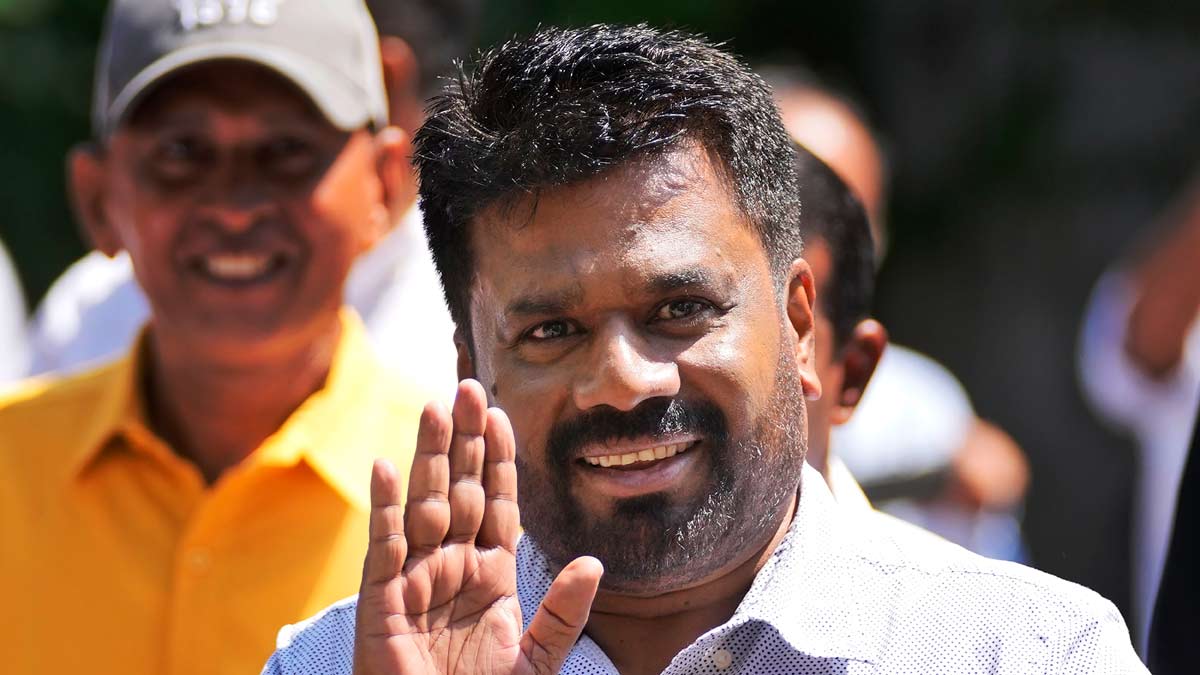 Sri Lankan president Anura Kumara Dissanayake | AP
Sri Lanka’s local civic polls, held on May 6, have thrown up several surprises, indicating a shift in ground reality. President Anura Kumara Dissanayaka’s ruling National People’s Power (NPP) – Janatha Vimukthi Peramuna (JVP) coalition witnessed a major dip in vote percentage.
Although the NPP emerged as the largest party, winning 265 out of the 339 local municipal councils across Sri Lanka, former president Mahinda Rajapaksa’s Sri Lanka Podujana Peramuna (SLPP) seems to be gaining traction.
The NPP’s vote share has dropped drastically from 61 per cent in the November 2024 Parliament general elections to 43 per cent in the civic polls. The 18% dip is attributed to the new government’s performance in the past six months. NPP’s loss in the prestigious Colombo Municipal Council comes as a deterrent for the ruling party.
The NPP, which suffered a loss of over two million votes in elections across the country—as compared to the Parliament general elections—is actually fighting hard to form an administration at the Colombo Municipal Council. However Anura’s NPP could win only 48 out of the 117 seats, which is far behind the majority numbers.
The opposition parties—Sajith Premadasa’s Samagi Jana Balawegaya (SJB) and Mahinda Rajapaksa’s SLPP—have secured 69 out of 117 seats, and are trying to unite and elect the Colombo mayor. The SJB has won 13 local governments.
There were 75,000 candidates in the fray from 49 parties and 257 independent groups. As elections to the local council were long due from 2022, voters did not want to choose mayors and their local leaders based on foreign policy or economic recovery, but rather based on who would deliver and attend to their local issues.
The NPP had considerable leads in the presidential and parliamentary elections. Even now they have won the election. But the numbers have come down. When the opposition becomes a coalition their voting numbers are higher than the government polled. There are genuine concerns among the people about the new government delivering on grassroots needs, as they promised,” Omar Rajarathinam, founder of Factum (a foreign policy and tech think tank in Colombo), told THE WEEK.
As Omar indicates, several factors contributed to the NPP’s dip in vote percentage. Unlike once believed, the NPP is facing a huge challenge in taking the country towards an economic recovery, due to price rise and inflation. Apart from this are the council level political networks, which are purely candidate-based.
Also, a dip in vote share indicates the ground shift to the SLPP. Having lost its political legitimacy due to mass protests in 2022, the SLPP is making a comeback under Namal Rajapaksa. Its resurgence is particularly pronounced in the rural South, which is dominated by Sinhala-Buddhist voters.
On the other hand, the performance of SJB continues to remain the second-largest, by scoring 32.8 per cent in the 2024 presidential election, 17.7 per cent in the 2024 parliamentary election, and 21.7 per cent in local civic polls.
A major contributor towards the shift in the political landscape in Sri Lanka’s civic polls is strong performances put forth by regional parties in the North and the East.
Tamil nationalist parties like the Ilankai Tamil Arasu Katchi (ITAK) and the All Ceylon Tamil Congress have made a comeback, after losing ground to the NPP in the general elections. The ITAK has won 43 out of the 58 council seats it had contested.
Traditional parties such as the Sri Lanka Muslim Congress, the All Ceylon Muslim Congress and the Ceylon Workers’ Congress continue to remain unpopular among Muslim voters as well as hill country Tamils in Sri Lanka, which has also significantly influenced the voting pattern.
While the results do not indicate a wholesale rejection of the NPP, the key takeaway is that Anura’s popularity alone will eventually not be enough to save them.
Sri Lanka stalls Starlink over security and sovereignty concerns
May 15th, 2025Malki Opatha Courtesy The Strategist

Starlink is great for developing countries, offering connectivity without costly infrastructure. But it’s a challenge for their national security, since authorities can’t monitor the traffic it carries.
This policy conflict arose in Sri Lanka in early May, when the government paused rollout of the satellite communications service, blocking one of the few ways to ensure affordable connectivity to remote and vulnerable areas.
Satellite internet can help close significant connectivity gaps across Sri Lanka, especially in remote, underserved and disaster-prone regions where fibre and mobile networks are limited. For a country recovering from conflict and economic crises, affordable and resilient connectivity is essential. But the government’s inability to monitor or intercept traffic through Starlink’s infrastructure has triggered alarm bells. Authorities say the service can’t proceed until security and regulatory frameworks are in place.
While regulatory hurdles for Starlink are increasing, Sri Lanka’s case is distinct. Some countries, including Lesotho and Cambodia, have approved Starlink as part of broader trade negotiations with the United States. In contrast, Sri Lanka independently initiated licensing reforms and has since paused rollout to address legal and security concerns. It’s one of the few small states asserting regulatory sovereignty, rather than accommodating external pressure.
Sri Lanka isn’t alone. India required Starlink to suspend preorders in 2021 until it secured proper licencing. Indonesia approved Starlink in 2024 only after obtaining regulatory assurances. And France revoked Starlink’s licence in 2022 after a court ruled regulators failed to conduct mandatory public consultation.
The licencing delay reflects broader shifts in Sri Lanka’s approach to digital governance. The current administration has placed greater emphasis on regulatory control, particularly when it comes to foreign-operated digital infrastructure. The Online Safety Act, passed in early 2024, created the Online Safety Commission with powers to regulate content and digital platforms. Online service providers, including foreign platforms, must comply with requirements on matters such as disinformation, incitement and national security.
While Starlink isn’t a social media platform, its architecture enables encrypted, high-speed internet access that bypasses local routing and oversight. That conflicts with Sri Lanka’s digital governance agenda, which emphasises legal accountability, interoperability with domestic regulation and alignment with security priorities.
In that sense, the Starlink pause reflects a bigger reckoning over who controls Sri Lanka’s digital infrastructure, and under what rules.
Starlink’s technical promise is clear: with over 6,000 satellites in low Earth orbit, the network can deliver fast, reliable internet to areas often left behind. That makes it attractive to countries such as Sri Lanka, where coverage gaps persist. The satellite internet market is also expanding rapidly with competitors including Amazon’s Project Kuiper and OneWeb preparing to enter the satellite broadband space.
Recognising the potential of satellite networks, former president Ranil Wickremesinghe’s administration met Elon Musk and fast-tracked approvals in 2024. This followed the passage of an updated Telecommunications Bill—the first amendment to the law in 28 years—which introduced new licence categories and explicitly enabled Starlink Lanka to operate as a licensed service provider, pending regulatory approval.
That momentum has stalled under the new government. President Anura Kumara Dissanayake’s administration has raised concerns about Starlink’s limited integration with national infrastructure, restricting lawful government and regulatory oversight.
That lack of oversight is a dealbreaker under current policy settings. As with many countries, Sri Lanka’s regulatory posture is still evolving, but with heightened concerns about extraterritorial digital services, it’s unlikely to make exceptions.
This echoes Sri Lanka’s caution with Huawei’s 5G rollout. Although not banned, Huawei was sidelined after key partners raised espionage concerns. Starlink presents a different risk, as it’s less about foreign surveillance and more about domestic blind spots. But the underlying issue is similar: what happens when critical digital infrastructure lies beyond the reach of the state?
Sri Lanka’s hardline stance comes at a cost. Blocking Starlink might slow digital inclusion, especially in hard-to-reach areas. And while the government has signalled interest in developing its own telecommunications capabilities, infrastructure rollouts take time, and the country is still navigating the tail end of an economic crisis that makes this more aspirational than practical.
A more strategic approach might involve conditional approvals. That could include mandating Starlink to partner with a licensed domestic telecommunications provider, such as Dialog or SLT-Mobitel, to establish in-country gateways or route traffic through national internet exchanges. These measures would comply with Sri Lanka’s regulatory requirements and enable oversight.
The Starlink case should prompt Sri Lanka to clarify its digital infrastructure policy. It will face similar questions over foreign cloud services, cross-border data flows and AI platforms. Setting clear, predictable rules now would help manage future risks and reinforce the country’s ability to safeguard its digital sovereignty.
That may be difficult, but it’s not impossible. Sri Lanka’s Starlink pause is a reminder that political will can ensure foreign digital services—from satellites in orbit or platforms online—adhere to local rules.
Sinopec facing obstacles in Sri Lanka top Chinese scholar
May 15th, 2025KELUM BANDARA Courtesy Daily Mirror
- Says companies operating in Sri Lanka are against Sinopec entering the market
- Sri Lanka signed MoU with Sinopec for US $ 3.7 billion refinery in Hambantota
- If a Chinese oil company comes here, they have higher technologies. So the local companies will face severe competition
Colombo, May 16 (Daily Mirror) – Sinopec, the leading Chinese petroleum company that has sought to invest in Sri Lanka, is facing obstacles in pressing ahead with implementation, a leading Chinese scholar who is presently in Sri Lanka told Daily Mirror yesterday.
In an interview with Senior Fellow and Director of Centre for South Asian Studies at the Shanghai Institutes for International Studies, Prof. Liu Zongyi said that companies currently operating locally had gotten in the way of Sinopec, fearing competition.
He is a scholar with his research focus on Indian economy and foreign policy, China’s foreign policy, South Asia issues, the Belt and Road Initiative and global governance. He is in Sri Lanka at the moment at the invitation of Pathfinder Foundation.
For example, Chinese oil company Sinopec. They would like to build a refinery here. Now, we are facing obstacles because local companies don’t want Chinese oil companies to come here. It is a problem of competition. If a Chinese oil company comes here, they have higher technologies. So the local companies will face severe competition. They don’t want to accept such pressure because now the market is theirs,” he said.
Responding to a query about allegations of unviability of Chinese investments, he said, In the past, China invested a lot in Sri Lanka and built a lot of infrastructure projects such as the Hambantota Port. It’s a mega infrastructure project. It needs time to become effective. It cannot fall into effect in just one or two years. But the local people think why the Chinese want to invest so much and why they want to put in so much money here while the Chinese cannot create jobs for the locals. Now you can find that the Hambantota Port has created profits for the local people,” he said.
During the visit of President Anura Kumara Dissanayake to Beijing early this year, a MoU (Memorandum of Understanding) was signed with Chinese state-owned oil and gas giant China Petrochemical Corporation which is commonly known as Sinopec for US $ 3.7 billion oil refinery in Hambantota.
Sri Lanka’s Ministry of Energy and Sinopec signed the agreement for US $3.7 billion investment to construct an oil refinery with a capacity of 200,000 barrels in the Hambantota region, according to the PMD. Sinopec Energy Lanka, a subsidiary of Sinopec, is currently involved in fuel distribution in Sri Lanka.
Sinopec and Sri Lanka will have to work to resolve land, tax and water issues. Sinopec’s refinery in Sri Lanka places it in direct competition with India’s interests in expanding its role as an energy supplier.
During the visit of Indian Prime Minister Narendra Modi recently, a MoU was signed among Sri Lanka, India and the United Arab Emirates (UAE) to establish a multi-product petroleum pipeline as part of India-Sri Lanka connectivity.
PRESIDENT TO USE ALL THE WEAPONS IN HIS ARSENAL TO BLOCK OPPOSITION’S LOCAL COUNCIL POWER GRAB…DESPITE THE GOVERNMENT FAILING TO GET A MAJORITY
May 15th, 2025Courtesy Hiru News
President Anura Kumara Dissanayake stated that if fragmented opposition groups band together to seize control of local government bodies, he will use constitutional, legal, and political power to thwart their efforts.
The President made these remarks while addressing the JVP’s 60th anniversary celebration held in Colombo on May 14.
This is against the backdrop of the ruling National People’s Power failing to get a majority vote in many local government bodies, despite winning in those areas.
Meanwhile, the opposition parties have decided to band together to form a united front and establish control of the disputed Local Government bodies.