Leader of the National Congress, A. L. M. Athaulla today (06) said that the National Congress will support Sri Lanka Podujana Peramuna (SLPP) Presidential Candidate Gotabaya Rajapaksa in the upcoming Presidential Election.
Further, the National Congress is a member of the United People’s Freedom Alliance.
Can
Sri Lanka afford a trillion rupee Public Service?
Sri Lanka’s annual Public Service Salary and Pension bill exceed one trillion rupees per annum for the first time in history. Milinda Moragoda calls upon Presidential Candidates to present their proposals for meaningful Public Service reform.
The budgetary allocation for salaries and pensions for 2019 amounts to Rs 685 billion. The estimated cost of the public sector salary increases this year is Rs 120 billion. The total public sector salary bill for 2019 is therefore estimated to reach Rs 805 billion. In addition, the budget outlay for pensions in 2019 is Rs. 212 billion and is expected to be Rs 235 billion in 2020. This will take the annual public service wage and pension bill in excess of one trillion rupees for the first time in history.
Public sector salary and
pension increases boost aggregate demand without generating an increase in
supplies in the economy. They are, therefore, inflationary. In practice, the
increases in salaries are likely to be eroded by a rise in prices. In
addition, the incremental aggregate demand will also leak into imports,
thereby putting pressure on the balance of payments. This can then result in a
depreciation of the Sri Lanka Rupee, and place further pressure on the price
level (inflation).
These negative effects can only be contained if the salary increases are funded by cutting other recurrent expenditures, raising revenue, or a combination of these two measures. Cutting capital expenditure is a less good option as it reduces growth impulses in the economy. Ultimately, someone has to pay the piper.
The worst option is to
fund the salary increases through additional borrowing. Increasing the public
debt to fund recurrent expenditure will be highly detrimental as there would be
no rate of return to defray the cost of servicing the additional debt incurred.
Against this backdrop, it is imperative that all Presidential candidates
present realistic and sustainable plans and policies to deal with public
service reform to the country as part of their election manifestos as a matter
of urgency.
Today I watched the TV program where aspirants who intend to contest the presidential election were requested to table the program they intend to implement during their tenure if they win.
Regrettably, all of them talked about-creating a utopian society
None of them did specify the revolutionary changes we need
today
Lack of discipline among the young generation in the cities, on the road, and in public transport. Was never discussed or explained
I expected at least one of them to promise to control indiscipline
by promoting national service in the country to make them disciplined and
respectable people when they complete training
The second proposal I expected them to promise to implement is strict punishment for graft and for drug distribution to make the society safe
During the four minutes at least one of them could have
promised to undertake such tasks
GR’s citizenship issue cleared Another boost for SLPP expected in Elpitiya The five month transition period
Sri Lanka has had presidential elections in 1982, 1988, 1994, 1999, 2005, 2010, and 2015 but never one like the present election. With just two working days to go to the close of nominations, a former local government head from Galle petitioned the Supreme Court seeking an order calling off the election. Thankfully, this was dismissed by the SC. But the attempt to knock out the principal opposition candidate from the race even before it began, was heard in the Appeal Court over three days throwing the entire opposition election campaign into a state of uncertainty. Several weeks ago, in an article titled “Geetha, Gota and the Elections Commission”, this writer pointed out that Gota’s citizenship matter had been sorted out to the maximum extent it could ever be, citing the Appeal Court and Supreme Court judgements in the Geetha Kumarasinghe case.
It was not as if the Appeal Court was hearing a case involving dual citizenship certificates and renunciation of foreign citizenship etc. for the first time. This is ground that the AC has already gone over. On Friday, after hearing the arguments presented, the Appeal Court dismissed the petition filed by two yahapalana activists Chandragupta Thenuwara and Gamini Viyangoda seeking an interim order prohibiting the recognition of Gotabhaya Rajapaksa as a citizen of Sri Lanka. As things turn out, Thenuwara and Viyangoda have unwittingly done Gotabhaya Rajapaksa a favour by filing that petition and enabling the latter to prove conclusively that there is no issue with regard to his present Sri Lankan citizenship. This columnist warned in two full page articles published some weeks ago, of the power that the Elections Commission assumes in the event an objection is received regarding a candidate’s qualifications to contest a presidential election and the need to take precautions.
Now Thenuwara and Viyangoda have served up the best possible precaution on a platter. This is not something that the Gota camp could have done by themselves even if they had tried! According to the Presidential Elections Act, there are only three grounds on which objections can be raised to a nomination. Firstly, ‘that it is apparent from the contents of the nomination paper’ that the candidate is not qualified to be elected as President; secondly that the candidate is disqualified by reason of conviction by a court of law for a corrupt or illegal practice or an election malpractice; and thirdly, that civic disability has been imposed on the candidate by Parliament.
When it comes to objections raised on the second and third instances, the Elections Commission cannot decide on its own but has to refer such objections to the Supreme Court within three days after the day of nomination. Such petitions have to be heard by a five-member bench of the Supreme Court within a period of seven days. Unless and until the Supreme Court decides to uphold the objection the candidate concerned will stand nominated.But when it comes to objections based on a candidate’s qualifications, the Elections Commission assumes unbridled power. The Elections Commission itself will decide what the term ‘apparent from the contents of the nomination paper’ means in a context where the nominations paper is directly connected to the Constitutional provisions listing the qualifications of a presidential candidate through the declaration that the candidate signs.
The power of the Elections Commission in this regard was hanging like a sword of Damocles over Gota’s candidacy and one never knew what would happen on the 7th after nominations closed. The Appeal Court decision now eliminates that uncertainty, and also precludes other candidates from carrying on a negative campaign against Gota by casting doubts about his citizenship. Gota is personally indebted to Thenuwara and Viyangoda for having got this matter cleared up once and for all. This unequivocal decision of the Appeal Court will no doubt give the SLPP campaign a boost. Next Friday there will be the Elpitiya PS election which the SLPP is tipped to win by a comfortable margin – which will give the SLPP campaign yet another boost.
Fragmentation of the
yahapalana vote
Last week, Sajith Premadasa tried to get Maithripala Sirisena’s support for his Presidential bid. However, he has not yet approached the JVP, which is very surprising because the single most important factor that will decide the fate of the yahapalana camp at this election is not really the SLFP or Maithripala Sirisena but the JVP. Even if Maithripala Sirisena personally joins the UNP campaign, it is very unlikely that he will be able to carry the SLFP rank and file with him into the UNP. Unlike the SLFP, the JVP voters are an integral part of the yahapalana camp. If not for the JVP votes at the 2015 Presidential election, Maithripala Sirisena would have lost. This time, for the first time since Rohana Wijweera contested the Presidency, the JVP has put forward their own leader as the Presidential candidate and will be compelled to put their best foot forward and to win the maximimum number of votes possible.
In 1982, Rohana Wijweera contested the Presidency as a Marxist candidate and fared poorly. This time the JVP has shed all such encumbrances and are going for broke to win votes from all and sundry, Marxists and non-Marxists alike. Every vote the JVP takes will be from the yahapalana camp. The differences between the JVP and the pohottuwa types have built up over nearly a decade and no pophottuwa votes will go to the JVP. The agenda that the JVP has espoused also appeals to a yahapalana constituency and not to the pohottuwa constituency. The JVP has been with the yahapalana crowd for a decade so the likelihood of the UNP candidate being able to get the JVP vote is much higher than him being able to get the SLFP vote. So Sajith would have been better off wooing the JVP rather than Sirisena.
Almost all the other ‘also ran’ candidates are those who would have been with the yahapalana camp in 2015, including former Army Commander Mahesh Senanayake. The latter was among the officers sent on compulsory retirement in 2010 in what was described as a ‘military purge’ by the Rajapaksa Government against officers deemed loyal to the fomer Army Commander Sarath Fonseka. Mahesh Senanayake returned to the country after the change of government in 2015 and was reinstated in the Army. Mahesh Senanayake’s motivation to contest the presidential election would come from his bitter experiences of 2010 and perhaps a need to get his own back on the Rajapaksas by siphoning off some military votes from Gotabhaya. The organization supporting Senanayake, are clearly yahapalanites.
So it appears that virtually all the ‘also rans’ will be eating into the yahapalana vote bank instead of the SLPP vote bank. The appeal of the also rans are also pitched at the disappointed yahaplana voter of 2015 rather than the pro-Rajapaksa voter. It’s a moot point as to whether the also rans would be able to appeal even to the new voters who have come of age during the past five years.
The contest for an emasulated presidency
What is puzzling is why a record number of ‘also rans’ would want to contest the emasculated presidency that exists at present. One of the first to point out that this presidency is not what it used to be, was Dr Nihal Jayawickrema and he is absolutely right. The powers of the presidency in the 1978 constitution rested on three pillars – the President made appointments to all the most important positions in the state such as Supreme Court judges, the Attorney General and the Inspector General of Police. It was the President who appointed and dismissed Cabinet Ministers and in addition to assigning subjects to Ministers, the President could assign any subject to himself. Finally, it was the President who had the power to dissolve Parliament at his discretion. The 19th Amendment has dislodged all three pillars of Presidential power and the position is no longer the pivot on which all political power rests.
Now, the President cannot make any important state appointment except in mandatory consultation with the ten-member Constitutional Council. This mandatory consultation can take place in two ways. The Constitutional Council was to recommend to the President persons for appointment as Chairmen or members of the Election Commission, the Public Service Commission, the National Police Commission, the Human Rights Commission of Sri Lanka, the Permanent Commission to Investigate Allegations of Bribery or Corruption, the Finance Commission and the Delimitation Commission. In such cases, it was the Constitutional Council that was to take the initiative by recommending persons suitable to be members of the independent commissions. In the case of important offices of the state such as the Judges of the Supreme Court and Court of Appeal, members of the Judicial Service Commission other than the Chairman, the Attorney-General, the Auditor-General, the Inspector-General of Police, the Ombudsman and the Secretary-General of Parliament the roles were reversed with the President making the recommendation of the candidate to the Constitutional Council and the latter indicating its approval or disapproval. Either way, it’s the Connstitutional Council that has the real say in making these appointments.
Article 70 of the Constitution has been amended so as to make it impossible for Parliament to be dissolved before the lapse of four and a half years unless Parliament resolves to dissolve itself by a resolution passed by two thirds of its total membership. According to Article 43 of the Constitution as amended by the 19th Amendment, it is the President who will determine the number of ministries and the subjects and institutions that are to be assigned to those ministries. He may, only if he deems it necessary, consult the Prime Minister in doing so. However, when appointing individual MPs to hold these ministries, the President is mandatorily required to consult the Prime Minister. After the Cabinet is formed in this manner, the President may at any time change the assignment of subjects and functions and the composition of the Cabinet. Article 43 is silent on the question whether the President is required to consult the PM when he changes the assignment of subjects and functions and the composition of a Cabinet that has already been formed. However, the wording of Article 43(2) seems to suggest that in appointing MPs to be Ministers, the President cannot avoid consulting the Prime Minister whether it be before the Cabinet is appointed or afterwards.
Most importantly, the provision in the Constitution in the old Article 44(2) whereby the President could assign to himself any subject or function and was to remain in charge of any subject or function not assigned to any Minister, has been repealed. What this means is that a future President will not be able to assign any subjects to himself or even remain in charge of the subjects not assigned to any other Minister because the provision that made it possible for the President to hold some subjects by default now no longer exists in the Constitution. The repeal of the provision that enabled the President to assign any subjects to himself or to hold the subjects not assigned to anybody has reduced the power of the President drastically. The incumbent President Maithripala Sirisena holds several ministries including that of Defence only because of a transitional provision in the 19th Amendment which will lapse when his tenure ends in a few weeks. The next president will not have any power to assign Ministries and subjects to himself – not even the Defence ministry.
Furthermore, the 19th Amendment has made it possible to challenge actions taken by the President by way of a fundamental rights application. This provision was put to the test last October when the President dissolved Parliament and the resulting judgment has taken even more power out of the hands of the President. Even though the President’s powers have been reduced by the 19th Amendment, the Prime Minister’s role has not been properly defined. He is the PM and sits in the Cabinet, but he is not the head of the Cabinet. He is not the head of the government either – both those titles still belong to the President. The PM has a tenuous hold on power through Article 43(2) which makes him the effective appointing authority of Ministers. Despite the ematiated state of the presidency at present we have a record number of candidates – which seems to indicate that they have not read the 19th Amendment properly!
Five month plus cohabitation
period
As the negotiations between the SLPP and the SLFP floundered over the question of the pohottuwa symbol, Mahinda Rajapaksa was heard making a new argument to the effect that because Gotabhaya Rajapaksa was not a sitting or former Member of Parliament, he has to contest as the nominee of a recognized political party and that a deposit had been already made in his name by the SLPP and that he would not be able to hand in nominations through another political party. This is a reference to Article 31(1) of the Constitution which states that any citizen who is qualified to be elected to the office of President may be nominated as a candidate for such office by a recognized political party. However, if he is or has been an elected member of the legislature, he can be nominated by a political party which has not been recognized by the Elections Commission or by an elector whose name has been entered in any register of electors.
Whoever gets elected President will find that the first few months will be the most difficult period of his tenure. If Gota is elected, he will have to co-habit with the UNP led Cabinet for over five months. If Sajith wins he too will have to cohabit for more than five months with a Prime Minister and Leader of the House who tried their damnest to prevent him from becoming the UNP Presidential candidate. Why the co-habitation period extends to five months can be explained as follows: According to Article 31(3A)(d)(ii) of the Constitution, if the person declared elected as President is not the President in office – which will be the case inevitably at this election – hold office for a term of five years commencing on the date on which the result of such election is declared.
This means that the new President will have to be sworn into office on the 17th Novermber 2019. In terms of Article 70(1) of the Constitution, the President cannot dissolve Parliament at his discretion until the expiration of four years and six months from the date of its first meeting. The present Parliament met for the first time on 1 September 2015. Hence, the 1st March 2020 will be the earliest date on which the present Parliament can be dissolved by the new President. At presidential elections it is the Elections Commission that calls for nominations and fixes the date for the poll when the incumbent President either declares an early election or when the incumbent President’s term nears completion. However, when it comes to Parliamentary elections, in terms of Article 70(5)(a) of the Constitution, it is the President who dissolves Parliament. The dissolution can be an early dissolution or a dissolution upon the completion of the five year Parliamentary term.
Either way, it is a mandatory requirement that the President’s proclamation dissolving Parliament has to fix a date for the election of Members of Parliament, and also has to summon the new Parliament to meet on a date not later than three months after the date of the Proclamation calling the election. There are other requirements as well. In terms Section 10(1) of the Parliamentary Elections Act No: of 1981, the President shall, in every Proclamation dissolving Parliament specify the period during which nomination papers shall be received by the returning officer during normal office hours at his office; and the date on which the poll shall be taken. The nomination period shall commence on the fourteenth day after the date of publication in the Gazette of the Proclamation dissolving Parliament and expire at twelve noon onthe twenty-first day.
The date fixed for the poll shall be not less than three weeks and not more than eight weeks from the closing day of the nomination period. What these provisions mean is that if the new president dissolved Parliament on the very first day that he is able to constitutionally dissolve parliament, which is on the 1st March 2020, it will take an absolute minimum of 42 days to hold the elections after the proclamation dissolving Parliament. Due to intervening Poya Days or other public holidays, it will be impossible to hold the Parliamentary election within the minimum possible period. What this means is that the new President who will have to assume office on 17 November 2019 will have to work with the present Cabinet of Ministers until the Parliamentary election is concluded some time after 17 April 2020 at which point the present cabinet of ministers will cease to hold office – a full five months and more.
The long transition period from November 2019 to April 2020 when the new President will have to work with the present Prime Minister and Cabinet will be a trying period for whoever wins the Presidential election. If the opposition candidate is elected President, he will have to deal with a hostile prime minister, a hostile cabinet and a hostile Parliamentary majority. If the government’s own candidate wins in circumstances where the Presidential candidacy was yielded only in the most acrimonious circumstances, there is the distinct possibility of intra party conflicts emerging with renewed ferocity as those who backed the government party candidate move in to claim their reward.
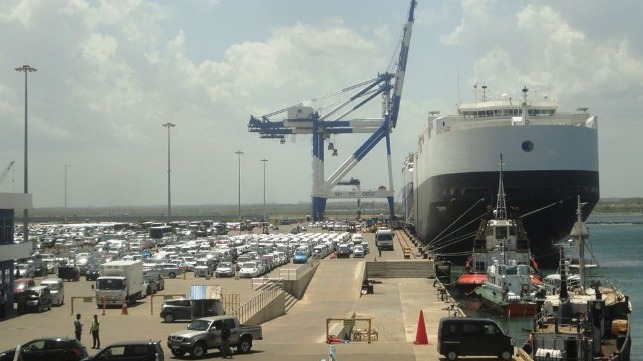
The underutilized port of Hambantota, Sri Lanka is set to gain a major new tenant. The Sri Lankan government has given its approval to the Singaporean company Sugih Energy International (SEI) to build a $20 billion refinery at the port. The project’s value exceeds the total of all foreign direct investment in Sri Lanka over the past forty year, development minister Malik Samarawickrama told Sri Lankan outlet Daily FT.
In 2010, with financial backing from China and the assistance of Chinese construction companies, Sri Lanka built a greenfield port development at the quiet fishing community of Hambantota. The port project attracted limited use, and it – along with many other infrastructure initiatives – left Sri Lanka deeply indebted to Chinese state banks. In 2017, Sri Lanka gave the final go-ahead to sell 70 percent of the port to state-controlled China Merchants Port Holdings for $1.1 billion, satisfying a portion of its debt burden.
Western analysts have often described Hambantota as a “white elephant” project lacking in commercial viability, but CMPH’s managers insist that they are turning it around. The refinery deal is one of several recent energy-related development announcements at the port. In March, the Sri Lankan government green-lighted a proposal to build a smaller, $3.8 billion refinery complex at Hambantota, with backing from the government of Oman and another Singaporean firm. In addition, in 2018, Chinese investors were cleared to build a $700 million natural gas-powered electrical station at Hambantota. The 400-gigawatt power plant will be fueled with LNG.
Chinese oil major Sinopec holds the rights to provide bunkering at the port of Hambantota. The port’s Chinese managers have signaled their intention to make bunkering – which is a natural complement to oil refining – into a key part of the development strategy for Hambantota. The port is adjacent to the busy east-west sea lanes across the Indian Ocean, and it is roughly at the halfway point between the bunkering mega-hubs of Fujairah and Singapore.
Colombo, October 5: The political situation in Sri Lanka returned to normal on Friday, after the Court of Appeal rejected a petition by two civil rights activists to bar Gotabaya Rajapaksa, the candidate of the Sri Lanka Podujana Peramuna (SLPP), from contesting the Lankan Presidential election set for November 16.
The petition, filed just a few days before the date set for the filing of nominations (October 6), charged that Gotabaya Rajapaksa had unlawfully obtained a Dual Citizenship Certificate. Therefore he had no right to contest the forthcoming election.
Petitioners Prof.Chandraguptha Thenuwara and Gamini Viyangoda, had sought the cancellation of the Dual Citizenship Certificate issued to Gotabaya Rajapaksa on November 21, 2005 and the Sri Lankan passport and National Identity Card (NIC) issued to him thereafter.
A three-judge Court of Appeal, headed by Yasantha Kodagoda, heard both sides for nearly four days and finally threw out the petition Friday evening, without granting the petitioners leave to proceed.
If the petition had been allowed and leave to proceed was granted, Gotabaya Rajapaksa would not have been able to contest the election. In that case, the entire complexion of the election would have changed. Sajith Premadasa, the candidate of the ruling United National Paty(UNP) would have had the best chance of winning the Lankan Presidency.
None of the other candidates in the field, including Anrua Kumara Dissanayaka of the Janata Vimukthi Peramuna(JVP), has the capability of Sajith Premadasa. The UNP has the largest voter base among the non-SLPP parties. The UNP is also exceptionally united and charged up now because it has, at long last, found a candidate with a common touch” after putting up with an elitist and distant leader like Ranil Wickremesinghe, the current Prime Minister.
Right from the start, political pundits had been considering Gotabaya of the SLPP (founded and led by the charismatic former President Mahinda Rajapaksa) as the front-runner in the Presidential race. As Defense Secretary and also as the Urban Development Secretary, Gotabaya had distinguished himself as a dynamic official and a creative leader, though he also had a reputation for using strong arm methods to quell trenchant critics.
Following the April 21, 2019 multiple suicide attacks by a bunch of Jihadis and the utter failure of the UNP government to act on accurate prior intelligence given by India, the majority of Sri Lankans especially of the Sinhala-Buddhist and Christian communities had been yearning for a strong national security orient government, which, under the circumstances, only Gotabaya can provide.
In the absence of Gotabaya, the SLPP would have put up Chamal Rajapaksa, the eldest of the Rajapaksa siblings. But Chamal is a colorless and uninspiring politician though with a reputation as an honest and fair-minded man. He lacks the dynamism of Gotabaya, who as Defense Secretary, had defeated the dreaded LTTE, and as Urban Development Secretary, re-built post-war Colombo and other Lankan towns.
Petitioner’s Plea
Appearing for the petitioners, Suren Fernando recalled that before 2003, Gotabaya Rajapaksa was a citizen of Sri Lanka by descent. Thereafter, on or around January 31, 2003, he had become a citizen of the United States of America. From that day onwards, Gotabaya Rajapaksa had ceased to be a citizen of Sri Lanka under the country’s Citizenship Act.
Subsequently, in November 2005, when his elder brother, Mahinda Rajapaksa, won the Lankan Presidential election, Mahinda wanted to make Gotabaya Defense Secretary to help him prosecute the war against the Tamil separatist militant group the Liberation Tigers of Tamil Eelam (LTTE). For this purpose, Gotabaya, who was a US citizen at that time, had to be given Dual Citizenship.
Gotabaya applied for a Dual Citizenship Certificate, a Sri Lankan passport and a National Identity Card. These were sanctioned on November 21, 2005, a few days after Mahinda Rajapaksa was sworn-in as President of Sri Lanka. The Dual Citizenship Certificate was signed by Mahinda in his capacity as the President of Sri Lanka.
The petitioners pointed out that the certificate bore no signature of the concerned Minister and the Ministerial Secretary, something it ought to have had as per the legal requirement.
The petitioners pointed out that as per law, the Cabinet of Ministers and Ministerial Secretaries had resigned after the election of the President to enable him to choose his own men. A new Prime Minister, Ministers and the assigning of the subjects to the Ministries took place on November 21, 23 and December 08 respectively. When Gotabaya was given a Dual Citizenship Certificate on November 21, 2005, there was neither a subject Minister nor a Ministerial Secretary. But President Mahinda Rajapaksa had signed on and issued the Dual Citizenship Certificate.
The petitioners pointed out that the President had no power to do that and therefore, the certificate and everything that flowed from it, was null and void.
The Court of Appeal President, Yasantha Kodagoda, asked whether there was any residual power vested upon the President to exercise the executive power of the government in the absence of the Cabinet. Counsel for the petitioners, Suren Fernando, replied that the 1978 constitution is a combination of both Westminster and Presidential systems of governance and that its intention was not to provide plenary executive powers to the President. He has to share it with the Cabinet of Ministers and cannot act on his own.
The Defense
Appearing on behalf of the Attorney General, Controller General for Immigration and the Registrar of Persons, Senior Deputy Solicitor General (SDSG) Nerin Pulle told the court that the former President, Mahinda Rajapaksa, who had signed the Dual Citizenship Certificate of Gotabaya Rajapaksa in 2005, had the power to do so as the relevant Minister.
After the Presidential election, the cabinet stood dissolved and Secretaries to the Ministries had also quit. But as per the 1978 constitution, all executive powers were vested with the President during that period. As such, the President could sign any document that a Minister would have signed.
In other words, the President could exercise his plenary powers” to take decisions of Ministers in the absence of Ministers. Pulle also argued that the subject Minister’s recommendation was enough and the Ministerial Secretary’s signature was not needed. And the subject Minister at that time, in the absence of a cabinet, was the President himself.
Pulle pointed out that Article 44 (2) of the Constitution, which was in existence in 2005, said that the President could continue to function with all the executive powers as the head of the government and the executive, until the new Cabinet was appointed.
Counsel for Gotabaya Rajapaksa, Romesh de Silva, said that the litigation against his client had been brought by political opponents to prevent him from standing for the Presidential election. This was tantamount to breaching the right of people to vote for the candidate of their choice. The petition was drafted in cahoots with the leaders of the UNP, he charged.
De Silva also took objection to the fact that the writ application had been filed while an investigation into the same facts was taking place under the supervision of the Colombo Magistrate.
The counsel for Gotabaya further stated that the petitioners had not included in their plaint, 21 others who were given Dual Citizenship Certificates on November 21, 2005, the day on which Gotabaya was given the certificate. On this technicality alone, the petition should be dismissed, he said.
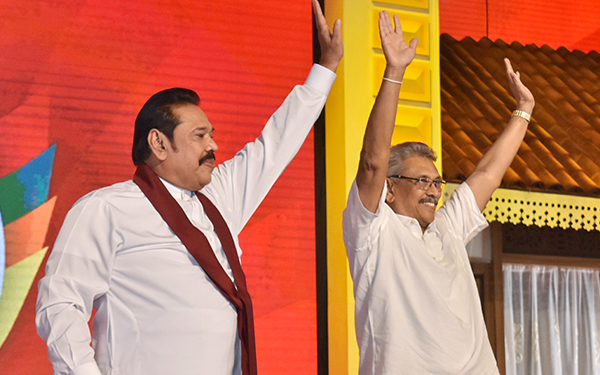
(The featured image at the too shows Mahinda Rajapaksa and Gotabaya Rajapaksa)
The
Court of Appeal has placed Mr Wiyangoda’s petition in the most appropriate
place, by dismissing it without further consideration. In other words,
Mr Wiyangoda once again has gone to the place where he deserve to reside,
i.e. Kunu Goda.
Anti-yahapalana
voters have been further encouraged with these episodes to increase the
vote base for Gotabaya Rajapakse. Those who promised a new world in 2015,
did destroy Sri Lanka in all areas of employment and investment. It
further destroyed the Sri Lankan culture and basic values of civilisation.
Wiyangoda
has always been in the company of Prime Minister Ranil Wickremasinghe and took
a leading role in 2015 campaign to defeat President Mahinda Rajapakse, with
Groups of Conspirators, including Sarath Wijesuriya,
Jayadeva Uyangoda, Nirmal Ranjith Devasiri, Jayampathy Wickramaratna,
Paikiasothy Saravanamuttu, Imitiaz Bakeer Marker, Mahim Mendis, Rohan Edirisinghe,
Ravi Jayawardena and Nimalka Fernando.
Prof.
Sarath Wijesooriya declared the 8 January 2015 as the date on which law-abiding citizens of Sri Lanka
executed a silent revolution.” PaCha Ranawaka called the Change, A
Revolution”, Ranil called it a Revolutionary Victory”, Prof. Jayadeva Uyangoda opined that “the replacement of an
authoritarian government by electoral means … without bloodshed [makes] Sri
Lanka a real wonder of the modern world”,Dr. Nirmal Ranjith Devasiri called it “a revolution
with low intensity”.
Gotabaya Rajapakse victory is now unstoppable. Within
next 2 months, rivalry groups will further enhance their attack with
insinuations, lies with the support of NGOs, LTTE Diaspora etc.
Responding to the Appeal Court’s decision to dismiss the petition against SLPP presidential candidate Gotabaya Rajapaksa’s citizenship, SLPP Leader and Opposition Leader Mahinda Rajapaksa yesterday said not only Gotabaya but the entire country had been exonerated.
I think the entire country was exonerated. Not only Gotabaya but the entire country was exonerated. (Nidos kota Nidahas karala thiyanawa),” he told journalists at the Opposition Leader’s Office soon after the decision was announced.
He said the decision showed the independence of the judiciary and the faith they had in the judicial system.
Sound legal arguments were made by the legal team including counsel Romesh De Silva PC and Gamini Marapana PC,” he said.
When asked about MP Chamal Rajapaksa making a cash deposit to contest the presidential poll, Mr. Rajapaksa said, That was a backup plan. In case the court decision was different, we couldn’t abandon our people. We were getting ready to face any decision.”
The Court of Appeal today contemplated that if those who dishonoured the Court by cheering inside the court room soon after the decision on Gotabhaya Rajapaksa was declared are found to be legal professionals of the bar, they would have to face legal repercussions in due course.
It was seen soon after the order on the writ petition was delivered by Court of Appeal president Justice Yasantha Kodagoda, some part of the audience in the court room reacted to the decision by cheering. This sudden reaction caught the attention of Justice Kodagoda and he said if lawyers were among those who cheered, then they will be dealt with the necessary laws over their behaviour as professionals.
However, it was also seen that Romesh de Silva PC was very quick to signal the audience not to disturb and dishonour the court. He also apologized to the Bench for the behaviour of some persons and highly deplored that behaviour.
The Court of Appeal has unanimously decided to dismiss the petitions filed challenging the citizenship of former Defence Secretary Gotabaya Rajapaksa, without taking it up for consideration.
The court today concluded the consideration of the petition while all parties were given time to present their written submissions before 3.15 p.m.
The decision of the Appeal Court regarding issuing an interim order on the petition was be announced at 6.00 p.m.
https://youtu.be/pRbT9j0UPBM
The petition, filed by two social activists Gamini Viyangoda and Prof. Chandraguptha Thenuwara on September 30, was taken up for consideration for a third straight day this morning before a three-judge bench comprising Justices Yasantha Kodagoda, Mahinda Samayawardena and Arjuna Obeysekara.
The Controller General of the Department of Immigration and Emigration, the Commissioner-General of the Department of Registration of Persons, Minister Vajira Abeywardena, Secretary to the Ministry of Internal & Home Affairs and Provincial Councils & Local Government, Opposition Leader Mahinda Rajapaksa, former Defence Secretary Gotabaya Rajapaksa, Acting Inspector General of Police (IGP), Director of the Criminal Investigation Department (CID), Senior Deputy IGP of CID and Officer in Charge of CID’s Special Branch have been cited as the respondents of the petition.
The petitioners had alleged that Gotabaya Rajapaksa has obtained a passport and a National Identity Card (NIC) claiming that he revoked his US citizenship.
The petitioners further stated that they have the necessary information to prove the former Defence Secretary did not submit proper documentation to verify the revocation of his US citizenship when obtaining a Sri Lankan passport and a NIC.
Hence, the petitioners had requested the Appeals Court to deliver an order suspending the issuance of a passport and a NIC to Gotabaya Rajapaksa. They also sought an interim order preventing the functioning of said passport and NIC until the court delivers the petition’s verdict.
However, the court decided to dismiss the petition without taking it up for consideration.Disclaimer: All the comments will be moderated by the AD editorial. Abstain from posting comments that are obscene, defamatory or slanderous. Please avoid outside hyperlinks inside the comment and avoid typing all capitalized comments. Help us delete comments that do not follow these guidelines by flagging them(mouse over a comment and click the flag icon on the right side). Do use these forums to voice your opinions and create healthy discourse.
Civil
Society Activists in many countries in the world appear to be working as
independent activists without engaging in popular politics or supporting
political parties, however, in Sri Lanka civil society activists appear to be
in a mud puddle without clearly understanding the role of them. As I reiterated
before, civil society activists were in the past in Sri Lanka under the reign
of Kings and Queens, but they did not engage in active politics because they
understood the real role and limits of them.
Since the 2015 presidential election, civil society activists have been
engaged in a misguided role like politicians without understanding and
identifying the role of them. It is possible to assume that they were mad on
making easy money misleading international NGOs. This situation is clearly understood by other
countries in the world. It can assume that other countries and international
NGOs are observing what is going on in Sri Lanka.
Another
vital point concerning the behavior of NGO activists is whether the
international NGOs which are believed to be financing for local NGO activists knew
that local activists were playing a game for an undue enrichment out of foreign
taxpayers’ money. This is a serious issue that UNO or any other international
organizations must be discussed or investigated and make justice for
international donors.
It
also seems that several activists have engaged in the role of government media
to attract support from international NGOs, which have already learned a good
lesson from civil society activists in Sri Lanka after 2015. There are many issues that civil society
activists must be worked in, despite such requirements they have engaged in
complete rubbish politics such as to take presidential candidates to courts
rather than playing their role. What
were purposes or aims of these local NGO activists sought funds from
international donors and did the organizations audit how funds were using in
Sri Lanka? If the purpose of them is to playing politics, they can go to the
USA and support the Democratic party to impeach President Donald Trump, but
they are scared to engage in such an active role. Some of these activists are supposed to
participate in university research and teaching roles and people of Sri Lanka
have a question whether these activists playing the right role or a dishonest
role. Do they addicted to money coming
from external sources rather than doing the owned job? Could these people trust
is an issue for international NGOs?
International
NGOs must extremely careful when funding for local NGO activists in Sri Lanka.
We do remember your father avoided being in the country when JR signed the Indo-Lanka Accord. So, what will you do about the devolution of power Sajith, I hope you will also not repeat the same mistakes that your father made. One of them was to ignore Lalith and Gamini perhaps because he felt threatened by them. That led to the impeachment motion against him. It is correct to say that that the Greens are yet to recover fully from that disaster.
Ironically,
a generation later, Lalith’s protégé, Ravi and Gamini’s son Navin are now with
the Greens with you. History could repeat itself. You shouldn’t let that
happen. Yet, I also think that those involved in bond scams should be dealt
with, even if they have passed their local ‘O’ Levels!
Your father sat on a gold-plated chair
that resembled a throne. He ruled with an iron fist. He disliked dissent.
Richard de Zoysa was to him what Lasantha was to Mahinda maama.
People still remember all this. So, Sajith, while you should be like him in
some aspects, you need to be different to him, too.
There is a lot for you to do and a very
short time period to d The ‘pohottuwa’ chaps are already on the
campaign trail. You have to reorganise your party and send a message to the
people that you are not representing the old, tired, defeated elephant — even
if you have to come in the guise of a swan!
The Greens had their share of debates, discussions, and disputes about who their candidate should be. It is to his credit that in the end, the Green Man made the right decision. Remember, he stood by your father when he was impeached- and maybe you should stand by him now. Very soon, nobody will.
When
your father was second-in-command to JR, he lamented that what he was doing was
a peon’s job. Times have changed. With the changes to the Constitution, there
are times when the job you are vying for could be a peon’s job. So, if you win,
Sajith, be careful about who you appoint as your PM.
When
he was elected, your father said he inherited a torch burning at both ends:
Indian troops in the North, an insurgency in the South. He dealt with both
issues but his style was such that sadly, some lit crackers when he died. Maybe
you could make the same people light crackers again — by winning!
We wish you well, Sajith, not because we prefer you to Gota but because we want the coming contest to be a true reflection of the peoples’ will. They should have learned over the last four years that getting rid of what you don’t like doesn’t necessarily mean that what they are getting is what they wanted!
Yours
truly,
Punchi
Putha
PS -A final word of advice, Sajith: in
the past few months, you had been talking to Aiyo Sirisena from time
to time. Whatever you do, you need to stop dealing with that chap. He will have
no hesitation in betraying you and voters will disown you if they think that
you have anything to do with him at all.
Despite this advice, SP has held discussions with Aiyo Sirisena together with AkilaViraj and Kabir Hashim. He has said that they discussed current issues and not politics. A real joke. It seems that this imbecile and ignoramus joker does not know what politics is!
Former Minister Field Marshal Sarath Fonseka has said that M. Ranil Wickremasinghe had more2/3 support in the UNP working committee and despite that he nominated Sajith as the party nominee to avoid a split in the party. At the same time, Sarath Fonseka and the Puttalam district MPRange Bandara have said that they will not take part in the election campaign if Aiyo Sirisena associated with the campaign.
Another pro UNP writer who is a staff writer of the Daily Mirror says that Mr Premadasa’s candidature may not impress those who wanted a more forthright choice with a degree of policy substance. Elaborating on what happened at the working committee meeting this writer states that Mr. Premadasa won the UNP’s internal contest. But, he is still a long way from winning the Presidency – or having a decent shot at it and a good number of sensible Sri Lankan voters are in the dark as to what he represents?
He says that Mr. Premadasa is likely to face a good deal f obstruction and backstabbing by the disgruntled Wickremesinghe loyalists, including some senior members of the UNP AND He would be well served by studying the pitfalls of the campaign of Hector Kobbekaduwa, the SLFP contender of the 1982 presidential election, whose campaign was sabotaged by none other than the party leader Madam Sima Bandaranaike herself. This writer adds that it is still a relief that the UNP managed to avoid a potential split and it is also a consolation that no one throttled anyone in the working committee meeting.
The writer laments that the UNP has been reduced to a skeleton of its former self under Mr. Wickremesinghe and the Yahapalanaya government led by the UNP was a byword for vacillation and indecisiveness. He says it mishandled the economy and then, with the devastating consequence, the national security and the UNP can not absolve itself for crippling policy paralysis,
The writer further states that Mr. Premadasa has so far failed to inspire anyone other than the green-blooded UNPers. They are a few and far between and no longer a force capable of deciding the outcome of an election He claims that five lost years under the Yahapalanaya have eroded the enthusiasm of the UNP friendly civil society activists, some of whom have now rallied behind other candidates.
The writer points out that in the Conservative Party of the UK, of which many traditions the UNP faithfully apes, the leadership had changed seven times since 1994, the year Mr. Wickremesinghe first became the leader of the UNP and clung onto the party leadership ever since. He says that Mr. Premadasa has also been suspiciously vague and over-cautious, making many an observer feels that he is lacking substance and is scheming to thrive in rhetoric. The writer says in a sad mood that to begin with, Mr. Premadasa should tell the public who he is? The vagueness of his policies and his stance on the devolution of power and a political solution need to be apprised to the voters. Perhaps, that ambiguity is a matter of necessity for anything said on the subject could be misconstrued by his opponents. However, at the same time, it comes at the expense of the minority voters, whom he should win in en masse if he is to win the presidential election.
It is advised that he has to come up with a set of coherent economic and social policies and espouse his position on the Tamil national question and a political solution and he should be free to draw his boundaries on these matters, but, the public has a right to know where he stands since the election campaign has just begun and things would evolve as it progresses. So would the electability of the candidates in the eyes of the voters and Mr. Premadasa proactively seize that opportunity before his opponent capitalizes on his lacuna?
Meanwhile, Mr. Gotabhaya Rajapaksa’s Spokesperson MP Dullas Alahapperuma has said that Prime Minister Ranil Wickremesinghe and the UNP presidential candidate Sajith Premadasa were conspiring to prevent Gotabaya from contesting the presidential polls. He said the relevant petition had been filed by two NGO activists under the patronage of Premier Wickremesinghe and Sajith Premadasa and added the duo were loyal to Premier Wickremesinghe and were maintaining links with him and it is apparent and clear that there is an ongoing political coup to prevent Gotabaya from entering to the battlefield of the presidency.
MP
Keheliya Rambukwella said the incumbent government had attempted to manipulate
high judicial officers like former Bribery Commission Director-General
Dilrukshi Dias Wickramasinghe and former Solicitor General (SG) Suhada Gamalath
for the sake of political expediency.
Referring to the discussion held between President Maithripala Sirisena and the UNP officials including UNP presidential candidate Sajith Premadasa recently, MP Susil Premajayantha said it was clear that the UNP had found it extremely hard to face the presidential battle and hence they were begging the Sri Lanka Freedom Party (SLFP) for support.
Sajith Premadasa has proved himself as a big liar and people cannot trust him with what says. He said that in his meeting with Aiyo Sirisenathey did not discuss politics. Contradicting this statement the General Secretary of the SLFP, Dayasiri Jayasekara has said that when the UNP team led by Sajith Premadasa met the President, both sides focused on the current political situation of the country.Mr. Jayasekara, along with the General Secretary of the UPFA, Mahinda Amaraweera and Treasurer of the SLFP, Lasantha Alagiyawanna, has joined the President at the discussion. Meanwhile, media spokesman of the SLFP, parliamentarian Weerakumara Dissanayakahas spilled the beans by saying that there is a possibility of a UNP – SLFP alliance in the event, the attempts to form an alliance led by SLFP – SLPP becomes an against the gallant war hero Gotabhaya Rajapaksa.
As of in a bid to counter anti-national despicable propaganda of the UNP, the TV channel TNL belonging to Ranil Wickremasinghe’s own brother Shan Wickremasinghe has condemned adverse propaganda being carried out by unpatriotic elements. The TV channel has severely criticized Prof. Chandraguptha Thenuwaraof the Kelaniya University and the member of the convening panel of Purawesi Balaya (People’s Power) organization Gamini Viyangoda for filing a case against Mr. Gotabhaya Rajapaksa. The TV telecast has reminded that Gotabhaya Rajapaksa was a gallant war hero who as the Defense Secretary of Mr. Mahinda Rajapaksa’s government was solely responsible for ending 30 years of the cruel terrorist was=r which all past leaders were unable to achieve. It has said that no grateful Sri Lankan can forget this fact and Chandragupta and Viyangoda have gone Courts against such a great person. The TNL in conclusion also states that in the presidential election, what the people should trust is the Gotabhaya camp which would protect and safeguard the motherland or the camp protecting and safeguarding the non-governmental organizations that are enemies of the motherland.
In the midst of all these political episodes, people speculate that the recent tragic death of seven young elephants, some pregnant and some who have recently delivered babies has been carried out in fulfillment of a politically based vow similar to the alleged fulfillment of a vow carried out by ‘the father’ for getting a milk bath from seven naked virgins somewhere in the Kataragama sacred city. Mr. Sajith Premadasa is reported to be very fond of watching elephant games from a treetop hut in the Yala sanctuary.
An
image grab taken from a press release issued on April 23, 2019 by the Islamic
State (IS) group’s propaganda agency Amaq, allegedly shows eight men it said
carried out a string of deadly suicide bomb blasts on Easter Sunday in Sri
Lanka, lined up at an undisclosed location. The man in the centre is believed
to be Zahran Hashim, who was identified by the Sri Lankan police as the leader
of the Islamist National Thowheeth Jama’ath (NTJ) group, which Colombo has
blamed for the attacks. The Islamic State group claimed a series of bombings on
churches and luxury hotels in Sri Lanka that killed more than 320 people on
April 21, and released the photo of the men it said were behind the (AFP/ AAMAQ
NEWS AGENCY )
By P.K.Balachandran/Daily Express Courtesy NewsIn.Asia
Colombo, October 4: Since the entire complexion of the November 16 Sri Lankan Presidential election will change if the Court of Appeal upholds the plea that the Sri Lanka Podujana Peramuna’s candidate, Gotabaya Rajapaksa, is not a Sri Lankan citizen, Sri Lankans across the political divide are waiting with bated breath for the verdict which is expected to be given on October 4.
For Gotabaya to remain in the Presidential race, the court will have to resolve two issues in his favour:-
(1) The controversy over the legality of the Dual Citizenship Certificate he possesses. This certificate has the signature of the then President of Sri Lanka (Mahinda Rajapaksa) but not the Secretary of the concerned Ministry. It has a for” signature and not the Ministry Secretary’s.
(2) The non-availability, at the moment, of the original docket pertaining to his Dual Citizenship in the office of the Controller General of Immigration and Emigration.
If Gotabaya’s plea that the President of Sri Lanka has the plenary power to function as the executive, whether the cabinet of ministers or the secretaries to the ministries exist or not, is accepted by the court, then the signature of the President on the dual citizenship certificate in 2005 will be valid.
Gotabaya will then be deemed to have secured dual citizenship in 2005. Recently, he renounced his American citizenship and retained his Sri Lankan citizenship which will enable him to contest the Presidency under the 19 th. Amendment of the constitution.
If he overcomes the legal hurdles, Gotabaya will be a front runner in the Presidential race with considerable support in the majority Sinhala community (which accounts for more than 75% of the Lankan population) ; Sri Lankan nationalists and others yearning for a functioning government after languishing under the under-performing Good Governance” regime led by President Maihripala Sirisena of the Sri Lanka Freedom Party (SLFP) and Prime Minister Ranil Wickremesinghe of the United National Party (UNP).
If the court does not accept Gotabaya’s plea and upholds the plea of petitioners Gamini Viyangoda and Chandraguptha Thenuwara, then Sajith Premadasa, the candidate of unified UNP has the best chance of winning the Lankan Presidency.
None of the other candidates in the field, including Anura Kumara Dissanayaka of the Janata Vimukthi Peramuna(JVP), has the capability of Sajith. The UNP has the largest voter base among the non-SLPP parties. The UNP is also exceptionally charged up now because it has, at long last, found a candidate with a common touch” after putting up with an elitist and distant leader like Ranil Wickremesinghe.
Legal Arguments
Appearing for the petitioners, Suren Fernando said that Gotabaya Rajapaksa was a former citizen of Sri Lanka before 2003 by decent. Thereafter, on or around January 31, 2003, he had become a citizen of another country i.e. the United States of America. From that day onwards, Gotabaya Rajapaksa ceased to be a citizen of Sri Lanka under the Citizenship Act of Sri Lanka.
Subsequently, he applied for Dual Citizenship status to the relevant ministry, in order to obtain a new Sri Lankan passport and a national identity card, because he was not a citizen of Sri Lanka at that time. Gotabaya applied for a Dual Citizenship Certificate during the period between November 18 and 24, 2005, soon after his brother, Mahinda Rajapaksa, was elected as the President of Sri Lanka.
Mahinda Rajapaksa assumed office as President, after the election on November 18, 2005. Upon his election,the existing Cabinet of Ministers stood dissolved. A new Prime Minister, Ministers and the assigning of the subjects to the Ministries took place, on November 21, 23 and December 08 respectively.
When Gotabaya Rajapaksa applied for Dual Citizenship and had one issued, there was no Cabinet and therefore, no Ministers or Secretaries either. The impugned Dual Citizenship Certificate had been signed for” the relevant ministerial Secretary by the then President Mahinda Rajapaksa, counsel Fernando said.
Whereupon, the Court of Appeal President, Yasantha Kodagoda, asked whether there was any residual power vested upon the President to exercise the executive power of the government in the absence of the Cabinet. Fernando replied that the 1978 constitution is a combination of both Westminster and Presidential systems of governance and that its intention was not to provide such executive power to one person.
Fernando also argued that there was a difference between the President’s executive power as a whole” and the executive powers vested upon ministers and their secretaries.” Therefore, the former President could not have exercised such powers in the absence of a cabinet.
Fernando requested to grant interim reliefs as the impugned Dual Citizenship Certificate, on the face of it (ex facie) is void and is a nullity in law.
The Defense
Appearing on behalf of the Attorney General, Controller General for Immigration and the Registrar of Persons, Senior Deputy Solicitor General (SDSG) Nerin Pulle told the court that the former President, Mahinda Rajapaksa, who had signed the Dual Citizenship Certificate of Gotabaya Rajapaksa in 2005, had the power to do so as the relevant Minister.
After the Presidential election, the cabinet stood dissolved and Secretaries to the Ministries had also quit. But as per the 1978 constitution, all executive powers were vested with the President during that period. As such, the President could sign any document that a Minister would have signed.
In other words, the President had exercised his plenary power to take decisions of Ministers. Pulle also argued that the subject Minister’s recommendation was enough and the Ministerial Secretary’s signature was not needed.
Article 44 (2) of the Constitution, which was in existence in 2005, said that the President could continue to function with all the executive powers as the head of the government and the executive, until the new Cabinet was appointed, Pulle pointed out.
Pulle, who was also appearing also for the Controller General of Immigration, told the court that the dual citizenship files older than 2007 were not available at the Department of Immigration.
Counsel for Gotabaya Rajapaksa, Romesh De Silva said that the litigation against his client had been brought by political opponents to prevent him from standing for the Presidential election. He also took objection to the fact that the writ application had been filed while an investigation into the same facts was taking place under the supervision of the Colombo Magistrate.
Addressing
the 59th Session of the WIPO General Assemblies on 20 September
2019, the delegation of Sri Lanka recalled how strengthened Intellectual
Property systems remained critical to the effective pursuit of economic and
social development, by enabling developing countries to be fully engaged in the
global economy driven by knowledge and innovation.
Sri
Lanka’s envoy in Geneva, Ambassador A.L.A Azeez, referred to the multifaceted
work that WIPO has carried out, including through the Committee on Development
and Intellectual Property, by mainstreaming its Development Agenda, that
effectively ensures the continued sharing of IP protected knowledge among
Member States.
WIPO’s
norm-setting agenda, Ambassador Azeez stressed, has extended to a number of
innovative areas including Intellectual Property and Genetic Resources,
Traditional Knowledge and Folklore. He called upon the Inter-Governmental
Committee to expedite its work to finalize international legal instrument/s extending
protection for these vital intellectual assets.
Sri
Lanka also expressed appreciation to WIPO for its continued assistance in the
form of technical cooperation and capacity building, and updated the WIPO
General Assemblies on Sri Lanka’s progress in the accession process to the
Madrid Protocol for the International Registration of
Marks.
The
delegation of Sri Lanka to the WIPO General Assemblies comprised the Director
General of the National Intellectual Property Office of Sri Lanka, Mrs. Geethanjali
Ranawaka, Deputy Permanent Representative of Sri Lanka to the UN, Ms. Dayani
Mendis, and Minister Counsellor, Ms. Shashika Somaratne. The WIPO General
Assemblies will be in session from 30 September to 11 October 2019 in Geneva.
By Chitra Weerarathne and A.J. Abeynayake Courtesy The Island
Romesh de Silva PC, Counsel for SLPP presidential candidate Gotabaya Rajapaksa yesterday requested the Court of Appeal to dismiss a petition challenging the former defence secretary’s citizenship as it was a politically motivated application.
Pointing out that the then President Mahinda Rajapaksa had signed Gotabaya Rajapaksa’s Citizenship Certificate by exercising powers following his election as the President at the Nov 2005 presidential poll, PC de Silva said that the Court of Appeal should only consider whether the President endorsed it at the correct time.
The Court of Appeal will take up the case again at 9.30 am today (04)
Earlier in the day, the Court of Appeal yesterday directed the Deputy Solicitor General Nerin Pulle to submit a sworn affidavit from the relevant authorities to explain why any file related to the dual citizenship issue of Gotabaya Rajapaksa is not in the Department of Emigration & Immigration. The Deputy Solicitor General replied that he would attend to the matter without any delay.
At the outset Counsel Janaka de Silva told the Court of Appeal that on Tuesday it was told in objections that if the petition was allowed the sovereignty and the franchise of the people to vote would be affected as the eligibility of the candidate was of primary importance. Janak de Silva appeared for the Minister of Home Affairs Vajira Abeywardena. The Counsel referred to article 4 of the Constitution of Sri Lanka.
Accordingly the legislative power was exercised by the Parliament elected by the people. The complex thought processes in Article 3 and 4 were expressed by the rest of the Constitution, the counsel said.
Article 4(a) talks about the legislative power of an elected Parliament. Most of the laws are subject to an approval by the people, at a referendum, although the Parliament passes the laws, the Counsel said.
The Provincial laws are passed by the Provincial Councils, Article 4(6), explains that all executive powers are not vested in the President only. The people derive that power from the Constitution, the Counsel said.
The Article (30) of the Constitution, state that the President is the Head of the Government and the Commander of the Armed forces; the term ‘executive’ is broader than the term ‘government’.
The Executive comprises the President, Constitutional Council, the Cabinet of Ministers and the Public Service. Article (33) speaks of the power of the President. Article (43) (1) states that there shall be a Cabinet of Ministers, charged with the direction and the Central of the Government, the Cabinet is collectively responsible to Parliament.
To say that the power of the President is limitless is clashing with the Constitution.
To say that the power of the President is plenary is not falling in line with the Constitution.
The Executive power is the power of the people. It is not vested in the President alone, Counsel explained.
Counsel said that files relevant to the dual citizenship issue of Gotabaya Rajapaksa were not in the Department of the Commissioner General of Emigration & Immigration.
Counsel Gamini Marapana P.C. objected to that statement by Counsel Chanaka de Silva stating that he was being briefing baselessly by his client.
Counsel Marapana P.C. appeared for former President Mahinda Rajapaksa, who is a respondent and who is alleged, according to the petitioners, to have certified the citizenship application of Gotabaya Rajapaksa.
Romesh de Silva P.C. appeared with M.U.M. Ali Sabry P.C. and Sugath Caldera for Gotabaya Rajapaksa.
Counsel Gamini Marapana objected that Counsel Chanaka de Silva is not strictly referring to the relevant facts of the writ before the court.
The Bench comprised Justice Yasantha Kodagoda (President), Justice Janak de Silva and Justice Mahinda Samayawardene.
Two petitioners Professor Chandraguptha Thenuwara and Gamini Viyangoda had alleged in their petition that Gotabaya Rajapaksa has not duly withdrawn his USA citizenship. Hence he is a dual citizen and cannot contest for the Presidency of Sri Lanka.
A petition has been file moving the Supreme Court to invalidate the Gazette notification declaring the Presidential Election 2019.
The petition filed by the former Mayor of Galle Methsiri de Silva has named Chairman of the Elections Commission Mahinda Deshapriya, the members of the commission and the Attorney General as its respondents.
Petitioners point out that the incumbent President Maithripala Sirisena was elected as President on January 8, 2015, for a term of six years.
Despite this, the Election Commission has issued a gazette notification calling for a presidential election as soon as five years have elapsed since the commencement of President’s term and nominations for the elections have been called on the 7th of October.
Therefore, the petitioner requested a Supreme Court ruling that declares the decision of the Elections Commission unconstitutional and the relevant gazette notification invalid.
The petitioner has also requested the court to issue an interim injunction preventing the submission of nominations for the election on the 07th October.Disclaimer: All the comments will be moderated by the AD editorial. Abstain from posting comments that are obscene, defamatory or slanderous. Please avoid outside hyperlinks inside the comment and avoid typing all capitalized comments. Help us delete comments that do not follow these guidelines by flagging them(mouse over a comment and click the flag icon on the right side). Do use these forums to voice your opinions and create healthy discourse.