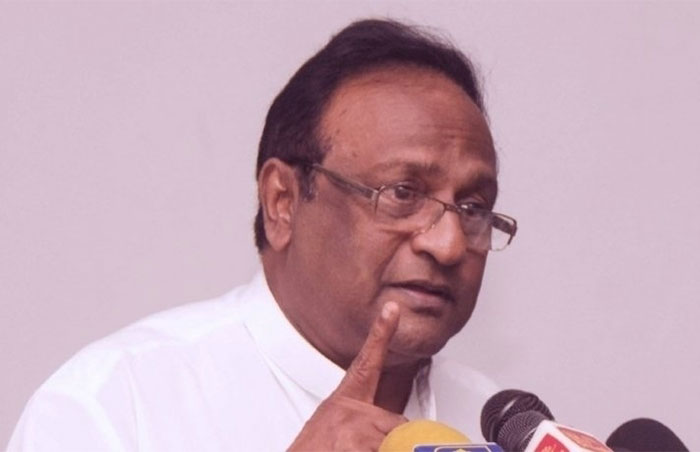
Former Navy Chief of Staff, Rear Admiral Sarath Weerasekera, said that the National People’s Power (NPP) government owed the public an explanation regarding Indian media reports of the cancellation of joint naval exercise involving SLN and PNS (Pakistan Navy Ship) Aslat off Trincomalee.
Weerasekera, who also served as the Public Security Minister during Gotabaya Rajapaksa’s presidency, asked whether the recently signed MoU on defence cooperation with India paved the way for New Delhi to interfere in bilateral relations between Sri Lanka and Pakistan.
Acknowledging that the MoU on defence cooperation hadn’t been signed at the time Sri Lanka cancelled planned naval exercise off Trincomalee, the former parliamentarian said that the issue at hand should be examined also taking into consideration the one year ban imposed on foreign research vessels on 01 January, 2024, bythe then President Ranil Wickremesinghe.
Weerasekera contested Colombo district at the last parliamentary polls on the SLPP ticket but couldn’t retain his seat.
That was meant to bar Chinese research vessels from visiting Sri Lanka, ex-MP Weerasekera said, urging the government to explain its stand on the ban imposed by Wickremesinghe. Referring to government statements that dealt with foreign research vessels late last year, the former Minister said that the government couldn’t keep silent on this issue.
We would like to know the status quo with regard to foreign research vessels, Weerasekera said.
Responding to The Island queries, the former lawmaker, who once served as Chairman of the Sectoral Oversight Committee (SOC) on National Security, said that the government was yet to table the MoU on defence cooperation with India in Parliament. In fact, none of the MoUs that had been signed with India on 05 April were presented to Parliament yet and the Opposition should pressure the government to reveal the contents, the former Colombo district MP said.
Pointing out that the government had done away with the SOC on national security when the Parliament, in consultation with the UNDP, restructured the SOC system, thereby accommodated the vital subject under SOC on Governance, Justice and Civil Protection, Weerasekera emphasised that the Opposition should vigorously take up this issue.
Dr. Najith Indika heads the SOC on Governance, Justice and Civil Protection. Former Minister Weerasekera said that Pakistan was one of the few countries, along with China and Russia, that always backed Sri Lanka at the Geneva-based United Nations Human Rights Council over the years.
Weerasekera said that the Sri Lanka-India defence cooperation MoU was yet to be taken up at the SOC level.
Weerasekera alleged that India was taking advantage of the situation as it tightened its grip on the government. The former Minister said that the government seemed to have meekly succumbed to Indian pressure and caused irreparable damage to long standing ties with Pakistan. Sri Lanka couldn’t, under any circumstances, forget the unprecedented support provided by Pakistan throughout the war against the LTTE, Weerasekera said.
Among the armaments that had been provided by Pakistan were multi-barrel rocket launchers that were deployed in the northern and eastern theatres during Eelam War IV, especially in the aftermath of the LTTE laying siege to the Jaffna peninsula after the fall of the vital Elephant Pass and was threatening to storm the last bastion in the North.
The former Minister said that Sri Lanka paid a huge price to bring the war, initiated by India, to an end.
Meanwhile, top SJB spokesman Mujibur Rahman said that the NPP should be ashamed to ask MPs to seek MoUs signed with India through the Right to Information (RTI) Act. Parliamentarian Rahman said that he was quite surprised and disappointed by the position taken by Health Minister and Cabinet spokesman, Dr. Nalinda Jayatissa, that those who wanted the MoU on defence cooperation should do so through the RTI Act. This is nothing but a joke. The Cabinet spokesman’s current stand is contrary to what the JVP has been saying over the years.”
By Shamindra Ferdinando
Comments Off on Govt. under fire for scrapping joint military exercise with Pakistan off Trincomalee.
254 Vahland Avenue, Willetton 6155, Western Australia.
The upcoming Federal Elections in Australia is not focusing on full employment, capital punishment for crime specifically murder, rape and incest, dental treatment based on Medicare, especially for unemployed and Age Pensioners, waiting period to see specialist doctors and euthanasia for incurable illnesses and suffering due to these incurable aliments or illnesses.
Australia has lovely sunshine and the majority of people love their sports especially Australian Rules football and cricket, but do not care for politics as they believe that majority of politicians lie and not state the truth. Unfortunately in a democratic system of government one requires politicians like or dislike them and this is what the majority of Australians fail to understand. It will be great if Civil Servants made policy and ruled the country based on equity, fair play and justice, but this does not happen in any part of the world including Australia. Therefore this Sinicism by majority or mainstream Australians has made people who have not been a successes mainly to become politicians and thereby as Australia also does not have a quality Higher Administration or Civil Service puts a great amount of pressure on politicians to govern and rule the nation well based on equity, fair play an a sense of justness. Unfortunately as Australia does not have a quality Civil and District Administration like India for example the country is governed poorly and especially government departments are not efficient at all in my candid opinion after living forty one years in Australia. For example my Australian passport, which I lost, has taken seven weeks, but I have not been issued a new one even if I paid three hundred dollars for the new passport to be issued to my father and myself within ten days for travel overseas to travel to Sri Lanka for a holiday. This is a very good example where quality Civil Servants does not work in Australia today because under former Prime Minister John Howard he made examinations to be stopped and only through interviews that people are selected into the Public Service today in Australia. This has caused favoritism to mainstream Australians more than migrant Australian citizens like me for example who gained a PhD in British Colonial History but I had to take work as a History Consultant in the Professional Historians Association of West Australia even though I love to do policy work in the government sector because I do not know anyone to have influence or favoritism. It is whom you know and not what you know in getting a job in Australia and especially the Public Service in Australia at presently.
There is a huge amount of stabbing murderers in Australia where if a man or woman kills a person they if they are twenty years old are left after a life sentence when they are forty years old. A twenty years life sentence is given. Inside prison the prisoner is given education, training for employment, and quality gum and health facilities. So it is only like a house arrest and most reoffend again. So in my candid view if capital punishment if reintroduced it will make a person think twice about premeditated murder or murder in regard to break and entering houses where the perpetuator cannot be harmed beyond reasonable force but the victim can be killed or very badly injured. So the laws of self-defense have not been spoken by Labor or Liberal or even the minor parities such as the Greens.
I honestly believe Australia should address all what I have mentioned above and get retired Civil Servants from Britain and India to address Australia’s desperate need for quality Civil and District Administration, including law and order, which is today a big problem for the reasons stated above in Australia.
I agree that cost of living and housing are issues but one does not have to be stabbed when going for work, shopping or doing anything for that matter, which needs to be addressed immediately.
Ramping in hospitals, including finding hospital beds for the ill are administrative issues and if Australia can have a quality Civil Service in all the States and Territories the country will be run fare better in my candid opinion.
The other issues are making Department of Employment, Disability and Age Care under government and not privatize as it as is the case presently in Australia.
The political parties should believe in Keynesian economics and not the Chicago School of Economics where big business is assisted by government and hopefully this will infiltrate to the poor in society. This is a failed policy and unless the central government or in Australia the Federal Government directly controls employment creation, education, health, age care, public administration, including district administration, law and order and housing rather than privatize some areas, one will find inadequate or poor government in Australia nationally, including State and Territory governments.
Comments Off on What all the political parties in Australia should focus policy wise in the upcoming Federal Election in Australia.
I was deeply saddened to learn of the passing of His Holiness Pope Francis. Throughout his life, Pope Francis sought to serve the poor and vulnerable, demonstrating immense sympathy for those suffering under the heavy weight of warfare, persecution and injustice. He was a man of compassion, humility and faith who strived to build bridges between people of different faiths and beliefs.
During his Papacy Pope Francis received representatives of Ahmadiyya Muslim Community with warmth and grace at the Vatican for which we will always be grateful.
On behalf of the Ahmadiyya Muslim Community, I extend our sincere condolences to the Catholic Church and its members around the world.”
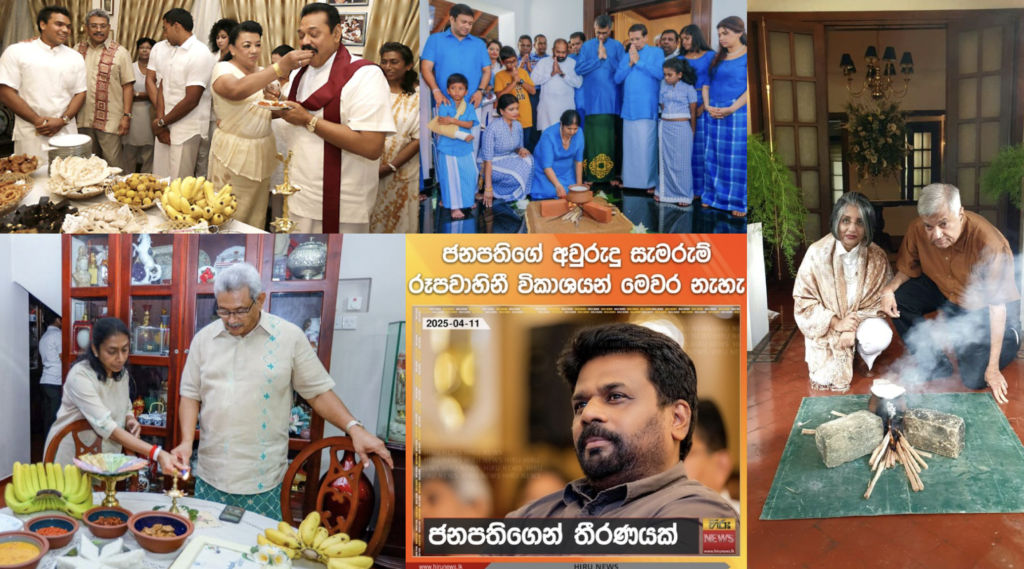
When national leaders are absent from the most important cultural event of the majority, it is not just an oversight — it is a message. A message of disregard, of disconnect, and desire to diminish the very values that built this nation.” Sri Lanka has had 9 Presidents since 1978, 16 Prime Ministers since 1947 all of them were seen holding the traditional Sinhala New Year customs in their homes, attending public ceremonies. However, this year to the shock of all, neither the President nor PM held any festivities in their homes while the PM only took part in Hindu religious ceremonies on the day of the New Year which was publicized over their media channels giving little or no publicity for Sinhala avurudu customs. With this scant disregard for the majority Sinhala Buddhists, it makes a mockery of their hyped Rs.300m allocation for a Rainbow Day” they term as inclusivity & unity? Where is the unity when an event celebrated by some 14million Sinhala Buddhists was completely disregarded?
President & PM by their own actions have delivered a slap to the Sinhala Buddhists.
Their action suggests they wish to ignore the cultural foundation of the Nation, thus neglecting the national heritage.
Their action highlights a lack of respect for the values of the people they claim to represent & shows disregard for the majority sentiment.
Their action indicates the failure to show proper recognition or respect for core traditions passed down through generations.
Their action suggests an attempt to undermine the national identity of the nation & as such is construed as a betrayal of the people.
Their action shows their lack of national leadership & intentional avoidance for political reasons, a deliberate snub bordering divisive politics.
This action must be condemned by all to ensure no such similar repetition takes place in future.
Duty of Public Officials to uphold national unity & cultural sensitivities
In a democratic society, public officials are entrusted with responsibilities that transcend personal preferences. Their actions and decisions should reflect the collective will and sentiments of the people they serve. Their personal lives, personal choices cannot take centre stage.
Constitutional Framework
Sri Lanka’s Constitution delineates the roles and responsibilities of public officials. Article 3 asserts that sovereignty resides in the people, and Article 4 outlines how this sovereignty is exercised through the executive, legislative, and judicial branches. The President, as the head of the executive, is entrusted with the duty to act in the best interests of the nation. Furthermore, Article 9 grants Buddhism the foremost place” and mandates the State to protect and foster the Buddha Sasana, while assuring to all religions the rights granted by Articles 10 and 14(1)(e). This provision underscores the importance of Buddhism in Sri Lanka’s cultural and national identity.
It is nothing that a President or PM chosen for a term can change or erase because they personally disagree or disapprove.
Public Duty Over Personal Preference
Public officials are not representatives of their personal beliefs; they are custodians of the public trust. Their actions should reflect the collective values and traditions of the people they serve. By abstaining from Sinhala New Year celebrations, officials may inadvertently signal a disregard for the cultural significance of this festival to the Sinhala Buddhist majority. Such actions can be perceived as neglecting the sentiments of a significant portion of the population, a portion that voted for them.
Balancing Inclusivity and National Identity
While inclusivity is a cornerstone of democratic governance, it should not come at the expense of eroding the cultural identity of the majority. Public officials must navigate the delicate balance between honoring the traditions of minority communities and upholding the cultural heritage of the majority. Participation in minority festivals should not overshadow the importance of national festivals that hold deep significance for the majority population especially when the Constitution clearly mandates them.
The Role of Leadership in Fostering Unity
Leadership entails making decisions that promote national unity and social harmony. By actively participating in national festivals, public officials can demonstrate their commitment to preserving the cultural fabric of the nation. Such actions convey respect for the traditions and values that bind the nation together, fostering a sense of belonging among all citizens. This does not entail boycotting the festival of the majority populace believing this would make the minorities happy.
Public officials, by virtue of their positions, bear the responsibility of representing the collective will and sentiments of the people. Their actions should reflect a commitment to national unity, cultural preservation, and the values enshrined in the Constitution.
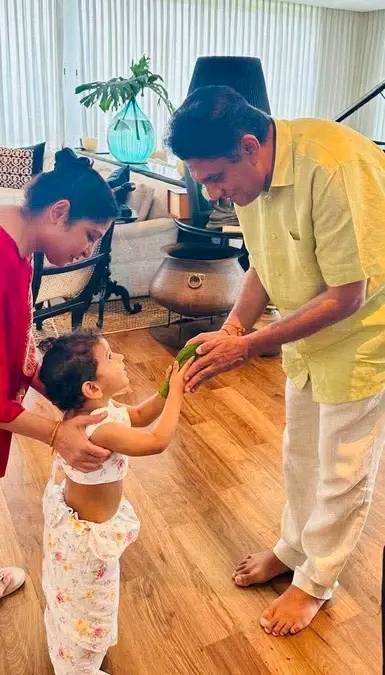
How cute to see the Opposition Leader and his little doni in traditional attire
International examples: When National Identity Takes Precedence Over Personal Preference
1. United Kingdom – The Monarchy and Christian Tradition
Although UK claims it is a secular democracy, the British monarch remains the Supreme Governor of the Church of England. British leaders – regardless of their personal beliefs – attend national Christian events such as the Commonwealth Day Service* or Remembrance Sunday at Westminster Abbey. Leaders like Rishi Sunak, a practicing Hindu, have continued to attend Christian events as part of their national duties, recognizing their symbolic role in maintaining national cohesion.
2. India – Prime Ministerial Presence at Hindu Festivals
India, though says it is secular, sees its leaders participate in major Hindu celebrations such as Diwali and Navratri. Prime Minister Narendra Modi, despite his position over a multi-religious population, participates in these events to connect with India’s Hindu majority. This is seen not as favoritism but as national duty — given the cultural roots and identity intertwined with the majority’s traditions.
3. USA – Presidential Role in National Christian Holidays
The United States President — including Barack Obama (born Muslim), Donald Trump, and Joe Biden — have honored Christian traditions. The annual National Prayer Breakfast, Christmas Tree Lighting Ceremony, and Easter Egg Roll are all state-sponsored traditions. No matter the President’s denomination or private belief, attendance and leadership during such events are considered part of the role of head of state.
4. Thailand – National Unity Through Buddhist Traditions
Thailand’s monarchy and political leadership, while constitutionally limited, maintain regular public observance of Buddhist traditions. Makha Bucha and Visakha Bucha Day are state holidays with official state ceremonies, regardless of the personal beliefs of any ministers or politicians. The state and religion remain connected through cultural obligations, not dogmatic enforcement.
Lessons for Sri Lanka: Symbolism, Representation, and Public Duty
In all the examples above, regardless of personal belief, public office bearers CANNOT ignore or neglect major cultural or religious events linked to their national identity.
This symbolic representation is honoring the national fabric and social harmony.
For a nation like Sri Lanka, where Buddhism holds a constitutionally enshrined foremost place” (Article 9), public officials — especially the President and Prime Minister — carry not just ceremonial responsibility but also moral and symbolic accountability to show respect to the Buddhist majority’s cultural calendar.
Refusing to attend or acknowledge Sinhala Avurudu, while publicly participating in minority religious events, is not neutrality — it is selective neglect, which can erode trust, alienate the majority, and sow division.
Among the distinguished guests were Minister of Buddhasasana, Religious and Cultural Affairs, Dr. Hiniduma Sunil Senevi was the only Minister’s name included in the communique issued by the Presidents Media Division.
There is absolutely no issue to holding such an event, but why disregard only a Sinhala event?
Likewise, the PM participated in the Thai Pongal at the PM’s office, but no such Sinhala Avurudu was held at the PM’s office.
On 14th April the day of the Sinhala avurudu, she attended the Hindu religious ceremony at Vishnu kovil & thereafter to the residence of Attorney-at-Law Mr. Saman Leelarathna.
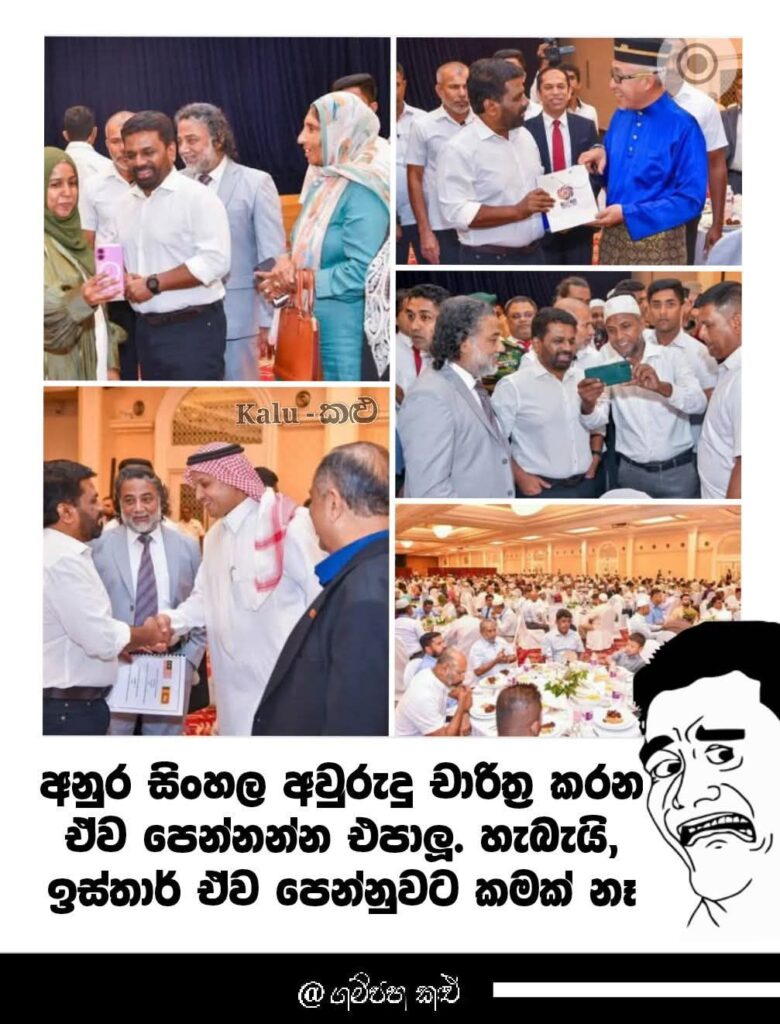
Neither the President or PM lit the hearth as is customary in their homes, or attended any public ceremonies while the President announced that Avurudu would not be telecast though the Ifthar was telecast in all news channels.
Another slap to the Avurudu was the ignoring of the National oil ointment ceremony usually held in Kandy for which neither the President nor PM attended. Historically the Maha Sangha applied oil on the head of the King/Head of State.
President Anura Kumara Dissanayake has consistently advocated for national unity, emphasizing the importance of transcending ethnic and religious divisions.
In his Christmas message, he highlighted the need for unity, peace, and humanity, encouraging all Sri Lankans to follow the example of Jesus Christ by working together to build a fair and prosperous nation.
Additionally, during the ceremonial, he pledged to eliminate racism and religious extremism, acknowledging past divisions and their devastating impact.
However, the decision by both President Dissanayake and Prime Minister Harini Amarasuriya to abstain from participating in the Sinhala and Tamil New Year (Avurudu) celebrations raises questions about the consistency of their commitment to fostering unity among all Sri Lankans.
Implications and Public Perception
The Sinhala and Tamil New Year is a time for national celebration and cultural expression, particularly for the Sinhala Buddhist community. The decision by the President and Prime Minister to abstain from these celebrations, while simultaneously advocating for unity and equal treatment of all religions, may be perceived as inconsistent. It could lead to feelings of alienation among the majority community, who may interpret this as a disregard for their cultural identity and traditions.
Public office bearers are not private citizens when they act in their official capacity. They are expected to reflect the values, sentiments, and traditions of the people they represent. Participation in national cultural events like Avurudu is not about personal belief, but about leadership, representation, and respect. By their absence, the President and Prime Minister effectively signaled a disconnect with a key component of the nation’s heritage.
While President Dissanayake’s calls for unity and equal treatment of all religions are commendable, the decision to abstain from the Sinhala and Tamil New Year celebrations appears contradictory. To foster true national unity, it is essential for leaders to actively engage in and honor the cultural traditions of all communities, thereby setting a precedent for inclusivity and mutual respect.
Conclusion with International Perspective
If world leaders can rise above personal identity to honor national tradition, Sri Lankan leaders — bound constitutionally and culturally — have no moral ground to neglect Sinhala Buddhist traditions in favor of minority-only observance when that is not what either majority or minorities expect from their leaders. Leaders should not by their actions divide the people because people are very happy to enjoy each others celebrations while maintaining their own identity.
While those in leadership roles parrot the need for this reconciliation & that reconciliation do they even send a plate of sweatmeats to their neighbors? These are customs that most of us happily do. The Sinhalese exchange plates of their sweetmeats, the Tamils & Muslims do same. Sharing & partaking of foods is the best way to bring harmony. How many of the human rights & other activists who promote concepts on paper actually do such sharing in their own neighborhoods?
We do not need any new Rainbow” days. All that is needed for leaders to stop trying to kill the cultures that exist & bring in new foreign ones that are alien to the country’s culture.
The essence of public duty is representation of the people, and in a Buddhist-majority nation, this includes showing due respect to its sacred traditions — not just in private, but in public, as leaders of all citizens.
The manner even the media has intentionally dropped usage of Sinhala” in reference to Avurudu has also been noticed & showcases a bigger plan & agenda in place.
When the cultural identity of the majority is erased, the spine of a nation is broken. The cultural erasure of the majority is not inclusivity — it is slow-motion civilizational suicide. A people stripped of their cultural pride become strangers in their own land. No democracy can survive if it weaponizes equality to suppress the heritage of the majority. Neglecting the majority is not neutrality — it is betrayal wearing the mask of progress. When leaders celebrate every culture but ignore their own, they send a message: the majority must be ashamed of who they are. The first sign of a crumbling state is the silent burial of its majority’s culture in the name of modernity. Peace cannot be built on the humiliation of the people who built the nation.
Shenali D Waduge
Comments Off on Boycotting Sinhala Avurudu by both President & PM demolishes their call for a “Rainbow” Unity day allocating Rs.300m
Too many self-less individuals have come & gone, they have dedicated their lives, time & wealth to defending the Nation but they have never or rarely been appreciated. Let us change the status quo. The role of the nominator is as imporatnt as the nominee because nominators are people who have identified & appreciated these self-less unsung heroes & are coming forward to nominate them for recognition. Let us archive all the great humans Mother Lanka has produced so that our younger generations get inspired by the efforts people have taken to defend our sacred Nation.
Please help me this iniaitive a success which we can continue forever….
OUR VISION**
To build a national archive of remembrance that honors and preserves the legacy of Sri Lanka’s unsung heroes — patriots who, through quiet resolve or courageous action, safeguarded the soul of the nation.
We envision a Sri Lanka where those who served in silence are remembered in pride, and where future generations draw strength from their stories.
OUR MISSION
To identify, document, and celebrate individuals who have dedicated their time, knowledge, energy, and resources to protect Sri Lanka’s sovereignty, cultural heritage, national assets, environment, and people — often without reward, recognition, or political power/position.
This platform seeks to correct historical oversight, give voice to those who spoke when it was difficult to do so, and ensure that patriotism — in all its forms — is preserved for posterity.
OUR OBJECTIVES
1. Recognize Real Patriots
To honor individuals who have worked tirelessly, often behind the scenes, to defend the nation through advocacy, activism, education, legal action, policy, diplomacy, or community work.
2. Document Their Contributions
To create a lasting digital archive featuring their names, photos, stories, and achievements — accessible to all Sri Lankans and future generations.
3. Inspire a Culture of National Responsibility
To encourage citizens, especially the youth, to learn from these heroes and emulate their spirit of service and sacrifice.
4. Bridge Generational Gaps in Memory
To ensure that the contributions of elders, especially those now in their 70s, 80s, or 90s, are not forgotten — and that new voices are also acknowledged for their courage and commitment.
5. Encourage Community Participation
To invite the public to nominate individuals they know — whether a neighbor, teacher, writer, monk, lawyer, or international advocate — who may not be famous, but whose impact has been invaluable.
6. Preserve National Identity
To safeguard the memory of those who defended Sri Lanka’s culture, values, and independence, especially during times of political compromise, foreign pressure, or internal upheaval.
7. Ensure Integrity and Accountability
To protect this platform from misuse by introducing a thorough vetting process and allowing community oversight through respectful feedback mechanisms.
Why its time to honor our unsung heroes
In a world where loud voices often overshadow quiet strength, many patriots who truly served the nation remain unknown or forgotten.
This project is a call to restore balance to memory — to bring to light those who didn’t seek fame, but gave everything for their country.
Let us recognize those who have stood guard over Sri Lanka — not just on battlefields, but in offices, temples, courts, classrooms, and international forums.
Let us give them the respect they never asked for — but always deserved.
Nomination Criteria for Unsung Heroes
We are committed to honoring true patriots who have dedicated their lives to defending Sri Lanka’s sovereignty, cultural heritage, and the well-being of its people. To ensure the integrity of this platform and the authenticity of its nominees, we have established the following criteria:
1. Dedication to National Defense or National Well-Being
Nominees must have demonstrated a sustained commitment to the defense and prosperity of Sri Lanka, including protecting national security, national assets/resources, cultural heritage, environmental protection, or the overall welfare of the nation.
2. Service in Silence or Without Public Recognition
Nominees must have worked largely in the background, contributing to the nation’s development, protection, or unity without seeking public attention or recognition.
Their service should have been selfless, motivated by a desire to serve Sri Lanka rather than gain personal accolades.
3. Exclusion of Individuals Serving Foreign Interests
Individuals who have received funding, support, or guidance from foreign governments, organizations, or entities with the aim of destabilizing Sri Lanka, undermining its sovereignty, or promoting foreign political or economic agendas are not eligible for nomination.
This includes those acting as agents for foreign interests or who have engaged in activities that directly or indirectly harm Sri Lanka’s national security, social cohesion, or national identity. The platform is dedicated to honoring those who have selflessly worked for Sri Lanka’s benefit, not those whose actions serve external purposes that threaten the nation’s peace, unity, and independence.
4. Clear Evidence of Positive Impact
Nominees should have clear, documented evidence of their positive contributions to Sri Lanka. This can include testimonials, media coverage, reports, or any other credible documentation that supports their role in protecting or advancing the nation.
5. A Commitment to National Unity and Cultural Heritage
Nominees should have demonstrated a commitment to unity and harmony across Sri Lanka’s diverse communities. Their efforts should have contributed to strengthening national identity, fostering & preserving the Buddha Sasana, promoting peace, and preserving Sri Lanka’s cultural and religious heritage.
6. Respect for Sri Lanka’s Constitution
Nominees should have consistently respected and upheld the principles of the Sri Lankan Constitution & its ancient Sinhale civilizational rule, especially in protecting Buddhism, cultural values, and protecting all citizens. Their work should align with Sri Lanka’s constitutional framework and ancient national values & heritage.
Vetting and Accountability
To ensure the integrity of this platform, every nomination will undergo a detailed vetting process. This includes verifying the nominee’s contributions, assessing supporting evidence, and ensuring that the individual has no ties to foreign agendas that may compromise Sri Lanka’s national interests.
If there are concerns or doubts about a nominee’s affiliations, we will conduct thorough reviews and take appropriate action to ensure that only genuine heroes are recognized. A public report a concern” option will be available, where individuals can raise questions or concerns regarding any nominee’s background.
The platform is committed to maintaining full accountability in this process.
How to Nominate
If you know someone who fits the criteria and has selflessly defended Sri Lanka or contributed positively to its welfare, we encourage you to nominate them.
Please submit their name, a brief description of their contributions, supporting evidence, and a photograph (if possible).
Refer the attached template that has to be filled & forwarded to
Milinda Moragoda, founder of Pathfinder Foundation met with the Chinese Ambassador Qi Zhenghong to discuss avenues for further widening China-Sri Lanka relations. The meeting over lunch at the residence of Ambassador Qi provided an opportunity for both sides to discuss the prevailing global situation, China-Sri Lanka relations, investment climate in Sri Lanka for Chinese investors and a host of other topical issues.
Mr. Moragoda briefed Ambassador Qi of the work carried out by the China-Sri Lanka Cooperation Studies Centre of the Pathfinder Foundation and stated that several Chinese delegations will visit the Foundation in the coming weeks, which will enable both sides to better understand the status of relations between the two countries.
He also indicated the desire of the Foundation to work with Chinese institutions interested in interacting with South Asia in general and Sri Lanka in particular.
Pathfinder Foundation Chairman Bernard Goonetilleke participated in the discussion
the Chinese Ambassador and diplomatic members of the Embassy.
Pictures 1.
Milinda Moragoda, founder of Pathfinder Foundation met with the Chinese Ambassador H.E. Qi Zhenghong. Bernard Goonetilleke
Chairman, PF also participated in the discussion
Milinda Moragoda, founder of Pathfinder Foundation met with the Chinese Ambassador H.E. Qi Zhenghong. Bernard Goonetilleke
Chairman, PF and the diplomatic official of the Chinese Embassy
Comments Off on Chinese Ambassador and Pathfinder Founder discuss widening of China-Sri Lanka Relations.
Issued by Tigerbond Group Ltd on behalf of Specsavers.
A LIFE-CHANGING scheme for children and families affected by terrorist attacks in Sri Lanka has been put together by a group of Hertfordshire opticians.
The initiative comes after Easter Sunday 2019 changed the lives of many families in the Sri Lankan capital, Colombo, following the violent assault by terrorists on multiple churches and hotels – leaving many children orphaned, with some suffering terrible injuries.
Charity founder and Specsavers North West London Regional Relationship Manager, Sujith Weerasinghe, himself a Sri Lankan, decided that he wanted to offer support to those most in need.
Sujith says: ‘I have been fundraising for a variety of causes, mainly to support underprivileged children in Sri Lanka for over 25 years, so when this terrible tragedy occurred, I really wanted to help in some way.
‘I met up with David Brett-Williams, ophthalmic director from the Luton store, and had an initial chat, exploring ideas and what we could do in terms of fundraising. We then discussed our ideas with the regional Hertfordshire chair, Pragna Raghwani, and vice chair Ali Hashim.
‘Following discussion with store partners across Hertfordshire, a fundraising initiative was launched. For two weeks every store agreed to donate £1 from a sight test, which resulted in a total of £13,843 being raised.’
Sujith adds: ‘Everything came together pretty quickly, and with the support of David, Pragna and Ali, plus the store partners, we managed to raise a significant sum in such a short space of time, which was amazing.’
During 2019, contact was made with the head of the Catholic Church in Sri Lanka and Archbishop of Colombo, Cardinal Malcolm Ranjith, with the aim of discussing setting up a scholarship programme whereby individuals would be nominated to receive a bursary for them to study and upskill in order to support themselves and family members.
Sujith and David Brett-Williams were originally due to visit Colombo during 2020, but the visit was postponed due to the pandemic.
Finally, Sujith flew to Colombo in October 2024 and met with the Archbishop and the Reverend Father Fernando to discuss how the contributions could be used, and to organise co-ordination of the funds. The charity Pathway to my Hope was founded, based on the same principle embraced by Specsavers, offering all staff the opportunity to add to their skill set and study for industry-related qualifications via the Specsavers Career Pathway.
The contributions raised in 2019 will be used to sponsor monthly scholarships to those most in need, with the overall aim of supporting their education. In addition, the bursary will be used to assist those families and individuals who require support to enable them to gain new skills and qualifications to help them earn a living, providing hope for a better future.
The Pathway to My Hope Scholarship Programme will launch on 1 May. Charity Trustees Sujith and David Brett-Williams said they are excited that an initial idea discussed in 2019 will hopefully offer invaluable support to many children and families affected by the Sri Lankan Easter terrorist attack.
It is planned that Sujith Weerasinghe will send regular updates detailing the outcome of the scholarship programme to the regional store partners, with further initiatives being considered.
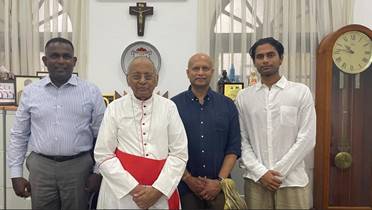
(Left to right) Anil Hapugoda, Cardinal Malcolm Ranjith, Head of the Catholic Church in Sri Lanka and Archbishop of Colombo, Sujith Weerasinghe, Specsavers North West London Regional Relationship Manager and Dilmith Weerasinghe.
– Ends –
Issued by Tigerbond Group Ltd on behalf of Specsavers.
For more information or to speak to a Specsavers expert please contact:
Philippa Bassett
Tigerbond Group Ltd
Specsavers Client Manager
07704 536 170
Comments Off on Hope springs eternal as charity funds scholarships for Sri Lankan Easter Sunday orphans
‘Before you study the economics, study the economists!’
e-Con e-News 13-19 April 2025
*
‘Countries must put their houses in order
to face a world of uncertainty’ – IMF chief
*
‘US trade war poses risks to Sri Lanka’s
creditworthiness, warns Fitch’
The IMF is lying. Fitch is lying. All these economists who are still parroting the old London-Washington ‘export’ sound-bytes are lying. Even if they know not what, or that, they parrot. Yet their diagnostics are awry, their ratings are skewed, and these economists, parading degrees from Oxford & Harvard, etc., simply have no idea that imperialism has no intention to let Sri Lanka escape. Why are they acting as if they did not know their sugar-daddies in the belligerent North Atlantic have been planning such economic hijinks? Why are they acting surprised, and scurrying about like pissu kumbi on meth, screaming, ‘The sky is falling’? Why haven’t their dynamic & strategic forecasts apparently not taken reality, staring them in the face, into account. Then again, Israel’s horror in Gaza seems a surprise to them. The dictums of US President D Trump, too.
They know not, or assiduously avoid learning about, the history of the English settler states of North Amerika; of their genocidal & enslaving heritage. A heritage which has greatly influenced & strangled our own economy. Worse, they do not know our own story. Then again, no one appears to dare author a true economic history of our country. Except of course our own SBD de Silva, who had to scour world history to begin to fit all the jigged pieces of the underdevelopment puzzle.
Acting Surprised? If anyone thinks these rumblings are all the doing of one man, think again. The time of Kings (& even then, they were but one head) is long past. The Prince has long become an ‘executive committee of the bourgeoisie’ (or the proletariat, depending on who rules). And if you think it is all Trump’s doing, think again. Bush I. Clinton. Bush II. Obama. Trump l. Biden. Trump II: They have all read from the same scripts and enacted different chapters in this plot. Beware of those who make Trump a lone super-villain, for they are either naïve, ignorant, shallow, partisan or deliberately diversionary. So here it is:
The latest US government’s economic actions are all laid out in the US Heritage Foundation’s Project 2025 paper under Chapter 26, ‘Trade Policy’ (see ee Focus, Brian Bertelic’s New Atlas). The HF is the most expensive thinktank that the corporate US can buy. Under US President R Reagan, HF promoted seemingly opposite policies, which led to the ‘Washington Consensus’ (again, using such silky language, it was less ‘consensus’ & more ‘dictat’ for ‘crisis-wracked developing countries’).
And as for USAID? Voice of America? This US regime is ‘not eliminating them’, they are simply ‘streamlining these tools, consolidating them under the State Department’. ‘President Trump isn’t making any decisions at all on his own. This is all predetermined policy’. They are preparing for war with China, while dumping their Ukraine conflict (aka, the invasion of Russia) onto Europe.
All this has less to do with ‘free trade’ or ‘protection’ or a ‘sound plan to re-industrialize USA or to genuinely balance the US ‘trade deficit’. All this foofaraw aims to maintain: the USA ‘as the world’s dominant superpower’ (‘a direct quote from Chapter 26’). It is straight-out wholesale gangsterism. It is now clearer than ever that many countries, are all US colonies, but in name. The still English colony of Australia, for example, ‘subordinates all Australia’s export industries to US government directives’ (see ee Quotes).The US is trying to force strategic industries in Asia, and in Europe, to move to the USA, as it shuts its borders. They have already demanded the Taiwanese semiconductor manufacturer TSMC, to also produce chip machines in Arizona, and threaten to destroy their puppet Taiwan and TMSC, rather than allow them to rejoin China. So it is less about making ‘America’ great again. It is about making the Chinese, nay, all of us, ‘coolies’, again… All because they cannot compete with China. They have 400 military bases surrounding China. There are ’10,000s of US forces… closer to Chinese shores than they are to the USA’s own shores’.
And here is where they plan to use Sri Lanka as a pawn. The US has been preparing to target ‘Chinese maritime shipping worldwide rather than taking on the Chinese military itself along or within its shores & borders’. Meanwhile, the capitalist media is totally quiet about whether Sri Lanka has a bilateral ‘defense partnership’ with the US. And they are equally sotto sotto, certainly the international media, about the nature of the Sri Lanka government’s recently signed ‘defense pact with India, which seeks to entrap us in the US-led Quad’s intrigues’. Only the Communist Party of Sri Lanka (CPSL) has unequivocally exposed the link between the US and India, without somehow trying to blame China as well (See ee Sovereignty, All progressives and anti-imperialists must fight against the security pact signed with India)
*
‘The US is preparing to subject its own population as well as those of
its supposed ‘allies’ to immense long-term economic, social & political pain.
The cost-of-living crisis in the US will only grow worse. The US hopes
that it can endure economic pain & disruption at home & abroad
better than the emerging multipolar world can.
Multipolarism’s survival will depend on proving otherwise.’
Brian Bertelic (see ee Focus)
*
Indeed, all this talk of ‘reciprocal tariffs’ makes no mention of all the US & EU & English & Indian banks & multinationals exploiting Sri Lanka, etc., or their loan sharking through ISBs. Meanwhile, the US government is about to ban all talk of reparations for slavery & colonialism, while our accountants that they ‘charter’ will join in saying it is only we who owe them…
We should also watch out for so called ‘forgiveness’ of debt. They did that to Ghana in exchange for the forced privatization of water services and the ‘opening up’ of agriculture to foreign companies. A plan, the US Envoy and their agricultural professors have been hinting at as a ‘final solution’ for Sri Lanka. The US also aims to use their economic & military muscle to gut ‘online privacy & big tech anti-monopoly policies’, while undermining ‘food safety, health, & environmental laws’. So, no wonder there are no tariffs on services…
*
This ee Focus also reproduces Vijay Prashad’s ‘The New Bandung Spirit is about Industrial Development’. The 4th most populous country in the world, Indonesia’s entry into the BRICS+ this year marks the 70th anniversary of the Asian-African Conference held in Bandung, Indonesia, in 1955. The 1955 Conference gave birth to the Non-Aligned Movement (NAM), formed in 1961, and United Nations Conference on Trade & Development (UNCTAD), formed in 1964. Indonesia is the world’s largest nickel producer, and their government finally banned the export of raw nickel ore while insisting that it be processed within the country. They should have insisted that all processing of the ore take place through Indonesian firms, with investment in making local machinery, however they apparently lacked the capital, and this is where the BRICS+ countries, particularly China, can offer the necessary knowhow.
So, while there may be no lack of funded naysayers to pooh-pooh the striving to create another ‘International’ – after all, imperialism has for many years sought to fatten & entrap a so-called middle-class, who exist largely to thwart true independence – true independence can only be sustained not by merchantry but by industrialization.
Prashad concludes that ‘the contradictions of the present’ will ‘generate their own new spirit’. After all, this spirit will be energized by the strivings of over half the world’s people.
*
• Crisis. Crisis. Crisis. The word ‘crisis’ appears to outnumber the name ‘Trump’ in the news. Crisis! ‘But what is the crisis?’, ee’s muse SBD de Silva always asked. The loyal Left & Right always cry ‘Crisis’. Some even have called for ‘struggle’. But struggle against what? And yes, what is the crisis? Pity the schooled fools who do not wish to know that we are nation ruled by merchants, merchants of goods & money. Our captains of commerce are generally involved in cheating and have successfully sabotaged all governments since 1948. A government run by merchants, corruption is thy name, regardless of the politicians.
So, watch them acting surprised? These economists & the state & corporations & their lip-&- eyeball-grabbing services? Isn’t it tiresome that the Sanderatnes & Wijewardenas & Abeyratnes & Colombages & Coomaraswamys, and their latest little spawn, repeat the same tired blah-blah-blah about exports, discipline, rule of law, populist policies, etc., while promoting the tired old colonial plantation game.
Is the capitalist class that controls them surprised? Why are the IMFs & World Banks & ADBs, so constantly headlined in the English media, the Fitch’s & the S&Ps & Moodys, etc, supposedly more scientific & sophisticated than the auspicious & inauspicious prognostications of astrologers – with all their sophisticated AI & Blockchain, etc. – why are these ‘experts’ always signaling such definitive ratings, which change all the time. They should at least be gaming each possible scenario, where a supposedly triumphant capitalist system has a menu of possibilities to choose from. Yet they cannot be so honest. They have to hide their immediate tactics and long-term strategies and ambitions. The capitalist media meanwhile trumpet every diversion, and their media-dogs bark in unison. All their number-spluttering minions then quote their forecasts as gospel, and use them to demand commensurate policies.
Are they not aware of the practices of their governments & their ruling classes? Mr Trump would not even attempt such policies, or twit such tweets, if he knew that his backers, both latent and blatant would not abide him. The US government has continued their wars throughout various administrations with varying intensity depending on the level of resistance… We are told that it is not the US opposition in and out of government that controls Presidents but their capitalists, as represented by their bondholders, 1.3% of the US population, who have held, propelled or stayed, essentially guided, the US Presidents’ edict-signing knuckles. But what exactly made Trump retreat? Was it China’s power, and the potential loss of intermediate capital supply value chains?
The time is long long past when individuals (absolute monarchs & other private dispensables) rule. So the question is not free trade or protectionism, de- or re-industrialization, but how people & nations, long divided by every possible fragmenting funding category, can get some program & accompanying rhythm going to thwart the latest offensives of imperialism.
*
The imperialists have deployed a myriad tactics over 500 years and more to establish Sri Lanka as the colonial import-export plantation merchant-dominated economy it remains to this day. Yet still non-settler, for they have been unable to genocide the majority Sinhala people.
India’s Vijayanagar tried to divide the country into feudatories. The Portuguese invaded the maritimes. The Dutch grabbed the country trade – the economic intercourse between neighboring countries. And the English sought to command all the waves to set up maritime power across the world, while proclaiming ‘free trade’. In 1947, just prior to the ‘grant’ of independence, the English imposed a ‘defense agreement’ to retain English bases in the country, apparently to thwart any Indian designs on the country. 10 years later, the SWRD Bandaranaike government removed the English bases, after even having to pay great monetary compensation! The English & the US responded with a bullet, cowboy-salon style, from the hip.
Then again, the first part of the 1950s saw the USA not just refine their wholesale aerial genocide techniques in Korea, but also their retail ‘regime change’ operations involving early fake ‘rebellions (later revolutions) of color’, coups d’état and assassinations from Iran to Guatemala to the Congo, etc. Meanwhile, the US Federal Reserve set up Sri Lanka’s Central Bank, which helped to promote a culture of conspicuous consumption of imported luxuries. They avoided a culture of production, by recapturing our home market from the likes of Unilever, Nestle, et al. The 1960s saw unsuccessful attempts at coups, successful parliamentary coups, the entry of the loan-sharking World Bank & IMF twins… followed by full-scale wars, south and north, from the 1970s to this day.
Many believe an alternative economic program for Sri Lanka will simply not be allowed. In Greece, a so-called ‘Leftist’ political party, which came to power promising to overturn the IMF’s strictures, is now led by a former Goldman Sachs trader. In Argentina, a self-proclaimed anarcho-capitalist has been rescued, for now, by the IMF. Any country challenging the IMF’s dictats, gets bought or couped. It seems therefore to be a priority for any ‘progressive’ government to reform the police & military, before they can begin to serve the people and their skilled artisans, rather than protect thieving merchants…
*
________
Contents:
Comments Off on Tariffs & Tricks: US & India Showdown in Sri Lanka Drags On!
Anura Kumara and Modi signed a number of agreements and the most significant is their defense pact which is shrouded in mystery. However, nothing remains under wraps in Sri Lanka as news travels fast. Indian media also published its contents in point form. Sri Lanka is now an aligned military partner of India and by extension USA and the QUAD alliance which includes India.
The last time Sri Lanka was not a non-aligned country was in 1950. Anglo-Ceylon Defense Partnership Agreement was signed between Sri Lanka, USA and the UK in 1947 and it lasted until 1955. Until it was cancelled, the Soviet Union vetoed Ceylon’s entry to the UN. Strangely the 1947 defense pact was against India and the 2025 defense pact is with India!
As per the new defense pact with India, Sri Lanka cannot hold join military drills with any country without India’s approval, Sri Lanka cannot host any ship, aircraft or delegation without India’s permission, Sri Lanka cannot allow any other country to invest in the island without Indian sanction and cannot purchase weapons without Indian approval. This will end hostility between Sri Lanka and India and Sri Lanka and the West. USA, EU, UK, Japan and India are Sri Lanka’s largest trading partners and largest loan creditors.
The annual defense drill with Pakistan was cancelled due to Indian disapproval recently and a number of Chinese ships were denied entry to ports in the island for the same reason.
This may turn Sri Lanka’s traditional friends into enemies. Until 2025 Sri Lanka’s only enemy nation was North Korea (since 1971). Now there will be plenty from a military point of view and they will include China, Pakistan and their allies. As Sri Lanka is now part of India as far as military interests go, Sri Lanka is fair game in any confrontation with India. However, China and India are part of a number of Russia-led alliances and they remain mostly peaceful.
There is another side to it. Although most Sri Lankans prefer Sri Lanka to remain non-aligned, there was no good or benefit for Sri Lanka being a non-aligned nation. While Sri Lanka headed the non-aligned movement, another member of the same movement, namely India, trained and armed terrorist groups. Another supporter of the non-aligned movement, the Palestine liberation movement also trained Tamil terrorists. Other key non-alignment movement leaders including Yugoslavia and Burma have ended up committing acts of genocide and are now fragmented. Essentially the non-aligned movement was a tragicomedy and it rightly died. However, Sri Lanka continued to follow a non-aligned foreign policy until now. What is useful is an opportunistic foreign policy that benefits Sri Lanka on a case-by-case basis. However, MoUs with India have made it impossible.
Although the defense deal with India is relatively slightly more beneficial to multiethnic Sri Lanka than detrimental, it is anathema for Sinhala and Muslim interests in the island. It also means India will interfere in future elections in the island and all political parties will compete against one another to become the darling of India. On their part, India and the West will ensure Sri Lanka remains undivided, multiethnic, multi-religious, democratic”, and unitary since Sri Lanka is now very much part of their military apparatus. Sinhala and Muslim interests in the island will be gradually stamped out and they will be replaced by Indian cultural identity to cement the military deal. The need for a Sinhala exclusive nation within part of the island is felt stronger than ever. Unless it is created, the Sinhala nation will also succumb to Indian colonization along with the rest of the island of Sri Lanka.
Comments Off on After 70 Years Sri Lanka Ceased to be a Non-Aligned Nation in 2025
Leaders of the Catholic Church in Sri Lanka have again called for a proper investigation into the Easter attacks staged six years ago. Meanwhile, a local political blame-game, starring Pillayan, to conceal the foreign finger prints and geopolitical motives of the attacks has ramped up.
Cover up investigations and copious Disinformation in the corporate and social media echo chamber, as well as, from national security think tanks have all but buried the external interests evident in the design and targets of the Islamic State (ISIS), claimed Easter crime that killed hundreds in geostrategic Sri Lanka in 2019.
Earlier this year a smokescreen ‘investigation’ headed by the redoubtable sleuth Shani Aberysekere, of the Criminal Investigation Division was launched, seemingly to quiet Church leaders and public outcry that justice be served for the victims, and the Mastermind revealed. The Cover story about Pillayan once again masked the role of foreign intelligence agencies, both in the Easter crime and subsequent investigations.
Yet despite and perhaps because of endless disinformation by local and foreign intelligence networks, such as the US Federal Bureau of Investigation (FBI) which removed the cell phones of the Easter suicide bombers, the Mastermind’s networks have become increasingly visible. This, given new information and geopolitical developments in the Indian Ocean region.
ISIS targets a Chinese Research Vessel
The Easter suicide attacks were a complex multi-sited logistics operation that was clearly remote controlled and coordinated in the strategic island at the center of the Indian Ocean that sits on some of the most important energy, trade and Submarine Data Cable Routes in the world.
The Suicide bombers targeted a curious mix of four sea-side luxury hotels and three churches, signifying a hybrid attack on the tourism-dependent economy. Simultaneously, religion was weaponized to stage a distracting Cascade of violence”. Both the west and east coast of the country were hit in an operation calculated to conceal other Geopolitical targets.
Four Chinese marine scientists who were part of a research program with Sri Lanka’s National Aquatic Research Agency (NARA) were killed in the attacks at Kingsbury Hotel which overlooks South Asia’s busiest Port on Easter Sunday, 2019.
Remarkably the religiously motivated ISIS-inspired Easter bombers had targeted a Chinese Marine research mission whose ship the Shi Yan-3, was berthed in the Colombo Port, as well as, the Shangri La hotel.
Both the US and lately India had expressed grave concern about any Chinese research ships that may visit the island. As more than 8 foreign intelligence agencies, including Australia’s ASIO and India’s RAW arrived in the country to investigate the Easter crime, it was revealed that while both India and Saudi Arabia had advance information about the attacks, only the India authorities had shared the information with the Sri Lankan authorities.
Wisdom of Hindsight: New Geopolitical Economic Developments
New developments, such as the statement of the nominee for the post of US Ambassador to Sri Lanka, Elizabeth K. Horst, at Senate Foreign Relations Committee hearings last year throw light on the geopolitical dimensions and international networks behind the Easter attacks in Sri Lanka.
Speaking of Chinese marine research vessels Horst had stated: we have huge concerns and have asked for a moratorium. We think it is in Sri Lanka’s best interests”. After the Easter attack that killed the Chinese scientists, the research mission was aborted and the Shi-Yan 3 ship left the Colombo Port to return to China.
Was it an accident, coincidence or conspiracy that ISIS inspired suicide bombers killed four Chinese scientists and aborted a research mission, given US concerns about Chinese research vessels in the Seas of Sri Lanka? This happened just as a new hybrid economic Cold War led by the United States ramped up across the Indian Ocean targeting Chinese assets and the Belt and Road Initiative (BRI) for global connectivity?
Other geopolitical economic developments in Sri Lanka also throw retrospective light on the hybrid Easter crime.
The 2019 ISIS-claimed Easter attacks were a body blow to Sri Lanka’s tourism-dependent economy. This was followed by two years of Covid-19 Lockdowns in 2020-21. These Exogenous Economic Shocks staged to Make the Economy Scream” set the groundwork Sri Lanka’s first ever Sovereign Default with rapid local currency depreciation and Lawfare by the shadowy off-shore Hamilton Reserve Bank in 2022– into the waiting arms of the Washington Consensus (IMF and WB). At this time, Eurobond debt colonized Sri Lanka has lost economic sovereignty and policy autonomy to the IMF and secret Eurobond holders of Odious debt. The largest private creditor is BlackRock.
Other geopolitical developments such as the emergence of the I2U2, comprising India, Israel, United Arab Emirates (UAE) and United States, also known as the QUAD targeting China in the highly militarized western Indian Ocean are also relevant to understand how religion was weaponized at Easter Sunday 2019, given a long history of Israel’s Mossad operating in the Eastern Province of Sri Lanka where the Suicide Bombers hailed from and the mysterious Zion Church mushroomed. Moreover, recently Zionist Chabad houses have popped up in Arugam Bay and elsewhere.
Some of the Special Forces and paramilitary groups trained by Mossad and British KMS mercenaries in the Eastern Province in the mid-1980s on the invitation of the J.R Jayawardena regime to fight the Liberation Tigers (LTTE), were later implicated in the Batalanda terror and torture house networks. This was during the South American Dirty War style killings and disappearances in Southern Sri Lanka in 1988-1990 when Indian Peace Keeping Forces (IPKF), took over the northeast. Batalanda has lately been in the media, but ‘Operation Colombo’ in Santiago de Chile remains unknown.
The UAE and India are now set to build a Liquid Natural Gas power plant in strategic Trincomallee Harbor according to a MOU inked between Sri Lanka President Anura Dissanayaka and Indian Prime Minister Narendra Modi during the latter’s recent visit to Sri Lanka.
Does I2U2 signal the Arab Muslim-Zionist partnership for the New World Order in the Indian Ocean, or the onset of evangelical Christianity’s biblical ‘End Times’ for Palestine? Are these the same thing? While I2U2 is said to be about economic corporation and soft power, the question arises at this time: Is India taking Sri Lanka for a ride, while being also take for a Petrodollar fueled ride by the U2 (UAE and USA), as Zionists and Arab Muslims (Israel and UAE) become proxy partners in crime?
Revisiting the Evidence
In the context of the clear geopolitical dimensions of the Easter attack, would it not be appropriate for the redoubtable Mr. Shani Abersekere to invite the former Attorney General Mr. Dappula De Livera who clearly stated that there was a Conspiracy behind the Easter attacks. De Livera was harassed by the previous regime for saying so but perhaps he should be given a chance to reveal what he had gleaned during investigations of the Easter attacks?
So too, it would be appropriate to summon then head of the Institute for National Security Studies (INSSSL), Asanga Abeygoonesekere, who clearly told this writer that several foreign experts from Germany and Bangladesh had informed him that a leader of such a group as Zaharan’s National Thawheed Jamat would never kill himself in the first operation. In other words, the conspirators and mastermind were at large and did not die in Suicide attack despite FBI claims to the contrary.
A related question is: Does political correctness play a role in the impunity and immunity of promiscuous Muslim Politicians like MLAM Hizbullah of Kattankudi, in the Eastern Province, where the lead bomber Zaharan hailed from and was headquatered? Hizbullah who had passed Saudi funds to the lead suicide bomber, Zaharan, had switched sides among all major political parties. Apprehending the no doubt dubious Tamil Pillayan instead of Hizbullah seems like a decoy especially since the lead bombers were Muslim and from Kattankudy.
Finally, the Pillayan story sold in lieu of the long promised investigation into the Easter crime seems to have let the new President Anura Dissanayaka who appointed Shani Abeysekera to the top investigator job off the hook. Shani was parachuted in from retirement despite many questions about the adequacy of investigations conducted by the Criminal Investigation Department which he headed. So too, there are new questions as to how and why Mossad-linked, Zionist Chabad houses have mushroomed across the country and enjoy Sri Lanka military protection at this time?
TO BE CONTINUED:
A History of Cover up Investigations and the Weaponization of Religion
Comments Off on Did ISIS target a Chinese Research Vessel on Easter Sunday, 2019?
In a move that could reshape Sri Lanka’s maritime industry, India’s State-owned Mazagon Dock Shipbuilders Ltd (MDL) is in advanced negotiations to acquire a controlling stake in financially troubled Colombo Dockyard PLC (CDPLC), multiple sources familiar with the matter confirmed to Finance Today.
The deal, which centres on Japan’s Onomichi Dockyard Co. Ltd selling its 51% stake in CDPLC, could see a binding Memorandum of Understanding (MoU) finalised by the end of April. If successful, the acquisition would mark a significant strategic shift for Colombo Dockyard—Sri Lanka’s flagship shipbuilder—and reinforce India’s growing influence in the region’s maritime sector.
Colombo Dockyard, a publicly listed entity on the Colombo Stock Exchange (CSE), has been grappling with severe financial distress. Its latest audited financials reveal a staggering loss of Rs 2.48 billion for 2024, with total liabilities ballooning to Rs 38.28 billion. The company’s precarious state forced the CSE to move its shares to the Watch List in June 2024 after auditors flagged concerns about its ability to continue as a going concern.
Despite these challenges, CDPLC remains a key player in ship repairs and harbours ambitions to expand into high-value shipbuilding and offshore engineering. Its strategic location in Colombo’s port and potential expansion into Trincomalee and Hambantota make it an attractive asset for foreign investors.
Mazagon Dock, a defence shipbuilder under India’s Ministry of Defence, has emerged as the frontrunner after earlier bids from a UAE-based shipyard and two local players fell through, sources said. The UAE proposal stalled due to unresolved policy conditions requiring Sri Lankan government endorsement, while the domestic bidders failed to demonstrate sufficient financial and technical capacity,” sources said.
MDL’s strong financial position – bolstered by recent profits and dividends – and its existing ties to CDPLC give it a competitive edge. Nearly 200 Indian subcontractors are already working at Colombo Dockyard, providing Mazagon with operational familiarity. Known as the Ship Builder to the Nation,” MDL specialises in warships and submarines, but this acquisition would mark its first major foray into commercial shipbuilding abroad.
The deal aligns with India’s broader regional strategy, particularly its efforts to counterbalance China’s growing presence in Sri Lanka’s infrastructure and ports. For Sri Lanka, the infusion of Indian capital and expertise could revitalise CDPLC, attract foreign direct investment, and create jobs in the maritime sector.
However, the move has sparked mixed reactions. Trade unions have raised concerns over job security and potential shifts in management, while maritime experts and senior engineers view the partnership as a necessary step to stabilise the listed company.
Onomichi Dockyard, CDPLC’s majority shareholder, has been seeking an exit since terminating its management agreement and withdrawing its nominee directors earlier this year. The remaining board members engaged a financial adviser to evaluate potential buyers, with Mazagon now being the recommended choice.
Other key shareholders include Sri Lanka’s Employees’ Provident Fund (16.34%), Sri Lanka Insurance Corporation (9.92%), and the Sri Lanka Ports Authority (3.04%). While the final decision rests with Onomichi, sources indicate that negotiations are progressing swiftly, with an MoU expected by month’s end.
In a corporate disclosure dated 4 April, CDPLC’s board urged the public to disregard speculative media reports, emphasising that no final agreement has been reached. The ultimate decision on the selection of the party to whom Onomichi will sell its shares will be Onomichi’s prerogative,” the statement read.
Key Stats:
= CDPLC Market Cap (17th April 2025): Rs 5.25 billion
= Share Price Range: Rs. 70.70 – Rs 75.60
= Major Shareholders: Onomichi (51%), EPF (16.34%), SLIC (9.92%)
Comments Off on India’s Mazagon Eyes Colombo Dockyard in Strategic Shift
Reports reaching us indicate a mob beat to death a member of Pakistan’s persecuted Ahmadiyya minority on Friday after hundreds of radical Islamists surrounded their place of worship in the port city of Karachi, police said.
A mob, many from the anti-blasphemy political group Tehreek-e-Labbaik Pakistan (TLP), stormed through narrow streets of Saddar neighbourhood chanting slogans, enraged that Ahmadis were allegedly offering Friday prayers.
“One member of the community was killed after the mob identified him as an Ahmadi. They attacked him with sticks and bricks.
The victim, identified as Laeeq Cheema, died before he could receive medical treatment at a hospital in the southern port city, said Amir Mahmood, a spokesman for the Ahmadi community. Government Civil Hospital spokesperson Summaiya Tariq confirmed the death of Cheema, saying he had multiple injuries.
The mob included members of several religious parties and police took around 25 Ahmadis into custody for their safety. In Pakistan, the Ahmadiyya community have been persecuted for decades, but threats and intimidation have intensified in recent years.
Hazrat Mirza Masroor Ahmad, the World wide Head (Khalifa) of the Ahmadiyya Muslim Jamáat also mentioned in brief about the incident in his last Friday Sermon.
The Human Rights Commission of Pakistan said it was “appalled by the orchestrated attack by a far-right religious party on a colonial-era Ahmadi place of worship”.
“This failure of law and order is a stark reminder of the continued complicity of the state in the systematic persecution of a beleaguered community,” it said on X.
Pakistan’s constitution has branded Ahmadis non-Muslims since 1974, and a 1984 law forbids them from claiming their faith as Islamic.
Unlike in other countries, they cannot refer to their places of worship as mosques, make the call to prayer, or travel on the Hajj pilgrimage to Mecca.
Hardline TLP (Tehreek-e-Lebbaik) supporters regularly monitor Ahmadi places of worship and file police complaints against them for identifying as Muslims and conducting prayers in a manner similar to Islamic practices — illegal in Pakistan.
Mob violence is common in Pakistan, where blasphemy is an incendiary issue that carries the death penalty.
Nonetheless, the Pakistani government authorities, who continue to bring frivolous cases against Ahmadi Muslims under anti-Ahmadiyya, blasphemy, and cybercrime laws, turn a blind eye towards systematic and country-wide efforts by Islamic extremists to fan hatred and ignite violence against Ahmadi Muslims. Instead of prosecuting the makers of these social media posts and videos under cybercrime laws and the National Action Plan, the governmental authorities continue to protect and support extremists and target innocent Ahmadis.
In July 2024, a group of top UN Human Rights experts including UN Special Rapporteurs urged an immediate end to discrimination and violence against Ahmadis in Pakistan, citing documented evidence of extrajudicial killings, arbitrary arrests and detentions, attacks on places of worship and curtailment of free expression, peaceful assembly and association.” Apparently, their pleas fell on deaf ears.
It is called upon the Pakistani authorities to honor their international human rights commitments to protect religious freedom and promote religious tolerance towards the Ahmadiyya Muslim Community.
It is requested all members of the international community to urge the government of Pakistan to take urgent steps to bring its laws and practices in conformity with international standards as ordained by UDHR and ICCPR.
U.S. Attorney’s Office, Central District of California
The men allegedly were members of a group of ISIS supporters that carried out terrorist attacks in Sri Lanka on Easter Day in 2019, killing 268 people
LOS ANGELES – The Justice Department announced today that three Sri Lankan citizens have been charged with terrorism offenses, including conspiring to provide material support to a designated foreign terrorist organization (ISIS). The men were part of a group of ISIS supporters that called itself ISIS in Sri Lanka” and allegedly was responsible for the 2019 Easter attacks in the South Asian nation of Sri Lanka, which killed 268 people, including five U.S. citizens, and injured over 500 others, according to a federal criminal complaint unsealed today.
The complaint outlines the defendants’ roles in the conspiracy and the events that led to near-simultaneous suicide bombings in the Sri Lankan cities of Colombo, Negombo and Batticaloa on April 21, 2019. One of the U.S. citizens killed was a Department of Commerce employee who had traveled to Sri Lanka on official business.
Two days after the attacks, ISIS claimed credit for the terrorist acts, attributing the murders to Islamic State fighters.” In late April 2019, the then-leader of ISIS praised the attackers for what he called a retaliation against the West” for defeating ISIS the prior month in Baghuz, Syria.
This case clearly demonstrates that the United States will take decisive action to ensure terrorists face justice when they target Americans anywhere in the world,” said United States Attorney Nick Hanna. The United States remains confident in the Sri Lankan authorities’ ability to bring the perpetrators to justice – and this complaint makes clear that we stand ready with these charges in the event the defendants attempt to evade justice.”
ISIS’s Easter attacks in Sri Lanka killed 268 people, including five Americans, many while they worshiped,” said Assistant Attorney General for National Security John C. Demers. Today, we charge these defendants with bearing their share of the responsibility for these deaths. According to these charges, the defendants were committed supporters of ISIS, recruited others to ISIS’s violent cause, purchased materials for and made IEDs, helped to prepare and trained others who participated in the attacks, and murdered in the name of this deadly foreign terrorist organization. They are in custody in Sri Lanka. We fully support the Sri Lankan investigation and prosecution of these terrorists and will continue to work with the authorities there to pursue our shared goal of holding these defendants accountable for their crimes. At the same time, these charges reflect that the U.S. justice system remains a powerful tool to bring to bear against those who harm our citizens abroad. We will continue to pursue justice for the victims of these heinous attacks and for all American victims of terrorism.”
The criminal case filed on December 11 in United States District Court in Los Angeles is the result of a nearly two-year investigation by the FBI, which assisted Sri Lankan authorities in the wake of the suicide bombings that targeted Christian churches and luxury hotels frequented by Westerners.
The domestic charges announced today for an attack on foreign soil represent the FBI’s commitment to deliver justice to traveling American victims and to protect U.S. interests here and abroad,” said Kristi K. Johnson, the Assistant Director in Charge of the FBI’s Los Angeles Field Office. For decades, and particularly since 9/11, the FBI has deployed agents to various parts of the world to establish an investigative foothold and to liaison with local counterparts with a shared goal of combating terror globally. Our enduring hope is that criminal prosecution – whether domestic or foreign – will bring some peace to the hundreds of victims killed or injured in Sri Lanka as a result of this horrific attack.”
The defendants named in the complaint, along with other suspects linked to the attacks, currently are detained in Sri Lanka, where a criminal investigation is ongoing.
According to the complaint, the three charged defendants and others involved in the conspiracy – including eight terrorists who died in the suicide bombings – conspired to provide, provided, and attempted to provide material support, including services and personnel, to ISIS through various actions, including: (1) creating, maintaining, and serving as members of a group of ISIS supporters in Sri Lanka devoted to ISIS, its ideology, and to planning and encouraging violent attacks to advance ISIS’s goals; (2) obtaining explosive materials and IED components; (3) manufacturing and testing IEDs, including the types of IEDs ultimately used in attack; (4) recruiting other ISIS in Sri Lanka members; (5) using ISIS-created training materials to instruct and train the attackers and their co-conspirators in the use of firearms and explosives; (6) procuring safe houses for the group to prepare for attacks in the name of ISIS, including the Easter attacks, while avoiding law enforcement detection; (7) following ISIS directives to use specific end-to-end encrypted messaging applications to conceal the criminal conspiracy; (8) murdering two Sri Lankan police offers to obtain the officers’ firearms; and (9) shooting a suspected police informant.
The three defendants named in the criminal complaint, all of whom pledged allegiance to ISIS, are:
• Mohamed Naufar, the second emir” for the group of ISIS supporters that called itself ISIS in Sri Lanka,” who allegedly led the group’s propaganda efforts, recruited others to join ISIS, and led a series of multi-day military-type trainings;
• Mohamed Anwar Mohamed Riskan, who allegedly helped manufacture the IEDs used in the Easter Attacks; and
• Ahamed Milhan Hayathu Moahmed, who allegedly executed a police officer in order to obtain the officer’s firearm, shot a suspected informant, and scouted a location for a separate terrorist attack.
All three defendants are charged with conspiring to provide, providing, and attempting to provide material support to a designated foreign terrorist organization. Additionally, Naufar and Milhan are charged with aiding and abetting the receipt of military-type training from ISIS.
The FBI-led Joint Terrorism Task Force in Los Angeles, including personnel assigned responsibilities for extraterritorial matters, is leading the investigation.
This matter is being prosecuted by Assistant U.S. Attorneys Annamartine Salick, George E. Pence IV and Christine M. Ro of the Terrorism and Export Crimes Section, and Trial Attorney Alicia Cook of the National Security Division’s Counterterrorism Section.
The Criminal Division’s Office of International Affairs and the Los Angeles County Sheriff’s Department provided valuable assistance.
Contact
Thom Mrozek Director of Media Relations thom.mrozek@usdoj.gov (213) 894-6947
Updated April 4, 2023
Comments Off on Three Foreign Nationals Charged in Federal Court in Los Angeles with Conspiring to Provide Material Support to ISIS.
Has it never occurred to the international media or so-called international community or even UN/UNHRC Officials to question the silence of LTTE fronts to LTTE’s recruitment of Tamil children who were turned into child soldiers forming one third of LTTE’s ground force? How can LTTE fronts call for justice when hiding their own crime of creating child soldiers & sending them to their deaths? How can LTTE fronts who funded LTTE guns & watched child soldier recruitment have any moral authority to demand human rights or draft curriculum for bogus genocide week? How can LTTE fronts hide behind human rights rhetoric when for 30 years they encouraged Tamil children to be kidnapped & turned into child soldiers. They claim to fight for a separate state but don’t mind kidnapping their own people’s children & sending them to die. These were their own people’s children who were denied fundamental rights, plucked away from their homes & loved ones & taught to kill. Prabakaran is no more but LTTE fronts must answer for the Tamil children forced into war. Genocide of these Tamil children’s childhood should take international centre stage not a trumped up 40,000 figure for which no names, no skeletons, no police complaints, no birth certificates have been presented even 16 years after the conclusion of the conflict. These hypocrites in exile watched as LTTE kidnapped, trained their own children to kill & die while they happily sought asylum & sent their kids to foreign schools, universities & secured foreign jobs. Now their children are trained to continue the lies so the LTTE can continue their kitty.
LTTE fronts have taken great pains to open websites, hold conferences, panel discussions, woo international media, make documentaries, hold campaigns/fundraises, lobby politicians & retain lawyers – there’s nothing they have not done since end of LTTE ground force in 2009. They have presented themselves as paragons of virtue, fighting for their people & their rights and begging the people of the world to listen to their grievance. Arguments lined up to fit into their goal for a separate state.
Let’s stop there.
Did these paragons of virtue living in foreign shores not feel an iota of sorrow to watch their own people’s children plucked away from their parents, from schools or orphanages or while returning home & dumped into LTTE camps to be trained to kill? Obviously not.
What kind of a separate state is envisaged when one third or an entire generation of Tamil children have been denied their childhood?
Did these paragons of virtue not count the number of children some as young as 7 years as per Human Rights Watch reports, undergo gruesome training those who fled were shot dead by LTTE?
Why did LTTE fronts — many based in safe, democratic countries — not campaign against this grave war crime committed by the LTTE against their own community’s children? Because they were complicit & were well aware of the recruitment.
What a crying shame to live overseas, have one’s own children educated in Western schools while one’s own people in rural areas were handed rifles
Why has author Harrison who has been counting the dead since 2009, not bothered to count how many Tamil children were kidnapped from 1980s by LTTE – how many died as a result of LTTE training, how many Tamil children were shot dead by LTTE trying to flee? How many Tamil children were raped or served as sexual toys for LTTE men in bunkers?
The conspicuous silence of the UN Agencies is to also be questioned.
LTTE violated Article 38(3) of the UN Convention on the Rights of the Child & Optional Protocol on the involvement of Children in Armed Conflict (2000) which prohibits recruitment of children under 18?
What did UN do to stop LTTE over 30 years of child soldier recruitment?
According to the Paris Principles & Guidelines on Children Associated with Armed Groups, forcible recruitment of children not only violated humanitarian law but was considered a form of slavery under international law.
In over 30 years of recruitment of Tamil children, did the UN & associated agencies do anything to stop LTTE’s child soldier recruitment other than compile beautifully printed reports?
Why did diaspora leaders not rescue even one Tamil child soldier?
Why did Tamil political parties & Tamil politicians talking big in Parliament also not rescue one Tamil child soldier?
Yet LTTE Diaspora & Tamil politicians are happy to parrot genocide” ignoring their own community’s sin & betrayal of their own children.
A generation of children lost their childhood to satisfy an ideological dream of a handful.
How can LTTE Diaspora justify lobbying under banner of human rights” while conveniently ignoring the first & most sacred right – the Right of a Child to live free from war & forced combat.
The genocide” claim is nothing but a hyped charge sans facts or evidence only pumped by propaganda & sensationalism.
The genocide of the Tamil child used as child labor, for suicide, for ethnic cleansing, for assassinations, for killings is a bigger crime that has not received the international attention it should.
Under UN Security Council Resolution 1612 (2005) parties recruiting or using child soldiers must be held accountable.
Rome Statute of the International Criminal Court (Article 8) lists recruitment of children under 15 as a war crime.
Why was nothing done against LTTE?
The UN Basic Principles & Guidelines on the Right to a Remedy (2005) applies to all victims of human rights violations – not just those on one side of a conflict. Where is the justice for LTTE’s child soldiers denied childhood as well as the children LTTE killed from other communities including foreign children?
UK Govt stands guilty of harboring the woman who trained Tamil children as child soldiers. Why has no legal action been taken against Aunty Adele? Why is the aunty behind the cyanide capsule still free?
Optional Protocol to the CRC on the Involvement of Children in Armed Conflict (2000)
Article 4(1): Armed groups should not recruit or use children under 18 in any hostilities. Article 6: States must take legal measures against those who violate the Protocol.
Why has the UK not prosecuted Adele Balasingham under this Protocol, which it ratified?
Rome Statute of the International Criminal Court (ICC)
Article 8(2)(b)(xxvi) – Conscripting or enlisting children under the age of 15 into armed forces or groups, or using them to participate actively in hostilities = War Crime.
Adele Balasingham trained child soldiers under 15 — and wrote about it. Why no ICC case?
UN Security Council Resolutions on Children in Armed Conflict
UNSC Resolution 1612 (2005) – Calls for accountability for persistent violators of children’s rights in armed conflict.
The LTTE was listed. Adele Balasingham was its face for child recruitment. Why is she not on any sanctions list?
To the UN & Human Rights NGOs:
Why have international investigators failed to name Adele Balasingham, despite her public role in training child soldiers and glorifying their deaths in books?
How is justice credible if those who armed and trained children — not just used them — face no international consequences?
Why has there been no tribunal, arrest warrant, or even public inquiry into her actions, while she freely publishes and lectures abroad?
Denying a child their childhood is a tragedy & a crime against humanity, a theft of their innocence that no separatist cause can justify.
Turning children into soldiers is a genocide of their childhood. Recruiting children as soldiers is illegal & is a systematic destruction of their childhood, a soul lost forever, a genocide that cannot be ignored. No cause, no ideology, justifies turning a child into a killer.
LTTE fronts accuse the Sinhalese of discrimination. But it was not the Sinhalese who robbed Tamil children of their childhood. It was the LTTE who turned their own sons & daughters into weapons. It was the Sinhala soldier who ensured that from May 2009, not a single Tamil child was kidnapped or recruited & trained to kill.
The LTTE fronts who cry discrimination” are reminded that it was they who forced Tamil children to carry rifles instead of books – not the Sinhalese.
Tamil children were denied schooling by LTTE & LTTE Diaspora not the Sinhalese.
It was LTTE & its Diaspora cheer squads who took the childhood away from Tamil children.
It was the Sri Lankan Army who gave the Tamil child soldier a second chance at life.
If the Sinhalese are accused of injustice & discrimination what do you call those who train their own children to die killing?
The hypocrisy is that those who parrot genocide” were the ones who were happy to force their own children to wear suicide vests & cyanide capsules.
This same LTTE Diaspora made a huge ruckus over the deaths of Prabakaran’s children but not a hum for the thousands of Tamil children who were turned into killers by them.
The international media, the so-called international community & the mighty officials of the UN & associated agencies kindly advised to revisit Sri Lanka’s conflict & ask themselves where the real discrimination lay? Was it not in turning innocent Tamil children into child soldiers? Was this genocide of the childhood not a bigger war crime for not only was these Tamil children’s childhood stolen from them, they were forced to kill & taught to commit suicide.
What have the international media/international community/UN done to cover this by questioning the LTTE fronts & Tamil politicians & Political Parties for their role?
Shenali D Waduge
Comments Off on “LTTE Diaspora speaks of “Genocide” — But say Nothing of the Genocide of Tamil Child Soldiers Childhood”
Of the several MOUs signed by the President of Sri Lanka during Prime Minister Modi’s visit to Sri Lanka, the most consequential in respect of implications to Sri Lanka is the one associated with the Defence Cooperation. Neither the public nor the Parliament is aware of its contents. What the public could glean about the scope of this vital MOU are from articles written by concerned citizens, like the one by Dr. Dayan Jayatilleka in the Daily FT of April 10, 2025. The source of his material is from statements made by the President during political rallies relating to the Defence Cooperation MOU. One such statement is cited below. This reflects a seismic shift in respect of Sri Lanka’s relations not only with India, but also with other Nation-States, that is disturbing to say the least, because of its implications on Sri Lanka’s autonomy to act independently as a sovereign Nation-State and define its own destiny; a status Sri Lanka defended for nearly 2500 years despite repeated interruptions over the years.
SECURING ASSISTANCE
Justifying the need for Defence Cooperation with India, President Dissanayake is reported to have stated the following at an election meeting in Galle:
We need security in this region. We need to safeguard the security of this region. We should secure the assistance of those who have greater technological capacities in defence, greater skills in defence. If not, how can a country move forward? …. For 76 years the world developed rapidly in science and technology. The world developed rapidly in military science. Now, what should we do? We must secure the assistance of those states which have accepted new science and technology. Don’t we have to do that”? (Ibid).
There are two pivotal issues that arise from the President’s comments. The first is discarding the principle of SELF-RELIANCE (SR). SR is the bedrock of Sri Lanka’s civilizational values. The inspiration to rely on one’s SELF to evolve answers to inscrutable questions or to challenges that present themselves as insurmountable comes from the single-minded approach adopted by Lord Buddha in his search for liberation. His attempts to seek the assistance of others failed him. It was the relentless determination to find the answers himself to what he was looking for, that enabled him to realise his goal; a goal that has benefited mankind.
The role model set by him was what inspired the spirit of SELF RELIANCE that enabled Sri Lanka to create a civilisation that was unique over millennia. It was not created by military conquest. It was not created by developing military science”. The monuments left behind are a testimony to the ingenuity and skills of the People of Sri Lanka. It was they, who developed the technologies needed for the Sri Lankan nation to lead a life of peace and contentment.
Throughout Sri Lanka’s history, its sovereignty has been repeatedly violated and its territory vandalised by invading armies. Whenever such invasions occurred, liberation and freedom came from military strategies developed and adopted by those within by relying on SR. They did not go running to sign MOUs seeking assistance from militarily powerful nations. On the other hand, whenever our Rulers sought the assistance of external powers, such as the Dutch, to get rid of the Portuguese who had invaded the country, the Dutch ended up colonising the whole country for nearly 150 years until they lost it to the British, who in turn colonised for a further 150 years. The Defence Cooperation MOU with India has the potential to repeat that history.
SAFEGUARDING REGIONAL SECURITY
The President has stated: We need security in this region. We need to safeguard the security of this region”. If this is a policy of this government, in what way could Sri Lanka contribute towards the security of this region”? Is there a clear understanding as to how Sri Lanka and India are going to undertake safeguarding the security of the region? Whatever it may be, there is no doubt that the contribution Sri Lanka can afford to make is insignificant compared with what India would be making because it is in India’s self-interest as an aspiring Global Power to make the region secure. Furthermore, because of this disparity, the MOU would entitle India to enforce its will as to how regional security is exercised. Does this not amount to sacrificing Sri Lanka’s strategic autonomy?
If it did, would it not compel Sri Lanka to be under the hegemony of India; a condition that would only bolster the security of India based on India’s notion that the security of India depends on the security of Sri Lanka, meaning a weakened Sri Lanka under the control of India? On the other hand, if Sri Lanka exercises its independence and acts in pursuit of its own self-interests, and such actions do not mesh with that of India in its pursuit of becoming a global power, there would be consequences.
Therefore, any arrangement that compromises the independence of Sri Lanka and its ability to exercise its Self- Reliance has to be mindful of India’s interests. This does not mean that Sri Lanka should not heed India’s concerns and interests. Instead, it only means pursuing Sri Lanka’s interests while being conscious of India’s sensibilities, as it was with the Chinese research vessel”. However, under a Defence Cooperation MOU, it would be India that would decide the parameters as to whether to permit entry of foreign vessels or not; a constraint that would compromise Sri Lanka autonomy to pursue its self-interests.
IMPACT on FOREIGN POLICY
An alignment with a power that the President describes as: We sincerely applaud the way India has positioned itself not only as a regional power, but also as global power” (Ibid), means Sri Lanka has decided to disassociate itself with its long cherished position of being Non-Aligned as a founding member of Non-Aligned Movement, that morphed recently into being Neutral in the context of emerging Great Power rivalries in this region. By aligning exclusively with a country that is positioning itself to be a global power and at the cost of distancing itself in its relations with other Global Powers, comes not only at a cost that Sri Lanka cannot afford to bear in the background of overdue debt to them, but also a degree of dependence that is unknown and unfamiliar to independent Sri Lanka.
The need to seek exclusive relations with India is in the hope that India would assist Sri Lanka in case such a need arises because Sri Lanka does not have the needed military science” to defend itself, not realising that there is no free lunch; a fact attested by Sri Lanka’s own history. The President and this Government must accept the hard reality that Sri Lanka or any other small country can ever hope to match the degree of military science” capabilities that Global Powers possess. At the end of the day, it is a smart strategy that matters more than the stacks of military hardware by countries such as Sri Lanka; a fact demonstrated by David’s sling shot against the might of Goliath.
For instance, Sun Tzu, in The Art of War”, states: What is essential for leaders, generals, and ministers in running countries and governing armies is no more than … peak efficiency of knowledge and strategy is to make conflict altogether unnecessary. To overcome others’ armies without fighting is the best of skills”. It is clear from the wisdom of the ages that effective intelligence gathering and appropriate strategy is far more relevant for the security of a Nation such as Sri Lanka than relying on the unrealistic notion of military science to ensure its security.
CONCLUSION
During an election rally, the President is reported to have stated that there is a need not only to safeguard security for the region”, but also that Sri Lanka must secure the assistance of those states which have accepted this new military science technology” if Sri Lanka is to move forward. These objectives are to be incorporated in a Defence Cooperation MOU with India.
How Sri Lanka is to contribute to safeguarding the security of the region”, or what form and type of the assistance Sri Lanka expects from India, is not made public. Despite such lacunae, the implication of any form of Defence Cooperation exclusively with a country such as India that is positioning” itself to be a global Power or one that is already recognised as a Global Power, is bound to affect Sri Lanka’s relations not only with other Global Powers but also with other countries as well.
Furthermore, exclusive alignment with one Power means that Sri Lanka has decided to ditch not only the principle of Non-Alignment and its concepts that it championed for decades, but also, more appropriately, Neutrality, in the emerging context of Great Power rivalries in the region. Such exclusive arrangements for assistance with one country compel Sri Lanka to be in the vortex of India and its interests, the consequence of which for Sri Lanka is to be a vassal State of India.
The nearly 2,500-year old history of Sri Lanka has been to resist and defend such attempts. Throughout its history Sri Lanka has relied on its own strengths and abilities and created the spirit of Self-Reliance modeled on the example set by the founder of the religion of the majority of Sri Lanka. That is to develop its own strategies to create a unique civilization in which its People enjoyed peace and contentment. However, there were occasions when weak leaders abandoned the rewards of Self-Reliance and sought the assistance of the Dutch to overcome the threat of Portuguese occupation, and ended up being colonized for over nearly 150 years. The planned Defence Cooperation MOU with India could very well be a repeat of that history; an outcome that would permanently ensure India’s security.
The attempt to seek external assistance to move forward” is founded on the misguided concept that without the military and technological strength of external agents, Sri Lanka cannot move forward. In view of the fact that countries such as Sri Lanka cannot ever hope to match the capabilities of those who have advanced military technologies, the choice left to Sri Lanka is to be guided by the wisdom of the ages cited above, and develop efficiency of knowledge and strategy”.
That means, the compelling need for Sri Lanka to develop its Intelligence and strategic capabilities to a very much higher level than what exists today so that Sri Lanka is in a position to make conflict both internal or external unnecessary. The importance of strategy over Military capabilities is starkly made evident by the experience of the US in Vietnam. Notwithstanding the fact that the US possesses the most advanced military hardware in the world, the US lost the war in Vietnam because of a wrong strategy. The US relied totally on the capabilities of their military hardware and forgot the strategy of David’s slingshot. The hope is that the President is made aware of these lessons of history.
by Neville Ladduwahetty
Comments Off on Sri Lanka-India MoUs and their implications