Lanka’s festival sweet Konda Kavum and how it is made

September 3rd, 2019

Courtesy NewsIn.Asia

Colombo, September 3: Kevum or Konda Kavu is mentioned in ancient Sri Lankan texts including the Ummagga Jatakaya,Saddharma RatnawaliyaandPujawaliya as a delectable sweet. It is a festival sweet especially associated with the Sinhala New Year where it is part of an array of sweetmeats and savouries.

TheDhathuwansaya, an ancient Sinhala text, mentions 18 kinds of kevum including Sedhi Kevum, Mun Kevum, Ulundu Kevum, Uthupu (shaped using a coconut shell) and Ginipu (fire kevum)

Mixing of ingredients. Photo: Tang Lu/Xinhua
  • Konda kevum hair kevumis the most common variant. It has a dark reddish colour. The dough of rice flour and kithul treacle is flavoured with salt and cardamon Konda the Sinhala word for a lock of hair, a shape the konda kevum resembles. It is shaped by hand and without a special mould.
  • Naran kevum) –mandarin kevumis the size and shape of a mandarin, colored yellow with saffrom, green gram flour and scraped coconut are added to the basic kevum mix of rice flour and treacle.
  • Thala kevum –sesame kevumhave sesame in the kevum dough.
  • Undu kevum – dal kevumis kevum flavored with urad dal.
  • Mun kevum –gram kevumadds green gram flour and saffron to the kevum mix of rice flour and treacle. The kevum are diamond shaped and yellow.

How To Make It

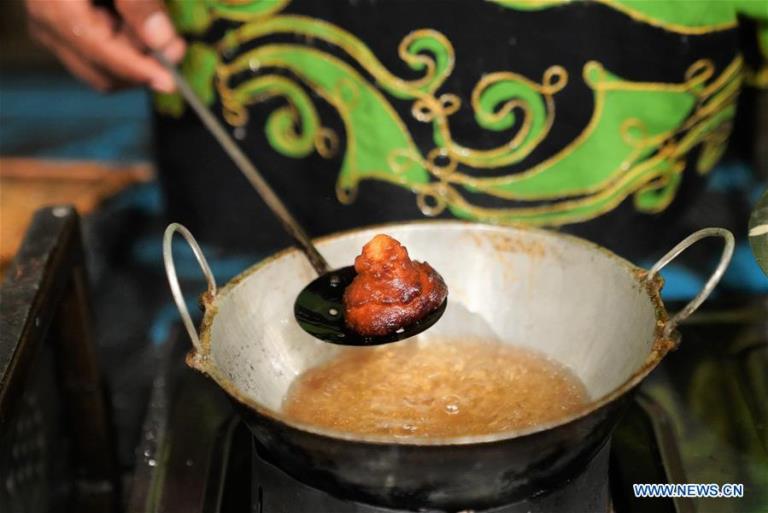
Konda Kavum being fried. Photo: Tang Lu/Xinhua

Lu Ingredients

  • 1 kg of Rice flour
  • 500 ml of Coconut Syrup (Pol paeni) or Kithul paeni
  • Salt
  • Oil for Frying
  • Wooden stick
  • some caraway seeds (maduru)
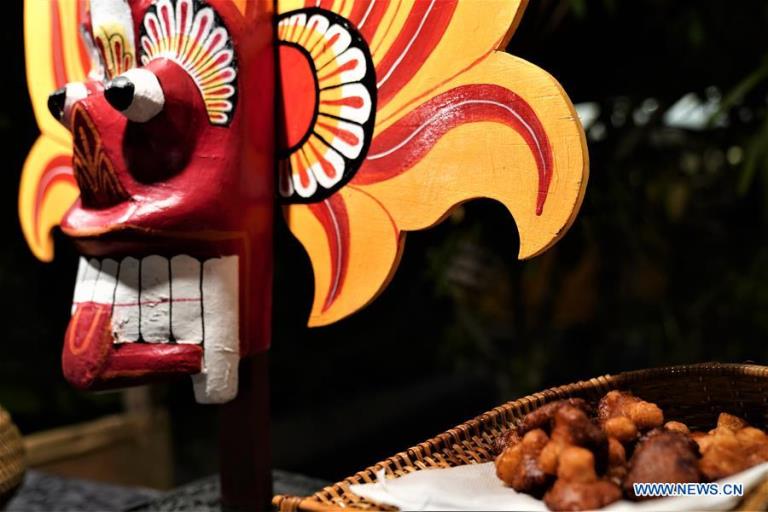
Basket full of warm Kavum. Photo: Tang Lu/Xinhua

Method

.The floor must be very finely sieved.

  • Put it into a ball add syrup and mix well together adding a little salt and little hot water, if the batter is too thick. If not sure of the consistency it is best to fry a Kavum and see whether it is right before adding the water.
  • Keep ready a deep found-bottom pan of boiling coconut or vegetable oil.
  • Pour spoonful of the batter and as it begins to fry and the centre rises pour in a little more batter into the centre and insert an ekel in the middle of the fritter, not allowing it to go through.
  • Keep twisting the ekel round and round and at the same time splashing the boiling oil on the fritter using an oil spoon for the purpose.
  • This is to produce the Konde (hair) Press round the base of the Konde with the spoon to get it in to the proper shape.
  • The Kavum must have a nice brown colour when fried. Drain well.

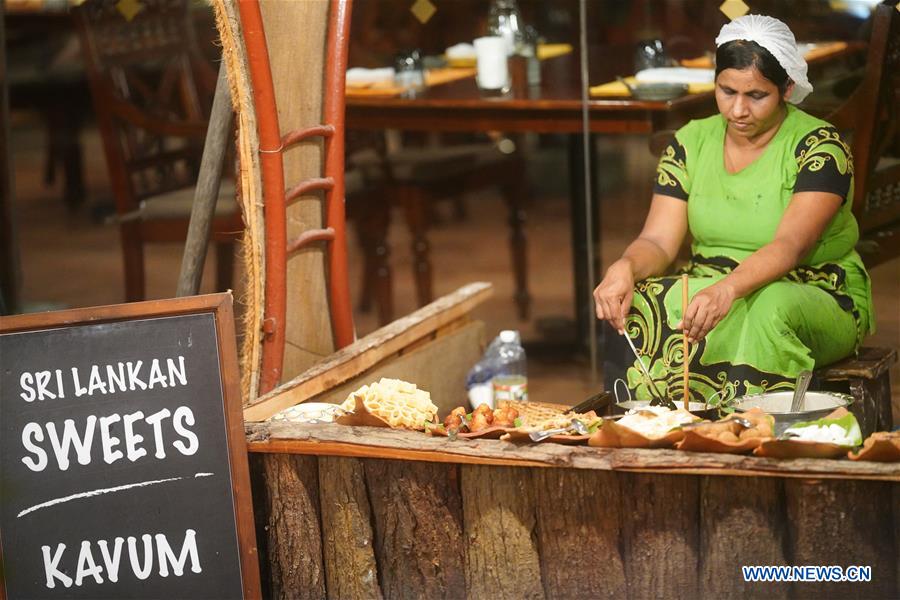
(The pictures were taken by Tang Lu of the Xinhua News Agency at a leading hotel in Colombo. Editor Wu Qin)

Next Lankan President will be powerless, all powers will be with Prime Minister, says Sirisena

September 3rd, 2019

Courtesy NewsIn.Asia

Colombo, September 3 (newsin.asia): Sri Lankan President Maithripala Sirisena has asked members and supporters of his party, the Sri Lanka Freedom Party (SLFP), to form an SLFP government in 2020 when parliamentary elections are held, and added that in the next government the President will be stripped off his powers and all power will be handed over to the Prime Minister as in a parliamentary form of government.

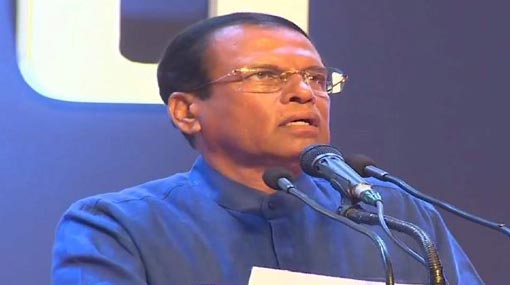
Next Lankan President will be powerless, all powers will be with Prime Minister, says Sirisena

Addressing the SLFP Convention held to mark the 68 th., anniversary of the Party at the Sugathadasa Indoor Stadium in Colombo on Tuesday, Sirisena said that in accordance with the 19 th., constitutional amendment, the next President will be powerless. Defence Ministry too will be with the Prime Minister, he added.

Therefore, more than thinking of the next Presidential Election, the SLFP should pay attention to electing the next Prime Minister,” he urged.

Sirisena pointed out that the entire political system has become corrupt, dishonest and immoral.

Our responsibility is to build a political force which is pure, incorrupt, people-oriented and ethical to oust the current governance of the corrupt, elitist and anti-people groups,” the Lankan President said lambasting the government headed by Prime Minister Ranil Wickremesinghe.

Patriotism is the last refuge of the scoundrel as evident from the actions of some politicians, Sirisena said, and urged the people to properly study to understand who is the political leader suitable to lead the country.

President Sirisena spoke about the problems he had to face within the government.

I fought within the government to prevent corruption, robberies and malpractices and to safeguard the interests of the people. Bank robbers and the corrupt should leave politics. All the documents are ready for the extradition of (former Central Bank Governor) Arjuna Mahendran. Documents are also ready to punish political leaders responsible for the bank scam,” he said.

The President said it is unfortunate that the Provincial Councils have become ineffective.

Prime Minister Ranil Wickremesinghe is mainly responsible for preventing Provincial Council polls from being held,” the President said and pointed out that the Prime Minister failed to present the Review Committee Report for reactivation of the Provincial Councils after the Bill was defeated in Parliament.

The President said that the government and opposition leaders hold discussions with the Northern leader (former Chief Minister C.V.Wigneswaran) purely to get Tamil votes.

But nobody has a genuine plan. They are only thinking about the number of votes in the North of the country. It’s a tragedy.”

President Sirisena said that we should achieve a balanced development and the development process must be sustainable and an efficient. He also said that the country must move towards a green economy and use smart technology.

‘Even though whatever allegations were levelled against me for the past five years of my tenure, I was committed to building a corruption-free country as well as ensuring democracy’ the President.

He said the neo-liberal concept is not suitable for Sri Lanka.

During my tenure, I was able to ensure maximum freedom and democracy in the country. As I said earlier, not a single civilian was targeted by the guns of the State apparatus. I am proud to state that no media institute or a house was burnt down, no journalists were threatened,” he said.

We should create a country where every community can live in peace and harmony without any fear of intimidation. It is the duty of the citizen to build a strong force against corruption. Democracy in this country prevailed due to people’s resistance,” said the President and added, We must gather ourselves to build a broad national movement based on our indigenous values.”

SLFP Senior Vice President Nimal Siripala de Silva, Prof Rohana Lakshman Piyadasa, UPFA General Secretary Mahinda Amaraweera and SLFP General Secretary Dayasiri Jayasekera also addressed the gathering.

Former President Chandrika Bandaranaike Kumaratunga, former Prime Minister D M Jayaratne, Ministers, Parliamentarians, leaders of political parties, ambassadors and SLFP members and supporters were present on this occasion.

EASTER SUNDAY BOMB BLAST IN SRI LANKA Part 11

September 2nd, 2019

KAMALIKA PIERIS

Indian Intelligence Agency sent an alert on April 8, 2019, warning of a terror attack. Sunday Times of 21 July 2019 published the text of this alert.  The text said:

 Sri Lanka based Zahran Hashmi (sic) of National Towheed Jamaat and his associates are planning to carry out a suicide terror attack in Sri Lanka shortly. They are planning to target some important churches. It is further learned that they have conducted reconnaissance of the Indian High Commission Sri Lanka and it is one of the targets for the planned attack. The following are the likely team members of the planned terror attack,   Zahran HashIm, Jal Al Quitha,    Rilwan,    Sajid, Shahid,   Milhan and others.

It has now emerged that five of the six names listed in the Indian alert were known to the Police months before the Indian alert came. The names had emerged when the police investigated the vandalizing of Buddha statues in Mawanella in December 2018. 

On the 23rd Of December, the day before Christmas, 4 Buddha statues were disfigured in the night. When this was attempted a second time on December 26th the public caught one offender and handed him over to the police.  He was questioned and seven more were arrested on 27th and 28th December.  From these eight, the police were able to find out who was behind this. Two persons named Mohammad Sadik Abdul-haq and Mohammad ShaheedAbdul-haq,  known as Sajid and Saheed had carried out the Mawanella operation. Their leader was Saharan. They were planning to engage in further extremist actions. This was said by Retd Deputy IGP, Palitha SIriwardene in an interview with Chatura Alwis on the Talk with Chatura” programme   August 2019.

Kegalle police then informed IGP by letter dated 14.1.19 that this was now a matter for the CID. The CID arrived, investigated and subsequently reported to Mawanella Magistrate on March 27. 2019 that ‘the following were the leaders in the Buddha statue attack’. The names were Mohammadu Cassim Mohammadu Rilvan (NIC No: 90343264 V), Mohamed Ramiz Mohamed Sajid(NIC No: 922901414 V) and Gayathu Mohammadu Ahamed Milhan ((NIC No: 892003629 V). There were 20 other names in the report.  It is, therefore, clear that five of the six names given in the Indian alert were known to the CID weeks before the attacks.

State Intelligence Service (SIS)   had also received these names. On April 9, acting on the Indian warning, Director of the State Intelligence Service DIG Nilantha Jayawardena had sent the IGP a report. This report, a copy of which had been seen by the Sunday Times said, that the SIS had identified four persons from the six names listed by Indian intelligence. They were Zahran Hashim, Rilwan, Sajid and Milhan. The report said that these names had emerged after the Mawanella incident, where a group of Muslim extremists caused damage to Buddha statues there. (This Sunday Times essay cannot be accessed now on Google. It has been blocked)

Leading on from this, Retd Deputy IGP, Palitha SIriwardene, speaking on ‘Talk with Chatura” in August 2019 stated emphatically that there were not one but TWO instances when the Easter bomb explosion could have been averted. The first instance was in December 2018, when at Mawanella Buddha statues were damaged and defaced. SIriwardene has been in charge of Mawanella at the time.

Arrests had been made and investigations carried out, but the two key offenders, Sadik and Shahid had left Mawanella, avoiding arrest. Police could not find them. But IGP Pujitha Jayasundera had phoned Kegalle Police and told them that Azath Sally knew where the two offenders were and would hand them over to the police the next day. The police waited all day but Sally did not send the two offenders.  A phone call to Sally was not productive.

Sadik and Shahid were the masterminds in the statue attacks. If these two had been handed over, we would have interrogated them, found out who the rest were and taken them all in, said SIriwardene. Definitely we could have prevented the bomb blasts because we would have taken in all the persons who were going to carry out the blasts,” said SIriwardene. This then was the first missed opportunity to prevent the Easter bomb explosions.

A second opportunity of preventing the Easter bomb blasts presented itself soon after.  When the CID was investigating in Mawanella, a confession from the suspects sent them, on January 16, 2019, to Vanatha villu area of the Puttalam District. There, they found a terrorist operational base in a coconut estate Lactowatte, situated on the 8th Milepost, Karandipuval of Vanatha villu.

At this estate in Vanatha villu, the CID found a terrorist training camp with chemicals for making explosives and manuals on how to make the explosives. This was a huge training camp, said SIriwardene. They were making bombs e and training people there. The leaders were the same three,Saharan, Sadik and Shaheed.

On the Talk with Chatura show, SIriwardene read out from a list of items found. There were 210 kilos of nitric acid, 50 kilos of urea, and 99 detonators. There was enough to make 25 or more bombs. There were also empty cans of nitric acid, showing that they had already been used. This meant that bombs had already been prepared.  There was also a list of armaments that resembled those found in an army encampment. It was later established that the CID raid had thwarted many major plans devised by this group, 

CID had sought a court order on January 30, 2019, to prevent Saharan from leaving the country. CID has told the court in a written submission that extremists were making bombs and training people at Vanatha villu. They had given names and addresses.

The CID had sent only a small team to Vanatha villu, said SIriwardene. But this team had clearly seen the gravity of the Vanatha villu camp. CID had informed the Army intelligence division, Navy intelligence division and the State Intelligence Service, (SIS) and officers from these three agencies had also come and inspected the place. Therefore neither Army, Navy nor SIS can say that they were not warned., said SIriwardene in his interview on ‘Talk with Chatura” If the police and security forces had taken action at that point, then the Easter bomb explosions would not have taken place said SIriwardene. That was the second missed opportunity.

M.R Latiff, Senior DIG and Commandant of the Special Task Force of the Police stated before the Parliament committee investigating the bomb explosions, If the police knew that attacks were planned, we could have ‘done a lot of work’. STF is capable of tracing individuals based on the information available. That is offensive action. We would have gone for them and they would have aborted their plans. I am in doubt as to why I was not informed,” he said.

We think that there was the political influence which stopped the CID from proceeding further, said SIriwardene.  No one apart from the four Vanatha villu lot was arrested before the bomb blast. If you look at the file on the Mawanella detection yon can see how much has not been done, he concluded.

There was a third opportunity. Supreme Court Justice Vijith Malalgoda , Chairman  of the special committee appointed by President Maitripala Sirisena to investigate the lapses leading to the Easter  bomb explosion,, told the Parliamentary Select Committee probing the Easter attacks that State  Intelligence had received definite information on 20th April that there was going to be a hit the next day at 10.am.  (Derana 20.8.19 at 17.13)

Malalgoda announced that state intelligence had got the whole picture by the 18th of April.  He said, There was the bomb explosion in Kattankudy on the 16th,    the police complaint was made on 17th and by 6 pm on the 18th Intelligence had linked it all up. They had drawn up a list of names and all the names of the bombers were listed there he said. Malalgoda Commission had seen the list.

We now move to the next set of observations. These deal with the way investigations into Muslim extremism were successfully held back. Firstly, Kegalle police found when investigating the Buddha statue matter that there was international involvement. Mawanella seemed to be connected to a huge international destabilization movement” (vinasakaree).

Therefore, Superintendent of Police (Kegalle Division) wrote on December 28, 2018, to Director of the CID Shani Abeysekera, listing the incidents in Kegalle Division, and naming the seven suspects in custody.  This letter contained the names, addresses and all details of the persons arrested.

The statement said, According to investigations carried out it appears that an international organization is trying to create disharmony among different communities. Therefore, [we should] take the necessary steps to clarify from the International Police (Interpol) about the accuracy of the information.”

Abeysekera, replied one month later We are not in a position to obtain the support of the International Police (Interpol) as your message does not refer to a specific country, specific person and the name of the international conspiracy.” SIriwardene observed that it is precisely because they did not have the name and address of the organization, that they were asking Interpol. If they had known the name of the organization and its address, then they did not need to ask Interpol

Secondly, key offenders at Mawanella were helped to escape and were kept away from the police on two occasions. The first was at Mawanella itself. The name mentioned was Azath Sally. At Vanatha villu, too,  the  CID arrested four persons found on the estate, Abu Haniffa Mohamed Mufiz, 3rd Lane, Mannar Road, Puttalam; Amir Hamza Mohamed Hamaz, 1st Lane, Spill Road, Puttalam; Mohamed Nafiz Mohamed Nafid, 11th Cross Street, Mannar Road, Puttalam and Mohamed Nafiz Mohamed Naveeth, 11th Cross Street, Puttalam.

Two of these four were also were released. Due to political interference, it was thought, said Sunday Times.  Azath Sally had stated openly on a television programme that he got these two persons released because they were innocent. We had only started the inquiry when these two were released. How anyone could decide they were innocent, asked SIriwardene. They were released in the middle of the inquiry, where there was the opportunity to get more information and arrest more people.

 Head of CID, Shani Abeysekera also said, later, we released them because we had no evidence against them. However, he stated that the two were asked to report to the CID every last Saturday of the month.    That does not indicate innocence.

Thirdly DIG Nalaka Silva had established a Research and Analysis Unit at the Terrorism Investigation Department in February 2017. It was to monitor Buddhist and Muslim extremist groups and LTTE revival attempts. Silva had appointed an officer specifically to keep track of Zahran. In 2018, due to the efforts of DIG Silva, TID received a vehicle fitted with hi-tech surveillance equipment from the Japanese Government. We even trained some officers to use it, said, officers.

 However, DIG Silva was arrested within a few months of receiving the vehicle.  He was arrested on October   25. 2018 over an alleged assassination plot on several VIPs. CID then advised the TID not to use the surveillance vehicle. ‘We have not made use of the vehicle since then’. The arrest of DIG Silva also led to a ‘psychological setback’. Staff was called to give statements.

Fourthly, Terrorist Investigation Division (TID) had in June 2017 sought the AG’s approval to contain the threat of Muslim extremism.  TID said ‘We received a complaint from Abdul Jawad Ali Waliullah Trust on March 24, 2017, against Zahran and his group. We investigated the complaint and then referred it to the Attorney General’s Department. We wrote two letters to the Attorney General’s Department in 2017 and 2018, but we did not receive any response. The AGs Department responded on March 12, 2019. We were informed that our file should be prepared again within two months. While we were preparing the file, the Easter Attack took place.

At the Attorney Generals Department, the file on Muslim extremism had been with Deputy Solicitor General Azath Navavi. Navavi had just one junior officer, Senior State Counsel Malik Azeez? State Counsel Malik Aziz admitted that he had received a file on Zahran Hashim, in June 2017 and that he only took further action and reported back on May 21, 2019, a month after the Easter Sunday attacks.

Senior State Counsel Malik Aziz had sat on the file for nearly two years while Zahran made meticulous preparations for the operation, said, critics. He delayed the file so that the police could not ban the National Towhead Jamaath of Zahran Hashim. The Buddhist clergy lodged complaints with police headquarters. ‘Sinhale National Movement’ requested the Attorney General’s Department to conduct an inquiry against State Counsel Malik Aziz.  Ven. Magalkande Sudatta of the Sinhala Ravaya organization called for the immediate arrest of Senior State Counsel Aziz.

Lastly, there has been complicity at police stations. Justice Malalgoda said his Committee had noticed some glaring lapses. The intelligence warning of the attack at Kochchikade Church had been conveyed to the area police station, Foreshore Police Station, only after the attack. At Katana police station, the warning had been received on April 13 but the OIC pasted the message on his book only on April 20. In many police station entries had been changed and alterations made. The Malalgoda Commission had seen the alterations in the police records ‘with our own eyes’,  At Katana, according to their books 21 policemen had been detailed at Katana. But we found this was false and entered only after the attacks. 

The intelligentsia is very angry about the Easter bomb explosion, which they rightly feel could have been avoided. Twelve fundamental rights petitions in relation to the Easter Sunday terror attacks were made to the Supreme Court. These were to be heard by a bench of seven judges. This was in response to the motions filed by the Attorney General, the Bar Association and several other parties seeking a fuller bench since the petitions were of public importance.  These petitioners are pleading for an order to prosecute those directly or indirectly responsible for the Easter attacks.

A lawyer who sustained injuries from the suicide bomb on Easter Sunday at the Shangri-La Hotel, Colombo, yesterday filed a Fundamental Rights petition in the Supreme Court citing former Defence Ministry Secretary Hemasiri Fernando, IGP Pujith Jayasundara, State Intelligence Service head Nilantha Jayawardena and 40 others as respondents.

 The petitioner stated that one or all 34 respondents could be prosecuted for the commission of or, abetting to the commission of, offenses under Sections 298, 299, 112, 113 of the Penal Code. The petitioner seeks to challenge the arbitrary, illegal, unlawful, discriminatory, unreasonable and mala fide actions or inactions of one or all of the respondents, President or State which have infringed the Fundamental Rights of the petitioner guaranteed under Article 11, 12(1), 14(1)(a), and 14 (1) of the Constitution. (Continued)

EASTER SUNDAY BOMB BLAST IN SRI LANKA Part 12

September 2nd, 2019

KAMALIKA PIERIS

Those who planned the Easter bomb explosions used two methods of attack, suicide, and truck. The suicide attacks are well known, but not the truck attack. The truck attack was planned for Kochchikade. The van was parked in the vicinity of the St. Anthony’s Gate 04 harbour entrance. The owner of the van was identified as Mohamed Azam Mohammed Mubarak, alias ‘Abdullah’, who detonated the bomb at the Kingsbury Hotel.

The bomb in the van was a remote-controlled one laden with high amounts of explosives. The bomb was meant to go off one hour after the church blast. If the timer failed they had arranged that the bomb would explode when someone tried to open the car door. Investigators later found that the bombers had been experimenting with a timer when they exploded the bike at   Kattankudy. Fortunately, the timer failed and no one tried to open the door, said analysts. The bomb was defused by a controlled explosion.

Shamindra Ferdinando has added something new to the discussion as to why churches and hotels had been targeted.  He pointed out that there was deliberate targeting of Tamil Christians. The biggest church in Batticaloa had been selected, St Mary’s and also the Tamil service at St. Anthony’s Church, Kochchikade.  Over 60 Tamils perished in the Batticaloa and Kochchikade bombings. Over 100 received injuries.  If St. Mary’s Cathedral had been bombed many more Tamils would have perished. Shamindra also noted that the Tamil National Alliance had not shown any concern about this. TNA has not said anything about it.

In May 2019,   Parliament appointed a Special Select Committee to probe the bomb explosions that took place on April 21st. The Committee, chaired by Deputy Speaker Ananda Kumarasiri, consisted of Rauff Hakeem, Sarath Fonseka, Ravi Karunanayake, Kavinda Jayawardana, Ashu Marasinghe, Jayampathy Wickramaratne, M.A. Sumanthiran, Nalinda Jayatissa, and Rajitha Senaratne.

This was a political committee, not a   fact-finding one. This was evident in the questions asked. This committee was set up to whitewash the explosions, not examine them, said, disgusted critics.

There was a stark contrast between the Committee and the witnesses who appeared before it. The witnesses coming before this absurd Committee were experienced professionals appearing in their official capacity. Many of them were themselves experts in investigation and interrogation. And all of them were well experienced in answering questions.  They were far more competent than the investigating committee and they knew it.

The witnesses dealt effortlessly with the clumsy questions asked by the Committee, to the delight of the watching audience. While taking care to defend their own actions the witnesses also made sure that they threw up valuable observations. They knew the public was watching. So was the media.  Newspapers and television picked up these observations and publicized them.

Archbishop of Colombo   Cardinal Malcolm Ranjith, who heads the Catholic Church in Sri Lanka, is today the severest critic of Yahapalana’s role in the bomb explosions. It is his flock who was affected and he is both angry and sad. He is pounding the issue. He is talking about it every day and everywhere.

The Cardinal called for a truly independent commission with full powers to probe the terror strikes. He said: “We don’t want compensation. We seek justice. Tell us the truth as to what happened and who caused the tragedy.  The probes so far launched lacked impartiality and transparency.

Cardinal Malcolm Ranjith has repeatedly asked for an independent commission to probe the Easter bomb explosions. He wants a commission that can take legal action against persons.  ‘I wrote to the President about this but there was no favourable response,’ he said.

The Catholic Bishop Conference in Sri Lanka (CBCSL) also spoke on the matter.  Bishops of Badulla, Jaffna, Kandy, Kurunegala and the Auxiliary Bishop of Colombo,   together with Cardinal Malcolm Ranjth, issued a statement where they made an earnest appeal to the government that an impartial inquiry be held and the perpetrators brought before the law. 

 A just, fair and impartial investigation has not yet taken place, the bishops said. We observe that several committees have been established and their main focus appears to be to find out those responsible for the serious lapses in security. Even though this effort is useful, we insist that as a matter of justice, the final aim of the inquiries should be to ascertain who the perpetrators are and who aided and abetted in any way in this dastardly acts. Unfortunately, we do not see any positive signs in this direction. An independent and impartial inquiry as a matter of utmost urgency. Everyone is still in fear and there is uncertainty in the minds of the people, concluded the statement. 

Cardinal Malcolm Ranjith let go at the reconsecration of Katuwapitiya Church in July 2019.  At its first mass after the bomb blast, Cardinal said many things, which were reported on television news. He said that the bomb blasts could have been avoided.  Yes definitely”. The Indian High Commission had told him that they had sent three sets of information to the government. But the government, selfish, power-hungry ignored it.

The government was passing the buck without taking the responsibility for the loss of lives and those injured and maimed,  he continued. They wish to brush all this under the carpet. They plan to set up committees and commissions and get the reports written the way they want it. 

The government is bowing to foreign powers. That is why these matters are hidden. The report of the committee appointed by the President is not accessible to the public. I was told that the Attorney General will decide what to do about the report.

This government has dismantled the intelligence agencies that were once very strong. This was done to fulfill the needs of international organizations and NGOs. When the security forces detected a training camp used by extremists at Wanatha willuwa, the extremists who were arrested were freed.

Though the government repeatedly assured that those who had been involved with the Easter Sunday attacks were either dead or apprehended, the Catholic Church wasn’t convinced. .Leaders of the country were assisting in the objectives of the foreign powers. They were acting according to the whims and fancies of external forces this is not how they should behave.

The government should immediately resign and allow those who were capable of governing the county to take over. They must hand over the government to those who can carry it out, concluded the Cardinal. We cannot trust these people.  This irresponsible, heedless set of leaders should now go home.

Pathfinder Foundation’s Milinda Moragoda has proposed that the President, the Prime Minister and the Opposition Leader jointly nominate a Presidential Commission of Inquiry to investigate into bomb explosions.

Moragoda said: “It is very apparent that our society as a whole is seeking to understand exactly what happened and heal and reach closure with these seemingly incomprehensible events. There are much resentment and frustration in society that this national tragedy has been relegated to political theatre. It is therefore of national importance that a truly bipartisan and credible investigation be carried out immediately to get to the root causes and to bring closure for the victims.

Many religious and national leaders have joined in a call led by Cardinal Malcolm Ranjith for an independent and credible inquiry into the horrific terrorist attacks that took place in Sri Lanka on the 21st of April 2019. Although there have been two separate investigations initiated thus far by the President and the Parliament, these have been perceived by the public to be mere exercises in buck-passing and finger-pointing and thus lack the confidence of the country, concluded Moragoda.

Yahapalana politicians assured the public that the bomb threat is over, all have been arrested. But  Army Commander Lt. Gen. Mahesh Senanayake,    said in August 2019 that Islamic terrorists were still operating at various places in the country and the threats they posed were far from over. Some Islamic terror suspects were still at large and there were confirmed reports that they were still carrying out clandestine operations.

Derana News 19.8.19 reported that two Saharan trainees were arrested. One was 21 years, from Geli Oya. The other was a civil engineer 24 yrs from Galle. They were trained at   Saharan’s training facility at Nuwara Eliya. Another 15 members of JMI have also been arrested at Ampara.

It has now dawned on the public that the reason the army and police moved so fast, to arrest persons after the bomb explosion in April was not that they were trying to catch the culprits, as we thought, but because they alone, knew that other bomb explosions were on the way.

Field Marshall Sarath Fonseka said that although it is claimed in some quarters that terrorism has been eliminated, the problem is not over. There is a police list of 130 of which only 60 have been arrested. Saharan and Co have trained about 1000 at 17 training camps.

Yahapalana leaders do not seem to understand the gravity of this, like a crab swimming in a pot over a stove, said Fonseka.  It will take about eight years to eradicate this particular terrorism. But the government is not carrying out any specially directed program for this, he said.   He cannot see any dedicated program to eradicate the Muslim threat. (CONCLUDED)

END OF ROAD FOR 13A WITH NATURAL DEATH FOR PROVINCIAL COUNCILS AND SAJITH’S COMMITMENT FOR MAXIMUM DEVOLUTION

September 2nd, 2019

By M D P DISSANAYAKE

A window of opportunity is open for the next generation of Nationalist Leaders to abrogate the Provincial Councils altogether in a New Constitution.   The political tussle which existed with conflicting groups of legislators virtually made the functioning of Provincial Councils defunct.

Sumanthiran’s TNA and Hakeem’s Muslim Parties have been twisting arms of the Executive President, the Executive Prime Minister with the blessings of the Speaker, which culminated over 3 years, in a political tug O war.

TNA and SLMC will now be demanding from Leading contenders for Presidency to commit for the provision of PCs, with Police and Land Powers.

Nationalist  Sinhalese, Maha Sanga, Catholic and Muslim clergy need to educate the Voters to clearly identify the profile of suitability of candidates.

Provincial Councils were an unnecessary decoration and a Superfluous Institution for Sri Lanka. Originally it was thought that PCs will solve most of the minority grievances, but the PC as a solution itself became a major problem, paving way for possible national disintegration and creating disunity amongst minorities. 

At a time UNP unofficial candidate Sajith Premadasa is committing maximum devolution of power for minorities, Nationalist Groups must now unite to scrap PCs altogether, through the mechanism of a New Constitution.  It will provide upgrading the powers of the Executive President, thus providing constitutional delegation of powers for safeguarding the Unitary Status of Sri Lanka.  Draft Constitution must be placed before the Public, in the form of seeking Referendum.

Sajith Premadasa will be a Puppet worse than Ranil. Except for his ability to built match-boxes, Sajith has no vision and will ruin the country acting in a short-sighted idiotic manner within a very short period of time. Sajith and JVP Anura Kumara are now on the same frequency, with TNA and SLMC. 

We salute the decision of the Supreme Court.

සංවර්ධන නිලධාරීන් සැප්. 04 ගම්පෙරළිය, ග‍්‍රාම ශක්ති වැඩසටහන්වලින් ඉවත්වී සංකේත වැඩ වර්ජනයක

September 2nd, 2019

ජනමාධ්‍ය නිවේදනයයි.සංවර්ධන නිලධාරී සේවා සංගමය

සංවර්ධන නිලධාරී සේවයට අයත් ස්වදේශ කටයුතු අමාත්‍යාංශය යටතේ සේවයේ යෙදෙන සංවර්ධන නිලධාරීන් 16000 කට ආසන්න පිරිසක් සැප්. 04 දින සංවර්ධන නිලධාරී සේවා සංගමයේ වගකීම යටතේ එක්දින වැඩ වර්ජනයකට අවතීර්ණය වීමට තීරණය කර ඇත. අදාල ඉල්ලීම් එදින ලබාදීමට ආණ්ඩුව අපොහොසත් වන්නේ නම් ගම්පෙරළිය වැඩසටහනෙන් හා ග‍්‍රාම ශක්ති වැඩසටහනෙන් මෙන්ම වැඩබැලීමේ රාජකාරීවලින් ඉවත්වීමේ වෘත්තීය ක‍්‍රියාමාර්ගයක් දක්වා අවතීර්ණය වීමටද කටයුතු කරන බවද දන්වා සිටිමු.

සංවර්ධන නිලධාරී සේවය යටතේ ස්වදේශ කටයුතු අමාත්‍යාංශයට අයත් දිස්ත‍්‍රික් ලේකම් කාර්යාල 25 හා ප‍්‍රාදේශීය ලේකම් කාර්යාල 336 ක ඉහත අමාත්‍යාංශය යටතේ 16000 කට ආසන්න සංවර්ධන නිලධාරීන් පිරිසක් රාජකාරියේ යෙදෙති.

වසර 6 ක පමණ කාලයක පුරා නිර්මාණය වුනු මෙම වෘත්තීය ගැටලූවලට අමාත්‍යාංශ බලධාරීන් ඇතුලූ ආණ්ඩුවේ දේශපාලන අධිකාරියෙන් විසඳුම් ඉල්ලා සාකච්ඡා වට ගණනාවක් පැවැත්වුවද අදාල ගැටලූවලට විසඳුමක් නොලැබීම නිසා මෙම වෘත්තීය ක‍්‍රියාමාර්ගයට අවතීර්ණය වීමට සිදුව ඇත.

01. 2018 සිට ක‍්‍රියාත්මක ආණ්ඩුවේ ගම්පෙරළිය ව්‍යාපෘතිය ක‍්‍රියාත්මක කිරීමේදී එම ව්‍යාපෘති සම්බන්ධයෙන් පූර්ණකාලීන රාජකාරී වගකීම දරණ සංවර්ධන නිලධාරීන්ට අදාල ව්‍යාපෘතියෙන් වෙන්වන පරිපාලන වියදම්වලින් දීමනාවක් ලබා නොදීම.

02. 2018 සිට ක‍්‍රියාත්මක ජනාධිපති ලේකම් කාර්යාලය මගින් මෙහෙයවන ග‍්‍රාම ශක්ති වැඩසටහන වැඩසටහනට අදාල රාජකාරියේ යෙදෙන සංවර්ධන නිලධාරීන්ට ලබාදීමට පොරොන්දු වූ රු. 3000/- ක දීමනාව විධිමත්ව මේ දක්වා ලබානොදීම.

03. 2013 සිට මේ දක්වා පුරප්පාඩු සේවා ස්ථානවල රාජකාරි සිදුකිරීම වෙනුවෙන් සංවර්ධන නිලධාරීන්ට රාජ්‍ය සේවය අනුව හිමිවිය යුතු වැඩබැලීමේ දීමනා මේ දක්වා ලබා නොදීම.

04. 2013 සිට මේ දක්වා මාසික ගමන් වියදම් දීමනාවක් ලබා නොදීම.

05. පිළිගත හැකි සුදුසු ස්ථාන මාරු පටිපාටියක් මෙතෙක් ක‍්‍රියාත්මක නොකිරීම.

06. සංවර්ධන නිලධාරීන්ට ව්‍යවස්ථාව අනුව සංවර්ධන විෂය ඇතුලූ සුදුසු රාජකාරී සහිත රාජකාරී ලැයිස්තුවක් 2013 සිට මෙතෙක් ලබා නොදීම.

ඇතුලූ ඉල්ලීම් කිහිපයකට විසඳුම් ඉල්ලමින් සැප්. 04 එක්දින වැඩවර්ජනය හා උද්ඝෝෂණය පැවැත්වීමට තීරණය කර ඇත.

ඉහත සඳහන් අදාල ඉල්ලීම් ස්වදේශ කටයුතු අමාත්‍යාංශ විෂයභාර ගරු අමාත්‍යවරයා හා අමාත්‍යාංශ ලේකම්වරයා විසින් විසඳුම් ලබා දිය යුතුව ඇත.

කෙසේ වෙතත් සැප්. 04 දින අදාල ඉල්ලීම්වලට විසඳුම් නොලැබුනහොත් ගම්පෙරළිය, ග‍්‍රාම ශක්ති වැඩසටහන්වලින් හා වැඩබැලීමේ රාජකාරි ඇතුලූ රාජකාරිවලින් ඉවත්වීම දක්වා වෘත්තීය ක‍්‍රියාමාර්ග දැඩි කරන බවද අවධාරණය කරමු.

ස්තුතියි.

මෙයට,
චන්දන සූරියආරච්චි
ලේකම්

සම්බන්ධීකරණය – 0718 178268
Coordinating – 0718 178268


A short tale of long deals

September 2nd, 2019

Laksiri Warnakula

I make it a point to read the ‘The Island’ (on-line edition) every day. The times I get to do that depends on my daily work-schedule that involves shift work too. But suffice it to say that I never miss the ritual, which it has been for so many years now. I start with the ‘Editorial’ and then work my way through the ‘Features and Opinion’ columns and then to politics etc. 

Now there is one topic that is often discussed and written about by the Editor himself and other concerned citizens, which pains me so much so that there was many an occasion, when I had to stop somewhere in the middle of my reading and then pause and ponder on, with a lump in my throat; the amount of scams (not forgetting the ‘Bond’ scams), crafty deals, small deals, big deals (not forgetting the ‘Mig’ deals), double deals, cheating and robbing the nation of what it had many years before and what little it has come to have now after all this abhorrent, abominable, incessant, unimaginable pillage of her resources.

The heartless robbers in the guise of administrators, managers, and politicians have been busy to such an extent that one of the ministers was heard saying recently that ‘Sri Lanka will go bankrupt if the Government fails to pay international debt repayments due in September’. I wonder why it took him so long to say that, though!


Leaving the bigger ‘billion-rupee’ deals aside since we know more or less about them, there have been lesser ‘million-rupee’ deals that could still amount to billions, if added together. And by the looks of it, there are still hundreds if not thousands belonging to that despicable creed ‘the bad and the ugly’, who are still busy doing their dirty work of stealing, in many a diverse form,  somewhere, and not some times, but all the time.

The printers have been apparently busy cooking and eating but not printing, with their canteen staff being paid more than a staggering 100 million as overtime. A band of adventurous provincial councilors accompanied by their secretaries goes on foreign trips just before the expiration of the tenure of their council, costing the nation some forty-odd millions. And a controversial transaction of more than one billion rupees involving an advance payment to purchase milch cows from Australia has been questioned by the Central Bank. Then the investigations by the COPE (Committee on Public Enterprise) on questionable power deals that have cost colossal amounts to the nation’s coffers, are underway.

The above are only a small number of examples, which is just the tip of the iceberg, I am sure, of diverse nature that speaks of the level and the magnitude of misappropriation/stealing of nation’s resources. It is downright thievery that has been rampant in the country for many years now. And no government has been able to kill the epidemic, effectively. And then come to think of it, ‘will a doctor or can a doctor treat and cure a disease, when he himself is the cause of it’.

The saddest part of this dirty spectacle is that there are also people involved, who are seemingly highly educated too.

I am now and so are many no doubt, left with feelings of despair and longing, a yearning for the return of the honest and the righteous Sri Lanka, which it was once. 


If this curse can be wiped out somehow, once and for all, starting with the public sector and the governance, the rest will fall into place soon and the much-talked-about prosperity won’t be a dream anymore.

Laksiri Warnakula

Himachal’s Anti-Conversion Law Is A Big Blow To Both Mullahs And Missionaries, But…

September 2nd, 2019

by Arihant Pawariya Courtesy Swarajya

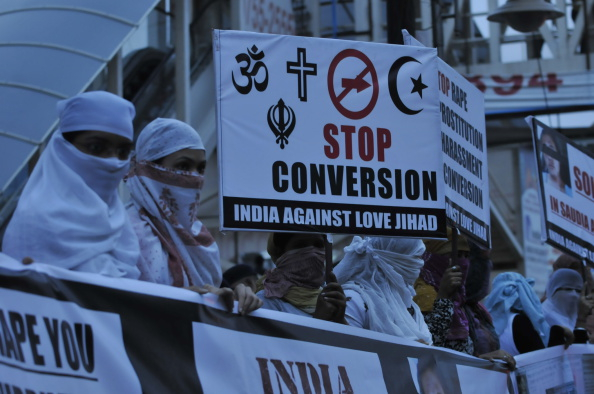
 Women against love jihad hold placards to protest against the practice and conversion in Bhopal. (Mujeeb Faruqui/Hindustan Times via Getty Images) 

Women against love jihad hold placards to protest against the practice and conversion in Bhopal. (Mujeeb Faruqui/Hindustan Times via Getty Images) 

Snapshot
  • The Himachal government has brought in a new Freedom of Religion Act that attempts to put the brakes on large-scale conversion activities.However, a lot more can actually be done to the legislation to make it foolproof.

The Bharatiya Janata Party (BJP) government in Himachal Pradesh passed the Freedom Of Religion Act, 2019 in the state assembly on Friday (30 August) with a thumping majority. Based on the ‘live and let live’ principle, the law is aimed at providing true religious freedom by prohibiting conversions via use of force, misrepresentation, undue influence, coercion, inducement or by any other fraudulent means including, and this is important, for the sole purpose of marriage.

For the aforementioned reasons, it is also being referred to as the anti-conversion act in popular media. Himachal Pradesh is one of the seven states in the country which have enacted such a legislation. Others who have tread this path are Odisha, Madhya Pradesh, Gujarat, Uttarakhand, Chhattisgarh and Jharkhand.

Chief Minister Jai Ram Thakur tabled the Bill in the Assembly. In the statement of objects and reasons, he justified replacing the ‘Freedom of Religion Act, 2006’ with the new one stating that

a) it was imperative to keep up with the times as the society has undergone many transitional changes since 2006;

b) the punishments prescribed earlier weren’t sufficient to act as a deterrent;

c) marriages solemnised for the sole purpose of conversion weren’t proscribed; and

d) the organisations involved in forced conversions weren’t held responsible.

These lacunae have been corrected in the new Act.

Those found guilty can be awarded maximum jail time up to seven years. Marriages for the purpose of conversion can be declared null and void if either party complains.

Any organisation or institution found guilty of violating the Act’s provisions will be barred from receiving funding from within and outside of the country. This could prove to be the most effective tool in countering mass conversions backed by foreign money and should give sleepless nights to organisations which indulge in coerced conversion under the garb of charity or social work.

Those who want to convert willingly (and the ones who are converting them) will have to give one month’s advance notice to the District Magistrate (DM), who in turn shall order an inquiry in the meantime to make sure that the conversion is indeed voluntary.

It goes without saying that the Act will be challenged in the courts. Especially the bit about one month advance notice to the DM runs the risk of being struck down by the judiciary.

In a 2012 judgment, the Himachal Pradesh high court had declared a similar provision of the 2006 Act as ultra vires the Constitution. The court had held that a person not only has a right of conscience, the right to change his belief, but also has the right to keep his belief secret.”

Be that as it may, CM Thakur and his government deserve two cheers for enacting this legislation.

First cheer for prescribing the highest jail term (up to seven years) for forced conversions of minors and women especially through the marriage route. We have witnessed many cases where minor girls who would otherwise not be eligible for marriage under the Hindu Marriage Act or the Special Marriage Act are converted first and then married according to Sharia law (Muslim Personal Law).

This route has been made difficult now and is bound to give serious heartburn to mullahs as well as those involved in the so-called despicable ‘love Jihad’ activities.

Second cheer for looking out for non-Muslim women and ensuring for them justice in case they end up getting defrauded and converted in the name of marriage. On their complaint, such marriages can be declared null and void.

I am withholding the third cheer because the Act doesn’t go far enough and leaves a lot to be desired.

First, it should’ve declared all conversions of minors illegal and any attempts to convert them (especially via marriage) punishable by law. If you can’t vote or get married until you are 18 years of age, why should you be allowed to make as big a decision as converting to another religion — and that too without permission of a parent or guardian?

Second, merely declaring marriages conducted solely for conversion as void doesn’t do much for the women victims. Breaking up a marriage is not as easy as to stop buying from a shopkeeper who fleeces you. Separation imposes very high costs on all involved.

In inter-faith marriages, women are most likely to have already been ostracised by their family and community and so need more help.

The Act should’ve prescribed stiff punishments for those who defraud women via conversion and marriage. It failed to make any such provisions.

Moreover, the real issue is not that marriages are done for the sole purpose of conversion but that conversion is done for the sole purpose of marriage.

Outlawing the latter would mean that no non-Muslim woman would ever have to change her religion to marry a Muslim man i.e. take the Sharia route thus losing considerable number of her rights regarding inheritance, property, custody of children, alimony, etc.

Perhaps, the Himachal Pradesh government can consider complementing its ‘Freedom of Religion’ Act with a ‘Protection of Women’s Rights’ Act where all marriages between a Muslim male and non-Muslim female are declared valid only if they are solemnised using the Special Marriage Act.

Third, while the Act puts a premium on forced conversion, it rightly exempts re-conversions (converting to one’s parent religion) from its purview. But is this enough? What if someone whose forefathers were converted some generations back (either by force or inducement) and (s)he wants to go back to the religion of his/her ancestors? The government can think of exempting such re-conversions too.

To sum up, Himachal Pradesh government and CM Thakur deserve two cheers for moving in the right direction in ensuring true freedom of religion free of coercion and deceit, but there is a lot of room for improvement.

The grapevine has it that the central government is also mulling a national law outlawing forced and fraudulent religious conversions and it can come as soon as by end of this year. Even if it doesn’t, the BJP governments in other states should certainly be thinking of bringing such laws.

One hopes that they would improve on the existing legislation in seven states and fix the loopholes that have plagued them, resulting in their poor implementation.

Arihant is Senior Editor, Swarajya

පහල සේවකයෙක් මං එක දුරකතන ඇමතුමකින් ඉංජිනේරුවකු ලෙස පත් කලා..- සජිත්

September 2nd, 2019

lanka C news

පහල නිලයක සිටි සුදුසුකම් සහික දක්‍ෂ සේවකයෙක් තමන් එක් දුරකතන ඇමතුමකින් ඉංජිනේරුවකු ලෙස පත් කල බව ඇමති සජිත් පේ‍්‍රමදාස මහතා සදහන් කලේය.

උත්සව සභාවකදී ඇමතිවරයා මේ බව සදහන් කලේය.

මධ්‍යම සංස්කෘතික අරමුදලේ මුදල් ගත්තේ රුපියල බාල්දු වෙන නිසා..- සජිත්

September 2nd, 2019

lanka C news

තමන් මධ්‍යම සංස්කෘතික අරමුදලින් මුදල් ගසා කෑ බවට චෝදනා එල්ල වන බව එක්සත් ජාතික පක්ෂයේ නියෝජ්‍ය නායක ඇමැති සජිත් ප්‍රේමදාස මහතා පවසයි.

තමන් එම අරමුදල් ලබාගෙන රටපුරා වෙහෙර විහාරස්ථාන ගොඩනැගීමට කටයුතු කරන ලද බව ඔහු සඳහන් කළේ ය.

එසේ නොකළේ නම් එම මුදල ස්ථිර තැන්පතුවේ තිබියදී රුපියල බාල්දු වීම සමග බාල්දු වී යන බවද ඔහු සදහන් කලේය.

නැති වූ බව කියන සෑම මුදලක්ම මෙරට පන්සල් පද්ධතිය තුල ඇතැයිද ඇමතිවරයා එහිදී පැවසීය.

ඔහු මෙම අදහස් පල කරන ලද්දේ අම්පාර ප්‍රදේශයේ දී පැවති උත්සව සභාවක් අමතමිනි.

ඇමතිවරයා යටතේ ඇති මධ්‍යම සංස්කෘතික අරමුදල යටතේ තිබූ රුපියල් කෝටි 120 ක මුදලක් අතුරුදහන් වී ඇතැයි මෑතකදී චෝදනා එල්ල විය.

https://www.facebook.com/watch/?v=679430355906533

‘යුද අපරාධ කලාද.. ජනාධිපති වුණාම හමුදා පාලනයක්ද..’ වියත් සභා අත්පොලසන් මැද ජනාධිපති අපේක්‍ෂක ගෝඨාභය රාජපක්ෂ මහතා විසින් සිදු කල දේශණය

September 2nd, 2019

GR midea

ශ්‍රී ලංකා පොදුජන පෙරමුණේ නීතීඥ සංගමයේ සම්මේලනය අමතමින් ජනාධිපති අපේක්‍ෂක ගෝඨාභය රාජපක්ෂ මහතා විසින් සිදු කල දේශණය මෙහි දැක්වෙයි.

පසුගිය අගොස්තු මස 11 දා පැවති පක්ෂයේ මහා සම්මේලනයේදී  ශ්‍රී ලංකාවේ පස්වන විධායක ජනාධිපති  මහින්ද රාජපක්ෂ මැතිතුමා විසින්  ශ්‍රී ලංකා පොදුජන පෙරමුණ ප්‍රමුඛ දේශපාලන පක්ෂ ගනනාවක මෙන්ම  ස්වාධීන සංවිධාන හා කන්ඩායම් රැසක  පොදු අරමුණ නියෝජනය කරන ජනාධිපති අපේක්ෂකයා වශ‍යෙන් මාව නම්කරනු ලැබීමෙන් පසු මා ප්‍රථමවරටයි නීතීඥයින් මෙතරම් විශාල සංඛ්‍යාවක් එකවර හමුවන්නේ.

අද දින ඔබ අමතා අදහස් කිහිප‍යක් ප්‍රකාශ කිරීමට මේ ලද අවස්ථාව ගැන මා ඉතාමත් සතුටු වෙනවා.

The legal profession is one of the most respected professions in the country. It is one with a very long and rich history.

Tracing its origins to ancient Greece, the legal profession developed further in ancient Rome and later proliferated throughout Europe and the rest of the world. Law, as a formally structured profession with its own training traditions and rigorous professional standards, was established in Sri Lanka in the 1830s.

It is the primary responsibility of legal professionals to study the law, practice the law, nurture the law and safeguard the law.

නීතිය යන සංකල්පය ශිෂ්ඨාචාරවත් සමාජයක අත්තිවාරම යැයි කියතොත් එය නිවැරදියි. නීතිය යන සංකල්පය ක්‍රියාත්මක කිරීම සඳහා අනිවාර්යයෙන්ම අපට නීති පද්ධතියක්ද තිබිය යුතුමය.

එවැනි නීති පද්ධතියක් සමාජය තුල ගොඩනැගීම සඳහා නීතියේ ආධිපත්‍ය යන සංකල්පය නිර්මාණය කර ඇති වග අප කවුරුත් දන්නා කරුණකි. නීතියේ ආධිපත්‍ය සුරැකිය හැක්කේ ප්‍රජාතන්ත්‍රවාදී ආණ්ඩු ක්‍රමයන් තුල සහ රාජ්‍ය බලය සීමා කරන LIMITED GOVERNMENT රාමුවක් තුල බව  කවුරුත් පිළිගන්නා කරුනක්.

එනිසා නීතියේ ආධිපත්ය සහ ප්‍රජාතන්ත්‍රවාදය යන ඉතාමත් ස්වර්ණමය සංකල්පයන්  ජනතාවගේ සුභසිද්ධිය සහ දියුණුව සඳහා අනිවාර්යයෙන්ම ආරක්ෂා කල යුතු බව අප කවුරුත් දන්නා කරුණකි.

ලංකාව ප්‍රජාතන්ත්‍රවාදී රටක්.  ආසියානු මහාද්වීපයේ රටවල් අතුරින් ප්‍රථමයෙන්ම සර්වජන ඡන්ද බලය හිමි වූයේ ශ්‍රී ලාංකාවටයි.

The granting of universal franchise in Sri Lanka in 1931 under the recommendations of the Donoughmore commission took place at a time before democracy was firmly established in many of today’s developed nations.

Universal franchise has been the foundational force behind the transition from monarchical rule to democratic governance in republics throughout the world.

සර්වජන ඡන්ද බලය මගින් සිදුවන්නේ, පරමාධිපත්‍ය බලය  ජනතාව සතු වීමයි.

ජනතාවගේ පරමාධිපත්‍යය ආරක්ෂාකිරීමේදී නීතියේ ආධිපත්‍යය රටකට ඉතා වැදගත් වෙනවා.

මනුෂ්‍ය සංහතිය ඔවුන්ගේ ස්වාභාවික අයිතිවාසිකම් සියල්ලක්ම අතහැර සිවිල් අයිතිවාසිකම් සමූහයක් සමග සම්බන්ධ වී ස්වෛරී රාජ්‍යක ජනතාවක් වශයෙන් ජීවත්වීමට ගිවිසාගෙන ඇත්තේ යම්කිසි වගකීම්, අයිතිවාසිකම් හා බලාපොරොත්තු ඉටු කර ගැනීම සඳහායි.

මෙම සාමාජීය ගිවිසුම් නිසි ක්‍රමවේදයක් ඔස්සේ සාධාරණ ආකාරයකට ක්‍රියාත්මක කිරීමේ උතරීතර වගකීම  ඉහල මට්ටමින්ම ඉෂ්ඨ කර ගැනීමට නම් අප ජීවත් වන සමාජයත් එම සමාජයේ පාලකයන් ද අනිවාර්යයෙන්ම නීතියේ ආධිපත්‍යයට ගරු කළ යුතුය.

ඔබ කවුරුත් දන්නා නීතිය පිළිබඳ  මූලික සංකල්ප කිහිපයක් මම ඔබට මතක් කරන්න කැමතියි.  පලමුව නීතිය පැහැදිලි විය යුතුය. දෙවනුව එය පහසුවෙන්ම හැදෑරීමට සහ තේරුම් ගැනීමට හැකි විය යුතුය. තුන්වනුව නීතිය ක්‍රියාත්මක වීමේදී එහි ප්‍රතිඵලය කිමෙක්ද යන්න සම්බන්ධයෙන් අනාවැකියක් ප්‍රකාශ කළ හැකි විය යුතුය.   සිව්වනුව ආණ්ඩු ක්‍රම ව්‍යවස්ථාව තුල විධායක, ව්‍යවස්ථාදායකය සහ අධිකරණය යන අංශ තුන තුල බලතල බෙදා හැරීමේ න්‍යායට ගරු කල යුතුයි. පස්වනුව මහජනතාව සහ රජය ආණ්ඩුක්රම ව්‍යවස්ථාවේ ප්‍රථිපාදන වලට ගරු කල යුතුය. හයවනුව නඩුකර හැකි ඉක්මනින් අවසන් කිරීමට සෑම ප්‍රයත්නයක්ම ගත යුතුයි. නඩුකරයන් අවම වියදමින් අවසන් කරගත හැකි පරිසරයක් ගොඩ නැගිය යුතුය. නීති පද්ධතිය දූෂනයෙන් තොර  විය යුතුය.

Although we still repose our trust in the independence of the judiciary, when looking at recent trends, we must admit to having questions about the independence of some of the other institutions and officials entrusted with upholding the rule of law.

ප්‍රජාතන්ත්‍රවාදය  ආරක්ෂා කිරීම සඳහායැයි  පිහිටුවා ඇති ආයතනික ව්‍යුහය ජනතාවගේ පරමාධිපත්‍ය ආරක්ෂා කිරීම වෙනුවට  දේශපාලන අවශ්‍යතා සඳහා භාවිත කිරීමට අප තවදුරටත් ඉඩ නොදිය යුතුයි. ඒ වෙනුවට ඒ ආයතන වලට සැබෑ ස්වාධීනත්වයක් ලබා දී ඒවා තව දුරටත් ශක්තිමත් කිරීම තුලින් ජනතාව සවිබල නැංවීමට ඔබේ උපදෙස් හා සහාය අපි බලාපොරොත්තු වෙනවා.

JUSTICE DELAYED IS JUSTICE DENIED  කියා ප්‍රසිද්ධ කියමනක් තිබෙනවා

අධිකරණ පද්ධතිය තුල ඇති ප්‍රමාදය අද සාමාන්‍ය ජන ජීවිතයට බලපාන විශාල ප්‍රශ්නයක්. …………..

මෙම ප්‍රමාදයන් වලක්වා ගැනීම සඳහා අවශ්‍ය යටිතල පහසුකම් ගොඩ නංවන ගමන්ම යල් පැන ගිය නීති ක්‍රියාපටිපාටි හා අනපනත් සංශෝධනය කොට අනාගතයට ගැලපෙන නීති පද්දති සකස් කර ගැනීමට ඔබ සැමගේ සහාය අනාගතයේදී අපට අවශ්‍ය වෙනවා.

Many of our courtrooms are in dilapidated condition today. Unless action is taken swiftly, it is likely that these buildings will be unusable in the near future. It is in this context that we hope to re-implement the programme to develop the infrastructure of the courts system which was planned by the previous Government in 2014.

The reintroduction of this infrastructure development programme will ensure that you will be able to practice your profession in all the main cities and other towns of the country with due dignity and ease.

නීතිය කඩිනමින් පසිඳලන්නට දැනට ඇති අධිකරණ හා විනිසුරුවන් ප්‍රමාණවත්ද යන්න අපට විමසා බලන්නට සිදු වෙනවා.

නීතියේ ප්‍රමාදයන් වැලක්වීමට කෙටිකාලීන මෙන්ම දීර්ඝ කාලීන විසඳුම් සොයන්නට අපට සිදු වෙනවා. ඒ අතර යටිතල පහසුකම් වැඩි දියුණු කිරීම, දේශීය හා විදේශීය පුහුණුව මෙන්ම නීතිය ක්‍රියාත්මක කිරීමට සහය වන ආයතන ප්‍රතිව්‍යුහ ගත කිරීමද ඇතුලත් වෙනවා.

අපේ රටේ සංවර්ධනයේ ඉදිරි පිම්මක් සඳහා තාක්ෂනය බහුලව භාවිතා කිරීමට අප අදහස් කරනා නිසා සිංගප්පුරුව වැනි රටවල ක්‍රියාත්මක වන ඩිජිටල් තාක්ෂණය සහිත අධිකරණත් අපට ක්‍රම ක්‍රමයෙන් හඳුන්වාදෙන්න පුළුවන්.

I know that being appointed President’s Counsel is one of the highest honours any lawyer can aspire to. Although our nations’ leaders have historically striven to safeguard the dignity of this honour, concerns have arisen regarding certain appointments made to this position in the recent past.

In the future, I look forward to seeking the advice of the Chief Justice, Attorney General, legal experts and the Bar Association in order to establish a transparent, rigid procedure to govern appointments to the position of Presidents’ Counsel.

ජනතාව අපේක්ෂා කරණ සෞභාග්‍යමත් දේශය ගොඩ නැගීමේදී  අපට ජාතික ආරක්ෂාව හා ආර්ථික සංවර්ධනය ඉතා වැදගත් වෙනවා.

ජාතික ආරක්ෂාව ගැන කතා කරනා විටත් නීතියේ ආධිපත්‍යය ඉතා වැදගත් වෙනවා. එක රටක් තුල ක්‍රියාත්මක විය හැක්කේ එක නීතියක් පමනයි. නීතිය හැමට සමානව ක්‍රියාත්මක විය යුතුයි.

පුරවැසියා හැමවිටම නීතිගරුක විය යුතුයි, නමුත් පුරවැසියා නීතිය ක්‍රියාත්මක කරණ ආයතන වලට හා පුද්ගලයන්ට බය නම් එහි ගැටලුවක් තිබෙනවා. නීතියේ ආධිපත්‍ය ගැන කතා කරණා විට අපි මතක තබා ගත යුතුයි නීතිය ක්‍රියාත්මක කරණ ආයතන හා පුද්ගලයනුත් නීතියට යටයි කියනා බව. ඔවුන් සම්බන්න්දයෙනුත් නීතිය සාධාරණව ක්‍රියත්මක විය යුතුයි.

නීතිය සැමට සමානය යන උත්තරීතර සංකල්පය අභියෝගයට ලක් කරමින් රජයේ ඉහල නිලධාරීන් නීතිය නමන හැටි කියනවා පසුගිය කාලයේ ජනතාව මාධ්‍ය වලින් දුටුවා

පසුගිය පාස්කු ඉරිදා ප්‍රහාරය ගැන විශේෂ කමිටුවක් මගින් විමර්ශනයක් කරනා ලෙස අපි ඉල්ලා සිටියේ ඒ නිසායි.  එසේ නොකලහොත් යම් දේශපාලන බලවතුන් නීතියේ රැහැනින් පිට පැනිය හැකි බව අපට පෙනෙනවා.

We need the support of domestic and foreign investors to accelerate the nation’s economic development.

When investors select countries to invest in, the efficient operation of the law within the country is one of the first things they look at. They pay particular attention to the independence of the judiciary and the efficiency of the legal system. They also examine whether the laws of the nation are in consonance with international law.

Legal scholars should therefore look at improving the mechanisms available for the swift settlement of legal disputes in Sri Lanka, including such speedy and efficient measures as arbitration. Just as Singapore today has established a global reputation as a centre for arbitration, Sri Lanka too should aspire to establishing a reputation for different specialisms in the legal sphere in future.

නීතිය යනු ජීවමාන සංකල්පයක්.  මනුෂ්‍ය සමාජයේ සිදුවන වෙනස්කම් අනුව නීතියේත් වෙනස්කම් සිදු වෙනවා. ඒ නිසා  අද නූතන ලෝකයේ සංවර්ධනය වූ රටවල් නීති වෘත්තියේ තත්වය ඉහල මට්ටමකින් පවත්වාගෙන යාමට අනුගමනය කරනු ලබන එක් යාන්ත්‍රනයක් නම්  CONTINOUS LEGAL EDUCATION  යන සංකල්පයයි.  මේ සම්බන්ධයෙනුත් පහසුකම් වැඩිකරනා ආකාරය අප සාකච්චා කල යුතුයි.

ගෝලීය ආර්ථික තුල  තුල ආසියානු කලාපය බලවත් වෙමින් සිටිනා  මේ මොහොතේ අපත් ඒ ප්‍රවණතාවයෙන් උපරිම ප්‍රයෝජන ගත යුතුයි. අපනයන ආර්ථිකය ශක්තිමත් කල යුතුයි. ලෝකය සමඟ සම්බන්දීකරණයේදී අපේ සුවිශේෂී  භූගෝලීය පිහිටීමෙන් ප්‍රයෝජන ගත යුතුයි. මේ කරුණු වලදී අපට ජාත්‍යන්තර නීති රීති ගැන මනා දැනුමක් තිබිය යුතුයි.  මේ අවශ්‍යතාවය තේරුම් ගෙන අදාල ක්ෂේත්‍ර සම්බන්ධයෙන් අපේ දැනුම වර්ධනය කර ගැනීම සඳහා පියවර ගන්නා ලෙස මම ඔබෙන් ඉල්ලා සිටිනවා

කාලීන ජාතික  අවශ්‍යතාවන්ට ගැලපෙන පරිදි  ව්‍යවස්ථා සංශෝධනය, යල්පැනගිය නීති රීති  යාවත්කාලීන කිරීම, මැතිවරණ නීතිවල වෙනස්කම් වැනි නීති ප්‍රජාවේ සහාය අවශ්‍ය කරන වැඩකටයුතු රාශියක් අප ඉදිරියේ තිබෙනවා. ඒ සඳහා ඉදිරියේදී නීති විශාරදයන්ගෙන් මෙන්ම  ඒ ඒ ක්ෂේත්‍රයන්ට අදාල විද්වතුන්ගේ සහාය ලබාගන්නට  අපි කටයුතු කරණවා.

මම ඔබට මතක් කරන්නට කැමතියි අපි නව තාක්ෂණය් භාවිතය අතින්  හැකි පමන ඉදිරියට යන්නට බලාපොරොත්තු වන බව. මෙය ඔබටත් වදගත් වෙනවා. ඊශ්රායලයේ හිටපු අග්‍ර විනිශ්චයකාර තුමෙක් වන අහරොන් බරක් මැතිතුමා පෙන්වා දී තිබෙනවා සමාජය තුල තම වෘත්තීමය වටිනාකම පවත්වාගන්නට නම් වේගයෙන් වෙනස් වන ලෝකය තුල නූතන තාක්ෂණ ප්‍රවණතාවන් හඳුනාගෙන ඒවා භාවිත කිරීමට සෑම ප්‍රයත්නයක්ම ගත යුතු බවයි.

I propose to lead a future Government that will always revere and uphold democracy, and always safeguard the rights of the public.

There is a popular false narrative about human rights violations which supposedly took place in the last stages of the war against terrorism. However, this false narrative blithely ignores the many delays in the pursuit of victory that arose from our strong commitment to protect and uphold human rights. Although it would have been possible for us to pursue a faster resolution to the war by using heavy artillery, we did not. Instead, we chose to pursue victory using only light arms, even though this resulted in thousands of war heroes sacrificing their lives.

This strategy was pursued because of the nearly 300,000 innocent Tamil civilians entrapped by the LTTE for use as a human shield during the last stages of the war. Rescuing them from danger was our primary aim. This is glibly forgotten by those who seek to attack us on the topic of human rights. So too is the fact that more than 11,000 LTTE cadres were rehabilitated and reintegrated into society in the aftermath of the war.

ප්‍රජාතන්ත්‍රවාදී රටක පුරවැසියෙකුගේ මූලිකම අයිතිය තමයි චන්දය දීමේ අයිතිය. අපි මේ ප්‍රජාතන්ත්‍රවාදී අයිතිය යලි ස්ථාපිත කරනවා. සර්ව බල චන්දයට ගරු කරන , මහජන මතයට හිස නමන , නීතියේ ආධිපත්‍යය වචනයට සීමා නොවේ සැබැවින්ම ක්‍රියාත්මක වන පාලන තන්ත්‍රයක් අපි ඇති කරනවා

අපේ ව්‍යවස්තාව තුල ජනතාවගේ මූලික අයිතීන් හොඳින් ස්ථාපිත කොට තිබෙන්වා. ඒ වාගේම ජනතාවගේ වගකීමුත් පැහැදිලි කර තිබෙනවා.

සතුටින් ජිවත් වන්නට ඔබට ඇති අයිතිය අයට හිරිහැරයක් නොවනා ආකාරයට ජීවත් වන්නට සෑම පුරවැසියෙකුටම වගකීමක් තිබෙනවා.

ගුණ ගරුක , විනය ගරුක,  නීති ගරුක සමාජයක්  ගොඩ නැංවීම අද ඔබ සියලු දෙනාගේම අපේක්ෂාව වී තිබෙනවා.

ඒ සඳහා අවශ්‍යකරණ  නායකත්වය දීමට මම සූදානම්. අපේ පොදු අරමුණ ඉටුකරගැනීම සඳහා ඔබ සියලු දෙනාගේමත් සහාය  මම බලාපොරොත්තු වෙනවා

Lucky Pigs

September 2nd, 2019

Editorial Courtesy The Island 

A government move to accelerate the Gamperaliya programme by granting more funds to the UNF MPs has irked the Joint Opposition (JO) beyond measure. That the UNF is desperate to boost its plummeting approval ratings with only a few more months to go for the presidential election is blindingly obvious.

The JO says the UNF MPs are to be given as much as Rs. 100 mn each, and their Opposition counterparts will get nothing, at all. Claiming that the government has discriminated against the Opposition MPs, the JO has threatened legal action against the Finance Minister Mangala Samaraweera, who is reported to have obtained Cabinet approval for the controversial fund allocation. Whether the government will take the JO’s threat seriously and act with restraint remains to be seen.

Funds that governments have at their disposal belong to the people, and there is no provision for the disbursement thereof for political purposes. Large scale fund allocations have to be approved by Parliament. But politicians in power always find ways and means of circumventing legal barriers and utilising public funds for electioneering, etc., on the pretext of carrying out development and social welfare programmes. This has been the practice adopted by successive governments during the last several decades.

The ongoing Gamperaliya programme is part of the UNF’s unofficial election campaign, which was launched following the government’s shellacking at last year’s local government polls. Colossal amounts of funds are being used to grant loans, etc., very liberally, to the people, who are being bribed with their own money. Publicity for development projects and ceremonies to mark the launching thereof cost Citizen Perera an arm and a leg. This is the name of the game in Sri Lankan politics.

The Opposition is right in saying that the act of making funds available only for the government MPs for development activities is tantamount to discrimination against other lawmakers.

All animals are equal, but some animals are more equal than others, as the declaration by the crafty Pigs, in Orwell’s Animal Farms, goes. In 2015, the present bunch of rulers promised us a utopia, but we are still living in the same old dystopia, where the tradition continues, and the ruling pigs consider themselves more equal than all others and have all the luck.

No amount of money can save a sinking government. The Rajapaksa administration spent billions of rupees to bribe the electorate, in 2014, but lost the presidential election, in Jan. 2015. The incumbent dispensation is making a similar effort to retain power at the expense of the taxpayer. But whether it will succeed in its endeavour is in doubt. What it is experiencing at present can be described as the political version of the dengue shock.

Before making the public shell out any more funds for the Gamperaliya project, the government ought to review its progress and inform the taxpayers what they have got in return for their money and whether the money so far allocated for that programme has been properly utilised. Development projects are characterised by corruption, and the people have a right to know how their money is being spent.

Accountability is sadly lacking on the part of the government, which has failed to be different from its predecessors in spite of its rhetoric, if the serious financial irregularities in some of its programmes are anything to go by. The scheme of importing high-yielding milch cows from Australia is a case in point. Many of the cows already brought down are sick and pose a danger to other bovines. Worse, the government has paid the Australian company concerned billions of rupees for more cows, none of which have arrived! Where has the money gone? Has part of it found its way back into the deep pockets of some yahapalana politicians?

The government has also, in response to a query in Parliament, asked for six months to count the number of vehicles its ministers are using. One may ask whether the public can expect a government which is not capable of counting a few hundred vehicles to account for their funds.

SLPP, SLFP agree to abide by key provision in 19 A as talks enter crucial stage GL: Who wants to align with those responsible for treasury bond scam or jeopardized national security?

September 2nd, 2019

By Shamindra Ferdinando Courtesy The Island

article_image

The SLPP and the SLFP have reached a consensus on three crucial issues including the limit on the number of Cabinet ministers in keeping with the 19th Amendment to the Constitution.

The 19th Amendment, enacted in early 2015, has restricted the Cabinet to 30 unless Parliament ratifies the formation of a national government.

SLPP Chairman Prof. G.L. Peiris, in a brief interview with The Island, said that a consensus had been reached on the need for a new electoral system in respect of Local Government, Provincial Councils and parliamentary elections, the restriction of the Cabinet to 30 regardless of whatever form of administration and the allocation of ministries in a sensible and meaningful manner.

Referring to the allocation of ministries, the former External Affairs Minister said that the next government wouldn’t under any circumstances align highways portfolio with higher education or seek to bring Lotteries Board under the Ministry of Foreign Affairs.

On the eve of the SLFP Convention, Prof. Peiris emphasised the pivotal importance of the two parties finalising an agreement as soon as possible. Responding to another query, Prof. Peiris, who led the SLPP delegation, in his capacity as its Chairman, appreciated the contribution made by members of both delegations. SLPP strategist and former SLFP National Organiser Basil Rajapaksa participated in the most recent discussion.

Asked whether he was hopeful of the SLFP pledging its support to SLPP presidential nominee wartime Defence Secretary Gotabaya Rajapaksa though the party appeared to be divided over the issue with two UPFA National List members, S. B. Dissanayake and Dilan Perera switching allegiance to the SLPP recently, Prof. Peiris explained the gradual progress made by the two parties in spite of some difficulties. “Discussions are taking place at three levels between SLPP and SLFP delegations, SLPP Leader Mahinda Rajapaksa and President Maithripala Sirisena and the SLFP and Gotabaya Rajapaksa. Former President Rajapaksa and SLFP leader Sirisena’s one-on-one at the latter’s Paget road residence and SLFP delegation meeting Gotabaya Rajapaksa at his Pangiriwatte Mawatha, Mirihana residence was quite fruitful.”

Prof. Peiris said that their primary objective was to bring all those opposed to the UNP under one banner. Asked whether he was confident the SLFP support could be secured, Prof. Peiris said that there couldn’t be any other option not only for the SLFP but any other party opposed to the UNP. The outcome of the last Local Government polls in Feb 2018 proved beyond doubt the SLPP was the dominant political party though it came to being only in mid-2015, Prof Peiris pointed out. The 2019 presidential election would demonstrate how the SLFP transformed the political landscape, Prof. Peiris said. Having comfortably won the Local Government polls over a year back, the SLFP was now poised to win both presidential and parliamentary polls.

Referring to the last round of talks between the SLPP and the SLFP, Prof. Peiris quoted Basil Rajapaksa as having raised what the objective of a particular party, in this case, the SLFP would be in respect of the forthcoming presidential election. Would it be to help someone or defeat another? Prof. Peiris quoted the former Economic Affairs Minister as having said.

There had been five rounds of talks with the SLFP so far leading to consensus on altogether about nearly two dozen matters, Prof. Peiris said, asserting that as far as he was aware there couldn’t be absolutely any difficulty in reaching a final agreement on cooperation.

Acknowledging that it would be the prerogative of the SLFP to decide on a future course of action, the former minister, who held vital portfolios in successive PA, UNP and UPFA governments, asserted that the majority of SLFP/UPFA lawmakers and the vast majority of those who exercised their franchise in support of the SLFP/UPFA at the last Local Government were now firmly back the SLPP. In the wake of war winning President Mahinda Rajapaksa taking SLPP membership, the electorate clearly understood which way the wind was blowing. Whatever the agendas various political parties pursued, no one would want to team up with those accused of robbing the Central Bank twice since the last presidential election, Prof. Peiris asserted. How could anyone possibly have those accused of complicity in Easter Sunday attacks on Sinhala and Tamil communities on their stage? Prof. Peiris asked.

The electorate would be certainly wary of those combining forces with people under a cloud over the Easter Sunday attacks, the former law professor said, ruling out an understanding whatsoever with Easter Sunday suspects.

The SLPP Chairman said that the party sought a long term working relationship with the SLFP to ensure continuity in the Rajapaksa administration. The yahapalana arrangement collapsed not only because a section of the UNP robbed the Central Bank, but the coalition lacked a proper working arrangement, he said.

Commenting on President Sirisena and SLPP leader Rajapaksa meeting, Prof. Peiris said that in a discussion of that nature confidentially was of pivotal importance. Prof. Peiris described the meeting cordial and constructive.

The former top academic appreciated SLFP delegation involved in talks with the SLPP also meeting presidential candidate Gotabaya Rajapaksa.

Dismissing UNP assertions that Gotabaya Rajapaksa lacked political experience therefore was not suitable for presidency; Prof. Peiris said the UNP owed an explanation as to why they fielded General Sarath Fonseka at the 2010 presidential.

Gotabaya Rajapaksa, in his capacity as the Defence Secretary and Secretary, Urban Development proved beyond doubt what he was capable of, Prof. Peiris said. On the other hand, the UNP couldn’t even agree on its presidential candidate and was struggling to cope up with growing differences among members of the parliamentary group, Prof. Peiris said.

Responding to recent criticism directed at the SLPP and the threat to take disciplinary action against lawmakers, S.B. Dissanayake and Dilan Perera over them switching allegiance to the SLPP, Prof. Peiris said that it couldn’t be an issue against the backdrop of over two-thirds of UPFA parliamentarians working with the Joint Opposition/SLPP. Prof. Peiris alleged that a section of the SLFP widely believed to be aligned with the UNP was pursuing a hostile line, the SLPP Chairman alleged. Prof. Peiris recalled how they refrained from voting against a No Confidence Motion (NCM) moved against PM Wickremesinghe in April 2018.

The SLPP Chairman said that those fearful of the presidential election would try to put off much delayed Elpitiya Pradeshiya Sabha election till the presidential poll was held. The PS poll would give all political parties in the presidential fray a chance to test their strength, Prof. Peiris said.

Sri Lanka to ask Singapore to extradite ex-central bank chief Arjuna Mahendran

September 2nd, 2019

Courtesy The Straits Times

COLOMBO (AFP) – Sri Lanka will request the extradition of an ex-central bank chief in relation to a US$74 million (S$103 million) insider trading scam, the attorney-general said Monday (Sept 2), months after Colombo accused Singapore of sheltering him.

Arjuna Mahendran, a Singapore national of Sri Lankan origin, was accused in 2015 of passing sensitive information to his bond-dealer son-in-law to make millions in undue profits.

“Documents amounting to 21,000 pages were submitted to the Ministry of Foreign Affairs and the Ministry of Defence today to be lodged with Singapore,” the attorney-general’s spokeswoman Nishara Jayaratne said.

She said Mahendran had been indicted in June for causing losses of more than US$11 million to the state.

Mahendran and his son-in-law are accused of manipulating bond auctions in 2015 and 2016.

He was named a key suspect in the scam in February last year and fled abroad, failing to appear in court to respond to charges.

A damning presidential report into the scandal also accused Mahendran of insider trading and recommended the state recover its losses from the pair.

Keep up with the latest in the region with the ST Asian Insider newsletter, delivered to your inbox every weekday

The country’s central bank has launched a forensic audit to determine whether there was further insider trading during Mahendran’s tenure between January 2015 and June 2016.

Mahendran is believed to be in Singapore and in March, Sri Lankan President Maithripala Sirisena accused the island state’s Prime Minister Lee Hsien Loong of sheltering him.

Former Sri Lankan central bank chief Arjuna Mahendran is wanted for his alleged role in an insider trading scam.

But Singapore insisted that Colombo’s request to send back Mahendran was incomplete.

Sri Lanka’s chief prosecutor said authorities had by Monday completed the legal requirements to formally lodge an extradition request with Singapore.

The allegations deepened acrimony between Sirisena and his coalition partner Prime Minister Ranil Wickremesinghe, who handpicked Mahendran to head the central bank.

PM to penalize Premadasa backers

September 2nd, 2019

W.K. Prasad Manju Courtesy Ceylon Today

Prime Minister Ranil Wickremesinghe has decided to strip certain Ministers of their portfolios, for openly backing the prospective candidature of UNP Deputy Leader and Minster Sajith Premadasa, while amending the portfolios of a few other Ministers, informed political sources said.

The sources said Wickremesinghe had informed the President in writing yesterday (30), that the Ministry of Petroleum Resources Development, hitherto under Minister Kabir Hashim, be handed over to Minister Lakshman Kiriella.

Furthermore, Wickremesinghe has reportedly informed the President that the subjects and institutions coming under the purview of a few other Ministers, who are both openly and covertly supporting Premadasa, be changed immediately and handed over to others.

Sources added that relevant requests will also be submitted to the President by the Premier shortly and noted that the President is yet to respond positively to the said requests.

PC polls cannot be held under previous election system, SC informs President

September 2nd, 2019

Courtesy Adaderana

The Supreme Court has informed the President that the Provincial Council elections cannot be held under the previous election system or the Provincial Councils (Amendment) Act.

Issuing a statement, Secretary to the President Udaya Seneviratne said the five-judge bench of the Supreme Court had unanimously agreed on the verdict.

The Supreme Court has informed the President that the election cannot be held under the Provincial Council (Amendment) Act since the President does not have the authority to declare the boundaries set out in the report handed over to the Minister by the Delimitation Committee.

President Maithripala Sirisena submitting a reference application, seeking the opinion of the Supreme Court on holding the Provincial Council election without the Report on Delimitation of Electorates.

The reference application was taken up before a five-judge bench of the Supreme Court consisting of Chief Justice Jayantha Jayasuriya and Justices Buwaneka Aluwihare, Sisira de Abrew, Prasanna Jayewardene and Vijith Malalgoda on August 23.

කිසිදු අන්තවාදයකට ඉඩක් නැහැ – ජනපති ධුර අපේක්ෂක ගෝඨාභය රාජපක්ෂ

September 2nd, 2019

උපුටා ගැන්ම  හිරු පුවත්

කිසිදු අන්තවාදයකට හිස එසවීමට ඉඩ නොදී ජාතික ආරක්ෂාව තහවුරු කරන බව ඒකාබද්ධ විපක්ෂයේ ජනාධිපති ධුර අපේක්ෂක, හිටපු ආරක්ෂක ලේකම් ගෝඨාභය රාජපක්ෂ පවසනවා.

කොළඹ ප්‍රදර්ශන හා සම්මේලන මධ්‍යස්ථානයේ අද පෙරවරුවේ පැවති ප්‍රගතිශීලි වෘත්තීය සමිති ජාතික මහා සම්මේලනය අමතමින් ඔහු මේ බව ප්‍රකාශ කළා.  එම අවස්ථාවට විපක්ෂ නායක මහින්ද රාජපක්ෂ ඇතුළු පිරිසක් ද එක්ව සිටියා.

මේ අතර, ජා-ඇල – මාඑළිය ජෝන් පාවුළු මධ්‍යස්ථානයේ පැවති ආචාර්ය කුරුකුලසූරිය පියතුමාගේ පූජකවරයේ 57 වැනි සැමරුමට ද විපක්ෂ නායක මහින්ද රාජපක්ෂ ඊයේ පස්වරුවේ එක් වුණා

ශ්‍රී ලංකා පොදුජන පෙරමුණෙන් දයාසිරිට චෝදනාවක්

September 2nd, 2019

උපුටා ගැන්ම  හිරු පුවත්

පක්ෂ 2ක අතර පැවති සාකච්ඡාවලින් පසු ශ්‍රී නිදහස් පක්ෂ මහ ලේකම් දයාසිරි ජයසේකර මහතා පිටතට පැමිණ ප්‍රකාශ කරන්නේ වෙනත් කාරණා බවට ශ්‍රී ලංකා පොදුජන පෙරමුණ චෝදනා කරනවා.

අද පැවති ප්‍රවෘත්ති සාකච්ඡාවකදී පාර්ලිමේන්තු මන්ත්‍රී රෝහිත අබේගුණවර්ධන මහතා මේ බව සඳහන් කළා.

ඊට මහාචාර්ය ජී.එල්.පීරිස් මහතා ද සහභාගී වුණා.

Old wine in old bottles-coordinator for Tamil affairs

September 1st, 2019

C. Wijeyawickrema

A news item that Tissa Vithrana (TV) has been appointed by SLPP as coordinator for Tamil affairs, took my mind back to the days of the majority and minority reports of the infamous APRC chaired by LSSP’s TV. His majority report was signed by members including a husband and wife team! TV even suggested to have a Tamil policeman in Sinhala villages to protect Tamil families. Following NM, his maternal uncle, who went to the Dalada Maligava with jasmine flowers in 1964, TV also carried a tray of flowers to DM, as if he had become a converted or tempered old Marxist. This was the time that TV agreed not to have administrative divisions based on language or religion.

There are so many past federalist supporters within the SLPP such as G.L. Peiris, Dilan Perera, Dullus A. I hope they no longer support 13-A which is federal as the Supreme Court has concluded.

I wrote two essays about the APRC then but could not locate them on the Internet. From what I could remember APRC majority report of TV was as bad or even worse than the Jayampathy- Sumanthiran-Lal Wijenayaka draft constitution of 2018.

Fortunately, I was able to dig another essay that I wrote in 2007 as an e-mail, and I think it will be useful to SLPP leaders and TV to remind them their past before their present reincarnation,

Subject: A Critique of the Vitharana Proposal

A Critique of the Vitharana Proposal

In the essay given below C. Wijeyawickrema, also known as Chand Wije (CW), gives a critique of the views of Minister Tissa Vitharana , Chairman of the APRC (q.v. = see glossary. While his basic criticism of Vitharana’s views is correct he combines this analysis with several of his pet ideas which are questiionable. The problem is to separate the two. I note that CW’s essay has not received much comment from the ‘Patriots’ even though it has been repeated.  But then there is very little sensible comment coming from the Patriots.

CW shows that Vitarana’s policy gives a one-way trip to Federalism even if he does not actually use the F-word. There are two amendments to be made to this. Firstly it will not stop at Federalism and sooner than later it will lead to full separation which is the ultimate goal not only of the LTTE but also of the non-LTTE Tamils. Secondly the views advanced by Vitharana are not his own but those contained in the Mahinda Chintanaya (q.v.). This so-called ‘Chintanaya’ gave the monstrous formula of “maximum devolution within a unitary state”. The plain fact is the devolution (q.v.) is incompatible with a unitary state, so we are dealing with a basic contradiction in terms. CW is correct in pointing out that the Indian system will work in India but not in SL. His Himalaya-Pidurutalagala analogy is quite appropriate.

The APRC or APC was simply set up to find a formula that will satisfy (a) the international community and (b) the Tamils who are a minority, and (c) those cowardly Sinhelas who think that they can get out of the current mess by giving the Tamils a bit of the cake but not the whole. These are not considerations that should determine the search for a optimal system of Government for any country. The APRC has not been able to find a solution that satisfies the Mahinda Chintanaya  as no such solution exists. So far we have had the Majority Report, which is presumably supported by Vitharana, and the Minority Report supported by some nationalists. They differ only in one particular, viz. whether the North and the East should be amalgamated in one Provincial Council or not. But both are wrong (see ACSLU Blogs ID 6.1 and 6.2). No wonder GOSL is afraid to adopt any of these versions, or an alternative to them,  and keeps on advancing the date they are supposed to announce their decision. CW calls Vitharana “an anti-Mahinda Chinthanaya agent”. He is in fact a trusted agent of MahindaR. How could be have become the chairman of the APRC is he is not approved by the largest party in the Parliament. I regard him as a stalking horse for MahindaR.

CW seems to think that the APRC should produce a grand plan for the development of the country. This is the responsibility of the ruling Party and GOSL, but we know that they are not doing this. What they do is to build grand projects (with money begged or burrowed) such as the airport at Weerawila, the cricket stadiums in Hambantota, Mihinair airline, etc. all meant to perpetuate the Mahinda dynasty rather than the develop the country in the most efficient way. What the APRC is entrusted to do is the produce a plan for devolution of power while maintaining the facade of a unitary state, and this is the impossible thing they are trying to do. This too should be the responsibility of GOSL if they do what is expected of them rather than shift the responsibility to others.

Having given credit to CW where credit is due some comments are necessary on some of his other ideas and how his pet theories square up with the Vitharana phenomenon.

  • The Kalusuddas. Tissa Vitharana is the very opposite of the typical Kalusudda much vilified by CW. He is usually clad in the spotless white attire called the National Dress (or “kapati suit”), carries trays of flowers to the Asgiriya and Malwatta Temples, wears the regulation pirit nool around his wrist, speaks in spotless Hela-bhasa, hails from the rural areas and has set foot in a kamatha, etc. So he is the opposite of what you would expect a Kalusudda to be. Also Kalusuddas are strongly attached to the unitary state that the British left as their dowry to the newly reborn nation, but Vitharana has moved away from them. So in the light of Vitharana CW may have to amend this theory of the Colombo-based 200 Kalusudda families. The real danger to the nation now comes from the ultra-nationalist Vitharana-types.
  • Parity of Status. CW debunks the ‘parity of status’ doctrine relating to use of language blithely forgetting that the much proclaimed ‘Sinhala Only’ has been abandoned in favour of the current ‘Tri-Lingual Policy’. From public documents to name boards all three languages are used, and this is just what the old parity of status position was. Today only the Tar Brush Brigade (q.v.) is trying to rub out Tamilicized names in the North and East, but it is getting the cold shoulder from the MahindaR GOSL. CW is better adviced to find out why Sinhala Only failed after it did so much damage to the nation.  At the same time CW speaks of the country being “language blind” but what he means by this I do not know.
  • Marxism. CW seems to think that Vitharana and the JVP are true Marxists. There is a great difference between what Marx was writing about and what V. & JVP are doing. These ‘Maxists’ are closer to Pol Pot than to enlightened views of Marx and Engels.
  • The “U” Formula. CW cites the shelter given to Catholics who were persecuted by the Dutch in the Kandyan Kingdom, and the cohabitation of various ethnic groups that allowed in the Kandyan Kingdom. This is the counterpart of the modern notion of Multiculturalism in the classical Sinhala tradition. However with the neo-Sinhalas this tradition too was to some extent corrupted. It was Konappu Bandara (q.v.) who introduced Christian culture to the Udarata and the shelter given to Catholic priests stems from this and not from the ancient classical tradition of the Sinhalese.
  • The ‘Upatissa Damanaya’. This is a rather confusing section. You cannot use Buddhist methods on Prabhakaran or TNA. There are situation where Buddhist methods work and situations where they do not work. Even though the Buddha told the Maghadha King that the Vajjians will not be defeated if they stick to their republican constitution in the event they were actually defeated by Ajatasatru. What we need today is Ajatasatru’s methods in tackling Prabhakaran and the TNA. The Mahinda Chintanaya has nothing to do with Classical Sinhala values. It is a typical deception that arises directly out of neo-Sinhala attitudes. It will fail as other neo-Sinhala strategies which have brought woe to the Sinhalas.
  • Agrarian Socialism. CW with his faulty river basins theory has always advocated an agrarian solution for Sri Lanka. The fact is that agriculture alone, with an emphasis on tank irrigation cannot sustain SL’s burgeoning population. Some people are hoping for the discovery of oil. This is the “manna from heaven” mentality. Others are tryting to sent more SL workers to clean Muslim toilets in the Middle East (and those of emerging countries in the SE Asia). These are the only avenues available if you try to rely mainly on the kamatha as CW has advocated. The alternative of creating a highly educated workforce (as India is trying to do) has been hindered by the ‘Sinhala Only’ education system introduced by the Hela revolution.
  • Move the Capital to the Vanni. This is CW’s crazy solution which I have criticised earlier. What he does not realize is that if GOSL proceeds the way it has been going the LTTE may win and SL will really be ruled from the Vanni.

There are many other points in CW’s long post that I can comment on, but I think I have said enough to sample the positive as well as the negative points in it. I do appreciate his putting out his ideas at a reasonable length. This compares with the attitude of many in this forum who are good at hurling abuse but cannot deal with new and unfamiliar ideas.


Vitharana Proposal and the Separatist Paradigm (1918-2007)

by C. Wijeyawickrema

(I heard that a letter to the Island editor on April 25th 1997 ended the then “Package deals” of law professor G. L. Peiris. I write this letter praying for an end to the APRC proposal of minister Vitharana.)

Marxism and Malwatta

After two atapirikara-carrying trips to Malwatta and Asgiriya temples, minister Vitharana, Chairman, APRC, has given an outline of his “power sharing mechanism” to a Daily News reporter (Daily News, 3/30/2007). He had also spoken before the OPA on 3/27/2007, especially on the devolution of water resources. The general secretary of LSSP visiting Malwatta and Asgiriya is different from Anandasangaree or Karuna going there. As part of their overall plan of peace and good governance, British governors used the two Kandy Mahanayakes as cultural relicts. It was a strategy similar to them accepting and promoting the caste system despite their Christian religious beliefs. In the case of monarchy in London it has functioned as a symbol of unity.

With no disrespect to the Venerable Mahanayake Theros, it must be said that the revival and protection of the Buddhist way of life under an all-out assault on it after 1815 and 1818 was carried out by coastal monks such as Walane Sidhdhartha, Waskaduwe Subhuthi, Migettuwatte Gunananda and Hikkaduwe Sumangala. Like in India or more recently in South Korea Buddhism would have wiped out from Ceylon if not for the Sanga society in which Vidyalankara monks played a key role. The JHU and for example, Ven. Ellawala Medhananda is the latest link of this chain via the late Ven. Soma. Thus, if APRC chairman had an urge to obtain Buddhist views on his plan he has one in Colombo free of travel time. A trip to Kandy should not look like the trip JRJ and RP made to the first wedding of Prince Charles.

In any case minister V’s words do not give the impression that he had listened to the advice given to him by the Malwatte Mahanayake Thero. This advice was reported in detail in the Island newspaper on March 9, 2007. It also appears that minister V ignores public comments such as “Federalism and marriage” (12/12/2005, 1/11/2006), “you cannot legislate against geography” (Island, 2/22/2006), “Federal Marriages and water wars” (www.defence.lk, 8/31/2006), “Language-blind regional development units” (Island, 10/25/2006), “Anandasangaree and God Vishnu” (Island, 1/3/2007) and “A letter to a Tamil friend after 40 years!” (1/25/2007). This is no surprise as APRC has even ignored 800 or so proposals it obtained by invitation from “Janayas.”

Parity of status- history repeats

During the period 1935-1964 Marxists preached two things: bangawewa (destroy) and sama thana. JVP copied this later in 1971 and 1988. Sama thana did more psychological damage as villagers could not comprehend that the golden brains could possibly go wrong. Facing generations of discrimination under the colonial rule, and never treating Tamils or Muslims as second-class people, they could not think of any justification that in their locality or region where 99.9% spoke Sinhala why Tamil should be equally used (recognized). LSSP and CP never understood that providing equality of opportunity is different from parity of status. JRJ’s Imbulgoda march was against a Tamil Federal scheme. But villagers were confused as to why Marxists became an appendage to the Tamil state party of Chelvanayagam. With stories such as Marxists shouted at Sir D.B. calling him an abittaya (because he grew up in a temple atmosphere as child) and they called King Dutugemunu a gadol modaya (fool of bricks) Marxists became an engine on logs (kota uda).

With only an appointed, not voter elected position, minister V is repeating history. He has taken upon his soldiers the baggage abandoned by G. L. Peiris. In Buddhism no two persons are equal, and therefore, providing equality of opportunity to its people by a government which came as a western democratic principle had no conflict within Buddhist society. Aspirations of individual Tamil, Sinhala and Muslim, not the aspirations of IC, Tony Blair, the American ambassador or Prabakaran that minister V should talk about. For that he does not have to resurrect the Neelan-GL package.

Ven. Kalukondayawe Pannasekera Thero and suriya mal viyaparaya

Ven. K started a village development and crime eradication movement in the 1940s with Justice Akbar, ASP Osmond de Silva and Tamils. Ven. K faced all kinds of obstructions from the colonial government and the CCS crowd. At that time LSSP was also engaged in Malaria control work and suriya mal selling. If Marxists were not blinded by the dogmas of Trotsky and Stalin they could have become little Ho Chi Mings in Ceylon where nationalism and socialism (not Marxism) worked hand in hand. Instead uncles of minister V became alienated from the villagers like water and oil. What V is doing today will make him an anti-Mahinda Chinthanaya agent within the government.

F=U formula

If the Chairman of APRC thinks that “the words federal and unitary have lost their meanings over the passage of time,” then we need God Vishnu’s help to help him. This is a lesson at grade 9 level Civics. The self-appointed jack-of-all-trades Carlo Fonseka has recently pointed out at a book launching why devolution (F not U) is needed for social order on the basis of his analysis of Buddhism’s three “kilesas” (lobha-dosa-moha)” (Island, 3/25/2007). Carlo is a fellow Marxist for a quick lesson only a phone call away. There is also a book by the law professor Lakshman Marasinghe (the evolution of constitutional governance in Sri Lanka, 2006).

Did minister V explain his F=U formula to the Mahanayakes? “F” is a political marriage contract in modern politics. “U” on the other hand is Buddhist politics such as the King allowing persecuted coastal Catholics or Muslims to live in his kingdom or temple priests in remote areas giving food and lodging to Christian priests from Colombo or Galle who went on head hunting trips. Could V think of any example from anywhere in the world where Sinhala, Tamil, Buddhist, Hindu, Christian and Muslim people cohabitate and live in harmony despite an active separatist agitation since 1923? It was the Colombo ruling families who ruined this harmony after 1931.

An “F” marriage cannot work when one of the partners has a paramour. The IC solution to Sri Lanka is unique in that two parties living in one house is asked to go to two houses for the happiness of both. Unfortunately, a marriage cannot be saved that way. This is why even Lakshman Kadiragamar was wrong in proposing an “F” solution. An “F” solution based on language differences (as in India since 1956) is a slippery path with no end in sight. Indian “F” model is the best example. Indian army is fighting against separatism all over India.

An “F” creates two or more units which have some powers that cannot be taken back from them permanently forever. The egg is scrambled. As the asymmetrical package dealer G. L. Peiris once confessed, the F is a risky path, once taken the egg cannot be unscrambled. F is like a roach motel, you see the roach entering but no return back. Unlike the notorious CFA 2002 or the merger, F is a one-way path.

Upatissa damanaya

Why did APRC ignore 800 or so people’s proposals? What is the reason for a hurried solution? Where is the home-grown solution? Does minister V believe in Buddhist economics discussed in Schumacher’s Small Is Beautiful (1973) or in Buddhist politics? One example was Buddha’s advice to Ajathashatru, the king of Magadha, when the latter had a war plan to capture the Lichchavi kingdom of Koshala. It was Buddhist democracy in 500 B.C. After all the reasonableness doctrine, compromise in modern democracy is the Middle Path in Buddhism. Why cannot V use either the Nalagiri or Angulimala damanaya in dealing with Tony Blair, TNA or Prabakaran?

The Mahinda Chintanaya is nothing but an application of our 2500-year old traditions of living in harmony with other human beings (be they Helanic or Roman or Muslim traders, Tamil invaders or plantation coolies, Malay soldiers or Portuguese who came with Bible and sword, Burghers and NGO evangelists) which got twisted in the hands of Colombo black whites (since 1833) and Marxist preachers (since 1935). APRC or its expert committees do not have people who read the Ummagga Jathakaya as high school students.

White man’s burden (1905-2007)

Why is minister V in a hurry? Is it because more and more time means less and less time for the Prabakaran episode? The IC does not want a total removal of the cancer of terrorism. They want a second Vadamarachchi in 2007. They want him in a three-piece suit flanked by his western-educated children. Why? Is there any connection to the theory of the White man’s burden of 1905? Is there any influence from White evangelism of Blair or Bush as outlined by the Polish Pope John Paul II when he visited India in 1999 (evangelization of Asia)? Pope’s propaganda cabinet minister with a giant budget was located in Ratnapura. Or was it the “clash of civilization” thesis of the Harvard professor Huntington (1993)? Balkanization of Sri Lanka is a short cut to India. The world federation of Tamils wants a separate state, and Tamil Nad opposes Hindia’s intrusions. In the Trincomalee harbor even the nuclear submarines could hide in deep under sea troughs as revealed by the former CCS officer Neville Jayaweera who is now running a Christian communications network from England. So, there is great temptation all around that probably escapes from minister V’s radar screen.

“India is a myth” – Indian National Congress (1885)

What does V know about the separatist paradigm in Tamil Nad and Sri Lanka? It began in Tamil Nad in 1917 and one year later in 1918 it came to Ceylon. In India the colonial master openly promoted separatism stating, “India is a myth.” They promoted a Pakistan. In Tamil Nad separatism grew to the extent that even the Ramayanaya story was changed stating Ravana was a Tamil king who fought against the evil doers of Rama and Seetha (Adam and Eve?)! Prabakaran is thus a Ravana prince more than a new Chola king with a cyanide pill. In the past it was Sivaji Ganeshan or MG Ramachandran (born in Kandy) who acted as Ravana in popular Tamil Nad movies. A former SP of NP recently noted how Jaffna Tamil boys went in the morning by boats to Tamil Nad to see the opening shows and return home in the night!

Minority-majority complex

Despite the total silence of Colombo NGO peace mudalalis with western Ph.D.s and the Marga Institute, not to produce “papers” on the impact of the Tamil Nad separatist agenda on Sri Lanka, from 1917 to 2007, there had been a continuous flowing of two parallel streams of separatism poisoning each other. Thus in 1949 SJV Chelvanayagam benefited from Tamil Nad’s “Dravidasthan movement.” In the late 1950s it was the “anti-Hindi movement.” When separatism was proscribed by the 1963 constitutional amendment, it came to the Kandyan areas in lock stock and barrel as DMK threat and a Kallathoni problem (Tennakoon Vimalananda, Dravida Munethra Kasagam Movement and the future of the Sinhalayas, Anula Press, Colombo, 1970). In the 1980s separatism went back to India, officially, with MGR and Indira Gandhi sponsoring it with surface to air missiles. After the murder of Rajiv Gandhi in 1991 there was a setback, but in an era of coalition governments in Delhi, Tamil Nad voting block has become more powerful than the power of Delhi to use or abuse the presidential rule in order to discipline unruly regional politicians (Article 356).

Tamil Nadu time bomb

Tamil Nad is in such volatile state that Delhi is now surviving by capitalizing the rival demands of its present or former chief ministers to arrest the other or to impose the presidential rule. At least two major caste groups are demanding two separate states within Tamil Nad. It is only a matter of time a future Prabakaran takes control of Tamil Nad politics which is driven by sex scandals and family affairs. The common criminal Veerappan incident (Saradeal or Robinson Crusoe) demonstrated how easily and quickly separatist sentiments could be utilized to overthrow the corrupt and inefficient political establishment in Tamil Nad. The Janatha Party leader Subramaniumswamy’s recent book (Sri Lanka in crisis: India’s options, 2006; (Island, 3/21/2007) should be an eye-opener to minister V.

Himalaya and Pidurutlagala

Does V provide an adequate mechanism to prevent secessionist attempts under the geopolitical conditions mentioned above? He says there are two safeguards: (1) the president can deploy the army and (2) he can dissolve the province and take over the administration. Minister V must be kidding. Even under the 13th amendment which is not and F but U condition according to V or Carlo Fonseka or another law professor Lakshman Marasinghe (Daily Mirror, 3/9/2007), the chief minister Vartharaja declared UDI and fled to India. Where would be the IC if it happens again? Once minister V allowed the province to do everything it needed to be on the separatist path, the province will appeal to IC for help or justice. It will say the president is not allocating sufficient amount of water from the Mahaveli River and the IC and UNO will intervene. As Marx said people also suffer from the dead.

In the case of India each state is a small fraction of the goliath. This is why comparing Indian F and its article 356 with a Sri Lanka F is like comparing the Himalayas with Pidurutalagala because both are mountains. Minister V has to be more careful than Anandasangaree.

Traditional Tamil homeland – cart before the horse (1976-2007)

Does V reject the proposition that there is a traditional Tamil homeland in the Eastern Province? Is he willing to make that rejection the foundation stone of his proposal? V should not first get his scheme approved and say that the issue of re-merger will be discussed later. Re-merger means acceptance of a homeland. Homeland theory is a colonial western idea. This was what the Neelan-GL package wanted. Neelan went even further and refused to accept the Pondicherry sub-model of the Indian “F” model because the homeland would then look like a moth-eaten patch of land with Muslim and Sinhala “Pondicherry units”. V will be putting the cart before the horse if he does not clearly understand this issue. If V’s constitution is silent on homelands now and if later it comes up making a giant N-E unit, then the Trincomalee state will be as big as the Colombo state. With Malayanadu in between Colombo army will be no match to Trinco power. This is not a daydream of a Sinhala Buddhist Chauvinist. V does not have to believe what the retired geography professor G. H. Peiris wrote in his book (2006). He could read what the Scotsman Paul Harris has written on the subjects of Malayandu youth unrest and Oluvil Muslim radicals. If V accepts FP, TULF, TNA and Anandasangaree versions of a homeland then V cannot stop homelands for Muslims, Indian Tamils or Christians in Negombo. He will get an “F” grade from the IC crowd.

Discrimination against the majority (1505-1931)

V says there are about 27 other countries which have veered away from U status towards F states to prevent separation. Without a list of these countries one cannot comment on this point. In the Fiji Islands or in Malaysia there were attempts of separation. In the Fiji case the army arrested the Indian-backed prime minister for anti-national work against the native Fijians. In Sri Lanka Tamils and Muslims enjoy more rights than anywhere else in the world. In Colombo the richest are the Tamils and Muslims. Thus, when Karuna says in 2007 or when the JVP said in 1971 or 1988 “give us what Colombo gets” (kolambata kiri apita kakiri -Youth Commission Report, March, 1990, p. xvii)) there is/was no ethnic discrimination. Instead, the truth is that the Colombo class has been controlling 95% of people, which became worse under the globalization game and the 1978 Dharmista samajaya gimmick.

Section 29(4) of the Soulbury Constitution did not allow the removal of five centuries of discrimination against the majority community which is allowed and implemented in other countries that faced similar situations of the majority was the victim. The Shia majority in Iraq complain that the Sunni minority mistreated and killed them. South Africa had the same problem. In Russia the party members were the minority who exploited the majority citizens.

Macaulay’s grandchildren (1840s)

V says “if the minorities don’t get the power they need, the only solution is separation.” Can V say that the majority got the power? Who got power after 1931 or after 1833? A group of white-kissing Colombo families who used Buddhist masks after 1931 got power. A group of Colombo Tamils who used the language card to prevent the poor Tamil learn Sinhala but gave Sinhala private tuition to their children got power. The question is, will this Colombo control change under V’s proposal? Rather than re-inventing the Neelan-GL package, V should ask a set of new questions. He has become a prisoner in trying to provide new answers to his old questions. Does he know that by sheer mismanagement the Colombo black whites ruined the country?

(a) they destroyed the structural democracy of the island since the early 1960s, after the 1962 Coup (the separation of powers doctrine started in 1802 when North was the governor and the rule of law);
(b) JRJ killed territorial democracy after 1978 with a “bahubootha Vyavastava,” an electoral system that robbed people of their representative democracy, and by demolishing the VC-TC local government system;
(c) In the 1980s village level civil administration was politicalized by increasing the number of GSN units from 4,000 to a mind-boggling 14,006 (each GSN unit has a GSN, Samurdhi Niladharee and a mid-wife);
(d) A corruption trinity of AGA-local MP-NGO agent (Colombo peace mudalalis or evangelists) now runs the show. Each AGA unit (there are 319 of them) has between 100-150 officers excluding teachers;
(e) the gap between Colombo and villages increased under globalization and free trade;
(f) the divide between Colombo rich and village poor widened after 1978;
(g) Vakarai IDP welfare money stolen by corrupt officers!

Do we need a hurried devolution package, based on the same Neelan-GL formula? Or should we take a holistic approach to handle our antho-jata-bahi-jatas meta-problems? The V proposal in its present form will deliver an “F” to a group of Tamil politicians but will not solve the mismanagement problems of the average person, Sinhala or Tamil. This is the aspiration issue that V should think of. Not the aspirations of IC or Tony Blair.

In India under the language-based state reorganization, a new tier of local/regional politician class developed who began to challenge the Delhi political class. That brought an end to the Congress Party control and created a sick Delhi center dependent on over 20 coalition partners. Indian poverty is still a major problem and politicians at all levels are thriving. Is this not what is happening in Sri Lanka after 1978? Macaulay’s grandchildren from all former colonies flooded UN jobs just as white mayors in USA left the major cities leaving them for black or Hispanic minorities. For an outsider, minorities are mayors in all major US cities! Who are the children going to the future world leaders’ summit in USA (Daily News, 7/23/2006)? How many Sri Lankan village boys got scholarships to Harvard or Oxford? Just see how Sri Lanka’s Sixth Great Force (janitors and housemaids in Arab countries) is treated by its Colombo ruling families? This is what minister V should consider as top priority not a Prabakaran solution within 60 days.

Colebrook (1832) and Dixit (1987)

V says Province is the devolution unit. Does he not accept that PC is a white elephant, and unwanted burden on people and the economy? Is there any scientific, ecological, social or economic justification for this unit other than Rajiv Gandhi and Dixit forcing it on JRJ, Sri Lanka’s kaputu bo tree? V is taking the path of least resistance to achieve his goal of paving the way for a Tamil homeland. Why did Colebrook divide the island into five?

Ayub Khan’s plan of October 26, 1959

V has proposed a 100-family Jana Sabha (JS) unit (ward) below Gam Sabha (GS). From GS comes Pradeshiya Sabha (PS). A GS will according to V cover about 2/3 of one GSN unit. This is similar to what Ayub Khan proposed for Pakistan which was similar to the Soviet people’s councils (Pakistan: old country/new nation, Ian Stephens, Pelican, 1964, p. 314). The Ayub plan became too good to be true and never implemented. He was talking of “basic democracies” with units of 800-1000 people. Instead of his own plan, if V decides to read the valuable document of the Local Government Reforms Commission (Sessional Paper No. 1 of 1999, the Abhayewardhana report) he would become an expert in grass-roots politics. A.T. Ariayaratne’s 1988 book, “The Power Pyramid and the Dharmic Cycle” also gives a plan of action. Another source is Arjuna Hulugalla of the CIMOGG who writes regularly with a unit plan leading to a District administration.

Trinity of gama-vawa -dagaba

V has a golden opportunity to link the Gama Naguma project just inaugurated under the Mahinda Chinthanaya with his mission as Chairman of APRC, if he comes out of his parity of status prison. Tamils have a homeland in Tamil Nad. Muslims have Mecca and a billion muslims. Christians have Pope. Sinhala people and Sinhala Buddhist have this tiny island, 15 million and the ocean. Trostsky or Vishaka Kumari Jayawardena did not know this. The 2500-year old civilization of Sri Lanka should really be a UNECO heritage site. Just think of the biso kotuwa or the Dambulla hydraulic lamp? Rather than running with ghosts of SJV Chelvanayagam or GG Ponnambalam, minister V should think of using his Marxist energy to empower the Tamils, Sinhala and Muslim comrades at the trinity level. Because, the dagaba was kovil, mosque or church at the grass roots level. Let aspirations grow at the family and village level. Do not promote language-based separation. Instead create language-blind developmental units. If in a given village the majority happens to be Tamil let them work on their aspirations from house-hold level upward to VC level. Several VCs can go to District level. Imposing a Provincial level unit on them by a Colombo group is not suitable in Sri Lankan case as there is the fear and danger of separation.

Make a trip to New Zealand

Because our trinity is tank-centered it fits very well with the modern concept of river basin-based administrative units. New Zealand, a tiny country like ours is using this concept. The geographer Maddumabandara has produced a river basin-based administrative system for Sri Lanka that V should get his APRC and the expert lawyers to study. Because, one cannot legislate against geography law in books cannot become law in action if APRC chairman acts like a Colebrook in 2007.

Move the capital city to Raja Rata

While developing the Southern Province the APRC should think about moving the administrative capital to a location within the triangle of Anuradhapura-Vavuniya-Trincomalee on a 20-year plan. Let Tamil farmers in Jaffna meet with Sinhala farmers in Hambantota by linking that capital with Hambantota along the Mahaveli River with a railway line and a highway. By moving the science and integration ministries to Raja Rata ASAP the Marxists ministers could win the hearts and minds of the janayas. This is what an APRC should really be engaged in rather than re-dusting the old documents in Colombo houses.


සහරාන්ගේ ගමේ තනාපති හොරෙන් අබුඩාබි උසාවියට..

September 1st, 2019

එමීරයේ ජයන්ත

එක්සත් එමීර් රාජ්‍යයේ ශ්‍රී ලංකා තානාපති පසුගිය සදුදා උදේ පාන්දරම නිල නිවසේ සිට අබුඩාබි උසාවියට පැමිණියේ තම ලොක්කන්ගේ උපදෙස් මතය. විදේශයක සිටින ශ්‍රී ලංකා රාජතාන්ත්‍රික දූත මණ්‌ඩලයක්‌ විසින් එකී දූත මණ්‌ඩල කාර්යාලයෙහි දූත මණ්‌ඩල ප්‍රධානියාගේ නිවසෙහි සහ දූත මණ්‌ඩලයේ ප්‍රධානියාගේ නිල රථයේ ඉදිරියෙහි ජාතික ධජය ප්‍රදර්ශනය කරනු ලබන්නේ දූත මෙහෙය කරන රටෙහි පවත්නා කොන්දේසිවලට අනුවය. සාමාන්‍යයෙන් තානාපති යනෙන විට තම රටේ ධජය එම වාහනයේ සවිකොටගෙන යා යුතුය. එසේම විදේශ රාජ්‍ය දූත සේවය හඟවන DPL ලකුණ තම නිල රථයේ පසුපස අලවාගෙන මාවතට අවතීර්ණ වීම සිරිතකි. එම ලකුණු දෙක හඳුනා ගත්තෝද ආරක්ෂක අංශද එබඳු විදේශ දූත සේවා නිලධාරින්ට යම් ප්‍රමුඛතාවක් ලබා දෙයි.

පසුගිය දින ශ්‍රී ලංකා ධජය සවිකොට තිබුණු වැඩබලන තානාපතිගේ බෙන්ස් රථය අබුඩාබි කලීෆා නගර උසාවි සංකිර්ණයට ඇතුල් වුයේ තවත් DPL ලකුණ වාහනයක් ද පිරිවරාගෙන දෙවැනි වරටය.

සාමාන්‍යයෙන් විදේශීය රාජ්‍ය තානාපතිවරයකු යම් කිසි රටක අධිකරණවලට වලට සහභාගී වීමක් සිදුනොවන අතර තානාපති තනතුරට නඩු පැවරීමක් සිදු නොවන්නේය. එබැවින් උසාවිය විසින් තමන්ව හෝ තම රාජ්‍යය වෙත කිසිදු කැදවීමක් නොකරන අවස්ථාවක, එරටේ විදේශ කටයුතු අමාත්‍යාංශයේ හෝ අධිකරණ කටයුතු අමත්‍යාංශයේ ලිඛිත අවසරයක් හෝ නොමැතිව තානාපති ලෙබ්බේ තම සේවකයින් පිරිවරාගෙන උසාවි පැමිණියේ මන්දැයි අධිකරණයේ නිලධාරීන් විමතිය පළකර සිටියේය. පාස්කු ඉරිදා ත්‍රස්ත ප්‍රහාරයේ මහමොලකරු වන සහරාන් හෂීම්ගේ උපන්ගම වූ කල්මුණේ ප්‍රදේශයේම උපන්ගම වූ මෙම තානාපතිවරයාට අදාල නඩු ශාලාවට ඇතුල්වීමට අවසර නොදීමෙන් කුපිත වී තම පරිවර්තකයාට දොස් කියමින් පැය 5 කට වැඩි කාලයක්‌ උසාවි කොරිඩෝවේ වතුර බෝතලයක් අතේ තබාගෙන ඇවිද ඇවිද සිටිනවා දකින ලදී.

එක්සත් අරාබි එමීර් රාජ්‍යයේ ශ්‍රී ලාංකිකයින් දෙලක්ෂ තිස්දහසක් ආසන්න පිරිසක් සේවය කරන අතර එහි බහුතරය ගෘහසේවිකාවන් වන්නේය. එසේ නමුත් එහි ලාංකිකයන්ගේ ප්‍රශ්නවලට උදව්වක් හෝ නිසියාකාරව පිළිතුරක් හෝ මෙම තානාපතිවරයාගෙන් නොලැබෙන බව රහසක් නොවන්නේය. එක්සත් එමීර් රාජ්‍යයේ සිරගෙවල් වල අසරණවී දුක්විඳින අපේ ලාංකිකයන් වෙනුවෙන් කිසිදු අවස්ථාවක එරට උසාවියට හෝ හිරගෙදරට යාමට අකමැති අබුඩාබි ශ්‍රී ලංකා තානාපතිගේ රාජකාරියට අයත් නොවන මෙම රාජකාරිය කුමක්ද? එය කාගේ නියෝගයක් ද? කෙසේ නමුත් දෙරටේ රාජ්‍යතාන්ත්‍රික සම්ප්‍රදායන් කඩකරමින් හොරෙන් උසාවියට ඇතුල් වී එහි පැය ගණන් රස්තියාදු වෙමින් මෙසේ ඔට්ටු වෙන්නේ ජනාධිපත්වරණයට පෙර හිටපු ශ්‍රී ලංකා තානාපති උදයංග වීරතුංග ලංකාවට කුදලාගෙන ඒ මටයි. එසේ නමුත් උදයංග වීරතුංග තවදුරටත් එම නඩුවට පෙනීසිටිය යුතු බැවින් ලංකාවට පිටුවහල් කිරීමට නොහැකි වීම හේතුවෙන් සහරාන්ගේ ගමේ තනාපති ලෙබ්බේ වෙනුවට නව තානාපතිවරයකු ජනාධිපති මෛත්‍රීපාල සිරිසේන විසින් පත්කර ඇත.  

බලලෝභී දේශපාලනයට බිලිවුනු ඩිමෙල්මාවතේ සංවර්ධන සිහිනය. අබලන් පාරට දශක හතරයි.

September 1st, 2019

පේශල පසන් කරුණාරත්න

කළුතර දිස්ත්‍රික්කයේ වලල්ලාවිට ප්‍රාදේශීය ලේකම් කොට්ඨාස සීමාවේ පිහිටි මද්දෙගම සිට ජම්බුගහහේන, නාවලකන්ද,  තල්පැදිවල, බෝගොඩකන්ද හරහා මීගහතැන්න දක්වා මාර්ගය (නාවලකන්ද පාර)  849-D බෝගොඩකන්ද ග්‍රාම සේවා වසම තුල පිහිටි ජම්බුගහහේන, නාවලකන්ද, තල්පැදිවල, බෝගොඩකන්ද, අළුකැටිය, දිග්ගල්ලෙන, බලගල ආදී ගම්මාන වල ජනතාවට මීගහතැන්න නගරය හා අනෙකුත් මාර්ග වලට සම්බන්ධ වීමට ඇති එකම මාර්ගය වේ. කිලෝමීටර 4.7 ක දිගකින් යුත් මෙම මාර්ගය  ප්‍රදේශයේ පවුල් 300 කට අධික ප්‍රමාණයක වාසය කරන ජනතාවට රැකියා සඳහා යාම, පාසල් වෙත යාම ඇතුළු සියළුම එදිනෙදා ගමනා ගමන කටයුතු සඳහා යොදා ගැනීමට ඇති එකම මාර්ගය වන අතර ප්‍රදේශයේ වගා කරන වී, තේ, රබර්, කුරුඳු ඇතුළු අනෙකුත් ද්‍රව්‍ය නගරයට ගෙන යාමටද භාවිතා කිරීමටද ඇත්තේ මෙම මාර්ගය පමණි. තල්පැදිවල ප්‍රාථමික විද්‍යාලයට යාමට ඇති එකම මාර්ගය මෙය වන අතර නාවලකන්ද මිනිරන් පතල පිහිටා ඇත්තේද මෙම මාර්ගයේය. 

විශාල පිරිසකගේ විශාල සේවා අවශ්‍යතාවන්  සඳහා භාවිතා කලද මේ වන විට මෙම මාර්ගය දැඩි ලෙස අබලන් වී වාහන ගමනා ගමනය තබා පා ගමනින් හෝ ගමන් කිරීමට නොහැකි තත්වයට පත්වී ඇත. දශක 4 කට අධික කාලයක් පුරාවට මෙම මාර්ගය සංවර්ධනය කර දෙන මෙන් රාජ්‍ය ආයතන හා දේශපාලන අධිකාරීන්ගෙන් ඉල්ලීම් කලද ඒවා ඉටුනොවූ අතර මාර්ගය ඉදිකිරීම මැතිවරණ කාලයන්හි ජනප්‍රිය මැතිවරණ පොරොන්දුවක් බවට පමණක් විය.

එලෙස විශාල කාල පරාසයක් තුළ මෙම මාර්ගය සංවර්ධනය කිරීමේ අතිශය සාධාරණ ඉල්ලීම ඉටු නොවූ අතර විවිධ රජයේ මාර්ගය ප්‍රතිසංස්කරණය කරන බවට වූ පොරොන්දු පමණක් ඉතිරි විය. අවස්ථා කිහිපයකදී දේශපාලනඥයන්ගේ මැදිහත් වීමෙන් මාර්ගය ප්‍රතිසංස්කරණය සඳහා අවස්ථා ගණනාවකදී මුල්ගල් තැබීම්ද සිදු කල අතර එම මුල්ගල් මේ වන විට සොයා ගැනීමට පවා නොමැත. තව දුරටත් නොතකා සිටිය නොහැකි අඛණ්ඩ ජනතා ඉල්ලීම් හමුවේ වත්මන් රජය බලයට පත්වීමත් සමග උසස් අධ්‍යාපන හා මහා මාර්ග අමාත්‍යංශය මගින් මාර්ග සංවර්ධන අධිකාරිය හරහා අසියානු සංවර්ධන බැංකු ණය ආධාර යටතේ ක්‍රියාත්මක ඒකාබද්ධ මාර්ග ආයෝජන වැඩසටහන යටතේ මාර්ගය කාපට් අතුරා සංවර්ධනය කිරීමට මූලික කටයුතු සිදු කරන ලදි. ඒ නිසා ගම්වාසීන්ද ඉමහත් සතුටට පත්වූ අතර මාර්ග සංවර්ධනය ආරම්භවන දිනය, අවසානවන දිනය, කොන්ත්‍රාත්කරු වැනි විස්තර ඇතුලත් පුවරු දෙකක් මාර්ගය ආරම්භ වන මද්දෙගම සහ අවසාන වන මීගහතැන්න නගරයේ සවිකරන ලදි. එහි දැක්වෙන පරිදි  කොන්ත්‍රාත් අංක : RDA/ADB/iROAD (WP) /NCB / CP – RR (KL2) යටතේ රුපියල් මිලියන 91.96 මුදලක් වෙන් කර ඇති අතර  2016/09/26 වන දින ව්‍යාපෘතියේ වැඩ ආරම්භ කර 2018/09/28 වන දින වැඩ නිමකිරීමට කාල සීමාවන්ද කොන්ත්‍රාත් සමගම් වලට වෙන් කර දී ඇත.

දීර්ඝ කාලයක් ඉටු නොවී තිබුනු මෙම ව්‍යපෘතිය ආරම්භ කිරීමට රජය කටයුතු කිරීම නිසා සතුටට පත්වූ ජනතාව ඒ පිළිබඳව විශාල බලාපොරොත්තුවක් තබා තිබුනද ගම්වාසීන්ගේ සියළු බලාපොරොත්තු නැවතත් සුනුවිසුනු කරමින් මෙම මාර්ග සංවර්ධනය ආරම්භ නොවීය. බලාපොරොත්තු සුන්වූ ජනතාව, රජය මගින් සියළු සැලසුම් කර මුදල් වෙන්කර ආරම්භ කල මාර්ගය ඉදිකිරීමේ ව්‍යාපෘතිය ආරම්භ කරන ලෙස බල කලමින් උද්ගෝෂණයක් ඇරඹීමට සූදානම් වූ අතර එහිදී ආදාල කොන්ත්‍රාත් සමාගමේ නිලධාරීන් රජයේ නිලධාරීන් හා දේශපාලන අධිකාරිය මාර්ගය කඩිනමින් ඉදිකරන බවට වූ පොරොන්දුව මත උද්ඝෝෂණය නවතා දැමුණි. කාලය ගතවූ නමුත් එය ඉටුනොවන බව පෙනුනු අතර ගම්වාසීන් නියෝජනය කරමින් ගම්මානයෙහි තරුණයකු විසින් තොරතුරු දැනගැනීමේ පනත හරහා මෙම මාර්ගය ඉදිකිරීමේ කටයුතු පිළිබඳ තොරතුරු ඉල්ලා සිටින ලදි.

තොරතුරු දැන ගැනීමේ අයිතිවාසිකම් පනත මගින් ඉල්ලූ තොරතුරු අනුව ප්‍රදේශයට වැසි වැටීම නිසා මාර්ගය ඉදිකිරීම ප්‍රමාද වූ බවත් නියමිත කාලය තුල අනිවාර්යෙන්ම ව්‍යාපෘතිය නිම කරන බවත් මාර්ග සංවර්ධන අධිකාරියේ තොරතුරු නිලධාරීන් විසින් නිල වශයෙන් තොරතුරු ලබා දීමද සිදුකරන ලදි. එලෙස නිල වශයෙන් ලබා දුන් තොරතුරු පිළිබඳ විශ්වාසය තැබූ නමුත් නිලධාරීන්ද තොරතුරු දැන ගැනීමේ පනතට පවා වංචා කරන බව ගම්වාසීන්ට හැඟී යන්නට වූ අතර මෙම ව්‍යාපෘතිය ඉටු නොවීම පිළිබඳ අවධානය යොමු කරමින් ගරු ජනාධිපති තුමා හා අගමැති තුමා ලිඛිතව දැනුවත් කිරීමටද ගම්වාසීන් කටයුතු කරන ලදි.

මේ පිළිබඳව පැමිණිලි කල හැකි ඉහලම ස්ථානය ගරු ජනාධිපති තුමා හා අගමැති තුමා වෙත පැමිණිලි කිරීම වූ අතර එයටද සාර්ථක පිළිතුරක් නොලැබුණි. මේ වන විට මාර්ගය භාවිතා කිරීම දැඩි අසීරු තත්වයකට පත්ව තිබූ අතර වයස් ගත වූවන්ට සහ කුඩා දරුවන්ට මාර්ගය භාවිතා කිරිමට නොහැකිම තත්වයට පත්වී තිබුනි. මේ නිසා දැඩි ලෙස පීඩාවට පත්වූ ගම්වාසීන් යලි දැවැත්ත උද්ගෝෂණයක්  සිදු කිරීමට සැලසුම් කරන ලදි. එතෙක් නිහඬව සිටි දේශපාලඥයන් හා ගම්මානයේ වාසය කරන ඔවුන්ගේ නියෝජිතයන් කලබයලයට පත්වූ අතර ඔවුන්ගේ දේශපාලනයට සහ  හිතවත් ‍කොන්ත්‍රාන්කරුට එය අයහපත් ලෙස බලපාන බැවින් ඔවුන් විසින් හොර රහසේම මාර්ගය සංවර්ධනය කිරීමේ කටයුතු අරඹන ලදි. මෙහිදී මාර්ගයට අවශ්‍ය කොන්ක්‍රීට් බෝක්කු ගෙනවිත් මාර්ගයේ ස්ථාන කිහිපයක ගොඩ ගැසිම සිදුකරන ලද අතර ස්ථාන කිහිපයක බෝක්කු දැමීම සඳහා විශාල වලවල්ද කපන ලදි. මේ නිසා මාර්ග සංවර්ධනය ඇරඹුනු බව විශ්වාස කල ගම්වාසීන් ඉමහත් සතුටට පත්වූ අතර උද්ගෝෂණයද නවතා දැමුනි. ගම් වාසීන් කෙතරම් සතුටට පත්වීද යත් රජය විසින් මුදල් ගෙවා ව්‍යාපෘතිය සමාගමට බාර දී තිබුනද එම සමාගමේ සේවකයන් මාර්ගයෙහි කටයුතු කරද්දි ගම්වාසීන්ද ස්වේව්ඡාවෙන් සිය ශ්‍රමය ලබා දීම සිදුකරන ලදි.

මෙයද ගම්වාසීන් රැවටීම සඳහා කොන්ත්‍රාත් සමාගම හා දේශපාලන නියෝජිතයන් ගත් උත්සාහයක් බව වැටහෙන විට ගම්වාසීන් ප්‍රමාද වී හමාරය. දින දෙකකින් සියළු කටයුතු නවතා දැමුනු අතර ගම්වාසීන් ගමන් කරන මාර්ගය හරහා කපා දැමුනු දැවැත්ත වලවල් කිහිපයක් ඉතිරි විය. අවසානයේ සිදු වූයේ දැඩි ලෙස අබලන්ව තිබුණු මාර්ගයට තවත් දැවැන්ත වලවල් කිහිපයක් එක් කර ගැනීම පමණක් විය. මින් එක් වලක් මාර්ගයේ බෑවුම් සහිත ස්ථානයක කපා ඇති අතර අඩි 10 පමණ ගැඹුරකින් යුක්තය. මේ වන විට ජලය පිරී ඇති මෙම ගැඹුරු වල මාරාන්තික අනතුරකට අත වනන්නකි. තවත් එක් ස්ථානයක මාර්ගය හරහා විශාල අගලක් කපා දමා ඇති අතර එය මතින් තහඩුවක් දමා ආවරණය කර ඇත. මෙම ස්ථානයද දැඩි අනතුරු දායක අතර මරණීය අනතුරක් සිදුවීමේ ඉහල සම්භාවිතාවක් පවතී.

මෙම රැවටීම් තම මූලික අවශ්‍යතාව ඉටු නොවීම නිසා ගම්වාසීන් දැඩී පීඩාවකින් යුතුව ජීවත්වේ. මේ පිළිබඳව මාර්ග සංවර්ධන අධිකාරියේ නම්කල නිලධාරීන්ගෙන් විමසන විට ඔවුන් පැවසුයේ මෙම ව්‍යාපෘතිය නවතා දමා ඇති බවත් නැවත ව්‍යාපෘතිය ආරම්භ කරන දිනයක් පැවසිය නොහැකි බව හා දැනට ඔවුන් සාකච්ඡා මට්ටමේ පවතින බවත්ය. අදාල කොන්ත්‍රාත් සමාගම මෙම මාර්ගය දෙපස මාරාන්තික අනතුරකට අතවැනීමට කපා ඇති විශාල වලවල් හා මාර්ගය හරහා කපා දමා ඇති අගල් වසා දැමීමට කටයුතු කිරීමට පියවර ගන්නා ලෙස ඉල්ලා සිටියද ඔවුන්ගේද යහපත් ප්‍රතිචාරයක් මේ වන විටත් ලැබී නොමැත.

 පැමිණිලි කල හැකි සියළුම පුද්ගලයන් හා ආයතන වලටද මේ පිළිබඳව දැනුවත් කල අතර තව දුරටත් ඉතිරිවී ඇත්තේ රට හමුවේ අපගේ දුක කීමට පමණි. කිහිප දෙනෙකුගේ වාසියක් වෙනුවෙන් ජීවිත දහසක් පමණ විඳින මේ පීඩාව නිමකර නාවලකන්ද ගම්වාසීන් හටද සතුටින් යුතුව ජීවත් වීමට අවශ්‍ය පරිසරය ගොඩ නගා ගැනීම සඳහා හැකියාව තිබෙන සියළු දෙනාටම තම හඬ අවධිකරවන මෙන් නාවලකන්ද ගම්වාසීන් අයැද සිටී.

ස්තූතියි.

පේශල පසන් කරුණාරත්න

සභාපති

සමනල යෞවන සමාජය

නාවලකන්ද

JVP’s credibility on the line

September 1st, 2019

By Shivanthi Ranasinghe Courtesy Ceylon Today

After 20 years, for the first time, the Janatha Vimukthi Peramuna has decided to participate in the upcoming Presidential Election; on their own right. On the surface this is a positive development and all those who agree with a democratic system ought to applaud it. However, the concern that has arisen with this so-called ‘independent’ candidate from the JVP is that the candidate may be more of a decoy than ‘independent’. 

In that case, JVP presenting their own candidate would not be a strengthening of Sri Lanka’s democratic system giving people a greater choice. Instead, this would be corrupting the democratic system into duping people into believing of having a choice that they never did. 

Piggyback into power

After the demise of Rohana Wijeweera, the JVP did not have the strength to stand on its own and had to always piggyback on the presidential candidate of one of the two main political Parties. It might have been a humiliating experience for the hardcore JVP supporter, for at different times in history they were brutally suppressed by these two main Parties. 

In 1971, the JVP was quickly crushed and its members were thrown in jail and the key thrown away by the SLFP. It took the UNP two years to decimate the JVP, during which Wijeweera was apparently turned to ash. 

However, the JVP managed to regroup and more importantly retain the moral of their supporters by identifying themselves as ‘kingmakers’ – a role that had a pivotal importance that even the ‘king’ himself does not enjoy. The main ruling Party would have to yield to the dictates of the JVP. This was a more satisfying position as it gave the JVP power without its associated responsibilities. As the spine of the JVP was also the grassroot level voter bank, they were able to bring into the equation a vote base that the other Parties could not yet effectively penetrate. This vote base combined with their most efficient propaganda machinery did help the political Party they were supporting gain an edge.

However in the longterm, this proved to be corrosive to the JVP vote base. Especially after the war against terrorism was successfully concluded, and the economy started to pick up and with that employment opportunities and the necessity for the JVP ideology began to fade. 

Supporting weak governments

In an obvious bid to arrest this evolving situation the JVP leaders began throwing their weight behind the political alliance that could never form a strong government. As such, that alliance would not be able to enact strong economic policies. A weak government would be much too engaged with their struggle to survive the day. The biggest challenge of such a government would be negotiating deals with their many partners that would be forgiven by their block vote. 

Such a government would actually be in an impossible position. The ruling Party cannot annoy one partner by appeasing another, nor can it ignore the demands of any of their partners. As these minor political parties are only concerned about their own survival and thus, their exclusive block vote, the demands they make usually have a negative impact on a national level. Hence, giving into any of these demands will ultimately impact the chance of the ruling Party getting re-elected with their own Party loyalists becoming disillusioned. It is this impossible juggling act that the ruling Party is forced to perform that turns the ‘king’ to ‘clown’. Therefore, in effect political Parties such as the JVP are not really ‘kingmakers’, but ‘clown makers’. 

The past four years would best exemplify how self serving political entities such as the JVP turned a legitimate government into an absolute mockery. The Yahapalana Government that was brought to power by vested interest groups was tasked to – replace the unitary Constitution with one that would effectively create nine semi autonomous governments independent from the central government; jail or discredit political and military leaders who played a significant role in defeating terrorism in Sri Lanka; break away diplomatic and economic relations with the Chinese; handover strategic and natural resources to foreign powers; increase taxes and reduce State commitments to social services such as health and education.

As a direct result the job market that existed in 2014 had constricted, giving rise to over 400,000 losing their employment. The taxes have increased by 100 per cent. The country that eradicated terrorism from its soil, ten years ago, is again living under the threat of terrorism from a new quarter. We are yet to recover from the sudden loss of 300 lives from the Easter Sunday Massacres. 

Interestingly, the Easter Sunday Massacres had become an unexpected catalyst. While the real objective of the massacres is still a mystery, it has unmasked the JVP. 

Aftermath of the Easter Sunday massacres, a No Confidence Motion against Minister Rishad Bathiudeen was brought forth by the Opposition. This posed an unexpected challenge to the Yahapalana Government as the Catholic Ministers in the Government also wanted to vote in favour of the Motion. 

Fragility of the Govt 

The fragile state of the Yahapalana Government was exposed by the fact that they could not afford to lose Bathiudeen. It was at this critical juncture that the JVP decided to reduce the Government by bringing a No-confidence motion against the Government. With a NCM against the Government, the Catholic Ministers were forced to put away their differences and unify their strengths to survive another day in power.

Fixated on Rajapaksas

The fact that the JVP did not move a NCM against the Government in the aftermath of the Central Bank Bond scams or when the Hambantota Port was privatised under the fancy terminology ‘equity swap for debt’ is very revealing. Despite the rising corruption in the Government, the JVP’s focus had remained fixated on the Rajapaksa Administration, which was ousted from power four years ago. Even after the much hushed agreements with the US Government, that posed severe challenges to our sovereignty and national security, surfaced the JVP had remained remarkably quiet. 

In the subsequent debate over the NCM, the JVP unsurprisingly offered a very lacklustre argument. TNA also played along and voted in favour of the Government. This is both hilarious and tragic at the same time. 

It is hilarious because until about six months ago, the TNA was the main Opposition to the Yahapalana Government and the JVP sat with the Opposition. Both these parties played a key role in reverse engineering the sacking of Ranil Wickremesinghe and the termination of the Yahapalana Government. They had to pull the same trick again to save the Government in the aftermath of the Easter Sunday massacres. 

TNA and Tamils

It is tragic because most of the victims in the Easter Sunday massacres were Tamil. The TNA is internationally recognised as being the representative of the Tamils in the North and the East. Clearly they are not. During the LTTE days when Tamils in these two provinces faced untold harshness, the TNA studiously looked away. The TNA was excused then because everyone feared the LTTE’s brutality. Yet today, the TNA is not subjugated to such terror. Thus, their support to a government that failed to protect their voters only exposes TNA also as simply self servers.

Having thus protected the Government, it is indeed interesting as to the possible reasons for the JVP to field their own presidential candidate. They cannot possibly hope to win. This was not a possibility even Wijeweera, in his heyday, enjoyed. Therefore, instead of challenging both main political streams it would have been logical for the JVP to have lent its weight to push one faction to its victory and then dictated terms to the ruling Party. 

The answer lies in the fact that the JVP is no longer an independent political Party, but a subsidiary of the UNP. They are today reduced to playing the same role Nagananda Kodituwakku is playing – to bag the votes that are clearly no longer for the UNP, but as an alternative that would have otherwise fallen into the Rajapaksa basket. Voting for either JVP or Naganada is as good as binning it, but at the same time giving them credibility they do not deserve. 

ranasingheshivanthi@gmail.com

Who betrayed the Tamil community?

September 1st, 2019

By Sugeeswara Senadhira Courtesy Ceylon Today

The last possible step to safeguard the power already devolved to provinces was taken by President Maithripala Sirisena, by seeking the opinion of the Supreme Court, to ascertain if the Provincial Council Elections could be held on the old electoral system, as the Delimitation Report has been deadlocked in Parliament. As the time was running out, the President sought a determination from the Supreme Court to conduct early Provincial Council Polls.

The President wanted to ascertain from the Supreme Court whether he could conduct PC Polls after gazetting the Delimitation Report, or under the previous proportional representation (PR) system. The Delimitation Committee Report has already been rejected unanimously by Parliament. Consequently, a new mixed electoral system of first-past-the-post and PR are now deadlocked, as the Parliament failed to take the required steps towards enactment of an Act.

The basic rule of any electoral democracy is that all elections must take place at the time prescribed by law, and that delay in any election is a violation of the sovereignty of the people and the Constitution. The five-year terms of eight of the nine provinces have lapsed, and they are under the Governors’ administration. The Uva Provincial Council too will end its term in two months time.

13th Amendment

The 13th Amendment to the Constitution was enacted and Provincial Councils were established to devolve power as a follow up action to fulfil the promises given to India under the Indo-Sri Lanka Agreement (ISLA) of 29 July 1987. The Agreement was reached as a solution to the demands of the Tamil community in the North and East.

It is indeed ironical, that the Tamil Parliamentarians have collaborated with the Government to ensure that all attempts to hold Provincial Council Elections were blocked. 

Tamil National Alliance (TNA) Parliamentarian M.A. Sumanthiran, who was one of the intervening petitioners, said in his submission to Supreme Court that if there has been a stalemate, it is the duty of Parliament and Parliament alone to correct it. “A consensus was reached by all party leaders when I drafted this amendment. I gave it to the Government, but the Government did nothing. Now, I have taken steps to introduce it as a Private Member’s Bill. That’s the background. Since there was consensus by all parties to revert to the old system to have the election, we can talk about a better system and election reforms,” Sumanthiran said.

He claimed that, the current conundrum, according to him, needs a legislative enactment, and is a matter well within the Legislature. It requires a legislative amendment. It cannot stretch the Interpretation Ordinance to this. The law has become operative, and under the operative law, various measures have been taken.

Sumanthiran and other TNA Parliamentarians failed to ensure early enactment of the Delimitation Report in Parliament. They continued to support the United National Front (UNF) Government and safeguarded it at every vote in Parliament. Many Tamil analysts have stated that the TNA Parliamentarians have betrayed the Tamil interest, by supporting the Government that did not have any desire to hold early PC Elections.

President Sirisena appointed the Delimitation Committee under Section 4 of the Provincial Councils Elections (Amendment) Act, No. 17 of 2017. The Committee duly submitted the Delimitation Report to Minister Faiszer Musthapha. The Minister tabled the report in Parliament, seeking approval by not less than two-thirds of the whole number of Members of Parliament voting in its favour. However, it was defeated, with Minister Musthapha also voting against his own Bill.

The next requirement was to appoint a Review Committee of five persons, headed by the Prime Minister. This Review Committee could cause any alteration to be made to the names, numbers, and boundaries of any electorate. The Review Committee was to fulfil its responsibilities within two months of the Minister having referred the Delimitation Report for its consideration and, thereafter, submit its report to the President. Upon receipt of the report of the Review Committee, the President was to, by Proclamation, publish the new number of electorates, the boundaries, names assigned to each electorate so created on the report submitted by the Review Committee. This Review Committee, headed by the Prime Minister, failed to submit its report to the President.

Parliament to blame 

This clearly shows that the fault for postponement of PC Elections lies with Parliament. The President, by seeking a Supreme Court decision, took the last possible step available to him to hold the PC Elections. The President was helpless to take any action on this, without an interpretation of the Constitution by the Supreme Court.

Although the main parties, SLPP, SLFP and UNP did not openly oppose holding the long-delayed Provincial Council Elections before the Presidential Poll this year, they worry whether the time was sufficient for selection of PC candidates and campaigning. Surprisingly, the politicians, including the Provincial Councillors who have lost their positions as elected representatives of the people, did not make a heavy demand for early PC Elections. 

Even the Northern Tamil political parties, on whose behalf the provincial councils system was created under the 13th Amendment, have not been vocally demanding that the delayed PC Elections be held.  The Eastern PC ceased to exist on 30 September 2017, nearly two years ago. The Northern PC ceased to exist on 25 September 2018, nearly one year ago, and there has been no demand for elections.

This leads to an opinion that even if the entire provincial councils system is allowed to die a natural death, there will be no outcry from the North and East, asking for the PCs to be re-established. However, TNA Leader R. Sampanthan said that the need of the hour is a new Constitution and not a Presidential Election. The experienced former Opposition Leader should have known that the establishing of a new Constitution is not possible at the final year of the Executive President and Parliament. That should be taken up after the PC and Presidential Elections. The TNA’s decision to back the Government seems to be counterproductive if the provincial council system dies a natural death. In that eventuality, the UNF Government and Tamil MPs should share the blame for betraying the trust bestowed on them by Tamil people.

Prez, MR, Gota to hold crucial meeting

September 1st, 2019

By W.K.Prasad Manju Courtesy Ceylon Today

President Maithripala Sirisena, Opposition Leader Mahinda Rajapaksa and SLPP Presidential Candidate Gotabaya Rajapaksa will have a special discussion next week.

It is reported that at this discussion certain decisive matters concerning the upcoming Presidential Election and the current political situation will be discussed.

It is further reported that this discussion will focus on the progress of the discussions being held between the SLPP and Sri Lanka Freedom Party (SLFP) among other matters.

Sri Lanka Ruhunu Economic Development Corporation (SLREDC) Bill detrimental to the country

September 1st, 2019

Courtesy Ceylon Today

Attorney- at- Law Premanath C. Dolawaththa filed a petition in the Supreme Court, Case Number SL/SD/12/2019, on 27 August 2019, complaining that the Sri Lanka Ruhunu Economic Development Corporation (SLREDC) Bill, which has been included in the Order Paper of Parliament, is not in accordance with the Constitution.

He has filed the petition through his Instructing Counsel, Attorney-at-Law Nalin Samarakoon.

Dolawaththa, addressing the media, said that the Bill comprises four districts, namely Hambantota, Galle, Moneragala and Matara. The Subject Minister has the right to arbitrarily take over rivers, streams, forests, sacred areas, private lands and State lands. The Board of Directors comprises eight members, four of whom are appointed by the Minister, and one member is the Secretary to the Minister. Accordingly, five out of eight members are direct appointees of the Minister, one of whom is the Chairman. 

The decision-making power of the Minister is clearly seen in the fact that the Chairman gets two votes. Another flaw is that the Minister is able to do everything, such as naming and proposing projects in accordance with Section 18 of the Bill.

This Corporation has the power to make money from any person, company or any country, at any time. Accordingly, Article 148 of the Constitution, the financial control, which is in the hands of Parliament, has been lost due to this Bill.

The Bill also supersedes other Bills and regulations, giving local authorities the ability to obtain paid services.

If such a Bill is applied to other Provinces, the same will be vested in the Minister with the discretionary power over the land. 

Thus, the corporation can grant State or private sources, forests and historical places to any individual to carry out a business or project of his/ her own wish, by acting against the common law. This is also detrimental to the country like the State Land Special Provisions Bill. This affects the sovereignty and national security of the country. This would also create a small separate State and if these Bills were to be enacted in the Provinces, the country would collapse. He further stated that it is not lawful to include this Bill in the Order Paper of Parliament without referring it to the Provincial Councils as it contains lands and projects, which are included in the Provincial Council list.

PM to be removed as chairman of Kelani temple Dayaka Sabhawa

September 1st, 2019

Courtesy Adaderana

A proposal has been adopted to remove Prime Minister Ranil Wickremesinghe as the Chairman of the Dayaka Sabhawa of the Kelaniya Rajama Viharaya, stated Ada Derana reporter.

Preschool teachers will be appreciated by our govt. – Gotabaya

September 1st, 2019

Courtesy Adaderana

Gotabaya Rajapaksa, the presidential candidate of the Sri Lanka Podujana Peramuna, says that although free education is implemented in the country, the funds allocated for free education is insufficient.

He said that if the children are not given the opportunity to advance in education, we cannot talk about a future economic plan.

He expressed these views speaking at the National Preschool Teachers’ Professional National Conference held at the SLECC in Colombo, today (01).

He pointed out that the 21st century is based on knowledge and wisdom and stated that jobs cannot be created if we do not focus on knowledge and wisdom.

Stating that a massive investment must be allocated for education, Rajapaksa said that attention should be paid to the development of preschools as well.

Further speaking, Gotabaya Rajapaksa said, A program is needed to help parents understand the importance of preschool education. We are also looking at the establishment of a scholarship scheme for pre-school children of low-income families.

We also consider it the responsibility of the government to provide opportunities to enhance the knowledge of pre-school teachers.

We are in a position that teachers’ knowledge should be enhanced to improve the quality of pre-schools.”

The Presidential hopeful concluded saying, Your [preschool teachers] service will be properly appreciated under a government of ours”.

ආණ්ඩුවේ මන්ත්‍රීවරුන්ට මුදල් ගන්න කැබිනට් පත්‍රිකාවක් සම්මත කරගෙන – බන්දුල

September 1st, 2019

උපුටා ගැන්ම  හිරු පුවත්

ආණ්ඩුවේ සිටින සෑම මන්ත්‍රීවරයෙකුටම රුපියල් මිලියන 400ක මුදලක් ගම්පෙරළිය – 3 යටතේ හදිසි අවශ්‍යතා අරමුදලකින් ලබා ගැනීම සඳහා කැබිනට් පත්‍රිකාවක් සම්මත කර ගෙන ඇති බවට ඒකාබද්ධ විපක්ෂය චෝදනා කරනවා.

එහි පාර්ලිමේන්තු මන්ත්‍රී බන්දුල ගුණවර්ධන මේ බව කියා සිටියේ කොළඹ අද කැදවා තිබූ මාධ්‍ය හමුවකට එක්වෙමින්.

විපක්ෂ නායකවරයාගෙන් පොරොන්දුවක්

September 1st, 2019

උපුටා ගැන්ම  හිරු පුවත්

ඉදිරි ජනාධිපතිවරණයෙන් පසු ගොඩනගන ආණ්ඩුවෙන් දරු පරපුර සහ ගුරුවරුන් රැක ගැනීමට කටයුතු කරන බව විපක්ෂ නායක මහින්ද රාජපක්ෂ මහතා පවසනවා.

අද පෙරවරුවේ කොළඹදී පැවති පෙර පාසල් ගුරුවරුන්ගේ ජාතික හමුව අමතමින් විපක්ෂ නායකවරයා මේ බව සදහන් කළා.

ජාතික පෙර පාසල් ගුරු වෘත්තීය සමිතිය සංවිධානය කළ පෙර පාසල් ගුරු ජාතික හමුව අද පෙරවරුවේ කොළඹ ප්‍රදර්ශන හා සම්මේලන මධ්‍යස්ථානයේදී පැවැත්වුණා.

එම අවස්ථාවට විපක්ෂ නායක මහින්ද රාජපක්ෂ මහතා සමග පාර්ලිමේන්තු මන්ත්‍රීවරුන් ඇතුළු පිරිසක් සහ  ශ්‍රි ලංකා පොදුජන පෙරමුණේ ජනාධිපති අපේක්ෂක ගෝඨාභය රාජපක්ෂ මහතා ද එක්ව සිටියා.

Vision of our lawyers and brilliant civil servants in the past ensured country did not freely accept statutes introduced from afar to change our land policies and laws.

September 1st, 2019

By Kirthimala Gunasekera   Attorney at Law

Legislation is one of the most important instruments of government in organising society and protecting citizens. It determines amongst others the rights and responsibilities of individuals and authorities to whom the legislation applies.

If legislative changes to our land laws were to be made with foreign grants, it is imperative that there should be legal scrutiny, research and revision of the existing statutes by legal professionals  from Sri Lanka.  The new statutes must support the land policy and should have a legal framework to support the governess  of land and natural resources. A  dialog  with  the people of the  country is required as local cultures relating to land cannot be ignored.  Then only the   benefit  will reach the citizens.   These were the teachings  of Hon Justice Amerasinghe and Hon Justice Christy Weeramanthry,  which were well expressed in  their  excellent books that provide invaluable reading ,  Title Insurance and Equality and Freedom  and Some Third World Perspectives. 

New World Order to advice developing countries

14 August 1941  was an important  date, a date  on which a new world order began, where goals for the world after the war  were set out by the Americans and the British  in a historical document called the famous Atlantic charter .

The Atlantic Charter set out a vision for the post war world;  the United States was to support the United Kingdom in the war, and  United Kingdom  in turn had to agree to grant independence to the colonies.

 Immediately following the Atlantic charter Britain unhinged itself from the colonies followed by the  Breton Woods Conference  to regulate the international monetary and financial order after the conclusion of the war. In 1944 agreements were signed to set up the International Bank for Reconstruction and Development [ IBRD] presently referred to as the World Bank  and the International Monetary Fund.  This is the new world order which moves the world towards  globalisation recommending that  laws from  prosperous nations should be introduced as a ‘one fit for all ‘ to all countries, with top down legislation without any investigation. 

Thereafter  UN has set up several organizations to govern all aspects of our property rights .   The organizations   directly involved in  our land laws are  FAO ,  the World Bank, Global Land Tool Network [GLTN] ,International Federation of Surveyors [FIG] and the Millennium Challenge Corporation [MCC] all of which have entered Sri Lanka  to research revise and  introduce legislation .

The  main aim of these organisations  is to introduce new land laws purportedly to  reduce poverty and for the country to reach a better position in the indices that they have created such as  the   ‘Ease of Doing Business Index’ and ‘Property Rights Index.’ 

Good example,   is  the  introduction of  electronics to the land registry   to move in to a better position  in the Doing Business Index in a hurry  without the  introduction of  the recognised international laws that protect owners  from fraud and forgery .  Daily Mirror on the 11th of April 2018 published that we are aiming for quick wins to move up the 2019 Ease of Doing Business rankings of the World Bank,   and we  will be introducing E registration.   Will the electronic register be free of fraud and forgery when it operates with the archaic laws without the internationally recognised laws ?  

Introduction of laws with  external advice,  undoubtedly  is a result of being suddenly tossed into this maelstrom after centuries of colonialism, says  Justice Weeramanthry in his book.  He says  we  have not yet achieved intellectual and economic freedom, although we achieved political freedom.

The successive Governments of Sri Lanka  have recognised this   mechanism which  receive their vitality from this  new colonial power.   Those who drafted the  recent  bill  ‘ Land Privatisation Act ‘ being foreign economist may not have  known the legal impediments for private owners  created by the previous set of external  advisors who introduced a foreign law repealing the common law and the deed system that governed our land rights for over a century .  The Bim Saviya as it is referred to is an Australian law that was  introduced  by the World Bank which had  deprived  the private land owners  of  their  fundamental right   to access court if  the  ownership is affected by fraud .  Private land owners cannot transfer  shares to their wives and children nor can a husband and wife apply for a joint loan to a bank.  Further the poor farmers  were governed by a uniform land  law, after privatisation they will be governed by the ethnic  laws that  deprive women of their  rights.    It is  far better for the poor farmers to have  support for their agriculture than owning land under  such laws.         

What is dangerous is that, successive Governments failed   to recognise the  local effort  to remedy the situation.     The legislation  prepared by the Ministry of Justice and the Bar Association relating to ‘Prevention of Land Fraud’  and the ‘amendments to the Bim Saviya’  had  not even been considered and is over  9 years.  Whilst statutes such as Bim Saviya, Electronic methods  and Land Privatisation bill  introduced by the foreign organisations seem to be receiving attention, to be rushed through without allowing any room for discussion.

Although the recommendations of the Bar Association was  not acceptable to the  Government, the Reengineering process for  Bim Saviya   commenced with the advice of  a  company that was selected by   an advertisement   made by a foreign embassy, selection too was made by them.  Today the entire electronic process  is based on the  re-engineering process recommended by them.

Vision of our lawyers and brilliant civil servants in the past ensured country did not freely accept grants to introduce statutes

In  1952  the International Bank For Reconstruction and Development [present World Bank] made their first research report about the land ownership of Ceylon.  It was a report termed “Insecurity of Land Title’.

Based on  this report on or about 1969  major changes were recommended  to the land law of the country.    The advisors   required the Government   to  introduce the Australian land law known as Title Registration to remedy the ownership rights of the people.    [ Book on Title Insurance Dr A.R.B.Amerasinghe ] This was the first time the World Bank then known as International Bank For Reconstruction and Development    required the law now called Bim Saviya to be introduced

The model answer to our ownership rights  by the International Bank For Reconstruction and Development   was not acceptable to  Hon Justice Amerasinghe who intervened at that time he was the General Manager and the Chief Law Officer of the Insurance Corporation.    He expressed his view that  in the process of compelling people to obtain perfect titles, local culture was ignored: Hundreds of thousands of families lived in peace sharing their undivided inheritances.  To drive them by legal statutes unknown to the country   would cause needless rifts and social unrest in the cultural climate of Sri Lanka.

 In January 1965 Mr William Tennekoon then the Senior Deputy Governor of the Central Bank of Ceylon also joined the discussion, submitted a memo to the Permanent Secretary to the Ministry of Internal and External Trade and Supply Mr William Tennekoon’s report  published in the book ‘Title Insurance’ written by  Justice Amerasinghe   is a great eye opener for all.  Mr Tennekoon pointed out that these schemes  must be introduced with consultation with AG and other legal bodies as it affects the laws of  Ceylon.   

Great success was achieved  with this intellectual team to find better solutions than introduce title registration. The Government agreed with Hon  Justice Amerasinghe, the Law Society and Mr William Tennekoon  that legislation proposed by the World Bank was not acceptable to the country. It is truly disheartening that such a mechanism  is not in place today when foreign funding is offered to amend our land law.

This collaboration  of academics and politicians is presently seen in prosperous nations.  Much of the success of prosperous countries is attributed to this co-operation between the practical and academic worlds.  These nations have charters signed to protect the  lands for the future generations. .    Organisation called ‘Meeting on Officials on Land Administration’ (MOLA), to facilitate co-operation between land administration institutions in European countries is a good example . Their   politicians provide stimulation and leadership to  professionals.

Presently we continue with new world order.  The  FAO ,  World Bank, Global Land Tool Network [GLTN] ,International Federation of Surveyors [FIG] and  new organisation from USA called the Millennium Challenge Corporation [MCC]  have made several reports  relating to the state of  our land law   —

Are we ready?

1] without a legal arm to revise –  working with centuries- old colonial statutes Their reports  point out that our land laws are archaic.   This is sadly  true as we have   remained  with the land statutes  enacted by the British Governors in 1840, 1907, 1927 up-to-date,  to face the challenges of the 21st century, with total absence of anticipatory planning,  which alone could have assisted towards solutions for our agriculture and land ownership,  2] with 7 days only available  to rush to court,  when  bills are drafted with  foreign intervention.  3]  to accept the provision in the constitution that we cannot contest any of the statutes. 4] to execute leases without registering –[All leases should be registered under  The State Land act 8 of 1947 and the Act 21 of 1998]   This  allows a copy to be available for the public. The Government should follow the rule of  law and have all leases available for the next generation to examine, as the leases  extend to curtail their legal rights to  land  6]  land books,  recordings  of   100 years   in 45 land registries will they  be destroyed ? Like in other countries there are no plans to archive the books after  E registration sets in.   Are we allowing this to happen?. We will be rudderless without the history of our lands.

Our next course of action is to set up a structure to prevent and retard the erosion of our land rights in this manner . The funding if given by foreigners should be used,  to develop  research programs in the legal and agriculture fields and    to retrieve the cooperation between the practical and  academic world as in the early days.   


Copyright © 2026 LankaWeb.com. All Rights Reserved. Powered by Wordpress