PRIVATIZATION OF GOVERNMENT BANKS AND THE REQUIREMENT OF REFORMING THE MANAGEMENT OF BANKS

September 12th, 2019

BY EDWARD THEOPHILUS

Privatization of government owned banks has been an issue in Sri Lanka since early 1990s and many have no idea why the issue was emerged at that time, and it seems that now the issue has involved in politics rather than considering the facts  related to the requirement of privatization or popularly called expanding the ownership of government banks.  Why this issue emerged in an inappropriate time in the country, where is preparing for elections, is difficult to understand and the government had plenty of time since 2015 to openly talk about the issue and educate people on the issue. The management of banks in Sri Lanka had been associated with many problems since beginning of the organized banking system in the country in 1800s and the appointing a banking commission in 1930s was the best example to such problems. However, the recommendations of the commission did not solve the issues and the problems in relation to the banking and banks management in the country expanded to the future. The major recommendation of the Pokkanavala Commission or popularly called the Banking commission supported to establish Bank of Ceylon with a private and public partnership, the ownership structure was changed when Mr. T.B.Illangaratne was holding the portfolio of Finance and new trading bank called People’s Bank under the fully ownership of the government was established during the tenure of Mr. Illangaratne. Banking has considerable problems in many countries worldwide and it doesn’t want to involve in petty politics and the problems relation to the management of banks need to consider independently.

Late 1980s I participated in an exercise of risk assets review in (Corporate and Medium Market) Bank of Ceylon with consultants of the World Bank and found large scale misuse of bank loanable funds by bank executives granting credit facilities to customers who had no credit quality.  Based on findings I drafted a credit policy manual for the bank and don’t know whether the manual is operative at this time. I also advised to develop risk assets acceptance criteria for corporate and medium market and gave the structure of criteria, I don’t know whether successfully done the job. We also developed a case study named Contrite Contractors” to train credit officers. When the COPE discussion was going on about the audit report of People’s Bank, it revealed that the banks in Sri Lanka is still providing credit facilities for contrite contractors restructuring facilities have not settled within the framework of extension.  The bad debt level of the bank had been in a higher level compared to the level of trading banks in other countries and the accounting practice of the bank was not consistent with international practices.  If the identified bad credits were written off at that time, the net worth of the bank would have negative and as the owners of the bank, the government had not abilities to allocate funds from the annual budget to recapitalize the bank. The corporate and executive management had not understood what should do to reform the management of bank and most of them were dices of political chess board.

When I was watching the program of government committee (COPE) about People’s Bank, I was surprised about the management style of government banks and it was reflected the stupidity of bank management using loanable fund and observed that politics and political influences are destroying the public financial institutions. The chairman of People’s Bank mentioned capitalization issue which is the major issue of the banking system in Sri Lanka, but he did not elaborate the issue people to understand the problem, which was unable to convince people the nature and the size of the problem.   Chairmen and the board of directors of government banks have no idea what is the role of them as top managers and they are working like cheeky monkeys or children playing with the capital of the government and customer deposits.  Chairman of the COPE committee was talking about customer deposits   and he never talked about government capital, which is owned by public in Sri Lanka. The COPE chairman should have explained the problem with a broader study of the issue to public as people of the country was observing what was going on.

The major issue of banks in Sri Lanka is difficulty to maintain required capital level (combine of Ordinary Shares, Preference Shares, Convertible Notes, Retained Earnings, General Reserves, Minority interests in Subsidiaries, Provisions, Subordinated Debt, Perpetual Floating Rate Notes etc) for individual operations.  In early 1980s Bank for International Settlements insisted to maintain capital adequacy based on risk adjusted assets (Capital / Risk adjusted assets) and this international regulation pressed the banking system in Sri Lanka to maintain capital requirements with a view to demonstrate the international standards.  The depreciating the domestic and foreign value of Sri Lanka’s monetary unit with the introduction of market economic system in 1978 clearly created a monumental demand for credits in the economic system.  To satisfy credit customers, banks had problems without sufficient capital and liquidity, and increasing non-performing credits in banks due to various reasons (Especially credit frauds, granting credits on  political influence, Fat game at Citi style frauds in Hong Kong Citi Bank, unmitigated corruptions in government banks and ignorance of bank management) created the capital crisis.

Capital crisis had many banks in the world after ending cold war in early 1990s, some banks were closed and many banks were rescued by using various techniques and managerial strategies. For example, many banks in Australia in early 1990s had tremendous problems, using a variety of techniques (Making right issues, offering shares for capital, privatizing government banks, merging banks etc) the banking system was rescued and now banks have prudent management policies. Capital crisis of bank must be solved educating people because bank employees and ordinary people of Sri Lanka have no idea about this issue and when I tried to settle the problem, I was threatened in late 1980s.

The most important point is that there are plenty of strategies to resolve the problem.  However, in early 1990s the government attempted solve the problem using stupid method and it would have the style of Arjuna Mahendran or Paskaralingam or any non-Sinhala solution but they were stupid and banks need finding a permanent and acceptable solution to the people.  There are active strategies for capital problems.

  • Obtaining loan from international financial institutions offering shares of banks to the value of loan amount and the condition of the loan should be share buy back by each bank using annual profits and gradually taking the ownership of banks to the government.  The use of this method would help to learn management strategies under the guidance of international financial institutions.  This also supports for disciplines in bank management.
  • Offering bank shares to insurance and superannuation organizations in the country and implementation of share buyback.
  • Offering shares to small domestic companies and rural people to expand to share ownership to rural poor.
  • Offering shares to deposit holders of the bank and reducing the cost of interest expenses.  This strategy will increase the profitability of banks and increase the ability to share buyback. And ensure the rights of minority shareholders of banks.

Privatization of public bans creates high risk to the government of Sri Lanka because it could use to control the government policies as well as to money laundering purposes.  Therefore, lateral thinking about the privatization program is vital.

Sri Lanka desperate for capital and because of this condition the country should not get caught to robbing banks programs.

(Next I would like to write on liquidity issue and issuing relating to credit management)

What makes it different?

September 12th, 2019

S. AKURUGODA

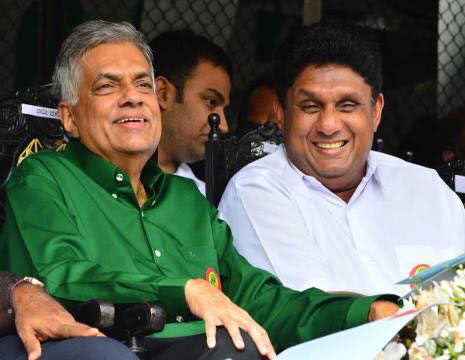
As reported in the media, Prime Minister Ranil Wickramasinghe is to hold crucial talks with his deputy Sajith  Premadasa amid a deepening crisis over their party’s presidential candidacy.

Although there were disputes among the hierarchy of the UNP back in 1988 on similar matters the issues were not taken out onto the streets like today. Whatever the outcome of the meeting, the obvious question is what makes it different to the country whether the presidential candidate is Ranil or Sajith. The easiest way to get some idea is to compare the ruling periods of Ranil’s uncle J.R.Jayawardane (JR J) and Ranil with those of Sajith’s father R.Premadasa.  

Ranil’s political ideologies are heavily in line with the west similar to JRJ. On the other hand, Sajith is promising to follow his father’s footsteps if elected president.

 UNP, under JRJ, which came to power promising a Dharmista Samajayak” cultivated a ‘bicycle chain’ culture to beat opponents, mass rigging of elections, thuggery, an underworld, etc. and was said to have practiced same with the full patronage of its highest level.  We remember how civil rights of the late Prime Minister and the leader of the SLFP Mrs. Bandaranaike were expunged using the mammoth parliamentary powers and how she was kept out of the main political stream throughout the UNP regime led by JRJ as President and R.Premadasa as PM).

One could ask the question, remembering how personalities like Prof. Ediriweera Sarachchandra were beaten up when participating in a protest rally, whether anyone had the freedom to protest when the ‘bicycle chain’ culture was at its peak. One could also ask how the Supreme Court judges were humiliated for exercising their judicial freedom by delivering a right judgment in favour of Mrs. Vivienne Goonawardane and the reaction of the JRJ regime at that time. The repercussions of the ‘kalu juliya’ were quite evident and continued for several decades.

Due to the short-sighted policies of the UNP led by JRJ and then followed by R. Premadasa, thousands of lives of Sinhala youths, who were forced to take-up arms against suppression (among many other things), were lost during the infamous ‘bheesana samaya’.  People of this country remembered atrocities committed under ‘bheesana samaya’ and since then the  UNP (once considered as a ‘one party’ political giant) was rejected several times by the people of this until 2015, except its narrow win in 2002 with the support of LTTE and other parties formed on racial groupings.

 During the short period in power, 2002-2005, Ranil signed an unconstitutional and hence illegal agreement with a murderer, Prabhakaran, who was wanted by the Interpol and was sentenced to 200 years imprisonment by the high court of the country. An enormous support was given to the terrorist outfit during his tenure of office under this treacherous agreement. Fortunately, the people of this country was clever enough to sense the danger posted on the national security and the sovereignty of the country and to defeat the UNP and its short-sighted leader twice, once in 1994 and then in 2005.

The entire country is now aware of what the UNP regime (which came to power in 2015 promising a Yahapalanayak” ) has done, commencing from its notorious Bond Scam, hunting political opponents, selling national assets,  disrespecting rights of the people by not holding elections,  completely disregarding country’s national security and the economy.  

Both the presidential aspirants of the UNP, Ranil and Sajith, who are confused and apparently depressed due to their own failures, could not yet feel the heartbeat of the people and the dangers facing the country today. Instead they are still singing the old songs of maximum devolution” to please the extremist racial elements aiming their votes to stay in power.

S. AKURUGODA

මේ ගෙවී යන්නේ රනිල්ගේ මෙන්ම එක්සත් ජාතික පක්ශයේ අවසාන දේශපාලන සති කීපයද?

September 12th, 2019

සුදත් ගුණසේකර

12.9. 2019.

මරණ තුනක් දැක මිනිසෙක් පැණි කෑය” කියා පැරැණි කියමණක් ඇත. මට ඒ කතාව මතක් උනේ මේ දිනවල රනිල් ඉදිරියේ ඇති දේශපාලන මරණ තුනක් තිබියදීත් ඔහු ඒ කිසිවක් ගණන් නොගෙන අසන්වේදීව සිටින සැටි දුටු විටය.

එනම්  පළමුව ඔහු ජනාධිපති තරඟයට ඉදිරිපත්වීම, දෙවණුව සජිත්ට ජනාධිපති අපේක්ෂ්කත්වය දීම  හෝ තෙවණුව පක්ශය තුලින් හෝ ඊට පිටින් වෙනත් කෙනෙක් ඒ සඳහා නම් කිරීම. මෙයින් වැඩිම සම්භාවිතාව ඇත්තේ පළමුවැන්න සිදුවීමය. මන්ද ඒ රනිල්ගේ ප්රජාතන්ත්රවාදයේ විශේෂ ලන්ක්ශනයක් වන බැවිනි.

එහෙත් මේ තුනෙන් කුමණ තීරණයක් ඔහු ගත්තත් රනිල්ගේ දේශපාලනය මෙන්ම එක්සත් ජාතික පක්ශයේ අවසානයද ඒ සමඟින්ම සිදුවීම නම් අනිවාර්යෙන්ම සිදුවන බව සක්සුදක්සේ දැන් පැහැදිළිය. එමනිසා මෙහිදි පැරණි කියමනට දැන් තවත් එකක් එක්වී එය මරණ හතර දකවා වැඩිවී මරණ හතරක් දැකත් පැනිකෑ රනිල් වගේ’ කියා අලුත්ම කියමණක් අපේ උපහැරණමාලාවට එකතුවනු ඇත.

මන්ද රනිල් ඉදිරිපත් වුවත් ඔහු නිසැකයෙන්ම පරදින නිසාය. ඒ තරමටම මේ රටේ මිනිසුන්ට ඔහු දැන් එපාවී ඇත. එක්සත් ජාතික පක්ශය තුල දැනට පවතින අර්බුධය අනුව ජනාධිපතිවරණයෙන් පසු නිරනණුමානයෙන්ම රනිල්ට පක්ශ  නායකත්වය අහිමි වනු ඇත. දෙවනුව සජිත් ආවත් ඔහුත් පරදිනු ඇත. එහෙත් චන්දයෙන් පසු ඔහු පසුපස සිටින මන්ත්රීවරුන් ඔහු පක්ශ නායකයා වශයෙන් පත්කරගනු ඇත.  එසේ වූ විටද රනිල්ට් නායකකම අහිමි වනු ඇත. සජිත්ට එ ජා ප අපේක්ශකත්වය නොදීම  නිසා ඔහු  වෙනත් පක්ශයකින් හෝ ස්වාධීනව  ආවොත් ගම් මට්ටමේ වැඩි පිරිසක් ඔහුට චන්දය දීමට ඉඩ ඇති නිසා ජනාධිපති තරඟයේදී දෙමළ හා මුස්ලිම් චන්ද සෑහෙන ප්රමානයක් ලබාගැනීමට හැකි වුවද, ගෝටාභයට ගව් ගානක් පසුපසින් සිටින සජිත්ට 2 වන තැන හිමිවනු ඇත. මා දකින අන්දමට මේ දෙදෙනා අතර පරතරය අහසට පොලව වැනි වේ යයි මට සිතේ.  එසේ වුවහොත් රනිල්ට හිමිවනු ඇත්තේ 3 වන තැනය. ඒ නිසාද රනිල්ට නායකත්වය අහිමිවනු ඇත.තුන්වණුව මේ වතාවේ එක්සත් ජාතික පක්ශ කඳවුරෙන් කවුරු ආවත් ඉස්ථිර වශයෙන්ම ඔහු පරදින නිසාද රනිල්ට පක්ශ නායකත්වය අනිවආර්යෙන්ම අහිම්වනු ඇත. රනිල් ආණ්ඩුවේ බටහිර ගැතිකම, රට ජාතිය පාවාදීම, සසුනට හා භිෂූන්ට කෙරෙණ හිරිහැර, දෙමළ මුස්ලිම් දීන භාවයේ ගැතිකම මෙන්ම හොරකම. ධූෂනය, වන්චාව හා බොරුව නිසා ඇන් මේ රටේ බහුතරයට මේ රජය තිත්තෙන්ම තිත්ත වී හමාරය

කිසිදිනක අවසන් නොවෙන රනිල් සජිත් සාකච්චා හරියෙට නොකෙරෙන වෙදකමට කෝඳුරුතෙල් හත් පට්ටයකුත් තවත් ටිකක් ඉල්ලූ කථාව මා සිහියට නන්වයි.

මා දකින ආකාරයට නාමයෝජනා භාරදෙන අව්සාන දිනය දක්වාම රනිල් සජිත්ට පක්ශයේ නාම යෝජනා නොදෙනු ඇත. ඒ මේ කෙසේ වුවත් මේ කල් මැරීම නිසා එ, ජා. පාක්ෂිකයින් අතර කළකිරිම හා බෙදිම වැඩිවන බැවින් පසුගිය ප්රාදේශීය චන්දයේදී ලැබුණු චන්ද ලක්ශ 32 ක මේ චන්දයේදී 20 ක් පමණ දක්වා හෝ ඊටත් වඩා  අඩුවීමටද ඉඩ ඇත. ඒ චන්ද  ටිකද රනිල් සහ සජිත් අතර බෙදුණුවිට සිදුවන්නේ කුමක්දැයි දැන් ඔබට සිතාගත හැක.          එ ජා ප යේ මෙම අර්බුධය නිසා කළකිරෙන අයද පක්ශය අත් හැර මේ අවස්ථාවේදී පොදු ජන පෙරමුණට එක්වීමටද බොහෝ ඉඩ ඇත.මේ අනුව ඊලඟ මහමැතිවරණයේදී සිදුවන දේ ගැන දැන් ඔබට සිතාගැනීමට අපහසු නොවනු ඇත. ඇතැම්විට එය මහා දේසපාලන සුනාමියක් වීමටද ඇත

මේ සෑම සිදුවීමකම අවසාන ප්රතිඵලය වනුයේ රනිල්ට එ ජා ප නායකත්වය මෙන්ම ජනාධිපති කමද අහිමිවී වසර 25 ක අසාර්තකවූ හා සුන්වූ බලාපොරුත්තු පොදි බැඳඟෙන දේශපාලනයෙන් සදහටම සමුගැනීම සහ එ.ජා.පක්ශයට 1956 න් පසු ලැබෙන, එසේම ඇතැම්විට  ඊටත් වඩා අන්ත පරාජයක් ලැබෙන බවනම් පැහැදිළිවම කිව හැක.  

“අරලිය ගහ රනිල්ට මෙන්ම එ. ජා. ප. ටද  දේශපාලන වශයෙන් එල්ලුම්ගහක්” වියහැකි බව මා පවසනුයේ මේ නිසාය.

තවදුරටත් එය සිදුවනුයේ මේ අන්දමටය.ජනාධිපති වරණයෙන් පරාජය වීමත් සමඟම පක්ශ නායකත්වයද ඔහුට අහිමිවණු ඇත. ඒ සමඟම දසක ගනනාවක් තිස්සේ අතිශයින්ම ප්රජාතන්තර විරොධීව පවත්වාගෙන ගිය ඔහුගේ කෘතියාධිකාරි  මණ්ඩලයද අවසන් වනු ඇත.ඊට පසු පක්ශයේ නායකත්වයට පාක්ෂික මන්ත්රී වරුන් විසින් සජිත් පත්කරගන්නා නිසා විවස්ථාව අනුව සජිත්ගේ කෘතියාධිකාරි මඬළයක් එනු ඇත. ඉන් පසුව ඔහුට පක්ශය සාර්ථක භාවය කරා මෙහෙයවිය හැකිවේද යන්න වෙනම ප්රස්නයකි. වෙනත් ප්රබල එසේම ජනප්රිය සින්හල බෞද්ධ නායකයකු පක්ශය තුලින් ඉස්මතු නොවූවහොත් සමහරවිට ශ්රී ලන්කා නිදහස් පක්සය මෙන්ම  එ ජා ප ද අතීතයට එක්වීම සිදුවීමට බොහෝ දුරට  ඉඩ ඇත. වර්තමානයේ  එ. ජා. ප. සිටින දෙවන පෙළ පුද්ගලයින් අනුව එවැනි හැකියාවක් ඇති අයකු සිටින බවක්ද නොපෙනේ.ඒ අනුව ඊට පසු ප්රබල නායකයකු පක්ශය තුලින් ඉස්මතු වීමේ ඉඩකඩද අවම මට්ටමක පවතින බැවින් සමහරවිට ශ්රී ලන්කා නිදහස් පක්සය මෙන්ම  එ ජා ප ද ලන්කා දේශපාලන ලෝකයේ අවලඟු කාසියක් බවට පත්වී අතීතයට එක්වීමට බොහෝ දුරට ඉඩ ඇත.

වර්තමානයේ එ. ජා. ප. සිටින දෙවන පෙළ පුද්ගලයින් දෙස බලන විට එවැනි හකියාවක් ඇති අයකු සිටින බවක්ද නොපෙනේ. එම නිසා චන්ද්රිකා සහ සිරිසේන යන දෙපළ විසින් 2014 දී ශ්රී ලන්කා නිදහස් පක්ශය මිහිදන් කළ  නිසා ඒ හිඩැස පිරවීම සඳහා ශ්රී ලන්කා පොදුජන පෙරමුණ බිහිවූවා මෙන් මේ හිඩැස පිරවීම සඳහාද නවතම පක්ශයක් ඉස්මතු  වීමටද ඉඩ ඇත. මේ අනුව රටට ,දැයට හා සසුනට හිතැති ශ්‍රි ළන්කා නිදහස් පක්ශය විනාශකිරීමේ සාපය චන්ද්‍රිකා සහ සිරිසේන යුගලට හිමිවන අතර එක්සත් ජාතික පක්ශය විනාශකිරීමෙ ගෞරවය රනිල්ට හිමිවෙයි.ඒ මන්ද සුද්දා විසින් සින්හල ජාතියත්, සම්බුද්ධ  සාශනයත් ඒ වගේම මේ රටත් විනාශකිරීම සඳහා 1948 දී අටවා ගිය මේ රටේ ජාතීන් කීපයක් තිබෙන බවට  පැලකර ගිය මිත්යාව වැරදිමකින් හෝ අවසන් කිරීමට ඔහු කොටස්කාරයකු විම නිසාය.

කෙසේ වුවද විශේෂයෙන්ම පසුගිය අවුරුදු 4 1/2 ක ඊනියා යහපාලන කාලය තුල ඔහුගේ රජය අසීමිතව සිදුකොට ඇති බටහිර රටවලට ගැතිවීම සහ මේ රටට සිදුකොට ඇති වෙනත් අප්රමාන පාවාදීම් සහ බුදුසසුණට හා සින්හල ජාතියට සිදුකොට ඇති අකටයුතුකම් වෙණුවෙන් අනිවාර්යෙන්ම ඔහුට දිට්ඨදම්මවේදනිය කර්මය පළදිය යුතුම නිසා රනිල්ට මෙසේ වීම ගැන කිසිවෙකු කණගාටු නොවණු ඇත.

අරලිය ගහ මන්දිරය රනිල්ට දේශපාලන වශයෙන් එල්ලුම්ගහ මන්දිරයක් ව්ම මෙන්ම එකසත්ජාතික පක්සයේ මෙන්ම සිරිකොත මන්දිරයේ අවසානය වෙණුවෙන්ද දස දහසක් නමකගේ පන්ශකූලයක් දීමට මේ රටේ දේසප්‍රේමී ජනතාව මෙය මහඟු අවස්ථාවක් කරගනු ඇතැයි මම විස්වාශ කරමි.

National Security key for a Gotabaya victory

September 12th, 2019

By Amila Wijesinghe Courtesy Ceylon Today

With the UNP (at the time of writing) yet to decide on their choice of candidate for the upcoming Presidential Election, former Secretary to the Ministry of Defence Gotabaya Rajapaksa, representing  the SLPP seems to be leading the race for the presidency.

The will of the people should never be taken for granted, and this election may well swing either way – but it is worth considering the potential impact it could have on national security and best course of action for the country if the frontrunner, Gota, manages to win. The tragic events of 21 April have once again brought the subject of national security to the fore as the most pressing issue in this country.

Now Sri Lanka faces threats from groups few expected to manifest on this small island of ours. ACLED, the conflict monitoring body, has reported that ISIS has initiated an unprecedented emphasis on its global presence and operations in 2019, following their loss of territory in Iraq and Syria in 2018. Nearly 60% of Islamic State’s activity in 2019 has taken place outside of West Asia – mainly across South Asia and Africa. 

Clearly, national security will be an utmost concern to those casting their votes in the upcoming election. 

National Security policies

The current surge in popularity of Gota’s candidacy can to some degree be attributed to the people’s disgust at the apathy and sheer negligence by some in the current administration towards national security. The political dismantling of the security apparatus, coupled with a failure to address the warnings provided resulted in one of the most horrific acts of terrorist violence witnessed by this country in recent history. When the citizens of this country head to the polls, many will cast their votes to the candidate that can win their confidence in remedying the egregious failures and lapses of judgement that led to the horrors of the Easter bombings. Gotabaya’s head start in this regard and his (and former President Mahinda Rajapaksa’s) record of eradicating LTTE terrorism will place him in a strong position at this election. 

Gotabaya has repeatedly emphasised that national security will be his top priority if he is elected. 

National security is of course a continuing obligation, and what is more important than election-time platitudes, is the action taken once the next government is in office. The mistakes that led to the Easter attacks must be addressed. This will have to involve difficult, forthright and introspective analysis within the Government agencies. The rush to dismantle the security apparatus by the present regime was criticised by many, but few expected the consequences to present themselves so soon. 

The overhaul of Sri Lanka’s national security strategy will be a difficult but vital process and must include; 

Provision for the National Security Council to be established as a legal institution with a clear mandate and agenda – Its functions must be officially set out with consistent meetings to assess and strategise in relation to security. The NSC should have specialised national security advisors and a permanent secretariat to ensure that the functions of the agency are carried out systematically and efficiently. 

Co-ordination of agencies

Different sectors of security such as the intelligence, police and civilian sectors often operate according to competing interests and rivalries. Such disunity is clearly inimical to the interests of security. Strong leadership is needed to harmonise the workings of these different sectors. 

Move beyond reactionary policy-making

 We often see an intransigent and short-sighted approach to making policy, which should never be the case for security. Concerns should not only be viewed individually, but as a whole with a long-term strategy. Policy development should be clear in its strategy and must have contributions from a wide range of expertise. It will not be enough to react, ad hoc, to each threat – but to analyse the root causes behind radical ideology. The focus should be on identifying risk factors and operating on preventative steps to pre-empt extremist activity. 

Tackle corruption and inefficient at bureaucracy at all levels

 This is a pervasive issue in Sri Lanka and one of the largest barriers to the nation’s progress and the citizen’s confidence in its security. 

Ensure adequate expertise

Security is often viewed as the exclusive domain of the military, but it is in fact a multi-faceted issue that benefits from a wide range of input. Academics and professionals can provide invaluable contributions of expertise in areas such as international relations, law, economics, public relations, defence analysis, technology. Effective security policy requires a cumulative effort of combining all these different fields of research.  

Business confidence

The steep drop in business confidence in Sri Lanka has been drastic. May 2019 saw the lowest level of business confidence in over a decade. There is an intrinsic relationship between a country’s economy and its national security. A stable country promotes investment, attracts foreign expertise, encourages domestic talent to remain, brings in tourists and boosts business confidence. On the other hand, a strong economy allows a country to invest in its people, to raise people out of poverty and to eliminate the harsh living conditions that allow violent extremism to fester. 

Countries such as Singapore (which Sri Lanka often aspires towards) would never have experienced a fraction of their success without the stability they could offer potential investors. In half a decade, with negligible national resources, Singapore was able to transform their economy far beyond expectations. Whichever, side comes into power after the upcoming elections in Sri Lanka, they must ensure consistent economic policies and be able to win the confidence of investors through stability. 

International relations 

The failure of the present government to react to warnings provided by Indian intelligence clearly demonstrates a breakdown in communication. It also shows the importance of collaboration with international partners to counter extremism. 

Undoubtably, many Western countries will not be thrilled at the prospect of a Gota presidency. This is the result of a mismanagement of international relations that must not be repeated. Countries such as the US have by far the most experience indealing with terror groups such as ISIS, much more than Sri Lanka. However, this does not mean that we have to capitulate to any infringement of national sovereignty. The first Prime Minister of Singapore Lee Kwan Yew was famous for his integrity – once refusing to yield to the CIA who were discovered conducting illegal operations without governmental consent, who then tried to bribe him with millions of dollars to keep quiet. Instead they were forced to retract and apologise. 

China has increasingly become one of Sri Lanka’s most important strategic partners. The UNP Government’s ill-advised decision to halt Chinese development projects backfired spectacularly in a clear demonstration of the perils of being too reactionarily political with international business. Both GR and MR are well-known to have better relations with China, and we may see increased investment if GR wins the Presidency. However, many people (both domestically and internationally) are concerned about increased Chinese presence in Sri Lanka. Whether or not these fears have merit, it is less than ideal to rely entirely on one country for development. Our partnerships with many other countries still hold much potential. 

India will be closely watching this election, and their fears of Chinese influence in Sri Lanka must be assuaged. If they are diplomatically balanced, India can provide a much-needed boost to Sri Lanka’s economy with investment and trade. Furthermore, as our closest neighbour they will be highly concerned about the advent of fundamentalist extremism in Sri Lanka, and keen to collaborate to ensure security in both countries. Whilst Rajapaksas’ relations with India had decidedly cooled after the last Presidential elections, it seems that they have taken steps to remedy this – as seen in the concerted diplomatic push seen during MR’s visit to India. 

It is clear that national security is given high priority on Gota’s agenda, and the current climate places him in a strong position for the Presidential Election. However, there is a long road to establishing security in this country – and we must prioritise a holistic approach to security. We should prioritise addressing past mistakes, eradicating inneficient bureaucracy/corruption and incentivise young educated Sri Lankans with international exposure to return and contribute their skills to the country.

The writer is a Lawyer with LLB (Hons), LLM (Public International Law), Barrister-at-Law (England and Wales), Partner at the West End Law Centre and Postgraduate (PhD) Researcher at the University of Durham.

 CT Web 02:00 AM Sep 12 2019

නුතන තාක්ෂණික විප්ලවයට නායකත්වය දිය හැකි, රාජ්‍ය නායකයකු බලයට පත් කරමු.

September 12th, 2019

චන්ද්‍රසේන පණ්ඩිතගේ විසිනි 

මවුකුස පිළිසිඳ ගැනීම යනු, විශ්වය හරහා පැයකට කිලෝ මීටර් 928,000ක් වේගයෙන් ගමන් කරමින් තිබෙන සෞරග්‍රහ මණ්ඩලය නම්වූ විශ්වීය පියාසර යාන්ත්‍රණයට ගොඩ වැදීමයි. මේ යාන්ත්‍රණයට ගොඩ වදින මිනිසා, උපරිම වශයෙන් වසර 100ක කාලයක් ජීවත්වීම සඳහා වරම් ලබන අතර, එය ස්වභාවය විසින් උරුම කරයි. ජීවත්වීමට අවැසි ධනය  කාලය වන අතර, සියලුම මිනිසුන්ට එක සමානව එම ධනය උරුම කරදීම ස්වභාවයේ රිද්මයයි. මේ උරුම කරන කාලය හරහා ගමනේ යෙදෙන මිනිසා සිය ජිවිත කාලය තුලදී, උපරිම වශයෙන් කිලෝ මීටර 928,000 x 24 x 365 x 100ක ගමනක් විශ්වය හරහා ගමන් කිරීමෙන් පසු සිය දිවිය නිම කරයි. වර්තමාන මිනිසා, අතීත පරපුරත්, අනාගතයේදී, මේ යාන්ත්‍රණයට ඇතුළුවීමට සිටින පරපුරත් අතර මැදි පුරුකේ සාමාජිකයින්ය. වර්තමාන මිනිස් පරපුරට උරුම කාර්යය වන්නේ, අතීතයෙන් උරුමවූ හොද දෑ වඩ වඩා පෝෂණය කිරීමත්,  නුගුණ දෑ ඉවත් කර හොද සමාජයක් අනාගත පරපුර උදෙසා ගොඩනැංවීමයි. මේ කාර්යය ඉටු කිරීමට නම් මුළු මිනිස් සමාජයටම අතීතය සම්බන්ධවත්, වර්තමානය සම්බන්ධවත්, නිර්මාණය විය යුතු අනාගතය සම්බන්ධවත් නිසි අවබෝධයක් තිබිය යුතුය.

මහා දිගු ගමනක් යාමට මේ පියාසර යානයට ගොඩවූ මිනිසුන්ගේ පැවැත්ම රදාපවතින්නේ තමන් උපත ලද, පෘතුවිය නම් වූ ග්‍රහයා මත නොව, තමන් විශ්වය හරහා මහා ගමනක නිරතවෙන මේ සෞර්යග්‍රහ මණ්ඩලය මත බව අවබෝධ කරගත යුතුය. ඒ අනුව, මේ යානයේ බලවත් උපාංග වූ හිරු, බුධ සිකුරු, පෘතුවිය, සදු, අඟහරු, බ්‍රහස්පති, නෙප්චුන්, ප්ලුටෝ යන තරු, ග්‍රහයන් හා උපග්‍රහයන්ගේ ක්‍රියාවන්ගේ බලපෑමට යටත්ව සිය ගමන යාමට සිදුව තිබේ. අනිවාර්යෙන්ම මේ සියලුම ග්‍රහයන්ගේ බලපෑම මෙහි උපදින සියලුම ජිවින්ට හා අජිවින්ටද එකසේ බලපායි.

වර්තමාන මිනිසාගේ ඇති අතිවිශේෂත්වය වන්නේ කතා කිරීමට ලිවීමට හා සිය අදහස් ප්‍රකාශ කිරීමට ඇති හැකියාවයි. මෙය සත්වයකුගේ ඉතාම දියුණු අවධියක් වුවද මේ නිසාම මුළු මිනිස් සමාජයම මහා ව්‍යසනයකට ගොදුරුව ඇත. හැමටම උරුමව ඇති මේ වචන එහාට මෙහාට දමා ගැසීම හා පාකර හැරීමේ බලය නිසා, ගෙවල් වල අඩදබර වීම වලින් ආරම්බව, ගම මට්ටමින් කල කෝලහාල හා ලෝක මට්ටමින් ලෝක යුද්ධයන් පවා නිර්මාණයව තිබේ. අතීත මිනිසා කතා කල නොහැකි අනිකුත් සත්වයින් මෙන්ම ජීවත්වූ සතෙකි. කතා නොකලද නිරන්තරයෙන්ම සිතමින් කාලය ගත කල මේ මිනිසා අපුරු දේවල් මනසින් අවබෝධ කරගත් අතර, ඒ අවබෝධ කරගත් හා ග්‍රහණය කරගත් දැනුම් කන්දරාව තම සිත තුල රදවාගෙන සිටීමේ උපරිමය ඉක්මවූ පසු ඒවා අන්‍යන් හා හුවමාරු කර ගැනීමට මහා පරිශ්‍රමනයක් දැරීමේ පලයක් වශයෙන්, කතා කිරීම සදහා භාෂාවන් නිර්මාණය විණි. භාෂාවේ උපත මහා විප්ලවයක් විය. කතා කරන මිනිහා සිතන මිනිහාගෙන් වෙන්වූ අතර, මිනිසුන් අතර කැපී පෙනෙන්නා බවටද පත්විය. සමාජය පරිනාමය වෙමින් ඉදිරියටම ගමන් කල අතර, ඊට පසු විවිධ ආකාරයේ සමාජයන් හා සමාජ ක්‍රමයන් පසුකර ආ මිනිසා වර්ෂ 1750 අවදියේදී නව මාවතකට පිවිසිණි. එය අප විසින් කාර්මික විප්ලවය නමින් හදුන්වනු ලැබේ.මේ කාර්මික විප්ලවය මුළු ලොවම උඩු යටි කරමින්, ධනවාදය නම්වූ දේශපාලන දහරාව සමස්ත පෘතුවි තලය තුලම ස්ථාපිත කරනු ලැබූහ. එම විප්ලවීය ක්‍රියාදාමයේ, හොද හා නරක මුළු මහත් ලෝකයම වෙලාගෙන ඇති තත්වයක් ඉන් වසර 200කත පසු, එනම් වර්ෂ 1950 ගණන් වලදී නවයුගයක ආරම්භය ක්‍රම ක්‍රමයෙන් මෝදු වන්නට විය. මෙසේ ආරම්භවූ අභිනව යුගය, මේ වන විට එම යුගයේ ළමා අවධියට අවතීර්ණව සිටි. ළමා අවධියේදීම මහා විශ්කම් දක්වමින් සිටින ආකාරයත්, සෑම තප්පරයක් පාසාම ධනවාදය විසින් ස්ථාපිත කර ඇති යදම් බිද දමමින්, ඉදිරියටම ගමන් කරන ආකාරය දකිමින් නරඹමින් සිටින්නෙමු. මේ ආශ්වාදනීය යුගය, නුතන තාක්ෂණික යුගය යයි හැඳින්වේ.

ශ්‍රී ලාංකීය ජනතාව මානස තලය පෝෂණය කර ගැනීම සඳහා අවැසි සෑම සියලු දෙයින්ම පරිපුර්ණ ජාතියකි. ඒ සඳහා අවැසි දාර්ශනික මෙවලම් ඇති තරම් අප භුමිය සතුව ඇත. බුද්ධ දර්ශනය, හින්දු දර්ශනය,  කිතුනු දහම හා දේශපාලනය හා තදින්ම බැදුන මාක්ස්වාදී දර්ශනයද මේ භූමියේ වසන ජනතාව හා නිතරම ස්පර්ශ වෙමින් පවතී. කාර්මික විප්ලවය විසින් ස්ථාපිත කල යුගය නිම වෙමින්, නව තාකෂණික යුගයට පිවිසීමේ අවස්තාව උදාව ඇත. එය විසින් ජනතාවට සෘජුවම අතිමහත් ධනපල රාශියක් උදාකරදීමට නියමිත වුවද, පිරිහුණ ධනවාදය මේ බිම අතහැරදා යාමට ඇති අකමැත්ත හේතුවෙන් නුතන තාක්ෂණයේ පල මෙරට ජනතාවට ලබා ගැනීමේ දුෂ්කරතාවයන් රාශියක් ඉස්මතුව පවතී.  නමුත් මෙරට ජනතාවගෙන් අති බහුතරයක් කාර්මික විප්ලවයවත්, උදා වෙමින් පවතින තාක්ෂණික යුගය සම්බන්ධවත් කිසිදු අවබෝධයක් නැත්තෝ බව මෙරට ජනතාව, වත්මන් පාර්ලිමේන්තුවත්, විධායකය හා අධිකරණය යන මධ්‍යස්තානයන්ගේ ක්‍රියාකාරිත්වය තුලින් මනාව දකී. කුඩා අවධියේදී අපයෝජනයට ලක්වෙන් දියණියකගේ නඩු තීන්දුව ඇය විවාහවී මවක තත්වයේ සිටින විට නිකුත්කරන  බඩගාමි අධිකරණ සංස්කෘතියක් උරුම ජාතියකට නුතන තාක්ෂයේ අධිබල ප්‍රවේගකාරිත්වය ඉතාම අත්‍යවශ්‍ය වන්නේ, මේ බඩගාමි දුෂිත රාජ්‍ය යාන්ත්‍රණයට තදුරටත් මෙරට ජනතාවගේ ප්‍රශ්න විසදීමට කිසිදු මාවතක් විවරව නැති බැවිනි. වර්තමානයේදී පවතින රාජ්‍ය යාන්ත්‍රණයම නුතන තාක්ෂණයට එරෙහි බලවේගයක් සේ නැගී සිටින්නේ මහලු දුෂිත ධනවාදය චප්ප කරන ගල් රෝල නුතන තාක්ෂනය බව අවබෝධකරගෙන සිටින බැවිනි.

පිඩාවට පත්ව  සිටින ජනතාව තමන්ගේ ගැටළු විසදීමට නුතන තාක්ෂණයට කල හැකි කාර්යයන් මොනවාදැයි දැනගත යුතුය. නුතන තාක්ෂණයට කල හැකි කාර්යයන් ගණන පොත් ගණනාවකින් ලියා නිමකළ නොහැකි බැවින්, ජනතාවට මේ වනවිට බලපාන කරුණු කීපයක් පමණක් සදහන් කරාමු.

1. ලංකාවේ සිටින දක්ෂම ගුරුවරයාට එකවරම මුළු රටේ දරුවන්ට ඉගැන්වීම මේ තාක්ෂණයට කල හැක. මේ තින් විශාල පරිවර්තනයක් අධ්‍යාපන ක්ෂේස්ත්‍රය තුල සිදු කල හැක.

2. ඒ උගන්වපු විෂය තමන්ට අවැසි වෙලාවට, අවැසි වාරගණනක් නරඹා අවබෝධකර ගැනීමේ හැකියාව තාක්ෂණයට මේ වනවිටත් උරුම කරදි ඇති අතර අපට කිරීමට ඇත්තේ එය මේ රටට හදුන්වාදීමයි.

3. විශ්ව විද්‍යාල සිසුවාට ගෙදර සිට තමාට දේශනා වලට සහභාගිවීමේ වරම් පුදකරමින් විශ්ව විද්‍යාල වරම් ලබන සියල්ලටම විශ්ව විද්‍යාල වරම් ලබාදිය හැක. අවැසි වෙලාවට තාක්ෂණය හරහාම තම කථිකාචාර්ය වරුන් හා සම්බන්ධවීම තාක්ෂනය හරහාම කල හැක.

4. විදුලිබල උත්පාදනය හා පරිභෝජනය ඒ ඒ නිවැසියන්ට ලබාදී තම විදුලි බිල ඉතා පහල මට්ටමකට ඇද දැමීමට මේ තාක්ෂණයට හැක.

5. මුදල් නෝට්ටු භාවිතාව අවම කර හැමදෙනාවම ඉලෙක්ට්‍රොනික් මුදල් භාවිතාවට හුරු කිරීමෙන් කිසිවෙකුගේ මුදල් කිසිවෙකුට හොරකම් කිරීමේ හැකියාව නැති කල හැකිය. මේ තුලින් පගාදීමේ සමාජය අහෝසි කල හැකිය. මෙය අනාගත ලෝකය තුල ස්ථාපිත වෙන මුදල් සංසරණ ක්‍රියාවලියයි.

මේ ස්වල්ප කරුණු තුල ඇති දෑ කිරීමෙන් වුවද මහා සමාජ පරිවර්තනයක් සිදුකල හැකි අතර ඒ සදහා ඊට උචිත නායකත්වයක් මේ රට තුල ස්ථාපනය කල යුතුව තිබේ. මෙවන් කාර්යයක් කිරීමට තරම් ඉහල මානසිකත්වයක් ඇති අයෙක් කිසිදාක බලය ලබා ගැනීම උදෙසා අනිකුත් අයට ගරහමින් කාලය කා දමන්නේද නැත. එවැනි අපේක්ෂකයෙක්  මේ රටේ රාජ්‍ය නායකත්වය සදහා බලයට පත් කරගත යුතුය. මේ අවස්ථාවේදී රාජ්‍ය බාධක මධ්‍යයේ, අන්තර්ජාලය තුල තම මත පළකරමින් අන්තර්ජාලීය පාර්ලිමේන්තුවක් නිර්මානයව ඇත. දැන් ජනතාව සෘජුවම රාජ්‍යනායක්ත්වය සමග හොදින් වචන හුවමාරු කර ගනිමින් සිටි.එය නුතන තාක්ෂය ජනතාවට පුදන ලද අගනාම් තාග්‍ය මෙයයි.  මෙය තව තවත් සංවිධානාත්මකව පෝෂණය කිරීම සඳහා නොමිලේ අන්තර්ජාල පහසුකම් සපයා මුළු රටම එකිනෙකා හදුනන ජාලයක් නිර්මාණය කල යුතුව ඇත. ඒ සදහා සුදුසුම නායකයා තම හැකියාවන් පෙන්වා ඇති නායකයාද වන්නේ ගෝඨාභය රාජපක්ෂයන්ය. එබැවින් අපි සියලු දෙනාම එකාවන්ව එතුමාගේ ජග්‍රහණය වෙනුවෙන් පෙළ ගැසී සටන්වදිමු. ඒ අපට පැවරී ඇති යුගයේ කාර්යභාරයයි.

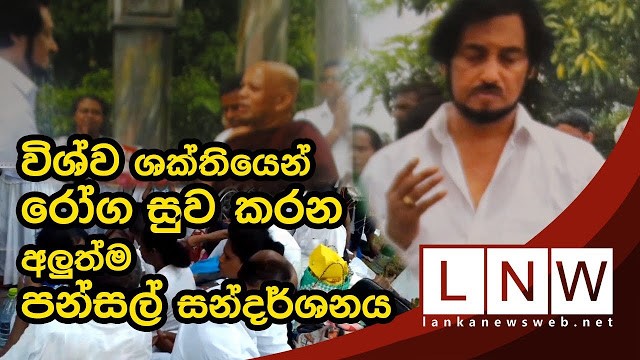
විශ්ව ශක්තිය මගින් ලෙඩ සුව කිරීම සහ දීගොඩ කුමාර

September 12th, 2019

වෛද්‍ය රුවන් එම් ජයතුංග 

දීගොඩ කුමාර ගේ චිත්‍ර මෙන්ම ළමා කතා මා කියවා තිබේ. පාසල් කාලයේදී දීගොඩ කුමාර විසින් ලියන ලද මිහිර පත්තරේ පළවූ චිත්‍ර කවියක් මට තවම මතකය.

පාසල වෙත මම යන විට
කකුල කැඩුනි කළු ගලකට
යන්ට බැරුව සිටින කලට
ලැබුනා ඉබ්බෙකුගෙ පිහිට

එදා කවි කතන්දර චිත්‍ර ඇන් ද දීගොඩ කුමාර  විශ්ව ශක්තිය මගින් ලෙඩ සුව කිරීම ආරම්භ කොට තිබේ. 

ඉතා පහසුවෙන් මුලා කල හැකි ශ්‍රී ලාංකික ජනතාව මෙම විශ්ව ශක්ති මගින් , එලොවින්  ආ ජීවකයන් මගින් ලෙඩ සුව කිරීම විශ්වාස කරති. මේ නිසා කපටි ජාවාරම්කරුවෝ  ඕනෑම ලෙඩක් සුව කරන ජීවකයෝ බවට පත් වෙති. ඔවුන්ට ප්‍රචාරය ලබා දීමට සහ සෙනඟ ඇද්දවීමට සඳහා තවත් කොටසක් සිටිති. මොවුන් අනියම් ලෙස අදාල වෙදාගෙන් යැපෙන්නෝය.

තවත් සමහරක් භින්නෝන්මාද (schizophrenia)  ලක්‍ෂණ නිසාද තමන්ට විශ්ව ශක්තියක් තිබෙන බව කියා ලෙඩුන් සුව කිරීමට යති. මනෝ ප්‍රතිකාර අවශ්‍ය කෙරෙන මෙම හඳුනා නොගත් රෝගීන්ට මෝඩ ජනතාව විසින් අනේක ගරු බුහුමන් කරමින් ඔවුන් ගේ විකාර ප්‍රතිකාර ලබා ගනිති. මේ සඳහා දිය හැකි හොඳම උදාහරණය නම් ඩිලියුෂන් හෙවත් මෝහ තත්වයෙන් පෙලෙන කාන්තාවක් විසින් රාජකීය විද්‍යාලයේ සිසුන්ට දේව කැඳ වසර ගනනාවක් පුරා පෙවීමය. එය හිටපු විදුහල්පතිවරයාටද එම කාන්තාවටද වටේ සිටි හෙන් චයියන්ටද රන් ඉල්ලමක් විය. 

මීට වසර ගනනාවකට ඉහතදී එලොවින් ආ ජීවකයෙකු නන්දසේන සූරිය ආරච්චි නම් මාධ්‍යවේදියෙකුට ගෙවීම් කරමින් විශාල සුව මෙහෙයක් පැවැත්වීය. මම ඔහුට ලක්බිම පුවත්පත හරහා 2007  වසරේ අභියෝග කිරීමෙන් පසු ඔහු තාවකාලිකව මේ වියාපාරය නවතා දැම්මේය. 

විශ්ව ශක්ති යනාදී සුව මෙහෙයුම් මගින් රෝගීන් සුව කල හැකිද ? මගේ අදහස නම් මෙහි තිබෙන ඇණවුම් චිකිත්සාව නිසා විඝටන (Dissociative) තත්ව වලින් පෙලෙන රෝගීන් සුවය ලබති. නමුත් බරපතල මාරාන්තික රෝග වලින් පෙලෙන පුද්ගලයන්ට වෛද්‍ය ප්‍රතිකාර නවත්වා සුව මෙහෙයුම් කිරීම මගින් මරණය ලඟා කර ගත හැකිය. 

විඝටන (Dissociative) තත්ව වලින් පෙලෙන රෝගීන්ට   මනෝ ප්‍රතිකාර ලබා දීමේන් විඝටන තත්වය නිසි පරිදි  සුව කල හැකිය. මෙවැනි යාඥා , විශ්ව ශක්ති ප්‍රතිකාර මගින් රෝග ලක්‍ෂණ යටපත් වනවා මිස විඝටන ආබාධය සහමුලින් සුව වන්නේ නැත

මිනිසුන් බොහෝ දෙනෙකු මෙම විශ්ව ශක්ති සුව මෙහෙයුම් කරා ඇදෙන්නේ ඇයි? මාගේ අදහස නම් ලංකාවේ වෛද්‍යවරුන් බොහෝ දෙනෙකු තුල තිබෙන සන්නිවේදන ඌනතාව නිසා රෝගීන් වෛද්‍ය  ප්‍රතිකාර කෙරෙහි  එතරම් විශ්වාසයක් නොතබති. තවද මාධ්‍ය මගින් නොකඩවා මිත්‍යාව සමාජ ගත කරන නිසා ලංකා සමාජය තුල තාර්කික බුද්ධිය යටපත් වී තිබේ. මේ හැර විද්‍යාව ඉගෙන ගත් නමුදු එය කටපාඩමින් මිස තාර්කිකව ඉගෙන නොගත් නිසා විද්‍යා උපාධිධාරීන් පවා මේ වියාජ්‍යයන්ට රැවටෙති. මේ පුද්ගලයන් ගේ මොලය විසි වන සියවසේ නමුදු හදවත තවමත් තිබෙන්නේ ගල් යුගයේය. 

දීගොඩ කුමාර  තමන් ගේ  විශ්ව ශක්ති ප්‍රතිකාර අරඹන්නේ එලොවින් ආ ජීවකයා මෙන් මාධ්‍යවේදීන් අල්ලාගෙන නොව වෛද්‍යවරු කිහිප දෙනක් අල්ලාගෙනය. මින් එක් වෛද්‍යවරයෙකු වූ සංජීව හෙයියන් තුඩුව මා සමග 1985 උසස් පෙළ පන්තියේ කොලඹ නාලන්දා මහා විද්‍යාලයේ ඉගෙනුම ලැබූ අයෙකි. වෛද්‍යවරු පවා මෙම විශ්ව ශක්ති ප්‍රතිකාර මුලාසියට  අනුග්‍රහ දක්වන්නේ මුල්‍යම හෝ වෙන යම් වාසියක් තකාද හෝ නැතහොත් තම විද්‍යාත්මක ප්‍රතිකාර ක්‍රමය තර්කානුකූලව වටහා ගැනීමට තිබෙන නොහැකියාව නිසාද කියා මම නොදනිමි. 

බොහෝ විශ්ව ශක්තිකරුවන් තම  ව්‍යාපාරය ආරම්භ කරන්නේ මම සල්ලි ගන්නේ නෑ කියමිනි. නමුත් එය පසුපස බොහෝ යටි අරමුණු තිබේ.සමහරක් අරමුණු දේශපාලන බලය ගැනීම සඳහා කෙරෙන වෑයම් ය 

 දේශපාලකයන් ද මෙවැනි ව්‍යාජ සඳහා අනුග්‍රහය දෙති . මයිකල් මුවර් කියූ පරිදි නීරෝගී තාර්කික ශක්තියෙන් හෙබි ජනතාවක් පාළනය කිරීම අපහසුය. එම නිසා ඔවුන්ව මිත්‍යාවේ සහ මුළාවේ නිබඳවම ගැල්විය යුතුය. 

වෛද් රුවන් එම් ජයතුංග 

( ලියුම්කරු වෘත්තියෙන් වෛද්‍යවරයෙකු වන අතර කැනඩාවේ යෝක් විශ්ව විද්‍යාලයේ මනෝ විද්‍යා උපාධිධාරියෙකි. එසේම වර්තමානයේ ඔස්ට්‍රියානු විශ්ව විද්‍යාලයක  මනෝ චිකිත්සනය පිළිබඳව ආචාර්‍ය උපාධිය හදාරන්නෙකි. තවද අන්තර්ජාතික  Posttraumatic Embitterment Disorder (PTED)  සම්මේලනයේ වෛඥානික කමිටු – International Scientific Committee සාමාජිකයෙකි )

THE BOHRA COMMUNITY VISITORS TO SRI LANKA SHOULD LEAVE SRI LANKA ALONE.

September 12th, 2019

By Noor Nizam – Convener “The Muslim Voice”, September 12th., 2019.

The behaviour of the Bohara family/visitors shown in the video is “NOT” acceptable and should not be tolerated.

The Bohra community visitors to Sri Lanka should leave Sri Lanka alone. They should “NOT” create unwanted problems to the Muslim community among the majority Sri Lanka people. The behaviour of the Bohara family/visitors shown in the video is “NOT” acceptable and should not be tolerated. It is very clear that one can understand that these women and men seen in the video have had a hidden agenda to “disgrace” Sri Lanka in the face of the international internet viewers. The police should trace these characters through their pictures/video stills and arrest them at the airport when they are leaving Sri Lanka and probe further their unscrupulous intentions and nip it at the bud. 

We cannot allow one or two foreigner Bohars to create communal problems to the Muslims in Sri Lanka, Insha Allah.

Link to video:

http://www.jaffnamuslim.com/2019/09/blog-post_268.html

Will contest Presidential poll if I can win: PM

September 12th, 2019

Anjula Mahika Weeraratna and Yohan Perera Courtesy The Daily Mirror

Prime Minister Ranil Wickremesinghe said today, as the UNP leader who had protected the party during trying times, he would contest the upcoming presidential elections if he could win and if otherwise, he would opt out.

He said he held a myriad positions during his political career and and now at the age of 70 years it would not be difficult for him to opt out of politics.

The Prime Minister said this at Temple Trees when he met a group of veteran UNPers from the Biyagama and Kelaniya electorates before leaving to Mannar for the inauguration of school buildings under ‘the best school is the closet school’ project.

The Prime Minister recalled how he took over the party leadership at a time when its leaders passed away one after another and how resurrected the party during difficult times and added that it was his duty to ensure victory for the alliance to be set up his leadership .

Some of the seniors were seen with watery eyes when listening to him recall his political journey. 

Appeals Court orders to acquit Gotabaya and others from Avant-Garde case

September 12th, 2019

Courtesy Adaderana

The Court of Appeal today directed the Colombo Magistrate’ Court to acquit all accused including former Defence Secretary Gotabaya Rajapaksa from the Avant-Garde case filed by the Bribery Commission. 

The decision was announced by the judge bench comprising Justices Achala Wengappuli and Arjuna Obeysekara, after considering the appeal filed on behalf of the petitioner, Gotabaya Rajapaksa. 

https://youtu.be/btGBcML41HA

Earlier today the Court of Appeal had also allowed the revision application filed by former Defence Secretary Gotabaya Rajapaksa in Avant-Garde floating armoury case, setting aside the order of the Colombo Magistrate’s Court.

The order was delivered by Appeals Court Judges Achala Wengappuli and Arjuna Obeysekara today (12).

The Bribery Commission had filed the case against Rajapaksa alleging that he had incurred a loss of Rs 11.4 billion to the government by approving the maintenance of the floating armoury owned by Avant-Garde Maritime Services (Pvt) Limited.

The Colombo Magistrate’s Court had rejected the preliminary objections raised by the former Defence Secretary challenging the allegations levelled against him by the Bribery Commission.

He then lodged a revision application stating that the rejection of his preliminary objections is unlawful, which was allowed by the Appeals Court to proceed today.

The court stated that it is of the that prosecution by” the commission, as per Section 78(1) of the Bribery Act, has now become an obsolete or redundant function with no corresponding power being conferred upon the commission in this regard under the provision of the Commission to Investigate Allegations of Bribery and Corruption Act No. 19of 1994.

The prosecution by” the commission is therefore clearly legislative residue from Section 78(1) from the statutory provisions that existed before the amendments brought in by Act Nos. 19 and 20of 1994, with no corresponding power conferred on the Commission to institute proceedings, it said. 

In the circumstances, the orders of the Magistrate’s Court and the Provincial High Court are tainted with illegality and thereby subjected to be interfered with by the Court of Appeal in exercising its powers of revision, according to the Appeal Court decision. 

Therefore the Court of Appeal set aside both the impugned orders and quashed the pending criminal proceedings before the Magistrate’s Court for want of jurisdiction. 

The Appeals Court directed the Colombo Magistrate’s Court to discharge the petitioner and 2nd to 8th accused-respondents from the proceedings of the case forthwith. 

අගමැති, ඇමති බදියුදීන්ට ස්තූති කරයි

September 12th, 2019

උපුටා ගැන්ම  හිරු පුවත්

මන්නාරම දිස්ත්‍රික්කයේ සිදුකර ඇති සංවර්ධනය සම්බන්ධයෙන් අමාත්‍ය රිෂාඩ් බදියුදීන් මහතාට ස්තුතිවන්ත විය යුතු බව අග්‍රාමාත්‍ය රනිල් වික්‍රමසිංහ මහතා පවසනවා.

අග්‍රාමාත්‍යවරයා මේ අදහස් පළ කළේ අද මන්නාරම ප්‍රදේශයේ පැවති උත්සවයකට එක්වෙමින්.

මන්නාරම ඉරුක්කලම්පිඩි මුස්ලිම් මහා විද්‍යාලයේ ඉදි කෙරුණු නව තාක්ෂණ ගොනැගිල්ල සහ ක්‍රීඩා ප්‍රේක්ෂකාගාරය අද විවෘත කෙරුණේ අග්‍රාමාත්‍ය රනිල් වික්‍රමසිංහ මහතාගේ ප්‍රධානත්වයෙන්.

රාජ්‍ය සේවක වැටුප් ගෙවීමට මුදල් නොමැති බව මන්ත්‍රී විජේදාස කියයි

September 12th, 2019

උපුටා ගැන්ම  හිරු පුවත්

රාජ්‍ය සේවකයන්ගේ වැටුප් ගෙවීමට මුදල් නොමැතිවීම හේතුවෙන් ආණ්ඩුව මහා භාණ්ඩාගාරය හරහා විදුලි සංදේශ නියාමන කොමිසමෙන් රුපියල් බිලියන 10 ක ණයක් ඉල්ලා ඇති බව පාර්ලිමේන්තු මන්ත්‍රී විජේදාස රාජපක්ෂ පවසනවා.

මන්ත්‍රීවරයා මෙම අදහස් පළ කළේ කොළඹ අද පැවති මාධ්‍ය හමුවකදීයි.

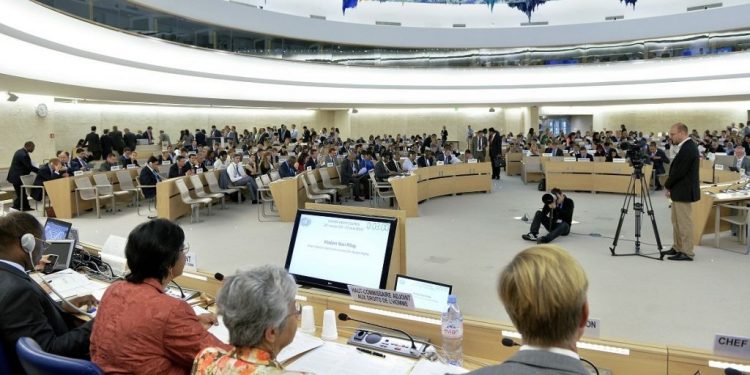
At UNHRC, Lanka staunchly defends appointment of Gen.Silva as army chief

September 12th, 2019

Courtesy NewsIn.Asia

Colombo, September 12 (newsin.asia): At the 42 nd. session of the UN Human Rights Council (UNHRC) in Geneva on Wednesday,  Sri Lanka staunchly defended its decision to appoint  Lt.Gen.Shavendra Silva as Army Commander in the face of criticism from Western countries and the human rights lobby that he has been accused of war crimes.

At UNHRC, Lanka staunchly defends appointment of Gen.Silva as army chief

Sri Lanka’s Permanent Representative A.L.A. Azeez said: With reference to the recent appointment of the Army Commander it must be noted that this is a sovereign decision taken by the Head of State. External attempts to influence decisions and internal administrative processes of public service promotions in Sri Lanka are unwarranted and unacceptable. Articulating a position of concern on this appointment by certain bilateral partners and international entities, based on allegations, is regrettable and contrary to the principles of natural justice.

On the rights situation in Sri Lanka as a whole, Azeez said: Subsequent to the most abominable terrorist attacks over 4 months ago on Easter Sunday Sri Lanka was put to test. However, we witnessed the continued resilience of Sri Lanka’s security forces to protect the country and its people, while ensuring fundamental rights, consistent with the pledges it has made before this Council. These range from the speedy restoration of security which has minimized the impact on the country’s socio-economic fabric and upheld its international reputation, the lifting of the State of Emergency within four months, providing the ICRC full access to individuals detained, engaging in an informed debate on seeking to upgrade the new counter terrorism legislation, and in deference to the sensitivities of the Muslim community, adjustment of the regulation banning full facial cover attire.”

The Government remains committed to combating hate speech and all forms of crimes directed against ethnic and religious communities and is taking steps to counter religious radicalization and violent extremism,”Azeez added.

Abolition of Executive Presidency a condition for Ranil’s support to Sajith

September 12th, 2019

By P.K.Balachandran/Daily Express

Colombo, September 12: It appears that United National Party (UNP) leader Ranil Wickremesinghe is ready to support the candidature of Deputy Leader Sajith Premadasa for the Sri Lankan Presidency, if the latter agrees to abolish the Executive Presidency and makes him the Prime Minister in a parliamentary form of government, in which real power would lie with a Prime Minister enjoying majority support in parliament .

Abolition of Executive Presidency a condition for Ranil’s support to Sajith

From the body language of Sajith and the brief statement he made after he emerged from talks with Wickremesinghe late on Tuesday, it appeared that the talks had been on the right track and that the consultations will continue. In other words, the indication was that the two sides were moving towards a meeting point.

Consultations will continue because a number of issues have to be settled. It was also reported that the minority parties and others in the Democratic National Front (DNF) would also be consulted.

Sources say that Wickremesinghe’s side had apparently out forward three conditions for support: 1. The Executive Presidency must be abolished by the next parliament to be elected in mid-2020. 2.Wickremesinghe should be retained as Prime Minister after the Presidential election at the end of this year with powers to function as per the 19 th.,Amendment of 2015. 3. The leadership of the UNP should continue to be vested with Wickremesinghe.

Since there is a widespread feeling within the UNP and its allies that Wickremesinghe cannot win a Presidential election, he ought to be happy if he is allowed to be Prime Minister and that with adequate powers. He is used to being Prime Minister, having been one for several terms. Though not a public figure who enjoys meeting people, he is an active parliamentarian and a knowledgeable leader well qualified to run a government in the modern world.

Therefore, being Prime Minister under Sajith’s Presidency may not be a bad bargain for him, besides being a practical solution to the current conflict in the party stemming from the need to win a Presidential election.

As for Sajith, a parliamentary system will enable him to become Prime Minister with executive powers any number of times. This is in contrast to the Executive Presidency which has a two-term limit. Sajith is only a little above 50 years of age, and therefore has many years to go before retirement from politics.

That Sajith’s followers are open to this arrangement was clear when one his top supporters said that many changes can be brought  about,  but the first task is to win the Presidential election, which can be done only with Sajith as the candidate.

Though Sajith had brazenly nominated himself as the candidate bypassing the official party process, in his heart of hearts, he knew that he needed the party’s stamp of authority. Only recently he said that he wants to be President with the blessings of Wickremesinghe.

In the past, several times, a ginger group of Young Turks in the UNP had pressed him to revolt against Wickremesinghe and take over the party. But he would always back out, sometimes at the last moment. He had always wanted to be in the good books of Wickremesinghe, the senior-most and the most experienced leader of the UNP. Quintessentially, Sajith is not a rebel, his recent utterances notwithstanding.

Minority Parties

In the coming Presidential election, the minority parties will be playing a critical role as Sajith, Gotabaya Rajapaksa and the JVP candidate Anura Kumara Dissanayaka will have divided the votes of the majority community, the Sinhala-Buddhists.

Sources in the minority parties say that their first choice for President is Wickremesinghe, but knowing that he will not be a winning candidate, they are ready to support Sajith though Sajith has not shown any interest in their problems and has on occasion, even portrayed himself as a dyed-in-the-wool, Sinhala Buddhist nationalist.

But for the minorities, he is UNP, and UNP has been their traditional ally among the mainstream Sinhala-Buddhist dominated parties. As one observer said, the minorities’ main aim in the coming election will be to defeat Gotabaya Rajapaksa, who is seen as being quintessentially anti-Tamil and anti-Muslim.

Gotabaya has been talking about economic development as the panacea for Sri Lanka’s ethnic and religious conflicts. But the minorities say that the problem is not economic deprivation but a growing attitudinal hostility of the majority towards the minorities. This is why Gotabaya’s economic model of reconciliation does not appeal to the minorities.

But an essential condition for the minorities to vote against Gotabaya and for the UNP, is the unity of the UNP. Unity is seen as an essential condition for winning the election.  A divided UNP may lead to many Muslims voting for the JVP or not voting at all, one Muslim leader said. The Tamils too will be less motivated to vote if the UNP does not close ranks backs one candidate.

In their talks with the UNP factions, the minority parties will of course bargain hard as each one of them has a list of demands, those of the Tamils being the longest. The Tamils’ wish list  includes devolution of power beyond the 13 th.Amendment; investigations into and accountability for war crimes; release of occupied lands and political prisoners; and the tracing of the disappeared.

The Muslims want hate speech, physical attacks and harassment by the law enforcing agencies to be stopped. The Catholics want an independent inquiry into the April 21 blasts and adequate compensation for the life and limb they had lost. The Indian Origin Tamils want electoral constituencies to be re-drawn to give them greater number of seats in representative bodies. They also seek better working conditions and opportunities for education and advancement.

Minorities For Abolition of Executive Presidency  

All minority parties want the Presidential system to be replaced by a parliamentary system. As Tamil National Alliance (TNA) spokesman  M.A.Sumanthiran once said: In a parliamentary system, the minority parties can influence the government every now and then as decision making will be in the hands of  a cabinet responsible to parliament and not in an Executive President. While a Presidential candidate needs the support of the minorities in an all-Island election, he or she can very well ignore them after getting elected.

In case the UNP leaders agree to abolish the Executive Presidency as part of their deal for party unity, the minority parties will welcome it and lend support to the UNP Presidential candidate.

They would do this also because Gotabaya Rajapaksa is firmly wedded to the continuation of the Executive Presidency as he thinks absolute power is necessary for the execution of new policies and radical economic development and for ensuring national security from ethnic and religious terrorism.

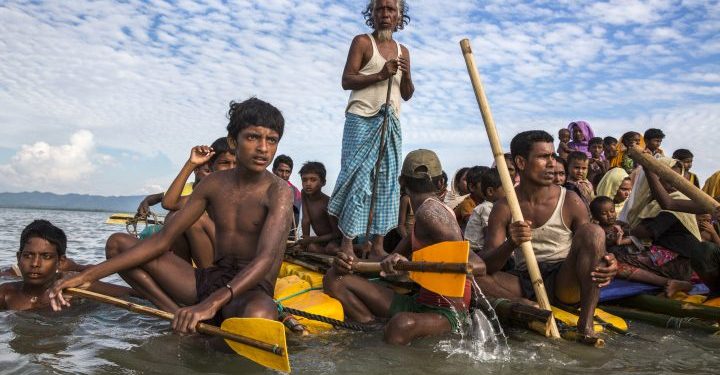
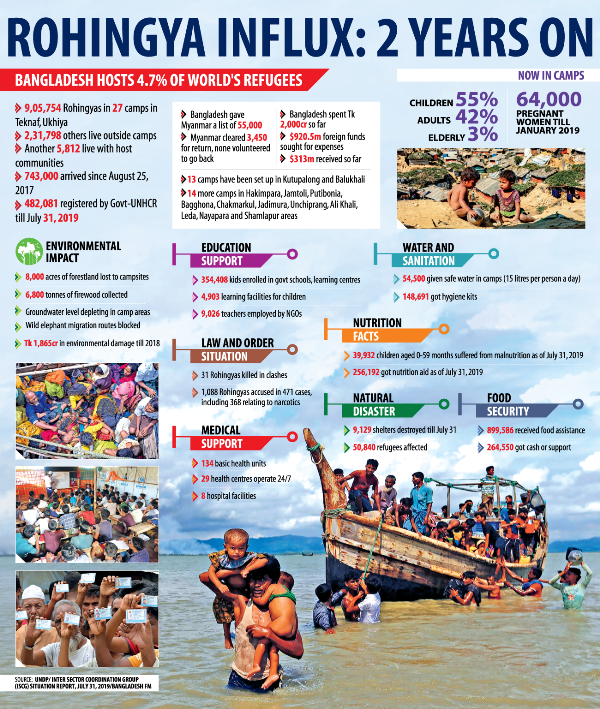
Largehearted Bangladesh pays a heavy price for hosting Rohingyas

September 12th, 2019

Courtesy NewsIn.Asia

Dhaka, September 12 (The Daily Star): Bangladesh today hosts the biggest refugee camp in the world. It became so, suddenly and brutally. The flow of refugees was not a trickle but a monsoon flood.

But unlike many countries of the world, we (Bangladeshis) rose to the occasion. It was with the warmest of hearts and deepest empathy for human suffering that we welcomed nearly a million Rohingya refugees.

That warmth of heart is on the wane though our empathy remains just as deep.

https://youtu.be/OWiDI8lYpIc

This change came gradually as we saw no end to the problem in sight. The latest instance of the mockery of an exercise at repatriation came as a rude shock. Anybody with the slightest of knowledge of the ground reality appears to have known that it would not work and yet all went through the ritual as if it was a game.

Largehearted Bangladesh pays heavy price for hosting Rohingyas

Why is the world silent about the genocide of the Rohingya people? Why the wholesale removal of nearly a million Rohingyas from their homes and throwing them out of their country not a matter of greater international attention? Why the recommendations of Kofi Annan Commission are not reflected more on the UN’s agenda?

  • At least 31 people have been killed allegedly by fellow Rohingyas in the camps
  • At least 55 Rohingyas were arrested in connection with murders
  • Many others abducted for ransom
  • Clashes among Rohingyas take place often over establishing supremacy in the camps
  • At least 10 Rohingyas, including alleged Yaba (drug) peddlers and robbers, were killed in separate incidents of gunfight” with law enforcers
  • Criminal activities including drug and Yaba dealing, murders, abductions are on the rise in the areas where refugee camps are located
  • At least 328 cases have been filed against over 700 Rohingyas over various crimes since August 2017
  • Bangladesh authorities have deployed over 2,000 policemen in the camps
Rohingya traficking

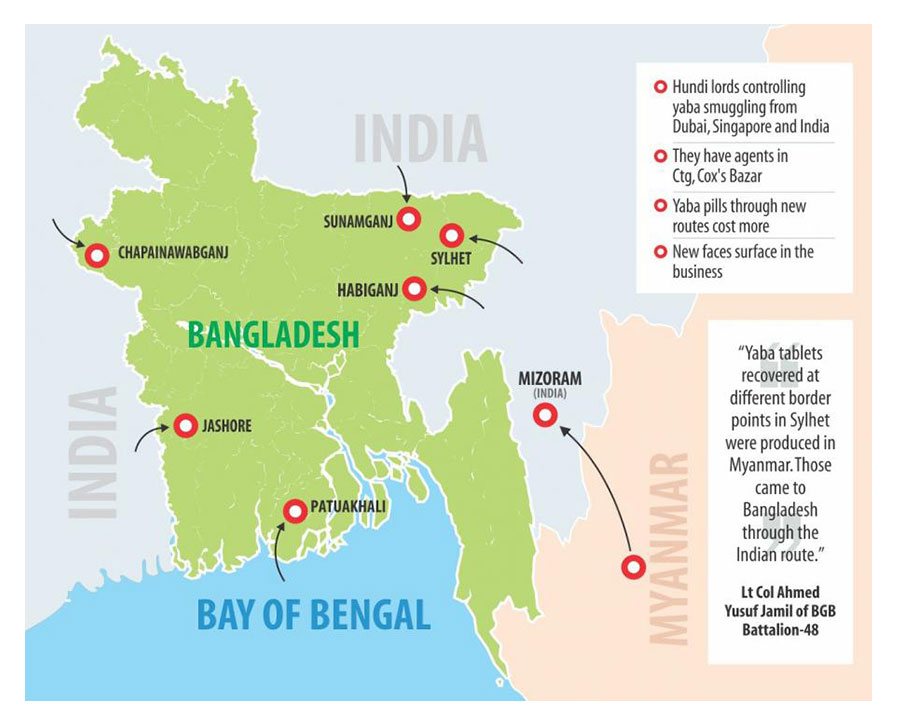
Yaba

  • Yaba smuggling and drug dealing are on the rise since the exodus began in August 2017
  • Over 20 Rohingyas, including women, have so far been held with Yaba, hemp
  • Law enforcers have made numerous Yaba hauls during separate drives in Cox’s Bazar region
  • Local drug lords are involved in syndicates that exploit Rohingyas for smuggling Yaba
  • Gangs under transnational human trafficking syndicates operate from Teknaf to send the Rohingyas to different destinations via sea routes
  • Over 130 Rohingyas were rescued by law enforcers from being trafficked from the refugee camps in Cox’s Bazar in separate drives recently
  • Rohingya trafficking in YabaTraffickers exploit Rohingya men, women, and children from refugee camps for both sex and labor trafficking, including domestic servitude, says a US report
  • Traffickers defraud and coerce Rohingya women and girls from refugee camps into sex trafficking through fraudulent job or marriage proposals, and abduction
  • Trafficking destinations include Malaysia, Thailand, Indonesia and the Middle East
  • Rohingya girls are also being exploited in child sex tourism in Cox’s Bazar and elsewhere

2019 prez poll: Gotabaya unveils his vision

September 12th, 2019

Speech by Gotabaya Rajapaksa, Viyathmaga Chairman At Viyathmaga Annual Convention 2019,

September 12, 2019, 9:07 pm 

article_image

Foreign Direct Investments across Asia is creating hundreds of thousands of jobs annually in electronics, information technology, automation, real estate and business services, adding value across the economy. This has attracted the global private equity industry to Asia, which has already surpassed Europe as the world’s second highest private equity destination after the United States.

However, what is important here are the policies we need to follow when accruing foreign investments. While strategically encouraging Foreign Direct Investment we must also safeguard our sovereignty, local entrepreneurs and businesses. We need an FDI policy that will attract investments which can transfer technologies and knowledge, and increase our productivity. We need to encourage investments into high tech industries such as Artificial Intelligence, Robotics, Internet Of Things and Big Data, for  otherwise it would take a long time if we were to develop our own expertise in these areas. By selectively bringing in foreign investments in such spheres, we will be able to leapfrog old technologies and adapt to new technological trends much faster. This will provide us what has been called by some economists, the “second mover advantage”.

Education 

The greatest resource we have with us is our future generation. The development of this human resource is the primary responsibility of a government. To make our future generation productive citizens, we must pay special attention to nourish them with the required knowledge and cultivate their skills and talents. Instead of stranding them in the education field, we must broaden their opportunities to receive a higher education or a technical training. 

In 2018 alone, about 280,000 students had failed their Ordinary Level and 99,000 had failed their Advanced Level exams. Universities had not been able to accommodate 170,000 even though they were qualified to receive a tertiary education. We cannot be happy with this situation. For a year, only 35,000 students can be accommodated into the 15 State universities and the five degree awarding non-State institutes. Even then, a majority are not following technical subjects. 

If we are to face the 21 century that is centered on technology information, then we must make large investments in both our education system and its facilities. At the tertiary level, countries across South and South East Asia are trying to significantly increase university admissions – at times doubling, tripling or even quadrupling it. Sri Lanka should not fall behind this trend. We must establish the required infrastructural facilities for this purpose in a very short space of time. By utilizing the capacities of the State universities and other State higher education institutions efficiently the number of students admitted to tertiary education can be increased. We must also use modern technology to broaden the educational facilities. Distance learning must be promoted by establishing open universities where degree courses can be followed. In this manner students can easily accrue the knowledge and skills needed to engage in jobs such as information technology, management, service sector administration that are essential to the economy. Our closest neighbor, India is implementing this program very successfully. 

India’s private education powerhouse NIIT has scaled onsite and online industry linked skills programmes to reach 500,000 students per year. Training is provided to them on demand, with tailored courses being offered to meet the needs of local and global companies. These companies range from oil rigs to tech parks, with curricular offerings expanding to service, insurance, supply chain management, programming and other sectors. Once students complete one assignment, they can return for others. This reflects NIIT’s motto: “the spirit of lifelong learning, without beginning, without end”. This industry linked education model is one that we should follow.

Furthermore, we need to raise the current diploma awarding institutes to degree courses. To do so, new curriculums need to be introduced with proper training given to the lecturers. In line with this thinking we are planning to advance the curriculums in teacher training and nursing schools to degree awarding levels. The inadequacy of degree qualified, well trained teachers is a lacunae that is already keenly felt in this field. 

Today there is a great demand in the world for nurses. In Germany alone, there is a vacancy for about 200,000 nurses. A well trained and experienced nurse can easily earn more than Rs. 500,000 from most European countries. By advancing the current three-year diploma training our nurses receive to a four-year degree course and by providing them a proficiency in English, new opportunities can be created for them to work in foreign countries according to international standards. From a country’s perspective, providing skilled workers instead of unskilled labor for foreign employment is far better and more dignified, while also providing the country with an avenue to increase its foreign exchange. 

To create employment opportunities for students who have completed their education to only either Ordinary or Advanced Level, we must establish technical and industrial colleges. This will uplift the moral of our young adults whilst providing a much needed skilled workforce to the economy. 

We should also bear in mind that Education can also be a foreign exchange earner. Instead of sending Sri Lankan students abroad, we should find ways to attract foreign students to Sri Lanka. There are countries that have pursued such a strategy very successfully. For example, nearly 100,000 Chinese students are enrolled in schools across Australia, making education Australia’s third largest export. Malaysia has started following this model in recent years, and has more than 150,000 international students studying in its higher educational institutes. If we can make the necessary educational reforms, we too can attract foreign students. 

We have already adopted a similar model at the Kotelawala Defence University. However, it is very important that we rapidly improve the standards of our other Universities to attract more students. All our State universities should strive to enhance their world rankings. Similarly, we should also encourage the private sector educational institutes in our country to gradually enhance their standards. They should introduce job specific educational programs.

It is important here is to understand the demand that exists for job specific qualifications in local and foreign market. Zoho University in India is following a very successful model.

This program provides “coding boot camps” for students who had not completed their secondary education so that they can be eligible for programming jobs. This is a model that can be adopted in Sri Lanka too to provide job specific training.

Developing Industries 

We must also understand that our opportunities are only confined to the technology field. One of the industries that we can easily develop is our tourism industry. This sector, that earned about USD 4.4 billion in 2018 has the space to grow to generate an income of at least USD 10 billion. To achieve this target, we need to attract seven million tourists. We need to thus double the hotel accommodation capacity as well as build hotels meeting with the highest standards. We would also have to increase the skilled and unskilled workforce to meet the sectors needed to service the tourism industry such as new shopping complexes, domestic flights and other transport facilities. We would also have to identify new services to provide an innovative experience to our tourists.  

The construction industry is another key growth sector that has huge potential. The domestic construction industry has already proved engineering capabilities that are on par with international standards.

When planning for our future, an industry that is of vital importance is our agriculture. One third of our people live on agricultural based sectors. We have to uplift the standard of living of this sector. Right now, we earn USD 2.6 billion from our agricultural exports, out of which USD one billion is earned by our tea. When we have a vast array of spices, fruits, vegetables, pulses, fish and many more delectables we should be able to earn much more from our food industry. Even our tea sector, according to the experts in the tea industry, can be developed further to earn an export income of over USD five billion. 

If we want to develop our agriculture industry, we need to do more research, and use modern technology. We need to bring in technological solutions such as drip irrigation, vertical agriculture, and organic food production, all of which can generate higher incomes. Instead of using high levels of fertilizer and pesticides, we have to encourage and train our farmers to engage in organic farming for better revenue. It is time for the government and the private sector to work hand in hand to transform our agriculture industry.

The first step should be to reach self sufficiency in product categories where we can minimize or avoid imports of food products. The next step is to turn our farmers into agricultural entrepreneurs, and encourage them to enter global markets and find niche markets where they can thrive. ASEAN exports of meat, fruit, tea and other agricultural goods to the Gulf States has doubled in less than a decade, contributing to their 130 billion dollars in annual trade. This is an opportunity for us to explore.

It is not only in agriculture but we need to focus on value addition in all economic spheres. Instead of exporting raw materials, we need to now promote branded products and goods. We already have success stories like Dilmah Tea in this regard. As the Government, we will need to support by giving direction, appropriate and facilitating marketing.

Environment 

Environment is the national heritage that we would be passing to the future generations. As such, we are duty bound to protect our environment. We must be conscious to invest in sustainable development that would benefit the generations to come. Therefore, we must be very sensitive to the effects of the decisions we take today. I believe we must explore further into renewable energy that can be used in both the power sector and the transport industry. Even countries that produce the most amount of oil and gas have understood their responsibility to the environment. 

Saudi Arabia has planned to initiate seven renewable energy projects in 2019 to attract total investment of USD 1.5 billion US. Saudi Arabia’s ambitious renewable energy plans seek to achieve over 25 gigawatts of wind and solar power generation in the next five years, and close to 60 gigawatts over the next decade. Kazakhstan, another country that produces Oil and Gas is investing about USD 1.2 billion over the next 5 years to generate renewable energy using solar, hydro, wind and biomass.

We must constantly create public awareness on the importance of the management of forest conservation, coast preservation, waste management, sound and energy management while also making these responsibilities part of the national policies. I am of the view that the Government should be the enabler for society to prosper and meet its aspirations. In this context, the regulatory environment should be streamlined, and government administration should be made efficient. The Government should regain its credibility by placing an internationally reputed national procurement system and procedures, a contract management system, and a transparent and accountable public expenditure management system. Undertaking such systemic reforms and institutional strengthening initiatives will enable the private sector, public sector, international lending agencies and investors to make credible and sustainable decisions on economic issues.

Democracy 

Sri Lanka is a democratic country. We were the first country in the Asian continent to obtain universal suffrage. It is through universal suffrage we gain our sovereignty. To protect the sovereignty of the citizens, rule of law becomes vital. Therefore, we have before us the responsibilities such as reviewing the constitution, revamping laws that have got obsolete with time and changing the election laws to meet the needs of today. There can only be one law in a country and that law must be equal to all.

Strengthening Democracy 

We need the support of domestic and foreign investors to accelerate the nation’s economic development. For this, we need to demonstrate that we have an independent judiciary and an efficient legal system. We should also have properly functioning dispute resolution mechanisms such as arbitration. The role of professionals, civil servants and technocrats in managing foreign relations, national security, law and order, state enterprises and government services will be explicitly recognized and strengthened.

To achieve this goal, attracting professionals to the public sector, and rebuilding confidence and trust in public servants and institutions, must be given priority. Government officials who discharge their duties in good faith and with utmost integrity should be given necessary protection through an improved legal framework. It is paramount to ensure that such a legal framework would prevent officials from being subject to politically motivated witch hunting.

Even in developed countries, clever administrators do not emerge at the same rate as lawmakers. They too spend much time arguing about law, instead of implementing policies. It is thus the responsibility of the politician to understand the need of the people and to include it in to national policies. Those policies must be enacted by the technocrats, who are actually officers with a comprehensive knowledge on the subject and are tasked with the responsibility of administrating that that sector. 

We need to marry the virtues of democratic inclusiveness with the effectiveness of technocratic management. Democratic feedback is crucial for governments to ensure that they are on the right track. To strengthen democracy, politicians must be supported by technocrats. 

In a country with a well functioning democracy, people are provided with the opportunity to express their opinion of their government through timely elections. After assuming power, the politicians must be mindful in administrative matters. They must get the support of clever administrators who are well versed in their subject area. Failure occurs every time partnership is neglected. 

I am convinced that investment and development can be fast tracked if a credible and firm decision making machinery is established within a transparent governance framework. The country has already seen the benefits of such a frame work in many flagship investments in tourism, ports and transportation, urban housing development, waste management, and city beautification during the 2010 -2014 period. We can repeat that speed and effectiveness by picking the right team to deliver the promises of a new Government. I am positive that the private sector will also be determined to contribute its best to help achieving our common objectives.

I love my country, I am proud of my country and I have a vision for my country. I seek your support to achieve that vision. Let us work together to create a prosperous country for our future generations.

Thank you.

May the Noble Triple Gem Bless you all!

NATIONAL SECURITY AND THE ECONOMY OF SRI LANKA

September 10th, 2019

BY EDWARD THEOPHILUS

The biggest mistake done by the yahapalana regime was neglecting the economy and national security and these two vital areas have clearly understood by Mr. Gotabaya Rajapaksa.  The current unofficial presidential campaign shows that except Mr. Gotabaya Rajapaksa, all other buoyant presidential candidates are reluctant to talk about the national security and voters especially Sinhala voters doubt about these presidential hopefuls, why they are reluctant to talk about the national security and why they are behaving like stupids without ensuring the national security.  If these presidential hopefuls are reluctant to talk about the national security people/voters of the country doubt whether they love to the country. Are there powerful people behind them against the national security of Sri Lanka is an unresolved question to voters when compared to Mr. Gotabaya Rajapaksa and many have a strong question whether these presidential hopefuls talking for money than working for the country. Therefore, people have strong confidence in Mr. Rajapaksa’s policies as he practically demonstrated his abilities and the strength of policy implementation process during the Rajapaksa regime. 

Yahapalana advocates persistent with a utopian state model, which was/is believed to achieve many irrelevant things in the country, but ordinary people of the country are not interested in such targets as they would not deliver caress benefits to them.  The best example for this is the behaviour of Lakehouse publications, which are publishing many irrelevant matters and people who are intending to vote for candidates opposite Mr. Gotabaya will change the mind not to vote for candidates against Mr. Gotabaya Rajapaksa as Lakehouse publications make too many lies to the country like Arjuna behaved in 1970s. The other real trend in Sri Lanka is that Sinhala people of the country is uniting with Mr. Rajapaksa as the yahapalana advocates attempted to divide the nation for political purposes and minor communities such as Tamil and Muslim in the country supported to this division of Sinhala people as it bolsters them to gain unreasonable advantages from politics and mess-ups the country.  Yahapalana advocates love messing the country focusing on unnecessary issues than achieving what people needs from firmed policies on the economy and the national security would be a hindrance to them making money and other benefits from foreign NGOs.  The real experience in the country during the past century indicated that political parties openly talked about unimportant issues but people who did not listen to such useless points of armchair criticism. People want active solutions for the issues, which are the economy and national security.

The economy and national security is the priority of all countries in the world including the USA, China, Russia, India, Europe, Japan and South Korea and others.  If any candidate ignores the two vital areas voters in Sri Lanka will regard, she/he is not suitable to be president and voting for such a candidate would be wasting votes.  Thinking in this line Mr. Gotabaya Rajapaksa is in front.

The right-wing politicians publicly expressed that they will convert Sri Lanka to a Singapore without understanding the realities.  The main difference between Sri Lanka and Singapore is the size of the population in each country.  Sri Lanka has 22 million population, which is double compared to Singapore, where has a strong market surrounding countries with a small population.  If Sri Lanka’s population is less than 10 million like in Singapore, the per capita income of Sri Lanka would have the US $ 12000 per year and such a situation is theoretically developed status with potential to a higher level of growth.  The other best example is the size of Sri Lanka’s economy is equivalent to New Zealand but people of Sri Lanka do not economically enjoy people like in NZ because of the higher population of Sri Lanka naturally prevent the economic benefits of people.  Late 1950s Sri Lanka identified issues about the size population, the rate of population growth and skills related issues, but the proposed plans to gradually resolve the issues were not successfully implemented due to misguided policies of so-called left politicians’ attitudes or beliefs. Karl Marx would have told a person born with one mouth and two hands it is not practical in modern technologically advanced states.  Although the idea of Marx was relevant to his era it is completely irrelevant to the modern era. Now Sri Lanka is facing a serious issue of an aging population and without the ability to deal with related issues.

The liberal economic policies introduced in 1978 identified the prime issue of opening the economy, despite the requirement of essential disciplines for liberal policies and the economic advocates failed to develop a regulatory framework for the stability of the country. The national security should have given priority since the early 1980s and the benefits of market economic policy expanded only to regional Sri Lanka with a higher rate of inflation created by government spending, which helped to give a reasonable price to products and services of rural people.  The regime of Mr. Mahinda Rajapaksa honestly attempted to tackle issues facing with terrorism.  During the regime of Mr. Mahinda Rajapaksa did many things but unable to control population, governance-related issues and rapid modernization consistent with technology.  The Rajapaksa regime honestly attempted to expand the economic development to the rural area, however, it was failed to convince people that the government policy was to refocus economy to attract rural people after defeating the terrorism.  When the Rajapaksa regime was defeated in 2015, the yahapalana people did not know what to do and how to do.  The advocates of yahapalana behaved like ladies who were crying for money consuming local alcohol in funeral houses without understanding the economic and security related issues. What should do to get out of the issues?  In this background, policy-makers in Sri Lanka need lateral thinking to find solutions and I would like to mention Mr. Gotabaya Rajapaksa to use his team to develop policies and procedures for the following areas.

Sri Lanka needs developing own economic system, which is not aligning to any country and the market of all countries USA, China, India, Russia, Europe and all other countries of the world are vital to make a strong export economy.  There is an intensive competition to capture the market and the competition between the USA and China gain leadership of the world influences forces Sri Lanka to stay non-align stand as the country shouldn’t play politics with these countries.  Managed capitalism should be the prime strategy, which helps everyone to be rich if they work hard and internationally competitive.  There is no doubt that Mr. Gotabaya Rajapaksa has good economic and security policies, however, I like to point out vital areas that should be worthwhile considering.

Modernization must be the slogan, catchphrase or motto of the new government.  Modernization should expand to all activities including security, economic, social and cultural activities concentrating on changing the attitudes of people, focusing on creating a responsible community for all activities of the country. People of Sri Lanka are highly irresponsible and they are used to pass the bug but the country needs a disciplined society.  The best example for this is Japan where had been implemented modernization since Meiji restoration and modernization entirely changed the attitudes of Japanese people.  The world economic forecast doesn’t look bright as IMF forecasted that the annual growth rate would be 3% and many western countries may go to a global recession and Mr. Gotabaya Rajapaksa might not able to do all what people are expecting, he must show he is capable of doing not like Mr. Sajith Premadasa playing double game and talking bullshit in front of an educated society.                                             

  • Enhancement of productivity.  The productivity of employees in the Public and Private sectors are lower and while increasing pay, productivity enhancement must be used as a part of life. Employees of Sri Lanka are highly satisfied with the increase in monetary wages than real wages and it needs policy development for productivity enhancement and increases in real wages based on the productivity of employees
  • Enhancement of Product Quality.  This is the biggest challenge.  No body like to give hard earned money for low quality products and services as what happened during the SLFP regime from 1956.  Encourage people to produce quality products and services using technology.
  •  Development of product and service quality.   Product development and product quality development are essential factors in export development.  This is not only for the industrial area, but it should be in all areas including social, cultural and religious areas, where quite behind and Sri Lanka has a difficult to attract tourists and the market because of current weaknesses.
  • Enhancement of competitiveness. Why Sri Lanka has a difficulty to attract export market because products of Sri Lanka are not competitive.  For this purpose, Sri Lanka needs learning many advises from China and working with China to enhance the competitiveness of products and services.  We can see that employees wearing clean suites, but they no competitiveness like the dress.  This is a problem with attitudes.
  • Expansion of share ownership of the country creating regional stock markets in all districts and combine value of regional markets should list in CSE.  This will boost employment opportunities and improve the stock ownership of rural people in a process of converting rural poor to be wealthier. The policy will create social democracy in the country.  No capital should be involved in public companies, but the government must observe the operations and provide advice in various ways.  This type of program supports to promote products and services development and marketing related activities.  It would give ownership of the rural economy to rural people without government spending.  This program would create more than one million new jobs to the country and stop sending women to the middle east.
  • Expanding of the ownership of public enterprises offering shares of public corporations to rural people through above mentioned public companies. A Considerable percentage of shares of public companies should give to foreigners such as people in China, India, Malaysia, Korea, Japan, Russia, and other countries.  This will ensure gaining company management skills by regional people, who will become owners of the wealth of Sri Lanka.  The action improves the foreign exchange earnings by US $10 billion and radically increase in foreign assets improving Sri Lanka’s Rupee value to US 0.50 cents. And reduce government spending and create an excess budget. (I will write further on how to change the economy)

MUSLIM-SIKH COOPERATION IN KASHMIR

September 10th, 2019

ALI SUKHANVER

According to an analysis, there are more than 1.8 Billion Muslims and more than 50 Muslim majority countries but among this huge crowd, it is something very unfortunate that there is only and only Pakistan to hold the hands of the helpless Kashmiris in their miseries and distress. This selfish rather cowardly attitude of the so-called Muslim Ummah (community) is simply a blob of shame on the serene face of the whole Muslim community. Far better in courage and determination is the Sikh community which is standing shoulder by shoulder with the Kashmiris everywhere from the valleys of Sri Nagar to the streets of London, raising slogans against Indian atrocities in the burning paradise of Kashmir. Recently when the Modi government imposed restrictions on phone and internet services in Jammu and Kashmir, just to counter the protest processions of the local people, a group of 32 Muslim girl students from Sri Nagar was on a visit to Pune. Because of the restrictions imposed on all communication tools, the girls lost all contact with their family. They were facing shortage of money too as their tour could not be completed within the planned period. So these girls approached the Sikh Gurudwara Committee in Pune for help. The members of Gurudwara committees in Pune and Delhi joined hands to arrange for their safe return to their homes. The Pune committee arranged for their air-tickets to Delhi and from there the members of another Gurudwara committee arranged for their transportation to Srinagar. The way the Sikh community provided shelter, care and support to the Kashmiri girls in trouble is no doubt marvelous.

Rajeev Khanna penned down an article in ‘The Citizen’ in the second week of this August 2019 with the title ‘Punjab Comes Out in Strong Support of Kashmiris’. The article says, ‘One state that is vociferously raising its voice in support of the people of Jammu and Kashmir after the abrogation of Article 370 and 35 A by the central government is neighbouring Punjab. Right from the government to various political organizations and civil society activists and organizations both in India and abroad, there has been opposition to the step taken by the Centre, particularly the manner in which it was done by silencing the voice of the Kashmiris’. Same level of support and care for the Kashmiris from the Sikh community is being observed all over the world. Analysts are of the view that this support is reciprocal; it is an outcome of a mutual understanding between the Kashmiris and the Sikhs. This year in the month of March a protest was arranged by a host of Sikh organizations in central London. The protesters were seeking release of Sikh prisoners in Indian jails. They also demanded end of atrocities against Sikhs and Kashmiris by the Indian government. The protest procession was joined by a large number of Kashmiri groups also who had flags of Kashmir and Khalistan in their hands. Media reports said that the protest was very much calm and peaceful but later on it turned violent as a pro-Modi group arrived at the scene and started shouting abuses at the peaceful protesters. The Scotland Yard had to intervene to normalize the situation.

There is a big problem; it’s not a small thing that (special status) has been revoked. We are extremely disappointed,” said Harbinder Singh talking to the Reuters last week. Harbinder is a businessman from Srinagar belonging to the Sikh community and his services for bringing Sikh-Muslim communities closer are well known and widely acknowledged. President of the All Parties Sikh Coordination Committee, Jagmohan Singh Raina also expressed his concerns over the present situation in Kashmir in a recent statement. He said, They (Indian Government) have committed a big blunder; they could have changed laws, but at least they should have consulted us.” He further said expressing his grave fears for the future of the Kashmiris We Kashmiris didn’t have much, we just had this special status, and now this is also taken from us. This will mean that our people will find it hard to get jobs here.”

The Sikhs are just 2% of the total population in the Indian-Held Kashmir but are spread across the state, says a recent report. From farming and government services to running bakeries and provision stores, they are engaged in all types of social and economic activities. They have a very cordial relationship with the Muslims and interestingly the illegally deputed Indian forces treat them with the same brutality and cruelty with which they treat the Muslims. In short their common sorrows and joys and their common enemy has merged them into a single identity. This Muslim-Sikh unity is not limited only to the Indian Held Kashmir; all over the world the Sikh community is providing all possible support to the Kashmiri Muslims and same passion for the Sikh community is expressed by the Muslims. This unity demonstrated by the Sikhs and the Kashmiri Muslims has become a pain in the neck of Modi governmentwhichis very much misguided by its own created notion that by depriving Kashmir of its special status, it would succeed in crushing the demand for an Independent Sikh state Khalistan and that for an Independent state of Kashmir.

The Modi government must keep in mind the fact that no independence movement could be crushed with the help of such silly actions. Neither the Muslims nor the Sikhs in Kashmir are like a ready-to-eat soft cake placed in show-case of some bakery. If it was so easy to swallow them, the Modi government would not have imposed such a long curfew in the valley. In spite of a very strict curfew, the ongoing protest in the Indian Held Kashmir in itself is a proof that the voices of the Kashmiris and the Sikhs could never be silenced; it is their determination which is going to be the last nail in the coffin of Indian hegemonic desires in near future. 

SLFP gets open invitation to join SLPP

September 9th, 2019

Lahiru Pothmulla Courtesy The Daily Mirror

SLPP Chairman Professor G.L. Peiris today extended an open invitation to the SLFP to join his party saying the most desired symbol to contest the presidential election was the lotus bud.

Addressing a news briefing held today at the party office in Battaramulla, Prof. Peiris said the SLPP was akin to the ancestral home of the SLFP and asked what practical obstacle the SLFP had to join it.

During the several rounds of discussions held, the two parties agreed upon more than 20 points based on principle. We have always been sensitive, accommodative and flexible in these talks. If decided to join, we welcome the SLFP with open arms,” he said.

He said the SLFP had stated it was a kingmaker but was incapable of living up to it.

“The bulk of votes the SLFP has is limited. Although it is not many, the SLFP is of the opinion that its voter-base is crucial. The issue is whether they will use it to strengthen the country. At the SLFP convention, MP Nimal Siripala de Silva said the SLFP should think to which party it was closer. We don’t think there will be a doubt about the final answer. Both parties have the same set of principles and share the same vision,” he said.

Furthermore, he said it was unlikely that the SLFP joined with the UNP which had governed the country for over four years in an irresponsible and ineffective manner.

Can the SLFP join a party accused of being irresponsible during the Easter terror? Is this what the SLFPers want? Its other option is to field one of its own as the presidential candidate, but it is clear that it doesn’t expect to win the election by doing so. Does that mean it is trying to back the UNP candidate? It seems such a decision will strengthen the UNP. The SLFP should think in-depth about this,” he said.

Responding to questions on the SLFP’s concern over the lotus bud symbol of the SLPP, Prof. Peiris said it was the most desired symbol among political parties. “This was evident at the previous local government elections,” he said.

Waiting for Mahendran

September 9th, 2019

Courtesy The Island

President Maithripala Sirisena is in a mighty hurry to bring ex-Central Bank Governor Arjuna Mahendran to justice, over the bond scams. One may recall that he went out of his way to help cover up the bond scams and take Mahendran off the hook, in 2015. He made a mockery of his commitment to good governance by dissolving Parliament before the first COPE (Committee on Public Enterprises) report on the bond scam was presented, and, thereby, prevented it from having an adverse impact on the UNP’s electoral performance. Today, in a dramatic turn of events, with only a couple of months to go for the end of his term, he is all out to have Mahendran brought back. If only he had gone hell for leather to make Mahendran stand trial for the bond scam in 2015 itself!

President, the other day, made a propaganda show of signing what was made out to be a document seeking the extradition of Mahendran. That was something he could have done in private. He seems to be twisting the poniard he has sunk into Prime Minister Ranil Wickremesinghe’s back, up to the quillion, so to speak. Ranil has not recovered from the findings of the presidential bond probe commission, which has also ruined the UNP’s chances of winning elections.

Mahendran has become a huge embarrassment to PM Wickremesinghe, who brought him in as the Central Bank Governor. The President is aware that if Mahendran can be brought back to stand trial, the latter is likely to rat on the real masterminds of the bond scams in retaliation for having been thrown to the wolves by the UNP-led government. Mahendran would not have dared commit that offence, without political backing. Having Mahendran here is something the PM, troubled by an intraparty dispute, wants like a hole in the head. Has President Sirisena sought to give a leg-up to Deputy UNP leader Sajith Premadasa,who is on a campaign to secure presidential candidacy? The former, who is well disposed towards the latter, is apparently, trying to queer the pitch for Ranil, who is also desirous of running for President.

It has been reported that documents running into thousands of pages on Mahendran have been sent to Singapore. Hefty as the dossiers presented in support of Sri Lanka’s call for Mahendran’s extradition may be, it is not likely to carry much weight with Singapore, as some legal experts have opined. They maintain that Singapore is not likely to extradite one of its citizens simply because Sri Lanka makes a request to that effect.

Singapore will blot its copybook indelibly if it refuses to extradite Mahendran. The message it will send to the rest of the world, in such an eventuality, will be that its professionals can commit any fraud overseas, return home and enjoy legal immunity; the countries that choose to employ them will be left high and dry. The Sri Lanka-Singapore Free Trade Agreement provides for employing Singaporean professionals here. They, too, will be able to do anything wrong here and flee and live like Mahendran.

‘Waiting for Godot’ is the name of an absurd play by Samuel Beckett; two persons therein wait for the title character, who never comes. What shall we call the absurd drama directed by President Sirisena? Shall we call it ‘Waiting for Mahendran’, for the protagonist will never come and all of us will be tired of waiting?

About four and a half years have elapsed since the first bond scam was committed. The President ought to explain why he waited until the tail end of his term to initiate the process of bringing Mahendran to justice.

President Sirisena has to atone for the sin he committed by helping cover up the bond scams initially and keeping the public in the dark in the run-up to the 2015 general election. Let him be urged to fish or cut bait.

යෝජිත සේවා නියුක්ති පනත ඉල්ලා අස් කර ගන්නා ලෙස කරනු ලබන ඉල්ලීම

September 9th, 2019

වෘත්තීය සමිති 23 ක්

2019 සැප්තැම්බර් මස 02 වන දින කෙටුම්පතකි

අතිගරු ජනාධිපති
මෛත‍්‍රීපාල සිරිසේන මැතිතුමා,
ජනාධිපති ලේකම් කාර්යාලය
කොළඹ.

අතිගරු ජනාධිපති තුමනි,

යෝජිත සේවා නියුක්ති පනත ඉල්ලා අස් කර ගන්නා ලෙස කරනු ලබන ඉල්ලීම

ඉහත සඳහන් කර ඇති යෝජිත සේවා නියුක්ති පනත ඉල්ලා අස් කර ගන්නා ලෙස ඔබට, අග‍්‍රමාත්‍යවරයාට සහ අන්තර් ජාතික කම්කරු සංවිධානයේ ශ‍්‍රී ලංකාවේ නේවාසික අධ්‍යක්‍ෂවරියට ද පිටපතක් සහිතව කම්කරු සහ වෘත්තීය සමිති සබඳතා අමාත්‍යතුමාට පුද්ගලික අංශයේ සහ රාජ්‍ය අංශයේ වෘත්තීය සමිති 23 කගේ අත්සනින් ඉදිරිපත් කරන ලද 2019 අගෝස්තු මස 15 වන දින දරණ ලිපිය හා බැඳේ. එම ලිපියේ ඡුායාගත පිටපතක් ඔබගේ පහසුව සඳහා මේ සමග එවන්නෙමු.

එම ලිපිය මගින් යෝජිත සේවා නියුක්ති පනත සකස් කර ඇති ආකාරය මෙවැනි නීති සම්පාදනය කිරීමේ දී අනුගමනය කළ යුතු පිළිවෙත්වලට පටහැනි බවත්, යූඑස්ඒඞ් (ඹී්ෂෘ* නමැති ඇමෙරිකානු ආයතනයේ වුවමණාව සහ ආධාර මත එම පනත් කෙටුම් පත සකස් කර ඇති බවත් අප පෙන්වා දී ඇත. තව ද මෙම පනත් කෙටුම් පත නිසා පුද්ගලික අංශයේ ලක්‍ෂ 80 ක් පමණ වන සේවකයින්ට දැන් පවතින කම්කරු නීතිය යටතේ භුක්ති විඳින පැය 8 වැඩ දිනය ඇතු`ඵ අයිතිවාසිකම් බොහොමයක් අහිමිවන බව ද විස්තරාත්මකව පෙන්වා දී ඇත.

මෙම පනත් කෙටුම්පත සම්මත කිරීම සඳහා කම්කරු සහ වෘත්තීය සමිති සබඳතා අමාත්‍යවරයා වෙනුවෙන් ඔබතුමා අමාත්‍ය මණ්ඩලයට 2018 ජුනි මස 05 වන දින ඉදිරිපත්කර ඇති අමාත්‍ය මණ්ඩල යෝජනාවේ නව නීති කෙටුම්පත මගින් සේවකයින්ට දැනට පවතින කම්කරු නීතිය යටතේ භුක්ති විඳින අයිතිවාසිකම්වලට අගතියක් නොවිය යුතු බව පැහැදිළිව සඳහන් කර ඇත. එසේ අමාත්‍ය මණ්ඩල තීරණයට පටහැනිව මෙම කෙටුම්පත සකස් කර ඇති බව ගෞරවයෙන් ඔබට පෙන්වා දීමට කැමැත්තෙමු.

එබැවින් මෙම යෝජිත සේවා නියුක්ති පනත ඉල්ලා අස් කර ගන්නා ලෙසට වෘත්තීය සමිති 23 ක් විසින් කරන ලද ඉල්ලීම පිළිබඳව ඔබතුමාට පැහැදිළි කිරීම සඳහා අප වෘත්තීය සමිති නියෝජිතයින් කිහිප දෙනෙකුට ඔබතුමා හමුවී සාකච්ඡුා කිරීමට හැකි දිනයක් සහ වේලාවක් ලබා දෙන මෙන් ගෞරවයෙන් ඉල්ලා සිටිමු.

ස්තුතියි.
මෙයට විශ්වාසී,

WHAT IS THE ECONOMIC POLICY OF JANATHA VIMUKTHI PERAMUNA?

September 8th, 2019

By Edward Theophilus

It is widely published in overseas that JVP will nominate a candidate for the presidential election with the support of a TV channel which has been giving wide publicity for the candidate since 2016 in its two major programs in Sinhala and English.  The candidate associated with audit activities and good for talking about audit work, but the public has a question whether the audit work is the only expected policy work from the president and why these people were silent on many malpractices, which were wilfully activating during the tenure of Mr. Sirisena. However, now it has published that JVP leader Mr. Anura Kumara Dissanayake will be contested in presidential election.  It is good and reflects the wide democracy in the country although JVP originally under the leadership of Mr. Rohana Wijeweera did not recognize the democratic politics and in 1971 JVP supporters in universities publicly stated that when they come to power by an armed struggle, they will kill all traitors and hang them in power posts.  I hope that current JVP has given up the concept of Armed Struggle intending to achieve liberation for proletarians.

JVP has already submitted the 20th amendment to the Constitution to the parliament in which the focus is to abolish the Executive presidency and allow more than two times to a person who was in the position of president in the country.  Is that the open policy of JVP, why they want to keep a hidden policy to play a role to cabal the votes of a popular presidential candidate or indirectly help to UNP as they did in 2015 betraying Mr. Wijeweera’s policy and in support of the broader hate of JVPers who sacrificed the lives during 1988/89.  Is JVP a subsidiary of UNP and the regime of corrupt after 2015.  JVP cannot deny that a member of the list nominated for appointing after 2015 general election was an actively participated in terrorist activities with a suicide bomber of Easter Sunday.  At his residence, several police officers sacrificed lives as the daughter in law of revolutionary nominated for appoint the parliament as a representative of JVP exploded a bomb killing herself and others.  Is current JVP a respected political party or a party used by UNP for political prostitution?  UNP had been had political and economic policies since its inception and JVP hasn’t had a clear economic policy since its inception and talks of JVP members in 1971 and after Marth implied that the party has an economic policy, which would not be relevant to modern states of the world. One of the stupid statements or bullshit of JVP leader in 1971 was to uproot tea plantation, which was the prime source of foreign exchange and heart of the economy and to plant Cassava as an industrial plantation, which was a highly controversial policy to people in Sri Lanka at that time.  

In this background, people want to know what is the economic policy of JVP?  Traditionally JVP committed to Marxist socialism and they were against the private capital. When I was in Grade 12, I read a book, Labour and Capital authored by V.I. Lenin and the argument about the ownership of capital in the book were highly questionable to me as the owners of capital was interpreted as labor, but not the entrepreneurship was argued in the book. At the university I questioned from a JVP student leader, who was killed during 1988-89 about this argument as he was a student studying Philosophy, he could not answer for my question and he told me that JVP policy to follow economic policies of South Korea and South Yemen.  I strongly told him that those two countries cannot help Sri Lanka to come up and JVP economic policies neither relevant to Sri Lanka nor can help in providing jobs for unemployed.  I clearly told him managed capitalist policies are the most relevant economic policies to the country, which had been depended on such capitalist policies since the beginning of Sinhala state, later my friend reasonably accepted the argument, but in 1971, he was blindly stuck to JVP and I could not redeem him from the blindness of JVP policies.

If JVP presidential candidate wins in the next presidential election will they take over profits of all private companies and distribute among poor people who are the class of no wealth?  The world has been radically modernized in technology and ideas since 1971, in fact people cannot depart from capitalist thinking today, however, Mr. Gotabaya Rajapaksa and his team thinking would be helpful to upgrade Sri Lanka’s economy like a modern welfare state. During the tenure of Mr. Mahinda Rajapaksa, the advice of Mr. Ajith Nivard Cabral and Dr. Jayasundadara supported to manage the economy at a reasonable level. The government debt management is the most important area to the country where needs at least US $ 100 billion investment from outside during next 10 years and for this purpose the country be creditworthy to obtain credit supports from USA, China, Japan, and India.  For this purpose, Sri Lanka needs removing government debt from books and be a creditworthy country to obtain billions of credits and double the economy within five years increasing the annual rate of growth to at least 8% or over. (if the rate of growth at 1% it would take 70 years to double the economy and if the rate of growth 8%, the economy will be double most probably within 7 years as the multiplier process would be strong in current dynamism). Does JVP understand this jargon, no is my feeling and voting to JVP is wasting votes?

There is no doubt Sri Lanka’s economy can be lifted to a higher level and people of the country must be united with no too much politics be in the country.  The politics of the country is good for bullshiting than doing a right job to the country. m

YAHAPALANA AND THE UNITED STATES OF AMERICA Part 9A (SECTION 2)

September 7th, 2019

KAMALIKA PIERIS

The MCC grant represents the largest grant Sri Lanka has ever received from a single source, said Advocata. The grant is a huge one, USD 480 million. The failure to utilize the MCC grant would be an economic loss to the country. It is about improving the country’s transport system and land registration system, explained Jehan Perera.

USA embassy has provided some basic information on the MCC Compact at  Htps://lk.usembassy.gov/wp- content/uploads/sites/149/MCC-Land-Project-with-GOSL.pdf.

The stated aim of the MCC  is to    reduce poverty and stimulate economic growth, said MCC.  In Sri Lanka we have identified transport infrastructure and weak land administration   practices as the binding constraint on economic growth in Sri Lanka.This is   nonsense. Sri Lanka’s ‘constraints to economic growth’ cannot be   removed by tackling traffic jams and listing  land parcels. Sri Lanka’S economic problems lie elsewhere.

The transport project will improve connectivity between the economically backward central region  with ports and markets in the western provinces, continued MCC. Getting transport right is the key to mark Colombo as a regional hub for finance, trade and investment.

That is doubtful. The Compact does not address the primary transport  need in Sri Lanka today, the need for mass transit, by bus and train, for both persons and goods. The Compact  remedy  instead,   is to introduce ICT controls  for  private transport.  The  MCC Transport project  was described in  detail by an official of the Road Development Authority, at a seminar I attended. The audience gave a hearty laugh at the end of the talk.

Here is the transport project . It is in three parts. Part one is an Advanced Traffic Management System (ATMS) for the Colombo Metropolitan Region, covering approximately 205 kilometers of existing road networks , concentrating on the  eight heavily traveled corridors that link central Colombo with its suburbs   and  including  improvement of  132 junctions in Greater Colombo.

The ATMS will be controlled by a huge Traffic Managment Center with real time analysis of traffic flow data,  interconnected traffic signal system and vehicle detection using modern technology. The project will also create more pedestrian crossings, improve sidewalks and introduce ‘road safety measures’.

The Advanced Traffic Management System had been discussed with other donors. The discussions had stalled because the other donors  had refused to pay certain extra costs relating mainly to land. But  MCC readily  agreed to pay   that too, said RDA gratefully.

Part two is bus service modernization in greater Colombo. This will consist of automated fare collection with smart cards, centralized control of bus schedules and GPS bus tracking to see whether buses are operating according to schedule. These measures would also improve the safety of women, senior citizens and disabled persons. Funds will be also provided for the purchase of new state-of- art buses.

Part three  is the  upgrade of  approximately 131 kilometers of roads in Sabaragamuwa, Uva and Cenral Province which are in between the more developed roads. This would include the road from Ratnapura to Beragala and Dambulla to Naulla. The Compact is offering a  super asphalt mix which will provide a better  road surface.

The   land part of the  Compact seems to have  undergone drastic  change. There is no mention now  of giving deeds to  those occupying state lands so that they can sell the land and become  destitute. The focus now is on creating a cadastral map of land parcels and creating a complete digital inventory of state land.

Surveyors are not impressed.  This is exactly what the American firm, Trimble was going to do, at the start of Yahapalana rule, surveyors said. They also said that this mapping  which the Compact is talking about  could be done by the Land use Planning Department. The Land use Planning Department has already mapped out all sorts of land, they said.   They have mapped out protected areas, unutilized lands,    underutilized lands, abandoned paddy lands, river basins, water sheds. The data will   be fed into ICTA’s National Spatial Data Infrastructure.

The Compact is now focusing on under-utilized state land”   held by government Departments, such as the Government Railway. The Compact is eyeing these lands, which it says can generate better revenue in the hands ofindustrial investors.  Sri Lanka will have a place in these industrial ventures. The MCC compact will provide opportunities for Sri Lankan companies to compete and win multi- million dollar projects,” the US embassy said. We want private sector expertise and we pay really well.”

The MCC Compact has come in for considerable discussion in the last few months. Several organizations have held seminars on the subject and the US embassy has attended and contributed information.

The project negotiations for the Compact commenced in 2004 during the Kumaratunga-Wickremesinghe tenure and continued during the Rajapaksa government until the project was terminated by MCC in 2008, said Pathfinder Foundation.

 During this period, the local Compact team and MCC specialists had extensive discussions with the departments responsible for transport and land administration. They also had discussions with the private sector,   think tanks, and civil society organizations. The present Compact is based on a full-fledged proposal submitted by the government in November 2017, said Pathfinder Foundation.

Sri Lanka completed negotiations with MCC in October 2018. The government team was led by the Secretary to the Ministry of Finance. The team included senior officials from the External Resources Department, Attorney General’s Department, Policy Development Office in the Prime Minister’s Office, Ministry of Highways and Road Development, Ministry of Lands and Parliamentary Affairs, Ministry of Megapolis and Western Province Development, Ministry of Transport and Civil Aviation, and Sri Lanka Survey Department.

The agreement was to be signed in December 2018 but was delayed due to the political events of the time. However, MCC’s Board of Directors approved the Compact again at its Board meeting in April 2019. The Compact now awaits approval by the Cabinet and signing of the agreement by the government, said Pathfinder. But there is hesitation on the part of the government and a reluctance to sign.

Sri Lanka is now at risk of losing the grant, if it does not receive Cabinet approval and fails to sign the agreement prior to the September 18th MCC Board meeting, said Advocata institute, because Sri Lanka has now  graduated to upper-middle-income status and MCC  only helps low and lower-middle-income countries.

MCC’s Board of Directors is due to meet in mid-September 2019. And may decide to disqualify Sri Lanka, if the country doesn’t appear to want or need the $480 million grant, said Pathfinder Foundation.

But the US embassy said that   instead of disqualifying Sri Lanka, MCC directors may decide to extend the US$ 480 million grant term if Cabinet approval is further delayed. Because the US is very keen that this Compact is signed and is keeping it fingers crossed.

 The United States has expressed hope that Sri Lanka will eventually approve the $ 480 million Millennium Challenge Corporation (MCC) grant, said the embassy. Measures will be taken to create awareness on the MCC programme among the people,  the embassy said.

It is most unusual to have a donor running behind a recipient like this. It is usually the other way round. While the donor (USA) is keen on the compact, the recipient, (Sri Lanka) however, is suspicious and reluctant. Sri Lanka is wondering why USA is so anxious to push this through. Is this simply a grant to   avoid traffic jams and prepare   maps or is it something more. What is behind it all, they ask.

 The MCC is not the independent, altruistic  US foreign assistance agency it claims to be.  The Millennium Challenge Corporation Board is chaired by the Secretary of State. The  Board members are a) Secretary of the Treasury, b) USAID administration ,c) US trade representative, and d) four private sector representatives. This Board  therefore represents  the  political interests and trade interests of the USA. Advocata  Institute   however, says, although heads of the U.S. State Department and U.S. Treasury sits on its board, the MCC operates independently as a separate entity.

The Compact program was proposed by Sri Lankans, developed by Sri Lankans and will be managed and supervised by Sri Lankans, said the US embassy. Not quite. The project proposal was neither proposed nor developed by Sri Lanka. It is unlikely that Sri Lankan economists will produce such a  lopsided proposal.

 The  Compact issues  were first examined  by Harvard University’s Centre for International Development in a year long study in 2016. This was followed  by studies from World Bank, Asia Foundation,  Trimble and Center for Policy Alternatives, Colombo. These are  organizations which have a strong link with USA.

The MCC has no intension to impose any condition forcibly in implementing MCC compact, said the US embassy, adding that they are flexible to accommodate any suggestions of the government before signing it. We will accommodate your needs,  we  can modify the Compact as government wishes, said  USA embassy . At least two years  is needed after signing the Compact to work out the details.

Certain changes have already been made. Attorney General’s Department raised objections to the clause in the original draft which brought the Compact under International law. MCC was asked to remove any sentence which excluded domestic law and the MCC agreed, reported the media.

This is your project. We are not forcing it on Sri Lanka, said MCC. Implementation will be supervised by a local body staffed by Sri Lankans. This body will be accountable to a Sri Lankan Board of Directors comprised of eight government officials and three representatives from the private sector and civil society.

Money will be reflected in the national accounts and national budget and spent by line ministries and supervised by COPE, COPA and Parliament. Grant funds are usually not channeled through the Treasury, but contractors and vendors are directly paid by the donor. Budgetary provisions will be made in the national budget to account for this expenditure. Therefore, it is clearly not outside Government,” said the embassy.

Unfortunately, this Millennium Challenge Corporation grant has been seen as part of a threefold US package of MCC, ACSA and SOFA.  ACSA and SOFA are military agreements; MCC grant is about economic interests,  said MCC supporters.  But they look like a package, replied said critics. All three were to be signed in  2018, one after the other.

Pathfinder Foundation concluded its statement on the Compact, saying that a sovereign nation has every right [and] obligation to turn down foreign assistance, if there is reasonable suspicion that this support is not in the interest of the country. ( Continued)

Toms, Dicks and Harrys

September 7th, 2019

Laksiri Warnakula

The other day, I was aimlessly browsing through the ‘YouTube’ going from one movie trailer to another and suddenly, there he was; Rowan Atkinson aka Mr Bean. I am a big fan of him and I thought at the time that I had seen all of his presentations that had come so far both on TV and also on silver screen. I was wrong.

And I struck gold. Mr Bean was delivering a eulogy to honour Tom, Dick and Harry, all of whom had perished together in an accident. Amidst my roaring laughter, which I found hard to stop, a little something was taking shape in my mind as I kept watching it.


Now, Tom was blind and he was also deaf. Tom had a great voice yet being both blind and deaf he didn’t know what hymn he was singing and people never knew what he was singing either. And then Tom actually didn’t know any hymns.


Leading Tom through darkness of life was Dick, who had a perfect eyesight and would lead Tom wherever he wanted to go. Unfortunately since Dick was also deaf he couldn’t hear where Tom wanted to go. However Dick never complained of his afflictions. Well he couldn’t because he was dumb too.

Then the duo had a permanent companionship with Harry, who could literally hear a pin drop. Yet being blind and dumb, he could not see to pick it up nor could he warn anyone else not to stand on it.  


And when they had returned from work in the evening, they all sat on the couch with Dick watching the television, Harry listening to the television and Tom insisting that it was time to buy a television.


There is a bit more to the above but this is enough to cover what I want to say about our own Toms Dicks and Harrys amongst those two hundred and twenty five from ‘Diyawannawa’.


Now our Toms, Dicks and Harrys constitute a no small number among those, who are inhabiting the palace in ‘Diyawannawa. Wouldn’t what they are good at fit in beautifully with the capabilities of late Tom, Dick and Harry of Mr Bean, in many ways, speaking metaphorically?


I am sure that it would be a very amusing and entertaining exercise to figure out as to who amongst them could fit into the shoes of each one of our late Tom, Dick and Harry?

Some of them say things without the faintest of idea about what they are saying, which they don’t know anything about, anyway.

Then there are some, who would attempt to lead, yet do not hear where others want to go. Then to make matters worse, they act as if they know where they are going, which they really don’t know. And they don’t tell the rest anything. So they all end up somewhere none of them want to be including the leaders themselves.

Now we have among them some, who could hear, but couldn’t see and then refuse to speak, so they wouldn’t say to others what and when to do something and what and when not to do another thing.

And lastly, referring to the scene, where the TDH trio were watching the television and poor blind and deaf Toms’ insistence that it was time to buy a TV, do you see any parallels with our own Toms from Diyawannawa? I am leaving it with you to find one, if not few. Though one thing should be kept in mind that our Toms including Dicks and Harrys, for that matter, are not as innocent and naïve as those of Mr Bean’s.


Now imagine a breathtaking and mind boggling spectacle; a tussle of a multitude of these Toms, Dicks and Harrys vying and wrestling for a seat in the grand buffet, engaging in all sorts of manoeuvres to outdo and outshine the others, something that puts them strictly apart from our late trio of T, D and H. After all these three were together till the end and tried their best to help one another, in spite of their afflictions, which they were not aware of.


The seventy-year long road is littered with the debris of our former Toms, Dicks and Harrys have created so far and then left. And their successors continue to follow the tradition, making the pile grow, high and higher.

Don’t we need a few, who could see, listen and have the voice to say courageously to all concerned as to what is wrong and what is right and act accordingly?

Some, who can and would clear the mammoth-size debris (no pun intended), the mega-size debts, once and for all, and begin to build the path to prosperity.

Laksiri Warnakula

මෙහෙමයි වුනේ – (හයවැනි කොටස)

September 7th, 2019

චාර්ය වරුණ චන්ද්‍රකීර්ති

ජේ. ආර්. මහත්තයා සිරි ලංකාව බාරගන්න වෙලාව වෙද්දි මට වයස අවුරුදු අටක්වත් වෙලා නෑ. ඒ සිද්දිය ගැන වැඩි අවබෝධයක් අපිට තිබුණෙත් නෑ. 1977 ඡන්දෙට කලින් නිල්දණ‍්ඩාහින්නේ තිබුණු රැස්වීමට ගිය විත්තියයි, ඡන්දේ දවසේ හා හා පුරාවට තුවක්කුවක් දැකපු සිද්දියයි, ඡන්දෙන් පස්සේ හරස්බැද්ද පන්සලට පල්ලෙහා මාන කැලේ හැංගිලා හිටපු සිද්දියයි විතරයි මට මතක. ඒ කාරණා ගැන මීට කලින් කිව්වා. ඒ කාලේ අපේ ගෙදර රේඩියෝවක් තිබ්බ බවක්වත් මට මතක නෑ.

ඡන්දෙන් පස්සේ හරස්බැද්දේ ගුරු නිවාසේ අත ඇරලා අපි දර්පනාහෙළපතනේ පදිංචියට ගියා. තාත්තාව පඬුවස්නුවර මගුලාගමට මාරු කරලා තිබුණා. මාස කීපයකට පස්සේ අපිත් මගුලාගමට ආවා. ලොරියක පිටිපස්සේ දාපු මේට්ටයක වාඩිවෙලා ඒ ආපු ගමන ගැන නම් යන්තමින් මතක් කරගන්න මට පුළුවන්. ඒ ලොරිය මගුලාගම තාත්තා නැවතිලා හිටිය මුදලාලිලාගේ ගෙදර එකක්. බඩු පටවාගෙන යන දවසේ ඒක නැවැත්තුවේ දර්පනාහෙළපතනට පහළ මහ පාරේ. තාත්තායි, බාප්පයි, පියදාස මාමායි, තව දන්න කියන අයයි එකතුවෙලා බඩු මුට්ටු කරෙන් පහළට ගෙනාවා. පොඩි පොඩි දේවල් අපිත් පහළට ගෙනාවා. අයියායි, මමයි, නංගිව වඩාගත්ත අම්මායි වාඩි වුනේ බඩු අහුරලා ඉතිරිවෙච්ච ඉඩේ බිම දාපු මෙට්ටයක් උඩ. පිටත්වෙලා පැයක හමාරක ගමනකින් පස්සේ දෙණිකෙට ඇවිල්ලා ලොකු අම්මලා ගෙදරින් දවල්ට කෑවා. ඊට පස්සේ තමයි මගුලාගමට එන මහා දිග ගමන පටන් ගත්තේ.

ඒ ගමන ගැන නම් කිසිම මතකයක් මට නෑ. අපි මහන්සියට ම නිදාගන්න ඇති. ඒක කොහොමත් පැය ගානක ගමනක්නේ. ඉතින් මහ රෑ වෙද්දි මගුලාගමට ආපු විදිහවත් බඩු මුට්ටු බාගත්ත විදිහවත් කියන්න විදිහක් මට නෑ. මේ ගමන එද්දි අපේ ගෙදර තිබුණු සෝපා වගේ දේවල් විකුණලා ආපු බව නම් මම දන්නවා. මගුලාගම පැත්තේ මිනිස්සු ඒ වගේ බඩු මුට්ටු ගැන තකන්නේ නැති බවක් තමයි තාත්තා කියලා තිබුණේ. කොහොම හරි අපි මගුලාගමට එද්දි අපිට තිබුණේ ඇඳන් දෙක තුනකුයි, අල්මාරියකුයි, තාත්තාගේ පොත් දාපු කැබිනට් එකයි, පිඟන් බඩු දාපු ෂෝ කේෂ් එකයි, පුටු හතරක් තිබුණු කෑම මේසයකුයි විතරයි. තව තව ආම්පන්න මහ ගොඩකුයි, වළං මුට්ටි, කොරස්, කළගෙඩි, වංගෙඩිය, කුරහන් ගල, මෝල් ගස් වගේ ඒවායි නම් කොහොමටත් තිබුණා.

කොහොම කොහොම හරි ඒ විදිහට අපේ ජීවිතවලට අලුත් කාල පරිච්ඡේදයක් උදාවුනා. ඒ සම්බන්ධයෙන් ජේ. ආර්. මහත්තයාටයි, රේණුකා හේරත් නෝනාටයි අපි පින් දෙන්න ඕන. කුරුණෑගල කියලා කියන්නේ කිසි අඩුවක් පාඩුවක් නැති පළාතක්. ඕන ගෙදරකට වාහනයකින් යන්න පුළුවන් තරමට පොළොව හොඳයි. ලංකාවේ වැඩි පුර ම ඉස්කෝල තියෙන්නෙත් කුරුණෑගල දිස්ත්‍රික්කයේ. ඉතින් වලපනේ වගේ දුෂ්කර පළාතක ඉඳලා කුරුණෑගල වගේ පහසුකම් තියෙන සැප පහසු පළාතකට එන්න ලැබුණේ අපේ පෙර පිනකට කියලා කියන්න පුළුවන්.

මේ වෙද්දි අපිට රේඩියෝ එකක් තිබුණා. ඒක උපාලි සමාගම ලංකාවේ හදපු යුනික් රේඩියෝ එකක්. ඒකට අහුවෙන්නේ කෙටි තරංගයි මධ්‍යම තරංගයි විතරයි. ඒක ඉතින් ඒ කාලේ හැම රේඩියෝවකට අදාළ කතාවක්. මේ එෆ් එම් සෙල්ලම පටන් ගත්තේ 1993 – 94 දී විතරනේ. ඒ රේඩියෝ එක වැඩ කළේ බැටරි කෑලි තුනක බලයෙන්. ඒ බැටරි නිතර නිතර (මගේ කල්පනාවේ හැටියට මාසයකට දෙකකට වතාවක්) මාරු කරන්න සිද්දවුනා. හුඟක් වෙලාවට ඒකට දැම්මේ ලක්‍ෂපාන බැටරි. කලාතුරකින් එවරෙඩි බැටරි දාපු අවස්ථාත් තිබුණා.

ඒ වෙද්දි අපේ ගෙදරට මිහිර” පත්තරේ ගන්නවා. අපි පත්තරේ ගන්න ගියේ ගෙවල් කිට්ටුව තිබුණු බස්තියන් මුදලාලිගේ කඩේට. සඳුදා උදේ ම බස්තියන් මුදලාලිගේ කඩේට යන මම මිහිර” පත්තරේ ඉල්ලනවා. ඒ වෙලාවට පත්තරේ අතට ගන්න මුදලාලි ඒකේ පිටු එකින් එක හෙමින් හෙමින් පෙරලලා තමයි ඒක මට දෙන්නේ. මමත් ගෙදර එන්නේ කඩේ ඉඳලා ම එක දිගට ඒක දිග ඇර ඇර බල බලා. ඉතින් මේ සෙල්ල්ම් ඔක්කොම ඉවර වෙලා ආපහු ගෙදරට ගොඩ වෙද්දි විනාඩි දහයක් විතර වැඩියෙන් ගතවෙලා. ගෙට ගොඩ වෙද්දි මෙච්චර වෙලා මොකද කළේ?” කියලා අම්මා අහනවා. බස් තියන් පයින් යනවානේ” කියලා මම උත්තර දෙනවා. වැඩිහිටියන්ට ගරු නම්බු දීලා කතාකරන්න පුරුදු වෙයන්” කියලා අම්මා බනිනවා.

ඕවා ඉතින් ඔහොම තමයි.

මිහිර” පත්තරෙන් අපි සෑහෙන දැනුමක් ලබාගත්තා. ඒ ඔක්කොටමත් වඩා අපි කැමැත්තෙන් හිටියේ ඇස්. ඒ. දිසානායක මහත්තයාගේ චිත්‍රකතා රස විඳින්න. බූ බබා, පුංචිත්තා, බටකොළ ආච්චි, තුල්සි, යෝධයා සහ පඬිතුමා වගේ චරිත ගැන අපිට අද වුනත් කතා කරන්න පුළුවන්. යෝධයා සහ පඬිතුමා කතාව තරමක් වෙනස් එකක්. ඒක රූප කොටු තුනකට සීමා වෙච්ච පොඩි එකක්. එක සතියකට එක කතාවයි. ඒ කතාවේ මතු සම්බන්ධයක් නෑ. ඒකාංගිකයි. පුංචියි- ලස්සනයි. එක කතාවක පඬිතුමා යෝධයාට කියනවා කඩේ ලෑලි ටික අරින්න කියලා. ඒක පොහොර කඩයක්. පොහොර වෙළෙඳසල” කියලා පැත්තේ බිත්තියේ ලියලා තියෙනවා. යෝධයා ලෑලි ටික තියන්නේ පො” අකුර වැහෙන විදිහට!

මහ පත්තර වුනත් ඒ දවස්වල අද වගේ ඕසෙට තිබුණේ නෑ. ලේක්හවුස් එකෙන් පළ කරපු සිළුමිණ”, දිනමිණ” පත්තරවලට අමතරව ස්වාධීන පුවත්පත් සමාගම පළ කරපු දවස”, රිවිරැස” පත්තර විතරයි තිබුණේ. ඇත්ත” වගේ දේශපාලන පත්තරත් තිබුණා. පස්සේ කාලෙක ශ්‍රී ලංකා නිදහස් පක්‍ෂයෙන් දිනකර” පත්තරේ පළ කරන්න පටන්ගත්තා. අපේ ගෙදරට ගෙනාවේ රිවිරැස” පත්තරේ. ඉරිදාට පළ කරපු ඒ පත්තරේ තිබ්බ ගොඩක් කරුණු කාරණා ගැන මට නම් එච්චර නිනව්වක් නෑ. හැබැයි ගුරු – ගෝල වෙනස හොයන තරගය ගැන නම් මට හොඳට මතකයි.

ස්වාධීන පුවත්පත් සමාගමෙන් ශ්‍රී සඟරාව” කියලා එකක් පළ කළා. ඒක පිටු සෑහෙන ප්‍රමාණයක් තිබුණු දිගැටි හතරැස් එකක්. අම්මා තමයි ඒක ගත්තේ. එක එක මැහුම් මෝස්තර ගැන, කෑම හදන ක්‍රම ගැන ඒ සඟරාවේ තිබුණු බව මට මතකයි.

ඒ කාලේ අද වගේ පත්තර කෙළ කෝටියක් තිබ්බ නැති හින්දා අපි ඔය මොන පත්තරේ වුනත් කියවනවා. ඒවායේ තියෙන හැම අකුරක් ම කියෙව්වා කීවොත් ඒක බොරුවක් නෙවෙයි. ඕවා කියවන්න අපිට ඕන තරම් වෙලාවත් තිබුණා. ටියුෂන් යනවා කියලා සෙල්ලමක් තිබුණෙත් නෑනේ.

පත්තරේ ඇරුණා ම අපිට තොරතුරු දැනගන්න විනෝද වෙන්න තිබුණු මාධ්‍ය තමයි ආණ්ඩුවේ රේඩියෝ එක. අපි පොඩි කාලේ තිබුණේ කොළඹ ඉඳලා විකාශය කළ මහ සේවා දෙක විතරයි. ඒවාට ඒ දවස්වල කිව්වේ පළමුවැනි සේවය” සහ දෙවැනි සේවය” කියලා. පළමුවැනි සේවයේ කවදාවත් වෙළෙඳ දැන්වීම් ප්‍රචාරය කරන්නේ නෑ. වෙළෙඳ දැන්වීම් ප්‍රචාරය කළේ දෙවැනි සේවයේ විතරයි. දැන් ඒ දෙකට කියන්නේ ස්වදේශීය සේවය” සහ වෙළෙඳ සේවය” කියලානේ.

අද වගේ තොරතුරු ඉස්මුරුත්තාවක් නොතිබුණු හින්දා ඒ දවස්වල රේඩියෝ එකෙන් අහපු වැඩසටහන් අදටත් අමතක කරන්න අමාරුයි. ජේ. ආර්. මහත්තයා ලංකාව භාරගත්තාට පස්සේ රේඩියෝ එකේ ප්‍රවෘත්ති යන්න කලින් ප්‍රචාරය කරන වාදනය වෙනස් කරලා තිබුණේ ඇට දෙන්න බැරි හින්දා – පිටි දුන්නා රොටි කන්න” කියන තාලයට. ධාන්‍ය රාත්තල් අටක් සතියකට වතාවක් දෙන්න ජේ. ආර්. මහත්තයා 77 මැතිවරණයේ දී පොරොන්දු වෙලා තිබුණා. මේක ප්‍රසිද්ධ වෙලා තිබුණේ ඇට අටේ පොරොන්දුව” කියලා. ඒත් ඡන්දේ දිනපු ගමන් ඒ මහත්තයා කරලා තිබුණේ ඇට දෙන එක නෙවෙයි. පාන් පිටි දෙන එක. ඉතින් ප්‍රවෘත්ති විකාශයට කලින් වාදනය කරපු තේමාවට මිනිස්සු වචන එකතු කළේ ඒ වැඩේ ප්‍රකාශ වෙන විදිහට.

රේඩියෝ එකේ වැඩසටහන්වලින් ලංකාවේ හිටිය හැමෝම වගේ අහපු නාට්‍යයක් තමයි මුවන්පැලැස්ස. මොන වැඩේ තිබුණත් (ඇත්තෙන් ම අපිට එහෙමකට කියලා වැඩ තිබුණේ නෑ) සඳුදා රෑ අට හමාරට අපි මුවන්පැලැස්ස අහනවා. කදිරා, පිනා, ගුරුන්නාන්සේ මාමා, කෝරළේ මහත්තයා, මැණිකේ කියන නම් විතරක් නෙවෙයි ඒ චරිතවලට පණ දීපු වික්ටර් මිගෙල්, ගැමුණු විජේසූරිය, විජේරත්න වරකාගොඩ, රත්නාවලී කැකැණවෙල කියන නම් පවා අපි කාටත් ගෙදර අයගේ නම් තරමට ම හුරුයි.

මුවන්පැලැස්සට අට හමාරට පටන්ගත්තත් ඊට විනාඩි පහළොවකට කලින් අපි රේඩියෝ එක දානවා. ජා-ඇල බෙහෙත් ශාලාවේ ජිනපාල ද සිල්වා වෙද මහත්තයා කියන දේවල් අහන්න තමයි අපි ඒ වෙලාවට රේඩියෝ එක දාන්නේ. එක එක අසන්නෝ තමන්ගේ ලෙඩ රෝග ගැන කියලා වෙද මහත්තයාට එවන ලියුම්වලින් උපදෙස් ඉල්ලනවා. නිවේදිකාව එක ලියුමක් කියෙව්වාම වෙද මහත්තයා උත්තර දෙනවා. ඔබට වැළැඳී ඇත්තේ වාතයත් පිතත් කෝප වීමෙන් ඉස්මතු වූ රෝගී තත්ත්වයකි. රාත්‍රියට නෑම, පිනිබෑම අගුණයි. උෂ්ණාධික ආහාර ගන්න එපා. මනා රෝග පරීක්‍ෂාවකින් පසුව ප්‍රතිකාර කර මෙම රෝගී තත්ත්වය නිට්ටාවට ම සුවපත් කළ හැකියි”. මෙන්න මේ වගේ උත්තර තමයි වෙද මහත්තයා දෙන්නේ. ඒක අපිට විනෝදය සපයපු වැඩසටහනක් මිසක් සෞඛ්‍ය වැඩසටහනක් නෙවෙයි.

තුසිත මලලසේකර මහත්තයා මෙහෙයවපු සෞඛ්‍ය වැඩසටහනකුත් තිබුණා. ඒක ප්‍රචාරය වුනේ රෑ හත හමාරට විතර. හැබැයි අපේ අම්මා අපිට ඒක අහන්න දෙන්නේ නෑ. ඔය ලෙඩ ගැන බහුභූත ඔළුවේ පුරවා ගන්න එපා” කියලා අම්මා කියනවා. ඉතින් මම අදටවත් පත්තරවල යන කිසිම සෞඛ්‍ය පිටුවක් කියවන්නේ නෑ. සෙනසුරාදා රෑ හත හමාරට ප්‍රචාරය වුනු චන්ද්‍ර මඬුළු යට” වැඩසටහන අපි බොහොම කැමැත්තෙන් අහපු එකක්. ඒක ඉදිරිපත් කළේ සමන් අතාවුදහෙට්ටි. අපිට ඉගෙන ගන්න හුඟාක් දේවල් ඒ වැඩසටහනේ තිබුණා. සමන් අයියාගේ කට හඬත් හරි ම විශේෂ එකක්නේ!

ඉරිදා රෑ අට හමාරට ප්‍රචාරය කරපු මොණරතැන්න” නාට්‍යයත් අපි වරද්දන්නේ නැතුව ඇහුවා. ඒත් ඒ නාට්‍යයේ විස්තර මොකුත් මට මතක නෑ. ඉරිදා රෑ නවය හමාරට වජිරා” කියලා නාට්‍යයකුත් ප්‍රචාරය වුනා. ඒත් මම ඒක අහලා නෑ. අදටත් රෑ නවය හමාර වෙද්දි මම නිදාගන්නේ ඒ කාලේ ඉඳලා කරගෙන ආපු පුරුද්දට. දැන් කාලේ මිනිස්සු මහ රෑ වෙන කල් ඇහැරගෙන මොන මඟුලක් කරනවා ද කියලා මට අදටවත් හිතාගන්න බෑ. මිනිස්සු වුනා ම කලින් නිදාගෙන කලින් අවදි වෙන්න ඕන කියලා තමයි අපිට පුරුදු කරලා තියෙන්නේ.

රෑ හතයි හතළිස් පහට ප්‍රචාරය කරන විනෝද සමය” වැඩසටහනත් අපි හැම කෙනෙක් ම වගේ අහනවා. සැමුවෙල් රුද්‍රිගු, ඇනස්ලි ඩයස්, බර්ටි ගුණසේකර කියන නම් තුන දන්නේ නැති කෙනෙක් ඒ කාලේ මේ සිරි ලංකාවේ හිටියේ නෑ. ඒ තුන් දෙනාට තිබුණු ලොකු ම හපන්කම තමයි කුණුහරුප කියන්නේ නැතුව මිනිස්සු හිනස්සන්න පුළුවන් වීම. දැන් කාලේ ඉන්න හුඟක් අය දන්නේ දෙපැත්ත කැපෙන කුණුහරුප කියලා මිනිස්සු හිනස්සවන්න විතරයි.

බදාදා රෑ අටටයි, ඉරිදා උදේ අටටයි බණ ප්‍රචාරය කරනවා. අවුරුදු දහයේ දොළහේ පොඩි එවුන් වුනාට අපිත් හොඳට ඒ බණ අහනවා. මම වැඩියෙන් ම කැමැති වෙලා හිටියේ කොටුගොඩ ධම්මාවාස හාමුදුරුවෝ දේශනා කරන බණ අහන්න. ඒ දේශනාවල පුදුමාකාර පණක් ඇතුළත් වෙච්ච අපූරු ලාලිත්‍යයක් තිබුණා කියන එක තමයි මගේ අදහස. ඉතින් මහ පිපාසයකින් ඉන්න කෙනෙක් වතුර බොනවා වගේ සම්පූර්ණ අවධානය ම යොමු කරලා උන්වහන්සේගේ බණ අහන පුරුද්දක් මට තිබුණා.

මගේ මතකයේ හැටියට සෙනසුරාදා දවල් දොළහමාරට ප්‍රචාරය වුනේ බයිලා. ඉරිදා දවල් දොළහමාරට ප්‍රචාරය වුනේ පැරැණි රසාංග. සතියේ දවස්වල දවල්ට ඉස්කෝලේ යන හින්දා රේඩියෝ අහන්න පුළුවන්කමක් අපිට තිබුණේ නෑ. නිතර නිතර අසන්නන්ගේ ඉල්ලීම්” කියලා වැඩසටහනකුත් ප්‍රචාරය වුනා. ඒ දවස්වල හැම දා ම වගේ අහන්න ලැබුණේ මගුලාගම මල්ලිකා දිසානායක” ගාමා ගාමිණි සුබසිංහ” වගේ අය ගීත ඉල්ලන බවක් තමයි. මේ මගුලාගම කියන්නේ අපි පදිංචි වෙලා හිටිය පඬුවස්නුවර මගුලාගම නෙවෙයි. ඒ රසිකාවිය හිටියේ පාදෙණිය පැත්තේ තියෙන මගුලාගම.

කොහොම කොහොම හරි මේ හැම දෙයක් ම අපේ ඔළුවල රැඳිලා තියෙන්නේ ගලේ කෙටුවා වගේ තමයි. තොරතුරු ඉස්මුරුත්තාවක් තියෙන මේ කාලේ ඒ වැඩේ කරන්න බෑ. පොඩ්ඩකට කලින් අහපු, කියවපු දේ දැන් මතක නෑ. හැම එකෙන් ම ටික ටික උඩින් පල්ලෙන් කියවන, අහන හින්දා දැන් කාලේ අපි හෝන්දු මාන්දු වෙලා ඉන්නේ. තොරතුරු වැඩි වුනා ම මිනිස්සුන්ගේ තීරණ ගැනීමේ හැකියාවත් මොට්ට වෙනවා. ඉතින් දැන් කාලේ මිනිස්සු ඉවරයක් නැතුව ඔලමොට්ටල වැඩ කරන එකට දොස් කියන එකත් හරි වැඩක් නෙවෙයි. මේක අපි හැම දෙනාට ම වැළඳිලා තියෙන බරපතල රෝගයක්.

හොඳ ශ්‍රී ලංකාකාරයෙක් වෙච්ච තාත්තා නිතර නිතර ගෙනාපු විකල්ප පත්තර ගොන්නට අයිති වුනේ ඇත්ත”, දිනකර” වගේ ඒවා. ජේ. ආර්. මහත්තයා නිතර නිතර පත්තර වාරණය කරන වැඩෙත් කළා. ඉතින් පත්තරවල මහ පදාස විදිහට හිස් තැන් තිබුණා. ඒවා හරහාට නිසි බලධාරයා විසින් කපා හරින ලදී” කියන වචන ටික මුද්‍රණය කරලා තිබුණා. ඇත්ත” පත්තරේ නම් ඒකත් නිර්මාණාත්මක විදිහට ටිකක් සැර පරුෂ විදිහට ප්‍රකාශ කළා.

1982 අවුරුද්දේ දිවයින” පත්තරේ පටන් ගත්තා. ඒක වෙනස් ම ආකාරයක පත්තරයක්. මුදුණය කරලා තිබුණෙත් අමුතු විදිහට. ලිතෝ ක්‍රමයට මුද්‍රණය කරපු හින්දා එහෙම වුන බවක් තමයි කිව්වේ. යංශය වගේ ඒවා අමුතු විදිහට තමයි අකුරුවලට එල්ලලා තිබුණේ. දයාසේන ගුණසිංහ මහත්තයා පරිවර්තනය කරපු චිනුවා අචිබිගේ කතා අපි කියෙව්වේ මහ පෙරේතකමකින්. විජේසෝම මහත්තයා ඇඳපු කාටුන් වුනත් හරි ම අපූරු ඒවා. එතුමා ඇඳපු පුංචිසිඤ්ඤෝ දවසින් දවස දුප්පත් වුනා. මැතිනියව ඇන්දේ මහ යකඩ බෝලයක් දම්වැලකින් කකුලට ගැට ගහලා.

1982 දෙසැම්බර් 22 වැනි දා පවත්වපු ජනමත විචාරණයට ලකුණු විදිහට තෝරගෙන තිබුණේ ලාම්පුව සහ කළගෙඩිය. ඒකට ලාම්පු කළගෙඩි සෙල්ලම” කියන නම පට බැඳුනෙත් ඒ හින්දා. ආණ්ඩු පක්‍ෂයේ අයට ලැබිලා තිබුණේ ලාම්පුව. ඉතින් ඉරිදා දිවයින පත්තරේ මුල් පිටුවට හීන් සැරය” කියලා පුංචි කාටුන් එකක් ඇඳපු විජේසෝම මහත්තයා මේ කාරණේ ගැන පුංචි සරදමක් කරලා තිබ්බ හැටි මට අදටත් මතකයි. ඒ කාටුන් එක ඇතුළේ එතුමා ආණ්ඩුවේ දේශපාලනඥයෙක්ව ඇඳලා තිබුණේ කළගෙඩියක් වගේ. ඔබතුමාලනේ කළ ගෙඩිය තෝරගන්න ඕන” කියන වචන ටික ඒ යටින් ලියලා තිබුණා!

උකුස්සා” කියන නමින් තීරු ලිපියකුත් දිවයින” පත්තරේ පළ වුනා. එක එක ආයතනවල සිද්ද වෙන අක්‍රමිකතා ගැන තමයි ඒ තීරු ලිපියෙන් හෙළි කළේ. දැන් ඉන්න ජනමාධ්‍යවේදියෝ ඒ විදිහට විස්තර හොය හොයා යන්නේ නෑ. වොයිස් කට් ටිකක් ගත්තාම ඔක්කොම හරි!

මේ ඔක්කොම මැද්දේ අපේ ජීවිතවලට හුඟක් බලපෑම් කරපු ගුවන්විදුලි සේවයක් පටන් ඇරගෙන තිබුණා. ඒ තමයි අනුරාධපුරේ ඉඳලා විකාශය කරපු ගුවන්විදුලි සංස්ථාවේ රජරට සේවය”. ඒකේ වැඩ කරපු ස්වර්ණ ශ්‍රී බණ්ඩාර මහත්තයා කියන්නේ අපේ පළාත්වල මිනිස්සුන්ට ගෙදර කෙනෙක් වගේ තමයි. එතුමා මුල් වෙලා නිෂ්පාදනය කරපු පිලේ පැදුර”, සංහිඳ”, සම්භාෂා” වගේ වැඩසටහන් අපි වරද්දන්නේ නැතුවම ඇහුවා. පල්ලේගම හේමරතන හාමුදුරුවෝ, නෙලුවාකන්දේ ඥානානන්ද හාමුදුරුවෝ, මහින්ද දිසානායක මහත්තයා, මහින්ද චන්ද්‍රසේකර මහත්තයා, රංජිත් රූපසිංහ මහත්තයා, රෝහණ දන්දෙණිය මහත්තයා වගේ සෑහෙන පිරිසක් ස්වර්ණ ශ්‍රී බණ්ඩාර මහත්තයාගේ මූලිකත්වයෙන් අපේ සමාජයට ආවා. 1986 අවුරුද්දේ අන්තිම හරියේ දවසක ස්වර්ණ ශ්‍රී බණ්ඩාර මහත්තයා මිය ගිහිල්ලා කියලා දැන ගත්තා ම අපි හැමෝම කම්පා වුනා. ඒ ගැන හිතද්දි දැනුත් ඇස්වලට කඳුළු පිරෙනවා.

ඔය කාලේ ම ලංකාදීප” පත්තරේ පළකරන්න පටන් ගත්තා. ඒත් ඒක අපේ ගෙදරට ගෙනාවේ නෑ. හැබැයි ඒ කොම්පැණියෙන් ගහපු විජය” පත්තරේ අපේ ගෙදරට ගත්තා. විජය” පත්තරේ හරහාත් අපිට සෑහෙන දැනුමක් ලැබුණා. ඊට අමතරව ඒ පත්තරේට පියල් උදය සමරවීර මහත්තයා ඇඳපු මල් මාමා”, මකාගේ යලක්” වගේ චිත්‍රකතා අපි කියෙව්වා.

සිත්තර”, සත්සිරි” වගේ චිත්‍රකතා පත්තරත් ඒ කලේ පළවුනා. ඒත් ඒවා බලන්න හොඳ නෑ කියන එක තමයි අපේ ගෙවල්වල තිබුණු අදහස. ඉතින් කවදාවත් ඒ වගේ පත්තර අපේ ගෙදරට ගෙනාවේ නෑ. ඒත් මාසෙකට වතාවක් කොණ්ඩේ කපා ගන්න සැලුන් එකට ගියාම අපි ඒවා කියෙව්වා. ටාසන්ලා වගේ වැල්වල යන කැලෑ වීරයන්ගේ කතා ඒ පත්තරවල තිබුණා. ඉතිං ඊට පස්සේ” කියලා සරත් මධු කියලා මහත්තයෙක් ඇඳපු චිත්‍රකතාවකුත් ඒ කාලේ බොහොම ජනප්‍රිය වෙලා තිබුණා. ගිය අවුරුද්දේ (2018 අවුරුද්දේ) ඒ මහත්තයා මිය ගිය බවක් මහරගම නාවින්න පැත්තේ ලයිට් කණුවල අලවලා තිබ්බ මරණ දැන්වීම්වලින් මම දැනගත්තා. ඒත් ඒක ප්‍රවෘත්තියක් වුනේ නෑ. දැන් කාලේ ප්‍රවෘත්ති වටිනාකමක් ලබාගන්න ඕන නම් දේශපාලනඥයෙක්ගේ බල්ලෙක්වත් වෙලාවත් උපදින්න ඕන! අපේ මාධ්‍ය කලාව දැන් ඒ තරමට ම දියුණුයි!

කොණ්ඩේ කපන සැලුන් එකේ දී චිත්‍රකතා පත්තරයක පිටුවක් දෙකක් එහෙන් මෙහෙන් බලන්න ලැබුණත් අපේ ජීවිතවලට ළංවෙන්න ඒවාට බැරිවුනා. ඒත් ප්‍රධාන පත්තරවල පළවෙච්ච චිත්‍රකතා අපි දිගට ම බැලුවා. බන්දුල හරිශ්චන්ද්‍ර මහත්තයාගේ නිර්මාණ ඒ අතරින් විශේෂයි. දිවයින පත්තරේට ඇඳපු ජනක රත්නායක මහත්තයාගේ කතාවල කල් පවතින ගුණයක් තිබුණේ නෑ කියලා මට හිතෙනවා. මේ වෙද්දි ඒවා එකක්වත් මතක් කරගන්න අමාරු ඒ හින්දා කියලයි මට හිතෙන්නේ.

කොළඹටයි, ප්‍රධාන නගරවලටයි 1982 අවුරුද්දේ රූපවාහිනිය ලැබුණාට අපේ ගම්වලට ඒක ආවේ 1983 අවුරුද්දේ අග හරියේ. කසුන්ගම කියලා හදපු උදාගමේ ගෙයක් ලැබිලා පදිංචි වෙලා හිටිය රණතුංග මහත්තයාලාගේ ගෙදරට ටී. වී. එකක් ගෙනැල්ලා කියලා ආරංචි වුනා. මගේ මතකයේ හැටියට රණතුංග මහත්තයා තමයි දඹදෙණිය සමුපකාරයේ සභාපති. නෝනා වැඩ කළේ ග්‍රාමීය බැංකුවේ. ඊට පස්සේ අපි ටී. වී. බලන්න රණතුංග මහත්තයාලාගේ ගෙදර යන්න පටන් ගත්තා. සතියකට දෙකකට දවසක් තමයි අපි එහෙ ගියේ.

හැම මාසෙ ම ඉරිදා රෑට නන්දන වින්දන” කියලා වැඩසටහනක් විකාශය කළා. අපි ඒක බලන්න ගියා. රණතුංග මහත්තයාලාගේ ගෙදර තිබුණේ අඟල් දොළහක විතර කළු සුදු රූපවාහිනියක්. ඒක කැබිනට් එකක් උඩ තියලා තිබුණේ. ඒක බලන්න එන අහළ පහළ මිනිස්සු විස්සක් තිහක් විතර පුටුවලයි, පැදුරුවලයි වාඩි වෙලා හරි ආසාවෙන් ඒ දිහා බලාගෙන ඉන්නවා. පොඩි එවුන් වෙච්ච අපි හැමදාම වගේ වාඩිවුනේ බිම එළලා දීපු පැදුරුවල. සතියකට දෙකකට වතාවක් විතර රෑට පෙන්නන මාතලන්”, කැලෑ හඳ” වගේ චිත්‍රපටි බලන්නත් අපි ගිහිල්ලා තියෙනවා. ඒත් ටික දවසක් යද්දි මේ විදිහට වතුවලින් පැනගෙන ගිහිල්ලා රූපවාහිනී බලන අමාරුව සනීප වුනා. ඊට පස්සේ ඒ වැඩේ අත ඇරිලා ගියා.

මෙහෙම කාලය ගතවෙද්දි විදුසර” පත්තරේ ආවා. ඒකත් අපේ ගෙදරට ගත්තා. ඒ වෙද්දි ඉරිදා දිවයින පත්තරේට අමතරව බදාදා දිවයින පත්තරේත් අපේ ගෙදරට ගන්නවා. දිවයින බදාදා අතිරේකයට ඇබ්බැහි වෙච්ච මම ඒ පත්තර ගෙඩිය පිටින් ම එකතු කරන්නත් පටන්ගත්තා. ටික දවසක් යද්දි කවුරු හරි (මම හිතන විදිහට අපේ අයියා) ඒ පත්තරවල බදාදා අතිරේකය තියෙන පිටු හතර වෙන් කරලා තියලා ඉතුරු ටික ඔක්කොම විකුණලා තිබුණා. තවත් කාලයක් යද්දි ඒ විදිහට ඉතුරු වෙච්ච ටික වේයෝ කෑවා.

ඔය වෙද්දි කල්පනා” සඟරාවත් අපේ ගෙදරට ගන්නවා. තවත් ටික කාලයක් ගත වෙද්දි රාවය” කියලා සඟරාවකුත් අපේ ගෙදරට ගන්න පටන් ගත්තා. තව ටික කාලයක් යද්දි කාලය” සඟරාවත් ගත්තා. ඒත් 1987 – 89 කාලයේ ඇතිවෙච්ච මහ කලබලත් එක්ක අපේ මාධ්‍ය ලෝකයේ එක යුගයක් අවසන් වුනා කියලා කියන්න පුළුවන්. 1990 අවුරුද්දෙන් පස්සේ මේ ඔක්කොම පුදුමාකාර විදිහට වෙනස් වෙන්න පටන් ගත්තා. ටැබ්ලොයිඩ් පත්තර, මඩ පත්තර ඉවරයක් නැතුව එන්න පටන් ගත්තා. 1993, 1994 වෙද්දි එෆ්. එම්. රේඩියෝ ආවා. පුද්ගලික රූපවාහිනී චැනලුත් පටන් ගත්තා. තවත් ටික කාලයක් යද්දි පටන් ගත්තේ අන්තර්ජාල යුගය. ඊට පස්සේ සිද්ද වෙලා තියෙන දේවල් ගැන අමුතුවෙන් කියන්න ඕන නෑනේ.

(මේ කතාවේ ඉතිරි හරිය පස්සේ කියන්නම්)

ආචාර්ය වරුණ චන්ද්‍රකීර්ති

මාතෘභූමිය හා ජාතික හොරකම

September 7th, 2019

චන්ද්‍රසේන පණ්ඩිතාගේ විසිනි

හොරකම හා බැදුන දුෂණය, පෝෂණය කිරීම මෙරට රාජ්‍ය ප්‍රතිපත්තියයි. මෙය ව්‍යසනයකි. මේ ව්‍යසණය පෝෂණය කිරීම නවතාලන තෙක්, මෙම දිවයිනට හා එහි වාසය කරන ජනතාවට අපේක්ෂිත සංවර්ධනයක් හෝ විමුක්තියක් ලඟා වෙන්නේම නැත. දුෂණය පුද්ගලයා, පවුල, හෝ සාමුහිකව  ගම යන මට්ටමෙන් ආරම්භව, අනතුරුව නාගරික හා ජාතික මට්ටමේ තත්වයදක්වා ගොඩනැංවිය හැක. මේ වනවිට මෙය ජාතික මට්ටමටත් එහා ගිය ජාත්‍යන්තරය හා අත්වැල් බැදගත් යාන්ත්‍රණයක් බවට පත්ව මෙරට තුල ස්තාපිතව ඇත. මෙය විනාශ කර දැමිය යුතු, විනාශකර දැමිය හැකි පලයකි. 

දුෂණය මේ වනවිට ප්‍රධානම ජාතික සතුරා බවට පත්ව ඇත. බලය ඉල්ලන දේශපාලකයින් දූෂණයට එරෙහිව කතාකරන්නේ, අනාදිමත් කාලයක සිටය. එසේ කතා කිරීම තවත් දේශපාලන මෝස්තරයක් බවට පත්ව තිබේ. දුෂිතයා, දුෂණයට එරෙහිව කරන මුවාවෙන්, සමාජ සංවර්ධනයට හා ජාතික පෝෂණයට එරෙහිව කතාකරන ආකාරය පසුගිය මහින්ද රාජපක්ෂ යුගයේදී මුළු රටම දුටු කාර්යභාරයකි. මේ අනුව සැබෑ දුෂිතයාට සමාජයේ දේපොළ මංකොල්ල කෑමේ දක්ෂතාවයන්ට අමතරව, ජනමනස බොරුවෙන් මුලා කිරීමේ අපුරු දක්ෂතාවයන්ද ඇත. බොරුවෙන් පෝෂණය වූ ජනමනස මහා සුනාමියක් බවට පත්ව මුළු රටම නටඹුන් ගොඩක් බවට පත්කර ඇති බව, අපි අද ජිවමානවම දකිමින් සිටින්නෙමු. දුෂණය පිටු දකිනවා යයි කතාවන් දෙසුවන්ට එම කතා ඇසු ජනතාව, දුන් අත්පොලසන් නාදයන්ගෙන් මන කුල්මත්කරගත් ඒ දේශක පරපුරේ දේශපාලන නායකයින් බලය ලද විගසම සිදුකලේ, අනුන් පරයා යන මහා පරිමානයේ සොරකම් කිරිම්මය. මේ වනවිට දුෂිතයන්ට එරෙහිව මෙරට ජනතාව සංවිධානාත්මකව පෙළ ගැසී සිටි. ඒ ඉතිහාසයේ පෙර නොවූ අයුරිනි. ජනතාව තමන්ට අවස්තාව ලද සෑම විටකම සිදු කරන්නේ, ඔවුන්ට එරෙහිව කටයුතු කිරීමයි. නමුත් ඉහල තලයේ, දේශපාලකයින් සිදුකරන්නේ, ජනතාව පලවා හරින ඒ දුෂිතයින් සුවද පැනින් නාවා තමන් ලගට ගෙන ජාතික ලයිස්තුවේ ආනුභාවයෙන් පාර්ලිමේන්තුවට යවා මන්ත්‍රීකම පමණක් නොව ඇමතිකම්ද පුදකර තව තවත් දුෂණය පෝෂණය කිරීමයි. ඉතිහාසයේ කිසිදු දිනක නොවූ විරු අයුරින් මෙරට ජනතාව පාර්ලිමේන්තුව, අධිකරණය හා ජනාධිපති යන ආයතන තුනම දුෂිතයි නම් කොට ඉතිහාසයේ කුණු බක්කියට දමා හමාරය. දැන් ජනතාවට අවශ්‍යව ඇත්තේ, උසාවිවල හැසිරෙන කලුකබා හොරුන්ගෙන් හා පාර්ලිමේන්තුවේ හා ජනපති මැදුරේ වැජඹෙන සුදුරෙදි හොරුන්ගෙන් මේ දිවයින ගලවා ගැනීමේ අරගලය දියත් කිරීමයි. ජනතාවට රට ගලවා ගැනීමේ දැඩි උවමනාවක් තිබේ. ඒ සඳහා ජනතාවගේ එකම ඉල්ලීම වුයේ මෙතෙක් දේශපාලන දහරාවේ නොසිටි පුද්ගලයෙක් විය. ඒ පුද්ගලයා මේ වනවිට ජනතාව ඉදිරියේ, ඉදිරියෙන්ම සිටි. ඉදිරියෙන්ම සිටින මේ මිනිසා දුෂිතයින්ට හා පල් හොරුන්ට මහා තර්ජනයක්ව ඇත. මෙතෙක් කල් මානව හිමිකම්, කතා කිරීමේ නිදහස, කාන්තා දේශපාලන නියෝජනය වැඩි කිරීම, තොරතුරු දැනගැනීමේ නිදහස වැනි දහසකුත් දේ මනරම්ව සිතා ගොතා කතා කළවුන්, කරකියා ගත නොහැකිව, මේ නව දිදුලන දේශපාලනයට අවතිර්නාවූ පුද්ගලයාගේ මානව අයිතිවාසිකම් අමු අමුවේ උල්ලංඝනය කිරීමට දැරූ වෙහෙස හා දරමින් සිටින වෙහෙස ඉතා හිරිකිත දන්වනු සුළුය. දුශිතයින්ට එවන් කාර්යයන් සිදුකිරීමට ඕනෑම තත්වයක් යටතේ හැකියාවක් ඇත. ඒ ඔවුන්ගේ සංස්කෘතියයි.

ශ්‍රී ලංකා මහා බැංකුව ඉලක්ක කරගෙන බලය ලබාගෙන, ඒ ඉලක්කය මාසයක් ඇතුලතදී සාර්ථකව නිම කල පාලක හොර නාඩයක්, ඒ සිදුවීම සිදුකර, තවමත් බලයේ රැදී සිටින සමාජයක් තුල අප හොරකම. වංචාව හා දූෂණයට එරෙහිව කථා කිරීම සැබෑ ලෙසම මහා අභියෝගයකි. වසර දෙසීයකට වඩා පැරණි, සාධාරණ යුක්තිය පසිදුලන අධිකරණ පද්ධතිය, වසර 71ක් පැරණි දේශපාලනයේ යෙදෙන වර්තමාන පරපුර කරන හොර මැරකම් දෙස බැලීමට හෝ ඒ වෙනුවෙන් කටයුතු කිරීමට හෝ කිසිදු හැකියාවක් නැති බව අපි දකිමු. අධිකරණ පද්ධතිය කොතරම් හොඳ වුවද, දුෂිතයාට එරෙහිව සමාජය තුල ඇති අවනඩුව විභාග කිරීමට ස්වයංව තීරණය කිරීමට එයට බලයක් නැති බව දකිමු. මේ හිඩැස අපුරුවට පාවිච්චිකරන දුෂිතයා  තම ක්‍රියාවන් අඛණ්ඩව සිදුකරමින් සිටි. නමුත් මෙරට ජනතාවද තවමත් දුෂණයට එරෙහිව ප්‍රබල හඬක් නගමින් අඛණ්ඩවම තම යුතුකම ඉටුකරමින් සිටි.

මෙරට වත්මන් පාලකයින් ජාත්‍යන්තර හොර කණ්ඩායමක් හා බද්ධව මෙරට සම්පත් කොල්ල කෑමේ මහා ජාවාරමක නිරත වෙන බව මහා බැංකු මංකොල්ලය හඬගා කියයි. ඒ රජය බලයට පත්වී මසක් තුලදී ශ්‍රී ලංකා මහා බැංකුව කොල්ල කෑම, සැලසුම කල ආකාරයට නිම කිරීම, අපට පෙන්වා දෙන රුපයයි. ඉන් නොනැවතී මෙරට සියලුම සංවර්ධන ක්‍රියාවලින් වසර දෙකක කාලයක් පුරා නවතා දමා ඒ සඳහා වෙන්කරන ලද සියලුම මුදල් ජාත්‍යන්තර මංකොල්ල කරුවන් පිනවීම සදහා ඔවුනට ලබාදුන් බව මෙරට ජනතාවගේ පිලි ගැනීමයි. ඉන් නොනැවතී, මෙරට ජාතික සම්පත් විකිණීම තුලින් ලද මුදල් සම්භාරයෙන් එකද මුදලක් මෙරට මහා බැංකුවට බැර නොකර හොර පාරෙන්ම විදේශීය හොරුන්ගේ මනදොල පිනවීම සඳහා ලබාදුන් බව ජනතාව තදින්ම විශ්වාස කරයි. එපමණක්ද නොව යහපාලන රජය තුලදී ලබාගත් මහා ණය කන්දරාවෙන් එකද මුදලක් මෙරට මහා බැංකුවට බැර නොකර හොරපාරෙන්ම විදේශීය බැංකු තුල තැන්පත් කර ඇති බව මෙරට ජනතාව තදින්ම විශ්වාස කරන්නේ, මේ රජය කිසිදු පලදායි ව්‍යාපෘතියක් මෙරටට ලබා නොදුන් බැවිනි.

වසර හතර හමාරක පල් හොරුන්ගේ පාලන කාලය තුලදී වසර දෙකක්ම සියලු සංවර්ධන ක්‍රියාවලින් නවතාලු බැවින් මොවුන්ට රටට වැඩ කිරීමට ඉතිරිව තිබුනේ, වසර දෙකහමාරක කාලයකි. තවද මේ පාලන කාලය තුලදී මෙරට ඉතිහාසයේ අධිකම බදු බරින් පෙළීමට මෙරට වාසීන්ට සිදුවිය. ඒ අනුව මේ යහපාලන රජය, මහා මුදල් කන්දරාවක් රැස්කරගෙන ඇත්තේ,
1. මහා බැංකුව මංකොල්ල කෑමෙන්. 2.අනිකුත් සියලුම රාජ්‍ය බැංකු වල ඇති මුදල්ද කොල්ල කෑමෙන්. (මේ දිනවල් කෝප් කමිටුව ඉදිරියේ මේවා දිග හැරෙමින් පවතී) 3. මෙරට වැඩකරන ජනතාවගේ අර්ද්තසාධක අරමුදල් කොල්ල කෑමෙන්. 4. දුප්පත් දරුවන්ගේ අධ්‍යාපනය උදෙසා පිහිටවූ මහා පොළ අරමුදල කොල්ල කෑමෙන්, 5. බලය ලබාගත්දා සිට වසර දෙකක් අඛණ්ඩව සියලුම සංවර්ධන ක්‍රියාවන් නවතා ඒ සදහා වෙන්කර තිබු ඇති විශාල මුදල් කන්දරාව මංකොල්ල කෑමෙන්. 6. මෙරට ජනතාව ගොඩනැංවූ සම්පත් විදේශිකයින්ට විකිණීමෙන් ලද මුදල් මංකොල්ල කෑමෙන්. 7. ඉතිහාසයේ කිසිම රජයක් මෙතරම් කෙටි කාලයක් තුල නොගත් තරමේ මහා ණය කන්දරාවක් ගෙන කිසිදු සංවර්ධන කාර්යක් නොකර ඒ මුදල් මංකොල්ල කෑමෙන්. 8. ඉතිහාසයේ කිසිදු රජයක් සිදු නොකළ ආකාරයට අධික බදුබර ජනතාව මත පටවා, ජනතාව සතු මහා මුදල් කන්දරාවක් ලබාගෙන ඒ මුදල්ද මංකොල්ල කෑමෙන් මේ රටට මහා විනාශයක් සිදුකර ඇත. මෙය විහිළුවක් නොවේ. බරපතල දඩුවම් ලැබිය යුතු දේශද්‍රෝහී ක්‍රියාවලියකි. මෙවන් ක්‍රියා අනාගතයේදී බලයට පත්වෙන කිසිදු රජයකට කල නොහැකි ආකාරයේ මහා විප්ලවීය වෙනසක් සිදු කිරීමට කාලය එළඹ තිබේ. ඒ සදහාම එකාවන්ව ගෝඨාභය රාජපක්ෂ මහතා වටා පෙළ ගැසෙනවා පමණක් නොව මේ දුෂණයන්ට එරෙහිව දැඩි ක්‍රියා මාර්ගයන් ගැනීමට එතුමාගේ දෑත ශක්තිමත් කිරීම යුගයේ කාර්යභාරය බවට පත්ව ඇත. මෙය වටහා ගැනීමට මෙරට ජනතාවට බුද්ධිය පහල වේවා! ගෝඨාභය රාජපක්ෂයන්ට මේ රට ගොඩ නැංවීමට වරම් ලැබේවා! රටටත් ජාතියටත් ජනතාවටත් ජයෙන් ජයම ලැබේවා!

DNA analysis of skeletal remains in India debunks Aryan invasion theory

September 7th, 2019

BY S VENKAT NARAYAN, Courtesy The Island

NEW DELHI, September 7: A newly published archaeological study based on DNA analysis of skeletal remains at the Rakhigarhi site in Haryana in north India has claimed that inhabitants of the Indus Valley Civilisation (IVC) were a distinct indigenous people, and challenges the theory of an “Aryan invasion” ending Harrapan culture.

The study says IVC people were a south Asian group of indigenous people, whose continuity of existence is traced back to before 7000 BC.

The study, which is based on the genome sample obtained from one individual whose skeleton was extracted, suggests no noticeable migration of people and claims to have dismantled the Aryan invasion theory.

“This breakthrough research completely sets aside the Aryan migration-invasion theory. The skeleton remains found in the upper part of the Citadel area of Mohenjo Daro (now in Pakistan’s Sindh province) belonged to those who died due to floods and were not massacred by Aryans as hypothesised by British Archaeologist Sir Mortimer Wheeler.

“The Aryan invasion theory is based on very flimsy grounds,” said Vasant Shinde, former vice-chancellor of Deccan College of Pune (Maharashtra), and one of the authors of the study.

The team of 28 researchers was led by Vasant Shinde of Deccan College, and included Vageesh Narasimhan and David Reich of Harvard Medical School, and Niraj Rai of the Birbal Sahni Institute of Palaeosciences, among others.

The findings also lay bare the noteworthy progress the Indian culture had already made at the time, putting it on a par with the 2000 BC Mesopotamian civilisation. Among its key findings, the study suggests that farming was indigenous to India, contradicting an earlier belief that it was brought to the region through migrations from Iran, and, most significantly, that Harappan genes are present in varying quantities in all south Asians.

The study argues that the DNA analysis shows that the people at Rakhigarhi, and the individual whose skeleton was examined, are from a population that is the largest source of ancestry for south Asians.

“The Iranian-related ancestry in IVC derives from a lineage leading to early Iranian farmers, herders, and hunter gatherers before their ancestors separated, contradicting the hypothesis that the shared ancestry between early Iranians and south Asians reflects a large-scale spread of western Iranian farmers east,” the study says. This contradicts significant migrations during the IVC period.

The study explains the spread of Indo-European languages to likely later migrations. “…a natural route for Indo-European languages to have spread into south Asia is from eastern Europe via central Asia in the first half of the 2nd millennium BCE, a chain of transmission that did occur as has been documented in detail with ancient DNA. The fact that Steppe pastoralist ancestry in south Asia matches that in Bronze Age eastern Europe provides additional evidence for this theory, as it elegantly explains the shared distinctive features of Balto-Slavic and Indo-Iranian languages.”

The mature IVC was spread over northwest India between 2600-1900 BCE.

Dr. Niraj Rai of the Birbal Sahni Institute of Paleosciences, who conducted the genetic research on the Rakhigarhi skeletons, defended the extrapolation of data on the basis of one genome sample.

He told The Times of India: “One sample means a billion people. That is the power of genetics. We have conclusive data and evidence to prove that there was no Aryan invasion. Also, there is conclusive evidence that shows farming was indigenous to India.”  

Rai also said that excavations found evidence that indigenous people migrated from the north to south India between 1800 BC and 1600 BC, likely following the collapse of the Indus Valley Civilisation by factors like drying up of the Saraswati basin. This was nearly 100 years before Arabians and central Asian Steppe population arrived in India.

“Since the first batch of migration to the south took place before the arrival of the Steppe population, the population in north India had a greater affinity to the Steppe people than the ones who migrated to the south,” he said.

The 28-member team of experts who collaborated on the study also said hunter-gatherers in south Asia had an independent origin and were authors of the settled way of life in this part of the world.

Cannot please foreign countries just to do away with their influence – Gotabaya

September 7th, 2019

Courtesy The Island

The administration of former President Mahinda Rajapaksa never yielded up the economically important locations of Sri Lanka to foreign countries, says the presidential hopeful of Sri Lanka Podujana Peramuna (SLPP) Gotabaya Rajapaksa.

Addressing the convention of Mahajana Eksath Peramuna held at Awissawella today (07), the former defence secretary said such places of economical importance are now in the hands of foreign influence.

The presidential hopeful stressed that Sri Lanka at present has been subjected to the pressurization from various forces, however, the island nation cannot please these entities just to do away with their influence.

Under the administration that the SLPP expect to establish in the future, these economically important locations will be retrieved, Rajapaksa vowed.

He also made a promise to restore national security and to develop a people-centred economy in the future.

මහනුවර දළදා මාලිගාවේ වාර්ෂික ඇසළ පෙරහැර පිළිබඳ සියළුම සින්හල බෞද්ධ නායකයින් වෙත විවුර්ත සන්දේශයක්

September 7th, 2019

ආචාර්ය සුදත් ගුණසේකර. මහනුවර සින්හල බෞද්ධ ජේෂ්ඨ පුරවැසියන්ගේ සන්විධානයේ සභාපති

2019.9.2.

ඊනියා නිදහස ලැබී වසර 71 ක් ගතවී ඇතත් තවමත් යටත්විජිතවාදී මානසිකත්ව ග්‍රහණයෙන්  මුදාගෙන නැති මහනුවර ශ්‍රී දළදා පෙරහැර

සිව්වන සියවසේ (ක්‍රි ව. 313) කීර්ති ශ්‍රී මේඝවර්ණ රජතුමා දවස ශ්‍රී දළදා වහන්සේ මෙරටට වැඩමවූදා සිටම අරම්භවූ ශ්‍රී දළදා ප්‍රදර්ශනය හා දළදා පෙරහැර ඉතිහාසය පුරාම ඉතා  උත්කර්ෂවත් අන්දමින් පවත්වා ඇතිබැව් වන්ශකතාවලින් පැහැදිළිවෙයි. එදා සිටම 1815 දක්වාම  සින්හල බෞද්ධ රාජ්යක් වූ මේ රටේ දළදාවහන්සේගේ භාරකාරයා මෙන්ම ආරක්ශකයාද වුයේ රටේ රජතුමාය. ඒ නිසාම දළදාවහන්සේ වැඩසිටි දළදාමන්දිරය පිහිටියේද රජ මාළිගා  චතුරශ්‍රයේමය.  දිනපතා උන්වහන්සේට සිදුකෙරෙන පුද පූජා වලට අමතරව වසරකට වරක් දළදා වහන්සේ අභයගිරි පරිශ්‍රයට වැඩමවා එහි ප්‍රදර්ශනයකොට ජනතාවට වැඳපුදා ගැනීමට අවස්ථාව සලස්වයි. අනතුරුව නැවතත් දළදාවහන්සේ පෙරහැරින් රජමාලිගා පරිශ්‍රයට වැඩමවා දළදා මන්දිරයේ තැන්පත් කිරීම සිරිත විය.

මේ තුලින් දළදාවහ්න්සේගේ භාරකාරයා වශයෙන් රජතුමා එය ආරක්ශාකොට තබාගෙන ඇති බවත්, දයිනිකව වතාවත් සිදුකොට ඇති බවත්, වාර්ෂිකව ජනතාවට උන්වහන්සේ දැක බලාගැනිමට සහ වැඳපුදා ගැනීමට අවස්ථාව සලසාදී ඇති බවත් ඒ තුලින් රාජ්යත්වය ආරක්ශාකොටගත් බවත් පෙනේ. සින්හල බෞද්ධ රටක් වශයෙන් මේ රටේ ඉතිහාසය පුරාම මෙම  සම්ප්‍රදාය මහනුවර යුගයේ අවසානය දක්වාම පැවති බව වර්තමාන දළදා මන්දිරයද රජ  මාලිගා චතුරශ්‍රයේම පිහිටා තිබීමෙන් මනාව පැහැදිළිවෙයි

1815 දී මේ රට ඉන්ග්‍රීසීන් කුමන්ත්‍රණයෙන් අල්ලාගත් පසු මෙම තත්වය වෙනස් විය. උඩරට ගිවිසුමේ 5 වන වගන්තියෙන් මේ රටේ බෞද්ධ උරුමය ආරක්ශාකරණ බවට ව්‍යාජ පොරොන්දුවක් දුන්නද බ්‍රවුන් රිග් ආණ්ඩුකාරයා මාර්තු 2 උඩරට ගිවිසුමේ තීන්ත වේලීමටත් පෙර එය උල්ලන්ඝනය කළේය. එපමණක් නොව බෞද්ධ භික්ෂූන් සිරගතකිරීමට සහ මරාදැමීමටද ඔහු ක්‍රියාකළ අතර දළදා පෙරහැරද කිසිදිනක නොපැවත්විය.

1828 දි රටපුරා ඇතිවූ නියගයක් නිසා ඉන්ග්‍රීසි ආණ්ඩුවේ ආධාර ඇතිව දළදා පෙරහැරක් පැවත්වූ බව වාර්තා වී ඇත. ඒ සඳහා මහමලුවේ විශාල ශාලා දෙකක් සාදා අලන්කාර ලෙස සරසා ආණ්ඩුකාරයා ඇතුලු රජයේ නිලධාරින් විශාල පිරිසකගේ  සහභාගීත්වයෙන් මුරකාවල් යොදා තිබුණු බවද වාර්තාවේ.  අනතුරුව අණ්ඩුකාරයා පෙරහැරකින් මාලිගාව තුලට කැඳවා ගෙන ගොස් ධාතුකරණ්ඩුව දෙහිගම දියවඩන නිලමේ විසින් දෙන ලදුව ආණ්ඩුකාරයා විසින් ඇතුමත තැන්පත් කොට මහමලුවට පැමිණ අසුන් ගැනීමෙන් පසු පෙරහැර ආරම්භ කරණ ලදී. පෙරහැර අවසන්වීමෙන් පසු දියවඩන නිළමේ ඇතුලු පිරිස ආණ්ඩුකාරයා බැහැදැක පෙරහැර  අවසන්කළ බව වාර්තාකල බවද සන්දහන්වෙයි. රජ මැදුරේදී ආණ්ඩුකාරයා බැහැදැක පෙරහැර සාර්ථකව පවත්වා නිමාකළ බව ඔප්පුකිරීමේ සම්ප්‍රදාය ආම්භවූයේ මේ ආකාරයෙන්ය.

ඉන්ග්‍රීසි ආණ්ඩුව මින් බලාපොරොත්තුවූ කරුණු කීපකි. ඉන්ග්රීසි ආන්ඩුවේ අධිකාරිය මේ රට තුල තහවුරු කරගැනීම, යටත් විජිතයේ රාජපාක්සික භාවය ඉස්ථිරකරගැනීම  සහ යටත්විජිතවාදී අධිකාරී බලයේ යසෝරාවය ප්‍රදර්ශනය කිරිමද ඒ අතර වේ.

1948 දී මේ රටට නිදහස ලැබීයයි  කයිවාරු ගැසුවද අදද දියවඩන නිලමේවරයා බස්නාක නිලමේ වරුන් පිරිවරාගෙන අලිඇතුන් සහිත පෙරහරකින් මහනුවර ජනාධිපති නිල නිවසට ගොස් ගෞරව බහුමානයෙන් යුතුව ජනාධිපතිවරයා, ඔහුගේ ආර්යාව, පලාතේ ආණ්ඩුකාරයා, (මෙම කෝලම් නාඩගමට  කිසිදු සම්බන්ධයක් නැති උතුරුපලාතේ ආණ්ඩුකාරයා ද මහජන වියදමෙන් අනුරාධපුරයේ සිට නුවරට පැමිණ මේ වසරේ ඊට සහභාගී කරගත් බව දක්නට ලැබින) මහනුවර දිසාපතිවරයා ඇතුලු යටත්විජිතවාදී නෂ්ටාවශේෂ නළුවන් පිරිසක් බැහදැක සිදුකරණුයේද මේ දෙයමය.

ඊටත් වඩා මෙම කෝලම් රන්ගනයතුල මා දකින විහිළුව නම් එදා අධිරාජ්යවාදී සුද්දන් තම යටත් වැසියන් දෙස බැලු ආකාරයෙන්ම මේ රටේ සින්හල බෞද්ධ ගිහි ජනයාගේ නායකයා වසයෙන් සැලකෙන ශ්‍රී දළදා මාලිගාවේ දියවඩන නිළමේ වරයා සහ මහනුවර ප්‍රදේශයේ සම්භාවනීය ප්‍රභූන් වන සතරදේවාලවල බස්නායක නිළමේ වරුන් දෙස ජනතා චන්දයෙන් පස්අවුරුදු කාලයකට පත්ව සිටින ජනතා නියෝජිතයෙක් සහ ඔහුගේ ආවතේව කාරයින් පිරිසක් රජමැදුරේ ප්‍රවේශ  පඩිපෙළ මත උජාරුවෙන් සිටගෙන තම නිළබල බලපරාක්‍රමය ප්‍රදර්ශනය කිරීමයි. පඩිපෙළ අරාසිටින දේශපාලනඥ්යින්ට මෙන්ම මිදුලේ පහලින් සිටගෙන ඉහලින් සිටින අධිරාජාය් ප්‍රතිරූපයන්ට යටහත් පහත් භාවයෙන්  ආචාර සමාචාර කරන නිළමේලාටද මේ කෝලම් නාඩගම ගැන කිසිදු අවභෝධයක් ඇති බවක් මටනම් නොපෙනේ. 

මේ වු කලී අපගේ රජවරුන් තම යුතුකම් ජනතාව සහ භිෂූන් වෙනුවෙන් වාර්ෂිකව ඔවුන්වෙත ගොස් පෙන්වීමේ පෙරදිග විසිෂ්ඨ සන්කෘතියක් මුලුමනින්ම කණපිට හැරවීමකි. ඒ නිසා අන්ධානුකරනයෙන් හා ලජ්ජානැතිව  මොවුන් අද මේ අනුගමනය කරන්නේද  යල්පැනගිය එම යටත්විතිත සම්ප්‍රදායම නොවේද? ඊනියා නිදහස ලබා වසර 71 ට පසුව හෝ යටත්විජිත භාවයේ නෂ්ටාවශේෂයන්ට දැන්වත් තිත තබන්නේ නැත්තේ ඇයි? මේ රට නිදහස් නිවහල් රටක් බවවත් මොවුන් තවම නොදන්නා නිසාද?   එසේ නොවන්නේනම්  ඔවුන් තවමත් අධිරාජය්වාදීන්ගේ සුවච කීකරු ඇම්බැට්ටයින් නිසා නොවේද? 1948සිට සිට එකම රාජ්ය නායකයෙකුට හෝ මෙබඳු සිතිවිල්ලක් පවා පහල නොවීම ගැන ඔවුන් ලජ්ජා විය යුතුය රට ගැන හා අපේකම ගැන ඔවුන්ගේ ඇති අවභෝධය හා ඇපකැපවීම මෙයින්ම පැහැදිළිවේ. සින්හල බෞද්ධ අප තුලනම් ඔවුන් පිලිබඳ ඇත්තේ බලවත් කළකිරීමක් සහ  පිළිකුලකි.

ඇත්තවශයෙන්ම මේ අධිරාජ්යවාදි දීන බව ප්‍රදර්ශනය කිරීමේ සම්ප්‍රදායට තිත තැබීමට පලමු

පියවර ගතයුත්තේ නිදහස්යයි කියන මේ රටේ රාජ්ය නායකයින් නොවේද? රට, ජාතිය හෝ රටේ සන්ස්කෘතිය ගැන නොදන්නා ඒ ගැන මෙලෝ අවභෝධයක් නැති බලය හා ධන තන්හාව පමණක් එකම අරමුණ කොට ගෙන සුද්දා විසින් දායදකොටදී ගිය පක්ෂ  දේශපාලනය නැමති සතර කොණින් ඕජස්ගලන කුනුමස්කද කරතබාගෙන සුලු ජන චන්ද නැමති එලු අණ්ඩකෝශය පසු පසම හඹා යන කිසිදු දේසප්‍රේමයක් හෝ ජාතිකාභිමානයක් නැති කලුසුද්දන් රැළකගෙන් එවැනි ස්වාධීනත්වයක් හෝ නිදහස් චින්තනයක් බලාපොරොත්තු විය හැකිද? අනෙක බලලෝභයෙන් හා වස්තු තන්හාවෙන් දෑස් අන්ධවු උත්කෲෂ්ඨ රාජ්ය පාලනය පිලිබඳ කිසිදු වැටහීමක් නැති දේශපාලන සිහින ලෝකයක ජීවත්වෙන  අපේ දේශපාලකයින්ගෙන් මෙවැනි දේසහිතයිෂී  ජාතිමාමක තීරණ බලාපොරුත්තුවීම ඉබ්බන්ගෙන් පිහාටු ලබාගැනීමට වෙහෙසෙන්නක් බඳුයයි මට සිතේ. වැටත් නියරත් යන දෙකම ගොයම කා නම් කාට පවසමුද  මේ අවණඩුව? 

එමනිසා පළමුවෙන්ම තවදුරටත්  ලෝකයේම් විෂිස්ඨ සන්ස්කෘතියකට හිමිකම් කියන මේ නිදහස් රටේ අපි ඉන්ග්‍රීසි ගැත්තන් නොවී ඔවුන්ගේ දීන ගැත්තන් වන  දේසීය පාලකයින්ගේද ඇම්බැට්ටයන් නොවන බව පෙන්විමේ වගකීම සමස්ත ලාන්කේය සින්හල බෞධ ජන්තාවගේම ගිහි නායකයා සහ දළදාවන්සේගේ ගිහි භාරකරුවන  දියවඩන නිලමේ ඇතුලු සතරමහා දෙවාලවල බස්නායක නිලමේ වරුන් පියවර ගතයුතුයයි මම යෝජනා කරමි.

දේශපාලන හා වෙනත් හේතුන් නිසා ඔවුන්ටද එසේ කිරීමට පිටකොන්දක් නැතිනම් ඉතිහාසය පුරාම මේ රටේ හා ජාතියේ  මුරදේවතාවුන්  වහන්සේලා වූද, එසේම රටත්, ජාතියත් එසේම සාශනයත් රැකගෙන රාජ්යපාලකයින්ට අවවාද අනුශාසනා කරමින්  නිසි මන්ග යැවූ මහාවිහාර වන්ශික සන්ඝ පරම්පරාවෙන් පැවත එන අස්ගිරි මල්වතු මහා නාහිමිවරුන් ඇතුලු ප්‍රධාන භික්ෂූන්   වහන්සේලා හෝ මේ අධිරාජ්යවාදී ගැතිකමේ නස්ඨාවශේෂ සම්ප්‍රදායන්ට වහාම තිත තැබීමටත්,  ඒ සන්දහා සින්හල බෞද්ධ රාජ්යක සම්ප්‍රදායන්ට ගැලපෙන ක්‍රම වේදයක් නැවතත් ඇති කිරීමටත් සුදුසු කාලය දැන් එළම්බ ඇතැයි මම සිතමි. එමනිසා දැන්වත් ඒ අනුව කටයුතු කරනමෙන් මේ පරගැති අනුකාරක රාජ්ය පාලකයින්ට නොපමාව උපදෙස් දෙන මෙන් උන්වහන්සේලාගෙන් මම ගෞරවයෙන්  ඉල්ලා සිටිමි

උන්වහන්සේලාද මේ සදහා එවැනි පියවරක් ගැනීමට මැලිවන්නේනම් මේ රටට හා සින්හල බෞද්ධ සන්ස්කෘතියට ආදරේ ඇති සින්හල බෞද්ධ උරුමය  පිලිබඳ උගතුන් හා බුද්ධිමතුන් එක්ව හෝ මේ යටත් විජිත නශ්ඨාවශේසයන් දැන්වත් ඉවත්කොට නිදහස් රටක් හා ජාතියක් වශයෙන් රැකගතයුතු අතරම ශ්‍රී දළදා වහන්සේගේ මෙන්ම සින්හල ජාතියේ හා සම්බුද්ධ ශාසනයේ  ගෞරවය නැවතත් ප්‍රතිශ්ඨාපනය වන පරිදි සුදුසු වැඩ පිලිවෙලක් යෝජනා කළයුතුයැයි මම යෝජනා කරමි.

මේ පිලිබන්ද තීරණයක් ගැනිමේ ශක්තියක් හෝ බලයක් මට ඇත්නම් මා යෝජනා  කරණුයේ රටේ රාජ්ය නායකයා සහ දියවඩන නිලමේ වරයා ඇතුළු බස්නායක නිළමේ වරුන් විසින් විසින් පෙරහැර පවත්වා අවසානයේදී සින්හල ජාතියේ වර්තමාන සම්ප්‍රදායික නායකයින් හා සාශනභාර මුර දේවතාවුන් වහන්සේලා වන අස්ගිරි මල්වතු මහා නායක හිමිවරුන් ඇතුලු ත්‍රයිනිකායික මහානායක හිමිවරුන්ගේ ප්‍රධානත්වයෙන් මහනුවර මඟුල් ම්ණ්ඩුවේදී පැවෙත්වෙන ත්‍රයි පාර්ශික කාරක සන්ඝ සභාවකට පෙරහර සාර්ථකව අවසන්කළ බව සැළකර සිටීමයි. එසේම ඊලග වසරේදී පෙරහැර පැවත්වීම පිල්බද  උන්වහන්සේලාගේ අනුශාසනා ලබාගැනීමද සිදුකළයුතු බවය.

රජදවස රජතුමාද ඇතෙකුපිට නැගී පෙරහැරේ ගමන්කළ බව සන්දහන් වේ. අද අපට රජෙක් නැත. ඒ වෙනුවට වර්තමානයේ සිටින්නේ ජනාධිපති වරයෙකි. නමුත් ඔහු අද රටේ ජනතාව විසින් පත්කරගත් රටේ හා ජාතියේ  නායකයාය. ඔටුණු නොපලන් රජතුමාය. ඒ නිසා පුරාණ රජතුමාගේ කාර්යභාරය ඉටුකිරීමට ඔහුටද සෑම අයිතියක්ම තිබේ. මෙහිදී ජනාධිපති වරයාද ඊට සුදුසු මුල් ඇන්දුමකින් ((නිළ රජ ඇඳුමකින්) සැරසී දියවඩන නිළමේ සහ සතර මහා දේවාල බස්නායකවරුන් සහිත  පෙරහැරකින් පැමිණ මහාසන්ඝ රත්නයට මෙම සැළකර සිටීම කළ මැනවයිද මම යෝජනා කරමි.

එසේ කිරීමෙන් දළදා වහන්සේට කිසිදු සම්බන්ධයක් නැති යටත්විජිත නෂ්ඨාවශේෂයක් වූ ආණ්ඩුකාර නිළ නිවසට ගොස් යටත්විජිත ප්‍රතිරූපකයන්ගේ හා සම්ප්‍රදායන්ගේ අමිහිරි මතකයන් යළි යළිත් සිහිගන්වන ජනාධිපතිවරයා සහ දිසාපතිවරයා අතුලු නිලධාරීන් බැහැදැකීමේ නිවට සම්ප්‍රදාය අවසන්කොට නිදහස් නිවහල් සින්හල බෞද්ධ රාජ්යකට උචිත නව ආගමික, සාමාජික හා සoස්කෘතික සම්ප්‍රදායක ආරම්භයක් පිලිබද අයිතිහාසික   සටහනක්ද සනිටුහන් වනූ ඇතැයි මම විස්වාශ කරමි. එසේම මේ රටේ තවමත් සින්හල බෞද්ධ රාජ්යක ලක්ෂණ නොනැසී පවතින බව මුලු ලොවටම පෙනීයනුද ඇත. එසේ නොකොට මහජන චන්දයෙන් තෝරාපත්කරගත් ජනාධිපති වරයා සිය පවුල සමඟ රැජිනහෝටලයේ සිව්මැදුරු කවුලුවක වාඩිවි පෙරහැර නැරබීමෙන් හා යටත් විජිත සමයේ දී සිදුකළ ක්‍රියාදමයක් අන්ධානුකරණයෙන් හා නිර්ළජ්ජිතව ප්‍රත්නිර්මාණය කිරීමෙන් ඔහුට සින්හල බෞද්ධ රාජ්යත්වයේ  ආගමික හා සාමාජික යුතුකම් ඉටුකළ නොහැකි බව දැන්වත් තේරුම් ගත යුතුයයි මම සිතමි.

මෙම ක්‍රියාදාමය මතුවටද අවිච්චින්නව නිසිපරිදි  ක්‍රියාත්මක කිරීම සන්දහා පහත සන්දහන් කරුණුද  ඉදිරියේදී සකස්කෙරෙන ආණ්ඩුක්‍රම විවස්ථාවට අතුලත් කළයුතුයයි මම යෝජනා කරමි.

දැනට පවතින ආණ්ඩුක්‍රම විවස්ථාවේ 9 වන වගන්තිය පහත පරිදි සන්ශෝධනය කිරීම

1 බුද්ධාගම මේ රටේ රාජ්ය ආගම වශයෙන් නැවතත් නීතිගත කිරීම සහ

විවස්ථාවේ 2.14 වන වගන්තියේ (ඊ) පරිච්චින්න කිරීම l

මෙසේ කළයුත්තේ දැනට මේ රටේ පවතින බහු ආගමික සන්කල්පය නැතිකිරීම සන්දහාය.

තවද,

1බුද්ධසාශන අමාත්යාන්ශය සහ පුරාවිද්යා දෙපාර්තමේතුව රාජ්ය නායකයා යටතට විවස්ථාවෙන්ම පත්කළ යුතුය

කෙසේවුවද දළදාවහන්සේගේ භාරකාරත්වය දැනට පවතින පරිදි මහානයාක හිමිවරුන් සහ දියවඩන නිළමේ සතුවම තවදුරටත් තිබිය යුතුය.

තවද දළදාවහන්සේගේ ආරක්ෂාව මෙන්ම වාර්ෂිකව පූර්ණ රාජය අනුග්‍රහය ඇතිව දළදා පෙරහැර පැවෙත්වීමේ වගකීම  මෙන්ම ඉන් අන්තුරුව ඉහත සන්දහන්කළ පරිදි මහා නායක හිමිවරුන් වහන්සේලා ප්‍රමුඛ උත්තරීතර සන්ඝ සභාවට පෙරහැර සාර්තකව පැවැත්වූ බව වාර්තාකිරීම රාජ්ය නායාක්යා විසින්ම කළ යුතුය.

මෙම නියමයන් සියල්ල ශ්‍රීලන්කා ආණ්දුක්‍රම විවස්ථාවේ ඇතුළත්   කළ යුතුයයි ද මම යෝජනා කරමි.

1853 දී ඉන්ග්‍රීසි ආණ්ඩුව විසින් දළදා වහන්සේගේ භාරකාරත්වය අස්ගිරි හා මල්වතු මහා නායක  හිම්වරුන්ට සහ දියවඩන නිලමේට භාරදීමෙන් සිදුකොට ඇත්තේ අමිල සේවයකි. මන්ද එසේ නොකොට තිබී යම් ලෙසකින් ඊනියා නිදහසින් පසු රට භාරගත් අපේ දේසපාලකයින් අතට එයත් ලැබුණේනම් මේ උතුම් රටට  1948 සිට ඔවුන් විසින්  සිදුකොට ඇති විනාශය දෙස බලනවිට මේ වනවිටත් දළදා වහන්සේද ලෝකබැන්කුවට හෝ වෙනත් රටකට විකුනාගෙන කා අවසන්වීමට සෑම ඉඩක්ම තිබුණ නිසාය.

Sri Lanka’s President: Can a dream candidate create a dream Parliament and a dream system?

September 7th, 2019

Its best that we all come to terms with some hard facts – there is no perfect system, there is no perfect constitution, there is no perfect Parliament and there is certainly no perfect politician. There is no perfect human being either! The political system today is a modernized version drafted by colonial rulers who devised a system that they could continue to ‘remote’ control decolonized countries to which independence was given. None of the present day ‘international laws’ have an iota of the ancient indigenous laws or systems that were practiced by countries successfully. These countries prior to colonial invasion suffered no internal animosities, loans or debt, suffered no law & disorder issues until they were colonized during the ‘age of discovery’ by Western Christian/Islamic invaders. Every territory Western/Islamic invaders colonized, are today following systems that they imparted forcefully and control indirectly and suffer as a result of the systems they forcefully implemented which post-independent local leaders were not allowed to change – nationalist leaders that did met their waterloo. Without an understanding of these ground realities no one can even dream of changing the systems & will only be dreaming of changing the system.

The Western nations have experimented with a plethora of systems ‘liberal’ ‘multicultural’ while majority Islamic nations continue to stick to their stricter form of Islamic rule without compromise and Western nations do not even insist on a compromise. There is no single uniform system that has succeeded post decolonized rule in either the former colonies or the imperial countries.

Every country suffers some system failure coupled with social, political, economic failures too. The powerful nations are powerful only because they have devised ways to remain on top and keep others at the bottom. US claims itself to be the most powerful nation in the world but it is in trillions of debt & US too has its share of poor people – so what makes US different to other countries also in lesser debt & also suffering poverty? US in spite of its debt gives ‘grants’ and continues its influence over other nations but can other countries in lesser debt do the same?

How equal are countries if even in the UN, 5 member countries have veto power while others don’t? How equal is the system that allows some countries to use nuclear weapons while others are forbidden?

International laws and systems have been such that even post-independent countries have not been able to reverse the discriminations that the natives had been subject to and countries were left to face the remnants of ‘divide and rule’ policies that favored minorities over majority and instilled a form of division and animosity that has enabled the creators of the issues to return claiming to solve them but in reality to fan its flames. The question we need to ask is how can the very countries that created the conflict and continue to fan the conflict help solve the conflict?

A good look at every conflict prevalent today across every former colony what is evident is that the conflicts are as a result of artificial borders created by the colonial rulers, inequal status given to a segment of populace, ethno-religious conflicts that colonials have created and disparity in livelihood and social status created by capitalistic system that has allowed white-collar crimes to appear socially acceptable. Sponsorships and lobbying are today a form of white-collar crime no one wishes to openly debate. However, it is nothing but an elite form of ‘bribery’. International trade and international relations are intermingled and depend largely on the diplomatic arm-twisting and geopolitical bargaining and advantages powerful nations exert over less powerful ones. Trade agreements are often not mutually beneficial as claimed. If not there would not be such a disparity – statistics speak for themselves.

According to Credit Suisse The world’s richest 1%, those with more than $1 million, own 45% of the world’s wealth. Adults with less than $10,000 in wealth make up 64% of the world’s population but hold less than 2% of global wealth. The world’s wealthiest individuals, those owning over $100,000 in assets, total less than 10% of the global population but own 84% of global wealth.

10 Billionaires own $745 billion in combined wealth equal to the GDP of Switzerland, Argentina, Poland, Taiwan, Sweden, Belgium, Trinidad, Austria, Norway & Thailand. There are 2,208 billionaires globally. 400 Americans own more of the country’s riches than the 150 million adults in the bottom 60 percent of the wealth distribution. In 2018 26 people owned the same as 3.8b people who make up the poorest half of humanity. It takes a CEO just one day to earn what a worker makes in a year. How did countries become ‘industrialized-developed’ how did countries become ‘Third World-developing’, who created money and who fell into debt and how are questions more important than how many countries are in debt.

Can any aspiring presidential candidate concentrate people’s focus on only internal matters evading and avoiding more important and dangerous geopolitical issues. How many of these candidates or their policy advisors know that US has interfered in 194 international conflicts from 1948 to 2017 including regime change in Sri Lanka? The US Congressional Research Service reported 392 U.S. military interventions since 1800. There are many allegations against the UN system and its bias too. How much of these ground realities are Presidential candidates aware of and have devised means to deal with them to the benefit of the country & its people? It is only in realizing the issues that a Presidential candidate and his government is up against and has formed a set of strategies to deal with them that a candidate can and should feel confident that he is the best suited to lead a country. Simply joining the bandwagon of slanders and name calling most of which are funded by the very countries and organizations that are out to upset and destabilize country, what clueless candidates are doing is only playing to the tune of these destabilizing agents.

There is little point vying to become President of a country if clueless about the diplomatic pressures, arm-twisting and other ploys used upon developing countries that is of strategic interests to the developed countries of the world.

Simply drawing a fancy picture of a supposed to be uncorrupt parliament with uncorrupt politicians, bureaucracy etc while all the hawks are laughing waiting to prey on Sri Lanka is most detrimental to the future of Sri Lanka. This is where we currently stand. There are a plethora of people promising a beautiful country on paper but in reality that can never be so until and unless the world also undergoes a similar program to rid the world of the corrupt. However, let us not be naïve not to realize how far the corrupt are today in the saddle and ruling over us – the working class and the others who are virtually considered their slaves. Can we reverse this – we can, but each one has to be the change they want to see – a group painting a picture of an utopia is going to get us nowhere. We are at a critical juncture where we need to identify our enemies – the enemies that are out in the open & the enemies that are invisible or hiding under some form of camouflage. Until and unless we know to identify our friends from our enemies we will not see the woods for the trees.

Shenali D Waduge

Easter attacks: Pujith, Hemasiri to face murder charges DSG: 300 warnings ignored since 2016

September 6th, 2019

By A. J Abeynayake Courtesy The Island

Deputy Solicitor General Dileepa Peiris yesterday told Colombo Chief Magistrate Vikum A. Kaluwarachchi that the prosecution was suspicious whether then IGP Pujith Jayasundera and Defence Secretary Hemasiri Fernando had conspired with Easter Sunday suicide bomber Zahran Hashim.

DSG Peiris told court that since 2016 to April 21, 2019, there had been 347 warnings regarding Zahran Hashim and Muslim extremists planning attacks. According to DSG Peiris, out of those warnings, 131 specific reports had been brought to the attention of Jayasundera and 94 to Fernando.

Alleging that they had been holidaying in April, DSG Peiris said that if they had acted on intelligence received on April 20 and 21 the attacks could have been averted.

Nearly 274 victims perished in six separate attacks carried out by seven persons. According to DSG Peiris, 477 others received injuries.

Faulting Jayasundera and Fernando for not taking immediate remedial measures, the DSG pointed out that they couldn’t shirk their responsibility by simply directing those warnings to junior personnel.

The top AG Department official accused them of negligence.

The court was told that they hadn’t even taken cognizance of the intelligence gathered by operatives under extremely difficult conditions. The DSG revealed how Hemasiri Fernando had responded two to three hours later to warning received from State

Intelligence Services (SIS) Chief DIG Nilantha Jayawardena the day before the suicide attacks.

Asserting that their actions had proved a case of negligence on their part, the AG had directed that they be investigated for murder, the DSG said.

DSG Peiris pointed out that while they were being questioned both of them had got sick simultaneously like twins and been hospitalized.

President’s Counsel Anuja Premaratne, Counsel for Jayasundera told the court that his client had not received such a number of reports, and denied all allegations levelled by DSG Peiris.

DSG Peiris told the Court that once the investigations were over Jayasundera and Fernando would be charged for murder and conspiracy to murder.


Copyright © 2026 LankaWeb.com. All Rights Reserved. Powered by Wordpress