Bond Case: Tenth accused reveals vital info in writ petition

July 29th, 2019

Shehan Chamika Silva Courtesy The Daily Mirror

Filing a writ application in Court, the tenth accused in the Treasury Bond case, Ajahn Punchihewa has stated that he could have given vital information regarding investigations over the Bond scam, as he had information about a penthouse apartment in Singapore, valued at Singapore Dollars 7.6 million, occupied by the family of Arjun Aloysius, which was purchased by a company incorporated in the British Virgin Islands.

The tenth accused Ajahn Gardiye Punchihewa had filed a writ petition in the Court of Appeal citing 16 respondents including the Attorney General, the director of the CID, Inspector General, and the other nine suspects who were named as accused in the indictment.

The Petitioner had stated that the decision to initiate action against him before the High Court by the Attorney General was unreasonable. Therefore, he sought an interim relief be given until the final determination of this petition suspending the inclusion of his name on the indictment, and charges against him contained in the indictment. He also sought interim relief to restrain commencing of any proceedings against him in the High Court and taking any measures to extradite him over the case.

The Petitioner in his petition has also requested a final order in way of writ of certiorari and prohibition to issue a mandate quashing the charges against him pertaining to the charges stipulated in the indictment and to prohibit respondents from commencing further proceedings against him based on the indictment.

In his petition, Ajahn Punchihewa had comprehensively informed the court that he had no connection with the matters that happened during the time that the alleged Bond auction was taken place on February 27, 2015. He had stated that he was appointed as a director of the board of Perpetual Treasuries Ltd on February 18, 2015, on the request of Arjun Aloysius. However, he states that he did not participate in, and is not aware of any meeting of the board of Directors of PTL, whether formal or informal, during the month of February 2015. And the very first meeting to which the Petitioner was invited was for the month of March 2015. Furthermore, he had not been part of any decision making whatsoever of PTL until 13th March 2015, when the Petitioner attended a board meeting for the very first time.

The Petitioner said that he had started gathering relevant information in order to assist the CID, after he received notices on April 14, 2019, from the Chief Magistrate’s Court over the inquiry to appear before the CID on June 26, 2019.

The Petitioner states that as of his receipt of the said notice, the Petitioner had already commenced gathering further information connected to the affairs of PTL as well as the assets of Mr. Arjun Aloysius and his family, in order to assist the ongoing investigations, and in preparation to provide a detailed and truthful statement.

The Petitioner had taken the following steps:

-The Petitioner requested details of his Credit Card statements from the Standard Chartered Bank, in the belief that such details would allow him to corroborate his account of certain transactions related to his tenure at PTL.

-The Petitioner sought and obtained electronic records of various Singapore State agencies, including incorporation documents for a suspicious company operated by the wife of Arjun Aloysius , who is also the daughter of Arjuna Mahendran, in belief that certain monies and properties may have been held by the said companies and/ or have been transferred to other entities by using the said company.

-The Petitioner had obtained the title deed for a penthouse apartment in Singapore occupied by Arjun Aloysius and his wife, whose owner is a company incorporated in the British Virgin Islands named “Perpetual Holdings Worldwide Limited”. The petitioner has also obtained evidence that during August 2017, the name of this company was altered to remove the word “Perpetual”.

The Petitioner states that while he had no knowledge and/ or involvement whatsoever about PTL’ s role in the alleged bond auction, he was still willing to fully assist the ongoing investigations to the best of his knowledge and ability, and was making all preparations to make a comprehensive statement before officers of the Criminal Investigation Department on or before the 26th of June 2019, as stipulated in the Notice.

The Petitioner stated that, in the meantime, he had learned that the Attorney General was going to initiate actions against him also by deliberately ignoring that the Petitioner was not given fair and reasonable opportunity to respond to the allegations against him, as the investigation was not concluded at the magisterial level.

The Petitioner further states that the CBSL is still conducting the forensic audit pertaining to the bond issue, and the said audit is not yet completed.

The petitioner had stated that indicting him and nine others in High Court put the Petitioner in jeopardy, as he was already prepared with a comprehensive statement to be given to the Criminal Investigation Department with a wide range of documents, corroborative materials, and information pertaining to PTL, and Mr. Arjun Aloysius which would immensely assist the ongoing investigations.

The information he had gathered:

-A first-hand account with documentary records of a large number of securities transactions involving Mr. Arjun Aloysius that may serve as evidence of systematic securities frauds and including possible “dumping” of overpriced shares on public entities, over a long period of time prior to January 8, 2015;

– how at the 13th March 2015 board meeting, Mr. Kasun Palisena responded to queries raised by certain directors about improprieties that had by then been publicly alleged about PTL’ s role in the 27th February 2015 bond auction, including means by which investigators could independently corroborate the account of the Petitioner;

-Emails between Mr. Arjun Aloysius, directors, officers and company secretaries of PTL over a period from March 2015 – July 2017 that establish the extent to which Arjun Aloysius was covertly involved in the executive decision-making process of PTL

– telephone calls between Mr. Arjun Aloysius and Mr. – Kasun Palisena overheard by the Petitioner and near-contemporaneous emails that corroborate the Petitioner’s account of these conversations, which may serve as evidence of possible offences under the Registered Stocks and Securities Ordinance and other relevant laws

– Evidence of Financial transactions that may be connected to proceeds of the crime including possible efforts to mask the ownership of overseas assets in 2017 during the term of the Commission of Inquiry into the Issuance of Treasury Bonds;

-instances– in which the Petitioner personally witnessed events connected to the incorporation of a company in Singapore at the instance of Mr. Arjun Aloysius, with the initial directors being Mr. Atjun Aloysius’s wife, and an officer of PTL;

-Information about overseas assets such as the particulars of a penthouse apartment in Singapore, valued at Singapore Dollars 7.6 million, occupied by

the family of Mr. Arjun Aloysius, which was purchased by a company incorporated in the British Virgin Islands.

Mr.Uditha Egalahewa PC with Mr.N.K.Ashokbharan appeared for the Petitioner.

Mr.Parinda Ranasinghe PC – ASG, with Ms.Shaheeda Barrie SSC appeared for the Attorney General

The Bench comprising Justice Shiran Gooneratne, Justice Mahinda Samayawardhana, Justice Arjuna Obeyesekere ordered to reissue notices on the respondents and

re-fixed for support on September 10. )

Resigned Muslim ministers sworn into office again

July 29th, 2019

Courtesy Adaderana

Three Muslim ministers, who had resigned from their posts, have sworn in before President Maithripala Sirisena to their previous ministerial portfolios today (29).

Accordingly, Parliamentarians Rishad Bathiudeen, Rauff Hakeem and Abdullah Mahroof have taken up their previous ministerial posts again.

A discussion was held between the resigned Muslim ministers at the official residence of MP Rauff Hakeem earlier today (29), on re-assuming their ministerial positions.

Accordingly, the newly appointed Ministers are:

Rauff Hakeem – Minister of City Planning, Water Supply and Higher Education
Rishad Bathiudeen – Minister of Industry & Commerce, Resettlement of Protracted Displaced Persons, Co-operative Development and Vocational Training & Skills Development
Ameer Ali Mohamed Shihabdeen – State Minister of Agriculture, Irrigation and Rural Economic Affairs
Abdullah Maharoof – Deputy Minister of Ports and Shipping

Advice to Opposition Leader, Opposition Presidential Candidate & Opposition ahead of elections

July 28th, 2019


The regime change that took place in January 2015 has brought about unprecedented and shocking changes to Sri Lanka at virtually every level. In all probability those that make up what we were then promised was good governance – yahapalana, maybe themselves grinning & bearing the changes which they too know are threats to Sri Lanka’s sovereignty. Their pride will never allow them to admit their folly or will to reverse them or probably the exposure of the handouts given may be used as threat against them. Be that as it may it is important we take stock of the situation. We cannot allow an island nation with such a proud history to become a slave state when at no time in history Sri Lanka had been invaded except for those that gifted the island nation to foreign forces for their own personal gains.

Infiltration

It is clear that every public office has been infiltrated with their stooges placed in important positions leaking classified information, helping obtain sensitive information etc. We have noted the traitors in foreign ministry, elections commission, parliament, important ministries, even secretaries & senior officials have probably been tapped. All of them must be investigated at a future date & exposed.

Foreigners drafting our Legislations

The revelation by the Central Bank Governor at the PSC confirmed that the CB was not consulted on the monetary exchange bills passed in parliament & immediately raises the question – who then drafted the Bills that Parliament controversially passed often without a majority vote? The land privatization act is another such Bill that had been drafted by foreigners with local names plugged for cosmetic purposes. Bills have got passed controversially and its removal now requires 2/3 majority. This cannot be accepted.

We have to also realize that all those who planned, funded & executed the regime change of January 2015 did so with a bigger plan and it was far more than getting rid of Rajapakse. These plotters are unlikely to wish to give up all that they had spent time & money on. Understandably, they have increased the accelerator to fast forward their plans & implement them through the puppets they have placed in power before the puppets are overthrown at the next election. So we have to now be more conscious of what they will plan to do next – obviously they are playing with different sets of plans, putting forward different groups of people, all with back up plans as well. We need to begin guessing what these likely scenarios are and how to handle them.

The Opposition has a formidable task ahead of them. They cannot do this alone but they must take the stewardship on behalf of the people. Staying silent so as not to anger the external parties plotting against the country is something our voters are today smart enough to read through.

The Opposition must be mindful that just as the voters are fed up with the ruling government they are not so gaga about the Opposition unless they present a plan for how they are going to take Sri Lanka out of the mess the present government has put the country in.

The Opposition must also take into account that various initiatives are already being rolled out to break the votes. The Opposition must ensure that the voters are not taken for another ride of lies and bogus promises like last time.

How do we address this? Firstly, it is important for all to realize that the ‘ethnic’ ‘minority’ card will be used in different formats closer to elections with more power.

The Sinhalese are today quite disgusted with how the minorities have misused and abused the Sinhalese. Yes, in 1983 Tamils were attacked. No, the Tamils were not attacked by Sinhalese. Yes, the Tamils were attacked by goons despatched by the UNP. These thugs did not have any ethnicity or religion – they were just overjoyed about looting homes. Yes, Tamils got an opportunity to go overseas as refugees. No, the Tamils that went as refugees were not ALL victims of 1983, they just made use of the slogan to apply & gain refugee status. This ‘discrimination’ sing song has been drummed enough & more times. Sinhaless have kept silent because they knew that minorities were simply wanting to go to a western country & start a better life & help their families. But, when this lie is repeatedly told & now people are paid to be trained to cry & accuse Sinhalese of crimes they did not commit, we think it is now time to stop the lies. Sinhalese are really fed up being used as a battering ram for other people’s agendas. It’s just not fair by the Sinhalese and we are thankful that some minorities are also realizing this now.

Ask the minority alliances to produce evidence of discriminations & their solutions (begin a dialog before coming to power)

The Opposition having made alliances with various minority ethnic parties must immediately assign them to present what they perceive are minority grievances & what they perceive to be the solutions based on the premise that no right can be demanded if it infringes on the rights & freedoms of others.

This document is important for it should be used as a basis for the Opposition to reach out to the minorities & present to them what their own people have proposed.

It would be good for the Opposition to prepare a list of questions that these minority alliances must answer.

We need to somehow put to rest this bogus notion of minorities being discriminated or facing discriminations because they are a minority.

This is also a good way to filter minority parties who for political advantage are part of the Opposition and not for any other reason.

It is important for the Opposition to implement this for this will nullify any attempts by external forces to drum ethnic racial beats closer to elections.

Report on every Bill passed by Yahapalana since January 2015

The Opposition must also appoint a high-profile Committee of experts to study every Bill that the Yahapalana Govt has passed in Parliament and circulars or gazette notifications issued so that a clear picture will be seen as to who drafted the proposals and to whose advantage these proposals are and it will be crystal clear that all of the proposals passed as Bills have been produced by foreign lawyers, foreign experts, IMF/WB/ADB officials and a plethora of transnational corporate lobbyists who are experts are implementing neocolonial agendas in developing nations.

All of these Bills that the government has happily implemented via the budgets presented have nothing of value for Sri Lankan citizens except for some $ handout shown as investment after which the foreign companies end up draining Sri Lanka of its resources and plundering whatever we have left. Money is slowly eating up our sovereignty because we have a bunch of politicians unable to understand how the global sharks function. The dangerous implications of the Bills passed simplified & presented to the People will make them understand the plight the country is in & who brought the country to this status.

Opposition must now NAME & SHAME

This is no time to be playing buddy buddy with politicians in Parliament. The Opposition has a major role to play and it is not to simply come to power. From the 19a to all of the illegal and dangerous Acts that have been passed the Opposition MPs must divide subject matter and bring out these treacheries to the public. This is far better election campaigning than simply shouting and pointing fingers at each other.

People today want facts & evidence, the Opposition must now give them that. With a rising floating vote, people disillusioned and angry with the CHANGE that was promised & was never meant to be given, the People are waiting for an opportunity to take their revenge. The Opposition must now educate the voters to help them decide.

If the Opposition wants to come to power, they must realize that winning an election is not enough. They must have a plan to either nullify all of the detrimental agreements signed or a means to neutralize their effect on Sri Lanka & its people.

The Opposition is dreaming if it thinks that the People are voting for them just to get rid of the present government if the Opposition plans to continue all that the present Government has passed. The people are not interested in exchanging the pillow unless the contents of the pillow they are changing has something better to offer them.

Opposition Leader, Opposition Presidential Candidate & Opposition – The ball is in your court

Shenali D Waduge

The sound of the nation

July 28th, 2019

Chandrasena Pandithage

The name of Gotabaya Rajapaksha spread in the political arena in Sri Lanka like a wildfire.  This name blows island wide within a very short period uplifting the downfallen people’s mind. This political storm spreading a huge amount of high hopes in peace-loving people’s minds and fear and terrible feelings in underworld dirty gangs. The Sri Lankan people who are terribly oppressed by the underworld government strongly expected a new leadership for the liberation struggle. History shows us the people’s high hopes, great expectations, and great feelings got the power to create strong leadership to face crucial situations. We could see the new creation is illuminating in Sri Lankan politics. This god gifted creation is a target for both powers. Positive and negative powers fix their eyes on Gotabaya Rajapaksha. Liberation forces keep exceptional expectations on him and the traitors are having terrible painful sufferings. 

This is not a playground. People must treat this is like a war front. Our liberation forces must turn their faces to traitors direction and investigate on their each and every single action with eagle eyes. Desperate traitor uses all the weapons to stop the ongoing liberation struggle. The enemy forces deploy everywhere, even inside our forces. The most important thing at this stage is the protection of Gotabaya Rajapaksha. The people should know the danger very well and they do not let Gotabaya Rajapaksha come out.

Our power is people. Sri Lankan people’s power is much stronger than dirty international forces. We proved the whole world how much power we are defeating the most ruthless terrorist organization. Within ten years time, the enemy forces got the power to stand another terrorist group against us. President Sirisena and PM Wickramasinghe used their all political power to stand the terrible looking camel, but the Camel stands in front of the Lion who killed the Tiger.

At this stage very important to understand the strategies of enemy forces and their deployments. Their forces spread everywhere in the country among us. Starting from the United Nations Organization, leading western embassies and leading Muslim countries who engage in dirty wars in the middle east are masterminding this dirty game. They are the foreign forces who give all the strategies and the financial support for all terrorist activities inside Sri Lanka. Their local forces are the government and all the government mechanism, JVP, leading Tamil and Muslim parties, Labour unions, NGOs and Students organizations. At the same time, they deploy their agents inside Anti-government organizations too. This is a very huge network all these organizations are working together. We must understand the enemy agents who are living with us and trying to come into us. If we recognize and study all these things wisely we could see the enemy strategies easily. That’s how we wrote an article and published in the year 2016 regarding anticipated ISIS attacks in Sri Lanka.

(https://www.lankaweb.com/news/items/2016/06/13/%e0%b6%b1%e0%b7%94%e0%b6%af%e0%b7%94%e0%b6%bb%e0%b7%94-%e0%b6%85%e0%b6%b1%e0%b7%8f%e0%b6%9c%e0%b6%ad%e0%b6%ba%e0%b7%9a%e0%b6%af%e0%b7%93-%e0%b6%b8%e0%b7%99%e0%b6%bb%e0%b6%a7-%e0%b6%ad%e0%b7%94/)

Now we have to prepare for another fight within a very short period. Sometimes you might get a presidential election, sometimes not. It depends on enemies strategies. All these things are in front of Sri Lankan people. Anyway, the enemy wants to carry on this government without an election. If they fail they will try to give false election results with the support of election commission. We are giving all this information to you from international experiences. we must get ready to face all these dirty tricks.wisely.

Anger cannot give any solution for Sri Lankan peace-loving people. Think wisely, flock together, get together, strongly stand with Gotabaya Rajapaksha at this stage. You will reach to the winning post smoothly.

A NAIL IN THE COFFIN OF TERRORISM

July 28th, 2019

ALI SUKHANVER

Contamination is a term used for the action or state of making or being made impure by polluting or poisoning. The target of this action of polluting or poisoning could be food, water, human minds, passions, thoughts, feelings and countless other things physical or metaphysical. I remember, somewhere in the first week of May 2018, a Pakistani scholar Professor Shazia Ghaffar presented a paper at the 3rd International Conference on Integrated Management for Sustainable Development at Tunisia, Sousse. The presentation paper said, Water is the most precious resource on the earth. Unfortunately, advancement in technology is resulting in the deterioration of quality of water by contaminating it and this contamination is a direct threat to the food chain which guarantees the quality of human life.” It means advancement in any field of life does not make sure the enhancement in quality of life. A bitter truth is that things are getting painfully complicated rather contaminated with the so-called human progress. The sublime social values and serene human traditions seem breathing their last. Just for trivial worldly gains we are contaminating rather distorting the pure essence of life.

Terrorism is also an act which is contaminating and disfiguring all societies. Though terrorists are no doubt the most heinous characters in this rapidly contaminating world but more horrible are the faces of those who patronize the terrorists; the master-minds behind every act of terrorism. If we analyze the case of the Indian Naval Officer Kalbhushan Yadav, we find the master-mind behind is the government of India; always supervising and patronizing him in accomplishment of his heinous plans. It is a more painful reality that the government of India tried all its best to label this terrorist by labeling him as innocent. Thank God that the International Court of Justice (ICJ) did not fall a prey to the crocodile tears in case of Kalbhushan Yadav. The recent verdict of the International Court of Justice against Commander Kalbhushan Yadav has simply shown to the world that no terrorist deserves any sympathy or kindness. In other words the honourable court has given a line of action to the world that the terrorists must everywhere be treated as criminals as they are responsible for contamination of a society.

‘Founded on June 26, 1945 in San Francisco, California, United States, the International Court of Justice is ranked as the principal judicial organ of the United Nations. Its primary functions are to settle international legal disputes and give advisory opinions on legal issues referred to it by the UN’, says a report on ICJ. Taking the Kalbhushan case to the International Court of Justice is itself a step of the Indian government largely criticized everywhere. People are asking if the arrest of Kalbhushan Yadav was really an international legal dispute. The story of Commander Kalbhushan is very simple, without any legal complexities or diplomatic confusions. Kalbhushan is a proven officer of Indian security services who traveled to Pakistan for more than 17 times with a fake identity. He himself admitted in his confession statement after his arrest that he was on a mission assigned to him by Indian Intelligence Agencies. He being a very competent officer performed his duties marvelously and set up a very integrated type of net-work in Pakistan to disturb the peaceful social atmosphere of the country. His target areas were Balochistan and Sind specifically. He was arrested in the Pakistani province of Balochistan. The government of Pakistan provided his mother and wife an opportunity of meeting him in a very respectable manner. According to the international rules and regulations, a terrorist could not be given the facility of meeting his country’s consular, so this terrorist was also not given this facility. A legal case was registered against him after very careful investigations. The court found him guilty and sentenced him to death. Commander Kalbhushan filed a mercy-petition which is still under consideration of the honorable President of Pakistan. In short Pakistan did no injustice to this Commander of the Indian Security Services. Even then, the government of India dragged the matter to the International Court of Justice but there was nothing the International Court of Justice could do.  The Indian government simply wasted its time and money over a useless matter. Certainly the Modi government will have to clarify its position to the people for this wastage of time and money. Pakistan being a peace-loving and international law-abiding country would certainly keep in mind the directions given by the ICJ in Kalbhushan case not as a compulsion but simply for the supremacy of international harmony. Recently, keeping in view the same sublime spirit, the Government of Pakistan has decided to grant consular access to the Commander Kalbhushan as Pakistani law does not stop it from doing so. Hopefully this kindness of the Government of Pakistan would be portrayed as a ‘legal-success’ in India but realities are realities and they could never be buried under the dirt of false hue and cry.

Sri Lanka Easter Sunday bombings likely to be NIA’s first case after amendment of Act, says MHA official

July 28th, 2019

Courtesy FirstPost

New Delhi: The Easter Sunday bombings case in Sri Lanka is likely to be the first case for the National Investigation Agency (NIA) to probe after Parliament amended an Act empowering it to investigate terror cases abroad, officials said on Sunday.

With Parliament giving its nod to the the National Investigation Agency (Amendment) Bill on 17 July and the law ministry issuing a notification in this effect on 25 July, the first case to be investigated abroad is going to be Sri Lanka blasts, a home ministry official privy to the development said.

 Sri Lanka Easter Sunday bombings likely to be NIAs first case after amendment of Act, says MHA official

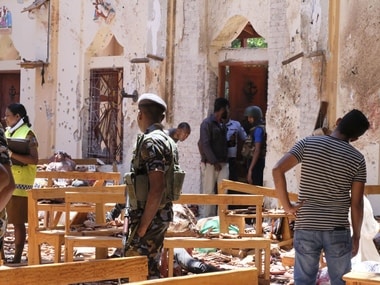
File photo of St. Sebastian’s Church after the Easter Sunday blasts. A Gamage/101Reporters

A two-member team of the NIA had visited Sri Lanka in May and had held discussions with authorities there about claims that some terrorists, owning allegiance to the dreaded terror group Islamic State (IS), had travelled to India, including Kashmir. However, so far the NIA has not been able to register any case due to lack of its jurisdiction. But with the amended law, the agency can probe the case, the official said.

The amended Act gives powers to the NIA to probe terror attacks targeting Indians, Indian interests abroad and having links with India. The latest amendments will enable the NIA to additionally investigate offenses related to human trafficking, counterfeit currency, manufacture or sale of prohibited arms, cyber-terrorism, and offenses under the Explosive Substances Act, 1908. A special court in New Delhi will preside over such cases, according to the amendments.

Over 250 people were killed when nine suicide bombers carried out a series of blasts in Sri Lanka on 21 April.

Before the Easter Sunday bombings, India had alerted the island nation that IS terrorists were planning to carry out strikes there. India had been regularly sharing intelligence inputs about a possible terror attack in Sri Lanka targeting the Indian High Commission and religious places there, officials said. The inputs to Sri Lanka were sent through diplomatic channels.

Earlier, the NIA had stumbled upon videos of National Thowheed Jamaat (NTJ) leader Zahran Hashim during the investigation of a terror case and the videos were indicative of a terror attack on religious places as well as the Indian High Commission in Colombo, officials said. Hashim was among the nine suicide bombers who carried out the series of blasts in Sri Lanka.

The videos showed Hashim asking youths from Sri Lanka, Tamil Nadu and Kerala to establish an Islamic rule in the region.

After the blasts in Sri Lanka, the NIA had arrested 29-year-old Riyas A, also known as Riyas Aboobacker or Abu Dujana, a resident of Palakkad in Kerala.He is alleged to be in touch with Hashim on social media platforms, the officials said. The accused had disclosed during investigations that he had been following speeches of Hashim for more than a year and has also followed the speeches delivered by controversial Islamic preacher Zakir Naik, currently based in Malaysia.

According to inputs with the central agencies, Hashim had spent time in India last year during which he attempted to influence youths in Tamil Nadu and Kerala to join him.

Lieutenant General Mahesh Senanayake, the commander of the Sri Lankan Army, had claimed that the suicide bombers had travelled to some cities in India, including Kashmir. “They (the suspects) have gone to India, they’ve gone to Kashmir, Bangalore, they’ve travelled to Kerala state. Those are the information available with us,” he had told BBC in May.

However, the Jammu and Kashmir Police had denied it and had asked Sri Lankan authorities to share more information about it.

Maithri and Mahinda to come together for final talks

July 28th, 2019

BY GAGANI WEERAKOON Courtesy Ceylon Today

Archbishop of Colombo Malcolm Cardinal Ranjith feared that the investigations into the 21 April Easter Sunday bombings would be swept under the carpet and added that the attacks were part of an ‘international conspiracy’.


Cardinal Ranjith was addressing a special mass at the newly renovated Katuwapitiya Roman Catholic Church, where some 115 persons perished and scores of others were injured as an Islamic Jihadist carried out a bloody suicide bomb attack.


He said, the political leaders have failed in their duty and are more interested in meeting the agendas of their foreign masters.


He added that the 21 April attacks were purely an international conspiracy that favours human rights defenders and Non-Governmental Organisations, and the Government should not support their agendas.


Even before the Easter Sunday attacks, the extremists had emerged in Mawanella and Wanathawillu but the Government and the State security agencies did very little to arrest the growing trend.


More recently, a Special Human Rights Envoy from the United Nations (UN) was in the country but instead of visiting the survivors and victims of the 21 April attacks he had opted to look into the welfare of the Islamic Jihadists currently in custody and Dr. Shafi Shiabdeen. The UN works to a particular agenda and this Body thinks it could control the entire world,” the Cardinal said.


He added that the National Security Council has not convened since October 2018.


The Muslim community in the country should not be penalised or made to feel guilty over the Easter Sunday carnage.


These attacks were carried out by a small group of misled youth, who were a part of a wider international conspiracy with a draconian agenda,” Cardinal Ranjith said.


Lotus-bud to bloom


The first invitation to the National Convention of the Sri Lanka Podujana Peramuna (SLPP) was ceremonially handed over to Opposition Leader Mahinda Rajapaksa last morning at his Wijerama Mawatha residence.


The SLPP signed a Memorandum of Understanding with 10 recognised political parties that are not represented in Parliament. The MoU was signed under the auspices of Leader of the Opposition Mahinda Rajapaksa at his official residence at Wijerama Mawatha, Colombo. The event was named Susanyogaya”. The MoU was signed by the United Tamil Freedom Front, Ceylon Workers United Front, Mawbima Janatha Party, Illawar Democratic Front, Nawa Sinhala Urumaya, Muslim Ulama Party, Democratic National Movement, Bhumi Puthra Party, the Liberal Party and the United Lanka Maha Sabhawa. Four parties that supported the United National Front in the 2015 Presidential Election were also among the parties that signed the MoU.


Speaking at the event, Rajapaksa said that it is their duty to defeat the Government on behalf of the unborn generations as they are destroying and selling off land in the country. He further said that when the Government sold the port saying that they had a rock in the middle of it, for billions of rupees, that they had not paid the loans back.


The Opposition Leader further said that no one knows what was done with this money because Ranil Wickremesinghe got a Minister from the SLFP to sell off the port.


He says that when Arjuna Ranatunga had refused to sign the document, Wickremesinghe got a Minister from the SLFP to sign it. Further, former President said that although the 19th Amendment was introduced the President claims to not even see it, while also saying that there were many reasons to conduct the process of approval under wraps which ultimately swung back to the UNP who are now trying to bring in the 20th Amendment.


He added that the Government does not have the right to change the Constitution again and that their Government which would come to power next will be the one that holds the right to amend the Constitution again.


Meanwhile, Parliamentarian Chamal Rajapaksa said that he has still not taken a firm decision on contesting the forthcoming Presidential Poll.


He made this remark when journalists sought his views on Wednesday (24) on whether he had taken a decision on contesting the next Presidential Poll.


Meanwhile, former Defence Secretary Gotabaya Rajapaksa who was in Singapore after undergoing surgery returned home on 23 July night.


Walking down memory lane


Former President Mahinda Rajapaksa and President Maithripala Sirisena were seen together at two separate events last Friday (26).  Both were present at the Khettarama R. Premadasa Stadium where thousands of cricket fans gathered to bid adieu to legendary fast bowler Lasith Malinga as he played his last ODI. 

 
Earlier of the day the duo along with Speaker Karu Jayasuriya was seen taking a trip down memory lane at the maiden exhibition of the Photojournalists Association of Sri Lanka (PASL) titled ‘Mass Media Photo Exhibition’ at the J. D. A. Perera Art Gallery at Horton Place.


President Sirisena and Opposition Leader Rajapaksa were recalling to memory and describing each photograph with additional background stories to others including Speaker Jayasuriya. Rajapaksa was all smiles when the two of them stood in front of a photograph in which handcuffed MP Namal Rajapaksa was seen being escorted by law enforcement authorities. He must have told the President something like Oh this was when your Government arrested my son, Namal.”


Seeking divine help


While the two leaders were busy, attending various events in the country, Prime Minister Ranil Wickremesinghe and his wife Maithree Wickremesinghe performed ‘Nava Chandi Homa’ and offered special prayers to Goddess Sri Mookambika at Kollur on Friday.


Due to inclement weather, Wickremesinghe, accompanied by an eight-member team, had to travel by road from Mangalore International Airport. The entourage was accorded a grand welcome on the Mookambika Temple premises by Udupi Deputy Commissioner Hephsiba Rani Korlapati, SP Nisha James, officials and temple representatives, Indian media reported


Wickremesinghe and his wife Maitree reached Kollur at 11:10 a.m. and were whisked to the RNS Guest House. He arrived at the temple at 11:30 am and took part in the religious rituals held inside the temple. Maithree is said to be the devotee of the Goddess.


Later, the temple’s Chief Priest Dr K.N. Narasimha Adiga, under whose guidance the Homa was performed, told media persons that the Sri Lankan Premier performed the ‘Nava Chandi Homa’. The homa had begun on Thursday at 8 a.m. and the ‘Purnahuti’ (end of Homa) was performed at 12 noon on Friday.


He offered ‘Mahapooje’ to the Goddess after participating in Purnahuti. The Sri Lankan Prime Minister prayed for the welfare of his people in his country. He also prayed for peace and prosperity of the country. He also prayed for a better political future. He promised to visit the temple again after some time,” Dr. Adiga has said.


The couple participated in the ‘Rathothsava’. An ‘Archane’ in the name of the couple was also performed. Dr. Adiga said Kollur Mookambika Temple and Shankari Devi shrine in Sri Lanka are parts of Shakthi Peeta. Both are essential parts of the Mukhya Peeta. Both the Peetas have their own significance. Both India and Sri Lanka share a bonding since the times of Ramayan,” he added.


Wickremesinghe was also accompanied by PSO Ashoka Yatigammana, Sergeant PMSD, Sunil Ratnayake, Physician Dr. Sanka Gunavardhane, Deputy High Commissioners from Chennai V. Krishnamurthy and Yasontha D’Silva. The couple was at the temple for an hour and were served delicious prasadam at the guest house.


The couple left the temple immediately after the pooja and after staying at the guest house for some time. They departed at 2 p.m. En-route, Wickremesinghe had boarded a helicopter at Areshiroor and proceeded to Kasargod. Tight security was in place all along from the airport to Kollur and all the establishments were shut down as a precautionary measure. Wickremesinghe had visited the temple and had participated in the ‘Shata Chandi Havana’ in November 2017.


PM Wickremesinghe’s visit to India for religious rituals incidentally falls in the same time the opposition against his presidential candidacy within the party is also on the rise.


The UNP Parliamentarians’ Group Meeting last week reportedly reached explosive levels with UNP Chiarman Minister Kabir Hashim saying Deputy Leader Sajith Premadasa should be nominated as the presidential candidate because the UNP could not afford to lose this time.


Hashim is reported to have taken a swipe at the party hierarchy for planning to form an alliance with the like-minded parties without his knowledge and said he learned about such an alliance through the media.


However, Prime Minister Wickremesinghe responded saying that Hashim was privy to talks conducted in this regard.


Several Ministers including Ranjith Madduma Bandara, Ashok Abeysinghe, Harin Fernando and Eran Wickramaratne are said to have expressed their support to the views expressed by Hashim.


Wickremesinghe said he would take a decision at the right time after consulting the other party leaders.


Meanwhile, a group of UNP Ministers are planning to initiate a peaceful intervention, at the inauguration of the new UNP-led alliance, known as the Democratic National Front (DNF), on 5 August, to make Deputy Leader Sajith Premadasa the candidate for the next presidential poll, sources at Sirikotha claimed.


They said, on that date these UNP Ministers are planning to bring down scores of Party supporters to the Sugathadasa Stadium, to exert pressure on the party leadership to make Premadasa the presidential candidate.


Minister Kabir Hashim had, at a recent meeting at Sirikotha, proposed that Premadasa be made the candidate. He was backed by Ministers Malik Samarawickrama, Harin Fernando, Thalatha Atukorale, Sujeewa Senasinghe, and Ajith P. Perera.


However, during that meeting, Minister Ravi Karunanayake had insisted that the UNP candidate has to be the choice of a majority of Party members.


 Meanwhile, it has been decided to give the reins of the soon to be formed Democratic National Front (DNF) to UNP Leader Wickremesinghe. Source said that it has also been proposed to appoint Minister Dr. Rajitha Senaratna, who had worked tirelessly from behind the scenes towards the formation of the new political alliance as its Secretary. However, this proposal has not been received too well by the party strongmen.


Maithri and Mahinda to meet


Meanwhile, President Sirisena, and Opposition Leader Rajapaksa are to meet soon for bilateral talks in a bid to iron out several key issues. The meeting was discussed at the SLFP Central Committee meeting last week, in which several senior SLFP members have pointed out that they are losing strong SLFP Parliamentarians to the SLPP increasingly.


They have also pointed out that if this continues the plight of the Party will be in dire situation, thus needs to address it soon.


President Sirisena on the other hand, has instructed the Sri Lanka Freedom Party (SLFP) to seek the opinion of the Supreme Court on the order of conducting the upcoming provincial council and presidential election.


These instructions had been issued during SLFP Central Committee meeting, UPFA General Secretary Mahinda Amaraweera said.


During the meeting, the President, who is also Chairman of the SLFP, had pointed out that the Elections Commission has been insisting that the provincial polls should be held first. Meanwhile, President Sirisena had also advised his party members to continue their talks with the SLPP, in order to face the elections as an alliance under a common banner.

 BY GAGANI WEERAKOON 02:00 AM Jul 28 2019

‘Garbage Without Borders’ – Lessons from Duterte’s waste war on Canada

July 28th, 2019

Courtesy The Island

One-time top government trade negotiator Gomi Senadhira, yesterday, called for tangible measures to solve the importantation of the British garbage to Sri Lanka. Senedhira, who had previously warned the government of dire consequences of importing of garbage of all sorts in accordance with the Sri Lanka-Singapore Free Trade Agreement (SL-SFTA) said tough measures were required. Senadhira expressed his views in the wake of Finance Minister Mangala Samaraweera revealed in Parliament last Friday UK garbage imports began in 2017.

“Stop the controversial process now or face an unprecedented crisis,” Senadhira, who served successive governments over a period of 32 years as a commercial diplomat told The Island.

The former Director General of Commerce (2009-2011) and Sri Lanka’s Permanent Representative to the World Trade Organization (2004-2006), Senadhira called the much-touted agreement on UK garbage imports a total sell-out.

Senadhira had served in Sri Lankan missions in Baghdad, Kuwait, Moscow, Geneva, Washington (1998-2001)Brussels (2001-2003) before returning home to assume duties as Director General of Commerce.

Senadhira issued the following statement: “Just three months ago, President Rodrigo Duterte threatened to ‘declare war’ on Canada. The reason was simple – Canadian garbage. Over one hundred containers of them.

“So, in a hard-hitting speech, the president of the Philippines warned “I will declare war against them. I will advise Canada that your garbage is on the way. Prepare a grand reception.” During his speech, the president not only threatened to ship containerloads of garbage back to Canada but also warned that he would dump some of the garbage at Canada’s embassy in Manila. That was tough language, even for Duterte, a man known for using the language of a street fighter than that of a statesman. But then I suppose his frustration is perfectly understandable and it was the time for a tough talk with Canada. Over one hundred shipping containers filled with Canadian garbage had been rotting in a port near Manila, for nearly six years. All the previous attempts to ship them back to Canada had failed.

“Now, we have finally joined the ranks of the garbage importing nations, sorry recycling nations, and with over one hundred containers filled with British garbage rotting in our port, most for nearly two years, it is easy to recognize the eerie similarities between the two situations. Given the predicament we are in there are important lessons to be learned from the Filipino experience with the garbage without borders. So, let me briefly sum up what happened in the Philippines.

” From June 2013 to January 2014 nearly one hundred containers arrived in the Philippines from Canada. Most of them were declared to contain recyclable plastic scrap materials. The containers were not claimed by the consignee and in January 2014 customs opened some of the containers, as part of measures regard to shipment not claimed for a long period, and discovered garbage including, plastic bottles, plastic bags, household garbage, and even used adult diapers. Then the customs decided not to open the rest of the containers as those also may contain hazardous waste.

“All this is very similar to our own experience with imported British garbage. What happened after that?

“In February 2014, just a few weeks after the containers were open the customs filed smuggling complaint against the company which allegedly imported the garbage shipment and its licensed Customs brokers. In March 2014, the Department of Foreign Affairs sent a letter to the Canadian Embassy in the Philippines requesting for assistance in shipping the garbage back to Canada.

“But then, the Canadian government refused to take the garbage back as it “… has no domestic or international authority to compel the shipper to return the shipment to Canada,” and suggested that they “would like to explore with the Philippines options for processing the rest of the shipment – in accordance with Philippine law – in the Philippines.” To make matters worse, then-president Benigno Aquino III did not even discuss the issue of the illegally shipped Canadian garbage when he met with then Canadian Prime Minister Stephen Harper during a state visit in May 2015. Aquino – the scion of a political family, unlike his successor, was a genteel politician and he too believed the issue has to be addressed locally.

“After that nothing, much happened other than the exchange of polite diplomatic notes and dumping of part of the garbage (26 containers) in a local landfill in spite of protests from environmental groups. Towards the end of the year, the new Canadian Prime Minister Justin Trudeau, who visited Manila to attend the Asia-Pacific Economic Cooperation (APEC) summit in November 2015, was also non-committal on the garbage issue as there was “… a problem that needs fixing within our own legislation,” and believed “there are loopholes here that were allowed to be skirted that we need to make sure we close, both for Canada’s interest and for our good relationships with our neighbours.”

“It took Trudeau two more years to agree that it was “theoretically” possible for Canada to bring back the containers as “Those regulations and those impediments (which prevented Canada from taking back the trash) have now been addressed,” … However, he continued to emphasize that there were other issues to iron out – like who will shoulder the costs of shipping back the trash to the country of origin.

“Wheels also turned in the Philippines (though very slowly almost like in Canada). In June 2018 the Office of the Ombudsman ordered the suspension of the Departments of Environment and Natural Resources Undersecretary in connection with the shipment as he had “… acted with gross inexcusable negligence.” In November 2018 they finally appointed a technical working group composed of representatives from the Departments of justice, environment, foreign affairs, and customs to resolve the issue.

“Though the governmental wheels turned slowly environment activists and NGOs backed by the international activists and NGOs continued to lobby with Trudeau to take back the garbage as the shipment of garbage violated the Basel Convention on the Control of Transboundary Movement of Hazardous Wastes and their Disposal…a convention, ratified by both Canada and the Philippines. They also continued their demonstrations outside the Canadian embassy.

” But garbage continued to rot in the port. So, by April 2019 President Rodrigo Duterte obviously was at the end of his tether and declared “‘Yung basura ng (The garbage of) Canada, I want a boat prepared. I give a warning to Canada, maybe next week, they better pull their thing up or I will set sail sa (to) Canada, ibuhos ko basura nila doon (I will dump their garbage there), … I’ll declare war against them, isauli ko talaga tingnan mo (I will really return that, you’ll see),… I will advise Canada that your garbage, prepare a grand reception. Eat it if you want to.”

“Having done that, he gave Canada deadline to take back their garbage – May 2019. When Canada rejected it Duterte recalled the Philippine’s Ambassador to Canada and instructed to ship the containers across the Pacific and dump them in Canadian waters, if necessary.

“That solved the problem the garbage left the Philippines on June 1 for a voyage across the Pacific Ocean to Metro Vancouver incinerator.

“The final cost to Canadian taxpayers was C$1.14 million for shipping and another $375,000 for the garbage to be burned in the incinerator. What can we learn from the Filipino experience? What is the way forward?

“Be tough. A threat to ‘declare war’ or to recall the high commissioner may not be required, at this stage. But polite diplomatic notes may not deliver the required result. This is an issue that should be dealt at the highest level – PM to PM. Take action against those who were responsible, including the officials who facilitate such activities. Close the loopholes in our laws, regulations and bilateral agreements (such as FTA with Singapore) that allow garbage to move into Sri Lanka.

Don’t expect the government to solve the problem that they have created. Environmental activists and NGOs need to get involved. Use this opportunity to promote public awareness against the import of garbage. Launch a local and global campaign (with the support of international NGOs and activists) to send the garbage back.

Ex-top AG’s Dept officer warns of US Trojan Horse

July 28th, 2019

Courtesy The Island

Former People’s Alliance MP M M Zuhair, PC, yesterday, warned that proposed Status of Forces Agreement (SOFA) would transform Sri Lanka into a US military facility.

Zuhair, who was a onetime top Attorney General’s Department officer and envoy to Teheran during the PA/UPFA administration said that the Acqusition and Cross Servicing Agreemment (ACSA) had been finalized in early August 2017.

Zuhair, who backed Maithripala Sirisena’s campaign at the last presidential election said:

“SOFA, proposed by the US, temporarily stayed by the President, would create a ‘separate state’, having an independent power structure for the US military and its contractors, within the territory of Sri Lanka. The following is the text of President’s Counsel Zuhair’s response to The Island queries as regards SOFA: “That state will be run from Washington by the US Defense Department. The Sri Lankan government, it’s Parliament, the country’s judiciary it’s armed forces or the Police will have no say, under the published agreement, over the US armed forces entering Sri Lanka at their will and pleasure, freely transiting, exiting or remaining without exiting, within any part of the territory of Sri Lanka in vehicles, vessels and aircrafts, wearing uniforms, armed with communication equipment and weapons.

“The unwritten objective of the proposed agreement would be for the US to obtain from Sri Lanka, the non-consultative status of using at any time, any part of the Sri Lankan territory, as a permanent or transit point for the military activities the US is habitually and perennially engaged in, outside the Western world.

“For the first time, fully armed American men and women can freely move within any part of Sri Lanka, as persons above Sri Lankan laws, if Foreign Minister Tilak Marapana PC replies, without reservations, the forces agreement proposed by the US Embassy in Colombo. US armed forces can move anywhere in the island both individually as well as collectively with arms and ammunition. All the recognised ingredients that constitute a technologically virtual ‘separate State’, though an unrefined concept in international law are to be found sandwiched in SOFA.

“With SOFA in hand, the Americans do not require a military ‘base’ in Sri Lanka’s Eastern city of Trincomalee or elsewhere here, because the whole island will be a US controlled super State operating above the Sri Lankan laws and State. The consequences would be the country will abdicate its sovereignty, in respect of an unprecedented list of powers exercisable by the Sri Lankan State, to the US President and his successors. US money power will also enjoy structural facilities in the island that can be used to influence future elections. Eventually the US might want a puppet regime elected or installed to consolidate more effectively and permanently its presence in this admittedly strategic location.

“As per the agreement, the US armed forces and its civilian components, while in Sri Lanka, will not be subject to Sri Lankan criminal or civil laws, hitherto applicable under the Visiting Forces Act No 31 of 1949. Several other privileges are available for US defense contractors. The list of US contractors is open ended. It will include contractors signing with the US Defense Department in the future and the future employees of the contractors, over whom Sri Lanka will have no control. The US armed forces and its civilian personnel will be governed only by US laws while enjoying privileges, exemptions and immunities in Sri Lanka that even the country’s Head of State, our Mahanayake Theros or Sri Lanka’s Judges or Generals do not have.

“Lately, we have seen the US over active in Sri Lanka under colour of joint military exercises. Almost every other month they are here. Enemies of the US in the Asian region, though pretending to be asleep, will soon fully wake up. Are we going to allow our country to be used for engineering external wars and internal conflicts?

“The US Ambassador here had tried to call the SOFA as the Visiting Forces Agreement. The one is entirely different from the other. In fact the Visiting Forces Act of 1949 is more than adequate to serve the objectives the Ambassador had been publicly posturing on this issue. She is yet to deny the document SOFA, already published in the Sri Lankan media. She has on the contrary claimed in a recent TV interview that the US is working on a new military pact with Sri Lanka to tackle ‘red tape’ in the island, citing the example of the 2017 floods here. The Visiting Forces Agreement and the Public Security Ordinance, the latter empowers Sri Lanka’s Head of State to declare emergencies, are adequate to receive any emergency assistance. But red tape is absolutely necessary to exercise due diligence before foreign forces are allowed into the country. SOFA is not limited to any emergency in Sri Lanka. It applies to any emergency the US is getting itself entangled in, presently in the Middle-East and very soon in Asia.

” The agreement is a clear threat to the national security of the country, particularly vis a vis competing international forces which the American government treats, from time to time, as its enemies.

“This country cannot afford to get dragged into the present or future wars that the US government has a devastating record of getting involved in third world countries. As the respected Archbishop of Colombo Cardinal Malcom Ranjith said after the gruesome 21/4 suicide bombings, the West justifies, unjustified wars to market weapons and explosives manufactured by them. Regrettably it is the American arms industry that runs the US government and the world at large. Sri Lanka will have to pay a heavier price than the returns from exports to the US, when Sri Lanka is used by the US as a front line launching pad for its military operations, which could include wars in the Middle-East and Asia to confront its real and fake enemies.

The US will not give up the agreement so easily as some anticipate. No doubt the US can force its way. But to surrender in advance to the US, with its declared policy of ‘US interests first’ will turn out to be a national disaster. “

Reforms to Muslim Marriage and Divorce Act necessary – Jezima Ismail

July 28th, 2019

Yoshitha Perera Courtesy The Daily Mirror

Muslim women’s rights organisations around the country yesterday urged the government to implement necessary reforms to Muslim Marriage and Divorce Act (MMDA).

Veteran Human Rights Activist Deshabandu Jezima Ismail addressing the media conference said that MMDA has been widely discussed for a long period with the current act permitting child marriages in the country.

She recollected that there were many incidents in the past which women who had visited her for counselling because of oppressed situations in their lives due to the present act.

It is not only the laws. It is the legal system that has also broken down in the country,” she said.

She said that this issue has been running in the country for a long period of time and they had established the Muslim Research and Action Forum.

As it’s a man-made law, amendments are compulsory where there is a necessity,” Counsel Ermiza Tegal said at the conference.

She said that the act does not need a change in ‘bits and pieces’ which make no difference to Muslim women’s lives.

They also highlighted that Muslim lawmakers had agreed to a 14 points proposal to amend the MMDA in July but certain groups had protested on behalf of the reforms.

In their press release, the groups had pointed out several issues which needed reforms in the Act. They are:

Minimum age of marriage for all Muslims must be 18 without any exceptions.

Women should be eligible to be appointed as Quazis (a Muslim court judge), members of the Board of Quazis, marriage registrars, jurors, and registrars.

MMDA must apply to all Muslims irrespective of their sect.

Signature of both the bride and bridegroom is mandatory in an official marriage.

Mandatory registration required for the legal validity of a marriage.

Polygamy to be permissible only under exceptional circumstances, with just cause, under specific conditions including financial capacity, consent of all parties, and with court authorisation.

Procedures for divorce initiated by husband and wife must be the same.

Expand dowry to include immovable assets and make recoverable at the time of divorce. Granting and obtaining dowry without recording during marriage registration to be illegal and be subjected to a penalty.

Introduce, recognise, and facilitate the concept of the marriage contract to be entered into by a Muslim couple prior to marriage.

Upgrade the quality of the quazi court system as effective family-friendly courts by improving the qualifications of quazis to ensure efficient access to justice for women and men, and a robust monitoring mechanism.  (

Industrial waste – The Central Environmental Authority (CEA) to take importers to Court

July 28th, 2019

Sheain Fernandopulle Courtesy The Daily Mirror

The Central Environmental Authority (CEA) will take legal action against those who imported the containers of industrial waste without the proper a licence resulting in a public outcry, CEA Director General Hemantha Jayasinghe said.

He said Hayleys Free Zone Ltd., ETL Colombo (Pvt) Limited and Ceylon Metal Processing Corporation (Pvt) Ltd, were responsible for the importing, reprocessing and re-exporting the consignment of industrial waste.

These companies had not obtained either the Environmental Protection License or the Hazardous Waste Management License from the CEA for such imports,” Mr Jayasinghe said.

He said the CEA had directed Hayleys Free Zone Ltd. also known as Advantis, to export the waste material to the country of origin with immediate effect and directed the company to take immediate steps to prevent any liquid or other effluents polluting the environment.

The CEA said the import of waste material needed the consent of the relevant country of origin on the basis that Sri Lanka is a signatory to the Basel Convention.

Meanwhile, Hayleys Free Zone Ltd (HFZ) said it had no connection to the 102 containers lying at the Port of Colombo, but said the company had processed and re-exported 29 containers out of the 130 container loads of used mattresses currently stored at the HFZ yard.

With regard to the 130 container loads of used mattresses, the company said they were imported by Ceylon Metal Processing Corporation (Pvt) Ltd., which was the actual owner of the cargo. (

Sri Lanka – and its wizards of (K)-OZ meaning CHAOS.

July 27th, 2019

Mario Perera, Kadawata

With presidential elections round the corner and increasingly drawing the attention of all, there is a question the country must answer. Where are we after seventy years of Independence? Where are we after seventy years of democracy and universal suffrage: voting rights for all, men and women?

The three major upheavals since Independence in the method of governance of the country relate to SWRD, to JRJ, and to MaRa. One was focused inward, while the other was outward-oriented. That last was SELF-centered. The first was aimed at ‘bringing the top layers of society to the bottom’ and, theoretically at least paving the way for the bottom rung to reach the top. Therein lay the great expectancy of the masses. The first purpose was an apparent success. The second, however, was not.

The inward politics pushed the theory of ‘apey aanduwa’, even going to the extent of a pretentious control of the judicial system with the ‘apey usawiya’ catchword. The three branches of government: legislature, executive and judiciary were ‘apparently’ amalgamated within the ‘pancha maha balavegaya’ – the Sangha (Clergy), Veda (Physicians), Guru (Teachers), Govi (Farmers) and Kamkaru (Workers). But the concept ultimately was a flop.

When SWRD died, murdered by members of the first of the above-mentioned groups, power was taken back from the people, first by parliament, and then, by family rule. The widow of SWRD, the world’s first prime minister consolidated power in her hands, aided by members of the family: the Bandaranayake-Ratwatte clans. What her husband conceived as ‘apey aanduwa’ now blatantly became ‘magey pauley aanduwa’. Her period of office witnessed the first youth insurrection by the JVP, of poor village youth into whom so much hope had been infused but who remained bereft of resources and of a future worth aspiring to.

What the movement preconized was ultimately the communist model. It will be remembered that Sirima’s two major foreign trips were to China and Russia where she decried the politics of the ‘rapacious West’. What the two Bandaranayakes wanted to put in place was an economic structure in which all liberal professions would function under the total control of the State. But the State went bankrupt and was unable to deliver, this in spite of its stringent, even cruel measures to practice what it had preached. Those found in violation of the draconian exchange control laws, with those even very advanced in age, were bound to their hospital. beds in chains.

Those who were able to flee the country did so even reaching India in padda boats. These are deeds that bring to our minds the plight of present-day migrants trying to reach the USA. The inward movement went so backward, that the population was compelled to subsist on ala, batala and magngnocca during the final years of that rule. That system crashed.  

And so the idea of pulling the top to the bottom met with resistance. This was amply symbolized in an encounter that took place between Mr.Themis who was a postal peon and gained election to parliament on the ‘bottom to top’ policy of the Bandaranayakes. He once met Sir John Kotelawela in the corridors or the Parliamentary complex and addressed Kotelawela with the words: Hello John. That inflamed every hair on the body of the laird of Kandawala. What Themis next got was a thundering slap with the words: to fellows like you I am always SIR JOHN. Indeed the Bandaranayake policies did change society in many ways. ‘Sir’ and ‘Madam’ appellations lost their place. They were replaced by ‘uncle’, ‘aunty’ and similar.

The Bandaranayake government under Sirima took anti-British steps that helped to darken the horizons making the demonic LTTE specter to pop up. She had the British naval bases of Colombo and Trinco closed. That was also the wish of India. By doing away with that protective shield on the high seas, Sirima left the ocean open for LTTE personnel to enter the North. The LTTE had India’s help to the extent of having LTTE training camps in spite of the closely fostered relationship between Sirima and Indira. It was during the Sirima regime that Alfred Duraiappa, the SLFP mayor of Jaffna was gunned down by Prabhakaran himself which was the first open act of war by the LTTE.

In addition to shoving the British aside, Sirima’s government also set aside the British Privy council, Sri Lanka’s final court of appeal, from our judicial system. This was the first and predominant step of placing our judicial system on the slope of descent towards the degradation it presently finds itself in.

But prior to the LTTE bursting on the scene, it was the JVP revolt that broke loose. The poor, down-trodden village youth, even university students of the same breed without any foreseeable future, staged a coup, which, with support of India and even the European countries and the USA which Sirima had distanced herself from was crushed. Tens of thousands of such youth, including young monks, were brutally killed.

Mrs. B’s party was wiped out of power, being reduced to just eight seats with the lady herself having to face severe legal consequences for misdeeds.

The man who defeated her was literally voted into power by ‘hungry stomachs’.  One of his first acts was to constitutionalize dictatorship. Surely he would have been inspired by Sirima’s family rule which was dictatorial all but in the name. With JRJ government did not become a family business because JRJ had no progeny with political ambitions. And so it became a ‘one-man show’.

He turned the Sirima economic policies inside out. JRJ turned the economy completely outward. The new trademark was a ‘free economy’. For a time all went well. The markets were flooded with goods and goodies. But there was a price to pay: subservience to the ‘International Community’ which primarily meant the USA and the European Community.

Then there was the ever-lurking danger gathering more and more strength, on the horizon. It took the form of the demon that was the LTTE. That demon was worshipped by all Tamil parties, including the Tamil Catholic clergy who even gave leadership to the war drums without a word of protest by their peers,

The outward trend led to abject servility to foreign powers, including India. And here JRJ was to learn a bitter lesson. He was called ‘yanky dicky’ and counted heavily on the USA. But Sri Lanka was not that close to the USA for pretentions of a personal relationship. He also fell out of favour with Indira who was promoting the LTTE. With the Indians under Rajiv hell-bent on invading our Island, JRJ could not count on the USA to stop it. The USA was more aligned with India than with Sri Lanka. JRJ felt compelled to bow his head to Indian dictates.

That was the time of the infamous Indian invasion of Jaffna by air and sea and the promulgation of the nefarious 13th Amendment. Making the Indian invasion as its war cry, the JVP exploded in yet another armed insurrection crushed under Premadasa rule. But the JVP had given a lead to the Tamil rebels. And so began the Ealam war in earnest.

After years of war ups and downs, with the situation drawing more and more foreign attention all to the detriment of Sri Lanka, began the Rajapakse era. After much hesitance and goaded on by the Sangha, very reminiscent of the Duttu Gemunu era, Raja finally trod the warpath.  Aided by very favourable international circumstances, especially the 9/11 in the USA, and the Bombay terrorist attacks by Pakistanis, all leading to the international banning of the LTTE heralded by George Bush, Raja won the war.

The country was in a state of euphoria. Epitomizing it all, Raja returning to the country from a trip abroad, knelt before the eyes of the nation and kissed the ground of Mother Lanka. He recapped the new reality with a resonating address to parliament. The song that expressed the gratitude of the nation went on the waves through the lips of a comely maiden. She was shown, her hands turned upwards as if invoking god almighty himself, and crying out in song: Ayubowewa Maha Rajaneni.

Everything seemed to have good forebodings. But the trend of dictatorship by family rule introduced by Mrs. B and incorporated into the constitution by JRJ as a one-man show reached its apex point under the Rajapakse family rule. His family rule became unashamedly blatant and overt. His family members were so numerous that he did not have enough posts to satisfy their ambitions for wealth and power. He had knelt in the gesture of adoration to kiss the feet of Mother Lanka. But what Raja kissed on that historical day was not the feet of Mother Lanka, but his own image in the mirror of himself. It was only an act of narcissism and nothing more.

Nothing else could satisfy Raja now but the title MahaRaja. The culmination of that trend was the impending law that was the 18th amendment before which his entire followership bowed its head. He was the king. That kingship was for life, for himself and his progeny. The authoritarianism of the Raja family rules visibly derived from the Sinhala monarchy. That right he wanted to write into the constitution with the 18th amendment. Furthermore, the King could do no wrong, And so MahaRaja and especially his brother Gotabhaya engaged in excesses unprecedented in every sense.

But these excesses were too much for the nation to accept. All this was combined with mysterious deaths and disappearances, and drastic manipulations of the judiciary leading to the shameless ouster of a chief justice who had refused to comply led to Raja’s fall. And so Raja fell. Indeed great was his fall. First, he had counted on the dubious foresight of a soothsayer. Finally, he was stabbed in the back by a Brutus of his entourage. This was an act of betrayal unlike one ever seen before in a democratic country. Sira, Raja’s Brutus committed that immoral act on the prodding and invitation mainly of one also aspiring to rulership. He betrayed his boss at the immoral instigation of his boss’s rival: Ranil.

For Ranil the co-conspirator, Sira was intended to be a figurehead. Sira, to show his goodwill, promised before the Dalada Haamuduruwo that he would be a one-term president, a transitional president who would undertake the castration of his presidential powers, yielding them to the parliament of which the overlordship would ultimately be exercised by his co-conspirator the Prime Minister – Ranil.

Once ascended to the throne seat, the promises, even those to the Dalada Vahanse, were knowingly and willfully thrown overboard. The 19th amendment made a mockery of power renouncement, and that was it. From then on the President felt relegated to the back seat while the Prime Minister exercised authority with a bunch of his friends who were old school mates. Ranil was exercising dictatorial rule. The new club was not family (Ranil does not, like JRJ have a political progeny, indeed no progeny at all), it was a friends’ club or still better a Royal College club. Sira was forced to look on powerless even as the bond scam took place in broad daylight before his very eyes. His admonitions to his Prime Minister fell on deaf ears.

President Sira could stand that no longer. With the complicity of his former boss whom he had earlier betrayed, and his followers especially the brothers, he tried to cut the feet from under Ranil. He appointed his former boss the Prime Minister at an evening party whether with hoppers or not. The latter, the previous boss was a total accomplice to the second immoral act of betrayal of Sira. The next morning Ranil was informed and told to vacate Temple Trees. But Ranil stayed on provoking a constitutional crisis.

For long months the country had practically no government. The matter dragged on and on. The country had become a rudderless ship. Those with pretentions of power did not care a damn for the country: be it Sira, Ranil or Raja. The ship of Lanka had been cut from its moorings and was adrift. The country had two prime ministers holding fast to empty seats, with no cabinet, no ministers, only nominal ones bereft of power. It was a country in a state of total chaos, the concern of no one, certainly not of its elected representatives.

And so the Supreme Court had to intervene. Sira was proved wrong. He had betrayed both, his erstwhile master and his erstwhile benefactor. Most especially he had betrayed the sacrosanct constitution of the country several times at that. As for the erstwhile master and the erstwhile benefactor, they were both privy to his immoral and illegal conduct. They both, with full knowledge and full intention accepted the backstabbing of the one and the other. Yet as the traditional and pithy Sinhala saying goes: they had no qualms in slipping the venomous serpent inside their underwear.

                                            ———————–

It is a country with such a recent history that is once again at the crossroads. For whom are we going to vote? For the wizards of K-OZ on both sides of the aisle of parliament? Must we put immoral backstabbers and their equally immoral accomplices in the highest seat of power? Are we determined to go along in the same vehicles as of the past: the inward bound, the outward bound or the nowhere bound, passively led by donors and creditors with the country put out for lease or better like woman sold into prostitution? Or are we willing to try out the third force? The identification of this third force is within the reach of the Sinhala-Buddhist mind. It is that force that built the foundation on which our history, civilization, and culture rests, and has prospered for two thousand six hundred years. It is for that force together with its adepts to sort out the modalities of the leadership of the Sinhala-Buddhist nation. Indeed what is at stake is the very existence of the Sinhala-Buddhist nation.

One thing is certain, this country has nothing whatsoever to lose by rejecting Sira, Ranil and Mara and their respective bands of marauders. A glance at their histories will show that they are not worth their salts. Now for what use is salt that has lost its savor except to be thrown out into the garbage bin and confined to the fire?

If this is not done soon, we will already hear the raban girls heralding the next presidential election results with their song: Udapalagaththath wattakka, bima palagaththatha wattakka, udapalagaththath bimapalagaththath punchi punch gedi wattakka.

Under the present system, Sri Lanka will always remain the land of the Wizards of K-OZ.

Mario Perera, Kadawata

දියවන්නාවේ දියවන සිංහළ අනාගතය

July 27th, 2019

දිල් රූක් කන්නංගර

රට හැරයන්නට කලියෙන් සුද්දා වඳුරාට දැලිපිහියක් ද වහල් සේවයට දකුණු ඉන්දියාවෙන් සහ මලයාවෙන් ගෙනා වහලුන් දසලක්ෂයක් ද දෑවැදි දීමට වගබලා ගත්තේය. වැඩිකල් යන්නට මත්තෙන් සිංහලයා ප්‍රජාතන්ත්‍රවාදය තමනට රිසිසේ ප්‍රජනන-තන්ත්‍රවාදයට පෙරළා ගති. දියවන්නාවටත් ජනාධිපති කමටත් එකම සුදුසුකම සම-ප්‍රජනනයයි. එහෙව් රටකට මොන අනාගතයක්ද?

සුද්දා දමාගිය රටට ණය නොතිබිණි; විදේශ වත්කම් තිබුණි. යුරෝපීයයන් බහුතරයක් සිටි රටවල් හැරුනුකොට අනෙක් සියළුම රටවල්වලට වඩා ඉදිරියෙන් ලංකාව තිබුනා. ප්‍රජනන-තන්ත්‍රවාදයට පින්සිද්ධ වෙන්න ඒ සියල්ල අද විනාශ ය.        

වසර 71 ක අසාර්ථක විවාහයක් නිසා බැටකන සිංහළ ස්වාමිපුරුෂයා සිය ආත්මගෞරවය තකා සමාජයට පෙනෙන්නට දෙවන විවාහයේ චපල බිරියන් දෙදෙනෙකු සමග තවමත් බොරු දීගෙක. එක බිරිඳක් දකුණු ඉන්දියාවේ අසල්වැසියෙක් සමග යහන්ගතවන අතර, අනෙකා අරාබිකාරයෙක් සමග ලිංගික සන්තර්පනයේ යෙදෙන්නීය. වසරින් වසර පිළිකාවක් සේ දකුණු ඉන්දියානු-කරණයට සහ අරාබි-කරණයට ලක් වන සිංහල ගම් ශෝචනීයය. පිළිකාවක් සේ, පිළිකා සෛල බෝ වෙතත් හොඳ සෛල පිළිකා තුලට ව්‍යාප්ත වන්නේ නැත.

රටට වැළඳුනු ද්විත්ව පිළිකාවන් ගැන දියවන්නාවට කිසිම ගණනක් නැත.

අරුමය නම් සිංහළ ජනතාවට මෙය නොතේරීමයි. සිහළුන් වළව් සතරක් අතර බෙදී ගොසිනි. සිංහලය එකතු කරන්නට අරාදින්නන් ඊට වඩා මෝඩයන්ය. උන්ට අවශ්‍ය සියල්ලෝම එක මගඩි වළව්වක බැලමෙහෙවරට ගෙන ඒමයි. සිඛීම් ජාතික එස්. මහින්ද හිමි දුටු සිංහලයාම අදත් ලෝකික නිර්වාණයක් සොයා යයි. රටපුරා උඩුදුවන පස්පව් මෙම ලෝකික නිර්වාණ ගමන කෙටි කරයි.

රට අද සතරමන්සලකට පැමිණ ඇත. ආමග එකකි; එය ව්‍යසනයකි. ලෝකය ඉදිරිය බලා යත්ම රටට ආපස්සට යා නොහැකිය. තව මාර්ග තුනකි. එකක් 226 ම ප්‍රතික්ෂේප කර අලුත්ම අළුත් ජනරජ මාවතකි. අනෙක ණය බර, රජ පවුල් බර සහ අරාබි-දකුණු ඉන්දියානු පිළිකාවෙන් ඉබේටම සිදුවන රට තෙකඩ වීමයි. ඉතිරි මාර්ගය අද ක්‍රමයම 226 යේ වෙනත් සම-ප්‍රජනන-ජනිතයෙක් පිටින් ගෙනගොස් සිංහලයාගේ අවසානය කඩිනම් කිරීමයි.

වෙනත් මාර්ග නැත.

ලක්මව හෑල්ලුවට, නිගාවට, දුරාචාරයට පත්කළ සිංහලයන්ට ඇය තවත් හිමිවිය යුතුද?

මෙම ක්‍රමය වෙනස්විය යුතු නොවේද?    

Bill to ban instant divorce in India passed by the lower house

July 27th, 2019

Courtesy The Gulf News

The contentious bill that would criminalise instant triple talaq was passed by Lok Sabha

190621 india triple talaq

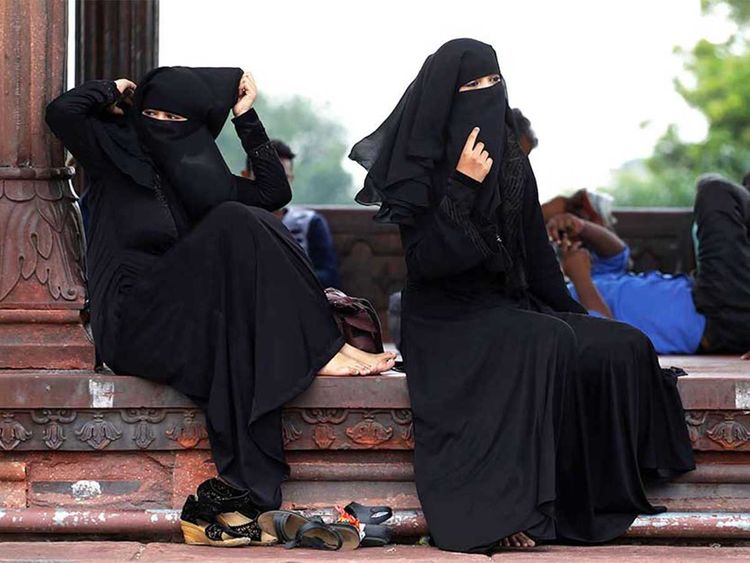
Indian Muslim women rest inside Jama Masjid in New Delhi. The bill now faces the Rajya Sabha (Upper House) test – most of the fence-sitters who sided with the government today over the amendments to the landmark Right to Information Act, have said they oppose the bill on triple talaq.Image Credit: AP

The contentious Bill to ban the practice of triple talaq among Muslims and punish the guilty husband with three years jail was on Thursday passed by the Lok Sabha despite the opposition’s demand for its scrutiny by a Standing Committee.

The Muslim Women (Protection of Rights on Marriage) Bill, 2019 which prohibits divorce by pronouncing talaq thrice in one occasion by their husbands was passed with 303 votes in favour and 82 against.

Replying to debate, Law Minister Ravi Shankar Prasad, who moved the Bill for passage, said the legislation is not related to politics or religion, but “a matter of women’s dignity”.

He said that Muslim women themselves have come up to him to tell him that after this law comes to be, they will celebrate Eid and Independence Day.

Noting many evils among Hindus in the country, such as sati and dowry, were penalised, Prasad said that penal law acts as a deterrent.

He said the only relevant stakeholders when it comes to the Bill are the Muslim women, not the Muslim Boards in the country.

The Minister said the Bill that advocates three years jail for a husband who goes for Triple Talaq was needed to provide gender justice and equality.

Citing the Supreme Court’s 2017 verdict striking down the illegal practice and asking Parliament to bring a law over the issue, Prasad said that women were being divorced by ‘talaq-e-biddat’ which is against gender justice.

He said the apex court had noted that 20 Islamic countries including Pakistan, Afghanistan, Malaysia, Indonesia, Jordan, Egypt and Tunisia had outlawed triple talaq. “And if they could do it, why cannot it be done in India which is a secular country?” he asked.

“The Supreme Court has said that triple talaq is arbitrary and unconstitutional and asked Parliament to make a law. When we come up with a law, it is opposed. What should our Muslim women do in this situation? Should our Muslim sisters be left (in this situation)?”

He said the Indian Constitution’s core philosophy was gender justice. “The Indian Constitution is equal for all daughters. So the Bill is needed.”

The Minister said that three ordinances had so been promulgated as a similar Bill moved by the previous Modi government could not get parliamentary approval.

A fresh Bill was introduced by the new government in June. Under the Bill, divorcing through instant triple talaq would be illegal, void and attract a jail term of three years for the husband.

Prasad rejected fears that the proposed law could be misused and asserted that certain safeguards had been put in it including provision for bail before trial.

While the Bill makes triple talaq a non-bailable offence, an accused can approach a Magistrate before trial to seek bail. A provision has been added to allow the Magistrate to grant bail “after hearing the wife”, the Minister said.

BJP ally Janata Dal-United, however, opposed the Bill, saying there was a need to create public awareness on the issue with the help of Muslim community leaders, and then walked out of the house.

Participating in the discussion, JD-U member Rajiv Ranjan Singh said his party believed the Bill would cause harm to the society.

“The Bill will produce a different feeling in the society because no one wants that there should be differences in the relationship between wife and husband,” he said.

Giving examples of misuse of other laws, he said: “You made the Anti-Dowry Act and Section 498A (of the IPC to stop cruelty against women). But these laws are being misused. So if you will make another such law, it will be misused.”

Calling the Bill “politically motivated” to target a particular community, RSP’s N.K. Premachandran said that Supreme Court has never given a directive to the government to make a law on this.

He asked why is the government not ready to make a legislation on mob lynching when it has been directed by the Supreme Court and that consecutive promulgation of Ordinances is a fraud on the Constitution.

IUML’s P.K. Kunhalikutty said the divorce rate of Muslims is very low and accused the government of playing politics. “You have a political agenda, that’s why you are bringing this Bill in a hurry”.

Congress’ S. Jothimani said the government is playing a “divide and rule policy” among women.

“Irrespective of religion, women are subjugated to injustices and have been going through this for years. Rape and marital rape are also important issues that the parliament should take up with the same interest,” she said, adding the Bill goes strongly against the rights of Muslims, and especially Muslim women.

The Bill must be sent to the Standing Committee, she demanded.

AIMIM’s Asaduddin Owaisi said that the Supreme Court has decriminalised homosexuality and adultery, but the government is criminalising talaq. He asked who bears the burden of proof.

Government defends bill on triple talaq

Opposition MP slams it as a move to target Muslim men

New Delhi : Lok Sabha on Thursday took up for consideration the contentious bill to make the practice of instant triple talaq illegal with up to three years in jail for the husband.

Moving the bill for consideration, Law Minister Ravi Shankar Prasad said the legislation was a must for gender equality and justice as despite an August 2017 Supreme Court verdict striking down the practice of instant triple talaq, women are being divorced by ‘talaq-e-biddat’.

He said, since January 2017, as many as 574 triple talaq cases and since the Supreme Court order, more than 300 such cases were reported by the media.

Under this circumstances, what should we do? Should we allow Muslim women to be continued to be exploited,” he said.

20 Muslim countries in the world, including Pakistan and Malaysia, have banned the triple talaq. Why can’t a secular India do it?

– Ravi Shankar Prasad | Law Minister

The law minister said 20 Muslim countries in the world, including Pakistan and Malaysia, have banned the triple talaq. Why can’t a secular India do it?,” he asked.

Opposing the bill, RSP member N K Premachandra said the bill has been brought with an ulterior political motive to target the Muslim community” and specific political agenda of the BJP”.

You are bringing the bill on the basis of the minority judgement of the court. If you have so much of concern, why don’t you bring a legislation to end the incidents of mob lynching. What is your stand on Sarbarimala temple,” he asked.

Premachandran said the ordinance on the subject was a fraud on the Constitution” as a civil matter is being converted into a criminal matter.

How can a jailed husband give compensation to the wife,” he said.

He also said there is no provision of imprisonment for divorce in Hindu and Christian communities.

This is not a move to protect Muslim women but to harass Muslim husbands,” he said.

Prasad said there were three different judgements of the five-judge bench of the court and in one of the judgements, the court said Triple Talaq is part of the ‘Shariah’ and a law should be enacted to end the practice.

The core philosophy of our Constitution is gender justice, irrespective of religion. We want to give honour and justice to the women,” he said.

Foreigners buying properties

July 27th, 2019

Dr Sarath  Obeysekera 

My long-time Sri Lankan friend from Norway who has migrated  and worked over 35 years in that country, has been visiting Sri Lanka  several times every year   with his family

.He did not have any income in this country, hence he brought over 100 million Rs to Sri Lanka

Over 25 years back he bought a house in Colpettry with the money he brought.

His children grew up became citizens of Norway. They keep coming twice a year to Sr LANKA and spend money here

Two years back my friend sold the house in Colpetty and paid partly to a condominium developer in Rajagiriya with the money received by selling his only house

As he is getting old he wants to get the deed of the flat on their children’s names who are categorized as foreigners 

Children who now work in Norway also transferred 1/3 of the price of the flat from Norway’

Now the developer’s  lawyers claim that the deed of the flat cannot be written on their children’s names as the total proceeds did not come to them directly from Norway

He is dumbfounded and does not know what to do 

Can the finance minister and central bank advise these types of Sri Lankan’s living abroad who are not allowed to have dual passports, how to invest in this country?

Is there a loophole to overcome this problem?

Genocide Claims, Number Games and their margins of error.

July 27th, 2019

By Chandre Dharmawardana, Canada

June 23, 1983, known as Black July” was a day of shame for Sri Lanka where a government calling itself a Dharmista Rajya” (a Righteous Regime)  permitted, aided and abetted armed mobs to attack a section of its defenseless citizens — civilian Tamils.  The fact that there were looters or the possibility that other forces fished in troubled waters (http://www.island.lk/index.php?page_cat=article-details&page=article-details&code_title=74181),  or that most DIG’s of the time were Tamils (http://www.island.lk/index.php?page_cat=article-details&page=article-details&code_title=74047), etc.,  are irrelevant to the very clear-cut main issue. That state-aided terror happened in the CAPITAL itself is a FACT and not some allegation based on a numbers game of guessing how many Tamils lived in the Metropolis before and after the event.

On the other hand, the claim of Genocide during the last days of the Eelam wars,  adopted as resolutions in the Northern Provincial Council of Sri Lanka, (http://www.sundaytimes.lk/150222/columns/wigneswaran-roasts-his-ethnic-nuts-over-lankas-crackling-racial-fire-136875.html) and in three municipalities in Canada (http://www.island.lk/index.php?page_cat=article-details&page=article-details&code_title=206922), as well as in various rallies sponsored by Tamil Diaspora groups in many countries is a very different matter. Lumping this alleged genocide with Black July is to lower  Black July itself and diminish it to the level of the alleged but unproven genocide.

The authors of the Darusman report (https://www.un.org/News/dh/infocus/Sri_Lanka/POE_Report_Full.pdf) that came up with the figure of 40,000 were not scientists or statisticians  who routinely deal with quantitative measures and their interpretation. In fact, any such person would note the lack of  error bars” stated  in the Darusman analysis, or in most such studies.

If we determine the speed of light in an undergraduate laboratory experiment, the result usually comes to about 299000 km per second plus or minus 3.7%. That is, the actual speed of light may be anything between  287000km/sec and 310000 km/sec. So the measurement has a margin of error of plus or minus 11100 km/sec., while the most probable estimated value is 299000 km/sec. That kind of caution is not exercised when people talk of the 299000 IDPs rescued from the LTTE cordon during the first three weeks of May 2009.

In the upper and lower estimates of the speed of light, namely, 287,000 and 310,000, only three significant figures are given, while the others are rounded to zeros. Since our error is 3.7%,  strictly speaking, one should give the lower and upper values as 290,000 and 310,000 km/sec., keeping just two significant figures.

However, France Harrison, writing on the death toll in the Huffington Post (17. Dec. 2012) naively gives a figure of 101,748, i.e., a  number with six significant figures! Such accuracy calls for one part in a million precision! Clearly, Harrison has no idea of error bars or significant numbers in giving a probable estimate. If this number had been given as 102,000 we may at least assume that France Harrison is numerically educated, although that does not make the figure correct. Unfortunately, the books and writings show that she has little or no education in quantitative methods.

Unlike measurements in physics, measurements of populations, numbers dead, etc., are open to large errors, not repeatable, and not credible unless corroborated by several independent sources. The numbers must also be internally consistent. For instance, when a population is shelled,  for every person killed, some 3-4  persons are also injured. If Harrison’s figure of 102,000 killed was used, we should expect some  300,000 injured among those rescued from  the war zone in May 2009.

And yet, these claims are used to even refuse visas to members of the military or Police who may attempt to visit friends and family in western countries like Canada and Australia where diaspora groups have substantial electoral power. In contrast, US military men tainted by excesses in Iraq and Afghanistan are accorded the red carpet via  Status of Forces Agreements and various  ‘Acquisitions and Cross-Servicing Agreements’.  The genocide claims  have been enshrined in judgments at Kangaroo courts in Ireland and Bremen, run by morally militant men and clerics  combating evil” with righteous indignation.

Estimates of the probable number killed (death toll).

The claim of 40,000 dead given in  the first Darusman report (2011) to Secy. General Ban Ki-Moon was followed by a second UN report (2012) which claimed a final-phase death toll of 70,000. This implies that even the most probable estimate given in 2011 was in  error by 20,000, and the error bars are even bigger.

One of the best analyses of the available data is found in the report by the Marga Institute (2013 – The Numbers Game; Politics of Retributive Justice,

https://www.scribd.com/document/132499266/The-Numbers-Game-Politics-of-Retributive-Justice). The four-part article in the Island Newspaper (4-Feb-2014 to 8-Feb-2014) by Prof. G. H. Peiris can also be mentioned where the difficulties of estimating errors, injured-to-death ratio, etc., let alone giving a death toll are succinctly  examined.

Given these difficulties, the death-toll figures given by various organizations are destined to differ by wide margins. We have:

US state department 7000-8000, UN-internal estimate 7737, University Teachers for Human Rights, Jaffna (UTHR-J) 20000-40000, The International  Crisis Group (ICG) 35000. The Marga Institute study in 2013 proposed a death toll of 15,000  while the recent British House of Lord’s study led by Lord Naseby in 2017 used information from previously unavailable British diplomatic cables as well, and estimated a figure close to 7000.  The Sri Lankan Dept. of census and statistics, using a field survey in 2011-2012 released a death toll figure of 7400 for the last phase of the war.

War crimes are those perpetrated on unarmed civilians by armed warring groups, be they government soldiers or those who wage war against the state. If attacks on civilians are part of a deliberate policy of eliminating one ethnic group, that becomes genocide. The UN itself has not claimed that there was a genocide of Tamils during the last days of the Eelam war.

Serious difficulties arise in defining civilians” in the context of the Eelam wars as the LTTE recruited civilians and even children by force or coercion and gave military training creating Makkal Padai” (people’s armies). The Makkal Padai consisted of Eelappadai” and Gramappadai”, each consisting of some 5000, i.e., a total of 10,000 conscripted civilians (Defence ministry figures). The LTTE’s deliberate use of civilians as well as protected facilities like hospitals, schools, churches, and administrative buildings, as a cover for its military operation, is also well established. Furthermore, using a human shield” and also creating a humanitarian catastrophe were part of the tactics of the LTTE in its end game. In resonance, strident street demonstrations by pro-LTTE diaspora groups in the West pushed for Right to Protect” (R2P) interventions in Sri Lanka.

In fact, the Darusman report acknowledges some of these difficulties and states (in its paragraph 239) the following. … International humanitarian law prohibits the location of military objectives near densely populated civilian areas,….Credible allegations point to a violation of this provision … that the LTTE deliberately located or used mortar pieces, other light artillery, military vehicles, mortar pits, bunkers, and trenches in proximity to civilian areas. These locations included hospitals and concentrations of IDPs, including in each of the No-Fire-Zones”.

Error Bars for the data  used by the Darusman report.

The Marge Institute study points out that the Darusman report used the material gathered by the UTHR-J as the database for arriving at the 40,000 death toll in their first report. The number was increased to 70,000 using more subjective considerations and projections based on what were assumed to be reported numbers of injured arriving at hospitals in the war zone. However, most analysts give little credence to the 70,000 estimates and instead quoted the 40,000 death toll.

The Darusman report depends crucially on the accuracy of two numbers. These are: (i) the probable number of people in the second No-Fire-Zone in February 2009; This number N1 may be anything from 300,000 to 330,000; (ii) the actual number N2 of IDPs rescued by the army on breaching the LTTE cordon in the second and third week of May 2009. A probable value of  N2 is given as 299,000. It is the difference between these two numbers, i.e., N1-N2,  that is the core quantity used to claim that some 40,000 people are unaccounted for, and allegedly willfully massacred,  entirely by the army with no killings ascribed to the LTTE, in the last days of the Eelam war.

The first number N1 used in the Darusman report depends on an estimate given by a single individual, Mr. K. Parthipan, the Assistant Government Agent (AGA) of Mullativu. He informed (in a ‘Situation Report’, 2009)  that Almost the entire people from all AGA Divisions of the District are displaced. The IDPs of Mullaitivu and Kilinochchi and parts of Vavuniya, Mannar and Jaffna Districts are now staying in Mullaitivu District, …,  The population of Mullaitivu District at present is about 81,000 families, consisting of about 330,000 persons”. This number was not based on headcount, but an estimate given by a few grama-sevakas (village officers).

The number was used to ask for an increase in the food and other commodities sent to the Vanni through the UN World Food Program (WFP) and the International Committee of the Red Cross (ICRC).  I n fact, the Darusman report accuses the government of not providing adequate food to the Vanni during the time of the conflict.

The government had issued the ICRC 534,227 metric tons of food and medicine to the conflict zone. There were also UN/WFP convoys providing food and medicine, and the UN-Darusman report mentions 7,435 metric tons of food delivered over 5 months but omits the 534,227 tons from ICRC. By ignoring these facts, the Darusman-report gives the wrong picture (https://dh-web.org/cansl1-HRW.html#ICRC-Food).  A measure of food needs accepted by the UN can be obtained from the UN-run Dadaab and Kakuma refugee camps in northern Kenya: It has ~535,000 refugees and was supplied 10,000 metric tons/month by UN/WFP.  This was prior to a 20% cut in November 2013 (https://news.un.org/en/story/2013/10/454302-funding-shortage-forces-un-reduce-food-rations-refugees-northern-kenya#.UuF_p6oo7lY). This suggests that the 300,000-hostage population held by the LTTE would need 5610 tons/month, or about 28,400 tons for 5 months. Hence, using typical UN/WFP food-supply rates, it clear that roughly four times the needed amount of supplies have been provided by the Sri Lankan government via the ICRC, and the UN/WFP combined. The LTTE conscripted and hoarded the food.

Given that the purpose of the number 330,000 was for obtaining more food,  the number is open to  exaggeration. For instance, the AGA can easily ignore the fact that some 26,000 to 36,000  IDPs were already in camps outside the LTTE cordon in February 2009. This suggests that there were probably 294,000 to 304,000 people within the LTTE cordon. To this uncertainty, we should also add the fact that some 5000-10,000 people were included in Makkal Padai”, and hence the civilian count”  is likely to fluctuate by at least 5000, in addition to the uncertainty introduced by the likely exaggeration of the initial number N1. Given that the UNHR-J puts N1 at 350,000, adding to the uncertainty, we may conclude that N1 is uncertain by as much as 20,000-40,000.

The number of IDPs who received sanctuary in May 2009, N2, is about 299,000. This figure does not include IDPs who had arrived earlier and had been cared for and moved to make a place for new arrivals. Furthermore,  many new  IDPs” were  LTTE cadre or members of Makkal Padai and not civilians. There were also many who escaped, or paid their way out and even emigrated. So, N2 itself may be in error by several thousand.

A stupid way is to find the weight of the crew of an ocean liner is to weigh the ship with all the crew and then without the crew. But the methodology of the Darusman panel was exactly that. The difference between two such large numbers is subject to gross errors. The 40,000 unaccounted for in the Darusman report is a misleading consequence of taking the difference between two large numbers N1 and N2, already subject to significant uncertainties.

The estimate has not been backed up by the demonstration of any mass graves and other circumstantial evidence, even after 5 years of control of the North by a Tamil-Nationalist provincial council  that resolved that there has been a Genocide of the Tamils, not just during the last days of the Eelam war, but ever since independence. These ardent Tamil nationalists ignored the fact that the Tamil population had grown by a factor of at least 3.5 since independence. Thus the demographics go contrary to the genocide claim.

The conclusion that no genocide occurred does not mean that no war was committed. Atrocities committed by state agents as well as the LTTE have to be investigated.

The righteous indignation of ‘good people’.

It is well known that a number of religious fathers and theologians, and good men” working with NGOs and Diaspora groups have been at the helm of the claim that genocide has happened in Sri Lanka during the last days of the Eelam wars. It is less well known that Christopher Hitchens, known for his atheist stance and critical public discourse was one who questioned the  Tamil genocide claim and raised strong doubts about it  ( see Michael Roberts: https://thuppahi.wordpress.com/?s=Hitchens).

The Colombian theologian  Rev.  Fr.  Javier Giraldo Moreno came to  Sri Lanka to take part in the tenth Tamil Genocide” commemoration, held at Mullivaaykkaal on 18 May 2019, and found in it a spiritually transforming experience”. Fr. Moreno was one of the eleven judges of the so-called Permanent Peoples’ Tribunal (PPT) sittings on Tamil Genocide” held in Ireland and in Bremen Germany. These sittings were arranged under the leadership of Dr. Jude Fernando, an Irish-Sri Lankan Catholic and Dublin Academic who takes the death toll to be 70,000.

Righteous indignation against evil” has been the force used against heresy, be it the Pelagian heresy which claimed that men who follow a good and holy life will go to heaven, or the gnostic heresy of the Cathers, and many others who were massacred en masse. The tradition of having witch hunts, tribunals and inquisitions are well entrenched in Western History. Imperialism as a civilizing force”,  the Manifest Destiny” of the US, or the emergence of the R2P program, and the Human-Rights commissions directed at smaller nations are the modern manifestation of one aspect of that tradition. The men and women who come to judge, often highly traditional men of the faith who have little training in numbers but rely on their conscience”, have never had any difficulty in pointing the finger at the guilty”. They always indict the sinner with the bigger crime – 70,000 according to Dr. Jude Fernando, and double that, 140,000, according to Rev. Father Rayuppu Joseph who took away the Maddona of the Madu Shrine into LTTE territory for safekeeping!

[The Author was a past Vice-Chancellor of Sri Jayawardenapura University. He is presently affiliated with the University of Montreal, Dept.  of Physics.  and the National Research Council of Canada.]

ව්‍යවස්ථා සංශෝධන ක්‍රියාවලිය පිළිබඳ විවාදය

July 27th, 2019

විපක්‍ෂ නායක මහින්ද රාජපක්‍ – මාධ්‍ය නිවේදනය

(2019 ජුලි 26 වෙනි සිකුරාදා විපක්‍ෂ නායක මහින්ද රාජපක්‍ෂ මහතා විසින්පා ර්ලිමේන්තුවේදී කළ කතාවේ පිටපත.)

ගරු කථානායකතුමනි,

ඊළඟ ජනාධිපතිවරණය පවත්වන්න තව තියෙන්නෙ මාස කීපයයි. ආණ්ඩුවේ අවසාන කාලයේදී මේ විදියට ව්‍යවස්ථා සංශෝධන ගැන පාර්ලිමේන්තු විවාදයක් පැවැත්වීමෙන් පලක් තියෙනවද? ව්‍යවස්ථා සංශෝධනය කරන්න මුලපුරන්න ඕනෙ ආණ්ඩුවක් ආපු අලුත මිස, යන්න ඉස්සෙල්ල කරන අවසන් කටයුත්ත හැටියට නොවෙයි. මේ ආණ්ඩුව බලයට පත්වුණෙත් පළමු දින 100 ඇතුළත ව්‍යවස්ථාව සංශෝධනය කරනවයි කියලා. ඒ කාලේ ඒගොල්ලො කතා කලේ විධායක ජනාධිපති ක්‍රමය අහෝසි කිරීමයි මැතිවරණ ක්‍රමය සංශෝධනය කිරීමයි ගැන විතරයි.

ඔබ කවුරුත් දන්නවා 2015 ජනාධීපතිවරණයේ මගේ ප්‍රතිපත්ති ප්‍රකාශනයේ බොහොම පැහැදිලිව කියලා තිබුණා අපිට ආණ්ඩු බලය නැවතත් ලැබුණ නම් අපි ව්‍යවස්ථාව සංශෝධනය කරලා ඒ සංශෝධන වලට ජනමත විචාරණයකින් ජනතාවගේ අනුමැතියත් ගන්නවයි කියලා. නමුත් යහපාලන ප්‍රතිපත්ති ප්‍රකාශනයේ තිබුණෙ ජනමත විචාරණයක් අවශ්‍ය නොවන තරමට පමණක් ව්‍යවස්ථාව වෙනස් කරනවයි කියලා. ජනමත විචාරණයක් තියෙන එකේ ප්‍රශ්නෙ මොකක්ද? ඒකෙන් කරන්නෙ ජනතාව ඉදිරියට යෑමක්. ව්‍යවස්ථා වෙනසකට ජනමත විචාරණයකින් ජනතා අනුමැතිය ලබා ගැනීම හොද දෙයක්. ඒකයි අපි කිවුවෙ අපි නම් ජනමත විචාරණයක් පවත්වනවයි කියලා.

ජනමත විචාරණයක් පවත්වන්නෙ නැතුව කරන්න පුලුවන් ව්‍යවස්ථා සංශෝධන විතරක් කරනවයි කියලා යහපාලන ප්‍රතිපත්ති ප්‍රකාශනයේ කිවුවෙ, බලයට ආවට පස්සෙ විධායක ජනාධිපති ක්‍රමය අහෝසි නොකර ඉන්න. ජනමත විචාරණයක් පවත්වන්නෙ නැතුව ඒ වගේ මූලික වෙනසක් අපේ ව්‍යවස්ථාවේ කරන්න බැරි බව ඒ ගොල්ලො දන්නවා. ඡන්ද ව්‍යාපාරයේදී බිම පෙරළි පෙරළි කිවුවා විධායක ජනාධිපති ක්‍රමය අහෝසි කරනවාමයි කියලා. නමුත් බලයට ආවට පස්සෙ ප්‍රතිපත්ති ප්‍රකාශනය පෙන්නලා කිවුවා ජනමත විචාරණයක් අවශ්‍ය නොවන සංශෝධන විතරක් කරනවයි කියපු හින්දා විධායක ජනාධිපති ක්‍රමය අහෝසි කරන්න බෑ කියලා. ඉතින්, මුල ඉඳලම මේ ආණ්ඩුවේ ව්‍යවස්ථා සංශෝධන ක්‍රියාවලිය තුළ තිබ්බෙ බොරුවයි වංචාවයි විතරයි.

ඊට පස්සෙ විධායක ජනාධිපතියි අගමැතියි අතර බලය තියෙන්නෙ කාටද කියලා හොයාගන්න බැරි 19 වන සංශෝධනය පාර්ලිමේන්තුවට ඉදිරිපත් කළා. මේ ගැන විපක්‍ෂයෙන් මැසිවිලි නැඟුවාම ජනාධිපතිතුමාම පාර්ලිමේන්තුවට ඇවිල්ලා කිවුවා තව සති ගාණක් ඇතුළත පාර්ලිමේන්තු මැතිවරණ ක්‍රමය වෙනස් කරන්න 20 වන සංශෝධනය හඳුන්වලා දෙනවයි කියලා. ඒ පොරොන්දුව මත තමයි විපක්‍ෂයේ මන්ත්‍රීවරු 19 වන සංශෝධනයට ඡන්දෙ දුන්නෙ. පාර්ලිමේන්තු මැතිවරණ ක්‍රමය වෙනස් කළා නම් පැහැදිළි බහුතරයක් තියෙන පාර්ලිමේන්තු ආණ්ඩු බිහිවෙනවා. එතකොට බල තුළනය පාර්ලිමේන්තුව පැත්තට බර වෙනවා. 19 වන සංශෝධනය ගැන අපිට බරපතල සැක තිබුණත් එදා අපේ අය ඒකට අත ඉස්සුවේ 20 වන සංශෝධනය ගේනවයි කියපු  පොරාන්දුව නිසා විතරයි. ඉතින් ව්‍යවස්ථා සංශෝධන ක්‍රියාවලිය තුළ විපක්‍ෂයේ මන්ත්‍රීවරුන්ටත් මේ ආණ්ඩුව වංචා කරලා තියෙනවා.

ඊට පස්සෙ ව්‍යවස්ථාව සම්පූර්ණයෙන්ම වෙනස් කරනවයි කියලා 2016 මාර්තු 09 වෙනිදා මුලු පාර්ලිමේන්තුවම ව්‍යවස්ථාදායක සභාවක් හැටියට වාඩිවෙන්න ආණ්ඩුව කටයුතු යෙදුවා. අවුරුදු දෙක හමාරකට වැඩි කාලයක් තිස්සෙ කතා කරලා වාර්තා පිට වාර්තා නිකුත් කරලා අන්තිමේදී 2019 ජනවාරි 11 වෙනිදා අගමැතිවරයා ව්‍යවස්ථාදායක සභාවේ මෙහෙයුම් කමිටුවේ විශේෂඥ මණ්ඩලයේ වාර්තාවක් කියලා ලියවිල්ලක් පාර්ලිමේන්තුවට ඉදිරිපත් කරා. ඒක ඉදිරිපත් කරමින්ම අගමැතිතුමා කිවුවෙ මේක එතුමාගේ වර්තාවක් නෙවෙයි විශේෂඥයන් පිරිසකගෙ අදහස් විතරයි කියලා. අන්තිමට පාර්ලිමේන්තුවට ඉදිරිපත් කරපු ඒ ලියවිල්ලටත් අයිතිකාරයෙක් නැති වුණා. තමන්ම ඉදිරිපත් කරන කෙටුම්පතකටවත් වගකීමක් ගන්නෙ නැතුව කොහොමද ව්‍යවස්ථා සංශෝධනයක් කරන්නෙ?

අගමැතිවරයා පාර්ලිමේන්තුවට ඉදිරිපත් කරපු ඒ ව්‍යවස්ථා කෙටුම්පතට අපි එකහෙළාම විරුද්ධයි. ඒකෙන් අර්ධ ස්වාධීන ප්‍රාන්ත රාජ්‍ය 09කට රට කඩන්න පිඹුරුපත් සකස් කරලා තිබුණා. පලාත් 09 යට වෙන වෙනම පොලීසි පිහිටුවන්න, පලාත් වලට දීලා තියෙන බලතල ආපසු කිසිදාක මධ්‍යම ආණ්ඩුවට නැවත පවර ගන්න බැරි විදියට විධිවිධාන ඒකෙ තිබුණා. කට්ටියක් කියනවා මමත් ඒ කාලේ තර්ටීන් ප්ලස් කියලා 13 වන සංශෝධනයෙන් ඔබ්බට යන පාලන ක්‍රමයක් ගැන කතා කරයි කියලා. මම එක දවසක් ඉන්දියාවේ විදේශ ලේකම් වරයාට කිවුවා රටේ පළාත් සභාවල නියෝජිතයන්ගෙන් සමන්විත පාර්ලිමේන්තුවේ දෙවැනි මන්ත්‍රී මණ්ඩලයක් හදලා ප්‍රාදේශීය නායකයෝ ජාතික මට්ටමේ වැඩවලටත් සහභාගී කරවගන්න ඕනෙයි කියලා. ඉන්දියාවේ විදේශ ලේකම්තුමා තමයි ඒකට තර්ටීන් ප්ලස් කියලා නම තිබ්බෙ.  ඉතින් හොදට මතක තියාගන්න ඕන මම තර්ටීන් ප්ලස් කියලා අදහස් කළේ අගමැතිවරයා පාර්ලිමේන්තුවට හඳුන්වලා දීපු කෙටුම් පතෙන් වගේ රට කෑලි 09 කට කඩන ව්‍යාපෘතියකට නෙවෙයි කියලා.

අගමැතිවරයා පාර්ලිමේන්තුවට ඉදිරිපත් කරපු ඒ ව්‍යවස්ථා කෙටුම්පතේ විධායක ජනාධිපති ක්‍රමය අහෝසි කරලා මැතිවරණ ක්‍රමය වෙනස් කරන්නත් විධිවිධාන තිබුණු බව ඇත්ත. නමුත් ඒ කෙටුම්පතෙන් මැතිවරණ ක්‍රමය වෙනස් කරලා තිබුණෙ 2017 පළාත් පාලන හා පළාත් සභා මැතිවරණ ක්‍රමය වෙනස් කරපු ආකෘතියට අනුවයි. ඔබ දන්නවා ඒ ආකෘතිය 2018 පෙබරවාරි පළාත් පාලන මැතිවරණයේදී අත්හදා බැලුවයින් පස්සෙ මුලින් ඒක සම්මත කරන්න කටයුතු කරපු අයම දැන් ඒ ක්‍රමයට විරුද්ධයි. ඒ අසාර්ථක ආකෘතියම පාර්ලිමේන්තුවටත් හඳුන්වලා දෙන්න හදන එකට අපි එකහෙළාම විරුද්ධයි.

අගමැතිවරයා 2019 ජනවාරියේ පාර්ලිමේන්තුවට ඉදිරිපත් කරපු ඒ ව්‍යවස්ථා කෙටුම්පත හැදුවෙ සුමන්තිරන් මන්ත්‍රීවරයා සහ රාජ්‍ය නොවන සංවිධාන වල පිරිසක්. අවුරුදු දෙක හමාරක් තිස්සෙ හදපු ඒ කෙටුම්පත අගමැතිවරයා පාර්ලිමේන්තුවට ඉදිරිපත් කරලා පුන පුනා කිවුවෙ මේක අපේ දෙයක් නම් නෙවෙයි කියලා. අවසානෙදි බලන කොට මේ ආණ්ඩුවෙන් දෙමළ ජාතික සංධානයත් ගොනාට අන්දලා තියෙනවා.

දෙමළ ජාතික සංධානය අවුරුදු හතර හමාරක් තිස්සෙ නටපු නැටුමකුත් නෑ, බෙරේ පලුවකුත් නෑ. සුමන්තිරන් මන්ත්‍රීවරයා හැම වෙලාවෙම කෙටුම්පත් හදන්නෙ වෙනම රාජ්‍යයක් කියන වචනය නැතුව වෙනම රාජ්‍යයක් ලබා ගන්න. කොල කෑලි වල ඒගොල්ලන්ගෙ සැලසුම් පැහැදිලිව සඳහන් වෙලා තියෙනවා. නමුත් බිම් මට්ටමෙන් ගත්තාම අපේ ආණ්ඩුව උතුරු නැගෙනහිර පළාත් වලට දීපු පළාත් සභා දෙකත් නැතිකරලා දාන්න දෙමළ ජාතික සංධානය ඍජුවම කටයුතු කරලා තියෙනවා. නැගෙනහිර පළාත් සභාව විසිරෙව්වෙ මීට අවුරුදු දෙකකට විතර කළින්. උතුරු පළාත් සභාව අවුරුද්දකට විතර කළීන් විසිරෙව්වා. විසුරවපු පළාත් සභා වලට ඡන්ද පවත්වන්න බැරිවෙලා තියෙන්නෙ 2017 සැප්තැම්බර් මාසයේදී මේ ආණ්ඩුව පළාත් සභා ඡන්ද ක්‍රමය වෙනස් කරපු නිසයි.

අලුත් ක්‍රමයට ඡන්ද තියන්න කොට්ඨාශ සීමා නීර්ණය කිරීමේ වාර්ථාව ගැන මතභේද මතුවෙලා තියෙන නිසා අද මුලු පළාත් සභා ක්‍රමයම අකර්මණ්‍ය වෙලා තියෙනවා. දෙමළ ජාතික සංධානයේ ඡන්ද නැතුව කිසිම දවසක පළාත් සභා ඡන්ද ක්‍රමය වෙනස් කරන්න පාර්ලිමේන්තුවේ තුනෙන්දෙකේ බලය ආණ්ඩුවට ලබාගන්න වෙන්නෙ නෑ.  ඉතින් උතුරු නැගෙනහිර ප්‍රශ්නයට විසඳුමක් කියලා ඇති කරපු පළාත් සභා ක්‍රමය අවසානයේදී බලන කොට නැති කරලා දාන්න කටයුතු කරලා තියෙන්නෙත් දෙමළ ජාතික සංධානයමයි.

මම නැගෙනහිර පළාතේ යුද්ධය අවසන් වෙන්නත් කළින් 2008 දී පළාත් සභාවක් පිහිටුවලා ඒ පළාතේ ජනතාවට ප්‍රජාතන්ත්‍රවාදී අයිතිය ලබා දුන්නා. 2013 දී උතුරු පළාත් සභා ඡන්දය පවත්වලා පළමු වතාවට උතුරටත් පළාත් සභාවක් ලබලා දුන්නා. දෙමළ ජාතික සංධානය එක්සත් ජාතික පක්‍ෂයත් එක්ක එකතු වෙලා ඒ දෙකම නැති කළා.

ඔබ කවුරුත් දන්නවා යුද්ධය ඉවර වුණායින් පස්සේ අපේ ආණ්ඩුවෙන් උතුරු පළාතෙත්, නැගෙනහිර පළාතෙත් යටිතල පහුසුකම් දියුණු කරලා මිනිසුන්ගේ ජීවනෝපාය දියුණු කරන්න කටයුතු කළා. ඒ අතරතුර තමයි ආණ්ඩුව වෙනස් වුණේ. පහුගිය අවුරුදු ගණනාවම තිස්සෙ දෙමළ ජාතික සංධානය හිටියේ ආණ්ඩුවත් එක්ක. හැබැයි උතුරු නැගෙනහිර පළාත් වල, විශේෂයෙන්ම දෙමළ ජනතාවට මේ කාලය ඇතුළත කිසිම ඉදිරි ගමනක් සිදු වෙලා නෑ. මේ ආණ්ඩුව ආවට පස්සෙ රටේ හැම ජන කොටසකටම වගතුවක් නැතුව ගියා. උතුරු නැගෙනහිර දෙමළ ජනතාවට විශේෂයෙන්ම පාඩු වුනයි කියලා කියන්න පුලුවන්.

අද ඒ පළාත් වල මිනිසුන්ට ජීවත් වෙන්න විදියක් නෑ. දෙමළ ජනතාව අතර තියෙන ඒ දුගී බාවයෙන් ඇතැම් කූඨ පිරිස් ඉතාමත්ම අසික්කිත ආකාරයට ප්‍රයෝජන ගන්නවයි කියලා දැන් දෙමළ දේශපාලනඥයොත් ප්‍රසිද්ධියේම කියන්න පටන් අරන් තියෙනවා. අපේ ආණ්ඩුවක් බලයේ තිබුණා නම් එහෙම වෙන්නෙ නෑ. එහෙනම් උතුරු නැගෙනහිර දෙමළ ජනතාව මේවෙනකොට තමන්ගේ ජීවනෝපාය පැත්තෙන් හරි ඔලුව උස්සලා අද ගරුත්වයක් ඇතුව ජීවත්වෙනවා. මීට ටික කාලෙකට කළින් මම දැක්කා එක්තරා පුවතක්. උතුරු නැගෙනහිර පළාතේ දෙමළ තරුණයන් දෙමළ ජාතික සංධානයේ මන්ත්‍රීවරුන්ට තමන්ගේ අමාරුකම් කිවුවාම ඒ මන්ත්‍රීවරු කියලා තියෙන්නෙ අපි මුලින්ම විමුක්තිය ලබාගෙන ඊට පස්සෙ ජනතාවගේ ප්‍රශ්න විසදනවයි කියලා.

විමුක්තිය කියලා ඒගොල්ලන් අදහස් කරන්නෙ රටේ ව්‍යවස්ථාව වෙනස් කරලා දෙමළ ජනතාවට උතුරු නැගෙනහිර වෙනම පාලන ඒකකයක් ලබාගන්න එකයි. 2014 දී මම ආරාධනය කළා දෙමළ ජාතික සංධානයට දෙමළ ජනතාවට තියෙන ප්‍රශ්න හැටියට ඒගොල්ලො දකින දේවල් මොනවද කියලා  සාකච්ඡා කරන්න. කිහිප වතාවක් සාකච්ඡා කළාට පස්සෙ දෙමල මන්ත්‍රීවරු සාකච්ඡාවට එන එක නැවැත්තුවා. ඒ වෙන කොට ඒගොල්ලො තීරණය කරලා ඉවරයි අපේ ආණ්ඩුව පරද්දලා පොදු අපේක්‍ෂකයෙකු පත්කරලා ඒගොල්ලන්ගෙ අභිමථාර්තයන් ඉටුකරගන්න. ඔන්න දැන් අල්ලපු අත්තත් නැතුව, පයගහපු අත්තත් නැතුව ඒ කට්ටිය ඉන්නවා.

වර්ථමාන ආණ්ඩුව යටතේ ව්‍යවස්ථා වෙනසක් කරන එක ගැන හිතන්නවත් පුලුවන්ද? මේගොල්ලො 19 වෙනි සංශෝධනය ගෙනාවා. ඒකෙන් රටේ පාලනය අවුල් ජාලාවක් බවට පත්වුණා. පළාත් පාලන ඡන්ද ක්‍රමය වෙනස් කළා, ඒකෙන් පළාත් පාලන ක්‍රමයම වියවුලක් බවට පත්වුණා.  පළාත් සභා ඡන්ද ක්‍රමය වෙනස් කරා. ඒකෙන් පළාත් සභා ක්‍රමයම නැති වුණා. මේගොල්ලන්ගේ පනත් සම්මත කරන ක්‍රමවේදය ගැනත් රටේ මුලු ජනතාවටම සැකයක් තියෙනවා. පළාත් පාලන හා පළාත් සභා ඡන්ද ක්‍රම වෙනස් කරන්න මේ ගොල්ලො යෝජනා ගෙනාවේ සම්පූර්ණයෙන්ම වෙනස් හේතු වලට පාර්ලිමේන්තුවට ඉදිරිපත් කරලා තිබුණු පනත් දෙකකට පාර්ලිමේන්තුවේ කමිටු අවස්ථාවේදී ගේන යෝජනා හැටියට.

ඒ ගේන යෝජනා මොනවද කියලා ජනතාව දැනගෙන හිටියෙත් නෑ, ශ්‍රේෂ්ඨාධිකරණයට ඒවායේ ව්‍යවස්ථානුකූල භාවය ගැන හොයලා බලන්න අවස්ථාව ලැබුනෙත් නෑ. 19 වෙනි සංශෝධනයෙත් කමිටු අවස්ථාවේදී කාටවත් නොදැනෙන විදියට පනත් කෙටුම්පතේ තිබුණු වචන, වාක්‍ය ඉවත් කරා. ඕවායින් ඇතිවෙලා තියෙන අවිශ්වාසය නිසා තමයි විපක්‍ෂයක් හැටියට අපිට ව්‍යවස්ථාව සංශෝධනය කරන්න මේ ආන්ඩුවට සහයෝගය දෙන්න බැරි. ඒ වගේම ආණ්ඩුවේ අවසාන අවස්ථාවේදී ව්‍යස්ථා සංශෝධනය ගැන කථාකරලා වැඩක් නෑ. ඒ වැඩේට අතගහන්න ඕන ජනතා වරමකින් අලුතින් පත්වන ආණ්ඩුවක්.

අපි ළඟ එන ජනාධිපතිවරණයේදී පවතින ව්‍යවස්ථාව සංශෝනය කරන්න යෝජනාවලියක් ඉදිරිපත් කරනවා. 19 වෙනි සංශෝධනයෙන් ඇති කරපු වියවුල ලිහන්නෙ නැතුව මේ රටට ඉදිරියට යන්න බෑ. ඊළඟ ආණ්ඩුව බලයට පත්වුණාට පස්සෙ අපි බලාපොරොත්තු වෙනවා ඒ අලුත් ව්‍යවස්ථාව සඳහා ඒ වෙනකොට පාර්ලිමේනතුවේ නියෝජනය තියෙන සියලුම දේශපාලන පක්‍ෂ වල සහයෝගය ලබාගන්න. අවංකවම ව්‍යවස්ථා වෙනසක් බලාපොරොත්තු වෙන හැමෝටම අපිත් එක්ක ඒ අවස්ථාවේදී එක් වෙන්න පුලුවන්. ව්‍යවස්ථාව වෙනස් කරන්නෙ ජනමත විචාරණයක් අවශ්‍ය නොවන තරමට විතරයි කියලා අපි කූඨ උපක්‍රම වලින් ජනතාව රවට්ටන්නෙ නෑ. අපි අලුත් ව්‍යවස්ථාව සඳහා අනිවාර්‍යයෙන්ම ජනමත විචාරණයකුත් පවත්වනවා.

ස්තුතියි.

Debate on the Constitutional Reform Process

July 27th, 2019

Opposition LeaderHon. Mahinda Rajapaksa MEDIA RELEASE

(Translation of the text of the speech made by Opposition LeaderHon. Mahinda Rajapaksa in Parliament on Friday the 26th July 2019)

Hon. Speaker,

There only a few more months left for the next presidential election. Is there any point in holding a debate on constitutional reform at the tail end of the tenure of a government? An initiative to amend the constitution should be taken when a government has been newly elected to office, not as the final task before leaving office.  This government was elected on the pledge that they would amend the constitution within their first 100 days in office.  At that time, the only reform proposals they spoke of was the abolition of the executive presidency and changing the system of elections.

My 2015 presidential election manifesto stated very clearly that if I was re-elected to office, we would amend the constitution and also hold a referendum to have those amendments directly endorsed by the people. But the yahapalana manifesto said that they would amend the constitution only to the extent that a referendum was not made necessary. What was the problem in holding a referendum? A referendum is a case of going before the people. It is always better to have important constitutional amendments endorsed by the people at a referendum.

The yahapalana manifesto said that the Constitution would be amended only to the extent that a referendum would not be made necessary because they never had any intention of abolishing the executive presidency after being elected to power.  A fundamental Constitutional change of that nature cannot be carried out without a referendum under the present law. Though they said that they were going to abolish the executive presidency during the election campaign, once elected to power, they pointed to their election manifesto and said that since constitutional amendments can be made only to the extent that a referendum is not made necessary, the executive presidency cannot be abolished. So from the very beginning, the constitutional reform process of this government was riddled with deception and perfidy.

Then they presented to Parliament, the 19th Amendment which has given rise to the present confusion as to whether power lies with the presidency or the cabinet.  When the then opposition expressed misgivings about the provisions of the 19th Amendment, the President came to Parliament and said that the 20th Amendment which would change the parliamentary elections system would be presented to Parliament in a matter of weeks. It was on that undertaking that the opposition MPs voted for the 19th Amendment. If the parliamentary elections system had been changed, Parliamentary governments would have had a working majority and the balance of power would have shifted to Parliament. Though our MPs had serious misgivings about the 19th Amendment, we voted for it on the promise that the 20th Amendment would be introduced in Parliament expeditiously. So this government has cheated the opposition as well.

After that, the government convened the whole Parliament as a Constitutional Assembly on 9 March 2016 in order to promulgate a new constitution. After holding many discussions and releasing numerous reports over a period of more than two and a half years, on 11 January 2019 the Prime Minister tabled in Parliament a document which was described as the report of the panel of experts of the Steering Committee of the Constitutional Assembly. Even in presenting that document to Parliament, the Prime Minister insisted that its contents are not the views of the government but only of the panel of experts that compiled the report. Ultimately the report that was tabled in Parliament had no owner. How can a constitutional reform process succeed when nobody takes responsibility for the drafts that are tabled in Parliament?

We are resolutely opposed to the draft constitution that was presented to Parliament by the Prime Minister. It would have had the effect of dividing Sri Lanka into nine semi -independent states. It contained proposals to set up nine separate police forces, and provisions that would have made it impossible for the center to take back any powers devolved to the provincial units. Some say that I too spoke of ’13 Plus’ – a system of government going beyond the provisions of the 13th Amendment. I once told the then Indian Foreign Secretary that I was thinking of establishing a second chamber of Parliament made up of representatives of the provincial councils so as to get provincial leaders to participate in national affairs. It was the Indian Foreign Secretary who described my idea as 13 Plus. So it should be understood that what I meant by 13 Plus was not dividing the country into nine semi-independent units as proposed in the draft constitution that was tabled by the Prime Minister.

That draft constitution did have provisions to abolish the executive presidency and to change the parliamentary elections system.  However the elections system proposed in that draft constitution was very similar to the systems that were put in place for the local government institutions and the provincial councils in 2017.  After the 2018 February local government elections, even those who participated in introducing that new elections system are now opposed to it. We are completely opposed to the introduction of that unworkable system at the Parliamentary level as well.

The draft constitution that was presented to Parliament was prepared by Parliamentarian Sumanthiran and some NGO activists. After presenting it to Parliament, the Prime Minister repeatedly denied ownership of the document. Ultimately it appears that this government had taken the Tamil National Alliance too for a ride.

There is nothing that the TNA has achieved over the past four and a half years. Parliamentarian Sumanthiran always drafts constitutional amendments that will lead to a separate state without the name. They have stated their views very clearly on paper.  But at the ground level, the TNA has been directly responsible for depriving the people of the North and East of the two Provincial Councils that my government gave the people. The Eastern Provincial Council stood dissolved nearly two years ago. The Northern Provincial Council also ceased to function nearly one year ago. Elections cannot be held to the provincial councils that have ceased to exist because the government changed the system of elections to the provincial councils.

Due to the fact that the delimitation of electorates for the provincial councils has run into problems, the entire provincial councils system is now defunct. Without the votes of the TNA, the government would not have been able to obtain the two thirds majority in Parliament to change the PC elections system. Ironically, it is the TNA that has rendered inoperative the provincial councils system which was introduced as a solution to the North-East problem.

Even before the war ended, my government held elections to the Eastern Provincial Council in 2008 and give the people of that province their democratic rights. In 2013, we held elections in the North and for the first time established the Northern Provincial Council as well. The TNA in collaboration with the UNP has ensured that both Councils are now no longer operational.

After the end of the war, my government developed the infrastructure of the Northern and Eastern provinces and took steps to improve the livelihoods of the people.  Then the government changed. During the past four and a half years, the TNA has worked very closely with the government. However there has been no improvement in the lives of the Tamil people of the North and East. People of all communities have been placed at a disadvantage after this government came into power.  The Tamil people of the North and East may have been affected to a greater extent than other communities.

Today, the people of those areas have no livelihood. Tamil politicians have now begun openly saying that the poverty of the Tamil people in those areas is being exploited in dastardly ways by certain unscrupulous elements.  That would never have happened if our government had been in power. In such an event, the livelihoods of the Tamil people of the North and East would have improved and they would have been living with dignity. Some time ago I saw a media report which said that when Tamil youth had confronted some TNA Parliamentarians and told them about their problems, the MPs had said that they will achieve liberation first and then attend to the problems of the people.

What they mean by liberation is changing the Constitution and obtaining a separate Tamil state in the North and East. In 2014, I invited the TNA for a discussion about what they deem to the problems of the Tamil people. After a few rounds of discussions, the TNA Parliamentarians stropped coming for those discussions.  By that time they had decided to defeat my government and to achieve their aims by helping to get the ‘common candidate’ elected. Today the TNA is neither here nor there.

Participating in constitutional reform under this government is not a feasible option.  They introduced the 19th Amendment and rendered the country ungovernable. They changed the system of local government elections and threw the entire local government system into confusion. They changed the system of elections to the provincial councils and today the PCs have ceased to exist. The unscrupulous manner in which this government manipulated the legislative process has also given rise to suspicion and damaged their credibility. The way they made changes to the local government and provincial council elections systems was by bringing  committee stage amendments to Bills that had been introduced in Parliament for completely different purposes.

The people had no way of knowing what the government was passing into law and the Supreme Court also could not be moved to verify the constitutionality of the reforms.  Even when the 19th Amendment was passed certain words and sentences had been surreptitiously excised from the Bill during the committee stage. Due to the atmosphere of mistrust that the conduct of the government has brought about, the opposition cannot collaborate in any constitutional reform process with this government.  Furthermore there is no point in talking about constitutional reform at the tail end of the tenure of a government. This matter has to be taken up by a new government elected by the people.

We will put forward a set of proposals to reform the constitution at the forthcoming presidential elections. This country cannot move forward without clearing up the confusion created by the 19th Amendment.  Once a new government is in power, we hope to obtain the support of all political parties represented in Parliament for the new constitution. Those who genuinely wish to see constitutional reform taking place in this country can join hands with us at that stage. We will not deceive the people by saying that we will amend the Constitution only to the extent that a referendum is not necessary. We will definitely hold a referendum to get the new constitution endorsed by the people.

Thank you.     

Import of garbage

July 27th, 2019

Dr Sarath Obeysekera 

People should know the actual background of the importation of the garbage. We hear that a UK company shipped it to Sri Lanka as per the order or a proforma invoice submitted beforehand.

What is the HS code of the garbage?

Chain of activities should be investigated by journalists and place articles in the newspapers to explain to laymen how this has happened.MPs keep making statements about the company that stored the material in a free trade zone who claim that they are just safe-keepers.

The company which had imported are not coming forward. As inland revenue and customs have information about their NIC numbers they can track them.

Customs holding press conferences first time in the history of an imported and forfeited commodity can divulge all the details.

The government blames the opposition for passing a gazette in 2013 under which garbage was legally imported.

The opposition claim that the current government should have canceled the gazette

As usual people in the country are confused ., just like the Easter Bombing matter and Meethotamulle carnage, where no one wants to take responsibility.

Who decides Sri Lanka’s National Problem & Solution?

July 25th, 2019

In Sri Lanka there are 3 ethnic groups – Sinhalese, Tamils & Muslims and 4 main religions – Sinhala Buddhists, Hindus, Islam, Christian/Catholics. All Sinhalese were Buddhists until 1505 and all Tamils were Hindus till 1505 when arrival of European colonial invaders resulted in conversions of Sinhalese & Tamils to Christianity/Catholicism and the Burgher community. Sri Lanka has a recorded history of over 2600 years during no period of time has there been any records of ethnic animosities or disharmony. So what is this National problem? The problem is not knowing what the problem is or not wanting to admit what the problem is because it will invariably lead to the disclosure of all those culpable for the problems and ironically these are the players demanding to draft the solutions which spells doom & warrants caution.  

The first question to be answered obviously is – how did communities that had not fought for thousands of years suddenly develop animosities after the arrival of Europeans?

The answer to that is the divide & rule policy that resulted in rebranding our people into numerous nomenclatures that the Europeans could control by setting one group against the other. So if we are looking for the root cause of Sri Lanka’s conflict vis a vis disharmony among communities the fingers must point to the 3 European invaders who ruled Sri Lanka directly from 1505 to 1948, indirectly from 1948 to 1972 and covertly/overtly from there onwards to date via their local sepoys.

Essentially, anyone claiming Sri Lanka’s communities cannot live in peace must first explain how they lived in peace for thousands of years before the arrival of Westerners after which all the troubles started.

We are told that our national problem is ethnic. All these nomenclatures mind you were christened by colonials after they created the problem and claim they have the solutions too.

But is the National problem the same as articulated by the 74% Sinhalese, 15% Tamils & 9% Muslims?

If Sinhalese claim the National problem is different to what the Tamils claim is the National problem while Muslims claim something else is the National problem – how do we arrive at what the National Problem is?

According to Sinhalese – what is the National problem?

According to Tamils – what is the National problem?

According to Muslims – what is the National problem?

According to Burghers – what is the National problem?

Then our next question is who should determine what the problem is?

Is it only the Sinhalese majority?

Is it only the Tamil minority?

Is it only the Muslim minority?

Is it only the Burgher minority?

Is it the UN?

Is it the Foreign Envoys?

Is it the INGOs/NGOs?

Is it the human rights activists?

Is it the politicians (Sinhala, Tamil, Muslim)?

Is it only the elite of Sri Lanka (Sinhala, Tamil, Muslim)?

Or is it the ordinary PEOPLE who account for the majority among the Sinhalese, Tamil, Muslim & Burgher community?

The more important question is in whose interests & for whose benefit primarily must these solutions be drawn?

Is it the Sinhalese villages who were attacked by terrorists & killed?

Is it the Sinhala families who lost family members killed by LTTE?

Is it the families of the Sinhala armed forces/police who sacrificed their lives on duty?

Is it the Tamils who were victims of LTTE (includes all forcibly conscripted, killed for refusing to obey LTTE orders)

Is it the Tamil LTTE families whose LTTE child died during hostilities with armed forces?

Is it the Muslim villagers who were attacked & killed by LTTE

Is it the Sinhala & Muslim families chased out of their homes in the North?

Is it every victim of LTTE terror?

Is it every victim who died as a result of collateral damage by bombings of armed forces?

Is it for the politicians & elite to enjoy power & privileges?

While the above are direct victims – there are plenty of indirect victims too: the country’s economy, development, infrastructure etc all were destroyed or damaged and require reconstruction. But Rome was not built in a day and these take time and planning and of course funding. But, was Sri Lanka given even a breather after the conflict ended in May 2009? Every day the country was hounded demanding ‘accountability’ when all those doing the demanding chose to sit pretty not making the same demands of LTTE who carried out over 300 suicide killings over 30 years!

Among the plethora of solutions forwarded over the years repeated demands have been for

  • Demilitarization (Western countries/India/TNA/LTTE Diaspora)
  • Removal of military camps from North (Western countries/India/TNA/LTTE Diaspora)
  • Land & Police powers (Western countries/India/TNA/LTTE Diaspora)
  • Devolution (Western countries/India/TNA/LTTE Diaspora)
  • Self-determination within an united Sri Lanka (what the hell does that mean!) (Western countries/India/TNA/LTTE Diaspora)
  • Full implementation of 13 amendment (India/TNA/LTTE Diaspora)

But, if you look at the list of victims can you fathom how far these solutions brandished over the years will actually solve their problems and are these solutions really to solve their problems?

Have you noticed that these solutions are also only for one community? How fair is that of 85% of the other populace who also suffered? By offering solutions to only one community how inclusive is the outcome going to be? Is this ‘reconciliation’?

What do victims generally desire?

If they’ve lost a home – they would want a home to live in,

if they’ve lost the only person who was providing them food – they would want some means of livelihood to keep the family fed?

If they have children – they would want schooling, means of employment

In what manner will devolving powers to politicians, giving land/police powers etc solve their predicament – have they even asked for any of these?

They probably do not even know what self-determination is or heard the word devolution, they were crying when a Colonel tasked to rehabilitate them had been transferred.

The simple things that they want, who is there to give them and why are these not entertained first without wasting years on solutions that satisfy the politicians & international community?

So for whom & whose benefit are these big ‘solutions’ being thrown at every international negotiation table?

Politicians be they Sinhala, Tamil, Muslim want a ‘solution’ that will sustain their power and role as politician, keep them in power & ensure that they are in control. They have no qualms about transferring power to opposition so long as periodically they can sit in power. This game we have seen since 1948.

International players want ‘solutions’ that are within their periphery of control too. So when they speak about mechanisms that are ‘internationally acceptable’ what they imply is they want solutions where they can poke their nose in from time to time which generates & sustains their livelihoods too (to this international list of players we can plug – UN, INGOs, NGOs, local NGOs, civil society, rights activists etc) foreign governments of course will insist on having a say either way.

So what we need to understand is that all these delays in formulating ‘solutions’ really is to find something ‘acceptable’ to all of them and not the ordinary people – something that satisfies their lust for comfy positions, globe-trotting opportunities, enjoying perks of office, VVIP status etc.

Lest, we have forgotten the media – in whatever role the media always has a place and if it doesn’t it has all the powers to create a place through sensationalism.

So invariably, if we look at our list of innocent victims, we ask ourselves, have they had a say in any of these ‘supposed to be fantastic solutions’, were they the one’s that proposed these solutions, will these ‘solutions’ benefit them?

We come back to the question which unfortunately remains unanswered

– What is the National problem?

– Who determines the national problem

– Who decides the solution?

– for Whose benefit is the solution(s)?

We also seem to be forgetting some other major factors? What is this national problem or conflict? Was it between Sinhala people and Tamil people, if so then it can be termed ‘ethnic’ but wasn’t, the conflict was between a non-state armed group & the Sri Lankan Armed Forces & victims were Sinhalese, Muslims, Foreigners including Tamils. So, there is no way that the conflict can be termed ‘ethnic’.

Who was this armed group? Well there were several Tamil armed groups but LTTE emerged victor after killing the leaders of the other groups & scaring them off.

So what basically did LTTE demand?

They demanded virtually what Tamil extremist leaders had been demanding since 1949 (Tamil state party – ITAK) and 1976 (Vaddukoddai Resolution) seeking a separate Tamil state.

With LTTE no officially no more, LTTE’s political arm formed in 2001 – the TNA is carrying the beacon. So how inclusive is TNA of Tamils. Well, the election results show TNA is not representative of all Tamils and now growing resentment by Tamils has increased its unpopularity. So, what TNA demands which echoes what LTTE demands cannot be taken as what majority of Tamils want.

So where do Tamil diaspora fit in. They make up the all-powerful propaganda lobby operating from western shores where they thrived during LTTE rule via nefarious illegal and legal operations that gave LTTE $300m annual profits. With no maintenance cost for LTTE combatants, procurement of arms & ammunition etc that annual profit must now be far more and utilized for other influential purposes – retaining international lawyers, buying international personages to speak on their behalf are just some of the wonders the LTTE international kitty has been able to afford. When all things budge for money, LTTE diaspora know when to throw what & strike bingo. LTTE Diaspora is certainly a formidable force because of its propaganda & its kitty.

Propaganda – power hungry politicians – Geopolitics are impediments to bringing about political will based on what the People want as solutions.

Those presently drawing the solutions are parties and individuals who were part of the problem or creators of the problem or lived off the problem and these entities should be given no role in any solution making as the likelihood is that they would create bigger problems than the problem that ended because they were not allowed to be involved (otherwise Sri Lanka would never have seen the end of LTTE in May 2009) which is probably why they are determined not to be omitted from drawing solutions!

Shenali D Waduge

HAS SINHALA POPULATION DECLINED IN SRI LANKA?

July 25th, 2019

BY EDWARD THEOPHILUS

The determination of increase or decrease in population of different communities or races living in Sri Lanka would be based on the actual census results and pre-emptive decisions just listing to gossips talks going on in village tea boutiques is unreasonable and misleading. Sinhala community is frequently disturbed by fabricated information that Sinhala people in the country is becoming invisible without submitting scientific facts or reasons for it.  This type of stupid information was spread during the LTTE war as strategic maneuvring by some Boeotia LTTE theorists, who followed the gobbles methods intending to achieving objectives. A similar type of methods was used by Yahapalana strategists during the presidential election in 2015 and now they are hiding without information to prove the maneuvring of them. The Census and Statistics Department of Sri Lanka conducts a detailed census and published actual statistics.  These statics are 99.5% accurate and from 1881 data has already published. From 1881 to 1921 population statistics may have errors as the investigators (data collectors) had to face various difficulties when they were collecting data due to several reasons.  In the early period, data collectors had not understood and the responsibility of the role and this situation would have contributed to generate errors in the data collection process.

The following were could be considered as major reasons to incur errors in the process.

  • In the data collection process, an actual number of people in a family was not recorded in the data forms or twice countered when family members did not give accurate information to data collectors, but such errors are corrected by the authority using statistical techniques at an acceptable level.  There was evidence that instead of actual family members others were provided information to census officers.
  • There may be wilful errors incurred if investigators do not perform the job not visiting families or ignoring to visit families due to difficulties to visit families due to remoteness they are living.
  • Counting certain communities which have a life of migrating from one place to another for a shorter period might ignore the accurate counting of them and correct information of them may not come to data forms.  The statistics in these communities are negligible.

As I have participated as a data collector in 1971 census, I noticed the possibilities to ignore or estimate the number of members in a family by rural officers (Grama Niladari) rather than counting an actual population of families. However, the department uses appropriate statistical techniques to correct such errors and this type mistakes be possible in any country and these are not considered evidence that the survey results were not accurate.

According to published statistics recorded Sinhala population from 1891 to 2012 is given below.

Year                     No                        %

1891                     2041200               67.86%

1901                     2330800               65.36%

1911                     2715500               66.13%

1921                     3016200               67.05%

1931                     3473000               65.45%

1946                     4620500               69.41%

1953                     5616700               69.36%

1963                     7512900               71.00%

1971                     9131241               71.96

1981                     10979561             73.95%

2001                     Not available

2011                     15250081             74.90%

When examining the statistics, it seems that Sinhala population has been increased, but the percentage of Sinhala population contributing to the total population has been the varied result of changes of the volume of other communities and in 2011, Sinhala population recorded as 74.90%, which might be increased to 77.00% in 2020. The truth is that no one can stop the increase in Sinhala population and it would be an impossible task.  Therefore, people should not trust gossip talks going on in village tea boutiques.  Sinhala people must act as an intelligent community.

Some people spread information that Muslim population increases faster than other communities, it may contain true information when looking at population statistics, however, we cannot determine it without the growth rate of each community. The growth rate of each community means the difference between birth rate and the death rate of each community and the difference between birth rate and death rare is considered as the rate of growth.  I have no idea whether Sri Lanka calculates the growth rate of each community.

එක්සත් ජාතීන්ගේ සංවිධානයේ නියෝජිතයෙකු හමු වීම පිළිබද තොරතුරු ප්‍රසිද්ධියට පත් කරන ලෙස නීතිඥවරයෙක් අගවිනිසුරුවරයාගෙන් ඉල්ලා සිටී…..

July 25th, 2019

Sri Lanka News

අද දින පුවත්පත්වල එක්සත් ජාතීන්ගේ සංවිධානයේ නියෝජිතයෙකු අගවිනිසුරුවරයා පසුගිය ආසන්න දිනයක හමු වී සාකච්ඡා කර ඇති බව සදහන් වන අතර ඒ පිළිබදව සම්පූර්ණ තොරතුරු ලබා ගැනීමට පුරවැසියෙකු ලෙසත්, නීතිඥවරයෙකු ලෙසත් අවශ්‍ය බව බව නීතීඥ අරුණ ලක්සිරි උණවටුන අගවිනිසුරුවරයා වෙත දන්වා ඇත.

එකී සාකච්ඡාව සම්බන්ධව අදාල සියලු තොරතුරු ජනතාවට දැන ගැනීමට ලැබීම නීතියේ පාලනය සම්බන්ධයෙන් වැදගත් හෙයින් ඒ සම්බන්ධ තොරතුරු රාජ්‍ය භාෂාවෙන් ප්‍රසිද්ධියට පත්කරන ලෙස ඔහු අගවිනිසුරුවරයාගෙන් ඉල්ලා ඇත.

මෙම ලිපියේ පිටපත්  කතානායකවරයාටත්, රාජ්‍ය භාෂා කොමිෂන් සභාව සභාපතිවරයාටත්,  නීතිපතිවරයාටත් යොමු කර ඇත. එකී ලිපිය පහත දැක්වේ.

Supreme Court stays Special HC’s trial against Gotabaya

July 25th, 2019

Courtesy Adaderana

The Supreme Court today (25) issued an order preventing trial at Special High Court against Gotabaya Rajapaksa over the D.A. Rajapaksa Museum case till the 1st of October, says Ada Derana reporter.

The order was delivered by the Supreme Court three-judge bench consisting of Justices Buwaneka Aluwihare, Gamini Amarasekara and S. Thurairajah considering an appeal filed by Gotabaya Rajapaksa.

The case against the former Defence Secretary and six others was filed by the Attorney General, for allegedly misappropriating state funds amounting to Rs 33.9 million during the construction of the D.A. Rajapaksa Museum and Memorial in Medamulana.

The Permanent High Court at Bar had rejected the preliminary objections filed by Gotabaya Rajapaksa stating that it does not have the jurisdiction to hear the case.

The former defence secretary then lodged a revision petition with the Court of Appeal seeking an order suspending the rejection of his appeal. However the Appeals Court ruled that it does not have the jurisdiction to hear the revision petition, hence, rejected it without taking it up.

Gotabaya Rajapaksa then filed a special appeal petition with the Supreme Court challenging the Appeals Court verdict.

This special appeal petition was taken up before the Supreme Court three-judge bench today (25).

Considering the submissions by defence attorney President’s Counsel Romesh de Silva, the Supreme Court judge bench granted permission to hear the relevant petition.

Fixing the petition for support on October 1st, the Supreme Court judge bench issued an order preventing the hearing of the filed before the Special High Court until the Supreme Court’s ruling is delivered.

Latheef surprised why information was shared with STF only after Easter attacks

July 25th, 2019

Courtesy Adaderana

Commandant of the Special Task Force (STF), Senior DIG M. R. Latheef, says he is still not invited to the country’s intelligence coordinating meetings and that he was invited to the National Security Council meetings only after the Easter Sunday attacks.

Testifying before the parliamentary select committee probing the terror attacks, the Senior DIG said that he had received the state intelligence chief’s letter on April 09 warning of impending attacks, along with a single annexure which had identified the Indian High Commission and main churches in Colombo as possible targets.

However, he said that he subsequently learned that there had been other annexures that had been shared with other agencies with more details.

He said those annexures had contained more specific details about the organization, what they are up to, specifics about their group and addresses and that he only received it during an interaction in the aftermath of the suicide bombings. 

Mr Latheef said he then realized that there was a wealth of information on the terrorist organisation and the individuals which was available with the security organisations where preventative action could have been taken.

The STF chief said after he received the intelligence chief’s letter, he took the initiative to check with the Indian High Commission, but they did nothing about the churches because there were no specifics and no request was made for the STF’s assistance. 

He said that when there is a requirement the IGP or Senior DIGs makes a request concerning assistance of the STF after which they attend to it.

I was under the inference that the territorial policing will attend to churches and that if they required STF assistance for additional security or searches or any other requirement, they would have made a request,” he said. 

Responding to a question, he stated that neither the IGP nor the Senior DIG of Western Province made any request to him for STF assistance. 

He said that he knows for a fact that every Tuesday the country’s intelligence and various organizations meet to review on many things and that if the STF was an important component the STF Commandant or a representative from the STF would definitely be invited for the review meetings. 

Replying to another query, he said the intelligence coordinating meeting is a very important meeting, but the STF has never been a part of that meeting in spite of the fact that at previous other meetings at Police Headquarters assertions had been made to the IGP that the STF would like to be in that meeting specially because they are providing security to the President, Prime Minister and other dignitaries. 

He also said that it would have been prudent if the information had been shared with the Senior DIG in charge of the Easter Province as well because most of the suspects are originating from that province.

He said that if they had more information on this they would have definitely shared because there should be actionable intelligence or information to go on. 

When asked whether he was part of the intelligence coordinating meeting held on April 09, Mr Latheef said that he was not part of the meeting and reiterated that even now he is not invited to the said meetings.

The STF Commandant said that he has made a request to attend the meetings, but has never been invited for it. I have made a request,” he said. 

However, he said that he was invited to attend the National Security Council meeting only after the attacks as he was invited for the meeting on April 23.

Intelligence coordinating meeting I have never been invited to date, but national security meeting on the 23rd of July after the attack I was invited and then I shared what I knew.”

He said he was never invited to security council meetings before the attacks.

Senior DIG Latheef further said that he heard through the media that now everyone says that the STF should have prevented the attacks, but pointed out that for the STF to act they should have actionable intelligence and a request should be made by those who have the information. 

The STF is always there to augment or to support the police. We are part of the police and a separate arm of the police,” he added. 

He also said that prior to the terror attacks, the Senior SIGs in charge of various provinces including the Easter Province had not saught the STF’s assistance with regard to any NTJ activities while requests for other matters had been made.

But the fact remains that when the 21/4 tragedy happened a lot of information came in and we have acted, he said, adding that because it was a crisis they did not wait for requests and acted on the information. It was a national security issue.”

I am surprised that why only after the incident they shared it with the STF,” he said. 

He reiterated that the STF’s role is to augment and the STF will act only if there is a written or verbal request unless it concerns designated areas such as narcotics which they have been given freedom to act on.

Secret revelation of intelligence chief

July 25th, 2019

Courtesy Adaderana

Dr. Shafi granted bail

July 25th, 2019

Courtesy Adaderana

Dr. Mohamed Shafi, who is accused of allegedly amassing assets through suspicious means, performing illegal sterilization surgeries and having links to terrorist activities, has been granted bail this evening (25) following a lengthy trial.

The case against Dr. Shafi was taken up before the Kurunegala Magistrate’s Court for the third time at around 1.30 pm today.

Accordingly, the suspected doctor was released on four personal bails each adding up to Rs 2.5 million and a cash bail of Rs 250,000.

Appearing on behalf of the defendant, President’s Counsel Nawaratne Bandara pointed out, as the Dr. Shafi’s trial has raised furor in the society, certain groups of people including Buddhist monks are in an attempt to dismantle reconciliation by making statements to the media.

Since such deliberate statements are prejudicial to his client, the defense attorney requested the Kurunegala magistrate to remove the parties that are not related to the case from the court premises.

The magistrate then sought the opinion of Deputy Solicitor General Thusith Mudalige, who spoke on behalf of the Attorney General’s Department, on the matter. He responded that it is unnecessary to remove the other parties who had attended the hearing, if there is any aggrieved mother, she is entitled to know the details of the trial.

Speaking up again, PC Bandara pointed out that his client, Dr. Shafi, has the right to know the aggrieved parties and the attorneys who appeared for them.

Thereupon, a heated exchange of words between the accused and the aggrieved.

Defense attorney then defiantly said the aggrieved party that the attendance of the mothers, who lodged complaints against Dr. Shafi, is unrequired for the trial.

He also challenged the aggrieved party to prove if Dr. Shafi has incised fallopian tubes of any mother.

The attorney of the aggrieved party defended that the defense counsel’s comments are insulting to the motherhood.

The magistrate was then forced to request the defense and the aggrieved parties to respectfully assist the court proceeding.

Meanwhile, Deputy Solicitor General Mudalige, presenting submissions, told the court that among the total of 615 complaints received by the Criminal Investigation Department on the cesarean sections performed by Dr. Shafi, only some 147 complaints raised suspicions on sterilization. The rest of the complaints concerned complications in conceiving experienced by the mothers who had not passed an adequate time period to reconceive following their previous C-sections.

Accordingly, the 147 complaints raising suspicions fall under the Article 311 of the Penal Code Ordinance for causing grievous hurt”.

The deputy solicitor general further told the court that the charges laid against the defendant for allegedly amassing assets through illegal means have been directed to the Financial Crimes Investigation Division and separate investigations are being conducted to probe sterilization charges. However, there is no corroboration to prove money-laundering charges, he added.

Continuing to present submissions, the deputy solicitor general said investigations into sterilization charges have been temporarily halted owing to the court order which temporarily suspended the SHG tests that were to be conducted to confirm the allegations.

He requested the magistrate to issue an order to the directors of Castle Street Hospital and De Soysa Hospital for Women to submit a report on five-year data compiling the complications experienced by mothers who have underwent SHG tests.

The deputy solicitor general also made a request to order Derana and Hiru television channels to hand over the unedited video clips to the CID containing the statements made by certain individuals following the previous hearing of the case on June 27th.

The Kurunegala Magistrate’s Court granted permission to both of the requests made by the deputy solicitor general.

Speaking on detaining the defendant, the deputy solicitor general said the Attorney General’s Department has no objection to granting bail to Dr. Shafi, as he is detained under Article 311 of the Penal Code Ordinance for causing grievous hurt”, which is a bailable offence.

The defense attorney reiterated that it is unfair to imprison only Dr. Shafi as has not performed C-sections all by himself.

He further requested the court to grant bail to the defendant under any conditions as the CID and the Attorney General’s Department do not have objections against it.

However, the attorneys of the aggrieved party emphasized that the CID has not submitted any report to the court on the alleged illegal accumulation of assets by Dr. Shafi.

They raised objections for granting bail to the suspect citing that it could lead to pressurization of the mothers who have complained against him and have a negative effect on the ongoing investigations.

The magistrate has again asked for the opinion of the Attorney General on granting bail to the suspect and the deputy solicitor general responded that the Attorney General’s Department has no objections on the matter.

Accordingly, the Kurunegala magistrate decided to release Dr. Mohamed Shafi under bail conditions.

Sri Lanka and UK in standoff over rotting waste

July 25th, 2019

Courtesy The Week

South Asian government implores Britain to take back its hazardous waste

The Sri Lankan government says the UK must take back containers full of hazardous waste landing in its ports.

The South Asian country has accused Britain of dumping medical debris – including human remains – in Colombo, under the guise of metal recycling, reports France24.

Many of the containers were dispatched from the UK as far back as 2017, reports the BBC. Sri Lankan Customs Department spokesman Sunil Jayaratne said that a Sri Lankan businessman had illegally imported the containers and would face prosecution if he failed to return them to their point of origin.

Authorities said on Tuesday that they had already taken immediate action to order the re-export of the 111 containers abandoned at the port”.

Area residents claim that with the prevailing rains, the deteriorating waste would soon flow into the nearby canals,” the Sri Lankan Daily Mirror reports. If the waste reaches the marshlands at Muthurajawela, north of Colombo, it could eventually disperse into the ocean, threatening marine life.

Another 130 containers already transported from the port to inland facilities will be dealt with under environmental laws, Jayaratne said.

They include various clinical waste, including materials disposed from mortuaries, syringes, and other material. Some of these materials have been liquidised and deteriorated to the point that we cannot even examine them, and this waste is emitting a very bad odour,” Jayaratne told the Mirror.

Sri Lanka is internationally protected from waste imports through the Basel Convention on the Control of Transboundary Movements of Hazardous Waste and their Disposal, the most comprehensive global treaty on hazardous waste treatment.

On Wednesday, a group of environmentalists and Buddhist monks held a protest outside the British High Commission in Colombo, handing over a letter asking Britain to take back the containers.

Sri Lanka is not your dump yard,” read one sign.

The UK’s Environment Agency told the BBC on Wednesday that it was investigating what had happened, and that it has yet to receive a formal request from Sri Lankan authorities to reclaim the waste.

Earlier this month, Cambodia announced it will send 83 containers holding 1,600 tonnes of plastic waste back to the US and Canada in an attempt to crack down on a surge in unlicensed recycling plants. In May, the Philippines returned 69 containers to Canada which it claimed had been falsely labelled as recyclable plastic.

Southeast Asia has seen a huge spike” in waste shipments from the West, says Time, since China – formerly the largest importer of scrap plastic – banned further imports at the beginning of 2018, “because of severe pollution due to a poorly managed waste process”.

The Caesar-Brutus play back in Sri Lanka Politics

July 24th, 2019

Mario Perera, Kadawata

BETRAYAL is the key word of the Sinhala history from time immemorial, from that of the Kings to the Diyawanna Oya assemblies.  Such betrayals facilitated foreign interference and foreign invasions of this country. Even during the Duttu Gemunu-Elara war, Sinhala Generals led Dravidian troops to battle, although Duttu Gemunu had clearly stated that his fight was for the Sinhala-Buddhist nation.

Examples of inmates of the royal houses plotting and overthrowing kings abound. The classical example is that of Dhatusena and Kassyapa. The tragic result of such intrigue within the palace was the grip or hold the Tamils had over parts of the country since the remotest times. Another element of alliances going wrong for the country were the inevitable need our kings had for South-Indian brides. That story which begins with Vijaya lasted up to the Kandyan Kingdom, paving the way for a Dravidian to sit on the sacrosanct Sinhala-Buddhist throne.

In more modern times, intrigue and betrayals among the Sinhala opened the gates for European domination of the island. Much has been written in these columns recently about Don Juan Dharmapala. Realistically that name must not be used to identify an individual. Countless Sinhala Don Juan Dharmapalas have left their mark on our history. While some stab in the back, yet others do so face to face. This latter phenomenon is called crossing over. Differently from the former this is a show of open defiance.  Both however are invariably done for personal gain. The attitude is always ME FIRST.

How many unpredicted cross-overs have brought down governments be it immediately or eventually? Think of SWRD and Rajapaske crossing over…of C.P.de Silva crossing over…Of Dahanayake crossing over….Think of more recent times when MPs of one party cross the aisle and even unashamedly cross back! Such somersaults was even done by Chandrika and Anura Bandaranayake, as well as the present speaker. Has the country benefitted from such stabbings, whether in the back or from front? The present situation of our country will provide the irrefutable answer.

The personality of Don Juan Dharmapala has endured over the millennia.  Some are even now continuing to don that personality – the personality that epitomizes dishonour, treachery, and betrayal. As regards Sinhala rulers, the word betrayal goes hand in hand with back-stabbing. An unbelievable number of our kings died at the hands of their kith and kin. In his clash with the Cardinal, Sirisena evokes his own past which is tainted with DISHONOUR. Betrayal by back stabbing is inalienably linked to DISHONOUR.

Evoking this theme brings to my mind the death of JULIUS CAESAR and its aftermath.  When his closest friend and confidant BRUTUS stabbed him, the words of reproach Caesar uttered were ones of powerlessness, desperation, and anguish: ET TU BRUTE. These three words summarize all that went through the mind and heart of Caesar at that unexpected moment. ET TU BRUTE…Can this be?  Caesar was asking himself. HOW CAN YOU…Brutus!

In his speech, standing over the dead body of Caesar, Marc Antony playing to crowd sentiments calls Brutus ‘honourable’. Brutus is an honorable man” he says. But the use of that word is sheer irony, as Antony is attempting to portray Brutus as ungrateful and treacherous, while adding ‘so are they allall honourable men’. The use of the word ‘honourable’ only highlights its utmost importance when attributed to rulers and lawmakers.  A modern Marc Antony playing to the gallery could well say with reference to Sirisena: Sirisena is an ‘honourable man’. So are they all, ‘all honourable men’, all standing to attention as the maze arrives and bowing to the Speaker (How nice and heart-warming!). Honourable? What honour for these backstabbing treacherous betrayers of Diyawanna-Oya.

Sirisena, replying to the Cardinal supports his claim of having a strong backbone, by referring to his dramatic act in 2015. But on that occasion did he act differently from Brutus as regards Caesar? The next morning when learning of what the modern Brutus did, Caesar Raja could well have said: ET TU SIRA!  If ever there was dishonor, betrayal and backstabbing, that was it – the crossover of Sira, after enjoying a wonderful dinner with Caesar Raja.

That night, whether restful or restless is anyone’s guess, Sira dreamt of the day at hand when he would occupy the seat of Raja, but not through his own power and popularity. He would do so with the help of others, accomplices of dishonor, betrayal and backstabbing. Yes Sira, as Marc Antony so ironically said: you are an honourable man…so are they all, all who were accomplices of your dishonor, on both sides of the aisle. Such is the nature of the strong back bone you lay claim to.

And later, as is the nature of backstabbers, he would turn against his saviours and redeemers, the ones who lifted him on their shoulders and placed him on that high seat of power. But those who promote backstabbing cannot claim immunity from being backstabbed. After the betrayal and backstabbing of Raja, Sirisena continued on his merry way betraying and backstabbing Ranil, and that after repeated violations of the Constitution which he swore to protect and uphold. How can any man, leave alone the President of a country with an age old culture and civilization, equate such shamelessness with a strong backbone? ‘O Judgment ! Thou art fled to brutish beasts, and men have lost their reason’.

Sirisena, if you really have the strong backbone you claim to have, you still have a chance to prove it: present yourself for re-election. With the strong backbone you profess to have you can dare do so. But for all your strong backbone talk you know you are doomed to fail, that your days are numbered. The writing is already on the wall.

But you still have a chance of showing your remorse for your dishonourable, shameful, cowardly, treacherous, backstabbing past. Stop overturning your shit bucket on your head by referring to your strong backbone, and just do as the Cardinal told you. Just GO. That applies to all the other ‘honourable men’ so dishonourably connected to your story. Just GO.

Mario Perera, Kadawata

No evidence that IS was behind Easter attacks – Senior DIG Ravi Seneviratne

July 24th, 2019

Courtesy Adaderana

There is no evidence to claim that the Islamic State (IS) was behind the Easter Sunday bombings, stated the Senior DIG in charge of the Criminal Investigation Department (CID) Ravi Seneviratne.

The Senior DIG mentioned this testifying at the special Parliamentary Select Committee appointed to probe the Easter Sunday terror attacks.

He pointed out that the terror group that was behind the attacks had requested the Leader of the IS, through a third-party in Indonesia, to release a statement on the matter.

The relevant request, too, had been made through another person, he added.

However, the investigations of the CID have revealed that the terror group behind the attack had carried out IS ideologies, Senior DIG Seneviratne further said.

Sri Lankan government has urged UK to take back containers ‘that may contain human remains’

July 24th, 2019

Courtesy I-news

If the presence of British human remains in the containers is confirmed, it is feared the remains may have originated from NHS hospitals

Colombo

Sri Lankan customs officials inspect the load of a container at a port in Colombo (Photo: AFP/Getty Images)

The Sri Lankan government has urged Britain to take back more than 100 containers containing hazardous waste including human remains said to come from mortuaries.

Port of Colombo officials made the discovery while investigating a strong smell” emanating from 111 containers which have been arriving at the docks over the past two years.

Inside the crates, customs officials found the extremely hazardous” materials mixed in with mattresses, plastics and clinical waste.

The waste has triggered concerns about water contamination, because the port is close to an estuary.

Waste triggers concerns

Inside the crates, customs officials found the ‘extremely hazardous’ materials mixed in with mattresses, plastics and clinical waste (Photo: AFP/Getty Images)

Some of the materials have been liquidised and deteriorated to the point that we cannot even examine them and the waste is emitting a bad odour,” a customs department spokesman, Sunil Jayaratne, said.

The discovery sparked anger on the island. Environmentalists and Buddhist monks demonstrated outside the British High Commission in Colombo.

Over 300 Channels & Unlimited Streaming

Get Sky TV + Sky Mobile for just £28 a month PLUS a FREE Samsung Galaxy Tab A10Find out more.Promoted by Sky

Many of the containers are believed to have arrived from the UK as long ago as 2017.

According to reports, they were only inspected last week after port officials complained of smells and leaking liquids.

‘Smells and leaking fluids’

The waste has triggered concerns about water contamination, because the port is close to an estuary (Photo: ISHARA S. KODIKARA/AFP/Getty Images)

A Sri Lankan businessman, Rohan Masakorala, was identified by local reporters as the importer of the containers. He has denied any wrongdoing and insists no human remains were inside.

British waste disposal experts said that disguising human remains as recyclable metals would be highly lucrative as it is illegal to export anatomical waste such as human organs or body parts.

The UK Government said it was committed to tackling illegal waste exports”, with guilty parties facing a two-year jail term or unlimited fine.

Britain could only repatriate the waste if it could be shown it was illegally exported directly from the UK, if those who exported it either could not be identified or refused to bring it back, and a formal request from the Sri Lankan government was made.

If the presence of British human remains in the containers is confirmed, it is feared the remains may have originated from NHS hospitals which are struggling to dispose of anatomical waste.


Copyright © 2026 LankaWeb.com. All Rights Reserved. Powered by Wordpress