Narendra Modi expected to join Xi Jinping and Vladimir Putin at Shanghai Cooperation Organisation summit to express support for initiative
June 12, 2019 “Information Clearing House” – China hopes to win Indian and Russian support in establishing a new type” of rules-based” and multilateral” trade initiative.Multiple Indian media reports suggest the country’s recently re-elected Prime Minister Narendra Modi will join forces with Chinese President Xi Jinping and Russian leader Vladimir Putin on the sidelines of the Shanghai Cooperation Organisation (SCO) summit in Kyrgyzstan this week to express their concerns about US President Donald Trump’s protectionist approach.The summit comes ahead of an expected meeting between Xi and Trump at the G20 summit in Japan, where they are expected to hold talks aimed at resolving their trade dispute.However, the confrontation between the United States and China has expanded into a number of other areas, such as technology and geopolitics.Trump has threatened to impose further trade tariffs if Xi refuses to meet him in Osaka and the US president has asked its allies to help contain China.In response, China has also been seeking support from other countries – including Russia, which Xi visited last week to affirm his closeness to Putin, whom he described as his best friend”
India is one of the many countries that has expressed concern about the impact of the White House’s protectionist policies, leading to the expectation that it will use the Shanghai Cooperation Organisation platform to express its stance.The Beijing-led organisation, known as the alliance of the East”, is intended to provide an alternative platform for political, economic and security cooperation to those led by the US or other Western nations, and India became a member two years ago.The SCO summit will be an opportunity for China to solidify ties with [New Delhi] and a new proposal for a multilateral trading system could be a way to strengthen relations with India, which is also targeted by Trump’s trade policies,” Zhang Baohui, director of the Centre for Asian Pacific Studies at Lingnan University in Hong Kong, said.Due to the trade war with the US and the broadening strategic rivalry between them, China would like to improve relations with other countries, including both Russia and India.”Rajeev Ranjan Chaturvedy, a visiting fellow at the S. Rajaratnam School of International Studies at Nanyang Technological University in Singapore, said India’s concerns about Trump’s protectionist policies are related to problems encountered by its IT services [sector], the imposition of tariffs on steel and aluminium, agriculture products and intellectual property rights”.Trump’s recent move in withdrawing the Generalised System of Preferences (GSP) trade status given to India three decades ago is an immediate concern for India,” Chaturvedy said.India would like to get trade in services, [the] knowledge economy and greater market access included as part of such agreements.Technology transfer, data localisation are some other important areas where India needs to protect its interests.”Other analysts noted that India’s main goal was to maintain a balance – both economic and strategic.Sampa Kundu, an assistant professor at Symbiosis School of International Studies in India, said that despite the differences between the two countries, both China and India understand the importance of each other, both at the regional level and at the international level … Both are significant stakeholders in Asian politics, as well as in global geopolitical affairs.”The upcoming SCO summit may play an important role in strengthening India’s relations with the regional and global powers,” Kundu added, but said it was likely that the country would continue to support the US policy of containing China as part of its free and open Indo-Pacific strategy.It is also unclear how practical it would be to replace the current US-led trade system with the new platform to be announced at the summit.Neither Russia nor India are significant trading powers in the global economic system,” Zhang said.Many [economically advanced] countries, major European economies and Japan, have voiced their concerns about the Trump administration’s unilateral approach too, but they want to shore up the WTO multilateral system, not start something totally new.”
A key member in the busted module was Facebook friend of Hashim and had been following his speeches online for the past two years.
KOCHI/COIMBATORE: The National Investigation Agency on Wednesday registered a case against six alleged members of an Islamic State module, which was allegedly planning terrorist attacks in Tamil Nadu and Kerala. The accused, the agency claims, have connections with Sri Lankan ‘Easter Blasts’ mastermind Zahran Hashim.
A key member in the busted module was Facebook friend of Hashim and had been following his speeches online for the past two years. Interestingly, the conversations between the duo on the social media platform, according to the agency, were in Tamil and not Urdu.
On Wednesday, sleuths from the agency raided seven places in Coimbatore based on an FIR filed recently in Kochi. The officials are understood to have unearthed electronic storage devices and other documents. The accused are currently being interrogated. We have also summoned a few other suspects for questioning,” said an official source. NIA says that while it was investigating Indian links to the Lankan blasts, it received information about an IS module in Coimbatore, which was actively recruiting youngsters and planning attacks in TN and Kerala.
Official sources have told Express that the module’s online activities had followers from Sri Lanka and India. It was managing an FB page titled ‘Khilafah GFX’ which was widely followed by IS sympathisers in both countries.
The persons arraigned as accused are: Mohammed Azharuddin, Azharuddin T, Sheik Hidyathullah, Aboobacker M, Sadham Hussain and Ibrahim Shahin.
The Sri Lankan Navy repaired the church after a suicide bomber killed 54 people, who are already saints, according to Archbishop Ranjth. The shrine is now open from 6 am to 8 pm.
Colombo (AsiaNews) – The St Anthony’s Shrine in Kochchikade, near Colombo, one of the three churches attacked on Easter Sunday, reopened to the public today following a blessing last night and a Mass this morning.
During both services, which Card Malcolm Ranjith, archbishop of Colombo, led, the faithful rejoiced at going back to the place of worship after almost two months, conscious of the losses, the 54 people who were killed.
For the prelate, those who died in the attacks are saints. We will remember them every day. We will not forget their loved ones. Every cent we collect will go for their welfare of these families.”
The Sri Lanka Navy carried out the repair work at the shrine after cordoning it off and stabilising the damaged building. As of today, the church will be open from 6 am to 8 pm.
“There is nothing more valuable than a human life,” said Card Ranjith in last night’s blessing. Therefore no one has the right to snatch away another’s life. Every human life is equally valuable.
We completely reject the use of human life to achieve political goals. There is no place in heaven for those who carried out the attacks. They will only go to hell,” he added.
Among religious leaders, the cardinal is one of the government’s harshest critics over its handling of the attacks. Last night he complained again that survivors, the wounded and victims’ families live in confusion.
The country needs honest political leaders,” he insisted. Politicians who have a backbone, who do no wrong deeds and who do not safeguard those who do wrong deeds,” who take steps to punish those among them who do wrong. It is the duty of political leaders to do their duty to create a just society.”
One of the three cases, where the name of Zahran Hashim first emerged, was registered in October 2018, pertaining to a criminal conspiracy to kill some Hindu leaders of Coimbatore”, the NIA said.
Zahran Hashim, the Sri Lankan mastermind of the April 21 Easter attacks in Sri Lanka, has emerged as a common link in at least three Islamic State (IS) related cases, including the latest IS module busted in Coimbatore, an National Investigation Agency (NIA) probe has revealed.
An NIA official said there were could be more members” associated with the Coimbatore module, which had links with a similar module in Kerala. The agency had found that Ibrahim Shah, one of the five suspects detained on on June 12, was close to Riyas Abubacker of the Kerala module, which had planned to conduct terror attacks there.
Examinations and searches will continue till the agency identifies all members of the module,” said the official.
The NIA said so far no explosives had been during searches at the house and office of Muhammed Azharudheen, the ‘Facebook friend’ of Zahran Hashim, who was arrested on June 12 in Coimbatore. Five other suspects from the city are still being questioned.
Under surveillance
An official said Azharudheen, who ran a travel company, had been under surveillance for several months. He earlier ran a computer graphics shop.
He was produced before the NIA special court in Kochi on Thursday. The five other suspects — Akram Sindhaa, Y. Shiek Hidayathullah, Abubacker M., Sadham Hussain and Ibrahim Shah — were also taken to Kochi.ALSO READCoimbatore man held for ties with Sri Lanka Easter attack mastermind
NIA said the accused were propagating the ideology of the Islamic State and were recruiting vulnerable youth to carry out terrorist attacks in South India, particularly in Kerala and Tamil Nadu.
Hashim, leader of the National Thowheed Jamaath in Sri Lanka was one of the suicide bombers in the Easter attacks. The IS claimed responsibility for the attacks and subsequently released an image of eight suspected bombers, with Hashim seen standing at the centre with the IS flag in the background.
This was the first time we came across Hashim’s name. We extracted Hashim’s speeches during forensic analysis of the phone of a suspect, Shamsuddin. He told us that he and another accused were deeply influenced by Hashim’s videos and were closely following him,” said the official.
The FIR registered by NIA then said, A group of seven persons from different parts of Tamil Nadu formed a terrorist gang with allegiance to IS and had entered into a criminal conspiracy to kill some Hindu leaders of Coimbatore, thereby threatening the communal harmony besides the security and sovereignty of India.”
NIA sleuths have collected details of persons who have travelled abroad through Azharudheen’s travel agency. Details of those travelled abroad through the agency and those returned have been collected during the raid at the office,” said a source.
However, a person associated with the travel agency claimed that it was offering only Umrah packages to Mecca in Saudi Arabia.
Farook was hacked to death by a six-member group including Sindhaa in March 2017 allegedly after he shared rationalistic posts in social media platforms. Farook had also posted a photo of his daughter holding a poster which said ‘there is no god’ following which he was hacked to death.
Sources privy to the investigations said that Sindhaa joined other members of the IS-inspired Coimbatore module after he was granted bail in Farook murder case.
Three booked under UAPA
Coimbatore City Police City police on June 13 registered a case against three persons for propagating IS ideologies in social media platforms and allegedly planning to conduct terror attacks in the city.
Mohammed Hussain from Ukkdam, A. Shajahan from Anbu Nagar and Sheik Safiullah from Karumbukkadai were booked under various provisions of the Unlawful Activities (Prevention) Act, said a release issued by the police.
The release said that they were supporters of Zahran Hashim and praised the Easter Sunday bombings in Sri Lanka.
The police searched the houses of the trio and seized mobile phones, SIM cards, hard disks, documents of bank accounts, pen drives, memory cards and other incriminating documents.
A senior officer of the city police said that the three suspects were being interrogated and their arrests were not recorded.
Meanwhile, a special NIA court in Kochi remanded the prime accused Mohammed Azharudden for 14 days.
COIMBATORE: A case under sections 18, 38, 39 of the Unlawful Activities Prevention Act, 1967 was registered against Mohammed Hussain and A. Shahjahan of Ukkadam and Sheik Safiullah of Karambakkudi at the D3 Podanur police station here, based on information that the trio are staunch supporters of ISIS and involved in propagating the ideologies of ISIS on social media. Reports also brought to light that the three men are supporters of Zahran Hashim and praised his bomb blasts in Sri Lanka. According to a tip-off, it is learnt that the three had conspired to stage terror attacks in the textile city also.
In a search that was conducted in the homes of the three men, officials confiscated mobile phones, SIM cards, computer hard disks, bank account documents, pen drives, memory cards and other incriminating documents. Officials are intensely interrogating the three about the incriminating materials seized during the search.
The National Investigation Agency (NIA) on Thursday continued the raids for the second day in connection with the ISIS Kerala-Tamil Nadu module case, sources told DC.
Meanwhile, a special NIA court in Kochi remanded the prime accused Mohammed Azharudden for 14 days. NIA officials arrested Mohammed Azharudeen on Wednesday for having contact with Srilankan bomb blast masters mind through social media and for involving in ISIS recruitment in Kerala and Tamil Nadu borders. Meanwhile, Interrogation will continue with other five who were picked on Wednesday for enquiry.
Times are hard for Sri Lankans and this time round the beating on Easter morning has affected all of us in many different ways. The ripples of the terrible tragedy are sinking us all in multiple mires, each connected to the horrific events that took place on that fateful morning. The deepest and the longest sighs are from people who lost their loved ones or those who are taking care of the maimed, perhaps for a lifetime. What difference would it make whether they were Sunday worshippers in a church or Easter breakfast-eaters in a hotel? They paid an incalculable price, irreversible and indelible, for a conflict they had nothing to do with. That is the fact that makes it all meaningless.
Then came the Political Drumbeats. The less I say about the shamelessness of some of the Powers-that-be would be better as the truth of this whole sorry incident is in technicolored masquerade. The ‘Blame-Game’ moved like the ‘passing the cushion’ frolic at a kids’ party. Some pointed the finger, and some made their best attempts to squeeze in some invalid Brownie Points for themselves to gain political ground. Yes, they have succeeded as we the ordinary are in bewilderment not knowing where the line lies between the scraps of truth and the ‘Pattapal boru’ that gushes out like drain water on a rainy day.
The show of the season was when the Cardinal celebrated the first mass after the tragedy; Tom, Dick and Harry sat alongside each other with meek faces and piously folded hands. They may have been invited and perhaps Tom felt if he doesn’t go Dick might hoard the lime light. Harry would have had similar thoughts, and so, they sat in angelic fashion waiting for manna to fall from heaven.
Of course, that is to be expected when Diyawanna Oya takes the reins.
It is almost a month and a half today (9th June) since that fateful Easter day and here I am sitting in a far away country and watching on Youtube the electronic version of the interrogation of the ‘compulsory leave’ IGP by the Parliamentary Select Committee (PSC). He could not be sacked; the President did not have the power to do so. And he would not just fold up and resign even with high pressure from the Big Boss and he refused the ‘Bakshi’ from the same source of a lucrative diplomatic posting. All this was said under oath.
On the other side of the coin the President called up an emergency meeting of the Cabinet and protested against the activities of the PSC which was supposed to be seeking the truth behind the failures of the Government to stop the Easter morning carnage. There seems to be some Mickey Mouse business here involving the cream of the hierarchy and it will be interesting to find out which mouse or mice will get caught in the Rat-Trap if that ever happens. Let’s not forget that this drama is performed not by you and me, but by those gilded with power who are politically blessed to be exempted from punishment.
“The jury passing on the prisoner’s life, may in the sworn twelve have a thief or two, guiltier than him they try” so said the Bard, once upon a time.
The details of the post-tragedy political action and the camouflage are incomprehensible, to say the least. The holy and the unholy all played their little games while the graves in Katuwapitiya, Kochchikade and Batticaloa cried their shame for the loss of the innocent. I do not know how good or bad the track record of IGP Jayasundara is, but I must categorically state that when facing the power-packed PSC he was un-ruffled and eloquently stated what he had to say. The President has vowed to stop the operation of the PSC. That is what the Sunday Island said. Maybe the IGP was spilling some forbidden beans. Who knows? We are at best just the choice-less spectators of this ceaseless melodrama.
What I have written here is just the first line of a long and sorrowful litany. The big picture is much more, getting wider and deeper by the day and the actors dropping off the stage as new villains come crawling from the woods to take their place. Bad enough that we lost 250 plus lives with more than 500 injured, we had to watch with impotent anger the aftermath comedy acted by Diyawanna Oya. The Field Marshall had no hesitation to lash out against establishment and its lackadaisical handling of the entire operation. His words fell on deaf and dead ears and the truth remained buried as no one wanted to know.
So, the saga goes on and everybody has forgotten the James Bond and the 11 billion that is loitering fancy free in Singapore.
Brings me back to my headline fairy tale about Wadu Madu, and the fate awaiting them. The President in his infinite wisdom has declared war on those who cut down trees. Great thought and conceptually accepted as a merit of great magnitude by this entire planet. He planned it to the tee, no importation of hacksaws and then he played the ace of spades – all Wadu Madu will be closed, kaput, kuday kudu, and that is how he collected all the nails used for woodwork and crucified every carpenter to the ground. No more Wadu Madu, no more carpenters, no more furniture and we will all learn to sit on the ground and cheer our Leader’s brilliance. No wonder MR was worried that they may have to bury him without a coffin.
Status quo of the tree cutting business is now in limbo. The President has created a fool-proof strategy to stop anyone from logging, no one would be foolish enough to touch a tree if all the carpenters are crucified. So here we are, a land like no other, everyone seated on the ground, everyone sleeping on mats and all the trees intact in the entire country.
Man! This sure is a Nobel winning act, at least a Nobel nomination. Looks like old Alfi is sure to roll in his grave, whereever he is buried.
On a serious note I am shocked that a leader of a country can make such brazen predictions of his intentions. The people of Moratuwa walked in protest of this presidential decree. Placards in hand, the carpenters led by the city leadership walked the streets. I was born and bred in Moratuwa and I live there. The town has entire areas dotted with Wadu Madu, one-man workshops making tables and chairs for the pedestrians. These are just simple cadjan covered sheds where hard working bare bodied breadwinners toil all week to make a living. Then you see the sellers who collect a few items and hang around on the pavements to sell their ware to passing cars. Most work on a daily-paid wage, wood carvers, polishers, cushion workers and all and sundry who make up this wadu-baas brigade who barely live above the poverty line. All these people have families who totally depend on the Wadu Madu trade. I am just talking about Moratuwa, but the entire island is filled with poor pilgrims of the furniture business. This is no joke Mr President, these are your countrymen who you are trying to trample with your lofted intentions of environmental protection by kicking the very ‘belec pigang’ where they share their rice and pol sambal. Maybe you forgot such people existed while you shook hands with Trump and Moody and the Chinese Prime Minister.
Time to wake up Sir, and if the truth be said you owe these people an apology for rough-shodding their humble profession. Remember Sir, the emperor’s new clothes syndrome, the ones before you learnt it the hard way surrounded by ‘yes’ men who cheered at every turn. You are the one who ate hoppers and changed the tide, you should know better.
Do not crucify the carpenters Sir, the day of reckoning is only SIX MONTHS away.
National Freedom Front (NFF) leader and MP Wimal Weerawansa has, in a letter to President Maithripala Sirisena, highlighted the high rate of Caesarean section operations performed in Sri Lanka.
The MP has alleged that the failure on the part of successive governments to intervene had resulted in a situation where C-section operations are performed to deliver 39 per cent of babies annually. The NFF leader alleged that Caesarean section was promoted for commercial reasons. Therefore, a high powered committee should be appointed to examine the entire gamut of issues with the focus on accusations directed at Dr. Siyabdeen Mohammed Safi of the Kurunegala hospital. Weerawansa said.
MP Weerawansa said that similar accusations had been reported from Kalutara, Peradeniya and Dambulla hospitals though the Kurunegala was the worst. Weerawansa described what had taken place at the Kurunegala District as an organised crime.
Some of the women had accused Dr. Safi of having sterilized them during standard Caesarean procedure without their consent, the MP said.
The former JVP heavyweight expressed concern over what he called undue delay in producing Dr. Safi in court despite the availability of incriminating evidence from about 30 medical personnel, a specialist and 11 doctors.
The NFF leader said that Dr. Safi had contested the last general election from the Kurunegala District on the UNP ticket as nominee of MP Rishad Bathiudeen.
Weerawansa alleged that an attempt was being made to save Dr. Safi, a Senior House Officer, as the ongoing investigation could cast consultants who were supposed to monitor/supervise those serving under them in a bad light. (SF)
Hisbullah at the PSC (pic by Jude Denzil Pathiraja)
Former Governor of the Eastern province, M. L. A. M. Hisbullah, yesterday, told the parliamentary select committee (PSC) probing the Easter Sunday carnage that National Thowheed Jamaath leader Zahran Hashim, who masterminded the April 21 suicide bombings, had supported common candidate Maithripala Sirisena, at the 2015 presidential election.
Sirisena was backed by political parties such as the UNP, the TNA, the JVP and the SLMC besides an influential section of the civil society.
Testifying before the PSC, Hisbullah said that he had worked for UPFA presidential candidate Mahinda Rajapaksa in 2015 while Zahran was working against Rajapaksa. “He was supporting Sirisena and he was against me, too,” said Hizbulla
Asked to explain why had said recently that iin Sri Lanka the Muslims were a minority, but globally they were the majority, Hizbulla said his statement had been distorted by media. “My intention was to alleviate fears of Muslim people who are terrified and worried about a backlash. I wanted to encourage people. tThat’s why I told Muslim people not to harbour any fears and reminded them that we might be a minority in this country but in global context, we are the majority.
“I met Zahran Hashim in 2015. He was not a terrorist then. He was a leader of a religious group. He summoned all candidates who contested in our district for a meeting. There he sought our agreement with a list of demands prepared by him. The list contained demands with regard to use of loudspeakers, seating arrangements for women, etc. We all agreed with him. Even Sri Lanka Muslim Congress candidate, UNP and UPFA candidates were there. Becaue we needed his support we agreed to his demands. He could muster 2,000-3,000 votes. Our objective was only obtaining votes.
“At the general election, Zahran worked against me. I couldn’t get around 2,000 votes because of him. I failed to enter parliament as I was short of 121 votes. Then, I was able to secure a national list slot. But Zahran staged protests in the East so that I could not become an MP. I am happy that Zaharan is dead because I can now win the next election without any trouble from his group.
Zahran left the village in 2017 and, thereafter, we didn’t hear of him. We heard of him again only after the Easter Sunday disaster.
Hisbullah said Zahran group members had links to army personnel. There was one person known as Army Mohideen. “I think at that time Mohideen had deserted the army. He worked closely with Zahran group. The army men in our area had close associations with Zahran and his members. One such member was Niaz, a leading member of Zahran’s group.
According to Hisbullah date palms, sign boards in Arabic in Kattankudy had been introduced as a tourist attractions.
Minister Karunanayake: Why are there Arabic boards in Kattankudy where the urban council is run by your supporters? It’s not one of Sri Lanka’s languages …
Hisbullah: That’s true, but there’s no law prohibiting Arabic sign boards, we have put them up to attract tourists from Arab countries.
Minister Karunanayake: Why have you promoted planting date palms there?
Hisbullah: Date palms were grown in Kattankudy as it’s too hot there for other trees to grow.
Yesterday’s PSC comprised of Minister Ravi Karunanayake, Dr. Nalinda Jayatissa, Prof. Ashu Marasinghe, Dr. Jayampathi Wickremeratne, Rauff Hakeem, Ananda Kumarasiri, M.A. Sumanthiran, and Field Marshall Sarath Fonseka.
Former Governor M. L.A.M. Hizbullah stated that he has no connection with Zahran Hashim – the alleged ringleader behind the Easter Sunday attacks – and that Zahran Hashim had only worked to ‘destroy’ him.
Testifying before the Special Parliamentary Select Committee appointed to look into the Easter Sunday attacks he stated that he has only met with Zahran once.
According to the former Governor, a couple of days after receiving nominations for the 2015 parliamentary election, Zahran Hashim called all Muslim contestants for a meeting.
Hizbullah said, Usually all nominees go meet everyone to garner votes. Back then he was just a person who preached religion under his organization ‘National Thowheed Jamaath’. Although his teachings were a bit extreme, he was just a person who spread religion. He was a good debater and he talked to youth about religion in his small shed of an office. I wasn’t the only one who went to the meeting. Sri Lanka Muslim Congress nominees who contested in Kattankudy were all there; Abdu Rahman, Shibly Farook. Even Rauf Hakeem was asked to come.”
He wasn’t a terrorist back then. He is a terrorist and a murderer. There is no doubt about this. But he wasn’t a terrorist in 2015 when he met us. He was only a leader of a religious group. He had young followers. He was a religious leader. Back then he was just a person who engaged in religious activity under a group named National Thowheed Jamaath.”
Testifying, the former governor stated that all Muslim nominees requested Zahran’s support at the election and that they signed an agreement on certain conditions set by Zahran in order get his support.
We all asked for his support in the election. But he set some conditions if we were to gain his support. We all signed it. The conditions were like ‘Cannot play music in meetings. Cannot use firecrackers during the election time period. Separate females and males at meetings. No music during announcements. We all agreed to these in order to gain votes. If he had been a terrorist we wouldn’t go meet him back then. But we all went because he wasn’t a terrorist. He was just a leader of a religious group”, said Hizbullah.
However, two days after the meeting, Zahran had declared the agreement with him void over a case of playing music during an announcement, he said. After the incident, Zahran had worked against him, according to Hizbullah.
He worked completely against me. He used his office as an elections office he put up notes against me every day, he held press conferences. I have written to the Elections Commissioner in 2015 regarding this.”
According to Hizbullah, Zahran had made him lose nearly 2000 votes and lose the election by 121 votes. When Hizbullah was appointed to the parliament through the national list, Zahran had rallied against it.
Hizbullah says that, in 2017, Zahran attacked a group ‘Sufi’ people in Batticaloa who supported Hizbullah. When a complaint was lodged on this, nine people had been arrested and five others had been issued warrants.
We protested calling for the arrest of these persons. After March 2017, Zahran left our village. The next time we got to know him was when the Easter Sunday attacks happened”, he added.
I have no connection with Zahran. He has never helped me and he hasn’t helped me. He has worked completely against me politically. He worked to destroy me. Not only him; his whole team did”, said Hizbullah.
Referring to the recent statement made by him at a mosque on being a global majority, Hizbullah said that he made the comment only to encourage the Muslims who had been living in fear after the attacks.
According to him, when the media published the statement he made at the mosque, they had edited away the beginning and the end of the speech leaving only the middle part.
Pointing out that he had declared that Sri Lanka was a Buddhist country three times at the parliament despite criticism from the Muslim community, the former governor stated that he would never do such a thing.
Ada Derana has received a video of a secretive meeting held between Zahran Hashim and several members of the National Thowheed Jamaath (NTJ), the alleged ringleader behind the Easter Sunday attacks.
The conversation between the members of the meeting indicated that the meeting was held regarding a disagreement over a lecture made by Zahran.
At the beginning of the video, the persons involved in the discussion introduce themselves by stating their name and their title.
It can be observed in the footage that one person at the meeting criticizing Zahran’s teachings and Zahran expressing his opinion as well.
It is yet to be revealed whether these persons are linked to Zahran’s terror activities.
Secretary to the Ministry of Public Administration J.J. Rathnasiri says that he has not received any complaint or report stating that Muslim women were inconvenienced owing to the Circular issued on the dress code of public servants.
The Circular in question had instructed the male public servants to wear the National dress or accepted office wear while female officers were instructed to wear Saree or Kandyan dress during office hours. The Ministry of Public Administration and Disaster Management later announced that the Circular was issued to ensure the security of public officers at government institutes.
Testifying before the Special Parliament Select Committee probing the Easter attacks today (13), Mr Rathnasiri said the relevant Circular was issued after discussing with the several secretaries to ministries, heads of public departments and other government officials.
Mr Rathnasiri says requests were received stating that a special measure should be taken regarding the dress code of public servants, in view of the other special security steps that were implemented following the attacks on Easter Sunday.
The committee then inquired the secretary if the re-issuance of the Circular on the dress code was done under the instructions a minister. He then responded, the monthly meeting of secretaries to ministries was held on 23rd of April and once again in May and relevant instructions were given on the matter during the meeting.
He further said written requests were made in this regard by the officers of Karuwalagaswewa Divisional Secretariat in Puttalam, as well the officers of his ministry. He added that issuance of the Circular was discussed with the subject minister and other officials as well.
The Circular was issued only to public servants, he said. This was implemented under the provisions of the Establishments Code, hence we did not think that this was something to be taken up to the Cabinet for approval,” he added.
Former Minister Rauff Hakeem then inquired Mr Rathnasiri if any complaints had been received that Muslim women serving as public officers were inconvenienced due to the dress code. Mr Rathnasiri responded that he had not received any complaints on the matter.
The committee members further questioned him as to whose approval was given to issue this Circular which implied that the way of dressing affects public security.
Mr Rathnasiri responded that the decision on the Circular was taken in agreement with the subject minister. In retaliation, Minister Ravi Karunanayake said the subject minister, as well as the President, Prime Minister and the Caibnet of Ministers, had stated they were not aware of the matter.
The Attorney General today received the approval of the Chief Justice to hear the case against the accused in the Central Bank treasury bond scam, including former CBSL Governor Arjuna Mahendran, before the Permanent High Court-at-Bar in the Western Province.
Last week, the Attorney General had requested permission from the Chief Justice to file indictments against the 10 defendants over the Central Bank treasury bond scam, with the Permanent High Court-at-Bar.
Satisfied with the information filed by the Attorney General in the bond scam case involving the former Central Bank Governor, former Deputy Governor P. Samarasiri, Perpetual Treasuries Limited and its Directors, the Chief Justice has ordered that the Permanent High Court-at-Bar in the Western Province try the case in respect of the offences stated in the information submitted to him
The Approval of the Chief Justice was received by the Attorney General this afternoon (13), according to the AG’s Coordinating Secretary, State Counsel Nishara Jayaratne.
Issuing a statement, she said that having considered the information referred by the Attorney General udner Section 12A(4)(a) of the Judicature Act as amended by Act No. 09 of 2018 and the Chief Justice being of the opinion that the information satisfied criteria (i) (ii) (iii) and (v) specified in Section 12A(4)(a) has made Order under Section 12A(4)(b) of the said Judicature Act directing that Criminal Procedings in respect of the offences stated in the said information be instituted before the Permanent High Court-at-Bar in the Western Province against the suspects.
The defendants include Lakshman Arjuna Mahendran, former Central Bank Deputy Governor Paththinige Samarasiri, Perpetual Treasuries Limited, PTL owner Arjun Joseph Aloysius, CEO Kasun Oshadhi Palisena, chairman Geoffrey Joseph Aloysius, directors Pushyamithra Gunawardena, Chitta Ranjan Hulugalle, Muthuraja Surendran and Ajahn Gardiye Punchihewa.
The indictments have been filed on charges pertaining to the Treasury Bond auction on February 27, 2015.
Seven of the charges laid against the suspects are as follows;
-Conspiracy to commit criminal misappropriation in respect of Treasury Bonds to the face value of Rs 10.058 billion. (against all suspects)
-Criminal breach of trust in respect of Treasury Bonds to the face value of Rs 10.058 billion (against Arjuna Mahendran and Paththinige Samarasiri, the first and second suspects) and thereby causing a loss to the government in a sum of Rs 688,762,100
-Abetting Arjuna Mahendran to commit criminal breach of trust in respect of Treasury Bonds to the face value of Rs 10.058 billion (against Paththinige Samarasiri)
-Criminal misappropriation in respect of Treasury Bonds to the face value of Rs 5 billion (against the Perpetual Treasuries Limited)
-Abetting the Perpetual Treasuries Limited to commit criminal misappropriation (against all the other suspects)
-Committing insider dealing by the Perpetual Treasuries Limited
-Abetting the Perpetual Treasuries Limited to commit insider dealing (against all the other suspects)
The Attorney General is now expected to present the indictments on 23 counts involving the aforementioned charges against the suspects.
The charges have been presented under the Public Property Act and Registered Stocks and Securities Ordinance, the AG’s Department stated.
Measures will be taken to create the necessary legal provision to suspend the formation of political parties based on race or religion, stated United People’s Freedom Alliance (UPFA) General Secretary MP Mahinda Amaraweera.
Amaraweera stated that he has notified that there is no need for separate ministries for each religion.
He says that one ministry as a ‘religious affairs ministry’ is sufficient for the country and this ministry should be assigned under the Head of State.
According to him, the proposal for this is under discussion and it will be implemented in the future.
Furthermore, the establishment of religious centers should be limited, says UPFA General Secretary. Even Buddha statues need not be placed everywhere, he added.
Stating religious places such as temples, Kovils, and mosques must be built under one law, he further said that political parties must not be based on religious theories.
The Attorney General has ordered the Acting IGP and the CID to complete investigations and submit reports pertaining to 4 high-profile cases, including the murders of journalist Lasantha Wickramatunga and rugby player Wasim Thajudeen.
Coordinating Officer to the Attorney General, State Counsel Nishara Jayaratne, stated that the Attorney General has observed that there have been improper delays in the investigations being carried out with regard to the murders of Lasantha Wickramatunga, Wasim Thajudeen, kidnapping for ransom and disappearance of 11 persons as well as the shooting and killing of 17 aid workers in Muttur.
Therefore the Attorney General has instructed the Acting IGP, the DIG in charge of the CID and the Director of the Criminal Investigations Department (CID) to expedite the completion of the investigations into these incidents and to submit the extracts to the AG’s Department.
This
article is based on 2 important articles by Mr. Neville Ladduwahetty and Ms. K
S Gunasekera, a senior attorney at law. While Mr. Ladduwahetty highlights the
need for Parliament to approve any agreement with Foreign States or Foreign
Private Parties with a 2/3 majority while Mrs. Gunasekera highlights the
dangers of land privatization and computerization with drastic changes to
existing customary laws without imputs of the legal fraternity in Sri Lanka who
are tasked to protect Sri Lanka’s land as well as the rights of the People. It
is good for all to realize or imagine a future scenario where land &
resources fall into foreign hands & ask whether politicians, political
parties, lawyers etc will really be relevant – will they have a livelihood in time
to come by the treacheries they are now committing in secret?
What
we gather from these articles and newspaper reports is that the Ranil-Sirisena
Government is
a)
Nation’s
assets are being signed off to foreign countries unlikely to be returned for
200 years
b)
Signing
agreements with foreign countries in secret
c)
Handing
over Ports to foreign countries in secret
d)
Signing to
create a ‘corridor’ that would divide Sri Lanka by a railway track with an
electric fence from Colombo Port to Trinco Port
e)
Secretly
signed agreements are a threat to national security
f)
Land laws
are getting changed by foreigners (western donor nations, NGOs, western
politicians with their Sri Lankan lackeys) without any input from Sri Lankan
lawyers/academics astute in land laws.
Sri
Lanka is a sovereign country – why should we follow foreign laws when we have
our own indigenous systems that were changed only after 1505? Mrs. Gunasekera
cites the Title Registration (Bim Saviya Law) which is practiced in prosperous
nations but was stopped from implementation by Justice A R B Ameresinghe in
1970s. The World Bank (then called International Bank for Reconstruction &
Development) wanted to bring the Bim Saviya Law as a means to take over lands
that had co-ownership, life interest, access to water through lands, servitude
clauses (used for agriculture only) etc and such lands were not marketable to
be sold so the solution was bim saviya which Justice Ameresinghe objected on
the grounds that it prevented a person his fundamental right to access court if
land was affected by fraud and that the new law repealed co-ownership and
possessory rights that people enjoyed for centuries. Thankfully, the erudite
Judge was supported by erudite Minister and officials as well as the Governor
of the Central Bank. The Governor General in 1969 in his Throne Speech declared
that the new legal process by Justice Ameresinghe will apply and not the Title
Registration (Bim Saviya) proposed by the World Bank! But the World Bank
obviously lay in wait and got the then Government to repeal the customary laws
of Sri Lanka by Act 21 of 1998 & introduce Title Registration.
Why
do Governments just think only of the foreign funds & foreigners who want
to change our land laws to grab our land and completely ignore the cultural
heritage and our ancient administrative structures which Mrs. Gunasekera claims
is the ‘higher value that lie behind the law’.
Justice
A R B Ameresinghe is a Judge all Sri Lankans must salute & honor for his
landmark Eppawala Case ruling that set a precedence in law to legally state
that the land and resources belonged to the People and the Future People of Sri
Lanka.
She
also raises the dangers of the land privatization act that will amend the Land
Development Ordinance of 1935 and pave way for foreigners to take full control
of government lands, she also cites foreign legal minds behind repealing of
Land Reform Law and creation of a Land Bank and an E-registrar which will make
it easier for any manipulation electronically too!
She
appeals to the younger generation of lawyers to follow the footsteps of erudite
lawyers of the caliber of Justice Ameresinghe and it is now time that they came
forward to research and protect the country’s wealth or their relevance will
also fade away just as the relevance of politicians when all land &
resources fall into foreign hands.
Do
we really know what other resources belonging to the People of Sri Lanka that
Governments have sold or signed over to foreigners in secret?
Did the voters give a
government the right to sign national assets in secret?
The
voters gave only a term for a government. A 5 year fixed-term doesn’t allow any
government to sign off national assets especially in secret and without the
rest of Parliament even aware of such.
What
has the Constitution assured the People – why do we have a Government or
Parliament?
If
the constitution is not just a decorative item, as per our understanding
Article 3 of the Constitution clearly establishes that ‘sovereignty is in the
People and is inalienable’. It should also imply that everything bestowed in
the country – rivers, ports, harbours, natural assets/resources also belong to
the People.
Now
this key line in Article 3 has to have more importance than lines of any
amendments made over years.
Therefore,
a Government is only holding powers that the People have outsourced to them by
Article 4 for a fixed term and that means anything that the Government signs in
particular with foreign parties must be endorsed by the People because any
commitments made by the Government & the foreign Government is made in the
name of the People of Sri Lanka.
This
means that the President, the Parliament & the Judiciary are all only
outsourced the task to protect the sovereignty of the People & the land the
People live in.
None
of these 3 pillars have any right to clip the powers or transfer the powers of
the People to another pillar without asking the people and this is a question
that is haunting the People about the 19a which clipped the President’s powers
without asking the people simply relying on an ‘interpretation’ and ignoring
the power in the meaning of Article 3 and devolving of the powers of Article 3
to Article 4. Can article 4 take stand-alone decisions without seeking
permission of Article 3? Can Parliament transfer powers of the President to
itself – NO. Who is more power the Executive or the Parliament? – the President
because the executive powers of the people are outsourced by the People to the
President and not Parliament.
However,
Parliament being outsourced the legislative powers of the People requires
international treaties/agreements to have approvals of both President &
Parliament.
If
the Parliament itself doesn’t know what agreements are being signed it means
the small group within the Government pushing these secret agreements are
violating the sovereignty of the people.
We
can conclude that these agreements have no legal standing if they are signed in
secret. There is an unwritten social contract between the
Executive-Legislative-Judiciary with the People of Sri Lanka and all 3 pillars
cannot ignore this.
Mr.
Ladduwahetty in his article cites agreements with foreign states must seek
approvals of Parliament with a 2/3 majority & quotes Article 157
Where Parliament by resolution passed by not less than
two-third of the whole number of Members of Parliament voting in its favour,
approves as being essential for the development of the national economy, any
Treaty or Agreement between the Government of Sri Lanka….’’
Mr. Ladduwahetty include free trade agreements & any other
with private entities of foreign states to have full force of Sri Lanka’s law
so that the sovereignty of Sri Lanka (People & People’s Assets) are
protected and not only the interests of the foreign investors!
Indeed, this is a must in view of Sri Lanka now left with only a
minimum amount of resources left and if these too are signed off in secret,
where does that leave Sri Lanka & its People?
Many of those signing these agreements in secret do not think of
the long term impact of other resources being sold similarly in secret &
wonder what would happen to Sri Lanka’s status as a sovereign nation when every
inch of its assets fall into foreign hands except for the People.
Mr. Ladduwahetty has commended the Opposition to oppose the
secret agreements & propose that Parliament should be involved but the
Opposition simply cannot just make one statement simply to say it has made a
statement against secret agreements – it must take this to the People and rally
the People against it and if signed to nullify it. No government can give land
that belongs to the people to a foreign country in secret.
What is the future of the People thereafter, when everything
except for the space they live in falls into foreign hands? Have governments
& officials drafting or agreeing to sign drafts of proposals sent by
foreign countries thought about this scenario? Can these political parties come
before the people to even contest an election when there is nothing left for
them to legislate over on behalf of the People?
The fears of the consequences of secret agreements covering
Acquisition & Cross Service Agreement, Status of Forces Agreement,
Millennium Challenge Corporation Compact Agreement that entails privatizing of
80% of Sri Lanka’s land/computerized land bank which will be accessible to
foreigners to decide what land is for sale & how strategic it is for them
will completely eliminate Sri Lanka’s sovereignty.
Will politicians and political parties be relevant if Sri
Lanka’s ports, harbours, airports, lands all are owned by foreigners?
We would not need elections if there is nothing for the
Executive, Parliament or Judiciary to attend to on behalf of the People.
Shenali D Waduge
Sri
Lanka is moving fast to change land laws with foreign advice – K S Gunsekera
Rise-up
Sri Lanka Rise-up! Destroy the Enemy as It Pivots-to-Lanka to Build An
Electrified Eelam ‘Border-Wall’ and Make the Island Its Military-Hub in the
Indo-Pacific (Part 1)
The
British who ruled Sri Lanka from 1815-1948 invented three bogus races for Sri
Lanka, when they were ruling in Sri Lanka. The three races were ‘Sinhala’,
‘Ceylon Tamil’ and ‘Ceylon Moor’ . The word Sinhala which indicated
a nationality, and which included all the citizens of Sinhaladvipa was now
reduced to the status of a race. The
Tamil speaking, landless agricultural labor arriving in Dutch times from
present day Tamilnadu became the ‘Ceylon Tamil’ race. Muslims engaged in the
carrying trade, who were present in the island when the British arrived, became
the ‘Ceylon Moor’ race. The fourth race, Burghers”
were those left behind after Dutch rule.
The
Sinhala leaders in charge of ushering in Independence on February 4. 1948,
fully believed that the island was
populated by Sinhalese, Tamils, Moors and Burghers, they had been there for
centuries and it was the British who kindly pointed this out. The possibility
that these were imaginary categories invented by the British did not occur to
them. The four races were recognized in a big way on Independence Day.
Ceylon gained independence
from Britain on February 4, 1948. Sir
Henry Monck-Mason Moore, then governor of Ceylon was sworn in as Ceylon’s new
Governor General, at a solemn ceremony at King’s House, Colombo, early that
morning. The action then moved to Torrington Place, Colombo.
The lion flag was hoisted at a ceremony at the Assembly Hall at Torrington
Place, signaling Ceylon’s new status as a free country. I vividly remember the
Union Jack coming down, and the Lion Flag being hoisted,” said 96-year-old
Edwin Ariyadasa.
Tissa Devendra
also recalled the event in some detail.
A spacious quadrangle had been cleared on the old Spitfire airstrip opposite
the former Lunatic Asylum, he said. Independence
Hall sits there today. A towering flagstaff was erected with four clear avenues
leading up to it from the four cardinal directions, north south east and
west.
From these
four avenues, the four races of Sri Lanka came running in to announce
independence. Tissa Devendra recalls
this ‘Great Run’. Four messages were
brought by four runners from four corners of the Island. Four champion athletes came running in from Point Pedro, Dondra,
Batticaloa and Colombo, bearing
scrolls. The runners were Walter May of Richmond, Lakshman Kadirgamar of
Trinity, Oscar Wijesinghe of St Thomas and Mohamed Sheriff of Wesley.
The Sinhala
scroll came from Dondra via Matara, Galle, Kalutara, Panadura, Dehiwala,
Wellawatta and Pamankada, the Tamil one from Point Pedro, through Jaffna,
Vavuniya, Anuradhapura, Kandy, Kegalle and Kelaniya. The Arabic message came
from Batticaloa through the Uva plantations and Kirillapone. The English one
started from Wellawatta.
With
synchronized grace, these four athletic young men , Sinhala, Tamil, Muslim,
Burgher ,ran up and handed over scrolls
of solidarity, to four charming and self-conscious young ladies, representing Burghers, Tamils, Muslims and
Sinhalese, who were standing facing the four
avenues. There were loud cheers and the ‘ululation of conch
shells’.
The messages
contained in the scrolls were thereafter read by the four
girls. They wore ethnic dress. Kandyan saree, Jaffna style saree, full skirted
Muslim garb, and a stylish frock,” said Tissa.
Swarnamali Amarasuriya, Sirimani
Ramachandran, Ayesha Zally and Phyllis de Kretser read those messages in their
respective languages. The messages
were read in the order of Sinhala, Arabic, English and Tamil. The
messages were thereafter handed over to Prime Minister D. S. Senanayake to be deposited in
the foundation of the Independence pillar.
The three
girls representing Tamil, Muslim and Burgher were undergraduates in the
university. The girl selected as the representative for Sinhala was unable to
take part. The authorities had to come up with a replacement in a hurry.
Visakha Vidyalaya was contacted.
Visakha teachers put together 10 presentable girls. J.R. Jayewardene Minister
of Finance, and A. Ratnayaka, Minister of Food, Co-operatives and Home Affairs,
were entrusted the task of picking a suitable person, heard the girls read the
impromptu message aloud. They selected Swarnamali Amarasuriya.
Swarnamali Amarasuriya, now Salgado is the
only one living today, of the four girls. Island
interviewed her. Swarnamali and the other three girls were allowed their choice
of attire for the occasion. The Burgher girl wore a dress and the Muslim girl a
full skirted Muslim garb. At 16, Swarnamali had never worn a saree.
“Besides it wouldn’t have been right to wear a saree since the Tamil girl
also wore a saree,” Her young age at the time prevented her from wearing a
Kandyan. Swarnamali finally decided on the half saree.”Athlete Oscar
Wijesinghe handed me the message,” said Swarnamali.
Swarnamali
read, in English, a translation of the Sinhala message she delivered on that
historic day. Island recorded the
message:
Rejoice, for we conquer! We have come from
the four corners of Lanka, from Point Pedro, the Northern most, Batticaloa, the
eastern most, Devundara, the Southernmost and Colombo the Western most
cities.”In our journey whither to the Independence Memorial, our feet had
touched every province, in the land and the chief towns therein.”We recall
the glories of our ancient civilizations as we pass through Anuradhapura. The
trials and difficulties of the living present impressed themselves on our minds
as we approached the capital city of Colombo.”A vision of the future that
is to be, appeared before us as we thought of the great irrigation works such
as Gal Oya, now under construction.”We the youth of this country drawn
from all races, classes and creeds, who have travelled night and day through
jungle and town, over hill and dale, seeking you, the leader of our nation,
offer a promise of sacrifice, and cooperation in the common task of rebuilding
our nation.”On this historic day, when we commemorate the first
anniversary of a Lanka, free once again after 133 years of subjection, at this
hallowed spot, where the first free parliament of the people assembled, we
pledge ourselves as citizens of one nation to combat and defeat the evils that
we have inherited from the recent past, so that we too may say, ‘Rejoice, for
we conquer!’.
This absurd ‘Independence ceremony’, featuring non-existence
‘races’ showed that from the first day
of Independence, Sri Lanka firmly
embraced the notion of four separate races in Sri Lanka .The public
also was encouraged by this ceremony to think in terms of these bogus
races.
The Independence Day Great Run” presented all
four bogus races as equal. But they were NOT equal. The ethnic percentages given
in the Census of 1946 were Sinhala 69.4%, Ceylon Tamil 11.02%, Ceylon Moor
5.61% and Burghers 0.63%. The total
population of Ceylon in the Census of 1946 was 46,205,00. (Continued)
People were agitated by Ven Ratana who has some
revolutionary thinking when he opted fasting unto death
He created a impression that rulers cannot Implement rules
if law and order in the country.
Now you see that he is trying to agitate the public again by
gate crashing the Bati Sharia University
Is he trying to show his muscle power to muster public
support.?
When such demonstrations are given publicity worldwide, it
can create impression that Sri Lankan Buddhist monks are trying to take the law
into their hands.
We have university grant commission to tackle the legality
issues of the Sharis University
Monks should be confined to basic Buddhist teachings and
advocate meditation as means of teaching the public to behave with Upeksha
means equanimity.
Quote
Goenka quotes
When one experiences truth, the madness of finding fault with others disappears.”. … there is an inner core common to all religions: the universal teachings of morality and charity, of a disciplined and pure mind full of love, compassion, goodwill …
We are all painfully
aware of how much tragedy this island has witnessed. And recent events have
sparked a renewed public interest in the area of speech regulation. Sri Lanka
already has some forms of hate speech regulation in the penal code and the
ICCPR act – and much of the discussion has centred on the greater utilisation
of these laws– or bringing in new hate speech laws.
However, whilst this is
an entirely understandable reaction to the problems of this country, it is not
yet clear whether it is the most appropriate. The freedom of speech is
something often taken for granted, because there is a lack of understanding on
why it is such a vital – yet fragile- principle. So today I will discuss in
brief, some of the reasons for safeguarding speech and why we must view with
great caution, any move to curtail expression.
First of all, what is
hate speech? As obvious as it may seem at first glance, it is actually a rather
elusive concept. There is no universally accepted definition of this in
international law. And this reflects the inherent subjectivity of the concept.
It’s influenced by a wide spectrum of subjective, regional and societal factors
which means that it is a term that can be applied to a broad number of things,
by different people and at different times. What is hate in one country, may
not be in the next – what was hate a few decades ago, may be the opposite
today. This presents the law with a significant problem because it requires a
method of (at least attempting) to ensure consistency in its application.
The International Covenant
on Civil and Political Rights prohibits ‘any advocacy of national, racial, or
religious hatred that constitutes incitement to discrimination, hostility or
violence’. And this has been incorporated in Sri Lanka through the ICCPR Act
(2007). The problem with broad definitions like this is that it leaves much
room for interpretation. What is hatred? What is hostility? The State or Courts
will be the ones who decide on public morality and societal norms which are the
lens through which these terms are interpreted.
The problems with this
are twofold. First, social norms are in a constant state of change and very
difficult to officiate. History is full of examples of this. Galileo was
considered extreme for claiming that it was the Earth that orbits around the
Sun. The argument against Jewish people in Britain was that their Old Testament
values were incompatible with liberal Western social norms. It was once
considered extreme to suggest that the Bible should be translated into English
so that common people could understand it. Blasphemy laws were only abolished
in England as recently as 2008 and Blasphemy laws are still seen around the
world today. The punishment for blasphemy in Pakistan or Saudi Arabia is the
death penalty. Clearly social norms change depending on the time and place you
happen to be. What was hatred yesterday, may not be so tomorrow. Attempts to
entrench social norms through law, can run the risk of stultifying the progress
of societal values.
Secondly, although hate
speech laws are intended to protect minorities, the social norms they are based
on are determined by the majority. It is inevitable that the Governments of the
day, motivated by majority influence, determine what is acceptable speech –
thus potentially side-lining minority voices outside of the accepted
mainstream.
This just highlights the
subjectivity involved in determining hate speech. It is why it is important to
have a high threshold for culpability for a speech crime and to ensure that
people are aware of what speech is prohibited. If the academics are unsure of
what hate speech actually means, and we legislate against uncertain abstract
concepts, then how can we expect a layperson to know what he can say? Ambiguity
surrounding this would lead to self-censorship and a chilling effect on speech.
Next, why is free speech
so important? Why defend speech that we consider odious and distasteful?
Freedom of speech is one of the most important rights. Without it, other rights
such as the right to vote, freedom of association, freedom of religion, to
manifest one’s religion – make little sense. It is a critical element of a true
democracy. This is why the famous American legal philosopher Ronald Dworkin
said that ‘Free speech is a condition of legitimate government. Laws and policies
are not legitimate unless they have been adopted through a democratic process,
and a process is not democratic if government has prevented anyone from
expressing his convictions about what those laws and policies should be’. This
is why political speech is so important and why it can be dangerous to allow
the State to decide what constitutes political speech. The most important
issues also tend to be the most controversial – whether it be religion,
immigration, national security etc. – and so opinions on this will often be
expressed with much hyperbole and passion. We all seem to love our free speech
– but it’s the speech of other people, with different views, that seems to make
people anxious.
Often, it’s the ideas
that make us feel uncomfortable, that are the most useful in broadening our
perspectives. It is through the collision of contrasting ideas, that the truth
is revealed. Even if our ideas are entirely correct, if we only indoctrinate society
without allowing them to be challenged by competing viewpoints, they will not
have true conviction, and will crumble in the real world.
The dicta in the judgment
of the much cited Handyside case in the European Courts (1979) (which was about
an offensive publication), stated a right ‘to shock, offend and disturb’ as
integral to the freedom of expression. In the case of Boos v Barry (1988) in
the United States (where protestors held signs critical of foreign countries
outside their embassies), the Supreme Court held that ‘in public
debate…citizens must tolerate insulting and even outrageous speech’. These
cases reflect a recognition of offence as an unacceptable basis for restricting
speech. Offence, by its very nature, is about as subjective as it can get –
especially in the sphere of politics and religion. It’s certainly possible for
some adherents to one sect of Islam to find the views of another sect
offensive. Similarly, there are literally thousands of denominations of
Christianity and people from one may well be offended by the other. The views
of an atheist in particular, would probably be deeply offensive to many people
from every religion. What is offensive to me, may be entertaining to you, or
even enlightening to someone else. If offensiveness was accepted as a metric
for regulating speech, we would constantly have to yield to the least tolerant
in society. This would be an imposition of unpredictable standards on
individuals, who would have to constantly evaluate what might be offensive today,
and this could particularly affect minority voices whose views are outside of
the accepted orthodoxy.
The main reason behind
recent calls for stronger hate speech regulation has been the issue of national
security and public order. When approaching these issues, we should distinguish
between offensive (or hateful) speech and incitement to violence or terrorism.
While we should be cautious in silencing ideas – speech that intentionally and
foreseeably incites to violence is clearly engaging in criminal behaviour that
seeks to infringe upon the rights of others.
The spread of extremist
ideological material has become a widespread threat. Terrorist groups have
shown themselves to be highly effective at utilizing the internet and digital
resources to promote their ideologies. In 2014, ISIS was able to recruit more
than 6000 new members over the internet in just one month. But this isn’t just
limited to digital mediums. In a UK report, it was found that around 30% of
those involved in terrorist plots were graduates. A significant number of
terrorist offenders had been radicalised at their university Islamic societies.
Groups such as ISIS have targeted University Islamic societies because of the
vulnerability of students, which makes it easier for them to radicalise them.
We know that these extremists target the weak in society, and therefore there
is a duty to be vigilant.
Finally, I’m going to
talk about whether or not hate speech laws work. The answer to this is not
clear. The United States is seen as an exception because of its propensity to
favour the freedom of expression over any viewpoint based restriction. It’s
history of constitutional free speech guarantees has seen its approach develop,
from a time when the argument that speech should be restricted to prevent a
risk of harm resulted in injustices such as pacifists being arrested for
speaking out against war and Presidential candidate Eugene Deb being convicted
for 10 years and disenfranchised for life, for speaking out against the
mandatory draft – to the current day where even neo-Nazi speech is permitted,
as long as there is not an imminent threat to violence.
Most European countries
take a much more restrictive approach to speech. This is possibly reflective of
some guilt in regards to its past. But there is no conclusive evidence of this
being the best response to extreme speech. In fact there are certain merits to
the argument that it can be counter-productive in some cases.
One example were the
racial incitement and sedition laws implemented in the British Empire. While
these were advertised as a response to prevent Hindu/Muslim tensions in India –
in practice they were used to silence criticism of Colonial rule.
Another important example
was in the Weimar Republic of Germany, during the rise of the Nazis, where
there were established hate speech laws in place. Some of the most prominent
Nazis such as Joseph Goebbels and Julius Streicher were prosecuted for
anti-Semitic speech. The effect of this was that they received the kind of
public platform and attention that they may not have otherwise. It ended up
reinvigorating their supporters. Sometimes, attempts to silence speech ends up
backfiring and allows speakers to claim victimhood and martyrize themselves in
the eyes of their supporters.
It is a somewhat myopic
view, to believe that the pyrrhic victory in silencing a speaker will guarantee
the effective removal of an idea from society. Such action can send these ideas
underground, where they fester, and eventually manifest in violence.
What about Sri Lanka? Did
the ban on social media make you feel safer? Or did it perpetuate the climate
of uncertainty – especially considering the lacklustre response of the
government and its reticent attitude to informing the public of the situation.
Social media is fast changing how societies interact, and its difficult to know
exactly what its impact is. But the fact that we didn’t have social media in
the riots of 1915, the 1950’s, 1970’s ad 1980’s – suggests that there’s more to
the picture. It is not clear whether hate speech is causal or symptomatic of
underlying issues. The best way to combat bad ideas, is through better ideas.
Speech laws grant an
incredible amount of power to the State – and are therefore always open to
abuse. Sri Lanka’s existing hate speech
laws have been used selectively, and therein lies the risk when granting power
over ideas to the State. There is fair debate to be had on the merits and
utility of hate speech laws – but as Sri Lanka now stands at a pivotal juncture
in terms of how it will address the issue of extremism and National Security –
let us be cautious towards attempts to curtail speech. And aware of why we
should safeguard free speech.
From Genghis to God (2002): Instigated by missionaries and propagated by a Christian TV channel, Christianity is a growing religion in Mongolia where the traditional faith is Buddhism. Subscribe to Journeyman here: http://www.youtube.com/subscription_c…
In the heart of the Mongolian grasslands, a nomadic tribeswoman gives thanks for the preservation of her flock. While she speaks in her native tongue, one word is oddly familiar: Hallelujah!”. Despite her isolated position, Erdenesuren is one of a growing number of Mongolians to convert to Christianity. In the cities, American missionaries have set up their own TV channel to promote this idea to the people. Station boss Paul Swartzendruber argues: The Bible teaches you how to create wealth…have you ever met a poor Jew?” His station uses a mixture of scripture and MTV-style music Programming to attract Mongolia’s youth. And it appears to be working. There are now over 200 evangelical churches in Mongolia, filled with teenagers and twenty-somethings. With such a powerful invasion from the West, is there any future for Mongolian Buddhism?
The US expected future Sri Lankan governments to respect the international obligations taken on by the current UNP-led administration, a senior US embassy officer told a group of journalists, yesterday.
The Colombo-based senior official who wished to remain anonymous also said that the last three years had seen an expansion in US-Sri Lanka relations and whether that change would continue under a new government was yet to be decided.
The offcial said: “We want any government that comes to respect human rights and democracy. We also want them to continue to respect the international obligations taken on by the present administration. We have a 70-year-old relationship with Sri Lanka and that will continue in some form.”
A high level US delegation would arrive in Sri Lanka to discuss trade matters, among which GSP+ would be a main point of discussion, the official noted.
US GSP+ facility for India was withdrawn recently and when queried whether GSP+ would be used to push Sri Lanka to sign Status of Forces Agreement (SOFA), the official said that the two were separate matters.
“The delegates will meet Minister Malik Samarawickrame and his officials. They will also talk to the Ceylon Chamber of Commerce on GSP+ to see if more exports from Sri Lanka are possible,” he said.
The official said the US was also aware of the sensitivity of certain articles in visiting forces agreement. It was clearly recognised with regard to the prosecution of US personnel who might commit a crime in Sri Lanka. “We will prosecute such persons under US military laws. This avoids political issues that can arise if another nation holds a US military officer. It’s assumed that the fact that wrongdoers will be punished under US military law will deter bad behaviour but this is a very sensitive issue.”
The Sri Lanka Podujana Peramuna (SLPP)/Joint Opposition (JO) yesterday told a media briefing at the Opposition Leader’s Office that political stability could be restored only by electing a strong leader at the forthcoming 2019 presidential election.
Kandy District MP Mahindananda Aluthgamage emphasised that the presidential election would be the solution to the continuing crisis due to the battle between President Maithripala Sirisena and the UNP government over the House probe on Easter attacks.
Former Sports Minister dismissed the notion that an early general election could save the country from ruination.
Aluthgamage made the assertion when The Island sought an explanation as to why a section of the SLPP/JO pushed for presidential poll while an influential section repeatedly recommended early general election. When The Island pointed out that the SLPP/JO caused uncertainty among the electorate at a crucial time by adopting different positions, MP Aluthgamage said that at a meeting held at the Opposition Leader’s Office on Tuesday evening they had decided the presidential election should take place as scheduled followed by the general election.
Aluthgamage said that among those present at the crucial meeting were SLPP Chairman Prof. G.L. Peiris, Basil Rajapaksa, JO parliamentary group leader in parliament Dinesh Gunawardena, MP, and Susil Premjayanth, MP.
MPs Aluthgamage and Premjayanth agreed that the presidential election would be advantageous to the SLPP/JO.
Responding to another query by The Island, MP Aluthgamage asserted that an early general election would be exploited by extremist elements in the current parliament. Having secured over 41 per cent of the vote at the last Local Government polls held on Feb. 10, 2018, the SLPP/JO preferred Provincial Councils before the presidential, Aluthgamage said.
MP Premjayanth pointed out that Sri Lanka’s priority should be national security. Declaring that nothing could as important as restoring security at the time of current crisis, Premjayanth said that Indian Premier Modi recently underscored the pivotal importance of the same.
Asked by The Island whether the SLPP/JO had made a firm decision on 2019 presidential candidate, Aluthgamage said: “Yes, we have decided on our candidate. We’ll make the announcement at the appropriate time. The person whom you expect to be the candidate is our choice, too”, he said.
Both Aluthgamage and Premjayanth emphasised that the electorate would be divided into two at the 2019 presidential. There was absolutely no opportunity for a third candidate, they said.
At the onset of the briefing, MP Premjayanth explained how President Sirisena’s decision not to convene Cabinet meet scheduled for June 11 had worsened the situation. Pointing out that the UNP and President Sirisena were pulling in opposite directions causing unprecedented chaos, the MP said that for want of cohesive policy at least in respect of Easter Sunday victims, those who survived with injuries were undergoing untold hardships.
The JO heavyweight alleged that the government hadn’t provided sufficient assistance to the affected families.
Following the Easter attacks and subsequent developments, the country had lost track of several other burning issues like economic mismanagement, Treasury bond scams, sale of national assets, foreign interventions, handing over of the Colombo South Harbour’s East Container Terminal to SLPA-India-Japan joint enterprise, controversial bid to introduce punitive new laws to rein in print, electronic and social media, etc., MP Premjayanth said.
The SLFPer asserted the current political situation would make it extremely difficult for the government to enact relevant laws to curb the media.
The MP also dealt with sharp differences between Premier Wickremesinghe and UNP Deputy Leader Sajith Premadasa over the former’s efforts to enact a Counter Terrorism Act (CAT) in place of the Prevention of Terrorism Act (PTA). In addition to the simmering battle between Yahapalana leaders, the absence of executable plans badly affected the country, Premajayanth said.
Responding to another query from electronic media, the Colombo District MP said that the vast majority of those who had voted for the SLFP led UPFA at the last Local Government polls on Feb. 10, 2018 were now with the SLPP/JO. Lawmaker Premjayanth said that in terms of the outcome at the LG polls, they were in a commanding position. In addition to 41 per cent of the vote secured by the SLPP/JO at the LG polls, the majority of the 14 per cent, who voted for the SLFP-led UPFA were now with them, MP Premjanth said.
Asked by The Island which national election would advantageous to the UNP, MP Premjayanth said that the ruling party would want to face a presidential election. However, the Easter Sunday carnage had turned the situation upside down and the UNP was facing a difficult situation.
The SLPP warned that the public would continue to experience difficulties from current crisis until the conclusion of the presidential election, when some sanity could be restored.
All Ceylon Jammiyyathul Ulama (ACJU) head Mufthi Mohammed Rizwi who testified before the select committee looking into the Easter Sunday attacks yesterday said he had warned the defence authorities on the National Thawheed Jama’ath(NTJ) in November 2012.
He also said he handed over some photographs to former Defence Secretary Hemasiri Fernando in January 2019. We were preaching real Islam which was taught by Prophet Muhammed. We produced books on Islam. We also produced books on clothing. However, Zahran did not approve the activities of ACJU and one of his followers named Adhil called me a Kafir which means a non-believer. He said I have nothing to do with Islam. They even produced foraged photographs of mine. I got these photographs from social media and gave them to Mr. Fernando,” Mufthi Rizwi said.
I was one of the world’s first Muslim clergymen to speak against ISIS. It was my duty to safeguard our motherland. Also Islam has nothing to do with ISIS. Misunderstanding talks were given. My speech over the radio was broadcast on July 7, 2014. It was about Aluthgama attacks and ISIS. ISIS entered Sri Lanka after the Aluthgama riots. There were hate speech and anti Halal elements. We then realized that things were going in the wrong directions. We therefore came up with several books on Islamic Principals including the dress code,” he said.
Mufthi Rizwi added that one cannot hate a person who hates him. Therefore I do not hate the monks who speak against Islam and Muslims. I want to have a dialogue with them,” he said.
Also Mufti said ACJU started issuing halal certificates from 2002. Certain parts of pork were used to produce jelly and animal blood was used to produce certain food. Therefore we have to issue Halal certificate. Halal certification did not originate in the Middle East or from any gulf country. It came from countries such as Thailand, Singapore and Malaysia.
Further, he said ACJU issued a statement denouncing ISIS after Nilam the first Sri Lankan who joined the organization died.(Yohan Perera and Ajith Siriwardana)
The National Investigation Agency (NIA) of India raided seven locations in Tamil Nadu’s Coimbatore on Wednesday over a suspected link between an Islamic State (IS) module in the city and the Easter bombings in Sri Lanka that killed over 250 people, India Today reported.
The NIA said that the officials are investigating the social media connections of these places with the Sri Lanka blasts on April 21.
A team of NIA officials from Cochin reached the spots along with officials from Coimbatore.
Searches were underway at the residences of Sadham, Akbar, Akram, Azarudhin, Abhubakkar, Idiyathullah and Sakhimshah from the morning.
All electronic equipment, computers and mobile phones of the eight members are being looked into by the NIA.
NIA sources alleged that these people were following the banning of the National Thowheeth Jama’ath in Facebook, which was involved in the bomb blasts.
An NIA team visited Sri Lanka a few days ago to probe the links of Islamic State modules in the Sri Lanka blasts.
Former Minister of Highways Lakshman Kiriella has created new job category and appointed 45 United National Party (UNP) members as public liaison officers and 102 consultants to the Road Development Authority (RDA) in October 2015, it was revealed at the Presidential Commission of Inquiry (PCoI) to investigate corruption of the current administration today.
An official attached to the Ministry, under conditions of anonymity informed the Commission that in late 2015, Personal Secretary to the Minister Chamindrani Kiriella had sent a list of names to the RDA Chairman requesting him to recruit these 45 persons as public liaison officers.
It was revealed that the list comprising of UNP members from Kiriella’s electorate and most of them were local Councillors of the Party from Kandy.
This position was created with the intention of managing conflict situations during the land acquisition periods when starting new projects but the position of public liaison officer does not exist in the approved cadre of the RDA,” officer informed the Commission.
It was informed the Commission that these approvals had made without having a cabinet approval and the Minister could not make such appointments without approval from the board of directors attached to RDA. The Minister only sought the board’s approval nine months after the appointments were made,” officer said.
The officer also told the Commission that when that matter was raised at the Committee on Public Enterprise (COPE) in May and June 2016, the officials noticed that the Cabinet did not give the approval for these appointments.
These 45 public liaison officers were paid approximately Rs. 1.1 million per month for a period of one year, and these officers were not even asked to present a work plan. They were not assigned to a particular duty station. After a while they were asked to create their own attendance sheets to show that they were doing something,” the officer told the Commission.(Yoshitha Perera)
The Criminal Investigation Department (CID) is protecting former Industry and Commerce Minister, Rishad Bathiudeen by not revealing information with regard to Sathosa vehicles being used for activities of the extremists, National Freedom Front (NFF) leader Wimal Weerawansa alleged today.
Addressing a news briefing, he said the CID was deliberately hiding comprehensive facts in connection with the alleged events of Sathosa and added the CID had the adequate evidence to prove the culpability of the former Minister Bathiudeen.
The CID has obtained relevant information like GPS reports from the Sathosa and questioned its authorities. Besides, not only CID but also the Defence Ministry has this information,” the MP said.
We are not satisfied with the investigations carried out by the CID,” he added. He said they had evidence to prove that Sathosa vehicles had been used to promote extremism.
We have the GPS reports of the vehicles namely; PL-2961, PL-2962, PL-2963 and PL-2882 belonging to the Sathosa were used to transport extremists.
It was reported that the Sathosa is going to file case against us and demand for a compensation alleging that we have tarnished its image by revealing that Sathosa vehicles were used to transport extremists.
However, MP Weerawansa said they were ready to face any case.We will prove in courts by providing all the evidence as to how Sathosa vehicles were used for extremist activities. (


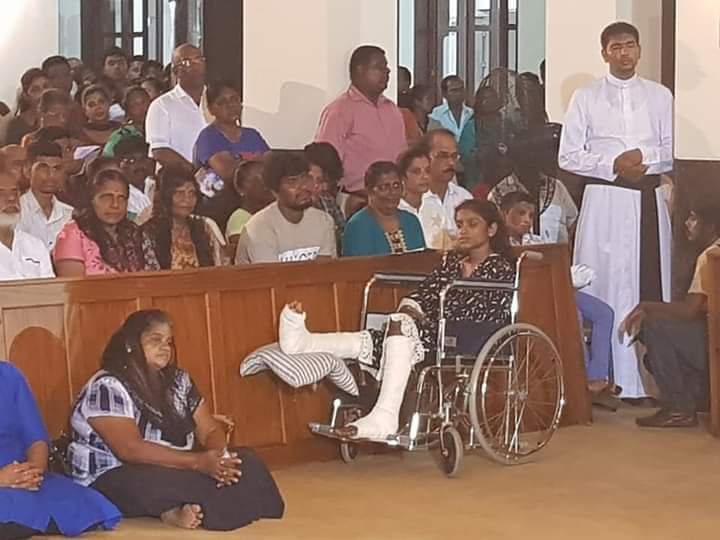
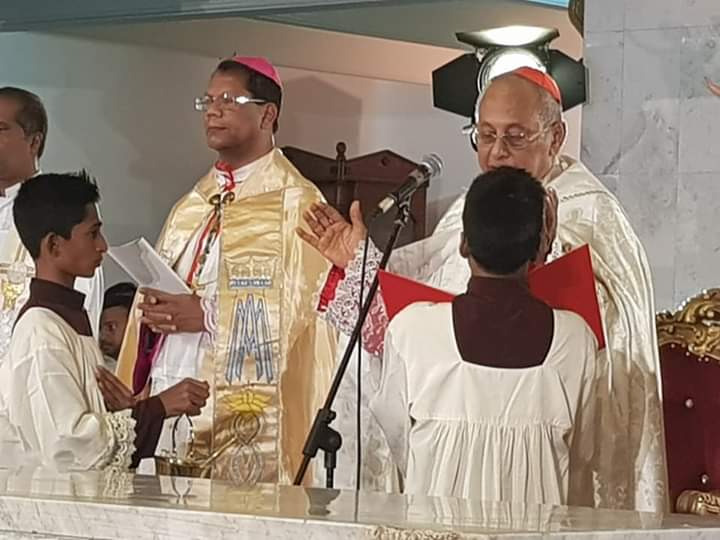

-kwk----FINAL-18.jpg)
-kwk----FINAL-15.jpg)

-hgw----FINAL_-15.jpg)
