RAMAYANA AND SRI LANKA Part 3

June 4th, 2019

KAMALIKA PIERIS

The Ramayana legend did not catch on in Sri Lanka the way did in South East Asia. Unlike in south East Asia, Ramayana tradition was not allowed to take root here, said Bandu de Silva. In Buddhism there was no place for myths like Ramayana.  Buddhism abhorred anything which did not stand scrutiny, he said.

 Dasaratha Jataka has Dasaratha, Rama, Sita and Lakshman as the main characters, but the story is completely different. Also, not a single manuscript of Ramayana is found among the many Sanskrit texts preserved in Sinhalese tradition, concluded Bandu.

Vini Vitharana observed that the Sinhala and Pali sources of Sri Lanka contain nothing that corroborates the Ramayana story. R.A.L.H. Gunawardana said that in the medieval period, Ramayana and Mahabharata were denounced by the monks as useless works which should be ignored. Several of the Buddhist texts stated that the study of the Ramayana and Mahabaratha was a waste of time.

Tissa Kariyawasam read a paper titled Ramayana in Sinhala Literature” at the symposium on the Ramayana Trail   organized by Royal Asiatic Society, Colombo in 2010.  He said, inter alia, there is a fleeting reference in Culavamsa to ‘as Sita loved Rama’   and ‘going forth to combat like Rama’. Kumaradasa, writing in the 7 century,    versified Rama- Sita story into Janakiharana. But Buddhagosha rejected the     Mahabharata and Ramayana as frivolous stories and this approach continued till end of 15 century, said Tissa.

In the reign of Parakrama bahu VI (1412- 1467), however, the Vedas, Puranas and the two Maha kavyas, Mahabharatha and Ramayana were studied at Vijayaba Pirivena under   Sri Rahula. But this was challenged.  Vidagama Maitreya, a contemporary of Sri Rahula was very critical of the Ramayana. He pointed out, inter alia, that while the monkey could swim across to Lanka, Rama needed a bridge.  Sri Rahula’s Kavyasekera compares princess Lokanatha to Sita. His sandesa poems refer to Rama, Ravana, Sita and Vibhishana. Selalihini Sandesa refers to a   Vibhishana devale   and speaks of a conversation in an ambalama regarding Rama-Sita stories. 

Ramayana, however, features in the folklore of the Udarata kingdom. C. E. Godakumbura   presented a paper titled ‘Ramayana in Sri Lanka and Lanka of the Ramayana” at the international Ramayana seminar, New Delhi, 1975. In this paper he said that there is an abundance of folklore in Ceylon connected with the story of Rama and Sita. Some of these explain place names, some point to special geographical features, other the lay of the land, the positions of hills, nooks and bend in rivers, the color of the soil and various curiosities. All this is folklore and nothing archeologically probable or tested historically, ‘concluded Godakumbura.  

Sena Thoradeniya (2010) said that in his home village Udurawana, a village in Patha Dumbara, there is a legend that the village goes as far back as Ravana. Udurawana is the name given to the place where Ravana fell facing the sky in his battle with Rama and the adjoining Yatiravana, along the present Kandy-Wattegama road is where Ravana fell facing the earth. There is a rock named Athobanagala where imprint of Ravana’s palm is still visible on the hard rock, Ravana had rested his hand there   while shooting deer. A tributary from Knuckles flowing along Yatirawana is named Ravana oya.

Folk poetry of the Udarata period ‘made a fuss of Ravana,’ said Tissa Kariyawasam. The Ramayana also influenced the Udarata rituals of the 18th and 19th century, such as Kohomba Kankariya. Ravana is supposed to have invented a string music instrument.

The indigenous medicine practitioners of Sri Lanka believe in the existence of King Ravana, said a media report. Ravana was a great physician credited with authorship of five books on medicine, one of which is available even today. The technique of using underground metal ash process and fermentation” belongs to the period of Ravana.

 A ballet titled ‘Maha Ravana’ was presented in Colombo in May 2008 by the Sarasavi Dehena Experimental Theatre School. The choreographer, Pabalu Wijewardana, who comes from the Mihiripenna dancing tradition, said that Sri Lanka lacked a truly iconic figure and he wished to project Ravana as an icon.  He had researched into the story of Ravana. He says Ravana was not a demon, but a wise king, who ruled over a vast South Asian kingdom which included Sri Lanka. The flying machine may have been a real one.

Present day writers say that neither Hanuman nor Sita ever came here and there was no Ravana either. They have pointed out that Sita Eliya in Nuwara Eliya district has nothing to do with the Rama and Sita story. ‘Sita’ is derived from ‘seethala’, which means cold.

However, in the 1990s Sri Lanka decided to embrace the Ramayana. A search for Ravana sites in the Nuwara Eliya and Uva districts started.  Rev. Harry Haas (1925-2002) a Christian priest from the Netherlands, who was living in Bandarawela, was very active in finding these sites. Sri Lanka was full of Ravana and Sita sites which needed discovering, Haas said.  The image of King Ravana was a universal one which appealed to the west as well as the east. Haas was the patron of a Ravana Centre set up in Uva.

In 1997 work commenced on a Hanuman temple complex at Wavendon, Ramboda, Nuwara Eliya with assistance from Tamilnadu government. The complex consisted of a huge 16 foot granite statue of Hanuman,  a spiritual centre, library and auditorium. This project was initiated by Gurudev Swami Chimayananda, who purchased 10 acres for the purpose. Minister S. Thondaman donated 5 more acres and provided a motorable road from the main Nuwara Eliya road to the temple site. This temple site, it is claimed, was close to the Asoka vana where Sita was kept captive and Hanuman found her.

The construction of the Hanuman temple was done by the Sri Lanka Army. There were large crowds at the first anniversary, of this temple, in 2002 with thousands of devotees drawn mainly from the plantation sector. The procession went with the statue of Holy Hanuman to Sita Amman Temple at Seetha eliya, where Hindu poojas were held.

In the 1999,   a newSita Amman kovil was   completed at Seetha Eliya in Nuwara Eliya. The original kovil was a small unpretentious structure. Derrick Schokman recalled ‘the Sita Amman Temple in Nuwara Eliya was simple temple when I first saw it. Now is it an ornate Hindu kovil with images of Rama, Sita, Lakshmana and Hanuman.’ The new kovil had its kumbhabisheka pooja in January 2008. There was a full page announcement in the newspapers, with messages from President and Ministers.

The Seetha Amman Temple in Nuwara Eliya was the only temple in the world dedicated to the Sita in the Ramayana, said supporters.    Although there are many Rama and Hanuman kovils in India, there is no kovil dedicated to Sita. This is the only place where Sita came alone. In all the other places Sita is associated with Rama. North Indians worship Rama and they are keen on developing the Sita Kovil with our support,”   said Radhakrishnan, Chairman of Board of Trustees of the temple.

“The estimated cost of building the temple is around Rs. four million. We have collected the funds through public donations. Tills are also placed outside the temple for collections. The Manoj Mody foundation of India gave about Rs.200, 000 for the renovation, he said in 1999.

“In January, 1999 we had a Festival of Unity organized by the Manoj Mody foundation of India, Radhakrishnan said. About 800 devotees came to Nuwara Eliya for a 10-day bajan programme. About 500 local devotees also joined in. They occupied all the hotels in the area and attended the poojas daily at the temple. Since space was insufficient, a tent was put up at the Buddhist temple nearby, to accommodate the crowd.

Environmental organizations and Buddhist organizations had staged a massive protest, before the festival was held. The people had feared that the 800 devotees expected, were from South India, although they were in fact mostly from North India where there is a strong following for Rama. The Buddhist organizations set down various conditions for holding the ceremony. These were adhered to and the ceremony was held peacefully,” Radhakrishnan said.

The Seetha Eliya Temple became the subject of a controversy in 1999 when the Ministry of Tourism mooted a proposal for the development of Seetha Eliya as a Holy City. It was proposed to vest 35 acres of land surrounding the temple in the Tourist Board and develop it as a sacred area similar to Anuradhapura and Kataragama.

It was suggested that Asoka Vanam, the forest where Sita was held captive is on the mountain, some distance away from the Seetha Amman temple. Behind the temple is a stream. Water flows over a basin like depression carved in the rock. It is said that Sita came through a tunnel to this stream to bathe. There were protests from environmentalists and the people in the area and the move for the Holy City was halted.

Bandu de Silva commented on this move. The government is trying to create a Hindu complex on the lines of the Cultural triangle, he said. Tourist Development Authority is promoting the idea of strong Ramayana tradition in the island. The Tourist Board first tried to develop the area behind the Hanuman temple. Now there is a move to expand the Hanuman Temple, taking in a tea kiosk built on a road reservation for use by laborers.

However, the Seetha Amman kovil has certainly achieved its purpose. It is now an accepted part of the tourist circuit and   strengthens the notion of a virile Hindu culture in Sri Lanka. Many tourists who visit the Hakgala Gardens, stopover to see the temple, since it is en-route from Nuwara Eliya to Hakgala. An average of 1500 local tourists and 1000 foreign tourists stopped by the temple in 1999 alone. During Thai Pongal, in January many devotees from the tea estates nearby visit the kovil to perform poojas said the media.

P Ramanujan, Secretary, Ministry of Tourism stated in 2006    that they were planning to set up a Ramayana Trail for tourists to encourage Indian tourists.  In 2007 S. Kalaiselvam, Director General of the Sri Lanka Tourism Development Authority said in a statement to Press Trust of India   that the Sri Lanka government had decided to develop the sites associated with the Ramayana. They were being restored and maintained. There was no archaeological confirmation for any of them, certainly, but these sites were not imaginary and have existed since time immemorial.

 A Ramayana Trail  Committee was set up, consisting of N.Kiriella, Chairman, Dr Suriya Gunasekera an authority on Sri Lankan pre history. Dr Subash Chawla an authority on International Ramayana,  B.M.U.D Basnayake Additional Secretary Ministry of Tourism and  S. Kalaiselvam Director General, Sri Lanka Tourism Development Authority.

In 2009 50 sites related to the ‘Ramayana trail’  were selected by Sri Lanka Tourism for  the Ramayana Trail.   Of these  50 , 12 are sites with archeological evidence, the rest are based on unwavering faith and traditional beliefs, said Kailselvam. There is no need to re –establish  the authenticity of the sites. People in the areas relate to the Ramayana. A dedicated team from Sri Lanka tourist agencies are handling the promotion of the Ramayana sites. Books were published to support the Ramayana trail, notably ‘Ramayana and Historical Ravana’, edited by Kiriella.

The Ramayana tourist trail includes Ravana’s palaces and dairy farm, also temples dedicated to Sita which had been built in a later period. The trail also included a pond which is believed to have come into existence through Sita’s tears. This pond never dries up even in the worst drought.

The Tourist Ministry had identified five   airports where Ravana parked his fleet of pushpak vimanas, the mythological aircraft used by him to abduct Sita. The Ministry thinks that Ravana’s flying machine may have landed at Weragantota,about 10 kilometres from Mahiyangana. Sita was then taken to Gurulupota, now known as Sita kotuwa.  This is 10 kilometres from Mahiyangana on Kandy road. There is the runway of Ravana’s aircraft, the aircraft landing place, aircraft repair centre in Gurulupotha. Sita was thereafter housed in a cave at Sita Eliya, Nuwara Eliya. Ravana cave at Ella, served as a quick means of transport through the hills for Ravana.

It was decided that the Ravana-Rama battle took place at Yudhaganapitiya in Matale and that Ravana was making his battle plans at Lakgala just before he was killed. It was also decided that Rama started his attack on Ravana at Dondra and the main battle was at Yudaganawa. After killing Ravana, Rama performed penance at Muneswaram in Chilaw. Hanuman had entered Lanka at Nagadeepa.He dropped the Dronagiri Mountain brought from the Himalayas on Rumassala. Rama fired the Brahmastra at   Ravana in Dunuwila. Sita is said to have performed Agni puja to prove her  purity at Devurumpola. 

Other sites were added on thereafter, Ashok vatika in Nuwara Eliya, Vessagiriya cave, and Isurumuniya lovers in Anuradhapura ,the cobra foot cave in Sigiriya,  the statue near Parakrama Samudra,   the  Hanumana kovil at Saranankara Road, Colombo 5, Gurullupotha jungle in Hasalaka,   Ravana Caves in Ella area,  the hot wells and Ussangoda  are  included in the Ramayana trail. According to folklore Ravana’s body is buried in a location in Welimada, reported the media.

The great basses ( Maha Ravana kotuwa) and Little basses ( Kuda Ravana Kotuwa) are a long line of coral and rock just below the surface of water in the southern sea. They are located not far from Kirinda beach or Rummassala in Galle. King Ravana is said to have established   his Lankapura ‘on the reefs.

The Ramayana trail was described at length in the Sunday Observer of  23.8.2009 . Sri Lanka Tourist Development authority has developed an itinerary that shows the Ramayana spots in Sri Lanka  the Observer said. there are over 50 Ramayana sites in Sri Lanka.  These were described.

the jungles in gurullupotha in Hasalaka is the place were Lankapura was, It is now called seetha kotuwa. The jungle on top of Ramboda along the Kandy Nuwara Eliya road is believed to be the route along which Ravana took seethe to ashoka vana. Ussangoda was the airport for Ravana. The tunnels from Bandarawela past Ella to Ravana cave, were the way Ravana went thorugh the hills, they were his secret passages.  These tunnels are manmade and not natural formations. Existing tunnel opening are situate at Isthripura, Senapitiya in Halagala, Ramboda, Labookelle, Wariyapola and Seetha kotuwa, continued this report merrily.

Dunuwila is where Rama shot and killed   Ravana,  said the report.  Hanuman, dropped lifesaving herbs on Rumassala, Dolu kanda in Hiripitya, Ritigala, Thailaddi in Mannar and Kachchativu. Divurumpola 15 miles from seethe Eliya on Nuwara Eliya –Welimada road, is the place where seeth performed Agni pariksha. This is a popular place of worship among the locals in the areas. The courts of law in Sri Lanka permits and accepts the swearing done at this temple when settling disputes.  There is also Munneswaram, where Rama received the blessing of Shiva. Ravana constructed the hotwells.  the soil of the ancient battle fields is red in colour.  Some areas look scorched after Hamunan set fire to them, ended the report. ( continued)

RAMAYANA AND SRI LANKA Part 4

June 4th, 2019

KAMALIKA PIERIS

Sri Lanka planned to use the Ramayana trail extensively in India to promote visits by Indian tourists.  A team commissioned by Zee TV had toured Sri Lanka in 2007, to find places connected to Ramayana. They went to Sita Eliya where there were statues of Rama, Lakshmana, Sita and Hanuman. They said that these statues had been there for 5000 years. They said that close to Sita Eliya they had seen a mountain which looked like Hanuman.

Zee TV said the Chinmaya statue of Hanuman was a copy of the mountain, except that it was in a vertical position. They reported that hundreds come every day to worship there. They also spotted black rocks which looked like monkeys with black lips and ears. They saw Rummassala which was brought here by Hanuman. It contains trees only found in the Himalayas.  There is a statue of Hanuman there as well. They were delighted to find a board saying Ravana Ella falls. But they reported that the public only came to Sita Eliya to   picnic and that few knew about Rama or Ravana.

It was reported in 2008 that the Ramayana tourist package is gaining popularity in India. Hindustan Times stated that the Ramayana trail was a hit with Indian tourists. Batches of 50 to 120 visitors had already toured these sites.  Middle aged and elderly persons like the package.  Several swamis from North India have visited with 50 visitors each. One swami was planning to bring      400 of his students to go on the trail.  School principals are bringing students as Ramayana is a part of the curriculum in India.   There was an agreement with Andhra Pradesh regarding these tours as well, they reported.

 In 2014, high profile ministers from India came as part of a group 150 pilgrims from India, on a 8 day Ramayana trail . This is the first time that an Indian VVIP group came to Sri Lanka on a pilgrimage of the Ramayana trail, reported the media. In 2015 Sri Lanka had re-launched the Ramayana trail from Bangalore.

In 2017, Yahapalana government reported that Sri Lanka is preparing to be part of the Ramayana circuit of India. The Indian government is identifying places connected with the Ramayana. Sri Lanka has already identified 71 locations across the island nation for inclusion in the circuit  and has appointed a committee to identify more places. We look at Sri Lanka and all south Indian states as one unique unit, housing the maximum Ramayana spots,”   said  John Amaratunga, Tourism Development Minister. 

In 2018 it was reported that Indian and Sri Lankan governments have entered into an agreement to boost the Ramayana trail. This trail was lately gaining momentum with a number of operators offering travel plans. There have been 206,337 Indian visitors to Sri Lanka up to June this year and it is believed that about one per cent of the traffic would be visiting the country solely as pilgrims on the Ramayana trail.

A press release issued on the occasions, by the Sri Lanka Tourism Promotion Bureau stated that in Sri Lanka according to popular belief the Ramayana story is indeed a true account of what took place many millenniums ago. This belief has been supported by research, analysis and reasoning.

Sri Lanka has identified over 50 sites in and around its territory due to accessibility issues, only around 20 sites are currently being recommended for visitors. Sri Lanka is working towards identifying many other locations and also making these locations accessible to visitors. It has been estimated that a travel period of around 9 to 14 days will be required to visit all 20 sites, the press release concluded.

Indians are puzzled over the popularity of the Ramayana trail. Ravana is held in high contempt by the large majority of Indian populace, said Kuldeep Kumar. Ravana is hated in India said Bandu de Silva. To a Hindu, Rama is a living hero and Ravana is a villain. Effigies of Ravana, placed on maps of Sri Lanka, are burnt each year in India during the Ramayana celebrations. At the October 2010   NDTV celebrations, in Delhi, two large effigies of Ravana and Vibhishana were carried in by revellers and placed before the Prime Minister. A bow and arrow was given to Prime Minister who shot an arrow at Ravana. The effigies were then stoned and set on fire.

Ruchir Sharma, a leading business man visiting Sri Lanka, said ‘I was surprised to see Tamils in Trincomalee working to attract Indian tourists to the Ravana trail. Locals say that as long as the Ravana trail is drawing tourists, the rest don’t matter.

The intelligentsia viewed the Ramayana trail with great concern. The Ramayana trail has been criticised on for its historical inaccuracies. These are not accidental, they are deliberate distortion of Sri Lanka‘s history and there was a political purpose behind it, charged the intelligentsia. The Royal Asiatic Socieyt of Sri Lanka therefore held a symposium on the subject in   October 2010. (Papers presented at this symposium can be downloaded at http://www.royalasiaticsociety.lk/research-projects/symposium-on-the-tourist-authorities-ramayana-trail/isl)

At this symposium    Malini Dias, the  respected epigraphist,  commented on a paper presented by N.C.K. Kiriella, chairman of the Ramayana Trail, Ministry of Tourism, at a symposium held at the Indian Cultural Centre.  His topic was ‘Historical evidence of Ramayana and Ravana in Sri Lanka.” His paper contained many inaccuracies, she said, listing some of them.

The cave inscription from Alulena (Rahalgala) in Aranayake in Kegalle District has had   white ink put on the letters in the inscription to change the appearance of the letters and then photographed, said Malini. A new phrase ‘Maha Rakdhaha rawana puta’ has been surreptitiously added at the beginning of the inscription. This translates as Ravana’s son. The Archeological Department takes ink impressions from the inscriptions. The ink impression is in black and white and is clear for reading, she said.

Cave inscriptions from Wegiriya devale have also been distorted with white ink  and translated to suit the Ramayana. The Brahmi cave inscription of Molagoda Vihara in Kandy District has been misinterpreted. ‘Bamana’ has been read as ‘Bimana’ to show that it refers to the pilot of an airplane.

Sigiriya has been described as Chitrakoota palace of Ravana’s brother Kuvera. Isurumuniya Vihara is considered the temple of Ravana’s parents, Visravasumi and Kaikali.   The word Kubakara has been misinterpreted as Kubakana. Cave inscriptions at Vessagiriya were also misinterpreted.  One inscription has been taken by Kiriella from the book ‘Sri Lanka Rawana rajadhaniya’ by Ariyadasa Seneviratne. Participants at the RASSL symposium wanted to know whether legal action cannot be taken if inscriptions have been tempered with.

Kiriella later responded through the newspapers. The ink impression of a rock inscription is fine, he said, but standing before the entrance to the cave, following the letters carefully and taking photographs is always better than ink impressions. That’s the method I applied.

Danesh Wisumperuma speaking at the RASSL symposium said that there is no historical evidence to show that Rumassala, Ritigala, Dolukanda are remnants of rock brought here by Hanuman. Geologically they were formed around 542-4500 million years ago. Scientific evidence shows that the flora there are not Himalayan flora. They are Sri Lanka flora Ussangoda, according to the Ramayana trail, was the landing place of Ravana’s plane before it was burned by Hanuman. Geologically, this is a serpentine rock formation and the surface is covered with Red Earth. This soil contains a high concentration of heavy metal. That is why the diversity of vegetation is low in such sites, Wisumperuma explained.

The Ramayana trail contained howlers   as well. The Asoka flower said to be a rare Sita flower is a common plant in the upcountry and is found in many forests and Patna lands. They said the Bovitiya is also a rare Sita flower. Seetha gangula is not about Sita. There were other absurdities. I attended a talk by Ramayana trail supporters where they said that the letters ‘ra-ma’ or ‘ra-va-na’ were plentiful in the inscriptions. It was the silliest talk I have ever listened to.

At the RASSL symposium, Ven Hegoda Vipassi    spoke about the   Ravana literature that had sprouted along with the Ramayana trail. This is done methodically, he said. One person provides distorted inscriptions and others write books and essays based on these distorted inscriptions.  Historians are silent. Some have written introductions to these works.

Suriya Goonesekera had written an article on Ravana, which he said was based on information from ‘Dakkunu Budu siripathula pihiti makkam saha ravana rajuge sel lipi’ by Jayantha Pathiraarachchi.  Pathiraarachchi is busy fabricating and distorting inscriptions, said Ven Vipassi. Inscriptions have had lime put on it and new letters put in. Words are given new meanings. Gam and Ganga makes gamga. Pathiraarachchi’s book is selling well, about 15,000 copies have sold.

Ven Vipassi considered the distorted Ramayana trail interpretations as   part of a much deeper anti-Buddhist programme. The Ravana distortions are only a portion of the project of distorting the history and Buddhism, he said.  ‘I have found that an organized group is involved in publishing articles in the newspapers and books, which distort the history of Sri Lanka and also Buddhism. Scholars ignore these, saying they are un- academic.

However, I received a large number of phone calls and letters from the public inquiring about these books. When I started taking action I got obscene and threatening phone calls, also death threats.One letter disparaged Mahinda and Sanghamitta. I lodged a complaint at the Mt Lavinia Police station and am awaiting leave to proceed. This is a well organized campaign.  The Hindu akramanaya is starting, he concluded.

The Ramayana trail has come under fire for its political implications as well. Someone must look into the matter of the Ramayana trail, said alarmed observers. This is no laughing matter. Ravana and Rama sites are now found in places of historical significance, such as Yudaganawa. Why the Ramayana is remembered now, critics asked. Why is the Ramayana epic, which was not accepted in Sri Lanka for two millennia, making inroads now. 

The intelligentsia had no difficulty in explaining why. Ministry of Tourism is marketing Sri Lanka as the abode of Ravana. This is a move to subvert traditional history  and focus attention on the pre Buddhist and pre Sinhala era in Sri Lanka, they said. The 50 sites found in Sri Lanka are probably more than even in India, said critics.   The Ramayana trail also indicates a plan to present Sri Lanka as a Hindu country. Ramayana trail is not a venture to lure tourists but part of a bigger agenda to   present Sri Lanka as a Hindu country, said critics.

India is supporting this. Indian Express of 29.6.2010 reported that Chouhan, Chief Minister of Madhya Pradesh, was present at the bhumi puja, of a new Sita Matha temple at Divurumpola where Sita is supposed to have performed Agni puja. He had offered one crore of rupees for its construction.

The Ramayana trail aims to destabilize the country, charged the intelligentsia. Gaston Perera noted that Sri Lanka is using an epic from a foreign country to attract Indian tourists into this country. This epic has political implications.  The triumph of Rama over Ravana equals India over Sri Lanka.

A confrontational situation can be created by Ramayana Trail, critics observed. The tourists will not be ordinary tourists but Hindu tourists obsessed with the idea of the supremacy of Rama and Sita. Such pilgrimages can lead to violence. The Tamil issue was bad enough, a Hinduised intervention would be worse, said Bandu de Silva. The Hindu population in India has nationalist and religious impulses which could be used as a pretext for war if the sites become threatened.

Concerned Sri Lankans therefore want to know on what evidence the Tourist Board is arranging Ramayana trails in Sri Lanka.   They say that before this myth gets crystallized, the validity of these sites should be examined. Sri Lanka’s past cannot be distorted merely to attract Indian tourists. Tourist Board replied, ‘it is not our job to verify historical accuracy but to encourage tourism which is what we are doing by promoting the Ramayana trails’.

Some observers took a milder line. Haris de Silva said need we go to great lengths to debunk the Rama- Ravana connection with Sri Lanka. There is no danger that all this will threaten Buddhism. Also, every Buddhist temple ha separate annexes for Siva and Vishnu within the temple complex.   There is no threat to Buddhism from Ramayana trail. Why should not the Tourist Board make a quick buck out of it. They should be allowed to embellish the material, Haris said. Haris de Silva is former Director, National archives.

Tissa Devendra  suggested that the Ramayana trail could be presented as a fictitious  one. There is a tradition of fictional tourism, such as the Baker Street tours in London,  of the places where Sherlock Holmes lived in London.

 Columnist Nan” said in her column if money could be made from the Ramayana trail why not make it. There is no point in making such a fuss over the fact that Ramayana has been debunked as historical in India. We believe in legends myths about the origin of the Sinhala race and believe that the Buddha visited our island.

Nan though the RASSL symposium was tilting at windmills, seeing dangers where they do not really exist. Paranoid fears were expressed at the RASSL symposium, she said. Apprehensions were exaggerated. Since we believe in the coming of the Buddha and Vijaya without proof why not Ravana.

 She says that this segment of tourism came to be when tourism as in the doldrums. The idea of Ramayana trial was developed parallel to the Buddhist circuit in India and was approved by Milinda Moragoda, when he was Minister of Tourism. Don’t attempt to kill the golden goose which lays the golden egg of this arm of religious tourism. Ravana was a great king, she said. (CONCLUDED)

WHAT ARE EXPECTATIONS FROM THE NEXT PRESIDENTIAL CANDIDATE: A STRONG CULTURAL DESIGN AND POLICY CORRECTION IN SRI LANKA

June 4th, 2019

By Edward Theophilus

While problems relating to the Easter Sunday attacks are diminishing, it seems that news media and politicians are openly talking about the next presidential election. What is real public opinion on the next presidential election is quite difficult to understand as emerging talks in the country, despite the major problems attempt to camouflage the real problems?  Emerging terrorism from time to time has been a significant problem since 1970 and such terrorist activities related to all communities, Sinhala, Tamil and, Muslim. Whether they were domestic productions or imported ideology cannot be determined by the public as investigators have not disclosed findings.

The recent explosion in Palali and the death of a soldier might be complicated the problem further, the accurate information was not disclosed and shows that Sri Lanka needs a strong and wise security system to protect people and collateral of the country.  People of the country without any difference have a fundamental opinion that the next president must be a person with a strong ability to tackle security issues. A part of Investigations into the Easter Sunday attacks revealed that the national security has relegated to uncertain politics and underestimated by politicians. For this purpose, Sri Lanka needs a person who can tackle the security problems as the successful candidate for the next presidential election. 

If we look back the major reason to emerge terrorism, it seems that brainwashing of young people using political or religious beliefs was the beginning of terrorism. Young generation is vulnerable to vicious ideas without critically examining whether they are right or wrong and has not gained and is not being gained critical thinking power from schools and universities and attitudes of them are based on bullshits in many instances, so there is a trend of aligning to revolutionary ideas or stupid religious philosophies and potential to acting on such ideas with a view to achieving the utopia. Rohana Wijeweera brainwashed poor rural youth and university students using five lessons copied from publications of Marxism and Kim Il Sung in North Korea, a speech of Sunethra Bandaranaike and a book of J.R.P. Surriaperuma. Prabhakaran followed bisection ideas of misguided Tamil leaders, and Saharan and his group addicted to revised Koran versions and teaching of manipulators of Islam after prophet Mohamed. Terrorism in Sri Lanka was purely a manipulation from outside theories and religious preachers than accurate or authenticated facts in above mention publications and understanding the practical environment of Sri Lanka.

The other vital fact is that Sri Lanka is subject to an international power play among India China, USA, Russia, Europe, and the Middle East. We have seen that this situation has been growing since independence.  Although Sri Lanka is not an economically powerful country to offer advantages to power players, there is some potential in South Asian region for military and trade purposes and some countries in the region want to block the economic and trade activities initiated by Sri Lanka with a view to attracting such gains and benefits to them.   I feel that those international players are attempting for zero-sum games using Sri Lanka disregarding what would happen to its people. Therefore, next president in Sri Lanka should be an excellent thinker, a strategist in relation to military and civil activities with an ability to make right decisions and reconcile the relations, especially with China, India, and the USA.

Political leaders including the past presidents did not initiate or openly discuss with the public about policy issues. Past presidents and their political parties and associated people endeavored to gain power misleading people without openly talking about the reality of the country. In 2015 presidential and general elections opened the hopes of people for good cultural design, but the political bias of associated people disgraced the good governance and the hopes of people.  In this environment, next presidential candidate must consider to making a good cultural design for the country, and it should be the main policy strategy with a view to maintaining harmony among ethnic and religious groups and international institutions. Policy correction and invention in relation to the economy, education, administration, racial and religious harmony, foreign relations and other areas in a good cultural design would be successful without aligning to temporary measures. Past presidents practically aligned to temporary measures rather than looking for medium- and long-term focus with a clear vision.  While giving leadership for such activities, the president should give leadership for modernization of the country.   Without a strong leadership for modernization, like emperor Meiji did in Japan, the country cannot go forward in the dynamic world.

After independence in 1948, Sri Lanka had a good opportunity to make a strong cultural design, which entirely changes the attitudes of people, however, the political leadership was unable to produce such a good design as they followed greedy politics with a view to gain power or to be in power. People have very much experience that many presidents withdrew good constitutional and legal provisions to maintain a just society in Sri Lanka.  When a group of people, who have no real public supports come to the road, leaders withdrew good measures.  The proposed cultural design should be based on one country and one nation with one law for all. People may be different from size, shape, color, political and religious beliefs, but people do share something universal, which is called “Humanness” as Aristotle stated.  When there is a good cultural design nobody can put hands to affairs of Sri Lanka.

What is a cultural design may be questioned to the public?  Sri Lanka’s political authority needs to understand the nature of laws and controls and how they should be effectively used in the country. After independence, people were not educated the way of designing a culture and how it should be consisting of and what is expected behavior in a good society.  Cultural design is making strong rules, regulations, and laws to stabilize the country giving equal opportunity for everyone and eliminating discrimination on Racal, religious, caste dictions and others. The yahapalana regime intended to do the cultural design, but within a short period, the regime changed the policies opposed and turned to a more vicious politics and corrupt practices.

In the process of policy correction, the economy of the country is the most important area.  In 1978 began the market economic system but it was implemented without disciplines and controls and the market economic system promoted an unbalanced growth networking bulk of investments to Western province.  Urbanization must be expanded to regional Sri Lanka to giving benefits to rural people.  Many economic problems are related to the macroeconomy, there may be artificial intelligent or microeconomic reforms important but macroeconomic policies are vital to shaping the economy.  Population control and unemployment should consider as a strategic policy correct because the size of population in Sri Lanka is too much for the size of lands and available services.  The population of Sri Lanka should be controlled to 1981 level ( Sinhala 75%, Tamil 15%, Muslim 7% and others 3%) giving the ratio of  the population had in 1981.

Education in the country must be effectively reshaped to reduce the cost associated with it and generate productive and knowledge nation in all contexts of education. The current education does not produce quality people from all context.

 The administration field generates unaffordable costs to the country.  Within an unliterary constitutional system, Sri Lanka needs administrative delegation to district level with strong coordination.

Ethnic and religious harmony will be depended on a strong cultural design, which eliminates discrimination and gives equality for all religious and ethnic groups.

Foreign relations should be focused on reconciling between power blocs and not aligning to a specific bloc. Sri Lanka needs to maintain a very good relationship with neighboring countries including India and China with other trading partners.

Policy correction will be successful only if current policies are properly reviewed.

The next presidential candidate must express his or her views on these major areas and be able  to give leadership with a strong military and civil experience.

රාවණ – 1 චන්ද්‍රිකාව ජුනි 17 වැනිදා පෘථිවියට කිලෝමීටර 400 ක දුරින් පිහිටි කක්ෂයකට මුදාහරිනවා

June 4th, 2019

මාත්‍ය සුජීව සේනසිංහ ප්‍රවෘත්ති නිවේදනය

ශ්‍රී ලංකාව අභ්‍යාවකාශ පර්යේෂණ  ක්ෂේත්‍රයට පිවිසීම සනිටුහන් කරමින්  ආතර් සී. ක්ලාක් මධ්‍යස්ථානයේ පර්යේෂණ ඉංජිනේරුවන් දෙදෙනෙකු  විසින් ජපානයේ ද සහයෝගය මත ජපානයේ ක්‍යුෂු තාක්ෂණික අධ්‍යයන ආයතනයේ දී නිර්මාණය කර දැනට ජාත්‍යන්තර අභ්‍යාවකාශ මධ්‍යස්ථානයේ රඳවා තිබෙන රාවණ -1 නැනෝ චන්ද්‍රිකාව ජුනි මස 17 වැනිදා පෘථිවියට කිලෝමීටර 400 ක දුරින් පිහිටි කක්ෂයකට මුදාහරින බව බව විද්‍යා, තාක්ෂණ හා පර්යේෂණ අමාත්‍ය සුජීව සේනසිංහ මහතා පැවසීය. ඒ මහතා මෙ බව ප්‍රකාශ කළේ ඊයේ දින එම අමාත්‍යාංශයේ පැවති ප්‍රවෘත්ති සාකච්ඡාවකදී ය.  

අභ්‍යාවකාශ පර්යේෂණ  ක්ෂේත්‍රයෙන් අප රට ළඟාකරගත් සුවිශේෂී ජයග්‍රහණය වන මෙරට ප්‍රථම චන්ද්‍රිකාව නිර්මාණය වන්නේ විද්‍යා, තාක්ෂණ හා පර්යේෂණ අමාත්‍යාංශය යටතේ ක්‍රියාත්මක වන නවීන තාක්ෂණය පිළිබඳ ආතර් සී. ක්ලාක් මධ්‍යස්ථානය 2014 වර්ෂයේ දී ආරම්භ කළ දිගුකාලීන අභ්‍යාවකාශ තාක්ෂණ සංවර්ධන වැඩසටහනේ එක් පියවරක් ලෙසිනි.

මෙහි දී වැඩිදුරටත් අදහස් දැක් වූ අමාත්‍යවරයා මෙසේ ද පැවසීය.

 නවීන තාක්ෂණ පිලිබඳ ආතර් සී.ක්ලාක් ආයතනය හා ජපානයේ කියුෂු තාක්ෂණ ආයතනය සමඟ 2017 වසරේදී සහයෝගීතා පර්යේෂණ ගිවිසුමකට (Cooperate Research Agreement) එළඹුනා. මෙම ගිවිසුමට අනුව ශ්‍රී ලංකාව වෙනුවෙන් නැනෝ චන්ද්‍රිකාවක් නිර්මාණය කිරීමේ පර්යේෂණ කටයුතු සඳහා එක් පූර්ණ ශිෂ්‍යයත්වයක් ආතර් සී. ක්ලාක් ආයතනයේ පර්යේෂණ ඉංජිනේරු දුලානි චාමිකා මෙනවිය වෙත හිමිවුණා. ඊට අමතරව මුදල් ගෙවන සාමාජිකයෙකු ලෙස ආතර් සී.ක්ලාක් ආයතනය විසින් එම ආයතනයේ පර්යේෂණ ඉංජිනේරු  තරිදු දයාරත්න මහතාවත් මේ කාර්යයට ඉදිරිපත් කළා. මෙම නැනෝ චන්ද්‍රිකා ව්‍යාපෘතිය වෙනුවෙන් රුපියල් මිලියන 21.5 ක් ශ්‍රී ලංකා රජය විසින් පිරිණමා තිබෙනවා.”  

අමත්‍යාංශයේ ඉදිරි කටයුතු පිළිබඳව අමාත්‍යවරයා මෙසේ කරුණු පැහැදිලි කළේය.

මේ වන විට අප රට නැවත යථා තත්වයට පැමිණ තිබෙනවා. ඒ තුළ අප අමාත්‍යාංශය ලබන ජූලි මස 18 වන දින විද්‍යව, තාක්ෂණය, නවෝත්පාදන දැනුම සාමාන්‍ය ජනතාවට සමීප කරවන  ශිල්ප සේනා දැවැන්ත ප්‍රදර්ශනය කොළඹ දී ආරම්භ කරනවා. මෙම ප්‍රදර්ශනයේ දී, විද්‍යව හා තාක්ෂණය අංශ 12 වෙන්කර දැනුම ලබාදීම, නව නිපැයුම් 500 කට අවස්ථාව ලබාදීම, නිෂ්පාදන සඳහා ජනතාව දැනුවත් කරන පැකේජ 1000 ක් හඳුන්වා දීම, ආදී අවස්ථාවන් රැසක් ජනතාවට ලබාදීම අපේ අරමුණයි. ශිල්ප සේනා වැඩසටහන එක් මාසයකට එක් දිස්ත්‍රික්කයක ලෙස  දිවයින පුරා ක්‍රියාත්මක කිරීම හරහා දළ ජාතික නිෂ්පාදනය දෙගුණ කිරීමට අවස්ථාව ලැබෙන බව අප විශ්වාස කරනවා. ”

මෙම අවස්ථාවට අමාත්‍යාංශ ලේකම් චින්තක ලොකුහෙට්ටි, අධ්‍යක්ෂ හිමාලි අතාවුදගේ, ආතර් සී. ක්ලාක් ආයතනයේ සභාපති මහාචාර්ය උපුල් සොන්නාදර යන මහත්ම මහත්මීන් ද සහභාගී වූහ.

තක්ෂක හේමචන්ද්‍ර

ගරු විද්‍යා, තාක්ෂණ හා පර්යේෂණ අමාත්‍යතුමාගේ

මාධ්‍ය ලේකම්

‘සයිබර් ආරක්ෂණ පනත් කෙටුම්පත’ පිළිබද මහජන සංවාදයට ලබා දී ඇති කාලය ප්‍රමාණවත් නොවේ

June 4th, 2019

සම්පත් සමරකෝන්  කැදවුම්කරු මාධ්‍ය නිවේදනය

04 ජූනි 2019

‘සයිබර් ආරක්ෂණ පනත් කෙටුම්පත’ පිළිබද මහජන සංවාදයට ලබා දී ඇති කාලය ප්‍රමාණවත් නොවේ

ශ්‍රී ලංකාවේ සයිබර්  ආරක්ෂණ උපායමාර්ග ක්‍රියාත්මක කිරීම, සයිබර් ආරක්ෂණ නියෝජිතායතනයක් පිහිටුවීම සහ ශ්‍රී ලංකාවේ සයිබර් ආරක්ෂණ ක්‍රමවේදයන් සඳහා විධිවිධාන සැලැස්වීමට යනුවෙන්   පවසමින් සයිබර් ආරක්ෂණ පනත් කෙටුම්පතක් ඩිජිටල් යටිතල පහසුකම් සහ තොරතුරු තාක්‍ෂණ අමාත්‍යාංශය  විසින් මේ වන විට ඉදිරිපත් කර තිබේ.

එම පනත් කෙටුම්පත http://www.mdiit.gov.lk/index.php/en/mtdi-news/item/64-cyber-security-bill හෝ  https://srilankacert.blogspot.com/2019/05/invitation-for-comments-on-cyber.html යන වෙබ් අඩවිවලට පසුගිය මැයි 23වනදා, මහජන මත විමසීම සදහා ඇතුලත් කර ඇති අතර, එම  මහජන මත විමසුමට අදාළ යෝජනා එළඹෙන ජූනි 5 වනදාට පෙර එවිය යුතු අතර, වාචික යෝජනා සහ අදහස් ඉදිරිපත් කිරීම ජූනි මස 6 වනදා ට යොදා ඇති බව එම වෙබ් අඩවිය වාර්තා කර ඇත.

ලෝකය පුරා සන්නිවේදන කටයුතු වල මේ වන විට ප්‍රමුඛස්ථානය ගෙන ඇත්තේ අන්තර්ජාලය මත පදනම් වූ සන්නිවේදන වේදිකාවන්ය. එම නිසාම එම අන්තර්ජාල වේදිකාවල ආරක්ෂාව, එම වේදිකාවල අන්තර්ගතයන්, ඒවායේ දත්ත සහ තොරතුරුවල ආරක්ෂාව මෙන්ම පුද්ගලිකත්වය(Privacy)  පිළිබඳවත් ලෝකය පුරා අවධානය යොමුව ඇත්තේ බොහෝ කලක සිට බව අන්තර්ජාල මාධ්‍ය ක්‍රියාකාරීත්වය(IMA) අවධාරණය කරමු.

එම තත්වය තුළ ශ්‍රී ලංකාවේ එම කතිකාව එතරම් පළල් මට්ටමක නොවුණත්, අන්තර්ජාල නිදහස, පුද්ගලිකත්වය, ආචාරධර්ම සහ මානව හිමිකම් මත පදනම් වූ අන්තර්ජාල භාවිතාවක් පිළිබද සාකච්ඡාවක් මේවන විටත් ආරම්භ වී ඇත. එහි එක් ක්‍රියාකාරීත්වයක් සමාජ මාධ්‍යය ප්‍රකාශනය: කොළඹ 2019 නමින් පසුගිය මාර්තුවේදී ශ්‍රී ලංකාවෙ ප්‍රමුඛ පෙළේ සිවිල් සංවිධාන 16ගේ එකඟත්වයෙන් කොළඹ දී එළිදැක්වීය.

එවැනි සංදර්භයක් තුළ ඩිජිටල් යටිතල පහසුකම් සහ තොරතුරු තාක්‍ෂණ අමාත්‍යාංශය විසින් ඉදිරිපත් කර ඇති  ‘සයිබර් ආරක්ෂණ පනත් කෙටුම්පත’ පිළිබඳව අන්තර්ජාල මාධ්‍ය ක්‍රියාකාරීත්වයේ දැඩි අවධානය යොමු කරමු.

එහි දී මෙවැනි සංවේදී මෙන්ම ඉතාමත් ගැඹුරින් අධ්‍යනය කලයුතු මෙන්ම සැලකිය යුතු විෂයක් සම්බන්ධයෙන් වන පනත් කෙටුම්පතක් මහජන අවකාශයේ සාකච්ඡාවට, සංවාදයට ලක්කිරීම සදහා ලබා දී ඇති කාලය පිලිබඳ අපි කිසිසේත්ම සතුටු නොවෙමු.

විශේෂයෙන් ලංකාවේ එතරම් ගැඹුරින් සාකච්ඡා නොවන එහෙත් සාකච්ඡා විය යුතු කලාපයක් වන අන්තර්ජාලය/ සයිබර් අවකාශය පිළිබඳ වන ‘පනත් කෙටුම්පතක්’ පිළිබඳ මහජන සාකච්ඡාව සදහා දින 13කට ආසන්න කාලයක් පමණක් ලබා දී තිබීම පිලිබඳ  අප ක්‍රියාකාරීත්වය පුදුමයට පත් වෙමු.

එබැවින් එම කෙටුම්පතේ අන්තර්ගතයන් පිළිබඳව සාකච්ඡා කිරීමට සහ අදහස් ඉදිරිපත් කිරීමට පෙර, ඩිජිටල් යටිතල පහසුකම් සහ තොරතුරු තාක්‍ෂණ අමාත්‍යාංශය භාර අමාත්‍ය, අජිත්. පී. පෙරේරා මහතාගෙන් අප ඉල්ලා සිටින්නේ අවම වශයෙන් එක් මසක් වත් මේ සදහා ලබා දිය යුතු බවයි.

එසේම, මෙම පනත් කෙටුම්පත බා ගත කර හැකි  වෙබ් අඩවි වල (www.mdiit.gov.lk හෝ  www.cert.gov.lk) දක්වා ඇත්තේ පනත් කෙටුම් පතෙහි ඉංග්‍රීසි පිටපත පමණි. එය තවත් ලෙසකින් සිංහල සහ දෙමළ භාෂාව පමණක් භාවිතා කරන මහජනතාවට මෙහි අන්තර්ගතය හොදින් ග්‍රහණය කර ගැනීමට ඇති ප්‍රමුඛ බාධකයකි. එයින් සිදුවන්නේ ඉතා සංවේදී විෂයක් සදහා ඉදිරිපත් කර ඇති මෙම පනත් කෙටුම්පතට මහජන අදහස් ලබා දීම ගැටලුවක් ව ඇති බවයි. එසේම පනතේ ම 34වන වගන්තියේ දක්වා ඇති පරිදි, සිංහල භාෂවෙන් ඇති පනත බලාත්මක වන බව සඳහන් වුවත්, එහි සිංහල හෝ දෙමළ පනත් කෙටුම්පතක් තවමත් නොමැති වීම පනත් කෙටුම්පත පිළිබඳ ජනතාව තුළ සැකයක් මතු වීමට ඉඩ ඇති බව ද අප  ක්‍රියාකාරීත්වයේ මතයයි.

තවද ශ්‍රී ලංකාව තුළ ඇති වී ඇති නොසන්සුන්කාරී වාතාවරණයක් තුළ, සමාජ මාධ්‍ය වේදිකාවන් පසුගිය කාලය පුරා 3වරක් පමණ ලංකාව තුළින් පිවිසීම අවහිර කර තිබූ තත්වයක් තුළ සහ අන්තර්ජාලය හා බැඳී සමාජ මාධ්‍ය වේදිකාවන් පිළිබද සාවද්‍ය මතයන් වගකිවයුතු බලධාරීන්ගෙන් පවා  ප්‍රකාශ වන සංදර්භයකදී මෙයට වඩා වැඩි වගකීමකින් සහ සංවේදී භාවයකින් මෙවැනි විෂයක් සම්බන්ධයෙන් කටයුතු කළ යුතු බව අන්තර්ජාල මාධ්‍ය  ක්‍රියාකාරීත්වයේ අදහසයි.

එම නිසා ඉදිරිපත්කර ඇති ‘සයිබර් ආරක්ෂණ පනත් කෙටුම්පත’ ලංකාවේ භාෂා ප්‍රතිපත්තියට ගරු කරමින් සිංහල සහ දෙමළ භාෂා වලින් ඉදිරිපත් කිරීමට ද, අවම ලෙස එක් මසක්වත් මෙය පොදු මහජන අවකාශයට මුදා හරිමින් විවෘත සංවාදයකට ලක් කිරීම, මෙවැනි විෂයක් සම්බන්ධයෙන් පනත් කෙටුම්පතක් ගෙන ඒමේදී බලධාරීන්ගේ පූර්ණ වගකීමක් බව අප තරයේ අවධාරණය කරමු.

සම්පත් සමරකෝන්

කැදවුම්කරු | @IMAlanka | +94 777248304

Sangha govi Weda kamkaru

June 4th, 2019

Dr Sarath Obeysekera

Sangha ,Weda,Govi ,Kamkaru come forward please 

During last fewdays we have seen a formidable power behind Sangha .One lonely crusad monk managed to  almost the whole country to disobey law and order. Parallelu Weda  group led by doctors with GMOA at the helm created ripples. In the country ,threatening to strike .

Kamkaru were mobilised by the local politicians were getting ready.

Govi society is led by a farmer who never held a mammoty

It is the time for a new breed of leaders to come forward

In fifties we had a Christian converted to a Buddhist,educated in Oxford ,who got rid of tie and coat and changed into while national dress wearing round rimmed glasses who mesmerised  the masses with his eloquece and grabbed the power.

Same Sangha who carried him to the top killed him.

It is high time for his grand son who has similar features to come forward and lead the country ??

Only issue may be his sexual preferences.

That may be ok as Sri Lankan’s are now quite used to Butterfly theory.

After all most all Sri Lankans  at younger age were butterflies !

In India a Chaiwala became prime minister and in our country we have a president who was a low ranking government Servant ,in Ukraine we have a. New president who is  comedian ( Joker)

Unless our people make up their mond now and look for new blood ,there is no hope.

Current lot have miserably failed.

Dr Sarath Obeysekera

Cheating and Corruption – in Schools

June 4th, 2019

Righteous Society Project

There are three signs of a good person:

1)                Speaking the truth and searching it out. Only truth has value.

2)              Knowing what is good and supporting it, and protecting it. .

3)              Recognizing beauty and appreciating it.

Schools are intended to guide students into these three ways of basic goodness. But in Sri Lanka things are not going to plan; to a certain measure, they are going in the wrong direction:

To pass term tests and examinations, sadly, some students, the dishonest ones, cheat to gain higher marks. They can do this by taking into the examination crib” notes; or they can sit by a friend who will help them during the exam..

In this way they get an advantage over their classmates and claim by fraud, a higher academic achievement. But this is a lie – an untrue image of their real ability to work, study and pass exams. They may cheat in the whole range of subjects of the curriculum and even win school prizes and honours – dishonest students who claim to be worthy of honour!

This is not the purpose of schools!

One of the main reasons why children attend school is to get knowledge, and learn good habits, good manners and become trustworthy.

It is only trustworthy people who have any value to society as a whole. It is only they who can make a society, a country great.

Having a good school-life experience moulds and shapes children so that they can be prepared for life and have knowledge and to have all the tools to overcome their future problems. People who live by cheating end up in failure due to not have good knowledge and not behaving honestly. We all learn from our mistakes, we learn from our experiences. That is how people actually learn. Make your mistakes at school and not in the outside world! It is the road along which we all travel to get personal development, experience and wisdom.

People are social animals. We work together to achieve things. And to work together we have to talk and communicate our ideas and work to do things that are needed by the group. When it comes to actual doing and producing, people who lie soon get exposed. If you can’t answer truthfully and with knowledgeable answers people reject you. Very quickly people name you as a liar! And not to be trusted! Your good name falls to the dust.

Schools are producing students, some of whom are dishonest people, cheaters by habit.

There are the famous four Cardinal Virtues” made famous by Virgil  of Greece: Courage, Prudence, Temperance, and Justice..

If students have a sense of justice and fair play they will work and not rely on cheating to pass their exams.

ROS. Secretary CfB (International). Righteous Society Project.

What Does Islam Teach About…Deception, Lying and Taqiyya

June 4th, 2019

Courtesy thereligionofpeace.com


https://www.thereligionofpeace.com/pages/quran/taqiyya.aspx
Does Islam permit Muslims to lie? 

Muslim scholars teach that Muslims should generally be truthful to each other, unless the purpose of lying is to “smooth over differences” or “gain the upper-hand over an enemy”There are several forms of lying to non-believers that are permitted under certain circumstances, the best known being taqiyya (the Shia name).  These circumstances are typically those that advance the cause of Islam – in some cases by gaining the trust of non-believers in order to draw out their vulnerability and defeat them. 
QuranQuran (16:106) – Establishes that there are circumstances that can “compel” a Muslim to tell a lie.Quran (3:28) – This verse tells Muslims not to take those outside the faith as friends, unless it is to “guard themselves” against danger, meaning that there are times when a Muslim may appear friendly to non-Muslims, even though they should not feel friendly.Quran (9:3) – “…Allah and His Messenger are free from liability to the idolaters…” The dissolution of oaths is with pagans who remained at Mecca following its capture. They did nothing wrong, but were evicted anyway.  (The next verse refers only to those who have a personal agreement with Muhammad as individuals – see Ibn Kathir vol 4, p 49)Quran (66:2) – “Allah has already ordained for you the dissolution of your oaths…”Quran (40:28) – A man is introduced as a believer, but one who had to “hide his faith” among those who are not believers.Quran (2:225) – “Allah will not call you to account for thoughtlessness in your oaths, but for the intention in your hearts”Quran (3:54) – “And they (the disbelievers) schemed, and Allah schemed (against them): and Allah is the best of schemers.” The Arabic word used here for scheme (or plot) is makara, which means ‘cunning,’ ‘guile’ and ‘deceit’. If Allah is supremely deceitful toward unbelievers, then there is little basis for denying that Muslims are allowed to do the same. (See also 8:30 and 10:21)Taken collectively these verses are interpreted to mean that there are circumstances when a Muslim may be “compelled” to deceive others for a greater purpose.
Hadith and SiraSahih Bukhari (52:269) – “The Prophet said, ‘War is deceit.'” The context of this is thought to be the murder of Usayr ibn Zarim and his thirty unarmed companions by Muhammad’s men after they were “guaranteed” safe passage (see Additional Notes below).

Sahih Bukhari (49:857) – “He who makes peace between the people by inventing good information or saying good things, is not a liar.” Lying is permitted when the end justifies the means.

Sahih Bukhari (84:64-65) – Speaking from a position of power at the time, Ali confirms that lying is permitted in order to deceive an “enemy.”  The Quran defines the ‘enemy’ as “disbelievers” (4:101). 

Sahih Muslim (32:6303) – “…he did not hear that exemption was granted in anything what the people speak as lie but in three cases: in battle, for bringing reconciliation amongst persons and the narration of the words of the husband to his wife, and the narration of the words of a wife to her husband (in a twisted form in order to bring reconciliation between them).”

Sahih Bukhari (50:369) – Recounts the murder of a poet, Ka’b bin al-Ashraf, at Muhammad’s insistence. The men who volunteered for the assassination used dishonesty to gain Ka’b’s trust, pretending that they had turned against Muhammad. This drew the victim out of his fortress, whereupon he was brutally slaughtered.

From Islamic Law:

Reliance of the Traveler (p. 746 – 8.2) – “Speaking is a means to achieve objectives. If a praiseworthy aim is attainable through both telling the truth and lying, it is unlawful to accomplish through lying because there is no need for it. When it is possible to achieve such an aim by lying but not by telling the truth, it is permissible to lie if attaining the goal is permissible (N:i.e. when the purpose of lying is to circumvent someone who is preventing one from doing something permissible), and obligatory to lie if the goal is obligatory… it is religiously precautionary in all cases to employ words that give a misleading impression…  (See the Permissible Lying section on the Sharia page for more)

“One should compare the bad consequences entailed by lying to those entailed by telling the truth, and if the consequences of telling the truth are more damaging, one is entitled to lie.”
NotesThe Hadith makes it clear that Muslims are allowed to lie to unbelievers in order to defeat them or protect themselves. There are several forms:

Taqiyya – Saying something that isn’t true as it relates to the Muslim identity.  This is a Shiite term: the Sunni counterpart is Muda’rat.

Kitman – Lying by omission. An example would be when Muslim apologists quote only a fragment of verse 5:32 (that if anyone kills “it shall be as if he had killed all mankind”) while neglecting to mention that the rest of the verse (and the next) mandate murder in undefined cases of “corruption” and “mischief.” 

Tawriya – Intentionally creating a false impression.

Muruna – ‘Blending in’ by setting aside some practices of Islam or Sharia in order to advance others.

Though not called taqiyya by name, Muhammad clearly used deception when he signed a 10-year treaty with the Meccans (known as Hudaibiya) which allowed him access to their city while he secretly prepared his own forces for a takeover. The unsuspecting residents were conquered in easy fashion after he broke the treaty two years later. Some of the people in the city who had trusted him at his word were executed. 

Another example of lying is when Muhammad used deception to trick his personal enemies into letting down their guard and exposing themselves to slaughter by pretending to seek peace. This happened in the case of Ka’b bin al-Ashraf (as previously noted) and later against Usayr ibn Zarim, a surviving leader of the Banu Nadir tribe, which had been evicted from their home in Medina by the Muslims.

At the time, Usayr ibn Zarim was attempting to gather an armed force against the Muslims from among a tribe allied with the Quraish (against which Muhammad had already declared war). Muhammad’s “emissaries” went to ibn Zarim and persuaded him to leave his safe haven on the pretext of meeting with the prophet of Islam in Medina to discuss peace. Once vulnerable, the leader and his thirty companions were massacred by the Muslims with ease, probably because they were unarmed – having been given a guarantee of safe passage (Ibn Ishaq 981, Ibn Kathir v.4 p.300).

Such was the reputation of early Muslims for lying and killing that even those who “accepted Islam” did not feel entirely safe. Consider the fate of the Jadhima. When Muslim “missionaries” approached their tribe, one of the members insisted that they would be slaughtered even though they had already “converted” to Islam (to avoid just such a demise). However, the others insisted that they could trust the Muslim leader’s promise that they would not be harmed if they simply offered no resistance. (After convincing the skeptic to lay down his arms, the unarmed men of the tribe were tied up and beheaded by the missionaries – Ibn Ishaq 834 & 837).

Today’s apologists often rationalize Muhammad’s murder of his critics at Medina by falsely claiming that they broke a treaty with their actions. Yet, these same apologists place little value on treaties broken by Muslims. From Muhammad to Saddam Hussein, promises made to non-Muslim are distinctly non-binding in the Muslim mindset.

Leaders in the Arab world sometimes say one thing to English-speaking audiences and then something entirely different to their own people in Arabic.  Palestinian leaders routinely tell Westerners about their desire for peace with Israel, even as they whip Palestinians into a hateful and violent frenzy against Jews.  Yassir Arafat even referenced “Hudaibiya” – an admission to conning guillible non-Muslims.

The 9/11 hijackers practiced deception by going into bars and drinking alcohol, thus throwing off potential suspicion that they were fundamentalists plotting jihad. This effort worked so well that John Walsh, the host of a popular American television show, claimed well after the fact that their bar trips were evidence of ‘hypocrisy.’

The transmission from Flight 93 records the hijackers telling their doomed passengers that there is “a bomb on board” but that everyone will “be safe” as long as “their demands are met.” Obviously none of this was true, but these men, who were so intensely devoted to Islam that they were willing to “slay and be slain for the cause of Allah” (as the Quran puts it) saw nothing wrong with employing taqiyya to facilitate their mission of mass murder.

The Islamic Society of North America (ISNA) insists that it “has not now or ever been involved with the Muslim Brotherhood, or supported any covert, illegal, or terrorist activity or organization.”  In fact, it was created by the Muslim Brotherhood and has bankrolled Hamas.  At least nine founders or board members of ISNA have been accused by prosecutors of supporting terrorism. 

The notorious Council on American Islamic Relations (CAIR) is so well known for shamelessly lying about its ties to terror and extremism that books have been written on the subject.  They take seriously the part of Sharia  that says “it is permissible to lie if attaining the goal is permissible and obligatory to lie if the goal is obligatory”.  The goal being the ascendency of Islam (and Sharia itself) on the American landscape. 

In 2007, CAIR’s Ibrahim Hooper published an op-ed with a fabricated story about Muhammad that portrayed him as a forgiving man:There was a lady who threw garbage in the path of the prophet on a daily basis. One day, she didn‘t do it. The prophet went to inquire about her health, because he thought she might be sick. This lady ended up converting to Islam. So, that‘s how you respond to people who attack you, with forgiveness and with kindness.Hooper is not ignorant, of course, and knew what he was doing.  After getting caught, he changed the wording slightly to say that it is a tradition “Muslims are taught,” but he continues to promote the story without qualifying it as untrue – thus causing others to unwittingly repeat a lie.

Prior to engineering several deadly terror plots, such as the Fort Hood massacre and the attempt to blow up a Detroit-bound airliner, American cleric Anwar al-Awlaki was regularly sought out by NPR, PBS and even government leaders to expound on the peaceful nature of Islam. 

In 2013, a scholar at the prestigious al-Azhar university decreed that Muslims may wear the cross in order to deceive Christians into thinking they are friendly.  He cited 3:28 which says not to be friends with non-Muslims unless it is a way of “guarding” yourself against them.

“Hiding faith” can mean deceiving others about Islam in order to make it appear more attractive.  For example, a prominent Muslim activist in the United States, Linda Sarsour, bills herself as a “progressive” and says that gays, women and religious minorities need not worry about Sharia being imposed.  She even says that money is lent free of charge under Islamic law (more about that here).   

The Quran says in several places that Allah is the best at deceiving people.  

There are a few early Quran verses that seem to encourage truthfulness: 70:32-33, and it bears mentioning that many Muslims are no less honest than anyone else.  But, when lying is addressed in the Quran, it is nearly always in reference to the “lies against Allah” – meaning the Jews and Christians who rejected Muhammad’s claim to being a prophet.

Still, the circumstances by which Muhammad allowed a believer to lie to a non-spouse are limited to those that either advance the cause of Islam or enable a Muslim to avoid harm to his well-being (and presumably that of other Muslims as well).  Although this should be kept very much in mind when dealing with matters of global security, such as Iran’s nuclear intentions, it is not grounds for assuming that the Muslim one might personally encounter on the street or in the workplace is any less honest than anyone else.


Additional Reading: 
Taqiyya: TROP’s Response to the Apologists
Taqiyya about Taqiyya (Raymond Ibrahim)
Knowing the Four Forms of Lying
Muruna: Violating Sharia to Fool the West

“ජාතිවාදයක් රට තුළ පවතිනවා නම් එය එක් පාර්ශවයකට පමණක් හිමිවිය යුතු නැහැ” රිෂාඩ් නිසා ඉල්ලා අස්වූ සියලුම මුස්ලිම් ඇමතිවරු ජාතිවාදීන්,

June 4th, 2019

Dilum Amunugama

චූදිත අමාත්‍යවරුන් ඉල්ලා අස්වීම වෙනුවට සියලුම අමාත්‍යවරුන් ඉල්ලා අස්වී‍මේ භූමිකාව පිළිබද 2019.06.04 දින නුගවෙල පක්ෂ කාර්යාලයේ පැවති දැනුවත් කිරීමේ මාධ්‍ය සාකච්චාව..

https://www.facebook.com/watch/?v=470365273733499&t=70

විදෙස් ඩොලර් ආධාර දෙස බලා සිටින අමාත්‍ය මංගල සමරවීර මහතාට තුන්සියයකට අධික කිතුණු සැදැහැවතුන් ඝාතනය වීම ගැටලුවක්වී නොමැති නමුත් අතිඋතුම් මැල්කම් රංජිත් හිමිපාණන් වහන්සේ පූජ්‍ය අතුරලියේ රතන හිමියන් හමුවීම ගැටලුවක් වී ඇතැයි මහනුවර දිස්ත්‍රික් පාර්ලිමේන්තු මන්ත්‍රී දිලුම් අමුණුගම මහතා ප්‍රකාශ කළේය.

පාස්කු ඉරිදා ප්‍රහාරයෙන් පසු  එකදු  පුද්ගලයෙකුට හානියක් නොවන ලෙස රට තුළ සාමය තහවුරු කිරීමට විශාල දායකත්වයක් දැක්වූ අති උතුම් මැල්කම් රංජිත් හිමිපාණන් වහන්සේට අමාත්‍ය මංගල සමරවීර මහතා අගෞරව කිරීම කිසිසේත්ම අනුමත නොකරන බව අද මහනුවර නුගවෙල දී පැවති මාධ්‍ය හමුවකදී මන්ත්‍රීවරයා පැවසුවා. 

පූජ්‍ය අතුරලියේ රතන හිමියන්ගේ  දේශපාලන දර්ශනය කුමක් වුවත් උන්වහන්සේගේ අරමුණ අප කවුරුත් පොදුවේ පිළිගන්නවා.

චූදිත අමාත්‍යවරුන් ඉල්ලා අස්වීම වෙනුවට සියලුම අමාත්‍යවරුන් ඉල්ලා අස්වීම මගින් පෙනී යන්නේ ඒ අමාත්‍යවරුන් සියල්ලම ජාතිවාදී බවයි. එමෙන්ම ඔවුන් අන්තවාදීන් ආරක්ෂා කරන බව පෙනී යනවා. මේ අවස්ථාවේදී එම අමාත්‍යවරුන් හා ආණ්ඩුකාරවරුන් ඒ අයුරින් ක්‍රියාකරනවා නම් සිංහල අමාත්‍යවරුන් සිංහල ජනතාව වෙනුවෙන් ද දෙමළ අමාත්‍යවරුන් දෙමළ ජනතාව වෙනුවෙන් ද පෙනී සිටීමේ වරදක් දකින්නේ නැහැ. ජාතිවාදයක් රට තුළ පවතිනවා නම් එය එක් පාර්ශවයකට පමණක් හිමිවිය යුතු නැහැ.

නදීක දයා බණ්ඩාර 

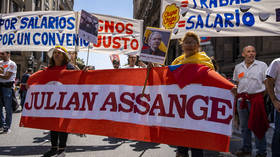
18 ways Julian Assange changed the world (by Lee Camp)

June 4th, 2019

RT

18 ways Julian Assange changed the world (by Lee Camp)

WikiLeaks revealed US war crimes, government corruption, and corporate media’s servile flattery to the power elite. If you’re a member of our ruling class, you would view those as textbook examples of treachery…

In an evolved and fully realized society, the oligarchy would see Assange as a dangerous criminal (which they do), and the average working men and women would view him as justice personified (which they don’t). We would celebrate him even as the mass media told us to hope for his downfall—like a Batman or a Robin Hood or an Ozzy Osbourne (the early years, not the cleaning-dog-turds-off-his-carpet years).

But we are not evolved and this is not Gotham City and average Americans don’t root for the truth. Many Americans cheer for Assange’s imprisonment. They believe the corporate plutocratic talking points and yearn for the days when we no longer have to hear about our country’s crimes against humanity or our bankers’ crimes against the economy. Subconsciously they must believe that a life in which we’re tirelessly exploited by rich villains and know all about it thanks to the exhaustive efforts of an eccentric Australian is worse than one in which we’re tirelessly exploited by rich villains yet know nothing about it.

Ignorance is bliss” is the meditative mantra of the United States of America.

Julian Assange has been arrested and is now locked away in British custody. The U.S. government wants to extradite him, regardless of the official version, for the crime of revealing our government’s crimes. Nearly every government on our third rock from the sun despises the man for bringing transparency to the process of ruling the unwashed masses. (The level of wash has, however, increased thanks to aggressive marketing campaigns from a variety of shampoo brands.)

It is politically inconvenient at this time for the screaming corporate news to remind our entire citizenry what exactly WikiLeaks has done for us. So you won’t see the following list of WikiLeaks’ accomplishments anywhere on your corporate airwaves—in the same way the mainstream media did not begin every report about Chelsea Manning’s trial with a rundown of the war crimes she helped reveal.

And Chelsea Manning’s most famous leak is arguably also WikiLeaks’ most famous leak, so it’ll top this list:Read moreExposing ‘collateral murder’ and mass surveillance: Why the world should be grateful to Assange

1) That would be the notorious Collateral Murder video, showing U.S. air crew gunning down unarmed Iraqi civilians with an enthusiasm that couldn’t be matched by an eight-year-old winning a five-foot-tall stuffed animal at the county fair. They murdered between 12 and 18 innocent people, two of them Reuters journalists.

Zero people have been arrested for the collateral murders. Yet Julian Assange has been arrested for revealing them.

2) WikiLeaks brought us the Guantanamo Bay Camp Delta Standard Operating Procedures”—showing that many of the prisoners held on the U.S. military detention facility were completely innocent, and that some were hidden from Red Cross officials. (Because when you’re torturing innocent people, you kinda want to do that in peace and quiet, away from prying eyes. It’s very easy to get distracted, and then you lose your place and have to start all over again.) 

None of the soldiers torturing innocent people at Gitmo have been arrested for it. Yet Julian Assange has been arrested for revealing it.

3) Not content with revealing only war crimes, WikiLeaks in 2008 came out with the secret bibles of Scientology, which showed that aliens, um, run the world or… aliens are inside all of us or… aliens give us indigestion. I can’t really remember.

But no one has ever been arrested for perpetrating that nutbag cult. Yet Julian Assange has for revealing it.

Many people believe WikiLeaks has unveiled only crimes of the American government, but that’s completely false. The U.S. corporate media doesn’t want average Americans to understand that WikiLeaks has upped the level of transparency around the world.ALSO ON RT.COM6 of WikiLeaks’ biggest ever document dumps

4–9) WikiLeaks posted videos of Tibetan dissidents in China fighting back, videos which were not allowed to be viewed in China. They revealed the Peru oil scandal, and that Russia was spying on its citizens’ cell phones, and the Minton Report on toxic dumping in Africa, and the Syria Files—showing the inner workings of the Syrian government. And WikiLeaks displayed to the global audience a secret Australian supreme court gag order that stopped the Australian press from reporting on a huge bribery scandal that involved the central bank and international leaders.

Assange is hated by governments around the world. As much as they may like transparency, when it comes to other countries (specifically the United States), they don’t want their own particular pile of s**t on full display. It’s kinda like when most people laugh heartily after an up-skirt photo of a celebrity is published in the tabloids, but at the same time, none of us want up-skirt photos of us all over the web. (I know I don’t because I haven’t shaved up there since Carter was in office.)

As far as I know, none of the political figures involved in these scandals have gone to prison for participating in them. Yet Julian Assange has for revealing them.

10) Let’s not forget the Iraq War logs—hundreds of thousands of documents relating to America’s illegal invasion of Iraq, which we called a war,” but I think a war needs to have two sides. Iraq’s elite Republican Guard turned out to be three guys and a donkey… and the donkey didn’t even have good aim.

So far as I can tell, no one committing the war crimes evidenced in the Iraq War logs has been locked up for them. Yet Julian Assange has for revealing them.Read moreBilderberg 2019: Who’s going and what will they be discussing?

11) WikiLeaks showed us the highly secretive Bilderberg Group meeting reports. The Bilderberg Group is made up of incredibly powerful men and women who get together and decide how to rule over all of us street people, all the while sitting on thrones made from the bones of the babies of nonbelievers. They’re often accused of being lizard people, but really they’re just regular ol’ sociopaths with lizard skin they purchased from a plastic surgeon in Malibu for half a million dollars. I don’t think anyone from the Bilderberg Group is being tortured in solitary confinement right now. Yet Julian Assange is for revealing who they are.

12) The Barclays Bank tax avoidance scheme netted Barclays one billion pounds a year.

While it was ordered to pay 500 million pounds in lost taxes, no one was arrested for that theft from citizens. Yet Julian Assange was for revealing it.

13) The Afghan War Diaries consisted of 92,000 documents related to our destruction of Afghanistan. They detailed friendly fire incidents and civilian casualties. According to WikiLeaks, the diaries showed that When reporting their own activities U.S. Units are inclined to classify civilian kills as insurgent kills, downplay the number of people killed or otherwise make excuses for themselves.”

It’s tough to read this without being floored at the comedy routine that our military actions have become. I picture this scenario happening every day in Afghanistan:

U.S. Soldier #1: This guy we just killed was an insurgent.

U.S. Soldier #2: How do you know?

U.S. Soldier #1: Because we killed him.

U.S. Soldier #2: Why’d we kill him?

U.S. Soldier #1: Because he’s an insurgent.

U.S. Soldier #2: How do you know?

U.S. Soldier #1: Because we killed him.

(Repeat until lightheaded.)

I am unaware of anyone locked away for these war crimes. Yet Julian Assange is locked away—for revealing them.ALSO ON RT.COMCrushing a Whistleblower on a Wheel: The unrelenting witch-hunt of Julian Assange

14) WikiLeaks also unveiled hundreds of thousands of U.S. State Department cables that showed more clearly than ever how our secretive government rules its empire with little to no input from the American people. Among many other things, the cables revealed Secretary of State Hillary Clinton ordered diplomats to spy on French, British, Russian and Chinese delegations at the U.N. Security Council. It also showed that Arab nations urged the U.S. to strike Iran, and much more.

Our ruling elite of course view this as a massive breach of national security. That’s understandable. But that world view comes into play only if you think the elites are the only ones who should know how our nation is run. To answer this question for yourself, do the following experiment. Pull up a photo of Donald Trump—a really close-up image of his blister-colored, bulbous face. Now, look at it intensely for five minutes… After you’ve done that, tell me you want the ruling elite to be the only ones who know what the f**k is going on. Go ahead and try it—I’ll wait.

Ostensibly, the concept of our government was that the ruling class would be accountable to us, the average Americans. To you and me. To the workers and the number crunchers. To the single moms and the cashiers and the street sweepers and the fluffers on the porn sets. We’re supposed to vote based on our knowledge of how our government is functioning. But if the entirety of our representatives’ criminal behavior is labeled top secret for national security purposes, then we aren’t really an informed populace, are we?

So for all that was unveiled in the State Department cables, no one has been locked up. But Julian Assange has been for revealing them.

15) The Stratfor emails—this was millions of emails that showed how a private intelligence agency was used by its U.S. corporate and government clients to target activists and protesters.

No one at Stratfor is currently locked away. But Julian Assange is for revealing the truth.

16) Then there’s the trade deals. TPP, TISA and TTIP—all three amount to one of the largest attempts at corporate takeover ever conceived. All three were more secretive than Donald Trump’s taxes. Government officials and corporate lawyers and lobbyists wrote every word in private. Not even Congress saw the Trans-Pacific Partnership until very late in the process. The only organization to show the American citizens (and European citizens) some of those documents before they were made into law? WikiLeaks.

WikiLeaks made us aware of the corporate restraints that were about to be placed on us, and that’s what allowed activists to pressure Trump to pull out of the TPP.

None of those secretive corporate titans are imprisoned for their attempted power grab, but Julian Assange is for revealing it.Read moreDNC argues it had the right to rig 2016 democratic primary

17) The DNC emails. I’ll explain for those of you who have been living in a cave that is itself inside a yellow-and-blue-makes-green sealed Tupperware container. The Democratic National Committee’s emails gave us proof concerning just how rigged the Democratic primaries really are. They proved the media was in bed with Hillary Clinton’s campaign. They even showed that Obama’s entire first-term cabinet was selected by Citibank. Yes, Citibank. (I would find it less offensive if his cabinet had been decided by a rabid raccoon, or the pus oozing out of Darth Vader’s face or Vince McMahon’s concussed frontal lobe.)

Whatever election integrity movement exists right now, it owes a lot to these revelations by WikiLeaks. After being sued over this matter, the DNC’s lawyers admitted in court that the DNC has no obligation to have a fair primary election. It’s their right to rig it.

But don’t try to get angry about this, because if you do, the CIA has a myriad ways to f**k up your life.

18) In 2017 WikiLeaks posted a trove of CIA documents called Vault 7.” It detailed their capabilities, including remotely taking over cars, smart TVs, web browsers and smartphones.

After I found out about that, for a solid two weeks I thought, Screw it. I’m going full Amish. One hundred percent. Let’s see the CIA hack my butter churn. Are they going to use backdoor software to get inside my rustic wooden bow-saw? Even if they could, what are they going to listen to—my conversation about how mee bobblin fraa redd up for rutschin’ ’round. Say no more! Schmunzla wunderbar!”

So is anybody at the CIA chained up for violating our privacy in every way possible? No, but Julian Assange is for revealing it.

By thrusting the truth upon the people of earth, WikiLeaks helped create movements worldwide like the Arab Spring and Occupy. And don’t forget, at first WikiLeaks and Assange were celebrated for their amazing work. In 2011 even Amnesty International hailed WikiLeaks as one of the Arab Spring catalysts. The Guardian saidThe year 2010 may well be remembered as a watershed year when activists and journalists used new technology to speak truth to power and, in so doing, pushed for greater respect for human rights… It is also the year when repressive governments faced the real possibility that their days were numbered.”

So why have so many outlets and people turned against Assange and WikiLeaks? Because it turned out he wasn’t revealing only repressive Arab regimes. He also revealed U.S.-backed coups and war crimes around the world. He exposed the criminality and villainy of the American ruling elite.

Nothing published on WikiLeaks has ever been proven untrue. Compare that record to CNN, MSNBC, Fox News or any mainstream outlet. Assange has been nominated for multiple Nobel Peace Prizes, and nearly every respected media outlet has used source material from WikiLeaks in their reporting. Yet after all this and after seven years in captivity, the man who laid bare our criminal leaders and showed each one of us our chains is not receiving parades and accolades. He and those who helped him reveal the truth are the only ones endlessly punished.

We are all Julian Assange. As long as he’s imprisoned, we can never be free.

By Lee Camp

Lee Camp is an American stand-up comedian, writer, actor, and activist. Dubbed by Salon as the John Oliver of Russia Today”, Camp is the host of RT America’s first comedy news show Redacted Tonight, which tackles the news agenda with a healthy dose of humor and satire. Lee’s writing credits are vast, having written for The Onion, Comedy Central and Huffington Post, as well as the acclaimed essay collections Moment of Clarity and Neither Sophisticated Nor Intelligent. Lee’s stand-up comedy has also been featured on Comedy Central,  ABC’s Good Morning America, Showtime’s The Green Room with Paul Provenza, Al-Jazeera, BBC’s Newsnight, E!, MTV, and Spike TV.

This article was originally published by Truthdig.

This column is based on a monologue Lee Camp wrote and performed on his TV show Redacted Tonight.”

The statements, views and opinions expressed in this column are solely those of the author and do not necessarily represent those of RT.

Doctors plan mega protests to oust Rajitha

June 4th, 2019

Courtesy Ceylon Today

Doctors today (4) said that they would unite with the general public to conducted a series of protests against Health and Indigenous Medicine Minister, Dr. Rajitha Senaratne, demanding his removal from the post owing to a series of alleged malpractices including the purchase of 562 million folic acid tablets on the verge of expiry.

Secretary of the Government Medical Officers’ Association (GMOA), Dr. Haritha Aluthge, addressing the media in Colombo, claimed that legal action too should be taken against Dr. Senaratne. He said that the folic acid, which was given to mothers before and during pregnancy helped prevent birth defects in the baby’s brain and spinal cord.

Dr. Aluthge claimed that by the time the Ministry realised the situation, 540 million of those tablets had already been provided to mothers around the country. Dr. Aluthge said that the Family Health Bureau, Neonatologists and Paediatricians should investigate whether there had been any neural tube defects during the past few months amongst babies born to mothers who had had taken the prenatal vitamin, which was on the brink of its date of expiry.

Assistant Secretary of the GMOA, Dr. Naveen D. Zoysa, alleged that the Health Minister had also been instrumental in purchasing poor quality drugs to treat patients with diabetes.

Foreign debt increases by ‘6% of GDP’ to 41.2% of GDP in 2018 Total debt by 6% of GDP to 82.9% of GDP

June 4th, 2019

By Paneetha Ameresekere Courtesy Ceylon Today

Foreign debt liabilities increased significantly by ‘six percentage points in Gross Domestic Product (GDP) terms’ to 41.2 per cent of the GDP last year (2018) led by a rapid depreciation of the Rupee and low GDP growth in the review period, the Finance Ministry, in a document released on 31 May, said.


Subsequently, interest payments, the single largest recurrent or current expenditure item in the Budget, increased by 0.4 percentage points to 5.9 per cent of GDP in 2018.


Overall economic growth fell to 3.2 per cent of the GDP in 2018, compared to 3.4 per cent in 2017 due to a deceleration of construction and mining and quarrying subsectors, the Ministry said.


Meanwhile, in GDP terms, total Central Government debt, both domestic and foreign, increased to 82.9 per cent of the GDP at end 2018 compared to 76.9 per cent at end 2017.


In related developments, domestic debt at end 2018 was marginally lower by ‘0.1 percentage point of GDP’ to 41.6 per cent of
the GDP compared to end 2017,
the Ministry said. Consequently, the share of domestic debt in the total outstanding debt decelerated to 50.2 per cent at the end 2018 from 54.2 per cent recorded at end 2017.


However, total debt service payments as a percentage of Government revenue increased to 108.8 per cent last year (2018) from 87.5 per cent in 2017, reflecting that total debt service payments outpaced the total revenue receipts of the Government in 2018, the Finance Ministry said.


Vis-à-vis, total Government expenditure, the ratio of total debt service payments to Government expenditure increased to 53.1 per cent in 2018 from 46.6 per cent in 2017, the Ministry said.


Meanwhile, Government debt service payments, including both amortisation (repayment of debt capital) and interest payments, increased by ‘2.6 GDP percentage points’ to 14.5 per cent of the GDP in 2018 from 11.9 per cent of the GDP in 2017.


Debt service payments in nominal terms increased by 30.3 per cent in 2018 with an increase in interest payments and amortisation payments by 15.9 per cent and 42.5 per cent, respectively. Amortisation payments on
domestic debt increased to 6.4 per cent of the GDP, while it was 2.2 per cent of the GDP on foreign debt.
Interest payments on domestic debt increased to 4.4 per cent of the GDP, while interest payments on foreign debt increased to 1.5 per cent of the GDP in 2018.


In related developments, the increase in recurrent or current expenditure by 8.4 per cent (Rs 162 billion) to Rs 2,090 billion, equivalent to 14.5 per cent GDP in 2018 over 14.4 per cent of the GDP 2017 was mainly driven by the rise in interest payments to 5.9 per cent of the GDP in 2018 from 5.5 per cent of the GDP in 2017, the Finance Ministry said.

Repair of C-Section Scars Causing Secondary Infertility

June 4th, 2019

Courtesy bayareafertilitydoctor.com

C-section scars & secondary infertility at a glance

  • Women who have delivered by C-section can have scarring that causes infertility, as well as pain and abnormal bleeding.
  • This results when scar tissue does not heal properly and forms a pouch in the lower part of the uterine lining that fills with fluid and delays normal menstrual bleeding.
  • The inability to become pregnant again after already delivering a child is known as secondary infertility, which an estimated 3 million U.S. women experience.
  • Many women delay or do not seek treatment for secondary infertility.
  • Women who have C-section scars and experience secondary infertility should consult a reproductive specialist.
  • Laparoscopic surgery can correct the problem and cure infertility in about 75 percent of patients.

What is cesarean section scarring & secondary infertility?

The Centers for Disease Control and Prevention’s (CDC’s) latest figures report that 32.2 percent of all U.S. births are by cesarean section (C-section). While C-section has significantly reduced the infant and maternal death rates from childbirth, saving many lives, there are some associated problems with future fertility after a C-section.

These potential problems include an increased likelihood of needing a C-section in a subsequent pregnancy, potential rupture of the womb in a future pregnancy, and secondary infertility. Secondary infertility is the inability to become pregnant again after already having delivered one child. A British study has reported that 30 percent of women who had a C-section were not able to conceive another child.

Secondary infertility following a C-section is caused by improper healing of scar tissue in the uterus following the surgical incision in the uterine wall to allow birth. What can result is a defect that can become a fluid-filled pouch, or isthmocele, which forms in the lower uterine segment and causes an accumulation of blood. When old menstrual blood becomes trapped in the isthmocele and within the uterine cavity, it sets up an inflammatory response in the uterus that then impairs embryo implantation.

Symptoms of C-section scar tissue

The National Institutes of Health says that C-section scars that are clinically relevant or cause symptoms happens in 19-88 percent of C-section patients. Symptoms of such scarring include:

  • Pelvic pain
  • Abnormal bleeding
  • Vaginal discharge
  • Painful periods
  • Infertility
  • Difficulty with gynecologic procedures such as IUD insertion and uterine evacuation
  • Ectopic pregnancy in the C-section scar.

Women having a difficult time becoming pregnant following a C-section should seek medical consultation to evaluate the possibility of uterine scarring being the cause. It can often be corrected, yet women needlessly overlook this option.

That’s because many women and couples experiencing secondary infertility don’t talk about it. They are often surprised that they are having difficulty becoming pregnant again. OB/GYNs are becoming more proactive in following up on their C-section patients regarding fertility issues, and other complications, that may follow the surgery.

Diagnosis and treatment of C-section scars

We generally evaluate women having difficulty becoming pregnant after a C-section birth with diagnostic tests. These tests are best performed after a woman’s menstruation because the blood has likely collected in the pouch, rendering it more visible.

Transvaginal ultrasound involves an ultrasound probe inserted through the vagina to examine the uterus. The sound waves reflect off the uterine structure providing a computer image of the uterus, which can reveal scar tissue. Usually the uterine scar defect can be easily seen with the transvaginal ultrasound.

A saline infusion sonohysterography, or hysterosonography, may also be used for diagnosis and is more accurate in defining the degree or severity of the defect. The physician injects a saline solution into the uterus in conjunction with the vaginal ultrasound. The saline fills the uterine cavity and the C-section scar defect, providing a better delineation of the depth and width of the defect. The physician might also use an MRI, hysteroscopy (a tube with camera inserted in the uterus through the vagina providing a view) and 3-D ultrasonography (sound waves directed at angles produce a 3-D image).

Once the diagnosis confirms the presence of the abnormal uterine pouch, the patient and reproductive surgeon have options to correct the problem. Sometimes hormonal therapy can be tried, but it is generally not as effective as surgical treatments.

Surgical correction

Laparoscopic excision is recommended for women wishing to conceive again. It is a minimally invasive surgery to remove the C-section scar defects through the use of a laparoscope. The surgeon makes small incisions in the patient’s abdomen and inserts the laparoscope, a thin tube with a lighted camera that provides a video view. Special instruments are inserted through small incisions. The C-section scar tissue is cut away and the uterine muscle is sewn back together. With the new incisions and repair, the defect is markedly reduced or closed.

A major benefit of laparoscopic excision is that about 75 percent of patients do recover their fertility and become pregnant. Laparoscopic excision also restores the integrity of the affected uterine muscle tissue, thereby reducing the chance of uterine rupture during a subsequent pregnancy. General benefits of laparoscopic surgery include less scarring, bleeding and pain, shorter time in surgery, faster recovery and less risk of complications.

hysteroscopic treatment involves placing an instrument with a camera through the cervix where the defect is visualized from the endocervical canal. Using an energy source, the tissue within the defect is cauterized, destroying the endometrial tissue in the defect that is the source of the trapped blood. Another option is to have a hysteroscopic endometrial ablation in which all the uterine lining tissue is destroyed, scarring the uterine cavity. This alleviates symptoms but requires follow-up for continued effectiveness. This technique reduces menstrual bleeding but endometrial ablation should only be considered if future pregnancy is not desired.

Risks of these surgeries are low but li any surgery include blood loss, infection, complications, damage to tissue, reaction to anesthesia and pain.

https://bayareafertilitydoctor.com/treatment-options/repair-c-section-scars-infertility/

C-sections can cause infertility. Mine did

June 4th, 2019

Courtesy The spinoff.co.nz

For a select few women, this could be the difference between a baby, and not. I’ll say it again: C-sections can cause infertility. Catherine Woulfe writes.

https://thespinoff.co.nz/the-best-of/13-08-2018/caesarean-section-scar-infertility/

In October 2014 I had the kind of caesarean section where your bed gets whipped down to theatre by an orderly cursing fuck, fuck, fuck” as he runs for the lift. The kind where there is no talk of consent let alone risk, and the anaesthetist has time only to ask: are you allergic to any medication?” before slamming you under. The kind where you don’t see your little boy born.

I still cry when I talk about it. I’m crying now. But hey, as they say, we survived.

Our son was conceived the first month we tried. When he was nearly two we started trying again.

Very soon he will be four.

These last two years have been grim, numbing, month after month of nothing, nothing, nothing, bookended by very early miscarriages.

Various GPs were optimistic but by last summer, I was not: I referred myself to Fertility Associates. They carried out tests and asked lots of questions and put us in that catch-all category, unexplained infertility.

First I took clomiphene, a sledgehammer of a drug that prompts the ovaries to release more eggs. I miscarried a few days after the positive test. As the clots dropped out of me I dropped too, and spent weeks at the bottom of the sea.

We pulled out the big guns: IVF. At many times during that process an ultrasound wand gets stuck up inside you so the specialists can count eggs and measure follicles and things; one of those times, the doctor saw fluid in my uterus. The fluid most certainly should not have been there. Yet there it was again at my next ultrasound a few days later. On our specialist’s advice we decided to proceed with egg collection, but freeze any embryos until we could figure out what that fluid was, and deal with it.

On the way home I googled some variation on fluid uterus fertility”. Holy shit, I said to my husband. Love, there’s a thing that happens where a caesarean scar heals in a weird way and makes you infertile.

Holy shit, I said, scrolling, scrolling, all that confusion and loss abruptly crystallising, clicking into place. It was the c-section.

MRI confirmed the diagnosis. I had a caesarean scar defect, also known as a niche, pouch, isthmocele, diverticulum or caesarean scar syndrome.

Picture a tiny cave, a pocket scooped out of the muscly inside wall of the uterus.

Now picture it filling up with period blood every month and holding onto that blood for a week or so, while also weeping its own inflammatory nasties into the mix.

It’s objectively gross. Medical professionals call the mixture cytotoxic” and that’s a word you don’t want anywhere near your uterus: it means toxic to living cells”. Sperm are living cells. So are embryos.Here’s the widely-accepted hypothesis of how that fluid affects fertility: every month my uterus would produce lots of the lovely stretchy mucus meant to keep sperm alive on their long swim to the fallopian tubes. And every month that cytotoxic fluid would get washed up by the mucus, and mix with it.

On top of that, the constant inflammation caused by the defect had likely changed the nature of my uterine lining, making implantation – the bit where the embryo burrows in and pregnancy technically occurs – much more difficult.

In short, this thing was comprehensively zapping our chances. And not just ours.

As I interviewed specialists and read through the medical literature I came to understand this is a condition on the cusp. Right now hardly anyone knows about it. Many of those who do are convinced – even in the absence of gold-standard randomised controlled trials – that it’s causing infertility, and that it’s time to start informing women.

Knowledge is power,” said Dr Farr Nezhat, a pioneering obstetric and gynaecological surgeon who heads a private clinic in New York City. I definitely think women should know, and I don’t believe you are going to scare anybody.” Wellington fertility specialist Dr Simon McDowell thinks I might, actually, but still comes down firmly on the side of informed consent. He works at Fertility Associates (he has not treated me) and spoke on behalf of the Royal Australian and New Zealand College of Obstetricians and Gynaecologists.

I do think this is a cause of infertility, I do, and I think it’s one that is probably unrecognised in many situations,” he said. In other words: there are women out there who, like me, have no idea this thing is stopping them getting pregnant.

I think the College position is that women should be informed, absolutely.”

The trick is to convey information about risk and symptoms in a way that doesn’t cause undue anxiety and over-treatment, McDowell said.

Off we go.

THE AUTHOR AND HER BABY (SUPPLIED)

If you’ve had a caesarean section, there’s a good chance you have a defect. In one studyresearchers scanned 162 women after the procedure and found that after one c-section the risk of defect was as high as 61%. After three c-sections things got very black and white: a woman’s looking at a 100% risk.

We don’t know for sure what causes defects, although aside from multiple c-sections, we know that having a retroflexed (backwards-facing) uterus increases the risk. It’s thought that if a woman is well into labour when a c-section becomes necessary a defect is more likely to form, because the uterine wall thins during labour and is less able to knit back together properly.

Surgical techniques have also been red-flagged. Single closure – in which the delivering obstetrician uses one bite” of the needle to stitch closed the two layers of the uterine wall – saves time but has been repeatedly identified as possibly contributing to defects. It remains the norm in some countries. In New Zealand, McDowell assured me, obstetricians are trained to carry out double closure, where they stitch the layers closed one at a time.

He emphasised that defects are usually not a problem.

It’s thought that for about one in three women, a defect will cause abnormal bleeding. Some will have chronic pelvic pain, pain during sex or extraordinarily painful periods.

Dr Ceana Nezhat in Atlanta, Georgia stressed that these side effects, in themselves, can be significant. In the last year I have seen over 10 patients experiencing pain and irregular bleeding with various degrees of caesarean scar defect.”

(Nezhat is the medical director of training and education as well as director of minimally invasive surgery and robotics at Northside Hospital, which delivers more babies – 21,000 per year – than any other community hospital in the US. He is one of three Nezhat brothers who contributed to this story.)

None of those interviewed for this story would take a punt at how often defects cause infertility. It’s a hole in the data, perhaps the most significant one.

But they all point to the very big number hanging over the top of all this: the c-section rate.

Our most recent figures are from 2015 and that year in New Zealand, the rate hit 25%. That’s 14,859 women.

How many of those now have a defect? Let’s be optimistic and use the bottom of a sprawling 19-84% range often cited in the literature. Our best-case scenario, for that year, is 2,823 defects.  Hundreds of those women are likely in pain, or experiencing strange bleeding. We don’t know how many of them are now infertile. But it can be fixed.

Surgeons have been successfully repairing caesarean scar defects for 17 years. One paper, published in January, put the number of reported cases – that is, repairs that doctors have written about in medical journals – at about 1,200 since 2005. Sometimes surgeons come at the defect with instruments inserted through the cervix. This is called hysteroscopy. The other option, which I had, is laparoscopy: basically, the surgeon attacks the defect – delicately, of course – from the smooth outside wall of the uterus. To find the defect, surgeons often insert a tiny torch through the cervix, shine it at the uterine wall, and look for the spot where it glows brightest.

Much of the recent literature about defects focuses on which type of fix is better. On the face of it they’re both astonishingly good, but McDowell warned that all we have to go on so far are case reports. We talk about five levels of evidence and that’s level five evidence.”

As in bad end?

Bad end.”

The crux of it is we don’t have the counterfactuals: how many women would have fallen pregnant without the surgery? McDowell said the numbers of suitable candidates for treatment are so low as to make it almost impossible to garner the statistical firepower necessary for a randomised controlled trial.

And, he agreed, no infertile woman is going to put her hand up for a trial that could see her drafted into the control (non-treatment) group.

So here’s where we are.

THE AUTHOR AND HER SON (SUPPLIED)

In a 2016 paper two Canadian experts examined data from 32 trials and found that after surgery to correct a defect, symptoms of spotting and bleeding resolved in upwards of 60% of women. As for fertility?

Laparoscopic repair carried a success rate – a pregnancy rate – of 86%. The hysteroscopic surgeries led to a pregnancy rate of 77.8% to 100%.

The authors couch these numbers in caution: Treatment should be reserved for selective cases,” they write – and only after eliminating other possible causes of bleeding or infertility. As I read this bit I picture McDowell nodding furiously.

He said he would have operated on me, but I’m a rarity – a textbook candidate for surgery. Young and healthy, spontaneous conception first time around; weird bleeding since c-section; secondary infertility with other causes ruled out; defect confirmed.

When we first spoke McDowell had never offered surgery to remove a defect – he’d not struck a case where he’d been convinced it would help. A few days later he emailed: This is a bit crazy, but I saw someone this morning who will need a repair … The most profound defect I’ve ever seen. She is having spotting almost daily for most of the month. We simply cannot put an embryo back until that is sorted!”

My gremlin was excised three weeks ago, leaving me with four tiny cross-shaped scars on my tummy (kisses on your tummy, Mummy!”) plus a bigger one through my belly button.

The defect had eaten so far into my uterine wall it was easy for my surgeon to see the light shining through from inside. The wall was just 2mm thick, which according to the literature makes my defect significant”. Membrane, my surgeon called it – not muscle.


Q&A: Caesarean scar defects and fertility: what you need to know


At this point, I am obliged to mention two scary, but rare aspects of these defects.

First: defects provide another site (along with the fallopian tubes) for an ectopic pregnancy. Like those in the tubes, such a pregnancy is unviable and extremely dangerous for the woman. Susan Willman, a fertility specialist from California, explained: In this situation, the placenta implants on the defect, which does not have the normal layers of endometrium and muscle wall and the risk is that the pregnancy causes internal bleeding early in the pregnancy.”

Nightmare scenario: that bleeding is misdiagnosed as an ongoing miscarriage and surgeons unwittingly perform a D&C, scraping an already precariously thin uterine wall.

In New York, Dr Farr Nezhat is treating two women who have had caesarean scar pregnancies terminated and are awaiting surgical repair of the defect. It is better to repair and correct it before getting pregnant,” he said, firmly.

Second problem: defects – even those that are asymptomatic – can cause the uterine wall to be so thin that it ruptures during pregnancy or labour, causing internal bleeding that can threaten the life of both baby and mother. Willman said the incidence of this is thought to be about 1%. I was told if either of my pregnancies had made it to the third trimester I’d have been at severe risk of rupture.

Terrifying, I said. Right, Willman agreed. I had a patient who lost the baby. She was cleared for labour. And so when she went into labour, she took her time packing her bag to get to the hospital. [Her scar defect] ruptured at home and the baby delivered out of the rupture and was dead on arrival. It was horrible. Horrible.”

Unsurprisingly, Willman is adamant that this thinning of the uterine wall deserves more attention – perhaps pregnant women who have had a c section should be routinely scanned, she said, to help determine whether they are a good candidate for vaginal birth.

If a caesarean scar defect is a dark, confounding pocket, data on the condition in New Zealand is a black hole. A vacuum. It’s baffling. Here’s the best I can do: my surgeon, Sunil Pillay, has performed six other defect repairs since 2009. Five of these women went on to become pregnant. He seems to be the go-to defect guy – he has heard of only one other specialist who has performed the surgery, in Hamilton (our calls to confirm this, and to other fertility clinics, have not been returned).

CATHERINE’S SURGERY

Emeritus Professor Charlotte Paul, an epidemiologist at the University of Otago, sees two factors in play here.

First, newly recognised or suspected complications of surgery are not routinely reported,” she said in an email. Medicines are subject to a long-established national reporting system, linked in turn to the international oversight of the World Health Organisation (WHO).

For medical devices there are fewer safeguards in place, but Medsafe has set up a system to monitor adverse events. It has the power to recall products from the market.

Surgical complications take what could charitably be called a scenic route.

These are likely to be reported in the medical journals and, when there is sufficient evidence, bodies responsible for developing guidelines would incorporate information in their guidance.”

For caesarean section, that body would be the Royal Australian and New Zealand College of Obstetricians and Gynaecologists.

The college is yet to develop any guidelines around the defects, Simon McDowell confirmed. He suspects that will happen in the next few years, but due to what’s likely to be a continued lack of good evidence, they could be a bit waffly” – along the lines of be aware and seek help if you’re concerned”.

We’re not alone in the lack of guidelines. Japan is the only country I’ve come across that has made a decent start. Three years ago the Japan Society of Obstetrics and Gynecology were surveying hundreds of hospitals and fertility clinics about their experiences and success rates, and testing new diagnostic criteria.

Back to Charlotte Paul and her second theory about the lack of awareness, let alone clinical clarity, around defects. Simple: perhaps the evidence is not yet strong enough.”

She put this to a contact at the WHO, Cape Town ob-gyn Dr Thabo Matsaseng.

There is some evidence that subfertility may be a secondary outcome of caesarean section uterine scars defects,” he responded. Before any recommendation could be made by WHO, a systematic review would need to be undertaken.” (We have sent questions direct to the WHO and await a response.)

In my head, McDowell’s nodding again.

He makes the point that if problematic defects were anything but very rare, we’d see that infertility coming through in the massive studies that scrutinise fertility rates after caesarean section.

This is a fraught, tangled area of research. Results – and interpretations – vary widely.

Late last year Edinburgh researchers crunched the data from 80 previous studies, giving them a sample of almost 30 million women. They concluded that a c-section makes subfertility 1.6 times more likely, and that for every 1,500 women who have a c-section, 166 will be left with subfertility.

French obstetrician Olivier Donnez and co-authors, in a well-regarded 2017 Fertility and Sterilitypaper, boil it down thus: The risk of infertility [after caesarean section is] estimated to be between 4% and 19%.” They echo other academics in stressing that even if the truth lies at the bottom end of that range, it nevertheless has a considerable impact in view of the large numbers of [caesarean sections] performed globally”.Susan Willman’s reading of the literature is that caesarean sections compromise fertility in 5-10% of women. She’s looking at massive studies that throw up correlations between c-sections and infertility – and at IVF studies that are able to zoom in more closely.

One such study, published in 2016, followed 975 women through two rounds of treatment. The first time, just over half of the women gave birth via c-section. When these women came back to try for another child – using embryos frozen during their first treatment – they were less likely to manage a viable pregnancy than those who had given birth vaginally. The difference was significant: 53% versus 62%.

Here’s the problem: the factors that prime a woman to have a caesarean section – age, in particular – also tend to prime her for infertility. These confounding factors” are not always accounted for in the studies (some are in the IVF one, as are many in the Edinburgh study) but McDowell believes they account for the gap in fertility between women who have c-sections and those who have vaginal births. If women like me are in that data, they’re huddled in a corner, out of sight.

His takeaway: There’s been no definitive causal link between caesarean section and subfertility, or trouble getting pregnant.”

INSIDE A BIRTHING SUITE. (GETTY IMAGES)

So. Should women be routinely checked for scar defects after c section? No. He’s sure on that. You’ll find a problem which doesn’t exist … You’ll end up trying to fix people who aren’t broken. The vast majority of people with a niche will get pregnant without any problem whatsoever so if you start checking them, you add anxiety and concern.”

Worse: we may wind up over-treating women. Corrective surgery carries its own risks and should be quite an uncommon procedure.”

Informing women, on the other hand, should be routine, but it should be done thoughtfully. He wouldn’t want women who need a caesarean section to avoid it because of defects. He would certainly inform them of the risk, though.

He would have a slightly different conversation, perhaps, with a woman wanting a caesarean purely for convenience, or to protect her pelvic floor. (Neither scenario happens often, he emphasised.)

I think it should be talked about there. It should be a reason [not to do a c-section]. You know: first do no harm. It’s conceivable that if someone has an unnecessary caesarean section they then unnecessarily have infertility. That’s possible.”

First do no harm. He keeps coming back to it. You only do something if you know it is necessary. Hence, we shouldn’t routinely treat niches and we shouldn’t routinely do a caesarean section. We should just make sure we make good decisions.”

What about women reading this story and thinking they may have a scar defect? My advice would be what I would say to all women: have kids early, and if you’re not having success seek help from a specialist. And don’t assume that you’re going to have problems getting pregnant because you had a caesarean section – but a well-trained fertility specialist will consider that as a possible cause.”

But most GPs don’t know about defects, McDowell believes, and even some fertility specialists don’t give the condition the consideration it deserves.

What I’ve gleaned from infertility forums is that my story is typical of women with a problematic scar defect. We tend to blunder around in the dark, clutching at clomiphene and IVF and acupuncture and organics, before finally – if we’re lucky – fluking a diagnosis.

My doc didn’t believe me, so I literally had to take to PubMed and print out literature for him, because it is not commonly known or understood,” wrote one woman in 2015.

Last year, another wrote this: After several years trying and [being] told I had unexplained secondary infertility the scar defect was only identified by a routine scan … after many invasive investigative surgeries. I too had constant brown bleeding and fluid in the c section pouch … I too am wondering why the the consequences of these defects are only now coming to light.”

In November, a mum called Michelle shared her long, harrowing story on the website of a US specialist known to be experienced with scar defects (I asked him for comment and haven’t heard back). She was initially told she was likely in menopause, or suffering from cancer. Even after a defect was finally diagnosed, finding a surgeon was a battle:

I went to six doctors here in Houston, after all, this is Houston with one the best medical centres in the world. Only one of the doctors had performed the surgery one time.” She ended up flying to Chicago for the op.

Susan Willman estimates only about a third of fertility specialists – fertility specialists – in the United States have heard of defects and what they can do to fertility. The website of the clinic she headed until recently is the only one I’ve found that gives patients good information about defects.

I think the actual numbers [of women with fertility compromised by a defect] are small,” she told me. But I do think it deserves increased awareness.”

THE AUTHOR AND HER SON TODAY (SUPPLIED)

Of all those interviewed for this story, Dr Camran Nezhat, a prominent surgeon based in Northern California and known for his work with endometriosis and minimally-invasive surgery, has by far the most experience with treating caesarean scar defects. He performed the first laparoscopic repair of a defect in 2001, and estimates he’s performed corrective surgery on more than 50 women since (Willman has had four patients with problematic defects and performed one surgery; Farr Nezhat has repaired six in the last two years; Ceana Nezhat, nine).

Nezhat has not stopped to formally collate his data but consistently the result has been very positive”, he said.

The majority of the patients get pregnant soon after the required three month healing period following surgery.”

How do all these women find Nezhat?

It’s mostly word of mouth, he said. Women telling their friends: women who are proactive and have the resources to do their own research.

We’re close to Silicon Valley. Patients here are highly educated and do their research prior to seeking out a specialist.”

He has never spoken to a reporter about caesarean scar defects, or seen them mentioned in mainstream media (nor have I, unless you count a perfunctory piece that ran in regional papers in India last week). He was eager to help with this story and with my defect. He offered to perform my surgery, to advise my surgeon. Women have come to him from Australia seeking his expertise, he said.

I asked him whether the science is strong enough at this point to really be relied on. Are we in a position that we can say: yes, this is causing infertility and it can be fixed?

There is no question. Definitely the science is there.”

Yet awareness is not.

The majority of reproductive endocrinologists and infertility specialists don’t even know about it. I have seen it over and over. They are not aware that this entity exists.

A lot of physicians don’t believe it causes problems and don’t refer their patients. And a lot of patients end up giving up. But some patients, when they try IVF they do not get pregnant, then their physicians refer them.” In recent years he’s noticed more referrals.

Still: all those women giving up; all those women, trying and trying. I asked Nezhat if he shares my frustration, my sense of urgency.

Absolutely.”

His feelings transcend even the constraints of academic writing. Here he is as lead author in a Fertility and Sterility paper published in praise of Donnez’s, heralding it as a critical rebirth” in the literature.

Caesarean scar defects have been described for 20 years, and laparoscopic repair has been performed for over 15 years; yet patients may have pain, bleeding, and infertility for years before they find a physician who is familiar with the diagnosis, let alone the treatment of a niche.”

The defects are currently underdiagnosed and may consequently be left untreated at a staggering rate,” he wrote.

There remains a paucity of quality literature on and attention given to the topic. In this day and age, the media spreads viral stories at an explosive pace, yet acceptance of medical and surgical treatments still lags decades behind their discoveries.”

Nezhat told me he saw the same lag when he pioneered minimally invasive surgery – a variety of which I had, with the tiny incisions and startlingly short recovery time.

There are many techniques that my team and I invented more than 30 years ago and they were associated with opposition for many years. Now, the whole world wants to do them.”

Likewise, Nezhat predicts the repair of defects is going to become a very common procedure. Just give it time, perhaps, 10 to 15 years.” That sounds like a long time.

This is the history of medicine: everything takes a long time.”

Here’s what I’d like to see happen right now. Every person quoted in this story backs me on it, albeit McDowell tentatively.

Add a sentence or two to the pamphlets women take home from hospital after having a c-section. Something informative but not too alarming. Along the lines of: For a minority of women defects in the caesarean scar can cause infertility. If you’re struggling to conceive, or if you have unusual pain, bleeding or spotting, tell your doctor.”

Too much? Consider the warnings directed at pregnant women and new parents, every step of the way. We are warned about drinking while pregnant, about sushi, sugar, weight gain, paracetamol, sleeping on one’s back, sleeping with baby. A heads-up on risk and symptoms of defects would be just one more for the list.

You’re right,” said McDowell. I think that’s a fair point.”

What he knows, and I now understand in my bones, is that in the infertility game, it all comes down to time. Time is two lines on a pregnancy test. Time is getting to haul the high chair out of the garage. Time is a little brother or sister.

Two months, now, before we’re cleared for launch. We plan to transfer one of the embryos frozen back in autumn.

For us, an early diagnosis could have saved two years, two miscarriages and a stack of cash. It could have changed the shape of our family. Even if everything proceeds at pace, our children will be waving at each other across a five-year age gap.

Of course, those two lost years could still prove to be the difference between one baby and two. I’m 35.

The journal references cited are linked throughout the text above.

C-sections can cause infertility. Pass it on.

Contact the author on bycatherinewoulfe@gmail.com

Caesareans linked to risk of infertility

June 4th, 2019

Courtesy The Guardian (UK)

One in three women cannot have a second baby after emergency operation, study claims

Almost half of all women who give birth to their first baby by emergency Caesarean section do not have another child – with nearly one in three suffering long-term infertility problems and one in five too traumatised to go through childbirth a second time.

In the first study of its kind, one of Britain’s most eminent obstetric experts found that three times more women had long-term infertility problems after undergoing a Caesarean section than those who had experienced a natural birth.

It also found that six times more first-time mothers who had a Caesarean section suffered trauma sufficient to prevent them having another child, than those who gave birth normally.

Caesarean birth has celebrity advocates including Victoria Beckham and Liz Hurley. Obstetricians admit it has become a lifestyle choice for those ‘too posh to push’.Advertisement

The research paper, published in the British Journal of Obstetrics and Gynaecology , followed 500 women who had given birth, some naturally and some by Caesarean, for five years after the delivery of their first child.

‘Neither the medical profession nor women themselves realise the extent of the long-term problems Caesarean sections can cause,’ said Professor James Walker, head of the academic unit of paediatric obstetrics and gynaecology at Leeds University and co-author of the study.

‘When doctors and mothers assess the risks of Caesareans, they generally only think about what the risks are at that time and ignore the impact they might have five years down the line,’ he said.

‘With other health issues, people think about the future but when they have Caesarean sections, which carry an even greater risk of losing a second baby than taking hormone replacement therapy or having breast cancer, they make the decision without knowing or thinking about the risks.’

Of the 165 women in the study who had a Caesarean section, 42.4 per cent did not have any more children- 30 per cent for reasons of infertility and 19 per cent because they could not bear to go through childbirth again. In contrast, just 29.1 per cent of the 148 women who underwent a normal birth failed to have further children. Serious injury as a result of Caesarean section is rare but damage can include major abdominal surgery, infections, haemorrhage, injury to other organs and anaesthesia complications.

Long-term complications in subsequent pregnancies include the risk of a ruptured womb and placental problems that can lead to infertility and increased respiratory problems in the baby.

According to the Royal College of Obstetricians and Gynaecologists, there has been a fall in the number of senior obstetricians in labour wards, resulting in increased reliance on unsupervised junior doctors.

‘Junior obstetricians simply do not know how to respond to complex labours except by performing Caesarean sections,’ said Dr Maggie Blott, a consultant obstetrician at King’s College Hospital, London. ‘The result is too many Caesareans are taking place, too many of which are performed by doctors who don’t necessarily have enough experience to guarantee their patients’ safety.’

Anna-Marie Bennett won damages from her local hospital last year after an emergency Caesarean by a junior obstetrician in 1997 left her in a coma for seven days. ‘I did not want a Caesarean and, if there had been a senior obstetrician on hand to advise, the hospital has admitted I would not have been given one,’ she said.

Ms Bennett lost 28 units of blood, an ovary and a fallopian tube, and suffered such extreme internal and external scarring that when she became pregnant a second time and underwent another Caesarean, the doctors perforated her bowel.

The findings have, however, been dismissed by Nicholas Fisk, professor of obstetrics and gynaecology at London’s Imperial College. ‘This survey is based on unreliable statistics taken from a group of women who were given emergency Caesareans,’ he said. ‘It is certainly true that the rates of Caesareans are going up but that is because doctors are now allowing women to choose, which is to be warmly welcomed.’

Over the past 20 years, the proportion of Caesareans has increased from 5 per cent to 21.5 per cent. This makes the UK the country with third-highest rate of Caesarean sections in the world.

Almost half of all obstetricians questioned in a recent Royal College of Obstetricians and Gynaecologists survey thought the rate too high and admitted that many operations were unnecessary. The college was so alarmed by its findings that it called for a clampdown – but already in many private hospitals the proportion of women opting for Caesarean births is estimated to be as high as 60 per cent.The rise in rates has continued despite the recent deaths of Tracey Sampson, 36, and Laura Touche, 31, at the Portland Hospital in London.

‘A Caesarean is an operation very similar in seriousness to a hysterectomy,’ said Dr Sharon Oates, a consultant in obstetrics and gynaecology at the Royal Shrewsbury Hospital which, at 10.4 per cent, has the lowest rate of Caesareans in the country.

‘The normalising of the operation throughout society has lulled women into a false sense of security. It’s only a matter of time before we have a sharp increase in maternal mortality because of Caesarean sections. We are beginning to see it happen already.’

https://www.theguardian.com/uk/2002/apr/21/medicalscience.research

C-Section May Affect Future Fertility

By Salynn Boyles Courtesy WebMed

Surveyed Women Had Harder Time Getting Pregnant After Surgery

Jan. 14, 2004 — Women who deliver their first child by C-section may have more trouble getting pregnant again, a new report from Scotland suggests.

When compared with moms who had difficult deliveries ending in vaginal birth, women in the study who had cesarean deliveries said they had more problems getting pregnant after the birth of their first child. Roughly 20% of the cesarean mothers reported difficulty conceiving a second child, compared with 5% of women who had vaginal deliveries aided by instruments like forceps.

But a childbirth expert who commented on the study for WebMD says fertility issues are way down the list of concerns regarding cesarean section.

“If there is an effect on fertility, it is certainly a very small one,” says California ob-gyn Bruce Flamm, MD, who has written two books on cesarean deliveries. “My concern is that this will divert attention from the much more significant issues surrounding C-section. Most women will not have any trouble getting pregnant again after having this operation, but there are other big risks they need to consider.”

Did Managala express govt. view? Wimal

June 4th, 2019

Courtesy The Daily Mirror

Opposition MP Wimal Weerawansa today asked whether the statement made by Finance Minister Mangala Samaraweera that the Cardinal was engaged in fanning flames of hatred is the official stance of the government.

The minister had said Cardinal Malcolm Ranjith had done so by visiting Ven. Athuraliye Rathana Thera during his fast unto death. The Cardinal never did this. There would have been a backlash soon after the Easter Sunday attacks if it was so. Did the minister express the views of the government?,” he asked.

The MP was referring to the tweet sent by the minister urging Vatican to take action against the Cardinal.

House Leader Lakshman Kiriella in his response said the minister will make a statement on it later. We must respect all religious leaders including the most Ven. Mahanayaka Theras,” Minister Kiriella said. (Yohan Perera and Ajith Siriwardana)

Rathana Thera’s protest swept main issues under carpet: Ven. Gnanasara

June 4th, 2019

Courtesy The Daily Mirror

Because of the hunger strike launched by Ven. Athuraliye Rathana Thera outside the Sri Dalada Maligawa in Kandy, the main issues that should be focused upon have been swept under the carpet, Bodu Bala Sena (BBS) General Secretary Ven. Galagoda Atte Gnanasara Thera said.

Speaking to the media at the BBS Headquarters today, the Venerable thera explained that Ven. Rathana Thera went to Kandy to launch the fast-unto-death campaign without even discussing the issue with them.

“Ven. Rathana Thera should not take the prevailing issues into his own hands merely because of his political bankruptcy. He should have sought a common solution after holding discussions with others. The solution should be found to the real issue,” he said.

The Karaka Maha Sangha Sabha was to meet and discuss the prevailing situation last Saturday (1). However, Venerable Rathana Thera had already started a fast by then, the prelate said.

“If I did not go to see Ven. Rathana Thera during the fast people might have blamed the BBS saying that I had been released by the President with conditions,” Ven. Gnanasara Thera said.

“I do not trust any politician but only the Buddha. We do not have any agenda or political motive. We would like to have an open debate with Muslim community leaders. My agitation is to control the people if those leaders cannot take control of their people. But not to assault or kill,” he said.

“The Jamiyyathul Ulama Council should come for an open debate. I do not have any conditions to defeat Muslim extremism. I would stand with anyone who has the capability of defeating extremism,” he said.

There was no need for several programmes to defeat extremism. Buddhist monks should have only one agenda, which is the national agenda at this time.

Therefore, we will not allow anybody to handle extremism in the country. This should be conducted under one leadership.

Because of Rathana Thera’s actions, the influence to control Muslim politicians has been concentrated in the Ulema Council. Earlier, there were many groups that controlled Muslim politicians,” the Thera said.

“But it is unfortunate that the main chapters are still unable to group all Sinhalese politicians into one camp.

We urge politicians who do not agree with the national agenda to pack their baggage and go home. Because the country had been awakened and Buddhist monks are now united.

We urge the people not to fall prey to the trickery of politicians,” he said. (Chaturanga Samarawickrama)

Colombo Archdiocese condemns Mangala’s tweet

June 4th, 2019

Courtesy The Daily Mirror

The Archdiocese of Colombo today condemned the tweet posted by Minister Mangala Samaraweera saying, ‘Cardinal Malcolm Ranjith had fanned the flames of hatred and communalism by visiting Athuraliye Rathana Thera who was fasting in Kandy’.

In a statement, the Council of Priests of the Archdiocese of Colombo said the minister’s tweet has given a distorted interpretation of the Cardinal’s visit to Ven. Athuraliye Rathana Thera together with two other bishops and some Catholic clergy.

We strongly voice our opposition to Minister Samaraweera who criticized the efforts of religious harmony advocated by the Cardinal by his imprudent twitter message,” the letter signed by the Council’s Secretary Rev. Fr. Freely Muthukudarachchi said.

It said Rathana Thera was on a hunger strike on behalf of the victims of the Easter Sunday attacks demanding the expediting of the outcome of the investigations that are underway and the removal from office of two governors and a cabinet minister who are alleged to have had close ties with those responsible for extremist terrorist activities in Sri Lanka.

We also state that as Catholics we will continue to support the peace efforts among religions, especially among the Sinhalese, Tamils, Muslims, Burghers and others as a longstanding common heritage of the citizens of Sri Lanka and inform Minister Samaraweera and all others engaged in spreading erroneous and vengeful comments via social media of the same.

We highly commend the leadership given by the Cardinal in the aftermath of the Easter Sunday attacks on April 21 by his appeal to remain calm and ensured religious harmony in the country, especially appealing not to harm the Muslim Community. We salute the Cardinal for the great contribution he made during this crisis to maintain peace in Sri Lanka,” the letter said.

අද දෙරණ රාත්‍රී 10.00 පුවත් විකාශය

June 4th, 2019

අද දෙරණ

https://youtu.be/c9q7Ttd_RKk

CID probing officials’ negligence over prior information on Easter attacks

June 4th, 2019

Courtesy Adaderana

The Criminal Investigations Department (CID) today informed court that an investigation is in progress into alleged negligence by officials over the prior information received regarding the Easter Sunday attacks.

Police Spokesman SP Ruwan Gunasekara, speaking at a press briefing in Colombo, said that an investigation had been launched regarding allegations of negligence on the part of officials with regard to the prior information received on the 04/21 attacks.

He said that the investigation is being carried out based on the interim report of the special committee appointed by the President Maithripala Sirisena to investigate the terror attacks.

He said that CID informed the Colombo Chief Magistrate’s Court regarding this through a ‘B Report’.

Muzammil appointed Governor of Western Province

June 4th, 2019

Courtesy Adaderana

Former Mayor of Colombo A.J.M. Muzammil has been appointed as the new Governor of the Western Province.

He was sworn in before President Maithripala Sirisena, a short while ago, at the presidential secretariat in Colombo, the President’s Media Division said.

Muzammil was most recently the Chairman of the Central Environment Authority (CEA) and prior to that served as Sri Lanka’s High Commissioner to Malaysia.

Muzammil takes over from Azath Salley who tendered his resignation yesterday along with Easter Province Governor M.L.A.M. Hizbullah.

Committee set up to receive complaints against Rishad, Hizbullah & Salley

June 4th, 2019

Courtesy Adaderana

A three-member committee comprising of three senior police officials has been set up at the Police Head Quarters to receive any complaints against former governors M.L.A.M. Hizbullah and Azath Salley and MP Rishad Bathiudeen.

The committee will be in effect until the 12th June, stated the Police Media Spokesperson.

Accordingly, the general public can submit their grievances from 8 am to 4 pm from today (04) onwards.

Anyone who wishes to submit complaints should hand over their written complaints to the Police Head Quarters in person.

The public is also requested to provide the evidence needed to support their claims.

US sees “significant” increase in military engagement with Lanka

June 4th, 2019

By P.K.Balachandran/Daily Mirror

US sees “significant” increase in military engagement with Lanka

Since the government changed in Sri Lanka in January 2015, the US has significantly” strengthened its military engagement with the island nation, particularly with the Sri Lankan Navy, says the latest US Department of Defense Indo-Pacific Strategy Report (IPSR).

The report, dated June 1, 2019, says that 2017 saw the first port visit in 30 years by a U.S. aircraft carrier – the USS NIMITZ Carrier Strike Group – and the first ever bilateral Cooperation Afloat Readiness and Training (CARAT) exercise.

In 2019, we increased cooperation on mutual logistics arrangements in support of Indian Ocean security and disaster response,” the report said.

The report does not mention the Access and Cross Services Agreement (ACSA) renewed in 2017. Of course the on-going negotiations on the controversial Status of Forces Agreement (SOFA) do not find a place.

India Gets Unique Designation

The report, which details US Department of Defense’s relations with several countries in the Indo-Pacific Region, is effusive on India.

It says that the US and India maintain a broad-based strategic partnership, underpinned by shared interests, democratic values, and strong people-to-people ties.”

The U.S.-India strategic partnership has strengthened significantly during the past two decades, based on a convergence of strategic interests.”

The United States and India continue to use their deepening relationship to build new partnerships within and beyond the Indo-Pacific,” the DoD report says.

In June 2016, the United States designated India a Major Defense Partner, a status unique to India”. The designation seeks to elevate the U.S. defense partnership with India to a level commensurate with that of the United States’ closest allies and partners.”

The establishment of the U.S.-India 2+2 Ministerial Dialogue in September 2018 also serves as a tangible demonstration of our commitment to promoting the shared principles of a free and open Indo-Pacific.”

The United States continues to pursue a range of initiatives with India to enable cooperation, strengthen our interoperability, and establish a strong foundation for defense trade, technology sharing, industrial collaboration, and broader cooperation on defense innovation,” the report says.

Indo-US Communications Pact

Hailing the Indo-US communication pact signed in 2018, the report said that the Communications, Compatibility and Security Agreement represents a significant development in our military-to-military relationship, facilitating greater interoperability and real-time secure information-sharing.”

The Department of Defense (DOD) and the Indian Ministry of Defense are increasing the scope, complexity, and frequency of our military exercises. Later this year, the United States and India will conduct our first tri-service exercise, and we continue to collaborate on maritime security and domain awareness, HA/DR, counter-piracy, counter-terrorism, and other transnational issues.”

US$ 16 billion Military Sales to India

Since 2008, the US had sold military equipment worth US$ 16 billion to India. But this is worded as bilateral defense trade”.

As the shared interests of the US and India and security cooperation have expanded, U.S.- India bilateral defense trade and technology cooperation have also grown, with approximately US$ 16 billion in defense trade since 2008.”

Through the Defense Technology and Trade Initiative, we are increasing cooperation in defense technology, building industry-to industry ties, and identifying opportunities for the co-development and co-production of defense systems for the sustainment and modernization of military forces,” the report said.

Military Aid For Maldives

The US expanded its military ties with the Maldives after the recent democratic transition in the Maldives,” giving it US$ 7 million in aid for the modernization of its security forces and for increasing domain awareness, the report says.

The United States has begun to explore avenues to expand security cooperation, with particular emphasis on providing capacity-building opportunities to the Maldives National Defense Forces and Maldivian Coast Guard. Key areas of focus include: maritime domain awareness (MDA), to enable Maldivian forces the ability to monitor and patrol its sovereign maritime area and contribute to regional efforts to protect sea lines of communication; HA/DR readiness; and counter-terrorism capability.

An additional $7 million in FY 2018 Foreign Military Financing (FMF) will support these efforts,” the report said.

Strong Relations With Bangladesh

The United States enjoys a strong” defense relationship with Bangladesh, an important partner” for regional stability and security, the report says.

Security cooperation focuses on key areas such as maritime security and domain awareness, counterterrorism, HA/DR, peacekeeping, and border security.

The annual Bilateral Defense Dialogue between USINDOPACOM and the Bangladesh Armed Forces Division sets the strategic direction of our defense relationship. In addition, recent increases in FMF, International Military Education and Training (IMET), and the inclusion of Bangladesh in the Maritime Security Initiative (MSI) underscore not only the value the United States places on its defense partnership with Bangladesh, but also Dhaka’s contributions towards regional stability in support of upholding a rules-based international order in South Asia and the Indian Ocean Region.”

Room For Expansion in Nepal

The United States seeks to expand its defense relationship with Nepal. Cooperation is not focused on HA/DR, peacekeeping operations, defense professionalization, ground force capacity, and counter-terrorism.

Our growing defense partnership can be seen in the establishment of the U.S. Army Pacific-led Land Forces Talks in June 2018, our senior-most military dialogue with Nepal. This year has already seen several senior-level visits to Nepal by the USINDOPACOM Commander and Deputy Assistant Secretary of Defense for South and Southeast Asia to further advance our defense relationship,” the report said.

China Castigated

Expectedly, China has come in for very harsh criticism in the US report.

Today, the Indo-Pacific increasingly is confronted with a more confident and assertive China that is willing to accept friction in the pursuit of a more expansive set of political, economic, and security interests,” the report says.

It pointed out that no country has benefited more from the free and open regional and international system than China, which has witnessed the rise of hundreds of millions from poverty to growing prosperity and security.

But while the Chinese people aspire to free markets, justice, and the rule of law, the People’s Republic of China (PRC), under the leadership of the Chinese Communist Party (CCP), undermines the international system from within by exploiting its benefits while simultaneously eroding the values and principles of the rules-based order,” the report charged.

It recalls that Chinese nationals acting in association with the Chinese Ministry of State Security were recently indicted for conducting global campaigns of cyber theft that targeted intellectual property and confidential business and technological information at managed service providers.”

Militarization of Seas

The DoD said that China has continued to militarize the South China Sea by placing anti-ship cruise missiles and long-range surface-to-air missiles on the disputed Spratly Islands and employing paramilitary forces in maritime disputes vis-à-vis other claimants.

China additionally employs non-military tools coercively, including economic tools, during periods of political tensions with countries that China accuses of harming its national interests,” the report alleges.

As China continues its economic and military ascendance, it seeks Indo-Pacific regional hegemony in the near-term and, ultimately global preeminence in the long-term.”

China is investing in a broad range of military programs and weapons, including those designed to improve power projection; modernize its nuclear forces; and conduct increasingly complex operations in domains such as cyberspace, space, and electronic warfare operations.

China is also developing a wide array of anti-access/area denial (A2/AD) capabilities, which could be used to prevent countries from operating in areas near China’s periphery, including the maritime and air domains that are open to use by all countries,” the report says.

In the East China Sea, China patrols near the Japan-administered Senkaku Islands with maritime law enforcement ships and aircraft. These actions endanger the free flow of trade, threaten the sovereignty of other nations, and undermine regional stability.

Such activities are inconsistent with the principles of a free and open Indo-Pacific,” the report asserts.

Low Level Coercion

Simultaneously, China is engaged in a campaign of low-level coercion” to assert control of disputed spaces in the region, particularly in the maritime domain.

China is using a steady progression of small, incremental steps in the ‘gray zone’ between peaceful relations and overt hostilities to secure its aims, while remaining below the threshold of armed conflict,” the report alleges.

(The featured image at the top shows the USS Nimitz which visited Colombo)

ඉල්ලා අස්වූ මුස්ලිම් ඇමතිවරුන් ලබාදුන් බියකරු පණිවුඩ දෙක මෙන්න..

June 4th, 2019

අරවින්ද අතුකෝරල

වෛද්‍ය සාෆි සිහාබ්ඩීන්ට එරෙහිව ශ්‍රී ලංකා වෛද්‍ය සභාව පැමිණිල්ලක් ගොනු කිරීමට පැමිණි නීතිඥ උදය ගම්මන්පිල මහතා මාධ්‍ය වෙත මෙම අදහස් පල කලේය.

මුස්ලිම් අමාත්‍යවරුන් ලබාදුන් පණිවුඩ දෙක මෙන්න

ඊයෙ අපි දැක්කා ලස්සන නාට්‍යයක්. රජයේ සිටින මුස්ලිම් අමාත්‍යවරුන් සියලු දෙනාම සිය ඉල්ලා අස්වීම් ලබා දුන්නා. මේ හරහා ප්‍රබල පණිවුඩ දෙකක් මුස්ලිම් අමාත්‍යවරුන් මෙරටට ලබා දීලා තියෙනවා. පළවෙනි පණිවුඩය තමයි සිංහලයන් වෙත ලබා දුන් පාඩම. මුස්ලිම් අමාත්‍යවරුන්, මන්ත්‍රිවරුන් සිය පක්ෂ භේද පසෙකින් තබා පක්ෂ හතරක මන්ත්‍රිවරුන් එකට එකතුවෙලා සාමූහික තීන්දුවක් ගත්තා. ඔවුන් පෙන්වා දුන්නා ඔවුන්ට පක්ෂයට වඩා ජාතිය ආගම ලොකුයි කියන එක. විශේෂයෙන්ම හැමවෙලේම කුලල් කා ගනිමින් ජාතිය අමතක කර දමා බලය ගැන පමණක් සිතමින් කටයුතු කරන ඡන්ද කුට්ටි ගැන පමණක් සිතා දේශපාලනය කරන සිංහල දේශපාලකයන්ට මුස්ලිම් අමාත්‍යවරුන්ගෙන් ඉගෙනගනිල්ලා යයි අපි ඉල්ලීමක් කරනවා.

දෙවනුව ඔවුන් ලබාදුන් පණිවුඩය සිංහල සමාජයට හා මුස්ලිම් සමාජයටත් ඉතාම ව්‍යාකූල වූ පණිවුඩයක්. මේ ප්‍රශ්නයේදී අපි දිගින් දිගටම කියූ දේ තමයි මේ මුස්ලිම් අන්තවාදීන් සිටින්නේ අතලොස්සයි, බහුතර මුස්ලිම් ජනතාව අහිංසකයි කියන එක. පාර්ලිමේන්තුවේ මුස්ලිම් මන්ත්‍රිවරුන් විසි එක් දෙනෙක් හිටියාට, අමාත්‍යවරුන් නව දෙනෙක් හිටියාට, අප දින වකවානු නම් ගම් සහිත නිශ්චිත චෝදනා නගා විශ්වාසභංග යෝජනාවක් ගෙනාවේ රිෂාඩ් බදුර්දීන් අමාත්‍යවරයාට පමණයි. අපි අන්තවාදියා ඉලක්ක කරලයි එහෙම කළේ. කබීර් හෂීම් අමාත්‍යවරයාට අප චෝදනා කළේ නැහැ. රවුෆ් හකීම් අමාත්‍යවරයාට අප චෝදනා එල්ල කළේ නැහැ. අන්තවාදියා සහ සාමාන්‍ය මුස්ලිම් ජනතාව අතර ඉරක් ඇඳලා වෙන් කරලා කටයුතු කරන්න අප උත්සාහ කළා. හැබැයි රිෂාඩ් බදුර්දීන් කියන තමන්ගේ සගයාට අන්තවාදය පිළිබඳ චෝදනා එල්ල වෙද්දී ඔබ ඇමති ධූරයෙන් ඉල්ලා අස්වී නම පිරිසිදු කර ගෙන එන්නැයි” උපදෙස් දෙනවා වෙනුවට අපේ එකෙක් මොනතරම් වැරදි කළත් ඔහුට අත තියන්නට අප දෙන්නේ නැහැ, ඔහු ඉවත් වෙනවා නම් අපද ඉවත් වෙනවා කියලා ඊයේ රටට දුන්න පණිවුඩය තමයි, මුස්ලිම් මන්ත්‍රිවරුන් අතර අන්තවාදීන් සහ සාමාන්‍ය මුස්ලීම් මන්ත්‍රිවරුන් වෙන් කර හඳුනා ගැනීමට හැකියාවක් නැහැ කියන එක.

මේ මුස්ලිම් මන්ත්‍රිවරු ඊයේ කළ ක්‍රියාව හරහා අන්තවාදීන් රැකගැනීම වෙනුවෙන් පෙනී සිටීම හරහා ඔවුන් අසරණ කලේ මෙරට අහිංසක මුස්ලිම් ජනතාව යි. මෙතෙක් ත්‍රස්තවාදීන් අත්අඩංගුවට ගැනීමට සහාය දෙමින් ඉස්ලාම් අන්තවාදයට එරෙහිව අනෙකුත් ජනතාව හා එක්ව උද්ඝෝෂණය කරපු කටයුතු කරපු මුස්ලිම් ජනතාව අන්ත අසරණ තත්වයට මුස්ලිම් දේශපාලඥයන් විසින් ඊයේ ඇද දමා තියෙනවා. අපි ඔක්කොම එකයි කියන පණිවුඩය යි ඊයේ මුස්ලිම් අමාත්‍යවරුන් රටට දුන්නෙ. ඒ පණිවුඩය නිසා මේ රටේ ජාතිවාදී ආගම්වාදී කල කෝලාහල ඇතිවීමට ඉඩ තියෙනවා. එවැනි දෙයක් වුනොත්, මුස්ලිම් අන්තවාදයයි මුස්ලිම් ජනතාවයි අතර ඉරක් ගහල වෙන් කරන්න හදපු අපේ වෑයම වෙනස් කරලා සියලු දෙනාම එකයි කියන පණිවුඩය රටට දුන් මුස්ලිම් ඇමැතිවරුන් අනාගතයේ ඇතිවන කලබල පිළිබඳ වගකීම බාරගත යුතුයි.

All Muslim ministers set to resign in solidarity with colleague accused of Islamist ties

June 3rd, 2019

Sri Lanka News

Eight Muslim ministers in Sri Lanka resigned from their posts to stand on Monday in solidarity with Industry Minister Rishad Bathiudeen, who has been accused by the Opposition of supporting Islamist militants who killed 253 people in the Easter Sunday attacks in April, Reuters reported.

All Muslim Ministers – Cabinet, Non-Cabinet, State & Deputy – have decided to resign from their portfolios in the government.

Leader of the Sri Lanka Muslim Congress (SLMC) Minister Rauff Hakeem stated this at a press conference earlier today (03).

Accordingly, Minister of Industry & Commerce, Resettlement of Protracted Displaced Persons, Co-operative Development and Vocational Training & Skills Development Rishad Bathiudeen will also resign from his post.

Rishad Bathiudeen also resigned from the ministry on Monday, undercutting a planned no-confidence motion led by supporters of former President Mahinda Rajapaksa. Ten accusations were listed against the minister in the motion, including the allegation that he provided ammunition to a factory owned by one of the bombers, and pressured the Army to release suspects arrested in connection with the attacks. However, the accusers did not provide evidence against him. Bathiudeen has denied the charges.

Reportedly, the resigning Ministers will continue to serve as government parliamentarians. However, they would sit in the parliament as backbenchers. 

A meeting of all Muslim Ministers representing the government was held at the Temple Trees at 3.30 pm this afternoon.

ALL MUSLIM MINISTERS RESIGNED.

June 3rd, 2019

By Noor Nizam. Peace and Political Activist, Political Communication Researcher, SLFP Stalwart and Convener – The Muslim Voice – June 6th., 2019.

GOOD TIME FOR SRI LANKA MUSLIMS TO CREATE NEW POLITICAL LEADERSHIP WITHIN THE COMMUNITY IN PLACE OF DECEPTIVE POLITICIANS AND THOSE WHO RESIGNED.

The political happenings ( not the NTJ violence and the incidents followed as a result) at present with regards to the Sri Lanka Muslim Community has to be considered as God AllMighty Allah sent, Alhamdulillah, Insha Allah. The resignation of all the Muslim Ministers, Deputy Ministers, Ministers without portfolios (9 in all) and the 2 Muslim Governors has opened the way for “NEW POLITICAL LEADERSHIP” within the Muslim political hierarchy of Muslim political praties and the (so-called Yahapalana) coalition government.  This deceptive so-called SLMC Leader campaigns under the SLMC Party banner, but contests under the UNP Elephant symbol. Wiping up communal and religious themes. The ACMC does the same, but is accused of being busy making money. These politicians finally do all they can to become elected by the people hoodwinking the poor “PAMARAMAKKAL”, the Muslim voters. Let the Muslims (PAMARAMAKKAL) who OWN the Muslim VOTE BANK NOT get duped once again, Insha Allah. Muslims in Sri Lanka do NOT have a voice – a POLITICAL VOICE for that purpose. The Muslim politicians stooging the UNP are ONLY interested in their personal benefits. The ungrateful Muslim politicians who benefited the most from Mahinda Rajapaksa, Basil Rajapaksa and Gotabaya Rajapaksa are now stooging the Yahapalana government and enjoying their best with their kith and kin and henchaiyas, by selling the VOTE BANK of the Muslims who have been deceived lock-stock-and-barrel. The Muslim Civil Society and Muslim Media organizations (excluding www.jaffanamuslim.com) in Sri Lanka and their leaders will stage dramas by releasing “press statements” because all of them have been well taken care by the Yahapalana government and the foreign interests who are giving them large amounts of funding to keep their mouth shut. THEY HAVE RESIGNED NOT ON BEHALF OF THE WELFARE OF THE MUSLIM COMMUNITY, BUT TO SAVE THEIR SKIN AND TO HOODWINK THE MUSLIM VOTERS, so that they can appeal for their votes as “SAVIOURS OF THE COMMUNITY” in the situation we are placed. 

Brother M.F.M.Fazaath – Southeastern University, Oluvil has written a well explanatory article about the present plight of the Muslim Community in Sri Lanka – Alhamdulillah. Fazaath makes the call that – The slumber (sleeping) in which the Muslim Community has been should be over now. It is time up that we should awake now”. This is the reality, Insha Allah – முஸ்லிம்கள் சிந்திக்க … – Jaffna Muslim www.jaffnamuslim.com/2016/07/blog-post_222.html

It is true that we have allowed the affairs of our community to be taken control of unscrupulous, dishonest, deceptive, self-motivated, selfish, corrupt and manipulating Muslim politicians, Muslim political party leaders, traders, businessmen, Ulema, Media personnel and government officials, that has led our community to be considered as a 2nd., class community in Sri Lanka.   Look at a comment made by Brother  Haseef M says: 13 July 2016 at 15:41Replyhas stated. “Our education and employment index is very low compared to Tamil and Sinhalese .. Without employment people will do anything illegal to make money… That is happening to our community … Most unemployed are from our community,,. Most uneducated are from our commutiy.. So crime rate go up… Do not we believe in next life and do not believe in Hell and Pradise we do.. We have weekly Friday reminder and yet crime is going up among us .why ?? 

On the eve of January 8, 2015 presidential elections, the SLMC and the ACMC joined “Hansaya” camp as they found that the entire Muslim Community had decided to take revenge on Mahinda Rajapaksa. The vote that President Maithripala Sirisena (“Hansaya”) got was an Anti-Mahinda vote, “enblock”. It was not a pro Maitripala vote, neither was it a vote for Rishad Bathiudeen or Rauf Hakeem or Faizer Musthapa or Mujeebu Rahuman or Marikkar or for the UNP. Even the 20% of Muslim voters who voted Mahinda at the 2010 Presidential Elections and the general elections, voted against Mahinda at the 2015 presidentail and general elections. The ACJU willingly or unwillingly allows itself to be manipulated by the above Muslim politicians and used as a front for Muslim as well as non-Muslim politicians who seek to achieve their own ends through the ACJU. The incidents of Aluthgama and Beruwela, blamed as violence instigated by the then government via the BBS was to be probed by the “Yahapalana government” when it comes to power – then 20014/2015. A presidential commission was to be set in motion. THIS DID NOT HAPPEN UP TO NOW. The FRUSTATION and AGONY of the Muslims being betrayed by the “Yahapalana Government”, followed by more incidents against Muslims in Digana and other areas and attacks on a few Muslim mosques which were smoke screened by Muslim politicians for their personal gains, may have driven some of the the Muslim youth to gather around an EVIL force of destruction that we saw let loose on April Good Friday in our recently peacefull Island. Was there more to this, or was it the “THREACHERY” that the Muslim politicians and Political leaders and ULEMA – failed of politically serving the “ASPIRATIONS and INSPIRATIONS” of the Muslims, especially the “YOUTH”, that drove these youth to what they have now ended up with – that it was NOT wealth, position, elite way of living, be politically successfull or the goodies of well-to-do-lives or “RELIGIOUS DECEPTION” but NOT – politically serving the “ASPIRATIONS and INSPIRATIONS” of the Muslim Community since the Muslim political leaders started “TRADING” their vote banks with National Political Parties/Alliances for their selfish needs since the advent of the Sri Lanka Muslim Congress – SLMC in Kattankudy in 1981. 

It is time up that a NEW POLITICAL FORCE that will be honest and sincere that will produce “CLEAN” and diligent Muslim Politicians to stand up and defend the Muslim Community politically and as responsible citizens of our “MAATHRUBOOMIYA”, especially from among the YOUTH, has to emerge from within the Sri Lanka Muslim Community to face any new election in thecoming future, Insha Allah. 

Country belongs to people, not to its rulers: Cardinal

June 3rd, 2019

Nadeeka Daya Bandara Courtesy The Daily Mirror

Cardinal Malcolm Ranjith who visited MP Ven. Athuraliye Ratana Thera during his fast unto death said the problem would not have blown out of proportion today if President Maithripala Sirisena and Prime Minister Ranil Wickremesinghe had acted against those who discreetly aided and abetted the terrorist attacks.

People have given a mandate to the President, the Prime Minister and the Cabinet to govern the country for five years. They had not been given a lifetime right to be in office. They have not been given the country on freehold basis. The country belongs to people, not to its rulers. The rulers should be mindful of it. The time has come to take a decision on the President and the Prime Minister,” he said.

He said if it were the President and the Prime Minister who could appoint Minister Rishad Bathiudeen, then it was they who had the authority to remove him.

The Cardinal also said that there were no proper investigations into the Eastern Sunday attacks so far.

No one is investigating to find out about those indirectly involved in this attack. Because of that, there should be immediate investigations to find out who were behind this attack. So we call on the President and the Prime Minister to launch a proper inquiry into the attack immediately,” the Cardinal told the media.

I urged the President and the government find out the persons who were creating hatred among the communities and take necessary action against them. I believe that Ven. Rathana Thera too conducting this fast because the government had failed to do what the people want in this context,” the Cardinal said.(

What is the difference between the Jihadist suicide Bomber Sara, and Ahimsa Wickramatunga ?

June 3rd, 2019

By Charles.S.Perera

Pulasthini Rajasinghe or Sara was one of the Jihadists who blew herself in a Sri Lanka Church on Easter Sunday.  There is no valid reason for her to have exploded that bomb and herself along with it.  One does not know whether she wanted to be a suicide bomber  It may be she  was  forced into doing it. 

Like Ahimsa who may not even know why she should destroy the political future  of a fellow Sri Lankan without even knowing whether he was actually responsible for the death of her father.

What did Sara the Jehadist gain from that terrible act ? She was not even there to see the aftermath  of the bloody buchery  she caused to innocent  men women and children doing nothing else but  celebrating the rising of Jesus from the dead ?

Ahimsa Wickramathunga  is  also to a certain extent  like Sara the Jihadist who exploded the suicide bomb. But it may be Ahimsa  too has been  forced to do so, as no one knows what Ahimsa with such a meaningful name wants .

What does Ahimso   stand to gain from  filing a civil case against Gotabhaya Rajapakse  in a US District Court in California, which in my opinion is a bomb to shatter the reputation of an innocent man loved by a greater majority of the people in Sri Lanka ?  

As Sara the Jehadist will go down history as a murderer of  innocent men and women, Ahimsa Wickramaratne  will go down history as a woman  who tries to murder” the hopes of lakhs of people of Sri Lanka  her motherland , or  if she denies it,  that of her father.

It could be called a suicide bomb even  though Ahimsa is not physically blowing  herself up, she  nevertheless will have to live as a person with a meaningless name thereafter (because Ahimsa means not harming any one) hated by a majority of the people in Sri Lanka, and her children too will continue here after to live with that  scar of a mother’s betrayal  of the Sinhala people or if she denies they are not her people , they were at east he people of her father.

Those interesed-  Ahimsa’s handlers and brain washers like those of the Towheed Jamat  are determined to vindicate the assassination of her father ten years ago when Ahimsa was only 16 years of age. They are certainly not doing it for any love for Ahimsa or her father Lasantha , but for the compensation money they have been promised by anti Sri Lanka group-the Tamil diaspora , or a political party in Sri Lanka to who are bent on  depriving  the hopes of the majority of the people of Sri Lanka to recover the peace and security and rapid development  of their country  before the 8th January,2015, under  President Mahinda  Rajapakse and the Defence Secretary Gotabhaya Rajapakse.

Of course in the latter case Ahimsa the  terrorist-( to my mind any one who without a valid reason attempts to kill the good name and  reputation of an innocent man is also a terrorist) may  not blow herself,  but yet she blows off her own feminity and what she may have learnt of altruism, as a child hailing from a respected and an educated family.

One may of course argue that Ahimsa even if what she is preparing to do is equivalent to an action of a terrorist suicide bomber, she may  not cause a carnage  as it had been at the Church where the Jehadist exploded herself. 

But then Gotabhaya Rajapaksa is a man loved by a large majority of the people in Sri Lanka who are lamenting the calamity that is being  done by the present government of Ranil Wickramasinhe.

Under the Premiership of Ranil Wickramasinghe;  Sri Lanka has lost its peace and security and is being gradually handed over to USA , the West and the terrorist sympathising Tamil Diaspora. It is worst than the  carnage  on the Easter Sunday, as it is an attempt to massacre  the hopes of the  suffering people of a politically mismanaged Sri Lanka.

The other Tamil man who has filed another action against Gotabhaya Rajapakse-the  former terrorist Manojkumar Samathanan who claims to have been tortured and claims compensation from Gotabhaya Rajapakse is doing so for the sake of money he may gain if he wins the case. 

But Ahimsa Wickramathunga may have enough money and her interest may not be the financial gains she has been promised, but she is nevertheless  just attempting to  blow up a suicide bomb to get  some relief for her suffering as a daughter whose father had been murdered by some unknown persons whom she thinks or her handlers think was  carrying out the orders of  Gotabhaya Rajapakse.

The poor girl Sara who had joined the Jehadists did not know she was dying in vain, as she was brain washed by Towheed Jamat. And she was obeying her handler to blow herself in a Church.  She had no alternative once the bomb was attached to her and  commandeered to enter the Church, she had to die in blowing up the bomb, or if she abandoned she would have been killed by her handler who was certainly prowling behind her.

Ahimsa Wikramatunga has also been brain washed and she obeys her handler to assassinate the popularity of Gotabhaya Rajapakse ten years after the assassination of her father.  She was only 16 years old at the time and her handlers write as if it is her confession that she was only 16 years of age at the time. 

Ahimsa may now be about 26 years, and  forgotten all about that sad episode  or trying to forget it, but it is her  brainwashers –the handlers who are using the fact of Ahimsa being the daughter of Lasantha Wickramatunga to realise their dirty  object of  destroying Gotabhaya Rajapaakse’s political future and thus assassinate the hope of a nation, and in adition hope to get financial compensation.

Ahimsa you have still time to think, whether you will be obedient to your handlers and set off the bomb or just refuse to detonate the bomb and thus be the  heroine of the countless number of people in Sri Lanka looking for redemption from calamitous situation Sri Lanka has been brought  into by Ranil Wickramasinghe and his government, and allow  Gotabhaya Rajapakse to be the President of Sri Lanka to bring it back  to what it had been  before Ranil Wickramasinghe was sworn in as the Prime Minister on the 9th January,2015.

Over 630 complaints received against Dr. Shafi

June 3rd, 2019

Courtesy Adaderana

The number of complaints lodged against Dr. Mohamed Shafi from Kurunegala Teaching Hospital has, reportedly, exceeded 630.

Sixty-six mothers who had undergone a Caesarian surgery under Dr. Shafi had filed their complaints at Kurunegala Hospital today (03).

Accordingly, the total number of complaints received by the Kurunegala Teaching Hospital itself is 544.

Additionally, another 21 mothers had filed their grievances at the Dambulla Hospital, today; which brings up the total number of complaints received by the particular hospital to 86.

Meanwhile, the interim report of the committee appointed by the Health Ministry to inquire into activities of Dr. Shafi was handed over to the Ministry Secretary today.

It contained 04 pointers including a recommendation to broaden the 6-member investigative committee by expanding the composition and the number of members in the committee.

Hizbullah seen meeting Saudis in Pasikudah, day after attacks?

June 3rd, 2019

Courtesy Adaderana

CCTV footage of the Easter Province Governor M. L. A. M. Hizbullah meeting several persons who could be identified as Saudi Arabian nationals at a hotel in Pasikudah has been uncovered.

The CCTV footage shows Governor Hizbullah arriving at the particular hotel on the 22nd April 2019, a day after the Easter Sunday bombings which killed nearly 350 persons.

Footage has also captured several persons coming out of the hotel building to meet the governor and him entering the hotel with them.

Subsequently, the governor comes out of the hotel with several persons who could be identified as Saudi Arabians.

Later, a van arrives at the hotel and a parcel which arrived on the van is taken towards the hotel.


Copyright © 2026 LankaWeb.com. All Rights Reserved. Powered by Wordpress