Justice for politicians at the expense of public

February 16th, 2019

Ajit Randeniya

The Supreme Court ruling on President Sirisena’s bold executive attempt to offer the public an opportunity for a fresh beginning is one of the most remarkable judicial intervention in recent history of the country. Following the decision, the ebullient mood of the public that accompanied the October 26 decision was quickly changed in to one of dejection again; The non-performance of the ‘new’ government is adding insult to injury. The people now have to wait, hopefully only for another short while, before they receive real justice in the form of their right to vote.

The harsh reality that follows decisions of the ‘supreme’ court, reminds the hubris of the politician and 11th Chief Justice of the US, Charles Evans Hughes who declared infamously in 1908: ‘We are under a Constitution, but the Constitution is what the judges say it is’. Citizens concerned about the proper operation of the Rule of Law, and are keen to avert ‘government by tribunal’, however, are obliged to comment on the decision. It is also warranted by the awful, but real prospect of judges with power to arbitrate the law also being liable to make mistakes like all human beings.

The objective here is to undertake a critical review of the Supreme Court decision last December on the dissolution of parliament, in the interest of the political well-being of society and its citizenry. It is also important that the mindset of the influential sections of Sri Lankan society be freed from post-colonial, slavish and astoundingly socially insensitive ideological commitments to principles and values that clearly inhibit the economic, political and cultural salvation of a desperately struggling country.

At first glance, the Supreme Court decision (SC FR Application No. 351-361/ 2018) of 13 December appears counter-intuitive from the perspective of millions of poor Sri Lankans who were seeking relief from an incompetent, corrupt, so-called ‘government’ sitting catatonically on top of crumbling economic, political and social structures. The president’s decision to ‘pull the trigger’ did not look a day too early; The virtual absence of public protests against the president’s decision, and lack of public support for the so-called campaign to protect democracy initiated by those who lost power — assisted overtly and covertly by foreign neo-colonialist forces — showed widespread grassroots support for the president’s decision. Alas, the court decision made in ‘splendid isolation’ from ground level realities — by the court’s own admission — appears to have shattered peoples’ expectations of relief, in the name of justice. The question arising is, ‘justice for whom’?

It needs to be pointed out at the outset that the court decision partly reflects the failure of president’s legal team to competently present his case by way of cogent legal arguments and astute courtroom tactics. Tactically, the original submission that relied on challenging the jurisdiction of the highest court of the country to hear the petitions probably served the function similar to that of a red rag to bulls; The suggested alternative remedy of impeaching the president — in a parliament that has been dissolved — was a non sequitur, as has been rightly pointed out by the court. Nor was the inauspicious beginning redressed with later submissions designed to guide the court through issues of fact and law to support the president’s case. The petitioners’ legal teams on the other hand, effectively ‘poisoned the well’ by creating the perception that the Respondent’s legal team exhibited first duty to their client rather than to the court, or indeed to the constitution. The decision amply demonstrates that the court relied exclusively on the petitioners’ legal arguments, almost derisively rejecting every single argument submitted by the president’s legal team. But that is water under the bridge now.

The seemingly ham-fisted handling of the case by the president’s legal team however, does not justify covering the decision with glory; The court decision lends itself to criticism at a preliminary level on a number of grounds, and at a deeper level, on its selection of modes of interpretation and other underlying principles in particular. All in all, a careful reading of the decision suggests, disturbingly, that modern trends in legal thinking have largely passed the upper echelons of constitutional jurisprudence in Sri Lanka by.

At a preliminary level, the ratio of the length of the decision proper to Headnotes in the 88 page document (27 pages to 61) suggests a relatively insignificant level of analysis of issues, compared to the lengthy exposition of the legal submissions. Secondly, the ‘unanimity’ that has apparently been reached by the Bench is atypical, and shows a level of ‘statistical improbability’ in relation to the degree of unison to be expected from a deliberation involving seven mature legal minds; Instances of expression in the first person singular pronoun (e.g., I am compelled, I am unable to agree, and to my mind) in the decision add to scepticism on the level of engagement of the other six judges. Such perceptions conveyed by the decision distract from the democratic values that the court is working to protect.

To focus briefly on the importance of dissenting opinion in judicial decision making, reasoned dissent is regarded vital for maintaining the relevance of law and the delivery of justice to changing community needs and standards; The presence of dissenting opinions is also a pointer to the integrity of the judicial process and independence with which the judiciary discharges its functions. It is known however, that judges have a tendency to stay away from disagreeing with colleagues due to fears of being branded a holder of aberrant views, or a ‘cantankerous’ person. As further analysis of the decision reveals, lack of dissenting opinion on any significant point is one of its major flaws.

Looking at the judicial method adopted by the court in reaching its particular conclusions, the issue of law has been justifiably reduced to one of correctly reading the powers and procedures set out in Articles 33 (2) (c), Article 62 and Article 70 of the Constitution with respect to the constitutionality or otherwise of the presidential Proclamation to dissolve parliament. The court has concluded that the power of the president to dissolve parliament referred to in Article 33 (2) (c) is subject to, and limited by, the second paragraph of Article 70 (1). The Chief Justice has therefore held that the Petitioners’ rights guaranteed under Article 12 (1) of the Constitution have been violated by the issue of the Proclamation, and declared it null, void ‘ab initio’ and without force or effect in law. It is notable that in reaching its conclusions, the court has not ventured beyond the infamous 19th amendment or considered any practical implications of its decision, as forewarned.

The court deserves gratitude for the detailed exposition of the general rules of statutory construction and constitutional interpretation it resorted to, and other principles it relied on, because the choices demonstrate how commitments to ‘colonial’ values and traditions inculcated in general and legal educational systems in post-colonial societies ‘shackle’ progress on delivering justice in a universally beneficial manner.

Obviously, the court’s conclusions have been dictated by the set of ground rules it chose to adhere to. Relying primarily on the chosen authorities (recent editions of Maxwell on the Interpretation of Statues and N S Bindra’s Interpretation of Statutes, supplemented by the court’s own authority in Somawathie v. Weerasinghe), the court has decided to: consider interpretation of the constitution not different from the interpretation of other statues; consider the object of all interpretation as to discover the intention of Parliament (deduced from the ordinary meaning of the language used ignoring any defect in the language, free of notions of what is just and expedient), with a view to enforce the Rule of Law. The court has also adopted the doctrine of separation of powers, and has refused to recognise that any public authority has ‘unfettered’ or absolute discretion or power as underlying values.

The first observation that arises from a reading of the court’s chosen principles is that it has either chosen to ignore, or has been oblivious to, more modern alternate views on each of the chosen principles. Broadly, the court has chosen the American-inspired, intent-seeking ‘originalist’ approach to statutory interpretation in preference to more progressive, dynamic methods.

World has moved on

The court’s declared position of treating the country’s constitution as not different from other statutes is contrary to simply observable facts that have been highlighted in many legal texts and decisions of courts in other jurisdictions: while written constitutions and statutes are similar in that they are instruments designed to provide authoritative directions for officials and citizens within liberal democracies, the similarity ends there. Acknowledgement of the existence of a hierarchy of laws — consisting of a constitution or founding document at the apex; statutes or legislation; regulations; and procedures in descending order of influence — is fundamental to the Rule of Law: the constitution simply is not just another legislative document, but the supreme law of the land that is ‘sui generis’ (in a class by itself; and unique). It deals with more fundamental questions — the setting up of government, the distribution of power within government, and the guarantee of basic rights — than other forms of law. It is made through a different process, and it is ‘entrenched’ in order to render its amendment more difficult, requiring super-majorities in parliament. The interpretation of the constitution is directed at ascertaining the supposedly inherent foundational values as a standard test for all other legislations, therefore requiring innovation in its interpretation.

The court’s adoption of the ascertainment of legislative ‘intent’ as the goal of statutory interpretation has also been challenged by many legal educators and judges over the last quarter century at least. Naturally, promotion of intent as the ‘be all and end all’ of statutory interpretation in a colonial text such as Maxwell on statutory interpretation — a book originally published in 1875 by W. Maxwell and Son of Fleet Street, authored by a committed colonialist named Peter Benson Maxwell (knighted in1856, later serving as chief justice of Straits settlements 1867-71, the island of Muralag 1856-66, and Singapore 1866-71) — is to be expected because colonialists never had cause to suspect the intent of colonial legislations to be anything other than to benefit the tribe through exploitation of other domains. (In fact, Maxwell’s next book published just three years later in 1878 was tellingly titled ‘Our Malay Conquests’); Uncritical adoption of such ideas that were part of colonialism however, can hardly be considered appropriate in any process that is intended to serve justice to the victims of colonialism still trying to emerge from the ravages of it.

The new critical theory challenges the notion that a reader of any written communication can uncover the intention of an author in any meaningful sense. (The same applies to verbal communications too). Theoretical questions about interpreting statutes and constitutions raise general questions about the process of human communications, bringing in issues analogous to those discussed in the philosophy of language and linguistics.

The real criticism of the search for ‘intent’ as the dominant mode in the construction of a legislated text arises from its underlying assumption that legislative texts are the product of ‘reasonable persons pursuing reasonable purposes reasonably’. Modem theories of politics however, view policymaking as an enterprise by governments controlled by organised special interests who capture the so-called democratic political processes and the coercive power of government to feather their own nests. There can hardly be a better example than the 19th amendment to Sri Lanka’s Constitution adopted in 2015 to demonstrate the ‘hidden’ intents of the legislative process: its purpose purely and simply was to insure the reign of a prime minister — who ‘piggybacked’ the popularity of another politician — against the risk of being sacked by the president, based on previous experience. The objective (or the intent) was to curtail the president’s powers to dissolve parliament.

The court’s decision to adopt a superficial literal reading of the words of s19 to determine the ‘intent’ therefore goes to legitimise its nefarious intentions. It is arguable that a deeper and broader examination of the constitutionality of presidential action needed to have involved an evaluation of the intent and processes that led to the adoption of the s19 entrapment. The court’s adopted processes provided no leeway for such progressive approaches, raising issues about the delivery of democratic right or justice to the broader public, other than parliamentarians who complained of violation of their fundamental rights.

On other matters, it is a great pity that the court has been unable to consider (probably due to time constrains) the 10 December decision of the Indian Supreme Court Bench comprising the Chief Justice that dismissed a challenge by the BJP leader of the Jammu and Kashmir state to the dissolution of the State Assembly by the Governor as an ‘arbitrary and illegal’ act in violation of the Article 39A of the Constitution of India.

Separation of powers is not sacred

The court’s apparently uncritical commitment to the concept of separation of powers also lends the decision to similar criticism; As is commonly known, the idea of separation of powers was expounded by the 18th century French philosopher Baron de Montesquieu in his L’Esprit des Lois (The Spirit of the Laws, 1748) as ‘trias politica’ (Separation of Powers), as the best way to prevent tyranny which he saw as the primary threat in any government.

The enthusiastic adoption of this concept by the framers of the US Constitution — who were a collective of land and slave owners — is seen as a cynical exercise aimed at protecting vested interests by creating disunity between the legislature and the executive through the so-called ‘checks and balances’, with a view to ward off threat of reforms such as abolition of slavery and protecting Native Indian rights. Today, the separation of powers is being adopted by all developing countries under American influence as the only means of good government, justified by abstract concerns about tyranny.

A little known fact however, is that Montesquieu’s espousing of trias politica was done under his misapprehension that he was describing the structure of the British Constitution. Walter Bagehot, the 19th century British jurist who debunked Montesquieu in The English Constitution (1867), revealed what he called the ‘efficient secret’ of the Westminster constitution in the UK that the Executive and the Legislature are not separate at all, but are closely intertwined. He also claimed that intertwining of the two arms is the glue that provides stability and efficiency in the operation of government, unlike the impasse that results with the American Constitution when Congress and the President disagree (as is happening right at this moment).

While there is a clear case for separation of powers as far as the judiciary is concerned – judges have to be beyond political interference from Parliament or government – the case for a strict separation between the executive and legislative powers in developing countries like Sri Lanka is much weaker due to such separation introduces the risk of administrative paralysis, inhibiting economic development and strong executive leadership; There is no magic to the classic Doctrine of Separation of Powers, and we need our own common sense-based, decent principles of government than what the American example offers.

Delivering true justice needs critical thinking

Though the court decision lends itself to criticism on a number of other grounds similar to the issues raised above, what is important is to acknowledge that the law is not a complete and coherent system with fixed boundaries. Ultimately, the justification for the exercise of judicial power will need to be located in a socio-political system without adherence to ultimate ground norms, particularly those inappropriate for the current needs of Sri Lankan society. Such an approach is necessary in order to retain confidence on judicial power among the citizenry as the corner stone of representative democracy, engendering a level of social stability needed for the effective operation of the Rule of Law.

The role of judges in society and the special powers granted to them entitles the citizenry to demand that they execute the law to reflect the will of the majority rather than adopt methods and procedures that inadvertently favour vested interests only. Judicial decisions that over-rule actions of elected government leaders and representatives have the potential to lead to the breakdown of Rule of Law and undermine the popular will in a democracy.

The only way to ingest such values relevant to Sri Lanka’s current socio-political status is to contextualise our own national history and modern history of the world as a distortion of value systems and social and political institutions that existed for thousands of years — distorted over the last 500 years by European colonisers; Slavish borrowing of social and political values from the very perpetrators of the distortion is neither logical, nor strategically sound.

The process has not worked in Asia, Africa or Latin America: All attempts by the European colonisers and the inheritor of the empire, the neo-colonial Americans over the last century to transfer political superstructures branded indispensable ‘democratic structures of government’ to former colonies have failed, due to the process being the reverse of what they underwent over the last 500 years: the European democracies were founded on the massive physical and social infrastructure they built with the wealth of the entire world transferred to Europe. The problema the developing world is current facing is based on the fact that they are attempting to build ‘democratic’ superstructures without forming an economic or social foundation, the infrastructure, capable of sustaining them. The process is bric-a-brac. Progress is unlikely to be made until indigenous thinking that sees the role and function of constitutions, parliaments, political parties and other paraphernalia of democracy not as means to serve the interests of politicians, but to ensure the survival and well-being of people is forged in developing country societies.

The court decision, seriously puts in to question the assumption that underlies the powers of judicial review of government actions that judges are always intent on addressing moral issues about democracy, not because judges are corrupt or morally inept, but because the institutional setting in which they act and the particular legalistic way they address issues fails respond to majority expectations, often giving rise to fundamentally undemocratic and morally unjustifiable outcomes. The institutional setting in which they act and the legalistic way they address questions about rights makes it hard for essential moral questions concerning the poor be identified and addressed.

This issue is evidenced by the court’s rejection of the argument by some added Respondents that refusing the Petitioners’ applications will enable a general election, giving effect to the franchise of the people, on the grounds that such considerations are ‘tinged with political considerations’.

Progress is unlikely to be made until the forging of indigenous thinking that sees the role and function of constitutions, parliaments, political parties and other paraphernalia of democracy not as means to serve the interests of politicians, but to ensure the survival and well-being of people.

We might have to wait for quite a while.

මා දැන සිටි සජිත් ප්‍රේමදාස

February 16th, 2019

 වෛද් රුවන් එම් ජයතුංග

සජිත් ප්‍රේමදාස මා සමග කොලඹ වජිරාරාම දහම් පාසලේ ප්‍රාථමික පන්ති වලදී ඉගෙනුම ලැබුවේය. අපගේ ගුරුවරිය වූයේ ඉඳ්‍රරත්න මහත්මියයි. ඒ කාලයේ සජිත් ඉගෙන ගත්තේ ගල්කිස්සේ සාන්ත තෝමස් විදුහලේය. ඔහු නිතරම පන්තියට ඔහුගේ මුද්දර පොත ගෙනා අතර මම කොළ පැහැති ප්ලාස්ටික්  කුඩා සොල්දාදුවන් දෙදෙනෙකු ඔහුට දී මුද්දරයක් ඉල්ලාගත්තෙමි. එය අප අතර සිදුවූ මුල්ම සහ අවසාන ගනුදෙනුව විය. කෙසේ නමුත් මේ පන්තියේදී මම පළවෙනියා වී නාරද හාමුදුරුවන් අතින් ත්‍යාගයක් ලෙස ධර්ම පොතක් ලැබුවෙමි.

සජිත් ගේ සොහොයුරිය වූ දුලාංජලීද අපේ දහම් පාසලේ ඉගෙනුම ලැබුවාය. ඇය කටකාර තැනත්තියක් වූවාය. පන්තියට යාම ප්‍රමාද වීම නිසා වරක් ඇයව ශිෂ්‍ය නායකයෙක් විසින් රඳවා ගත් අතර ඇය ඔහුට මෙසේ කීවාය ” දන්නවද මම කවුද  කියලා, අපේ තාත්තා තමයි යූඑන්පී එකේ දෙවන නායකයා ”  ඒ කාලයේ තිබුනේ සිරිමාවෝ බණ්ඩාරනායක මැතිනියගේ රජයක් වූවද දුලාංජලීගේ පිළිතුර ඇසූ ශිෂ්‍ය නායකයා ඇයට යන්නට දුන්නේය. 

සජිත් ප්‍රේමදාස පසු කාලයක රාජකීය විද්‍යාලයට ගියේය. ඔහු ගණිතය සඳහා ටියුෂන් ගියේ රාජකීය විද්‍යාලයේ ආචාරිනියක වූ බාලසූරිය මිය වෙතටය. මමද ඇය වෙත ටියුෂන් සඳහා බාලසූරිය මියගේ නිවසට ගියෙමි. සජිත් සඳහා අරලිය ගහ මන්දිරයෙන් සතියකට වරක් බාලසූරිය මියගේ නිවසට වාහනයක් ආ අතර බාලසූරිය මිය අරලිය ගහ මන්දිරට ගොස් ඔහුට ගණිතය ටියුෂන් දුන්නාය. කෙසේ නමුත් සාමාන්‍ය පෙළින් පසු ඔහු වැඩිදුර අධ්‍යාපනය සඳහා එංගලන්තයට ගියේය.

මැද කොලඹ දේශපාලකයෙකු වූ රණසිංහ ප්‍රේමදාස ජීවිතයේ කිසි දිනෙක රැකියාවක් නොකලේය. එසේම පරම්පරාවෙන් උරුම වූ ධනයක්ද ඔහුට නොවීය. එහෙත් ඔහුට තම පුතාට එංගලන්තයේ අධ්‍යාපනය ලබා දීමට හැකි විය. එහෙත් සාමාන්‍ය දේපළ උරුමයක් තිබූ  රාජ්‍ය නිලධාරීන් ලෙස සේවය කල මගේ දෙමාපියන්ට මා හට එංගලන්තයේ අධ්‍යාපනය ලබා දීමට නොහැකි විය. තවද 2005 වසරේදී මා හට ලන්ඩන් විශ්ව විද්‍යාලයෙන් මනෝ විද්‍යාව හැදෑරීම සඳහා අර්ධ  ශිෂ්‍යත්වයක් ලැබුනු නමුත් යුද හමුදා රෝහලේ පරාර්ථකාමී  නිලධාරියෙකු විසින් යුද හමුදා ස්වේච්ඡා බළකායට පෙත්සමක් ගසා මා ලැබූ අර්ධ ශිෂ්‍යත්වය බකල් කර දමනු ලැබීය. සජිත්ට තරම් පෙර පින් මට තිබුනේ නැත


තාත්තලාගේ හයිය අරන් ලංකාවට කුඩු අදින උතුරේ දේශපාලන පුත්තු

February 16th, 2019

වවුනියාව – රසාදි චතුරංගි ගමගේ උපුටාගැණීම  මව්බිම

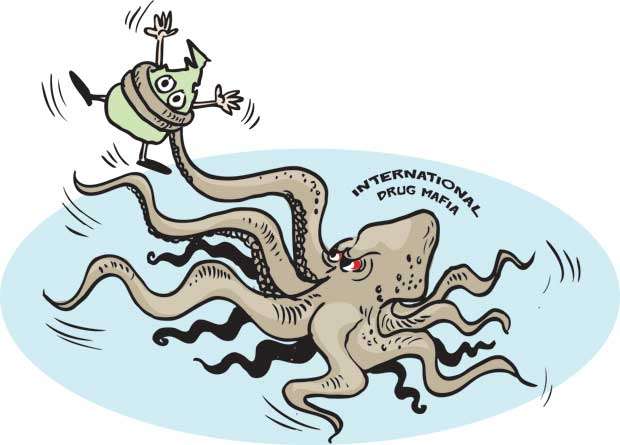
මේ දිනවල රටේ හැම පැත්තකින්ම ඇසෙන්නේ මත්ද්‍රව්‍ය පිළිබඳව වූ කතා පුවත්ය. අසුවන මත්ද්‍රව්‍ය මීට පෙර අසුවූයේ ග්‍රෑම් ගණනින් වුවත් දැන් දැන් අසුවන්නේ මහ පරිමාණයේ කිලෝ ගණනිනි. මත්ද්‍රව්‍ය අලෙවි කිරීම, ප්‍රවාහනය කිරීම, ළඟ තබා ගැනීම හා පානය කිරීම දැන් වැටෙන්නේ අපරාධ ගණයටය. රටේ ක්‍රියාත්මක දණ්ඩ නීති සංග්‍රහයට අනුව අපරාධ, අපරාධ හා බල අපරාධ වශයෙන් වර්ග දෙකකට බෙදනු ලබයි.

මත්ද්‍රව්‍ය පිළිබඳව වූ සිද්ධීන් ඇතුළත් වන්නේ බල අපරාධ ගණයටය.

මත්ද්‍රව්‍ය සම්බන්ධයෙන් වූ වැරැදිවලට හසුවන පුද්ගලයෝ නඩු අසා එල්ලා මැරීමට තීන්දුවක් ගෙන ඇත්තේ මේ මත්ද්‍රව්‍ය ක්‍රියාවන් බල අපරාධයන් ලෙස සලකන නිසාවෙනි.
අපේ රටේ අපරාධ විද්‍යාවේ තැනින් තැන කොට ඇති විවිධ විග්‍රහයන් දෙස බලන විට එක් තැනක සඳහන් වන්නේ ඕනෑම අපරාධයක් සඳහා මුල මැද අග යන ස්ථාන තුනේම හෝ ඉන් අවම වශයෙන් එක් ස්ථානයකවත් කාන්තාවක් සිටින බවයි.

නමුත් මේ කියමන් දැන් කාලානුරූපව වෙනස් කිරීමට සිදුව තිබේ. මත්ද්‍රව්‍ය ජාවාරමේ මුල මැද අග යන ස්ථාන තුනේම හෝ අවම වශයෙන් එක් ස්ථානයක හෝ දේශපාලනඥයකු සිටින්නේ යැයි යනුවෙන් එම කියමන් වෙනස් විය යුතුය.

මේ කියමන උතුරටත් දකුණටත් දෙකටම පොදුය. උතුරේ මහ පරිමාණයෙන් සිදුවන මත්ද්‍රව්‍ය ජාවාරමට උතුරු නැඟෙනහිර පළාත්වල දේශපාලනඥයන් හවුල් බව නොබියව ප්‍රකාශ කළේ අධ්‍යාපන රාජ්‍ය ඇමැතිනි විජයකලා මහේශ්වරන් මහත්මියයි.

මන්නාරම අඩම්පන් මහා විද්‍යාලයේ වාර්ෂික නිවාසාන්තර ක්‍රීඩා උළෙලට ගිය අවස්ථාවේදී එතුමිය මහජනතාව අමතා කළ එම කතාව ජනමාධ්‍ය ඔස්සේ ප්‍රචාරය වන විට ඇයට මුලින්ම දෙහි කපන්නට පටන් ගත්තේ දේශපාලනඥයෝය.

මේ දේශපාලනඥයන්ගේ අණට කීකරු වන පොලිසිය මෙම මත්ද්‍රව්‍ය ජාවාරම්කරුවන්ට එරෙහිව නීතිය ක්‍රියාත්මක කිරීම ඉතා අඩුවෙන් සිදුකරන බැවින් උතුරේ මත්ද්‍රව්‍ය ජාවාරම ඉතා ජයටම සිදුවන බවද අමාත්‍යවරිය කියා සිටියාය. මේ කියමන් දෙකම නිසා දේශපාලනඥයන් හා පොලිසිය යන දෙකොට්ඨාසයම ඇයට විරෝධය
පළ කොට සිටියහ.

නමුත් විජයකලා මහේශ්වරන් අමාත්‍යවරියගේ කතාව හමාර වී පැය හතළිස් අටක් ගත වීමට නොහැකි විය.

යාපනයේ තෙන්මරච්චි පළාතෙන් කේරළ ගංජා කිලෝ ග්‍රෑම් හැත්තෑ හතක් අසුවිය. යාපනය පොලිසියට අනුයුක්තව කටයුතු කරන විස මත්ද්‍රව්‍ය ඒකකයේ නිලධාරීන් පිරිසක් පැමිණ මේ මත්ද්‍රව්‍ය තොගය අත්අඩංගුවට ගනු ලැබුවේ සැකකරුවන් දෙදෙනකුද සමඟිනි.

පොලිසිය මේ සැකකරුවන් දෙදෙනාගෙන් ප්‍රශ්න කිරීමේදී හෙළි වී ඇත්තේ ඔවුන් දෙදෙනාම උතුරේ ක්‍රියාකාරී දේශපාලනඥයන් දෙදෙනකුගේ පුතුන් දෙදෙනකු බවයි.
යාපනයේ තෙන්මරච්චි ප්‍රදේශයේ පදිංචි තංගරාසා නිෂාන් (25) හා ගුණසේකරන් රාගු (32) යන මෙම සැකකරුවන් දෙදෙනාගේ ප්‍රකාශයන් අනුව හෙළිවී ඇත්තේ පසුගිය පළාත් පාලන මැතිවරණයේදී මෙම සැකකරුවන් දෙදෙනාගේම පියවරුන් දෙදෙනා උතුරේ ක්‍රියාත්මක දේශපාලන පක්ෂ දෙකකින් යාපනයේ පේදුරුතුඩුව ප්‍රාදේශීය සභාව සඳහා මන්ත්‍රිවරු ලෙස තේරී පත් වූ දෙදෙනකු බවයි.

මෙම සැකකරුවන් දෙදෙනා කේරළ ගංජා තොගය සමඟ පොලිස් අත්අඩංගුවට පත් වීමෙන් පසුව ඔවුන්ව නිදහස් කරවා ගැනීමට එම පක්ෂ දෙකේ නායකයන් ලවා පොලිසියට විශාල බලපෑමක් සිදුකොට තිබේ.

නමුත් පොලිසිය වහාම ඔවුන්ව චාවාකච්චේරි මහෙස්ත්‍රාත්වරයා වෙත ඉදිරිපත් කරමින් ඔවුන්ට එරෙහිව නීතිය ක්‍රියාත්මක කොට තිබේ.

එක් අයකු ඊ.පී.ඩී.පී. පක්ෂයද, අනෙක් අය දෙමළ ජනතා ජාතික පෙරමුණද නියෝජනය කරයි. කෙසේ වෙතත් උතුරේ ජනමාධ්‍ය මේ දිනවල එම පක්ෂවල එක් එක් නායකයන්ගේ පෙර වැරදි පවා පතුරු ගසන්නට පටන්ගෙන තිබේ. මේ නිසා උතුරේ එක්තරා ප්‍රබල දේශපාලනඥයන් දෙදෙනකු උතුරේ ජනමාධ්‍ය විසින් මේ දිනවල දැඩි විවේචනයට ලක්කොට තිබෙනු දැකිය හැකිය.

මේ සම්බන්ධයෙන් වූ පරීක්ෂණ දිගින් දිගටම සිදුවෙමින් පවතී. ඒ අනුව ඉදිරි කාලයේදී තවත් උතුරේ දේශපාලනඥයන් කිහිපදෙනකුගේ නම් මත්ද්‍රව්‍ය ජාවාරම් සමඟ එළියට පැමිණෙනු ඇතැයි ආරක්ෂක අංශ කියා සිටියි.

මේ අතරවාරයේ උතුරේ ආරක්ෂක අංශ උතුරට විවිධ මත්ද්‍රව්‍ය පැමිණෙන ආකාරයද විස්තර කොට තිබිණි.

උතුරට වැඩි වශයෙන්ම මත්ද්‍රව්‍ය රැගෙන එනු ලබන්නේ ඉන්දියාවෙනි. මත්ද්‍රව්‍ය ජාවාරම්කරුවන්ගේ මත්ද්‍රව්‍ය තොග උතුරට ප්‍රවාහනය කිරීම සිදුකරනු ලබන්නේ ධීවරයන් විසිනි. නාවික හමුදාව ධීවරයන් මත්ද්‍රව්‍ය රැගෙන එන්නේද යන්න ඇතැම් අවස්ථාවලදී බෝට්ටුවලට පැන පරීක්ෂා කරනු ලැබුවත් උතුරේ ආරක්ෂක අංශ කියා සිටින්නේ ධීවරයෝ ඉතා සූක්ෂ්ම අන්දමට මත්ද්‍රව්‍ය ප්‍රවාහනය කරන බවයි.

“නාවික හමුදාවට මේ මත්ද්‍රව්‍ය අසුවීම වළක්වා ගැනීම සඳහා ධීවරයන් කරන්නේ මේ මත්ද්‍රව්‍ය වතුර කාන්දු නොවෙන විදියට හොඳට පොලිතින්වලින් ඔතා ඊට කම්බියක් ගැට ගැසීමයි. එක් කෙළවරක් මත්ද්‍රව්‍ය පාර්සලයේත් අනෙක් කෙළවර බෝට්ටුවේත් ගැට ගසන්නේ තරමක් දුරක් ඇතිවන ආකාරයටයි.

බෝට්ටුව ඉදිරියට යනවිට තරමක් අෑතින් මුහුද යටින් තමයි ඒ පාර්සලය ඇදීගෙන එන්නේ. රාත්‍රි කාලයට මේක කරන නිසා හොයා ගන්න අමාරුයි. නාවික හමුදාව පරීක්ෂා කළත් අහුවෙන්නේ නෑ. මේ වගේ ගොඩක් සූක්ෂ්ම ක්‍රමවලින් තමයි ඉන්දියාවේ ධීවරයෝ උතුරට මත්ද්‍රව්‍ය අරගෙන එන්නේ.

එහෙම අරගෙන එන මත්ද්‍රව්‍ය ඉන්දියාවේ ධීවරයෝ ලංකාවේ ධීවරයන්ගේ බෝට්ටුවලට මාරු කරනවා. ඒ මාරු කරගෙන අරන් එනකොට තමයි ගොඩක් වෙලාවට නාවික හමුදාවේ අත්අඩංගුවට පත්වෙන්නේ” උතුරේ ආරක්ෂක අංශ විසින් ඉන්දියාවේ ධීවරයන් ඉතා සූක්ෂ්ම ලෙස මත්ද්‍රව්‍ය රැගෙන එනු ලබන ක්‍රම සහ විධිවලින් එකක් දෙකක් පමණක් මේ වනවිට සොයාගෙන ඇතිවාට කිසිදු සැකයක් නොමැත. ඒ ක්‍රමය ආරක්ෂක
අංශවලට හසුවන විට ඔවුන් තවත් ක්‍රමයක් සොයා ගනියි.

මේ මත්ද්‍රව්‍ය ජාවාරම හසුකර ගැනීමට නොහැකි වන තවත් ප්‍රබල දේශපාලන සම්බන්ධකමක් පිළිබඳවද උතුරේ ආරක්ෂක අංශ කරුණු හෙළිකරයි.

ඉන්දියාවේ දේශපාලනඥයන්ගෙන් විශාල පිරිසක් ඔවුන්ගේ අමතර ව්‍යාපාරයක් ලෙස කරගෙන යනු ලබන්නේ ට්‍රෝලර් යාත්‍රා මිලට ගෙන බදු ක්‍රමයක් යටතේ ධීවරයන්ව කුලියට යොදවා ධීවර කර්මාන්තයෙන් මුදල් ඉපැයීමයි. ඔවුන් කෝටිපතියන් බවට පත්වීමට මෙම ධීවර කර්මාන්තය ඉවහල් වී තිබේ.

මේ අන්දමට උතුරේ දේශපාලනඥයෝද අමතර රැකියාවක් ලෙස ට්‍රෝලර් යාත්‍රා ධීවර කර්මාන්තයේ යොදවා තිබේ. මේ කර්මාන්තය හරහා ගොඩනැඟී ඇති සබඳකම් මත්ද්‍රව්‍ය ජාවාරම ඉතා පහසුවෙන් කරගෙන යෑමට ඔවුන්ට ශක්තියක් වී තිබේ.

මත්ද්‍රව්‍ය යම් හෙයකින් ආරක්ෂක අංශවල අත්අඩංගුවට පත් වුවහොත් මත්ද්‍රව්‍ය සමඟ හසුවන්නේ එම ජාවාරමේ සිටින දේශපාලනඥයන් නොව කුලියට ධීවර කර්මාන්තයේ නිරත පිරිසයි.

මේ නිසා මත්ද්‍රව්‍ය ජාවාරමෙන් ඉතා විශාල ලෙස මුදල් උපයන දේශපාලනඥයෝ කොටු නොවෙති.

විජයකලා මහේෂ්වරන් අමාත්‍යවරිය ඊළඟට මතු කළ ප්‍රශ්නය වූයේ පොලිසිය මේ උතුරේ මත්ද්‍රව්‍ය ජාවාරම නිට්ටාවටම අවසන් කිරීමට ගන්නා වූ ක්‍රියාමාර්ගයන් ප්‍රමාණවත් නොවන බවයි.

මේ කතාව පැතිර යන අතරතුර උතුරේ පොලිස් ලොක්කා වූ ජේ‍යෂ්ඨ නියෝජ්‍ය පොලිස්පතිවරයාට එරෙහිව පෙත්සමක් ඉදිරිපත් වී තිබේ. ඒ පෙත්සමද මත්ද්‍රව්‍ය ජාවාරම්කරුවන්ට සහාය දැක්වූයේ යැයි යන චෝදනාව මතයි.

උතුරු පළාත් සභාවේ හිටපු විපක්ෂ නායක ටී. තවරාසා මහතා විසින් උතුරු පළාත භාර ජේ‍යෂ්ඨ නියෝජ්‍ය පොලිස්පතිවරයාට එරෙහිව ආණ්ඩුකාරවරයාට හා පොලිස් කොමිසමට පැමිණිල්ලක් ඉදිරිපත් කොට තිබේ.

හිටපු විපක්ෂ නායකවරයා කළ පැමිණිල්ලේ සඳහන් වන්නේ කිලිනොච්චියේ පාසල් සිසුවකුට මත්ද්‍රව්‍ය සම්බන්ධයෙන් වූ සිදුවීමක් මත මත්ද්‍රව්‍ය ජාවාරම්කරුවන් පහරදී තිබියදී ජේ‍යෂ්ඨ නියෝජ්‍ය පොලිස්පතිවරයා එම සිද්ධිය සම්බන්ධයෙන් නිසි පරීක්ෂණයක් නොපැවැත්වීමට එරෙහිවය.

ජනාධිපතිවරයාගේ අදහසක් අනුව පසුගිය දිනවල ක්‍රියාත්මක වූ මත්ද්‍රව්‍ය නිවාරණය සම්බන්ධයෙන් වූ ජාතික පාසල් සතිය ක්‍රියාත්මක වූ අවස්ථාවේදී කිලිනොච්චියේ එක් පාසල් සිසුවකු තමන්ගේ නිවෙසට ආසන්න නිවෙසක මත්ද්‍රව්‍ය අලෙවි කරන බව පොලිසියට පවසා ඇත.

එම තොරතුරු ඔස්සේ පොලිසිය ගොස් අදාළ සැකකරුගේ නිවෙස වටලා මත්ද්‍රව්‍ය අත්අඩංගුවට ගැනීම පිළිබඳව උරණ වූ ව්‍යාපාරිකයා සිසුවාගේ අතපය කැඩෙනතුරු පහරදී තිබේ.

හිටපු විපක්ෂ නායකවරයා පෙත්සම මඟින් කියා සිටින්නේ පොලිසියේ වරද මත සිසුවා බරපතළ ප්‍රහාරයකට ලක්වූ බවයි.

එමෙන්ම මේ පිළිබඳව ජනමාධ්‍යයට අදහස් දැක්වූ ජේ‍යෂ්ඨ නියෝජ්‍ය පොලිස්පතිවරයා මත්ද්‍රව්‍ය ජාවාරම්කරුවා ආරක්ෂා කරමින් පවසා ඇත්තේ පාසල් සිසුවා තුවාල ලබා ඇත්තේ පාපැදි අනතුරකින් බව යැයිද පෙත්සමේ සඳහන් වෙයි.

ඉතාම සැලසුම් සහගත අන්දමට මත්ද්‍රව්‍ය ජාවාරම්කරුවා බේරා ගැනීමට පාසල් සිසුවා බිල්ලට දුන් උතුරු පළාත භාර ජේ‍යෂ්ඨ නියෝජ්‍ය පොලිස්පතිවරයාට එරෙහිව නීතිය ක්‍රියාත්මක කරන ලෙස උතුරු පළාත් සභාවේ හිටපු විපක්ෂ නායකවරයා ඔහුගේ පෙත්සම මඟින් ඉල්ලා ඇත.

මේ පෙත්සම සම්බන්ධයෙන් මූලික අවධානය යොමු කළ උතුරු පළාත් ආණ්ඩුකාරවරයා කිලිනොච්චියේ මත්ද්‍රව්‍ය ව්‍යාපාරිකයන්ගේ පහර කෑමකට ලක්ව බරපතළ ලෙස තුවාල ලබා සිටින සිසුවාට පොලිස් ආරක්ෂාව සපයා දීමට ඇති හැකියාව පිළිබඳව සොයා බලන ලෙස පොලිස් ප්‍රධානීන්ගෙන් ඉල්ලීමක් කොට තිබේ.

මේ ආදී වශයෙන් බලන විට උතුරේ මත්ද්‍රව්‍ය ජාවාරම දේශපාලනඥයන් විසින් කරගෙන යනු ලබන්නේ ඔවුන්ගේ දේශපාලන හයියට තවත් හයියවල් කිහිපයක්ද එකතු කරගනිමින් බව ඉතාම පැහැදිලිය.


New constitution Is this the correct time?

February 16th, 2019

By Gamini Abeywardane Courtesy Ceylon Today

The debate over a new Constitution has come to the fore again.  Many critics, especially those who do not like to see any progress in this regard, due to personal agendas, are raising issues saying that there are many other grave issues facing the country which need to be tackled before introducing a new Constitution.

If there is a strong need for something in a country, that has to be done at whatever time possible. No politically honest person will argue against the need for a totally new Constitution. The election of 2015 was fought on the theme of abolishing the current Constitution and establishing a system of good governance while resolving the national issue once and for all. All the minority communities as well as educated and right-thinking sections of the population whole-heatedly supported a political change with this intention.

The importance of a good Constitution became clearer than ever before during the recent constitutional crisis which finally had to be resolved by the country’s highest Court. Most people who earlier asked whether the Constitution was for the people to eat (Vyavasthava Kannada), were reading that document day and night during this seven weeks of political and economic turmoil. So much so all the printed copies of the Constitution and the nineteenth Amendment were sold out like hot cakes and there was a shortage of these at the Government Publications Bureau.

Need for a new Constitution

The need for a new Constitution began with anti-democratic and authoritarian trends experienced under the present Constitution at different times. That is why both past Presidents, Chandrika Kumaratunga (in 1994) and Mahinda Rajapaksa (in 2005) and present President Maithripala Sirisena (in 2015) included abolition of the executive presidency as one of the main items in their presidential election manifestos.

In most countries the majority of the people do not understand the importance of a Constitution as they mistakenly think it does not have any direct bearing on their lives. Even here our political landscape is full of rhetoric to say there are more important issues than a Constitution at this point of time. All this has become possible because of the ignorance of the majority that a good Constitution is fundamental to all economic and social well-being of a nation.
It becomes more so in a multi-ethnic country which has a history of conflict among different communities. On the top of it, there is a segment of politicians who are not genuinely interested in sorting out any of these issues and try every trick in the book to stifle the implementation of a new Constitution for their own political survival.

For the chauvinist and racist politicians, both in the South and the North, the unresolved northern issue is a very useful thing much like the beggar’s wound (Hingannage Thuwale) as it is easy for them to survive in politics by harping on this issue. It is much easier to inflame communal feelings among people than finding actual solutions to social and economic issues faced by them.

The issue about the constitution has a long history in our country. When we gained our independence there was no demand for separation from the Tamil mainstream politicians. They all agreed upon the Soulbury Constitution, which was drafted after a consultation process, which went on for more than two years. It had adequate protection for minority interests and continued to be our supreme law until 1972.

The first republican constitution of 1972 was a majority community imposed document which took away some of the specific provisions protecting the interests of minorities. It was bulldozed through a revolutionary method by a Constituent Assembly which sat outside the Parliament without the participation of the Tamil Parliamentarians. The whole exercise was carried out with the intention of severing all colonial constitutional links to facilitate quick implementation of socialistic policies of the then United Front Government.

Then, the Constitution of 1978 was similarly forced upon the country by the J. R. Jayewardene Government, by making use of the five-sixth majority they had in the Parliament. It changed the whole governing and electoral system of the country by introducing the Executive Presidency and the underlying intention, it appeared, was to perpetuate the grip of the United National Party in Sri Lankan politics.

A significant constitutional development thereafter, was the introduction of the thirteenth Amendment to the Constitution which drastically changed the nature of the executive by taking away the powers to make key appointments and handing it over to several independent commissions. This was a great achievement because in passing this piece of legislation there was unanimity in the Parliament which is a rare thing.

But unfortunately, this was short-lived as it was replaced by the eighteenth Amendment which gave all those powers back to the Executive President. It enhanced the power of the executive presidency by removing the two-term restriction. This led to a near dictatorial situation threatening rule of law as well as good governance.

The nineteenth Amendment, which is in force at the moment, came as a direct result of the need for changing this situation. However, it addressed only the good governance issue by establishing a Constitutional Council and Independent Commissions and introducing a more democratic mechanism for appointing persons to some high posts. It was a hurriedly introduced interim measure and therefore, did not address the vital national issue of power devolution which was left to an entirely new Constitution as promised in the 2015 election campaign.

Accordingly, a process to draft a new Constitution began with the formation of a Constitutional Assembly in March 2016 where all 225 members of parliament sit as a committee.

Thereafter, a Steering Committee consisting of 21 members, reflecting the general political party leadership within parliament, was appointed for preparation of a constitutional proposal. From that time onwards, through public representation committee and by other means the views of all sections of the people have been accommodated in the process of making a set of constitutional proposals which has finally gone into the tentative draft which has now come before the Steering Committee.

The final draft of a constitutional bill has to be prepared based on these proposals. In order for that to become law, it must be passed in the Parliament by a two thirds majority and finally approved by the people in a nationwide referendum. This sort of long and participatory process will ensure that a Constitution so adopted will have the approbation of the people and therefore, will likely to last long.

Proper procedure

In other words this is the first time a Constitution is being prepared with adequate time allocated for the process and giving opportunities to all segments of the people to make representations akin to the process followed in India when they wrote their own Constitution soon after independence.  This is also the first time after independence, all the communities, particularly the Tamils, are participating in a Constitution making process.

Therefore, if these efforts become successful all the elements that are necessary for this document to be long lasting are present unlike in the previous instances. Therefore, the timing for its finalization is immaterial, if it is going to do some good for the country. The best time is the time whenever two thirds of the members of the Parliament can agree on it.

It could be done by the current Government or could be the first priority for the next Government. Seventy years have passed since independence and it’s time that we develop the right Constitution for the country ending the fears over dividing the country. We need to get all communities and all regions to actively participate in economic development if we are not to become the losers in South Asia in this fast changing world scenario.

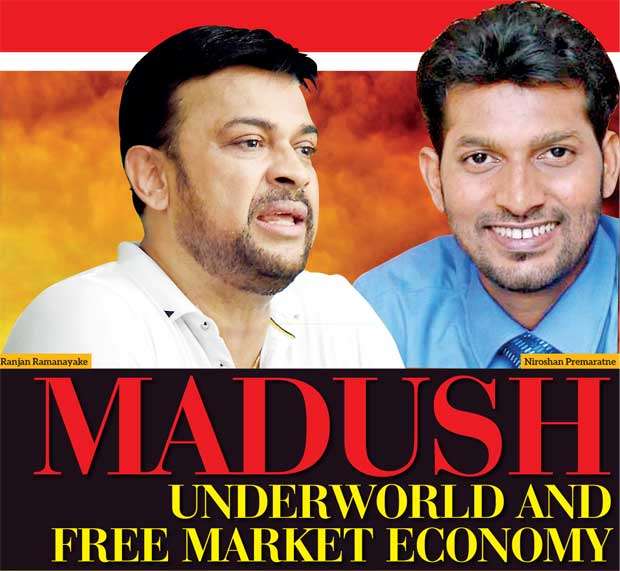
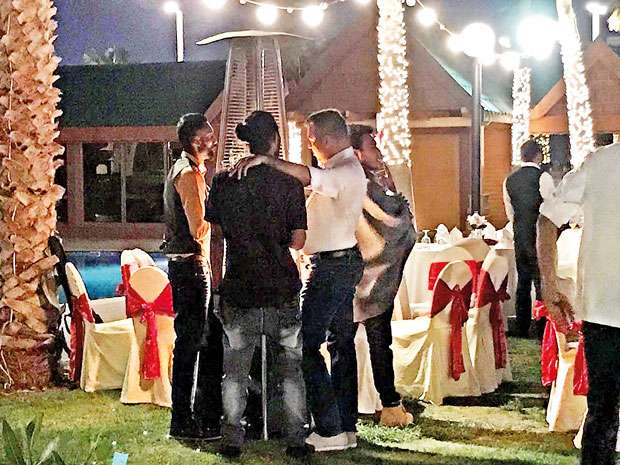
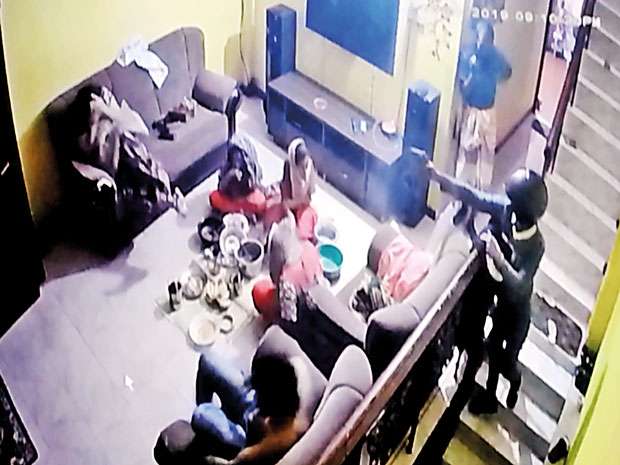
මධූෂ්ගේ ජීවිත කථාව ලක්ෂමන් යාපා හෙළිකරයි

February 16th, 2019

මධූෂ්ගේ ජීවිත කථාව ලක්ෂමන් යාපා හෙළිකරයි

The Impact of Mahayana Buddhism on Sri Lanka

February 16th, 2019

By Buddhistdoor International Janaka Perera

When examining the influence of Mahayana Buddhism in Sri Lanka it would be appropriate to approach the topic from a human interest angle before moving into history, archaeology and the academic sphere. A glance at the role of Mahayana in contemporary Sri Lankan society, I believe, will be a guide to the impact of this school of Buddhism here.

 A common practice among Sri Lanka’s Theravada Buddhist families is to give alms to the Sangha on the seventh day after the death of a near and dear one.
The Venerable Balangoda Dhammananda, Chief Incumbent of the Piyarathanarama Temple, Nedimala-Dehiwala, a suburb of Colombo, traces this practice of giving alms (a week after death) to the belief in gandhabba – a state of mind that exists between the death and rebirth of a being. When a person passes away it is hoped to transfer to him/her merit gained by giving alms to the Sangha on the seventh day after death. It is widely accepted that the idea of gandhabba spread in Sri Lanka via Mahayana sects that emerged during the Anuradhapura period of Sri Lanka’s history.
In Theravada there is no gandhabba. Instead rebirth (or re-becoming) occurs at the instant death strikes. Depending on his/her karma the person may be reborn a human, an animal or a spirit (a formless being). So an almsgiving to the Sangha in his/her memory after seven days serves no purpose, if the departed is reborn into a state where merit could not be transferred (like being born a human or animal), according to Theravada. It becomes meaningful only if the deceased is reborn in the spirit world.
Nevertheless the practice of the seventh day alms giving is now in the blood of our Buddhists,” says the Venerable Dhammananda.
A most notable feature of Mahayana influence here was the Bodhisatva concept. King Sirisangabo (A.D. 251-253) was such a strong believer in it that he gave up his throne rather than give orders to kill people when a relative, Prince Gotabhaya led a rebellion to seize power. After the practice of worshipping Bodisatvas began in Sri Lanka, many a Bodhisatva statue came up in different parts of the island. The most well-known of these is Kushtaraja in Weligama. According to Historian, G.C. Mendis, the deity Natha worshipped by Sri Lankan Buddhists is Bodhisatva Avalokiteshwara or Lokeshwara Natha (Ceylon History 1961). A number of local Buddhist temples have within their premises shrines built for this deity.
Mahayana influence began to take hold on Sri Lanka around the seventh Century and reached its zenith during the rule of King Mahasen (A.D. 276-303). By the 7th and 8th Centuries the centres of Mahayana practices were the Abhayagiri and Jethawana monasteries (which also includes the country’s largest stupa) complexes in Anuradhapura, Sri Lanka’s ancient capital.
When the Chinese itinerant monk the Ven. Fa-hsien (A.D. 412-414) arrived in Sri Lanka, Abhayagiri was enjoying a very prosperous period. Sanskrit works such as Deerghagama, Sanyuktagama, Samyukta Sanchayapitaka and the Vinaya Pitaka based on the Mahinsasaka tradition, which he took to China, are believed to have been obtained from Abhayagiri.
Mahayana beliefs, especially the Saddharmapundarika sutra was known in ancient Sri Lanka as Vitulyawada, according to the Venerable Aththudawe Rahula, Ven. Bambarende Pannaloka and Bambarende Mahanama (Buddhist Civilization 1980).
Sanskrit studies received a major boost as a result of the spread of Mahayana in the island. Stone inscriptions on Buddhist beliefs and practices written in Sanskrit have been found in Anuradhapura. An eighth century stone inscription clearly proves that the occupants of Abhayagiri monastery knew Sanskrit well (Ceylon History by G.C. Mendis).
Dr. Nandasena Mudiyanse was the first to do a detailed study of Mahayana in Sri Lanka (Mahayana Monuments in Sri Lanka, Colombo 1967), according to Dr. Hema Goonatilake who covered Mahayana influence in Sri Lanka (The Impact of Mahayana on Sinhalese Buddhism), for her unpublished PhD thesis (London 1974).
There, Dr. Goonatilake notes that Sri Lanka was a centre of non-orthodox teachings from an early period. Fa-hsien had recorded that 5,000 monks were in the Abhayagiri while 3,000 in Mahavihara, the centre of Theravada (Hinayana) Buddhism.
The Abhayagiri stupa was 470 ft in height. The Tooth Relic festival was held at Abhayagiri once year when the relic was brought there once a year for public exhibition. The Vetulla (Vaitulya) school was the most well known Mahayana Sect at the time. King Silakala (518-531) was a samanera at Bodh Gaya monastery during the time Mahayana was gaining ground in India and was a follower of Mahayana. He believed in Dhammadhatu, a treatise on Trikaya (practice of enshrining scriptures of the Trikaya concept) as the true doctrine and supported the Jetavana Vihara.
Chinese sources have revealed that Mahayanism was strongly entrenched in Sri Lanka. Inscriptions depicting aspiration for Buddhahood-invocations to Bodhisattvas (e.g. Tiriyaya inscription of the 7th Century) confirm this. Trikaya doctrine was popular in 8th Century (e.g. Trikayastava inscription of Mahintale). Pragnaparamita sutra was found at Indikatuseya, Mihintale. By the 9th and 10th Centuries, Abhayagiri Vihara complex covered an area of 300 acres. (R.A.L.H Gunawardana).
Among the ruins seen at the Abhayagiri monastery complex is the Mahayana Stupa – situated to the West of Elephant pond (Eth Pokuna). A lead scroll found there with Mahayana mantras written on it caused the structure to be called Mahayana Stupa (Abhayagiri Vihara at Anuradhapura by Professor T.G. Kulatunga – Central Cultural Fund)
By 8th Century, Sri Lanka was a centre of Tantrism or Thanthrayana. The most Influential of the three patriarchs who propagated this sect in China was Amoghavajra. He translated a large number of texts into Chinese and was popular with the Imperial Family and also performed the abhiseka (coronation) of the Emperor. Amoghavajra was born in ‘Simhala’ (Land of the Lions) as Sri Lanka was known in China then. In AD 705 he became a pupil of Vajrabodhi in Yavadvipa (in Java or in South India) and went with him to China. Later he arrived in Sri Lankawith a message from the Chinese Emperor & and accorded royal reception by the then King of Sri Lanka, Ilamegha (Aggabodhi VI A.D.733-772). He was highly venerated by the royal family – the king bathed Amoghavajra every day with scented water (Pachow, Ancient Cultural Relations Between Ceylon & China, UHC, Vol XI. No. 3 & 4, Encyclopaedia of Buddhism).
Acharya Samantabhadra was a well known Tantrist in Sri Lanka at the time. Amoghavajra with his two Chinese disciples received further training from him for two years in Tantric practices such as two mandalas (Garbhadhatu & Vajradhatu), abhisecani, dharani, mudra etc. Amoghavajra collected 100,000 slokas of Vajrasekharayogasutras, 500,000 slokas of mantras, sutras, satras of various schools Yuan-chao’s Sung-kao-seng-chuan), more than 500 sutras and commentaries (Taisho Tripitaka). After returning to China, at Emperor’s request, he translated Sanskrit works into Chinese and intiated thousands of pupils for 40 years.
Amoghavajra’s Malayan teacher Vajrabodhi who studied in Nalanda University too visited Sri Lanka, stayed for half a year in Abhayagiri, went in pilgrimage to Sripada, visited Ruhuna and converted the king (Silamegha) to Mahayana.
An 8th Century inscription recording the establishment of an Abhayagiri Vihara of Sinhalese ascetics” was found in Ratubaka plateau in central Java. Casparis Identified Buddhism at Ratbaka as Mahayana. (‘New evidence on cultural relations between Java and Ceylon’, Artibus Asiae, 24, 1961, pp. 241-248)
An ascetic of the Vajraparvata nikaya in India, also known as Vajiriyavada came to Sri Lanka in the 9th century and resided at Abhayagiri, according to the Nikayasangrahaya.
Most of the Tantra texts attributed to this sect have been in Tibetan and Chinese translations, e.g. Mayajalatantra, Samajatantra, Tattvasangrahatantra, Vajramrutatantra, Cakrasamvaratantra, Dvadasacakratantra, Mahamayatantra, Catuspitahatantra, Sarvabuddhatantra, Samuccayatantra etc. It has been established that Vajiriyavada that was introduced to Sri Lanka was Vajrayana.
By the 10th Century, pillars of a temple within the precincts of the Thuparama Were identified as tridents (vajra), similar to the dorja or thunderbolt of Tibet which is usually held by Mahayana Bodhisattvas (A.M. Hocart, ‘Archaeological Summary).
By the 12th Century, Tantrism became a living force when Parakramabahu I built a dharanighara for the recitation of magic incantations – where Tantrists recited dharanis.
Nalanda Gedige (8h Century) was an image house where Tantric rituals were performed. Tantrimalai (Tantra Hill) (PE.E. Fernando).
The Ven. Rangama Chandawimala of the University of Hong Kong studied for his Ph.D thesis primary literary sources on Tantric practices that were available in Sri Lanka.
Sri Lanka’s former Archaeology Commissioner Dr. Raja De Silva in his scholarly assessment of Sri Lanka’s World Heritage site Sigiriya states that King Kassapa I (478-496) who figures prominently in the history of the famous rock was a follower of Abhayagiri monks. Dr. De Silva believes that available evidence reveals a strong possibility that the site was a Mahayana monastery. According to him that the well-known Sigiriya frescoes which were iconised depict Tara – the consort of the Bodhisatva Avalokiteshwara (Sigiriya and its Significance /Digging into the Past)
There were however periodic conflicts between the bhikkus of Abhayagri and Jethawana on the one side and those of Maha Vihara on the other. The latter Considered themselves the guardians of Orthodox Pali Buddhism (Theravada or Hinyana) At times books were burnt causing great losses.
Many rituals among Sri Lankan Buddhists are rooted in Mahayana. Works such as Nikayasangrahaya, Buthsarana, Daham Sarana and Sanga Sarana have been attributed to its impact on Sri Lankan society. Mahayana also popularised the chanting of sutras (pirith or parithha) and all forms of Buddhist rituals as well as contributed greatly to the development of art forms.
Fourteen years ago a young Sri Lankan researcher H.M. Moratuwegama began observing similarities in the Zen art of story-telling and the art of story telling in certain Theravada scriptures and commentaries. These he included in a book in Sinhala titled Buddhankura (Seeding of Buddhahood).
Some of the gardens of Zen temples such as Japan’s Ryoangi Temple bear a striking similarity to the well-swept sandy floors of Sri Lankan temple gardens.
In conclusion let us recall the words of the late Venerable Professor Walpola Rahula at a seminar organized by the Institute of Pali and Buddhist Studies in 1994. There he told the participants that the differences between Mahayana and Theravada have been over emphasized by Western writers.

Real ‘obscene masquerade’: How BBC depicted staged hospital scenes as proof of Douma chemical attack

February 16th, 2019

Vanessa Beeley is an independent investigative journalist and photographer. She is associate editor at 21st Century Wire. Courtesy RT

In an extraordinary turn of events, corporate media appears to have been exposed again as an extension of state foreign policy, by a member of the establishment media cabal, manufacturing consent for regime change in Syria.

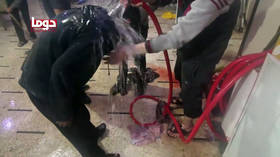
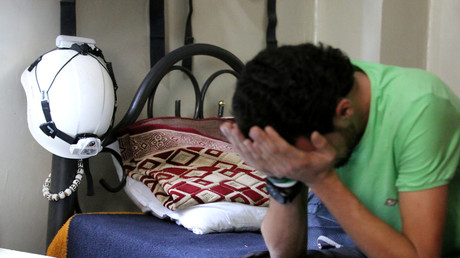
Riam Dalati is on the BBC production team based in Beirut and describes himself, on his Twitter page, as an esteemed colleague” of Quentin Sommerville, the BBC’s Middle East correspondent. Dalati broke ranks with his UK Government-aligned media, on Twitter, to announce that after almost 6 months of investigation, I can prove, without a doubt, that the Douma hospital scene was staged.”

 Real ‘obscene masquerade’: How BBC depicted staged hospital scenes as proof of Douma chemical attack

ALSO ON RT.COMBBC producer says hospital scenes after 2018 Douma ‘chemical attack’ were stagedThe scenes in question are those manufactured by the White Helmet pseudo-humanitarian group and activists affiliated to Jaish al-Islam, the extremist armed group in charge of Douma at the time of the alleged chemical weapon attack on April 7, 2018. The scenes of children being hosed down, following a chemical attack” were immediately accepted as credible and appeared alongside sensationalist headlines in most Western media outlets, including the BBC, CNN and Channel 4. Simon Tisdall of the Guardian wrote an opinion piece, with the headline ‘After Douma the West’s response to Syria regime must be military’ – only two days after Douma, effectively calling for all out war.

vanessa beeley@VanessaBeeley
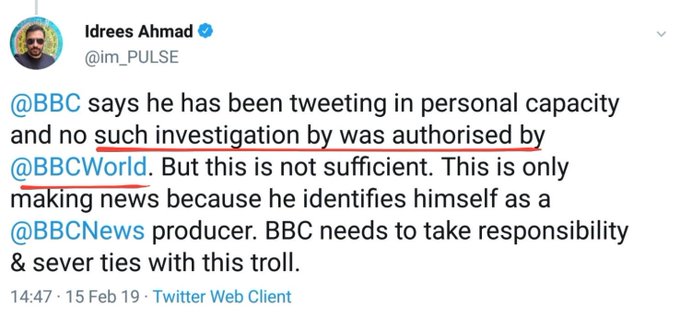
 @bbclysedoucet will the take instructions fm regime change “troll” Idrees Ahmad? This is turning into a very interesting infight between those who were all on the same side until recently. How will the BBC manage this credibility crisis? @21WIRE @ukcolumn @RussiaUN
While Dalati’s tweets have clearly distressed some notables in the establishment camp, Dalati is no stranger to such controversy. Almost immediately after the alleged incident in Douma, he tweeted out his frustration that activists and rebels” had used corpses of dead children to stage emotive scenes for Western consumption.” The emotive wording of Dalati’s tweet, he was sick and tired” of such manipulation of events, suggested that this was not the first time children had been used as props in a macabre war theatre designed to elicit public sympathy for escalated military intervention in Syria disguised as a necessary humanitarian” crack down on Assad’s gassing of his own people.”

Dalati had been referring to the arranging of two children’s corpses into a last hug” still life composition, a photo that went viral, rocketed into the social media sphere by activists who had collaborated with the brutal Jaish al-Islam regime while it tortured and abused the Syrian civilians under its control.

Perhaps Dalati’s apparent outburst could be explained by his participation in the production of the controversial September 2013 BBC Panorama documentary, ‘Saving Syria’s Children’. An independent researcher, Robert Stuart, has made it his life’s work to present a compelling argument that sequences filmed by BBC personnel and others at Atareb Hospital, Aleppo on August 26, 2013 purporting to show the aftermath of an incendiary bomb attack on a nearby school are largely, if not entirely, staged.” Perhaps Dalati had witnessed one too many stagings of events that would precipitate the potential for war in Syria between the US and Russia.

Whatever the reason for Dalati’s exasperation, the tweet was deleted before a watered down version appeared. Dalati claimed that a breach of editorial policy” and lack of context was behind this alteration. Apparently BBC employees are not allowed to be sick and tired” of the exploitation of children to promote a war that will inevitably kill more children. Simultaneously, Dalati’s account was protected, making tweets visible only to approved followers.

Charles Shoebridge@ShoebridgeC

Here is an example of how BBC’s Riam Dalati, along with so many in US UK media, saw it as their role to smear those who raised legitimate questions suggesting for example that chemical attack scenes eg Douma may have been staged. Now, Dalati (see above) admits it was true

On two significant occasions to date, Dalati appears to deviate from the BBC narrative road map in Syria. However, Dalati had participated in the corporate media lynching of journalists and academics who had dared to question the dominantchemical attack” narrative, at the time of the alleged incident in Douma, dismissing them as conspiracy theorists. Theseconspiracy theorists” included acclaimed journalist, Robert Fisk and Uli Gack, an experienced war correspondent with ZDF, a German public media outlet. Independent journalist, Eva Bartlett, and Pearson Sharpe of One American News Network also reported evidence of staging and mainstream media distortion of events in Douma.

vanessa beeley@VanessaBeeley

Hey @mwendling remember this question you asked me before your smear puff piece? “Do you believe that the alleged chemical attack in Douma was staged, a false flag” event, or was faked?” Any comment now? @21WIRE @stranahan @GarlandNixon @RussiaUN

199 people are talking about this
 I visited Douma shortly after the alleged attack. I interviewed medical staff and civilians who were adamant that a chemical attack had not taken place. Doctors and nurses, some of whom were on duty on the night in question, told me that adults and children were suffering the effects of smoke inhalation. They described the panic generated by the activists and White Helmet operatives who arrived crying chemical attack” before they hosed down the traumatised patients.

20-year-old Suleiman Saour told me: At 7pm we had been receiving wounded people all day long. At 7pm someone came in carrying a little boy, he laid him on a bed and said he had been hit with chemical weapons. Basically I checked the boy […] he was suffering from smoke inhalation [..] we washed his face, used a spray and Ventolin. Later on we found out the child had asthma and it got worse because of the smoke.”

Academics, Professors Piers Robinson and Tim Hayward, came under concerted attack as did other members of the Working Group on Syria, Propaganda and Media when they analysed the events and questioned the veracity of it being a chemical attack. In the UK, the Times published no less than four articles labeling myself and the rogue”academics as Assad’s useful idiots,” timed to perfection on the day that the UK, US and France launched their unlawful bombing campaign against Syria. A bombing campaign that was fully enabled by the ignominious rush to judgement by corporate media in the West.

It has taken Dalati six months to arrive at the same conclusion as those he condemned as compromised conspiracy theorists,” therefore we must question his motives for suddenly releasing these conclusions. Peter Ford, former UK Ambassador to Syria, gave me his opinion on Dalati’s revelations.

The UK joined Trump and Macron in illegally bombing Syria largely on the basis of a video clip shown ad nauseam on the BBC, which a BBC Syria producer has now said he has evidence was staged. The BBC in their statement are not denying the claim. The implications are shattering: firstly that the state broadcaster effectively connived at a manipulation of public opinion, and secondly that the British government launched its attack on Syria on a false and fabricated premise. This demands a public enquiry.”

Ford’s statement highlights the seriousness of Dalati’s statement which must surely raise questions about the possibility of previous chemical attack” narratives also being manipulated, staged or fabricated. Swedish Doctors for Human Rights investigated the alleged chlorine gas attack in Sarmin, March 2015 and found the medical procedures conducted by doctors at the scene to be extremely questionable.

Dr Leif Elinder, a Swedish medical doctor and paediatric specialist, found that after examination of the video material, I found that the measures inflicted upon those children, some of them lifeless, are bizarre, non-medical, non-lifesaving, and even counterproductive in terms of life-saving purposes of children.” This video, produced and presented by the White Helmets and their colleagues at the Syrian American Medical Society (SAMS), was shown during a UN Security Council closed door” session to promote a no-fly zone which translates to protection for the US coalition-backed terrorist forces on the ground in Syria.

As BBC producer has stated publicly that the hospital scenes during the Douma attack” are staged, the BBC has distanced itself by stating that these are the personal claims of an employee which do not mean an attack did not take place. The July 2018 OPCW interim report has already discredited the early sensationalism of western media reporting. No organophosphorus nerve agents or their degradation products were detected, either in the environmental samples or in plasma samples from the alleged casualties,” it stated. No Sarin.

ALSO ON RT.COMWhite Helmets stealing children for ‘chemical attack’ theater in IdlibThe OPCW Fact Finding Mission (FFM) has not yet reached a conclusion that a chemical attack of any kind took place in Douma. The environmental samples were reported to contain chlorinated organic molecules such as trichloroacetic acid and chloral hydrate, which could be attributed to something as basic as chlorinated drinking water. Despite this ambiguity, the BBC initially ran with the headline that ‘Chlorine was used’ in the Douma attack before altering to ‘Possible Chlorine at Douma Attack Site’. Another mistake? Or another deliberate attempt to mislead and shore up the UK FCO regime change storyline in Syria?

Dalati’s revelations must also be viewed in context. They follow similar conclusions arrived at by corporate media colleague and journalist, James Harkin, a Guardian contributor who published a long-winded Douma investigation in the Intercept. Harkin also conceded that the Douma hospital scenes were likely staged and that the Sarin canard was a non-starter.

It is very unlikely, despite the BBC protestation, that Dalati would risk publishing his claims without approval from BBC hierarchy. Timing is always crucial when examining events that have the potential to expose colonial media, particularly the BBC, as the refined state PR agencies they are in reality.

Based on an informed and intelligent interpretation of events with historical context, we could speculate that the OPCW is about to release its final findings on the Douma attack. A report which has the potential to lay bare the full extent of the BBC’s deception and falsification of facts in Douma. A report which could raise unpleasant questions about corporate media reporting, particularly on alleged chemical weapon use by the Syrian government, throughout the 8 year conflict in Syria. Was Dalati’s shock information release nothing more than a damage limitation tactic by the BBC or is Dalati genuinely a rogue truth-teller? Only time will tell.

Charles Shoebridge@ShoebridgeC

1/2 Important to note that Dalati revelation likely isn’t some mea culpa, but the start of a damage limitation process by preempting perhaps imminent @OPCW report, the likely inconvenient findings of which BBC & UK govt by now almost certainly awarehttps://twitter.com/shoebridgec/status/1095825075591397376 

Charles Shoebridge@ShoebridgeC
Replying to @Tim_Hayward_

A belated honesty that he appears even in his own tweet to admit he’s sat on for six months. Some might think it suspicious that the ‘honesty’ only emerges after Harkin’s report, and perhaps just before the OPCW report makes continued denial unsustainablehttps://twitter.com/ShoebridgeC/status/1095785601226420231 

108 people are talking about this

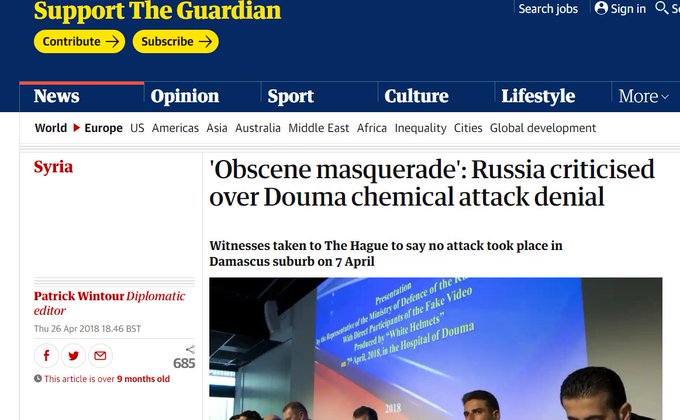
What Dalati has done is highlight the hypocrisy and bias of Western media and government officials. The BBC report on the Russian production” of Douma-chemical-attack-denying witnesses at the HQ of the OPCW in the Hague emphasises the dismissal of the event as a despicable stunt” by the UK, US and France who boycotted the proceedings. French ambassador to the Netherlands described the Syrian civilian testimonies as an obscene masquerade.” The Guardian ran with this statement as its headline, reducing Russia’s attempt to bring some clarity to the Douma attack to the unveiling of supposed witnesses” in order to discredit such attempts to derail their preferred narrative.

vanessa beeley@VanessaBeeley

@patrickwintour “Diplomatic” Editor – do you still claim the Russian presentation of witnesses at The Hague was “obscene masquerade”? You know, now the hospital scenes are confirmed by BBC to be a really obscene masquerade. @21WIRE @PiersRobinson1

69 people are talking about this
Now, it appears that the real obscene masquerade took place in the Medical Point in Douma, was constructed by the UK FCO-financed White Helmets, and was adopted by the BBC and other state stenographers as gospel in order to further criminalise the Syrian Arab Army just as the final liberation of Douma from Jaish al-Islam brutal rule was fast approaching. This obscene masquerade resulted in the unlawful bombing of Syria by the US, France and the UK. As Peter Ford stated, this demands a public enquiry.”

THE TAMIL LANGUAGE IN SRI LANKA Part 6

February 15th, 2019

KAMALIKA PIERIS

The State Council had decided in 1944 that when Ceylon became independent, both Sinhala and Tamil would be declared the national languages. There would be parity.  Therefore the National anthem also had to be in Sinhala and Tamil.

The song selected as the national anthem, Namo Namo Matha was in Sinhala.   Premier D.S Senanayake proposed that a suitable Tamil translation  be formally adopted. The select committee headed by Sir E.A.P Wijeratne had accepted in principle that there be a Tamil version of the national anthem. The Tamil scholar, Pundit M. Nallathamby, was entrusted this task and a  translation was done said one source. There had been a competition to select the best Tamil translation of the Namo Namo Matha in 1950 and Nallathamby had won it said another. Anyway, Prof K. Sivathamby    confirmed that the Tamil translation was composed by Nallathamby.

The Tamil version of the National anthem had it’s debut at the 1949 independence ceremony. The printed programme for the 1949 independence celebrations, which  archivist Haris de Silva   had seen,  had said that at the inauguration of the Independence Memorial Building at Torrington Square, the National Song would be sung in Tamil at 4 p.m on the arrival of the Prime Minister, and in Sinhala at 5 p.m. immediately after the Drill Display.

During the 1950 independence celebrations, at the morning event at Galle Face, the first bars of the National Anthem were played at the march-past. At the evening event at the Havelock Race Course, celebrations commenced with the singing of the National Anthem in Tamil, and concluded with the anthem sung in Sinhala. In 1950, the High Commission in India had requested copies of the national anthem in Sinhala, Tamil, and English, along with the musical scores. Copies had been sent to India, said Haris de Silva.

Haris de Silva states that Oliver Goonetilleke, then Minister in-charge of Home Affairs   had submitted a cabinet memorandum dated 22.11.1951 recommending Namo Namo Matha     as the national anthem. In this memorandum Oliver Goonetilleke stated that ‘Namo namo matha’ had been sung in Sinhala and Tamil at the independence celebrations.

He attached the Tamil translation.  Cabinet wanted a ‘competent authority’ to revise the Tamil translation. This was done by K. Kanagaratnam, Parliamentary Secretary to the Minister of Education  Cabinet  also wanted Sir Oliver to consult G.G. Ponnambalam, who had nothing to say on the matter.

The Cabinet gave its approval to the anthem on 11th March 1952.  A Press Communique was issued on 12th March 1952, saying that the Cabinet had approved the song Namo Namo Matha as the National Anthem, with copies of the approved Sinhala version, and its Tamil and English translations, together with the musical scores. The Tamil translation was the one by Kanagaratnam, and the English translation was that of Kannangara, said Haris.

D.B.S Jeyaraj says on March 12, 1952, the Government published huge advertisements in the Sinhala, Tamil, and English newspapers announcing that Namo Namo Matha” was the National Anthem. While words in Sinhala and Tamil were published in the Sinhala and Tamil newspapers respectively the English newspapers had Sinhala words written in English.

According to D.B.S. Jeyaraj, the Tamil version Namo Namo Thaye” was   sung in 1952 at Independence Day functions at Jaffna, Vavuniya, Mannar, Trincomalee and Batticaloa Kachcheries. The Tamil version was also sung when Sir John Kotelawela visited Jaffna in 1954.

The firm Cargills”, then agents for HMV Records, was given the order to make records of the National Anthem.  The Blind School rendition, with Army Band playing, was recorded on HMV in 1954. Jeyaraj says when a record was made of the national anthem, a disc was also cut for the Tamil version. The melody and music was the same as that of the Sinhala version. The Tamil words were sung by two women singers, Sangari and Meena. The Tamil version was first broadcast officially on Radio Ceylon” on February 4, 1955. Sri Lanka Thaaye, the Tamil version of the Sri Lankan national anthem, is an exact translation of the Sinhala version, said Wikipedia.

Then in 1978, the National Anthem was included in the new Constitution. The 1978 Constitution (Article 7) states: “The National Anthem of the Republic of Sri Lanka shall be “Sri Lanka Matha,”, the words and music of which are set out in the Third Schedule. It was observed that the Tamil translation of the 1978 Constitution has the national anthem in Tamil. Haris de Silva stated that this Tamil version was the Kanagaratnam translation. The Tamil version was included, said one source, following an appeal by K.W.Devanayagam. Devanayagam had pointed out that Muslims and Tamils living in the north and east who spoke mostly Tamil wanted that version for use in schools and  for occasions.

The Sinhala version of the anthem is used at official/state events but the Tamil version is used at official events held in the Tamil speaking regions in the North and East of Sri Lanka, said Wikipedia. The Tamil version is also sung at Tamil medium schools throughout the country. The Tamil version was used even during the period when Sinhala was the only official language of the country (1956–87. (Wikipedia)

While the Sinhala version was sung in most official functions in Colombo and Sinhala majority provinces, the Tamil version was sung in Tamil majority areas and Tamil medium schools, confirmed DBS Jeyaraj. This accommodative attitude was displayed even after Sinhala was made the sole official language and Tamil had no official status at all. The Tamil version had been played at functions attended by Tamils in Jaffna, Vavuniya, Trincomalee, and Batticaloa. The Sinhala version was played at functions attended by the Sinhala community, However when both parties attended, they avoided the national anthem and only played the tune.

There was a sharp difference of opinion regarding singing the national anthem in Tamil. Sinhala hardliners do not want the National Anthem to be sung in Tamil while Tamil hardliners do not want Tamils to sing the National Anthem in Sinhala, observed Jeyaraj. Prime Minister Sirimavo Bandaranaike had walked out of a function in the north where the national anthem was played in Tamil.  This would have probably been in her  two terms of office 1960-65 or 1970-77.

The National anthem was sung in Sinhala and Tamil at the 50th anniversary independence celebrations in Trincomalee in 1998. Is this legal asked critics. On Sinhala New Year day 1999 at a ceremony in Kantalai they had sung it simultaneously in Sinhala and Tamil. This was been scoffed at. Where in the world do we hear national anthems being sung in different languages asked one reader.

In December 2010 the Cabinet decided that Sri Lanka’s national anthem would only be in Sinhala. The Tamil version would no longer be played at any official or state functions. A directive to use only the Sinhala version was to be sent out by the Ministry of Public Administration. All government establishments including district secretariats will be called upon to adhere to this decision.

President Rajapaksa said there could not be two national anthems in a country. This position should be corrected. He said, “We must think of Sri Lanka as one country.” The national anthem should be a ‘national anthem’ not a communal anthem, added a critic. Sri Lanka need not take the new nations such as Canada, New Zealand and South Africa as examples.

According to Jeyaraj, this ban on singing the national anthem in Tamilwas thereafter shelved” but orders however went out quietly to government. Officials and officers of the armed forces that the national anthem should not be sung in Tamil. There was no official decree but officially sanctioned unofficial instructions resulted in the silencing the Tamil National Anthem, said Jeyaraj.

This unofficial diktat was strictly enforced. Schools and government institutions were discouraged” from singing the national anthem in Tamil. The armed forces in the North and East were tasked with the duty of preventing the National Anthem being sung in Tamil. The Tamil people soon got the message and gave up attempts to sing the National Anthem in Tamil. School children were compelled to sing the Sinhala words scripted in Tamil, said Jeyaraj

At three different functions at Kilinochchi, in 2010 army had stopped the singing of Tamil version. They ordered that the recorded Sinhala version be played and it was. They had also distributed the Sinhala version of the national anthem to schools and told them that in future they should play the Sinhala version, reported the media.

The pro-Tamil Yahapalana government of 2015 changed this. President Sirisena withdrew the prohibition on singing the national anthem in Tamil.  In March 2015 President Maithripala     announced that there would be no bar to singing the national anthem in Tamil.

Soon after, on March 23  2015  at  a function  in Valalai in the Jaffna peninsula to return land taken over by the Sri Lankan armed forces to maintain a high security zone, the national anthem was first sung in Tamil and then in Sinhala. The music was played on tape while a choir from the staff of the Jaffna District Secretariat sang in both languages. This was in the presence of President Maitripala Sirisena, Prime Minister Ranil Wickremesinghe, and former President Chandrika Bandaranaike Kumaratunga,

There were protests. Permitting the national anthem to be sung in Sinhala and Tamil, as President Sirisena had done may be a violation of the constitution, said Ladduwahetty. According to Article 7 of the 1978 Constitution the national anthem cannot deviate from the words and music given in the schedule, and the words, are the Sinhala words. The national anthem must be sung in Sinhala at state and national functions. Article 7 enshrining the national anthem is a fundamental article which cannot be amended, repealed or tampered with, said Vernon Botejue.

Despite this, the national anthem was sung in Tamil at the Independence Day proceedings in Colombo in 2016, 2017,  2018 and  It was sung at the end of the proceedings when many were getting ready to leave. Some greeted this gesture positively. The singing of the national anthem in Tamil was a gesture of reconciliation. It was a very significant act of the government to make the Tamils feel equal, said the National Peace Council of Sri Lanka.  Others added, now Sri Lanka had joined South Africa, Canada, Switzerland, New Zealand and Fiji as a country having two national anthems.  Tamil separatists disagreed. ‘If Tamils thought that they had gained a status on par with the majority race they are wrong. Their relegation to second class was shown by the fact that the Tamil anthem was sung later at the ceremony, said one analyst.

There was much comment when the National anthem was  sung in Tamil at the end of the Independence Day proceedings on 4.2.2016.  This surprised many people,    said Jehan Perera. The last time it was sung in Tamil was at national day event in 1949 . In Hambantota they did not like  this. Some did not even know that Tamil was a national language. It came as a shock them. The Tamil version was an exact translation of the  Sinhala one and sung to the same tune, said Perera.

Immediately after the 2016 event, the singing of the national anthem was challenged in Supreme Court as a violation of the constitution. A fundamental rights petition challenging the government decision to sing the national anthem in Tamil was filed. It should be sung only in Sinhala.

It is clear that there are two opposing sets of views on the matter of the Tamil anthem. One group firmly wants to see the anthem sung only in Sinhala. It is imperative to sing the national anthem in one voice not two, they said. The text of a national anthem and the way it is set to music is more an expression of patriotic fervour than a literary composition. The Sinhala national anthem is composed with due regard to the auspicious nature of the words. A national anthem is a symbol of unity.  These  critics dismiss the notion that Tamils cannot think of themselves as Sri Lankan when the national anthem is in a language that they cannot understand,

Why can’t the Tamils learn to sing the national anthem in Sinhala, asked one critic. If they are able to learn other language in the countries they live in now, why can’t they learn Sinhala? They do not ask that the national anthem of the countries they now live in be translated to Tamil so they can sing it with fervor and loyalty.

There was no demand from any Tamil in Jaffna to sing the National anthem in Tamils. It was not an issue, said Rear admiral Sarath Weerasekera. When I was the commanding officer of the Karaingar naval base in 1993 Tamils sang it in Sinhala at various functions.  Today the north is ‘all Tamil,’ and they have with all impunity sung the national anthem in Tamil.

These critics point to India. In India the national anthem is sung in only one language, Bengali.   It is not even in Hindi. It does not contain any Tamil words or stanzas.   But all Indians sing it regardless of whether they understand it or not.  India stipulated that all schools in India have to start the day with the national anthem.

India’s national anthem was originally a patriotic song  written in Sanskritised Bengali, by Tagore, later adopted as the national anthem. Even before independence the Bengalis had sung ‘jana gana mana’ at their rallies. The Bengalis played a significant role in the nationalist struggle, more than any other ethnic group. The Tamils did not play that kind of role in Sri Lanka .

A compromise suggestion has been made, to have a single bi-lingual anthem, with verses in both Sinhala and Tamil or at least have few lines in Tamil be incorporated into our national anthem. Including a Tamil verse in the national anthem will also help chauvinistic Sinhalese to remember that there are people other than the Sinhalese living in this country, said one critic.  Tamils cannot think of themselves as Sri Lankan when the national anthem is in a language that they cannot understand,

Rajapaksa’s argument that no country sings it in two languages,  is incorrect,   said  critics. A whole bouquet of examples were given to justify singing the anthem in Tamil. Canada, has English, French and a bilingual version. The lyrics in the English and French versions differ In the bilingual version. The beginning and end is in English, middle verse is in French. Canada has an Inuit version too. It was suggested that like Canada, Sri Lanka to should have a single bi- lingual version.

The Swiss anthem is in German, Italian, French and Romansch, it has different lyrics in each of the country’s four official languages (French, German, English, and Romansh).  New Zealand  it is in English and Maori. The first verse in Maori and the second in English.  In South Africa, the national anthem of four stanzas is in five languages, Xhosa, Zulu, Swasotho, Afrikaans, and English. First stanza is in Xhosa and Zulu, two lines each, next stanza in Sesotho, third in Afrikaner, fourth in ‘English, Fiji’ has lyrics in English and Fijian which are not translations of each other.  Spain has no words at all in its national anthem. The national anthem has been played without words since 1978.

Those supporting the singing of the national anthem in Tamil have much to say. Some of it is confused. Here is an example. A national anthem is meant to unite and that doesn’t mean singing it in one language in a multi language society where diversity is recognized and accommodated in the Constitution. Accommodating the linguistic diversity of our people increases loyalty by certain a sense of belonging and strengthens unity rather than threatens it. Accommodating diversity strengthens unity.”

Some utterances are not very logical. Here is one: The anthem says ‘eka mawakage.’ If we truly believe that we are the children of one mother we must provide the opportunity for the Tamil speaking people to sing our national anthem in their mother tongue.’ This is absurd. Children of one mother would speak the same language.

Here is a collection of their other  utterances:

  • People who insist that Tamil speaking people should be forced to sing the national anthem in Sinhala wish to demonstrate their superiority to the numerically weaker Tamils. They want to ram the Sinhala anthem down the throat of our Tamils speaking brethren, said one commentator.
  • What is wrong in letting them sing the national anthem in Tamil to the same tune? They would understand and sing with the same feeling.  For this land is as much theirs as ours. We must give the Tamils back their dignity.
  • The Sinhala only national anthem was designed to divide rather than unite, to widen the psychological gulf the majority and the minorities and drive home the lesson that minorities are not so welcome interlopers in a Sinhala country. The anthem being sung simultaneously in two languages must be maintained and supported. There is greater chance of inculcating a sense of Lankan patriotism in Tamil/Muslim children when they are allowed to sing the national anthem in their own language rather than parrot it in a language they barely understand..
  • We must voluntarily learn the national anthem in each other’s language, so we can all sing it together.
  • Listening to the singing of the national anthem in either or both language is indeed a moving experience. It is most moving when it is sung in our mother tongue or both languages. ( continued)

LESSONS TO BE LEARNT FROM SAROJINI CHARLES’ EPISODE

February 15th, 2019

Gamini Gunawardane

This may be a rare occasion that a government backed down form their stance on a Public Servant who stood upto it. Firstly we need to admire this lone woman who stood her ground steadfastly for what she believed was right. Thus she is role model for other Public Servants, particularly to the young.

This may be the first occasion where a trade union stood up and fought gallantly for its boss. That is a rare gesture. They usually fight against the boss to save their own interests or colleagues. In this event they backed her even when she had sacked so many of their errant colleagues.

Of course the Customs Officers Union represented a closed profession. They had sufficient clout to bring down a corrupt government to its knees, because their action caused a huge financial loss to the government on a daily basis. Their cause was backed by the Pettah imposters who put up shutters as they were running out of business. Besides, if the government did not relent, we would have gone into a food shortage.

Another aspect was the strategy adopted by the Customs Union was one of ‘work to rule’, instead of going in for a Strike action. That prevented the government from unleashing any violent reaction. The Union action was disciplined instead of becoming belligerent. Other Trade Unions were waiting on the fringe, if it became necessary. All that clicked well.

All this goes to show that if the Public Servants stand firm against the misdeeds of a government, a government cannot do as they please with both Public servants as well as Public Policy. If only the Bribery commission could do likewise.  Thus what is necessary is senior Public Servants is not to cringe before politicians but to be knowledgeable themselves and to stand up for what is right. If most of them adopt that stand as in the days gone by, this decay could still be restored instead of merely blaming th politicians, while continuing the game of survival.

Customs head had most of the time been held by upright men. We could recall men like D.B.I.P.S. Siriwardane and G. Kumaratunge who held themselves out against difficult and brilliant Finance Minster like Félix Dias Bandranayake. Even later men like P. Weerasekera, Lalith Heengama and Laksman Perera and the like held that position with integrity. So there is precedent. Sarojini Charles adds to this distinguished tradition.

It is also significant to mention here that there were so many campaigners who came forward to fight for anti-corruption who claim have brought down the corrupt Rajapaksa government – those NGOs, good governance people, FUTAs  and what not. But none of these campaigners raised a hum when the Director General of customs was removed by their new government, for corrupt reasons. In fact some of those individuals were found to have been milking funds from Lito Gas and the National Lotteries Board. That may have been the limits of their integrity when faced with oprtunity. So what can we say of the average traffic cop who confronts this oportunity on a daily basis?

Another disconcerting factor was lack of response to this situation from professional organizations like SLAS  union, OPA and GMOA and so many other such alert groups. One wonders what their social responsibility is?

Thus it falls on the shoulders of the Public servants of this country who are the products of Free education and Free health service and who are also enlightened stake holders of this country, as an obligation to stand for non-corruption, whatever others may do.


International Buddhist Flag

February 15th, 2019

Rajendra Alwis

We come across evidence in the annals of history that the flag (Dhaja) has been in use since the dawn of civilization. Dhajagga Sutta of Samyutta Nikaya, sermonized by the Buddha is a case in point. In this sutta, the Buddha has made references to the flag of the Sakka, the King of the Deities, in order to give some instructions to the monks on how to cope with perilous situations by contemplating on the triple gem; Buddha, Dhamma and Sangha. We can glean from this sutta that the flag in this context, has been used as a symbol of identity, superiority and victory.

The Buddhist flag now in use was originally designed in 1885 by the Colombo Committee, in Colombo, Sri Lanka. The Committee consisted of Ven. Hikkaduwe Sri Sumangala Thero (chairman), Ven. Migettuwatte Gunananda Thero, Don Carolis Hewavitharana (father of Anagarika Dharmapala), Andiris Perera Dharmagunawardhana, William de Abrew, Charles A. de Silva, Peter de Abrew, H. William Fernando, N. S. Fernando and Carolis Pujitha Gunawardena (secretary).

The idea of the Buddhist flag is the brainchild of Pujitha Gunawardena who was the secretary of this Committee. He also played the main role in designing the flag. The invention of the Buddhist Flag was widely published in the Sarasavi Sandaresa newspaper of 17 April 1885 and it was first hoisted in public on Vesak full moon day of 28th April 1885 at the Dipaduttamarama, Kotahena, by Ven. Migettuwatte Gunananda Thero.

This was the first Vesak public holiday facilitated under the British rule. Colonel Henry Steel Olcott, an American journalist, founder and first president of the Theosophical Society in Sri Lanka, felt that the long streaming shape of the Buddhist Flag made it inconvenient for general use. Therefore, he suggested modifying it to bring it on par with the size and shape of the Sri Lankan National Flag. Accordingly, the suggested modifications were incorporated into the existing Buddhist Flag which was introduced by the Colombo Committee. The modified flag was again published in the Sarasavi Sandaresa of 8th April 1886 and it was first hoisted on the Vesak full moon day of 1886. In 1889 the modified flag was introduced to Japan by Anagarika Dharmapala and Colonel Olcott and the Emperor of Japan accepted it and subsequently it was also introduced to Burma

At the inaugural conference of the World Fellowship of Buddhists held on 25th May 1950, its founder President Professor G P Malasekera proposed that this flag be adopted as the International Buddhist Flag to be used throughout the world to represent the Buddhist faith and this motion was unanimously passed at the conference.

The five colors of the flag represent the six colours of the aura which Buddhists believe radiated from the body of the Buddha when he attained Enlightenment: blue (neela) yellow (peetha) red (loohitha) white (oodatha) scarlet (maanjestha) and the mixture of all these colours (prabaswara). The horizontal stripes of the Buddhist Flag represent the races of the world living in harmony with each other and the vertical stripes represent eternal world peace. The colours symbolize the perfection and purity of Buddhahood and the Dhamma preached by the Buddha.

In the classical Pali literature, the Buddha was also named as adichcha bandhu” meaning ‘the relative of the sun’. This honourary name has been conferred to the Buddha to compare some of the sun’s qualities with the certain qualities of the Buddha such as radiating colours, combining colours into pristine white (prabaswara), treating everyone alike regardless of race, creed, colour or ethnicity as the sun emanates its light equally to everyone.

Thus some Buddhist luminaries hold the view that the concept of adichcha bandhu” is graphically depicted in the Buddhist flag. Looking through a more philosophical lens it can be interpreted that attaining enlightenment is seeing beyond the six sensors, eyes, ears, nose, tongue, body and mind. The five vertical colour strips of the Buddhist flag represent the mundane five sensors and the horizontal strips with the combination of all the five colours (prabaswara) represent the enlightened mind, beyond the mundane five sensors, the attainment of the ultimate bliss of Nibbaana.

20 වැනිදාට ජාතික ආන්ඩු යෝජනාවක් ගෙනාවොත් අනිවාර්යයෙන්ම පරාජය කරනවා.කුඩුගහන ඇමැතිවරු හොයාගෙන ඔවුන්ම අමාත්‍ය මණ්ඩලයෙන් නෙරපා හරින එක ජනාධිපතිතුමාගේ වගකිමක්

February 15th, 2019

මාධ්‍ය සාකච්ඡාව  ශ්‍රී ලංකා පොදුජන පෙරමුණ

  • මේ ආන්ඩුව තමයි ඉතිහාසයේ බිහිවුනු ආන්ඩු අතරින් ජනතාවට සිවේදීබවින් අඩුම ආන්ඩුව
  • රට විනාශ කරන කිසිම යෝජනාවකට අපි සහාය දෙන්නේ නැහැ.

අද (15) දින මාධ්‍ය සාකච්ඡාවට සහභාගි වූ නියෝජිතයින්

  • පාර්ලිමේන්තු මන්ත්‍රී පියල් නිශාන්ත

  • පාර්ලිමේන්තු මන්ත්‍රී ඩී.වී. චානක

  • හිටපු පළාත් සභා මන්ත්‍රී ඉසුරු දොඩංගොඩ


පාර්ලිමේන්තු මන්ත්‍රී ඩී. වී. චානක

ආණ්ඩුව පත් වෙලා වසර හතරක් ගත වුනත් අපි ලබා ගත්ත ජයග්‍රහණ සිමිතයි. නමුත් රටක් විදියට වේගයෙන් පසුපසට නම් ගියා. මහින්ද රාජපක්ෂ මහතා භාරදුන්නේ දකුණු ආසියාවේ වේගවත්ම ආර්ථික සංවර්ධන වේගය සහිතවයි. අද වෙද්දි අපි ඉන්නේ අවසානයේ. මේ ප්‍රශ්න වලට අත්තර හොයනවා වෙනුවට ආණ්ඩුව උත්සාහ කරන්නේ ආණ්ඩුවේ ප්‍රශ්න බේරගන්න. මෙතුමන්ලාට අද 113 නැහැ. ඒ නිසා ජාතික ආන්ඩුවක් හදන්න උත්සාහ කරන්නේ. කිරිඇල්ල ඇමැතිතුමා කියනවා 20 වැනිදා ජාතික ආන්ඩු යෝජනාව ගේනවලු. අපි කිරිඇල්ල ඇමැතිතුමාට කියන්නේ අනිවාර්යයෙන්ම අපි එදාට ජාතික ආන්ඩු යෝජනාව පරාජය කරනවා. ඒකට අපි විපක්ෂය වශයෙන් සූදානම්. ජවිපේ, දෙමළ සන්ධානයත් අපිට ඒකට සහාය දෙනවා. එතුමන්ලාට ඉදිරි මැතිවරණයකට යන්න අවශ්‍ය නම් අපිට සහාය වෙන්න වෙනවා. මේ ආන්ඩුව තමයි ඉතිහාසයේ බිහිවුනු ආන්ඩු අතරින් ජනතාවට සංවේදීබවින් අඩුම ආන්ඩුව. අපේ කෘෂිකර්මය විනාශ වෙනවා. උපාධිධාරීන් 70000ක් රැකියා නැතිව ඉන්නවා. සේනා දළඹුවා කෘෂිකර්මාන්තය විනාශ කළත් වන්දි නැහැ. ඒවාට විසදුම් හොයනවා වෙනුවට ජාතික ආන්ඩුවක් හදාගන්න එක් ගැනයි හිතන්නේ. ඔබතුමන්ලා ඉස්සර වෙලා මේ රටේ ජනතාවගේ ප්‍රශ්න විසදන්න. උපාධිධාරීන් 70000ට රැකියා දෙන්න යෝජනාවක් ගෙනාවොත්, සේනා දළඹුවාගෙන් හානිවුන ගොවින්ට වන්දි දෙන්න යෝජනාවක් ගෙනාවොත් අපි විපක්ෂය විදියට සහාය දෙනවා. නමුත් රට විනාශ කරන කිසිම යෝජනාවකට අපි සහාය දෙන්නේ නැහැ.

කොකේන් බොන දේශපාලකයින් ඉන්නවා.ක්‍රීඩකයින් ඉන්නවා. කැබිනට් ඇමැතිවරු ඉන්න බව රංජන් රාමනායක මන්ත්‍රීවරයා ප්‍රකාශ කළා. ඇමැතිවරැන් සම්බන්ධයෙන් කරපු හෙලිදරව්ව අපි අගය කරනවා. නමුත් ක්‍රීඩකයින් ගැන කරපු චෝදනාව නම් අපි විශ්වාස කරන්නේ නැහැ. මොකද ඔවුන් කිසියම් තරගයකට යනවා නම් ඊට පෙර පරීක්ෂණවලට බදුන් වෙනවා. නමුත් ඇමැතිවරු ගැන කරපු චෝදනාව නම් නිවැරදි වෙන්න පුලුවන්. පහුගිය කාලයේ රට වෙනුවෙන් ගත්තු යම්යම් තිරන මේ අය ගත්තේ කුඩු ගහලද කියලා අපිටත් වෙලාවකට හිතෙනවා. රටේ ජාතික සම්පත් විකුණපු විදිය, රටේ ආර්ථික විනාශය දැක්කාම එහෙම හිතෙන එක සාධාරණයි. මත්ද්‍රව්‍ය සම්බන්ධයෙන් ජනාධිපතිවරයා දැඩි පියවර ගනිමින් සිටිනවා. එතුමාට ආරම්භය ගන්න සුභ තැනක් දැන් හෙළිවෙලා තියෙන්නේ. කවුද කුඩුගහන ඇමැතිවරු කියලා හොයා ගෙන නෙරපා හරින අතරේ උපරිම දඩුවම් දෙන්න අවශ්‍යයි. බැදුම්කර සිද්ධිය සම්බන්ධයෙන් මන්ත්‍රීවරුන්ට චෝදනා එල්ල වුනත් මෙතෙක් කිසිවක් වුනේ නැහැ. අඩුම ගණනේ දැන් කුඩු ගහන අය සම්බන්ධයෙන් හරි පියවරක් ගන්න අවශයයි.

අපි දැක්කි පොලිසිය ඩුබායි සිංගප්පුරු ගියා මහින්ද රාජපක්ෂ මහතාගේ සල්ලි හොයන්න ගියා. මේ විදියට මදූෂ්ව හොයන්න, අර්ජුන මහේන්ද්‍රන්ව හොයන්න කී පාරක් රට ගියාද කියලා අපි පොලීසියෙන් අහනවා. පොලීසියේ සම්බන්ධකම් නිසයි මොවුන් ගැලවෙන්නේ කියන එක ජනතාව විශ්වාස කරනවා. නාමල් කුමාර ජනාධිපතිවරයා ඝාතනය ගැනත්, හිටපු ආරක්ෂක ලේකම් ඝාතනය ගැනත් හෙළිදරව් කරද්දි ඇමැතිවරයායි පොලිසියයි මේක විහිලුවකට ගත්තා. අද වෙද්දි මදූස්, පාතාලය, පොලිසිය අතර සම්බන්ධකම් හෙළිදරව් වෙමින් තිබෙනවා.  මේ පිටුපස හිටපු දේශපාලන නායකයෝ කවුද කියලා දැන ගන්නත් අපි කැමැතියි. කඩිනමින් පරික්ෂන කරලා මේ පිටුපස හිටපු දේශපාලන නායකයෝ හෙළි කරන්න කියලා අපි ජනාධිපතිතුමාගෙන් ඉල්ලා සිටිනවා.

අද මැතිවරණ කොමසාරිස්, ජනාධිපති, විපක්ෂ නායක හාමෝම මැතිවරණයක් ඉල්ලනවා. ආන්ඩුව මැතිවරණයක් දෙන්න සූදානම්. අපි අද කෑගල්ලෙන් පටන් අරන් මුලු රට පුරාම විරෝධතාවයක් පවත්වන්න තීරණය කරලා තියෙන්නේ මැතවරනය දිනාගන්න තෙක්ම. උතුරේ තරුණයෙක් මාධ්‍යයට ආවා. ඉල්ලන්නේ අධයාපනය සංවර්ධනය. දේශපාලන විසදුමක් කියන දේ යට සැගවිලා උතුර සංවර්ධනය කරන්නේ නැහැ. උතුරට රැකියා දෙන්නේ නැහැ. මහින්ද රාජපක්ෂ සමයේ නිතිය ස්වාධින නැහැ. පොලිසිය ස්වාධීන නැහැ කිව්වා. ඒ කට පිලිතුරු දින 51දි ලැබුනා. ඒ කාලයේ මහින්ද මහත්තයාට එරෙහි නඩු වේගයෙන් විභාග වෙනවා. නමුත් රනිල් වික්‍රමසිංහ මහත්තයාගේ මන්ත්‍රීධූරය සම්බන්ධ නඩුව විභාග වෙන්නේ නැතිව කල් යනවා. එක වසරක කාලයයි ,ධූර කාලයෙන් ඉතිරි වෙලා තියෙන්නේ. නඩුව කල් ගියොත් නඩුවෙන් ධූරය නැති වෙන්න කලින් ධූරකාලය අවසන් වෙනවා. මේ කාලයේ නිතිය පොලිසිය ස්වාධීනද.

  • පළාත් සභා ඇතිකලේ තමන් කියලා උදම් අනපු එජාපයම අද පළාත් සභා කල්දාලා.
  • ප්‍රජාතන්තුවායේ මුලික ලක්ෂණය ආරක්ෂා කරන්න එකතු වෙන්න කියලා ප්‍රජාතන්ත්‍රවාදය ගැන හඩ නගපු අයගෙන් ඉල්ලා සිටිනවා.

පළාත් සභා මන්ත්‍රී ඉසුරු දොඩංගොඩ

පාර්ලිමේන්තු මැතිවරණය දුන්න වෙලාවේ අපේ කාලය ඉතිරි නිසා මැතිවරණයකට යාම අනවශ්‍ය බව කිව්වා. පළාත් සභා හයක කාලය අවසන් වෙලා. තවත් පළාත් සභා දෙකක කාලය ඉකුත් විමට නියමිතයි. පළාත් සභා මහජන නියෝජිතයින් රහිත ආයතන විම නිසා පළාත් සභා ක්‍රමය අඩපන වෙලා. පළාත් සභා ආරම්භ කලේ තමන් කියලා එජාපය උදව් ඇනුවත් අද පළාත් සභා කල් දමලා තියෙන්නේ. පළාත් සභා මැතිවරණය ඉක්මනින් පවත්වන්න කරන්න තියෙන්නේ පොඩි සංශෝධනයක්.

සුලු ජනතාවගේ ඡන්ද තමන්ට වාසිදායක විදියට හැසිරෙයි කියලා හිතලා ජනාධිපතිවරණයක් දක්වා මැතිවරණ කල් දාන්නයි ආන්ඩුව උත්සාහ කරන්නේ. ඒ හිතලුව වැරදි බව ජනාධිපතිවරණය තිබ්බ දවසට තේරුම් ගනියි. ප්‍රජාතන්ත්‍රවාදයේ මූලික ලක්ෂණය ආරක්සා කරන්න එකතු වෙන්න කියලා ප්‍රජාතන්ත්‍රවාදය වෙනුවෙන් හඩ නගන අයගෙන් අපි ඉල්ලා සිටිනවා. මේ පළාත් වල ජනතාවගේ අයිතිය ලබා දෙන්න.

  • කොකේන් ගහන ඇමැතිවරු හෙළි කරන්න
  • කොකේන් ගහන ඇමැතිවරුන් ධූරයෙන් නෙරපා හරින්න
  • එහෙම කලොත් එය තරුණයින් දෙන ආදර්ශයක්

පාර්ලිමේන්තු මන්ත්‍රී පියල් නිශාන්ත

තරුණයින් තිරණාත්මක අවධානම් සහගත තත්ත්වයකට මුහුණ දීලා ඉන්නේ. රනිල් වික්‍රමසිංහ ආන්ඩුවෙන් තරුණයින්ට බලාපොරොත්තු දුන්නා. දිගින් දිගටම එතුමාගේ වැඩසටහන් දියත් කරන්නේ තරුණයින් මුල් කරගෙන කියලයි එතුමා කියන්නේ. රනිල්වික්‍රමසිංහ මහතාගේ දින 100වැඩ පිලිවෙලේදි තරුණයින් වෙනුවෙන් කරන්න හිටපුවා, 2020 වැඩ සටහන, මෙගා පොලිස් වැඩපිළිවෙල අපිට මතක් වෙනවා.දැන් 2025 ක් ගැන කියනවා. අද වෙන කොට සමාජයට නොගැලපෙන තරුණයාගේ කීර්තා නාමය කඩා වැටෙන වැඩපිළිවෙලක් තමයි දියත් වෙන්නේ. උසස් පෙලට ලක්ෂ දෙකහමාරක් පමණ පෙනී හිටියා. විශ්ව විද්‍යාලයේ යන්නේ 25000ක් වගේ ප්‍රමාණයක්. ඉතිරි අයට අද වෙනතුරු වැඩපිළිවෙලක් දියත් වෙන්නේ නැහැ.

රංජන් රාමනායක මන්ත්‍රීවරයා කියනවා කොකේන් ගහන ඇමැතිවරුලු ඉන්නේ. එවැනි අය ඇමැතිවරු නම් අපේ තරුණයින්ට දෙවියන්ගේ පිහිටයි. මේ ඇමැතිවරු පස්දෙනා රටට හදුනා දීලා දේශපාලන භූමිකාවෙන් ඉවත් කරන්න අවශ්‍යයි. ‌මේ දිනවල මදූෂ් ගැන කියමින් තරුණ ප්‍රශ්න යට ගහනවා. විරැකියාව තරුණයින්ට තියෙන ලොකුම ප්‍රශ්නය. රැකියා දස ලක්ෂයක් දෙනවා කියලා රැකියා දස ලක්ෂයක් විතර නැති කරලා. වෙනස වෙනස් කරන්න බහුතරය නැහැ කියලා ජවිපේ කඩිමුඩියේ විශ්වාස භංගයක් ගෙනාවා. දැන් පාඨලී චම්පික කියනවා අපිට ඉන්නේ 103ක් කියනවා. ජවිපේ අද නිෂ්ෂබ්දයි. විශ්වාසභංග ගේන්නේත් නැහැ. කතානායකවරයා බහුතරය ගැන ප්‍රශ්න කරන්නෙත් නැහැ. බහුතරය ගැන හොයපු රාජ්‍ය නොවන සංවිධානත් නැහැ. වෙනත් රටවල තානාපතිවරැ බහුතරය හොයන්න එන්නෙත් නැහැ. මුලු රටම රවටපු ආන්ඩුවක් විදියටයි අපි දකින්නේ. ආන්ඩුව වෙනස් කරන්න ආදරණීය තරුණයිනි දැන් ඉදිරියට එන්න.මේ රටේදැවැන්ත වෙනසක් ඇති කිරීමට හැකි පිරිසක් විදියට ආන්ඩුව පලවා හැරලා තරුණ බලාපොරොත්තු ඉටු කරන්න දායකත්වය ලබා දෙන්න කියලා අපි ඉල්ලා සිටිනවා.

Did the US trick India and China into war in 1962?

February 15th, 2019

New Delhi, February 13: It is now well known that in 1971, as the Indian armed forces were scything through Bangladesh, then US President Richard Nixon’s National Security Adviser Henry Kissinger met a high-ranking Chinese official (believed to be Huang Hua) to urge the People’s Republic to open a front against India to pressure India into backing off.

The Chinese did not bite.

But back in 1962, the United States may well have conned the Chinese into taking action against India by its airdropping of Tibetan Khampa guerrillas and making the Chinese believe that it was India which is attacking.

 In his book on this, JFK’s Forgotten Crisis: Tibet, the CIA and the Sino-India War,” Bruce Riedel strips the mask of what happened prior to the 1962 war.

Reidel was a top CIA official and its in-house expert on South Asia. He is now a senior fellow at the Brookings Institution and Director of the Brookings Intelligence Project.

Reidel writes with immense knowledge and access to hitherto top-secret documents, but with eloquent brevity. He tells all and says all without using up many lines of wordage. He has an eye that can focus with hawk-like precision on relevant details and keep looking at the big picture too.

The complex tale of the evolution of India-US relations is well known. But the close tango by the two for a brief period in 1962 is little known and seldom told.

Indian troops struggle against bad ground conditions

Ever since its birth as a Communist state, China and the US had an intensely adversarial relationship. India’s choice of remaining uncommitted during the age of containment and the Cold War, and Pakistan’s geography making it a ‘frontline’ state and its political choice of becoming a Cold War partisan, largely shaped Indo-American relations, as they do even now.

In 1950, China entered the Korean War against the American-led UN-forged alliance. It will be worth remembering that India sent a military medical unit to Korea to serve with the UN forces.

Nevertheless India served as a conduit between Communist China and the US that helped them come to the table at Panmunjom to end the Korean War.

The US had also conveyed its threat to use atomic weapons should the PLA continue with its offensive via India. The Chinese, like now, and even then, were concerned about a US-Indian collusion, and didn’t take Jawaharlal Nehru at face value.

India and China were never neighbors. India’s northern neighbours were always Tibet and Xinjiang. These two territories have a long history of being alternately under China’s over-lordship and free.

In 1947, when India became independent, both these nations were enjoying freedom from China. Xinjiang was an independent Soviet republic under Russia, and Tibet was enjoying full political freedom.

In 1913, the Tibetans declared independence after the collapse of the Qing dynasty and the establishment of a republic in China under Sun Yat Sen. They attacked and drove the Chinese garrisons in Tibet into India over the Nathu La Pass. Also, in 1913, the British convened the Simla Conference to demarcate the India-Tibet border. The British proposed the 1914 McMahon Line, as we know it. The Tibetans accepted it. The Chinese, however, initialed the agreement under protest.

The 1962 war zone

On October 7, 1950, the Chinese attacked the Tibetans at seven places on their frontier and made known their intention of reasserting control over all of Tibet. As if in response, on February 16, 1951, Maj. Relangnao ‘Bob’ Khating raised the Indian tricolour in Tawang, and took over the administration of the tract.

The point of this narration is to bring home the fact that India’s claim over Arunachal Pradesh doesn’t rest on any great historical tradition or cultural affinity. We are there because the British went there. But the Chinese also have no basis whatsoever to stake a claim, besides a few dreamy cartographic enlargements of the notion of China among some of the hangers-on in the Qing emperor’s court.

After Independence, the relationship between the United States and India was cold and often thorny due to America’s containment policy that sought the active participation of the neighbors of all Communist countries in their ring-fencing.

Pakistan, with its eye on India, happily became a length of this ring fence. India-US ties further soured with India actively and stridently espousing ‘non-alignment’.

But in 1959, the long-festering Sino-Indian border dispute sprang into the open when the Dalai Lama once again sought refuge in India. The Chinese saw it as yet another proof of India’s inimicality towards it.

There were other things happening that further convinced the Chinese of this. In 1950, the CIA office in Calcutta established a link with the Dalai Lama’s older brother, Thupten Norbu. The US was keen to use Tibet to open up another front against China. Which is exactly what they did in 1957.

Defense Minister V.K.Krishna Menon with top Indian Generals during the 1962 war with China.

The CIA began training Khampa warrior tribesmen from Amdo, the home district of the Dalai Lama, in Colorado, where the high altitude almost mirrored Tibetan conditions.

The CIA established a forward base for them at the then Pakistani airbase at Kurmitola near Dhaka. They then parachuted sticks of them into Tibet to lead the expected insurrection. Very few survived.

The US was also to later use this airbase, as well as the airbase at Peshawar, to launch U-2 flights over China and Russia.

The Chinese believed that the Tibetans were being airdropped by the Indian Air Force and protested several times about ‘Indian’ air incursions. New Delhi didn’t seem to have a clue about what these protests were about.

The Americans were quite happy to make the Chinese believe just that, as it served the added purpose of discomfiting Jawaharlal Nehru’s government, which had made the ‘Panchsheel’ doctrine the cornerstone of its foreign policy.

In 1960, newly-elected US President John F. Kennedy initiated a foreign policy change that envisaged India as a democratic bulwark against Communism. JFK invested heavily in this notion and sent a top Presidential confidant, John Kenneth Galbraith, as the US ambassador to India.

Galbraith quickly established a rapport with Nehru and began to be counted as a personal friend of the PM. Galbraith was also a famous economist and Nehru turned to him for advice on domestic policy matters as well.

Galbraith worked his connections with the White House to sponsor a US $1 billion economic assistance package for India. A billion dollars was a colossal sum of money those days.

Clearly, JFK was putting his money where his mouth was.

This only alarmed the Chinese and confirmed to them their still widely held notion of the perfidious Indian.

Chinese troops watch the Indian side in 1962

Mao Zedong believed that Nehru was two-timing China with talk of ‘Panchsheel’ while trying to create a rebellion in Tibet to reestablish it as a buffer, as did the British.

When India and China began playing their silly forward policy of establishing their posts ahead of each other, skirmishing was inevitable.

Within China, Mao was waging a battle against the factions led by Liu Shaoqi and Marshal Peng Dehuai. India became a good excuse for Mao to berate the Marshal and the PLA. He then demanded action.

The aggressive moves near the Thagla Ridge at the India-China-Bhutan border was a readymade situation which the Chinese exploited, and India was sitting with its chin stuck out.

An ill-equipped military along with an ill-informed political leadership made the knockout almost inevitable.

The writer, a policy analyst studying economic and security issues, held senior positions in government and industry. He also specializes in the Chinese economy.

(The featured image at the top shows Indian Prime Minister Jawaharlal Nehry with the US Ambassador John Kenneth Galbraith)

(Mohan Guriswamy is a policy analyst studying economic and security issues, held senior positions in government and industry. He also specializes in the Chinese economy)

Why is it hard to recruit hangmen in Sri Lanka?

February 15th, 2019

Colombo, February 14: If one were to go by the word of President Maithripala Sirisena, Sri Lanka will be seeing its first hanging after 43 years in about two months’ time.

The President has said that, as part of his drive against drug lords, he will sign the death warrant in the case of those in the death row who have been brazenly carrying on this nefarious trade even from behind prison walls.

But while it is easy to sign the death warrant, it is not so easy find an executioner – a hangman- to carry out the sentence.

In the past, Sri Lanka had announced that death sentences would be carried out. But no hangings were held. There were various reasons for this. One of them was the inability to recruit a hangman.

Some years ago, when the Sri Lanka Prisons Department advertised for a hangman or executioner, nearly 200 had applied. No detailed job description was given other than the stipulation that the job was not open to women but only to mentally fit men.

Apparently. most of the applicants had no clue about what the job entailed. Many of those who came for the interview walked away when the duties associated with the job were told to them.

Why is it hard to recruit hangmen in Sri Lanka?
Prof. Siri Hettige

However, in 2013 two hangmen who were hired. But they failed to show up. One hangman who was hired in 2014. But he fled when he was shown the gallows in the Welikade prison in Colombo.

It is obvious that among the essential attributes of a hangman are nerve steel and a stomach lined with steel. In fact the Sinhalese word for a hangman is Alugosuwa, a corruption of the Portuguese word Algoz (a beastly, cruel man).

It is reported that Albert Pierrepont, the celebrated British Chief Executioner, was told by his uncle: If you can’t do it without whisky, don’t do it at all.”

Albert Pierrepont came from a family of hangmen. Therefore, one could presume that hanging came naturally to him. But this cannot be said about people wholly new to the task.

Sociology Of The Job

However, the ugliness of the job is not the only reason for Sri Lankans not to be hangmen. There is a sociological reason for it too.

Improved gallows in Bogambara jail in Kandy. During the period of 1876 – 1975, 534 prisoners were hanged to death at Bogambara. Photo: Dinamina

Colombo University sociologist Prof. Siri Hettige sees the reluctance to take up the job as stemming from Sri Lankans’ obsession with self- identity”. In Sri Lankan society, whether urban or rural, one’s profession or the type of work one is associated with is a critical marker of one’s status.

In the Lankan social hierarchy of status, the executioner would be at the rock bottom. The Sinhalese term used for executioner is indicative of its unacceptable nature – Alugosuwa, a derivative of the Portuguese term Algoz meaning a beastly or cruel person.

Identity is so important that even criminals wear the garb of honesty and moral cleanliness in Sri Lanka. They masquerade as businessmen or politicians in the service of the country and its people. They display this makeover in the dress they wear. They invariably don the white shirt and the white sarong to show that they are lily white in their conduct,” Prof.Hettige said.

Nobody can be even a part-time hangman and keep it a secret in Sri Lanka because of the open-ness of Sri Lankan society, the sociologist added.

Ours is an open society where virtually nothing can be kept a secret. We are a naked society if one may use the term,” the sociologist said.

Killing Is not Taboo

This does not mean that killing per se is taboo in Sri Lanka and that Sri Lanka is entirely guided by the Buddhist philosophy of non-killing. Soldiers and war heroes are celebrated as Ranaviru. Sinhalese names bear witness to the high value attached to heroics in war.

But taking the life of another as a hangman or an executioner is not acceptable even if the execution is a judicial one sanctioned by the State.

This is in spite of the fact that the hangman’s job needs a number of skills. As Reeza Hameed put it in her article in Colombo Telegraph some time ago: The hangman must have a good brain for maths. For a start, it is crucial to get the length of the rope right and have the noose in the right position. It is difficult to get the neck to break instantly; it would require the hangman to accurately work out the ratio between the length of the rope and the weight of the prisoner he needs to hang. The drop has to be right to bring about a quick death. If the drop is too short, it would cause the victim to slowly suffocate to death or, if too long, it would result in his decapitation.”

(The featured image at the top shows Colombo University sociologist Prof.Siri Hettige)

විනිසුරුවරුන්ට නිසි තනතුරු නොලැබෙන්නේ ව්‍යවස්ථා සභාවේ හිතුවක්කාර වැඩ නිසා-ශ්‍රී ලංකා නීතිඥ සංගමයේ සභාපති යූ.ආර්. ද සිල්වා

February 15th, 2019

කුමුදු උපුල් ශාන්ත උපුටාගැණීම  මව්බිම

මෙරට අධිකරණ සේවාවේ නියුතු විනිසුරුවරුන්ට හා විනිසුරුවරියන්ට ඔවුන්ට හිමි විය යුතු තනතුරු නොලැබෙන්නේ ව්‍යවස්ථාදායක සභාව හිතුමතේට වැඩ කිරීමට පටන්ගෙන තිබීම නිසා බව ශ්‍රී ලංකා නීතිඥ සංගමයේ සභාපති යූ.ආර්. ද සිල්වා මහතා පවසයි.

ව්‍යවස්ථාදායක සභාව එසේ හිතුමතේට වැඩ කිරීම නිසා ඉහළ අධිකරණවල තනතුරුදැරිය යුතුව සිටින විනිසුරුවරුන් හා විනිසුරුවරියන් බොහෝ පිරිසකට විශ්‍රාම යන තෙක්ම එකම තනතුරුවල රැඳී සිටීමට සිදුව ඇති බවද ඒ මහතා පෙන්වා දෙයි.

ජනාධිපතිවරයා විසින් ඉහළ අධිකරණ තනතුරු සඳහා නම් කර යවන විනිසුරුවරුන්ගේ හා විනිසුරුවරියන්ගේ නම් ප්‍රතික්ෂේප කිරීමට ව්‍යවස්ථාදායක සභාවට හැකියාවක් ඇති නමුත් එකී නම් ප්‍රතික්ෂේප කරන්නේ ඇයිද යන්න පිළිබඳ ජනාධිපතිවරයාව දැනුවත් කිරීම ඔවුන්ගේ වගකීමක් වුවද ඔවුන් එවැනි දැනුවත් කිරීමක් සිදු කර නොමැති බවද ඒ මහතා පවසයි.

අභියාචනාධිකරණය, ශේ‍ර්ෂ්ඨාධිකරණය වැනි ඉහළ අධිකරණවල විනිසුරුවරුන් නොමැති අවස්ථාවන්හිදී එම අධිකරණවල වැඩ බැලීම සඳහා වෙනත් සුදුසු විනිසුරුවරුන් හා විනිසුරුවරියන් පත් කරන බවද එවැනි වැඩ බැලීම සඳහා පත් කළ අයකුට එවැනි අධිකරණවල ඉහළ තනතුරක් ලබාදීමට කටයුතු කරන අවස්ථාවන්හිදී ව්‍යවස්ථාදායක සභාව එම විනිසුරුවරුන්ගේ නම් ප්‍රතික්ෂේප කරන බවද ඒ මහතා පවසයි.

එම විනිසුරුවරුන් වැඩ බැලීමට සුදුසු නම් ඒ අයව එම අධිකරණවල ඉහළ තනතුරකට නම් කිරීමේදී ප්‍රතික්ෂේප කිරීමට හේතුව විශාල ගැටලු සහගත තත්ත්වයක් බවද ඒ මහතා පෙන්වා දෙයි.

ජනාධිපතිවරයා විසින් නම් කර යවන ලද විනිසුරුවන්ගේ දූෂණ, වංචා, අක්‍රමිකතා තිබෙනවා නම් ඒ බව ජනාධිපතිවරයා වෙත දන්වා ඒ අයට එරෙහිව විනය පරීක්ෂණ පැවැත්වීමට අවශ්‍ය ක්‍රියාමාර්ග ගැනීම ව්‍යවස්ථාදායක සභාවේ වගකීමක් බවත්, එසේ නොකිරීම තුළින්හැඟෙන්නේ එම විනිසුරුවරුන්ට එවැනි චෝදනා නොමැති නිසා බවද පවසන ඒ මහතා තවදුරටත් පෙන්වා දෙන්නේ, චෝදනා ඇති විනිසුරුවරුන්ට ඔවුන්ගේ නිර්දෝෂී භාවය ඔප්පු කිරීමටද ඉඩ ලබාදිය යුතු බවයි.

මේ සම්බන්ධයෙන් තවදුරටත් අදහස් දක්වන ඒ මහතා පෙන්වා දෙන්නේ, විනිසුරුවරුන්ට සිදුවන එකී අසාධාරණකම් සම්බන්ධයෙන් නීතිඥ සංගම් රැස්වීමේදීද සාකච්ඡාවට ගැනුණු බවත් විනිසුරු වෘත්තිය වැදගත් මෙන්ම ගරු ගාම්භීර වෘත්තියක් බවත් එවැනි වෘත්තියක නියැළෙන විනිසුරුවරුන්ට අසාධාරණයක් නොවන ආකාරයට කටයුතු කිරීමට ව්‍යවස්ථාදායක සභාව වගබලා ගත යුතු බවත්ය.

Foreign Office refuses to count destroyed files on Sri Lanka

February 15th, 2019

Courtesy Morning Star

The government is claiming it will cost too much to calculate how many diplomatic files it has destroyed about Britain’s role in Sri Lanka’s civil war.

Foreign Office Minister Mark Field made the comment in response to a parliamentary question from Labour MP Tanmanjeet Singh Dhesi.

Mr Field said his department was unable to collate these estimates of file destruction within the timescale provided without incurring disproportionate cost.”

The Morning Star has previously revealed that the Foreign Office destroyed nearly 400 files on Sri Lanka dating from 1978 to 1985.

All that survives are a list of file titles, showing that many of the papers would have detailed arms sales by the Thatcher administration to Sri Lanka’s right-wing leader, who was fighting Tamil rebels.

Mr Dhesi tried to discover the total number of files destroyed from the 1970s and ’80s.

He told the Star: Considering the sensitive content of these files, the government should be open about the scale of the destruction process.

By not even providing an estimate of the files … the whole process lacks transparency, thereby leaving the government open to accusations of a cover-up.”

Can Dubai teach Sri Lanka lessons on drugs? – EDITORIAL

February 15th, 2019

Editorial Courtesy The Daily Mirror

The drug issue in Sri Lanka made everybody look beyond drug lord Makandure Madush because a leading musician and his son were also among those arrested in Dubai.
Now the focus is on singer Amal Perera who is said to have been at a party where, according to Sri Lankan media, drugs had been used by some of the guests.
Perera’s involvement blows the drug related issue out of proportion and we now even see that much money is spent to hire lawyers and get the artiste released. If Madush’s arrest warranted media attention, a star like Perera being among those arrested made patrons read stories about them in their favourite daily newspapers like browsing through detective thrillers.
A Sri Lankan lawyer appearing for the release of Perera and such a fuss being made to even approach the Consulate in Dubai to facilitate this arrangement, shows the clout those moving in a drug ring have when there is a brush against the law.


While we do sympathize with the family members of Perera, who are in Sri Lanka who see their mental peace being disturbed, it is logical to reason that renowned artistes like Perera should have known with whom they are dealing before attending such parties thrown at overseas locations. It is a little alarming to know that Perera, who is a father, had accompanied his son, also a singer, to the party; exposing his offspring to a crowd which probably was dependent on substance use.
If we are to campaign for the release of Perera then what about other Sri Lankans who are languishing in Dubai prisons for similar offences? It is reported that the Sri Lankan Consulate in Dubai had not shown any willingness to appeal for the release of the singer stating that such a move would be unfair because there are as many as 6000 Sri Lankans who have been sentenced and are in the custody of Dubai Police.
As for Madush, the authorities have caught a big fish. There is great significance in Madush being captured overseas, especially in a country where there is zero tolerance for drug trafficking. We hear reports of drug related cases in Dubai excessively dragging on and the penalty could be as harsh as the wrongdoer being beheaded.

In this wake we also get to hear the Sri Lanka Police complaining to the Prime Minister that the law enforcement officers can’t eradicate the drug menace from society because of interference by politicians. Premier Wickremesinghe in his response to the complaint by the Police had said that the Independent Commission is essential in ridding the society of drugs.
Critics maintain that those trafficking drugs and those who use them expose their loved ones to untold troubles. Now we hear of some vehicles parked at the residence of an individual who is a relation of someone Madush closely associates with being seized. Drug related issue are not only complicated when arrests are made we also see wheels within wheels! For the record a senior police officer has confirmed that plans are afoot to confiscate the properties of as many as 50 underworld gang leaders, including those of Madush. These investigations are to be carried out to determine whether such assets were used in earnings which came through drug trafficking.

Right now only the United National Party has been bold in making a statement in favour of eradicating drugs from the society. UNP MP Hector Appuhamy had said at a recent press conference that the Green Party would fully back the eradicating of narcotics from the society. It is common knowledge that drug lords do move closely with a large number of politicians and fund their election campaigns. It is this link drug lords have with the Politicians which makes the iradicating this menace from the society a herculean task.
It seems that Madush’s capture would jolt the drug business in this island from the perspective of unsuspecting refined individuals. But from the perspective of those dealing with drugs the perishing of Madush would only give rise to a new drug king till he too is nabbed.

Madush Underworld and free market economy

February 15th, 2019

By Kusal Perera Courtesy The Daily Mirror

The arrest in Dubai of Makandure Madush and a few others wanted here in Sri Lanka for drug trafficking and murder, first made stories in media giving credit to different persons for the meticulously planned” arrest.
Since then, not only the mainstream media but social media too, worked overtime to churn out speculative, juicey stories.
Making stories on bits and pieces of information picked from often unconfirmed sources and pieced together and dressed for the gossip hungry urban palate.
Meanwhile, Ranjan Ramanayake and JVP MP Bimal Rathnayake alleged UPFA Matara District MP Niroshan Premaratne is one who is responsible in laundering black money for Madush.
In a Facebook post, MP Ramanayake gave some details of MP Premaratne’s business in Battaramulla and calculated the investment as Rs. 8 billion posing the question:
From where did he get that money?”

JVP MP Ratnayake claimed MP Premaratne had attended the funeral of Makandure Madush’s father and said, those who attended the funeral should be investigated.
All this prompted MP Niroshan Premaratne the first-time Parliamentarian to make an explanatory statement in Parliament that mainstream media paid little attention to, but drew chilling slanders in social media.
His statement made on Friday, February 8 nevertheless raises many issues that should be placed for social dialogue on a larger political canvass.
The JVP MPs slander people whom they dislike, and hence are sectarian politicians-was MP Premaratne’s conclusion.
The statement made by MP Bimal Ratnayake about MP Premaratne attending Madush’s father’s funeral was such a slander.
Niroshan Premaratne gave a very reasonable explanation as to why he was at the funeral; one born, bred and living in the same village.
My conscience would not allow me to avoid a funeral in the neighbourhood where I grew up from my childhood, whoever Madush is” said Premaratne.
It is not just one single black guy in a family that matters, but all others in the family with whom one has been a villager that matters.
That was Niroshan’s explanation and I would agree with adding that in this very primitive political culture, politicians never miss a funeral, especially in their own area.
On the ‘Trendy’ business in Battaramulla, while details given by MP Ranjan Ramanayake cannot be consumed in whole, explanation by MP Niroshan Premaratne is also not convincing.

From all that he said about his poverty-stricken family and his siblings still living in poverty, his income as a TV Presenter would not by any length of imagination provide him with the financial capacity to rent a building paying key money and a rent of Rs.500,000 per month.
To keep it closed for six months still paying the monthly rent with no income out of it, demands a clear answer. From what I know of this young and ambitious youth who was employed by ITN recommended by the then Minister of Media Mangala Samaraweera, he was into the business while still an employee of the ITN.
He is supposed to have serviced a chain of small hotels with Vade and handled advertising privately.
Most advertising contracts came from Weerawansa’s Ministry during the Rajapaksa era.
His claim that he obtained a loan to start a business from the Parliament branch of BoC on a conditional transfer of a land deed which was on his name from a friend in Battaramulla is not an impossible task today, in this country.
Being a politician and one who was also a TV Star provide good influencing power in our pitifully dependent soap culture, a privilege the ordinary Citizen cannot count on.

With details provided by him last Friday in Parliament about his shop ‘Trendy’ in Battaramulla, a relevant State authority can and should now begin investigations into his business.
That said, let us also remember what we conveniently forget when it comes to those giant businessmen, who are not seen in politics.
Most ambitious youth use whatever influence they can muster to manipulate themselves into business.
Clean or not, right or wrong, manipulating to get a foothold in business is nothing new in this enormously free and corrupt market economy.
Some crash to the bottom while a few end up as business giants.

We have corporate sector leaders whose beginnings have been far more dubious and mysterious than Niroshan Premaratne’s.
We have men manipulating the stock market, who came to business as sidekicks of another with some social capital.
We have ‘errand boys’ who now run businesses worth billions of rupees a month. None, honest and clean, for sure.
Most now finance political parties and run wonderfully decorated Corporate Social Responsibility (CSR) projects too.
None would dare ask them now, from where and how they obtained money to begin their businesses. Nor would they tell their true story.
That is no more relevant and that is what this falteringly corrupt free market economy is all about.
It is the system established on a festering and corrupt open market economy that has turned out the filthy rich since 1978 and would continue to do so.
The underworld and hard drug business is only a part of it with only the tip of the iceberg partly visible. In a system that is wholly corrupt vertically and horizontally, God Fathers don’t parade publicly.

It is within this massive degrading waste dump we demand ethics and morals from MPs on the basis, we as people elected them.
That too when the underworld can be cited and not when the Central Bank bonds, EPF investments, Government tenders for massive constructions and heavily funded projects could have bigger underhand deals.
We don’t want to accept the decency in politics we tout, is fake. This fake political decency does not allow independent, impartial investigations to a finish.
Madush may enjoy that luxury if the trials are transferred to Colombo.
There lies the reason why we need to talk about alternatives to this whole filthy system.

For such discourse, there are important issues in Niroshan Premaratne’s statement that beg social attention but go unnoticed and ignored.
He questions this Sinhala Buddhist society still living with feudal caste divisions. Caste differences are consciously and arrogantly nurtured within Buddhist Sangha Nikayas (Sects), within the Southern trader community and within political parties.
MP Premaratne gives details of how he was insulted and discredited by two leading candidates in Matara District at the 2015 August elections, who put out posters Premaratne said, with direct reference to his caste and posed the question Do you want to call this fellow Sir?”
In electoral politics, caste is not only played out that way but played out to gain votes too.
As the tirelessly researched publication titled Caste and Family Politics in Sri Lanka by Janice Jiggings documents, caste groups in ruling Governments had used their power to promote their own interests”.

Since the first Parliamentary elections in 1947 to date, caste has been and is a political factor even the Left political parties accommodated.
Though with a cosmopolitan society in Colombo District, electorates like Colombo East, Dehiwala and Moratuwa have different dominating castes that decide the preferential vote.
From below the Corporate Sector down to the trade associations in most urban towns, they assemble according to caste, not openly spoken about.
They often revolve around a Buddhist temple of their caste and in the area. This reality is consciously left unspoken in society to pretend we are now a modern society.
Visually we are modern in how we dress, eat and use new technology. In content and spirit in how we arrange that life, we are primitively feudal and superstitious too. Obviously, our politics is primitive and feudalistic too.

The other serious question this novice MP Premaratne posed in his statement in Parliament was:
Why isn’t this Parliament, this society, discussing the reasons for the emergence of underworld criminals?”
He had his own explanation about Madush. The explanation, in short, said Madush comes from a broken family. His mother a JVP activist was shot dead by State Security forces during the 88-90 JVP insurgency and thereafter his father moved out with a second wife, leaving the children homeless.
MP Premaratne thus accused the JVP of their irresponsible-politics that left a broken home.
But the emergence of a brutal underworld on hard drug business is not just about Madush. It is more about unrestricted markets that allow imports and exports for bigger and bigger profits.
About making huge profits that can be both legal and illegal, rarely questioned by society unless there is a scandal to share as a juicey story.
His allegation that this society was not concerned in understanding issues, in searching for reasons for tragedies and working out answers accordingly, is a stubborn fact.

As he said, the war is now over, but the thousands of devastated lives are not being looked into for its reasons.
No one wants to know why Prabhakaran emerged, what were the reasons for Prabhakaran to emerge, to know how those reasons could be understood to find answers,” he said.
His credibility apart as a member of Weerawansa’s party the Sinhala racist NFF, his allegation remains valid. Southern politicians and Sinhala racists believe, Prabhakaran is the beginning and the end. That needs no reasoning.
Thus, his allegation on social and political irresponsibility remains valid with all issues that urban society is lazy to dissect and search for answers.
That explains our patchwork remedies. Feudalistic mindset and living by the day in a heavily competitive free market that’s corrupt to the core. It is time we wake up with this probing question How do criminals emerge despite punishments?” Certainly, no one is born a criminal.

Who was behind the arrest of Makandure Madush?

February 15th, 2019

By Sunil Jayasiri Courtesy The Daily Mirror

  • A Sri Lankan Police Inspector had played a role in the operation
  • Kosgoda Suji, Annasi Moril and Kalu Sagara alerted the Dubai police about the  party
  • Sri Lanka’s Police department was unaware about the entire operation

The arrest of 40-year-old Samarasinghe Arachchige Madush Lakshitha alias Makandure Madush by the Dubai law enforcement authorities has emerged as the biggest talking point in the country today. Although he and his gang members as well as his colleagues such as well-known singer Amal Perera were arrested by the Dubai authorities two weeks ago on February 4, it is not known as to who was actually behind the arrest of Makandure Madush — one of Sri Lanka’s most wanted drug dealers. 

Going through the public statements made by several politicians including President Maithripala Sirisena claiming to be behind the arrest of Madush, there is doubt whether the Sri Lanka Police Department or any other local law enforcement agencies were really behind this major arrest.

With the name of the Makandure Madush being linked to several leading high profile criminal activities in the country, the law enforcement authorities in Sri Lanka mainly the Sri Lanka Police, maintained that they were after Makandure Madush and his gang members.


A scene at the Dubai party

Some reports earlier said the Police had launched a secret plan to arrest Makandure Madush who was hiding in Dubai. However, there was no progress as it was not easy when dealing with Dubai. Although the two countries have signed the Extradition Treaty it has not been submitted for ratification by Sri Lanka’s Parliament.

A CCTV image of Thursday’s shooting at Kotahena where ‘Kudu Chooti’ was injured

Makandure Madush, whose only dream was to become Sri Lanka’s drug kingpin, he had so many enemies in the drug business. Among them were Jagamuni Sujeewa de Soyza alias Kosgoda Suji, Annasi Moril and Kalu Sagara in Tangalle, who were leading drug dealers in the country.
Latest information has also revealed that prominent drug dealers in Pakistan, Afghanistan and Iran were after Madush as he had cheated them on several drug smuggling operations.

With regard to the latest information available, the arrest of Makandure Madush and his gang members in Dubai was carried out by none other than one of the above mentioned drug dealers including local and foreign drug dealers while neither the Sri Lanka Police nor government officials were in any way aware about the arrest and what went on behind the scenes on the basis that the authorities in Dubai had so far not communicated any information about the arrest of the leading Sri Lankan drug dealer.

With regard to the latest information available, the arrest of Makandure Madush and his gang members in Dubai was carried out by none other than one of the above mentioned drug dealers including local and foreign drug dealers while neither the Sri Lanka Police nor government officials were in any way aware about the arrest and what went on behind the scenes on the basis that the authorities in Dubai had so far not communicated any information about the arrest of the leading Sri Lankan drug dealer

Imran

But it had now been revealed that a Sri Lankan Police Inspector had some months ago provided sufficient evidence for the arrest. (The IP, who was a prominent member of the Special Task Force’s intelligente unit was transferred to the normal Police few months ago and since then had been working under DIG Deshabandu Tennakoon) But the IP alone with his informants had worked independently from Sri Lanka to make the arrest possible. His informants had close links with Kosgoda Suji, Annasi Moril and Kalu Sagara.

The whole operation started when, informants had alerted the IP about a grand party that Makandure Madush was organizing to celebrate the birthday of the child of his (Madush’s) mistress, now residing in Dubai. For the party he had invited well-known singer Amal Perera, his son Nadeemal and actor Ryan from Sri Lanka. At that time both Kalu Sagara, Annasi Moril as well as the IP came to know that Makandure Madush had planned to serve even cocaine and other illicit drugs among the invitees. The Dubai Police were alerted about the party using the information — some provided by the foreign drug dealers, Kalu Sagara, who is in Dubai, other drug dealers and the IP from Sri Lanka, .

Soon after receiving the tip-off the Dubai law enforcement authorities raided the extravagant party around 4.00 am on February 4 and found some cocaine and other drugs at the scene. During the raid some 31 suspects including Madush, Amal Perera, his son, actor Ryan, drug dealer Imran were taken into custody by the Dubai law enforcement authorities. Four women, including Madush’s mistress were released by the Dubai authorities.

The whole operation started when, informants had alerted the IP about a grand party that Makandure Madush was organizing to celebrate the birthday of the child of his (Madush’s) mistress, now residing in Dubai

So the entire plan to arrest Makandure Madush was clearly the result of a coordinated effort by the Madush’s enimies with the backing of one IP in Sri Lanka.

To identify the suspects, the Dubai authorities had sent pictures of suspects taken soon after the arrest to informants in various countries, and these photos were later leaked to the social media.

After the arrest of Sri Lanka’s most wanted drug dealer in Dubai, President Maithripala Sirisena had contacted IGP Pujith Jayasundare to get more information about it. It is learned that at that time the Police Chief didn’t know anything about any such development.

The IGP had then contacted his DIGs and ordered them to find out the details as soon as possible.

Within hours, the DIG had taken the IP to the IGP to brief him about the incident and then on Tuesday (5) night, the IP reportedly met the President and briefed him about the operation with evidence proving that he played a key role in the arrest

When the IGP informed DIG Deshabandu Tennakoon about it, the DIG had alerted the IP to find out about the arrest. It was only then that the IP had informed the DIG that he too played a role in the arrest of Makandure Madush.

Makandure Madush Now

Within hours, the DIG had taken the IP to the IGP to brief him about the incident and then on Tuesday (5) night, the IP reportedly met the President and briefed him about the operation with evidence proving that he played a key role in the arrest.

However, so far Sri Lankan authorities are unable to get any details about the arrest from Dubai.

Counsel Shabdika Wellappili, who went to Dubai to represent well-known singer Amal Perera and his son Nadeemal, said the Sri Lankan Consulate in Dubai had rejected a request made by him to make a representation on behalf of the Sri Lankan Government.

The Consulate office in Dubai had told the lawyer that about 6,000 Sri Lankans had been sentenced and were in police custody for various offences. The Dubai Consulate office claimed that, if the Consulate office appears for these two individuals when the investigations are still going on, it would be unfair on the remaining Sri Lankan who were facing charges in the Emirates,” Counsel Wellappili said.

He said that the suspects including drug kingpin Makandure Madush, singer Amal Perera and his son Nadeemal were produced in a Dubai Court and remanded till February 28.

He told the Dailymirror that he met singer Amal Perera and his son Nadeemal today while in police custody.

Counsel Wellappili said the Dubai authorities had informed him that bail applications could be filed to get Amal and Nadeemal released.

Meanwhile, since the arrest of Madush in Dubai, Sri Lanka’s law enforcement authorities had launched a countrywide operation to gather information on the assets of the suspects, who were arrested in Dubai. As a result, Police raided Singer Amal Perera’s and actor Ryan’s houses separately and some equipment, used for drug production as well as empty cocaine pouches were seized.

Kanjipaani Imran   
Among the arrested suspects, was leading underworld criminal Kanjipaani Imran. He is said be a close confidant of Madush. One time Imran had a small shop at Maligawatte, where he sold soup items. He then worked as the driver of another drug dealer Siddhik. Due to the increase in raids in Sri Lanka several criminals including Imran fled Sri Lanka. Later he had joined a prominent India and Pakistan based underworld criminal mobster and drug dealer Dawood Ibrahim and actively engaged in drug deals with Sri Lanka.

In 2015, Makandure Madush illegally migrated to Dubai using a forged passport. Imran was the person who provided accommodation to Madush when he arrived in Dubai.

The Madush’s mistress was the widow of Kalu Thushara of Maharagama, who died during the Welikada prison shooting incident

The Madush’s mistress was the widow of Kalu Thushara of Maharagama, who died during the Welikada prison shooting incident. With the death of Kalu Thushara, his widow left for Dubai seeking Madush’s assistance to take revenge of her husband’s death. Accordingly, using Madush, the mistress launched an operation to kill IP Niyomal Rangajeewa of the Police Narcotic division. In Piliyandala they launched the attack killing a police constable and two other civilians. However, Rangajeewa escaped with bullet wounds.

Soon after the arrest of Madush in Dubai, his opponents in Sri Lanka reportedly started to hunt down his supporters in Sri Lanka. Accordingly, a 39-year-old woman Asha Faari alias ‘Kudu Chooti’, who is the mistress of underworld figure Kanjipaani Imran, was injured when two unidentified gunmen opened fire at her at Melwatta in Kotahena on Thursday evening.

Kudu Chooti, who is engaged in heroin smuggling is currently receiving treatment at the Intensive Care Unit of the Colombo National Hospital.

Who is Madush?   

The cold war between Madush and Annasi Moril, who were in hiding in Dubai started, when a Madush’s team pretending as Narcotic officials taken away some 110 kilos of drugs, that were sent by Annasi Moril from Dubai to Sri Lanka.

Madush had used another underworld team, which was operating in the Devundara area. After that Kalu Sagara of Angunukolapalassa joined Annasi Moril to take revenge on Madush. Kalu Sagara’s had a vendetta against Madush because of the killing of Kaduwela Samayang, another leading underworld figure, who was brutally murdered by a team sent by Madush. After the killing of Samayang, Madush was planning to kill Kalu Sagara who had murdered Madush’s close colleague Kamburupitiye Harsha. Harsha was killed at Obeysekera Pura when he was with his mistress.

Former Chairman of Southern Development Authority Danny Hittatiya was killed in 2006 allegedly by a team led by Kamburupitiye Harsha and Sunil Premaratne alias Attaya on the instructions of Makandure Madush.

The CID issued a red notice in connection with this killing for the arrest of Makandure Madush.

Since the arrest of Madush, Sri Lankan law enforcement authorities carried out a series of raids and arrested several of Makandure Madush’s accomplices.

Govt. jobs for A/L qualifiers: President objects to cabinet proposal

February 15th, 2019

Kelum Bandara Courtesy The Daily Mirror

President Maithripala Sirisena is reported to have objected to a cabinet proposal to grant employment to 7,500 GCE Advanced Level qualifiers in the state sector.

The government has submitted this proposal to the regular cabinet meeting conducted on Tuesday. The government has decided to select these youths for jobs through the National Youth Services Council.

However, the President said that it would not be appropriate when there were so many unemployed graduates in the country.

Following objections by the President, the cabinet paper was deferred for consideration later.

Sri Lanka lacks proper frameworks in anti-money laundering, counter-terrorist funding: EU

February 15th, 2019

Lahiru Pothmulla Courtesy The Daily Mirror

The European Commission on Wednesday listed Sri Lanka among 23 countries with strategic deficiencies in their anti-money laundering and counter-terrorist financing frameworks.

The Commission adopted the new list of third (non-European) countries with weak anti-money laundering and terrorist financing regimes with the aim of protecting the EU financial system by preventing money laundering and terrorist financing risks.

As a result of the listing, banks and other entities covered by EU anti-money laundering rules will be required to apply increased checks (due diligence) on financial operations involving customers and financial institutions from these high-risk third countries to better identify any suspicious money flows,” a statement by the Commission said.

The 23 countries are Afghanistan, American Samoa, the Bahamas, Botswana, Democratic People’s Republic of Korea, Ethiopia, Ghana, Guam, Iran, Iraq, Libya, Nigeria, Pakistan, Panama, Puerto Rico, Samoa, Saudi Arabia, Sri Lanka, Syria, Trinidad and Tobago, Tunisia, US Virgin Islands and Yemen.

Věra Jourová, Commissioner for Justice, Consumers and Gender Equality said they have established the strongest anti-money laundering standards in the world but they have to make sure that dirty money from other countries does not find its way to our financial system.

Dirty money is the lifeblood of organised crime and terrorism. I invite the countries listed to remedy their deficiencies swiftly. The Commission stands ready to work closely with them to address these issues in our mutual interest,” she said.

The Commission adopted list in the form of a Delegated Regulation would be submitted to the European Parliament and Council for approval within one month with a possible one-month extension.

Once approved, the Delegated Regulation will be published in the Official Journal and will enter into force 20 days after its publication.

The statement said the Commission would continue its engagement with the countries identified as having strategic deficiencies in the present Delegated Regulation and will further engage especially on the delisting criteria.

This list enables the countries concerned to better identify the areas for improvement in order to pave the way for a possible delisting once strategic deficiencies are addressed,” it said.

Protecting Sri Lanka’s Ancient Buddhist Heritage Sites: case of Gurukanda Raja Maha Viharaya in Mullaitivu

February 15th, 2019

The Gurukanda Raja Maha Viharaya shot to public attention on 14 January 2019 – Thai Pongal Day when a group of unruly protestors led by former TNA provincial councilor T Raviharan stormed the temple and in a very ugly & abusive manner shouted at the Chief Incumbent of the Temple claiming the Buddhist temple had been built on a land belonging to Hindu devotees. Not stopping there, they began digging to construct a Hindu temple inside the temple premises. The police filed action against both parties for disturbing peace. The Sacred Tooth Relic was brought to this temple said Ven.Medhalankarakiththi thera and historic records refers to the temple from 244BC. The 5 dagobas had been destroyed during the conflict.

https://www.youtube.com/watch?v=JFVEe7u9Dmo This video reveals the illegal act of forcibly entering a Buddhist sacred site & forcibly digging to lay the foundation to put a kovil inside the Temple premises. All those who took part should face legal action.


More photos of the Buddhist temple – https://srilankamirror.com/news/12681-court-suspends-constructions-at-m-tivu-temple


12 February 2019 – Gurukanda viharaya is over 2000 years old says Commissioner of Archaeology

A B Mandawela, Director General of Archaeology giving evidence before the Mullaitivu Magistrate S. Lenin Kumar confirmed that the Gurukanda Raja Maha Viharaya in Nayaru had a history of over 2000 years. The ancient monastery & Buddhist artefacts were thus over 2000 years old. The Commissioner of Archaeology explicitly told the Magistrate that it was illegal to build a Hindu kovil inside the ancient Buddhist temple. The magistrate was to give a verdict on 26 February 2019.


26 January 2019 – Construction on Gurukanda temple stopped on court order 

S.Lenin Kumara Mullaitivu Magistrate ordered the construction wor on Gurukanda purana rajamaha viharaya to be stopped till 12 February 2019. Mullaitivu police were deployed round the premises. The police had informed the magistrate that a group had forcibly entered the temple on 14 January 2019 & attempted to lay a foundation stone to construct a kovil inside the temple premises. The magistrate requested a report by the Commissioner General of Archaeology & relevant gazette notification.


28 January 2019 – Army & police security for Gurukanda Raja maha viharaya in Nayaru, Mullaitivu


There is sufficient evidence to prove that the Buddhist temple is an archaeological site since 3rd century BC.


Interestingly enough Tamilnet of 7 September 2018 on its website carried a news of Sri Lanka Army surveying lands to expand the same Buddhist temple. Reading the article it and the statement made by the Commissioner of Archaeology it is clear that quite a lot of lies are being fed to the Tamil people giving them false notions & false history. The websites script writers certainly deserve international accolades for their ability to spin stories with such details that any clueless about the history of Sri Lanka would actually believe.

The question is why is a Catholic priest heading protests for a Hindu kovil inside an ancient Buddhist temple?


A post by the Hela Jana Balaya gave equally astonishing news – https://www.facebook.com/Hela-Jana-Balaya-හෙළ-ජන-බලය


According to the Commissioner of Archaeology the land on either side of the Kokilai-Mullaitivu road are Buddhist sacred archaeological sites including the Gurukanda Raja Maha Viharaya.

Hela Jana Balaya has also brought to public attention that the Sri Lankan PM had previously brought pressure upon the Commissioner of Archaeology to declare that the land in and around the Gurukanda RMV was not an archaeologically historical site. When this news that surfaced the Hela Jana Balaya, the dayaka sabhawa of the Gurukanda temple together with a large number of Buddhist activists had made representations to the related ministries, archaeology department officials and kept the Maha Sangha informed as well.


It is alleged that the Ranil led UNP Govt had assured TNA that no Buddhist monuments would be allowed to be built in the North & East Sri Lanka.


However, since the Gurukanda RMV is a declared sacred Buddhist site no one has any right to storm the place & begin illegal constructions which is what the TNA politicians led by Raviharan was doing. This constitutes violating penal code 120 too. Like police filed B report in Pidurangala & Kiragala the police must file action against TNA for violating Antiquities Act. Buddhist monks headed by Ahungalle Jinananda Thero are proceeding to file criminal charges against TNA’s Raviharan & others too under the International Covenant on Civil and Political Rights (ICCPR).


Who is TNA’s T Raviharan?


T Raviharan is a member of the TNA representing Mullaitivu District. In August 2018 he was arrested for causing damage to public property & provoking unrest during a protest by fishermen in Mullaitivu. But was released on bail by the Mullaitivu magistrate.


Gurukanda RMV is not the only Buddhist temple that has come under Raviharan’s abuse. In August 2016 the Chief incumbent of the Sambodhi Vihara Temple in Kokilai, Mullaitivu Sri Tissapura Gunarathana thero claims TNA Provincial Councilor Raviharan threatened him to stop developing the temple & vacate the area.


The ruse that the TNA are using to threaten Buddhists in North & East Sri Lanka is that the Buddhists sites are on private lands. This farce was evident when the man who claimed the land was his later withdrew the court case! As we can all see these are theatrics played for the international to be used to exert political pressure on the governments.


All these are not isolated cases. They are all happening to a bigger plan which all began with the mass exodus of Sinhalese & Muslims from North Sri Lanka towards the late 1980s/early 1990s by LTTE enabling to claim that ONLY Tamils lived in North Sri Lanka. The same template was applied to the East as well. With LTTE ground force eliminated in May 2009, its political wing the TNA has now taken over from LTTE in a bigger objective to create a mono-ethnic province that has the blessings of external parties out to capture a very strategic geopolitical & trade savvy location in the Indian Ocean. That the PM of Sri Lanka is also party to their objective in pressuring government officials to erase & distort history is very unfortunate more so because these heritage Buddhist sites are over 2000 years old & no politician has any right to belittle that historical truth for petty political gain.


Shenali D Waduge

MP Wijayadasa Rajapakse says Sri Lanka’s supposed to be ‘independent’ Constitutional Council is politically biased

February 14th, 2019

There was much fanfare over implementing the Constitutional Council. The moment the nominees were announced, many clearly pointed out the likely outcome & it was nothing that anyone can today deny. In an interview with Hiru News on 13 February 2019 MP Wijayadasa Rajapakse spoke of his 2 years’ experience under the premiership of Ranil Wickremasinghe government highlighting that the constitutional council was by far the most corrupt of all government agencies in Sri Lanka & that it was not independent & taking decisions based on political revenge which was causing great harm to the judicial system of Sri Lanka.

(interview in Sinhala)

MP Wijayadasa Rajapakse gives examples:

Recommendation to appoint Solicitor General Suhada Gamlath as Attorney General was rejected because he was the secretary to the Ministry of Law and Order during Mahinda Rajapaksa’s regime.

Recommendation to appoint Senior DIG S.M. Wickremesinghe as Inspector General of Police was rejected because he was the Chief Security officer of former President Mahinda Rajapaksa.

Recommendation to appoint acting justice of the Court of Appeal Deepali Wijesundara as the Chairperson of the Court of Appeal and to promote her to the Supreme Court was rejected because of the verdict given by justice Deepali Wijesundara on the white flag” court case as a High Court judge.

Recommendation to appoint High Court judge Kusala Sarojini Weerawardena to the Court of Appeal was rejected resulting in her having to retire because she had given bail to Lalith Weeratunga.

MP Wijayadasa Rajapaksa cites many other cases of judges having had to end their judicial careers & retire because their promotions had been rejected by this biased constitutional council.

MP Wijayadasa Rajapaksa claims that all recommendations by the President to the Constitutional Council follows advice by the Attorney General.

MP Wijayadasa Rajapaksa says that what is now happening is that decisions are being taken overruling the judicial service commission & even the Executive of the country and as a result the constitutional council are creating conflicts within the judicial system that is seriously affecting the independence of the judiciary and Sri Lanka is heading towards a state-less state as a result of the bias of the constitutional council in its appointments & behavior.

MP Wijayadasa Rajapaksa concluding his interview says that if what he says is incorrect he challenges anyone to a live tv debate.

Sri Lanka’s Constitutional Council

Has it depoliticized the public service as per its mandate?

The constitutional council was established in 2000 via the 17th amendment which was replaced by Parliamentary Council via the 18th amendment in 2010. In 2015 PM Ranil Wickremasinghe through the 19th amendment (Chapter VIIA, Article 41) reinstated a new constitutional council.

10 members tasked to maintain independent commissions & monitor their affairs.

  1. 3 member supposed to be of eminence & high ‘integrity’
  2. PM (until he serves as PM) –
  3. Speaker of Parliament (until he serves as Speaker)
  4. Leader of Opposition (until he serves as Opp Leader)
  5. 1 person nominated agreed by parties not belonging to Govt or Opposition (2015 – Vijitha Herath)

Of those that were members of the Constitution Council in September 2015

All 3 persons of ‘integrity’ (Radhika Coomaraswamy, A T Ariyaratne, Shibly Aziz) were nominated by PM Ranil. PM Ranil also nominated Wijayadasa Rajapakse.

President’s nominee was Champaka Ranawaka

Opposition Leaders nominee was John Seneviratne

Parliament’s nominee was Vijitha Herath

Clearly in 2015 while the President had just one nominee 4 nominees were by the PM and given that the Opposition Leader & JVP were also indirectly siding with the Govt that made 7 in favor of the ruling govt including the Presidents nominee.

These were the people recommending officials as Chief Justice, Judges of the Supreme Court, President of the Court of Appeal, Judges of the Court of Appeal, Members of the Judicial Service Commission (except Chairman) Attorney General, Auditor General, Ombudsman, Secretary General of Parliament & the IGP

So where was the impartiality that people were promised?

In October 2018 the 3 new ‘eminent persons’ Naganathan Selvakumaran, Javed Yusuf & Jayantha Dhanapala were also nominees of PM Ranil and they are to serve till 2021.

Every ‘eminent’ person that has been appointed has a checkered past full of controversies & plenty of allegations to deny them to be labeled as people of ‘impartiality’ and people of ‘integrity’.

We can recall that in early February President Sirisena too hit out at the Constitutional Council saying it had rejected appointments of 12 judges giving no reasons for their rejection.

Speaker Karu Jayasuriya’s explanation is that recommendations are not based on seniority and judges are assessed based on their skills – interesting to know who or how these skills are being benchmarked!

We can conclude that the 19a – constitutional council has proved another bogey meant to destabilize Sri Lanka and one that a future government would need to eliminate.

Shenali D Waduge

THE TAMIL LANGUAGE IN SRI LANKA Part 5B

February 14th, 2019

KAMALIKA PIERIS

HERE ARE THE CLAUSES IN THE 1978 CONSTITUTION  AFTER THE 13TH AND 16 amendments.

18/1  The Official Language of Sri Lanka shall be Sinhala. (1988)

18/2 Tamil shall also be an official language. (1988)

18/3 English shall be the link language. (1988)

  1. The National Languages of Sri Lanka shall be Sinhala and Tamil. (1988)

21/1  A person shall be entitled to be educated through the medium of either of the National Languages: (1988)

22/1 Sinhala and Tamil shall be the languages of administration through out Sri Lanka and Sinhala shall be the language of administration and be used for the maintenance of public records and the transaction of all business by public institutions of all the provinces of Sri Lanka other than the Northern and Eastern Provinces where Tamil shall be so used. (1988)

22/2 In any area where Sinhala is used as the language of administration a person other than an official acting in his official capacity, shall be entitled: (a) to receive communications from, and to communicate and transact business with, any official in his official capacity, in either Tamil or English

(a) to receive communications from and to communicate and transact business with, any official in his official capacity, in either Tamil or English;

(b) if the law recognizes his right to inspector to obtain copies of or extracts from any official register, record, publication or other document, to obtain a copy of, or an extract from such register, record, publication) or other document, or a translation thereof, as the case may be, in either Tamil or English ;

(c) where a document is executed by any official for the purpose of being issued to him, to obtain such document or a translation thereof, in either Tamil or English. (1988)

22/(3) In any area where Tamil is used as the language of administration, a person other than an official acting in his official capacity, shall be entitled to exercise the rights and to obtain the services, referred to in sub-paragraphs (a), (b) and (c) of paragraph (2) of this Article, in Sinhala or English. (1988)

22/4) A Provincial Council or a local authority which conducts its business in Sinhala shall be entitled to receive communications from and to communicate and transact business with, any official in his official capacity, in Sinhala, and a Provincial Council or a local authority which conducts its business in Tamil shall be entitled to receive communications from and to communicate and transact business with, any official in his official capacity, in Tamil : (1988)

22/5) A person shall be entitled to be examined through the medium of either Sinhala or Tamil or a language of his choice at any examination for the admission of persons to the Public Service, Judicial Service, Provincial Public Service, Local Government Service or any public institution, subject to the condition that he may be required to acquire a sufficient knowledge of Tamil or Sinhala, as the case may be, within a reasonable time after admission to such service or public institution where such knowledge is reasonably necessary for the discharge of his duties: (1988)

  1. (1) All laws and subordinate legislation shall be enacted or made and published in Sinhala and Tamil, together with a translation thereof in English:

23/(2) All Orders, Proclamations, rules, by-laws, regulations and notifications made or issued under any written law other than by a Provincial Council or a local authority, and the Gazette shall be published in Sinhala and Tamil together with a translation thereof in English.

23/(3) All Orders, Proclamations, rules, by-laws, regulations and notifications made or issued under any written law by any Provincial Council or local authority, and all documents, including circulars and forms issued by such body or any public institution shall be published in the Language used in the administration in the respective areas in which they function, together with a translation thereof in English. (1988)

  1. (1) Sinhala and Tamil shall be the languages of the Courts throughout Sri Lanka and Sinhala shall be used as the language of the courts situated in all the areas of Sri Lanka except those in any area where Tamil is the language of administration. The record and proceedings shall be in the language of the Court. (1988)
  2. PROPOSED CONSTITUTIONAL REFORM OF 1997

The story of the Tamil language in Sri Lanka  is not, apparently,  going to end with the 16th Amendment. More changes are desired by the Tamil lobby. These were incorporated into the proposed Constitutional Reform of 1997. The text was given in Sunday Observer of 2.11.97.

In CHAPTER 4:  LANGUAGE” Sinhala disappears and Tamil is entrenched throughout the country at regional and central level. Two mutually exclusive linguistic states are established, with the merged North and East forming a Tamil state, where public records are exclusively kept in Tamil. Communications, between the regions is to be in       English which is not an official language at all. Communications with the centre is not discussed because in this new constitution, the centre is expected to self-destruct.

The section relating to language use in law has detailed provision such as interpreters and translators. It is not usual to include such matters in a   country’s Constitution.  It will be necessary to juggle three languages therefore the draft carries detailed provisions for the use of each of the three languages. These provisions are so detailed that they could be classed as the lunatic fringe of constitutional reform.

It is advisable for the Sinhala speaking public, before whom these extreme and inacceptable language provisions have now been placed, to insist that all public records all over the island be maintained in Sinhala with additional provision for Tamil records in the North alone, and to insist that all communications between ‘regions’ and also between ‘region’ and ‘centre’ be only in Sinhala. If not Sinhala disappears and Tamil rules, said critics in 1997. (Continued)

CID probe Ex-DIG Nalaka, Amal’s connection to Madush

February 14th, 2019

Yoshitha Perera Courtesy The Daily Mirror

The Criminal Investigation Department (CID) yesterday informed the Colombo Chief Magistrate that it is looking into the link between former TID DIG Nalaka Silva and musician Amal Perera and to also investigate if there was any dealings between the former DIG and Makandure Madush.

When the case against former DIG Silva and an Indian national, Marceli Thomas, who was arrested over an alleged assassination plot on President Maithripala Sirisena and some other VVIPs, was taken up in court, the CID informed the Magistrate that musician Amal Perera had met former DIG Silva on July 21, 2016.

When Amal Perera arrived at the former DIG’s office, a police constable who was on duty at the time had asked him the reason for his visit. The former DIG had been furious at being asked such a question and had taken disciplinary action against him,” CID official informed court.

Former DIG Nalaka Silva and Indian national Thomas were further remanded until February 27 by Colombo Chief Magistrate Ranga Dassanayake.

The Magistrate also ordered the CID to provide an update on the investigation being conducted into the claims made by Thomas stating that the court cannot keep him in remand without proper evidence of any wrong-doing.

Earlier, the CID informed court that it had received a report from the United Nations High Commission for Refugees (UNHCR) regarding Thomas.

The CID also informed the court that it had received information regarding a famous drug dealer who had links to several TID officials, explaining that the person in question was currently locked up in the Welikada Remand Prison.

ජාතික පාණ්ඩුවකට හේතුවන ජාතික ආණ්ඩු යෝජනාව

February 14th, 2019

මතුගම සෙනෙවිරුවන්

             වර්තමාන එක්සත් ජාතික පෙරමුණ ආණ්ඩුව පැරණී එක්සත් ජාතික පක්ෂය විසින් බිහිකල ආණ්ඩුවක් මෙන් ශක්තිමත් නොවේ. ඊට ප්‍රධානතම හේතුව වසර ගණනාවක් තිස්සේ එහි නායකයාව සිටින්නේ රනිල් වික්‍රමසිංහ මහතා වීමයි. පැරණි එක්සත් ජාතික පක්ෂ නායකයන් වූ ඩී.එස් සේනානායක ඩඩ්ලි සේනානායක ජෝන් කොතලාවල වැන්නවුන්ට යම් විදේශ ගැති බවක්   තිබුණු බව සැබෑවකි.නමුත් ඔවුහු දේශීය අභිමානය අවශ්‍ය තන්හිදී රැක ගනිමින් බිම්මට්ටමේ ජනතාව සුඛිත මුදිත කිරීමට කැප වූවන් විය. විශේෂයෙන් ගොවි ජනපද ව්‍යාපාරය ඇති කොට රට සහලින් ස්වයං පෝෂිත කරලීමේ කාර්යයට උරදුන් ඩී.එස්. සේනානායක මහතා එක්සත් ජාතික පක්ෂයේ සාදාදරණීය නායකයා විය. ඔහුගේ පෞරුෂය සහ ගැමියන් වෙත තිබූ ලෙන්ගතුකම සම කළ හැක්කේ මහින්ද රාජපක්ෂ මහතා ගේ ක්‍රයාකාරිත්වයට පමණකි.නමුත් වර්තමාන එක්සත් ජාතික පක්ෂ නායකත්වය බිම් මට්ටමේ පමණක් නොව නාගරික සාමාන්‍ය ජන කොටස් අතරන් පවා ප්‍රතික්ෂේප වී ඇත්තේ  සංකර චින්තනය සහ විදේශ ගැතිභාවය . මෙහි ප්‍රතිඵලය නම් පක්ෂය සහ ආණ්ඩුව ගෙන යෑම පිණිස බෙදුම්වාදීන් වන දෙමළ ජාතික සන්ධානයට සහ අන්තවාදී ආලාපාලුවන් වන මුස්ලිම් පක්ෂ සමග සන්ධාන ගත වීමට සිදු වීමයි. විශේෂයෙන්ම මතියපරනන් ඒබ්‍රහම් සුමන්තිරන් අද එ.ජා.ප.ය හසුරුවන සුක්කානම බවට පත් වී තිබේ.සීතාවක යුගයේ සිටි අරිට්ටකී වෙණ්ඩු පෙරුමාල් ගේ චරිතය මෙයට අසමාන නොවේ.

        දකුණු ඉන්දීය මිෂානාරීන් විසින් මෙහෙයවූ මැක්ලියොඩ් රෝහලේ උපත ලැබූ  සුමන්තිරන් යාපනයේ වෙස්ලියන් මෙතොදිස්ත සභාවේ නිර්මාණයකි. යාපන දිස්ත්‍රික්කයේ මුල්ම මිෂනාරි කණ්ඩායම වූ වෙස්ලියන් මෙතාදිස්ත මිෂනාරීන් 1814 දී එහි පැමිණ පාසල් සහ රෝහල් පිහිටුවමින් යාපනයේ ආගන්තුක විදේශිකයන් වූ මලබාර් ජනයා ආගමට හරවා ගත්හ. ඔවුන් වෙනුවෙන් වෙස්ලියන් ඉංග්‍රීසි විදුහල සහ හාර්ට්ලි විදුහල ආරම්භ කරමින් තමුන් ගේ මිෂනාරි  ව්‍යාපාරයට බැටළුවන් පුරුදු පුහුණ කළහ.කරවෙඩ්ඩි වල විසූ සුමන්තිරන් ගේ පවුලේ මුල් පුද්ගලයන් ගුරුවරු වන්නේ එනිසාවෙනි. කෙසේ වෙතත් 1819 දී ගාල්ලේ පැවති වෙස්ලියන් මිෂනාරි රැස්වීමකදී ගත් තීරණයක් වූයේ උතුරු පළාත දෙමළ ප්‍ර දේශයක් ලෙසට නම් කළ යුතු බවයි.1766 දක්වාම උඩරට රාජධානියට අයත් ව තිබූ යාපනය මලබාර් ජනයාගෙන් පිරීයත්ම ඒ පිරිස ක්‍රිස්තියානු කර ගැනීම ඔවුන් ගේ අරමුණ වන්නට ඇත.ඓතිහාසික දෙමළ නිජභූමි මිථ්‍යාව බිහිවන්නේ මේ වෙන් කිරීම නිසයි. වෙස්ලියන් මිෂනාරීන් ගෙන් පුහුණුව ලැබූ සුමන්තිරන් මෙන්ම දකුණේ සිටින රනිල් වික්‍රමසිංහ පවා ඓතිහාසික දෙමළ ප්‍රදේශ නම් මිථ්‍යාව පිළිගනී.එම ප්‍රදේශ වෙන් කර දීම එද මිෂනාරීන් ගේ බලාපොරොත්තුව වූවා සේම මන්ත්‍රී සුමන්තිරන් ගේද බලාපොරෙත්තුව එයම වෙයි. ඔහු එයින් නොනැවතී සිංහල ජනයාගේ බෞද්ධ උරුමකම් හා සමතත්වයක් ඉල්ලා සිටී. මේ බලාපොරොතුත් ගොනුවන්නේ දෙමළ ජනතාවගේ විශෙෂයෙන් හින්දු ජනතාව ගේ සුභ සිද්දිය ගෙන දීමට නොවේ. උතුර තවදරුටත් මිෂනාරීගේ ග්‍රහණයට ගැනීමටයි. පසුගියදා නයාරු ගුරුකන්ද විහාරයට කඩා පිනූ රවිහරන් සමග සිටි පාදිලිවරුන් ගේ අරමුණද එයම වේ.

        2015 දී යහපාලන ආණ්ඩුව පත් වූ දා සිටම උත්සාහ කළ ප්‍රධාන කාරණයක් නම් නව ආණ්ඩුක්‍රම ව්‍යවස්ථාවක් සකස් කර සම්මත කර ගැනීමයි.ජිනීවා 30/1 යෝජනාවට සම අනුග්‍රහ දැක්වීමෙන්ම එය කරන බවට පොරොන්දුවක් දී ඇත.පසුගය් වසරේ ඔක්තෝබර මාසයේ දී රනිල් වික්‍රමසිංහ ආණ්ඩුව අත්හිටුවා සන්ධාන ආණ්ඩුවක් බිහිකළද විදේශ තානාපතිවරුන් ගේ සහ දේශීය නියෝජතයන්ගේ මැදිහත් වීම මත එය අසාර්ථක විය.එයින් සිදු වුණු එකම යහපත දහනව වන සංශෝධනයෙන් හොරට සම්මත කළ ජාතික ආණ්ඩු සංකල්පය බිඳ වැටීමයි. අමාත්‍ය මණ්ඩලය තිහකට සීමා වීමයි.අපි දන්නා පරිදි මේ රටේ ජීවත් වන බහුතරය සිංහල බෞද්ධයන් වේ. මේ පිරිස දෙට බෙදී ප්‍රධන පක්ෂ දෙකකට වී කුලල් කා ගැනීම නිසා සෑම ආණ්ඩුවකටම බහුතරය සාදා ගැනීමට සුළු පක්ෂ සරණ යෑමට සිදු වේ. එවැනි අවස්ථාවක සභාග ආණුඩු සාදා ආණුඩුව රැක ගැනීම දිගින් දිගටම සිදු වී තිබේ. නමුත් දැන් සිදු වන්නේ එය නොවේ. නොයෙකුත් සුළු පක්ෂ මන්ත්‍රී වරුන් සනසා ඇමතිකම් ලබා දී ආණ්ඩුවේ රඳවා තබා ගැනීමට විශාල කැබිනට්ටුවක් සමග ආණ්ඩු ගොඩ නැගීමයි. විශෙෂයෙන්ම අන්තවාදී මුස්ලිම් පක්ෂ වතු දෙමළ පක්ෂ ඉතිහාසයේ දගින් දිගටම මේ තත්ත්වය දඩමීමා කරගනිමින් කේවල් කරමින් කප්පම් වශයෙන් රජයේ ආයතන විශාල සංඛ්‍යාවක් සමග ඇමති ධූර ලබා ගත්හ.උඩරට වතුකරය කොට්ඨාශ වලට කඩා ජාතිවාදී සීමා නිර්ණ බිහිකර ගත්හ. වර්තමාන ආමාත්‍ය රිෂාඩ් බද්යුදීන් ද එවැන්නෙකි. මේ ඇමති ධූර ලබා ගැනීමට අමතරව හොර ජාවාරම් වල යෙදෙමින් ජාතික ධනය සූර කෑමද නිතරම දක්නට ලැබෙනබව කණගාටුවෙන් වුවද පැවසිය යුතුය.ඒ මගින් දේශීය නිෂ්පාදනයන්ට ජාතික ආරථකයට වැදී ඇති පහර සුළු පටු නොවේ.

      පසුගය 07 වන දා නැවත ජාතික ආණ්ඩු යෝජනාවක් ගෙන එන්නට නියමිතව තිබුණි. ඒ දැනට තිබෙන ඇමති මණ්ඩලය 48 දක්වා වැඩි කර ගැනීමට රනිල් වික්‍රමසිංහ මහතාට අවශ්‍ය වූ නිසාවෙනි. ඒ කුමක් නසාවත් නොව නව ආණ්ඩ්‍රුක්‍රම ව්‍යවස්ථාව සම්මත කර ගැනීම ප්‍රධාන කොට ගත් විදෙශිකයන් ලෝක බැංකුව අනුමත යම් යම් පණත් සමම්ත කර ගැනීම ආදී න්‍යාය පත්‍ර ඔහු සතුව ඇති බැවිනි.2002 වර්ෂයේ දී රනිල් වික්‍රමසිංහ මහතා අගමැතිව සිටි සුලු කාලය තුළ දී  ලෝක බැංකුවෙන් ගත් ණය සඳහා එවැනි අහිතකර කොන්දෙසි රාශියක් ක්‍රියාත්මක කරලීමට සැලසුම් කර තිබුණි. ඒකාලයේ තිලක් කරණාරත්න චම්පික රණවක වැනි මන්ත්‍රීවරු මේවා දැඩි ලෙසට විවේචනයකල බව අපට මතක්ය. නමුත් අද චම්පික අමාත්‍යවරයා ජාතික ආණ්ඩුව වෙනුවෙන් පෙනී සිටියි.එයට හේතුව යම් හෙයකින් ආණ්ඩුව බහුතරයක් නොමැතිව කඩා වැටුණහොත් ඔහුගේ ඉදිරි ජනාධිපති සිහිනය බොඳ වීමට පත් ව යෑමයි. එසේම අස්ගිරි මහා විහාර කාරක සභාවෙන් ශාසන මාමක සම්මානය ලද ලක්ෂමන් කිරිඇල්ල ඇමතිවරායට අනුව රටේ ඉදිරි පැවැත්ම වෙනුවෙන් ජාතික ආණ්ඩුවක් ඇති කළ යුතු වේ.හරක් පට්ටිය වැඩි වීමෙන් වන්නේ ගොම ප්‍රමාණය වැඩිවීමයි. ගොම නම් මේ රටේ හොඳ පොහොරකි. එහෙත් පාර්ලිමේන්තුවේ වැසිකිලි කැසිකිලි පුරවන ඇමතිවරුන්ගේ මල අපද්‍රව්‍ය වලින් රටට කිසි වැඩක් නොවේ.ජාතික ආණ්ඩු හදන්නේ රට කැබලි වලට කැඩීමට සහ රටේ සම්පත් ඉඩම් විකිණිමට නොවේදැයි මේ ශාසනමාමකයාගෙන් දැන් ඇසිය යුතුව තිබේ.

       රටේ මුදල් කාබාසිනියා කරමින් ඇමති මණ්ඩලය වැඩි කිරීම ට ජනාධිපතවරයා ගේ යම් විරෝධයක් තිබුණද අද ඔහු තීරණයක් ගත නොහැකි දුබලයෙක් තත්ත්වයට පත්ව තිබේ. පසුගියදා ඔහු ප්‍රසිද්ධ කාථාවකදී කියා සිටියේ ජාතික ලේඛනාගාරයේ තිබෙන සංස්කෘතික දේපළ විදේශිකයන්ට විකිණීමේ ජාවාරමක් තිබෙන බවයි.ඔහු ගේ මූලිකත්වයෙන් තිබූ සංස්කෘතික අමාත්‍යංශ  රැස්වීමකදී ඒ පිළීබඳ සියළුම වාර්තා එවකට සිටි අමාත්‍යංශ ලේකම් වරයා විසින් ඉදිරිපත් කරනු ලැබීය.එහෙත් මේ දූෂණය පිළිබඳ ජනාධිපතිවරයාගේ දුක් ගැනවිල්ල කියන්නේ අපටය.අදාල දූෂිතයන් ඉවත් කර නව පුද්ගලයෙක් පත් කිරීමට හෝ අදාල දූෂිතයන්ට දඬුවම් දීමට පියවර ගැනීමට පවා ඔහුට හැකියාවක් නැත.එවැනි තත්ත්වයක් යටතේ ජාතික ආණ්ඩු යෝජනාව ශක්තිමත් වුවහොත් පාර්ලිමේන්තු කාරයන්ගේ මනදොළ පිරනෙවා ඇත. විශාල වශයෙන් මුදල් හුවමාරු වෙමින් මන්ත්‍රී වරුන් බිලී බා ගැනීමද රටට අහිතකර පණත් සහ ව්‍යවස්ථා සම්මත කර ගැනිමද සිදු වනු ඇත. මේ පියවරයන් මගින් ජාතික පාණ්ඩුවක් නොහොත් අස්ථාවර ආණුඩුවක් මෙන්ම අස්ථාවර රටක් නිර්මණයවීම වැළ්කිවිය නොහැකිය .ජාති ආණ්ඩු සිහිනයෙන් ඔද වැඩී තම පක්ෂය රැක ගැනීමට වෙර දරන පක්ෂ වහලුන් තමන් ගේ පක්ෂය පමණක් නොව රට ගැනද සිතන්නේ නම් රටද ස්ථාවර කොට ගෙන පක්ෂයද ස්ථාවර කර ගැන්මට හැකිවනවා ඇත.

Clinical Meditation – Book Written by Ruwan M Jayatunge M.D.

February 14th, 2019

Brian Rees MD MPH Colonel (retired) US Army  Executive Director, TM for Veterans Director, Operation Warrior Wellness

Dr. Jayatunge’s Clinical Meditation is a most ambitious project, providing a broad overview of meditative techniques without sacrificing in-depth analysis. There are several challenges involved in describing the value of meditation in clinical practice. The practice of meditation” encompasses a large and varied field. Much of the published scientific literature is of borderline quality. Study designs often neglect the heterogeneity of techniques, and at times draw conclusions that are not supported by data. Even a fundamental definition of the term can be elusive. Despite these difficulties Dr. Jayatunge has evaluated as comprehensive a list of meditative traditions and techniques as one can expect to find. Clinical Meditation identifies a wide variety of practices, including a number of laboratory derived approaches, and describes the historical and cultural milieu from which they have arisen as well as their current status.

The work reflects an admirable job of reviewing the scientific literature ranging across physiological, psychological and therapeutic domains. Dr. Jayatunge then connects the dots regarding a host of clinical conditions. This book is suitable for a wide audience. Those new to the arena will almost certainly find a place to start regardless of their area of interest. Experts in the scientific bases and clinical applications of meditation will find in-depth information, a wide spectrum of consideration, and literally hundreds of scientific references. Clinical Meditation offers a robust and welcome addition to the field.


ව්‍යවස්ථාදායක සභාව විවේචනය කිරීම අධිකරණය විවේචනය කිරීමක් හෝ හෑල්ලුවට ලක්කිරීමක් නොවේ-විපක්‍ෂ නායක ගරු මහින්ද රාජපක්‍.

February 14th, 2019

ව්‍යවස්ථාදායක සභාව විවේචනය කිරීම අධිකරණය විවේචනය කිරීමක් හෝ හෑල්ලුවට ලක්කිරීමක් නොවේ.

ව්‍යවස්ථාදායක සභාව විසින් ක්‍රියාත්මක කරන අත්තනෝමතික ක්‍රියා නිසා සමස්ථ රාජ්‍ය පාලන ක්‍රියාවලියම කඩා වැටීමට ලක්වී ඇත.

වර්ථමානයේ රට තුළ නීතිය නිසි ආකාරයට ක්‍රියාත්මක නොවීම පිළිබඳව මාධ්‍යවේදියෙකු නැඟූ ප්‍රශ්නයකට පිළිතුරු දෙමින් පස්වන විධායක ජනාධිපති සහ විපක්‍ෂ නායක ගරු මහින්ද රාජපක්‍ෂ මහතා අද දින විපක්‍ෂ නායක කාර්යාලයේ පැවති රැස්වීමක් අවසානයේ පැවසීය.


කුසගින්න හා විජලනය හේතුවෙන් මාස 1 1/2 ළදරුවා මරුට

February 14th, 2019

කිතුල්හිටියාව – ජේ. බී. බුලාගල උපුටා ගැන්ම දිවයින

මට දරුවන්ට දෙන්න කිරි මදිවෙලා තිබුණා 

* උදේ පුතා කෑගහලා – ඇස් උඩ ගිහින් තිබුණා – මව සාක්කි දෙමින් කියා සිටී

ආහාර නොලැබීම හා විජලනය හේතුවෙන් මාස එකහමාරක ළදරුවකු දඹුල්ල මූලික රෝහලට ඇතුළත් කිරීමේදී මියගොස් තිබේ. 

මෙසේ මියගොස් ඇත්තේ කරවිලගල හන්දිය පලාගල යන ලිපිනයේ පදිංචි මුණසිංහ අච්චි ලේකමලාගේ චානිකා දිලිනි තිලක මුණසිංහ නමැත්තියගේ දෙවැනි දරුවා වන පුත‍්‍රයෙකි.

මෙම මරණය පිළිබඳ හදිසි මරණ පරීක්ෂණය දඹුල්ල මූලික රෝහලේදී දඹුල්ල නාගරික හදිසි මරණ පරීක්ෂක ඞී. ඩබ්ලිව්. ජේ. බණ්ඩාර මහතා විසින් 09 හා 10 යන දෙදින තුළ පවත්වන ලද අතර මෙහිදී සාක්ෂි ලබා දුන් මියගිය ළදරුවාගේ මව වන චානිකා දිලිනි තිලක මුණසිංහ නමැත්තිය මෙසේ පැවසුවාය.

මගේ දැන් වයස අවුරුදු 21 යි. මට අක්කයි නංගියි දෙන්නෙක් ඉන්නවා. මගේ අම්මා අපි පුංචි කාලෙම රට රැුකියාවකට ගිහින් අදටත් එන්නේ නැහැ. අම්මා රට යද්දි අක්කයි මමයි තාත්තා ළඟ නොතියා මාවතගම 

ගබඩාව පාරේ ගෙදරක නතර කරලා අපිව පාසල් යැව්වා. මම සාමාන්‍ය පෙළ දක්වා ඉගෙන ගන්න කොට අපි හිටපු ගෙදර අපට කළ වධ හිංසා නිසා අක්කයි මමයි එතනින් පැනලා ගිහින් කුරුණෑගල වැල්ලව බෝඩිමක නතර වෙලා ගාමන්ට් ගියා. යාළුවෙකු මාර්ගයෙන් දැන් විවාහ වෙලා ඉන්න අමිල අසන්ත හඳුනාගෙන අමිල සමඟ එයාලගේ ගෙදර ගිහින් වයස සම්පූර්ණ වුණාම විවාහ වුණා. අපට වයස අවුරුදු දෙක හමාරක දුවක් හා මේ මියගිය පුතයි හිටියේ. පසුගිය මස 17 වන දින ? තාත්තා ගෙන්වාගෙන හොරෙන් පැනල ඇවිත් තාත්තා ළඟයි හිටියේ.

මට පුතා හම්බ වුණේ කුරුණෑගල රෝහලේදීයි. එයාට හෘද රෝගයක් තියෙනවා කියලා ක්ලිනික් දාලත් තිබුණා. දුවගේ වයස අවුරුදු දෙක හමාරයි. මට දරුවන්ට දෙන්න කිරි මදි වෙලත් තිබුණා. ඊයේ එහෙම මම කිරි මිරිකලත් පුතාට පෙව්වා. මට දැන් දවස් තුනක්ම උණ ගැහිලා හිටියෙ.ඒ අතරේ අද උදේ මට නින්ද ගිහින් ඉන්න කොට නංගි කෑගහලා පුතාගේ ඇස් උඩ ගිහින් කිව්වා. ඒ ගමන්ම තාත්තා සමඟ පුතා ආඬියාගල රෝහලට අරන් ගිහින් එහෙන් දඹුල්ල රෝහලට එද්දි පුතා මියගිහින් තිබුණා. මට පුතා මියගිය හේතුවක් හිතා ගන්න අමාරුයි.

මෙහිදී මියගිය ළදරුවාගේ පියා වන හොරතල් පේඩිගේ අමිල අසන්ත හේමචන්ද්‍ර නමැත්තා සාක්ෂි දෙමින් මෙසේ පැවසුවේය.

අපට වයස අවුරුදු දෙකහමාරක දුවක් ඉන්නවා. ඊට අමතරවයි 2018.12.24 දා පුතා හම්බ වුණේ. පසුගිය කාලේම බිරිඳ මාව සැකකරන නිසා අපි අතර සාමාන්‍ය ගැටුම් තිබුණා. මේ අතරේ 2019.01.16 දා මම තී‍්‍රවිල් එකේ හයර් 

එකක් ගිහින් ? 7.30 ට විතර ගෙදර එද්දි බිරිඳ දරුවන් දෙදෙනාත් අරන් එයාලගේ තාත්තා සමඟ  ගිහින් තිබුණා. මම එකතු කරගෙන එන්න ගියෙත් නැහැ. මේ අතරේ 09 දා දවල් දඹුල්ල රෝහල් පොලිසියෙන් කෝල් කරලා පුතා මියගිහින් කියලා මට එන්න කිව්වා. පුතාට උපතේදීම හුස්ම ගන්න වේගය වැඩි වෙලා ක්ලිනික් ගියත් මා ළඟ ඉන්න කොට පුතා හොඳටම හිටියා. නමුත් බිරිඳ දරුවා අරන් ගිහින් ඉන්න කොට තමයි මියගිහින් තියෙන්නේ. ඒ අතරේ සිදු වුණු සිදුවීම් මම දන්නේ නැහැ. පුතාගේ මළ සිරුර භූමදානය සඳහා මම බිරිඳටම භාර දෙනවා.’’

මෙම මරණය පිළිබඳ පශ්චාත් මරණ වෛi පරීක්ෂණය පසුගිය 10 වැනිදා සවස මාතලේ මහ රෝහලේ විශේෂඥ අධිකරණ වෛi නිලධාරි ඞී. එල්. වෛiරත්න මහතා විසින් දඹුල්ල මූලික රෝහලේදී පවත්වන ලද අතර නිරීක්ෂණ සටහන් ඉදිරිපත් වූ සාක්ෂි හා පශ්චාත් මරණ වෛi පරීක්ෂණ වාර්තාව සසඳා බැලූ දඹුල්ල නාගරික හදිසි මරණ පරීක්ෂක ඞී. ඩබ්ලිව්. ජේ. බණ්ඩාර මහතා මෙය ආහාර නොලැබීම හා විජලනය හේතුවෙන් සිදු වූ මරණයක් බවට නිගමනය කළේය.

ගල්කිරියාගම පොලිසියේ පොලිස් කොස්තාපල් (61182) ඒ. එම්. යූ. බණ්ඩාර මහතා විසින් සාක්ෂි මෙහෙයවන ලදී.


‘බැඳුම්කර මගඩිය’ වසන් කළ අයත් නීතිය හමුවට ගෙන ආ යුතුයි

February 14th, 2019

ශ්‍යාම් නුවන් ගනේවත්ත උපුටා ගැන්ම දිවයින

මේක අපට සිදු වූ මහා ඛේදවාචකයක්. මට මේක හඳුන්වන්න වෙන්නේ ‘මහා නීල කූඨය‘ කියල. අපේ රටේ සිදු වූ මේ මහා නීල කූඨය තමයි බැඳුම්කර මගඩිය. ඒක ගැන වසර හතරක් තිස්සේ අපි කතා කරනවා. ඒත් අපට තියෙන දුක තමයි මෙහි මහා මොළකරුවන් තාම සිටිනවා. මේ වංචාව සිදු වීමට මුල තමයි අගමැති රනිල් වික‍්‍රමසිංහ මහතා කිව්වා මේ බැඳුම්කර නිකුත් කරන ක‍්‍රමය වෙනස් කරන්න කියලා. අන්න එතනින් තමයි මේක ආරම්භ වුණේ. එතන තමයි මුල. තවමත් මෙහි මහමොළකරු නිදැල්ලේ. අර්ජුන මහේන්ද්‍රන් පිටරට. එයා ගැන සෙවිල්ලක් නැහැ, එයා මෙහෙට ගේන්න උත්සාහයක් අපට පේන්න නැහැ. කවදාහරි මේ සියල්ල එකතු කරලා මේ මහා නීල කූඨයේ සිද්ධිය පමණක් නෙවෙයි එම මහා නීල කූඨය වසන් කරන්න කටයුතු කරපු සියලූ දෙනාම නීතිය ඉදිරියට ගෙනල්ල දඬුවම් කළ යුතුයි

ශ‍්‍රී ලංකා මහ බැංකුවේ හිටපු අධිපති  – අජිත් නිවාඞ් කබ්රාල්

ශ‍්‍රී ලංකා ආර්ථිකයේ වර්තමාන තත්ත්වය තිබෙන්නේ එතරම් හොඳ තත්ත්වයක නොවේ. මේ සඳහා යහපාලන රජය යටතේ සිදු වූ බැඳුම්කර වංචාවේ අහිතකර ආර්ථික බලපෑම් ද තවමත් තිබේ. මේ වංචාව මුලින්ම සිදු වූයේ 2015.02.27 වැනිදාය. මේ බැඳුම්කර වංචාව හිටපු මහ බැංකු අධිපති අජිත් නිවාඞ් කබ්රාල් මහතා හඳුන්වන්නේ ‘මහා නීල කූඨය’ ලෙසයි. ඒ අනුව මේ මාසයේ (පෙබරවාරි * 27 වැනිදාට එම වංචාව මුලින්ම සිදු වී වසර හතරක් සම්පූර්ණ වෙයි. අප ඒ ගැන තවමත් කතා කරමින් සිටිමු. මේ වංචාව ගැන මෙන්ම එම පරීක්ෂණ ගැන මතුව ඇති සැක සංකා ගැන සහ මේ සඳහා පූර්ණ යුක්තිය මහජනයාට ඉටු කරදීම ගැන ද අපි හිටපු මහ බැංකු අධිපති අජිත් නිවාඞ් කබ්රාල් මහතා සමග සාකච්ජා කළෙමු. පහතින් සටහන් වන්නේ ‘දිවයින’ ඇසූ ප‍්‍රශ්නවලට අජිත් නිවාඞ් කබ්රාල් මහතා ලබා දුන් පිළිතුරුයි.

ප‍්‍රශ්නය -කුප‍්‍රකට බැඳුම්කර මගඩිය සිදු වී මේ පෙබරවාරි 27 දිනට වසර හතරක් සම්පූර්ණ වෙනවා. මේ ගැන කෙතරම් පරීක්ෂණ සිදු වුණත් නිසි පරිදි නීතිය ක‍්‍රියාත්මක වීම හෝ සිදු වූ පාඩුව අය කර ගැනීමට පියවර ගැනීමක් සිදුව නෑ?

fea8 256පිළිතුර – මේක අපට සිදු වූ මහා ඛේදවාචකයක්. මට මේක හඳුන්වන්න වෙන්නේ ‘මහා නීල කූඨය‘ කියල. අපේ රටේ සිදු වූ මේ මහා නීල කූඨය තමයි බැඳුම්කර මගඩිය. ඒක ගැන වසර හතරක් තිස්සේ අපි කතා කරනවා. ඒත් අපට තියෙන දුක තමයි මෙහි මහා මොළකරුවන් තාම සිටිනවා. මේ වංචාව සිදු වීමට මුල තමයි අගමැති රනිල් වික‍්‍රමසිංහ මහතා කිව්වා මේ බැඳුම්කර නිකුත් කරන ක‍්‍රමය වෙනස් කරන්න කියලා. අන්න එතනින් තමයි මේක ආරම්භ වුණේ. එතන තමයි මුල. තවමත් මෙහි මහමොළකරුවන් නිදැල්ලේ. අර්ජුන මහේන්ද්‍රන් පිටරට. එයා ගැන සෙවිල්ලක් නැහැ, එයා මෙහෙට ගේන්න උත්සාහයක් අපට පේන්න නැහැ. කවදාහරි මේ සියල්ල එකතු කරලා මේ මහා නීල කූඨයේ සිද්ධිය පමණක් නෙවෙයි එම මහා නීල කූඨය වසන් කරන්න කටයුතු කරපු සියලූ දෙනාම නීතිය ඉදිරියට ගෙනල්ල දඬුවම් කළ යුතුයි කියන එක තමයි මගේ අදහස. ඒ නිසා මෙහි මහා නීල කූඨ හොරු නීතිය හමුවට ගෙන ආ යුතුයි.

ප‍්‍රශ්නය – පසුගිය මහින්ද රාජපක්ෂ රජයේදී රටේ ආර්ථික ක‍්‍රියාකාරීත්වය සඳහා මහ බැංකුවත් විශාල කාර්යභාරයක් කළා. ඒ සඳහා නායකත්වය දුන්නේ ඔබයි. ඒ වගේම ඒ සඳහා මහා භාණ්ඩාගාරය සඳහා නායකත්වය දුන්නේ ආචාර්ය පී.බී. ජයසුන්දර මහතායි. ඔබ දෙපල ඉතා සුහදව කටයුතු කළත් ඇතැම් අවස්ථාවලදී විශේෂයෙන් විනිමය අනුපාත ප‍්‍රතිපත්තිය ගැන ඔබතුමත් ඔහුත් අතර මතවාදී ගැටුමක් තිබුණා. බාහිරින් ඉන්න අය ලෙස අපට පෙනුණේ ඔබ දෙදෙනා අතර මතවාදී ගැටුමක් තිබුණ බවයි. ආචාර්ය ජයසුන්දර මහතා රුපියල අවප‍්‍රමාණය වීමට වෙළෙඳපොළට ඉඩ දිය යුතුය කියන මතයේ ඉන්න කොට ඔබ සිටියේ රුපියල රැුක ගත යුතුය යන ස්ථාවරයෙයි. එහි අවසාන ප‍්‍රතිපලය ලෙස අයවැය ලේඛනයෙන් රුපියල අවප‍්‍රමාණය කිරීමට ඔහු භාණ්ඩාගාර ලේකම් ලෙස පියවර ගත්තා. දැන් අනාගත රජයකදී ආර්ථිකයට සම්බන්ධ ප‍්‍රධාන වගකීම් ඉටු කිරීමට ඔබ දෙපලටම අවස්ථාව ලැබුණොත් එහිදී නැවත ගැටුමක් ඇති වෙයිද? පුද්ගලයන් ලෙස ඔබල සුහදව කටයුතු කරනවා. මම අහන්නේ ප‍්‍රතිපත්තිමය වශයෙන් ඇති විය හැකි ගැටුම් ගැනයි? එවිට කොහොමද ඉදිරියට ගමන් කරන්නේ?

පිළිතුර – එක එක අවස්ථාවලදී ජයග‍්‍රහණ ඇති වෙනවා. සමහර විට අප හිතන දේම කරගන්න බැරි වෙනවා. ඒ අවස්ථාවේදී මම හිතන්නේ මගේ අදහස තිබුණු ලෙස කටයුතු කරගෙන ගියා නම් අපේ රුපියල තවදුරටත් ශක්තිමත් වෙනවා. ඒ කියන්නේ කෘත‍්‍රීම විදිහට නෙවෙයි. ආර්ථිකයේ සියලූම අංගයන් අපි හරියට පාලනය කර ගත්තොතින් ලෝකේ ඕනෑම රටක ඒ අයගේ මුදල් ඒකකය ශක්තිමත් වෙලා ඒ අයගේ ආර්ථිකයන් ශක්තිමත් වෙනවා. කිසිම රටක් මම අහල නෑ කියනවා අපේ ආර්ථිකය ශක්තිමත් වෙනවා අපේ මුදල් ඒකකය කඩා වැටෙනවා කියල. ඒක කරද්දි අපි ලෝකයට දෙනවා පණිවිඩයක් අපේ ආර්ථිකය දුර්වලයි කියල ඒකයි මම ඒ වෙලාවේ අපේ රුපියල අවප‍්‍රමාණය කරනවට එකඟ නොවුණේ. මොකද ඒ වෙලාවේ අපේ ආර්ථිකය ශක්තිමත්ව තිබුණ. ආර්ථිකය ශක්තිමත්ව තිබෙද්දී අපේ මුදල් ඒකකය දුර්වල කිරීමට මම අකමැති වුණා. මම හිතන්නේ ඒ කරපු වැඬේ (රුපියල අවප‍්‍රමාණය කිරීම* සාර්ථක එකක් නෙවෙයි. නමුත් ඒක කෙරුණා, ඊට පස්සේ මගේ යුතුකම තමයි රුපියල තවදුරටත් ශක්තිමත් කිරීමට ක‍්‍රියා කිරීම. ඒක කර ගත්ත. 2014 වසරේදී දකින්න ඇති රුපියල යම් ආකාරයකට ශක්තිමත්වීමේ ප‍්‍රවණතාවක් දැක්වූවා. එහෙම කරගන්න පුළුවන් වෙන්නේ ආර්ථිකයේ සියලූම අංගයන් ඉතාම හොඳින් කළමනාකරණය කරන්න ඕන. අපි ඒ වගේ කැපවීමකින් වැඩ කරපු නිසා තමයි අපේ ඔය සියලූම දේවල්වලට මුදල් තිබුණේ. රටකට මුදල් උත්පාදනය වන්නේ ඒ රට ගැන විශ්වාසයක් ගොඩ නැගුණොත්. වෙන රටවලට ගිහින් කතා කරලා ඒ අයට අපේ රට ගැන විශ්වාසය ගොඩනගන්න අපට හැකි වුණා. අපි පුද්ගලිකව සුහදව කටයුතු කළත් අප අතර මත ගැටුම් තියෙන්න පුළුවන්. ඒක ස්වභාවික දෙයක්. එහිදී මම එයට එකඟ නොවුණත් මට ඕනෑම කෙනෙක් එක්ක වැඩ කරන්න පුළුවන්. යම් අවස්ථාවකදී කව්රු හරි මගේ මතය සමග එකඟ වුණේ නැහැ කියල මම ඒවාට සැලෙන මිනිහෙකුත් නෙවෙයි, මම ගිහින් ඒවට වයිර කරන්නෙත් නැහැ. ඒවා අපේ පුද්ගලික ප‍්‍රශ්න නෙවෙයි. එහිදී ඉදිරියේදී කටයුතු කිරීම ගැනත් අපට සැලසුම් තියෙන්න ඕන. එහෙම සැලසුම් මගේ ළඟ තියෙනවා, අපි ඒවත් කරනවා.

අනාගත රජයකදී කව්රු ඒවිද කියල මම දන්නේ නෑ. මම මොනවා කරයිද කියල මම දන්නෙත් නෑ. ඒ වුණාට ඕනෑම ටීම් එකක් එක්ක වැඩ කරන්න පුළුවන් කියල මට විශ්වාසයක් තියෙනවා. මම ගිහින් ඉල්ලන්නේ නැහැ, මට අරයව ඕන මෙයාව ඕන කියලා. දෙන ටීම් එකත් එක්ක මට වැඩ කරන්න පුළුවන්. ඒ අයටත් මාත් එක්ක වැඩ කරන්න පුළුවන් බවට මට විශ්වාසයක් තියෙනවා. මම ගොඩක් ටීම්ස්වල සෙල්ලම් කරලා තියෙනවා. මම වරලත් ගණකාධිකාරී ආයතනයේ ඉඳල තියෙනවා. ලංකාවේ ඉහළ පෙළේ සමාගම් එක්ක වැඩ කරලා තියෙනවා. අමාත්‍යාංශයේ වැඩ කරලා තියෙනවා. ඊට පස්සේ මහ බැංකුවේ වැඩ කළා.

එක තැනකවත් ගැටුමක් ඇති වෙලා කිසිම කෙනෙක් එක්ක තරහ වෙන්න සිදු වෙලා නැහැ. තාමත් නෑ. දැන් වුණත් අපි කොතනක ගියත් බොහොම සුහදව හොඳින් පිළිඅරගෙන එකට කටයුතු කරන්න පුළුවන් තත්ත්වයක් තියෙනවා. එහෙම තියෙන්නේ පුද්ගලික මට්ටමින් ගිහින් වයිර කරගෙන කාත් එක්කවත් බැණගෙන ගහගෙන කටයුතු නොකළ නිසා.

ප‍්‍රශ්නය – බැඳුම්කර මගඩිය වසන් කිරීමේ උත්සාහය හමුවේ එය හෙළිදරව් කරන්න බැඳුම්කර මගඩියට එරෙහි සටනකුත් දියත් වුණා. එය කිසිවෙක් තනිවම කළ දෙයක් නෙවෙයි. එය සාමූහික ප‍්‍රයත්නයක්. ඒ සටනේ ප‍්‍රතිඵල සමාජයට දැනටමත් අත්පත් වෙලා තියෙනවා. එය නම් මේ මගඩිය ගැන ජනසමාජය පුළුල් ලෙස දැනුවත් වීමෙන් එම මගඩියට එරෙහිව පොදු ජනයා තුළ කිසියම් ජනමතයක් නිර්මාණය වී එය ස්ථාපිත වීමයි. එහෙත් පූර්ණ යුක්තිය තාමත් ඉටු වෙලා නැහැ..

පිළිතුර – අනිවාර්යෙන්ම.

ප‍්‍රශ්නය – ඒ පූර්ණ යුක්තිය අනාගත රජයකදී හෝ ජනතාවට ඉටු කර දෙන්න ඔබතුමා බලපෑමක් කරනවද? හේතුව පොඩි අයට නීතිය ක‍්‍රියාත්මක වෙලා ඔබතුමා කියපු ලෙස මහමොළකරුවන්ට නීතිය ක‍්‍රියාත්මක නොවෙන්න පුළුවන්. රජයට සිදු වූ පාඩු අය නොවී තියෙන්න පුළුවන්. ඒ නිසා මෙය මහජනතාවට පූර්ණ යුක්තිය ඉටු කරදීම සඳහාම ගෙන යා යුතු සටනක්?

පිළිතුර – ඇත්තවශයෙන්ම ඔබටත් එහි ගෞරවයක් හිමි වෙන්න ඕන. ඔබ සහ ඔබේ මාධ්‍ය මේ බැඳුම්කර සිද්ධිය මහජනතාවට ගෙනියන්න ඉතාම උනන්දුවකින් කටයුතු කළා. ඒත් එක්කම මේ සඳහා තවත් කීප දෙනෙක් කටයුතු කළා. මම ඒ සියලූ දෙනාටම මගේ ඉතාමත්ම අවංක ගෞරවය පුදනවා. එහිදී මමත් බොහෝ අවස්ථාවලදී ඒ කරුණු මතු කරන්න උත්සහයක් ගත්ත. ඒ කරුණු සමහර ඒවා ඉදිරිපත් කරන්න අමාරුයි. ජනතාවට සමහර කරුණු තේරුම් ගන්න අමාරුයි. ඒ වුණත් මේ සංකීර්ණ විෂය අමාරුවෙන් හරි ජනතාවට ලබා දුන්න. මට මතකයි මුලින්ම රනිල් වික‍්‍රමසිංහ මහත්තය මේ ගැන කතා කරද්දී පාර්ලිමේන්තුවෙයි එළියෙයි ඇවිල්ල කතා කරල කිව්වේ මේක නිකන් ජේම්ස් බොන්ඞ් කියලයි. විහිළුවට ගත්තේ. ඔබලාට මතක ඇති, එහෙම විහිළුවට ගත්ත පුද්ගලයෝ අද ඒක ගැන කතා කරද්දී ඇඹරෙනවා. ඒ ඇඹරෙන්නේ ඔබලා නිසයි. ඔබලා මේක ජනතාවට කවලා කවලා, ඉදිරිපත් කරලා කරලා ඒක කරපු නිසා තමයි ඒ අයට ඇඹරෙන්න වෙලා තියෙන්නේ. ඒ අය මුලින්ම හිතුවේ එහෙම නෙවෙයි. ඒ ගොල්ලෝ හිතුවේ අපට ඕන එකක් කරන්න පුළුවන්. අපිට මේ ටයිකෝට් දාගෙන මේවා කරන්න පුළුවන්. එහෙම කරලා ජේම්ස් බොන්ඞ් කියල මිනිස්සු මුලා කරන්න පුළුවන් කියල මුලින් හිතුවේ. ඒක නොවුණේ ඔබල නිසයි. මමත් ඒකට යම්කිසි දායකත්වයක් ලබා දුන්න කියල මම හිතනවා, නමුත් ඒ සියලූ දෙනාටම වඩා මාධ්‍යයට මම ප‍්‍රණාමය පුද කරනවා. ඔබගේ ප‍්‍රශ්නයට උත්තරේ තමයි අනිවාර්යෙන්ම අපි ඒකට ඉදිරිපත් වෙනවාමයි.

මීට මාස තුන හතරකට කලින් මේ ගැන යම් සැකයක් මතුවෙනකොට මම විශේෂයෙන්ම ලිව්වා ලිපියක්. ඒක පත්තරවල පළ වුණා. මම කිව්වා බැඳුම්කර වංචාවේ සිදු වූ මේ කරුණු අපි ළඟ තියෙනවා. මේවා යට ගහන්න ඉඩ දෙන්න ඕන නැහැ. නව රජයක් ආපු ගමන්ම මේවා වැඩිම වුණෝතින් අවුරුද්දක් තුළදී මේ සියලූ මොළකරුවන්ව අපි හොයල දෙන්නට ඕන. ඒ මොළකරුවන් ගැන අපට දැන් සැක තියෙනවා. යම් යම් සාක්ෂි තියෙනවා. සමහර ඉතාම ප‍්‍රබල සාක්ෂි තියෙනවා. ඒවා අරගෙන කටයුතු කරන්න පමණයි තියෙන්නේ. මේක කව්රු හරි යට ගහන්න හැදුවොතින් ඒ පුද්ගලයන්ටත් ඔය ඉරණම තමයි අත්පත් වෙන්නේ. දැන් තියන තත්ත්වය යට ගහන්නත් ඉතාම ප‍්‍රබල අය ඉදිරිපත් වෙලා තියෙනවා. ඔබලා කෙතරම් උනන්දුවකින් මේක එළිදක්වන්න හැදුවත් විවිධ ක‍්‍රමවේද ඉතාමත්ම සූක්ෂම ලෙස මොළකරුවන් පමණක් බේර ගන්න කටයුතු කළ හැටිත් අපි දැක්ක. අපි විතරක් නෙවෙයි ඔබලත් ඒ ගැන දැක්ක.

ප‍්‍රශ්නය – නීතිය ඉදිරියේදී කව්රුත් සමානයි කිව්වට බැඳුම්කර කොමිෂන් සභාවේදී අගමැතිතුමාට ප‍්‍රශ්න කලින් යවල තිබුණ. ඒ අනුව ඒවාට උත්තර කලින් පිළියෙළ කරලා කොමිෂන් සභාවට එවල තිබුණා. පසුව අගමැති කොමිසමට පැමිණි පසුව දප්පුල ද ලිවේරා මහතා ඇතුළු බැඳුම්කර කොමිසමේ නීතිඥ මණ්ඩලයට ප‍්‍රශ්න අහන්න අවසරයක් තිබුණෙත් නෑ. කාලාන්තරයක් තිස්සේ මේ විෂය ගැන අධ්‍යනය කළ විශේෂඥ දැනුමින් යුත් නීතිඥ මණ්ඩලය වාඩි වෙලා සිටිද්දී නීතිපතිතුමා ගෙනත් ප‍්‍රශ්න කිහිපයක් අසනු ලැබුවා. කොමිසම නිසා විශාල වශයෙන් තොරතුරු හෙළි වුණත් මෙවැනි තත්ත්වයන් නිසා කොමිසම ගැනත් නොයෙක් සැක සංකා ජනසමාජය තුළ ඇති වුණා. මේ කොමිසමෙනුත් පූර්ණ යුක්තියක් ඉටු වන්නේ නැති බවට කතා බහ ඇති වුණා?

පිළිතුර – මම ඒක සියයට සියයක්ම පිළිගන්නවා. පූර්ණ යුක්තිය ඉටු වුණේ නෑ. ඇත්තවශයෙන්ම මේකේ මොළකරුවන්ව හැඳින්නුවේ නෑ. මොන හේතුවක් නිසාද කියල මම දන්නේ නෑ. ඒක ඕනෑම පොඩි ළමයෙකුට පෙනෙන දේවල් සිදු වුණේ නැහැ. ඒ නිසා ඒ කොමිසම ගැන අපට ලොකු විශ්වාසයක් තබා ගන්න බැහැ. අලූතින්ම මේ සාක්ෂි නැවත වරක් සලකල දප්පුල ද ලිවේරා, යසන්ත කෝදාගොඩ සහ බාරි මහත්මිය වගේ අය ඉතාම අපක්ෂපාතීව මේ කටයුතු කළා. නමුත් යම් යම් ආකාරයට ඒ අයට තමන්ගේ වැඩකටයුතු කරන්න බැරි වුණු සිද්ධිත් අපි දැක්ක. මුදල් ඇමැතිතුමාට කටයුතු කළ ආකාරයට නෙවෙයි අගමැතිතුමාට කටයුතු කළේ. ඒවාත් අපි දැක්ක. සමහර අය සාක්ෂි දුන්න හැටි වගේම සමහර අය සාක්ෂි නොදුන්නේ කොහොමද කියලත් අපි දැක්ක. සාක්ෂි තිබුණත් දෙවැනි බැඳුම්කර සිද්ධිය ගැන හරියට ලියවිලා නෑ. ඒ නිසා මේවා ගැන අපට සැක මතු වෙනවා. ඕනෑම කෙනෙකුට සැක මතු වෙනවා. ඒ නිසා ඒ සැක දුරු කරන්න ඕන. ජනතාවගේ සිත්වල තියෙන ඒ සැක දුරු කරන්න ඕන. ඉදිරි අනාගතයේදී යම් ආකාරයකට කොහොම හරි මේවා කෙරෙන්නම ඕන.

ශ්‍යාම් නුවන් ගනේවත්ත
shyam.divaina@gmail.com

රැකියා විරහිත උපාධිධාරීන්ට පහර දුන්නේ එජාප රජයයි.. එය අන්තිම වැරදියි..- මහින්ද

February 14th, 2019

මහින්ද රාජපක්ෂ ශ්‍රී ලංකා පාර්ලිමේන්තුවේ විපක්ෂ නායක

හිටපු ජනාධිපති වත්මන් විපක්‍ෂ නායක මහින්ද රාජපක්‍ෂ මහතා විසින් නිකුත් කර ඇති නිවේදනයක් මෙහි දැක්වෙයි.

රැකියා විරහිත උපාධිධාරීන්ගේ ඉල්ලීම්වලට
සාධාරණ විසඳුමක් ලබා දිය යුතුය

රටේ ප්‍රශ්න විසඳිමට හැකියාවක් නොමැති මෙම ආණ්ඩුව අද තවත් මර්ධනකාරී මෙහෙයුමක් දියත් කළේය. ඒ රැකියා විරහිත උපාධිධාරී තරුණ තරුණියන් රැසක් තම ඉල්ලීම් ඉදිරිපත් කිරීම සඳහා කොළඹ කොටුවට රැස්වු අවස්ථාවේදී ඔවුන්ට පොලිසිය ලවා ජල ප්‍රහාර සහ කඳුළු ගෑස් ප්‍රහාර එල්ල කොට බලය යොදා පලවා හැරීමයි.

රටේ සාමාන්‍ය ජනතාවට පවා ජීවත් වීමට නොහැකි තත්ත්වයක් උදා වී ඇති වකවානුවක නිදහස් අධ්‍යාපනය ලබා උගතුන් ලෙස විශ්වවිද්‍යාලවලින් පිටවූ තරුණ තරුණියන් තම උගත්කමින් රටට සේවයක් කිරීමට සහ ජීවත් වීම සඳහා රැකියාවක් ඉල්ලීම සාධාරණය. එසේම, ඔවුන්ට රැකියා ලබා දීම රජයේ පරම යුතුකමකි. මේ සම්බන්ධයෙන් නොපමාව සොයා බලා මෙම ප්‍රශ්නය විසඳීමට පියවර ගන්නා ලෙස පසුගිය සතියේ පාර්ලිමේන්තුවේදී අදාල විෂයභාර ඇමතිවරයා වෙත මවිසින් දැන්වීමක් කළද, මේදක්වා කිසිම පියවරක් ගත් බවක් පෙනෙන්ට නැත.

රැකියා ලබා දීම වෙනුවට ඔවුන්ගේ අයිතිවාසිකම් ඉල්ලා උද්ඝෝෂණය කරන අවස්ථාවකදී ඔවුන්ට පහර දීම, අඩම්තේට්ටම් කිරීම කිසිසේත්ම අනුමත කළ නොහැක. එක්සත් ජාතික පෙරමුණු ආණ්ඩුව විසින් මෙම තරුණ තරුණියන්ගේ සාමකාමී උද්ඝෝෂණයට ප්‍රතිචාර දැක්වු ආකාරය තරයේ හෙළා දකිමු.

රැකියා විරහිත උපාධිධාරි සංගමයේ වගකිය යුතු නිලධාරින් සමඟ රජය වහාම සාකච්ඡා කොට ඔවුන් වෙත සාධාරණය ඉටු කිරීමට පියවර ගන්නා මෙන් රජයට දන්වා සිටීමට කැමැත්තෙමු.

මහින්ද රාජපක්ෂ
ශ්‍රී ලංකා පාර්ලිමේන්තුවේ

විපක්ෂ නායක


Copyright © 2026 LankaWeb.com. All Rights Reserved. Powered by Wordpress