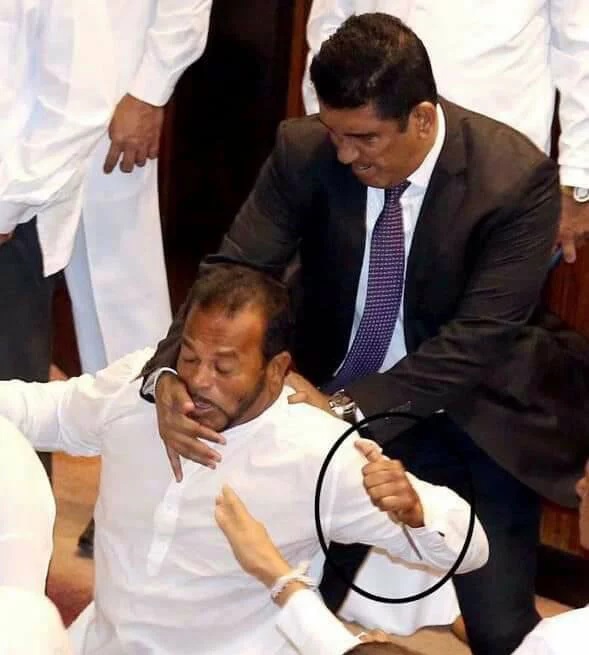
Parliament adjourned to Nov 23

November 19th, 2018

Courtesy Adaderana

The parliamentary session commenced at 1 pm today (19). However, the session was chaired by the Deputy Speaker of the Parliament in the absence of the Speaker, Karu Jayasuriya.

Deputy Speaker moved that a select committee should be appointed and requested MP nominations for the relevant matter be urgently handed over to the Parliamentary Secretary-General.

The Deputy Speaker then concluded the parliamentary session for the day.

Accordingly, the next parliamentary session will take place at 10 am on 23rd November.

MP Lakshman Kiriella stated that an investigation should be conducted against the MPs who damaged state property during the tense situations which occurred on 14th, 15th and 16th November at the Parliament.

Deputy Speaker responded that the Speaker will be promptly informed regarding the matter.

Dinesh Gunawardena stated that, when appointing a Select Committee it should be done under the recognition of a government and that the parliamentary affairs are the responsibility of the government. Accordingly, the majority of the Select Committee should be with the governing party, he stated.

As a Select Committee cannot be appointed without a government, the Select Committee should be appointed under the recognition that a government exists, said S. B. Dissanayake.

However, MP Anura Kumara Dissanayake stated that, in a context where a no-confidence motion against the PM and the new government has been clearly passed on the 15th November, it is not fair to have a majority in a Select Committee appointed for parliamentary affairs.

He says that it is not fair to handover the majority of the Select Committee to a party which doesn’t have the majority in the parliament.

President expresses regret over use of tear gas on monks

November 19th, 2018

Courtesy Adaderana

President states that he was not informed on the protest by the Bodu Bala Sena (BBS) organization and he expresses his regrets regarding the inconveniences caused to the monks.

A protest by BBS was held this afternoon (19) in front of the Presidential Secretariat. They had arrived at the Presidential Secretariat to handover a letter to the President with regard to the imprisonment of Ven. Galagoda Aththe Gnanasara Thero.

However, police had taken measures to control the protestors by deploying water cannons and tear gas.

President has further said that he will instruct on an immediate investigation into those who were involved in the firing of tear gas, stated President’s Media Division.

ශ‍්‍රී ලංකා ජාතික රෝහලේ ප‍්‍රධාන විකිරණ අංශයේ DSA යන්ත‍්‍රය 2016 වසරේ සිට අක‍්‍රීය වීම නිසා රෝගීන්ට බරපතල තත්ත්වයක්.

November 19th, 2018

ජනමාධ්‍ය නිවේදනයයි !එච්.එම්.එස්.බී. මැදිවත්ත වැඩබලන සභාපති සමස්ත ලංකා හෙද සංගමය  

ශ‍්‍රී ලංකා ජාතික රෝහලේ ප‍්‍රධාන විකිරණ අංශයේ DSA යන්ත‍්‍රය 2016 වසරේ සිට අක‍්‍රීය වීම නිසා රෝගීන්ට බරපතල තත්ත්වයක්…

ශ‍්‍රී ලංකා ජාතික රෝහලේ ප‍්‍රධාන විකිරණ අංශයේ තිබූ DSA යන්ත‍්‍රය (Digital Substractive Angiogram – ලේ නහර ආශ‍්‍රිත පරීක්ෂණ හා ප‍්‍රතිකාර කිරීම – හෘදය හැර) 2016 වසරේ සිට අක‍්‍රීයව තිබේ. මෙම යන්ත‍්‍රය මගින් රෝගීන්ට විශාල සේවාවක් ලැබී තිබේ. ලේ නහරවල ඇතිවන්නා වූ විවිධ රෝග තත්ත්ව සම්බන්ධයෙන් පරීක්ෂණ හා ප‍්‍රතිකාර ලබාදීමට ද මෙම යන්ත‍්‍රය උපයෝගී කොට ගන්නා ලදී. මෙම යන්ත‍්‍රයේ විශේෂත්වය වන්නේ ශල්‍යකර්ම කිරීමකින් තොරව රෝගියාගේ රෝගී තත්ත්වයට ප‍්‍රතිකාර කිරීමට හැකිවීමයි.

නමුත් 2016 වසරේ සිට නව යන්ත‍්‍රයක් ගැනීමට ටෙන්ඩර් කැඳවූවද, ටෙන්ඩරය ලබාගත් ආයතනයට විරුද්ධව ටෙන්ඩර් ඉදිරිපත් කළ තවත් ආයතනයක් කටයුතු කිරීම තුළ ටෙන්ඩරය අවලංගු වී තිබේ. 2018 වසරේදී ද එම යන්ත‍්‍රය ලබාගැනීමට ටෙන්ඩර් කැඳවූව ද ටෙන්ඩරය ලබාගත් ආයතනයට විරුද්ධව තවත් ආයතනයක් කටයුතු කිරීම හේතුවෙන් තවමත් DSA යන්ත‍්‍රය ලබාගැනීමට නොහැකි වී තිබේ.
 
මෙම තත්වය හමුවේ ජාතික රෝහල තුළ ලේ නහර ආශ‍්‍රිත විවිධ ආබාධවලින් පෙළෙන දහස් සංඛ්‍යාත රෝගීන් පිරිසකට ප‍්‍රතිකාර ලබාදීමේ හැකියාව සීමා වී ඇත. මෙය රෝගීන්ට සිදුවී තිබෙන දැඩි අසාධාරණයකි. රට පුරා දහස් සංඛ්‍යාත පිරිසක් ලේ නහර ආශ‍්‍රිත රෝගවලින් පෙළෙන අතර, ඒවාට කළට වේලාවට ප‍්‍රතිකාර ලබා ගැනීමට නොහැකිවීම නිසා ඔවුන්ගේ රෝග තත්ත්වය බරපතල වීම හෝ ඔවුන් මියයාම සිදුවේ.

ජාතික රෝහල සතුව වෙනත් ඒකක 02 ක DSA යන්ත‍්‍ර 02 ක් තිබුණද, ඒවා එම ඒකකවල ප‍්‍රතිකාර ලබන රෝගීන්ගේ කටයුතු සඳහා ප‍්‍රධාන වශයෙන් යොදා ගැනීමට සිදුවී තිබේ. එසේම ජාතික රෝහලේ මෙම ප‍්‍රතිකාර සඳහා මාස 02 – 03 ක පොරොත්තු ලේඛණයක් ද ඇති බව පැවසේ.

තවද, ප‍්‍රධාන විකිරණ අංශය තුළ DSA යන්ත‍්‍රයෙන් ප‍්‍රතිකාර ලබාදීම සඳහා විකිරණ විශේෂඥ වෛද්‍යවරු නිර්වින්දන විශේෂඥ වෛද්‍යවරු ද ඇතුළුව අනිකුත් සියලූ උපකරණ ද විශාල ලෙස තිබෙන තත්ත්වයකදී මෙමDSA යන්ත‍්‍රය ලබාගැනීම සඳහා සෞඛ්‍ය බලධාරීන් අවංක මැදිහත් වීමක් සිදු නොකිරීම බරපතල සැක සංකා ගණනාවක් ඇති කර තිබේ. මෙම පරීක්ෂණ පෞද්ගලික අංශයෙන් සිදුකරගැනීමේදී ලක්ෂ ගණනින් ගෙවීමට රෝගීන්ට සිදුවේ.

එබැවින්, රටේ අසරණ රෝගීන්ට නොමිලේ ප‍්‍රතිකාර ලබාගැනීමට තිබෙන මෙම සුවිශේෂී යන්ත‍්‍රය ලබාගැනීම සඳහා සෞඛ්‍ය අමාත්‍යාංශ බලධාරීන් මෙන්ම ජාතික රෝහලේ බලධාරීන් ද වහා කටයුතු කළයුතු බව පෙන්වා දෙන්නෙමු.

ස්තූතියි.

මෙයට,
එච්.එම්.එස්.බී. මැදිවත්ත
වැඩබලන සභාපති
සමස්ත ලංකා හෙද සංගමය           

Milad-Un-Nabi

November 19th, 2018

Mahinda Rajapaksa Prime Minister of the Democratic Socialist Republic of Sri Lanka

20th November 2018

I wish to convey my warmest felicitations to all Muslims in Sri Lanka marking the birth anniversary of the Holy Prophet Mohamed. The followers of Islam in Sri Lanka commemorate this auspicious day with religious observances, charitable deeds and contemplation of the Holy Prophet’s teachings.

The Islamic nations of the world have always unconditionally supported Sri Lanka in international fora and I take this opportunity to express my gratitude for that unstinted support and also to extend my greetings on this Holy Day to the followers of Islam in those nations as well.

Mahinda Rajapaksa
Prime Minister of the
Democratic Socialist Republic of Sri Lanka

A golden opportunity for the interim Prime Minister ‘to put the country first’.

November 18th, 2018

Dr D.Chandraratna

I believe that when the Parliament is recalled in a weeks time monies have to be voted to carry on the task of government in this interim period till a finality is reached. A money bill of some sort has to be approved by the Parliament and this gives the caretaker Prime Minister to set the country on the right track as a first step to show the public some elements of financial good governance that Yahapalanites failed to do. To the author, there is a few that the incumbent Prime minister can do to prove his worth. The money bill that he brings must be drastic, challenging and public friendly as seen never before in the history of our democracy. The author believes that the public will light crackers, true to Sri Lankan style, vote with their feet later for the measures that will clean up the law making body for a start.

Given the pathetic state of the law making body I cannot list all the remedies that need to be done in this short article but for a start can suggest a few that will gain universal approval. First, it is absolutely vital that the supreme law making body and its occupants are cleared of the tax rorts they individually and severally committed which made them the laughing stock starting off with the illegal selling of tax-free vehicles. Please legislate to tax them as per the rules applicable to other citizens and get them to pay the public money as a matter of urgent priority. Failure to pay should make them ineligible for public office at the forthcoming polls. This is killing two birds with a single stone. We, the taxpayers get our dues and second a public enemy, a would- be crook, is barred from the Parliament. In the same vein for the good of our country, the environment and the narrow roads that we have please set limits on the cubic capacity of vehicles the state will allow, lest we will die of pollution, if not killed at pedestrian crossings.  Other frauds such as the Central bank while being expedited, the immediate beneficiaries of the ill gotten money be exposed and the monies paid with fines imposed straight away under existing bribery laws be collected in favour of the Sri Lankan Treasury. This is an immediate penalty for murderers, drug merchants and rapists as in many other countries. There should never be leeches that jump from one party to another making democratic governance difficult for all times. Suggest legislation to end it for all times.

Second, cut the wasteful expenditure on the perks and privileges given to Parliamentarians, which the public should not bear. I am sure that the whole caboodle of ministers and their kith and kin are beneficiaries of this largesse and it is the starting point of a much needed cleaning up operation. If your own party candidates don’t like it that is a blessing that God has delivered to you. Get rid of the men and women who could become unworthy of becoming public servants and select those who are willing and genuine.  Politicians from both sides do not realize that the very substance of politics and the state is at stake in the body politic of Sri Lanka and this is the time to ‘soften up’ the institutions and in particular the premier institution — the Parliament.  There will not be another golden opportunity like the one given to you by an unforeseen set of circumstances. Being superstitious yourself, this must be your destiny.  As Marx said of the bourgeoisie let these useless men and women be their own gravediggers if they vote against the money bill for we know the legislative repercussions. I cannot value highly enough of the golden opportunity placed before you. Do not waste it, if you do, you will be painted by the same brush, as one who did not have the verve to walk the talk.

I am sure that the wish of the incumbent Prime Minister is to allow the public to decide in this hopeless situation, which I believe is correct. We also need laws to prevent opportunities to sell, lease, and plunder our national assets by the politicians without public approval. Legislate against selling our heritage and dignity for a ransom. If you want to walk your talk this is the opportunity to start your second coming on a genuine footing. Prove yourself by incorporating some of these measures for corruption free governance right at the start and if you win your money bill we are winners and if you lose we still are winners in being able to elect someone willing to do the same.  What a golden opportunity.

MINORITY GOVERNMENTS ARE POSSIBLE FOR A SHORT PERIOD UNDER THE DEMOCRATIC RULES

November 18th, 2018

BY EDWARD THEOPHILUS

Minority governments can exist for a short period in a democratic system. Minority governments for a short period were in USA, UK, Australia, Canada, India, Japan and many other countries. In many instances, there were minority governments as caretakers in the history. In Sri Lanka, Mr Dudley Senanayake’s government in March, 1960 was a minority government until held a general election in July 1960.  Mr Mahinda Rajapaksa clearly stated that the government appointed by Mr Sirisena is a caretaker government until hold an election and later the president issued a gazette notification to dissolve the parliament.

Under the parliament democracy Mr Rajapaksa’s government is a caretaker government for a short period and it doesn’t need a majority or show a majority support in the parliament as it is a temporary government to deal with possible problems during election period.  Why UNP and JVP want a majority for a short period, if a majority government will be established after the general election. The behaviour of UNP and JVP clearly indicates that they are against the confirmation of peoples’ sovereignty by an election and why they are so scare to an election, if they feel that people will re-elect them or people are with them at the next general election.

It clearly seems that they have no knowledge of political science or parliament democracy or even how to behave in a democratic society. They try to turn the democracy and parliament procedures the way they want with the support of the speaker. JVP is a tiny political group of Sri Lanka, which cannot change a democratic administration in the way they want as they have attempted in 1971 and 1987-88.  If they have come to democratic path, they should act according to democratic traditions.

Why is JVP and UNP so scare to an election, if they follow democracy? They clearly know what have been happen since 2015.  The local government election in 2018 showed that the majority of people of the country are not with them.  Especially, JVP has lost its credibility because the behaviour of JVP after 2015 has created a suspicion in the mind of common people as Mr Simians Amerasignhe stated. The objectives of JVP and UNP to achieve what they politically want to do using the speaker as he is a member of the UNP and behaving like a child.

The Sunday Newspapers in Sri Lanka clearly indicate the procedure to follow presenting a no confidence motion.  People know very well that JVP has not followed the procedure and hurried to pass the motion undemocratic way, the speaker has acted like a dictator or like person who has not understanding or experience about parliament tradition and democracy and it is not democracy.  In such a background it quite possible to create troubles in the parliament.

In the history we can trace that when a speaker was elected, he or she resigned the political party he or she was belong to.  This tradition changed in 1970 as Mr Stanley Tillakaratne opted not to resign as his predecessor, Mr Shirly Korea was engaged in politics while performing speakers’ duty.  Since then speakers while acting in the position stayed in the party. The Yahapalanaya did not attempted to change it but worsen the good governance.

People in Sri Lanka has lost the faith on good governance, political system in the country and the behaviour of politicians.  It seems that people of Sri Lanka need an alternative after the next general election.  The economy is the priority of people.

Regime-changing the Regime change in Sri Lanka

November 18th, 2018

Governments come & governments go – that is clear evidence of a vibrant democracy. People go for elections – they bring governments to power & they can bring down governments too. We have seen that happening too. But all this becomes a little complicated when groups of external players enter the scene to mess with people’s minds, when they plug fake stories, fund campaigns & even individuals & groups. All this becomes unfair & corrupt practices. But, we know this is a phenomena happening in all parts of the world & these colored regime change revolutions are the new modus operandi in placing in power governments & leaders who are ready to be the local conduit to various agendas set in motion to destabilize & weaken nations. A country geopolitically & commercially important as Sri Lanka is a paradise for every external party and it is in our ability to understand & link how other countries with asset interests to external forces have fallen, that makes it easier for citizens to surround & protect the leaders working in the interest of the nation & not the locals facilitating the interests of the external forces.

The regime change that took place in 2015 was in for a democratic regime change in 2018 and shockingly delivered by the puppet the regime changers thought would dance to their tune. When people become too cocky with confidence they let their guard down & it was either the wind blew alert of an assassination or impeachment that led to the President clean bowling the mastermind behind the plot.

In a case of rubbing salt into the wound, his replacement became everyone’s bête noire and all this took place on 26 October 2018 totally unaware to everyone. Keeping the excitement in full throttle came the proroguing of parliament, dissolution of parliament & then the democracy cheerleaders that were too chicken to go to courts against the sacking of the PM, dashing to court to file petitions against holding elections & as a result of a court order pending final verdict the entire country is in a standstill.

To make matters worse the Speaker joins the fracas by adding fuel to the fire issuing bizarre statements & proving by action his bias. The sacked PM says he is still the PM, the Speaker refuses to accept the new PM as the PM but accepts the No Confidence Motion & passes that in 10 minutes without following standing orders or due process.

The most flogged argument in a well-planned psychological effort to instill fear among public is to spread the notion that we must fear the West. Therefore, the hysteria promoted is ‘what will West do now’ we are not behaving as per their ‘democracy’ ‘liberal’ ways…the sacked PM too promoted the notion that the West would sanction Sri Lanka because he was dethroned. Well, we have news for you scardy-cats…western nations maybe powerful by virtue of their military might & the bloc nations that they use to bully others… but these nations are all throwing stones from glass houses. They are no beacons of virtue, they commit the biggest human rights violations, they are the real violators of democracy & it is time we read out their record sheet.

Let’s take the UK first, and always keep in mind that these Western nations interfere in nations for commercial & geopolitical interests & ‘democracy’ is simply a convenient excuse to camouflage their real intent. They use global corporates on the boards of which are former government heads & officials to force developing nations to privatize. This is the new norm happening across the world. They use global entities like IMF & WB to entrap nations into debt & demand returns that insist on cutting welfare systems of the people.

Let’s not forget that the arms & ammunition sold for profit to Saudi & allies now bombing Yemen have killed over 10,000 Yemeni civilians & brought the nation to the brink of starvation. These probably align to ‘British values’ & American ‘democracy’ & ‘human rights’.

These paragons of virtue didn’t mind cutting deals with Libya either – during deals (£550m  shell oil ) brokered under Tony Blair the Libyan leader was Col. Muammar Gaddafi but when they wanted to oust him, Gaddafi became a ‘dictator’. Same fate happened to Saddam Hussein, UK PM Thatcher had no issues selling him arms during 1980-88 Iran-Iraq war & while he killed plenty of Kurds in 1988, but Saddam went on to become a ‘dictator’ with US-UK-NATO deciding to liberate the Iraqi people.

Let’s go a little further into history, remember how UK described Chile’s Augusto Pinochet as Britain’s ‘true friend’ and this was throughout the period he was murdering Chileans. Let’s cross over to Indonesia… remember Gen. Suharto – he came to power from a military coup in 1965 and went on to occupy East Timor in 1975, UK PM Thatcher too described him as ‘one of our very best and most valuable friends’ and he was even a State Guest in 1979… this is the man who killed lakhs of people.

In case we miss to mention, the democratic government of Iran led by Mossadegh was overthrown by a US-UK coup & the Shah of Iran was installed. Why was Mossadegh overthrown you may ask, he was replaced simply because he was planning to nationalize Iran’s oil industry. Can you imagine these virtuous countries US & UK overthrowing a democratically elected leader simply because he wanted to nationalize Iran’s oil!!! So much for democracy!

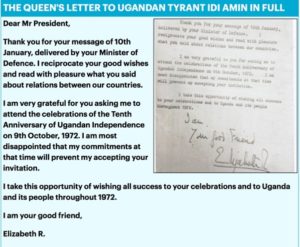
Some of these virtuous democracy angels in the West have got quite personal too … we have all heard of the personal letters sent by the Queen to Idi Amin, UK’s Ramsay MacDonald wrote to Italy’s Mussolini, Austen Chamberlain even went on a holiday with him.

The image of ‘dictator’ was one that was built slowly against Mahinda Rajapakse too… thankfully Sri Lanka being a small island the lies can’t take flight as easily without counter reactions. However, we can recall how the US citizens were made to believe Gaddafi, Saddam were all ‘evil dictators’ had these Americans been a little more read about world happenings they would not be taken for a jolly ride so easily but because they are clueless about world affairs the US UK & NATO got away promoting their trained mercenaries as rebels & sent them to Syria where the duty of the West was to deliver democracy & get rid of ‘evil dictator’ Assad.

The manner Kosovo, South Sudan were given independence, the manner populist leaders like Haiti’s Aristade were ousted is a case in point for Sri Lanka to keep in mind as West are not too fond of populist leaders who make it difficult for West to push their anti-national agendas.

India that proudly partners the West must surely be aware that balkanizing India is also on the West’s shopping list – no different to how Soviet Union & Yugoslavia were split. Already the Missionary network are working underground.

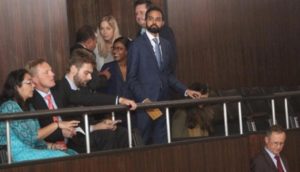
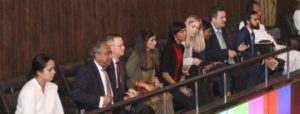
The West’s interference in Sri Lanka has become all too obvious. The first open signal came when a set of Western envoys visited deposed PM before making official courtesy call to the new PM – their statements too flout diplomatic protocols. Regularly these envoys are seen visiting the deposed PM and moreover they are even attending Parliament & have been present in the Supreme Court when the petitions against dissolution of parliament to hold elections were filed. The manner that some JVP MPs were behaving in Parliament functioning as a proxy UNP clearly showed how compromised they have become too. How are these engagements part of their diplomatic work??? Are these not poking their noses into the internal affairs of a sovereign nation. These are silly questions to even ask when considering the interferences these very nations get up to in other countries.

If Sri Lankans do not know of West’s record sheet they are unlikely to understand the exact nature of the battleground we are dealing with. It is in being aware of US – UK – NATO & all other nations that have played roles in regime change, liberal capitalist neo-con privatization schemes, illegal interventions & occupations & a general overview of how invisible agents operates can Sri Lankans understand the need to back any leader who is not aligned to these forces & reject any leader who are backed by these forces and the locals that back them.

That effort has been made easy by the fact that the very forces that helped bring the regime change – from politicians, political parties, media, social media groups, lawyers, ‘academics’, ‘civil society’ etc are the very people scrambling to return the deposed former prime minister back into the saddle. Their latest propaganda is to shout #democracywins & pretend to be mouthpiece for democracy but they go mute when questioned as to why they did not oppose UNP JVP TNA passing special bills to delay elections & not holding elections from August 2015 to February 2018!

That they were all using the President as a scapegoat can be seen in the manner that they are all now throwing bricks, when in 2015 they were throwing bouquets. All of them are however mum about a string of illegalities, irregularities that their hero has committed since January 2015 – Bond Scam, nepotism, favoritism to school buddies, autocratic rule, not informing President, passing bills by inserting additional clauses not inserted at committee stage, deceptive manner that the new constitution was to be passed, detrimental Bills that would have sold national resources & assets and a wave of privatization that would have given foreigners freehold of land, we would have lost our airports, ports, harbors, forest reserves, land around strategic areas/assets to foreign privatization projects.

The ruckus in parliament would have been costly but had that not happened all of the items mentioned would have been passed & we would have never been able to get these back without going for international courts resulting in compensating these foreign companies for damages in reversing agreements signed. If people are able to understand these dangers, they would clearly see why Sri Lankan voters need to in future always vote for a leader who has the interest of the nation and is not working to fulfill the interests of foreigners.  

US Provides Military Assistance to 73 Percent of World’s Dictatorships

https://truthout.org/articles/us-provides-military-assistance-to-73-percent-of-world-s-dictatorships/

How U.S. Military Bases Back Dictators, Autocrats, And Military Regimes

https://www.huffingtonpost.com/entry/how-us-military-bases-back-dictators-autocrats-and-military-regimes_us_591b229ae4b05dd15f0ba8e6

William Blum gives a long list of other people’s governments overthrown by the US – https://www.huffingtonpost.com/entry/how-us-military-bases-back-dictators-autocrats-and-military-regimes_us_591b229ae4b05dd15f0ba8e6

US military bases in 172 countries

https://www.thenation.com/article/the-us-has-military-bases-in-172-countries-all-of-them-must-close/

America dropped 26,171 bombs in 2016

https://www.theguardian.com/commentisfree/2017/jan/09/america-dropped-26171-bombs-2016-obama-legacy

CIA killings – tactics used  – face cream, cigar, milkshake for Castro, toothpaste for Congo’s Lumumba, pizza for Hezbullah – 13 million pages of declassified documents from 1940s to 1990s

https://www.ranker.com/list/cia-assassinations/mike-rothschild

The people must now realize by the bloc uniting to replace the ousted Prime Minister that their motives camouflaged by democracy dictums have nothing to do with the interests of the Nation or its People. This alone suffices to awaken the people as to the lurking dangers & the need to defeat them democratically at a future election if the people wish to secure the sovereignty of Sri Lanka.

Keep in mind that there is an assassination attempt on the President which was the reason for removing the PM… we demand an investigation into this as we know too well how many foreign leaders have also been assassinated by these democracy angels.

We do not want Sri Lanka to become another ‘We came, we saw, he died… & we laughed’ story!

This island is thrice blessed by Buddha, divine forces work in mysterious ways to safeguard the nation and we will come out of this calamity too.

Shenali D Waduge

Some posts on FaceBook


Comments on Chathuri Dissanayake’s article on “RW mourns fate of democracy – Warns public confidence in parliamentarians at an all-time low –  Insists world is watching, damage to Sri Lanka’s democratic reputation on the line ”  

November 18th, 2018


 Dr Sudath Gunasekara

RW mourns fate of democracy – Warns public confidence in parliamentarians at an all-time low –  Insists world is watching, damage to Sri Lanka’s democratic reputation on the line 

By Chathuri Dissanayake  17.11.2018. Financial Times

A deeply moved MP Ranil Wickremesinghe yesterday lamented over what he termed as the ‘destruction of Sri Lanka’s democracy’ by parliamentarians loyal to MP Mahinda Rajapaksa and condemned their actions while pledging to restore democracy.

This is a blow to democracy; it is a blow to all of us who are voters in Sri Lanka in whom the sovereignty lies,” Wickremesinghe told reporters after Parliament was adjourned.

This disgraceful incident – the incident that shamed the whole nation – must be condemned in the harshest possible terms. The people of this country did not give us their vote to behave like this. We will work to restore democracy and order,” he added.

Wickremesinghe pointed out that the behaviour of parliamentarians are recorded in history and the part they play in preserving or destroying the democracy of a country could be noted around the world.

There was one incident in Spain when a group in the Spanish army surrounded the Parliament, but then the Parliament convened and the King intervened and ordered the army to disperse. Because the majority of the army supported the Government, they dispersed. But after that, this is the only other incident. Remember that. That is how the world will remember this. This group will go down in world history.”

Wickremesinghe, who appeared deeply shocked by the incidents in Parliament. Such a warned that such displays would severely undermine public faith in both the institution and its representatives deterioration in confidence could hollow out a longstanding system of governance and lay the foundation to chaos, he said.

These are the people we have voted in. Who will be responsible for this? What will the citizens think if this is how they behave in the Parliament? Who will approve of such behaviour? If this is how they will behave in Parliament, what will the people think of the Parliament and democracy? That is what was damaged today. The wounds of Jayawickrama Perera, Vijitha Herath and Malik Samarawickrama will heal, but what about the damage to the country?” he questioned.

Thanks to the decision taken by the Speaker today (Friday), we were able convene. According to convention, the Speaker can convene Parliament whenever he wants,” he said, insisting that Speaker Karu Jayasuriya had discharged his duties within the mandate that was given to him under the legal framework of Sri Lanka.

If we behave like this, what is the fate of this democracy?”

My comments

Mother Lanka and a Nation mourns, with hands clasped on her head for  the unprecedented destruction and devastation  done to her over the past 70 years by the unpatriotic and slavish politician who have transformed a heaven on earth  in to a virtual hell in nadir and the untold misery and inconvenience cause to them by these politicians under the pretext of good Governance from  Jan 2016 to Date.

Sudath Gunasekara 17.11.2018.

To be more precise I will comment on each statement RW has made to this London based anti-Sinhala, ant- Buddhist, anti Sri Lankan but pro-Tamil and pro LTTE Newspaper which has a worldwide circulation

First and foremost I would say RW is spitting on his own face first looking upward and that of the Sri Lankan Nation second, as he is despising his own country, his own people and his own Parliament without realizing what he is actually doing

It is very true as he says ”this is disgraceful” But on his part  to condemn his own people and country while not realizing that like the Gamarala who went round in the whole village  as to from where the stink smell comes from not realizing that it is from   his own Amude for which he alone is responsible and accountable. As such the incident that shamed the whole nation that has to be credited to his own account must be condemned in the harshest possible terms as he himself admits, by the whole nation. When he says ‘We will work to restore democracy and order, First he has to go to a river and wash his own loin cloth   together with that of his erstwhile friend the Speaker for the UNP in Parliament. Thereafter go before a mirror and look at his own face and the bottom.

Having said that he goes on to say the ‘destruction of Sri Lanka’s democracy’ by parliamentarians loyal to MP Mahinda Rajapaksa.’ In this regard I ask RW who actually first destroyed democracy in this country. Isn’t it a moot question though he accuses the other camp, was it not he himself who destroyed democracy in 2015 when he demanded M S to appoint him as the PM when he never had a majority in Parliament and later hatched a conspiracy to pull out nearly 44 MPP who were with MR having contested on Pohottuwa and who had won on the MR solid vote base.

In the first place MR is the Prime Minister in this Parliament appointed by the President in the same way you were appointed on 9th of Jan 2015. Why do you want to single out MR’s men as culprits when almost all MPP including Speaker and your own people took part in this disgraceful drama? Why didn’t you resists destruction of democracy in 2015 and refused to accept the post of PM. The whole world would have appreciated it and adorned you a s an apostle of democracy. And now you talk of restoring democracy. I am sure it must be two different brands of democracy you are talking of.

The whole country knows how democratic you have been ever since you took over the leadership of the party after Gamini died. But now you lament of democracy in the country. Leaving aside democracy in the country, have you ever acted democratically as the Leader of the UNP ever since you assumed its leadership. You must be ashamed to talk of democracy in the country. If you are a sworn democrat of the Westminster model as you pretend to show and who so vociferously talk and fight to restore democracy then why didn’t you tell President Sirisena that it was illegal, and unconstitutional and wrong for him to appoint you as PM on 9th JA 2015 when you had only 47 seats and MR camp had at least 144 MPP in Parliament and also why didn’t you protest for doing so when there was already a PM in office when you were appointed. This shows that you have started to talk of democratic principles only when it directly affects you.  So as a man who has never been a democrat either by the country or at least by your Party how can you talk of restoring democracy now which you yourself have murdered and burie?.

Next referring to the MR Camp you say ‘this group will go down in world history’. What about you and your record as the leader of the UNP. Haven’t you yourself already gone down world history as the man who has lost 29 elections since you took over the leadership. And also as the man who changed the Party Constitution for you to remain as leader for life.  Also gone down in world history as a Party leader who never had the guts to give leadership to the party at two Presidential elections and who imported two outsiders to contest for the post of President as Common candidates. At that time you were hiding your head like an Ostrich. Finally now illegally remains stuck by force to the official residence of the Prime Minister nearly for one month even after you have been officially sacked from the post of PM.   You also gone down in history as the PM who has sold the countries ports, air ports  British made Trinco Oil farm premise, Palali Airport and  the nation’s economy through trade agreements disastrous to this country and sponsored resolutions against the country and the  valiant members of the Three Forces at Geneva.  Above all you have already gone down in world history as the only Prime Minister in world history who conspired, manipulated, robbed the Nation’s Central Bank in broad day light and thereby ruined the nation’s economy and also who got the Chief robber to escape the country and by now keeping him hidden under your instructions in a foreign country without producing him in courts as the man who stood personal surety to the culprit.

I do not propose to make this list any longer for brevity as I have to deal with few more comments you had made in this statement. Leave it to my readers who know you better to fill the gap.

I am happy that you accept that sovereignty lies with the voters in Sri Lanka” But if that is so why are you afraid to go for elections. Isn’t it because you know than anybody else that you cannot win any election, as it happened in the case of past Presidential elections. Don’t you think that going for elections is far more democratic than   remaining by force at Temple Trees on the advice of anti-Sinhala, anti-national  forces both here and abroad  whom you are expecting to  reinstate you as PM? Why don’t you as a gentleman directly face elections in the country without resorting to Maradana type of political gimmicks in the Present parliament that has ceased to be legitimate any more since the Local Government elections in 2018 and why do  you resort to extra conventional  tricks and indirect methods?.

The report also says Wickramasinghe, who appeared deeply shocked by the incidents in Parliament and warned that such displays would severely undermine public faith in both the institution and its representatives. Why is he shocked?. Was it because his coup to ousted MR didn’t work. There is   no  faith at ball in the present Parliament or its representatives in the people in this country on you Mr Wickramasinha. As such there is nothing more left for you to worry. Please face reality and go in to political oblivion for the good of the country and for the good of the Sinhala Buddhists in this country.

Who will be responsible for this? He again asks. Who else other than you and your wonderful Speaker for going against the President’s legitimate decision to remove you and appoint MR instead. You are only committing political suicide by resorting to this type of mean and cheap tactics. That is common sens e. Which most of us don’t have?

He goes on to ask what will the people think of the Parliament and democracy?  People don’t think anything about the Parliament as here is nothing left in it to think any more. It is so disgusting and useless. It only eats in to the national resources to maintain a set of jobless men and women who don’t contribute anything to the country. People have completely taken it out of their mind and discarded it as a monkey cage and a pissankotuwa hat only wastes nearly five million rupee public funds a day for its upkeep and to house a bunch of parasitic creatures dong nothing for the country or the people. They only curse you people day and night, for not doing anything for the country and they are waiting for the day that they will be able to close down this den of mostly parasitic liars and thieves. You are worried about the wounds of Jayawickrama Perera, Vijitha Herath and Malik Samarawickrama.  You can send them to Singapore or USA as you do with public funds and get them cured at public expense. But who will cure the wounds you all have inflicted upon this nation and are shamelessly continuing to do to this country and the nation? About which you are never bothered even in your dreams.

Last a word on your following statement.

Thanks to the decision taken by the Speaker today (Friday), we were able convene. According to convention, the Speaker can convene Parliament whenever he wants,” he said, insisting that Speaker Karu Jayasuriya had discharged his duties within the mandate that was given to him under the legal framework of Sri Lanka.

As we spectators see it, it is nothing but a Setambara patasaluwa drama inside the Parliament by your Speaker, I mean the Speaker for the UNP and not of the Parliament, who apparently did not know that he was fully naked inside it displaying his political and nakedness to the entire world.

Naturally you have to thank him as he had faithfully carried out your illegal orders. But unfortunately he has got ruined himself beyond all possible mending. We pity the Bauddha upasaka he pretends to be, who has fallen in to your trap and got ruined himself and thanks to you he also has gone down in history just like you, or even worse, when one sees the damage he has done to this country and the inconvenience caused to people by abusing his Office as Speaker to safeguard his Mater

If we behave like this, what is the fate of this democracy” RW?

Don’t lament on Democracy, as there is nothing left, thanks to you people who have sucked the blood of the nation. It is brutally murdered   and buried not 6 feet but 100s of feet below. Hypocrisy has replaced democracy in this country long time ago and the Temple of hypocrisy” that is the so-called Supreme Parliament is put in charge of the politicians of Sri Lanka. They have seduced and razed it to the ground beyond renovation.

If we behave like this, what is the fate of this democracy?

I fully agree with you, when you say If we behave like this, what is the fate of this democracy?” I am happy that you have admitted that there will be no democracy if you people behave like this.

You mourn for fate of democracy as you have lost your place as Prime Minister. On the other hand people are not only mourning but also crying weeping, wailing and lamenting for the fate of their country, nation, the religion and heritage fast disappearing from the surface of this land due to the treacherous activities of their unpatriotic and treacherous politicians like you all, but you have nothing to worry as you have no country on this soil.

Letter of Alliance of Erudite Professionals

November 18th, 2018

Price of horse and an MP

November 18th, 2018

Dr SARATH OBEYSEKERA 

Six hundred million rupees to buy a MP can be used to build boatyards

When I heard that opposition MP’s price tag is as same as the price tag of a race horse with a pedigree.

These horses like Green Monkey which is a Thorough Bred was 16 million rupees

Our green monkey who jumps from one  tree to another who are not thoroughbred like real horses cost 5 million US dollars !!!

Being in the Industry in developing boatyards and Marinas in Sri Lanka we can build 22 boat yards  in all fishery harbours with the money they would spend to buy  10 green MP’s .These boatyards can provide employment to. Over 25000 youths and generate  a billion dollars annually for Sri Lankan economy.Fishing folks can be provided with modern boats with ice making plants which reduce deterioration of fish during the voyage.

I was passing by Mirissa Harbour to observe how we have failed to develop the harbours and Yacht Marinas

People may be wondering who has such colossal amount of money?

The Society for Peace Unity and Human Rights for Sri Lanka (SPUR) condemns international interference in Sri Lanka

November 18th, 2018

DR DASARATH JAYASURIYA President, SPUR Australia

November 15, 2018, 9:27 pm

The Society for Peace Unity and Human Rights for Sri Lanka (SPUR), encourages all parties embroiled in the struggle for political supremacy in Sri Lanka to respect the authority of the Executive President, Maithripala Sirisena and abide by the rulings given by Sri Lanka’s Supreme Court.

SPUR condemns the blatant interference of the European Union, Britain, the United States and a number of other countries who erroneously believe Sri Lanka to be a colonial state under their rule, forgetting that we have been an independent nation for the last 70 years. These so-called guardians of democracy have been joined by a few international agencies and a bunch of tin-pot civil society organizations, who couldn’t muster a crowd to fill a dozen Tuk-Tuks plying on Sri Lanka’s roads.

The collective body of these paragons of virtue stands condemned for maintaining deathly silence:

  1. When Ranil Wickremesinghe became the Prime Minister in 2015 January with only 46 seats in parliament, whilst the party with over 150 seats was condemned to the opposition;
  2. When the United States of America blatantly boasted in public that they funded and was a major stakeholder of the initiative to execute Sri Lanka’s regime change;
  3. While the Ranil Wickremesinghe led government continued to delay provincial council elections manipulating the parliament to subvert democracy and disenfranchise the voting public;
  4. When the Good Governance finance minister had to step down due to corruption allegations and the Central Bank was relieved over a billion dollars by Ranil Wickremesinghe’s bosom buddy, Arjuna Mahendran; and
  5. While speaker Karu Jayasuriya is crafting a constitutional crisis blatantly violating the law challenging the authority of the President.

The list goes on.

In addition, we wish to point to the international community, United Nations and the Commonwealth Secretariat, who are like Flint on matters related to Sri Lanka, that they continue to be silent on the plight of the neighbouring Buddhist country Thailand, where a military junta has been interfering in democracy since 2006. To the contrary, the biggest US force in years joined an annual military exercise in Thailand on 13 February 2018, despite controversy over the Thai junta’s invitation to neighbouring Myanmar’s army, which has been accused of ethnic cleansing in the United Nations.

This breathtaking hypocrisy and blatant disregard of decency condemns the United States and its lackeys to the dust bin of treachery, and disqualifies them from making any comments on the conduct of the elected President of Sri Lanka, who believes he is putting in place necessary steps to protect the territorial integrity, sovereignty and the unitary status of Sri Lanka.

We urge the President of Sri Lanka not to blink whilst facing adversity and derogatory commentary from the bankrupt United National Front members and their impotent supporters, and hold general elections as planned

We also urge the President to consider going for a referendum under Article 86 of the 2015 Constitution, which empowers him to “prepare a submission of matters with national importance to people by referendum”, as detailed in page 64.

May the President’s noble gestures prevail over the international coup d’état.

DR DASARATH JAYASURIYA

President, SPUR Australia

ඇමරිකානු තානාපතිනියගේ පාර්ලිමේන්තු ‘බ්‍රේක් ඩාන්ස්’; ඇමරිකාව මෙරට ආරක්‍ෂක හමුදාව ප‍්‍රතිසංස්කරණයට මැදිහත් වෙයි!

November 18th, 2018

කීර්ති වර්ණකුලසූරිය උපුටා ගැන්ම දිවයින

තමිල්නාඩුවේ විමුක්ති කොටියා වූ තොල් තිරුමාවලන් යාපනයට පැමිණ ඊළම ගැන හඬ නගයි

⋆ තමිල් සෙල්වම්ගේ බිරිය සෂිරේකා කිලිනොච්චියට පැමිණෙයි

⋆ බීබීසී සහ අල්ජසීරා ශ‍්‍රී ලංකාවට එරෙහිව සජීවී ප‍්‍රචාර මෙහෙයවයි

⋆ රාජ්‍ය නොවන සංවිධාන සහ ඇතැම් දේශපාලකයන් සුද්දන් ඉදිරියේ වැඳ වැටෙයි

‘‘වෙස් මුහුණු පැළඳගත් සතුරන් පිළිබඳව දැඩි විමසිල්ලෙන් සිටිය යුතුයි – රුසියානු ජනපති ව්ලැඩිමීර් පුටින්

americaවසර ගණනකට පෙර ඇමරිකාවේ ඒබ‍්‍රහම් ලින්කන් ජනාධිපතිවරයා මුහුණ පෑවේ චරපුරුෂයන් සහ ද්‍රෝහීන් රැසකටය. මෙරට වත්මන් ජනපතිවරයා අද එවැනි තත්ත්වයකට මුහුණ පා ඇත. මේ පසුබිම මැද උතුරේ බෙදුම්වාදී යක්‍ෂයෙක් දැන් විවිධ උපක‍්‍රම මගින් හිස ඔසවන බව තහවුරු වී තිබේ. එහෙත් රටේ ජනතාව උතුරේ සිදුවන්නේ කුමක්දැයි නොදනී.

පසුගිය සෙනසුරාදා තමිල්නාඩුවේ සිට යාපනයට පැමිණි තොල් තිරුමාවලන් හෙවත් විමුක්ති කොටියා පක්‍ෂයේ නායකයා ගැන රජය අවධානය යොමු කළේ නැත. කටුනායක ආගමන විගමන බලධාරීන්ද කිසිදු ප‍්‍රශ්න කිරීමකින් තොරව තොල් තිරුමාලන්ට මෙරටට ඒමට ඉඩ දුන්නේය. මේ තොල් තිරුමාවලන් යාපනයට පැමිණියේ මල් ප‍්‍රදර්ශනයක ආරාධිතයා ලෙස සහභාගිවීමටය. එහෙත් ඔහු තමිල්නාඩුවේ මල්වගාකරුවෙක් නොවේ.

ටැමිල් නැෂනල් ග‍්‍රීන් මුවන්ට් හෙවත් කොටි හිතවාදීන් සැමරීමේ උත්සවයක් සඳහා පැමිණි තොල් තිරුමාවලන් යාපනයේදී කොටින්ගේ ජාතික පුෂ්පය පැළඳ සිටියේය.

මේ තොල් තිරුමාවලන් කවුද? ශ‍්‍රී ලංකා හමුදාව ද්‍රවිඩ ජාති සංහාරයක් සිදුකළ බවට ජිනීවා මානව හිමිකම් කවුන්සිලයට පැමිණිලි කළේ ඔහුයි. හිටපු ජනපති හිටපු ආරක්‍ෂක ලේකම් සහ වන්නි හමුදා නායකයන් යුද අපරාධ සිදුකළ බව කියමින් ඔවුන්ව ජාත්‍යන්තර අධිකරණය වෙත ගෙනයා යුතු බවට ඝෝෂා කළේත් තිරුමාවලන්ය.


def1


එහෙත් ශ‍්‍රී ලංකාවට එරෙහි වූ මොහුට යාපනයට ඒමට දොර විවෘත කිරීම උතුරේ සිටින ශ‍්‍රී ලංකා හමුදාවට සමච්චල් කිරීමක් නොවේද? යාපනයේ කිට්ටු උද්‍යානය නමින් හඳුන්වන ස්ථානයේ පැවතියේ මල් ප‍්‍රදර්ශනයක් නොවේ. එහි පවත්වනු ලැබුවේ මියගිය කොටි මිනීමරුවන්ට ගෞරව උදෙසා පැළ සිටුවීමයි. එම අවස්ථාවට තොල් තිරුමාවලන් සමඟ උතුරු පළාත් සභාවේ හිටපු මහ ඇමැති සී. විග්නේෂ්වරන්ද ඔහුගේ නව පක්‍ෂයේ ආධාරකරුවෝ ද පැමිණ සිටියහ. අනතුරුව යාපනයේ කනගරත්නම් විදුහලේදී රැස්වීමක් පැවැත්වුණි.

මේ රැස්වීම ඇමතූ තිරුමාවලන් ඊලම් මව්බිම නමැති ඉලක්කය ජයගැනීම උදෙසා ද්‍රවිඩ නායකත්වය එක්සත් විය යුතු බව කීවේය.

america2‘‘ද්‍රවිඩ නිජබිම හමුදා ආධිපාත්‍යයෙන් මුදාගැනීමට නම් ද්‍රවිඩ පක්‍ෂ එක්සත්ව කටයුතු කළ යුතුයි. එලෙස එක්සත්ව කටයුතු කිරීමෙන් උතුරේ සිංහලකරණයවීම සහ සිංහල යටත්විජිතවාදය නතර කළ හැකියි යයි තොල් තිරුමාවලන් වැඩිදුරටත් කියා සිටියේය.

පසුගිය සිකුරාදා (2දා) තොල් තිරුමාවලන් නැමැති බෙදුම්වාදියා යාපනයට පැමිණෙන බව අපි විශේෂයෙන් හෙළිකළෙමු. එහෙත් රජය අර්බුදයකට පැටලී සිටියේය. මේ නිසා උතුරට පැමිණෙන සතුරන් ගැන අවධානයක් යොමුවූයේ නැත. තොල් තිරුමාවලන් යාපනයට පැමිණ බෙදුම්වාදය ප‍්‍රවර්ධනය කළේය. එවැන්නෙක් වහාම පිටුවහල් නොකළේ මන්ද?

මෙවන් අයහපත් වාතාවරණයක් මැද ශ‍්‍රී ලංකාවේ යහපාලන ආණ්ඩුව බිඳ වැටීම ඩොලර් අරමුදල් ලබන රාජ්‍ය නොවන සංවිධාන විසින් ජාත්‍යන්තරකරණය කරනු ලැබීය.

එහි ප‍්‍රතිඵලය වූයේ නව විදේශ ඇමැතිවරයා විසින් කැඳවූ විදේශ තානාපතිවරුන්ගේ රැස්වීමට බි‍්‍රතාන්‍යය” නෙදර්ලන්තය” නෝර්වේ” ප‍්‍රංශය” ඔස්ටේ‍්‍රලියාව” දකුණු අපි‍්‍රකාව” ඉතාලිය සහ කැනඩාව යන රටවල තානාපතිවරු නොපැමිණීමයි. මේ රටවල් වන්නි මෙහෙයුමට එරෙහි වූවෝ වෙති.

ශ‍්‍රී ලංකාවේ මිතුරකු බවට හඳුන්වන ඉන්දියාව පවා මෙම රැස්වීමට එවනු ලැබුවේ කනිෂ්ඨ තානාපති නිලධාරියෙකි.

එහෙත් රැසියාව” චීනය” කියුබාව” තුර්කිය” පාකිස්තානය සහ ඇෆ්ගනිස්ථානය ඇතුළු රටවල් 20 ක තානාපතිවරු එම රැස්වීමට පැමිණ සිටියහ.

මෙරට විදේශ කටයුතු අමාත්‍යාංශය විදේශ දූත මණ්ඩල ප‍්‍රධානීන් 43 කට මේ රැස්වීමට පැමිණෙන ලෙස ඇරයුම් කර තිබූ බව වාර්තා විය.

මෙය පුදුමයක් නොවේ. නව අගමැතිවරයකු සහ විදේශ ඇමැතිවරයා පත්වූවන් විදේශ කටයුතු අමාත්‍යාංශය තවදුරටත් පාලනය කරනු ලබන්නේ යහපාලනයට සම්බන්ධ නිලධාරීන්ය. එය තහවුරු වූයේ විදේශ කටයුතු අමාත්‍යාංශය විදෙස්ගත ශ‍්‍රී ලාංකික තානාපති කාර්යාලවලට යැවූ ෆැක්ස් පණිවුඩය ද වෙබ්අඩවියකට ලැබීමයි.

එහෙත් 1965 දෙසැම්බර් 21 දා සම්මත වූ කිසිදු රටක අභ්‍යන්තර කටයුතු වලට මැදිහත් නොවීමේ ප‍්‍රඥප්තිය මෙම විදේශ තානාපතිවරු බරපතළ ලෙස උල්ලංඝනය කරන බවට විදේශ කටයුතු බලධාරීන් ප‍්‍රකාශ කළේ නැත. 1981 වසරේදී එක්සත් ජාතීන්ගේ සංවිධානය පැවසුවේ ස්වෛරී රාජ්‍යයක කටයුතුවලට වෙනත් රටකට බලහත්කාරයෙන් මැදිහත් විය නොහැකි බවයි.

එසේ වූවත් ශ‍්‍රී ලංකාවේ රජය මෙරට විදේශ තානාපතිවරු එම සම්මුති උල්ලංඝනය කරන බවට එක්සත් ජාතීන්ගේ සංවිධානයටද පැමිණිලි කළේ නැත.

මේ හැර මෙරට සිටින විදේශ මාධ්‍ය පවා අභ්‍යන්තර කටයුතු වලට ප‍්‍රසිද්ධියේ මැදිහත්වී සිටී. එහෙත් රජය නිහඬ වී සිටියි.

මේ අතර ඇමරිකාවේ ඩිමොක‍්‍රටික් පාක්‍ෂික කොංග‍්‍රස් සභිකයන් තිදෙනකු ද ජනාධිපති මෛත‍්‍රිපාල සිරිසේන වෙත සංදේශයක් එවමින් ව්‍යවස්ථා යාන්ත‍්‍රණය නිවැරදි මගට ගෙන එන ලෙසත් එසේ නැත්නම් ශ‍්‍රී ලංකාවට බරපතළ ප‍්‍රතිවිපාකවලට මුහුණ පෑමට සිදුවන බවත් කියා සිටී.

පසුගිය සිකුරාදා එවනු ලැබූ මේ සංදේශයට ඇමරිකානු විදේශ සබඳතා කමිටුවේ මීළඟ සභාපති එලියට් එන්ජල්” ශ‍්‍රී ලංකාව පිළිබඳ අනුකමිටුවේ ඉදිරි සභාපති ඞීනාටයිටස් සහ කොංග‍්‍රස් සභික ඬේවිඞ් ප‍්‍රයිස්ද අත්සන් කර තිබුණි. ශ‍්‍රී ලංකා ජනාධිපතිවරයා වෙත එවූ එම සංදේශය කොටි ඩයස්පෝරාවට ද ලැබී තිබේ.

මේ සංදේශයේ සඳහන් කර ඇත්තේ 2015 දී යහපාලන රජය ස්ථාපිතවීමෙන් පසු ඇමරිකානු ආධාර පමණක් නොව නාවික හමුදාව සඳහා වෙරළාරක්‍ෂක යාත‍්‍රාවක් ලබාදුන් බවත් පාර්ලිමේන්තුව කැඳවා නිවැරදි මාර්ගයක රට යොමු නොකළහොත් ඇමරිකානු ආධාරවලට බලපෑ හැකි බවයි.

එහෙත් කොංග‍්‍රස් සභිකයන්ගේ තර්ජනාත්මක ලිපිය ලැබෙන අවස්ථාවේදී ජනාධිපතිවරයා පාර්ලිමේන්තුව විසුරුවා හරිනු ලැබීය.

මෙයට පෙර මෙම කොංග‍්‍රස් කමිටුව වන්නි මෙහෙයුම නතර කරන ලෙස ශ‍්‍රී ලංකාවට බලපෑම් කර යුද ආධාර ලබාදීම අත්හිටුවීමට කි‍්‍රයාකළේය.

මේ පසුබිම මැද නෝර්වේ අරමුදල් මත යැපෙන කොළඹ විකල්ප ප‍්‍රතිපත්ති කේන්ද්‍රය ශ‍්‍රී ලංකාවට එරෙහිව මෙහෙයුම් දියත් කර ඇත.

ලබන වසරේ මාර්තු මස ජිනීවා නුවර පැවැත්වෙන මානව හිමිකම් සමුළුව හමුවේ මෙම ශ‍්‍රී ලංකා විරෝධි මෙහෙයුම් දියත්වන බවට අනාවරණය වී ඇත.

මේ සඳහා දෙස් විදෙස් රාජ්‍ය නොවන සංවිධාන 40 කට අධික පිරිසක් කොටි ඩයස්පෝරාව ද සම්බන්ධ වී තිබේ.

ලන්ඩන් නුවර සිට කි‍්‍රයාත්මක වන ශ‍්‍රී ලංකා කැම්පේන් නමැති සංවිධානය දැන් සිටම එම මෙහෙයුම ආරම්භ කරමින් අගමැති රාජපක්‍ෂ දසදහස් ගණනක් පුරවැසියන්ගේ ඝාතනවලට වගකිව යුතු බවට ප‍්‍රකාශ කර ඇත.

මේ බි‍්‍රතාන්‍ය සංවිධානයේ කි‍්‍රයාකාරි මණ්ඩලයේ සේවය කරන බියටේ ආන්ස්ටඞ් නමැති නෝර්වේ චිත‍්‍රපට අධ්‍යක්‍ෂවරිය කොටි බෝම්බකාරියන්ගේ වීරක‍්‍රියා පිළිබිඹුකරමින් චිත‍්‍රපටයක් පවා නිපදවා ලොව පුරා ප‍්‍රදර්ශනය කිරීමට කි‍්‍රයා කළාය.

මේ අතර යහපාලන රජය බිඳවැටීම ගැන විදේශ රටවල් වෙත හදිසි පණිවුඩ රැසක් යැවීමට කොළඹ ඇමරිකානු හිතවාදීහු කි‍්‍රයාකළහ.

ඒ අනුව ඇමරිකානු රාජ්‍ය දෙපාර්තමේන්තු ප‍්‍රකාශක රොබට් පෝල් අයිනෝ” රාජ්‍ය දෙපාර්තමේන්තු ප‍්‍රකාශිකා හීතර් නවර් එක්සත් ජාතීන්ගේ ප‍්‍රකාශක ස්ටෙප්ගේ ඩුජාරින්” මෙරට ඇමරිකානු තානාපති ඇලෙයිකා ටෙප්ලිට්ස්” හිටපු ඇමරිකානු සහකාර රාජ්‍ය ලේකම් සමන්තා පවර්” ඔස්ටේ‍්‍රලියාවේ විදේශ ඇමතිනි ජේන්” නෝවිජියානු විදේශ කටයුතු අමාත්‍යාංශය ස්විස් තානාපති කාර්යාලය” ඉන්දීය විදේශ කටයුතු අමාත්‍යශයේ ප‍්‍රකාශක රවින් කුමාර්” බි‍්‍රතාන්‍ය මන්ත‍්‍රී හියුගෝ ස්විරේ ඇමනෙස්ට් ඉන්ටර්නැෂනල් සංවිධානයේ අධ්‍යක්‍ෂ මිතාර් සිරිපල්” හියුමන් රයිට්ස් වොච් අධ්‍යක්‍ෂ බ්‍රෙඞ් ඇඩම්ස් හිටපු නෝර්වේ අගමැති ග්‍රෝ හැලම්” ජාතික රූපවාහිනියේ හිටපු නිවේදිකා ශාමිණි සේරසිංහ ඇතුළු රාජ්‍ය නොවන සංවිධාන කි‍්‍රයාකාරීන් යහපාලන රජය ඇදවැටීම ගැන කම්පනයට පත්වී ඇත.

මෙලෙස හිටපු රජයේ දේශපාලනඥයන්ගේ ඉල්ලීම මත සුද්දන් සහ ඔවුන්ගේ මෙරට සහචරයන් ජනපති සහ අගමැතිට එරෙහිව කටයුතු කරන අවස්ථාවේ මේ ද්‍රෝහි කි‍්‍රයාවන් ගැන රජයේ මාධ්‍ය නිහඬ විය.

මේ අතර සංහිඳියා අමාත්‍යාංශය බාරගත් වාසුදේව නානායක්කාර විසින් රැඳවුම් භාරයේ සිටින කොටි කි‍්‍රයාකාරීන් 110 ක් මුදාහැරීම සඳහා කැබිනට් පත‍්‍රිකාවක් ඉදිරිපත් කරන බව අම්පාරේදී ප‍්‍රකාශ කර ඇත.

අම්පාර ශ‍්‍රීලනිප සංවිධානය සහ සමන්තුරෙයි ප‍්‍රාදේශීය සභාවේ නියෝජ්‍ය සභාපති පී. ජෙයචන්ද්‍රන්ගේ මෙහෙයවීමෙන් පැවැති රැස්වීමකදී වාසුදේව නානායක්කාර පැවසුවේ ඔවුන්ව මුදාහැරීමේ ප‍්‍රශ්නය තමා භාර ගන්නා බවයි.

මෙලෙස මුදාගැනීමට උත්සාහ කරන හිටපු කොටි කවුරුන්ද? ඒ ලයන් එයාර් යානාවට මිසයිල ප‍්‍රහාරයක් එල්ල කර මගීන් 49 ක් ඝාතනය කිරීම යුද සහ නාවික භටයන් 27 ක් මරා පිළිස්සීම” විල්පත්තු වනයේදී දේශීය සංචාරකයන් මරාදැමීම” හෙලිකොප්ටර් යානාවලට ප‍්‍රහාර එල්ල කිරීම” බස් රථවලට බෝම්බ තබා මගීන් මරාදැමීම ඇතුළු යුද අපරාධ සිදුකළ කොටි මිනීවරුවන්ය.

එහෙත් ජිනීවා මානව හිමිකම් කවුන්සිලය විසින් බොරු යුද අපරාධ චෝදනා ඉදිරිපත් කර ඇති හමුදා නිලධාරීන් 56 ක් එම චෝදනාවලින් නිදහස් කරන්නේද?

වාසුදේව නානායක්කාර නිදහස් කිරීමට උත්සාහ දරන හිටපු කොටි මිනීමරුවන් මුදාහැරීම සිදුවූවොත් විපතට පත්වූවන්ට යුක්තිය ඉටුවේද?

මෙම කොටි අපරාධකරුවන් මුදාහරින ලෙස කොටි ඩයස්පෝරාව ද්‍රවිඩ සන්ධානය” උතුරු පළාත් සභාවේ හිටපු මහඇමැති විග්නේශ්වරන් සහ රාජ්‍ය නොවන සංවිධාන කි‍්‍රයාකාරීන් ද ඉල්ලා තිබුණි.

මෙවන් පසුබිමක් මත මේ ඝාතකයන් මුදාහැරීම යනු පාවාදීමක් නොවන්නේද?

america3කෙසේ වෙතත් වසර 3 1/2 ක් තිස්සේ යහපාලන රජය යටතේ මෙරට යුද හමුදාව විදේශ රටවලට පාවාදීමේ යෙදුණු සිවිල් සංවිධාන යයි හඳුන්වාගත් එන්.ජී. ඕ කි‍්‍රයාකාරීන් සමඟ එක්ව කටයුතු කිරීමට ජනාධිපතිට සිදුවිය. මැතිවරණ කොමිසමේ සාමාජික රත්නජීවන් හුලේ එවැන්නෙකි. ඔහු 1983 ජූලි කලබලයට පෙර මෙරටින් විදේශගතවූ පලාත් පාලන මැතිවරණය කල්දැමීම ගැන අධිකරණය වෙත ගියේ නැත. එහෙත් රත්නජීවන් කළේ පාර්ලිමේන්තුව විසුරුවා හැරීමට එරෙහිව අධිකරණය වෙත පෙත්සමක් ගොනු කිරීමය. බෙදුම්වාදයට එරෙහි නොවූ හුලේ පෙඩරල් ක‍්‍රමයට පක්‍ෂපාතීවුවත් 2006 මාර්තු මස යාපනය විශ්වවිද්‍යාලයේ උපකුලපති ලෙස හුලේව පත්කළේ එවකට ජනපතිවූ මහින්ද රාජපක්‍ෂයි.

2011 වසරේ පලාත් පාලන මැතිවරණයේදී ඊ.පී.ඞී.පී නායක ඩග්ලස් දේවානන්දා ඡුන්ද දූෂණ සිදුකළ බව දක්වමින් පොලිසියට පැමිණිලි කරනු ලැබීය. 2011 අගෝස්තු මස ඔහු පොලිසියට කටඋත්තරයක් ද දුන්නේය.

ඒ අනුව කයිට්ස් මහෙස්ත‍්‍රාත් අධිකරණය හමුවේ පෙනී සිටින ලෙස ඔහුට නියෝග කෙරුණි. එහෙත් රත්නජීවන් අධිකරණය වෙත ගියේ නැත. මේ නිසා 2011 අගෝස්තු මස 15 දාට පෙර අධිකරණය වෙත භාරනොවූවොත් අත්අඩංගුවට ගන්නා බට කයිට්ස් අධිකරණය සඳහන් කළේය. එම අධිකරණ නියෝගය පිළිනොගත් හුලේ මෙරටින් පැන ගියේය. මෙවන් අවමන්සහගත ඉතිහාසයක් ඇති රත්නජීවන් හුලේව මැතිවරණ කොමිසමට පත්කරන ලද්දේ කොළඹ එන්.ජී. ඕ කල්ලියේ උපදෙස් මතය.

මෙය පුදුමයක් නොවේ. ගතවූ වසර 3 1/2 ක කාලය මෙරට ආරක්‍ෂාවට” දේශපාලනය සහ විදේශ පිලිවෙතට එන්. ජී. ඕ නඩය මුළුමනින්ම මැදිහත්විය. එහි මුල් පියවර වූයේ කොටි මර්දනයට ඉමහත් සේවාවක් සිදුකළ හමුදා බුද්ධි සේවා ප‍්‍රධානි බි‍්‍රගේඩියර් සාලේ එම ධුරයෙන් ඉවත් කිරීමයි. අනතුරුව ජිනීවා මානව හිමිකම් සමුළුව වෙත විදේශ ඇමැතිව සිටි මංගල සමරවීර පැමිණියේ කොළඹ සාම වෙළෙන්දා යයි හඳුන්වන ජෙහාන් පෙරේරා සමඟය. 2016 ජුනි මස මානව හිමිකම් සමුළුවට සහභාගි වූ මංගල සමරවීර එහිදී කොටි ඩයස්පෝරා කි‍්‍රයාකාරීන් සමඟ එන්.ජී. ඕ කි‍්‍රයාකාරින්ද හමුවිය.

ඉන්පසු රජය සංහිඳියා කමිටුවක් පත්කරනු ලැබීය. ඊටද එන්.ජී. ඕ කල්ලි නායකයකු වූ පාක්‍යසෝති සවරිමුත්තු යන තවත් නාඩගම්කාරයන් කීපදෙනකු අයත්විය.

මේ හැර අතුරුදන්වූවන්ගේ කොමසාරිස්වරියක් ලෙස නිමල්කා ප‍්‍රනාන්දු නැමැත්තියද පත්කෙරුණි. මේ එන්ජී ඕ කල්ලිවලින් ධුරයක් හිමිනොවූයේ 1971 හිටපු කැරලිකරුවකුවූ සුනන්ද දේශප‍්‍රිය නොහොත් රංජි මල්ලිට පමණකි.

මංගල සමරවීරගෙන් පසු ජිනීවා මානව හිමිකම් සැසිවාරයකට මෑතකදී දේශපාලනයට ආ හර්ෂ ද සිල්වා පැමිණියේය. එම ජිනීවා මානව හිමිකම් කවුන්සිලයට අවතීර්ණ වන දොරටුව අසලදී සමන් රත්නපි‍්‍රය 1971 හිටපු කැරලිකරුවකු වූ බඩල්ගම බර්ටි හෙවත් රංජිත් හෙන්නායක සමඟ ඔහු සාකච්ඡාවක නිරත විය.

මානව හිමිකම් කවුන්සිල ශාලාවට පිවිසෙන ස්ථානයේදී අපට තවත් පුද්ගලයකු දැකගැනීමට හැකිවිය. ඒ නිර්මාල් රංජිත් දේවසිරි නැමැත්තායි.

මේ අතර මෙරට අභ්‍යන්තර කටයුතුවලට මැදිහත්වන එන්.ජී. ඕ සංවිධාන වලට 2011 වසරේදී පමණක් රුපියල් 13926629”942 ක මුදලක් ද 2012 දී රුපියල් 11488308761 ක්ද 2013 දී රුපියල් 10840293”929 ක්ද ලැබී ඇත.

මෙරට මේ වනවිට එන්.ජී. ඕ 1065 ක්ද විදේශ එන්. ජී. ඕ. 381 ක්ද ලියාපදිංචිවී තිබේ. එසේම ගතවූ වසර 20 කදී එන්.ජී. ඕ වලට ලැබුණු අරමුදල් සම්බන්ධව ලිපි ලේඛන අතුරුදන්වී ඇත.

මේ නිසා මේ අරමුදල් වැයකරන්නේ ආණ්ඩු පෙරළීමට බව තහවුරු නොවන්නේද?

මේ අතර ජාතික රූපවාහිනියේ හිටපු ඉංග‍්‍රීසි නිවේදිකාවක් වූ ශාමිනි සේරසිංහ නැමැත්තිය රටේ ජනතාවට නැගී සිටින ලෙස ඉල්ලා ඇත. එහෙත් රටේ බහුතරය ඇය කවුද කියා නොදනී. ප‍්‍රභාකරන් ඝාතන සිදුකරද්දී මේ නිවේදිකාව සිටියේ කොහේද යයි විමසිය යුතුව ඇත. ඇය තවදුරටත් මහා සංඝයා වහන්සේලාගෙන් ඉල්ලා ඇත්තේ නැගී සිටීමට කාලය පැමිණ ඇති බවත් රට බේරාගැනීමට ජනතාව ඒකරාශි විය යුතු බවත්ය. එදා කොටි ඝාතකයන් කොටුවේ මහ බැංකුවට ප‍්‍රහාර එල්ල කර මහා විනාශයක් සිදුකරද්දී රටේ ජනතාව ත‍්‍රස්තවාදයට එරෙහිව නැගී සිටිය යුතු යැයි ඇය පැවැසුවේ නැත.

මෙවන් පසුබිමක් මැද වසර 200 ක සිරදඬුවමකට නියම වූ කොටුවේ මහ බැංකු බෝම්බ ප‍්‍රහාරයේ වරදකරුවන් තිදෙනාගේ අභියාචනය විනාශයට නොගෙන නිෂ්ප‍්‍රභා විය.

විග්නේෂ්වරන් පතිරන් – සිවකුමාර් සහ සෙල්වකුමාර් නර්මදන් නමැති මෙම කොටි කි‍්‍රයාකාරීන්ට 2002 දී කොළඹ මහාධිකරණය විසින් එකී සිරදඬුවම නියම කෙරුණි.

america4

මෙවන් පසුබිමක් මැද පසුගිය වසර 3 1/2 තිස්සේ රණවිරුවෝ මිනීමරුවෝ බවත් දන්වමින් ශ‍්‍රී ලංකාවේ හමුදාවට එරෙහි යුද්ධ අපරාධ චෝදනා සාවද්‍ය යයි පැවසූ නේස්බි සාමි වරයාට අවමන් කිරීමේ යෙදුණු රජයේ මාධ්‍ය එකවරම මළවුන්ගෙන් අවදිවූවාක් මෙන් නේස්බි සාමිගේ ගුණ වැඞීම ආරම්භ කර ඇත.

එහෙත් වන්නි මෙහෙයුම සමයේ මෙරට බි‍්‍රතාන්‍ය මහ කොමසාරිස් කාර්යාලයේ ආරක්‍ෂක උපදේශකව සිටි ලූතිනන් කර්නල් ඇන්ටන් ගෑෂ්ගේ රහස් වාර්තා ලබාගත් නේස්බි සාමිවරයා පිටු 49 ක එම ලියවිලි මෙරට මාධ්‍ය අතරින් ලබාදුන්නේ මාහට පමණකි. එම වාර්තාව මම හෙළිකළෙමි.

මේ වසරේ ලන්ඩන් නුවර සාම මන්ත‍්‍රී මණ්ඩල ශාලාවේදී ගෝලීය ශ‍්‍රී ලංකා සංසදයේ ප‍්‍රධානින් සමඟ මම නේස්බි සාමිවරයා හමුවුණෙමි. එහිදී ඔහු පැවැසුවේ ලූතිනන් කර්නල් ගෑෂ්ගේ රහස් ලියවිලි ශ‍්‍රී ලංකාවේ රජය (යහපාලන) ජිනීවා මානව හිමිකම් කවුන්සිලයට ඉදිරිපත් කර නැති බවයි.

මේ අතර ඇමරිකානු කොන්ග‍්‍රස් කමිටුව ශ‍්‍රී ලංකාවේ ආරක්‍ෂක හමුදාව ප‍්‍රතිසංස්කරණය කළ යුතු බව ප‍්‍රකාශ කර ඇත.

බිල් ජොප්සන් සහ ඩැනි ඬේවිස් නමැති කොංග‍්‍රස් සභිකයන්ගේ ප‍්‍රධානත්වයෙන් පැවැති සාකච්ඡාවකට කොටි හිතවාදිනියක් වූ ඇන්ජිලා මනිවන්තන් නැමැත්තිය මැදිහත්වී ඇත.

මෙහිදී ඇය පවසා ඇත්තේ ශ‍්‍රී ලංකා රජය යුද විරුවන් යයි හඳුන්වන නිලධාරීන්ට දඬුවම් නොකරන බවයි.

තමිල් සෙල්වම්ගේ බිරිය වූ සශිරේකා ද මේ සතියේදී ප‍්‍රංශයේ සිට කිලිනොච්චියට පැමිණියාය. ඇය හිටපු පළාත් සභා ඇමැතිනි ආනන්දි සසිතරන් හමුවී සාකච්ඡා පවත්වා තිබේ.

සෂිරේකා මෙරටට පැමිණියේ විග්නේෂ්වරන්ගේ නව පක්‍ෂයෙන් ඡුන්දය ඉල්ලීම බවට වාර්තා වී ඇත.

මේ අතර කොළඹ බටහිර තානාපතිජාලය මෙරට අභ්‍යන්තර කටයුතු වලට ප‍්‍රසිද්ධියේම මැදිහත්වූ ආකාරය පාර්ලිමේන්තුව කැඳවූ අවස්ථාවේ දැකගැනීමට හැකිය. එහි මූලිකත්වය ගත්තේ ඇමරිකානු තානාපතිනි ඇලෙයිනා ටෙප්ලිස්ය. ඇය තම සහචර තානාපති කණ්ඩායම සමඟ පාර්ලිමේන්තුව කැදවීමේ අවස්ථාවට කල්තියා පැමිණ සිටියාය. මේ තානාපති නිලධාරීන්ගේ සමහරෙක් පාර්ලිමේන්තුවේ සිදුවීම් ඡායාරූපගත කළ අතර ඉදිරිපත් වූ විශ්වාසභංගයෙන් පසු අත්පොලසන්දෙන අයුරුත් අනාවරණය විය. මේ අන්දමට ඉන්දීය සහ රුසියානු පාර්ලිමේන්තු වලදී හැසිරීමට බටහිර තානාපතිවරුන්ට ඉඩ ලැබේද?

පාර්ලිමේන්තුව කැඳවීමේ අවස්ථාවට සහභාගිවීමෙන් පසු ඇය පැවසුවේ ප‍්‍රජාතන්ත‍්‍රවාදය කි‍්‍රයාත්මක වන අයුරු තමා දුටු බවයි.

එහෙත් ඇමරිකාව විසින් සිරියාවට බෝම්බ දමා සිවිල් වැසියන් දහස් ගණනක් මරාදැමීම ප‍්‍රජාතන්ත‍්‍රවාදයද?

මෙලෙස පාර්ලිමේන්තුවේ අර්බුදයක් මතුවූ අවස්ථාවේ උතුරේ ද්‍රවිඩ කාන්තාවන් පිරිසක් ශ‍්‍රී ලංකා රජය ද්‍රවිඩයන් මරණවෝ යැයි කෑ ගසමින් ට‍්‍රම්ප්ගේ ඡායාරූපය සහ ඇමරිකානු ධජය ප‍්‍රදර්ශනය කරමින් විරෝධතාවයක් පවත්වනු ලැබීය.

america5

තානාපති සේවය නමැති අන්තර්ජාතික වාතය

November 18th, 2018

උපුටා ගැන්ම දිවයින

ඇමරිකන් ජනාධිපති ඩොනල්ඞ් ට‍්‍රම්ප් හැමදාමත් කියන පරිදි එක්සත් ජාතීන්ගේ සංවිධානයෙන් නූතන ලෝකයට වැඩක් නැත. අප ඔහුගේ අදහසට එකඟ වන්නේ පහත පදනම මතය; එක්සත් ජාතීන්ගේ සංවිධානය අවුරුද්දකට වරක් ඇමරිකාවේදී රැස්වෙයි. මේ රැස්වීම සඳහාත් එක්සත් ජාතීන්ගේ සංවිධානයේ පැවැත්ම සඳහාත් අවුරුද්දකට ඩොලර් බිලියන ගණනාවක් සාමාජික ගාස්තු වශයෙන් වැය කරන්නට සාමාජික රටවලට සිදුවෙයි. එහෙත් එසේ වැය කරන සල්ලි ඒ ඒ රටවල් සන්තකයේ තිබිණි නම් හදිසියකදී ඒ රටේ ජනතාවට ඒ සල්ලිවලින් කිසියම් ප‍්‍රයෝජනයක් අත්වෙයි. ගංවතුරකදී රටේ ළමයින්ට බිස්කට් බෙදා දීමට හැකි වෙයි. වාර්ෂිකව රැකියා අවස්ථා දහසක් සඳහා මූලධනය ඇති කිරීමට පුළුවන් වෙයි. අවුරුද්දකට අලූත් රෝහල් දෙකක් හෝ වැඩි ගණනක් ඇති කිරීමටත් තිබෙන රෝහල් දහසක් පමණ සුපිරි මට්ටමින් නඩත්තු කිරීමටත් අවස්ථාව ඇති වෙයි.
 
 එක්සත් ජාතීන්ගේ සංවිධානය බිහිවීම යනු ජාත්‍යන්තර වාදයේ ප‍්‍රතිඵලයයි. මෙයට කියන අලූත් නම ගෝලීයකරණය වේ. එයින් අදහස් වන්නේ බෝල සෑදීම වැනි දෙයක් නොවේ. ලෝක ව්‍යාපී වැනි අදහසකි. ලෝකය ගෝලීයකරණය වීමේ පළමු පියවර වන්නේ එක්සත් ජාතීන්ගේ සංවිධානය නොවේ. තානාපති සේවයයි. වසර දහස් ගණනක් පැරණි තානාපති සේවය අද වන විට එක්සත් ජාතීන්ගේ සංවිධානය තරමටම නිශ්ප‍්‍රයෝජන ව්‍යාපාරයක් බවට පත් වී තිබේ. මේ දිනවල පාර්ලිමේන්තු සැසිවාර නැරඹීමට එන තානාපති නිලධාරීන් ප‍්‍රමාණය දෙස බැලීමෙන් ඒ බව තහවුරු වෙයි. විදේශ බලවේග අද මේ රටට ඇඟිලි ගැසීම සඳහා යොදා ගන්නේ මෙහි තිබෙන ස්වකීය තානාපති කාර්යාලයන් ය. පසුගිය 15 වැනිදා පාර්ලිමේන්තුවේ හටගත් කළහකාරී තත්ත්වයෙන් පසු මෙරට ජර්මන් තානාපති යර්න් රොඞ් මැතිතුමා ට්විටර් පණිවුඩයක් ඔස්සේ මෙවැනි සඳහනක් කළේය. ‘‘අද දවස ශී‍්‍ර ලංකාවේ ප‍්‍රජාතන්ත‍්‍රවාදයට නරක දවසකි. කථානායකවරයා දෙසට විවිධ දේ එල්ල කිරීම සහ පාර්ලිමේන්තුවේ ඡුන්ද විමසීමක් පැවැත්වීමට බාධා කිරීම ප‍්‍රජාතන්ත‍්‍රවාදය නොවේ.’’
 
 එහිදී වැදගත් කාරණයක් කිව යුතුය. ශී‍්‍ර ලංකාව සිය ප‍්‍රජාතන්ත‍්‍රවාදය පවත්වාගෙන යන්නේ ජර්මන් ජනරජය සමග අත්සන් කළ සහයෝගිතා ගිවිසුමක් මත නොවේ. අපේ පාර්ලිමේන්තුවේ හටගත් සිද්ධියට වඩා දුක හිතෙන සිදුවීම් ජර්මනියේ සිදුවී ඇත. ජර්මන් පුත‍්‍රයකු වූ හිට්ලර් නිසා ජර්මනියේ පාර්ලිමේන්තුවත් ලෝකයේ රටවල් ගණනාවකම පාර්ලිමේන්තු ගොඩනැඟිලිත් විනාශයට පත් විය. ජර්මන් තානාපති ට්විටර් නිවේදන නිකුත් කරන්නේ තානාපතිවරයකු සතු අයිතිවාසිකම් සහ යුතුකම් ගැන අවබෝධයක් නැතිවය. අනෙක, අපේ පාර්ලිමේන්තුවේ අර්බුදය රටේ අභ්‍යන්තර ප‍්‍රශ්නයකි. කථානායකට පහරදීම ඉතාම නින්දිත නරක වැඩක් වුවද කථානායක පහර කන්නේ තමන්ට නොගැලපෙන වැඩ කිරීමට යෑම නිසාය. ඔහු කෑවේ ඔහු විසින්ම වපුරන ලද පරිප්පුය. අපේ රටට එන තරමක් එන්නේ ජර්මන් තානාපති වැනි ලෙඞ්ඩුය. බි‍්‍රතාන්‍යය, ඇමරිකාව, ඉන්දියාව ඇතුළු රටවල් රැසක්ම තානාපති ව්‍යාපාරය හරහා ලංකාවට ඇඟිලි ගසති. මෛතී‍්‍රට, මහින්දට හා රනිල්ට තානාපතිවරු විවිධ වධ දෙති. ජනාධිපතිතුමා විසින් පාර්ලිමේන්තුව විසුරුවන ලද්දේ ඉකුත් සිකුරාදාය. එනම් නොවැම්බර් 9 වැනිදා ය. එතුමා පාර්ලිමේන්තුව විසුරුවන බවට එම සතිය මුලදීම ආරංචියක් පැතිර ගියේය. ඒ සැනින් ජනාධිපතිතුමා හමුවූ ඇමරිකන් තානාපතිවරිය පාර්ලිමේන්තුව විසුරුවීමෙන් වළකින ලෙස ජනාධිපතිතුමාට බලපෑම් කරන්නට පටන් ගත්තේය. රනිල් වික‍්‍රමසිංහ බලයෙන් පහකර මහින්ද රාජපක්‍ෂ අගමැති තනතුරට පත් කළ සැණින් චීන තානාපති මහින්ද රාජපක්‍ෂ ජීවත් වන විජේරාම පාරේ නිවසට දිව ගියේය. මෙය ලංකාවේ දේශපාලනය සංක‍්‍රාන්ති සමයක තිබෙන කාලයකි. එවැනි විටෙක දැඩි අර්බුද මැද පත් කළ අගමැතිගේ ගෙට රිංගීමෙන් තානාපතිලා වැලකිය යුතුය. 
 
 ඇතැම් රටවල ආණ්ඩු පෙරළෙන්නේ තානාපති කාර්යාල හරහාය. එවැනි පෙරළිවලට අවශ්‍ය මුදල් තානාපති කාර්යාල හරහා පොම්ප කරනු ලැබේ. පසුගියදා අපේ රටේ පාර්ලිමේන්තුවේ සිදුවූ කළහ උපදවන ඇතැම් තීරණ දෙස බලා සිටි තානාපතිවරු අත්පුඩි ගසනු දක්නා ලදී. මෙයින් කියැවෙන්නේ ඔවුන් කිසි ලෙසකත් ස්වාධීන නොවන බවත් ශී‍්‍ර ලංකාවේ අභ්‍යන්තර අර්බුද ඉදිරියෙහි සතුටු වන කාලකණ්ණින් බවත්ය.
 
 කිසිම රටක් තව රටකට වාතයක් විය යුතු නැත. කිසිම රටක් තව රටක දේශපාලනයට මැදිහත් විය යුතු නැත. මාධ්‍යවේදී ජමාල් කෂෝගී ඝාතනය කරන ලද්දේ තුර්කියේ සවුදි අරාබි තානාපති කාර්යාලය තුළදී බව අප මතක තබාගත යුතුය. ඉන්පසු ඔහුගේ සිරුර කැබලි කර බී‍්‍රෆ් කේස්වල පැක් කරන ලද්දේ ද එම තානාපති කාර්යාලය තුළදීම බවද අප අමතක නොකළ යුතුය.

Comedy of errors

November 18th, 2018

N.P.KARUNADASA SLAS (Retired), Kandy Courtesy The Island


The comedy that is being unfolded in the political arena in the country, especially within the precincts of the so-called august assembly, to say the least, is most disgusting, sickening and nauseating. The manner in which motions are put to vote in the House, for instance, is unprecedented, resulting in utter chaos. For example a certain member of parliament handed over a motion to the Speaker expressing no confidence in the newly formed government and the new prime minister sworn in by the President, and the Speaker put it to vote in an inordinate haste, without even making the members of parliament aware of the contents of the motion, which led to ugly commotions in the House.

Earlier, when a no-confidence motion (or any motion for that matter was submitted to the Speaker there was a certain procedure which was followed by the Speaker, which, I believe, included fixing a date for a debate on the motion and accordingly entering it in the Order Paper of the House. That provided an opportunity for the accused party to place its case before the House. I believe that such a procedure, besides being adherence to standing orders is the observance of a basic tenet in natural justice.

Needless to say that the series of incidents that followed has made us a laughing stock before the eyes of the entire civilized world.

All these uncalled for and unwarranted incidents commenced with the misunderstanding of the ruling given by the Supreme Court on the constitutionality of the gazette notification dissolving parliament. Most of the politicos do not seem to understand the fact that the SC is yet to deliver the final judgment on the matter. They (the politicos) started celebrating, claiming that the SC has delivered judgment in their favour. This misplaced euphoria pervaded the parliament too, laying bare the educational standards and upbringing of our worthy ‘law makers’ as never before.

In my opinion, the SC has merely suspended the gazette notification in question, pending deliberations which are fixed for the first week of December, following which the final judgment shall be delivered.

After taking the aforementioned matters into consideration in hindsight, I am of the humble opinion that this ugly situation could have been avoided if a provision was included in the SC ruling, suspending the convening of parliament until the final judgment on the matter is delivered.

The best possible way out of the present impasse, in my opinion, is a general election. In the event a general election comes round the corner, I invite all my fellow citizens to look beyond petty party affiliations and elect decent men and women to Parliament, rejecting the knife wielding ruffians and other undesirable characters.


The “Stay Order” by the Supreme Court

November 18th, 2018

NEVILLE LADDUWAHETTY Courtesy The Island


The actual words used by the Supreme Court in the Stay Order re Dissolving Parliament were: “… interim order staying the operation of ….”

This SC ruling relates to the Proclamation by the President dated November

9, 2018, Dissolving Parliament by Gazette notification 2096/70, which states:

“KNOW YE that by virtue of the powers vested in me by paragraph (5) of

Article 70 of the Constitution of the Democratic Socialist Republic of Sri Lanka to be read with paragraph (2) (c) of Article 33 of the Constitution of the Democratic Socialist Republic of Sri Lanka and paragraph (2) of Article 62 of the Constitution…and in pursuance of the provisions of Section 10 of the Parliamentary Elections Act. No. 01 of 1981…”

(a) “Dissolve Parliament with effect from midnight today and summon the new Parliament to meet on the Seventeenth day of January Two Thousand and

Nineteen”

The Supreme Court then issued “an interim order staying the operation of Gazette Extraordinary No. 2096/70 of 9th Nov. 2018, on November 13, 2018. Thus,

Parliament was dissolved on November 9th and the SC ruling was issued on

November 13th 2018.

Quoted below is the interpretation given by Indian Courts in regard to an “order staying the operation of” as appeared in the citation:

“B.P.L. Ltd. And Ors vs R. Sudhakar And Ors on 6 May, 2004

Showing the contexts in which ‘operation of order a stay order’ appears in the document:

“This Court held that the said ‘stay’ ‘order’ could not have the effect of reviving the proceedings, which had been disposed of by the appellate authority by its ‘order’ dated 7.1.1991 observing that “While considering the effect of an interim ‘order’ staying’ the ‘operation of the order’ under challenge, a distinction has to be made between quashing of an ‘order’ and ‘stay’ of ‘operation’ of an ‘order’. Quashing of an ‘order’ results in restoration of the position as it stood on the date of passing of the ‘order’ which has been quashed. The ‘stay’ of ‘operation’ of an ‘order’ does not, however, lead to such a result. It only means that the ‘order’ which has been ‘stayed’ would not be ‘operative’ from the date of passing of the ‘stay’ ‘order’ and it does not mean that the said ‘order’ has been wiped out from existence”.

Clearly, if the interpretation given by the Indian Courts serves as a guide, it must follow that the reconvening of Parliament by the Speaker amounted to a continuation of operations. This amounts to a violation of the Order Dissolving Parliament. Furthermore, for the Elections Commissioner to proceed with preparations to conduct a General Election also amounts to continuing operations. This too amounts to a violation of the Order Dissolving Parliament. Therefore, Parliament cannot be reconvened, and any and all actions taken such as the establishment of majorities, suspension of Standing Orders as well as the No Confidence motions by Parliament since the Stay Order was issued on November 13th, 2018, amounts to a violation of the Order Dissolving Parliament.

In view of the material presented above, it is imperative that a determination from the SC of Sri Lanka be sought as to whether Parliament could reconvene and deliberate on issues following their Interim Order “Staying Operations”.

NEVILLE LADDUWAHETTY

Take vote for no confidence by name or electronic system – President

November 18th, 2018

Courtesy Adaderana

The All Party Meeting called by President Maithripala Sirisena to discuss the current political developments was held with friendly and cordial manner at the Presidential Secretariat today (18) and it lasted more than 2 hours, stated President’s Media Division.

There was an agreement at the meeting that the party leaders meeting, scheduled for tomorrow should decide the future proceedings of the Parliament and the Parliamentary session should be conducted peacefully and without any untoward acts.

The President informed everybody who attended the meeting that he could take a decision on the No Confidence Motion against the government only if a vote is taken by name of the Members or by electronic voting.

He pointed out that it would be the most accepted method of voting system by the intellectuals and the public of the country as well as internationally. He also stressed the need for adhering to the standing orders without resorting to voice vote which is not transparent, while voting on an important motion to change the government.

All the political parties except the JVP attended the meeting and the President informed the meeting that the JVP had intimated to him that they would not attend.

ෆෙඩරල් රාජ්‍යක් සඳහා ජනවරමක් ඉල්ලා සිටි දෙමළ ජාතික සන්ධානය සමඟ එක්ව රජයක් පිහිටුවීමට උත්සාහ දැරීම.

November 18th, 2018

ගෙවිදු කුමාරතුංග සභාපති යුතුකම මාධ්‍ය ප්‍රකාශය

ෆෙඩරල් රාජ්‍යක් සඳහ ජනවරමක් ඉල්ලා සිටිමින් පසු ගිය මැතිවරණයට තරඟ කළ දෙමළ ජාතික සන්ධානය සමඟ එක්වී රජයක් පිහිටුවීමට එක්සත් ජාතික පක්ෂය විසින් උත්සාහයක නිරතවන බවට විශ්වාස කටයුතු ආර‍ංචි අප වෙත ලැබෙමින් පවතියි. එලෙස ෆෙඩරල් රාජ්‍යක් සඳහා කැපවී සිටින දෙමළ ජාතික සන්ධානයේ මන්ත්‍රීවරුන්ට නතු වූ රජයක් පිහිටුවීමට එකඟදැයි එක්සත් ජාතික පාක්ෂිකයන්ගෙන් සහ ජාතික හෙළ උරුමයේ ශේෂව සිටින පාක්ෂිකයන්ගෙන් යුතුකම ස‍ංවිධානයේ අපි ප්‍රශ්න කර සිටිමු. 

ගෙවිදු කුමාරතුංග

සභාපති

Sri Lanka’s tyrant speaker puts the country in peril.

November 18th, 2018

By ; A.A.M.NIZAM – MATARA

Sri Lanka’s modern historians state that Sri Lankans in the past were proud of having impartial and respectable gentleman Speakers from the first post Independent Speaker Sir Francis Molamure up to the last speaker Mr. Chamal Rajapaksa.  Some speakers were so impartial `from the day of their elect and opposition parties did not field candidates against them in the next election that ensued as in the case of Sir Albert Peiris.  Some speakers gave rulings and clarifications which were historical as in the case of Mr. Anura Bandaranaike and many democratic countries appreciated  and adopted these rulings.  The former speaker Mr. W.J.M. lokubandara said recently that since the day he was appointed as speaker he never stepped into UNP Party office and attend party meetings.  This was how the former speakers safeguarded the dignity of their responsibilities.  They never acted irresponsibly, arrogantly in an undignified manner.  .

It is sad to find in a country with such noble traditions a man wearing that honourable garb acting like a fabled Bull in a China Shop. This despicable, defunct and demented speaker Kalu Jayasuriya has become the worst eve r speaker in Sri Lanka’s parliament history who was extremely bias and unruly, who in his utter arrogance deliberately ignored to recognize the majority of opposition group in the Parliament, arbitrarily conferred the post of the Leader of the Opposition to the minority party Tamil National Alliance which had only 16 members in the Parliament as against the 54 members of the Joint Opposition and similarly appointed the Chief Opposition Whip from the JVP with only 6 members in grace to these JEPPOS for that party’s blatant and shameless support to his party UNP.  He acted like a dictat5or in allocation of speaking time to and gave extensive time allocations to UNP proxy  JVP’s Anura Kumara Dissanayake who was always on his feet to protect UNP, Ranil and government policies.  It was very hard to understand whether he was speaking as the Deputy of Ranil or as a UNP stalwart and what had happened Rohana Wijeweera/Somawansa Amerasinghe’s policie4s of national concepts and anti Indian expansionism and anti western, anti IMF/World Bank domination.

Suspended and expelled JO members from attending Parliament on baseless grounds ,for instance expressing people’s views and the opinions of Maha Sanga and other religious prelates against UNP MP Vijayakala’s call for the revival of the terrorist LTTE. Took arbitrary have vote3ed MPs in the Order Papers. Deliberately and on signals from the Prime Minister obstructed the speeches of JO members

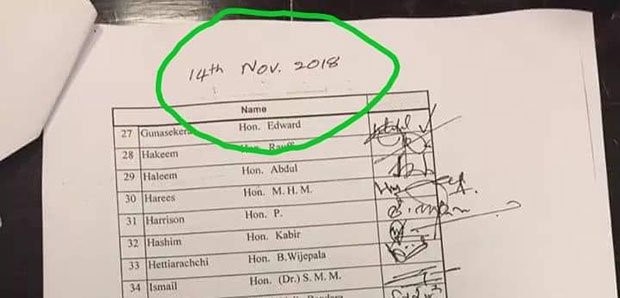
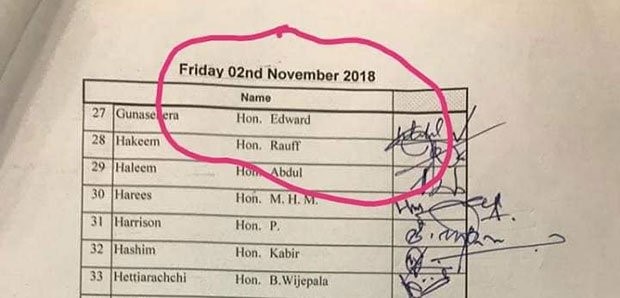
This demented speaker took illegitimate and unconstitutional action over JVP’s No Confidence Motion against Prime Minister Mr. Mahinda Rajapaksa despite parliamentary procedures and Standing orders require to give at least 5 days for such motions from the date of submission.  on the guidance terrorist proxy Sumanthiran this demented speaker suspended standing orders took up the motion on that day itself amidst strong protests from government Ministers and MPs and in that commotion announced as per Voice Vote 122 members have voted in favour of the NCM. He has sent the Motion President with a signature list of MPs.  The list this demented speaker was an old list and the dates of the list has been tippexed and changed.  At the same time this man has so far not taken up for debate several pending

NCMs. They include one NCM against Ravi Karunanayake, 2 NCMs against Rajitha Senaratne and 2 NCMs against Faizer Mustapha.  Phot0copied tampered lists are appended below:

NO Confidence Motion Procedure

AS per parliamentary procedure a No Confidence Motion should be handed over to the Secretary General of Parliament then has to bring it to the notice of party leaders.  Party Leaders upon discussing it should give it to the Leader of the House to get it published in the order paper giving a respite of at least for five days enabling the members to study and prepare for the debate.

What happened on the 14th was that Vijitha Herath brought some loose papers and gave it to the speaker and Anura Kumara said that it is a No Confidence Motion and it should be taken up for discussion on that day itself. Within 10 minutes even without himself reading the document Karuna Jayasuriya announced that it is a No Confidence Motion against the Prime Minister and the government and he was calling for a vote.  Members protested and shouted and amidst these protests Jayaqsuruya said that that the motion was passed by Voice Vote and created the mayhem situation in the Parliament which continues.

This speaker seems to be highly worried about the legitimate sacking of the former Prime Minister and proroguing of Parliament by the President. Since the Supreme Court has given a temporary stay order until 7th of next month on the proroguing of parliament and calling for fresh elections the parliament must be reconvened on a presidential proclamation issued earlier to reconvene the parliament on the 14th of this month.

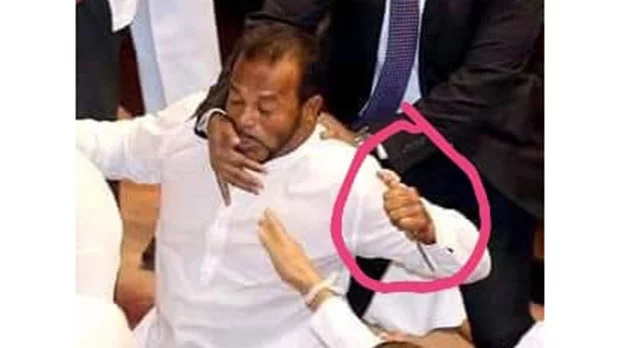
Sincce14th of this month this demented speaker with his white skinned deities, the western Ambassadors in attendance parliament gallery was behaving as the notorious Choppe of Mariakade forcing parliamentarians to accede to what he says and what he wants done. .  On Thursday he seems to have instigated UNP members and their proxies to come to parliame4nt armed and ready to confront and assault government members. Accordingly, MPs Ranjan Ramanayake, well known as male prostitute and Palitha Thevarpperuma had come armed with assault knives and government members complained about tis to the speaker he has said that he does not mind even with swords.

(Photograph of MP Thevarappurama holding a knife)

Parliamentarian Susantha Punjhi Nilame told a media conference that he went and told the speaker that there are some members armed with and make security arrangements he said that the speaker responded let anyone get killed but I am not going to do anything. The notorious UNP funded and owned by Ranil’s family members the reactionary press  A video clip

showing murder instinct demented speaker saying he does not mind even if there were 19 or 15murderws is being circulated in social media. Ref: v The Sunday Times has devoted all its weekend columns to project the demented speaker as a saviour of democracy.  Is this the way this Karumaya is going to save democracy by instigating and promoting to kill elected members within the Parliament??

It was hilarious to find MP Rishad Badiudeeen who went on an unlawful Umrah pilgrimage recently allegedly sponsored by the reactionary and neo liberal UNP with Bomb Scam funds together with his pretended bête noir Rauf Hakeem has hailed the highly partisan anti Sri Lankan dictatorial and anti democratic acts of the demented speaker. It is prudent to ask him whether it was following parliament and democratic traditions that this demented speaker allowed UNP MPs to bring in life threatening dangerous weapons to parliament. The Muslims should discard these two bogus Muslim politicians whose only interests are amass wealth at the expense of betraying Muslim interests. As there could be no financial gains, they remained over Gintota. Ampara, Digna, Katugastota incidents and only

Mohammed Muzammil, Wimal Weerawansa Dikum Amunugama and JO spoke about it.

It was with the good intention solving the crisis that has been deliberately by the

demented speaker that President Sirisena called for an all-party meeting at his secretariat

on Sunday evening.  The arrogant and demented speaker has turned down the request although he was invited.  Together with the JEPPOs whose primary objective is to destabilise, create chaos and mayhem in the country despite failures in the last two attempts have turned down the request extended to them. The meeting has ended without reaching any agreement.

The Maha Sangha, Lawyers, University Teachers, Professionals, patriotic associations and politicians in and out of government have several media gatherings today (Sunday) and severely condemned the demented Speaker for creating chaos in the country and accommodating notorious thugs and underworld operatives in the parliament for the last few days threatening the lives of elected members.  His Eminence Cardinal Dr. Malcolm Ranjith addressing a media conference has urged the speaker to refrain precipitating chaos in the country.  Today, there were also demonstrations condemning Karuma Jayasuriya throughout the country and in many demonstrations the effigies of the Karuma Jayasuriya were set on fire after they were beaten with slippers and cow dung.

(Too be continued)

Mahinda could have waited for a year and half, but can the country? – Gotabaya

November 17th, 2018

Courtesy Adaderana

Former Defence Secretary Gotabaya Rajapaksa says that Mahinda Rajapaksa could have become Prime Minister with a two-thirds majority in Parliament if he had waited for elections in a year and a half, but questioned whether the country could wait that long.

He made these comments while addressing a seminar of the Eliya” (light) organisation held in Avissawella today (17).

He stated that some people ask whether Mahinda Rajapaksa could have taken the premiership with a two-thirds majority if he had waited for another year and a half.

I know very well that Mahinda Rajapaksa could have done that. But the problem is whether this country can wait for another one and a half years,” he said.

The Ranil Wickremesinghe government was created by foreign powers,” he claimed, while adding that when it was announced that the no-confidence motion against the Prime Minister and government was passed in the Parliament, the diplomats from western nations who were in the gallery had clapped their hands.

Karu J stirring pot to clinch UNP presidential candidacy?

November 17th, 2018

by C.A.Chandraprema Courtesy The Island

The constitutional gridlock that gripped the country since October 26 showed signs of coming to an end with the President telling the UNP and their allies when they met in at the Presidential Secretariat on Thursday that they should firstly remove from the no confidence motion presented by the JVP the first clause which declared ‘unconstitutional and illegal’ the dismissal of Mr. Ranil Wickremasinghe and the appointment of former President Mahinda Rajapaksa as the Prime Minister because that was within the powers vested in the President by the Constitution and secondly, to pass the no confidence motion against the incumbent Prime Minister in accordance with the provisions of the Constitution and Standing Orders if they had the numbers in Parliament. This meeting on Nov. 15  between the UNF and the President took place in a situation where the incumbent Prime Minister Mahinda Rajapaksa had addressed Parliament that day even amidst heckling.

So it was only a matter of wording the no confidence motion properly and adhering to the laid out procedures in presenting and passing it. However, Speaker Karu Jayasuriya suspended the Standing Orders of Parliament on a motion from the floor and then claimed to have taken a voice vote to pass the first no confidence motion. Incongruously, he also refused to acknowledge that there was a new Prime Minister and Cabinet and in allocating time for MR to speak, he had referred to the latter as ‘manthreethuma’! If there was no Prime Minister, who were they passing a no confidence motion against? The Speaker then proceeded to send a letter to the President stating that the no confidence motion had been passed and attaching to it an old list of signatures with the date changed from 2 November to 14 November as the ‘signatures’ of those who were in favour of the no confidence motion.

The UNP is supposed to be a party of kultur, tie and coat types and they of all people should know how to prepare a proper document which can be accepted. After observing the events of the past few days, and knowing the characters involved, the conclusion that this writer has arrived at is that Speaker Karu Jayasuriya is deliberately stirring the pot in order to play hero among UNPers so as to bag the Presidential candidacy in 2019.

After the President spoke to the UNF on Nov. 15 and arrived at the understanding that the first clause in the no confidence motion would be removed, and the motion passed according to the Constitution and Standing Orders of Parliament, what Karu J did next on (Friday Nov. 16), was once again to suspend the Standing Orders and in the resulting uproar, to claim that the no confidence motion had been passed by a voice vote a second time. In a situation where some UNF members had publicly expressed the view that a breakthrough had been achieved after the discussion with the President, there was certainly no need for the theatrics of Friday. It would have taken only a matter of days to fast track a proper no confidence motion through Parliament according to the standard procedure. Instead once again Karu J did exactly what he did the previous day. The only concession that Karu made to the understanding arrived at with the President was to call for the removal of the first clause in the JVP’s no-confidence motion.

Karu J has not adhered to the understanding arrived at with the President possibly because that will not give him an opportunity to remain in the limelight. Even on the second day (Friday Nov. 16), all those who saw these proceedings on TV could see only chaos and hear a cacophony of sound and it was obvious that no proper vote was taken. It’s hardly surprising that on Friday night as well, the President once again refused to accept the result of the second purported no confidence motion. The sight of Speaker Karu Jayasuriya sitting on a chair in the well of Parliament and bellowing into a hand held microphone for Hon. M.A.Sumanthiran to present the motion to suspend the Standing Orders to start the day’s proceedings and finally claiming that a no confidence motion had been passed by voice vote in the midst of an incoherent cacophony of sound was one of the most unedifying spectacles ever seen in Parliament.

One of the reasons for the unrest that erupted in parliament on Friday the 16th was that the Speaker took no action against parliamentarians Palitha Thewarapperuma and Ranjan Ramanayake over the allegation that they brought knives to Parliament. At least one of them was caught on camera brandishing something. On previous occasions, Wimal Weerawansa and Prasanna Ranaweera were suspended from Parliament for mere verbal offences. Had Thewarapperuma and Ramanayake been arrested and taken before a magistrate there would have been no need for the other side to protest on Friday. When Major Ajith Prasanna was assaulted outside Temple Trees by two MPs including, Thewarapperuma, the police took action within 24 hours and the matter is no longer an issue. That is what should have happened with regard to the complaints against Ramanayaka and Thewarapperuma as well.

One gets the distinct impression that Karu j is deliberately stirring the pot to keep himself in the limelight for as long as possible obviously with a view to making himself a possible contender for the UNP’s presidential candidacy next year. Karu J was at the tail end of his career and if not for this crisis which has catapulted him into the limelight and given him an opportunity to play the role of a heroic champion of the UNP cause, he may have had to fade away from politics after the next Parliamentary election. There would have been little point in him contesting the next parliamentary election because he would have been just another MP if the UNP loses. Even if the UNP won power again, he would have been relegated to the level of a ‘senior minister’ with no real role to play in government. So his last chance is to make a pitch for the presidential candidacy of the UNP and that seems to be what he is doing by his totally unnecessary theatrics in Parliament.

There is no doubt that his stock among UNPers has gone up because they now see him as ‘ape kathanayakathuma’. What Karu Jayasuriya is doing now is reminiscent of what the former High Court judge P.B.Warawewa did during the White flag case against Sarath Fonseka. Judge Warawewa came up for retirement while the ‘White flag case’ against Sarath Fonseka was being heard. He was given an extension of service to complete hearing that case. Warawewa gave a dissenting judgment against the conviction of Sarath Fonseka and went into retirement when his service extension expired. Almost immediately he became an opposition politician and he invited the people to ‘gather around him’ to fight for justice! Can anyone have the slightest doubt that Warawewa’s dissenting judgment in the white flag case had little to do with justice or the law and had more to do with the need of the former judge for a retirement job? Similarly, Karu Jayasuriya’s present actions are not designed to benefit anyone but himself.

This is why he is so insistent on doing what is calculated to focus attention on himself rather than to solve the problem at hand. If he does not get the police to take some action against Ranjan Ramanayake and Palitha Thewarapperuma at least before Parliament meets on the 19th, then we’ll know that he is looking for more trouble and more publicity.

Tutorial on NCMs from PM’s Office!

The Supreme Court has taken time till December 7 to deliver a verdict on whether the dissolution of Parliament and the calling of a general election has deprived anyone of their fundamental rights. So there are some days in which the Speaker can set in motion the proper procedure of a no-confidence motion. An incoherent cacophony in Parliament cannot constitute a vote. Even the general public who were shown on TV what was supposed to be a vote on a no confidence motion, saw and heard only a riot.  In the meantime, in an unprecedented development, the Prime Minister’s Office has issued a letter to media institutions explaining what the proper procedure for presenting a no confidence motion is. This is the first time that any government has had to publish what is effectively a ‘tutorial’ on no confidence motions. According to that letter, the steps to be followed in presenting a no confidence motion are as follows:

1. A no confidence motion against the Prime Minister has to be handed over to the Speaker and the motion should contain the signatures of at least 20 MPs.

2. The Speaker should refer it to the Secretary General of Parliament for its legality to be checked and the Secretary General should report back to the Speaker that the no confidence motion is in accordance with the Constitution and the Standing Orders of Parliament.

3.  It has then to be included in the Order Book of Parliament and the Order Book has to be printed on a Friday and circulated to all the Members of parliament.

4.  After the lapse of five working days, it has to be taken up for debate.

5.  The Committee on Parliamentary Business has to decide on the priority that is to be given to the items on the agenda. This Committee on Parliamentary Business has to be headed by the Speaker and include the Leader of the House, the Chief Government Whip, and MPs representing the Government. Also represented in it will be the Leader of the Opposition, and MPs representing the opposition. The Deputy Speaker and Deputy Chairman of Committees are also ex-officio members of this Committee.

6. When a no confidence motion of this nature is presented, the first possible date for it to be taken up for debate will be decided on with the concurrence of the Leader of the House and the governing party.

7. Thereafter, it should be included in the agenda and the date of the debate notified.

8.  After the debate is held and a vote taken, the proceedings have to be published in the Hansard.

When the JO presented a motion of no confidence against the previous Prime Minister Mr. Ranil Wickremasinghe earlier this year, all these procedures had been adhered to, to the letter. Readers will remember that when the no confidence motion against Mr. Wickremasinghe was handed over to the Speaker in April this year, it had the signatures of 51 Joint Opposition MPs and four SLFP Parliamentarians and everything else had also gone according to the book. The four SLFP MPs who had signed it were T.B. Ekanayake, Nishantha Muthuhettigama, Susantha Punchinilame and Kader Masthan.  Even though the no confidence motion against Mr. Ranil Wickremasinghe was put through all the correct motions and nobody complained that the due procedure was not followed, the no confidence motion that is supposed to have been passed against Mahinda Rajapaksa has not adhered to any of these procedures. How does one justify this difference?

We saw the manner in which JVP Parliamentarian Vijitha Herath went up to the Secretary General of Parliament and handed him a paper and went back to his seat. Then M.A.Sumanthiran moved a motion to suspend the Standing Orders of Parliament and the Speaker then proceeded to call for a vote on the no confidence motion which neither he nor the Secretary General of Parliament had even read. What has happened with regard to the no confidence motion against Prime Minister Rajapaksa is that the Speaker has politicized it for his personal benefit. The Speaker holds that he does not recognize Prime Minister Rajapaksa and the new cabinet appointed by President Sirisena. If there is no Prime Minister, who is he passing no confidence motions against? It is not the business of the Speaker to give recognition to Prime Ministers or Cabinet Ministers. The President appoints the Prime Minister and the Cabinet and if a no confidence motion is brought against a Prime Minister so appointed, it has to follow the correct procedure.

If the correct procedure is followed it would have taken only a few days, perhaps two weeks at most for the process to be over. But the speaker is obviously playing to the UNP gallery with a view to the presidential candidacy and that is where all the problems stem from. Karu Jayasuriya has in a way painted himself into a corner by stating in Parliament that he does not recognize Mahinda Rajapaksa as Prime Minister. To pass a no confidence motion against a PM he has first to be acknowledged as the duly appointed PM and then Parliament has to declare that it has no confidence in the Prime Minister so appointed. But when you try to bring the politics of the street into parliament and declare that there is no Prime Minister and cabinet and then proceed to pass no confidence motions against a non-existent PM and cabinet, a gridlock naturally occurs.

The arithmetically important reunification

The events that took place after October 26 have undoubtedly benefitted the Joint Opposition which for the past three and a half years, had less time to speak in Parliament than the JVP even though they had nine times the number of MPs. Now suddenly, the number of MPs identifying with what was known as the Joint Opposition has increased from the original 53 plus 15 to over 100 due to the reunification of the UPFA and some crossovers. The TNA and JVP which had been masquerading as a part of the opposition were revealed to the public as an integral part of the UNP alliance. Due to President Sirisena breaking ranks with the UNP, the yahapalana government lost its two thirds majority in Parliament which was one of the main objectives of the Joint Opposition. The yahapalana side lost the support of the President and that camp has been cleaved in two. The UNP will also no longer have access to the executive powers of the President and the latter can prevent the UNP from doing any permanent damage such as signing ill-thought-out FTAs and selling valuable government property.

Most importantly, the stage has been set for the reunification of the SLFP and SLPP at village level. The SLFP too has a certain number of elected representatives at the local government level and those already elected to seats can continue to hold them and a power sharing arrangement between the two factions can be arranged on an agreed formula. The present conflict has helped cement the ties between the two factions though a common struggle. The UNP led alliance now has less MPs than the JO led alliance. Any majority they show in parliament will be by leaning on the TNA and the JVP which will extract the maximum from the UNP for their support and even if they form a government again, they will only be able to limp along till the end of their term amidst the demands being made by both the JVP and the TNA. We all remember what happened in 2001 after the Chandrika Kumaratunga government entered into a ‘pariwasa’ arrangement with the JVP in 2001 – it hastened the downfall of that government. Thus even if the UNP manages to get a proper no confidence motion passed against Mahinda Rajapaksa and even if the Supreme Court declares the dissolution of Parliament unconstitutional, and the UNP gets to remain in power for the rest of the term, the position that they find themselves in will be so unviable that they would be better off agreeing to dissolve Parliament and going in for a general election.

With former President Mahinda Rajapaksa taking membership in the Sri Lanka Podujana Peramuna and formally assuming its leadership, after the President issued the proclamation dissolving Parliament, the new party comes into its own as the main political party in Sri Lanka in a new two party arrangement with the UNP as its opposite number. That what is on most people’s minds is not what is happening at present but the next general election was shown by the fact that the cricketer Tillekeratne Dilshan took membership in the SLPP in the midst of the chaos in Parliament. Most people seem to be thinking of the next Parliament, not the present one. The SLPP with its pohottuwa symbol created world history when it became the first political party in a mature democracy with a well-established two party system to dislodge the two established political parties to become the largest political party.

After universal suffrage was introduced to the world, several countries mainly in the developed West evolved two party political systems with Sri Lanka and India following suit after independence. If we define a mature democracy as a country that has had universal suffrage and an established two party system for more than half a century, there are not many countries that will fit that criteria outside the West and Sri Lanka is one of them. Until the SLPP proved it wrong, conventional wisdom had it that no one could upstage the two main political parties in a mature democracy. The first time that this conventional wisdom was called into question anywhere in the world was during the Brexit referendum in 2016 when a campaign led by the UK Independence Party managed to prevail over the Conservative Party, the Labour Party and the Liberal Democrats who all officially sided with the remain campaign.

However where the Brexit revolution differs from the SLPP’s rise is that the Brexit vote was a referendum which though ideologically led by fringe political parties like UKIP, had significant segments from the Conservative Party and the Labour Party taking a contrary position from their political parties and campaigning for Britain’s exit from the EU. This support from whole blocks of the traditional political parties played a major role in providing the critical number of votes for the Brexit camp to win. Since the referendum, the Brexiteers among the traditional political parties have since gone back to their political parties and now Britain is back to the old two party system. In Sri Lanka however, what the SLPP won was an election, and nothing will be the same again after the drubbing that the two main political parties suffered at the hands of a political party that had been founded less than a year earlier. For all intents and purposes, the SLPP is the political party of the Rajapaksas just as the UNP and the SLFP were the political parties of the Senanayakes and Bandaranaikes respectively.

ලෝකය මොනවා හිතනවද කියලා රට ආගදයට යන කම් පාර්ලිමේන්තු මන්ත්‍රී තපස් රකින්න ඕනි කියලා හිතන අයට. අපේ පාර්ලිමේන්තුව හොඳයි බං

November 17th, 2018

ලෝකය මොනවා හිතනවද කියලා රට ආගදයට යන කම් පාර්ලිමේන්තු මන්ත්‍රී තපස් රකින්න ඕනි කියලා හිතන අයට.
අපේ පාර්ලිමේන්තුව හොඳයි බං

https://www.facebook.com/podujanaperamunasl/videos/265615770806761/

කාවින්ද-හිරුණිකා මුල්ලක පෙම් කෙලිද්දී වෙදආරච්චි සරම උස්සා පෙන්වයි..[Video]

November 17th, 2018

lanka C news

පාර්ලිමේන්තුවේ ඇති වූ ගැටුම්කාරී අවස්ථාවේදී කාවින්ද ජයවර්ධන මන්ත‍්‍රීවරයා හා හිරුණිකා පේ‍්‍රමචන්ද්‍ර මන්ත‍්‍රීවරිය පාර්ලිමේන්තුවේ මුල්ලක පෙම් කෙලිද්දී මන්ත‍්‍රී දිලිප් වෙදආරච්චි සරම උස්සා පෙන්වූ බව ඇමති විමල් වීරවංශ මහතා සදහන් කරයි.

අගමැති කාර්යාලයේදී පැවති මාධ්‍ය හමුවක් අමතමින් ඔහු කියා සිටියේ අද වන විට පාර්ලිමේන්තුව සම්පූර්ණයෙන්ම පිස්සන් කොටුවක් වී ඇති බවත් ‘කරුමයා’ කතානායක ඊට වගකිව යුතු බවත්ය.

කාවින්ද-හිරුණිකා මුල්ලක පෙම් කෙලිද්දී වෙදආරච්චි සරම උස්සා පෙන්වයි..[Video]

https://www.facebook.com/hirunews/videos/401894867014503/

Meditation and Empathy Building

November 17th, 2018

Dr Ruwan M Jayatunge 

Empathy is a crucial component in healthy living. Empathy is a complex construct, thought to contain multiple components (Bonfils et al., 2017). Empathy is a basic prosocial behavior which is referred to as an ability to understand and share others’ emotional state and also a social-behavioral basis of altruism (Chen et al, 2015). It is the “capacity” to share and understand another’s “state of mind” or emotion. Empathy is considered an essential aspect of social cognition (Lockwood et al., 2017).

According to current models in social neuroscience, prosocial human qualities such as empathy and compassion are based on shared representations of self and other (Preston and Hofelich, 2012;   Trautwein  et al., 2016).

Empathy refers to the cognitive and emotional processes that bind people together in various kinds of relationships that permit sharing of experiences as well as understanding of others (Eslinger, 1998). George Herbert Mead   and Jean Piaget separately addressed the question of empathy, and both offered views that emphasized the cognitive over the emotional (Håkansson, 2003). Carl Rogers too studied the phenomenon of empathy and viewed empathy as a positive element of human nature. Recent evidence suggests that there are two possible systems for empathy: a basic emotional contagion system and a more advanced cognitive perspective-taking system (Shamay-Tsoory et al., 2009).

Dr. S. Nassir Ghaemi,  – Professor of Psychiatry at Tufts University School of Medicine, and Director of the Mood Disorders Program at Tufts Medical Center in Boston states that empathy is not a vague concept but  a neuropsychological fact.  Biological basis of empathy is connected with mirror neurons. According to Papadourakis and Raos (2017) mirror neurons are sensori-motor neurons that fire both when an animal performs a goal-directed action and when the same animal observes another agent performing the same or a similar transitive action.

Chen and colleagues (2008) indicate that   mirror neuron system has been found to involve in empathy. Brain regions such as anterior insula, anterior and midcingulate cortex are important in empathy (Bernhardt & Singer, 2012). Shamay-Tsoory (2011) states that the ventromedial prefrontal cortex, temporoparietal junction, and the medial temporal lobe are necessary for cognitive empathy. According to Shamay-Tsoory and colleagues prefrontal structures play an important part in a network mediating the empathic response and specifically that the right ventromedial cortex has a unique role in integrating cognition and affects to produce the empathic response.

Impairment of empathy development may be associated with autism, narcissism, alexithymia, personality disorder, schizophrenia and depression (Chen et al, 2015). In addition empathic changes are particularly evident after focal prefrontal cortex damage and closed head injury in adults (Eslinger, 1998). Empathy can be blocked by personal stress and aversion (Ekman &Krasner, 2016).

Studies concur that meditation help to build empathy also fight against empathy erosion. Loving-kindness meditation and compassion meditation enhance empathy.  Kindness-based meditation may enhance the neural systems related to faster and more basic perceptual or motor simulation processes (Mascaro et al., 2015).

Hoenders and colleagues (2016) of the view that interventions based on mindfulness training appear to reduce stress and increase empathy. Barbosa and colleagues (2013) state that mindfulness-based stress reduction training is associated with greater empathy. According to McConville, McAleer and Hahne (2017) mindfulness-based interventions decrease stress, anxiety, and depression and improve mindfulness, mood, self-efficacy, and empathy.

YAHAPALANA AS A PUPPET REGIME Part 2

November 17th, 2018

KAMALIKA PIERIS

17.11.18   revised 19.11.18

The Yahapalana government of 2015 has been described as a puppet   government, dancing to the tune of America. USA has come into Sri Lanka very late, but it has been interested in Sri Lanka for a long time.  USA was the natural successor to Britain, when Sri Lanka gained independence in 1948. USA was the world’s leading nation after World War II ended. (1939-1945). But Sri Lanka continued its link with Britain. Our legal appeals went to the Privy Council in London.

USA however established a quiet presence in Sri Lanka. In the 1950s there was the magazine ‘Free World’ and the United States Information Centre. Althea Gibson, Martha Graham and Duke Wellington visited. .Sri Lanka‘s strategic location in the Indian Ocean was important to USA and US would have hoped to gain control of the island someday.

The first three Prime Ministers, D.S, Dudley and Sir John were not a threat to  the west, but   SWRD Bandaranaike, with his tilt to China and Russia  was seen as a threat . SWRD was    promptly assassinated. Sirimavo Bandaranaike, also very independent minded, was    to be assassinated as part of a coup. She survived. The JVP was started in her time.

Things improved for USA when J. R. Jaywardene (‘Yankee Dickie’) became the next Prime Minister. He turned to the USA. He allowed the Voice of America to beam out from Sri Lanka and was planning to let USA bring its 7th Fleet into Trincomalee.   America’s aircraft carrier USS Kitty Hawk, accompanied by other ships of the 7th fleet came to Colombo.

JR  introduced the Open Economy. ‘The level of corruption in this country now will be unlike anything we have seen before’ commented Ralph Pieris.  Open Economy  brought in  foreign  companies. They  set up their factories on prime agricultural land. Open economy also brought in foreign goods, which killed our fledgling SMEs. Inexpensive local pasta vanished, replaced by expensive, not so good foreign pasta which took just as long to cook.

With the emergence of Open Economy policy and foreign policy of the 1977  government, various forms of foreign interference including various meddlesome NGOs started emerging, said S. Akurugoda . Foreign interference in the internal affairs of Sri Lanka was minimal prior to 1977. After 1977  there was interference from the foreign diplomatic corps based in Colombo notably US, France, Germany and Britain, ‘as never seen before’, he said.

JR introduced Presidential rule to Sri Lanka. In 1978, he became Sri Lanka first Executive President, holding enormous powers, sans checks and balances. These powers were hidden all over the 1978 Constitution. The stage was set for dictatorial rule. The stage was also set for puppet rule.

Sri Lanka’s strategic geopolitical position acquired a new importance with the rise of China. Sri Lanka is in a ‘super position’ though it is not a ‘super power’, observed analysts. Sri Lanka   could not be ignored nor could it be antagonized.

USA therefore decided to create a pliable Sri Lanka, with an accommodating government, set in place by regime change. USA has been doing this for years in other countries said analysts. The US routinely uses complaints of corruption and bad government, to bring about ‘regime change’.  USA is now building partnerships where the other country provides the manpower and the money. USA no longer has the strength to wage wars by itself, simultaneously, all over the world.

The motivating force behind the US  foreign policy is not  the America we see,  said analysts,  There is an invisible force,  recently dubbed the ‘Deep state’, consisting  of a small group of   super rich persons,  most of them Jewish, who  control the elite banks and  businesses of the world, and  therefore also need to control   the world economy. Politics is just one part of this game. This ‘Deep state’ came briefly  into public view in the USA when Kennedy was assassinated in the 1960s.

Political power in Sri Lanka moved from UNP hands to SLFP hands in the last decade of the 20th century .President Chandrika Kumaratunga was not a problem for USA but Mahinda Rajapaksa who became President in 2005 was seen as an obstacle to US plans.  Rajapaksa was a strong leader who can elevate the nation to greater heights as seen with the progress in just four years amidst a war, observed Manisha Fernando. It is during Rajapaksa’s time that oil exploration was started. The emergence of a strong political leader with links to nations such as China and Russia, Cuba and Libya was not to the liking of the west, she said.  Further Rajapaksa was not prepared to listen to America and do as America said. He had to go.

The role played by the US embassy, since 2009, to bring Rajapaksa rule to an end is now in the public domain, especially after Wikileaks. The first US managed project in Sri Lanka was to stop Mahinda Rajapaksa from securing a second presidential term, at the 2010 January polls, said analysts.

US put forward Sarath Fonseka as the rival candidate for the 2010 election. USA put together a coalition to support him. Thanks to Wiki Leaks, the entire world knows how US brought pressure on the Illankai Thamil Arasu Kadchi-led Tamil National Alliance (TNA) to throw its weight behind General Fonseka.  But even before Wikileaks, US involvement was known. In 2010, Sunday Observer ran a headline, ‘west behind moves to regime change’. ‘There are individuals working as puppets to western big powers’ added the media.

This US plan failed. Fonseka   lost, Rajapaksa won. Fonseka lost because many Sri Lankans saw Fonseka as a tool of the US government and western interests, said one critic.  They feared that if Fonseka came, there will be external interference in Sri Lanka on an unprecedented scale.  We see a clear alignment of political forces here. Those who work for foreign masters are with Fonseka, while forces concerned about the long term interest of Sri Lanka re rallying solidly behind Rajapaksa, said the media.

The US plan failed in 2010 but an almost identical project succeeded in January 2015,  when Maitripala Sirisena, the ‘common candidate’, defeated Rajapaksa. The role of the US in the regime change of 2015 is now well known, Thanks to Wiki Leaks, confidential US diplomatic cables that dealt with US efforts to form a political grouping capable of defeating Rajapaksa, is in the public domain. The US played a critically important role in forming the coalition under the ‘swan’ symbol. However, US had to withdraw a project called ‘Election Support through Voter Education’, using local NGOs after the Sri Lanka government objected.

Opinion polls conducted in the five weeks prior to the election showed an overwhelming 80% of the electorate recognized the 2009   war victory and the peace it brought as a major benefit and gave the credit to Rajapaksa. About 36% of the voters also gave Rajapaksa credit for the mega development projects.

The USA also succeeded in getting the ‘minorities’ to vote for Sirisena. The north and east voted for Fonseka and then Sirisena. Sirisena won on the minority vote. The US also put pressure on the SLMC to join a coalition, comprising the UNP, JVP, and TNA.  The Sinhalese are now   resentful of the power that the minority communities have displayed over the destiny of the Island, said Chandraprema.

Sirisena won the presidential election mainly on   Tamil and Muslim votes. The Prime Minister’s media division reported that though Sirisena got about 80% of the vote from the north and east, a survey had shown that 33% of the people there had not even heard of Sirisena before.

Sirisena   won only 6 of 16 major districts apart from North, East and Nuwara Eliya districts.  Gampaha was won only by a whisker. Puttalam win was only due to the Muslim vote there.  Sirisena got around 75% of the Tamil and Muslims votes and about 65% of the Christian votes.  Sirisena polled around 65 to 80% of the vote in the large urban centers of Colombo.

Sirisena was not a popular choice. After the election the SLFP discovered ‘the deep visceral dislike that the SLFP voters at the village level had for Sirisena.’ Sirisena came from a family of successful rice millers in Polonnaruwa. His brother Dudley Sirisena established the Araliya group of companies   in 1969.  It first sold Araliya rice then expanded into real estate, tourism, automobile, construction, and engineering. The Sudu Araliya hotel, in Polonnaruwa, where I once stayed and a new five star hotel in Nuwara Eliya are his.

Initially President Sirisena was happy to belong to Yahapalana. When the 1st anniversary of the Yahapalana government was celebrated at Matara on 19.8.16. TV camera showed President Sirisena turning round after his speech   and seeking the approval of Mangala Samaraweera and Ranil Wickremasinghe.

However, Yahapalana was not popular even at the start. At the 65th anniversary of the SLFP, in 2016 the audience sat with long faces. As soon as President Sirisena finished speaking, within minutes the audience had got up and left. This could be contrasted with the enthusiastic crows seen standing at Mahinda Rajapaksa gatherings and the Pada yathra.

USA needed a political party that would readily perform the functions of a puppet government. The most suitable party was the UNP, under the present leadership.  JR had turned the UNP firmly towards USA.   Its potential leaders, Lalith Athulathmudali and Gamini Dissanayake, who could not be easily manipulated, were assassinated. President Premadasa was also assassinated. Ranil Wickremasinghe became Prime Minister in 1993 and head of the UNP in 1994.

If not for the violent deaths of Lalith Athulathmudali, Gamini Dissanayake and Ranasinghe Premadasa, it is most unlikely that Wickremesinghe would have become the leader of the UNP and, consequently, the Prime Minister, said analysts.  But Ranil Wickremasinghe has admirers. ‘Cassandra’ commented on the poise, calm and stature projected by Prime Minister Ranil Wickremesinghe. He sits there calm and unruffled both in appearance and stance, cried. Cassandra .

The UNP was never a majority party in Sri Lanka. Therefore the puppet government needed a second party as back up. This was already in place. Janatha Vimukthi Peramuna emerged as an important component of the puppet government. JVP is a CIA venture set up in the 1970s during Sirimavo Bandaranaike government. It unleashed two armed uprisings against the ruling governments in 1971 and 1987. Because it killed twice, it is unlikely to emerge as a ruling party. Its role is to collect disgruntled votes that may otherwise go to the opposition.

The JVP had been deeply involved in the both the 2010 and 2015 regime change projects sponsored by the US. Today it is associated with the UNP and is referred to as Rathu Ali . Even though the JVP masquerades as an opposition party, they are an integral part of the Yahapalana collective, observed analysts. JVP mounts attacks on the government with the approval of Prime Minister Ranil Wickremesinghe.  In the first days of the Yahapalana government, JVP cadres took over the functions of the police and raided various government and private premises searching for evidence of wrongdoing by the previous government.

JVP has fully cooperated in every anti-democratic measure taken by the Yahapalana government. It was the JVP that provided the two thirds majority that the government needed to change the electoral system and avoid holding the Provincial Council elections. The JVP leader was a member of the Committee of ministers, politicians and NGO activists formed to oversee the work of the FCID. The Urgent Response Unit of the Anti-Corruption Committee was placed under the personal supervision of JVP leader Anura Kumara Dissanayake.

Anura Kumara Dissanayake spoke at a function I attended in 2018. He said that Sri Lanka was poor and insignificant. We have no important resources, only a few minerals and graphite, but no gas or petroleum.  This was intended to create low self esteem.

The puppet government also has the support of the Tamil parties. While masquerading as opposition political parties, the JVP and the TNA have supported every anti-democratic action taken by Yahapalana government in the past three years, said Mahinda Rajapaksa   The TNA and the JVP were included in the all-powerful National Executive Council which functioned over and above the Cabinet. When an Anti-Corruption Committee was formed under the leadership of the Prime Minister for the purpose of persecuting and jailing members of the previous government, the JVP and TNA were once again given prominent roles.

The SLFP remained a strong opponent of puppet rule, so President Sirisena was instructed to kill off the SLFP or neutralize it in some way. He did so by taking the SLFP MPs into the UNP and turning them into ‘Nil Ali’ to the utter contempt of the SLFP voters. They hooted at the party headquarters. There was also the ugly spectacle of two SLFP Presidents, Maitripala Sirisena, (present President) and Chandrika Kumaratunge, (past President), sneering and criticizing a third SLFP President, Mahinda Rajapaksa

What the west did not anticipate was that the public would demand a fresh party, brand new. The Sri Lanka Podujana Peramuna was born due to this demand.  Usually political parties are formed by interested persons who need a political party to climb to power.  In the case of the Pohottuwa, it was the other way round. The electorate demanded a new party, and the politicians had to oblige. They wanted Mahinda Rajapaksa to lead it. But   there was a  warning.

When Mahinda Rajapaksa visited Kirivehera in kataragama after becoming Prime Minister,  the sangha told him ‘don’t make the mistakes that you made last time.’

Pohottuwa created world history when it became the first political party in a mature democracy with a well-established two party system to dislodge the two established political parties to become the largest political party. Pohottuwa attracted the full spectrum of Sri Lanka voters, rich and poor, town and village, English speaking and Sinhala speaking, westernized and non-westernized, without any encouragement at all. How it performs in the future remains to be seen, but one thing is sure. This Pohottuwa will eventually kill off the SLFP. That may be a good thing.

The SLFP always had problems of image. Its leadership was radala, (SWRD, Sirimavo and Chandrika), but its membership was not. SLFPers were never quite sure what they were. They were not communist, they were not socialist, they were not capitalist, so what were they? They will be happy to leave the SLFP, but Pohottuwa must deliver.

Yahapalana Phase One came to an end in a spectacular manner. In October 2018, President Sirisena removed Ranil Wickremasinghe from the office of Prime Minister and installed Mahinda Rajapaksa as Prime Minister. Ranil Wickremasinghe refused to go. He installed himself in Temple Trees and issued statements from there.

President Sirisena then made a statement to the country. In this statement the President openly admitted that he had allowed Prime Minister Ranil Wickremasinghe to usurp the power of the President. You have acquired my powers to do what you did.  I silently gave you that power in gratitude as you took leadership to bring me to power.”

Sirisena said he was getting rid of Ranil Wickremasinghe because   Ranil was exceeding his limits. Ranil was running the country, arrogantly, the way he wanted.  He ignored collective decisions, and made individual decisions. Ranil was ruining the country, Sirisena said and gave a long list of what Ranil had done wrong.

Wickremesinghe and his group of close friends, described as a ‘samanala group’ conducted themselves as if shaping the future of the country was a fun game they played, said Sirisena.  The committee set up by Ranil Wickremesinghe to manage the economy was totally fraudulent. The decisions made by that committee were fraudulent. It was a major challenge to abolish it, continued Sirisena. As an alternative to that committee, I established the National Economic Council. Wickremesinghe took steps to prevent the Commission from functioning. The monthly payment to its head was stopped by Ranil.

Sirisena referred to the Land Ordinance Special Act , which was presented to the Cabinet  in September 2018.  If this was passed by the Cabinet and then by Parliament, all the land in Sri Lanka could be bought outright by foreigners.

When I decided to visit the Central Bank and meet the staff of the Bank, Ranil Wickremasinghe suddenly came to my residence and asked me, The Central Bank belongs to me, why do you want to go there  continued Sirisena.

The UNP had strongly objected to the commission to investigate the Central Bank bond issue. ‘They asked why I appointed this Commission. The IGP did not hand the investigation to the Criminal Investigations Department. ‘In this plot, there is a wide range of information which has not been disclosed to the public.’

The Commission on Bribery or Corruption and Attorney-General’s Department recommended  amendments to the Bribery Act,  to speed up the bond scam inquiry. We  drafted the amendments to the Act at the Presidential Secretariat and sent to Parliament, but Parliament has  postponed the approval of the Amendments Act indefinitely  concluded Sirisena.

An important feature in the Yahapalana puppet movement is the appearance of the Maha Sangha as an opposing force. The Yahapalana puppet government has a  formidable  opponent in the Maha sangha. I have never seen the Maha sangha so angry ever before.  The Bhikshu Peramuna of 1956 was merely forceful,  not angry. This time the sangha are very, very  angry. They repeatedly  called   media conferences, where  they ‘gave it tight’  to Yahapalana .

The Maha Sangha,  it must be pointed out,  are  citizens of Sri Lanka , with all rights and privileges  enjoyed by citizens. They can vote at elections, speak at meetings  and have the right  to study and  comment on political issues. The argument that the Maha sangha should only deal with Buddhist matters and keep quiet about everything else cannot be accepted. That argument has been concocted to silence the sangha.

When the UNP went in delegation to Asgiri and Malvatu, they were listened to by a panel of monks, not  the Mahanayake alone. Television news showed the monks trooping in. A group of nine  monks held a press conference at SLFI, Colombo on November 3. 2018.  This came on television news.

At this press conference,  Ven. Kadawara Gnanaratana said , ‘We support Mahinda Rajapaksa. He is rejected only by USA and European countries. The public   also support Mahinda Rajapaksa.   The Mahanaykes and sangha  also support him’. Ven. Kotapola Amarakeerthi said that Ranil was picking up from where the   Portuguese and British had left off. Ven Hegoda Vipassi said ‘they are all the time talking of new Constitution, new Constitution . We say if  necessary bring in amendments. This constitution is to  create a federal state.  President appointing Mahinda Rajapaksa was a timely, brave decision. Ven. Devalagama Dhammaratana,  sangha nayake of Hambantota said  Hambantota lands were to be taken over, they had already measured them.. About 100 temples and their lands were included in this takeover.

Television news regularly carried  interviews  with the sangha. Here is a selection of utterances..’The public do not want Yahapalana, Licchavi, Wifi or Laptop.  They want food’, said Ven Nitiyawela Palitha of the Sri Lanka Maha Bodhi Sangamaya, bluntly.

The 2015 election was the result of a conspiracy, said Ven. Medagoda Abhayatissa. Foreign countries were interfering with Sri Lanka said Elle Gunawansa and Elle Medhananda. Western countries have penetrated  deeply into our government, they control the  Speaker and  Ranil. They have brought in money and given bribes to MPs, said Elle Gunawansa.

The government is unpopular,   nava rajayak bihiwewa, said Ven Kirimbaruwe Gunananda. ‘.  We  need a person who can save the country. We must support Mahinda Rajapaksa’, said Ven Kumbalwela  Upatissa . Ven Kollupitiye Mahinda of Kelaniya temple, made a long speech which was  televised. He said our culture and our nations is  under siege. He had voted for Yahapalana at the last election and regretted it. He now   supports Mahinda Rajapaksa .

Ven. Bellanwila Dharmaratana criticized Ranil Wickremasinghe by name, saying he had promised ten things to the TNA. Medagama Dhammananda  and Medagoda Abhayatissa  criticized the JVP. The real image of the JVP  has now emerged they said. JVP had said that it was only after a society had completely rotted that socialism could come in. All that will be left then will be the worms, the  monk remarked, contemptuously. Yahapalana wants to reduce this country to dust,  they added.

The monks spoke very disparagingly of the NGOs, calling them ‘NGO karayo’ .Ven. Vendaruwe Upali said ‘now it is NGO’s voice that is important, not ours. Also  the voices of India, America, and UN HRC. This is very dangerous’.

Jathika Niyojitha Maha Sangha Samuluva spoke out against  the 20th amendment, saying that it was a device to create a federal state not abolish the presidency. Tri nikaya Maha Sangaratane had issued a 16 point statement against it.

Ven. Athureliye  Ratana said  the assassination plot should  not be dismissed.  It should be taken note of.  He also said ‘this government is far more corrupt than the previous government.’  Elle Gunawansa said at a  Yuthukama meeting, ‘this is the last chance to save the country, use your vote wisely.’

The Yahapalana puppet government has come as a rude shock to a complacent Sri Lanka . It has been a wakeup call. There is now  a  call for a  ‘strong leader’. Until now Sri Lanka  never wanted a strong leader, they wanted a leader they could push around.

The Anunayake of Asgiriya Chapter Ven. Wendaruwe Upali  said that a Hitler type of person was needed in Sri Lanka today. Susirith Mendis pointed out that the Anunayake was not talking of Nazi Germany and  Auschwitz. He was voicing the public demand for a strong effective leader to  save Sri Lanka  and Buddhism.  ‘Rata godaganna ekadipathi palanayak ona’, said a critic. ‘ Pavula godanagana palanayak neve, rata godanagana palanayak’. (Derana news 24.10.18)  Ella Gunawansa  advised, ‘next time, use your brain and  vote not for party but for a person who can get us out of this mess. This is our last chance.

This unpopular puppet government is  scared of elections. Yahapalana delayed the  local government elections,  postponed the Provincial Council Election and now are trying to  stop a general election Several Yahapalana MP have gone to Supreme Court on a Fundamental Rights application  to stop  Parliament being dissolved and a general election called. However, the country wants a general election. They want this puppet government out.

Prof. S.Ratnajeevan H. Hoole,  a member of the Election commission   filed a Fundamental Rights petition seeking an Interim Order restraining the Elections Commission from proceeding to take any steps to conduct the Parliamentary election upon the virtue of the proclamation issued by President. He believes that the order to conduct elections is illegal and therefore the Commission should not proceed with conducting the Parliamentary Election. it was observed that Hoole, a member of the Election Commission  was actually objecting to the holding of  an election.

Opinions were expressed after the performance in Parliament  on  15.11.18 and 16.11.18, when the Speaker arrived escorted by police, with Ranil Wickremasinghe arriving just before, like a Peramuna rala, to get a vote of no confidence against Mahinda Rajapaksa passed.

S Akurugoda  said the entire Sri Lankan community is aware of what has happened in the parliament on that day. The country’s President had no other alternative but to reject the so-called ‘No Confidence Motion’ which was said to have been passed by the Parliament, since the entire act of the Speaker was against the normal parliamentary procedures when taking up such issues.

Kelaniya Raja Maha Viharadhipathi Ven. Prof. Kollupitiye Mahinda blamed the Speaker for what happened. Ven. Yatamalagala Sumanasara Thera, the Executive Director of Daham Handa Centre, Pattivila,  said it was necessary to carefully study the reasons behind the current situation in Parliament.  The only  solution is to call for a General Election. There is no other solution,” he said.

But Yahapalana is not prepared to go that easily. They hope that outsiders will come in and protect them. Global Tamil Forum (GTF)wanted the international community to come in. CAFFE  said the intervention of a third party is needed to solve the conflict in Parliament there could be bloodshed and the loss of life if a third party does not intervene and help resolve the conflict between the top politicians in Parliament. The third party was not named.

Akurugoda pointed out that Foreign diplomats in Colombo, notably US held secret visits to discuss ‘undisclosed’ matters concerning the internal affairs of Sri Lanka.   These countries didn’t utter a single word against the undemocratic, unconstitutional and mega level corruption issues which took place under the  Yahapalana government they installed, but started to complain soon after the removal of Ranil Wickremasinghe, said Akurugoda.

The ethnic basis on which the puppet government rests was made clear. Leader of All Ceylon Makkal Congress, Rishad Bathiudeen hailed Speaker Karu Jayasuriya for his courageous stand against anti-democratic forces.  Global Tamil Forum  accused President Sirisena of illegal transfer of power from a sitting Prime Minister, proroguing the Parliament without consulting the Speaker and dissolving Parliament without any legitimate explanation. Sri Lanka has been a quasi-democracy where the Tamils were oppressed.

Global Tamil Forum said  A broad spectrum of small but significant political parties representing different community interests and political philosophies – such as the Tamil National Alliance, Tamil Progressive Alliance, Sri Lanka Muslim Congress, All Ceylon Makalu Congress, Janatha Vimukthi Peramuna and Jathika Hela Urumaya could collectively promote constitutional democracy’

Postscript.

Some argue that Sri Lanka is now in an utter state of chaos. Parliament has become rowdy, administration is at a standstill, and businesses are moving out. All because President Sirisena acted wrongly in removing Ranil Wickremasinghe from the post of Prime Minister. That is not so.

President Sirisena has given his reasons for removing Ranil Wickremasinghe and has now stated firmly that he will not reappoint him. This was of course obvious to everybody except those who were relying on Ranil Wickremasinghe to gain their objectives. TNA’s Sampanthan had pleaded with Sirisena, ‘please don’t do that Sir,’ and UNP MPs said ‘give Ranil Wickremasinghe another chance.’ (Sunday Times 18.11.18 p 15).

President Sirisena has made a smooth transfer of power   in accordance with the Constitution .He removed one Prime Minister and cabinet and substituted another Prime Minister and cabinet ensuring that there was no break in government. Ranil Wickremasinghe as the sitting  Prime Minister had an obligation to go to Supreme Court  to contest the matter, if the appointment was illegal, He did not do so.

President Sirisena then dissolved Parliament and called for elections. The date for the next general election was announced. President Sirisena‘s action were welcomed by the public but not by the USA supported puppet government. Yahapalana went to courts to stop the dissolution of Parliament. The present uncertain situation is a direct result of this. Yahapalana alone is responsible. Supreme Court has given a ‘stay order’. That does not mean that Parliament carries on as usual. Parliament is frozen.

It is argued that President Sirisena’s actions were unconstitutional because he has violated the 19th amendment.”   There is no 19th amendment today.  The 19th amendment clauses are now a part of the Constitution of Sri Lanka and they have to be read along with the other clauses.   While clause 70/1   (19th amendment) says President cannot dissolve parliament for 4 ½ years, clause 33/2 says he can. Clause 33/2 says In addition to the powers, duties and functions expressly conferred or imposed on, or assigned to the President by the Constitution or other written law, the President shall have the power to summon, prorogue and dissolve Parliament”. (33/2 and 33/2/e)

Something else is under attack here, the inalienable rights of the citizens of Sri Lanka. Clause 3 states In the Republic of Sri Lanka sovereignty is in the People and is inalienable. Sovereignty includes the powers of government, fundamental rights and the franchise.” Clause 3/4/e then elaborates, The franchise shall be exercisable at the election of the members of Parliament”. Clause   70/1 is a violation of this primary clause, which is also a guiding principle of the Constitution. I do not think any other constitution in the world has a crippling clause such as 70/1.

There has been a smooth, (if sudden) transfer of government power. Section 42/4 says ‘The President shall appoint as Prime Minister the Member of Parliament, who, in the President’s opinion, is most likely to command the confidence of Parliament.’

The present argument that the majority of the MPs in Parliament are against Mahinda Rajapaksa is a weak argument and everybody knows it. The anti-Mahinda Rajapaksa ‘majority’ vote does not come from a formal Parliamentary coalition. The ‘majority’ comes from MPs, representing separatist movements. These MPs have expressly come to Parliament   to divide up the country. It is nonsense to argue that they are a part of ‘the confidence of Parliament’.   (Continued)

කතානායක බරහිට බලල් අතක්.. සුපිරි හෝටලයක සුද්දන් හා කුමන්ත‍්‍රණ… හඬපට සාක්‍ෂියි..

November 17th, 2018

ඉෂාර රත්නකාර, භක්ති ධර්මප්‍රිය මෙන්ඩිස්, ප්‍රබෝධා හෙට්ටිආරච්චි උපුටා ගැන්ම  රිවිර

බටහිර න්‍යාය පත්‍රයකට අනුව කතානායක කරු ජයසුරිය මහතා පක්ෂග්‍රාහි ලෙස හැසිරීමට බලපෑ බව කියන සිද්ධියට මුල් වී ඇත්තේ විදෙස් නියෝජිතයින් පිරිසක් කොළඹ සුපිරි හෝටලයක පැවැත්වූ ඉතා රහසිගත හමුවකදී ගත් තීරණයක් බව දේශපාලන ආරංචි මාර්ග සඳහන් කරයි.

අදාළ විදෙස් නියෝජිත පිරිස ඔවුන්ට හිතවත් තීන්දුවක් ලැබෙන තුරු ඉතා රහසිගත ලෙස මෙම මෙහෙයුම ඉදිරියටත් ක්‍රියාත්මක කිරීම සඳහා එම හෝටලයේ පැවැති හමුවේදී ගිවිස ගෙන තිබේ.

ඒ අනුව අදාළ විදෙස් නියෝජිත මෙහෙයුම ලබන 07 වැනිදා උසාවි නියෝගය ලැබෙන තෙක් ඊට බලපෑම් එල්ල කෙරෙන අයුරින් මෙහෙයවීමට නියමිත බව විශ්වාස කටයුතු ආරංචි මාර්ගවලින් රිවිර ඉරිදා සංග්‍රහයට වාර්තා විය.

එම විදෙස් නියෝජිත පිරිසට කොටි හිතවාදී දෙමළ ඩයස්‍පොරාවේ පිරිසක්ද ඇතුළත්ය. ඔවුන් අදාළ හමුවේදී ගත් තීරණ පසුගියදා පාර්ලිමේන්තුවේ ක්‍රියාකාරී ලෙස හැසිරී තිබෙන දෙමළ ජාතික සන්ධානයේ මන්ත්‍රීවරයකු හමු වී වෙනමම පවසා ඇත.

ජාත්‍යන්තර වශයෙන් රටට බලපෑම් එල්ල කිරීම සඳහා අවශ්‍ය පසුබිම සකස් කිරීම මෙම විදෙස් නියෝජිත පිරිසේ ඉලක්කය වී තිබේ.

අදාළ තත්ත්වය උද්ගත කිරීම සම්බන්ධයෙන් පවතින මෙහෙයුම සම්බන්ධයෙන් විපක්ෂයේ මන්ත්‍රීවරුන් කිහිප දෙනෙක් දැන සිට ඇති අතර එක් හිටපු රාජ්‍ය අමාත්‍යවරයෙක් ඒ සම්බන්ධයෙන් මාධ්‍යයට දුන් හඬ පටයකින් මේ බව අනාවරණය වී තිබේ.

පාර්ලිමේන්තුව කැඳවූ පසුගිය 14 වැනිදා පටන් ඒ සෑම සැසිවාරයක් සඳහාම තානාපතිවරුන් පාර්ලිමේන්තුවට කැඳවීම, ඔවුන්ට සභා ගර්භය වීඩියෝ කිරීමට සැලැස්වීම සහ සෑම දිනකම පාර්ලිමේන්තුවේ සිදුවන දෑ වාර්තා කරමින් ජාත්‍යන්තරයට මාධ්‍ය නිවේදන නිකුත් කිරීමද අදාළ මෙහෙයුමට අනුව සිදුව ඇත.

මේ අතර දැනට පවතින දේශපාලන තත්ත්වය පිළිබඳව රටවල් කිහිපයක් සමීපව අධීක්ෂණය කිරීම ආරම්භ කර ඇති බව පසුගිය සිකුරාදා වන විට විදෙස් මාධ්‍ය වාර්තා කළේය.

ඇමෙරිකාව, ඉන්දියාව, ඕස්ට්‍රේලියාව, මහා බ්‍රිතාන්‍ය සහ ජපානය ඇතුළු රටවල් ඒ අතර වේ.

ඇමෙරිකාව, ඕස්ට්‍රේලියාව, ඉන්දියාව පසුගියදා සිංගප්පුරුවේ පැවැති ජාත්‍යන්තර හමුවකදී ශ්‍රී ලංකාවේ වර්තමාන තත්ත්වය සම්බන්ධයෙන් අදහස් පළ කර තිබේ.

– rivira

ශ්‍රී ලංකාව තුල යුක්රේන මොඩලයේ බල හුවමාරුවක් ගෙන ඒමට විදෙස් ඔත්තු සේවා විසින් ක්‍රියා කරනු ඇත්ද?

November 17th, 2018


KEERTHI GODAYAYA

බලවත් රටවල් විසින් තමුන්ට රිසි පරිදි රටවල් සූරා කෑම සඳහා අවශ්‍ය පාලකයින් තුන්වන ලෝකයේ  විවිධ රටවල් සඳහා පත් කර ගැනීමත් ඔවුන් ලවා තම යුධෝපායත්මක, දේශපාලන හා ආර්ථික ප්‍රතිපත්ති ක්‍රියාත්මක කරවා ගැනීමත් දෙවන ලෝක යුද්ධයෙන් පසු ඇතිවන ගෝලීය දේශපාලන සංස්කෘතියේ ප්‍රධානතම ලක්ෂණයක් බව අවිවාදයෙන් පිළිගතයුතු කරුණකි.

තමන්ට රිසි නොවන  දේශපාලන නායකයින් කෙලින්ම ඝාතනය කිරීමට අමතරව, යුධ හමුදා කුමන්ත්‍රණ, ජනතා නියෝජිතයින් අල්ලසින් මිලට ගැනීම්, වර්ණ විප්ලව, ලිබියානු මොඩලය, සිරියානු මොඩලය හා යුක්රේන මොඩලය වශයෙන් නේකවිධ ක්‍රමවේද රාශියක් තුන්වන ලෝකයේ ආණ්ඩු පෙරලීමටත්, බලවත් ජාතීන්ට  ගැති ආණ්ඩු එමරටවල පිහිටුවීමටත් බටහිර බලවත් රටවල් විසින් අත්හදා බලා ක්‍රියාවට යොදවා ඇත. ශ්‍රී ලංකාව තුල මෙම කාර්යය ඉන්දියාව ලවා කරවා ගැනීමට බටහිර බලවතුන් ක්‍රියාත්මක වනු ඇත්ද?

ශ්‍රී ලංකාවේ වත්මන් දේශපාලන අර්බුධය හමුවේ ඉහතකී මොඩල වලින් ක්‍රියාත්මක කිරීමේ ශක්‍යතාවය ඇති මොඩල කීයක් බටහිර රටවල් හා අසල්වැසි ඉන්දියාව සතුව පවතීද? මීට පිළිතුරු සෙවීමට පෙර ශ්‍රී ලංකාවේ දැනට පවතින අර්බුදයේ පසුබිම තේරුම් ගැනීමට උත්සාහ කරමු.

තත්කාලීන ව්‍යවස්ථාම අර්බුධය තව දුරටත් තීව්‍ර වන්නේ කථා නායක තුමා විසින් ව්‍යවස්ථාපිත නීති හෝ ස්ථාවර නොයෝග නොතකා නීතිය සියතට ගැනීම තුලය. අධිකරණයේ තීන්දුව එනතෙක් ඉවසීමෙන් කටයුතු කලානම් මෙය වලක්වා ගත හැකිව පැවතිනි. කතා නායක තුමාගේ හැසිරීම වගකීමෙන් තොර යැයි අපට කිව හැක්කේ මක් නිසාද?

උදාහරණයක් ලෙස ගතහොත්, කිසියම් ගොඩනැගිල්ලක් ඉඳි  කරනවිට ඊට එරෙහි යම් පාර්ශවයක් අධිකරණයෙන් තහනම් නියෝගයක් ලබා ගතහොත් සිදුවන්නේ එම ගොඩනැගිල්ල තවදුරටත් ඉඳිකිරීම නඩු තීන්දුව දෙනතෙක් අත්හිටුවීම විනා එම තහනම් නියෝගය වැරදි ලෙස අර්ථකථනය කොට හැදෙමින් පවතී ගොඩනැගිල්ල බිමට සමතලා කිරීමට බලපත්‍රයක් ලෙස යොදාගැනීම නොවේ. ශ්‍රේෂ්ටාධිකරණය පවසා ඇත්තේ ආණ්ඩුව විසුරුවීම නීත්යානුකුලද නැද්ද යන්න තීරණය වන තෙක් පාර්ලිමේන්තුව විසිරවීමේ නියෝගය බල පවත්වන්නේ නැති බව පමණි. අධිකරණයේ අවධානයට ලක් වන්නේ පාර්ලිමේන්තුව විසුරුවීම පිළිබඳව පමණි. එසේ නැතිව රනිල් වික්‍රමසිංහ මහතාගේ අගමැති ධුරය හෝ ඔහුගේ කැබිනට්ටුව පිළිබඳව නොවේ. එයින් බල රහිත වූ රනිල් වික්‍රමසිංහ මහතාගේ ආණ්ඩුව ස්වයන්ක්‍රීයව  නැවත බලයට පත් වන්නේ නැත. මන්දයත්, නව ආණ්ඩුවක් ජනාධිපති තුමා විසින් පත්කොට තිබෙන නිසාවෙනි.

මෙවැනි අර්බුධකාරී මොහොතක වගකීමක් සහිත කතා නායක වරයෙකුගේ වගකීම විය යුත්තේ අධිකරණ තීන්දුව එනතෙක් පාර්ලිමේන්තුව රැස් නොකොට මේ ක්‍රියාදාමයට අවශ්‍ය කාලය ලභාදීමයි. වත්මන් කතා නායක වරයා පාර්ලිමේන්තුව නැවත කැඳවන විට, එම කැඳවීම තුලින් මෙවන් ගැටුම්කාරී තත්වයක් ඇති වන බව දැනසිටියේම නැත්තද? ස්බවින්ම ඔහු එය දැනසිටි බව අපගේ වැටහීමයි. ඔහු එය දන සිටියා පමණක් නොව, එහි අශෝභන, අශික්ෂිත ප්‍රතිපල නැරඹීමට බටහිර තානාපති වරුනට හා එක්සත් ජාතීන්ගේ සංවිධානයටද ඔහු ආරාධනා කර තිබුනේය. එපමණක් නොව, බටහිර තානාපති නිලධාරීන් අත්පොලසන් දෙමින් ප්‍රතික්‍රියා දක්වන වීඩියෝ පට ජනමාධ්‍ය සතුව ඇතැයිද ප්‍රකාශ විය. එයින් හැංගී යන්නේ, අප කතානායක තුමා මේ රඟපෑ ජංජාලය එතුමා රඟපා තිබෙන්නේ බටහිර තානාපතිවරුන් නමැති ගැලරිය සඳහා බව නොවේද?

ව්‍යවස්තාවට අනුව විධායක බලය හිමි ජනාධිපති තුමාත් සහ පාර්ලිමේන්තුවේ ප්‍රධානියා වන කතානායක තුමාත් අතර නිර්මාණය වී ඇති බල අරගලය අතිශය බිහිසුණු ලේ වැගිරීමක් දක්වා වර්ධනය කිරීම UNP හා JVP නායකත්වයේ හා ඊට අනුබල දෙන විදේශීය බලවේග වල අවශ්‍යතාව බව ඉතා පැහැදිලිය.

ලබන 7 වැනි දින අධිකරණය විසින් දෙනු ලබන තීන්දුව කුමක් වුවද, වත්මන් ජනාධිපති සහ පැවතී UNP රජය සමග සාම්‍යයක් ඇති වෙතයි අපේක්ෂා කල නොහැක. පාර්ලිමේන්තුව විසුරුවා හැරීම සඳහා ජනාධිපති සතුව බලතල ඇති බව අධිකරණය තීරණය කළහොත් තත්වය යහපත් වෙතැයි අපේක්ෂා කල හැකි වුවද, පාර්ලිමේන්තුව විසුරුවා හැරීමේ බලයක් ඔහු සතුව නැතැයි  අධිකරණය විසින් තීන්දු කළහොත් තත්වය වඩාත් බරපතල වීමේ සියලු නිමිති පහල වී තිබේ. දැන් අපි බලමු මෙවන් SCENARIO වක් තුල ක්‍රියාත්මක විය හැකි අනෙකුත් බලවේග හා ප්‍රවණතා මොනවාද කියා.

දේශ පාලන නායකයින් ඝාතනය

මෙම ක්‍රමවේදය පිලිබඳ ඇති අවධානම අතිශය විශාලය. රටේ ආණ්ඩු පක්ෂයේ හෝ විපක්ෂයේ දේශපාලන නායකයන් ඝාතන හරහා නිර්මාණයවන සිවිල් නොසන්සුන්තා තුලින් විදේශ හමුදා රට තුලට ගෙනවිත් විශාල ප්‍රමාණයේ ජන්ඝාතනයකට මුල පුරවා ගැනීම මේ තුලින් සිදු විය හැක. මේ සඳහා අවශ්‍ය නීතිමය ආවරණයකට අවශ්‍ය වන ආරාධනය මේ වන විටත් හිටපු අග්‍රාමාත්‍ය රනිල් වික්‍රමසිංහ මහතා විසින් විදේශ රටවල තානාපති වරුන් වෙත යවා ඇති බව දිනේෂ් ගුනවර්දන මැති තුමා විසින් හෙළි කොට තිබිණි.

යුධ හමුදා කුමන්ත්‍රණයකට මග පැදීම

ශ්‍රී ලංකාවේ වාසනාවට අප සතුව තිබෙන්නේ බටහිරට ඕන ඕන තාලයට නැටවියහැකි යුධ හමුදාවක් නොවේ. ඊලාම් යුද්ධයට පෙර අපසතුව තිබුනේ එවන් යුධ හමුදාවක් වුවද, දැන් තිබෙන්නේ ඉතාමත්ම විනය ගරුක යුධ හමුදාවක් බව බහුතරයකගේ වැටහීමයි. එත් රටෙහි අස්ථාවරත්වය දිගටම පැවතුනහොත් වෙනත් විකල්පයක් නැති බැවින් හමුදාව බලය අත්පත් කරගැනීමට ඇති ඉඩකඩ සියයට සියයක් බැහැරකළ හැකි නොවේ. 

ජනතා නියෝජිතයින් මිලට ගැනීම

මෙම ක්‍රමවේදය මේ වන විටත් ක්‍රියාත්මක වෙන බව විවිධ පාර්ශව වලින් ප්‍රකාශ විය. වැඩිම ලන්සුවට විකිනෙන ජනතා නියෝජිතයින්ගෙන් අඩුවක් නැති ශ්‍රී ලංකා දේශපාලන පොරපිටියේ වැඩිම ලන්සුව ඉදිරිපත් කිරීමේ මුල්‍යමය හැකියාව ඇත්තේ බටහිර රටවල් නියෝජනය වන පාර්ශවයටය. එබැවින් විදේශයන්ගෙන් ගලා එන ඩොලර් මිලියන ගනනින් රට තුල සංසරණය වන බව ජනමාධ්‍යට වාර්තා වී පැවතිනි.  

ලිබියානු හා සිරියානු මොඩලය

ලිබියානු මොඩලය හෝ සිරියානු මොඩලය ශ්‍රී ලංකාව තුල ක්‍රියාත්මක කෙරෙනු ඇතැයි සිතිය නොහැක්කේ එවන් මැදිහත්වීමකට අවශ්‍ය සාධක ශ්‍රී ලංකාවේ සැපිරී නොමැති නිසාවෙනි. අද වන විට ලිබියාවේ හෝ සිරියාවේ මෙන් බටහිර ජනමාධ්‍යය විසින් නිර්මාණය කරන ලද ඒකාධිපති පාලකයෙකු හෝ එවන් පාලකයෙකුට එරෙහිව සටන් කල හැකි සන්නද්ධ කණ්ඩායම් නොමැත. බටහිරට හෝ ඉන්දියාවට ආයුධ සැපයිය හැක්කේ එවන් සන්නද්ධ කණ්ඩායම් සිටීනම් පමණි. පසුගිය රාජපක්ෂ රජයට පින්සිදුවන්නට, වාසනාවකට එවන් සන්නද්ධ කණ්ඩායම් ශ්‍රී ලංකාව තුල නොමැත. එහෙත් යුක්රේනියානු මොඩලය ඊට වඩා වෙනස්ය. යුක්රේනියානු මොඩලයට අවශ්‍ය වාස්තවික තත්වය ශ්‍රී ලංකාව තුල නිර්මාණය වී තිබේද?

වර්ණ විප්ලව (COLOR REVOLUTIONS) හා යුක්රේනියානු මොඩලය

සැබවින්ම යුක්රේනියානු මොඩලයට අවශ්‍ය වාස්තවික තත්වය ශ්‍රී ලංකාව තුල නිර්මාණය වී තිබේ. මෙම ප්‍රවණතාවයට බොහෝ ඉඩකඩ හා අවශ්‍ය පසුබිම UNP දේශපාලකයින් විසින් නිර්මාණය කරදී තිබේ. පවත්නා අර්බුධය තුල ඇති අවධානම වන්නේ, බලවත් විදෙස්  ඔත්තු සේවා විසින් යුක්රේන මොඩලයේ බල හුවමාරුවක් ඇති කිරීමට අවශ්‍ය පසුබිම නිර්මාණය කරාවිද යන සැකය යි.

ලිප්ටන් වට රවුමේ පැවති ජන රැලියේදී UNP දේශපාලකයින්ගේ ප්‍රකාශ වලින් හෙළි වුයේ ඔවුන් තම පාක්ෂිකයින් වීදි බැස්වීමට වුවද සුදානමින් සිටින බවය. කෙසේ වුවද, එක්සත් ජාතික පක්ෂයට හෝ ජනතා විමුක්ති පෙරමුණට බහුතර ජන බලයක් නොමැති බව පසුගිය පළාත් පාලන මැතිවරණයෙන් හෙළිවිය. එසේ බෙදී ඇති ජන බලයේ බහුතර ජන බලය ඇත්තේ මොන පාර්ශවය වෙත දැයි උරගා බැලීමට සුදුසුම ආකාරය වන්නේ මහා මැති වාරණයක් වුවත්, විරුද්ධ පක්ෂය ඊට එකඟ වන බවක් පෙනෙන්නට නොමැත. ඊට හේතුව වන්නේ, ජවිපෙ හා එජාප දේශපාලකයන් තමුන් මැතිවරණයකින් පරාජය වන බව හොඳින් දන්නා නිසාය.

දැන් ඔවුන් සතුව ඇති එකම දේශපාලන උපාය වී ඇත්තේ ගිලිහුණු දේශපාලන බලය, නැතහොත් ආණ්ඩු බලය විදෙශීය මැදිහත් වීමකින් නැවත තමන් සන්තක කර ගැනීමය. ජවිපෙ මෙය නොදන්නෙහිද? නැත ඔවුන් මෙය මුග්ධ එජාප පාක්ෂිකයනට වඩා හොඳින් දනිති. ඔවුන්ද මැතිවරණයකින් ඔවුනට නැතිවී යාහැකි පාර්ලිමේන්තු ආසන රක ගැනීමට බලාපොරොත්තු වන්නේ විදේශ ඇත පෙවීමක් මගිනි. වාමාංශික පක්ෂයක් යයි කියාගන්නා මෙම බත් බලයන්ගේ කුජීතු දේශපාලන කුණු කම මෙයින් මොනවට පැහැදිලි වේ. 

මෙම විදේශ මැදිහත්වීමේ සෙනාරිය SCENARIO ක්‍රියාත්මක විය හැක්කේ කෙසේද, ඊට අවශ්‍ය වාස්තවික මූල සාධක මොනවාද?

  1. පළමුව සිවිල් නොසන්සුන්තාවක් රටතුල නිර්මාණය විය යුතුය.
  2. එහිදී ජීවිත් හානි, ලේ වැගිරීම් සිදුවිය යුතුය.
  3. 3. මත භේදයට තුඩු දී ඇති අගමැති වරයාව බටහිර ජාතීන් විසින් නිත්‍යානුකුල අගමැති වරයා ලෙස පිළිගන්නා බැවින්, මෙම ව්‍යසනය වැළැක්වීම සඳහා ඔහුගෙන් හමුදා මැදිහත් වීමකට බටහිර රටවල් වෙත ආරාධනයක් ලැබී ඇත්නම් වඩාත් උචිතය.
  4. රට තුල නීතිය හා සාමය ක්‍රියාත්මක නොවන බව හැගී යා යුතුය
  5. පවත්නා රජයේ පැවැත්ම, නීත්‍යානුකුල බව ජාත්‍යන්තර බලවතුන් විසින් පිලි නොගන්නේ නම්, R2P (Right to Protect) මැදිහත්වීමක් පහසු වන අතර තත්වය වඩාත් භයානක විය හැක.
  6. රට තුල පවත්නා හමුදාවන්ට විදේශ හමුදා මැදිහත් වීමක් සිදු වුවහොත් පෙරලා සටන්කිරීමට අවශ්‍ය ආඥා සහ ආයුධ බලය නොමැතිව හෝ දුර්වල වී තිබුණහොත් එසේම ආක්‍රමණික හමුදාවලට දැඩි හානි සිදු නොවනු ඇති බවට විශ්වාසයක් පැවතුනහොත් එවන් මැදිහත්වීමකට ධයිර්යය සපයනු ඇත .

විදේශ හමුදා මැදිහත්වීමකට අවශ්‍ය කරනු ලබන පූර්ව කොන්දේසි එජාපය හා ජවිපෙ විසින් සපුරා ඇද්දැයි දැන් සලකා බලමු. 

  1. එජාප නායකත්වය හා ජවිපෙ ය විසින් අනිවාර්යයෙන්ම සිවිල් නොසන්සුන්තාවක් නිර්මාණය කරනු ඇති බවට ඇති ශක්‍යතාව අති බහුලය.
  2. මෙම සිවිල් නොසන්සුන්තාවයෙදී විශාල වශයෙන් ජීවිත හානි සහ දේපල හානි සිදු කරනු ඇත්තේය. එසේ සිදු කරන ලෙස මේ වන විටත් බටහිර හා ඉන්දියානු ඔත්තු සේවා අංශ වෙතින් ඒවායේ දේශීය නියෝජිතයිනට උපදෙස් දී ඇතුවාට සැකයක් නොමැත. ආරක්ෂක ඇමති සහ අණදෙන නිලධාරී ලෙස ජනාධිපති සිරිසේන මහතා මෙම නොසන්සුන්තාව මැඩ පැවැත්වීමට යාමේදී, රජයේ ආරක්ෂක අංශ වල ක්‍රියාකාරිත්වයට පරිබාහිරව, යුක්රේණයේ ස්නිපර් තුවක්කු කරුවන් යොදා විශාල වශයෙන් පොලිස් නිලධාරීන් හා විරෝධතා කරුවන් ඇතුළු ජන ඝාතනයක් සිදු කළාසේ, එවැනි ජන ඝාතනයක් කිරීම සඳහා අවශ්‍ය ඝාතකයින් මේ වන විටත් සුදානම් කර නොතිබුණහොත් එය අතිශය පුදුමයට කරුණක් වනු ඇත්තේය.

මෙලෙස රජයේ ආරක්ෂක අංශ වලට පරිබාහිරව විවිධ ඝාතක කණ්ඩායම් බටහිර න්‍යායපත්‍රයට අනුව විශාල ජන ඝාතනයක් ක්‍රියාත්මක කරනු ඇත. එසේ කරන්නේ මක් නිසාද යත්, මෙම සිවිල් නොසන්සුන්තාව විශාල ජන ඝාතනයක් ලෙස ලෝකයට හුවා දැක්වීමට බටහිර රටවලට අවශ්‍ය බැවිනි.  ඔවුනට සිය හමුදා එවීමට අවශ්‍ය දේශපාලන පසුබිම සාධාරනී කරණය කරගත හැකි වන්නේ එවිට පමණි. UNP ය කවදත් සිටියේ රටට ජාතියට ද්‍රෝහී වන න්‍යාය පත්රයකය. එහෙත් ජවිපෙය එවන් න්‍යාය පත්‍රයක සිටින බව ජනතාව දැනගත්තේ මෙවරය. අද ඔවුන් පෙනී සිටින්නේ ශ්‍රී ලංකාව යටත් විජිතයක් කරගැනීමේ බටහිර න්‍යාය පත්‍රය වෙනුවෙනි. ඔවුන්ගේ දේශපාලන සගයන් වන්නේ ඔවුන්ගේ සාමාජිකයින් දහස් ගණනින් ඝාතනය කල එජාපය හා ප්‍රා” සංවිධානයේ රාජිත සේනාරත්නය. ඔවුන්ගේ දේශපාලන උපදේශකයන් වී තිබෙන්නේ මහා ධර්ශනවාදී රනිල් වික්‍රමසිංහ උතුමාණන් වහන්සේ හා බටහිර තානාපති වරුන්ය. මෙය ජවිපෙය නොදැන ගත ක්රියාමාර්ගයක්ද? නැත එය ඔවුන් හොඳින් දන දන ගත ක්‍රියා මාර්ගයකි.

  1. බටහිර ජාතීන් විසින් නිත්‍යානුකුල අගමැති වරයා ලෙස පිළිගනු ලබන්නේ හිටපු අගමැති වික්‍රමසිංහ මහතාව බැවින්, හමුදා මැදිහත් වීමකට ඔහුගෙන් බටහිර රටවල් වෙත ආරාධනයක් ලැබී ඇත්නම් බටහිර ජාතීන්ගේ හමුදා මැදිහත්වීමට අවශ්‍ය නීත්‍යානුකුල ආවරණයක් ලැබෙන්නේය. මේ වන විටත් රනිල් වික්‍රමසිංහ මහතා විසින් එවැනි ආරාධනයක් යවා ඇති බවට පුවත් පල විය.

මෙය විශේෂ මෙන්ම අත්‍යාවශය නීතිමය ලියවිල්ලකි. එය මේ වනවිටත් රනිල් වික්‍රමසිංහ මහතා විසින් තානාපති වරුනට හා UN එකට යවා තිබේ.

  1. ස්වාධීන නොවන, පක්ෂග්‍රාහී කතානායක වරයාගේ ක්‍රියාකලාපය නිසා අද පාර්ලිමේන්තුව තුල උද්ගතව ඇති තත්වය රට තුල නීතිය සාමය ක්‍රියාත්මක නොවන බවට හොඳම සාධකයකි. නමුත් මෙය විදේශ මැදිහත්වීමකට ප්‍රමාණවත් නොවේ. මෙය මහා ලේ වැගිරීමක් දක්වා වර්ධනය විය යුතුය,
  2. පවත්නා රජය නීත්‍යානුකුල නොවන බව ජාත්‍යන්තරයට දැන්වීමට අවශ්‍ය පියවර කතානායක වරයා විසින් ගනු ලැබිණි. ඔහු රාජපක්ෂ මහතාගේ තනතුරත් එම කැබිනට්ටුවත් තමන් පිලි නොගන්නා බව විදේශ තානාපති වරුන් අභිමුව ප්‍රකාශ කල අතර, ඉතාම බරපතල ලෙස පාර්ලිමේන්තු සම්ප්‍රධායන් හා ස්ථාවර නියෝග උල්ලංඝනය කරමින් විශ්වාස භංග යෝජනාවක් සම්මත කර ගන්නා ලදී. විදේශ හමුදා මැදිහත් වීමකදී මෙම කරුණ අතිශය වැදගත් කරුණක් බව සැලකිය යුතුය.
  3. රට තුල පවත්නා හමුදාවන්ට මෙවන් විදේශීය ආක්‍රමණයක් වලකා ලිය හැකිද? ඔවුන්ට අවම වශයෙන් සතියක් හෝ දෙකක් එවන් සටනක් පවත්වා ගෙනයා හැකිද? ඔවුන්ගේ ආයුධ ශක්තිය ප්‍රමාණවත්ද? වික්‍රමසිංහ පාර්ශවයේ සිටින හිටපු හමුදාපතිට පක්ෂපාතී කොටස් කොපමණද? යන කරුණු අප නොදන්නා සාධකයන්ය. අප දන්නා කරුණු වන්නේ හමුදාවන්ගේ ආයුධ ශක්තිය හීන කිරීමේ කුමන්ත්‍රණක කොටසක් ලෙස ඔවුන්ගේ අවි ගබඩා විනාශ කල බව ය. ඔවුන්ගේ ඔත්තු සේවා අංශ දුරවල කොට විනාශ කල බවය. ඔවුන්ගේ සංග්‍රාම පරිනත (BATTLE HARDENED) නිලධාරීන් වීශ්රාම ගැන්වූ බවය. වත්මන් හමුදාව 2015 සිටි හමුදාව නොවන බවත් ඔවුන්ගේ චිත්ත ධය්ර්යය හීන කල හැකි සියලු දේ සිදුකල බවත් අපි දනිමු.

අපගේ හමුදාවනට මෙලෙස එන ආක්‍රමණික හමුදාවනට දැරිය නොහැකි තරම් හානි පැමිණවීමේ හැකියාවක් තිබේද? මෙවන් හානි පැමිණවිය හැකි නම්, ආක්‍රමණිකයාගේ රට තුල ඇතිවන ජනතා විරෝධය ශ්‍රී ලංකාවේ වාසියට යොදාගත හැකි වෙනු ඇත. එබැවින් ඔවුනට කල හැක්කේ කුමක්ද යන්න අප සතු අනුමානයක් පමණි.

——————————

දැනට ජාත්‍යන්තර ජනමාද්‍යය තුල ශ්‍රී ලංකාවේ දේශපාලන අර්බුධය අර්ථකථනය වී ඇත්තේ ජනාධිපති සිරිසේන මහතා විසින් නීති විරෝධී ලෙස අග්‍රාමාත්‍ය වික්‍රමසිංහ මහතා ඉවත්කොට සුළුතරයක් සහිත මහින්ද එරජපක්ෂ මහතාට බලය ලබා දුන් බවකි. මෙය ව්‍යවස්ථා විරෝධීව සිදුකල බව ප්‍රධාන පෙලේ බටහිර හා ජාත්‍යන්තර ජනමාධ්‍ය විසින් වාර්තා කර තිබේ. මේ  පිළිබඳව ඉදිරිපත්කොට ඇති අර්ථ කථනය හා විවරණය (EXPLANTION ) ශ්‍රී ලංකාවට, ජනාධිපති තුමාට හෝ රාජපක්ෂ මහතාට වාසිදායක නැත. මෙවන් විවරණයකින් වික්‍රමසිංහ මහතා හා ඔහුගේ කැබිනට්ටුව විශාල දේශපාලන අසාධාරණයකට ලක්ව අසරණව ඇති බව (VICTIMOLOGY) ලෝකය ඉදිරියේ නිරුපනය කොට ඇත. මේ අනුව විදෙස් හමුදාවක් එන්නේ අසාධාරණයක් සාධාරණය කිරීමටය. මෙම අසාධාරණය සාධාරණ කිරීමට ශ්‍රී ලංකා ජනතාවට හැකි බවත්, එය චන්න්දය මගින් ඔවුනට කල හැකි බවත් ඔවුනට වැදගත් නැත. ඔවුනට වැදගත් වන්නේ රනිල් වික්‍රමසිංහත්, කරු ජයසූරියත්, අනුර දිසානායක, විජිත හේරත් යන අයවලුන් විදේශීය බලවේග වලට අවශ්‍ය සියලු සාධක සපයා දී තිබීමය.

එජාපය හා ජවිපෙ විසින් බටහිර බලවතුනට ඉහත කී සාධක සපයා දී ඇත්නම් ඔවුන් හමුදාමය මැදිහත්වීමක් කිරීමට මැලි නොවනු ඇත. සැබවින්ම එජාපය සහ ජවිපෙ ය විසින් ඉහත කී බොහොමයක් සාධක සපයා දී හමාරය. දැන් ඔවුනට ඉතිරිව ඇත්තේ විශාල ලේ වැගිරීමකට පාර කැපීම පමණි..

KEERTHI GODAYAYA

SRI LANKA NEEDS A FREE AND FAIR GENERAL ELECTION

November 17th, 2018

BY EDWARD THEOPHILUS

Newspapers and other media in Sri Lanka clearly express that the country needs a free and fair general election with a view to relieve from the current political crisis and more than three forth of the population also show that a free and fair general election is the solution and there are no alternatives for an election. The other significant opinion of the population is that the country should not align with the opinion of the foreign forces, which should allow the country to deal with own problems without unnecessary influences or forces.  The reality is that constitutional authority regarding the appointment of a prime minister and ministers to the cabinet is the authority of the president and the speaker of the parliament has no authority to undermine the power of the president in terms of the constitution.

The behaviour of the speaker of the parliament clearly displayed that he has violated his role disrespecting the order and the rule of the house.  The speaker has clearly violated his role and responsibilities.  It also seems that he has aligned with the outside forces that is contrary to the wishes of the people of the country. What is the use of this type of a speaker?  If this type of behaviour is continuing the problem will be continued.  The best option to the speaker is to resign from the position and allow to appoint an impartial speaker to the parliament until a general election be completed and appoint a new government and a speaker.

The problem began in 2015 and the 19th amendment to the constitution created problems complicating the constitution and the amendment supported to create an instability in the country. Now it is quite clear that after a fresh fair and free election, new government must abolish the 19th amendment and thoroughly review the constitution and amend with strong clauses.  Sri Lanka has experts for this purpose and they need to listen to the community.  Sri Lanka doesn’t need to listen outside forces, which have different interests than the interests of the people of the country.

The current crisis in the country clearly indicated that the executive presidency is highly advantageous to the country where needs a strong command than a collective authority.  The president must have a council of advisors with a variety of ideology.  The president needs to consider such advised but not strongly obliged to follow them but always need to consider the national interest than any other.

‘LINCOLN IN THE BARDO’: Loving in a World of Conditionality

November 17th, 2018

By Rohana R. Wasala

The 2017 Man Booker Prize winning novel ‘Lincoln in the Bardo’ by American writer of fiction George Saunders is almost entirely peopled by corpses or ghosts in the Oak Hill Cemetery in Georgetown, Washington DC, on a February night in 1862. The text reads like a film or drama script that comprises an assortment of conversations among the shades of some recently dead and a biographical scrapbook about Abraham Lincoln the 16th president of America containing diary entries, and extracts from actual and invented historical accounts of the American Civil War period (1861-65), which are carefully attributed to sources.

George Saunders was born at Amarillo, Texas, USA on December 2, 1958. He graduated from the Colorado School of Mines with a BS, and later obtained an MFA for creative writing from Syracuse University, New York, where he now teaches a course in the same subject. He is a practicing Buddhist and a student of Nyingma Buddhism, oldest of the four major schools of Tibetan Buddhism. His scientific/engineering background and training in creative writing impart a unique quality to his fiction. Until Saunders was awarded the Man Booker Prize 2017 for this his first novel ‘Lincoln in the Bardo’ he was best known for his satirical short stories. Saunders is described as an extremely kindhearted man, something that comes out in this novel.

‘Lincoln in the Bardo’ is the efflorescence of an idea conceived in Saunders’s creative imagination on hearing in the 1990s a heartrending detail in the story of how president Lincoln absorbed the shock of his son Willie’s unexpected death of typhoid. What Saunders heard was that Lincoln visited Willie’s crypt several times by himself in the night to hold his son’s lifeless body in his arms. This affected the writer very much. The circumstances of Willie’s death tended to aggravate his parents’ grief. The Lincolns were in the midst of a customary wintertime state dinner in the White House while the boy was dying in a room upstairs. They had wanted to stop the function because of their son’s critical condition, but the doctor looking after the patient assured them that he would soon recover and asked them to go ahead with the party as planned. Lincoln was president; the civil war, still in its first year, was intensifying. Young soldiers were dying in their numbers. People immediately started criticizing the Lincolns for holding parties while their son was mortally ill. The implicit criticism of the president was in fact on a national scale: What was this unfeeling man doing about stopping the civil war that was claiming so many young lives? On the other hand, Lincoln himself realized that thousands of other American parents were experiencing the same agonizing grief that he was feeling over his son’s death.

Now, turning to the book, the most loquacious among the wraiths are the three known by the names of Hans Vollman, Roger Bevins III, and Reverend Everly Thomas, who also feature most prominently in the narrative. The shade of Hans Vollman, who was a printer, an elderly man married to an eighteen year old bride, goes about naked with a dent on his forehead caused by a falling roof beam that killed him, and a distended male organ that resulted from his death occurring some time before a long delayed consummation of his marriage could be performed; he is ‘bearing his tremendous member in his hands, so as not to trip himself on it’, as fellow ghost Roger Bevins III comments.  The ghostly body of Roger Bevins III, a young homosexual man who killed himself by cutting his wrist, is covered with multiple sets of eyes and hands because of unfulfilled desires; the spirit of Reverend Everly Thomas is in dread of his impending judgement. The ghosts don’t know that they are not among the living. They believe that they are temporarily sick and are lying in their ‘sick-beds’ (coffins) in a ‘hospital yard’ (cemetery) awaiting recovery. They tarry in this situation (bardo) out of their attachment to their previous lives. Willie wants to stay here waiting for visits from his father. The ghosts must encounter a strange ‘matterlightblooming’ phenomenon that escorts them to a terrible judgement.

The action centres round the crypt of William Wallace Lincoln (Willie), the latest arrival in the graveyard, the recently dead eleven year old third son of the president. An interesting fact is that all these ghosts are unaware that they are dead, and engage in verbal disputes as if they are alive. ‘Lincoln in the Bardo’ records a mighty struggle among these ghosts who are wrangling over the ‘soul’ of  Willie. The only two living characters who appear in this ghostly drama are the gravedigger (or the night watchman) and Abraham Lincoln, the bereaved father. The struggle among the ghosts may be seen as a reflection of the agitated state of grief stricken Abraham Lincoln’s own mind.  In my opinion as a common reader, the novel’s most striking feature is this unconventional device for communicating the central experience of the novel, the most dominant aspect of which is the spiritual enlightenment that the senior Lincoln achieved in coming to terms with the loss of his beloved son.

The title of the novel needs some comment. The word ‘Bardo’ is taken from Tibetan Buddhism, where it refers to an intermediate plane between the death and the reincarnation of an individual. The name of the Tibetan language book composed by Guru Padmasambhava of the 8th century CE, which used to be known to the West as the ‘Tibetan Book of the Dead’ is ‘Bardo Thodol’. ‘Bardo Thodol’ means ‘The Great Liberation upon Hearing on the Intermediate State’. Actually, the book contains elaborate instructions for a dying person to follow in order to be reborn on a wholesome plane of existence. Something similar to the concept of bardo is known to the Theravada Buddhists of Sri Lanka. It is the metempsychotic state known as the ‘gandhabba’ or transmigration state of consciousness (passing on at death to be reincarnated elsewhere). Saunders is not strictly adopting the authentic bardo or gandhabba idea; he is only adapting it for his fictional purpose.

The folk wisdom expressed in the English ballad ‘The Unquiet Grave’ seems to be present at the back of Saunders’s mind: A young lover sits and weeps ‘twelvemonth and a day’ by the grave of his beloved; the dead woman wakes up, and asks why he is weeping like that. He says he wants to kiss her ‘clay-cold lips’ once. But the woman warns him that if he does that he will die. So she admonishes the young man:

…………..our hearts decay;

So make yourself content, my love,

Till God calls you away

The ‘Lincoln’ in the title is more Abraham Lincoln than his young  son Willie, who is actually in the grave, and has a better claim to be imagined to be in the bardo state. The implication is that Abraham Lincon, the private individual as a distraught parent and the public man shouldering grave responsibilities, particularly at the time of a fratricidal civil war, as president of America, finds himself in his own bardo. This is not surprising when we realize that, through his novel, Saunders temporarily consigns not only himself, but also the reader, to the same state of positive inner transformation (equivalent to the Buddhist concept of ‘transmigration’ of personality or consciousness at the time of death).

The literary form known as the novel, as distinct from other forms of creative fiction, is in general defined as an invented prose narrative that is usually long and complex and deals especially with human experience through a usually connected sequence of events” (Merriam-Webster Dictionary). A novel can incorporate elements from other literary forms (e.g., drama, poetry, film, etc.) in its ‘narrative structure’ (the story and the way it is told). For this reason, we might say that the novel is the most adaptable form of verbal art. In ‘Lincoln in the Bardo’ Saunders uses this high adaptability of the novel form to have the reader participate with him in a kind of shared literary tour de force that leads to a certain state of becalming spiritual awareness of the innate human capacity for love (compassion) and of the inescapable reality of death. He put it in different words in an interview when he said that the book is about loving in a world where the objects of your love are so ‘conditional’ (depending on conditions being met, or subject to change).

Saunders hints at this obviously Buddhist theme in a pre-publication telephone conversation (the interview mentioned above) with the ‘Arts and Entertainment’ magazine on February 8, 2017. The book was published six days later on February 14 by Random House, USA. During the phone exchange, Saunders claimed that he wanted to make the novel emotionally compelling, while avoiding the approach of other novelists who produce successful big novels with multi-generational narratives, by which, he confesses, he can’t pull his work off;  his own way he describes as ‘making verbal overflow’ (as readers can see demonstrated in ‘Lincoln in the Bardo’), walling himself off within a narrow restricted area. To the interviewer’s suggestion that, if he set out to ‘convey the sadness of losing someone dear’, his strategy was successful, he responds:

………. For me it was also about that, and you know how a book just writes its way into some other thing than you planned. It was that conundrum that… if I look at my intuitions about things, the one thing that I know is that affection and love comes naturally. In difficult times, I’m sustained by that, I look to that as kind of a bedrock. That seems to be true for most of us. And then, the conditionality of everything. It’s so harsh, the juxtaposition of those two truths: that you love, and that everything is gonna…… [change].”

For this informal description of the first George Saunders novel ‘Lincoln in the Bardo’, I am using the Bloomsbury UK paperback edition  of 2017. There are 108 chapters indicated in Roman numerals in the book, which are grouped into two roughly equal sections as ONE (55 chapters) occupying pages 3 to 176, and TWO (53 chapters) taking up pages 179 to 343. I don’t know whether this particular 108-fold chapter division is by design, though it appears to be so considering the fact that the chapter lengths are uneven ranging from the shortest chapter LXXXIX (89) consisting of a single short sentence of just eight words to the longest chapter XXVII (27) running to 14 pages; almost 75% of the chapters are only three pages or less. Why is this apparent concern with dividing the text into exactly 108 unequal chapters? As far as we know, 108 is a mystical or sacred number in popular Buddhism, even in Theravada Buddhist Sri Lanka, like in other Indian religions such as Hinduism and Jainism and even in some Abrahamic religions. Its significance is variously interpreted, but one common strand in all such explanations is its connection with the Eastern tradition of meditation. The purpose of meditation is to train the mind to be non-judgmentally aware. This is supposed to relieve the mind of unwholesome feelings such as fear, anxiety, anger, etc. The practice of meditation leads to the cultivation of compassion towards others, and personal happiness. The rosary that Buddhist meditation practitioners use while meditating has 108 beads. This seems to be relevant to the contemplative attitude towards the fact of death that is central to the novel.

Saunders says that he, in reaction to the tragic existential contradiction that you love, and that everything is gonna…… [change]” makes up a kind of New Age reassurance  (‘New Age’ refers to a broad movement characterized by alternative approaches to traditional Western culture): Yeah, but that’s why life is beautiful”. However, he immediately qualifies this, referring to his real life experience of about fifteen minutes of scary uncertainty when one of the engines of a plane he was travelling in stopped working. It was then that he realized to his amazement how ill-prepared he was for such a situation. He adds: I’m Buddhist and I meditate and everything, but when that happened, it was almost like if you think you’re in really good shape, and you talk yourself into that, and then somebody suddenly leads you on a leash on a 20 mile run. I didn’t realize how off my perception was from reality. In that moment, I saw how ill-prepared I was for death. So I’m trying to figure out a way to engage that stuff without being so depressing that it can’t be taken, but in the thought that, if you could walk right up to that truth, and figure out a way to live joyfully and live safely with it that would be a real spiritual accomplishment.” Here, Saunders is touching on the general thematic preoccupation that characterizes his short fiction. This applies to his first novel ‘Lincoln in the Bardo’ as well.

Let me end this essay with an admirable comment on ‘Lincoln in the Bardo’ from the Elle magazine, which probably cannot be bettered:

A brilliant, Buddhist reimagining of an American story of great loss and great love…. Saunders has written an unsentimental novel of Shakespearean proportions, gorgeously stuffed with tragic characters, bawdy humor, terrifying visions, throat-catching tenderness, and a galloping narrative, all twined around the luminous cord connecting a father and son and backlit by a nation engulfed in fire”.

(Note: Quotations used here are from the public domain of the internet. An abridged version of this article was carried in the Sri Lanka national dailies The Daily Mirror and The Island on 16 and 17 November 2018 respectively under different titles.)

Japan’s attack on Pearl Harbour ignited the liberation of Asia from Western domination – Time to express Asia’s Gratitude to Japan

November 17th, 2018

by  Senaka Weeraratna Attorney at Law (Sri Lanka)

Good Afternoon.  Ladies and Gentlemen. Thank you for inviting me to speak to you today. The title of my presentation is ‘Japan’s attack on Pearl Harbour ignited the liberation of Asia from Western domination – Time to Express Asia`s Gratitude to Japan`.  This is a very important topic not only for the people of Japan but also for people of Asia and beyond.

I am indeed honoured and privileged to be among such a distinguished audience in the Japanese Diet. I am grateful to the Society for the Dissemination of Historical Fact for providing me this precious opportunity and in particular Mr.  Hideaki Kase (President), Mr. Hiromichi Moteki, Mr. Hiroyuki Fujita and Mr. Yukio Tanimoto, with all of whom I have been having informative and cordial correspondence on matters relating to accurate dispersal of news and views particularly relating to the Japanese involvement in the Greater East Asian War.

The Society for the Dissemination of Historical Fact is doing something marvelous and timely. To correct distortions in historical narratives which are usually biased, euro- centric and prejudiced against Japan. Ever since the end of the war Japan has been the victim of malicious propaganda that is directed against Japan, demonizing Japan and its people as the guilty party or the wrong doers, who deserve to be punished and shamed. This has to be challenged and countered in the interest of ensuring truth and establishing historical fact. The existence of the Society for the Dissemination of Historical Fact is therefore warranted and its work eminently justifiable.

Mr. Hideaki Kase’s book ‘The Greater East Asian War: How Japan Changed the World’ and British Journalist Henry Scott Stokes book ‘ Fallacies in the Allied Nations’ Historical Perception as observed by a British Journalist’ serve as excellent resource material towards obtaining an insight into the true causes that forced Japan to enter the war.

I am here today not only to share thoughts on what needs to be done to rectify a blatant historical injustice done to the leaders and people of Japan in the aftermath of the second world war through manipulation of the media and history writing, but also to fulfill a long overdue duty as a Buddhist Sinhalese from Sri Lanka, as a representative of South Asia and a fellow Asian, to thank Japan for setting in motion a phenomenal process that brought about the liberation of Asia from western colonial domination.

This year on  December 8th 2018  the 77th anniversary of the Japanese bombing raid on Pearl Harbour will be commemorated. Special ceremonies will be held to remember the loss of the loved ones, friends and relatives. We share their grief.
On December 8, 1941, Pearl Harbour was attacked by 353 Japanese fighter planes, bombers, and torpedo planes in two waves, launched from six aircraft carriers. All eight U.S. Navy battleships were damaged, with four sunk. The Japanese also sank or damaged three cruisers, three destroyers, an anti-aircraft training ship, and one minelayer. 188 U.S. aircraft were destroyed; 2,403 Americans were killed and 1,178 others were wounded. Japanese losses were light: 29 aircraft and five midget submarines lost, and 64 servicemen killed.

The purpose of my presentation today is not to embark on an inquiry to determine who was at fault and who was not. This is a complex issue with enough evidence readily available today to show that Japan was not the aggressor nation but was pushed under unavoidable circumstances to enter the war. Japan had no other option left to secure oil to sustain its existence as a nation, after USA regardless of probable consequences deliberately ceased oil exports to Japan in July 1941.

What is intended here is to examine the effects of the Japanese attack on Pearl Harbour and other western colonial possessions in Asia, on the psychology and morale of the people of Asia then mostly under western colonial domination, and ask whether Japan’s anti–colonial leadership and battle success in the early phase of the War helped Asia’s freedom fighters to step up their campaign for liberation from foreign occupation and achieve independence.

In the early part of the 20th century, it is undisputed that Japan was the only major country in the world that stood out openly for the liberation of Asia from western colonialism and had the capacity and resources to take on the challenge. ‘Asia for Asians’ became a battle cry of the Japanese. No other Asian country including China and India, took up such a Pan–Asian slogan or was placed in such militarily strong position.

On the day of the attack on Pearl Harbour i.e. December 8, 1941, an Imperial Rescript described Japan’s war aims: to ensure Japan’s integrity and to remove European colonialism from and bring stability to East and Southeast Asia.
On December 08, 1941, the Japanese Prime Minister Hideki Tojo read out the Japanese Emperor Hirohito’s proclamation of war to the Empire, excerpt of which are as follows:

It has been unavoidable and far from Our wishes that Our Empire has been brought to cross swords with America and Britain.

Eager for the realization of their inordinate ambitions to dominate the Orient, both America and Britain, …. have aggravated the disturbances in East Asia. Moreover, these two powers, inducing other countries to follow suit, increased military preparations on all sides of Our Empire to challenge us. They have obstructed by every means our peaceful commerce and finally resorted to direct severance of economic relations, menacing gravely the existence of Our Empire.

Patiently have we waited and long have we endured in the hope that Our Government might retrieve the situation in peace.
But our adversaries, showing not the least spirit of conciliation, have unduly delayed a settlement, and in the meantime they have intensified the economic and political pressure to compel thereby Our Empire to submission.
This turn of affairs would, if left unchecked, not only nullify Our Empire’s efforts of many years for the sake of the stabilization of East Asia, but also endanger the very existence of our nation.
The situation being such as it is Our Empire for its existence and self-defense has no other recourse but to appeal to arms and to crush every obstacle in its path.”

President Roosevelt called the attack on Pearl Harbour ‘a day of infamy’.

Prime Minister Winston Churchill declared that the Japanese attack on Pearl Harbor was a staggering blow” and our prestige suffered with the loss of Hong Kong”. In early 1942, Churchill reassured the House of Commons amidst widespread, mass resistance to colonialism in India, that the Atlantic Charter’s provisions were not applicable to [the] Coloured Races in [the] colonial empire, and that [the phrase] ‘restoration of sovereignty, self-government and national life’…[was] applicable only to the States and the Nations of Europe’.

Japan’s war policy intended a total break from Western dependence, including a rejection of bankrupt Western cultural traditions, which had been slavishly adopted since the Meiji restoration, and a return to an Asian consciousness (as opposed to Western) and civilizational values as a source for national greatness. Critical to the nation’s survival in the midst of unbridled Westernization was political and cultural regeneration and a pan-Asian solidarity under Japanese leadership which was articulated as a new Order for Asia in resistance to Western imperialism.

Matsuoka Yosuke, Japanese Foreign Minister, proclaimed the Greater East Asia Co-Prosperity Sphere” in August 1940. The idea of decolonization under Japanese leadership resonated with Asians widely because, in the words of former U.S. President Herbert Hoover in 1942, universally, the white man is hated by the Chinese, Malayan, Indian and Japanese alike,” due to his heartless and spiteful conduct as a colonial master over a few hundred years.

Japan’s military success in the Battle of Tsushima in 1905 fired the dreams of Asians and Africans for freedom.

Kaiser Wilhelm II of Germany appealed to Europe to rise above its parochial disputes to defend your holiest possession,” Christianity and European civilization, against the rising threat of the Yellow Peril”.

Within a decade of the German Kaiser’s raising of the alarm of the danger of the yellow peril,” Japan defeated Russia in 1905.

It prompted a young Oxford lecturer, Alfred Zimmern, to put aside his lesson on Greek history to announce to his class the most historical event which has happened, or is likely to happen, in our lifetime has happened; the victory of a non-white people over a white people.”

Japan’s spectacular military victories at the beginning of the 20th century and their impact on Asian intellectuals are well documented in Pankaj Mishra’s book titled, From the Ruins of Empire: The Revolt Against the West and the Remaking of Asia.”
This work is a survey of Asian intellectuals in the late 19th and early 20th centuries and their role in pan-Asian, pan-Islamic, and anti-colonial movements. The book begins with an electrifying moment in Asia’s struggle for liberation from Western domination: the spectacular Japanese naval victory over Russia at the Battle of Tsushima in May 1905, which stunned Asians and Africans living at the time under the yoke of colonialism.

This victory of the small but resurgent Japanese navy over the imperial might of what was then accepted as a major European power fired the imagination of an entire generation of Asian leaders.

Jawarharlal Nehru, Mohandas Gandhi, Sun Yat-Sen, Mao Zedong, the young Kemal Ataturk and nationalists in Egypt, Vietnam and many other countries welcomed Japan’s decisive triumph in the Russo-Japanese War with euphoric zeal. And they all drew the same lesson from Japan’s victory,” Pankaj Mishra writes. White men, conquerors of the world, were no longer invincible.”

Even Lord Curzon, Viceroy of India, noted that the reverberations of that victory have gone like a thunderclap through the whispering galleries of the East.” The world wars that followed further shrunk Europe of much of what remained of its moral and political authority in Asian eyes. In the long view, however,” Mishra concludes, it is the battle of Tsushima that seems to have struck the opening chords of the recessional of the West.”

Japan’s defeat of Russia in 1905 was uplifting news for Asians. For the first time since the middle ages, a non-European country had vanquished a European power in a major war. And Japan’s victory gave way to a hundred- and-one fantasies – of national freedom, racial dignity, or simple vengefulness – in the minds of those who had bitterly endured European occupation of their lands.

Mahatma Gandhi then made an astute far reaching forecast. He remarked that so far and wide have the roots of Japanese victory spread that we cannot now visualise all the fruit it will put forth.”

Japan’s proposal for equality of races at League of Nations

Japan had championed the cause of peoples under European colonial rule at the Treaty of Paris (1918–19) and the formation of the League of Nations. Japan proposed an amendment to the League’s covenant that would ensure equal and just treatment in every respect, making no distinction, either in law or in fact, on account of their race or nationality.” To their great shame, the western colonial powers rejected the notion of equality between human beings, fearing that it would become a challenge to white supremacy and the Colonial Order which suppressed non–white people. However, Japan by this proposal for recognition of equality of all, gained the esteem of Asians and Africans as the logical leader of all coloured peoples.”

In respect to the Second World War, Jawaharlal Nehru observed;
it became ever clearer that the western democracies were fighting not for a change but for a perpetuation of the old order, ” and both the Allied and Axis powers shared a common war interest, the preservation of white supremacy and the colonial status quo. Both sides, he noted, embraced legacies of empire and racial discrimination,” and in affirmation after the war, the old imperialisms still functioned….”

Japan’s stunning military victories in 1941 – 1942

Thirty-six years after its victory in the Battle of Tsushima, Japan struck the greatest decisive blow ever by any non – white country or non – white people to European power in Asia with the attack on Pearl Harbour. In about 90 days, beginning on December 8, 1941, Japan overran the possessions of Britain, the US and the Netherlands in east and south-east Asia, taking the Philippines, Singapore, Malaya, Hong Kong, the Dutch East Indies, much of Siam and French Indochina, and Burma with bewildering swiftness to stand poised at the borders of India by early 1942. All over Asia, subject people cheered the Japanese advance into countries forcibly held and occupied by western colonial powers.

Days before Singapore fell to the Japanese in early 1942, the Dutch Prime Minister-in-Exile, Pieter Gerbrandy, had conveyed his fears and anxieties to Churchill and other Allied leaders in the following words Japanese injuries and insults to the White population … would irreparably damage white prestige unless severely punished within a short time”.

Mahathir Mohamad, Malaysia’s former Prime Minister, has said most Asians felt inferior to the European colonisers and rarely did we even consider independence a viable option.” The colonies, he explained, were structured to serve the European demand for raw materials and natural resources,” and were thus dependencies. But Japan’s expulsion of the British changed our view of the world,” showing that an Asian race, the Japanese” could defeat whites and with that reality dawned a new awakening amongst us that if we wanted to, we could be like the Japanese. We did have the ability to govern our own country and compete with the Europeans on an equal footing.” So despite the suffering under Japanese wartime occupation and the tremendous disappointment” over the return of the British after the war, Mohamad wrote, the shackles of mental servitude” had been broken.

Similarly, Singapore’s Lee Kuan Yew testified that Japan’s defeat of the British completely changed our world”.

General Tomoyuki Yamashita – Tiger of Malaya

The brilliant military campaign of General Tomoyuki Yamashita in the Malay Peninsula in early 1942 is described in great detail and displayed with graphics in the Yushukan Museum which is found next to the Yasukuni Jinja (Shrine) in Tokyo.

The Japanese conquest of Malaya and Singapore (considered impregnable by the British colonial rulers) in a mere 70 days under the leadership of General Yamashita and the sinking of the British warships Prince of Wales (Pride of the British Royal Navy) and Repulse by Japanese carrier – borne torpedo aircraft led to the British Prime Minister Winston Churchill calling the humiliating fall of Singapore to Japan as the “worst disaster” and “largest capitulation” in British military history. It was one of the biggest blows to Western prestige in Asia as it was coupled with the surrender of 130, 000 British Empire troops to General Yamashita’s Japanese army of 30,000 troops. This was the death blow to European colonialism and it was never able to recover their supremacy in Asia thereafter.

Expressions of praise and gratitude to Japan

The Japanese with their stunning military victories over a common foe had made Asian people proud and stand erect with their heads held high.

Britain was colonizing, enslaving Asian people before WW2. They ruled the Indian people for 180 years. It was Japan that got rid of the British from most of Asia and later all those countries gained independence.”

Japan lost WW2 but as the consequence of Japan’s entry to war all S E Asian countries and India achieved their long hoped for independence from the Western colonial powers within 15 years after the end of the War.”

British historian Arnold Toynbee said: Japan put an end to West’s colonialism in Asia once and for all.”

Toynbee added In World War II, Japanese people left a great history. Not for their own country but for countries that achieved benefit from the War. Those countries were ones that were included in the Greater East Asia Co-Prosperity Sphere, a short-lived ideal that Japan held out. The biggest achievement Japanese people left in history is that they succeeded in displaying the fact that Westerners who dominated the world were not Undefeatable Gods.”

Former Thai Prime Minister Kukrit Pramoj Expressed his Admiration for Japan
The former Prime Minister of Thailand, Kukrit Pramoj, who was Chief Editor of the newspaper ‘Siam Rath’ at the time and who took office as Prime Minister in 1973, stated:

It was thanks to Japan that all nations of Asia gained independence. For Mother Japan, it was a difficult birth which resulted in much suffering, yet her children are growing up quickly to be healthy and strong.

Who was it that enabled the citizens of the nations of Southeast Asia to gain equal status alongside the United States and Britain today? It is because Japan, who acted like a mother to us all, carried out acts of benevolence towards us and performed feats of self-sacrifice. December 8th (1941) is the day when Mother Japan – who taught us this important lesson – laid her life on the line for us, after making a momentous decision and risking her own well-being for our sake.

Furthermore, August 15th (1945) is the day when our beloved and revered mother was frail and ailing. Neither of these two days should ever be forgotten.”

Long accustomed to servility in colonial countries, western powers grossly underestimated the post-war nationalism that the Japanese had both wittingly and unwittingly unleashed. They had also severely miscalculated their own staying power among foreign subject people innately hostile to them. Despite futile counter-insurgency operations and full-scale wars, especially in Indochina, the spread of de – colonisation was swift and extraordinary.

Burma, which hardly had a full blown nationalist movement before 1935, became free in 1948. The Dutch in Indonesia resisted with a rear guard defense and US and British assistance but Indonesian nationalists led by Sukarno finally overpowered them and pushed them out in 1953. Postwar chaos forced Malaya, Singapore and Vietnam into long periods of insurgencies and wars, but an ultimate European retreat was never in doubt.

Japan’s unsung role in India’s independence struggle

British governance in India — three centuries of exorbitant taxation, unfair trade practices, rampant free-marketeering and deliberate starvation had led to the deaths of millions of Indians in preventable famines. Japan played a critical (largely unsung) role in India’s struggle for independence by supporting Netaji Subhas Chandra Bose and assisting him to form the Indian National Army (INA).
It is argued with vehemence by informed observers that without Bose’s INA, India might never have achieved independence.

This is because, although the INA failed militarily in the Battles at Kohima and Imphal along the India–Burma border in 1944 as part of the Japanese attempted entry to India, its troops (INA) got another opportunity to challenge the British Colonial Government in a Delhi courtroom in 1945. Three INA Officers were put on trial for treason at Red Fort. This move backfired on the British. The accused a Muslim, Sikh and Hindu justified their roles as liberators of a colonized nation and won the sympathy of the Indian public.

This led to support for the defendants spreading throughout the nation — including among Indians serving in the British Indian Army. These newly radicalized troops staged strikes and mutinies across the subcontinent in 1946 against the British occupation. With its once-solid military foundation shaken to the core — and facing widespread, huge demonstrations and possible mutinies by the three forces, Army, Navy and Air Force, on a scale bigger than the Indian Mutiny in 1857 — the British authorities decided that it was time to pack up and leave. On August 15, 1947, they granted India its independence.

An unwise partition of the Indian subcontinent, which placed two new nation-states in endless conflict, marked Britain’s humiliating departure from India in 1947.
Europe,” Jean-Paul Sartre claimed in his preface to Franz Fanon’s Wretched of the Earth, seemed to be springing leaks everywhere.” In the past we made history,” Sartre asserted, and now it is being made of us.”

The retreat of the West from its colonies in the East may well be said to be the singular most important event of the 20th century.

My presentation is also intended to make a plea to right a great wrong done to Japan. In other words, to call on Asian countries to shun looking at Japan as an aggressor with criminal intent to plunder and loot other Asian countries a line pushed by massive western propaganda but to look at Japan as the real spark that ignited the fight all over Asia for independence from western domination. The time has come for fellow Asians who have benefited from Japan’s massive war effort and the blood sacrifices of Japanese soldiers to concede due acknowledgement to Japan.
To single out Japan for war crimes selectively while avoiding any mention of the crimes committed by western countries in third-world countries including calling for reparations which both Germany and Japan have paid, is anything but a travesty of justice.

What is surprising and morally repugnant today is the unrepentant nostalgia for western hegemony that has not only gripped many prominent Anglo-American leaders and opinion-makers but also several servile Asian politicians, NGOs and columnists writing as cheer leaders of neo–colonialism, who strive to see Asia through the narrow angle of protecting western colonial interests, leaving unexamined the historical memory and the collective experiences of Asian peoples during the dark period of western colonial rule.

Colonialism and foreign occupation constitute crimes against humanity. They represent some of the most serious violations of national sovereignty of states and breach of international law, and in almost all colonial territories in Asia, Africa, North and South America horrendous crimes against humanity have been committed by the occupying colonial powers. The perpetrators have yet to be held accountable and brought to book under international law for these genocidal crimes.

De-colonise Asian minds and show gratitude to Japan.

The challenge before fellow Asians is to de-colonise our minds and look at Japan’s conduct before and during the Second World War afresh. Though Japan eventually lost the war its military effort was not in vain. It substantially weakened and demoralised the western countries then in occupation of large tracts of Asia, such as Britain, France, Netherlands, Portugal and the US, that they were forced to quit Asia in next to no time.

Tragically today the legacy of Japan’s heroic contributions and sacrifices as the first Asian country that stood up and fought to drive out European colonialism from Asia in the 20th century, is seldom acknowledged, rarely celebrated, and hardly observed as a form of thanksgiving.

It is never too late to show Asia’s gratitude to Japan and re-write the historical narrative.

Sri Lanka’s Independence – a direct outcome of  Japan’s entry to the Second World War which sealed the fate of European Colonialism in Asia

Now let me talk about Sri Lanka’s Independence.

Sri Lanka together with several other Asian countries owe much in winning their freedom, to Japan’s entry to the Second World War and the resulting chain of events that sealed the fate of European colonialism in Asia.

Jawaharlal Nehru, the Indian Prime Minister (1947 – 1964) when asked in the 1930s to name a likely date that India would win independence from Britain, replied by saying it would probably be in the late 1970s i.e. long after their time.

According to Major – General Mohan Singh of the Indian National Army (INA) The British had not given even an empty promise to grant us complete freedom after the war” ( The Reader’s  Digest Illustrated History of World War II).

The fact that India gained freedom in 1947 much earlier than the date that Nehru thought was possible, followed by Burma and Ceylon in 1948, was largely due to the interplay of both external and internal factors.

Today, there is a great turn around in Historiography in respect to the role of Japan in the Second World War. Japan no longer has a pariah status or subject to isolation because of its conduct in the war. In fact, except in a couple of Far Eastern nations, Japan is increasingly gaining acceptance and recognition in much of Asia for being the catalyst in igniting the relatively dormant Asian Independence movements.

Nehru himself refused to take part in the San Francisco Peace Treaty Conference held in 1951 on several specified grounds and declared that Japan has done no wrong to India for India to seek an apology and reparations from Japan. India’s sympathies beginning with Subash Chandra Bose and Judge Radhabinod Pal ( the only dissenting Judge in the Tokyo War Crimes Trial) have always been with Japan. J.R. Jayewardene from Ceylon made a resounding plea for Japan citing the Buddha’s insightful words that ‘Hatred does not cease by hatred,but only by love;this is the eternal law.”

Asia’s leaders and Historians now see a direct and incontrovertible connection between the Japan’s attack on Pearl Harbour and Western Colonial bases in Asia, and the subsequent success of the independence movements which drew inspiration from Japan’s courage to take on the West and liberate Asian colonies. Japan more than any other Asian country was responsible for sealing the fate of European colonialism in the Orient.

Historiography and the narrative on who won Independence for India in 1947 is also rapidly changing with an increasing number of writers prepared to give credit to Netaji Subash Chandra Bose, Indian National Army and Japan for the eventual liberation of India, while conceding to Mahatma Gandhi and his followers due respect for their noble and sustained efforts in seeking freedom from British colonial rule.

New Book‘ Bose: An Indian Samurai’

In a new Book ‘ Bose: An Indian Samurai’ by military historian General GD Bakshi, claims that the former British Prime Minister Clement Atlee had said that the role played by Netaji’s Indian National Army was paramount in India being granted Independence, while the non-violent movement led by Gandhi was dismissed as having had minimal effect.

In the book, Bakshi cites a conversation between the then British PM Attlee and then Governor of West Bengal Justice PB Chakraborty in 1956 when Attlee – the leader of Labour Party and the British premier who had signed the decision to grant Independence to India in 1947 – had come to India and stayed in Kolkata as Chakraborty’s guest.

Chakraborty, who was then the Chief Justice of the Calcutta High Court and was serving as the acting Governor of West Bengal, is quoted as saying : When I was acting governor, Lord Attlee, who had given us Independence by withdrawing British rule from India, spent two days in the governor’s palace at Calcutta during his tour of India. At that time I had a prolonged discussion with him regarding the real factors that had led the British to quit India.”

My direct question to Attlee was that since Gandhi’s Quit India Movement had tapered off quite some time ago and in 1947 no such new compelling situation had arisen that would necessitate a hasty British departure, why did they had to leave?”

In his reply Attlee cited several reasons, the main among them being the erosion of loyalty to the British crown among the Indian Army and Navy personnel as a result of the military activities of Netaji,” Chakraborty said.

Toward the end of our discussion I asked Attlee what was the extent of Gandhi’s influence upon the British decision to leave India. Hearing this question, Attlee’s lips became twisted in a sarcastic smile as he slowly chewed out the word, ‘m-i-n-i-m-a-l’,” Chakraborty added.

Fear of another Indian Mutiny

Though Japan lost in 1945, the legacy of Subhas Chandra Bose endured to stir the Indian masses and soldiers of the British Indian Army and ratings of the Royal Indian Navy to mutiny following the trial of the INA Officers at the Red Fort. It was the fear of such a Mutiny on a scale bigger than the Indian Mutiny in 1857, that convinced the British that it was time to quit India, and Burma and Ceylon within a few months.

No colonial country withdraws voluntarily from its colonies unless there are insurmountable ‘ push ‘ factors or except under compelling circumstances. The best illustration of this proposition is the shameful return of the Dutch and the French to regain their colonies in Asia after the end of the second world war. Japanese occupation during World War II had ended Dutch rule, and the Japanese encouraged the previously suppressed Indonesian independence movement.

Despite their opposition to the tyranny of Nazi rule of France and Netherlands (1940 -1944), and delight in being liberated by the Allies, these two colonial powers were not prepared to share the freedom they gained in Europe with the subject people in Asia ( and Africa). They were not welcomed when they returned. Indonesians under Sukarno with the help of Japanese volunteers that remained in Indonesia after the defeat of Japan, defeated the Dutch in a series of military battles to finally gain independence in 1949. Likewise the Viet Minh under Ho Chi Minh performed admirably to wrest control from the

French by defeating them at Dien Bien Phu in 1954 and finally resulting in their withdrawal from all colonies of French Indo – China under the Geneva Accords of 1954.

External factors
Mainstream writings on the Independence movement in British occupied Ceylon have so far failed to account for the external factors that contributed to advancement of the date of independence.

A study of colonial history of Ceylon shows clearly that local Kings have sought external help to end foreign occupation of parts of Ceylon. Several Kings of Kandy had contacts with the Dutch finally leading to the Treaty of 1638 signed in Kandy where the Dutch undertook to assist the Kandyan Kingdom under King Rajasinghe the Second to expel the Portuguese which was successfully achieved in 1658.

Likewise the Kings of Kandy solicited the assistance of the British Empire towards the end of the 18th century to end Dutch occupation of Ceylon. This was achieved in 1796.

It is necessary to show that external factors again contributed substantially to end British occupation of Ceylon finally leading to independence in 1948.

To remain oblivious to these external factors and extend credit exclusively to the locals on the ground that they were ‘Freedom Fighters’ is an exercise in fantasy. There were no authentic freedom fighters in Ceylon after 1848. The last shot for freedom from colonial rule was fired in Matale in 1848 during the second war of independence (also called the Matale Rebellion).

The succeeding generations yearning for freedom produced marvelous orators, letter writers, pen pushers and even collaborators who preferred British colonial rule to continue rather than handing over the country to the locals. Several were quite happy to accept knighthoods and other perks, and co – exist with the colonial administration. There was no fight in them compared to what we have seen in warriors such as Keppetipola Disawe, Gongalegoda Banda, Puran Appu or even earlier in Kings such as Sitavaka Rajasinghe, Mayadunne, Veediya Bandara ( son in law of Buvanekabahu the 7th), Wimaladharmasuriya I, Senerath and Rajasinghe the Second, among others.

Local leaders pursued ‘ Constitutional Reform’ and not total independence though armed resistance e.g. Indonesia, or even large scale civil disobedience movements e.g. India. They were far removed from the type of fight and determination we have seen in other Asian nationalist leaders who fought against Western domination of Asia such as Hideki Tojo ( Japan), Subhas Chandra Bose (India), Mao Tse Tung (China), Ho Chi Minh ( Vietnam), Sukarno ( Indonesia), and Aung San ( Burma). These Asian freedom fighters and patriots preferred to use the only language that the West really understood and respected i.e. force of arms.

Except for Angarika Dharmapala, the world`s first Global Buddhist missionary, the freedom movement in Ceylon never produced a single leader of repute who enjoyed widespread support and admiration overseas for speaking out and engaging in battle for the liberation of Asia.

Historiography – a neglected field in Sri Lanka

Ceylon was very fortunate in gaining independence in 1948 despite not having fought in the real sense of the word to rid the country of foreign occupation. It is soldiers from other Asian countries e.g. Japan, who primarily made blood sacrifices to fight western domination of Asia during the Second World War. We were beneficiaries of these sacrifices and battles. We have to acknowledge this support from fellow Asians at some point in time.

Historiography in Sri Lanka is lagging behind the rest of the world. It is a relatively neglected field. In respect to the narrative relating to the Second World War, our Historians have been merely echoing western perspectives and self – serving interpretations instead of carving out a separate original and independent path of research and writing.

It is time that we learn to look at historical events not from the angle of the colonizer but from the angle of those who have resisted foreign occupation both within and outside Sri Lanka.
Finally, as a lawyer, I would like to end this speech by sharing some of my perspectives, on the International Military Tribunal for the Far East ( Tokyo Trials):

  • Japan was not prepared to accept the freezing of the World Order based on colonialism and making it the Status Quo that could not be challenged or changed except at the risk of being branded as committing crimes against peace. Japan led the world in rejecting the western theory of Manifest Destiny which held that the United States was destined—by God—to expand its dominion and spread democracy and capitalism across the entire North American continent and there after the Asia – Pacific.
  • Japanese leaders have unfortunately paid the supreme penalty for their defiance of the West. They were brought before Tribunals which in the words of their own American judges were nothing but ‘ high grade lynch mobs’. In a sense these Tribunals were nothing but ‘ Kangaroo Courts’.
  • A survey of Courts set up by colonial authorities all over the world in European colonies to try freedom fighters, whether they be black, brown, yellow or even white, shows a remarkable consistency in the manipulation of justice to serve political ends of colonial rulers.
  • Victor’s Justice was what was served to those who had fought for freedom of their people and were unfortunate to be defeated and then be brought before courts accused of committing crimes against peace, humanity and war crimes.
  • The International Military Tribunal for the Far East (also known as the Tokyo Trials) was a larger and more sophisticated manifestation of Kangaroo Court type trials held in European colonies during the last 500 years.
  • In Sri Lanka the rebels who fought in freedom struggles in 1818 and 1848 were executed and the entire communities in rebel controlled territories were subject to vicious reprisals e.g. Uva- Wellassa (1818) and Matale (1848) that were not very different to what happened to the innocent civilians in Lidice in Nazi occupied Czechoslovakia in 1942.
  • The Nuremberg Trials for major Nazi War Criminals (1946) and the Tokyo Trials for Japanese war time leaders were not conducted on the same footing though there were some similarities in respect to procedure adopted.
  • There were critical differences in the alleged war crimes. Racial prejudice against the accused of the Tokyo Trials stood out prominently. This was not surprising as the Japanese proposal for Racial Equality was rejected by several western countries in the League of Nations in 1919.
  • The Jewish Holocaust was the highlight of war crimes in the European theater of war. It had no parallel in the history of any country though anti – semitism has religious roots. There were no such similar crimes in the Greater East Asian war.
  • The Judges in the Nuremberg Trials were all Europeans. The majority of Judges in the Tokyo Trials were European though the theater of war was exclusively Asian.
  • In excluding Asians from the panel of Judges bar three out of the eleven judges the authorities displayed a crass colonial attitude of contempt and insensitivity to Asian claims for equality and like treatment.
  • Only one Judge had the spine and moral backbone to challenge the legitimacy of the Trial. He was the legal luminary Justice Radhabinod Pal (India). In his 1, 235 page landmark dissent he condemned the trial as unjust and unreasonable, contributing nothing to lasting peace. He saw the exclusion of western colonialism and US use of nuclear (Atom Bomb) weapons, on Hiroshima and Nagasaki from the list of war crimes and the side lining of Japanese judges (of the vanquished nation) from the bench of the IMTFE, as signifying the failure of the Tribunal to provide anything other than the opportunity for the victors to retaliate ”
  • Justice Pal referred to the US dropping of Atomic Bombs on Japanese cities and innocent Japanese civilians as the worst atrocities of the war comparable to Nazi crimes.
  • Weren’t Western countries morally guilty as well in practicing colonialism? If the acts of aggression of Western countries were not indictable as war crimes why should only Japan be singled out for war crimes, was Justice Pal’s line of thinking.
  • In every aspect of the Tokyo Trials there was unfairness and perversion of justice to achieve both political and unlawful objectives. Basically the trials were one sided and lacked even the trappings of Justice.
  • The conviction of the Japanese leaders was based on grounds that were not criminal at the time of the commission of such conduct. Retroactive trials are bad in law and unsustainable in societies that respect the Rule of War.
  • In applying the method of selectivity and singling out the Japanese and in turn excluding the victors i.e. British (India), Dutch (Indonesia), French (Vietnam), Russia (Poland), America (Philippines) from any form of investigation for war crimes in their colonies the controllers of the Trials showed extreme bias and prejudice, and lack of impartiality.
  • Japan is a part of the proud Asian civilization. Asia’s liberation after centuries of evil colonialism of the West was largely due to Japan’s daring effort to rid Asia of Western dominance.
  • Should Asia not be grateful to Japan for having come to our rescue when we were down and out?
  • How shall we repay our debt to Japan for contributing to our liberation from the stranglehold of western colonialism?
  • We must try to wipe out the ignominy of the Japanese being judged and convicted as war criminals and wrong doers in show trials that did not have even the slightest attribute or pretense of fairness and impartiality.
  • Enlightened leaders of Asia drawn from various professional and academic backgrounds must convene a Tribunal of Judges (like the Kuala Lumpur War Crimes Tribunal which works like a court of conscience rather than as a UN Backed body which has powers to enforce its determinations) to re- examine the verdicts of these so called ‘Tokyo Trials’ and set aside the flawed judgments as unacceptable as they constitute a travesty of justice.
  • ‘Asia for Asians’ is not a slogan of the past. It has power and relevance in this ‘ Asian Century’. It is Asia’s turn to ensure Justice for its fellow Asians. There is no greater feat of Justice in Asia than to have a Re – Trial for the wrongfully convicted Japanese leaders by the International Military Tribunal for the Far East. Even the dead are entitled to be exonerated from false charges and wrongful convictions.
  • Former Tokyo Governor Shintaro Ishihara made the following observation in 1995 Many Westerners act as if Human Rights are their moral ace in the hole, until their abysmal record in Asia is cited, and their position collapses like a pack of cards. Pointing out their hypocrisy does not deter the Americans, however. They blunder on badgering Asian Governments …. ”
  • ” Heramba Lal Gupta, one of the leaders of the Indian Independence Movement, gave the following speech in 1946: “I think that the International Military Tribunal for the Far East will surely be re-evaluated by the nations of Asia by the time we enter the twenty-first century, and then, a second Tokyo Trial will be held where Asia and all the world will regain its good sense and will judge all deeds in a fair, equal, and truthful manner. At that time, all the war heroes of the United States and of the great powers of Europe, who have been committing acts of aggression against Asia for many years, will receive stern punishments. Conversely, the Japanese who were accused of serious crimes by the IMTFE, especially the seven killed as Class A war criminals, will be rehabilitated, and the day may come when they shall be worshipped like gods as the saviors of Asia. That is what should rightfully happen.”

When both Germany and Japan stood condemned like outlaws or pariahs of the international community by the victorious Allies at the end of the Second World War, seeking huge amounts of reparations and heavy punishments for their leaders, political and military, as war criminals, the leaders and people of Ceylon / Sri Lanka adopted an entirely different approach to both these countries. It was an approach based on the Buddha´s teachings.

The words of Ceylon´s delegate Finance Minister J.R. Jayawardene ( who later became President of Sri Lanka in 1978) in defense of a free Japan at the San Francisco Peace Conference on September 06, 1951 are worthy of reproduction here. He said:

We in Ceylon were fortunate that we were not invaded, but the damage caused by air raids, by the stationing of enormous armies under the South-East Asia Command, and by the slaughter-tapping of one of our main commodities, rubber, when we were the only producer of natural rubber for the Allies, entitles us to ask that the damage so caused should be repaired. We do not intend to do so for we believe in the words of the Great Teacher the Buddha whose message has ennobled the lives of countless millions in Asia that hatred ceases not by hatred but by love.

It is the message of the Buddha, the Founder of Buddhism which spread a wave of humanism through South Asia, Burma, Laos, Cambodia, Siam, Indonesia and Ceylon and also northwards through the Himalayas into Tibet, China and finally Japan, which bound us together for hundreds of years with a common culture and heritage.

This common culture still exists, as I found on my visit to Japan last week on my way to attend this Conference; and from the leaders of Japan, Ministers of State as well as private citizens and from their priests in the temples, I gathered the impression that the common people of Japan are still influenced by’ the shadow of that Great Teacher of peace, and wish to follow it. We must give them that opportunity.”

Mr. Kase`s father Kase Toshikaz participated in the surrender ceremony accompanying plenipotentiary Shigemitsu Mamoru. He was standing right beside Foreign Minister Shigemitsu on USS Missouri as he held back his tears and signed the Instrument of Surrender at the table placed directly in front of General MacArthur.

When Hideaki Kase was in middle school, he had asked his father what was going through his mind while he was on board the USS Missouri. His father`s reply was as follows:

Although Japan had been defeated in battle, we had liberated the people of Asia from hundreds of years of oppression and enslavement. As I stood on the deck of the USS Missouri, I knew in my heart with pride that Japan had actually won the war, insofar as we had led Asia into a great new era of history. Shigemitsu felt the same way.”

Mr. Kase says: As I grew up, I felt the same pride and sorrow that my father did the day that he stood on the deck of the USS Missouri. These feelings have still not left me. The impact of Asia’s liberation, which Japan had won at such a high price, was soon felt on the African continent as well. The peoples of Africa, who had been oppressed by Western powers, achieved their independence, one after another. Japan played a monumental role in human history. Today’s world of racial equality was forged through battles fought by Japan.”

I wish to end this presentation by reminding the people of Asia as a fellow Asian that the time has now come for Asia to express its gratitude to Japan.

Thank you, Japan.

Senaka Weeraratna

ක්‍රිස්තියානි කටයුතු පිලිබද අමාත්‍ය ජොන්ස්ටන් ප‍්‍රනාන්දු මහතා ශුද්ධ වූ බයිබලයකින් දමා ගැසූ බවටසමාජ ජාල මාධ්‍ය ඔස්සේ ගෙන යන ප්‍රචාරයන් සම්පුර්ණයෙන්ම සාවද්‍ය හා ද්වේශ සහගත ප්‍රචාරයන්

November 17th, 2018

මාධ්‍ය නිවේදනය ජොන්ස්ටන් ප්‍රනාන්දු වෙළද, පාරිභෝගික,  සමුපකාර සංවර්ධන  හා ක්‍රිස්තියානි කටයුතු පිලිබඳ අමාත්‍ය

2018.11.16 දින පාර්ලිමේන්තුවේදී මා විසින් ශුද්ධ වූ බයිබලයකින් දමා ගැසූ බවට රනිල් වික්‍රමසිංහගේ නායකත්වයෙන් යුතු විපක්ෂයේ දේශපාලනඥයින් විසින් සමාජ ජාල මාධ්‍ය ඔස්සේ ගෙන යන ප්‍රචාරයන් සම්පුර්ණයෙන්ම සාවද්‍ය හා ද්වේශ සහගත ප්‍රචාරයන් බව අවධාරණය කරන අතරම එම චෝදනාව සම්පූර්ණයෙන්ම ප්‍රතික්ෂේප  කරමි.ඒවගේම මා අදහන ආගමට මා කොතරම් ගරු කරනවාද යන්න ආගමික නායකයින් හොදාකාරවම දන්නා බවද විශේෂයෙන් කියනු කැමැත්තෙමි .

ජනතාව තුල අප කෙරෙහි අප්‍රසාදයක් ඇතිකරවීමට  මෙවැනි ආගම හා ශුද්ධ වූ බයිබලය යොදා ගනිමින් සිදු කරන මඩ ප්‍රචාර වලින් පෙනී යන්නේ රනිල් වික්‍රමසිංහ ප්‍රමුඛ  විපක්ෂයේ  දේශපාලන බංකොලොත්බවයි.ප්‍රජාතන්ත්‍ර විරෝධී කථානායකවරයාගේ අත්තනෝමතික හැසිරීමට විරෝධය පලකරමින් අප විසින්  ප්‍රජාතන්ත්‍රවාදය රැක ගැනීම උදෙසා කල සටන හා උද්ඝෝෂණ  නිසා ඔවුන්ගේ අරමුණු ඉටු කර ගැනීමට නොහැකි විය.එබැවින් විපක්ෂය  විසින් ආගම ධර්මය හා ශුද්ධ

වූ බයිබලයට පවා අපහාස කරමින් නිහීන දේශපාලනයක් කිරීමට තරම් පහත් මට්ටමකට ඇද වැටීම අතිශය ශෝකජනකය.තවද මෙවැනි ආගම් යොදාගෙන කරන මඩ ප්‍රචාර සදහා රනිල් වික්‍රමසිංහ  හා කථානායක කරූ ජයසූරිය  අනුබල දීම කණගාටුදායකය.

විශේෂයෙන්ම විපක්ෂයේ   කතෝලික මන්ත්‍රීවරුන් වන නිරෝෂන් පෙරේරා හරින් ප්‍රනාන්දු රන්ජන් රාමනායක  ආණ්ඩුවට මඩ ගැසීම සදහා තමුන් අදහන ආගම පවා පාවිච්චි කිරීම කණගාටුවට කරුණක් වන අතර  කණගාටුවකටත් වඩා මා දකින්නේ එය පවුකාරකමක් ලෙසය.වරක් හිටපු මුදල් අමාත්‍යවරයාවූ මංගල සමරවීර  දේශපාලනික කරුණු අරභයා අති උතුම් මැල්කම් රංජිත් හිමිපාණන් නිර්දය ලෙස විවේචනය කරද්දි කට වහගෙන සිටි මේ විපක්ෂයේ  කතෝලික  මන්ත්‍රීවරුන්  රාජ්‍ය ලාංජනය මුද්‍රණය  කල පොතක්, ශුද්ධ වූ බයිබලයක් බවට පවසමින් කරන මඩ ගැසීම අතිශයින්ම  අප්‍රසන්නය.එබැවින් කතෝලික ආගමවත් ශුද්ධ වූ බයිබලයවත් තමුන්ගේ පටු දේශපාලන අරමුණු වෙනුවෙන් යොදා නොගන්නා ලෙස රනිල් වික්‍රමසිංහ  ප්‍රමුඛ විපක්ෂයේ  මන්ත්‍රීවරුන්ට දන්වා සිටිනු කැමැත්තෙමි.

ජොන්ස්ටන් ප්‍රනාන්දු

වෙළද, පාරිභෝගික,  සමුපකාර සංවර්ධන  හා ක්‍රිස්තියානි කටයුතු පිලිබඳ අමාත්‍ය


Copyright © 2026 LankaWeb.com. All Rights Reserved. Powered by Wordpress