Why was Sri Lanka’s Parliament dissolved? To hold elections – who opposes it?

November 14th, 2018

Two questions readers need to ask & answer. Firstly, who are objecting to people going to vote? Secondly, why did those who are objecting to people going to vote not file FRs against sacking Ranil as PM? From the point of view of the People’s rights which is more damaging? Answering this will clearly show the precariousness of the situation to the general public.

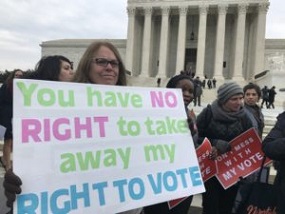
Let’s ask the question differently. Why was Sri Lanka’s parliament dissolved – simply answer is to allow the People to go for elections & vote. Wasn’t this the best form of democracy? That’s what we think, but over 10 petitioners including UNP, TNA, JVP, CPA, Transparency International, even a member of the Elections Commission doesn’t think so. They joined to  file Fundamental Rights against the dissolution of Parliament & holding of elections. How strange! Wherever, have you heard of Political parties & NGOs supposed to be promoting democracy & People’s power going to court to stop People exercising their power with the vote? What is more ridiculous is when embassy staff sponsoring these groups are also present in court to see if their stooges are actually following through on their orders! Are we living in 21st century or have we returned to colonial rule? What is poignant is that none of these parties cared to go to Supreme Court against the sacking of RanilW as PM though all of them verbally protested & issued statements against the sacking too, but the very same parties filed FR’s against holding elections

What is now more than certain is that these parties filed FRs against the dissolution because they were afraid of going for an election & before the people knowing that the People would be ruthless in their vote. These very parties are fully aware that they lied to the people since 2015, that they haven’t delivered on their promises, that their promises were only campaign slogans, that they have giving nothing for the people and most of all they know the people are fuming over selling the assets of the country to foreigners & allowing the external parties to dictate terms far beyond their diplomatic protocols. People are not stupid. They are watching all these & waiting for an election to voice their anger. To prevent this the petitioners have filed action. Whatever the judgement, these realities is nothing none of the petitioners can evade accepting.

We are in exciting times – since 26th October we have seen the sacking of a Prime Minister, a return of a democratically defeated President as the new Prime Minister, the proroguing of Parliament, the dissolution of Parliament & now an interim court order until 16th December where the Supreme Court will declare judgement against those filing FRs against the dissolution of parliament to hold fresh elections.

We have also seen 3 addresses to the Nation by the President – citing why he sacked the PM claiming his name being associated to an attempt to assassinate the President, the ruining of the economy, the detrimental consequences to the nation from the sale of national assets, the behavior of the Speaker & the cultural differences of the former PM & himself.

But taking things positively inspite of so many attempts & plots baiting the public, they have remained restrained and not fallen into the Western traps that was part of their media build up.

As citizens we must all log our disgust at all the parties that have lined up to file FR’s against the dissolution because their arguments have nothing whatsoever to do with protecting democracy, honoring the constitution or abiding the rule of law except to protect themselves electorally as they are not prepared to go before the people at an election as they have not got their lying machines ready to fool the people with their xmas goody bag of bogus promises ….

Shenali D Waduge

ඉදිරි පැය 24 තුල අර්බුදය විසදනවා..- ජනපති

November 14th, 2018

 lanka C news

ඉදිරි පැය 24 තුල අර්බුදය විසදනවා..- ජනපති

රට තුල ඇතිව තිබෙන දේශපාලන අර්බුදකාරී තත්වය ඉදිරි පැය 24 ඇතුලත නිමා වනු ඇති බව ජනාධිපති මෛත‍්‍රීපාල සිරිසේන මහතා සදහන් කර ඇත.

ජනාධිපතිවරයා අද පාර්ලිමේන්තුවේදී ඇති වූ සිදුවීම් සම්බන්ධයෙන් ජෙෂ්ඨ ඇමති පිරිසක් හා අදහස් පල කරමින් මේ බව සදහන් කර තිබේ.

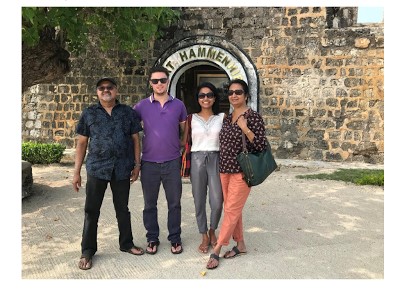
FORT HAMMENHIEL IN JAFFNA AND WIJEWEERA

November 14th, 2018

Dr Sarath Obeysekera

Whole of Sri Lanka is falling into a constitutional trap and uncertInity looms in the horizon when  Sinhala politicians are playing balls ( pandu”) Tamil and other helpless minorities  is watching helplessly

I am  in Jaffna having a break combined with a task of combining a study to see how Tamils are co-oping  up with the new life style in unified Sri Lanka .I see teenagers riding bikes where some of them having funny hippy type haircuts with colouring as if they live in ,western society . Tuk Tuks are driven by middle aged people.Younger generation of of 30 to 40 years are not to be seen may be they were either  anihilated during the war or migrated to greener pastures.

Jaffna town is badly neglected where I noted an extremely polluted canal flowing though the town via much famous Jaffna teaching hopspital creating smell and repugnance. .I was wondering whether army and navy can move in to help the people to clean the mess up like in Colombo or Mr Wiggy can do something better rather than lamenting about the occupation by south.

I decided to travel outskirts and visited Port Hammen hiel which was built by Portugese in 1600 or so ,now converted to a somewhat unique boutique hotel .

It is 13th November , death anniversary of JVP leader Rohana Wijeweera  ( RW )killed by his own people of Sri Lanka for fighting against injustice.

During the tour inside the Fort I was shown where RW ( I wondered  whether a politician with same initials will also end up in isolation one day ? ) was incarcerated for few months before being transferred to Jaffna Fort.

There was something written on the wall of his cell and a picture drawn by him which gave some inspiration about the man we considered a muderer .

When you hear and read about the poltical  situation today where the Sinhala Leaders throwing insults and salvos to each other drowning our future ,I wondered whether Rohana and also Prabakaran who were identical in their ideology should still be living to teach the Sinhala. Politicians a long lasting lesson.

We crave for democracy and prefer to consume it rather than trying to find  your three meals per day .

If we had a more aggressive leader like RW ( surely not the champion of so called democracy of today’s RW !!) our politics will try to do sensible things due to fear.

I always preached to have a benevolent dictator when MS was selected , but I am disappointed to see that MS has become a dictator with no specific prefix

It is a pity that both RW and VP are no more .

They could have opened the eyes of today’s politicins to do more sensible things for the sake of the poor countrymen.

Port Mammen hiel made me sad when I saw his cell and wondered whether we should install statues for not only RW  but also to VP in one place and named the location Leaders who failed their missions but managed to open the eyes of others”

God bless both of them


President will take necessary constitutional steps – Samarasinghe

November 14th, 2018

Courtesy Adaderana

The President will take necessary constitutional steps after he receives the letter from the Speaker regarding the no-confidence motion, Co-Cabinet Spokesman Minister Mahinda Samarasinghe said.

Won’t accept ‘no-faith motion’: Govt.

November 14th, 2018

මම ජනාධිපතිතුමා ගන්න තීරණයත් ඒක්ක ඉන්නවා

PC elections to be held under previous system – Mahinda Samarasinghe

November 14th, 2018

Courtesy Adaderana

Cabinet has decided to prepare legal draft to hold Provincial Council elections under the previous system, said Mahinda Samarasinghe.

He mentioned this today (14), at the press conference held to inform the cabinet decisions.

The compulsory 25% female representation will be ensured, he further said.

Cabinet has also decided to provide school uniform material for school children in 2019 instead of vouchers.

Glad to see parliament fulfilling its role: US

November 14th, 2018

Courtesy The Daily Mirror

Glad to see the Sri Lankan Parliament is once again fulfilling its constitutional role, US Ambassador in Sri Lanka Alaina B. Teplitz said today.

The Ambassador had attended the reconvening of parliament this morning.

Honored to attend the reconvening of Sri Lankan Parliament this morning to see democracy in action. Very lively but glad this institution is once again fulfilling constitutional role,” she said.

Won’t accept ‘no-faith motion’: Govt.

November 14th, 2018

Courtesy The Daily Mirror

The government today rejected that there was a no-confidence motion against Prime Minister Mahinda Rajapaksa.

Minister Dinesh Gunawardane said they wont accept the motion which was submitted by the JVP as it was not taken up for a proper debate.

No confidence motion with 122 signatures sent to President – Speaker

November 14th, 2018

Courtesy Adaderana

The Office of the Speaker stated that a no confidence motion and a letter signed by 122 parliamentarians against the Prime Minister and the new Cabinet appointed by the President have been presented to the Speaker at the parliamentary session today (14).

Issuing a press release, the Speaker’s Office said that, the Parliament sat at 10.00 am today (14) in terms of Gazette Extraordinary No. 2095/50 dated 04 November 2018 issued by the President.

After the Speaker has made the announcements as the Business for the Day, MP M.A. Sumanthiran from the Tamil National Alliance (TNA), moved that the business of the House be proceeded suspending the Standing Orders of Parliament.

Accordingly, a division had been moved for suspending the Standing Orders and then the Standing orders were suspended with the approval of the majority of the Members.

Thereafter, MP Anura Kumara Dissanayake from Janatha Vimukthi Peramuna (JVP), moved a no confidence motion against the government and MP Vijitha Herath from the same party, seconded the motion. They further moved that a division should be held for the same today itself”, read the release.

The presented motion read that,

The Gazette Extraordinary Nos. 2094/43, 2094/43A and 2094/44 dated 26th October 2018 promulgated by His Excellency the President, and the purported acts and appointments referred to therein, are unconstitutional, and are null and void and of no force or effect in law.

For the aforesaid reasons, this House has no confidence in the Prime Minister Mr. Mahinda Rajapaksa or the Cabinet of Ministers and government appointed on or after 26th October 2018.”

The release read that, Then the Opposition party moved a division for that, and after the division bell has been rung, the Speaker ordered for voting.

A majority of the Hon. Members of Parliament voted in favor of the No -Confidence Motion and accordingly the Hon. Speaker announced to the House that the No -Confidence Motion was passed with a majority.

Subsequently, MP Lakshman Kiriella proposed that the House should be adjourned until 10.am tomorrow (15) and the House gave its approval for it.”

The Speaker will take steps to send the President a copy of the No -Confidence Motion and the decision of the House in that regard along with a copy of the letter signed by 122 Members of Parliament to the effect that the Prime Minister and the Cabinet of Ministers appointed by him recently are unconstitutional, in order to take appropriate action according to the Constitution, further stated the press release.

Lanka’s ruling parties quash rumors that Premier Rajapaksa will resign rather than face parliament

November 13th, 2018

Courtesy NewsIn.Asia

Colombo, November 13 (newsin.asia): Senior leaders of the ruling Sri Lanka Freedom Party (SLFP) led by President Maithripala Sirisena, and the Sri Lanka Podujana Peramuna (SLPP), led by Prime Minister Mahinda Rajapaksa, on Tuesday quashed a widespread rumor that Rajapaksa plans to resign rather than face parliament on Wednesday after the Supreme Court stayed President Sirisena’s proclamation dissolving parliament and ordering fresh elections to be held on January 5, 2019.

Cabinet Minister Nimal Sripala de Silva said that the stay order applicable till December 7 given by the court, did not mean that the Presidential proclamation dissolving parliament had been set aside. The case is still on, and will be argued on December 5 and 6. Nobody can claim victory until the final verdict pronounced, he said.

All that the court did on Tuesday was that it gave leave to the litigants to proceed and till the case is decided, stayed the operation of the gazette notification on dissolution.

Lanka’s ruling parties quash rumors that Premier Rajapaksa will resign rather than face parliament

The Prime Minister and his cabinet will also remain in office, he said. Only the President can appoint the Prime Minister and not parliament or the Speaker of parliament, de Silva clarified.

The Prime Minister can be removed through a No Confidence Motion (NCM). But an NCM has to be moved in a proper way. It has to be put on the order paper and a date will  have to fixed for debate and voting.

Cabinet Minister Susil Premachandra said that if Rajapaksa loses the vote, the President need not appoint the sacked Prime Minister Ranil Wickremesinghe as Prime Minister again. He can appoint any other person who in his opinion enjoys the confidence of parliament. That is his prerogative.

Alternatively, the President can dissolve parliament and order fresh elections, Premachandra added.

President Sirisena is very unlikely to appoint Wickremesinghe because he sacked him and prorogued and dissolved    parliament because he could not suffer Wickremesinghe even for an hour.”

The President could appoint some other leader from Wickremesinghe’s party the United National Party (UNP). It could be Sajith Premadasa who was Sirisena’s second choice when he was seeking a replacement for Wickremesinghe earlier on.

Both Sirisena and Premadasa share a humble background and both are leftists unlike Wickremesinghe who is right wing and elitist.

The SLFP-SLPP alliance is keen on the dissolution of parliament because it is electorally stronger that the UNP as the February 2018 local bodies elections showed. The SLPP, which  swept the elections,is now with SLFP.

In the next parliamentary elections, the SLFP and the SLPP will form an alliance, sources in the two parties said.

(The picture at the top shows President Maithripala Sirisena and Prime Minister Mahinda Rajapaksa)

Sri Lanka’s new govt says will abide by Supreme Court verdict

November 13th, 2018

Courtesy NewsIn.Asia

Colombo, Nov 13 (newsin.asia) – Sri Lanka’s new Foreign Minister, Sarath Amunugama has said the newly appointed government will abide by the ruling given by the Supreme Court on the early dissolution of Parliament by President Maithripala Sirisena, local media reported Tuesday.

Speaking to journalists in capital Colombo, Amunugama said that ousted Prime Minister, Ranil Wickremesinghe, had the right to seek advice of the Supreme Court over the early dissolution but criticized him for creating political instability in the island country.

We will wait and see. The Government has no problem with this. When there is a contention between the Executive and legislative, then the judiciary must give respite. This is the proper way,” the Minister said.

Sri Lanka’s new govt says will abide by Supreme Court verdict

Many political parties including the United National Party led by Wickremesinghe, the main opposition Tamil National Alliance and the Marxist Party Janatha Vimukthi Peramuna, filed legal challenges in the Supreme Court on Monday over President Sirisena’s early dissolution of parliament last week.

The parties have argued that President Sirisena had no powers to dissolve the Parliament under the 19th amendment of the constitution and requested the Supreme Court to issue an order voiding the gazette issued by the President and to suspend the upcoming Parliamentary Election until a verdict is announced.

The Supreme Court is expected to announce a verdict this week.

In a special gazette notification issued last Friday, President Sirisena declared  Jan 5 as the date for a snap Parliamentary Election in order to resolve weeks of political turmoil which erupted after Wickremesinghe was sacked from his Prime Ministerial post and replaced with former president Mahinda Rajapakse.

Sirisena’s sudden move to dissolve Parliament comes one and a half years ahead of the scheduled Parliamentary polls.

Patriotic UNPers and SLFPers – Unite behind Pohottuwa!

November 13th, 2018

Ratanapala

14 Nov 2018

The Way Forward and What is to be done?

It is time the SLFP died its natural death and so too the UNP. These two geriatric political parties though brought into existence on lofty ideals, have over the years failed to bring peace and prosperity to the citizens of Sri Lanka. The only thing that they did famously is to divide the Sinhala polity in the middle. Together they have impoverished Sri Lanka, made politics in Sri Lanka the most corrupt in the region and the corrupt politicians rich and powerful. They also brought in the minority racists and religionists to the fray and made them kingmakers of Sri Lanka. The end result is for all to see – our past political history- the machinations and the deleterious effects of the doings of Chevanayakams, Amirthalingams, Sambandans, Thondamans, Ashroffs and now Hakeems, Mano Geneshans and Baithuddeens and add to this the Senanayakes, Bandaranaikes, Jayawardeens and Wickramasinghe.

Rajapakses too had a hand in that they failed to consolidate the war gains. Winning a war is not just the battles – it includes maintaining the peace. This is the reason the victorious Allies are still stationed around the world in strategic locations. Mahinda Rajapakse failed in this score because he is the one who commenced the withdrawal of Armed Forces from strategic locations in the North and East. No one within Sri Lanka or outside should dictate where Sri Lanka’s Armed Forces should be present or not. Then Army Commander – Sarath Fonseka’s assertion to increase the army was in fact correct strategically  as it takes more to maintain peace than fight wars. It took 30 years to finish off the war because we did not have enough soldiers to keep and defend the peace in the liberated areas! Finally, the war was won, because  the President Mahinda Rajapakse took a firm stand, the then Defence Secretary – Gotabhaya provided the necessary manpower and war logistics to hold onto and defend liberated areas while prosecuting the war elsewhere. In the immediate aftermath of the war ending Indians managed to break up the Sri Lankan the war winning team and Sarath Fonseka and Rajapakses parted ways!

After 70 years what the nation needs is time and space to move forward as one nation leaving behind the enmity and divisiveness. For this to happen the unity of the Sinhalese is paramount. Minority politics and their aspirations will never see daylight with only half of the Sinhalese agreeing. This is why the unity of the Sinhalese be they UNP or SLFP is of paramount importance for the good of all concerned, minorities included.

What ailed Sri Lanka during the last 70 years is the constant demands of minority Shylocks asking for their pound of flesh and more. In their own words, it is – Little now and More later! Even as we speak, these forces are at play 24/7 finding ways to keep Sri Lanka destabilized and a failed state. Even after making the TNA with only 16 seats in the Parliament the main Opposition Party, did they have anything to do with the governance of the nation? They abstained with scorn and enmity in their eyes, from every parliamentary activity that had to do with the governance of Sri Lanka and only participated in legislating actions that would lead to the balkanization of Sri Lanka and in the end her destruction as an independent political entity in South Asia. Their main purpose of occupying the position of the Opposition was to prop up the unpopular, traitorous, mega-thief Ranil and his cohorts – now famously referred to as the Butterflies”!

And so it goes for the Islamists spreading Wahabbism throughout the length and breadth of SrI Lanka. Just at the eleventh hour when there was a clear need for ousting mega-thief Ranil they left to Mecca indicating that they will return to enjoy the spoils! Patriotic UNPers and SLFPers should see this reality and leaving aside their petty differences unite to save Sri Lanka. This why they all must join forces under Pohottuwa, not because it is the best, but because it is ground reality and the only existing  common place where all from different political hues can gather and unite to end once and for all the tyranny of  Minority Politics. We must be in a position to muster a 2/3rd majority to bring about the necessary constitutional changes as well as provide for reasonable minority demands that do not infringe on the security, wellbeing and continued existence of Sri Lanka as a separate, unitary and independent political and geographical entity south of the Palk Straits!

It is time, all those well-meaning Tamils and Muslims leave the divisive politics and join the mainstream to achieve their realistic aspirations. Division of the country into fiefdoms or giving land and police powers to Eelamists is no way to achieve lasting peace in Sri Lanka. Sri Lanka simply does not have space nor the security measures necessary to entertain such wishful thinking that only bring luxuries to a selected few!

It is time, Sinhalese of all hues, be they UNP, SLFP, Buddhist or Christian unite behind Pohottuwa to take the country away from the cannibalistic politics of today, for together we can prosper as a nation. It is time the Sinhalese demanded from Pohottuwa that it cannot be ‘Politics as Usual’ as it used to be. It is time they got rid of the useless riff-raff, the traitorous, self-serving and the bribe-taker lot among them and move forward with only those who can be trusted to make way for progress. Pohottuwas must leave space only for the best in the SLFP, the UNP and those among minorities who aspire to prosper together.

Other nations such as Malaysia and Singapore sorted similar problems right at the beginning of their independence from Colonial Powers. This is why these countries prosper and Sri Lanka not! Big and powerful nations respect their strengths and politics!

UNLESS THE SINHALESE UNITE AS ONE, BECOME SELF SUFFICIENT IN THEIR BASIC NEEDS AND SECURITY. THERE IS NO SOLUTION TO THE MINORITIES. THIS IS THE MOST FUNDAMENTAL TRUTH BEHIND POLITICS IN SRI LANKA. This is what ailed Sri Lanka for the last 70 years. It is only the United Sinhalese who can accommodate those peaceful intentions of the minorities and take the nation towards progress! No solution or agreement, call it what may provided by 50% Sinhalese will be valid in the days, months and years ahead!

The so-called International Community are at the door calling for ‘democracy and human rights’.  This bogus cry is now seen to be fake as the fake news their media propagate.  It is their system of governance that made  the 1% own the 99% of world’s wealth. They would rather make Sri Lanka unstable, divided,  a failed state and divide the spoils rather than try to negotiate with a weak state. On the other hand they would support a country that is strong politically and militarily. They say Nature abhors a vacuum and so is politics. They are onto Sri Lanka because they find Sri Lanka divided, unstable and vacuous. United we can stand, divided certainly it is oblivion, death, and destruction a la Libya, Iraq and Syria!

We must provide India the security she needs south of the Palk Straits! It is only a strong Sri Lankan military which can provide this assurance and not a weak Sri Lanka! Senior Indian politician Subramaniam Swamy put it succinctly – We can trust the words of Mahinda Rajapakse. He is a strong man and we can depend on what he promises”.

 Time is of the essence, let us not bungle it this time! All patriots, be they UNP or SLFP, who wish well for Mother Lanka, unite behind Pohottuwa! Mahinda Rajapakse, Gotabhaya Basil are better leaders than any other currently in Sri Lanka. They can deliver what all Sri Lankans needs today – Peace and Prosperity!

THE VOICE OF “JUSTICE” IS NOT OVER YET. WE HAVE TO WAIT. This wise judgement has eased  the tense political situation in the country and will allow “JUSTICE” to be “FAIR” by everyone. 

November 13th, 2018

By Noor Nizam – Peace and Political Activist, Political Communication Researcher, SLFP Stalwart and Convener – “The Muslim Voice”. 13th., November 2018.

An INTERIM ORDER is a temporary court order, intended to be of limited duration, usually just until the court has had an opportunity of hearing the full case and make a final order. The stay orders have been issued effective until December 7. The Supreme Court has fixed the case for argument on December 4, 5 and 6. On the 7th., December, the court will give the verdict. “WE HAVE TO WAIT TILL THEN TO THE HEAR THE VOICE OF JUSTICE”. The learned judges of the Supreme Court have acted very wisely on this matter by giving and “interim stay order” on the dissolution of parliament for now. This wise judgement has eased  the tense political situation in the country and will allow “JUSTICE” to be “FAIR” by everyone.

They have created an opportunity to all to place their arguments before the 3 member bench of judges for 3 days (4th., 5th., and 6th., November 2018) before giving the final decision of the court.

The 19 submissions in SUPPORT of the DISSOLUTION submitted on the 12th., November 2018 as stated by the media, will now be taken for consideration/deliberation/argument by the 3 bench judges on the 4th., 5th., and 6th., November 2018.

As an experienced “Political Communication Researcher” and my 49 years of experience in Politics in Sri Lanka, I can see that the Learned Supreme Court Bench of Judges will “NOT SHUT DOWN” the Constitutional Right of the Elected Head of State of Sri Lanka – President Maithripala Sirisena. The verdict on 7th., November 2018 will “LEAN” towards in “FAVOUR” of the President’s decision, by the grace of God AllMighty. This is my personal view and expression. THE VOICE OF “JUSTICE” IS NOT OVER YET”.  WE HAVE TO WAIT. Muslim Politicians like Rauf Hakeem, Rishad Bathiudeen, Mujeebu Rahuman, Marikkar and Azad Sally or the ACJU or National Shoora Council should “REFRAIN” from making “DRASTIC” statements on this issue, WHICH CAN BE DETRIMENTAL to our community at large, whatever political party we maybe, till such time, the verdict is announced, Insha Allah.

Fake democracy, the last refuge of scoundrels

November 13th, 2018

The political events of the last fortnight that created a change in power structures in the country may bear significance in the short term, but will be unlikely to mark a significant turn in historical terms. In a nutshell, the events marked a simple ‘path correction’ triggered by the apparent dawning on the President of the dishonesty and anti-national agenda of the 2015 conspiracy. The realisation appears to have prompted him to use his executive powers to free the country from the hold of foreign-financed NGOs and local political agents of foreign vested interests.

The President’s sacking of the former prime minister and the appointment of a new one is ‘water under the bridge’ now and the focus is firmly on the upcoming elections. Judging by recent displays of political will by the people, the impending elections are likely to put the current complaints and debates to rest. The outgoing government has no worthy record of performance to base an election campaign on, and their inability to prove charges of large scale financial corruption and crimes of the Rajapaksa regime in courts of law have eaten in to their credibility in the eyes of the people. The robbery of the Central Bank as well as their protection of its perpetrator in Singapore has reduced any remaining chances of winning votes at an election. The broad public response of apparent relief, and even celebration at community level, points strongly to an electoral ‘bloodbath’ for the UNP and its friends at the election.

article_image

In contrast to the reaction of the general public, sundry NGO operators have been reacting to the President’s actions ‘madder than cut snakes’, adopting abusive, vitriolic language. The reaction of the former prime minister has been typically immature, essentially throwing a tantrum by way of squatting at Temple Trees. Further complicating matters, the parliamentary speaker brought his partisan behaviour from within Parliament to the wider political arena. In fact, the structure of the ‘forces’ against the measures adopted by the President and the strategy adopted by them have gone a long way to justify his actions.

The strategy adopted by the UNP and the NGOs appears an attempt to redress the lack of popular sentiment behind their ‘protests’ by pointing to alleged violations of a largely ‘imaginary’ democratic ideal: they keep alluding to a particular conception of democracy that is a meaningless caricature when viewed against their own behaviour in power. Attempts to absurdly mischaracterise the sacked government as one that responded to the wishes of the majority — on salient issues like the proposed new constitution and trumped up US charges of war crimes — has only drawn the ridicule of the people.

Evaluating the charge that the President’s actions somehow violated the ideals of democracy needs to be done against the background of democracy as a system of government that primarily concerns popular sovereignty through collective decision making, more broadly than under aristocracy or monarchy, for example. At the heart of the charge that the President somehow usurped the powers of the legislature is the issue of the relationship between people’s sovereignty that represents the true ideal of democracy, and the legislature that came into existence as a workable apparatus and mechanism to bring peoples’ sovereignty into operation: it needs to be remembered that the first Athenian democracy that came about around 550 BC involved a direct democracy in which ‘every’ eligible citizen — free men who had completed military service, and no women or slaves — was allowed to vote on each piece of legislation. It was this ‘direct democracy’ that later evolved into parliamentary democracy, essentially as a workable mechanism that enabled exercise of popular sovereignty as a physical act by the people in larger populations, by delegating it to a smaller group of representatives.

By their objections to the dissolution of parliament and declaration of an election, the UNP and the NGOs appear to have conveniently forgotten that government conducted through representatives is only a substitute designed to overcome the impracticality of carrying into effect ‘the will of the people’ by the entire body of qualified citizens. Denouncing the dissolution of parliament and declaring an election as an undemocratic act therefore, essentially disregard the central institution of democratic representative government, derived solely from the consent of the governed, through the mechanism of free and fair elections. Viewed in this light, the dissolution of parliament and holding elections are the ultimate restoration of democracy.

The alleged unconstitutionality of President’s actions

A considered look at the second line of attack launched by the UNP, the JVP and the NGOs, of the alleged unconstitutionality of the dissolution of parliament by the President shows they have no legal or political ‘leg to stand on’.

It needs to be noted that views on the constitutionality or otherwise of governmental action depends on certain ‘methods’ or ‘modes’ of interpretation of a particular meaning of a provision within the constitution; As has been noted by the legal writing educator Professor James Raymond — after dissection of the sharply divided opinions of judges of the High Court of Australia in Kartinyeri v Commonwealth, relating to the interpretation of the meaning and ambit of the ‘races’ power in s 51(xxvi) of the Australian Constitution as amended by referendum in 1967 — ‘the canons and rules of interpretation are soft logic’, persuasive only to people who prefer the result they support or at least have no reason to resist them.

Such largely subjective interpretations of constitutions however, take place within the boundaries set by certain conventions: one such highly relevant convention to the interpretation of the currant Sri Lankan constitution is that legal texts of the constitution ought to be given the original public meaning. Another such principle is ‘purposive’ interpretation that prescribes that the instrument being considered must be treated as an integrated whole, without resorting to narrow or pedantic constructions that limit the amplitude of its powers.

It was settled by the US Supreme court case of South Dakota v. North Carolina that ‘no single provision of the constitution is to be segregated from the others and to be considered alone but that all provisions bearing upon a particular subject are to be brought into view and to be so interpreted as to effect the greater purpose of the instrument’. Similarly, an exclusionary clause in any of the entries should be strictly and therefore narrowly construed;

The reliance of the UNP, JVP and the NGOs interpretations of the constitution solely on the 19th Amendment they engineered in 2015 ignores the highly relevant legal principle that the constitution is irreducible to a single amendment. The 19th Amendment may have structurally modified the constitution, but does not systemically abolish the sovereignty of the people, signified through a Presidency directly elected by the populace as a whole.

Good management needs freedom to operate

A reasonable critique of the particular measures adopted by the President, however, needs to be based on a broader view of his functions as the president elected by the people, beyond the confined framework of the constitution. Viewed in this light, though it is frightening to speculate at times, there are strong parallels between the running of a state and the running of a large business, albeit with some crucial differences relating to the primary objectives: a national leader is required to create and maintain the optimum conditions for the perpetuation of life, liberty and the pursuit of happiness by the population whereas a company executive’s sole aim would be to make money for its shareholders. Also, what is considered ‘efficient’ in the private sector is usually defined by profit, and social programmes a political leader may be required to deploy would be rarely profitable.

In broad terms, however, the roles of a nation’s president and its prime minister are analogous to the roles of a chairman of the board and the chief executive officer (CEO) of a large business organisation: chairman of the board at the head of the company sets the infrastructure and agenda necessary to ensure the effective working of the group while the CEO has the responsibility for the day-to-day management of the company and putting into effect the decisions and policies of the board. Just as national leaders are bound by a constitution, a company CEO is bound by corporate governance codes covering the superintendence of management responsibilities and accountabilities, strategic plans and work programmes.

Monitoring of CEO performance around performance targets and formal and informal performance reviews of the CEO is one of the main functions of the chairman of the board. Performance-related CEO departures caused by company performance and the board’s wish for a new CEO to reinvigorate the company are quite common.

The sacking of Prime Minister Wickremesinghe by President Sirisena is broadly similar to this situation, and few would disagree that the Prime Minister would not have survived for longer than three and a half years under performance review mechanisms in the private sector. This view provides a more sober view of the President’s actions as well as providing an argument for increased ‘degrees of freedom’ he should have in terms of unfettered constitutional powers to ‘hire and fire’ prime ministers as necessary to achieve national economic development.

There is little doubt that the president’s actions are in the best interests of the nation and focus now needs to be on the future.

Weimar Republic, Plato and yahapalana regime

Looking back at the events that precipitated between November 2014 and the election of the previous government in August 2015, and the time since then, conjure up images of a bad dream from which the nation has just woken up.

In historical terms, the yahapalana government closely resembled the experience of the Weimar Republic, the short-lived government of Germany formed in 1919 — at the chaos after the 1918 defeat of Germany in WW1 and the Kaiser’s abdication, named after the assembly that adopted its new constitution met at Weimar— to 1933, promising to give Germany a government that truly represented the views of the whole country.

The defeat in the war came as a huge surprise to the German people, and accusations that the German army had been ‘stabbed in the back’ by the politicians. Many Germans resented the government for signing the armistice agreeing to its conditions in November 1918 – they called them the November criminals. The yahapalana governments notorious co-sponsoring of the US war crimes allegation bears resemblance to this particular act of the Weimar Republic

Another similarity relates to the hurried action on drafting a new constitution at the behest of external forces. In the Weimar republic, after quelling the initial violence, 25 men including the famous sociologist Max Weber and politician Friedrich Naumann hurriedly crafted a new constitution between February and July 1919 which became law on August 11. Sri Lankans are fortunate that the process remained incomplete at the time of the sacking of Ranil.

The spirit of Weimar combined moods of extraordinary liberalism with a sinister willingness to search for and worship strange gods and occasional flashes of perverted vileness that are almost beyond description. On the positive side, it was a period considerable achievement in science and technology – Einstein worked in Berlin, and the next generation of scientists including Werner von Braun.

Similar to the yahapalanaya government, the Weimar Republic rejected traditional morality. It was a series of countercultures, communes and ‘alternative societies’ including nudism, dissociating itself from cultural conventions, and traditional values. Ironically, it was such attitudes and the values, that enabled the taking root of National Socialism immediately after, with many young Germans seeing National Socialism as the actualisation of their dreams of an alternative society. Sri Lanka was fortunate that the large scale perversion of the traditional Sri Lankan social system by some elements within the yahapalanaya government was averted before it caused extensive social damage.

In another sense, the demise of the yahapalanaya government signifies the worst fears about certain forms of democracy expressed by Plato who came to despise democracy following his friend and mentor Socrates was put to death by hemlock by a jury of 500 Athenians in 399 BC. Plato would later describe the trial of Socrates in his first essay, The Apology, as being judged by a jury of children.

Plato predicted in Republic a common trajectory democracy follows, containing within it what he considered serious dangers. He predicts that the people in a society with an enormous socioeconomic gap, where the poor remain poor and the rich become richer off the blood and sweat of others will long for freedom and liberty, sparking a revolution rallying behind one man, or a few men, whom they believe to be their saviour.

The people will supplant a democracy with sacred responsibilities to bring liberty to the land, making the newly appointed leaders nervous about the longevity of their own regime. The democratic leaders will then resort to projects aimed at managing expectations by distracting the people. To ensure their power, the leaders will create laws to bolster their position. Leaders will eventually become unpopular, with those who once supported this ruling class beginning to rebel against it. Hated by the people, these leaders will request heavy personal protection, elected by the people, yet protected from them. The leader born from democracy and propped up by the demand for liberty becomes a tyrant, creating another phase of the vicious cycle.

The yahapalanaya government broadly confirmed to Plato’s vicious cycle of democracy, worsened by its awful or non-existent economic management skills or programs. The president was right to act the way he did.

Continuing on the path of correction

The events of the previous fortnight proved the need for a constitution that empowers the executive to act decisively, rather than creating chaos through weakening of the executive by stealthily transferring executive powers to prime ministers who do not have the ability to win the trust of the people. Those who clamour for abolishing the executive presidency, without exception, are doing so due the realisation that they will never be able to win the position.

The President needs to continue on the path of correction he began. The first step should be reversal of the 19 Amendment to the constitution, restoring the presidential powers. Only a strong president could be expected to effectively launch and manage a national development programme that meets the countries dire needs.

Those who oppose executive presidency while literally ‘worshiping’ the neon lights of Singapore should be asked to study the model of government administered by Lee Kwan Yu.

What next?

November 13th, 2018

Editorial Courtesy The Island

The Supreme Court has issued an interim order suspending the dissolution of Parliament till Dec. 07. This is not what President Maithripala Sirisena and his allies bargained for. His rivals have declared victory prematurely. People are agog with curiosity; thankfully they remain calm and quiet. The sooner this dispute is brought to an end, the better. It has overshadowed all other issues. Nobody seems to care two hoots about the economic front.

Parliament has to be reconvened today as scheduled prior to its dissolution, and what the situation will be in the House is anybody’s guess. Will President Sirisena prorogue it further? Will the UNP and its allies try to secure a division and/or thwart such an attempt?

The court case at issue is not yet over and the SC judgment is likely to be given next month. What is justice to the winner is not to the liking of the losing side, which always cries foul. Judicial verdicts may help resolve disputes legally but do not lead to reconciliation. Hence the need for settling disputes through negotiations without taking them to courts if consensus is to be achieved! However, as for the issues consequent to the Oct. 26 government change, one may argue, the disputants remained intransigent and Parliament found itself in a gridlock and, therefore, the matter had to be taken to courts. It behoves all of them to sheath their poniards, swallow their pride and discuss a future course of action to hoist the country from the current political mire of their making, for, as things stand, the crisis is not like to go away in the foreseeable future. The warring politicians owe it to the people who stump up colossal amounts of money to maintain them.

The unfortunate situation which has led to the ongoing divisive legal battle arose because men of mature years in politics failed to act wisely. They let their personal animosities take precedence over their duty by the country. The Oct. 26 government change would not have happened but for a personality clash between President Sirisena and ousted PM Ranil Wickremesinghe. The outcome of the current legal battle is bound to complicate the political situation further. One can only hope that sanity will prevail.

In countries, blessed with statespersons, difficulties the people face make rulers sink their differences and join forces to find solutions, but in this land like no other, political leaders’ personal differences cause difficulties for the people.

Democracy and progress derive sustenance from the wisdom and altruism of rulers. When selfish, power hungry leaders are elected it is only natural that democracy and progress elude a nation. This, we have seen under successive governments during the last several decades.

This legal battle may be over with the SC determination, but all will not be quiet on the political front. Speculation is rife that President Sirisena is coming under increasing pressure from his allies to go for a referendum to consult the people directly on the issue. The general consensus is that the President is constitutionally empowered to do so. Whether this is possible or the President will consider this an option remains to be seen.

Meanwhile, there were some ugly scenes near the Superior Courts Complex in Colombo, on Monday, with groups of restive political activists shouting. Last so many years have seen protests, silent or otherwise, near courts in Colombo and in other parts of the country. No organised crowds must be allowed to enter court premises and areas adjacent thereto under any circumstances.

Constitutional Provisions in the Current Context

November 13th, 2018

By Neville Ladduwahetty Courtesy The Island

Dr. Jayampathy Wickrmaratne is reported to have stated: “President Maithripala Sirisena cannot dissolve Parliament to overcome the current constitutional crisis caused by the unconstitutional sacking of PM Ranil Wickremesinghe”. The report also states: “It is a golden rule that in interpreting a Constitution, the Constitution as a whole must be looked at, not one provision in isolation” (The Island, 10th Nov. 2018).

If the Constitution is to be looked upon as a whole, there is a need to visit the very foundation on which the Constitution is founded. It starts with sovereignty being with the People. Article 3 of the current Constitution states: “In the Republic of Sri Lanka sovereignty is in the People and is inalienable. Sovereignty includes the powers of government, fundamental rights and the franchise”. Thus, the fundamental premise is that the sovereignty of the People is to be held in trust by their elected representatives, and implemented through the organs of government.

Article 3 of the 1972 Constitution also stated that “Sovereignty is in the People and is inalienable”, but it did not include fundamental rights and franchise. Furthermore, Article 4 of the 1972 Constitution stated that “The Sovereignty of the People is exercised through a National State Assembly of elected representatives of the People”. Consequently, the National State Assembly as the “the supreme instrument of State power” exercised the legislative, executive and judicial powers of the People thus making Sri Lanka a Parliamentary Democracy.

article_image

This, however, is not the case with the current Constitution. Article 4 that spells out the “powers of government” states that the legislative power of the People shall be exercised by Parliament (Article 4 (a); the executive power of the people shall be exercised by a President directly elected by the People (Article 4 (b) and the judicial power of the People shall be exercised by Parliament through courts, tribunals etc. Article 4(c).

Furthermore, since sovereignty is inalienable each of the above powers must and should remain separate and equal. In addition, they cannot be transferred, relinquished or removed without the expressed consent of the People. This makes Sri Lanka a presidential democracy. This then should be the starting point to address the charges made by Dr. Jayampathy Wickramaratne.

The inability to appreciate the difference between the two systems has caused legal and academic experts to keep on describing Sri Lanka as a Parliamentary democracy, when in fact it has been a Presidential democracy for the last forty years. A key aspect of this difference is that while parliamentary democracies cannot function without a majority presidential democracies could function independent of a majority since powers are separate. In such an instance the lack of a majority in Parliament only hampers the passage of legislation.

The perception that Sri Lanka is a parliamentary democracy is perhaps the reason for interpreting Article 33A that states: “The President shall be responsible to Parliament for the exercise, performance and discharge of his powers, duties and functions…” to mean that the Executive is “answerable” to Parliament. Such an interpretation is seriously flawed because it ignores the inalienability of the sovereign powers of the People.

SACKING of PRIME MINISTER

The so-called “unconstitutional sacking” of Ranil Wickremesinghe must be viewed from the background material presented above. Chapter VIII titled “The Cabinet of Ministers” in the 19th Amendment sets out the relationship between the President as the Head of the Cabinet of Ministers and the Cabinet. Accordingly, it is the President who appoints the Prime Minister as one “who in the President’s opinion is most likely to command the confidence of Parliament”, Art. 42 (4). However, it is the President who “determines the number of Cabinet of Ministers and the Ministries and the assignment of subjects and functions to such Ministers (Art. 43(1). The only change in the 19th Amendment from what existed earlier is that the appointment of Cabinet Ministers, State Ministers and Deputy Ministers “shall be on the advice of the Prime Minster”.

Notwithstanding this, Article 43 (3) states: “The President may at any time change the assignment of subjects and functions and the composition of the Cabinet of Ministers. Such change shall not affect the continuity of the Cabinet of Misters and the continuity of its responsibility to Parliament”. Since the identical provision was provided in the 1978 Constitution the comment by late Prof. A. J. Wilson was: “This section therefore empowers the President to even dismiss his Prime Minister and or reshuffle his Cabinet without consultation with the former, because it states that ‘such changes shall not affect the continuity of the Cabinet of Ministers and the continuity of its responsibility to Parliament” (The Gaullist System in Asia, The Constitution of Sri Lanka, 1978, p.44).

The President did not arbitrarily “sack” PM Ranil Wickramasinghe. The sacking occurred as a result of the National Government with an Executive of 93 ceasing to exist following the withdrawal of the UPFA from the coalition. This precipitated a constitutional necessity to reconstitute the Executive and limit it to 70 and assign new subjects and functions. This necessity coupled with the deep discontent in the country regarding the direction and control of the government, unparalleled corruption and the sale of national assets, motivated the President to appoint a new Prime Minister who had the proven ability to give a new direction to his government. Therefore, the sacking of the Prime Minister is not a political coup or political crisis but a precipitation of a series of events that required Presidential intervention in keeping with the Constitution.

DISSOLUTION of PARLIAMENT

Article 70 (1) of the 1978 Constitution entitled the President to “summon, prorogue and dissolve Parliament” until paragraph (1) was repealed and substituted with the provision that the President “shall not dissolve Parliament until the expiration of a period not less than four years and six months … unless the Parliament requests the President to do so by a resolution passed by not less than two-thirds of the whole number of Members…”. This means that Parliament could secure a two-third majority at anytime within the four and half years, and “request” the President to dissolve Parliament This amounts to powers the President has as Head of State being transferred to another organ of government, i.e., the Parliament thereby violating the inalienability of the executive powers of the People. However, the fact that 33 (2) (c) is incorporated within Article 33 (2) means the President’s power to dissolve Parliament was not restricted and the repeal of Article 70 (1) has no relevance.

Despite this, there are three special circumstances, namely, “If Parliament rejects the Statement of Government Policy, or the Appropriation Bill or passes a vote of no confidence in the Government the Cabinet of Ministers shall stand dissolved …and for the President to appoint a new Executive” (Article 48 (2). How many times is this process to continue before Government operations break down and the country comes to a standstill? The inclusion of Article 33(2) (c) in Article 33(2) enables the President to overcome such challenges (SLR -2002 Vol. 3, para. 102). Since Article 33(2) states that the powers listed are “In ADDITION (emphasis added) to powers, duties and functions expressly confirmed …” Article 33(2) (c) overrides Article 70. Furthermore, it could also be applied to 33 (2) (f). This empowers the President, if he so chooses, to engage in “acts of appointment of Prime Minister and other Ministers, the Chief Justice and this other judges of the Supreme Court, the President of the Court of Appeal…” thereby overriding limitations imposed on such appointments by the 19th Amendment. Clearly, under no circumstances could the entirety of Article 33 (2) be categorized as “general powers”, as asserted by Dr. Wickramaratne.

CONCLUSION

The flawed understanding that the system of Government in Sri Lanka is a Parliamentary Democracy is the reason for the outcry to reconvene Parliament to establish who has the majority. The fact that the Constitution provides for the “powers of government” to operate separately under the collective rubric of the sovereignty of the People makes the system in Sri Lanka a Presidential Democracy. It is a matter of deep regret that this distinction is not understood.

It is unrealistic to expect the International community to be aware of Sri Lanka’s constitutional complexities when such awareness does not exist among Sri Lanka’s own legal and academic fraternities. Their common shrill is that Parliament should be reconvened to establish majorities and minorities in the misguided hope that establishing majorities would resolve all issues. This has caused the situation in Sri Lanka to be internationalized and to be described as a political coup or a political crisis on grounds that the measures adopted by the President were undemocratic and unconstitutional.

The explanation for the prevailing constitutional confusion is the ad-hoc incorporation of new provisions into what had existed, with the objective of transforming a Presidential Democracy into a Parliamentary Democracy without the consent of the People at a Referendum. Another parallel is the incorporation of provisions for devolution from a Parliamentary Democracy in India into a Presidential Democracy in Sri Lanka, notwithstanding the inherent incompatibilities. It is only through an understanding of these fundamentals that Sri Lanka could hope to emerge from this confused state.

Parliament dissolved to form a People’s Government – Part III

November 13th, 2018

By : A.A.M.NIZAM – MATARA .

The UNP suffering from perennial electrophobia and utterly fearful of facing voters in elections its Paroxetine JVP ,JHU Muslim Com-gross TPA. Dollar voracious NGO vultures and pro-tiger terrorist sympathiser Rajan Hoole, despite being a member of the so-called Independent election commission (perhaps on behalf of the Tamil diaspora) and some others have submitted petitions at the Supreme Court against the dissolution of Parliament and calling for ele4ctions by President Sirisena.  Hoole should have resigned from his post before he submitted the petition and if fail to so even now belatedly the government should take swift action to remove him as otherwise people will lose faith on the independent nature of the Election Commission. Reports indicate that this pro terrorist Hoole has refrained from signing the letter authorising officials to proceed with carrying out election related activities and thereby creating a conflict between Election and Commissioner General of Elections and hence Hoole should not only be dismissed but also taken into custody on the charge of obstructing legitimate government activities.

The hearing of the petitions by a three-member panel of Judges led by the Chief Justice Nalin Fernando started yesterday and is being continued.  Despite these petitions of election phobia addicts Maha Nayake Theroes, prelates of other religions have wholeheartedly and enthusiastically welcomed the election saying that it has offered an opportunity for them to get rid of the butterfly clan and the foreign slavish quislings from the political arena of this country and replace them with national minded, patriotic and progressive people and revive the country as it was in the yore.

In the Supreme Court the Attorney General Mr. Jayantha Jayasuriya making his submission ns asserted that the action taken by the President was legal and was in consistent with the constitution and has asked the Courts to dismiss all petitions.  During his submission the AG has cited all constitutional clauses that validate the action taken by the President to ensure the law and order sovereignty of the people.

The Supreme Court, in the meantime gave it ruling this evening by issuing a Stay Order on the gazette dissolving Parliament and calling for elections until 7th December and said that they will take up hearing of the petitions on 4th, 5th,and6th of December. Many political analysts and politicians have welcomed this decision as the time frame given to call for nominations from 19th to 26th November and hold election on 5th January were insufficient for selection of candidates and prepare for a detailed Manifesto.  Government sources said that thy are in the process of presenting a joint manifesto and the relevant works are being carried out.  They said that the new Manifesto will have many concessions including granting of car permits every five years, expediting the work of development projects which had been suspended by the Ranil Wickremasinghe government and extensive review of foreign slavish trade agreements. .

Government sources indicated that there will be no more Ranil era even if the Supreme Court gives a verdict in favour of the UNP and its proxies.  Legal experts apprised that in such an event the government can call for a referendum for they people to express their franchise and it will only delay the election by about one month or by a maximum 40 – 50 days.

Meanwhile Ranil Wickremasinghe has said that Parliament will resume sittings tomorrow the original date of reconvening the Parliament by President Sirisena before he issued a gazette notification to dissolve parliament and call for a snap election. He has said in his usual arrogance that he will prove his majority when they meet tomorrow despite the fact that the can appoint anyone regardless of majority as the Prime Minister as he did so om 9th January in which he appointed Ranil who had only 41 clears as Prime Minister instead of Mr. D.M,.Jayaratne who had 146 members with him at that time.

Reports said that the double-tongued dollar voracious JVP leadership held their Il Maha Semarum” November commemoration in Colombo today)(Nov. 13th). They hold two commemoration events – April 5th– in respect of those idea in 1971 and Nov. 13th in respect of over 60,000 died in 88 – 90 period, including some of my relations, school mates and neighbours.  A neighbour of mine became insane when his two sons got killed reported by Rajitha Senaratne’s PRRA outfit and subsequently died in that status. Many eye witness accounts have said that JVP leader Rohana Wijeweera was thrown into  Cremation Chamber alive when he was arrested at Ulapane St. Mary’s Estate and brought to Colombo.   On the day he was supposed to have been killed the then Minister of National Security Ranjan Wijeratne in an interview with BBC and in response to a question whether Wijeweera’s  killing has been informed to the President said that they do not need to inform President about the killing of a dacoit.  The JVP current leadership despite their collaboration with the UNP has not taken any action to verify about this death.  The JVP hold these commemorations for their self aggrandizement and for fooling their village members and make them hire buses spending from their hard-earned money to ferry the people to them in Colombo and other main towns.

The last genuine leader of the JVP the late Mr. Somawansa Amerasinghe told media once the present JVP leadership under dollar voracious Anura Kumara and his cabal is shamelessly money slavish and Anura Kumara who is reportedly owns a palatial residence in Ireland was given Rs. 25 Million by UNP stalwart and UNP financier Malik Samarawickrema to help their party in the 2015 General Elections.  Ranil also helped Anura Kumara in numerous ways and he functioned as an advisor to Ranil having an office in the Temple Trees and Anura Kumara has allegedly advised Ranil on persons to be prosecuted by the notorious FCID and on what charges.  NFF leader Mr. Wimal Weerawansa, PHU leader Mr. Udaya Gammanpila and the famous Buddhist monk Ven. Uduwe Dhammaloka Thera had to serve long terms under custody perhaps due to instigations of Anura Kumara.

(To be continued)

ජනපති පැරදුනොත් සිකුරාදා    ජනමත විචාරණ තුරුම්බුව ද?

November 13th, 2018

කීර්ති තෙන්නකෝන්

පාර්ලිමේන්තුව මැතිවරණය පැවැත්වීමට නොහැකි තත්වයක් උද්ගත වන්නේ නම්, ජනාධිපති සහ මහින්ද රාජපක්ෂ කණ්ඩායම සතු දුර දිග අවිය ‘ලංකාවේ පළාත් සභා සහ පාර්ලිමේන්තු මැතිවරණය එක වර පැවැත්විය යුතුය ද?‘‘ යන ජනමත විචාරණය (ලාම්පු කළ ගෙඩි සෙල්ලම) කරළිය පැමිණෙනු ඇත.

මෙම සති අන්තයට පෙර ජනාධිපතිවරයා අවාසිදායක තීන්දුවක් ලැබේ නම්, නොවැ. 16 දින ජනමත විචාරණ ගැසට් නිවේදනය අපේක්ෂා කළ හැකිය.  අඩුම කාලයකින් පැවැත්විය හැකි මැතිවරණය ජනමත විචාරනය බැවින් එය ද, ජනවාරි මුල් සතියේ දී පැවැත්වීමට හැකියාව ඇත.

සටහන – 1982 දී ලංකාව ඡන්ද එපා යැයි ඡනමත විචාරණයක දී ඡන්ද 31,41,223 ක් ලබා දී ඇත.  ඡන්දය අවශ්‍ය බවට පැවසූවේ 26,059,83 ක් බැවින් ලංකාවේ මැතිවරණ සිතියම වසර 5 කට අකුළනු ලැබීය. 


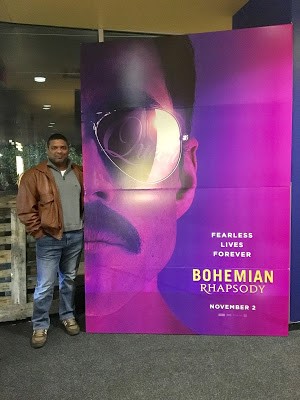
Bohemian Rhapsody

November 13th, 2018

Dr Ruwan M Jayatunge

Freddie Mercury ‘s  musical hit Bohemian Rhapsody carried a numerous metaphors and symbolism that transformed the band into a global phenomenon. Bohemian Rhapsody” song was written by Freddy Mercury which had no chorus but consisted of   six sections: introduction, ballad, guitar solo, opera, rock and outro. Bohemian Rhapsody could be considered as an enigmatic philosophical song that was not decoded completely. Up-to-date Bohemian Rhapsody remains a puzzle.  This song has fatalistic lyrics. Some argue that Bohemian Rhapsody echoes Mercury’s personal traumas reveling the complexity of his inner mind. This song represents a self-explanatory portion of Freddy. Perhaps Bohemian Rhapsody could be the musical version of Albert Camus’s novel The Stranger.

Albert Camus’s novel The Stranger involves a complex character named Meursault. For Camus, life has no rational meaning or order. As Albert Camus stated, the nakedness of man faced with the absurd was highlighted in his novel. Meursault’s philosophy of absurdism, atheism, determinism, nihilism, and stoicism are well marked in Bohemian Rhapsody. Bohemian Rhapsody divulges a life and attitude, which possess no rational order.

Bohemian Rhapsody begins with the powerful vocals of Freddy, which describes the clashes between his inner fantasies and realities. He was born in Zanzibar to an Indian Parsi Family and raised in England. He was exposed to three different cultures and in each culture; his biopersona (biological component of his personality) was suppressed creating a colossal guilt in him.  The society that he lived expected him to live an artificial life less then his expectations. Mercury felt trapped and found no escape.

Is this the real life
Is this just fantasy
Caught in a landslide
No escape from reality
Open your eyes
Look up to the skies and see
I’m just a poor boy, I need no sympathy
Because I’m easy come, easy go,
Little high, little low
Anyway the wind blows, doesn’t really matter to me – to me

In the second part Freddy talks about a murder which could be treated as a metaphor. Metaphor and allegory were powerful literary and conceptual tools which often used by him to create melody, rhythm and philosophy. Like Meursault he reaches self-knowledge by committing a murder.

Mama, just killed a man,
Put a gun against his head,
Pulled my trigger, now he’s dead,
Mama, life had just begun,
But now I’ve gone and thrown it all away
Mama, ooo,
Didn’t mean to make you cry
If I’m not back again this time tomorrow
Carry on, carry on, as if nothing really matters

In the third section, Freddy talks about his destitution and hidden death wish contrary to his insensible desire to live. In Bohemian Rhapsody Camus’s philosophy of the absurd is written in every line.

The imaginary character of Albert Camus’s novel The Stranger – Meursault was a social deviant. He was an absurd man. The struggle to find meaning where none exists is what Camus calls, the absurd.  The absurd man will not commit suicide and he wants to live, without renouncing any of his incongruous hopes. The doomed character recounts in Bohemian Rhapsody reminds a nihilistic man that was narrated in Camus’s novel The Stranger.

Too late, my time has come,
Sends shivers down my spine
Body’s aching all the time,
Goodbye everybody – I’ve got to go –
Gotta leave you all behind and face the truth
Mama, ooo –
I don’t want to die,
I sometimes wish I’d never been born at all –

The Opera Section begins with a powerful  vocal presentation. Freddy Mercury uses the name of a fictional character – Scaramouch that was created by Rafael Sabatini.

I see a little silhouetto of a man,
Scaramouch, scaramouch will you do the Fandango
Thunderbolt and Lightning – very very frightening me-
Gallileo, Gallileo,
Gallileo, gallileo,
Gallileo Figaro – Magnifico –
I’m just a poor boy nobody loves me
He’s just a poor boy froma poor family
Spare him his life from this monstrosity
Easy come, easy go – will you let me go

In the subsequent part, the singer utters a name Bismillah which means the God. It is a poetic phrase translated as in the name of the God, most gracious and most compassionate.

Bismillah! No, – we will not let you go – let him go –
Bismillah! We will not let you go – Let him go
Will not let you go – Let me go
No, no, no, no, no, no, no-
Mama mia, mama mia, mama mia let me go –
Beelzebub has a devil put aside for me, for me, for me.

The final part of the song is the rock section. In this branch Freddy’s emotional struggle and apathy is emphasized. However, he is ready to accept the consequences.

So you think you can stone me and spit in my eye
So you think you can love me and leave me to die
Oh Baby – Can’t do this to me Baby
Just gotta get out- just gotta get right outta here –
Nothing really matters
Anyone can see
Nothing really matters, nothing really matters – to me

In Bohemian Rhapsody the meaninglessness of all endeavors are emphasized in the final line.  According to the theory of Absurdism that was introduced by the French Algerian philosopher Albert Camus there is a fundamental disharmony that arises out of the co-presence of man and the universe. Man has a desire for order, meaning, and purpose in life, but the universe is indifferent and meaningless; the Absurd arises out of this conflict. Meursault was always aware of the meaninglessness of all endeavors in his life so as the nihilistic man of the Bohemian Rhapsody.

පාර්ලිමේන්තුව විසුරුවා හැරීම නිත්‍යානුකූල නොවන බවට ශ්‍රෙෂ්ඨාධිකරණය තීන්දු කළහොත් වහාම ජනමත විචාරණයකට යන්න

November 13th, 2018

Lanka Lead News

අතිගරු ජනාධිපති මෛත්‍රීපාල සිරිසේන මහතා විසින් පාර්ලිමේන්තුව විසුරුවා හැරීම නිත්‍යානුකූල නොවන බවට ශ්‍රෙෂ්ඨාධිකරණය තීන්දු කළහොත් වහාම ජනමත විචාරණයකට යා යුතු බව මහාචාර්ය පූජ්‍ය මැදගොඩ අබේතිස්ස හිමියෝ පවසති.

අද(13) පෙරවරුවේ විද්වත් භික්ෂු සංසදය විසින් පැපිලියාන සුනේත්‍රාදේවී පිරිවනේ කැදවා තිබූ මාධ්‍ය හමුවකට එක්වෙමින් උන්වහන්සේ මේ බව කියා සිටියේය.

මෙහිදී අදහස් දැක්වූ ආචාර්ය පූජ්‍ය කපුගොල්ලැව ආනන්දසිරි හිමි

”මැතිවරණ කොමිසම ස්වාධීන ආයතනයක්. කොමිසමේ සාමාජිකයෙක් වන රාජන් හූල් කියන නිලධාරියා ශ්‍රේෂ්ඨාධිකරණයට ගිහින් තියෙනවා ඡන්දයක් එපා කියලා. කොහොමද ස්වාධීන ආයතනයක සාමාජිකයෙක් පක්ෂපාතී වෙන්නේ.”

නීතිවේදී ශාස්ත්‍රපති පිටවල උපාලි හිමි

අපේ මතකය දිව නොව එදා 974 පටන් ගත්තේ ධර්මයට පාලනයකින් අවසන් කළේ ”අ” යන්නත් එකතු කරලා. යහපාලනය පටන් ගත්තේ යහපාලනය කියලා. මේ තීන්දුව යම් විදියකින් ඔවුනට අවාසි වුණොත් ඔවුන් කියනවා ජනතාවට බලන් ඉන්න අත්විඳින්න පුළුවන් දරුණු ඉරණම කියලා. ඔවුන් කියනවා ලේ ගංගාවක් මතින් හරි වුන්ගේ ජයග්‍රහණය කෙසේ හෝ ලබා ළඟා කර ගන්නවා කියලා. ලේ ගංගාවක් කියන්නේ යහපාලනය අවසානයේ යම්ක් යමපාලනයක් බවට පත් වෙනවා.

තවද මෙම මාධ්‍ය හමුව සඳහා ජාතික විද්වත් භික්ෂු සංසදයේ සාමාජික භික්ෂූන් වහන්සේලා වන ශාස්ත්‍රපති හෑගොඩ විපස්සි හිමි, ශාස්ත්‍රපති මතුගම සුමන නන්ද හිමි, ශාස්ත්‍රපති මාවනැල්ලේ පවර හිමි සහභාගි විය.

හෙට පාර්ලිමේන්තුව රැස්වෙනවා.. මං බහුතරය පෙන්වනවා..- රනිල්

November 13th, 2018

lanka C news

පාර්ලිමේන්තුව හෙට (14) දිනයේදි නැවත රැස්වන බව හිටපු අගමැති රනිල් වික‍්‍රමසිංහ මහතා පවසයි.

තමන් හෙට දිනයේදී පාර්ලිමේන්තු බහුතරය පෙන්වීමට සූදානම් බවද ඔහු සදහන් කරයි.

වික‍්‍රමසිංහ මහතා මේ බව කියා සිටියේ අරලිය ගහ මන්දිරයේදි මාධ්‍ය අමතමිනි.

This is not the Court’s final decision: Namal

November 13th, 2018

Courtesy The Daily Mirror

UPFA MP Namal Rajapaksa said the Supreme Court’s interim order on the dissolution of parliament was not the Court’s final decision.

In a tweet he said he had never seen politicians get ‘so excited’ over postponing of elections.

The UNP has a history of postponing polls but eventually voters will decide,” he said.

Supreme Court issues stay order on dissolution of Parliament

November 13th, 2018

Courtesy Adaderana

The Supreme Court has issued a stay order temporarily suspending the Gazette notification issued by the President on the dissolution of Parliament.

The highest court in the country also issued a stay order on the Elections Commission preventing the holding of a general election.

The stay orders have been issued effective until December 7.

Delivering its much-anticipated decision regarding the fundamental rights petitions filed challenging the president’s decision to dissolve parliament and calling for fresh polls, the three-member judge bench decided to take up the petitions for hearing.

The case has been fixed for argument on December 4, 5 and 6.

The decision was announced by the judge bench comprising Chief Justice Nalin Perera and Supreme Court judges Priyantha Jayawardena and Prasanna Jayawardena after two days of deliberation.

The Supreme Court had concluded the consideration of petitions at around 3.30 p.m today after which court was adjourned until 5.00 p.m. while the decision of the court was announced moments ago.

Thirteen fundamental rights petitions were filed at the Supreme Court asking it to declare that the President’s order to dissolve the parliament is illegal.

The petitions have been filed by political parties including United National Party (UNP), Janatha Vimukthi Peramuna (JVP), the Tamil National Alliance (TNA), Tamil Progressive Alliance (TPA) and the All Ceylon People’s Congress.

Organisations and activists such as the Centre for Policy Alternatives (CPA), Attorney Aruna Laksiri and also a member of Elections Commission Prof. S. R. H. Hoole have also filed petitions.

The Attorney General this morning requested the Supreme Court to dismiss all petitions filed against the dissolution of Parliament as the President’s decision is consistent with the Constitution of Sri Lanka.

Attorney General Jayantha Jayasuriya, making submissions to the court when hearings of the petitions resumed today, stated that the Gazette notification issued by the President dissolving the Parliament was constitutional and that the President had done so through the executive powers vested in him.

The Attorney General referred to article 33 (2) (c) in the 19th Amendment, which states in addition to the powers, duties and functions expressly conferred or imposed on, or assigned to the President by the Constitution or other written law, the President shall have the power to summon, prorogue and dissolve Parliament.”

Meanwhile intervene petitions filed challenging the fundamental rights petitions were also taken up for consideration by the court today.

Several individuals including ministers Udaya Gammanpila, Vasudeva Nanayakkara and former minister G.L. Peiris had filed the intervene petitions supporting President’s decision to dissolve the parliament.

අපගේ නිදහස් චතුරශ්‍රය සැබෑ නිදහසේ සංකේතය වන්නේ කවදාද?

November 13th, 2018

Keerthi Godayaya

ශ්‍රී ලංකාවේ නිදහස් චතුරශ්‍රය පිහිටා තිබෙන්නේ ටොරින්ටන් චතුරශ්‍රයේය. එහි විශාල ප්‍රමාණයේ දොන් ස්ටීවන් සේනානායක මහතාගේ පිළිරුවක් තිබේ. අප කුඩාකල පාසල් සවාරියක් සඳහා නිදහස් චතුරශ්‍රය වෙත ගිය කල අප සමග අපට වඩා පහල පන්තිවල සිටි එක්  කුඩා ශිෂ්‍යයෙක් අර සුද්දා කවුදැයි සේනානායක පිළිරුව පෙන්වා ගුරුවරියකගෙන් ඇසුවා මට මතකය. එවිට “ඒ සුද්දෙක් නෙවෙයි ළමයෝ, එයා තමයි අපේ නිදහසේ පියා යැයි ගුරුවරිය පිලිතුරු  ලෙස පැවසුවාය.”

“එහෙනම් ඇයි එයා සුද්දෙක් වගේ ඇඳගෙන ඉන්නේ” යැයි අර සිසුවා පෙරලා ඇසු කල ගුරුවරිය සැර  වුවා මිස කිසිදු පිලිතුරල් නොදුන් බව මට මතකය.

අධික ශීත දේශගුණයෙන් පරිපීඩිත බටහිර ජනයාට ටයි කෝට් එක  යනු ඇඳුමක් වුවද, ෆැරන්හයිට් අංශක 100 ක  උෂ්ණත්වයක් ඇති ශ්‍රී ලංකාව වැනි රටකදී ටයි කෝට් යනු යටත්විජිතවාදී සංස්කෘතික සංකේතයක් බවට පත් වන බව වටහා ගැනීම මෙහිදී වැදගත්ය. අපගේ නිදහස උදුරා ගත් ආක්‍රමණික ජනඝාතකයාගේ ඇඳුම වන ත්‍රී පීස් සුට් එකකින් සැරසී සිටින මේ පිළිරුව එම ආක්‍රමණිකයාගෙන් නිදහස් වීම සැමරීම සඳහා ගොඩ නැගු මෙම නිදහස්  ස්මාරකය ඉදිරියේ පිහිටුවීමත්, එම පිළිරුව නිදහසේ පියා ලෙස නම් කිරීමත් කෙතරම් හාස්‍ය ජනක විහිලුවක්ද  යන්න කිසිවකු නොසිතු බව පෙනී යයි. මෙය වැරදීමකින් සිදුවූ දෙයක්ද එසේ නැතිනම් නිදහසින් පසු බලය ලභාගත් කොළඹුන්  විසින් ගැමි සිංහල ජනයා වෙත එල්ල කල තවත් එක් ඔලොක්කුවක් දැයි අප සිතා බැලිය යුතුය.

අපගේ නිදහස් ස්මාරකය මෙලෙස සැලසුම් කිරීම අත් වරදක් නොවන බවත්, සුද්දාගෙන් නිදහස් වීම සඳහා දිවි පුදා සටන් කල සිංහල ජනතාවට හිතා මතා කල අවමානයක් බවත් මට සිතෙන අනෙක් කරුණ වන්නේ අපගේ නිදහස් ස්මාරකය පිහිටුවා තිබෙන්නේ සුදු ආණ්ඩු කාර වරුන් අතරින් එක් අතිශය ම්ලේච්ඡ ජනඝාතක ආණ්ඩුකාර වරයෙකුගේ නමින් ඇති චතුරශ්‍රයේ වීමය.  ජෝජ් ටොරින්ටන් George Byng, 7th Viscount Torrington (9 September 1812 – 27 April 1884) යනු 1848 මාතලේ නිදහස් සටන අතිශය ම්ලේච්ච ජනඝාතනයකින් කෙළවර කල ආණ්ඩු කාර වරයෙකි.

වසර 400 ක් යටත්ව පැවති රටක ප්‍රධාන දේශපාලන ස්මාරකය සැලසුම් කරනවුන් මෙතරම් අසංවේදී විය හැකිද? තම නිදහස වෙනුවෙන් සටන් කල ජන නායකයින් ඝාතනය කල ජන ඝාතකයාගේ නමින් පවත්නා චතුරශ්‍රයක නිදහස් ස්මාරකය පිහිටුවීම කල හැකි දෙයක්ද? නිදහස් ස්මාරකය පිහිටුවීමෙන් පසුව වත් ටොරින්ටන් නම වෙනස් නොවුයේ කාගේ උවමනාවටද?

ජනාධිපති සිරිසේන මහතා පැවසූ පරිදි සංස්කෘතික විභේදනයක් රජය තුල පැවතියානම්, එතුමා වටහා ගතයුතු කරුණ වන්නේ එම විභේදනය මුළු රටේම සෑම ක්ෂේත්‍රයකම පවතින බවය. එම පිළිකාව ඉවත් නොකර කිසිවිටෙක ප්‍රශ්නය නිරාකරණය නොවන බවද වටහා ගත යුතුය. ශ්‍රී ලංකා දේශපාලන හා සංස්කෘතික දේහය වෙත කොලඹුන් විසින් ගෙනවිත් ඇති මෙම පිළිකාව සදාකාලිකව කපා ඉවත් කිරීම මෙවර වත් කල යුතුව ඇත්තේය. එම කාර්යය ආරම්භ කලයුතු වන්නේ කොලඹුන් පැටව්  ගසන අධ්‍යාපන ආයතන වෙනස් කිරීමෙනි.  රටේ ඉතිහාසය, භාෂාව  හා සාහිත්‍යය ඉගැන්වීම නැවත අධ්‍යාපනය තුලට ගෙන ඒමෙනි.

THE REASON THAT THE CHALLENGES TO THE DISSOLUTION OF PARLIAMENT WILL FAIL

November 13th, 2018

DHARSHAN WEERASEKERA, ATTORNEY-AT-LAW

The newspapers report that six Political Parties will challenge President Sirisena’s dissolution of Parliament before the Supreme Court.  Meanwhile, there is a great deal of commentary by public intellectuals, academics and other pundits as to whether or not the dissolution is justified.

Many of the persons who are arguing back and forth about this matter do not appear to be practicing lawyers, i.e. persons who have argued a case before a court of law, especially the Supreme Court, and therefore are not familiar with some of the practical difficulties involved in a case such as the present one.

In my view, the challenges will fail in limn, and it is important for lay readers especially international readers to understand why, so that there will not be undue criticism of the court if and when the ruling that I predict does come down.  In this article, I will briefly explain the reason that I think the challenges will fail in limn as aforesaid.

As far as I am aware, the persons who support the dissolution base their argument on Article 33(2)(c) of the Constitution as amended, which says in essence that in addition to the powers granted by the Constitution and other written laws, the President has the power to ‘summon, prorogue and dissolve Parliament.’[1]

On the other hand, the critics of the dissolution base their argument on Article 70 of the Constitution as amended, which states that, ‘The President may by proclamation summon, prorogue or dissolve Parliament provided that the President shall not dissolve Parliament until the expiration of four years and six months from the date appointed for its first meeting, unless Parliament requests the President to do so by a resolution passed by not less than two thirds of its members including those not present.’[2]

Clearly, there is a clash between Article 33(2) (c) and 70.  And presumably, according to the pundits, the cases that are going to be filed will call on the court to resolve this conflict, that is to say, give a definitive interpretation for Article 33(2) (c) or 70, or both.  In my view, the cases will never get that far, but will be dismissed in limn because of the following reasons.

As far as I am aware, the only way that private parties can approach the Supreme Court on a matter such as the present controversy is under Chapter 3 of the Constitution, i.e. Fundamental Rights.  Fundamental Rights are individual rights—for instance, the freedom of thought and conscience, freedom from unlawful arrest, right to equal protection of the law, freedom of speech and expression, and so on.  There are 14 specific fundamental rights set out in Chapter 3 of the Constitution.

What the court is called on to do in a fundamental rights case is to see whether the particular facts and circumstances cited by the petitioner demonstrate a violation of one or more of the 14 rights set out in Chapter 3, or conversely, whether one or more of those rights can be expanded in such a way as to permit the petitioner to seek personal relief under them.

The point is that, in an FR case, the court can only interpret one or more of the 14 rights set out in Chapter 3.  Court cannot, by definition, interpret other provisions of the Constitution.  This is because, the Constitution is the Supreme Law of the Land, and an interpretation of any particular provision of the Constitution has the potential to affect all the citizens of Sri Lanka.  Court cannot, in the course of providing personal relief to a particular petitioner, create a situation where the same said relief has the potential to harm the interests of other citizens.

Therefore, as a general matter, I don’t think court will be able to interpret Articles 33(2) (c) or 70 in the course of a fundamental rights application. The following more specific matter should also be considered in this regard.

It seems to me that, if Political Parties are filing the proposed challenges against the dissolution of Parliament, they will probably base their argument on the claim that their fundamental right under Article 12—right to equal protection of the law—has been violated.  In other words, they will claim that the President’s action has deprived them of their right to enjoy a full term of office as MP’s for the duration specified in Article 70 of the Constitution as amended by the 19th Amendment.

However, to succeed in a case under Article 12, one has to show that one was subjected to discrimination of one sort or another.  Our courts have now established that the essence of Article 12 is that ‘equals must be treated equally,’ in other words, for a person to succeed in a claim of discrimination he or she must show that they were treated differently in comparison with their peers.

So, the petitioners in the proposed cases, petitioners who are all MP’s, must show that the President’s actions have caused them a harm or disadvantage to which their peers have not been subjected.  But, in this case, the dissolution of Parliament has affected all the MP’s—they have all in effect lost their jobs.  In short, equals have been treated equally.  Therefore in my view, an appeal to Article 12 cannot be made.

I concede that, the Political Parties aggrieved by the President’s action might be able to challenge the gazette dissolving Parliament by way of a writ application. But, in that case the application must be in the Court of Appeal and not the Supreme Court.  However, the problem for the petitioners if they resort to a writ application at this stage is that they probably will not have enough time to prevent the General Elections from taking place on 5th January 2019 as scheduled.

This is because, if a writ application to annul the gazette dissolving Parliament is taken up by the Court of Appeal, the State will immediately argue that the case involves a Constitutional matter and hence as per Article 125 of the Constitution must be forwarded to the Supreme Court.  If the matter is forwarded to the Supreme Court, then the issues raised earlier in this article come into play, and the case will be dismissed in limn for the reasons cited earlier.  In short, Sirisena has won.  He has checkmated Ranil and his gang.

I have said some nasty things about Sirisena in the past including in articles published on lankaweb and still stand by much of what I said.  But, it is difficult not to admire Sirisena.  He is a clever, clever man. As far as I am concerned, he is the cleverest and boldest politician in Sri Lanka at present, perhaps ever.  Watching him in action is like watching a great athlete—say, someone like Ali, Jordon or Michael Phelps—in action:  one watches for the sheer beauty of the performance.  Bravo Mr. President!  Give ‘em hell!

[1] See Section 5 of the 19th Amendment to the Constitution

[2] See Section 17 of the 19th Amendment to the Constitution

Thank You Ratnajeevan Hoole – You proved that Elections Commission is NOT INDEPENDENT or UNBIASED

November 13th, 2018

14 fundamental rights petitions were filed at the Supreme Courts today 12 November 2018 against the dissolution of Parliament. One petitioner was Prof. S. R. H Hoole & who is Prof Hoole? He is a member of a supposed to be independent Election commission set up by the 19th amendment in April 2015. Now, you may ask why is an independent commission member dashing to the Supreme Court to file an FR against the dissolution of Parliament? Good question, this is what we demand to know too. The whole world was told that independent commissions were the answer to all ills. We were told ‘distinguished’, unbiased, professional, super civil society individuals were picked to be members of these independent commissions. However, not only has Hoole shown his bias we are now questioning the conflict of interest & flouting of public position for personal gain of all other appointees of the other 11 independent commissions too.


Elections Commission was set up via the 19a amending Article 103. The Election Commission was to have 3 members recommended by the Constitutional Council & appointed by the President. These appointees were to be ‘distinguished’ persons. Hoole has proved how ‘distinguished’ he is.


The Chairman of the Election Commission is Mahinda Deshapriya who was appointed in November 2015, prior to his appointed he was the Elections Commissioner from March 2011 to November 2015. The annual budget allocated to the Election Commission is Rs.4.6billion.

Besides Mahinda Deshapriya, N J Abeysekara & Prof. Hoole make up the 3 member Election Commission manned by 674 staff. R M A L R Rathnayaka functions as the Director General Elections.


Very strange & unusual powers have been vested to the Constitutional Council via the 19a “Subject to the provisions of Article 126, no court shall have the power or jurisdiction to entertain, hear or decide or call in question, on any ground whatsoever, or in any manner whatsoever, any decision of the Council or any approval or recommendation made by the Council, which decision, approval or recommendation shall be final and conclusive for all purposes.” (what kind of democracy is this, if their decisions cannot be questioned)


What is noteworthy about the petitions filed are the personalities & parties filing them – UNP, JVP, TNA, CPA, Transparency International, were all part of the umbrella alliance that campaigned vigorously to promote Maithripala Sirisena as the common candidate thereby facilitating Ranil to become the PM and UNP to enter Parliament virtually from the backdoor as is the case from January to August 2015.


Let us presume that Hoole was so disturbed by the unconstitutional act of dissolving parliament that he was compelled to file a FR against the dissolution, was he deaf, blind & dumb when Ranil was elected PM without removing the sitting PM, where was he when after August 2015 there was no election till February 2018 – and he was a member of that Election Commission! Where was this Hoole when Mohan Pieris was unceremoniously removed as Chief Justice? We had a foreign Governor who robbed our Central Bank, where was Hoole then? The public have every right to question this Election Commission member, a person who completely ignores these violations & dashes to the Supreme Court against the dissolution of parliament only. This is not what a person who is paid by tax payers money should be doing. Fine, if he disagrees, first resign from portfolio & then file FR, but how dare he abuse his office, abuse the Commission of which he was selected as a Member? Politicians and public officials have to serve the nation not their personal interests or conscience. If that is more important than serving the nation, then they must honorably leave their public role & uphold their personal interests. They cannot mix up both – this is a major conflict of interest & a dereliction of duty.

Moreover, how fair is it for a US citizen to be a member of an independent election commission when dual citizens are specifically denied from contesting elections?

From the appointments since 2015 to the amendments to laws, penal codes etc we can see that a planned network of individuals have been placed in strategic roles to damage the system & cause mayhem. Notice that all the groups that galvanized to bring yahapalana to power are now in a frenzy to salvage it from the conundrum it has fallen to largely as a result of its own making. 19a was brought with the hidden intent to usurp the people’s power from a political catspaw of a common-candidate President who was too naïve to pick up on the larger plans being laid out by these groups.


What Hoole’s action has done which is really a blessing in disguise is to expose the fascade that was built around these independent commissions as having distinguished personalities with untarnished records. Pick all the members of the commissions even the new appointees as well as the constitutional council members and they all have bleak & tarnished record against their name – we can now see the allegations against the Human Rights Commissioner too. These commission members can be likened to the quote ‘just like one man’s terrorist is another man’s freedom fighter’ – no wonder they are all ganging up to now save those that they helped bring to power, while the rest of us can now cry out ‘we told you so, they are a bunch of biased hypocrites playing a bigger & treacherous role’ against the interests of the State.


Shenali D Waduge


Ambassadors – Britain, Netherlands, Norway, France, Australia, South Africa, Italy, and Canada – what is the diplomatic charade you are playing in Sri Lanka?

November 12th, 2018


On 26th October 2018 a President elected by 62lakh citizens decided to sack the Prime Minister & appoint a new prime minister. He also decided to prorogue Parliament & days later dissolved parliament. All these decisions were taken within the country & had no public protest except for the hysteria from the usual culprits that included the Western/Indian diplomatic circles & their media not leaving out the locals funded by them. It was nothing unexpected too. All nations need not be reminded that Sri Lanka is an independent & sovereign country. We do not need to get permission from any foreign country when taking domestic decisions. We no longer have Viceroys. There was no bloodbath that media desperately wanted to promote & the majority of people wanted an election. It was the best way of voicing their choice. What better democracy is there than giving people the opportunity to have their say via vote.


Why have some nations set their pants on fire over what is clearly a domestic matter? Have the foreign ministries of these countries not trained these diplomats on protocols. We know that fairly junior officials are sent to our part of the world though intelligence officers are also part of the diplomatic contingent. We don’t tell these countries who to elect, how to elect, who not to elect. We don’t even issue statements when they are facing internal calamities too. It is for these countries to decide on their internal affairs.


We are following what these gentlemen white former colonists taught us as democracy, or maybe we have got it all wrong! Maybe like the Queen sending letters to Idi Amin, or West funding dictators & murderers & propping puppet states while also bombing countries to the stone age is what democracy really stands for! However, this is not Sri Lanka’s cup of tea. Declassified files on Uganda show UK support for Idi Amin’s coup in 1971, dissolving parliament & going on to killing 500,000 people! & UK is singing hosannas for democracy now! We can give countless more examples of the violations committed by these countries pretending to be paragons of virtue in the international arena.

https://sputniknews.com/military/201801221060969957-idi-amin-british-support/


Sorry to disappoint you, but most of our people are well read, they keep abreast of happenings around the world, they look at the larger picture & they are able to see the miscreants at play & the invisible actors & their agendas. Thankfully, we are not a nation that falls for candle lit vigils.


8 diplomats (Britain, Netherlands, Norway, France, Australia, South Africa, Italy, and Canada) decided not to attend the meeting called for by the new Foreign Minister to ‘register their protest’ over President Sirisena dissolving parliament. The likely instigators US, EU, India, Germany sent junior representatives which is virtually the same as not appearing – now what does the dissolution of parliament have to do with these diplomats? They are not sent to Sri Lanka to determine if we can dissolve or not dissolve parliament. If so, then why do we need to elect a President?


None of these 8 countries would wish to be reminded of their obnoxious record sheet of ‘democracy’ so please before pointing a finger remember there are 4 fingers pointing back at you!


Why do western media keep referring to Rajapakse as pro-China, does that indirectly mean that any leader in Sri Lanka has to be only pro-West? This is rather silly especially when these are very countries promoting international relations. And if all leaders are pro-West there is no problem & everything is honky dory!


Diplomats need to be re-read their job description, they need to be reminded of diplomatic protocols & the no-go areas for interference & intervention. It is not that their own countries are 100% perfect either – they preach law & order to us & more gun holding maniacs are shooting innocent people than the terrorists they are going after, they preach about democracy & their MPs are caught in welfare expense scandals, they preach human rights & are keeping people in secret torture chambers denying even a lawyer. So, please don’t preach what you do not practice.


It is a farce to plug rights into trade concessions which force countries to commit to permanent legal changes while the trade concessions can be removed as per giver’s whims and fancies – GSP is one such example. Force countries to change penal codes claiming to give trade concessions once given after a period of time remove that concessions feebly citing violation of rights! We can see through all these tricks!


We appreciate that at least 20 heads of mission including China, Pakistan, Cuba, Turkey & Afghanistan turned up for the meeting and for attending these nations will end up getting the West’s bricks! Super democracy.


Let us remind these countries that President Sirisena hurriedly dissolved parliament in June 2015 just 160 days after becoming President. At the time it was rumored that the decision to dissolve parliament came following advice by US envoy to prevent the tabling in Parliament of the COPE REPORT which would have held the ousted PM & the foreign Governor Mahendran directly responsible for the Central Bank Bond Scam. With that dissolution the bogus national government also ceased to exist. Why didn’t these envoys make the same drama in June 2015 as they are now doing especially when the 100 day promise was to dissolve parliament on 23 April 2015!


The envoys complaining about a minority government now was silent when in January 2015 the elected President appointed RanilW as PM without removing the sitting PM & allowed a minority government of 42MPs to run the country!


Sri Lanka is an independent country. We have regular elections. Governments come & governments go – the same government is not required to stay in power & no western envoys can expect only their puppets to be voted to power.


Apart from the locals that are funded by foreign governments/NGOs and the cronies of parties, the general public whatever party they belong to are happy that parliament has been dissolved. There is absolutely no public unrest, no ‘bloodbath’ as is being drummed by western media. So what is their problem if Parliament is dissolved & elections are announced.


We have never heard anything as bizarre as democracy preachers going to courts to oppose people going to vote! If they have an issue with the removal of PM why did they not dispatch their local cahoots to courts against that decision instead of dispatching them to file FR’s against holding an election.

By their actions, the world is only laughing at the conduct of the diplomats representing the US, UK, EU, India, Canada, Australia, Italy, Norway, Netherlands, France & South Africa probably their citizens do not know the embarrassment these diplomats are causing their countries by their tantrums interfering in the internal affairs of nations!


Shenali D Waduge


https://in.reuters.com/article/sri-lanka-politics/western-diplomats-shun-meeting-with-sri-lanka-minister-on-political-crisis-idINKCN1NH1E6?rpc=401&fbclid=IwAR0x4bu-kNS9Fl3DfcUtWGtV4zmZGOm8rdkknM1sXpyEbh8oOsIDr-N2SpQ


https://www.colombotelegraph.com/index.php/bond-scam-full-text-of-interim-report-of-cope-inquiry/ (Bond Scam Report)

War Crimes allegation

November 12th, 2018

Nallur murugan

Many questions have been raised on the recent decision of the Secretary General of the UN   to appoint a Panel of Experts to advise him on alleged incidents said to have occurred during the final phase of the humanitarian operations against the Liberation Tigers of Tamil Ealam(LTTE) last year. The SGUN appointed a three member panel of experts to advise him. It is understandable the Government of Sri Lanka was strongly opposed to this move. In an era of unqualified condemnation of terrorism, particularly after the September 11,2001 the whole world united and focused on elimination of terrorism in any form at any cost. Terrorism in Sri Lanka has a long story spanning to nearly thirty years. The terror unleashed by the LTTE has been adequately recorded.

LTTE profile

The LTTE was banned by more than 30 countries, including Sri Lanka,India,USA,United Kingdom, Canada, European Union as a terror outfit. It was declared the world’s most ruthless terrorist organization by US Federal Bureau of Investigation because they committed the highest number of suicide attacks in the world, through the use of Black Tigers. They trained ground, sea and air cadres. They acquired technology to carry out a prolonged campaign of terror and violence in Sri Lanka and abroad. The Tigers systematically hunted down and assassinated prominent Tamils who supported a united, multi-ethnic Sri Lanka.They assassinated Rajiv Ghandhi,former prime Minister of India,R.Premadasa,former President of Sri Lanka,former Sri Lankan Foreign Minister Kadirgamer and many other renowned people. They butchered civilians destroyed public and private properties and methods and tactics adopted by them defies imagination of an average person. This form of terrorism was pioneered by the Tigers even before the Al-Qaeda and made extensive use of child soldiers and of child suicide bombers. Prabhakaran,the leader was personally responsible  for forced recruitment  of minors to the “Black Tigers” suicide bomb squads.

It is not an exaggeration to describe LTTE as a terrorist organization which conceptualized terrorism in contemporary political and military history. It is left to the historians and political scientists to make in depth researches on the LTTE’s conceptualized terrorism and its impact on the political systems and human society. The nature of the terrorism propelled by LTTE has become a subject matter for research, study and mitigation to many   defence authorities across the world.

Final phase of the military/humanitarian operation

GOSL appealed to the LTTE leadership when the security forces captured Kilinochchi to stop fighting and surrender.Susequently at regular intervals  gave ultimatum to the LTTE for surrender. If the LTTE wanted to surrender this could have been facilitated by third parties. Given the courage and decision of the two top LTTE activists Daya master,media boss and Jeorge,translator of the Leader to surrender to the security forces, surrender of others would have completely altered the situation and the huge human tragedy would have been avoided.Daya and George master were not harmed.  Respected Senior Tamil politician,leader of Tamil United Liberation Front Anandasangare time to time wrote open letters to the LTTE leader to change his  violent and intransigent attitude and help protect the innocent civilians trapped by the LTTE cadres.Sangaree was very critical of his former colleagues in Tamil National Alliance, for their blind and deaf attitude and self imposed silence to the suffering of the Vanni Tamil people .The TNA  failed to speak to the LTTE leadership to free the people whom the LTTE forcibly kept as human shield. During the final stages of the military operation against LTTE Sangaree further charged that the entire Tamil Nadu was totally misled by a group of TNA Members of Parliament from Sri Lanka who had no moral right to speak on behalf of the Tamils of Sri Lanka. He further accused them that they acted only as proxies of the LTTE and therefore lost their credibility. Actually the TNA  earned the displeasure of the Tamils by condoning  the most wicked and atrocious activities of the LTTE.

Bishop of Jaffna urgently requested the Tamil Tigers not to station themselves among the people in the safety zone and fire their artillery-shells and rockets at the Army. He warned that it would only increase more and more death of civilians thus endangering the safety of the people. He insisted that both parties, military and the LTTE should observe the safety zone strictly.

Humanitarian agencies warned of an impending human tragedy with about 3.5 lakh civilians trapped in the battle zone, and the LTTE was accused of using them as a human shield.UN Office of the Resident Humanitarian Coordinator in Colombo urged the LTTE to immediately permit all UN staff and dependents to freely move from the Vanni, warning that denial of safe passage was a clear abrogation of   international humanitarian law.  UN Secretary-General for Children and Armed Conflict Radhika Coomaraswamy, urged the LTTE to allow all children and their families to move to safe areas. She emphasized that a significant number of LTTE fighters were children. Many countries including USA urged the LTTE to avoid the human tragedy and allow the entrapped Tamil civilians to safety .LTTE continued its defiance. The LTTE’s denial of safe passage was a clear violation of their obligations under international humanitarian law.So the truth was that the plight of Tamil civilians was due to the LTTE’s callousness.

Strangely, some foreign  NGO’s (who funded the LTTE) were silent on these aspects. They were the first to complain of human rights violations by Government of Sri Lanka. They did so because their existence was dependent on acquiring funds from their foreign masters only if they shouted loudly for human rights against Sri Lanka. These were the anti national, anti social organizations that were supporting the LTTE under cover of protecting human rights. Amnesty International (AI)   was unfortunately another organization attempted to distort the factual situation pertaining to the conditions of the civilians.  Regrettably, AI  failed to present an objective analysis of the challenges and successes of the Sri Lankan Government in addressing the needs of Sri Lankans affected by the conflict.

The role of the Tamil print and electronic media needs special mention. Generally the  Tamil(private) media chose to portray the LTTE as freedom fighters  and glorified their acts as heroism. They  conveniently avoided  publishing the news such as massacres,abductions ,child conscriptions and other terrorist activities. They twisted the news. The LTTE forcibly chased the  Jaffna people out of Jaffna  towards other parts of the Jaffna peninsula in end of October 1995 and this was recorded as great exodus”. The tactic adopted by the LTTE in Vanni was not different from what they did   when the security forces were advancing to Jaffna city area from Palaly military base in September 1995. On that occasion the LTTE was retreating to vanni area.LTTE wanted a human shield.The sufferings of the people amounting to more than 300,000(1995) were not less than sufferings of the Vanni displaced civilians in May 2009.Tamil print and electronic media twisted the great exodus and diluted the event as  merely a displacement of Tamil civilians from Jaffna and adjoining areas. Tamil media played a significant role as projecting the Sri Lankan state and the Sinhala people as racists.The irony is the owners of the private Tamil media have been living among Sinhalese people in Colombo and other places. There are thousands of Hindu temples, mosques and Tamil medium schools outside north and eastern provinces. Tamils and Muslims own residential and business properties in plenty outside North and eastern provinces. A minor incident is enlarged and blown up out of proportion by the Tamil media and marketed abroad for the consumption of the global media. The principles of ethical journalism truthfulness, accuracy, objectivity, impartiality, fairness and public accountability have been dumped by them . The Tamil media was publishing inaccurate news  on the civilians deaths  during the last stages of the  military operation quoting unknown websites and non existing welfare workers from the war zone.   The  Sri Lankan media activists loudly shout that the  Sri Lankan media does not have freedom. It is not acceptable. Our media habitually publish news criticizing the government and leaders and go to the extent of publishing offensive articles of even the family members of the Sri Lankan president. International media organizations awarded Sri Lankan journalists for couragely exposing the misdeeds of the government. None of the Tamil journalists so awarded wrote any thing about the atrocities of the LTTE ,but still they were commended for journalism.

Silent revolution of the Tamil civilians

The aid to the war zone was usurped by the LTTE and distribution to the civilians was done under the strict control of the LTTE. It was a well known fact that LTTE had been exploiting the aid distribution to extend control over civilians. LTTE kept their own community in starvation and also they recruited the same starved children as child soldiers.  LTTE carried out forced child recruitment, forcing elderly people to join the fighting cadres and using civilians as shield against advancing troops by controlling food for them. This method alienated the people from the once powerful LTTE and people realized LTTE were really anti people forces, not freedom fighters. This situation tarnished LTTE’s image and respect among their own community. The LTTE lost their   important base, the peoples support.This was mainly the starting point of the end of the LTTE. Despite the LTTE goons’ oppression and suppression Tamil civilians started flowing into the area controlled by the security forces in their hundreds, indicating that the LTTE was no more able to exercise tight control over them.The entrapped people had the courage to risk their lives and cross over to the government controlled areas.In other words the Tamil civilians entered the war on the security forces side against their one time rulers LTTE.

The alliance of the Tamil civilians of Vanni and the Sri Lankan security forces successfully defeated the evil forces. Hopefully this had created the ending of LTTE dreams in the north and east.Many analysists failed to comprehend this factor. What would have been the position of the security forces if the Tamil civilians chose to stay with the LTTE during the last stages of the operation?. Security forces could not have mounted military attacks at the LTTE.It is the people who decided the outcome of the military operation. Rejection of LTTE by the Tamil civilians and defeat of terrorism was self made by the powerful tigers which were proved to be paper tigers at the end.

Resettlement of IDPs –a massive challenge

Having liberated the Tamils from the clutches of the LTTE the GOSL had to face a bigger challenge  to provide the urgent and basic amenities to the 300,000 internally displaced population.GOSL had to face twin problems of liberating the Tamil civilians from the terrorists and attending their  immediate  needs.The challenges were huge.With many logistical and financial constraints, the GOSL was successful in attending the immediate needs of the displaced cilvilains to  a somewhat satisfactory level.Of course the Herculean task was not without shortcomings. It is understandable. It is very unfortunate that the stake holders, international community,UN and other powers should have intervened to extend a helping hand to GOSL which proved to the world that terrorism could be eliminated while protecting the civilians more than 300,000,entrapped under the LTTE control.Instead the responsible  head of the UN chose the wrong path which only satisfy the sympathizers of terrorism and the unseen elements working under the guise of champions of human rights.However the GOSL showed the world how a tiny island with limited resources could handle a huge humanitarian crisis within a comparatively short period.Of  course the experience gained in rehabilitation of IDPs for the last two decades and the Tsunami rehabilitation  contributed towards rehabilitating the currently displaced,

War crimes

Paul Harris, one time Jane’s Intelligence Review correspondent in Colombo said  there was a chance emerging for the international criminal court to bring Velupillai Prabhakaran before justice for personally choosing boys aged 14- 16 as suicide bombers, among other crimes. During the last decade the global press particularly the western extensively carried articles on the Cambodian communists under the Polpot leadership and loads of stuff were written about the killing fields of  Polpot.The  terrorist cult propelled by LTTE is much dangerous, venomous and lethal than the Polpot clique. Though many countries banned the LTTE, western countries failed to grasp the nature of the Sri Lankan problem and the front organizations of the LTTE were permitted to operate in those countries. Ethnic cleansing was a key word of the LTTE campaigners to criticize the GOSL through their manipulations.  Truth is, LTTE was solely responsible for ejecting the Muslims from their traditional homeland in 1990s.The muslims people are still languishing in many places. There is no more strong case than this to charge LTTE for crimes against humanity.

Pro LTTE Tamil Diaspora

Despite being banned in over 30 countries, pro LTTE Tamil Diaspora and propaganda machinery enabled the LTTE to promote themselves as freedom fighters who were the ‘sole’ representatives of the‘oppressed’ Tamils in Sri Lanka.LTTE foreign branches raised vast funds from Tamils in Canada, Britain, Switzerland, Australia, Singapore and Malaysia.Assortment of weapons  were procured from these funds.It was estimated that   by some accounts they collected $1 million a month from expatriate Tamils. They also operated petrol stations, restaurants and small shops around the world. They even owned ships through front companies.Human smuggling  was masterfully orchestrated by the LTTE with the active participation of pro LTTE diaspora.The liberal attitude  of western countries towards granting asylum status to refugees was totally abused and misused by economic asylum seekers.There were instances even Sinhalese,Muslims of Sri Lanka and south indian Tamils sought asylum in the western countries with forged and manipulated documents posing as Sri Lankan Tamils.However the western countries did realize after a long period the true nature of asylum seeking enterprise.

Panel of Experts

It is a fact that none of the decision-making bodies of UN, the Security Council or the General Assembly  asked the Secretary General to appoint such a panel of experts. In fact when a resolution was moved in the Human Rights Council it was defeated by substantial majority 29 to 12. In the circumstances one can not understand how the Secretary General appointed a panel to advise him on issues alleged to have taken place towards the end of the conflict in Sri Lanka. The Secretary General seems to have been influenced by certain individuals and parties that are hell-bent with applying pressure on Sri Lanka rather than with finding out how the conflict ended. One has to remember that terrorism was defeated after nearly three decades of fighting and there was jubilation among  all the people of Sri Lanka.The whole country  particularly the northern Jaffna has started to reap the benefits in the new environment after  the successful elimination of terrorism.

It was indeed  a humanitarian operation where a very large number of civilians were rescued from a very organized terrorist outfit. This humanitarian mission was an unprecedented one in the history of mankind. It is obvious that there have been many attempts by certain countries and NGOs and groups to stop the last onslaught and save the LTTE leadership.The GOSL  did not cave into the pressure. The vast majority of members of United Nations have either opposed the appointment of a panel or have not expressed their views. The Non Aligned Movement (NAM) objected to this proposal of the Secretary General. The NAM consists of 117 members of United Nations. That’s a significant majority of the total UN membership of 192 nations. It is very distressful that human rights violence is occurring on a daily basis in many theatres of conflicts.  There are no moves being made to take constructive steps to prevent these. But steps like the one UNSG  has suggested  expose the dilemma of the office of the SG.There have many global conferences,forums and workshops  on terrorism.The only successful country in the world to have completely eradicated terrorism is insulted and abused by the UNSG.Instead,GOSL should be  supported politically and economically to fulfill the tasks of rehabilitating the IDPs and developing the war torn north and east of the country.

Before concluding I deem it appropriate to quote the last para of an article penned by the  writer and appeared in the Sunday Times in December,2007 under the caption of Louise Arbour’s visit to Sri Lanka-A view from Jaffna.

UN Officials in Colombo have to share a significant portion of the blame in their contribution towards the formulation of policy positions and options on Sri Lanka.A typical example was the condolence message issued by the UN at the demise of a senior member of LTTE, Kausalyan who was believed to have been killed by their rival group. Where in the world could you witness the UN, mandated with the solemn duty and responsibility of maintaining world peace and security issuing Condolence message on the demise of a terrorist. As a person living in Jaffna who has undergone untold hardships, I am optimistic peace will dawn in the near future in our motherland. The terror outfit which is being cornered by the international community should not be provided with much needed oxygen by responsible organizations, particularly by UN. I have strong faith in the importance of the rule of law, democracy and good governance. But these noble ideas and concepts should not be in any way place impediments to the elimination of terrorism and bringing to book the leaders of the LTTE for their crimes against humanity.’

Western Superpowers should hang their heads in shame

November 12th, 2018

By Garvin Karunaratne  former G.A. Matara

Instead of reflecting back on their ignominious past, the Ambassadors of the UK, the USA among others have thought it fit to at first declare that the decision of the President of Sri lanka to remove the Prime Minister and replace him with another as unconstitutional. Later once our President had dissolved Parliament, they yet state that it was unconstitutional. According to the Constitution it is only the President that has the right  to change or appoint a Prime Minister. Former Supreme Court  Chief Judge Sarath Silva and Minister Wijeydasa Rajapaksa have proved that the Presidents decisions are in keeping with the Constitution.

.  If a Prime Minister appointed by the President  is not acting in the interests of the country and its people, by opening up the country for foreigners and foreign countries to rule, selling family silver,  neglecting the masses- relegating them to the depths of poverty, then is it not better  that the President  took action before the masses had their say in an open revolt by storming the Bastile. Sri Lanka experienced mass uprisings in 1971 and again in 1987. That bloodbath had better be avoided.

The Ambassadors of the countries-the USA, the UK, the EU etc should actually be hanging their heads in shame, if they only know their past.

The  riches of the USA was built on the sweat and blood of the slaves from Africa. The real inhabitants of the USA, The Native Indians, from whom the land of the USA was wrested, are yet  held in reservations and  even today suffer from severe hardship- deprived of basic health and education. Deprivation was  etched into my batchmates that came to Michigan State University from among the American Indians..

The UK  of all countries should realize that their wealth today was derived from the riches accumulated from the colonies. In my words, the accumulation of wealth from the colonies was vast… When  Robert Clive, of the East India Company, acting on a charter from  Britain, defeated the rule of Bengal,  2750 million pounds sterling  was sent to Britain…. in the first eight years of company rule, 5.9 million pounds was extracted out of Bengal….In the 1770 famine when a third of the Bengal population died, more tax was collected than in the earlier year.”From How the IMF Sabotaged Third World Development)

In Sri Lanka the colonial British were ruthless. When the people rebelled in 1918, the British adopted a scorched earth policy killing all cattle, destroying paddy fields and tanks(reservoirs). They killed all males over 18. years of age.

That is all in the past, a past that can never be forgotten or forgiven.

In most recent times too the major powers have,  when they decide,  ignored democracy. Take the 2000 US Presidential Election, where the victory  was clinched by the US Supreme Court decision to stop the counting of votes in Florida. As Alexander Cockburn said, Back in the 1980s we radicals used to write about  ‘demonstration elections’  conducted in countries like El Salvador at the instigation of the US management and micromanaged by the CIA…. We have just had a peaceful and non lethal version of these ‘demonstration elections’ in Florida and no calls for closure will erase that national disgrace, least of all in the minds of those  who were denied their democratic rights.”(LA Times, Dec 15, 2000)(From Garvin Karunaratne: The Administrative Bungling that hijacked the 2000 US Presidential Election(The University Press of America)

This disgrace was followed by an additional disgrace in the 2004 US Presidential Election when the election was decided by faulty voting machines. It was clear that the voting machines were really doing the voting and not the people who voted. Though it was evident there was no back up documents to check. The winner was decided by the Voting Machines. My book: The Electronic Stealing of the 2004 US Presidential Election (Amazon.com)  tells it all.

The USA as well as the UK stand tainted with being the most undemocratic countries one can find when it is in their interests. Read through what the USA did when they wanted to grab the islands of the Chagossian Archipelago in the Indian Ocean to build up a naval arsenal:

The Chagossian Islanders were the original inhabitants of the Chagos islands in the Indian Ocean. They  were thrown  out of the Chagossian Islands  when Britain decided to have an uninhabited island to hand over to the USA  to have a military base Britain then moved 2000 Chagossians by force from 1967 to 1973 first to Peros Banhos, a hundred miles away and later to Mauritius. By a Court Judgement, Justice Ousley of the High Court denied the right of the Islanders to return to the Chagos islands.. This was overturned by the High Court on May 11, 2006 and the islanders were authorized to return to the islands. At last it looked as if the islanders won to get beck to their homes. But the British Government  appealed to the House of Lords against that decision and the Court of Appeal on October 22, 2008 and the Law Lords ruled that the islanders had no right to return.

Let me quote the accepted British Journal, The New Statesman:

…”No sooner do the Chagossian islanders achieve victory in one legal case, then the Government (of Britain) appeals and the heavy legal machinery once again clunks into gear. And this time the reason as the Foreign and Commonwealth office spokespersons are very keen to explain to anyone prepared to listen, is that there is an urgent need to defend the  status of all British overseas territories including Bermuda, Gibraltar and Cayman Islands.

The  Court of Appeal Judgement in May this year ruled that the British Government had abused its power in evicting the Chagossians from their paradise islands.”(New Statesman 20/11/2007)

The United States of America yet rules the waves of the Indian Ocean with its base at Diego Garcia, equipped now with the 30,000 lbs bunker buster bombs loaded onto B2 bombers, while the Chagossians- 2000 of them are lingering in far off countries as refugees- now in their second generation. This is the Human Rights Record of Great Britain and while all this did happen the United Nations did not move one finger to help them. Please read the New Statesman: …”A resolution to the long running British injustice to the Chagos islanders could have signaled a switch in UK Foreign Policy’.20/11/2007

It would behove of our Ambassadors to speak on the democratic rights of people, after finding facts. It is on record that the USA  spent  $ 585 millions to subvert the voice of the people in Sri Lanka, Myanmar and Sri Lanka(Statement by John Kerry in 2016:Quoted in The Island:7/11/18). It was to get Sri Lanka to change towards Western ideals, rather more to make our Third World countries to continue to contribute to the wealth of their countries by following the Open Liberalized Economy forced on the countries since the days of President Ronald Regan and Margarate Thathcher. Following that IMF teaching has made countries like Sri lanka that did not have a foreign debt to become debted so that they can be controlled like colonies once again- this time the conquest was not with the gun but with financial missiles. (From: How the IMF Sabotaged Third World Development(Kindle)

It would be good for our Ambassadors from the USA, UK, Canada, the EU and Australia to realize that by your current actions too you are subverting the democratic voice of the people.

It would behove of all countries to respect the sovereignty of independent countries.

Garvin Karunaratne,

PhD Michigan State University   10/11/2018

Author of:

The Administrative Bungling that Hijacked the 2000 US Presidential Election,(The University Press of America)

The Electronic Stealing of the 2004 US Presidential Election (Amazon.com)

How the IMF Sabotaged Third World Development(Godages/Kindle)

කතානායකගේ කල-බලය

November 12th, 2018

ආචාර්ය වරුණ චන්ද්‍රකීර්ති

අපේ රටේ විධායක බලය වගේ ම ව්‍යවස්ථාදායක බලයත් අයිති ජනතාවට. ඒත් අපට එකතුවෙලා ඒ බලය ක්‍රියාත්මක කරන්න අමාරුයි. ඒ හින්දා, අපි ඒ වැඩේ කරවගන්න කට්ටියක් පත් කරගන්නවා. ඒ කට්ටියට අපි කියන්නේ පාර්ලිමේන්තු මන්ත්‍රීවරු කියලා. මේ කාරණය අපි නැවතත් හොඳින් හිතලා තේරුම්ගන්න ඕන. ව්‍යවස්ථාදායක බලය අයිති ජනතාවට. අපි ඒ බලය පාවිච්චිකරලා අපිට ඕන නීති සම්පාදන වැඩ කරවගන්න තෝරාපත් කරගන්න කට්ටිය තමයි පාර්ලිමේන්තු මන්ත්‍රීවරු කියලා කියන්නේ. අපි මේ අයට භාරදෙන්නේ නීති අණ පනත් පනවන වැඩේ. අපේ විධායක බලයට අදාළ වැඩ කරලා දෙන්න කියලා අපි මේ කට්ටියට කියලා නෑ. අපේ විධායක බලයට අදාළ වැඩ කරවාගන්න අපි වෙනත් කෙනෙක් පත් කරගන්නවා. ඒ තමයි අපේ රටේ ජනාධිපතිවරයා.

අපේ විධායක බලය තනියෙන් ක්‍රියාත්මක කරවන්න බැරි හින්දා ජනාධිපතිවරයා තමන්ගේ හවුලට කට්ටියක් පත් කරගන්නවා. ඒ අයට අපි කියන්නේ අමාත්‍යවරු කියලා. ඊට අමතරව අගමැතිවරයකුත් පත්කරගන්නවා. අගමැතිව පත්කරනවා කියන්නේ, අමාත්‍යවරු පත්කරනවා කියන්නේ නීති රීති සම්පාදනයට අදාළ ව්‍යවස්ථාදායක කටයුත්තක් නෙවෙයි. ඒක විධායක කටයුත්තක්. ඒ හින්දා, පාර්ලිමේන්තු මන්ත්‍රීවරුන්ට මේ වැඩේ කරන්න පුළුවන්කමක් නෑ. ඒක කරන්න ඕන අපි අපේ විධායක බලය නියෝජනය කරන්න පත් කරගත්ත තැනැත්තා. ඒ කියන්නේ විධායක ජනාධිපතිවරයා.

අපේ ආණ්ඩුක්‍රම ව්‍යවස්ථාව සංග්‍රහ කරලා තියෙන්නේ මේ කටයුතු අවුලක් නැතුව කරගෙන යන්න පුළුවන් වෙන විදිහට. ඉතින් විධායක ජනාධිපතිවරයා අපේ බලය නියෝජනය කරමින් කරන්න ඕන කටයුතුත් පාර්ලිමේන්තු මන්ත්‍රීවරුන් අපේ ව්‍යවස්ථාදායක බලය නියෝජනය කරමින් කරන්න ඕන කටයුතුත් බොහොම පැහැදිළිව අපේ ආණ්ඩුක්‍රම ව්‍යවස්ථාවේ දක්වලා තියෙනවා.

ජනතාවගේ විධායක බලය ක්‍රියාත්මක වෙන්නේ ඉහළ සිට පහළට. ඒ කියන්නේ අපි ජනාධිපතිවරයාට පවරපු විධායක බලය ක්‍රියාත්මක කිරීමේ වගකීම තමන් යටතේ පත් කරගන්න නියෝජිතයන්ට පවරන්න ඔහුට පුළුවන්. ඇමැතිවරු තමයි ඒ විදිහට පත් කරගන්න නියෝජිතයෝ. මේ අයට ජනතාවගේ විධායක බලය පැවරෙන්නේ ජනාධිපතිවරයා හරහා. ඒ කියන්නේ ඉහළින් පහළට.

එතකොට කතානායකවරයා?

කතානායක කියලා කියන්නේ අපේ විධායක බලය ක්‍රියාත්මක කරවන්න අපි පත් කරගන්න කෙනෙක් නෙවෙයි. කතානායක තනතුරට පත්වෙන්නේ ජනතාවට අයිති ව්‍යවස්ථාදායක බලය ක්‍රියාත්මක කරවන්න පත් කරගන්න අයගෙන් එක් කෙනෙක්. ඔහු විසින් කරන්න ඕන ප්‍රධාන ම කාර්යය වෙන්නේ පාර්ලිමේන්තුවේ මූලාසනය දැරීම. මේ ගැන කියන්නේ අපේ ආණ්ඩුක්‍රම ව්‍යවස්ථාවේ තියෙන 64. (5) වගන්තියේ.

එතකොට කතානායකට ජනතාවගේ විධායක බලය ක්‍රියාත්මක කරන්න බැරි ද?

කතානායකට ඒ තනතුරේ ඉඳගෙන ජනතාවගේ විධායක බලය ක්‍රියාත්මක කරන්න බෑ. හැබැයි කතානායක තනතුරට පත්වෙච්ච කෙනාට ජනාධිපති පුටුවේ වාඩිවෙන්න යම් ඉඩකඩක් ව්‍යවස්ථාවේ නැහැයි කියලා කියන්න නම් බෑ. අපේ ආණ්ඩුක්‍රම ව්‍යවස්ථාවේ 31. (3), 31. (4), 37. (1), 37. (2), 37. (4), 38. (1), 38. (2), 39. (2), 40. (ඇ) කියන වගන්තිවල මේ ඉඩ ගැන විස්තර පැහැදිළි කරලා තියෙනවා.

කතානායකවරයාට මේ වරම ලැබෙන්නේ ජනාධිපති ධූරයත් අගමැති ධූරයත් දෙක ම හිස්වෙලා තියෙන අවස්ථාවක. එහෙම වෙලාවට කතානායකට පුළුවන් ජනාධිපති ධූරයේ වැඩ බලන්න. ජනාධිපති ධූරයේ වැඩ බලනවා කියලා කියන්නේ අපේ විධායක බලය ක්‍රියාත්මක කරන වැඩේට කරගහනවා කියන එකනේ. ඉතින් අන්න ඒ වෙලාවට මේ විදිහට ජනාධිපති ධූරයේ වැඩබලන කතානායකවරයාට පුළුවන් අගමැතිවරයෙක් පත් කරගන්න. ඇමැතිවරු ගැන තීරණගන්න.

හැබැයි මේ සෙල්ලම කරන්න අර විදිහට තමන්ට ඉහළින් තියෙන තනතුරු දෙක ම හිස්වෙලා තියෙන්න එපායැ. ඒ හින්දා කලබල වෙලා බෑ. ටිකක් ඉවසන්න ඕන. මොකක් හරි චාන්ස් එකකින් ඒ තනතුරු දෙක ම හිස් වුනොත් කතානායකටත් පුළුවන් අපේ විධායක බලය ක්‍රියාත්මක කරවන්න.

පහුගිය දවස්වල කලබැගෑනියක් ඇතිවෙච්ච වෙලාවේ මෙහෙම ඉඩක් ඇතිවුනේ නෑ. ජනාධිපති ධූරය දරන කෙනෙක් හිටියා. ජනාධිපතිවරණයේ දී ජනතාව පවරපු විධායක බලය ක්‍රියාත්මක කරලා ඒ පුද්ගලයා හිටපු අගමැතිවරයාව ඉවත්කළා. අලුතින් අගමැතිවරයෙක් පත්කළා. මේක දැක්ක ගමන් අපේ කතානායකතුමා කලබල වුනා. එතුමා හිතුවා අගමැති පත්කරනවා කියලා කියන්නේ ජනතාවගේ ව්‍යවස්ථාදායක බලයට අයිති කටයුත්තක් කියලා. අගමැතිවරයෙක් පත්කරනවා කියලා කියන්නේ, ඇමැතිවරු පත්කරනවා කියලා කියන්නේ නීති සම්පාදනය කරන වැඩේට අදාළ වැඩක් නෙවෙයි කියන එක ඒ මහත්තයාට අමතක වුනා. අඬන්න ඉන්න මිනිහාගේ ඇහැට ඇඟිල්ලෙන් අනිනවා වගේ ඇමෙරිකානු ජනපද සංගමයේ, යුරෝපා සංගමයේ, ඕස්ට්‍රේලියාවේ කට්ටිය මේ අවුලට පොහොර දාන්න පටන්ගත්තා.

අන්තිමට ජනාධිපතිවරයා කළේ ජනතාව පවරපු විධායක බලය පාවිච්චි කරලා පාර්ලිමේන්තුව විසුරුවලා දාන එක. දැන් ඉතින් පාර්ලිමේන්තු මැතිවරණයකට කාලය උදාවෙලා. මේ මැතිවරණයේ දී තමන්ගේ ව්‍යවස්ථාදායක බලය නියෝජනය කරන්න පිරිසක් තෝරා පත්කරගන්න ජනතාවට පුළුවන්.

අපේ ඡන්දය ලබාගෙන තේරි පත්වෙන අය ඒ පමණකින් ම මන්ත්‍රීවරු බවට පත් වෙනවා ද? මේ කාරණය නම් ටිකක් අපැහැදිළියි. යම් අපේක්‍ෂකයෙක් වැඩි ඡන්ද ප්‍රමාණයක් ලබාගෙන පාර්ලිමේන්තු මන්ත්‍රීවරයෙක් බවට පත්වෙන්න අවශ්‍ය වරම ලබාගන්නවා. ඒත් ඔහු පාර්ලිමේන්ත්‍ර මන්ත්‍රීවරයෙක් බවට පත්වෙන්නේ ඒ සඳහා අවශ්‍ය මූලික ප්‍රතිඥාව (දිවුරුම) පාර්ලිමේන්තුව ඉදිරියේ ලබාදීලා ඒකට අත්සන් තිබ්බාට පස්සේ. අපේ ආණ්ඩුක්‍රම ව්‍යවස්ථාවේ 63 වැනි වගන්තියේ මේ ගැන කියනවා. මේ ප්‍රතිඥාව (දිවුරුම) ලබාදීලා අත්සන් කරන තාක් කල් අපි තෝරා පත්කරගත්ත අයට කරන්න පුළුවන් කතානායක තෝරා පත්කරගන්න වැඩේට සම්බන්ධ වෙන්න විතරයි. ඒ හැරෙන්න “පාර්ලිමේන්තුවේ අසුන් ගැනීම හෝ පාර්ලිමේන්තුවේ දී ඡන්දය දීම” මේ අය විසින් “නොකළ යුත්තේ ය” කියලා 63 වැනි වගන්තියෙන් කියනවා.

ඉතින් 2015 අගෝස්තු 17 වැනි දා පවත්වපු මහ මැතිවරණයේ දී පාර්ලිමේන්තු ආසන හිමි කරගත්ත අය 2015 සැප්තැම්බර් 1 වැනි දා පාර්ලිමේන්තුවට එක් රැස්වුනා. එහෙම රැස්වෙලා මුලින් ම කළේ කතානායක තනතුරට කරු ජයසූරිය මහත්තයාව තෝරා පත්කරගන්න වැඩේ. ඊට පස්සේ රනිල් වික්‍රමසිංහ මහත්තයා නිමල් සිරිපාල ද සිල්වා මහත්තයා එක්ක එකතුවෙලා කරූ ජයසූරිය මහත්තයාව මූලාසනයට එක්කරගෙන ගියා. මූලාසනයේ වාඩිවෙලා එතුමා මුලින් ම කළේ තමන්ව කතානායක තනතුරට තෝරා පත් කරගත්ත එක සම්බන්ධයෙන් හැම දෙනාට ම ස්තූති කරන එක.

ඊටත් පස්සේ තමයි සභාවේ හිටිය අපේ ඡන්දයෙන් තේරුණු අයට ප්‍රතිඥා (දිවුරුම්) දෙන්න අවස්ථාව ලබාදුන්නේ. ඒ අවස්ථාවේ රනිල් වික්‍රමසිංහ මහත්තයා ඇතුළු දෙසිය විසි දෙන්නෙක් (222 ක්) මන්ත්‍රී තනතුරුවල දිවුරුම් දීලා තියෙනවා. සහභාගී නොවූ දෙන්නා ගැන සඳහනක් හැන්සාඩ් වාර්තාවෙන් හොයාගන්න අමාරුයි. ඒකට කමක් නෑ.

කොහොම වුනත් මෙතැන නොතේරෙන කාරණයක් තියෙනවා. සමහර විට මේක පාර්ලිමේන්තු සම්ප්‍රදායට අයිති කටයුත්තක් වෙන්න පුළුවන්. ඒ මේකයි. 2015 සැප්තැම්බර් මන්ත්‍රී ධූරයේ දිවුරුම් දුන්න රනිල් වික්‍රමසිංහ මහත්තයා ඊට දවස් 11 කට කලින් – ඒ කියන්නේ 2015 අගෝස්තු 21 වැනි දා; අගමැති තනතුරේ දිවුරුම් දීලා තියෙනවා. ඒ විතරක් නෙවෙයි. ඒ වෙනුවෙන් ජනාධිපති ලේකම් කාර්යාලයේ පවත්වපු උත්සවයේ දී විදේශ කටයුතු ඇමැතිවරයා විදිහට මංගල සමරවීර මහත්තයාත් අධිකරණ ඇමැතිවරයා විදිහට විජේදාස රාජපක්‍ෂ මහත්තයාත් පුනරුත්ථාපන සහ නැවත පදිංචිකිරීමේ ඇමැතිවරයා විදිහට ඩී එම් ස්වාමිනාදන් මහත්තයාත් දිවුරුම්දීලා තියෙනවා. ඊට පස්සේ ඒ උත්සවය අවසානයේ දී එක්සත් ජාතික පක්‍ෂයත් ශ්‍රී ලංකා නිදහස් පක්‍ෂයත් එකතුවෙලා ජාතික ආණ්ඩුවක් පිහිටුවන්න ඕන කරන අවබෝධතා ගිවිසුමට අත්සන් කරලා තියෙනවා.

දැන් ගැටලුව මේකයි. අලුතින් කතානායක තනතුරට පත්වෙච්ච කරූ ජයසූරිය මහත්තයා තමන්ගේ ඇස් දෙකෙන් ම දැක්කා තමන් ඉස්සරහා රනිල් වික්‍රමසිංහ මහත්තයා ඇතුළු 222 දෙනෙක් මන්ත්‍රී තනතුරුවල දිවුරුම් දෙනවා. ඒත් එහෙම දිවුරුම් දෙන්නත් කලින් රනිල් වික්‍රමසිංහ මහත්තයා අගමැති තනතුරේ දිවුරුම් දීලා. හැබැයි අපේ ව්‍යවස්ථාවේ හැටියට ජනාධිපතිවරයා විසින් අගමැතිවරයා ලෙස පත් කරගනු ලැබිය යුත්තේ තමන්ගේ මතයේ හැටියට පාර්ලිමේන්තුවේ විශ්වාසය උපරිම වශයෙන් ඇති පාර්ලිමේන්තු මන්ත්‍රීවරයා. මේ ගැන කියන්නේ ආණ්ඩුක්‍රම ව්‍යවස්ථාවේ 42. (4) වගන්තිය.

පාර්ලිමේන්තුවේ දිවුරුම් දුන්න මන්ත්‍රීවරු එක් කෙනෙක්වත් 2015 අගෝස්තු 21 දා වෙද්දි හිටියේ නෑ. මොකද රනිල් වික්‍රමසිංහ මහත්තයා ඇතුළු 222 දෙනෙක් මන්ත්‍රී තනතුරුවල දිවුරුම් දීලා තියෙන්නේ 2015 සැප්තැම්බර් 1 වැනි දා.

මේ කාරණයෙන් පැහැදිළිවෙන්නේ මොකක්ද?

අගමැතිවරයෙක් පත්කරද්දි කතානායකවරයෙක් ඉන්නවා ද නැති ද කියන එක ගැනවත් පාර්ලිමේන්තුවේ මන්ත්‍රීවරු දිවුරුම් දීලා ද නැති ද කියන ගැනවත් හිතන්න ඕනකමක් ජනාධිපතිවරයාට නෑ කියන එක නෙවෙයි ද?

එහෙම නම් මේ වෙලාවේ අගමැතිවරයෙක් පත්කරද්දි කතානායකතුමා කලබල කළේ ඇයි? ඒක ඉතින් ඒ මහත්තයාගෙන් ම තමයි අහන්න ඕන.

ආචාර්ය වරුණ චන්ද්‍රකීර්ති

iamwaruna@yahoo.com

2018 නොවැම්බර් 12


Copyright © 2026 LankaWeb.com. All Rights Reserved. Powered by Wordpress