ජවිපෙට තවදුරටත් ජනතාව වෙනුවෙන් පෙනී සිටින්න බෑ

October 1st, 2018

දෙනගම ධම්මික රණවීර උපුටාගැණීම  මව්බිම

ආණ්ඩුක්‍රම ව්‍යවස්ථාවේ 20 සංශෝධනය පිළිබඳ ජනමත විචාරණයකට යෑමට කැමැති බව මහ නායක හිමිවරුන්ට කියන ජවිපෙ ශේ‍ර්ෂ්ඨාධිකරණයට ගිහින් ජනමත විචාරණ එපා කියන දෙබිඩි ප්‍රතිපත්තියක නිරත වී සිටිනවා යැයි නීතිඥ නාගානන්ද කොඩිතුවක්කු පැවැසීය.

ඔහු එම අදහස් පළ කළේ පසුගියදා (24දා) නුගේගොඩදී මාධ්‍ය හමුවක් පවත්වමින්ය.
එහිදී ඔහු වැඩිදුරටත් මෙසේද පැවැසීය.

ජනතා විමුක්ති පෙරමුණ මහ නායක හිමිවරුන් මුණගැසෙමින්, මාධ්‍ය හමු පවත්වමින්, ජනතාව ඉදිරියට යමින් ආණ්ඩුක්‍රම ව්‍යස්ථාවේ 20 වැනි සංශෝධනය පිළිබඳව සාවද්‍ය ප්‍රකාශ කරමින් සිටිනවා. ඒත් 20 සංශෝධනයේ අරමුණ ඡන්දයකින් දිනන්නත් බැරි රනිල් වික්‍රමසිංහ අගමැතිවරයාට විධායක බලය ප්‍රදානය කිරීමයි. මේ පනතෙහි පැහැදිලිවම සඳහන් වන්නේ මහජන ඡන්දයෙන් පත් කෙරුණු විධායක ජනාධිපති සතු බලතල අගමැති සතු කර දීමේ වැඩපිළිවෙළයි.
මේ පිටුපස පැහැදිලිවම ඉන්නේ එජාපය, දෙමළ සන්ධානය හා බටහිර බලවේග. ඒ අය විසින් ජවිපෙ බළල් අතක් ලෙස පාවිච්චි කරනවා.

20 වැනි සංශෝධනය වෙනුවෙන් ජනමත විචාරණයකට යන්න කැමැති බව ජවිපෙ රටට කියනවා. ඒත් එවැනි සඳහනක් නොකරයි මේ පනත ගැසට් කරලා තියන්නේ.

ඒ ආකාරයට රටට එකක් කියන ජවිපෙ ශේ‍ර්ෂ්ඨාධිකරණයට ගොස් වෙනත් එකක් කියන දෙබිඩි පිළිවෙතක් අනුගමනය කර තිබෙනවා. ජවිපෙ විජිත හේරත් මන්ත්‍රිවරයා ශේ‍ර්ෂ්ඨාධිකරණයට දිවුරුම් පෙත්සමක් ඉදිරිපත් කරමින් 20 වැනි සංශෝධනයට ජනමත විචාරණයක් අවශ්‍ය නැහැ කියලා. 4 වැනි ඡේදයේ ඒ බව සඳහන් වෙනවා.

ජවිපෙ දූෂණ වංචාවලට පටහැනිව පෙනී සිටින බව කිව්වත් ජනාධිපති පත් කිරීමට ජනතාවට ඇති පරමාධිකාරි බලය හොරෙන් පැහැර ගැනීමටයි උත්සාහ කර තිබෙන්නේ.

මේ රටේ ප්‍රධානියා පාර්ලිමේන්තුව, ශේ‍ර්ෂ්ඨාධිකරණය හෝ ජනාධිපතිවරයා නෙවෙයි. රටේ පරමාධිපත්‍ය හිමි ජනතාවයි. එම පරමාධිපත්‍යය වෙනුවෙන් පෙනී නොසිටින ජවිපෙට තවදුරටත් ජනතාව වෙනුවෙන් පෙනී ඉන්න බව කියන්න බැහැ.

20ට ජනමත විචාරණයක් අවශ්‍ය නැති බව දෙමළ සන්ධානය කියන ස්ථාවරයට ජවිපෙ සහ එජාපය තල්ලු වී සිටිනවා. මේ උත්සාහය පාර්ලිමේන්තුවට බලය දීම නෙවෙයි. රනිල් වික්‍රමසිංහට බලය ලබාදීලා රට අස්ථාවර කිරීම පමණයි.

20 වැනි සංශෝධනය පාර්ලිමේන්තු කාරක සභා අවස්ථාවට යොමු කරන්නේ ශේ‍ර්ෂ්ඨාධිකරණ තීන්දුව ප්‍රකාශ කිරීමෙන් පසුවයි. එවැනි අවස්ථාවක පාර්ලිමේන්තුව ගන්න තීරණ ගැන ජනතාව අසරණයි. අධිකරණයටත් කිසිම දෙයක් කරන්න බැහැ.

කෙසේ වෙතත් සිසිර ආබෘෘ ප්‍රමුඛ ශේ‍ර්ෂ්ඨාධිකරණ විනිසුරු මඬුල්ල 20 වැනි සංශෝධන පිළිබඳ නඩුවේදී රටේ නීතියේ ආධිපත්‍ය, මහජන පරමාධිපත්‍ය ආරක්ෂා කරන බවට මමට විශ්වාසයක් තිබෙනවා.

මේ අතර පළාත් සභා මැතිවරණය කල් දැමීමට සැප්තැම්බර් 20 වැනිදා පාර්ලිමේන්තුව තීරණයක් ගත්තා. ජනමත විචාරණයකට නොගිහින් පළාත් සභා මැතිවරණය කල් දැමීමට නොහැකි බවට
ශේ‍ර්ෂ්ඨාධිකරණය තීරණයක් දී තිබියදී තමයි පාර්ලිමේන්තුව එම තීරණය ගෙන තිබෙන්නේ.

ලබන මාසයේ අගවිනිසුරුවරයා විශ්‍රාම යෑමට නියමිතයි. දූෂණ චෝදනා නඩු තිබෙන වත්මන් නීතිපති ජයන්ත ජයසුරිය මීළඟ අගවිනිසුරු කිරීමේ උත්සාහයකුත් මේ අතර තිබෙනවා.

දෙනගම ධම්මික රණවීර

කාදිනල්තුමන්ගේ මතයට එරෙහි විය හැක්කේ බටහිර ගැති මංගල වැනි කළු සුද්දකුට පමණයි

October 1st, 2018

හර්ෂනී අර්සකුලරත්න උපුටාගැණීම  මව්බිම

බටහිර මානව හිමිකම් පිළිබඳව අගරදගුරු අති උතුම් මැල්කම් රංජිත් කාදිනල්තුමන් පැවැසූ මතය වැරැදි යැයි පැවැසිය හැක්කේ බටහිර ගැති බව සාඩම්බරයට කාරණයක් යැයි සිතන ඇමැති මංගල පින්සිරි සමරවීර වැනි කළු සුද්දකුට පමණක් යැයි ජාතික නිදහස් පෙරමුණේ නායක පාර්ලිමේන්තු මන්ත්‍රි විමල් වීරවංශ පවසයි.

අති උතුම් මැල්කම් රංජිත් කාදිනල්තුමන් බටහිර මානව හිමිකම් සංකල්පය පිළිබඳව කළ ප්‍රකාශය ගැන ඇමැති මංගල සමරවීර සිදුකළ ප්‍රකාශය සම්බන්ධයෙන් මන්ත්‍රිවරයා මාධ්‍ය නිවේදනයක් නිකුත් කරමින් මේ බව පවසා ඇත.

එහි මෙසේද සඳහන් වේ.
මැල්කම් රංජිත් කාදිනල්තුමන් බටහිර මානව හිමිකම් සංකල්පය බැහැර කරමින් සිදු කරන ලද ප්‍රසිද්ධ ප්‍රකාශය අමාත්‍ය මංගල පින්සිරි සමරවීර මහතාගේ උදහසට හේතු වී තිබේ. මැල්කම් රංජිත් කාදිනල්තුමන්ගේ ප්‍රකාශයට ප්‍රතිචාර දක්වමින් මංගල පින්සිරි අමාත්‍යවරයා පවසන්නේ, කතෝලිකයන් අන්‍යාගමිකයන්ට එරෙහිව දියත් කරන ලද වද හිංසා හේතුකොට ගෙන මිනිස් අයිතිවාසිකම් පිළිබඳ සංකල්පය බිහිව තිබෙන බවය. මෙමඟින් අමාත්‍යවරයා උත්සාහ කරන්නේ මිනිස් අයිතිවාසිකම් පිළිබඳ බටහිර සංකල්පය ඉහළට නැංවීමට බව පෙනේ.

මංගල පින්සිරි සමරවීර නොදන්නවා වූවාට ශ්‍රී ලංකාව ක්‍රිස්තු පූර්ව සියවස්හි සිට ‘මිනිස් අයිතිවාසිකම්’ පිළිබඳව සැලකිලිමත්ව කටයුතු කර තිබේ. මිනිසාගේ අයිතිවාසිකම්වලට ගරු කළ යුතු බවත් එහි ප්‍රතිඵල වශයෙන් යහපත් සමාජයක් ගොඩනැඟෙන බවත් බුදුන් වහන්සේ දෙසා වදාළේ ක්‍රි.පූ. 6 වැනි සියවස තරම් අෑත අතීතයේදීය. සිඟාලෝවාද සූත්‍රයේදී උන්වහන්සේ පුද්ගලයා සතු අයිතිවාසිකම්වල පැවැත්ම යුතුකම් මත සාපේක්ෂව ආරක්ෂා වන අන්දම පැහැදිලිව දේශනා කරලා තියෙනවා.

ඒ වගේම බුදුන් වහන්සේ වේළුද්වාර සූත්‍රයේදී පැහැදිලි කරලා තියෙන්නේ මිනිසාගේ ජීවත්වීමේ අයිතිය පිළිබඳවය. තමා ජීවත්වනු කැමැති සේම අන්‍යයන්ද ජීවත්වීමට කැමැති බව උන්වහන්සේ එහිදී මනාව පෙන්වා දී ඇත. ප්‍රාණ ඝාතයෙන් වැළකිය යුතු බව බුදුන් වහන්සේ පෙන්වා දුන්නේ ඒ අනුවයි. වාසෙට්ඨ සූත්‍රයේ නිරවුල්ව පෙන්වා දී තිබෙන්නේ අයිතිවාසිකම් අනුව මනුෂ්‍යයන් සෑම පුද්ගලයකුම සමාන විය යුතු බවයි. ලොව තණකොළ, ගස්, වැල් සහ සතුන් අතර විවිධ වෙනස්කම් පැවැතියද මිනිසුන් කෙරෙහි වන විවිධත්වය ඔවුන්ගේම ව්‍යවහාර මාත්‍රයක් බවද මෙමඟින් උන්වහන්සේ අවධාරණය කර ඇත.

ලෝකයේ විවිධ කායික ලක්ෂණ ඇති, විවිධ වර්ණ ඇති, බොහෝ ජාතීහු වාසය කළද ලොව සියලුම ජාතීන් එකම මානව වර්ගයකට අයත් බව නවීන විද්‍යාව පිළිගෙන තිබේ. එහෙත් ඒ බව බුදුන් වහන්සේ දෙසා වදාළේ බටහිර නවීන විද්‍යාවේ ‘අ’ යන්නවත් එළිදක්වා නැති ඉතා අෑත අතීතයේදීය. ශ්‍රී ලංකාව හා එහි වෙසෙන ජනතාව මූලික වශයෙන් පෝෂණය කෙරුණේ එබඳු බුදු දහම තුළිනි.

බදුලු ටැම් ලිපියේ සඳහන් ‘සම්වතා’ යන පදය මහාචාර්ය සෙනරත් පරණවිතානයන් විසින් හඳුන්වා දී තිබෙනුයේ ‘අයිතිවාසිකම් ප්‍රඥප්තිය’ යනුවෙනි.

වෝහාරික තිස්ස රජ සමය (ක්‍රි.ව. 214-236) සියලුම ශාරීරික දඬුවම් ඉවත් කර, හිංසාවෙන් තොර නීති ක්‍රමයක් ඇති කරන ලද්දේ මෙම බෞද්ධ සභ්‍යත්වයේ බලපෑම හේතුකොට ගෙනය.

නිශ්ශංකමල්ල රජ දවසට අයත් ගල්පොත ලිපියෙන් අනාවරණය වූයේ විවිධ රෝගාබාධවලට ලක් වූ අසරණ පුද්ගලයන් වෙත රැකවරණය සලසා ඔවුන්ගේ අයිතිවාසිකම් රැකීමට රාජ්‍යතන්ත්‍රය කටයුතු කළ අන්දමය.

මිනිස් අයිතිවාසිකම් පිළිබඳ ඉතිහාසය අපට උගන්වන බටහිර විද්වත්හු ‘මැග්නකාටා ප්‍රඥප්තිය’ ඒ අරබයා බිහි වූ මුල්ම ලේඛනය ලෙස හඳුන්වති. එහෙත් මෙරට ඉතිහාසය මිනිස් අයිතිවාසිකම් කෙරෙහි සැලකිලිමත්වීමට පටන්ගෙන ඇත්තේ ඊට බොහෝ අෑත අතීතයේ සිට බව පැහැදිලිය. ඉතිහාසය නිවැරැදිව අධ්‍යයනය කරන ලද විට, මෙබඳු උදාහරණ හා තොරතුරු රැසක් ඉදිරිපත් කළ හැකිය.

අපට මානව හිමිකම්, තවත් ජාතියක් පෑගීමට උපකරණයක් වූයේ නැත. එහෙත් බටහිර, මානව හිමිකම් අවිය යොදා ගන්නේ තමාට යටත්කරගත යුතු යැයි සිතන ජාතීන් යටත් කර ගැනීම පිණිසය. මංගල පින්සිරි සමරවීරලා වැනි උපන්ගෙයි බටහිර ගැත්තන්ට මේ බව තේරෙන්නේ නැති වීම පුදුමයක් නොවේ.

මැල්කම් රංජිත් කාදිනල්තුමන් පැවැසුවේ ඒ අන්දමට බෞද්ධ ධර්මයෙන් පෝෂණය වූ සභ්‍යත්වයකට හිමිකම් කියන අපට බටහිර මානව හිමිකම් සංකල්ප පැටවීමේ අවශ්‍යතාවක් නැති බවය. එම මතය වැරැදි යැයි පැවැසිය හැක්කේ බටහිර දැනුම හා බලය හිස්මුදුනින් පිළිගෙන ඊට ගැතිව ක්‍රියා කිරීම සාඩම්බරයට හේතුවක් ලෙස දකින මංගල පින්සිරි සමරවීරලා වැනි කළු සුද්දන්ට පමණි.

එබැවින් මැල්කම් රංජිත් කාදිනල්තුමන්ගේ නිවැරැදි ප්‍රකාශය වටහා ගැනීමේ ඥානයක් නොමැති වීම හේතුකොට ගෙන මංගල පින්සිරි සමරවීර අමාත්‍යවරයා ඒ කෙරෙහි දක්වන ලද පිළිකුල් කටයුතු ප්‍රතිචාරය කෙරෙහි අපි අපේ අනුකම්පාව පළකර සිටින්නෙමු.

හර්ෂනී අර්සකුලරත්න

China invests in new center in Sri Lanka to strengthen collaboration on marine sciences

September 30th, 2018

Source: Xinhua

COLOMBO, Sept. 29 (Xinhua) — Sri Lanka and China inaugurated a new building for the China-Sri Lanka Joint Centre for Education and Research (CSL-CER) at the University of Ruhuna (UOR), in southern Sri Lanka with the aim of strengthening marine science and research in the island country, the UOR said in a statement on Saturday.

The CSL-CER is handled by the UOR and the South China Sea Institute of Oceanology, Chinese Academy of Sciences (CAS), an outcome of a national level cooperation agreement signed in 2014. It is also the CAS’s first overseas research center on marine sciences.

According to the statement, the CAS has granted more than 20 Sri Lankan students to pursue their Phd/Master’s degree on marine sciences in CAS’s research institutes during the last three years.

SRI LANKA-MATARA-CHINA-MARINE SCIENCES-COLLABORATION

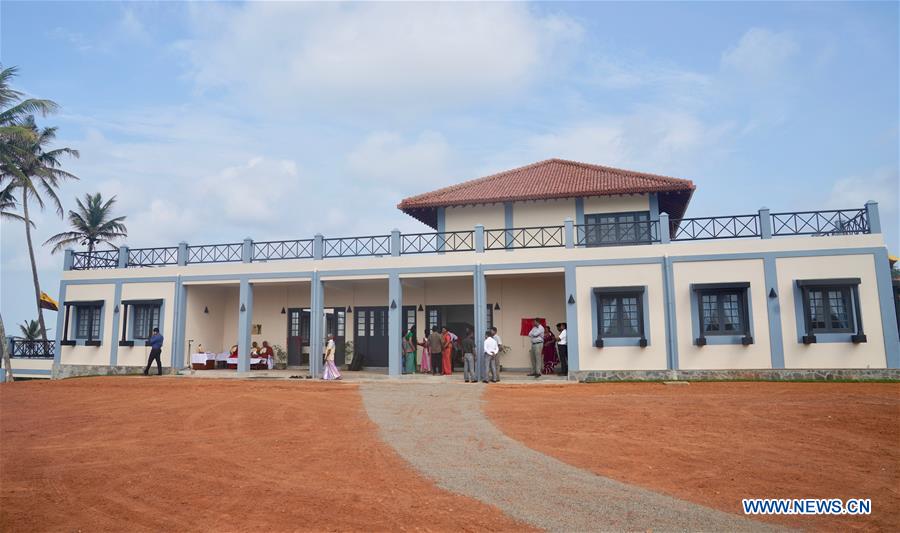
Photo taken on Sept. 27, 2018 shows the China-Sri Lanka Joint Centre for Education and Research (CSL-CER) at the University of Ruhuna (UOR) in Matara, Sri Lanka. Sri Lanka and China inaugurated a new building for the China-Sri Lanka Joint Centre for Education and Research (CSL-CER) at the University of Ruhuna (UOR), in southern Sri Lanka with the aim of strengthening marine science and research in the island country, the UOR said in a statement on Saturday. (Xinhua/Tang Lu)

The CAS along with the UOR and other Sri Lankan agencies will push this center to play a bigger role in the international cooperation on marine sciences and education in the Indian Ocean region.

Hou Jianguo, vice president of the Chinese Academy of Sciences, said the CAS will continue to promote comprehensive science and education cooperation with Sri Lanka using the newly launched ocean observation platform.

Acting Vice Chancellor of the UOR Nayana Alagiyawanna said the joint observation system of the tropical marine environment set up by the CAS and the UOR a few years ago had laid UOR on an important position in the field of marine research in Sri Lanka.

Sri Lanka’s police chief pulls out of controversial visit to Scotland

September 30th, 2018

PHIL MILLER Courtesy Edinburgh Evening News

A controversial visit to Scotland this week by Sri Lanka’s police chief has been cancelled at the last minute after organisers appeared to bow to external pressure.

Sri Lanka’s Tamil minority has long accused police there of using torture to crush its independence movement.

Inspector General Pujith Jayasundara was due to arrive in the UK today and spend the week at the Scottish Police College in Fife.

His five-strong delegation was expected at Tulliallan Castle for talks on the way that community policing is structured and delivered in Scotland”, a police spokesperson had said.

However, on Friday night the Foreign Office said plans for the delegation have changed and the visit is now no longer going ahead next week”.

The visit was set to be contentious. Green Party MSP and ex-policeman John Finnie said he was concerned by the reputational damage that can flow from repressive regimes having any form of relationship with our much- respected police service”.

Sri Lanka police chief Pujith Jayasundara, right, at police headquarters in Colombo. Photograph: Ishara S Kodikara/Getty

Scotland on Sunday understands socialist group Tamil Solidarity was planning a demonstration during Jayasundara’s visit. Influential British Tamil rapper M.I.A. was also about to call for protests.

Sri Lanka’s police continues to be dogged by allegations of torture. This year a UN expert highlighted distressing testimonies of very brutal and cruel methods of torture”, noting the Tamil community was stigmatised and feels disenfranchised”.

Last weekend a film about M.I.A.’s life launched in cinemas across Scotland, showing how the singer fled Sri Lanka’s civil war as a child before claiming asylum in the UK and building a career as an international superstar.

She described the situation for Tamils in her homeland as genocidal” and said: I hope Scottish independence activists and leaders will protest the police chief’s visit because allowing the relationship between the Sri Lankan state and the Scottish government is not the will of the Scottish people.”

She added: In the wake of the Scottish independence referendum movement, it’s terrible to see such relationships against Tamil self-determination are allowed to flourish on Scottish grounds.”

Environmental activist Tilly Gifford expected many Scots would have supported Tamil protests during Jayasundara’s visit. She said: Scotland is not a shining example of community policing.”

Police Scotland said that: All of the UK’s police assistance work in Sri Lanka is subject to robust risk assessment through the Overseas Security and Justice Assistance process.”

A Scottish Government spokesperson said: Any visit by foreign delegates to the Police Scotland training college is a matter for the Chief Constable.”

මුතුරාජවෙල තෙත් කලාපයෙන් අක්කර 100ක් විනාශ කරමින් ස්භාවික වායු බලාගරයක් ඉදිකිරීමට කැබිනට් යෝජනාවක්

September 30th, 2018

වැසිවනාන්තර සුරකින්නන්ගේ සංවිධානය

ශ්‍රී ලංකාවේ සුවිශේෂම පරිසර පද්ධතියක් වන මුතුරාජවෙල තෙත්බිම ඉතා ඉහල ජෛව විවිධත්වයකට උරුමකම් කියන්නා වූ පරිසර පද්දතියක් වන අතර එම තෙත්බිම හෙක්ටෙයාර 6300 ක පමණ ප‍්‍රදේශයක් පුරා ව්‍යාප්තව ඇත. ස්වභාවික සම්පත් සංරක්ෂණය පිලිබඳ ජාත්‍යන්තර සංගමය (IUCN)  ආයතනය මගින්  සිදු කල අධ්‍යනයකින් සත්ත්ව විශේෂ 209ක්, ශාක විශේෂ 194 ක්, මත්ස්‍ය වර්ග 40 ක්, උභයජීවී විශේෂ 14 ක්, උරග විශේෂ  31 ක්, කුරුළු විශේෂ 102 ක් හා සමනල් විශේෂ 48 ක් මෙහිදී හඳුනාගෙන තිබේ. එමෙන්ම ශ‍්‍රී ලංකාවේ වාර්ථා වන කඩොලාන විශේෂ 22න් 18ක්ම මෙහිදී හඳුනාගෙන ඇත. එවැනි වටිනාකමක් සහිත මෙම තෙත් බිමෙහි වර්තමාන ප‍්‍රමාණය හෙක්ටෙයාර 3068ක් දක්වා අඩුවීමට මූලික හේතුව අවිධිමත් සංවර්ධන කටයුතු සඳහා රජයේ දෙපාර්තමේන්තු මගින් තෙත් බිම ගොඩකිරීමත් විවිධ පුද්ගලයින් විසින් අනවසරයෙන් මෙම තෙත් බිම අත්පත් කරගැනීමත් නිසාය. එබැවින් දැනට අභයභූමියක් ලෙස ගැසට් කර ඇති හෙක්ටෙයාර 1777 වහා පුළුල් කර සමස්ත මුතුරාජවෙල තෙත් බිමම නීත්‍යානුකූලව ආරක්ෂා කිරීමට වහා පියවර ගත යුතු ඇතත් මේ වන විට විහාල වශයෙන් හානිකර ව්‍යාපෘති මෙම භූමිය තුළ ඉදිකිරීමට පිඹුරුපත් සකස්වෙමින් පවතී.

ශ්‍රී ලංකාවේ සුවිශේෂම පරිසර පද්ධතියක් වන මුතුරාජවෙල තෙත්බිමට එල්ල වන විවිධ තර්ජන හමුවේ ශ්‍රී ලංකා විදුලි බල මණ්ඩලය ඉන්දියාවේ එන්.ටී.පී.සී. සමාගම සමඟ එක්ව ඉදිකිරීමට සූදානම් වන  ස්වාභාවික ද්‍රව වායු බලාගාරයකට (LNG) අක්කර 100 ක භූමියක් මුතුරාජවෙලින් වෙන් කරන ලෙස අමාත්‍ය රංජිත් සියඹලාපිටිය ඇමතිතුමා පසුගිය 18 වෙනිදා කැබිනට් හමුවේදි යෝජනාවක් ඉදිරිපත් කර තිබේ. මෙම LNG ව්‍යාපෘතිය මෙරට විදුලි අවශ්‍යතාවය සපුරා ගැනීම සඳහා අත්‍යවශ්‍ය වුවද, ඒ සඳහා මුතුරාජවෙල වැනි වටිනා පාරිසර පද්ධතික අක්කර 100ක් වැනි විශාල භූමියක් විනාශ කිරීම අමන තීන්දුවක් වන අතර එමගින් සෘජුවම මුතුරාජවෙල මත යැපෙන දහස් ගණනක් ධීවර ප්‍රජාව අසරණ තත්වයකට පත් කිරීම, මේ ආශ්‍රිතව බැඳුනු සංචාරක කර්මාන්තය අඩාල කරමින් දස දහස් ජනයාගේ ජීවනාලිය බිඳ දැමීම ,  කොළඹ හා අවට ප‍්‍රදේශ තුල ගංවතුර පාලනයට හා නගරයේ උෂ්ණත්වය පාලනය කිරීමද අවහිර කරමින් සිදු කරන්නා වූ විශාල විනාශයකි.

වටිනා සම්පතක් වන මුතුරාජවෙල තෙත් බිම තුල රාජ්‍ය හෝ පෞද්ගලික කිසිදු ව්‍යාපෘතියක් කිරීමට අවසර නොදිය යුතු අතර, එය අධිරක්ෂිත ප‍්‍රදේශයක් ලෙස නම් කල යුතුය. එබැවින් මෙම ව්‍යාපෘතිය සඳහා මුතුරාජවෙල තෙත් බිමෙන් ඉඩම් ලබා නොදෙන ලෙසත්, ඒ සඳහා පරිසර පද්ධතියට අවම බලපෑමක් එල්ල වන විකල්ප භූමි ප‍්‍රදේශයක් භාවිතා කිරීමට කටයුතු කරන ලෙසත් මේ පිළිබඳව දැනුවත් කරමින් වැසිවනාන්තර සුරකින්නන්ගේ සංවිධානය මගින් ජනපති ඇතුළුව වගකිව යුතු ආයතනද ලිපි මගින් දැනුවත් කර ඇත.

මුතුරාජවෙල තෙත් බිමේ විශාල ප‍්‍රදේශයක් ගොඩකිරීමට තැත් කිරීම පිලිබඳව පසුගිය මාර්තු මස නොයෙකුත් මාධ්‍ය ආයතන මගින් වාර්තා වූ පසු ඒ පිළිබඳව සොයා බැලීමට  2018 මාර්තු මස 22 දින ජනාධිපතිතුමන් සිදුකල මුතුරාජවෙල නීරීක්ෂණ චාරිකාවෙන් අනතුරුව එය ගොඩකිරීම නැවැත්වීමට අදාල රාජ්‍ය බලධාරීන්ට නියෝග කල අතර මුතුරාජවෙල තෙත් බිමේ වටිනාකම පෙන්වා දෙමින් ඉදිරියේදී එය කිසිම හේතුවක් මත ගොඩ නොකරන ලෙස නියෝග කරන ලදි. එසේ තිබියදි මේ පරිසර පද්ධතිය තුළ ව්‍යාපෘති සිදු කිරීමට යෝජනා කරන්නේ රාජ්‍ය නායාකයා වන ජනපතිතුමන්ගේ තීරණයද හෑල්ලුවට ලක්කරමිනි. එබැවින් මෙම යෝජනාව වහාම හකුලා ගැනීමට කටයුතු කරන මෙන් අදාළ බලධාරීන්ගෙන් වැසිවනාන්තර සුරකින්නන්ගේ සංවිධානය ඉල්ලා සිටිමු.

පේශල පසන් කරුණාරත්න

මාධ්‍ය සම්බන්ධීකාරක

Duty-free permits to MPs stopped for theatric effect

September 30th, 2018

By Shamindra Ferdinando Courtesy The Island

The Finance Ministry, yesterday, admitted that almost all lawmakers had imported vehicles on duty free permits issued to them following last parliamentary election in Aug 2015 therefore suspension of issuing of permits for a period of one year wouldn’t have an impact on parliamentarians.

The parliament comprises 107 (UNP and its allies), 69 (Joint Opposition), 26 (SLFP), 16 (TNA), 6 (JVP) 1 (EPDP).

The Island raised the issue with M. Ali Hassen, Director of Information, Finance and Mass Media Ministry, who issued a statement on Saturday as regards severe restrictions imposed on imports, including the importation of vehicles by lawmakers for a period of one year in a last ditch attempt to ease pressure on the rupee. Hassen said that permits wouldn’t be issued in case new members entered parliament in the event of death or due to resignation of National List MPs.

In addition to those who had been originally elected and appointed to parliament, Field Marshal Sarath Fonseka (National List), Piyasena Gamage (Galle District, in place of Geetha Kumarasinghe who lost

her seat as a result of a Supreme Court ruling) and SLMC and ACMC, too, appointed a member each through the UNP National List. All newcomers had received vehicle permits.

The Finance Ministry announced curbs on imports close on the heels of Finance and Mass Media Minister Mangala Samaraweera declaring at the Royal College he would stop importing of super luxury vehicles by members of parliament.

The Finance Ministry announcement dominated electronic media on Saturday.

The Joint Opposition yesterday declared that nothing short of immediate change of government could save the national economy. Addressing the media at Vajirasharma temple, Borella, top JO spokesman on economic matters, Colombo District MP Bandula Gunawardena insisted that the Sirisena-Wickremesinghe coalition couldn’t overcome the current crisis by restricting imports.

Gunawardena said that restrictions on imports under any circumstances were contrary to the UNP-led government’s dossier on new trade policy submitted to parliament.

Asked by The Island whether he had seen the Finance Ministry statement issued on Saturday in respect of restrictions, MP Gunawardena claimed he didn’t.

Asked whether he felt the Finance and Media Ministry had deliberately deceived the public by declaring restrictions on lawmakers after the majority of them, including members of the JO sold super luxury vehicles imported on permits issued by the parliament, MP Gunawardena asserted that financial crisis couldn’t be resolved by denying duty free vehicles to MPs.

The Island said that lawmakers owed an explanation on whether they should be allowed to sell vehicles that had been imported with tax exemption amounting to Rs 30-33 mn each, Gunwardena said that he didn’t sell his vehicle.

The Island reminded the MP that the entire list of those lawmakers who had sold their vehicles and persons who bought them was available with The Island thanks to Right to Information query posed by attorney-at-law and public litigation activist Nagananda Kodituwakku.

Asked whether, he believed those elected at the next parliamentary election in 2020 should be deprived of such an exclusive privilege, MP Gunawardena said the decision on perks and privileges should be taken by political parties represented in parliament. The JO spokesman refrained from commenting on The Island observation that in spite of them objecting to the government, both parties take a common stand as far as the perks and privileges of elected representatives are concerned.

The current government over a year ago approved an additional Rs 100,000 each for members of parliament in addition to the monthly salaries and other perks. On top of all that a group of selected green eyed lawmakers numbering about 50 receive a monthly transport allowance amounting to Rs 200,000.

MP Gunawardena admitted that the Commission to Investigate Allegations of Bribery or Corruption (CIABOC) had authorized the transfer of vehicles imported by lawmakers using duty free permits.

Nagananda Kodituwakku said that a section of members of parliament had legally transferred vehicles imported by them; some refrained from transferring the vehicles to new owners.

Kodituwakku has moved the Supreme Court against the failure on the part of the CIABOC to prosecute lawmakers on the charge of defrauding the state of revenue amounting to Rs 7 bn.

The following is the latest list of those lawmakers who had transferred vehicles. The list was obtained under the RTI Law:


ප්‍රජාතන්ත්‍රවාදයේ මූලික අංගයක් වූ ඡන්දය කල් දමමින් මේ ආණ්ඩුවේ තරු පහේ ප්‍රජාතන්ත්‍රවාදයක්දයක් ගැන කතා කරනවා. ගෝඨාභයගෙන් ආණ්ඩුවට කනේ පහරක්.

September 30th, 2018

 Lanka Lead News

මේ ආණ්ඩුවට කිසිම දෙයක් සාර්ථකව කරගත නොහැකි වී ඇත්තේ රාජ්‍ය සේවකයන්ට කිසිඳු තීරණය ගෙන නිදහසේ ක්‍රියා කිරීමට තිබූ ඉඩකඩ ඉඩකඩ පොලිස් විමර්ශනය මගින් අහිමි කිරීම නිසයි. හිටපු ආරක්ෂක ලේකම් ඝෝඨාබය රාජපක්ෂ මහකා ප්‍රකාශ කළ සිටියේ එළිය සංවිධානයේ අද දින කඩුවෙලදි පැවති සම්මන්ත්‍රණයේදී.

ප්‍රජාතන්ත්‍රවාදයේ මුලික අංගයක් වූඡන්ද කියක් මේ ආණ්ඩ්ව කල් දැම්මද? එහෙම කරන මේ අය තරුපහේ ප්‍රජාතන්ත්‍රවාදය ගැන කතා කරනවා

මෙවැනි අදූරදර්ශී නායකත්වයක් යටතේතේ සිදු වූ දෙය දෙස බලන්න. අගමැතිවරයාගේ indrustrial hub ආදිය ගැන කතා කරා. නමුත් කළ කිසිවක් නැහැ.

එදා හමුදාවේ පිරිස් බලය වැඩි කළ යුතු යැයි කියා මා ආරක්ෂක මණ්ඩලයට යෝජනා කලාට පසු දින ජනාධිපතිතුමන් විමසුවේ කීයකින්ද කියලයි. කොටස් වශයෙන් වැඩි කිරීමට එතුමන් මුදල් අමාත්‍යාංශයේ ලේකම්වරයාට උපදෙස් දුන්නා. ඒ ආකාරයේ නිර්භීත තීරණ ගත්නත් එවැනි දේ ක්‍රියාත්මක කළ යුතු අති දක්ෂ නිලධාරීන් තෝරා ගෙන සිටියා.

අද විශේෂ උසාවි පිහිටිවල තිබෙනවා. ආර්ථිකය කඩා වැටීමට හේතු වූ අය අද ඉන්නේ මේ ආණ්ඩුව ඇතුලේ. මත්තල හම්බන්තොට දියුණු කිරීමට අපට අපට සැලසුමක් තිබුණා.

ඇවන්ගාර්ඞඞ් ව්‍යාපෘතිය නාවික හමුදාවේ රත්නා ලංකා සමාගම යටතේ ඇවන්ගාඩ් සමාගම යන තුන් කොට්ඨාසය යොදාගෙන අපි විශාල විදේශ විනිමය ප්‍රමාණයක් ගෙනත් දුන්නා. විශාල පිරිසක්ට අපිත් රැකියා දුන්නා. මේ සියල්ල මේ ආණ්ඩුව නැතිකර දැම්මා. මෙවැනි අැතිකරපු ව්‍යාපෘති මේ ආණ්ඩුව නැති කළා. යුද්ධයෙන් පසුව මෙරටට ගෙන ආ ව්‍යාපෘති සැන්ග්‍රිල්ලා හෝටලය, ඉන්දියානු දුම්කොල සමාගමේ සේවක ව්‍යාපෘතිය ටාටා ව්‍යාපෘතිය ආදී ව්‍යාපෘති දෙස අපි මේ රට ගෙනාවා. ඒවා මේ අය නවතා දැම්මා. මෙවැනි තත්වයක් ඇතිවුනේ මේ ආණ්ඩුවේ දූරදර්ශී ක්‍රියා පිළිවෙත හා දූෂිත ක්‍රියාදාමයක් නිසා. මේ සියල්ල දේශපාලන පළිගැනීම් පමණයි.

යුද්ධයේ අවසන් දින කිහිපය මෙහෙයවූයේ ගෝඨාභය රාජපක්‍ෂයි.. ජනපතිගේ නිවුයෝක් ප‍්‍රකාශය ෆොන්සේකා යළි පතුරු ගහයි

September 30th, 2018

Lanka Lead News

ශ්‍රී ලංකාවේ පැවති යුද්ධය ගැන කවුරුන් වුවද වැරදි තොරතුරක් කියන්නේනම් එය නිවැරදි කිරීමට තමන් පසුබට නොවන බව වනජීවී ඇමති සරත් ෆොන්සේකා මහතා පවසයි.

යුද්ධය පැවති අවසන් දින කිහිපයේදී හිටපු ආරක්‍ෂක ලේකම් ගෝඨාභය රාජපක්‍ෂ මහතා ලංකවේ සිටි බවත් ඔහු සිටියදී වෙනත් කිසිදු ඇමතිවරයෙකුට ඊට අතගැසීමේ අවශ්‍යතාවයක් නොවූ බවත් ෆොන්සේකා මහතා අවධාරණය කර සිටියි.

යුද්ධය පැවති කාලසීමාව තුළ ඉන්දියාවෙන් ශ‍්‍රී ලංකාවට කිසිම තර්ජනාත්මක දෙයක් නොතිබූ බවත් ඉන්දියවෙන් ආශිර්වාදය තිබූ බවත් එවකට හිටපු හමුදාපතිවරයා වූ සරත් ෆොන්සේක මහතා සදහන් කරයි.

දෙරණ රූපවාහිනියේ ‘මොකද වුනේ’ වැඩසටහන හා එක්වෙමින් ඔහු මෙම අදහස් පළ කළේය.

කොටි සංවිධානය ඉන්දියාවේ හෝ වෙන කොහේ හෝ සිට කොලඹට ගුවනින් දැවැන්ත ප‍්‍රහාරයක් එල්ල කරනු ඇති බවට ලද තොරතුරු මත යුද්ධයේ අවසන් සති දෙකේදී හිටපු ජනාධිපතිවරයා, හිටපු අගමැතිවරයා, හිටපු හමුදාපතිවරයා, හිටපු ආරක්ෂක ලේකම්වරයා එම කාලයේදී ලංකාවේ නොසිටි බවත් තමන් වැඩ බලන ආරක්‍ෂක ඇමතිවරයා ලෙස එම යුද්දයේ කටයුතු මෙහෙයවූ බවත් ජනාධිපති මෛත‍්‍රිපාල සිරිසේන මහතා පසුගියදා නිවුයොක් හිදී කරන ලද ප‍්‍රකාශයකට පිළිතුරු ලෙස ෆොන්සේකා මහතා මෙම අදහස් පළ කළේය.

Sirisena identifies new requirement for reconciliation: freedom from foreign interference

September 30th, 2018

By P.K.Balachandran/DailyFT

It is generally stated by liberals and the human rights community that for Sri Lanka to achieve ethnic reconciliation, the Government will have to implement Resolution 30 (1) and 34 (1) passed by the UN Human Rights Council (UNHRC) in 2015 and 2017 respectively.

But given the political difficulties faced by the Government in implementing them, President Maithripala Sirisena has added a further requirement, and a critical one at that, to bring about reconciliation. He has pleaded for non-interference by outside powers, including the United Nations, in the reconciliation process.

Sirisena identifies new requirement for reconciliation: freedom from foreign interferencePresident Maithripala Sirisena with Sri lankan army to brass

But the plea, made in his speech at the UN General Assembly (UNGA) on Tuesday, is likely to be rejected by the Tamils, liberals, the human rights lobby in the island and overseas, and also the UN in Geneva and New York.

For the Tamils, it will be a return to a bitter past in which they had tried to solve the ethnic issue within Sri Lanka, with Lankan governments and Sinhalese parties, and failed miserably. As Suresh Premachandran of the Eelam People’s Revolutionary Liberation Front (EPRLF) once said: Sri Lanka has proved beyond doubt that the Tamil issue cannot be settled without outside intervention.”

The President’s plea has also come at a time when the Northern Provincial Council (NPC), an elected body, has unanimously asked the UN to refer cases of alleged war crimes against members of the Lankan armed forces to the International Criminal Court (ICC); to impose targeted sanctions against Lankan army personnel; and to conduct a referendum among North-Eastern Tamils on the kind of political structure they wish to live under.

Tamil radicalism has gained traction lately due to Northern Province Chief Minister C.V. Wigneswaran’s utterances and former Minister Vijayakala Maheswaran’s publicly voiced yearning for the return of the LTTE. This trend is likely to get a further boost due to the President’s UN speech. The coming elections to the NPC, the Presidency and parliament, will only strengthen radicalism.

Tamil nationalism offers fertile soil for the growth of Sinhalese majoritarian nationalism, which is a bigger challenge to the Government than Tamil nationalism. Sinhalese nationalism has to be appeased for political survival.

Hemmed in on all sides, the President sought a way out. To him, the way out was to seek the removal of a major irritant in the reconciliation process, namely, foreign participation or intervention. In the 1980s, Indian intervention had worsened the situation in the island. Norwegian and Japanese efforts in the 2000s had only sharpened the ethnic divide. UN intervention since 2009 had not borne fruit. It had only widened the ethnic gulf.

President Sirisena, like other Sinhalese nationalists, feels that foreign intervention has only added new dimensions to the conflict and undermined indigenous efforts to bring about reconciliation.

This is what made him make a fervent plea at UNGA on Tuesday. Sirisena asked member-nations to respect national sovereignty when it intervenes in other countries to settle disputes, enforce human rights or bring about reconciliation.

With respect, I request to let us solve our problems. Independence of a country is very important,” Sirisena said.

As a sovereign state, we need no foreign influence or threats. As such, I reiterate my request to all, as a strong nation, that allow us to sort out our problems as a sovereign nation, that moves forward while protecting our rights.”

I respectfully request the support of everybody as we will solve the problems that need to be solved as Sri Lankans. We also need your cooperation in my Government’s mission to erase doubt, fear and mistrust among communities living in my beloved motherland, while nurturing lasting peace among all communities,” he added.

Seeking international recognition and appreciation for the role of the much maligned Sri Lankan armed forces in defeating terrorism and separatism, Sirisena said: It was one of the world’s strongest terrorism groups that the Armed Forces of Sri Lanka eradicated. It is thanks to that achievement that Sri Lanka remains an unbroken, non-divided country with permanent peace.”

Our armed forces have contributed immensely to building lasting peace in Sri Lanka by defeating a strong terrorism organisation. I mention this achievement with respect and thank Sri Lanka’s armed forces for their dedication to bring lasting peace and protect the unitary state of Sri Lanka.”

Radical departure

What the Lankan President said at UNGA is a radical departure from the policy his Government announced when it came to power in 2015. Till the President’s statement in New York on Tuesday, the Government had pledged to implement UNHRC resolutions 30 (1) and 34 (1) of 2015 and 2017, though on the ground, the pledges were not translated into actions on account of political difficulties.

For fear of losing popular support, it has been unwilling to drag its armed forces personnel before special judicial mechanisms in which there will be foreign judges, prosecutors and forensic experts.

The Government, the Sinhalese opposition parties, and the Sinhalese majority at large, could not for a moment entertain the thought that their soldiers might have committed crimes in the process of eliminating the LTTE.

Excesses were deemed to be natural in the fog of war and acceptable in a fight against an exceptionally brutal militant group which was brazenly using human shields, human bombs and child soldiers, and with no compunction about planting deadly bombs in public places like railway stations, buses and banks aimed at killing innocent civilians.

The Government was finding it difficult to keep its pledge to find out the fate of the thousands of Tamils who had disappeared. It had only recently set up an Office of Missing Persons.

The police have been unable to pursue cases against armed forces personnel in abduction and elimination cases because the President had expressed opposition to detaining them for long without being charged as this could affect the forces’ morale.

Persistent fear of the resurgence of Tamil militancy has stalled reform of the anti-terror law. The whitewashing of the brutality of the LTTE by the UN has made the transitional justice mechanisms suggested by the UNHRC seem iniquitous and potentially dangerous.

The under-performance of the Sirisena-Wickremesinghe regime in the last three-and-a-half years has buttressed Rajapaksa’s case that a weak Government has been giving in to the demands of the Western powers which allegedly want Sri Lanka to be divided on ethnic lines and weakened militarily.

Sirisena’s pleas at the UNGA should be seen in this context. In his view, an end to, or mitigation of, foreign involvement will remove a major irritant and divider in Sri Lanka and allow Sri Lankans to devise their own means to facilitate reconciliation through mutual discussions and adjustments.

Past failures of such efforts cannot be an excuse for not taking this route as conditions have changed. Sirisena believes that domestic issues are best solved within the country if a lasting solution is to be arrived at.

The President has however clarified that he is not totally against UN or outside involvement. His plea is that the involvement should only be to facilitate the implementation of schemes and agreements worked out by Sri Lankans themselves. For example, Sirisena would like foreign donors to help rehabilitate families whose kith and kin had gone missing.


යුද අපරාධ චෝදනාවට එරෙහිව එල්ල කළ අභියෝගයට ජිනීවා තීන්දුව නොවැම්බරයේ

September 30th, 2018

කීර්ති වර්ණකුලසූරිය ජිනීවා සිට 

ශී‍්‍ර ලංකා හමුදාවට යුද අපරාධ චෝදනා එල්ල කරන ජිනීවා යෝජනාව නීති විරෝධී බවට මානව හිමිකම් කවුන්සිලයට ඉදිරිපත් කළ පැමිණිල්ලේ තීන්දුව ලබන නොවැම්බර් මස ප‍්‍රකාශයට පත් කරන බව එම කවුන්සිලයේ ජ්‍යෙෂ්ඨ නිලධාරියෙක් පැවසීය.

රියර් අද්මිරාල් සරත් වීරසේකර සහ ආචාර්ය ගුණදාස අමරසේකර යන මහත්වරු මෙම පැමිණිල්ල ඉදිරිපත් කර තිබිණි. 

කිසිදු විවාදයකින් තොරව සහ ඡුන්ද විමසීමකින් තොරව මෙම ජිනීවා යෝජනාව අනුමත වීම නීති විරෝධී බව බි‍්‍රතාන්‍ය රාජ නීතීඥ සේවර නයින්ද එම පැමිණිල්ලේ පාද සටහන් තබා තිබිණි. 

ජිනීවා යෝජනාවට ශී‍්‍ර ලංකාවේ හිටපු විදේශ ඇමැති මංගල සමරවීර මහතා සම අනුග‍්‍රහකත්වය ලබා දුන්නේ පාර්ලිමේන්තුවේ අනුමතයකින් තොරව බව ද පැමිණිල්ලේ දක්වා ඇත.

මානව හිමිකම් කවුන්සිලය සම්මත කළ යෝජනාවකට අභියෝග එල්ල වූ මුල් අවස්ථාව මෙයයි. 

මෙම යෝජනාව නීති විරෝධී බව මානව හිමිකම් කවුන්සිලයේ විමර්ශන ඒකකය තීන්දු කළහොත් ලොව අනිකුත් රටවල් ද තමන්ට එරෙහි යෝජනාවලට එරෙහිව පැමිණිලි කරනු ඇත. 

ගෝලීය ශී‍්‍ර ලංකා සංසදය යොමු කළ මේ පැමිණිල්ල නිසා කොටි ඩයස්පෝරාව දැඩි කලබලයට පත්ව ඇත.

Sri Lanka’s Conflict: Response to proponents of the ‘Both sides must take blame’ theory

September 29th, 2018

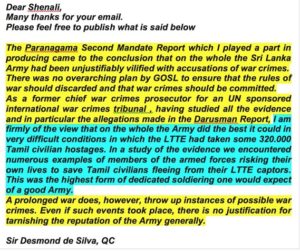
A few days back I wrote an article titled Shouldn’t the UN & World give priority to the Victims of LTTE killings first” to which the following comment has been circulated to me & a host of others. In case there are others peddling the notion that both sides must take equal blame, I would like to pose some questions for which I hope the proponents of this theory can answer validating their logic for putting a national army & a terrorist organization on par & treating them both equally and present the rationale in not highlighting all of the crimes the LTTE has committed which are in far excess than that which are being attributed to the army, on the premise that it is ‘blind loyalty’.

This is the link to my article https://www.lankaweb.com/news/items/2018/09/27/shouldnt-the-un-world-give-priority-to-the-victims-of-ltte-killings-first/

& this is the comment received.

Who is this ‘knowledgeable’ audience? Can we ignore LTTE carnage since 1980s upon innocent villages initially & then entering towns & cities to carry out bombs & suicide missions. Shouldn’t our empathy go to these dead victims & their families? Are we not lucky not to be in their place? Then what about the living injured how many of these are still suffering? Many of them cannot even earn their own living because of LTTE. This past cannot be swept aside by anybody. Only the victim’s families & the living victims know what they suffered from LTTE.

How can we ask them to forget over 300 murderous attacks by LTTE – virtually every day, every month, every year for 3 decades? When LTTE were involved in these murderous acts, were the soldiers doing the same to us, the citizens? Therefore, can we put this part of the past aside because it does not belong to the ‘both sides to blame theory”? Who are we to tell the victims, to let bygones be bygones simple because we want to strike a deal of compromise.

As for the fair outcome for the people involved” after May 2009, the lives of innocent civilians are now saved from LTTE bombs & suicide missions, poor & low caste Tamil children are saved from being kidnapped & turned into child soldiers & the soldiers too are not at risk of getting blown to pieces from landmines & other LTTE bombs. It is only those who benefitted by LTTE Inc who are angry & upset & wish to seek revenge.

Is this ‘knowledgeable’ audience also aware & able to link the LTTE demands being connected to the original self-determination started in Tamil Nadu, borrowed by Sri Lankan Tamil leaders as they needed a slogan to hold the Tamil people together & hijacked by the LTTE to legitimize their armed struggle which initially had the backing of the Tamil political leaders. Has it not occurred to this ‘knowledgeable’ audience that this entire homeland & separatist propaganda is simply a cover to masquerade their illegal international network that brings in millions to their kitty from human smuggling, illegal drug smuggling, credit card scams, money laundering etc. The issue has also a ruse for geopolitical agendas of West & India. If none of these factors are taken to consideration in any discussion or negotiation, no wonder they think us fools & easily gullible.

It is agreed that the LTTE when it took up the armed struggle were like the JVP hyped up youth that could easily be brainwashed by an ideology fed into their system. Many of these young cadres would have been put on drugs given that LTTE were versatile drug/narcotic smugglers. We are also aware that many of these young children kidnapped from poor & low caste Tamil homes were traumatized in many ways through gruesome training to kill & hate Sinhalese whom they had not even met or seen. Our hearts do melt when hearing these individual stories related by the 594 child soldiers who were given a presidential pardon & turned into ordinary children by the previous government – the story of Gokulan the cadre turned singer is one that will melt any heart. But, the fact remains many of these cadres were willing killers while others were forced to kill. These willing killers were among the surrendered LTTE cadres who refused to be rehabilitated some of whom the TNA are now asking to be released claiming them to be political prisoners. Are the ‘knowledgeable’ audience aware of this? We cannot sympathize with willing killers.

Then we have the members of the armed forces the bulk of whom come from rural, poor Sinhala Buddhist homes. Every home, every workplace, everywhere you find a black sheep & there is no denying that some soldiers would not have functioned to the military code of conduct but the military has enough of records of removing such soldiers that have been found guilty and there is a system that the military follows in removing such soldiers/officers.

However, the tactics adopted by a national army in defense of the country cannot be compared to the tactics carried out by an illegitimate terrorist group. The tactics the armed forces carry out should remain confidential & no one can demand these to be shared with any party (the disclosure of this we know led to the Millennium City debacle & the killing of 44 armed forces personnel). In the case of the LTTE – anyone going against the LTTE leader was simply shot dead, any child not willing to undergo training & crying to return home also got shot dead. We all know what happened to Mahaththaya who turned out to be a spy for India. So where do we place this in the ‘both sides to blame’ theory?

When anyone accuses that I am highlighting only the fault of the other party”, can this person show me cases where the armed forces have entered Tamil villages cut up pregnant mothers, sleeping babies & men farming? Can these accusers show me examples of our armed forces entering mosques & murdering Muslims in prayer? Can these accusers show me examples where our armed forces have entered Buddhist temples or Kovils & shot dead people meditating & praying? Can these accusers show me examples of our armed forces carrying out suicide attacks & bombs on passenger buses, trains & in public places? Can these accusers show me how many children our soldiers have kidnapped & turned into child soldiers? So whoever comes up with this ‘highlighting only the fault of the other party’ needs to be more sensible than making barren statements which they cannot substantiate with facts.

In claiming that I am highlighting only the fault of the other party the next allegation is that my loyalty often seems quite blind & insensitive”are we to be loyal to an internationally banned terrorist movement? Are we clap at all of the murders committed by the LTTE over the decades and credit these murders to ‘oh they were simply going against the bad policies of the State & armed forces”, how can we be so heartless to these innocent victims, majority are from rural & poor homes and these victims are not just Sinhalese, Muslims but foreigners & Tamils too? Where are we blind or insensitive?

Can those proponents wishing to increase ‘credibility in the eyes of a discerning & knowledgeable reading audience’ give explanations for some examples given below which have increased since the new government took over in January 2015

  • Jaffna mayor attending LTTE commemoration
  • Jaffna University holding LTTE commemorations including unveiling a plaque for LTTE homeland quest
  • Northern Chief Minister Wigneswaran claiming no Sinhalese to be allowed in the North & East to live or Tamils to marry Sinhalese
  • Members of the TNA supervising the bulldozing of ancient archaeological sites
  • Pro-LTTE groups demolishing ancient Buddhist sites in the North & East
  • Weapons suddenly emerging from hideouts across the North & East
  • Armed groups also roaming the North some even attacking members of the armed forces.
  • Tamil diaspora & TNA claiming LTTE cadres to be political prisoners & demanding their release
  • Tamil diaspora & TNA demanding demilitarization & removal of military camps & soldiers from the North
  • Tamil diaspora groups lobbying foreign governments, foreign MPs & even UN to continue their claim for a separate Tamil homeland & continuing bogus propaganda campaign
  • Foreign Intelligence confirming that despite the LTTE leader & ground leadership being eliminated the LTTE ideology & international support network remains alive & functioning
  • Foreign Arrests & judgements against LTTE in foreign courts for LTTE killing
  • The President of Sri Lanka at the UN claiming that the LTTE financiers must be dealt with

Those that want to present the scenario of taking the supposed middle path & simply claiming both sides committed wrongs must next explain what should happen thereafter. What are they proposing beyond the acceptance that both sides committed crimes? Have they forgotten that even the legally questionable Ban Ki Moon’s 3 member panel report also faulted both sides but the War Crimes Tribunal is only against the Armed Forces that too without evidence of having killed 40,000 people – 9 years on we still do not have 40,000 dead names, there are no skeletons even!

While on the subject of treating both parties equally – can we have examples of LTTE saving close to 300,000 as the Sri Lanka Armed Forces did in May 2009?

Win for whoever is mightier” – every game has a winner & a loser. Both world wars ended up victor’s justice. We continue to seek accountability for over 500 years of colonial crimes perpetrated by the very countries that are self-appointed world’s policemen but continuing to commit every crime they accuse others of. Can anyone show where UN or these Western nations have been unbiased & impartial? Where has the West’s war on terror landed – every nation the West wants to conquer & take over their resources has some terrorist trouble! It is those peddling these new notions that are now even asking not to honor the fallen heroes with a minutes silence probably because LTTE cadres are not included in the honor! And the West is still going after the Nazi’s – men who are in their 90s are still being arrested!

We are living in times when the self-appointed custodians of peace & human rights are bombing countries, illegally invading & occupying them & even manufacturing conflicts & creating terrorists to justify their presence & enabling the sale of arms & ammunition to both the State army & the terrorists they have trained. We have a UN that has silently approved these supposedly ‘humanitarian R2P interventions” & even nodding their heads to sanctions knowing the victims are the common public. Anyone seeing the suffering of the people in Yemen will demand to close down the UN, the international NGOs & charities that are supposed to save people – can this ‘both sides must take blame’ be applicable to Yemen too?

It is unacceptable to put a legitimate national army on par with & equate it with an internationally banned terrorist movement (even if they are called insurgents or freedom fighters)

In an internal conflict as in Sri Lanka the rules of war apply to both sides & if such is the case we do not see the application of IHL & their violations by LTTE being used to demand criminal action against LTTE.

Let us also not forget & hope the ‘knowledgeable’ audience has also not forgotten that there would have been no requirement to call for a military defeat of the LTTE had India not threatened Sri Lanka not to capture a cornered Prabakaran in 1987 & instead whisked him off to India in an Indian helicopter, thousands of people would have been alive if the foreign governments aware of LTTE offices in their countries stopped these fronts from operating & materially supporting the LTTE over the years, thousands of property would not have been damaged if foreign governments did not knowingly sell their sophisticated equipment & communication and post-LTTE defeat when the UNSC Resolution 1373 was incorporated to ban 15 LTTE fronts operating from US, Canada, Norway, UK, Australia & other EU countries & India, if these governments had taken the interest to at least investigate these fronts operating from their countries there would not be any need to say LTTE international networks are alive but expect Sri Lanka to remove the Prevention of Terrorism Act & other terrorist counter measures that deal with likely terror scenarios repeating in Sri Lanka.

LTTE did not give us peace – LTTE gave us blood & tears. However, 27,000 soldiers sacrificed their lives to give us peace and an equal number lie injured some unable to even move a limb & they are not even 30 years old & they will continue to suffer like this for life. We cannot forget these sacrifices.

Moreover the co-sponsorship of the UNHRC resolution lays blame on the Sri Lankan Armed Forces & the demands for a new constitution, a war crimes tribunal by en bloc Western nations in the UN with their satellite states clearly reveal a bias. The both sides to blame theory can be applicable only to the last stages of the conflict in the application of IHL rules of war. However, the international terrorist experts tasked to look into the various allegations that had been made have clearly established that the Sri Lankan Armed Forces have not committed war crimes.

The comment ends by claiming Sri Lankans should become more mature in their attitude & approach” – the simple answer to this is so long as there is no level playing field, we see no reason why there should be crocodile tears for a terrorist movement with restorative justice for LTTE & retributive justice for the national army. In such a scenario, we must defend the under dogs which in this case is the National Army while the power of money has enabled the LTTE to purchase the mouths of foreign parliamentarians, foreign NGOs, foreign human rights groups, foreign lawyers on retainer payroll & even members of the UN.

https://www.lankaweb.com/news/items/2018/09/28/unacceptable-placing-sri-lanka-army-ltte-on-par-but-holding-war-crimes-tribunals-for-only-sl-army/

Anyone promoting the theory of ‘both sides must take equal blame’ are welcome to counter any of the arguments made above with facts & evidence.

Loyalty for the country & national army cannot be termed bias simply because I do not share the same feelings for an internationally banned terrorist movement. I see no reason to change this simply to strike a deal because deals cannot compromise the truth that LTTE killed people in cold blood under orders.

Prabakaran, LTTE cadres, LTTE linked TNA, separatist elements, LTTE fronts & anyone that has benefitted by the LTTE Inc must all take blame for prematurely ending the lives of thousands of people & there is no ‘both parties must take equal blame’ theory here.

Shenali D Waduge

“FOR A SOVEREIGN STATE’

September 29th, 2018

KAMALIKA PIERIS

Malinga H Gunaratne’s book ‘For a sovereign state’ was first published in October 1988. It went into a 2nd imprint only ten years later in 1998. This shows that the public were initially slow to appreciate the information given in the book. But after 1998 interest in the book has increased and the book went quickly into   several reprints, dated 2000, 2005 and 2009.

The book, written in the first person, in informal style, is about Gunaratne’s own experiences when tangling with Eelam, but the text provides valuable information on several matters relating to Eelam.

The book tells of an  elaborate plan, prepared in the Mahaweli ministry by, T.H.Karunatillake, Director, Planning and B.H.Hemapriya, media consultant, Mahaweli ministry,  with Gunaratne joining in, to  stop the forward march of Eelam. The plan was prepared in the beginning of 1983, a few months before the July riots, in strict secrecy so that the Tamil officers working in the Ministry would not hear of it.

The plan had two stages. The first stage was to establish Sinhala settlements in the river basins of Maduru Oya, Yan Oya and Malwatu Oya, with each settlement extending right to the sea. The Maduru Oya settlement would break the contiguity between Batticaloa and Trincomalee districts.  The Yan Oya settlement would sever the link between Trincomalee and Mullaitivu districts.  The Malwatu Oya settlement would fracture the connection between Mannar and Puttalam districts.

The second phase of the plan was to make use of the demographic change brought about by the Sinhala settlements and redraw the provincial map of Sri Lanka.  The boundaries of four provinces, Northern Province, North Central Province, North Western Province and Eastern Provinces would be redrawn, to create five provinces out of them.  The new province that would be created would be named North Eastern Province.

The planned new provinces and the districts that fall under them were:

  • Northern Province: districts of Jaffna, Kilinochchi and Mullaitivu.
  • North Central Province: districts of Vavuniya, Anuradhapura and Weli Oya

Weli Oya would be made a new district thus reducing the area of the Mullaitivu district.

  • North Western Province: districts of Mannar, Puttalam and Kurunegala.
  • North Eastern Province: districts of Polonnaruwa and Trincomalee. (This is the new province).
  • Eastern Province: districts of Batticaloa and Ampara.

This redrawing of districts would leave only the Northern Province as the Tamil majority province.  The rest of the north and east would be converted to Sinhala majority provinces.  The southern point of the Tamil majority Northern Province would be Mankulam, observed T. Sabaratnam.  (www.sangam.org/articles/view2/?uid=626).

When Gunaratne was working in the Mahaweli Ministry, in the 1980s Ven. Kitalagama Sri Seelalankara, chief Incumbent of the Dimbulagala Temple (Dimbulagala Hamuduruvo,”) had come to Gunaratne‘s office in Colombo and said ‘while you people are seated in these big offices, separatist Tamils are mounting massive encroachment on the Mahaweli at the Maduru Oya,  on the right bank, from the Batticaloa area. They are altering district boundaries, giving Tamil names to Sinhala villages and also changing the names of Sinhala people.

Gunaratne paid close attention. He had himself observed how Tamil public servants in the Mahaweli Ministry and elsewhere, were manipulating the Mahaweli scheme to push Tamil separatism forwards. Elephant corridors, forest reserves and national parks were created to make sure that areas of the future Eelam were not inhabited by the Sinhala people, said Gunaratne.  Survey department has a large number of Tamils in it.  Many new towns are given Indian names, observed Gunaratne.

At Yan Oya illegal Tamil settlements had taken place (probably in 1982 or early 1983, date not given).  The waters from Kotmale were getting diverted to Eelam lands. Direct dialing facilities were installed in all Tamil outposts. Sinhala settlements were neglected; Padaviya had no telephone, electricity or commercial activity. They lived below poverty line. They were the first to face the guns of the LTTE, observed Gunaratne.

Mahaweli officials sent to check on settlements on Maduru Oya right bank, said in a report dated 12.10.1983   that a   new village had been created at the Alankulam and Navalangkulam tanks. It was set up by the Ghandian movement with the support of the Ceylon Workers Congress.  The settlers were estate Tamils. While they were there, the investigating team saw about 20-30 new families arrive.

There were 60-80 houses of semi permanent nature. There are a permanent stores building and a small meeting hall with a young Christian priest. The priest had links with both Madhu and Kilinochchi. The settlers are paid a substantial living allowance by an unknown and well organized movement. The settlers were kept under rigid supervision, The  Sinhala settlers in Padaviya  said  that a group of  young Tamils in  the  north regularly come down to this village through Nedunkerni and direct  the  cultivation and the  training of the youth.

The new settlement was in the last piece of chena land available to Padaviya settlers. Land to the west and east of Padaviya were already occupied by Tamil villages and Tamil encroachments.  Clearly, the encroachment would spread to the very boundary of Padaviya. Sinhala setters were living in fear.

Gunaratne then turned to a massive encroachment of land that had started on the right bank of the Maduru Oya. Tamil settlements were stealthily encroaching onto the Maduru Oya delta, starting from Batticaloa .When the right bank was complete, there would be no land to settle on,  observed Gunaratne.  Two officers from Mahaweli ministry were sent in August   1983, to find out what was happening. They reported that more and more settlers were flocking in and the Maduru Oya delta was a hive of activity, houses were coming up overnight .Food supplies were coming from an organized body.

The settlement was taking place with the active assistance of the Tamil administration in Batticaloa observed Gunaratne. The Tamil public officers in Batticaloa   out maneuvered and outflanked their complacent Sinhala counterpart said Gunaratne. Tamil separatists carried out their activities carefully, noted Gunaratne. ‘Their machinations were not spontaneous but well calculated, well planned out and executed with clinical precision’.

It was decided to create a Sinhala settlement on Maduru Oya right bank. Gamini Dissanayake, Minster of Mahaweli development gave permission. Nawaloka Mudalali and Dasa Mudalali gave the money. Dissanayake naturally expected it to be done very quietly and efficiently under Ministry supervision. But Gunaratne after mooting the project was not prepared to exert himself to carry it out. He instead handed it over to the over eager Dimbulagala monk. Then at a party at his home, after a few drinks, Gunaratne had announced ‘We are settling Sinhala people in the north and east.’

Ven. Seelalankara did not know how to do things quietly either.   He publicly advertised in the newspaper that land was available in Maduru Oya scheme. There was a good response. He consulted astrologers and obtained an auspicious time, September 1st 1983 for starting the project.   On  31.8. 1983 about 3000 had gathered at Dimbulagala temple. They had brought along food stuffs for three months also cadjans and mammoties.  Women were not present, only men. Ven. Seelalankara was moving about giving advice and encouragement.

Ven. Seelalankara then made a speech.  ‘We are being threatened on all sides by separatists. What the separatists want is land.  A continuous block of land which they propose to call Eelam. You are going to break that. Remember Dutugemunu,’ Ven. Seelalankara concluded.  ‘Sadhu sadhu’ said the future settlers. The monk had mobilized vans, lorries, cars and motorcycles from rich mudalalies in Polonnaruwa.  The convoy left for its destination, using a loudspeaker and flying the Buddhist flag.

The Tamil officials responded immediately.  IGP Rudra Rajasingham reported to Mahaweli Chairman NGP Panditaratne that a massive convoy was moving towards Batticaloa, headed by Dimbulagala monk. K.W. Devanayagam, MP for Batticaloa   also protested. Government agent Batticaloa, M.Anthonimuttu, informed Secretary, Mahaweli, that there is large scale encroachment in System B in Meeradavillu .About 700 persons led by Ven. Seelalankara have come in a large number of vehicles and started clearing the land.  Wadiyas have been put up.

AGA of Koralai pattu complained that a Buddhist monk had led about 15 lorry loads and 10 tractor loads of people into Meerandavillu from Polonnaruwa distinct, with the intention of settling them on state land there. They were mostly from Aralaganwila, Hindurakgoda, Jayathnipura and adjoining areas. These new settlers had threatened the earlier settlers with bodily harm and chased them away.  These had been long standing settlers.     Pillaiyar temple was damaged.

When the AGA went there, the monk was holding a meeting of a society he had formed. The monk and the settlers flatly refused to leave. If necessary they were going to occupy the land by force and will not withdraw under any circumstances. They were very emphatic about it and their utterances were marked by loud cries of ‘sadhu, sadhu’ reported the AGA. Ven. Seelalankara had flatly refused to leave. In 1972 when he had come with settlers he had been chased away by the MP, the GA and others. This time he was staying.

The Tamil lobby protested. Gamini Dissanayake phoned Gunaratne and asked, ‘what is happening at Maduru Oya. I told you settle on the land not to make a song and dance of it’. Gamini Dissanayake backed out. That is not  surprising. It was first  suggested to Leave about 500 behind and transfer the rest elsewhere in the north east.  However, President Jayewardene wanted the    Maduru settlement completely  dismantled.  Government   wanted a mass scale evacuation, said Gunaratne.

President Jayewardene sent Paul Perera, a Catholic,   to attend to the matter. The loquacious Gunaratne, whose book is full of irrelevant observations, went silent at this point, saying he did not like to besmirch his narrative with the way they did it. But he does say atrocities were committed. The evicted settlers however, confirmed that their houses at Maduru Oya had been burnt.

This aborted Sinhala settlement at Maduru Oya is a superb example of how and why Sinhala maneuvers fail. As usual it was conveniently handed over to an outside agency,   to Dimbulagala who was the last person to handle the matter.  He had failed once before. Instead of quietly installing about 500 families at Maduru Oya right bank, as he was told,  he made the whole show public and it collapsed.

this project caused much distress to the Sinhala  would-be settlers who had been encouraged to come. They got into  great difficulty. Some were sent to Kent and Dollar farms. They  wrote to Ven. Seelalankara in 1984, saying  they were now scared. ‘We are shivering in fear. Please try to get us some land in Polonnaruwa or Badulla.’ .  I do not know whether they got the land, but Tamil settlements in  Koralai pattu continue to be strengthened. Recently, In September 2018 Yahapalana  opened a new village named ‘Suwami Vipulananda kottam’  in Muravodai thamil koralai pattu.  Dimbulagala monk was assassinated by the LTTE on May 26, 1995.

Gunaratne got into hot water over this settlement project. He was openly resentful about this. when armed terrorists slay and slaughter innocent civilians on Dollar and Kent farm they are called freedom fighters and liberators. when a priest leads a weaponless people he is called a rabble rouser said Gunaratne indignantly.

When Amirthalingam and Sampanthan claimed to have illegally settled 90,000 Tamils north of Vavuniya they were given police escort and protection, they stayed as honored guests in Colombo,  complained Gunaratne. In 1971 KW Devanayagam brought Indian Tamils to Kalkudah and settled them in the area. Then they started to encroach into Polonnaruwa  area. Prime Minister Sirimavo Bandaranaike wanted them removed. Instead the estate Tamils hid  in the forest and later assisted by  Sarvodaya,  World Food Programme, and Gandhian Movement got land in Vadumunai area.

When the story of the Eelam war is written by our military historians, said Gunaratne, the world will know how bravely the war was fought in the initial stage with very poor weapons and little training. What the Sri Lanka did not have in firepower and training, he compensated for with raw courage and loyalty t his country.  He was speaking of a battle at Kokilai.

The army had in 1985 established a small outpost at Kokilai inside an abandoned school, with a young second lieutenant, Sarath Wijesinha officer commanding two platoons of solders. It was complete cut off from the base camp.  Wijesinghe, cut  trenches around the school, and placed his best snipers as sentries at strategic points outside the camp. At about 2 am,  on 15 February 1985, around 120 LTTE attacked with rocked propelled grenades. They  shot down the search lights first. The army held its fire and thinking all were dead the LTTE came in. The army  then fired, killing 25 LTTE and the LTTE leader ordered a retreat. Army had lost just  two men. (p 275)

Ravi Jayewardene, Malinga Gunaratne, and others had visited Kokilai after it has been attacked by LTTE They were shown the arms recovered from the LTTE. there were three rocket propelled guns.  the rocket launcher had been taken away by the retreating LTTE.  LTTE came with the very best assault rifles including the German Heckler and Koch gun. The   dead LTTE soldiers were all in battle fatigues (combat uniforms). even the underwear was of camouflage material. They each had night vision glasses, AK 47 and M16 assault rifles, food, flask of water and a cyanide capsule, they carried their own stock of medicine which included expensive Dextrose pep pill use mainly  by long distance runners.

Elsewhere in the book, Gunaratne observed that the LTTE were broadcasting regularly to listeners in Sri Lanka, in English, Sinhala and Tamil. They also had a pirate TV station which beamed to Jaffna,.  These powerful transmitting stations could not have been set up without a large amount of money said Gunaratne. Where did the money come from? Was a powerful foreign force manipulating the Sri Lanka terrorists? What is the game of this outside agency? asked Gunaratne.

This book carries an eye witness account of the massacre at Dollar farm. D.H.Somapala 28 yrs is one of the survivors of the attack on Dollar farm. He said ‘ at about 5.30 am on the morning off 30 November 1984 about 100 terrorists, some dressed in army uniforms circled out entire farm form  various sides and began firing at us and throwing bombs at some of the huts in which   they  were living. A few of us were able to escape by running into the jungle and it w as one of those who survived, when inside the jungle I hid and tired to see what was happening.”

Within a few minutes the terrorists rounded up all the civilians who were unable to escape and herded them into one circle. They wielded their sub machine guns and order them all to lie down.  While some of the terrorists held guns at the heads of the civilians and ordered them to lie down. others quickly began to tie their hands and legs of the civilians. Then they started jumping on the bodies and kicking them. Some even urinated on these live bodies. They were thereafter turned face down, and placed next to each other. At a given signal they kept guns at the head of each and shot them through their heads and necks. When I saw them commence firing I fled. (p 212- 213.)   later some other survivors told the Gunaratne group ‘, the terrorist urinated on the dead bodies’  The hatred the  LTTE hardboard against the Sinhalese could not have been more apparent, commented Gunaratne.

After the attack on Dollar farm, continued Gunaratne, a group residing in Colombo, including S.L.Gunasekera   decided to go to see the refugees.  They asked for donations. cloths food stuff, drugs, mats and pillow started arriving at his house in Colombo Expatriates had sent sophisticated ladies wear, expensive shoes.

‘When Tamils were attacked and in refugee compass we all went to their aid,’ observed S.L.Gunasekera. ‘It is sad to see that not a single Tamil was making any move to help the Sinhala refugees.’ This was true, added Gunaratne.” I spoke to a number of Tamil friends but they did not react either.  Gunaratne ended his book saying ‘the cry for a separate state will not end as long as there remains a homogenous continuous land mass inhabited by an exclusive ethnic group.’

“Budunge Rasthiyaduwa”: Has the Author Bitten off More than He Can Chew? – I

September 29th, 2018

By Rohana R. Wasala

Great things are not accomplished by those who yield to trends and fads and popular opinion.Jack Kerouac

Most Buddhists are likely to bristle at the very mention of the title of K.K. Srinath’s novel because of its apparent characterization of the Buddha as a tramp, a vagabond, a vagrant or a dawdler. That’s because they are normal mature human beings; their reaction is justified. To associate Buddha with ‘rasthiyaduwa’ (vagabondage) even for a literary purpose is incredibly disrespectful of him. That is foolhardy on Srinath’s part. He could have avoided it. The language in the rest of the book appears to be no better as can be guessed from what we hear about it. But I will not condemn Srinath as a novelist offhand; probably, he has a great future in his literary career. That is, I am ready to give him the benefit of the doubt for the time being.

However, if Srinath is a serious writer of fiction, a literary artist, he should be able to justify the title he has chosen for his novel in terms of its content. That is, he should convince the serious readers that the intended meaning of the title is not its straightforward literal sense, and that he didn’t mean to insult the Buddha or disgrace Buddhism. He should do so because as (presumably) a Sri Lankan and a writer in Sinhala, he is dependent on the local Sinhala readership to which he is bound by unbreakable cultural ties; he is obliged to respect the cultural and religious sensitivities, and the corresponding literary sensibilities, that he shares with them. Using such a title as a mere marketing ploy, if such is the case, cannot be approved at all. In Christianity, using God’s name wrongfully is considered blasphemy: Thou shalt not take the name of the Lord thy God in vain”, says the Bible. Though there is no offence known as blasphemy in Buddhism, disrespect towards the Buddha or other religious founder is not acceptable behaviour in any civilized society. Paradoxically, though, while the quality of the book cannot be determined by merely looking at the title, the discussion generated by its profanity has the potential of leading us along different paths of discovery in our understanding of the emerging cultural, social, political, and economic anti-establishmentarianism of the millennial generation, which I view as a positive development that must be managed by responsible adults (unspoiled by power politics), both young and old.

K.K. Srinath strikes me, from what little I can guess from Vidu’s quotes from his text, as an educated but callow young man. But such first impressions can prove false; he could be a smart crook as well. However, the insult he has potentially caused to Buddhism is nothing compared to the criminally disrespectful attitude that some of our power-hungry political leaders adopt towards all religions in the name of reconciliation, and secularism, which they deliberately misunderstand and misinterpret or just obfuscate in order to use as a weapon against opponents. Readers, please reflect on the crimes (of commission and omission) that both supporters and opponents of secularism among our politicians (some members of the clergy engaging in partisan politics not excluded) commit against religions in our country, where, nevertheless, the masses are among the  most religiously disciplined people in the world.

While browsing through the You Tube, I came across two videos uploaded on separate occasions by two (obviously unrelated) young men who made some perceptive critical comments about Budunge Rasthiyaduwa”. The first one, through which I came to know about Srinath’s novel for the first time, was by a young expatriate worker in some foreign country. He castigated the author  for choosing the particular outrageous title. He said that the book could have literary value, whether it was of the highbrow or lowbrow kind, and that probably the book as a whole was not at all insulting to Buddhism. He confessed that he was making these censorious comments only by looking at the title, and not after reading it. However, he implied that he didn’t expect much from a person who was so callous as to adopt such a title. His view was that  readers first look at the title of a book before reading it, and form some idea about its content.

The book is addressed to a Sinhala readership, most of whom are Buddhists. They can naturally get offended, even if they later realize that what the author wanted to do was something like highlighting the hypocrisy of most average Buddhists who have not understood the message of the Buddha properly (Of course, this is a criticism that could be leveled against the average adherents of any religion). The young man’s view was that in a context where in Sri Lanka the Sinhalese Buddhist cultural heritage has been under sustained attack for a long time and where this has intensified in recent years, the people affected must be aware of deliberate offences and aggressive acts committed against Buddhism and Buddhists, and that they have a duty to take immediate steps to put an end to the dangerous trend. All that the peaceful Buddhists could possibly do was to pressure the authorities to enforce the law. That’s what the monks and Buddhist organizations are currently doing and, in fact, have been doing for many years already.

The second You Tube video dealing with the book that I watched was by a young man who calls himself Vidu”.  He offers a more informative and more elaborate review of the novel ‘Budunge Rasthiyaduwa’. He thinks that the title Budunge Rasthiyaduwa” is most probably not meant to be an insult to Buddhism; the title may be a reference to the alleged experience of a deranged individual (probably the narrator himself) who fantasizes about attaining Buddhahood. (We know that in fiction or poetry, the first person narrator or the speaker is usually an imagined character, not the writer himself or herself.) Vidu reads out one or two sections from the text which (as far as I understand) do not reveal any remarkable creative talent in the writer (Srinath) as a novelist or any profundity in his thematic engagement or his worldview. But that could be a deceptive impression. What the reviewer argues is that Srinath, following in the footsteps of his former teacher Upul Nishantha Sannasgala who is also his publisher, could be deliberately adopting an unscrupulous ‘negative marketing’  strategy (exploiting the paranoia-prone, multilaterally besieged state of the majority Sinhalese Buddhist community, in order to sell the book – This description and the adjective ‘unscrupulous’ before that are my elaborations). Vidu’s helpful suggestion to the viewers of his video is that they need not waste their precious time reading Srinath’s novel because he has already wasted two hours of his own time reading the book in preparation for making his review. So, the young reviewer’s negative verdict on the quality of Srinath’s novel Budunge Rasthiyaduwa” is clear.

Vidu selects some sections from the pages of the book to illustrate his points. Following is my free rendering into English of a paragraph from p. 5 of the book that he reads out:

After having lain on the floor clasping my hand on my chest, I stepped out onto the road. It was not because I have a wife. It was because I realized  the truth about life in the clearest manner. Siduhath became Buddha. In this Bhadra Kalpa, he is the fourth one. I don’t know which one comes next. There must have appeared countless Buddhas on this earth. They must have died in silence. At the same time, it is not a big deal by now for every man to feel as if he has attained Buddhahood. The time must have been 1 (am) in the night. I switched off the phone, never to pick it up again….”

There is much in the original Sinhala language text (quoted in translation above) that cannot be put across in a translation. The language and ideas used are offensive to Buddhist sentiments. I will explain a few below. The meaning of a literary text is a complex affair. Creative literature is verbal art. Among the many elements that contribute to its meaning or expressiveness is, of course, the most basic verbal part or words. The words of a language derive their multifarious meanings from the socio-cultural background of the speakers, particularly the native speakers of that language. Even in this very short specimen of Srinath’s writing, many words and idioms derive their expressive power from their connection to Buddhist literature: e.g., lokayama (lit. the whole world, actually it means all existence, more precisely, the illusion of being); athaembula (lit. ‘a nelli fruit on the palm’ meaning something known to one very clearly; it is a simile usually and exclusively used in Buddhist texts (Incidentally, Sinhala ‘nelli’ is from Tamil nellikai. The English term is Indian gooseberry, Phyllanthus emblica; the classical Sinhala word ‘aembula’ comes from Sanskrit ‘amla’); Bhadra Kalpa (lit. Auspicious Aeon); Siduhath (Sinhala form of Siddhartha, the birth name of the Buddha. The name Siddhartha is usually not adopted by Sinhala Buddhists out of respect for the Buddha, although it is a common name for boys in India); the verb ‘pasak wenawa’ (realize) is usually limited to Buddhist doctrinal contexts. The sentences in the original which correspond to I stepped out onto the road. It was not because I have a wife..” constitute an allusion to prince Siddhartha’s act of secretly leaving his young wife and newborn son in the middle of the night, embarking on his long journey of spiritual discovery. This (appropriately embellished) biographical detail relating to the difficult first step of prince Siddhartha’s launch into his search for absolute spiritual truth  is a recurrent motif in Buddhist literature, to which Sinhalese readers are  highly sensitive. It is a powerful concrete symbol of his Mahabhinishkramanaya (or the Great Renunciation) that inspires ‘shraddha’ (trust or faith resulting from the provisional acceptance of the Buddha’s teachings) in the Buddhist’s mind. These words and images are charged with deep religious evocativeness for Sinhala Buddhist readers. By applying such language to a rather sexually explicit, erotic context, Srinath, displays nothing but uncultured insouciance towards the Buddhist religion. It is not known whether Srinath did this out of abject ignorance or conscious design. These are my thoughts.

Vidu says that the first person narrative that follows this introductory section of the book strikes him as the delirious prattle of a fever-stricken patient or that of an overdosed drug addict. He suggests that the novelist might have chosen the title Budunge Rasthiyaduwa” because it is the befuddling story of a mentally deranged person who imagines that he is a Buddha that misleads the reader. (To be continued, still using Vidu’s hints, and my own insights)

Sri Lankan Rupee Depreciation Due to Corruptions

September 29th, 2018

Nawagamu Deshabandu 

Many of us know that there are many factors for the Sri- Lankan rupee deprecation. But, it is a concern that rate of the depreciation of Sri-Lankan rupee has accelerated. It is true that many other countries have their currency depreciation due to the impact of American politics, but their rate of depreciation is not as bad as ours.

The government is trying to face this problem by restricting imports into the country and increasing exports. The government has also released some of its US dollar reserves in to the market as a temporary measure. This is a good thing.

Another area that government does not look at is the narcotics market. There is more money going out of the country for narcotic drugs than importing of vehicles.  The government should do all it can to put a complete stop for importing of narcotics into Sri Lanka. What happened to the decision taken by the cabinet and the president on implementing the capital punishment? Are Some ministers involved with the drug trade ruining lives of innocent people of Sri Lanka?

Another area why our country cannot move forward in our economy is the scale of corruptions in the government controlled provincial and regional councils. It is very difficult for investors to get relevant approvals without giving them bribes. Usually approvals get delayed for months or years pressuring investors give bribes to them.

For example, about three months ago, I have purchased a land, through a land sale by a company,  hoping to start a guesthouse for foreigners. The company has clearly satisfied the conditions for the land approval for construction of buildings. But, three months have passed, I am still waiting for the approval from the regional council. I suspect they are waiting for the bribe!

There are many stories like this on every day news papers in Sri Lanka. But, the government keep blind eye on these matters.

Ease of doing business is worst in Sri Lanka compared to many South Asian countries where taking and giving bribes is part of a normal business activity.  We can earn more dollars through tourism. Therefore, the government must put a system of checks and balances in place which will prevent corrupt politicians asking bribes and blocking dollar earning projects such as tourism related projects.

The Treacherous New Constitution Which Is A Federal Constitution Or Eelam Should Be Stopped Immediately Before It Is Too Late And This Island Gets Divided Into Pieces. We Do Not Want  A New Constitution At All. The One We Have Is More Than Sufficient

September 29th, 2018

Sri Lankan Solidarity Movement

It is with great pain that we say that we completely disagree with this treacherous government regarding their stance with regard to extremely important, grave and critical issues facing Sri Lanka, mostly this treacherous government trying to bring on a treacherous new constitution which is nothing but a federal constitution or an Eelam, which the vast majority of Sri Lankan people, and almost all Sinhala people, especially almost all Sinhala Buddhists, do not want.

Perhaps these NGO types, neo-colonialists, this treacherous government etc. do not understand or even feel, but we Sinhala Buddhists know that our ancestors had to safeguard Theravada Buddhism for thousands of years with their lives. Today Buddhism is but a minority religion when taken on a worldwide basis and Theravada Buddhism is even more of a minority religion. So NGO types, neo-colonialists, this treacherous government should please not keep endlessly insulting this minority religion i.e. Theravada Buddhism endlessly which is not only painful but an insult to the ancient

Sinhala Buddhist civilization which our ancestors built on this island with great care. As a Buddhist I have no problem with other religions whatsoever and have great respect for all other religions but NGO types, neo-colonialists, this treacherous government seem to have some kind of hatred towards the indigenous religion of this country i.e. Theravada Buddhism. Even the bishops, the maulavis or the right thinking kurukals, all have said they have no problem with Buddhism being the state religion or Buddhism being given the foremost place in the constitution. However the NGOs, the neo-colonialists and this treacherous government do not like it.

Some may not know it and care but Sri Lanka in ancient times, was a foremost place of Buddhist learning and dissemination. Buddhist scholars from all over the world came to Sri Lanka to study the thripitakaya and copied it to take back to their home countries. The services rendered to Buddhism

by ancient Si Lanka is outstanding and incomparable in the ancient world. Some may not know it but the two Burmese merchants, Thapassu and Bhalluka, just after the Buddha’s passing away, came to India to study the thripitakaya and bring back relics and on their way home to Burma landed in Thiriyaya, Trincomalee, where the Girihandu Seya the most ancient stupa in Sri Lanka still surviving was built by the Sinhala king at the time with the patronisation of Thapassu and Bhalluka, who went back to Burma and built the Shweddagon Chaitya, the foremost Chaitya in Burma.

Ideally, the 13th amendment which was forced upon Sri Lanka by force should be abolished. Please consider that the Sinhala people are the indigenous people of this country. Consider the many archaeological finds which attest to this fact and reproduced below…..

……..Looking at the ancient history of Anuradhapura, a large settlement appears to have been founded before 900 BC at the site of Anuradhapura where signs of an iron age culture have been found. The size of the settlement was about 15 hectares at that date, but it expanded to 50 ha, to ‘town’ size within a couple of centuries. Three major sites at Anuradhapura have been excavated by the Archaeology Department. From 900BC (early iron age), large quantities of artifacts, which were characterised by the use of iron, high grade pottery and possibly cultivation of rice have been found. This culture developed progressively and expanded into city life by 700 BC.

The Sinhala civilization which emerged in Sri Lanka with the mixing of the indigenous tribes, Yaksha, Naga, Raksha and Deva with an influx of Indo Aryans who migrated around 543 B.C., took root in the dry zone, the rolling plains of the North, North Western and North Central (Rajarata) and the East and the South Eastern (Ruhuna) of ancient Sri Lanka………

In fact, Sri Lanka has a pre-history dating back at least 34,400 years since the earliest skeleton found on the island is over 37,000 years old.

Therefore the Sinhala people are the indigenous people of this island as attested by many pre-historic and historic archaeological finds. The Sinhala people built the hydraulic civilization of the island comprising at least 17,000 (which are in existence today) small, medium and large scale reservoirs in the dry zone of the country. Therefore this island is our homeland. As the indigenous people of the island, we have first rights as the first peoples as other first peoples around the world i.e. the Aborigines in Australia, the Maori in New Zealand, the American Indians in Bolivia have. In fact, the Sinhala people being the majority in the island, there is no doubt that we have the first and foremost rights to this island, our homeland.

If NGOs can shout from the rooftops about ‘rights’ of the indigenous Aborigines of Australia, the Maori of New Zealand, the American Indians of Bolivia etc., why are they so hostile towards the indigenous people of Sri Lanka ‘the Sinhala’?

As the indigenous people of this island we have land rights which no one can take away from us to this island which is our homeland. As they say land is freedom and freedom is precisely that, being able to live in your own land, your homeland, in freedom.

The Tamils, Muslims etc. (no disrespect to them and in fact those Tamils and Muslims who care about this country will agree with me) are descendants of immigrants to the country and cannot demand homelands and besides they are minorities in the country, not the majority. Where in the world does descendants of immigrants get homelands, unless the Sinhala are the stupidest people on planet earth, which we are. The present day provincial boundaries were created by the British without any consultations with the Sinhala people in order to divide the Sinhala people’s homeland and for divide and rule purposes and nothing else. Prior to that we had the Kandyan Kingdom comprising almost all of the island except the Jaffna Peninsula (which was invaded by Aryachakravarthi the invader and so still a part of the island) and prior to that the Rajarata, Ruhuna and the Malayarata which was the entire island.

Therefore even the 13th amendment should be scrapped since minorities as per the UN charter are entitled to language, cultural and religious rights which Sri Lanka has provided and continue to provide a long time ago and provided political rights too ( which we need not give at all) in the form of provincial councils. In a small country such as Sri Lanka of 65,000 km2, there is simply no space for nine provincial councils and nine provincial governments.It is absurd to partition this small country in this way and in particular the North and the East comprise over 28% of our land area, over 66% of our coastline and over 66% of our exclusive economic zone which we are giving away as ‘homelands’ to descendants of immigrants to the country i.e. Tamils etc. while we stupid Sinhala, the real indigenous people (whose actual homeland  this island is) gets less and less of everything and will soon loose a huge part of our homeland once the treacherous new constitution is brought forward, which would be the biggest betrayal our unfortunate island has ever seen in its over 37,000 years of pre-history and ancient history. Why on earth did over 35,000 of our brave soldiers and over 7,000 of our brave villagers get massacred at the hands of the LTTE for over 26 years, why on earth did over 23,000 of our soldiers get disabled if we are going to hand over Eelam now in the guise of this new treacherous constitution?

Some people say we have no international support for a centralised government which is a unitary state. I say to those people, make your case, show those internationals evidence (which we have plenty of) that the Sinhala are indeed the indigenous people of the island from a pre-history of over 37,000 years ago, to those who built a great hydraulic civilization, of over 30,000 small, medium and large scale reservoirs and a Sinhala Buddhist civilization in this island and most especially based in the dry zone of the island. Show the internationals our great irrigation reservoirs built thousands of years ago, the great stupas built thousands of years ago, the Buddhist statues, the architecture, the development of our own script, our most ancient inscriptions, our earliest landscaped gardens such as at Sigiriya, our ancient sculpture, our ancient steel making, our ancient ports and they will not only be convinced but extremely impressed.

The 13th amendment forced upon us should be scrapped forthwith since it serves no purpose but to segregate our homeland which is this entire island and create separate states to be handed over to the Tamils etc. who are but descendants of immigrations to the island which is not only crazy but is a gross violation of the indigenous Sinhala people’s rights to this island, our homeland. Besides, those Tamil people and Muslim people who care about this country will agree with me and they too support one central government, based in Colombo the capital, which will set one set of laws applicable to the entire island for all subjects such as education, higher education, finance, transport, agriculture, irrigation, healthcare, religion, culture, environment, water resources, energy, defense, trade, land,  housing, industry etc. which is the only sensible thing to do, i.e. have one set of laws, debated in parliament by representatives from all over the island and come up with one set of laws applicable to the entire island. We are a small island and if we do not come together as a unitary state with a strong central government, we will surely get alienated from each other compartmentalized into provinces (created by the British without any consultations with the Sinhala people in order to divide the Sinhala people’s homeland and for divide and rule purposes only and nothing else) or separate countries, with each ethnic group not being able to interact with one another and being suspicious of one another and never, ever coming together to move forward. The 13th amendment was designed to precisely achieve that unfortunate end and with the treacherous new federal or Eelam constitution, this island, our homeland, will surely fall apart in to two, three or even four countries and this will then be the end of our ancient Sinhala Buddhist civilization, our ancient hydraulic civilization in this island and surely the end of the Sinhala people. Why on earth did over 35,000 of our brave soldiers and over 7,000 of our brave villagers get massacred at the hands of the LTTE for over 26 years, why on earth did over 23,000 of our soldiers get disabled if we are going to hand over Eelam now in the guise of this new treacherous constitution?

How absurd it is that in an area of 65,000 km2, which is small, with now a modern transportation network, a modern communication system of the internet, phones etc., where you can get from one end of the island to the other in a few hours, do you have nine provincial governments? Surely this is a system designed to divide this small island? On the contrary one strong central government with representatives from all over the island, at one place, making one set of laws applicable all over the entire island is the way forward to unity and most especially towards a developed Sri Lanka. Why are we stupid enough to still listen to the colonialists etc. and try to divide our own homeland in this way, our only homeland in this entire world. What right do we have to deprive future generations of their own homeland which is this entire island as attested by pre-historic finds, and ancient historic finds? Surely future generations will curse us if we do not safeguard our own homeland and bequeath it to future generations intact and in one piece.

A description of the  Development of the ancient Hydraulic Civilization of Sri Lanka is provided below:

Sri Lanka is a classic example of a “hydraulic civilization” which developed during the ancient period. Looking at the ancient history of Anuradhapura, a large settlement appears to have been founded before 900 BC at the site of Anuradhapura where signs of an iron age culture has been found. The size of the settlement was about 15 hectares at that date, but it expanded to 50 ha, to ‘town’ size within a couple of centuries. Three major sites at Anuradhapura have been excavated by the Archaeology Department. From 900BC (early iron age), large quantities of artifacts, which were characterised by the use of iron, high grade pottery and possibly cultivation of rice have been found. This culture developed progressively and expanded into city life by 700 BC.

In 377 BC, King Pandukabhaya (437–367 BC) made Anuradhapura his capital and developed it into a prosperous city. King Pandukabhaya was the founder and first ruler of the Anuradhapura Kingdom.

The earliest chronicles or ancient texts, the Dipavamsa and the Mahavamsa say that the island was inhabited by tribes worshipping Yakkas (demons), Nagas (cobras), Rakshas (demons) and Devas (deities) from pre-historic times, as attested by many archaeological findings. These may refer to totemist iron age autochthones. King Pandukabhaya was therefore tribal and only partly Indo Aryan, there being an Indo Aryan influx around 543 BC into the island.

Anuradhapura was the royal seat of more than 250 Buddhist kings recorded in the royal genealogies, and the pre-eminent city on the island for some 1,400 years. One of the most notable events during the Anuradhapura period was the introduction of Buddhism into the country. A strong alliance existed between King Devanampiya Tissa (250–210 BC) and the Emperor Ashoka of India, who sent Arahat Mahinda thero, son of the Emperor Asoka, to Sri Lanka. King Devanampiya Tissa, guided by the Arahat Mahinda thero, took steps to firmly establish Buddhism in the country.

The Sinhala civilization which emerged in Sri Lanka with the mixing of the indigenous tribes, Yaksha, Naga, Raksha and Deva with an influx of Indo Aryans who migrated around 543 B.C., took root in the dry zone, the rolling plains of the North, North Western and North Central (Rajarata) and the East and the South Eastern (Ruhuna) of ancient Sri Lanka. As the essentially agricultural Sinhala civilization flourished, increasingly ambitious projects of irrigation were launched at a pace with a view to harnessing the monsoonal rains. The irrigation works in ancient Sri Lanka, the earliest dating from about 300 B.C., during the reign of King Pandukabhaya and under continuous development for the next thousand years, were some of the most complex irrigation systems of the ancient world. In addition to constructing underground canals, the Sinhala were among the first to build completely artificial reservoirs to store water. The well-known historical concept of Wewai-Dagabai” (‘the tank’ and ‘the stupa’) i.e. the four essential elements of the Sinhala civilization, a Buddhist stupa, an irrigation reservoir, a village and a Buddhist temple, highlights the historical importance of water and irrigation to the Sinhala civilisation.

The culture in the dry zone villages was based on the concept of Wewai, Dagabai, Gamai, Pansalai” which means the culture is based on the relationship between the components, namely: The Tank, the Stupa, the Hamlet and the Temple” which are common to any village.

Village tanks gained reference in inscriptions, especially during the reigns of King Walagambahu (104 – 77 BC), King Bhathikabhaya (21 – 7 BC) and King Wasabha (67-105 AD), There are reported studies that have been carried out on the historical aspects of small tanks in the country. Some references indicate that these small tank systems have been in existence since the era of BC.

The tanks and related water conveying structures were particularly developed in the dry and intermediate climate zones of Sri Lanka where average annual rainfall varies from 900 to 1800 mm. More than 12,000 operational tanks and reservoirs have been identified within these zones, and a similar number still remains abandoned as stated in Jayasena H.A.H., Chandrajith Rohana, Gangadhara K.R., 2011, Water Management in Ancient Tank Cascade Systems (TCS) in Sri Lanka: Evidence for Systematic Tank Distribution, Journal of the Geological Society of Sri Lanka Vol. 14 Prof. C.B. Dissanayake Felicitation Volume, 27-33.

According to history, in early Anuradhapura and Polonnaruwa periods in the dry zone of Sri Lanka, irrigation played a vital role in the nurturing of the Sinhala civilization. The greater part of this region receives a mean annual rainfall of 1,250 to 1,750 mm. In this whole region, which covers about seventy percent of the total land area of the island, only the Northern most peninsula and a stretch of land in the North-Western coastal belt with water-retentive limestone rock-strata afford scope for extensive irrigation by means of wells. Without artificial storage of water, human existence in the North Central Province would have been impossible. In the beginning, there were small-scale village reservoirs with a simple channel system. The North Central Province, although apparently flat, is in reality undulating, and the ancient tank builders took advantage of the nature of the terrain to create strings of tanks in the valleys called the small tank cascade system. The first most irrigation reservoir ever built in the world, the Abhaya Wewa” (Basawakkulama Wewa), built by King Pandukabhaya in the 3rd century B.C, is situated in Anuradhapura. Thereafter, construction of large reservoirs had been started in the 1st century B.C. during the reign of King Wasabha (67 – 111 B.C.). Historical records narrate that King Wasabha built 11 large reservoirs and two irrigation canals.

The finest example of the ingenuity of Sinhalese irrigation engineering is the invention of the “Besi-Kotuwa” (meaning ‘where the water flows down’ in Sinhala) in the 3rd century B.C. The Besi-Kotuwa is the equivalent of the modern day valve-pit or the Sluice Structure, which operates in the regulation of the outward flow of water. This invention allowed the Sinhala to proceed boldly with the construction of vast reservoirs that still rank among the finest and greatest works of its kind in the world. Therefore, from that day onwards, Sri Lankan tank builders developed a remarkable expertise in the controlling of large bodies of water which allowed them to build massive reservoirs. All the reservoirs and canals in an area were inter-connected by an intricate network, so that excess water from one will flow into another. The locations of these constructions indicate that the ancient engineers were aware of geological formations of the sites as well and made effective use of them. Underground conduits have also been constructed to supply water to and from artificial ponds, such as in the Kuttam Pokuna (twin ponds), and the King’s Garden in Anuradhapura.

The dry zone minor irrigation clusters of Sri Lanka were widely considered as one of the unique water conveying and management systems among the ancient civilizations of the world. This is now known as the ‘Tank Cascade System’ (TCS) and has been known to impact irrigation systems in Sri Lanka since the 3rd century BC. The ancient irrigation systems of ancient Sri Lanka consist of an intricate network of small to gigantic reservoirs called tanks connected through a series of feeder canals that brought water for year long rice cultivation to the dry zone. Some have been in operation continuously for more than 2000 years. There were about 30,000 reservoirs in Sri Lanka of which the majority was built from 3rdcentury B.C. to the 12th century AD. This compared to the Sri Lankan dry zone land area of about 40,000 sq. kilometres (where almost all the tanks are located), is almost equivalent to one reservoir for each sq. kilometre.

President Sirisena’s UN pantomime

September 29th, 2018

by  C.A.Chandraprema Courtesy The Island

Before President Maithripala Sirisena went to the UN this time, there was some hype about a pronouncement he was going to make which would get our war heroes ‘off the hook’. What President Sirisena finally ended up saying in Sinhala in NewYork addressing the UN General Assembly was that as an independent country we do not want any foreign power to exert influence on us and that we want to appeal to the international community to give us the room to resolve the problems that we are facing so that the right of the Sri Lankan people to find solutions to their problems is respected. There are many people in this country including this writer who feel that if the foreign powers did that, Sirisena would not be the President today. The US Ambassador in Colombo Michelle Sison was up to her ears in the regime change project in Sri Lanka.

Be that as it may, one has to question whether President Sirisena’s apparent attempt to have Sri Lanka liberated from the very forces that brought him into power was an honest exercise. Firstly, Sri Lanka is not facing any issue in the UN General Assembly or even in the UN Security Council and talking to those bodies is a useless exercise. The UNGA has not passed any resolution against Sri Lanka nor is it expecting Sri Lanka to fulfill any commitments. Even though the UNGA is the body that brings all the UN member states together at the highest level, other bodies like the Security Council and the UN Human Rights Council function independently and a statement made in one body does not influence the other bodies.
Sri Lanka’s issue is with the 48 member UN Human Rights Council which has passed resolutions against Sri Lanka and is expecting us to fulfill certain undertakings and is breathing down our necks. When President Sirisena addresses his appeal to the wrong body we should assume that he does not want anything to come of his appeal but was simply trying to hoodwink the people back in Sri Lanka the way some politicians make dummy phone calls to various people in authority in the presence of gullible constituents which they never expect to be implemented. Very often there would not be anyone listening at the other end either. But the duped constituent would go away with the feeling that his MP had personally spoken to the relevant authorities on his behalf.

article_image

The UNHRC resolutions

The Obama administration in the USA sponsored three resolutions against Sri Lanka in the UN Human Rights Council in 2012, 2013 and 2014. In March 2014, during the last year of the Rajapaksa government, the US sponsored resolution failed to muster a clear majority in the 48 Member UNHRC. The US sponsored resolution received only 23 votes in favour while 12 abstained and 12 voted against it. The entire delegation of one member state had simply disappeared before the vote was taken and so only 47 delegations were present to vote or abstain. On all three occasions when the Obama administration presented resolutions against Sri Lanka, in 2012, 2013 and 2014, the countries that abstained spoke openly in the Council in favour of Sri Lanka and abstained from voting only due to US pressure. The US failed to obtain a clear majority in the Council in 2014 despite having a delegation of about 100 officials from the State Department working on rallying the vote against Sri Lanka.

The 2014 resolution passed only due to a technicality where in the UNHRC, abstentions are not counted and only votes for or against are counted. In Sri Lanka we are used to the requirement that something has to be passed with a majority of the number of representatives including those not present, which means that you have to get more than one half of the total number of representatives in that body. In our country, only the lowest order of legislation can be passed with just a majority of the MPs who may happen to be present in Parliament at the time the vote is taken. In the case of such laws, the only thing that imbues them with legitimacy is the fact that even though they may not have got a clear majority in Parliament, they have been brought by a government that does have a clear majority in Parliament.

In the UNHRC however, there is no government and resoutions should in fact have the requirement that they should be passed with a clear majority to be considered a proper resolution of that body. It was only after the yahapalana government came into power in 2015 that the Obama administration was able to salvage their self respect because their client government in Sri Lanka decided to co-sponsor along with the USA, a resolution against itself. This resolution like the resolution of 2014 which passed only due to a technicality was called “Promoting reconciliation, accountability and human rights in Sri Lanka” and was adopted without a vote on October 1, 2015.

The 2015 UNHRC resolution against Sri Lanka which is popularly known as Resolution 30/1 contains the following undertakings which Sri Lanka has accepted by co-sponsoring it. The first thing resolution 30/1 does is to accept the report prepared by the Office of the High Commissioner on Human Rights on Sri Lanka which accused our armed forces of war crimes and the government undertook to implement the recommendations contained in the OHCHR report. The specific undertakings given were as follows:

1.      To establish a commission for truth, justice, reconciliation and non-recurrence, an office of missing persons and an office for reparations. Each such mechanism was to have the freedom to obtain financial, material and technical assistance from international partners, including the Office of the High Commissioner on Human Rights.

2.      To establish a judicial mechanism with a special counsel to investigate allegations of violations of human rights with the participation in a Sri Lankan judicial mechanism, including the special counsel’s office, of Commonwealth and other foreign judges, defence lawyers and authorized prosecutors and investigators.

3.      To reform Sri Lanka’s domestic law to ensure that it can implement effectively its own commitments including the trial and punishment of those most responsible for the full range of crimes under the general principles of law recognized by the community of nations relevant to violations of human rights.

4.      To introduce effective security sector reforms to ensure that no scope exists for retention in or recruitment into the security forces of anyone credibly implicated through a fair administrative process in serious crimes involving human rights violations, including members of the security and intelligence units.

5.      To review the Public Security Ordinance Act and to review and repeal the Prevention of Terrorism Act, and to replace it with anti-terrorism legislation in accordance with contemporary international best practices.

6.      To bring about a political settlement by taking the necessary constitutional measures to fulfill its commitments on the devolution of political authority, which is integral to reconciliation and the full enjoyment of human rights by all members of its population; and to ensure that all Provincial Councils are able to operate effectively, in accordance with the Thirteenth amendment to the Constitution of Sri Lanka

Absence of a Battaramulla style proclamation

Even though Resolution 30/1 has given undertakings of such a serious nature, President Sirisena has never condemned it in public. One may ask how he can condemn something that was done by his own government. However as he has done exactly that on many occasions and he can always claim that he was not kept informed about what the foreign minister at the time was doing. It was this newspaper that exclusively reported that the Sinhala translation of Resolution 30/1 which was posted on the foreign ministry website at the time had been deliberately doctored to keep out the most harmful parts.

In 1987, it was Prime Minister Premadasa who presented the Provincial Councils Bill in Parliament even though he opposed the Indo Lanka Peace Accord of which the PCs Bill was an integral part. Yet as soon as he became President, he demanded that the Indian troops leave Sri Lanka in what became known as his Battaramulla proclamation. He did not do it diplomatically via the usual channels but at a public meeting.

We have not heard a Battaramulla style proclamation from President Sirisena with regard to UNHRC Resolution 30/1. He has not even sent a diplomatically worded letter to the UN Human Rights Commissioner about it. Indeed he has not even taken the matter up with the UNP even though he has gone on record stating that the UNP destroyed the economy. Why can’t he say publicly that the UNP messed up the UNHRC matter as well? It is a manifest fact that his faction of the SLFP had little or nothing to do with that UNHRC resolution so he can make such a pronouncement with minimal political harm to himself. If he genuinely wants Sri Lanka to be left alone to manage her own affairs, the first thing he should do is to see how Resolution 30/1 can be defanged and removed from the UNHRC agenda.

The main sponsor of this resolution, the USA, is no longer in the UNHRC and they have even cut off funding to that body. When they left the UNHRC, the USA condemned it as a “cesspool of political bias”. The very thing Sri Lanka has been saying for years when the USA was sponsoring resolutions against us in that body and twisting the arms of vulnerable countries to vote against Sri Lanka. The UNHRC was a cesspool that was well liked by the Obama administration.

Since he is still the President, Sirisena should force the UNP to put forward a counter proposal to defang Resolution 30/1 and since there is a question whether the UNP can be trusted to do it properly, he could perhaps replace the UNP foreign minister with one of his own Ministers to see that the job is done properly. We all recall that when UNP minister Arjuna Ranatunga was stalling the privatization of the Hambantota Port, President Sirisena moved him out him and appointed Mahinda Samarasinghe in his place who carried out the privatization of the port.

It may occur to some that Mahinda Samarasinghe may be the ideal candidate to do Sirisen’s bidding as the foreign minister. But there is the suspicion in many quarters that Mahinda Samarasinghe may join the UNP at the next elections, once Sirisena’s time runs out because President Sirisena’s political career will come to an end after the next presidential election. So Samarasinghe may not be the ideal candidate. Be that as it may, President Sirisena should not try to hoodwink the masses by making patriotic noises in the UN General Assembly which does not result in any concrete steps being taken to solve the problems that his government created for Sri Lanka in the UNHRC.

The fact that President Sirisena was engaging in dissimulation was clearly to be seen in the pronouncements he made before members of the Sri Lankan community in New York. While saying that he will not allow any war heroes to be hunted down he said that ‘some’ members of the armed forces have been arrested because they have been implicated in various crimes that had nothing to do with the war. However it is exactly this arrest and incarceration of armed forces personnel for long periods of time that everybody in Sri Lanka refers to as the persecution (dadayama) of the armed forces. Sirisena told the Sri Lankan community in the USA that nobody has been arrested and jailed for having fought against the LTTE.

Persecution of the armed services

It takes only commonsense to realize that if some interested parties want to arrest and jail members of the armed forces, nobody will say that they are going to be arrested because they fought the war. The allegations will always be about murders and abductions and the like. Members of the armed forces will be arrested on suspicion and kept in jail for long periods of time whether there is evidence or not. Later they are released on bail. When sessions of the UNHRC come around there are always a spate of arrests and soldiers are arrested and kept in jail for months on end on the flimsiest of pretexts. This is a matter that Sirirsena himself spoke out against when Admiral Ravi Wijegunaratne the senior most soldier in the country and the serving Chief of Defence Staff was to be arrested.

So when President Sirisena says that nobody has been arrested for fighting the war but people have been arrested on suspicion of other crimes, he is in fact justifying the arrest of those armed forces personnel. When it came to the arrest of the Chief of Defence Staff, the position taken by the President was that if there is evidence against the CDS a case should be filed against him but that he should not be arrested and kept behind bars. One would think that the very least that the President could have done was to make that the general policy when it comes to all armed forces when it comes to any matter dating from the time of the war. The ‘evidence’ that the CID has been presenting to court to have armed forces personnel arrested and jailed has been called into question in many quarters.

One does get the feeling that President Sirisena did not extend the leeway he gave Chief of Defence Staff Ravi Wijegunaratne to all armed forces personnel because this government needs to make exhibition arrests when UNHRC sessions come up in order to keep the foreign masters happy. So what does President Sirisena hope to gain by this dishonest posturing in the UN? At the commencement of his speech in the UN General Assembly, President Sirisena said that formerly, the position of executive President in Sri Lanka had the powers not of a king but an emperor and that he had reduced these powers and given them to Parliament. And that therefore the Sri Lanka of today is not the Sri Lanka of three and a half years ago.

Mercifully, he did not mention the Rajapaksas. When one heard his first few sentences, one expected to hear the name of the Rajapaksas being mentioned. In any event, whether Sri Lanka has a powerful executive or a powerful Parliament is an internal matter in Sri Lanka and not something to be discussed in any forum whether multilateral or bi-lateral. In the UN General Assembly which has been formed as a forum for all the nation states, these internal matters are specifically superfluous. By mentioning such matters in the UN General Assembly, President Sirisena has announced to the whole world that Sri Lanka is a slave state and that the government of Sri Lanka which he heads is a quisling of the West.

Another thing that President Sirisena told the Sri Lankan community in New York is that small countries like Sri Lanka cannot afford to antagonize organizations like the UN. However the UN by itself is powerless and its officials are for the most part paid servants of the West. If any sucking up has to be done it has to be to the paymasters, not to the servants. The most important paymaster is the USA. Up to now, President Sirisena has got two photo opportunities with the present paymaster Donald Trump but little else. If President Sirisena wishes to be the person who got the UNHRC matter swept under the carpet, he should have initiated a dialogue with the present powers that be in the USA. But it does not appear that any move has been made in that direction.

Sri Lanka restricts car imports as currency crashes

September 29th, 2018

Courtesy The Mail on line (UK)

The Sri Lankan rupee has lost more than 10 percent of its value against the US dollar

Sri Lanka announced a raft of restrictions Saturday in a bid to slow down imports of cars and luxury goods as the country faces a foreign exchange shortage.

The finance ministry banned the import of vehicles for all state institutions for one year and said public servants will not be allowed to import cars at concessionary duty rates for six months.

Banks were also ordered to restrict credit to finance the purchase of vehicles, air conditioners, perfumes, mobile phones and TV sets, among other luxury consumer goods.

The Sri Lankan rupee has lost more than 10 percent of its value against the US dollar

The local currency has lost more than 10 percent of its value against the US dollar this year. The dollar, which bought 155 rupees at the start of the year, has appreciated and was buying 170 rupees by Friday.

In August, the government substantially increased taxes on small cars to discourage imports, but officials said there was still pressure on foreign exchange reserves to finance big-ticket imports.

The central bank had warned that car imports had inflated the trade deficit by $700 million year-on-year to $4.9 billion for the first five months of 2018.

Sirisena’s claims on LTTE seen as totally baseless

September 29th, 2018

By Nirmala Joseph Courtesy The Gulf Today

CHENNAI: Informed people have rejected an allegation raised by Sri Lankan President Maithripala Sirisena that the now-defunct Tamil Tiger outfit had planned to attack Colombo with an aircraft flying from Chennai in 2009.

Speaking to the Sri Lankan community in New York where he spoke at the UN General Assembly, Sirisena said, No one knew it better than me.”

Retired Indian military intelligence officer Colonel R. Hariharan was quoted in the local media on Saturday as dubbing the Sirisena claim as fiction. The Chennai airport was fully secured and the Q branch of the Tamil Nadu police was on high alert,” he said.

They would have known had the LTTE hatched such a plan.”

Hariharan now works with the Chennai centre for China studies and the international law and strategic analysis institute.

TR Baalu, prominent leader of the opposition DMK, who was a Union minister during the days Sirisena refers to, said: What he says is totally baseless. How can he say either the Centre or the State government would have allowed our territory to be used to attack any other country?”

There was no such plan of the LTTE, a banned organisation. It is totally false.”

The DMK was in power in 2009.

Sri Lanka expert Prof PS Suryanarayana said, It is wild imagination that the LTTE had plans to attack Colombo from Chennai.”

Sirisena was the acting defence minister during the last two weeks of the civil war with the LTTE in May, 2009, when the Tigers were eliminated.

The former president (Mahinda Rajapaksa) was away, the former prime minister was away. There was no defence ministry Secretary and Army Commander in the country at the time,” Sirisena said, adding that all senior leaders were out of the country fearing an LTTE air raid.

The Tamil Tigers were going to operate an aircraft from Chennai or some other jungle area to bomb and destroy targets in Colombo,” the President said.

Sirisena said it was a well-guarded secret that all senior leaders were out of the country fearing an LTTE air raid. Even I did not stay in Colombo. I was at several locations outside Colombo in case the Tigers attacked the capital city,” he said.

Issuing vehicle permits to MPs and state sector employees suspended

September 29th, 2018

Courtesy Adaderana

The Government announced several temporary measures to be implemented with effect from midnight today (29) to ease the pressure on the Sri Lankan rupee.

Accordingly, the issuing of vehicle permits to Members of Parliament will be suspended for a period of one year while the importation of vehicles for Government Ministries, Departments, Statutory Boards, State own Enterprises will be suspended until further notice.

The importation of vehicle using the concessionary permits issued to entitled State Sector employees will also be suspended for six months. No Letters of Credits will be permitted to be opened based on these permits during this period, the Ministry of Finance said.

Meanwhile the Loan to Value Ratio (LTV) for Hybrid vehicles will be revised from 70:30 to 50:50 basis.

Importers of all vehicles other than buses, lorries and ambulances will have to keep a 200 percent cash margin at the time of opening of the LCs, the statement said.

Further, the requirement of 100 percent cash margin has been imposed for the import of Refrigerators, Air Conditioners, Televisions, Perfumes, Telephones including Mobile phones, washing machines, footwear and tyres.

However, the ministry noted that though these measures will be effective temporarily from Saturday (29), the government will continuously monitor the exchange rate fluctuations and will take appropriate action accordingly”.

පිස්සෙක් කියන මාර්සියෙල් වැඩකාරයෙක්ද මරිසිකාරයෙක්්ද ?

September 29th, 2018

දනුජය අමරකෝන් උපුටාගැණීම  මව්බිම

අලව්වේ නාමල් කුමාර මහතාගේ නිවෙසේදී අත්අඩංගුවට ගත් ඉන්දියානු ජාතික මාර්සියෙල් තෝමස් කොළඹ අපරාධ පරීක්ෂණ දෙපාර්තමේන්තු මූලස්ථානයට ගෙන එනු ලබයි. රහස් පොලිසිය ඉන් අනතුරුව සිදු කරනුයේ මෙම පුද්ගලයා රඳවා තබාගනිමින් ප්‍රශ්න කිරීම සඳහා කොළඹ කොටුව මහෙස්ත්‍රාත් ලංකා ජයරත්න මෙනෙවිය වෙතින් රැඳවුම් නියෝගයක් ලබා ගැනීමය. ඒ අනුව ත්‍රස්තවාදය වැළැක්වීමේ පනත යටතේ මාස තුනක කාලයක් ඉන්දියානු ජාතිකයා රඳවා තබා ගනිමින් ප්‍රශ්න කෙරෙනු ඇත.

රහස් පොලිසිය විසින් ප්‍රශ්න කිරීමේ පදනම සකසා ගනු ලැබුවේ තෝමස් නාමල් කුමාර හමුවී ප්‍රථමයෙන් ප්‍රකාශ කළ ‘මට දැනෙනවා ඔබට විවෘත තර්ජනයක් තිබෙනවා’ යන කාරණය මතය.

දැනෙන්නේ කෙසේදැයි අපරාධ පරීක්ෂණ නිලධාරීන් ඔහුගෙන් ප්‍රශ්න කර සිටියේය. කුමන හෝ තොරතුරකට අදාළව ඔත්තුවක් නොඑසේ නම් ‘දැනගැනීමක්’ නොමැත්තේ නම් මොහු මේ අය සොයා යන්නේ ඇයි? එවැනි ප්‍රශ්න රාශියකට මැදි වූ අපරාධ පරීක්ෂණ දෙපාර්තමේන්තු නිලධාරීහු මොහුගෙන් ප්‍රශ්න කිරීම පටන් ගත්හ. ඇතැම් විට පරස්පර විරෝධී ප්‍රකාශයන් සිදුකරන මොහු මෙම පරීක්ෂණය වෙනතක හරවා පරීක්ෂණ කණ්ඩායම නොමඟ හැරීමේ කුමන්ත්‍රණයක නියැළෙන්නේ දැයි යන්න එම නිලධාරීන්ට ඇති වූ තවත් ගැටලුවකි. ඔහුගෙන් කරන ලද කරුණු විමසීමෙන් පසු මේ පුද්ගලයා සම්බන්ධයෙන් රහස් පොලිසිය ඉන්දීය මහ කොමසාරිස් කාර්යාලයෙන් මේ මාර්සියෙල් තෝමස්’ යනු කවරෙක් දැයි විමසා තිබිණි.

‘මාර්සියෙල් තෝමස්’ ඉන්දියාවේ කේරළ ප්‍රාන්තයේ සිට ශ්‍රී ලංකාවට පැමිණෙන්නේ සංචාරක වීසා පත්‍රයක් උපයෝගි කර ගනිමින් ඉකුත් 2017 වර්ෂයේ පෙබරවාරි 19 වැනිදා දිනෙකය.

මසක වීසා පත්‍රයකට අනුව මොහු මෙරටට පැමිණෙන්නේ ඉන්දීය ආර්.එස්.එස්. සංවිධානයෙන් (අචඵඩබපඪරච ඉඹචරචථඵඥමචඬ ඉචදඨඩ) තමාට දැඩි ජීවිත තර්ජනයක් ඇතිවීම හේතුවෙන් බව ඔහු රහස් පොලිසියට පවසයි. මෙම ආර්.එස්.එස්. සංවිධානය භාරතීය ජනතා පක්ෂයට සහාය දක්වන සංවිධානයකි.

එම සංවිධානයෙන් තමාට එල්ල වූ ජීවිත තර්ජනය හේතුකොටගෙන ශ්‍රී ලංකාවට පැමිණෙන මොහු මාසයක සංචාරක වීසා කාලය අවසන්වීමෙන් පසු පොලිසියට කට්ටි පනිමින් මෙරට විවිධ ප්‍රදේශවල ජීවත් වන්නේ බෝඩිංකාරයකු පරිද්දෙනි. මොහු අත්අඩංගුවට පත්වන අවස්ථාවේදී රාගම තේවත්ත ප්‍රදේශයේ නිවෙසක කාමරයක් කුලියට ගෙන රුපියල් 2,500ක කුලී දීමනාවක්ද ගෙවමින් සිට ඇත.

කිසිදු රැකියාවක් නොකර මෙරට විවිධ ප්‍රදේශවල ජීවත්වීමට හා කාමර කුලියට ගැනීමට මොහු වෙත මුදල් හදල් ලැබුණේ කෙසේද?

එම පැනයට මොහු පිළිතුරු දෙන්නේ තමා පල්ලිවලට ගොස් මුදල් ඉල්ලා ගන්නා බවයි. හොඳින් දෙමළ භාෂාව මෙන්ම ඉංග්‍රීසි භාෂාවද, යන්තමින් සිංහල භාෂාවද හසුරුවන මොහු බැලූ බැල්මටම පිටරැටියකු බව නොපෙනෙයි.

තම රූපයෙන්ද ප්‍රයෝජනයක් ගැනීමට මොහු සමත්ව ඇත්තේ මේ අයුරිනි. එනම් මෙම තැනැත්තා ඉංග්‍රීසි භාෂාවෙන් ගිණුම්කරණය පන්ති පවත්වා ඇති බවටද මේ වන විට රහස් පොලිසිය තොරතුරු අනාවරණය කරගෙන තිබේ. එක් ශිෂ්‍යයකුගෙන් රුපියල් 4,000ක මාසික දීමනාවක් ලබා ගනිමින් මොහු එම දරුවන්ට ටියුෂන් දී ඇත. දැන් ඒ බව දරුවන්ගේ මවුපියන් රහස් පොලිසියට ප්‍රකාශ පවා ලබාදී තිබේ. දිවයිනේ තැන් තැන්වල ජීවත් වූ මොහු මාස එකහමාරක පමණ කාලයක් බස් නැවතුමකද ජීවත්ව ඇත.

රහස් පොලිසිය මොහු අත්අඩංගුවට ගන්නා අවස්ථාවේදී නවීන පන්නයේ ස්මාර්ට් ජංගම දුරකථනයක් මෙන්ම විශාල මෙමරි පත් සහ පෙන්ඩ්‍රයිව් දෙකක්ද පොලිසිය සිය භාරයට ගෙන ඒවා නඩු භාණ්ඩ වශයෙන් නම් කොට අධිකරණයට ඉදිරිපත් කර තිබිණි. පසුව මෙහි අන්තර්ගත කරුණු සම්බන්ධයෙන් තොරතුරු අනාවරණය කර ගැනීම සඳහා මෙම උපකරණ රජයේ රස පරීක්ෂකවරයා වෙත යවා වාර්තා කැඳවීමට අධිකරණ නියෝග නිකුත් වී ඇත.

ඒ අනුව එළිවන යාමයේ හොඳ හොඳ සෙල්ලම් ඒ උපකරණ තුළින් එළියට එනු ඇත. පරීක්ෂණ කණ්ඩායම් තවදුරටත් මේ තැනැත්තා රඳවා තබාගෙන ප්‍රශ්න කිරීම් සිදුකරන්නේ තවත් සුවිශේෂී සිද්ධියක් අතරතුරදීම වීම විශේෂ කරුණකි. එනම් අපරාධ පරීක්ෂණ දෙපාර්තමේන්තුව විසින් මෙම තැනැත්තා සම්බන්ධයෙන් කරුණු විමසමින් ඉන්දීය මහ කොමසාරිස් කාර්යාලයට කළ දැනුම් දීමට අනුව එම කාර්යාලය නිවේදනයක් නිකුත් කරමින් මාධ්‍යයට දන්වා තිබුණේ මෙම තැනැත්තා 2000 වර්ෂයේ සිට මානසික රෝගයක් වෙනුවෙන් ප්‍රතිකාර ලබාගන්නා ලද තැනැත්තකු බවයි.

කෙසේ වෙතත් මෙම ඉන්දීය ජාතිකයා ඉකුත් වසරේ මෙරටට පැමිණීමෙන් පසු තමාට සරණාගතභාවය ලබාදෙන ලෙසට ඉල්ලීමක් කර තිබූ බවත් එය තමාට නොලැබුණු රහස් පොලිසියට දන්වා තිබිණි.

කරුණු කාරණා එසේ පෙළගැසෙද්දී මෙම ඉන්දීය ජාතිකයා වරෙක හිටපු ජනාධිපති මහින්ද රාජපක්ෂ මහතා මුණ ගැසීමේ බලාපොරොත්තුවෙන් ගොස් ඇති බවත් එහිදී එතැන සිටි ආරක්ෂක නිලධාරීන් ඔහු හිටපු ජනාධිපතිවරයා ආසන්නයට යෑම වළක්වා ආපසු පිටත් කර ඇති බවත් මොහු ප්‍රකාශ කර තිබූ බව රහස් පොලිසියේ නිලධාරියකු සඳහන් කෙළේය.

එසේම තමන් එහි ගොස් ඇත්තේ හිටපු ජනාධිපතිවරයාට ජීවිත තර්ජන ඇති බවට පැවැසීමට යැයිද මොහු සඳහන් කර ඇත. එහෙත් ඒ සම්බන්ධයෙන් තෝමස් කිසිදු අවස්ථාවක වගකිවයුතු ආයතනයක් වෙත ගොස් ඒ සම්බන්ධයෙන් ප්‍රකාශයක් ලබා දී නොතිබිණි. එසේම තවත් ප්‍රබල මැති ඇමැතිවරු කිහිප දෙනකුද මුණ ගැසීමට ගොස් ඇති බවට තොරතුරු හෙළි වී ඇතැයිද රහස් පොලිසිය වරෙක සඳහන් කෙළේය. එහෙත් මේ තැනැත්තා එසේ ක්‍රියා කර ඇත්තේ මන්දැයි යන්න සම්බන්ධයෙන් තවමත් ඇත්තේ විස¼දාගත නොහැකි ගැටලුවකි.

අදාළ දේශපාලනඥයන් මෙන්ම නාමල් කුමාර සම්බන්ධයෙන් වුවද වුවමනාවක්, කැක්කුමක් ඇති අය මේ රටේ නොමැතිද? ඒ සඳහා ඉන්දියානුවෙක්ම පෙනී සිටිය යුතුද?

එසේ වී නම් ඔහුට ඇති කැක්කුම කුමක්ද?

රැකියාවක් හෝ වෙනයම් කුමන ප්‍රතිලාභයක් හෝ නොමැතිව මෙරට රැඳී සිටින මෙවැනි ඉන්දීය ජාතිකයකුට අපේ රටේ ප්‍රශ්න හමුවේ උණුවීමක් ඇති වීම ප්‍රශ්නගත කරුණක් නොවන්නේද? එම ගැටලු එසේ තිබියදී ඉන්දියාව කියන්නේ ඔහුට පිස්සු කියාය.

උභතෝකෝටික ප්‍රශ්න ගැටලු මැදින් අපරාධ පරීක්ෂණ දෙපාර්තමේන්තුව මොහු රඳවා තබා ගැනීම සිදු කරයි. කෙසේ වුවද අපරාධ පරීක්ෂණ දෙපාර්තමේන්තුව මේ තැනැත්තාව රජයේ අධිකරණ වෛද්‍ය නිලධාරිවරයා වෙත යොමු කිරීමෙන් අනතුරුව ඔහුගේ උපදෙස් පරිදි කොළඹ ජාතික රෝහලේ සායන තුනකට යොමු කිරීමට අධිකරණයෙන් නියෝග නිකුත්විණි. ඒ අනුව මොහුට කිසියම් හෝ මානසික ගැටලුවක් හෝ රෝගයක් ඇත්දැයි යන්න පරීක්ෂා කිරීම සඳහා මානසික රෝග විශේෂඥවරයකු හමුවට ඉදිරිපත් කිරීමට සායනයක් වෙත යොමු කිරීම ඉදිරියේදී සිදුවනු ඇති. පළමුව සිදු කළ යුත්තේද එයයි. එසේම මේ වන විට ඔහුගේ දකුණු අතේ අස්ථි බිඳීමක් සිදුව ඇති බැවින් විකලාංග සායනයක් වෙතද අධික රුධිර පීඩනය සඳහා කායික රෝග සායනය වෙතද ඉදිරිපත් කිරීමට පොලිසිය අධිකරණයෙන් අවසර ඉල්ලා සිටියේය. දැන් මොහුට අධික රුධිර පීඩනයද වැලඳී ඇත.

අපේ රටේ ප්‍රශ්න හමුවේ මෙවන් අයට හිත උණුවෙන්නේ නම් ඒ සම්බන්ධයෙන් වහාම පරීක්ෂා නොකළහොත් අධික රුධිර පීඩනය ඇති වන්නේ අපේ රටේ ජනතාවටය. මෙම පුද්ගලයා අධිකරණයේ නිරීක්ෂණයට ඉදිරිපත් කළ අවස්ථාවේදී මහෙස්ත්‍රාත්වරිය විත්ති කූඩුවේ සිටි ඔහු සමඟ ඉංග්‍රීසි භාෂාවෙශ්‍රී කතා කළාය. ‘තමාට වෙනයම් ප්‍රතිකාරයක් අවශ්‍ය දැයි අධිකරණය විමසූ අවස්ථාවේදී ඔහු සඳහන් කළේ වෙන කිසිවක් අවශ්‍ය නොවන බවයි. එසේම තමා පොලිසිය තුළ රඳවා ප්‍රශ්න කිරීම් සිදු කරනු ලබන බව මහෙස්ත්‍රාත්වරිය ඔහුට පැවැසූ අතර ඔහු විසින් දෑත් එක්කර වැඳ වැටෙමින් එය පිළිගැනීමක් දක්නට ලැබිණි.

අධිකරණයට රැගෙන එන මොහොතේදීත් ඉන් පිටව යන කාලය අතරතුරේදීත් රහස් පොලිස් භාරයේ සිටි මොහු පිස්සකු නොඑසේ නම් කිසියම් මානසික රෝගයකින් පෙළෙන්නකු ලෙසින් දිස්නොවීම විමතියට කරුණකි. බැලූ බැල්මටම එසේ නොවන්නටද පුළුවන. එය තීරණය කළ යුතු වන්නේ විශේෂඥ වෛද්‍යවරයකුමය. එහෙත් එවැන්නකුට ටියුෂන් පන්ති ගුරුවරයකු ලෙස ජීවත් විය හැකිද?

එසේම මොහුට ඉන්දීය ආර්.එස්.එස්.
සංවිධානයෙන් ජීවිත තර්ජන එල්ල වනවා යැයි මොහු පවසන්නේ ඇයි?

කිසිදු කාරණාවක් නොමැතිව කුමන හෝ සංවිධානයකින් ජීවිත තර්ජන වැනි දේවල්’ එල්ල විය හැකිද? ආගමන විගමන පනත උල්ලංඝනය කරමින් මෙරට රැඳී වැරැදි සිදු කරමින් සිටි මොහු සැබැවින්ම කවුරු විය හැකිද? ඒ සියල්ල විස¼දාගත හැකි වන්නේ ඔහු භාවිත කළ ජංගම දුරකථනය සහ අනෙක් උපාංගවල දත්ත සහ තොරතුරු රජයේ රස පරීක්ෂකවරයාගෙන් ලැබුණු පසුවය. එසේම මොහු මානසික රෝගියකුද නොඑසේ නම් කුමන රෝගයකින් පෙළෙන්නේද යන්න සම්බන්ධයෙන් වාර්තා ලද පසු මොහු සැබෑවටම කවරෙක්දැයි හඳුනා ගත හැකි වෙයි.

එතෙක් ‘පිස්සකු’ නොවූ ‘පිස්සෙක්’ යැයි කියන ත්‍රස්තවාදය වැළැක්වීමේ පනත ප්‍රකාරව අපරාධ පරීක්ෂණ දෙපාර්තමේන්තුවේ රඳවා ප්‍රශ්න කිරීම් සිදු කරනු ලබන ‘මාර්සියෙල් තෝමස්’ ගැන අවදියෙන් ඉන්නට අපට සිදුවෙයි.

දනුජය අමරකෝන්

ඉන්දීය ජාතිකයා නාමල් හොයාගෙන කැලේ මැදින් හොර පාරෙන් ආපු හැටි…!

September 29th, 2018

උදේනි සමන් කුමාර උපුටාගැණීම  මව්බිම

ජනපති ඝාතන කුමන්ත්‍රණයක් සම්බන්ධව දූෂණ විරෝධී බළකායේ නාමල් කුමාර මහතා විසින් සිදු කරන ලද හෙළිදරව්ව පිළිබඳ මේ වන විට අපරාධ පරීක්ෂණ දෙපාර්තමේන්තුව පරීක්ෂණ පවත්වමින් සිටී. ඒ අතර නාමල් කුමාර සොයා ඔහුගේ නිවෙසට පැමිණි නන්නාඳුනන ඉන්දීය ජාතිකයකු නිසා සිදු කෙරෙන විමර්ශන නව මුහුණුවරක් ගෙන තිබේ. හදිසියේ පහත් වූ මේ ඉන්දීය ජාතිකයා කවුද? ඔහු නීතියේ රැහැනට හසු වූයේ කෙසේද? මේ පිළිබඳ තොරතුරු සොයා අපි ප්‍රථමයෙන්ම නාමල් කුමාර මහතා හමු වුණෙමු.

නාමල් මේ අද්භූත පුද්ගලයා කවුද? කොහොමද ඔහුගේ පැමිණීම සිදු වෙන්නේ?

මේ පුද්ගලයාගේ නම තෝමස්. ඔහු ඉන්දියාවේ කේරළයේ පදිංචි අයෙක්. පළමුවෙන්ම ආවේ 17 වැනි බදාදා හවස 4.00ට විතර මගෙ ලිපිනය කරඳ, තුල්හිරිය කියලනෙ පත්තරවල ගියේ. ඒ අනුව මෙයා තුල්හිරියෙන් බැහැල ගම් අස්සෙන් තමයි පාර සොයාගෙන ඇවිත් තියෙන්නෙ. එහෙම එද්දී ඔය කැලේ මැදින් තමයි එන්න වෙන්නෙ. එහෙම එද්දි මට ඒ පැත්තෙ අය කෝල් දුන්නා, නාමල් මෙන්න මෙහෙම කෙනෙක් ඔයාව හොයාගෙන එනවා. එයාට හරියට සිංහල කතා කරන්නත් බෑ කියලා.

නාමල් ගෙදරින් අයින් වුණාද?

නැහැ. මම කිව්වා බාධාවක් කරන්න එපා එන්න අරින්න කියලා. පස්සෙ මනුස්සය මෙහාට ආවා. එක පාරටම ගෙට ගත්තෙ නැහැ. මම කාමරේ ඉඳන් බලාගෙන හිටිය. වයිෆ් ගිහින් කතා කළා. ඔහු කිව්වා,
\’මට නාමල්ට කතා කරන්න ඕන නාමල්ගෙ ආරක්ෂාවට තර්ජනයක් තියෙනවා. මම ආවේ ඒ ගැන දැනුවත් කරන්නයි\’ කියලා.

නාමල් මොකද කෙළේ?

මම අර පුද්ගලයා මිදුලෙ ඉද්දි වයිෆ්ට කාමරේට කතා කළා. මම එයාට කිව්වා දැන් උදේ වරකාපොළ පොලිසියේ ඕ.අයි.සී. මහත්තය ඇවිත් ගියානෙ. ඒ මහත්තය කිව්වේ ආරක්ෂාවට මොනව හරි ප්‍රශ්නයක් තියෙනවා නම් ඉක්මනින් දැනුම් දෙන්න කියලනෙ. දැන් ඔයා ඕ.අයි.සී. මහත්තයට කෝල් එකක් අරන් මෙන්න මෙහෙම පුද්ගලයෙක් ගෙදරට ඇවිත් ඉන්නවා මොකද කරන්නෙ කියලා අහන්න කියලා. ඊට පස්සෙ වයිෆ් මේ ගැන කියල මොකද කරන්නෙ කියලා මහත්තයාගෙන් ඇහුවා.

මහත්තයා කියල තිබුණේ ඒ තැනැත්තාට ෆෝන් එක දෙන්න කියලා. ඉතින් මම කාමරේ බලා ඉද්දි වයිෆ් අර කෙනාට ෆෝන් එක දුන්නා.
ඕ.අයි.සී. මහත්තය කතා කරල කියල තියෙන්නෙ, මචං මම නාමල් මගෙ ආරක්ෂාවට පොඩි ප්‍රශ්නයක් තියෙනවා. ඒ නිසා මම මේ වෙලාවෙ ඉන්නෙ වරකපොළ පොලිසියේ. මාව හම්බුවෙන්න ඕන නම් පොලිසියට ඇවිත් මාව හමු වෙයන්. ඕන තරම් වෙලා කතා කරන්න පුළුවන් කියලා.

හරි ඊළඟට මොකද වුණේ?

ඒ පුද්ගලයා පොලිසියට යන විදිය පාර අහගෙන මාව හමුවෙන්න යනවා කියලා වයිෆ්ටත් කියල යන්න ගියා.

මිනිහ වරකා පොළට ගිහිල්ලා අර මට කතා කරපු නොම්මරේට කෝල් එකක් අරන් තියෙනවා. එතකොට ඕ.අයි.සී. මහත්තය කියල තියෙනව හරි පොලිසියට එන්න කියලා.

ඒකටත් උත්තර දීල තියෙනවා. ඔව් මම එනවා කියලා.

ඒත් සෑහෙන වෙලාවක් ගියත් ආවෙ නැති නිසා ඕ.අයි.සී. මහත්තය එයාට කෝල් එකක් අරන් තියෙනවා. එතකොට \’මම බස් එකේ ඉන්නෙ. මම උඹව නිදහස් වෙලාවක ඇවිත් හමුවෙන්නම්\’ කියල ගිහින් තියෙනවා.
ඒ වෙලාවෙම ඕ.අයි.සී. මට කතා කළා.

\’නාමල් මෙතැන ප්‍රශ්නයක් තියෙනවා. ඔයා මේක සී.අයි.ඩී. එකට දන්වන්න\’ කිව්වා. ඊට පස්සේ මම සී.අයි.ඩී. එකට මේ සිදුවීම දැනුම් දුන්නා.

දැන් ඒ වෙනකොටත් මේ නාඳුනන පුද්ගලයා අත්අඩංගුවට ගැනීමක් සිදු වී නැහැ.

ඔව්. නමුත් මගෙන් විස්තර දුරකථන අංක ලබා ගත්තනෙ. ඒ අනුව පරීක්ෂණ සිදු කරන්න ඇති. ඊට පස්සෙ මට ඒ තැනැත්තා එවපු මැසේජ් එකකුත් මම සී.අයි.ඩීයට යැව්වා. ඊට පස්සෙ මට උපදෙස් දුන්න කොහොම හරි මෙයාට කතා කරල හමුවෙන්න යොදාගන්න කියලා.

නාමල් ඔහුට කතා කළාද?

ඔව්. මම කිව්වා මට උඹව හමුවෙන්න ඕන කියල ඒකට හා කිව්වා. තව ගොඩක් දේ ඉංග්‍රීසි භාෂාවෙන් කිව්වා. මට ඒවා තේරුණේ නැහැ. මම 20 වැනිදා උදේ 10.00ට විතර තමා ඔහුට කතා කළේ. මම හවස වරකපොළ හිටියෙ මෙන්න 3.00ට විතර මට ගෙදරින් කතා කරල කිව්වා මෙන්න අර පුද්ගලයා ගමට ඇවිත් ඉන්නවා කියලා.

මම වරකපොළ පොලිසියෙ ඕ.අයි.සී. මහත්තයටත් කියල ඒ ගමන්ම සී.අයි.ඩී. එකටත් දැනුම් දුන්නා. මෙන්න පුද්ගලයා ඇවිත් ඉන්නවා කියලා. ඒ වෙලාවෙම සී.අයි.ඩී.ය ක්‍රියාත්මක වුණා. ඒ මහත්තුරු එනකන් මෙයාව රඳවාගන්න කියලා මට උපදෙස් දුන්නා. මම 4.00ට විතර වෙද්දී ගෙදරට ආවා.

වරකාපොළ පොලිසියේ නිලධාරීන් ආවද?

ඔව්. දෙදෙනෙක් සිටියා. ඒ අය මෙයා රඳවා ගන්න ඇවිත් ඉන්න බව ඔහු දන්නේ නැහැ. මගේ ආරක්ෂාවට ඇවිත් ඉන්නවා කියලා තමයි ඔහු හිතුවේ.

ඒ පුද්ගලයා නාමල් එනකොට ගෙදරට ඇවිත් සිටියාද?

ඔව්. මේ පුටුවෙ ඉඳගෙන හිටියේ. මම අතන වාඩිවෙලා කතා කරමින් සිටියා.

මොනවද ඔහු කතා කළේ?

ලෝකයේ තිබෙන සූක්ෂ්ම මිනිස් ඝාතන පිළිබඳව ඔහු දීර්ඝ ලෙස විස්තර කළා. රසායනික අවිවලින් මිනිසුන් මරන හැටි. කෙමිකල්ස් යොදා ඝාතන සිදු කරන හැටි. මේ ආකාරයට මෙහෙම සිදුවෙන්න පුළුවන්. මුහුණට කෙමිකල් ස්ප්‍රේ කරන්න පුළුවන්. පාරෙ යද්දී කුඩුකාරයෙක් වගේ ඇවිදින් ඔයාගෙ පර්ස් එක අදින්න හදල ඔයා ගහන්න පනිද්දි බෙල්ලට දැලි පිහියක් අදින්න පුළුවන්. එතකොට පරීක්ෂණ යන්නෙ කුඩු කේස් එකක් විදියට. මේ වගේ ප්‍රශ්න විස්තර කළා. ඔහු කීවේ මේ ඝාතන කුමන්ත්‍රණ හෙළි කිරීම නිසා මගේ ජීවිතයට මෙන්න මේ විදියේ අනතුරු එල්ල වෙන්න පුළුවන් බවයි.

ඔහු සිංහල භාෂාව කතා කළාද?

නැහැ. කැඩිච්ච සිංහල කතා කළේ. ඉංග්‍රීසි භාෂාවෙන් තමයි විස්තර කළේ. අපිට තේරෙන විදියට අපි වටහාගත්තා. මට ඉංග්‍රීසි කතා කරන්න බැහැ. නමුත් මෙයා කියන්නෙ මේකයි කියලා වැටහුණා.

නාමල් එයාගෙන් ඇහුවේ නැද්ද ඇයි ඔයා මට උදවු කරන්න අදහස් කළේ කියලා?

මම ඔහුට ප්‍රශ්න ගොඩක් දැම්මා. ඔහු කිව්වේ, \’මගෙ ඥාතීන් බොහෝ දෙනා ඉන්දියාවේ ප්‍රශ්නවලදී මැරුණා. මම දැන් ලංකාවෙ ඉන්නෙ. ආයෙ ඉන්දියාවට නම් යන්නෙ නෑ. මගෙ අතත් කැඩිල තියෙන්නේ.\’ (කැඩුණු අතත් පෙන්නුවා)

ලංකාවෙ කොහෙද ඉන්නේ කියලා ඇසුවාද?

ඔව්. රාගම ඇනෙක්ස් එකක නැවතී සිටින බවත් ඊට රුපියල් 2,500ක් මාසිකව ගෙවන බවත් කිව්වා. මට එතැනත් සැකයක් ඇති වුණා. රුපියල් 2,500ට රාගම ඉන්න පුළුවන්ද කියලා. අනෙක ඔහු මෙහේ ඉඳන් යාළුවකුට කෝල් එකක් ගත්තා. මම ඒ නොම්බරේ බලාගෙන ඒකට කතා කරලා ඇහුවා.

“මට ඔයාගෙ යාළුවෙක් හමුවුණා. ඔයා කොහොමද මෙයාව හඳුනන්නේ” කියලා. එතකොට ඔහු කීවා මමත් එච්චර හඳුනන්නේ නැහැ. අයි එයාට ප්‍රශ්නයක් ද කියලා තුන් හතර පාරක්ම ඇසුවා. ඇයි, ඇයි, එයාට ප්‍රශ්නයක්ද කියලා නැහැ. කිසිම ප්‍රශ්නයක් නැහැ කියලා මම උත්තර දුන්නා.

\’ඔබතුමා අඳුනනවා කීව නිසා කෝල් එක ගත්තෙ එයා ලංකාවෙ නොවේ ඉන්දියාවේ කෙනෙක් කියනවනෙ ඒක සනාථ කරගන්න කතා කළේ\’ කීවා.

කොළඹින් සී.අයි.ඩී. එක එද්දී රෑ වුණාද?

රෑ 7.30ට විතර වෙනකොට ආවා. මෙයා කියන කරුණු පරස්පර නිසා එක්ක යනවා කියලා ඒ පදනමින් ගෙන ගියා.

ඔහු ඇසුවේ නැද්ද ඇයි ඔහුව ගෙනියන්නේ කියා?

යන්න බෑ කිව්වා. ඒත් වරකපොළ පොලිසියේ යුනිෆෝම් ඇඳපු නිලධාරීන් දෙදෙනෙක් හිටියනෙ. එයාලගෙ සහායෙන් ගෙන ගියා. මගෙන් නිලධාරීන් ඇහුවා මොකද කරන්නේ කියලා. මම කීවා මගෙ ගෙදර මෙයා තියාගන්නත් බෑ. මට තීරණ ගන්නත් බෑ. ඒ වගේම මට එයාව ගෙනියන්න කියල ඔයාලට කියන්නත් බැහැ. නමුත් මොනව හරි ප්‍රශ්නයක් වුණොත් ඔයාල වගකියන්න ඕන. ආරක්ෂාව සම්බන්ධ සම්පූර්ණ වගකීම තියෙන්නෙ ඔයගොල්ලන්ගෙ අතේනෙ. තීරණයක් ගන්න කියලා.

පස්සෙ ඒ පැමිණ සිටි නිලධාරීන් කොළඹට කතා කරලා ශානි අබේසේකර මහත්තයාගෙන් නියෝගයක් ලබා ගෙන තමයි මෙයාව අරගෙන ගියේ. ඉන් එහාට සී.අයි.ඩී. එකේ විමර්ශන ගැන මම වචනයක්වත් අහන්න යන්නෙ නැහැ. ඒක අහන්න සුදුසුත් නැහැ. ඒක ඒගොල්ලන්ගෙ රාජකාරියනෙ. මම හිතනවා ඔහු මා සොයා පැමිණියේ කුමකටද යන්න පිළිබඳවත් සත්‍ය හෙළිවේ යැයි කියලා.

උදේනි සමන් කුමාර

නාස්පුඩු හකුළුවන සුජීවගේ දුගඳ වැඩ

September 29th, 2018

කමල් මහේන්ද්‍ර වීරරත්න උපුටාගැණීම  මව්බිම

ඓතිහාසික යුගයේ මෙරට පැවැති සමාජ ආර්ථික හැඩගැස්ම කාල් මාක්ස් විසින් හඳුන්වනු ලැබුවේ ආසියාතික සමාජ, ආර්ථික ක්‍රමය ලෙසිනි. එය කිසිසේත්ම යුරෝපයේ වැඩවසම් සමාජ ක්‍රමයට සමාන නොවීය. අහස පරයා නැඟෙන වෙහෙර – දාගැබ් මතු නොව සමුදුර පරයා නැඟෙන වැව්ද ඉදිකළ අපේ රජවරු හුදෙක් තමන්ටය කියා ගෙයක් ‍ෙදාරක් ඉදිකරගත් බවක් ලංකා ඉතිහාසයේ සඳහන් නොවේ.

එක්සත් ජාතික පක්ෂයේ කීර්තිමත් නායකයකු වූ ජුනියස් රිචඩ් ජයවර්ධනද වැටෙන්නේ ඒ ගණයටය. ඔහු තමන්ට පාරම්පරිකව ලැබී තිබූ ගේ ‍ෙදාරද රජයට ලියා තබා අවසන් ගමන් ගියේය.

එහෙත් වර්තමානයේ එක්සත් ජාතික පක්ෂයට රිංගා ගෙන සිටින ඇතැම් ඇමැතිවරු, රාජ්‍ය ඇමැතිවරු කිසිදු ලජ්ජා බයකින් තොරව මහජන දේපොළ තමන්ගේ බැංකු ගිණුමට දමා ගන්නට වලිකන්නේ තම පක්ෂයේ අතීත නායකයන්ද නින්දාවට පත් කරමිනි. මේ සම්බන්ධව ඇති හොඳම උදාහරණය වන්නේ යහපාලන ආණ්ඩුව පිහිටුවා වසරක් ගත වන්නටත් පෙර සිදු කළ මහ බැංකු කොල්ලයයි. රාජ්‍ය ඇමැති සුජීව සේනසිංහ වැන්නවුන් මෙම මහා සොරකමට දැක්වූ දායකත්වය හෙළි වූයේ ජනාධිපති විමර්ශන කොමිෂන් සභාවේදීය.

ජාතියේ අවාසනාවට අපේ මිනිසුන්ට ඉතාමත් කෙටි කාලයක් තුළ සියල්ල අමතක වේ. බැඳුම්කර සොරුන්ද එහි වාසිය නෙළා ගනිති. පර්පචුවල් සමාගම වෙනුවෙන් ‘ඇත්ත නැත්ත’ ලියා අල්ලස් ගත් උදවිය තමන්ට ඇඟිල්ල දික් වන විට පැස්බරා වැල්ලෙ හිස සඟවා ගත්තා මෙන් සැඟවී සිට දැන් නැවතත් සොරකමට කුරුමානම් අල්ලති.

ගිය ඉරිදා ‘මව්බිම’ ප්‍රධාන පුවතින් නම් නොකියා හෙළි කෙළේ තවත් එවැනි නවතම වෑයමකි. යුරෝ බිලියන පහක වාර්ෂික විදෙස් අපනයන ආදායමක් රටට ගෙන එන ඇ.ඩො. මිලියන 500ක ආයෝජනයකින් ආරම්භ කිරීමට සූදානම් කෙරුණු සිලෝන් හයිස්පීඩ් රේල්වේස් සමාගමේ විදුලි දුම්රිය ව්‍යාපෘතියෙන් කොමිස් මුදල ඉල්ලමින් වසර දෙකක් තිස්සේ එය නවතාගෙන සිටීම පිළිබඳව අදාළ සමාගම ජනාධිපතිවරයාට කළ පැමිණිල්ලක් එම වාර්තාවට පදනම්ව තිබිණි. මෙවැනි අපරාධ පිළිබඳව ජනතාව දැනුවත් විය යුතුය.

එම සමාගමේ සභාපතිනි අනුශ්කා රේණු ජනපතිට පැමිණිලි කර තිබුණේ ඇමැතිවරයකුගේ සහ රාජ්‍ය ඇමැතිවරයකුගේ පෞද්ගලික අපේක්ෂාවන් නිසා ජාතික වශයෙන් විශාල හානියක් සිදු වී ඇති බවය. මේ තත්ත්වය පිළිබඳව අමාත්‍යාංශ ලේකම්වරියට යුරෝපයේ සිට දැන්වූ අවස්ථාවේ ඇයට මේ සම්බන්ධව කිසිදු ක්‍රියාමාර්ගයක් නොගන්නා ලෙසද ඇමැතිවරයා දන්වා ඇති බවද සභාපතිනිය සඳහන් කර ඇත.

තවද ආයෝජන මණ්ඩලයේ ඉහළ නිලධාරීන් දෙදෙනකු ඉතාලියේ සංචාරයක යෙදෙන බැවින් එහිදී සමාගමේ යුරෝපීය අධ්‍යක්ෂවරයා හමුවිය හැකි බවට කරන ලද දැනුම්දීමකට අනුව 2017.09.28 දින ඉතාලියේ මිලාන් සෙන්ට්‍රල් දුම්රියපොළ අසල හෝටලයකදී ඔවුන් දෙදෙනා හමුවූ බවද සභාපතිනිය සඳහන් කර තිබේ. එහිදී ආයෝජන මණ්ඩලය වෙනුවෙන් පැමිණි නිලධාරීන් පවසා ඇත්තේ එම හමුව රහසක් ලෙස තබා ගන්නා අතරම ව්‍යාපෘතියේ සියලුම ලිපි ලේඛන ඔවුන් වෙත නැවත ලබා දෙන ලෙසය. තවත් දින කීපයකට පසු යුරෝපීය අධ්‍යක්ෂවරයාට දන්වා තිබුණේ රාජ්‍ය ඇමැතිවරයා හට ආයෝජකයන් කෙළින්ම හා පෞද්ගලිකව හමුවීමට අවශ්‍ය බවයි. එම හමුව 2017.10.17 මිලානෝ නගරයේදී සිදු වූ බවත් එහි වීඩියෝ පට ඉදිරිපත් කරන බවත් අනුශ්කා රේණු සභාපතිනිය පවසයි.

මෙම හමුවට ශ්‍රී ලංකාවේ ඉතාලි තානාපතිවරයා පැමිණ සිටියත් රාජ්‍ය ඇමැතිවරයාගේ උපදෙස් පරිදි ඔහු මඟහැර සාකච්ඡාව පවත්වා තිබේ. මෙහිදී සභාපතිනිය ජනපතිට දැනුම් දෙන ඉතා වැදගත් කාරණයක් වන්නේ රාජ්‍ය ඇමතිවරයාගේ ඉතාලි යහළුවෙක් වන දිලිප් වෙදමානික්කම් මඟින් ඉදිරියට ඇමැතිවරයා කෙළින්ම සම්බන්ධ කරගන්නා ලෙස ඇයට උපදෙස් දුන් බවය. තවත් දින කීපයකට පසු ඇමැතිවරයාගේ නියෝජිතයා ආයෝජකයන් පෞද්ගලිකව හමුවීමට අවශ්‍ය බව දැන්වී යැයිද සභාපතිනිය සඳහන් කර තිබේ.

ඇය පෙන්වා දෙන්නේ විදුලි දුම්රිය ව්‍යාපෘතිය පසෙකට තල්ලු වීමට ප්‍රධාන හේතුව මෙකී ඇමති හා රාජ්‍ය ඇමති දෙපළගේ ඉල්ලීම පරිදි ආයෝජකයන්ගේ කොමිස් මුදල් හා සමාගමේ කොටස් මුල් අවස්ථාවේදී ලබාදීමට එකඟ නොවීම බවය. දූෂිත ක්‍රියාවන්ට සහයෝගය දෙන ආයතනික දේශපාලන මාෆියාවක් බවට ආයෝජන මණ්ඩලය පත්වී ඇති බවද ලංකා හයිස්පීඩ් රේල්වේ සමාගමේ සභාපතිනිය ජනාධිපතිවරයාට දැනුම් දී තිබේ.
විදුලි දුම්රිය ව්‍යාපෘතියේ ශ්‍රී ලාංකික නියෝජිතයා වූ “සිලෝන් හයිස්පීඩ් රේල්වේස්” සමාගම ජනාධිපති මෛත්‍රිපාල සිරිසේන මහතාට කරන ලද පැමිණිල්ල පදනම් කරගෙන අල්ලස් හෝ දූෂණ විමර්ශන කොමිසම විමර්ශන ආරම්භ කර තිබේ.

ඒ අනුව මෙයට අදාළ සියලුම ලිපි ලේඛන සහිතව ඔක්තෝබර් මස 4 වැනි දින පෙරවරු 9.00ට කොමිසම හමුවේ පෙනී සිටින ලෙස එම සමාගමේ සභාපතිනි අනුශ්කා රේණු මහත්මියට දැනුම් දී ඇත.

මාධ්‍යයක වගකීම හා යුතුකම වන්නේ ඒවා හෙළි කිරීමය. මේ නොපනත් ක්‍රියාවේදී ඇඟිල්ල දිගුව තිබුණේ ඇමැතිවරයකුට හා රාජ්‍ය ඇමැතිවරයකුටය.

එදා එම මහ බැංකු බැඳුම්කර මහා කොල්ලය පිළිබඳව විමර්ශනයක් ආරම්භ කළ ශ්‍රී ලංකා ප්‍රජාතාන්ත්‍රික සමාජවාදී ජනරජයේ 8 වැනි පාර්ලිමේන්තුව විසින් පත් කළ තේරීම් කාරක සභා කමිටුව (ඛ්ර්ණීර්ථීඡ්) 2016 මැයි මස 6 වැනි දින සිට ඔත්තෝබර් මස 28 වැනි දින දක්වා (මාස 6ක කාලයක් තිස්සේ) සාක්ෂි විභාගය පවත්වාගෙන ගොස් අවසානයේ සිය වාර්තාව ඉදිරිපත් කරමින් එකී මහා බැඳුම්කර වංචාවට වගකිව යුතු අර්ජුන මහේන්ද්‍රන් සහ ඔහුගේ බෑනණුවන් වන අර්ජුන් ඇලෝසියස් පමණක් නොව ඊට සම්බන්ධ වෙමින් ක්‍රියාකළ හා ආධාර අනුබල ලබාදුන් අය පිළිබඳවද සිය නිර්දේශ ඉදිරිපත් කළේය.

එහෙත් ‘කෝප්’ කමිටු සාමාජිකයන්ගේ අස්සන කමිටු වාර්තාවට තබන අවස්ථාවේ අන්තිම මොහොතේදී කමිටු සාමාජිකයන් වූ පාර්ලිමේන්තුවේ ආණ්ඩු පක්ෂයේම මැති ඇමැතිවරුන් 9 දෙනකු වාර්තාවට අස්සන් තැබුවේ කොන්දේසි 32කට යටත්වය.

එනම් වාර්තාවේ නිර්දේශිත ප්‍රධාන කරුණු අතුරින් කරුණු 32ක් හා තමන් එකඟ නොවන බවට ප්‍රකාශ (ජ්ර්ණීර්ණීඊ ව්ර්ණීඊඡ්ඉ) ‘පාද සටහන්’ තබමින් ඔවුන් වාර්තාවට සිය අස්සන් තැබූහ.

සුජීව සේනසිංහ, ආචාර්ය හර්ෂ ද සිල්වා, අජිත් පී. පෙරේරා, අශෝක් අබේසිංහ, හෙක්ටර් අප්පුහාමි, වසන්ත අලුවිහාරේ, හර්ෂණ රාජකරුණා යන පාර්ලිමේන්තු කාරක සභිකයන් එලෙස අස්සන් තැබුවෝ වූහ.
සමස්ත මාධ්‍ය ඔස්සේම මෙම (ජ්ර්ණීර්ණීඊ ව්ර්ණීඊඡ්ඉ) ‘පාද සටහන්’ තැබීම පිළිබඳව විශාල කතා බහක් ඇති වූ අතර දස දෙසින් එල්ල වූයේ බරපතළ විවේචනයන් විය.

මෙහි බරපතළම කතා බහ ඉස්මතු වූයේ රාජ්‍ය ඇමැති සුජීව සේනසිංහ ඇතුළු රජයේ මැති ඇමැතිවරුන් කෝප් කමිටුවේ සාමාජිකයන් වශයෙන් සිටිමින් මහ බැංකු මහ වංචාව ගැන විමර්ශනය ක්‍රියාත්මක වන අතරතුරදීම මහ බැංකු මහ වංචාව සම්බන්ධයෙන් චෝදනා ලැබ සිටින චූදිතයන් සමඟ රහස් සබඳතා හා දුරකථන සංවාදද පවත්වමින් කුප්‍රකට රංගනයක යෙදී ඇති බව මහ බැංකු මහා මගඩිය පිළිබඳ විමර්ශනයක යෙදුණු ජනාධිපති පරීක්ෂණ කොමිසම හමුවේ දිගහැරෙද්දීය.

දිනය 2017 නොවැම්බර් 16 වැනිදාය. එදින ජනාධිපති පරීක්ෂණ කොමිසම හමුවේ ජේ‍යෂ්ඨ අතිරේක සොලිසිටර් ජනරාල් ජනාධිපති නීතිඥ යසන්ත කෝදාගොඩ මහතාගේ මෙහෙයවීමෙන් සාක්ෂි දුන් අපරාධ පරීක්ෂණ දෙපාර්තමේන්තු නිලධාරිවරයකු තමා විසින් පිළියෙළ කරන ලද ‘ජ-350’ වශයෙන් කොමිසමේ සලකුණු කොට ඇති ලේඛනය ඉදිරිපත් කරමින් ‘ජ්ධපඥදඵඪජ අඥනධපබ ධද ඛ්ධථථභදඪජචබඪධද ධ්දටධපථචබඪධද ඒදචතරඵඪඵ’ කියා සිටියේ පර්පචුවල් ට්‍රෙෂරීස් සමාගමේ හිමිකරු අර්ජුන් ඇලෝසියස්ගේ ජංගම දුරකථනයේ දත්ත විශ්ලේෂණයේදී අනාවරණය කරගත් කරුණු අනුව ‘කෝප්’ කමිටු විමර්ශන කාලය අතරතුර එහි සාමාජික මැති ඇමැතිවරුන් හා ඇලෝසියස් අතර දුරකථන සංවාද රාශියක් සිදුව ඇති බවය.

ඉන් වැඩිම සංඛ්‍යාව වන සංවාද 62ක්ම සිදුව ඇත්තේ සුජීව සේනසිංහ සහ ඇලෝසියස් අතර බවද ඔහු කියා සිටියේය.

මහ බැංකු බැඳුම්කර වංචාවට සුදු හුනු ගාන්නට පොතක් ලිවීමක් සිදු කළ සේනසිංහ මන්ත්‍රිවරයා දහ අතේ දිවුරමින් කියා සිටියේ තමා ඇලෝසියස්ගෙන් සතයක්වත් ලබා නොගත් බවය.

ඇලෝසියස්ගෙන් චෙක්පත් මඟින් මුදල් ලබාගත් මැති ඇමැති ආදීන්ගේ නම් අනාවරණය වෙද්දී ඔහු යළි කියා සිටියේ 2015 මැතිවරණය සඳහා තමාට ඇලෝසියස්ගෙන් රුපියල් ලක්ෂ 10ක් ලැබුණු බවය.

කොමිසම හමුවේ ඇලෝසියස් මැති ඇමැතිවරුන්ට මුදල් ලබාදුන් දින වකවානු හෙළිදරව් වෙද්දී ඔහුගේ ඒ කතාවද මුසාවක්ම බව පසක් වූයේ ඔහුට මුදල් දී ඇත්තේ මැතිවරණයට පෙර නොව මැතිවරණයට පසුව බව දිනවකවානු අනුව තහවුරු වෙද්දීය. ඒ එදාය, මේ අද ඔහුගේ නම ඔහු විසින්ම තවත් අවක්‍රියාවකට සම්බන්ධ කරගෙන ඇත්තේ අතන මෙතැන කට මැත ‍ෙදාඩවන්නට ගොස් නොවේ.

මහනුවර පැත්තේ මහත් ආඩම්බරයෙන් පැවැත්වූ මාධ්‍ය හමුවකදී ඔහු සඳහන් කෙළේ පුවත්පතක් මඟින් තමාට මඩ ගසා ඇති බවටත් පුවත්පතට සති 2ක් ඇතුළත නඩු දමන බවටත් කට මැත දෙඩවීම මඟිනි.


නාලක ද සිල්වා මාකඳුරේ මධුෂ් පොලිස්පති පූජිත් අතුරුදන් ඹ්.ර්.ට් පටැලැවිල්ලේ කතන්දරේ

September 29th, 2018

සටහන-චාමර අමරසූරිය උපුටාගැණීම  මව්බිම

ත්‍රස්ත විමර්ශන කොට්ඨාසයේ හිටපු අධ්‍යක්‍ෂ නියෝජ්‍ය පොලිස්පති නාලක ද සිල්වාට එරෙහිව සිදු කෙරෙන රහස් පොලිස් විමර්ශනය දිනෙන් දින පුවත් මවන සිද්ධියක් බවට පත්ව තිබේ.
ගෙවුණු සතියේද එවැනි පුවත් කිහිපයක් කරළියට පැමිණිනි.

දේශපාලන වේදිකාව පවා උණුසුම් කළ ඉන් එක් පුවතක් වන්නේ නියෝජ්‍ය පොලිස්පති නාලක ද සිල්වා, හිටපු ජනාධිපති මහින්ද රාජපක්‍ෂ සහ ඔහුගේ පවුලේ සාමාජිකයන් කිහිපදෙනකු ඝාතනය කිරීමට කුමන්ත්‍රණය කළා යැයි අධිකරණයේදී හෙළිදරව් වූ පුවතකි.

එම කරුණු අනාවරණය වී ඇත්තේ රහස් පොලිසිය මඟින් අත්අඩංගුවට ගත් මර්සිලි තෝමස් නමැති ඉන්දියානු ජාතිකයා හෙළිදරව් කරන ලද ප්‍රකාශ මත බව එම පුවත්වල සඳහන් විණි.
හිටිහැටියේම මේ ඉන්දියානු ජාතිකයා කරළියට පැමිණියේ ඉකුත් 21 වැනිදා ඔහුව රහස් පොලිස් නිලධාරීන් විසින් අත්අඩංගුවට ගැනීමත් සමඟය.

ජනාධිපතිවරයා සහ හිටපු ආරක්‍ෂක ලේකම්වරයා ප්‍රබල පාතාල නායකයකු වන \’මාකඳුරේ මධුෂ්\’ ලවා ඝාතනය කිරීමට නියෝජ්‍ය පොලිස්පති නාලක ද සිල්වා කුමන්ත්‍රණය කළ බවට මහනුවරදී මාධ්‍ය හමුවක් පවත්වමින් චෝදනා කරන ලද දූෂණ විරෝධී බළකායේ මෙහෙයුම් අධ්‍යක්‍ෂ නාමල් කුමාරගේ වරකාපොළ ප්‍රදේශයේ පිහිටි නිවෙසට මේ ඉන්දියානු ජාතිකයා පැමිණ තිබිණි.

ඔහුගේ සැක කටයුතු හැසිරීම සම්බන්ධයෙන් නාමල් කුමාර වරකාපොළ පොලිසියට සහ රහස් පොලිසියට සිදු කරන ලද පැමිණිල්ලකට අනුව ඉන්දියානු ජාතිකයාව අත්අඩංගුවට ගැනිණි.
එම ඉන්දියානු ජාතිකයා 2017 ජනවාරි මාසයේදී මෙරටට පැමිණ ඇති බවටද රහස් පොලිසිය වෙත තොරතුරු ලැබී ඇත.

නමුත් ඔහු එම කාලසීමාවේ සිට මේ දක්වා මෙරට රැඳී සිටියේ කුමන අරමුණකටද යන්න නිශ්චිත පැහැදිලි කිරීමක් තවමත් ඔහු රහස් පොලිස් නිලධාරීන්ට පවසා නැත.

එසේම එම කාලසීමාවේ ඔහුට ජීවත් වීම සඳහා මුදල් සොයා ගත්තේ කෙසේද යන්න වූ ප්‍රශ්නාර්ථයද රහස් පොලිස් නිලධාරීන් සතුව ඇත.

තවද මොහු ඉන්දියානු රෝ ඔත්තුකරුවකු බවටද ආරක්‍ෂක අංශ වෙත සැක මතුවී තිබේ.

ඉන්දියානු ජාතිකයා අත්අඩංගුවට ගැනීමේ සිද්ධිය වාර්තා වීමත් සමඟම මෙරට ඉන්දීය මහ කොමසාරිස් කාර්යාලය ඔහු පිළිබඳ පසුබිම් වාර්තාවක් ලබා ගැනීම සඳහා ඉන්දීය බලධාරීන්ද දැනුවත් කිරීමට කටයුතු කෙරිණි.
කෙසේ වෙතත් මෙම සැක සහිත ඉන්දියානු ජාතිකයා දින 90ක කාලයක් රඳවා ගෙන ප්‍රශ්න කිරීම සඳහා රහස් පොලිසිය ඉකුත් 27 වැනි දින කොටුව මහෙස්ත්‍රාත් අධිකරණයෙන් අවසර ලබා ගත්තේය.
ජනාධිපති ඝාතන කුමන්ත්‍රණ චෝදනාවක් එල්ල වන නියෝජ්‍ය පොලිස්පති නාලක ද සිල්වා සම්බන්ධයෙන් පුළුල් විමර්ශනයක් ආරම්භ කළ රහස් පොලිස් නිලධාරීහු ඔහු වගකියන ත්‍රස්ත විමර්ශන කොට්ඨාසයේ අවි ගැනද සොයා බැලූහ.

එහිදී ත්‍රස්ත විමර්ශන කොට්ඨාසය සතුව තිබූ සැහැල්ලු ස්වංක්‍රිය තුවක්කු දෙකක් රහස් පොලිස් නිලධාරීහු සොයා ගත්හ.
එම ගිනි අවි හඳුන්වන්නේ ඹ්ර්ට් (ඹ්ඪඨඩබ ර්චජඩඪදඥ ට්භද) යන නාමයෙනි.

යුද්ධය පැවැති සමයේදී ආරක්ෂක අංශ ඹ්ර්ට් ගිනි අවි වැඩි වශයෙන් භාවිත කෙරුණේ සතුරු කඳවුරු විනාශ කිරීම සඳහාය.

වෙඩි බලයෙන් ප්‍රබල ගිනි අවියක් වන මීට අවම වශයෙන් එකවර උණ්ඩ සියයක් පමණ දැමිය හැකි බවද ආරක්‍ෂක අංශ සඳහන් කරයි. මීට උපරිමය උණ්ඩ 200ක් පමණ එකවර දැමිය හැකි බවද ආරක්ෂක අංශ කියා සිටියි.
ඉන් එකවර උණ්ඩ විශාල සංඛ්‍යාවක් නිකුත් කිරීමද එම අවියේ ප්‍රබලතාවට හේතුවක් වී ඇති බවද ආරක්‍ෂක අංශ පවසයි.

වර්තමානය වන විට ඹ්ර්ට් ගිනි අවි භාවිත කරනුයේ ත්‍රිවිධ හමුදාව සහ පොලිස් විශේෂ කාර්ය බළකාය පමණි.
පොලිසියේ කිසිදු අංශයක් වෙත මෙම ගිනි අවි නිකුත් කර නොතිබිණි.

මන්ද රටේ නීතිය හා සාමය ආරක්‍ෂා කරන පොලිස් නිලධාරීන්ට මෙවැනි ප්‍රබල ගිනි අවියක අවශ්‍යතාවක් වර්තමානය වන විට නැතැයිද පොලිසියේම උසස් නිලධාරීන් සඳහන් කරයි.

එහෙත් පොලිසිය වෙත අවි ආයුධ සපයන බම්බලපිටිය ක්ෂේත්‍ර බළකා මූලස්ථානයේ මධ්‍යම අවි ගබඩාවෙන් ඹ්ර්ට් ගිනි අවි දෙකක් ත්‍රස්ත විමර්ශන කොට්ඨාසය වෙත නිකුත් කර ඇති බව සඳහන් වේ.

ඒ ඉකුත් අගෝස්තු මස අවසන් දින කිහිපය තුළ බවද වාර්තා වේ.

ප්‍රබල එම ගිනි අවි දෙක ත්‍රස්ත විමර්ශන කොට්ඨාසය වෙත ලබාදෙන්නේද පොලිස්පති පූජිත් ජයසුන්දරගේ උපදෙස් අනුව බවද සඳහන් වේ.

මේ ගිනි අවි දෙක තම කොට්ඨාසය වෙත ලබාදෙන ලෙසට පොලිස්පතිවරයාගෙන් ඉල්ලීමක් කර ඇත්තේද එවක ත්‍රස්ත විමර්ශන කොට්ඨාසයේ අධ්‍යක්ෂ ධුරය හෙබවූ නියෝජ්‍ය පොලිස්පති නාලක ද සිල්වා විසිනි.
ත්‍රස්ත විමර්ශන කොට්ඨාසය තුළ අතුරු සන්නද්ධ ඒකකයක් බිහි කිරීම සඳහා ඹ්ර්ට් ගිනි අවි දෙකක් අවශ්‍ය බවට පවසමින් නාලක ද සිල්වා පොලිස්පතිවරයාගෙන් මෙම ඉල්ලීම සිදුකර ඇති බවටද පොලිස් මූලස්ථානයෙන් දැන ගන්නට ලැබේ.

කෙසේ වෙතත් මෙවැනි ප්‍රබල ගිනි අවි දෙකක් නීතිය හා සාමය පසිඳලීමේ කොට්ඨාසයක් වෙත ගැනීමේ සත්‍ය අරමුණ කුමක්දැයි නියෝජ්‍ය පොලිස්පති නාලක ද සිල්වාට ඉදිරියේදී රහස් පොලිසිය වෙත පැවසීමට සිදුවනු ඇත.

එපමණක් නොව ඊට අනුමැතිය ලබාදුන් පොලිස්පතිවරයාටද ඉදිරියේදී මීට අදාළව කරුණු රහස් පොලිස් නිලධාරීන් හමුවේ පැවැසීමට සිදුවේ.

ප්‍රභූ ඝාතන කුමන්ත්‍රණ චෝදනාවන් එල්ල වන නියෝජ්‍ය පොලිස්පති නාලක ද සිල්වාට එරෙහිව මීට පෙරද චෝදනාවක් එල්ල විය.

ඒ 2016 වසරේදීය. එම චෝදනාව එල්ල කළේද පොලිසියේම ඉහළ නිලධාරීන් පිරිසක් විසිනි.

එම චෝදනාව පැමිණිල්ලක් ලෙසින් එම ඉහළ නිලධාරීන් විසින් එවක ජාතික පොලිස් කොමිෂන් සභාවට දමන ලදී.

එකී පැමිණිල්ලෙහි සඳහන් වූයේ නාලක ද සිල්වාට සහකාර පොලිස් අධිකාරිවරයකු ලෙසින් පොලිස් දෙපාර්තමේන්තුවට බැඳීමට අවම අධ්‍යාපන සුදුසුකම්වත් නොමැති බවය.

ශ්‍රී ලංකා පොලිසියට පොලිස් කොස්තාපල්වරුන් බඳවා ගැනීමේදී සලකා බලන අවම අධ්‍යාපන සුදුසුකම වන්නේ අධ්‍යයන පොදු සහතික පත්‍ර සාමාන්‍ය පෙළ විභාගය සමත් වීමය.

උප පොලිස් පරීක්ෂකවරයකු ලෙස පොලිස් සේවයට එක්වීමට සලකා බලන අවම අධ්‍යාපන සුදුසුකම වන්නේ අ.පො.ස. උසස් පෙළ විභාගය සමත් වී තිබීමය.

සහකාර පොලිස් අධිකාරිවරයකු ලෙස සෘජුව ශ්‍රී ලංකා පොලිසියට එක්වීමට නම් අවම වශයෙන් පිළිගත් විශ්වවිද්‍යාලයක උපාධියක් සතු විය යුතුමය.
වර්තමානය වනවිට ඇතැම් තරුණ පොලිස් කොස්තාපල්වරුන් පවා උපාධිධාරීන් වේ.

චෝදනාවන් එල්ල වන නාලක ද සිල්වා හට පිළිගත් විශ්වවිද්‍යාලයක උපාධියක් නැති බවට සහ ඔහුට පොලිස් සේවයට බැඳීමට අවශ්‍ය අවම සාමාන්‍ය පෙළ ප්‍රතිඵලයක් නැති බවට ලද පැමිණිල්ල අනුව ජාතික පොලිස් කොමිෂන් සභාව මේ වනවිට විමර්ශන කටයුතු ආරම්භ කර ඇත.

එහෙත් තවමත් එම විමර්ශන කටයුතු ඉබි ගමනේය. ඊට හේතු වී ඇත්තේ නාලක ද සිල්වා සහ පූජිත් ජයසුන්දර අතර පවතින දැඩි මිත්‍රශීලී බව යැයි තතු දන්නෝ පවසති.
වාර්තා වන ආකාරයට නාලක ද සිල්වා පොලිසියට බැඳෙන්නේ ආධුනික සහකාර පොලිස් අධිකාරිවරයකු ලෙසිනි.
ඔහුගේ පියාද පොලිස් නිලධාරියෙකි.

නාලක ද සිල්වා පොලිසියට බැඳෙන වකවානුවේදී බඳවා ගැනීම් අධ්‍යක්ෂ ලෙස කටයුතු කර ඇත්තේ නාලකගේ පියා බව පැවැසේ.

එම බඳවා ගැනීමේදී නාලක ද සිල්වා ව්‍යාජ අධ්‍යාපන සුදුසුකම් ඉදිරිපත් කර ඇති දැයි යන්න සෙවීම සඳහා පොලිස් කොමිසම විමර්ශන කටයුතු පවත්වයි.

තතු දන්නන් පවසන්නේ නාලක ද සිල්වා උපාධිය ලබාගෙන ඇත්තේ ඉන්දියාවේ විශ්වවිද්‍යාලයකින් බවය. නමුත් එය එරට පිළිගත් විශ්වවිද්‍යාලයක් නොවන බවත් එය මේ වනවිට වැසී ගොස් ඇතැයිද කියනු ලැබේ.
කෙසේ වෙතත් මෙහි සත්‍ය අසත්‍යතාව සොයා බැලීම ජාතික පොලිස් කොම්සමේ වගකීමය.

ජනපති සහ හිටපු ආරක්‍ෂක ලේකම්වරයා ඝාතන කුමන්ත්‍රණයට අමතරව පොලිසියේ සහ ජාතික පොලිස් කොමිසමේ ඉහළ නිලධාරීන් කිහිප දෙනකු ඔවුන් දරන තනතුරුවලින් ඉවත් කිරීමට නාලක ද සිල්වා කුමන්ත්‍රණය කළ බවට නාමල් කුමාර මහනුවරදී මාධ්‍ය හමුවක් පවත්වමින් අනාවරණය කළේය.

දූෂණ විරෝධී බළකායේ මෙහෙයුම් අධ්‍යක්‍ෂ ලෙස ඔහු එම අනාවරණය කළ අතර ඒත් සමඟම පොලිසියේද මෙම සිද්ධිය මහත් ආන්දෝලනයක් ඇති විණි.

පොලිස් විශේෂ කාර්ය බළකායේ අණදෙන නිලධාරි ජේ‍යෂ්ඨ නියෝජ්‍ය පොලිස්පති එම්.ආර්. ලතීෆ්, ජේ‍යෂ්ඨ නියෝජ්‍ය පොලිස්පති නන්දන මුණසිංහ, නියෝජ්‍ය පොලිස්පති රන්මල් කොඩිතුවක්කු, පොලිස් අධිකාරි නිහාල් තල්දුව, සහකාර පොලිස් අධිකාරි ප්‍රසන්න අල්විස්, වරකාපොළ පොලිසියේ ස්ථානාධිපති ප්‍රධාන පොලිස් පරීක්ෂක එච්.එච්. ජනකාන්ත සහ ජාතික පොලිස් කොමිෂන් සභාවේ ලේකම් සමන් දිසානායක යන නිලධාරීන් ඔවුන් දරන තනතුරුවලින් නෙරපිය යුතු බවට නියෝජ්‍ය පොලිස්පති නාලක ද සිල්වා කුමන්ත්‍රණය කළ බව ඔහු මාධ්‍ය හමුවේදී අනාවරණය කළේය.

මෙලෙස නම් සඳහන් වූ නියෝජ්‍ය පොලිස්පති රන්මල් කොඩිතුවක්කු, පොලිස් අධිකාරි නිහාල් තල්දුව, සහකාර පොලිස් අධිකාරි ප්‍රසන්න අල්විස් යන නිලධාරීන් සමඟ නියෝජ්‍ය පොලිස්පති වෛර බැඳගෙන ඇත්තේ ඔහුට එරේහිව පැමිණිල්ලක් කළ හේතුව නිසා බවද තතු දන්නෝ මෙලෙස පවසති.

නාලක ද සිල්වාට පොලිස් සේවයට බැඳීමට සුදුසුකම් නැති බවට ජාතික පොලිස් කොමිෂන් සභාවට 2016 වසරේදී පැමිණිල්ලක් දමන ලද්දේ ද මෙම නිලධාරීන් පිරිසය.
එම පැමිණිල්ලත් සමඟ නාලක ද සිල්වා මෙම නිලධාරීන් කෙලෙස හෝ පොලිසියෙන් අතුගා දැමීමට සැලසුම් කළ බව තතු දන්නෝ පවසති.

රාජ්‍ය බුද්ධි අධ්‍යක්‍ෂ නියෝජ්‍ය පොලිස්පති නිලන්ත ජයවර්ධනගේ නමද එම මාධ්‍ය හමුවේදී අනාවරණය විය.

ඔහුද එම ධුරයෙන් ඉවත් කළ යුතු බවට නාලක ද සිල්වා සැලසුම් කළ බව නාමල් කුමාර එදින මාධ්‍යය අනාවරණය කළේය.

නාලක ද සිල්වාගේ ඊළඟ සැලසුම වී ඇත්තේ කෙලෙස හෝ රාජ්‍ය බුද්ධි අධ්‍යක්‍ෂ ධුරය ලබා ගැනීමට බව තතු දන්නෝ පවසති.

ඒ නිසා නිලන්තව එම ධුරයෙන් ඉවත් කිරීමට නාලක ද සිල්වා කුමන්ත්‍රණය කළේ නම් ඊට හේතුව එය බවද තතු දන්නෝ සඳහන් කරති.

මීට වසර කිහිපයකට ඉහතදී ත්‍රස්ත විමර්ශන කොට්ඨාසයේ සහ රාජ්‍ය බුද්ධි කොට්ඨාසයේ අධ්‍යක්‍ෂවරයාව සිටි නියෝජ්‍ය පොලිස්පතිවරයකු සමඟද නාලක ද සිල්වා එතරම් හිත හොඳ නැතැයිද පැවැසේ.
එම නිසා එකී නියෝජ්‍ය පොලිස්පතිවරයාගේ ගෝලයන්ටද නාලක ද සිල්වා හිත හොඳ නැති බවටද තතු දන්නෝ පවසති.

නාමල් කුමාර නම් හෙළි කළ පොලිස් නිලධාරීන් කිහිපදෙනා අතර එවැනි නිලධාරීන් කිහිපදෙනකුද සිටින බව පැවැසේ.

ජේ‍යෂ්ඨ නියෝජ්‍ය පොලිස්පති එම්.ආර්. ලතීෆ් සමඟද පොලිස්පති පූජිත් ජයසුන්දර එතරම් හිත හොඳ නැතැයිද ශ්‍රී ලංකා පොලිසියේ ප්‍රසිද්ධ රහසකි.

පොලිස් විශේෂ කාර්ය බළකායේ කටයුතු සේම, පාතාලයේ සහ මත්ද්‍රව්‍ය වැටලීමේ කටයුත්තේ බර කරට ගෙන සිටින්නේ ලතීෆ් බවද පොලිස් නිලධාරීහු පවසති.

එම්.ආර්. ලතීෆ්ව ඔහු දරන පොලිස් විශේෂ කාර්ය බළකායේ අණදෙන නිලධාරි ධුරයෙන් ඉවත් කළ යුතු බවට නාලක ද සිල්වා පැවැසුවා යැයි කියන සිද්ධියද ශ්‍රී ලංකා පොලිසිය තුළ මහත් ආන්‍ෙදාලනයක් ඇති කළේය.

නියෝජ්‍ය පොලිස්පති නාලක ද සිල්වා එවැනි ප්‍රකාශයක් සිදු කළේ නම් ඊට හේතුව කුමක්ද? තවමත් ශ්‍රී ලංකා පොලිසිය තුළ එය හුදු ප්‍රශ්නාර්ථයක් පමණි.

කෙසේ වෙතත් නියෝජ්‍ය පොලිස්පතිවරයාට චෝදනාවක් එල්ල කරන නාමල් කුමාර ජාතික පොලිස් කොමිෂන් සභාව වෙන ලිඛිත, පැමිණිල්ලක් සිදු කළේය.
ඒ ඉකුත් 12 වැනිදාය.
\’ගරු පොලිස්පති පූජිත් ජයසුන්දර මහතාගෙන් සහ ශ්‍රී ලංකා ප්‍රජාතාන්ත්‍රිතික සමාජවාදී ජනරජයේ ගරු අග්‍රාමාත්‍ය රනිල් වික්‍රමසිංහ මහතාගේ පෞද්ගලික වාසි ප්‍රයෝජන ලබා ගැනීමේ චේතනාවෙන් දියත් කිරීමට උත්සාහ දරන දැවැන්ත කුමන්ත්‍රණයක වාචික රහස් සාක්‍ෂි මෙම ලිඛිත පැමිණිල්ල සමඟ ඔබතුමන් වෙත ඉදිරිපත් කිරීමට අපේක්ෂා කරමි\’

එම ලිඛිත පැමිණිල්ලෙහි නාමල් කුමාර එකී කරුණු සටහන් කර තිබිණි. එකී පැමිණිල්ල නාමල් කුමාර සිදුකරන ලද්දේද ජාතික පොලිස් කොමිෂන් සභාවේ සභාපතිවරයාටය.
රටේ නීතිය කරවන ප්‍රධානියා වන පොලිස්පතිවරයාටද දැන් වෙනම විමර්ශනයක් නීතිය හා සාමය අමාත්‍යාංශය මට්ටමින් ආරම්භ කර ඇත.

ඒ නීතිය හා සාමය අමාත්‍ය රංජිත් මද්දුම බණ්ඩාර මහතාගේ උපදෙස් මතය.

ඒ සඳහා විශේෂ කමිටුවක්ද අමාත්‍යාංශය විසින් පත්කර තිබේ.

ජනාධිපති ඝාතන කුමන්ත්‍රණය සම්බන්ධයෙන් කරුණු අනාවරණය වීමත් සමඟම පොලිස්පතිවරයා නියෝජ්‍ය පොලිස්පති නාලක ද සිල්වා හට පරීක්ෂණයක් සිදුකිරීම සඳහා භාර කෙරුණේ පොලිස් විශේෂ විමර්ශන ඒකකය (ඉධ්උ) වෙතය.
එවැනි ඒකකයක් පොලිසිය තුළ ස්ථාපනය කර ඇත්තේ පොලිස් නිලධාරීන්ගේ අභ්‍යන්තර විමර්ශන සිදුකිරීමට බවද පැවැසේ.
නමුත් අපරාධ චෝදනාවක් එල්ල වූ නාලක ද සිල්වා හටද එම ඒකකය හරහා විමර්ශන භාරවීමත් සමඟ පොලිස් ප්‍රධානීන් කිහිපදෙනකු ඊට එරෙහිව ජාතික පොලිස් කොමිෂන් සභාවට ලිඛිතව කරුණු පැහැදිලි කිරීමක් සිදුකළේය.

“හොරාගේ අම්මාගෙන් පේන අහනව වගේ” බහුතරයක් වූ පොලිස් නිලධාරීහු මේ ගැන එලෙස කසුකුසුවක නිරත වූහ.

මේ බව කන වැකුණු ජනාධිපතිවරයා වහාම මෙම විමර්ශන රහස් පොලිසියට භාර කෙරුණු බවද සඳහන් විය.

විමර්ශන ආරම්භ වී දින කිහිපයක් යන තෙක්ම නාලක ද සිල්වා පොලිස් රාජකාරියෙහි නිරත විය.
ඒ ඔහු සේවය කරන ත්‍රස්ත විමර්ශන කොට්ඨාසයේමය. රහස් පොලිස් නිලධාරීන්ට මෙම විමර්ශනය භාර කිරීමත් සමඟ එහි ඉහළ නිලධාරීන් නාලක ද සිල්වා ත්‍රස්ත විමර්ශන කොට්ඨාසය අධ්‍යක්ෂ ධුරයෙන් ඉවත් කළ යුතු බවට පොලිස්පතිවරයාට නිර්දේශ කළේය.

එම නිර්දේශ අනුව ඉකුත් 17 වැනි දින පොලිස්පතිවරයා නාලක ද සිල්වාව ජාතික පොලිස් කොමිෂන් සභාවේ ආවරණ අනුමැතියට යටත්ව තාවකාලිකව ඔහුව පොලිස් තොරතුරු තාක්ෂණ කොට්ඨාසය වෙත මාරු කෙරිණි.

එහෙත් තතු දන්නෝ සඳහන් කරන්නේ මෙම ක්‍රියාව වෙනත් පොලිස් නිලධාරියකු කළා නම් ඔහුගේ වැඩත් තහනම් කොට පොලිස්පතිවරයා විසින් පරීක්ෂණ කටයුතු සිදුකරන බවය.
මෙම සිද්ධීන් සමඟම පාර්ලිමේන්තුවද දැඩි උණුසුම් විය.

එම උණුසුම නිසාවෙන් නියෝජ්‍ය පොලිස්පති නාලක ද සිල්වා අනිවාර්ය නිවාඩු යැවීමට, නිර්දේශ නීතිය හා සාමය අමාත්‍යාංශ ලේකම් විසින් ගනු ලැබීය.

පාර්ලිමේන්තුවේදී මෙම සිද්ධිය උණුසුම් නොවුණා නම් තවමත් නාලක ද සිල්වා පොලිස් පුටුවේ හිඳගෙන සිටින බව පොලිස් නිලධාරීහු පවසති.

පාර්ලිමේන්තුවේදීම පාර්ලිමේන්තු මන්ත්‍රි වාසුදේව නානායක්කාර පැවැසුවේ පොලිස්පතිවරයා නාලක ද සිල්වාට බෝධි පූජාවක් පැවැත්වීමට කැලණි පන්සල් පැමිණි බවටය.

විටෙක සිනාසෙන, විටෙක හඬන, තවත් විටෙක නර්තනයේ යෙදෙන පොලිස්පති පූජිත් ජයසුන්දර සම්බන්ධයෙන් තීරණයක් ගැනීමට ජාතික පොලිස් කොමිෂන් සභාවටද නොහැකිය.
ඒ බව පොලිස් කොමිසමද පොලිස්පතිවරයාද දනී.

එම කොමිසම සහ පොලිස්පතිවරයා අතර ද්වන්ධ සටනක් පසුගිය කාල සීමාවේ ඇති විය. මෙම ගැටුම නිරාකරණය කිරීමට සාම දූතයා ලෙස ඉදිරිපත් වීමට සිදුවූයේ කථානායක කරු ජයසූරියටය.

දෙසතියක් ඇතුළත පොලිස්පතිවරයාට සිය ධුරයෙන් ඉල්ලා අස්වෙන ලෙස ජනාධිපතිවරයා සහ අගමැතිවරයා දැනුම් දුන් බව මීට ඉහතදී මාධ්‍ය අනාවරණය කළේය.

නමුත් එම පුවත් ප්‍රතික්ෂේප කරන ලද්දේ අගමැතිවරයා පමණි. රජයේ ප්‍රවෘත්ති දෙපාර්තුමේන්තුව හරහා අගමැතිවරයාගේ ස්ථාවරය මාධ්‍ය වෙත දැනුම් දුන්නේය.

පූජිත් ජයසුන්දරව කලින් ගෙදර යැවීමට ඒකාබද්ධයද දැන් ලෑස්ති වේ. ඒ දෝෂාභියෝගයක් හරහාය.

කෙසේ වෙතත් පූජිත් ජයසුන්දර හට විශ්‍රාම ගැනීමට තව වසර දෙකක කාලයක් ඇත.

පොලිස්පතිවරයාට සහ නියෝජ්‍ය පොලිස්පති නාලක ද සිල්වාට කුමක් වේවිදැයි සියල්ලෝම දෑස් දල්වා බලා සිටිති.

සටහන-චාමර අමරසූරිය

COULD SRI LANKA CONTROL DEPRECIATING RUPEE VALUE (PART 1)

September 28th, 2018

BY EDWARD THEOPHILUS

Many newspapers, electronic websites and TV news in Sri Lanka frequently report that the foreign and domestic value of the national currency unit is being radically and continuously depreciated and the general price level of the country daily increases in response to the depreciation incurring economic predicaments to people. This unfortunate situation has created tremendous plight to lower income earners, especially in rural and semi-urban poor community. It also reflects the economic instability in the country, despite the promises given.  The public is quite uncertain whether Sri Lanka can go back to previous exchange level and regime controlling depreciation of the national currency unit. Current situation shows the economic instability has gone too far and the weakness of the management of the economy by the Yahapalana regime has gone from bad to worse.

The practical experience of the world indicates that the depreciation of national currency units is not an unnatural exposure specifically in Sri Lanka, but it’s a common plight in many countries in the Asian region as well as in African and Latin American countries.  Recent increase in interest rate by the Federal Reserve in USA has badly impacted to currency value of India, Australia and many other Asian countries. Although the domestic currency unit depreciation incurred many countries, they were able to go back to previous level when the instability changed, for example during the 2000 Sydney Olympic period, Australian dollar depreciated to US $ 0.50 level, but Australian Dollar recovered after the crisis of stability   Sri Lanka has an enduring depreciation trend for a long period and the experience after 2015 appears that it is an unmitigated tragedy like a specific experience.  The other point that significant to consider is like in stock market the past information is not relevant to present and the future. Is this a beginning of a new Asian crisis or a problem with the management of economy and political leadership of the country? The adapting to the dynamism is a successful policy development relevant to the present and the future.

In this gloomy situation, common people of Sri Lanka must understand a vital point that the determination of the domestic and foreign value of Sri Lanka rupee relates with abundant macroeconomic factors, which are not analogous like microeconomic determinants.  The relationship between foreign value of Sri Lanka rupee and macroeconomic variables is not a direct simple correlation identically between X and Y.  According to the textbook economic theory the demand for a product or service is determined by limited variables based on an assumption that the other factors remain silent, and the determination of foreign value of Sri Lanka rupee is not so a simple process, but it concerns with multiple correlated factors. The nature of influence of each factor is not linear and the relationship couldn’t be easily estimated at 99.9% accurate level by a research.  The identification of dependent variables for the foreign and domestic values of Sri Lanka rupee for a multiple regression analysis need accurate historical data for each variable and it should have been a continuous practice during the last five decades.  In fact, the identification of macroeconomic factors is quite a difficult task due to dynamic conditions of the modern environment and using such research data for the development of successful practical policies might not be efficaciously worked in Sri Lanka’s economy. I also suspect whether the Central Bank of Sri Lanka, which is responsible for maintaining the stability of the domestic and foreign value of Sri Lanka rupee has been maintaining a database of macroeconomic factors which are influencing to the currency value.

The second vital point that public needs understanding is, Sri Lanka is not an economic and trade giant in the international market, this means that Sri Lanka has not absolute power to aggressively react and participate in manipulative and natural policy responses as it is not an economic and trade power base, and financial manipulator with a huge quantum of forex reserves.  With this point, people also need to understand that Sri Lanka has confined competitive power and legally Sri Lanka has signed several free trade agreements with assorted countries. Despite the legal conditions related to free trade agreements the government of Sri Lanka cannot act like a bull in a shop of clay cooking utensil. Sri Lanka is a disciplined country respecting international conventions. Therefore, the people of Sri Lanka must understand the process of the international trade and financial framework and the limited capability of the country taking policy options for preventing the depreciation of rupee value, this doesn’t mean that Sri Lanka is impotent without potential policy options, it has many practical alternatives, however they are not teaching theories of textbooks and potential policy options are practical solutions and initiatives with international co-operation.

When Sri Lanka received independence in 1948, the foreign value of a Sri Lanka rupee was equivalent to US Dollar 0.21 or one US $ was valued at Rs 4.76 and now it has changed to Rs 170. Policymakers expect that the price of one US $ would rise to Rs 200 soon.  In 1948, Sri Lanka Rupee was linked with British Sterling Pound through the Currency Board System, which was a dependent currency management (Please read the book From Dependent Currency to Central Banking System in Ceylon by H.A.de S Gunasekera) and at that time, when the British pound was in a stable condition, Sri Lanka rupee also was stable preventing radical fluctuations. The favourable condition for the rupee value was supported by macroeconomic factors such as the well-managed balance of payment which had a US $35.0 Million overall balance and the current account had a positive balance of US$ 28.8 Million and the value of foreign assets was the US $ 237.16 Million. In this condition, Sri Lanka’s money supply, the rate of interest and highly positive fiscal operations and very lower unemployment, lower level of foreign and domestic debt, low level of inflation, good business and investors’ sentiments contributed to the stability of the foreign value of Sri Lanka rupee. The purchasing power of rupee remained in higher and the country was not involved in international politics and trade wars. Because of the combined effect of such macroeconomic factors, Sri Lanka was enjoying a higher value of rupee and there was a favourable market condition for rupee in the foreign exchange market.

Internationally, financial stability reasonably maintained by the regulations of the International Monetary Fund preventing the unstable situation had in 1930s.  Therefore, America did not play games like how Donald Trump plays his political and economic stability.

Before 1950, Sri Lanka had a dependent financial authority, which was called a Currency Board System, that was changed after establishing the independent Central Bank. Under the independent Central Banking system, the monetary authority was given a broader responsibility to achieve four specific objectives primely focussing on   the stability of national currency unit and the economy (Please read Central Bank and Financial institutions of Ceylon by HNS Karunatilake and Economic Development of Ceylon by HNS Karunatilake), the first challenging test to the Central Bank was the economic and trade conditions created after the Korean boom.  The government of Sri Lanka at that time wisely acted with the support of China.  As Sri Lanka rupee was linked with Sterling pound, the domestic and foreign value of rupee survived until 1967, the official depreciation of British pound.  On the advice of the International Monetary Fund, the foreign value of Sri Lanka rupee was officially depreciated by 20%. The official depreciation of the national currency unit resulting the problem of British Pound was 24.58% compared to the rupee value had in late 1940s and it was a very high depreciation.

After settling this problem, Sri Lanka was encountered another financial and trade problems with the oil crisis in early 1970s and the national currency unit linked to US dollar with a view to preventing fluctuation. Soon after the change, the national currency unit faced a crisis resulting from the US dollar depreciation. The US economy followed monetarist advices of economists mainly Milton Friedman and others.

During the late 1960s, Sri Lanka’s government, as well as the Central Bank clearly understood the weak symptoms of the economy and the financial system of the country. Sri Lanka highly concerned on the increasing unemployment, increasing population, weak foreign exchange market, and many other matters. Sri Lanka began diversification of the export market, import controls, and a dualistic foreign exchange market introduced through Foreign Exchange Entitlement System (FEECS) in 1968 and the Central Bank maintained an Adjustable Peg System to maintain the foreign value of Sri Lanka rupee. According to the Adjustable Peg System, Central Bank gave the exchange rate for 16 currencies including purchasing and sales rates to commercial banks and non-bank financial institutions. The commercial banks had the authority to slightly change the peg when buying and selling foreign exchange and there was a rule that excess foreign exchange should have been sold to the Central Bank after balancing the foreign cash flow. The system has been successfully operated, despite criticisms and weakness until 1978.

Adjustable Peg System to determine the foreign value of the domestic currency unit was an effective foreign exchange management strategy in many countries. Despite criticisms, the historical behaviour of the determination of the foreign value of Sri Lanka rupee abide since 1968 with a FEECS, which was a positive management strategy for a developing country.  It was a managed exchange rate determination with a higher level of controls.  In fact, it created a black market and a dualistic market for foreign exchange, but they were good to the country and the size of the black market was smaller than the currency frauds in the modern open system.

COULD SRI LANKA CONTROL DEPRECIATING RUPEE VALUE (PART 2)

September 28th, 2018

BY EDWARD THEOPHILUS

Before 1978, Sri Lanka had an economy with inward-looking strategies and this economy radically changed to a reasonably open system with outward-looking strategies in 1978.  It was a positive management strategy; however, it didn’t contain disciplines to control corruptions.  The exchange and import controls, regulations removed in support of the open economy.  The objective of radical changes was to control the black markets and corruptions, but they didn’t work well. Many unnecessary imports invaded country and the quality of domestic products was not improved and domestic producers failed compete with imports. The government ignored the policy for a production economy and incentives for domestic producers. Since late 1980s many countries opened the economy with better controls, for example, Japan opened the economy but never allowed to import rice, which was the foundation of the traditional economy.

The foreign value of Sri Lanka rupee against the US Dollar has been declined to75.68 in 2000 from Rupees15.56 in 1978. The pace of depreciation was 386.38% (Monthly Average of depreciation was 24.2%) during the early period of the market economy and the depreciation from the year 2000 to today is 124.63% (Monthly Average 43.68%). This calculation clearly indicates that the foreign value of Sri Lanka rupee depreciation was worse during 1978 to 2000 than the period from 2000 to 2018.  This means that during the Rajapaksa regime economic management was much better than the period from 2015 to 2018.

If we talk openly without politics on this matter people need to understand that the depreciation of Sri Lanka Rupee was a combined effect of many other factors, which were not mentioned before in this article. During the 21st-century world economy changed, because of change of attitudes of people based on two significant variables related to the environment, competition and the technology. Many unexpected factors generated in the management of economy, especially the contingency theory is more effective than textbook theories. The politics of the world has also changed and reforms have a lower probability of success for a long period and modern technology has failed to predict the success of reforms.  The market economy has failed to make positive responses to individual expectations of people.  Early 2000 and late 1990s the world bank advised for correction of policies, but it was really success full in large economies, small economies like Sri Lanka had a crisis in preference of policies.

The Asian crisis in 1997 – 1998 created a giant climacteric in Asian currencies especially in Indonesia, Malaysia, Thailand, Philippine, and other countries. When this crisis was gradually recovering, 2007 subprime mortgage issue and investment, exchange rate and other crisis came up and the depreciation of world currencies affected many countries including Sri Lanka rupee and now many economists have a feeling that the world is going to another crisis. Nobody can predict the possible economic and exchange crisis as the predicted soon after the ending the cold war.

When Sri Lanka allowed to freely floating rupee the exchange value was rapidly declined, the minister of finance Mr. Ronnie de Mel clearly viewed that the government of Sri Lanka cannot reverse back rupee value, the alternative should be supporting people to adapt into new environment in the way increasing wages and general price level and increasing the rate of interest. Liberal economic strategies of Mr. Ronnie de Mel were supported to jump up inflation and interest and that economic policy encouraged to depreciate currency at the open market.  After 1983, military spending in fiscal operations created an increasing trend.  The government had to borrow for military spending, disaster management, capital spending and the balance of payment adjustment and settlement of budget deficit. The trading bank system created too much money for lending and the monetary and fiscal policy of the country did not work together to control the weak economic performance. This situation encouraged to increase imports negatively affecting the value of the national currency unit.

After ending the civil war in 2009, there was a reasonable speculation in the market that the foreign value of Sri Lanka rupee would be increased or restrained the depreciation trend.  The speculation was purely based on an assumption that war spending would be reduced, especially the cost of military imports for logistics and services would abate and international trade performance in relation to the balance of payment, fiscal operations, debt management, and many others will improve. However, it was not successfully worked in favour of the value of Sri Lanka rupee.

The election results in 2015 negatively affected the value of rupee.  At beginning of new government, many financial scams of the new government reported and foreign reserves declined, international investment projects were suspended and many negative economic activities in the name of yahapalanaya exhibited without positive results. The most notable response to after the election was withdrawal of foreign investments and   Sri Lanka lost good policy and political leadership. The yahapalana government haven’t had policies for economic and financial stability.  The major strategy of yahapalanaya was making lies in political platforms and bluffing to voters. This background created negative sentiments among investors. The other significant issue was Sri Lanka has been faced to brain drain since 1970s, later the economic policy of the country focused to export labour as a solution for foreign exchange earnings and after 2000 Sri Lankans working overseas reduced remitting earned money and began sending money to developed countries to purchase houses and migration purposes. This situation badly affected to foreign exchange inflow to the country as well as skilled labour of the country.

Many exporters have restricted bring export proceeds to Sri Lanka and many of them send to anther countries.  This has been an issue since early 1980s and time to time Sri Lanka’s government did inquiries but they were not successful.

Sri Lanka needs a strong leadership.  During the periods of Mr JR Jayewardene and Mr Mahinda Rajapaksa, the political leadership supported to economic and financial stability.  As the prime Minister, Mr Wickremasinghe blames to others for depreciating currency value, it is not logical answer to the problem.  Sri Lanka cannot get away from outward looking strategies but for stability of economy and the current need to use restrictive policies.

There are several options to prevent depreciation. We will look at what are these options point by point.  These are contingency measures and when the economy and currency stabilise restrictions need to remove.

  • Sri Lanka must temporarily get away from current free exchange rate regime and should go back to adjustable peg system to flexibly determine the exchange rate for selling and buying foreign exchange. The peg should be adjusted according changes in trade and international financial environment.  Central Bank needs a strong and efficient team to determination of daily exchange rates.
  • Sri Lanka also needs an efficient system like FEECS to encourage purchases of foreign exchange and discourage foreign exchange sales. The current open operations are too flexible and many dishonest people use the system to cheat the country.  Various misinformation travels and many smugglers use the system cheat the country.
  • The foreign exchange sales and purchase authority should be given only to trading banks and dealers in the open market should be stopped. There are many secret deals done by Jewellery shops in the sea street and they should be stopped. No foreign exchange should go out of the country without understanding of exchange control system of the country
  • The imports to the country should be graded as A, B, C and they must be subject to tariff and some import and services must be banned.
  • Sri Lanka should encourage foreign invests with various incentives and encourage Chinese investors for export-oriented productions of any agricultural, industrial area, and services and invisible exports.
  • Sri Lanka must have a target US $ 30 Billion foreign reserves and needs to negotiate a scheme with China to sell Sri Lanka rupee when foreign value declines rather than Central Bank intervention. Sri Lanka must link with the Chinese economy
  • Sri Lanka should maintain balanced foreign policy between China and India.

The above points are ideas for policy development, which what should be done by the country for stability and how to do they or the procedures to successful implementation of policies must be developed at operational level.  The stability of the economy and the rupee value is not a cause for playing politics.

WAS PRESIDENT SIRISENA COMMANDER IN CHIEF DURING LAST TWO WEEKS OF THE WAR?

September 28th, 2018

By M D P DISSANAYAKE

We have now found out the name of our Great Commander in Chief, about two weeks prior to the conclusion of the war against Tamil Terrorists.  His name is clearly PALLEWATTE GAMARALALAGE MAITHREEPALA SIRISENA”.  According to a speech delivered few days ago in New York in the presence of Sri Lankan community he acknowledged the responsibility for ending the war acting in his capacity as Commander in Chief of Sri Lanka.

We have no doubt the United Nations would have heard this loud and clear.   We have no doubt the Human Rights Commission would have heard this loud and clear.  Then how about : (a) Prince Zeid bin Ra’ad Zeid al-Hussein (b) Michelle Bachelet Jeria, (c) Navenetham Pillay who were looking for the alleged culprits for the so called killing of civilians during last stages of war.

Prince Zeid in his capacity as the Commissioner of the Office of Human Rights at the United Nations visited Sri Lanka from 5 to 7 March  2018.  In addition to touring his famous pilgrimage to North of Sri Lanka, he met Chief Minister Vigneswaran.

In making a public statement before his departure he went on to say I come to you shortly after wrapping up my visit here with meetings with PRESIDENT MAITHREEPALA SIRISENA and Prime Minister Ranil Wickremesinghe and the Leader of the Opposition, in which we discussed a wide range of issues that will have an important bearing on the future of Sri Lanka. Since arriving here on Saturday, I have also met the Ministers of Foreign Affairs, Justice, National Dialogue, and Prison Reforms, Rehabilitation and Resettlement, as well as the Defence Secretary, Chief of Defence Staff, Army and Air Force Commanders and the Chief of Staff of the Navy.”.

Has our President SHOT HIMSELF IN THE FOOT”, best called in Sinhala ILLAN KEWADA”? 

Presidential Postscript on Prabhakaran’s battle for Eelam

September 28th, 2018

R Chandrasoma

In the recent address to the United Nations, President Sirisena found it strange that the ‘World Community’ – or more accurately, the movers and shakers in the West – interpreted the extirpation of terrorism in Sri Lanka as a camoflaged assault on the rights of a historic minority – the Tamils.

This stance made  a defensive strategy on the part of the Sri Lankan State appear to foreigners as a war against a racial minority that justifiably resorted to rebellion to further its legitimate claim for a fair place in Sri Lanka. The great question is this – how did this so-called ‘World Community’ woefully misunderstand the true nature of Prabhakaran’s murderous vision of a divided and defeated Sri Lanka? Why was Sri Lanka faulted – even ostracized – for its heroic effort to defeat a political killer?

Here is the answer – our leading political heavy-weights – they were nominally Sinhala and Buddhist of course – were in great fear of the possible rise of a form of militant Sinhala-Buddhist Nationalism  and foolishly thought that by promoting Tamil Nationalism – going on ‘all fours’ before it – the danger of a Buddhist ‘reconquest’ of Sri Lanka  could be annulled.

The upper classes in this country were in greater fear of of Sinhala -Buddhist hegemony than separatism in the distant Northern Territory. Here is  the foundational issue – our English-speaking political elite in interacting  with foreign heavy-weights whispered anxiously about the political threat of a resurgent Sinhala-Buddhist power- base – one that had ominous implications for the stability of the region as a whole. That a Tamil Terrorist could function as the ‘defeater’ of the greater danger of Sinhala Militancy  was keenly appreciated by Western Strategists who worked tirelessly to dismember Sri Lanka so as to diminish the perceived danger of a truoble-maker in the strategic seaways of the Indian Ocean.

Strangely enough, the key factor was linguistic communication – the enemies of Sinhala Nationalism spoke good English, travelled freely to the Power-Bases in the West and and acted more as enemies of their own country than as ambassadors of goodwill. Some were Ministers – even Prime Ministers. It is a bleak but unforgiveable fact these unfriendly people were in high places – the likes of ministers and ambassadors – who gloried in besmirching their own ‘number plate’ to currry favour with the high and mighty in foreign lands.

Their fear of militant Sinhala -Buddhism may be rooted in genuine fears and apprehensions – but as acts of public betrayal they must face public scrutiny and condemnatio, Let us conclude by beseeching President Sirisena to look at the treachery within before addressing the World on a subject that is nototriously resistent to objective analysis.


It is necessary to Walk the Talk ………

September 28th, 2018

Dr Sarath Obeysekera

SL should have an export driven economy to overcome economic crisis: PM

2018-09-27 04:18:54

               Sri Lanka would not have been affected by the current global economic crisis if the country did not get into a debt trap like the one it has got into, Prime Minister Ranil Wickremasinghe said yesterday.

Mr Wickremesinghe expressed this sentiment at the prize giving of Maliyadeva Balika Maha Vidyalaya in Kurunegala in the morning.

Sri Lanka is largely affected by the devaluation rupee because of the debt trap it has got into. We would not have been affected by the devaluation issue if we did not get into a debt trap. We have to pay $ 3,000 million this year to settle debts while a sum of $ 4000 million has to be paid next year. Therefore one could see that what we inherited are past sins. What we have to do now is to overcome this situation,” the Prime Minister said.

Anyhow the current global crisis affects both the household economy and the national economy. We are fully aware of it. Some countries such as Thailand and Vietnam are not severely affected by the global economic crisis as they fully depend on exports,” the Prime Minister added while stressing that Sri Lanka too should go for an export-driven economy in order to get out of the present crisis.

It is necessary to Walk the Talk ………

Let me be very blunt .We had NES (National Export Strategy) launched some time back .Is there a follow up action?

We in boat building Industry cannot see any visible difference? We are also in a gazetted Advisory committee to lead the export development. We had several meetings to discuss and submit proposals. Main stumbling block hampering development of boat building is the amended Regulations of Directorate of Merchant Shipping DMS) where a new rules have been imposed by the Ministry of Shipping to control approval of small boat building .This is called SCV code which stipulates that all boats below the length of 25 feet should be built under a Classification Rules, which means cost will go up .After classification society like Lloyds approves the design and construction.

DMS will again inspect the boat several time requesting the boat builder to do various minor changes, showing that they are not worried about the development boat building but to strangle it.

A shipyard which built a boat under stringent rules of a There was an instance when tags ( marking of instruments like valves) were marked using locally made stickers DMS has refused to allow such stickers ,making the shipbuilder to import the same from Singapore .

Such a bureaucratic procedure will never help boat building under NES…

Same situation prevails in fishing  boat building Industry where role of DMS is taken over by Ministry of Fisheries .to seek approval to build fishing boat locally ,there is a cumbersome procedure to follow .When a used boat is imported various state taxes are waived ,where as local builders have to pay all taxes .

Sri Lanka will never reach targets achieved in Vietnam despite the communist regime which runs economy .because our politicians and bureaucrats do not Walk the Talk.

Four billion export target to achieve in 2022 will be a wild … wild dream of Sri Lanka

Dr Sarath Obeysekera

Overcoming the escalating Trade Deficit

September 28th, 2018

A trade deficit typically occurs when a country does not produce enough goods for its residents. Alternatively, a deficit means that a country’s consumers are wealthy enough to purchase more goods than the country produces. When production cannot meet demand, as in Sri Lanka, imports tend to increase. Persistent trade deficits are detrimental to the country’s economy because it is financed with debt. Sri Lanka currently owes around US $ 65 billion. High Trade Deficit also tends to negatively impact employment, growth, and devaluing its currency. If we are to reduce the trade deficit so that its undesirable effects are reduced, it is essential that exports are increased and imports are reduced as much as possible.

article_image

According to Central Bank Annual reports the Trade Deficit in Sri Lanka, during the last five years, as indicated in Table 1 has continued to increase from US $ 7609 million in 2013 to US$ 9620 million in 2017. A recent Central Bank’s press release reports that the trade deficit for the first half of 2018 had widened to USD 5,709 million, as against USD 4,751 million in the first half of 2017. On that basis, the trade deficit is likely to reach USD 11,000 million this year.

See the Table 1

Increase export earnings

The dire need to increase our export earnings to meet the severe financial crisis we are facing today has been emphasized by many. As indicated in Table 1, exports since 2013 have not increased by any substantial amount in spite of an Export Development Board and numerous other authorities. Increasing exports is of paramount importance to improve our economy. It is because of the importance of increasing exports that the government brought a National Export Strategy. But what are we going to export?

Plantation Sector

Our major exports have been plantation crops tea, tuber and coconut. Around 800,000 ha are cultivated with plantation crops and this sector, in the recent past, played a very important role in increasing our exports earnings. However, as indicated in table 2, production of these major export crops do not show any substantial increase during the last five years. Tea production has been fluctuating around 300 million kg during this period and it is unlikely that tea exports will increase substantially in the near future. As indicated in Table 2, it is the same story in the rubber sector. In fact, the annual total rubber production has decreased from 130 million kg in 2013 to 83 million kg in 2017. Coconut production too has declined during the present decade. This appalling situation in the plantation sector can be attributed to many factors, but the Ministry of Plantation Industries and the relevant authorities appear to have not taken affective strategies to remedy this situation. If the productivity of this sector is raised, it would be possible to increase foreign exchange earnings. However, as it is, it is very unlikely that it would be possible to increase the production of our major plantation crop by any substantial amounts.
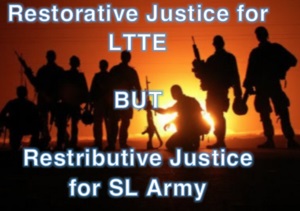
A large number of crops other than tea, rubber and coconut cultivated in Sri Lanka have a high potential as export crops. There are 24 agro ecological zones, each characterized by specific climate and soils. This makes it possible the cultivation of different types of crops. Among these are spice crops such as cinnamon, tuberous crops, horticultural and floricultural crops, medicinal herbs etc. which have a considerable export potential. In 2013, spice crops earned around US$ 350 million. There are many organizations such as the Ministries of Agriculture, Industry and Commerce, Export Development Board, Industrial Development Board etc. but, there appears to be no proper plan to increase production of these crops.

See the Table 2

Out of the 6.5 million hectares of land, around 2.0 million hectares are in the Wet Zone. About 75% of it is cultivated and most of this land is of low-productivity due to soil degradation. In the Dry Zone, out of the 4.5 million hectares only about 2 million acres are in productive use. Thus, there is a large extent of potentially cultivable land in the Dry Zone. Most of the soils in the Dry Zone are relatively more fertile than those in the Wet Zone. Non-availability of adequate rainfall during the Yala season is one of the limiting factors of crop production in the Dry Zone. However, better water management practices would reduce this limitation. Also, various major irrigation projects such as Mahaveli, Kirindioya, Muthukandiya and Inginimitiya provide irrigation to about 200,000 hectares in the Dry Zone. The recently inaugurated Moraghakanda project is expected to provide irrigation water to nearly 80,000 ha. The numerous minor irrigation projects too would increase the irrigable area in the Dry Zone. Thus, there is a considerable potential to increase the level of crop production in Sri Lanka, export of which would enable to increase exports.

Agro-Industries:

Promoting agro-industries will have a considerable positive impact on increasing exports. There is an urgent need to develop agro-industries in Sri Lanka, which will have a tremendous impact on unemployment and rural poverty. A large number of crops cultivated in Sri Lanka, including rice, have considerable potential in various agro-industries. However, only rubber, coconut and a few fruit crops are used in industries. Crops such as cassava, horticultural and floricultural crops, medicinal herbs, cane, bamboo, sunflower, castor, ayurvedic herbs, etc. have a considerable potential as export crops, but are not cultivated to any appreciable extent for want of better and improved varieties, technological know-how, relevant market information etc. Development of agro-industries will also increase export income and will have a tremendous impact on the economy of the country, and also provide employment opportunities among rural people. Private sector can be involved in such projects for which appropriate technical assistance need to be given by the relevant public organizations.

However, there appears to be no proper long-term plan to develop agro-industries, except for some ad-hoc projects. The Ministries of Industries and Agriculture should implement an effective Agro-Industrial Development Programme, in collaboration with the private sector, which undoubtedly would improve export income, employment opportunities and incomes in the rural areas.

Small and Medium Term Industries

Products of crop based Small and Medium Enterprises (SMEs), have a high export potential and play a very important role in economic development of Sri Lanka because, they have the capacity to achieve rapid economic growth, while generating a considerable extent of employment opportunities. Promotion of SMEs would result in increasing industrial output of the country, leading to more exports. However, not much emphasis appears to have been placed on improving SMEs, except providing loans from banks. A main factor which limits the SME sector is inadequate raw materials. For example cane is not available for those in this sub-sector. It is so in most of the other sub-sectors too.

There has been rhetoric on promoting exports. It is meaningful and effective actions that are necessary. Giving talks at numerous seminars etc. will not increase exports unless there is a realistic plan implemented effectively.

Reducing Imports

While some talk about strategies to increase exports, there appears to be not much emphasis on reducing imports, which will have an appreciable impact on reducing trade deficit.

As indicated in Table 1 the imports has increased appreciably from US $ 18,000 million in the year 2013 to around US $ 21,000 million in the year 2017. Based on Central Bank reports expenditure on food and beverages in 2013 was US$ 1368 million and this has increased to US$ 1841 million in 2017. The expenditure in 2018 on food imports is likely to be even more due to the depreciation of SL rupee and drought.

Most of the food imported such as sugar, milk food, lentils, onion, maize, etc., involving US$ 1841 million, can be locally produced, thereby reducing expenditure on food imports. For example, nearly 16% of food imports is spent on importing sugar, most of which can be locally produced. Sugar production in the country has not increased by any appreciable amounts during the present decade in spite of three sugar companies, Pelwatta, Sevanagala and Hingurana and the Sugarcane Research Institute. Kanthale sugar factory remains closed over a long period, while a plan to cultivate sugarcane in Bibile remains shelved. There are crops such as coconut, kitul and palmyrah which can be used to manufacture sugar based substances such as jaggery and treacle, but there appears to be no effective strategy to promote the production of these crops.

With regard to milk production we have around 1 million cattle consisting of mostly indigenous cattle. Their productivity is low (1-3 liters/day) mainly due to the poor nature of the breeds and inadequate low quality feed supply. There appears to be no effective plan to improve the local breeds and supply of cattle feed. The dairy industry has a potential to contribute considerably to Sri Lanka’s economic development. But, instead of implementing an effective plan to develop the dairy industry in the country, the government is planning to import 20,000 cattle from New Zealand and Australia involving USD 73 million. There are reports to indicate that some of the previously imported cattle have a virus disease, and it may affect the local cattle. Importing cattle to improve the dairy industry in the country is a futile action, as importing cattle alone is not going to increase milk production in the long run, unless there is an effective programme to upgrade local cattle breeds, promote cultivation of  pasture grasses such as brachiaria, which can be grown under coconut.

Although we say that we are self-sufficient in rice ( a carbohydrate) a large amounts of wheat flour (another carbohydrate) is imported at a cost of around Rs. 45 billion. Annual wheat consumption in the country has increased from 38 kg/per person to nearly 80 kg/per person. There are many tuberous crops such as innala, sweet potato, yams which can replace a part of the wheat flour we import thereby reducing expenditure imports.

Eppawela Apatite (EA), which was discovered a few decades ago still remains partly underutilized. EA can be used to manufacture phosphate fertilizers. But, still we grind the rock and use the ground apatite as a P fertilizer, while spending millions to import Single Superphosphate and Triple Super Phosphate, which can be manufactured from EA.

The expenditure on subsidiary crops such as chillies, green gram, ground nut, potato etc, is millions of rupees. The average per hectare yields and the extent of these crops have not increased to any appreciable amount during the last decade. A few years ago, a former Minister of Agricultural Development Chamal Rajapaksa, appointed an Advisory Panel to make proposals to develop the agricultural sector so that there is a quantitative and qualitative increase in crop production at a lower cost with no damage to the environment. During the last few years numerous programmes such as “AMA’, “Waga Sangramaya” and “Govi Sevana” were implemented. All these activities/programmes, appear to have not made any appreciable positive impact on the agricultural sector of the country indicated by increasing expenditure on food.

Car imports: Import of cars has increased considerably during the last few months resulting in an increase in imports expenditure. In the first half of this year 2018, import of cars has increased involving US$ 810 million. It will also cause an increase in the fuel imports which at present is around US $ 3 billion. In such a situation the government has given permits to import duty free cars which will further increase expenditure on car imports. Already, there is a huge stock of cars in the country and as a result millions of foreign exchange is blocked in the garages of car dealers. A few decades ago only those who earned foreign exchange were given permits to import cars.

Science and Technology.

Effective use of Science and Technology (S&T) would tend to reduce imports and increase exports. During the last two decades, effective use of Science and Technology (S&T) enabled most of the South and South East Asian countries to develop substantially. However, in Sri Lanka, in spite of a number of scientific organizations such as the National Science Foundation, National Institute of Fundamental Studies, The National Research Council of Sri Lanka, National Science and Technology Commission, which use a considerable amount of scarce financial resources, S&T has been used to a relatively very little extent to improve the economy of the country.

A primary objective of use of S&T in a developing country such as Sri Lanka must be to conduct appropriate studies on the critical issues and advice the authorities on relevant action to be taken. Science and Technology need to be used to utilize locally available resources. Conducting research alone will not lead to economic development, unless the technologies developed by research are made use or commercialized. Organizations such as the Industrial Development Board, the Board of Investments etc. need to coordinate with the relevant scientific organizations to attract investments on commercialization of proven technologies. Vidatha Centers have been established in many DS Divisions to commercialize S&T. Perhaps the Ministry of Technology and Research may indicate to what extent these Vidatha Centers have been effective in commercializing S&T.

Import of Fuel

The expenditure on importing petroleum is around US $ 3 billion which is about 15% of the total imports. In 2010, there was an Inter-Ministerial working committee, headed by Prof. Tissa Vitharana, the former minister of Science and Technology, on the use of bio fuel as an alternative to imported fossil fuel. Among the recommendations made by this committee were to promote the use of bi-fuel obtained from sugarcane and jetropha. A seminar on the use of bio-fuel was held in 2009 at the National Science Foundation. Several speakers at this seminar highlighted the possibility of using ethanol and jatropha as alternatives for imported petroleum. Ethanol and jetropha are used in many countries as alternatives for petrol and diesel respectively. However, the institutions responsible for S&T did not follow these recommendations, and now no one appears to be bothered on the use of bio -fuel and Jetropha as sources of fuel which has a potential to reduce our expenditure on importing fossil fuel.

In Sri Lanka, during the last two decades, perhaps a few thousands of research studies, involving billions of rupees worth of scarce resources, have been conducted. Findings of these research projects were presented at numerous conferences, seminars etc. It is important that we utilize these research findings to find solutions to the pressing problems of the country. But, there appears to be no effective system to achieve this. Instead, the authorities are concerned in conducting more and more seminars and symposia without any plan to effectively utilize the findings/conclusions.

Controlling non-essential imports and producing substitutes are essential to reduce the increasing Trade Deficit, which is likely to be around US $ 11 billion in 2018. In Sri Lanka we have been affected by persistent trade deficits over the years, but the relevant authorities appear to have miserably failed to implement effective strategies to ameliorate this situation, indicated by continuous increase of the Trade Deficit during the last few years. Strategies to reduce trade deficit would involve implementation of effective short, medium and long term plans. The responsible organizations need to discuss these issues and take appropriate action. There has been rhetoric on economic development during the last few years. It is meaningful and effective actions that are necessary.

(csweera@sltnet.lk)

UNACCEPTABLE: Placing Sri Lanka Army & LTTE on par but holding War Crimes Tribunals for ONLY SL Army

September 28th, 2018

Several clarifications need to be made. There is a concerted & subtle effort to place a national army on par with a terrorist movement, while at the same time demanding war crimes tribunals only for the SL Armed Forces? How can this be entertained? A country has only one armed force & that is its national army to protect & defend the nation & its people. All others taking up arms with an objective to carve out territory & declare that separate to the nation is involved in an illegal act for which they are criminally liable. Having said that, there are NGO groups interviewing LTTE & Soldiers and placing their stories to give us an impression that the terrorists had a just cause. All these are done through well-funded programs by people who perhaps never lived in Sri Lanka to witness the gruesome murders & mayhem committed by LTTE over 30 years. Would these NGOs dare put the US or NATO on par with Al Qaeda or ISIS or any other terrorist groups that the West is trying to destroy?

Firstly, we need to draw a line on what & who are legal entities.

Sri Lanka’s National Army is legally tasked to defend the nation. It is legitimately tasked to safeguard the territorial sovereignty of a country & the safety of its citizens.

LTTE by virtue of it being banned internationally & by the Sri Lankan state seals its illegal status. The armed forces have a hierarchical command structure & a distinguishable uniform & weaponry given by the State, the soldiers would not have been called to defend the nation & militarily defeat the LTTE if the LTTE had not attacked & killed innocent citizens. LTTE cannot say it was not given chances to surrender & give up its murderous ways. Therefore, individuals & organizations attempting to project LTTE as some innocent group for whom the world must feel sorry for seriously need to get their facts in order. World empathy for LTTE cannot supersede that of their empathy to the innocent victims that LTTE killed for no reason.    

Though there is no internationally accepted definition for a terrorist, in a conflict the rules of war applies even to the LTTE though it does not ratify any international conventions or treaties. LTTE also had a hierarchical structure, their weapons were illegally acquired. LTTE wore uniforms but killed in civilian clothing too.

Unlike Al Qaeda or any of the other jihadi terrorist movements that sprang into being after 9/11, the Sri Lankan Government designated the LTTE as a terrorist movement after decades of terror unleashed by LTTE upon innocent civilians and after 5 peace talks & ceasefires failed to stop LTTE from its murderous ways. So no one can say the LTTE was not given chances. Even the Nordic nations who comprised the SL Monitoring Mission in 2002 recorded close to 4000 violations by LTTE during a ceasefire brokered by Norway which placed the National Army on par with a Terrorist Movement for the first time in history.

Another insidious attempt is to highlight LTTE as political prisoners. LTTE are neither POWs or political prisoners and the GOSL should incorporate Article 3 common to the Four Geneva Conventions & take legal action against LTTE in domestic courts. LTTE has no legal rights. LTTE are unlawful combatants but laws of IHL apply to LTTE.  They refused talks & peace & preferred killing. Their leaders instructed them to kill.

Soldiers are only instructed to kill the enemy in defense of the nation & following the rules of war. Any soldier violating these are dealt in military tribunals. This is where everyone needs to draw a clear distinction.

Today, everyone is crying crocodile tears for LTTE, their spouses (wrongly terming them ‘war widows’ a name tag that should be only referred to soldier wives).

Why do those crying crocodile tears for the LTTE not do the same for dead soldiers, their children, their wives & their parents? There is something amiss when tears are only shed for one party in particular the party that had been carrying out murder & mayhem.

A noticeable feature in those shedding crocodile tears for the LTTE is that they were always in favor of the aims & objectives of the LTTE, or they are working for entities that directly & indirectly supported the LTTE over the years, or they never had a member of their family killed by LTTE or they were enjoying disbursements from LTTE’s global kitty. Can these people be called unbiased & impartial speakers for both parties?

The international community that insisted on talks with the tigers must take part responsibility for the LTTE murders of people during these cease fires & peace talks which were only used by LTTE to regroup & refine their terror tactics & roam the world to purchase more deadly arms & ammunitions.

Anyone who wishes to place LTTE on par with a national army must explain what good are legally bound borders & territorial sovereignty if it is acceptable for terrorist groups to use terror & illegally hold land which with time through their political arm they declare independent citing terms like homeland & self-determination?

If the world looks down at Al Qaeda, ISIS, Bin Laden, Saddam Huseein, Gaddafi, Pol Pot etc what makes Prabakaran & LTTE any different? The world cries over the child of Prabakaran little forgetting thousands of children Prabakaran killed over 3 decades.

The world feels empathy for LTTE wives but what about all of the mother’s whose pregnant bodies were slit open by LTTE killing both mother & baby?

Basically what needs to be said is that LTTE cannot enjoy Restorative Justice & the Sri Lankan Army cannot be meted out Retributive Justice.

In other words the same conflict cannot treat the perpetrators of the crimes as the less guilty party while the national army called into militarily defeat the LTTE cannot be considered the more guilty while the LTTE’s crimes against the State, State property & killing of innocent civilians cannot result in simply forgetting & forgiving the LTTE for their crimes while a War Crimes Tribunal with Foreign Judges are created as Retributive Justice against Sri Lanka’s National Army & the Government Heads that gave orders for the military action against the LTTE.

We do understand that we have to move forward. We are against foreign tribunals primarily because all of the UN tribunals & hybrid courts held have not served justice to the victims. They have been nothing but wasting time & money – this money could have easily been given to the victim families. Moreover, some of these tribunals have run into decades – more often than not the perpetrators may have ended up dead or suffering old age dementia.

What needs to be clearly pointed out in the case of Sri Lanka is that we are not agreeable to having restorative justice for LTTE & retributive justice for the National Army. What confounds the situation is that although the LTTE leader & his ground leadership is no more, the ideology of separatism remains promoted through LTTE agents the TNA & the LTTE fronts that are steering it through their organizations overseas. Moreover, foreign intelligence too have confirmed that the LTTE support networks & LTTE propaganda machinery remains functional. Also, the police & Armed Forces continues to locate hidden arms & ammunition belonging to LTTE while LTTE cadres too are getting caught. All these cannot put to rest & force the citizens to forget LTTE or their ultimate objective of separating a sovereign state.

Anyone coming with all sorts of teary eyed solutions & stories cannot omit these fundamental facts & realities in their fantasy to force everyone to believe in a non-existent forgive & forget theory.

We are prepared to forget IF & ONLY IF the LTTE & their coterie gives up quest to separate Sri Lanka, gives up their false propaganda locally & internationally. However, so long as these objectives continue – sorry to say, we are not prepared to let LTTE or their agents take the cake & eat it too while locking up our national heroes in prison claiming them to be the only culprits.

Shenali D Waduge


Copyright © 2026 LankaWeb.com. All Rights Reserved. Powered by Wordpress