A hidden conspiracy to destroy the SLPP?

April 16th, 2018

By ;  A.A.M.NIZAM – MATARA

Sri Lanka has faced conspiracies against the populist political formulations since the formation of the People’s revolutionary government in 1956.  Most of these conspiracies had to be faced by Madam Sirimavo Baandaranaike during her reigns of 1960 – 1965 and from 1970 – 1977and these conspiracies were reactionary in nature and were concerted attempts to thwart progress being made towards enhancing people’s welfare.

The last conspiracy was an ultra reactionary conspiracy launched jointly by western powers, hegemonic India and diehard treacherous and perfidious local  elements who converged together to avenge the war winning former President Mr. Mahinda Rajapaksa for liberating the country from 30 years of  a vicious terrorist  war and having a government without genuflecting to external inuendos.  An ultra conservative government headed by treacherous Maithripala Sirisena was installed on 8th January, 2015 as a result of this intensive vicious smear campaign carried out by these plotters..

This Sirisena-Ranil foreign servile government for the last three years failed to fulfil any of the pre-election promises made to the people – which included provison of one million jobs, establishment of many manufacturing industries, snatched away all rights enjoyed by the people, suspended all ongoing projects launched by the Mahinda Rajapaksa government, embarked on an extensive programme of selling state properties and national resources to foreigners, initiated negotiation on many free trade and facilities agreements with neighbouring countries which could make a drastic impact on the job market, lead to brain drain and deny employment for many local craftsmen, imposed taxes on all and sundry products but reduced the pice of beer, discouraged agricultural production and several hundreds of thousand acres of paddy lands were suspended from paddy cultivation forcing the country to import rice  saying that it was cheaper to import rice  than cultivating it locally although the price of a kilo of rice shot up to over Rs. 100/= , similarly concessions that had been given to cultivation of tea, rubber and coconut were withdrawn creating a scarecity for coconut in the market and jacking up the price of a coconut to over Rs. 100/=, pseudo media shows were staged to mislead the people of establishing a volkswagon car manufacturing factory in Kuliyapitiya, Asia’s biggest tyre factory in Horaana and South Asia’s tallest building in the Colombo City but the country  received no significant foreign investment despite the claim that the government  has won over all foreign countries and the western countries would come in queues for  investment in the country and Sirisena and Ranil  making several foreign visits one after the other begging for forrign investments and attending all foreign investment foras held throughout the world during the last three years.

However, the government was not hesitant to take scornful measures to fulfil the pledges that had been made to Sri Lanka’s foreign enemies, which included the early introduction of a new federal and secular constitution, devolution of power to provinces, facilitate the establishment of hybrid courts for foreign judges and prosecutors to hear cases against the war heroes bein alleged of war crimes, rapid demilitarization of North anf East, establish necessary institutional mechanisms to prosecute the war heroes, continue with arresting prominent war heroes under various pretexts of delinquency, and give official authenticity to the blatant allegation that Sri Lanka has committed war crimes during the last stages of the war.  In addition to this, almost all opposition politicians, their sspouces, their family members and the high ranking public servants were continuously driven to courts and imprisonments under various pretexts and illusory charges.

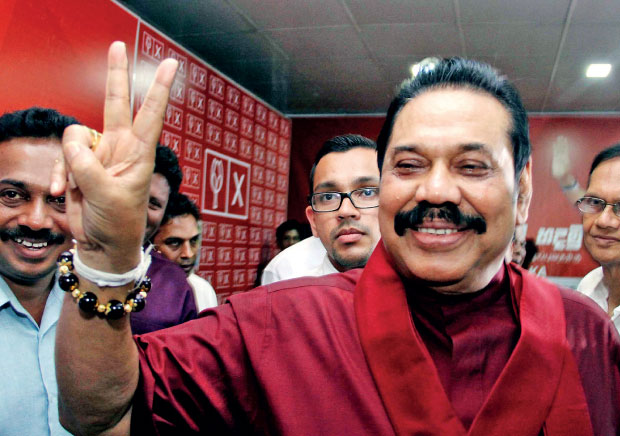
When the country was in such a precarious situation the government was forced to hold local government eletions due to extensive pressure exerted by the people’s organisations, the joint opposition together with the former members of the local gocernment institutins after the government deliberately postponed the elections for almost three years despite their boasting of upholding democracy and having a just administration, the so-called ‘yahapalanaya’. The people wholeheartedly welcomed the elections as an opportunity to register their hatred and anger towards the repressive government and vent their unequivocal apology for helping to depose the prvious government, acknowledge Mr Mahinda Rajapaksa as the sole and true patriotic leader of this country by ensuring victory  for over 230 of the 341 LG institutions for Sri Lanka’s nascent political formation SLPP led by Mr. Mahinda Rajapaksa with over  45% of the votes, reducing the once powerful United National Party (Union of Notorious Plunderers) to a pathetic 27%, and the former glorious Sri Lanka Freedom Party now being held captive by Sirisena to a pitiable 13%.

When we make an indepth analysis, of the UNP results, it becomes very clear that the pratfallen UNP’s 27% of votes included the upcountry Tamil votes of Badulla and Nuwara Eliya districts, votes received by Mslim Congress candidates contested under elephant symbol (Puttalam and several other districts), votes received by Rishad Bathiudeen’s party candidates contested under elephant symbol (Mannar and Vani districts), and votes of quislings received from the cosmopolitan urban areas including Colombo, Kanfy districts and a very minor and negligent percentage of votes received from rural areas and accordingly the UNP is fast becoming a vanishing political species in rural Sri Lanka, especially among the Sinhala Buddhists.  .

DO NOT FORGET – the Sinhalese suffered & are victims too

April 16th, 2018

 The narrative needs to change and no one needs to feel shy to challenge it bogged down by chants of political correctness & reconciliation. Truth is truth – lies are lies – no slogan should silence that. Presently it is being written either purposely omitting or ignorantly omitting some crucial facts. By doing so, not only is a wrong impression being promoted locally & globally but it is also contributing to creating distrust & mistrust while likely to create further animosity.

No one can disassociate the present crisis from the legacy of colonial rule & the ills that has been handed down with it. No one can also deny that the leaders that took over post-independence were all groomed to think & act like their colonial masters. The handful that challenged the status quo were removed from the scene. If after 70 years people complain about the quality of our leaders they should now realize the reason why most lack nationalism or patriotism. To survive in politics not many can think nationally or will be allowed to act nationally. To understand this better, people need to study the dynamics of political systems globally & the manner that national leaders have been dethroned through regime change for their national policies – the South American examples are excellent to understand this.

That rulers have failed to be consistent in their leadership affects not only minorities but the majority as well and in terms of population ratio the majority is affected more. The scrooge of privatization will only lead to more misery as every national asset is put a price tag. People have yet to understand the trade & political dynamics of the en bloc countries in particular the demands aligned to trade & political agendas of the EU & OIC nations.

Those today commenting on racial violence pinning complete blame on the Sinhala majority were completely silent during 30 years of LTTE reign…why? Were Muslims treated greater under LTTE rule? Were Tamils enjoying full freedoms under 30 years of LTTE rule? Why have minorities forgotten this? How fair is it to claim that the UNP led coalition won the 2015 election entirely on the promises for ‘justice for the minorities’ what kind of racist election propaganda is this? How can minorities who never hesitate to hold slogans against so-called racism openly and proudly claim to have voted for the UNP coalition simply because it agreed to fulfill their demands. Minorities are faulted for making such demands & the UNP coalition is faulted for agreeing to such which is why these unrealistic promises are not seeing light of day. In minorities object to the majority will getting their way, how justified is it for minority will to get their way against the wishes of the majority (by majority what is implied is the majority opinion of people not majority race)

The very people calling for justice for victims of the war need to answer some crucial questions first. Who are the victims? Is it the LTTE or the victims of LTTE terror. Those calling for justice for people killed in the last phase completely ignore to mention that LTTE shot quite a number of Tamils – we would like to know how many. These are certainly victims of LTTE. As for those accusing the Army of killing people, there too we need to first know how many LTTE cadres who were in civilian clothing were killed and how many civilians who were engaged in hostilities (voluntarily or by force) died as a result, for any civilian engaged in hostilities and dying is not defined as a civilian, and the international law books says so very clearly. Without answering these basic questions no one can accuse the Sri Lankan military of killing and no one can demand compensation either – for why should the tax payers pay for LTTE families or dead LTTE cadres? Every TNA commemoration is of dead LTTE and not of Tamils killed by LTTE!

Why is no one raising a voice for the missing 5000 soldiers & their names are logged with the UNHRC not like the nameless 40,000 missing which has now shot up to 150,000 and has been a favorite past time to quote missing / dead.

Moreover, victims constitute all victims – not just Tamils or even Muslims. Let it be reminded to all that more Sinhalese have died since independence than anyone would like to mention. There was the first JVP insurrection, then the 1980/90s JVP-UNP killing spree, there were plenty human rights organizations even then but none chose to demand accountability from the UNP Government, was it because Sinhalese lives did not matter or the media did not find it newsworthy enough? There are plenty of missing persons that cover both these horrific periods far more gruesome than the LTTE period, if people can still remember. A piece of paper was enough to stop people going to work, school and homes were in darkness. Youth disappeared never to be found again. Why are these missing not given justice by the Office of Missing Persons. If the OMP is sincere they must begin by finding the missing from every period that people went missing. OMP was opened not just to find missing LTTE cadres. But as many commentators say if OMP has been launched only to find missing Tamils, let them search for Arjuna Mahendran first.

While the whole world comes down on Sinhalese for claiming the Sinhala Buddhist heritage and ownership for building the nation until it was deceptively confiscated by colonial invaders, when the minorities make racist demands there is stoic silence. Presumably one of the demands by the TNA for their vote at the no confidence motion was to appoint only Tamil divisional secretaries – Is this not racism? There are also demands to have Tamil policemen, Tamil military personnel but then when anyone says Sinhala Army, Sinhala policemen there will be resolutions against Sri Lanka! What kind of disjointed logic is this? A government should have the guts to say that every citizen must know the language of the majority Sinhalese especially when close to 80% of the population speak it. It makes logical sense for the 20% to learn Sinhalese than spending money & time getting 80% to learn what the 20% only speak. What good is it to have only Tamil speaking police & army – are they to serve in only Tamil areas, if so is this a bigger plan of the eelamist lobby?

A countrys military or police should recruit people who are patriotic, nationalistic and willing to uphold law & order & protect the country against all odds, not because a person is Tamil or Muslim. Quota system should not be allowed in any element of public service. It is totally against the basic arguments of equality which another lot are promoting. Let it also be reminded what a fiasco the local government election has turned into with the quotas for women! As for the demands for lands – why should a state give any land without anyone producing deed evidence to claim they actually owned the land. Simply giving into public uproar and well-funded media hype is something the government is advised to avoid.

The minorities that claim to want a competent and benign central government must also explain why they would continuously chose to vote for racist minority leaders & their ethno-religious political parties – TNA’s links to the LTTE, racism of SLMC leaders have still not stopped minorities voting for them, therefore in what context can there be any healing of wounds when there are political parties & leaders that promote and thrive on racism & racist demands, where every election manifesto is peddling for ethno religious demands only. At no time do these parties or their leaders make any statement or demands pertaining to the entire citizenry of the country.

These are the very parties that demand a new constitution from the very party that is said to have come into power to fulfill the demands of the minorities… so can the majority be blamed for opposing this new constitution for it has no relevance to the entirety of citizens in Sri Lanka. Where have you heard of a constitution being created only to fulfil the racist demands of the minorities?

There are many taking the brush to portray the racist Tamil & Muslim leaders as championing a ‘cause’ without acknowledging the damage they have done. Let us also mention that when the JVP began a killing spree targeting innocent people no different to how the LTTE began, the Sinhalese were quick to completely denounce the JVP but why have Tamils failed to do the same with the LTTE, same with Muslims. People must be well read enough to understand how the dark forces work upon political leaders parties, individuals, through businesses, through media, through local organizations etc.. it is only in identifying and watching their actions that people can not only challenge and question them but also not allow themselves to be steered by various initiatives that they fund to provoke people into violence. In watching the lies unfold to bomb Syria, the manner that entities like White Helmets have been used to stage bogus scenes, train people to act, use children to stir emotions, should immediately make people to question whether the same took place in Sri Lanka in the manner the C4 videos began to emerge at every important international event & UN session. These were well programmed & timed to embarrass the Sri Lankan Government the same as is being done to Syria.

If we are drifting to a crisis at many levels the minorities must take a large chunk of the blame for in their unfair & racist demands using the en bloc international pressure through the UN, EU & OIC they have exerted unfair demands on every government that have created more problems than solutions & that is what led to JVP, LTTE & now a multitude of issues that are not easy to even categorize as they come cloaked in multiple outfits & agendas. If minorities are today complaining about politicians, they must ask themselves in what ways they have deceptively cornered politicians through various monetary & other influential pressures thus making them compromise country-centric decisions for personal perks. Again, what have the minorities not enjoyed that the majority are enjoying? Absolutely nothing. The rich in the Sri Lankan polity care not for any ethnicity, faith or country – they are united by the will to make more money at whatever cost. In the end who enrolled to protect the nation? The rural Sinhala Buddhist youth, a handful of Malays and Tamils most of whom were gunned down by the LTTE if we can recall the Millennium City debacle and post CFA signing by UNP & LTTE.

Since independence more Sinhalese have been victims than any other community, more Tamils have died at the hands of the LTTE the supposed sole-representatives of the Tamils, more Muslims have died by this same sole-representative of the Tamils too. Without showcasing these ground realities, what are the experts & analysts trying to preach


Shenali D Waduge


Trump wanted to bomb Russian & Iranian targets amid Syria strikes – report

April 16th, 2018

Courtesy RT

President Donald Trump reportedly favored bombing Russian and Iranian targets in Syria, before Pentagon chief James Mattis talked the US leader out of it.

Trump discussed three military options for Syria last week with his revamped national security team, led by Bush-era hawk John Bolton, the Wall Street Journal reported on Saturday, citing sources familiar with White House decision-making.

The least expansive option included striking a narrow set of targets”linked to what the report said were Syria’s chemical weapons capabilities.” The second option proposed targeting a broader set of Syrian targets, including suspected chemical-weapons research facilities and military command centers.”

Finally, the most aggressive proposal might have included bombing Russian air defenses in Syria, in order to cripple the regime’s military capabilities without touching [President Bashar] Assad’s political machinery.”

The latter option, which would have been three times as powerful as the one eventually carried out by the US, the UK and France, was reportedly particularly favored by Trump, pressing his team to consider strikes on Russian and Iranian targets in Syria. The US president was willing to go that far to get at the Assad regime’s military equipment.”

Defense Secretary Mattis, a retired Marine general who gained notoriety during the 2004 siege of Fallujah in Iraq, took a more reasonable stance on the strikes. He argued that hitting Russian or Iranian targets could trigger a dangerous response from Moscow and Tehran, sources told the newspaper.

However, even newly-appointed National Security Adviser Bolton, who called for Iran to be bombed and who has promoted a muscular policy towards North Korea, did not oppose Mattis’ reasoning. According to WSJ, he realized that the most robust option might drag the US more deeply into the conflict” and felt that was too much for his first week on the job.”

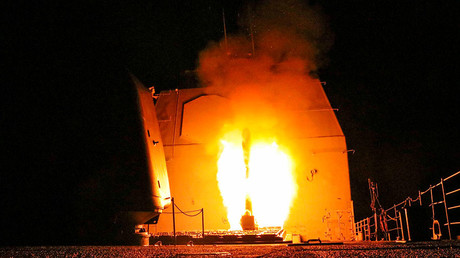
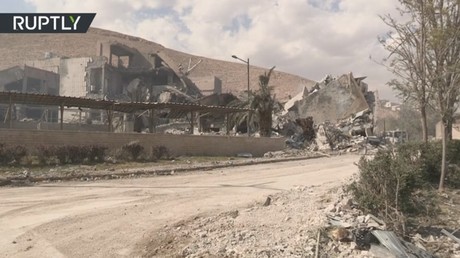
Eventually, Trump approved a hybrid plan” that saw over 100 missiles raining down on three Syrian targets early on Saturday morning. Announcing the strikes, Washington as well as London and Paris claimed they came in retaliation for an alleged chemical attack in the Damascus suburb of Douma, which they blamed on Assad’s government. Damascus rejected the accusations, while Moscow maintained the chemical incident was orchestrated by the West to provoke the bombings.

Prior to the bombing, some senior Russian officials signaled Moscow was ready to repel inbound US missiles and target their carriers. On April 10, Vladimir Shamanov, formerly an Airborne Troops commander and now head of the State Duma Defense Committee, said the Americans should not pin hope on their navy groups,”adding Russia could take all political and diplomatic measures, and also military measures if such need arises.”

On April 11, Russian Ambassador to Lebanon Alexander Zasypkin warned that Russian forces will confront any US aggression on Syria, by intercepting the missiles and striking their launch pads.”
Repelling the missile strike, Syrian air defenses managed to shoot down 71 out of 103 projectiles, the Russian Defense Ministry said.

Syria’s Soviet-made S-125, S-200, Buk, and Kvadrat systems were involved in the operation. The Pentagon, however, said Syrian resistance was ineffective and had no bearing on the aerial assault.
The attack was not coordinated with Russia, but the de-confliction channel [between US and Russian forces] operated before and after the strike,” said Lieutenant General Kenneth F. McKenzie, the director of the Joint Staff. The Russian air defenses weren’t employed” as Syria was hit by missiles, he added.

WHO WON THE NO CONFIDENCE MOTION AND THE IMPACT?

April 16th, 2018

Sarath Wijesinghe former Ambassador to UAE and Israel

No confidence motion is now history

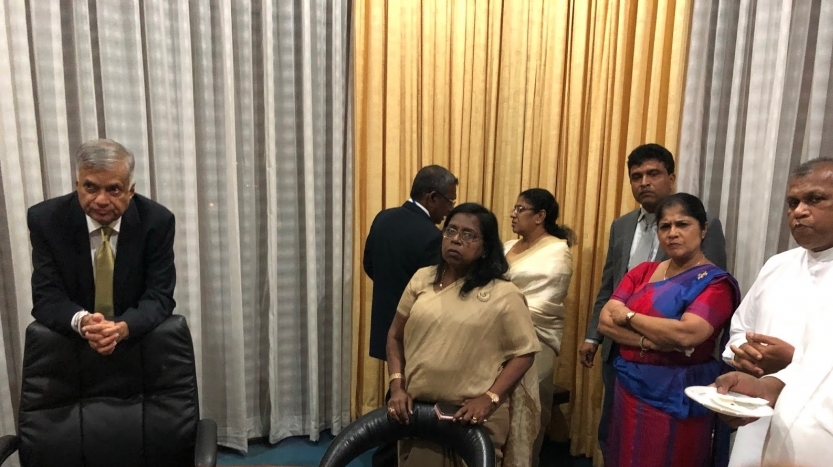
The no confidence motion which is now history was won by the United National Party regime and the associated groups with ease after struggling and maneuvering day and night to get the members of the conflicting fractions to their sides with great stress strain and uncertainty for all worrying parties. The main issue/s of the motion that is the BOND SCAM” now appears to be sidelined as the aftermath and implications of the results have surfaced with further complicated political diversities. It is certain there was a period of tension and uncertainty for the Prime Minister to exert all local and foreign resources to defeat the motion threatening his political future and the Premiership after January 8th victory with a slim majority forming a weak government of two major parties of different ideologies. Though the motion was won by 46 votes of members of future do not appear to be solid as most decisions including UNP members were taken the last few hours prior to the motion taken for vote due to varied reasons alleging bribery, and other perks and pledges long and short term. Every member was well looked after with special attentions which are no secrets to the common man while guaranteed a safe way to Prime Minister for the rest of the period in power unless the difficult promise, reforms, and pledges individual and collective are not fulfilled. Tree of money was shaken with millions if not billions!. United National Party is jubilant that they strengthened the party unity and the cadre patching up the difference at least temporarily expecting reforms awaiting for three decades and the information is that a new set of members will be given new positions among the legislature awaiting until the end of the parliamentary period for the pension and more vehicles and perks during intervals. MR appears to be relaxed on the drawing board preparing strategies and vision for 2020 and future!.

Valid reasons for mode of voting

26 members of the legislature willfully absented themselves must have very valid reasons to do so. The perks enjoy, funds paid by the tax payer, vehicles and other facilities are the highest in the world with the power annexes are so attractive in addition to the new perks and remuneration received from invisible and interested local and international hands. Minister Dayasiri Jayasekara’s” positive firsthand information/accusation on millions passed over is serious. Not only the 26 members who absented themselves – those who voted against the motion are equally winners in the game with prizes, pledges and promises to be fulfilled in the future mostly from private/foreign and tax payers money. Those who are supposed to have lost the motion are not real losers as they destabilized the governance technically losing the 2/3 majority and the credibility locally and internationally during the debates and deliberations of washing dirty in public days and weeks continuously which are in

the public domain to be taken stock on the Dee Day” in 2020 a group of members of the Parliament and a fraction of the population is waiting for. Legal opposition led by Hon Sambandan” never opposed the governance at any stage and never will, are also winners in open and under cover. According to media news Prime Minster has pledges to fulfill 10 conditions in addition to pledges to individual members for various perks and benefits with lot of money allegedly passed by in millions according to the proponents of the motion. Legal opposition will continue to enjoy perks and privileges in addition to the new pledges, perks, and facilities being in the government opposition denying the citizen of a real opposition in the Parliament with the main targets of passing a new constitution and implementation of Geneva directions of the co-sponsored binding resolution which is opposed by the proponents of the motion.

Real winner/s looser/s ?

President is not the loser as his period as tenure is assured by the 19th amendment and the other positions as the Chairman of the SLFP still safe, with freedom to visit the other countries in the world he has not visited so far- He has covered quite a few. He has now ample time to take a stock of large number of MOU’s signed in every visit and offers and pledges of development projects offered by leaders of the world to the President as the leader responsible for the defeat of the difficult man Rajapaksa” against whom many leaders and organizations were eying to control. President’s power is tested and proved below the Prime Minister in terms of the 19th amendment- but the privileges and the immunity for President is intact with enormous funds allocated for the Presidential Secretariat on a very special budget. His hopes for re-election for another term may be shattered but could enjoy all privileges including travelling and perks un- interrupted till the end of the tenure to making him also a winner in the game.

Small parties

Small parties and the individual members who took independent positions are also winners.” Ven Ratana” who is now in hot water, may have had very good reasons to abstain because accordion to him he could not take sides as a Buddhist monk. It is an interesting moot issue for a student of politics to find out whether he has not voted ever for or against before In the Parliament!. Dr/Lawyer Rajapaksa” took a smart step to save the membership in the UNP and in the Parliament disappointing the proponents of the motion, by voting for possibly not influenced by peacock leaves” as alleged by Hon Weerawansa”, unlike many others and there is strong gossip that he will be given back the same portfolio. He is a great winner who is getting ready for the next move in future in the stream of stormy politics. MP Thondman” and MP Devenenda” are men for all seasons and always winners under any governance and there is nobody for disciplinary inquiries against them. Minister Ranawaka” Minister Mano and Minister Hakeem” are always winners with row materials on ethnicity for sale. They respectively promote Sinhala and Tamil Muslim reconciliation in the most reconciled capital in the world led by minorities living as brethren’s in one family, but the fact remains the MP’s mentioned are also great winners in the game of course Madam Chandrika” backed by NGO’s mostly in North East on reconciliatory matters!.

Has SLFP won/lost the game?

Has SLFP lost in the game? Definitely not- Some members defected but they will be well looked after by the Chairman of the party who is mighty powerful leaving them room to enjoy perks and facilities

though they were denied of the additional direct and indirect remunerations received by those who voted for backed by the General Secretary giving unlimited protection. On the other hand President Sirisena” needs his supporters around in the government full of members of the other parties; thereby they will be well protected. Anyway the President will hold office until the tenure is over or no confidence motion to oust him which is very remote. For the parliament mafia country comes last and the priorities in life are cars, perks, funds, power, and properties in Sri Lanka and oversee.

Rajapaksa camp

Rajapaksa” camp lost the motion, yet the gains incidental to the aftermath of the results are interesting and ground breaking. Rakapaksa” Who was down at the defeat from the premature presidential election and let down by his men and cronies full of allegations, apparently rejuvenated with new hopes after the victory of the local government elections and the breakdown of the cradle of SLFP as a result of the motion is the man supporters expediting to run over Ranil Wickramasinghe” with his dwindling the popularity, as the beat candidate for the presidential election in 2020. Though the elections lost the gain of the popularity to Rajapaksa” group is a tremendous boost and an investment for the future. But the governance will take steps to reactivate the amendments to the adjudicator act as a last resort of put Rajapaksa” on the defense and his clan behind bars in view of 2020 elections will be the other test and will the time frame will be sufficient to end the cases on time are issues future will be deciding on new circumstances. Any way on the whole Rajapaksa group is also a winner in the game plan.

Real winners and looser/s

If everybody has won the game, then who are the losers? Who are the parties who have not gained from the entire episode? Obviously it is the ordinary citizen who is at the losing end as the governance now will carry on with new strength and vigor despite the bad loss of the local elections. Ranil is immune to loosing after loosing 29 occasions and having secured a position on President Sirisena’s” victory as the Prime Minister in a minority government whilst the former Prime Minster was still in office.Ranil Wickramasinghe” is a survivor and he should be credited for his capacity to manure to be in power at any cost so long. He is a fortunate man to have come to politics at the age of 28 and enjoyed power to date, which is a world record on any international standard. Now the SLFP is split up with exit of powerful 16 there is uncertainty brewing again threating Ranil and Sirisena equally in their hot seats! It appears that the contenders for leadership in UNP will have a long wait for their turn or until his natural demise. Citizen are the loosers to have the bunch of politicians always up to mischief, corruption nepotism and hold on to power any cost , irrespective which party they belong to with the end result that it is who are the only and main losers in the game plan.!

(The author Sarath Wijesinghe former Ambassador to UAE and Israel could be contacted on sarath7@hotmail.co.uk all the reading materials – Law and order for peace and co-existence 10.3.2010 Lanka Web/ Do we have a foreign policy 24.12.2017 Lanka Web/ Foreign Policy Is it effective and productive 5.3.2015 Colombo Telegraph / New Constitution 17.1.2016 Colombo Telegraph/Economic diplomacy 14.10.2015 Colombo Telegraph all by him could be retrieved from the World Wide Web).

The Buddhist Way to Happiness

April 16th, 2018

Dr. Daya Hewapathirane

In his book Sapiens – A Brief History of Humankind”, Professor Harari states that Buddhists have studied systematically the causes of happiness and the essence of happiness, which is the reason for the growing interest in the scientific community, both in the philosophy and meditation practices in Buddhism.

Yuval Noah Harari is a Professor in History, at the Hebrew University of Jerusalem. His  first book – Sapiens has become an international sensation, being translated into more than 50 languages and more than five million copies sold since its publication. It is considered as one of the best written so far on the history of humankind. His new book, Homo Deus: a Brief History of Tomorrow, published in late 2017, has become another international bestseller. Developing on many of the themes explored in Sapiens, his new book is about what comes next for humanity, and the threat our own intelligence and creative capacity poses to our future and its implications for human happiness.

A significant omission or gap in the work of most historians is their failure to relate human history to human happiness and suffering. In other words, they have said nothing about how events in human history influenced the happiness and suffering of individuals. This is the biggest gap in our understanding of human history. Harari directly addresses the issue of progress by daring to grapple with the fundamental question of what constitutes happiness. Did people become happier as history unfolded is among the several important macro-historical questions that he focuses upon, in his research.

He says that Buddhism adopts the biological approach to happiness or that happiness results from processes occurring within one’s body, and not from events in the outside world. He says that according to Buddhism, most people identify happiness with pleasant feelings and suffering with unpleasant feelings. But our feelings are no more than fleeting vibrations, changing every moment, like the ocean waves. According to Buddhism, the root of suffering is neither the feeling of pain nor of sadness, rather, the real root of suffering is this never-ending and pointless pursuit of ephemeral feelings, which causes us to be in a constant state of tension, restlessness, and dissatisfaction. He says that according to Buddhism, people are liberated from suffering not when they experience this or that fleeting pleasure, but rather when they understand the impermanent nature of all their feelings and stop craving them. This, he says, is the aim of Buddhist meditation practices.

In meditation, you are supposed to closely observe your mind and body, witness the ceaseless arising and passing of all your feelings, and realise how pointless it is to pursue them. When the pursuit stops, the mind becomes very relaxed, clear, and satisfied. All kinds of feelings go on arising and passing – joy, anger, boredom, lust – but once you stop craving feelings, you can just accept them for what they are. You live in the present moment instead of fantasising about what might have been.” The resulting serenity is so profound that those who spend their lives in the frenzied pursuit of pleasant feelings can hardly imagine it. This idea is so alien to modern liberal culture that when Western New Age movements encountered Buddhist insights, they translated them into liberal terms, thereby turning them on their head. New age cults frequently argue: ‘Happiness does not depend on external conditions. It depends only on what we feel inside. People should stop pursuing external achievements such as wealth and status and connect instead with their feelings. ’Or more succinctly, ‘Happiness begins within.’ This is exactly what biologists argue, which is the opposite of what the Buddha said.”

Buddha agreed with modern biology and New Age movements that happiness is independent of external conditions. Yet his more important and far more profound insight was that true happiness is also independent of our feelings. Indeed, the more significance we give to our feelings, the more we crave them, and the more we suffer. Buddha’s recommendation was to stop not only the pursuit of external achievements, but also the pursuit of feelings.” In Buddhism, the key to happiness is to know the truth about yourself – to understand who, or what, you really are. Most people wrongly identify themselves with their feelings, thoughts, likes and dislikes. When they feel anger, they think, ‘I am angry. This is my anger.’ They consequently spend their life avoiding some kinds of feelings and pursuing others. They never realise that they are not their feelings, and that the relentless pursuit of feelings just traps them in misery. According the Harari, when we survey the whole scene of human history as he had done in ‘Sapiens’, what we see is the headlong charges towards illusory satisfactions, with massive collateral damage, possibly fatal, to our own species and all life on earth? The Buddhist philosophy of happiness centers around the idea that you are not the events that happen to you, but you are also not the feelings you have. You are not your feelings. They are just feelings. Thus, if you understand this, you can release the need to keep chasing the need to feel happy or to not feel angry or to not feel sad. In other words, you must understand yourself.

Vipassana Meditation

Harari who is a regular meditation practitioner says that central to his understanding the works of both history and futurism is his regular daily practice of Vipassana meditation, which includes a 60-day silent retreat each year. When asked what changes meditation has brought to his work as a historian, he said firstly, it is the ability to focus. When one trains one’s mind to focus on something like the breath, it also gives one the discipline to focus on much bigger things and to really tell the difference between what’s important and everything else. Also, he says the entire exercise of Vipassana meditation is to learn the difference between fiction and reality. He says that Vipassana meditation enabled him to see reality as it is. It helps one to realize what is real and what is fictional, or the stories that we invent and construct in our own minds. He says that his main ambition as a historian is to be able to tell the difference between what is really happening in the world and what are the fictions that humans have been creating for thousands of years to explain or to control what is happening in the world. He says that what has allowed humans to dominate the earth, is the ability to tell stories and create fictions that permit widespread cooperation in a way other species can not. Sapiens rule the world, because we are the only animals that can cooperate flexibly in large numbers. We can create mass cooperation networks, in which thousands and millions of complete strangers work together towards common goals.

Dr. Daya Hewapathirane

Geneva 2018 and its aftermath

April 16th, 2018


Sri Lanka’s Foreign Minister Tilak Marapana opened his address to the UN Human Rights Council at the 37th Secession by referring to a section from President Sirisena’s 100 Day Programme; he stress, inter alia: “… the government’s firm commitment to the advancement of reconciliation, the rule of law, good governance, human rights, justice, equality, and dignity for all our citizens …” He concluded his address, stating: “Sri Lanka’s judiciary and law enforcement mechanisms are fully capable and committed to the processes of advancing justice to all concerned. It has a long history of integrity and professionalism and since January 2015, steps have been taken to further strengthen its independence. And may I add, Mr. President that all reconciliation mechanisms will be implemented in accordance with our Constitution”.

In view of the fact that the Sri Lanka government had co-sponsored UNHRC Resolution 30/1 in 2015, and that in 2018 it states that “all reconciliation mechanisms will be implemented in accordance with our constitution”, is a paradigm shift, the consequences of which reflect a bold and dignified stand that hitherto Sri Lanka has not taken much to the disappointment of the overwhelming majority of the Sri Lankan nation. Although warnings were given earlier to the effect that the implementation of certain provisions in the resolution would entail revisions to the constitution, no attempt was made by this government to say so directly at the UN Human Rights Council sessions until 2018. What it means is that either the constitution has to be revised to accommodate the provisions of Resolution 30/1, or in the alternative the resolution has to be revised in a manner that does not contradict Sri Lanka’s constitution.

article_image

ESTABLISHING the CONTEXT

Not only is Sri Lanka required to address issues relating to UNHRC Resolution 30/1 within the provisions of its constitution, but it is also required as a signatory to abide by provisions contained in international instruments such as the four Geneva Conventions. In addition, since Article 13 (6) para 2 of Sri Lanka’s constitution also recognizes “general principles of law recognized by the community of nations”, Sri Lanka is obligated to abide by provisions in international instruments irrespective of whether Sri Lanka is a signatory or not to such instruments. Therefore, the context in which UNHRC Resolution 30/1 should be evaluated should be within the framework of both the Sri Lanka constitution and laws recognized by the community of nations.

It therefore follows that Sri Lanka is constitutionally entitled to address all issues relating to Resolution 30/1 in terms of Common Article 3 of the four Geneva Conventions of 1949, and more specifically to provisions of Protocol Additional to the Geneva Conventions of August 1949, relating to the protection of victims of non-international armed conflict of June 1977, since it is accepted by the community of nations as an integral part of customary law.

Paragraphs 182 and 183 of the OISL Report by the Office of the UN High Commission confirm the approach cited above.

Paragraph 182 states: “Article 3 common to the four Geneva Conventions relating to conflicts not of an international character is applicable to the situation in Sri Lanka, with all parties to the conflict being bound to respect guarantees pertaining to the treatment of civilians and persons hors de combat contained therein….” (N.B. “all parties to the conflict”).

Paragraph 183 states: “In addition, the Government and armed groups that are parties to the conflict are bound alike by the relevant rules of customary international law applicable to non-international armed conflict”.

In view of the background established above, the material presented below is an evaluation of the provisions of Resolution 30/1in terms of provisions in “PROTOCOL ADDITIONAL TO THE GENEVA CONVENTION OF 12 AUGUST 1949, AND RELATING TO THE PROTECTION OF VICTIMS OF NON-INTERNATIONAL ARMED CONFLICTS (PROTOCOL II) (with Final Act of the Diplomatic Conference on the reaffirmation and development of international humanitarian law applicable in armed conflict dated 10 June 1977 and resolutions adopted at the fourth session). Adopted at Geneva on 8 June 1977.

PART 1. SCOPE OF THE PROTOCOL

Article 1: MATERIAL FIELD OF APPLICATION. “This Protocol, which develops and supplements Article 3 common to the Geneva Conventions of August 12 1949 … shall apply to all armed conflicts…which take place in the territory of a High Contracting Party between its armed forces and dissident armed forces or other organized armed groups which, under responsible command, exercise such control over a part of its territory as to enable them to carry out sustained and concerted military operations and to implement this Protocol”.

COMMENT: Since the LTTE operated as an armed group under responsible command and exercised control over a part of Sri Lanka’s territory to the extent that such territories were designated “LTTE controlled areas” in the Cease Fire Agreement facilitated by Norway, from which it carried sustained and concerted military operations, the conflict in Sri Lanka should justifiably be designated as a non-international “ARMED CONFLICT”.

Article 3: NON- INTERVENTION. 1. Nothing in this Protocol shall be invoked for the purpose of affecting the sovereignty of a State or the responsibility of the government, by all legitimate means, to maintain or re-establish law and order in the State or to defend the national unity and territorial integrity of the State”.

2. Nothing in this Protocol shall be invoked as a justification for intervening, directly or indirectly, for any reason whatever, in the armed conflict or in the internal or external affairs of the High Contracting Party in the territory of which that conflict occurs”.

COMMENT: The following examples illustrate the degree of direct and indirect intervention in the internal affairs relating to issues associated with the armed conflict in Sri Lanka

(a) “…implementing measures for truth-seeking, justice, reparations and guarantees of non-recurrence…”

(b) “…Sri Lanka to establish a judicial mechanism with special counsel to investigate allegations of violations and abuses of human rights and violations of international humanitarian law, as applicable…”

(c) “…Sri Lanka to introduce effective security sector reforms…”

(d) “…Sri Lanka to `accelerate the return of land…in particular the ending of military involvement in civilian activities…”

(e) “…Sri Lanka to review the Public Security Ordinance…”

(f) “…Sri Lanka to sign and ratify the International Convention for the Protection of All Persons from Enforced Disappearances…”

(g) “…Sri Lanka to establish an Office of Missing Persons and an office for reparations…”.

(h) ‘…to fulfill its commitment on the devolution of political authority and to ensure that all Provincial Councils are able to operate effectively…”.

PART II. HUMANE TREATMENT

Article 4. FUNDAMENTAL GUARANTEES. Article 4 (2) lists all the violations that are prohibited under international humanitarian law. They range from violence to life; to collective punishment; to taking of hostages; to acts of terrorism; outrages upon personal dignity, rape, enforced prostitution; to slavery and slave trade; to pillage.

Article 4 (3) deals with issues relating to children.

Article 5. PERSONS WHOSE LIBERTY HAS BEEN RESTRICTED. 1. In addition to the provisions of Article 4, the following provisions shall be respected as a minimum with regard to persons deprived of their liberty for reasons related to the armed conflict, whether they are interned or detained:

Article 6: PENAL PROSECUTION. 1. “This Article applies to the prosecution and punishment of criminal offences related to the armed conflict”.

2 (a) “The prosecutor shall provide for an accused to be informed without delay of the particulars of the alleged offence against him and shall afford the accused before and during his trial all necessary rights and means of defence”;

2 (b) “No one shall be convicted of an offence except on the basis of individual penal responsibility”;

2 (d) “Anyone charged with an offence is presumed innocent until proved guilty according to law”;

2 (e) “Anyone charged with an offence shall have the right to be tried in his presence;

(f) “no one shall be compelled to testify against himself or to confess guilt;

COMMENT. In view of the provisions cited above there is absolutely no need for a judicial mechanism with the participation of foreign judges, prosecutors etc. etc as called in paragraph 6 of Resolution 30/1, because the procedures cited above are not only known to the legal institutions functioning in Sri Lanka but also are familiar with them as stated by the Foreign Minister during his address. Furthermore, the fact that no one guilty of any of the violations listed in Article 4 of Additional Protocol II has been informed “without delay”, coupled with the fact that no one has thus far been charged of any specific offence and therefore are presumed innocent until proven guilty, makes the entire accountability exercise a futile undertaking. Additionally, the need for anyone charged with an offence to be tried in his presence makes Universal Jurisdiction a mere threat without foundation.

PART IV. CIVILIAN POPULATION

Article 18. RELIEF SOCIETIES AND RELIEF ACTIONS

Paragraph 2 of Article 18 states: “If the civilian population is suffering undue hardships owing to a lack of the supplies essential for its survival, such as foodstuffs and medical supplies, relief actions for the civilian population which are of an exclusively humanitarian and impartial nature and are conducted without any adverse distinction shall be undertaken subject to the consent of the High Contracting Party concerned”.

COMMENT. Since per above, the Government of Sri Lanka was not responsible for any relief actions by way of foodstuffs and medical supplies, the charge against the Government of Sri Lanka that it failed to meet its obligations in this regard is baseless and provide grounds for rejection. However, while such responsibilities are with relief societies, the fact is that the government went out of its way to provide relief measure. These actions should be recognized, appreciated and given credit without leveling charges that shortfalls were deliberate. Such perceptions reflect ignorance of international humanitarian law.

CONCLUSION

With the conclusion of hostilities relating to the armed conflict in May 2009, the UNHRC progressively introduced resolution after resolution starting in 2012 until its scope progressively expanded to Resolution 30/1. Over the years individuals have advocated that issues relating to the armed conflict should be addressed in terms of provisions of international humanitarian law but to no avail, due to flawed perspectives of successive governments. However, for the first time the government delegation headed by Foreign Minister Hon. Tilak Marapana has taken a bold and courageous step that hitherto had not been taken by the Foreign Ministry and informed the Human Rights Council “…that all reconciliation mechanisms will be implemented in accordance with our Constitution”. Considering the stands taken by the Foreign Ministry since 2012 until 2015 when it went to the extent of co-sponsoring UNHRC resolution 30/1, the stand taken in 2018 is a paradigm shift that gives Sri Lanka the opportunity to address issues relating to Resolution 30/1 with dignity if it so chooses.

The material presented above if adopted by the government would enable it to address issues relating to Resolution 30/1 in a forthright manner. Since the Foreign Ministry is unlikely to take such an approach judging from its tradition of treading so softly that it stumbles in the process, it has been left to members of civil society to fill the void and bring the facts to the attention of the Human Rights Council.

These facts are:

1. That Resolution 30/1violates several provisions of “non-intervention directly or indirectly in internal affairs” of a sovereign member State as called for in Additional Protocol II relating to issues listed above.

2. The Resolution 30/1’s call for judicial mechanisms to investigate alleged violations of human rights and humanitarian law, contradicts the applicable law which should be as per provisions relating to “Penal Prosecution” stated in Additional Protocol II.

Therefore the appeal to the Human Rights Council and its affiliated bodies is that the materials presented above should be reviewed, and for the resolution to be withdrawn since it is in violation of international customary law.

The material presented above is based on a legal approach to address issues relating to Geneva. Despite such an approach being consistently advocated, Sri Lanka’s approach has been political; an approach that has impacted seriously on Sri Lanka’s sovereignty as demonstrated above. Therefore, emboldened by the stand taken by the Foreign Minister at the conclusion of his 2018 address in Geneva Sri Lanka should address the issues relating to Geneva from a legal perspective and call on the Human Rights Council to withdraw Resolution 30/1and re-visit the stand taken regarding Sri Lanka.

Neville Ladduwahetty

April 8, 2018.

“CONSUMER AFFAIRS AROUND THE GLOBE IN ACTION”

April 16th, 2018

Sarath wijesinghe – Former Chairman Consumer Affairs Authority

Groups of laws designed to ensure the rights of the consumer

Principles of consumer affairs is applied locality and universally in different jurisdictions depending on circumstances worldwide for the citizens and the business community depending on the different kinds of trade practices. In open economy it is based on consumer law, company Law, Hire Purchase, Competition law and connected areas with the government policy, economy, governance and the political situations with the underlining feature of protecting the consumer and the trader/industrialist and the regulator. System in the USA is vibrant with freedom to interested parties for consumer activism via media and public interest litigation. In Russia, China and the socialist block it is somewhat different depending on the economic and political circumstances and changes. President John Kennedy who was a proponent for a powerful consumer movement said in 1962 at the Consumer International that a main neglected group in the society is the consumer and they should be organized, encouraged and looked after showing a special interest encouraging Consumer International in their worldwide campaign to encourage organized consumer movement. Today it has penetrated the entire world with many projects including the world consumer day celebrated worldwide encouraging the consumer organizations. Americans are highest consumers in the world throwing out 200,000 edible food every day, using 300 shopping bags for consumer items and raw materials per week, consuming 1/3 of paper, 1/4 of oil, and 23% for coal from the world share, and using more miles than the rest the world taken together yet not satisfied, but possessing a vibrant consumer movement with excessive consumerism. Case law and the jurisprudence are full of cases on consumer issues and class actions of high values. Americans are the leading consumers who are leaders of the consumer movement and the literature/activism on the subject.

United Kingdom – a well-developed consumer regime

United Kingdom has a well-developed consumer regime fully backed by the State institutions such as DTI Department of Trade and Industry Oft Office of fair trading and much other state, private and voluntary organizations including media and activist groups. Department of Trade and Industry is the state institution in dealing with consumer affairs along with the other assignments on trade and industry. It protects consumer rights, fair trading, probe on contracts and dealing with trader and the consumer, with links with government and private sector acting as the initiator, moderator, and regulator in consumer

affairs successfully with the private and non-governmental organizations with the office of fair trading which is also an active body on the same direction. Citizens advice Bureau, Law canters and federation, Legal aid Scheme with the network of Solicitor, Ombudsman and Ombudsman Association, Consumer Line, number of websites on the system, Trade enforcement bureau, Gov.Uk guidance, Law Center network, awareness testing, consumer safety and WHICH consumer magazine and number of organizations and websites with the network of consumer organizations are a part of the battalion in assisting the consumer to redress the due rights and the State and the business community for a better consumer regime to help development in trade industry and fair trade. Consume magazine WHICH” is a leading arm of the consumer organization with 5730000 subscribers managing without any assistance from the Government or international organization as a leading organization directing and assisting the consumer, trader and the state in the sphere of consumer practice. Active media name and shame and self-discipline due to excessive competition in local and international trade are a contributory factor on discipline consumer regime in the United Kingdom. Sri Lanka followed the British Model until 2003 and currently a mixture of British, Australian, and EU modeled pickle.

India with a huge population maintains a reasonable consumer regime

India with a huge population maintains the standards of fair consumer practice with the help of the Judiciary, active organizations and joint efforts and ventures on consumer education which is prevalent countrywide. The main consumer protection act of 1986 is effective and exhaustive supported by the judiciary in matters of public interest litigation on consumer related actions like Bopal Tragerdy” which is an eye opener and a catalyst to group the consumers together. Consumer Courts set up countrywide gives redness to the initiation starters of the campaign with strength by the activists and lawyers with sympathetic eye of Supreme Court Judges and chief Justices who led the process the development of the jurisprudence followed by many countries including USA, Sri Lanka and other commonwealth jurisdictions. Indian consumerism agitation is very active on the internet and digitization and modern technology has made number of changes in consumerism that has led to Cyber revolution USA and western links.

Socialist world

Consumerism and consumer attention in the Socialist world is not progressive as in the west due to different political and economic approaches always in favor of the consumer. In Russia it says the consumer confidence is growing and the state is presumed to look after the interests of the consumer on existing legislature when market economy is slowly approaching the economy. In China it is somewhat different being the second largest economy with drastic changes and the boom in the international market improving the lives of average consumer in positive directions. There are large impacts on the consumer on large scale multinational company’s such as ALI-BABA” which is the largest online giant in the world threatening the banks transforming the consumerism pattern in the country

which is changing fast. There is no agitation from the consumer due to the economic boom and the unprecedented developments and economic progress. Chinese products have made many changes in consumerism worldwide due to excessive supply of Chinese goods, especially in the developing world where consumer items enter freely with less restrictions and standards.

Latin American consumer revolution

Argentina Brazil and the other Latin American countries are going through a rapid transformation on the digital technology where the inclination for the online sale and modern consumerism is thriving. After prolonged economic instability Argentina is fast recovering with the development programs including the consumer activism and confidence. Brazil is a nation with 206.6 the 5th largest population and 7th largest economy with 7.1 trillion GDP exporting 189.1 billion worth of consumer gods. Most purchases are on credit and online platforms are thriving with invasion of international platforms. Chile population has 50% electric al items, and 68% purchase is on credit cards and loyal to branded consumer items spending 12% for smart phones. Consumer Association in Bangladesh is nongovernmental but has controlled by the ministry of Commerce, moving right to life, right to safe goods in line with Indian modeled system which is followed in Pakistan too with the consumer council and the ministry of commerce on the apex. There is a common feature in the modern consumerism all over the world on inclination towards digitalization and modern ways and approaches on the consumer and trade as a whole. Smart phones and the digital influence with the ripple effects of modern technology have transformed the entire outlook of the traditional consumerism to a modern trend with credit card, hire purchase, digital banking and depending on banks and digital transfer of funds mostly on credit making the consumer indebted.

Consumerism in Sri Lanka Changes and Way Out

Consumerism in Sri Lanka is comparatively at the lowest ebb when the other countries are progressing on the consumer trends with the developments and modern changes. The Consumer Affairs Authority act no 9 of 2003 is static and stagnant with no progress or changes after 15 years of existence with little or no developments and consumer is not protected or considered an integral part of the society. CAA is not in a position to find solutions or suggestions for high cost of living, contaminated water, poisonous food, consumer items of inferior quality and high prices, despite the accusations and agitations by the consumer to implement the regulations and enforcement of legal structure with the rest of the regulator with enormous powers and the funds available by the state and way of fines from the trader and industrialist. Prizes of consumer items are soaring due to the weak structure of the main regulator and the inefficiency and inactivity of the other regulators such as Public Health Inspector, Local authorities, Ombudsman, Telecom and other regulators, and the ministry of commerce pressed with many other political and activist work with Nolan or vision for the consumer and the

Trade in general. Despite all the odds the digitalization is fast spreading in Sri Lanka with 23 million smarts phones, internet, and the advanced technology embraced by the young generation and the business community fully influenced by the digital developments and platforms invading fast with credit cards and other modern modes of payments locally and internationally. Modern applications such as Wober” (In USA,UK and Sri Lanka), Whats App, Pick me, Ali Baba, Amazon, and many devices are fast flowing into the system with no restrictions with fast developments of social media such as Face Book and similar application that has revalorized the trade and consumerism to a different level in par with the rest of the world with less protection in to the consumer and trade in general which is a very unsatisfactory situation to a country press with debits under development and political instability. Therefore it is time to rethink and revisit the consumer regime for a more Sri Lankan friendly model.

(All reading materials are by the author who is the former Ambassador to UAE and Israel and a former Chairman of the Consumer affairs who can be contacted on sarath7@hotmail.co.uk – Making digital marketing fairer – Mirror/ Consumer rights in a digital world Mirror/Building a digital world the consumer will trust- Mirror/How to build consumer trust in digitalization / Sri Lanka Guardian and many articles could be retrieved from the web under name of the author’s name)

THE “DARUSMAN REPORT” Part 2

April 16th, 2018

KAMALIKA PIERIS

Revised 17.3.19

The Darusman Report has been widely criticized in Sri Lanka.  The government of Sri Lanka said that the Report was characterized by fundamental deficiencies, inherent prejudices, and malicious intentions” and that it was legally, morally, and substantively flawed”. United National Party (UNP), then in opposition, also rejected the findings of the Report noting that it was an unwarranted interference”.

Darusman report was not prepared on the directions of the UN, or the Security Council. It is not a UN report nor does it bear the stamp for the UN,  said Gomin Dayasiri.  The Darusman Report cannot be called a UN report at all, said G.L.Pieris. It is a report compiled on the private initiative by the UN Secretary General and has no connection with the UN.

The Secretary General exceeded his powers when he appointed the Darusman Panel, said Neville Ladduwahetty. The UN Charter (article 100) says. “In the performance of their duties the Secretary General and the staff shall not seek or receive instructions from any government or from any other authority external to the organization. They shall refrain from any action which might reflect on their position as international officials responsible only to the Organization”.

This means that the Secretary General      can only seek advice from those within the United Nations Organization. He is specifically barred from seeking advice from anyone outside the organization. The Darusman panelists do not come from within the UN. Their appointment is a violation of the UN Charter. The legitimacy of the Panel can be challenged on those grounds.

The members of the Panel were not impartial. Two are openly anti Sri Lanka. Third is financially dependent on the European Union, said Durand Appuhamy. Darusman is disqualified from sitting because he was involved in the IIGEP and withdrew from the committee, said Gomin Dayasri.

Yasmin Sooka, it later emerged, had links with the Tamil separatist movement. She addressed a Global Tamil Forum meeting in London in 2013. Then she wrote ‘Unfinished War: Torture and Sexual Violence in Sri Lanka 2009-2014’ (Sooka Report’), to influence the Human Rights Council in its Sri Lanka resolution of March 2014.

However, analysts observed that the Secretary General would not have taken this step on his own. He has been instructed to do this. He is serving the agenda of certain member states and acting on their behalf. Moon never thought of asking for a report during LTTE rule, where there were atrocities committed by the LTTE, observed Gomin Dayasiri. Critics point out that the UN Charter says, “Each Member of the United Nations undertakes to respect the exclusively international character of the responsibilities of the Secretary-General and the staff and not to seek to influence them in the discharge of their responsibilities’.

The Panel said it was not an investigative or even a fact finding body. The Panel was set up only to advice. However, the Panel’s statements and the way they set about it, makes it clear that this was an investigation, said Chandraprema.  The Darusman Report will help those who wish to destabilize the country, said G.L.Pieris.

The Darusman Panel has been set up with an ulterior motive, said Gomin Dayasiri. This Report is part of a mission to discredit Sri Lanka. There is an underlying pattern to this whole exercise.  One aim of the report was to legitimize the submissions made by interested parties.  The Report focuses mainly on accountability, and its main criticism is that the Sri Lanka army killed civilians through widespread shelling. This would serve as the groundwork for the next phase,  which will be carried out by Human Rights Council in Geneva, not Security Council, because some of the Security Council members will not support it.

The Darusman Panel said it was appointed because of the joint statement by the Sri Lanka President and the UN Secretary General in 2009. Ladduwahetty pointed out that according to the joint statement; it is the government of Sri Lanka that will do the accountability, not the UN. The joint statement said, ‘The Secretary-General underlines the importance of an accountability process for addressing violations of international humanitarian and human rights law. The Government will take measures to address those grievances”. Ladduwahetty added that if Sri Lanka had known that the UN Secretary General was going to poke his nose in, no joint statement would have been issued. ‘No government will agree to such a thing’.

The Panel focused on the period between September 2008 and May 2009. Panel was not allowed to come to Sri Lanka .However it was able to gather plenty of material from outside Sri Lanka, from persons, institutions and NGOs. The Panel met with persons affected by the war and also consulted those with experience on the subject including journalists and diplomats  The Panel issued an invitation for written submission and received over 4000 from more than 2300 senders. A significant number contained allegations of violations of human rights. The Panel also received lists of incidents and victims as well as photographs and videos.

The Panel admitted that there was difficulty in finding reliable material. Due to the scarcity of objective reporting it was difficult to determine precisely what happened in the final military assault.  The Panel then devised a solution. Panel would determine an allegation to be credible if there was reasonable basis to believe that the act or event occurred. Allegations would also be considered credible when based on primary reports which the panel deemed relevant and trustworthy. (sic)

There has been heavy criticism of the contents of the Report. The Darusman report is flawed in terms of method and content said G.L.Pieris. There is a clear bias. The panel have openly stated that they have given priority to the rights and needs of the victims.    there is no mention of LTTE killings. The Report deals only with the army and the civilians.

Durand Appuhamy noted that the report is full of general allegations against the security forces, none of which are proved.  The number of civilians killed is quoted in round numbers. This alone is evidence that nobody counted them. The mass escape of Tamils to the government territory is evidence that the government did not operate a policy of shooting down civilians. Army took risks to save them, concluded Durand Appuhamy.

Some of the findings are unacceptably vague. E.g. that some women ‘may have been’ raped. Some observations are made without any proof. e.g. The Government sought to intimidate and silence the media and other critics of the war through a variety of threats and actions, including the use of white vans to abduct and to make people disappear.”

The data used by the Panel can be questioned by any sensible person. For instance, the Report is full of photographs of dead persons. They all carry the same caption, ‘Submission by photographer’. There is no authentication, no independent verification of place and time. The photograph   of ‘civilian deaths in second NFZ in May 2009”on p 35   can be from anywhere.

The Panel has used the two highly controversial Channel 4 films   about the war, uttering nonsensical observations  such as  in a photo taken before execution the prisoner is clearly terrified’, also young boy tied to a tree and covered in blood’  and ‘prisoners  naked and blindfolded , made to cower in the mud before shot in the head’   The Panel has taken public domain satellite imagery from UNOSAT,  looked at the positions of the government artillery  and  concluded that the army had fired at the hospitals.

The Darusman Report has been supported by interested parties. They have been responsible for some at least, of the 4,000 submissions the Panel has received. Shamindra Ferdinando has commented on this. Having been jolted by the discouraging response, Diaspora and various other interested parties sought to inspire Tamils to make submissions. They worked overtime to achieve their objective, said Shamindra.

Having accused Sri Lanka of indiscriminately killing, the PoE struggled to gather evidence. The PoE, based at the UN Secretariat (Library Building L-330 L) New York, found it extremely difficult to gather a substantial number of complaints/submissions, in respect of accusations, before the expiry of Dec 15, 2010, deadline. The PoE posted a high profile notice on UN’s website, on Oct 27, 2010, seeking evidence against the Sri Lankan political leadership and the armed forces. The UN posting was accessible to the entire world, including those living in the Northern and Eastern regions of Sri Lanka. .Much to the disappointment of the PoE, the UN didn’t receive the expected response. .

The Center for War Victims and Human Rights, (CWVHR) a Canada based organization, spearheaded the effort by making a public appeal for submissions. The Center provided 25 sample letters, available online, for the writers to choose from, in case they could not write on their own.  Shamindra gives one of the sample letters.

The sample letter says

Justice delayed itself considered justice denied and it is necessary to reaffirm the international community’s commitment to the principle of accountability on serious violations of international humanitarian law in Sri Lanka. Arundhati Roy who  won the Booker Prize in 1997 for her novel, ‘The God of Small Things’ and Cultural Freedom Prize, awarded by the Lannan Foundation in 2002 For her work as an activist, mentioned that last year’s war was not just a war of the Sri Lankans against the Tamil people. She has also voiced her opposition openly on many occasions, condemning India’s silence on the humanitarian tragedy in Sri Lanka, and calling the war “a racist war on Tamils”. This should be considered as ‘war crimes’, ‘crimes against humanity’ and ‘genocide’ against Tamil citizens of Sri Lanka and impartially investigated by the independent international body and bring justice to the victims, as justice delayed is considered justice denied” (  the letter is much longer, I have edited it.)

These 25 samples were made available on line to the Diaspora as the Dec 31, 2010 deadline for the closure of submissions neared. The initial deadline was set for Dec. 15, 2010, but extended by two more weeks due to the poor response. The Centre also urged those interested in joining the campaign to fill an online petition. None of those who had submitted online complaints were summoned by the Panel for examinations, said Shamindra.

The Centre  was also going to hold a Panel Discussion on” Submission to UN Panel of Experts with regard to alleged violations of International Human Rights and Humanitarian Law during the final stages of the conflict in Sri Lanka.” It was to be held on Saturday, November 6th 2010 from   10.00 am to 12.00 pm Venue   Scarborough Civic Centre (Canada) – Committee Room A.

The leaflet   said ’We will have Human Rights Experts, Activists and  Scholars on Humanitarian Law, and Rev. Dr. S.J Emmanuel, President of GTF in the Panel, who will advise us as to the following. How could we make our Submissions? What format we should follow? What kind of Conventions and Articles we should refer to? What kind of Strategy we should adopt in making the submissions? Ways of finding evidence and how to encourage others to participate in this exercise? And many more questions and answers. Our Submissions should be sent to UN Panel before 15th of December. Sri Lankan Tamils were urged to pressure the UN, even if they hadn’t been directly affected by the conflict and atrocities committed by GoSL forces and its leaders.

Unfortunately, however, these letters and the rest of the data used by the Panel will not be available for checking. On the advice of the UN Office of Legal Affairs, the Panel has made use of the Secretary General’s Bulletin titled ‘Information sensitivity, classification and handling” (ST/SGB/2007/6). This makes provision for classifying documents as ‘strictly confidential’ and placing them in closed access for 20 years. Even after the mandatory 20 years, further retention or release would be subjected to a declassification review. The Darusman Panel stated, to the scorn of its readers, that nearly all of the Panel records will be labeled ‘strictly confidential’ and locked up for the next 20 years. (Continued)

Stop All  efforts of  reconciliation  with Tamils immediately.

April 15th, 2018

By Charles .S.Perera

He is gone……!!!

President Maithripala Sirisena is gone after giving 683  acres of land back to Tamils  to honour  the reconciliation demands of the CHOGM leaders, who will now receive him as a real democrat who is prepared to sacrifice any thing to be received and hugged by Theresa May and other White  Leaders of the white Commonwealth, and be allowed to shake in addition the gloveless hands of the Queen.

President Sirisena is completely duped by the Western White leaders and he will never rid himself of his Prime Minister Ranil Wickramasinghe who is really the pet of the West, who introduced  Maithripala Sirisena into the USA and Western white political circle. Thanks to PM Ranil Wickramasinghe he can even have tea with the Queen at Buckingham  Palace ,which he at last found in UK, and not in New York as he had thought before.

There was a time when this  circle of White Western leaders including  the then Black USA President, received Colonel Gaddafi of Libya and even allowed him to put his arm round their necks, but laughed behind him and finally allowed him to be murdered by his own men. So beware President Maithripala Sirisena you never know what you can expect from the West.

However, it is imperative that this comedy of reconciliation is put to an immediately. It was Ranil who got his then Minister of Foreign Affairs Mangala Samaraweera to meet the Christian  Emmanuelle of  the Global  Tamil  Forums and other Tamil Diaspora Representatives without  informing the Parliament or the President to talk on equal terms about the Yahapalanaya reconciliation plan.

As a result of it, Sirisena Ranil Yahapalanaya planned the writing of  a New Constitution in consultation with the Tamil Diaspora , the  USA Ambassador Athul Keshup, and India. They also removed  several important Military Camps from the North and the East. They allowed the National Anthem to be sung in Tamil, and released thousands of acres of land taken over by the Armed Forces  for security purposes.

But all these have been done in the name of reconciliation with Tamil but the Tamils in return ask for  more and has not given anything in return for the all efforts of this Stupid Yahaplanaya Government’s  concessions to Tamil, which if not stopped now would eventually end up with a Federal Constitution and a Tamil only Provinces in the North and East.

While the Government continues to meet the demands of the TNA, the West and the Tamil Diaspora, the CM Wigneswaran of the Northern Provincial Council complains that  the Sri Lanka Government has not done anything effective to oust the Sinhalese who have illegally occupied  the lands and houses of  the Tamils ever since they fled the Island following ethnic crisis. These appears to be  absolute lies as no mention of such illegal occupations had been reported , nor have a large number of Sinhala families chased away by the terrorists have been allowed to go back to the  lands they were forced to abandon.

North Provincial Councillor T Raviharan organised protests in front of the Mullaitivu  Distict Secretariat on the 10th April,2018,  to oppose the settlement of outsiders.  The Tamils raised objections in December, 2017,  against holding funeral rights of the late Gnanananda Thero the Chief Prelate of the Nagavihara in Jaffna.

The Tamil politicians  protest against the construction of  Sambodhi Vihara in Mullaithivu by venerable Tissapura Gunarathana thero.  They call him an extremist Buddhist Monk.  Building Buddhsit temples in the North and East the Tamils say negates reconciliation. Sumanthiran and TNA want a secular constitution to Sri Lanka removing from it the special place given to the protection of Buddhism.

Are these protests against Buddhsism which is the very life blood of the Sinhala Buddhist a show of gratitude of the Tamils for having given into their demands to promote reconciliation ?

Is there any one single thing the Tamils have done by way of reconciliation with the Sinhala people ?

Is there any reason why Sri Lanka should listen to the UK Government  or the Canadian government the Ministers of which attend extremist Tamil Functions and support their demand for an Eelam in Sri Lanka ?

It is time for Sri Lanka to stop further reconciliation efforts with the Tamils, until the Tamil politicians stop their baseless demands for devolution of power  in their search for reconciliation.

The government of Sri Lanka should, instead of handing over acres and acres of land back to Tamils, resettle the Sinhala people who were forced away from their lands by the terrorists. If their lands have been occupied by Tamils , they should be given  new lands and stop the Tamil politicians in the North and East harass them continuously once they have been settled down.

The Sri Lanka Armed Force should also be informed that they have no right of its own to hand over land to Tamils without  obtaining prior permission from the Parliament.

Enough is enough the Yahaplanaya Government has lost the confidence of the people and they cannot con  as nothing has had happened in the  country out side the Parliament after the No Confidence motion against the Prime Minister Ranil Wickramasinghe was lost in Parliament.

The Parliament consists only of 225 persons and all of them do not to a great extent after their election three years back retain the confidence of the people who elected them.

THE “DARUSMAN REPORT” Part 1

April 15th, 2018

KAMALIKA PIERIS

Three days after the   Eelam war IV ended in May 2009, United Nations Secretary-General  Ban Ki-Moon visited Sri Lanka     on the invitation of the President of Sri Lanka. A joint statement was issued which, inter alia, underlined the importance of an accountability process for addressing violations of international humanitarian and human rights law during the Eelam war.

Thereafter Moon appointed a three-member Panel of Experts in June, 2010, to advise the   UN Secretary General on ‘the modalities, applicable international standards and comparative experience relevant to the fulfillment of the joint commitment to an accountability process having regard to the nature and scope of the alleged violations’. The   Panel would report directly to Secretary General.

The panel comprised of Marzuki Darusman, a former Attorney General of Indonesia, Yasmin Sooka, a high court judge from South Africa and Steven R. Ratner an American Professor of Law. This Report of the Secretary-General’s Panel of Experts on Accountability in Sri Lanka” is also called the ‘Darusman report’ or ‘PoE report.

The Sri Lankan government reacted angrily to the appointment of this panel, calling it an unwarranted and unnecessary interference with a sovereign nation”. The Panel was not allowed to enter Sri Lanka. Sri Lanka government refused to allow them into the country and refused to talk to them.

The Panel started investigation in September 2010. A report of 214 pages, was published in   September 2011. Moon promptly forwarded the report to the Human Rights Council and the Office of the High Commissioner for Human Rights (OHCHR). The Report was welcomed by the United States and the European Union but criticized by Russia and China. The Sri Lankan government condemned the report as fundamentally flawed in many respects” and based on patently biased material which is presented without any verification”.

The Panel found credible allegations that comprise five core categories of potential serious violations committed by the Government of Sri Lanka: (i) killing of civilians through widespread shelling; (ii) shelling of hospitals and humanitarian objects; (iii) denial of humanitarian assistance; (iv) human rights violations suffered by victims and survivors of the conflict, including both IDPs and suspected LTTE cadre; and (v) human rights violations outside the conflict zone, including against the media and other critics of the Government.

The Panel said its findings reveal a very different version of the final stages of the war than that maintained by the Government of Sri Lanka. The Government says it pursued a “humanitarian rescue operation” with a policy of “zero civilian casualties”. In stark contrast, the Panel found credible allegations, which if proven, indicate that a wide range of serious violations of International Humanitarian Law and International Human Rights Law were committed both by the Government of Sri Lanka and the LTTE, some of which would amount to war crimes and crimes against humanity. Indeed, the conduct of the war represented a grave assault on the entire regime of international law designed to protect individual dignity during both war and peace.

The Report stated that the Government shelled on a large scale in three consecutive No Fire Zones, where it had encouraged the civilian population to concentrate, even after indicating that it would cease the use of heavy weapons. It shelled the United Nations hub. Its shells fell near food distribution lines and the International Committee of the Red Cross (ICRC) ships that were coming to pick up the wounded and their relatives from the beaches. It shelled in spite of its knowledge of the impact, provided by its own intelligence systems and through notification by the United Nations, the ICRC and others. Most civilian casualties in the final phases of the war were caused by Government shelling.

The Report said the army had advanced into the Vanni with widespread shelling causing a large number of civilian deaths. Most of the causalities were caused by government shelling. The army had used cluster munitions. It had systematically shelled hospitals on the frontlines. All hospitals in the Vanni were hit by mortars and artillery. Some of them were hit repeatedly, despite the fact that their locations were well-known to the Government. There was aerial bombardment, long range artillery, and close range fire. There was a sharp contrast between the hospital area and the surrounding area. The surrounding area showed no indication of any firing. Landmines were recovered by the Sri Lanka army outside the public eye in a process that may have resulted in the destruction of evidence. Tens of thousands lost their lives from January to May 2009, many of whom died anonymously in the carnage of the final few days. The Sri Lankan army had intentionally targeted Tamil civilians.

The Government also systematically deprived people in the conflict zone of humanitarian aid, in the form of food and medical supplies, particularly surgical supplies, adding to their suffering. To this end, it purposely underestimated the number of civilians who remained in the conflict zone. The UN food convoys were shelled on the way, The Ministry of Defense had even opposed a high nutrition biscuit which UNICEF wanted to send saying it would be used by the LTTE. The Defense Ministry has also imposed restrictions   on tarpaulins saying it could be used for war.

The Report  said the government ‘imposed extensive restrictions on convoy participants’ and on ‘food and medical supplies’, and that ‘the Government downplayed the number of civilians present in the LTTE-controlled area, using the low estimates to restrict the amount of humanitarian assistance that could be provided, especially food and medicine. It states that the ‘different calculations of need’ were ‘deliberately kept low’ and that as a result ‘the food delivered by WFP to the Vanni was a fraction of what was actually needed, resulting in widespread malnutrition, including cases of starvation.’The Report also concludes that ‘the medical supplies allowed into the Vanni were grossly inadequate to treat the number of injuries incurred by the shelling” and that the absence of the needed medical supplies imposed enormous suffering and unnecessarily cost many lives.’

The Government subjected victims and survivors of the conflict to further deprivation and suffering after they left the conflict zone. Screening for suspected LTTE took place without any transparency or external scrutiny. Some of those who were separated were summarily executed, and some of the women may have been raped. Others disappeared, as recounted by their wives and relatives during the LLRC hearings. All IDPs were detained in closed camps, with inhuman conditions. Massive overcrowding led to terrible conditions, breaching the basic social and economic rights of the detainees, and many lives were lost unnecessarily. Some persons in the camps were interrogated and subjected to torture. Suspected LTTE cadres were removed to other facilities, with no contact with the outside world, under conditions that made them vulnerable of further abuses.

The Panel observed that there were several other contemporary issues in Sri Lanka, which if left un-addressed, will deter efforts towards genuine accountability and may undermine prospects for durable peace in consequence. Most notably, these include:

(i) triumphalism on the part of the Government expressed through its discourse on having developed the means and will to defeat “terrorism”, thus ending Tamil aspirations for political, autonomy and recognition, and its denial regarding the human cost of its military strategy.

(ii) on-going exclusionary policies, which are particularly deleterious as political, social, and economic exclusion based on ethnicity, perceived or real, have been at the heart of the conflict

(iii) the continuation of wartime measures, including not only the Emergency Regulations and the Prevention of Terrorism Act, mentioned above, but also the continued militarization of the former conflict zone and the use of paramilitary proxies, all of which perpetuate a climate of fear, intimidation and violence;

(iv) restrictions on the media, which are contrary to democratic governance and limit basic citizens’ rights;

The main focus of the Report was not on modalities or standards, as stated in its terms of reference. It was on the subject of Accountability and specifically the accountability of the government of Sri Lanka.

Panel stated that Accountability for serious violations of international humanitarian or human rights law is not a matter of choice or policy; it is a duty under domestic and international law. These credibly alleged violations demand a serious investigation and the prosecution of those responsible. If proven, those most responsible, including Sri Lanka Army commanders and senior Government officials, as well as military and civilian LTTE leaders, would bear criminal liability for international crimes.

At the same time, accountability goes beyond the investigation and prosecution of serious crimes that have been committed; rather it is a broad process that addressed the political, legal and moral responsibility of individuals and institutions for past violations of human rights and dignity. Consistent with the international standards mentioned above, accountability necessarily includes the achievement of truth, justice, and reparations for victims.

Accountability also requires an official acknowledgment by the State of its role and responsibility in violating the rights of its citizens, when that has occurred. Panel stated that the Sri Lanka government notion of accountability is not in keeping with international standards. It must place the rights and dignity of the victims of the conflict at the centre of the approach to accountability.

Darusman Committee recommended:

  1. In light of the allegations found credible by the Panel, the Government of Sri Lanka, in compliance with its international obligations and with a view to initiating an effective domestic accountability process, should immediately commence genuine investigations into these and other alleged violations of the international humanitarian and human rights law committed by both sides involved in the armed conflict.
  2. The Secretary-General should immediately proceed to establish an independent international mechanism, whose mandate should include the following concurrent functions:

(i) Monitor and assess the extent to which the Government of Sri Lanka is carrying out an effective domestic accountability process, including genuine investigations of the alleged violations, and periodically advice the Secretary-General on its findings;

(ii) Conduct investigations independently into the alleged violations, having regard to genuine and effective domestic investigations; iii) Collect and safeguard for appropriate future use information provided to it, which is relevant to accountability for the final stages of the war, including the information gathered by the Panel and other bodies in the United Nations system.

Panel further recommended that The Government of Sri Lanka should issue a public, formal acknowledgement of its role in and responsibility for extensive civilian casualties in the final stages of the war. Sri Lanka should initiate a process, with strong civil society participation, to examine in a critical manner, the root causes of the conflict, including ethno-nationalist extremism on both sides, the conduct of the war and patterns of violations, and the corresponding institutional responsibilities.

The  victims of the final stages of the war   are entitled to realize their rights to truth, justice, and reparations. The Government of Sri Lanka should institute a reparations programme, in accordance with international standards, for all victims of serious violations committed during the final stages of the war, with special attention to women, children, and particularly vulnerable groups. The Human Rights Council should be invited to reconsider its May 2009 Special Session Resolution (A/HRC/8-11/L. 1/Rev. 2) regarding Sri Lanka, in light of this report.

However, said the Panel, an environment which could permit a candid appraisal of the past, including the root causes of the long running ethno–nationalist conflict does not exist at present. Sri Lanka needs to proceed towards an open society in which human rights are presented, a shift away from triumphalism, recognition of Sri Lanka ethnic diversity and the full and inclusive citizenship of all its people, including Tamils.

The Report was greeted with delight and love by just one group only, the Tamil National Alliance. Tamil National Alliance  issued a statement saying it welcomes the findings and recommendations by the advisory panel on Sri Lanka appointed by UN Secretary General Ban Ki-moon, the Darusman Report. TNA says it observes that the Report confirms the truth of what happened to the unarmed Tamil civilians in the conduct of the recently concluded war and is an irrefutable confirmation of the accounts of the events as reported by us to Parliament as and when they occurred’.

The Darusman Report has been heavily critiised for its method and its aims.  There has been no comment on the writing style used in its presentation. The style of writing and the way events are  described resemble the style used in the  ‘Crime and Adventure’  genre of Fiction. In fiction, invention and imagination reign supreme. This report could be turned into  an exciting crime and adventure  film. The Report is   a ‘running commentary’ on army assaults on hospitals. Events are described as happenings, not as reported items.

Here are some edited quotations.

i the Sri Lanka Army advanced its military campaign into the Vanni using large-scale and widespread shelling causing large numbers of civilian deaths. The army continuously shelled within the area from all directions, including land, air and sea. Hundred of shells rained down on the NFZ 1.’

Ii ‘A large group of women and children, who were queued up at a milk powder distribution line, were shelled. Some of the dead mothers still clutched cards which entitled them to milk powder for their children.”

Iii PTK hospital was packed with hundreds of injured civilians. More than 100 new patients were arriving each day. Many had severe or life-threatening injuries. Babies, young children and the elderly, were packed in every conceivable space – on beds, under tables, in hallways and outside in the driveway.”

iv With few beds available, wounded patients often remained in front of the hospital, some on mats and others lying on dust and gravel, under sheets set up for shelter, cradled by their loved ones or alone. With a severe shortage of gauze or other sterile bandages, old clothes or saris were used as bandages.”

v As the Government did not allow basic medical supplies into the Vanni, conditions in Putumattalan hospital were so poor that a large number of amputations were performed without anesthetic, using butcher knives rather than scalpels. Sanitary pads and cotton cloths were used as bandages, and intravenous drips were hung from the trees”,

vi Due to the severe shortage of anesthetics, the little that remained was mixed with distilled water. A general shortage of blood meant that a patient’s own blood was often used, caught in a plastic bag, to be filtered through a cloth and re-transfused back into the same patient.”

vii ‘A large crowd of IDPs surrounded an international ICRC staff member who came ashore, begging him to save their lives by taking them out of the Vanni”

viii ‘ in the early morning hundreds of shells rained down in the NFZ’. When the UN staff emerged from the bunker they saw ‘remains of babies that  had been blasted  upwards into the trees’

ix It is estimated that there were between 300,000 and 330,000 civilians in that small area. The SLA assault employed aerial bombardment, long-range artillery, howitzers and MBRLs as well as small mortars, RPGs and small arms fire, some of it fired from a close range”

x On 9 February 2009, shells fell on Putumattalan hospital, killing at least 16 patients. The shells came from SLA bases in Chalai, but subsequently shells were also fired from SLA positions across the lagoon (even though the hospital was clearly visible to the SLA based there. While some wounded LTTE cadre were treated at Putumattalan hospital, they were few in number and were kept in a separate ward. Putumattalan hospital was shelled on several occasions after that, in February and March. RPGs were fired at the hospital around 27 March killing several civilians. In addition to civilian casualties, the operating theatre, makeshift ward and roof all sustained damage.” ( continued)

A Message for the Commonwealth Heads Conference 2018

April 15th, 2018

By Garvin Karunaratne, Ph.D.

The prime need of the Commonwealth countries, the home to a third of the World’s population, today is economic development in terms of alleviating poverty, creating employment, in short, to bring about development. According to the ILO, almost 43% of the global youth labour force is still either unemployed or working yet living in poverty”(Global Unemployment Trends for Youth 2015:ILO)

The Third World countries have been at the mercy of the IMF since the Seventies when the IMF poured its Structural Adjustment Programme(SAP) down the throats of all Third World countries‚  making them indebted in the process.  The IMF‚  policies provided financial aid to the countries provided they gave up controlling their foreign exchange earnings and did away with national planning, exchange controls, import controls and allowed the Multinationals and the Private Sector to be in charge of the incoming foreign exchange. The  development infrastructure the countries had built up- programmes to help farmers, subsidies to enable farmers to be assured of  incomes in the process of producing what the country required- the likes of the Department for Development of Agricultural Marketing in Sri Lanka and Bulog of Indonesia,   were either privatized or abolished. Without help and guidance the farmers failed in producing cereals. In this process countries like Sri Lanka that were not indebted, which  swallowed the SAP pill along with many other countries of the Commonwealth ended up with an unsustainable foreign debt.

Professor Jeffery Sachs critiques the IMF : ‘The IMF and the World Bank virtually ran the economic policies in Africa… these programmes had little scientific merit and produced even fewer results. By the start of the Twenty First Century Africa was poorer than‚  in the late 1960s when the IMF and the WB had first arrived on the scene.”(End of Poverty).  Ironically Jeffery Sachs himself had earlier implemented the IMF policies in a number of countries. Little did he know then that the programmes he implemented led to the demise of the countries.

The use of foreign exchange was totally liberalized and  the aid funds that came in flowed back to the developed Donor countries in some form or other- for luxury imports, to educate the children of the rich in foreign universities, for luxury travel etc simultaneously‚  leaving the country indebted.

Initially, loans were given by the World Bank‚  with sweetners-at 2% interest with 20 to 30 year long periods of grace. This was done to entice the leaders to accept the loans as they may not be there to be burdened with repayment. This shows how the IMF and WB planned to make the countries indebted. Later the interest rates were increased and currently these countries have had to borrow at rates like 9% interest.   The countries are trapped and have no option but to‚  continue on the same path to increase exports and allow foreign investors to come in to plunder their remaining assets. The countries have to borrow further to service their debts. That is what the IMF did to all  Third World countries and this process of decimating the Third World countries is well documented in my latest book: How the IMF Sabotaged Third World Development (Kindle/Godages)2017.

It would behove of the Commonwealth Secretariat to lend a hand to these‚  countries to get back on their feet.

It has so happened that‚  the development effort of the World is marred with many failures. India’s famous Community Development Programme of the Fifties and Sixties, the largest programme the world had ever seen, was a miserable failure. It ended up as a programme‚  of bricks and mortar that forced people to build roads and contribute their labour without any increase in their incomes. Today in India, the TRYSEM and the IRDP, both gigantic programmes offer grants, loans and training‚  which have failed to alleviate poverty.‚  While the thousands trained in the TRYSEM get no guidance to become employed, the grants  provided by the IRDP‚  to enable people to buy an income generating asset like a milking cow, has been sold again and again at a higher price.  The number of cows did not increase but the prices increased due to the demand for cows as the loan was given only to buy a cow. The IRDP continues with the Government claiming the increased amount so granted as a success!(Karunaratne: Alleviating Poverty In India: Can it ever be done,- Asian Tribune15/02/2007)

The United Nations has lost its once avowed aim of bringing about development. It is more involved in policing the world as a lackey of imperialism. The IMF and the World Bank are basking in glee having made sovereign countries bankrupt and having restructured their economies to make them contribute to the well being of Developed Countries. The countries have now become the producers of raw materials as well as the consumers of the manufactures of the Developed Countries.

It is therefore time that the Commonwealth steps into this gap to provide the know how to bring about economic development‚  to the Third World countries that have been made indebted by following the IMF policies.

Ideally the Commonwealth has to come up with a new paradigm for development and move the countries to alleviate poverty among the masses and simultaneously bring about production. This should be‚  the long term aim.‚

One has to search for development programmes that have been successful and find how they have been successes amidst‚  a sea of programmes that have miserably failed.

Instead of getting down to a doctrinaire text book exercise it would appear appropriate to deal with real achievements and how the policies and designs‚  that brought about the  achievement can hold  the countries of the Commonwealth in a poverty alleviation and income increasing exercise for the future. There is no point in listening to experts who have never had hands on experience.

While the pages of development history is full of failures, there is an employment creation programme of the Commonwealth Secretariat that has left its imprint on the sands of time.

This is the Youth Self Employment Programme of Bangladesh a creation of the Commonwealth Fund for Technical Cooperation.

This was a programme involving 40,000 youths who were being trained annually by the Ministry of Youth Development.‚ In a nutshell‚ the trainees were motivated‚  to commence activities to become self employed in the area of their training, encouraged to establish  ventures in their homes. No grants or subsidies were offered but the trainees were motivated to commence activity to become self employed even in a small scale- with a single cow and a dozen chicks.  The Lecturers at the Training Centers guided the activities‚  till they were proved commercially viable.

This‚  Programme which was established in 1981 was rapidly expanded and today guides 160,000 a year to become self employed.‚  By 2011 February this programme had guided as much as two million youths to be self employed‚  on‚  a commercially viable basis.(Statement by Bangladesh to the 34 th Session of the Governing Council of IFAD(FAO), dated19/02/2011)

Today, it is  easily the largest employment creation programme the world has ever known. It is being implemented by the Department of Youth Development. Its Youth Workers and Youth Directors that once implemented welfare and leisure services to youths now are economists, devoting 95% of their time and effort to make youths entrepreneurs- producing what the nation requires. They have successfully created a youth movement to handle the economy, guiding the youths to enhance their abilities and capacities to emerge as entrepreneurs- a task that has never been achieved elsewhere.

This Programme began in a peculiar manner when‚  the Hon Minister of Labour and Manpower‚ Air Vice Marshall Aminul Islam, at a Conference held  to evaluate the youth development programmes,  questioned me as to what I could contribute for Bangladesh. I was then the Commonwealth Fund Advisor on Youth Development to the Ministry of Labour and Manpower.

I recommended that the vocational skills training programmes for the 40,000 youths whom we trained every year in an array of vocations should be supplemented by a self employment programme to ensure that the trainees become self employed, so that the trained youth would end their training as entrepreneurs and not join the ranks of the trained unemployed. Then they would become contributors to the country‚  as opposed to remain as an encumberance on the economy. There was a marked silence. In a while the Secretary to the Treasury, the highest ranking bureauract said that the creation of self employment was a task that cannot be achieved and that it will be a waste of funds because in the earlier three years the ILO had tried to establish a self employment programme at Tangail,‚  Bangladesh that had ended in miserable failure.  The Secretary‚  to the Treasury and other Secretaries, some of whom had post grad degrees from Harvard and other universities insisted that my attempt too will fail. I contested and  explained that we could guide the youths in training to establish ventures, build up their  ability and guide them to be successful entrepreneurs . They laughed loud at my attempt to make entrepreneurs out of school drop outs- the category from which we found youths for skills training.

The battle went on for an easy two full hours.. I argued that though the ILO failed I would succeed. The Secretaries were adamant that such a programme would never succeed, but I quoted instances where I had established  successful employment programmes providing incomes while simultaneously producing what the country imported. The Minister was listening in silence till his patience was exhausted The Minister finally ordered us to stop. He asked whether any of the line ministries had any training programme that guided people to become entrepreneurs and the answer was none. He immediately approved my suggestion. The Secretary to the Treasury stumped me stating‚  that there will be no  funds to which I replied that we will find savings within the  approved budgets  for the skills training of youths and re deploy staff as necessary. The  Hon Minister  approved my suggestion. It was a non subsidy programme entirely based on extension‚  where the aim was to guide the youths to develop their abilities in managing their income generating projects. .

We started planning work that night itself. The next morning I was addressing trainees at the training centers and also training our Lecturers and Youth Officers on how the programme should be done. All Training Institutes were immediately altered to Training Cum Extension Institutes where we did not forget the graduands after training. They were to be guided to become self employed. Overnight we established a special extension service for the lecturers to go out and help the youths who faced problems.  The youths‚  drafted their own projects to become self employed, started small farms even with a few cows or chicks. Dresses were sewn using the machines at the training centers that were kept open after work till ten at night.  The method was to intensively guide the trainees in the management of their enterprises. Every action from the planning of their projects, to the purchase of raw materials, the chicks, the feed, the process of manufacture the process of the growth and sale of cattle, the making of garments and their sale was all monitored on a non formal education  basis where the youths were trained to look at the advantages and disadvantages of each course of action and act on their own. They were monitored closely and helped when they failed. . The trainees were taught basic economics related to their ventures‚  The training included understanding the free market economy and the youths were guided to think, understand and increase their ability and capacity in the process. The achievement was within the village setting where the projects became family concerns with brothers and sisters becoming involved. Training sessions were provided impromptu where everyone could participate.

The effort was to make a youth movement to make youths establish ventures and guide them till they are income bearing equal to the earnings of a clerical officer in the Public Service.

This Programme began in 1981 with a few trainees and was expanded to 2000 by 1983. My task was also to train the officers to carry on the programme after my‚  two year period of service ended.‚  True to a man Bangladeshi officers carried on the ardous task and‚   today 160,000 youths are being guided annually. By February 2011 as much as two million youths had established commercially viable ventures.

The importance of this programme is that it was a creation of the Commonwealth. It was designed and established by me‚  when I served as the Commonwealth Fund Expert to the Ministry of Labour and Manpower in Bangladesh..

It is also important to note that this Commonwealth Programme of self employment creation‚  has achieved more than any other development programme‚  ever attempted by any of the United Nations organizations.

Every country has vocational skills training programmes but none of them provide any guidance for the trainees to establish ventures. The graduands are left to find employment or get lost within the ranks of the unemployed,

Another important fact is that no new funds were provided. Savings were found within the skills training programme budgets for holding training workshops to create self employment. No new funds are required.

The Heads of the Commonwealth Countries are requested to kindly consider directing that guidance to enable the trainees to become self employed should be incorporated to the skills training programmes already being implemented.  Thus no new funds are required.

It would behove of the Commonwealth Fund, the technical extension arm of the Commonwealth to guide self employment creation to be a success.

Having a live successful employment creation programme to follow and guide is a great asset to any country that wishes to commence activity. The  administrative officer who was mostly instrumental in the success of the Self Employment Programme of Bangladesh is Muhammed Asafuddowlah, twice the Secretary of the Ministry. His ideas can be sought by anyone interested. Battle hardened youth directors who have had experience in successfully guiding youths can be consulted.

It is hoped that the details provided in this Paper will urge the leaders of Commonwealth Countries to address the issues of poverty alleviation, employment creation and increasing the incomes of their people.‚  The entire world yearns for that development today.

Garvin Karunaratne, Ph.D. Michigan State University‚ 14/4/2018

Author of;

How the IMF Ruined Sri Lanka and Alternative Programs of  Success (Godages)2006
Success in Development-(Godages)2010
Papers on the Economic Development of Sri Lanka-, Godages 2012
How the IMF Sabotaged Third World Development,  Kindle/Godages, 2017

The logic of Sri Lanka’s anti-Muslim riot

April 15th, 2018

 Samal Vimukthi Hemachandra Courtesy livemint.com

The Sri Lankan government turned a blind eye to the anti-Muslim riot, possibly believing this would solve the ruling party’s internal problems

 During the Black July” of 1983, thousands of Tamils were ruthlessly murdered by government-led mobs and Sinhala volunteers. Due to the backlash from the international community, the Sri Lankan government, since then, has tried to keep a check on large-scale ethnic clashes. As a result, relative peace has prevailed.

However, in 2014, the Aluthgama riot happened. A couple of Muslims were killed by Sinhala mobs. Since the Mahinda Rajapaksa family in power legitimized its rule by promoting Sinhala Buddhist supremacy, it was widely understood that the government was behind the riot. The Rajapaksa government was overthrown in 2015 and the United National Party (UNP)-led government came into power.

A file photo shows Sri Lanka special task force soldiers patrolling along a road after a clash between two communities in Digana on 8 March. Photo: Reuters

In the present context, the UNP is regarded as a party sympathetic to minorities among minorities and as an anti-Sinhala Buddhist party by Sinhala Buddhist extremists. Under such a ruling dispensation, an anti-Muslim clash occurred in November 2017. And then, in March 2018, an anti-Muslim riot happened in Digana, Kandy district. One person was killed and a number of Muslim houses, shops and churches were destroyed.

How come a minority-friendly UNP-led government allowed such a shameful act?

The UNP-led government’s initial response was to blame the Rajapaksa-led opposition. Due to his ultra-nationalistic politics, Rajapaksa is an easy target. But after favourable results in the most recent election, it is extremely unlikely that the Rajapaksa-led opposition would take the risk of losing the support of the minority. In the recent local body (pradeshiya sabha) election, the Rajapaksa-led opposition won a surprising victory, bagging 45% of the total votes cast. The UNP received only 33% of the votes and President Maithripala Sirisena’s party—the Sri Lanka Freedom Party (SLFP)—13%. Since every contender is eying the presidential election in 2020, it is extremely important to maintain a vote base of 50%. The Rajapaksa-led opposition received support, even in this election, mainly from the Sinhala Buddhist constituency. He would like to rebuild his image among minorities to cross the hurdle of 50% in 2020.

The UNP-led government has pointed fingers towards two parliamentarians from the Rajapaksa-led opposition. However, those two are minor politicians; if the UNP-led government wanted to arrest these two politicians, it could have been done without any problem. The government enjoys the total power of the police and military forces and could have stopped the riot at its earliest stage. But it didn’t.

Then what would the UNP-led government have gained by turning a blind eye to this anti-Muslim riot? No UNP politician believed that they would lose the local government election. The other main party, the SLFP, was divided between Rajapaksa and Sirisena. Simple arithmetic would suggest that this political scenario was beneficial for the undivided UNP. With this defeat, the UNP leader and current prime minister, Ranil Wickramasinghe, came under heavy criticism, leading to rebellion within the party against his leadership.

This riot temporarily ended the internal fight against his leadership. Wickramasinghe kept the ministry of law and order with him in the cabinet reshuffle after the election, and, therefore, it was his duty to stop the escalation of violence. As is evident, he proved to be ineffective. The rebellion did indeed temporarily stop but Wickramasinghe’s ineffectiveness has definitely weakened his grip on power.

Moreover, the UNP-led government planned to blame Rajapaksa and gain some popularity. But as mentioned earlier, it was clear to people that Rajapaksa had nothing to do with this riot. Instead, the Rajapaksa-led opposition has strongly accused the UNP government of being the mastermind. For instance, it has claimed that an arrested rioter—the leader of Mahason Balakaya, a Sinhala Buddhist extremist group—worked with a government minister known for his Sinhala Buddhist supremacist ideology.

Finally, in the aftermath of the riot, the government banned Facebook and other social media platforms. Its argument was that Sinhala Buddhist extremists were using social media to spread their ideas. While this is true, it is not the only reason for the ban. Social media, especially Facebook, played a key role in this government’s victory over the Rajapaksa camp. However, of late, the government has lost its popularity on social media. Therefore, banning social media, even if for a week, was convenient for the UNP-led government. But thanks to resistance from the people and criticism from the international community, this move too backfired.

The clash started in February and involved five people, one of whom was killed. A week later, this incident led to the burning of Muslim houses and shops, and churches. With proper use of state power, this incident could have been stopped well in time. But the government turned a blind eye to the riot, possibly believing this would solve its and the UNP’s internal problems. If you want to blame someone for the riot, blame the government, blame the prime minister!

Samal Vimukthi Hemachandra is a programme officer at the Regional Centre for Strategic Studies (RCSS), Colombo. These are his personal views.

This is part of the Young Asian Writers series, a Mint initiative to bring young voices from different Asian countries to the fore.

විශ්වාසභංගය ජයග්‍රහණය මෙන්ම පරාජය යනුත් පොහොට්‍ටුවේ ජයග්‍රහණයකි. mahinda.info විශ්ලේෂණය.

April 15th, 2018

Mahinda.info

විශ්වාස භංගයට අදාලව සිදුවීමට හැකිව තිබූ අනෝන්‍ය වශයෙන් ස්වායක්ත ප්‍රධානතම විකල්ප අවස්ථා මෙලෙසයි.

case 1 : විශ්වාස භංග යෝජනාවක් ගෙන ඒමෙන් වැළකීම.
case 2 : විශ්වාස භංගයක් ගෙන ආවද එය අතර මගදී ඉල්ලා අස් කර ගැනීම.
case 3 : විශ්වාස භංගයක් ගෙන අවුත් එය ජයග්‍රහණය කිරීම.
case 4 : විශ්වාස භංගයක් ගෙන අවුත් එය පරාජය වීම.

ඉහත විකල්ප අවස්ථාවන් වෙන් වෙන්ව සලකා බලමින් ඒවායෙන් ශ්‍රී ලංකා පොදුජන පෙරමුණට සිදුවෙන වාසි/අවාසි කෙටියෙන් විමසා බලමු.

case 1 : විශ්වාස භංග යෝජනාවක් ගෙන ඒමෙන් වැළකීම.
වාසි
1. විශ්වාස භංගයක් පාර්ලිමේන්තුවේදී පරාජය වීමේ හැකියාව නැති වීම.

අවාසි
1. ආණ්ඩුවට පාර්ලිමේන්තුවේ 2/3 නැති බව ඔප්පු කිරීමට නොහැකි වීම.
2. මෛත්‍රීපාල යනු ජාතිකවාදියෙක් බවත්, මහින්ද රාජපක්ෂ මැතිතුමන් විසින් මෛත්‍රීපාලව සිරිසේන ජනාධිපතිවරයාව ශක්තිමත් කිරීම මගින් රනිල්ව එලවිය හැකි බවටත් පසුගිය කාලයේ පැතිරුණ මිත්‍යාවේ බොහෝ අය දිගටම ගැලී සිටීම.
3. ඒ හරහා මහින්ද රාජපක්ෂ මැතිතුමන්ට වරද පටවමින් පොහොට්‍ටුවේ ඡන්ද දායකයන් කොටසක් මෛත්‍රීපාලට බිලි බා ගැනීමට හැකියව ලැබීම.
4. මහින්ද රාජපක්ෂ මැතිතුමන්ට රනිල්ව එලවන්නට අවශ්‍ය නෑ කියමින් ශ්‍රීලනිපයේ සමහරුන් සහ එජාපයේ මාක්ස්වාදී වෘත්තීය සමිතිය විසින් ගෙන ගිය බොරුව දිගටම සමාජ ගත වීම.
5. ශ්‍රීලනිපයේ සිටින රනිල් වික්‍රමසිංහට යටින් සහය දෙන පිරිස හෙළි වීමෙන් වැළකීම.
6. ජාතිකවාදීන් ලෙස ජනතාව රවටන ආණ්ඩුවේ සිටින සමහරුන්ව හෙළි වීමෙන් වැළකීම සහ ඔවුන් තම බොරු තුළින් ජන පදනමක් හදා ගැනීම.


case 2 : විශ්වාස භංගයක් ගෙන ආවද එය අතර මගදී ඉල්ලා අස් කර ගැනීම.
වාසි
වාසි කිසිවක් නැත.

අවාසි
ඉහත case 1 හි ඇති සියලුම අවාසි මෙයටත් අදාලයි.


case 3 : විශ්වාස භංගයක් ගෙන අවුත් එය ජයග්‍රහණය කිරීම.
වාසි
1. රනිල් වික්‍රමසිංහ අගමැති කමෙන් ඉවත් වීම.
2. ආණ්ඩුව විසිරුවා හැරීමේ ඉතාමත් සුළු සම්භාවිතාවයක් ද තිබීම. එහෙත් ශ්‍රීලනිප මන්ත්‍රීවරුන්ගෙන් මෛත්‍රීපාල හිතවාදී පිරිස විශ්වාස භංගයට ඡන්දය නොදීමෙන් (ඉන් පෙනෙන්නේ ආණ්ඩුවේ පැවැත්මට විරුද්ධ නැති බවයි) ආණ්ඩුව විසිරුවා හැරෙන්නේ නැති වීමේ ඉඩකඩ ඉතාමත් අධික බවත් වෙනත් අගමැති වරයෙක් යටතේ ආණ්ඩුව ඉදිරියටත් පවත්වාගැනෙන බවත් පැහැදිළි වෙයි.
3. පොහොට්‍ටුවේ බිම් මට්ටමේ ජනතාවට සැමරිය හැකි තවත් ජයග්‍රහණයක් ලැබීම.
4. එජාපයේ බිම් මට්ටමේ ජනතාවට මෙය පරාජයක් ලෙස දැනීම.
5. ජනමතය විකෘති කරන ලද පාර්ලිමේන්තුව තුළ මහින්ද රාජපක්ෂ මහතාට තිබූ කඳවුර සරළ බහුතරයට වැඩි වීම.

අවාසි
1. රනිල් වික්‍රමසිංහ වෙනුවට කරු ජයසූරිය වැනි සිංහල බෞද්ධ ජාතිකවාදී මුහුණුවරක් පෙන්වන අගමැති වරයෙක්ව පත් කර බටහිර න්‍යායපත්‍රය දිගටම සිදුකරන් යාම. බටහිර න්‍යායපත්‍රයේ වැඩ රනිල් වික්‍රමසිංහ විසින් කරද්දී එල්ල වෙන ජනතා විරෝධය, ඉහත නායකයින් සිදුකරද්දී එල්ල වීම අඩු වෙනු ඇත. (මෙහිදී සමහරුන් රනිල් යනු එකම භයානකම බිල්ලා ලෙස පෙන්නුවද මෙය රනිල්ගේ ආණ්ඩුවක් නොව, බටහිර අධිරාජ්‍යවාදීන් විසින් මෙහෙයවන ඔවුන්ගේ නව යටත්විජිතවාදී පාලන ක්‍රමයකි.එදා ෆ්‍රෙඩ්‍රික් නොර්ත්, ජේම්ස් එමර්සන්, රොබට් බ්‍රවුන්රිග් ආදීන් මෙන් අද රනිල් වික්‍රමසිංහ යනු බටහිරයන්ට මෙහි තවත් එක් ආණ්ඩුකාරවරයෙක් පමණි).
2. පසුගිය කාලයේ එජාප පාක්ෂිකයන් විසින් ලෝක උදාහරණ පවා පෙන්වමින්, මිය යන තුරු එජාපය අත් නොහරින බවට මැසිවිලි නැගූ රනිල් වික්‍රමසිංහ එජාප නායකත්වයෙන් ඉවත් වීම හරහා එජාපයට නව පනක් ලැබීම. තරුණ නායකයෙක් යටතේ එජාපය ප්‍රතිසංවිධානය වී 2020 මැතිවරණයන් ට ජයග්‍රාහී මානසිකත්වයකින් සූදානම් වීම.
3. රනිල්ව අගමැති කමෙන් ඉවත් කිරීම නිසා දැඩි රනිල්වාදීන් ඉතාමත් ආවේගයට පත්ව පොහොට්‍ටුවට එරෙහිව සිය ප්‍රහාර තීව්‍ර කිරීම. උදාහරණ ලෙස වර්තමානයේ මහින්ද රාජපක්ෂ මැතිතුමන්ට සහය දෙන බොහෝ අය එසේ කරන්නේ එතුමන්ගෙන් කිසිවක් පුද්ගලිකව බලාපොරොත්තුවෙන් නොව එතුමන්ට එරෙහිව මෛත්‍රීපාල ආප්ප කා සිදුකළ දැවැන්ත පාවාදීම ගැනත්, දැනුත් දිගින් දිගටම ඔහු සිදුකරන පාවාදීම් ගැනත් හිතේ ඇති වේදනාවෙනි.


case 4 : විශ්වාස භංගයක් ගෙන අවුත් එය පරාජය වීම. (මෙහිදී සත්‍ය වශයෙන්ම සිදුවූ අවස්ථාව සලකා බලමු)
වාසි
1. තමන්ට පාර්ලිමේන්තුවේ 2/3 ක් ඇති බව ආණ්ඩුව කීවද ඇත්තටම ආණ්ඩුවට 2/3 ක් තියා සරළ බහුතරයවත් නැති බව සනාථ වීම. ඇයි? එනම් විශ්වාස භංගයට පක්ෂව ලැබුණ ඡන්ද 122 තුළ, වත්මන් පාර්ලිමේන්තුවේ විපක්ෂය වන දෙමළ ජාතික සංධානයේ ඡන්ද 16 ද අඩංගු වේ. ඒ අනුව එජාපයටම කියා තියෙන්නේ ආසන 106 කි. (සරළ බහුතරය ගැනීමටනම් ආසන 113 ක් අවශ්‍ය වේ).
2. රනිල් වික්‍රමසිංහ විසින් දෙමළ ජාතික සංධානයේ ඡන්ද 16 ලබා ගැනීම වෙනුවෙන් පොරොන්දු වූ කොන්දේසි 10 (උදා: අලුත් ව්‍යවස්ථාවක් ගෙන ඒම) ආණ්ඩුවේ 2/3 නොමැතිව ඉ‍ටු කළ නොහැකි වෙයි. ආණ්ඩුවට දැනටමත් 2/3 නොමැති බව සනාථ වූ නිසා ඉදිරියේදී දෙමළ ජාතික සංධානයේ සහයත් එජාපයට නොලැබෙනු ඇත.
3. ඒ අනුව රනිල් වික්‍රමසිංහ විසින් දැවැන්ත පීඩනයකින් යුතුව ආණ්ඩුව කරන් යාම. එවැනි තත්ත්වයකදී ආණ්ඩුවක් විසින් කරගන්නා දේශපාලන තකතීරුකම් ඉහළ යයි.
4. එජාපයට දෙමළ දේශපාලන පක්ෂ වල සහ මුස්ලිම් දේශපාලන පක්ෂ වල වුවමනාවන් ඉ‍ටු කිරීමට සිදුවීමෙන් ඔවුන්ට සිංහල ජනතාව ඇති අපකීර්තිය තවත් වැඩි වීම.
5. එවන් තත්ත්වයකදී රාජපක්ෂවරුන්ගෙන් හෝ පොහොට්‍ටුවේ පාක්ෂිකයන්ගෙන් පළි ගැනීම ගැන එජාපයට දෙවරක් සිතීමට සිදුවීම.
6. ලෝකයේ කිසිදු රටක විපක්ෂය විසින් රටේ අගමැතිවරයාව ආරක්ෂා කරමින් විශ්වාස භංගයකදී ඡන්දය දෙන්නේ නැත. ඒ අනුව දෙමළ ජාතික සංධානය යනු පාර්ලිමේන්තුවේ විපක්ෂය නොවන බව සනාථ වීම. 2020 මැතිවරණයට ආරම්භයක් ලෙස පාර්ලිමේන්තුවේ විපක්ෂ නායක ධූරය ඒකාබද්ධ විපක්ෂයට ලබා ගැනීම සඳහා ඉදිරියේදී කටයුතු කෙරෙනු ඇත.
8. ආණ්ඩුවට රටේ පමණක් නොව පාර්ලිමේන්තුවේ පවා බහුතරය නැති බව ඔප්පු වීම හරහා ජනතා විරෝධී තීන්දු ගැනීම යම් දුරකට අඩාල වීම.
9. රනිල් වික්‍රමසිංහ දිගටම අගමැති කමේ සිටීම ද අපට වාසියක් නොවන්නේම නැත. එනම් රනිල් සිටින තුරු පක්ෂය ගොඩ දැමීමට නොහැකි බව එජාපයේ මතයක් ඇති අතර, ඔහු කිසිම විටෙක එජාපයේ දෙවන පෙළකට නැගී එන්නට ඉඩ දෙන්නේ නැත. කවුරුන් හෝ ඔහුට වඩා එජාපය තුල බැබලේනම් ඔවුන්ව යටපත් කිරීම රනිල් වික්‍රමසිංහ විසින්ම සිදු කරන බව මෑතකාලීන දේශපාලන ඉතිහාසය සාක්ෂි දරයි.
9. මෛත්‍රීපාල ජනාධිපතිවරයාට වඩාත්ම හිතවත් ශ්‍රීලනිප මන්ත්‍රීවරුන් විසින් ඡන්දය දීමෙන් වැළකී සිටීම මගින් මෛත්‍රීපාල ජනාධිපතිවරයාගේ මතය පිළිබිඹු වෙයි. ඒ අනුව මෛත්‍රීපාලට තවදුරටත් ආණ්ඩුව දිගටම පවත්වාගැනීමට අවශ්‍ය බව පැහැදිළි ය. ඔහුට රනිල් නැතිව ඉදිරී ගමනක් නැති බව ජනතාවට තහවුරු විය. ඔහු කියන දේ කොනරන බවත් සත පහකටවත් විශ්වාස කළ නොහැකි බවත් ජනතාවට නැවතත් සිහිපත් වීම. ඔහුව තවත් ශක්තිමත් කිරීම අර්ථ ශූනය ක්‍රියාවක් බව මෙමගින් සනාථ වීමත් පොහොට්‍ටුව ලද ජයග්‍රහණයකි.
10. ජනමතය විකෘති කරන ලද පාර්ලිමේන්තුව තුළ මහින්ද රාජපක්ෂ මැතිතුමාට තිබූ කඳවුර තවත් විශාල වීම.
11. මහින්ද රාජපක්ෂ මැතිතුමන්ට රනිල් වික්‍රමසිංහ සමග ඩීල් එකක් ඇති බවත්, විශ්වාස භංගය දා එතුමන් ඇමරිකාවට යන බවටත් කියමින් ආණ්ඩුවේ හංචයියන් ගෙතූ බොරුව අතේ පැළ වීම. මහින්ද රාජපක්ෂයන් යනු කී දේ කරන කොන්ද පන ඇති නායකයෙක් බව ජනතාව අතර තවත් වටයකින් තහවුරු වීම. මඩ අතේ පැළ වීම නිසා එතුමන්ට එරෙහිව ඉදිරියේදී එල්ල වන මඩ වලට ඇති සුළු හෝ පිලිගැනීමත් මෙමගින් නැතිව යාම.
12. යම් හෙයකින් ගෝඨාභය රාජපක්ෂ මැතිතුමන් ඉදිරියේදී දේශපාලනයට එන්නේනම් එවිට කරු ජයසූරිය වැන්නෙක් අගමැති කමේ සිටිනවාට වඩා රනිල් වික්‍රමසිංහ වැන්නෙක් අගමැති කමේ සිටීම විශාල ජයග්‍රහණයකට හේතු වීම.
13. ශ්‍රීලනිපයේ සිටින රනිල් වික්‍රමසිංහට යටින් සහය දෙන පිරිස හෙළි වීම. එසේම රනිල්ව එලවන්නට කියා ශ්‍රීලනිපයට ගිය සමහරුන්ගේ හැටි ජනතාව ඉදිරියේ අනාවරණය වීම.
14. ජාතිකවාදීන් ලෙස පෙනී සිටිමින්, බොරුවට මතුපිටින් රනිල්ව විවේචනය කරමින් යටින් රනිල් වික්‍රමසිංහව රකින එජාපයේ සමහරුන්ව අනාවරණය වීම.
15. මෛත්‍රීපාල සිරිසේන ජනාධිපතිවරයාට විධායක බලතල තිබියදී පවා ශ්‍රී ලංකා නිදහස් පක්ෂයේ මන්ත්‍රීවරුන්ව තනි තීරණයකට ගෙන ඒමට නොහැකි විය. මෛත්‍රීපාල සමග සිටගත් පිරිස 16 ක් සහ26 ලෙස දෙකට බෙදීම. ඒ අනුව මෛත්‍රීපාල සිරිසේන ශ්‍රී ලංකා නිදහස් පක්ෂයේ නායකත්වයට නුසුදුසු බව සනාථ වීම. නමුත් මහින්ද රාජපක්ෂ මැතිතුමන් සාමාන්‍ය මන්ත්‍රීවරයෙකු ලෙස සිටිමින් ජනාධිපතිවරයා සිටින පක්ෂයේ මන්ත්‍රීවරුන්ගේ සහය පවා ලබා ගැනීමෙන් සැබෑ නායකත්වය යනු කුමක් දැයි ජනතාවට පැහැදිළි වීම.
16. ඇමතිකම් දරන මෛත්‍රී පිලේ කීප දෙනෙකුට එරෙහිව හෙට අනිද්දා විශ්වාසභංග එනු ඇත. රනිල් සහ සම්බන්ධන් ඒ මත එක්ව සීල් තබන හැටි ඡන්දදායකයා බලා සිටිනු ඇත. ජනාධිපතිට එරෙහි දෝශාභියෝගයක් සඳහා වන අභ්‍යාසය ඒ හරහා සිදුවනු නියතය.

අවාසි
1. පොහොට්‍ටුවේ බිම් මට්ටමේ ජනතාව මෙය පරාජයක් ලෙස දැනීම.
2. එජාපයේ බිම් මට්ටමේ ජනතාවට මෙය ජයග්‍රහණයක් ලෙස දැනීම.

ඉහත විග්‍රහයට අනුව රනිල් වික්‍රමසිංහට එරෙහිව විශ්වාස භංගයක් ගෙන ඒමෙන් වැළකීමට වඩා, එය ගෙනැවිත් ජයග්‍රහණය කිරීම මෙන්ම පරාජය වීමත් පොහොට්‍ටුවට වාසි සහගත බව ඔබට පෙනෙනු ඇත. නමුත් ජයග්‍රහණය කළානම් ඉන් මතුවට ඇති විය හැකි සංධර්භය පිළිබඳව අපට අනුමාන කිරීම පහසු නොවේ. පරාජය වීමෙන් අනතුරුව වෙන දේ අප දැනටමත් දන්නා බැවින් ඒ සඳහා කල් තියාම ප්‍රතිකර්ම යොදා තිබේ. අප කළ යුත්තේ මෙන්න මේ දේ පොහොට්‍ටුවේ බිම් මට්ටමේ ජනතාවට තවදුරටත් පැහැදිළි කර දීමයි. එවිට අපට සිදුවූ එකම අවාසිය වන මෙය පරාජයක් ලෙස ජනතාවට දැනීමත් මග හැරෙනු ඇත. පොහොට්‍ටුවේ ජනතාව යනු දේශපාලන සවිඤ්ඤාණිකත්වය අතින් ඉදිරියෙන් සිටින බව පසුගිය මැතිවරණයෙන් ද පැහැදිළි වීමෙන් එය අපට වඩාත් පහසු කටයුත්තකි.

විශ්වාස භංගය ජයග්‍රහණය කරන බව දැනගෙන සිටියදීත්, පාර්ලිමේන්තුවේ තේ පැන් සංග්‍රය අතරේදී රනිල් වික්‍රමසිංහගේ ඉරියව් දැක්වෙන පහත පින්තූර තවත් බොහෝ දෑ ඔබට කියනු ඇත.

තවත් අයටත් බලන්නට SHARE කරන්න.

Is Syria part of a return to days of the Christian Crusades?

April 15th, 2018

Why is it that when Western states, majority of whom are avid Christianity following countries never mention or purposely omit mentioning the Christian aspect to a conflict though the same states & their media channels go overboard in attacking other countries tagging religion to it? News coverage on Sri Lanka is full throttle anti-Buddhist and so too is coverage of news in Myanmar, same when stories emerge against Hindu India and Islam. Look at the numbers of mainstream media & even face book accounts that are Anti-Islam by Westerners but only when a non-Westerner puts a similar anti-Islam post does the news go right up to the UN & leads to condemnation by the entire world. What kind of hypocrisy is this? Hypocrisies are many & people must also know their history enough to understand that there is a historical background to the aggression & revenge that shrouds the West’s action against Syria.

The Western nations today preaching human rights and freedoms were the very nations that denied people human rights & freedoms when they saw fit to take sail to ‘discover’ nations that were already discovered & inhabited but were ordered by the Church through Papal Bulls to declare them Christian & Missionaries sent to forcefully convert or kill those that refused. If anyone challenges this they are first advised to look up every country that Spain, Portugal, Britain, France invaded, occupied & converted and the horrific crimes they committed to the innocent people of these territories in particular the Inquisitions which mirrors the present UNHRC & ICC determinations against only non-whites or enemies. Not stopping there, they even disenfranchised these natives and today they sing a national anthem with their hands across their hearts clueless the nation they are proud of was stolen from the natives that lived there!

These Western nations demanding justice, retribution for crimes committed & accountability refuses to even acknowledge or account for the crimes they committed upon every country they invaded, occupied & plundered. If these Western countries refuses to atone for their sins what right do they have to demand other countries should be punished only. After all, they are suffering & dealing with the evils these colonials planted and left as a result of their divide & rule policies.

The countries that ridicule Dharmic religions completely ignore that it was the Pope that bade calls to take up arms for the 1st crusade & it was the expansionist ideology that created foot soldiers in Christianity & Islam & this is how Christianity & Islam spread to cover more than half of the world populace. There have been no wars to defend Buddhism.

It is Islam & Christianity that have been in competition to dominate. Is it to show their religious superiority or to simply grab territory & control people & resources? There have been 8 Crusades fought against Muslims for the Holy Lands between 1096 and 1270 C.E. Crusade comes from the latin word cross, and the crusaders were defenders of the cross wearing uniforms with symbols of the cross of Christ with shields painted with crosses and no different to how the West pursues its military interventions in the present. The Knights of Templars still exist inside the Vatican!

Pope Urban II’s call to arms in 1095 which led to the first crusade was primarily due to the Muslims cutting off excess to Jerusalem to the Christians no different to the manner the West is now cutting of trade excess routes, creating no fly zones & imposing sanctions. The winners always dictate history as was seen in the outcome of the World Wars & putting on trial only the defeated and much of the history we know as history has been written by Western historians or locals taught history by the West. Not many have seen fit to challenge some of the conclusions derived. Political correctness stops short of that challenge!

What is curious is that Islam & Christianity have returned to its birth place & where they first started to spread. Islam starting out in the 7th century spread across Middle East & North Africa, Southern Europe, Central Asia to Sudan, India until Christianity made a comeback in the 11th century.  Shiites ruled Egypt & Sunni’s ruled Syria & Iraq. The British role in both Iraq & Syria will doubtless raise eyebrows as to how Britain is continuing its destructive role now.

Is the Franks as the Christians were known then the present US, EU & NATO forces? Is Saladin the OIC majority Muslim member states? Is this the showdown we are now returning to. Is the War on Terror a reflection of that Crusade and is the Western slogan ‘You are either with us or with them” having greater meaning & significance?

Let it also be known that the West was then undeveloped and the Crusades were attacking urbanized and culturally sophisticated areas. http://siliconafrica.com/terra-nullius/ Europeans did not need to bring any civilising to Africa – Africa is now uncivilised because of the Europeans! Even during those times non-Europeans were shocked that these white people bathed once or twice a year & never washed their clothes and isn’t this the same view people have now with perfumes supplementing for bad odour!

Colonial imperialism is no doubt the same with the desire to completely vanquish the cultural & historical heritage of countries that had proud and rich civilizational history that the West hadn’t. Cultural genocide began and continues with the West & even political Islam. Today neocolonialism and using the puppet of the UN both the West & Political Islam are getting away using slogans of political correctness & multiculturalism.

Was the destruction of those areas then clothed with the same revenge, jealous mentality that prevails presently in the manner precision bombing by the Western forces directly ordered to destroy centres of cultural heritage and isn’t that what the Western-trained & funded Al Qaeda/ISIS and its co-partners are also doing of late entering museums and destroying ancient artefacts & relics. These incidents require much soul searching and search into the past & analyzing the dynamics that led to forces being ordered to destroy what was others. But to be fair by the Christian West, this is exactly what the Islamic conquerors did when they set off to capture territory that they now claim as theirs – every non-Islamic monument was brought to the ground & replaced with Islamic structures. You cannot find many Hindu monuments in India for this reason. We all know what befell of the world’s oldest library & university at Nalanda when Islamic invaders arrived not only to burn the library but to kill the monks mercilessly as well. The story of the Bamiyan Buddhas too has been the outcome of not just Taliban but many other Islamic leaders trying to destroy it.

In essence both these Abrahamic Faiths have proven to destroy others & the planet & be self-destructive by their actions as well. What difference is the Crusades by the Christians & the Islamic Jihad to all those who are victims? Both indulge in cultural colonialism, trade colonialism, faith colonialism. Both forms attempt to rule theirs over others and it is certainly a clash of civilization returning.

However, the Muslims defeated the Christians and is this all about avenging the historical loss by the Christian West? Although it must be said that apart from the brainwashed followers of both parties the general public belonging to both faiths are against any form of violence as can be seen by the protests against the US, UK, France & Allied decision to bomb Syria on the pretext of chemical bombs which probably these very countries would have planted to justify their actions. The many fake videos of even children being trained to pretend they were attacked and artists painting blood to show wounded and media happily relaying them to a gullible public shows that the Crusades & Jihad have climaxed to a modern platform but where will all these lies, bombings, destruction & mayhem eventually lead?


Shenali D Waduge

On Russian warning, Syria had vacated chemical installations ahead of US airstrike

April 15th, 2018

By   Courtesy NewsIn.Asia

Beirut April 14 (Reuters): The Syrian government and its allies have absorbed a U.S.-led attack on Saturday and the targeted sites were evacuated days ago thanks to a warning from Russia, a senior official in a regional alliance that backs Damascus said.

We have absorbed the strike”, the official told Reuters.

 We had an early warning of the strike from the Russians … and all military bases were evacuated a few days ago,” the official said. Around 30 missiles were fired in the attack, and a third of them were shot down, the official said.
We are carrying out an assessment of the material damages,” the official added.
Syrian President Bashar al-Assad has been backed in the seven-year-long Syrian war by Russia, Iran, and Iran-backed Shi’ite groups from across the region, including Lebanon’s Hezbollah.
On Russian warning, Syria had vacated chemical installations ahead of US airstrike
(The featured image shows Syrian defense in action against invading US-led Western forces) 

Syrian air defense units intercepted 71 out of 103 US missiles

By   Courtesy NewsIn.Asia

Moscow. April 14 (Russia Today):The Russian Ministry of Defense said that the Syrian Defense System had intercepted 71 of the 103 missiles fired by Allied aircraft on targets on Damascus and other areas which were allegedly centers involved in chemical warfare.

The invading aircraft deliberately avoided Russian military installations to avoid escalation of the conflict. The US said that the airstrike on Friday was a one off attack.

Cruise missiles targeted Al-Dumayr air base east of Damascus, according to the Russian military. The Syrians used Soviet-made S-120, S-200 and Buk-type anti-aircraft systems, claiming to have intercepted all the missiles.

Syrian air defenses did all they could to protect the country. Ruptly footage has emerged showing Syria’s surface-to-air missiles responding to the attack. Russian military said later Syrian air defense units downed 71 out of 103 cruise missiles launched by US and its allies.

Damascus harshly condemned the bombing, saying it will never bow to the West’s attacks on its sovereignty.

Syria’s UN envoy, Bashar Jaafari, accused the US, UK, and France of blatantly violating the UN Charter. I would clarify here that the history of these three states is built on using lies and fabricated stories to wage wars in order to occupy states, seize their resources, and change governments in them by force,” he said, as cited by Syria’s SANA news agency.

Timing of Strike Intriguing

The timing of the American-British-French attack is noteworthy. It came just hours before the UN’s Organization for the Prohibition of Chemical Weapons (OPCW) experts were set to visit the Damascus suburb of Douma on Saturday to establish whether chemical weapons had been used there last week.

Announcing the strikes, the White House said it has a large body of reliable intelligence” as well as social media users, non-governmental organizations, and other open-source outlets,” which implicate the Syrian government in the alleged Douma attack.

Washington also referred to the questionable claims that the Syrian regime has repeatedly used chemical weapons to compensate for its lack of military manpower.”

Earlier, the US State Department claimed to have proof that the Syrian government was behind the alleged chemical attack in Douma. However, it refused to make the intelligence public, as a lot of this stuff is classified at this point.” Moscow repeatedly dismissed the claims, saying the chemical weapon attack was orchestrated. The Russian military previously warned of a provocation” involving chemical weapons being planned by militants.

Later in the day, the French military released what appears to be a declassified intelligence claiming Syria concealed some of its chemical weapon stockpiles and capabilities from the Organization for the Prohibition of Chemical Weapons in October 2013. The report also said that French intelligence services analyzed testimonies, photos and videos that appeared spontaneously on special websites, in the media and on social networks” in the hours and days that followed the attack in Douma.

What weapons were used?

Multiple targets in Syria were bombarded by the US, UK, and France in retaliation to what they said was an Assad-orchestrated chemical attack near Damascus. Here are the main facts about the intervention.

Washington approved precision strikes” against Syria early on Saturday, alongside British and French forces that also took part in the bombing. Shortly after US President Donald Trump announced the bombardment, reports began surfacing of explosions in Damascus.

Now, as Syria deals with the aftermath of the early morning airstrikes, we look at five major things you should know about the American-British-French attack.

Map showing targets in Syria

What did they target?

One of the strikes targeted a scientific compound in Barzeh in the vicinity of Damascus, which the coalition claimed was involved in the production of chemical and biological weapons.

But the Syrian government said the bombing destroyed an education center and scientific laboratories, but resulted in no casualties.

The UK Defense Ministry said four Royal Air Force Tornado GR4s launched Storm Shadow missiles at what the UK military claims was a former missile base, 15 miles west of Homs. The ministry claimed that the Syrian government kept a stockpile of chemical weapons precursors at the site.

The US did not specify the types of weapons deployed in the strikes, but it did use Tomahawk cruise missiles in last year’s bombing of Syria’s Shayrat air base. US Defense Secretary James Mattis said ore than twice as many weapons were fired as in April 2017, adding it was a heavy strike.”

The Russian Defense Ministry said the US and its two allies deployed combat aircraft and warships to launch over 100 cruise missiles and air-to-surface missiles on Syrian civil and military facilities.

The strikes, it said, were conducted by two US ships traversing the Red Sea, adding that the coalition also deployed B-1 Lancer strategic bombers and arranged tactical air support in the airspace over the Mediterranean.

Russia warns of consequences

While none of the cruise missiles launched by the US and its allies reached the Russian air defense zones, the strikes sparked outrage in Moscow.

Russian Foreign Ministry Spokeswoman Maria Zakharova said the US-led strikes hit a war-ravaged country that has been trying to survive terrorist aggression for many years.”

In a statement posted on Facebook, she compared the invasion to the start of the 2003 Iraq War, which was based on claims that Iraq was developing weapons of mass destruction.

The defense ministry said the Russian forces did not deploy their air defense systems stationed in Syria to intercept the American, British, and French missiles.

For its part, Chairman of the Joint Chiefs of Staff General Joseph Dunford said the Pentagon specifically identified targets to mitigate the risk of Russian forces being involved.” The coalition did contact their Russian counterparts to deconflict airspace,” but did not coordinate targets” with Moscow.

(The featured image at the top shows a French Rafale aircraft preparing to take off from Saint Dizier airbase)


ඊලග පාර්ලිමේන්තු දා ආණ්ඩුවේ තොගයක් විපක්‍ෂයට.. තවත් පිරිසක් කකුලක් තියාගනී..

April 15th, 2018

 lanka C news

ඊළග පාර්ලිමේන්තු සැසිවාරයේදී ආණ්ඩුවේ මැති ඇමතිවරුන් ගණනාවක් ඒකාබද්ද විපක්‍ෂයට එක් වනු ඇති බව පාර්ලිමේන්තු මන්ත‍්‍රී ගාමිණි ලොකුගේ මහතා පවසයි.

තවත් පිරිසක් විපක්‍ෂයට එක්වීම සදහා කකුලක් තියාගෙන සිටින බවද ඔහු සදහන් කරයි.

ඒකාබද්ද විපක්‍ෂය විසින් එල්ල කරන ලද පොකුරු බෝම්බ ප‍්‍රහාරය දිගට හරහට පුපුරමින් ඇති බවත් තව ඉදිරියේදී තවත් පුපුරන බවත් මන්ත‍්‍රීවරයා තව දුරටත් පැවසීය.

Goats and Sri Lankan Parliament

April 15th, 2018

Dr Sarath Obeysekera

These amazing Moroccan goats climb up trees with no paws like cats and leopards .If the tree shakes due to strong winds they are bound to fall.

When I saw these photos I got a wild idea that there is an analogue in Sri Lanka.

The Tree which grows with free fertilizer and ground water is like our parliament which fed by the poor people and tax payers.

Goats” are the Member of Parliament, They somehow climb up the tree and the ones who are more intrepid goes to the very top .MP’s consume and abuse all the free facilities given free, like the goats having a feast eating the leaves.

Once in a while they initiate NCM ( much publicized No Confidence Motion ) to shake the parliament or the King Goat can shake the whole tree if he is strong  enough ,not knowing that he will also fall in the end .

When the MP’s become old they do not go up so much, but lie law and yet abuse the power given by the people.

When they stay over five years they are entitled to a state pensions, but the goats keep eating newspapers and other wall advertisement which are pasted  ( by the MP;s) using flour based sticking mix.

Finally when MP’s have no clout they may be taken to gallows like CIABOS or any other law enforcement agency .like the goats who climb down and taken to slaughter house.

If they are lucky some MPS. Get bailed out like goats who may be rescued by an animal lower

New Zealand exports goats for slaughtering in Mecca, and we should earn much needed foreign currency by exporting all MP’s and local authority members (over 8 000) to Swaziland for consumption if they still have cannibals.


Mass defection forces Lankan President to try re-structuring relations with controversial coalition partner

April 14th, 2018

By  Courtesy NewsIn.Asia

Colombo, April 14: The defection of nearly 39 % of his party’s MPs to the opposition on April 11, has forced Sri Lankan President Maithripala Sirisena to attempt a re-structuring of relations with coalition partner United National Party (UNP) led by the controversial Prime Minister Ranil Wickremesinghe, writes P.K.Balachandran in BDNews24.com

The first thing Sirisena did was to prorogue parliament from April 12 to  May 8, so that tempers cool and issues dividing his Sri Lanka Freedom Party (SLFP) and the UNP are discussed in a calmer atmosphere.

Mass defection forces Lankan President to try re-structuring relations with controversial coalition partner

The second step he took was to appoint a party committee under senior Cabinet Minister Dr.Sarath Amunugama to discuss with all stakeholders all relevant inter-party issues including the widespread demand in the SLFP to quit the alliance with the UNP and align with the Sri Lanka Podujana Peramuna (SLPP) led by former President Mahinda Rajapaksa.

The SLPP under the charismatic Rajapaksa had won the February 10 all-island local bodies elections hands down. And SLPP is but a chip of the old block, the SLFP. It  had broken away from the SLFP after Rajapaksa was defeated by Sirisena in the January 8, 2015 Presidential election.

Issues

Sixteen out of 41 SLFP MPs, including 15 Ministers, had quit on April 11 declaring that they will sit in the opposition benches and oppose the coalition government so long as Ranil Wickremesinghe is Prime Minister.

This step was taken after the Joint Opposition’s move to dislodge Wickremesinghe through a No Confidence Motion (NCM) failed despite receiving the support of 16 SLFP MPs.

UNP MPs, who also had grievances against the policies and style of functioning of Wickremesinghe, decided to rally round him saying that outsiders” had no right to tell them who should be their leader.

And the UNP, with its allies in the United National Front (UNF), is the single largest group in parliament and as such, its leader has to be Prime Minister by convention.

When all the tricks in the book were exhausted, the anti-Wickremesinghe lobby in the SLFP decided to defect and handed in their resignations to the  party Chief and President Sirisena.

Sirisena had no  option but to allow them to go, but on the condition that they support him from outside and not join the Joint Opposition led by his bitter rival Rajapaksa.

The rebels agreed to remain in SLFP because if they had formally defected and joined the opposition, they would have lost their seats.

Aim To Align With Rajapaksa

However, rebel ex-Minister S.B.Dissanayake, let it be known on April 13, that the rebels intend to work towards unity with the Joint Opposition and the SLPP led by Mahinda Rajapaksa and fight the next elections together.

We will seek a full peoples’ mandate through an alliance with the Joint Opposition,” Dissanayake said.

However, President Sirisena hopes that when tempers subside, and when he re-structures his relations with the UNP and its leader, Wickremesinghe in a manner acceptable to the dissidents, at least 11 out of the 16 defectors might come back to his fold.

It is with this hope that he appointed a committee under Dr.Amunugama to advice him on re-structuring his relations with the UNP.

Fortunately for him, Wickremesinghe is also thinking on the same lines.

Committed to the continuation of the National Unity Government till the end of the parliament’s five year  term in August 2020, Wickremesinghe had got some of his senior colleagues to discuss resolution of issues with a similar group in the SLFP.

He told the media that talks had already started.

Areas for Re-structuring

President Sirisena and Prime Minister Wickremesinghe have been having problems adjusting to each other due to ideological and other political differences.

15 Ministers and the Deputy Speaker who resigned their posts after voting against the Prime Minister on a No Trust Motion


Sirisena and his  party ,the SLFP, are Left of Center, nationalistic and wary about the West and India. But the UNP, specially Wickremesinghe, is Right of Center and  more accommodative to the demands of the Western powers and India than the SLFP.

Used to exercising power to the exclusion of others barring a small group around him, Wickremesinghe often took decisions without consulting the alliance partner SLFP or the President, who chairs the Cabinet and holds ministerial portfolios too.

In the last two and half years, the Prime Minister and his party colleagues had taken many economic and political decisions without consulting or taking into account the views of the SLFP or the President.

And the President had to reverse many of these decisions.

As the economic decisions of the UNP and the Prime Minister could be electorally damaging, the President set up an over-arching committee to advise him on economic matters. He asked  the Prime Minister to wind up his cabinet committee on economic affairs.

But to the dismay of the President, the Prime Minister did not oblige.

Being an Executive President, Sirisena felt that he had the right to determine policies, a claim the Prime Minister and head of the single largest group in parliament, was loathe to accept.

The President had also been unhappy with Wickremesinghe’s foreign policy which he felt was more in tune with the interests of the Western powers and India than Sri Lanka. In this area too, he had to reverse some of the decisions of the Prime Minister.

Wickremesinghe Main Issue

It appears that the differences the SLFP and the President have with the coalition partner UNP, have more to do with the leadership of Wickremesinghe and not the UNP as such.

Rebel Junior  Minister Dilan Perera had said that if only Wickremesinghe had resigned or if the UNP had replaced him ,the SLFP’s alliance with the UNP could have continued and the rebels would not have quit.

The government would have had two thirds majority in parliament to implement its election pledges and passed a new constitution to solve the ethnic issue,” Perera said.

But a foreign power with its local allies had intervened and insisted that Wickremesinghe should remain Prime Minister, thus forcing the hands of the President,” he added.

Challenges Ahead

Given the continuation of Wickremesinghe as Prime Minister, chances of the Amunugama committee’s re-structuring inter-party relations to the satisfaction of the rebels, are dim.

Meanwhile, the UNP too has said that, while it is interested in continuing the coalition with UNP, it is also ready to form a government of its own.

It feels it can get a simple majority by attracting seven to ten from the SLFP to go past the number 113, which is the minimum requirement to form a government in the House of 225 members including the Speaker.

(The featured image at the top shows President Maithripala Sirisena and Prime Minister Ranil Wickremesinghe)

Assad: US-Led Attack Came as West Realized It Lost Control in Conflict

April 14th, 2018

After the United States, France, and the United Kingdom launched a total of 103 missiles against Syrian targets overnight on Saturday, Syrian President Bashar al-Assad said the attack increases Damascus’ resolve to continue “fighting and crushing terrorism in every inch of the nation.”

Syrian Air Defense Intercepted 71 Cruise Missiles Launched by West – Russian MoD

The Russian Defense Ministry has commented on a joint US, British and French missile strike on Syria, which took place on the day, when the OPCW experts are set to start a probe into allegations of a chemical attack in Douma, a claim denounced by Damascus as a provocation.

The Russian Defense Ministry stated that most missiles launched by the Western states on Syria had been downed by the Arab Republic’s air defenses while approaching their targets.

“The Syrian air defense system has been conducting an anti-air fight,” the ministry added.

According to the Russian Defense Ministry, Syria repelled the Western attack with air defense systems made in the USSR over 30 years ago.

https://sputniknews.com/world/201804141063542460-russia-air-defenses-syria-us-missile-strike/

What We Know So Far on Syria Missile Strike Before Probe Into “Chemical Attack”

On Friday, US President Donald Trump ordered to “launch precision strikes on Syria” in response to the alleged chemical weapons attack in Douma, described by Moscow and Damascus as a false flag. The attack was joined by British and French air forces.

More than 100 cruise and air-to-surface missiles were launched at “civilian and military facilities” in Syria on April 14 in line with US President Donald Trump’s order.

The US warships Porter, Cook и Higgins carried out the attack from the Red Sea, while the French and UK fighters Mirage and Tornado, respectively, interacted with the US bombers B-1 over the Mediterranean Sea.

https://sputniknews.com/world/201804141063546930-syria-us-uk-france-airstrikes/

Ethnic clashes in Sri Lanka and how to overcome them?  Part 111 

April 13th, 2018


Dr Sudath Gunasekara 4.4.2018

2 Colonial tools of governance like a) The Constitution. b) The system of Government, c) Parliament. d) Political Parties e) legal systems, f) Administrative machinery and g) Interference by ex-colonial countries, individually and jointly in the internal matters of this count

The 1948 Constitution, the political Pandoras box of British colonial hypocrisy to perpetuate colonial rule and exploitation and destroy Sri Lanka’s unity, integrity, political instability, Sinhala Buddhist civilization, progress and making it a social hotchpotch of ethnic clashes

The 1948 Constitution

The Soulbury Constitution was made in England, or at least by Jennings the constitutional lawyer of the British Crown. So naturally he will try his best to protect British interests rather than the interests of the colony or its inhabitants. It conferred dominion status with a West minster model Parliament with limited legislative power, a Cabinet system of Government, a Senate, Political Party system, a Judiciary of the English model, Administrative machinery based more or less on the home system with a Civil Service at the top as the guardians of the democratic process.  On the face of it, it appears to be cornucopia, a symbol of plenty with abundant things to be happy for a newly freed country from the clutches of colonial rule.

But look at few vital things it has retained. As a dominion we were kept still under the control of the British Commonwealth of Nations. So the Queen remained the Head of the State, laws were made in her name. The Governor General was appointed by her and therefore he represents the queen of England. The appellate power of the Judiciary was retained with the Privy Council in England. To that extent our Supreme Court was a misnomer as it was not supreme as the word denotes.  Laws were made in the name of the Queen; oaths in Parliament had to be taken in her name.  Katunayaka and Ratmalana Air bases were kept under their control. As such our defense policy was not that free. Nearly 1.2 million South Indian labourers they brought here to work on their Tea plantations who were British citizens by 1948 were left behind on Sri Lankan soil without returning them to the place from where they came or at least taking them to UK relieving us of a bundle of political, demographic, social and cultural problems. That way the vacant possession of our motherland they took over in 1815 was not returned. Even the name of the land, Sinhale, we handed over and they took over was not restored. It is a tragedy that none of our leaders at that time has brought up these issues as vital to complete independence. The Sinhala language that was the language of the nation for over 2600 years at least was not restored and the native language, Sinhala, was not made the official language of the new Independent State. Had they got the name of the country Sinhale and the Sinhala language as the official language of the Independent Lanka, the place of Buddhism as the State religion restored, as it had been at the time of ceding in 1815  such provisions would have  got legitimized and quarrelling on those issues would have been averted.

Over and above these issues the new Constitution introduce a new concept of minority under sec 29. We never had minorities before 1815 in this country and we had only one nation then and before. This section cleverly and covertly introduced serious limitations to the law making process of a free and independent nation. This section conferred undue importance to minority groups like the Tamils and Muslims. Sec 29 thus provided legitimacy to the concept of minority in this country for the first time in its 2500 year long history and it also planted the notion that there are many nations in this country. This gave undue recognition and importance to both Tamils and Muslims making them to feel and believe that they are also nations in this country now where as prior to 1815 there was only one nation in this country and that was the Sinhala Nation. To make things even worse Governor Moor named the new political party as the United National Party (UNP). With this notion being constitutionally recognized the concept of many nations and the need for the recognition of their legitimacy got permanently settled down in this country. This is how the British conspired and planned to destabilize and destroy this Island nation.

If this section had been objected and removed at that time there would not have been a minority or ethnic problem either. I am convinced that it was this section 29 which paved the way for many communal political parties in this country with the ethnic or religious labels like Tamil and Muslim, agitating for separation, self-rule and self- determination, human rights, self- dignity and reconciliation etc.

The system of Government and the Parliament.

Next our politicians meekly agreed simply to copy the Westminster system recommended by the  British, instead of evolving our own system based on the rich past history, as if we never had a system of Government in this country in its entire 2500 year history.  Why didn’t they tell the British,   You relieve us of your clutches, oppression and exploitation and leave the country with you bags and baggage and we will look after  the system of Government and governance” as we had done for 2600 years.

I think we had enough erudite scholars who knew the history of this country to formulate a system of government suitable for the country with or without a written Constitution. Instead they submitted to the conspiracy of the colonial British and swallowed the system imposed on us ‘hook line and sinker’ naively as if they were a bunch of uncivilized barbarians who had no history or civilization. A deeper analysis of the 1948 Constitution from a socio –political angle clearly show the following hidden objectives in it.

First, planting the British system of government on this land to perpetuate their colonial legacy as long as possible. There by the British cleverly obstructed the native system to raise its head.

Second, introducing the concept of minority in to Sri Lankan politics with the covert intention of planting the seeds of the ideas of multicultural, Multi lingual and multi religious to generate chaos and confusion to enable them to manipulate their policy of divide and rule

Third, to divide the country on ethnic on linguistic and religious basis to prevent it forging ahead as a new dynamic nation

Fourth make Sri Lanka an eternal hotchpotch of communal, religious and political tension and chaos.  There wasn’t a single politician of the Dharmapala thinking who could stand against this British conspiracy. All those involved in the transfer of power were western educated social elites who knew very little or nothing about the local traditions. They played the role of your majesty’s obedient servants only. None demanded to restore the status quo that existed in 1815 including at least the name of the country, the native language and the religion. None protested against the presence of over 1 million Indian coolies right at the heart of the country and the presence of the British forces in Trinco an d Katunayaka.

Moreover the natives who took over the Government failed even to adopt at least a native nomenclature like Rajya Sabha or Niyojita Mantri Mandalaya, Janadhipati or Lakisuru, Uttara Mantri Mandalaya even under that system, for the people to feel that theirs is now an independent and free country. They should have at least learned from India that took a large number of such steps such as naming it a Republic, naming the Parliament as Lok Sabbja (Lower House) and Rajya Sabha (Upper House many other terms like Rastrapathi, (President) Rastrapathi Bhavan(Presidents House)

.Next I refer to the party system the carcass over which people quarrel and perish as a nation

The British designed this Constitution as a tool with which Briton could perpetuate its post- colonial control and leverage over this Island nation in the same manner they did it up to 1948, that is exploitation of the country while conspiring to widen the gap between the majority Sinhalese and the minorities to a no return situation and destabilize this Island nation politically, economically and socially so that Sri Lanka will never rise up as a strong nation in the Indian Ocean by aligning with Asian giants like China and ever remain a servile underdog of the British empire. This strategy must have worked in the mind of the Governor Moor when he suggested the name UNP (United National Party) in which he identified Sinhalese, Tamils and Muslims as separate Nations for the first time in this country. Thereby he injected this communal germ in to the heads of the minorities and raised them up psychologically and mentally to that equal status level. Probably Moor knew by that time the Tamil mind as well spearheaded by Chelvanayagam who had already formed the Ilankai Tamil Arasu Kachhci (Ceylon Tamil State Party) which he duped as the Federal Party to hoodwink the outside world.

Our politicians did not have the foresight to see reality of these conspiracies and the future dangers aligned with them. Had there being at least one man who could understand these possibilities I am sure he would have object and go for a homemade system of Government to make Independence a reality.  At least they should have learned a lesson from countries like India and Burma. Had they resorted to such strategies most of the appalling political situations would not have arisen.

In India political parties were called either a National Party or a State Party. Indian National Congress (INC) Bharatiya Janata Party (BJP).  It doesn’t have Tamil and Muslim parties like in this country. Look at the number of parties and their nomenclature, we have in this country. There are over sixty and most of them are either Tamil or Muslim and over ten of them are separatist parties fighting for EELAM. They all are based on ethnicity or communal aspirations. How many Tamil and how many Muslim political parties are there in this country? Even the Commissioner of Elections may not know it. I attribute this proliferation of ethnic and religious political parties primarily to the British conspiracies to divide this nation as embodied in the 1948 Constitution

The UNP was split in 1951 as SWRD left and formed a new party SLFP. Today we have more than 60 registered political parties with two main national parties SLFP and UNP. Of these two only the SLFP has native orientation.  In retrospect all these political parties have miserably failed to lift up the country to the level of a prosperous and developed modern country. Overall their records are pathetic. Their main aim is party consolidation rather than the development of the country. Instead of the principle of pro bono publico” that is considered as the hole mark of politics they all work only for their own good. There was no national policy on any subject where all parties agreed. This again displays the chronic poverty of our political parties.

Tamil communal movements implanted by the British against the Sinhalese

Communal Tamil movements started in early 20th C evolved over time but came of age by mid 1980s under Prabhakaran (the sun god of Tamils) and the movement reached its climax in the following two decades causing enormous damage to the national economy, killing more than 60,000 people and thereby they took the country backward by decades. Communalism under the LTTE went to the extent of attacking the very heart of the 2600 year old Sinhala Civilization when they attacked even the Temple of the Tooth and the sacred Bo tree at Anuradhapura killing 100ds of innocent Sinhala civilians.

Prabhakaran who was called the most dangerous and brutal killer died on May 9th leaving the EELAM dream a night mare. This movement ended up militarily on ground on 9th May 2009 by the Sri Lankan Armed Forces. But I feel this is only a temporary respite as the EELAM ideology is still not dead. The communal politicians at home and the so-called Tamil diaspora and the vicious colonial forces are working day and night to stop this Island nation returning to normalcy. But even if they raise their heads at a future date the Sri Lanka Forces will deal with them in the same manner as they did in 2009 May,  as their ancestors had defeated all invaders over the past 2 ½ millennia. The same destiny applies to the Muslims as well. Both Tamils and Muslims have to understand this reality.

At the two extremes, both Tamil & Muslim leaders have sought separate states. SLMC’s Chairman Basheer Segu Dawood demands a separate Muslim State/Province’ with Kattankudy as its capital, a Muslim province giving a motherland and self-determination to Muslims’ and we cannot give up our demand”. The SLMC stance is that Muslims need a separate Muslim Province. Our late founder of SLMC M.H.M Ashraff too endorsed it. If a Chief Ministers conference is held a Muslim Chief Minister should definitely participate in it,”

What is clear and what separates past Muslim leaders from present day men is the caliber of their leadership & their rhetoric. No previous leader would ever misuse their position to attack the majority as leaders like Hakeem have done in recent times. In August 2012, then Justice Minister (and leader of the Muslim Congress) Rauf Hakeem at a meeting in Kalmunai had demanded President Rajapakse should defeat ‘yellow-robed terrorism’. What audacity a descendant of an itinerant Muslim had displayed in such verbosity.

Then at the other end there are the likes of Rishard Badurdeen himself a refugee who had been saved by Sinhalese and today towing a very fundamentalist line taking funding from highly questionable overseas groups to instill a foreign Arab culture disregarding the country laws & completely ignoring appeals to stop raping the forest of Wilpattu for mono-ethnic settlements.

Anyone seeking answers to what has divided the Sinhalese & Muslim communities need only to list down elements that did not exist before 1980 to realize that these new elements are the likely reasons for the tensions.

This is nothing but Wahhabism on the rise in Sri Lanka?  WION Report March 17, 2018   02:25 pm March 17, 2018   02:25 pm by Padma Rao.  The root cause of all these ethnic elements

The report says that there are 749 Madrasas in Sri Lanka and one Islamic University. There are at least 10 major Muslim mosques in the island nation and dozens of smaller ones. It claims that 90% Sri Lanka’s mosques are in the clutches of Wahhabi preachers” and that 33 Sri Lankan Muslims are reported to have joined Islamic State. One wonder as to what the Government of the country, if there is one at all, and its leaders elected by the people are doing

Unwarranted interference by the so-called International Community in the internal matters of this country with their own agendas and the stupidity, naivety, sloth, inactivity and tragic failure to do their duty by the country and the people of our politicians are the  main causes that are primarily responsible for this situation.

Separate legal systems for different Communities in one country?

Another reason that has brought about ethnic strife in this country is the introduction of separate laws for different communities by the British. For example they allowed Thesavalamei for Tamils and Muslim law for Muslims while they imposed Roman Dutch Law for the native Sinhalese where as they should have had one Law for all the people in this country. Sinhalese who formed the nation of the country were the only people who were deprived of their laws and on whom an imported legal system was imposed on. What a tragedy? More importantly Prior to 1815 all subjects in this country came under one Law, that is the Law of the Sinhale. Our leaders who took over in 1948 should also have demanded that all citizens of free Lanka should come under one Law. But they didn’t. What a naïve and stupid bunch of politicians we have had and continue to run this country? This I see as the biggest problem Independent Sri Lanka is suffering from.

Here again I would like to repeat the list of causes I mentioned in Part 1 fore brevity

2 Absence of visionary and patriotic Statesmen of stature, character and love for the country who are deeply committed to nation building and who have a deep understanding of the Islands history, statecraft, laws and customs and traditions, culture, ethos and values and who put the country and the people before self and who can take the country forward with the modern world without compromising the spirit and substance of endogenity and who will never betray the country neither for personal gain nor for fear of even losing one’s own life

(3 Absence of strong national leaders, patriotic national political and civil movements and institutions who/that can stand above politicians and exert control over their actions that goes against national interest

4 Absence of a strong Constitution including a National Code of non-negotiable National policies on matters like the State, form of Government, the national and Official  language of the State, place of Buddhism, the Law of the country, rights and duties of each individual and each community by the country, protection of the environment

5 Non-participation of educated, astute and charismatic men of character well versed in the country’s history etc as given in 2 above.

6 Presence of foreign funded NGOO manned by their subversive agents with their own agendas seriously inimical to national interest freely operating without any government control

7 Absence of a pragmatic and consistent Foreign policy committed to the best interest of the country and lack of an apolitical machinery of efficient professional Foreign Service of the highest level that could stand in par with any International Foreign Service and could muster the optimum support to the country in all fields such as political, economic, strategic and cultural.

8 Unnecessary interference in the internal matters of this country by the so-called International Community and their agencies acting with bias based on self- interest at the instigation of Tamil voters living in their countries( who call themselves Tamil Diaspora) and above all the Indian interfere with our local affairs in everything and the failure on the part of the Government of this country to stand against this type of uncalled for interferences and bullying by every Dick, Tom and Harry as a strong Government.

( India has played a pivotal role  throughout in interfering with our domestic matters ranginf from from regime change, training LTTE terrorists and providing them with all logistics to fight against the Government of this country, military involvements, building ports, roads and house building to providing Ambulances to hospitals and even laundering hospital linen, entertaining and encouraging Tamils in this country to work against domestic policy and instigating even for separation in pursuance of its own interest to encouraging Tamilnadu politicians to meddle with Sri Lankan matters when more than 60 % of her people don’t have even lavatory facilities. All these things are done with the ulterior motive of destabilizing this country to protect and enhance her own interest, strategic, geopolitical, economic and social).

9 Reluctance, refusal and failure on the part of Tamil and Muslim communities (especially their politicians) to comprehend the ground realities of the Sri Lankan society and their pursuing a conflicting course of action, having over- estimated their strength without realizing that ultimately they will be the main losers.

10 The self- seeking Tamil and Muslim communal politicians who don’t see beyond their nose tips and doing everything only for their communities completely forgetting that they are also  responsible citizens of Sri Lanka and not citizens of either India or the Arab World and that they cannot behave like Indians or Arabs any longer if they want to earn their living here and live here, not realizing that they have to fall in line with the Sinhala majority, whose Traditional Homeland  this is, if they ever dream to enjoy the unique benefits of this blessed country, as its citizens or otherwise they have to make up their minds to go back to their own native countries from where they have come.

11Prevailing political instability and anarchy in the country that has caused lethargy and ineffectiveness of the whole government machinery and inefficiency and inability of the present Government to govern and the lack of a comprehensive National State policy on any subject that comes within the purview of Governance.

12 Never ending Inter-party political rivalry and competition between the two main national Political Parties the SLFP and UNP and the absence of a third alternative that can win over the people to form a Government, with a difference

Furthermore activities of Pseudo academia both Sri Lankan and Foreign working overtime partly win laurels and lucrative positions from western Universities and partly to denigrate the Sinhala Buddhist of this country have also immensely contributed for this chaotic situation. Among native academics Stanly Samuel Thambaiya, Gananatha Obesekara, H.L Senaviratne, Wickramabahu Karunaratna, Kumar Rupasingha, Jehan Perera and C.R De Silva to name a few are noteworthy while  people like Steven Kempher and the like who subsist on donations from Tamil Diaspora have greatly contributed to this situation. It is very unfortunate that local scholars have not taken sufficient action to debunk or defeat the vicious and erroneous information the above people spread throughout the world

Even the few who talk and write on these subjects like Gunadasa Amarasekara, Nalin De Silva  and Sarath Weerasekara are condemned as Sinhala Buddhist chauvinist both at home and abroad. Above all the absence of a Government to take the true message to the world and argue in international forums is the biggest problem we face. In this regard I congratulate the members of the recently formed Global Sri Lankan Forum (GLSF) for their magnificent work carried out throughout the world, more particularly at Geneva UNCHR sessions.

Conclusion

The truth is there is no ethnic problem at all in Sri Lanka.  Up to 1815 this country had one nation. Though we had Tamils and Muslims as minorities in small numbers they were never called nations or never pretended to be nations as they do now. The whole country was then known as Sinhale (Tun Sinhale) and the nation was Sinhala. That is why it was right throughout known as Sinhale meaning the land of the Sinhala people. The tendency for Tamils and Muslims to pretend to call themselves as separate nations was a post- colonial phenomenon. In fact this     novelty was a direct result of the British Colonial policy of divide and rule they adopted to divide the people within this country, as a political strategy to weaken the natives Sinhala people to avenge the humiliations  they received at the1803 defeat in Kandy and the losses they incurred in 1818 -1848 rebellions. British continued this diabolical conspiracy right through their rule and hang on to it covertly even today. All what is propagated as ethnic issues are the direct byproducts of British colonial policies. Tamil and Muslim agitations for separation and special privileges in this country are actively supported both overtly and covertly by the West while they adopt a policy diametrically opposed to this at home. When it comes to Muslims even the Arab countries led by Saudi instigate and support their agitations. Having got embolden by these outside support and the weaknesses of the major national political parties both Tamils and Muslims try to assert and create unnecessary problems. This has given rise to ethnic and religious tensions. Until and unless the Tamils and Muslims admit their legitimate positions in the Sri Lankan society and to accept inalienable rights of the native Sinhala people in on their motherland there can never be peace and harmony in this country. Not only the Tamils and Muslims but the whole world has to recognize the fact that this was the land of the Sinhala nation for the past 2600 years and it had been the home of the Sinhala Buddhist civilization.  Both Tamils and Muslims being itinerary ethnic groups who had come either as traders or invaders in history who have their own motherlands elsewhere should never dream to own this land and they must be prepared to live with the natives amicably without creating unnecessary problems. This was how it had been right throughout history.

The local Sinhala Buddhist politicians must unite, as one group and give this message to the minorities as well as the whole world. They should stop wooing for the minority votes giving them undue privileges and thereby betraying Sinhala nation and the motherland. They also should go for a social integration programme as it had been done here right throughout history. That is the only way to restore ethnic harmony and reconciliation between the three communities.

Concluded.

To the Immediate attention of the New Minister of Kandyan Affairs Mr Samarawickrama and Auditor General

April 13th, 2018

D Sudath Guansekara  Forermer Secretary to Mrs Siirimavo Bandaranayaka PM

Auditor General

Dear Sir,

I sent you a complain regarding the appointment of a Chairman to a non- existing Board of a Authority called  “The Sri Lanka Kanda  Udarata Urumaya Savibala genviime  Adhikariya” for immediate action.

I regret very much to state that I have not received even an acknowledgement up to date.

I would like to be informed as to what action you have taken on this serious violation of administrative procedure and an illegal action taken by a Cabinet Minister

The proposed Act has not been passed by the Parliament as yet and I am told it is still with the Legal draftsmen

Could you please inform me as to

  1. a) What action you have taken on this matter of public importance

Thank you,

D Sudath Guansekara  Forermer Secretary to Mrs Siirimavo Bandaranayaka PM

Ps: Please note that I have sent this complaint to you as ‘The Public Officer’ who is responsible for the nation as to how public funds are been handled by irresponsible politicians

Can a Minister appoint a Board of Directors and a Chairman for a proposed statutory Board before the Act for such objectives is passed by Parliament?

ඩොලර් සුවඳට කෙල හලන දියවන්නාවේ පෙරේත දෝශය

April 13th, 2018

බිනුරි දිසාසේකර

දේශමාමක සිහලුන් කෙසෙල් කඳන් ලෙස හෙලා දමමින්, පෙරදා ඒ ඓතිහාසික විශ්වාස භංගය පැරදවූයේ, දමිල සහ මුස්ලිම් ජාතිකත්වයයි. එයට සමගාමීව, සියලු දේශප්ප්‍රේමී බලවේගයන් මුලුගන්වමින් ඉදිරියට පැමිණියේ, ඩොලර් කුට්ටියේ බල මහිමය සහ සමහර ආත්මාර්ථකාමී දේශපාලකයින්ට ඇති පෙරේත දෝශයයි. ඒ අතර බොර දියේ මාලු බාමින්, විශ්වාස භංගයට පක්ශව චන්දය දුන් නමුත්, තම පක්ශයේ අනෙක් අය චන්ද පොලට නොයවා සීනු හැඬවූ, සමහර කපටි ආත්මාර්ථකාමී දේශපාලකයින් සිටි බවද නොරහසකි.

මේ අප එලඹ සිටින්නේ මවු බිමට ඉතාම තීරණාත්මක කාලයකටය. මේ රජය බලයෙන් පහ වීමට පෙර, ෆෙඩරල් ව්‍යවස්ථාවක් බලගැන්වීමට විදෙස් බලවේගයන් උපරිම ලෙස ක්‍රියාත්මක වනු ඇත. දිවි දෙවෙනි කොට මව් බිම ගැන සිතා මේ ෆෙඩරල් ව්‍යවස්ථාව පැරදවිය යුතුය.

අපගෙන් කෙමෙන් ගිලිහී යන සිංහල බෞද්ධ සංස්කෘතිය නැවත ස්ථාපිත කල යුතුය. ගමයි පන්සලයි හුදෙක් රට දැය සමය නගා සිටුවීම සඳහාම බැඳී සිටිය යුතුය. ඒ සඳහා පසුබිම සාදා ගැනීමට නම්, ඉදිරියට පිරිසිදු දේශපාලනයක් කරන්නන් පමනක් දියවන්නාවට යැවීමට දැන් සිටම මහජන සිත් සතන් හැඩ ගැස්විය යුතුය.

එමෙන්ම බටහිරට හෝ වෙනත් රටකට ගැති නොවී, අපේ ජාතිකත්වය සහ අපේම උරුමය අගය කරන තරුණ පරපුරක්, විශ්ව විද්‍යාල තුලින් බිහි කර දේශපාලනයට යොමු කිරිමට, උගත් බුද්ධිමතුන් සහ විශ්ව විද්‍යාල ආචාර්‍ය වරුන් උත්සුක වන්නේ නම්, එයින් අප රටට ඉතා යහපත් ප්‍රතිඵල ලැබෙනු ඇත.

මේ අප ගෙවන්නේ සුපිරිසිදු දේශපාලකයින් පමනක් නොයවා, ඩොලර් සුවඳට දිව දික් කරන වුන් පාර්ලිමේන්තුවට යැවීමේ දිට්ඨ ධම්ම වේදනීය කර්මයයි. එයට චන්ද දායකයින් වන අප සැවොම වග කිව යුතුයි. ගිය නුවණ ඇතුන් ලවාවත් ඇද්දවීමට නොහැකි මුත්, පෙර කල මෝඩ කම් නැවත නොකිරීමට දේශහිතෛශී ශ්‍රී ලාංකිකයින් වගබලා ගත යුතුයි. මේ සියලු දේශප්ප්‍රේමීන් රට වෙනුවෙන් එක්සත්ව ඉදිරියට පැමිණිය යුතු කාලයයි.

Lanka Lead News

අලුත් අවුරුද්දෙන් පස්සේ විශ්වාසභංගයේ ඇත්ත කතාව අපි රටට කියනවා

April 13th, 2018

උපුටාගැණීම  මව්බිම

තමන් පැවසූ, සටන් කළ, අනුමත කළ සියලු දේ විශ්වාසභංගය තුළ තිබූ නිසා ඒ සඳහා හෘද සාක්ෂියට අනුව පක්ෂව ඡන්දය දීමට කටයුතු කළ බව ශ්‍රී ලනිපයේ භාණ්ඩාගාරික පාර්ලිමේන්තු මන්ත්‍රි එස්. බී. දිසානායක පවසයි.

ඔහු මේ බව සඳහන් කළේ ඊයේ (12දා) ශ්‍රී ලනිප පක්ෂ මූලස්ථානයේ පැවැති මාධ්‍ය හමුවකට එක් වෙමිනි.

එහිදී මන්ත්‍රිවරයා මෙසේද පැවැසීය.

රටේ ආර්ථිකය කඩාගෙන වැටුණු හැටි, රුපියල අවප්‍රමාණය වුණු හැටි, ආර්ථික සංවර්ධන වේගය අඩුවුණු හැටි, ඒකපුද්ගල ආදායම එකතැන පල්වෙන්න ගත්ත හැටි, රටේ විදේශික සංචිත අඩුවෙච්ච හැටි, බලාපොරොත්තු දිශාවට රටේ සංවර්ධනය ගමන් නොකරන හැටි ගැන මේ විශ්වාසභංග යෝජනාව තුළින් කතාබහට ලක්වෙනවා. ඒ විතරක් නෙමෙයි නුවර සිදුවුණු අවාසනාවන්ත සිදුවීම සම්බන්ධවත් එහි අඩංගුයි.

අපි විශ්වාසභංග යෝජනාවට එකඟ වුණේ අපේ මතය 100%ක්ම ඒ තුළ ගැබ්වී තිබුණු නිසයි.

මේ පිළිබඳව පක්ෂය ඇතුළේ පැවැත්වූ සාකච්ඡා වට ගණනාවේදීත් අවසාන හමුවේදීත් අපේ මන්ත්‍රිවරු තීරණය කළේ විශ්වාසභංගයට විරුද්ධව ඡන්දය ප්‍රකාශ කරන්නයි. මීට පෙර අපේ පක්ෂයේ සියලු මන්ත්‍රිවරුන් අගමැතිගෙන් ඉල්ලා අස්වන ලෙස ඉල්ලා සිටියේත් ඔහුට තිබූ අකැමැත්ත නිසා නොවේද?

කොහොම වුණත් අපි අපේ දේශපාලන තීන්දු තීරණ අරගෙන පක්ෂය සාර්ථකව ඉදිරියට ගෙනයන්න සහාය දෙනවා. අපි මධ්‍යම කාරක සභාවේ තීන්දුව ගත්ත ගමන් ගිහින් විපක්ෂයේ අසුන් ගන්නවා. මේ අයත් එක්ක රණ්ඩු වෙවී ඉන්නෙ නැතිව ජාතික ආණ්ඩුවෙන් ඉවත් වෙලා තනි ආණ්ඩුවක් කරගෙන යන්න අවස්ථාව දෙන එක, ඒකට අපේ පක්ෂය සහාය දිය යුතුයි කියලයි මම නම් හිතන්නේ. අපි මේ ආණ්ඩුවෙන් ඉවත්වෙලා කරන්නේ එජාපයට ඉඩකඩක් දීමක්.

අපි ඔවුන් කරන හොඳ වැඩවලදී, ජාතික ආණ්ඩුවක් හදලා එකඟවෙච්ච කාරණාවලදී, සාමය, ප්‍රජාතන්ත්‍රවාදය ආදිය වෙනුවෙන් යෝජනා සම්මත කරගැනීමේදී සහයෝගය දීමට බලාපොරොත්තු වෙනවා.

අගමැති රනිල් වික්‍රමසිංහත් එක්ක මේ රටේ ආර්ථිකය ගොඩගන්නවත්, මේ රටේ අපි බලාපොරොත්තු වන ප්‍රජාතන්ත්‍රවාදය ඇති කරන්නවත්, අපි බලාපොරොත්තු වෙන සංහිඳියාව රටේ ස්ථාපිත කරන්නවත්, මේ රටේ කම්කරුවන්ගේ, දරුවන්ගේ, ජනතාවගේ ප්‍රශ්න විසඳන්නටත් අපහසුයි.

ඒ වගේම අපට පේන්නේ දිනපතාම මේ අය වියරුවෙන් වගේ මුදල් පසුපස දුවමින් රාජ්‍ය දේපළ අවභාවිත කරමින් කටයුතු කරන බවයි.

ඒ නිසා අපි ශ්‍රී ලනිපය, එජනිස හැටියට විපක්ෂයේ ඉඳගෙන කටයුතු කිරීමටයි. වරදක් නොකරන තාක්, වංචාවක් නොකරන තාක්, හොරකමක් නොකරන තාක් අපි ඔවුන්ට බාධා කරන්න බලාපොරොත්තු වෙන්නේ නැහැ.

ජනාධිපතිතුමා බලාපොරොත්තු වන යහපාලනය, සංහිඳියාව, සාමය වැනි දේ සඳහා එතුමා බොහෝ දේ කළා. හැබැයි මොනතරම් උත්සාහ කළත් ඇතැම් මැති ඇමැතිවරු වියරුවෙන් වගේ මුදල් උපයන්න, රාජ්‍ය දේපළ වගේ දේවල් විකුණන්න විශාල උනන්දුවක් දක්වනවා.

මේ අතර ලෝකයේ කොහේවත් නොවුණු විදියට ශ්‍රී ලංකා මහ බැංකුවේ මහා හොරකම වුණා. මේ පිළිබඳ පළමුවැනි පැමිණිල්ල කළේ එජනිස ලේකම්වරයා. ඒ වගේම අපේ පක්ෂයේ මැති ඇමැතිවරු ශ්‍රී ලංකා මහ බැංකුව ඉදිරිපිට විරෝධතා පැවැත්වුවා. අපේ දයාසිරි ජයසේකර, ලසන්ත අලගියවන්න වගේ ඇමැතිවරු කෝප් කමිටුවේ ඉඳිමින් හොඳ අධ්‍යයනයක නියැළෙමින් කටයුතු කළා.

නිමල් සිරිපාල ද සිල්වා මැතිතුමා විශේෂ කමිටුවක් දාලා මේ පිළිබඳ පක්ෂයට නිර්දේශ ඉදිරිපත් කරන්න අවස්ථාව ලබා දුන්නා. ඒ වගේම ජනාධිපති කොමිසමක් පත් කරලා නීති කටයුතු ඉදිරියට සිදුවෙමින් පවතිනවා.

මේ අතර අපි දැක්ක දෙයක් තමයි සම්ප්‍රදායට පටහැනිව ශ්‍රී ලංකා මහ බැංකුව අගමැතිතුමා යටතට පත්කරගත්තා. මේ හරහා මූල්‍ය පනත් 8කට ව්‍යවස්ථානුකූල ගැටලු ආවා.

පසුව පළාත් පාලන මැතිවරණයෙන් පසුව එජාපයේ 1/2ක්ම කිව්වේ අගමැතිත් එක්ක වැඩකරන්න බැහැ කියලයි. අගමැතිට විරුද්ධව විශ්වාසභංග යෝජනාව පිළිබඳ යෝජනාව පළමුවෙන්ම ඉදිරිපත් වුණේ එජාපයෙන්.

අපට හැඟෙන විදියට වරක් දෙවරක් තුන්වරක් නෙමෙයි පස් හය වතාවක් පෞද්ගලිකව හමුවෙලා ජනාධිපතිතුමා එතුමාට තනතුරෙන් ඉවත්වීම පිළිබඳ යෝජනාව ගෙනාවා.
කෙසේ වුණත් ඉදිරියටත් නායක මෛත්‍රිපාල සිරිසේන යටතේ ශ්‍රී ලනිපය යටතේ රැඳෙමින් අපි අපේ දේශපාලන තීන්දු තීරණ අරගෙන ඉදිරියට ගෙනයනවා.

මෙතැනදී ඒකාබද්ධ විපක්ෂයට අපි එක්කවත් අපිට ඒකාබද්ධ විපක්ෂය එක්කවත් එකඟවිය යුතු නැහැ. මොකද අපි එක පවුලේ සාමාජිකයෝ. ලේ ඥාතියෝ.
එහිදී අදහස් දැක්වූ පාර්ලිමේන්තු මන්ත්‍රි දයාසිරි ජයසේකර

පක්ෂයේ, සන්ධානයේ මහලේකම්වරුන්ගේ යම් යම් දේ ගැන අප කිසිසේත් එකඟ නෑ. ඒවා අපි කතා කරන්නේ මධ්‍යම කාරකසභාවේදී. ඒ නිසා අපි ඒ අයට විරුද්ධව කතා කරන්නේ නෑ. බේරගන්න තියෙන ගනුදෙනු සියල්ල එතැනදී බේරගන්නවා.

ශ්‍රී ලනිපයේ අපි එකට යා යුතුයි. එතැන එජාපයේ එක කකුලක් තියන් ඉන්න අයට ඉන්න සදාචාරාත්මක අයිතියක් නැහැ. ඉන්නත් බෑ. මේ විදියට ගියොත් අපිත් එක්ක හිටිය ලක්ෂ 13ත් ලක්ෂ දෙක තුනට බහියි. එදා කිව්වා වගේ යූ.එන්.පී.යත් එක්ක වැළලෙන්න සූදානමක් නැහැ.

මේ විශ්වාසභංගයට පක්ෂව ඡන්දය දීමත් යූ.එන්.පී. එකට ද්‍රෝහි වීමක්, රනිල් වික්‍රමසිංහ මහත්තයට පක්ෂව ඡන්දය නොදීමත් යූඑන්පීයට ද්‍රෝහිවීමක්. අපි පමණක් ද්‍රෝහියො වෙලා තවත් පිරිසක් එහෙම නොවීමට යම් කිසි එකමුතුවක්, බැඳීමක් ඒ අය තුළ යූඇන්පීය හා තිබිය යුතුමයි.
ඒකයි අපි කියන්නේ, ඒගොල්ලන්ට ආණ්ඩු කරන්න ඉඩදීලා එළියට ගියහම ඇත්ත වශයෙන්ම ඩීල් ගහපු කට්ටිය එළිවෙයි. එහෙම නොකරපු අය ශ්‍රීලනිප මතයත් එක්ක එළියට එයි.

මේ ඡන්දය නොදුන් 26න් අතිමහත් බහුතරයක් ශ්‍රී ලනිප අපිත් එක්ක ඉන්න තීන්දුවේ ඉන්න අය. ඔවුන්ගෙත් අතේ ඇඟිලි ප්‍රමාණයක පිරිසක් තමයි, විවිධ ප්‍රශ්න මත එජාපය හා යම් බැඳියාවක් තියෙන්නේ. ඒ නිසා අපි කියන්නෙ කරුණාකර ඇතුළෙ ඉඳගන්න. එළියෙ ඉඳන් ශ්‍රී ලංකා, ශ්‍රී ලංකා කිය කිය යූඇන්පීයට අපිව විකුණන්න හදන්න එපා. අපි ඒකට සූදානම් නෑ.

ඒ නිසා ඇත්තටම යූඇන්පීයට වැඩ කරන්නෙ කවුද, ඇත්ත ශ්‍රී ලංකාකාරයො කියන්නෙ කවුද කියලා තව ටික දවසකින් බලාගන්න පුළුවන්.
එහිදී අදහස් දැක්වූ පාර්ලිමේන්තු මන්ත්‍රි ඩිලාන් පෙරේරා

විශ්වාසභංග යෝජනාව අගමැතිට ආශීර්වාදයක් වෙලානෙ තියෙන්නෙ. දැන් නැති 113 පෙන්නලා තියෙන්නේ. ඉතින් තනි ආණ්ඩුවක් පවත්වාගෙන යන්න පුළුවන්කම තියෙද්දි ඇයි අපි අසාර්ථක පරීක්ෂණයේ රැඳී සිටින්නේ.

කොහොම වුණත් ඉදිරියේදී අපේ මේ තීන්දුව ගැන අපේ පක්ෂයේ අනුශාසක හිටපු ජනාධිපති මහින්ද රාජපක්ෂ හා අප කතා කරන්න බලාපොරොත්තු වෙනවා. ඒ වගේම මගේ ගුරුතුමිය හිටපු ජනාධිපති චන්ද්‍රිකා කුමාරතුංග එක්කත් සාකච්ඡා කරන්න බලාපොරොත්තු වෙනවා. කෙසේ වුණත් ඇය ඉන්නේ නම් හංස පූට්ටුවේ. ඒ විතරක් නෙමෙයි හිටපු අගමැති දි. මු. සමඟද සාකච්ඡා කරන්න බලාපොරොත්තු වෙනවා.

අපි අලුත් අවුරුද්දෙන් පසුව විශ්වාසභංගයේ ඇත්ත කතාව රට පුරා කියන්න බලාපොරොත්තු වෙනවා.


Chinese company to invest US$ 8000 million in underground road network in Colombo Port City

April 13th, 2018

The plan, for which an agreement has already been signed, is expected to reduce traffic congestion on the existing route once the Port City – part of Beijing’s ambitious plan to create a modern-day Silk Road” across Asia – starts operating.

Once legal procedure on the new reclaimed land is done, the construction will start,” Sri Lanka’s Minister of Megapolis and Western Development Champika Ranawaka told a Foreign Correspondents’ Association forum late on Wednesday.

Chinese company to invest US$ 8000 million in underground road network in Colombo Port City

More than 60 percent of the Port City’s area has been reclaimed from the sea in the commercial heart of Colombo, and is adjacent to the main port and the historic Galle Face Green park.

Total reclamation of the 269-hectare (665-acre) tract is expected to be completed by year-end, he said.

Sri Lanka is preparing legislation with tax incentives to lure investment into the Port City, a project of CCCC through its subsidiary, the state-run China Harbour Engineering Company Ltd.

Sri Lanka anticipates an eventual investment of $15 billion in the project, which includes housing, marinas, health facilities and schools, over the next 30 years.

CHEC Port City Colombo (Pvt) Ltd, the Sri Lankan company handling the project for CCCC, aims to deliver the first site for construction by the end of 2018.

(The featured image at the top shows Colombo’s seafront which will become the Port City.Photo: Lu Tang)

Rebels in Lankan President’s party en route to tying up with Rajapaksa

April 13th, 2018

Quitting the government and sitting with the opposition are  preliminary steps towards the goal, which is to become part of the anti-government group led by Rajapaksa.

Explaining  the rationale, a reliable  source said on Friday, that formally quitting the SLFP and joining an opposition party would lead to their being unseated.

They would therefore remain in the SLFP officially but would, in reality, function as part of the opposition currently led by Rajapaksa (albeit not officially).

Rebels in Lankan President’s party en route to tying up with  Rajapaksa

When elections come in August 2020 or earlier, if the parliament is dissolved and mid-term elections are called, the rebels would formally join the SLPP and fight under the charismatic Rajapaksa.

Rajapaksa’s SLPP had swept the local bodies elections held on February 10, leaving the SLFP and its governmental ally, the United National Party (UNP) led by Prime Minister Ranil Wickremesinghe, far behind.

Former cabinet minister and rebel leader S.B.Dissanayake told newsmen on Friday that when parliament reassembles on May 8, the 16 SLFP rebels will shift to the opposition benches and seek a mandate through a full peoples’ alliance with the Joint Opposition.”

In other words, the rebels,  in association with the SLPP, will work  to get parliament dissolved, and thereafter, jointly fight the elections which would follow.

The sixteen SLFP Ministers and the Deputy Speaker who voted in favor of the No-Confidence Motion (NCM) against Prime Minister Ranil Wickremesinghe on April 4, stepped down from their posts in the National Unity Government from on April 11.

They told the President and SLFP chief  Maithripala Sirisena that they could not work with Wickremesinghe in view of ideological and political differences.

Sirisena accepted their resignation and allowed them to sit in the opposition on the condition that they support him from the outside, rebel MP Thilanga Sumathipala said.

But the real intention of the rebels was not to give blanket support to Sirisena but to take the first step towards joining the Sri Lanka Podujana Peramuna (SLPP) led by former President Rajapaksa.

Since the local bodies elections, the movement in the SLFP to join forces with SLPP and oppose the UNP, had become strong.

This culminated in the SLFP dissidents supporting the No Confidence Motion against Wickremesinghe on April 4.

Even the rest of the SLFP MPs, numbering 25, were not for Wickremesinghe. They abstained,  indicating that the anti-Wickresinghe sentiment in President Sirisena’s party is widespread.

This scenario makes the functioning of the SLFP-UNP coalition government difficult.

With the accretion of 16 MPs, the opposition will be more vocal and strident in parliament from now on till the dissolution of parliament, which may happen in August 2020 or even earlier if parliament is unable to function due to sharpening political differences.

The 16 SLFP MPs who resigned, included cabinet ministers, State and Deputy Ministers and a Deputy Speaker.

They are: Susil Premajayantha, Dayasiri Jayasekara, Dilan Perera, John Seneviratne, Lakshman Wasantha Perera, Dr.Sudarshani Fernandopulle, Tharanath Basnayake, Susantha Punchinilame, Anura Yapa, S B Dissanayake, Lakshman Yapa Abeywardena, Chandima Weerakkody, Anuradha Jayaratne, T.B Ekanayake, Sumedha Jayasena and Thilanga Sumathipala.

(The featured image at the top shows S.B.Dissanayake, an SLFP rebel and former Minister of Higher Education)

Rebellion forces Sirisena to appoint panel to re-structure relations with alliance partner

April 13th, 2018

Informed sources said on Friday that Sirisena has appointed a committee headed by Dr.Sarath Amunugama to discuss with all stake holders and UNP leaders, all aspects of the relationship including the question of continuing or discontinuing the alliance.

The system of governance has been deeply flawed since the National United Government came into being in early 2015.

Rebellion forces Sirisena to appoint panel to re-structure relations with alliance partner

The decision making process has been confusing, marked by a lack of consultation and arbitrariness.

Decisions made arbitrarily by the Prime Minister were often reversed by the President who is more responsive to public opinion than the Prime Minister.

Besides, there are ideological differences too. The SLFP is Center-Left while the UNP is Center-Right. The SLFP is nationalistic  vis-a-vis the Western powers and India, while the UNP under Wickremesinghe has been more accommodative towards these external forces. The SLFP is more populist than the UNP.

Ministers who had resigned

Following the defeat of the SLFP and the UNP in the local bodies elections in February 10, the leaders and cadres of the SLFP  have been nervous about the party’s electoral prospects in the face of the growing public acceptance of the opposition stalwart Mahinda Rahapaksa’s  newly floated party, the Sri Lanka Podujana Peramuna (SLPP).

The SLFP leaders and cadres felt that the contradiction was more with Wickremesinghe per se, than with UNP as a party.

This is why a good chunk of them supported the Motion of No Confidence against Prime Minister Wickremesinghe on April 4.

Earlier they had tried to force the UNP to change its leader, if they wanted the SLFP-UNP alliance to continue.

It was when these moved failed, that the SLFP rebels including 15 ministers resigned on April 11 and declared their intention to sit with the opposition and try and work out an alliance with the SLPP headed by the popular Mahinda Rajapaksa to fight the next elections.

However, President Sirisena would like the National Unity Government to continue till the end of its five year term in August 2020.

He could not prevent the rebels from leaving, but he has taken up the task of repairing the relationship with the UNP, identify the divisive issues, find solutions and come to a formal understanding.

Sources say that the President believes that if a credible restructured system is put in place as a result of the efforts of the Amunugama committee, at least 10 of the 16 Ministers who had quit and joined the opposition, would come back to his fold.

The Psychological Impact of Homophobia in Sri Lanka

April 13th, 2018

Dr Ruwan M Jayatunge 

Homosexuality is defined as the orientation of sexual need, desire, or responsiveness towards other persons of the same gender (Masango, 2002).Although definitions of the term often focus mainly on sexual acts and attractions persons of the same biological sex , homosexuality also refers to patterns of same sex romantic and emotional bonding identifies and communities based on same sex desires and relationships and the shared culture created by those communities (Herek, 1996).

Homosexuality has been present in human civilization from ancient times (Somasundaram & Tejus Murthy, 2016). References to same-sex couples and activity have been noted as far back as 600 B.C. on ancient Japanese and Chinese pottery. Ancient Greek and Roman art is full of depictions of same-sex couples (Steever et al., 2013).  Plato (428- 348  BC)  in his Symposium provides the outline for an archetypally-based image of homosexual love: “Each of us when separated, having one side only, like a flat fish, is but the indenture of a man, and he is always looking for his other half” (Plato, 1956, p. 355; Walker, 1991).
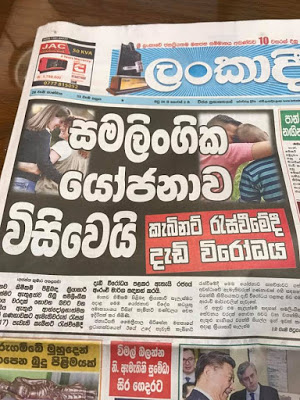
The ancient Sri Lankans had social tolerance of homosexuality probably due to the Buddhist teachings that did not condemn LGBT people. The Buddhist Jataka stories discuss homosexuality without homophobic prejudice (Jayatunge, 2015).  According to some scholars; early Buddhism appears to have placed no special stigma on homosexual relations (Coleman, 2002). There had been greater acceptance of homosexuality in ancient Sri Lanka.

According to The Mahawansa the great chronicle that relates the history of Sri Lank describes an intimate relationship between the King Kumaradasa and the renowned Sanskrit poet Kalidasa in the 5th century CE. The Upāsakajanalankara, for example, a 14th century Sri Lankan texts for lay people, includes a long and detailed section on sexual misconduct but makes no mention of homosexuality (Saddhatissa, 1965; Bhante Dhammika  , 2018). In 1547 AD the Portuguese soldier Joao de Casto wrote a letter to the Governor of Goa stating that the KingBhuvanaka Bahu III of Kotte  used to engage  in gay activates.

The English sailor Robert Knox (1641 –  1720) who spent 20 years in Sri Lanka as a prisoner wrote ; Most of his Attendants are Boys, and Young Men, that are well favored, and of good Parentage. For the supplying himself with these, he gives order to his Dissava’s or Governors of the countreys to pick and choose out Boys, that are comely and of good Descent, and send them to the Court. These boys go bare-headed with long hair hanging down their backs. Not that he is guilty of Sodomy, nor did I ever hear the Sin so much as mentioned among them (Robert Knox, An Historical Relation of the Island of Ceylon, 1681,).

Opposition to homosexuality in Sri Lanka started with the Colonial rule and the Church’s influence. Probably the first mention of homosexuality with strong disapproval came from a Portuguese observer in the early 16th century (Bhante Dhammika  , 2018).Homosexuality has long been sources of contention within the institution after 1505 with the Portuguese influence.  The Church’s declaration on sexual ethics impacted the same-sex sexuality in Sri Lanka.  The non-heterosexual orientation had been described as a violation of norms in the area of sexuality. During this period a large number of LGBT people were subjected to numerous harassment and discrimination. Regrettably religious and cultural basis of homophobia still exists in the Island. Negative attitudes toward LGBT population are common and widespread in the contemporary Sri Lankan society.

In the Western World up until 1973, homosexuality was considered to be a mental illness. It brought psychiatric stigma to the LGBT people in Western societies. Official reviews of homosexuality as both an illness and (for men) a crime led to discrimination, inhumane treatments and shame, guilt and fear for gay men and lesbians (King & Bartlett, 1999).  In 1973, the American Psychiatric Association removed homosexuality from Diagnostic and Statistical Manual of Mental Disorders. In 1975, the American Psychological Association stated that homosexuality was not a disorder and that homophobia was a form of prejudice based on stereotypes  (Tate & Longo ,2004).Homosexuality is now more commonly regarded as a normal variant of human sexuality  (Drescher ,2008).

Sexual orientation refers to a dispositional sexual attraction towards persons of the opposite sex or same sex (Rahman,  2005).  Some researchers believe that sexual orientation is beyond a person’s control. Most scientists today agree that sexual orientation is most likely the result of a complex interaction of environmental, cognitive, and biological factors (Kórász ,2013).However an  alarming stigmatization and discrimination of homosexual people persists despite the formal depathologization of homosexuality, which occurred through the removal of the diagnosis from the DSM- (1973) and classification from the ICD (1991) (Mahler & Mundle ,2015).

Psychology regards homosexuality as an alternative form of sexuality that is not associated with pathology (Herek, 1996). Sexual identity and sexual orientation are independent components of a person’s sexual identity (Roselli, 2017).  Sigmund Freud (1905) asserted that an exclusive heterosexual orientation does not only result from biological causes, but also is influenced by societal prohibitions on homoerotism and by early experiences with parents (Herek, 1984).

Between 1968 and 1969, Canadian Prime Minister Pierre Elliott Trudeau sparked a controversy surrounding his liberal government’s passage of Bill C-150, which decriminalized homosexual acts between consenting adults in private (Chambers,2010). Significant moments in sexual minority rights lead to change the laws that repressed LGBT people. Many Western countries have decriminalized homosexuality at present.  Although a large number of countries worldwide has legalized homosexual rights homosexuality is still illegal in Sri Lanka and Under Section 365A of the country’s penal code, homosexual acts are punishable by a jail term of up to ten years. These colonial era laws compromise health and human rights of the LGBT people in Sri Lanka.

Sri Lankan legal system does not protect sexual preferences of gays, lesbians and transsexuals. Same-sex marriage is not recognized in Sri Lanka. Homosexuality is illegal and considered to be a taboo subject. Those who do advocacy for the LGBT population often face threats and humiliation.  LGBT people living in Sri Lanka constantly face stigma, bullying, LGBT directed outrage, marginalization, sexual victimization and discrimination. Gay men are often called carriers’ of AIDS.  Hate crimes and hate speech against gay and lesbian victims are not rare. They face undeserved treatment and injustice. LGBT population faces derogatory labeling, public humiliation frequently by mainstream media.  Stereotypic and stigmatic attitudes toward gay people often lead them to hide their sexual orientation. Some gay people report high levels of being uncomfortable with their sexuality. Some face family rejection following their sexual orientation. Stigma and discrimination have a negative impact on the lives of LGBT people in Sri Lanka.

Prejudice and discrimination against LGBT individuals is widespread and has been shown to have negative consequences for sexual and gender minority persons’ physical and psychological wellbeing (Morrison et al., 2018).Discrimination causes health inequities for stigmatized groups (Pomeranz, 2018). Stigma operates at several levels to affect health, including internalized (e.g. sexual minorities’ negative thoughts, feelings, and behaviours about their own sexuality), interpersonal (e.g. discrimination) and structural (e.g. legislation that enshrines disadvantage in law) (Pachankis et al., 2015). McDermott and group (2008) demonstrate a strong link between homophobia and self-destructive behaviours. Societal and internalized homophobia could increase sexually transmitted infection acquisition (Steever et al., 2014). Research has documented significant relationships between sexual and gender minority stress and higher rates of suicidality (i.e. suicidal ideation and attempts) and substance use problems (Mereish  et al.,2014).  LGBT people have higher prevalence of mental health problems.

The Lesbian, Gay, Bisexual, and Transgender population face numerous psycho social problems. Following anti-gay sentiments they often become victims of violence. There are mental health problems among the members of the LGBT community. Some abuse drugs to ease their emotional pain. Disproportionate levels of substance use can be seen among the sexual minority young people. Due to homophobia they find it difficult to form meaningful, long-term, same-sex relationships.

Homophobia is the irrational fear and hatred of those who love and sexually desire those of the same sex. Homophobia is a socially accepted, culturally based belief, which is heavily influenced by an individual’s or a community’s inherent attitudes, beliefs and values (Richmond & McKenna, 1998). Homophobia not only damages individuals who are gay, lesbian, bisexual, or transgendered, but also limits heterosexuals by locking them into rigid gender-based roles (Tate & Longo, 2004).  However some ome propose homonegativism instead of homophobia. Homonegativism is a multidimensional construct that encompasses the entire domain of anti-gay responses, including attitudes, beliefs, and judgments regarding homosexuality (Bernat et al.,2001).

Homophobia has very complex roots. Homophobic attitudes derive from non-liberal attitudes, fixation to social inequality and religious fundamentalism.  Sandor Ferenczi (1914) suggested that heterosexual men’s feelings of aversion, hostility, and disgust toward male homosexuality really are reaction-formations and symptomatic of defense against affection for the same sex. Ferenczi did not extend his analysis to women’s attitudes or to attitudes toward lesbians, but similar processes might be inferred (Herek, 1984).    West (1977) viwed homophobia as the anxiety about the possibility of being or becoming a homosexual may be a major factor in homophobia According to Cory (1951) negative feelings toward opposite-sex homosexuals result from heterosexuals’ feelings of rejection as potential sexual partners.

 Homophobia has created an unconstructive environment for the LGBT people in Sri Lanka. They are impacted by silence, identity concealment, and repression.   Some live with uncertainty.  They experience sexual and mental health disparities.  Higher rates of mental health concerns are prevailing among them. Many experience depression and adjustment disorders. In addition many sexual minorities’ are impacted by addiction disorders. Following overwhelming social pressure and discrimination a considerable number of same sex couples had committed suicide in the past two decades.

Religious organizations and media constitute a significant source of the homophobia in Sri Lanka. They label LGBT people as sinners and potential threat to the moral foundation of the society. Fear of AIDS and homophobia are often interconnected. According to Meyer (2003)stigma, prejudice, and discrimination create a hostile and stressful social environment that causes mental health problems among the LGBT population.  Furthermore Chakraborty and team (2011) state that perceived discrimination may act as a social stressor in the genesis of mental health problems in this population. These social, political and cultural pressures may produce powerful and enduring emotional reactions among the LGBT people.

Although lesbian, gay, bisexual, transgender, and intersex movement has no strong voice in Sri Lanka several organizations have taken active measures to eradicate homophobia in the Sri Lanka. These organizations help to improve wellbeing of the LGBT.

Homophobia prevails in personal, interpersonal, institutional, and cultural levels. It has to be dealt with constructively.  Kozloski (2010) believe that education has a stronger connection with tolerance. Higher educated people tend to be more accepting of homosexuality than lower educated people (la Roi &, Mandemakers, 2018).

Education can change public perception of same-sex relations in Sri Lanka.  Promotion of liberal values and sexual conservativeness are important with regard to resolving personal, interpersonal, institutional, and cultural misunderstanding of homosexuality. Political tolerance of homosexuals also an essential feature that ought to be established. Civil society should understand and recognize the LGBT rights. In addition anti-discrimination policies should be introduced to protect the LGBT rights. Social and legal inclusion would help them to integrate in to society.  Legal and social recognition of same sex relationships may reduce discrimination.

Eradicating homophobia and socio-cultural barriers may uplift the wellbeing of the LGBT people in Sri Lanka. Promoting social inclusion would help the LGBT people to earn their status as equal members of society.

References

Agoramoorthy, G., Minna, J.H.(2007).India’s homosexual discrimination and health consequences.Send to Rev Saude Publica.  ;41(4):657-60.

Bennett, J.E. , Brickell, C.(2018).Surveilling the Mind and Body: Medicalising and De-medicalising Homosexuality in 1970s New Zealand.Med Hist.  ;62(2):199-216.

Bernat, .JA. , Calhoun, K.S., Adams, H.E., Zeichner, A.(2001). Homophobia and physical aggression toward homosexual and heterosexual individuals.J Abnorm Psychol.  ;110(1):179-87.

Coleman,J.W.(2002). The New Buddhism: The Western Transformation of an Ancient Tradition. Oxford University Press.

Chakraborty, A., McManus, S. (2011).Mental health of the non-heterosexual population of England.Br J Psychiatry.  ;198(2):143-8.

Chambers, S. (2010).Pierre Elliott Trudeau and bill C-150: a rational approach to homosexual acts, 1968-69.J Homosex.  ;57(2):249-66.

Drescher, J.(2008).A history of homosexuality and organized psychoanalysis.J Am Acad Psychoanal Dyn Psychiatry.  ;36(3):443-60.

Herek, G.M .(1984). in the Journal of Homosexuality, Vol. 10, No. 1/2 . pp. 1-15.

Jayatunge, R.M.(2015). Psychological Aspects of Buddhist Jataka Stories. Godage Publishers Colombo.

King, M. , Bartlett, A.(1999).British psychiatry and homosexuality.Br J Psychiatry. ;175:106-13.

Kórász, K.(2013).[The history of reorientation therapy].Orv Hetil.   16;154(24):931-9.

Kozloski, M.J.(2010).Homosexual moral acceptance and social tolerance: are the effects of education changing?J Homosex.  ;57(10):1370-83.

la Roi, C ., Mandemakers, J.J.(2018).Acceptance of homosexuality through education? Investigating the role of education, family background and individual characteristics in the United Kingdom.Soc Sci Res. ;71:109-128.

Mahler, L. , Mundle, G .(2015).A need for orientation: The WMA statement on natural variations of human sexuality.Int Rev Psychiatry. ;27(5):460-2.

Masango, M., (2002) Homosexuality : a challenge to African churches. HTS : Theological Studies, Vol 58, Issue 3, Sep p. 956-972.

McDermott, E ., Roen, K., Scourfield, J.(2008).Avoiding shame: young LGBT people, homophobia and self-destructive behaviours.Cult Health Sex.;10(8):815-29.

Mereish, E.H. , O’Cleirigh, C., Bradford, J.B.(2014).Interrelationships between LGBT-based victimization, suicide, and substance use problems in a diverse sample of sexual and gender minorities. Psychol Health Med.  ;19(1):1-13.

Meyer, I.H.(2003).Prejudice, social stress, and mental health in lesbian, gay, and bisexual populations: conceptual issues and research evidence.Send to Psychol Bull. 129(5):674-97.

Pachankis, J.E. , Hatzenbuehler ,M.L., Hickson, F., Weatherburn, P., Berg, R.C., Marcus, U., Schmidt, A.J.(2015).AIDS.  19;29(10):1239-46.

Pomeranz, J.L.(2018).Challenging and Preventing Policies That Prohibit Local Civil Rights Protections for Lesbian, Gay, Bisexual, Transgender, and Queer People.Send to Am J Public Health.  ;108(1):67-72.

Rahman, Q. (2005). The neurodevelopment of human sexual orientation. Neuroscience & Biobehavioral Reviews, 29, 1057-1066.

Richmond, J.P. , McKenna, H.(1998).Homophobia: an evolutionary analysis of the concept as applied to nursing.J Adv Nurs. ;28(2):362-9.

Roselli ,C.E. (2017).Neurobiology of Gender Identity and Sexual Orientation.J Neuroendocrinol.  doi: 10.1111/jne.12562.

Saddhatissa, H.(1965). Upasakajanalankara: A Critical Edition and Study.

Somasundaram, O., Tejus Murthy, A.G.(2016).Homosexuality – leaves from antiquity: Lesbian, gay, bisexual, and transgender population: A Tamil perspective.Indian J Psychiatry.  ;58(3):336-338.

Steever, J.B. , Cooper-Serber, E.(2013).A review of gay, lesbian, bisexual, and transgender youth issues for the pediatrician. Pediatr Ann. ;42(2):34-9.

Steever, J. , Francis, J. , Gordon, L.P.,  Lee, J.(2014).Sexual minority youth.Prim Care.  ;41(3):651-69.

Tate, F.B. , Longo, D.A.(2004).Homophobia: a challenge for psychosocial nursing.Send to J Psychosoc Nurs Ment Health Serv.  ;42(8):26-33.

West, D. J. (1977). Homosexuality re-examined. Minneapolis: University of Minnesota Press.

Countries must exit the UN if it cannot prevent peace & ruin of countries 

April 12th, 2018

If the US & Allies get away to ruin yet another nation, it is time the Members of the UN take a firm stand to exit the UN, for there is little use in a world body that by virtue of its Charter exists to prevent wars & maintain peace, when obviously it cannot do so. What has this world body done about US invasion of over 22 countries in 20 years? UN could not stop close to a million dying in Iraq from sanctions Close to 3000 US citizens died & the entire world is supposed to weep for them but nothing is shed for the close to 40,000 Afghan soldiers, 34000 Afghan civilians, close to 70000 Iraqi soldiers, over 107,000 Iraqi civilians killed when US & Allies invaded & bombed them though all of the 9/11 hijackers were not Iraqi or Afghans. UN Member states have watched continent after continent, country after country being illegally invaded by US & its Allies, these countries have lied, have paid media to lie, have paid human rights organizations to lie, have paid even academics & civil society to lie. UN has become a podium where bogus Acts, Declarations & Resolutions have been passed specifically to invade & destroy nations & people. This must stop. UN Member states must take a stand NOW or the citizens of these countries must demand that their countries exit the UN.

The War On Terror since 2001 has left at least 1.3m dead majority being civilians in Iraq, Afghanistan and Pakistan (Body Count Report)

According to the Institute for Economics & Peace close to 14,000 terrorist attacks have taken place in 93 countries in 2014 with close to 33,000 civilian casualties.

The United States military has spent more than $5.6 trillion on conflicts since 2001 which is costing the US taxpayer $23,386 and what are they getting out of bombing countries many of them don’t even know where they are on the world map?

Why should the average American care if Gaddafi or Saddam, Assad or any other foreign leader for that matter is oppressing his people? Americans should worry only if anyone was attacking their country & none of the countries that US invaded have threatened the US!

Ironically, only 24 Americans have died in the last decade from some form of terror attack yet over 280,000 Americans have died from gun violence!

America’s illegal invasions have caused the death of 6,251 U.S. troops since 2001, 45,170 U.S. troops have been wounded in war since 2001. The Rand Corporation has estimated that approximately 320,000 service members may have experienced traumatic brain injury during their deployment – that’s almost every personnel deployed. Every day an average 18 veterans die from suicide – why? is it the drugs they are forced to take or the guilt of orders carried out?

https://www.fcnl.org/updates/costs-of-war-by-the-numbers-396

Any war increases taxes, increases debt and reduces spending for other important areas. But who has profited from the wars? According to a 2006 report titled: Executive Excess 2006” since 9/11 the salaries of the CEOs of the leading defense contractors have doubled. From £$3.6 million in 1998 – 2001, to $7.2 million in years 2002 – 2005. 10 companies are profiting from wars. US arms sales soared in 2016 while the 100 biggest arms producers accounted for $375billion in weapons sales in 2016, the US firms accounted for $217billion. To whom have these weapons been sold? 20% goes to US – the 13 biggest buyers are listed here https://247wallst.com/special-report/2017/02/24/countries-buying-the-most-weapons-from-the-us-government/2/

https://www.huffingtonpost.com/entry/the-usa-is-number-one-in-weapons-sales_us_5a32895de4b04bd8793e97dc

The US has admitted to carrying out at least 42 false flag events all of which have led to complete chaos & draconian laws that have affected the freedoms & liberties of peace.

US is accusing other countries of aggression when the US has over 1000 military bases with close to 400,000 military personnel deployed in 120 countries.

Tthere are over 20,000 troops stationed in Korea and not a single North Korean troop in US, when US has killed over 3m Koreans on Korean soil while no American has been killed by a North Korean on American soil. US accuses Iran of aggression but has anyone taken a look at the military bases of US?

US troop deployment

800 in Africa,

97,000 in Asia (excluding the Middle East and Central Asia),

40,258 in South Korea,

40,045 in Japan,

491 at the Diego Garcia Base in the Indian Ocean,

100 in the Philippines, 196 in Singapore,

113 in Thailand,

200 in Australia,

16,601 Afloat

147 Canada

6000 in Middle East excluding Iraq, Qatar & Bahrain

1000 Central Asia

116,000 US military personnel in Europe including 75,603 stationed in Germany. (Global Research)


Iraq has been a victim of US since 1991 – 2003, first with Operation Desert Storm supposedly to liberate Kurds and sanctions that led to a million children deaths.

Kuwait (1992), 1998 US & UK troops conducted a 4 day bombing campaign.

African nations of Zaire (1991), Sierra Leone (1992/1997), Congo & Gabon 1997, Sudan 1998,

Bosnia & Herzegovina (1992), Bosnia (1993-95) US NATO enforce no-fly zone following UNSC Resolution 816, in 1994/5 Bosnia was victim of US NATO air attacks, in 1999 Serbia was bombed by US & NATO after UNSC Resolution 1244, from 2003 to 2011 US & Coalition invade Iraq to disarm Iraq on the bogus claim of WMDs

US troops deployed in

  • Macedonia 1993/1994
  • Haiti 1994 to restore ‘democracy’ and again in 2004 with UN force
  • Central African Republic 1996
  • Kenya & Tanzania 1998-9
  • Liberia 1998
  • East Timor 1999-2001 with UN Peace Keepers
  • Sierra Leone 2000
  • Nigeria 2000
  • Yemen 2000/2002 – 2010 to present
  • Afghanistan 2001 to present
  • Philippines 2002
  • Ivory Coast 2002
  • Liberia 2003
  • Georgia 2003
  • Djibouti 2003
  • 2004 Kenya, Yemen, Eritrea, Georgia & Djibouti
  • 2004 to present Pakistan
  • Lebanon 2006
  • Somalia 2007 / 2011 US drone strikes / 2013
  • Libya 2011 after UNSC Resolution 1973
  • Uganda 2011 – US troops sent as ‘advisors’ / 2014 to present US troops sent to search for Joseph Kony
  • 2012 Jordan
  • 2012 Turkey
  • 2012 Chad
  • 2014 to present Syria – US troops sent to supposedly save hostage James Foley & claims to fight Al Qaeda, Al Nusra, ISIL in 2017 Tomahawk missiles launched
  • 2015 Cameroon – US troops sent to provide ‘intelligence support’

Cambodia in 1997, Cambodia in 2002

How can the UN promote sovereignty or freedoms when these global conquests are all about controlling the world economy, its financial markets & taking over the natural resources & handing over to a handful of private individuals?

46.5 million Americans are living in poverty – 815m worldwide are living in hunger, however 1.3billion tons of food is wasted globally while US wastes 40m tons of food (WHO/FAO)

Less than $30billion per year is needed to end hunger by 2030. However, the world spends $1600billion per year on wars – US spends $737billion per year on military! A study by Georgetown University claims Christianity is worth $1.2trillion in the US alone & if taxed the revenue would be much more than the required $30billion!

US drug companies spend $880m on lobbying the US government & political contributions (Centre for Public Integrity)

$11.7billion was spent on political ads in 2016.

US accounts for 5% of the global population but houses 25% of world’s prisoners. 1 in 13 African Americans are cannot vote as ex-felons are denied right to vote. 1 in 15 black men are behind bars. US taxpayers pay $69b annually to maintain US prison system. (Prison index) It costs 4 times more to maintain a person per year in jail than to send a child to school.

What has the UN done to protect its Members from the aggression of US & Allies? Clearly the UN is a body of biased judgements & resolutions that lead to interference in the internal affairs of sovereign nations & UN bodies & agencies are tasked to facilitate these incursions & invasions.

Non US-Allies must now take a firm stand – how many countries has the US-Coalition destroyed? What is the independence Kosovo enjoys better than they did under Milosevic? How has Sudan prospered? What is the liberty & freedom that  the Iraqis & Libyans have got after killing their ‘dictators’ and all these invasions took place with UN knowledge & UN awareness & even with UN’s nod of approval or silence.

We cannot watch another country fall into peril being bombed and destroyed – Libya was a beautiful country – look what it looks like now. Yugoslavia was a beautiful country but bombed, Syria was a beautiful country and is now the stage of more bombing campaigns and these countries all are part of an ancient historical heritage which has to be protected and these sites have historical value. None of us want to see these ancient sites ruined by a bunch of sadistic individuals who are nicely seated in a/c rooms ordering people to be shot down, bombed, killed or assassinated.

If the UN cannot do anything to honor the Charter that justifies its existence, then the UN must be shut down and Russia & China must lead the exit of the UN by all Third World Countries all of whom are neocolonial victims of Western hegemonic aggression. US is threatening to exit the UN – the Russians, Chinese & Rest of the world should do so first.

 Shenali D Waduge

HOW TO PROTECT THE CONSUMER DURING THE FESTIVE SEASON

April 12th, 2018

Sarath Wijesinghe former Chairman Consumer Affair’s authority

Neglected consumer to be transferred to alert consumer

Most powerful consumer worldwide is powerless in Sri Lanka as the most neglected group in the society, not conversant with the rights, laws, precautionary measures on consumer transections, and generally, knowledge on the important materials and availability on laws on consumerism, has become a soft targets and easy prey of errant trader and exploiters in action mostly during the festive season. Festive season is nearing and the errant traders are getting ready for bogus sales to get rid of the unsalable stock and dumped consumer articles at high prices, when professional pick picketers” , gangsters and underworld thriving are rallying round in main towns, public places and public transport in addition to the pavement hawkers loitering busy on sale of adulterated beverages fruits and vegetables with poisonous chemicals as preservatives. Consumer items with no quality and substandard which are freely dumped from other countries are piled in Pettah” and other outlets with no control or regulation from any regulators such as CAA, Ministry of Trade, and Local authorities who are well paid and looked after with all facilities and privileges. CAA executive officers are provided with vehicles and the branch officers are well paid and looked after with no effective results to the citizen/consumer on consumer complaints and redress. Despite the high cost of living the consumer is determined to fulfill the social traditional and family obligations at least during the New Year which is nearing fast. The trader is aware of your needs and most of the needs will be available freely at a different price mark possibly with the price mark SALE, which is always the normal practice during the festive season and the year end. Dis -organized or ill – organized consumer with lack of knowledge on consumerism and little or no assistance from the active groups and the Consumer Affairs Authority are helplessly planning for the festive season in order to observe traditional rituals better with friends and families. Consumer has to be educated on their rights and obligations that they should request a proper receipt, check the standards, read the directions carefully specially those in small letters and in a different languages they cannot understand, question the trader on the brand, quality, durability, origin, more information on hire purchase agreements and reviews of the item. Minister and Ministry of Trade is fast asleep or engaged in other political duties over pressed stretched overloaded with political interests. Maintaining Trade affairs and CAA under the Trade Ministry is of conflicting of interests and should be separated.

JUST TRADER” . Are all traders to be accused/ guilty of malpractices?

There are duties and obligations on the side of the trader/industrialist by the society and law to perform for the system of governance to proceed for his existence as breakdown of the system and confidence of the consumer/citizen will be detrimental to the trade regime in the country. There are many traders and industrialists who have understood this reality but unable to fulfill the requirements due to the inaction of the regulators/governance and lack of facilities and/ or the

implementation of archaic rules and non-implementation of regulations already in place for smooth functioning of the system. That the trader and industrialists are bound by written and unwritten rules regulations conventions and norms bound by law and practice are not or little known to the consumer, trader and the regulators who are in a world of their own neglecting civic and legal duties by the society and the governance. According to the regulations of the Consumer Affairs Act amongst many obligations trader is bound to issue a receipt to every consumer in the format shown, and defend the quality, durability, and to provide correct information on the product on sale, which are in the public domain where the consumer is entitled and bound to possess relevant information. Government is spending billions of rupees on the CAA for educating the public and organizes consumer societies, and conduct education sessions starting from the school. It is a sorry state of affairs that not a single active consumer society is initiated at the auspicious of the CAA though it is mandatory and the duty to set up a strong network of organizations with the help of the civil society for a better day for the consumer and a friendly cooperation with the consumer trader and industrialist. Sari Wanija” is a Jathaka” Story where the just trader correctly identified the large gold bowl and paid the correct price, willfully rejected by another errant trader to condemn and purchase it for less in future from a poor family where the errant trader died of a stroke having heard the news of the just trader purchasing it at the market price. Just traders are not uncommon in Sri Lanka and very common in the west due to the system of good trade practices in action. It is common practice in the west to accept the items returned within the stipulated period in good condition but not in Sri Lanka where exchange is permitted.

Trader is an important component for the society

Trader is an important component to the society and for healthy economy it is vital for the consumer and trader to maintain understanding, friendship and co-existence for the smooth running of the economy. Trader should not be considered an enemy as traditionally considered due to misunderstands on the respective duties and obligations that trade and trader is a vital component of the governance.

Modern trends in shopping

Modern trends on shopping which are revolutionary and current worldwide are active in Sri Lanka to a considerable extent, with the availability of high internet density and 23 million mobile phones in circulation. A fair cross section of the citizen is used to compare, review, and check the prices and quality on line and international online platforms such as Alibaba, Amazone” which are active in Sri Lanka with wide section of followers the society, with credit card users fast growing. Living on debts is a system disliked in Sri Lanka traditionally is now fast growing with the chains of food stalls with banking facilities systems/devices encouraging debts which are profitable to them. Sri Lankans were a nation allergic to debts hesitant to live under a roof with mortgages, unlike in the UK and Europe where almost everything including cars, houses are on montages as a way of life and a part of governance as an income for the state’ where the trend of using currency are fast disappearing on cards and instant banking. West are debt ridden countries and nations with ample social benefits in place which may not suit us. One may argue that it is a sorry state that Sri Lanka is also following the western trends of living on debts and mortgages re purchase, credit card and online perches on credit which are fast growing. But one may argue online buying may be safer reliable and consumer friendly and it is left to the consumer to decide the purchase hobbits.

Way forward

Media in UK and Europe, is in the forefront with magazines like” WHICH” educating and directing the consumer with a strong network of organizations. In the West the name and shame and traders unity to give a good service to the consumer is raising the standards of successful consumer and trade regime. Trader is well restrained and obliging to the conventions and practices to maintain the good will to deliver top priority for consumer satisfaction. They do not consider trader and consumer enemies as there is an understanding, tacit bond and agreement to help each other for their own benefit. 40% UK shopping is online- which according to them – is safe trading and consumerism with checks and balances with the involvement of the Department of Trade and Commerce whereas CAA, the counterpart in Sri Lanka is inert, ineffective and inefficient. Consumer must be educated, alert and organized- not necessarily against the trader, but look after themselves to achieve due rights as consumers utilizing the available resources and legal framework. CAA must perform well using enormous powers vested in them and the Governance must bring about necessary changes early to give the consumer and the trader due place and rights in the sociality. Main responsibility is on the CAA to exert the pressure on the main machinery and the provinces to education and formation of powerful consumer societies. Governance must separate CAA, to exist as an independent body headed by a non-political qualified person with a legal background appointed by the constitutional council preferably with a legal background. Media and civil society has an enormous responsibility in bringing about co-existence of the key partners, namely the Regulators, Trader, Industrialist and the consumer for a better consumer regime for Sri Lanka. Suffering of the consumer continues and it is not a solution suddenly rise from deep sleep and raid some shops with the limited staff at every festive season as a ritual as published in the media these days. Let us pray and wish the consumer success during the festive season.

(Reading materials Simple Life 16/8/2008-27th 5/2007 Observer Regulatory powers/Junk Food 15.3.2007/ All by the author who was former Ambassador to UAE and Israel and former Chairman CAA who could be contacted on sarath7@hotmail.co.uk)

Ambassador Azeez Presents Credentials in Geneva

April 12th, 2018

Permanent Mission of Sri Lanka Geneva

Ambassador A.L.A. Azeez presented Credentials today, (12th April) to Mr. Michael Møller, the Director-General of the United Nations Office in Geneva, accrediting him as the Permanent Representative of Sri Lanka to the United Nations in Geneva.

Welcoming the new Permanent Representative, Director General Mr. Møller apprised him of the diverse areas in which his Office remained engaged in Geneva and highlighted the integrated SDG Lab, Gender Parity Campaign, and UN Strategic Heritage Plan as among the important priorities. He called upon Sri Lanka to contribute towards the advancement of these initiatives while continuing the leading role that Sri Lanka has played in the field of disarmament and other areas.

Ambassador Azeez elaborated the measures taken by the Government of Sri Lanka to advance SDGs as well as the ongoing programmes and plans aimed to improve the socio economic conditions of the people. He reiterated that it was the policy of the Government of Sri Lanka to remain engaged in constructive dialogue and cooperation with the United Nations, in a manner that advances the welfare of all Sri Lankans.

A career Foreign Service Officer with 26 years of experience, Ambassador Azeez previously served as the Permanent Representative of Sri Lanka to the United Nations Organisations in Vienna from 2011 – 2015. He coordinated EU related matters and multilateral treaties, acting as Additional Secretary in the Ministry of Foreign Affairs immediately prior to his new assignment.

In Vienna, he had held the Chairmanship of the Group of 77 and Working Group of the Comprehensive Nuclear Test-Ban Treaty (CTBTO), in addition to the Presidency of the United Nations Industrial Development Board and the General Conference of the International Atomic Energy Agency (IAEA).

Permanent Mission of Sri Lanka

Geneva

12 April 2018


Copyright © 2026 LankaWeb.com. All Rights Reserved. Powered by Wordpress