When the case where former navy spokesman D.K.P. Dissanayake was an accused was taken up for hearing before the Fort Magistrate Court, a key witness the CID had changed several parts of his initial statement and requested that he be allowed to made a personal statement in Court.
Mr. Dissanayake and five others were arrested on charges of abduction and disappearance of 11 youth in 2008 and 2009. The CID informed Court that the 11 youth who were abducted by unidentified groups in Colombo and the surrounding areas, had been taken to underground detention cells at a navy camp in Trincomalee which was supervised by a Navy Lieutenant Commander.
Counsel Udaya Gammanpila appearing for the witness informed Court that the CID had changed the facts in his client’s first statement recorded in 2015.
Meanwhile, Gang-Robbery Unit OIC Nishantha Silva informed Court that the witness had provided key pieces of information to the investigation and said the initial statement had not been changed in any way.
The CID arrested Mr. Dissanayake while he was at the Sri Lanka Navy base in Welisara following an investigation into the incident earlier this year.
Colombo Fort Magistrate Lanka Jayaratne re-remanded the suspects till January 2, 2018.
Even to dance the tango the two have to dance to not only the same tune but to the same steps. What is clear from the very statements by Tamil leaders and their representative parties over the years is that their demands remain fixated while they expect the other party to be compromising and virtually giving in to their demands. What is equally shocking is that the so-called international community & the UN system well aware of these racist & separatist demands of the Tamil political players are very happy to play along as they see opportunities for their agendas in the demands made by these Tamils.
On 20th November 1947 the President of the ACTC sent a telegram through the Governor’s Office to the Secretary of State for the Colonies:
The Tamil people of Ceylon have rejected the Soulbury Constitution in as much as at the general elections not one Tamil candidate of the U. N. P. was elected to Parliament and all but one of the Tamil Representatives who voted for the acceptance of the White Paper of 1945 in the defunct State Council were (sic) defeated. The All Ceylon Tamil Congress demands a free constitution for Ceylon conferring sovereignty on its people with equal freedom for all communities and calls for a constituent assembly to frame a constitution acceptable to all sections of the people. An Unitary Government with present composition of legislature and structure of executive totally unacceptable to the Tamils. In the absence of a satisfactory alternative we demand the right of self-determination for the Tamil people.”
It was only in 1951 that, for the first time, Tamil politicians defined the Tamils as a distinct nation. The first annual convention of the Tamil Federal Party(ITAK) declared:
“the Tamil speaking people in Ceylon constitute a nation distinct from that of the Sinhalese by every fundamental test of nationhood”
The Federal Party summoned its national convention in the naval port of Trincomalee in the eastern province. That convention, held on 19 August 1956 immediately after the passing of the June 1956 Official Language Act, passed the following resolutions:
the replacement of the present pernicious constitution by a rational and democratic constitution based on the federal principle and the establishment of one or more Tamil linguistic state or states incorporating all geographically contiguous areas in which the Tamil speaking people are numerically in a majority as federating unit or units enjoying the widest autonomous and residuary powers consistent with the unity and external security of Ceylon;
The restoration of the Tamil language to its rightful place enjoying the absolute parity of status with Sinhalese as an official language of the country;
The repeal of the present citizenship laws and the enactment in their place of laws recognizing the right to full citizenship on the basis of a simple test of residence for all persons who have made this country their home;
The immediate cessation of colonization of the traditional Tamil speaking areas with Sinhalese people.
Professor C. Suntharalingam – The man who fathered the Tamil Eelam concept and introduced the word EELAM into the Ceylonese political vocabulary. He created the Eela Thamil Ottrumai Munnani (Unity Front of Eelam Tamils) in 1959.
“We have made up our minds, come what may, that we shall constitute a separate state of Eelam”
Statement by S. J. Chelvanayagam after winning the by-election for the Kankesanturai Parliamentary seat, held belatedly on 7 February 1975
“I wish to announce to my people and to the country that I consider the verdict at this election as a mandate that the Tamil Eelam nation should exercise the sovereignty already vested in the Tamil people and become free.”
In 1975 its leader Chelvanayakam declared secession to be the goal of the Tamil people. In 1977, the Tamil United Front (TUF) was Reformed as the Tamil United Liberation Front (TULF), and in the subsequent general election asked the Tamil people for a mandate to secede as the separate State of Tamil Eelam. The TULF stated in its election manifesto
The Tamil nation must take the decision to establish its sovereignty in its homeland on the basis of its right to self determination. The only way to announce this decision to the Sinhalese government and to the world is to vote for the Tamil United Liberation Front.”
In 1972 combining the ACTC and ITAK (Federal Party) Tamil United Front was formed which later became TULF in 1976. Vaddukoddai Resolution emerged from the first National Convention of the Tamil United Liberation Front meeting at Pannakam (Vaddukoddai Constituency) on the 14th day of May, 1976 by Chairman S.J.V. Chelvanayakam. www.sangam.org
5 objectives were declared
State of Tamil Eelam to consist of North & Eastern provinces to all Tamil speaking people
Constitution of Tamil Eelam based on principles of decentralization. No foremost place to any religion or territorial community.
Tamil Eelamwill assure equal status to all
Tamil Eelam will be a secular statewith equal protection to all religions
Tamil will be language of the State but Sinhala speaking minority can educate and transact in Sinhala subject to reciprocity of Tamil speaking minority in Sinhala state. (didn’t they demand equal language rights – if so why make only Tamil language of the state?)
26 March 1977 Chelvanayagam said ,
My advice to the Sinhalese leaders is to allow us to go our way .. Let us avoid bitterness and agree to part peacefully. This will pave the way for greater cooperation between the two nations on a footing of equality. The Tamils are not with any other alternatives. Bitterness is growing in the midst of the younger generations. Without allowing it to grow any further, which may lead to inevitable confrontation leading to foreign intervention, therefore a method of peacefully working out this entanglement is necessary. We are confident that the truth will ultimately triumph and we will win in the war of endurance.”
Tamil United Liberation Front General Election Manifesto, July 1977
“to establish an independent sovereign, secular, socialist State of Tamil Eelam…“.
Even before the Christian era, the entire Island of Ceylon was ruled by Tamil Kings, Senan, Kuddikan and Elara (Ellalan)” (These are all Indian – Tamil Nadu kings and Elara was not a Tamil)
The Tamil nation must take the decision to establish its sovereignty in its homeland on the basis of its right to self determination. The only way to announce this decision to the Sinhalese government and to the world is to vote for the Tamil United Liberation Front”
either by peaceful means or by direct action or struggle.”
When the UNP government put forward its conventional policy statement in August 1977, Amirthalingam, the leader of the opposition, proposed an amendment to it:
It [the policy statement] studiedly refrains from referring to the mandate given by the people of Tamil Eelam to the TULF for the restoration and reconstitution of a free, sovereign, socialist, secular state of Tamil Eelam . . . Government policy has failed to take note of the fact that the Tamils are a separate nation by all internationally accepted standards . . . and are therefore entitled to exercise their inalienable right of self determination”
President Jayewardene in October 1982
“They can’t separate, and what we give them can’t be different from any other part of the country.”
Yogaratnam Yogi, on behalf of the Liberation Tigers of Tamil Eelam speaking at a public meeting to commemorate the 15th death anniversary of Thanthai Chelva on April 26 1992 at Nallur, Jaffna
“Thanthai Chelva was the elder statesman who opened the path for the present struggle of the Tamils. He had to carry the struggle forward under great difficulties. We of the LTTE accord Thanthai Chelva and his sincere followers a respected position in the Tamil Eelam liberation struggle.”
In 2001 when Tamil National Alliance was formed comprising the Tamil United Liberation Front (TULF), the All Ceylon Tamil Congress (ACTC), the Tamil Eelam Liberation Organization (TELO) and the Eelam People’s Revolutionary Liberation Front (EPRLF) their immediate demands were: –
The immediate lifting of the economic embargo currently in force in parts of the northeast province
Thewithdrawal of the residential and travel restrictions foisted on the Tamil nationality
The immediate cessation of the war being currently waged in the northeast
Theimmediate commencement of the process of negotiations with the Liberation Tigers of Tamil Eelam ( LTTE) with international third party involvement.
Recognition of theTamils of Sri Lanka as a distinct nationality.
Recognition of an identifiedTamil homeland and guarantee of its territorial integrity.
Based on the above, recognition of the inalienable right of self-determination of the Tamil nation.
Recognition of the right to full citizenship and other fundamental democratic rights of all Tamils who look upon the island as their country.’
Sambathan leader of TNA & present Opposition Leader (2003)
“The ISGA proposal submitted by the LTTE to the UNF government bears historical importance in the political history of Tamils in the island. The ISGA provides a base to find a permanent political solution to the Tamil national question,”
The high security zones and armed forces camps…. should be removed
The political prisoners ……should be released (LTTE cadres are not political prisoners)
…. removing the restrictions put in place by certain countries on the LTTE
2009 Tamil Diaspora global referendum conducted by TGTE.
“I aspire for the formation of the independent and sovereign state of Tamil Eelam in the north and east territory of the island of Sri Lanka on the basis that the Tamils in the island of Sri Lanka make a distinct nation, have a traditional homeland and have the right to self-determination.”
Tamil speaking Northern & Eastern provinces are historical habitation of the Tamil people peoples.
Tamil people are entitled to right of self-determination
Power sharing arrangement must be established in a unit merged Northern and Eastern Provinces based on a federal structure
Devolution of power over land, law and order, socioeconomic development including health, education, resources and fiscal powers
Direct foreign investment in the North & East
Tertiary education
Demilitarization return to pre-war 1983
Resettlement of Tamil people in their original places, housing and livelihood to be restored.
Compensation paid to loss of lives, maimed as a result of military campaign
Releasing persons detained without charges
Tamils who fled country must be allowed to return
Creation of employment opportunities for youth with participation of International Community & Tamil Diaspora
No displaced persons
Special commission to uplift socially and economically disadvantaged sections of society
TNA will raise standard of living of fishing communities providing them access to modern technologies
Increasing salaries of government servants and private sector employees
Equal status to women,
TNA assures to secure employment opportunities to unemployed graduates
Sampanthan’s speech at the 14th Annual ITAK convention in 2012 Batticoloa covered the following points : www.tamilcanadian.com a must read to understand what the demands are
Our expectation for a solution to the ethnic problem of the sovereignty of the Tamil people is based on a political structure OUTSIDE that of a UNITARY GOVERNMENT, in a UNITED SRI LANKA in which Tamil people have all the powers of government needed to live with self-respect and self sufficiency’.(this is echoing the 1947 demands by ACTC to the British)
The struggle is the same, but the approaches we employ are different. Our aim is the same, but our strategies are different. The players are the same, but the alliances are different. That is the nature of the Tamil people. Although we still have the same aim, the methods we use are now different.”
TNA 2013 election manifesto (Northern Provincial Council election)
The Tamils are a distinct People and from time immemorial have inhabited this island together with the Sinhalese People and others
The contiguous preponderantly Tamil Speaking Northern and Eastern provinces is the historical habitation of the Tamil Speaking Peoples
The Tamil People are entitled to the right to self-determination
Power sharing arrangements must be established in a unit of a merged Northern and Eastern Provinces based on a Federal structure, in a manner also acceptable to the Tamil Speaking Muslim people
Devolution of power on the basis of shared sovereignty shall necessarily be over land, law and order, socio-economic development including health and education, resources and fiscal powers.
TNA 2015 Parliamentary Election Manifesto – issued by the TNA comprising of ITAK, TELO, EPRLF and PLOTE.
The Tamils are a distinct People with their own culture, civilization, language and heritage and from time immemorial have inhabited this island togetherwith the Sinhalese People and others (slight change to their earlier stand)
The contiguous preponderantly Tamil Speaking Northern and Eastern provinces is the historical habitation of the Tamil People and the Tamil Speaking Peoples
The Tamil People are entitled to the right to self-determination in keeping with United Nations International Covenants on Civil and Political Rights and Economic, Social and Cultural Rights, both of which Sri Lanka has accepted and acceded to
Power sharing arrangements must continue to be established as it existed earlier in a unit of a merged Northern and Eastern Provinces based on a Federal structure. The Tamil speaking Muslim historical inhabitants shall be entitled to be beneficiaries of all power-sharing arrangements in the North-East. This will no way inflict any disability on any People.
Devolution of power on the basis of shared sovereignty shall be over land, law and order, enforcement of the law so as to ensure the safety and security of the Tamil People, socio-economic development including inter-alia health, education, higher and vocational education, agriculture, fisheries, industries, livestock development, cultural affairs, mustering of resources, both domestic and foreign and fiscal powers.
Direct foreign investment in the North-East should be facilitated resulting in new industries and employment opportunities being created for youth
Avenues for tertiary education should also be set-up so that those who cannot enter universities can pursue higher education in relevant fields
V Rudrakumaran, LTTE lawyer and present ‘President’ of TGTE
“…a social group characterized by distinct objective elements such as a common language and a common struggle, acquire subjective elements such as a sense of solidarity, of sameness or oneness and has a relationship to a defined territory,” such a group clearly constitutes a “people” and-is entitled to self-determination… the Tamils of Sri Lanka, who are united on the basis of such objective factors as a distinct language etc., and by such subjective factors as a passionate yearning for freedom, and who have a long-established relationship to the Northern and Eastern provinces constitute a people, and are therefore entitled to self-determination in the form of secession, in the face of denial of effective representation in Sri Lanka’s existing constitutional and political situation….
Feb. 10, 2015 Northern Provincial Council headed by C V Wigneswaran tabled a resolution alleging genocide of Sri Lankan Tamils, since 1948 (he cannot however explain how Tamil population is increasing after genocide)
There are plenty more racist and hateful statements made by these so-called Tamil leaders most of these comments for want of space is not included. What is shocking is that no one seems to be bothered with their racism & separatist objectives.
Take all of the Tamil organizations/associations overseas and study their aims, objectives – every event they organize uses LTTE colours, LTTE flags, LTTE memorabilia, LTTE maps etc.
If the demands have not changed why should the other side only be the one to have to compromise, virtually give into demands that have no historical basis, factually incorrect, strenghtened by blood-money & illegal and illicit profits.
Rathana thero!! Please stop making profit motivated agitations against commercial products.
Read What you should know about chrysotile white asbestos.
There are two types of asbestos in the world: amphibole and chrysotile. There is proof that some amphibole types cause lung cancer. But chrysotile is not dangerous because we can get rid of it from the body if we take a breath of air contaminated with chrysotile,” When they make roofing tiles mixing chrysotile with cement, makes it much safer than any substitutes. Russian roofing material made out of chrysotile white asbestos are technically different from what is produced in the West.
Developing countries are the large market for chrysotile white asbestos. Substitutes for white asbestos, such as polyvinyl-alcohol (PVA) fibre, polyvinyl chloride (PVC) and cellulose, which are produced in the European Union, are much more expensive.
That’s why we see a lot of anti-chrysotile rhetoric is from the EU and USA and also from locally promoted anti-chrysotile rhetoric by Maharajah group which stands to benefit if chrysotile imports are banned. Meanwhile consumers, who have limited finances, will lose benefits,
Chrysotile helps make roofing tiles more durable as well as resistant to heat and humidity. The ore is also cheaper than other substitute materials.
Sergey Kashanskiy, a candidate of medical science and head of the Labour Hygiene Laboratory of the Yekaterinburg Medical Research Centre for Prophylaxis and Health Protection in Industrial Workers, said white asbestos had been proved to be the safest ore used in the industry without any effect that causes any disease in a given situation. There is no scientific proof that chrysotile is a cause of lung cancer, he said.
Russia, which has the world’s largest geological reserves of asbestos, mines about a million tons of asbestos a year and exports about 60 percent of it. Demand is still strong for asbestos in China and India, where it is used in insulation and building materials. The Russian Chrysotile Association, an asbestos industry trade group, reports that annual sales total about 18 billion rubles, or $540 million. And the business is growing, mostly because other countries are getting out of the business.
The trade association says that the type of asbestos mined in Russia, called chrysotile, is less harmful than other types. The United States, though, has tightly restricted its use. The country imports about 1,000 tons of asbestos, mainly from Brazil, for use in aerospace and automotive industries for items like clutch pads. They consider it dangerous but we consider it safe,” said the association’s spokesman, Vladimir A. Galitsyn. Russia has three research institutes dedicated to studying uses for asbestos.
Four countries including Russia have blocked a bid to add chrysotile asbestos to a list of dangerous substances subject to export restrictions, participants at a UN meeting in Geneva recently.
Russia, Kazakhstan, Kyrgyzstan and Zimbawe opposed listing the mineral also known as white asbestos, which health experts say causes cancer, on the Rotterdam Convention list, according to groups attending the Geneva meeting that wrapped up recetly.
India has long vehemently opposed adding chrysotile to the Rotterdam Convention list, but did not in the end join the four countries officially opposing its inclusion.
Ranil-Sirisena Government is brainwashed by their western handlers to such an extend that even it can ruin our tea industry completely.
Lack of physical fitness amongst the Sri Lankan cricketers is a major drawback. In a Workshop held this week in Sydney for coaching under 15 cricketers several slides of Sri Lankan cricketers were shown ( with their eyes covered) to demonstrate the Sri Lankan international players were puffing and panting after few minutes of playing. It was revealed that the Sri Lankan National squad players ( country not directly identified) cannot even do 10 push-ups in a training session).
When other players are continuing to play under unfavourable weather conditions, our players appears to be exhausted, requiring drinks, muscle treatments etc. Some players come to bat, after facing few overs, request change of gloves from the dressing room, demonstrating lack of preparedness.
They are lacking self-confidence. At the Workshop in Sydney, it was also revealed (once again the name of the country not mentioned) that those who are playing at the National Level in Sri Lanka would not have had any chance of being selected even for a Divisional Cricket Tournament in Australia. In comparison, India, Bangladesh and Pakistan have developed the techniques with well founded strategies, in line with professional sportsmen elsewhere.
To overcome the lack of self-confidence and stamina, they have started seeking redress from the Divine Intervention. The Buddhist players carry a bundle of Pirith Nule wrapped around their hands. Can a piece of thread help someone to bat, bowl or field, surpassing the skills of your competitor?
The Sri Lankan Christian players never hide their religious identity. The whole world knows the religion of Angelow Mathews, Tissara Perera, Kusal Mendis, Nuwan Pradeep, Niroshan Dickwella, Ajantha Mendis, Dammika Prasad etc.
How many SL players lose their wicket just after reaching 50? Those who score 50 will almost require a cool drink, as if he has climbed the Mt Everest. The players look to the heaven if they score a boundary, six, 50 and get out for the next delivery.
Foreigners ridicule and down grade Sri Lankan cricketers, calling that SL’s are trying to win matches through inspirational BLACK MAGIC, instead of Training, Development and Commitment to the game.
The Players of predominantly Christian countries, play their game, without disclosing their religious affiliations. Wearing Pirith Nule and placing Crucifix must be banned for the players in Sri Lanka.
Most players fail to respect the National Anthem at the beginning of the game. It is quite clear vast majority of key players and skippers are not familiar with the Namo Namo Matha. After all, our own Prime Minister Rt Hon Ranil Wickremasinghe insulted the National Anthem and the country in public, by chatting with a colleague while National Anthem was playing. Unfortunately if the Leader of our country, who was educated at the Royal College disrespect the his own country’s National Anthem, what happens at the ground level is a foregone conclusion.
Life is the most precious possession of all living beings. No religion can deny this simple fact. Reverence for life is the epitome of ethics. To confine the reverence for life to only one species and discard the claims to live unharassed of the other eight million species that share the planet with humans is ethically and morally indefensible.
Monotheistic religions ignore the ethical dimensions of this reality. But adherents of other religions such as Buddhists and Jains and free thinkers in the West are not prepared to do so.
This issue always comes up at time of Christmas. Because that is the time that the greatest amount of harm is caused to animals. However much one tries to deny or cover up with seemingly innocuous sounding language there is an underlying human complicity in this animal holocaust and savagery.
Christmas feasts are deeply associated with the consumption of the flesh of victims of violence. Meat is obtained by snuffing out the life of another living being that wants to continue to live. It is hypocritical to talk of love and peace to all at Christmas while gleefully tucking into the remains of a dead animal on your plate. This is what is called double speak. It is basically language used to deceive usually through concealment or misrepresentation of truth. All the hosannas sung to the good Lord and his acolytes at Christmas becomes nothing but hypocritical if one overlooks the enormous amounts of blood of innocent animals that is being shed on the eve of Christmas to bring the meat to your plate. To eat meat without bothering to consider its true source is not right mindfulness. One must cultivate right mindfulness at all times particularly at times of religious observances. To disregard this requirement devalues the sanctity of the religious occasion. Christmas unfortunately has become a showboat festival sans true compassion for all living beings.
It is a ‘day of infamy’ from the point of view of dying animals. It is anything but a season of joy for them.
The screams of animals being slaughtered under most primitive unregulated conditions and in the backyards of homes during the Christmas season go unheard, unnoticed, and disregarded at times of prayer in Christian Churches, and more alarmingly in the corridors of power of this pre-dominantly Buddhist country. The rulers of this country in the pre-colonial era were animal friendly and upheld a culture of tolerance towards all living beings.
To talk of the high value of environmental conservation while ignoring the urgent need to enact the Animal Welfare Bill, is another instance of double speak that the Catholic Church is also guilty of. The Catholic Church and all other Christian Churches are maintaining a deafening silence on the necessity of bringing the Animal Welfare Bill onto the Statute Book. Animals have no votes. Sri Lanka’s self serving politicians can afford to ignore them. Their moral authority and credibility is nil. But religious institutions are a different kettle of fish. They are supposed to be the keepers of the moral conscience of a society. In this era of increasing awareness of the rights of others, how can one ignore the plight of other living beings?
A slaughter free religious festival would be a season of joy for all at least from the point of view of preservation of life. Humans and non – human animals alike. Vesak provides the best example where reverence and compassion for all forms of life is stressed and consequently on Vesak day an age-old custom is legally enforced – closure of slaughter houses and ban on sale of meat. A majority of the people abstain from flesh food consumption as part of the Buddhist religious tradition and practice on that occasion.
We in Sri Lanka can set an example to the rest of the world by doing likewise on Christmas day. The biggest beneficiaries would be the innocent animals. It is time that we all give consideration to their paramount interest in living until their natural life span ends just as much we humans do to each other.
Sri Lankans who celebrate Christmas should strongly consider commencing a new tradition of kindness and goodwill to all living beings by leaving meat off their plate on Christmas day. Instead of blindly aping foreign traditions mired in killing and bloodshed during Christmas, why not follow a more distinctive Buddhist (Vesak) tradition in Sri Lanka of total non-violence when celebrating the anniversary of the birthday of the founder of a religion.
It is never too late to start such a fresh endeavor this season. It will save lives. What can be more holy and noble than that?
Extend the spirit of goodwill to animals this Christmas by avoiding meat altogether on Christmas Day. That will be an unique and truly noble gesture.
All lovers of peace and non – violence (ahimsa) must campaign to make religious festivals in Sri Lanka slaughter free. That will bring a level of international recognition to Sri Lanka that no amount of empty rhetoric on Human Rights can bring.
Compassion for animals is intimately associated with goodness of character, and it may be confidently asserted that he who is cruel to animals cannot be a good man.”
I have a theory (totally un-researched except by me) that frustration is the first emotional human experiences. Think about it. That first wail of protest from a new born is one of frustration at having been ejected from a warm, comfortable womb into an area of noise, an intrusive bustle of checking, cleaning up and wiping off before, finally, being transferred to a soft blanket and made comfortable. And I am not talking of the millions of births where there is no such tolerable entry Into this challenging life.
So welcome to the world where fustration reigns supreme. If one is fortunate enough to live in a country with a stable economy and a functioning public service system along with a caring and efficient Government then one is lucky indeed. The people of most Western countries, where such a happy state normally exists grumble of course, but their grumbles are not usually based on the basics of life which any any tax paying population has a right to expect.
In Sri Lanka our grumbles are not mere grumbles. They are a desperate cries for help concerning our daily existence …. Unusable roads, lack of water, floods and landslides, a type of education we do not necessarily want, a GMOA that should really be ashamed of itself, a system of justice that does our country no credit, a local government under dozens of Ministers , Deputy Ministers and State Ministers that has to be one of the numerically largest governments of one of the smallest and least efficient governments in the world. These are some of our frustrations.
I was reading of a new Dance step titled “the Politician”. It seems to suit Sri Lankan politics as if tailormade for it. One takes two steps forward, one step backward, and then a sidestep. Describes most of our politicians doings doesn’t it?
I can make an endless lists that lead to hair- tearing but for now let me stick to those that beset me, and others, each morning as we open the morning papers. There is no cheering news. “The first thing every morning when we get out of bed we look in the newspaper to see if the world is still there,” said an American wit. Indeed, we do and depression deepens instantly. Let’s start with our Airlines since it has just caught my eye in today’s doom and gloom reporting. Each day we are told of the tremendous losses our National Air Lines have incurred but we are never told how the problem is going to be solved. Is it going to be solved at all may I ask? What is really frustrating is that no one seems to take responsibility for the fraud that has taken place and whether the government intends to recover the losses that run into millions? Who takes the blame? If no one is blamed then the Minister himself must shoulder the responsibility and resign instantly.
We have Srilankan, Mihin Air and Sajin de Vaas’s shenanigans to contend with and so far the laughable sum recovered from that major wheeler dealer has been a mere Rs. 1000/ for not declaring his assets. This from a man who has been suspected of mishandling enormous sums and running MIHIN AIR to the ground.. So were his assets finally declared and may we know what they were?
The judgment of a Rs 1000/ fine was ridiculous in extreme and the frustration felt by the public is great. Why has de Vaas not been brought to book and punished for the massive losses he managed to run up? He should have been one of the first to be questioned within a year of the new Govt. coming to power? As far as we can see he has got away with it. WHY is this? Someone has made a lot of money. WHO is it?
The right people involved in local scandals are never punished. Igniting public wrath recently two of the most respected public servants, Lalith Weeratunga and Saliya Wickremesuriya were publicly humiliated and remanded for merely carrying out orders, for which they shouldered the blame–– and everyone knew it.
The recent petrol shortage inconvenienced the entire country. Again who took the blame? No one of course. Arjuna Ranatunga acted as if he was above criticism. His inefficiency deserved instant dismissal as a Minister. Certainly the public is still furious at the great difficulties it faced during those three days. What really enraged us was that ministers were sweeping past us in air conditioned comfort using three or four MORE cars as security while queues of irate drivers were sweltering inside stationery cars waiting for a just little gas to get by on.
What we want to know is why even ONE security car is necessary for anyone other than the President and the Prime Minister? There is no threat to the men who occupy ministerial positions these days. There is no one worth actually killing anyway. Ministers want to look important at the expense of the taxpayer and demand all sorts of security gimmicks. In one of the earlier Governments even the young son of a Minister of Justice was flaunting three security men round him. It was maddening and the young man’s airs amused us mightily. In the UK, by contrast, even MPs and sometimes Ministers use the bus to get to Parliament if necessary. There is no status loss because of it.
In my mind’s eye I visualise the impossible scenario of our MPs and even Ministers using public transport up to the gates of the House and then being transported thereafter by cars belonging to the Parliament complex. One hopes they have to wait their turn, in the rain, for the cars to turn up and give them a lift. It will give them some idea of what the public goes through each day.Our parliamentarians are not an educated bunch we hear. It is rumoured that most of them do not have their ALevels.how can they run a country? We cannot govern with just a few highly qualified men like Dr. Amunugama, Mr. Swaminathan, Dr. Peiris, and a few others who often belong to different parties and are of no use to the country as an educated bloc.
Hopefully, albeit foolishly, we watch the TV news each day and view the pathetic scene of Parliamentarians debating. Debate is hardly the operative word here. They yell a lot. They do not say anything remotely interesting or of any value to us. How is the country benefitting, we ask ourselves in dismay, when all we hear are quarrels over trivia and personal matters aired among themselves.
We are not reassured after hearing Parliamentary debates. Where are the answers we want? We want to know WHEN the Bond Scam will end. WHEN those accused of financial fraud will be brought to book and those billions recovered. WHEN the Golden Key matter is settled to the satisfaction of those so egregiously treated by the Kotelawelas. WHEN the Thajudeen case will be brought to some acceptable conclusion and WHEN dozens of other highly publicized and questionable matters are to be settled. Crooks are getting away with massive sums and openly say that nothing will happen to them. Our blood pressure rises higher by the day. Mine is going through the roof.
I now get to the Electricity supply. Sri Lankan electricity costs are among the highest in the world. We are told that here too millions are owed in back payments to the Govt. by the power providers but we are not told how that money is going to be recovered. In the meantime electricity bills are rising and we gnash our teeth in fury when we are told that Ministers are spending lakhs on their own comfort. Why does the Govt. yield to these greedy and arrogant MPs who demand better cars, better housing and better salaries for doing NOTHING except in piecemeal fashion with no clear objective to work toward.
Our Power system must be so badly maintained that after heavy storms the electricity in the suburbs is cut for a full day at a time to effect repairs. What happens in the outstations is anyone’s guess. Nobody cares and the men on the spot blame a far away grid. Frantic telephone calls to the electricity centres are of no use. The phone has been taken off the hook and is constantly engaged. Repairs to electricity lines out of the main cities can take days I am told. On a hot April day one can but imagine the feelings ( if not the actual health) of those living in an enforced heated atmosphere. Is it any wonder the murder rate rises! I feel quite murderous myself.
But if those rising electricity bills are not paid the power is cut. How does the Govt. dare to face us when it does not give us the basic comfort of a continual power supply?
Fertiliser – or rather the lack of it is my next frustration on behalf of the farmers. Each night this past week I have listened on the news to the desperation of the farmers who angrily blame an uncaring Ministry ( and of course Minister) for the lack of fertilizer. In one district they had experienced FOUR years of drought but at last, this year, the rains came. They planted their paddy full of hope but when they tried to buy fertilizer they were actually told there were no stocks. NO STOCKS. This seems unbelievable. The anger and indeed anguish of the farmers came through clearly in the TV interviews with them. They were infuriated with the Government and said so openly.
They had hoped to recoup their losses yet here was an uncaring and inefficient Govt. telling them it was not prepared with fertilizer to sell. Yesterday (after it was probably too late) the TV News showed bags of fertiliser being finally unloaded at depots but which was being RATIONED out to the farmers. The Govt, still did not have enough fertilizer for the incensed farmers. As I write this the papers have just reported that there are no stocks of Urea either. Can this be really happening to the farmers of an agricultural country like Sri Lanka? Surely the Minister or at least the head of the Fertiliser Corporation should resign in shame. But no one takes the blame and shame is unknown to most politicians and Heads of Govt. Corporations depts. in our island.
Rivers of words have been written about Education and yet it is on a downslide I regret to say. There is really no Free Education. The tuition fiasco is far more expensive than a fee paying system would have been. Syllabuses are regularly altered, changed, added to, subtracted from, and sometimes totally newly organized. New requirements are added and each successive Minister of Education thinks he has the answer to all ills. He doesn’t.
The first formidable problem is a lack of good teachers. Graduates are often quite unknowledgeable in anything but their own subject. They do not have an all round education and their reading is nonexistent. How can they teach students to look up to them as they are basically poorly educated and do not have any social and people skills? Nor can they adapt their education to anything other than merely reproducing what they were taught.
Education is knowing what you want, knowing where to get it and knowing what to do with it afterwards. Our students do not have that choice. They get an education depending on the area rule. They do not really have a choice in what they want and they have not got the faintest idea what to do with it. They wait for the Govt. to handle that part of their life too. Education means developing the mind not stuffing the memory, which is all our undergraduates do.
University students are an ungrateful and undeserving bunch on the whole and thanks to the quota system many of the University undergraduates have no business in a University. What is still unbelievable to many of us is that the Govt. continues to lavish money on these quota system students who then turn round and have the audacity to keep asking for more. In short they bite the hand that feeds them.
A headline in one of our papers recently said “University graduates DEMAND jobs as promised.” How dare students who have had a free run in education all their lives ask for further favours. Let them find their own jobs. University students in the USA take any job they are lucky to find in order to pay off their loans. They know the value of what they have had to pay for. Nothing is more infuriating than seeing these ungrateful young men and women in Sri Lanka expecting to be looked after from womb to tomb without any system of payback in place. We see the Govt. trying to placate them to earn future votes. “Stop trying” we feel like screaming at the Govt.. Get tough with those worthless youngsters. Never mind your votes.
The system of education will never improve until we find good teachers. There is no point “upgrading’ schools to higher categories when the same old teachers and the same dreary methods continue to operate. The public is outraged by the hundreds of tales in the Daily Press telling us of the appalling sexual behavior of Principals and teachers towards their pupils. By the way how was the Principal who treated a non- pregnant girl so atrociously, punished? As usual we have not got a feed back.
As for our system of Justice the less said the better. As some one said Justice is for all but it doesn’t seem to be equally distributed. It certainly isn’t. The public is truly disgruntled at the manner in which certain former VIPs are whisked in and out of remand for the same offence. If they are guilty why has Justice taken over two years to come to a decision.. Either pronounce guilt or else free them and stop wasting our money.
Justice delayed is justice denied and we all know we cannot expect justice. I have a driver who needs to take a day off every four months or so to settle a land dispute which has gone on for TWENTY SIX years. Judges must be pretty stupid if they cannot understand a land dispute and settle it within a month. The Americans brought the Madoff Ponzi Scheme to a conclusion in record time. By the time land cases are settled in Sri Lanka the plaintiffs have died.
It is the same story with almost every litigant. No wonder people prefer to settle affairs themselves with violence or even murder. The few highly respected names we could mention like those of former Supreme Court Judge Shiranee Tilakawardena or present Supreme Court Judge Prasanna Jayawardene and of course some others, are few and far between. “Four things are required of a Judge –” To hear courteously, to answer wisely, to consider soberly and to decide impartially,” runs a well known adage. Added to that should be this clause, “And finally to decide with reasonable speed which allows justice to be done.”
I have just received an appeal from an environmentalist regarding the deforestation and starting of settlements in one of our most loved National Parks – namely the Wilpattu Game Sanctuary. Why should such a petition be even necessary. Is the Minister in charge not aware of such goings on in a place of such importance? Why do we have to point out to him what he should be taking care of anyway? He must either act or resign if he cannot handle his Ministerial work.
The goings on of the Buddhist priests is another outrageous situation. I realize Priests are not under any one person’s authority but only that of yet another priest but the Govt. can stop asking for advice from a group of people clearly not educated in the business of modern political governance in the world. Why are we giving them an importance they do not deserve.
I hope no devout Buddhist is going to tell me that during “our glorious past, priests advised kings, That was in the past. World politics are quite another matter. Buddhist priests who should be in their temples meditating and teaching the religion to the young, etc., now hold positions of registered tourist guides, politicians, heads of unions and believe it or not, the Governor of the Rotary Clubs of Sri Lanka at the moment is a Buddhist priest.
Can we expect any surcease from the present Govt.? I have merely scratched the surface of our discontent. Businessmen openly say they are appalled by the lack of an all-round progress in the economy. There is no co-hesion amongst the Ministries and no co-operation among the Ministers. There is no concerted plan of action for the upliftment of the country. We would give anything to read, “Sri Lanka is now on the rise of concerning food production,” and other such like cheerful headlines. Even Cricket seems to reflect the malaise affecting the country.
Ministers – please forget your next voting numbers and think rather of what you can do NOW. Remember the average man will not stay merely angry for much longer. As fury increases the Govt. would do well to placate the citizens living out of Colombo. The succinct saying, ” Many people see their duty in time to dodge it,” and this describes most of our Parliamentary incumbents. Those in power may bitterly regret they do not act sensibly now.
It is my simplistic view that we do not need more than 10 hard working Ministers with all government Departments securely under them and with responsibility totally theirs. Let salaries be very high so that temptation to be corrupt is not necessary. Let there be a strong civil service who can say ‘no’ to a Minister if need be. Insist that Ministers have acceptable Degrees of at least some qualification which ensures they understand world politics and how Sri Lanka is affected. Let security guards be at a minimum and let these 10 Ministers get nothing more than a standard car plus a reasonable house in which to live. We may soon be in the happy position of very few wanting to enter politics since it is no longer a money-making opportunity and perhaps we may have men like Dudley Senanayake, C,P. de Silva, and others of their ilk at the helm of affairs again. Dreams DO come true, don’t they?
It appears that this so called Yahapalanaya government cannot be removed until 2020, but we can perhaps force it to change by showing its unpopularity amoung the people, by electing Provincial Council candidates from the Podujana Peramuna.
Podujana Peramuna represents the original SLFP of SWRD Bandaranayake. Podujana Peramuna also has the parliamentarians from the previous Mahinda Rajapakse Government which had contributed to the development of Sri Lanka into a modern country despite the continued braying by the Yahapalanaya of corruption.
We will go on to see why President Sirisena’ SLFP and Prime Minister Ranil Wickramasinghe’s UNP are neither people friendly, nor are they capable of developing the country. But people see how under their leadership the country is backsliding from where it was before January,2015, towards being a failed state with no future. The only prospect of for the country under them is its being territorial broken up, and communally separated.
The JVP which also helped to bring into power the SLFP-UNP joint yahpalanaya has now become its bitter critic to bluff the people into believing that they are the best alternative to rule the Provincial Councils, or the Country after the failure of the SLFP and the UNP as rulers.
The JVP politicians who make the biggest rumpus, to deliver nothing have not won the trust of the ordinary people. JVP had been working incessantly for the continuation of the disastrous policies of UNP, therefore the people should not vote for them at the Provincial Council election.
Now let us see what we the Sri Lankans have to do today with the Local Government elections in the Agenda ?
Lets us see why we should vote against the Provincial Council Candidates put forward by the Political Parties which compose Sirisena Ranil Yahapalanaya Government.
Sirisena-Ranil Yahapalanaya Government has denied for more than two and a half years the democratic right of the people to have their own elected representatives to help them in their every day needs at provincial and village levels. These political parties which make up the so called Yahapalanaya-SLFP, UNP, JVP,SLMC,JHU,TNA etc. have no right to present their representatives at provincial and village levels as they too would only bring about the same disaster they have brought to the country at Parliamentary level ?
Do our people at provincial and village levels really know what Maithripala Sirisena-Ranil Wickramasinghe have done to Sri Lanka since 8th January,2015, or are they still listening only to the horrors these Yahapalanaya Champions say that had been done to Sri Lanka by the President Mahinda Rajapakse ?
But the peoples of every community, despite the ranting of their political leaders know that they would not have seen the change Sri Lanka went through from 2005 to 2014 under Mahinda Rajapakse. And they also know what negative effect the development of Sri Lanka faced after the election of Sirisena-Ranil Yahapalanaya. The Yahapalanaya rule during the period 2015 to 2017 had been an utter failure, without a singly development project they can say they have undertaken and completed.
President Sirisena keeps ordering the Armed Forces to vacate the land they occupy in the North and East and hands them over to the Tamils to facilitate reconciliation, while Wigneswaran refuses to allow Sinhala refugees to go back to their lands in the North, and Sumanthiran damands the removal of Buddhism from State protection and write a new Constitution making Sri Lanka a secular country .
Under these circumstances where is reconciliation ?
It is evident that Wigneswaran, Sivajilingam, Sumanthiran and the rest do not want reconciliation. Therefore why should we allow Sirisena and Ranil to sell in the pretex of reconciliation, the Sinhala Buddhist Culture , their religion and all that rightly belong to them to please the Tamils.
That is why it is imperative that the people show through their vote at the Provincial Council Elections, that they do not want the Yahapalanaya Government of Sirisena and Ranil decide the future of Sri Lanka and its people.
President Sirisena takes every opportunity to accuse the former President Mahinda Rajapakse for some fraud or another . Sirisena now makes a big issue of the sale of 10 acres of land to Sangrilla Hotel shifting the Sri Lanka Army Head Quarters from Colombo Fort making Colombo unsafe, while he had allowed the sale of the Hambanthota harbour and thousands of acres of prime land to China.
The danger to Colombo may come again from the terrorists in the North or the sleeping terrorists encouraged by Wigneswaran the new Prabhakaran of the North .”– The means to challenge such a threat would be by keeping a larger numbers of military camps in the North and East. But instead of that President Maithripala Sirisena continues to disband military camps in the North and distribute the land amoung the people.
But Sirsena does not seem to know that when the Army Head Quarters was removed from Colombo Fort, Mahinda Rajapakse had already started to construct at Pelawatte using the money received from the sale of the land to Sangrilla, a Sri Lanka Defence Head Quarters worthy of Sri Lanka’s terrorist war winning heroic Armed Forces.
Unfortunately the construction of new Head Quarters for the Armed Forces was stopped on Rajitha Seanaratne’s accusation of a financial Fraud. They have still failed to find evidence of such fraud but the construction work of the Head Quarters at Pelwatta have come to stop.
Maihripala Sirisena- Ranil Wickramasinghe SLFP UNP joint Government do not speak for Buddhists or Buddhism as it affects negatively their reconciliation process with the Tamils. This absurd reconciliation is the demand of the friends of Yahapalanaya- USA , the West and Zeid Ra’ad Al-Hussein the HC UNHRC.
Recently the USAmbassador had even said that Sri Lanka should have a Federal Constitution !!!
UNP from D.S.Senanayake down to Ranil Wickramasinghe are not supporters of Buddhism. On this it is worth reading what Janaka Perera had written in an article to Lankaweb on the 20th December,2017.
Mettananda noticed that the Prime Minister D.S. Senanayake’s Government was neither prepared to give Government patronage to Buddhism as in the pre-colonial days nor was it keen to give to the Buddhists the same rights the Christians enjoyed in all spheres of society. Had the UNP rulers been far-sighted enough to enforce at least the latter policy, this country would have been spared of the many upheavals that followed. It is very unfortunate that UNP election manifestos failed to focus on the restoration of the rights of the majority which were trampled en masse by the British Raj.……….Among the many contenders to shoulder the mantle of Anagarika Dharmapala’s legacy and to continue his work to restore Buddhism to its due place in Lankan society particularly in the difficult transitional phase of the country’s history is L.H. Mettananda.He gave voice to the calls of the Buddhists to re-establish a Buddhist Social Order as existed in the pre-colonial period, though has not materialized to date due to the machinations of anti-Buddhist forces and other dubious elements.”
From the beginning the Yahapalanaya Government of Maithripala Sirisena and Ranil Wickramasinghe had shown that they are only capable of pointing their fingers of accusation at others. They have at no point of time pointed their accusatory fingers at themselves, to do an introspection of themselves to see what wrongs they have done, and where they have gone wrong.
Their obsession of the President Mahinda Rajapakse , and their determination to take revenge from him has resulted in Sri Lanka, which was developing into being a modern stated since 2005, become poorer, its economy on the slump, lose its sovereignty being constantly interfered into by the USA, the West and the UN, with all development projects neglected , its wealth sold to China and India.
The Air Lanka- the National Air Line has been neglected and is on the verge of bankruptcy. The Yahapalanaya has allowed our Central Bank to be stolen, allowed Sri Lanka loose its unique identity as a Buddhist Sinhala country, allowed Sri Lanka loose its ancient cultural values, denied the government servants their pension rights, divided the people, and taken away peace and protection that was restored in 2009 by Mahinda Rajapakse.
Under this Sirisena -Ranil Government even our tea has lost its commercial importance , and our tea is for the first time refused to be purchased by foreign countries.
It is these facts that should be highlighted to make the people vote against the UNP and SLFP Candidates, and the candidates of the JVP at the coming Provincial Council Elections, encouraging them to vote en mass for the candidates of the Podujana Peramuna
Will Mr. Modi succeed in winning the hearts of the Muslims in India? Will it be possible for the Muslims to forget the days when the streets of Gujarat were flooding with their blood during the reign of Mr. Modi? Will they forget the horrible nights when the Hindu extremists were pulling them out of their houses and slaughtering them like animals? No certainly not, they would forget nothing but Modi sahib thinks they have a very weak memory. Now-a-days, a video clip of him is getting viral and viral on social media; certainly the credit of making this clip viral goes to the media team of Mr. Modi. The clip shows Mr. Modi addressing a huge crowd of general public. During his speech, at once Azaan started coming from a nearby mosque. Mr. Modi simply stopped his speech and waited for the Azaan to end up.
The crowd included a large number of Muslims too. They all started clapping and raising slogans in favor of Mr. Modi. Someone among the crowd said talking to the media, Modi sahib is a symbol of inter-faith unity and harmony in India.” The Indian media also took full advantage of Modi’s timely action of stopping his speech in honour of the Azaan and started a very well organized media move to portray Mr. Modi as a very moderate rather a secular leader of India. It is a very good effort on the part of Indian media but what to do with the horrible memories of 2002 when the Muslims of Gujarat had to cross a river of their own blood. Aditya Chakrabortty is a senior economics commentator for the Guardian. He penned down an article on 7th April 2014 in which he said, Narendra Modi, a man with a massacre on his hands, is not the reasonable choice for India.
It looks likely that Modi will be India’s next prime minister. But his apologists can’t dismiss the facts about his rule as chief minister of Gujarat. He bears a responsibility for some of the worst religious violence ever seen in independent India.” Now the same Modi Sahib is trying to win the hearts of the ever-crushed Muslims of India by stopping his address in honour of Azaan. However we must appreciate the role of Indian media for introducing Modi Sahib as a moderate and secular leader. In this modern world of us, media is no doubt the strongest weapon and certainly the most fatal one too as it has ‘earned’ the skill and ability of painting good into bad and bad into good. Today, if Pakistan is introduced as a land of religious extremists and India as a secular state, it is simply the result of the same media-talent. In other words it is the defeat of Pakistani media particularly the electronic media that a true and positive picture of Pakistan could not be conveyed to the world.
Mr. Modi is the most horrible example of religious extremism at state level, as he has the Gujarat Massacre of 2002 to his credit. That was the time when more than 1,000 Muslims were brutally butchered by the Hindu extremists under the ‘kind’ command of the Chief Minister of Gujarat Mr. Modi. Though Mr. Modi has always denied his involvement in that massacre but the investigators have another story to tell. Sanjiv Bhatt, a senior police officer said in his sworn statement to India’s Supreme Court that Gujarat Chief Minister Narendra Modi deliberately allowed anti-Muslim riots in the state. He said in his statement that he had attended a meeting at which Mr. Modi had said that the Hindus should be allowed to give vent to their anger. Sanjiv Bhatt was that time posted at the Gujarat intelligence bureau. Because of that posting he got a chance of gathering large amounts of information before and during the violence. He said in his statement that he had attended an official meeting the night before the riots.
In that meeting Mr. Modi told the officials that the Muslim community needed to be taught a lesson. It is not Mr. Modi alone; there are so many others also in BJP, more poisonous and more lethal. Shailesh Mehta is also one of them. He is a BJP candidate from Gujrat. Addressing a crowd during his recent election campaign, he said, If any ‘topi, daarhiwala’ (anybody wearing a cap and sporting beard means Muslim) is sitting here in the crowd, pardon me, but there is a need to reduce their population. Many leaders asked me not to say this, as it may go against me, but if 90 per cent of people are supporting me, why should I stop speaking about the 10 per cent people?”
The Russian government has recently announced it will issue nearly $1 billion equivalent in state bonds, but denominated not in US dollars as is mostly the case. Rather it will be the first sale of Russian bonds in China’s yuan. While $1 billion may not sound like much when compared with the Peoples’ Bank of China total holdings of US Government debt of more than $1 trillion or to the US Federal debt today of over $20 trillion, it’s significance lies beyond the nominal amount. It’s a test run by both governments of the potential for state financing of infrastructure and other projects independent of dollar risk from such events as US Treasury financial sanctions.
Russian Debt and China Yuan
Since the August 1998 sovereign default triggered by the West, Russian state finances have been prudent to almost a fault. The size of the national government debt is the lowest of any major industrial country, a mere 10.6% of GDP for the current year. This has enabled Russia to withstand the US financial warfare sanctions imposed since 2014, and forced the country to turn elsewhere for their financial stability. That elsewhere” is increasingly called the Peoples’ Republic of China.
Now the Russian Ministry of Finance is reportedly planning the first sale of Russian debt in the form of bonds denominated in Chinese yuan currency. The size of the first offering, a testing of the market, will be 6 billion yuan or just under $1 billion. The sale is being organized by the state-owned Russian Gazprombank, the Bank of China Ltd., and China’s largest state bank, Industrial & Commercial Bank of China. The move is being accelerated by reports that the US Treasury is examining potential consequences of extending penalties, until now concentrated on Russian oil and gas projects, to include Russian sovereign debt in its sanctions warfare. The new yuan bond will be traded on the Moscow Exchange and will aim to sell to mainland Chinese investors as well as international and Russian borrowers at attractive interest rates.
Western sanctions or threats of sanctions are forcing Russia and China to cooperate more strategically on what is becoming the seed of a genuine alternative to the dollar system. The Russian yuan debt offerings will also give a significant boost to China’s desire to build the yuan as an accepted international currency.
China Petro-Yuan
The steps to begin issuing Russian state debt in yuan are paralleled by another major development towards broader international yuan acceptance vis a vis the US dollar. On December 13, Chinese regulators completed final testing in preparation for launch of not a dollar-backed, but rather, a yuan-backed oil futures contract to be traded on the Shanghai Futures Exchange. The implications are potentially large.
China is the world’s largest oil importing country. Control of financial oil futures markets until now has been the tightly-guarded province of Wall Street banks and the New York, London and other futures exchanges they control. Emergence of Shanghai as a major yuan-based oil futures center could significantly weaken dollar domination of oil trade.
Since the 1970’s oil shock and the 400% rise in the oil price from OPEC countries, Washington has maintained a strict regime in which the world’s most valuable commodity, oil, would be traded in US dollars alone. In December 1974, the US Treasury signed a secret agreement in Riyadh with the Saudi Arabian Monetary Agency, to establish a new relationship through the Federal Reserve Bank of New York with the US Treasury borrowing operation” to buy US government debt with surplus petrodollars.
The Saudis agreed to enforce OPEC dollar-only oil sales in return for US sales of advanced military equipment (purchased for dollars of course) and a guarantee of protection from possible Israeli attack. This was the beginning of what then-US Secretary of State Henry Kissinger called recycling the petro-dollar. To the present, only two oil export country leaders, Iraq’s Saddam Hussein and Libya’s Qaddafi, have tried to change the system and sell oil for euros or gold dinars. Now China is challenging the petro-dollar system in a different way with the petro-yuan.
The difference between Saddam Hussein or Qaddafi is that far more influential countries, Russia and now Iran, with China’s implicit support, are cooperating to avoid the dollar out of necessity forced by US pressure. That is a far stronger challenge to the US dollar than Iraq or Libya could ever manage.
The China yuan oil futures contract now will allow China’s trading partners to pay with gold or to convert yuan into gold without the necessity to keep money in Chinese assets or turn it into US dollars. Oil exporters such as Russia or Iran or Venezuela—all targets of US sanctions—can avoid those US sanctions by avoiding oil trades in dollars now. This past September Venezuela responded to US sanctions by ordering the state oil company and traders to make oil sale contracts into euro and not to pay or be paid in US dollars any longer.
Gold for oil?
The Shanghai International Energy Exchange will soon launch their crude-oil futures contract denominated in yuan. The Shanghai International Energy Exchange futures contract will streamline and solidify the process of selling oil to China for yuan that Russia began after sanctions in 2014. This will also allow other oil producers around the world to sell their oil for yuan instead of dollars. The crude oil futures contract will be the first commodity contract in China open to foreign investment funds, trading houses, and oil firms. The circumvention of US dollar trade could allow oil exporters such as Russia and Iran, for example, to bypass US sanctions.
To make the offer more attractive, China has linked the crude-oil futures contract with the option to efficiently convert yuan into physical gold through gold exchanges in Shanghai and Hong Kong. According to Wang Zhimin, director of the Center for Globalization and Modernization at China’s Institute of Foreign Economy and Trade, the possibility of converting the yuan oil futures into gold will give the Chinese futures a competitive advantage over Brent and West Texas Intermediate benchmarks.
Now Russia or Iran or other oil producers are in a position to sell oil to China for yuan or rubles, bypassing the dollar entirely. The shift is about to take place in the coming weeks as the yuan oil futures contract is officially launched. Further in October China and Russia launched what is called a payment versus payment (PVP) system for Chinese yuan and Russian ruble transactions that will reduce settlement risk for oil and other trades.
Already reportedly Russian oil and gas sales to China are being conducted in Ruble and Yuan and since the foolish US effort to isolate Qatar in the Persian Gulf, Qatar, a major LNG gas supplier to China has switched to pricing in yuan. Pressure is growing that at some point Saudi Arabia breaks its 1974 pact with Washington and sells its oil to China also for yuan.
Iran to Join EEU
A new element is about to be added to the growing cooperation across Eurasia centered around China and Russia, namely Iran. According to Behrouz Hassanolfat of Iran’s Trade Promotion Organization, in a statement carried on Iranian state-owned Press-TV, as early as February, 2018 Iran is set to become a member of Russia’s Eurasian Economic Union (EEU). Presently the EEU, created in 2015, includes Russia, Kazakhstan, Belarus, Armenia and Kyrgyzstan to create a large zone for free transit of goods, services, capital and workers among member states. Presently the EEU is a market of 183 million people. Addition of Iran with its more than 80 million citizens would give a major boost to the economies of the EEU and to its economic importance, creating a common market of more than 263 million, with skilled labor, engineers, scientists and industrial know-how.
Iran has already announced, in face of escalating threats from Washington, that it seeks ways to sell its oil for non-dollar currencies. Integration into the EEU could bring a solution to this as Iran, Russia and China inevitably draw closer in face of relentless US pressures on all three.
Increasingly in proportion to the pressure from the West the nations of Eurasia are developing modes of growing their economies independent of US Treasury financial sanctions. In retrospect, it’s likely that those US sanctions will be seen as one of the more stupid attempts of Washington to dominate the economies of Eurasia.
F. William Engdahl is strategic risk consultant and lecturer, he holds a degree in politics from Princeton University and is a best-selling author on oil and geopolitics, exclusively for the online magazine New Eastern Outlook” where this article was originally published.
Featured image is from NEO.
The original source of this article is Global Research
The United Nations human rights chief is to step down, suggesting that his re-election would involve ”lessening the independence and integrity of my voice” after his outspoken criticism of world powers – including the US.
Zeid Ra’ad al-Hussein said he would not seek a second four-year term as the High Commissioner for Human Rights, telling staff in an email: To do so, in the current geopolitical context, might involve bending a knee in supplication”.
The Jordanian Prince had reportedly been under pressure to tone down his criticism of Donald Trump, who he has previously described as dangerous” and blamed for a surge in discrimination, anti-Semitism, and violence against ethnic and religious minorities”.
This week Mr Hussein described the US decision to recognise Jerusalem of the capital of Israel as dangerously provocative” and blamed the President’s announcement for violence in which five people died.
UN Secretary-General Antonio Guterres had urged Mr Hussein to ease off his public criticism of the American President over fears it put US support for the United Nations at risk, reported Foreign Policy, which obtained the human rights chief’s email to staff.
In the statement, Mr Hussein wrote: After reflection, I have decided not to seek a second four-year term. To do so, in the current geopolitical context, might involve bending a knee in supplication; muting a statement of advocacy; lessening the independence and integrity of my voice – which is your voice.
There are many months ahead of us: months of struggle, perhaps, and even grief – because although the past year has been arduous for many of us, it has been appalling for many of the people we serve.”
He did not specifically mention the US, Mr Trump, or pressure to tone down criticism. But his decision to step down raises questions about the UN’s role as a champion of human rights.
Philippe Bolopion, deputy director for Global Advocacy at Human Rights Watch(HRW), described Mr Hussein as a beacon of moral clarity” and said it was sad to see he felt that he had no other choice but to step down at the end of his first mandate to protect the integrity of his voice”.
Kenneth Roth, the executive director of HRW, said Mr Hussein had faced working in a hostile environment”.
A spokesman for Mr Guterres confirmed Mr Hussein would depart at the end of his current term in August.
He said: The High Commissioner informed the Secretary General last week of his intention not to seek another term. The High Commissioner has always enjoyed the full support of the Secretary General.”
Nearly two million people in at least 22 districts out of 25 are reported to be affected by the continuing drought. Among the districts are Anuradhapura, Polonnaruwa, Mannar, Vavuniya, Trincomalee, Kurunegala, Puttalam , Jaffna ,Kilinochchi, Mullativu ,Matale and Moneragala. Most of the large, medium and small tanks in the dry zone have partially or completely dried up and in certain instances peasants are abandoning their villages for want of water for their daily use. It is a pathetic sight to see thousands and thousands of fish wriggling, struggling for survival in the mud pools of the tank beds. The last drought experienced had been forty years ago but as it is, the present one could be unprecedented. According to the World Food Programme the water levels in reservoirs as reported in September this year was 18% compared with 47% last year.
Following are some of the large reservoirs in some of the affected districts:
Each of these reservoirs except Muthukandiyawewa in Moneragala District commands an area exceeding 1,000 ha.
In 2015 three districts, Anuradhapura, Polonnaruwa and Kurunegala alone contributed nearly one third of paddy production of the island. The same year recorded a 129.5 rate of self-sufficiency in paddy production for the country.
Ancient irrigation system
There was a time when Sri Lanka took pride in its irrigation system. Judge C.G.Weeramantry in the famous Gabcikovo–Nagymaros case, quoting Arnold Toynbee refers to the ‘amazing systemof water works, how hill streams were tapped and their water guided into giant storage tanks, some of them four thousand acres in extent from which channels ran to other larger tanks. Below each great tank and each great channel were hundreds of great little tanks each the nucleus of a village’. He also quotes King Parakramabahu who laid the principle that not even a drop of rain water must be allowed to flow into the ocean without being made useful to man .Justice Weeramantry adds that according to the ancient chronicles these works were undertaken for the benefit of the country and out of compassion for all living creatures .The later Brahmi inscriptions increasingly refer to the donations of tanks to the Sangha. The sites where the cave inscriptions of the period from 1st century BC to 3rd century AD surprisingly overlap where the small tanks had existed .Thus arose the concept of the tank ,the dagaba (symbolizing the Buddhist ethos) and the village; (wawai, dagabai, gamai) three village level institutions intertwined and supporting one another; the tank symbolizing the material needs and the temple providing the spiritual and educational needs of the community. While the major tanks fed the smaller tanks the main role of the small village tank was to meet the multiple requirements of the people of which the main use was to provide water needs for two cultivations, Maha and Yala. In addition, their other requirement’s included domestic use, washing and bathing and meeting the needs of livestock, religious rituals and clay extraction for pottery and other needs. Also both migrant and resident water birds found the small tanks a safe haven.
Referring to the small tanks, according to Dr.C.R.Panabokke, ‘perhaps the most important function of the small tank was to recharge the shallow phreatic water table of this hard rock. It is this recharge of the phreatic water table which throughout the dry season that sustains the fresh water supply in the domestic wells located within the gangoda of the village hamlet without which village settlers could not have maintained their quality of life.’
The traditional hand dug domestic well located in the village gangoda below the small village tank had provided the village domestic requirements for several centuries despite their relatively low yields and seasonal water level fluctuations .
The Sangha and the influence of Buddhism
The influence of the Sangha over the rulers and the masses was great. Immediately after the introduction of Buddhism, Mahinda Thera in enunciating the Buddhist principle of compassion for all living creatures advised the King Devanampiyatissa
“O great King ,the birds of the air and the beasts have as equal a right to live and move about in any part of the land as you. The land belongs to the people and all living beings. You are only the guardian of it.”
The rulers, who followed, adhered to the advice given by the Thera. ‘Kings of Sri Lanka like Amandagamini 79-89 A.D, Silakala 524-537 A.D, Aggabodhi IV 658-674 A.D. and Mahinda III 797 -801 A.D. ordered that no animals should be slaughtered,’ says Professor Dhammavihari.
Abstaining from killing is the first precept of the five which laymen are expected to observe. Rulers and the masses abhorred killing of animals. There is no reference in the Sinhala and Pali literature or in rock inscriptions where the rulers encouraged killing of animals.
The reservoirs built by the ancient rulers were not meant for fish breeding for human consumption. It is possible that the villagers living close to them would have engaged in fishing in these tanks but never did the state, patronized fishing.
Inland fisheries
But now we observe the reverse is happening .Recent Governments which are duty bound by the constitution to protect the Buddha Sasana is openly encouraging and assisting the people to break the first precept.
The Ministry of Fisheries and Aquatic Resource Development is tasked with the development of marine brackish water and fresh water fisheries and the National Aquaculture Development Authority (NAQDA) under the Ministry is to contribute to the improvement of the socio-economic conditions of rural societies through alleviation of poverty by increasing freshwater and brackish water fish production .The breeding of fish is one the functions of NAQDA. The earlier slogan “wewai .dagabai and gamai” has now dropped the dagaba and stands as “wewak samaga gamak.”
The ancient rulers who built them would never have thought that a resource they gifted to the nation with compassion is being abused and is not serving the original purpose for which they were built. Whether there is a correlation between the drying up of reservoirs and their abuse is anybody’s guess.
Now the country is short of both rice and fish! The government is expected to import 500,000 M.T at around 100,000 M.T a month and the private sector from May this year has imported about 400,000 M.T.
(The writer who belonged to the former Ceylon Civil Service has served as Government Agent of Moneragala and Kalutara among other senior public service assignments. He retired as Secretary to the Ministry of Coconut Development and served in Jakarta as Executive Secretary of the Asia Pacific Coconut Community)
The Board of Directors of the United States Millennium Challenge Corporation (MCC) reselected Sri Lanka for its grant programme at its meeting on December 19. This will enable MCC to continue developing its compact programme with the government of Sri Lanka for which Sri Lanka was selected a year ago, in December 2016.
MCC compact programmes are large, five-year grants for selected countries that meet MCC’s eligibility criteria of good governance, economic freedom and investment in their citizens. The selections are based on performance indicators compiled by MCC in an annual scorecard for countries under consideration.
As required by MCC procedure, MCC reselects countries already in compact development as part of its annual selection process. Sri Lanka’s reselection bears testament to the country’s continued progress on policy performance and reforms, including on democratic rights and control of corruption, and the strength of the government’s partnership with MCC since 2015. MCC’s recognition of Sri Lanka’s progress provides further impetus to the government’s political and economic reforms aimed at achieving sustainable peace and economic prosperity.
Since being selected eligible for a compact programme in December 2016, the government of Sri Lanka and MCC have been working together to develop projects with the aim of fighting poverty and promoting economic opportunity for the Sri Lankan people. In July, MCC announced $7.4 million in funding to support the development of the compact, including identifying and analyzing specific projects for potential investment. This amount is in addition to the total MCC compact funding amount, which is to be determined. Based on an analysis of the constraints to economic growth, Sri Lanka and MCC are currently conducting due diligence on potential projects in the transport and land sectors.
In December 2015, Sri Lanka was selected for an MCC Threshold Programme which are smaller grants awarded to countries that come close to MCC’s eligibility criteria, but are firmly committed to improving policy and performance. With Sri Lanka’s selection for a Compact Programme only a year later, MCC and Sri Lanka began work to transition into this much larger programme.
Created by the U.S. Congress in 2004 with bipartisan support, MCC is a unique U.S. agency that operates on the principle of delivering assistance on the basis of a long-term consultative partnership with recipient countries. Country ownership and country-led solutions for reducing poverty through sustainable economic growth are the underlying principles on which MCC grants are provided. Grants are designed to complement other U.S. and international development programmes, and to create an enabling environment for private sector investment. MCC holds partner countries accountable through rigorous oversight, monitoring and evaluation.
MCC’s Board of Directors is chaired by the Secretary of State. Its members include the Secretary of the Treasury, the U.S. Trade Representative, the Administrator of USAID, the Chief Executive Officer of MCC and four private sector representatives. The Board members are appointed by the President of the United States with the advice and consent of the U.S. Senate.
Russians make Asbestos and used in many industries .I am sure that the warship we plan to buy has asbestors in lagging of their boilers ??
Quote
ASBEST, Russia — This city of about 70,000 people on the eastern slopes of the Ural Mountains is a pleasant enough place to live except for one big drawback: when the wind picks up, clouds of carcinogenic dust blow through.
Asbest means asbestos in Russian, and it is everywhere here. Residents describe layers of it collecting on living room floors. Before they take in the laundry from backyard lines, they first shake out the asbestos. When I work in the garden, I notice asbestos dust on my raspberries,” said Tamara A. Biserova, a retiree. So much dust blows against her windows, she said, that before I leave in the morning, I have to sweep it out.”
The town is one center of Russia’s asbestos industry, which is stubbornly resistant to shutting asbestos companies and phasing in substitutes for the cancer-causing fireproofing product.
I had to demolish a old Garage in my land in London and it took ne 4 months to get rid of Asbestos .The operation looked like a Post Nuclear attack to City of London !”
In the United States .UK and most developed economies, asbestos is handled with extraordinary care. Until the 1970s, the fibrous, silicate mineral was used extensively in fireproofing and insulating buildings in America, among other uses, but growing evidence of respiratory ailments due to asbestos exposure led to limits. Laws proscribe its use and its disposal and workers who get near it wear ventilators and protective clothes. The European Union and Japan have also banned asbestos. (A town called Asbestos in Quebec, Canada, has stopped mining asbestos, though it hasn’t changed its name.)
But not here, where every weekday afternoon miners set explosions in a strip mine owned by the Russian mining company Uralasbest. The blasts send huge plumes of asbestos fiber and dust into the air. Asbest is one of the more extreme examples of the environmental costs of modern Russia’s deep reliance on mining.
So entwined is the life of the town with this pit that many newlyweds pose on a viewing platform on the rim to have their pictures taken. The city has a municipal anthem called Asbestos, my city and my fate.” In 2002, the City Council adopted a new flag: white lines, symbolizing asbestos fibers, passing through a ring of flame. A billboard put up by Uralasbest in Asbest proclaims Asbestos is our Future.”
Unquote
We sri Lankans have worse problems to tackle .People inhale various carcinogenic substances in Coconut Shell and Fibre Processing Plants and in large rice mills in Pollonnaruwa .People inhale dust in hinterland and we start inhaling vehicle smoke in Colombo ‘
I myself living near the port with other poor masses in Kotahena inhaled a cocktail” of ducts emanating from Cement Plant,Flour Mill and Dust from Dockyard .I and my wife have a permanent Asthma due to this cocktail”
In Moratuwa many people have Asthma due to timber dust .Norrocholai and Puttalam Insee Cement also creating similar cocktails
Why do we bother to stop Asbestos .That is because we are trying to pretend that we are Developed and listen to Western countries .If Russia still produces Asbestos .I am sure they want a market elsewhere ?
Russia is member of UN .Any embargo should be ratified by UN as a Global Watchdog when they stop our Tea import.
If I am not mistaken even today Russia produces Vodka synthetically using hydro carbons .
When European small Vineyards make wines people crush grapes by standing an dtrampling grapes in a the big VAT .I am sure many insects are fermented in the Saint-Emilion vinery
There were snakes and poisonous insects in Bananas imported from Brazil to UK
I have seen many workers tea factories in Sri Lanka where people do not even wear head gear except in large known packing plants
Workers who pluck tea have no proper hygienic facilities, they discharge their excreta in the bushes and those unwashed slender hands pluck the tea manually.
Do we complain??
If these big countries try to throttle us by using such tactics we should do the same
Globalization has a price to pay .China has Globalized in a somewhat closed society with minimum respect to international protocols.
I read that a whole entourage is going to Russia and visit warehouses with Asbestos Roofs
Most probably they will drink that Vodkaof questionable origin , I mentioned above and eat a Savoury made from small tender ( gerkin) cucumber ,marinated in villages in barrels infested with lizards ?
Is this prohibition of Asbestos by our government instigated by companies who sell Color Coded Zink Aluminimum sheets? Or is it a capitalist maneuvering by Big time manufactures like Mascons and Rhyno ???
One day one might say that the oxide formed in Zink Alu ( Amano) are also poisonous and clothes made form fiber course cancer?
Very soon we will go back to stone ages .We may live naked in rock caves to avoid smog and dust from clothes , eating Beetles as they are full of vitamins ??
YANGON (Reuters) – Hundreds of Buddhists took to the streets in western Myanmar on Sunday to protest against aid organizations they accuse of giving support to Muslim Rohingya militants, police and a protest leader said.
Buddhist monks and members of the Rakhine ethnic group held demonstrations in 15 towns, including the Rakhine state capital of Sittwe, demanding that aid agencies leave the western state immediately, Htay Aung, a self-described leader of the protests, told Reuters by phone.
We will protest again and again until we get our demands. If the government fails to act, that is their responsibility,” he said.
Tensions have risen once again in Rakhine since seven Buddhists were found hacked to death in the mountains in the north of the state in July.
The government said it had discovered forest encampments that proved Muslim extremists” were responsible for the killings, and the military sent additional forces to the area this week.
At one suspected militant camp last month, biscuits originating from the United Nations’ World Food Programme were discovered. Ethnic Rakhine Buddhists have long accused U.N. and other aid organizations of favoring the Rohingya with aid.
CRACKDOWN
The state was plunged into violence in October, when Rohingya insurgents killed nine border police, sparking a crackdown in which government security forces were accused of raping, killing and torturing Rohingya civilians.
About 1.1 million Rohingya Muslims live in Rakhine, but are denied citizenship and face restrictions on their movements and access to basic services. About 120,000 remain in camps set up after deadly violence swept the state in 2012, where they rely on aid agencies for basic provisions.
Pictures shared online of Sunday’s protests showed saffron-robed monks holdings signs reading, We don’t need terrorist supporter group,” and calling for the U.N. and international non-governmental organizations (INGOs) to get out”.
Htay Aung said the protesters demanded that the government rid the state of Muslim militants, quickly verify the citizenship credentials of Muslims and allow Rakhine Buddhists to form armed militias.
Police Major Cho Lwin estimated that about 600 people protested in Sittwe.
The protest went ahead today peacefully,” he said, adding that police had stepped up security and blocked roads leading to aid offices.
Reuters obtained the text of note sent by the U.N. on Wednesday to the 300 or so U.N. staff in Rakhine, as well as INGOs, warning of rising hostility to international agencies in the state.
December 21, 2017, 10:02 pm
There has been much brouhaha, for the past few days, over the rejection of some local government polls nominations lists. This is a common occurrence prior to every election. Politicians never learn and elections officials don’t relent. Therefore, the problem remains with no effort being made to solve it once and for all. In fact, it has become part of the electoral process in this country. The newly formed Sri Lanka Podujana Peramuna (SLPP), consisting of SLFP/UPFA dissidents, has so far been the worst affected; it is apoplectic with rage at the rejection of several of its nomination lists.
Our position is that most of the nomination lists prepared by the so-called established political parties must be rejected albeit for a different reason; almost all the candidates whose names appear thereon are total misfits and/or have sullied track records. But, putting up with such unsavoury elements besides voting them in alternately, unfortunately, is what representative democracy is all about in this country.
It defies comprehension why the election laws that cause nomination lists to be rejected, in some cases, on flimsy technical grounds without providing for the rectification of minor errors, have not been amended all these years. The rejection of nomination lists, which may be considered the electoral version of an abortion, can lead to unfortunate situations with people being denied their democratic right to vote for a party of their choice. What the people of Colombo experienced due to the rejection of the UNP’s nomination list for the Colombo Municipal Council (CMC) in 2006 due to a last minute alteration is a case in point.
The Joint Opposition (JO) big guns, who were in power then, rejoiced at the UNP’s predicament. Out of sheer desperation to prevent its bastion from falling to the SLFP-led UPFA, the UNP backed a group of independent candidates who had a pair of spectacles as their symbol but obviously lacked vision. Those political greenhorns who wouldn’t otherwise have been able to poll more than a few dozen votes, got elected. The problem with political jokes is said to be that they get elected. The spectacle group later switched its allegiance to President Mahinda Rajapaksa, whose government became a powerful vacuum cleaner, sucking in political dregs of all sorts.
Interestingly, after defecting to the SLFP, the Independent group went so far as to change the colour of the fence around the Town Hall from green to blue (the colour of the SLFP)! Due to bad press, the government was compelled to have it painted green again! So much for the calibre of those who got elected to rule the most important local government institution in the country due to the rejection of a nomination list and subsequent political monouevring, machinations and horse trading!
The JO worthies who are making a song and a dance about the rejection of their nomination lists did nothing to amend the ‘bad’ election laws they are currently griping about. Legislation should have been introduced, while they were in power, to make the laws governing nomination process less draconian.
Meanwhile, there is another despicable practice which has had a far more deleterious effect on democracy than the rejection of nominations owing to minor errors. Some unpopular candidates who were rejected by people at the last general elections were appointed to Parliament and even made Cabinet ministers. The incumbent government is full of them. It was reported some time ago that a stock of discarded, putrescent sausages had found its way back into the market. We see hardly any difference between a table laid with rotten bangers among other things and a parliament polluted by the presence of political rejects, retrieved from the political waste dump and made MPs. Strangely, we have heard nothing—not a sausage—from any of the self-appointed champions of good governance in protest against this shameful practice.
December 21, 2017, 10:05 pm
It was with interest that I read Prof. Ratnajeevan Hoole’s recent article in The Island, “Duties of Election Commission: A proactive or bureaucratic stand?” Prof. Hoole is one of the three members of the Elections Commission. Indeed this would be a question on many people’s minds at this moment given the rejection of many nomination lists filed by political parties for the forthcoming local government election. With regard to the rejection of the Maharagama nomination list of the Podujana Peramuna ostensibly on the grounds that it does not have the required number of women candidates, what we hear is that the list has the requisite number of women but that the gender of one female candidate had been inadvertently entered as male on the list.
Even though this had been pointed out to the returning officer, he had rejected the list nevertheless. It was said that the Weligama list of the Podujana Peramuna had not been handed in by the authorized person. According to a party leader of the JO, what had happened in that instance was that the authorized person – a politician – had come to hand in the nomination papers with a lawyer and he had handed in the first file and then been distracted by an official sitting nearby and the lawyer who had accompanied him had handed in the other file and that is what is being interpreted as ‘not having been handed in by an authorised person’. While it is certainly true that nomination papers should be handed in correctly, one has to ask oneself whether it is reasonable to reject a nomination paper on grounds such as those mentioned above.
This is the people’s sovereignty that we are talking about. Even though the Elections Commission exists to facilitate elections and the expression of this sovereignty, instances such as these give one the impression that they are waiting to find some excuse however flimsy to reject nomination papers and thereby stymie that very sovereignty they are supposed to uphold. It would stand to reason that a nomination paper should be rejected only in instances where there is a major error which cannot be corrected before the close of the nominations. Prof. Hoole has said in the article mentioned above that a new Election Commission was appointed in Nov. 2015, and that “It is the Commission’s immense responsibility to establish strong norms of governance as precedents for future Commissions”. In that respect, the latest spate of rejections leaves much to be desired.
Referring apparently to the rejection of the Maharagama nominations list the Elections Commissioner was shown on TV explaining that while the names of the candidates were written in one column the gender was written in another column and the Elections Commission in checking whether the required number of women candidates have been included in the nomination list looks only at the column on which the gender is stated and not at the column on which the names of the candidates are written and besides, that there are many names used by both men and women such as Kumudu and that it is not possible to judge by name whether a person is male or female.
That, however, is not the point. The point is that if a nomination paper has the required number of women candidates even though the gender of one of the candidates has been inadvertently misstated in the nomination paper should that list be rejected? The requirement in the law is that it should have a certain number of women in it and that requirement has been met. In such circumstances to reject a nomination paper on the grounds that the gender of one candidate has been inadvertently misstated in the gender column can only be interpreted as bureaucratic nit picking. After all, every candidate on the nominations list is a male or female by self proclamation. Nobody has actually examined them to ascertain that they are actually what they claim to be. Therefore if the person handing in a nomination paper states that a particular candidate is female even though the gender column has misstated her gender as male that should be sufficient for the returning officer to accept the nomination paper. It should not be necessary to go to courts to get a minor error like that rectified. It is important to allow commonsense also to play a role in safeguarding the peoples’ sovereignty.
It is, no doubt, necessary to ensure that the contesting parties do not hand in faulty nomination papers. To ensure accuracy, a system of substantial fines for minor errors would be more appropriate without outright rejection. The only matters going before courts should be matters that are serious enough to be dealt with by courts. This practice of rejecting nominations lists has given rise to a culture of opponents trying to use this means to knock out the other side even before the contest begins by raising piddling issues in the paperwork submitted. The Elections Commission will have to decide whether they are running elections or a fill-in-the-blanks contest. Prof. Hoole a member of the Elections Commission himself has likened the attitude of Elections Commission officials to the little boy who was told by his mother to wear a particular shirt to school and the latter had gone to school wearing only that shirt because he had not been specifically told to wear trousers.
Elections officers would need to be reminded that their duty is to hold elections, and that the nomination paper is what enables people to contest those elections and that they should never be rejected without a good cause. Given the fact that this time the system of election has been changed completely, there should have been greater leeway given to correct minor errors in the paperwork without rejecting them outright.
A US official is in Colombo to coordinate high profile ongoing asset recovery operations undertaken by the Sirisena-Wickremesinghe administration.
Director General of the Commission to Investigate Allegations of Bribery or Corruption (CIABOC) President’s Counsel Sarath Jayamanne yesterday said the US official coordinated training programmes involving his outfit and related work. PC Jayamanne said so when The Island inquired from him about the recent US State Department announcement that Sri Lanka would receive US assistance in this regard.
PC Jayamanne succeeded Dilrukshi Dias Wickramasinghe in late Oct. 2016 following her sudden resignation after an incident where President Maithripala Sirisena took the CIABOC to task.
The State Department Spokesperson on Dec.5 declared that since 2016, the US government had assisted in Sri Lanka’s anti-corruption efforts to improve the functioning of the legal system and civil society and to enhance good governance. The spokesperson said programmes included the provision of a Resident Legal Advisor to provide anti-corruption and asset recovery training, and support to the CIABOC.
PC Jayamanne said that on the basis of the State Department statement Sri Lanka had been erroneously categorised as one of the four most corrupt countries by a section of the media. The DG, CIABOC said that the US had offered assistance consequent to Sri Lanka’s request last year. Ukraine, Tunisia and Nigeria had been named as other recipients of US assistance, he said.
The US official works with the Attorney General’s Department as well as Presidential Task Force engaged in anti-corruption work.
The Island sought an explanation from the Public Affairs Section of the US embassy in Colombo on Dec. 11 regarding State Department categorising Sri Lanka among a group of countries selected to receive US assistance to combat corruption. In spite of repeated reminders, the following questions went unanswered:
(a) Has the State Department examined treasury bond scams perpetrated in Feb 2015 and March 2016 before offering special assistance to Sri Lanka, including provision of Resident Legal Advisor, Colombo?
(b) As the State Department has revealed allocation of USD 115 mn annually for global anti-corruption activities, could the embassy reveal the allocation for Sri Lanka?
(c) What is the status of Rs 1.92 bn (USD 13 mn) USAID project meant to strengthen accountability and democratic governance in Sri Lanka against the backdrop of the country being named as one of the four countries which required US assistance to tackle corruption?
Although the proposal didn’t materialize, the UK, too, in mid-2016 offered to station some personnel in Colombo in support of CIABOC.
PC Jayamanne explained how Nigeria had benefited from US-led assistance to recover stolen funds. Nigeria and Sri Lanka had been at the recently concluded inaugural Global Forum on Asset recovery (GFAR) co-hosted by the US and the UK in Washington. Jayamanne said that initially Nigeria would receive USD 300 mn from Switzerland. PC Jayamanne was on Sri Lanka’s delegation along with other senior Attorney General’s Department officers.
Following GFAR, international news agencies quoted Nigerian Attorney General and Minister of Justice Abubakar Malami as having said at the Chatham House, London, that he had signed two agreements, on behalf of Nigeria, with Switzerland and the United States of America, respectively, for the return of USD 621 million in looted funds.
According to agencies, former head of state, late General Sani Abacha and the former Bayelsa State Governor, late Diepreye Alamieyeisegha were responsible for illegal transfers.
Jayamanne stressed that Sri Lanka’s desire to secure international assistance in asset recovery operations shouldn’t be construed as a failure of the domestic mechanisms. “Some investigations do require international assistance and expertise,” he said.
The media has revealed that the stolen funds currently in the custody of the US were stashed away in the United Kingdom (USD 1.6m and 21.7m Pounds), France (USD 145m) and Jersey (USD 299m) respectively.
Jayamanne said the World Bank, too, had been involved in the initiative. Referring to an international conference in Austria he had participated several months ago, Jayamanne explained the stand taken by some that recovered money should be utilized subjected to strict international scrutiny.
The country is ruled by oligarchs and their enablers.
t just so happened that during the week that Republicans rammed a $1.5 trillion tax bill through Congress without a single Democratic vote, Philip Alston, the UN special rapporteur on extreme poverty and human rights, was finishing up a fact-finding mission to the United States. Alston visited places like Georgia, Alabama, and West Virginia, which voted for Donald Trump, but he also stopped in California, which went for Hillary Clinton, and Puerto Rico, which wasn’t allowed to vote for president at all. A veteran diplomat with tours in Afghanistan, Sri Lanka, and Albania, Alston was nonetheless shocked by what he saw here, in the richest country in the world. His devastating report described the conditions facing the one in eight Americans who live in poverty—rotting teeth, crushing debt, homelessness, hunger, drug addiction, untreated illness, and pollution. It also identified the political choices that keep poor Americans poor: neglect, discrimination, the criminalization of poverty, privatization, and the evisceration of the social safety net. If you want to talk about the American dream, a child born into poverty has almost no chance of getting out of poverty in today’s United States, statistically,” he concluded.
The impact of the GOP tax plan on this already miserable state of affairs was not lost on the special rapporteur. The proposed tax reform package stakes out America’s bid to become the most unequal society in the world,” he said. Or, as Thomas Piketty and his colleagues recently put it, the tax plan will turbocharge inequality in America,” making it look more and more like a rentier society.”
How the bill does this is relatively straightforward. It locks in permanent and steep tax cuts to corporations, down from 35 percent to 21 percent. It creates new exemptions in the estate tax and for pass-through corporations, which almost exclusively benefit the ultra-rich like the Trump family and Senator Bob Corker, both of whom own pass-through corporations. As a fig leaf, the bill temporarily reduces individual taxes for most, but by 2027 the richest 1 percent of Americans will see over 82 percent of its benefits. All told, this massive upward redistribution of wealth will add $1.5 trillion to the deficit, greasing the wheels for the cuts to Medicare and Social Security that Speaker Paul Ryan has already threatened.
How this monstrosity came to pass is a more complicated matter, one that could use a fact-finding mission or two of its own. By mid-December, less than a quarter of Americans supported the plan, and an overwhelming majority correctly observed that it was designed to help corporations and the rich, not the middle class. Every single Democrat voted against the bill, including centrists up for reelection like North Dakota’s Heidi Heitkamp, West Virginia’s Joe Manchin, and Montana’s Jon Tester. Virtually every major newspaper in the country, as well as many leading economists, had editorialized against it. To overcome this wall of opposition, Republicans used special rules that evaded a filibuster, and they deep-sixed the town-hall meetings that protesters had earlier used to successfully rally in defense of Obamacare (although some activists managed to break through, like the courageous Ady Barkan, who suffers from ALS and who confronted Arizona’s Jeff Flake on a plane).
Throwing these enablers of oligarchy out of Congress is an obvious first step, but changing the rules that put them there in the first place is the longer game. That’s a frustrating conclusion, because it means a lot of hard and uncertain work in a terrain that is often as mind-numbing as tax law itself—the census, redistricting, voting rights, and campaign-finance reform. But this past week proved that there’s no way around it. For among the root causes of poverty in the United States identified by Alston was the withering of democracy itself. The foundation stone of American society,” he wrote, is being steadily undermined.” The net result is that people living in poverty, minorities, and other disfavored groups are being systematically deprived of their voting rights…and some political elites have a strong self-interest in keeping people in poverty.”
Maersk Line (India, Sri Lanka, Bangladesh, Nepal, Bhutan, Maldives), a part of Maersk Group, is a leading container shipping line in the region with footprint across 25 offices, 55 inland acceptance points and across 16 Indian ports. Steve Felder, Managing Director of Maersk Line in Asia, spoke to BusinessLine on the domestic shipping industry’s status and prospects. Excerpts:
How was year 2017 for the Indian shipping industry post DeMo and GST?
As exuberance around recent rankings conferred on India by the World Bank and Moody’s just about begins to alleviate, the country gets yet another reason to celebrate with its global containerised import-export recording its highest growth in the past year, at a strong 10 per cent in the third quarter of 2017.
STEVE FELDER Managing Director, Maersk Line (India, Sri Lanka, Bangladesh, Nepal, Bhutan, Maldives)
Mirroring this overall increase, imports and exports have also clocked growth at the same rate, outperforming industry expectations. In total, the import-export market in India has grown 7.7 per cent in the first three quarters, in spite of myriad challenges.
Does this mean that the effect of the big reforms are stabilising?
India’s GDP too has taken an upward turn once again indicating that the impact of major reforms such as demonetisation and GST are finally stabilising, and the business environment is expected to improve further once concerns around GST refunds are addressed.
These upticks are, in turn, expected to once more push up consumer spending, further propelling India’s trade prospects in the months to come; more so against the backdrop of recent announcements by the government on awarding infrastructure status to India’s logistics industry and setting up a special cell to promote exports.
What’s your outlook for 2018?
Given the evolving positive trends, we expect this growth to, at least, be maintained, and possibly grow further in 2018. Growth can be further sped up by the swift implementation of the various infrastructure projects, such as Sagarmala and dedicated freight corridors.
Beijing’s moves in region lead Delhi to remind neighbouring states of its security concerns
China and Maldives signed a free trade agreement this month, and Sri Lanka recently handed over a major port to Beijing.
These moves by China have led New Delhi to remind its neighbours to keep India’s security concerns and sensitivities in mind in their bilateral deals.
Analysts said the development signalled China’s increasingly assertive push into South Asia, where many countries are within India’s traditional sphere of influence.
New Delhi is fearful that economic engagements could pave the way for military and security cooperation.
“The Chinese are entering through economic and also political arrangements with leaders in Bangladesh, Pakistan, Maldives, Sri Lanka and Nepal… They will have long-term implications,” said Dr Srikanth Kondapalli, professor in Chinese Studies at Jawaharlal Nehru University.
Speaking about Sri Lanka’s handing over the Hambantota port to China on a 99-year lease, India’s External Affairs Ministry spokesman Raveesh Kumar said last week: “We continue to take up with Sri Lanka issues related to the security concerns in the region and expect that our Sri Lankan friends will keep in mind our security concerns and sensitivities,” he said.
New Delhi has, meanwhile, reminded Maldives of its stated India First Policy in foreign affairs.
China and Maldives early this month signed a free trade agreement. This was one year after Maldives President Abdulla Yameen had said the island-nation would sign its first FTA with India.
The agreement gives Maldives full market access to the Chinese market for fishery and other products, while China will have access to areas like infrastructure, tourism and education.
“China has become more aggressive under Xi Jinping.
“India has to realise that smaller neighbours have options and they can’t be under India’s protective umbrella forever. They also have aspirations,” said Mr Lalit Mansingh, chairman of the Kalinga International Foundation.
He added: “We have to reset ties to treat them as equal sovereign states. We have to increase and also understand their compulsions. China has promised more development assistance than India. That has to change. India must take advantage of its proximity.”
China, for some years, has been slowly increasing its presence in India’s neighbourhood, from Pakistan and Nepal in the north to Sri Lanka and Maldives in the south, in what Indian strategists have termed a “string of pearls” encirclement by China.
Beijing’s major infrastructure projects include the China-Pakistan Economic Corridor, which includes building ports and railway lines and is part of China’s One Belt, One Road initiative.
While Prime Minister Narendra Modi has made India’s neighbourhood policy a priority and has visited most of the neighbouring countries, analysts say New Delhi has to do much more.
Following the latest developments, editorials in Indian newspapers wondered if India is losing its influence in the neighbourhood.
“Has Maldives slipped out of India’s grip? China steals another ally,” said an Indiatoday.in headline.
China’s influence looks set to grow further.
In Nepal, an alliance of communist parties which includes the Communist Party of Nepal, known to be keen on closer ties with China, have come to power.
India’s delay in congratulating the winning parties – the Communist Party of Nepal-Unified Marxist Leninist and the Communist Party of Nepal-Maoist Centre – which won a majority in the federal assembly, had raised questions. But the Kathmandu Post reported that Mr Modi called to congratulate their leaders yesterday.
President, Maithripala Sirisena was doing the role of the opposition by publicly criticizing the government policies, chairman of the Sri Lanka Podujana Peramuna (SLPP), Prof. G.L. Peiris said yesterday.
Addressing a news briefing, he said none of the past executive presidents had criticized in such a manner as the incumbent president was doing.
It is evident with the occasions where the President has publicly announced its displeasure over certain policies of the government like the reduction of the tax of beer. We don’t recommend the act of the President. This depicts that the President is not in line with the policies of the government,” Prof. Peiris said.
Meanwhile, he said the restriction imposed on Sri Lankan tea by Russia would have an enormous impact on the economy of the country as Russia was the largest buyer of Sri Lankan tea.
We should not rush into this issue. It is essential to deal in a comprehensive manner with the Russian government about the issue to find out an effective solution. Moreover, the government should work in a diplomatic manner with each other in order to solve the crisis rather expressing contradictory ideas on the particular issue,” Prof. Peiris added.
There are just two categories of speakers who are permitted to address the HRC. Firstly, those representing the government of a country, and its National Human rights Institutions (NHRI). Secondly, those belonging to Non-governmental organizations (NGOs) registered with the HRC
NHRIs are entitled to intervene immediately after their country during the interactive dialogue, following the presentation of that country mission report, and also immediately after the State, when report is being adopted at plenary session. NGOs can address the HRC during discussions and debates. They can make oral statements, submit documents, which will be issued with UN document symbol and can take separate seating in all sessions.
To act as a watchdog and also bark at countries with human rights weaknesses, the HRC needs information. This information certainly will not come from UN member countries, who in the final analysis, rank above the HRC. So the information has to come from spies or concerned groups. The NGOs fit this bill. HRC is therefore heavily dependent on the NGOs clustering around them. HRC regards NGOs as essential partners in the promotion and protection of Human Rights and takes take their submissions seriously. One important tool used by the HRC is the statements of NGOs, said analysts.
These NGOs, both International and local, provide plenty of information on Sri Lanka to the HRC. In 2008 at the periodic review of Sri Lanka, Amnesty International and Human Rights Watch spoke of extra judicial arbitrary killings and the deterioration of the human rights situation in Sri Lanka.
The NGOs also watch resolutions critically. In 2009, when the resolution against Sri Lanka came up, Geneva-based human rights group UN Watch called it a toothless” resolution. This text is too little and too late” said Hillel Neuer, Executive director of UN Watch. Despite the call by U.N. rights officials for an international inquiry into possible war crimes, the proposal instead asks Sri Lanka to investigate itself — it’s a joke.
The text deliberately omits any condemnation of the government for its actions, and even praises Sri Lanka for ‘cooperation’ with the UN, and for its strengthening” of measures against discrimination, when the opposite is true. Finally, it’s not even drafted as a resolution, but as a lower-ranking ‘decision’.” If the E.U. in 2006 had gone ahead with their resolution at the Council for Sri Lankan civilian victims, instead of pulling it under pressure, the world spotlight might have led to thousands of lives being saved today. Even if serious resolutions are voted down, international attention will have been drawn, concluded UN Watch.”
There are many Tamil separatist NGOs registered with HRC, spouting away against Sri Lanka at HRC sessions. The public in Sri Lanka are blissfully unaware of this. The Sri Lanka government simply ignored NGO utterances. Sri Lanka’s policy is that a State does not need to reply to NGOs. Sri Lanka has failed to see the propaganda effect of these NGO utterances, on gullible, ignorant European audiences.
In 2009 however, the Permanent Representation in Geneva went against this advice, and responded to every single statement by NGOs. This helped Sri Lanka to get support for its 2009 resolution, decisively convincing the international community of its case, observed Sanja de S Jayatilleke.
Sanja Jayatilleke records that at the 36th session of the UN Human Rights Council, 2017, NGOs accused Sri Lanka of HR violations at three separate UN debates. Sri Lanka was accused by NGOs of genocide, racism, land grabbing and militarization at the General Debate on the Vienna Declaration and Programme of Action.” At the General Debate on Technical assistance and Capacity building”, NGOs said that 146,000 had been killed in 6 months in a genocidal war. At the General debate on Racism, Racial discrimination, Xenophobia and Related Intolerance,” no less than 14 NGOs spoke against Sri Lanka. Sri Lanka did not utter one squeak in protest.
Sanja has given us an account of the submissions made by the NGOs at the Racism and Xenophobia debate. Here they are. The comments are revealing:
‘ABC Tamil Oli’ said Tamils in Sri Lanka were suffering from systematic discrimination. Singhalese State had perpetrated genocide of the Tamils. Sri Lanka had violated all international laws by launching attacks against the Tamils. The climate of injustice had forced the Tamils to fight for their right to self-determination. An independence referendum should be organized for the Tamils just like it had been organized for East Timor and South Sudan.
The situation of Tamil refugees required urgent attention. Many countries had refused resettlement to Tamils who had been members of the Liberation Tigers of Tamil Eelam. Recognize the plight and dangers faced by the Tamils in Sri Lanka and ask the government to withdraw all its armed forces from the Tamil lands, concluded ABC Tamil Oli’.
‘Alliance Creative Community Project’ said The Tamils were still struggling for equal opportunities. The present Government had detained numerous Tamil civilians without filing any charges against them. The international community had failed to protect 146,000 Tamils from genocide. People of Eelam Tamil had repeatedly called on the international community to adhere to the international human rights fundamentals and not to heed the racial and discriminatory Sinhala State establishment. A Special Rapporteur should visit the occupied Eelam Tamils territories. .
‘ANAJA’ Called on HRC to allow the Tamils to conduct a self-determination referendum. There has been a massacre of Tamil children in Sri Lanka on 14 August 2006. Other attacks have also been committed by Sri Lankan military forces.
‘Asian Legal Resource Centre’ said In countries like Myanmar, Bangladesh, Pakistan, Sri Lanka and India, Governments were engaged in systematic fanning of religious and fundamentalist sentiments against liberal, democratic and secular ideals. .
‘Association Bharathi Centre said Vienna Declaration and Programme of Action said all peoples had the right to self-determination. The Tamil people should be allowed to realize their inalienable right to self-determination. The Tamil people were still denied justice. The only way to assure justice was by international investigations. The women headed households and war widows especially experienced socio-economic and physical vulnerabilities due to heavy militarization. In 2009, this Centre had said Sri Lankan military forces had conducted a genocide war against Tamils by killing more than 146,000 people in a short period of six months.
‘Association culturelle des Tamouls en France’ drew attention to the discrimination and violence against the Tamils in Sri Lanka, who had faced decades of political violence and disenfranchisement. The Tamils in that country wished to be granted their right to self-determination. The NGO wanted the government to reconstruct societies affected by war, such as the north and east areas of Sri Lanka, the historical territory of the Tamil people. For many days families of the disappeared Tamils had protested in order to find out about the fate of their loved ones. The committee tasked to investigate disappearances should be composed of Tamils and members of the families of the disappeared.
‘Association des étudiants tamouls de France’ said countries such as the United States, the United Kingdom and India used the question of Sri Lanka to resolve their own regional interests and had made military agreements with the genocidal Government of Sri Lanka. Many Tamil civilians had been detained without any charges. The military forces of Sri Lanka had been in the territory since 1945.
‘Association for Victims of the World’ was concerned about the continuing patterns of religious violations and intolerance towards religious minorities that proved that ethnic communities did not have the right to their chosen faith without hindrance. Sinhala military demolished the memorial pillar of Thileepan. . All rehabilitation work should be suspended, and all detainees held under the Prevention of Terrorism Act should be released. The Tamil people were still looking for their right to self-determination. .
‘Association Solidarité Internationale pour l’Afrique’ said the Government of Sri Lanka should allow the Tamil people to realize their right to determine their political status. The Tamil community was hit by displacement and land-grabbing in the north and east, and its members were denied the practice of their civil and political rights. The Prevention of Terrorism Act was the main cause of this. Despite pledging to repeal the law (PTA) in the Human Rights Council, the Government of Sri Lanka continued to utilize this piece of legislation to discriminate and marginalize the Tamils. .
‘Association Thendral’ said the denial of the right to self-determination was a violation of human rights. The victim communities in northeast Sri Lanka had suffered and continued to suffer from militarization, illegal land acquisitions and displacement, and the lack of accountability for war crimes and crimes against humanity. North east of Sri Lanka remained a disproportionately heavily militarized region with five of seven Sri Lankan security force headquarters located in the two provinces of the region.
‘Association Tourner La Page’ said, in 2009, Sri Lankan military forces had made a genocidal war against the Tamils by killing more than 146,000 people in a short period of six months. The Council should establish an international investigation into alleged violations of international humanitarian law and human rights, including crimes against humanity and genocide, by the Sri Lankan security forces during the conflict in Sri Lanka. Eelam Tamils continued to suffer discrimination despite the defeat of the Tamil Tiger Freedom Fighters. The intelligence wing of occupying Sinhala military had instructed several village officials to submit written reports providing in-depth details on the whereabouts of former LTTE members. Ex members of LTTE were under military harassment and Sri Lanka police arrest without any charges.
‘LE PONT’ said: Tamil nation was struggling for its freedom. There was illegal occupation of the Tamil territory by Sri Lankan Security Forces which was against the principles of the Vienna Declaration. In May 2009, Sri Lankan military forces had undertaken a genocide war against Tamils, killing more than 146,000 people in six months.
‘Observatoire Mauritanien des Droits de l’Homme et de la Démocratie’ said the ethnic conflict in Sri Lanka had resulted in illegal and arbitrary arrests and detention, abductions and enforced disappearances, rape and torture in custody, extrajudicial killings and internal displacement of the Tamil communities.
‘Society for Development and Community Empowerment’ said there was Illegal occupation of the Sri Lankan military in the north and east. The military presence interfered in economic activities, education and cultural events of the Tamils. The NGO called for the release of all Tamil detainees and the end to military rule in the north-east of the island. The Tamils in Sri Lanka had the right to self-determination under international law and practice. Tamils needed the help of the Human Rights Council to implement their right to self-determination.
‘Tamil Uzhagam’ said the Tamils in Sri Lanka had the right to self-determination like so many other nations before them and had had the right to declare sovereignty. Tamils had been deprived of their basic rights by the racist Singhalese Government. The terrible massacre of the Tamils in Sri Lanka had amounted to genocide. Due to the genocidal brutal attacks by the armed forces, more than 100,000 Eelam Tamils had come to Tamilnadu in India as refugees. Further, Tamil fishermen of Tamilnadu in India had been mercilessly attacked by the Sri Lankan navy for the past four decades. So far, 578 had been shot dead, with their bodies thrown into the sea. On April 2, 2011, the Sri Lankan Navy had abducted four Tamil fishermen, and chopped up their bodies, thereafter throwing them into the sea. (End of list)
The only dissenting voice in 2017 was that of a NGO called International Buddhist Relief Organization. They were just one voice against the numerous opposing submissions. There is no substitute for effective defense of the country by the accredited representatives of the State, concluded Sanja.
In 2017, for the first time, an NGO opposed to Tamil separatism went to the HRC. This is a new phenomenon in the history of Sri Lanka and the HRC. A delegation from Jathika Sanvidana Ekamuthuwa (Federation of National Organizations) sponsored by the Global Sri Lankan Forum, went to represent the Sri Lanka armed forces at the UN Geneva Human Rights Summit, September 2017. The delegation was led by Ven. Bemgamuwe Nalaka and consisted of Rear Admiral Sarath Weerasekera, Nalaka Godahewa, Anuradha Yahampath, Chairman of the Global Forum Wasantha Keerthiratne and others.
They had planned to get registered through the one temple in Geneva that was registered with the UN. But at the last moment the lay trustees of the temple refused to allow this. Viharadhipati of the temple, Ven. Thawalama Dhammika, helped them get registered as representatives of the International Buddhist Relief Services Organization, established by Witharandeniye Kassapa of the Birmingham Maha Vihara.
Weerasekera had hoped be at the debating table on the 22nd when the Council took up the Resolution on Sri Lanka, but due to the delay in registering, he was unable to speak on that day. But he spoke at the general debate on the 20th and 23rd and tabled his report. He countered the Tamil Separatist charges with valid arguments. The presentation of Weerasekera and Godahewa can be seen at https://www.youtube.com/watch?v=wu6lc1w4FfM
A Tamil gentleman called Jeghan had also spoken on behalf of Sri Lanka, on the first day. His father was killed by the LTTE. He spoke of the LTTE atrocities and that the LTTE was not the only organization representing Sri Lankan Tamils. The Tamil Separatist Movement managed to get his second speech cancelled.
The government team ignored me, Weerasekera said. However, members of the Global Sri Lanka Forum from many countries including Switzerland, France, UK, Italy, Germany, Kuwait, and Australia gathered in Geneva to express solidity with the Sri Lankan delegation and held demonstrations outside the UNHRC headquarters.
Weerasekera took with him a 100-page dossier of facts, prepared by experts in international human rights and humanitarian laws..he had hoped to speak to the Commissioner himself, but was not given an appointment. He had handed over the dossier to the Secretary of the United Nations High Commissioner for Human Rights and received an acknowledgement. In their speeches, the Sri Lankan delegation heavily criticized the Commissioner for his bias against Sri Lanka.
The Tamil Separatist Movement did not like the arrival of this Jathika Sanvidana Ekamuthuwa at Geneva. Tamil Separatist Movement considers the HRC as their private turf. They objected to the presence of the Sarath Weerasekera team. ‘LE PONT’ expressed serious concern about the ‘Sri Lankan military who had come to the Council session’ as a non-governmental organization, and had started a social media campaign against the Tamil rights activists from Sri Lanka.
The tense feeling between both sides was clearly evident when Weerasekara and members of the Trans-National Government of Tamil Eelam (TGTE) delivered statements at the 34th session last week, observed the media. The belligerence of the Tamil team is clearly visible in the YouTube clip of Weerasekera speaking. At a side event, the TGTE called for the arrest of Weerasekara accusing him of being involved in war crimes in Sri Lanka. A heated exchange then ensued as Weerasekara rubbished the claims and called for the arrest of the LTTE supporters in Geneva at the time. This can be seen at https://www.youtube.com/watch?v=JyFeyOgSqu8
“I saw how the HRC is dominated by the Tamil Separatist Movement, said Weerasekera, on his return. Over 100 pro-Tiger NGOs had got registered for this session. There was a large group who had come to talk on behalf of the Tamil Separatist Movement .Executive Director of the Centre for Policy Alternatives, Dr. Paikiasothy Saravanamuttu, former MP, M.K. Shivajilingam, Northern Provincial Councilor, Anandi Sasidaran, former MP, V. Anandasangaree’s son S.G. Anandasangaree, trade unionist, Saman Ratnapriya and civil society activists Sunanda Deshapriya and Nimalka Fernando were there to talk against our country and the Sri Lankan military, said Weerasekera. In media interviews given from Geneva, Weerasekara slammed Nimalka Fernando and Dr. Paikiasothy Saravanamuttu for pushing for action on Sri Lanka.
“After I spoke at the HRC, four or five foreign delegates and came, smiling and spoke to me. They said, ‘it’s not that we’re agreeing with you, but thank you very much for telling us the other side of the story’. A certain message went out to the world because of us, said Weerasekera on his return. The next session will show whether we have made an impact. Next time we should go as a team and get five or six one and half minute slots and then tell our side of the story and also have some side events. . The delegation return to Sri Lanka to a rousing welcome at the Katunayake Airport. (https://www.youtube.com/watch?v=tKbPk9Yk1NA , https://www.youtube.com/watch?v=gG-0afrwJF8) ( CONCLUDED)
Sri Lanka’s tea industry had been hit hard in recent times from several quarters. The drought brought trouble for tea, and even more trouble for the paddy farmer. The knee-jerk ban of the herbicide glyphosate falsely claiming it to cause kidney miles away from the tea plantations, in the Rajarata, was another set back. Then the Russians discover a Khapra Beetle in the tea, an insect that feeds on grain and not on tea. It is a native Indian ‘Kallathoni’ that spread to other countries by hitching rides on exported grain.
The Khapra Beetle.
Although the Khapra beetle is widely recognized in India, this is not the case for Sri Lanka. H. J. Banks, writing in 1977 in the Journal of Stored Products Research (volume 13, p183) includes references that suggest that the country was free of the insect, although reports of detection of the insect exist. However, Western countries have routinely (and unfairly) classified Sri Lanka with India, to Sri Lanka’s detriment. H. J. Banks’ review was in 1977, the year when the free market was launched in Sri Lanka. The relaxation of all controls in the name of the free market has led to many difficulties. To cap it all, a bridge to connect Sri Lanka with India has been proposed by a neo-con government without the slightest concern for the integrity of Sri Lanka’s biosphere.
The key to Khapra-beetle control is ensuring its absence in grain. It is actually quite easy to keep grain free of the Khpara beetle. Simple and inexpensive irradiation of grain is all that is needed. Such irradiation will also remove all types of weevils and bugs, and save perhaps 40% of the grain crop in tropical counties from becoming unfit for use. Unfortunately, here again baseless public fear has been fanned against radiation”. Just as vaccination or fluoridation is feared and opposed by some, irradiation is rejected in many communities. Instead, Methoprene which is an insect growth regulator is used in North America and must be applied at the larvae stage.
However, although controls in Sri Lanka have been rapidly relaxed since 1977, that it has taken two decades to detect a Khapra beetle in a Sri Lankan export is remarkable. The detection is in tea, and not in an exported grain! It has not been established that the beetle was found in tea itself. There is the likelihood that the beetle joined the Cargo during the voyage and did not even originate in Sri Lanka.
Appeasing the Russians.
The government went to great lengths to appease the Europeans to win a questionable GSP-plus respite for exporting apparel, processed food products, etc., to Europe. It has been suggested that the Khapar beetle is an excuse for the Russians to express their displeasure over Sri Lanka’s continued neglect of the Russian market, together with the recent ban on asbestos imports from Russia. Neither this government, nor the previous government had been a regular client of the Russia market except for controversial MIG deals of the previous regime, or the bizarre purchase of an old Russian ship by the present government, going against the recommendations of naval experts. Using a Russian credit line is essentially a form of barter. The powerful wheeler dealers in governments cannot conveniently collect secret commissions from such barters. They prefer shady hard-currency tenders passed through Singapore or Dubai.
However, if the President of Sri Lanka is serious, we can truly profit from the Russian credit line by importing much that Sri Lanka needs, instead of buying armaments, planes and ships which are ultimately an enormous drain on the country. A large percentage of the nitrogen in the bodies of everyone living today comes from synthetic urea, essential to all agricultural sectors. Even the organic farmer secretly adds it to his plot to avoid a deficit! Today Sri Lanka is facing a grave shortage of Urea. Russia is a leader in Urea production, and the Russian credit line can be used for Urea. Another essential item is phosphate mineral fertilizer. This too is produced by Russia, and furthermore, the Russian fertilizer is one of the cleanest mineral fertilizers in the world as it is virtually free of cadmium and other heavy-metal contaminants. Sri Lanka should regularly buy their mineral fertilizer for her tea!
The Soviet Union used to buy wheat from the Americans, and Khrushchev was stunned to see American super markets full of goods. Post Khrushchev Soviet Union, and then Russia, rejected the Marxist agricultural thoeries and embraced modern agriculture and biotechnology. Today Russia is a world leader in wheat production. Given the shortfall in harvests in Sri Lanka after several years of misguided Vash-Visha Naethi” agriculture and the drought, Sri Lanka has opted to buy three times the usual quota of wheat flour. It could have easily used some of its Russian credit line to buy wheat, instead of buying it from the NATO block.
Is Asbestos a health risk in the context of Sri Lanka? Sri Lanka has even gone ahead and allegedly lifted the ban on asbestos to appease the Russians!. In Sri Lanka asbestos fiber is not used (e.g., for home insulation), as in the West. Exposure to asbestos fibers increases the risk of asbestosis (an inflammatory condition affecting the lungs that can cause shortness of breath, coughing, permanent lung damage) and mesothelioma. Only compacted asbestos composites are used in Sri Lanka, mainly as sheets for roofing, but no asbestos fiber is used. So, while asbestos is a health hazard, it is not immediately clear if it is a health risk in Sri Lanka. There is indeed an extremely low health risk (mainly to those drilling and sawing the sheets without protective gear). It should be noted that the particulate density in Sri Lankan house holds (even in rural settings) is usually hundreds of times in excess of WHO standards. In fact according to a 2010 study by Nandasena et al, (BMC Public Health, volume 10, page 300) the situation is much worse. Hence the health advantages of having proper roofing, reduction in ambient particulate levels in houses with asbestos roofing, reduction of vermin infestations and mold density, as compared to kajan” thatched or tiled roofing (without ceilings), far over weighs the risk from asbestos exposure.
Blindly following western standards on asbestos usage in Sri Lanka, without taking account of local conditions, ambient particulate densities, etc is completely misleading. Hence the reversal of the asbestos ban, albeit for the wrong reasons, can be welcomed by environmentalists who seek to create healthy home environments with low particulate levels until home-climate control and air conditioning become common place in Sri Lanka.
The recent ban on glyphosate also must be lifted as there has never been any grounds for it in the first place, and secondly because of the re-extension of its use by the European Commission for another five years.
Coal power stations and Russian liquified gas.
The Russians are also world leaders in the production of liquified natural gas. The government is struggling over the coming energy crunch, and two ministers have once again proposed two new coal power plants. They surely know how the previous coal plants made many individuals extremely rich, by way of tenders, cancellation of tenders and relaunching of tenders, refitting of plants etc. The net effect is, we have two lame-duck coal power plants located in Sampur (Samapura) and Norochchollai (Horagolla). I have added the more meaningful old Sinhala place names in parenthesis as they make sense, not only to Sinhala speakers, but also to Tamil speakers, as I found out by asking a few individuals. The politics of coal power plants in these two places is shrouded in illegalities, just as the names of these places have never been properly gazetted when the old names were suppressed.
The justification for coal is based on the claim that there is a large cheap supply and that a modern clean-coal” technology is available. These are false claims in practice. Even in coal rich Canada we only have nominally commercial experimental operations, e.g., as in the Boundary Dam coal Power Station in Saskatchewan. Canada is trying, at great cost, to utilize its coal deposits. But Sri Lanka has no coal, and no track record of good pollution management given its neglect of even urban garbage directly visible to everyone. The coal-pollution is out of sight, out of mind, and will certainly be mismanaged
Furthermore, we are already under a cloud of toxic rain (containing cadmium, nitrous and sulphurous toxins and particulate dust) from many poorly run coal power stations along the coast of Tamil Nadu. When coal is said to cost only” about Rs 18 per unit of electricity today, they have ignored the enormous health costs to the nation. The Indian tragedy is there for us to see. According to a report in the Scientific American in March 2013, as many as 115,000 people die in India each year from coal-fired power-plant pollution, costing India about $4.6 billion, even though coal is the fuel of choice and Indian energy demands are skyrocketing. In addition to more than 100,000 premature deaths, the study links millions of cases of asthma and respiratory ailments to coal exposure. It counts 10,000 children under the age of 5 as fatal victims in 2012, the year prior to the study. But the actual costs are incalculable, since the air quality in Indian cities have been nose diving, making life in many cities a nightmare.
Since Sri Lanka is a signatory to the climate accord, it cannot turn to coal. This author was one of the first to hail the Rajapaksa government’s increase in energy Tariffs in 2013 (as it made Solar energy more competitive. See Island-http://www.island.lk/index.php?page_cat=article-details&page=article-details&code_title=78416). I had strongly urged the government in 2009 to adopt solar, wind and dendro technologies aggressively, and circulated in Colombo a movie on Solar energy. Nuclear energy from thorium is a clean safe energy source. But Sri Lanka has no experience with nuclear energy and the technology is only available in Canada and a few other research centers. They are all possibilities for long-term strategies.
If there is a need for a short-term energy strategy, then Sri Lanka may look at liquified gas from Russia, using its little used credit line, and at the same time kick start the stalled but important tea sales to Russia.



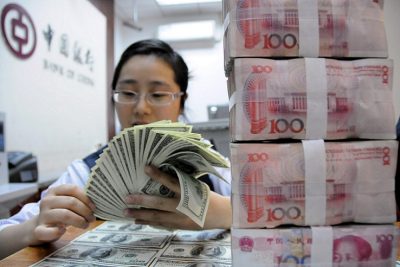


-pdc--FINAL-1.jpg)
