Rajapaksa says his image rightfully belongs to ‘flower bud’

January 2nd, 2018

By Yusuf Ariff Courtesy adaderana

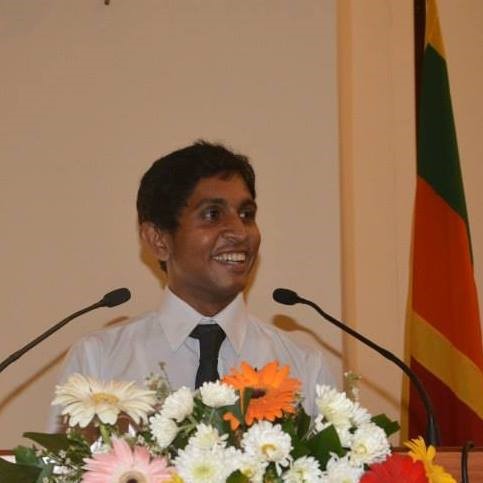
Former President Mahinda Rajapaksa says that although many are in need of his image for the upcoming Local Government election, only those contesting under the symbol of the ‘flower bud’ are its rightful owners.

Addressing the campaign launch of the Sri Lanka Podujana Peramuna (SLPP) at the Sugathadasa Indoor Stadium in Colombo today (2), he said this in reference to various parties and groups utilizing his image for election campaigning.

The launching ceremony was attended SLPP Chairman Prof. G.L. Peiris, NFF leader Wimal Weerawansa, PHU leader Udaya Gammanpila, DLF leader Vasudeva Nanayakkara and other party leaders affiliated with the Joint Opposition.

UPFA MPs Kumara Welgama, Chamal Rajapaksa, Janaka Bandara Tennakoon, Dullas Alahapperuma, Pavithra Wanniarachchi, C.B. Ratnayake, Johnston Fernando, S.M. Chandrasena, Mahinda Yapa Abeywardena, Mahindananda Aluthgamage, Gamini Lokuge, Bandula Gunawardena, Dilum Amunugama and Namal Rajapaksa were among those present on the occasion.

Honesty and Exprertise The Crucial Needs in 2018

January 2nd, 2018

Courtesy The Daily Mirror

While Sri Lankans have welcomed 2018 with much hopes, the Daily Mirror spoke to experts in various fields, including areas such as politics, economics, law, health, education and environment, to find out what realities lie ahead during the new year.   


Sri Lanka shouldn’t compromise on the value of its eco systems”
– Gunawardene 

Adding his comments with regard to the environmental sector, Environmental Lawyer Jagath Gunawardene said that whenever there is a problem pertaining to the environment, the issue has been addressed immediately. Also, he said that currently he is focusing on biodiversity related issues.

Commenting on what needs to be done for environmental conservation in Sri Lanka, he had the following to share with the Daily Mirror.

Meanwhile,, there are certain development schemes that have been proposed which would compromise on the integrity of certain ecosystems which needs to be prevented

When you make an assessment of the past year, one may observe certain successes as well as failures. We have succeeded in bringing regulations pertaining to the use of polythene, but have failed in terms of asbestos where the ban on it has been revoked. So we want a stronger country, which can withstand the pressures put by other countries who have their own vested interests. So that is one area I expect the country to be stronger. Also, it is important for the country to be aware of its own vulnerabilities, not only in the environmental sector, but in a much broader scale. However, since some vulnerabilities end up as environmental issues, we should know where our vulnerabilities lie and how to overcome them,” he said.

Secondly, Gunawardene added that as a country, Sri Lanka has been successful in getting certain areas declared as protected while opining that there are so many other areas that needs to be protected likewise. Meanwhile, there are certain development schemes that have been proposed which would compromise on the integrity of certain ecosystems which needs to be prevented. We should take remedial action when and where necessary and prevent such unwanted activities from taking place under the guise of development; that is destroying or compromising on the value of our eco systems. That’s one of the areas that we have been currently working on and this might continue into the future” he added.

When inquired about the laws that need to be reformed or renewed in the environmental sector, Gunawardene added that it was a long process. Currently the Environment Act is in the process of being revamped for the past several years and so is the Forest Conservation Ordinance and the Fauna and Flora Protection Ordinance. We need to wait and see how things would progress into the future. More than amending the laws, I believe that we need to have regulations. There is a need for two more new Acts which are pending for too long. These are; the proposed Act on Biosafety and proposed Act on controlling alien organisms. These are the things we expect to happen in the near future,” he said.


I hope treatment will be offered at a low cost or no cost” – Dr. Wijewickrema

Speaking to the , Consultant Physician of the Infectious Disease Hospital (IDH) Dr. Ananda Wijewickrema opined that he expects the health sector would further improve its standards in order to offer a good service to the public. Adding his New Year wish for 2018, he said that he expected the prevalence of diseases to be low this year. I hope that those in need of treatment would have the opportunity to receive it at a low cost or no cost. I also wish that the people will be healthy. At present there are many plans underway in the health sector. While some plans are already being implemented and are progressing, some are still in the listing. These plans will be useful for the betterment of the health sector. There are many development plans in the health sector in terms of the infrastructure, improving of facilities, staff training and etc,” Dr. Wijewickrema said.

There are many development plans in the health sector in terms of the infrastructure, improving of facilities, staff training and etc

When inquired about the progress of the dengue vaccine, he said that currently a group of consultants had been appointed to look into the matter. A group of experts has been appointed to make recommendations regarding the dengue vaccine on whether to use the vaccine in Sri Lanka. However, the committee decided to wait for more evidence to emerge; a decision that was taken about four months ago. And we are glad that we made that decision with new evidence surfacing recently,” he added. These evidences will be taken into account prior to arriving at a final conclusion,” he said.


Procedural and institutional reform needed to overcome backlog of cases”
–  Palitha Fernando, PC

One of the major issues confronting the judicial system of this country is the severe backlog of cases. This applies to both civil and criminal cases. A civil case takes a long time before it is taken up for hearing. If all those formalities are attended to by a roll court specially established for that purpose and the cases are taken up only when they are ready for hearing as in some other countries, the hearing of cases could be expedited to a very high degree. Experts in the area of Civil law should be consulted in cutting short the procedural aspects to ensure the expeditious disposal of cases.

There is no use pressurizing judicial officers to expedite disposal when they have a heavy load of cases. That would not serve the interests of justice. Deciding upon the rights of the people is not an easy task. You cannot rush through cases. Getting judicial officers to sit till 4.00 p.m and getting them to hear cases is counterproductive. It is humanly impossible to concentrate and hear complicated legal issues when you are exhausted. A judge needs to do research, consider the evidence he has heard and write the judgment with a lot of care. I do not think the judges of today work in such an environment. Increasing the number of judges is one of the most important steps that should be taken immediately.

Judges and officers of the Attorney General’s Department are very badly under paid. But increasing their salaries isn’t the solution. None of them have delayed work because they are underpaid. Even if their salaries are increased they will not be able to do better than what they are doing now as they are stretched to capacity and it is humanly impossible to do more.

If the judges are to concentrate upon the backlog of cases, then the new cases would get stagnated. As I have suggested even before, it would be appropriate to appoint retired judges on contract basis for a period of one year and set them a target to conclude a reasonable number of cases. I would even suggest to have a system where a judge sits from 9.30 a.m to 1.30 p.m with a break of 20 minutes as we did during those days and for a retired judge to sit from 2.00 p.m. to 5.00 p.m to conclude the backlog. We need to obtain the services of a different staff comprising workers like stenographers to sit with the retired judge. I know of judges who sat till 6.30 p.m. thinking that they were giving their best. But the poor court staff were extremely unhappy and worked under tremendous pressure. A person must be happy at work. It is only then that he would offer his maximum.

There is no use pressurizing judicial officers to expedite disposal when they have a heavy load of cases. That would not serve the interests of justice. Deciding upon the rights of the people is not an easy task

The situation in criminal cases is disastrous to say the least. People are punished for offences committed by them, over 15 years ago. By the present time some of them have rehabilitated themselves completely. The judicial system awakens after a deep slumber and destroys their lives and that of their families totally. Though we do not see this it is a great social problem today. Children are made to suffer due to no fault of theirs. They suddenly find their father missing at home. We need to conclude criminal cases as expeditiously as possible. I designed a scheme for the early disposal of cases related to child abuse. The scheme was funded by UNICEF. The Sri Lankan rep having read the report regarding my scheme said that if the scheme is successful it would be presented with a world award. However, to my utter disappointment it never got off ground.

I would recommend that we reduce the number of cases in each court house. After the 13th amendment to the Constitution of Sri Lanka we have two High Courts. The High Court of Sri Lanka and the High Court of the Provinces. Both functions are performed by the same court. This I think should stop as early as possible. A criminal trial court should hear only criminal trials. Bail applications calling matters and any other matter should go before a separate court.


Forthcoming LG Elections a milestone for the country” – Purasinghe

After the establishment of the present Government back in 2015, it is praiseworthy that democratic traditions are gradually being reset in the country. There is freedom to politically criticize any person or any party. We can have hopes that the forthcoming Local Government Elections will be held fairly and transparently, said Terrance Purasinghe Senior Lecturer  in Political Science at Sri Jayawardanapura University.

What makes all of us wonder about is the much confused and complicated political situation prevailing in the country. The main political forces the UNP and the SLFP that have joined hands in the unity Government are having contradictory agendas, views and opinions. When the UNP suggests abolishing the executive presidency, the SLFP wants it to remain. This kind of situation poses a question on the stability of this Government as there is no consensus between the two political parties.

At this rate, it can be predicted that the UNP will smoothly win and have the ability to consolidate power of a majority of the LG bodies. 

One of the the major obstacles the Government is confronting is uncontrollable and unhealthy party politics. When making nationally important decisions the Cabinet of ministers, comprising both UNP and SLFP members, act in a bias manner to suit the agendas of their own political parties. This is not healthy for the common good of the country. This clearly showcases the immaturity of the Sri Lankan political system. President Maithripala Sirisena and Prime Minister Ranil Wickremesinghe have failed to maintain a single consensus among the cabinet of ministers.

However, the forthcoming Local Government Elections will be a milestone for the country. As a result of the split in the SLFP, undoubtedly the benefit goes to the UNP. The vote base of the UNP is certain and unshakable.

If someone says that the Central Bank Bond issue, where names of several UNP ministers were mentioned, would be an issue for the UNP to secure more votes, I don’t think so. People in rural areas are not really concerned about this bond issue. It is the urban middle class people who are concerned about the bond issue. What the people in rural areas care about is their welfare.

At this rate, it can be predicted that the UNP will smoothly win and have the ability to consolidate power of a majority of the LG bodies. If the UNP gains power in the majority of LG bodies, President Sirisena will be compelled to face a very decisive situation where he will have to decide with whom he should be politically united thereafter. I think Maithripala Sirisena’s political future will be a success only if he continues the accord with the UNP.

The practice of the Joint Opposition members in spreading racism and separatism among the people can’t be accepted. The unwavering efforts of the Joint Opposition will be futile because the SLFP Maithri fraction is much stronger than the JO members. If the split in the SLFP continues or worsens, the benefit at the next Presidential Elections goes to nobody else, but the Prime Minister and UNP Leader Ranil Wickeremesinghe.


Razor sharp thinking needed

In areas like education, nature and economy 


We need one clean, educated and honest Government” – Dr. Senanayake


In his comments, Chairman of Rainforest Rescue International and Systems ecologist Dr. Ranil Senanayake said he believes that the biggest perpetrators are those in the Government. As professionals they are a set of ill-educated and irresponsible politicians who should be responsible for this situation. Therefore they don’t understand the long term repercussions. One of the major issues was giving away lands from the elephant corridors,”said Dr. Senanayake.

The year 2017 was not good for elephants. With the inhumane killing of the Galgamuwa cross-tusker and the gradual deaths of several other elephants, the Subject Minister proposed the use of GPS collars to track elephants. While many wildlife experts disagreed with this move, a practical solution to the save remaining tuskers and elephants in the wild is yet to be proposed. Speaking with regards to using collars, Dr. Senanayake further said that collaring is not a practical solution.

Issues pertaining to wildlife should be taken as part of the national development plan

Issues pertaining to wildlife should be taken as part of the national development plan. We need to have one clean, educated and honest Government in moving forward. Until we have an intelligent bunch of politicians these issues will aggravate in time to come,”he said.


Education Reforms Introduced sans analysis of root cause” – Dr. Nirmal Ranjith Dewasiri

Asked about anticipated changes in the education sector in 2018, Former President of the Federation of University Teachers Association (FUTA), Dr. Nirmal Ranjith Dewasiri said while there were a number of measures undertaken by the Government to reform education, they are likely to result in futility.

The Government has introduced various reforms in education, but personally I don’t see these measures serving any purpose. For instance, they introduced the Langama Pasala, Hondama Pasala” (Nearest School is the Best School) concept. This concept has been introduced without analysis of the root cause. One has to admit that certain schools may receive some benefits through this project. But this is not a suitable solution to the overall concerns,” Dr. Dewasiri said.

Authorities are deliberating reducing the number of subjects offered at the O/L exam to six subjects

The Government introduced the programme in 2016, after identifying development of all schools as a priority need. This was also done with the objective of providing equal educational opportunities to all children. However according to Dr. Dewasiri, this is not the optimum solution to the issue of admitting students to popular schools in urban areas.    The issues arise as a result of the race to admit children to popular schools in urban areas. It is a problem born out of competition and this project will not address it. The pressure encountered in performing during the O/L and A/L examinations too weighs in on this problem. Therefore this is a far more complex matter that can’t be addressed with a simple policy. This solution will not have any impact on rivalry and competition among students,” he said.

The former president of FUTA opined that during a recent meeting held to discuss the education policy framework, this subject was extensively discussed. Many experts had opined that this effort will not solve persistent issues in education. Experts present at the meeting believed that the approach to solve the issues was itself erroneous, as they had not understood the subject.

Authorities are deliberating reducing the number of subjects offered at the O/L exam to six subjects. What they don’t understand is such a move will not decrease the pressure or the competition among students. The change of subjects too will have no impact. The system of examination needs to change,” he stressed.

The entire education system is full of issues. Unfortunately those in the offices of the World Bank have a hand in the formulation of these policies, as they seem to be more knowledgeable on these issues than local experts,” he added.
In December Premier Ranil Wickremesinghe instructed Vice-Chancellors of all Universities to upgrade the quality of higher education instead of prioritizing construction of university buildings. Responding to this statement Dr. Dewasiri said it was easy for politicians to make such statements.

What are the indicators to measure the quality of education?” he countered. The quality of education in universities is dependent on many other areas. The primary and secondary education must be of good quality. First of all issues in the secondary education system must be resolved, before we can attempt to better the quality of education in universities,” Dr. Dewasiri said.


Slowing down of growth a major challenge”
– Prof. Abeyratne


The Sri Lankan economy has faced various fluctuations during the previous year. While many industries are contributing to the Gross Domestic Product (GDP), it’s crucial that Sri Lanka has a stable economy in moving forward,” said Professor of Economics at University of Colombo Sirimal Abeyratne.

Prof. Abeyratne added that when reviewing last year there was a slowing down of growth. This situation has been present for a few years. This slow down is mostly in the tradable sector including the export growth. This is a major challenge. Other macro problems such as interest, inflation and the exchange rate are accelerating growth. Particularly accelerating growth in the tradable sector should be the policy focus this year,”he underscored.

While many industries are contributing to the Gross Domestic Product (GDP), it’s crucial that Sri Lanka has a stable economy in moving forward

When asked how each sector could contribute to the GDP, Prof. Abeyratne said that the Government can promote any sector. When the right environment is provided the investors will find the right sector,”he opined.


Sri Lanka’s way forward… let’s think outside the box

January 2nd, 2018

Courtesy The Daily Mirror

 Politics has destroyed the soul and eaten up the character

Man is not permitted without censure to follow his own thoughts in the search of truth, when they lead him ever so little out of the common road.”
~John Locke,  

Another year is now history; nothing much to write home about. Politically, 2017 has been one of the non-eventful years. For most of us, barring some personal achievements for a few, it has been a terrible disappointment. Seventy years after Independence, with thirteen elections, nine changes in government and two failed revolutions and another two aborted coup d’états, where have we arrived? That is not to forget a 27-year war. The sighs and wheezes are many and inhalation of satisfying breaths are a way too few.

It’s not too late to change gear, not only to accelerate the speed but more so alter the course in search of that receding oasis of success. The journey after Independence has been one of winding and rough trekking. Some politicos may have succeeded in enriching themselves and they may have amassed wealth to secure the comfort and safety of a couple of their generations. That is the ‘blood money’ they have earned by hoodwinking the voter and securing that comfort and safety. Yet where has it taken the common man? That is the ‘sixty four million dollar’ question.

Politicians supply the oxygen and in turn feed the country with the same rusty, warped and degenerate set of values whose value is low and the price high

Religion has been desecrated; ethnicity soiled; language decapitated and culture totally wrecked. A nation of many ethnicities, languages and religions has been polarized and demanding more divisions. Caste divisions which everyone thought is a matter of history’s litter bin is still sustaining its ugly and obscene dynamic.

Its manifestations are evident in marriage proposals published in the Sunday newspapers. Sri Lanka as a nation, Sinhalese-Buddhists, Tamils, Christians, Catholics and Muslims is still thinking, breathing and acting within a box, a cocoon of sort. All four attempts, two coup d’états and two revolutions, to go outside the box – outside the democratic framework of course- have ended up in failures. Yet no politician or any social-minded leader of any worthy repute has tried anything outside the box, within the democratic framework.

Is it possible to think outside the box and still retain our democracy with all its freedoms, that of religion, movement, expression etc? One does not know because none has attempted. The culture that has set in during the last few decades, irrespective of the colour of the political party-flag, has imprisoned almost each and every citizen in the country. From the government servants to the private sector executives and ordinary workers, from religious leaders to the media organizations, from laymen to clergy, from civil servant to domestic servants, the whole nation as a collective body of citizenry has been captured, enslaved and being consumed from head to toe by this new culture of money-worship and power-pursuit.

Politicians supply the oxygen and in turn feed the country with the same rusty, warped and degenerate set of values whose value is low and the price high. Why are we blind to its corrupting mechanics and embracing its extravagances? The answers to these questions perpetually stay concealed. As in all difficult tasks, mundane or extraordinary, from securing gainful employment for a University graduate to becoming a millionaire overnight to stopping smoking and losing weight, if one wants success, one has to want it. If one does not want it, one won’t have it, it’s as simple and uncomplicated as that.

Forty four-year-old Ray Goforth is Executive Director of the Society of Professional Engineering Employees in Aerospace (SPEEA), showing an assertive style as he leads the white-collar union in contract talks with Boeing on behalf of about 23,000 technical staff said thus: There are two types of people who will tell you that you cannot make a difference in this world: Those who are afraid to try and those who are afraid you will succeed.” We in Sri Lanka belong to either of these groups. We are either afraid to fail or we are afraid that the one who tries will succeed. It’s not a very flattering description of a society intent on rapid advancement. We may not have a Mahatma Gandhi or Nelson Mandela among us; we may not have Franklin Roosevelt or John Kennedy or Lee Kuan Yew with us; yet why not try with our own kind? Sounds like a utopian dream! I am not talking about Lenin, Mao, Ho Chi Minh or Castro. They too transformed their societies after a revolution and established dictatorships although they were mistakenly branded as ‘dictatorship of the proletariat’, borrowing the theories of Karl Marx and Friedrich Engels.

But change, we need. Change we require but tragically do not demand it. Mere lip-service to change coupled with wild rhetoric on ‘transformation and revolution’ has killed our enthusiasm for change. It has deadened our curiosity and accelerated the moral decay. A meandering bundle of humanity, which Sri Lanka is today, from one guard-post to another, is looking more like a rudderless boat rather than a well-stocked cruiser navigated by an experienced Captain and crew.

Let us open this column to a national conversation. How far or how wide we can reach in this exercise, I don’t know. Yet inviting my readers to a potentially wild and crunching discussion on the path that our nation is taking is, in my humble view may be a, once again, make this an ‘outside the box-column’. Let it be. My only hope is that the readers realize the gravity and hopelessness of the situation; the gravity is serious, alarming, real and urgent. The corruption that has taken a hold of our culture is real; it is all-consuming. If we choose to be deliberately oblivious of this, then that also be. But that apathy will have a very heavy price. Then Victor Hugo’s Les Misérables would depict the true picture of our nation, gone astray and vagrant and pitifully forlorn.

The two failed revolutions launched by the Janatha Vimukthi Peramuna (JVP) went outside the box. Yet they did not represent the freedoms of expression, religion, movement and other fundamental human rights as promulgated in the UN Declaration of Human Rights. Rohana Wijeweera, how effective a public speaker he was, how original a grassroots level organizer he was and how dedicated a leader he was, his solution to the country’s burning issues was not acceptable at any time and in any given context. The failed coup d’états too constituted an alien concept for our lethargic nation.

A military takeover of government is too alien a concept for our country.

In any context, we simply cannot give up our fundamental democratic freedoms and democratic system of government. Yet the sculpture of our Constitution should be along the lines of secularity. The priceless value of a secular constitution could be gauged only by testing it in a situation of chaotic community conflict. India is the greatest example in this. India has many religions and even more languages and ethnic varieties. Its main religion is Hinduism and language is Hindi. Yet it has a secular constitution. That constitution has sustained democracy in the most gruesomely violent times and amidst Muslim-Hindu riots. The Federal Constitution of India has contributed greatly towards that sustenance of democracy. Pros and cons of a federal constitution may be

discussed without ungraciously discarding it. That is thinking outside the box.
Generations-old and archaic prejudices have killed our passion and curiosity. Those prejudices may be based on religion and language; they may be based on mythical superiority of a race; it may be based on a mythical belief that we are descendants of ‘Aryan’ race. On the other hand, Tamils in the North might passionately believe in Valmiki’s epic poem Ramayana. These prejudices are totally responsible for the corrupting of our collective soul and they have lessened our passion. If one needs to advance with the advancing world, one need to have that passion; the passion to be original, the passion to be daring, the passion to be uncomfortable with what is intensely wrong. The measure of a pioneer is not really venturing out, but sustaining the original passion and keep going come what may. It is that passion that we are missing today. When passion dies, however much one tries to advance, the forward movement becomes more of a staggering crawl rather than an ecstatic gallop. When the excitement is absent, the expected gallop becomes once again a crawl and eventually a complete halt.

The whole nation as a collective body of citizenry has been captured, enslaved and being consumed from head to toe by this new culture of money-worship and power-pursuit

We as a nation has come to that: an unthinkable moral lethargy and cultural vacuum. Throw the Mahawansa and Ramayana out the window. Both these national biographies may have outlived their usefulness.  The decay of our culture has set in and it’s progressing rapidly. The effects may not be manifest now or tomorrow or day after; may not be in a year or two; but in five years’ time when our children look back at the society we have left behind, it will be unrecognizable. An amoral, uncultured bundle of humanity in search of its own identity would be meandering along hazy streets and smoke-filled board rooms. They would not know the difference between a well-cultured society and one without the nuanced measures of the human spirit. For they have not seen or experienced it.

The writer can be contacted at vishwamithra1984@gmail.com.   

The UNp Elite’s Neo-liberal Indianism

January 2nd, 2018

By Dr. Dayan Jayatilleka Courtesy The Daily Mirror

Whatever one may think it is, the real importance of the upcoming local authorities elections is that of a nationwide referendum on the model that Prime Minister Wickremesinghe is implementing and seeking to entrench. What is that model? Generically it is that of neo-liberal globalism, but what is it specifically and concretely? What we need to do is to envisage a model of Sri Lanka as it would be if the UNP won. 

TV news ran a longish video clip on December 30 evening which showed TNA’s M.A. Sumanthiran explaining to a Jaffna audience that the Interim Report on the Constitution (interchangeably referred to as the draft Constitution) went beyond federalism” (that point was accompanied by an expressive, expansive gesture of Sumanthiran’s arm). So ultra-federalism or de facto confederalism is what we shall have actually voted for, if the UNP wins!

Going by the statements of the UNP-driven government’s leaders and the leading economic policy personalities, the ‘model’ includes the oil tank farm in Trincomalee to India, the Trincomalee port to India, the Mannar-Trinco and Mannar-Kilinochchi highways to India, the Mattala airport in the Deep South to India, power over land to the Provincial Councils, large tracts of land sold to foreign corporations, a wide ranging opening up of the economy to India (ETCA), peasant agriculture reduced to 13% of the national economy, Indian manufacturing relocated to Sri Lanka and penetrating the Lankan market, bottom trawling for fish in our waters.

The implementation of the UNP leadership’s ‘neoliberal Indianist’ model will mean the destruction of Sri Lanka’s industrial-manufacturing capitalist class and base itself. It will mean the de-industrialization of Sri Lanka. It will mean the de-peasantization of Sri Lanka, a new ‘enclosure movement’ such as that caused by the colonial Waste Lands Ordinance, and resulting in a flood of pauperised and dispossessed peasants who will girdle the towns and cities in slums. It will also mean the destruction of the Sri Lankan fisheries industry and the fishing communities of all ethnicities.

The implementation of the UNP leadership’s ‘neoliberal Indianist’ model will mean the destruction of Sri Lanka’s industrial-manufacturing capitalist class and base itself

The model will mean a re-colonization without the construction that colonialism effected, but with the loss of sovereignty. It is a Great Counter-Reformation, wiping out the economic, developmental and social achievements of a century if not more of Sri Lankan /Ceylonese upward mobility. The complete opening up and subjugation of all sectors of the economy to foreign capital and to market forces will deprive the Sinhalese of their lands and drive the majority of the country into poverty, ensuring that the Sinhala lower-middle and working classes can never aspire to upward mobility for their children, since education too will be open to predatory market forces and foreign penetration.
Why do I say Sinhalese? In Sri Lanka, the UNP’s elitist neo-liberal globalization will hit the Sinhala majority hardest and marginalize it the most, just as colonial globalization did. The Sinhalese do not have rich ethnic/ethno-religious kin across the waters who will buy up the land in their provinces, nor do they have the option of relatively easy immigration to the West.

If fully implemented, the UNP’s neo-liberal, neocolonial Indianization model will result in the social genocide of the Sinhala lower-middle, and entrepreneurial classes, as well as the Southern two thirds of the island (barring Colombo) throwing them back to the subaltern status of the colonial centuries.

If the UNP wins the election and implements the promises that the PM made to India in April 2017, this island will not only become an economic neo-colony of India, it will once again be an occupied territory with no-go areas for locals. Already, an official team was disallowed into an area of the Trincomalee tank-farm by LIOC personnel. What will the situation be when most of the oil tank farm, parts of the Trincomalee harbour and the highways are in Indian hands or have an entrenched Indian presence? Furthermore, won’t Mattala become an Indian enclave in the Ruhuna, and a no-go area for the Southerners?

The combination of (a) An economic Indianism (b) strategic Indo-Americanism and (c) North East ultra-federalism/confederalism will cumulatively mean a tectonic shift in resources and power away from the majority to the economic and social minorities, and a geopolitical shift of the island’s centre of gravity, from the Southern two thirds to the North-eastern one third, thereby reversing the domestic geopolitical effects of democracy and universal franchise.

It cannot but generate majoritarianism and anti-Indianism. I have always stood for the most cordial and constructive relations with our neighbour, which is one reason why I have been a staunch supporter of the 13th amendment. However, one cannot have good relations with a neighbour who is trying to grab our ancestral property, which is of modest in size to start with, and pauperize your children—and that is the difference between the India of the Congress and that of the BJP.

Neoliberal globalization develops unevenly and affects various sectors unequally. Neoliberal globalization benefits, or least damages, the pre-existing globally located, networked and integrated i.e. established globalized elite communities and elite Diaspora. This is more so because the West has large, electorally influential diaspora communities—some of which support separatist projects–and tend to be biased towards them. Conversely, the greater the orientation towards the Chinese model of (state-led) alternative modernity and multipolar globalization (China, Russia, BRICS, emergent/pivotal powers such as Turkey, Indonesia etc) the more level the playing field it is for the majority of citizens of the world and this island.

In SL, UNP’s elitist neo-liberal globalization will hit the Sinhala majority hardest and marginalize it the most

Prof Samuel Huntington identified one of his famous civilizational ‘fault-lines’ as running through Sri Lanka: that between the Indic/Hindu and Buddhist civilizational systems. He named Sri Lanka’s war as a fault-line war”. If he was right, Mahinda Rajapaksa won the fault-line war for one side but Sri Lanka is about to lose the fault line war under PM Wickremesinghe by conceding a walkover and effecting a handover.

In 2001, the PM proposed a land and underwater bridge which would link northern Sri Lanka with Tamil Nadu. He recycled the idea in 2015 and it was picked up by the BJP government’s Minister of Roadways, Nitin Gadkari. This means the recreation of the geographic link in the Ramayana. It would have also linked this island with Tamil Nadu from which emanated numerous invasions and occupations which finally ruined the amazing civilizations of the Anuradhapura-Polonnaruwa period and drove our capitals ever southwards. Now with the planned give away of Mattala airport to India, which means direct power-projection and airlift capacity into our deep South, even the Ruhunu rearguard, the base area/liberated zone from which, historically, there always arose national resistance, will no longer be safe.

The implementation of neo-liberal Indianism will be the ultimate existential betrayal of the identity of Sri Lanka

If Chief Minister Wigneswaran, a Hindu hard-liner, can spout the racist nonsense he does about the Tamils being the original inhabitants of this island (which falls flat when one wonders why they did not make it to the rivers and the arable land, occupy and settle in it, as pioneers have done throughout human history), one can well imagine how he and the North will behave when ultra-federalism or confederalism is implemented, there is also a much larger Indian footprint here and we are tied to BJP India, as the PM committed himself to in writing in April-May 2017 in Delhi.

As an island, we have almost no defence in depth. With our backs permanently to the sea, the expansion of Northern and Eastern political space and Indian power newly based in the Ruhuna, we will be in a tighter strategic squeeze than that which made the sleeping Prince Gemunu feel acute claustrophobia.

The implementation of neo-liberal Indianism will be the ultimate existential betrayal of the identity of Sri Lanka. Those who vote for a UNP led by a confederalizing and Indianizing PM, or with a neo-liberal, confederal, Indianizing project, will be guilty of this great civilizational crime.

MR launches lotus bud’s LG poll campaign

January 2nd, 2018

 Courtesy The Daily Mirror

The election campaign of the Joint Peoples Front (JPF), the coalition formed by Sri Lanka Podujana Peramuna (SLPP) and other political parties of the Joint Opposition, was launched by former president and MP Mahinda Rajapaksa at the Sugathadasa Indoor Stadium in Colombo today. Pix by Kushan Pathiraja


Government is reasonably unpopular – Sithadthan

January 2nd, 2018

BY Mirudhula Thambiah Courtesy Ceylon Today

Leader of People’s Liberation Organization of Eelam (PLOTE) Dharmalingam Sithadthan said that at this juncture, there is a belief that Rajapaksa may do well at the upcoming elections. If that happens, then the whole process of finding a political solution for the national question will be disturbed or even shelved. “Definitely no Sinhala leader will go against the will of the Sinhala people, in such a situation there will be no hope for the Tamils to go forward in the process of finding a political solution. We have seen such changes over the last 60 years. I think in the current context the government is reasonably unpopular,” he said.
Following are excerpts of the interview:

Two coalition parties, the TELO and EPRLF had disagreements within the TNA. The EPRLF recently left the coalition. Why did TNA face many internal problems a few months back?

A: This is mainly because of the attitude of ITAK who takes almost all the decisions. They do not really discuss or consult with the other constituents. This issue is faced by all three constituents, PLOTE, TELO and EPRLF. Recently even TELO threatened to walk out of TNA, purely on issues relating to the local government elections, especially regarding the allocations on the number of Pradeshiya Sabhas. Although they threatened, they did not leave the coalition.

EPRLF had complaints mainly relevant to the attitude of the ITAK with the other parties. They continued to complain that other parties were not consulted on any of the matters, but were just taking individual decisions. Whenever elections are over, any decisions relating to appointments to a bonus seat, national list or ministerial were decided alone by ITAK. They failed to get any of our views. Initially these issues were small matters, but later it accumulated into a bigger issue. Thus, Suresh walked out. However, if he contests as part of the TNA, in the current context, he will only manage to secure a few seats for his party. Yet if he contests alone, he can win that numbers of seats as EPRLF.

Currently I don’t understand why he aligned with TULF. He had joined with Anandasangaree and they have formed a new alliance. I’m unsure how far this will work. But as far as we are concerned, we are very firm that our party, PLOTE, will never breakaway from the TNA as far as the constitutional process are moving forward. We feel that we should not excuse from the government or southern political parties that TNA has split and thus a settlement cannot be reached.

We believe that we should travel with TNA until we find a solution to the national question.

So do you mean to say that PLOTE never had any disagreements within the coalition?

A: We do have. Not only with the Leader of TNA, even with the ITAK, we have many disagreements. We had issues on the allocations of the Pradeshiya Sabhas and the seats. However, we overcame all the issues and today we are contesting as TNA. We are not complaining about those issues. Our main aim is to win the local government elections with maybe 60 or 70 percent of the votes. We want the TNA to be strong and then we will continue to get recognition as the representative of the Tamil people.

Why do you have doubts about the newly formed TULF-EPRLF coalition? Some say it would be a turning point in Tamil politics. How do you assess it?

A: I don’t seriously believe it, because the TULF and EPRLF cannot travel together for a long period. Both parties are not strong enough to show to the Tamil people that they are the alternative to the TNA. Even though there are complaints against the TNA, or ITAK, people feel that there is no alternative as such. I don’t seriously believe this coalition or the All Ceylon Tamil Congress led by Gajendrakumar Ponnambalam is seen by the Tamil people as an alternative to TNA.
Unless there is a viable alternative among the Tamil people, they will continue to vote for TNA.

There were criticisms among EPRLF as well as TELO members that Leader Sampanthan and Sumanthiran are taking all the decisions in the coalition. Do you agree?

A: Certainly these complaints are still there, especially when there are appointments for bonus seats and even on constitutional matters. Leader Sampanthan at least explains the situations at the Parliamentary Group meeting, however members of other three parties like us feel that he only tells few of the developments and not the entire decisions or happenings.
Not only us, but all three parties were of the opinion that Sampanthan and Sumanthiran take decisions on many matters, this is true to a certain extent.

But our party is of the belief that if there are any secret deals with the government or with constitutional matters, it should be openly expressed. All decisions must be there at the final constitutional draft. Therefore the decisions shall be included in the final report of the constitutional reforms and our party will not stress much over this issue. We will somehow be aware of their decisions when the final report arrives.

Is it true that ITAK grabbed members of other constituent parties as their party cadres?

A: Yes, that is happening. A Parliamentarian and two Provincial Councillors have recently joined the ITAK. This situation arose because we contest under the ITAK symbol. ITAK deals with the elections commissioner apart from giving nominations and selecting people. Therefore prospective candidates, even current Parliamentarians think that if they want to ensure their candidature, it is better to join the ITAK. Within the TNA they choose to join the ITAK as they are of the view that the party will provide them candidature in upcoming elections. They get more chances if they are part of ITAK.

However, this situation had brought in disappointments within other parties. PLOTE has still not faced any such problem. EPRLF in particular, lost three of their members.

What repercussions do you think the new electoral reforms will have, at the upcoming local government polls?

A: The electoral reforms are a mixed system of ward and proportional representation of 60:40 and is problematic, especially to political parties contesting as an alliance. In our coalition, TELO and ITAK as well as us will aim for the same vote. There will be problems in allocating the votes. This was the main issue that created recent chaos within the TNA coalition.
The last two or three days, just before nominations, thousands of people gathered at the ITAK head office in Jaffna. Before that, hundreds of them came to our party office asking for candidature.

This election has currently got undue importance. Every political party in the country is trying to establish their dominance. We are working to show our political power. This may create many contradictions and sometimes violence too. Many people wanted to contest.

There were arguments among ITAK members before nominations.

While the electoral reforms introduced female representation which is mandatory, female candidates had to face many challenges in obtaining candidature. What was the situation in the North?

A: Unlike the South, northern women’s participation in politics is very minimal. We had to go after them to collect female candidates and get them to sign nominations. Females did not face such challenges and it was not a big problem for them, only that we faced a big challenge in finding female candidates.

They are bound to follow a conservative tradition even if they are educated. The number of Tamil female parliamentarians has been always less.

But a large number of women are engaged in social and village level women association activities, especially after the war. Still they are reluctant to enter politics.

There are various opinions that there will be a need for an alternative Tamil leadership if TNA does not perform at their best. Some suggest Northern Chief Minister Wigneswaran as an alternative leader. What are your thoughts?

A: I don’t think so. He is a newcomer to politics and therefore he may think the party will have to always follow whatever it said. I don’t seriously think the TNA or especially ITAK can accept something that cannot be agreed to by the Tamil community. Sampanthan had said this in and out of Parliament that he will not accept it.

Therefore currently, personal statements have become political statements.

Why did you recently say there is no hope for a solution to Tamils?

A: Due to the local government elections where President Sirisena and Prime Minister Wickremesinghe are contesting separately, while former President Mahinda Rajapaksa is also contesting independently. At this juncture, there is a belief that Rajapaksa may do well in the elections. If that happens, then the whole process will be disturbed or even shelved.

This is my analysis of the upcoming local government elections. Definitely no Sinhala leader will go against the will of the Sinhala people, in such situation, there will be no hope for the Tamils to go forward in the process of finding a political solution. We have seen such changes in the last 60 years. I think in the current context the government is reasonably unpopular. Unless they are very popular among the people, it is very difficult for a government to go for radical changes. It cannot happen.

But still we will go along with the government and try our best to see that the current process of working for a political solution will proceed well.

Email:che.myhero@gmail.com

The March of Folly Understanding why Mahinda Rajapaksa was defeated: the good ‘cronies’

January 2nd, 2018

By Prof. Rajiva Wijesinha Courtesy Ceylon Today

‘Surrounded by cronies and not listening to those who mattered’ is the explanation Nalaka Godahewa gave in an article in Ceylon Today on why Mahinda Rajapaksa lost. I found it most interesting, with added value from the fact that Godahewa was close to the former President, and indeed came to his rescue when both Indrani Sugathadasa and Tilak Karunaratne resigned as Chairs of the Securities Commission.

As it had been made clear that both thought there was excessive political interference, I had my worries at the time about Godahewa whom I did not know at all.

I have since made his acquaintance, and believe that he was a capable man who did not make money for himself. He had a more political orientation than his predecessors, which was also true of other technocrats who served Mahinda Rajapaksa. Two of these, P. B. Jayasundara and Nivard Cabraal, Godahewa cites as being amongst the eight influential people in the Rajapaksa administration.


But I would hold that those two, like Godahewa himself, were people who did matter in terms of the contributions they made. The desperate efforts of the current government to find dirt on both Godahewa and Cabraal, and their abject failure to succeed in that nefarious effort, even while trying to protect Cabraal’s appallingly corrupt successor, make it clear that Rajapaksa did very well to have such capable people working for him.

Comparing what is now happening to the Stock Exchange with what Godahewa achieved, is just like comparing the development of the economy under Rajapaksa compared to the current disastrous situation, make it clear that economic and financial policies were not the reasons for Rajapaksa losing.
In this regard I found Godahewa’s article disappointing, since it failed to distinguish between Rajapaksa ‘cronies’ who served him and the nation relatively well, and the destructive corrupt ones. Of the eight individuals Godahewa names, five featured in the series I wrote in 2014 called Mahinda Rajapaksa and the Seven Dwarfs, about those who contributed to his unpopularity and hence his defeat.
Given their positive contribution I did not include Jayasundara and Cabraal, and I should note that a recent discussion with the World Bank indicated how much they miss Jayasundara’s solid capabilities.

A mark of Ranil’s woeful incompetence we discussed (though I hasten to add the World Bank did not criticize Ranil, though they were obviously bemused by his appointments) was the fact that Jayasundara was replaced first by Mr Rafeek, an amiable but mediocre public servant who was Ranil’s Ministry Secretary – and then by a junior and not very articulate character who has been Acting Secretary for nearly six months to what is supposed to be the most important Ministry in the country.

Godahewa, in fact makes no comments about the activities of his eight chosen characters, except in the one case. This is Gotabaya Rajapaksa, and I agree with his positive assessment for, even though he featured amongst my dwarfs, I noted that he contributed much, and could not be accused of working for himself.

Again, this government’s ridiculous efforts to charge him, for trivialities, make clear his decency. And we cannot forget his invaluable contributions, both as Secretary of Defence during the war, and then as Secretary of Urban Development, with a beautification of Colombo that has had no parallel since independence days.
I was also positive about Lalith Weeratunga though he too featured as a dwarf, Doc the wise one. His main shortcoming was a failure to use the influence Godahewa identifies. When I remonstrated with him, he said he had no support in the inner circle, but I feel he still could have done more.

When I told him this and suggested that, if he was continuously ignored, he should have resigned, he said that would have upset Mahinda Rajapaksa no end.

I think that was true, because the President himself, though he had grown lazy and allowed destructive characters a free rein, had their measure and knew the difference between them and those such as Gotabaya and Lalith who were primarily devoted to him and the country rather than themselves.

FCID යේ මුදල් වංචාවක් ගැන නාමල්ගෙන් හෙළිදරව්වක්

January 2nd, 2018

ඩබ්ලිව්.කේ. ප්‍රසාද් මංජු උපුටාගැණීම  මව්බිම

මූල්‍ය අපරාධ විමර්ශන කොට්ඨාසයේ (ජ්ඛ්ධ්ච්) විශාල වංචාවක් සිදුවී තිබෙන බවත් තමා නියෝජනය කරනු ලබන ආණ්ඩුවක් බලයට පත්වූ සැණින් මේ ගැන පුළුල් විමර්ශනයක් අනිවාර්යයෙන්ම ආරම්භ කරන බවත් ඒකාබද්ධ විපක්‍ෂයේ හම්බන්තොට දිස්ත්‍රික් පාර්ලිමේන්තු මන්ත්‍රි නාමල් රාජපක්‍ෂ මහතා ‘මව්බිම’ පුවත්පතට ප්‍රකාශ කෙළේය.

මූල්‍ය අපරාධ විමර්ශන කොට්ඨාසයේ නිලධාරීන් පිරිසක් විවිධ විමර්ශන සිදුකරන බව පවසමින් විදෙස් ගතවී ඇති බවත් එම ගමන්වලදී රජයේ මුදල් අවභාවිත වී තිබෙන බව නාමල් රාජපක්‍ෂ මහතා පෙන්වා දෙයි.

මූල්‍ය අපරාධ විමර්ශන කොට්ඨාසයේ නිලධාරීන් විදෙස් රටවල විමර්ශන කටයුතු සඳහා බව පවසමින් විදෙස් ගතවූ අවස්ථා ගැන පාර්ලිමේන්තුවේදී විෂය භාර අමාත්‍ය සාගල රත්නායක මහතාගෙන් තමා විමසා සිටි බවත් ඊට පිළිතුරු ලබාදිය නොහැකි බව අමාත්‍යවරයා පාර්ලිමේන්තුවට දැනුම් දී තිබෙන බවත් නාමල් රාජපක්‍ෂ මන්ත්‍රිවරයා පෙන්වා දෙයි.
මහ ලොකුවට තොරතුරු දැනගැනීමේ අයිතිය ගැන කතා කරන වත්මන් ආණ්ඩුව මෙවැනි ආයතන ගැන තොරතුරු සඟවන්නේ මූල්‍ය අපරාධ විමර්ශන කොට්ඨාසය දේශපාලන පළිගැනීම් සිදුකරන නිසා නොවේදැයි තමන් ආණ්ඩුවෙන් විමසන බවද නාමල් රාජපක්‍ෂ මහතා ප්‍රකාශ කළේය.

British tourist found dead with wound to his face in ‘suspicious circumstances’ in Sri Lanka

January 2nd, 2018

By Chris Kitching Courtesy Mirror (UK)

The 37-year-old man was due to leave the country on New Year’s Day but had extended his visa for three more weeks

The man was found in the Araliya Uyana area of Colombo’s Maligawatta suburb (Image: Google Streetview)
A British man has been found dead under “suspicious circumstances” in a suburb of Sri Lanka’s capital.

The 37-year-old, whose name has not been released, was discovered with a wound to his face this morning.

His body was found at a ground in the Araliya Uyana area of Colombo.

Superintendent of Police Ruwan Gunasekara told local media that the British national arrived in Sri Lanka on November 25 and was due to leave the country on New Year’s Day.

However the man extended his visa to stay until January 25. His passport was found with his body.

Local media have described the man’s death as “suspicious” and “mysterious”.

The man’s body was found at a ground near a Department of Pensions building in the Maligawatta suburb, Ada Derana reported.

Mr Gunasekara said the man was found with a facial wound and his passport was with his body.

The death was considered “suspicious”, Times Online reported.

Forensic officers were seen dusting for fingerprints and looking for other evidence at the scene, it was reported.

A canine unit was also involved in the search.

Mirror Online has contacted the Foreign & Commonwealth Office for comment.

At least two Britons have died in Sri Lanka in recent months.

In September, Financial Times journalist Paul McClean, 24, was killed by a crocodile near a popular surfing spot called Elephant Rock, on Sri Lanka’s east coast.

Mr McLean, who was on holiday with friends, was washing his hands in a lagoon when he was snatched by the crocodile, witnesses reported.

His body was recovered the following day.

China boosts investment in Sri Lankan mega-project

January 2nd, 2018

Courtesy MAIL ON LINE

Pumps dredge sand to reclaim land at the site of a Chinese-funded $1.4 billion reclamation project in Colombo, Sri Lanka on December 5, 2017, a deal that preceded a new $1 billion investment in three 60-storey buildings near the country’s main port

China will invest $1 billion in the construction of three 60-storey buildings at a mega-project near Sri Lanka’s main port, Colombo said Tuesday, as Beijing aims to boost its influence in the Indian Ocean.

Pumps dredge sand to reclaim land at the site of a Chinese-funded $1.4 billion reclamation project in Colombo, Sri Lanka on December 5, 2017, a deal that preceded a new $1 billion investment in three 60-storey buildings near the country's main port

The deal follows an earlier Chinese investment of $1.4 billion to carry out reclamation work for the wider Colombo International Financial City development, strategically located next to Sri Lanka’s harbour, the only deep sea container port in the region.

The countries hope the project, initiated by former Sri Lankan president Mahinda Rajapakse, will create a financial centre in the Indian Ocean comparable with those in Singapore and Europe, drawing billions in foreign investment and thousands of jobs.

Sri Lankan officials said 60 percent of the 269 hectare (672 acre) reclamation, due to finish next year complete with yacht marina, had already been completed.

No completion date was given for the buildings, the first for the development.

“China Harbour (company) will put in $1 billion to build three buildings,” Sri Lanka’s Urban Development Minister Champika Ranawaka told reporters in the capital.

“These three 60-storey buildings will be able to attract more foreign companies into Sri Lanka.”

The controversial project was formally launched after a visit to Colombo by Chinese President Xi Jinping in 2014 but work was suspended by the new administration, which came to power in January the following year.

It resumed after the state-owned Ch

Sri Lanka central bank curbs two financial firms to ensure stability

January 2nd, 2018

COLOMBO, Jan 2 (Reuters) – Sri Lanka’s central bank said on Tuesday it had taken action against two distressed financial companies to safeguard the overall financial system.

It appointed a panel to manage Swarnamahal Financial Services PLC and its parent company ETI Finance Ltd, while curbing withdrawals of maturing deposits for six months, citing a need to ensure the soundness of the financial system.

We needed to arrest the situation and take charge and now we will work through to get a good business plan together,” Central Bank Governor Indrajit Coomaraswamy told reporters.

The panel was appointed as a temporary measure to safeguard the interests of the depositors and other creditors of the two firms, and the central bank said in a statement it was searching for an investor to bail them out.

Coomaraswamy said the two distressed firms should not have any impact” on the whole financial sector as they account only for 0.3 percent of the total of 11.2 trillion rupees ($73 billion) in assets in banks and other financial institutions.

A total of five non-banking financial institutions are in distress in Sri Lanka, the central bank governor said.

We all know about the contagion. That is why we have moved right now and we have taken decisive action to contain the situation, and the central bank will stand behind the institutions and mobilise expertise,” he said. ($1 = 153.4000 Sri Lankan rupees) (Reporting by Ranga Sirilal; Writing by Shihar Aneez; editing by Mark Heinrich)

2018: To bring positive enthusiasm.  To make mindful decisions.

January 1st, 2018

Ven. Bhante Y. Wimala

Each year all around the world people come together and experience the first moments of the first day of the New Year with enthusiastic and joyful celebrations.

As the fireworks light the night skies, music and singing echo the whole planet. Dancing, hugs and kisses connect people to one another as the book of life turns another blank page for you to fill in the year 2018.

No matter who you are and where you live, each morning you are going to wake up to be part of the fast moving unpredictable world that is full of actions and conflicts.  Just like in 2017, this new year 2018 will reveal to you the mystery of life just one day at a time for 365 days. Your ability to make mindful decisions, bring positive enthusiasm and make clear realistic choices will shape the quality of your experience in each moment of each day.

  1. Make mindful decisions. There is so much unrealized potential within your own mind and heart. You can access that potential by cultivating self awareness. When you self-reflect and pay attention to your thoughts, feelings and emotions, you are able to honestly reflect on your strengths and weaknesses. Self-reflection helps you to guide your thoughts and intentions. You will also easily tap into your own inner strength and inner resources. Perfect your skill to be mindful of negative emotions that trap you and weaken you. Release your emotions in a timely manner before you get stuck in them.
  2. Bring positive enthusiasm to each day. Positive enthusiasm will give you all the courage and confidence you need to face the challenges and overcome difficulties. Do not let your mind be occupied with what is missing in your life or what is bad. Be enthusiastic and believe in attracting what is good. Imagine abundance in your life. Your positive enthusiasm will be like a magnet to attract beautiful, peaceful, fulfilling experiences.
  3. Make realistic choices. Your pain and suffering are not caused by problems or challenges. They are caused by the inner conflict between reality and your fantasy and the resulting turmoil in your mind. When the unwanted or unexpected happen in life do not try to fight reality with misery, bitterness or anger. Choosing to accept reality is a wise choice and will help you to live in peace in the midst of challenges.

May your mindful decisions, positive enthusiasm, and realistic choices bring many happy and meaningful moments to yourself and to those who cross the path of your life in 2018.

Happy New Year My Dear Friends. May you be well, happy and peaceful.

Ven. Bhante Y. Wimala

The “Praveena Deshapalana Vicharaka” (The veteran Political Analyst)

January 1st, 2018

 Upali Cooray

The media’s the most powerful entity on earth. They have the power to make the innocent guilty and to make the guilty innocent, and that’s power. Because they control the minds of the masses. Malcolm X.

The political talk shows and news casts in Sri Lanka media has relative independence in addressing the public unlike during the previous regime. Those so called journalists” were not to be seen during that time, only the bold and the brave carried on regardless. Some of them had to pay with life for being critical of the corrupt. Lasantha Wickramatunga, Prdeep Eknaligoda were two such persons. Keeth Noeyer, Farrahz Shaukatally escaped death.

 Farraz Shaukatally was shot by three unidentified gunmen in his own bedroom. Shaukatally, who was an investigative journalist for the privately owned Sunday Leader (whose editor was murdered in 2009), has been known for his exposés on corruption in the country.

While Shaukatally was recovering at the National Hospital in Colombo a rally, held by Buddhist extremists, was taking place in the outer suburbs of the city. The BBC crew that was on hand to report the incident was harassed and placed under citizen arrest” by a mob before being handed over to the police. The Police continued to detain the crew on site until their superior officer arrived and ordered their release.

While both issues are on opposite spectrums of the crackdown in media freedom, these were certainly just a few signs of the anxiety faced by journalists in the country during MR regime.

Sri Lanka is no stranger to a poor record in media freedom.

 Attacks on journalists were not the only issues facing the media in Sri Lanka, an encroachment on the independence of media outlets continued. In October of 2012, the Sunday Leader, one of the more outspoken newspapers in the country, was purchased by a close friend of the ruling family. The following weeks saw the departure of the editor-in-chief and several columnists over allegations of censorship 

While the Sunday Leader was purchased, other newspapers that have chosen to remain independent did so by avoiding certain pressing issues. This is a simple case of keeping their head below the surface and drifting with the tide.

Despite the issues facing journalists many of them refused to bow down. In the north of the country; Tamil newspapers continued to report the issues facing the populace often at great risk to them.

Earlier the distributors of the Uthayan, a leading Tamil newspaper in the country, were attacked by an unidentified group when attempting to deliver the papers.

This was not the first time this paper had come under attack; back in July 2011 the paper’s news editor (Gnanasundaram Kuhanathan) was brutally assaulted by two men armed with iron rods.

What was becoming even more disturbing for the industry was the repeated rebuffing by authorities in bringing to justice those responsible. Investigations in to the 2009 murder of former Sunday Leader editor, Lasantha Wickrematunge, appear to have come to a grinding halt. In 2012 one of the leading suspects in the case died while in police custody, despite a coroner’s report being produced there appears to have been no follow up to his death. Since then no new suspects have been found.

Similarly the other attacks on journalists have gone unimpeded with no arrests and imprisonments being made. Not only was this a comment on the reluctance of the authorities to put a stop to these attacks, but also an indirect green light to the groups to continue their assaults. Each attack that went scot-free was a message that they can continue.

According to the Center for protection of Journalists; there are currently 23 journalists from Sri Lanka in exile, 19 have been murdered since 1992 and one is missing. The figures do not make for good reading, and certainly smears a dreary picture of the situation on the ground.

Despite the increasing demands from the United Nations Human Rights Commissioner regarding the increasing attacks changed little. With the U.S. resolution against Sri Lanka presented at the UNHRC meeting in Geneva, questions over the country’s membership to the Commonwealth arose.

The situation since 2015 brought a mass of so called Journalists. One particular feature is, they called themselves experts in Journalism. A media man who is often called to give his political views is addressed as Praveena Deshapalana Vicharaka (Expert political analyst ) This particular person who has no media education at all has only the O’levels but belongs to a political family more known for corruption than a very popular game played in Sri Lanka. He was not to be seen during Mahinda Rajapaksa days. The media channel for which he works have young, professionals qualified with Masters Degrees in media, are no match for him. Probably they are not aware he was collecting commissions from suppliers when his father was a minister in charge of well-known state trading organization.

It is the web Journals such as Lankaweb and few other Jornals which were able to face the onslaughts and even threats to their lives.

The purpose of this piece is to expose Praveena Deshapalana Vicharakayas” who only sings for their supper.

Upali Cooray

egalawan288@gmail.com

Defeat the Hora Tun Kattuwa resoundingly

January 1st, 2018

By : A.A.M.NIZAM – MATARA

After denying the people the right to vote and the opportunity to elect their own representatives to local government institutions to attend to and solve their area related problems for almost three years due to election phobia of the Robber Gang Trio (THE Hora Tun Kattuwa) in the government (the SLFP/UNP and JVP) and their perennial fear to go before the voters there has been no grass root level development in the country for the last three years and any mechanism to control the cost of living, health problems and administrative problems.  At last, the government (the Robber Gang Trio) has now been forced to hold local government elections next month.

Under these circumstances let all the peace loving, national minded and patriotic people to make a New Year resolution to use this opportunity to express our firm opposition and rejection in unison of this despotic government, and by overwhelmingly winning the local government institutions in all areas to firmly scuttle the move to introduce a federal and secular constitution and use our vote as a vote in a referendum against the government, and let it open the doors to liberate this country from the grip of the dictatorial robber gang of SLFP, UNP and JVP.

First let us examine why should we chase out this Robber Gang Trio (Hora Thun Kattuwa) the SLFP/UNP and JVP? Prior to the 2015 Presidential election they promised us together with the NGO vultures that the sun will rise on January 9th in a new country where there will be no bribry and corruption, everything will be available in plenty, there will be no unemployment and the people will enjoy life with much enthusiasm and without any form of worry and shortages.  We wonder what happened to that sun that was to rise on January 9th 2015.  Nay, it indeed rose not for you and me but for the Robber Gang Trio and their cohorts.  They got the nerve to rob the banks committing Sri Lanka’s worst bank robbery, rob the funds of the poor working masses they kept saved in the EPF/ETF for their sustenance in their retired life, farmers were denied the fertilizer subsidy they enjoyed, while the Ministers and MPs were given facilities and inducements they have never even dreamt for.

All ongoing projects that had been launched by the previous government with the objective of making Sri Lana the Wonder Nation of Asia were stalled haphazardly making several thousands of people unemployed while the cost of living spiralled to its zenith. The inept government was not at all worried about the steep rise in the cost of living because it did not affect the kith and kin of the Robber Gang Trio (Hora Thun Kattuwa) but affected only the poor daily wage earners, and fixed income earners. In the government’s apathy to help the poor in the village and urban areas lack of local government representatives also affected the poor people even with inability to find some self employment opportunities at least.

Despite all these hardships, Sirisena and Ranil kept on lecturing this hungry and desperate population holding functions with huge fanfare at massive costs that they have taken measures to ensure fair prices for essential commodities. The former General Manager of Sathosa Mr. Upali Cooray has written to Lankaweb website saying that he cannot recall any period of time when the cost of living issues, specifically the exercise of thwarting the escalation of prices of essential commodities has been handled so badly due to lack of timely, sensible decision making resulting in a frenzied mess up.

Mr. Cooray cites corruption, amateurism, confusion, and frenzy as causes for this pathetic situation.  Referring to unrealistic prices in many essential food stuffs during the festive season Mr. Cooray says that it was a situation which occurred due to downright manipulation, lack of vision and ignorance. He also accuses that the Trade minister Mr. Rishad Badiuddin appears to have personal interests before national interests and alleges that he is adopting unplanned and ad hoc measures for imports of rice and coconut which causes steep price increases and waste.

Those working in the Banks say that withdrawals from deposit accounts and pawning of jewelry is on an unprecedented increase and they attribute people’s inability to manage with their incomes for this increase.  Ranil Wickremasinghe with wholehearted approval of power of Sirisena and the blessings of JVP hooligans keep on selling our valuable national assets as they are his family legacy depriving future generations their right to these assets and boasting these sales as major achievements.  However, no one knows what happens to the funds obtained as proceeds of these sales similar to much publicised narcotic and drug detentions.

I have a neighbour who had been wealthy and has owned many properties in the past and has now become a pauper because of indulging in gambling.  This is the same fate that this Robber Gang Trio (the Hora Thun Kattuwa) is going to make our future generations inherit in this country. If these rogues continue to hold power in this country the future generations will undoubtedly become paupers and slaves of Chinese, Indians, Japanese, and Americans in their own country.  It will not be their own country but a country of their birth only.

The JVP in the Hora Thun Kattuwa is the richest political party in Sri Lanka. The whole present leadership of this party of hooligans are those who were born in the 1968/1970 period (Anura Kumara 1968, Viitha Herath 1968 and Handunnwtti in 1970) and were in their prime youth in the horrendous 1988/1989 period and without any doubt they would have played prominent roles in the arson, destruction of electricity grids and government buildings, assassination activities, torching of trains, buses, agrarian services centrs, and paddy marketing board warehouses etc carried out by them (all nerve centres of villages) during that period although they act now like saints who have not even harmed a fly.  That is the main reason they so far have not denounced the atrocities carried out by the party hooligans at that time and annually commemorate (celebrate) these events in the name of Il Maha Viru Day similar to LTTE terrorists commemorating the Maaveer Day in November.  Now these sheep clothed former terrorists request the villages which they destroyed to be handed over to them for proper development and the 700,000 new voters should not get misled by the appeal of these hooligans as they were not even born at the time when they destroyed this country and their parents various hardships and had to spend many nights even unable to light a bottle lamp..

The forthcoming local government election is avery much crucial election in this country that could determine whether the country should continue to be ruled by the Hora Thun Kattuwa, should become subdued to the separatist terrorist elements, should become a federal secular state, should disown our national assets by selling them to foreigners, should handover our war heroes as being demanded by international elements and should continue to live in misery and economic hardships.

I do not think that any sane Sri Lankan will willingly discard their inherited national pride to become subjugated to these vicious forces.  Therefore it is the prime duty and responsibility not only to vote against the parties of the Hora Tun Kattuwa but also to muster the whole villages and urban settlements to march forward as a single body and vote for the anti government forces (the forces opposing the Hora Thun Kattuwa) represented by the flower bud symbol of the Sri Lanka Podujana Peramuna led by the former President Mr. Mahinda Rajapaksa. (end)     .


Kicks, punches and knocks

January 1st, 2018


The yahapalana government would have us believe that the recent US decision to let its GSP for 128 countries including Sri Lanka, lapse, hasn’t hurt it, at all. A minister has even claimed that the US action can be considered a blessing in disguise; he argues that Sri Lanka, which is entitled to the European Union (EU) GSP Plus, unlike many other countries hit by the loss of US preferential duty scheme, is at an advantage in international trade! He sounds just like a person who, having lost one leg, derives some perverse pleasure from being less physically handicapped than a fellow human with no legs!

The government insists that the lapse of US GSP concession is not consequent to the recent UNGA vote against President Donald Trump’s decision to shift the US embassy to Jerusalem from Tel Aviv. Sri Lanka voted against the US. It argues that even some of the countries which voted with the US have lost the GSP as the Congress did not extend that scheme before the end of last month. It is hoped that the Congress will extend the GSP retroactively as it is said to have done on some previous occasions, but there is no guarantee that it will do so this time around. However, the fact remains that the yahapalana government has riled Uncle Sam beyond measure in New York and President Trump’s warning that the UNGA vote could impact “billions of dollars” in US aid cannot be taken lightly.

Sri Lanka’s foreign policy or what passes for it, in our book, defies known nomenclature. Time was when it had some frills of non-alignment. Following the 1977 regime change it became blatantly pro-western/American much to the consternation of the other global power bloc; a hostile India, which was pro-Soviet to the core at that time promoted separatism here and rammed the so-called Indo-Lanka Peace Accord down President J. R. Jayewardene’s throat. The Rajapaksa government, in its wisdom, took the country’s foreign policy to the other extreme, antagonising the US, other western powers and even India. As a result, it became a marked target in Geneva, where it was accused of war crimes. It also lost the EU GSP Plus. President Mahinda Rajapaksa didn’t know what hit him in 2015, when he failed to secure a third term. What one gathers from his utterance is that he only knows he got a RAW deal from India.

The present government came to power, promising to make a radical course correction in the country’s foreign affairs and be the darling of the world. Instead of handling foreign relations tactfully as a small nation always should, it plunged feet first into antagonising Sri Lanka’s traditional allies. It cooed and gurgled like a baby before western powers but barked menacingly at other nations. It suffered a Shaolin-style flying kick slap-bang in the face from China for trying to scuttle the Chinese-funded projects here. Having been tamed to the extent of leasing out a strategically important harbour and thousands of acres of land besides allowing the Port City Project to come up unhindered, the yahapalana regime is now extolling the benefits of China’s Belt and Road initiative!

The present government suffered a painful punch at the hands of the Russians in the form of a ban on Sri Lanka’s tea. It first blamed a beetle which had been reportedly found in a tea consignment. Then it claimed the Russian action could be due to its asbestos ban, which it lifted posthaste. Russia, having reciprocated now claims the asbestos ban had nothing to do with its restrictions on Sri Lankan tea supplies! Has the yahapalana government barked up the wrong tree? Its political enemies insist that Russia has also sought to tame Colombo. The Sirisena-Wickremesinghe administration was still reeling from the Russian punch which came in the form of a ban on tea when it suffered what is widely thought to be a knock from the US (the suspension of GSP).

The previous government blundered by putting all its eggs in the Chinese basket as it were. Having tried to take on China with disastrous consequences, the present dispensation is now trying to curry favour with both China and the West at the same time but without much success. Having sought to run with the hare and hunt with the hounds very amateurishly for three years it is now so confused that it doesn’t know whether it is running or hunting. Worse, some of the mastiffs have turned on it!

Most of Sri Lanka’s international problems boil down to one thing, which is failure on the part of successive governments to perform the diplomatic high-wire act adroitly. So long as politicians in power don’t care to get their foreign policy right they will continue to suffer knocks, punches and kicks. And, the country will be the loser.

සුබ නව වසරක් වේවා!

January 1st, 2018

එළිය Eliya

https://www.facebook.com/eliyaofficialpage/videos/134615853897317/

LG polls will be akin to a referendum – Mahinda

January 1st, 2018

By Sanchith Karunaratna Courtesy Adaderana

Former President Mahinda Rajapaksa stated that the upcoming Local Government election will be akin to a referendum where the people will express their public opinion.

He further stated that all voters should utilize their power to vote against a failing regime that has sold almost all government owned land.

Mahinda Rajapaksa expressed these sentiments at his residence yesterday.

ජනාධිපති කොමිසමේ නිගමන රටට හෙළි කරනු

January 1st, 2018

උපුටාගැණීම  මව්බිම

මහ බැංකු බැඳුම්කර විමර්ශනය සඳහා වූ ජනාධිපති පරීක්ෂණ කොමිසමේ වාර්තාව ඉකුත් 30 වැනිදා ජනාධිපතිවරයාට භාර දෙන ලදී. අදාළ වාර්තාව ඉදිරි කටයුතු සඳහා නීතිපති දෙපාර්තමේන්තුවට යොමු කරන බව ජනපති නිල වශයෙන් ප්‍රකාශ කර තිබිණි. මේ අතර පාර්ලිමේන්තුවේ විපක්ෂයේ සංවිධායක ජ.වි.පෙ. නායක අනුර කුමාර දිසානායක යථෝක්ත වාර්තාව ජනතාවට හෙළි කරන මෙන් ප්‍රසිද්ධ ඉල්ලීමක් කර තිබේ. ඔහු පෙන්වා දෙන්නේ බරපතළ මූල්‍ය අපරාධ විමර්ශනය කෙරෙන ජනාධිපති කොමිසම හරහා මේ වනවිට වාර්තා 17ක් ඉදිරිපත් කොට ඇති නමුත් ඒවා සම්බන්ධව කිසිදු නීතිමය ක්‍රියාමාර්ගයක් ගෙන නැතුවාක් මෙන්ම එකී වාර්තා මහජනතාවට ඉදිරිපත් කිරීමටද කටයුතු කර නැති බවය.

ඒකාබද්ධ විපක්ෂය ආණ්ඩුවට අවධාරණය කරන්නේ මහ බැංකු බැඳුම්කර නිකුතුව සම්බන්ධ ජනාධිපති විමර්ශන කොමිසමේ වාර්තාව පාර්ලිමේන්තුවේ සභාගත කළ යුතු බවය. මහ බැංකු බැඳුම්කර නිකුතුවේ සිදුකළ මූල්‍ය වංචාව මෙරට ඉතිහාසයේ විශාලතම මූල්‍ය වංචාව බව අවිවාදිතය. එකී වංචාව වසර 30ක කාලයක් රටේ මූල්‍ය තත්ත්වයට හානි පමුණුවන අතර වාර්ෂික අලාභය රු. කෝටි 1,500 කැයි හෙළිවී ඇත. යට කී මූල්‍ය අවභාවිතාවට දායක වූවන් විසින් වංචා කර තිබෙන්නේ රාජ්‍ය බැංකුවල හා සේවක අර්ථසාධක අරමුදලේ තිබූ මහජනතාවට අයත් මුදල්ය.

එබැවින් සිදුවූයේ කුමක්ද යන්න දැන ගැනීමට ජනතාවට ශුද්ධ වූ අයිතියක් තිබේ. 2017 ජනවාරි 21 දින සිට 2017 දෙසැම්බර් 30 දක්වා වර්ෂයක කාලයක් තුළ කොමසාරිස්වරු පස් කට්ටුවක් විසින් කරන ලද විමර්ශනය දෙස මුළු ලොවම දැඩි අවධානයක සිටියේය. කොමිසමේ නිගමනය සම්බන්ධවද පවතින්නේ ජාත්‍යන්තර මට්ටමේ උනන්දුවකි. එබැවින් සියල්ල අවසන් අවස්ථාව දක්වාම
විනිවිද භාවයෙන් යුතුව සිදුවිය යුතුය. පසුගිය වර්ෂයක කාලයක් ජනාධිපති පරීක්ෂණ කොමිසමේ සියලු විමර්ශන වාර්තා මාධ්‍යයට ලබාදී කොමිසමේ අවසන් නිගමන මාධ්‍යයට හෙළි නොකිරීම තේරුම් ගත නොහැකි අපභ්‍රංශයකි.

ලංකාවේ ආණ්ඩු කොමිෂන් දමන්නේ ආන්දෝලනාත්මක සහ අභියෝගාත්මක අවස්ථාවන්ගෙන් පැන යෑමේ තක්කඩි උපක්‍රමයක් වශයෙන් බව සමාජයේ තහවුරු වූ මතය වේ. එය ගලක් තබා මඩ වළකින් එගොඩ වීමට සමානය. චන්ද්‍රිකා බණ්ඩාරනායක ජනාධිපතිනිය පත්කළ බටලන්ද කොමිසම, ජෙනරාල් කොබ්බෑකඩුව ඝාතන විමර්ශන කොමිසම, ලලිත් ඇතුළත්මුදලි ඝාතන විමර්ශන කොමිසම, විජය කුමාරතුංග ඝාතන කොමිසම ආදී කිසිදු කොමිසමකින් වැරැදිකරුවෙක් වී දඬුවම් ලැබූ කිසිවකු නැත.
ලංකා ඉතිහාසයේ කොමිෂන් සභාවකින් වරදකරුවන් කර පුද්ගලයන්ට දඬුවම් දෙනු ලැබූ ප්‍රථම අවස්ථාව වූයේ 1972දී සිරිමා බණ්ඩාරනායක අගමැතිනිය පත්කළ අපරාධ යුක්ති විනිශ්චය කොමිෂන් සභාවය. එමඟින් රෝහණ විජේවීර ඇතුළු ජවිපෙ නායකයන්ට දඬුවම් පමුණුවනු ලැබීය. ජනාධිපති ජේ. ආර්. ජයවර්ධනද ජනාධිපති කොමිසමක් පවත්වා සිරිමා බණ්ඩාරනායක, ෆීලික්ස් ඩයස් බණ්ඩාරනායක සහ
ඒ.එච්.එම්. ෆවුසි යන තිදෙනාගේ ප්‍රජා අයිතියද අහෝසි කළේය.

ජනාධිපතිවරයා මහ බැංකු බැඳුම්කර නිකුතුව පිළිබඳ පරීක්ෂණ කොමිසමේ වාර්තාව සම්බන්ධව ගනු ලබන තීන්දුව මත රටේ අනාගතය මෙන්ම ජනාධිපතිවරයාගේ දේශපාලන අනාගතයද තීරණය වනු ඇත. බරපතළ මූල්‍ය අපරාධ විමර්ශනය පිණිස පත්කළ ජනාධිපති කොමිසම ජනාධිපතිට භාරදුන් වාර්තා 17ක් අට්ටි පිට අට්ටි ගසා පුස්කමින් තිබේ. එකී ඉරණම බැඳුම්කර වංචා විමර්ශනයට අත්වීමට ඉඩ දිය යුතු නැත.

THE “PARANAGAMA REPORT” Part 2

December 31st, 2017

KAMALIKA PIERIS

The Commission examined the many allegations made against the Sri Lanka army (SLA) during its final Eelam campaign. Some of these allegations have been of executions and deliberate or indiscriminate shellfire, acts which are totally inconsistent with what is expected of a responsible army discharging its duties in accordance with the laws and customs of war. The implication is that this was due to either a deliberate policy to target civilians or recklessness in artillery firing.  The Commission has not shied away from examining those allegations and accepts that they must be dealt with seriously.

The Commission particularly looked at the adherence to or neglect of the principles of distinction, military necessity and proportionality under the laws of armed conflict and international humanitarian law, by the Sri Lankan armed forces. The Commission obtained a military report on the subject from Major General John Holmes, a former British Army officer with extensive international experience, including hostage operations.8

The issue for this Commission,  the Commission  said,  is whether the evidence available gives reasonable grounds to believe that there was a government policy of indiscriminate or deliberate shelling in violation of the IHL principles of distinction and proportionality and the special protections afforded to civilians and hospitals; and/or that any serious violations of the relevant principles of IHL were committed by members of the SLA that may amount to war crimes and/or crimes against humanity.

The Commission said that individual criminal responsibility for specific shelling incidents can only properly be examined through an independent judicial inquiry, which this Commission has undertaken to do, by appointing a retired High Court Judge to head an investigative team.

The Commission is of the view that there was no military advantage to the SLA in targeting civilians. Indeed, there are reported instances of SLA soldiers rescuing civilians. The fact that 290,000 Tamil civilians survived to be rescued by the SLA shows that there was no deliberate targeting of civilians. The army high command has not encouraged indiscriminate shelling, said Holmes .

The Commission observed   that in the years preceding the final stages of the war, the army was praised for the manner in which its forces discharged their duties.  A confidential diplomatic cable dated 27 January 2009 from the US Embassy in Colombo to Washington,  said  ‘the Government has gained considerable credit until this point for conducting a disciplined military campaign over the past two years that minimized civilian casualties.

Maxwell Paranagama had seen the documents  provided to the LLRC by the army. They indicated that Sri Lanka army had operated under Rules of Engagement (ROE). He had not however, seen any ROE that  went beyond the first week of February 2009 which meant that there appeared to be no ROE guiding the final stages of the conflict.  Holmes however thought Issuing ROE for the final four months of the war would have been impractical. Instructions would  have come down the command chain.

The Commission observed that not all civilian deaths in war are unlawful and a violation of IHL does not occur every time a civilian dies or even when casualties reach a record high. Civilian casualties may constitute lawful collateral damage as long as the core IHL principles of distinction and proportionality are met. Commanders need to make an honest assessment on a case-by-case basis during military operations, whether civilians can be attacked as legitimate military targets.

Mistakes that resulted in unnecessary civilian deaths were most definitely made by the SLA, but all armies in all conflicts make such mistakes. The law does not require perfect accuracy in targeting. The law recognizes the fluidity of the operational environment, including the location and movement of enemy personnel and civilians, the weaponry involved the conduct and tactics of the fighting parties, and any deliberate exposure of civilians to harm. These are all factors that needed to be taken into account in the evaluation as to whether collateral damage was excessive in comparison to the anticipated military advantage.

The main allegation against the SLA is that of indiscriminate shelling into protected areas such as No Fire Zones and hospitals. Satellite imagery shows that shelling took place in the conflict areas and there is little doubt that it led to a significant number of civilian deaths. The Commission dismissed as nonsense the government claim of ‘zero civilian casualties.’ Without a doubt, there were casualties, said the Commission. Indeed on 3 August 2011, Gotabhaya Rajapaksa, then Secretary of State for defense, admitted that civilian deaths could not be avoided.

The Commission considered carefully the law and the problem of evidence in shelling cases. The Commission obtained the assistance of William Fenrick, a military lawyer, who worked as a senior legal advisor for The Office of the Prosecutor at the International criminal tribunal for Yugoslavia (ICTY).

At the request of the Paranagama Commission  Advisory Council, Fenrick provided a checklist   he had prepared to assist colleagues at the ICTY in identifying incidents of unlawful shelling for the purpose of prosecutions. .  With this checklist before it, this Commission finds that surmise or guess work is no substitute for hard evidence as to where shelling was coming from and whose shells were causing unlawful damage.

Fenrick’s invaluable checklist” was listed fully in the Paranagama Commission Report. Here is the Fenrick list.

‘A. INVESTIGATION WHERE THE PROJECTILE LANDED:

  1. Where did the projectile land?
  2. What damage did the projectile cause? Death or injury (identify victims and provide proof of death or injury)? Damage or destruction of property (how much damage or destruction was caused and to what kinds of structures, e.g., generic civilian objects, objects under additional special protection such as hospitals, institutions dedicated to religion, charity, education, Articles and sciences, historic monuments and works of Article and science)? Precisely where, when and how was death, injury, damage or destruction caused? What prior investigations, if any, have been conducted in relation to the incident? Obtain copies of relevant prior reports.
  3. Was this damage or injury done to military objectives (including combatants or civilians taking a direct part in hostilities), to civilians or to civilian objects? If the damage was done to military objectives only then it is not unlawful. If damage was done to military objectives and civilians or civilian objects then an assessment must be made whether or not the damage to civilians or civilian objects was ‘excessive/disproportionate’ in relation to the military advantage gained by the attack. If the damage was not excessive or disproportionate then, once again, it is not unlawful.
  4. If military objectives and civilians and/or civilian objects were hit, in what order were they hit?
  5. What other military objectives were located relatively close to the area of impact (50 metres, 100 metres, 200 metres, 500 metres) at the time of impact or shortly beforehand (shoot and scoot mortars for example)?
  6. What other projectiles landed relatively close to the area of impact (50 metres, 100 metres, 200 metres, 500 metres) at or about the time of the incident?
  7. What kinds of projectiles were used?
  8. Where were projectiles landed from (using crater analysis and other techniques if available)?
  9. When (time and day) did the incident occur and what was the weather like.

In general terms, what else was occurring in the battle (particularly fairly close by) on the day and particularly about the time when the incident occurred?

  1. INVESTIGATION WHERE THE PROJECTILE WAS LAUNCHED FROM:
  2. Where is the launch site located and how far was the weapon from the point of impact of the projectile? It is important to establish that the weapon had a range which would enable a projectile fired from it to reach the point of impact.
  3. Was the point of impact of the projectile visible to those firing or directing the firing of the weapon? Vision may be obscured by, among other things, weather, foliage, buildings and smoke.
  4. What were those firing the projectile or their superiors actually aiming at?
  5. What was the firing protocol process? Who or what aimed the weapon? Who gave the order to fire and who implemented it? What kind of spotting process was there?
  6. What measures were taken to eliminate or minimize civilian casualties, such as intelligence gathering and assessment?
  7. What were the applicable rules of engagement and/or firing orders?
  8. What was the applicable doctrine of artillery generally and for use of this type of weapon? What are the characteristics of this type of weapon, in particular those concerning range and accuracy?
  9. Who controlled use of the weapon and allocation of projectiles to it?
  10. What (other) weapons systems were available to the attacking commander?
  11. What unit actually conducted the firing and what was its chain of command to the potential accused?’ (End of check list)

Major General Holmes also discussed the issue of crater analysis.  Most craters make a clearly defined pattern on the ground and differ according to the type of projectile fired and the type of fuze used, said Holmes.  It is therefore necessary to show that a specific crater was caused by a shell from a particular type of weapon which was fired on a particular bearing, he explained.

The important issue is the direction from which the shells were fired. This can only be retrospectively determined from analysis of the shell craters either on the ground as soon as possible after the event or from available imagery or, to a lesser extent, from credible witnesses at the receiving end.’

Holmes reported that McKenzie Intelligence Services (MIS), a specialist imagery company based in London was asked to look at a  crater imagery study from the  war area (believed to be dated 8 Oct 2009) by the American Association for the Advancement of Science (AAAS). The study was commissioned by Human Rights Watch and Amnesty International.

MIS reported that there are a number of craters above 3m in diameter, which may indicate that large caliber artillery systems or air delivered munitions, might have been used. However, it was not possible to say with confidence which weapon system was used, and when. Nor was it possible to identify the direction of the shot using the available imagery.

Since the MIS analysis of the shell craters is inconclusive, the only other source of reliable information are eye-witness accounts, said Holmes. The direction of shot is best determined visually by observing a gun flash or audibly by hearing the discharge of a gun or mortar. This needs a practiced ear and the absence of surrounding noise.

Most accounts that describe events within the NFZs over those last few months tell of chaos, confusion and terror. This will affect any attempt to determine the direction of incoming indirect fire. Holmes  said he did not think it possible at this point in time, on the evidence available, to accurately state which side’s artillery and mortars caused identified shell craters and civilian casualties.’

Holmes also added that it is incorrect to say, as one report does, that because the barrels of SLA artillery faced the NFZ, they would have fired into those NFZs.  It is normal artillery practice for guns to be laid in the direction of the threat, but that does not mean they actually fired.

It would appear, said that Commission , that the following hospitals were damaged by shell fire between January and May 2009,  Tharmapuram Hospital, Puthukkudiyiruppu (PTK) Hospital, Vallipunam Hospital, Uddayarkattu (UDK) Hospital, Ponnampalam Memorial Hospital, Putumattalan (make-shift hospital for PTK) Hospital, Valayanmadam make- shift hospital, Mullivaikkal Hospital, Mullivaikkal Primary Health Centre and  Vellamullivaikkal Hospital.

There is strong evidence that many hospitals were hit by Sri Lanka army shellfire, said the Commission. However there was nothing to prove the deliberate targeting of hospitals as alleged by NGOs. Not a single Government doctor was killed in a hospital in the final phase of the war.

On the other hand, said the Commission, that there is evidence to show that LTTE were deliberately attracting SLA fire towards protected targets such as hospitals. Gordon Weiss recorded a UN official saying ‘Tamil Tigers were intentionally drawing fire towards the hospital’. If hospitals were hit, or damaged the media would report it extensively and get a lot of publicity. Also, the Commission observed, LTTE used the environs of hospitals from which to fire upon the SLA and the SLA returned the fire. LTTE stationed weaponry in hospitals.  LTTE deliberately used ‘shoot and scoot’ tactics, to endanger the hospitals and patients.

After the fall of Kilinochchi on 2 January 2009, the Puthukuddiyiruppu (PTK) hospital was the only permanent hospital left in the Wanni and its neutrality was recognized by the Government and the LTTE. That hospital comprised at least ten buildings clearly marked with the Red Cross emblem with approximately another twenty buildings which were likely to be associated with the hospital. This Commission draws the reasonable inference that due to its spread and its size this hospital would have been more vulnerable to misguided shells or damage from exploding shells in and around the PTK area if the Sri Lanka army had attacked it.

Instead there is there is evidence that the LTTE use this hospital for military purposes. Within the hospital safe zone was an LTTE tank, formerly captured from the SLA. A UN official sheltering in a compound opposite the PTK Hospital ‘could see the barrel flashes from a Tiger heavy artillery piece just 300 meters from the hospital ‘  . LTTE were undoubtedly using the environs of hospitals from which to fire upon the SLA, said the Commission. LTTE took over hospital ambulances. They were used by the LTTE leadership to move around.

The Commission said evidence has come in from many quarters, some of it unsubstantiated, that civilians were hit by cluster munitions or had phosphorus burns. In 2012, a leaked email from a member of the UNDP mine clearance team seemed to indicate that it had discovered evidence of retrieved cluster munitions. UTHR(J) maintains that many of those evacuated by the ICRC had burn injuries. A Tamil  doctor, who has  been granted asylum  abroad,  believed that a phosphorus shell  had exploded above his tent in the final phase of the war, causing it to catch fire and burn him on his back and hands.

The Commission is of the view that this is an area requiring further investigation. The Commission believes that there should be a comprehensive medical review of recorded injuries to ascertain whether these weapons were being used.  The type of injuries caused should also be recorded so that a forensic analysis can be made. Should the UN be in a position to disclose further material on this issue such as photographs, this would no doubts assist local or other investigation teams to examine this matter further, said the Commission.

However, the Commission wished to make clear that the use of such weapons were not illegal  at the time and that the Cluster Munitions Convention banning their use was not in force. Some countries, such as the US, India and Sri Lanka, were amongst those countries that did not sign the convention.

The final stage of the campaign was obstructed by the presence of thousands of civilian hostages acting as a human shield in the area, said the Commission. The ICRC Head of Operations for South Asia, Jacques de Maio, informed US officials that the LTTE were trying to keep civilians in the middle of the conflict area. A US diplomatic cable said the LTTE kept its fighters embedded amongst the civilian population..’  In 2011, Amnesty International published a report based on information independently gathered from sources such as eyewitness testimony and information from aid workers which confirmed that ‘the LTTE used civilians as human shields.

The  LTTE used human shields in the final months of the war to attract international attention. The Commission notes the statement made to a BBC journalist by   Pulidevan, that the aim of keeping hundreds of thousands of women and children trapped was that if enough of them were killed the world would intervene. This Commission is familiar with the well-known terrorist tactic of creating ‘media martyrs’.

The Commission also  found that LTTE deliberately placed the civilian population in danger by bringing them into the war zone.  They  prevented the hostages from escaping and moved them around to protect  LTTE military targets..The Commission concluded that the crime of human shielding was clearly established.

The Commission is satisfied that the LTTE used human shields in violation of IHL and that their use of such human shields is a war crime. The active use of civilians as  shields in non-international armed conflicts is prohibited in the international law such as Additional Protocol II, Common Article 3  and Rule 97 of the ICRC . San Remo Manual on the Law of Non-International Armed Conflict  also prohibits the use of civilians as shields.

The ICRC permits  attacks on  military targets that are shielded by civilian, but must apply the provisions relating to the protection of civilians before proceeding with such an attack. The attacking commander must try to avoid harming the civilians by changing the weapon  or the time of attack, or by vigorous advance warning.

The Commission  observed that this is a   complex area of law. There is little case law that assists on the specific subject of proportionality in the context of the extensive use of human shields. However, there is recent jurisprudence from the International Criminal Court for the former Yugoslavia  Appeals Chamber which has not so far been considered in the context of the final phase of the war in Sri Lanka.

The use of human shields presents military decision-makers with one of the most potent challenges to the implementation of IHL in modern conflicts. On the one hand, civilians, including. Involuntary human shields, retain their civilian status and protection under IHL at all times.

But, observed the Commission, civilians taking direct part in hostilities lose their immunity. Some of the civilian hostages used  by LTTE  were helping to build  fortifications  and  dig trenches , either  voluntarily or under compulsion. The whole group was acting as a buffer. Acting as a ‘buffer’   comes within the definition of performing hostile acts stated the Commission.

Our conclusion,  said the Commission,  is that when the full set of factual circumstances are considered, the applicable legal standards did allow the Sri Lankan forces to attack the LTTE and its military locations despite  the presence of  civilian hostages. LTTE  had continued to shell the Sri Lanka army from its embedded position among a civilian hostage population. Failure  to  respond to these   deliberate attacks,  would, in the view of this Commission, have been a signal to the LTTE and the world that  the LTTE had won by illegal means.

The LTTE should not be rewarded for having committed the crime of taking human hostages and taking advantage of them as human shields to support their military campaign.  The responsibility for the harmful consequences to civilians used as shields has been unfairly shifted to the  government, added the Commission.

The Government unilaterally declared a series of No-fire Zones within the conflict area,  and told civilians to move into them. The first No Fire Zone  was created on 20 January 2009. However, the LTTE refused to acknowledge the NFZs as protected zones. Instead,  when the Sri Lanka army declared a No Fire Zone, and the civilian population went there,  the LTTE also went  , taking their heavy weapons with them.. The civilians were again trapped.

The LTTE had ‘willfully’ moved their heavy artillery into the first NFZ and began to shell the SLA from  there observed the Commission. Also, witnesses who were present on the morning of 18 May 2009 state that the majority of those killed in the NFZ during the last twelve hours of the war were killed by LTTE shelling. The witnesses said they were certain that they were being fired upon by the LTTE. The UTHR(J) also stated ‘Some reliable witnesses and other IDPs who were present when the Army entered are certain that a large number, perhaps the majority, of those killed in the NFZ during the last 12 hours were killed by LTTE shelling’.

According to Article 15 of the Fourth Geneva Convention, there has to be mutual agreement for an NFZ to come into effect and such agreement must be clearly expressed. Since there was no mutual agreement between the Government  and LTTE regarding the establishment of the NFZs,  there were no legally protected No Fire Zones. The Sri Lanka army was entitled to attack lawful targets within such areas using lawful weapons in a lawful manner as permitted under the laws and customs of war. The Commission takes the view that one of the most significant factors leading to civilian deaths was the refusal by the LTTE to agree to the NFZs.

It is the Commission’s view that there was neither an intention to kill civilians through starvation, nor by deprivation of medicines so as to cause deliberate civilian suffering. There is no evidence that any form of blockade warfare was employed by the SLA in the final months of the war. Nor, in the view of this Commission is there evidence of a deliberate campaign to starve the civilian population. On the contrary, there is   general agreement that humanitarian foodstuffs and aid were permitted to enter LTTE   held  areas.

The Geneva Convention and the Protocols  stipulate conditions for the delivery of humanitarian aid,  including supervision of  its distribution. The government  could lawfully  stop the aid if these conditions are not met. There may well have been a limiting of food and medicine so as to deprive the LTTE from exploiting those items for its own purposes,  The Petrie Report  says that LTTE may have taken up to 20% of all the assistance that had been sent into the Wanni.

The delivery of humanitarian aid was severely complicated. LTTE fighters were mixed with the civilian population making it very difficult to determine whether humanitarian aid went to the civilians and not the LTTE. It is the Commission’s view that the Government of Sri Lanka was entitled to limit aid if  it was going to be used by  the LTTE for its military efforts and to sustain its forces.

The conflict in Sri Lanka has been dubbed a ‘war without witnesses’.. It was alleged that the government was not letting the media into the war area, in order to hide the crimes  the army was committing. The Commission points out that TV footage showed  that journalists were present in the war area. There were at least two embedded foreign journalists  who were given access to the warzone, except for the last two days of the conflict.

Frances Harrison, resident BBC Correspondent,   had said that dubbing the Eelam war as war without witness” is simply not true’. There were 60 catholic priests and nuns, 240 local NGO workers and Tamil civil servants working for the Central Government including five doctors.

The measures to exclude journalists from conflict zones by the SLA in the final months of the armed conflict need to be assessed in the light of international  practice. The US restricted the access of journalists to the battlefield  in Iraq. The US  military ordered a complete black-out of media reporting when ground operations began in Iraq.

The Commission observed that there were conflicting accounts of the highly publicized  ‘white flag issue’.  On the one hand , Frances Harrison,  had kept up regular contact with Pulidevan. She  said what happened in the final hours of the war, when the alleged white flag killings took places  was as ‘unclear’

On the other hand,  US Department of State Report to Congress in 2009 said that    Nadesan and Puleedevan led  a group of approximately one dozen men and women out to the SLA troops, on May 18, waving a white flag. According to a Tamil witness who escaped, the SLA started firing machine guns at them. Everyone in the group reportedly was killed.

Two  other alleged eye-witnesses said that Nadesan, his wife and Pulidevan were met by a group of Sri Lankan Army personnel and were required to remove their shirts. The Commission finds that this would be consistent with an Endeavour to ensure that no suicide vests were being worn.

Another  two other witnesses,  had said that the Sri Lankan Army executed LTTE leaders after they surrendered with white flags. A sixth witness  had said that he had been informed that they  had been given tea after which they were beaten and shot.

Shashirekha Thamilselvan, the wife of the deceased LTTE political wing leader S. P Thamilselvan, however,  stated in an interview in 2011 that when she surrendered no one carried white flags and that the story that some LTTE leaders came out carrying white flags is not true.

The Commission observed that in the view of contradictory evidence cited above, the circumstances of the ‘white flag killings’ are by no means clear. Due to the seriousness of these allegations, the Commission thought  that that an independent judicial inquiry is necessary to establish the facts, determine responsibility and arrive at the truth.

The Commission blames the LTTE for the loss of life during the period under survey. It gives  many reasons. The Commission notes, inter alia,   that in April 2009, the government declared a 48 hours ceasefire to enable civilians wishing to leave the conflict zone to do so. The LTTE refused to release any of the civilian hostages. The LTTE continued offensive operations against the SLA until the ceasefire expired  .   Had the LTTE freed the civilian hostages when repeatedly asked to do so, the number of civilian deaths is likely to have been significantly reduced.

LTTE had  shelled civilian areas in order to blame the SLA. Indeed, there is positive evidence that such shelling of Tamil civilians by the LTTE did take place. The IDPs are uniformly emphatic that the Army shelled only in reply to the LTTE  gun fire from among the civilians, during the hostage period.  Many LTTE cadres did not wear uniforms, often making it almost impossible for the SLA to draw clear distinctions between civilians and LTTE personnel.

The LTTE’s use of homemade multi barreled rocket launchers (MBRLs), which according to the Commission’s military expert lacked a solid platform and would thus have been extremely unstable when fired, resulting in a loss of range, inaccuracy and a much greater spread of rounds which would inevitably have added to the civilian casualty figures.

this Commission can say with confidence that the principal causes for the loss of civilian life  was the taking by the LTTE of some 300,000- 330,000 hostages, many of whom were either forced into acting as human shields or voluntarily acted as human shields, and from whose number even children were conscripted to fight, despite minimal training. The LTTE systematically refusing all calls by the international community to free the civilian hostages, which escalated the number of civilian deaths.

This Commission is satisfied that the LTTE, both directly and indirectly, bears the primary responsibility for the loss of innocent civilian life during the final phase of the conflict that formally ended on 19 May 2009.

The Paranagama Commission is firmly supportive of the Sri Lanka armed forces. The Commission observed that   due to the Eelam wars, the Sri Lanka military, which was initially small and insignificant, had developed by 2009, into a very powerful and skilled one. It has had more than two decades of experience in Eelam warfare. ‘Any military involved in high intensity war for so long is bound to learn how to fight’.

The Commission observed that the Sri Lanka army won the Eelam war because it developed a capability for conducting operations on multiple fronts and across different axes continuously.  It went in for small unit operations, instead of operating at company and platoon level, There were Special Infantry Operations Team (‘SIOT’) consisting of 8 and 4 man teams. These could move efficiently, whatever the terrain.

A directorate of human rights and humanitarian law was established in the army in 1997 and the army was given training in humanitarian law. According to the SLA’s statistics some 140,971 members of the army were trained or refreshed on various courses between 1997 and 2008. Similar directorates had been established for the Sri Lankan Navy and Air Force in 2002.

The Sri Lankan Navy, reinvented itself, said the Commission. The Navy expanded in size and upgraded their sea craft. They built their own small boats. The Navy destroyed 11 LTTE warehouse ships in one year and destroy a further 3 ships in 2007.  The commission also observed that there was extensive use of air support for land and sea operations utilizing in particular Squadron 10 but using also the other planes it possessed.

The Commission looked at the command structure. There was a clear, well functioning command structure, starting with National Security Council and Joint Operations Headquarters.  Orders went down the line to the service commanders. In the case of the SLA, command then passed from the Army Commander to regional headquarters and from there to Divisional and Task Force Headquarters for implementation.

Operations in the Wanni were conducted by five divisions and four task forces. A division was sub-divided into three brigades of three infantry battalions each. A brigade consisted of between 2,500 and 3,000 personnel. A task force consisted of only two brigades of three battalions each. There were also specialist brigades such as Special Forces, Commando, Air Mobile and, significantly, an Artillery Brigade. There would have been around eighty thousand troops in the Wanni at the end of the Eelam War.

The  last phase of the war in Sri Lanka was   distinctive and possibly unique, observed the Commission. At the last stage of the war, the army had  to decide whether to accept the  ceasefire, which the international community and UN were promoting, or continue with the offensive. The government had no intention of accepting a ceasefire, as experience had shown that the LTTE merely used  ceasefires to regroup  and rearm. It decided  to continue the war. It had to conduct operations in an area where civilians and LTTE were mixed up together.

It had to carry out careful strikes, directed against military objectives, while keeping civilian casualties to the minimum. This would have been a challenge for the most professional , best informed and best  equipped armies in the world, said Major General Holmes. There was  no military precedent that the SLA could have turned to for guidance.

In my military opinion, the decision was  justifiable and proportionate given the unique situation SLA faced in the last phase, said Holmes . On the evidence available to me and taking into account my own military experience, I do not find  that the artillery campaign was conducted indiscriminately, but was proportionate to the military objective sought. In my experience of hostage rescue, the fact that so many escaped, is remarkable, concluded Holmes .

It is the view of this Commission that the SLA made the right decision to act in order to achieve victory and save as many civilians as possible.  SLA had to act decisively and quickly if civilian lives were ultimately to be saved. The decision to end the conflict, is likely to have saved many more civilian lives and those of the armed forces by bringing the war to a close, observed the Commission.

The Commission is satisfied that the SLA acted in the main in accordance with the principles of distinction, military necessity and proportionality in attacking the LTTE, its leadership and its weaponry despite the presence of civilians in the area of combat. The May 2009 victory of the Sri Lanka army over the LTTE was no ordinary victory, said the Commission.  It was a unique  victory.

LG Elections 2018

December 31st, 2017

By : A.A.M.NIZAM – MATARA

First of all, my Best Wishes for all Lankaweb readers for a Happy, Prosperous, Healthy and Peaceful New Year.  May this country become a peaceful and enjoyable land once again with the beginning of this New Year!

This is the first of a series of articles aimed at enlightening the voters of the forthcoming local government elections including the 700,000 voters who will be exercising their franchise for the first time.  The choice of voters in this election should be whether they should continue to support this oppressive government or reject all the three groups in the government (the Green/Blue and Reds) outright. Both the Sirisena faction of the SLFP and the UNP will call upon you to vote for them saying that whatever the outcome of the election their government will last until 2020 and your vote against them will serve no purpose.  At the same time the opportunist JVP hooligans having cooperated in all the draconian moves of the government to deny your democratic rights to elect representatives to your area local government institutions for the last three years and supported this government in all its anti-national activities will be coming to you as new born babies without any sin on them and saying that they are the only people who can rescue the villages from the government (their own government) and saying that they are the only people who can establish just administrations for the villages.  This richest party in this country has already pasted posters with these slogans throughout the country. .

The fourth group will be the new political dispensation the Sri Lanka Podujana Peramuna (SLPP) headed by the former President Mr. Mahinda Rajapaksa supported by all those who got misled and cheated by the venomous, malicious, and fraudulent propaganda and allegations made, financed and sponsored by CIA/M16/RAW and Tamil diaspora and existent and suddenly mushroomed NGO activists for the 2015 Presidential elections.  As per the promises made and assurances given by them at that time Mr Mahinda Rajapaksa, his brothers, children, family members and others who were very close to them would now be digging trenches and doing manual labour for robbing the wealth of this nation and hiding billions of dollars in foreign banks, possessing golden horses, having illegally brought down world’s most expensive cars such as Lamborginis, Ferraris, and Aston Martins, having hidden tons of gold underground in their court yards, killed a number of their rivals and several others made missing and this country would have been a Utopia where people immediately get everything they wish, where they need not buy coconuts for Rs. 150 each, where they need not buy rice for over Rs. 100 per kilo, where they need not buy vegetable for Rs.300 to Rs. 500 a kilo, where they need not buy green chilli and lemon for Rs. 1000/- per kilo or more, where milk and honey flows freely, where everyone can afford to have even private planes for their travel instead longing for owning a small car to travel, where farmers never experience shortages of fertilizer, and where there will be no flood and disaster victims.

The SLFP group that seek your precious vote will be those who have betrayed the SLFP’s noble policies of representing the Pancha Maha Balawegaya consisting Maha Sangha, Indigenous Medical Practitioners, Teachers, Farmers and working masses, those who have betrayed the sixth group the war heroes who liberated this country from 30 years of ruthless tiger terrorism, those who have joined the anti-national western and Tamil slavish and reactionary UNP to form a government betraying the mandate given by the people to oppose the UNP, and those who support the UNP policies of privatization and foreignization of national assets and offering thousands of acres of our fertile land to foreigners and who keep on chewing the thrown away bones from the UNP kitchen.

We were hearing for the last several months from several of these treacherous politicians who are Sirisena’s lap dogs that they were not intending to remain in the government and sustain the government headed by the UNP.  They were given an ultimatum by the joint opposition which represent the SLPP to vote against the 2018 budget and leave the government if their claims are genuine.  But shamelessly even after some of them expressed views against the budget proposals they voted for the budget.  Similarly they have supported all the draconian, undemocratic and anti-national proposals and legislation introduced by this government including deliberately delaying local government elections and postponing provincial council elections thereby forfeiting any moral right by them to seek your vote for the candidates they support.

Given below are some of the comments made by these bone chewing SLFP Ministers in the government after violating the mandate given by you to oppose the UNP government and due to their reluctance to lose their perks and privileges:

  • Mahinda AmaraweeraThe SLFP has a peculiar strength in the country. We will become first by contesting alone.  We do not need the joint opposition
  • Duminda DissanayakeThe defeat of the flower bud which has got branded on their forehead that their defeat is certain. It is also certain that we will win all pradeshiya sabhas
  • Nimal Siripala De Silva SLFP-JO unity talks collapsed because we were asked to relinquish our Ministerial portfolios that cannot be done under any circumstances. Whoever who wins in this election they will not be able to bring down he prices of rice and coconuts. 
  • Sarath AmunugamaJO organizers have been sacked by the President to revive the SLFP and prepare for the election
  • S.B.DissanayakeFlower bud cannot win even one Pradeshiya Sabha in the whole country. The SLFP is in a solid position.
  • B.Ekanayake12 Ministers will leave the government
  • Anura Priyadarshana YapaConsensus government is good for the country. It is a great victory for ruling together after contesting separately.  
  • Susil Premjayanth Don’t accept letters with Mahinda’s photograph and the signature.
  • Lakshman Yapa AbeywardeneWe are now in a pit of excreta. Country lost one trillion by Treasury Bond Scam
  • Vijith Vijayamuni SoysaIf Appachchi is dead, we must win in collaboration with even mother’s paramour. Otherwise, our politics will be over.
  • Chandima WeerakkodyWe will get an excellent victory from this election.
  • Dilan PereraUNP is dropping excreta on President’s head. It cannot be allowed.
  • John SeneviratneWill leave the government at the right time.

From the above referenced comments you will find that these shameless fellows will never care about the grievances of the people and will provide or take steps to provide any redress to the people other than fattening their own purses.

The most important thing to understand is that making SLPP to acquire a massive victory throughout the country the people’s struggle to chase out this inept, oppressive and anti-national government could be started and by holding unceasing agitations throughout the country this government could be forced to relinquish power, as otherwise there is also a possibility that they would make some anti-democratic move to impose a dictatorial regime.

Under these circumstances let all the peace loving, national minded and patriotic people to resolve to use this opportunity dawning in the New Year to express our opposition in unison to this despotic government, and in addition to that overwhelmingly win the local government institutions in all areas being represented by shameless SLFP Ministers in the government, firmly scuttle the move to introduce a federal and secular constitution and use our vote as a vote in a referendum against the government. May the oppressed people be victorious in this election, and let it open the doors to liberate this country from the robber gang of SLFP, UNP and JVP.      

Fair prices for essentials?

December 31st, 2017

Upali Cooray Former General Manager of SATHOSA

Prime Minister Ranil Wickramasinghe has said government has taken measures to introduce fair price shops in collaboration with private sector and Sathosa to ensure fair prices for essential commodities in the open market. This statement of the prime minister is something like dousing fires without preventing fires. Considering the fact that the oncoming crucialelections scheduled for February 2018 he has to say something to the masses who are burdened with high commodity prices. Sathosa has seen six Chairmendeparting quickly unable to withstand interference by the trade minister who has held this post for eight consequent years.

I cannot recall any period of time when the cost of living issues, specifically the exercise of thwarting the escalation of prices of essential commodities has been handled so badly due to lack of timely, sensible decision making resulting in a frenzied mess up.

As very strongly pointed out by the media the entire effort depicts, corruption, amateurism, confusion andfrenzy. The unrealistic prices in many essential food stuffs during the festive season is not a phenomenon which occurred due to unavoidable circumstances” or unforeseen” reasons. It is a situation which has occurred due to downright manipulation, lack of vision and ignorance.

The government machinery is equipped with more than adequate resources to forecast market trends fairly accurately and this crisis situation could have been avoided if timely action was taken. Preventing fires” is a safer option than dousing fires”.

The Cost of Living and Food Security Coordinating Committee (COLFSCC) now headed by the Prime Minister himself has as its members all relevant heads of Ministries, departments and other government institutions to advise and guide the decision making by the Cabinet. The cost of living is a phenomenon which cannot be held down, but market distortions resulting in sudden unrealistic prices can conveniently be avoided by constantly monitoring and adjusting the upward trends by timely action.

The COLFSCC was first headed by that eminent bureaucrat G.V.P Samarasinghe during the post 1977J.R.J government. The committee met like a prayer every Friday for a review of market situation and forecasts.

To name some of the eminent Secretaries who chaired the COLFSCC and entrusted with the responsibility of food procurement and distribution were men like M.D.D Peiris, Lakshman De Mel, late Gaya Kumaratunga, late R.A.P Goonatillake, and T.P.G.NLeelaratne.

These senior officers were very experienced in internal and external trade and the so called private sector Mafia could not hood – wink them. They knew how to avoid unnecessary crises in the market and advised the ministers well in advance to take timely action. The COLFSCC is the most crucial arm the government can make use to forecasting and planning strategies to prevent market distortions.

According to recent media reports the Ministry of trade and Commerce attempt to import Coconut kernel from Kerala and Malaysia was thwarted by the far thinking Minister Harsha De Silva. Trade minister Rishad Badiuddin appears to have personal interests before national interests. He has been the Trade minister for last eight years continuously just because he can bring some minority votes to the government. MinisterHarsha De Silva pointed out importing Coconut kernel could lead to coconut diseases hitherto unknown beingbrought in to the country. Coconut should never be imported in to this country. The fact remains that the drought is not the only reason for the poor harvest but was the neglect of existing estates due to high cost of fertilizers and inclement weather this year. What is necessary is to inculcate among growers and give incentives for practicing modern methods such as use of organic fertilizer and drip irrigation to grow coconuts in the growing areas. The ban in felling coconut trees has only a minimal effect. Drip irrigation though has a high initial capital will pay back in the long term because the use of water is very minimal and hence the trees will withstand droughts of long duration..

Notwithstanding the short term solution of importations, the long term solution should be import substitution which has only been a catch phrase of many a government since independence; not yielding satisfactory results due to lack of political will of populist policy makers.

Yearly escalation of prices of rice during the latter part of every year for the last 40 years is clearly reflected in statistics compiled by the Central Bank and the Department of Statistics. Therefore it is not an unexpected increase in prices. Steps should have been taken at least in the month of May to meet the yearly shortage and whatever decrease in quantities on account of the long drought without procrastinating till the crisis became fully blown. The failure to take timely action is a severe set back and a condition this government is afflicted with when it comes to cost of living. The formal method of importing rice is to call for open tenders or from prequalified suppliers. Initially the reorder levels and reorder quantities should be determined and arrival periods adjusted ensuring not to have a backlog. Then the specifications such as unhusked grains, black seeds, insect attacked seeds, broken seeds, moisture content percentages per ton,packaging, should be specified. Despite all these precaution the suppliers especially in India and Pakistan can obtain quality certificates from unscrupulous cargo surveyors. Therefore it is of utmost importance to send Sri Lankan quality control officers from the procuring institutions to be at the port of loading. These officers dare not give false certificates because they know very well that they will lose their job.  Emergency imports are a method of manipulating the needs of the commission agents.

One cannot grasp how 100, 00 MT of white Nadu riceper month (par boiled) be consumed by this country. Par boiled white rice is mostly consumed in the estate sector. The southerners prefer partially red rice par-boiled or raw, and the northerners need par boiled complete red rice. The urban middle class consumers prefer Samba, Keeri Samba or Supiri keeri Samba (Short grain parboiled/raw red or white rice) Sri Lanka’s   2016/17 total production of rice is 1.4 million metric tons. Government envisages importing 100, 00M/T every month from Dec 2017 to March 2018 viz. a total of 400,000. Considering the fact that there have been heavy rains; the farmers were hopeful to have a good harvest but their hopes  have been battered on account of the severe shortage of Urea. Here again is a short sighted policy of importing Urea. In short it is inefficiency, lack of foresight and manipulation. The private sector importers will import quantities prudently and sell their stocks at a profit. The festive season will see unprecedented price hike of rice.

The state has never bought more than 10% of the Paddy harvest because it does not have the finance and the logistics to do so. This was so even when the Paddy Marketing Board was in full fly. Even what is procured by the state is low quality rice. The best quality is either hoarded by the millers and traders or farmers themselves with a view to making unconscionableprofits. The the Rice Mafia” is within the government itself.

The latest scheme by the trade ministry headed by Minister Badiuddeen is spelling out PMB should sell Paddy only to the Sathosa. Apart from the Sathosamills at Higurakkoda and Pannegamuwa which were set up during my time with Indian aid. These two mills are now defunct. There are well over thousand small time millers. What the Trade ministry does is to sell back the paddy to private small time millers throughthe Sathosa. Why should private millers buy Paddy from Sathosa when they can go direct to the PMB and buy at a lower price? It is clear that Sathosa has now become the commission agent for paddy. Who collectsthe Commission?

The indications are that the cost of living would worsen towards the Sinhala and Hindu New year with more price escalations especially in respect of vegetables. To sight one astonishing example is how vegetables such as Potatoes and Beet root grown in the Nuwara Eliya District is transported to Dambulla Economic center by middlemen and then transported back to Nuwara Eliya town for sale. Of the vegetable and fruits harvested in this country 40% perish in transport and handling. When the previous government attempted to reduce this wastage by introducing crates in transport, it had to be abandoned on account of thepressure brought on by the transported and the middlemen.

It is heartening to see private sector super market chains have come to the rescue of vegetable and fruit farmers.  The embedded farmers to the supermarket chain cultivate crops under the supervision of the supermarket company. They are provided with funds not only for cultivation, funds for the education of childrenare also given.  The farmer is expected to give the harvest to the super market collecting centers in the region. The transport to Colombo is by crates and perishability is around 15%. Super market vegetables and fruits are better in quality and lower in price.

The eyewash on the pretext of fair prices will end up resulting in more hardships to the majority poor.

Upali Cooray

Egalawan288@gmail.com

Former General Manager of SATHOSA

Truth telling and distorting the truth – a response to British High Commissioner

December 31st, 2017

by Rajeewa Jayaweera Courtesy The Island

The British High Commissioner (HC), in an exclusive interview with the Sunday Island published on December 17, referring to Sri Lanka’s war stated; “Getting distracted by arguments about the numbers during or in the immediate aftermath of the end of a near three-decade war between the Sri Lankan security forces and separatist LTTE could easily distort the truth”

The Soviet dictator Joseph Stalin, one-time Commissar of Munitions once said, “If only one man dies of hunger, that is a tragedy. If millions die, that’s only statistics.” Quoting Stalin after amending ‘millions’ to ‘thousands,’ the HC complimented the Sirisena-Wickramasinghe government for allocating a significant amount of money in the latest budget to fund the work of Office of Missing Persons (OMP).

Even though not explicitly stated, it is apparent that, recent revelations by British peer, Lord Naseby, have prompted the HC’s remarks. Given the moral high ground taken by HC, it would be appropriate to seek clarification on a few issues.

This writer personally perused the 39 pages of highly redacted dispatches by former British Defense Attaché in Colombo, Lt. Col. Anton Gash. This mid-level diplomat had developed contacts with very senior Sri Lankan military officials. In fact, one report had been filed the morning after he had ‘supper’ with such an official. Notwithstanding the redaction of the identity of the Sri Lankan officer and contents of their discussion, the unredacted parts of the dispatch indicates Gash seems to have penetrated the Sri Lankan military high command at a very senior level. Since his assignment in Colombo, he has held the posts of Defense Advisor in Ghana, Operations, Policy, and Concepts Staff Officer at the UK Representation office in the EU and Plans Officer MINUSMA (UN Military Force in Mali). Gash is currently Defense Advisor Caribbean. Despite the British government’s lack of faith in his dispatches, he does not seem to be in ‘professional cold storage.’ Even though his dispatches have been disregarded, his professional standing seems intact.

Given that the UK together with the US were the chief proponents of Resolution 30/1, could the HC clarify reasons for his government’s failure to assist members of the Panel of Experts (PoE) by turning over relevant material in its possession including confidential dispatches from its staff in Colombo for scrutiny? Did such material contradict British and western agenda for Sri Lanka?

During the conflict years, questions related to LTTE atrocities raised in the UK were met with the standard response; “No British laws were violated by them.” Australian born Adele Anne Balasingham nee Wilby, former leader of LTTE Women’s Wing responsible for recruiting and training child soldiers and spouse of one-time LTTE theoretician and political advisor Anton Balasingham, now lives in retirement in the UK. She is currently a British citizen. Would Britain’s envoy enlighten us Sri Lankans on why and for what reasons Britain has failed to prosecute Ms. Balasingham despite the fact that recruiting and training child soldiers is a violation of both British and international law? Is it the British government’s policy to demand accountability from Sri Lankan soldiers while protecting senior LTTE terrorists living in the UK?

Around 15 months ago, a furor erupted in the UK over investigations of atrocities committed by British troops in Afghanistan and Iraq. Under pressure from the European Court of Human Rights, former Prime Minister Gordon Brown set up two mechanisms, namely Iraq Historic Allegations Team (Ihat) and Iraq Fatality Investigations (IFI) to investigate 1,500 and 550 allegations in Iraq and Afghanistan respectively. The European Court of Human Rights had decreed that previous investigations had breached procedural rules laid down by the European Convention on Human Rights. These investigative mechanisms were set up not out of concern for abused Iraqi and Afghan civilians. Britain considered this option preferable to the prospect of dragging British soldiers through the International Criminal Court (ICC) which Tony Blair ratified in 1998, long before Britain invaded Afghanistan and Iraq. Primary British fears were: given the time lapse since the alleged abuses, the risk of witnesses being unable to recall events accurately and trumped up complaints solely for purpose of compensation.

Such concerns did not apply to more than 2,500 witnesses who made over 4,000 submissions to the PoE. The submissions were an integral part of the Geneva Resolution.

During the height of the furor, former British Prime Ministers Tony Blair and David Cameron condemned the Ihat and IFI investigations stating; “it is no way to treat the people who risk their lives to keep our country safe.” Then Defense Secretary Sir Michael Fallon stated; “It inhibits the operational effectiveness of our troops because they start to worry about whether they will end up in a court or not.” Fallon closed Ihat investigation before the initially scheduled time frame of June 30, 2017.

One is at a loss to understand how British troops fighting in Afghanistan and Iraq were keeping Britain safe as claimed by the two ex-Prime Ministers. They were involved in operations taking place thousands of miles away from Britain in a campaign based on falsified intelligence reports and not in defending the territorial integrity of Britain, as was the case with Sri Lankan soldiers.

Notwithstanding denials by the British establishment, chief prosecutor at the ICC in The Hague, Fatou Bensouda, on December 04, in a 74-page report delivered in New York has declared there is a “reasonable basis” to believe that UK soldiers committed war crimes against detainees during the Iraq conflict. In her conclusion on the long-running inquiry into the role of British troops in Iraq between 2003 and 2008, Bensouda said: “The prosecutor’s office has reached the conclusion that there is a reasonable basis to believe that members of the UK armed forces committed war crimes within the jurisdiction of the court against persons in their custody.” Bensouda does, however, dismiss allegations that British troops committed any war crimes on the battlefield.

Even though British defense officials have previously claimed “We are confident that our existing efforts to investigate allegations preclude the need for an investigation by the ICC,” the latest ICC report indicates, Britain obviously lacks the capacity to conduct a credible investigation when it involves its own soldiers. As such, would Britain agree to an investigation by a PoE similar to that convened to investigate Sri Lanka?

The HC has referred to tragedies. Therefore, it would be appropriate to briefly examine the tragedy faced by the people of Diego Garcia (Chagossians), an atoll just south of the equator in the central Indian Ocean, and the largest of 60 small islands comprising the Chagos Archipelago. Diego Garcia became a colony of the UK after the Napoleonic Wars as part of the Treaty of Paris (1814), and from 1814 to 1965, it was administered by the Colony of Mauritius. In 1965, it was detached and included in the newly created British Indian Ocean Territory (BIOT). In the early 1960s, UK agreed to permit the US to establish a naval communication station on one of its island territories. Diego Garcia was the selected location. In December 1966, the US and the UK executed an agreement through an Exchange of Notes which permitted the US to use the BIOT for defense purposes for 50 years until December 2016, followed by a 20-year extension (to 2036) without a monetary payment. However, the UK received a USD 14 million discount from the US on the acquisition of submarine-launched ballistic missile system, Polaris missiles. Between 1968 and 1973, Plantations in Diego Garcia, the sole livelihood of the Chagossians were closed to satisfy the US requirement of an uninhabited island. The British government deported 426 families, numbering 1,151 Chagossians to Mauritius and Seychelles with no right of return. According to Wikileaks CableGate documents (reference ID “09LONDON1156”), in a calculated move planned in 2009, the UK proposed that the BIOT become a “marine reserve” with the aim of preventing the former inhabitants from returning to their lands.

Since the HC laments of tragedies and distortion of the truth, what is Britain’s take on the enforced exile of 1,151 people from their homeland? How does Britain reconcile the forcible eviction of an entire populace of an island with International Human Rights, Humanitarian or any other laws it claims to uphold?

As ‘truth-telling’ in the Sri Lankan context is a major concern for Britain, could its envoy in Colombo enlighten us Sri Lankans with the unvarnished truth without distortions, on the few issues raised?

Been there, seen that

December 31st, 2017

Editorial Courtesy The Island

Monday 1st January, 2018


The much-delayed bond probe commission report has been handed over to President Maithripala Sirisena. The Treasury bond scams might enter the Guinness Book of World Records as the ‘most probed’ racket in the world. It is hoped that at least now some tangible action will be taken to bring the perpetrators of the biggest ever financial crime in the country to justice without further delay.

We are afraid that the manner in which the presidential commission functioned towards the closing stage of its proceedings left a bad taste in many a mouth just like the second COPE (Committee on Public Enterprises), which probed the bond scams. We don’t expect the presidential commission report to be much different from that of the COPE, which stopped short of naming the masterminds of the bond scams. We hope we will be proved wrong.

The public was treated to some very entertaining sideshows during the presidential commission investigation into the bond scams. But, sadly, when the probe entered a crucial phase with big names being implicated the pugnacity of the commission gave way to pusillanimity. Some lesser witnesses were ‘summoned’ and ‘grilled’ before the commission, but the government grandees were ‘invited’ and given kid glove treatment. Gagging for more information about the bond rackets, the public expected the Attorney General’s Department counsel to question, nay, grill the key witnesses. But, instead, the intrepid officials were gagged to all intents and purposes.

President Maithripala Sirisena has warned one and all that his sword won’t spare anyone. Let him be warned that the blade he is talking about is a double-edged one. Unless he handles it properly he runs the risk of putting himself in harm’s way. He had better be mindful of the fate that befell his immediate predecessor, Mahinda Rajapaksa, who unflinchingly shielded the corrupt and went so far as to ‘swallow’ presidential commission reports.

Following a bra-throwing incident at a pop concert in Colombo, President Sirisena once brandished a maduwalige (a stingray tail used as a whip) in public, so to speak, threatening to punish those who tried to ruin the country’s culture. But, his threat was never carried out. We hope his royal sword, too, won’t idle in the gilded scabbard.

The President has had the sword he is talking about since Jan. 2015. But, the question is why he did not make use of it when the first bond scam came to light a few weeks after the formation of the yahapalana government. He sheathed the sword and dissolved Parliament, thereby, aborting the presentation of the first COPE report to the House. His executive action prevented that vital document from becoming public. He did so because he did not want to spoil the UNP’s chances of winning the last general election; he was banking on the UNP to help hold his bête noire, Rajapaksa, at bay. Had he put the country before self, allowed that COPE report to be presented to Parliament and ordered a presidential probe into its findings, the second bond scam which was far worse than the first one could have been prevented. After opening the stable door himself, the President ordered a probe to find out how the horse had bolted!

It is incumbent upon President Sirisena to make public the bond commission report without redactions. Whatever its findings may be, the people are now au fait with the bond scams. The presidential commission served a useful purpose in that what transpired before it is now in the public domain. The media can justifiably claim the credit for exposing the bond scams and ratcheting up pressure on the government to have them investigated. People are the best judges. In politics, what actually matters is not the official version of scams but the public perception thereof as evident from the success of the then Opposition’s propaganda offensive which caused the grand fall of President Mahinda Rajapaksa.

Criminal charges must be pressed against the bond racketeers who helped themselves to poor workers’ savings in the EPF and the ETF and public funds in the state banks to the tune of billions of rupees while civil action is taken to recover the stolen money. A Thai court has sentenced a fraudster to 13,275 years in prison for cheating about 40,000 persons out of USD 160 mn through a Ponzi scheme. Sri Lankan bond racketeers have overtaken him; they have cheated the entire nation! They and their political masters deserve to be sentenced to at least 1,000 years each in prison.

We wish our readers a prosperous New Year free from bribery, corruption, runaway inflation and abuse of power!

‘Sinhala Only’ was the right policy

December 31st, 2017

HUGH KARUNANAYAKE Melbourne, Australia Courtesy The Island


I read with much interest HL Seneviratne’s piece on the impact of Sinhala Only, and Mr. Samaraweera’s response.

I believe that the Sinhala Only reforms of 1956 heralded a new phase in the social and economic development of the country. Up until that time, a minority of English educated people had a monopoly over employment opportunities, as well as leverages into the business world, which was all worked in English, a language alien to two thirds of the population of the country. The rural poor in the pre 1956 era had access only to sub-standard educational facilities, mainly provided in Sinhala, despite the fact that access was eased through universal free education introduced in 1944. English education was confined to Colombo and the bigger cities such as Galle and Kandy, and to the North and East courtesy of the American Missionaries.

Consequently, employment opportunities for the rural Sinhala population were very limited. Many impoverished rural families were happy to send their sons and daughters to homes in Colombo to work as domestic servants. All that changed with the introduction of Sinhala Only. The country should be proud of the fact that the post 1956 generations had access to education, however diluted in quality at the beginning, but improved over time. Seneviratne’s gripe is over the low standards of English. That lacuna has been more than amply filled by a private sector responding to demand. The main issue here, however, is that the 1956 reforms provided entry to a large section of the population educationally deprived and disenfranchised if I may use the word in this context. The acquisition of knowledge should be a basic universal right and every child should be given that opportunity. Of course there is more work to be done, and more educational reforms needed, but the basic structural reformation brought about by recognising Sinhala has paid dividends, and will continue to do so. One of the areas of dismal failure is the totally inept response from the Peradeniya University to the language change over.

The teaching staff, especially in the Arts Faculties, failed to rise to the challenge. It took the easy way out by providing lectures in Sinhala but without ensuring that the broader reading material was available to undergraduates. The quality of the graduates produced was so low that many were unemployable, although they had good degrees obtained by cramming lecture notes. These were some of the issues associated with graduate unemployment and associated social unrest.

That initial period having been traversed, albeit with its attendant issues; it seems that the system has responded positively in later years, and there seems to be a definite improvement in the quality of Arts Graduates. The Science faculties have always maintained wholesome standards, despite switching over to Sinhala and Tamil, and many alumni have found lucrative employment both in Sri Lanka and overseas.

I agree with Mr. Samaraweera on his observations, and the oft repeated fallacious overstatement of the value of English has to be put to rest.

HUGH KARUNANAYAKE

Melbourne, Australia

Jerusalem, Sinhala far right foreign policy and Gota factor

December 31st, 2017


There were strange reactions to Sri Lanka’s political responses to and UN vote on the issue of Jerusalem. There are those spokespersons of the Sinhala Far Right who criticized the Sri Lankan stand and the cross-party political consensus as instances of double standards. The argument was that those who could not combine to defend Sri Lanka from the charges leveled at it in Geneva, and did not rally round Lord Naseby’s revelations, had banded together on the remote issue of Jerusalem.

These strange reactions to Sri Lanka’s vote on the Jerusalem issue reminds us of the kinds of human beings there are. There are those who recognize the criteria of right and wrong, and those whose notion of right and wrong is based on who is seen to commit it.

There are those of us who criticize the government and the Sri Lankan foreign ministry because we think they are adopting the wrong stand on this or that issue or on foreign policy issues in general. If and when the government takes a right stand we are therefore not reluctant to commend it.

Sri Lanka has taken the correct position on two issues this last year. We voted with almost the whole world at the UN when the Cubans moved their annual resolution against the US economic embargo, or blockade as Cuba calls it. 190 countries voted against the US embargo. Only 3 voted against the resolution and among them was the US itself. The other issue on which Sri Lanka took a right stand was of course Jerusalem.

article_image

These two issues were exceptions to the rule of the Sri Lankan government’s gravely erroneous foreign policy, most especially in Geneva. We must condemn the rule and commend the exception.


What of the argument that the Sri Lankan government and its foreign ministry failed to stand up for the country and indeed collaborate with the West in the matter of the Geneva resolution, and went on to ignore Lord Naseby’s striving on our behalf, failing to table his findings in Geneva? This is true and we must denounce it. But when a wrongdoer does something right, we must welcome it while condemning his or her wrongdoing. The fact that on the Cuban resolution against the embargo as well as on Jerusalem, Sri Lanka voted on the other wide of that which the US voted speaks well of the resilient if residual nonaligned heritage of Sri Lanka’s foreign policy and diplomacy. What must be lamented is that the nonaligned position is only fitfully adhered to by Sri Lanka under this government.


Even more insidious is the criticism that the broad civil society and political party platform in Sri Lanka that solidarized with Palestine should somehow be condemned because the same forces did not come together with the same zeal in defense of Sri Lanka. This is a truly incredible argument. President Mahinda Rajapaksa was for decades, a member and leader of the Committee in Solidarity with Palestine, which brought together diverse political personalities and forces in support of Palestine. These elements often failed to unite on issues pertaining to Sri Lankan affairs and even on external threats to Sri Lanka.


For instance there were those who were for and against the Indo-Sri Lanka accord and the IPKF, who nevertheless united on behalf of Palestine, just as those who stood on different points of the spectrum concerning Sri Lanka’s war with the LTTE, not to mention with the JVP, were active members of the Solidarity Committee with Mahinda.In fact those who were actually fighting on different sides of the two civil wars, North-east and South, were in sympathy with the cause of the Palestinian people. This was never regarded as anomalous or objectionable, and it would have regarded as eccentric to have done so.


In our lifetime, there have been at least three issues which united absolutely diverse forces in each country and throughout the world, whatever their stands on political issues within their countries among their countries and pertaining to their countries.These three issues have been the Vietnam War, South African apartheid and the release of Nelson Mandela and the ending of the Occupation of Palestine.Never has anyone anywhere been crass enough to ask why certain forces stood on the right side on these moral issues but on the wrong side of others. British Conservatives and those of the Labour Left had dramatically opposed views on the campaign against the IRA, the UK war in the Malvinas/Falklands etc., but for the most part with a few aberrations) they stood together against apartheid in South Africa and for the release of Mandela. The same was true of the US Congress. Nobody thought it odd or problematic.


Let us grasp the nettle. The Sinhala Far Right is morally blinkered. It does not understand that there are issue which transcend the national, and that one’s country is not always the exclusive or highest value. Our common humanity stands higher than any nation, and common human values stand higher in the human conscience than purely national ones. The real meaning of solidarity is when one solidarizes with another, not necessarily with one’s own.


Just as the Spanish Civil War brought together diverse political and ideological forces the world over against fascism, whatever their other important differences, national political stances and priorities, so also did the causes of Vietnam, South Africa and Palestine in our time. Such causes are transcendent of national causes and priorities. Such transcendent humanistic causes have a higher value than our purely or primarily national concerns. We are humans before we are citizens of a country or members of an ethnic group.


This is not a question of abstract internationalism over concrete if circumscribed nationalism. In our lifetime and perhaps in known history, there has hardly been a more valiant case of a small country defending itself against the world’s mightiest power while positioned on its doorstep, than that of Cuba under the leadership of Fidel Castro. That was not because of his nationalism, but because of his combination of patriotism and internationalism. Fidel often quoted the words of Jose Marti, known as the patron saint of Cuban independence, the man of letters who died leading a cavalry charge against the Spanish colonialists on the shores of Cuba. Marti and Fidel often said that “homeland is humanity”. It is because Fidel rose above nationalism that he was able to defend his nation successfully against the mightiest power in history. Fidel’s dedication to the cause of humanity, his militant, radical humanism, drove him to fight against injustice anywhere, sometimes risking the national interests of Cuba itself (as in the case of the highly risky Angola operation). It is this which gave Cuba truly global support.


The point is that if you don’t stand for something beyond your own nation’s interests, then no other nation, no peoples of other nations, will identify with you and support you. If you are not there for others, others will not be there for you. If you do not actively solidarize with others even at the risk of your narrow national interest, others will not do the same for you in the face of the pressures of the powerful upon them.


As Fidel Castro and Cuba proved, the most valuable strategic real estate is the moral high ground. You cannot ascend, occupy and remain in occupation of the moral high ground unless you stand for a broader and higher principle than that of your own nation’s causes and interests. This is the difference between Israel and Cuba. Israel, even with the fullest support of the USA, keeps losing votes in the United Nations—which reflect its standing in the world– and Cuba keeps winning such votes massively—which reflects its own standing in the world.


Vietnam is another classic case in point. Vietnam prevailed over the awesome military machine of the US not only because it fought better, but also because world opinion, including the opinion of the educated youth of the United States itself, and later of returning Vietnam veterans including much decorated ones.


Unless Sri Lanka learns to communicate its case in an internationalistand indeed universalist discourse, which the Sinhala ultranationalists do not, cannot and will not, the interests of the Sri Lankan and indeed the Sinhala nation cannot be successfully represented and defended in the global arena against the West, the INGOs and the Tamil Diaspora which is global positioned and electorally so influential. It is all a matter of persuasion. The Sinhala ultranationalist discourse which is a culturally circumscribed one of parochialism and neo-tribalism, can never persuade others, and therefore can never defend the national interests of Sri Lanka.


This is why Sri Lanka resisted and prevailed successfully in the Geneva arena (2009) when it was able to persuade a majority of member states through its fusion of patriotism, internationalism and universalism in its discourse and diplomacy (2007-2009). For instance our strong, principled stand at the UNHRC (with the green-light form President Rajapaksa) on Israel’s aggression in the Gaza war in late 2008-early 2009, secured for Sri Lanka a few months later, not only the large vote of the Organization of the Islamic Conference (OIC) but also that of the broad cross-regional coalition which voted against Israel on Gaza.


However Sri Lanka kept losing in Geneva when it switched to an imitation of Israel and a truculent narrow nationalism (2012-2014), which serial defeats paved the way for the abject and needless capitulation by the successor government in 2015. Unless and until Sri Lanka internalizes those lessons and returns to that perspective which is capable of persuasion through appeal to reason and identification with broad principles, it will remain in the Geneva trap and be unable to prevail in the UN in general.


Meanwhile in national or more correctly, ‘intermestic’ politics (Kissinger’s term for domestic politics that interface with the international), the Sinhala Far Right is doing exactly the same damage that Champika Ranawake’s JHU and later, the deadly BBS virus, did to the Mahinda Rajapaksa presidency and the image of Gotabhaya Rajapaksa. The Far Right fringe is out of control and has gone the way of the Rajarata Rifles, so to speak. Gotabhaya will have to do what was done to the Rajarata Rifles, the dissolution of which was the way the elite Gajaba regiment which he served with distinction, emerged.


Gotabhaya can best serve the nation as a combination of JRJ and Premadasa, of Putin and Mahathir. A man who brings stability and incarnates Chinese model modernity; the meritocratic future, not the parochial past. He must represent the ultra-modernist meritocratic mainstream led by the best and the brightest in their fields; a patriotic elite which is part of or can communicate easily and fit in the regional, Asian and global elite. GR must not be surrounded by the loud lunatic fringe which is not accepted even as part of the Lankan elite and is rejected as tribalist. Currently the optics are all wrong.

ශ්‍රී ලංකාවේ තේ රැකගන්න දැඩි නීති රීති අවශ්‍යයි – ඇමැති සුසිල් ප්‍රේමජයන්ත

December 31st, 2017

අරුණ බෝගහවත්ත උපුටා ගැන්ම දිවයින

ශ්‍රී ලංකාවේ තේ කර්මාන්තය ආරක්‍ෂා කිරීම සඳහා දැඩි නීති රීති පැනවිය යුතු යෑයි විද්‍යා හා තාක්‍ෂණ ඇමැති සුසිල් ප්‍රේමජයන්ත මහතා පැවසීය.
 
 පසුගියදා තේ අපනයනය කිරීමේදී එහි කෘමියකු සිටීම නිසා රුසියාව තේ මිලදී ගැනීම නතර කෙරුවේ ද නිසි ක්‍රමවේදයක්‌ තුළ එම අපනයන කටයුතු සිදු නොවූ නිසා බවද ඇමැතිවරයා කීවේය.
 
 ලංකාවේ තේ අපනයනය කිරීම කර්මාන්ත රැසක්‌ සිදු කරන අතර මෙවැනි සිද්ධීන් වූ විට අනිත් කර්මාන්ත හිමියන්ට ද ගැටලුවකට මුහුණ දීමට සිදුවන බවද කීවේය.
 
 දැනටමත් විවිධ ප්‍රදේශවලින් කසළ තේ ජාවාරම්කරුවන් නීතියේ රැහැනට හසුවන බවද එවැනි තත්ත්වයන් ද නැවැත්වීම සඳහා ඊට අදාළ බලධාරීන් කටයුතු කළ යුතු බවද ඇමැතිවරයා සඳහන් කළේය.
 
 යම් හෙයකින් රුසියාව ශ්‍රී ලංකාවේ තේ මිලදී ගැනීම නතර කළේ නම් කෙන්යාව එම අවස්‌ථාව උදාකර ගන්නා බවද එසේ වූවානම් මෙරට ආර්ථිකයට එය දැඩිසේ බලපාන බවද ඇමැතිවරයා පසුගියදා ශ්‍රී ලංකා නිදහස්‌ පක්‍ෂ මූලස්‌ථානයේ පැවැති මාධ්‍ය හමුවකදී වැඩිදුරටත් පැවසීය..

Russian Ambassador says: Chrysotile asbestos not harmful

December 31st, 2017

Courtesy Ceylon Today

Russian made Chrysotile asbestos is not harmful to humans, Ambassador of the Russian Federation to Sri Lanka and Maldives, Yury B. Materiy told Ceylon Today last afternoon….that it was in retaliation to Sri Lanka banning the import of Chrysotile asbestos from that country.

Materiy pointed out that not only Russian scientists, but also Sri Lankan scientists had pointed out that chrysotile asbestos is good and was not considered to be harmful.

Handing over a case study on chrysotile asbestos, done by Emeritus Professor of Forensic Medicine and Toxicology, Faculty of Medicine, University of Colombo, Ravindra Fernando, the top diplomat said that the professor himself says it is not harmful or hazardous to health.

Professor Fernando notes , that Sri Lanka only uses the white chrysotile asbestos for roofing sheets and all around the world they use the same and it is has not been found to be a hazardous to health.

He points out that the blue and brown asbestos, under the poor worker safety conditions of the 20th century, led to the understanding that asbestos dust inhalation from these forms , over prolonged periods of time, can cause serious health concerns.

As a result brown and blue asbestos are banned globally but white chrysotile asbestos is used in over 140 countries including the USA, India and China. However, he noted that the Sri Lankan Government banned all asbestos and chrysotile was also on the list.

He also pointed out, “no bartering took place because I was told that all asbestos was to be banned by Sri Lanka in 2024. In that case how can we hold asbestos for tea?” he quipped.

“So, here again I see that totally misunderstood reports were being circulated in the media stating we banned tea because asbestos was banned.”

On the tea ban, the diplomat pointed out that a beetle being found amongst tea packs was something that should have been avoided. “The beetle can spread in no time and it is dangerous and we will have to spend millions of dollars to combat that insect if it spreads in Russia.” He noted it’s the duty of the importers to know how important it is to see that the containers are fumigated and kept insect free.

Sri Lanka was told by the Russians that they found a beetle amongst the tea packs imported by Russia, therefore Russia did not buy tea at the last auction held on 18 and 19 December.

Russia buys nearly 23% of Sri Lanka’s tea exports. The ban was lifted within a week, after series of discussions were held between the two countries. (SRM)

Sri Lanka’s Peril: Attempting to go beyond a Federal constitution as a solution to an unknown problem

December 31st, 2017

Shenali D Waduge

We seem to love to go round the mulberry bush and in circles. Why do we need a new constitution? Who is asking for a new constitution? What in the present constitution needs to change, why and who wants it changed and are all these changes aligned to what the common & ordinary public wants? Is there a list of hands-off, cannot be touched, no-compromise areas in the present constitution that cannot be changed in any new constitution? Will these new changes have any adverse effects and have remedial actions & solutions been considered? Have these basic fundamental questions being answered before turning the present constitution upside down and drafting a new one? We certainly doubt so. Without such we should not proceed any further. As a citizen you are bound to ask these questions and seek answers. Don’t just live in a nation, be a valuable stakeholder and contributor.

What we see by the statements from both government & foreign envoys is that a new constitution is a must to meet the aspirations of the Tamil minority. Do these foreign nations change their constitutions to meet the aspirations of the minorities in their countries?

If discrimination is the benchmark why has everyone ignored and neglected to reverse the 443 years of discrimination Sinhalese suffered when invaders confiscated their rule that had lasted over 2600 years!

What is this new constitution promising the Sinhalese for the discrimination they have suffered? If the Government & foreign envoys are hailing the new constitution as catering to the Tamils what are the majority Sinhalese getting in return? Can the MPs that come from the Sinhala vote please respond.

No constitution can take stock of only the demands of one community totally disregarding the views of all others.

No community can make demands if by its implementation it affects the rights of other communities.

These are fundamentals that the government cannot ignore.

Irrespective of what political party you belong to think about these questions & seek the answers yourself.

It is the TNA that is making the demands on behalf of the Tamils. But, how representative of the Tamils is the TNA? The 2015 General Election only 515,963 voted for TNA which means that only ¼ of Tamils support the TNA.

So why is the Government taking the views of a party that is yet to be investigated for links with the LTTE given that every election manifesto of the TNA has openly canvassed for the Eelam demands of the LTTE.

The TNA leader, who is also the Opposition Leader is now demanding the merger of the de-merged North East provinces. What the TNA is presently demanding is exactly what the LTTE fought with the gun to achieve. Are we then insane to be legally setting the stage for its realization? Does the MPs in the present government have no brains to realize the danger of appeasing to these demands?

No constitution can be allowed to create exclusive ethno-religious ghetto areas or provinces while that ethnic group reserves the right to live, own land and work in all other parts of the island.

Aren’t these questions important? Don’t you want to know the answers?   

This does not align whatsoever with the peace doves who are preaching reconciliation and peaceful coexistence though they also happen to be also promoting these ethno-religious ghettos conclaves!

No constitution can be drafted with petty objectives in mind given that it is a document that is relevant to the country and its citizenry. Nonetheless, some clauses appear to be targeting only one family and meant to prevent or obstruct them from standing for elections.

No constitution should be drafted if it is being promoted and funded by vested interests and external forces for enough of such newly drafted constitutions and newly formed ‘independent’ countries now facing chaos should suffice for us to not fall into the same soup. Anyone in doubt please refer the chaos in Kosovo and South Sudan.

The simple logic should be – how can you unite a country by dividing it?!

Have you seriously given thought to these questions?

As Mr. C Wijeyawickrema says ordinary Tamils are not asking for police or land powers or even the merger of the north & east and they certainly do not care whether King Devanampiyatissa is Tamil or Greek.

What they do want now is to be able to live in peace, to educate their children, to earn a living, save some money and live in harmony with others. These are the same wants that the ordinary Sinhalese & Muslims too share but these are not the same wants of elite Sinhalese, Tamils or Muslims & the politicians they move with. 

No constitution can be prepared to cater to the demands of controversial characters. There is little to hide that this government is in power as a result of a well-planned and executed regime change. The statements issued by leaders of Western governments and India suffice to confirm this. No foreign force helps a government to come to power without expecting them to carry out a list of promises they have committed to implement once in power. Voters should not be naïve to these realities in particular the supporters of the parties that campaigned to bring this government in power.

There are some political pundits clamouring to promote a ‘middle path’ believing they can fool the Buddhist majority who continues to question why TNA demands should be entertained when it has not been investigated for LTTE links & when TNA is basically making the same demands as the LTTE terrorists. But this is the path that some political pundits are schemingly advising. Negotiating the concurrent list is taking the LTTE/TNA path. The 13a should be scrapped because it is taking the path of division and destability and it is on account of this that both India & West wants its continuance.

Why leaders are shy to declare abolishing of the 13a is not because the people want it but because external parties influencing the people want to keep it. However, if a political party genuinely sees the dangers in maintaining the 13a and decides to revoke it, having appraised the public of its dangers the voters will overwhelmingly accept it. Sinhalese or Muslim voters see no advantage in the 13a and only Tamils can be externally influenced to object. If a honest strategy is adopted 13a can be revoked without much trouble. Why are politicians shy to do so?

Let’s also not forget that the ITAK constitution of 1949 was amended in 2008 removing its objective to a confederal from a federal replacing Samashthi with Innaipachchi. Legal fraternity should also seek court clarification on the Vaddukoddai Resolution of 1976.

ITAK’s calls do not align to a federal option it claims to demand. ITAK calls for referendums when only the Central Government can seek referendums & not provincial states. The calls for a ‘united’ Sri Lanka ‘collaboration’ ‘coexistence are all aligned to confederate model of governance as states are held together only by a ‘gentlemen’s agreement’ which can easily be broken. The demands and clauses that provide the state with powers that makes it impossible for the Centre to reach the citizens of the provinces is also confederal elements and not federal.

Our governments have made mistakes. Our leaders have been influenced. We have gone through much turmoil & chaos. If we do not learn lessons we deserve what we are getting. When external forces forced an incursive agreement (Indo-Lanka Accord) in 1987, when external forces forced us to tweak our constitution (13th amendment), when external forces created terrorism that lasted 30 years and cost us not only loss of lives, tears and reversed our development, surely we need to ensure our territory is kept safe from these external forces!

We need to identify the enemies from the friends whether they are local or foreign. We need to seriously address the needs of the nation and not a handful of selfish and destructive people. Why should external forces and people who only live in Sri Lanka because it serves their personal interest dictate what type of constitution we should have. As far as we know no one in the general public want or have even asked for a new constitution. So why are we wasting time drafting one! What is ridiculous is that those drafting the constitution are those dying to divide the nation.

We have made plenty of mistakes. Some are now irreversible. However, we cannot make another major faux pas by allowing a new constitution that is being drafted for the wrong reasons by the wrong people.

Give some serious thought to this.

Shenali D Waduge

Why do Tamils hate Sinhala ? Part II

December 31st, 2017

By Charles.S.Perera

The Sinhala even before the Independence had a very cordial relationship with the Tamils. Even in the small towns in the South, the barbers, the small boutique keepers selling cigars, and Saaivar Restaurants were run by Tamils, mostly Jaffna Tamils.

These Jaffna Tamil traders were so well accepted by the Sinhala they were even  invited for their weddings and funerals. Most of these Jaffna Tamil traders came alone to the South without their families, except some of them who came with their  male children who were sent to local Schools and studied with the Sinhala  children.

I the writer, had been travelling alone in whole of Jaffna, but never did I have an unpleasant  word directed at me by any one from three wheel drivers to those I met in the town or outside. I was always given a seat in crowded buses, by someone leaving one to me with a smile. I was received in their homes. I ate their meals together with them.

The Tamils were never rejected by the Sinhala  because they were Tamils. How then can we explain this phenomena of hatred, the anti Sinhala bias?

It appears to be a politically motivated  later development by the upper class Tamils. Even today we see it amoung the politicians, but not amoung the ordinary Tamil people.

Unfortunately the voice of the ordinary Tamil people is not heard. We hear only the Tamil politicians, and those of the Tamil diaspora who are the ones who show their hatred most towards the Sinhala, and sow the seeds of hatred amoung the ordinary Tamils.

The ordinary Tamil people  old men, women and children who were herded like cattle from place to place by the terrorists to keep them as a human shield, who suffered without clothes to wear, food to eat, water to wash or drink  rescued by the Sinhala soldiers cannot surely hate those Sinhala soldiers who took them away from which was  hell on earth for them !!

The worst hatred seem to spring from Wigneswaran who was born in the south , grew up amoung the Sinhala, went to school with Sinhala children  and became a Judge, and got his sons married to Sinhala women.

The other whose hatred towards Sinhala  is not understood come from the UNP State Minister for Child Affairs Vijayakala Maheswaran, whose husband was assassinated by the terrorists.

She pines for the terrorist Prabhakaran. She states that the Tamil Community wouldn’t have lost their leader Velupillai Prabhakaran if they had voted for the UNP candidate Ranil Wickramasinghe at 2005 Presidential election.

Has she a secretly kept love for the terrorist leader Prabhakaran, perhaps like UN High Commissioner for Human Rights Navi Pillai, who it was said that  when she was a young student had a photo of Prabhakaran pasted on the wall  in her room

Could it be some thing endemic, meaning  a disease that is constantly present to a greater or lesser degree in people of a certain class or in people living in a particular location”  ?

Is it jealousy towards the Sinhala by the Tamil politicians who try hard but cannot stand  up to the Sinhala politicians ?  If it is that  it may be an extreme inferiority complex ?

Inferiority complex has several definitions, that which may be close to that from which the Tamils suffer may be , a persistent sense of inadequacy or the tendency to diminish oneself, sometimes resulting in excessively aggressive behaviour through over compensation.”

That would explain why Venupillai  Prabhakaran became a terrorist. Prabhakaran was not educated and came from a caste considered low by the upper class Tamils-the fisher caste. He kidnapped a high caste girl Mathivathani Erambu and married her.

Prabhakaran as a young man who had formed a group of  young activists around him, assassinated the Governor of Jaffna. He was taken notice of by India which wanted to make him their cat’s paw to make inroads in to Sri Lanka to divide it territorially;  which obsession of India continue to date. Prabhakaran and his young companions were taken away by the Indian RAW to India  and set up a camp for them in the jungle of South India to train this  group of youngsters to be terrorists.

Prabhakaran was therefore the outward  projection of the inferiority complex of the Tamil political mentality which includes the local Tamil politicians and the Tamils living in foreign countries.

To be Continued

President asserts authority after warning Ranil

December 31st, 2017

Courtesy The Island

ECONOMYNEXT – President Maithripala Sirisena appointed newly sworn-in legislator Piyasena Gamage as state minister for law and order in a move that sought to reduce the authority of a very close ally of the prime minister.

Sirisena, who is at loggerheads with Prime Minister Ranil Wickremesinghe’s United National Party (UNP) gave the influential portfolio to Gamage, a member of the Sirisena-faction of the Sri Lanka Freedom Party (SLFP).

Gamage became a minister after SLFP’s Rajapaksa-faction MP Geetha Kumarasinghe was unseated because she was found to be holding Swiss citizenship at the time of contesting the August 2015 parliamentary elections.

The latest appointment to the law and order ministry came amid SLFP’s criticism of cabinet minister Sagala Ratnayaka, a close ally of Wickremesinghe.

Several ministers have privately accused Ratnayaka of delaying the prosecution of Gotabhaya Rajapaksa, the former defence secretary, and showing leniency to members of the former first family facing corruption and murder investigations. He has denied any wrong doing.

Getting an SLFP loyalist to supervise the police ahead of the February local election is also crucial for Sirisena who is in a battle with the Rajapaksa faction to demonstrate who commands more support of among SLFP voters.

Six days ago, Sirisena told SLFP leaders that he has decided to carry out the “second stage” of his daring political bravery of defecting from the then strongman president Rajapaksa’s government in November 2014.

A rank outsider, Sirisena quit his Health ministry portfolio and challenged his former boss at the snap presidential polls of January 2015. He won with the support of a UNP-led rainbow coalition.

On December 22, Sirisena said the way to save the country from the scourge of bribery and corruption was to strengthen the SLFP which he described as the only “clean political force in the country.””Without strengthening the SLFP, I don’t see any clean political force that could save the country at this time in its history….

“As I took a courageous and bold decision to leave the (then) government on November 21, 2014, I have today decided to take my next major step. It will be in the interest of the country and its people to ensure a clean political force,” he said.

He said he did not fear consequences of his impending action out of his love for the country and its people.

Since his surprise announcement, he has declared that he will appoint another presidential commission to investigate corruption and mismanagement at SriLankan airline and Mihin Lanka.

Following Sirisena’s announcement of a probe into the airline all members appointed to its board have said they were willing to resign, but none has actually stepped down and continue to enjoy generous perks, officials said.

Last month, Sirisena suggested that Wickremesinghe’s government could be more corrupt than the previous regime that they toppled together.


Copyright © 2026 LankaWeb.com. All Rights Reserved. Powered by Wordpress