KAMALIKA PIERIS
Last
revised 12.6.19
Yahapalana
won the election in 2015, due partly to the enthusiastic support of the Maha sangha, notably Ven. Maduluwawe Sobitha. Unlike
in the 1956 election, where the sangha were making demands and actively
pursuing those demands, in 2015, they were blindly supporting an externally
introduced plan.
The Maha
Sangha were originally an important part of the ‘regime change’ strategy. The
Mahanayakes of Malwatte and Asgiriya were regularly visited by ministers and members of Parliament, to
state their positions on political issues. These visits were televised and we
saw them on TV news. These visits were not confined only to Buddhist politicians.
Christian and Muslim politicians also are shown on TV news, prostrating
themselves on the floor in worship, and gifting ata pirikara. Ravi
Karunanayake, who is, I believe, Roman Catholic, was also shown worshipping at
the Dalada Maligawa.
A few bhikkus
stayed loyal to Yahapalana. Ven.
Thiniyawela Palitha asked Supreme Court to declare that the Central Bank
bond auctions were done correctly according to Central Bank rules. Lawyer S.A. Parathalingam appeared for him.
Senior state counsel was S Gnanarajah.
But most admirers of Yahapalana soon found
that the government was not delivering what it had promised and
several leading monks turned against the government. Ven. Bellanwila
Wimalaratne of Bellanwila Raja Maha Vihara said Yahapalana has fooled and
deceived the people. They promised a surangana lokaya of dushana ne, vancha ne,
horokam ne. The public were bamboozled with fairytales, he said. Bellanwila
Wimalaratne was thereafter charged and
remanded for keeping an unregistered
baby elephant in his temple.
Ven. Kappetiyawe Siri Wimala, chief incumbent
of the Getambe temple, Kandy who is now
getting high profile visits from politicians, told MP Bandula Gunawardene in
July 2017 that Yahapalana had not carried out its promises. The public thought
the country would overflow with kiri peni, instead Yahapalana is robbing the
people. Yahapalana has no proper plan of government and no idea whatsoever of
how to run a country. The country is
about to go down a precipice, he said.
There is a conspiracy to destroy the country,
said Ven. Medagoda Abayatissa . People who supported the government are now
cursing it. The only thing this government has done is to take revenge against
all those who supported Mahinda
Rajapaksa.
Ven.
Galagodaathe Gnanasara said at a press conference in March 2017 that
his organization was planning to stage an agitation with the participation of 7000 bhikkus countrywide against the
suppression of democratic rights by the government Appearing with him were Ven. Muruththettuwe Ananda, Itthekande Saddhatissa ,
Akmeemana Dayaratne and Galagama Dhammaransi.
The Pavidi
Handa Organisation said in July 2017, that a massive sangha conference would be
organized shortly to protest against the harmful and anti-people social and
economic programmes of the Yahapalana government .We are in the midst of a
comprehensive political and economic crisis created by this Government, Pavidi
Handa Convener Ven. Muruththettuwe Ananda said.
Yahapalana government
had promised a number of benefits and relief to the people, but when we look at
what is currently taking place in the country, it is doubtful as to whether any
real change had taken place, continued Ven. Ananda .Country is leading to
destruction and lots of people are pushed into poverty. The tremendous work
undertaken and completed by the previous government is yet visible. This government has not started a
single development project. Leaders of this government are still opening only
the projects that former government commenced, he said.
The Yahapalana government is today engaged in
arresting bhikkus who have raised their voices for the protection of Buddhism and
our own self-identification, Ven. Ananda continued. Even though the government
promised to give foremost place to Buddhism, it is now engaged in sealing the
charity boxes of temples. Bribery and corruption are pervasive within the last
two and half years. We are ready to reveal all information related to these
corruptions in the near future. Further the government is trying to hide the
figures of dengue death cases and has directed the hospitals not to divulge
details. But, we have actual details of hospital admissions and deaths occurred
by dengue and they will be revealed to the country soon, concluded Ven. Ananda.
Yahapalana held
the inauguration ceremony of the Sri Lanka-China Industrial Zone in
Mirijjawila, Hambantota in January 2016. The
sangha actively participated in opposing the handover of
Hambantota to China. Hundreds of protesters, including the sangha defied the
court ban relating to the function, and tried to storm the venue. The
police and STF brought
the protests under control using tear
gas and water cannon. 52 persons,
including a Buddhist monk, were taken
into custody. Orders were issued on
nine Buddhist monks. Ven. Vimalabudhi head of the Beragama Buddhist temple had spoken to the President, about
Hambantota. His temple is ‘now a protest command centre,
used by villagers to mobilize against the
project,’ the media reported.
Around this time, a leading politician of the
Hambantota area, (name withheld) had succeeded in getting a group of bhikkus to
call a media conference in favor of the Hambantota handover. This came on TV
news. Before the meeting could even start, cameras showed some persons entering
the meeting to confront the speakers. The three bhikkus quickly left the podium and
went away. Ven. Pitigala Premaratana who
remained announced that all the Nayake theras of the viharas in Hambantota were
against the Hambantota agreement.
After the Yahapalana victory, Sri Abhayarama Temple in Narahenpita became ‘a
much talked about and highly politicized
Buddhist temple in the country’. Abhayarama
functioned as the focal point between Rajapakse and his public. Abhayarama has had a long connection with
President Rajapakse. In 2014 he celebrated his 69th birthday with a
dane at the Abhayarama. Abhayarama was the venue for press conferences.
Rajapakse announced his decision to participate in the 2015 elections at a
press conference held at Abhayarama Temple.
In October 2015, Rajapakse explained the purpose of the underground
bunker at Presidents House, he said similar facilities existed at Temple Trees
and elsewhere. He spoke from Abhayarama. Abhayarama
was also the place where his now adoring public could meet him.
In
2015, Mahanayakes resident overseas in US, Singapore, Australia and India
addressed a press conference at
Abhayarama. These Mahanayakes observed
that some UNP candidates, such as Vijayakala
Maheswaran used a poster
showing the UNP elephant and a map of
Eelam during the election.
Walpola Piyananda, Mahanayake of
UK added that majority of Buddhist abroad are worried. There are many NGOs
working overtime to destabilize the country.
This unfortunate situation would not have risen if had there been a stronger President and
stronger government in power.
A centre called National Assets
Protecting Centre was started at
Abhayarama,
with the participation of party leaders of the Joint Opposition. Setting up a centre and creating a
movement to protect public assets at this moment is the need of the hour as the
government has lined up several state ventures to sell or privatize,” said Mahinda Rajapaksa at Abhayarama.
in February
2016, Ven. Pathberiye Wimala Gnana
filed a lawsuit against the Chief Incumbent of the Abhayarama Vihara
Ven. Muruttetuwe Ananda requesting an
injunction order against the holding of political meetings and trade union
meetings at Abhayarama . Abhayarama has been the centre of activity of the
‘Joint Opposition’ which backs former President Mahinda Rajapaksa, he said.. Press
conferences are held at Abhayarama by Joint Opposition stalwarts regularly. The
temple is being discredited in the eyes of Buddhists since it is been used for
political, trade union and commercial purposes
Pathberiye Wimala
Gnana had earlier filed a case in the Colombo District Court
against Ven. Muruttetuwe Ananda saying
Muruttetuwe Ananda had no right to head
the Abhayarama. In 1998 was made the
Chief Incumbent of Sri Abhayaramaya Narahenpita; Purvaramaya at Kirulapone,
Rilawala Susimaramaya at Polgasowita, Vapikaramaya at Boralesgamuwa and
Kiriporuwe Nagharukkaramaya at
Eheliyagoda on the death of the then Chief Incumbents of the above
temples Ven. Radalle Sri Pangaloka and Thalawitiye Pemaloka..
Court has issued an interim order on Abhayarama to stop using
the property for political, commercial and trade union activities till the case
by Ven. Pathberiya is heard.
Yahapalana
government retaliated against the bhikkus who had criticized Yahapalana . Over 81 bhikkus have been remanded from January
8. 2015 to March 2016 said Minister of Justice. They were remanded for theft of
artifacts, financial fraud, child abuse, rape, and so on. The total number of
monks remanded or convicted from 1948 to Jan 8, 2015 was 172. Yahapalana also tried briefly to introduce
new laws to control the Maha sangha. This was interpreted as an international conspiracy, to wipe out
Buddhism from Sri Lanka. The Yahapalana government has taken a contract to help
achieve this by devising these news laws.’
Ven.
Maduluwawe Sobitha, head of the NGO ‘National
Movement for Social Justice”, founded by him, gave tremendous leadership to President Sirisena’s
campaign and helped him to win the election. Sobitha was a highly visible,
highly vocal supporter
of Yahapalana. K.H.J.
Wijedasa said that Sobitha was one of the people who masterminded the
Presidential election, in close consultation with Ranil Wickremasinghe and Chandrika Kumaratunga. But when
he saw what Yahapalana government was doing, and the direction that Yahapalana was
taking Ven.
Sobitha turned against the government.
Leading
academic ,Nirmal Devasiri said that it
is no secret that Sobitha was bitterly disappointed with the Yahapalana government. He was very
critical of the government and made public statements to that effect. Sarath
Wijesooriya who took over the National
Movement for Social Justice after Sobitha also said that Sobitha had been very
disappointed. Ven. Uduwe Dhammaloka said
that Sobitha has told him that he, Sobitha was dissatisfied at the direction
the country was moving in.
Ven. Sobitha had been openly critical of the
President at a convention held by his NGO on 1.3.2015. Ven. Sobitha was the first to criticize the
new government for not doing election
reform as promised, for appointing defeated candidates onto the government and
creating a huge cabinet, said an observer ‘Sobitha realized
that the path on which the government was heading was not right, and was not
afraid to say so. We also are now beginning to realize that the Yahapalana was
not what was expected,’ he concluded. Sobitha was a strong critic. As a high profile critic, he could cause
much damage to the government. In fact
Ven. Sobitha could have brought the government down single handed.
But within a week of
starting to publicly criticise Yahapalana Ven. Sobitha was taken ill. He was first seen by the doctors at
the National Hospital, Colombo. He was then operated on by a cardiac surgeon
at a private hospital in Colombo. ‘By-pass
was done, he had recovered and was discharged.’
For convalescence he had been
admitted to anther hospital, then transferred back to the first private
hospital. between September 10 and
November 8 he had been moved to six different hospitals, with his consent. C.A.
Chandraprema says that neither President Sirisena nor Prime Minister Ranil visited Ven. Sobitha when he was ill. Then a
‘political decision’ was made to take him to Singapore. Ven. Sobitha died of heart failure at Singapore’s
Mount Elizabeth Hospital on Nov 8. 2015.
There was a large attendance at
his funeral. Those who wrote to the Sunday Island praising Sobitha
included Jayantha Dhanapala, H.L. Seneviratne,
A.C. Visvalingam and Elmore Perera.
There was a service of
thanksgiving for Sobitha by the Catholic Church. Rev Duleep de Chickera, Head
of the Anglican Church also praised
him.
Since Maduluwawe Sobitha died soon after he
started to critique the government, several
well-known bhikkus alleged that his death
had not occurred due to natural causes and requested a high powered commission
to look into the matter. The request was made by Ven. Muruttetuwe Ananda, Ven.
Elle Gunawansa and Ven. Uduwe Dhammaloka.
They held a press
conference at Abhayarama.
Uduwe Dhammaloka said that there was a conspiracy behind the death. The surgery performed on him had been
successful and he had recovered. Therefore there are serious doubts about his
death. ‘When I complained to the top
persons in government they brushed aside my concerns.’
Ven. Muruttetuwe
Ananda also said that it was he who usually recommended doctors
for late Sobitha thera. But this time, others had admitted him to hospital. ‘Suddenly
the doctors who were treating him were changed. We were not informed of the
treatment he was undergoing either. While he was being treated his condition
changed. We were suspicious.’
Muruttetuwe Ananda said ‘When I visited the National hospital
upon learning that he was in the Intensive Care Unit, Sobitha held my hands and
said ‘Ananda we made a mistake. We have been deceived’. Had he lived he would
have been an arch enemy of this government.
His death is highly suspicious.
Ven. Elle
Gunawansa said that there were some
monks who died mysteriously after doing a great service to the nation. These he
said included Ven. Gangodawila Soma and Ven. Panadure Ariyadamma. We are still
suspicious about their deaths as well.” he said.
The ‘National movement for social
Justice” also called for an impartial
probe into Ven. Sobitha’s death. So did Udaya
Gammanpila. Gammanpila claimed that Gangodawila Soma had also died under
mysterious circumstances. Kotagama Vachissara and Labuduwe Siridhamma who rose
against the then UNP government had also died under mysterious circumstances. A group of Sri Jayewardenepura undergraduates asked the Sri
Lanka Medical Council to conduct a fresh inquiry into Sobitha’s death. They
stated in the letter that there is an element of suspicion in people’s minds
about this death.
The CID initiated an inquiry since
Uduwe
Dhammaloka and National Movement for Social Justice (NMSJ)
had called for an impartial probe. Court directed National Hospital Director
Dr. Anil Jasinghe to appoint a special panel of doctors to investigate the
death of Ven. Sobitha Thera . This team
looked at the local medical records. Sobitha was a high risk patient with lots of
complications, they said. The
Singapore hospital did not send their records but the team accepted the cause of death given in
Singapore, saying it was in keeping with the clinical features of Sobitha’s
illness. The team stated that there was no evidence of negligence. The charge that Sobitha had died due to medical
misadventure was strongly contested. The clinical skills of the Sri
Lanka doctors were far superior to those in other countries where they greatly rely on technology, the
team said.
Uduwe Dhammaloka , an influential monk was now
openly against the government. Yahapalana
retaliated. Uduwe Dhammaloka was
charged and remanded for keeping an unregistered baby elephant in the temples. The Wildlife Department officials had taken
into custody a two and half year-old elephant calf found inside the Alan
Mathiniyaramaya Temple in Polhengoda.
Ven. Uduwe Dhammaloka it is alleged had kept
this calf in his temple knowing, that it had been stolen. He was charged under Fauna and Flora Protection (Amendment)
Act of 2009 and Public Property Act. The indictment has been filed over two counts
come under section 22 (12) of the Fauna and Flora Protection (Amendment) Act,
No.22 of 2009 and section 5(3) (a) of Public Property Act..
The Attorney General maintained that
Dhammaloka Thera had illegally possessed a stolen property, a baby elephant
without a valid licence, an offence under the Fauna and Flora Act. The Attorney
General further alleged that the accused had also committed a punishable
offence under the Public Property Act since he had intentionally kept a baby
elephant without a valid licence. There
are legal provisions to charge three times the value of the elephant calf as a
penalty 19 persons have
been named as witnesses in the case and three documents will be presented as
production items in the case, sources said. Senior
State Counsel led the evidence of 13 witnesses including State Minister of
Foreign Affairs Wasantha Senanayaka.
Uduwe Dhammaloka thera said the elephant calf had been left in
the temple by an unknown person.The
Thera said that elephants brought for
peraheras of various temples in Colombo, were kept at his temple.He had no
connection with the capture or sale of elephants.
Uduwe
Dhammaloka was arrested and remanded in March and released on bail in June
2016. This is the first time in Sri Lanka,
an accused had been indicted in the High Court by the Attorney General over an
offence of possessing an elephant without valid licence following the
amendments to the Fauna and Flora Protection Ordinance in 2009.
In March 2019, Ven. Uduwe Dhammaloka was
acquitted, and released by the Colombo High Court from two indictments which
included the illegal possession of an elephant calf, ‘Chooti Putha’. The court
noted that the prosecution had failed to prove the case beyond a reasonable
doubt. The Judge maintained that there was no credible evidence to prove that
the baby elephant had been in the custody of Ven. Dhammaloka. The elephant calf was to be handed over to the
Department of Wildlife.
In addition, Uduwe Dhammaloka was remanded
over using loud speakers in his temple in Polhengoda causing a nuisance. A
private plaint was brought against Ven. Uduwe Dhammaloka of Alan
Mathiniyaramaya Temple in Polhengoda that
loudspeakers used by the temple was causing an annoyance and disturbance
to the residents. The complainants Gavinda Jayasinghe Dr. Kalinga Kaluperuma,
Diren R. Hallock, Milinda Moragoda, Kamalesh Johnpillai and Centre for
Environmental Justice. They said they were compelled against their will to
listen to the amplified sounds which emanate from the loudspeakers at the Alan
Mathiniyaramaya Temple.
In December 2016, Court issued a conditional
order preventing Ven. Uduwe Dhammaloka from using loudspeakers in a manner
causing nuisance at his temple between 5.00 a.m. and 6.00 a.m. the case is
continuing .A warrant was issued for his arrest, he was granted bail in March 2017.
The position of
Buddhism in the north-east of Sri Lanka under Yahapalana rule has also caused concern.
There was an attempt to demolish Sambodhi vihara in
Mullativu. There have been religions tensions relating to
Buddhism in the east. On one occasion police did not allow bhikkus to use a certain
route to a temple since a group was waiting to pelt stones at them. An NGO had organized a demonstration against
a Buddhist monk in Batticaloa at Pattiyamalai, closing down the
Pattiyamalai DS office and blocking the
road, demanding that legal action be taken against a Buddhist monk who had allegedly scolded government officials
and obstructed them.
A lawyer filed a Fundamental Rights application
in August 2016, challenging the vandalizing of Buddhist statues in north. He
cited the case of the shrine room in Mankulam built by the army, but
stated that this was not an isolated instance. Over the past few months there
have been constant demands for the
removal of Buddhist temples and Buddhist statues located in Northern Province. Objections have
been raised over the construction of new Buddhist temples. Buddhist archaeological sites in Northern Province are under
threat.
Thereafter, TNA MPs met the
Prime Minister and raised concerns about Buddhist temples and Buddhist statues
being built in their area. They are not
against resettlement of Sinhalese. A complaint was made that there were plans to build a Buddhist temple and Buddhist statue in
Kilinochchi. D.M. Swaminathan stated in Parliament that no one will be allowed
to remove Buddhist temples or statues in the north. Buddhist monks and devotees had the right to
built temples and statues in any part of the
Northern Province.
To the great alarm and consternation of Yahapalana, the Maha Sangha of Sri Lanka,
decided in June 2017 to move to center
stage. The Maha Sangha issued two
statements which greatly upset
Yahapalana .
In June 20. 2017 the
Mahanayakes of the three Nikayas and their Sangha Sabhas issued a
statement, which said that there is no
need or urgency to bring in another
Constitution or Amendment to the
Constitution and also that the Bill to
implement the International Convention for the Protection of All Persons from
Enforced Disappearance (ICPAPED). should be delayed. They also asked that a special committee be
appointed to look into the grievances facing Buddhists, Attention must be paid to
protecting religious places of archeological interest in the country . Buddhism
must be given the foremost position in the constitution.
Yahapalana was shaken by the Mahanayake views
on Constitution Reform. Laksiri Fernando observed that Yahapalana fully
expected obstructions to constitutional reform from other sources, but not from
the Sangha. The Maha Sangha have now turned into unexpected obstacle, an
anticipated hurdle for the new constitution making process, said Laksiri
Fernando. The opinion of the Maha Sangha is considered so important that
Yahapalana has already withdrawn or postponed the second reading of the ICPAPED
Bill, earlier scheduled for the 5th July.
There were a few comments in the media
regarding the Mahayanake position on Construction reform. One critic argued that Mahanayakes are
entering the political sphere, undermining the democratically elected
Parliament with the intention of acting as a ‘shadow state’ behind the existing
one.
Another critic said that the Mahanayake statement on constitution reform was ‘an invasion of
the constitutional space of Parliament’, an’ invasion of the political space of
the country’s elected representatives,’ and an ‘invasion of the sovereignty (sic)
of parliament’ said this critic. Does the Sangha think it is within their
territory of immediate concern to ask for a committee to be appointed to look
into the above mentioned issues, this critic asked.
These observations are a load of
nonsense. The making of a
constitution is not a ‘prerogative’ of
parliament, nor a ‘constitutional right’ of Parliament. Constitutions
are made by constituent assemblies and Parliament functions under the Constitution,
not the other way round.
A
second critic observed that the Sangha are not experts on constitutions. If
they have had any bright ideas about matters like independence of the judiciary
or the system of devolution they could have expressed them during the public
consultation process, said a second critic. The opposition to a New
Constitution at this moment even without waiting for a draft, is a political
act and not a religious mission.
The Maha Sangha, it must be pointed out, are first and
foremost, individual citizens of Sri
Lanka , with all rights and privileges
enjoyed by citizens, They can vote at elections, speak at meetings and have the right to study and
comment on political issues. The argument that the Maha sangha should
only deal with Buddhist matters and keep quiet about everything else cannot be
accepted. That argument has been concocted to silence the sangha.
In order to further support their argument these critics stated that Gautama
Buddha involved himself in social matters, but not politics. Similarly the
sangha should also confine their attention to Sasana and not politics. They
should keep away from controversial politics and express opinions only on social,
religious and moral concerns continued the critics.
There are over 30,000 Buddhist monks in the
country, continued the critics. They are ordained into various levels by these
three Nikayas. However, it is not clear how far the Mahanayake Theras represent
the opinions and wishes of the general Sangha. On many occasions, divergent
views are expressed, continued this critic. There are also visible class
differences among the Sangha, apart from caste. There are ‘rich sangha’ and
‘poor sangha.’ poor sangha in remote
temples who have to struggle for their day to day survival, while rich temples
are patronized by the State, politicians and the elite.
Then there are over 14 million Buddhists in
the country, young and old, and it is not clear how far they would adhere to
the advice of the Mahanayake Theras in respect of politics and constitutional
matters. The statement of the Sangha may be looked upon as a directive to the
Buddhists. If so the Sangha becomes a contributor to conflict situation in
society. That is incorrect. Buddhists know that the
Maha sangha only express views, Buddhists are not given directives by
the clergy.
Following a
meeting of the Karaka Sangha Sabha, the Mahanayake of the Asgiriya Chapter, the
Most Venerable Warakagoda Gnanaratana Thera sent out a second missile, also on June 20, 2017. In a
strongly worded statement he said,
although we do not approve the aggressive behavior and speech of Bhikku
Galabodaatte Gnanasara the viewpoint expressed by him cannot be discarded, without trying to find out whether
there is any truth in what he says. The statement continued, bhikkus have
been insulted by various groups. Political monks have been spoken of ‘without respect and addressing them by
name.’ We cannot condone
this either.
This statement received weightage as it was the decision of the Karaka Sangha Sabha of
the Asgiriya chapter. Alarmed supporters
of Yahapalana reacted strongly
to this ‘Asgiriya declaration’. This statement, titled ‘A Kind Notice to the Government,’ containing two prefatory paragraphs and eight
hard-hitting operational paragraphs, was like a political party manifesto, they
said. It started by declaring, “We all know that the Buddhist monks acted
when there was any threat to the security of our motherland, Sinhala nation and
Buddhist Sasana.” but it said nothing about the Dhamma. By this statement, Asgiriya Mahanayake
Theras are dragging other bhikkus also
into politics. Asgiriya Mahanayake
Theras also should kindly realize that,
if the monks get involved in controversial and rather muddy politics, then they
must be able to face counter criticisms, concluded the critics. (
continued)


 Such an assertion was quite bizarre given the fact that UKRINMASH had had many dealings with Sri Lanka since the early 1990s, and four MiGs belonging to the SL Air Force had been fully overhauled in Ukraine in 2006 under the direct observation of SL Air Force officers who had been stationed in the UKRINMASH premises for the purpose and four additional MiG 27s had been bought and delivered and all the aircraft had been very effectively used in the war and were still in the possession of the Sri Lanka Air Force. Following our Special Report in mid-May, the Ukrainian authorities have taken steps to reopen their investigation into the case of the missing contract documents. The Prosecutor General’s Office in Ukraine has now obtained a statement from Gennadii Studenikin the then Deputy Director of UKRINMASH, who had signed the 2006 MiG contract with Sri Lanka on behalf of D. A. Peregudov, Director of UKRINMASH.


 © AFP/File / by Amal JAYASINGHE | Sports Minister Dayasiri Jayasekera (L) has given his support for an investigation into the country’s controversial 2011 World Cup loss against India
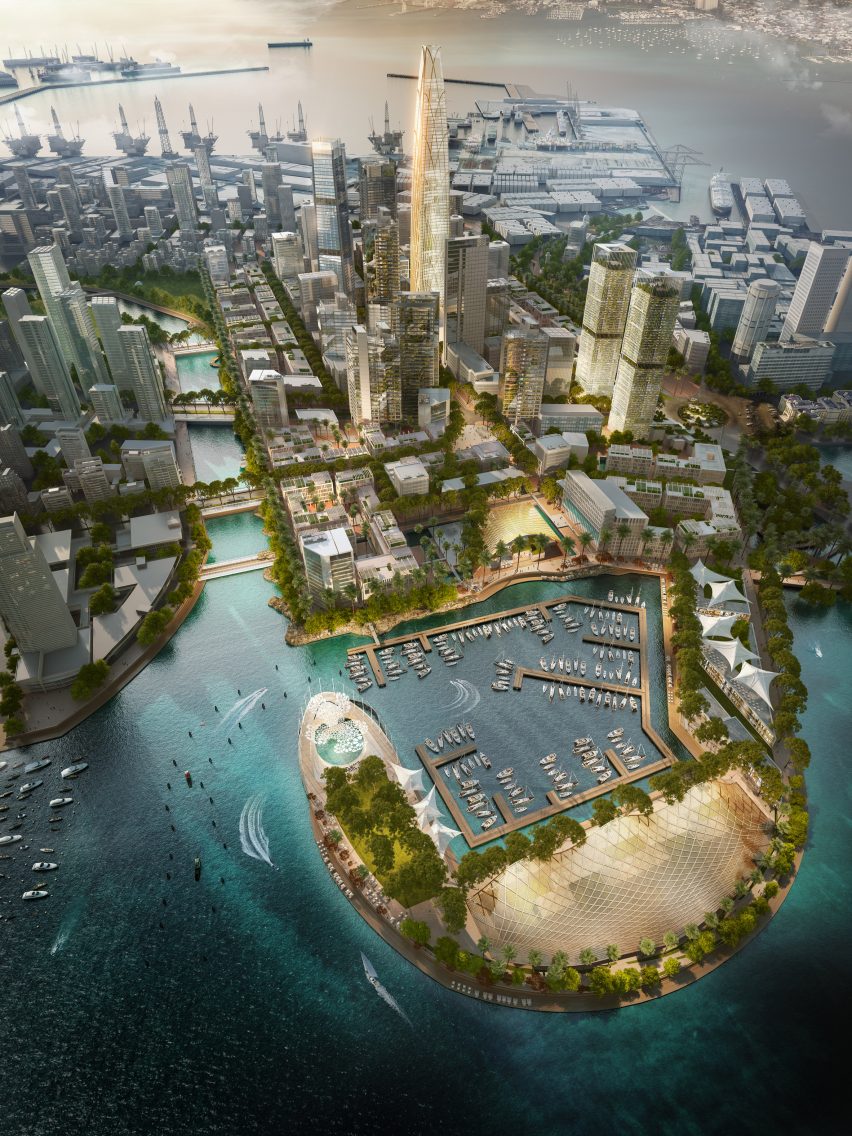

 Visitors inspect a model of the design following the announcement of the winner (SOM)