IMF trying to ‘foist’ Ghana’s tax laws on Sri Lanka? Business groups convey concerns to PM & FM

April 1st, 2017

The proposed new Inland Revenue Act has run into stiff opposition from key industry players, who described the controversial move to replace the existing law, as a “retrograde step that’s bound to create confusion and impinge on the overall revenue collection mechanism”.

Asserting that the proposed law departs from the very foundation and fabric of the existing Act, financial sector experts warned that if the new proposals are adopted and implemented in their current form, hardly any judicial precedence, interpretations, practices and principles could be applied in the imposition, payment and recovery of income tax in Sri Lanka.

Apart from the phraseology used, which has no relation to the present Act, the new law attempts to fundamentally change the sources of income, method of calculating the taxable income, claiming deductions, assessment procedure and the administrative provisions, they pointed out.

“The biggest disaster is that the envisaged Inland Revenue Act was inspired by the International Monetary Fund (IMF) in a bid to generate more tax revenue but, instead of drafting a law to suit the country’s needs and demands, what this international lending agency did was to impose word by word the tax law of Ghana on Sri Lanka”, the experts noted.

“The IMF didn’t do anything extraordinary for Sri Lanka.It was a case of merely foisting Ghana’s tax law on us”, they said.

The IMF was good at imposing tax laws on dictatorships in countries such as Congo, Ghana, Libya and Myanmar, which had no history of laws. But, there was no fundamental basis to introduce a new tax regime without any knowledge of Sri Lankan businesses and the fundamentals of taxation, which have existed in the country for over 75 years, they said.

“The IMF will not be here everyday; they will slap it on us and go away”.

“If the objective was to modernize the law, the government should have drawn examples from developed systems such as in Singapore or Malaysia for adoption. The objective of falling back on a country like Ghana to enact legislation on taxation was necessarily flawed; the whole approach to this process was flawed”, they observed.

Any new tax law takes at least 10 years to settle down. Under these circumstances, who will take care of the loss of revenue? Moreover, there is no guarantee that the proposed Act will increase revenue. People will interpret it the way they want as nobody will know the correct definition of the new law, industry officials said.

“What happened was that the government discussed with the IMF the financial crisis facing the country and the relief package to stave off the balance of payment crisis. At that point, the IMF had observed that the tax law in Sri Lanka is too complicated and insisted on strengthening revenue collection. It would have been acceptable if this process was accomplished through more computerization, better HR resources, IT and software”, the experts explained.

The government, instead of saying the situation could be rectified by asking the Inland Revenue Department to draft a new tax law, had wanted the IMF to shoulder this task. It was entirely the government’s fault, they said.

“It will be a big achievement for IMF’s CV to say they drafted the tax law of Sri Lanka. For that matter, even an individual credited with drafting our tax law can secure a top job in the US, they added.

Any tax law in the world is complicated. There are no uncomplicated tax laws as taxation itself is inherently complicated, and it’s not everybody who can understand it. What was the fundamental concept and principle behind the attempt to replace the present Inland Revenue Act and change the status quo in a sphere that generates enormous tax revenue for the government?, they queried.

The fundamental question that arises in this backdrop is: who wanted these drastic changes through a new tax law? Was a new Act being envisaged because revenue collection is poor or the existing law has drawbacks due to bad drafting that people cannot understand it? If mistakes exist, the relevant provisions can be redrafted and there is no reason to kick out the whole Act, they explained.

The Sunday Island understands that representatives of the Institute of Chartered Accountants of Sri Lanka, Ceylon Chamber of Commerce and industry practitioners had raised their concerns with Prime Minister Ranil Wickremesinghe and Finance Minister Ravi Karunanayake at a recent meeting.

“The premier understood our position that there was no requirement for a new Act, but it was too late as the IMF had warned that the reversal of the process would mean there will no tranche forthcoming. As there was no choice, the IMF was asked to go ahead, the experts asserted.

“On examining the draft law, we wanted certain amendments incorporated, and it was with great difficulty that we managed to get something in, not everything. However, the proposed Act is still fundamentally flawed”,

Financial sector experts who have evaluated the Inland Revenue draft law believe that the proposed Act does not add any new sources of revenue and instead of plugging the existing loopholes would add new ones due to the brevity of the drafting. The existing knowledge of Inland Revenue officers will be obliterated overnight and they will need at least four to five years to study and understand the new law.

“The wealth of knowledge acquired over the past few decades by the Inland Revenue Department, judicial system, practitioners, students and tax payers will be lost overnight”, they cautioned.

The proposed Act is also not consistent with the existing law and until the transitional period ends, two regimes of law will continue. For example, taxation of finance leasing will change dramatically and until existing leasing agreements expire, two regimes will continue creating confusion and making administration more difficult, they pointed out.

The experts were of the view that the current law has more depth, better drafting and most parts of it are consistent with international best practices. The proposed Act also gives undue emphasis to less important sections, which have little relevance to the economy and ignores the more important sections on imposition and recovery.

If revenue collection falls below expectations, the main reason for loss of potential revenue is poor administration and collection effort and government policy on continued tax incentives. Introducing a new Act will not increase revenue collection, but instead reduce it due to lack of understanding of the law amongst tax payers as well as revenue officers at least in the short to medium term, they elaborated.

Recommending the rationalizing of tax incentives over a period of time to enhance the tax net, the experts called for the consolidation of the IR Act of 2006 and subsequent legislation enacted each year into one Act and remove repugnant sections, change the language, if certain sections are unclear or in doubt and introduce some sections drafted in the new Act especially on transfer pricing, international tax and advance rulings into the existing law without changing its fundamental structure.

If the government’s concern is to enhance tax collection, what needs to be done is to plug the loopholes in the law that leads to tax avoidance or evasion and make the IR department a more efficient and vibrant tax collection body. The solution is not to abolish the existing Act which was in force for over a century and replace it with a new law unknown to the IR department and the public, which, in any case, will not guarantee a higher collection of tax revenue, the experts noted.

Commissioner-General of Inland Revenue, Mrs. Kalyani Dahanayake, said that the proposed Act drafted by the IMF was referred to her department for observations.

There are some good aspects in the proposed law, she emphasized. “In fact, they agreed with us to a certain extent on the proposals we made”.

On the proposed adoption of the new law, she said it was the wish of the government that the Inland Revenue Act be replaced in keeping with international best practices.

With some amendments proposed by the Inland Revenue Department, professional bodies and industry practitioners, the draft law has now reverted to the Legal Draftsman for incorporation, The Sunday Island learns.

ඉන්දියාවේ අජිත් ඩෙවොල් රාජපක්‌ෂ ආණ්‌ඩුව බලයෙන් පහකළ කතාව පරිවර්තනය කොට ඉන්දීය ජනතාවට දෙන්න

April 1st, 2017

සී. ඒ. චන්ද්‍රප්‍රේම උපුටා ගැන්ම දිවයින

අජිත් ඩොවාල් යනු ලංකාවේ ජනතාවට කොහෙත්ම හුරු නමක්‌ නොවේ. නමුත් 2014 ඉන්දියාවේ නරේන්ද්‍ර මෝඩි බලයට පත්වූදා සිට ඉන්දීය විදේශ ප්‍රතිපත්තියේ, විශේෂයෙන්ම ඉන්දියාවේ අසල්වාසි රටවල් සම්බන්ධ ප්‍රතිපත්තියේ ප්‍රධානම තීරකයා වන්නේ ඉන්දියාවේ විදේශ ඇමතිනී සුශ්මා ස්‌වරාඡ් නොව ජාතික ආරක්‌ෂක උපදේශකවරයා වන අජිත් ඩොවාල්ය. එසේ තිබියදී අජිත් ඩොවාල් නමැති පුද්ගලයකු ගැන බොහෝ ලාංකිකයන් අසාවත් නොතිබීමට ප්‍රධානම හේතුව ඩොවාල් යනු රාජතාන්ත්‍රිකයකු හෝ පරිපාලකයකු නොව චරපුරුෂයකු වන නිසා විය හැක. එවන් අයගේ සාමාන්‍ය ක්‍රියා කලාපය වන්නේ විශේෂයෙන්ම වැඩක නියෑළී සිටින විට හැකිනම් “ගේමක්‌ දෙමින්” සිටින විට අප්‍රසිද්ධියේ කිසිවකුගේත් අවධානයට යොමු නොවී ඒ රාජකාරිය කිරීමේ පුරුද්ද නිසා විය හැක.

තමන් රාජ්‍ය තාන්ත්‍රිකයකු නොව ආරක්‌ෂාව පිළිබඳ විශේෂඥයකු බව ඩොවාල් එළිපිටම කියයි. ඉන්දීය ජනතාව අතර ඔහුට ඇත්තේ ජාතික වීරයකුගේ ප්‍රතිරූපයයි. ජීවමාන “ඡේම්ස්‌ බොන්ඩ්” කෙනකු හැටියට බොහෝ ඉන්දියානුවන් ඔහුව දකී. ඉන්දියාවේ චර පුරුෂ සේවය වන රෝ සංවිධානයේ ඔහු ගතකළ කාලය තුළ පකිස්‌තානයේ චරපුරුෂ සේවයේ යෙදීමත්, කාශ්මීරයේ මිසෝරාම් ප්‍රාන්තයේ හා පන්ජාබයේ සීක්‌ ජාතිකයන්ගේ කැරැලි මර්දනය කිරීමටද ඉන්දීය ගුවන් යානා පැහැර ගැනීම් දුසිමකට වඩා විසඳීමද, ඉරාකයේ “අයිසිස්‌” ත්‍රස්‌තවාදීන්ගේ ග්‍රහනයට හසුවූ ඉන්දීය හෙද සේවකයන් බේරා ගැනීම ඇතුළු රහස්‌ මෙහෙයුම් ගණනාවකට මැදිහත් වී ඩොවාල් ඉන්දීය ජනතාව අතර සුවිශෙෂ තැනක්‌ දිනාගෙන සිටී. ඔහුගේ විශිෂ්ටතම මෑතකාලීන මෙහෙයුම හැටියට ඉන්දීය මෙන්ම ජාත්‍යන්තර මාධ්‍යයද සලකන්නේ 2015 ජනවාරි 8 වැනිදා ලංකාවේ රාජපක්‌ෂ ආණ්‌ඩුව බලයෙන් පහ කිරීමයි.

2015 ජනවාරි 08 බල පෙරළියත් සමඟම රොයිටර්ස්‌ ජාත්‍යන්තර පුවත් සේවය පවසා සිටියේ ඩොවාල් මේ පෙරළියේ ප්‍රධානම සංවිධායකවරයෙක්‌ බවත්, පොදු විපක්‌ෂ අපේක්‍ෂකයකු වෙනුවෙන් රනිල් වික්‍රමසිංහ මහතා තරගයෙන් ඉවත් කිරීමත්, මෛත්‍රිපාල සිරිසේන ශ්‍රීලනිපයෙන් එළියට ගැනීමත්, ලංකාවේ සියලුම විපක්‌ෂ බලවේග එක වේදිකාවට ගැනිමත් සියලුම සුළු ජාතික පක්‍ෂ මහින්දට එරෙහි වන තත්ත්වයක්‌ නිර්මාණය කිරීමත් සියල්ල ඩොවාල්ගේ මෙහෙයුමෙන් සිදුවූ බවය. ඉන්දියාවේ “සිටිසන් බියුරෝ” නමැති ප්‍රසිද්ධ වෙබ් අඩවියද පවසා සිටියේ ශ්‍රී ලංකාවේ සිදු වූයේ සම්භාවනීය ගනයේ “ඩොවාල් මෙහෙයුමක්‌” බවයි. 2014 නොවැම්බර් මාසයේ දී කොළඹට පැමිණ මෛත්‍රිපාල සිරිසේන ඇතුළු අය හමුවී මේ සියල්ල සංවිධානය කළ ආකාරය එම වෙබ් අඩවිය පැහැදිලි කරයි. ලංකාවේ දේශපාලනයට එතරම් මැදිහත්වීමක්‌ කළ පුද්ගලයකුගේ නමවත් බොහෝ ශ්‍රී ලාංකිකයන් අසාවත් නොතිබීම ම චර පුරුෂයකු හැටියට අප්‍රසිද්ධියේ වැඩ කිරීමට ඩොවාල්ගේ ඇති නැඹුරුවට අමතරව තවත් හේතුවක්‌ වන්නේ ඉන්දියාව ලංකාවේ කළ මේ ආණ්‌ඩු පෙරළිය ඉතා කෙටි කලකින් වැරැදි පැත්තට යැමට ආරම්භ වූ නිසා ඩොවාල් මේ සම්බන්ධයෙන් නිහඬ ප්‍රතිපත්තියක්‌ අනුගමනය කිරීමට තීන්දු කිරීමද විය හැක.

ඉන්දියාව විසින් රාජපක්‌ෂ ආණ්‌ඩුව පලවා හැරීමට කටයුතු කිරීමට ප්‍රධානම හේතුවක්‌ වූයේ කොළඹ වරාය නගර ව්‍යාපෘතියයි. චීනය විසින් ඉදිකරන මේ ව්‍යාපෘතිය ඉන්දියාවේ ආරක්‌ෂාවට තර්ජනයක්‌ වන නිසා එය නවතා දමන්නැයි ඩොවාල් 2014 දී කීප වතාවක්‌ම එවක සිටි ආරක්‌ෂක ලේකම් ගෝඨාභය රාජපක්‌ෂ මහතාට කියා තිබිණි. ඒ කාලයේ හම්බන්තොට වරාය චීන සමාගමකට විකිණීමට හෝ බදු දීමට රාජපක්‌ෂ ආණ්‌ඩුවේ කිසිදු සැලසුමක්‌ නොතිබුණු නිසා හම්බන්තොට පිළිබඳ ප්‍රශ්නයක්‌ ඉන්දියාවට නොවීය. රාජපක්‌ෂ ආණ්‌ඩුව පලවා හැරීමට ඉන්දියාව තීරණය කිරීමට ආසන්නම හේතු වූයේ චීන සබ්මැරීනයක්‌ කොළඹ වරායට පැමිණීමයි. මේ සබ්මැරීනයේ පැමිණීම ගැන ඉන්දියාවට දැනුම් දුන්නේ නැතැයි ඉන්දියානුවන් කියයි. මේ අනුව අජිත් ඩොවාල් වැඩ ආරම්භ කළේය. රාජපක්‌ෂ ආණ්‌ඩුව පලවා හරිනු ලැබීය. චීන ජනාධිපතිවරයා විසින්ම ආරම්භ කරන ලද ව්‍යාපෘතියක්‌ වුවද වරාය නගරයේ කටයුතු අලුත් ආණ්‌ඩුව විසින් නවතා දමනු ලැබීය. ඉන්දීය අගමැති නරේන්ද්‍ර මෝදිද අලුතෙන් යටත් කරගත් දේශයක්‌ නැරැඹීමට එන අධිරාජ්‍යයකුගේ විලාසයෙන් ලංකාවට පැමිණ පාර්ලිමේන්තුව අමතා ආපසු ගියේය. ටික කලක්‌ යන තුරු ඩොවාල්ගේ සියලු සැලසුම් සාර්ථක වී ඇති බවත් ලංකාව දැන් සම්පූර්ණයෙන්ම ඉන්දියාවේ ග්‍රහනයට නතුවී ඇති බවකුත් පෙනෙන්නට තිබිණි. නමුත් ඉතා කෙටි කලකින් මේ සියල්ල අනිත් පැත්තට කැරකීමට පටන් ගත්තේය.

මෛත්‍රිපාල සිරිසේන උතුරු නැගෙනහිර ප්‍රදේශවල විශාල වැඩි ඡන්ද ප්‍රමාණයකින් දිනා තිබුණත් රටේ සෙසු ප්‍රදේශවල ඔහුගේ ඡන්ද පදනම ගැන ප්‍රශ්නයක්‌ තිබිණි. 2015 ජනාධිපතිවරණයේ දී උතුරු නැගෙනහිරින් පිට පළාත්වල පුත්තලම, පොළොන්නරුව, නුවර, බදුල්ල, කොළඹ, ගම්පහ සහ නුවරඑළිය දිස්‌ත්‍රික්‌ක සිරිසේන දිනා තිබුණද සමස්‌තයක්‌ වශයෙන් උතුරු නැගෙනහිර ප්‍රදේශවලින් පිට සිරිසේනට වඩා ඡන්ද ලක්‌ෂ 2 කට වැඩිය මහින්ද රාජපක්‌ෂට ලැබී තිබුණි. මෙවන් වාතාවරණයක්‌ තුළ තව කෙටි කලකින් එළඹීමට නියමිතව තිබූ පාර්ලිමේන්තු මැතිවරණය ජය ගැනීම යහපාලන පාර්ශ්වයට විශාල ප්‍රශ්නයක්‌ විය. දකුණේ ජනතාවගේ හිත දිනා ගැනීමට කුමක්‌ හෝ කිරීමට ඔවුන්ට සිදුවිය. මේ ප්‍රශ්නය විසඳීමට සිරිසේන වික්‍රමසිංහ ආණ්‌ඩුවේ උපාය මාර්ගය වූයේ සියලුම රජයේ සේවකයන්ට පෙර නොවූ විරූ ආකාරයේ මසකට රුපියල් 10,000 ක දීමනාවක්‌ ලබාදීමත්, ඉන්ධන, ගෑස්‌, විදුලි බලය හා ආහාර ද්‍රව්‍ය ගණනාවක මිල අඩු කිරීමත්ය.

මේ ආකාරයට එක්‌වරම ආණ්‌ඩුවේ වියදම විශාල වශයෙන් වැඩිවීමත්, බදු ආදායම එක්‌වරම විශාල වශයෙන් අඩුවීමත් නිසා හිඟ මුදල් ලබා ගැනීමට ආණ්‌ඩුව මහ පරිමාණයේ දේශීයව පමණක්‌ නොව විදේශීය මූලාශ්‍රවලින්ද ණය ගැනීමට පටන් ගත්තේය. මේ ආකාරයට කිසිදු සැලසුමක්‌ නොමැතිව ගන්නා ලද කෙටිකාලීන විදෙස්‌ ණය ගෙවීමට රට තුළට විදේශ විනිමය ගලා ඒම වැඩි කිරීමට අවශ්‍යතාවක්‌ තිබුණත් අලුත් ආණ්‌ඩුව බටහිර රටවලින් හා ඉන්දියාවෙන් බලාපොරොත්තු වූ ආයෝජන ලංකාවට නොපැමිණියේය. මාස කීපයක්‌ ගිය තැන මේ අර්බුදය උත්සන්න වත්ම නවතා දමා තිබූ වරාය නගර ව්‍යාපෘතිය චීනයට නැවත ආරම්භ කිරීමට ඉඩදීමට ආණ්‌ඩුවට සිදුවිය. මේ වරාය නගරය ඇමරිකානු ඩොලර් මිලියන 1400 ක වියදමෙන් චීනය ඉදිකරන අතර මේ මුදල් ලංකාවට ඒම යහපාලන ආණ්‌ඩුවට මහා අස්‌වැසිල්ලක්‌ විය. තවත් මාස කීපයක්‌ ගිය තැන දේශපාලනිකව ඇති කරන ලද ආර්ථික අර්බුදය පාලනය කරගත නොහැකිව ඔඩු දුවද්දී අලුත් ආණ්‌ඩුව තව ටිකක්‌ ඉදිරියට ගොස්‌ හම්බන්තොට වරායත් චීනයට ලබාදී මුදල් ලබා ගැනීමට ඉදිරිපත් විය. හම්බන්තොට වරායට අයත් අක්‌කර 5000 ක භූමි භාගයට අමතරව ඉන් පිටත තවත් අක්‌කර 15,000 ක භූමි භාගයක්‌ද චීන සමාගමකටදී මුදල් ලබා ගැනීම ආණ්‌ඩුවේ අභිප්‍රාය විය.

මේ අනුව චීනයට ලබාදීමට නියමිත වූ මුළු භූමි ප්‍රමාණය අක්‌කර 20,000 ක්‌ නැතිනම් වර්ග කිලෝමීටර් 80 ක්‌ විය. මෙය වතිකානු රාජ්‍යය, මොනාකෝ රාජ්‍යය, ජිබ්රෝල්ටා, කොකෝස්‌ දූපත්, නාවුරු දූපත්, ස්‌ප්‍රැට්‌ලි දූපත් හා මකාමේ යන කුඩා රාජ්‍යයන් සියල්ලටම වඩා විශාල භූමි භාගයකි. චීනයට මේ ආකාරයට හම්බන්තොට වරාය හා කුඩා රාජ්‍යයන් 7 කට වඩා විශාල භූමි භාගයක්‌ ලැබුණු පසු චීනයේ පරමාණු සබ්මැරීන පවා හම්බන්තොටට ගෙන්වා නතර කරගතහොත් එයට විරුද්ධ වන්නේ කවුද? හම්බන්තොට වරාය හමුදාමය නැතිනම් යුදමය කටයුතුවලට යොදවාගත නොහැකි යෑයි වගන්තියක්‌ එයට අදාළ ගිවිසුමට ඇතුළත් කළද එවැනි වගන්ති බලාත්මක කරන්නේ කවුද? කොළඹ වරයාට චීන සබ්මැරීනයක්‌ ආවා යෑයි කියා රාජපක්‌ෂ ආණ්‌ඩුව පළවා හැරීමට කුමන්ත්‍රණ දියත් කළ ඉන්දියාව තමාගෙන්ම අසාගත යුතු ප්‍රශ්නය එයයි. හම්බන්තොට වරාය, හමුදාමය කටයුතුවලට යොදවාගත නොහැකි යෑයි වගන්තියක්‌ ගිවිසුමේ තිබුණත් ශ්‍රී ලංකා ආණ්‌ඩුවට එය බලාත්මක කිරීමට හැකියාවක්‌ තබා වුවමනාවක්‌ වත් පහළ වන්නේ නැත. එමෙන්ම හම්බන්තොට වරාය චීනයට කැමති ඕනෑම දේකට යොදවා ගැනීම වැළැක්‌වීමට ඉන්දියාවට හැකියාවක්‌ද නැත.

අජිත් ඩොවාල් සහ රෝ සංවිධානය එකතුවී ලංකාවේ ඇතිකළ ආණ්‌ඩු පෙරළියෙන් පසු හටගෙන තිබෙන මේ තත්ත්වය තවමත් ඉන්දියාවේ ජනතාවගේ හෝ විපක්‌ෂයේ අවධානයට යොමුවී නැත. වරාය නගරය තවමත් ඉදිවෙමින් පවතී. හම්බන්තොට වරාය තවමත් චීනයට භාර දී නැත. නමුත් වරාය නගරය ඉදිවූ පසුව හා හම්බන්තොට වරාය කුඩා රාජ්‍යයන් 7 කට වඩා විශාල භූමි භාගයක්‌ ද සහිතව චීනයට ලබාදුන් පසු අජිත් ඩොවාල්ගේ කුමන්ත්‍රණ අතේ පත්තු වී ඇති බව ඉන්දීය ජනතාවට අවබෝධ වනු ඇත. රාජපක්‍ෂ ආණ්‌ඩුව කාලයේදී ඉන්දයාවේ ජාතික ආරක්‍ෂාවට තර්ජනයක්‌ පැවැති බවක්‌ ඔවුන්ට හැඟුන ද ඩොවාල්ගේ ආණ්‌ඩු පෙරළියෙන් පසු එය සිය දහස්‌ වාරයක්‌ වැඩිවී ඇති බවක්‌ ඔවුන්ට හැඟෙනු ඇත. අජිත් ඩොවාල් මේ දිනවල ශ්‍රී ලංකාව ගැන එක වචනයක්‌ හෝ කතා කරනු කිසිවකුටත් ඇසී නැත. ඩොවාල් මෝඩ ලෙස ශ්‍රී ලංකාවට කළ අත පෙවීම නිසා අද වනවිට ශ්‍රී ලංකාවේ ආණ්‌ඩුවත් විපක්‍ෂයත් යන දෙකම චීනය පැත්තට නැඹුරු වී ඔවුන් අන් කවරදාටත් වඩා ලංකාව තුළ බලවත් වී සිටී.

මෑතකදී චීන කර්මාන්තපුරයක්‌ හම්බන්තොට ආරම්භ කිරීමට එරෙහිව ඒකාබද්ධ විපක්‍ෂය උද්ඝෝෂණයක්‌ ආරම්භ කළ ද ඔවුන්ගේ අරගලය ආණ්‌ඩුවට එරෙහි අරගලයන් මිස චීනයට එරෙහි අරගලයක්‌ නොවීය. ආණ්‌ඩුවත් ඒකාබද්ධ විපක්‍ෂයත්a අතර වෙනස වන්නේ රාජපක්‍ෂ ආණ්‌ඩුව චීනය සමග ගනුදෙනු කිරීමේදී සෑමවිටම ලංකාවට වාසිදායක ගනුදෙනුවක්‌ කිරීමට උත්සාහ ගත් අතර යහපාලන ආණ්‌ඩුවට එවැනි තාර්කික ප්‍රවේශයක්‌ ගැනීමට තරම් මානසිකත්වයක්‌ නැති වීමය. යහපාලන ආණ්‌ඩුව දැන් සිටින්නේ මුදල් දෙනවා නම් ඕනෑම කෙනකුට ඕනෑම දෙයක්‌ දීමට සූදානම් තත්ත්වයකයි. ඇත්ත වශයෙන් ම චීනය කිසිම රටක්‌ අසාධාරණ ලෙස ගසා කන්නේ නැත. හම්බන්තොට වරාය බදු ගැනීමේ කාරණයේදී ද චීන සමාගම් දෙකක්‌ ලන්සු ඉදිරිපත් කරන ලදී. මෙයින් චයිනා හාබර් සමාගම ලංකාවට වාසිදායක ලංසුවකුත් චයිනා මර්චන්ට්‌ aසමාගම ලංකාවට අවාසිදායක ලංසුවකුත් ඉදිරිපත් කරන ලදී. මෙහිදී ලංකාවේ ආණ්‌ඩුව චයිනා හාබර් සමාගමේ ලංසුව පිළිගනු ඇති බවට චීනය බලාපොරොත්තු වූවා විය හැක. නමුත් චීනය පමණක්‌ නොව ලංකාවේ ජනතාව ද මවිතයට පත් කරමින් යහපාලන ආණ්‌ඩුව පිළිගෙන තිබෙන්නේ ලංකාවට අවාසිදායක ලංසුවයි.

රාජපක්‍ෂ ආණ්‌ඩුව යටතේ චයිනා හාබර් සහ චයිනා මර්චන්ට්‌ යන සමාගම් දෙකම ඒකාබද්ධ ව්‍යාපෘතියක්‌ හැටියට හම්බන්තොට වරායේ බහාලුම් පර්යන්තය පමණක්‌ ලංකාවට ඉතා වාසිදායක කොන්දේසි යටතේ අවුරුදු 40 කට බදු ගැනීමට ගිවිසුමක්‌ අත්සන් කොට තිබිණි. රාජපක්‍ෂ ආණ්‌ඩුව චීනයත් සමග ඉන්නා ගමන් වත්මන් ආණ්‌ඩුවට වඩා ඔවුන් සමග වාසිදායක ගනුදෙනුවලට එළැඹුණු බව ප්‍රත්‍යක්‍ෂ කරුණකි. ඒ කෙසේ වෙතත් චීනය පැත්තට දැන් රාජපක්‍ෂවරු ප්‍රමුඛ විපක්‍ෂය පමණක්‌ නොව යහපාලන ආණ්‌ඩුවත්a සිටින අතර ඉන්දියාවට අල්ලපු අත්තත් නැති පය ගහපු අත්තත් නැති තත්ත්වයක්‌ උදා වී ඇත. ඉන්දියානු ආණ්‌ඩුව ලංකාව තුළ රෝ සංවිධානය යොදවා කරන මේ සෙල්ලම් ගැන ඉන්දියාවේ දේශපාලන විචාරකයන් ද අනතුරු ඇඟවීම් කර ඇත. රොහාන් වෙන්කටරාම ක්‍රිෂ්ණන් නමැති විශ්ලේෂකයකු 2015 ජනවාරි ආණ්‌ඩු පෙරළියත් සමඟම ඒ රටේ ප්‍රධානම වෙබ් අඩවියක්‌ පවසා තිබුණේ ශ්‍රී ලංකාවේ ආණ්‌ඩු පෙරළියට රෝ සංවිධානය මැදිහත් වූ බවට පැතිර යන කතා ඉන්දියාවට දැඩි ලෙස අවාසිදායක බවයි. නේපාලය උදාහරණයට ගනිමින් ඔහු පවසා සිටියේ රෝ සංවිධානය ඒ රටේ දේශපාලනයට මැදිහත් වී කළ සෙල්ලම් නිසා අද ඉන්දියාවට හිතවත් සෑම දේශපාලනඥයකුටම එරෙහිව නේපාල ජනතාව පෙළගැසෙන බවයි. ලංකාවේ මේ ආණ්‌ඩු පෙරළියටද රෝ සංවිධානය මැදිහත් වූ බව ලංකාවේ ජනතාව දනී. එපමණක්‌ද නොව 1980 ගණන්වල ඉන්දියාව මේ රටේ කළ වින්නැහියද ජනතාවට තවම අමතක වී නැත. මේ ආකාරයට අජිත් ඩොවාල් ලංකාවේ දේශපාලනයට ඇඟිලි ගැසීමට ගොස්‌ ලංකාව තුළ ඉන්දීය විරෝධී හැඟීම් උත්සන්න කර තිබෙන අතර ඔහු මහත් පරිශ්‍රමයක්‌ දරා බලයට ගෙනා ආණ්‌ඩුවද දැන් ඔහුගේ පාලනයෙන් ගිලිහී ඇත. ඩොවාල් කාශ්මීර බෙදුම්වාදීන්ට එරෙහිව කළ එක්‌ මෙහෙයුමකදී මොහොමඩ් යූසුµa නමැති කාශ්මීර් බෙදුම්වාදී ත්‍රස්‌තවාදියකු ඉන්දීය ආණ්‌ඩුව පැත්තට ගෙන බෙදුම්වාදයට එරෙහිව ප්‍රති ත්‍රස්‌තවාදී මෙහෙයුම් දියත් කිරීමට හැකි විය. නමුත් වරාය නගර ව්‍යාපෘතිය හෝ හම්බන්තොට වරාය චීනයට ලබාදීම නැවැත්වීමට ඔහුට සිරිසේන ජනාධිපතිවරයාට හෝ රනිල් වික්‍රමසිංහ අගමැතිවරයාට බලපෑම් කිරීමට හැකිවී නැත.

පකිස්‌තානයේ එක්‌ පුවත් වෙබ් අඩවියක පළ වූ ලිපියක සඳහන් වූයේ අජිත් ඩොවාල්ගේ විදේශ ප්‍රතිපත්තිය දැන් ඉන්දියාවේ ජාතික ආරක්‍ෂාවට තර්ජනයක්‌ වී ඇති බවට අදහසක්‌ භාරතීය ජනතා පක්‍ෂය තුළත් පැතිරෙමින් පවතින බවයි. ඉන්දියාවේ “ද වයර්” නමැති වෙබ් අඩවියේ ද ඉන්දීය විදේශ ප්‍රතිපත්තිය රෝ සංවිධානය විසින් “හයි ජැක්‌”කර ඇති බවට ලිපියක්‌ පළ විය. මේ වෙබ් අඩවියේම නැවතත් පවසා තිබුණේ ඩොවාල්ගේ සම්ප්‍රදායික රාජ්‍ය තාන්ත්‍රික ප්‍රවේශයෙන් බැහැර කර තිබෙන බවයි. මේ ආකාරයට අජිත් ඩොවාල් විසින් ලංකාවේ දේශපාලනයට මැදිහත් වී කරගත් වින්නැහිය ලංකාව තුළ ඉන්දියාව ලැබූ දෙවැනි මහා පරාජයයි.

1980 ගණන්වලදීද ඉන්දීය මධ්‍යම ආණ්‌ඩුව ලංකාවේ බෙදුම්වාදී ත්‍රස්‌තවාදීන්ට උදව් දුන්නේ තමිලනාඩුවේ බලපෑම නිසා නොව බටහිරට නැඹුරු වූ විදේශ ප්‍රතිපත්තියක්‌ සහිත ඡේ. ආර්. ජයවර්ධන ආණ්‌ඩුව මට්‌ටු කිරීමට ඉන්දීය මධ්‍යම ආණ්‌ඩුවට තිබු උවමනාව නිසාය. එය අවසන් වූයේ ඉන්දියාව කිසිදාක නොලැබූ තරම් දරුණු යුදමය පරාජයක්‌ කොටි සංවිධානය හමුවේ ලැබීමත්, ඉන්දියාව පරාජිතයකු හැටියට ලංකාවෙන් ඉවත් වීමත්, කොටි සංවිධානයේ පළිගැනීමකට ලක්‌වී රජීව් ගාන්ධිට තම ජීවිතයත්a අහිමි වීම යන සිදුවීම් මාලාවෙනි. 1980 ගණන්වලදී ඉන්දියාව ලංකාව තුළ කළ මෙහෙයුමෙන් ඉන්දීය හමුදාවේ සෙබලුන් 1155 ක්‌ මැරුම් කෑ අතර 36 දෙනකු සදාකාලික ආබාධිතයන් බවට පත් විය. ඉන්දියාව, චීනය හා පකිස්‌තාය සමග කරන ලද යුද්ධ වලදීවත් එවැනි ජීවිත විනාශයකට මුහුණදී නැත. මේ ජවනිකාවේ ලැඡ්ජා සහගතම කාරණය වන්නේ තමිල්නාඩුවේ අප්‍රසාදයට තිබෙන බිය නිසා ලංකාවේ මියගිය තම සෙබලුන් සැමරීමටවත් ඉන්දීය මධ්‍යම ආණ්‌ඩුව දශක දෙකකටත් වඩා කාලයක්‌ බියෙන් සිටීමයි. ලංකාවේ ආණ්‌ඩුව විසින් බත්තරමුල්ලේ ඉන්දීය සෙබලුන් සිහි කිරීමට ඉදිකොට ඇති ස්‌මාරකය ඉදිරිපිට මල්වඩමක්‌ හෝ තැබීමට ඉන්දීය හමුදාපතිවරයකුට අවස්‌ථාව ලැබුණේ රාජපක්‍ෂ ආණ්‌ඩුව විසින් කොටි සංවිධානය විනාශ කළ පසුව පමණි.

2014 දී ඉන්දීය මධ්‍යම ආණ්‌ඩුව ලංකාවේ දේශපාලනයට මැදිහත් වූයේ තමිල්නාඩුවේ බලපෑමක්‌ නිසා නොව රාජපක්‍ෂ ආණ්‌ඩුව චීනය සමග පවත්වාගෙන ගිය සම්බන්ධය නිසාය. 1980 ගණන්වල මෙන්ම අදත් ඉන්දියාවට විනකෙරුවේ, වින කරන්නේත් ඔවුන් ම කවා පොවා ලංකාව තුළ ඇති කළ ගෝලයන්ය. 1980 ගණන්වලදී ඉන්දියාවෙන් යුද පුහුණුව හා ආයුධ ලබාගත් කොටි සංවිධානය පෙරළා ඉන්දියාවට පහර දුන්නේය. අද ද රාජපක්‍ෂ ආණ්‌ඩුව කිසිදාක චිනයට ලබාදුන් නැති තරමේ වරප්‍රසාද හා පහසුකම් ඔවුන්ට ලබා දෙමින් සිටින්නේ ඉන්දියාව විසින්ම බලයට ගෙන ආ යහපාලන ආණ්‌ඩුවයි. මේ ඇති වී තිබෙන වින්නැහිය හමුවේ තම ආත්මගරුත්වය බේරා ගැනීමට ඉන්දියාව එට්‌කා ගිවිසුම තුළින් ලංකාව තම ග්‍රහණයට ගැනීමට උත්සාහ කිරීමෙන් සිදුවී තිබෙන්නේ ශ්‍රී ලංකාවේ සාමාන්‍ය ජනතාව අතර ඉන්දීය විරෝධය තවත් උත්සන්න වීමක්‌ පමණි.

2014 දී ලංකාවේ දේශපාලනයට අත පොවා ඩොවාල් ඉන්දියාවට කර ඇත්තේ විනාශයක්‌ බව පැහැදිලිය. දැන් අවුරුදු 70 ට වඩා වයස ඩොවාල් මුළු ජීවිත කාලයක්‌ පුරා ගොඩනඟාගත් කීර්ති නාමය අද අවදානමට ලක්‌වී ඇත. ඔහුගේ ආත්මගෞරවය බේරා ගැනීමට නම් චීන වරාය නගර ව්‍යාපෘතිය මෙන්ම හම්බන්තොට වරාය බදු දීමද ඔහු කෙසේ හෝ නවතා දැමිය යුතුය. නමුත් එවැන්නක්‌ කිරීමට ඔහුට හැකියාවක්‌ නැත. මේ සියල්ලෙන්ම පැහැදිලි වන්නේ ලංකාව කෙරෙහි ඉන්දීය ආණ්‌ඩුවේ ප්‍රවේශය වෙනස්‌ විය යුතු බවයි. 1980 ගණන්වලදී රජීව් ගාන්ධි විසින්ද 2014 දී අජිත් ඩොවාල් විසින් ද ලංකාව සම්බන්ධයෙන් ගත් ක්‍රියාදාමවලින් ඉන්දියාවට අත් වූයේ තමන් බලාපොරොත්තු වූ ප්‍රතිඵලයට හාත්පසින්ම විරුද්ධ ප්‍රතිඵලයකි. රාජතාන්ත්‍රික කටයුතු වෙනුවට රෝ මෙහෙයුම් යෙදවීමේ ආදීනව එයයි.

බොහෝ ශ්‍රී ලාංකිකයන් ඉන්දීය විරෝධීන් නොවේ. සියලු බෞද්ධයන් ඉන්දියාව දෙස බලන්නේ බුදුන්ගේ ජන්ම භූමිය වූ ජම්බුද්වීපය දෙසය. මේ ආකාරයට සංස්‌කෘතික සමානකම් තිබෙන රටක්‌ වන ලංකාව සමගත් ඉන්දියාවට මිත්‍රශීලී සම්බන්ධතා පවත්වාගෙන යැමට නොහැකි වීම ඉන්දීය විදේශ ප්‍රතිපත්තියේ අසාර්ථකත්වයේ ලක්‍ෂණයකි. අප කලින් පෙන්වා දුන් පරිදි ඉන්දියාවේ මධ්‍යම ආණ්‌ඩුව ලංකාවේ දේශපාලනයට මැදිහත්වී අත පුච්චාගත් අවස්‌ථාව දෙකේදීම ඔවුන් එසේ කළේ තමිල්නාඩුවේ බලපෑමට නොවේ. ඒ තත්ත්වයන්වලට වගකිවයුත්තේ ඉන්දීය මධ්‍යම ආණ්‌ඩුව පමණි. මේ සියල්ලෙන්ම ඉන්දියාව ඉගෙන ගත යුතු පාඩම වන්නේ තම අසල්වාසී රටවල් තුළ රෝ සංවිධානය යෙදවීම ඉන්දියාවේ වුවමනාවන් ඉටු කර ගැනීමේ හොඳම ක්‍රමය නොවන බවයි.

හෙජින් ගනුදෙනවේ ඇත්ත මෙන්න…

April 1st, 2017

ඔස්‌මන් චන්ද්‍රවංශ හිටපු විනිමය පාලක සහ ජ්‍යෙෂ්ඨ අර්ථශාස්‌ත්‍රඥ

යහපාලන රජය විසින් සිදු කර ඇති වංචා, පාඩු සහ වන්දි ගෙවීම් මෑතක සිට, අගමැතිවරයා සහ මුදල් ඇමැතිවරයා ඇතුළු මැති ඇමැතිවරු කීප දෙනකුම පසුගිය රජයේ – හෙජින් ගනුදෙනුව ඔස්‌සේ ශ්‍රී ලංකාවට සිදුවූ පාඩුව රුපියල් බිලියන 500 ක්‌ පමණ වී යයි පවසා ඇත. ඒ නිසා ජනතාවට වර්තමානයේදී අලෙවි කරන ඉන්ධන මිල අඩුකරන්නට රජය අපොහොසත් වන්නේ යෑයි ද ඔවුහු කියති. එහෙයින්, එම හෙජින් ගනුදෙනුව පිළිබඳව යථාර්ථය සහ සත්‍යයද, වර්තමාන යහපාලන රජයේ නිල කාලයේදී සිදුවී ඇති වංචා, පාඩු සහ වන්දි ගෙවීම් පිළිබඳ කෙටි විග්‍රහයක්‌ද, ජනතාවගේ අධ්‍යයනය පිණිස මෙම කෙටි ලිපියෙන් උපුටා දක්‌වා ඇත.

අවදානම් සහිත ආර්ථික තත්ත්වයන් මතුවන අවස්‌ථා වලදී -හෙජින් යනුවෙන් හැඳින්වෙන රක්‌ෂණ වැනි ක්‍රමවේදයන් හරහා ආර්ථික සහ මූල්‍යමය අවදානම් අවම කර ගැනීමේ මූල ධර්මය සියලු ආර්ථික විශේෂඥයන් හොඳින් දන්නා, කරුණකි. එහෙයින්, 2006 වසරේ දෙවැනි භාගයේදී ලෝක තෙල් මිල ශීඝ්‍ර ලෙස වැඩිවෙන බව පෙනී යන අවස්‌ථාවේදී, -හෙජින් ක්‍රමවේදය අනුගමනය කරමින් මෙම අවදානම් තත්ත්වයට මුහුණදී රට තුළ ආර්ථික ස්‌ථායිභාවය රැකගත හැකි බව පෙන්වා දෙන වාර්තාවක්‌ ශ්‍රී ලංකා මහ බැංකුවේ ආර්ථික පර්යේෂණ දෙපාර්තමේන්තුව විසින් මුදල් මණ්‌ඩලයට ඉදිරිපත් කරන ලදී. ඉන් පසු එම වාර්තාව පදනම් කොටගෙන මහ බැංකුව විසින් කැබිනට්‌ මණ්‌ඩලයට මේ පිළිබඳව සංකල්පය හඳුන්වා දෙන ලදී. මහ බැංකුවේ ඉදිරිපත් කිරීම (Presentation) සැළකීමෙන් අනතුරුව, මෙම විෂය පිළිබඳව වඩාත් විස්‌තරාත්මක වාර්තාවක්‌ ලබා ගැනීම පිණිස, විශේෂිත දැනුම ඇති කණ්‌ඩායමක්‌ කැබිනට්‌ මණ්‌ඩලය විසින් පත් කරන ලදී. එම කණ්‌ඩායමේ වාර්තාව අනුව, ලංකා ඛජිජ තෙල් සංස්‌ථාව විසින් -හෙජින් ක්‍රමවේදය ක්‍රියාත්මක කිරීම යෝග්‍ය යෑයි නිර්දේශ කරන ලදී. එම උපදෙස පිළිගනිමින්, -හෙජින් ක්‍රියාවලියේ නිරතවන්නට ලංකා ඛනිජ තෙල් සංස්‌ථාවට, කැබිනට්‌ මණ්‌ඩලය විසින් අවසර ලබා දෙන ලදී.

ඒ අනුව, 2007 මුල් භාගයේ සිට අදාළ රේ‚ය අමාත්‍යාංශයේ අධීක්‌ෂණයට යටත්ව, ලංකා ඛනිජ තෙල් සංස්‌ථාව, ඔවුනට අවශ්‍ය ඉන්ධනවලින් කොටසක්‌ මිලදී ගනිද්දී ජාත්‍යන්තර බැංකු කීපයක්‌ හරහා -හෙජින් ක්‍රමවේදය අනුගමනය කරන ලදී. ඒ වසර 1 කට ආසන්න කාලයක්‌ තුළ ලංකා ඛනිජ තෙල් සංස්‌ථාව විසින් සැළකිය යුතු වාසීන් සහ ලාභ අත්පත් කරගන්නා ලදී. එහෙත්, 2008 අග භාගයේදී, අනපේක්‌ෂිත ආකාරයට ලෝක තෙල් මිල පහළ යැම ආරම්භ වුණි. එවිට, හෙජින් ගිවිසුම් කීපයක්‌ ඔස්‌සේ, ජාත්‍යන්තර බැංකු තුනක්‌ ලංකා ඛනිජ තෙල් සංස්‌ථාවෙන් හෙජින් ගිවිසුම්වලට අනුව පැණ නැගුණායි කියන ලද ගෙවීම් ඉල්ලා සිටි අතර, ඒවා නොපියවූ නිසා, එම මුදල් ඉල්ලමින්, ජාත්‍යන්තර නීතිමය ක්‍රියාවලීන් මාලාවකට පිවිසුණහ. මෙම බැංකු තුනේ මූලික ඉල්ලීම් වල එකතුව මූල්‍යමය වශයෙන් ඇ.ඩො. මිලියන 500 ක්‌ පමණ වුණි. එහෙත්, ශ්‍රී ලංකාවේ නීතිපතිවරයා සහ අදාළ බලධාරීන්, මෙම ඉල්ලීම්වලට විරුද්ධව කටයුතු කරමින්, එම ඉල්ලීම් අතරින් විශාලතම අගය සහිත ඉල්ලීම, සිංගප්පූරුවේ උසාවියක සම්පූර්ණයෙන්ම නිශ්ප්‍රභ කර ගැනීමට සමත් වූහ. ඉතිරි ඉල්ලීම් දෙකෙන්, එක්‌ ඉල්ලීමක්‌ බ්‍රිතාන්‍ය උසාවියකින් එක්‌ බැංකුවකට වාසි වන ආකාරයේ තීන්දුවක්‌ ලබා දෙන ලද අතර, අනිත් ඉල්ලීම සිංගප්පූරු මැදිහත්කරු සංවිධානයක්‌ විසින් පවත්වන ලද ආරවුල්-විසඳුමකින් (arbitration), අනිත් බැංකුවට වාසිදායක තීරණයක්‌ ලබා දෙන ලදී. එහෙත්, මෙම නීතිමය තීන්දුවලින් අනතුරුව, එම ජාත්‍යන්තර බැංකු සමග තව දුරටත් කරන ලද නිල රාජ්‍ය සාකච්ඡා ඔස්‌සේ, ශ්‍රී ලංකා රජය සහ ලංකා ඛනිජතෙල් සංස්‌ථාව විසින් ගෙවීමට නියෝග වූ වන්දි මුදල්වලින් 70% ක පමණ ප්‍රමාණයක්‌ අඩු කිරීමකින් පසුව, අවසානයේදී ගෙවන්නට සිදුවූ සම්පූර්ණ මුදල ඇ.ඩො. මිලියන 90 කට පමණ (රු. බිලියන 12 ක පමණ) අගයකට සීමා කර ගැනීමට රජය සමත්වුණි.

‘හෙජින් ගනුදෙනුවට සම්බන්ධ වූ එක්‌ බැංකුවක්‌ ඊට අදාළ මුදල් විනිමය පාලන පනත උල්ලංඝනය කරමින් මෙරටින් පෝෂණය කළ බව අනාවරණය වීම නිසා එම බැංකුවට විනිමය පාලන දෙපාර්තමේන්තුව විසින් එසේ පෝෂණය කළ මුදල මෙන් තුන් ගුණයක දඩයක්‌ද පනවන ලදී.’

එසේ නම්, සමස්‌තයක්‌ වශයෙන් සියලු කරුණු සලකා බලන විට, මෙම -හෙජින් ගනුදෙනු සියල්ලම හරහා ශ්‍රී ලංකාවට විඳින්නට සිදුවූ සමස්‌ත අලාභය ඇ.ඩො. මිලියන 90 ක්‌ පමණ හෝ රුපියල් බිලියන 12 ක්‌ පමණ යෑයි ගණනය කළ හැක. සත්‍ය පසුබිම මෙසේ වන විට, විවිධ අවස්‌ථා වලදී හෙජින් ගිවිසුම් හරහා ශ්‍රී ලංකා රජයට විඳින්නට සිදුවූ පාඩුව රුපියල් බිලියන 500 ක්‌ පමණ වූවායි පවසන වර්තමාන රජයේ දේශපාලනඥයන්ගේ ප්‍රකාශන අසත්‍ය ඒවා බව පැහැදිළිය.

කෙසේ වුවත්, පසුගිය පාලන කාලයේ -හෙජින් පාඩුව වූ රුපියල් බිලියන 12 සහ වර්තමාන යහපාලන රජය විසින් සිදු කරන ලද මගඩි/වංචා/පාඩු කීපයක්‌ පිළිබඳව මේ අවස්‌ථාවේදී සන්සන්දනයක්‌ කිරීම කාලෝචිතය සහ අදාළ නිසා ඒවා ගැනත් යම් විස්‌තරයක්‌ මේවායින් කීපයක්‌ පහත සඳහන් වේ.

1. ශ්‍රී ලංකා ඉතිහාසයේ සිදුවී ඇති විශාලතම මගඩිය වන මහ බැංකුවේ සිදුවූ මහා බැඳුම්කර මගඩිය හේතුකොටගෙන, 2015.02.27 සිට 2015.21.31 දක්‌වා කාලය තුළදී, පොලී අනුපාතය කෘත්‍රිම සහ දූෂිත ලෙස ඉහළ නැංවීම නිසා රජයට සිදුවූ පාඩුව රුපියල් බිලියන 145 ක්‌ යෑයි ආර්ථික විශ්ලේෂකයන් විසින් දැනටමත් වෘත්තීමය ආකාරයට ගණනය කොට ඇත. ඊට අමතරව, 2015.02.27 දින පමණක්‌ රජයට සිදුවූ සෘජු පාඩුව රුපියල් බිලියන 2 ක්‌ පමණ වූ බවද, විගණකාධිපතිවරයා පෙන්වා දී තිබේ.

2. 2015.02.27 මහ බැංකු මහා මගඩියෙන් පසු පවත්වන ලද බැඳුම්කර වෙන්දේසි වලදී, හිතාමතාම වෙළෙඳපොළේ පිහිටි පොලී අනුපාතවලට වඩා බෙහෙවින් ඉහළ පොලී අනුපාත (off-market rates) වලට අලෙවි කරන ලද බැඳුම්කර නිකුතු නිසා සිදුවූ පාඩුව රුපියල් බිලියන 55 ක්‌ බව මෑතකදී හෙළිවූ මහ බැංකු අභ්‍යන්තර විගණන වාර්තාව හරහා පෙන්වා දී ඇත.

3. බැඳුම්කර මගඩිය ඔස්‌සේ හිටපු මහ බැංකු අධිපති අර්ජුන මහේන්ද්‍රන් මහතාගේ බෑණාගේ සමාගම හරහා, අතිශයින් අඩු මිලකට මිලදී ගන්නා ලද භාණ්‌ඩාගාර බැඳුම්කර, ඉතා කෙටි කාලයක්‌ තුළදී, ඉහළ මිලකට සේවක අර්ථසාධක අරමුදල වෙත පවරමින්, සියලු ලාංකික වැඩ කරන ජනතාවට අයත් සේවක අර්ථසාධක අරමුදලට රුපියල් බිලියන 10 ක දැවැන්ත පාඩුවක්‌ සිදු කර ඇත.

4. 2015 සහ 2016 දී, ආර්ථිකයේ දුර්වල සහ දූෂිත කළමනාකාරිත්වය නිසා, ශ්‍රී ලංකා රුපියලේ අගය දැවැන්ත ලෙස කඩාවැටීම ඔස්‌සේ, රටේ හෝ රාජ්‍ය සම්පත්වලට කිසිදු භෞතික අගයක්‌ එකතු කිරීමක්‌ නොමැතිව, රාජ්‍ය ණය බර වැඩිවූ නිසා සිදු කරන ලද පාඩුව, 2015 දී රුපියල් බිලියන 285 ක්‌ද, 2016 වසරේ ජනවාරි සිට ජූලි මාසය වන තෙක්‌ රුපියල් බිලියන 141 ක්‌ද වූ බව, මහ බැංකු නිල වාර්තාවලින් දැනටමත් පැහැදිළිව හෙළිවී ඇත.

5. ශ්‍රී ලංකා එයාර් ලයින්ස්‌ සමාගම විසින් පසුගිය රජයේ නිල කාලයේදී ඇණවුම් කරන ලද නව අහස්‌ යානා කීපයක්‌ම, වර්තමාන රජය විසින් පදනම් රහිතව අත්හිටුවීම හරහා, එම අහස්‌ යානා සපයන ආයතනයට ඇ.ඩො. මිලියන 98 හෝ රුපියල් බිලියන 15 වන්දියක්‌ (claim for damages) ගෙවීමට රජයට සිදුවී ඇත.

6. කොළඹ -පෝර්ට්‌ සිටි ව්‍යාපෘතිය පදනම් රහිතව අත්හිටුවීම ඔස්‌සේ, එම ව්‍යාපෘතිය ක්‍රියාත්මක කරන චීන සමාගම විසින් රජයට විරුද්ධව ගොනු කරන ලද වන්දි ඉල්ලීම (claim for compensation) වන ඇ.ඩො. මිලියන 143, එනම් රුපියල් බිලියන 21 සමථයකට පත් කිරීම සඳහා, ඉදිරියේදී ගොඩ කරන භූමියෙන් වැඩිපුර අක්‌කර 5 ක්‌ පමණ වටිනා ඉඩමක්‌ චීන පාර්ශවයට ලබා දෙන්නට රජය එකඟවීමෙන්, එම වන්දි ඉල්ලීම දැනටමත් වක්‍රාකාරව පියවා ඇත.

ඉහත කී පාඩු, අලාභ සහ වන්දි ඔස්‌සේ වර්තමාන යහපාලන රජය විසින් පළමු වැනි වසර දෙකක කාලය තුළදී පමණක්‌, රටට සිදු කර ඇති පාඩුව රුපියල් බිලියන 674 කි. එම මුදල, කොළඹ – ගාල්ල අධිවේගී මාර්ග 10 ක්‌ පමණ ඉදිකළ හැකි මුදලක්‌ බව හැඳින්විය හැකි අතර, එම මුදල, හෙජින් ගනුදෙනුවලින් සිදුවූ පාඩුව මෙන් 56 ගුණයක්‌ ලෙසද විදහා දැක්‌විය හැක.

Head of Ahmadiyya Muslim Community calls for a curb on Arms Trade and Urges Dialogue between Nations  

April 1st, 2017

By A. Abdul Aziz

 Rather than erecting walls that keep us apart, we should build bridges that bring us closer together” Hazrat Mirza Masroor Ahmad

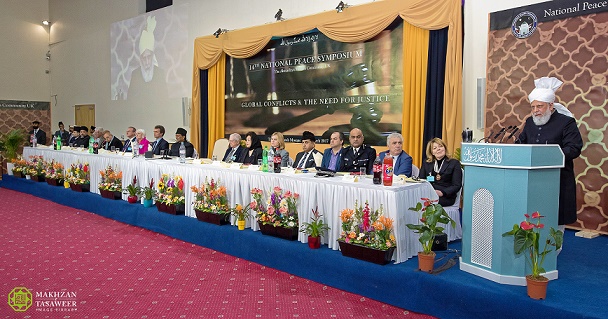
According to our international Press Desk, U.K., on 25 March 2017, the World Head of the Ahmadiyya Muslim Community, the Fifth Khalifa (Caliph), His Holiness, Hazrat Mirza Masroor Ahmad delivered the keynote address at the 14th National Peace Symposium hosted by the Ahmadiyya Muslim Community UK. The theme of the Peace Symposium 2017 was, ‘Global Conflicts and the Need for Justice’. 

The event was held at the Baitul Futuh Mosque in London with an audience of more than 1,000 people, from 30 countries, including over 600 non-Ahmadi guests comprising Government Ministers, Ambassadors of State, Members of both Houses of Parliament and various other dignitaries and guests.

During the event, His Holiness presented Ms. Setsuko Thurlow, a Hiroshima bomb survivor and peace activist, with the Ahmadiyya Muslim Prize for the Advancement of Peace in recognition of her outstanding efforts in campaigning for nuclear disarmament. https://www.youtube.com/watch?v=tGRXJptLb1g

During his address, His Holiness condemned recent terrorist attack in London as a barbaric atrocity” and labelled all forms of extremism and terrorism as a complete violation of Islamic teachings.

Further, His Holiness expressed his grief at continued warfare in the Muslim world, as well as voicing his fears about increasing tensions in the rest of the world. His Holiness also called on world powers to curb the sale of weapons and arms.

Referring to last Wednesday’s attack in Westminster, Hazrat Mirza Masroor Ahmad said:

First of all, I would like to extend my deepest condolences to all those affected by Wednesday’s terror attack at Westminster. Our thoughts and prayers are with the people of London at this tragic time. On behalf of the Ahmadiyya Muslim Community, I wish to make it categorically clear that we condemn all such acts of terrorism and we offer our heartfelt sympathies to the victims of this barbaric atrocity.”

His Holiness said it was a cause of great regret that extremist Muslim groups had turned certain Mosques and Madrassas into centres of extremism”, which had fuelled fear and misconceptions about Islam amongst non-Muslims. In stark contrast, Holiness said that an inherent part of the worship of God was to serve mankind and to live peacefully with the people of all faiths and beliefs.

Based on these Islamic teachings, the Ahmadiyya Muslim Community had established humanitarian projects in various parts of the world, each serving mankind and bringing relief to those in need.

Hazrat Mirza Masroor Ahmad continued:

In this way, rather than becoming frustrated and prone to extremism, they will grow to be responsible and faithful citizens of their nations. Where they will personally develop, they will also help their nations progress and inspire others to follow in their footsteps.”

His Holiness said that despite the teachings of Islam being categorical in rejecting indiscriminate attacks or killings, many people associated Islam with violence or warfare.

Countering the narrative of extremists, Hazrat Mirza Masroor Ahmad said:

No matter what terrorists may claim, under no circumstances are indiscriminate attacks or killings ever justified. Islam has enshrined the sanctity of human life in chapter 5, verse 33 of the Holy Quran, which states: ‘Whosoever killed a person – it shall be as if he killed all mankind; and whoso gave life to one, it shall be as if he had given life to all mankind’.”

Hazrat Mirza Masroor Ahmad continued:

Islam is that religion which has forever enshrined the universal principles of freedom of religion, freedom of conscience and freedom of belief. Therefore, if today there are so-called Muslim groups or sects that are killing people, it can only be condemned in the strongest possible terms. Their barbaric acts are a complete violation of everything that Islam stands for.”

Hazrat Mirza Masroor Ahmad said:

The allegation that the Holy Prophet (peace be upon him) was a belligerent leader or a warmonger is an injustice and cruelty of the very highest order and such false claims can only grieve the hearts of the millions of peaceful Muslims worldwide. History bears witness to the fact that with every fibre of his being, the Prophet of Islam (peace be upon him) sought peace and reconciliation.”  

Referring to the theme of the Peace Symposium 2017, ‘Global Conflicts and the Need for Justice’, His Holiness said a lack of justice had plagued every segment of society” and that whilst it was undeniable that today certain Muslim countries are at the epicentre of wars and cruelties”, it was wrong to say that the rest of the world was immune from disorder.

His Holiness cited numerous reports indicating increased tensions between the United States and China, and similarly between the United States and Russia.

Speaking about the need for mankind to pull together, Hazrat Mirza Masroor Ahmad said:

The need of the hour is for us to knock down the barriers of fear that divide us.  Rather than erecting walls that keep us apart, we should build bridges that bring us closer together… We must stand up against all forms of oppression, hatred and use all our capabilities to try and foster peace in the world.”

Hazrat Mirza Masroor Ahmad continued:

Sadly, with the passing of time, it seems that we are losing our ability to listen and to tolerate opposing views and perspectives. Opening the channels of communication and facilitating dialogue is essential, otherwise the world’s malaise will only get deeper… Instead of pointing fingers and blaming one another, now is the time for solutions.”

Thereafter, His Holiness condemned the international arms trade, which he said was a means of fuelling warfare and ensuring that the world remained bound within a perpetual cycle of violence.

Hazrat Mirza Masroor Ahmad said:

In my opinion there is one ready-made solution that can have an instant impact and begin the process of healing the world. I refer to the international arms trade, which I believe has to be curbed and restricted.”

Hazrat Mirza Masroor Ahmad continued:

Whilst the primary interest of every nation should be the well-being of mankind and achieving peace, it is a sad truth that business interests and the pursuit of wealth invariably take priority over such concerns.”

His Holiness deemed the argument that the sale of weapons may ‘encourage’ peace by working as a ‘deterrent’ to be completely senseless” and said such justifications had caused the world to become embroiled in a never ending arms race”. He also said that no nation should think it is immune from danger” because history taught that wars evolved rapidly and often unexpectedly”.

His Holiness warned of the risks of nuclear warfare, which he described as unimaginable” and called on mankind to think long and hard about the type of world it wished to bequeath to future generations.

Speaking of the potential consequences of another world war, Hazrat Mirza Masroor Ahmad said:

Rather than leaving behind a legacy of prosperity for our coming generations, we will be guilty of leaving behind only sorrow and despair. Our gift to the world will be a generation of disabled children, born with defects and intellectual disabilities. Who knows if their parents will even survive to care and nurture them?”

Hazrat Mirza Masroor Ahmad continued:

Always remember that if we seek to pursue our own interests at all costs, the rights of others will be usurped and this can only lead to conflict, wars and misery. We must all reflect and understand the precipice upon which we stand.”  

Concluding, Hazrat Mirza Masroor Ahmad prayed:

My message to the world is to look at tomorrow, and not just today.  Let us leave behind a legacy of hope and opportunity for our children, rather than burdening them with the horrific consequences of our sins.”

His Holiness continued:

I pray that God grants sense to the people of the world and that the heavy clouds that loom above us give way to a bright and prosperous future.”

Prior to the keynote address, various dignitaries spoke about the importance of peace and the critical state of today’s world.

Silvio Danio, Executive Director of Religions for Peace, from Italy, said:

I want to thank you, Your Holiness, in a very special way, because listening often to your talks and very many interventions in many parts of the world, you have not only been a promoter, not only a creator of what we badly need today, that is a culture of dialogue, you have been a champion of this, you are an example.”

Ms. Setsuko Thurlow, recipient of the Ahmadiyya Muslim Prize for the Advancement of Peace, said:

In attempting to learn about your organisation’s history, mission and activities, I learned with pain of your struggle and suffering from religious discrimination and persecution. Yet, in spite of that, you have chosen the principles of non-violence, peace and justice and exemplify them in your daily lives through your motto of love to all and hatred to none. What an enlightened role model you are to the world community.”

The full address of His Holiness – the link of which is:-

https://www.youtube.com/watch?v=l6eDKLVwF7Q

Beggars adopt modern tactics

April 1st, 2017

By Dr. Tilak S. Fernando

Charles Dickens scribed on something completely different from his prose in May 1850, when he portrayed the Nigerian 419 scam where 419 wealthy people were approached seeking financial assistance for orphaned children, emergency surgery and quoting numerous examples of begging letters he had received over the years from various individuals beseeching and supplicating for money. This goes to illustrate the fact that panhandling or begging, adopting various ploys, is equally an old profession, akin to the world famous profession of prostitution.

Last week TV news exposed how people begging on high streets, by walking in and out of traffic lanes, causing traffic jams. When a chap selling burning incense in a crowded traffic lane was gestured by a motorist to move away, vendor’s remarks were: Me Yakka Masso Elawanawa! (This devil is chasing flies). This reveals to what extent these ‘beggars’ are a crafty lot engaged in a daily routine. Panhandling basically signifies pleading from another person or seeking a favour. Some beggars demand cash only.

In the case of a beggar crying out of hunger and his request for food is heeded, surprisingly his stance changes to demand cash only.

In Hinduism, Buddhism, Sufism and Jainism charity is emphasized as an acceptable means of support for certain classes of devotees focussing on spiritual development as against getting caught up in worldly pleasures. Buddhist monks and nuns, from historical times of Gautama Buddha, traditionally lived by begging for alms. Buddhists believe by complying with such religious traditions in giving food, medicine and other vital items to monks, the laity will gain merit to pursue moksha (freedom) from Samsara (death and rebirth in a karmic circle).There are several references in the New Testament too where Jesus Christ considered “beggars as the most wretched portion of society.”

Vagrancy Act

In the UK begging is illegal under the Vagrancy Act of 1824. It is an offence to sleep rough or beg; anyone found scrounging for money for survival could be arrested. However, it neither carries a jail sentence nor rigidly enforced in many cities except on public transport. In Sri Lanka, it is just the opposite where public transport is infested with beggars and all kinds of vendors.

At every street corner, near traffic lights, bus stands, opposite supermarkets, and religious abodes beggars appear as a bunch of flies. Whenever one gets off a motorcar, quite often a man or woman carrying a child approaches with a stretched hand.

Destitution and genuine hardship of a person is understandable as every human heart is impregnated with compassion to a great degree, but should such empathetic hearts be taken as suckers by tricksters, who turn begging into a profession and appear on a daily basis at the same place to take one’s kindness as a weakness? The other side of the coin is, one may argue that every human has a certain amount of self-respect and pride within and no one dares to stoop to degrading levels of humiliating themselves by becoming a nuisance to others, as a means of survival, in the absence of a society which does not have a developed social security system. In such a scenario where does a compassionate heart fit?

Western perspective

More sophisticated methods adopted currently by desperados are linked with the cyber-begging or Internet panhandling, which give them a clear advantage for gambits to plead incognito, making hay while the sun shines. This has helped fraudulent organizations to raise funds ingeniously by making use of the World Wide Web elaborately using Internet techniques.

Karyn Bosnak was a shopaholic, who drowned in credit cards debts up to $20,000 but she managed to panhandle and sell her cherished possessions on eBay to get rid of her debts in just four months. Her charming and cautionary tale of glamorous rise, embarrassing fall and how the kindness of strangers can make a difference, could be read on the Internet (http://www.karynbosnak.com/save-karyn/).

In the Catholic Church, followers of Saint Francis of Assisi and Saint Dominic were mendicants who adopted a lifestyle of poverty, travelling and living in urban areas for the purpose of preaching and evangelisation. They begged for food, while they preached to the villagers. In traditional Christianity the rich are encouraged to serve the poor. In Hindu tradition spiritual seekers begging for food is regarded as a materialistic distraction from the spiritual liberation and begging promotes humility and gratitude, not only towards those who give food, but also towards the universe in general. Dervishes, members of Sufi Muslim Order, have taken vows of poverty and austerity to make Zakat (similar to a wealth tax), which is compulsory during one’s lifetime that is open-ended to one’s heart’s content. In the monastic orders of Buddhism, begging is called Pindapatha. In every such case a meritorious deed of the contributor seems naturally to fulfil another dimension of one’s spiritual self-advancement ‘to seek’ a better spiritual station after death.

Modern tactics

The current trend of begging in Sri Lanka has turned into an industry no doubt, where certain type of ‘pleading familie’ have earned for generations and accumulated sizeable wealth by recruiting new beggars. These groups are supposed to have their own territories where unknown beggars coming to such areas end up with verbal and / or physical abuse. In a world of organized embezzlers, tricksters and felons who begin to play a different ball game by employing beggars on a payroll basis with commissions paid off at the end of each day, it becomes extremely difficult for those who want to genuinely help the poor.

When will the general public be allowed to move freely on roads or avoid having to answer their door bell constantly for numerous categories of begging prevalent in our society today? Solicitation becomes an intimidation when beggars keep on harassing the public without taking ‘no’ for an answer and the innocent citizen becomes subjected to wild gesticulations with abuse, insults, curse or veiled threats by attempting to avoid beggars who follow them in Pied Piper fashion.

“Never stand begging for that which you have the power to earn”

– Miguel de Cervantes.

tilakfernando@gmail.com

Rajapaksa says his govt never decided to sell Hambantota port

April 1st, 2017

By Yusuf Ariff Courtesy Adaderana

Former President Mahinda Rajapaksa today rejected allegations that the decision to sell the Hambantota Port was first made during his government in 2014 and asserted that while he was in power they only took back what was already sold.

We never decided to sell anything during our time. I took back what had been sold. I can list all that we got back,” he told reporters after attending the Avurudu celebrations of the Carlton Preschool in Maligawatta.

He stated that what his government wanted was establishing a company for the port and split the shares with the foreign investor while holding on to the administration side of the port.

We wanted to create a company and give its shares to both parties and keep the administration with the government. The administration was always with us.”

Responding to a question regarding bringing international courts to Sri Lanka, he stated that there is no need for an international court as the judiciary here is more than enough for the government to get what it wants”.

– See more at: http://www.adaderana.lk/news/39950/rajapaksa-says-his-govt-never-decided-to-sell-hambantota-port#sthash.Qd0D3Jos.dpuf

Sushma Swaraj’s Amnesia and Indian Duplicity

April 1st, 2017

by Rajeewa Jayaweera Courtesy The Island

Indian External Affairs Minister Sushma Swaraj has recently made a strongly worded statement related to Sri Lanka’s ‘national question’ in response to questions raised by a member of the Communist Party of India.

Reiterating India’s commitment to the protection of the rights of the Tamils in Sri Lanka, Swaraj has been quoted in the Indian media stating “The anguish with which the members have raised the issue (of crimes committed during the war of 2009), the government associates itself with the same pain.” She has further stated “Our aim is to protect the interests of Tamils in Sri Lanka. You can achieve this through two means: by either doing it forcefully or through persuasion with the friendly country.” Further elaborating, the Indian External Affairs Minister has stated “As Sri Lanka’s closest neighbor, India cannot remain untouched by the developments in that country. We hope that with the sagacity and political will of its people, Sri Lanka will achieve genuine reconciliation and development”.

Swaraj’s involvement in shaping Indian foreign policy has been in the wane since her choice of Foreign Secretary, Sujatha Singh, was made to retire to make way for incumbent Foreign Secretary Dr Subramanyam Jaishankar in January 2015, the handpicked choice of Prime Minister Narendra Modi. From then onwards, foreign policy direction has been from the Prime Minister’s Office (PMO) rather than from the External Affairs Ministry. The making of Indian foreign policy is currently well entrenched in the hands of the triumvirate of Prime Minister Modi, National Security Advisor Ajith Doval and Foreign Secretary Jaishankar. India rushed Defence Minister Arun Jaitly and Doval to Colombo in November 2014 in the wake of the visit by Chinese nuclear propelled submarine ‘Changzheng 1’ accompanied by PLA Navy escort warship ‘Chang Xing Dao’ to Colombo. This time around, twice hospitalized for suspected pneumonia and kidney failure in April and November 2016, Swaraj’s broadside may be an effort by India to make its displeasure known, in the backdrop of the unfolding Hambantota Port project and visit to Sri Lanka by Chinese Defence Minister General Chang Wanquan. India obviously cannot be overjoyed of current developments related to the Hambantota Port project.
article_image

Sushma Swaraj, Indian External Affairs Minister

Meanwhile, the India Foundation, an independent research center focused on the issues, challenges and opportunities of the Indian polity, in association with the state Government of Haryana and National Investigation Agency hosted the third edition of the Counter Terrorism Conference CTC 2017 from March 14 – 16, 2017 in Delhi. The theme was ‘Terrorism in the Indian Ocean Region’. The Vice President of India, Shri M. Hamid Ansari, addressed the inaugural session and encouraged countries in the region to unite and fight terrorism in all its forms and manifestations to curb and eliminate the scourge of terrorism. He added that states sponsored terrorism must be isolated by the international community. The Vice President also stated “in recent years nothing has caused greater pain, disruption and inconvenience to societies, governments and individuals than the phenomenon of terrorism.” On D 3, Indian Foreign Secretary Jaishankar chaired Plenary IV session on ‘Cooperative Mechanisms for Countering Terror in Indian Ocean Region (IOR). Other dignitaries present during the inaugural session were Prime Minister of Sri Lanka Ranil Wickremesinghe (via skype), Deputy Prime Minister of Nepal Shri Bimlendra Nidhi, Union Minister for Railways Shri Suresh Parbhu, Chief Minister of Haryana Shri Manohar Lal Khattar, and Minister of State for External Affairs Shri M.J. Akbar.

Besides Prime Minister Wickramasinghes’s participation, Tamil National Alliance Chief and Sri Lanka’s Leader of Opposition Rajavarothiam Sampanthan participated in the event. In his address, Sampanthan stated 150,000 Tamils lost their lives and fifty percent of the Tamil population had fled the country during the three decades old conflict. Sampanthan’s theme ‘Ballot vs Bullet’ supported LTTE terrorism on the basis of a “classic instance, in which the bullet filled the void created by the failure in the process of the ballot”. He thus justified his canoodling with LTTE terrorists and his stance of the LTTE being the sole representatives of Tamil people in Sri Lanka, which tune he changed after the LTTE was defeated on May 19, 2009. Sampanthan failed to address issues such as the number of Tamil (and other) lives that could have been saved had Operation Liberation (Operation Vadamarachchi) been permitted to be completed without Indian intervention. Neither was there any mention of the number of Tamils (both LTTE and civilians) killed by the LTTE and Indian Peace Keeping Force (IPKF) during its presence in Northern and Eastern Sri Lanka for three years. As Sampanthan is also aware, most of the Tamil political elite were killed not by members of Sri Lankan armed forces but by LTTE terrorists.

It is indeed ironic that most Indian leaders feel compelled to take up the issue of Sri Lanka’s ‘national problem’ involving the Tamil community. Yet, its leaders do not show any inclination towards resolving the ‘Kashmir problem’ in their own backyard which has been festering since 1947. The struggle for autonomy by Kashmiri separatists and efforts by India in containing the separatists has led to India stationing over 500,000 soldiers and para military forces in Jammu & Kashmir since 1987 which it describes as a ‘disturbed area’. J&K is perhaps the most militarized region in the world. It also introduced the Armed Forces Special Powers Act (AFSPA) in 1990. AFSPA considered as ‘draconian’ by activists, protect members of security forces from prosecution for alleged Human Rights abuses and empower security forces to search, detain and use lethal force against any person acting against the law. The much-maligned Prevention of Terrorism Act (PTA) in force in Sri Lanka till recently does not exempt members of Sri Lankam armed forces committing Human Rights abuse from prosecution. In effect, India does not display towards its own Kashmiri population, half the concern it professes for Sri Lanka’s Tamil population. India’s moral bankruptcy was highlighted when it repeatedly voted against Sri Lanka during successive UNHRC resolutions in Geneva. At the same time, it has repeatedly rejected requests from international bodies to carry out fact finding missions on Human Rights abuse in Kashmir. Interfering in the fight by Tamil people in Sri Lanka for self-determination, yet ignoring the fight by people of Kashmir for self-determination in India’s own backyard, is sheer duplicity.

Should not what’s good for the Goose be good for the Gander? Or, does having a 1.2 million man army besides almost another 1 million reserve troops and a nuclear arsenal exclude India from practicing what it preaches?

Sushma Swaraj refers to “crimes committed during the war of 2009”, but is silent on the crimes committed by all parties including IPKF until 2008. The 300,000 Tamil civilians used by LTTE as human shields and rescued by members of Sri Lanka Armed Forces in 2009 seem to have slipped Swaraj’s memory.

Despite India’s obsession with terrorism since the Mumbai terror attack in November 2008, its involvement in the housing, nurturing, training and arming of LTTE terrorists from early 1980s need no elaboration. Nevertheless, India’s long involvement with LTTE terrorism did not even warrant mention at the recently concluded Counter Terrorism Conference in Delhi. In this backdrop, the call by President of India, Shri M. Hamid Ansari in his inaugural session for countries in the region to unite and fight terrorism in all its forms and manifestations to curb and eliminate the scourge of terrorism sounds hollow. Prior to state sponsored terrorism being isolated by the international community, it would be constructive for states who sponsored terrorism to share lessons learnt from their past misdeeds with terror groups, besides pledging non-recurrence.

Sri Lankan leaders need take note of Sushma Swaraj’s statement “You can achieve this through two means: by either doing it forcefully or through persuasion with the friendly country.” In this day and age, no civilized nation makes such open threats, even to a small and hapless neighbor. It is a thinly veiled threat. If persuasion does not work, it will be done forcefully. Meanwhile, Sri Lankan leaders, in the midst of a severe financial crisis and no tangible assistance forthcoming from the west and India, have no choice but to turn to China. The Colombo and Hambantota Port Projects no doubt is the cause for considerable worry to India. Yet, threats of ‘forceful’ methods, certainly is not the way to wean Sri Lanka away from China.

The LTTE, ISIS and the GMOA

April 1st, 2017


Towards the end of its war to establish an independent state, the Liberation Tigers of Tamil Eelam (LTTE) did not allow civilians to move out of those areas from which it was attacking the Sri Lanka Army. It has been accused of deploying these hapless fellow citizens as human shields so as to discourage the security forces from firing in their direction or dropping bombs in their vicinity. The LTTE took advantage of the fact that the government was bound by its inherent obligations to its own people and in line with international humanitarian law. The net effect was that the LTTE treated the lives of the residents of the North as an expendable commodity in the prosecution of its political and military aims.

The ISIS has been doing something similar, but even worse, particularly in the city of Mosul in Iraq. It has effectively compelled the residents of Mosul not to move out of their homes and has then booby-trapped nearby static structures and vehicles of every kind. If a bomb or gunfire from the government side hits one of these booby-trapped locations, the explosives installed by ISIS blow up and multiply the devastation caused by the incoming missile. The ISIS, like the LTTE, is playing fast and loose with the lives and limbs of defenceless men, women and children in its determination to resist the advance of state troops.

article_image

Whenever the Government Medical Officers’ Association (GMOA) calls upon its members to strike, the painful reality is that it is the poorest sections of our society who are subjected to inhuman hardship. Anyone who has seen (on TV) the impotent resignation on the faces and in the words of those suffering patients who had had to travel long distances, in pain, after waking themselves up during the darkest hours before dawn, and spending for their travel from the meagre resources available to them, cannot but fail to be disgusted by the heartless members of the GMOA, who think nothing of depriving these desperate fellow citizens of the medical care which is owed to them in terms of the Hippocratic oath, ordinary humanity and the deep debt that these professionally-qualified ingrates owe to the public of Sri Lanka for having given them free education from the age of 5-6 years until they graduated and completed their training.

What is the significant moral difference, if any, between the LTTE and the ISIS getting civilians killed in furthering the objective of their vicious and inhuman “struggles” and doctors blackmailing the government by using poor, sick citizens as helpless pawns in their dispute with the authorities. How many of these citizens suffer irreparable medical damage or even die is a statistic that the GMOA is hardly likely to publish. Whatever merit there may be in the GMOA’s position on private medical education, it does not justify their callousness and cruelty to the very public, even the poorest of whom have paid indirect taxes all their life to educate our youth and our professionals, including doctors. The public are not so naive as to be fooled by the GMOA’s assertions and justifications about how conscientiously it is looking after the interests of the people of Sri Lanka by its efforts to maintain high medical standards, forgetting that internationally our universities with medical faculties rank between 2100 or so and 9900 and the GMOA does not worry at all about this. Indeed, it has been reported that one or two of our medical faculties employ veterinarians to teach human medicine on account, presumably, of the unwillingness of our medical heroes to go to the outstations to help improve the teaching at our poorer medical facilities.

It is totally unconscionable of the GMOA to use sick members of the public as pawns in the dispute that it has with the government regarding the South Asian Institute of Technology and Medicine (SAITM) and other potential private medical teaching establishments. Doctors are regarded as persons with a high IQ and social sense. Hence, Sri Lankan doctors are treated by the people with a reverence that is greatly misplaced. It is surely worse than immoral for persons of this quality and standing to resort to what amounts to thuggery and blackmail in their dealings with the three arms of government.

Moreover, with the active encouragement of the GMOA, hundreds of students from our state universities have been wantonly squandering the precious resources that members of the public, including their own parents, have contributed to the coffers of the government to provide every kind of infrastructure, laboratories, equipment, libraries, teachers, ancillary staff, financial assistance and much more for their education. Instead of attending lectures, they are spending their time marching, shouting, causing damage to public property, physically attacking law-enforcement personnel and, not least of all, disrupting the lives of thousands of members of the public by recklessly and selfishly hindering people from going to work, to schools, to hospitals and to wherever else that citizens have a right and need to go. Currently, members of the GMOA can hardly be regarded as worthy exemplars for medical students to follow to become competent, responsible and humane professionals who would become entitled to be shown the regard in which the public now holds doctors.

The members of the GMOA insincerely and sanctimoniously assert that it is their great concern for the welfare of the sick that compels them to oppose the establishment of privately-run, profit-making medical teaching institutions. They remain deliberately blind to the fact that the government cannot find enough money even to run efficiently some of the existing poorer universities in the public sector, let alone build more universities to meet the demand for more doctors. They conveniently ignore the fact that the first private medical teaching institution, SAITM, was established with the blessings of the government and the University Grants Commission without objection by members of the GMOA, obviously owing to their dread of President Mahinda Rajapkasa and Secretary of Defence, Gotabhaya Rajapaksa, who also established a fee-paying medical faculty at the Kotelawala Defence University. The medical students at state universities, who are so brave now, also remained prudently silent at the time. It is only after January 8, 2015 that members of the GMOA and medical students appear to have re-discovered their backbones vis-a-vis the government but not the powerful secret groups whose orders they dare not disobey.

If the numbers of doctors were to increase as a consequence of private medical colleges proliferating, the earnings of doctors with their feet in both sectors may tend to diminish a little. The public believes that it is principally to keep doctors’ earnings high that the GMOA does not like to encourage private medical education. Claiming to be highly conscious of their duty to serve the public, they stipulate that anyone is free to run private medical courses providing they do it for free! Would anyone with a modicum of common sense come up with such a hare-brained concept? Would members of the GMOA, even though they were educated solely at public expense, consider giving their services free to the public instead of charging unconscionable fees when they moonlight in private sector hospitals? How do they manage to be so absurd as to insist that investors spend their own money, without any return, to train doctors? Our position is that Sri Lanka needs more doctors. However, the demand for training more and more doctors will level off after two or three private universities churn out enough doctors to meet the national demand. Government regulation of all aspects of the functioning of private medical education institutions is, of course, a must but it should not be done in such a manner as to destroy these institutions.

If it is acceptable for other professionals to pay for private education, what are the grounds on which doctors want to be treated as a super-class of professionals? We are told by them that the reason why they require to be treated as belonging to a superior calling is because it is only their profession which deals with life and death decisions and this entitles them to special consideration. What an utter load of rubbish this is!

Doctors are not the only professionals who deal with safeguarding people from death or unjury. Most engineers, especially those whose work involves interfacing with natural objects like bad soil, floods, earthquakes and so on, cannot rely on book-learned formulas to construct safe buildings, bridges, dams, roads, railway tracks and so on, where a design or construction error could cause the loss of dozens, scores, hundreds or even thousands of lives. They cannot bury their mistakes like doctors inevitably do. What about policemen, soldiers and nurses? Do they not take a multitude of risks to protect the public?

Repeated many times, “Physician, heal thyself!” sums up what needs to be done.

(The writer is President, CIMOGG – Citizens’ Movement for Good Governance)

email: acvisva@gmail.com

The Ramanathan Kannan affair: Showdown over Alagaratnam’s final letter to Chief Justice New BASL President holds out hope of a solution BASL and JSA to meet separately tomorrow

April 1st, 2017

By C. A. Chandraprema Courtesy The Island Courtesy The Island

The controversy over appointing Ramanathan Kannan, a member of the private bar from Batticlaoa, as a High Court judge over the heads of many senior District Court judges and officials of the Attorney General’s Department, is now coming to a head with an emergency general meeting of the Judicial Services Association being called for tomorrow. According to members of the legal fraternity, this is the first time the JSA is holding a meeting of this nature. The main subject to be discussed at this meeting will be the appointment of Ramanathan Kannan to the HC and also the attitude of the BASL with regard to this matter. When Kannan was appointed to the High Court, the Judicial Services Association protested vehemently, writing to the President, the Judicial Services Commission and the BASL against this appointment. In the discussions that ensued, it transpired that the decision making bodies in the BASL – the Executive Committee and the Bar Council and even the Secretary of the BASL had been completely unaware that the then President of the BASL Geoffrey Alagaratnam had recommended Ramanathan Kannan for appointment as a High Court Judge to the President and the Chief Justice.

In any event, the BASL has no constitutional role in the appointment of judges. According to Article 111(2) (a) the President appoints judges to the High Court on the recommendations of the Judicial Service Commission, which is headed by the Chief Justice. Before making such recommendation the JSC will have to consult the Attorney General as well. If the Chief Justice wishes to make inquiries about the suitability of a candidate, he can make such inquiries from prominent members of the legal profession entirely at his own discretion. The President of the BASL can be among the senior lawyers consulted in this manner. But, this will be an inquiry made at the discretion of the CJ or other member of the Judicial Services Commission and the BASL President has no legal right to recommend anybody for appointment to the High Court. However, after the present yahapalana government came into power, a group within the BASL has been trying to arrogate to themselves a key role in the appointment of judges.


For their part, the yahapalana authorities have also been trying to give the BASL that power obviously as a reward for the role played by many lawyers in the regime change project of January 2015. The first draft of the 19th Amendment had a provision making it mandatory for the Constitutional Council and the Judicial Services Commission to consult the BASL when appointing judges. This was shouted down by the Opposition and the provision was dropped when the 19th Amendment was finally passed. However, the BASL President appears to have arrogated to himself a de facto power not just to intervene but to take the initiative in the appointment of judges. What happened in the case of Ramanathan Kannan was not anybody in the JSC asking the BASL President for his opinion, but the then BASL President Geoffrey Alagaratnam taking the initiative to canvass for Kannan’s appointment as a HC judge.

The sacking of Mohan Peiris

Following the representations made to him by Geoffrey Alagaratnam, the President had asked the JSC to make a recommendation to appoint Kannan as a High Court judge and the JSC sent him the recommendation. At the time the JSC made this recommendation, they had been under the impression that the entire BASL was behind the representations made by Alagaratnam. After things hit the fan, however, the Secretary to the BASL wrote a letter to the Judicial Services Association stating that neither the BASL Executive Committee nor the Bar Council had made any recommendation that Ramanathan Kannan be appointed a High Court judge and, therefore, the BASL has not made any such recommendation. Following this letter from the BASL Secretary, the Judicial Services Commission wrote to the President on 23 February 2017 (which letter we reproduce with this article) stating that if no proper recommendation has been made by the BASL to appoint Ramanathan Kannan as a High Court judge, the recommendation made by the JSC in terms of Article 111(2)(a) of the Constitution ‘has no force or validity in law’.

The Island exclusively reported on the contents of this letter earlier this month. This letter has effectively retracted the recommendation made earlier by the JSC in favour of Kannan’s appointment to the High Court. Following the receipt of this letter, the Secretary to the President wrote back to the JSC on 8 March 2017 asking for a recommendation that Kannan be removed from the position of High Court judge. (Letter reproduced here.) Up to now, the JSC has not written to the President in terms of Article 111(2)(b) recommending Kannan’s removal. Whether it is necessary for the JSC to make such a recommendation to remove Kannan is questionable because the present government removed Mohan Peiris from the position of Chief Justice saying that there was a flaw in the way his predecessor had been removed and since his predecessor had not in fact been removed, Peiris had never been the CJ! The yahapalana President himself bragged openly in public that he had used his executive power to remove Peiris.

Yet, when it comes to Kannan, that executive power which had enabled the government to sack a Chief Justice with just a chit from the Presidential Secretariat seems to be strangely paralysed. In a situation where the JSC has officially and in writing, retracted the recommendation they made earlier that Kannan be appointed to the HC, his removal by the President on the basis that he had not been constitutionally appointed, should have been automatic. Instead, what we see is the Presidential Secretariat writing back to the JSC asking for a recommendation in terms of Article 111(2) (b) of the Constitution, for Kannan’s removal. In the meantime, the various parties responsible for Kannan’s appointment to the High Court including, of course, Geoffrey Alagaratnam have been fighting tooth and nail to safeguard their protégé in the High Court. One way in which these parties seek to keep Kannan in the High Court is by foisting the blame for his appointment on former Chief Justice K. Sripavan.

As Alagaratnam argued, in his speech, at Sripavan’s farewell, despite any canvassing, importuning, or writing of letters he (Alagaratnam) may have done to the President and to the Chief Justice on behalf of Kannan, it was up to the CJ and the JSC to exercise ‘due diligence’ before recommending Kannan to the President for appointment to the High Court. The gist of this argument is that now that Kannan has been appointed as a judge of the High Court by a mistake made by the former Chief Justice who had assumed that Alagaratnam was speaking on behalf of the BASL, he (Kannan) cannot be removed unless some wrong doing is proved on his part. This mind you, is the argument put forward by the very person who is squarely responsible for misleading both the Chief Justice as well as the President of the country by giving them the impression that he was speaking on behalf of the entire BASL.

Mind numbing perfidy

In a previous interview with this newspaper Hemantha Warnakulasuriya described those promoting the appointment of Ramanathan Kannan as a ‘mafia’ within the BASL. Given the perfidious statements being made to keep Kannan in a position to which he should never have been appointed in the first place, this does indeed look like the work of a mafia in action. What takes the cake is that Geoffrey Alagaratnam just before he stepped down from the position of President of the BASL, had written a letter to the new Chief Justice Priyasath Dep telling him among other things that the BASL at its Special meeting on 21 March 2017 had considered the recommendation of a committee of senior silks and past BASL presidents and had decided that the BASL should not get involved in recommending the removal of a High Court judge who has now been appointed and that this can only be done by the President on the recommendation of the JSC.

In this letter Alagaratnam had also unrepentantly claimed that the BASL has ‘every right’ to make recommendations to the President to appoint eminent members of the bar for judicial appointments and called on the President to consider the recommendations made by the BASL for appointments to the judiciary from time to time. This letter dated 22 March 2017 is also reproduced with this article and in it we once again see an element of absolute perfidy when Alagaratnam says that the BASL decided not to get involved in recommending the removal of a High Court judge who had already been appointed. He seems to have conveniently forgotten that it was he who recommended the appointment of that judge and misleading both the former Chief Justice and the President in the process.

The main question that this letter brings to the fore, is whether the BASL should have any role at all in recommending judges for appointment as asserted in this letter? If the private bar has a role in appointing the judges who will be hearing their cases, that is going to corrupt the entire justice system. What happened in the case of Ramanathan Kannan is precisely what should never happen again. Kannan a lawyer practicing in the Batticlaoa courts was recommended for appointment as a judge by the President of the Batticaloa Bar – which certainly smacks of someone being recommended for high judicial office by a friend and colleague. Now Kannan is a High Court judge who owes his appointment to two practicing lawyers. If this is replicated over and over again, before long we will have a good number of judges at all levels of the judiciary who owe their positions to certain members of the private bar.

In the context where a High Court judge is now holding office without having fulfilled the constitutional requirements to be appointed a HC judge, the Judicial Services Association and the BASL will both be holding important meetings to decide what positions they will take on this matter. Tomorrow will be the acid test for the new President of the BASL U.R. de Silva, who will be presiding over a meeting of the BASL for the first time. Certain comments made by the new BASL President give us reason to believe that he may not follow in the footsteps of his predecessor. Addressing a press conference last Wednesday, De Silva told reporters that the BASL did not approve of the appointment of Kannan to the HC and that the former BASL President Alagaratnam had recommended Kannan in his private capacity, using letterheads of the BASL and that it was wrong to have done so. He had also said that, according to the BASL Constitution, the President of the association could not issue such letters without the knowledge of the Executive Committee. Thus, there is now hope that this whole disreputable episode will be brought to a close with the BASL also standing for Kannan’s removal after the separate BASL and JSA meetings to be held tomorrow.

THE PRESENT WORLD ECONOMY IS ANTI HUMAN – TIME TO RE-THINK – A Sri Lankan Buddhist perspective

March 31st, 2017

Janaka Goonetilleke

Ayn Rand called her philosophy “Objectivism”, describing its essence as “the concept of man as a heroic being, with his own happiness as the moral purpose of his life, with productive achievement as his noblest activity, and reason as his only absolute.

When Vasgo De Gama Invaded the spice market of Calicut and killed the Arabic Merchants, Sinhalese merchants, the Tamil merchants etc. the harmonious free market was destroyed and a policy of Might is Right was introduced to Asia. It persists even today led by the IMF and World Bank and the imperialistic wars in the whole of the world. The markets were denoted in Gold, Silver etc. quickly to be replaced currencies that the majority of the world does not control. Even Jesus rejected the moneylenders who are today running the world. This was imposed by the colonialists and has become the neo colonial agenda.

Thus a philosophy of lenier assessment where money was the arbitrator of development and human achievement was imposed on the world.  This contradicts to the age-old philosophy of Asia which was assessed by a philosophy of cyclicity making a holistic assessment of development and human achievements. This harmonious balance of assessment was the basis of sustainability learnt through evolution, which minimizes the environmental and human costs in any project.

DRIVING FORCE OF THIS WORLD ECONOMY

  • Creation of Monopoly money
  • Market system initialized and forced on the world By the IMF/World Bank with economic well being assed on GDP (Might is Right)
  • Greed and instant Gratification propagated by the media that drives the markets
  • Creative destruction the philosophy behind the markets
  • Money Democracy that cheats the people

EFFECT OF THE WORLD ECONOMY

  • Dehumanizing Humanity
  • Pollution of the 3 Basic elements of the environment and making it inhospitable to humanity.

THE PHILOSOPHY OF ECONOMICS AND ASSESMENT BY GDP

Linier form of assessment

Creative Destruction is the philosophy of the present world economy led by money economics as it is a linier form of assessment. In its creative accounting the negatives are not taken into account the only account is how much of money you have earned assessed as economic activity or GDP. Large petroleum companies are mainly assed on the money earn but ignores the vast number of people who suffer from respiratory disease, mental problems in the young due to led poisoning and the cancers etc.

Alan Greenspan best expresses the absurdity of this assessment.

In Vermont, the wonderful breeze” rendered air conditioning unnecessary and therefore did not appear as economic activity. Other things equal,” he concluded, the standards of living are the same, but the GDP will be less in Vermont than it will be in the South.”

Thus the truth is manipulated to the final objective of earning money, thus human suffering is ignored as not being important.  In fact the habituation and mindlessness makes them ignorant of the risks even they take as humans. Greed the final aim of the neocolonialists is the driving force.

The main thing holding us back from reality is the institutionalized view of our economy and society encapsulated in GDP. Unfortunately this institutionalized world has been impregnated our policies in Sri Lanka.

We value what is visible — transacted economic activity — and downplay or ignore what is invisible. That affects public policy and even our thinking patterns in insidious ways. We tend to support anything that adds to economic activity, no matter what the adverse consequences, say in environmental degradation or socially destructive working hours. We have come to see our economy — as if it were an entity separate from the world in which we live — turns what could be co-operative, altruistic Homo socialis into selfish, money-grubbing Homo economicus.

 Banks and financial institutions are (still, mostly) macho, testosterone-fuelled environments where making the quick buck trumps almost every other consideration. Plenty of power but no responsibility A company that buys a forest and cuts it down can, of course, repay its loans faster than one that plants a new tree for each one it destroys

This was best expressed by our erudite Minister of finance Dr N M Perera in the 1970 when questioned by a reporter who asked him the question As a former student of the London School of economics what do you think is wrong with the world economy he promptly said London School of economics”.  These are the institutions that have brain washed our elite who will never question the orders of the IMF and WB.

CYCLICAL ASSESMENT

In a cyclically assed programmes a sense of balance is inculcated to the project and there is a proper accounting system the negatives being accounted.” Thus changing numbers in a GDP does not necessarily change the world

The final effect is the destruction of nature the natural wealth the grand finale seams to be the annihilation of humanity. This is against the majority Buddhist view in Sri Lanka (ignored by the macaulayites politicians” as expressed in the following View

Buddhist believe that humanity and nature are interdependent quite contrary to the present western philosophy of the hubris that humanity rules nature and that it is in the power of humanity to destroy nature for her material end without a price to pay. The poverty of that philosophy is now gradually dawning on humanity. The Buddhist ecological perspective is best expressed in the Noble Eightfold Path which is the Right View . This view is contained in the doctrine of Patticcasamuppada or Dependent Co-origination, where things exist interdependently not in their own right. The Image of the jewelled net of Indra reflects it. This holistic model undermines the power of the self over others.

Human Development thus is greatly intertwined with nature and it can never grow in harmony isolated. Urbanization in that sense would never be healthy. Buddhism does not believe in absolutism, it believes in relativism and therefore expects humanity to act with a view to ‘Welfare Of The Many’. In other words a Holistic approach to once actions.

Janaka Goonetilleke

PRESENT WORLD ECONOMY

The present world economy is a progression of colonialism that is geared to the enslavement of people and not to the liberation of majority of people both mentally and physically. Exploitation and benefit unfortunately seam to go to the so colonial powers of the start. The whole world has been enmeshed in this devious plan to exploit and subjugate humanity by a small group of people who create the conditions through the IMF and WB. And if any one challenges like Gadaffi of Libya then the full force of violence is let through.

1) The medium of exploitation seam to be the so called international currencies the monopoly money  thus ensuring that the beneficiaries are the creators of money. The fuel that runs this economy is money which is virtual and has no means of proper assessment  of its value. The value being assessed by the markets restricted in the use of currency in a gamblers den, forced globalization and open markets which are geared to sell the birth right of the citizens  in the market by a corrupt group of politicians who are ironically there for a short period of about 5-6 years. The morality of this process has to be questioned. It is this immoral money that keeps the world economy ticking.

2) Secondly the markets are encouraged to grow by a process of brain washing which encourages instant gratification which is a form of addiction not the need. This process is uneconomic as the bought products are not one of need but one of greed.

3) The Christian work ethic – Servants, be submissive to your masters with all respect, not only to those who      are good and gentle, but also to those who are unreasonable. For this finds favor, if for the sake of conscience toward God a person bears up under sorrows when suffering unjustly. For what credit is there if, when you sin and are harshly treated, you endure it with patience? But if when you do what is right and suffer for it you patiently endure it, this finds favor with God. For you have been called for this purpose. (1 Peter 2:18–21)

Very aptly stated by Bishop Tutu- when the white man came he had the bible and we had the land. Then he said let us close our eyes and prey. When we opened our eyes he had the land and we had the bible.

4) Foreign development assistance  where countries  borrow money and build infra structures so that they can sell the citizens to cheap labour in a IMF targeted scheme. In Sri Lanka it is called Regaining Sri Lanka.

  • Inequitable distribution of wealth, which makes the rich richer and the poor poorer. In the future this would make the markets shrink, as the poor will not be able to participate. At the present the poor are given enough un payable loans to enslave them in the future. Based on this the markets will not be able to sustain themselves in the future. The disparity of income would create hate and destabilization of society. It is this disharmony that brought Donald Trump to be President of the USA.

Unknown to the people the currencies have been so manipulated that two people in the family had to work in 2005 where as in 1970 only one person had to work for the same standard of living– Elizabeth Warren /professor of Law Harvard University Bankruptcy of the middle classes.”

EFFECT ON SOCIETY

 ENSLAVEMENT OF THE MIND AND NEW TECHNOLOGY

New technology with out human emotion is destructive. The short termism led by globalization has encouraged the rapid growth of the Internet and social media. This creates a communication system that lacks emotional interaction creating a self centered humans that are the driving force of this economy.

Urbanization and dehumanization

 Urbanization and megacity development is the latest advice for Sri Lanka that is to be adopted by the government. The basis is increasing economic activity or GDP as assed by the international institutions. The increased restriction of space for humans creates insecurity. It is a well recognized in New York where a study has confirmed increased violence in the home and destruction of family life. It is not surprising that violence has permeated into the society in ever increasing forms from generation to generation not forgetting the increased divorce rate and its effect on society and future generations.

From an economic perspective future job prospects and spending on health care, utilities etc have been ignored.

Investment in major cities deprives the rural economies and it is not surprising that people from rural areas have no option to enslavement in the Middle East and into prostitution in the big cities. The growth of spas in Colombo, which are, glorified brothels is an indication of the deprived rural economy. This social disruption is a result of enslavement of the people by a class of rulers who have lost the basic human qualities of compassion and care of fellow human beings.

DESTRUCTION OF THE THREE BASIC ELEMENTS OF THE EARTH –SOIL, AIR, WATER

The three basic elements of the environment are the soil, water and air, which are essential elements for the sustenance of life and the maintenance of bio diversity. The water is the natural conveyor of nutrients, of the byproducts of nature. Water accounts for 65% of the human body and is the conveyor of oxygen, nutrients and the by products. Water is the natural life giver. Today pollution from industrial waste, Nuclear byproducts, refined medicines, insecticides and weedicides. has converted it into the conveyor of death. To explain the multiple ways of its damage to humanity is not possible in a short article. How ever the following can be enumerated.

WATER THE LIFE GIVER NOW THE CARRIER OF DEATH

  • 70% of cancers of humanity are secondary to the weedicides; insecticides and chemicals used in industry and can be prevented according to the American Cancer association. The conveyor of this toxins to humanity is the life giver water. The American chemical companies are now charged for selling weedicides that are causing malignant lymphomas in the USA. Interestingly it is these companies that export these chemicals to the third world having promoted genetically modified plants which needs the chemicals to prevent the diseases these plants are subjected to in their new environment. Cancer villages in China is a well known product of rapid industrialization, After fukushima disaster in japan the pacific sea was polluted by the heavy water ie nuclear waste that would have been carried to humans by eating fish.
  • Growth of algae in streams and rivers when chemical fertilizers interfere with the eco system. These algae deprive oxygen to the fish and other aquatic animals that deprives humanity of a natural food. In addition the flesh of the fish which is a staple diet of Rural people becomes carriers of toxic products to humans and to diseases such as cancers, kidney disease etc.
  • In Sri Lanka deforestation around 400 hectares of forests in 10 years. Deforestation has major effects on humanity.
  1. When ecosystems are disturbed new diseases are introduced to human societies. They recon 24 new diseases have been introduced. The human elephant conflict is a well known problem created in sri Lanka
  2. Blocking the flow of rainwater by trees allows enough time for it to stagnate so that it is absorbed by the soil. With evo evaporation by the forest trees the water is purified. The flowing rainwater can cause landslides and floods that are a recurrent problem in China that has industrialized and amalgamated its economy to the world economy quickly. The trees also gives shade that encourages actinomyces that prevent soil erosion and allows the soil to retain water and maintains porosity which allows water to be absorbed
  3. Deforestation has allowed the weedicides and fertilizers to be directed through the Mahaweli scheme to the North central province where the high levels of Cadmium and heavy metals from fertilizers have effected 15% of the population with Kidney Disease. These are rural period and up till today no effective measures are taken to detoxify the soil. Mahaweli Scheme was started by an ambitious group of politicians whose desire to earn the commissions far out weighed the need to asses the negatives of the scheme. The scheme has failed the country not reaching its expectations The country still imports the fertilizer, as it is absolutely necessary for the tea industry one of the main foreign exchange earners in Sri Lanka. The political class has done nothing to prevent the damage. The import of fertilizer continues. All Cash crops and mono cultural plantations deplete the soil of the nutrients and need fertilizers for its maintenance compounding the effect on humanity.
  1. D) The heavy metals are now distributed to the rest of the country through the medium of Rice and sold to the unsuspecting consumer. The present economic system has failed to take note of the consequence. ( Best way to minimize the damage is to cook rice with excess water and decant it after the rice is cooked which will wash away the Toxins)

INDUSTRIAL AGRICULTURE

This is another mechanism of causing Global warming and destruction of forests. More concerning is the development of Anti Biotic resistance threatening human health.

POLLUTION OF AIR

The vehicles and industrial by products are emitted to the air, which is recycled by rainwater. Global warming is another effect.

SOIL

Monocultural cultivations deplete the soil of nutrients from a particular layer of the soil, which will not entertain any plants without fertilizers, the hardening of the soil also

HUMAN HEALTH AND DISEASE CAUSED BY THE NEW ECONOMIC ORDER

  • Infertility – Falling sperm counts due to poisons in the water – Sperm count in 1940s in the UK was 100 million /ml today it has fallen to 60million/ml. Other studies have confirmed that 20% of young men have their counts below 20 million /ml which is technically defined as abnormal count with only 15-20% of them being normal sperms. Not forgetting the female infertility due to obesity and late motherhood due to economic necessity.
  • Mental disease due to Stress by living in a confined area and the work ethic that promotes enslavement
  • Increase in cancers. The incident of cancers has doubled from 2005 to 2014 in Sri Lanka.
  • Systemic diseases have increased. From Diabetes, Sleep Apnoea, Obesity, Hypertension etc., which are stress, related.
  • New vector controlled diseases such as dengue etc. due to changes in environment after urbanization.
  • New wave of antibiotic resistance due to industrial agriculture.

Unfortunately these create an extra cost on health care or for the poor who cannot afford it suffering that are not reflected in the Lord of the Economy GDP.

A CYCLICAL ASSESMENT OF THE ECONOMY

A holistic assessment of the economy must adhere to the eastern form of thinking. This gives a holistic view of any project finally giving a well-assessed result. It must be admitted any destruction of the natural state has its consequences nature being perfect which is very much an eastern philosophy. Thus a cyclical assessment will minimize inefficiency and short termism.

CONCLUSION

There is no doubt the present world economy is inefficient. The productive work as expressed by the GDP and other statistical data are misleading hiding the inefficiency of the system. What humans need is happiness and contentment not enslavement. The Great Indian philosopher Rabindranath Tagore in his lecture to the Japanese aptly stated this. He said Modernity is the freedom of the mind not the taste in the tongue Modernization is Imitation. What we are doing today is blindly following a defunct western philosophy that has been forced on our countries in spite of the destruction and destabilization of the environment and never ending proxy wars. Our rulers lack the wisdom that our ancestors firmly believed would establish a fair and just economy. It makes no sense to adopt an economy that increases human suffering but gives the illusion of human well being promoted by fraudulent statistics. The curse of Sri Lanka is that the rulers are far away from the Buddhist Philosophy and too close a western Christian philosophy.

මෛත්‍රිපාලගේ කාර්යභාරය

March 31st, 2017

නලින් ද සිල්වා

මෛත්‍රිපාල නිල වශයෙන් මෙරට ජනාධිපති වෙලා අවුරුදු දෙකකට වැඩියි. දහනවවැනි ව්‍යවස්ථා සංශෝධනයෙන් විධායක ජනාධිපතිගේ බලතල බිඳක් අගමැති ලබා ගත්තා. සුපුරුදු පරිදි රනිල් එය විස්තර කෙළේ පාර්ලිමේන්තුවට බලය ලබා දී ඒ ශක්තිමත් කිරීමක් ලෙස. එහෙත් අද පාර්ලිමේන්තුවේ අගමැති, සභානායක, කතානායක ඔක්කොම රනිල්. ඒ තනතුරු නිල වශයෙන් දරන්නේ කවුරුන් ද යන ප්‍රශ්නය වැඩකට ඇති එකක් නො වෙයි. රනිල් පාර්ලිමේන්තුව කියන්නෙ තමන්ට.

 මෛත්‍රිපාල පසුගිය දා සීතල රුසියාවේ සංචාරයක යෙදුණා. සීතල හරියට ඉවර වෙන්නත් කලින් රුසියාවට යන්න මෛත්‍රිපාලට හොඳ හේතුවක් තියෙන්න ඇති. රනිල් එක්ක සීතල යුද්ධයක් ගැනත් කියැවෙනවා. මෛත්‍රිපාල කුරුණෑගල රණවිරු උත්සවයක දි හොඳ කතා තුනක් කියලා තිබුණා. ඔහු කිවුවා කිසිම රණවිරුවකු යුද්ධාපරාධ සම්බන්ධයෙන් විත්තිකරුවකු නොකරණ බව. දෙවනුව ඔහුට ප්‍රධාන ලෝක නායකයකුගෙන් ආධාර ලැබෙන බව. තුන්වනුව ඔහු නොකියා කීවේ සරත් වීරසේකර රණවිරු විත්තිවාචකයක් ඉදිරිපත් කිරීම මගින් රණවිරුවන් විත්තිකරුවන් කර ඇති බව.

 මෛත්‍රිපාලට පුටින් යම් දෙයක් කියා ඇති බව පැහැදිලියි. අද මෛත්‍රිපාල කළ යුත්තේ පුටින්ගේ යාළුවා ට්‍රම්ප් හමුවීමයි. අප ඒ බව කියන්නේ ට්‍රම්ප් ජනාධිපති ලෙස දිවුරුම් දීමටත් කලින්. මෛත්‍රිපාලට පුටින් ලවාත් ට්‍රම්ප්ට යමක් කියවා ගන්න පුළුවන් වෙන්න ඕන. රටවල් පහළොවක් සමග එකතු වී ලංකාව තමන්ට ම  විරුද්ධව ජෙනීවාහි දී 2015 ඔක්තෝම්බර් මස ගෙනෙන ලද දෙමුහුන් අධිකරණ යෝජනාව අකුළා ගන්නා තැනට වැඩ කරන්න පුළුවන්. ඒත් ඒකට ටිකක් හරි ජාතිකත්වයක් ඇති විදේශ ඇමතිවරයකු අවශ්‍යයයි. මංගලට ඇත්තේ සෘණ ජාතිකත්වයක්.

 මෛත්‍රිපාල අතන මෙතන කියන කතා එතරම් වැදගත් නැහැ. ඔහු නිශ්චිත ව යමක් කියන්නෙත් නැහැ. ඔහු සරත් ෆොන්සේකාගේ සුදු කොඩි කතාව ගැන කියන්නේ කුමක් ද? ගෝඨාභය යුද්ධාපරාධකරුවෙක් ද? ගෝඨභය විත්තිකරුවෙක් ද? මේ දිනවල සරත් ෆොන්සේකා කියන දෙය අපරාධ පරීක්‍ෂණ කොට්ඨාසයත් බැරෑරුම් ව ගන්නවා. සරත් ෆොන්සේකා සත්‍යය හා සත්‍යයම මිස වෙනත් දෙයක් නො කියන්නේ ද? ඔහු මෙතෙක් කල් සත්‍යය සඟවා ගෙන සිටීම ගැන මෛත්‍රිපාල හා ඔය කොට්ඨාසය කියන්නේ කුමක් ද? රණවිරුවන් විත්තිකරුවන් කරන්නෙ නැහැ කියලා මෛත්‍රිපාල කියන එකෙන් අදහස් කරන්නෙ කුමක් ද? ඔහු සරත් ෆොන්සේකා කියන දේ විශ්වාස කරනවා ද?

 හම්බන්තොට වරාය ගිවිසුම අත්සන් කරල ද නැද්ද? චම්පක නම් කියන්නෙ අත්සන් කර ඇති බවයි. හම්බන්තොට වරාය චීනයට විකුණීම ගැන අප විරුද්ධ විය යුතුයි. ඒකෙ දෙකක් නැහැ. එහෙත් සමහරු ඒකට විරුද්ධ වෙන්නෙ රෝ ඔත්තු සේවයේ අවශ්‍යතාවට. පසුගිය දා දි අයිලන්ඩ් පුවත්පතේ රෝ ප්‍රධානියාගේ වැඩ ගැන විස්තරාත්මක ලිපියක් පළ කර තිබුණා. ඔහු ලංකාවේ කළ සමහර දේ අසාර්ථක වීම ගැනත් එහි සඳහන් කර තිබුණා. ඔහු අද තම පවු සෝදා ගැනීමට යන්නේ හම්බන්තොට වරාය ගිවිසුම අවලංගු කරවීමෙන් ද? ඒත් ඉන්දියාවට අපට සල්ලි දෙන්න බැහැ. මෙරට රෝ ඔත්තු සේවයේ මැදිහත්වීම් ගැන විස්තර නැතිවාට අපට කතන්දරයක් තියෙනවා. අප ඒ කතන්දරය බොහෝ කලක සිට කියනවා. කතන්දරයක් කියන්නෙ විදග්ධ භාෂාවෙන් නම් ප්‍රවාදයක්. ලැබෙන විස්තර කතන්දරය සමග එකඟ වෙනවා.

 ඒ කුමක් වුවත් රනිල් ගිවිසුමට අත්සන් කරලා නම් දැන් කරන්නේ මොකක් ද?  මහා බැංකු අධිපති පහුගිය දා කියා සිටියේ හම්බන්්තොට වරාය විකුණන්නෙ නැතිව අපට රට මුහුණ පා ඇති ආර්ථික අර්බුදයෙන් ගොඩ එන්න බැරි බව. රනිල් චීනෙට බැණ බැණ හිටියට දැන් චීනෙන් සල්ලි ඕන වෙලා. අදාළ ගිවිසුම ඉතා භයානක බව කියැවෙනවා. ඒත් රනිල්ට ඒකෙන් වැඩක් නැහැ. ඔහුට ඕන උතුර නැගෙනහිර ඇරෙන්න රට විකුණලා හරි තව අවුරුදු දෙකක්වත් ආණ්ඩුව පවත්වා ගෙන ගිහිල්ල දෙමළ ජාතිවාදයට කප්පන් දීමයි. ඒකාබද්ධ විපක්‍ෂෙ හම්බන්තොට වරාය පිළිබඳ කමිටුවෙන් ඉවත් වෙන්න යනවලු. ඒ්ක හොඳයි. ඔවුන් තවත් කියන්න ඕන තමන් බලයට පත් වූ විගස ගිවිසුම ඒක පාක්‍ෂිකව හරි අවලංගු කරනවා කියලා.ඒකෙ දී ඊනියා ජත්‍යන්තර නීතිය කොහොම බලපානවද කියන එක අපට වැඩක් නැහැ. අනූනව අවුරුදු බදු දීම් කළ නොහැකි බවට අතීතයට බලපාන පරිදි නීති සකස් විය යුතුයි. කොහොමටත් මෛත්‍රිපාල වරාය ගිවිසුමේ සුළු කොන්දේසියක් දෙකක් වෙනස් කරලා රනිල්ගෙ පවු සෝදාවි.

 ජ වි පෙ දැන් කියනවා රනිල් 2002 දී ප්‍රභාකරන් එක්ක ගිවිසුමක් අත්සන් කළා වගේ මෙවරත් චීන සමාගමත් සමග ගිවිසුමක් අත්සන් කරන්න ඇති බව. 2002 දි රනිල් ප්‍රභාකරන් සමග අත්සන් කළ ගිවිසුම ගැන එවකට ජනාධිපතිනි චන්ද්‍රිකාටවත් පාර්ලිමේන්තුවටවත් කිවුවෙ නැහැ. රනිල් පාර්ලිමේන්තුවට සලකන්නෙ එහෙමයි. ඒත් තවත් ප්‍රශ්නයක් ඉතුරු වෙනවා. ජ වි පෙ රනිල් ගැන හොඳ හැටි දැන දැනත් යමපාලනයට උදවු කෙළේ ඈයි ද කියන එක. ජ වි පෙරමුණටවත් ජාතික හෙළ උරුමයටවත් මේ කපේ දි එම පවු සෝදාගන්න බැහැ. ඒ පක්‍ෂ දෙක ම රටට ද්‍රෝහි වෙලා.

 මෛත්‍රිපාල හම්බන්තොට ගැන නිශ්චිත කිසිවක් මෙතෙක් කියා නැහැ. ඔහු තම පවු කොහොම වෙතත් රනිල්ගෙ පවු සෝදන්න වැඩ කරනවා. මෛත්‍රිපාලගෙ කාර්යභාරය ඒකයි. ඔහුට අවශ්‍ය නම් තම පවු සෝදා ගැනීමට කටයුතු කරන්න පුළුවන්. ඒ රනිල් අගමැති කමෙන් ඉවත් කිරීමෙන්. ජ වි පරමුණටත් ඒකට සම්මාදන් වෙන්න පුළුවන්. මෛත්‍රිපාල සරත් වීරසේකරට විරුද්ධව කියන කතාව හරි නැහැ. ලංකාවට විරුද්ධව 2015 ඔක්තෝම්බර් යෝජනාව ජෙනීවාහි දී සම්මත කර ගත්තෙ යුද්ධාපරාධ ගැන විදේශ විනිසුරුවන් සහිත අධිකරණ පිහිටුවීමට. ඒ යෝජනාව සකස් කිරීමේ දී ලංකාණ්ඩුව, දෙමළ ජාතික සංධානය හා එක්සත් රාජ්‍ය එකට එකතු වී ක්‍රියා කළ බව සුමන්තිරන් කියා තිබුණා. එමෙන් ම දින කිහිපයකට පෙර මානව අයිතිවාසිකම් අයිතිකාර හුසේන් ආණ්ඩුව යුද්ධාපරාධ පිළිබඳ නඩු පවරා දඬුවම් නොකිරීම පිළිබඳ තම කණස්සල්ල පළ කර හිටියා. හුසේන් හමුවෙහි රණවිරුවන් විත්තිකරුවන් පමණක් නොව වැරදිකරුවන්. මෛත්‍රිපාල අද කළ යුත්තේ පුටින් හා ට්‍රම්ප් සමග එකතු වී 2015 යෝජනාව අස්කර ගැනීමට ක්‍රියා කිරීමයි. එය ක්‍රියාත්මක කිරීමට කල් ඉල්ලීම මගින් ආණ්ඩුව හුසේන්ට හා අබලන් වෙමින් පවතින ජාත්‍යන්තරවාදී සුපිරිව්‍යුහයට යටවෙනවා. 2015 යෝජනාව අස්කර ගත්විට යුද්ධාපරාධ අධිකරණත් නැහැ විත්තිකරුවනුත් නැහැ. මෛත්‍රිපාලට එහි දී ද රනිල් ඉවත් කිරීමට සිදූවේවි. එසේ නොකර අද මෛත්‍රිපාල කරන්නේ රනිල්ගේ පවු සේදීම, එහෙමත් නැත්නම් පවු සමාකරවීමට පූජකවරුන් සොයා යෑම.

නලින් ද සිල්වා

සම්බන්ධන් හා යුද්ධාපරාධ

March 31st, 2017

නලින් ද සිල්වා

මෛත්‍රිපාල කුමක් කීවත් ජෙනීවා හි මානව අයිතිවාසිකම් අයිතිකරු හුසේන් හා පිරිස රණවිරුවන් යුද්ධාපරාධිකරුවන් ලෙස තීන්දු කර අවසන්. ඔවුන්ට අවශ්‍ය විදේශීය විනිශ්චයකරුවන් සහිත අධිකරණයකින් රණවිරුවන්ට දඬුවම් පැමිණවීම පමණයි. ඔවුන් ලංකාවට අවුරුදු දෙකක් කල් දුන්නේ 2015 ඔක්තෝම්බර් යෝජනාව ක්‍රියාත්මක කිරීමට. ඒ යෝජනාව මෙන් ම යෝජනාව ක්‍රියාත්මක කිරීමට කල් දීමට මෙවර සම්මත කර ගත් යෝජනාවත් ඉදිරිපත් කෙරුණේ ලංකාව එක් යෝජකයකු වෙමින්.

මංගල සමරවීර, රනිල් වික්‍රමසිංහ හා මෛත්‍රිපාල සිරිසේන ලංකාවේ දී කුමක් කිවුවත් ඔවුන් බටහිරයන්ට කියන්නේ වෙනත් දෙයක්. ලංකාවේ දී ඔවුන්ට බහුතර සිංහලයන් සතුටු කිරීමට වෙනවා. සිංහලයන් රැවටීම ඉතා පහසුයි. පසුගිය ජනාධිපතිවරණයේ දී සිංහලයන් රැවටූ අන්දම අප දන්නවා. නායකයන් ද රවටන්න පුළුවන්. එය අද ඊයේ දෙයකුත් නො වෙයි. අවුරුදු දෙසියකට පෙර ඩොයිලි සිංහල නිළමෙලා රැවටූ ආකාරය මුතුකුඩ ටෙලිනාට්‍ය නැරඹීමෙන් හිතාගන්න පුළුවන්. එමෙන් ම නිළමෙලා නිළමෙලාත් එකිනෙකා රවටන්න හැදුවා. උදේට එක මුහුණක් පෙන්නන නිළමෙලා සවසට ඩොයිලි එක්ක ඩීල් දැම්මා. ඩොයිලිගේ නම් ඩීල් ඩොයිලි කියා වෙනස් කරන්න පුළුවන්.

බලය දේපොළ හා වරප්‍රසාද වෙනුවෙන් මේ නිළමෙලා නොකළ දෙයක් නැති තරම්. බලය වෙනුවෙන් තම අඹුදරුවන් පවා පාවා දීමට ඔවුන් සූදානමින් සිටියා. එසේ පාවා දුන්නා. අදත් සිංහල නායකයන් බොහෝ දෙනකු ක්‍රියා  කරන්නේ එසේ ම. ආගම මාරු කළ නායකයන් කී දෙනකු එසේ නොකළ ආකාරයෙන් සිටිනවා ද? සමහරු කිහිප වතාවක් ආගම් මාරු කර තිබෙවා. ඒ එක ආගමක් ගැනවත් ඇති විශ්වාසයක් නිසා නො වෙයි. හුදෙක් බලය සඳහා පමණයි.  සී අයි ඒ, රෝ ආදී ඔත්තු සේවාවන්ට සේවය කරන කී දෙනකු සිංහල නායකයන් අතර සිටිනවා ද? මෙරට දේශපාලනය තීරණය කෙරෙන්නේ  මහජනයා විසින් පමණක් නො වෙයි. ඩීල් ඩොයිලිට වඩා දක්‍ෂ ඩීල් කරුවන් අද ලංකාවේ ඉන්නවා.

ඇතැම් සිංහල නායකයන් බලය සඳහා දෙමළ ජාතිවාදයට වුවත් සේවය කිරීමට සූදානම්. අද සම්බන්ධන් විපක්‍ෂ නායකයා වී සිටින්නේ ඔහු විපක්‍ෂයේ සිටින නිසා නො වෙයි. ඔහු අගමැතිගේ විපක්‍ෂ නායකයා. එංගලන්ත පාර්ලිමේන්තුවේ සම්ප්‍රදාය අනුව එහි  විපක්‍ෂ නායකයා ඔවුන්ගේ රැජනගේ විපක්‍ෂ නායකයා. ලංකාවේ රජ කෙනකු නැහැ. ජනාධිපති කෙනකු හිටියාට වැඩක් නැහැ. මෙරට වැඩ කෙරෙන්නේ බටහිරයන්ට අවශ්‍ය විධියට අගමැති හරහා. මෙරට විපක්‍ෂ නායකයා අගමැතිගේ විපක්‍ෂ නායකයා ලෙස හඳුන්වන්න පුළුවන්. අද එ ජා පක්‍ෂයත් දෙමළ ජාතික සංධානයත් බටහිරත් වැඩ කරන්නේ එකට. ජෙනීවා 2015 ඔක්තෝම්බර් යෝජනාව ගෙන ආවේ ආණ්ඩුවේ, දෙමළ ජාතික සංධානයේ හා  ඔබාමාගේ නියෝජිතයන් එක් ව සාකච්ඡා කිරීමෙන් පසුව බව සුමන්තිරන් කියා තිබෙනවා. එය දි අයිලන්ඩ් පුවත්පතේ පළ වූවා. සුමන්තිරන් එය ප්‍රතික්‍ෂෙප කෙළේ නැහැ. ඒ සම්බන්ධයෙන් ඒකාබද්ධ විපක්‍ෂය කරන කියන දේකුත් නැහැ. 

පසුගිය දා ඉන්දියාවේ පැවති එක්තරා ජාත්‍යන්තර සම්මේලනයක දී සම්බන්ධන් කියා තිබෙනවා යුද්ධය නිසා දෙමළ ජනයා 1,50,000ක් ඝාතනය කෙරුණු බව. මේ ඝාතන සංඛ්‍යාව බඩු මිළ, ඩොලරයේ අගය ආදිය මෙන් ම ඉහළ යනවා. ජෙනීවා ගොස් දෙමළ ජනයා 2,00,000ක් ඝාතනය කෙරුණු බව කීවොත් එයට විශාල ප්‍රසිද්ධියක් ලැබේවි. පසුගිය දිනවල ජෙනීවා ගොස් විසුරුණු දෙමළ ජනයා සිවල් සමාජය ආදිය නියෝජනය කරමින් කී දෙනකු රණවිරුවන් යුද්ධාපරාධ කරුවන් ලෙස නම් කළා ද? මෛත්‍රිපාලට ඒ කිසිවක් පෙනෙන්නේ නැහැ. ඔහුට ගිය සැප්තැම්බරයේ එක්සත් ජාතින්ගේ සංවිධානයේ දී රණවිරුවන් යුද්ධාපරාධ කරුවන් නො වේ කියා කියන්න තිබුණා. ඔහු කුරුණෑගල දී කියන දේ නිව්යෝක්හි දී කියන්නේ නැහැ.

සම්බන්ධන් ඉන්දියාවේ දී කර ඇති ප්‍රකාශය ගැන මෛත්‍රිපාල කියන්නේ කුමක් ද?  සම්බන්ධන් කර ඇත්තේ යුද්ධාපරාධ චෝදනාවක්. දෙමළ ජනයා 1,50,000ක් යුද්ධය නිසා ඝාතනය කෙරුණු බව ඔහු කියන්නේ අගමැතිගේ විපක්‍ෂ නායකයා ලෙස ඉන්දියාවේ පැවති ජාත්‍යන්තර සම්මේලනයක දී මිස කිලිනොච්චියේ දී නො වේ. මෙවැනි ප්‍රකාශවලට ලංකාවේ පන්සලක දී හෝ පාසලක දී හෝ පිළීිතුරු දීම පමණක් ප්‍රමාණවත් වන්නේ නැහැ. සම්බන්ධන් බටහිරයන් ඇතුළු පිරිස මෙවැනි ප්‍රකාශ කරන්නේ කිසිම සාධකයක් නැතිව. පරණගම කොමිසමේ ඇතැම් නිර්දේශ නොපිළිගත්තත් එය හමුවේ දෙමළ ජනයා 1,50,0000ක් ඝාතනය කෙරුණු බවට කිසිම සාක්‍ෂියක් ඉදිරිපත් වූයේ නැහැ.

දෙමළ ජාතික සංධානය 2001 දී පිහිටුවනු ලැබුයේ කොටි සංවිධානය විසින්. දෙමළ ජාතික සංධානය දිගින් දිගට ම කොටි සංවිධානය වෙනුවෙන් පෙනී සිටියා. දෙමළ ජාතික සංධානය ක්‍රියා කෙළේ කොටි සංවිධානයේ පාර්ලිමේන්තු දිගුව ලෙස. සම්බන්ධන්ලා කොටි සංවිධානය ආරක්‍ෂා කළා පමණක් නොව කොටි විසින් කරන ලද ඝාතනවලට විරුද්ධ වූයේ නැහැ. මෙරට යුද්ධාපරාධ කෙළේ කොටි සංවිධානයයි. අවි රහිත කලාපවල සිට ජනතාවට මුවා වී කළ වෙඩි තැබීම්, ජනතාව මිනිස් වළල්ලක් ලෙස යොදා ගැනීම ආදිය යුද්ධාපරාධ. එපමණක් නොව කොටි අරන්තලාවේ කළ භික්‍ෂු ඝාතනය, කැබිතිගොල්ලෑවේ හා වෙනත් තැන්වල සිදු කරන ලද සිවිල් ජන ඝාතන දරුණු ම ගණයේ යුද්ධාපරාධ. ඒ සියල්ල ගැන බටහිරයන් ද මෛත්‍රිපාල ද රනිල් ද සම්බන්ධන් ද නිහඬයි. ඒ සියල්ල කෙරුණේ දෙමළ ජාතික සංධානයේ අනුග්‍රහයෙන්. ඒ සියල්ල සම්බන්ධයෙන්  දෙමළ ජාතික සංධානය ද එහි නායකයන් ද වග කිව යුතුයි.

මෛත්‍රිපාල කොටි සංවිධානයට අනුග්‍රහ දැක් වූ සිංහල විරෝධී සිවල් සාමාජිකයන් දෙමළ ජාතික සංධාන නායක කාරකාදීන් ගැන කිනම් ප්‍රතිපත්තියක් අනුගමනය කරන්නේ ද? ඔවුන්ට විරුද්ධව යුද්ධාපරාධ චෝදනා ගෙන ඒමට නීතිපතිට උපදෙස් දෙන්නේ ද? අපරාධවලට අනුබල දීමත් අපරාධ. ඉන්දියාවේ දී උණ්ඩය ද ඡන්දය ද (බුලට් ඕර් බැලට්) යනුවෙන් කතා කර ඇති සම්බන්ධන් කියා ඇත්තේ ඡන්දයෙන් කර ගැනීමට බැරි වූ දේ කර ගැනීමට කොටි ආයුධ අතට ගත් බවයි. මෙය එක්තරා අයුරකින් ඇතැම් ජාතිකවාදීන් අද දෙමළ ජාතිවාදීන් යුද්ධයෙන් දිනා ගැනීමට බැරි වූ දේ පෑනෙන් දිනා ගැනීමට උත්සාහ කරන බව කීම වැරදි බව පෙන්වා දීමක්. එහි දී සිදු වී ඇත්තේ අනෙක් පැත්ත. පෑනෙන් දිනාගැනීමට බැරි වූ ඊළම (බලය බෙදීම හරහා) දිනා ගැනීමට කොටි ආයුධ අතට ගත්තා. කොටි පරාජය කිරීමත් සමග ඒ සියල්ල අවසන්. නැවතත් සාකච්ඡා අවශ්‍ය නැහැ. අද කළ යුත්තේ කොටි සංවිධානය කළ යුද්ධාපරාධවලට කොටින්ට (ඔවුන්ගෙන් සමහරකු ජීවතුන් අතර නොවීම ප්‍රශ්නයක් නො වෙයි) හා කොටින්ට අනුබල දුන් හා අනුග්‍රහය දැක්වු සම්බන්ධන්ලාට, සිවල් සාමාජිකයන්ට හා සිංහල විරෝධී සියල්ලන්ට විරුද්ධව නඩු පැවරීමයි.  

නලින් ද සිල්වා


අසාත් සාලිගේ ගිඟුරුමෙන් සිරිසේනගේ කන් කඩා වැටේ

March 31st, 2017

හෙළබිම සිංහල පුවත්

විල්පත්තු රක්‍ෂිත වනාන්තරයට උතුරින් පිහිටා ඇති ප‍්‍රදේශද වන රක්‍ෂිත ලෙස ප‍්‍රකාශයට පත් කරමින් ජනාධිපති මෛත‍්‍රීපාල සිරිසේන මහතා විසින් නිකුත් කරනු ලැබූ ගැසට් නිවේදනය අවලංගු නොකලහොත් රට පුරා මුස්ලිම් පල්ලි මුල් කරමින් දැවැන්ත විරෝධතා ආරම්භ කරන බව ජාතික සමඟි පෙරමුණු නායක අසාද් සාලි පැවසූ අතර මේවන විට ජනාධිපති ලේකම්වරයා එම ගැසට් නිවේදනය අවලංගු කිරීමට කටයුතු කරමින් සිටින බව වාර්තා වේ.

මේ අනුව ජනපති සිරිසේනගේ පරිසර වික්‍රමයත් මුස්ළිම් දේශපාලකයන්ගේ විරෝධය හමුවේ හැකිලී යනු ඇත.


MR claims Obama admin pressured Ban Ki-moon

March 31st, 2017

Courtesy Ceylon Today

Former President Mahinda Rajapaksa blamed the Obama administration for pressuring UN Secretary General Ban Ki-moon to take decisions on Sri Lanka against UN protocols.

In a press communiqué released yesterday, he noted that the UN Secretary General can appoint a panel of experts to advise him on a country only on the instructions of the UN Security Council. He went on to note that under pressure from the Obama administration, Ban Ki-moon appointed a panel of experts to advice him about Sri Lanka without the sanction of the Security Council,……thus going against the practices in the UN that had evolved over seven decades. The investigation against Sri Lanka by the OHCHR, which began in 2014, had similar issues of legitimacy, he said.

When the UNHRC appoints a Commission of Inquiry to go into the situation in a country, the members of the Commission are appointed by the President of the UNHRC, who is the ambassador of a member nation, Rajapaksa explained in the press communiqué. But in the case of Sri Lanka the inquiry panel was appointed by the UN Human Rights Commissioner – a second tier UN official, not by the President of the UNHRC, he said.

“Thus this report of the OHCHR, which the yahapalana government has accepted, is not the report of a properly constituted UNHCR Commission of Inquiry. Moreover the UNHRC itself passes resolutions each year (with a two thirds majority) against the OHCHR accusing it of being overly dependent on Western countries for funding and having too many Westerners on its staff.

Thus, the present government has accepted the report of an inquiry carried out by a body regularly accused of bias by the UNHRC itself. In order to meet the allegations being made against our Armed Forces, by various interested parties, my government commissioned six of the world’s foremost experts in the law of armed conflict, Sir Geoffrey Nice QC, Desmond de Silva QC, Rodney Dixon QC, Professor David M. Crane, Prof. Michael Newton and Maj. Gen. John Holmes to provide us with written opinions about the allegations and purported evidence against Sri Lanka,” the press communiqué stated.

He further noted that all six experts wrote well reasoned analyses declaring unequivocally that no violations of the law of armed conflict had taken place in Sri Lanka, and added that the Rajapaksa Government wanted to table these six reports before the UNHRC but it was voted out of power in January 2015. The new government deliberately suppressed all these documents, he said.

“After suppressing these written opinions of international experts, which were all in Sri Lanka’s favour, the yahapalana government accepted, without a murmur, the OHCHR report on Sri Lanka which accused us of committing every war crime imaginable. Now, they have through two co-sponsored resolutions in the UNHRC, agreed to implement the recommendations in that biased and tainted report. This is the extent of the outright treachery practiced by the yahapalana government against its own Armed Forces and people,” he said.

ECONOMY PLUNGES LANKA IN POLITICAL TRAP

March 31st, 2017

WINSTON DE VALLIERE Courtesy Ceylon Today

In quite a paradoxical change in policy that at first imbued confidence in India, the US and other countries concerned with what is broadly termed Chinese expansionism, has now done away with the sense of relief in the context of their perceived national security and other fears.

Former President Mahinda Rajapaksa’s dalliance with China and the visits by Chinese subs to Colombo triggered a whole swath of reactions from India, the US and UK while the EU as a whole, including its non-NATO European nations, saw the sudden Chinese foothold in Colombo, far from the Malacca Strait, as a huge quantum leap of the Chinese military presence nearer home. To Narendra Modi, that Rajapaksa Policy set off a chain of decisions in Delhi that ended with Rajapaksa’s ouster from power so quickly that we saw a stupefied former President drive away from Temple Trees and lose control of the Sri Lanka Freedom Party.

The new government quickly set about making a show of altering Rajapaksa’s policies, blew hot and cold on the Colombo Port City and then, after a series of environmental and other sorts of tests which took Delhi for a short ride, restored the Port City project to China with minimal changes to the original agreement. It then followed up, to Delhi’s anger and amazement, with a similar offer to the Chinese relating to the Hambantota Port. That Rajapaksa led his joint opposition to the streets to vociferously condemn the planned farming out of some 20,000 acres of land in his electorate to China had even the Chinese in stitches. It led to the Chinese envoy in Colombo having a chat with Rajapaksa and that protest fizzled out as quickly as it arose. Rajapaksa had just a few weeks before that returned from China with pledges from some quarters that we can only guess at, to back his ‘return-to-power’ campaign. The Chinese envoy also brought an abrupt end to Finance Minister Ravi Karunanayake’s ranting about Chinese interest rates…but not about the mountain of debt (estimated at over $8 billion or roughly Rs 1,500 billion), that China’s friendly assistance to Rajapaksa left the country saddled with. Instead of countering with that cogent argument, Karunanayake went into a shell, though the government made noises about the Chinese envoy speaking out of turn and not in the best traditions of diplomatic etiquette. It was following this that Beijing smoothed it over with an official statement. But it came short of censuring its envoy in Colombo. That string of events ended with Beijing subtly tightening the screws on Colombo just enough to force the government to fall into the trap of apparently only having to swap debt for equity.

In fact, as things have turned out and as other factors emerge, it would appear that the government had swapped not merely debt for equity, but has also swapped India’s and the US’s regional security along with that debt. Knowing full well that the Lankan Government had naively blundered beyond belief, instead of risking a confrontation with China, India kept her distance but the US moved quickly as this column pointed out earlier, and arranged for the Pacific Partnership Exercises to be held in Hambantota with perhaps a US presence in the near future in the south itself.

Trincomalee port to India

Minister for Regional Development, Field Marshal Sarath Fonseka, told journalists in New Delhi on 18 January that terms were discussed to give Sri Lanka’s Trincomalee Port to India. Prime Minister Wickremesinghe reportedly vouched for the veracity of that statement in Davos, Switzerland and India is now interested in a stake in the Port of Colombo.

But Hambantota has renewed strains in Indo-Lanka relations because Colombo seems to have naively lost sight of the fact that in India’s perceptions she sees China encroaching inexorably on all sides via so-called development projects in Bangladesh, Myanmar, the Maldives, and Pakistan, in addition to Colombo and Hambantota.

Trincomalee port, initially developed during WWII as a base by the British Royal Navy, has the deepest natural harbour in all of South Asia and holds ten times more water (read larger warships, submarines) but only serves as a minimal cargo port. The need to develop Trincomalee harbour into a major deep sea blue water port is beyond the Lankan government’s capacity and India will want to secure this at least for herself in a bid to counter the once again growing Chinese foothold in Sri Lanka.

President Sirisena and Premier Wickremesinghe have said that Colombo and Hambantota will not be allowed for any form of military use. But just in case, Delhi had several months before decided to increase its own presence in Lanka by pumping in US$ 2 billion into infrastructure projects especially in the North and North-central regions but has shown no real interest in pumping a single dollar into developing the Trincomalee Port.

What Sirisena would need to come to grips with is the fact that just as much as the South Bloc helped him come to power, so can Narendra Modi , who’s more deeply entrenched in power in India unlike Sirisena in Sri Lanka, set in motion new forces to unseat Sirisena and install Wickremesinghe in absolute power. This might see the divided SLFP factions closing ranks once again. But with even the President saying that he can do nothing about saving servicemen found guilty of the killings of journalists and sportsmen, so will Wickremesinghe ensure prosecution of those cases more speedily, not for the intention of merely punishing the servicemen found guilty of those killings, but because the investigations also more importantly point to involvement of persons close to the Rajapaksa regime who will also be allowed, as the President said on Tuesday, to face prosecution.

The question is this: Who are those top politicians who…in addition to those servicemen… who will also face prosecution and hence be sent into political obscurity, perhaps before the next general election? I said over a year ago that the government will hold back its bigger guns for use closer to election time when it can be fully exploited to turn votes against the Rajapaksas.

Suddenly, that seems to be happening now, with the President saying he will not allow soldiers to be prosecuted for war crimes. He has never said he will not permit anyone to be prosecuted for other crimes: soldiers and politicians! Killing two birds with one stone, having dropped another stone!

The plan seems to be to ensure the Rajapaksas never make a successful come-back bid. If that works, Ajit Doval can be content with the fact that China’s apparent victories in Hambantota and Colombo will be no more than pyrrhic.

Uttar Pradesh victory

Modi’s runaway victory in last week’s Bharatiya Janata Party’s stunning landslide rout of other parties in State polls in Uttar Pradesh, not surprisingly evoked great interest in Beijing and Washington, as an upbeat Modi could take a harder line with Colombo on the China issue.

The Uttar Pradesh victory is seen as a virtual 2019 Lok Sabha election victory for Modi, too. The implications of a doubly stronger Modi in Delhi will make him more attractive as an ally in the Indian Ocean region where the border issues with Pakistan ultimately led to SAARC – virtually to a country – sidelining Pakistan from the regional body.

Least of all will Modi’s advances be received in neighbouring Pakistan who was exploring the possibility of creating a greater South Asian Economic Alliance in a bid to break India’s influence in SAARC, in a wider extra-regional grouping including Pakistan’s friends China and Iran. Insiders say Sirisena and Wickremesinghe will have nothing to do with the Pakistani idea that has been floated. But with SAARC set to take a backseat against BRICS, that will see India under Modi assuming wider economic weight in the region via an organization sans Pakistan…and hence without the indirect Chinese influence that Pakistan has tried to bring in to negate India’s control in SAARC. With ETCA about to be entered into, Colombo will increasingly find herself dependent on a wider Indian than on a Chinese market for exports while trade with China will be more China-weighted.

As Modi tightens his grip on power, it is expected that he will not only get tougher with domestic policies but will be able to negotiate more India-centric foreign policy stances with any of the major countries which see India as an increasingly more promising economic and political partner. Modi will, with more power, be a man who can talk down from a position of strength, unlike, for example the Lankan leader who does not have that luxury to negotiate with. And should Sirisena walk too close with China he will be risking the ire of India as a whole and that could have devastating effects on whether he can be a success or a failure in northern politics.

Modi can change Sirisena’s vote base with one single policy shift, should Sirisena’s policies impose such decisions on the Indian Premier.

But, despite not having that facility, President Sirisena still seems to be eminently capable of – to date – ensuring his government is not unduly cowed by any big powers. This is amply underscored by his retaining the right to adopt clear stances on issues such as the major one now before the UNHRC. But again, unlike Modi, Sirisena cannot take the risk of offending any of the major players on the world scene, for the simple fact that his sustainability in power is as, if not more, dependent on those very powers as on domestic factors in Sri Lanka where an aggressive though impotent China-backed opposition is also very pro-Pakistan and anti-Modi cum US. It will hence prove beneficial to Sirisena to now hit while the iron is hot and enter into the long delayed ETCA with India where the export growth potential for Lankan exports far outstrips the advantages a comparatively much smaller market could ever offer Indian exporters. That agreement is one placing the accent on economic and technical cooperation and would suggest a greater inflow of investments technological transfer from India to Sri Lanka, two factors we need most right now even if it means having to permit a limited inflow of Indian expertise as an adjunct to this agreement. It can always be arranged on a mutually agreed phased out time frame to ensure that the agreement is mutually beneficial to both countries. A Modi Government going on all the way through to 2024 with assurances of stability in economic policy will work in Lanka’s favour.

Modi’s close rapport with both Sirisena and Premier Wickremesinghe are bonus factors which need further enhancement and will be much more preferable to have to deal with as a post-2019 administration in Delhi and other States, than with a new administration that might not be as disposed to the Lankan Government on issues before the UNHRC.

While Sirisena keeps his options open relating to foreign policy stances, it is clear that visits such as the one to Moscow are aimed at helping Premier Wickremesinghe to shore up Lanka’s export development process and not stick to a rigid policy stance that Putin could assume is one that runs counter to his own political ambitions.

In this, Modi differs from Sirisena and Wickremesinghe in that, while Modi can afford to some extent to inadvertently or deliberately offend others in his foreign policy stances, Sirisena cannot afford that luxury considering the enormous crises dumped in his lap by the former Rajapaksa administration.

For now, in the emerging Indian Ocean region US-centric maritime and air defence architecture, Sri Lanka and India would seem to be playing complementary roles, though essentially separate ones and this alone will necessitate a mutual Delhi-Colombo interdependence which is something Modi simply cannot depend on from a Rajapaksa-led government. So he can’t turn the screws too tight on Sirisena too. This factor will go a long way in the emerging military dynamics in the immediate Indian Ocean region towards imposing on Modi a need to be on best of terms with Sirisena and Wickremesinghe. The deal will hence be mutually beneficial, and perhaps more so in Sri Lanka’s favour, especially until the furore at the UNHRC blows away hopefully by 2019, about the time when Modi will be returned to power in India.

Assaulting pickpockets

March 31st, 2017

Dushy Ranetunge Courtesy The Island

An alleged pickpocket was mercilessly assaulted at the EXPO railway counter 17 at Fort Railway Station on Wednesday (29th March) morning at 6 a.m. A queue had formed in front of the counter, and no sooner had it opened at 6am, there was a commotion at the back of the queue. A tall man who was in the EXPO train queue was repeatedly assaulting a much smaller poorly dressed man, who was pleading for mercy. He was being accused of attempting to pickpocket the taller man.

Railway officers from behind the ticket counter clad in white, as well as two railway security officers clad in policeman like khaki attire, dragged the man behind the counter into a room and he was being continually assaulted, mainly by the alleged victim of the attempted pickpocketing.

My wife was visibly distraught seeing the man pleading for mercy and being assaulted. At this point I entered the room and called out to the officers to put a stop to the assaulting. The white clad railway officers from behind the counter seem to justify the assaulting, telling me that he was a pickpocket.

article_image

I said “that’s fine, but hand him to the police, as assaulting him is a greater crime, than alleged attempted pick pocketing.” With that he was dragged away out of my sight; presumably to the police post at the Fort Railway Station.

A few minutes later we spoke to several other Railway Security Officers clad in khaki and they too justified assaulting those accused of pickpocketing. When we pointed out that assaulting a man accused of pickpocketing is a greater crime, and that the pickpocket should be handed to the police to deal with, we were told that the Police Post at Fort Railway Station is a waste of time, and that the OIC at the Fort Police Station had said so himself.

They alleged that the OIC at Fort Police had suggested that the Railway Security are more effective and encouraged them to deal with those alleged pickpockets themselves, presumably by assaulting them, circumventing the justice system which was presented as being ineffective.

They suggested that the man arrested that morning was a famous pickpocket, who had been locked up several times before for pickpocketing, and a noted criminal. If this was so, then the system of justice is failing him, as he is allegedly reoffending frequently. The pickpocket was identified as “Badulle ……… ”

We visited the Police Post at the Fort Railway Station, but the police officer on duty was unaware of the incident, or that someone had been dragged away by Railway Security Officers accused of pickpocketing.

Human rights activists have long accused Sri Lanka of having a culture of impunity in law enforcement and routine torture in police custody. This culture of impunity and lack of accountability has clearly spread to the Railway Security Guards as well, as it seems more a general attitude in society, where they seem to think that assaulting alleged criminals is acceptable and justifiable.

It was sad to see that none of the Railway Officials or Railway Security Guards intervened to stop the assault, but participated in it, by their non action.

For a nation trying to attract more tourists, such attitudes are not helpful, especially when it happens in the EXPO train railway counter used by tourists.

As we returned to the platform to board the EXPO train to Kandy, a public TV was broadcasting morning chanting of Pirith and the Dhamma, in this land which claims to follow the teachings of the Buddha.

Dushy Ranetunge

‘Nihanda Hangum’ for a Good Cause

March 31st, 2017

Old Anandians’ Group of 99

Old Anandians’ Group of 99 is organizing Nihanda Hangum program to support children with hearing problems.

There are many babies who are born to this world with hearing difficulties and some of them don’t have both ears functioning. These children have to be supported with various hearing aid equipment and they also may need special attention for their studies.

Lady Ridgeway Hospital (LRH) has advanced facilities to treat such children, and 99 Group of Ananda College will have an event on 8th April (Saturday) at 8am at LRH to hand over essential hearing aid to these children. The project also coordinates with Centre for Education of Hearing Impaired Children located in Dalugama Kelaniya. This organization was founded in 1982, and for over three decades they have become a home for hearing impaired children. These children need hearing aids and battery pack for these equipment regularly. Some parents can’t afford these costs and Centre for Education of Hearing Impaired Children also needs donors to support them. Old Anandians have come forward to support in this very important social need.

At the event on 8th April, needy students will get hearing aid, battery packs, 10 students will get scholarships for a year as a support, bank accounts will be opened for 300 children and books will be handed over to 300 children.

This project aims to donate those necessities with the funds collected by the organizers from fellow old Anandians, various organizations and general public. Old Anandians’ Group of 99 expects to do this project annually and invites long term donors to come forward.

Old Anandians’ Group of 99 works with three pillars identified for their activities – Ananda, Us and Society, where they support their alma mater, themselves, and the society. This project falls under the area of supporting the society.

Please contact Ranga Jayakody 0773077329/rangatechno@gmail.com or Yasas Vishuddhi Abeywickrama at  yvabeywickrama@gmail.com to discuss donations.

Trincomalee Consultations final report including the study of Bay of Bengal and further enhancement of cooperation

March 31st, 2017

Press Release  Pathfinder Foundation

The Centre for Indo-Lanka Initiatives of the Pathfinder Foundation, in partnership with Carnegie India, convened two-day track 1.5 conferences called “Trincomalee Consultations” successfully concluded. Final report including the study, discuss and explore of enhancing regional cooperation for improving political and economic relations, maritime security, blue economic concepts and increasing connectivity among the countries in the Bay of Bengal handed over to Kenichi Suganuma the Japanese Ambassador to Sri Lanka.

Admiral Dr. Jayanath Colombage, Director, Centre for Indo-Lanka Initiatives, Pathfinder Foundation presenting copy of the document to Ambassador Kenichi Suganuma stated that their focuses is the unfolding geo-strategic significance of and assess the regional security cooperation demands in the Bay of Bengal region. ”Examine the current state of cooperation among the countries in the Bay of Bengal region in maritime transport, aviation and other sectors of economic activity for developing Trincomalee as a regional hub for shipping, aviation and other sectors of economic activity to serve the Bay of Bengal region and develop a way forward for further enhancement of cooperation.” project was aimed he add.

This report have been developed as a follow up to analytical studies commissioned by the participated experts including “Growing Strategic Significance of the Bay of Bengal” by Dr. C. Raja Mohan, Director Carnegie India, “One Belt Many Roads” by Mr. Abu Saeed Khan, Consultant on regional connectivity, based in Dhaka, Bangladesh, “Dilemma of Coastal Countries and the Role of Japan-India Strategic Cooperation” by Dr. Satoru Nagao, Research Fellow, Tokyo Foundation, “Strategic Importance of Trincomalee Harbour in the Bay of Bengal” by Admiral Dr. Jayanath Colombage, Director, Centre for Indo-Lanka Initiatives, Pathfinder Foundation, “Pre-conditions for the Success of a Logistic hub serving the Bay of Bengal” by Professor Rohan Samarajiva, Founding Chair, LIRNEasia, “Development of Trincomalee Harbour as a Hub for Bay of Bengal” by Mr. Rohan Masakorala CEO, Shippers’ Academy Colombo and “Functional Regional Cooperation in the Bay of Bengal” by Ambassador Sumith Nakandala, Secretary General of BIMSTEC.

The Centre for Indo-Lanka Initiatives mainly focusing on key proposals for follow-up action included established a Centre for Maritime Domain Awareness and Humanitarian Assistance and Disaster Relief in the Trincomalee Harbor, A Maritime Research Centre, Coastal Shipping: service connecting minor and major ports in the Bay of Bengal region, Ship Repair and Ship Lay off and Green Ship Breaking, Energy Hub of the Region & Power Generation/Transmission in this report highlighted in detailed.

Trincomalee Consultations final report including the study of Bay of Bengal further enhancement of cooperation handed over to HE Kenichi Suganuma Ambassador of Japan in Sri Lanka by Admiral Dr. Jayanath Colombage recently.


 Wimal obliges to Maha Sangha and ends his fast

March 30th, 2017

By : A.A.M.NZAM – MATARA

I was about to write an article to expose spineless eunuch Sirisena’s blatant lies being uttered assuming that all Sri Lankans are damn idiots and fools and they would unquestionably believe in what he says. The illustrious patriot Wimal Weerawansa’s end of fast against refusal to grant bail for him compelled me to pen this article instead as it is more opportune.

Lankaweb published an article this morning (30th) March by Mr. Sudath Gunasekera who has nicely presented his expertise arguments against the repugnant imprisonment of this contemporary patriot while those who have committed the same kind of the so-called alleged misuse of vehicles and those who have committed horrendous plundering, atrocities, and even crimes by the cronies and members of the government remain scot free due to political immunity and patronage.  The said article has received a very high number of comments by intelligent readers except by one pseudonym westernophile glaringly displaying his inferiority complex.

All Sri Lankans should greatly be thankful to the Maha Sangha headed by the Mahanayaka Thero of the Ramagnya Maha Nikaya and the Anunayaka Thero of the Siyam Maha Nikaya for the distinguished service done by them by timely intervening to save the life of Mr. Weerawansa and taking the responsibility of saving the country by themselves whenever the need arises.

Meanwhile, the statement made by the JVP hooligans saying that they do not believe Mr. Weerawansa, bête-noir and enemy No. 1  drank only water during his fast is highly awful. This deplorable statement has been made by Lal Kantha who is alleged to be well known in the Anuradhaura area as the son of ‘pack pocket Simon’. They too similar to the government wished for the death of Mr. Weerawansa and they have no concern for the life of people since they killed people like stray dogs during 88/89 period. This JVP statement should be vehemently condemned by all Sri Lankans.

The end of fast by Mr. Weerawansa was a huge unexpected blow to the government and its cronies as they inhumanly and eagerly waited for the death of Mr. Weerawansa through which they wanted to silence his thundering voice as they knew that he will be an enormous strength and stimulus to instigate the people to rise up against its future anti national plans which include enactment of a federal constitution ceding to the dictates of the Tamil diaspora the TNA and the Indian Origin Tamils, the IOTs, obliging to the terms and conditions of the anti Sri Lankan UNHRC, selling the valuable assets to foreigners and the cronies of the government for under-valued prices as it was done by the previous UNP governments and under the rule of the old hag Chandrika etc. and arrest and punishment of our valiant war heroes on concocted charges

The inhuman aspirations of the government was clearly expressed through a despicable speech made by one of the senior UNP leaders the heartless John Amaratunge who was being alleged to have carried out many murders and torture activities during the horrendous 88/89 period without any sympathy whatsoever. All the UNPers and the bone chewing SLFP lap dogs in the government including the Eunuch Sirisena should take responsibility to this shameful statement since they never expressed their objection to this speech implying that they condone with it.

This factor also shows the depleted mentality of those in the government and its cronies as generally Sri Lankans are famed for showing kindness, sympathy, and compassion even for their adversaries, opponents and enemies. This matter was clearly displayed in the last stages of the war in which our gallant soldiers rescued more than 300,000 Tamil civilians who were under the clutches of the brutal LTTE as human shields and these civilians were provided all humanitarian assistance after they were rescued.

All those in the Joint Opposition should clearly understand that Wimal Weerawansa episode was not an isolated incident and this threat of revenge taking and making attempts to silence them hangs over the head of all of them. Hence. they should individually and jointly bolster their stern opposition to this anti national government and stage wide spread agitations, protests and Hartals unceasingly until this government is sent home with the blessings of the people.

ඉංග්‍රීසි ජාතිවාදය පාලනය කරමින් සංහිදියාව ඇති කිරීමට නීතීඥ සංගම් සභාපතිට හැකි වෙයිද?

March 30th, 2017

නීතීඥ අරුණ ලක්සිරි උණවටුන B.Sc(Col),PGDC(Col)

ශ්‍රී ලංකා නීතිඥ සංගමයේ සභාපති ධූරයට අභිනවයෙන් පත්වූ යූ.ආර්. ද සිල්වා මහතාව හඳුන්වාදෙමින් පසුගිය 25 වෙනිදා කොළඹ, කිංග්ස්බරී හෝටලයේ දී අග්‍රාමාත්‍ය රනිල් වික්‍රමසිංහ මහතාගේ ප්‍රධානත්වයෙන් උත්වයක් පැවැත්විණ. ඒ සඳහා ශ්‍රේෂ්ඨාධිකරණ විනිසුරුවරු, නීතිපතිවරයා, අභියාචනාධිකරණයේ විනිසුරුවරු ඇතුළු නීතීඥවරු විශාල සංඛ්‍යාවක් සහභාගී වී සිටියහ.

යූ.ආර්. ද සිල්වා මහතා සිය ධූරයට පත්වී කාලයක් ගත නො වී ඇති හෙයින් ඔහුගේ වැඩපිළිවෙල කවර දිශානතියක් ගනීවිද යන්න කීමට ඉක්මන් නො විය යුතු වුවත්, මේ දක්වා ශ්‍රී ලංකා නීතිඥ සංගමයේ සභාපති ධූරයට පත් වූ අයගේ භූමිකා සහ ක්‍රියාන්විත දෙස බැලීමේදී නව සභාපතිවරයාට ජනතාව සහ නීතීඥ ප්‍රජාව වෙත සාධනීය මෙහෙවරක් කිරීමට මහත් වෙහෙසක් සහ ධෛරයක් දැරීමට සිදු වීම නොවැළක්විය හැකි වෙයි.

තමන් වටා සිටින අධික බලයක් සහිත නීතීඥ සුළුතරය පිනවීම නොව නීතීඥ ප්‍රජාවටත්, රටටත් සේවය කිරීම අභිනව සභාපතිවරයාගේ යුතුකමක් බවත්, සංහිදියාව වෙනුවෙන් මනා නිපුණතාවයෙන් එය සිදුකිරීමේ මූලික අවශ්‍යතාවය බවත් පෙන්වාදීම මේ ලිපිය මගින් අදහස් කරයි.

ආණ්ඩුක්‍රම ව්‍යවස්ථාව මගින් ආරක්ෂාකර දී ඇති ජනතා පරමාධිපත්‍ය තහවුරු කිරීමට සහ පොදුජන අයිතීන් ආරක්ෂා කිරීමට අභිනව සභාපතිවරයාට හැකි වෙයිද?

දියුණු රටවල අධිකරණ කටයුතු සිදු කරන්නේ ජනතාවට නිරතුරුවම සත්‍ය අනාවරණය කරමින් බවට විවාදයක් නැත. මහා බ්‍රිතාන්‍ය, අරාබිය, ප්‍රංශය, කොරියාව, ජපානය සිය යුක්තිය ඉටුකරන ක්‍රියාන්විතය කිසිවිට පොදු ජනතාවගෙන් සැගවීමකින් තොරව ඉටු කරයි. එම රටවල ජනතාව අධිකරණය සහ එහි නීති ක්‍රමය පිළිබද නිරතුරු සත්‍ය අනාවරණය කර ගනී. වසර 150කට අධික බ්‍රිතාන්‍ය පාලන සහ නීති ක්‍රමයකට හුරු වී සිටින ලාංකිකයින් නිදහස පිළිබද අර්ථ නිරූපණය කර ගන්නේද බ්‍රිතාන්‍යයෙන් ම වන හෙයින් ජනතාව සිතන්නේ නඩු කටයුතු ප්‍රසිද්ධියේ පැවත්වීම යනු අධිකරණ ශාලාවට භාධාවකින් තොරව ඇතුළු වීමේ නිදහස පමණක් බවයි. අධිකරණ කටයුතු ප්‍රසිද්ධියේ පැවැත්වීම යනු අධිකරණයට ප්‍රවේශ වීමේ නිදහස පමණක් බවට ලංකාවේ ජනතාව අතර වැරදි මතයක් ඇත.

ශ්‍රී ලංකාවේ දැනටද අධිකාරිය දරණ භාර ආඥා පනත, සාක්ෂි ආඥා පනතේ 100 වගන්තිය වැනි සීමිත අවස්ථාවලදී එංගලන්තයේ බලපවත්නා තත්ත්කාලීන ඉංග්‍රීසි නීතියට යාමට විධිවිධාන සළසා තිබුණද එවැනි විශේෂ විධිවිධාන සළසා නැති අවස්ථාවල පවා  තත්ත්කාලීන ඉංග්‍රීසි නීතියට යාමට ලංකාවේ නීති විශාරදයෝ රුචිතක්වයක් දරති. එය පැහැදිලිවම ඉංග්‍රීසි ජාතිවාදය ක්‍රියාත්මක කරවීමකි. එනම් ආණ්ඩුක්‍රම ව්‍යවස්ථාවේ 1වන ව්‍යවස්ථාව අනුව ශ්‍රී ලංකාව නිදහස්, ස්වෛරී, ස්වාධීන, ප්‍රජාතාන්තික සමාජවාදී ජනරජයක් ලෙස දැක්වුවත් විධායක, ව්‍යවස්ථාදායක සහ අධිකරණ ආයතන ස්වාධීන කර ගැනීමට මේ දක්වා ජනතාවට හැකියාව ලබා නැත.

ආණ්ඩුක්‍රම ව්‍යවස්ථාවේ 3වැනි ව්‍යවස්ථාවේ ජනතාවගේ පරමාධිපත්‍ය පිළිබද ලියවී ඇත.  එනම් ශ්‍රී ලංකා ජනරජයේ පරාමාධිපත්‍ය ජනතාව කෙරෙහි පිහිටා ඇත්තේ ය. පරමාධිපත්‍ය අත්හළ නොහැක්කේ ය. පරමාධිපත්‍යයට පාලන බලතල, මූලික අයිතිවාසිකම් සහ ඡන්ද බලය ඇතුළත් වන්නේ ය යනුවෙන් ඒ ව්‍යවස්ථාව මගින් විධිවිධාන පනවා ඇත. ආණ්ඩුක්‍රම ව්‍යවස්ථාව ජනතාවගේ පරමාධිපත්‍ය සම්බන්ධව ඒ අකාරයේ විධානයක් පනවා තිබුණත් ඡන්ද බලය ක්‍රියාත්මක කරවීමේ අවස්ථාව හැර අන් සෑම අවස්ථාවකදීම ලාංකීය ජනතාවගේ බහුතරයකට, පරමාධිපත්‍ය සාධාරණ ලෙස ක්‍රියාත්මක වීමත්, භුක්තිවිදීමක් සිදුවන්නේද යන්න නිරවුල් මනසින් සිහි කිරීම වටී.

ජනතාවගේ පරමාධිපත්‍ය ක්‍රියාත්මක වීමත්, භුක්තිවිදීමත් සිදුවන ආකාරය ආණ්ඩුක්‍රම ව්‍යවස්ථාවේ 4 ව්‍යවස්ථාවේ දැක්වේ. එනම්

4.අ ව්‍යස්ථාව

ජනතාවගේ ව්‍යවස්ථාදායක බලය ජනතාව විසින් තෝරාපත්කර ගනු ලබන පාර්ලිමේන්තුව විසින් සහ ජනමතවිචාරණයකදී ජනතාව විසින් ක්‍රියාත්මක කළ යුතු බව දක්වා ඇත.

4.ආ ව්‍යස්ථාව

 රටේ ආරක්ෂාව ඇතුළුව ජනතාවගේ විධායක බලය ජනතාව විසින් තෝරා පත්කර ගනු ලබන ජනාධිපතිවරයා විසින් ක්‍රියාත්මක කළ යුතු බව දක්වා ඇත.

4.ආ ව්‍යස්ථාව

නීතිය අනුව පාර්ලිමේන්තුව විසින් ම ක්‍රියාත්මක කළ හැකි පාර්ලිමේන්තුවේ සහ එහි මන්ත්‍රීවරයන්ගේ වරප්‍රසාද, පරිහාර හා බලතල සම්බන්ධයෙන් විනා ජනතාවගේ අධිකරණ බලය, ආණ්ඩුක්‍රම ව්‍යවස්ථාවෙන් ඇති කොට පිහිටුවන ලද හෝ ආණ්ඩුක්‍රම ව්‍යවස්ථාවෙන් පිළිගන්නා ලද නැතහොත් වෙනත් යම් නීතියකින් ඇති කොට පිහිටුවන ලද අධිකරණ, විනිශ්චය අධිකාර සහ ආයතන මගින් පාර්ලිමේන්තුව විසින් ක්‍රියාත්මක කළ යුත්තේ ය.

 4.ඈ ව්‍යස්ථාව

ආණ්ඩුක්‍රම ව්‍යවස්ථාවෙන් ප්‍රකාශ කොට පිළිගනු ලබන මූලික අයිතිවාසිකම් සියලු පාලන ආයතන විසින් ගරු කරනු ලැබිය යුත්තේ ය. ආරක්ෂා කරනු ලැබිය යුත්තේ ය. වර්ධනය කරනු ලැබිය යුත්තේ ය. තව ද, ඒ මූලික අයිතිවාසිකම් මෙහි මින් මතු විධිවිධාන සලස්වා ඇති ආකාරයට සහ ප්‍රමාණයට මිස සංක්ෂිප්ත කිරීම, සීමා කිරීම හෝ අහිමි කිරීම නොකළ යුත්තේ ය.

4.ඉ ව්‍යස්ථාව

අටළොස් විය සම්පූර්ණ කර ඇත්තා වූ ද, මෙහි මින් මතු විධිවිධාන සලස්වා ඇති පරිදි ඡන්දහිමියකු වීමට සුදුසුකම් ලැබ තමාගේ නම ඡන්දහිමි නාමලේඛනයේ ඇතුළත් කරනු ලැබ සිටින්නා වූ ද, සෑම පුරවැසියකු විසින් ම ජනරජයේ ජනාධිපතිවරයා තෝරා පත් කිරීමේ ඡන්ද විමසීමේ දී ද, පාර්ලිමේන්තු මන්ත්‍රීවරයන් තෝරා පත් කිරීමේ මැතිවරණයේ දී ද, සෑම ජනමත විචාරණයක දී ද ඡන්ද බලය ක්‍රියාත්මක කළ හැකි විය යුතු වන්නේ ය.

ආණ්ඩුක්‍රම ව්‍යවස්ථාවේ 4 ව්‍යවස්ථාව අනුව ජනතාවගේ පරමාධිපත්‍ය ක්‍රියාත්මක වීමත්, භුක්තිවිදීමත් සිදුවන ආකාරය පැහැදිලිව සහ නිරවුල්ව කෙටුම්පත් කර තිබුණත් 4.1 ව්‍යවස්ථාවේ දැක්වෙන සීමිත අවස්ථාවකදී (ව්‍යවස්ථාදායක බලය ජනමතවිචාරණයකදී ජනතාව විසින් ක්‍රියාත්මක කිරීම) සහ 4 ඉ ව්‍යවස්ථාවත් (ඡන්ද බලය ක්‍රියාත්මක කිරීම) හැරුණු විට අනෙක් අවස්ථාවලදී ජනතාවගේ පරමාධිපත්‍ය ක්‍රියාත්මක වීමත්, භුක්තිවිදීමත් සාධාරණව සිදුවන්නේද යන්න මනැසින් විමසිය යුතුය. එය තවත් පැහැදිලි කළහොත් ඉහත දක්වා ඇති සීමිත අවස්ථා 2 හැරුණු විට අනෙක් අවස්ථාවලදී ලාංකික ජනතාවගේ පරමාධිපත්‍ය නොව බ්‍රිතාන්‍ය ජනතාවගේ පරමාධිපත්‍ය ක්‍රියාත්මක වීමත් භුක්තිවිදින බව පැහැදිලි සත්‍යයයි.  එනම් ලංකාවේ ජීවත්වන ඉංග්‍රීසි මව් භාෂාව වූ අයට පමණක් ආණ්ඩුක්‍රම ව්‍යවස්ථාවේ 4 ව්‍යවස්ථාවේ විධිවිධාන සළස්වා ඇති ජනතාවගේ පරමාධිපත්‍ය ක්‍රියාත්මක වීමත්, භුක්තිවිදීමත් සිදු වෙයි. එය තවදුරටත් ආණ්ඩුක්‍රම ව්‍යවස්ථාවේ 22, 24 සහ 109 ව්‍යවස්ථා මගින්ද පැහැදිලි කළ හැකිය. ආණ්ඩුක්‍රම ව්‍යවස්ථාවේ 3, 4 , 22, 24 සහ 106 ව්‍යවස්ථා අධ්‍යයනය කිරීමේදී සහ නීති පටිපාටියේ ප්‍රායෝගික තත්ත්වය අනුව පැහැදිලි වන්නේ ලාංකිකයන් තමන්ගේ නිදහස, ස්වාධීනත්වය මේවන තෙක් වටහා ගැනීමට හෝ සමත් වී නැති බවයි. එය තමා වටා සිටින බලාධාරී කණ්ඩායම් වලට වටහා දීමට ශ්‍රී ලංකා නීතිඥ සංගමයේ අභිනව සභාපතිවරයා ක්‍රියාකරනු ඇතිද යන්න ඉදිරියේදී ප්‍රත්‍යක්ෂවනු ඇත. මේ ලිපිය ඒ වෙනුවෙන් ගන්නා ප්‍රයත්නයක් ද වෙයි.

ආණ්ඩුක්‍රම ව්‍යවස්ථාවේ 22 ව්‍යවස්ථාවේ පරිපාලන භාෂා සම්බන්ධ විධිවිධානත්, 24 ව්‍යවස්ථාවේ අධිකරණ භාෂා සම්බන්ධ විධිවිධානත් 106 ව්‍යවස්ථාවේ නඩු කටයුතු ප්‍රසිද්ධියේ පැවැත්වීමට අදාල විධිවිධානත් දක්වා ඇත. දැන් එකී ව්‍යවස්ථා පිළිවෙලින් සළකා බලමු.

  1. (1) ව්‍යවස්ථාව (16 වැනි ආණ්ඩුක්‍රම ව්‍යවස්ථා සංශෝධන මගින් සංශෝධනය වීමෙන් පසු)

සිංහල සහ දෙමළ භාෂා ශ්‍රී ලංකාව මුළුල්ලේ ම පරිපාලන භාෂා විය යුත්තේ ය. රජයේ ආයතන විසින් පොදු වාර්තා තබා ගැනීම සඳහා සහ සියලු කටයුතු ඉටු කිරීම සඳහා දෙමළ භාෂාව භාවිතා කරන උතුරු සහ නැගෙනහිර පළාත් හැර, ශ්‍රී ලංකාවේ සියලු ම පළාත්වල පරිපාලන භාෂාව සිංහල විය යුතු අතර, ඒ පළාත්වල රජයේ ආයතන විසින් පොදු වාර්තා තබා ගැනීම සඳහා සහ සියලු කටයුතු ඉටු කිරීම සඳහා සිංහල භාෂාව භාවිතා කළ යුතු ය. එසේ වුව ද, උප දිසාපති කොට්ඨාසයක් සංයුක්ත වන යම් ඒකකයක මුළු ජනගහනයට එම ප්‍රදේශයේ සිංහල හෝ දෙමළ භාෂාමය සුළු ජන කොටස දරන අනුපාතය කෙරහි සැලකිල්ල ඇතිව, ජනාධිපතිවරයා විසින්, සිංහල සහ දෙමළ භාෂා දෙක ම හෝ ඒ ප්‍රදේශය පිහිටි පළාතේ පරිපාලන භාෂාව වශයෙන් භාවිතා කරනු ලැබූ භාෂාව නොවන වෙනත් භාෂාවක් හෝ ඒ ප්‍රදේශය සඳහා පරිපාලන භාෂාව වශයෙන් භාවිතා කරනු ලැබීමට විධාන කරනු ලැබිය හැකිය.

(2) තම නිල තත්ත්වයෙන් ක්‍රියා කරන නිලධරයකු නොවන තැනැත්තකුට –

(අ) දෙමළ හෝ ඉංග්‍රීසි භාෂා දෙකෙන් කවර වූ හෝ භාෂාවකින් කවර වූ හෝ නිලධරයකුගෙන් ඒ නිලධරයාගේ නිල තත්ත්වයෙන් ලිපි ගනුදෙනු භාර ගැනීමට, ඒ නිලධරයාට නිල තත්ත්වයෙන් ලිපි ගනුදෙනු යැවීමට සහ ඒ නිලධරයා සමග ඒ තත්ත්වයෙන් කටයුතු කිරීමට හිමිකම ඇත්තේ ය.

(ආ) යම් නිල ලේඛනයක්, වාර්තාවක්, ප්‍රකාශනයක් හෝ වෙනත් ලියවිල්ලක් පරීක්ෂා කිරීමට නැතහොත් එවැනි ලේඛනයකින්, වාර්තාවකින්, ප්‍රකාශනයකින් හෝ වෙනත් ලියවිල්ලකින් පිටපතක් හෝ උධෘතයක් ලබා ගැනීමට ඔහුට ඇති අයිතිවාසිකම නීතියෙන් පිළිගනු ලබන්නේ නම්, අවස්ථාවෝචිත පරිදි එම ලේඛනයෙන්, වාර්තාවෙන්, ප්‍රකාශනයෙන් හෝ වෙනත් ලියවිල්ලෙන් පිටපතක් හෝ උධෘතයක් ලබා ගැනීමට නැතහොත් එම ලේඛනයේ, වාර්තාවේ, ප්‍රකාශනයේ හෝ වෙනත් ලියවිල්ලේ පරිවර්තනයක් දෙමළ හෝ ඉංග්‍රීසි භාෂා දෙකෙන් කවර භාෂාවකින් වුව ද ලබා ගැනීමට හිමිකම් ඇත්තේ ය.

(ඇ) ඒ තැනැත්තාට නිකුත් කරනු ලැබීමේ කාර්යය සඳහා යම් නිලධරයකු විසින් යම් ලියවිල්ලක් ලියා අත්සන් කරනු ලබන අවස්ථාවක ඒ ලියවිල්ල හෝ ඒ ලියවිල්ලේ පරිවර්තනයක් හෝ දෙමළ හෝ ඉංග්‍රීසි භාෂා දෙකෙන් කවර භාෂාවකින් වුව ද ලබා ගැනීමට හිමිකම ඇත්තේ ය.

(3) පරිපාලන භාෂාව වශයෙන් දෙමළ භාෂාව භාවිතා කරනු ලබන යම් ප්‍රදේශයක, ස්වකීය නිල තත්ත්වයෙන් ක්‍රියා කරන නිලධරයකු නොවන යම් තැනැත්තකු මේ ව්‍යවස්ථාවේ (2) වැනි අනුව්‍යවස්ථාවේ (අ), (ආ) සහ (ඇ) ඡේදවල සඳහන් අයිතිවාසිකම් සහ සේවාවන් සිංහල භාෂාවෙන් හෝ ඉංග්‍රීසි භාෂාවෙන් ක්‍රියාත්මක කරවා ගැනීමට සහ ලබා ගැනීමට හිමිකම් ලැබිය යුත්තේ ය.

(4) ස්වකීය කටයුතු සිංහල භාෂාවෙන් කරන යම් පළාත් සභාවක් හෝ පළාත් පාලන ආයතනයක්, තම නිල තත්ත්වයෙන් ක්‍රියා කරන කවර වූ හෝ නිලධරයකුගෙන් සිංහල භාෂාවෙන් ලිපි ගනුදෙනු භාර ගැනීමට, ඒ නිලධාරයාට නිල තත්ත්වයෙන් ලිපි ගනුදෙනු යැවීමට සහ ඒ නිලධරයා සමග ඒ තත්ත්වයෙන් ලිපි කටයුතු කිරීමට හිමිකම තිබෙන අතර, ස්වකීය කටයුතු දෙමළ භාෂාවෙන් කරන යම් පළාත් සභාවක් හෝ පළාත් පාලන ආයතනයක් තම නිල තත්ත්වයෙන් ක්‍රියා කරන කවර වූ හෝ නිලධරයකුගෙන් දෙමළ භාෂාවෙන් ලිපි ගනුදෙනු භාර ගැනීමට, ඒ නිලධරයාට නිල තත්ත්වයෙන් ලිපි ගනුදෙනු යැවීමට සහ ඒ නිලධරයා සමග ඒ තත්ත්වයෙන් කටයුතු කිරීමට හිමිකම ඇත්තේ ය:

එසේ වුව ද, පරිපාලන භාෂාව වශයෙන් වෙනස් භාෂාවක් භාවිත කරනු ලබන යම් ප්‍රදේශයක කටයුතු කරන වෙනත් යම් පළාත් සභාවකින් හෝ පළාත් පාලන ආයතනයකින්, රජයේ ආයතනයකින් හෝ යම් නිලධරයකුගෙන් ලිපි ගනුදෙනු ලබන හෝ ඒවා හෝ එම නිලධරයා සමග වැඩ කටයුතු කරන යම් පළාත් සභාවකින්, පළාත් පාලන ආයතනයකින්, රජයේ ආයතනයකින් හෝ යම් නිලධරයකුගෙන් ඉංග්‍රීසි භාෂාවෙන් ලිපි ගනුදෙනු ලබා ගැනීමට, නිවේදන හුවමාරු කර ගැනීමට සහ වැඩ කටයුතු කිරීමට හිමිකම ලැබිය යුතු ය.

(5) රජයේ සේවයට, අධිකරණ සේවයට, පළාත්බද රජයේ සේවයට, පළාත් පාලන සේවයට හෝ රජයේ යම් ආයතනයකට තැනැත්තන් ඇතුළත් කර ගැනීම සඳහා පැවැත්වෙන යම් විභාගයක § සිංහල හෝ දෙමළ හෝ තමන් තෝරා ගන්නා භාෂාවක හෝ මාධ්‍යයකින් වුව ද පරීක්ෂා කරනු ලැබීමට යම් තැනැත්තකුට හිමිකම් ඇත්තේ ය. තව ද, තම ධුරයේ කාර්ය ඉටු කිරීම සඳහා සිංහල හෝ දෙමළ පිළිබඳ ප්‍රමාණවත් දැනීමක් ඒ තැනැත්තාට තිබීම සාධාරණව අවශ්‍ය වන අවස්ථාවන්හි, එවැනි යම් සේවයකට හෝ රජයේ යම් ආයතනයකට හෝ ඇතුළත් කර ගනු ලැබීමෙන් පසු සාධාරණ කාලයක් ඇතුළත එසේ අවස්ථාචෝචිත පදි සිංහල හෝ දෙමළ භාෂාව පිළිබඳ ප්‍රමාණවත් දැනීමක් ඔහු විසින් ලබා ගත යුතු යයි නියම කිරීමේ කොන්දේසියට එකී හිමිකම යටත් වන්නේ ය : 

එසේ වුව ද යම් තැනැත්තකු බඳවා ගනු ලබන ධුරයෙහි කිසිදු කර්තව්‍යයක් සිංහල හෝ දෙමළ භාෂාව පිළිබඳ ප්‍රමාණවත් දැනීමක් ඇත්තේ නම් මිස ඉටු කළ නොහැකි වන අවස්ථාවල දී එවැනි යම් සේවයකට හෝ රජයේ යම් ආයතනයකට ඇතුළත් කර ගැනීමේ කොන්දේසියක් වශයෙන් සිංහල හෝ දෙමළ භාෂාව පිළිබඳ ප්‍රමාණවත් දැනීමක් යම් තැනැත්තකුට තිබිය යුතු යයි නියම කරනු ලැබිය හැක්කේ ය.

(6) මෙම ව්‍යවස්ථාවෙහි –

නිලධරයා” යන්නෙන් ජනාධිපතිවරයා, යම් අමාත්‍යවරයෙක්, නියෝජ්‍ය අමාත්‍යවරයෙක්, ආණ්ඩුකාරවරයෙක්, ප්‍රධාන අමාත්‍යවරයෙක්, පළාත් අමාත්‍ය මණ්ඩලයේ අමාත්‍යවරයෙක් හෝ රජයේ ආයතනයක හෝ පළාත් පාලන ආයතනයක හෝ පළාත් සභාවක යම් නිලධරයෙක් අදහස් වේ.

රජයේ ආයතනය” යන්නෙන්, ආණ්ඩුවේ දෙපාර්තමේන්තුවක් හෝ ආයතනයක්, රාජ්‍ය සංස්ථාවක් හෝ ව්‍යවස්ථාපිත ආයතනයක් අදහස් වේ.

16 වැනි ආණ්ඩුක්‍රම ව්‍යවස්ථා සංශෝධනය මගින් ආණ්ඩුක්‍රම ව්‍යවස්ථාවේ 22 ව්‍යවස්ථාව තීරණාත්මක ලෙස වෙනස්කමකට ලක් කළේය. ඒ වෙනස්කම සිදු කර ඇත්තේ මුළු රටේම සිංහල සහ දෙමළ භාෂා අයිතිය සහතික කිරීමට නොව  මුළු රටේම ඉංග්‍රීසි බස ආරක්ෂා කර දීමට බව 22.2, 22.3, 22.4 සහ 22.5 ව්‍යවස්ථා  අධ්‍යයනය කිරීමේදී පැහැදිලි වෙයි

මුළු රටේම ඉංග්‍රීසි භාෂාවෙන් කටයුතු කිරිමට, පර්වර්තන ලබා ගැනීමට, ලිපි ගණුදෙනු කිරීමට නිදහස ලබා ගැනීමට 1978 ආණ්ඩුක්‍රම ව්‍යවස්ථාවේ 16 වැනි සංශෝධනය මගින් නිදහස ලබා ගත් ඉංග්‍රීසී ජාතිවාදීන් මුළු රටේම සිංහලෙන් කටයුතු කිරීමේ නිදහස, පර්වර්තන ලබා ගැනීමට, ලිපි ගණුදෙනු කිරීමට ඇති නිදහස සිංහල ජනතාවගෙන් පැහැරගෙන ඇති බව ආණ්ඩුක්‍රම ව්‍යවස්ථාවේ 22.2 සහ 22.3 ව්‍යවස්ථා පරිශීලනය කිරීමේදී තහවුරු වෙයි.

ඒ අනුව පැහැදිලි වන්නේ ලොව පුරා සිටින මිලියන 16ක්  පමණ වන සිංහල ජනතාවගේ අයිතිවාසිකම් ලංකාවේ වර්තමාන ආණ්ඩුක්‍රම ව්‍යවස්ථාව සහ නීති ක්‍රමය තුළ බරපතල ලෙස අහිමි කිරීමට ලක්කර ඇති බවයි. මෙය නිවැරදි කිරීම සදහා මගපෙන්වීමට යූ.ආර්. ද සිල්වා අභිනව නීතීඥ සංගම් සභාපතිවරයාට හැකියාව ඇත.

සත්‍ය එළිදරව්වීම යටපත් කිරීම සදහා ලංකාවේ ඉංග්‍රීසි භාෂාව භාවිතා කරයිද?

ආණ්ඩුක්‍රම ව්‍යවස්ථාවේ 24.1 ව්‍යවස්ථාව මගින් අධිකරණ භාෂාව සිංහල බවට මතුපිටින් මවා පෑමක් සිදු කළද එහි 24.4 ව්‍යවස්ථාව මගින් ආණ්ඩුක්‍රම ව්‍යවස්ථාවේ 16 වැනි ආණ්ඩුක්‍රම සංශෝධනය හරහා ශ්‍රේෂ්ඨාධිකරණයේ සහ අභියාචනාධිකරණයේ අධිකරණ භාෂාව ඉංග්‍රීසියම බවට නැවත හරවා ගත්තේ ය.

  1. 1 ව්‍යවස්ථාව

ශ්‍රී ලංකාව මුළුල්ලේ ම අධිකරණවල භාෂා සිංහල සහ දෙමළ භාෂා විය යුතු අතර, දෙමළ භාෂාව පරිපාලන භාෂාව වන යම් ප්‍රදේශයක හැර, ශ්‍රී ලංකාවේ සියලු ම ප්‍රදේශවල පිහිටි අධිකරණවල සිංහල භාෂාව අධිකරණ භාෂාව වශයෙන් භාවිත කළ යුත්තේ ය. නඩු වාර්තාව සහ නඩු කටයුතු අධිකරණයේ භාෂාවෙන් විය යුතු ය. යම් අධිකරණයකින් අභියාචනයක් ඉදිරිපත් කරන අවස්ථාවක, අභියාචනය විභාග කරනු ලබන අධිකරණයේ භාෂාව, අභියාචනය ඉදිරිපත් කරනු ලැබුවේ යම් අධිකරණයකින් ද, ඒ අධිකරණයේ භාෂාව නොවන වෙනත් භාෂාවක් වන විට, අභියාචනය විභාග කරනු ලබන අධිකරණයේ භාෂාවෙන් ද වාර්තා පිළියෙළ කළ යුතු ය:

එසේ වුව ද, යම් අධිකරණයක නඩු වාර්තාව තබා ගැනීම ද, නඩු කටයුතු පවත්වා ගෙන යාම ද අධිකරණයේ භාෂාව නොවන භාෂාවකින් ද විය යුතු යැයි, අධිකරණ විෂයය භාර අමාත්‍යවරයා විසින් අමාත්‍ය මණ්ඩලයේ එකඟත්වය ඇතිව විධාන කළ හැක්කේ ය.

  1. 4 ව්‍යවස්ථාව (16 වැනි ආණ්ඩුක්‍රම ව්‍යවස්ථා සංශෝධනයෙන් පසු)

අධිකරණ විෂයය භාර අමාත්‍යවරයා විසින් අමාත්‍ය මණ්ඩලයේ එකඟත්වය ඇතිව සියලු කාර්ය සඳහා නැතහොත් ඔහු විසින් නිශ්චය කොට දක්වන යම් යම් කාර්ය සඳහා නඩු වාර්තාවක හෝ නඩු කටයුත්තක දී නැතහොත් නඩු වාර්තාවක් හෝ නඩු කටයුත්තක් සම්බන්ධයෙන් ඉංග්‍රීසි භාෂාව යම් අධිකරණයක භාවිත කිරීමට අවසර දෙමින් විධාන නිකුත් කරනු ලැබිය හැක්කේ ය. එවැනි විධාන ක්‍රියාත්මක කිරීමට සෑම විනිශ්චයකාරවරයෙක් ම බැදී සිටින්නේ ය.

ඒ අනුව 24.1 ව්‍යවස්ථාවේ අධිකරණ භාෂා සම්බන්ධව විධානයක් පනවා 24.4 ව්‍යවස්ථාව මගින් එයට පටහැනි විධානයක් පනවා 24.1 ව්‍යවස්ථාවේ විධානයේ අරමුණට පටහැනිව ක්‍රියාකිරීමට අධිකරණ විෂය භාර ඇමතිවරයාට ආණ්ඩුක්‍රම ව්‍යවස්ථාමය බලය පිරිනමා ඇත. දකුණතින් ජනතාවට දෙන දෙයක් වම් අතින් ආපසු ගැනීමක් මෙහිදී සිදුකර ඇත. ආණ්ඩුක්‍රම ව්‍යවස්ථාවේ 24.1 ව්‍යවස්ථාවේ අරමුණ වන්නේ අධිකරණයේ සහනය පතා පැමිණෙන ජනතාවට වැටහෙන භාෂාවෙන් නීති කෘත්‍යයන් පවත්වා ගැනීමත් අධිකරණයේ සත්‍ය ජනතාව හමුවේ තැබීම ජනතාවගේ අයිතිවාසිකමක් බව පිළිගෙන ඇති බවයි. නමුත් 24.4 ව්‍යවස්ථාව මගින් පැහැදිලි වන්නේ ජනතාවට වැටහෙන භාෂාවෙන් නීති කෘත්‍යයන් පවත්වා නො ගැනීමත්, අධිකරණයේ සිදුවන සත්‍ය ජනතාව හමුවෙන් වසන් කිරීමේ අවශ්‍යතාවයක් පැන නැගී ඇති බවයි. එනම් නීතිමය වශයෙන් ජනතාව අදුරේ තැබීමට ලංකාවේ යම් සීමිත පිරිසකට අවශ්‍යව තිබූ බවයි. ඒ ඉංග්‍රීසි ජාතිවාදීන් ය. සිංහල සහ දෙමළ ජනතාව ජාතිවාදීන් ලෙස නාමකරණය කරමින් බොර දියේ මාළු බාන්නේ මේ ඉංග්‍රීසි ජාතිවාදීන් ම මිස වෙන අය නො වේ.

ආණ්ඩුක්‍රම ව්‍යවස්ථාවේ 106 ව්‍යවස්ථාවේ ඇති නඩු කටයුතු ප්‍රසිද්ධියේ පැවැත්වීමට අදාල විධිවිධාන වල අදාලත්වය.

106 ව්‍යවස්ථාව

  1. (1) ආණ්ඩුක්‍රම ව්‍යවස්ථාව යටතේ පිහිටුවන ලද නැතහොත් පාර්ලිමේන්තුව විසින් නියම කොට පිහිටුවන ලද සෑම අධිකරණයක ම, සෑම විනිශ්චය අධිකාරයක ම හෝ වෙනත් සෑම ආයතනයක ම නඩු විභාග, ආණ්ඩුක්‍රම ව්‍යවස්ථාවේ විධිවිධානවලට යටත්ව ප්‍රසිද්ධියේ පැවැත්විය යුත්තේ ය. සියලූ තැනැත්තන්ට, ඒ නඩු විභාගවලට නිදහසේ පැමිණ සිටීමට හිමිකම් ඇත්තේ ය.

(2) එවැනි යම් අධිකරණයක, විනිශ්චය අධිකාරයක හෝ වෙනත් ආයතනයක විනිශ්චයකාරවරයකු හෝ මූලාසනාරූඨ නිලධරයකු විසින්, යෝග්‍ය යයි තමා සලකන කවර අවස්ථාවක දී වුව ද ස්වකීය අභිමතය පරිදි

(අ) පවුලේ අනෝන්‍ය සම්බන්ධතා පිළිබඳ වූ නඩු කටයුතුවල දීහෝ

(ආ) ලිංගික කාරණා පිළිබඳ වූ නඩු කටයුතුවල දී හෝ

(ඇ) රාජ්‍ය ආරක්ෂාව හෝ මහජන ආරක්ෂාව තහවුරු කිරීම පිණිස හෝ

(ඈ) ඒ අධිකරණයේ, විනිශ්චය අධිකාරයේ හෝ වෙනත් ආයතනයේ සීමාව ඇතුළත යථා පැවැත්ම සහ සුරක්ෂිතභාවය තහවුරු කිරීම පිණිස, ඒ අධිකරණයේ, විනිශ්චය අධිකරණයේ හෝ වෙනත් ආයතනයේ නඩු කටයුතුවලට කෙළින් ම සම්බන්ධතාවක් නොමැති තැනැත්තන් ඉන් බැහැර කළ හැක්කේ ය.

ආණ්ඩුක්‍රම ව්‍යවස්ථාවේ 106 ව්‍යවස්ථාව අනුව සීමිත අවස්ථාවක දී හැරුණුවිට නඩු කටයුතු ප්‍රසිද්ධියේ පැවැත්විය යුත්තේ ය.

නඩු කටයුතු ප්‍රසිද්ධියේ පැවැත්වීම යනු අධිකරණ ශාලාවට නිදහසේ පැමිණ සිටීමට හිමිකම පමණක් විය නොහැකිය. රටේ ජනතාවගේ භාෂාවෙන් නඩු කටයුතු පැවැත්වීමත් නඩු කටයුතු තමන්ට වැටහෙන භාෂාවෙන් පැවැත්වීමත් එකී  ව්‍යවස්ථාවට අන්තර්ගත වීම අවශ්‍ය වෙයි.

ආණ්ඩුක්‍රම ව්‍යවස්ථාවේ 1වන ව්‍යවස්ථාව අනුව ශ්‍රී ලංකාව නිදහස්, ස්වෛරී, ස්වාධීන, ප්‍රජාතාන්තික සමාජවාදී ජනරජයකි. ශ්‍රී ලංකාව, ශ්‍රී ලංකා ප්‍රජාතාන්තික සමාජවාදී ජනරජය යනුවෙන් හඳුන්වනු ලැබේ. එසේ නම් ශ්‍රී ලංකාවේ ජනතාවගේ භාෂාවක් නොවන භාෂාවකින් ලාංකිකයන්ගේ නඩු විභාග කිරීමත්, නඩු තීන්දු ලබා දීමත් යුක්තිය කිරීමක් වෙයිද?  

ආණ්ඩුක්‍රම ව්‍යවස්ථාවේ 106 ව්‍යවස්ථාව අනුව නඩු කටයුතු ප්‍රසිද්ධියේ පැවැත්විය යුතු බව දක්වා තිබුණද ශ්‍රේෂ්ඨාධිකරණයේ සහ අභියාචනාධිකරණයේ නඩු කටයුතු ප්‍රසිද්ධියේ පවත්වන්නේ ඉංග්‍රීසි භාෂාව දන්නා අයට වැඩි වාසි අත්වන ආකාරයට හෙයින් ශ්‍රේෂ්ඨාධිකරණයේ සහ අභියාචනාධිකරණයේ සත්‍ය එළිදරව්වන්නේ ඉංග්‍රීසි භාෂාව දන්නා ඉතා සුළු පිරිසකට පමණි. ශ්‍රේෂ්ඨාධිකරණයේ සහ අභියාචනාධිකරණයේ නඩු කටයුතුවල සත්‍ය සිංහල ජනතාවට එළි දරව්වන ආකාරයක් වර්තමානයේ පවා නැත.

ලොව දියුණු රටවල අධිකරණ එම රටවල බහුතර ජනතාවට නොතේරෙන ලෙස හෝ නොවැටහෙන ලෙස නඩු තීන්දු දෙන්නේ නැත. එංගලන්තයේ, ඇමෙරිකා එක්සත් ජනපදයේ, චීනයේ, දකුණු කොරියාවේ, ප්‍රංශයේ, ජර්මනියේ , ජපානයේ හෝ ඉතාලියේ අධිකරණ ඒ රටවල බහුතර ජනතාවට නොතේරෙන භාෂාවෙන් අධිකරණ තීන්දු ලබා දී එම තීන්දු වලින් ජනතාව පාලනය කරන්නේ නැත. ලංකාවේ තත්ත්වය එසේ නොවේ. ලංකාවේ ශ්‍රේෂ්ඨාධිකරණය සහ අභියාචනාධිකරණය අධිකරණ පූර්ව නිදර්ශන න්‍යාය අනුගමනය කරමින් සිය තීන්දු මගින් අධිකරණ බැද තැබුවද ඒවා ජනතාවගේ අධිකරණ කටයුතු වලදී පාර්ලිමේන්තුව පනවන නීති හා සමාන බලධාරීත්වයක් ලබා ගත්තද එකී බලධාරී තීන්දු ලබා දෙන්නේ ආණ්ඩුක්‍රම ව්‍යවස්ථාවේ 24.1 ව්‍යවස්ථාව අනුව හෝ ආණ්ඩුක්‍රම ව්‍යවස්ථාවේ 23.1 ව්‍යවස්ථාවේ දැක්වෙන නීති පනවන භාෂාවෙන් හෝ නො වේ.

වත්මන් සභාපතිවරයාගේ නීතීඥ වෘත්තීය භූමිකාව සංහිදියාව සදහා මෙවෙලමකි.

ශ්‍රී ලංකා නීතිඥ සංගමයේ වත්මන් සභාපතිවරයා වෙනත් පූර්වගාමී සභාපතිවරු මෙන් ශ්‍රේෂ්ඨාධිකරණය සහ අභියාචනාධිකරණයේ නඩු මෙහෙයවමින් නීතීඥ සංගම් සභාපතිධූරයට පත් වූවෙක් නො වේ. වත්මන් සභාපතිවරයා මහාධිකරණයේ නඩු මෙහෙයවන දක්ෂ නීතීඥවරයෙකි. එනයින්ම ඔහු, ඔහුගේ සේවාදායකයින්ට වැටහෙන භාෂාවෙන් නඩු මෙහෙයවීමේ අත්දැකීම් සහ පරිචය සහිත, සිය සේවාදායකයින්ට කියවිය හැකි භාෂාවෙන් අධිකරණ තීන්දු ලබා ගෙන ඇති ජේ්‍යෂ්ඨ නීතීඥවරයෙකි. එකී අත්දැකීම් සහිත නීතීඥ සංගම් සභාපතිවරයා සිය සේවාදායකයින්ට නඩු කටයුතුවලදී ලබා දී ඇති සහනයන් ශ්‍රේෂ්ඨාධිකරණයේ සහ අභියාචනාධිකරණයේ ඉංග්‍රීසි භාෂාව නොදන්නා නඩු කියන්නවුන්ටද ලබා දීමට අවශ්‍ය සාධනීය පියවර ගන්නේ නම් එය රට,  ජනතාව සහ නීතීඥ වෘත්තීය පැත්තෙන් සුභදායක වනු ඇත.

සියලුම නීතී සහ අනුනීති රාජ්‍ය භාෂාවෙන් ලබා ගැනීමේ අයිතිය

1978 ආණ්ඩුක්‍රම ව්‍යවස්ථාව පනවන ලද අවධියේ සිටම මේ දක්වා සංශෝධනය නොවූ ව්‍යවස්ථාවකි 23.4 ව්‍යවස්ථාව . එහි මෙසේ දැක්වේ.

23 (4) ව්‍යවස්ථාව ආණ්ඩුක්‍රම ව්‍යවස්ථාව ක්‍රියාත්මක වීම ආරම්භ වීමට පෙරාතුව බලාත්මක වූ සියලු නීති සහ අනු නීති හැකිතාක් ඉක්මනින් සිංහල සහ දෙමළ භාෂාවලින් ගැසට් පත්‍රයෙහි පළ කරනු ලැබිය යුත්තේ ය.

1978 ආණ්ඩුක්‍රම ව්‍යවස්ථාව 1978 සැප්තැම්බර් මස 07වැනි දින අංක 332/11 ගැසට් පත්‍රය මගින් බලාත්මක කළ දිනයේ සිට මේ දක්වා වසර 40කට ආසන්න කාලයක් ගත වුවද 1978 සිට මේ දක්වා ශ්‍රී ලංකා නීතිඥ සංගමයේ සභාපති ධූරයට පත් කිසිම සභාපතිවරයකු මේ ව්‍යවස්ථාව මගින් ජනතාවට ලබා දී ඇති සහනය ලබා ගැනීමට කටයුතු කර නැත. 1978 ආණ්ඩුක්‍රම ව්‍යවස්ථාවේ 23.4 ව්‍යවස්ථාව බලාත්මක කර ගැනීමත්,  ඇති සියළු නීති රාජ්‍ය භාෂාවෙන් ලබා දීමට සළස්වා ඇති නීති ප්‍රතිපාදන වහාම ක්‍රියාත්මක කර ගැනීමටද වත්මන් සභාපතිවරයාට සිය ධූරයේ බලතල යොදා ගත හැකිය.

ඉහත කරුණු සහ ආණ්ඩුක්‍රම ව්‍යවස්ථාමය විධිවිධාන අනුව පැහැදිලි වන්නේ ඉංග්‍රීසිය ජාතිවාදී ආකාරයට ලංකාවේ විධායකයේ, ව්‍යවස්ථාදාකයේ සහ අධිකරණයේ මුල්බැස ගෙන ඇති බවත් ජාතීන් අතර සංහිදියාවට, යුක්තිය ඉටුකිරීමේ ප්‍රවේශයට, රටේ සංවර්ධනයට, රටේ අනන්‍යතාවයට එය අහිතකර ලෙස බලපා ඇති බවයි. මෙය ජයගන්නා අකාරය මත යූ.ආර්. ද සිල්වා මහතාගේ සභාපති ධූරයේ විශ්වාසනීයත්වය තහවුරු කරනු ඇත.

සාරාංශය

ඉහත කරුණු අනුව වත්මන් නීතීඥ සංගම් සභාපතිවරයා විසින් ඉටුකරනු ඇතැයි බලාපොරොත්වන මූලික ඉලක්ක 4ක් පෙළ ගැස්විය හැකිය. එනම්

  1. ආණ්ඩුක්‍රම ව්‍යවස්ථාව මගින් නියමකර ඇති ජනතාවගේ පරමාධිපත්‍ය තහවුරු කිරීමට සහාය දීම
  2. 16 වැනි ආණ්ඩුක්‍රම ව්‍යවස්ථා සංශෝධනය මගින් අහිමිකර ඇති සිංහල ජනතාවගේ

            අයිතිවාසිකම් වහාම ලබා ගැනීමට සක්‍රීය ලෙස මැදිහත් වීම.

  1. ජනතාවට තේරෙන භාෂාවෙන් නඩු කටයුතු ප්‍රසිද්ධියේ පැවැත්වීමට අදාල සක්‍රීය මැදිහත් වීම සිදු කිරීම.
  2. ආණ්ඩුක්‍රම ව්‍යවස්ථාව ක්‍රියාත්මක වීම ආරම්භ වීමට පෙරාතුව බලාත්මක වූ සියලු නීති සහ අනු නීති හැකිතාක් ඉක්මනින් රාජ්‍ය භාෂාවෙන් ලබා ගැනීමට සක්‍රීය ලෙස මැදිහත් වීම.

නීතීඥ අරුණ ලක්සිරි උණවටුන B.Sc(Col),PGDC(Col)

arunaunawatuna@gmail.com

2017.03.30


Toxin-free Agriculture

March 30th, 2017

Dr. Rohan H Wickramasinghe Courtesy The Island


I have been following with much interest the articles in THE ISLAND on the use of the herbicide, glyphosate, and on the question of the practice of organic agriculture or that in which chemical fertilizers and/or synthetic pesticides are not used.

I have discussed the topic with a friend/scientist, who has had several decades of experience in agriculture and whom I respect greatly for his knowledge in the field (pun intended) and balanced approach to life in general. One of his observations to me was that if one is to abandon the use of chemical fertilizers in agriculture in Lanka, one would need to substitute them with imports of large amounts of cow manure!

Our household has a very successful home garden based on organic principles, which provides excellent fresh vegetables for our needs. This is for a handful of people (including friends to whom we gift the excess). Before being able to contemplate organic farming to feed the entire nation, however, we would need to bring down Lanka’s population levels to very low figures (and, thereby, entice invasions by land-hungry nations with large populations). In addition, Dr. Upatissa Pethiyagoda has reminded me, moreover, that abandoning the use of herbicides on tea estates, for instance, and reverting to weeding by hand would lead, among other drawbacks, to soil erosion on the hill slopes.

article_image

It is pertinent to speculate as to why impracticable proposals may have been made to dispense with the use of chemical fertilizers and synthetic pesticides in our agricultural practices. It is common knowledge that shortages of food have led to mass uprisings of peoples and the fall of governments in other countries. One may recall the history of the French Revolution, where the people rose up demanding ‘Give us bread, give us wine!’. It would not be surprising to find that hidden forces are at work in the background in Sri Lanka to create a situation where food riots and domestic instability are precipitated. A sneaky approach perhaps but ‘that’s politics’.

Before concluding this brief comment on ‘toxin-free agriculture’, may I mention some observations made during a visit to some small traders in the Slave Island quarter of Colombo? Some traders had open sacks of bulk rice from which they weighed out customers’ requirements. The sacks had swarms of flies covering them. In my presence, some traders were  busy spraying sacks of rice with pesticides to kill the flies. When I remonstrated, they stopped the practice, which they doubtless resumed when I had left. If this happens in the heart of Colombo, goodness knows what happens elsewhere in the country. So much for the hard work put in by some responsible farmers to supply toxin-free produce for the market.

Before concluding, may I suggest that Sri Lanka erect statues to (or at the very least name major roads after) leading agricultural scientists to honour them for their services to the country? This would bring their efforts to the attention of the masses.

Dr. Rohan H Wickramasinghe

වස විසෙන් තොර කෘෂිකර්මය හා ගොවියා ‘ගොනාට ඇන්දීම’

March 30th, 2017

ආචාර්ය පරාක්‍රම වෛද්‍යනාථ Ravaya – 19th March 2017

රජයේ ‘වස විසෙන් තොර ගොවිතැන’ නම් ව්‍යාපෘතියේ අරමුණ නම් අවුරුදු තුනක කාලයකින් ලංකාව සම්පුර්ණයෙන්ම වස-විස නැති රටක් බවට පරිවර්තනය කිරීමයි. මේ කෘත්‍ය තුලින් අප රටේ සුපිරි ගුණාත්මක, අතිශයිම පලදායි, සුව ප්‍රාර්ථනාවෙන් සපිරි පාරම්පරික ගොවිකම සහ නවීන ක්‍රමවේද හරහා රට තිරසාර කෘෂිකර්ම ක්‍රමවේදයකට රැගෙන යාම” බව නිල වශයෙන් ප්‍රකාශිතය.

වසර තුනකින් කෘෂි රසායනික භාවිතයෙන් ඉවත්වීම, ඒ වෙනුවට කාබනික පොහොර හා ජෛව පොහොර භාවිතය හා වී වගා වපසරියෙන් 30% තුල මෙම කාලයේ දී ආවේනික වී වගාව ව්‍යාප්ත කිරීම එහි ක්‍රියාකාරකම් අතර වේ.

2015 වසරේ මාස් කන්නයේ ආරම්භ කරන ලද මේ ව්‍යාපෘතිය නියෝජනය කරන්නේ වත්මන් රජයේ කෘෂි ප්‍රතිපත්තිය දැයි හරිහැටි පැහැදිලි නැත. මන්ද සියවසකට වඩා පැරණි, හා විද්‍යාත්මක දැනුම හා හැකියාවන් රැසක් තිබෙන කෘෂිකර්ම දෙපාර්තමේන්තුව මෙයට සම්බන්ධ නොමැති නිසාය.

ඒ වෙනුවට ව්‍යාපෘතිය මෙහෙය වන්නේ ජනාධිපති කාර්යාලයෙන් වන අතර එයට නායකත්වය ලබා දෙන්නේ උපායමාර්ගික ව්‍යවසාය කළමනාකරණ ආයතනයයි (SEMA). ජාතික ලයිස්තුවේ පාර්ලිමේන්තු මන්ත්‍රීවරයකු වන අතුරැලියේ රතන හිමි මෙහි කැපී පෙනෙන භූමිකාවක් සිදු කරයි.

‘වස විසෙන් තොර රටක් ‘ නැමති කෘෂිකර්ම ප්‍රකාශනයේ වැරදි බොහෝය. ඉලක්ක කරා ලගා නොවිය හැකි වගත් එහි ප්‍රවේශයන් ප්‍රායෝගික නොවන වගත් සක්සුදක් සේ පැහැදිලිවේ.

ඒ සම්බන්දව හිටපු කෘෂිකර්ම අධ්‍යක්ෂ ජනරාල් වරයෙක් වූ ආචාර්ය සරත් අමරසිරි ‘The Island’ පත්‍රයේ 2017 ජනවාරි 25 වැනි දින පල කරන ලද විවේචනාත්මක ලිපියෙන් එහි ඇති වැරදි සාවධානව හා තර්කානුකූලව පෙන්වා දී ඇත. ඇත්තෙන්ම එම ලිපිය කියවීමේදී පැහැදිලි වන්නේ එම ව්‍යාපෘතිය සැකසුමට නිපුණ කෘෂිකර්ම විද්වතුන් සහභාගි නොමැති වී ඇති වගයි.

ඒ කෙසේ වෙතත් මෙම ව්‍යාපෘති ප්‍රගතිය බලමු.

රසායනික කෘෂිකර්මයෙන් ඈත්වීමේ ප්‍රථම රජයේ පියවර වූයේ ලෝකයේ වැඩියෙන්ම භාවිතා වන ග්ලයිෆෝසේට් නැමැති රසායනික වල්නාශකය මෙරටට ගෙන්වීම හා භාවිතය තහනම් කිරිමය. එයට හේතුව සේ දැක්වුයේ එය රජරට වකුගඩු රෝගයට (CKDu) පාදක වන වගයි.

එහෙත් ග්ලයිෆෝසේට් හෝ වෙනත් කෘෂි රසායනිකයක් වකුඩ්ගඩු රෝගය ඇති කරනවා යයි නියත වශයෙන් කීමට කිසිදු විද්‍යාත්මක සාක්ෂියක් තවම සොයා ගෙන නැත.

2016 අප්‍රේල් මස කොළඹ පැවති, ලාංකික හා ජාත්‍යන්තර විද්වතුන් සහභාගි වූ වකුගඩු රෝග විශේෂඥ සමුුලුවේ දී පවා තීරණය වූයේ මෙම මතයට විද්‍යාත්මක සාක්ෂි නොමැති වගයි.

එවන් පසුබිමෙක හුදු දේශපාලන සාධක මත ගන්නා ලද මේ තීරණයෙන් අද තේ වගාව ප්‍රමුඛව බොහෝ වගාවන් විකල්ප වල් මර්දන ක්‍රමෝපායන් නොමැතිව විශාල අර්බුදයකට පත් වී ඇත. විශේෂයෙන්ම ප්‍රශ්න රැසක් සමග පොර බදමින් සිටින තේ වැවිලි කර්මාන්තයට එය අමතර පහරක් බවට පත් වී තිබේ.

වැවිලි කරුවන් ගේ සංගමයේ දත්තයන් අනුව ගිය වසරේ තේ කර්මාන්තයට වූ පාඩුව රුපියල් බිලියන 18 කි. ෙමයට එක් ප්

රධාන ෙහ්තුවක් ෙලස ඔවුන් දක්වන්ෙන් දරා ගත හැකි වියදමට විකල්ප වල් මර්දන ක්

රම ෙනාතිබීමයි. එමෙන්ම මෙම වල්නාශකය නොමැතිව බඩ ඉරිඟු හා අනෙකුත් ක්ෂේත්‍ර වගා මෙන්ම තෙත් කලාපයේ වී වගාවේ ද පැහැදිලි අඩුවීමක් පෙන්නුම් කෙරේ.

2015/2016 මාස් කන්නයේ කාබනික කෘෂිකර්මය හා ආවේනික වී වගාවේ ව්‍යාප්තියට අදාල අය විශාල ප්‍රයත්නයක් දැරවද වගා වී ඇත්තේ කුඹුරු ඉඩම් ප්‍රමාණයෙන් අක්කර 7,500 පමණ ඉතා සුළු ප්‍රමාණයකි. ආවේනික වී වර්ග වගා කරන ලද රජරට හා නැගෙනහිර ගොවීන්ට ලාබදායි මිලකට වී විකිණිමට නොහැකිවීම සම්බන්දව ඔවුන් පෙලපාලි ගිය වග ඔබට මතක ඇත.

අද වී වගාවේ මෙරට සාමාන්‍ය ජාතික පලදායිතාව හෙක්ටයාරයකට වී ටොන් 4.5 වන අතර ආවේනික වී වර්ග සාමාන්‍ය ඵලදාව ටොන් 1.5 පමණ වෙයි. ගොවියාට අවශ්‍ය ඔහුගේ ශ්‍රමයට සරිලන අස්වනු හා ආදායම් මිස දේශපාලන උද්‍යෝග පාඨ නොවේ. නව වී වර්ග මෙන් අස්වනු තෙගුණයක් නොලැබෙන්නේ නම් ගොවීන් පැරණි වී වර්ග වගා කරයිද?

තවද පැරණි වී වර්ග ඵලදායිතාව අඩු වුවද ඒවායේ වැඩි පෝෂන ගුණ මෙන්ම ඖෂධ ගුණයන් ද ඇතැයි මතයක් පවතී. මෙය පදනම් සහිතය. එහෙත් නව වී ප්‍රභේද කිසිසේත් නිස්සාර නොවේ. සමහර නව වී ප්‍රභේදවලද (විශේෂයෙන්ම රතු සහල්) පැරණි ප්‍රභේද මෙන්ම පෝෂ්‍යදායි වග දත්තයන් පෙන්වා දේ.

කෙසේ වෙතත් ප්‍රධාන ආහරයෙන් බලාපොරොත්තු වන්නේ කාබෝහයිඩ්‍රේට් නැතහොත් ශක්තිය වන අතර අනෙකුත් පෝෂන පදාර්ථ එළවළු, පලතුරු මස් හා මාළුවලින් ලබා ගත යුතුවේ.


ක්ෂුද්‍රජීවි පොහොර හා ඒවායේ ක්‍රියාකාරීත්වය

කාබනික පොහොර අවශ්‍යතාවයක් ප්‍රායෝගිකව හා තරගකාරි මිලට ලබා ගත නොහැකි බැවින් රජයේ ‘වස විසෙන් තොර’ කෘෂි තාක්ෂණ නියමුවෝ දැන් නොයෙක් ක්ෂුද්‍රජීවි පොහොර භාවිතයට ගොවීන් පොලඹවනු ලැබේ. මේවා ඵලදායිදැයි පෘථුල විද්‍යාත්මක පර්යේෂණ මගින් අත්හදා බලා නොමැති වග පෙනේ.

එහෙත් රජයේ ”වස විසෙන් තොර රටක්” නැමැති ලේඛණයේ මේවායේ භාවිතය නිර්දේශ කොට ඇත. SEMA වෙබ් අඩවියෙන් හා ජාතික පුවත්පත්වල නිතර පළ කැරෙන ලිපිවලින් මේවා ගොවීන් අතර ප්‍රවර්ධනය කරනු ලබයි.

මෑතදී දිනපතා පත්‍රයක ප්‍රධාන ලිපියක පල වූයේ ‘විශිෂ්ඨ ජෛව පොහොරක්’ මගින් ප්‍රධාන බෝගවල රාසයනික පොහොර භාවිතය 50% කින් අඩු කල හැකි වගයි. එපමණක් නොව ඵලදායිතාව 20-30% වැඩි කල හැකි යැයි ද, එමගින් විදේශිය මුදල් බිලියන ගණනක් රජයට ඉතිරි කර හැකියැයි ද ප්‍රකාශ කොට තිබුණි.

‘බයෝෆ්ල්ම් බයෝෆ්ර්ට්ලයිසර් (Biofilm Biofertilizer) නැමැති මෙම ක්ෂුද්‍රජීවි පොහොර සම්බන්ද වසර 10ක් පර්යේෂණ කර ඇතැයි සදහන් කොට තිබුනද අප දන්නා පරිදි මෙම ජෛව පොහොර ළපටි තේ හා රබර් පැල වැඩීමට උපකාරි වී ඇති වගට පර්යේෂණ දත්ත ඇති මුත් වී හා වෙනත් ක්ෂේත්‍ර බෝගවලටද ක්‍රියාකාරියැයි පිලිගත හැකි දත්තයන් නොමැත.

වී පර්යේෂණ හා සංවර්ධන ආයතනයේ වී සමග මෙන්ම ක්ෂේත්‍ර බෝග පර්යේෂණ හා සංවර්ධන ආයතනයේ බඩඉරිගු සමග මෙතෙක් කරන ලද පර්යේෂණ මගින් කිසිදු ගුණාත්මක ප්‍රතිඵල ලැබී නොමැතියැයි අදාල නිලධාරීහු පවසති.

තවද වෙනත් ආයතන සමග ද පර්යේෂණ කර ඇතැයි ද මෙම ලිපියේ සදහන් වී ඇතිමුත් එය සනාථ කිරීමට ලොව පිළිගත් පර්යේෂන සඟරාවල ප්‍රකාශිත පර්යේෂණ දත්තයන් නොමැත.

කරුණු මෙසේ තිබියදීත් මෙම ජෛව පොහොර එක්තරා සමාගමක් මගින් ගොවීන්ට නිර්දේශ කිරීම ප්‍රෝඩාවක් නොවේද? රාජ්‍ය ආයතනයක් වන SEMA විසින් මෙය නිර්දේශ කරනු පෙනේ. එය කෙතරම් ආචාර ධර්මීයද?

කෙසේ වෙතත් මෙම ජෛව පොහොර සම්බන්ද විද්‍යාත්මක ලිපියක්, බ්‍රිතාන්‍යය කේන්ද්‍ර කර ගත් Commonwealth Agricultural Bureau International (CABI) නම් ආයතනයෙන් 2016 ජූනි මස පළ කරන ලද The Handbook of Microbial Resources නම් පොතෙහි පරිච්ඡේදයක් ලෙස ඇතුළත් කර තිබේ. www.cabi.org/bookshop/book/9781780645216

Biofilmed Biofertilizers: Application in Agroecosystems” නම් මෙම විද්‍යා ලිපියේ කර්තෘවරුන් 15 දෙනෙක් ඇත. ඔවුන් මහනුවර මූලික අධ්‍යයන ආයතනය, තලවකැලේ තේ පර්යේෂනායතනය, පුද්ගලික ආහාර සමාගමක් හා රාජ්‍ය නොවන සන්විධානයක් ආදී ස්ථානවල සේවය කරන බව දැක්වෙයි. කෘෂිකර්ම දෙපාර්තමේන්තුවට සම්බන්ධ කිසිවකුත් මේ අතර නැත.

සොබාවිකව පසේ හමු වන ඇතැම් ක්ෂුද්‍ර ජීවීන්ගෙන් බෝග වගාවට අවශ්‍ය රසායනික මූලද්‍රව්‍ය සම්පාදනය කර ගැනීමට ලොව පුරා පර්යේෂණ කරනු ලබන්නේ දශක ගණනක සිටය. මූලපද්ධතිය හරහා බෝගයනට සාර්ථකව පෝෂණ පදාර්ථ ලබා දිය හැකි පසෙහි ඇති ක්ෂුද්‍රප්‍රාණීන් හදුනාගැනීම හරහා අනාගතයේ රසායනික පොහොර භාවිතය අඩු කිරිම මෙහි ප්‍රධාන අරමුණක් වේ.

මෙය වැදගත් පර්යේෂණ ක්ෂේත්‍රයකි. මෙවැනි පර්යේෂණවල අවශ්‍යතාවය ගැන කිසිදු තර්කයක් නොමැත. මෙම නව තාක්ෂනයන් යථා කාලයේ දී කෘෂි රසායනික භාවිතය අවම කිරිමට හා තිරසාර කෘෂිකර්මයට ඉවහල් වනු නිසැකය.


එහෙත් විද්‍යාවේ මූලික විනයක් හා ප්‍රමිතියක් වන්නේ කරන පර්යේෂණ පිළිබඳ සියලු තොරතුරු ප්‍රකාශ කිරීමත් ඒවා සමස්ත විද්‍යා පර්යේෂක සමූහය විසින් විමර්ශනයට ලක් කිරීමත්ය. එසේ බලන විට මෙම විද්‍යාත්මක ලිපිය කිහිප අතකින් ගැටළු සහගත වෙයි.

මේ එම ලිපියේ Biofilmed Biofertilizers හෙවත් BFBF පොහොර යොදා වවන ලද බෝගවල ඵලදාව ගැන දත්ත වගුවකි. සසැදීම සදහා වගුවේ අන්තම තීරයේ ගොවිපල 30කින් ලබාගත් 2014 යල කන්නයේ සහ 2014/2015 මහා කන්නයේ බෝග ඵලදා දත්තයන් මා විසින් ඇතුලත් කර ඇත. මෙම දත්තයන්, කෘෂිකර්ම දෙපාර්තමේන්තුවේ ‘වගා වියදම්’ නැමැති ප්‍රකාශනයෙන් උපුටා ගන්නා ලදි.


බෝගය BFBF + +50% රසායනික පොහොර යෙදූ විට ඵලදාව (හෙක්ටාරයට කිලෝග්‍රෑම්) 100% රසායනික පොහොර යෙදූ විට ඵලදාව (හෙක්ටාරයට කිලෝග්‍රෑම්) සැසඳීම පිණිස එක් කරන ලදී: සාමාන්‍ය ගොවිබිම් ඵලදාව (හෙක්ටාරයට කිලෝග්‍රෑම්)
තේ 4,300 4,100
වී 4,420 3580 6,059 (අම්පාර Y/I)
බඩ ඉරිගු 2,681 2,502 8,594 (අනුරාධපුර Y/I)

4,571 (අනුරාධපුර M/R)

රාබු 1,192 992
ගෝවා 1,302 980 27,945 (නුවරඑළිය Y/I)
කරවිල 1,547 1,563 13,343 (හම්බන්තොට Y/I)
වම්බටු 748 678
බණ්ඩක්කා 3,107 1,739
මිරිස් 3,478 2,350 17,618 (අනුරාධපුර Y/I)

7,116 (අනුරාධපුර M/R)

මාළුමිරිස් 238 152 12,617 (බදුල්ල M/I)
තක්කාලි 335 397 19,834 (බදුල්ල Y/I)
බෝංචි 2,762 2,396 11,330 (බදුල්ල Y/I)

5,782 (බදුල්ල M/R)


M= මහ කන්නය; Y= යල කන්නය; I= වාරි ජලෙයන් වගා කිරීම; R= වැසි ජලෙයන් වගා කිරීම

ඇත්තෙන්ම BFBF යොදා ගෙන වවන ලදැයි කියන බෝග ඵලදාව සම්බන්දව පර්යේෂණ දත්තයන් ගැන විශාල අවිස්වාසයක් පැන නැගේ. උදාහරණයක් වශයෙන් එලවළු ඵලදාවන් ගත හොත් BFBF පොහොර යොදන ලද මාළුමිරිස්, තක්කාලි හා ගෝවා ඵලදාව හෙක්ටාරයට කිලෝග්‍රෑම් 238, 335 හා 1,302 වන අතර අනුරූපව ගොවිපල ඵලදාව පිලිවලින් හෙක්ටාරයට කිලෝග්‍රෑම් 12,617, 19,834 හා 27,945 වේ.

එනම් ගොවිපල ඵලදාව, BFBF යොදා ගනිමින් මෙකී පර්යේෂකයන් ලබා ගත් පර්යේෂණ ඵලදාව මෙන් 53, 59 හා 21 ගුණයකින් වැඩිය.

පර්යේෂණ දත්තයන් මෙතරම් පහත් වූයේ කෙසේද? දත්ත එකතු කිරිමේ දී හෝ ගණනය කිරිමේ දී ලොකු වරදක් සිදු වී ඇති බව පැහැදිලිය. විද්‍යාඥයින් (කර්තෘවරුන්) 15 දෙනෙකුට මෙම අඩුපාඩුව නොපෙනීම පුදුමය.

එපමණක් නොව මෙම පර්යේෂණ ග්‍රන්ථයේ කර්තෘවරුන්ටද මෙය නොපෙනුනේ කෙසේද? මෙම ලිපිය පල කිරිමට භාර ගත්තේ කෙසේද?

ඇත්තෙන්ම අද සමහර විද්‍යා පර්යේෂණ සගරාවන්හි මෙවැනි දේ දුර්ලබ නොවේ. සමහර මුදල් ගෙවීම මත ප්‍රචාරය වන සගරාවල ඕනෑ ලේඛනයක් ප්‍රකාශ කර ගත හැකිය.

ලංකාවේ ග්ලයිෆෝසේට් තහනමට තුඩු දුන් (තවමත් වෙනත් කිසිදු පර්යේෂකයකු තහවුරු කර නොමැති) කල්පිතයද එවැනිම ප්‍රකාශනයක පල කරන ලද ලිපියකි.

එපමණක් නොව මෙම පර්යේෂණ සැලැස්මේ ද තව වැදගත් අඩුපාඩුවක් ඇත. එනම් 50% රසායනික පොහොර පමණක් යොදන ලද පාලක පර්යේෂණයක් (Control Treatment) නොමැතිව ජෛව පොහොර සිද්ධිදායක දැයි පෙන්නුම් කල නොහැක.

ඇත්තෙන්ම පිළිගත හැකි හා තහවුරු කරන ලද පර්යේෂණ දත්තයන් නොමැතිව, තවමත් අත්හදා බැලීමේ මට්ටමේ තිබෙන BFBF වැනි තාක්ෂණයක් ගොවීන් අතර ප්‍රචලිත කිරීම අපේ ගොවියා රැවටීමක් නොව්ද?

එපමණක් නොව වාණිජ වශයෙන් අලෙවි කරන මෙම BFBF ජෛව පොහොරය, රජයේ ආයතනයක් වන SEMA වෙබ් අඩවියේ පවා ප්‍රවර්ධන කරනු ලබයි.

කෘෂිකර්ම දෙපාර්තමේන්තුවේ නිර්දේශයකින් තොරව මෙවැනි වාණිජමය කෘෂි අලෙවි භාණ්ඩයක් රජයේ තවත් ආයතනයක් මගින් ප්‍රචලිත කිරිම සදාචාරාත්මක ද?

අද වෙලදපොලේ නොයෙක් මෙවැනි ජෛව පොහොර වර්ග ඇත. අප දන්නා පරිදි කෘෂිකර්ම දෙපාර්තමේන්තුව හෝ කිසිදු රාජ්‍ය ආයතනයක් මෙම ද්‍රව්‍ය අත්හදා බලා නිර්දේශ කර නොමැත.

එසේ නොමැතිව, තවමත් අත්හදා බැලීමේ මට්ටමේ පවතින මේවා අහිංසක ගොවීන් අතර ප්‍රචලිත කිරීම ඔවුන් ‘ගොනාට ඇන්දවීමක්’ නොවේද?

රජය මේ ගැන නිසි පරිදි විද්‍යාත්මකව සොයා බලා, ප්‍රතිපල තහවුරු වූ පසුව පමණක් මෙවැනි දේ කෘෂිකර්ම දෙපාර්තමේන්තුව හෝ වෙනත් ආයතනයක් මගින් ගොවීන්ට නිර්දේශ කිරීම අතිශයින්ම වැදගත්වේ.

එම තාක්ෂණයෙන් ගොවීන්ට හදුන්වා දීමට පෙර ඒවා මුළුමනින්ම ප්‍රතිඵලදායක හා ආරක්ෂිත ද යන්න නිසැකව හදුනා ගත යුතුය.

2017 වසර වනවිට ජෛව පොහොර වෙලදපොල ඩොලර් බිලියන 10 ඉක්ම වනු ඇතැයි අනාවැකි පල වී ඇත. කෙසේ වෙතත් තිරිසාරව ක්‍රියාකාරි ක්ෂුද්‍රප්‍රාණී පොහොර සංයෝජන මෙතෙක් විශාල අභියෝගයක් බව විද්‍යාඥයින්ගේ මතයයි.


[කෘෂි විද්‍යාඥ ආචාර්ය පරාක්‍රම ෛවද්‍යනාථ, ෙපාල් පර්ෙය්ෂනායතනෙය් හිටපු සභාපතිවරෙයකි. එක්සත් ජාතීන් ෙවනුෙවන් රටවල් ගණනක ෙස්වය කළ විද්වෙතකි. 1984දී ආචාර්ය ෙර් විෙජ්වර්ධන සමග Conservation Farming for Small Farmers in the Humid Tropics නම් පුෙරෝගමී අත්ෙපාත රචනා කෙළ්ය.]

Alleged collusion between Monsanto and the Environmental Protection Agency.

March 30th, 2017

Chandre Dhamwaradana.

We should let the courts case against Monsanto and EPA officials take its course before jumping to conclusions. It is Monsanto and EPA officials, and not glyphosate, that is on trial. Litigation  is quite common in the US,  to sue companies for various grievances. Here is is a different case, where due process has been avoided. It is a bit like getting your driving permit or license without a driving test because you are a friend of the Registrar of Motor vehicles. In Sri lanka, a so-called Bio-film fertilizer has been approved without due process and it is even pushed by the SEMA, and the Presidential secretariat website, as a “toxinf-free” alternative. Farmers are alleged to be  taken for a ride, and it is now slowly coming into light, thanks to the efforts of some Sri Lankan scientists to expose the matter. See the article in the Ravaya by Dr. Waidyanatha (attached herewith). Will there be a trail of collusion between the presidential secretariat officials and those of “plenty foods, Sri lanka”, I doubt very much.

Glyphosate or any other substance must be judged on its merits and not on what corrupt EPA officials or alleged actions of  vendors trying to promote their goods have been doing. Similarly bio-film fertilizer should be judged on its merits, and not what corrupt officials of SEMA who push the “Toxin-Free nation” politics,   the presidential secretariat, nor what of Plenty Foods” trying to sell bio-film are alleged to have done.

What we need to go by is the safety or otherwise of Glyphosate as judged by

independent scientists. But suppose experts differ. Then what should we do? Then we should follow the main-stream view and not the view of small groups, be they individual scientists , or “greens”, or “patriots”, or what ever.

In my view, Glyphosate itself is quite harmless, but there is an additive known as Tallowamine that is mixed with it (i.e., about 10% of tallowamine is added)  when they make Roudup,( the substance sold in the market). Tallowamine is indeed toxic. But the many manufacturers (not just Monsanto)  of glyphosate justify it saying that only a millionth part of Roundup gets in to the farmer even (if he does not use gloves and protective gear), and this is not toxic and tolerable by the body. That is indeed found to be true via filed trials. Farmers also prefer the product with tallowamine as it is more effective (it makes the glyphosate stick to the leaves of the weeds).

I have always stated that we should allow Glyphosate, but without talloamine. The British have implemented such a policy and takes effect within an year. It is in effect in Canada. Even Monsanto  sells  a version of Roundup without Tallowamine.

But a bit of Tallowamine is less dangerous than a lot of more common evils and toxins like  drinking alcohol, smoking tobacco,  eating meat as a staple, processed emat, promoting sugared drinks, or driving around in diesel-smoke and dust contaminated streets,  or allowing leaded petrol to be sold, or having coal-fired power stations, or allowing mounds of garbage to rot open to flies, birds, rain and air, or let sewers to overfill at every rainfall and flood the streets with filthy unhealthy water, etc etc.

But we ignore all that and go after some “heroic” thing, e.g., “fighting against a giant capitalist company”. It is like when you are suffering from acute cardiac arrest, instead you worry about specks of dust on your plate. The world has used Glyphosate for at least  four decades and we have not a single definitive case of sickness that we can clearly attribute to glyphosate. It has helped to feed millions of mouths.  It is similar to the fear about cell-phone radiation. Close to 3 billion cell-phone, tablets etc which use such Wi-Fi radiation have been now used for about a decade with no definitive case of an ill effect brought up in courts although a class-action case against cell-phone companies has been launched and is allegedly waiting for evidence; hence the probability of your getting an ill-effect from cell-phone radiation in the next ten years is less than 1 part in 3 billion, or the likelihood of your getting an ill-effect in 30 years is  1 part in a billion (in a linear model). You are more likely to die of getting struck by lightening!

Your odds of being struck by lightning twice in your lifetime are 1 in 9 million.

Glyphosate comes up for periodic review in most countries every two years, and not just in the USA. It has so far passed the scrutiny every time. Things like “bio-filter fertilizer” gets never reviewed, and carried “patriotic” tags like having been created in Sri lanka, for Sri ankans, without toxins etc!

Chandre Dhamwaradana.

යුධ අපරාධ කුමන්ත්‍රණය කිනම් සැලසුමක්ද    

March 30th, 2017

මතුගම සෙනෙවිරුවන්    

                   ලංකා රාජ්‍යයේ දේශපාලනය අද ඉතාමත් බැරෑරුම් තත්ත්වකට පත්ව ඇත. සිංහල දේශපාලකයන් සියල්ල දෙමළ ජනතාවගේ අත පල්ලනේ වැටීමත් ඔවුන්ගේ දෙමළ නිජ භූමිය පිළිගැනීමත් නිසා ඉන්දීය පදයට නැටවෙන රූකඩ බවට පත් වී තිබේ. මාරුවෙන් මාරුවට බලය ලබා ගනිමින් දෙමළ අභිලාෂයන් සංතර්පණය කරදීම ලංකා දේශපාලනයේ පිළිවෙත වට පත්ව ඇත. 1951 වර්ෂයේ දී අපගේ රාජකීය කොඩියට පටි දෙකක් ගසා බෙදුම්වාදය ආරම්භ කළ බව කවුරුත් අමතක කර තිබේ. දිගින් දිගටම සිදු වූ මේ බෙදීම් හමුවේ සිංහලයන්ට ඇති අධිකාරි බලය අහිමි කිරීමේ කුමන්ත්‍රණය යථාර්තයක් බවට පත් කරමින් ඇත. ඊට එක් හේතුවක් වන්නේ නව යටත් විජිත වාදය විසින් ලංකාව සිය අභිමතාර්ථ සාධනයයෙහි යොදා ගැනීමයි. ඉන්දීය සාගරයේ වැදගත් සථානයක් වන ලංකාව තුළ ඇමරිකන් ගැති පාලනයක් තිබීම ඔවුන්ට වාසි සහගතය.ඉන්දියාව සිය බල ව්‍යාප්තිය තවදුරටත් ශක්තිමත් කරගැනීම උදෙසා ලංකාවේ සවාධීනත්වයට ඉඩ තබන්නේ නැත. ඊට එක් හේතුවක් වන්නේ ලංකාවේ සියළුම රාජ්‍ය නායකයන් මතවාදීව ඔවුන් ඉදිරියේ දණ නැමීමයි.

        මහින්ද රාජපක්ෂ රජය ජන කැමැත්තෙන් පෙරළා රනිල් වික්‍රමසිංහ ආණ්ඩුව බලයට පත් වන්නේ මෙකී විදේශීය හාම්පුතුන්ගේ අභිලාශයන් යථාවත් කරලීමටයි. රනිල් වික්‍රමසිංහ මහතා කවදත් බෙදුම්වාදයට පක්ෂය. ඊට හේතුව ඔහුගේ සන්තානයේ ඇති බටහිර ගැති බවයි. තමන්ගේ සවාමීවරුන් වන ඉංග්‍රීසීන්  ඉදිරියේ ඉංග්‍රිසි කාරයෙකු ලෙසට පෙනී සිටිමින් ලංකාව ඔවුන්ගේ වෙළදපළක් බවට පත් කිරීම සඳහාද දෙවනුව තම බල පරාසය ආරක්ෂා කර ගැනීමට ඉන්දීය වුවමනාවන් සඳහා  පෙනී සිටීමද දැක්විය හැකිය.කොටි ත්‍රස්තවාදය ඉදිරියේ දණින් වැටුණු රනිල් වික්‍රමසිංහ නොර්වේ සාම නියෝජියන් ගේ ඉල්ලීම පිට අභ්‍යන්තර ස්වයං පාලනයක් සඳහා ප්‍රභාකරන් සමග සාම ගිවිසුමක්ද අත්සන් කලේය. නමුත් වැඩි කලක් යන්නට මත්තෙන් රනිල් වික්‍රමසිංහ ආණ්ඩුව බිඳවැටුණෙන් මහින්ද රාජපක්ෂ රජය විසින් කොටි ත්‍රස්තවාදය අවසන් වශයෙන්ම පරාජය කරනු ලැබිණි. මේ යුද්ධය ආරම්භ වූ කාලවකවානුවේදී රනිල් වික්‍රමසිංහයන්  එවකට සිටි ඇමරිකන් තානාපති රොබට් ඕ  බ්ලෙක් සහ තවත් තානාපතිවරුන් හමුවේ රටට එරෙහි ප්‍රකාශ රාශියක්ම කර ඇත. මේවා රහස් වාර්තා ලෙසට කේබල් මගින් ඇමරිකානු රාජ්‍ය දෙපාර්තමේන්තුවට පිටත් කර ඇති බව එම විකිලිස් වෙබ් අඩවි වල සඳහන්ව ඇත. රනිල් වික්‍රමසිංහ මහතා යුද්ධය ගැන කියූ කේලමක් ඒ ආකාරයෙන්ම විකිලීස් වෙබ් අඩවියේ ඇතුලත් කර තිබේ. මෙම ප්‍රකාශනයෙන් කියවෙන්නේ යුද්ධමය විසඳුමක් ඉදිරිපත් වුවහොත්  40000 ක් පමණ අතිරේක වශයෙන් මිය යා හැකි බවයි. wickremesinghe predicted that the government would pursue a military solution in the north. He estimated that fighting could cause as many as 40,000 additional deaths and large numbers of new internally displaced persons.( 2008-01-14 ) මේ ප්‍රකාශය යථාර්ථයක් බවට ගෙන  ශ්‍රීලංකාවට එරෙහි යුධ අපරාධ ගොනු කර ඇති  ආකාරය වර්තමානයේදී අපට පැහැදිලි වේ.2015 ජිනීවා මානව හිමිකම් සමුළුවේදී විදේශ ඇමති මංගල සමරවීර මානව හිමිකම් කොමසාරිස් ගේ වාර්තාවට සම අනුග්‍රහය දක්වමින් එකඟත්වය පළ කර සිටින්නේ 2008 වැනි කාලයක සිට ඇති කරගත් තත්ත්වයන් පදනම් කරගෙනයි.ත්‍රස්තවාදයෙන් රට බේරා ගත් රණ විරුවන් හට බොරු චෝදනා ගොනුකරමින් සිරගත කිරීමද මෙහි එක් ක්‍රියාදාමයකි.ඉදිරියේදී විදෙස් විනිසුරුවන් ඉදිරියේ අපගේ රණවිරුවන්ගේ ඉරණම විසඳෙන්නේද රනිල් වික්‍රමසිංහ ආණ්ඩුවේ පාවා දීම හේතුවෙනි.

      මෙම වාර්තාවට අමතරව රනිල් වික්‍රමසිංහ මහතා වරින් වර විදේශ තානාපති නිළධාරීන් අභිමුවෙහිදී රටට එරෙහිව කළ ප්‍රකාශ රාශියක් මේ වෙබ් අඩවි වල සටහන්ව තිබේ. ඉන් එකක් නම් ව්‍යවස්ථාදායක සභාවක් පිහිටුවා 13 වන ව්‍යවස්ථා සංශෝධනය සම්පූර්ණයෙන්ම ක්‍රියාත්මක කරලීමට එක්සත් ජාතික පක්ෂය සහාය දෙන බවයි. මේ ප්‍රකාශන නිකුත් වන්නේ 2007 -2008 වසර ඇතුළතදීය. රටට සිංහල ජනතාවට එරෙහි ක්‍රමන්ත්‍රණය දියත් කිරීමට කෙතරම් කාලයක සිට ඔහු වලිකෑවේද යන්න මෙයින් තේරුම් ගත හැකිය.වර්තමානය වන විට ඔහු බලයට පත් වී තමන් විසින් ඇමරිකානු බලධාරීන් ඉදිරියේ පොරෙන්දු වූ සියළුම දේ ක්‍රියාත්මක කරලීම ආරම්භ කර ඇත. අතුරුදහන් වූවන් සඳහා කාර්යාලයක් පිහිටුවීම පිළිබඳ පණත ඉතා ඉක්මනින් පාර්ලිමේන්තුවේ ඇස්වසා සම්මත කරගන්නා ලද්දේ මේ න්‍යාය පත්‍රය සම්පූර්ණ කරලීමේ අදියරක් වශයෙනි.අග්‍රාමාත්‍ය කාර්යාලය මූලික කරගෙන පාක්‍ය සෝති සරවණමුත්තු මහතා ලේකම් වශයෙන් පත්කොට සංහිඳියා බලකායක් පිහිටුවන ලද්දේ මෙයට අවශ්‍ය මතවාදී වාර්තාව සකස් කරලීමටයි. සංහිඳියාව උදෙසා ප්‍රවිචාරණ කාර්ය සාධක බලකායේ අවසන් වාර්තාව යනුවෙන් දැන් එය නිකුත්ව ඇත.(2016 නොවැම්බර් )එහි විසිතුන් වන  විසිහතරවන සහ විසිපස්වන නිර්දේශ බලන්න.

        (23) ස්වාධීනත්වය හැකියාව ප්‍රවීණත්වය හා විනිවදභාවය සඳහා වන අවශයතාවය ජාත්‍යන්තර විනිශ්චයකරුවන් අභිචෝදකයන් විමර්ශකයන් හා අධිකරණ යාන්ත්‍රණයේ අනෙකුත් කාර්ය මණ්ඩලයේ අවශ්‍යතාවය තහවුරු කරයි. උතුරේ හා දකුණේ දෙමල ජාතිකයන්ගේ ඉතා විශාල බහුතරයක් ජාත්‍යන්තර මැදිහත්වීමක් ඉල්ලා සිටින අතරම මෙම යාන්ත්‍රණය තුළ දෙමල භාෂාව කතා කරන පුද්ගලයන් පැවැතීමේ වැදගත්කමද අවධාරණය කරයි. මෙම යාන්ත්‍රණය ශ්‍රී ලංකාවේ බහුජන හා බහු ආගම් ස්වභාවය පූර්ණ වශයෙන් දරන්නේ නම් ඒ පිළිබඳ විශිවාසය තහවුරු වන බවට කෙරෙන තර්කයත් සමග මෙම හයිබ්‍රිඩ් මාදිළිය නිසැක ලෙස එමෙන්ම ඵලදායී ලෙස ක්‍රියාත්මක කිරීම තවත් ශක්තිමත් කෙරෙයි.(24) ප්‍රවිචාරන කාර්ය සාධක බලකාය විසින් නිර්දෙශ කරනුයේ දේශීය විනිශ්චයකරුවන් බහුතරයක් හා ප්‍රමාණවත් තරමේ ජාත්‍යන්තර විනිශ්චයකරුවන් ප්‍රමාණයකින් යුක්ත හයිබ්‍රිඩ් අධිකරණයකි.(25 ) අධිකරණ යාන්ත්‍රණයේ ප්‍රධානතම අධිකරණ කටයුත්ත වන්නේ යුධ අපරාධ මනුෂ්‍යත්වයට එරෙහි අපරාධ හා ජාත්‍යන්තර ව්‍යවහාර නීතිය උල්ලංඝනය අභිචෝදනය කිරීමයි. වධදීම ලිංගික ප්‍රඩන්ඩත්වය ඝාතන රොහල් වලට බෝම්බ දැමීම ඖෂධ හා ආහාර සැපයීම ප්‍රතික්ෂේප කිරීම වැනි සිතා මතාම සිවිල් ජනතාව ඉලක්ක කිරීම තහනම් ආයුධ භාවිතා කිරීම හමුදාමය ක්‍රියාකරුවන්ට භාරවූ පුද්ගලයන් අතුරුදහන් වීම බලහත්කාරයෙන් සිවිල් වැසියන් පළවා හැරීම හා දරුවන් බලහත්කාරයෙන් බඳවා ගැනීම යනාදිය විමර්ශනයට  ලක් කළ යුතු නිශ්චිත අපරාධ ගෙස කමිටුව වෙත කෙරුණු ඉදිරිපත් කිරීම්වල විශේෂයෙන් සඳහන්ව තිබිණ.

         සත්‍ය සෙවීමේ කොමිසමක් පිහිටුවීම සහන සම්පාදන ක්‍රියාවලියක් ආරම්භ කිරීම සහ විදෙස් විනිසුරුවන් යටතේ අධිකරණයක් පිහිටුවීම යන කාරණා වලට 2015 වසරේදී රනිල් ආණ්ඩුව පොරොන්දුව සිට ඇති බව සංහිඳියා කාර්යසාධක බලකාය විසින් නිකුත් කර ඇති පත්‍රිකා වලද සඳහන් වෙයි.පාක්‍යසෝති සරවන මුත්තු ගේ ප්‍රධානත්වයෙන් ඇති විකල්ප ප්‍රතිපත්ති කේන්ද්‍රය මගින් අච්චු ගස්සන සාම විමර්ශී නම් සඟරාවේ ද මේ බව පැහැදිලිව සටහන් වේ.පසුගියදා ජිනීවාවලදී මේ කණ්ඩායම් දෙමළ බෙදුම්වාදී මතයට සමගාමීව යන රජයේ මතයද නිල මතයක් විලස ප්‍රකාශ කරනු දක්නට ලැබුණි. රජයේ සංහිඳියා බලකා ප්‍රධානියෙකු ජිනීවා නියෝජනය කිරීමෙන් එම චිත්‍රය ජාත්‍යන්තර ප්‍රජාවට තහවුරු කෙරිණ. එහෙත් අද්මිරාල් සරත් වීරසේකර මහතා මෙම මත ඛණ්ඩනයට ගත් උත්සාහය තුළින් රජයේ නිරුවත ඉස්මතුව කැපී පෙනුණි.

    රජය නව ව්‍යවස්ථාවක් පිළිබඳව දක්වන සැලකිල්ලද මෙලෙස දුන් පොරොන්දුවකි.ජනමත විචාරණයකින් තොරව දහතුන් වන ව්‍යවස්ථා සංශෝධනය පූර්ණ වශයෙන් ක්‍රියාත්මක කිරීමෙන් දෙමළ නායකයන්ගේ මනදොළ සපුරාලිය හැකියයි සිතනවා විය හැකිය.දැනටමත් උතුර සහ නැගෙනහිර ප්‍ර දේශ වල හමුදා කඳවුරු ඉවත් කිරීම උතුරු ඵලාත් සභාවට ස්වාධීනව ක්‍රියාකරලීමට ඉඩ දීම වැනි කටයුතු සිදු වේ.එය ෆෙඩරල් රාජ්‍යයක් පවතින බවට ජනතාවට සහ ලෝකයාට කියා පෑමකි.මේ අතර යුධ අපරාධ සූදුව භාවිත කරමින් ජන මනස ව්‍යාකූල කරමින් මේ පියවර තබන්නේ බෙදුම්වාදයේ නව න්‍යාය පත්‍රයකට දැයි විමසිලිමත් වීම වත්මන් ජාතික ව්‍යාපාරයේ වගකීමයි.

මතුගම සෙනෙවිරුවන්

Wigneswaran: the judge who forgot ‘the whole truth’

March 30th, 2017

Malinda Seneviratne

A highly successful lawyer was once asked why he was not interested in becoming a judge.  He had laughed, ‘I would rather talk a load of rubbish all day than listen to a load of rubbish.’  Judges have to listen.  That’s their job.  And one of the things they have to listen to day in and day out throughout their careers is the oath taken by witnesses to speak the truth, the whole truth and nothing but the truth. Whatever else they may have forgotten, this they must remember.  It is hard to believe that a Supreme Court judge could forget this basic element of judicial process, even if they know that those who swear thus don’t always tell the truth.

C.V. WIgneswaran is not a judge.  He’s a politician.  He can, therefore, avail himself of that sad and pathetic instrument that the two-bit members of his tribe frequently use: political license (to toss around half-truths, gloss over fact, ignore context, play to the gallery etc).  But Wigneswaran used to be a judge.  He would remember things, for example the line about ‘truth’ referred to above.  Even if he had to listen to ‘such rubbish’ as a judge, being a judge he would be duty-bound and of course honor-bound to desist from indulging in the same.
 
“No reconciliation without justice,” he says
but can there be justice without truth, the whole truth and nothing but the truth?
Last week, at the UNUR Economic Engagement Programme held in Tellipalai, Wigneswaran made some very valid points.  He is absolutely correct in some of his criticisms of the Peace Building Priority Plan Framework, or rather the preparation of it.  Participation of key stakeholders in all post-war development planning is non-negotiable and the failure to do this was a serious error on the part of the previous regime.
As he correctly points out, it is still not too late for this government to put things right on this account.  Reconciliation demands the participation of those affected freely and dignifiedly, he says and he is absolutely correct.  Although the people he represents do not make up all the numbers of the category ’those affected,’ it is clear that they were among ‘the victims’ of a process which included the mindless brutality exerted on them by their self-appointed saviours, the LTTE (championed as such by Wigneswaran’s party, let us not forget).  These caveats are valid, but they do not constitute an argument for non-inclusion.  The non-mentioning of them, however, does not help his cause, because ‘truth, the whole truth and nothing but the truth’ is part and parcel of ‘peace building’ or ‘reconciliation’ or whatever it is you want to call this process.
Wigneswaran bemoans ‘the lack of reference to the inclusion of War Crimes jurisdiction into Law, demilitarization, High Security Zones, and security sector reforms,’ and the non-reiteration of ‘the need to withdraw the Prevention of Terrorism Act’.  He also complains that the framework has no reference to ‘war crimes accountability’.
We do know that this government makes a lot of noise on all these subjects, but we do not know whether such matters were considered by those responsible for developing this framework.  Prioritizing is no easy matter, one has to concede.  What bites Wigneswaran does not necessarily have to bite others as well.   It makes sense, post-war, to be serious in word and deed about demilitarization and security sector reforms.  If anyone expects the government to toss ‘security’ into a policy dustbin that would be optimistic in most situations.  On the other hand, this government does act as though security is no longer a concern and this fact alone gives credence to Wigneswaran’s gripe.  
In any event, as an elected representative, he has every right to demand representation in any body which deliberates on matters that impact the people he represents.  No argument there.  The problem is that he does not seem to understand that one cannot indulge in Eelamist posturing, sing hosannas to terrorists and be selective in recollection of the past, and at the same time expect his proposals to be championed to the exclusion of all others.  
He makes some claims.  Discrimination and a hegemonic attitude on the part of the Centre led to our initial disagreements and unpleasantness. It was the snowballing effect of such negative attitudes which led to violence. When violence was brought to an end with International help the means adopted at the tail end by our powers that be were dubious and brutal.”
That’s Wigneswaran’s version of what happened. 
 
There’s truth in it, but what he has said does not constitute the whole truth and nothing but the truth.  The land-grab intent, the deliberate positing of myth as history and fiction as fact, the exaggerations that accompanied all this, the easy inter-change of ‘grievance’ and ‘aspiration’ and such also contributed to the ‘snowballing effect’.  And it is not possible to blame snowball for all that the LTTE was and what it became.  
Wigneswaran wants ‘the diaspora’ to be included.  The logistical nightmare aside, why on earth should any government ‘include’ non-citizens.  If they still hold citizenship or have dual-citizenship, such inclusion as proposed by Wigneswaran has to be preceded by a stringent screening process for the simple reason that ‘the diaspora’ (in the monolithic sense the term is used by Tamil Nationalists) was an important cog of the principal obstacle to peace and reconciliation, namely the LTTE.  It would be a foolish government indeed that would ‘include’ such elements in any peace-building exercise.
But where he errs more (which by the way is hard to pardon for reasons expressed above) is when it comes to ‘accountability’.  Wigneswaran, surprisingly, has treated the entire period of the war prior to ‘the last days’ as though not worthy of scrutiny.  This is strange since there were serious crimes committed by security forces in the early days of the war.   Those lives lost and the anguish caused as a result cannot be less important, surely?  
He focuses on ‘the concluding stages’.  He speaks of ‘attending to the psychological injuries caused by the war’ during this period and places the totality of blame for ‘brutality and extortion’ on ‘sections of the armed forces’.  This is where this ex-judge expunges the phrase  ‘the whole truth’ from the transcript.  
What was this ‘last stage’?  Let us detail it.  
In the last stage, the LTTE continued to do what the LTTE had always done.  Tamil children were abducted and forcibly recruited.  Guns were thrust in their hands and they were sent in to battle.  In the last stages the LTTE continued to plot acts of terrorism on civilian targets.  In the last stages the LTTE help hundreds of thousands of Tamils hostage.  In the last stages the LTTE prevented Tamil civilians who were forced to be part of its ‘human shield’ from fleeing to the relative safety of areas held by the security forces.  The LTTE shot at those attempting to flee. In those very same ‘last stages’.  In the last stages the LTTE sent children strapped with explosives which were then set off as they reached the ‘receiving points’ set up by the security forces, clearly with the intention of wrecking the process whereby civilians could get to safe areas.
The last stages constituted a massive and historic hostage rescue operation.  In the last stages, judge, your party went pleading to anyone who was willing to listen to prevail on the then government to provide free passage to the hostage-takers.  In the last stages the United States did its best to evacuate the hostages, possibly to ‘be free to fight another day’.  
Remove all these elements from ‘the last stage’ and it’s not the truth, the whole truth and nothing but the truth that will be obtained.  Remove them all, and yes, ‘brutality’ becomes the preserve of those who carried out the rescue operation at great cost.  Remove all this and it will not be just those ‘sections’ of the armed forces who ought to be brought to justice for violating relevant laws, local and international, that will be punished, but the entire armed forces and every single citizen who stood for democracy over terrorism.
The pity of it all is that by using this brush of selectivity and in indulging in truth-twist, it is Wigneswaran who is most guilty of the very error he accuses other of: sweeping things under the carpet.  The great pity of course is that this kind of concealment detracts from the most noble elements of his overall proposal.  Simply, he denies himself the right to be taken seriously.
RELATED ARTICLES
Malinda Seneviratne is a freelance writer.  Email: malindasenevi@gmail.com.  Blog:malindawords.blogspot.com.  Twitter: malindasene

The Clarion-call for Unity while doing the damnedest to promote disunity

March 30th, 2017

R Chandrasoma

An extraordinary feature of the system of governance of the current ‘yahpalanaya’ leadership is the stark contradiction between word and deed. The word ‘Yaha’ signifies bondage or concordence – a declaration that the system of governance envisaged will be based on consensus. If this is truly the case, one would expect the Rulers to do their best to allay the fears and suspicions of the opposition and promote schemes that bring peoples with diverse views together. The exact opposite has happened – indeed, it happened from day one. The morning after the Presidential Election the  Foreign Minister revealed in breathless tones that he and the current President  had escaped death by hiding in the Forest – as a plot to kill those opposed to MR was more than mere rumour. He rushed overseas to inform his foreign friends that  MR was prepared to seize power – invalidating the election – by enlisting the support of his loyalista in the Armed Services. This arrant rubbish was soon forgotten – but there appeared then the Phantom of the Great Swindler – it was announced by RW and his worthy side-kick Ravi K. that a vast and and fantabulous amount of money had been nakedly robbed by MR and stashed away in foreign banks – that the great task of the New Yahapalnaya Administration was to recapture the loot and send the offender or offenders to prison.

Next, the saga of Marauding White Vans – killer vehicles that roamed the streets to pick up those troublesome elements  that expressed dissatisfaction or challenged the ‘political ethos’ of MR’s administration. Nobody had seen these killer Vans – but this phantom became the symbol of MR’s political villainy. Indeed, the creation of Phantoms became the chief political weapon of the Yahapalanya. Let us mention another case of ‘virtual reality’ being harnassed to boost the sagging fortunes of a party that had no sense or coherence – the lurid Fable of the Electric Chair. The UNP – and the SLFP Rump that is in cahoots with the RW administration –condemned the attitude of a Man who richly deserved to be ‘electrically roasted’ for the heinous crmes comitted but escaped death due to the largesse and compassion of The UNP and its friendly clout with foreign powers. That such arguments can be advanced by the leadership of a country with over twenty centuries of proud independence surely reveals the depth of our depravity – both political and moral.

No less saddening is the denial of the good because it was done by others – a failing that is bad enough at the individual level but becomes a social blight that obstructs true progress when governments and their leaders resort to this evil. A Great Harbour  has intrinsic worth and to ignore or distort this Plenitude for political reasons is not merely mischievous – it saps the moral standing of those who resort to this evil subterfuge.

Let us return to our main thesis – Can a government that boasted of treading the high ground in politics – Yahapalanaya – fall so low in praxis? The truly moral being is forgiving while the hypocrite pays only lip.service to this moral excellence. No Government prior to the the current yahapalanya administration treated political opponents as felons or enemies that must be sent to prison in order to survive. Nowhere in the world – with a few exceptions such as failed states – is political dissent or challenge treated as a crime. In the wonderful land of Sri Lanka this is not actua;lly the case but we are moving in that direction –  Yahapalanaya stood on its head.

TISSERA PERERA MUST BE TOSSED OUT OF THE ODI TEAM-NEED A POOL OF ALL ROUNDERS TO ENSURE PLACE IN TOP 8

March 30th, 2017

By M D P DISSANAYAKE

Sri Lanka is in danger of not meeting a spot in the top 8 Test Teams, to be able to automatically qualify for the 2019 ODI World Cup.  Judging by the current standings and the upcoming matches between now and September  this year ( cut-off date )  the following Test  Teams are vying for the 7 and 8 spots.   They are:  Bangladesh,  Pakistan, Sri Lanka, West Indies and Zimbabwe.

Angelow Mathews role as Sri Lanka skipper has not improved Sri Lanka rankings  for the past few years.  Physically he has not been fully fit on most of the recent years.  Consequently, his overall contribution as an all rounder has eroded.     The next player in the team  under the disguise of an all rounder is Tissara Perera.    He is a disaster.  Consistently inconsistent, totally unreliable and undependable, has failed to score a single century even though he has played well over 100 one day internationals.  The bowling average was also above  30  and his fielding had been a nightmare.  He has never taken 5 wicket haul so far in any single match.   But  he has sufficient stock of flesh,  massive wealth through IPL and abundance of Gold, but less than an ounce of cricketing brain.  He is impatient and is not a role model for young players.

With Sanath Jayasuriya at the helm, we cannot understand what qualifies Tissara Perera  to be in the team.  We need several all rounders in the team.  After Sanath Jayasuriya, the only other all rounder we had was Dilshan Tilekeratne.    There is no one to match Dilshan in field, in the team now.

We ask the decision makers to make a thorough assessment before it is too late.   In order to build a massive pool of all rounders, more specialised training and development programs  must be put in place  for players such as Milinda Siriwardene, Chamara kapugedera, Asela Gunaratne, Dananjaya De Silva, Nuwan Kulasekera, Sekkuge Prasanna, Jeevan Mendis, Chaturanga De Silva, Sachit Pathirana and Isuru Udana.   These 10 all rounders will provide the backbone for the team.  Please stop USING players  in stop-gap ad-hoc manner, just to win matches.  For example: recalling Nuwan Kulasekera to the team after losing to Bangladesh.

Wicket keepers by nature are poor fielders and we have far too many of them in the regular team. We need  at least 5 all rounders instead  in every match capable of bowling  a minimum of 30 overs  and scoring  minimum 90 runs.

We all acknowledge that politics dominate Sri Lankan Cricket.  We need to pool the local resources of Arjuna Ranatunga, Mahela Jayawardene, Kumar Sangakkara, Dilshan Tilekeratne, Muthtiah Muralithan, Jehan Mubarak  to provide support for Sanath Jayasuriya.

We have failed to recognize the calibre of local talents in offering key coaching positions.  We have been chasing foreigners, except David Whatmore  no one else made a genuine contribution.  At half the cost of a foreign coach, we could find many super past players who can speak our language, understand the culture.

Of course they might not understand the dirty politics.  Neither foreign coaches did.

සිංහල හා හින්දු උත්සව අත්තිකාරම් මුදල් ගෙවීම් නොකර සමෘද්ධිලාභීන් ගෙන්වීම වෙනුවෙන් සමෘද්ධි සංවර්ධන දෙපාර්තමේන්තුවේ මුදල් යෙදවීම අප සංගමය තරයේ හෙලා දකිතන්නෙමු,

March 30th, 2017

ප‍්‍රධාන ලේකම් චාමර මද්දුමකළුගේ සමෘද්ධි සංවර්ධන දෙපාර්තමේන්තුවේ සේවක සංගමය

සිංහල හා හින්දු උත්සව අත්තිකාරම්

සිංහල හා හින්දු උත්සව අත්තිකාරම් මුදල් නොගෙවා අපේ‍්‍රල් 01 දා පැවැත්වීමට නියමිත, තිරසර යුගයක්, ජාතික මංගල්‍ය – 2017 සදහා සමෘද්ධි සං, දෙපාර්තමේන්තුවේ මුදල් යෙදවීම තරයේ හෙලා දකිමු,

ජනාධිපති මෛත‍්‍රීපාල සිරිසේන මැතිතුමාගේ සංකල්පයකට අනුව එළඹෙන අප්‍රෙල් 01 දින කොළඹ බණ්ඩාරණායක ජාත්‍යන්තර සම්න්ත‍්‍රණ ශාලාවේදී පැවැත්වීමට නියමිත තිරසර යුගයක් – ජාතික මංගල්‍ය – 2017 යන උත්සවයෙහි සමාරම්භක අවස්ථාවට සමෘද්ධි සේවකයින් හට ගමන් වියදම් දීමන හා උත්සව අත්තිකාරමි මුදල් ගෙවීම් නොකර සමෘද්ධිලාභීන් ගෙන්වීම වෙනුවෙන් සමෘද්ධි සංවර්ධන දෙපාර්තමේන්තුවේ මුදල් යෙදවීම අප සංගමය තරයේ හෙලා දකිතන්නෙමු,

උක්ත වැඩසටහන වෙනුවෙන් 4000 පිරිසක් සමෘද්ධි සංවර්ධන දෙපාර්තමේන්තුව මගීන් එදිනට සහභාගී කරවීමට නියමිත බව වාර්ථා වෙයි, ඒ සදහා සමෘද්ධි සංවර්ධන දෙපාර්තමේන්තුවේ අධ්‍යක්ෂ ජනරාල් නීල් බණ්ඩාර හපුහින්න මහතාගේ අත්සනින් යුතු 2017,03,23 දිනැති DDD/Ho/06/M/2/11 යන ලිපිය මගීන් කොළඹණිගම්පහ හා කළුතර යන දිස්ත්‍රික් අධ්‍යක්ෂවරු වෙත උපදෙස් ලබා දී ඇත, තවද එදිනට බත්තරමුල්ල ප‍්‍රධාන කාර්යාලයේ නිලධාරීන් 300 ද සහභාගී විය යුතු අතර එක් අයෙකු සදහා අහාර සදහා රු,350,00 බැගින් මුදලක් දරණ බව එහි සදහාන් කර ඇත, තවද අමතරව ප‍්‍රවාහණය වෙනුවෙන් විශාල මුදලක් දැරීමට සිදුව ඇති අතර මෙම සියළු මුදල් සමෘද්ධි සංවර්ධන දෙපාර්තමේන්තුවෙන් යෙදවීමට අදාල වියදම් ඇස්තමේන්තු ලබා ගනිමින් ඇත,

සෙසු රාජ්‍ය හා අර්ධ රාජ්‍ය ආයතන වල සේවය කරන රාජ්‍ය සේවකයින් වෙත සිංහල හා හින්දු අළුත් අවුරුදු උත්සවය වෙනුවෙන් ලබා දෙන රු,10,000,00 උත්සව අත්තිකාරම් මුදල සමෘද්ධි සංවර්ධන දෙපාර්තමේන්තුවේ කිසිදු සේවකයෙකු හට මෙතෙක් ලබා දී නොමැති අතර 2016 වසරට අදාලව සේවකයින් හට ගෙවීම් කල යුතු ගමන් දීමනාව නොගෙවා අතිවිශාල මුදලක් මෙසේ උත්සව වෙනුවෙන් යෙදවීම සේවක සැමගේ අප‍්‍රසාදය මෙයින් ප‍්‍රකාශ කරමු,

උත්සව අත්තිකාරම් මුදල් හා ගමන් වියදම් දීමනා නොලැබීමෙන් අසීරුතාවයට පත්ව ඇති සේවකයින් වෙනුවෙන් අදාල මුදල් කඩිනම්න් ගෙවීමට ආණ්ඩුව කටයුතු කල යතු බව අප සංගමය බලධාරීන් වෙත මෙයින් අවධාරණය කරන්නෙමු, තවද හිටපු ආණ්ඩුව සිය දේශපාලන අභිමතාර්තයන් වෙනුවෙන් පැවැත්වු උත්සව වෙනුවෙන් දෙපාර්තමේන්තුව සතු මහජන මුදල් අවභාවිතා කිරීම සම්බන්දව අප තුල වු කල කිරීම වෙනස් කිරීමට පැමිණි වත්මන් යහපාලන ආණ්ඩුව සේවක අයිතිවාසිකම්ද කප්පාදු කරමින් මුදල් නාස්ති කිරීම යහපාලනය නමට පමණක් සීමා වී ඇති බව මෙයින් අවධාරණය කරන්නෙමු,

ස්තුතියි.

ප‍්‍රධාන ලේකම්

චාමර මද්දුමකළුගේ

2003 වසරේ සිට ත්‍රිකුණාමලය චීන වල් රයා තෙටැංකි සංකීරණයේ නීති විරෝධී ලෙස රැදී සිටින ලංකා ඉන්දීය තෙල් සමාගම (LIOC) ඉන් ඉවත් නොකිරීම නිසා ලංකා ඛනිජතෙල් නීතිගත සංස්ථාවට (CPC) එරෙහිව ශ්‍රේෂ්ඨාධිකරණයේ ගොනුකරනලද FR 66/2017 දරණ නඩුව

March 30th, 2017

ඩී. ජේ. රාජකරුණා ලේකම්. ලංකා ඛණිජතෙල් පොදු සේවක සංගමය

මාධ්‍ය නිවේදනය

2003 වසරේ සිට ත්‍රිකුණාමලය චීන වල් රයා තෙටැංකි සංකීරණයේ නීති විරෝධී ලෙස රැදී සිටින ලංකා ඉන්දීය තෙල් සමාගම (LIOC) ඉන් ඉවත් නොකිරීම නිසා ලංකාවටත්, ජනතාවටත් සිදුවන මූල්‍ය පාඩුව නිසා ලාංකීය ජනතාවගේ මූලික අයිතීන් කඩවීමට විරුද්ධව ලංකා ඛනිජතෙල් පොදුසේවක සංගමය, එහි ලේඛම් ඩී.ජේ. රාජකරුණා සහ එහි සභාපති අසෝක රංවල යන පෙත්සම් කරුවන් විසින් කැබිනට් මණ්ඩලයට, LIOC, සමාගමට, හා ලංකා ඛනිජතෙල් නීතිගත සංස්ථාවට (CPC) එරෙහිව ශ්‍රේෂ්ඨාධිකරණයේ ගොනුකරනලද FR 66/2017 දරණ නඩුව 2017/03/31 දින විභාගයට ගැනීමට නියමිතය.

ඉල්ලා ඇති සහන

  1. LIOC සමාගමට චීන වරයා තෙල් ටැංකි සංකීරණයේ රැදී සිටීමට නීතිමය අයිතියක් නොමැති බව ප්‍රකාශකිරීම.
  2. ශ්‍රී ලංකා ආණ්ඩුක්‍රම ව්‍යවස්ථාවේ 12(1) වගන්තිය ප්‍රකාරව පෙත්සම් කරුවන් ඇතුළු ශ්‍රී ලාකීය පුරවැසියන්ගේ මුලික අයිතීන් කඩවී ඇති බවට ප්‍රකාශ කිරීම.

3.චීන වරයා තෙල් ටැංකි සංකීරණයේ අයිතිය වහාම ශ්‍රී ලංකා සමාජවාදී ජනරජය වෙත පැවරීමට අවශ්‍ය ක්‍රියාමාර්ග ගැනීමට නියෝග කිරීම.

  1. LIOC සමාගම රජයට නීතිමය වශයෙන් ගෙවිය යුතු මුදලක් හෝ දඩයක් ඇත්නම් ගෙවීමට නියෝග කිරීම.

ඇතුළු  තවත් සහන සහ අධිකරණය තීරණය කරන වෙනත් සහන වේ.

මෙම සහන ලබාගැනීමට පෙත්සම් කරුවන් ඉදිරිපත්කරන නීතිමය සාක්ෂි

ත්‍රිකුණාමලයේ ලොව දෙවැනි ගැඹුරුම  ස්වභාවික වරායේ පිහිටි චීන වරාය තෙල් ටැංකි සංකීරණය දැනට ටැංකි 99 කින් සමන්විතය. මෙය 2003/02/07 දින LIOC සමාගමට වසර 35 කට ලබා දීමට ලංකා රජය අත්සන් කරන ලද ලියවිල්ලේ 1.2 කොන්දේසිය අනුව එදින සිට මාස 6 ක් ඇතුලත එලබිය යුතුව තිබූ විදිමත් නීතිමය බදු ගිවිසුමට මේ දක්වා එළඹී නොමැතිකමින් 2003/08/07 දින සිට LIOC සමාගම මෙහි රැදී සිටින්නේ නීති විරෝධීවය.

මෙය සනාථ කිරීමට ඇති කරුණු

  1. ඛනිජ තෙල් විෂය භාර ඇමති චන්දිම වීරක්කොඩි මහතා 2016/04/28 දින කැබිනට් මණ්ඩලයට ඉදිරිපත් කල සංදේශයට 2016/05/24 දින කැබිනට් මණ්ඩලය ලබා දෙන ලද අනුමැතිය.

මෙම සංදේශයේ පසුබිමෙහි” අංක 04 යටතේ මෙම ටැංකි සංකීර්ණයට නීතිමය අයිතිය LIOC සමාගමට නොමැති බව ප්‍රකාශ කොට ඇති අතර එය කැබිනට් මණ්ඩලය අනුමත කරමින් එම ටැංකි සංකීරණයේ  ඉහල කොටසේ ටැංකි 16ක් අලුත්වැඩියා කොට තෙල් සංස්ථාවේ පරිහරණයට ගැනීමට අනුමැතිය දී ඇත. ඊට නිරීක්ෂණ වල දී මුදල් අමාත්‍ය, ඉඩම් අමාත්‍ය, ජාතික ප්‍රතිපත්ති හා ආරක්ෂක කටයුතු අමාත්‍ය හා වරයා හා  නාවික කටයුතු අමාත්‍ය, ආදී ඇමතිවරු ද මෙය ලබා දීමට නිර්දේශ කොට ඇත.

  1. උක්ත කැබිනට් තීරණය අහෝසි කොට මෙය LIOC යට ලබා දෙන ලෙස 2016/06/ 06 දින අග්‍රාමාත්‍ය රනිල් වික්‍රමසිංහ මහතා ඉදිරිපත් කරනලදුව, 2016/07/15 අනුමත වූ අමාත්‍ය මණ්ඩල පත්‍රිකාවේ 1 ඡේදයේ පැහැදිලිව සඳහන් වන්නේ LIOC ය සමග රජය අත්සන්කළ  2003/02/07 ලියවිල්ල ප්‍රකාර විධිමත් ගිවිසුමට මෙතෙක් අත්සන් කර නොමැති බවයි.
  1. නියඟය හේතුවෙන් ඇතිවී තිබෙන විදුලි බල අර්ර්බුධයට අඛණ්ඩව තෙල් සැපයුම සඳහා ගබඩා ප්‍රමාණවත් නොවීම නිසා චීන වරාය තෙල් ටැංකි සංකීර්ණයෙන් ටැංකි 16ක් ලබාගැනීමට විදුලි බල හා ඛනිජ තෙල් විෂය භාර ඇමතිවරු ඒකාබද්ධව ඉදිරිපත් කල සංදේශයට මගින් 2016/12/06 දින ලබාගත් කැබිනට් අනුමැතිය

උක්ත අමාත්‍ය මණ්ඩල පත්‍රිකා හරහා සමස්ථ කැබිනට් මණ්ඩලයම මෙම ටැංකි සඳහා LIOC සමාගමට නීතිමය අයිතියක් නොමැති බව පිළිගෙන ඇත. එනම් ඔවුන්ට මෙයට විරුධව නිතිය ඉදිරියේ කරුණු දැක්විය නොහැක.

  1. 2011/11/23 දින නීතිපතිවරයා විසින් ඛනිජ තෙල් කර්මාන්ත අමාත්‍යංශ ලේකම් වෙත එවන ලද ලිපියට අනුව නීතිපතිවරයා මෙම ටැංකි සංකීර්ණයේ අයිතිය තවමත් ලක් රජය සතු බවට නිර්දේශ කොට ඇත. (එනම් තවදුරටත් නීතිපතිට මෙය ප්‍රතික්ෂේප කල නොහැක)

ආර්ථික පාඩුව

  1. චීන වරාය තෙල් ටැංකි සංකීර්ණය හරහා උතුර, උතුරු නැගෙනහිර හා නැගෙනහිර පළාත් වල CPC පිරවුම් හල වලට ඉන්ධන බෙදාහැරීමට අවකාශ ඇත්නම් ප්‍රවාහන වියදමෙන් පමණක් CPC යට වාර්ෂිකව ඉතිරි වන මුදල රු. මිලියන 600 කට අධික බවත් සැපයුම් ගාස්තු හා අනෙකුත් ඉතිරි කළ හැකි වියදම් සමග සැලකු විට වසරකට රු මිලියන 900 කට ආසන්න මුදලක් ඉතිරි කළ හැකි බවත් පෙන්වන ලදි . එනම් වසරකට රු මිලියන 900 පමණ අඛණ්ඩ පාඩුවක් රජයට සිදු කරයි.
  1. තවද යුධ සමයේ 2005 සිට 2009 දක්වා ත්‍රිකුණාමල තෙල් ටැංකි භාවිතා කොට උතුරට තෙල් යැවීම නිසා LIOC ය ඉල්ලා ඇති මෙහෙයුම් ගාස්තුව රු. මිලියන 692 ක් බවත් එම කාලයේ LIOC මෙම ටැංකි වෙනුවෙන් රජයට ගෙවා ඇති බදු කුලිය රු. මිලියන 50ක් පමණක් බවත් පෙන්වා ඇත.

මෙම කරුණු 02 අනුව පමණක් උවද ලාංකීය ජනතාවගේ මුලික අයිතීන් කඩවී ඇති බවත් අඛණ්ඩව සිදු වන පාඩුව හමුවේ තවදුරටත් කඩ වන බවත් ඔප්පු වනු ඇත. නමුත් තවත් සාධරණ කරුණු ඉදිරිපත්කර ඇත.

  1. තවද දැනට කොළඹ ගබඩා ප්‍රමාණවත් වන්නේ රටේ ඉල්ලුමෙන් සති 2 ක් සඳහා අවශ්‍ය සංචිත සඳහා පමණි. එනම් රටේ බලශක්ති සුරක්ෂිත භාවයට අවදානමක් පවතින අතර වහාම නව ටැංකි ඉදිකරයුතුව ඇත.

තවද ත්‍රිකුණාමලයේ ටැංකි 99 භාවිතා නොකර සිටිමින් නව ටැංකි කොළඹ තැනීම මහා අපරාධයක් බවත් පෙන්වා දී ඇත.

මේ අනුව ඉල්ලා සිටින සහන කිසිදු තර්කයකින් තොර ව ලබා දිය හැකි බව ඕනෑම අයකුට වැටහී යනු ඇත.

මේ සඳහා ඔබ ආයතනයේ මාධ්‍ය ආවරණය ලබා දීමට කටයුතු කරණ මෙන් කාරුණිකව ඉල්ලා සිටිමි.

ඩී. ජේ. රාජකරුණා

ලේකම්.


BOND ISSUE INQUIRY TAKES SEVERAL TURNS

March 30th, 2017

By Deepal Warnakulasuriya – Courtesy The Nation

Former Governor to the Central Bank of Sri Lanka (CBSL), Arjuna Mahendran arrived at the premises of the special Presidential Commission of Inquiry to Investigate and Inquire into the issuance of Treasury Bonds last week after he was summoned by officials of the Criminal Investigation Department.

He arrived at the Commission this week and participated as an observer with the permission of the tribunal appointed by President Maithripala Sirisena. The Commission met four days during this week too and two CBSL officials testified.

During Monday’s sitting, most noteworthy fact that came to light was that there were certain discrepancies between the witness, Secretary to the Monetary Board, H.A. Karunaratne’s personal notes pertaining to the minutes of the meetings of the CBSL’s Monetary Board and the approved minutes pertaining to CBSL’s Monetary Board meetings.

The witness told the Commission that at the time there was no digital software or any other recording system available for use and therefore he himself took down notes of the minutes while the meetings were on-going as was his duty.

However, the Commission found out that the Secretary to the Monetary Board had forwarded his draft minutes to two Assistant Governors and also Deputy Governor, P. Samarasiri. Karunaratne also told the Commission that his draft had been amended by Samarasiri while adding that he had received it only subsequent to the next auction date. He further said that due to the fact that the auction was over, he had decided not to make a fuss over the amendments which had been done by Deputy Governor Samarasiri.

According to Karunaratne, wordings in his notebook quoting the then CB governor Mahendran in reference to exploring the possibilities of issuing 30-year Treasury Bonds” had been printed in the minutes stating that the Monetary Board instructed the Public Debt Department to raise 30-year Treasury Bonds within the week.”

Further, the day’s testifying also revealed that Mahendran had himself changed the decision by the Monetary Board to keep the interest rate of its daily deposits at 5% and had arbitrarily increased it to 6.5%. He also said that the then Governor had also instructed the Domestic Operations Department to issue a circular and accordingly the Director of the said Department, PWDNR Rodrigo had issued the said circular. He said that it was also unusual” for anyone occupying the position of Governor to take such a decision alone.

On Tuesday,   before the Commission began hearing testimony from Secretary to the Monetary Board, H.A. Karunaratne yet again, Attorney-at-Law representing  Mahendran,  President’s Counsel (PC) Romesh de Silva appeared before the Commission with a team of lawyers. In addition, former governor Mahendran was also seated inside the Commission room. De Silva PC made a request according to Clause 16 (1) of the Special Presidential Commissions of Inquiry Law, asking for permission for his client Mahendran to be present and observe the Commission’s proceedings.

Initially, the Commission noted that as the former Governor had already been allowed to be represented by his lawyers at the Commission, it was sufficient. Chairman of the Commission, Supreme Court Judge, Justice KT Chithrasiri also said: Towards the end of the proceedings, the Commission will call Mahendran to testify and before that we can let you know the areas of concern. That is only fair. We will not be forwarding a charge sheet.”

However, De Silva PC pointed out that according to media reports available in the public domain regarding the witnesses’ statements before the Commission, his client had already been made a culprit and further added that was why Mahendran had wanted to be in the Commission room and observe the proceedings of the hearings.

The Commission comprised of Chithrasiri, Supreme Court Judge, Justice Prasanna S. Jayawardena PC and former Deputy Auditor General, Velupillai Kandasamy who had a brief personal discussion and allowed the former CB governor Mahendran to observe the conduct of the affairs of the Commission. However, the decision was not to the satisfaction of the Attorney General’s Department and Senior Additional Solicitor General Dappula de Livera PC opposed the move and it developed into a verbal clash between the counsel.

De Silva PC who became impatient during De Livera’s explanation to the Commission, told him (De Livera PC): You are barking.” But De Livera PC retorted saying that he would also bite. Mahendran’s counsel took the issue up further, saying that: You (de Livera PC) should be chucked out from your position” to which the latter replied: You too should be chucked out from where you are.”

De Livera PC pointed out to the Commission that witnesses testifying before the Commission would be subjected to undue pressure owing to Mahendran’s presence at the proceedings. However, the Commission came to an understanding that the proceedings of the Commission are similar to the procedure in a civil court and therefore that it was fair that the former Governor be allowed to sit in the Commission chamber while the proceedings were going on. Chairman of the Commission intervened and pointed out they should be mindful of their language and reiterated once again that no one should be in a panic situation as the Commission was not out to punish anybody. Justice Jayawardena PC added that both the learned counsel had shown their childishness before the Commission.

Again, an argument broke out when De Silva PC requested that they be allowed access to the evidence and the records of the proceedings in possession of the Commission, especially the documents, including the minutes of the Monetary Board. De Livera PC pointed out the difficulty of providing all the documents as some of the evidences were of a highly confidential nature. He further said that the CBSL should hear about the situation before handing over confidential documents to a possible witness to the Commission.

These are official documents. The CBSL has certain objections in giving these documents, so I am only saying that the CBSL should hear about this, if the Commission is to give an order. Not only that, the Attorney General too is of the same view”, Livera said. The Commission assured to let De Silva PC know the decision on the confidential documents within a week.

The hearings on Wednesday too began with Secretary to the Monetary Board, H.A. Karunaratne who was cross-examined by the counsel representing the CBSL’s Deputy Governor, P. Samarasiri, Perpetual Treasuries Private Limited and the former governor Arjuna Mahendran, as well as by the representatives of the Attorney General’s Department to affirm some points.

During the cross-examining, it was revealed that the decision regarding the controversial Greek Bonds purchase in 2011 came from an unofficial meeting held between certain officials of the CBSL and it had been approved later by then Governor Ajith Nivard Cabraal. Nihal Fernando PC raised the fact that the transaction had resulted in a loss of USD/$ 15.6 million. The witness while admitting to the fact added that it had also brought positive results later.

Though the Greek Bonds issue was not under the purview of the present Commission, the Commission was interested to hear more as the witness said that the decision was taken at a gathering.” Justice Jayawardena PC questioned the witness whether it was a gathering of elephants in Minneriya or somewhere else. The witness then proceeded to change his phraseology to mean a casual meeting.”

Karunaratne during the cross-examination also admitted that Deputy Governor Samarasiri had advised him to change the minutes of the meetings of the Monetary Board. He also said that even at that time when he had wanted to record the meetings and had subsequently asked about the possibility of doing so from the said Deputy Governor in a casual fashion, Samarasiri had told him not to do so.

He also admitted that his notes on the minutes of the meetings of the Monetary Board which had read as explore the possibility to issue 30-year bonds” had been changed to issue 30-year bonds”. And then Governor Mahendran’s directive to allegedly move away from direct placements” as had been recorded in Karunaratna’s notes had also been changed to temporarily suspend direct placements.”

A counsel representing former governor Mahendran, Attorney-at-Law Chanaka de Silva raised concerns about the witness’ statement on the unusual pattern of transfers” by then governor Mahendran and the witness then reiterated that his numbers were correct. However, the Counsel added that Karunaratne hadn’t made mention about certain departments which had been newly set up during that time. It also came to light that in 2015, the CBSL had established a Legal and Compliance Department and a Risk Management Department.


Copyright © 2026 LankaWeb.com. All Rights Reserved. Powered by Wordpress