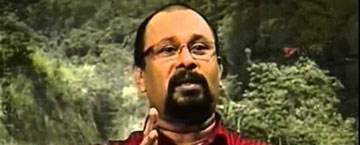
My cookery demonstration in Sirasa TV in Sri Lanka to help save about 60% energy and stop any cooking aroma depositing on you

September 8th, 2016

Dr Hector Perera           London

We all need to get our meals, either by cooking at home by someone or if possible by you or have some takeaway. Most people are not familiar with complicated cooking but to cook the basic things such as rice and curries is not a difficulty thing because even our kussi ammas” are able to cook on firewood stoves. Now modern facilities are available, gas and electric cookers, ovens, microwaves and even solar powered cookers. In other words the energy required for cooking is available but some people are not taking the best advantage that means they waste lots of energy during cooking due to total unawareness of the wastage.

I had this chance to come over to Sirasa TV studio to demonstrate my kind of cooking on the day after when The Sustainable Energy Authority visited our apartment to witness my scientific energy saving cooking. It was waste of time to cut onions, chillies, garlic and keep on adding curry powder and other things to chicken curry in a TV show because anyone can do that kind of things. I wanted to show how energy is saved and smell depositing on you avoidance while cooking. Before I went to the show I did exactly the same way I did when even when the energy authority visited to witness my cooking that means got the chicken curry ready with ingredients. The other advantage is there should be a short time for the ingredients first to adsorp then adsorb some into chicken that means time to marinate. The purpose of adding different ingredients to make the curry tasty and at the same time to have some effect on the germs, bacteria, E.coli salmonella on them. Things such as cinnamon are good to reduce the cholesterol in your system. I can give a whole list ingredients good effects on food but right now, I will leave them to a side. As I mentioned in the past chillies, garlic and ginger have lots of antibacterial, antifungal, microbial and medicinal values but not to shower with cooking aroma while cooking.

Initial preparations

Rice has to be washed properly to get rid of the soluble starch and other things on the surface adsorbed on them. One of the bacteria causes some damage even after cooking so it is necessary to get rid of them by properly washing. I let some water to boil on the cooker while I washed the rice because it saves time as well. This is what I usually do at home as well that means allow some water to boil while I prepare the rice. Once I add the rice into warm or boiling water it does not take not take no more than five minutes to get it boiling. Once it comes to thermodynamic eqlibrium condition then I know by past experience how long it will take to get it cooked perfectly. I do not keep on checking to see if the rice is cooked or not. That is what I mentioned this has to be demonstrated again so that the public would benefit by saving energy and time wasted in front of the cooker. This has been shown to the public in previous occasions as well but they do not take the ideas easily as they stick to their old ideas.

While rice get going, I let the chicken curry to cook slowly. Since I got it prepared by adding all the ingredients there was no need to keep on repeatedly open it even while boiling. One must see how some Sri Lanka ladies cook these things to believe my words. They keep on opening the boiling chicken curry and keep on adding this and that several times. Then close the lid but in  a matter of minutes they open it to stir it then take some piping hot liquid on their palms, blow on it several times to get it cool then taste it or lick the palm several times.  One must see their expressions on their lovely faces while they do that kind of acts, really beautiful. Sometimes it reminds me the cats and dogs licking their face after eating.

I also cooked chicken curry in a live cooking demonstration with Sirasa TV but I didn’t do that kind things. There were two famous presenter as well, one lady called Juliana then a gentleman called Sameera. They took the matter quite seriously but with some jokes as well to make it interesting. He said The best thing to save energy, get a lady at home with gas” that means to have a bossy woman at home. Everyone were laughing at his joke including the famous TV chef Duminda who also was there. While all these things happening, rice was cooking and chicken curry as well cooking. I even showed there was less radiation energy on both places where rice and chicken were cooking by bringing the fingers very close to the cooking vessels. Later when the presenters believed me they also brought their fingers near the boiling pot of rice and chicken curry to verify my idea. One must see the video to believe my words. The reason is I tried my best to cut down the energy wasted in cooking. Honestly one cannot do that kind of acts in any of the British TV chefs cooking or even with our good old kussi amma” work as she worked on firewood stoves. That time is over and now modern facilities are there so no need to waste energy unnecessarily.

I cooked rice and chicken curry in a live cooking programme to demonstrate that there is no need to waste energy wastefully. I made use of some scientific laws in order to cook and save energy. Some of the laws are more than two centuries old and they would be revealed when the times permits. One must understand that I would not challenge with a large sum of money to be given away in case any energy saving expert or any famous British TV chef stepped forward to disprove my scientific energy and smell avoiding kind of cooking.

I heard BBC is doing a new show called HOME COOKERY but I have my doubts that I would be given a chance to demonstrate my kind of scientific energy and smell saving home cooking demonstration. My aim is to help the nation to save some energy in HOME COOKERY. So far I haven’t witnessed any British TV chef or any other person who does any cooking done any energy and smell avoiding cooking.

One might think I was a chef or a cook, actually I am a BSc [Hons] MSc PhD synthetic organic qualified chemistry teacher but I use my scientific ideas in order save some energy and stop any cooking aroma depositing while cooking. Well if I had a chance to demonstrate again in a TV show in England then one would believe me, not otherwise. If I failed to keep my word then I would hand over that challenged money. According to science, every action must have an equal and opposite reaction. I am sure you all know what I meant. I have no doubt that I will be able demonstrate my kind of work in a few TV shows in beautiful Sri Lanka but what about in England? Don’t forget even in England some people eat rice and curries so some people certainly are able to save around 60% energy wasted in cooking those things. Only if someone is really interested in energy and smell saving cooking may contact for a public demonstration in a TV show in England. Your comments are welcomed perera6@hotmail.co.uk

Well done Philippine President: Human Rights Imperialists HANDS OFF ASIA!

September 8th, 2016

Shenali D Waduge

 Act like a slave, get treated like a slave. This is the message Philippine President conveys to Asia in inspiring the need to rise in defiance of imperial pivot to Asia returning to plunder and destroy and devastate Asia as was been done in the past and is currently taking place throughout Africa, Middle East, East Europe and Latin America. As we see from the examples of Iraq, Afghanistan, Yugoslavia, Ukraine, Sudan, Libya and now Syria, nations need defiant leaders or else they too will fall like all those nations today in turmoil. It is only when a nation and its leaders are defiant that the aggressors take a step back and will think twice about stampeding themselves into our territory. Asian nations all have rich histories. They were all plundered and millions have been murdered by Western imperial objectives in the past. No UN entity will ever call for justice for these crimes. We cannot allow our nations to be once more devoured, fleeced and have millions more of our people killed. This is the 21st century if people of Asia cannot rise up against the common enemies we will prove ourselves to be undeserving of the sovereignty that we now enjoy for which our ancestors fought and died for.

How many of Asia’s leaders will dare talk like President of Philippines?

 In an interview when Reuters journalist questioned about human rights violations in Philippines, President Duertes gave a response that has shook the world.

https://www.youtube.com/watch?v=Luw6q-3K4Aw

I am the President of a sovereign state”

Philippines is not a vassal state”

 we have longed ceased to be a colony”

Nobody cannot interfere…this is an independent country”

I do not have any masters except the Phippino people”

You must be respectful – do not just throw away questions and statements”

Who is he (Obama) to confront me…as a matter of fact he has to answer one too many questions for the mistakes in this country”

We inherited this problem from the United States because they invaded this country and made us their subjugated people”

who massacred the 600,000 people in Philipines”….”we have all the details of the sordid period”.

Look at the human rights of America…they way they treat the migrants…”

what about all the people killed in the past, is it just a past tense and we don’t answer in the present tense”. stop fooling yourselves”

I do not kneel down before anybody else except the Philippinos”

The campaign against drugs will continue”.

The best that Obama could do was cancel the meeting.

I want to make sure if I am having a meeting its productive” (why arrange the meeting if it was unproductive in the first place?)

Duertes response to Obama was ‘not to take it personally’. The Philippine leader has even called the US ambassador in Manila a ‘gay son of a whore’ and even called for the exit from UN accusing UN of issuing ‘shitting’ statements about his anti-drug policies. He has even told the Catholic Church ‘don’t fuck with me’

We may have found plenty of leaders with pluck to speak with a spine like the Philippino President in the past, but it is glaringly clear that we do not have such leaders now. You can bet that no Asian leader in the present has or will stand up for their people or their nation as the Philippine President has done with the exception of Russia’s President Putin.

The world expected much from Modi, instead he is showing himself to be more servile than Catholic Sonia with many analysts showcasing India as being used by US against China. Japan is being used in the same manner. In other parts of Asia too leaders are being forced to subjugate to the whims of the West or else face sanctions, economic pressures, NGO induced ground turmoils, and western funded regime change. No one has come forward to rally the masses because these white bullying nations are ruled by only a handful of people, they are even turning their own nations into police states. See how American themselves are suffering in their own nation as US has been turned into a virtual police state – Americans are even afraid to speak against the government decisions!

While mainstream media will do their best to ridicule the Philippine President and lackey locals will feel embarrassed to associate themselves with his comments, Jon Rappoport’s article ‘Who is Obama’s boss’ is excellent reading and concludes it’s the Trilateral Commission founded by David Rockefeller that advances economy-destroying trade treaties (TPP) that will pass power to global corporations as part of its new international economic order which is steering the UN to end sovereign nations. Out of the 87 members of the Trilateral Commission 11 have posts in Obama’s govt.

It is clear that these globalists are using politicians and through them manipulating international legislation to legalize power into the hands of a handful of corporates. In such a scenario the independent states of the world are doomed if we do not have defiant leaders like the Philippine President. Lets all remember that other defiant leaders like Venezuela’s Chavez, Libya’s Gaddafi, Serbia’s Milosevic have all been virtually ‘removed’ because of their defiance and their ability to rouse the public against globalist agendas. This cannot scare leaders who are elected leaders not to be servants of the West and say yes to everything they demand.

The leaders of Asia who have come to power on the people’s mandate must remember that they have not been voted to power by the people to hand over the nation’s sovereignty to external forces. They are only custodians of power and have no right to be dishing out parts of a country as if it is their personal property. They are beholden to the people to protect and preserve the territory, territorial integrity and sovereignty of the country.

The contrary is taking place. The globalists that control the media, the politicians and even the UN have managed to place puppets in key decision making positions and through them are bringing in bizarre legislation that virtually abdicates sovereign powers to virtual companies. The recently passed Office of Missing Persons bill in Sri Lanka is so ridiculous that it is to be manned by foreigners, it can get aid by foreigners and it cannot be even questioned by the public nor can those accused cross examine those who are accusing them. We are seeing the world being turned into a serfdom where a handful of people are conspiring to bring global power into their hands through puppets they have placed in power.

It is in this context that we must praise the Philipine leader for coming out to call a spade a spade. To hear a leader of the third world country tell the US that it cannot afford to talk of human rights having killed millions of people and continuing to kill should be music to anyone’s ears primarily because if anyone is pointing fingers at President Duertes why are the same lot not doing the same against UN & NATO crimes being committed with impunity.

Why is no one questioning the puppets in the form of UN Secretary General and UNHRC Head.

The former UNSG Kofi Annan was received by ‘boos’ and ‘hooos’ by the Myanmar people. The UNSG Ban Ki Moon has gone out of line by comparing Sri Lanka to Rwanda and Srebrenica without being able to even produce 100 dead names in 7 years.

The UNHRC head has displayed his puppet role in his comments against Trump,  Farage and Wilders calling them ‘demogogues’ and comparing them to ISIS yet silent that the West created ISIS with help of West-friendly Islamic states. Connect the dots and see.

shenali07091601shenali07091602

Report of the Special Study Group The Doolittle Committee Report to US President Eisenhower in 1954 concluded If the US is to survive,…………….. We must develop effective espionage and counterespionage services and must learn to subvert, sabotage and destroy our enemies by more clever, more sophisticated means than those used against us. It may become necessary that the American people be made acquainted with, understand and support this fundamentally repugnant philosophy.(Report of the Special Study Group – Doolittle Committee – on the Covert Activities of the Central Intelligence Agency, 30 September 1954

We can give some examples

shenali07091603

  • In 1953 CIA and British intelligence overthrew Iranian President Mossadegh because he nationalized Iran’s oil. US replaced an elected leader with the Shah who returned oil to West.
  • In 1954 US overthrew Guatemala’s elected leader Jacobo Arbenz
  • In 1950s US wanted to prevent the election of Ho Chi Minh and carried out a bloody war resulting in 4million deaths destroying countries of Laos and Cambodia as well.
  • 1961 Congo’s elected leader Patrice Lumumba was killed
  • 1964 Brazils leader Joao Goulart was deposed with help of its military
  • 1965 Washington backed an armed coup in Indonesia killing 1m peasants and installing Suharto who invaded East Timor with US support and wiped out 30% of the Timorese population.
  • 1965 CIA assassinated dictator and American puppet Rafael Trujillo because he had gone out of line, placed Juan Bosch as President and ousted him 5 months later too and placed another puppet Balaguer through a fraudulent election with the help of 40,000 American soldiers (underlining that even puppets are eventually discarded – a thing that Asian puppet leaders should worry about)
  • 1973 US funded opposition in Venezuela as soon as Salvador Allende became President and with the help of the military overthrew Allende and placed Augusto Pinochet.
  • 1990-2004 US puppets Papa Doc and Baby Doc Duvalier caused much hardships for the people of Haiti and Aristide came to power in 1990, 3 years later a coup organized by US left Aristide in exile.

William Blum gives a list of governments the US has overthrown.

https://williamblum.org/essays/read/overthrowing-other-peoples-governments-the-master-list

In more recent news – Ukraine’s former security chief, Aleksandr Yakimenko, has reported that the coup-plotters who overthrew the elected government in Ukraine, “basically lived in the (U.S.) Embassy. Ukraine is said to be America’s 80th stint at overthrowing governments since 1953.

Therefore Philippine leader has every right to question America’s right to question human rights in other countries. His country is another US victim. US has been periodically deposing Philippine leaders and installing their men to head the country and these successes were even congratulated by the US government. Historian Stanley Karnow’s book In the Philippines, the CIA Has Found a Second Home” and says An American candidate for Philippine Presidency” which clearly indicates how local puppets are becoming willing guinea pigs for empire building and Philippine President Duertes is quite right to point fingers. You can bet that the heat will be turned on in Philippines and he would be targeted for removal sooner than later. We hope not but this is how the Western imperialists react when their crimes are brought into the open and questioned.

Volume after volume can be written on imperial expansionist projects being ironed out using the UN, foreign funded NGOs and their local lackey representatives and other puppets propped to national roles and paid to deliver the goods ignoring the fate that will befall their country and their people. More often than not these lackeys are induced with perks and privileges, promised a home abroad and to be looked after for forsaking their nation and with no conscience or feeling for anyone but themselves they are ever willing to sign on any dotted line that these imperialists put forward. Which is why we must applaud President Duertes for standing up as he has done even to the shock of the nation who has too longed become used to be being servants of the West and accepting all of the dump that the West dishes out to them.

We need more leaders who have spine and not leaders who will bend over backwards whenever foreign leaders with blood on their hands descend and preach to us about human rights.

As for Sri Lanka, Obama has admitted Libya was a ‘mistake’ and that there was no plan for Libya after they brought regime change. With the present chaos in Sri Lanka after regime change in 2015 we have to wonder whether there is no plan for Sri Lanka too or be more worried with Sri Lanka being turned into UN-monitored state as indications point with puppet leaders abdicating sovereign powers with every Bill being hurriedly passed.

It is a little too late for apologies.

Shenali D Waduge

http://www.infowars.com/who-is-obamas-boss-and-why-it-matters/

https://www.rt.com/news/358393-trump-farage-isis-un/

http://www.alternet.org/world/americas-coup-machine-destroying-democracy-1953

Donald Trump condemns Hillary Clinton for military adventurism and regime change policies

September 8th, 2016

US News

” Mr. Trump’s attack on Tuesday on Ms. Clinton and her policy in West Asia as Secretary of State was equally an assault on George W. Bush, the last Republican President who triggered the turmoil in the region with his ‘regime change’ policies. Mr. Bush has not endorsed Mr. Trump.

Hillary Clinton favours what is called military adventurism. Rushing to invade countries, displacing millions of families, then inviting the refugees into our country. Creating power vacuum filled by terrorist groups, like ISIS (Islamic State). And believe me, there are plenty of people who are close to ISIS, who are coming to our country. This is the greatest Trojan horse of all time. I don’t want people to be reading about it in 200 or 400 years,” said Mr. Trump.

I believe in a foreign policy that is based on our national interest, that focus on American security, and regional stability instead of using our military to creating democracies in countries that have no democratic history and couldn’t care less about democracy. We are trying to force democracy down their throat, spending trillions of dollars and they don’t even want it,” Mr. Trump said.”

For more

http://www.thehindu.com/news/international/campaign-rhetoric-hillary-trump-exchange-barbs/article9081857.ece

Invasion by Indian jets in 1987 enraged Sri Lankan army officers

September 8th, 2016

Courtesy Adaderana

September 8, 2016  08:37 am

The brazen invasion of Sri Lankan airspace by Indian Air Force jets and transport aircraft on June 4, 1987, enraged Sri Lankan army officers who were, at that time, doggedly and successfully carrying out Operation Liberation” against the Liberation Tigers of Tamil Eelam (LTTE) in the Vadamarachchi region of Jaffna peninsula.

It was honestly, a terrible scene. My rage resurfaced; if we had any powerful anti-aircraft weapons in our possession, we would have not only shot down these aircraft but would have crushed them with a sledgehammer into smithereens and flushed them down the toilet,” writes Maj.Gen.Kamal Gunaratne in his book Road to Nandikadal released on here on Tuesday.

We had no power or capability to shoot down the hooligans who were raping our airspace. We were all totally helpless and powerless against this violation. Great leaders in our presence like Brig. Kobbekaduwa and Col.Wimalaratne were equally powerless. There are no words sufficient to describe the anger, hatred, disgust and sadness which shot through my entire being. For all of us, it was a huge humiliation.”

Blaming the non-equalitarian Indian social order for the way India was treating Sri Lanka, Gen.Gunaratne asks: As a country which believes, promotes and maintains the caste system in its very social fabric, wasn’t this like treating Sri Lankan as Harijans (low caste people) by a bunch of Brahmins (high caste people)?”

A further reason for dismay for Gen.Gunaratne and his comrades was the world’s turning a blind eye and a deaf ear to Sri Lanka.

Though the Government of Sri Lanka took this matter up with the international community, no country took it seriously and the message conveyed by the world’s powers was: India is the regional power. Anything that happens in the region should not affect the Indian interests. Therefore work in collaboration with India.”

The Sri Lankan government then decided to abort the Vadamarachchi operation which was then poised to progress into its second phase.

But this did not stop the LTTE from continuing its aggression. On July 5, 1987, it introduced to the world the first suicide bomber”, Capt.Miller, who drove a lorry loaded with explosives into the Nelliady army camp in Vadamarachchi.

Indo-Sri Lanka Accord

About the India-Sri Lanka Accord of July 1987, Gen.Gunaratne says that it was  pushed down  the throats” of Sri Lankans and adds: Everybody wished and prayed that India would learn a good lesson from the LTTE one day, for its role in breeding and nurturing terrorists against our motherland.”

However, he completely disapproves of the naval rating’s rifle attack on Indian Prime Minister Rajiv Gandhi when Gandhi was inspecting a Guard of Honor at the President’s House in the Fort after signing the Accord on July 29, 1987.

When a Guard of Honor is presented by one country to the leader of another, and if a member of that guard assaults the leader who was being honored, it is a disgrace of the highest order to the host country. Not only us, as members of the Sri Lankan Forces, I think all Sri Lankans irrespective of their age, gender or race, should feel ashamed of this highly unethical action of this sailor,” Gen.Gunaratne says.

He then reproduces a poem written by fellow officer Lt.Palitha Weerasinghe, lamenting the disgraceful act and unpardonable offense” of  the naval rating.

On the deployment of the Indian Keeping Force (IPKF) in Sri Lanka’s Tamil-speaking North and East, from July 30 onwards, Gen.Gunaratne says: There were some amongst us who were tired of fighting and were therefore very happy about this new development, but for us battle-hardened young officers and men, it was another bitter experience,” New Indian Express reports.

– See more at: http://adaderana.lk/news/36857/invasion-by-indian-jets-in-1987-enraged-sri-lankan-army-officers#sthash.WhXXW36m.dpuf

Thus spake Ban

September 8th, 2016

Editorial Courtesy The Island


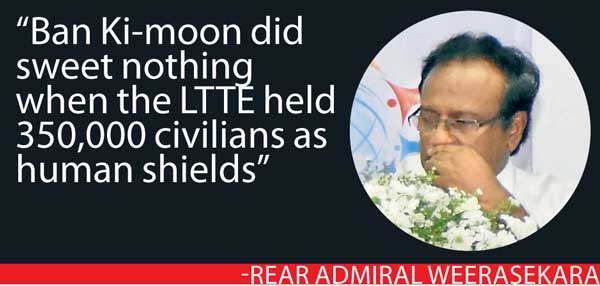
UN Secretary General Ban Ki-moon has come and gone, but brouhaha one of his controversial remarks triggered has not yet died down. The government was over the moon about Ban’s visit, but now it has been left with egg on its face. How sad!

The UNSG, delivering a lecture, Sustainable Peace and Achieving Sustainable Development Goals, at Colombo Hilton last week, went out of his way to bracket Sri Lanka with Rwanda and Bosnia while speaking of the Vanni war. His comparison was not unintentional, at all. It was calculated to have the impact he had in mind. It looks as if he had come all the way here to say just that!

The government seems to think the UNSG came here in appreciation of its style of governance. He only wanted to dictate the tempo of the process of initiating the proposed war crimes probe, justify the UNHRC action and remind the Sirisena-Wickremesinghe administration of its commitment to the Geneva resolution. He apparently wanted to come out with something to shock the conscience of the global community while international media attention was on this country so as to give the UNHRC war crimes probe project a turbo boost. He succeeded in his endeavour.

A diplomat is said to be capable of telling someone to go to hell in such a way that the latter looks forward to the trip. The UNSG has done just that and the government worthies are getting ready for the journey. Having naively expected the UNSG’s visit to bring about some positive results the government leaders have gone into damage control mode. As if the problem of setting up a war crimes probe were not enough now they have an obliquely made genocide allegation to contend with!

Minister Mahinda Samarasinghe, addressing the media on Tuesday, cut a very pathetic figure, trying hard as he did to defend the indefensible. He, in his wisdom, vehemently denied that the UNSG had ever sought to compare the civilian deaths during the Vanni war with genocidal killings in Rwanda and Bosnia. Why he undertook to speak for the UNSG defies comprehension. Not even the UN Spokesman Farhan Haq has cared to clear the air; he has only told this newspaper the UNSG’s words speak for themselves whatever that means. If Ban had made a mistake in Colombo his office would certainly have corrected it unambiguously. Nothing of the sort has happened.

Minister Samarasinghe’s argument that the UNSG’s remark in question was not part of the text of his speech and, therefore, it should not be taken seriously, does not hold water. Copies of all written speeches made available to the media always carry the tag, ‘check against delivery’. What prevails is what someone says in public and not what finds itself in the text of his or her speech. There have been instances where Sri Lankan leaders have announced government decisions while speaking without script. The late President Ranasinghe Premadasa’s call for the Indian Peace Keeping force (IPKF) to go whence it had come from is a case in point. He said so while speaking at a Colombo temple, of all places. The IPKF left in the end, didn’t it?

There are no asides in diplomacy, especially where top officials such as the UNSG are concerned. It is inevitable that Ban’s words will become official and accepted worldwide if they are allowed to go unchallenged. His attitude presages more turns of the screw in Geneva. The government ought to realise that the architects of the Geneva resolution, it naively co-sponsored, are not driven by any love for it in spite of their blandishments. They are only using it as a handmaiden to further their geo-political interests in this part of the world.

The government, without trying to fool itself, should seriously consider registering its protest with the UN against the UNSG’s statement at issue.


Poverty decrease in Sri Lanka, 2002 to 2012/13-World Bank

September 8th, 2016

By Umesh Moramudali and Rathindra Kuruwita Courtesy Ceylon Today

Poverty has been one of the major issues faced by many developing nations and Sri Lanka is no exception. Recently, World Bank released a poverty assessment report on Sri Lanka, which attempted to identify causes for poverty and solutions to the issue.

The report states that overall, Sri Lanka’s record of poverty reduction has been encouraging, mainly due to increased labour earnings as demand for labour rising across a broad range of sectors excluding Northern and Eastern Provinces.
The report further noted that in the Eastern Province, the poverty headcount rate fell from about 22.7 per cent in 2002 to 6.1 per cent in 2012/13. Per capita incomes also rose for the poor, corroborated by increases in the share of consumption devoted to non-food items, ownership of durable goods, and school attendance. Wages and employment grew as well, particularly in the manufacturing, construction, commerce, transport, and communication sectors. Sizeable increases in agriculture minimum wages led to higher earnings for agricultural workers.

While it is difficult to identify the underlying causes of this poverty reduction, the report focuses on four potential factors including the economy’s gradual structural transformation out of agriculture into more productive sectors, urbanization and agglomeration around key urban areas, rising international prices for food and tea that raised earnings in agriculture, and strong domestic aggregate demand that has boosted economic growth. Of these potential factors, a more rapid structural transformation and increased agglomeration have the most potential to sustain poverty reduction in the future.

Growth in the agricultural sector during this period largely reflected rising prices and an expansion in arable land, neither of which are likely to be sustained. Domestic aggregate demand, meanwhile, has been led by the construction and transport sectors, spurred in part by public investment in the aftermath of the conflict. These sectors, however, cannot be relied upon to produce sustained growth. This suggests that efforts to further improve living standards of the poor should focus on promoting further structural transformation and urbanization.

Despite this recent progress, living standards remain low and pockets of severe poverty persist. Around 40 per cent of the population subsists on less than twice the poverty line, which was $2.75 per capita per day in 2005 PPP terms, or Rs 225 per day. Furthermore, living standards of the near-poor – those above the national poverty line but below the 40th percentile – are similar to those of the poor. Moreover, low-income households’ ability to access basic services and public facilities has barely improved since 2002. The population in Northern and Eastern Provinces is particularly disadvantaged in terms of consumption, labour market outcomes, educational attainment, and housing conditions. Finally, inequality increased sharply from 2009/10 to 2012/13.

Ceylon Today interviewed David Newhouse, who is one of the authors of the report. Newhouse joined the World Bank’s Poverty Practice as a Senior Economist in 2013 and has led or contributed to the Bank’s analysis of poverty in Sri Lanka, Pakistan, as well as at a global level. In Sri Lanka, he led the production of the 2016 poverty assessment and the updated poverty map. Prior to joining the poverty practice, he was a labour economist in the Social Protection and Labour Practice, where he helped lead efforts to monitor labour markets in developing countries and analyze the policy response to the 2008 financial crisis. He first joined the Bank in August 2007, and worked in the Jakarta office as a co-task team leader of the Indonesian Jobs Report. Before joining the Bank, he worked for three years as a consultant in the IMF’s Fiscal Affairs Department providing policy advice on energy and food subsidies, and two years in the Bureau of Economics at the Federal Trade Commission. David holds a PhD in economics from Cornell University, and has published several journal articles on a wide range of issues relating to labour, health, and education in developing countries. Following are the excerpts of the interview:
?During last decade the poverty headcount ratio in Sri Lanka has drastically reduced. What are the challenges the country would face in reducing it further?

A: Many of the forces that helped reduce poverty between 2002 and 2012/13 may not be sustainable. For example, the post-war era saw a major expansion in the construction and transport sectors, spurred in part by public investment. But it is not clear that the government can continue to afford these kinds of investments given its current revenue challenges. Also, there was a significant run-up in world agricultural prices between 2006 and 2009. In Sri Lanka, the price of rice rose 30 per cent and the export price of tea rose over 50 per cent in real terms during this period. This led to strong reductions in poverty among agricultural workers and in the Estates during this time, potentially in part because of a large increase in the minimum wage. But both rice and tea prices have already fallen significantly since then, so further large increases in minimum wages may not be practical.

Overall, 40 per cent of the population lives on less than about Rs 225 per day, so there is an urgent need to continue to create a climate conducive to good jobs and increased productivity. The related phenomena of increasing urbanization and movement out of agricultural employment also contributed to poverty reduction, and this may be more sustainable. Continuing to facilitate this, in part by ensuring youth are well-equipped to work outside of agriculture, will help increase productivity and continue to reduce poverty. One challenge the country faces is that there are severe pockets of poverty, in selected DS divisions in Mullaitivu, Batticaloa, and Moneragala (see table). Ensuring that youth are healthy, well-educated and aware of better earning opportunities elsewhere will help them take advantage of higher-productivity jobs elsewhere in Sri Lanka, or abroad. At the same time, most of the poor now live in or around cities, so ensuring that they benefit from public services is also crucial.

Although the poverty had reduced, the inequality remains high. How to overcome this issue?
A: Increased inequality is not necessarily bad, since it could reflect an improvement in all segments’ standard of living. However, it appears that inequality increased sharply between 2009/10 and 2012/13 in Sri Lanka, after slowly falling since 2002. If this trend continues, it would strengthen the argument for reforms that make policies, including tax policy, more pro-poor.

The recent report claims that nearly 40% of the people are in near poverty. If the commodity prices go up in near future, is there a risk of increasing the poverty headcount ratio ?

A: The report defines near poverty as those not in poverty but in the bottom 40 per cent. Note that 40 per cent of the population live on less than Rs 225 per day, so their standard of living is quite low. Furthermore, in many cases the near-poor look more like the poor than the non-poor, in terms of the assets they own and the places they borrow from.

In terms of commodity prices, it really depends on the commodity. Is this a commodity for which Sri Lanka is a net importer or exporter, and are poor Sri Lankans net consumers or producers? In addition, institutional factors, such as the pass-through from commodity price increases to inflation, and the responsiveness of minimum wages to inflation, also play a role. So the effect of changing prices on the poor should be analyzed on a case-by-case basis.

යුධ විරුවන් දංගෙඩියට දක්කාගෙන යාමට වෙර දරණ වන්දිබට්ටයින්ගේ දැනගැනීම සඳහා

September 8th, 2016

යුධ විරුවන් දංගෙඩියට දක්කාගෙන යාමට වෙර දරණ වන්දිබට්ටයින්ගේ දැනගැනීම සඳහා

https://youtu.be/x8ITgF1Qh8Q

මහ බැංකුවේ තීරණවලට දේශපාලන බලපෑම් – මාධ්‍ය නිවේදනය – දූෂණ විරෝධී පෙරමුණ

September 8th, 2016

මහ බැංකුවේ තීරණවලට  දේශපාලන  බලපෑම් –  තෙවරක් ඉවත් කළ  ලංකා පුත්‍ර සංවර්ධන බැංකු සභාපති  ලසන්ත ගුණවර්ධන තවමත්  සේවයේ. 

සේවයෙන් ඉවත් කළ බව සඳහන් වන ලංකා පුත්‍ර සංවර්ධන බැංකුවේ හිටපු සභාපති ලසන්ත ගුණවර්ධන මහතා බැංකු අධීක්ෂණ ක්‍රියාවලිය විහිලුවට ලක් කරමින් තවදුරටත්  ලංකා පුත්‍ර සංවර්ධන බැංකුවේ කටයුතු සඳහා මැදිහත් වෙමින් සිටින බවට දූෂණ විරෝධී  පෙරමුණ චෝදනා කරයි.

මීට පෙර  අවස්ථා තුනකදී ලංකා පුත්‍ර සංවර්ධන බැංකුවේ සභාපතිවරයා සේවයෙන් ඉවත් කල බවට වාර්තා පළ විය. වහාම සේවයෙන් ඉවත් වන ලෙස ශ්‍රී ලංකා මහ බැංකුව විසින්  ලිඛිතව දැනුම් දී තිබුණ ද ඔහු තවදුරටත් බැංකුවේ කටයුතු සඳහා බලපෑම් කරමින් සිටියි.  මහ බැංකුවේ හිටපු අධිපති අර්ජුන් මහේන්ද්‍රන් ඉවත් කළ ද බැංකු පද්ධතිය තුළ තවදුරටත් දේශපාලන මාෆියාවක් ක්‍රියාත්මක වන බව මෙම සිදුවීමෙන් තවදුරටත් පැහැදිලි වන බව දූෂණ විරෝධී පෙරමුණ අවධාරණය කරයි. මෙරට බැංකු පද්ධතිය සඳහා යහ පාලන සංකල්පය ආදේශ කිරීමට වත්මන් රජය අපොහොසත් වීම කණගාටුවට කරුණක් බවද එම පෙරමුණ පෙන්වා දෙයි.

ව්‍යවසාය සංවර්ධන අමාත්‍යංශයේ ලේකම් රවීන්ද්‍ර හේවාවිතාරණ මහතා මාධ්‍ය වෙත සඳහන් කර තිබුණේ ලසන්ත ගුණවර්ධන මහතා ලංකා පුත්‍ර සංවර්ධන බැංකුවේ සභාපති වරයා වශයෙන් පිළිගනු ලබන යෝග්‍යතා සහතිකය ශ්‍රී ලංකා මහ බැංකුව විසින් නිකුත් කර නොමැති බවයි. අදාල තනතුර සම්බන්ධයෙන් මහ බැංකුවේ බැංකු අධීක්ෂණ දෙපාර්තමේන්තුව සලකා බලන සුදුසුකම් ලසන්ත ගුණවර්ධන මහතා සපුරා නොමැති බවද හේවාවිතාරණ මහතා වැඩිදුරටත් සඳහන් කර තිබේ. මේ අතර පසුගිය මාර්තු 23 වනදා ප්‍රකාශයට පත්කළ කෝප් කමිටු වාර්තාව මඟින්ද ලංකාපුත්‍ර සංවර්ධන බැංකුවේ සභාපති ලසන්ත ගුණවර්ධන මහතා මැදිහත්වූ අක්‍රමිකතා කිහිපයක් පිළිබඳව හෙළිදරව් කර තිබේ.ණය ලබාදීමේදී සභාපතිවරයා නිසි ක්‍රියා පටිපාටිය අනුගමනය කර නොමැති බව එහි සඳහන් වෙයි.අක්‍රිය ණය අනුපාතය 39% ක තරම් ඉහළ අගයක පැවතියද  එය වෙනස් කිරීමට සභාපතිවරයා කටයුතු කර නොමැති බවටත් කෝප් වාර්තාව මඟින් අණාවරණ කර තිබේ. ගණුදෙනුකරුවන්ට ණය ලබාදීමේදී සභාපතිවරයාට අවශ්‍ය පරිදි පොලී අනුපාත තීරණය කර ඇති බවටද කෝප් වාර්තාවේ දැක්වෙයි. එමෙන්ම 2015 ජනවාරි 1 වනදා සිට 2016 මාර්තු 03 වනදා දක්වා නියමිත සුදුසුකම් සපුරා නොමැති නිලධාරීන් 64ක් බැංකුවේ සේවයට බඳවාගෙන ඇති බව එම වාර්තාවේ දැක්වෙයි.

ශ්‍රී ලංකා මහ බැංකුවේ තීරණ නොතකා දේශපාලන බලාධිකාරිය විසින් තම අභිමතය පරිදි මෙරට බැංකු පද්ධතිය මෙහෙයවීමේ  භයානක පෙරනිමිති ලංකා පුත්‍ර සංවර්ධන බැංකුවේ අර්බුධය තුළින් මැනවින් පැහැදිලි වෙයි.ශ්‍රී ලංකා මහ බැංකුවේ බැංකු අධික්ෂණ  දෙපාර්තමේන්තුවේ තීරණ වලට පටහැනිව  කටයුතු කිරීමෙන් ඉවත් වන ලෙස මුදල් අමාත්‍යවරයාගෙන්, ව්‍යවසාය සංවර්ධන අමාත්‍යවරයාගෙන් ඇතුළු දේශපාලන නායකත්වයෙන් දුෂණ විරෝධී පෙරමුණ අවධාරණය කරයි.

මාධ්‍ය ඒකකය

දුෂණ විරෝධී පෙරමුණ

SLFP pawned to the UNP – Pavithra

September 8th, 2016

By Charminda Rodrigo Courtesy Ceylon Today

United People’s Freedom Alliance (UPFA) Parliamentarian, Pavithra Wanniarachchi, in an interview with Ceylon Today, said the UNP was always loyal to imperialistic forces even though the country has gained independence.
Excerpts from the interview:

?: How do you view the recent developments in the Sri Lanka Freedom Party?
A: I am an SLFPer who believes in the fundamental principles introduced by the great S.W.R.D. Bandaranaike. We believe in social democracy, a nationalistic economy and a centre-left ideology. As a party we always represented and uplifted the standards of the underprivileged segment of the community. We always exercised a non-aligned policy, when it came to foreign relations. Our founder had to leave the United National Party (UNP) at a juncture when he was serving as the deputy leader of UNP and as the Minister of Health and Local Government in the same government and was the Leader of the House. That was due to the mismatch of the policies. UNP was always loyal to imperialistic forces even though we gained independence from the monarch a long time ago. Then, Prime Minister Bandaranaike with the proposal which was unanimously passed at the Sinhala Maha Saba formed the party; with a lot of good intentions.

He made ‘Sinhala’ the national language. He introduced the Paddy Lands Act to protect the rights of the tenant cultivators and the Labour Acts to institute the 8 hour shift for employees. He also nationalised school and transportation networks and nationalized various commercial entities such as the harbour. All these efforts were focussed on uplifting the social standards of the poor in this country. However this is totally different to the principles of the UNP, for example, Minister Ravi Karunanayake says that it is useless to cultivate paddy in the country. But we have taken all possible measures to cultivate every inch of this country. These are some of the many salient differences between the drastically different policies of UNP and SLFP.

?: The SLFP and UNP together have formed a Unity Government. Do you refuse to believe that it is politically viable?
A: How can this unity be realistic when the policies are contradictory to each other? When you consider the economic policy, foreign policy or the policy on national security, these are entirely different to what SLFP had exercised in the past. This is a pure UNP Government. So what stake do the SLFPers have in that? This is absolutely not practical when considering the development of this country. Our party is pawned to the UNP by the present leaders, thus the UNP will definitely overrun the SLFP if we let this go on, the way it is. This is why we have emphasized numerous times to form a pure SLFP Government under the leadership of the former President Mahinda Rajapaksa.

?: When the former President Chandrika Bandaranaike ended the 17-year-long UNP rule in 1994, the third revival of the SLFP took place. You were an aide specially when exhuming the mass burial site in Sooriyakanda. Do you not think that you have a right in the party, for the services rendered in the past?
A: It is true that we have a right to the party. However, with the way things are currently operating we are compelled to believe that, the SLFP is controlled by the UNP in the present context. Our SLFP leaders are paving the path to be manipulated by the UNPers to fulfil the agenda of the UNP. This reality worries us gravely as true loyal SLFPers who have shed sweat and blood for the party.

?: If you accuse the UNP of having control over the SLFP, how come the reappointment of the former Governor of the Central Bank was turned down by the President?
A: Well if you say that is the reality, why do you not consider the corruption allegation filed against Arjuna Mahendran the former Governor, by the General Secretary of the UPFA, at the Bribery Commission (CIABOC) which does not come up for any inquiry? If that is the respect the government has for the General Secretary of the UPFA, what can we expect for the SLFP from this government? We see CIABOC filing action against the members of the SLFP but exclusive immunity is provided to UNPers. So, if President calls this an SLFP Government, who actually steers the party? Is it the SLFP or UNP? You should consider that first. Mind you, to everyone’s surprise the same Arjuna Mahendran has been appointed to spearhead the 5-year plan of the government.

?: However, in some instances the SLFP prevented some bad moves of the UNP-led government, such as the VAT issue. What do you think about it?
A: The Joint Opposition filed a case and defeated the VAT Act in the Supreme Court. Just imagine 10 customers buy commodities to the value of Rs 3,000, each, that shopkeeper would have had to pay VAT, if the law was passed in Parliament. We believe in providing welfare to the people, not in imposing more and more pressure on them. This government is inefficient in collecting government revenues. So, they blame the previous government for the loans obtained for development projects. The Governor of the Central Bank once told that he would ‘somehow’ collect the taxes. What does he mean when he says ‘somehow’?
We exercised a welfare policy with many benefits granted to the people. The leaders should know how to make use of public servants. See the officials at the Finance Ministry openly refusing to take on ex-officio appointments on various boards. The entire public sector is in chaos due to the administrative inability of the UNP.

?: This government says that the previous government had left a heap of debts behind, what do you have to say about it?
A: Did they not know that there was such a debt remaining by the time they were campaigning to form a new government

? Did they not plan for it? We enhanced the revenues of the government in order to reduce the percentage of the GDP. This again proves that this government has no plan to manage this country properly. ?: Do you mean to say that the people have made a wrong decision at the concluded consecutive elections?
A: You talk to anybody you meet and I’m sure none of them would say otherwise. The government promised a free Wi-Fi facility to the young generation. They promised cars instead of the motor cycles, and that three-wheelers would be given to them. Now what are they left with? The government has not been able to uphold any of those promises made to the people during the election. Let’s leave Wi-Fi aside for the moment, what about the promises made to the farmers? A stable price was promised for tea, rubber and paddy farmers. Now they are left with no option. The fertilizer subsidy has been trimmed off. People are firmly lined up to defeat the inefficient and incompetent government.
President himself has appointed the Opposition in Parliament to prevent resistance and criticism being raised against the government. When there is no proper and strong Opposition in Parliament, how are the genuine concerns of the people going to be raised in the house? This is a clear indication of the level of respect for the concerns of the people. We are making the maximum effort to form a people’s government with the leadership of the former President Mahinda Rajapaksa.

?: On the anniversary of the SLFP the President firmly said that he is marching towards forming an SLFP Government, do you not agree with that?
A: It was President Sirisena who defeated the party at the Presidential Election. He won the Presidential Election but we had the 2/3 majority in Parliament. Instead of appointing Mahinda Rajapaksa as the Prime Minister he appointed Ranil Wickremesinghe. Then again he went on to defeat the party by removing both the general secretaries of UPFA and SLFP. Look at the Uva Provincial Council, the President made Harin Fernando the Chief Minister and made the UNP stronger. The President dissolved all the Local Government bodies to weaken the party at the grass root level. Do you think these moves were made to strengthen the party?
My father financed the party from 1977 till 1994. Duminda Dissanayaka was a mere 12-year-old at the time I was appointed as the organizer for my electorate. My father organized the very first meeting in Ratnapura for the late Prime Minister Bandaranaike. He became a Member of Parliament in the 1960’s. He and I were elected to Parliament in 2000. We always scored high votes for the party. I have never criticized the decisions of the Central Committee. However, now it has come to a point where I have to reveal the truth. It is a pity that the President has gotten himself trapped in the UNP and now he is attempting to trap us as well.

?: Is the Joint Opposition (JO) forming a new party to compete in the next election to safeguard the wishes of the people?
A: That is something the future would decide. I feel it is too early to comment on that. However, the people who hate the UNP would resort to another political force. Who could stop that?

?: SLFPers of the JO celebrated the anniversary of the SLFP on 2 September at the JO office in Battaramulla. What if, one says that the same people who hooted at the head office of the SLFP are now celebrating the anniversary, what do you have to say about it?
A: Let me get this clear. If they hooted at the SLFP head office it is wrong. People who removed their hats and paid respect at the Bandaranaike Samadiya as they were passing Horagolla, had hooted at the head office. That is their way of showing the distress over the decisions of the leaders of the party. People are fond of the Bandaranaikes; but they do not like the decisions of the present leaders who vest the party in the hands of the UNP.
?: Who would be the leader in making, of the party?
A: It is not about forming a party. But people would love to see Mahinda Rajapaksa leading that force to form a government of the people; to develop the country from where he left off. People are anxiously waiting to see a pure SLFP Government in the country. That day is not as far as one may think.

MR didn’t allow our morale to sag

September 8th, 2016

By Dilanka Gunathilake Courtesy Ceylon Today

Rohan Welivita, the Channel Chief of CSN and media spokesman of former President says Mahinda Rajapaksa always encouraged them and did not let them suffer from low morale.
Excerpts:

?Who areyou now?
A: I am the Channel Chief and Director of CSN and also the media secretary of former President Mahinda Rajapaksa.

?What is happening now?
A: Our culture, values, religion, rights and the economy are collapsing.

?Is it because a group including you was remanded?
A: No. But I think so when I see what is happening in the country. That is because the things that do not belong to people are owned by them.

?What do you mean by things that do not belong?
A: Jesus asked to give what was Satan’s to Satan and God’s to God.

?What do you think about the past few weeks?
A: I cannot speak about a case which is before Court. But there must be a proper way for remanding or punishing a person.

?What do you think about the days you were in remand?
A: I am worried about the process until we were remanded. I am depressed.

?Why do you say so?
A: I was director of CSN only for three weeks after its opening. I have not participated in a single board meeting during this period. I have not signed a single board decision.

?Why were you accused then?
A: That is the problem.

?Were you and Yoshitha together in remand?
A: Yes. We were in the same prison cell.

?What did Yoshitha say as soon as he went in?
A: Nothing special was said. We were not in a frame of mind to discuss anything. We were tired.

?Didn’t he tell anything?
A: He said I had not done anything for myself.

?What did he say about remanding him?
A: He did not say anything special. But I understood that he was self-confident.

?What did he tell about remanding him?
A: He did not speak anything about it those days.

? Do you remember the first day Mahinda and Shiranthi came to visit Yoshitha?
A: We were remanded on a Saturday and on Sunday Mahinda Rajapaksa visited us at 9.30 in the morning.

?What did Rajapaksa say to Yoshitha then?
A: Mahinda always encouraged us. He did not let our morale sag.

?What did Shiranthi say to Yoshitha?
A: She visited only Yoshitha. She encouraged us when we met. She praised our self-confidence.

?What did Mahinda tell you first?
A: He said it was a political reprisal.

? What did you discuss in the remand?
A: It was about 9.30 p.m. when we were remanded. We slept on the floor and did not speak anything.

?How was the first night?
A: We slept like logs and woke up when the prison bell rang the next morning.

?How was the food in the prison?
A: We had only four, five meals. It is said that the best coconut sambol is served in prison.

?Who visited you most when you were in remand?

A: Former President Rajapaksa visited mostly. He did not visit us only for a couple of days for the entire 45 days.

?Where did you go after you were released on bail?
A: We visited CSN first, and then went to Mahinda Rajapaksa’s meeting in Battaramulla.

?What did Mahinda tell you after you were released?
A: I met him after a day I was released. He said it was good experience like graduation.

?What did you do mostly when you were in prison?
A: Nishantha Ranathunga and I studied the case files.

?What else did you do?
A: I wrote a book, three songs and a movie screenplay.

? Do you think the time you were in prison was useful?
A: Yes. I get it as graduation and will use it for my future success.

CID wanted to question me: Astrologer Wijemuni Vijitha

September 8th, 2016

Courtesy The Daily Mirror

 Astrologer Wijemuni Vijitha Rohana de Silva said today that the CID wanted to record a statement from him over a video released by him forecasting the future of President Maithripala Sirisena and said an astrologer should have the freedom to carry out his work independently.

Mr. Silva said that he had told the CID that he had given a statement over the matter on a previous occasion and asked them not to bother him anymore.

A woman CID officer phoned me and said she wanted to record a statement. Then I said I had given a statement over the matter earlier and that I could give a statement if they could come to my place. I asked who had made a complaint for them to record a statement from me and that I would have to go to the Human Rights Commission if they continued to harass me. Then she said she wanted to consult higher officials to record a statement at my place,” he said.

He said he had uploaded the video about a year ago but it had been hacked and that he had uploaded it again a couple of days ago.

When asked whether he was going to remove the video, he said he would not do so as none of his forecasts had gone wrong so far.

I will not remove the video as none of my forecasts have gone wrong so far. I forecast the defeat of former president Mahinda Rajapaksa when he was the president but he did not ask the CID to investigate the matter, he said.

– See more at: http://www.dailymirror.lk/115430/CID-wanted-to-question-me-Astrologer-Wijemuni-Vijitha#sthash.CXbU2VnD.dpuf

Govt. wary of seeking explanation from UN UNSG likening Vanni war to genocidal violence: They are UNSG’s personal comments – Karu

September 7th, 2016

article_image

The government would not seek any clarification from the United Nations (UN) regarding the UN Secretary General (UNSG) Ban Ki-moon’s comparison of civilians deaths during the Vanni war with acts of genocide in Rwanda and Serbia in 1994 and 1995, respectively, Deputy Minister of Parliamentary Reforms and Mass Media Karunarathna Paranawithana said yesterday.

Responding to a query by The Island during the post-Cabinet media briefing at the Government Information Department, the Deputy Minister said the GoSL would not seek clarification as UNSG’s remarks were not mentioned in his prepared speech made at the Colombo Hilton during Moon’s recent visit to Sri Lanka and therefore UNSG’s personal comments would not be accounted as that from the UN.

Paranawithana also noted that since the UN was under huge pressure regarding the previous acts of genocides and therefore UNSGs, including Moon as well as ex-UN Chief Kofi Anan usually made comments on such incidents.

The Deputy Media Minister, who had denied the UN Chief as having compared Sri Lanka’s incidents with acts of genocide in Rwanda and Bosnia, said anyone could interpret what UNSG said in different ways.

The government had no intention of taking up that issue as it was not the way to handle diplomatic relations, Paranawithana said.

Meanwhile, Army Spokesman Brigadier Roshan Seneviratne said that Sri Lanka’s war against LTTE terrorism couldn’t be compared under any circumstances with acts of genocide in Rwanda and Bosnia.

However, the Army had not yet made any official statement regarding the UN Chief’s comment, Brigadier Seneviratne said adding that he would consult the Army Commander and let the media know the Army’s stance.


The planetary preferences of yahapalana apologists

September 7th, 2016

By Malinda Seneviratne Courtesy The Daily Mirror

 A self-proclaimed Marxist recently listed 12 things that the Yahapalana Government cannot achieve. He should have put it this way: ‘Should but cannot achieve’. As someone who once said ‘we must hope that the Government will not defeat the LTTE’ when the latter’s invincibility braggadocio was being put to the sword, so to speak, his support for the yahapalanists is understandable. In fact he throws in a tired caveat by way of protecting everything-but-yahapalana regime:

All this is not the responsibility of the government alone. Religious bodies, public opinion and parents of young people can help, but some like the BBS are a part of the problem, not the solution. Recently the Cardinal (An outright Mahinda man) strayed, with political objectives, into matters he does not know the foggiest about.”


The man implies he knows the foggiest about religion, constitutions and reform of the same, policy prerogatives in times of economic stress, crime prevention, counter-corruption measures, responsible media practices, power and energy, judicial procedure, and even stuff like road behaviour, ragging in universities, the importance of English and even how to develop public consciousness.


He bemoans that political commentators harass readers with should-do lists, which he dismisses as ‘splendid stuff, IF only we lived on another planet’.
His list, which is of a should-do-but-cannot kind, is essentially yet another should-do list; only, he discusses the ‘why’ of the ‘can’t-do’, which is at best a convoluted apology for the can’t-do-anything yahapalanists.

He is not alone (And neither is he part of a massive crowd) in all this. There are many such geniuses who screamed in horror at the slightest anti-democratic act of the previous regime, who are blushing beetroot red over the daily dose of embarrassment slapped on their faces by the yahapalanists. Poor them. The man in question with his sad apology for yahapalana inadequacy and impotence is but an example.

A lengthy comment on the Central Bank bond issue fiasco perhaps helps him deal with the discomfort of an apologist but for our purposes the should-do list should do.
Here’s what appears to be the main elements of angst, aptly placed at the top of the list:
1) Redefine the State in Lanka as a secular state, and
2) Provide substantial devolution to the minorities to run their own affairs.
The list comes with a preamble which not surprisingly focusses only on these:
It is dim-witted to award Buddhism (or any religion) constitutional primacy; or to call Lanka unitary when the need is devolution.”

Since the notion on planetary realities and other-worldliness has been tossed into the discussion, one can legitimately ask ‘In which planet is there a perfect secular state?’ That is, a state which in constitutional text and in all the practices associated with the State does not privilege any religion over another?

And how on earth did ‘secular’ obtain some kind of god-given superiority over any other form?
On what basis are wits categorised as ‘dim’ and ‘bright’? Does the pinning of a ‘dim-wit’ label on someone simultaneously confer ‘brightness’ on the dude that’s dishing out labels? Could we say, for example, ‘only the dim-witted would talk about multi-ethnic and multi-religious societies without mentioning numbers and proportions’? Or is that for ‘another planet’ because it upsets some so-and-so’s fragile sensibilities of propriety?

The devolution call is even more hilarious. First we are told that it is dim-witted to call the country unitary when the need is devolution. Then we are told, by way of the wistful wish-list apology, that substantial devolution should be provided to the minorities to run their own affairs.

Now where do minorities in Sri Lanka live? In clearly defined geographical areas? Almost half the Tamils, for example, live outside the traditional-homeland-map of Eelamist myth-mongering, that have been swallowed wholesale for reasons that are hardly innocent by devolution advocates.
The Muslims are not confined to such an area either.

So what is being advocated here — the corralling (In the manner of the LTTE’s hostage-taking to forge a human-shield) of Tamils, Muslims and other groups into particular geographical areas so that they can ‘manage their own affairs’? How about asking Tamils living outside the ‘traditional homeland’ (Of Eelamist myth-mongering — yes, it needs to be repeated) for a show of hands with perhaps the additional ‘nationalistic’ impetus of ‘first go live there’?

Can we now talk about other planets, i.e. not planets in which the wish-lists of the wishful-thinkers who are hard pressed to apologise for the yahapalanists can make some ground but rather planets they probably inhabit right now?
Malinda Seneviratne is a freelance writer.

– See more at: http://www.dailymirror.lk/115466/The-planetary-preferences-of-yahapalana-apologists#sthash.UfONcqLe.dpuf

‘Moon prejudges SL ahead of Geneva investigations’ Vanni war compared with cases of genocide blamed on Ruwanda and Serbia

September 7th, 2016

article_image

Wartime Foreign Minister Rohitha Bogollagama yesterday alleged that the outgoing UNSG Ban Ki-moon had caused considerable damage to Sri Lanka ahead of forthcoming judicial inquiry into war crimes allegations by comparing the offensive against the LTTE with genocide in Ruwanda and Srebenica in the 90s.

The UNSG’s comments couldn’t have come at a worse time for Sri Lanka, Bogollagama told The Island.

Discussions are now underway to set up a judicial mechanism to probe alleged war crimes accusations in accordance with Geneva Resolution 30/1 approved in October, last year.

The UNSG delivering a speech on ‘Sustainable Peace and Achieving Sustainable Development Goals’ last Thursday (Sept. 1) at the Colombo Hilton at the invitation of the Lakshman Kadirgamar Institute, obviously forgot that that he had received the invitation from an institute set up in the memory of a former Sri Lankan foreign minister assassinated by the LTTE in August 2006, Bogollagama said.

Among the audience were war Field Marshal Sarath Fonseka, who had commanded the war winning Army and Minister Mahinda Samarasinghe, wartime minister in charge of relief efforts.

The former Minister pointed out that the International Criminal Tribunal for the former Yugoslavia (ICTY) had ruled that the Srebenica massacre constituted genocide. Subsequently, the International Court of Justice (ICJ) upheld the ICTY ruling, Bogollagama said alleging that the UNSG had obviously prejudged Sri Lanka’s case.

Bogollagama held foreign ministry portfolio during eelam war IV (January 27, 2007 to April 20, 2010). Bogollagama succeeded Mangala Samaraweera in the wake of the then President Mahinda Rajapaksa depriving him of the foreign ministry portfolio.

The military brought the war to a successful conclusion on May 19, 2009. Bogollagama said the UNSG couldn’t have compared Sri Lanka’s situation with the Ruwandan genocide in 1994 under any circumstances.

Responding to a query, Bogollagama said: “UNSG’s statement revealed that the former South Korean foreign minister either had absolutely no idea about the situation here or he deliberately undermined Sri Lanka.”

The Island yesterday sought an explanation from UNSG’s spokesperson Farhan Haq as regards the basis on which the UNSG compared Sri Lanka’s war against terrorism and genocide in Ruwanda and Srebrenica. At the time this edition went into press, the UN spokesperson hadn’t responded to the query.

The UNSG told the Colombo Hilton audience: “Something more terrible, serious happened in the past. In 1994, in Rwanda, there was a massacre. More than one million people were massacred. United Nations felt responsible for that.”

“We said repeatedly, ‘Never again, never again’. It happened just one year after in Srebrenica. Again, many people were massacred when they were not fully protected by the United Nations Peacekeeping Operations. So we repeated again, ‘Never again’.”

“How many times should we repeat never, never again? We did again in Sri Lanka. We have to do much more not to repeat such things in Sri Lanka, Yemen and elsewhere.”

The former Foreign Minister urged the government to seek a clarification from the UN regarding what he called a grave mistake on the UNSG’s part.

The Island also sought a clarification from the Foreign Ministry in this regard. However, the Foreign Ministry too failed to respond to our query at the time this edition went to press.

Bogollagama said that the LTTE rump and those who couldn’t stomach Sri Lanka’s victory over terrorism would exploit the UNSG’s comments. The former minister said that Northern Province Chief Minister C.V.

Wigneswaran had repeatedly accused successive governments of practicing genocide in the Northern region and sought UN investigation.

Bogollagama said that number of Colombo based diplomats had expressed surprise at the UNSG’s comments. The former Minister pointed out that none of those who had been present there or the government were yet to clarify Sri Lanka’s position.

Bogollagama said that the UNSG had implied that many deaths could have been avoided in the Vanni east front if UN was on the ground there.

The former Minister said that the UN in early 2007 admitted that its mission in Colombo kept New York in the dark regarding the LTTE detaining UN workers for helping Tamils to leave the LTTE-held area.

අප යුද අධිකරණයට ගෙන යන්න හදන වන්දිබට්ටයිනි මෙය දැනගනු.. ‘53 සේනාංකාධිපතියා’ ගුණමකු නොවෙයි.. මහ සභාවකට කදුළු ගෙනේ.. [Video]

September 7th, 2016

lanka C news

ඔහු මේ බව කියා සිටියේ ඔහුගේ එම කෘතිය එලිදැක්වීම සදහා කොළඹ ආනන්ද විදුහලේ පැවති උත්සවයකදීය.

එහි ප‍්‍රධාන අමුත්තන් ලෙස හිටපු ජනාධිපති මහින්ද රාජපක්‍ෂ මහතා සහ හිටපු ආරක්‍ෂක ලේකම් ගෝටාභය රාජපක්‍ෂ යන මහත්වරැුන්ට ආරාධනා කර තිබින.

කෘතියේ මුල් පිටපත් මේජර් ජනරාල්වරයා විසින් ඔවුන්ට පිරැනමනු ලැබීය.

සභාව අමතමින් කමල් ගුණරත්න මහතා ඉතා හැගීම්බර එහෙත් මහා ගාම්භිර කතාවක් කලේ මුළු සභාවම නිහඬව සිටියදීය.

යුද්දය කල නිලධාරීන් යුද අධිකරණයට ගෙනයාමට හදන වන්දිබට්ටයින්ට කියවීම සදහා තමන් ‘රණමග ඔස්සේ නන්දිකඩාල්’ කෘතිය රචනා කලේ යයි සේවයෙන් විශ‍්‍රාම ගිය 53 වන සේනාංකාධිපති කමල් ගුණරත්න මහතා පවසයි.

‘රණ මඟ දිගේ නන්දිකඩාල්‘

September 7th, 2016

2016 සැප්තැම්බර් මස 07 |, ශානිකා ශ්‍රියානන්ද , පරිවර්තනය – කෝවිද ගුණසේකර 

වසර 35 ක යුද හමුදා දිවියට සමුදී සිටින කීර්තිමත් හමුදා නිලධාරී මේජර් ජෙනරාල් කමල් ගුණරත්න ස්වකීය මතක සටහන් ඇතුළත් කොට රචනා කළ ‘රණ මග දිගේ නන්දිකඩාල්‘ ග‍්‍රන්ථය පසුගියදා (6) ඔහුගේ පාසල් මව් වන කොළඹ ආනන්ද විදුහලේදී දොරට වැඩිණි. එම අවස්ථාවට පෙර ඩේලි ෆයිනෑන්ෂල් ටයිම්ස් පුවත්පත හා විශේෂ සම්මුඛ සාකච්ඡාවකට එක්වූ ඔහු මෙරට දේශපාලකඥයින් අමතමින් ඉතා වෙහෙසව දිනාගත් සාමය ආරක්ෂා කරගන්නා ලෙස ඉල්ලා සිටියේය.එල් ටී ටී ඊ නායක වේලූපිල්ලේ ප‍්‍රභාකරන්ගේ දිවියේ අවසන් විනාඩි 45 සනිටුහන් වූ නන්දිකඩාල් සටනට මහත් දායකත්වයක් ලබාදුන් යුද හමුදා 53 වැනි සේනාංකයට නායකත්වය ලබාදීමේ ගෞරවය හිමි ඔහුටය.

ඩේලි ෆයිනෑන්ෂල් ටයිම්ස් හා සාකච්ඡාවට එක් වෙමින් ඔහු එල් ටී ටී ඊ යට ශක්තිමත් සංවිධානයක් වීමට මාර්ගය පාදා දුන් ඓතිහාසික වැරදි, රෝඞ් ටු නන්දිකඩාල් රචනා කිරීමට තුඩු දුන් හේතු කාරණා, එල් ටී ටී ඊ යේ වැටීමට හේතු, ශී‍්‍ර ලංකා යුද හමුදාව ජයග‍්‍රාහී හමුදාවක තත්ත්වයට ගෙන ආවේ කෙසේද, මානව හිමිකම් කඩවී යැයි නැගී ඇති චෝදනා සහ යුද්දයේ අවසන් දින කිහිපයේ පැවති තත්ත්වය ආදිය සම්බන්ධයෙන් තම අදහස් පල කළේය. 

තමන් මෙම ග‍්‍රන්ථය රචනා කළේ එල් ටී ටී ඊ යට තම දරුවන් දන් දුන් අසරණ දෙමව්පියන් වෙනුවෙන් හා යුද්දය සහ ශී‍්‍ර ලංකා සොල්දාදුවන් ගැන වැරදි චිත‍්‍රයක් පෙරදැරිව නොමග ගොස් සිටින කොළඹ මෙන්ම විදෙස් රටවල වෙසෙන ප‍්‍රභූන් ඇතුළු මානව හිමිකම් කි‍්‍රයාධරයින් වෙනුවෙන් බව කමල් ගුණරත්න පැවසුවේය.විශ‍්‍රාම යෑමත් සමග මෙම ග‍්‍රන්ථයද තමන් සමගම වැළලෙනු දැකීමට කිසිදු අපේක්ෂාවක් නොමැත යැයිද ඔහු කීවේය.

එල්.ටී.ටී.ඊ සංවිධානයේ නැවත නැගිටීමකට ප‍්‍රභාකරන් හා සම කැපවීමකින්, විනයකින්,ශක්තියකින් හා ප‍්‍රචණ්ඩත්වයකින් කි‍්‍රයාත්මක වන නායකයෙක් අත්‍යාවශ්‍ය බව ඔහු කියයි.

ප‍්‍රශ්නය –

එල්.ටී.ටී.ඊ ය පරාජය කර වසර හතක් ගතව තිබෙනවා.ඇයි ඔබ රෝඞ් ටු නන්දිකඩාල් රචනා කරන්න මේ කාලයම තෝරාගත්තේ?

පිළිතුර –

එල්.ටී.ටී.ය පරාජය කරන එක ආරක්ෂක අංශ වලට කොහෙත්ම පහසුදෙයක් වුනේ නැහැ.අවසන් ඊළාම් යුද්දයේදී අපට ගොඩක් කැපකිරීම් කරන්නට සිදුවුනා.2009 මැයි මාසයේ 19 වැනිදා වෙනකන් ගෙවුණු අවුරුදු දෙකකුත් මාස දහයකට ආසන්න මේ කාලයේ ශී‍්‍ර ලංකා යුද හමුදාවට පමණක් අහිමි වුනු නිලධාරීන් සංඛ්‍යාව 5000 කට අධිකයි.තවත් 25000 ක් පමණ තුවාළ ලැබුවා.මේ අතරින් දහස් ගණනක් නිලධාරීන් තවමත් ඉන්නේ ලෙඩ ඇදේ.අද ශී‍්‍ර ලංකාවේ ජනතාව ජීවත් වෙන්නේ අපේ නිලධාරීන් කරපු ඒ කැපකිරීම් නිසා.බෝම්බ පිපිරෙන්නේ නැති, ලේ වැගිරෙන්නේ නැති අනාගතයක් රටට දිනා දෙන්නයි ඔවුන් ඒ කැපකිරීම් කළේ. 

කාර්යබහුල ජීවිතයත් එක්ක ජනතාවට මේ ලේ වැගිරුණු අතීතය අමතක වෙනවා.එල්.ටී.ටී.ඊ යේ සහ වේලූපිල්ලේ ප‍්‍රභාකරන්ගේ ප‍්‍රචණ්ඩත්වය ඔවුන්ට අමතකයි.ඒ වගේම යුද්දය පැවැති කාලයේ කොහොමද ජීවිතය ගත කළේ කියන එකත්, ඔවුන් වෙනුවෙන් රට සුරක්ෂිත කරන්න, 30 වසරක යුද්දය නිමා කරන්න, හමුදා සෙබලූන් ඇතුලූ සියලූ ආරක්ෂක අංශ නිලධාරීන් වෙහෙස වුනේ, කැපකිරීම් කළේ කියන එකත් ඔවුන්ට අමතක වෙලා තිබීම ඇත්තෙන්ම අවාසනාවක්. 

රචකයෙක් හැටියට මට ඇති අත්දැකීම් අවමයි.නමුත් මම 1983 සිට 2009 මැයි දක්වා සටන් පෙරමුණේ සේනාංකයක සටන් වැදුණු සොල්දාදුවෙක්.මම, කමල් ගුණරත්න හැටියට මොනවාද කළේ කියන්න වචන වැය කරන්නේ නැතිව, අපි ආරක්ෂක අංශ හැටියට මොනවාද කළේ කියන්නයි මම මේ ග‍්‍රන්ථය රචනා කළේ.මොකද අපි හමුවේ තිබුණේ මහා විශාල කර්තව්‍යයක්.එල්.ටී.ටී.ඊ යේ නිය පදුරු වලින් රට ගලවාගෙන, සාමය උදා කරන එක කිසිසේත්ම පහසු දෙයක් වුනේ නැහැ.

ප‍්‍රශ්නය –

පිටු 800 ක පොතක් ලියන එක ලෙහෙසි දෙයක් නොවෙයි.හමුදා නිලධාරියෙක් හැටියට කොහොමද ඔබ, ඔබේ අත්දැකීම් සටහන් තබන්න කාලය සොයාගත්තේ?

පිළිතුර –

ඔව්.ඇත්තටම ඒක හරිම අමාරු දෙයක් වුනා.මම මගේ අමතර කාලය සම්පූර්ණයෙන්ම වැය කළේ මේ වෙනුවෙන්.යුද්දය ගැන ලියවිලා තියෙන ග‍්‍රන්ථ බොහෝමයක් ලියලා තිබෙන්නේ යුද්දයට කිසිම සම්බන්ධයක් නොතිබුණු අය.එහෙම නොමැතිව, යුද්දයත් එක්කම බැදී හිටපු අය ලියා තිබෙන පොත් ගණනින් අල්පයි.ඉතින් මටත් යුද්දය සමග සෘජු සම්බන්ධයක් තිබුණු නිසා 1983 – 2009 අතර කාලයේ අපි මුහුණදුන් අභියෝග ගැනත්, අන්තිමට අපි යුද්දය ජයගත්තේ කොහාමද කියන එක ගැනත් සාධාරණ අදහසක් ඉදිරිපත් කරන්න මට ලොකු වුවමනාවක් තිබුණා.පටන් ගනිද්දී නම් මේක බොහොම ලෙහෙසි වැඩක් වෙයි කියලා හිතුනත් පිටුවෙන් පිටුව යනකොට මට අවබෝධ වුනා හිතුවාට වඩා වැඬේ අමාරු බව.නමුත් මම මෙහෙයුම අත්හැරියේ නැහැ.සිත ඒකාග‍්‍රකරගැනීම, ඉවසීම සහ දරාගැනීම කියන්නේ මම හිතන හැටියට නිර්මානයක් සාර්ථක කරගන්න නම් රචකයෙක්ට තිබෙන්නම වුවමනා ගුණාංග.එහෙම නැතිවුනොත් වැඬේ මග නවතිනවාට සැකයක් නැහැ.

මේ ග‍්‍රන්ථය ඔබ සිංහල හා ඉංගී‍්‍රසි භාෂා ද්විත්වයෙන්ම රචනා කර තිබෙනවා.ඒ ඇයි?

 පිළිතුර –

ගැටුමක් දරාගැනීමේ සමත් පුද්ගලයා අවසානයේ ජයග‍්‍රාහකයා බවට පත්වනවා.ශී‍්‍ර ලංකා යුද හමුදාව සැළකුවහොත් අවසන් ඊළාම් යුද්දය සාර්ථකව දරා ගැනීමට සමත්වූ නිසා ඔවුන් ජයග‍්‍රාහකයන් වූවා.නමුත් ප‍්‍රභාකරන්ට එතැනට එන්න නොහැකි වූවා.ඇයි? අපට එතරම් දරාගැනීමේ හැකියාවක් තිබුණේ තමන්ගේ දරුවන්ව යුද හමුදාවට එවපු, ගම්වල හිටපු අසරණ දුප්පත් දෙමව්පියන්ගේ ආශිර්වාදය අපට තිබුණු නිසා.එල්.ටී.ටී.ඊ ය ඔවුන්ගේ මිය යන තරුණ සාමාජිකයන් වෙනුවෙන් අවමගුල් උත්සව පවත්වද්දී, ඔවුන්ගේ සාමාජිකයන් යුද්දය අතහැර පලා යද්දී, අපේ දෙමව්පියන් දිගින් දිගටම ඔවුන්ගේ පුතුන් හමුදාව වෙත යොමු කළා.

මේ හේතුව නිසාම අන්තිම මොහොත වෙනකන් සටන් වදින්න තරම් මානව ශක්තියක් අපට තිබුණා.නමුත් ජනතාවගෙන් ප‍්‍රභාකරන් වෙත එවැනි සවියක් ලැබුණේ නැහැ.මා සිතුවා අප වෙත ඔවුන්ගේ දරුවන් එවූ ඒ දෙමව්පියන්, නෑ හිතවතුන් වෙනුවෙන් යුතුකම් ඉෂ්ට කිරීමක් ලෙස මෙම ග‍්‍රන්ථය සිංහල භාෂාවෙන් රචනා කරන්න.ඔවුන්ගේ පුතුන් යුද්දයේ සටන් කළේ කෙළෙසද, සාමය දිනා දීමට කොපමණ වෙහෙසක් දැරීමට සිදුවීද යන්න මේ අනුව ඔවුන්ටත් කියවා දැනගැනීමට හැකියි.

එල්.ටී.ටී.ඊ යට එරෙහි යුද්දයේ අවසාන භාගයේ සිදුව ඇතැයි කියන යුද අපරාධ සහ මානව හිමිකම් කඩවීම් ගැන ආරක්ෂක අංශ වලට නැගෙන චෝදනා වලට පිළිතුරක් ලෙස මෙම ග‍්‍රන්ථය ඉංගී‍්‍රසි භාෂාවට පරිවර්තනය කරන්නත් මම කටයුතු කළා.මට වුවමනා වුනේ කටකතා වලින් ඒ වගේම වැරදි චිත‍්‍ර වලින්, නොමග ගිහිල්ලා ඉන්න කොළඹ වගේම විදෙස් රටවල වාසය කරන ප‍්‍රභූ පැළැන්තියට ඇත්තෙන්ම කුමක්ද සිදුවුයේ කියන පණිවුඩය ලබාදෙන්න.සාමය දිනාගැනීමට අපට කෙතරම් අපහසු වූවාද, එල්.ටී.ටී.ඊ ය ආරක්ෂක පලිහක් ලෙස භාවිතා කළ සිවිල් වැසියන් ඔවුන්ගෙන් මිදී පලා ආ විට අප  එම වැසියන්ව කොපමණ ආදරයෙන් පිළිගත්තාද, ආදී කරුණු සම්බන්ධයෙනුත් ඔවුන්ගේ ඇස් අරවන්නට මට වුවමනා වුනා.

ප‍්‍රශ්නය –

දෙවැනි හා තෙවැනි ඊළාම් යුද්දයේ ගෙවුණු දවස් මතකයට නගන්නට පිළිවන්ද? 

පිළිතුර –

කියන්න කණගාටුයි.ඒ දවස්වල එල්.ටී.ටී.ඊ ය හමුදා සාමාජිකයින් 50 ක් මරා දැමුවත් රටේ ජනතාවට කිසිම ගණනක් වුනේ නැහැ.ඒ වුනත් මුලූ ශී‍්‍ර ලංකා ජාතියම කම්පා වුනා කි‍්‍රකට් කී‍්‍රඩකයෙක් අඩු ලකුණු සංඛ්‍යාවකට දැවී ගියොත්.මෙහෙම වෙන්න හේතුව වුනේ යුද පිටියේදී ආරක්ෂක අංශ දිගින් දිගටම පරාජය වෙමින් සිටීම.අපේ හමුදාවල ශක්තිය ගැන විශ්වාසයක් නොතිබුණු ජනතාවගේ හිත් වලට එල්.ටී.ටී.ඊ ය අපට වඩා බලවත් කියන අදහස කා වැදිලා තිබුණා.අලිමංකඩ බේරාගත් බලවේගය, යාපනය කොටුව බේරාගත් ති‍්‍රවිධ බලය යන මෙහෙයුම් හැරෙන්නට ආරක්ෂක අංශ දියත් කළ අනෙක් සියලූ මෙහෙයුම් අසාර්ථක වීමත් මෙයට ප‍්‍රධාන හේතුවක්. 

ජයසිකුරු මෙහෙයුම උදාහරණයකට ගනිමු.වසර දෙක හමාරකට ආසන්න කාලයක් අප එහි මෙහෙයුම් කටයුතු වල නිතර වුනා.ගැටුම් වලට මැදිව අපේ භටයන් බොහො දෙනෙක් මරණයට පත්වුනා.තවත් විශාල පිරිසක් තුවාළ ලැබුවා.අපි මාන්කුලම් අත්පත් කරගත්තත් එල්.ටී.ටී.ඊ යේ ප‍්‍රහාරක බලය හමුවේ අපට තන්ඩිකුලම් දක්වා පසු බහින්න සිදුවුනා.වසර දෙකක හමාරක මෙහෙයුමේ අත්පත් කරගත් දේවල් දින දෙක හමාරක වගේ කාලයකින් අපෙන් ගිලිහුනා.හේතුව? හේතුව වුනේ අත්පත් කරගත් ප‍්‍රදේශ වල බලය රදවාගෙන තබාගන්න තරම් පිරිස් බලයක් අපට නොතිබුණ එක.කර්නල් රොෂාන් ද සිල්වා ට ස්තූති වෙන්න අපට  ඕමන්තෙයි හි කදවුරු බදින්න පුලූවන් වුනා.

ඒ කාලයේ අපි ‘දුවන‘ හමුදාවක්.මම මගේ ග‍්‍රන්ථයෙන් කියන්න උත්සාහ කරන්නේ ඒ දුවන හමුදාව, සිව් වැනි ඊළාම් යුද්දයේදී ජයග‍්‍රාහී හමුදාවක් වුනේ කොහොමද කියන එක.

ප‍්‍රශ්නය –

හමුදාවට ඔබ සදහන් කළ පරාජයන් අත්වෙන්න හේතුවුනේ මොන වගේ කරුණුද?

පිළිතුර –

එම කරුණු මගේ ග‍්‍රන්ථයේ හොදින් විස්තර කර තිබෙනවා.1983 – 2005 කාලය සැළකුවොත් හමුදාවේ පරාජයන් වලට ප‍්‍රධානම හේතුව වුනේ පැහැදිලි දේශපාලන දැක්මක් සහ ත‍්‍රස්තවාදය පරාජය කිරීමට ස්ථීර අරමුණක් නොතිබීම.දෙවැනි එක තමයි එල්.ටී.ටී.ඊ පරාජය කිරීමට මූලෝපායක් නොතිබීම.තෙවැන්න තමයි යුද හමුදාවේ ප‍්‍රහාරක ශක්තිය වර්ධනය කිරීමටත්, අඛණ්ඩ අවි හා උණ්ඩ සැපයුමක් පවත්වා ගැනීමටත් නිසි සැළසුමක් නොතිබීම. 

මේ හේතු පැහැදිලි කරන්න ගන්න පුලූවන් හොදම උදාහරණය තමයි වඩමාරච්චි මෙහෙයුම.දේශපාලනමය වුවමනාවක් නොතිබුණු නිසා එය අතරමග නතර කර දැමුණා.ත‍්‍රස්තවාදය පරාජය කිරීමට ජාතික මට්ටමින් මූලෝපායක් නොතිබුණු නිසා,  පැවැති රජයන් කළේ එල්.ටී.ටී.ඊ ය අපට දිගින් දිගටම පහර එල්ල කරමින් සිටියදීම ඔවුන් සමග සාම සාකච්ඡුා පැවැත්වීම.සාම සාකච්ඡුා බිද වැටුණයින් පස්සේ ඔවුන්ට වුවමනා වුනා යුද්ද කරන්න.නමුත් ඒ වෙනකොට අපිට ප‍්‍රමාණවත් පිරිස් බලයක් තිබුණේ නැහැ.අපේ භටයින් මිය යන එක, බරපතල තුවාළ ලබන එක, ඔවුන්ට ගණනක් වුනේ නැහැ.ඔවුන්ට අවශ්‍ය වුනේ අපි යුද්ද කරනවා දකින්න විතරයි.

අපේ පරාජයන්ට තවත් හේතුවක් වුනේ ආරක්ෂක අංශ වල එක් එක් මට්ටම් වලට නායකයින් පත් කළේ යුද පිටියේ ජයග‍්‍රහණ මතවත්, ඔවුන්ගේ හැකියාවන් මතවත් පදනම් නොවී, හමුදාවේ ජේ්‍යෂ්ඨත්වය මත පමණක් වීම.ඔබේ හැකියාවන් ගැන සොයා බැලීමක් සිදුවන්නේ නැහැ, නමුත් ඔබ ජේ්‍යෂ්ඨයෙක් නම් සේනාංක අණදෙන නිලධාරියෙක් ලෙස පත්වන්නට එය ප‍්‍රමාණවත්.හමුදා භටයින්ට අණ දීමේ සමත්, දක්ෂ නිලධාරීන්ට මේ නිසා නිසි තැන් හිමිවූයේ නැහැ.ඉතින් අපට අත්වුනේ පරාජය.

තවත් සදහන් කළොත් නොගැලපෙන භට කණ්ඩායම් සටන් වලට අනුයුක්ත කිරීම අප ලැබූ පරාජයන්ට හේතුවක්.මේ තත්ත්වයට වැඩි වශයෙන්ම මුහුණදුන්නේ කොමාන්ඩෝ සහ විශේෂ කාර්ය බලකා කණ්ඩායම් වල භටයන්.අවිගත් භට කණ්ඩායම් සාර්ථකව යෙදවිය හැකි මෙහෙයුම් වලට මෙම භට කණ්ඩායම් යෙදවීමෙන් අපට දිගින් දිගටම අවාසි සහගත තත්ත්වයන් උදා වූවා.කොමාන්ඩෝ හෝ විශේෂ කාර්ය බලකා භටයෙක් පුහුණු කරන්නට වසර එක හමාරක පමණ කාලයක් ගතවනවා.ජයසිකුරු මෙහෙයුමේ එක් අදියරක දී ආරක්ෂාව ඉතාම දැඩිව තරකර තිබූ මාන්කුලම්හි පිහිටි ගම්මානයක් අත්පත් කරගැනීමට යෙදවූ භටයින් 90 දෙනෙකුගෙන් යුත් සමස්ත දෙවන කොමාන්ඩෝ රෙජමෙන්තුවම අපට අහිමි වුනා.මේ ගම්මානයට අවිගත් භට පිරිස් මගින් ප‍්‍රහාර එල්ල කර යටත් කරගැනීමට හැකියාව තිබියදීයි ඔවුන් වෙනුවට කොමාන්ඩෝ භටයින් යෙදවීම සිදුවූයේ.දුර්වල මට්ටමේ හමුදා නායකත්වයක් යටතේ අපට අත්විදින්නට සිදුවූයේ මෙවැනි දේ.

ප‍්‍රශ්නය –

ඔබ හිටපු හමුදාපතිවරුන්ගේ තීරණ වලට අභියෝග කරනවාද?

පිළිතුර –

නැහැ.මම එහෙම කරන්නේ නැහැ.මම ඒ සියලූම දෙනාට ගරු කරනවා.මම දන්නවා ඔවුන් හමුදාව වෙනුවෙන් විශාල කැපකිරීම් සිදුකළ බව.මම කියන්නේ ඇතැම් අවස්ථා වලදී ගැලපෙන, නිවැරදි තීන්දුව ගැනීමට ඔවුන්ට නොහැකි වන්නට ඇති බව පමණයි.

ප‍්‍රශ්නය –

සටන් විරාම සමයේ එල්.ටී.ටී.ඊ යේ හැසිරීම කෙබදුද?

පිළිතුර-

අපි සියලූදෙනා ශී‍්‍ර ලංකා යුද හමුදාවේ අභිමානවත් සාමාජිකයින්.නමුත් දිගින් දිගටම අපේ භටයන් නින්දාවට, ලැජ්ජා කිරීමට ලක්වෙද්දී මේ අභිමානවත් බව නිසාම ඔවුන්ට ඒවා දරාගෙන සිටීමට අපහසු වුනා.නමුත් ඔවුන් ඉතාම ඉවසීමෙන් ඔවුන්ගේ රාජකාරිය අකුරටම ඉටු කළා.අපේ භටයන්ට එල්.ටී.ටී.ඊ යෙන් ගැලවීමක් තිබුණේ නැති තරම්.නැවත නැවතත් නින්දා කිරීම්, ලැජ්ජාවට පත් කිරීම් සිදුවුනා. 

පැවැති සියලූම රජයන් වල ජනාධිපතිවරුන් සාම සාකච්ඡුා ආරම්භ කළේ ධනාත්මක ආකල්පයකින්.ඔවුන් එල්.ටී.ටී.ඊ යේ සැබෑ වුවමනාකම් දැන සිටියේ නැහැ.එල්.ටී.ටී.ඊ යත් සාම සාකච්ඡුා වලට එකගවුනු සෑම අවස්ථාවකදීම, පැවැති රජයන් ඔවුන් වෙත විසදුම් ඉදිරිපත් කරන්න සූදානමින් සිටියා.නමුත් ලද දෙයින් සෑහීමකට පත් වෙන සිරිතක් නොතිබුණු නිසාම, එල්.ටී.ටී.ඊ යට එම විසදුම් වලට එහා ගිය යමක් ඒ හැම අවස්ථාවකදීම වුවමනා වුනා.බලය බෙදීම ගැන රජය එක්ක සාකච්ඡුා පවත්වමින් සිටින කොට ඔවුන් අනෙක් පසින් කළේ සටන් විරාම ගිවිසුම බිද දමමින් හමුදාවට ප‍්‍රහාර එල්ල කරන එක, හමුදා භටයින්ව ලැජ්ජාවට පත් කරපු එක.

එල්.ටී.ටී.ඊ ය අපේ හමුදාව ලැජ්ජාවට පත් කළේ කෙසේද යන්න මම මෙහි විස්තර කර තිබෙනවා.ගම්වැසියන් උසි ගන්වා විරෝධතා ව්‍යාපාර සංවිධානය කළ ඔවුන් එම වැසියන්ව හමුදා කදවුරු ආසන්නයට ගෙන විත් එම වැසියන් ලවා කදවුරු වල සිටි හමුදා භටයින්ට අතිශය පරුෂ වචන වලින් බැණ වදින්න පුරුදු කර තිබුණා.උණ්ඩ පුරවා සූදානමින් තබාගෙන සිටි අවි අතැතිව සිටියත් අපේ භටයින් ඒ සියල්ල ඉවසුවා.ඔවුන් තම වෘත්තිකත්වයත්, විනයත් මනාව පෙන්වා දුන්නා.නමුත් එය ලෝකයා අවබෝධ කරගෙන නැහැ. 

අවසානයේ අපේ ඉවසීමේ සීමාව ඉක්මවා ගියා.නින්දා සහගත සාමයක් පවත්වාගන්නවාට වඩා ගෞරවාන්විත යුද්දයක් සුදුසු බව අප තීරණය කළා.ඒ අනුව හමුදාව සූදානම් වන්නට ගත්තා.පුහුණු සැසි සහ විමර්ෂණ වලින් අපගේ දුර්වලතාවන් හදුනාගන්නත්, එම දුර්වලතා වලට විසදුම් හදුන්වාදෙන්නත් අවශ්‍ය පියවර ගැනුනා.එල්.ටී.ටී.ඊ ය ප‍්‍රහාර එල්ල කිරීම සදහා බොහෝ විට තෝරාගත්තේ රාති‍්‍රය බැවින් අපේ හමුදා සාමාජිකයන් අදුරට බියෙන් සිටියේ.නමුත් සතුරාගෙන් වසන් වී සිටින්නට මනා අවස්ථාවක් ලැබෙන නිසා, හමුදා සාමාජිකයකුගේ හොදම මිතුරා විය යුත්තේ අදුර.මෙය අපි අපගේ භටයන්ගේ සිත් වලට කා වදින්නට සැළැස්වුවා, ඒ සමගම රාති‍්‍රයේ සටන් වලට ඔවුන්ව පුරුදු පුහුණු කළා.අවසානයේ ඔවුන් ඉතා දක්ෂ රාතී‍්‍ර සටන් කරුවන් බවට පත්වුනා.

 ශී‍්‍ර ලංකා යුද හමුදාව මේ ආකාරයට සූදානම් කිරීමෙන් පසු සිව් වැනි ඊළාම් යුද්දය ආරම්භ කිරීමට රජයෙන් අවසරය ලැබෙන තෙක් අප බලා සිටියා.එල්.ටී.ටී.ඊ යත් අප හා සමානවම යුද්දයට සූදානම් වෙමින් සිටි බව අප දැන සිටියා.

ප‍්‍රශ්නය –

දුවන හමුදාවක ඉදගෙන සටන් කරපු ඔබට ප‍්‍රභාකරන් සහ එල්.ටී.ටී.ඊ සංවිධානය ගැන තිබුණු අදහස මොකක්ද? 

පිළිතුර –

දුවපු හමුදාවක් කියන එක තිත්ත ඇත්ත වුනත් මම දන්නවා මගේ මේ කියමන නිසා හමුදාවේ ජේ්‍යෂ්ඨ නිලධාරීන් බොහෝමයක් අමනාප වේවි යන වග.නමුත් අපි මාන්කුලම් ඉදන් තන්ඩිකුලම් දක්වා දවස් දෙක හමාරකින් ආවේ දුවගෙන ආපු නිසා.ඒ නිසයි මම දුවපු හමුදාවක් ලෙස හැදින්වීමක් කළේ.මම සමාව අයැද සිටිනවා එදා සටන් කළ ආකාරය ගැන හැදින්වීමක් කිරීමට මම යොදාගත්තු වචන වලින් අපහසුතාවක් ඇති වුනානම්.විශ‍්‍රාමික හමුදාපති ලූතිනන් ජෙනරාල් සිසිල් විද්‍යාරත්න කියපු දෙයක් තමයි ඔහුට පරාජය වෙමින් සිටි හමුදාවකට නායකත්වය දීමට වුවමනාවක් නැහැ කියන එක.ඔහු උපරිමයෙන් උත්සාහ කළා ශී‍්‍ර ලංකා යුද හමුදාව නගා සිටුවන්නට.නමුත් ඵලක් වුනේ නැහැ.

අන්තිම ඊළාම් යුද්දය වෙනකන්ම ජනතාව විශ්වාස කළේ නැහැ අපේ හමුදාව ජයග‍්‍රාහකයෝ වේවි යන වග.පසුගිය රජයේ ජේ්‍යෂ්ඨ ඇමැතිවරයෙක් වරක් මා සමග සංවාදයක යෙදුණා.ඔහු මට කීවා ඔබට එල්.ටී.ටී.ඊ ය සමග සටන් කර දිනන්නට නොහැක කියා.අපට පුලූවන් යැයි මම ඔහුට උත්තර දුන් පසු ඔහු නැවත කියා සිටියා මෙහෙම.කර්නල් ඔයාගේ මිනිස්සු එල්.ටී.ටී.ඊ ය එක්ක දීර්ඝ කාලයක් තිස්සේ සටන් වැදිලා ඉදලත් තවම කිසිම ජයග‍්‍රහණයක් ලබලා නැහැ.ඒ හින්දයි අපට සාම සාකච්ඡුා වලට යොමු වෙන්න සිද්ද වෙලා තියෙන්නේ.මම මේ ගැන මගේ ග‍්‍රන්ථයේ විශේෂයෙන් සදහන් කරලා තියෙනවා.මේ රටේ ජනතාව, දේශපාලකයෝ, වෙනකක් තියා අපේම හමුදා භටයෝ පවා එල්.ටී.ටී.ඊ ය කියන්නේ කිසිදා පරාජය කළ නොහැකි බලවේගයක් බවට විශ්වාසයක එල්බ ගෙන සිටියා.නමුත් 2009 මැයි මාසයේදී අපි එල්.ටී.ටී.ඊ ය මතවාදයක් පමණක් වන තැනටම තල්ලූ කර දැමුවා.මම නම් කිසිසේත්ම හිතන්නේ නැහැ එල්.ටී.ටී.ඊ යට එදා තිබූ ශක්තියෙන් නැවත නැගිටින්නට පුලූවන් වේය කියා.කැපවීමෙන්, විනයානුකූලව, ප‍්‍රචණ්ඩත්වයෙන් එල්.ටී.ටී.ඊ යට නායකත්වය දුන් ප‍්‍රභාකරන් අද නැහැ.ඔහු නැතිව එල්.ටී.ටී.ඊ යට පරණ ප‍්‍රචණ්ඩත්වයෙන් නැගී සිටින්නට කොහෙත්ම හැකියාවක් නැහැ.

ඔහු වැඩිදුර අධ්‍යාපනය නොලැබූවා වන්නට පිළිවන්.නමුත් ඔහු දැඩි විනයෙන් හික්මුනු පිළිවෙතක් ඔහුගේ කටයුතු වලදීත්, සංවිධානයේ කටයුතු වලදීත් අනුගමනය කළා.ඔහු තමයි මරාගෙන මැරෙන බෝම්බ ප‍්‍රහාර වල නිර්මාතෘවරයා.අල් කයිඩා සංවිධානයේ පළමුවැනි මරාගෙන මැරෙන බෝම්බකරුවාට ඉස්සෙල්ලා එල්.ටී.ටී.ඊ යට එවැනි බෝම්බකරුවන් 200 කට අධික ප‍්‍රමාණයක් සිටියා.ඔවුන්ගෙන් බොහෝමයක් කාන්තාවන්.ඒ අය නායකයාගේ අණ ලැබෙන්නේ කොයි මොහොතේද, ඒ අවස්ථාවේදී තමන්ගේ ජීවිතය සංවිධානය වෙනුවෙන් කැප කරන්න සූදානමින් සිටියා.ඔහු එල්.ටී.ටී.ඊ සාමාජිකාවන් අපහරණයට ලක්කළ බව සනාථ කරන එකම සාක්කියක්වත් හමුවෙලා නැහැ.

ඔහු පවුල මුල් තැනෙහි ලා සැළකූ පුද්ගලයෙක්.ප‍්‍රභාකරන්, ඔහුගේ පවුලේ සාමාජිකයන් සහ එල්.ටී.ටී.ඊ සැමරුම් සටහන්ව තිබූ ඡුායාරූප 10000 කට ආසන්න සංඛ්‍යාවක් සොයාගන්න යුද හමුදාවට හැකිවුනා.නමුත් මේ එක ඡුායාරූපයක්වත් ප‍්‍රභාකරන් මත්පැන් වීදුරුවත් අතැතිව සිටිනු සටහන් වෙලා නැහැ.ඔහු විනය අකුරටම පවත්වාගෙන ගිය නායකයෙක්.ඔහුගේ නීතිය ෂාරියා නීතියටත් වඩා දරුණුයි.ෂාරියා නීතියට අනුව ඔබ සොරකම් කළොත් ඔබට අහිමි වන්නේ අත පමණයි.නමුත් ප‍්‍රභාකරන්ගේ නීතියට අනුව ඔබට අහිමි වන්නේ ජීවිතය.හින්දු භක්තිකයකු වුවත් ඔහු දෙවියන් විශ්වාස කළේ නැහැ.දෙවියන් සිටින්නේ බලවත් රටවල සහයට පමණක් බව ඔහු වරක් පැවසුවා.ඔහු වෙනස්ම ආරක පුද්ගලයෙක්.කෙනෙකුට ඔහුගෙන් උගත හැකි දේවල් බොහෝමයක්ද තිබුණා.

ඒ වගේම ඔහු දැඩි තීරණ ගන්නෙක්.හරි හෝ වැරදි හෝ ඔහු එය සැළකුවේ නැහැ.තීරණය ගත් පසු එය වහාම කි‍්‍රයාත්මක කිරීමට ඔහු වගබලා ගත්තා.එයින් එකක් වුනේ ඉන්දියා අගමැති රජීව් ගාන්ධි ඝාතනය.එය ඔහු ගත් ඉතාම අමනොඥ තීරණයක්.ගාන්ධි ඝාතනයත් සමග ඉන්දියාවෙත්, මුලූ ලෝකයෙත් කෝපය තමන් කෙරේ යොමුවන බව ඔහු දැන සිටියා.නමුත් එය ඔහුට ගණනක් වුනේ නැහැ.ඔහුට වුවමනා වුනේ සාම සාධක හමුදා ලංකාවට එවීම සම්බන්ධයෙන් ඉන්දියාවෙන් පළිගන්න.ඉතින් ඔහු ගාන්ධිව අනුකම්පා විරහිතව ඝාතනය කළා.ඔහුට හොද ඉවසීමක් තිබුණා.මේ නිසා කවදාවත් ඔහු සංවිධානයේ මෙහෙයුම් ඉක්මන් කළේ නැහැ.නිසි කාලයට වේලාවට ඒවා කි‍්‍රයාත්මක කරන්නත් ඔහු වගබලා ගත්තා.

ප‍්‍රශ්නය –

2005 – 2009 අතර කාලයේ ශී‍්‍ර ලංකා යුද හමුදාව ජයග‍්‍රාහක හමුදාවක් බවට පරිවර්තනය වූ බව ඔබ පැවසුවා.මේ වෙනසට හේතු වුනේ මොනවාද?

පිළිතුර –

උගත් පාඩම් හැටියට මට ඒවා ලැයිස්තු ගත කරන්න පුලූවන්.එදා පැවති රජයයි, හමුදාපති සරත් ෆොන්සේකා මහතායි කටයුතු කළේ ත‍්‍රස්තවාදය පරාජය කරන්න පැහැදිලි දැක්මක් ඇතිව.අත්දැකීම් බහුල හමුදාපතිවරයකු වූ එතුමා ත‍්‍රස්තවාදය විනාශ කර දමන්න සම්පූර්ණයෙන්ම කැප වෙලා සිටියා.ඒ වගේම එතුමා කිව්වා යුද්දය තමන්ගෙන් පසු එන හමුදාපතිවරයාට ඉතුරු කරන්නේ නැතිය කියා.ඔහු ඒ පොරොන්දු වූ ආකාරයටම කටයුතු කළා.නමුත් එදා තිබූ රජයේ සහය නිසා නොවන්නට ඔහුට එම ඉලක්කය සපුරා ගැනීමට හැකි වන්නේ නැහැ.නව සාමාජිකයන් බදවා ගැනීමට නොයෙක් වැඩසටහන් දියත් කිරීමට අවසර දෙමින් එදා රජය යුද්දය අවසන් කරන්න විශාල සහයක් ලබා දුන්නා.ඒ හමුවේ යුද හමුදාවේ පිරිස් බලය 120000 අගයේ සටි 230000 දක්වා ඉහළ ගියා. 

ඔබ යුද්දය අවසන් කරන්න. අපි කිසිම බාධාවක් කරන්නේ නැහැ. හිටපු ජනපති මහින්ද රාජපක්ෂ මහතා අපට කිව්වා.උණ්ඩ ඉදන් මිසයිල වෙනකන් එල්.ටී.ටී.ඊ සංවිධානය පරාජය කරන්න අවශ්‍ය වුනු සියලූම දේ රජය අපට ලබාදුන්නා.

මේ කාලයේ මෙහෙයුම් වලය නායකත්වය දුන් පුද්ගලයන් තෝරාගත්තේ හිටපු හමුදාපතිවරයා.එම මෙහෙයුම් වලය තෝරාගත යුත්තේ කවුරුන්ද යන්න ඔහු හොදින් දැන සිටියා.ඔහු ජ්‍යෙෂ්ඨත්වය සළකා වගකීම් භාර දුන්නේ නැහැ.මා බි‍්‍රගේඩියර්වරයෙක් ලෙස උසස් වුනු විගසම වාගේ සේනාංක අණ දෙන නිලධාරියෙක් ලෙසත් පත් කෙරුණා.ඒ මට වඩා ජේ්‍යෂ්ඨ නිලධාරීන් බොහෝමයක් සිටියදී.හිටපු ආරක්ෂක ලේකම් ගෝඨාභය රාජපක්ෂ මහතාගේ ආශිර්වාදයත් හමුදාපති සරත් ෆොන්සේකා මහතාට තිබුණා.වැදගත් තීරණ ගත්තේ දෙන්නා එකතුවෙලා.කොමාන්ඩෝ සහ විශේෂ කාර්ය බලකා සෙබලූ මනා සැළැස්මක් ඇතිව මෙහෙයුම් වලට යෙදවූ නිසා එල්.ටී.ටී.ඊ කදවුරු සාර්ථකව විනාශ කර දමන්නත් අපට පුලූවන් වුනා.

ප‍්‍රශ්නය –

එල්.ටී.ටී.ඊ ය පරාජිතයන් වෙන්න හේතුවුනේ මොන වගේ දේවල්ද?

පිළිතුර –

ප‍්‍රධානම හේතුව වුනේ ඔවුන් 2005 දී සටන් වැදුනු හමුදාවට වඩා වෙනස්, පරිණත හමුදාවක් එක්ක ඔවුන්ට අවසන් සටනට මුහුණ දෙන්නට සිදුවීම.සියලූ තල වල සිටි කොමාන්ඩෝ භටයන් සටනට හොදින්ම සූදානම් වෙලා සිටියා.මම මුලින් සදහන් කළා වගේ අප අපගේ වැරදි හදුනාගෙන ඒවා නිවැරදි කරගත්තා.එල්.ටී.ටී.ඊ යෙන් පවා අප ඉගෙන ගත්තා.එදා අපට වුවමනා වුනේ සාම්ප‍්‍රදායික සටන් ක‍්‍රම වලම එල්බ ගෙන සිටින්න.නමුත් සිව් වැනි ඊළාම් යුද්දයේදී අපි ක‍්‍රමවේදය වෙනස් කළා.කොමාන්ඩෝ සහ විශේෂ කාර්ය බලකා භටයින් කුඩා කණ්ඩායම් ලෙස බෙදී මෙහෙයුම් වල නිතර වුනා.එල්.ටී.ටී.ඊ යේ ක‍්‍රමවේදය වුනේ මෙය.ඒ හමුවේ එදා අපට නිදහසේ හුස්ම ගන්නවත් වාතාවරණයක් තිබුණේ නැහැ.නමුත් මෙදා අපි ඒ වාතාවරණය එල්.ටී.ටී.ඊ සාමාජිකයන් අතර ඇති කළා.අපි පුලූවන් උපරිමයෙන් උත්සාහ කළේ සාම්ප‍්‍ර‍්‍රදායික සටන් ක‍්‍රම වලින් ඈත් වෙන්න.ඒ අතරේ ප‍්‍රභාකරන් උත්සාහ කළේ ගරිල්ලා සටන් ක‍්‍රම වලින් ඈත් වෙන්න. 

මේක එල්.ටී.ටී.ඊ ය බිද වැයෙන්න ප‍්‍රධානම හේතුවක්.අනෙක් පැත්තෙන් ඔවුන් ආරක්ෂාව සළසා ගන්න පළිහක් ලෙස සාමාන්‍ය ජනතාව භාවිතා කරන්නට ගත් නිසා ජනතාවගේ සහය අවසානයේ ඔවුනට අහිමිව ගියා.ප‍්‍රභාකරන් කරපු ලොකුම වරද වුනේ ගරිල්ලා සටන් ක‍්‍රම වලින් ඉතාම දක්ෂ මට්ටමක හිටපු එල්.ටී.ටී.ඊ සංවිධානය සාම්ප‍්‍රදායික සටන් ක‍්‍රම අනුගමනය කරන්නට හුරු කරවීම.

බුද්ධි අංශ නිලධාරීන්, පුපුරණ ද්‍රව්‍ය විශේෂඥයින්, මරාගෙන මැරෙන බොම්බකරුවන්, කාලතුවක්කු කණ්ඩායම්, ප‍්‍රහාර නිරීක්ෂකයන් මේ ආදී ලෙස ඉතාම දක්ෂ, හැකියාවන්ගෙන් සපිරි කණ්ඩායමක් එල්.ටී.ටී.ඊ යට සිටියා.නමුත් ප‍්‍රභාකරන්, එල්.ටී.ටී.ඊ සංවිධානය සාම්ප‍්‍රදායික හමුදාවක මට්ටමට පත් කිරීම නිසා ඒ කිසිවකුගෙන් වත් අවසානයේ ප‍්‍රයෝජනයක් නැතිව ගියා.හොද මට්ටමක තිබුණු ඔවුන්ගේ සාමාජිකයන් බදවාගැනීමේ වැඩපිළිවෙලත් බිද වැටුණා.තවත් කාරණයක් වුනේ ශී‍්‍ර ලංකා යුද හමුදාව යුද පෙරමුණු කිහිපයක් ඔස්සේ ප‍්‍රහාර එල්ල කරමින් සිටීම.මෙම ප‍්‍රහාර වලට මුහුණදෙන්නට හැකි පිරිස් බලයක් එල්.ටී.ටී.ඊ යට තිබුණේ නැහැ.

ප‍්‍රශ්නය –

නමුත් එල්.ටී.ටී.ඊ සංවිධානයේ දේශපාලන අංශ නායිකා තමිලිනී ඇයගේ ග‍්‍රන්ථයේ සදහන් කරනවා වෙහෙසත්, වයස්ගත එල්.ටී.ටී.ඊ ජේ්‍යෂ්ඨ නායකයින්ගේ දුර්වල තීරණත්, අවසන් සටනේ පරාජයට හේතු වූවා කියා.මේ සම්බන්ධව ඔබගේ අදහස්? 

පිළිතුර

මම ඇය ලියා ඇති ග‍්‍රන්ථය තවම කියවා නැහැ.නමුත් එල්.ටී.ටී.ඊ යේ පරාජයට ඇය දක්වා තිබෙන හේතු එක්ක මම එකග වන්නේ නැහැ.ප‍්‍රභාකරන් තරුණ වුනත් මහලූ වුනත් අවසාන මොහොත වන තෙක්ම ඔහුගේ නායතක්ව හැකියාව මදකින්වත් වෙනස් වුනේ නැහැ.බානු, රත්නම් මාස්ටර්, සුසෙයි වැනි එල්.ටී.ටී.ඊ නායකයින්ගේ තත්ත්වයත් එළෙසමයි.අන්තිම දින කිහිපයේදී සුසෙයිගේ නායකත්වය නිසාම කවුරුන්වත් පසුබැස ගියේ නැහැ.සංවිධානයේ කොමාන්ඩෝ භටයන් මේ නායකයන්ගේ අණ පරිදි ඉතා හොදින් සටන් කළා.

එල්.ටී.ටී.ඊ යේ ජේ්‍යෂ්ඨ නායකයකු වූ බාල් රාජ් හදිසි හෘදයාබාධයකින් මිය යාම ඔවුන් අපේක්ෂා නොකළ දෙයක්.ඔහු එම සංවිධානයට සිටි හොදම නායකයෙක්.මෙහෙයුම් දියත් කිරීම අතින් ඉහළ තැනක සිටි කරුණා අම්මානුත් ඔවුන්ට අහිමි වුනා.පුදිකුඩිරිප්පු සටනට නායකත්වය දුන් තීපන් එල්.ටී.ටී.ඊ යට සිටි තවත් හොද නායකයෙක්.ඔවුන්ගේ නායකත්වය දුර්වල මට්ටමට පැවතුනායැයි කිසිසේත්ම කියන්නට බැහැ.සටනේ අවසන් පැය කිහිපයේදිත් ඔවුන්ගේ අණ කිරීම් යටතේ එල්.ටී.ටී.ඊ සාමාජිකයන් ඉතාම හොදින් සටන් වැදුණා.

ප‍්‍රශ්නය –

මානව හිමිකම් කි‍්‍රයාධරයින් සහ මානව හිමිකම් වෙනුවෙන් පෙනී සිටින නොයෙක් ආයතනයන්, යුද්දයේ අවසන් භාගයේදී ආරක්ෂක අංශ අතින් මානව හිමිකම් කඩවී තිබෙන බවට චෝදනා නගනවා.මේ චෝදනා වලට ඔබගේ පිළිතුර කුමක්ද? 

පිළිතුර

යුද්දයේ අවසන් භාගයේදී යුද පෙරමුණේ සිටි අණ දෙන නිලධාරියෙක් ලෙස මම මේ සියලූ චෝදනා තරයේම බැහැර කරනවා.මානව හිමිකම් කඩවීමක් හෝ යුද අපරාධයක් හෝ ශී‍්‍ර ලංකා යුද හමුදාව අතින් සිදුවූයේ නැහැ.එතැන තිබුණේ රටක හමුදාවක් සහ ත‍්‍රස්ත කණ්ඩායමක් අතර යුද්දයක්.ඒ වගේම යුද්දකයදී අනිවාර්යයෙන්ම හානියට පත් වෙන කොටසක් සිටිනවා.මානවවාදී නීතිය යටතේ අපි උපරිමයෙන් උත්සාහ කළා සිවිල් ජීවිත හානි අවම කරගැනීමට.ඒ නිසයි අපි අපගේ මෙහෙයුම මානුෂීය මෙහෙයුමක් ලෙස නම් කළෙත්.

එයට ගරු කරමින් කටයුතු කළ අපි ජනාකීර්ණ පෙදෙස් වලට කිසිම ප‍්‍රහාරයක් එල්ල කළේ නැහැ.නියමුවන් රහිත යානා යොදාගෙන කළ පිරික්සුම් වල දත්ත හමුදාවේ සියලූම කොට්ටාශ වල මෙහෙයුම් අංශ වලට ලැබෙන පරිදි කටයුතු සළස්වා තිබුණා.මෙයින් අප උත්සාහ කළේ සිවිල් ජනාවාස මගහැර එල්.ටී.ටී.ඊ ඉලක්ක පමණක්ම හදුනාගෙන ප‍්‍රහාර එල්ල කරන්න.එල්.ටී.ටී.ඊ ය අපට පහර දුන්නත්, ඔවුන් එම ප‍්‍රහාර එල්ල කළේ සිවිල් ජනාවාස අතරේ සිට වීම නිසා ප‍්‍රතිප‍්‍රහාර එල්ල කිරීමෙන් අප වැළකී සිටි අවස්ථා එමට තිබුණා.ජීවිත හානි බින්දුව මට්ටමේම පවත්වාගන්නා ලෙස රජයෙන් අපට දැඩිව අවවාද කර තිබුණා.

ප‍්‍රශ්නය –

ප‍්‍රභාකරන් ඔහුගේ ජීවිතයේ අවසන් විනාඩි 45 ගෙවූයේ ඔබගේ හමුදා භටයින් සමග සටන් වදිමින්.ඔහුව අල්ලා ගත හැකිවේයැයි විශ්වාසයක් ඔබට තිබුණාද?

පිළිතුර

මට ලොකු විශ්වාසයක් තිබුණා ඉක්මනින්ම ඔහුව අල්ලා ගත හැකිවේය කියා.අවතැන්ව සිටි ජනතාව සිය ගණනින් එල්.ටී.ටී.ඊ ය අතහැර අප සිටි පෙදෙසෙට දිව එනු දුටු විට මගේ විශ්වාසය තවත් තහවුරු වුනා.සිතියම් පරික්ෂා කළ විට, එල්.ටී.ටී.ඊ පාලන ප‍්‍රදේශ ක‍්‍රමයෙන් කුඩාවීගෙන යන බව අප නිරීක්ෂණය කළා.ඒ අතරම අප දැනගත්තා එල්.ටී.ටී.ඊ සාමාජිකයන් සිවිල් වැසියන් අතරේ සැගවෙමින් පලා යමින් සිටින බවත්.එල්.ටී.ටී.ඊ ය ක‍්‍රමයෙන් බිද වැටෙමින් තිබෙන බවත්, අපට වැඩි වේලාවක් සටනේ යෙදෙන්නට සිදුනොවන බවත් මේ සියල්ලගෙන් අපට වැටහුණා.2009 මැයි 18 වැනිදා සන්ධ්‍යාව වන විට යුද්දය අවසන්.නමුත් හමුදාපති සරත් ෆොන්සේකා මහතාගේ සහ මගේ සිතේ එකම පැනයක් ඉතිරි වෙලා තිබුණා.කොහෙද ප‍්‍රභාකරන්? 

මම හමුදාපතිවරයාව අමතා දැනුම්දුන්නා අපි උතුරේ සෑම බිම් අගලක්ම අත්පත් කරගෙන අවසන් බව.ප‍්‍රභාකරන් අල්ලා ගන්නා තෙක් යුද්දය කිසිදාක අවසන් කළ නොහැකි බව ඔහු මට කීවා.අපි සියලූදෙනා ප‍්‍රභාකරන් එන තෙක් බලා සිටියදී හතරවැනි විජයබා සේනාංකය නන්දිකඩාල් කලපුවේ සටන අතරතුර ඔහුව ඝාතනය කර තිබුණා.

ප‍්‍රශ්නය –

සමහරු කියනවා ඔහුව කොළඹට ගෙනවිත් ඝාතනය කළා කියා.ඔබගේ අදහස්?

පිළිතුර

මේක කටකතාවක්.ඇත්ත කතාව ඔහු මියගියේ සටන අතරතුරදී.මැයි මාසයේ 19 වැනිදා උදැෑසන වෙන තෙක්ම ප‍්‍රභාකරන් මියගොස් සිටින බව අප දැනගෙන සිටියේ නැහැ.අප එල්.ටී.ටී.ඊ ය හා ගැටුණු අවසාන අවස්ථාව වූයේ එය.

දශක තුනක් තිස්සේ අපේ, අපේ රටේ ජනතාවගේ ජීවිතත් එක්ක සෙල්ලම් කරපු මිනිසා මම සහ මගේ භටයින් ඉදිරියේ නිසලව වැතිර හිදිනවා දැකීම හමුදා සාමාජිකයෙක් ලෙස මගේ ජීවිතයේ අමතක නොවන සිදුවීමක්.සර් අපි ප‍්‍රභාකරන්ව මැරුවා, කියමින් මගේ භටයින් ජයගෝසා නගමින් සිටියා.ආඩම්බරවන්නට කාරණයක් වුවත්, මම මෙහිදී විශේෂයෙන් සදහන් කළ යුතුයි අප යුද්දය ජයග‍්‍රහණය කළේ හමුදාවේ සියලූ කොට්ටාශ ඒ සදහා කැපවීමෙන් සහ හැකි උපරිමයෙන් දායකත්වය ලබාදුන් නිසා බව. 

ප‍්‍රශ්නය –

ප‍්‍රභාකරන්ගේ බාල දරුවා හමුදා ප‍්‍රහාර වලින් මියගිය බව වාර්තා වුනා?

පිළිතුර

මේ චෝදනාව මම තරයේම ප‍්‍රතික්ෂේප කරනවා.ශී‍්‍ර ලංකා යුද හමුදාවට එම දරුවා අල්ලා ගන්නට හැකිවූයේ නැහැ.මේක සාවද්‍ය චෝදනාවක්. 

ප‍්‍රශ්නය –

මුළු තරුණ කාලයම එල්.ටී.ටී.ඊ ය සමග සටන් වැයකළ ඔබ අද යුද හමුදාවෙන් විශ‍්‍රාම ගොස් සිටිනවා.රටට සාමය උදා වෙලා.ඔබට දැන් කියන්නට ඇත්තේ කුමක්ද?

පිළිතුර

ඔව්.මම තිස් වසරක් තිස්සේ ඇදගෙන හිටපු පසුගිය සැප්තැම්බර් පස් වැනිදා ගලවා දැමුවා.මම නිවසට ගියේ ශී‍්‍ර ලංකා යුද හමුදාවේ අභිමානවත් සාමාජිකයෙක් හැටියට.පරාජිතයෙක් හැටියට විශ‍්‍රාම යන්න මට වුවමනාවක් තිබුණේ නැහැ.මම මගේ සිහිනය සැබෑ කරගෙන අවසන්.මගේ පවුල එක්ක සාමාන්‍ය ජීවිතයක් ගත කරන්නයි දැන් මගේ වුවමනාව.

මම විතරක් නෙවෙයි.මා සමග සිටි සෑම නිලධාරියෙක්ම ඔවුන්ගේ තරුණ විය වැය කළේ එල්.ටී.ටී.ය සමග සටන් කරන්න.ඒ කැපකිරීම්, උත්සාහයන් නිසා අපට අවසානයේ සාමය දිනාගත හැකිවූවා.ඒ සාමය දිගටම පවත්වාගැනීම රටේ දේශපාලන නායකත්වයට හිමි වගකීමක්.අප සංහිදියාව ගැන කතා කරනවා.නමුත් ඇහුම්කන් දෙන්න, ඉඩම් බලතල ඉල්ලන අයට, බලය බෙදන්නට බල කරන අයට, පොලිස් හා අධිකරණ බලතල ලබාදෙන්නට කියන අයට, කිළිනොච්චි රෝහලේ අධ්‍යක්ෂකවරයා සිංහල ජාතිකයකු නිසා ඔහුව ඉවත් කරන ලෙස බල කරන අයට.ජාතික ගීය දෙමළ භාෂාවෙන් ගායනා කළ පමණින් සංහිදියාවක් ඇති වන්නේ නැහැ.උතුරේ සාමයට බාධා පමුණුවමින් දැන් සිදුවෙමින තිබෙන දේවල් ගැන රජය ලැජ්ජා විය යුතුයි.මේවායේ අවදානම වටහාගෙන වහාම අවශ්‍ය පියවර ගන්න රජය කටයුතු කළ යුතුයි. 

ප‍්‍රශ්නය –

එල්.ටී.ටී.ඊ ය නැවත නැගිටීවි යන්නද ඔබ අගවන්නේ?

පිළිතුර

උද්ගතව තිබෙන තත්ත්වය නිසි ලෙස හසුරුවා නැතිනම් එල්.ටී.ටී.ඊ යේ නැවත නැගිටීමක් බලාපොරොත්තු විය යුතුයි.හිටපු එල්.ටී.ටී.ඊ සාමාජිකයන් 12000 කට ආසන්න සංඛ්‍යාවක් මේ සමාජයේම ජීවත් වනවා.ඉතාම විධිමත් පුනරුත්ථාපන වැඩපිළිවෙලකින් පසුව ඔවුන් සමාජගත කිරීම සිදුව ඇතත්, සියයට සියයක්ම ඔවුන් සාමාන්‍ය තත්ත්වයට පත්ව ඇති බවට සහතිකයක් දෙන්නට පුලූවන් කමක් නැහැ.අලූත් නායකත්වයකට ප‍්‍රභාකරන්ගේ තැනට එන්න කොහෙත්ම හැකියාවක් නැතත්, එල්.ටී.ටී.ඊ මතවාදය තවමත් නොනැසී පවතින නිසා සුදුසු අවස්ථාවක් හිමිවුවහොත් එල්.ටී.ටී.ඊ යට නැවත නැගී සිටින්නට පිළිවන්.අධිකරණ, ඉඩම් හා පොලිස් බලතල හිමිවූ පමණින් දෙමළ දේශපාලඥයින් සෑහීමකට පත්වනු ඇතිය කියා මා සිතන්නේ නැහැ.දෙමළ ජාතික සන්ධානයේ න්‍යාය පත‍්‍රයේ ඊළම හැරෙන්නට වෙන කිසිවක් නැහැ.

ජනරාල් කමල්ගේ අවසන් සටනේ අත්දැකීම් පොතකට

2016 සැප්තැම්බර් මස 07, හර්ෂණ තුෂාර සිල්වා, ඡායාරූප – ලහිරු හර්ෂණ

මේජර් ජනරාල් කමල් ගුණරත්න මහතා සිය අත්දැකීම් ඇසුරින් රචිත ‘රණ මඟ ඔස්සේ නන්දිකඩාල්’ කෘතිය කොළඹ ආනන්ද විද්‍යාලයීය කුලරත්න ශාලාවේදී එළිදැක්විණි. 

ආචාර්ය ඉත්තෑපානේ ධම්මාලංකාර ශ්‍රී කල්‍යානී සාම ශ්‍රී ධර්ම සංඝ සභාවේ මහානායක හිමියන් වෙත කෘතියේ මුල් පිටපත කතුවරයා විසින් පිළිගන්වනු ලැබූ අතර කෘතියේ දෙවැනි පිටපත හිටපු ජනාධිපති මහින්ද රාජපක්ෂ මහතාට පිළිගැන්විණි. 

 කොටි ත්‍රස්තවාදයේ ආරම්භයේ සිට අවසානය දක්වාත් සිව්වැනි ඊළාම් සටනත් පිළිබඳ කමල් ගුණරත්න මහතා සිය ත්‍රාසජනක අත්දැකීම් ඇසුරින් මෙම ග්‍රන්ථය රචනා කර ඇති බව එහිදි කියැවිණි. මෙම කෘතියේ ඉංග්‍රිසි අනුවාදය ද එහිදි එළිදැක්විණි.

පේරාදෙණිය විශ්ව විද්‍යාලයේ මහාචාර්ය හිරාන් අමරසේකර, මහාචාර්ය රොහාන් ගුණරත්න හා ජනාධිපති නීතිඥ, නීතිපති දෙපාර්තමේන්තුවේ අතිරේක සොලිසිටර් ජෙනරාල් යසන්ත කොදාගොඩ යන මහත්වරු එහිදි දෙසුම් පැවැත්වූහ. 

ජනරාල් කමල්ගේ අවසන් සටනේ අත්දැකීම් පොතකටසඳහා ලැබී ඇති ප‍්‍රතිචාර.

කුමුදු වාස් 2016-09-07 06:16:58

ආනන්ද යෙන් බිහි වූ විශිෂ්ට ගනයේ යුද විරුවකු වූ ඔබට සියලු ශක්තින් ලැබේවා ඉදිරි කටයුතු වලට. (බ)

ධනුෂ්ක 2016-09-07 06:27:07

අය්යෝ කවුරුත් අර යුද්ධෙන් තුනෙන් දෙකක් ඉවර කරපු නෝනට කතා කළේ නැද්ද මේකට ! (බ)

මාධවී 2016-09-07 06:42:13

මාත් සහභාගි වුණා. ඉතාම ගාම්භීර එහෙත් චාම් උත්සවයක්. ශාලාව උතුරන්න සෙනඟ (ම)

රොෂාන් ජයසේකර 2016-09-07 06:56:29

ආනන්දයෙන් බිහිවුණු තවත් එඩිතර යුද විරුවෙක්. ඔබටත් හිටපු ජනපතිටත් ගෝඨාභයටත් අපේ ප්‍රණාමය. (ම)

කමල් 2016-09-07 06:58:31

ඔබ සියලු දෙනාටම සුබ අනාගතයක් (ම)

රොමේෂ් 2016-09-07 07:26:52

යුධ හමුදාපති නිලයෙන් පිදුම් ලැබිය යුතුව තිබු රණ ශුරයෙක්. දේශපාලන කතුරට අසුවී විශ්‍රාම යාමට සිදුවීම කනගාටුවට කරුණක්. ඔබගේ අත්දැකීම් ඇසුරින් ලියු මේ ග්‍රන්ථයට ඉහළ ප්‍රතිචාරයක් ලැබේවා. (ම)

නිමල් 2016-09-07 07:31:15

ඔබ දක්ෂ රණ විරුවෙක් සේම ඔබගේ අඩුව නැවත පිරිවිය නොහැකි බවද ඔබ ඔබගේ සේවය රටට අවශ්‍ය මොහොතේදී ලබාදුන් ශ්‍රේෂ්ට මිනිසෙකු බව ලියා තබමි. ඔබට ජය (ම)

සමන් 2016-09-07 08:08:13

ඔබට ජය රටට ඔබ විරුවෙක් (

බුදුන් වහන්සේට අපහාස කල අගමැති රනිල්ට හාමුදුරුකෙනෙක් රෙදි ගැලවෙන්නම කියයි

September 7th, 2016

බුදුන් වහන්සේට අපහාස කල අගමැති රනිල්ට හාමුදුරුකෙනෙක් රෙදි ගැලවෙන්නම කියයි

https://youtu.be/JzbnuSi93zo

Fait accompli of medical education, police and protests

September 7th, 2016

by Rohana R. Wasala Courtesy The Island

A protest march organized by the Inter-University Student Federation (IUSF) with the participation of   state university medical and bhikshu students demanding the abolition of SAITM was dispersed by police using teargas and water cannon in Colombo on August 31, 2016. The protest  march started at the Sri Jayawardanepura university premises and moved along the High Level road towards Colombo. The traffic congestion that resulted, as usual in such situations, inconvenienced the public a great deal. At Nugegoda, police read out a court order obtained from the Colombo magistrate’s court which required the marchers not to enter the high security zone in Kollutpitiya and Colombo Fort. When the protest march reached the high security area, the students tried to overrun the place toppling the barricades, and the police went into action.

Some students were seen picking up teargas canisters fallen near them and throwing them back at the police before they exploded; some equally intrepid policemen picked them up and hurled them again at the protesters. A few young monks, perhaps demonstrating their previous experience in facing teargas attacks, were seen dipping their hankies in water in a pond nearby and wetting their faces with them. To some extent, the daring youngsters seemed to enjoy the game (whether they had brains to match their apparent passion for their cause is a different matter). As a retired educator, with decades of experience working with young adults (students) both in Sri Lanka and abroad, I know how innocently  idealistic, uncorrupted, fresh-thinking, and creative they are. They are the flower of the nation in any country. In the case of some, however, their natural impressionability makes them vulnerable to abuse at the hands of manipulative politicians, as already so well known to all adult Sri Lankans.  I’d like to make this confident observation about the quixotic young protesters who were indulging in empty heroics demanding the closure of SAITM: swashbuckling narcissism is an embarrassingly silly substitute for acting responsibly in any crisis situation. This applies to the protesters and to the police alike.

Police had to be deployed in a similarly lawful but unfortunate operation on the same day at the Dambulla International Cricket Stadium. The occasion was the fourth ODI match between Sri Lanka and Australia. The stadium could accommodate only about 18,000 spectators, whereas the crowd that wanted to get in to see the match numbered around 45,000! So, three fifths of the cricket-crazy fans were shut out from the match that was about to begin out of sight just a few meters away from where they were standing so restlessly. It was obvious that many of them wanted to see the match free. The frustrated young men rioted, bringing down hoardings, and causing other property damage. Some of those who had bought tickets could not be ushered in. The crowd control mechanisms had failed or were utterly inadequate. The police had to intervene to restore order.  The usual teargas treatment was applied to try and partially save the immediate situation. Sri Lanka Cricket had arranged for seats to be reserved online, which was a disadvantage for many fans in the rural outback where this particular stadium itself is situated. We’re peasants’ children. What internet for us?” one of the young men complained.

The implicit charge of discrimination raised in that rhetorical question against cricket authorities should not be lightly dismissed.  The usual public reaction to the Dambulla incident may be to condemn it as an instance of unnecessary violence created by some young delinquents who didn’t care about  the damage done by their misdemeanor to the country’s reputation as a decent host of international sports events. It is true that we often boast that our cricket aficionados  would never stoop so low as to resort  to such ‘hooliganism’ in protest against some lapse on the part of the cricket authorities or in frustration at an instance of less than the expected level of performance by the players. This one incident will certainly not erase that good reputation. But it is important to ensure that it will soon be forgotten as a one-off occurrence. We trust the current sports minister Dayasiri Jayasekera, who I personally believe is an upright politician sensitive to issues of possible anti-country prejudice, to get the incident investigated and remedies decided on as appropriate.

Freedom to hold peaceful protests is connected with ‘the right to freedom of opinion and expression’ and ‘the right to freedom of peaceful assembly and association’ guaranteed respectively in Articles 19 and 20 of the UN’s Universal Declaration of Human Rights (UDHR). The UDHR is very clear about how these rights should be exercised. Sections (2) and (3) of Article 29 are as follows:

(2) In the exercise of his rights and freedoms, everyone shall be subject only to such limitations as are determined by law solely for the purpose of securing due recognition and respect for the rights and freedoms of others and of meeting the just requirements of morality, public order and the general welfare in a democratic society.

(3) These rights and freedoms may in no case be exercised contrary to the purposes and principles of the United Nations.

The protesters in both instances I have mentioned above failed to make sure that their protests were peaceful. So, the police action was necessary to secure ‘due recognition and respect for the rights and freedoms of others and of meeting the just requirements of morality, public order and the general welfare in a democratic society’. However, the young people involved need not be blamed overmuch. Greater responsibility devolves on the relevant authorities of government to take effective steps to preempt the recurrence of similar situations in the future. What happened at Dambulla is the less complicated problem of the two. The Sports Ministry and Sri Lanka Cricket must deal with that in an effective imaginative way. The recurrent problem of student agitation against SAITM is the more critical issue that is waiting to be settled without further ado.

If the political authorities have a mind to do so, the solution to the SAITM issue is not far to seek. The answer is with the politicians. Yes, it is with the politicians of the government and of the official opposition, and of the Joint Opposition.  (True or false, the widely held public perception is that the JVP is behind student protests.) But as their sights are narrowly focused on  grabbing power and holding on to it, they are or pretend to be oblivious of simple things. Every issue, be it minor or major, is grist to the mill of political expediency. Be that as it may, but what is the solution to the SAITM crisis that is meant here? The solution is to allow SAITM to continue, and persuade the protesting students to give up their uncalled for agitation against the private medical college. There is a danger of infinitely more important crises that the country is facing to get lost sight of  when a fait accompli like this is unnecessarily made to occupy the centre stage of public attention.  There is a consensus of opinion between the government and the Joint Opposition regarding the establishment of private medical colleges. SAITM was launched under the previous Rajapaksa government, and individuals who served as ministers in that government are today either in the current regime or in the JO. So, it is not likely that there will be a change, unless there is a drastic reversal of their perspectives in this regard. Let there be more private medical colleges if necessary. Let parents who can afford to pay for the higher education of their children within Sri Lanka instead of sending them abroad for the same purpose at a much greater cost to the country (which is what is happening now) be given the opportunity to do so. This will allow a larger number than now of more needy students to be accommodated in the free state universities. However, one mandatory condition that must be met is this: the state must introduce effective mechanisms to control abuses of every sort, and ensure the highest standards.

The two main arguments that protesters raise against SAITM are: 1) that it is a threat to the policy of free education , and 2) that private medical education will produce substandard doctors. Both are specious arguments. Is it not the case that most of the agitating students themselves have won a chance to be selected for a university education thanks to private tuition at the AL, which normally costs the average poor parents of the country an arm and a leg? Aren’t there many private institutions even for elementary to secondary school  education already? What about the proliferating international schools? Instead of being a threat to free education, private medical education will save the state scarce financial resources for it to spend on more students from less economically stable backgrounds. The problem about standards can be easily fixed by the state, which must strictly regulate and supervise services in vital national domains like education and health, be they run as public or private enterprises. Sri Lanka can learn from the experience of other countries like UK, Australia, USA in this connection.

(This is a personal opinion)

THE “KINGDOM OF JAFFNA”

September 7th, 2016

KAMALIKA  PIERIS

Jaffna was originally an island called ‘Nagadipa’ , separated from the mainland by a narrow strip of water. It became linked to the mainland only in the 18 century. It was a part of the Sinhala kingdom and under the Sinhala king till the 13th century. The Vallipuram manuscript shows that during the time of king Vasabha, (67-111 AD) his minister ordered that a vihara be built in Nagadipa.’ Tilak Hettiarachchy, examining the history of kingship in the early Anuradhapura period suggests that though ‘epigraphic data is not available for the north, the fact that the king built viharas in this area is proof of its being within the king’s territory.’

Three coins which could be assigned to Sinhala kings have been found in Jaffna area.  The first coin found at Kadurugoda, (Kantarodai) has been assigned to Parakrama bahu I (1153-86). It is considered to be an extremely rare coin. The second coin, a Massa coin of the Dambadeniya period is assigned to Parakrama bahu II (1236-70). The third coin is assigned to Parakrama bahu VI.  During British rule, the government agent, Mr. J. P. Lewis, on  a visit to Vallipuram learnt that the Police Vidane there was in possession of a gold coin which had been discovered in 1890. He obtained the ‘find’ and sent it to the Archaeological Commissioner,  H. C. P. Bell, for identification. It turned out to the Iraka or Daraka,  a Sinhalese coin of very debased gold.

Jaffna ports were used for  sea travel during the Anuradhapura period. ‘Jambukola pattana,’ (modern Kankesanturai)  was an important embarkation port for India. There was a high road from Jambukola pattana to Anuradhapura to facilitate this. ‘Uratota’ (modern Kayts) was an important commercial port in  the Polonnaruwa period. The Nainativu Tamil inscription datable to the reign of Parakramabahu I, suggests that foreign vessels laden with merchandise arrived at the port of ‘Uraturai.’ An inscription of 1178 declares that the Sinhalese were building ships and assembling troops at Uratota and other places in order to make a fresh invasion of South India.

Jaffna was a part of the Sinhala Buddhist civilization. There are remains of Buddhist temples at Kantarodai (Kadurugoda) and other places in the Jaffna peninsula. A.D.N. Fernando pointed out that Delft also had ruins of dagobas and brahmi inscriptions. Malini Dias says a stone image of the Buddha about 8 feet in height was unearthed near Vishnu temple in Vallipuram, in 1903, together with ruins of buildings, pottery and coins. The statue was gifted to Thailand in 1906 by the British governor Henry Blake. It is now in Bangkok.

P.A.T. Gunasinghe says the place names of Jaffna only make sense if they are seen as translations of Sinhala names. He points out that ‘vil” means ‘bow,’ and ‘pay’ means ‘net’ in Tamil. Therefore names like Kokuvil and Manipay only make sense when they are seen as the Tamilization of the Sinhala words Kokavila and Mampe. Valikamam and Vimankam are meaningless in Tamil, but make sense if the villages originally bore the Sinhala names of Valigama and Vimangama. Some place names like Polvattai refer to the Sinhala used in 14th century. Gunasinghe says that Jaffna was populated by Sinhalese in the medieval period, though the area between Jaffna and Anuradhapura may have had Tamil settlements in the medieval period.

Jaffna went under foreign rule very easily. A Malay (Javaka) ruler, called Chandrabanu, from Ligor ( present day Nakon Sri Tammarat , Thailand) invaded the Dambadeniya kingdom around 1247. Chandrabanu attacked at Yapahuwa with troops from Chola and Pandya kingdoms. His intention was to take over the whole country.Parakrama bahu II  (1236-70) defeated him. Chandrabanu  did not return to Malaya but ended up in Jaffna. Chandrabanu’s coins have been recently found in the north. Place names such as Chavakaccheri suggest that the Malays may have stayed in Jaffna peninsula for some time.

Around 1258,   Jatavarman Sundara Pandya  ruler of the Tamil kingdom of India, invaded Chandrabanu’s territory and levied tribute. Jatavarman Vira Pandya invaded in 1263, killed Chandrabanu and placed his son as a vassal ruler in Jaffna. Father and son ruled for a total period of about 55 years.  In 1286, the Pandyas again invaded and placed the first of the Ariyachakravarti rulers in charge in Jaffna.  He was Cinkaiyariyan, a powerful  general from the Pandya kingdom. He ruled at Nallur

P.A.T. Gunasinghe pointed out that unlike most kings, Ariyachakravarti left no inscriptions. The tradition of leaving inscriptions was there at the time, and there is one relevant inscription in Kegalle, but none in Jaffna, indicating that this kingdom was not an independent one but was a part of the south Indian Pandya kingdom. Jaffna became, according to Vernon Mendis a Pandyan principality”.

Later, succession disputes arose in the Pandya kingdom in South India and the kingdom became unstable.  Malik Kafur, a Muslim from Gujerat attacked and took the Pandya capital of Madurai in 1311.  This would have helped Ariyachakravarti  to strengthen his position in Jaffna. The area under Ariyachakravarti in Sinhaladvipa  grew in size and by 1344 the pearl fisheries around Mannar were in his hands. Gunasinghe says that the Jaffna principality probably extended along the north-western coast.

Ariyachakravarti  owned armed pirate vessels and a merchant marine service which operated as far as Yemen. He spoke fluent Persian. Ariyachakravarti was able to send Ibn Batuta safely to Adams Peak. Ariyachakravarti attacked Vikramabahu III (1359-74) and exacted tribute. The territory conquered by Ariyachakravarti included Colombo, Negombo, Wattala and Chilaw. Rajavali states that Tamil agents were stationed at various places including seaports to collect the tribute.

P.A.T Gunasinghe says that this period of control by Jaffna did not exceed 29 years. It was probably much less. Nissanka Alagakkonara, a powerful minister in Vickramabahu’s court, challenged the Jaffna king. According to the Rajavali, he did so by hanging the king’s tax collectors. Ariyachakravarti attacked by land and sea. Alagakkonara defeated him at Colombo and Kotte and pushed upward taking back all territory except Jaffna, in which he was not interested. The tribute ended.

Historians are definite that there was no territorial annexation of the Sinhala kingdom by Jaffna, though revenue was handed over. Gunasinghe says Vickramabahu III remained a sovereign, independent king, not politically subordinate to anybody, and moreover, claiming authority over the whole country. After Alagakkonara died, Ariyachakravarti invaded again His army advanced from Jaffna to Matale. The king, Buvanekabahu V (1374-1408) ran away, but the army took control without him and defeated Ariyachakravarti.

Jaffna then went under a new south Indian ruler, the Vijayangara Empire of Karnataka. The Vijayangara Empire  ruled over  the whole of south India from 1366 to 1646. Their capital was at Hampi and the language was Kannada. By 1364 they had taken over the Pandya kingdom of Madurai. Jaffna was made to pay tribute and when it tried to rebel, prince Virupaksha of the Vijayangara Empire invaded and brought Jaffna under control. This is indicated in his inscription dated 1365. Vijayanagara  also tried to invade the Sinhala  kingdom but was repulsed. Jaffna was under Vijayanagara in 1507.  Vijayanagara  continued to claim tribute from Jaffna  until the Portuguese arrived. Jaffna was  conquered by the Portuguese in 1560 . The  Jaffna ruler fled to Tanjore and returned with an army and was promptly defeated by the Portuguese who also had got reinforcements from South India.

The Sinhala king never abandoned his  desire to bring the whole island, including Jaffna under him. Jaffna  went  under    Sinhala rule for brief periods.  Parakramabahu VI  ( 1411-66) sent Sapumal Kumaraya to conquer the peninsula.  Sapumal  subdued the Vanni and  took over Jaffna  and  the island came under one king.  G.V.P. Somaratne says there were Sinhalese in Jaffna when Sapumal entered. The  Jaffna ruler ran away to south India and did not return for two  decades.’

Sapumal Kumaraya ruled Jaffna  for 16 years, after which he returned to  Kotte to take over the throne  as Buvaneka bahu VI ((1469-77). He was not interested in retaining Jaffna and Jaffna reverted to Vijayangara. However,  it may have paid tribute to Kotte because a sannasa issued by Dharma Parakrama bahu IX  (1489-1513)declared that he was the king of Kotte, Kandy and Jaffna (trisinhala adhiswara). Buvaneka bahu VII  (1521-51)had wanted the Portuguese to take  Jaffna  and give it   to him.  Senerat (1604-35)   arranged marriages for two of his sons, with the nieces of Jaffna’s ruler, Sankili. The nieces were living in Tanjore. Senerat invaded  and took Jaffna in 1628.  The Portuguese won it back in 1629.

There never was an independent Kingdom at Jaffna. Jaffna was merely a vassal state of the Pandya kingdom. University of Ceylon History of Ceylon described it as ‘none too strong and small in size’. K. M de Silva said that it  did not control ‘anything more than the Jaffna peninsula, some adjacent regions on the coast and some parts of the interior’ . Pathmanathan says the 7 principalities the Vanni paid tribute to Jaffna and that Queyroz had included them as part of the Kingdom of Jaffna. Other historians  say it did not control even the Vanni, which remained independent even during Dutch times. It  was  unable to resist invasions and  was  dominated by South India. It had had no significant achievements and  historians took  no notice of it. None of the Tamil kings, except perhaps Cankili ( 1519-1560),   compared favorably with the kings of Sitawaka or Kandy.

However, the  Tamil Separatist Movement  made much of the   ‘Kingdom of Jaffna’. A. J. Wilson states that ‘a  fair section of the island was in under Tamil rule’ (States of South Asia p 297). This ‘kingdom’ was the subject of S. Pathmanathan’ s book  ‘Kingdom of Jaffna’ ( 1978) ,  a revised version of his Ph. D, thesis. This work traces the history of the kingdom from the beginning to the mid-15th century. Pathmanathan observes that the first kings of the Kingdom of Jaffna were not even Sri Lankan Tamils. They were Arya Chakravartis from South India, who invaded Jaffna in the 13th century, and established a kingdom with the help of the Pandyan kings of South India. Thereafter, according to Pathmanathan, the Kingdom of Jaffna became a ‘maritime province of some importance’ and enjoyed some respite from foreign raids until the Vijayanagara conquest.

Pathmanathan’s research clearly indicates the limitations  within which any claims could be made regarding this kingdom. The main source for the history of  this ‘kingdom’ is the Yalapana Vaipava Malai written in 1736 at the request of the Dutch governor.   Pathmanathan admits that this work is defective in chronology and genealogy. No specific contributions any king is recorded in it. Of the ten kings who are said to have ruled till 1450, only 4 are known in sources other than in Yalpana Vaipava malai.

Jaffna has no historical records which confirm the existence of a formal kingdom at Jaffna. ‘Local Tamil chronicles don’t give a clear account of the beginning of the kingdom or its rulers, admitted Pathmanathan. They do not provide clear information on important issues, such as the origins, or even the date of the founding of the Ariyachakravarti dynasty. There is no proper chronology of its kings. Regnal dates for some of them are lacking. K.M.de Silva’s History of  Sri Lanka  lists  17 ‘kings of Jaffna.’ He provides dates only for the last four and these dates start from 1478. De Silva refuses to furnish dates before that and says that even from the 1478 onwards, ‘there are problems with regard to regnal dates’.

Myanmar Buddhists boo ex-UN chief Kofi Annan

September 7th, 2016

Courtesy aljazeera.com

Many booed and shouted “No Kofi-led commission” as his convoy left the state capital airport, holding signs reading “No to foreigners’ biased intervention in our Rakhine State’s affairs”.

Kofi Annan arrives to investigate communal conflict pitting ethnic Rakhine Buddhists against Rohingya Muslim minority.

Kofi Annan, the former UN chief, has been given a hostile welcome by local Buddhists in Myanmar’s western Rakhine state where he will investigate the religious conflict that has displaced tens of thousands of Muslim Rohingya people.

Annan has been entrusted by Aung San Suu Kyi, the leader of Myanmar’s new government, with the task of finding ways to heal wounds in the bitterly divided and impoverished region.

Hundreds turned out on Tuesday morning as Annan landed at Sittwe Airport to make clear that he was not welcome.

Many booed and shouted “No Kofi-led commission” as his convoy left the state capital airport, holding signs reading “No to foreigners’ biased intervention in our Rakhine State’s affairs”.

Annan, who has promised to be impartial in his approach to the conflict, is expected to meet Rakhine leaders as well as visit camps where tens of thousands of Rohingya languish in punishing poverty.

However, the region’s largest political group, the Arakan National Party, has already ruled out meeting Annan.

Members of the nearly one-million-strong Rohingya community are largely denied citizenship and the government does not recognise them as an official ethnic minority.

Their appalling living conditions, including heavy restrictions on movement, have led tens of thousands to flee, many via treacherous sea journey south towards Malaysia.

Last week, Ban Ki-moon, the sitting UN chief, called on Myanmar to grant citizenship to the the group and respect their right to self-identify as Rohingya.

However, the issue remains sensitive to local Buddhists.

Rakhine, which borders Bangladesh, has been scarred since 2012 by bouts of communal violence between ethnic Rakhine Buddhists and a minority Muslim population.

More than 100 people have been killed – the majority Muslims – while tens of thousands of the stateless Rohingya group have spent the past four years trapped in displacement camps with limited access to health care and other basic services.

Aung San Suu Kyi has dealt gingerly with the issue since coming to power in March, drawing criticism from rights groups, which have urged her to use her moral weight to alleviate the Rohingya’s plight.


READ MORE: EU parliament condemns Myanmar persecution of Rohingya

http://www.aljazeera.com/news/2016/09/myanmar-buddhists-boo-chief-kofi-annan-160906061830017.html

Geneva Resolution and Federalism as it is Today

September 7th, 2016

 By Rashmi Tirimanne de Silva Courtesy The Daily Mirror

On September 5 this year, the Global Sri Lankan Forum conducted a public seminar titled ‘Geneva Resolution and Federalism as it is Today.’ It focused on the Sri Lankan co-sponsored Geneva Resolution projected on the backdrop of the recently concluded visit by the Secretary-General of the United Nations, Ban Ki-moon.  The discussion featured Rear Admiral Sarath Weerasekara (Rtd.), Mr. Shamindra Ferdinando, a veteran journalist of The Island, Mr. Manohara Silva PC, Mr. Gomin Dayasiri PC and Mr. Mohan Samaranayake, the former Head of the UN Information Centre in Colombo. 

The war we fought was not against another country, but against a terrorist organization. They were not a group of thugs with machetes. Instead they had a conventional Army, a Naval and Air wing, as well as a proper command and control structure supported by separatist diaspora
in the West.”


The Rear Admiral went on to compare the Sri Lankan conflict to the American Civil War where the situation that arose was between ‘a group that would wage war rather than let the union survive and another group that would accept war rather than let the
union fall.’

The dilemma faced by us was nothing different. The Sri Lankan troops had no option other than to accept war as the LTTE was all out to battle, and only former President Mahinda Rajapaksa had the political will to defeat it.”
After we won the war, Ban Ki-moon came and appointed a panel of experts together with Zeid Al Hussein, and the ultimate result was a Geneva resolution against us, implying that we have committed war crimes and Human Rights violations, forcing us to take punitive actions as per
their instructions.

What we had was a non-international armed conflict which was confirmed by the Paranagama Commission as well as the panel of experts appointed by the Secretary-General of the UN. As such, a separate set of rules govern these conflicts as mentioned in the Additional Protocol of the Geneva Convention 1949. As per the Article 3, nothing in the protocol shall be invoked for affecting the sovereignty of a State or the responsibility of a government to defend national unity or territorial integrity of the State. By waging the war, we exercised our sovereignty to defend both national unity and territorial integrity of the State. Article 3.2 states that nothing in the protocol can be used to intervene for any reason in the internal affairs of a contracting party.

Therefore, Zeid Al Hussein’s recommendations of a special council to investigate Human Rights violations, a new judicial system and devolution as per the 13th amendment to the Constitution, are close to intimidations that amount to intervening in our internal affairs in violation
of the article.

This is why all these reports could not be submitted to the United Nations General Assembly and Security Council. Hence, Ban-Ki moon and Zeid Al Hussein violated their own rules. In addition, international legal luminaries Sir Geoffrey Nice QC and Rodney Dixon say findings in respect of alleged criminal violations fall well-short of legal standards, and that all the evidence was
virtually unsourced.

Despite all this, Foreign Minister Mangala Samaraweera co-sponsored this resolution with the US. I personally think that he should be tried for treason for letting down the entire nation and those who have protected this country. Every country has established its judicial system as per the mandate given by its people. The present government has, in a cowardly and shameless manner, handed over that inalienable right of its people to an individual called Zeid.

With regard to these allegations of Human Rights violations during the last stage of war, Prabhakaran had about 350 human shields while he dug trenches and planted anti-personnel mines. We could have easily fired and destroyed the LTTE forces then, but to save the lives of the human shields, 300 soldiers walked over the trenches and died without firing guns. However, I have gone with the ICRC to bring back our soldiers who have been taken hostage. When I get there, I see the brutally murdered bodies of soldiers. That is the extent to which they safeguarded the Human Rights
of our heroes.

Sir Desmond de Silva, a British authority on war crimes, has stated that the LTTE waged a ruthless separatist campaign in the final phase and when they were facing inevitable defeat, resorted to holding hostages and human shields so as to force the Army to run the risk of causing civilian casualties. Furthermore, there is evidence that the LTTE fired on their own people providing propaganda to invite international intervention. It was in his opinion that war crimes cannot be ascribed to the government on the
facts mentioned.

Ban Ki-moon did sweet nothing when the LTTE held 350,000 civilians as human shields, but he visited Sri Lanka just one week after the war asking us to initiate an accountability process. In 2012, a committee submitted a report concluding that events in Sri  Lanka marked a great failure by the UN in responding to early reports to execute a coherent strategy. The Secretary-General has admitted to this failure.  We will never allow our motherland to be federated, nor allow our valiant soldiers be taken to international criminal courts. We will sacrifice our lives to safeguard the unitary nature
of our country.”

The HR High Commissioner presented a report after an investigation detailing reasonable grounds to believe that the SL security forces had violated humanitarian law. Based on this, the US drafted a resolution adopted in 2015, co-sponsored by our own government.

In 2002, the US, under George Bush, formulated a document called the ‘New National Security Strategy’ which has three primary components. Last in it is that the US should not allow any power to take US soldiers to international courts. That is how they treat their own people. The US waged war against Vietnam with Vietnam not doing anything wrong to them. A staggering four million Vietnamese were killed. But there are celebrations for it. Combating against poor nations is an ideal of the US, but they never admitted to war crimes.

The purpose of the resolution is not to promote reconciliation at all. The reality cannot be seen since false stories are being spread by our own government and the so-called international community. The present government, from the President to lowest level, repeatedly states that the Geneva resolution is the outcome of an agreement the former president entered into with Ban Ki-moon during a visit to Sri Lanka immediately after the end of the war in 2009. But, what is noteworthy is that he has so far not even visited Iraq or Syria, but arrived just three days after the end of our war. He is not bothered to go there and see, but he comes here and had discussions. He left after issuing a joint statement. The government says there was an agreement, but I couldn’t find it anywhere. Only a joint statement, but not an agreement. Even if it is an agreement, it is natural for some time to be given to implement it. Just six days after the Secretary-General left, the HR Council had a special session on SL.

The Commission on Human Rights that was in the UN prior to 2006 was criticized by many as being ineffective. Therefore, the UN General Assembly adopted a resolution in 2006 to establish the HR Council. When a vote was taken, the US was 1 of 3 opposing this formation. This is the very country that now uses the very mechanism it opposed to punish a poor and weak country for defeating
armed terrorists.

In the 19th century when 13 States wanted to secede President Lincoln did the same as MR to save the union. In the US, Lincoln is considered a hero, but when MR does the same, he is taken to the HR Council. This is the duplicity. The US has killed millions of people after Christopher Columbus. In Mexico alone, in less than 100 years, the population was reduced by 90%. That is their history. They exterminated entire races. The US says that they are now democratic, but there is hardly any evidence to support their claim. They have attacked Iraq and Afghanistan, and what has happened to those countries. How is it that we don’t have a right to attack terrorists in our own country as a sovereign nation, but the US invades Afghanistan to eradicate terrorists? Therefore, this is a sinister process using the guise of peace. It is because we live in a world order that is hierarchically structured.”

The Geneva resolution is not about Human Rights violations or accountability. It is about Federalism with the ultimate objective of a separate state.
The 1st operative clause of the resolution states that the co-sponsors take note with appreciation the update presented by the High Commission to the Human Rights Council at the 20th session, the report of Office of the High Commission, the report of investigation, including its findings which conclusions and encourages the GoSL to implement recommendations contained therein. As such, we have accepted every finding in the resolution.

There are remarkable similarities to the Kandyan Convention by which we handed over territory to the British. The first clause in it is about murders, crimes and violation of civil rights by King Rajasinghe. It was entered on the basis that the ruler had committed all those crimes. So is this. We accept every finding and conclusion. The sources of the report are the Darusman Report and statements made by the LTTE cadres. The Darusman report is one that speaks about amputations performed using the patient’s own blood filtered through a cloth due to shortage of blood.
Do you believe this kind of nonsense Darusman relied on?

The second and third clauses of the Convention state that by the conduct of ruler Rajasinghe, he is not entitled to hold title any longer for crimes committed and therefore should be banished from the country with his relatives.

That too is included in the resolution. The preamble to the resolution speaks about rejoicing at the victory on January 8. This was sending MR home. It also rejoices in the 19th Amendment to the Constitution. Lots of people think about   the 19th as good governance and doing away with executive power. It is in fact attempting to take away the power of the President who is elected by 50% of supporters voting in favour of him and giving it to a Member of Parliament elected from the roads of Colombo 7.

There are also three disqualifications to the presidential election in the 19th amendment. A president cannot contest a third time. That is to disqualify the former President from contesting even as a normal citizen sans power.

It also has a strange provision to increase the age from 30-35 years. We don’t have youngsters contesting, but the draftsman thought it fit to include this. They did it to prevent Namal. He wouldn’t be 35 at the next presidential elections.

Another disqualification is for dual citizens. Some say two members of the Rajapaksa family
are dual citizens.

The resolution also wants our PTA legislation repealed. What did the GoSL do with the Office of Missing Persons Act? It says that statements are to be recorded not by policemen but normal individuals. Under evidence orders, confessions given to policemen cannot be admitted in court. Why was it that they established a separate office? A designated officer, who could even be a foreigner, records your statement. This can be accepted in courts of law since  they are not given to policemen. They will use these statements against our soldiers. What a pathetic state of affairs.

We live in a country where its own ruler abdicates the sovereignty of the people. He is a mere custodian with power for five years. Do they have a moral right to sell out the rights and self-respect of the people of this country? That is that plan. That is why in every paragraph you find a reference to
foreign intervention.”

The Government of Sri Lanka (GoSL) ignored two critical events. In June 2011 (over two years after the war), the then Colombo-based US Defence Attaché Lt. Colonel Lawrence Smith defended the GoSL at a seminar organized by the Army. The seminar dealt with ‘Defeating Terrorism: The Sri Lanka Experience.’ In response to a question regarding the alleged move by some LTTE cadres to surrender during the last few days of the war, the US official denied that possibility, thereby effectively contradicting those propagating the massacre of the surrendering persons.

The GoSL refrained from referring to the US statement. It also never bothered to take advantage of leaked US diplomatic cables (Wikileaks) in spite of them being crucial for its defence. One leaked cable dealt with a discussion Geneva-based US Ambassador Clint Williamson had with ICRC Head for Operations for South Asia Jacques de Maio. The US envoy declared on July 15, 2009, that the Army actually could have won the battle faster with higher civilian casualties, yet had chosen a slower approach which led to a greater number of Sri Lankan military deaths.”
He also spoke about several false allegations.

Allegations, in respect of the Vanni population being denied medicine, food and other basic needs, should be probed against the backdrop of supplies made available to Puthumathalan, until the second
week of May, 2009.

Further, the GoSL never sought an explanation from Geneva in respect of the number of civilians who perished during the Eelam war IV. British Labour Party MP Siobhan McDonagh (Mitcham and Morden-Labour) told the House of Commons in September, 2011, that 60,000 LTTE cadres and 40,000 Tamils perished during January-May 2009. She made the only specific reference to the number of LTTE cadres killed during a certain period. Special Amnesty International report titled ‘When will they get justice: Failures of Sri  Lanka’s Lessons Learnt and Reconciliation Commission,’ also released in September, 2011, estimated the number of civilian
deaths at 10,000.

A confidential UN report placed the number of dead, and the wounded, including LTTE combatants, at 7,721 and 18,479, respectively. The report dealt with the situation in the Vanni, from August, 2008, to May 13, 2009. The war ended a week after the UN stopped collecting data due to the intensity of fighting. The GoSL should seek the presence of Amnesty International, UK MP as well as the wartime UN head, before the judicial inquiry.

Sri Lanka never bothered to conduct a comprehensive inquiry taking into consideration all relevant information. Furthermore, the UN engaged in covert negotiations with the LTTE even after the group detained Tamil UN workers for helping people leave the Vanni west in early 2007.

Co-Chairs to Sri Lanka Peace Process knew what was happening. They too remained silent. The UN mission in Colombo kept UN headquarters in the dark.

The ICRC Foreign Ministry and the Paranagama Commission have furnished vastly different numbers with regard to missing persons. The UN too discusses the issue. They ignore the issue of thousands of Sri Lankans living overseas though being listed missing. A comprehensive investigation will expose those hiding overseas. Let me highlight three cases: (A) Frontline Socialist Party leader Kumar Gunaratnam received an Australian passport bearing the name ‘Noel Mudalige,’ (B) The Army was accused of killing wartime Vanni Tech Director Thayapararajah in September 2009.

Thayapararajah was arrested along with his wife and children in Tamil Nadu in May, 2014, (C) ex-LTTE cadre Anthonythasan, declared missing since early 90s, appeared in an award-winning French movie Dheepan last year. The media quoted the ex-Tiger as having said: I came to France because at the time I was able to only find a fake French passport and not a fake British or Canadian passport.”

Those opposed to the UN intervention should now pressurise the government to take up all available information to defend Sri  Lanka’s image. It would be pertinent to mention that none of the aforesaid facts has been formally taken up with the UN, or the countries involved in the Geneva project.

– See more at: http://www.dailymirror.lk/115397/Geneva-Resolution-and-Federalism-as-it-is-Today#sthash.Rl6lkCB8.gQm8s3ot.dpuf

ති්රපිටකධාරී මහතෙරනමක් වූ නාඋයනේ අරියධම්ම නාහිමිගේ අපවත්වීම සාතිශය සංවේගදායීය

September 7th, 2016

ජාතික භික්ෂු පෙරමුණ 

පුරා වසර 77 ක් ආයු වළඳා අපවත්වී වදාළ නාඋයනේ අරියධම්ම ශී‍්‍ර ලංකා රාමඤ්ඤ මහ නිකායේ අනුනායක ධුරන්‍ධර නාහිමිපාණන්ගේ වියෝව ලාංකීය සංඝ ශාසනයට අපරිපූරණිය පාඩුවකි. තෙවලා බුදුදහම ඇතුළත් ති‍්‍රපිටකය පිළිබඳ ප‍්‍රාමාණකි දැනුමකින් හෙබි යතිවරයන් වහන්සේලා අතර ඉදිරියෙන්ම වැඩසිටි අප නාහිමියෝ භාෂා විශාරදත්වයෙන්ද නිපුණයහ. පරිසමාප්ත වූ අරුතින්ම ති‍්‍රපිටකධාරී තෙරනමකැයි සංකා විරහිතව පැවසිය හැකි නාඋයනේ නාහිමිගේ ශාසනික මෙහය අපමණය. 

            ශතාධික ආරණ්‍යසේනාසනාදිය නිමවා පංචශතාසන්න ශිෂ්‍ය භික්‍ෂූන් වහන්සේලා තනවා ශාසනය රෝපණය කරන්නට කළ මෙහෙය කෙලෙස සම් අගේකොට නිමකරන්නද? ති‍්‍රපිටකවාගීශ්වර, මහා කම්මට්ඨාන, මහෝපාධ්‍ය ආදී ගෞරව නාමෝපලක්‍ෂිතව සම්භාවනාවට ලක්වූ නාඋයනේ නාහිමි මේ කිසිදු නාමයක්, තනතුරක් තමා උසස්කොට අන්‍යයන් තලා පෙළා, හෙළා දැමීම කෙරෙහි නොයොදවන ලද්දෙකි. දේශනාවත්, භාවිතාවත් සම සමව පවත්වාගන්නට උන්වහන්සේ දැක්වූ සාමාර්ථය සංඝ සමාජයට දුන් නිහඩ පාඩමකි.

            තම නිකාය, තම පාර්ශ්වය, තම පරම්පාරාව උසස් යැයි නොසිතූ උන්වහන්සේ වෙරවීරියෙන් උකහාගත් දැනුම ශාසනයේ චිරස්ථිතිය උදෙසා, සංඝ සමාජයටත්, පොදු සමාජයටත් සරල බසින් නොවලහා දේශනා කළ සේක. 

            මුන්වහන්සේගේ අපවත්වීම ලාංකීය සංඝ සමාජයට මෙන්ම සම්බුදු ශාසනයට නොපිරවිය හැකි පාඩුවක් වන්නේ එහෙයිනි. කෙතෙක් ගුණ කිවද යළි ජීවමාන නොවන කීර්තිභාවෝපශේෂගත වූ අපවත්වී වදාල ශී‍්‍ර ලංකා රාමඤ්ඤ මහ නිකායේ අනුනායක ධුරන්‍ධර අතිපූජ්‍ය නාඋයෙන් අරියධම්ම මහා ස්වාමීන්ද්‍රයන් වහන්සේ වෙනුවෙන් ජාතික භික්‍ෂු පෙරමුණේ සාතිශය සංවේගය මෙයින් පළකර සිටින්නෙමු.


මේවගට,

ජාතික භික්ෂු පෙරමුණ 

දැන්වීම් පුවරු ප‍්‍රදර්ශනය කිරීමෙන් දුම්රිය දෙපාර්තමේන්තුවට අයවිය යුතු රුපියල් කෝටි 50ක් අයකරගෙන නැත. වහාම පරීක්ෂණයක් කරන්න. – CGR – 2016.09.07

September 7th, 2016

ප‍්‍රධාන ලේකම්   All Ceylon Railway Employees’ General Union 

අධ්‍යක්ෂ,
දූෂණ මර්ධන කමිටු කාර්යාලය,
නවම් මාවත,
කොළඹ.

දැන්වීම් පුවරු ප‍්‍රදර්ශනය කිරීමෙන් දුම්රිය දෙපාර්තමේන්තුවට අයවිය යුතු රුපියල්  කෝටි 50ක් අයකරගෙන නැත. වහාම පරීක්ෂණයක් කරන්න. – CGR – 2016.09.07

දුම්රිය ජාලය තුල වෙලඳ දැන්වීම් ප‍්‍රදර්ශනය කිරීම වෙනුවෙන් ස්කෙලින් හෝලිඩින්ස් පෞද්ගලික සමාගම දුම්රිය දෙපාර්තමේන්තුවට රුපියල් මිලියන 530 ක් ගෙවිය යුතු වුවත්, ගෙවා ඇත්තේ රුපියල් මිලියන 24 ක් වන අතර, හිඟ මුදල වන රුපියල් මිලියන 506 ක් අයකර ගැනීමට දුම්රිය බලධාරීන් අදාල කාල සීමාව තුලදී කටයුතු නොකිරීම නිසා දුම්රිය දෙපාර්තමේන්තුවට සිදුවී ඇති පාඩුව රුපියල් කෝටි 50කට අධික බව පෙන්වා දෙමු.

2011 දෙසැම්බර් මස -01 වන දින සිට දුම්රිය ජාලය තුල වෙලඳ දැන්වීම් ප‍්‍රදර්ශනය සඳහා ස්කෙලින් හෝල්ඩින්ස් පෞද්ගලික සමාගම සමග ගිවිසුම් අත්සන් කර ඇති අතර, අදාල බදු මුදල් නොගෙවීම නිසා ගිවිසුම අවලංගු කර ඇතත්, හිඟ බදු මුදල් අය කර ගැනීමට දුම්රිය බලධාරීන් කටයුතු කර නැත.

ද්වීපාර්ශ්විකව අත්සන් කර ඇති මෙම ගිවිසුම අහෝසි කළ පමණින්, දුම්රිය දෙපාර්තමේන්තුවට සිදුවීී ඇති පාඩුව මකා ගැනීමට නොහැකි වන බව පෙන්වා දෙන අතර, දුමිරිය දෙපාර්තමේන්තුවට ලැබිය යුතු සියළු මුදල් ජනතාව වෙනුවෙන් ලැබිය යුතු රාජ්‍ය මුදල් වන බැවින් එම මුදල් අය කර ගැනීම දුම්රිය බලධාරීන්ගේ වගකීමක් වන බවද පෙන්වා දෙමු.රාජ්‍ය මුදල් අයකරගැනීම සම්බන්ධයෙන් වන දුම්රිය බලධාරීන්ගේ රාජකාරීමය වගකීම නිසි පරිදි ඉටු වී නොමැති බව මින් පෙනී යන කරුණකි.

ජාතික ප‍්‍රවාහන පද්ධතියේ ප‍්‍රමුඛ කාර්යයක් ඉටු කරනු ලබන දුම්රිය සේවය වාර්ෂිකව පාඩු ලබන ආයතනයක් බවට පත්ව ඇත්තේ, මගී ජනතාව වෙනුවෙන් අවම සේවයක් හෝ ලබා දීම නිසා නොව,   දුම්රිය දෙපාර්තමේන්තුවට ආදායම් ලැබෙන මාර්ග දුම්රිය දෙපාර්තමේන්තුව විසින්ම අවහිර කරගෙන ඇති නිසා බව අවධාරණයෙන් පෙන්වා දෙන අතර, දුම්රිය බලධාරීන් මෙන්ම ප‍්‍රවාහන අමාත්‍යාංශ බලධාරීන් මේ සම්බන්ධයෙන් වගකිව යුතු බවද පෙන්වා දෙමු.

දුම්රිය දෙපාර්තමේන්තුවට ලැබිය යුතු මේසා විශාල මුදලක් අය කර ගැනීමට, තම රාජකාරි වගකීම ඉටුනොකළ කිසිවෙකු වෙතොත් ඔවුන් සම්බන්ධයෙන් වහාම පරීක්ෂණයක් කරන ලෙසත් අදාල සමාගම දුම්රිය දෙපාර්තමේන්තුවට නොගෙවා ඇති මුදල් අය කර දීමට අවශ්‍ය නීතිමය පියවර ගන්නා ලෙසත් ගෞරවයෙන් යුතුව ඉල්ලා සිටිමු.


ස්තූතියි,

මෙයට විශවාසී

එස්.පී.විතානගේ

ප‍්‍රධාන ලේකම්                                                                සම්බන්ධීකරණය – 071-4953060

Mahinda Rajapaksa arrieved at Katunayaka Airport

September 7th, 2016

Former President Rajapaksa returned to Sri Lanka today from the visit to Malaysia.

The former President lead a delegation to the International Conference of Asian Political Parties.

https://youtu.be/KphN9zZl4uE

Mahinda says media is threatened, afraid to reveal the truth

යෝජනා සම්බන්ධයෙන් ගැටළු තියෙනවා

Attack on High Commissioner Ansar

September 7th, 2016

PRESS RELEASE

The Muslim Council of Sri Lanka vehemently condemns the attack on Sri Lanka’s High Commissioner to Malaysia, Ambassador Ibrahim Ansar, and the chief monk of a Sri Lankan Buddhist temple in Sentul,  Ven. Sri Saranan. This dastardly act has no parallel in the diplomatic history of Malaysia and Sri Lanka.

Ambassador Ansar is a veteran career diplomat who has served in various capacities in Sri Lankan foreign missions for over 20 years. It is regrettable that a friendly country, Malaysia, could not provide diplomatic protection that Malaysia has pledged to undertake.

Ambassador Ansar came under attack by suspected LTTE sympathizers when he escorted Minister Daya Gamage, Deputy Minister Anoma Gamage and Joint Opposition Parliamentarian Dinesh Gunawardena to the airport to send off the VIPs. The Sri Lankan dignitaries were leaving after attending the international conference of Asian political parties held at the Putra World Trade Centre in Kuala Lumpur, Malaysia.

The Malaysian Government has the responsibility under international law to protect visiting foreign dignitaries and resident foreign diplomats in their country. Special units of the country’s police force usually protect travelling foreign dignitaries, and Special Forces may protect former heads of state, defense officials and other VIPs.

It is a matter of serious concern that the Malaysian Government has failed to protect Sri Lanka’s envoy to Malaysia.

We call upon the Government of Malaysia to immediately arrest the perpetrators who have scarred the excellent relationship that Malaysia and Sri Lanka have enjoyed and ensure that maximum punishment as per the laws of Malaysia are enforced


N M Ameen

President

The Muslim Council of Sri Lanka

UN Secretary General Ban Ki Moon is a disgrace to Asia being a bootlicker of Western Imperialists

September 6th, 2016

Shenali D Waduge

The West will shower praise as Ban Ki Moon steps down after serving two terms as the Secretary General of the UN. Of course the West has much to thank Ban Ki Moon for. He has been a willing minion and slavish compliant for West’s agendas. He is all that Asian leaders should not be. However, for being a bootlicker and facilitator of western imperial agendas, he will be projected as an Asian hero. Asia’s heroes are certainly not people who help carve the path for interventions and illegal occupations. The colossal loss of lives of innocent people and the chaos as a consequence of these interventions are a testimony of the failure of the UN and denotes the uselessness of the role of UN Secretary General. Ban Ki Moon can never be elevated to the status of the real Asian heroes who rose against western imperialism and fought for independence of their countries that had been forcibly taken, occupied and plundered.

Ban Ki Moon is the anti-thesis of what Asian leaders should be. He cannot come close to the great heroes of Asia who stood up against hegemony of the West. All that the world expects from the UN & UNSG is fair play. But that is not what is happening.

  • Gen. Sukarno led Indonesia’s independence from the Netherlands. Author Pramoedya Ananta Toer once wrote “Sukarno was the only Asian leader of the modern era able to unify people of such differing ethnic, cultural and religious backgrounds without shedding a drop of blood.”
  • Vietnam’s Ho Chi Minh led the independence movement and was a real inspiration to his people.
  • Mao Zedong remains one of China’s most respected national leaders. He is founding father of modern China.
  • Netaji Subash Chandra Bose was one of India’s most charismatic and dynamic leaders. Ambedkar was to say that it was Subash Chandra Bose and not Gandhi who helped end British rule in India.
  • Gen. Aung Sang was an enigmatic figure and for that reason alone the West conspired and killed him.
  • Sri Lanka’s Anagarika Dharmapala was one of the founding contributors of non-violent Sinhalese Buddhist nationalism

The greatness of these personalities is that they stood for their nation and their people. They were spokesmen for no one else but their own. They are hailed as heroes and revered still because they had a vision for their nation and did not carry out visions of other nations. This is what makes them and Ban Ki Moon not poles but planets apart.

The West are welcome to have their own heroes, shower accolades on them but we cannot accept Asians or Africans being turned into our heroes simply because they functioned as lackeys and bootlickers for western agendas. Such people become Western heroes but not Asian or African heroes however way the West will concoct the history.


shenali06091601 Shenali06091602

Ban Ki Moon will belong to the list of South East Asian elites who have ‘forgotten’ the tens of millions of Asians murdered by Western imperialism at the end and after WW2 – so says Andre Vltchek who brings the examples of Tokyo, Osaka, Hiroshima, Nagasaki, liquidation of Korean civilians by US forces, chemicals used in Vietnam, Cambodia, Laos, Indonesia, Philippines and East Timor. Laos became the most ‘bombed country in the world’. Historian John Bacher in his book ‘The Secret War’ says more bombs were dropped in Laos between 1965-1973 than the US dropped on Japan & Germany during WW2 killing more than 350,000 people.

All of the Wests crimes are forgiven and forgotten but it expects differently from others. As Vltchek points out empire is proudly pivoting into Asia: it is even bragging about it”. If the empire has no shame and no decency left, boasting democracy and freedom while not bothering to wash the blood of tens of millions it killed, South East Asians like Ban Ki Moon should feel ashamed to be aligned to these objectives.

Ban Ki Moon joins a list of ‘privileged populaces’ in Asia who are educated in the West and invariably conditioned to chose to not know, not remember’ and Ban Ki Moon joins the coterie of the same Asian privileged populace who are silencing those who insist Asia remembers.

The media lies projecting US occupation as a benevolent colonialism has even made Asians believe America has done them a favour although 1million Philippinos were murdered – Prof Teresa S Encarnacion Tadem says ‘Philippines love Americans more than Americans love themselves’. Other nations will vouche for the same attitude.

Ban Ki Moon thus is one of many other Asians who are servants of capitalism, Western imperialism and are now encouraging neo-colonialism. They are not shy to admiringly refer to nations and individuals who murdered millions of people are beacons of progress, democracy and freedom as Vitchek points out.

The Western media ensures the truth is hidden and Western cultures and heroes are idolized. As Vitchek rightly says selective amnesia will soon backfire and boomerang as history always repeats itself and Asia is likely to once again fall because of lackeys like Ban Ki Moon.

Ban Ki Moon is part of the Western-educated Asians who want the rest of Asia to forgive the West and forget its crimes while elsewhere the West continues its crimes with impunity.  Whatsmore the West is paying to forgive and forget through the bribe of funding. Any nation challenging the West is sure to be slapped with sanctions or denied funding!

Imposing apology by taking Sri Lankans on a guilt trip through successive reports, statements and using paid activists is part of the UN plan.

The UNSG went out of line to categorize Sri Lanka’s conflict alongside Rwanda and Srebrenica all aimed at justifying another UN intervention.  

The complicity and compliance of the UN & the UNSG to lies in both Rwanda and Srebrenica and countless other nations is a good example of the lies being dished out to justify intervention in Sri Lanka. If Sri Lanka has committed war crimes why is UNSG and UNHRC shying from tabling their reports before the UNGA and UNSC? Its been 7 years and only fairytales but the UN has managed to use below belt tactics and rope in locals prop them into prominent roles and positions in Sri Lanka and then get them to do what the UN system cannot by handing over all sovereign powers of the country to be monitored and administered by the UN.

The ‘feeling ashamed’ of ‘not preventing a genocide’ is a regular feature of all UNSG’s reports/statements. Just as there is a history to the Tutsis & Hutus, there is a history to Sri Lanka’s conflict as well. However, LTTE was an enemy to all communities making Sri Lanka’s case a non-international armed conflict by a group using terrorist tactics against all communities.

In Rwanda during 100 days over 800 people were murdered starting on April 6, 1994 after the UN pulled out of Rwanda and following the killing of Rwandan President Habyarimana when his plane was shot down. Canadian General Romeo Dallaire, head of the UN peace-keeping requested reinforcements. They were not sent.  The West rescue their citizens omitting Rwandans including local staff from their embassies. France is directly accused of playing a role in the genocide. How can UN have a tribunal omitting investigating the West’s role and UN complicity in hiding West’s role and then shed crocodile tears about feeling sorry? Will a tribunal funded by the West ever result in exposing West’s role in murder? Sarkozy even admitted ‘errors’ had contributed to the 1994 genocide. As for the Rwanda tribunal which cost £11 million per indictee. Couldn’t this money be better used? 20 years of arguments, it took 8 years to find 2 guilty of inciting genocide in 2011.

Ban Ki next compares Sri Lanka to Srebrenica massacre. That too was widely publicized as being a genocide. The US/NATO attack on Yugoslavia was nothing but a war of aggression. It was a violation of the UN Charter. In 1995 a draft resolution produce by Britain at the UNSC was voted by Russia – https://www.youtube.com/watch?v=lAQBSGtkx_A

Serbians were like the Sinhalese ridiculed using media lies.

In the case of Srebrenica, western media turned what was 2000 combat deaths of Bosnian-Muslims to 8000 ‘executions of POWs) while in Sri Lanka’s case 40000 figure is being flogged without evidence. In Srebrenica after 5 years only 160 mass graves have been found but no one knows whose bodies they are.

The western mainstream media has demonized President Milosevic and put him into prison, the day he sent word to the Russian embassy of being poisoned he was found dead in his cell. After 16 years we are told that Milosevic did not commit war crimes. We will be damned if we allow Sri Lanka’s war heroes to face a barrage of similar lies to be told decades later they did not commit what they were accused of just because vested parties wanted to lock them up and put them away while they carried out their plans.

The UNSG has been regularly calling Sri Lanka’s new government and congratulating them on good governance and ending nepotism but we now hear that the UN Chief has given his own son-law a topjob in the UN system. Expanding Indian imperialism within the UN a former IPKF officer is now the UN Coordinator for East Africa. Reminds us of how the former UNSG Kofi Annan’s son was also involved in the Oil-For-Food Iraq scandal.

That UNSG’s son-in-law is an Indian and an IPKF officer means that Indian involvement in LTTE’s creation and destabilizing of Sri Lanka by armed militants and Indian intelligence will be omitted from any investigation whatsoever. You cannot have accountability when the source and root of terrorism in Sri Lanka is not investigated. Are these marriages of political convenience we must wonder!

The subject of recusal came when calls were made to Navi Pillai to remove herself from investigating Sri Lanka being herself and ethnic Tamil. The truth of that came when she did not hesitate to become chief guest of LTTE fronts after leaving office!

The path that the UN is taking on behalf of the neo-colonial imperialists is to make countries feel guilty, make them believe that their nation is a failed state, brainwash their minds into feeling sorry (for what they have not committed but which the media claims they have) and in this way by slowly denationalizing, demoralizing and taking away the people’s passion to serve and protect their nation they are slowly advocating to abdicate the nation’s sovereignty to the UN and the West.

UN is slowly helping create the path for imperialism. Sri Lanka is another likely victim unless we all rise against it. The Western Government funded NGOs are the ‘civil society’ whose fundings are never investigated but who bankroll local politicians and movements thus building the foundation for the required change. There is no accountability for these western bankrolled NGOs and the preposterous situation is how a NGO man is drafting SL”s constitution while being funded by foreign governments and the office of missing persons office too is to run by foreign funds and foreigners as well. Where is the sovereignty under local locals? It is obvious that the UN has managed to take over sovereign powers of Sri Lanka.

This is why the present UNSG though an Asian is a disgrace to Asia. As West pivots to again fleece Asia we have a man sitting in an airconditioned room in the West shamelessly working as a stooge and working to turn nations of Asia to the same level of misery the UN & West has made out of Africa, Middle East and East Europe.

Those who comply with the West are no heroes. They are traitors. He became an evangelical Christian because without becoming a Christian there was no career progress. Hailing from a once Buddhist majority country, South Korea prides itself in sending Christian evangelical missionaries.

Ban Ki Moon is what Asian leaders should never be. He has made UN an instrument to serve western imperialism and he is no hero in our eyes.

Russia and China cannot watch as West pivots to destroy Asia.

Shenali D Waduge


Can you name… Signature Tunes of Radio Ceylon..

September 6th, 2016

History of Radio Ceylon

Broadcasting on an experimental basis was started in Ceylon by the Telegraph Department in 1923, just three years after the inauguration of broadcasting in Europe. Gramophone music was broadcast from a tiny room in the Central Telegraph Office with the aid of a small transmitter built by the Telegraph Department engineers from the radio equipment of a captured German submarine.

The results proved successful and barely three years later, on December 16, 1925, a regular broadcasting service came to be instituted. Edward Harper who came to Ceylon as Chief Engineer of the Telegraph Office in 1921, was the first person to actively promote broadcasting in Ceylon. He launched the first experimental broadcast as well as founding the Ceylon Wireless Club together with British and Ceylonese radio enthusiasts. Edward Harper has been dubbed the ‘ Father of Broadcasting in Ceylon.’

The Sri Lanka Broadcasting Corporation in Colombo, to this day, is one of the finest radio stations in the world. It also happens to be the oldest radio station in South Asia. Vernon Corea was one of the pioneers of this radio station and he was deeply proud to be part of the history of Radio Ceylon. He loved the Station. Radio was King in South Asia in the 1950s, 1960s and 1970s and Radio Ceylon really did rule the airwaves – the station was like no other – it led the field in South Asia.

People in the Indian sub-continent tuned into Radio Ceylon. The station was known as a ‘market leader’ in the field of entertainment. People wrote to Radio Ceylon from all over the world.

On December 16, 1925 the then British Governor Sir Hugh Clifford inaugurated the broadcasting service – It was first known as Colombo Radio. The name was changed to Radio Ceylon and the radio the station shifted to Torrington Square on October 5, 1949.

Radio Ceylon broadcaster Gnanam Rathinam in her book ‘ The Green Light’ ( Memories of Broadcasting in Sri Lanka) notes: ‘ In 1943 the Broadcasting Station premises was sited in a bungalow named The Bower, in Cotta Road, Borella (in the city of Colombo). In early days the programmes in all languages were scheduled and produced by announcers who covered airtime as well. The Colombo radio station at ‘The Bower’ ceased broadcasts by midnight on 31st December 1949 and Radio Ceylon came into being on 1st January 1950. On January 5, 1967, it became a state corporation – the Sri Lanka Broadcasting Corporation.

https://youtu.be/C8B3VGRXCVI

Commercial broadcasting from Radio Ceylon was inaugurated on September 30, 1950 and Clifford Dodd was seconded for service via the Colombo Plan. Dodd was charismatic and innovative and there was a real ‘buzz’ in Radio Ceylon after his arrival. South Asian leaders and ministers of the British Commonwealth, including India’s Jawaharlal Nehru, Ceylon’s J.R. Jayawardene and Ghulam Mohammed, decided that Asia needed something like the Marshall Plan that had just helped rebuild Europe after the ravages of war.

The Colombo Plan, which resulted from these deliberations, was the first multilateral effort in foreign aid in Asia. The key donor countries were Australia, New Zealand, Canada, Britain and the United States, and the organisation included Asian members of the Commonwealth like India, Ceylon and Pakistan.

https://youtu.be/dotia5JGDs0

This is a radio tribute presented by Shri Gopal Sharma ji, former Head, Hindi Deptt. Radio Ceylon. Shri Gopal Sharma ji has been kind enough to provide his permission and himself made this clip available for listening pleasure of SJHS fans.

Australia sent Clifford.R.Dodd to Radio Ceylon under the ‘Plan’ and it was a ‘ground breaking’ experience, as far as broadcasting in Ceylon was concerned. Clifford R.Dodd is regarded as the ‘Father of Commercial Broadcasting in Ceylon.

Vernon Corea joined Radio Ceylon in 1957. He left the Sri Lanka Broadcasting Corporation as Director News in 1975.
(for full article visit)
http://ivan_corea.tripod.com/id8.html

Vernon Corea joined Radio Ceylon in 1957. He left the Sri Lanka Broadcasting Corporation as Director News in 1975.


Here are some important chapters in the story of broadcasting in Sri Lanka.

1926 –  The opening of a Concert Studio at the Ceylon University College.

1927 – The installation of acoustically treated studios and an Engineering Control Room at Torrington Square, Colombo.

1934 – The constitution of a Wireless Broadcasting Advisory Board.

Also, first experiments with a short wave transmission to achieve better reception in areas outside a 40-mile radius of Colombo. Construction of a Receiving Station for the reception of Empire Programmes.

1937 – The installation of a 3.5-5 Kw medium wave transmitter by a Ceylonese engineer.

1939 – The issue of a fortnightly Programme Supplement to subscriber licence holders.

1940 –  The appointment of a Special Commission with Sir Kandiah Vaithianathan, as chairman, to report on all aspects of broadcasting.

The number of licences in Ceylon reached 10,000.

1942 – Owing to war conditions, the premises at Torrington Square were vacated for occupation by the R.A.F ., and the broadcasting organisation was accommodated in a residential bungalow in Cotta Road, Borella.

1947 – Work commenced on a building in Torrington Square, designed to suit the needs of a modern broadcasting station. This work was completed in September, 1949.

1949 – Radio SEAC (South East Asia Command) was taken over for Radio Ceylon.

The number of licence holders reached 27,000.

1950 – Inauguration of the Commercial Service of Radio Ceylon in September.

1953 – Appointment of a Commission on Broadcasting under the Chairmanship of Mr.N.E.WeerasuriyaQC.

1954 – Completion of work on a separate two storeyed building for the Commercial Service work commenced in 1953.

1958 – Installation of a Medium Wave Station at Diyagama commenced.

1960 – Experimental Project in establishing a Regional Station in Kandy commenced.

1967 – Radio Ceylon became a public corporation on January 5th 1967. The Prime Minister of Ceylon Dudley Senanayake ceremonially opened the newly established Sri Lanka Broadcasting Corporation.

1972 – The country became a republic under Prime Minister Sirimavo Bandaranaike.

Adopt national trade policy

September 6th, 2016

By Niranjala Ariyawansha Courtesy Ceylon Today

United Professionals Movement (UPM) warns Sri Lanka that signing the Economic and Technological Cooperation Agreement (ETCA) with India, a country with a systematic national trade policy, will definitely make Sri Lanka face irreversible dangerous repercussions. UPM has urged the government to plan a trade policy, which the country lacks since independence, before signing ETCA. It has also highlighted that it must be carried out in a very transparent manner.

UPM points out that the government must do a comprehensive study of the economy of Sri Lanka before preparing a national trade policy.

UPM representatives who had talks with the government on ETCA for many months have submitted their 44-page document titled ‘Trade Liberalization: The Way Forward’ to the government. As professionals, they have shown the sectors of the economy that must be strengthened before signing ETCA. Ceylon Today interviewed the Chief Editor of the UPM architect Nalaka Jayaweera who prepared the document. Excerpts:

“Any country which liberalizes the service sector has to make drastic changes in the institutional framework. We have been demanding for it since 2002 when we had the Comprehensive Economic Partnership Agreement (CEPA). But the government appointed a committee consisting of three or four experts to plan the economic policies. Similarly, a couple of experts have drafted the ETCA. Can they draft a national trade policy haphazardly? If it is such a simple task, why couldn’t the so-called economists do it?” Architect, Jayaweera questioned.

UPM points out that the country has neither a trade policy nor an economic vision. UPM representatives withdrew from the discussions it had with the Minister of Development Strategies and International Trade, Malik Samarawickrama and the ministry officials on ETCA due to this situation. Jayaweera said the government had submitted a draft which had 68-70 pages for discussions, but they were not informed who drafted it.

Trade agreements

“We are not against trade agreements. We have never asked the government not to sign trade agreements. We must sign agreements with not only India but also any other country such as the US or Ethiopia. But we urge the government to design a national trade policy before doing so,” Jayaweera said.

According to UPM the discussions with the government had dragged on for six months producing no positive results. Commenting on it a lecturer at the Sri Lanka Medical College
Dr. Manoj Weerasinghe said, “I participated in four rounds of talks on behalf of UPM. Dr. Ravi Rathnayaka made a presentation. He had been away from the country for about 30 years and returned to Sri Lanka after his retirement.
“We asked what mandate they had to draft ETCA on behalf of Sri Lanka. There is no such mandate. There must be an institute to grant that mandate and no such intuition exists. In this context, when the ideas of the public are submitted, who is there to prepare the final report? We did not have answers to any of these questions.”

False allegations

Dr. Weerasinghe further charged that the government was making false allegations after UPM withdrew from the discussions on ETCA. He stressed that the process for the national trade policy must be similar to the procedure followed by the government with regard to the Constitutional reforms.
“This is concerned with the national economic policy. It cannot be an individual opinion. We can appoint a commission that will have the responsibility and accountability on all aspects. Then we can question the commission. But there is no such process now. We don’t know who drafted the ETCA,” Dr. Weerasinghe said.
He further said UPM had questioned about the analysis the government had done with regard to the economy, the economic vision of the nation and the national policy based on it.

“They are silent when we ask questions. That means they have no answers. But they say we are against India. The reality is that Sri Lanka has never done an analysis on the economy of the country. We must even now do that analysis and decide the economic vision of the country. We must sustain that vision through policy. That policy must be drafted legally,” Dr. Weerasinghe pointed out.

Negotiations without a vision

“But the government went ahead and drafted ETCA. What is the basis for negotiations without a vision or policy. We have no analysis on the economy. Therefore, we have no vision. Since we have no vision, we have no policy. We have no legal framework which is based on a policy. We cannot bypass all these and speak about the agreement. We asked how we could comment on it without a vision. But they said they could not delay drafting it. Then we withdrew from the discussions as we are professionals,” he noted.

UPM’s stand on the circumstances is to appoint a commission to prepare a national trade policy and international trade. Dr. Weerasinghe pointed out that the Constitution had facilitated it and the best example was the Salary Cadre Commission (SCC).
“The SCC had discussions with stakeholders and new salary scales were drafted. There can be issues, but the employees did not take trade union actions. In the past, most of the struggles were for higher salaries. Why can’t we follow the same process for a national trade policy?” he argued.

National Higher Education Policy

Jayaweera gave another example. He pointed out that 30-40 academics participated in the process of compiling the National Higher Education Policy in 2009.
“How many people will be needed to prepare a national trade policy? This must represent chilli cultivators in villages and top businessman of Colombo. A national trade policy cannot be drafted by a couple of individuals who meet on the 24th floor of Colombo Twin Towers,” Jayaweera pointed out.
Dr. Manoj Weerasinghe emphasized that the basic principle of UPM was providing a policy for international trade. He said trade agreements are only one tool of the foreign trade policy. The foreign trade policy includes other components such as the way a country conducts its foreign trade, import and export market, intellectual rights, and regulation of internal policies related to national security, he said.

“We cannot sign trade agreements without any of these,” he emphasized.

UPM also accuses that the government is spreading a myth that the country will come out of the economic crisis overnight merely by signing ETCA.
Debt burden

“The government says the debt burden will be reduced, one million jobs will be created, and trade deficit will be reduced as soon as ETCA is signed. How can you reduce the debt burden by signing the agreement? For example, Nepal signed so many agreements with India surprising the other nations. However, Nepal has not achieved anything. In this context, tell us how Sri Lanka will be all right as soon as the agreement is signed,” Dr. Weerasinghe said.

UPM says the situation of India is entirely different from that of Sri Lanka. He points out that various government bodies have studied the economy of the country and reported on it since the time of Independence. He named India Research Economic Council as one foremost organization which had done so.

“Sri Lanka does not do anything. But India studies Sri Lanka more than us,” Dr. Weerasinghe said.
Commenting further Jayaweera said, “Everybody says Vietnam is a more developed country than Sri Lanka. But the reality is different. Vietnam ended its war with the US in 1976. From 1977 to 2004, they did a deep study and designed a system of law. They opened the economy in 2004. We can read the internal trade policy of Vietnam on the internet. They clearly state that these are our industries and we can open only this much. They say that you cannot bargain more than that. They are so well defined. Here we think of open economy as a lawless situation in which any rogue can do any racket and go scot free. The economy there is not the crazy economy we are discussing here.”

Jayaweera also said the Indian national trade policy also can be read on the internet. “Each paragraph refers to another act or standard. India does not allow any heap of garbage dumped in that country’s harbours like Sri Lanka. There is a way for that. But we don’t have such a system,” he further said.

International trade agreements

Another important fact pointed out by UPM is that Sri Lanka needs to focus on the international trade agreements which were signed previously. Sri Lanka signed GATT in 1994 opening the markets of certain goods to the world. The countries that had signed GATT and GATTS became the members of World Trade Organization (WTO) which was established in 1995.

Jayaweera said GATTS was an international joke. “After WTO was established, any agreement we sign must be in line with the commitments of GATT and GATTS. That is international law. GATT has a negative approach. GATT says we cannot import certain goods. GATTS has a positive approach and we state that we open these services. We are one of the couple of countries which have opened the entire service sector through GATTS. The contradiction is that by the time Sri Lanka opens 95 per cent of the service economy to the world, India is 95 per cent a closed economy in terms of GATTS. Sri Lanka is going to sign ETCA with such a country.”
The draft tabled by the government for the discussions with UPM includes, “Both countries are legally binding to the existing WTO, GATTS commitments.” In such a context, when Sri Lanka which has opened 95 per cent and India which has closed 95 per cent sign an agreement, Sri Lanka but not India has to take the adverse effects, said Jayaweera.
Mistakes in GATTS

“ETCA tries to exploit the mistakes in GATTS. We cannot sign international trade agreements out of the context of the WTO, GATTS commitments. If that is possible, a clause that says the parties are binding to the WTO and GATTS commitments is not necessary. Otherwise the so-called economic experts must say, “We don’t care about the GATT and GATTS commitment on WTO. This is a completely free trade agreement between Sri Lanka and India outside the GATTS. But everything is referred to GATTS commitments here,” he noted.

UPM argues that the ETCA draft produced for discussions was basically copied and pasted.
“This draft is pathetic product. This is not suitable even as the first draft. The English language of the draft had no flaws. That proves the fact that this is copied and pasted from other sources, Jayaweera said.

“Another clause of the ETCA draft is as follows: “The dispute between the Palk Straits is to be resolved by this agreement”.

“What is the dispute on the Palk Straits? Such a dispute will be a conflict between the two countries. If it is a border dispute, how can such a border dispute be resolved through a trade agreement? Indian fishermen poaching in Sri Lankan waters are not a dispute. The so-called dispute is defined by the agreement when there is no such dispute,” he argued.

ETCA draft

One clause of the ETCA draft says that the Mode 4 will not be open. But the next clause says that laws can be passed in terms of opening Mode 4 too. Jayaweera questions why it is necessary to pass laws to open Mode 4 if it is not to be opened.
Mode 4 (Movement for Natural Persons) provides for migrating for the purpose of jobs in the other country. Jayaweera’s argument is that in the context the Mode 4 is already opened under GATTS, no other agreement can close it.

“We pointed out to Minister Malik Samarawickrama that they are contradictory. We asked who drafted it? Nobody knows it. What they say is it was prepared by the Department of Commerce (DOC) wetted by Agency for International Trade (AIT). If it has been prepared by DOC wetted by AIT then they have shown their incapability, incapacity, inefficiency and complete ignorance about the system. On the other hand, if it is prepared by the AIT and wetted by DOC then DOC is irresponsible,” he further accused.

He said the head of DOC Sonali Wijeratna and the chief of AIT

Dr. Saman Kelegama must take the responsibility of this error.

Dr. Manoj Weerasinghe points out that Sri Lanka must bring its economy to the right path even in this context. He said the government policy is not negotiation based on a national trade policy but bringing out a policy through discussions. He also said although India was doing certain acts to undermine the protest against ETCA, Sri Lanka was doing nothing.

He highlighted that signing a trade agreement with a foreign country must be carried out carefully, because it is more serious than passing a Bill internally. After signing an agreement, both countries must agree to amend the clauses. He asked if India would agree to amend the conditions advantageous to them.

“The government says that the economy has been devastated. But can four or five people take the country out of the crisis? We have never done anything right. We demand to do it right at least now. Otherwise, ten years later, people will say we collapsed because we signed ETCA,” Dr. Weerasinghe said.

Missed Opportunities War crimes

September 6th, 2016

By Shamindra Ferdinando Courtesy The Island


In the wake of UNSG Ban Ki-moon reiterating his commitment to Geneva-led accountability process, we should re-examine Sri Lanka’s response to war crime allegations.

Let me first, mention specific allegations directed at the previous government after the war ended in May 2009. Sri Lanka paid a very heavy price for failing on the Geneva front.

Main allegations

article_image

(A) The Government of Sri Lanka (GoSL) ordered UN/INGOs to vacate Kilinochchi, in September, 2008, to conduct a war without witnesses.

(B)Vanni population denied medicine, food and other basic needs.

(C) Coordinated mortar/artillery/MBRL attacks on civilian population. Channel 4 News alleged the then Secretary Defence and the then Army Commander executed the operation.

(D) Massacre over 40,000 civilians.

(E) Rape of combatants/civilians. Subsequently, the military was accused of abusing men.

(F) The use of cluster bombs

Primary evidence

Geneva was moved on the basis of about 4,000 submissions received by the three-member Darusman Panel. About 2,300 persons furnished information to the panel. But the UN directed that these accusations cannot be verified until 2031. Even then, verification has to be approved by the UN.

Critical failure

The Lessons Learnt and Reconciliation Commission (LLRC) lacked the mandate to address specific allegations. The GoSL ignored the need to conduct a thorough inquiry into the conflict, particularly human rights violations.

President Sirisena’s opinion

Addressing the media, at the Janadhipathy Mandiraya, on April 27, 2016, President Maithripala Sirisena claimed that his predecessor, Mahinda Rajapaksa, had no option but to call for early presidential polls because he couldn’t face the Geneva allegations. President Sirisena and the UNP repeated the allegation. They also claimed impending economic crisis, too, influenced the decision. President Sirisena repeated these claims last week.

Glaring omissions

The GoSL ignored two critical events (A) In June, 2011 (over two years after the war) the then Colombo – based US Defence Attache, Lt. Colonel Lawrence Smith, defended GoSL at a seminar organized by the Army. The seminar dealt with ‘Defeating Terrorism: The Sri Lanka Experience.’ In response to a question, regarding the alleged move by some LTTE cadres to surrender during the last few days of the war, the US official denied that possibility, thereby effectively contradicting those propagating the massacre of surrendering persons. The Island exclusive, on the US official’s reaction, was ignored by the GoSL.

This is what Lt. Col. Lawrence Smith had to say.: “Hello, may I say something to a couple of questions raised. I’ve been the Defense Attache here, at the US Embassy, since June, 2008. Regarding the various versions of events, that came out in the final hours and days of the conflict-from what I was privileged to hear and to see – the offers to surrender, that I am aware of, seemed to come from the mouthpieces of the LTTE, Nadesan, KP, people who weren’t and never had really demonstrated any control over the leadership or the combat power of the LTTE.

So their offers were a bit suspect anyway, and they tended to vary in content, hour by hour, day by day. I think we need to examine the credibility of those offers before we leap to conclusions that such offers were, in fact, real.

And I think the same is true for the version of events. It’s not so uncommon in combat operations, in the fog of war, as we all get our reports second, third and fourth hand from various commanders at various levels, that the stories don’t seem to all quite match up. But, I can say that the version presented here so far in this is what I heard as I was here during that time. And, I think I better leave it at that before I get into trouble.”

The GoSL refrained from referring to the US statement. The GoSL, for some strange reason, ignored the INCREDIBLE statement made over two years after the LTTE’s defeat. As the senior Colombo-based US military official, he would have certainly had access to all relevant information.

The US State Department asserted that the US military official hadn’t been at the Defence Seminar on an official capacity. The GoSL remained silent. Don’t forget the State Department NEVER contradicted the statement. Instead it disputed the military official’s right to make that statement.

The GoSL should seek the former US Defence attache’s evidence before the proposed war crimes court, expected to be established next year.

(B) The GoSL never bothered to take advantage of leaked US diplomatic cables (Wikileaks) in spite of them being crucial for its defense. One leaked cable dealt with a discussion Geneva-based US Ambassador Clint Williamson had with ICRC Head for Operations for South Asia Jacques de Maio. The US envoy declared on July 15, 2009, that the Army actually could have won the battle faster with higher civilian casualties, yet chosen a slower approach which led to a greater number of Sri Lankan military deaths.

The Army lost nearly 2,500 officers and men during January-May 19, 2009. Thousands suffered injuries. The GoSL never bothered to examine leaked US diplomatic cables until it was too late. The Paranagama Commission, in its Second Mandate perused Wiki leaks. The Paranagama Commission pointed out that Wiki Leaks were admissible in court, in accordance with a ruling given in the UK. Both ICRC and US officials should be able to explain the ground situation before the proposed war crimes court. They may opt to give evidence in camera.

Other developments, advantageous to GoSL

Deployment of Indian medical team at Pulmoddai, north of Trincomalee, to receive the wounded, transferred from Puthumathalan under ICRC supervision. The Indian team remained there until the conclusion of the war. The Indian team received several thousand wounded civilians during February-May, 2009 via sea. The government commenced transferring war wounded by sea soon after fighting blocked overland routes to and from Vanni east. Both ICRC and India can furnish details regarding evacuations by the sea. Don’t forget the vessels deployed to evacuate the wounded transported several thousands of essential supplies to Puthumathalan. Foreign relief workers were also allowed to go ashore.

Allegations, in respect of the Vanni population being denied medicine, food and other basic needs, should be probed against the backdrop of supplies made available to Puthumathalan, until the second week of May, 2009. The war ended in the following week. India and ICRC, too, should be requested to explain their roles in the operation.

Contradictory claims in respect of 40,000 civilians killed

The GoSL never sought an explanation from Geneva in respect f the number of civilians perished during the eelam war IV. Those who had been strongly opposed to foreign intervention, too, failed to take it up.

* British Labour Party MP Siobhan McDonagh (Mitcham and Morden-Labour) told the House of Commons, in September, 2011, that 60,000 LTTE cadres and 40,000 Tamils perished during January-May 2009. She made the only specific reference to the number of LTTE cadres killed during a certain period. The MP ignored my emails seeking a clarification regarding her sources. The British HC in Colombo declined to comment on the MP’s claim.

*Special Amnesty International report titled ‘When will they get justice: Failures of Sri Lanka’s Lessons Learnt and Reconciliation Commission’, also released in September, 2011, estimated the number of civilian deaths at 10,000.

* A confidential UN report placed the number of dead, and the wounded, including LTTE combatants, at 7,721 and 18,479, respectively. The report dealt with the situation in the Vanni, from August, 2008, to May 13, 2009. The War ended a week after the UN stopped collecting data due to the intensity of fighting. The vast majority of the wounded civilians were evacuated by the ICRC. The Indian medical team, tasked with receiving them, should be able to explain specific measures taken by India to assist the wounded. The UN is yet to release the report though it was made available to Darusman. Will it be placed before the proposed judicial inquiry? It would be pertinent to mention that the UN report had been based on information provided by those who were trapped in the war zone and even today further verification can be made as the identities of those who had provided information are known to the UN. Darusman refused to accept the report as it contradicted his own claim. GoSL should seek the presence of the Amnesty International, UK MP as well as the wartime UN head, before the judicial inquiry. Sri Lanka never bothered to conduct a comprehensive inquiry taking into consideration all relevant information.

US Defence Advisor confirms Norwegian assessment (Pic of Hattrem’s letter) Wartime Norwegian Ambassador, in Colombo, Tore Hattrem, on February 16, 2009, asserted that the LTTE was unlikely to release civilians held on the Vanni east front. The following is the text of the Norwegian’s missive addressed to the then presidential advisor, Basil Rajapaksa: “I refer to our telephone conversation today. The proposal to the LTTE on how to release the civilian population, now trapped in the LTTE controlled area, has been transmitted to the LTTE, through several channels. So far there has regrettably been no response from the LTTE and it does not seem to be likely that the LTTE will agree to this in the near future.”

The US Defence attache, in June 2011 (over two years after the war) confirmed there had never been an agreement or an understanding regarding organized surrender between the GoSL and the LTTE through the intervention of the UN or Western governments. GoSL never sought to use available information on the Geneva front. UN role in LTTE human shields

The UN remained silent and engaged in secret negotiations with the LTTE even after the group detained Tamil UN workers for helping people to leave the Vanni west, in early, 2007. Co-Chairs to Sri Lanka Peace Process knew what was happening. They, too, remained silent. The UN mission in Colombo kept UN headquarters in the dark. The UN Colombo never contradicted exclusive The Island reports in this regard. Other print and electronic media ignored the issue. However, UN New York confirmed The Island reports. Had the UN, Western powers, the TNA and foreign-funded civil society organizations, intervened on behalf of the Vanni population, in early 2007, they wouldn’t have ended up as human shields on the Vanni east front.

Response to UN accusation that Vanni population denied food and medicine

The minutes of Consultative Committee on Humanitarian Assistance (CCHA) meetings can prove the UN and Western governments never complained about food and medicine shortage. Then President Rajapaksa set up CCHA in Oct 2006 to ensure essential supplies to the Northern Province. I have the entire set of CCHA documents. CCHA included the UN, the US, the UK and all key international NGOs operating in Sri Lanka at that time.

India’s accountability

GoSL never referred to the origins of terrorism at Geneva. In January, 2004, one-time Indian High Commissioner in Colombo, J.N. Dixit, faulted former Indian PM Indira Gandhi for intervening in Sri Lanka. The GoSL never exploited Dixit’s statement. GoSL refrained from at least referring to India’s role during Geneva sessions. Now, the issue is whether reference can be made of India’s role in the proposed war crimes court set up under the Geneva Resolution. Office for Missing Persons

The ICRC, Foreign Ministry and  Paranagama Commission have furnished vastly different numbers with regard to missing persons. The UN, too, discusses the issue. They ignore the issue of thousands of Sri Lankans living overseas though being listed missing. A comprehensive investigation will expose those hiding overseas. Let me highlight three cases (A) Front line Socialist Party leader Kumar Gunaratnam received an Australian passport, bearing the name Noel Mudalige (B) The Army was accused of killing wartime Vanni Tech Director Thayapararajah in Sept. 2009. Thayapararajah was arrested along with wife and children in Tamil Nadu in May, 2014 (C) ex-LTTE cadre Anthonythasan, declared missing since early 90s, appeared in an award-winning French movie Dheepan last year. The media quoted the ex-Tiger as having said: “I came to France because at the time I was able to only find a fake French passport and not a fake British or Canadian passport.”

Having failed to obtain sufficient number of complaints, Darusman panel or the Panel of Experts (PoE), issued 25 sample letters online to attract so called victims.

The following is the first sample:

To: Mr. Marzuki Darusman, Chairman

To: Mr. Steven Ratner, Panel Member

To: Ms. Yasmin Sooka, Panel Member

Re: Through U.N. investigation Sri Lanka’s war criminals must be brought to books.

Tamils in Sri Lanka have gone through several rounds of communal violence, tacitly supported by successive Sinhalese-led governments and its armed forces, since Independence. Since 1956, Tamil minority rights and Tamils were used as political pawn in Sri Lankan polity to hold on to power. The minority Tamils were systematically and routinely subjected to all kind of atrocities, including ‘war crimes’, ‘crimes against humanity’ and ‘genocide’ in order for the Sinhala political parties to woo the Sinhala masses in the name of majority hegemony.

Meanwhile, in another development, Gotabhaya Rajapaksa, the Defence Secretary, of the Sri Lankan government, has threatened to execute Sarath Fonseka, the army commander, who delivered victory over the Tamil Tigers, if he continues to suggest that top officials may have ordered war crimes during the final hours of the Tamil war. During an interview with BBC’s Stephen Sackur, Sri Lanka’s defence secretary Gotabaya Rajapaksa said General Fonseka was a liar and a traitor. A US-based activist group, claimed, that it has obtained a 100-page long sworn affidavit from a senior commander of the Sri Lanka Army (SLA) who has fled Sri Lanka, seeking asylum for himself and his family. SLA Commander’s affidavit contains incriminating information in several areas.

But more than that, there is substantial body of credible evidence pointing to the commission of war crimes by government forces, including attacks on humanitarian operations, attacks on hospitals and deliberate shelling of civilians enticed by the government to seek protection in the safety of “No Fire Zones.” I appeal to the panel of expert to ask the U.N. in no uncertain term that Sri Lanka should be investigated for ‘war crimes’, ‘crimes against humanity’ and ‘genocide’. Yours truly, Your Name, Contact Postal Address with the Residing country.

Another failure

The GoSL never examined or referred to the infamous Goldstone case. Judge Richard Goldstone, who accused both Israel and Hamas of war crimes in his report on the 2008-09 conflict, revealed in a newspaper article that subsequent internal Israeli inquiries had made him revise his opinion. “If I had known then what I know now, the Goldstone Report would have been a different document,” he said. UNHRC accepted Goldstone’s stand though other members of panel strongly stood by the report.

Critical Omission

Having met UNSG Ban Ki-moon, in Jaffna, last Friday, TNA MP M.A, Sumanthiran declared that they had received an assurance from Ban that the Geneva Resolution would be implemented. Before attorney-at-law Sumanthiran threw his weight behind the TNA, the outfit worked closely with the LTTE. Strangely, GoSL never sought an explanation from the TNA.

The GoSL never bothered to probe TNA’s relationship with the LTTE. Can war crimes investigation take place without inquiring into the TNA’s wartime conduct? Due to GoSL’s failure, today, TNA plays a significant role in pursing war crimes, investigation.

The TNA deals directly with the US and Geneva in spite of its sordid past

In early Nov. 2005, TNA on behalf of the LTTE, ordered Tamil speaking people to boycott the presidential polls. Those who had been accusing the then Prime Minister Mahinda Rajapaksa of bribing the LTTE to help defeat UNP leader Ranil Wickremesinghe, at the Nov 2005 presidential polls, never asked Sampanthan why he prevented Tamils from exercising their franchise. The TNA action should be studied against the backdrop of Sampanthan declaring the LTTE as the sole representative of the Tamil speaking people in the run-up to the April, 2004 general election. The EU Election Observation Mission, in its final report, alleged that the TNA won the Northern and Eastern electoral districts with the help of the LTTE. The TNA never challenged the EU report. Strangely, the Elections Commissioner never sought an explanation from the TNA. The GoSL should have raised the TNA-LTTE partnership in Geneva. Jaffna District TNA MP Sumanthiran, in June this year, declared, in Washington, an understanding among GoSL, US and TNA regarding foreign judges in the proposed war crimes court.

As pressure mounted on the Geneva front, the GoSL hired expensive US PR firms to defend Sri Lanka. Between May-Sept, 2014, GoSL paid a staggering $ 6.5 mn to these groups. But the total amount paid to foreign PR firms is much more. Actually the FCID should conduct a thorough investigation into payments made to US PR firms as well as similar payments made in India and the UK. Those opposed to UN intervention should now pressure the government to take up all available information to defend Sri Lanka’s image. It would be of pertinent to mention that none of the above mentioned facts had been formally taken up with the UN or the countries involved in the Geneva project.

To be continued on Sept. 14……/.

Maj. Gen denies Moon’s genocide claims

September 6th, 2016

by Shamindra Ferdinando Courtesy The Island

Former General Officer Commanding elite 53 Division Maj. General (retd) Kamal Gunaratne, whose troops killed LTTE leader Velupillai Prabhakaran and some of the latter’s top lieutenants during the final confrontation on the morning of May 19, 2009 has strongly disputed UNSG Ban Ki-moon’s comparison of Vanni offensive with cases of genocide in Ruwanda and Serbia in the 1990s.

Gunaratne said that he deeply regretted the UNSG’s unsubstantiated statement.

article_image

Appearing on Sirasa Pathikada, the Gajaba Regiment veteran emphasized that had Sri Lanka adopted such a policy none of those who surrendered to the Army as well as those arrested by the Intelligence Services on the Vanni east front would have been alive today. The veteran estimated the number of those who had surrendered and arrested at over 12,000 personnel. The war veteran was responding to programme host Bandula Jayasekera.

Responding to another query, Gunaratne said that as an officer who had served the Army for 35 years he was ready to face proposed judicial inquiry into accountability issues.

Sri Lanka strangely co-sponsored UN Resolution 30/1 targeting the country on on Oct 1, 2015 to pave the way for a judicial inquiry.

At the time of his retirement on Monday (Sept. 5) Gunaratne, had been Colonel of the Mechanized Infantry Regiment (MIR) and Master General Ordnance (MGO) of the Army Headquarters.

Gunaratne said that the military had paid a very heavy price to eradicate terrorism. He said that his work ‘Road to Nanthikadal’ and its Sinhala version would counter propaganda directed at the country.

Gunaratne has commenced the project in May 2012, exactly three years after the war was brought to a successful conclusion with the elimination of the top LTTE leadership.

Gunaratne said that the Army lacked the wherewithal to sustain a large scale offensive for want of adequate manpower. The one-time 53 Division Commander said that the Army could sustain a two year and ten month offensive as the previous administration increased the total strength from 120,000 in 2006 to 230,000 by 2009.

Gunaratne said that those who belittle Sri Lanka’s triumph over terrorism never considered the enormous sacrifices made by the Armed Forces. “We lost 5,900 officers and men in less than three years,” Gunaratne said adding that some villages had received upto five bodies of their sons fallen in the frontlines on some days as the Army fought on multiple fronts in the Vanni theater.

Gunaratne said that he was saddened by the war winning combination of the former President Mahinda Rajapaksa, Defence Secretary Gotabhaya Rajapaksa and Army Chief Lt. General Sarath Fonseka coming to an end at the end of the war.

Gunaratne said that his 53 Division bagged Prabhakaran, Sea Tiger leader Soosai as well as Bhanu.

Asked whether LTTE intelligence chief Pottu Amman had perished in fighting, Gunaratne emphasized that had a person like him survived and managed to take refuge overseas, he would have certainly staged a comeback. Gunaratne said that he was certain Pottu Amman was killed on May 19, 2009, the day before Prabhakaran died on the banks of the Nanthikadal lagoon.

Gunaratne estimated that perhaps five percent of the Tamil Diaspora remained committed to the ideals of the LTTE.

Gunaratne credited the 4 VIR (Vijayaba Light Infantry) of killing Prabhakaran in a 45 minute fight which commenced at about 9.30 am, on May 19, 2009. The former 53 Division chief named the officers and men in charge of the final confrontation.

Asked whether Lt. Gen. Fonseka had directed him to remove Prabhakaran’s uniform, Gunaratne said that he declined to carry out the order though the Army Chief was right that terrorists couldn’t wear uniform. Gunaratne explained that he couldn’t have removed Prabhakaran’s clothes amidst the presence of over 5,000 troops and the media.

The LTTE had been defeated in such way that it couldn’t even stage a single attack since May, 2009, Gunaratne declared, while adding that the eradication of terrorism saved the nation.

Gunaratne said that he couldn’t say anything about the fate of Prabhakaran’s second son Balachandran. Although his Division too had been accused of killing him, he wasn’t aware of Balachandran’s whereabouts though the terrorist leader’s eldest son Charles Anthony was killed by the Gemunu Watch troops during an encounter on May 18, 2009.

Asked whether the Gajaba Regiment had received special treatment during the previous administration, Gunaratne said that the Sinha Regiment veteran picked Maj. Gen. Jagath Dias, Maj. Gen. Chagi Gallege and Maj. Gen Shavendra Silva to command fighting formations on the Vanni front. There had been many other Gajaba officers in the next level of command positions, Gunaratne said, recollecting that Gajaba great Wijaya Wimalaratne was posthumously promoted to the rank of Maj. Gen in Aug 1992.


Copyright © 2026 LankaWeb.com. All Rights Reserved. Powered by Wordpress