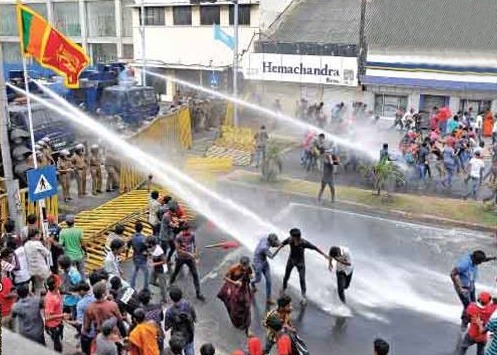
කුරුනෑගල මාලිගා පිටියේ තිබූ නිදහස් පක්ෂ 65 වන සංවත්සර උළල වෙත පැමිණි මීරිගම ප්‍රදේශයේ තරුණයන් පිරිසක් මහමගදී තරුණියකට පහරදුන් සිදුවීමේ සැබෑ සුලුමුල මෙන්න!

September 11th, 2016

උපුටා ගැන්ම නෙත්

තරුණයන් පිරිසක් විසින් තරුණියකට පහරදෙන අවස්ථාවේ වීඩියෝවක් පසුගිය දිනවල සමාජ ජාලා වෙබ් අඩවි ඔස්සේ දැඩි ලෙස කතාබහට ලක්වුණා.

නමුත් එම පහරදීමට හේතුවක් අණාවරනය වූයේ නැහැ.

සමාජ ජාලා වල ඇතැම් පිරිස් පවසා තිබුණේ මැය පාරේ සිටි සිඟමන් යදින පුද්ගලයෙකුට කෙල ගැසූ බවත් එම නිසා එම පිරිස මෙම තරුණියට පහර දුන් බවත්ය.

කෙසේ වෙතත් මෙහි සත්‍ය සිදුවීම නෙත් ගොසිප් අපට අණාවරණය කර ගැනීමට හැකිවුණා.

පසුගිය 04 වැනිදා ඡායාරූප කිහිපයක් ගැනීම සඳහා මෙම තරුණිය ඇගේ සහෝදරයාද සමග කුරුණෑගල නගරයට ගොස් තිබෙනවා.

ඔවුන් දෙදෙනා ගමන් කළ ත්‍රීරෝද රථයේ රියදුරු වී ඇත්තේ මෙම තරුණියගේ පෙම්වතායි.

ඔවුන් යන අතරමගදී ත්‍රීවිල් රථය පෙට්‍ර‍ල් බෝතලයක් ගැනීම සඳහා ප්‍රෙට්‍ර‍ල් ෂෙඩ් එකක නවතා තිබෙනවා.

ත්‍රීරෝද රථයේ සිටි තරුණියගේ සහෝදරයා සහ රියදුරු වූ පෙම්වතා ත්‍රී රෝද රථයෙන් බැස යන අතර තනිවූ තරුණිය වෙත යම් තරුණයන් පිරිසක් පැමිණෙනවා.

මොවුන් එදින කුරුනෑගල මාලිගා පිටියේ තිබූ නිදහස් පක්ෂ 65 වන සංවත්සර උළල වෙත පැමිණි මීරිගම ප්‍රදේශයේ තරුණයන් පිරිසක් බවයි වාර්තා වන්නේ.

කෙසේ වෙතත් මෙම තරුණිය අසළට පැමිණෙන මෙම තරුණයන් ඇයට උසුලු විසුලු කරමින් ඇගේ අතින් ඇදීමට උත්සහ කර තිබෙනවා.

එවිටම තරුණියගේ සහෝදරයා සහ පෙම්වතා එතැනට පැමිණ තිබෙන අතර දෙපිරිස අතර එතැන යම් ගැටුමක් ඇතිවී තිබෙනවා.

ඉන්පසුව අසළ සිටි පිරිස් පැමිණ තත්වය සමතයකට පත් කර තිබෙන අතර පසුව මොවුන් පැමිණි ත්‍රීරෝද රථයේ නැගී ආපසු යෑමට පිටත්ව තිබෙනවා.

නිදහස් පක්ෂයේ සංවත්සර උළල නිසා එදින කුරුනෑගල ප්‍රදේශයේ පැවති තිබෙන්නේ දැඩි රථ වාහන තදබදයක්.

ත්‍රීරෝද රථයේ ගමන් කළ පිරිස මෙම රථ වාහන තදබදයට හසුවද්දි ,ගැටුම ඇති කරගත් තරුණයන් පිරිස නැවතත් ඔවුන්ට මුණ ගැසී තිබෙනවා.

පසුව සමතයකට පත්වූ ගැටුම නැවතත් ඇතිවී තිබෙන අතර මෙම තරුණිය ගැටුම මැදට පැන සමතයකට පත්කිරීමට උත්සහ ගෙන තිබෙනවා.

පසුව මෙම පිරිස එම තරුණියටත් පහර දී තිබෙනවා.එම අවස්ථාවේ පොලිස් නිළධාරීන් පිරිසක් එතැනට පැමිණෙන අතර ගැටුම සමතයකට පත්කර තරුණිය ඇතුළු පිරිස එතැනින් පිටත් කර අරිනවා.

කෙසේ වෙතත් මේ සම්බන්ධව තරුණිය හා තරුණියගේ මව පොලීසිය වෙත කට උත්තරයක් දී ඇති බවත්,ඉදිරි නීතිමය ක්‍රියාමාර්ගයක් ගැනීම අනවශ්‍ය බව පැවසූ බවත් පොලිස් ආරංචි මාර්ග පවසනවා.

https://www.facebook.com/1427711390785719/videos/1781350435421811/


The UN Peace Keeping Hoax: Sri Lanka should not send our War Heroes to nations illegally invaded & occupied

September 10th, 2016

Shenali D Waduge

 There are 16 UN Missions currently operating with over 85,000 blue helmets. These men are serving in countries where conflicts have not arisen without a reason. Many of these conflicts have been planned and plotted by the very nations passing resolutions recommending UN Missions because these missions are only extensions of the goal to plunder and help weaken or reduce the powers of the locals over their own country. In such a scenario should we not be asking ourselves why we would want to send men to guard countries and territories where UN is stationed illegally to face death because the very countries that created the conflict end up arming both sides while sending parties to solve the problem or rather delay solving the problem. When a report by the U.S. GAO, dispatching UN peacekeepers to Haiti was eight times less expensive than fielding a comparable U.S. mission it goes to show that the nations that start trouble are happy to despatch soldiers from poorer third world countries than sending their men and highlights the hypocrisy and double standards that prevail.

The UN PeaceKeeping was created in 1948 and PeaceKeepers are led by the Department of Peacekeeping Operations. Its first mission was to maintain ceasefire during the 1948 Arab-Israel War.

There have been so far 69 Peacekeeping Operations, 56 of which have been since 1988 with peacekeepers from 120 countries contributing. Its annual budget is $8 billion

  • Over 85,000 soldiers
  • Over 11,000 police officers
  • Over 1700 military observers
  • Over 17,000 civilian personnel (majority international, some local)
  • Over 1700 UN volunteers
  • 30% of UN peacekeepers are women
  • Over 34,742 vehicles, 144 helicopters, 350 medical clinics, and 56 airplanes are used to support the work of the 16 UN peace operations around the world
  • Since 1948 more than 3,000 UN peacekeepers have lost their lives
  • Democratic republic of Congo which has the biggest deployment – 26,612 personnel
  • Total fatalities in current operations: 1,728
  • Total fatalities in all peace operations since 1948: 3,505
  • In 1988 UN Peacekeepers won the Nobel Peace Prize!
  • May 29th is the International Day of UN Peacekeepers

Currently 17 UN peace operations are deployed across 5 continents (16 peacekeeping operations and 1 special political mission)

  • 9 in Africa
  • 3 in the Middle East
  • 2 in Europe
  • 1 in the Americas and
  • 1 in Asia.

UN Peace Keeping Missions

Middles East (UNTSO)

established in 1948, it is the 1st peace keeping mission of the UN and the UNTSO military observers have remained in the Middle East to monitor ceasefires, supervise armistice agreements, prevent isolated incidents from escalating and assist other UN peacekeeping operations in the region.

Strength: 382 total, includes 148 military observers / 234 civilian personnel – international & local

Fatalities: 50

Appropriation (biennium 2014 – 2015): $74,291,900

India & Pakistan (UNMOGIP)

UN military observers arrived in mission area on January 1949 to supervise ceasefire between India and Pakistan in State of Jammu & Kashmir and was commanded by Military Advisor appointed by UNSG. Hostilities commenced in 1971 and Mission remained to observe ceasefire since December 1971

Strength: 116 total, includes 44 military observers / 72 civilian personnel – international & local /

Fatalities: 11

Appropriation (biennium 2016-2017): $21,134,800

MOROCCO (MINURSO)

The United Nations Mission for the Referendum in Western Sahara (MINURSO) was established by Security Council resolution 690 of 29 April 1991. The Special Representative of the Secretary-General was to have sole and exclusive responsibility over matters relating to the referendum

Strength: 461 total includes (uniformed personnel – troops & military observers/ civilian personnel – international and local / UN volunteers)

Fatalities = 15

Approved budget for the 461 personnel = $56,582,500 (07/2016– 06/2017)

Cyprus (UNFICYP) –

originally set up by UNSC in 1964 to prevent fighting between Greek Cypriot & Turkish Cypriot communities. Hostilities recommenced in 1974 and the Peacekeepers have been given additional functions and remains on the island to supervise ceasefire, maintain buffer zone, undertake humanitarian activities.

Strength: 1,080 total, includes 929 uniformed personnel – troops & police / 151 civilian personnel – international & local

Fatalities: 183

Approved budget for 1080 personnel = $55,560,100 (07/2016 – 06/2017)

Golan (UNDOF)

In 1974 on 31st May the UN Disengagement Observer Force (UNDOF) was established by the UNSC 350 following the agreed disengagement between Israeli and Syrian forces in the Golan. Peacekeepers have remained in Golan (Syria) since 1974

Strength: 927 total, includes 787 troops/ over 140 civilian personnel-international & local

Fatalities: 46

Approved budget for 927 personnel = $47,714,100 (07/2016 – 06/2017)

Lebanon (UNIFIL)

Created in 1978 to confirm Israeli withdrawal from Lebanon and restore peace and security and assist Lebanese Government to restore governance. After 2006 UNSC enhanced force giving keepers additional mandate to monitor cessation of hostilities, accompany and support Lebanese armed forces and assist humanitarian access to civilians, and help voluntary and safe return of displaced persons.

Strength: 11,345 total, includes 10497 troops / 848 civilian personnel – international & local

Fatalities: 312

Approved budget for 11345 personnel = $488,691,600 (07/2016 – 06/2017)

Kosovo (UNMIK) –

Created by UNSC 122 in July 1999 the UN Interim Administration Mission in Kovoso was to enable people of Kosovo to enjoy substantial autonomy. The Mission was given authority over the territory and the people of Kosovo including all legislative and executive powers and administration of the judiciary. Following declaration of independence and new constitution on 15 June 2008 the Mission focuses on promoting security, stability and respect for human rights in Kosovo.

Strength: 362 total, includes 15 uniformed personnel – military observers and police / 328 civilian personnel / UN Volunteers

Fatalities: 55

Approved budget for 362 personnel = $36,486,900 (07/2016 – 06/2017)

Liberia (UNMIL)

established by UNSC 1509 in 2003 to help implement ceasefire and peace process, protect UN staff, facilities and civilians, support humanitarian and human rights activities and assist in national security reform including national police training and forming a new and restructured military.

Strength: 3,100 total, includes 1803 uniformed personnel (troops & police) / 1159 civilian personnel – international & local /UN volunteers

Fatalities: 197

Approved budget for 3100 personnel = $187,192,400 (07/2016 – 06/2017)

Haiti (MINUSTAH) –

established on 1 June 2004 by Security Council resolution 1542. MINUSTAH succeeded the Multinational Interim Force authorized by UNSC in February 2004 with Aristide’s exile. In 2010 an earthquake left over 220,000 dead. UNSC Resolution 1908 of 19 January 2010 with UNSG’s recommendation to increase peacekeepers to stabalize country and promote political process and rule of law structures and promote human rights. UN has admitted its role in the cholera outbreak!

Strength: 6,014 total, includes (4686 uniformed personnel – troops and police / civilian personnel – international and local / UN Volunteers)

Fatalities: 184

Approved budget for the 6014 personnel = $345,926,700 (07/2016 – 06/2017)

Ivory Coast (UNOCI) –

UNSC 1528 in 2004 established UN Mission with mandate to implement peace agreement signed in 2003. After 2010 Presidential elections and political crisis the Mission remains to protect civilians, provide good offices, support Ivorian Government in disarmament, demobilization and reintegration of former combatants, security sector reform, monitor & promote human rights.

Strength: 4,556 total, includes 3502 uniformed personnel – troops 2601, military observers, police / 961 civilian personnel-international & local / UN Volunteers

Fatalities: 143

Approved budget for 4556 personnel = $153,046,000 (07/2016 – 06/2017)

Darfur (UNAMID)

African Union-United Nations Hybrid Operation in Darfur (UNAMID) established on 31 July 2007 by UNSC 1769 to protect civilians, contribute to security for humanitarian assistance, monitor and verify implementation of agreements, assist in political process, contribute to promoting human rights, rule of law and monitor/report on situation along borders with Chad and Central African Republic (CAR)

Strength: 20,616 total, includes over 17000 uniformed personnel (troops/military observers/police) / over 3000 civilian personnel – international/local / UN Volunteers

Fatalities: 234

Approved budget for 20,616 personnel = $1,039,573,200 (07/2016 – 06/2017)

Sudan – Abyei (UNISFA)

Created by UNSC 1990 in 2011 following violence and population displacement. Peacekeepers monitor border between north and south and facilitate delivery of humanitarian aid and has mandate to use force to protect civilians and humanitarian workers.

Strength: 4,778 total, includes 4546 uniformed personnel – over 4000 troops, military observers, police / 202 civilian personnel – international & local / UN Volunteers

Fatalities: 21

Approved budget for 4778 personnel = $268,624,600 (07/2016 – 06/2017)

South Sudan (UNMISS)

became the newest country. The UN site describes it as the birth of the Republic of South Sudan is the culmination of a six-year peace process which began with the signing of the Comprehensive Peace Agreement in 2005 (does this mean that peace agreements pave way for independent states!) Following resolution 1966 of 2011 the UNSC determined that the situation faced in South Sudan constituted a threat to international peace and security in the region and established the UN Mission in the Republic of South Sudan (UNMISS) to consolidate peace & security and help establish conditions for development. Despite independence crisis broke out in 2013 and UNSC 2155 of 2014 reinforced UNMISS to protect civilians, human rights monitoring and support delivery of humanitarian assistance and implement cessation of hostilities agreement. http://www.un.org/en/peacekeeping/missions/unmiss/

Strength: 16,147 total, includes 13741 uniformed personnel – over 12,000 troops, military observers and police / 1973 civilian personnel – international & local / UN Volunteers

Fatalities: 45

Approved budget for 16147 personnel = $1,081,788,400 (07/2016 – 06/2017)

DR Congo (MONUC)

MONUC was replaced with MONUSCO by UNSC 1925 on 1 July 2010. The new mission can use all necessary means to carry out its mandate relating to protecting civilians, humanitarian personnel, human rights defenders under threat of physical violence.

Strength: 22,498 total, includes (over 18000 uniformed personnel – over 16,000 troops, military observers, police / civilian personnel – international & local/ UN Volunteers)

Fatalities: 102

Approved budget for the 22,498 personnel = $1,235,723,100 (07/2016 – 06/2017)

Mali (MINUSMA)

established by Security Council resolution 2100 of 25 April 2013 to support political process in Mali and carry out security-related tasks as well as support transitional authorities of Mali to implement transitional roadmap. Resolution 2164 of 25 June 2014 gave the mission additional duties of ensuring security, stabilization and protection of civilians, supporting national political dialogue and reconciliation, assisting the reestablishment of State authority, rebuilding security sector, promoting and protecting human rights.

Strength: 13,083 total, includes (uniformed personnel – over 10,000 troops, military observers and over 1000 police/ over 1000 civilian personnel – international & local / UN volunteers)

Fatalities:  105

Approved budget for the 13,083 personnel = $933,411,000 (07/2016– 06/2017)

Central African Republic (MINUSCA) –

Security Council authorized on 10 April 2014 to protect civilians and assist in transition process, facilitating humanitarian assistance, promoting and protecting human rights, supporting justice and rule of law, disarmament, demobilization, reintegration and repatriation.

Strength: 13,327 total, includes (uniformed personnel – over 12,000 troops, military observers and over 2000 police / civilian personnel – international & local / UN volunteers

Fatalities:  25

Approved budget for the 13,327 personnel = $920,727,900 (07/2016– 06/2017)

In short, the UN missions have been increasing as well as expanding their mandate to subtly influence decision making of countries that they are stationed in. Notice how with each Mission they are expanding their roles – influencing law & order structures, restructuring military, drafting constitutions etc. These are all influencing the people subtly. None of the issues there were mandated to attend to have been solved except that the UN continues to add to its mandate and continue presence in countries. While UN adds to its reports and cries over its failures, instead of solving any failures it happily adds on Missions which is getting no country anywhere.

What needs to be also said is that when taking these countries where UN Missions are currently operating in, there is a geopolitical interest for Western imperialist agendas.  Many of the conflicts that have ‘necessitated’ UN involvement and fact finding missions and troops have served the imperial agendas of these western nations who have been either funding covertly and conniving the issues from behind the scenes. None of these covert and overt operations have ever been mentioned in any report or even investigated.

In the light of these realities we need to abstain from sending Sri Lanka’s war heroes to any of these Missions. Our war heroes fought fair and square and won despite plenty of covert foreign involvement too. The whole world should give special treatment to our soldiers for their achievement. They should not be induced by money more or less a bribe to be sent to these conflict zones where they are virtual guineapigs and their lives lost would be in vain for the cause is not genuine and they would be going to nations where conflicts have been illegally created to facilitate geopolitical goals of western imperial nations for whom the UN is now serving as a slave provider.

Our war heroes should never be sent to any UN Peace Keeping Mission even if the inducements are lucrative.

Shenali D Waduge

UNSG Ban Ki-Moon’s comments in Sri Lanka

September 10th, 2016

Asoka Weerasinghe Ottawa, Canada

Kings Grove Crescent . Gloucester. Ontario . K1J 6G1 . Canada

9 September 2016

Rt. Hon. Maithripala Sirisena: President of Sri Lanka,
Presidential Secretariat, Galle Face, Colombo 1, Sri Lanka

Hon Ranil Wickremasinghe, Prime Minister of Sri Lanka,
Prime Minister’s Office, 58 Sir Ernest De Silva Mawatha,
Colombo 7, Sri Lanka

Hon. Karunarathna Paranawithana, MP.
Deputy Minister of Parliamentary Reforms and Mass Media.
Fife Road, Colombo 5, Sri Lanka

Honourable Gentlemen:

Sunday (4 Sept.16)  THE ISLAND’s news item bylined Maheesha Mudugamuwa regarding the UN Secretary General (UNSG) Ban Ki-Moon’s comparison of civilian deaths during  the Vanni war with acts of genocide in Rwanda and Serbia in 1994 and 1995,   was commented on for the GoSL by the Deputy Minister Karunarathna Paranawithana.  He, …said the GoSL would not seek clarification as UNSG’s remarks were not mentioned in his prepared speech made at the Colombo Hilton during Moon’s recent visit to Sri Lanka, and therefore UNSG’s personal comments would not be accounted as that from the UN.”

This is claptrap, this is poppy cock, and this is insane.  Didn’t Ban Ki-Moon visit Sri Lanka in the capacity of being the UN’s Secretary General?  If he indeed did, then the GoSL’s position is a cop-out. And reducing Sri Lanka as a door-mat to be treated as a door-mat by this arrogant western-lackey UN official.   Letting Ban Ki set his feet on Sri Lanka’s charnokite-kabook soil, and let him Moon Sri Lanka one more time without seeking an explanation is being gutless on our part and deplorable.  His comment should have been challenged by asking for an explanation, as his arrogant twin-Mooning was an outrageous insult on yours and my sovereign nation, but importantly was vulgar and disingenuous tarnishing of the dignity of our valiant armed forces that annihilated the most  ruthless  terrorists in the world, the Tamil Tigers, on 19 May 2009.   He also showed his disrespect to the poor village Mothers and Fathers who had inculcated their sons to be true patriots and let them march into battle with the Tamil Tigers to save our island nation from being decapitated and give you three back, and 20 million other Sri Lankans your right-to-life which had been hijacked by the Tamil Tigers for 30 bloodying years.   And Ban Ki-Moon was so cocky and sure of himself when he insulted those parents who greeted their sons with chest-thumping wailing when they returned home in plywood caskets.  For God’s sake don’t you three see through all this? That is a reality check for you three. Take a deep breath, sit in a half-lotus, clear your minds and ponder!

And you all let this UN official get away that easily providing him with another window of opportunity to Moon at Sri Lanka one more time, without having rapped his knuckles as protective-rulers of our beautiful sovereign nation.  Gentlemen, this is not acceptable. This is asinine!

And you, Deputy Minister Paranawithana continued with your statement which was tantamount to covering-up the UNSG’s twin-moons. This was sick. You said, The government has no intention of taking up that issue as it was not the way to handle diplomatic relations.”

Phew! Man, come again Mr. Paranawithana.  My question to you is, did your official visitor from the UN, Ban Ki-Moon, cross the sacred line of good diplomacy when he made that calculated oblique comparison of genocide in Rwanda and Serbia with the Wanni war that was not acceptable to our dignified sovereign country and our disciplined armed forces. Come on, Deputy Minister, let’s be real.  Don’t you understand that Ban Ki-Moon caused considerable harm to Sri Lanka with his comment?   This was well calculated as he made it happen just prior to the judicial inquiry into War crimes allegations against our valiant armed soldiers.

It is obvious that your knife cuts only one way reducing Sri Lanka into a door-mat for this arrogant, I-know-Sri Lanka-is- not-going-to-touch-me cocky UNSG, and you bet,  he will treat Sri Lanka as his door-mat.   You know what Deputy Minister; my knife has cut both ways on such issues always in Canada.  Did I get results?  Of course, I did, always, upholding the dignity of my Motherland, Sri Lanka.  And, then, I was not a paid employee of the GoSL. I did my part  as an expatriate Sinhalese-Sri Lankan for the love of my Motherland.

But to be honest, I thought that you three honourable gentlemen had at least 75 years experience between you of international- diplomacy having dealt with foreigners who interfered in Sri Lanka’s internal affairs. It would have been a cake-walk for one of you to have dealt with Ban Ki-Moon as a class act and taught this UN official a lesson in Diplomacy 101.   I am disappointed, I am stymied and flabbergasted.

Gentlemen, think for a moment.  Did you not realize that Ban Ki-Moon succeeded well with his statement to tighten the screw on Sri Lanka’s neck  one more time,  by shocking the pro-Sri Lankan international conscience, thereby strengthening the process for a UNHCR War Crimes Probe?  Don’t tell me that you three are naïve not to see through Ban Ki-Moon’s successful, cunning endeavour.

Let us not forget that Ban Ki-Moon was the UN’s point hitter for his western government clients against Sri Lanka to bring her down to her knees for getting rid of the Tamil Tigers when they demanded from the Rajapaksa government to stop firing bullets at Prabhakaran and his gang of terrorists and declare a ceasefire.  And the response they got quite rightly was We are not your colony anymore”, Why don’t you go fly a kite”, and why don’t you go home and jump in the river” and leave us to deal with our troubles that you all created in the first place, by aiding and abetting these Tamil Tiger terrorists.

It was Ban Ki who ‘Mooned’ at Sri Lanka once again by appointing the anti-Sri Lanka Darusman Gang to investigate the alleged human rights violations in Sri Lanka.   Remember?  Most of us questioned the UNSG of the impartiality of the panelists.

Marzuki Darusman, the former Attorney General of Indonesia who was heading the panel was also a member of the International Independent Group of Eminent Persons (IIEGP).  This Darusman left the panel with a huff disagreeing with the Sri Lanka Government and made hostile observations about Sri Lanka, and yet signed the report without paying a single visit to Sri Lanka to ascertain himself the actual ground situation.  And Ban Ki-Moon, who you all have decided to cover his twin-Moons over his comments on ‘genocide’ is unbelievable. Durrr…! What impartiality did you expect from your friend Ban Ki-Moon?  Do I trust him?   Na! Not even for a bushel of Roasted Korean Coffee Beans.

The second panelist who Ban Ki-Moon appointed was Steven Ratner, an adviser to the NGO, Human Rights Watch (HRW) that had been very critical of Sri Lanka from the inception of the Tamil Tiger terrorists’ Eelam War.  Ratner had also-authored a book, with Jason Adams titled Accountability of Human Rights: Atrocities in International Law beyond the Nuremberg Legacy”.  On page 123 he had stated that the convention on banning apartheid should be invoked in relations to countries such as Sri Lanka”.  With that backgrounder Steven Ratner should have been dismissed instantly as a panelist by your friend Ban Ki-Moon, but he didn’t.  So he turns the screw tight on Sri Lanka’s neck one more time.  So you trust this UNSG to the point of making an effort to cover his twin-Moons from flying angry darts.  Durrr!

What a thing!

The third panelist was South African Yasmin Sooka who was a close associate of South African Tamil, Navi Pillai, the Head of the UNHRC in Geneva,  who was the patron of the Sooka Foundation, and also responsible for the failed resolution that was brought against Sri Lanka before the UNHRC in May 2009.  In the world of ‘you scratch my back and I will scratch yours’, what impartiality did UN’s Ban Ki-Moon expect from Sooka?  Durrr…  This was stupid wasn’t it?  Not smart but was the appointment of an anti-Sri Lanka panel deliberate!   I won’t trust Ban Ki-Moon even for a stick of Korean candy- floss from a Seoul carnival stall.

What got my goat most about Ban Ki-Moon was that  he let his Commissioner in Geneva, Navi Pillai use the Darusman Report as the Bible of Sri Lanka’s  alleged Human Rights violations during the last phase of the Eelam War when the Report was explicit in saying on the opening page: Due to the scarcity of objective reporting from the conflict zone, it was difficult to determine precisely what had happened during the final military assault,”   You honourable gentleman  should take off your rose-coloured glasses, and you would see what I see. There is an anti-Sri Lankan vindictive rat in the UN office in New York.

Mr. President and Mr. Prime Minister, although your Yahapalanayos have got better at playing Cops and Robbers with the Rajapaksa and Company watching them traipsing in and out of revolving doors at Magistrate Courts, you have shown your pathetic servile-diplomacy when dealing with the United Nation’s and western  government personnel and allowing them to tighten the screw on Sri Lanka’s neck.  It’s just too bad.  It is time that the Yahapalanayos snap out of the silly season of servile-diplomacy when Sri Lanka is been thumped with ‘genocide’ allegations and clawing at the dignity of our kaki, sky-blue and Indian Ocean-surf white uniformed heroes of the Army, Air Force and Navy who gave the 20 million peoples their dignity and their right-to-life by ridding the last Tamil Tiger terrorist with a live bullet on the beach of the Nandikadal lagoon.

It is time you draft a press line-manthra in your choice diplomatic words which your Deputy Minister of Mass Media is quite competent to write, something to this effect: But it is unfortunate that no government or Sri Lanka Human Rights Watchers who are ever ready to charge Sri Lanka with ‘genocide’ during the final three months of the Eelam War, acknowledged that by 19 May 2009, the Sri Lankan armed forces, had rescued  295,873 Tamils from the clutches of the Tamil Tigers who used them as a human-shield and herded them for 30 months from the West to East  in the North under a scorching sun like unwashed cattle, and  that even soldiers  participated in preparing a million healthy meals a day, to feed these Tamil refugees  a hearty breakfast, lunch and dinner, to keep them alive.  This amazing humanitarian Class Act, a major rescue Mission in modern times, surely cannot fit into your charge of ‘genocide’, will it?  What has been your problem to acknowledge publicly this fact that does not fit into any creative formula or definition of the word ‘genocide’.  There lies the disingenuous hypocrisy of the Sri Lanka bashers.”  Let’s use this as a manthra and drum it into every thick skull of the Sri Lanka bashers like that of Ban Ki-Moon.  Let every Head of our Foreign Missions memorize it and spit it out at every charge directed at Sri Lanka and her armed forces heroes.  Gentleman, the silly season of servile-diplomacy is over.  Let’s be smart and be on the offensive.  The screw around Sri Lanka’s neck is getting tightened by the day.  And Ban Ki-Moon did his bit with his statement on the Wanni killings and the massacres in Rwanda and Serbia

There is a wee bit of advice that I wish to pass on to you.  Please stop challenging the intelligence of persons who question what your ‘Yahapalanaya Good governance’ is up to. It is their prerogative to question and it is your responsibility to respond, without being uppity or having a hissy-fit.

Sincerely,

Asoka Weerasinghe

Ottawa, Canada

සාමය ඔලුවෙන් සිටුවීම

September 10th, 2016

තේජා ගොඩකන්දෙආරච්චි

දශක තුනක් තිස්සේ මුුලු මහත්  ශ්රී ලංකාවම අගාධයකට ඇද දැමූ වර්ගවාදී යුුද්ධය අවසන් කිරීමෙහි ලා උදාර මෙහෙයක් ඉටුකල මේජර් ජෙනරල් කමල් ගුණරත්න රණවිරුවානන් අතින් ලියැවුනරණ මග ඔස්සේ නන්දිකඩාල්නම් කෘතිය එලි දැක්වීම පසුගිය සතියේ සිදුවිය. මේ යුද්ධය අවසන් කිරීමේ ගෞරවය තමන් වෙත පවරා ගන්නට විවිධ පිරිස් උත්සාහ කලත්, මේ පොත එලි දැක්වීමේ උත්සවයට සහභාගි වූ පිරිස, සිදුවුන කතාබහ ඔස්සේ ඊට නියම හිමිකරුවන් කවුද යන්න ජනතාවට යම් ප්රමාණයකට අවබෝධ වූ බව නම් පැහැදිලිය. වත්මන් ආරක්ෂක ලේකම්වරයා සහ හමුදා ප්රධානීන් , රජයේ වගකිව යුත්තෝද මෙයට සහභාගි නොවූහ. අද දහම්  පාසලක ත්යාග ප්රදානෝත්සවයකට පවා යන්නට මැලි නොවන අප ජනාධිපති, එදා වැඩ බැලූ ආරක්ෂක ඇමතිවරයාය. විදේශගතව සිටි එවක ජනාධිපතිවරයා සිය රටට පැමිනෙන විට පෙරමුණේම ගොස්  බදා වැළඳ සුභ ආරංචිය පැවසුවේ ඔහුය. ඔහුත් එතැන නැත. රණමග කෙසේ වෙතත් එදා අනභිභවනීය සටන තුලින් ගලවා ගත් අප මාතෘ භූමිය යලිත් ඇදගෙන යන මග නම් මේ තුල පැහැදිලිව පෙන්නුම්  කරයි.


අතර මාධ්යවේදීන් වෙත අදහස් දැක් වූ හිටපු හමුදාපති අමාත් සරත් ෆොන්සේකා තමාද තම අත්දැකීම් අලලා පොතක් ලියන බවත්, සමහරු යුද්ධය පිලිබඳ පොත් පල කරමින් තම ප්රතිරූපය ගොඩ නගා ගන්නට තැත් කරන බවත් පැවසීය. එයද සුපුරුදු පරිදි ඔහුගේ සිත තුල කැකෑරෙන වෙෙරය සහ ඊර්ෂ්යාව පිටතට දැක්වුන අවස්ථාවකි. මේ අනුව නම් සරත් ෆොන්සේකා ලියන්නට යන පොත ගැන, ඔහු පෙරලූ පොත් ගැනද හොඳ හැටි දන්නා ජනතාවට  නම් අමුතුවෙන් කිව යුතු නැත. එදා කල යුද්ධය අද රනිල්ලා විහිලුවක් වූවාට වෙනත් කිසිවකුට විහිලුවක් නොවීය. මේජර් ජෙනරාල් කමල් ගුණරත්න පොත පිදුවේ පිදිය යුත්තන්ටමය. යුද්ධයේ විපාකය තම දෑස් ඉදිරියේ පෙනී යත්දීත්, තම දරුවන් යුද හමුදාවට යවන්නට පසුබට නොවූ ඈත  පිටිසර දෙමව්පියන්ට ඔහු පුදකල කෘතඥතාව අතිශයෙන් සංවේදීය. වසර 35 ක් තිස්සේ යුද හමුදාවේ සේවය කරමින් ඉනුත් වසර 26 ක් , අවසන් තත්පරය දක්වාම බිහිසුනු වර්ගවාදී යුද්ධය සැබැවින්ම අත්විඳි ඔහු වැන්නෙකුම මිස ඊට සුදුස්සෙක් තවත් වේද


ශ්රී ලංකා හමුදාවනට යුද අපරාධ පිලිබඳව චෝදනා එල්ල කරන්නට දත කන විදේශීය බලවේගයන් හමුවේ තම පිට කොන්ද පාත් කරන වත්මන් පාලකයන්ට නම් මේ යුද්ධය ගැන අවබෝධයක් තිබුනේම නැත. තොප්පිගල අත්පත් කරගත් විට තොප්පිගල යනු නිකම්ම කැලයක් යයි රනිල් එදා පැවසුවේ එහෙයිනි. රවි කරුණානායක, ලක්ෂ්මන් කිරිඇල්ල, මංගල සමරවීර වැනි පුද්ගලයන් එදා කී කතා ඔබේ මතකයේ ඇති බව නිසැකය. අද බැන් කි මූන් ඇතුලු ජාත්යන්තරය සතුටු කිරීම තම න්යාය පත්රයේ අංක එකට තබාගත් ඔවුන්ගෙන් යුද්ධය සිදු වූ ආකාරය පිලිබඳ  හෙලි කෙරෙන සැබෑවක් කෙරෙහි මීට වඩා හොඳ ප්රතිචාරයක් අපේක්ෂා කල නොහැක


තම චාරිකාව අතරතුර ශ්රී ලංකාවේ සිදු වූ වර්ගවාදී ප්රශ්නය ගැන කතා කල එක්සත් ජාතීන්ගේ මහ ලේකම්වරයා වර්ගවාදී ප්රශ්නය රුවන්ඩාවේ සිදු වූ සමූලඝාතන සමග  සැසඳීය. මේ කතා තරන්නේ 1994 අප්රේල් මස 6 වන දා ඇරඹී මාස කිහිපයක් ඇදී ගිය ගෝත්රවාදී අරගලය ගැනය. වරක් නිවාස ඇමති සජිත් ප්රේමදාස, පසුගිය රජය ආශ්රය කලේ රුවන්ඩාව, බුරුන්ඩාව (බුරුන්ඩිය විය යුතුය) වැනි රටවල් (ගණන් ගත යුතු නැති) බවට උපහාසාත්මකව පැවසුවේ ගැමියන් පිරිසක් අමතමිනි. තමන් ආශ්රය කරනසුද්දන්ගැන උදම් වෙමින්ය. රුවන්ඩාව ගැන එවන් ආකල්පයක් දරන වත්මන් රජය එහි සිදු වූ සිද්ධීන් පිලිබඳ හරි හැටි නොදන්නා නිසා මේ ප්රකාශය එක කණකින් අසා අනිත් කණින් පිටතට දැමුවා විය යුතුය. නමුත් එය බරපතල කියමනකි


රුවන්ඩාවේ සිදු වූ සමූල ඝාතනයන්ට තුඩු දුන් හුටූ හා ටුට්සි ගෝත්රිකයන් අතර පැන නැගුනු ප්රශ්නය කිසි සේත් ශ්රී ලංකාවේ වර්ගවාදී ප්රශ්නයට සමාන නොවේ. 1959 – 1962 අතර කාලයේද රටේ බහුතරය වූ හුටූන් විසින් සුලුතරය වූ ටුට්සීන් 150,000 ක් පමන මරා දැමුවෝය. එවිට තම පණ බේරාගෙන අසල්වැසි සයරේ (කොංගෝ ප්රජාතන්ත්රවාදී ජනරජය) වෙත පලා ගිය ටුට්සීන් කලබල සංසිඳුන පසු යලි රුවන්ඩාවට සංක්රමණය වූහ. නමුත් මේ ගැන අසතුටු වූ හුටූ අන්තවාදීන් ටුට්සීන් පලවා හැරීමට විවිධ ප්රහාර සිදු කර අවසානයේදී 890,000 ක් ඝාතනය කල මහා අපරාධය සිදුකලේ තම හුටූ වර්ගයාම එක සේ බුද්ධි ශෝධනයට ලක් කිරීමෙනි. 1994 අප්රේල් මස 6 වන දා සවස 6 පමන කිගාලි ගුවන් තොටුපලට සේන්දු වෙමින් සිටි රුවන්ඩානු ජනාධිපති හබ්යෙරිමානා සහ අසල්වැසි බුරුන්ඩියානු ජනාධිපති සයිප්රියෙන් න්ටර්යාමිරා රැගත් ජෙට් යානය අන්තවාදී හුටූන් විසින් වෙඩි තබා බිම හෙලනු ලැබීය. මීට හේතු වූයේ හුටූ හා ටුට්සි ගෝත්රිකයන් අතර බලය බෙදී යන පරිදි ඔවුන් අත්සන් කලඅරූෂානම් සාම ගිවිසුමයි.


හුටූන් හා ටුට්සීන් අතර ගැටුම ඇරඹුනේ කෙසේද? ඔවුන් දෙපිරිසම රුවන්ඩානු ජාතිකයෝය. කතා කලේ, ලියුවේ එකම භාෂාවය. වෙනස මතු වුනේ බාහිර පෙනුමේය. ටුට්සීන් ශරීර ස්වභාවයෙන් උස, සිහින්, මඳක් පැහැපත් හා විශේෂයෙන්ම සිහින් දිග නාසයක් ඇත්තෝය. හුටූන් මිටි හා පලලැති සිරුරද, පලල් නාසයක්ද සහිත වඩාත් අඳුරු ඡවි වර්ණයක් ඇත්තෝය. 1935 වන තෙක් එය ඔවුන්ට ප්රශ්නයක් වූයේ නැත. 1918 දී මේ රටවල් යටත් කරගත් බෙල්ජියම්වරු, 1935 දී මේ මිනිසුන්ගේ ශාරීරික වෙනස් කම් අනුව වර්ගීකරණය කර, ඔවුන්ට හුටූ, ටුට්සි සහ ට්වා යන ගෝත්රික හැඳුනුම්පත් නිකුත් කලහ. අනුව 85% ක් හුටූන් , 14% ක් ටුට්සීන් , 1% ක් ට්වා වශයෙන් රුවන්ඩානු ජාතිය බෙදී ගියේය. සුදු ප්රමිතීන්ට අනුව වඩා හැඩ වැඩැති ටුට්සීන්ට වරප්රසාද ලබා දෙමින් හුටූ වරුන් පහල තලයේ ජීවනෝපායන්හි තබා කොන් කලහ.  අනුව  මෙම ප්රශ්නයේ ආරම්භකයන් කවුරුන්ද කියා පැහැදිලිය. 1994 දී පුපුරා ගියේ එසේ පරම්පරාගතව වැඩී ගිය වෙෙරයේ ආතතියයි. එහිදී හුටූ අන්තවාදීන් පමනක් නොව බුද්ධි ශෝදනයට ලක් කර තිබූ සාමාන් ජනතාවද හිතු මතයේ මිනී මැරූ අතර එරට අගමැතිනිය, ජනාධිපති ඇතුලු මධ්යස්ත හුටූවරුන් ඇතුලුව 890,000 ක් ඝාතනය කරන ලදී. මෙම ප්රශ්ණය කෙසේවත් ශ්රී ලංකාවේ වර්ගවාදී ප්රශ්නයට සම කල හැකි දැයි බලන්න. 1983 දී සාමාන් සිංහලයන්, ආයුධ ගත් ම්ලේච්ඡයන් හමුවේ අසරණ වූහ. කිසි විටෙක ඔවුන් තමා සමග එකට හිඳ තේ කෝප්පයක රස විඳිමින් සුහද සාමීචියේ යෙදුනු අසල්වැසියාගේ උදරය පිහි පාරකින් ඉරා දමා ඝාතනය කලේ නැත. අනික ඉන් පසුව අද දක්වාම රටේ අනිකුත් ප්රදේශවල ජීවත් වීමට, තම ආගමික හෝ සංස්කෘතික විධි පවත්වාගෙන යාමට සුලු ජාතීන්ට සැලකිය යුතු බාධාවක් නැති තරම්ය.


නමුත් තව අතකින් බලන කල බැන් කි මූන්ගේ   සමානත්වය අදාල වන තැනක්ද වෙයි. 1983 න් පසු උතුරු නැගෙනහිර මායිම් ගම්මාන වල ජීවත් වූ සිංහල හා මුස්ලිම් ජාතිකයන්ට එල්ල වූ ප්රහාර . ඩොලර් කෙන්ට් ෆාම් ධීවර ගම්මානයන්හි සිට  අම්පාර ගෝනගල දක්වා සිදු වූ සමූල ඝාතනයන් හෝ සමූල ඝාතන උත්සාහයන්ය. අද රජය මේ තරම් සංහිඳියාව ගැන කතා කරද්දී සිංහලයාගේ සෙවනැල්ලකටවත් තම ප්රදේශවල ඉඩ නැතැයි යන පණිවුඩය දෙන විග්නේශ්වරන්ලා, ශිවාජිලිංගම්ලාගේ කතා වල හොල්මන් කරන්නේ සමූලඝාතනයක සෙවනැලි නොවේද


අවසානයේ රුවන්ඩාවේ ප්රශ්නය සෑදූ වුන්ම සාම සාධක හමුදාවක වෙසින් පැමින ප්රශ්න විසඳන්නට තැත් කලහ. නමුත් හුටූන් මේ ම්ලේච්ඡ ඝාතන ඇරඹූ විට පිහිට ඉල්ලා ඔවුන් වෙත පැමිනි ටුට්සීන්ට එක්සත් ජාතීන්ගේ සාම සාධක හමුදාව පවසා ඇත්තේඅපට පහර නොදෙනතුරු අපට මීට මැදිහත් වෙන්න බැහැයනුවෙනි. ඉතින් බැන් කි මූූන් මෙවර චාරිකාවේදී අපටද පැවසූ කතාව, එනම් තමන් ඒ් කාලයේ මැදිහත් වූවා නම් විිිශාල ජීවිිත විනාශයක් වලක්වා ගන්නට තිබුනාය යන්න සැබෑවක් වනු   ඇතිද?


ඔහු මේ කියන මැදිහත් වීමේ සැබෑ තතුරණ මග ඔස්සේ නන්දිකඩාල්පොතෙහි සටහන් වී ඇත. අනික ඔහු මේ කතා කරන්නේ මොන ජීවිත ගැනද? නොඅනුමානවම යුද්ධයේ අවසන් දින කිහිපය තුල එල්ටීටීඊ මිනිස් පලිහක් ලෙසින් රඳවා ගත් ජීවිත විය යුතුය. එය ඉතා ඛේදනීය මතකයක් බව සැබෑය. එමෙන්ම වන තුරු යුද්ධයට ගොදුරුව මිය ගිය සිංහල, දෙමළ, මුස්ලිම් සිවිල් වැසියන්, ප්රභාකරන්ගේ සංවිධානය විසින් විවිධ චෝදනා කර මරා දැමූ ටෙලෝ ඇතුලු අනිකුත් ද්රවිඪ සංවිධානවලට අයත් මිනිසුන් ගැන මේ කතාවේදී සඳහන් වනවාදැයි සැක සහිතය. 80 දශකයේ අග භාගයේදීද සිදුකල අමානුෂික ඝාතන මේවාට ගෑවෙන්නේත් නැත.


අනික ශ්රී ලංකාවේ බහුතර සිංහල ජනතාව රුවන්ඩානු බහුතරය බඳු වී නම් එදා 1993 මැයි මස 1 දා දෙමළ බෙදුම්වාදීන් විසින් එවකට සිටි ජනාධිපති ආර්. ප්රේමදාස මරා දැමීමට පෙර, 1989 දී සාමය ගැන පවසමින් ඔහු විසින් එල්ටීටීඊ සංවිධානයට ආයුධ, සිමෙන්ති, පතොරම් මෙන්ම තම  විරුද්ධවාදීන් දඩයම් කිරීමේ අවස්ථාව ලබා දුන් වරදට සිංහල ජනයා විසින්ම ඔහු මරා දමන්නට තිබිනි. සිංහල ජනතාව 1994 දී චන්ද්රිකා බණ්ඩාරනායකට අති විශාල ජන වරමක් දුන්නේ ඇය සාම දූතිකාවකගේ වෙසින් පැමිනි නිසාය. 2002 වසරේ රනිල් වික්රමසිංහ විසින් එල්ටීටීඊ තම පාලන ප්රදේශය ගිවිසුමකින් පවරා දී ප්රභාකරන් නිළ නොවන අයුරින් වුව දෙමළ ඊලමේ ජනාධිපති සහ අගමැති බවට උසස් කල විට ජනතාව නිහඬව සිටියහ. අදද සිංහල ජනතාව උපන් බිමේ කොන් කරමින් යන වැඩ පිලිවෙල දෙස මිනිසුන් බලා සිටින්නේ සිත්  වේදනාවෙනි. නියම තත්වය බැන් කි මූන් පැහැදිලි කර දෙන්නට රජයේ කිසිම කෙනෙකුට අවශ් නොවන හෙයිනි


ජාත්යන්තරය කියන ඕනෑම කපුටෙකුට අප රටට පැමින අපේ හිස මත මල පහ කර යන්නට හැකි අන්දමේ රටක් ගොඩ නැගීමට නම් මේ ඊනියා සම්මුතිවාදී රජය පසුබට නොවේ. දෙමළ ඩයස්පෝරාව මැලේසියාවේදී මහින්ද රාජපක්ෂට එරෙහිව නැටූ යක් නැටුම රනිල්ට හා රජයේ අනිත් මුග්ධයන්ට මහත් විනෝදයක් සැපයූ බව මේ ප්රශ්නය පාර්ලිමේන්තුව තුල මතුකල අවස්ථාවේ ඔවුන් හැසිරුනු ආකාරයෙන් පැහැදිලි විය. මෙය මහින්ද රාජපක්ෂ විසින්ම සැලසුම් කල ක්රියාවක් ලෙස එජාප පාර්ලිමේන්තු මන්ත්රී අජිත් මාන්නප්පෙරුම පවසන විට එය අනුමත කරන්නට ඊනියා හෙළ උරුමයේ නිශාන්ත වර්ණසිංහ නොපැකිලුනේය. මැලේසියාවේ ශ්රී ලංකා මහ කොමසාරිස්වරයාට එල්ල වූ ප්රහාරය ගැන කතා කරත්දී පසුගිය රජය සමයේ සජින්ද වාස් ගුණවර්ධන විසින් එවක මහා බ්රිතාන්යයේ ශ්රී ලංකා මහ කොමසාරිස් වූ ක්රිස් නෝනිස්ට සිදුකල පහර දීම සම්බන්ධව කතා කරමින් පසුගිය රජයට බර පැටවීමේ සුපුරුදු තැටිය වාදනය කරති. ඉතා බරපතල වැරදි ලෙස ගැනුනද, මේ සිද්ධීන් දෙකම එකම කාණ්ඩයට ලා සැලකිය හැකිද? අනෙක  දැන් එක වරදකට මුල්වූ පාර්ශ්වයට දැන් දඬුවම් ලැබී ඇත. හැබැයි එදා පහර දුන් සජින්ද වාස් සුරතල් කරමින් සංධානයේ මැයි රැලියේ සංවිධාන කටයුතු ඔහුට බාර කරන විට නම් ගැන අවස්තාවෝචිත පරිදි කට අරින්නට හෝ වසාගෙන සිටින්නට සියල්ලෝම දක්ෂ වූහ


සැප්තැම්බර් මස 4 වන දා ශ්රී ලංකා නිදහස් පක්ෂ සංවත්සර රැස්වීමේ දී තමා සමග සිටින පාක්ෂිකයන් කන්දරාව දැක සතුටු වී තම හිතාදර ඇමතිලාට ඇඬෙන්නට කතාවක් කල ජනාධිපතිවරයා අද එක්සත් ජාතික පක්ෂයේ සංවත්සර රැස්වීමට ගොස් 2015 ජනවාරි 8 වන දා තමාට ඡන්දය දුන් 62,00,000 න් බහුතරය එක්සත් ජාතික පක්ෂයෙන් බව කියමින් ඔවුන්ට ස්තුති කරයි ! ඉතින් ඊයේ කියූ දේ අද මතක නැති සහ එවන් කතාවල පරස්පරයන් නොවැටහෙන අන්දමේ නායකයන් සිටින අප රටේ අනාගතය ගැන ජනතාවට දෙන පොරොන්දු ගැන කවර කතාද?

රුහුණු සරසවියේ   ‘නිහඬ කළ සෙවනැලි’

September 10th, 2016

ධර්මන් වික්‍රමරත්න

 අසූව දශකයේ රාජ්‍ය ත්‍රස්තවාදය ඉදිරියේ මුළු මහත් සමාජයම දණගසා සිටි මොහොතක ඒ සියල්ලටම එරෙහිව පෙරට පැමිණියේ සරසවි සිසුන්ය. රාජ්‍ය භීෂණය, ශිෂ්‍ය මර්ධනය, නිදහස් අධ්‍යාපන කප්පාදුව, ජාතික අර්බුදය, ඉන්දියන් හමුදා ආක්‍රමණය ඇතුළු කරුණු ගණනාවක් හමුවේ සංවේදීවූ මෙම සිසුන්ගෙන් බහුතරයක් ජවිපෙ 2වැනි කැරැල්ලට සෘජුව සහ වක්‍රව බද්ධ විය. අවසානයේදී භීෂණ යුගය පැවති 1986 සිට1990 දක්වා මියගිය සරසවි සිසු සංඛ්‍යාව 396කි. අතුරුදහන් වූ සංඛ්‍යාව 227කි. එලෙස ඝාතනයට ලක්වූ සිසුන් 396 අතරින් ශ්‍රී ජයවර්ධනපුර විශ්ව විද්‍යාලයේ සිසුන් 107ක් සහ කැලණිය විශ්ව විද්‍යාලයේ  64 දෙනා පිළිබඳව මෙම ලිපි මාලාව මගින් කලින් ප්‍රථමවරට තොරතුරු අනාවරණය කළෙමු. මෙවර ප්‍රථමවරට හෙළි කරනුයේ එසේ ඝාතනය වූ රුහුණු සරසවියේ සිසුන් 53 දෙනෙකු පිළිබඳවය.

Dharman Wickremaretneධර්මන් වික්‍රමරත්න විසිනි.

සරසවිය වූකලී නොදැනුමට එරෙහි වූවන් දැනුම් ලබන්නට වෑයම් කරන තැනය. සත්‍ය දකින්නවුන් එම සත්‍ය අනුනට දක්නට සැලැස්වීම සඳහා වෙර දරන්නාවූ තැනය. ගවේශකයින් මෙන්ම විද්‍යාර්තයින්ද එකට ඥාන ගවේෂණය සිදුකරන තැනය. වින්තනය සහ අධ්‍යාපනයේ ප්‍රමිතීන් ප්‍රකාශයට පත්කරන්නා වූ තැනය. එහෙත් ජවිපෙ 2වැනි කැරළි සමයේදී සියල්ල උඩු යටිකුරුවූයේ නොසිතූ ලෙසිනි.

රුහුණු සරසවියේදී 2015 ජුනි 20වැනිදා විරු සිසු සැමරුමට ගොස් සිටියදී ලියුම්කරුට අතීතය ආවර්ජනය විය. එකල රුහුණු සරසවියේ සටන්කාමී සිසු නායකයින් අතර ඉදිරියෙන්ම සිටියේ ඩී.ආර්. නිශ්ශංක, ඥාණසිරි පල්ලියගුරු, ප්‍රේමචන්ද්‍ර කොඩිතුවක්කු, කේ.ටී. නිමල්සිරි වැනි පිරිසකි. ඔවුන් පමණක් නොව රුහුණු සරසවියේ සිසුන් 53ක් ජවිපෙ 2වැනි කැරළි සමයේ ඝාතනයට පත්විය. මාතර ජනරජ මාවතේ ආනන්ද කුමාරගේ නිවසේදී අසූව දශකයේදී රුහුණේ සිසු නායකයින් සහ ක්‍රියාකාරිකයින් ඉදහිට හමුවූ අයුරුත් මැදියම වතතුරු කථාබස් කල අයුරුත් සිහිපත් විය. රුහුණේ පමණක් නොව සියළු සරසවිවල අසූවේ දශකයේ අග භාගයේදි බහුතරයක් සරසවි සිසු නායකයින් වෘත්තීය පුවත්පත් කලාවේදියෙකු වශයෙන් ලියුම්කරු 1984 සිට ඇසුරුකර ඇත.

dharman10091602රුහුණු විශ්වවිද්‍යාලය දිස්වන අයුරු.

 පාර්ලිමේන්තුවේදී 1967 අධ්‍යාපන අමාත්‍යාංශයේ අයවැය කාරක සභා අවස්ථාවේදී රුහුණට විශ්ව විද්‍යාලයක අවශ්‍යතාවය ප්‍රථම වරට ඉදිරිපත් කරන ලද්දේ දෙවිනුවර අතුරු මැතිවරණයෙන් 1967දී පත්වූ ශ්‍රිලනිප මන්ත්‍රී රොනී ද මැල්ය. හැත්තෑවේ මැතිවරණයෙන්ද ශ්‍රිලනිපයෙන් ඉදිරිපත්ව ජයග්‍රහණය කල ද මැල් පසුව එජාපයට එක්විය. එජාප ආණ්ඩුව 1977 ජුලි 21වැනිදා පත්වීමෙන් පසු එහි මුදල් ඇමතිවරයාවූ රොනී ද මැල්ගේ මැදිහත්වීමෙන් ඒ පිළිබඳ මහාචාර්ය එම්.බී ආරියපාලගේ ප්‍රධානත්වයෙන් 1977 ඔක්තෝබර් පත්කල කමිටුවකින් රුහුණු විශ්වවිද්‍යාලය පිහිටුවීමට හොදම නගරය මාතර බවට 1978 ජනවාරි මස නිර්දේශ කරන ලදී. රුහුණු විශ්ව විද්‍යාලයීය විද්‍යායතනය මාතර මැදවත්තේදී 1978 අගෝස්තු 27 ආරම්භ කරන ලද්දේ ජනාධිපති ජේ.ආර්. ජයවර්ධන විසිනි. ආරම්භයේ ඉතා අඩු පහසුකම් මැද ආරම්භ වූ රුහුණු සරසවිය 1984 පෙබරවාරි 1වැනිදා සිට අංග සම්පූර්ණ විශ්ව විද්‍යාලයක් බවට උසස් කරන ලදී. එහි පශ්චාත් උපාධි අධ්‍යයන කටයුතු ආරම්භ වූයේ 2003 ජුනි මසදීය. රුහුණු සරසවියේ ගෘහ නිර්මාණ ශිල්පියා ජෙෆ්රි බාවාය.

 රුහුණු සරසවියේ සිසුන්ට ජවිපෙ දේශපාලන පන්ති ප්‍රථම වරට පැවතියේ 1978 අවසානයේදීය. ශ්‍රාස්ත්‍ර පීඨයේ සිසුවෙකුවූ වල්ස්මුල්ලේ උයන්ගොඩ එයට මූලික විය. පසුකාලයේ ඔහු රුහුණු සරසවියේ සහකාර කථිකාචාර්යවරයෙකුද විය. රුහුණු සරසවි ශිෂ්‍ය සභාවේ ජවිපෙ සභාපතිවරයෙකු වශයෙන් ප්‍රථමයෙන් පත්වූයේ රණසිරි ගුණන්දාහන්දිය. රත්ගම දේව පතිරාජ විදුහලේ ආදි ශිෂ්‍යයෙකුවූ ගුණන්දාහන්දි ජවිපෙ 2වැනි කැරළි සමයේදී 1987 දෙසැම්බර් 9වැනිදා හික්කඩුවේදී කොල කොටි විසින් වෙඩිතබා ඝාතනය කරන ලදී. ශිෂ්‍ය සභා එජාප ආණ්ඩුව මගින් තහනම් කලවිට රුහුණු සරසවියේ ශිෂ්‍ය ක්‍රියාකාරි කමිටුව පිහිටුවීමට නායකත්වය දුන්නේ එහි ශ්‍රාස්ත්‍ර පීඨයේ අනුරාධපුරයේ ආනන්ද කුමාර(නයිස්)ය. රුහුණු සරසවියේ ප්‍රථම උපාධිධාරි කණ්ඩායමේ සාමාජිකයෙකුවූ ජවිපෙ නිහාල් ගලප්පත්ති රුහුණු සරසවියෙන් 1995 පාර්ලිමේන්තුවට පත්වූ ප්‍රථම මන්ත්‍රීවරයාය. ජවිපෙ 2වැනි කැරැල්ලේ අම්පාර දේශපාලන ලේකම්වරයා වූයේද ඔහුය.

dharman10091603රුහුණු සරසවිය 1978 අගෝස්තු 27 ආරම්භ කිරීමේ පුරෝගාමියාවු රොනි ද මෙල්, ජවිපෙ 2වැනි කැරැල්ල පරාජයෙන් පසු එයට සම්බන්ධ යැයි චෝදනා ලත් සිසුනට යළි උපාධිය හැදෑරීම සඳහා මානව දයාවෙන් කටයුතු කල උපකුලපති මහාචාර්ය චන්ද්‍රසිරි නිරිඇල්ල, ආරක්ෂක හමුදා මගින් 1987 නොවැම්බර් 13වැනිදා දබරැල්ලේදී පැහැරගෙන 1988 පෙබරවාරි 14දා ඝාතනය කල රුහුණු සරසවියේ සහකාර කථිකාචාර්ය සත්‍යපාල වන්නිගම(37), රුහුණු සිසුන්ගේ නවාතැනක්වූ ජනරජ මාවතේ ආනන්ද කුමාරගේගේ නිවසේදී ඔහු ලියුම්කරුට අතීතය ආවර්ජනය කරමින්, රුහුණේ ප්‍රථම උපාධිධාරි කණ්ඩායමේ සාමාජික ශ්‍රී ලංකා ප්‍රගතිශිලි පෙරමුණෙන් 1995දී  ප්‍රථමවරට පාර්ලිමේන්තුව මන්ත්‍රීවරයෙකුවූ ජවිපෙ නිහාල් ගලප්පත්ති, සිය ආචාර්ය උපාධි නිබන්ධනය සඳහා ජවිපෙ ප්‍රභවය සහ එහි සන්නද්ධ හැසිරීම පිළිබඳව විශ්ලේෂනාත්මක අධ්‍යයනයක් සිදුකරන රුහුණු සරසවියේ ඉතිහාස අංශයේ ජේෂ්ඨ කථිකාචාර්ය දේව මයිකල් ද සිල්වා(ඉහළ වමේ සිට).

අසූව දශකය මැද භාගයේදී රුහුණේ ජවිපෙ සිසුන්ට නැගීඑන නව දේශපාලන රිද්මයට මුහුණදිමට සිදුවිය. ඒ අනුව ආචාර්ය වික්‍රමබාහුගේ සහ වාසුදේවගේ නායකත්වයෙන් යුත් නව සමසමාජ පක්ෂයේ රුහුණු සරසවියේ ශිෂ්‍ය ක්‍රියාකාරිකයින්වූ මාතර හේවාපතිරණ, ගිංතොට ප්‍රසන්න හිරිමුතුගොඩ සහ කාරියප්පා ඇතුළු කිහිපදෙනෙක් ජවිපෙ සමඟ මතවාදීව ගැටෙන්නට විය. එයට  දයා පතිරණගේ නායකත්වයෙන් යුුත් කොළඹ සරසවියේ ස්වාධීන ශිෂ්‍ය සංගමයට සහායදුන් රුහුණු සරසවියේ ස්වාධීන ශිෂ්‍ය සංගමයේ සභාපති විද්‍යා පීඨයේ ප්‍රියංකර ගුණවික්‍රම ඇතුළු රුහුණේ සිසුන්  කිහිප දෙනෙක්ද එක්වී තිබිණි.

රුහුණු සරසවියේදී ඒ වනවිට එජාප සමවාදී ශිෂ්‍ය සංගමය මගින් මැර බලය ස්ථාපිතකර තිබිණි. කැලණි සරසවියේ එය 1978 සිට ගෝනවල සුනිල්ගේ අදිසි නායකත්වයෙන්ද, මොරටු සරසවියේ 1983 සිට ගයාකාන්ත, විමල් රංජිත් ඇතුළු පිරිසගේ මෙහෙයවීමෙන්ද, ශ්‍රී ජයවර්ධනපුර සරසවියේදී උපකුලපති කරුණාසේන කොඩිතුවක්කුගේ ආශිර්වාදයෙන්ද එම මැර තර්ජන ජවිපෙ ඇතුළු පොදු සිසුන්ට ඒ ආකාරයෙන්ම එල්ල විය. වසර 1986 ජනවාරි වන විට රුහුණු සරසවියේ ඒ අනුව දේශපාලන කණ්ඩායම් 3ක් විය. ඒ එජාපයේ සමවාදී කණ්ඩායම, පොදු සිසුන් ලෙසින් පෙනී සිටි ජවිපෙ කණ්ඩායම සහ දෙමළ බෙදුම්වාදයට පක්ෂවූ නසසප, විකොස, ස්වාධීන ශිෂ්‍ය ඇතුළු පිිරිසගේ කණ්ඩායම ලෙසය. ජවිපෙ විසින් සන්නද්ධ කේඩර්වරුන් පුහුණු කිරීම සඳහා 1986 ජුලි මස ඇරඹුණු දේශප්‍රේමි ශිෂ්‍ය ව්‍යාපාරය අන් සරසවිවල මෙන් රුහුණු සරසවියේදි අදිසිව ආරම්භ වූයේ 1986 ඔක්තෝබර්  මසය. එම දේශප්‍රේමි ශිෂ්‍ය ව්‍යාපාරයේ මෙහෙයවීමෙන් ජවිපෙ සිසුන් පොදු සිසුන් සමඟ එක්ව රුහුණු සරසවියේ එජාප සමවාදී සහ සමවාදින්ට සහායදුන් ශිෂ්‍ය කණ්ඩායම් වලට 1986 දෙසැම්බර් 7වැනිදා ප්‍රබල ප්‍රහාරයක් එළිපිට එල්ල කරමින් ජවිපෙ බලය රුහුණු සරසවියේ ස්ථාපිත කළේය. අනතුරුව ගෘහස්ථ ක්‍රීඩාගාරය, ආපනශාලා ඇතුළු සියළු ස්ථනවල බලය ඔවුන් සතු කරගන්නා ලදී.

dharman10091604රුහුණු සරසවියේ උපාධි අපේක්ෂකයින් වශයෙන් ජවිපෙ 2වැනි කැරැල්ලේ ප්‍රබලතම ක්‍රියාකාරින් වශයෙන් කටයුතුකල 8දෙනාගෙන් ඝාතනයට ලක්වු 6දෙනා ඉහළ වමේ සිට මෙසේය. ජවිපෙ ශිෂ්‍ය අංශයේ සන්නද්ධ නායකයෙකුවූ දෙබරවැව ඥාණසිරි පල්ලියගුරු, ගාල්ල දිස්ත්‍රික්කයේ බෙන්තර ඇල්පිටිය සහ හම්බන්තොට දිස්ත්‍රික්කයේ ඇඹිලිපිටිය කලාප සන්නද්ධ ලේකම්වූ පන්ගමුවේ ප්‍රේමචන්ද්‍ර කොඩිතුවක්කු, ජවිපෙ සමාජවාදී කාන්තා සංගමයේ ජාතික සංවිධායිකා දොඩම්ගස්ලන්දේ අප්පුකුට්ටි දේවගේ ස්වර්ණලතා නොහොත් දීපිකා මුතුහෙට්ටි, ජවිපෙ සමාජවාදී ශිෂ්‍ය සංගමයේ නායකයින්වූ ගොඩකවෙල ඩී. ආර් නිශ්ශංක සහ දෙබරවැව කේ. ටී. නිමල්සිරි, මොරවක කලාපයේ සන්නද්ධ ලේකම්වරයෙකුවූ කුරුණෑගල ලේකම්ගේ වික්‍රමසිංහ.

රුහුණු සරසවිය තුළ අසූව දශකයේ මැද භාගයේදී ජවිපෙ අභ්‍යන්තර කමිටුවේ සාමාජිකයන් වූයේ ඥාණසිරි පල්ලියගුරු, ඩී.ආර්. නිශ්ශංක, කේ.ටී.එස් දේවානන්ද, කේ.ටී නිමල්සිරි සහ උපාලි වැලිකඩආරච්චිය. මින් 4 දෙනෙක්ම ඝාතනයට පත්විය. ජවිපෙ වෙනුවෙන් 1986 මුල්භාගයේ රුහුණු සරසවියේ ජවිපෙ අභ්‍යන්තර කමිටුව සම්බන්ධීකරණය කළේ සේනකය. පසුකාලීනව එය 1988 මැදභාගය දක්වා සිදුකළේ මාතර දිසා ලේකම්ව සිටි කැකණදුරේ විජිතය. අන්තර් විශ්ව විද්‍යාල ශිෂ්‍ය බල මණ්ඩලය රුහුණු සරසවිය වෙනුවෙන් 1985 සිට 1987 දක්වා නියෝජනය කළේ නිශ්ශංක, නිමල්සිරි, රුවන් පතිරණ, හේවා පතිරණ(නසසප), හිරිමුතුගොඩ (විකොස) ඇතුළු අයවේ.

සරසවි සිසු නායකයින් 310ක් අත්අඩංගුවට ගැනීමේ මෙහෙයුමක් ඉන්දු ලංකා ගිවිසුමට පෙර 1987 ජුනි 22වැනිදා අළුයම එකවර ක්‍රියාත්මක විය. එහෙත් අත්අඩංගුවට ගැනීමට හැකිවූයේ ලේඛනයේ සිටි 88 දෙනෙකු පමණි. හදිසි නීති රෙගුලාසි 87යටතේ එසේ කොළඹ මැගසින් බන්ධනාගාරයේ මාස 3කට ආසන්න කාලයක් රඳවාගත් සරසවි සිසුන් 88 දෙනා අතර රුහුණු සරසවියේ සිසුන් 22ක් වූ අතර ඔවුන් නම් විද්‍යා පීඨයේ තිලක් ගුණවර්ධන, බී.ඒ. විජේසිරි, හරිස්චන්ද්‍ර, එන්.ඩී. රුවන් පතිරණ, තිලක් කීරවැල්ල, සරත් පීරිස්, සිරිමාන්න, එම්.බී. ජයසිරි, පී.එස්.කේ ආරියවංශ, ප්‍රසන්න හිරිමුතුගොඩ, ඊ.ඒ එදිරිසිංහ, කෘෂි විද්‍යා පීඨයේ ඩේමියන් වීරක්කොඩි, ආර් සමරසිංහ, නිමල් පතිරණ, වාණිජ පීඨයේ ඩී.ආර් නිශ්ශංක, ශ්‍රාස්ත්‍ර පීඨයේ විස්මන් පෙරේරා, බී.එල්.කේ නන්දසේන, ඩී. මයිකල් ද සිල්වා, විමලසිරි, එම් ධම්මතිලක, ප්‍රේමතිලක සහ ජනිදාස වේ. මෙම සිසුන් සමඟ එම දිනයේදීම අත්අඩංගුවට ගත් ජවිපෙ ක්‍රියාකාරිකයින් 126 දෙනාද රඳවා තිබුණේ මැගසින් බන්ධනාගාරයේදීය.

dharman10091605ජවිපෙ 2වැනි කැරළි සමයේ රුහුණු සරසවි සිසුන්ව සිටියදී ඝාතනය වු 53දෙනාගෙන් කිහිප දෙනෙක් ඉහළ වමේ සිට මෙසේය. වෛද්‍ය පීඨයේ අකුරැස්සේ කිත්සිරි රාජරත්න, වලස්මුල්ලේ ජී. ප්‍රේමවර්ධනද, කෘෂිවිද්‍යා පීඨයේ කොලොන්න ප්‍රියන්ත විජේපාලද, මානව සම්පත් සහ සමාජ විද්‍යා පීඨයේ රිදියගම කුලසිරි විදානපතිරණ, අම්පාර සමන් ගජවීර, නාකුළුගමුව ඒ.පී. නිහාල්, වැලිගම විපුල් එදිරිරත්න, නාකුළුගම නිහාල් රාජපක්ෂ, පාතේගම රතනසාර හිමි, පන්නල පියරත්න හිමි, අකුරැස්සේ ලැන්ටි වික්‍රමරත්න, නක්කල කුසලඥාන හිමි, පූජ්‍ය මත්තල පියදස්සි හිමි, කෘෂි විද්‍යා පීඨයේ හොරණ අජිත් ජයතිලක, මාදම්පේ උපාලි වැලිකඩආරච්චි, බුත්තල ඒ. එම්. තිලකරත්න, අකුරැස්සේ සමන් බේරුගොඩ, එන්. විමලසේන, කඹුරුපිටිය නිහාල් ගුරුළුමුල්ල, දෙබරවැව ඥාණසිරි පල්ලියගුරුද, විද්‍යා පීඨයේ දෙඹරවැව කේ. ටී නිමල්සිරි, බලංගොඩ ආර්. ජේ පතිරණ, උරුබොක්කේ ගාමිණී රාජපක්ෂ, අකුරැස්සේ ඊ. ජී සුමිත්‍ර, අහංගම තිස්ස කුමාර, ගාල්ලේ ලලිත් ලියනගේ, රත්මලේ මහින්ද ජයවර්ධන, කුරුණෑගල  ලේකම්ගේ වික්‍රමසිංහ, රංජිත් විදානපතිරණ ,රත්ගම සමන් දඩල්ලගේ, තංගල්ල වසන්ත ඇත්ගම, අහංගම තිලක් ප්‍රසන්න ද සිල්වා, ප්‍රින්ස් සමරසුරිය, මොණරාගල කේ. එම් උදයරත්න බණ්ඩාරද, වාණිජ පීඨයේ ගොඩකවෙළ ඩී.ආර්. නිශ්ශංක වේ.

ශිෂ්‍ය ක්‍රියාකාරි කමිටුවේ අරමුදල් තර කිරීම සඳහා 1988 පෙබරවාරි 5වැනිදා රුහුණු සරසවියේ නන්දා මාලනිගේ පවන සංගීත ප්‍රසංගයද සරසවි ගෘහස්ථ ක්‍රිඩාගාරයේදී පවත්වනු ලැබීය. එමගින් ලැබු ශුද්ධ ලාභය රුපියල් 43,000කි. අසූව දශකයේ අවසානයේදී අත්අඩංගුවට ගත් රුහුණු සරසවි සිසුන් නිදහස් කරගැනීම සහ සහන සලසා ගැනීම සඳහා උපකුලපති මහාචාර්ය ජී.පී සමරවික්‍රම, ශ්‍රාස්ත්‍ර පීඨාධිපති මහචාර්ය ජී.එස් රණවැල්ල, කෘෂි විද්‍යා පීඨයේ ශිෂ්‍ය ක්‍රියාකාරි කමිටුවේ සභාපති ඩේමියන් වීරක්කොඩි ඇතුළු පිරිසක් ක්‍රියාකාරිව මැදිහත් විය.

රුහුණු සරසවිය 1988 ආරම්භයේ සිට ජවිපෙ 2වැනි කැරැල්ලේ මූල කඳවුරක් බවට පත්විය. එයට කළින් 1987 මුල්භාගය වන විට ශ්‍රී ජයවර්ධනපුර සරසවිය සහ පේරාදෙණිය සරසවියද ජවිපෙ මූල කඳවුරු බවට පත්වී තිබිණි. මොරටු සරසවිය සහ එන්.ඩී.ටී තාක්ෂණික පීඨයේ කොටසක් කැරැල්ලේ බෝම්බ නිෂ්පාදනය කිරීමේ ස්ථානයක් ලෙස ප්‍රචලිත විය. රුහුණු සරසවියේ කෘෂි පීඨය කඹුරුපිටිය මාපලානේ පිහිටියේ අක්කර 125කින් සමන්විත ගොවිපොලක් කේන්ද්‍ර කරගෙනය. 1988 ජනවාරි සිට සරසවිය වසා දමන තෙක් රුහුණු කාෂි පීඨය මාතර සහ ඒ අවට දිස්ත්‍රික්කයන්හිද, ශිෂ්‍ය අංශයේද සන්නද්ධ පුහුණුව ලබාදීමේ දෙදින කඳවුරු පැවැත්විණි. වරකට 30 දෙනෙකු බැගින් එවැනි කණ්ඩායම් 20ක් පමණ එම කාලය තුළ පුහුණුව ලබාදී තිබිණි. රාත්‍රී 6ට මාතර නගරයට එක්රැස්වන එවැනි පුහුණුව ලබන  කණ්ඩායම් වල පිටස්තර සාමාජිකයෝ රාත්‍රී 7ට සරසවියට පැමිණ එදින රාත්‍රිය සිසු නේවාසිකාගාරවල ගතකර පසුදින උදෑසන 4 සිට පුහුණුවීම් අරඹනු ලබයි.  පුහුණුව අවසානයේ දෙදිනකට පසු තෙවැනි දින දිවා ආහාරයෙන් පසු ඔවුහු විසිර යති.

dharman10091606රුහුණු සරසවියේ සිසුන් පිරිසක් 1985 භක්ති ගී පුහුණුවීමක් කරමින් සිටියදී. මෙහි රතු පාටින් රවුම්කර ඇත්තේ  ඝාතනයට ලක්වු හම්බන්තොට පන්ගමුවේ ප්‍රේමචන්ද්‍ර කොඩිතුවක්කුය. දකුණේ සිට සිටගෙන සරත්, ධර්මසේන, ප්‍රේමචන්ද්‍ර කොඩිතුවක්කු, නිමල්, රත්නායක, ඇන්ටන් පෙරේරා(වර්තමානයේ කෘෂි පීඨයේ ආචාර්යවරයෙකි), සමන්, ප්‍රජා, ජයනි වේ. වාඩිවී වමේ සිට මාලා, වැලිඅරාව, රේණුකා ප්‍රියංජනී සහ දීපාය. ඉදගෙන වයලීන් වාදනය කරනුයේ අජිත්ය. බටනලා වාදක සුනිල්ය. හිටගෙන වයලින් වාදනය කරන්නේ දමයන්තිය. පසුපසින් ධම්මිකා වේ.

ලංකාවේ අන් සියළු සරසවි මෙන් රුහුණු සරසවියේ අධ්‍යයන කටයුතු 1988 මැද භාගයේදී ඇන හිටියේය. රුහුණු සරසවියේ මැද වත්තේ පිහිටි විද්‍යා සහ කලා පීඨ ගොඩනැගිලිවල හමුදා කඳවුරු 2ක් 1988 ඔක්තෝබර් 8වැනිදා පිහිටුවනු ලැබීය. පසුව මාපලාන කෘෂි විද්‍යා පීඨයේද හමුදා කඳවුරක් ස්ථාපනය කරන ලදි. මැදවත්තේ පිහිටි හමුදා කඳවුරු දෙකෙන් එකක්ද මාපලාන කෘෂි පීඨයේ කඳවුරද 1989 පෙබරවාරි 20 වැනිදා ඉවත් කරන ලදී. ඉවත්කරන ලද හමුදා කඳවුරු වල භටයෝ 100කට ආසන්න ප්‍රමාණයක් විය. රුහුණු සරසවියේ පිහිටවූ ඉතිරි හමුදා කඳවුරුද 1989 දෙසැම්බර් මස 3වැනිදා ඉවත්කරන ලදී. කුප්‍රකට එළියකන්ද වධ කඳවුරද 1989/90 කාලයේ පිහිටියේ රුහුණු සරසවියේ ශිෂ්‍ය නේවාසිකාගාරයක්වූ බ්‍රවුන්ස් හිල්හිදීය.     

රුහුණු සරසවිය තුළ 1986 සිට 1990 දක්වා වකවානුවේදී ශිෂ්‍ය ව්‍යාපාරය තුළ පුර්ණකාලීනව සහ හිතවතුන් වශයෙන් සිසුන් සිය ගණනක් එක්වී තිබිණි. ඒ අතර කෘෂි පීඨයේ බණ්ඩාරවෙල ඩී.එෆ් රත්නායක, වැලිගම චන්ද්‍රරත්න, මොරවක කේ.ටී.එස් දේවානන්ද, වත්තල ඩේමියන් වීරක්කොඩි, කුළියාපිටියේ ධනවතී, කළුතර තමාරා ප්‍රියදර්ශනී, ගම්පහ සරත් පතිරණ, රේණුකා ප්‍රියංගිකා, බෙලිඅත්තේ ලලිත් බේරගොඩ, පෝද්දල ගුණවර්ධනද, ශ්‍රාස්ත්‍ර පීඨයේ තිස්සමහාරාමයේ ප්‍රේමදාස විජේසිංහ, දෙනියායේ ජයනි , මිදිගම කරුණාසේන, පොලොන්නරුවේ විජේරත්න බණ්ඩා, යක්කලමුල්ලේ මාෂල් දයාසිරි, ඩී. මයිකල් ද සිල්වා, තංගල්ලේ නිමල් ෆැන්ස්සිස්, මිදිගම ධර්මසිරි ප්‍රියන්ත, ලොකුගේ(උපතිස්ස ගමනායක බණ්ඩාරගම නිවසේ අත්අඩංගුවට පත්වන  කාලයේදී ඔහුගේ සොහොයුරෙකු මෙන් පෙනීසිටි මොහු එහිදී පළායැමට සමත්විය)ද, වෛද්‍ය පීඨයේ බදුල්ලේ තුසිත, බෙලිඅත්තේ රත්නවීර, අම්පාර ඉගිනියාගල ඥාණසිරි සහ තංගල්ලේ නිහාල් ඇතුළු පිරිසක් වේ.

එමෙන්ම වාණිජ පීඨයේ අකුරැස්සේ නිහාල් මැද්දේගොඩ, බදුල්ලේ පියසේන ඇතුළු අයද, විද්‍යා පීඨයේ විල්පිට ජයන්ත, තංගල්ලේ චන්ද්‍රදාස, රත්ගම ෂෙල්ටන් කුමාරසිරි, සූරියවැව චන්ද්‍රසිරි, බෙලිඅත්තේ රුවන් පතිරණ, දිල්රුක්ෂි මීදෙනිය(පසුකාලිනව ඇයගේ සැමියා වුයේ ලාල් කාන්තය), යක්කලමුල්ලේ දිනසිරි හේවගේ, රවි ආරියසේන ඇතුළු පිරිසක් වේ. පළමු වසරේ විද්‍යා පීඨ සිසුවෙකුවූ රවි ආරියසේන මානව හිමිකම් ශිෂ්‍ය සංවිධානයේ දිස්ත්‍රික් සංවිධායකයෙකුවූ අතර කැරැල්ලේ පරාජයෙන් පසු මාතර දිස්ත්‍රික් ජවිපෙ කටයුතු වලට සහ මාතර මව් පෙරමුණේ කටයුතු වලට එක්විය. අනතුරුව 1991 තායිලන්තය බලාගිය ආරියසේන වර්තමානයේ ඇමරිකාවේ ටෙක්ස්සාස් ප්‍රදේශයේ ජීවත්වේ. ජීවිතය බේරාගැනීමට සමත්වු රුහුණු ශිෂ්‍ය ක්‍රියාකාරිකයින් සිය ගණනක් අතරින් කිහිප දෙනෙකු ජවිපෙ 2වැනි කැරැල්ලේදී ජවිපෙ දිස්ත්‍රික් සන්නද්ධ ලේකම්, කලාප සන්නද්ධ ලේකම්, කලාප දේශපාලන ලේකම්, කාන්තා අංශයේ කලාප ලේකම්වරියන් ඇතුළු තනතුරු දැරූ බවට ආරක්ෂක අංශ මගින් හෙළිකරගෙන තිබිණි.

රුහුණු සරසවියේ ඝාතනයට ලක්වූ සිසුන් 53 දෙනා අතරින් සිසු නායකයින් සහ ක්‍රියාකාරිකයින්ගේ ඝාතනයන් සිදුකල ආකාරය මෙසේ සංෂිප්ත කර දැක්විය හැකිය. ඥාණසිරි පල්ලියගුරු කෘෂි පීඨයට 1981 පැමිණියේ හම්බන්තොට දිස්ත්‍රික්කයේ දෙබරවැව ප්‍රදේශයෙනි. බෙනට් නමින්ද හැදින්විණි. ජවිපෙ ශිෂ්‍ය අංශය යටතේම වෙනමම ක්‍රියාත්මකවූ සන්නද්ධ අංශයේ ප්‍රධානියාය. ජවිපෙ මගින් යුධඅවි ලබාගැනීමට කටුනායක ගුවන් හමුදා කඳවුරට දෙවන වරටද 1988 අප්‍රේල් 22 එල්ල කල ප්‍රහාරයට කැරළිකරුවෙකු ලෙස එක්විය. බොරැල්ල මැගසින් බන්ධනාගාරයට 1988 දෙසැම්බර් 13 වැනිදා ප්‍රහාරයක් එල්ලකර එහි රඳවාගෙන සිටි ජවිපෙ සැකකරුවන් 221 දෙනෙකු නිදහස් කරගැනීමේ ජවිපෙ ප්‍රහාරක කණ්ඩායමේ මුල් පෙළේ ක්‍රියාකාරිකයෙකි.

dharman10091607රුහුණේ කෘෂි පීඨයේ 1984 කණ්ඩායම සත්ව විද්‍යා අංශය පිටුපසදී. රතු පාටින් රවුම් කර ඇත්තේ ඝාතනයට ලක්වු හම්බන්තොට දෙබරවැව ඥානසිරි පල්ලියගුරුය.

ගාල්ල ජවිපෙ සන්නද්ධ ලේකම් ලෙස ඥාණසිරි 1989 අග භාගයේ පත්වී පැමිණි විගස ගාල්ල ඉදුරුවේදී ආරක්ෂක හමුදා ‘ඇම්බුස්’ උඟුලට(සැගවී සිට එම ස්ථානයට පැමිණෙන අය අත්අඩංගුවට ගැනීම) හසුවීමෙන් අත්අඩංගුවට පත්විය. පසුව තෙලිජ්ජවල ජෝන් ඩෙල්ෆ් වත්තේ හමුදා අනුඛණ්ඩයේ රඳවා ගනු ලැබීය. එම කඳවුරේ සිටි ජවිපෙ ක්‍රියාකාරිකයෙකු වූ දික්වැල්ලේ සිල්වා රැගෙන ක්ෂණික විහිදුම් බලකායේ භටයින් 4 දෙනෙකු තවත් සැකකරුවෙකු අත්අඩංගුවට ගැනීමට බතීගමට රැගෙන ගියවිට කැරළිකරුවන් විසින් හමුදා භටයින්ට ප්‍රහාරයක් එල්ලකර ඔවුන් ඝාතනයකර සිල්වාද බේරගෙන අවිද පැහැරගෙන ඝාතනයට ලක්වූ හමුදා භටයින්ගේ සිරුරු පාළු ලිදකට දමා තිබිණි. එයට ප්‍රතිචාරයක් ලෙසින් කඳවුරේ රඳවාගෙන සිටි ඥාණසිරි පල්ලියගුරු, මාතර හිටපු දිසා ලේකම් විජිත, ජවිපෙ සන්නද්ධ ක්‍රියාකාරිකයෙකුවූ හමුදාවේ සිංහ රෙජිමේන්තුවේ කලක් සේවය කල දෙවුන්දර අතුල ඇතුළු සිව් දෙනෙක් පසුදින ඝාතනය කර එම ලිදටම දමා තිබුණු බවට චෝදනාවකි.

ප්‍රේමචන්ද්‍ර කොඩිතුවක්කු කෘෂි විද්‍යා පීඨයට 1981 පැමිණියේ හම්බන්තොට පන්නගමුව ග්‍රාමයේ සිටය. ක්‍රියාකාරි ශිෂ්‍ය නායකයෙකි. අවසාන වසරේ උපාධි අපේක්ෂකයෙකි. බර්ටි, තුෂාර සහ විජේසිංහ යන නමින් හැදින්විණි. කලක් කළුතර දිස්ත්‍රික්කයේ හොරණ කලාපයේ සන්නද්ධ ලේකම් විය. ජවිපෙ මගින් යුධ අවි ලබාගැනීමට කටුනායක ගුවන් හමුදා කඳවුරට දෙවන වරටද 1988 අප්‍රේල් 22 එල්ල කල ප්‍රහාරයට කැරළිකරුවෙකු ලෙස එක්විය. පසුව එහිදී අත්අඩංගුවට පත්විය. අනතුරුව මැගසින් බන්ධනාගාරයේ සැකපිට රඳවා තැබූ කොඩිතුවක්කු ඇතුළු ජවිපෙ කැරළිකරුවන් 221 දෙනෙකු 1988 දෙසැම්බර් 13 වැනිදා මැගසින් බන්ධනාගාරයට ප්‍රහාරයක් එල්ල කර නිදහස් කරගැනීමට ජවිපෙ සමත් විය.

අනතුරුව 1989 මුල්භාගයේදී ගාල්ල දිස්ත්‍රික්කයේ බෙන්තර ඇල්පිටිය කලාපයේ ජවිපෙ සන්නද්ධ ලේකම්වරයාවූ කොඩිතුවක්කු පසුව මාතර දිස්ත්‍රික්කයේ කලාපයක සන්නද්ධ ලේකම්වරයා වශයෙන් 1989 මැද භාගයේදී කටයුුතු කළේය. වසර 1989 අවසාන භාගයේදි ඇඹිලිපිටිය කලාපයේ සන්නද්ධ ලේකම්වරයා වශයෙන් කටයුතු කල ඔහු 2වැනි කැරැල්ල පරාජයට පත්වීමෙන් පසු උඩවලවේ වනාන්තරයට 1990 ජනවාරි මස පසුබැස ගිය ජවිපෙ කැරළිකරුවන්ට නායකත්වය දුන් අයෙකි. වසර 1990 අගෝස්තු මස ඔහු භාරයේ සඟවා තිබුණු කිලෝ 30ක පමණ රත්තරන් ඇතුළු සම්පත් කොල්ලකෑම සඳහා ජවිපෙම ක්‍රියාකාරිකයින්වූ තිස්සමහාරාමයේ සුදර්ශන සහ පාලිත ඇතුළු පිරිසක් විසින් කොලොන්න ගම කන්දේදී පිහියෙන් ඇන ඝාතනය කරන ලදී.

dharman10091608ඝාතනයට ලක්වූ රුහුණු සරසවි සිසු මොණරාගල බුත්තල ඒ. එම් තිලකරත්න(රතු පාටින් රවුම් කර ඇත) සිය කණ්ඩායමේ සගයන් සමඟ සීගිරිය 1985 නැරඹීමට ගොස් සිටියදී.

අප්පුකුට්ටි දේවගේ ස්වර්ණලතා ශ්‍රාස්ත්‍ර පීඨයේ පළමු වසර සිසුවෙකු වශයෙන් 1985දී ඇතුළත් වූ අතර පසුව සති කිහිපයකින්ම ජවිපෙ පූර්ණකාලීනයෙකු විය.  දොඩම්ගස්ලන්දේ පදිංචි 1965 උපන් ස්වර්ණලතා අධ්‍යාපනය ලැබුවේ රූද්දගොඩ මහා විද්‍යාලයෙනි. ඇය දීපිකා මුතුහෙට්ටි, මනෝරි ලෙසද හැදින්විණි. ජවිපෙ සමාජවාදී කාන්තා සංගමයේ ජාතික සංවිධායකවරිය වශයෙන් සිටියදී 1988 දෙසැම්බර් 8වැනිදා ගාල්ල කරාපිටිය රෝහල අසළ 4වැනි පටුමගේ පිහිටි ජවිපෙ රහසිගත සම්බන්ධීකරණ ස්ථානයකට යමින් සිටියදී අත්අඩංගුවට ගනු ලැබීය. ඇය සමඟ ජවිපෙ ක්‍රියාකාරිනියක්වු හිනිදුම තලන්ගල්ලේ එම්.ජී. කරුණාවතීගේ වැඩිමහල් දියණියවූ චාමිනී මුතුහෙට්ටි නොහොත් වරුණිද අත්අඩංගුවට ගනු ලැබුවාය. දෙදෙනාම ඉමදූව කොටිගල හමුදා කඳවුරට ගෙනයෑමෙන් පසු වධබන්ධන සහ තිරස්චින  අතවරවලට මුහුණ දීමෙන් අනතුරුව ඝාතනයට ලක්විය.

රත්නපුර ගොඩකවෙල උපන් ඩී.ආර්. නිශ්ශංක අඩුවෙන් කථාකල වැඩියෙන් වැඩකල සිසු නායකයෙකි. රුහුණු සරසවියේ වානිජ විද්‍යා  අවසන් වසරේ ශිෂ්‍යයෙකි. ජවිපෙ සමාජවාදී ශිෂ්‍ය සංගමයේ 1988 සිට 1989 සැප්තැම්බර් දක්වා ප්‍රධාන ලේකම් ලෙස කටයුතු කළේය. ජවිපෙ 2වැනි කැරැල්ලේ පරාජයත් සමඟම ගාල්ල දිස්ත්‍රික්කයේ දේශපාලන ලේකම්වරයා වශයෙන් පත්වූ නිශ්ශංක ජවිපෙ විනාශයෙන් පසු යළි ගොඩනැගීමට පුරෝගාමි ප්‍රයත්නයක් දැරූ මුල් කණ්ඩායමේ ක්‍රියාකාරිකයෙකි. ඒ පිළිබඳව දිවුලපිටිය පොලිස් වසමට අයත් බල්ලපාන අන්නාසි වත්තේදී පැවති කමිටු සාකච්ඡාවකදි 1990 අප්‍රේල් 2වැනිදා ආරක්ෂක හමුදා අත්අඩංගුවට පත්වූ පිරිස අතර ඔහුද විය. නිශ්ශංක විසින් පදවන ලැබූ යතුරු පැදියද ඇතුළුව එහි පැමිණි සිටි අයගේ යතුරුපැදි 6ක්ද හයිඑස් වෑන් රථයක්ද, අවි ආයුධ කිහිපයක්ද එහිදී අත්අඩංගුවට ගත් භාණ්ඩ අතර විය. පසුව නිශ්ශංක 1990 අප්‍රේල් 5 වැනිදා ඝාතනයට ලක්විය. 

dharman10091609රුහුණේ 87 කණ්ඩායමේ සාමාජිකයින්  පිරිසක් කණ්ඩායම් චාරිකාවකදී. රතු පාටින් රවුම් කර ඇත්තේ විද්‍යා පීඨයේ ඝාතනයට පත් තංගල්ල වෙලේවත්තේ උපන් වැලිගම බටවල පදිංචි වසන්ත ඇත්ගමය.

හම්බන්තොට දෙබරවැව පදිංචි කේ. ටී නිමල්සිරි දෙබරවැව මහා විද්‍යාලයේ අධ්‍යාපනය ලබා රුහුණු සරසවියේ විද්‍යා පීඨයට 1984  ඇතුල් විය. රුහුණේ ශිෂ්‍ය ක්‍රියාකාරි කමිටුව තුළ ඔහු නායකත්වය ගත්තේය. පසුව ජවිපෙ සමාජවාදී ශිෂ්‍ය සංගමයේ ප්‍රධාන ලේකම් ලෙස 1990 ජනවාරි සිට මාර්තු දක්වා කටයුතු කළේය. ඔහු 1990 පෙබරවාරි 27වැනිදා ඇහැලියගොඩදී පැහැරගත් ආරක්ෂක අංශ ඔහු මත්තේගොඩ කඳවුරට ගෙන එන ලදී. කොළඹ නාවල පිහිටි නාවල කුෂන් වර්ක්ස්හි සේවය කල ආනන්ද කුමාරගේ ගෙන් ප්‍රශ්න කිරීමට නිමල්සිරි සමඟ නිසාන් බ්ලුබර්ඩ් මෝටර් රථයකින් 1990 මාර්තු 2වැනිදා රැගෙන ඇවිත් තිබිණි. එහිදී ආනන්දගේ භාරයේ තිබූ  නිමල්සිරි ලබාදුන් රුපියල් 50,000ක මුදලද එදිනම මිරිහාන ජුබිලි කනුවට ගොස් එහි පදිංචි වසන්ති රන්වල භාරයේ තිබු නිමල්සිරි ලබාදුන් රුපියල් ලක්ෂ 2කද ආරක්ෂක අංශ සමඟ අදාල ස්ථානයන්ට ‍ගොස් ඔවුනට භාරදීමට නිමල්සිරි කටයුතු කරන ලදී. පසුව නිමල්සිරි 1990 මාර්තු 17වැනිදා ඝාතනයට ලක්විය. සෙසු ශිෂ්‍ය ක්‍රියාකාරිකයින් ආරක්ෂක අංශ වෙත කොටුකර ගැනීමට මඟපෙන්වීමට ක්‍රියාකල බවට චෝදනාවක් ඔහුට විය.

කිත්සිරි ප්‍රේමලාල් රාජරත්න වෛද්‍ය පීඨයේ 1981 කණ්ඩායමේ සාමාජිකයෙකි. තෙවන වසරේ සිසුවෙකි. අකුරැස්ස කරඹ පදිංචිකරුවෙකි. පිය මියගොස්ය. පවුලේ එකම පිරිමි දරුවාය. සොහොයුරියක්ද සිටී. රාගම පෞද්ගලික වෛද්‍ය විද්‍යාලයට  එරෙහි සටනේ ප්‍රබල ක්‍රියාකාරිකයෙකි. අන්තර් විශ්ව විද්‍යාල වෛද්‍ය ශිෂ්‍ය කමිටුවේ මෙහෙයුම් කමිටුවේ සාමාජිකයෙකි. ගාල්ල දිස්ත්‍රික් පුරවැසි කමිටුව ගොඩනැගීමේදී සහ සම්බන්ධීකරණයේදී මැදිහත්ව කටයුතු කළේය.  ගාල්ල මහා විදියේදී 1989 අගෝස්තු අත්අඩංගුවට පත්ව වලව්වත්ත හමුදා කඳවුරේ රඳවා ගැනීමෙන්  පසු ඝාතනයට ලක්විය. ජී. ප්‍රේමවර්ධන වෛද්‍ය පීඨයේ 87 කණ්ඩායමේ සාමාජිකයෙකි.  වලස්මුල්ල පදිංචිකරුවෙකි. රාගම පෞද්ගලික වෛද්‍ය විද්‍යාලයට එරෙහි සටනේ ක්‍රියාකාරිකයෙකි. අන්තරේ මැදිහත් වීමෙන් හම්බන්තොට දිස්ත්‍රික්කයේ සරසවි සිසු දෙමාපිය සංවිධානය ගොඩනැගීමේදී ක්‍රියාකාරි මෙහෙයක් කළේය. හක්මන පොලිසියේ උප පොලිස් පරික්ෂක ජයතිලක විසින් 1989 දෙසැම්බර් හක්මන අලුත් පාර හන්දියේදී අත්අඩංගුවට ගැනීමෙන් පසු ඝාතනයට ලක්විය.

ඊ. ජී සුමිත්‍ර කඳනගොඩ විද්‍යා පීඨයේ 86 කණ්ඩායමේ සාමාජිකයෙකි. අකුරැස්සේ ඉඹුල්ගොඩ පදිංචිකරුවෙකි.  වැඩිමහල් සොහොයුරියන් 4 දෙනෙක් සහ සොහොයුරන් 2කි. දෙණියායේ මොරවක කලාපයේ ජවිපෙ දේශපාලන අංශයේ කොට්ඨාශ නායකයාය. මොරවක අලපලාදෙණියේ ජාසින් කන්දේ පිහිටි කඳවුරකදී 1989 ඔක්තෝබර් 13වැනිදා අක්‍රීයව තිබූ බෝම්බයක් පරික්ෂා කිරීමේදී ඇතිවූ පිපිරීමකින් එම ස්ථානයේදීම මරණයට පත්විය. ඔහුගේ අවසන් කටයුතු ජවිපෙ විප්ලවීය උත්තමාචාර මැද කැරළිකරුවන් විසින් සිදුකරන ලදී. ජවිපෙ ශිෂ්‍ය අංශයේ පූර්ණකාලීනයෙකුවු ඔහුගේ කණිටු සොහොයුරාද මසකින් පසු ආරක්ෂක හමුදා අතින් ඝාතනයට ලක්විය.

ලේකම්ගේ වික්‍රමසිංහ විද්‍යා පීඨයේ 86 කණ්ඩායමේ සාමාජිකයෙකි.  කුරුණෑගල නාගොල්ලාගොඩ මිදිවලාන පදිංචිකරුවෙකි. ජවිපෙ මගින් යුධ අවි ලබාගැනීමට කටුනායක ගුවන් හමුදා කඳවුරට දෙවන වරටද 1988 අප්‍රේල් 22 එල්ල කල ප්‍රහාරයට කැරළිකරුවෙකු ලෙස එක්විය. පසුව අකුරැස්ස වැලිගම කොට්ඨාශයේ සන්නද්ධ ලේකම් විය. දකුණු පළාත් සභා ඡන්දය 1988 ජුනි 09වැනිදා පැවති අවස්ථාවේදී ඡන්ද පොලකට ආරක්ෂාව ලබාදුන් හමුදා භටයින් 5 දෙනෙකු යටත් කරගත් වික්‍රමසිංහ ඇතුළු ජවිපෙ කැරළිකරුවන් පිරිසක් ඔවුන්ගෙන් අවි ලබාගැනීමෙන් පසු එම අරමුණ පිළිබඳව ඔවුනට දේශනයක් දෙන ලදී. මෙහිදී අවි රහිතව සිටි කෝප්‍රල් මෙන්ඩිස් විසින් සිය බදයේ රඳවා තිබූ බෝම්බයක් දමා ගැසීමෙන් වික්‍රමසිංහ එතැනම මරණයට පත්විය. සෙසු කැරළිකරුවන් පළායන ලදි. ජවිපෙ රණහඩ ගුවන්විදුලිය පසුදින ඔහුගේ වීරත්වය අගය කල අතර විනාශයට හේතුවූයේ ප්‍රමාදය බව කියා සිටියේය.

විපුල් එදිරිරත්න ශ්‍රාස්ත්‍ර පීඨයේ 85 කණ්ඩායමේ සාමාජිකයෙකි. දෙවන වසරේ සිසුවෙකි. වැලිගම පැලෑන පොකුණවත්ත පදිංචිකරුවෙකි. පැලෑන ශ්‍රී වජිරඥාන මහා විද්‍යාලයෙන් අධ්‍යාපනය ලැබූ අතර 1964 අගෝස්තු 17වැනිදා උපත ලැබිය. පියා විල්බට් ධීවර කාර්මිකයෙකු වූ අතර විපුල්ට සොයුරු සොහොයුරියන් 5කි. අකුරැස්ස වැලිගම කලාපයේ ජවිපෙ දේශපාලන නායකයෙකි. කැටන්වල හමුදා කඳවුර මගින් අකුරැස්ස බස්නැවතුම්පොලේදී 1989 අප්‍රේල් 4වැනිදා අත්අඩංගුවට ගෙන කැටන්වල හමුදා කඳවුරේ රඳවා ගන්නා ලදී. පසුව ලේනබටුව වැව අසළ 1989 මැයි 12 වැනිදා මරා පුළුස්සා දමා තිබිණි.  සමන් බේරුගොඩ කෘෂි පීඨයේ 1985 කණ්ඩායමේ ශිෂ්‍යයෙකු වූ අතර අකුරැස්ස බංගම පදිංචිකරුවෙකි. ප්‍රගතිශීලි පවුල් පසුබිමකින් පැමිණි අයෙකි. පියා තැපැල් ස්ථානාධිපතිවරයෙකි. කොල කොටි මගින් හදුන්වා ගත් කණ්ඩායමක් විසින් නිවසට පැමිණ ඔහුගේ පියා සහ බාල සොහොයුරන් යන දෙදෙනාටම වෙඩි තැබීමෙන් ඝාතනය ලක්විය. වෙඩි වැදී බරපතල තුවාල ලැබූ සමන්ගේ මව තෙමසක් රෝහල් ප්‍රතිකාර ලැබීය. බාල සොහොයුරන් දෙදෙනෙකු සහ එක් සොහොයුරියක්ද සිටීයේය.  සමන්ද 1989 ඔක්තෝබර් අත්අඩංගුවට ගැනීමෙන් පසු ඝාතනයට ලක්විය.

පී. ජී. දයන්ත තිස්ස කුමාර විද්‍යා පීඨයේ 86 කණ්ඩායමේ සාමාජිකයෙකි. පළමු වසරේ සිසුවෙකි. අහංගම දික්කුඹුර අන්දුගොඩ පදිංචිකරුවෙකි. ලේඛකයෙකි. ජවිපෙ මාතර දිස්ත්‍රික් කමිටුව මගින් 1988 දෙසැම්බර් 31වැනිදා ප්‍රකාශයට පත්කරන ලද අරගලය නැමති මුද්‍රිත සඟරාවේ සම සංස්කාරකවරයෙකි. ජවිපෙ 2වැනි කැරළි සමයේ දිස්ත්‍රික් කමිටුවක් මගින් නිකුත්කල එකම සවිස්තරාත්මක සඟරාව එය වේ. ජවිපෙ ශිෂ්‍ය අංශයේ අකුරැස්ස මාලිම්බඩ කලාප නායකයෙකි. ආරක්ෂක අංශ මගින් කලගෙඩිහේනේදී පැහැරගෙන යෑමෙන් පසු ඝාතනයට ලක්විය. ඩී. එම්. මහින්ද ජයවර්ධන විද්‍යා පීඨයේ 86 කණ්ඩායමේ සාමාජිකයෙකි. රත්මලේ බඹරැන්ද පදිංචිකරුවෙකි. පියා විදුහල්පතිවරයෙකි. තලහිටියාගොඩ කනිෂ්ඨ විද්‍යාලයෙන් මුලික අධ්‍යාපනය ලබා බණ්ඩාරනායක මහා විද්‍යාලය, විජිත මහා විද්‍යාලය සහ මාතර රාහුල විදුහලෙන් අධ්‍යාපනය හැදෑරිය. ජේෂ්ඨ පුවත්පත් කලාවේදි සුනිල් මාධව සංස්කරණය කල දිවයිනේ 8වැනි පිටුවට ලිපි ලියූ ලේඛකයෙකි. බතීගම හමුදා කඳවුරට අයත් 30 ශ්‍රී 6654 දරණ වාහනයෙන් රත්මලේදී 1989 අප්‍රේල් 1වැනිදා පැහැරගෙන යෑමෙන් පසු ඝාතනයට ලක්විය.

වසන්ත ඇත්ගම විද්‍යා පීඨයේ 87 කණ්ඩායමේ සාමාජිකයෙකි. සංජීව ගමගේ ලෙසද හැදින්විණි. තංගල්ල ගොයම්බොක්ක වෙලේවත්තේ පදිංචිකරුවෙකි. වැලිගම බටවල පාතේගෙම සැනසුම නිවසේදී 1989 ඔක්තෝබර් 23 වැනිදා දහවල් 12 අත්අඩංගුවට ගත් අතර පසුව 1989 දෙසැම්බර් 10 දක්වා මාතර පොලිස් අධිකාරි භාරයේ රඳවා ගන්නා ලදී. පසුව ඝාතනයට ලක්විය. වසන්ත සමඟ අත්අඩංගුවට ගත් පියල් සූරියආරච්චි පසුව නිදහස්කර තිබිණි. ප්‍රියන්ත විජේපාල කෘෂි පීඨයේ 82 කණ්ඩායමේ සාමාජිකයෙකි. කොලොන්න පනාමුරේ පදිංචිකරුවෙකි. කඹුරුපිටිය කලාපයේ ජවිපෙ ජාතික කම්කරු සටන් මධ්‍යස්ථානයේ ක්‍රියාකාරිකයෙකි. රුහුණු සරසවිය යළි විවෘත වීමෙන් පසු 1990 මුල් භාගයේදී යළි සරසවියට පැමිණි අතර කඹුරුපිටියේදී ආරක්ෂක හමුදා අත්අඩංගුවට පත්වීමෙන් පසු ඝාතනයට ලක්විය. 

කුලසිරි විදානපතිරණ ශ්‍රාස්ත්‍ර පීඨයේ 84 කණ්ඩායමේ සාමාජිකයෙකි. රුහුණු රිදියගම මොදරපිලිලේ පදිංචිකරුවෙකි. කැකණදුර හමුදා කඳවුර විසින් 1989 සැප්තැම්බර් 16 මාතර වෙහෙරහේනේදී අත්අඩංගුවට ගැනීමෙන් පසු මාතර එළියකන්ද වධකාගාරයේදී ඝාතනයට ලක්විය.  සමන් ශාන්ත ගජවීර  ශ්‍රාස්ත්‍ර පීඨයේ 85 කණ්ඩායමේ සාමාජිකයෙකි. අම්පාර රජගහතැන්න පදිංචිකරුවෙකි. අම්පාර හමුදා කඳවුර මගින් අත්අඩංගුවට ගැනීමෙන් පසු ඝාතනයට ලක්විය. ඒ.පී. නිහාල් වාණිජ පීඨයේ 85 කණ්ඩායමේ සාමාජිකයෙකි. නාකුළුගමුව බොරකැටිආරේ පදිංචිකරුවෙකි.  පොඩි නිහාල් ලෙසද හැදින්විණි. කැකුණදුර හමුදා කඳවුර මගින් 1989 සැප්තැම්බර් 16 මාතර වෙහෙරහේනේදී අත්අඩංගුවට ගැනිමෙන් පසු එළියකන්ද වධකාගාරයේදී ඝාතනයට ලක්විය. නිහාල් රාජපක්ෂ වාණිජ පීඨයේ 85 කණ්ඩායමේ සාමාජිකයෙකි. ලොකු නිහාල් ලෙසද හැදින්විණි. නාකුළුගමුව ගලගම පදිංචිකරුවෙකි. පැහැරගෙන යාමෙන් පසු ඝාතනයට ලක්විය.

පූජ්‍ය පාතේගම රතනසාර හිමි ශ්‍රාස්ත්‍ර පීඨයේ 86 ප්‍රවිශ්ඨ කණ්ඩායමේ සාමාජිකයෙකි. නාකුළුගමුව වැව්වත්ත පුරාණ විහාරයේ හිමිනමකි. ආරක්ෂක අංශ මගින් 1989 ජනවාරි 17වැනිදා පිටිගලදී අත්අඩංගුවට ගැනිමෙන් පසු වලව්වත්ත හමුදා කඳවුරේදී ඝාතනයට ලක්විය. පූජ්‍ය තරිස්සේ ඥනාලෝක හිමි ශ්‍රාස්ත්‍ර පීඨයේ 85  කණ්ඩායමේ සාමාජිකයෙකි. ආරක්ෂක හමුදා පැහැරගැනීමෙන් පසු ඝාතනයට ලක්විය. පූජ්‍ය පන්නල පියරත්න හිමි ශ්‍රාස්ත්‍ර පීඨයේ 87 කණ්ඩායමේ සාමාජිකයෙකි.  අත්අඩංගුවට පත්වීමෙන් පසු ඝාතනයට ලක්විය. පූජ්‍ය නක්කල කුසලඥාන හිමි ශ්‍රාස්ත්‍ර පීඨයේ 87 කණ්ඩායමේ සාමාජිකයෙකි. ආරක්ෂක අංශ මගින් අත්අඩංගුවට ගැනීමෙන් පසු ඝාතනයට ලක්විය. පූජ්‍ය මත්තල පියදස්සි හිමි ශ්‍රාස්ත්‍ර පීඨයේ 87 ප්‍රවිශ්ඨ කණ්ඩායමේ සාමාජිකයෙකි. තිස්සමහාරාම යෝධකණ්ඩියේ බෝධිමහා විහාරයේ භික්ෂුවකි. ආරක්ෂක හමුදා මගින් ගාල්ල කලුවැල්ලේදී 1988 දෙසැම්බර් 1වැනිදා පැහැර ගැනිමෙන් පසු ඝාතනයට ලක්විය. මාතර බස්නැවතුම්පොල අසළ 1988 දෙසැම්බර් 5වැනිදා හමුවූ සිරුරු දෙකෙන් එකක් එම හිමියන්ගේ යැයි සැක කෙරේ.

ලැන්ටි වික්‍රමසිංහ ශ්‍රාස්ත්‍ර පීඨයේ 86 කණ්ඩායමේ සාමාජිකයෙකි.  අකුරැස්ස විල්පිට උක්ගස්හේන පදිංචිකරුවෙකි. ආරක්ෂක අංශ අත්අඩංගුවට ගැනීමෙන් පසු ඝාතනයට ලක්විය. චන්දුසේන මුහන්දිරම් ශ්‍රාස්ත්‍ර පීඨයේ 88 කණ්ඩායමේ සාමාජිකයෙකි. වලස්මුල්ල මිද්දෙණිය පාරේ තලහගහකොරටුව පදිංචිකරුවෙකි. පැහැරගෙන යාමෙන් පසු ඝාතනයට ලක්විය. ජයතිලක කලපුගේ දොන් අජිත් හෙවත් අජිත් ජයතිලක කෘෂි පීඨය  ඇතුල්වූයේ 1984 ජනවාරි 02වැනිදාය. හොරණ පදිංචි කරුවෙකි. මොරටුව මහා විද්‍යාලයේ අධ්‍යාපනය ලත් ඔහු 1960 ජුනි 19 වැනිදා උපන්නේය. ඔහුගේ පවුල් පසුබිම ප්‍රගතිශීලි දේශපාලනයට සම්බන්ධය. සිය නිවසේ සිටියදී ආරක්ෂක හමුදා අත්අඩංගුවට ගැනීමෙන් පසු 1989 අවසාන භාගයේදී ඝාතනයට පත්විය.

උපාලි වැලිකඩආරච්චි කෘෂි පීඨයට 1981දී එක්වූ මාදම්පේ පදිංචිකරුවෙකි. ජවිපෙ සමාජවාදි ශිෂ්‍ය සංගමයේ දකුණු පළාත් නායකයෙකි. ගාල්ලේදී 1989 අත්අඩංගුවට පත්විමෙන් පසු ඝාතනයට ලක්විය. කෘෂි පීඨයේ ශිෂ්‍යයෙකු වූ ඒ. එම්. තිලකරත්න බුත්තල පදිංචිකරුවෙකි. ජවිපෙ ජාතික කම්කරු සටන් මධ්‍යස්ථානයේ ක්‍රියාකරුවෙකු වශයෙන් කටයුතු කරමින් සිටියදී මොණරාගලදි 1989 අවසානයේදී ආරක්ෂක අංශ අත්අඩංගුවට පත්විමෙන් පසු ඝාතනයට ලක්විය.

ගොඩකවෙල පදිංචිකරුවෙකුවූ යාපා පුවක්දණ්ඩාවගේ විමලසේන කෘෂි පීඨයේ 2වන වසර සිසුවෙකි. අන්තර් විශ්ව විද්‍යාල ශිෂ්‍ය බල මණ්ඩලයේ රත්නපුර කලාපයේ කටයුතු කළේය. ජවිපෙ වෙනුවෙන් රජය සතියක සටන් විරාම කාලයක් ඒකපාර්ශවිකව 1989 අප්‍රේල් 12වැනිදා සිට ප්‍රකාශයට පත්කර තිබියදී 1989 අප්‍රේල් 14වැනිදා තංගල්ල කට්ටකඩුව ප්‍රදේශයේදී සිය සොහොයුරිය සමඟ යතුරු පැදියෙන් යමින් සිටියදී විමලසේන අත්අඩංගුවට ගන්නා ලදී. රුවන්වැල්ලේ අතිකිරිගල මැණිකෙගෙ කෑල්ල නැමැති ගලවා දැමූ රබර් ඉඩමේ ලඳු කැළෑවක එයට සති කිහිපයකට පසු පමණ පසු හමුවූ පුළුස්සා දැමීම නිසා විකෘති වී ගිය තරුණයින් තිදෙනෙකුගේ මළසිරුරු අතර ඔහුගේ සිරුර යැයි සැකකරන සිරුරක් තිබුණු බව කියති. ඩබ්ලිව්.එච්.එන් ගාමිණී තිලකරත්න විද්‍යා පීඨයේ 84 කණ්ඩායමේ සාමාජිකයෙකි. හලාවත ඉලිප්පදෙණිය මුංගල්දළුව පදිංචිකරුවෙකි. ආරක්ෂක හමුදා අත්අඩංගුවෙන් පසු ඝාතනයට ලක්විය.

කෘෂි පීඨයේ 1982 කණ්ඩායමේ සාමාජිකයෙකු වූ නිහාල් ගුරුළුමුල්ල හඟුරන්කෙත පදිංචිකරුවෙකි. රුහුණු සරසවිය තුළ එජාප සමවාදී ශිෂ්‍ය සංගමයේ ක්‍රියාකාරිකයෙකු වශයෙන් සිටියදී පොදු සිසුන්ගේ පහරකෑමට ලක්ව කඹුරුපිටිය ආදපාත රෝහලේදී සති කිහිපයක් ප්‍රතිකාර ගනු ලැබීය. සරසවි වැසීමෙන් පසු ගමට ගොස් ශිෂ්‍ය ක්‍රියාකාරිකම් වල යෙදුණි. ආරක්ෂක අංශ මගින් අත්අඩංගුවට ගෙන පසුව ඝාතනයට ලක්විය. අනිල් ඇහැලියගොඩ විද්‍යා පීඨයේ 85 කණ්ඩායමේ සාමාජිකයෙකි. බලංගොඩ පදිංචි කරුවෙකි. විමල් ලෙසද හැදිනවේ. බලංගොඩදී 1989 නොවැම්බර් මස ආරක්ෂක අංශ අත්අඩංගුවට පත්වීමෙන් පසු ඝාතනයට ලක්විය. ආර්. ජේ පතිරණ විද්‍යා පීඨයේ 85 කණ්ඩායමේ සාමාජිකයෙකි. දෙවන වසරේ සිසුවෙකි. බලංගොඩ පෝද්දවල පදිංචිකරුවෙකි. ආරක්ෂක අංශ මගින් 1989 මාර්තු 2වැනිදා හබරාදූවේ බෙරගලදී වෙඩිතබා ඝාතනය කරන ලදී.

ගාමිණී රාජපක්ෂ විද්‍යා පීඨයේ 85 කණ්ඩායමේ සාමාජිකයෙකි. දෙණියාය  උරුබොක්ක පදිංචිකරුවෙකි. ආරක්ෂක හමුදා පැහැරගැනීමෙන් පසු ඝාතනයට ලක්විය.  උරුබොක්ක පොලිස් වසමේ එජාප ජාතික සේවක සංගම් වෘත්තිය සමිති ක්‍රියාකාරිකයෙකු වූ ඩබ්ලිව් ඒ සිරිසේනට කැරළිකරුවන් විසින් වෙඩිතැබීමෙන් පසු මෙම පැහැරගැනීම සිදුවූ බව කියති. ලලිත් කුසුම් ලියනගේ විද්‍යා පීඨයේ 86 කණ්ඩායමේ සාමාජිකයෙකි. ගාල්ල පිලාන මඩොවල හප්පාවන පදිංචි කරුවෙකි. ආරක්ෂ අංශ මගින් 1989 ඔක්තෝබර් කොළඹදී අත්අඩංගුවට ගැනීමෙන් පසු ඝාතනයට ලක්විය. රංජිත් විදානපතිරණ විද්‍යා පීඨයේ 1986 කණ්ඩායමේ සාමාජිකයෙකි. ආරක්ෂක හමුදා අත්අඩංගුවට ගැනිමෙන් පසු ඝාතනයට ලක්විය. 

ප්‍රියශාන්ත දඩල්ලගේ විද්‍යා පීඨයේ 1986 කණ්ඩායමේ සාමාජිකයෙකි. සමන් නමින්ද හැදින්විණි. රත්ගම බෝපාගොඩ පදිංචිකරුවෙකි. ආරක්ෂක අංශ මගින් ගම්පහ බ්‍රැන්ඩියමුල්ලේදී 1989 මැයි අත්අඩංගුවට ගැනීමේදී ඇතිවූ ගැටුමේ ප්‍රතිඵලයක් ලෙස ඔහු ඇතුළු දෙදෙනෙකු එහිදි ඝාතනයට ලක්විය. කේ. එම් උදයරත්න බණ්ඩාර විද්‍යා පීඨයේ 90 ප්‍රවිශ්ඨ කණ්ඩායමේ සාමාජිකයෙකි. මොණරාගල පදිංචිකරුවෙකි. සුනිල් අපරැක්කගේ 84/85 කණ්ඩායමේ හක්මන මුරුත්තවන පදිංචිකරුවෙකි. තාවකාලික ගුරු පත්වීමක් ලබාගැනීම සඳහා 1988 පෙබරවාරි 27වැනිදා යෑමට ප්‍රථම පැහැර ගැනීමෙන් පසු ඝාතනයට ලක්විය. තිලක් ප්‍රසන්න ද සිල්වා විද්‍යා පීඨයේ 1986 කණ්ඩායමේ සාමාජිකයෙකි. අහංගම තිත්තගල පදිංචිකරුවෙකි. ආරක්ෂක අංශ මගින් 1989 පෙබරවාරි අහංගම සිය නිවසේ සිටියදී පැහැරගෙන යෑමෙන් පසු ඝාතනයට ලක්විය.

චන්ද්‍රවංශ විජේසේකර විද්‍යා පීඨයේ 87 ප්‍රවිෂ්ඨ කණ්ඩායමේ සාමාජිකයෙකි. ගල්කිරියාගල පොලිසිය මගින් 1989 ජනවාරි 30 පැහැරගෙන යෑමෙන් පසු ඝාතනයට ලක්විය. ලලිත් රණසිංහ විද්‍යා පීඨයේ 88 කණ්ඩායමේ සාමාජිකයෙකි.  තංගල්ල මිහිදු මාවතේ පදිංචිකරුවෙකි. තංගල්ලේදී අත්අඩංගුවට ගැනීමෙන් පසු ඝාතනයට ලක්විය. ලෙස්ලි දෙවිනුවර රුහුණු සරසවියේ ශ්‍රාස්ත්‍ර පීඨයේ 83/84 කණ්ඩායමේ සාමාජිකයෙකි. ජවිපෙ ක්‍රියාකාරිකයෙකුවූ ඔහු රුහුණු සරසවියෙන් ප්‍රථම වරට අතුරුදහන්වූ පුද්ගලයාය. ඒ 1986දීය. ප්‍රින්ස් සමරසුරිය විද්‍යා පීඨයේ 88 කණ්ඩායමේ සාමාජිකයෙකි.  තිස්ස පොලිසිය මගින් 1989 ඔක්තෝබර් 7 වැනිදා අත්අඩංගුවට ගැනිමෙන් පසු ඝාතනයට ලක්විය.

ජවිපෙ 2වැනි කැරැල්ල පරාජයෙන් පසු 1991 සිට 1997 දක්වා යළි සරසවියට උපාධිය හැදෑරීමට පැමිණි එයට සම්බන්ධ යැයි චෝදනා ලැබ නිදහස්ව පැමිණි සහ ජීවිතාරක්ෂාව තකා සැඟවී සිට යළි පැමිණි සිසුන්ට රුහුණු උපකුලපති මහාචාර්ය චන්ද්‍රසිරි නිරිඇල්ල, මහාචාර්ය අලවත්තාගොඩ ප්‍රේමදාස, මහාචාර්ය සුමනසිරි වාව්වගේ ඇතුළු විද්වතුන් සුවිශේෂි මානව දයාවෙන් කටයුතු කරන ලදී. රුහුණු සරසවියේ මහා ශිෂ්‍ය සභාව මගින් පිහිටවූ විරු සිසු පදනම මගින් 80 දශකයේ ඝාතනයට ලක්වූ සිසුන් වෙනුවෙන් විරු සිසු ස්මාරකයක් 1992දී පිහිටුවා විරු සිසු උළෙලක්ද පවත්වන ලදී. මුර්ති ශිල්පි සරත් වීරසිංහ විසින් සකස් කරන ලද  එය පසුව 1993දී සමවාදී සිසුන් පිරිසක් විසින් කඩාදමා තිබිණි.

ජවිපෙ 2වැනි කැරැල්ලේදී බලය ලබාගැනීමට යෙදූ උපක්‍රම සහ එල්බගත් උපායන්ගේ ප්‍රශස්තභාවය පිළිබඳව විවිධාකාර මතභේද තිබුණද මෙම ඝාතනයට ලක්වූ සිසුන් සියළුදෙනාම වාගේ පටු පෞද්ගලීකත්වය තුළ සිරවූ මිනිසුන් නොවේ. ඔවුන්ගේ කෙටිදිවිය තුළ තබගොස් ඇති මතකය යනු යෝධ ධෛර්යකින් සහ විනයකින් පිරි ජීවගුණයකි. ඔවුහු වෛද්‍යවරයෙකු, ගණකාධිකාරිවරයෙකු, ඉංජිනේරුවරයෙකු හෝ උපාධිධරයෙකු වීමෙන් ලැබෙන සුඛ විහරණ වෙනුවට ජනයාගේ අභිලාෂයන් දිනවීමේ සටනට පිවිසුන අයවේ. ප්‍රසිද්ධ සහ අප්‍රසිද්ධ වැඩ කටයුතු අතර දෝලනය වෙමින් නිවැරදිව බොහෝ දුෂ්කර කර්තව්‍යයන්ට උරදුන් අභියෝග ජයගත් සරසවි සිසුන්ය. දිදුලන හදවතින් පරමාදර්ශී සටහන් බොහෝමයක් ඔවුහු ඉතිහාසයට එක්කර තිබේ.(ජවිපෙ 2වැනි කැරළි සමයවූ 1986 සිට 1990 දක්වා පළවන මෙම ලිපි මාලාව ලබාගැනීම පිළිබද විස්තර පහත ලිපිනයට ඔබගේ ලිපිනය යොමු කිරීමෙන් ලබාගත හැකිය. ධර්මන් වික්‍රමරත්න, තැපෙ 26, ශ්‍රී ජයවර්ධනපුර. දුරකථනය: 011-5234384 විද්‍යුත් තැපෑල: ejournalists@gmail.com) The writer ධර්මන් වික්‍රමරත්න Dharman Wickremaretne is a senior journalist who could be reached at ejournalists@gmail.com OR 011-5234384.

ධර්මන් වික්‍රමරත්න

ejournalists@gmail.com

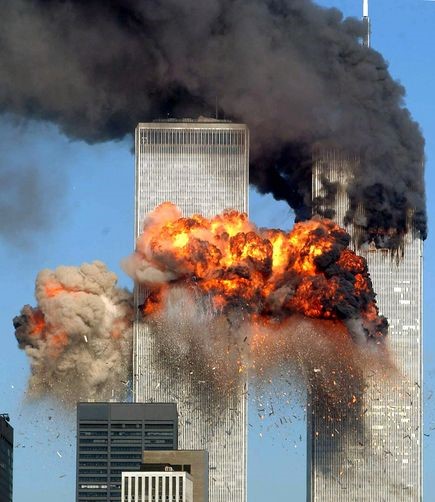
Remembrance of today the 11 Sept. exactly 15 years ago! Horror in New York, an eye witness

September 10th, 2016

By mahinda karunaratne

My tribute to those who died at site, until I learnt that it was a CIA & US Govt. conspiracy to escape bankruptcy blame at home and justify attacking Iraq and Afghanistan! 

mahinda10091601

After both Aircrafts were broken in to the two towers (file photo)

Although nostalgia to me after 12 years, but the fear, uncertainty and pain I had to endure by me in particular in my own situations I was in New York that time will never be forgotten. In fact that incident was the main candidate that destroyed my ambitions of going there to get out of my woos and difficulties due to which I left Sri Lanka. Simply to say my American Dream was broken and shattered by 9/11.

That day like several other days earlier, I left Jersey City room where I was temporarily staying by a fellow Sri Lankan and I left the room and got in to metro bus from University Boulevard to come to Port Authority bus stand in Manhatton. As I alighted from the bus there was some this fishy about, people rushing with unusual attitude. Only after coming out of the Port Authority bus terminal, I got know from asking few people that there had been an accident where an Air craft had hit one of the tower of WTC and its smoking. The  NYPD and NYFD are all running in rampage like mad dogs with full of siren sounds from all over, which resembled me the 1991 Gulf war time when I was working in Saudi Arabia at the time.

I anyway rushed to the 9th avenue and beyond towards the WTC to see what has happened and I was closer to the location in direct view I witnessed huge smoke and fleeing people in a rush, some women weeping with tears and it was a real rampage out there. A security officer of a nearby shop smiled at me and identified as from Asia, he is an Indian told me see what has happened, he was so sorry to see the incident although he commented s an accident. As we were talking I spotted another Aircraft coming closer too low unusual for such large Aircrafts and I quickly started to think would this be not an accident but some kind of sabotage, before I concluded my thoughts the second Aircraft in my clean view blasted on the west tower and it started to blow up, I said the security guard that this is a sabotage or some kind of an attack he did not believe or did not have sense to understand, so I told him watch news later on and turned quickly and started running towards the port authority bus station to get back as soon as I can to jersey City to where I was staying, the reason is that if entry points were closed I will be caged up in New York city without food and water and no place to sleep.


New York City has three entry points namely the Hudson underpass, Holland Bridge and Verrazano Bridge where all three entry points can be closed when necessary so none can come in or go out.

I noticed there were hundreds of ambulances plying amok and taking injured in a rush to hospitals, on the road side I came across some fallen, aged and young alike but unfortunately I was not in a position to help them since it was not my home country, and situations under which I was terrible. With sad feelings, I had to pass them leaving the task to NYFD rescuers of their duty.

I did not posses more than 5 dollar which I brought only as return bus fare and had only my water bottle in the bag, should I get late to go I have no food, no cash to buy food.

While I was coming to the NY bus terminal, there were scores of chaos on the streets as well as in side the port authority train / bus terminal,  no metro buses were available, I was shivering and in fear but noticed a private bus operated by Hispanic was about to leave which runs a bit far away from where I stay, but I decided to board although I will have to walk a long distance from where I will have to get off.

I was one of the last few passengers they boarded to stand and travel, but I noticed there were many who were unable to board the bus and the bus I boarded was the last the driver said. That means I knew the Authorities had already given instructions without panicking the public much, as the bus passed the Hudson underpass, the entry gate was closed while we passengers were watching. I could not understand what others say as many were Hispanic people, but their moods gave me the feeling they were worried much.

When I reached the Jersey City where I was staying and it had direct view of New York City over the Hudson River when I came to the verandah. I came and changed my clothes, came out to see what is happening and around 2 pm local time I was watching the WTC was collapsing just as some as spreads, a scene very rare and shocking.

From that time my heart was also in shock as I knew that big disaster could be nearer and these incidents will shatter my dream and just as I thought in few weeks I had to move out of New York to Texas and from there to LA and finally to DC looking for survival and work to live.

What happened and being happened in USA is history and its glory is gone, which I noticed by rapid declining economy, miles long abandoned factories, shops just out of cities, empty streets, medium and small business that closed almost on daily basis were all catalysts to ever declining glory of the USA of yester years.

It economy entangled in misery, there were no jobs for migrants, no proper scope, migration laws tightened, visa status cannot be changed due to the newly imposed Homeland security law and exactly six and half years later I decided to get out of USA and forget the American dream. It can never be recovered for both Americans and me alike!

The rest you all know about USA now!   

The world is entangled with same conflicts that entangled in the 19th century as we are coming closer to 100th anniversary of WWI.   Throughout the history it has proved that whenever the Imperialists encounter economic and own failures they went in to war with others, the only way they could straighten faults and overcome economic bankruptcy. They very badly need a war, that’s the truth. For that matter Verbal attacks on Russia and China goes on, some armed vehicles and Aircrafts being moved to the NATO front in Europe.

 The time is very much apt now and be prepared for a war!!!  It’s quiet obvious history repeats though may be in different form of structure and outfit, but by same integrity.  Attack on Iran is nearing as I am writing this which will set fire to a long conflict. This time it’s not just bombs, but Nukes. Hah…..ha………………………………!

 Anyway, let’s pay tribute to those unsuspecting innocent who died on 9/11 in New York. The federal news says only 3000 + dead but at the time in that early morning there should have been over 20000  people of all walks inside the WTC the workers, customers and visitors and also one Sri Lankan kiosk shop keeper on the ground also perished.

May you be well and happy?

සාම කාලයේදීවත් මම ත්‍රස්‌ත නායකයන්ට අතට අත දුන්නේ නැහැ…අණදෙන නිලධාරී මේජර් ජෙනරාල් කමල් ගුණරත්න

September 10th, 2016

මම ගෙදර යන්නේ ජයග්‍රාහී සොල්දාදුවෙක්‌ විදිහට
ප්‍රභාකරන්ව මරා දැමූ 53 වැනි සේනාංකයේ
අණදෙන නිලධාරී මේජර් ජෙනරාල් කමල් ගුණරත්න

සාකච්ඡා කළේ මනෝඡ් අබයදීර උපුටා ගැන්ම දිවයින

සේවයෙන් විශ්‍රාම ලැබිය හැකිවුවත් කිසිදා විශ්‍රාම නොයන වීරත්වයක්‌ ඔහු ජාතියට පතල කර හමාරය. ජාතිය සිහිනයක්‌ සේ දුටු ත්‍රස්‌ත නායකයාගේ මරණය සිදුවුයේ ඔහු අණ දුන් සේනාංක අතින් ඔහුට ලබා දී තිබූ රණ භූමියේදීය. මේජර් ජෙනරාල් කමල් ගුණරත්නගේ විශ්‍රාම ලැබීම නිමිත්ත කරගෙන අපි, ඔහු සමඟ සාකච්ඡාවක්‌ ඉල්ලා දුරකතන ඇමතුමක්‌ දුන්නෙමු. මේ සිංහල අපගේ රටයි – අප ඉපදෙන මැරෙන රටයි … යන මහගමසේකරයන් ලියූ ගීතය ඔහුගේ දුරකතනයෙන් ඇසෙන්නට විය. අප උපන් මියයන දේශය වෙනුවෙන් තම අනගිතම යුතුකම ඉටුකළ මේජර් ජෙනරාල් කමල් ගුණරත්න සමග ‘දිවයින ඉරිදා සංග්‍රහය’ කරන ලද සාකච්ඡාවයි මේ.

හමුදා සේවයෙන් විශ්‍රාම යන මොහොතේ, අතීතයට අපේ කතා බහ රැගෙන යැම සඳහා 2009 මැයි 18 වෙනිදා දිනය ඔබට මතක්‌ කර ගන්න පුළුවන්ද…?

ඇත්තටම එදා පාන්දර දෙකහමාරට විතර, එල්ටීටීඊ ත්‍රස්‌තවාදීන් විසින් මගේ කණ්‌ඩායමට ප්‍රහාරයක්‌ එල්ල කළා. නන්දිකඩාල් කලපුව ආශ්‍රිතව පුදුමාතලන් ප්‍රදේශයේදී තමයි මේ පහර දීම සිදුවුණේ. අපි මෙවැනි තත්ත්වයක්‌ බලාපොරොත්තු වුණා. ත්‍රස්‌තවාදීන්ගේ අවසාන පිරිස අපි කොටු කරගෙනයි මේ වෙනකොට හිටියේ.

ඒ වෙනකොට ඔවුන්ට තිබුණ එකම විසඳුම කලපුවට පනින එක විතරයි… මොකද අනිත් තුන් පැත්තෙන්ම අපි ඔවුන්ව කොටු කරලයි තිබුණේ. එදා පාන්දර ඔවුන් මගේ වළල්ලේ පිටිපස්‌සේ තැනකට තමයි, ප්‍රහාරය එල්ල කළේ. එය අපි කිසිසේත්ම බලාපොරොත්තු නොවූ ස්‌ථානයක්‌ සහ ප්‍රහාරයක්‌. එතැන කඩා ගෙන තුන්සිය පනහක පමණ ත්‍රස්‌තවාදීන් පිරිසක්‌ ඇතුලට පැන්නා. ඒ වෙනකොටත් ඕනෑම දේකට සූදානම්ව අපි එක්‌ එක්‌ සැලසුම් හදලා තිබ්බේ… අපි ඒකට කියන්නේ, ඉන්ජෙන්සන් ප්ලෑන් කියලා… ඒ කියන්නේ, මෙහෙම වුණොත් මෙහෙම කරන්න, අරෙහෙම වුණොත් මෙහෙම කරන්න යනාදී වශයෙන්, අවදානම් ගණනාවක්‌ සඳහා අපි සූදානම් වෙලයි හිටියේ…

මගේ පළවෙනි අණ දීම වුණේ කඩපු තැන ඉක්‌මනට වහගන්න කියන ඒකයි… සාමාන්‍යයෙන් මීටර් දෙසීයක විතර ආරක්‌ෂක බැම්මක්‌ කැඩිලා තිබ්බා… අපි විනාඩි විස්‌සක්‌ විතර ඇතුළත එම වළල්ල යළි හදා ගත්තා. තව එළිවෙන්න පැය තුනයි තියෙන්නේ… ඊට පස්‌සේ අපිට ඇතිවෙන්න ගහ ගන්න පුළුවන් කියලා මම හිතුවා… ඒ නිසා ඉක්‌මනින්ම අපේ ආරක්‌ෂිත වළල්ලේ කැඩුණු තැන හදා ගන්නයි මට ඕනේ වුණේ…

මේ වෙනකොට නන්දිකඩාල් තීරයේ රැඳී ඉන්නේ කොයි වැනි පිරිසක්‌ කියලා ඔබට අනුමානයක්‌ තිබ්බාද…?

නැහැ…නායකයෝ කවුද ඉන්නේ කියන එක ගැන අපි කිසිම දෙයක්‌ දන්නේ නැහැ. නමුත් එල්ටීටීඊයේ සිහින ඊලාම් රාජ්‍යයේ අවසාන බිම් කඩත් අපි අල්ලා ගැනීම සඳහා සූදානමින් තමයි හිටියේ… මේ වෙලාව වෙනකොට අපිට තිබ්බේ අතේ තියෙන දේ කටේ දාගන්න විතරයි. උදේ වරුවේත් අපි සටන් කළා… දහය විතර වෙනකොට ඒ සටන අවසන් වුණා. දවල් ආයෙත් අපිට දැනගන්න ලැබුණා, එක්‌ පිරිසක්‌ කලපුවේ කඩොල් කැලය ඇතුළේ ඉන්නවා කියලා… එතැනට අපි ප්‍රහාර එල්ල කරන්න පටන් ගත්තා. දවල් දෙක විතර වෙනකොට ඒ සටන පටන් ගත්තා. ඒක හැන්දෑවේ හයාමාර වෙනකං විතර ගියා. මේ වෙලාව වෙනකොට මුළු ලංකාවම අපේ රජයේ පාලනය යටතට පත්වුණා.

ඊලාම් දේශයේ සිහිනය සම්පූර්ණයෙන්ම බිඳ වැටිලා, සුනුවිසුණු වෙලා ගියා…ඔය පළාත අවුරුදු විස්‌සක්‌ විතර රජයෙන් ගිලිහිලා තිබුණේ. අනිත් පළාත් සේරම අපි අල්ලාගෙන ඉවරවෙලයි ඒ වෙනකොට තිබ්බේ. මෙතැන අල්ලා ගත්තා විතරයි, මුළු රටම එක ධජයක්‌ යටතට, සිංහ ධජය යටතට ආවා. එදා අපිට බොහෝම සන්තෝෂ දවසක්‌. මැරිච්ච ත්‍රස්‌තවාදීන්ගේ මළ සිරුරු අපි එකතු කර ගන්න පටන් ගත්තා. එතැන ඉහළ පෙලේ එල්ටීටීඊ ත්‍රස්‌තවාදී නායකයන් ගණනාවකගේ මළ සිරුරු තිබ්බා. ප්‍රභාකරන්, පොට්‌ටු අම්මාන් සහ සුසෙයි ඇරෙන්න අනිත් ඔක්‌කොම නායකයන්ගේ මළ සිරුරු එතැන තිබ්බා. භානු, ජෙයම් වගේ නායකයන්ගේ මළ සිරුරු එතැන තිබ්බා. ප්‍රභාකරන්ගේ පුතා චාල්ස්‌ ඇන්තනිගේ මළ සිරුර එතැන තිබ්බා.

එදා අපිට බොහොම සන්තෝසයි… නමුත් මගෙ ඔලුවෙ එක ප්‍රශ්නයක්‌ තිබ්බා. ඒ ප්‍රභාකරන්ගේ මළ සිරුර කෝ කියන එක. ඒ වගේම මම ආමි කමාන්ඩර්ට කතා කරලා “සර්, අපේ රටේ අන්තිම බිම් අඟලත් අපි බේරා ගත්තා” කිව්වාම ආමි කමාන්ඩර් ටිකක්‌ කල්පනා කරලා මගෙන් ඇහැව්වා “ප්‍රභාකරන් කෝ…?” කියලා. එතුමාට මම කිව්වා “සර්, ප්‍රභාකරන්ගේ බොඩි එක නැහැ …” කියලා. එතකොට ආමි කමාන්ඩර් මට කිව්වා “එහෙනං යුද්දේ ඉවර වෙන්නේ නැහැ …..” කියලා. මමත් එතකොට කිව්වා “ඔව් සර්, එහෙනං යුද්දේ ඉවරවෙන්නේ නැහැ … හැබැයි මගේ ඔක්‌කොම බ්ලොක්‌ස්‌ මම දාලා තියෙන්නේ…” කියලා. මේ වෙනකොට නන්දිකඩාල් කඩොලාන ඇතුලේ හරි කරුවලයි. එතැන මොකුත් කරන්න බැහැ. කඩොලාන ඇතුලේ රැට සටන් කිරීම අමාරුයි. පොඩි සද්දයක්‌ වුණත් ඇහෙනවා. කුරුල්ලෝ පියාඹනවා. ඒ දිශාව අනුව කවුරු හරි එන දිශාව හඳුනාගන්න ලෙහෙසියි.

මම ආමි කමාන්ඩර්ට කිව්වා “සර්, හෙට උදේ මම සර්ච් එකක්‌ දාලා බලන්නම්” කියලා. මම එදා රෑ බොහෝම සන්තෝසෙන් නින්දට ගියත් “ප්‍රභාකරන් කෝ…?” කියන ප්‍රශ්නය මගේ හිතේ තිබ්බා. “මේ යකා පැනලද…? පැන්නොත් යුද්දේ ඉවර වෙන්නේ නැහැ නේද…?” කියන ඒවා මගේ හිතට ආවා. අපිට ඕනෑ වෙලා තිබුණේ අනාගත පරම්පරාවකට මේ යුද්දේ ඉතුරු නොකරන්න. බැරි වෙලාවත් ප්‍රභාකරන් වෙන රටකට පැන්නා නම් එහෙට වෙලා යුද්දේ මෙහෙයවන්න පුළුවන්.

මේක මම මගේ පොතේ හොඳට පැහැදිලි කරලා තියෙනවා. ප්‍රභාකරන් කියන්නේ දැඩි තීරණ වගේම මෝඩ තීරණ ගත්ත නායකයෙක්‌. එහෙම වුණාට ඔහු දක්‌ෂ නායකයෙක්‌… ඒ නායකත්වය රටටම ලොකු තර්ජනයක්‌. ඒ නායකත්වය අපිට විනාශ කරන්න බැරිවුණා නම් අපිට සහ අපේ අනාගත පරම්පරාවට ඒක ලොකු ප්‍රශ්නයක්‌ වෙනවා. ඒ වෙනකොට, හතර වෙනි ඊලාම් යුද්ධයෙන් පමණක්‌, අවුරුදු දෙකයි මාස නවයක්‌ ඇතුළත, අපේ පන්දාස්‌ නවසිය ගාණක්‌ මැරිලා, විසිනවදාස්‌ ගණනක්‌ තුවාල වෙලා ඉවරයි. මෙච්චර කැපවීමක්‌ කරලත් අපිට මේ මිනිහව මරා ගන්න බැරිවුණොත්, අපේ අනාගත පරම්පරාවට අපි කොහොමද උත්තර දෙන්නේ කියන ප්‍රශ්නය මගේ හිතට ආවා.

ඔබට ප්‍රභාකරන් හෝ භානු සජීවීව මුණගැහිලා තියෙනවද…?

ප්‍රභාකරන් කවදාවත් පණ පිටින් දැකලා නැහැ…භානු දැකලා තියෙනවා. හැබැයි කවදාවත් කතා කරලවත්, අතට අත දීලාවත් නැහැ… මේ මගේ දකුණු අත බොහොම පිරිසුදුයි. (සිය දකුණු අත ඉහළට ඔසවා පෙන්වමින්…) කිසිම ත්‍රස්‌තවාදී නායකයෙකුට සාමය කාලයේදීවත් මම අතට අත දීලා නැහැ… ඔය ත්‍රස්‌ත නායකයෝ සාම කාලවලදී මට අත දීක්‌ කරලා තියෙනවා… ඒ උනාට මම උන්ට අත දීලා නැහැ…

දැන් අපි දහ නමවෙනිදා දවස ගැන මතක්‌ කරගමු… රටේ හැම තැනම ජනතාව කිරිබත් කමින් ප්‍රීති ඝෝෂා පවත්වනවා…

ඔව්… අපේ ළමයිනුත් එදා උදේ කිරිබත් හදලා තිබ්බා…කඩොලානට තව බැටැලියන් එකක්‌ දාලා සර්ච් කරන්න කියලා එතකොට මම කියලයි තිබ්බේ. එදා ජනාධිපතිතුමා පාර්ලිමේන්තුවට ආවා. එතුමා එතකොට පාර්ලිමේන්තුවේ ඉඳන් තමන්ගේ කතාව පටන් අරගෙන තිබුණා.

මගේ නායකත්වය යටතේ තිබුණු පනස්‌ තුන්වෙනි සේනාංකය යටතේ තමයි අටවෙනි කාර්ය සේනාංකය තිබ්බේ. කර්නල් රවිප්‍රිය තමයි එක භාරව හිටියේ. මේ අතරේ කර්නල් රවිප්‍රිය මට කතා කරලා. “සර්, කඩොලානේ තව ඩිවලොප්මන්ට්‌ එකක්‌ තියෙනවා…” කිව්වා.

ඒ වෙනකොට අපි යුද්දේ දිනලා ඉවරනේ… එක දිගට මාස දෙක තුනක්‌ නිදි මරලා, ටිකක්‌ හිටියා විතරයි, මෙන්න ආයිත් කියනවා ගහ ගන්නවා කියලා. කන්න ගත්ත කිරිබත් කෑල්ලත් පැත්තකට දාලා මම ගියා, නන්දිකඩාල් සටන් භුමියට. උන් එනකොට “අපේ කට්‌ටියත් ගහ ගත්තා, අපිටත් උන් ෆයර් කළා. මේ සටන විනාඩි හතලිස්‌ පහක්‌ විතර ගියා… “සර්, ඔක්‌කොම් නියුට්‌රමලයිස්‌ කරලා තියෙන්නේ. එක පොයින්ට්‌ එකක්‌ තියෙනවා, ඒක කොන්ට්‍රොල් කරගන්නම බැහැ… එතැනින් දිගටම ගහනවා” කියලා මට අපේ අය කිව්වා. මට ලොකු සටනක්‌ කරලා අපේ කොල්ලෝ මරා ගන්න උවමනාවක්‌ නැහැ. අතට ගත්ත දේ කටට දාලා, දැන් හපා ගන්න විතරයි තියෙන්නේ… “ලොකු සෙනගක්‌ දාන්න එපා… අට දෙනාගේ කණ්‌ඩායම් දෙකක්‌ දාලා, ඕක බලාගන්න” කියලා මම කිව්වා..

කර්නල් රෝහිත අළුවිහාරේගේ නායකත්වයෙන් හතරවෙනි විජයබාහු බලඇණියේ පිරිසක්‌ ඒ සඳහා මම යෙදෙව්වා. ටික වෙලාවකින් “හරි සර්, ඔක්‌කොම ඉවරයි. ප්‍රභාකරන්ගේ බොඩි එකත් තියෙනවා” කියලා මට එහෙන් කිව්වා. මේ වෙනකොට වෙලාව උදේ දහයයි තිහට විතර ඇති.

මගේ ගාව හිටියා, කර්නල් ලලන්ත ගමගේ. මෙතැන බලලා මොකද වෙලා තියෙන්නේ කියන්න කියලා මම කර්නල් ලලන්තව යෑව්වා. වැඩි ඈතක නෙමෙයි, මම හිටිය තැනින් මිටර් දෙසීයක්‌ ඈතින් තිබුණ කලපු ප්‍රදේශයට තමයි මම එයාව යෑව්වේ. “සර්, යුරේකා… ප්‍රභා මැරිලා ඉන්නවා” කියලා මට කර්නල් ගමගේ කතා කරලා කිව්වා. ” හොඳටම ෂුවර්ද…?” මම ඇහැව්වා.

“ඔව් සර්, ටක්‌ ගාලා ආමි කමාන්ඩර්ට කියන්න.”

“ඔය බොඩි එක මෙහෙට ගෙන්න…”

හරි…හරි සර්, බොඩි එක ගේන්නම් ටක්‌ ගාලා මේක කොළඹට කියන්න” කියලා මට කර්නල් ලලන්ත ගමගේ කිව්වා. එයත් හිටියේ ලොකු සන්තෝෂයකින්. මේ ජයග්‍රහණයේ පණිවුඩය ඉක්‌මනින්ම රටටම කියන්න තමයි හැමෝටම ඕනේ වුණේ.

“හරි…හරි සර් බොඩි එක ගේන්නම් මේ පණිවුඩේ ඉක්‌මනට කොළඹට කියන්න” ආයෙත් මට ලලන්ත කියනවා. මට ඒ පාර කේන්ති ගියා.

උඹ ඔතැනට වෙලා ඕකගේ පාංශුකුලය දෙන්නේ නැතුව ඕක ඉක්‌මනට මෙතැනට ගෙනෙන්…” කියලා මම කිව්වා.

එහෙම කිව්වට මගේ ඇස්‌ දෙකෙන් ප්‍රභාකරන්ගේ මිනිය දකිනකන් මම ඒක ආමි කමාන්ඩර්ට කියන්න කැමති වුණේ නැහැ. මම මේක ආමි කමන්ඩර්ට කියලා, එතැනින් ආරක්‌ෂක ලේකම්තුමාට සහ ජනාධිපතිතුමාට කියලා, ඊට පස්‌සේ මේක රටටම කියලා, ඒ මැරිලා ඉන්නේ ප්‍රභාකරන් නෙමෙයි නම්, මටත් වෙඩි තියාගෙන නන්දිකඩාල් කලපුවට පනින්න තමයි වෙන්නේ… ඒ නිසා මේ මිනිය මම ම බලලා තහවුරු කර ගන්න වුවමනාවක්‌ තිබ්බා…

විනාඩි දහයක්‌ විතර යනකොට මිනිය ගොඩට ගෙනාවා. ඒවෙනකොට යුද බිමේ මේ ආරංචිය ගිහිල්ලා අපි ළඟ නිලධාරීන් සහ සෙබළු හාර පන්දාහක්‌ එකතුවෙලා හිටියා. සතුටින් කෑගහන කොටම කොල්ලෝ උඩට වෙඩි තියන්න පටන් ගත්තා. ඔක්‌කොම තුවක්‌කුවලින් වෙඩි තිබ්බා. මැසින්ගන් වැල් පිටින් ගහනවා… පස්‌සේ මගේ ඔෆිසර්ස්‌ලා නවත්තන්න හදනකොට නැහැ… “වෙඩි තියපුවාවේ…” කියලා මම කිව්වා. ඒ ජයග්‍රහණයේ විතරක්‌ නෙමෙයි. තිබුණ පීඩනය පිට කිරීමක්‌. මේ කොල්ලෝ මරණ සහතිකය අතේ තියාගෙන අවුරුදු ගණනාවක්‌ පුරා උදේට නැගිටපු උදවිය. විනාඩි පහක්‌ විතර මුළු නන්දිකඩාල්ම ගිඟුරුම් දෙන විදිහට මේ වෙඩි පත්තු වුණා.

ඒ තමයි මගේ ජීවිතේ අමරණීයම මොහොත. අපේ රට අවුරුදු තිහක්‌ තිස්‌සේ අඳුරු අගාධයකට ඇදලා දාලා, සිංහල ජාතිය අප්‍රිකාවේ වනචාරීන්ටත් වඩා වනචාරී ජාතියක්‌ කියලා ලෝකයට පෙන්නලා, අහිංසක දරුවන්ගේ ඉඳන් ජීවිත බිලිගත්ත මිනිහව, මගේ කොල්ලෝ මරලා, මගේ කකුල් දෙක ගාවට ගෙනාවම මට දැනෙන සන්තෝෂය විස්‌තර කරන්න මට වචන නැහැ.

මම ඒ ඇඟට අත තියලා බලනකොට ඇඟ රස්‌නෙයි. ඔලුවෙන් ලේ එනවා.

මම අතට අත දුන්නේ නැහැ…

ප්‍රභාකරන් තමන්ගේ දෙපා මුල මැරිලා ඉන්නවා දැක්‌කාම ඔබට දැනුන හැඟීම මොකක්‌ද…?

යුද්දේ ඉවර වුණාම යුද හමුදාවේ ජ්‍යෙෂ්ඨ නිලධාරීන්ට රාත්‍රී භෝජන සංග්‍රහයක්‌ කොළඹ හිල්ටන් හෝටලයේ දී ලබා දුන්නා. එතැනදී ඔය ප්‍රශ්නයම ජනාධිපති මහින්ද රාජපක්‌ෂ මැතිතුමා මගෙන් ඇහැව්වා. “සර්, මට මම රජෙක්‌ වගේ කියන හැඟීම ආවා…” කියලා තමයි මම උත්තර දුන්නේ. ප්‍රභාකරන්ට දෙවියෝ අණ දුන්නාට, පනස්‌ තුන සේනාංකය එක්‌ක ඇවිල්ලා සටන් කරලා මැරියන් කියලා, මේ සටන කළේ අපි හැමෝම. මම කළේ සියලු සේනාංකාධිපතිවරුන්ට කතා කරලා කිව්වා  “වැඩේ හරි, ප්‍රභාකරන්ව මැරුවා ටක්‌ ගාලා මෙතැනට එන්න” කියලා. ජෙනරල් ජගත් ඩයස්‌, ජෙනරල් ශවේන්ද්‍ර සිල්වා, ජෙනරල් චාගි ගාල්ලගේ වගේ සියල්ලට මේක කිව්වා. ඒ වෙලාවේ ආමි කමාන්ඩර් හිටියේ පාර්ලිමේන්තුවේ. ජනාධිපතිතුමාගේ කතාව අහන්න ගිහිල්ලා. විනාඩි දහයකින් විතර ආමි කමාන්ඩර්ට, මම මේ පණිවිඩය කතා කරලා කිව්වා.

මෙයිට වඩා වෙනස්‌ කට කතා පසු කාලයේදී මේ පිළිබඳව රට පුරා පැතිරිලා ගියා.  “ප්‍රභාකරන් පනාගොඩට රැගෙන ගිහිල්ලා, ඔහුට පහර දීලා මරා දැම්මා” කියලා සමහරු කිව්වා…

ඒ කතා ඔක්‌කොම බොරු…ප්‍රභාකරන් මැරෙනකන් එතැන හිටියේ ඔහු කියලා කිසිම කෙනෙක්‌ දැනගෙන හිටියේ නැහැ. ඔතැන වැදගත් නායකයෙක්‌ ඉන්නවා කියලා අර සටන යනවෙලාවේ අපි තේරුම් ගත්තා. ඒත් ඒ ප්‍රභාකරන් කියලා අපි දැනගෙන හිටියේ නැහැ.

ප්‍රභාකරන්ගේ හිස පසාරු කරගෙන ගියේ ස්‌නයිෆර් උණ්‌ඩයක්‌ද…?

නැහැ… මමත් දැක්‌කා සමහර පොත්වල සහ පත්තරවල එහෙම ලියලා තියෙනවා. ඒක සම්පූර්ණයෙන්ම ඒක වැරදියි… එදා උදේ අටේ කණ්‌ඩායම් දෙක විසින් තබපු උණ්‌ඩයකින් තමයි ප්‍රභාකරන් මැරුණේ… මගේ පොතේ මේ ගැන පින්තුර සමග විස්‌තර සියල්ල එනවා.

කොටි බුද්ධි අංශ නායක පොට්‌ටු අම්මාන්ට මොකද වුණේ…? ඔහු රටින් පැන ගිය බවට පවා කතා පළවුණා…

නන්දිකඩාල් කියන්නේ විශාල කලපුවක්‌ පස්‌සේ අපි මිනී හොයනකොට ඉදිමුණු, කුණුවෙච්ච මිනී ඕනෑ තරම් හම්බු වුණා. සති දෙකක්‌ විතර යනකන් අපිට මිනී හම්බු වුණා. ඒ අතර පොට්‌ටුඅම්මාන් ඉන්න ඇති කියලා අපි සැක කරනවා. ඒ වගේම පොට්‌ටු අම්මාන් මැරුණ බවට ඇසෙන් දුටු සාක්‌ෂි අපිට හමුවුණා.

ප්‍රභාකරන් මිය ගිය බවට මේ දක්‌වා මරණ සහතිකයක්‌ නිකුත් වී නැති නිසාත් ප්‍රභාකරන්ගේ මළසිරුර යයි කියූ මළ සිරුරේ ඩී.එන්.ඒ පරීක්‌ෂණයක්‌ තවමත් සිදුකර නොමැති නිසාත් ප්‍රභාකරන්ගේ මරණය සැක සහිත බවත් ඔහු අයත්වන්නේ අතුරුදන් වූවන්ගේ ගණයට බවත් දෙමළ ජාතික සන්ධානයේ උතුරු පළාත් සභා මන්ත්‍රී වන එම්. කේ. සිවාජිලිංගම් පවසා තිබුණා..

ඔහොම සැකකරන කට්‌ටියට මම කියන්නේ එහෙම කතා කියලා විහිළුකාරයින්ගේ තත්ත්වයට පත්වෙන්න එපා කියලයි… අපි බොරුකාරයෝ නෙමෙයි. අපි වෘත්තීමය හමුදාවක්‌. අපි ප්‍රභාකරන් කියන ත්‍රස්‌තවාදී නායකයා මැරුවා… අපි එයාගෙයි එයාගේ පුතා චාර්ල්ස්‌ ඇන්තනිගෙයි ජාන පරීක්‌ෂණයක්‌ කළා. ඒකෙන් ප්‍රභාකරන් සහ පුතා කියලා තහවුරු වුණා. සමහර දෙමළ දේශපාලකයන් ජනප්‍රිය වෙන්න කරන ළදරු ක්‍රියා ගැන අපිට කනගාටුයි. මම ළදරුවෙක්‌ නෙමෙයි. පරිණත හමුදා නිලධාරියෙක්‌. සමහරු හිතනවා ඇති ප්‍රභාකරන් දිව්‍ය ලෝකයට ගියා කියලා. අපි හිතනවා අපායට ගියා කියලා. කොහොම වුණත් එයා මේ ලෝකේ නැතුව වෙන ලෝකෙක ඇති.

ඔබ හෙට සිට විශ්‍රාමික හමුදා නිලධාරියෙක්‌. සේවය නිමවා හමුදාවට සමුදෙන මොහොතේ ඇතිවෙන හැඟීම ගැන කිව්වොත්…

අපේ තරුණ කාලය ගතවුණේ කැලෑවල්වල සටන් කිරීමට. අනිත් සේනාංකාධිපතිවරුන්ගේ ජීවිතත් එහෙමයි. වසර තිස්‌ පහකුයි දවස්‌ පහක්‌ මේ නිල ඇඳුම ඇන්දාට පස්‌සේ ඒක එල්ලා, ගෙදර යන එක කනගාටුයි. නමුත් මම හිතනවා, මගෙන් රටට විය යුතු සේවය මම කරලා තියෙනවා කියලා… මහාචාර්ය සුනිල් ආරියරත්න ලියපු අබේවර්ධන බාලසූරිය ගයපු ගීතයක මුල් කෑල්ල මගේ හිතේ තදින්ම සටහන් වෙලා තියෙනවා. ඒක මගේ ජීවිතයට බොහෝම සම්බන්ධයි.

අවසන් හුස්‌ම පොද නොබියව හෙළන්නට
සිව් රියනේ හිත සතුටින් නිදන්නට
මිනිසෙකු විලස ඉපදුනු පල දකින්නට
පුළුවනි මරණ මංචකයේ වුවද මට”

යුගයේ වීරයෙක්‌ ලෙස හමුදාව තුළ සහ දේශයේ කීර්තියක්‌ ලබාගෙන, රට සිටි ප්‍රධානම සතුරා තමන්ගේ දෙපා මුල මරලා දමලා, හමුදාපති තනතුර නොලබා විශ්‍රාම යැම ගැන ඔබට දුකක්‌ නැද්ද…?

ඕනෑම වෘත්තීය හමුදා නිලධාරියෙක්‌ගේ අභිලාශය, සරලව කිව්වොත් ආශාව, කවදාහරි යුද හමුදාපති වෙලා ලෝකෙම ඉන්න හොඳම සොල්දාදුවන්න්ගේ නායකයා වෙන්න. ලෝකයේ ඉන්න හොඳම සොල්දාදුවන්ගෙන් කොටසක නායකයා වෙන්න මට පුළුවන් වුණා. නමුත් ඒ සොල්දාදුවෝ ඔක්‌කොමලාගේ නායකයා වෙන්න මට අවස්‌ථාව ලැබුණේ නැහැ. ඒ ගැන යම් කනගාටුවක්‌ තියෙනවා. අපේ රටේ හමුදාපති තනතුර ලැබෙන්න දක්‌ෂකම විතරක්‌ නෙමෙයි, වාසනාවත් තියෙන්න ඕනේ. මට ඒ වාසනාව තිබුණේ නැහැ. හමුදාපති පුටුවට නොගියාට මම ගෙදර යන්නේ ජයග්‍රාහී විදිහට. ජයග්‍රාහී සොල්දාදුවෙක්‌ විදිහට ගෙදර යන්නයි මට වුවමනා වුණේ. අප දක්‌ෂ ජෙනරාල්ලා පරාජිත සොල්දාදුවෝ වගේ ගෙදර යනවා මම දැක්‌කා. මම ගෙදර යන්නේ ජයග්‍රාහී සොල්දාදුවෙක්‌ විදිහට. ඒ ජයග්‍රහණයේ කතාවත් රටට කියාගෙන තමයි මම ගෙදර යන්නේ… මම විශ්‍රාම ගියේ පස්‌වෙනිදා සඳුදා. මගේ පොත එළිදැක්‌කේ ඊට පස්‌සේ දවසේ, ඒ කියන්නේ අඟහරුවාදා…මම ඉගෙන ගත්තෙ කොළඹ ආනන්ද මහා විද්‍යාලයේදී. මේ පොතේ තියෙන්නේ “මා දුටු දේ සහ අප කළ දේ” ගැන.

හමුදා වහරෙන් කිව්වොත් ඔබගේ එක මෙහෙයුමක්‌ දැන් නිමා වෙනවා. පත්තර භාෂාවෙන් කිව්වොත් ඔබගේ ජීවිතයේ එක පිටුවක්‌ ඉවරයි. මොකක්‌ද ඔබේ ඊළඟ මෙහෙයුම නැත්නම් පිටුව…?

රජයේ රැකියාවක්‌ දුන්නාට මම ඒක භාර ගන්නේ නැහැ. මම මේ රට දාලා වෙන රටකට යන්නෙත් නැහැ. මම ආඩම්බර රට වැසියෙක්‌ විදිහට මේ රටේ ජීවත් වෙනවා…

ඔබ අපට වීරයෙක්‌ වුණාට සමහරුන්ට යුද අපරාධ චෝදනාකරුවෙක්‌. නැත්නම් යුද අපරාධකාරයෙක්‌. සමහර රටවලට ඔබට අඩිය තියන්නවත් බැහැ… මේ ගැන හිතන කොට දුකක්‌ එහෙම දැනෙන්නේ නැද්ද…?

මම පස්‌වෙනි පන්තියට වෙනකං ගියේ පන්නිපිටියේ ධර්මපාල විද්‍යාලයට. මට හතරේ පන්තියේදී ඉගැන්නුවේ සෝමා රණවිර ගුරු මෑණියෝ. එදා ඒ ගුරු මෑණියෝ උගන්වපු, එස්‌. මහින්ද හාමුදුරුවන්ගේ කවි දෙකක්‌ මට හොඳට පාඩම් හිටියා. මගේ ජීවිතේ පාඩම බවටත් මම ඒක පත්කර ගත්තා.

ජාතිය රන් විමනක්‌ වේ
ආගම මිණි පහනක්‌ වේ
එය රැක ගන්නට මෙලොවේ
සමත් වෙතොත් පුත නුඹවේ

අනිත් කවිය තමයි ඔබගේ ප්‍රශ්නයට පිළිතුර

ඉටුකොට කළයුතු යුතුකම්
ලැබුණත් ලෝකෙන් ගැරහුම්
ඉවසන්නට පුළුවන් නම්
නුඹයි මගේ පුතා උතුම්

Leading scientists, doctors and academics call for review of Glyphosate ban

September 10th, 2016

Courtesy FT.LK Published : 12:01 am  September 9, 2016 

 We the undersigned bring to the kind attention of His Excellency the President and the government of Sri Lanka the need to consider, as a matter of highest priority, lifting the ban on the weed killer Glyphosate, in order to save Sri Lanka’s agricultural sector from an unprecedented decline, until at least until such time that an alternative, equally safe and cost – effective weed control method is made available.

Glyphosate is the most widely used weed killer in the world. In fact it is also the most widely used pesticide in the world. It is also one of the least toxic weedicides on the market. In Sri Lanka and in most other countries too, the quantity of glyphosate used far exceeds the total of all other pesticides. The total global use in 2014 was 850,000 metric tonnes.  It is highly effective in the control of many noxious weeds, in particular perennial grasses and sedges which cannot be effectively controlled manually or mechanically. No other weed killer is as effective as glyphosate in this regard.

untitled-5
Unfortunately the government banned the use of glyphosate in the North Central Province and some neighbouring districts afflicted by the chronic kidney disease of uncertain etiology (CKDu) in 2014, and then banned it in the entire country in 2015, in the mistaken belief that glyphosate has a role in causing CKDu. The subsequent ban has very seriously affected the production of all crops. Of the plantation crops, tea is the most affected reducing the income of the industry by no less than Rs.14.5 billion.
We rest our case on the following facts:
1.    The ban on glyphosate in Sri Lanka was probably instigated by a hypothesis published by a few Sri Lankan scientists that it may play a role in CKDu. However, this hypothesis has been refuted by many scientists, and no other research publication has endorsed it.
2.    The WHO-Sri Lanka Report (2013) on CKDu did not implicate glyphosate in the aetiology of the disease.
3.     Further, the WHO-Presidential Taskforce Joint International Consultation on CKDu (April 2016) with the participation of 54 local and international experts concluded that there is no evidence to implicate any agrochemical in the causation of the disease. There is thus no evidence to implicate glyphosate in the aetiology of CKDu.
4.    Glyphosate is equally used in other areas of the dry zone with similar agricultural practices and in plantation and other crops in the wet and intermediate zones. No CKDu is reported in those regions.
5.    CKDu is also prevalent in many other countries such as India (Andra Pradesh) several Mesoamerican and African countries  but none has implicated glyphosate in it
6.    No country has banned the use of glyphosate in agriculture
7.     A cancer risk re-assessment of glyphosate by the International Agency for Research on Cancer (IARC) in 2015, lead to a re-classification of glyphosate as ‘probably cancer causing’ . This became a subject of much debate. However, two subsequent comprehensive  studies carried out  by the European Food Safety Authority (EFSA) in 2015 and the Joint Meeting of Experts of the FAO and WHO  on Pesticide Residues (JMPR) in 2016  cleared glyphosate of carcinogenicity and genotoxicity (toxicity to genes)
Given the above information, it is our firm conviction that glyphosate has no role in the causation of CKDu.
However, its ban has already had serious repercussions on the entire agriculture of this country, in particular the tea industry, as evident from the following:
1.    In the absence of an alternative effective weed killer, many tea plantations have been compelled to resort to physical weed control methods, especially using implements that disturb the soil causing serious soil erosion.. This practice, in the  past, prior to the 1960s, that is, before chemical weed control methods were introduced, led to soil fertility losses leading even to the  abandonment of tea lands , especially in the mid country.
2.    Growth of weeds, apart from competing with crop and reducing yields, promotes insects and in turn rodents and snakes, making it risky and cumbersome for labourers to effectively work in the field.
3.    In addition, weeding costs have increased by no less than 1,471 % and the overall cost of production by Rs. 25.75 causing serious concerns on the viability of the tea industry, particularly at this juncture when world tea prices have declined substantially and employees are demanding higher wages. As a result of increased costs of production, plucking of less productive fields of some plantations and a large number of smallholdings has been abandoned. The dire shortage of labour in plantations is making matters worse.
4.    The cultivation of other plantation crops, in fact all crops, has been similarly affected. There already evidence of substantial (20-50%) decline in extents and production of field crops cultivated, which according to farmers is essentially due to non-availability of glyphosate..
We, therefore, urge the government to lift the ban on glyphosate. If the government so wishes, it could appoint a team of independent experts to review the ban by way of a risk- benefit analysis, as a matter of highest priority, and a decision taken based on its outcome.
Although not a single case of toxicity to humans due to the use of glyphosate in Sri Lanka at rates applied for weed control has been reported, pesticides in general are being misused. Application in excess, non –use of protective gear during application, incorrect storage and disposal are common problems. The government must make every endeavour to ensure judicious pesticide use by strengthening farmer education and training through more effective extension programs. At the same time rules and regulations on all agrochemicals must be strengthened to ensure their safe use.
We assert that we have no vested interests in the pesticide industry. Our genuine interest is only in the well being of agriculture and farmers of the country.
Dr Tilak Abeysekara (Consultant Nephrologist)
Dr Sarath Amarasiri( Former Director General of Agriculture)
Prof. Rohana Chandrajith (Professor of Geology, University of Peradeniya)
Dr Jinadari de Soyza (Former Director General of Agriculture)
Prof. Chandre Dharmawardana (Former  Professor of Chemistry and Vice Chancellor, Vidyodaya University)
Dr Nande Dharmawardana (Former Director, Sugarcane Research Institute
Dr Jinasiri Fernando (Director General of Agriculture)
Dr Lionel Gunaratne ( Former Director, Dept. Of Export Agriculture)
Dr Jayantha Gunatilleke (Former Director, Coconut Research Institute
Dr Sarath Illangatilleke (Former Chairman, Tea  Research Board)
Prof.Oliver  Illeperuma ( Emeritus Professor of Chemistry, University of Peradeniya))
Dr S T W  Kirinde (Former Director, Dept. Of Export Agriculture)
Prof. Ananda Kulasooriya (Former Senior Professor of Botany, University of Peradeniya)
Dr Ranjith Mahindapala (Former Director, Coconut Research Institute)
Kamal Mankotte (Former Director General of Agriculture)
Prof. Gamini Rajapaksa(Senior Professor of Chemistry,  University of Peradeniya)
Prof. K Samarasinghe (Professor & Dean, Faculty of Agriculture, University of Peradeniya))
Prof. Upali Samarajeewa (Emeritus Professor of Faculty of Agriculture, University of Peradeniya)
Prof. J Thattil ( Emeritus  Professor of Faculty of Agriculture, University of Peradeniya)
Dr L M K Tillakeratne (Former Director Rubber Research Institute)
Dr Parakrama Waidyanatha (Former Chairman, Coconut Research Board)
Dr Sarath Weerasena (Former Director General of Agriculture)
Dr Stanley Weeratne (Former Professor, Faculties of Agriculture, Ruhuna & Rajarata Universities)

Pathography and autopathography: The case of Nikolai Gogol (1809–1852)

September 10th, 2016

By Dr. Rami Bou Khalil   and Dr Ruwan M Jayatunge 

Born in the Ukraine, Gogol published his sardonic tale ‘Diary of a Madman’ in 1834, in which he described the inner psychic conflict of the person named Axenty Poprishchin. It has been speculated that this short story contains one of the earliest descriptions of schizophrenia.1 In 1842, he wrote about pathologic hoarding in Plyushkin, a fictional Russian hoarder who appeared in his novel ‘Dead Souls’. At school, Gogol himself was called ‘mysterious dwarf’ by his peers and he lacked the ability to build and maintain satisfactory interpersonal relationships with them. Many authors considered that he suffered from a mood disorder.2,3 In the latter part of his life, Gogol presented a religious delusion and his delusional thinking had a great social and professional impact. According to an eyewitness, Gogol experienced hallucinations and often reacted violently. He became paranoid and burned all his manuscripts, including the second part of ‘Dead Souls’. In his final days, he refused his meals and starved himself to death, leaving numerous novels and short stories that had great impact on Dostoevsky and Tolstoy.

ruwan10091601

A pathography can be defined as ‘the study of the effects of an illness on the writer’s (or other artist’s) life or art, or the effects of an artist’s life and personality development on his creative work’.4 Many pathographists in the history of art and literature can be included in this category including Ernest Hemingway, Vincent Van Gogh and Francis Scott Fitzgerald. However, the concept of autopathography is a more recent conceptualization of literary and artistic works in which autopathographists describe their own suffering from a serious, chronic or incurable medical condition with the aim of (1) destigmatizing the illness, (2) helping other patients to accept their situation, (3) earning money and gaining empathy, and (4) educating and criticizing carers and society.5,6 Accordingly, Nikolai Gogol is a pathographist who wrote many stories while being affected by a severe mental disorder. However, at the same time, he might be considered as one of the first autopathographists in history since, on one hand, many similarities can be found between Gogol’s biography and pathography and, on the other hand, Gogol’s mental disorder might have prevented him from acquiring insight into his own psychiatric symptoms and therefore he might have written of his own suffering without meaning to do so.

References and notes

Altschuler EL. One of the oldest cases of schizophrenia in Gogol’s Diary of a Madman. BMJ 2001; 323: 1475–1477.

Janka Z. Artistic creativity and bipolar mood disorder. Orvosi Hetilap 2004;145: 1709–1718.

Upthegrove R. On Nikolai Gogol’s Diary of a Madman – reflection. British Journal of Psychiatry 2014; 204: 156–156.

Campbell RJ. Campbell’s psychiatric dictionary, 6th ed. Oxford: Oxford University Press, 1989.

Aronson JK. Autopathography: the patient’s tale. BMJ 2000; 321: 1599–1602.

Moran ST. Autopathography and depression: describing the ‘despair beyond despair’. Journal of Medical Humanities 2006; 27: 79–91

Dr. Rami Bou Khalil 

ruwan10091602

Rami Bou Khalil born in Kfarhouneh, Lebanon, in 1980. Graduated from medical school at Saint Joseph University, Lebanon, in 2006. Graduated in general psychiatry from Saint Joseph University, Lebanon, in 2011. Holder of a partial specialization degrees in general psychiatry from Paris-Diderot University, France, in 2009 and from Louvain’s Catholic University, Belgium, in 2011. Holder of several university degrees in cognitive behavioral therapy (Saint Joseph University, Lebanon, in 2008), psycho-oncology (Paris-Descartes University, France, in 2009), organic and psychiatric comorbidities (Pierre and Marie Curie University, France, in 2009) and addiction (Saint Joseph University, Lebanon, in 2010). First year of master in biomedical sciences from Saint Joseph Unievrsity. First year of Euro-mediterranean interuniversity master in biotechnology and neurosciences. Psychiatrist at the department of psychiatry at Saint Joseph University and at the Psychiatric Hospital of the Cross, Lebanon. Author of several book publications in English and in French in the domains of clinical psychiatry, neurosciences and psychopharmacology.

ඉතිහාසයේ විසාලම දීමනාව!

September 10th, 2016

අනුර සෙනෙවිරත්න 

වසර 12කට පෙර පෝල් හැරිස් මාදිය වේදියා ඉහත සඳහන් වදන  කොළඹදී ප්‍රකාශ කලේ අද පස්ස දොරෙන් අගමැතිකම ඩැහැගත් ජීවියා එදා ආක්රමන ත්‍රස්තවාදීන්ට දුන් දීමනාවල් නිසාය.  1948 බ්‍රිතාන්‍ය බිම්හොරුන් නිදහස කියා සින්හෙල රට   බාර දුන්නේ පදින්චිකාර ජන වරිගයන් සමග කලවම් සිංහෙල කල්ලියකටය. හොඳ පළතුරු ගොඩට කුනු ගෙඩියක් දැමුවොත් සියල්ල කුනුවෙනසේ විදෙස් ජනවරිගයන් සමග කලවම් අය අදත් එසේමය.  ඉතිහාසයේ ආක්රමන හොරුන්ගෙන් වැඩියෙන්ම බැටකෑ රටද හෙලදිව් සිංහෙලේ බව ඇත්තය.  මෙම හේතුව නිසා තවමත් රටේ පාලන බලය ඩැහැගෙන ඉන්නේ මෙම කලවම් කල්ලීන්ය.  අද පැහැදිලිව හිත යොදවා බැලුවොත් මෙතෙක් කල් පදින්චිකාර ජනවරිගයන්ට දී ඇති දීමනාවල් පහත දැක්වේ :-   

1)      1948 සිංහෙල රටට හා ජාතියට නිදහස ලැබුනේ නැත. සිංහෙල රට අල්ලා ගැනීමට නිදහස දුන්නේ පදින්චිකාර ජනවරිගයන්ටය.

2)      සිංහෙල රට ඇත්ත සිංහෙලයන්ට නොදී දුන්නේ කුනුවෙච්ච කල්ලියකටය.

3)      සිංහෙල රටේ ඉඩම් ඔප්පුවේ නම සිංහෙලේට නිවැරදි නොකර ඉන්දියානුවෝ පටබැඳී ලංකා නම ඇටවිය.

4)       ලංකා යන අවජාතියක් අටවා පදින්චිකාර ජනවරිගයන් වෙන වෙනම ජාතීන් බවට පත්කර රටේ එකම ජාතියවන සිංහෙලයා බහුතරය බවට කප්පාදුකලේය.

5)      විජාතික බාසා, හැදියාවන්, ආගම් නිලගතකර ලොව එකම බහුබූත බහුජාතික රට බවට පත්කලේය. 

6)       පදින්චිකාර ජනවරිගයන්ගේ විජාතික දේසපාලන පක්ස පිහිටුවන්ට ඉඩදී සිංහෙල ජාතික රට විජාතික ආක්රමනයට ඉඩදී ඇත.

7)       සිංහෙල රටේ  ජාතික සෛරීත්වය උල්ලංගනය කරන ලෙසට හැම පැත්තෙන්ම විජාතික ජනවරිග තර්ජන එල්ලකර ඇත. 

8)      සිංහෙලේ ජාතික කොඩියට විජාතික පටි අලවා ජාතික සෛරීත්වය උල්ලංගනය කළේය. 

9)      මුස්ලිම් ජාතික රටවල ඇති බහු පවුල් සේවනයට ඉඩදී මුස්ලිම් ජනගහනය වැඩි කරන තර්ජනයක් සිංහෙල රටට එල්ලවිය.

මේ සියලු මහ දවල්  අපරාද  සිදු උවද සිංහෙලයා තවමත්  නිහඬයි!

කුනුවෙච්ච හින්ගලයන් පාලන බලය ඩැහැගෙන ඉන්න නිසාත් හොඳ සිංහෙලයන් මානසික දුප්පත් කමින් පෙළෙන නිසාත් මේ මහා නිහඬතාවයට හේතු වියහැක!!!    

ඔබ මේවා දන්නවාද?   (ජාතිය පාවාදීම පොත ඇසුරෙන් )       

September 10th, 2016

ධර්මසිරි සෙනෙවිරත්න 

 1886 නුවර එලිය දිස්ත්‍රික්කයේ පාලන වාර්තාව ලියු     ල “මසුරියර්උපදිසාපති සඳහන් කරන අන්දමට  එහි බදු නොගෙවීම නිසා  කුඹුරු 2889ක් වෙන්දේසි කරන ලද අතර  ඉන් 1260ක්  පහත රටින් ආ සිංහලයන් හා මුස්ලිම් වරුන් විසින් මිලට ගන්නා ලදී  පහත දැක්වෙන්නේ  නුවර එලි දිස්ත්‍රික්කයේ  වෙන්දේසි කල  ඉඩම් 
 කීපයක විස්තර යකි

ගම ඉඩමේ නම  ප්‍රමාණය හිගබදු  විකුණුම් මිල   තක්සේරු වටිනාකම
කොහොක කොහොම්බල් අ රාව පෑල 2 ශත 18ට අඩු ය්  රු. 2.60  රු 200.00
යටිපලාත මීගහ අරාව 3 හමාරය් එම  රු.12.00 රු.400.00
උඩගම්පහ අංක 2050 කුඹුර අමුණු 1 ශත 50ට අඩුය් රු.20.50 රු.600.00           

කරුණු වටහා ගැනීමට අදාලව පමණක් නිදසුන් දක්වා ඇති අතර  මෙම වෙන්දේසියේදී  තක්සේරු වටිනාකම රු. 3150.00 ක්  වූ ඉඩම්  කීපය විකුණන ලද්දේ  රු.20.60 ක් වූ හිගබදු  අ  ය කර ගැනීම සඳහා වීම  මෙම ඛේදවාචකයේ අතිශය අනුවේ ද නීය  අංශයය්

                                             මෙසේ කලේ   මොකද ?  ඉංග්‍රීසි ආක්‍රමණිකයා ට අවශ්‍ය වුයේ  මෙරට ධනය උන්ගේ රටට ගෙන යාමටය් .එසන්දහා කුලී කුරක්කන් කරන මුස්ලිමුන්ට දෙමළුන්ට හා එවැනි සිංහලයන්ට තම අ ත පල්ලෙන් වැටෙන සොච්චමක් දී උන් ලවා තමන්ගේ කාර්යය කරවා ගැනීමටය .උඩරට කලාකපා විනාශ කර තමන්ට මුදල් උපයාදෙන භෝග  වැවීමට අරකී අම්බට්ටයෝ ඉංග්‍රීසින්ට උදවු දුන්හ උන් ඉංග්‍රීසින්ට භාණ්ඩ ගෙනයාම සඳහා පාරවල් තනා දුන්හ .කඩුගන්නාවේ ගල බිඳ උමං  පාරක් තනුහ  එසේ කර උඩරට සිංහලයන් මර්දනය කිරීම සඳහාඉංග්‍රීසි සොල්දාදුවන්ට  වේගයෙන් එහි යාමට  මාවත සකස් කළහ 
                                  නොබෝදා පිටරට සිටින එක සිංහලයෙක් යය කියන එකෙක් මෙන්න මෙහෙම කව්වා .””’සුද්දා කඩු  ගන්  නාව ගල බින්දේ නැත්නම් උඩරට උන්ට අදත් කොළඹ   බලන්න හම්බ වෙන්නේ නැහැ ..” ඉංග්‍රීසින් විසින් මුන්ගේ නහයවලුත් විද නාස් ලනු දමා   ඇත . ..                                                            

  මුන්ට නමක් කියාපියෝ    …….එය ඔබට භාර කරමි .

එදා ප‍්‍රභාකරන්ගේ මළ සිරුරේ ඇදුම් ගලවන්නැයි ෆොන්සේකා මට කිවුවා.. මං බෑ කිවුවා.. – කමල් ගුණරත්න

September 10th, 2016

lanka C news

විශාල සෙබළුන් පිරිසක් මැද සිටි ඒ අවස්ථාවේ හමුදාපති ෆොන්සේකා ගේ ඉල්ලීම ඉටුකල නොහැකි යයි තමන් කියා සිටි බවද ඔහු පැවසීය.

2009 වසරේදී කොටි සංවිධානය පරාජය කරමින් වේළුපිල්ලේ ප‍්‍රභාකරන්ගේ මළ සිරැුර සොයාගත් අවස්ථාවේ ප‍්‍රභාකරන්ගේ මළ සිරැරේ තිබූ හමුදා ඇදුම ගලවා වෙනත් ඇදුමක් අන්දවන්න යයි එවකට හමුදාපති සරත් ෆොන්සේකා මහතා තමනට කියූ බව මේජර් ජෙනරාල් කමල් ගුණරත්න මහතා සිරස රූපවාහිනියේ සංවාදයකට එක්වෙමින් පැවසීය.

UN BIAS – Why doesn’t UN call for Accountability from US/NATO for bombing countries and killing people?

September 9th, 2016

Shenali D Waduge

If the UN claims to be a body held together to maintain global peace and claims to treat all UN member states equally, then the UN cannot have one law for some and no law for others. This is precisely what we see happening. One country has been bombing countries together with partner countries since 1945 and nothing is being done against them. UN cannot wash its hands by saying these crimes happened before UN was implemented. All the crimes have occurred under the UN’s watch and some of these crimes the UN has been complicit in helping justify invasions and occupations. UN cannot create tribunals and investigations against some countries and ignore the need for greater actions against countries that manufacture arms and create conflicts and even the terrorists so as to sell their arms by arming both sides and thereafter to add to injury send off their missionaries in the form of NGOs to further destabalize countries. This farce must stop. We have seen enough bloodshed and put up with UN lies enough.

The countries that the US and allies have bombed represent 1/3 of the people on this earth. The UN must explain its silence and inaction.

A senior fellow at the Council on Foreign Relations, Micah Zenko, noted that the United States has dropped an estimated 23,144 bombs in the Muslim-majority countries of Iraq, Syria, Afghanistan, Pakistan, Yemen and Somalia from January 1, 2015 to December 31, 2015 alone. What has UN done about this? However, if any other country is defending itself as Syria has done the UN is quick to come up with reports finding fault with Syria. What kind of double standard is this?

Saudi Arabia was put on the UN shamelist for bombing children and one call threatening to remove funds to the UN was enough for Saudi to be removed from the list! This means money dictates who UN takes action against. Why is Africa and Asia remaining in the UN to be treated like shit.

William Blums’ list of US bombings

  1. Afghanistan 1998
  1. Afghanistan 2001-2015
  1. Bosnia 1994, 1995
  1. Cambodia 1969-70
  1. China 1999 – US/NATO heavily bombed Chinese embassy in Belgrade is legally Chinese territory, and it appears rather certain that the bombing was no accident (see chapter 25 of Rogue State)
  1. Congo 1964
  1. Cuba 1959-1961
  1. El Salvador 1980s
  1. France – 1986, after French refused to use its air space for US war planes they were forced to take a longer route, US bombed the French embassy in Libya as punishment.
  1. Grenada 1983
  1. Guatemala 1954
  1. Guatemala 1960
  1. Guatemala 1967-69
  1. Indonesia 1958
  1. Iran 1987
  1. Iraq 1991 (Persian Gulf War)
  1. Iraq 1991-2003 (US/UK on regular basis)
  1. Iraq 2003-2015
  1. Korea and China 1950-53 (Korean War)
  1. Kuwait 1991
  1. Laos 1964-73
  1. Lebanon 1983, 1984 (both Lebanese and Syrian targets)
  1. Libya 1986
  1. Libya 2011, 2015
  1. Nicaragua 1980s
  1. Pakistan 2007-2015
  1. Panama 1989
  1. Somalia 1993
  1. Somalia 2007-8, 2011
  1. Sudan 1998
  1. Syria 2014-2015
  1. Vietnam 1961-73
  1. Yemen 2002
  1. Yemen 2009, 2011
  1. Yugoslavia 1999

US also dropped a bomb in Philadelphia, USA burning down an entire block and destroying 60 homes. 11 died including children. The aim was to evict a black organization called MOVE.

US has invaded 70 countries since 1776 which excludes the covert operations of US/CIA.

Since 1945 US has invaded/missions deployed/occupations – Korea, Vietnam, Lebanon, Cuba, Laos, Congo (Zaire), Cambodia, Turkey, El Salvador, Libya, Grenada, Iraq, Afghanistan, Libya, Serbia, Honduras, Panama, Philippines, Sierra Leone, Somalia, Bosnia, Macedonia, Haiti, Liberia, Central African Republic, Gabon, Sierra Leone, Guinea-Bissau, Kenya, Tanzania, Sudan, East Timor, Nigeria, Yemen, Ivory Coast, Georgia, Djibuti, Pakistan, Uganda, Jordan, Chad (OVER 20 COUNTRIES INVADED IN 20 YEARS)

The US President Obama visiting Laos acknowledged US bombings in Laos but did not apologize or even speak a word on compensating for the destruction and deaths. Laos is a poor land-locked country of 6million people. It was no threat to US yet America bombed Laos more than the bombs dropped on Germany during World War. American public to this day do not know why the US bombed Laos and many of them do not even care.

A small insurrection between poor peasants against the King and crooks who were controlling Laos was enough for US to attack the peasants siding the crooks.

Between 1964-1973, two hundred and ten million bombs were dropped on Laos – (Legacies of War), 270million cluster bombs dropped, 80million cluster bombs did not detonate and are still buried in farmland.

According to Ben Williams US is currently bombing – Afghanistan, Iraq, Pakistan, Libya, Yemen, Somalia and now Syria. If US didn’t unnecessarily bomb countries it would not have to spend money on military budgets which has kept the nation and people in debt.

Before 9/11 America’s debt was 6trillion. It is now just over 19trillion. The American people are funding the wars and the American corporates are getting richer from these wars.

Moreover, the US is creating enemies by bombing countries and people who have done no harm to America or Americans.

Even 9/11 is now appearing to be an inside job though Afghanistan was bombed and occupied for no reason. Bombing Afghanistan for one day is what cost to build the entire Pentagon building! Guess how many more buildings could have been built for that money and US has been occupying Afghanistan since 2001.

When attention to law and order is needed in America, why should American Governments want to liberate and free people in other countries by demonizing leaders their people have elected? If countries love their ‘dictators’ what is America’s problem?

Lets get this straight – we have a global ‘war on terror’ those going out to war have created the terrorists they are going after and the ordinary people of America and NATO countries & UK are funding these games?

Surely the UN must know this but the puzzling question is what are they doing about it?

None of the US/NATO bombings are winning the hearts of any of the people in the countries the US claims to want to liberate and bring democracy to. Who gave America the role of global policeman? What is the diplomacy US is promoting – threats, ultimatums, sanctions and bombings hardly look democratic!

According to Nick Turse 134 countries have been victim of America’s secret wars.  https://www.thenation.com/article/americas-secret-war-134-countries/ Has the UN been asleep throughout?

It is not only the US/NATO troops who are committing war crimes. War has become a business and plenty of military contractors are now in all of the countries US/NATO have invaded and occupied. Private military and security companies are in reality non-state actors as they are armed but are not soldiers – employees of the US-based firm XE/Blackwater killed 17 civilians in Iraq in 2007. GlobalResearch has done a study of the crimes they have committed http://www.globalresearch.ca/the-privatization-of-war-mercenaries-private-military-and-security-companies-pmsc/21826

http://www.crimesofwar.org/a-z-guide/787/

http://psm.du.edu/articles_reports_statistics/data_and_statistics.html

The UN/UNSG & UNHRC heads and countless other UN officials are interfering into the internal affairs of sovereign nations by asking them to close down military camps inside their own nations but the UN is silent on over 1000 US bases in nearly 130 nations.

While US spent $600m for the first week of airstrikes on Libya, Russian President Putin says ISIS is funded by 40 countries including G20 http://www.anonews.co/putin-reveals-isis-fundings/ while  Julian Assange claims Hillary Clinton and her State Department have been actively arming Islamic jihadists, which includes the Islamic State in Syria — ISIS. http://wearechange.org/busted-hillary-clinton-and-obama-administration-supply-u-s-weapons-to-isis/ and GlobalResearch claim all Islamic groups have been created, funded, armed and trained by the West http://www.globalresearch.ca/america-created-al-qaeda-and-the-isis-terror-group/5402881

Obviously UN not doing anything against the perpetrators of the perpetrators because the UN officials may lose their jobs and UN knows who butters their bread. If the UN is doing nothing about the nations that are destabalizing the world then the UN has to jolly well shut up without going after selected nations only. Coincidentally, the nations that the UN is going after are also in the gamut of the geopolitical endeavors of the US/NATO and other alliances and while they are busy bombing nations, UN appears to be tasked to do a non-military takeover of sorts.

US & NATO claimed Yugoslavia was a ‘peacekeeping operation’.

  • ‘Peace’ resulted in dividing Yugoslavia to pieces and left 5700 dead including 400 children, over 7000 civilians wounded 30% of whom were children, 821 people are missing – UN nowhere to be seen with resolutions, war crimes tribunals against US & NATO, no UNSG PoE on what happened to the ‘peace operation’, no reports on why UN ‘failed Yugoslavia’. http://www.hrw.org/reports/2000/nato/Natbm200-01.htm
  • Similarly the ‘peace operation’ in Afghanistan was no different – over 35,000 dead, over 500,000 refugees, increase in drug trafficking (quite strange), more terror attacks http://abcnews.go.com/International
  • Next came Libya again to get rid of 1 man over 20,000 people have ended up dead with over 350,000 refugees! Once more UN/UNSG and UNHRC looking the other way ignoring US/NATO crimes even after NATO Gen Sec Fogh Rasmussen claimed NATO airstrikes in Libya did not result in any civilian casualties (Aug 2011)

http://www.telegraph.co.uk/

http://www.un.org/ru/rights/issues/

US & NATO have been deceiving the world  

Gulf of Tonkin lie of 1964 led to Vietnam claiming Vietnam speedboats attacked US fleet. Declassified documents now confirms the lie. US used napalm bombs which literally burns people alive.

shenali09091601

Yugoslavia has been balkanized through ‘peace keeping missions’ driving out ethnic groups to create ethnic-independent states. NATO’s role is a violation of its own charter, the Washington Treaty, 1st article which says members of the Alliance ‘must settle all international disputes in which they may be involved in by peaceful means in such a way as not to endanger international peace, security and justice and to refrain in the international relations from the threat or use of force in any manner inconsistent with the purposes of the United Nations”. NATO violated article 6 of the Treaty too as NATO is limited to the territory of members of the Alliance and Yugoslavia, Macedonia, Albania and Bosnia are not members of NATO. The 7th article of the Washington Treaty says that NATO recognizes the ‘responsibility of the Security Council for the maintenance of international peace and security”  Weapons used by NATO on Yugoslavia are banned by the Nuremberg Charter/Geneva and Hague Conventions. UN did sweet nothing. NATO used shells with uranium which are radioactive and highly toxic affecting both humans and the environment. NATO used cluster bombs against prohibited. nato.int/cps/ru/natolive/official_texts_17120.htm

NATO is guilty of intervening in the internal affairs of a sovereign state and threatening its territorial integrity. These were violations of Article 1 of the UN Resolution 1974 Aggression is the use of armed force by a state (group of states) against the sovreighty, territorial integrity or political independence of another state or in any other manner inconsistent with the Charter of the United Nations as set out in this definition” – UN deaf, dumb and blind to all these violations! politics.ru/articles/database/global/pravoviie_dokumentii/rezoliutsiia_generalnoij_assamblei_oon_%C2%ABopredelen.shtml

Iraq was invaded under the pretext of holding weapons of mass destruction and to bring democracy, Democratization of Iraq has cost 1million people’s lives. The ‘dictator’ Saddam was publicly executed but there was no WMD. UN happy to tag along with the lies. In 2004 US Secretary of State Colin Powell admitted the data was ‘inaccurate’ rather it was falsified. Is a sorry enough for killing so many people and destroying a nation when UN is calling for accountability from other nations!!!

That is not all – we cannot forget the torture and abuse of Iraqi detainees at the Abu Ghraib prison.

shenali09091602

US used white phosphorous during the battle for Nasiriyah in April 2003, as well as the assaults on Fallujah in April and November 2004- these burns bodies and dissolves flesh to the bone was banned by the UN Convention on certain weapons in 1980, but the US never ratified it.

US / NATO next target was Libya. NATO used cluster bombs and white phosphorous  oko-planet.su/fail/failvideo/videoweapon/86827-nato-ispolzovalo-klasternye-bomby-v-livii-hotya-otricaet-eto-smotrite-sami.html

shenali09091603

There is allegation that NATO dumped uranium dust – a radioactive substance again banned by UN Convention. There are also allegations of NATO using mustard gas again prohibited under UN conventions.

All these ‘democratization’ projects of the West (US/UK & EU) appear to be to fast forward the key objective of ‘access to African/Asian markets and resources’ and Middle East needs to be dealt with to realize that objective.

The message to the UN is that they cannot hound some countries only. The UN witchhunt must stop. If the UN is ignoring all of America’s and NATO crimes majority of which is the cause of the world in chaos, then there is little reason for the nations of Africa, Asia or even Latin America to continue to be members of the UN. Moreover the UN and its officials are virtual puppets of the West and will follow all of West’s instructions which explains why UN officials are taking honeymoons to Africa and Asia and slapping them with all sorts of divorce papers all of which lead to dividing their nations and breaking the nation-state system.

We must all say enough is enough and build a voice against the UN which is morally corrupt and should not be allowed to interfere in the internal affairs of sovereign nations and force nations to abdicate their sovereign powers to bring it under the control of the UN which is ruled by the West. We are now returning to modern colonial rule.

Shenali D Waduge

Other reference:

http://www.globalresearch.ca/us-has-killed-more-than-20-million-people-in-37-victim-nations-since-world-war-ii/5492051

http://www.globalresearch.ca/list-of-countries-the-usa-has-bombed-since-the-end-of-world-war-ii/24626

The UN Chief’ Comments Unfair to All Sri Lankans

September 9th, 2016

Dr D.Chandraratna

Mr Moon was unfair to all Sri Lankans who are trying managing their affairs in a racially jumbled space by his comments implying that the Sri Lankan army is guilty of an act that bears some similarity to the massacre of Srebrenica in July 1995. This crime ‘which needs no Picasso for its frisson’ committed by the Mladic’s army was an exercise in ‘ethnic cleansing’ and Mr Moon refused to admit that it was committed under the noses of the Blue Helmets of the UN and sometimes ‘with their complicity’. (Geoffrey Robertson, Crimes against Humanity, Penguin, 1999, p 80). This was the negligence on the part of the NATO Commanders who were charged by UN Security Council Resolution 819 to resort to aerial bombardment to save this safe haven. The men of Srebrenica were caught in a human rights trap who were hostage to the cowardice of leading countries in the human rights propaganda brigade.  The SG should not attribute the grave misdemeanors of the UN to others. Even the ineptness of the UN was obvious in Sri Lanka when in early 2007 the UN admitted that its mission in Colombo kept New York in the dark regarding the LTTE detaining UN workers for to forbid helping Tamils to leave the LTTE-held area which may have saved unnecessary casualties in a war. We should remember it was Gordon Weiss the UN Chief of Colombo operations at the time who first coined the parallels with Srebrenica in his book, the ‘Cage’.

For Mr Samarasinghe to suggest that Mr Moon intended no such thing is the usual cognitive dissonance affliction suffered by most of the Sri Lankan Parliamentarians that come as no surprise to any. We have read Mr Moon’s words and please allow me to quote him from the text, which read, “In1994, in Rwanda, there was a massacre. More than one million people were massacred. United Nations felt responsible for that. Of course, it was their war and massacres. But the United Nations was not able to act on it. We said repeatedly, ‘Never again, never again’. It happened just one year after in Srebrenica (Rwanda). Many people were massacred when they were not fully protected by the United Nations Peacekeeping Operations. So we repeated again, ‘Never again’. How many times should we repeat never, never again? We did again in Sri Lanka. We have to do much more not to repeat such things in Sri Lanka, Yemen and elsewhere.”(abridged)

Mr. Moon undoubtedly used is as the ultimate in justificatory conversation, giving credence to past, present and future acts. As the Chief diplomat of the UN it is extremely important that his diplomacy is not to stoke but to put out the embers of war. Mr. Moon also failed us last time when he, as Neville Ladduwahetty noted in his valuable articles to this paper, that by appointing the Darusman Panel of inquiry which had as a member Ms. Sooka who had openly campaigned for the LTTE, the UNSG is failed to abide by the provisions in the UN Charter as to the formalities that the UN Secretariat should follow, particularly the Article 100 of the UN Charter, which states that, ‘the Secretary-General and the staff shall not seek or receive instructions from any government or from any other authority external to the Organization. They shall refrain from any action, which might reflect on their position as international officials responsible only to the Organization. By duplicitously making public the Darusman (POE) document, which was only a bibliographical summary of other people’s versions, which did not have the sanction of the General Assembly, he did untold damage to Sri Lanka and miniaturized the neutrality of the UN.  There is no argument that his action gave ammunition to the LTTE Diaspora propaganda to fix the numbers of casualties at 40,000 which was given the official imprimatur by the British parliamentarians like Keith Vaz who resigned today for unparliamentarily conduct.   Contributors to the debate have noted with dismay the unprofessionalism and misconduct to which the UN and its agencies are manipulated; a fact that should be a matter of deep concern for all Member States.

In this limited space I can only lament the bleak future of our country which was given a ray of sunshine by the gallantry of the Armed forces that we ourselves disparage when in around 2006, according to the recently published memoirs by Major Kamal Gunaratna ‘when people were not bothered even if the LTTE had killed 50 soldiers. But the entire nation mourned if a cricketer had a run out for a few runs’ the SLA managed to free the entire nation so that all civilized people can live in peace. Major Gunaratna goes on to warn that, ‘We talk about reconciliation but listen only to those who ask for land powers, devolution of powers, police and judicial powers and demand the removal of the Director of the Kilinochchi Hospital as he is a Sinhalese and to appoint a Tamil official. Just because we sang the National Anthem in Tamil, reconciliation doesn’t take place’. The political leadership needs to examine the Jaffna university ethnic brawl, the Kuala Lumpur assaults, not from political party affiliations but as eye-openers and look at from a wider angle. As Rajiv Wijesighe opined, ‘It is a great pity that we do not have someone like Mr. Kadirgamar who was intelligent and outspoken, and made it clear that he would not tolerate the UN violating the sovereignty of its member states. We continue to live in hope.

අංදොගෙ බේගල්

September 9th, 2016

ධර්මන් වික්‍රමරත්න

වත්මන් දේශපාලන වටපිටාව පුවත් මවන මැෂිමකි. හිටපු මන්ත්‍රී භාරත ලක්ෂ්මන් ඝාතනයේ නඩුවේ සැකකරුවන්වූ හිටපු පාර්ලිමේන්තු මන්ත්‍රී ආර්. දුමින්ද සිල්වා ඇතුළු 5 දෙනෙකුට අධිකරණයෙන් ඊයේ මරණ දඩුවම්ය. ජේෂ්ඨ මාධ්‍යවේදී ලසන්ත වික්‍රමතුංගගේ දේහය වැඩිදුර පරික්ෂණ සඳහා ලබන 27වැනිදා යළි ගොඩගන්නවාය. ඒ අතරතුර එජාපයට 70කි. ශ්‍රිලනිපයට 65කි. සීගිරි ගලෙහි, සමනොළ කන්දේ සහ සිංහරාජයේ හැර රටපුරාම ‘යහපාලන’ කටවුට්ය. මහරින් කුරුණෑගල සමුළුවට ගිය තරුණියකට බීමත් පාක්ෂිකයන් ගෙන් ප්‍රහාරයන්ය.

තාජුඩීන් ඝාතනයේදී ඉදිරිපත්කල සීසීටීවී දත්ත අපැහැදිලි බැවින් නිගමනයක් ගැනීමට අපහසු බව කැනඩා තක්ෂණ ආයතනය උසාවියට දැනුම්දී තිබේ. නමුත් ‘යහපාලන’ ඇත්තෝ තාජුඩින් ඝාතනය ගැන අකුරක් නෑර කීවේ සිසිටීවි එකේ තිබුණායැයි කියාය. මාර්ටින් වික්‍රමසිංහ සූරින්ගේ අංදොගෙ බේගල්වල වූ අහිංසක ගැමි සුවද මෙම ‘යහපාලන’ බේගල් තුළ නැත. ඒවායේ ඇත්තේ පිළුණු ගදකි. පල් ගඳකි. මුලිකව ඉස්මතු වන්නේ වෛරයෙන් ඔද වැඩීගිය සහ දෙමළ බෙදුම්වාදීන් සතුටු කරන ලෝකය කා වතුර බීපු අයගේ බේගල් ගඳක් පමණි. මේවා උද්ධච්ච උපහාසාත්මක ගජබින්නාලංකාර කථාය. අදහස් පළකිරීමට නිදහස ඇතත් ආණ්ඩුකරන ඇත්තෝ ඒවා වගකීමකින් ප්‍රකාශ කිරීම රටට වැඩදායකය. නැතහොත් සිදුවන්නේ තම අඥාණකම් එළිපිට ප්‍රදර්ශනය කිරීම පමණි.

dharman09091601

නීතියද කැලෑ වදිමින් පවතී. නිතියේ කන්‍යාවිය මාතෘ සායනයට යන අතරතුර ඇය කන්‍යාවියක් බව පිලිගන්නා ලෙසට සමාජයට බලකරමින් සිටී. බොරු නඩු පැටලීම කලාවක් නම් ‘යහපාලන’ ආණ්ඩුව එහි පිකාසෝය. දෙමළ බෙදුම්වාදින්ට අපමණ අගයක්ය. විරුවනට කෙලවෙන යුගයක්ය. බෑන් කී මුන්ද මේ වැඩවලින්  චූන් වන්නට ඇත.

දෙමළ බෙදුම්වාදී ත්‍රස්තවාදින්ට එරෙහිව තීරණාත්මක යුද්ධය ක්‍රියාත්මක කරනවිට එජාපය කියාසිටියේ කිලිනොච්චිය කියා මැදවච්චියට ගිය බවද, අලිමංකඩ යනවා කියා පාමංකඩ යන බවක්ය. තොප්පිගල කැලෑවක් බවය. මුලතිව්වලදී හොද කෑමක් කන බවය. යුද්ධ කරන්නට ඕන ගොනෙකුටද කලහැකි බවය. ඊයේ පෙරේදා එළිදැක්වු විශ්‍රාමික මේජර් ජෙනරාල් කමල් ගුණරත්නගේ කොටි සංවිධානය පරාජයේ සත්‍ය කථාව ග්‍රන්ථයෙන් මේවාට හොඳ පිළිතුරක් දී ඇත. එම ග්‍රන්ථය දොරට වැඩීමේ උත්සවයේ ප්‍රධාන ආරාධිතයන් වූයේ යුධ ජයග්‍රහණයේ සැබෑ නියමුවන්වු පස්වන ජනාධිපති මහින්ද රාජපක්ෂ සමඟින් එවකට ආරක්ෂක ලේකම් ගෝඨාභය රාජපක්ෂය. යුද්ධයේ ජයග්‍රහණයෙන් හතරෙන් තුනක් තමා කලායැයි කියන චන්ද්‍රිකා කුමාරතුංග හිටපු ජනාධිපතිනියගේ  සහ කරුණා අම්මාන් කඩා යුද්ධය දින්නායැයි කියන අගමැති රනිල් වික්‍රමසිංහගේ කථා දැන් හරියට අංකුරාගේ කැලෑසියේදී කබරගොයා, තලගොයා බවට නොව කුරුළුගොයා බවට පත්වීමකි. 

dharman0909162

බ්‍රිතන්‍යයේ ශ්‍රී ලංකා තානාපති ක්‍රිස් නෝනිස්ට වරෙක බලපිටිය ශ්‍රිලනිප සංවිධායක සහ මන්ත්‍රී සජින් වාස් ගුණවර්ධන ඇමරිකාවේදි පහර දුන්නේය. එන්.ජී.ඕ පුරවැසි නඩයන්ද පෙරටු කරගෙන ජවිපෙ එයට එරෙහිව අවි අමෝරා ගත්තේය. මැලේසියාවේ සිටින මුස්ලීම් ජාතිකයෙකුවූ ශ්‍රී ලංකා තානාපතිට දෙමළ ඩයස්පෝරාවේ ක්‍රියාකාරිකයෝ ඉකුත් සතියේ හොදටම පහර දුන්හ.  එදා කෑගැසූ අය දැන් නෝ කථාය. දෙමළ බෙදුම්වාදී කොටි ත්‍රස්තවාදීන්ගේ අයිතීන් වෙනුවෙන් හඬනඟන සංවිධාන යුද්ධයෙන් බැටකෑ දකුණේ වින්දිතයන් ගැන සොයා බැලීමක් නැත. උතුරේ බුදු පිළිම කැඩෙනවාය. මහින්ද රාජපක්ෂ පන්සල් යනකොට ඇරෙන කටවල් ඒවාටද නිහඬය. ජෝතිෂ්‍ය අනාවැකි කියූ විජිත රෝහණ විජේමුණි ගෙන් දැන් කට උත්තරය. ඉන්දික තොටවත්තට මෝ සිනාය. එදා රජගෙදර පිනුම් ගැසූ ගාල්ලේ ආචාරියා නෝ හෙල්ලුම්ය. ගිරිතලේ සහ අබතලේ දෙකම ගියත් චන්ද්‍රසිරි බණ්ඩාර, මංජුල පීරිස් වැන්නෝ තවමත් අධ්‍යාත්ම ගාඩ්ලාය.

dharman0909163

මාලඹේ පෞද්ගලික වෙද විදුහල සම්බන්ධයෙන් රජයේ ඉඹලා පිළිගැනීමේ ස්ථාවරය ඇමති ලක්ෂ්මන් කිරිඇල්ල දැන් පහදාදී තිබේ. සමස්ථ සරසවි සිසුන්ගේ ඉල්ලීමවී ඇත්තේ රාගම පෞද්ගලික වෛද්‍ය විද්‍යාලය ජනසතු කලාක් මෙන් මාලඹේ සයිටම්ද ජනසතු කරන ලෙසය. මාලඹේ සයිටම් සිසුහු පවසන්නේ අපොස උසස් පෙළ විභාගයෙන් තමන් ඉහළින්ම ලකුණු ලබාගෙන රජයේ වෛද්‍ය පීඨයන්ට නොතේරුණු නිසා මෙයට මුදල් දී එක්වූ බවය. එහෙත් තිත්ත ඇත්ත එය නොවේ. මාලඹේ සයිටම් සුළු පිරිසක් එසේ ලකුණු ලබාගෙන තිබුණද බහුතරයක් කළු සල්ලි සුදු කිරීමේ දෙමාපියන්ගේ දූ දරුවන් බවට චෝදනාවකි. සයිටම් ආයතනය සිදුකල යුත්තේ තමන් තෝරාගත් සමස්ථ සිසුවන්ගේ දිස්ත්‍රික් මට්ටමින් ලකුණු සහ විභාග අංක ප්‍රකාශයට පත්කිරීමය.

dharman0909164

සයිටම් විරෝධී සිසු අරගලය මේ වනවිට වසර 8ක නොනවතින සිසු අරගලයකි. වෛද්‍ය පීඨ එකතු වෙමින්, දැවැන්ත පා ගමන් යමින්, වෛද්‍යවරුන්ගේ විරෝධතා ගොනු කරමින්, වෘත්තීය සමිති සහ බහුජන සංවිධාන සමඟ එකට එක්වෙමින්, දෙමාපියන්ගේද ආශිර්වාදය ලබමින් කදුළු ගෑස් සහ බැටන් ප්‍රහාර හමුවේ නොසැලී ඉදිරියට ඇදෙන්නකි. මෙයට වසර 30කට පෙර රාගම පෞද්ගලික වෛද්‍ය විද්‍යාලය ජනසතු වූයේ අවසානයේ පේරාදෙණිය, කොළඹ සහ රුහුණු කරාපිටියේ වෛද්‍ය සිසුන් 33ක් ජීවිත රටට අහිමිකර ගනිමිනි. සරසවි සිසුනට අපමණ අගයක් දෙමින් එලව එලවා පහරදීම සයිටම් ප්‍රශ්නයට විසදුමක් නොවේ. අධ්‍යාපන අයිතිය අහෝසි කරන, ජිවිත වනසන, සයිටම් එපාය. සයිටම් වෙනුවෙන් පෙනී සිටින ‘යහපාලන’ ආණ්ඩුවේ ප්‍රතිපත්තිය පැරදිය යුතුමය

යුනෙස්කෝ ලෝක උරුමයක්වූ සීගිරියේ කුරුටු ගී, කුරුටු ගා, හිරේ ගිය මඩකලපුවේ දෙමළ තරුණියවූ සික්කණ්නාඩි සින්නතම්බි ජනපති සමාව යටතේ නිදහස්ය. නැගෙනහිර මහඇමතිගෙන් ඇයට දැන් වෙන්කලාඩි ප්‍රාදේශීය සභාවේ රැකියාවක්ද ලබාදී තිබේ. ජනපති වෙබ් අඩවිය අවුල් කළ සිසුවාට ජනපතිගේ කරුණාව ලැබීම හොදය. දෙමළ බෙදුම්වාදී ත්‍රස්ත්‍රවාදියෙකු 1998 පේදුරු තුඩුවේදී අත්අඩංගුවෙන් පැනයෑමේදී වෙඩිතබා ඝාතනය කිරීමේ ‘වරදට’ විශ්‍රාමික හමුදා මේජර් විමල් වික්‍රමගේට අත්හිටවූ සිරදඬුවම් සමඟ පෞද්ගලික මුදලින් රුපියල් ලක්ෂ 20ක දඩයකි. රටට අදරැති ජනයාගේ ප්‍රධාන සතුරා බටහිර යටත්විජිතවාදයයි. දෙමළ බෙදුම්වාදී ජාතිවාදය එහි එක් විනාශකාරි මෙවලමක් පමණි. සංහිඳියාව යනු දකුණට මන්ත්‍රයක් මෙන් මතුරන උතුරට තහනම් වචනයකි. මහින්ද රාජපක්ෂ ආණ්ඩුව කාලේ උතුරු වසන්තය සහ නැගෙනහිර නවෝදය වැනි සංවර්ධන වැඩසටහන් තුළින් උතුරු නැගෙනහිර ක්‍රියාත්මක වූ දෑ වර්තමානයේ සිදුනොවන අතර දෙමළ බෙදුම්වාදය පෝෂණය කිරීමට සෘජුව සහ වක්‍රව සහාය දෙන දෑ අපූරුවට සිදුවේ.

ත්‍රිකුණාමලයේ තෙල් ටැංකි 17ක් ඉන්දියාවට ලන්සු කිරීමට කටයුතු කෙරේ. කොළඹ වරායේ නැගෙනහිර පර්යන්තයද ඈවරයි දෑවරයිය. තහනම් කල ග්ලිෆොසෙට් හොර පාරෙන් තොග පිටින් වෙළඳ පොළේය. ඖෂධ මිල අඩුකිරීම සඳහා නීති ගැසට් මගින් තවමත් ප්‍රකාශයට පත්කර නැත. මහා පරිමාන සහල් වංචාවකට චෝදනා ලැබූ රිෂාඩ් බදුර්දීන් ‘යහපාලන’ නීතියට සහ සදාචාරයට පටහැනිව තවමත් ඇමති තනතුරේය. කටුනායක ගුවන්තොටුපොලද දැන් ජාත්‍යන්තර වර්ගීකරණයෙන් ඩවුන් ද පල්ලම්ය. අලුතින් ඉදිවූ මත්තල ගුවන්තොටුපොලේ වී ගබඩාකර කාලකන්නි සතුටක් ලැබුවේය. අවසාන ප්‍රතිඵලය ඇමති පී හැරිසන් දැන් වී හැරිසන් වීමය. 

මෙරට කාන්තාවන් මධ්‍යසාර වලට ඇබ්බැහිවීමේ ප්‍රවණතාවය 2014දී සියයට 1.2ක්වූ අතර එය මේවන විට සියයට 2.4ක් දක්වා වැඩිවී ඇති බව දුම්කොල සහ මධ්‍යසාර පිළිබඳ ජාතික අධිකාරිය ඉකුත්දා ප්‍රකාශ කළේය. මෙරට ඒක පුද්ගල මධ්‍යසාර භාවිතය ලීටර් 3.5ක් වෙද්දී බටහිර රටවලට වඩා එය 5 ගුණයක වැඩිවීමකි. මතට තිත මරේ මරුය. එදා වසරින් වසර අපරාධ අඩුවිය. දැන් අපරාධ වැඩිවෙමින් පවතී. ඉකුත් වසරේ මුල් මාස අටේ සිදුවූ අපරාධ සංඛ්‍යාවට වඩා මෙම වසරේ මුල් මාස අටේ සිදුවූ අපරාධ සංඛ්‍යාව 264කින් වැඩිය. පොලිස් කොමිසමද බකන් විලාගෙන සිටී.

මිනිසුනට මහ බැංකු හොරකම අමතක නැත. අරනායක සහන දීමට නොහැකිවීම සිතෙන් බැහැර ගොස් නැත. සාලාවේ ගින්නෙන් වූ හානිය පමණක් නොව ඉකුත් වසර 2 තුළ සිදුවූ සහ සිදුවෙමින් පවතින දෑ හොදට මතකය. එය පිටාර ගලනු ඇත්තේ මීලඟ පුංචි ඡන්දයෙනි. සීමා නිර්ණයට මුවාවී එයට බියවීමේ හේතුව රටට විවෘත රහසකි. විසිල් ඇත. බල්ටි නැත.  අසූචි ගොඩක් හිස මත තබාගෙන මම සුදනා කියා ඉස්සන්ද කීවේලු.

සකල සිරින් පිරි සිරි ලංකාවේ මිනිසුන් රැවටුණු වාර අනන්තය. වසර 1977 මහා මැතිවරණයේදි ජේ.ආර් ජයවර්ධනගේ ධාන්‍ය රාත්තල් 8ට රැවටී අවසානයේ හාල් පොතටද කෙලව ගත්තේය. ‘යහපාලන’ ආණ්ඩුවේ කප්පරක් බොරුවලටද රැවටුණේය. මෙය තවදුරටත් සිදුවිය යුතු නැත.

එජාපය ගසන්නේ මහින්දටය. ජවිපෙ ගසන්නේද මහින්දටය. දෙමළ බෙදුම්වාදීන් සහ  ඩයස්පෝරාව සමඟින් එක්වි දෙමළ සන්ධානය ගසන්නේද මහින්දටය. ඇමරිකාව, බ්‍රිතාන්‍යය සහ ඉන්දියාව එක්වී ගසන්නේද මහින්දටය. සක්‍රයාගේ පුතා වයිමා ආවද මහින්ද රාජපක්ෂගේ නායකත්වයෙන් ගොඩනැගෙන අළුත් බලවේගය දැන් පියවරෙන් පියවර බලසම්පන්න වෙමින් පවතී. එය අසීරු සහ අභියෝගාත්මක බව සැබෑය. එහෙත් ජන බලය හමුවේ අර්ථවත්වන සහ විචිත්‍රවන දිනය වැඩි ඈතක නොවේ. සැප්තැම්බර් 10 එනම් හෙට සවස 3ට හෝමාගමදී පැවැත්වෙන රැස්වීමද එහි තවත් එක් ඉදිරි පියවරකි.(The writer ධර්මන් වික්‍රමරත්න Dharman Wickremaretne is a senior journalist who could be reached at ejournalists@gmail.com OR 011-5234384)

ධර්මන් වික්‍රමරත්න

ejournalists@gmail.com


Analysis of Last Few Months of Eelam War IV and Proof that Our Sri Lankan Forces are Innocent of All Bogus Charges

September 9th, 2016

By the Sri Lankan Solidarity Movement

We read the ICRC report of mid April-12th May, 2009 which was available on the internet at the time and it stated that, during four weeks upto 12th May, 2009, the ferry from Puthamathalan to Pulmuddai in Trincomalee which had a hospital manned by not only Sri Lankan doctors but Indian doctors too, around 12,000 persons (please check this figure, I am quoting from memory only since the rest of the analysis depends on this figure) were evacuated. Of this number, the report said that there were only 6000 patients and 6000 were a relative or a friend who were accompanying the patient. Of even the 6000 patients, half i.e. 3000 were due to normal illnesses such as fever, diarrhea, dysentery, pressure etc. just normal illnesses, and only half were conflict related injuries, according to the ICRC report. Therefore we can assume that the 3000 who were evacuated by ferry were LTTE cadres with conflict related injuries.

Two things are very clear from this. If there was such a huge emergency, why were half the evacuees just evacuated with normal illnesses only? This means there were only a maximum of 3000 conflict related injuries (of LTTE cadres I am sure) during this period i.e. one month. Also all injured persons would have been evacuated using the ICRC ferry since no one would keep an injured person in a makeshift hospital when a ferry was available to ferry them to a well equipped hospital. This  then means during the period of mid February to mid May, of three months,  only around 9000 conflict related injuries would have happened as a maximum. We can then infer that if there were 9000 conflict related injuries (who we assume were evacuated by the ICRC), then conflict related deaths would have been around 2000 conflict related deaths (taking into account a 1:4.5 ratio of conflict related deaths to conflict related injuries ratio). How did I come up with this ratio? The Maj. Gen. Kamal Gunaratne in his just released book says that 5600 Sri Lankan Forces were killed while 25,000 were injured from around 2007-2009. This provided me with the 1.4.5 ratio which should be similar for the LTTE terrorists, too. Realistically, this ratio can be taken as even 1:6.25. What is interesting is that Maj. Gen. Kamal Gunaratne says that between January-May 2009, around 2,500 Sri Lankan Army soldiers perished in the war. This figure can be compared with the analysis of the figure that perished on the LTTE side provided below.

This means that only 1400 or 2000 as an absolute maximum conflict related deaths happened on the LTTE side from February-May 2009 (this may actually have been lower than this). We know the fighting ended by 12th May, 2009 since the LTTE commenced letting the civilians go even by 11th May, 2009 itself. This means this figure is definitely the absolute maximum. However, once all the civilians were evacuated, the Sri Lankan Army did go after Prabhakaran and group and as we know that group perished and this means a further two or three hundred should be added to the 1400 or the 2000 figure.

That these figures are either correct or even less than this is corroborated by a group of patriotic Sri Lankans from the US I remember carried out a study of aerial photos of LTTE graveyards (where the LTTE buried anyone who died) in the entire areas where the conflict took place during the last three months inclusive of Puthamathalan and Puthukudiyurrupu earlier, and they went and visited all the LTTE graveyards at that time possibly in 2010 I cannot remember and someone wrote an article on this which I read, and it says that they observed all the  LTTE graveyards in this entire area and they counted all the graves inclusive of at Puthamattalan, Puthukudiyurrupu and elsewhere and all they could come up with is around 1300 or 1400. This corroborates with the conflict related deaths calculated using the ICRC data of evacuees as a reference. I think it was a lawyer, Mr. Dharshan Weerasekara, who wrote the article. It is best to contact him to obtain details of the article and the information gathered by the patriotic Sri Lankans from the US who carried out this study. Some of these graves please remember would even be of our Sri Lankan Army soldiers who died on the LTTE side of the frontlines.

As far as I can see, it is very likely that around 1400 LTTErs perished during February-May 2009. Another thing is civilians were only ever involved in the fighting even remotely only during the mid February to mid May period as a maximum. This is because as we know, once the Sri Lankan Army commenced advancing from Mannar, the LTTE quickly evacuated the entire Vanni civilians and made them travel deep into the Vanni inlands. Therefore, they were not anywhere near the fighting between the Sri Lankan Army and the LTTE until mid February-mid May, 2009.

The above proof from the ICRC report and the survey carried out of all LTTE graveyards in the entire area of mid February-mid May fighting tells us without a doubt that almost all deaths of possibly 1400 from mid February-mid May 2009 were of LTTE cadres. Since civilians were hardly nowhere near the Sri Lankan Army and LTTE frontlines prior to mid February 2009, we can infer that since most of the 1400 or so who perished were LTTErs, civilian deaths would only have been minimal possibly one or two hundred or so? We know that the LTTE fired at fleeing civilians fleeing towards the Sri Lankan Army held area prior to 12th May 2009, and killed around 100 civilians, possibly?

Does the above not prove that the US, EU, UK, Canada, Norway, Sweden etc.,  the UNSG, the OHCHR, the TNA, the LTTE supporting diaspora are making up utter lies in order to set up a war crimes trials against the Sri Lankan Army using anonymous witnesses (who’s identities will only be revealed in 20 years time) and via that somehow obtain their Eelam ?

One other thing, a figure which we saw in newspapers suggests that there were 350,000 persons within the human shield. What we know is that since the 1981 census, there has not been a census conducted in the Northern Province and in the Batticaloa District. In the 2001 census a partial census was carried out within Trincomalee and Ampara Districts. Therefore we cannot say for sure how many persons were made to flee by the LTTE since most of the population of the Mannar District and entire populations of the Kilinochchi, Mullaitivu Districts were made to flee by the LTTE. During the 1983-2009 period, within the LTTE held areas, it is the LTTE which provided the Sri Lankan Government with figures of persons living within areas controlled by them since the Sri Lankan Government provided provisions in terms of food etc. to the population within the LTTE held areas. However the LTTE would have provided inflated population figures in order to obtain a lot more supplies of food etc. from the stupid Sri Lankan Government, I am sure. Therefore even if we look at the various Ministries figures (who provided the provisions to the LTTE held areas), no one can vouch for their accuracy. Most probably they are inflated figures. Therefore how can anyone suggest that there were 350,000 for sure? We cannot suggest that or for that matter any other figure either. Please remember that during this long period, many persons would have relocated to the US, EU, UK, Canada, Sweden, Norway, India and elsewhere as asylum seekers and a few would have relocated to live in the South. Therefore we should not state definite figures such as 350,000 since this figure maybe used by Sri Lanka’s enemies to slap war crimes charges against our Sri Lankan Army.

What we know for sure is that around 293,000 civilians were evacuated and that 12,000 LTTE cadres surrendered. We also know that possibly 3,000 fled in boats to Western countries surreptitiously. This amounts to around 308,000 persons in total. However, from ICRC reports we know that around 36,000 persons were evacuated by ferry from Puthamathalan to Pulmuddai from mid February-mid May. Were other persons evacuated by the ICRC before mid February 2009 by use of land routes? If this 36,000 figure is added to the 308,000, then we come up with around 344,000 and if a few thousand were evacuated via land routes prior to that by the ICRC then it is around 350,000 most probably.

It is this kind of rational analysis which can ascertain the reality. However the US, EU, UK, Canada, Sweden, Norway, India, the UNHRC, the UNSG, the TNA, the LTTE diaspora only want to spread as much lies as possible, use anonymous witnesses, create bogus evidence so that war crimes charges are proved using bogus evidence. It is only then that they can obtain their Eelam. That it their goal and Sri Lanka should remain vigilant regarding this.

Forging unity of Tamil Parties is now your sacred duty

September 9th, 2016

V.Anandasangaree  Secretary General – TULF

Hon.R.Sampanthan M.P
Leader of the opposition
Colombo.

Dear Mr. Sampanthan,

Forging unity of Tamil Parties is now your sacred duty

This is the second in the series of letters, I promised you in my last one. As usual you have not replied it. It does not matter. I repeat very firmly that I am not at all interested in gaining power and position but only interested in finding early solutions for our ethnic problem and for some other complicated issues. As a first step I request you to drop the TNA garb that is causing much confusion, and come to the ring, with clean hands. The TNA has lost its credibility due to frequent misuse of that term. It brought much luck to you and to some others but certainly not at all to the common people. They are now beginning to think that they are being cheated, after your admission to the media that the LTTE had nothing to do with the formation of the TNA. You are not unaware that the TNA was the creation of the TULF, of which you and I were Secretary General and President respectively. I alert you that the new development about the origin of the TNA,  will cause damage to the very existence of the so called Good Governance.

It is a pity that you and the ITAK members of the Alliance are not taking seriously, the pathetic situation our poor people are facing and just marking time. You convinced the people that you are their saviors representing the LTTE but you have now left in the lurch both the Tamil people and the LTTE. They were made use of by you to enter Parliament. Now ungratefully and unreasonably you are demanding that the LTTE should be tried for their war crimes, when they should be treated as minors. I wish to remind you that right from the beginning the TULF took up the position that the LTTE cadre was made use of like  weapons to fight the war which most of them joined  innocently, voluntarily   and under compulsion. They should not be treated as a conventional army.

All these years the TULF was compelled to remain silent on some of these matters fearing repercussions from your group and to avoid getting branded as a traitor to the Tamil cause when in fact all 60 years of my political carrier was devoted for the welfare of our people and the country. Things are now going out of control. The people who had full faith in you have lost their faith. The most honorable thing for you all to do, is to resign the membership of the ITAK members in the TNA, handover the TNA back to the TULF and to leave the issues facing the Tamils in the hands of the TULF that never failed in its duty to the Tamil people. We were only deprived of it by you of the TNA. I hope you will recollect how in 1983 the entire 18 Members of Parliament of the TULF resigned en-block to save the Democracy in our country, when the Government extended the term of office of Parliament by a full period of six years.

Whether you like  it or not, the TULF for your information and for the information of others declare that it will toil hard to achieve the following objectives, facing any hardships that we may have to face in the process.

  1. We are determined to see that this country that will not face another war and that the TULF will go all out to prevent it, necessitating the need to maintain a small army and increase the Police force.  
  2. Solicit the support of everyone, to whichever ethnic group one may belong, to cooperate in the process of eradicating any disparity that may exist among various ethnic groups and religious groups.
  3. Negotiate with the Government for the unconditional release under a General Amnesty, of all those detained either for the participation or suspected involvement, in the war.
  4. Release forthwith all private lands taken over by the forces during the war and after.
  5. Refrain from taking over state lands for the use of the Services, close to human settlements and have them barracked at normal times.
  6. Resolve the ethnic problem based on the Indian model along with the adoption of the Bill of Rights of the South African Constitution.

When there is strong opposition mounting both for the merger of the North and the East and for the establishment of Federal system of Government from various quarters, the time is now not opportune to successfully persuade the country to accept them. As an interim measure accept the Indian Model till the fear of separation is erased off from the minds of the people who are suspicious of division of the country. Powers devolved, as found in the Indian States may be acceptable to the Sri Lankan community. If adopted along with the Bill of Rights as found in the South African Constitution, almost all our problems relating to various Rights will stand resolved. I am of the opinion that if determine efforts are taken to promote good will and confidence among all section of the people, very soon the country will be in a position to adopt any form of Government with the support of everybody.

I am still unable to find out as to why you are reluctant or avoiding to meet other leaders to discuss and arrive at a solution generally and reasonably acceptable to all.  This is a compelling need under the present circumstances. Please don’t try to escape or avoid this situation.

Thanking you,

V.Anandasangaree
Secretary General – TULF

Popular Love Story

September 9th, 2016

By Dr. Tilak S. Fernando Courtesy Ceylon Today

Prince Charles met Lady Diana Spencer when she was sixteen, in the middle of a ploughed field in 1977, when she had gone home for the weekend, during school holidays. His first impression about her was that she was ‘full of fun’ and thought her ‘pretty amazing’! Diana was a guest at her elder sister, Lady Sarah’s home. The couple’s first meeting went down in history as a low-key beginning, which later became the most popular love story of the 1980s.

Lady Diana Spencer was born to Earl Spencer, the Queen’s personal attendant, who, looked after her horses, and Frances, daughter of one of the Queen Mother’s ladies-in-waiting. Diana was a home-loving, kind-hearted girl, who loved children and animals, but appeared to be self-reliant and confident of what she wanted. At the age of 19 she started working in a London kindergarten at Victoria and shared a flat with a friend in Kensington.

The British press had been ‘marrying off’ Prince Charles, to every eligible girl who caught his eye, for years, while his friendship with Lady Diana Spencer had developed into love by the time news hawks spotted the two together on the Balmoral riverbanks. As the situation developed both of them had to demeanour their romance from the public stare, until the official announcement was released from the Buckingham Palace.

When Diana was about to go to Australia with her mother on a holiday, Prince Charles proposed to her, giving her adequate time to ponder over it, but she had already decided what she wanted; despite the age gap of 13 years. Prince Charles had observed formal tradition of seeking permission to marry Diana from her father, Earl Spencer. Lady Diana’s life changed immediately and drastically; she was transferred to a suite at Buckingham Palace as the future Princess of Wales. From that day onwards her independently lived life of a bachelor girl ended; and wherever she went, thereafter, the Police escorted her.

Royal Wedding

The wedding at St. Paul’s Cathedral on 29 July 1981 was a royal occasion on a scale never seen before, surpassing even the Queen’s coronation ceremony! Millions of people the world over watched, as they made their vows at a ‘fairy-tale’ wedding and how the royal couple kissed in full public view on the balcony of Buckingham Palace. A romantic honeymoon followed on a Mediterranean cruise, with ten weeks break at Balmoral subsequently, making a relaxing start to their married life.

Turning point

Seemingly, the Queen was said to be troubled by the persistent media attention on Princess Diana when all other royal businesses diminished by comparison. Rumours were afloat in the press about a personal rift between the Queen and her new daughter-in-law exposing to what extent the Queen was interested in Diana – for her personal qualities; but not just as the wife of the heir to the throne.

At one stage the Queen instructed her press secretary to invite all Fleet Street editors to a meeting and appealed to them in an almost unprecedented move to restrain in their coverage of Princess Diana, which only worked temporarily, while Princess Diana resented any shift of focus away from her.

On 21 June 1982, Princess Diana gave birth to Prince William Arthur Philip Louis. His christening was scheduled on the Queen Mother’s 82nd birthday, apparently, to give more prominence to the old Queen rather than to the christening of the new royal baby. Princess Diana had later complained how she felt ‘totally excluded’.

When Prince William celebrated his first birthday speculation was rife once again in the press to find out whether the royal household was ready to have the next addition. By this time the shy Princess Diana had become skillful in handling the media without a blush. If and when an inquisitive pressman posed such a question as to whether she was pregnant, she had no qualms about giving a direct and perplexing answer saying, ‘that’s a personal question’ or make a joke and smile in a charming way.

A difficult second pregnancy, two years later, made the Princess fatigued, stressed and thoroughly miserable. Prince Henry Charles Albert David was born on September 15, 1984, at St. Mary’s Hospital in West London. He soon came to be known as ‘Harry’, and was later nicknamed ‘the Happy Prince’

Unparalleled Popularity

Princess Diana’s relaxed, informal style in public meant her popularity was unparalleled. ‘The Queen’ would reproach her for not seeing how much strain this has put on the Wales’s marriage. Day after day, the focus of millions all over the world was on the Prince and Princess of Wales, with their young and lovable family. The pressmen and paparazzi photographers had a heyday encroaching on their privacy, be it on a sea beach in swim wear, during overseas holidays when the couple mingled with the general public in a more relax manner, Princess fondling a young African child, shaking hands with a HIV patient in a hospital ward, or walking bravely on areas where dangerous landmines had been buried in war zones. All such colourful photographs published in newspapers and glossy magazines helped to increase the sale of newspapers and magazines. The Princess of Wales managed to win the hearts of the people from nations all over the world until finally she became known as ‘Princess Di’.

Day after day, Princess Diana became unhappy within the walls of Buckingham Palace. The depth of her unhappiness was bared when she collaborated with journalist, Andrew Morton, in a book where she gave off-the record interviews and authorized her friends and family to speak to the author of the book.

Princess Diana stood beside the Queen on the Palace balcony at Buckingham Palace after the Trooping the Colour, as if nothing was amiss; a week after the book was released publicly. But the disguise had to blow up when Prince Philip ignored her in full view of everyone in the Royal Enclosure. The Queen allowed a cooling off period to let tempers down for six months, but critics always maintained that the Queen failed to understand why the Princess behaved in such an unpredictable and provocative manner.

Princess Diana did not reject any indictment when she started hinting ominously about the Palace courtiers’ scheming to smear her by using the secret services to eavesdrop on her private conversations. The Queen dismissed this as ‘utter nonsense’, and did not allow the family to discuss the ‘Charles and Diana situation’ openly. But the breakdown of the royal marriage became imminent when on 9 December 1992, when the Queen was at Sandringham, Prime Minister John Major announced at the House of Commons that “with regret, the Prince and Princess of Wales have decided to separate“. One of the senior members of staff apparently had approached the Queen to offer condolences upon hearing the announcement in Parliament, but the Queen apparently had replied briskly: ‘I think you will find it’s all for the best ‘and walked out.

In August 1996, The Queen Elizabeth urged the couple to divorce and the Prince and Princess of Wales reached a final agreement. In exchange for a generous divorce settlement, Princess Diana agreed to relinquish her title of ‘Her Royal Highness’ and any claims to the British throne, whist she retained her apartments at Kensington Palace.

Queen of the People

Following the divorce, Princess Diana was seen as becoming a ‘Queen in peoples’ hearts. On 31 August 1997, she was killed in a serious motorcar accident in Paris, along with her companion Dodi Fayed. Speculation was rife about her death, as the French Police concluded that the deaths were due to the driver of the car, in which she travelled, was heavily intoxicated and accident was caused while trying to escape paparazzi photographers who consistently trailed behind Princess Diana during any public outing. Many people started to condemn the Royal family vociferously, especially the Queen, for staying in Balmoral at the time of such a tragic death, instead of returning to London, and for refusing to fly a flag at half-mast over Buckingham Palace.

The Queen was bewildered by these criticisms, but it is the custom and a protocol to hoist the flag only when the Queen is in residence in a palace.

tilakfernando@gmail.com

Subservience at its worst

September 9th, 2016

Editorial Courtesy The Island


It is being argued in some quarters that UN Secretary General Ban Ki-moon’s recent comment, in Colombo, drawing a far-fetched comparison between the Vanni war and acts of genocide in Rwanda and Srebrenica has inflicted severer damage on Sri Lanka’s image than anything else. We are convinced otherwise.

True, the UN Chief should have acted responsibly without making such statements. Had he dared say anything of that nature about the US or any of its allies, he would have been made to rue the day he was born. But, we believe the inability of Sri Lankan politicians to understand what the UNSG said in plain English and the servile manner in which they leapt to his defence have damaged the country’s reputation more than the ill-conceived remark at issue.

The UNSG himself must have lost whatever regard he may have had for this country when he saw the vain attempts being made by the Sirisena-Wickremesinghe government to justify his ‘most unkindest cut’. He may not have expected the government worthies to be so subservient and take it lying down; he may have thought they would comprehend the gravity of what he said and respond to it. He must be thinking this is a land of morons or, more appropriately, a land governed by a bunch of morons.

Not even Minister Dr. Harsha de Silva and Deputy Minister Karunaratne Paranavithana—two of the few politicians thought to be unaffected by retarded cognitive development, which is common among Sri Lankan politicians—have been able to figure out what the UNSG has actually said. Sadly, they, too, have sought to defend the indefensible in the most unspeakable manner. Is it that they are acting dumb as they believe where ignorance is bliss ‘tis folly to be wise? Or, are they going out of their way to ingratiate themselves with the western governments and the UN bigwigs for reasons best known to themselves?

Both Minister Mahinda Samarasinghe and Deputy Minister Paranavithana have sought to have us believe that the UNSG’s remark should not be taken seriously, much less reacted to, because it is not in the script of his speech. We are intrigued. If so, will they explain why the government transferred Secretary to the Ministry of Public Administration and Management J. Dadallage on the basis of a verbal statement he made. He said he saw no difference between the Samurdhi handouts and the distribution of sil redi, for which some grandees of the previous government have been hauled up before courts. The top bureaucrat was subsequently hounded out of his job though he had not expressed his views in writing. The Supreme Court once reacted to a nasty remark Minister S. B. Dissanayake had made while speaking at a political event about one of its judgments, deemed it an affront to the dignity of the judiciary and threw him behind bars. What would the government pundits, defending the UNSG, say to this?

Paranavithana has said the Sirisena-Wickremesinghe administration is wary of confronting the UNSG on the remark at issue as it does not want to antagonise the UN. This kind of skewed logic reminds us of a foreign judge who had the audacity to say something to the effect that if rape was inevitable the victim should stop resisting and come to terms with it; he got into trouble for saying that, and quite rightly so.

Unless the government plucks up the courage to impress on the so-called international civil servants that they must not trifle with a member state in this despicable manner, there will be many more of them who want to take a leaf out of the UNSG’s book.

UNP members differ from conclusions of others COPE ends its probe of CB bond scam 

September 9th, 2016

The Committee on Public Enterprises (COPE) yesterday concluded its investigation into Central Bank bond scam with its members having divided opinions on various aspects of the probe.

COPE Chairman JVP MP Sunil Handunnetti ordered the printing of COPE report on the investigations. The report will be presented to Parliament on Oct. 13.

Incumbent Chairman of the Central Bank Indrajit Coomaraswamy was summoned before the COPE yesterday, but he was there only for 10 minutes as members of the committee were divided on their opinion, a senior COPE Member said.

COPE members met earlier in the day and discussed the questioning of Coomaraswamy.

JVP and UPFA MPs opposed UNP parliamentarian Ajith Perera’s proposal to obtain responses from Coomaraswamy under oath. The opposition MPs pointed out that there was no need for compelling a person of Coomaraswamy’s calibre to such an ordeal as he was well aware of his responsibilities and what he would tell.

The UNP MPs supported the proposal by their colleague.  However, as the majority was opposed to the UNP’s proposal, it was decided not to obtain statements from Coomaraswamy under oath.

When Coomaraswamy came to give evidence only UNP MP Dr Harsha de Silva asked a couple of questions and he was permitted to leave as others had no questions, sources said adding that the division of opinion might lead the UNP MPs to compile a separate report on the investigation.

There were provisions for a group of members of the COPE to express their opinion on an investigation in a separate report not agreeing with the committee’s final report, sources said. Such an eventuality while displaying disagreement would permit the majority of the committee to include more details on their report and leave the public to decide which version was more accurate, they said.

සිරිල් සී.පෙරේරා උපහාරය

September 9th, 2016

Dr. Ruwan M Jayatunge  

ලෝක සාහිත්‍යයේ සම්භාව්‍ය ග්‍රන්ථ  රැසක් සිංහල පාඨකයන්ට  හඳුන්වා දුන් සිරිල් සී.පෙරේරා මහතා විසින් කරන ලද සේවය අනූනය​. ලියෝ තෝල්ස්තෝයිගේ යුද්ධය සහ සාමය’ යන මහා කෘතිය සිංහලයට පරිවර්තනය කිරීම ඔහු විසින් කරන ලද එක් විශාල සාහිත්‍ය  සේවාවකි. මම සිරිල් සී.පෙරේරා මහතා පරිවර්තනය කල  යුද්ධය සහ සාමය පොත් පෙළ කියවූයේ පාසල් සිසුවෙකුව සිටි සමයේදීය​. එම කෘතිය කියවා ලැබූ අභිප්‍රායනය පසු කාලයකදී  තෝල්ස්තෝයිගේ යුද්ධය සහ සාමය’ පිලිබඳව මනෝ විද්‍යා විග්‍රහයක් කිරීමටද මාව යොමු කරන ලදි. ඩේලි නිවුස් පුවත් පතේද පළවූ එම යුද්ධය සහ සාමය’ පිලිබඳව මනෝ විද්‍යා විග්‍රහය  සිරිල් සී.පෙරේරා මහතාට උපහාර පිණිස පළ කරන්නෙමි. 

Leo Tolstoy and His Great Epic War and Peace

At the approach of danger there are always two voices that speak with equal force in the heart of man: one very reasonably tells the man to consider the nature of the danger and the means of avoiding it; the other even more reasonable says that it is too painful and harassing to think of the danger, since it is not a man’s power to provide for everything and escape from the general march of events; and that it is therefore better to turn aside from the painful subject till it has come, and to think of what is pleasant. In solitude a man generally yields to the first voice; in society to the second.  – Leo Tolstoy (War and Peace)

Dr. Ruwan M Jayatunge  

According to E.M Forster, Leo Tolstoy’s War and Peace” (Voyna I Mir) is the greatest novel ever written. The French novelist Romain Rolland called it the most fascinating novel of all time.   William James stated  War and Peace is a  perfection in the representation of human life”  In 1910 Vladimir Ilyich Lenin wrote: ‘succeeded in raising so many great problems and succeeded in rising to such heights of artistic power that his works rank among the greatest in world literature. For over a century, Leo Tolstoy has been one of the most famous and most widely read authors in the whole world (Yegorov, 1994). As indicated by Harding (2010) Leo Tolstoy is widely considered in the West to be the greatest writer of all time (Harding, 2010).
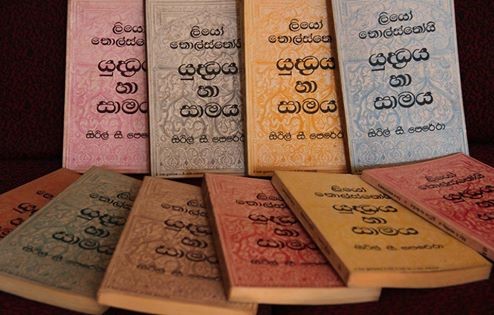
ruwan09091601(පින්තූරය ගනු ලැබුවේ W3Lanka බ්ලොග් අඩවියෙනි )

War and Peace is a philosophical, historical and an epic novel that runs through time and space. In this novel Tolstoy narrates his social, political, philosophical, historical, aesthetic, ethical, religious and moral views. He analyzed the complex processes of historical reality, social dynamics and human behaviour. The ideals and meaning of human existence had been his central theme.  Over four hundred fictional and historical characters are illustrated in this unique novel and art of storytelling and meticulous realism areimpressive in this masterpiece.

War and Peace is the personification of pre revolutionary Imperial Russia that never experienced an inborn Renaissance .War and Peace narrates Napoleon’s invasion of Russia and the post war period that created weighty changes. Tolstoy shows the depth, ambiguity, and majesty of the human character in times of war and in times of peace. Tolstoy   remains an exceptional writer of genius who profoundly analyzed a variety of characters. His psychological insights, like his style, create in the reader a sense of intimacy with the characters (Simmons, 1968).

In War and Peace Tolstoy argued his own idiosyncratic theory of life. His Philosophy was complex. He found numerous conflictive struggles in his own life.  He was struggling between with his Christian ideals and his conflicts with lust and the hypocrisies. He was tormented between ideals. His struggles with his passions and his spiritual conflicts made him to write the greatest book in the history of literature. War and Peace is a question paper submitted to the reader. In War and Peace and in his other novels Tolstoy posed a question: how to lead a perfect life in an imperfect world?  In a way War and Peace” represents Tolstoy’s conscious and unconscious mental conflicts.

Leo Tolstoy believed that the man has the ability to change positively and man is capable of search for meaning fulfilling his spiritual quest. He revealed the dialectics of the human soul. Tolstoy opens up psychologically credible -multi-faceted human character in times of war and peace.

He was deeply influenced by the French Philosopher JeanJacques Rousseau. He strongly grasped Rousseau‘s expression: Man is born free and everywhere he is in chains. Tolstoy believed that man is born pure but society corrupts him. He emphasized that civilization corrupts the natural man. He was against the organized religions. He saw corruption, deception and spiritual degradation in the religious institutions. He exceedingly criticized the Russian Orthodox Church. He was a spiritual anarchist as well as a spiritualrevolutionary. The Church was offended by Leo Tolstoy’s critical writing, speeches and views and later he was condemned and excommunicated by the Church. However Tolstoy became the moral and spiritual exemplar of the Nation. Admiring Leo Tolstoy, MahatmaGandhi wrote: Tolstoy is one of the clearest thinkers in the western world.

Tolstoy debated about good and evil. He saw malevolence in war. Tolstoy identified that wars were one of the central problems in the history of mankind. According to Tolstoy peace is not only the absence of war but also the absence of hostility between people, communities and nations. In this novel Tolstoy highlights war between nations, war between institutions, war between classes, war between families, war between individuals  and internal war within one’s self. According Tolstoy Peace ought to be achieved by harmonizing external as well as internal factors. It is an individual as well as a collective effort.

Tolstoy discussed Free Will” in his great novel.  Arguing about free will Tolstoy writes: You say-I am not free. But I have raised and lowered my arm. Everyone understands that this illogical answer is an irrefutable proof of freedom”. Tolstoy believed that our unconscious dependence on hidden forces. He wrote: If we concede that human life can be governed by reason, the possibility of life is destroyed. Tolstoy’s predispositions form metaphysical bedrock that constrains the philosophical approaches available for addressing the problem of freewill. His views of reason, laws, and reality spur each other on in such a way that one supposition necessitates the others (Thugushev, 2006).

Tolstoy may have influenced by David Hume’s approach: free will via the notion of causality. But Tolstoy’s explanation of free will is unique and comprehensive.

Man’s free will differs from every other force in that man is directly conscious of it, but in the eyes of reason it in no way differs from any other force. The forces of gravitation, electricity, or chemical affinity are only distinguished from one another in that they are differently defined by reason. Just so the force of man’s free will is distinguished by reason from the other forces of nature only by the definition reason gives it. Freedom, apart from necessity, that is, apart from the laws of reason that define it, differs in no way from gravitation or heat, or the force that makes things grow; for reason, it is only a momentary undefinable sensation of life. (War and Peace by Leo Tolstoy)

Tolstoy considered social evolution as a part of human existence. He was well aware of the socio economic conditions of his own society and realized that radical social changes would occur in Russia. Tolstoy expressed his sympathetic views and sentiments for the peasantry in the Pre Revolutionary Russia. He realized the magnitude of mass exploitations and inequalities that prevailed in the society. Although Lenin portrayed Leo Tolstoy as a mirror of the Russian revolution, Tolstoy was against any kind of terror against classes. He was against the violence imposed by society, social institutions as well as by individuals.

Tolstoy was a great reformer and an educator. He believed in the education of the masses. He had vast ideals of humanistic education.  He thought that via education social injustices and social ignorance could be eliminated. According to Yegorov (1994) Leo Tolstoy strove from an early age to play a practical part in the education of the people. The idea behind his first book The four periods of development” is deeply symbolic. His intention was to describe in it the process by which the human character is formed, from very earliest childhood, when the life of the spirit first begins to stir, to youth, when it has adopted its final shape.

He encouraged Gnoseology – the philosophic theory of knowledge:  inquiry into the basis, nature, validity, and limits of knowledge. In Tolstoy’s view, freedom in education was a gnoseological and moral principle that had to be put into practice; it was the antithesis of authoritarian teaching, and essential for a humane attitude to the pupil and respect for his or her dignity as a human being (Yegorov, 1994). Tolstoy ridiculed the insensitive and harsh educational methods that were used by the teachers of his day. In his novel he shows the unsuccessful educational methods adopted by the eccentric Prince Nicholas Bolkonski.

In War and Peace Leo Tolstoy did depth analysis of human soul. He frequently used internal monologues   to psychologically analyze his main characters. Tolstoy elegantly writes about the Emperors, Kings, Queens, and Aristocrats describing their lavish flamboyant life styles. He narrates their inner thoughts and interactions with each other. Also he writes about the downtrodden subjects of the Russian Imperial Society. He describes their non sophisticated but miserable lives. He reflects their thoughts and feelings.

The character analysis is exceptional in this great novel. There are several central characters that keep the narrative live and distinctive. Pierre Bezukhov and Prince Andrey Bolkonski. two fictional characters appear throughout the novel are remarkable for their static nature. They often regarded as being reflections of Tolstoy himself.

In addition there are a number of minor characters described in this great novel. They too influence the story line stylishly. Like the Emperors and Kings they too are heroes of special kind who demonstrated bravery and courage during the Napoleonic invasion.

In War and Peace Leo Tolstoy illustrates a peasant soldier named Tikhon who is known for his courage and bravery. Another character is Lavrushka who is a cunning servant of the Captain Denisov. Lavrushka is famous for trickery and he operates behind the enemy lines. The reader meets another character called Alpatych who is a loyal servant of the Prince Nicholas Bolkonski. Although Alpatych is humble and extremely respectful in front of the old Prince Bolkonski he behaves like a pretentious master in front of the other servants. Pelageyushka is another insignificant character described in the novel. She is a pious old poor woman who travels across Russia.  Pelageyushka frequently visits the Princess Maria Bolkonskaya who gives her money and food. In addition Tolstoy splendidly writes about the inner thoughts of a small child – little Malasha who is peasant girl. She suddenly becomes acquainted with the General Mikhail Illarionovich Golenishchev-Kutuzov- the Commanding Officer of the Russian Imperial Army and two of them become curious friends in the middle of the War. Little Malasha calls the Great Russian General Kutuzov – Dedushka (Grandpa). She curiously observes the challenging attitudes and arguments between the GeneralKutuzov and the General Bennigsen

Malasha looked down from the oven with shy delight at the faces, uniforms, and decorations of the generals, who one after another came into the room and sat down on the broad benches in the corner under the icons. “Granddad” himself, as Malasha in her own mind called Kutuzov, sat apart in a dark corner behind the oven. He sat, sunk deep in a folding armchair, and continually cleared his throat and pulled at the collar of his coat which, though it was unbuttoned, still seemed to pinch his neck. Those who entered went up one by one to the field marshal; he pressed the hands of some and nodded to others. His adjutant Kaysarov was about to draw back the curtain of the window facing Kutuzov, but the latter moved his hand angrily and Kaysarov understood that his Serene Highness did not wish his face to be seen. (War and Peace by Leo Tolstoy)

The General Kutuzov and General Bennigsen were debating about the faith of the Moscow city. When the French forces are advancing General Kaysarov decides to burn the city and retreat. He knows that going for a direct military confrontation with Napoleon would be disastrous and it would perish the Russian Army. He has a different tactic- Let them chase us until they become exhausted. Give enemy nothing but the ashes. Let them wonder in the scorched earth. When no food is available the enemy would kill and eat their horses. When the enemy is enfeeble  it gives an opportunity to attack them. General Kutuzov’s intention is to feed the French Army hoarse meat. He did it to the Turks during the Russo-Turkish War in 1806.  But the General Bennigsen has a different plan. He wants to defend Moscow at all costs.

Bennigsen opened the council with the question: “Are we to abandon Russia’s ancient and sacred capital without a struggle, or are we to defend it?”

A prolonged and general silence followed. There was a frown on every face and only Kutuzov’s angry grunts and occasional cough broke the silence. All eyes were gazing at him. Malasha too looked at “Granddad.” She was nearest to him and saw how his face puckered; he seemed about to cry, but this did not last long.

“Russia’s ancient and sacred capital!” he suddenly said, repeating Bennigsen’s words in an angry voice and thereby drawing attention to the false note in them. “Allow me to tell you, your excellency, that that question has no meaning for a Russian.” (He lurched his heavy body forward.) “Such a question cannot be put; it is senseless! The question I have asked these gentlemen to meet to discuss is a military one. The question is that of saving Russia. Is it better to give up Moscow without a battle, or by accepting battle to risk losing the army as well as Moscow? That is the question on which I want your opinion,” and he sank back in his chair.

(War and Peace by Leo Tolstoy)

Tolstoy’s dynamic mind and duality of his personality were well represented in this enormous novel. Although he had a compassionate mind to understand the oppressions in his society once he stated :  I sit on a man’s back, choking him and making him carry me, and yet assure myself and others that I am very sorry for him and wish to ease his lot by all possible means – except by getting off his back. He was conscious about the exploitations existed in his surrounding.

The Count Tolstoy renounced the luxury of his aristocratic class and embraced the peasants’ life style. He saw peasant’s life style as an ideal way of life. Also he admired the working class.   He writes: the simple working people all around me were the Russian people, and I turned to them and to the meaning they gave life”

Leo Tolstoy’s life was full of contradictions. He wanted to renounce wealth but until his old age he could not make a precise decision. He preached that the money was evil yet he enjoyed luxuries, he said people should detach from their wealth and look after the poor. However in real life he had to arrest three poor peasants who illegally cut timber in his state and later to prosecute them. He was trapped in an unhappy marriage for a long time. At a time he was an egoless humane husband and the next moment he was furious man who was jealous and suspicious of his wife.  Leo Tolstoy’s shifting emotions were well documented in his novels and many are reflected through major characters.

The Ideological crisis of the writer could be seen in certain parts of this vast novel. Although Tolstoy was against violence, in his novel he highlights justified cruelty which could have resulted by his patriotic enthusiasm. According to the novel when the Muzhiks (Russian peasants) see the retreating French soldiers who are now starving and exhausted and also weakened by the winter they attack them dreadfully. The Muzhiks massacre the Napoleon’s retreating remaining forces. Tolstoy glorifies the actions of the Muzhiks who attack the half dead enemy soldiers who are now in a vulnerable position in the steppes of Russia.

Family dynamics and parental influence were well described in this novel. Tolstoy lost both of his parents at the small age. But their warmth and spiritual touch lived with him. He immortalized their memory by creating two fictional characters in War and Peace. Nikolai Rostov (young brave Army officer who is a passionate lover fond of gambling and leads a reckless life but  later turns in to a responsible man) and Maria Bolkonskaya (Prince Andrey Bolkonski ’s sister who is a loving and a religious woman) were based on Tolstoy’s own memories of his father and mother.

When Leo Tolstoy was a little child his mother Maria Nikolaevna Volkonskaya died. He was significantly impacted by the maternal deprivation syndrome following her death. For a number of years Tolstoy erroneously believed that his mother died as a result of childbirth. He portrays maternal death and maternal deprivation in War and Peace describing the death of Liza Meinen (Prince Andrey Bolkonski ’s wife) and further narrating the disheartening situation of her baby son Nicolas who subsequently becomes an orphan.

In the novel Liza dies while giving birth to her son. She was in pain and agony without her husband. When she needed her husband Prince Andrei he went to the War leaving her with his nagging father and helpless sister. Liza was seriously disappointed. Tolstoy vividly describes Liza’s death in War and Peace.

Prince Andrew turned to him, but the doctor gave him a bewildered look and passed by without a word. A woman rushed out and seeing Prince Andrew stopped, hesitating on the threshold. He went into his wife’s room. She was lying dead, in the same position he had seen her in five minutes before and, despite the fixed eyes and the pallor of the cheeks, the same expression was on her charming childlike face with its upper lip covered with tiny black hair.

Three days later the little princess was buried, and Prince Andrew went up the steps to where the coffin stood, to give her the farewell kiss. And there in the coffin was the same face, though with closed eyes. Ah, what have you done to me?” it still seemed to say, and Prince Andrew felt that something gave way in his soul and that he was guilty of a sin he could neither remedy nor forget. He could not weep. The old man too came up and kissed the waxen little hands that lay quietly crossed one on the other on her breast, and to him, too, her face seemed to say: Ah, what have you done to me, and why?” And at the sight the old man turned angrily away (War and Peace by Leo Tolstoy)

As indicated by Rancourt-Laferer (1998) in his unfinished “Memoirs” (1903 – 1906 years), Tolstoy admitted that he could not remember his mother, but he kept her memory intact as a spiritual image. In his perception, she was the embodiment of the ideal of the sublime that lived inside his soul. In later years Tolstoy converted his late mother as a goddesses like image and prayed. In old age Tolstoy confessed that he still idolized and prayed for his mother. The Psychoanalyst Nikolai Osipov wrote about Tolstoy’s fixation upon maternal image. In a sense, Tolstoy did not quite come to terms with the fact that his mother had died. This could have been a defense mechanism of the childhood years and it had been preserved for long years.

During his childhood Leo Tolstoy struggled with Oedipal confrontation with his father. One noticing factor in  War and Peace is there are no ideal father figures. The three prominent fathers described in the novel are Count Vasili Kuragin (Helen’s Father who is a cunning and egocentric man) Count Kirill Bezukhov  (Pierre Bezukhov ‘s father who is a well-known  fornicator)  and Prince Nicholas Bolkonski  (Prince Andrey Bolkonski’s father who is an irritable and  nagging old man)

Maria Bolkonskaya becomes Tolstoy’s ideal and fictional mother.  He enriched her character with gentle and humane maternal qualities. However his Oedipal confrontation is well pronounced describing Maria Bolkonskaya.

Unmarried young Princess Mariya Bolkonskaya lives with her old wretched father PrinceNicholas Bolkonski. Her father often ill treats and ridicules her. He gives special attention to Bourienne,  – Princess’s chambermaid in order to irritate Maria.  Bourienne is a French girl working in a Russian aristocratic family.   However Maria tolerates all the negativity that has been focused on her by the father and waits until her brother Prince Andry Bolkonski returns from the War. When Andry Bolkonski becomes a POW and family receives no information Maria relentlessly prays for his life. Tolstoy portrays Mariya Bolkonskaya as a silent sufferer. She reminds us Freud’ s famous case study Fräulein Anna O (Bertha Pappenheim) who repressed her biological urges and cared for her aging irritable father.

Pierre Bezukhov and Prince Andrey Bolkonski look for father figures. The absence of ideal father figures leads both men (Pierre Bezukhov and Prince Andrey Bolkonski) to seek substitute fathers. Prince Andrey Bolkonski sees much of paternal qualities in the General Kutuzov and Pierre Bezukhov finds his symbolic father in Osip Alexeevich Bazdeev- a noted Freemason.

Pierre and Prince Andrei bear much resemblance to Tolstoy himself. Tolstoy was struggling with his passions and his spiritual conflicts. These unresolved mental conflicts were expressed via Pierre Bezukhov’s character.  According to the novel Pierre Bezukhov is an illegitimate son of the Count Kirill Bezukhov. Pierre is described as an ill-mannered non attractive socially awkward man who is fond of women, wine and gambling.  This portrait is much similar to young Tolstoy.

Young Tolstoy had a passion for gambling and had exhausted the family wealth. Like Pierre Bezukhov he found it difficult to integrate into the Petersburg high society. Tolstoy admitted himself as a non attractive ugly man. Likewise Pierre Bezukhov is narrated as a huge bear like person. Pierre was ignored and rejected by the high society until he inherits his father’s fortune. Once he becomes rich and famous Pierre was forced to get married to Helen Kuragina (Count Vasili Kuragin’s daughter). Consequently he was trapped in an unhappy marriage and searching for meaning in his life.  One time debauched and profligate man now becomes a philosopher who is searching for meaning in life. Pierre Bezukhov represents much of Tolstoy’s life philosophy.

Pierre Bezukhov was unhappy with his married life. He was troubled by his wife – Helen’s promiscuous behaviour. He suspects Helen is in love with his former friend Dolokhov. Dolokhov is a young reckless officer who was demoted for his disorderliness. However Dolokhov earns his rank fighting bravely in the first battle against Napoleon. Hence he was able to return to the St Petersburg high society. Aristocratic women adore Dolokhov’s bravery and his ability to gratify women.

The unsolved problem that tormented him   was caused by hints given by the princess, his cousin, at Moscow, concerning Dolokhov’s intimacy with his wife, and by an anonymous letter he had received that morning, which in the mean jocular way common to anonymous letters said that he saw badly through his spectacles, but that his wife’s connection with Dolokhov was a secret to no one but himself. Pierre absolutely disbelieved both the princess’ hints and the letter, but he feared now to look at Dolokhov, who was sitting opposite him. Every time he chanced to meet Dolokhov’s handsome insolent eyes, Pierre felt something terrible and monstrous rising in his soul and turned quickly away. Involuntarily recalling his wife’s past and her relations with Dolokhov, Pierre saw clearly that what was said in the letter might be true, or might at least seem to be true had it not referred to his wife (War and Peace by Leo Tolstoy)

One time Leo Tolstoy was troubled by sexual jealousy. His famous work The Kreutzer Sonata” (1889) became a part of his biography. The protagonist Pozdnyshev suspects that his wife has a secret affair with the violinist Troukhatchevsky. His sexual ordeal leads to a sexual obsessions, sexual guilt and sexual jealousy. At the end Pozdnyshev kills his wife.

Tolstoy believed that if two married people stay together and their initial love is mostly filled with sensual pleasure and carnal love it can quickly turn into hatred. According to Tolstoy carnal love degrades the human spirit. In Kreutzer Sonata Tolstoy argued carnal love vs chastity.

In War and Peace Pierre makes an attempt to attack his wife with a heavy marble bench.  It would have been a fatal blow if he had attacked her. Pierre’s initial thoughts were to kill his wife. He had adequate evidence to believe that his wife had a sexual relationship with the Officer Dolokhov. Pierre is intensely affected by sexual jealousy. His rage brings extreme fear to Helen. After this confrontation both are parted. Instead of killing his wife Pierre goes in to seclusion and search of meaning. Pierre redirects himself towards spiritual pursuits

According to Melanie Klein-Austrian-born British psychoanalyst at an early stage of development the male child perceives his penis as a weapon of his sadism.  In normal development man overcomes the idea of destructiveness of the penis. Happy and satisfying sexual relationship with a woman convinces a man that his penis has valuable properties and cause a man unconscious belief that the desire to compensate the woman caused the damage before a success. This not only increases the sexual pleasure of his love and affection for the woman, but also causes a sense of gratitude and peace.

In his young days Tolstoy was a compulsive gambler and a noted adulterer. Sometimes he tried to seduce the wives of his military colleagues. However in his old age he renounced sex and preached abstinence. Many youth during his era became followers of Tolstoyanism. His young private secretary Valentin Bulgakov embraced Tolstoyanism that had life principles such as pacifism, vegetarianism, non-participation in political activities and a high level of social activity based on Christian principles.

Tolstoy’s Philosophy irritated his wife Countess Sophia Andreyevna Tolstaya leading to a marital distress. According to Parini (2009) Leo Tolstoy shaped his own version of Christianity, discounting its miraculous aspects. Worse, from Sofia’s viewpoint, he threatened to give away all his property, including the copyright to his work, to the Russian people. A psychodrama emerged, with Sofia battling Tolstoy’s disciples for access to his soul. Her diaries become increasingly frenzied in the 1880s and 90s, and the last decade of Tolstoy’s life (1900-1910) makes for harrowing reading, as in this entry for 19 November 1903:

What I predicted indeed has come true: my passionate husband has died, and since he was never a friend to me, how could he be one to me now? This life is not for me. There is nowhere for me to put my energy and passion for life; no contact with people, no art, no work – nothing but total loneliness all day (  Parini, 2009). 

Tolstoy’s conflicts with his wife intensified in the later years. He left her and his native home. Hence metaphorically Leo Tolstoy murdered his wife by renouncing her. Following Tolstoy’s permanent departure his wife Sophia Tolstaya tried to commit suicide.  When he was in his final hours at the Astopovo station he refused to see his wife for the one last time. Tolstoy’s anger and resentment towards his wife entirely covered his Christian ideals of forgiveness.

One of the most notable convictions of Tolstoy was hostility towards sex. Sexual hostility was an uncommon feature among the other Russian writers such as Dostoevsky, Chekhov, Pasternak and Solzhenitsyn.  In 1888 Tolstoy stated that people should no longer engage in sexual love but later   admitted that he was dismayed for that conclusion. However he preached the superiority of abstinence ( Rancourt-Laferer, 1998).

Was Tolstoy a misogynist? This is a grim question. According to Rancourt-Laferer, (1998) Tolstoy expressed his hostility to women often in different occasions. Tolstoy quite openly expressed his misogyny.  Once he stated:  To marry a young lady means to accept all the poison of civilization.”

Tolstoy had largely met only two types of women in the pre-Revolutionary Russian society: aristocratic women who were known for their extravagant indulging lifestyle and the peasant women who were oppressed by the feudal system, patriarchy and by the Church. He witnessed the immoral behaviour of the women who belonged to the upper and the lower class. At the same time he saw love, compassion, empathy, charity etc demonstrated by the women of both two classes. He assumed that men and women are born pure and the civilization corrupt and poison them constantly.

Tolstoy cannot be understood without taking the moral masochism in to consideration. For instance the suicide of Anna Karenina is a literary embodiment of Tolstoy’s desire to kill Anna or to punish himself for his lust, as well as his hatred for the woman who cheated her husband   (Rancourt-Laferer, 1998). In War and Peace Tolstoy punishes Helen Kuragina (Pierre Bezukhov’s wife) who bears a scheming and immoral character. After facing numerous scandals and humiliations Helen dies of Angina Pectoris. It was an undignified death that was imposed on Helen by Leo Tolstoy.

Young Leo Tolstoy engaged in duels when he lived in the Caucasus. He had a fascination to kill his opponents which he later regrettably admitted. In War and Peace Dolokhov humiliates Pierre Bezukhov at a dinner party. Dolokhov’s disrespectful behaviour fuels Pierre’s anger. Pierre declares a duel. He wants to retaliate and quench his anger. He wants to kill the man who slept with his wife. Like Pozdnyshev (in Kreutzer Sonata) Pierre is tormented by sexual jealousy and ready to commit a murder.

In the duel Pierre wounds Dolokhov. Although Pierre was able to retaliate and partially fulfilled his desire to destroy Dolokhov his inner thoughts change rapidly. Pierre is repenting over his quick decision and wounding his opponent. Pierre leaves St Petersburg and starts his long spiritual journey. Pierre becomes a Free Mason thinking that it would help him to restore his pride and fill the existential vacuum. But soon he realizes the emptiness in their rituals. He dedicates his life to another mission.

Pierre Bezukhov wants to end the evil. He decides to kill Napoleon the Antichrist who unleashed evil upon Russian and French people. Pierre considers this as a sacred mission and he is ready to sacrifice his life. His sexual jealousy has converted in to a generalized anger and it has been focused on Napoleon.

Friedrich Hegel saw Napoleon as the world-spirit on horseback. However Tolstoy sophisticatedly presents the complex nature of Napoleon’s character that is filled with overconfidence, narcissism, selfishness, power hugeness, bravery, and cruelty. In contrast Tolstoy reveals how Napoleon’ cared for his soldiers who were dying of plague. However his   self-centeredness was well exposed during the Russian campaign. Napoleon abandoned his troops and escaped leaving his soldiers to die in the harsh Russian winter. Tolstoy too named Napoleon Bonaparte as the Beast. Tolstoy presents a verse from the Book of Revelation 13:18. – (This calls for wisdom. Let the person who has insight calculate the number of the beast, for it is the number of a man. That number is 666.)Tolstoy identifies Napoleon Bonaparte as the Beast – the Antichrist.

According to Tolstoy Napoleon was an evil military genius but he could not break the will of the Russian people. Napoleon Bonaparte’s downfall occurred with his 1812 Russian campaign. Napoleon’s invincible Grand Army sustained many losses in the Battle of Borodino.

To anyone who looks at the field of Borodino without thinking of how the battle was actually fought, this position, protected by the river Kolocha, presents itself as obvious for an army whose object was to prevent an enemy from advancing along the Smolensk road to Moscow……. The battle of Borodino was not fought on a chosen and entrenched position with forces only slightly weaker than those of the enemy, but, as a result of the loss of the Shevardino Redoubt, the Russians fought the battle of Borodino on an open and almost unentrenched position, with forces only half as numerous as the French; that is to say, under conditions in which it was not merely unthinkable to fight for ten hours and secure an indecisive result, but unthinkable to keep an army even from complete disintegration and flight. (War and Peace by Leo Tolstoy)

Napoleon invaded Russia with over 680 000 soldiers. The Battle of Borodino becomes a turning point in the history. As Tolstoy narrates the Beast is seriously wounded. His Moscow invasion invariably becomes a fiasco. The General Kutuzov closely observes the movements of the beast. He uses three decisive weapons against Napoleon. Those are patience, timely retreat and the approaching Russian winter.

The invading French army had to face periodical resistance by the Russian Imperial Army. The Cossack horsemen constantly attacked Napoleon’s supply lines. The enemy became impatient. Lack of food, desertion, disease, exhaustion weakened the Napoleon’s Army. He lost more than 500,000 soldiers during the invasion. Nearly 100,000 became prisoners of war.  Only 10,000 of them returned to France alive.

Tolstoy found that the historians seemed to agree; they asserted, as he puts it in his novel, that thousands of people went from west to east and killed each other just because a single man told them to. Even those historians interested in multiple causes never seemed to respect enough of them, thought Tolstoy. Great occurrences like the Napoleonic invasion happen not because one man dictates the movement of history, but because hundreds of thousands of motives and accidents and reactions occur at once; Tolstoy called this the “swarm -like life, where man inevitably fulfils the laws prescribed for him”. He is really a kind of historical fatalist who spends the course of his novel searching for the laws of that fatalism. Napoleon and great men like him think of themselves as supremely free, but in fact they are the servants of history, as caught up in that “swarm -like” existence as the meanest hussar (Wood, 2014).

 Man’s mind cannot grasp the causes of   events in their completeness, but the desire to find those causes is implanted in man’s soul. And without considering the multiplicity and complexity of the conditions any one of which taken separately may seem to be the cause, he snatches at the first approximation to a cause that seems to him intelligible and says: This is the cause!” In historical events (where the actions of men are the subject of observation) the first and most primitive approximation to present itself was the will of the gods and, after that, the will of those who stood in the most prominent position- the heroes of history. But we need only penetrate to the essence of any historic event- which lies in the activity of the general mass of men who take part in it- to be convinced that the will of the historic hero does not control the actions of the mass but is itself continually ( War and Peace by Leo Tolstoy)

With a new plan Pierre Bezukhov decides to go to Moscow. There he witnesses the French invasion of Moscow. The great city of Moscow is in flames. In Moscow Pierre rescues a French officer and they become friends. The French officer was surprised by Pierre’s knowledge of French and his natural accent.

Pierre Bezukhov’s mission ends suddenly when he becomes a prisoner. The French Officers think that Pierre is a Russian spy. He had to join with the other prisoners. There he meets another prisoner named Platòn Karataev.

The character of Platòn Karataev is relatively small but very inspiring. As the book describes Platòn Karataev is a peasant with simple and true qualities which Tolstoy admired most. The author becomes a prophet and a moral reformer who speaks to the reader directly.  Platòn  Karatheave becomes his mouthpiece.

Karataev embodies ultimate wisdom for Pierre: a sustainment of spirit in the face of adversarial, life-denying forces. Karataev idealized family life but he also is happy that his service in the army spared his brother’s family from losing his brother. Pierre’s example embodies both the values of a nurturing family and the value of committing one’s life to the greater good (Itriyeva, 2008).

All the prisoners were taken by the French Army in their long retreat. The prisoners walk with the French Army in harsh winter. Karataev and Pierre walk together.

During the long retreat the French soldiers shoot enfeeble Russian prisoners who cannot march further. Pierre helps weaken Platòn Karataev to walk but he becomes more and more exhausted.  Finally Platòn Karatheave was shot by a French soldier.  Pierre becomes puzzled by witnessing the dark side of human nature in a war situation.

But what is war? What is needed for success in warfare? What are the habits of the military? The aim of war is murder; the methods of war are spying, treachery, and their encouragement, the ruin of a country’s inhabitants, robbing them or stealing to provision the army, and fraud and falsehood termed military craft. The habits of the military class are the absence of freedom, that is, discipline, idleness, ignorance, cruelty, debauchery, and drunkenness. And in spite of all this it is the highest class, respected by everyone. All the kings, except the Chinese, wear military uniforms, and he who kills most people receives the highest rewards (War and Peace by Leo Tolstoy).

As an officer who saw active combat, Tolstoy knew in a battle who the real war heroes were. The real war heroes are the type of people that never blow their own trumpet. They do their sanctified military duty in the battle and they are not interested in military glory. Often they do not get the recognition. Those who cowardly evaded the battle field later become decorated war heroes. Leo Tolstoy tells the reader the irony of real war heroes unveiling the story of Captain Tushin.

According to the novel Captain Tushin is an artillery officer who fought bravely at the Battle of Schöngrabern. Prince Andrei Bolkonski witnesses the heroic efforts of Captain Tushin who commands his artillery battery.  Although other battery commanders withdrew their cannons and men when the attacks intensified Captain Tushin’s cannons are constantly sending deadly messages to the French forces. Eventually his battery ends up alone and unsupported. However Captain Tushin’s counter attacks delay the enemy advance. This allows the Russian troops to withdraw successfully evading a major loss. Captain Tushin’s effort becomes one of the decisive factors of successful withdrawal.

Later that evening the Russian commanders gather together and discuss the events which occurred at the battle field. No one praises Captain Tushin’s heroic efforts. Instead some staff officers who left the battle field cowardly blame the Captain Tushin for abandoning some of his cannons. Prince Andrei Bolkonsky listens to the staff officers and finally he tells the General Bagration that Captain Tushin and his men delayed the French advance saving the rest of the Army.

All were silent. Tushin appeared at the threshold and made his way timidly from behind the backs of the generals. As he stepped past the generals in the crowded hut, feeling embarrassed as he always was by the sight of his superiors, he did not notice the staff of the banner and stumbled over it. Several of those present laughed. 


“How was it a gun was abandoned?” asked Bagration, frowning, not so much at the captain as at those who were laughing, among whom Zherkov laughed loudest.  Only now, when he was confronted by the stern authorities, did his guilt and the disgrace of having lost two guns and yet remaining alive present themselves to Tushin in all their horror. He had been so excited that he had not thought about it until that moment. The officers’ laughter confused him still more. He stood before Bagration with his lower jaw trembling and was hardly able to mutter: “I don’t know… your excellency… I had no men… your excellency.” 

“You might have taken some from the covering troops.” 

Tushin did not say that there were no covering troops, though that was perfectly true. He was afraid of getting some other officer into trouble, and silently fixed his eyes on Bagration as a schoolboy who has blundered looks at an examiner.  The silence lasted some time. Prince Bagration, apparently not wishing to be severe, found nothing to say; the others did not venture to intervene. Prince Andrew looked at Tushin from under his brows and his fingers twitched nervously. 

“Your excellency!” Prince Andrew broke the silence with his abrupt voice,” you were pleased to send me to Captain Tushin’s battery. I went there and found two thirds of the men and horses knocked out, two guns smashed, and no supports at all.”

 Prince Bagration and Tushin looked with equal intentness at Bolkonski, who spoke with suppressed agitation. “And, if your excellency will allow me to express my opinion,” he continued, “we owe today’s success chiefly to the action of that battery and the heroic endurance of Captain Tushin and his company,” and without awaiting a reply, Prince Andrew rose and left the table.

Prince Bagration looked at Tushin, evidently reluctant to show distrust in Bolkonski’s emphatic opinion yet not feeling able fully to credit it, bent his head, and told Tushin that he could go. Prince Andrew went out with him.

“Thank you; you saved me, my dear fellow!” said Tushin.

(War and Peace by Leo Tolstoy).

One time Leo Tolstoy was an ambitious young officer who served in the Crimean War. He took part in the defense of Sevastopol. There he witnessed horror and despair and as a result of battle stress he gradually experienced a personality change. The climax of this personality change occurred many years after the war when he was traveling to buy an estate. He had to stay in a motel and in the middle of the night he walked up with a mortal fear. This could have been a sever anxiety attack and this incident made distinct changes in him.  Tolstoy was plagued by fear of death and mortal fear becomes one of the focal parts in the novel -War and Peace. Tolstoy   experienced persistent sorrow and emptiness (Clinical Depression?)Which he described in his autobiographical book Confession”

I cannot recall those years without horror, loathing, and heart-rending pain. I killed people in war, challenged men to duels with the purpose of killing them, and lost at cards; I squandered the fruits of the peasants’ toil and then had them executed; I was a fornicator and a cheat. Lying, stealing, promiscuity of every kind, drunkenness, violence, murder – there was not a crime I did not commit…Thus I lived for ten years.”

In his life a number of times Tolstoy went in profound depression and seclusion. This depression, which was melancholic in character, almost destroyed him and, once he had finished Anna Karenina, led him to want to renounce not only sexuality but also literary creation and material possessions. Like Leonardo da Vinci, Tolstoy turned away from his artistic work, declaring that ‘art is not only useless but even harmful’, and thereafter devoted himself to philosophical, political and religious writings (Anargyros-Klinger, 2002).

As illustrated by Bergner (1998) Tolstoy, at a point in his life when he was contemplating suicide, expressed the basis for his despair and crisis of meaning in the following way: “What will come from what I am doing now, and may do tomorrow?  What will come from my whole life? otherwise expressed–Why should I live?  Why should I wish for anything?  Why should I do anything?  Again, in other words, is there any meaning in my life which will not be destroyed by the inevitable death awaiting me.”

Prince Andrei Bolkonski mostly represent Tolstoy’s military period. Prince Andrei portrayed as a cynical man who was tired of his wealth and family glory. He goes in search of a new life adventure.  Prince Andrew finds no meaning in his tedious but comfortable married life with Lisa. He wants to make history and to be a large part of it. He wants to be with new kind of heroes such as General Kutuzov, General    Bagration  , Napoleon Bonaparte etc.He was looking forward to find his greatness in the Battle of Austerlitz.

When Andrei Bolkonski was wounded in the battle he sees the blue sky which represents the emptiness. Andrei’s NDE (Near Death Experience) makes him   more matured and finally he realizes military glory, encounter with his former hero Napoleon, making history etc all were insignificant empty attempts.  He realized the true meaning of human suffering. But he becomes more cynical and alienated.

Gazing into Napoleon’s eyes, Prince Andrei mused on the unimportance of greatness, the unimportance of life which no one could understand, and the still greater unimportance of death, the meaning of which no one alive could understand or explain (War and Peace by Leo Tolstoy)

After his wife’s death Prince Andrei Bolkonsky meets Natalia Rostova who is an innocent and a charming girl. She is the daughter of Russian Count Ilya Rostov and his wife, Countess Natalya Rostova.  Her character is often considered to be one of Tolstoy’s grandest creations, with her ability to live life to the fullest, with true joyfulness and great energy. Her character also has the ability to charm both the fictional characters in the novel and also people who read the book (Kingsley, 2013). Natasha Rostova becomes Tolstoy’s heroine.

Although Prince Andrei Bolkonski and Natalia Rostova become engaged Andrei’s father imposes serious stipulations and it wrecks their friendship. This gives a fine opportunity to Helen Kuragin’s brother Anatoly Kuragin to enter in to Natalia Rostova’s life. Anatoly Kuragin is described as a debaucher and a fraudulent character. With Helen’s consent and fullest support Anatoly Kuragin seduces Natalia Rostova and destroys her relationship withAndrei Bolkonsky. When Natalia Rostova realized that she was deceived and betrayed by Anatoly Kuragin who was previously married she goes in to a serious form of reactive depression. However after a long time she meets Prince Andrei Bolkonski in a critical condition.   He is wounded in the battle and dying of peritonitis. Natalia Rostova cares for wounded Andrei until his death. After Andrei Bolkonski’s death Natalia Rostova goes in to a dramatic transformation. Eventually she becomes the wife of Andrei Bolkonski’s dear friendPierre Bezukhov.

Tolstoy illustrates the phenomenon of death in his great epic War and Peace. He wrote: Death, which will end everything and which must come today or tomorrow – in a moment, anyhow, compared with eternity. He vividly describes the deaths of Count Kirill Bezukhov (Pierre Bezukhov’s father) and Prince Nicholas Bolkonski. The Count Kirill Bezukhov dies slowly and Prince Nicholas Bolkonski suffers a stroke and heading towards death. The clinical detail employed in this case illustrates how Tolstoy used symbolic characters without sacrificing the realism of War and Peace (Albin, 1990).

The death of Prince Andrei Bolkonski is a central them in the book. Tolstoy shows death as an honest prospect.

 Not only did Prince Andrew know he would die, but he felt that he was dying and was already half dead. He was conscious of an aloofness from everything earthly and a strange and joyous lightness of existence. Without haste or agitation he awaited what was coming. That inexorable, eternal, distant, and unknown the presence of which he had felt continually all his life- was now near to him and, by the strange lightness he experienced, almost comprehensible and palpable… Formerly he had feared the end. He had   twice experienced that terribly tormenting fear of death- the end- but now he no longer understood that fear. He had felt it for the first time when the shell   spun like a top before him, and he looked at the fallow field, the bushes, and the sky, and knew that he was face to face with death. When he came to himself after being wounded and the flower of eternal, unfettered love had instantly unfolded itself in his soul as if freed from the bondage of life that had restrained it, he no longer feared death and ceased to think about it. ( War and Peace by Leo Tolstoy)

The centerpiece of Tolstoy’s world view is the belief that meaning cannot be found in the world as it is—a world in which one must die. In his view, the fact that both oneself and all of one’s efforts and accomplishments are ineluctably doomed to extinction renders them utterly pointless and futile. It was precisely this belief that brought Tolstoy to his deepest despair and to the brink of suicide (Bergner, 2010).

Later in life Count Tolstoy formulated a stereotype unique philosophy. Although he was criticized by the clergy and even excommunicated by the Russian Orthodox Church Tolstoy believed that philosophic principles can only be understood in their concrete expression in history.

War and Peace reflects Tolstoy’s view -that all is predestined. Tolstoy believed that history is determined by a number of facts and no individual can change the course of history. He writes no one controls events not even Napoleon or General Kutuzov Commander-in-chief of the Russian forces or the Tsar Alexander I. In his epic novel Tolstoy makes an attempt to explain the theory of how history works.

In his own words Leo Tolstoy states

“In historical events great men – so-called – are but labels serving to give a name to the event, and like labels they have the least possible connection with the event itself. Every action of theirs, that seems to them an act of their own free will, is in an historical sense not free at all, but in bondage to the whole course of previous history, and predestined from all eternity.”

This philosophy was later grasped by many novelists and film directors. For instance in the movie Wind and the Lion (Starring Sean Connery Sean Connery) the nomad leader of the desert   Raisuli compares his place in the universe as a pawn in the chess game which he has no control . Tolstoy once said man lives consciously for himself, but is an unconscious instrument in the attainment of the historic, universal, aims of humanity”

According to Itriyeva (2008) the ultimate wisdom of War and Peace ends in the ambiguous conflict of admitting ever-changing forces of history and exposing oneself to history while also attempting to create life-sustaining order.

Personal Communications

1)      Professor Raymond M. Bergner-Department of Psychology, Illinois State University

2)      Professor Guy Proulx – Clinical Psychologist and Professor of Psychology -Glendon Campus York University Canada

References

Albin, R.L.(1990). Arch Neurol. 47(2):225-6.The death of Nicholas Bolkonski. Neurology in Tolstoy’s War and Peace.

Anargyros-Klinger, A.(2002). The thread of depression throughout the life and works of Leo Tolstoy.Int J Psychoanal.  83(Pt 2):407-18.

Bergner, R .(1998). Therapeutic approaches to problems of meaninglessness.   American Journal of Psychotherapy, 52, pp. 1-16.

Bergner, R. (2010). The Tolstoy dilemma: A Paradigm Case

Formulation and some therapeutic interventions.

Harding, L. (2010).  Leo Tolstoy: the forgotten genius? The Guardian.

Itriyeva, I .(2008). An Examination of Free Will in Tolstoy’s War and Peace. Retrieved from http://wesscholar.wesleyan.edu/cgi/viewcontent.cgi?article=1109&context=etd_hon_theses

Kingsley , H. (2013). Natasha Rostova from War and Peace by Leo Tolstoy    Retrieved from  http://www.humanities360.com/index.php/natasha-rostova-from-war-and-peace-by-leo-tolstoy-4372/

Lenin, V.I. Collected works, vol. 16, p. 323; see also Leo Tolstoy as the mirror of the Russian revolution,vol. 15, pp. 202-09.

Parini, J . (2009). The Diaries of Sofia Tolstoy, translated by Cathy Porter.The Guardian, Saturday 5 December.

Rancourt-Laferer, D. (1998 June 4). Presented at the 15th International Conference “Psychoanalysis, literature and art”, St. Petersburg.

Simmons, E.J. (1968).War And Peace From Introduction To Tolstoy’s Writings by Ernest J Simmons. Retrieved from /smartboard/shop/smmnsej/tolstoy/chap5.htm

Thugushev,N.( 2006).  Free Will in War and Peace. Aporia vol. 16 no. 2.

Tolstoy, L.(1982).  War and Peace. Trans. Rosemary Edmonds. New York: Penguin.

Tolstoy, L.(1984). The Kingdom of God is Within You. Lincoln: University of Nebraska Press.

Yegorov, S.F. (1994). PROSPECTS: the quarterly review of comparative education (Paris, UNESCO: International Bureau of Education), vol. XXIV p. 647–60.

GNRC doctors to conduct press club evening OPD

September 9th, 2016

By NJ Thakuria

Guwahati: The city based  GNRC Hospitals will support the ‘Evening with a Doctor’ program at Guwahati Press Club (GPC) on  10 September with their resource persons.  Dr Rajib Das (Cardiology) and Dr Bikash Rai Das (Heart Surgeon) along with health workers from the prestigious healthcare institute will join the Saturday evening OPD program  for free medical consultations to the members of the press club along with their close relatives. ECG facility will also be available with attending doctor’s advise during the program ( 5 to 8  pm).

The first program of the weekly evening clinic series at GPC premises was launched on 20 August, where Dr Kashyap Kr Das (Medicine, Dispur

Hospitals) provided necessary consultations on healthcare issues to the  member-journalists. The participants, including some senior journalists, took the opportunity to get  their blood pressure & sugar checked by the health workers.

Mentionable is that Assam’s well known Dispur Hospitals Pvt Ltd under the leadership of Dr Jayanta Bardoloi took the initiative to raise a doctor’s chamber on the GPC campus, which was inaugurated by young citizens namely Dhiman, Kristi, Shantanava, Arya, Shambhavi, Nistha and Arunava on  the occasion of India’s 70th Independence Day.

The second program was graced by two physicians from Down Town Hospital namely Dr Swapnaav Barthakur (Medicine) & Dr Ruma Dutta (O&

  1. G) and the third one was attended by Dr Nitin Gupta (Urology), Dr Juri Talukdar (General Practitioner) and Dr Debanga Borah (Cardiology) from Wintrobe Hospital.

The forthcoming Saturday evening OPDs will be attended by the physicians from Narayana Super Specialty Hospital, Apollo Chennai Hospital, Nemcare Hospital etc. Though the initiative has been formulated primarily for the benefit of GPC members, anyone related to the journalism is encouraged to take advantage of it. Moreover, the journalists based in other parts of the region may also participate in the program, said a GPC statement.

පාවෙන අවි ගබඩාව නිසා ආණ්ඩුව ලාභ ලබලා – ආරක්ෂක ඇමතිගෙන් හෙළි වෙයි

September 9th, 2016

www.mahinda.info

[1]. ඇවන්ට්ගාඩ් සමාගම රුපියල් බිලියන 11.4ක් උපයා ගත්තාලු. ඒක හරි නම් රජයට ලැබෙන්න තිබුණු ආදායමක් කියන එකයි අල්ලස් කොමිසම කියන්නේ. මේ කතාවේ ඇත්ත නැත්ත අපි බලමු.

[2]. 2016 මාර්තු 18 දා උදය ගම්මන්පිළ මහතා ආරක්ෂක ඇමතිතුමාගෙන් ඇවන්ට්ගාඩ් පිලිබඳ ප්‍රශ්නයක් ඇහුව්වා. ඒකට උත්තර දෙමින් රාජ්‍ය ආරක්ෂක ඇමතිතුමා අපූරු තොරතුරු ටිකක් පාර්ලිමේන්තුවට කිව්වා. මේ බව හැන්සාඩ් වාර්තාවේ සඳහන් (පහත වීඩියෝවේ දැක්වෙයි). අවශ්‍ය අයට හැන්සාඩ් වාර්තාව පරිශීලනය කර බැලීමට පුළුවන්.

[3]. වත්මන් ආරක්ෂක අමාත්‍යවරයාට අනුව,
2009.12.07 සිට 2012.10.15 දක්වා නාවික හමුදාව අවි ගබඩාව කර ගෙන යන සමයේ අවුරුදු තුනකට ආණ්ඩුව ලැබූ ආදායම රුපියල් බිලියන 1.8 යි.
ඇවන්ට්ගාඩ් පා වෙන අවි ගබඩාවක් පවත්වා ගෙන ගිය 2012.10.15 සිට 2015.11.13 දක්වා වසර තුනට ආණ්ඩුව ලැබූ ආදායම රුපියල් බිලියන 4.1 යි. (නාවික හමුදාවට බි 2.5ක් ද රක්නා ලංකා සමාගමට බිලියන 0.4ක් ද උපයා ගත්තා. බදු ආදායම රුපියල් බිලියන 1.2 යි.)

බිලියන 1.8 ආදායම බිලියන 4.1 ක් වුණාම සිදු වෙලා තිබෙන්නේ ලාභයක් ද පාඩුවක් ද ?

[4]. ගෝඨාභය මහතා ආණ්ඩුවට පාඩුවක් කරන්න මෙවැනි ව්‍යාපාරයක් ලංකාවේ තිබුණේ නෑ. පාවෙන අවි ගබඩා සංකල්පය ලංකාවට හඳුන්වා දුන්නේ ගෝඨාභය මහතා. නාවික හමුදාව මුලින්ම බිලියන 1.8 ක් ඉපැයුවේත් ඇවන්ට්ගාඩ් හරහා බිලියන 4.1ක් ඉපැයුවේත් ගෝඨාභය මහතා මේ සංකල්පය හඳුන්වා දුන් නිසා. නැතිනම් මේ ව්‍යාපාරය ලේසියෙන්ම ඉන්දියාවට හෝ ඉන්දුනීසියාවට හෝ මැලේසියාවට ලැබෙන්න තිබුණා. එහෙම නම් එක ඩොලරයක් වත් ලංකාවට ලැබෙන්නේ නෑ.

[5]. දැන් මොකද වෙලා තිබෙන්නේ? ඇවන්ට්ගාඩ් යුගයේ ඉපැයූ මුදලෙන් හරි අඩයි දැන් උපයන්නේ. හරි නම් මේක ආණ්ඩුවට පවරා ගත් අයට තමයි ආණ්ඩුවට ආදායම් අහිමි කිරීමේ චෝදනාවට නඩු දාන්න ඕනෑ.

[6]. 2001-2004 එජාප ආණ්ඩු සමයේ ලාභ ලබන ව්‍යාපාර ඉන්ධන පිරවුම් හල් තුනෙන් එකක් ඉන්දියානු අයිඕසී සමාගමට පැවරුවා. ලාභ ලබන වරායේ ජැටි පෞද්ගලික අංශයට පැවරුවා. චන්ද්‍රිකා මැතිණිය ආණ්ඩුවේ ඉහළම ලාභය වාර්තා කරන ශ්‍රී ලංකා ඉන්ෂුවරන්ස් පෞද්ගලික අංශයට පැවරුවා. හරි නම් මේ අයටයි ආණ්ඩුවේ ආදායම් අහිමි කළා කියන චෝදනාවට නඩු දාන්න ඕනෑ.

[7]. මේ ආණ්ඩුව ඇතුලේ නීති විශාරදයින් දෙදනෙක් ඉන්නවා. එක් කෙනෙක් හිටපු නීතිපති ජනාධිපති නීතිඥ තිලක් මාරපන මහතා. අනිත් කෙනා වත්මන් අධිකරණ ඇමති ජනාධිපති නීතිඥ විජේදාස රාජපක්ෂ මහතා. මේ දෙන්නා නඩු පැවරීමට වරදක් සිදු වී නෑ කියූ නිසා මොකද වුණේ? මාරපන මහතාට ඇමති ධූරය අහිමි වුණා. විජේදාස මහතාව දැන් කොන් කරලා.

– අරවින්ද අතුකෝරල

අනිත් අයටත් බලන්නට SHARE කරන්න.

Truth behind Gotabaya Rajapaksa and Lanka Hospitals

September 9th, 2016

www.mahinda.info

Written by: Mr Nalaka Godahewa [source]. (Mr. Nalaka Godahewa is a former Chairman of the Securities Exchange Commission of Sri Lanka and was former Chairman of Sri Lanka Tourism )

IF A JOB IS WORTH DOING IT IS WORTH DOING WELL !

I haven’t written anything on my FB page for almost 10 months. But yesterday when I went to Lanka Hospitals for a dental appointment many old memories returned which prompted me to write this…..

Sri Lanka Insurance Corporation (SLIC) owned majority share of Apollo Hospitals since 2006 after SLIC bought over 54% of its shares. Distilleries Corporation of Sri Lanka (DCSL) owned 28% of Apollo shares at that time. Through these two companies, Mr. Harry Jayawardene was in control of more than 80% of Apollo Hospitals until SLIC ownership returned to government mid 2009 due to a supreme court decision.

As in the case of SLIC, the Apollo board comprised of close associates of Mr Jayawardene and the key decision maker was the SLIC Director Mr Damien Fernando. Several members of the SLIC management team were also on the Apollo board. By 2009 Apollo Hospital was in bad shape and losing money. The hospital had a poor reputation for the quality of medical services. Apart from some Indian doctors who had established reasonably good medical practices the hospital did not attract reputed local doctors. There was some kind of unspoken agreement amongst reputed local doctors to boycott consultancy assignments at Apollo. The other private hospitals such as Nawaloka and Asiri were way ahead of Apollo in terms of public acceptance, turnover and profitability when SLIC management changed hands in 2009 from private sector to public sector.

Immediately after I assumed duties as Managing Director of SLIC in July 2009, I was visited by the CEO of Apollo, Mr Lakith Peiris. He introduced himself and briefed me about the hospital. The main purpose of his visit was actually to convince me that he was a new recruit who had joined Mr. Jayawardene’s team only a few years ago. Indirectly, he was seeking an assurance from me about his job security.

As Lakith had anticipated correctly , the pressure started building up soon that we should remove the CEO who was considered a Jayawardene loyalist. Also various people started showing interest in becoming the chairman of Apollo or joining the board as directors. Mr Pradeep Kariyawasam who was the Chairman of SLIC at that time was very keen to change the board and the CEO at the earliest possible. Obviously he was eyeing the chairmanship of Apollo Hospital too.

But my mind had already started working after Lakith’s visit. As Managing Director of SLIC I was keen to see that the largest subsidiary of SLIC performs well. Hospital was already struggling financially and I realized that hospital would be in further trouble if the wrong person becomes the Chairman. Pradeep was all out to get the job and having observed him for couple of weeks I already knew that he was not capable of handling this tough assignment.

I was not politically connected and had no access to government decision makers other than through the Secretary to the Treasury Mr Sumith Abeysinghe. But before I discussed anything with Mr. Abeysinghe I had to share my views with the rest of the SLIC board. I was in a dilemma as to how I could explain that we needed a better Chairperson for Apollo than the Chairman of SLIC who was already eying the job.

The opportunity came in an unexpected way. I was approached by Mr Dilith Jayaweera, the Managing Director of Triad and a close associate of Defense Secretary Mr Gotabhaya Rajapaksa. Dilith said that Defense Secretary was very keen to build a hospital of very high standards for the military personnel. Since Apollo is now in government control through SLIC, he suggested that we hand over the management of Apollo to the Defense Ministry for it to be converted into a military hospital.

I explained to Dilith that his suggestion is not practical as Apollo was a public listed company. SLIC was only the majority shareholder. As majority shareholder we have obligations towards the minority shareholders and the general public. The shareholders expect a return for their investments. Even SLIC has bought the hospital through the insurance funds and the policy holders had to be given a good return. A military hospital on the other hand would not be profit oriented. Therefore unless the government’s was willing to buy back each and every share listed in the market it was not possible to convert Apollo into a military hospital. Therefore, Apollo had to continue as a commercial entity.

I also explained to Dilith that the hospital has great potential and I already knew how to turn it around and make it a profitable venture. All I wanted was the support of a capable chairperson and a professional board. Since I would anyway be on the board in my capacity as the Managing Director of SLIC, I knew I could guide the business in the right direction.

In that case Nalaka why don’t you invite Gota to be the Chairman?” asked Dilith.

I was surprised at this suggestion and at the same time got quite excited.

Do you think he will agree?” what I meant was that Gotabhaya Rajapaksa being the secretary of defense would be too big to be the chairman of a subsidiary company of SLIC.

I will talk to him. He will surely be interested once I explain your vision for the hospital said Dilith.

Good. Please try to convince him” I said. I also told Dilith that I have one more request. Please tell the decision makers not to push me to remove the current CEO of Apollo Mr. Lakith Peiris”. I do not know him from Adam. But I like to give him a chance. I have not removed any of Harry Jayawardene’s senior managers from SLIC too. I like to do a professional job here and deliver results. So I would be grateful if I am allowed to do my job without any political interference”

I will make sure of that if Gota comes on board. I will convince him to accept the invitation was the response of Dilith.

Dilith delivered the promise. Within a week a new board of Apollo was appointed based on the recommendations from the Treasury. Gotabhaya Rajapaksa was appointed as Chairman of the hospital. Both myself and Pradeep Kariyawasam were appointed as directors. Dilith phoned me to inform that Gotabhaya had agreed not to change the CEO but he had wanted me to be actively involved in the operation and guide the board.

It was through the board meeting of Apollo hospitals that I got to know Gotabhaya Rajapaksa for the first time. I have had no prior interactions with him. But once we started working together it didn’t take much time for me to get his attention and win respect for my work.

Gotabhaya never had any personal agendas. His only interest was to see that the hospital performs well under his chairmanship. Having understood my background and capabilities he relied on my ability to guide the business strategy. Though there were several other high caliber professionals on the board there was an unspoken understanding that as Managing Director of SLIC which was the majority shareholder of the hospital, my views should be respected when it came to critical decisions. Once the board agreed on something Chairman Gotabhaya Rajapakse ensured the decisions were implemented fast. I was amazed at the speed at which he grasped various issues and found solutions for them.

Being a professional marketer, I realized that the immediate problem that we had to handle was the negative public perception. Apollo was seen inferior in quality than the other established private sector hospitals. I explained to the board that whatever we do to improve the product it would take a very long period to change the poor brand image in the market. Hence as a marketer my suggestion was to change the name of the hospital and re-launch it with a fresh identity. I also pointed out to the board that there was no need to look for a new name as the company already had the name Lanka Hospitals Private Limited”. Apollo was only the brand name. So we all agreed that the hospital would be re-launched under the original company name ‘Lanka Hospitals’.

The decision to re-launch the hospital as Lanka Hospitals also had another immediate benefit. Until then company was paying thirty million rupees annually, to the Apollo Group for the use of Apollo brand name. We no longer had to pay that.

Triad Advertising Company designed a beautiful logo for Lanka Hospitals and handled the advertising campaign of the re-launch.

The other biggest issue the hospital had faced during the previous management was not being able to attract reputed local medical consultants to the hospital. Chairman asked Lakith and other staff to provide us with a list of senior consultants that they would like to have with us. Once the list was prepared Chairman personally spoke to most of them and invited them to join us. Gotabhaya had a huge following in the country after the war and a personal invitation from him to join the hospital staff was unlikely to be refused. We also used the contacts of some of the senior medical professionals on our board to convince the new doctors. These strategies delivered results and soon we were able to have several reputed local medical practitioners on board.

Due to financial difficulties the hospital had been delaying investments on some expensive medical equipment and new operations theaters. Lakith was asked to come up with plans to upgrade the hospital with latest technology within the next 3 years. We could complete the plans much earlier as our cash flows improved much faster than we anticipated.

Having worked at MAS Holdings where we maintained our factories above world standards, I told the CEO that the patients and visitors must not feel that they have entered a hospital when they come to Lanka Hospitals. They should be treated as if they have walked into a hotel reception. Lakith Peiris took this advice literally. He did a very good job in improving customer care at the hospital. We focused our attention to reduce the time taken to admit and discharge the patients. The staff was given special training on customer care aspects. A lot of attention was paid to improving the quality of nursing. The value chain was analyzed and resources were provided where it matters most. Several structured in-house training programs were introduced.

Essentially we focused on the following model.

– Formulating a clear business strategy
– Ensuring right people are holding the key management positions
– Building a strong customer care culture within the hospital
– Improving the product in terms of medical and nursing care
– Improving the business processes and the delivery efficiency
– Upgrading technology and improving infrastructure

Retaining Lokith Peris as CEO turned out to be a good decision. He was truly passionate of the hospital and understood our expectations well. We gave him enough operational freedom and restricted the involvement of the board mainly to providing the strategic direction. However, I personally got involved in senior management recruitments, as I always believed that we should never compromise on quality of human resources. Because of Gotabhaya Rajapakse, no out sider dared interfering with recruitment at the hospital.

As the chairman of the hospital Gotabaya was quite resourceful. He worked hard to ensure that Lanka Hospital evolves to be one of the best-managed institutes in the country. He identified the strengths and weaknesses of each board member and managed them to get the best results. I had won his full confidence and therefore I had a lot of freedom to make decisions on his behalf. But I was very careful to use that freedom with responsibility. Gotabaya was absolutely honest when it comes to financial matters. He didn’t even accept the allowance allocated to the chairman of the board. If I remember correct even his fees for attending board meetings was sent to a fund that defense ministry was maintaining to support the disabled soldiers

Lanka Hospital became a real success story since the board changed in 2009. I served on the board from 2009 to 2013. A loss making company, which we took over in 2009, doubled its revenue and made a profit of Rs 688 Mn by 2013. An important point to note here is that the company could have made far more profits if not for our insistence that the prices we charged the patients should not be increased except for exceptional circumstances. My view was that that we had a responsibility to keep the industry price structure low for the sake of the general public. When Lanka Hospitals kept its prices low the other private hospitals couldn’t increase prices unreasonably. We encouraged the company to make profits by improving operational efficiencies and growing the business volumes. We were proud of that policy as we showed care for the ordinary people who struggled to meet their medical costs. But since we left the board I can see from annual reports that this low price policy has not been sustained. In 2015 there had been a significant price increases, which resulted in over 2% increase in gross margins. Downside is that increased margin has come from the pockets of the patients not from cost reductions or operational improvements.

Even now when we go to the hospital old staff come running to talk to us. They share nice memories with us. Turning Lanka Hospitals around was another chapter in our story. But all good things come to an end and the life has to go on.

අනිත් අයටත් බලන්නට SHARE කරන්න.

The UNSG Ban Ki Moon’s Outrageous, Total and Utter Lies With no Proof Whatsoever Regarding the Sri Lankan Conflict during His Speech in Colombo, Sri Lanka, is Insulting to the People of Sri Lanka

September 8th, 2016

By Sri Lankan Solidarity Movement

07th September, 2016

F.A.O. UNSG Ban Ki Moon
Stéphane Dujarric, Spokesman for the Secretary-General
Farhan Haq, UNSG Deputy Spokesperson

Dear Sirs,

The UNSG Ban Ki Moon’s Outrageous, Total and Utter Lies With no Proof Whatsoever Regarding the Sri Lankan Conflict during His Speech in Colombo, Sri Lanka, is Insulting to the People of Sri Lanka

The UNSG Ban Ki Moon’s statement that ‘thousands of civilians died in the last stages of the conflict in Sri Lanka’ at a speech Ban Ki Moon gave in Colombo, Sri Lanka on the 2nd September, 2016 is a total and utter lie, is outrageously wrong and an extreme insult to all the victims of the brutal terrorist group the Liberation Tigers of Tamil Eelam (LTTE). If Ban Ki Moon makes such outrageous statements, it is better he has any proof whatsoever to show for it. His utter lie is totally deplorable, is condemnable and an insult to the people of Sri Lanka and the Armed Forces of Sri Lanka.

Sri Lanka has had 26 years of conflict from 1983-2009. In this period (inclusive of the first, the middle and the last stages of the war), it is the Liberation Tigers of Tamil Eelam (LTTE) terrorist group who massacred over 47,000 mainly Sri Lankan Armed Forces members and also civilians.

The LTTE massacred over 35,000 Sri Lankan Armed Forces members, Police Force members and Civil Defense Force members over 6000-7000 overwhelmingly Sinhala but also Muslim civilians, 1,253 Indian Peacekeeping Forces (IPKF) members, over 2,000 Tamil Armed Group members who supported the Government of Sri Lanka and who were against the LTTE, around 3,000 Tamil civilians and all this add upto 47,000. Around 35,000 LTTE terrorists are estimated to have perished too. In all around 84,000 in total have perished in total in the war.

As you can see it is the brutal LTTE terrorists who massacred over 47,000 mainly Sri Lankan Armed Forces members, Police Force members, Civil Defense Force members in over 26 years of war. Over 23,000 Sri Lankan Armed Forces members are today both temporarily and permanently disabled due to the war. Over 13,000 Sri Lankan Armed Forces members are permanently disabled due to the war. Over 156,000 Sri Lankan Armed Forces members have been injured due to the war. Over 6,000-7,000 overwhelmingly Sinhala but also Muslim civilians have been massacred by the LTTE terrorists in the war of over 26 years. Ban Ki Moon is insulting all these civilians who perished at the hands of the LTTE terrorists. Ban Ki Moon is also insulting all the over 35,000 Sri Lankan Armed Forces members, Police Force members and Civil Defense Force members who perished at the hands of the LTTE terrorists.

If Ban Ki Moon can prove the above statistics wrong, please do so. Otherwise please do not insult the Armed Forces of Sri Lanka and the thousands of Sri Lankan citizens who were massacred by the LTTE terrorists for over 26 years. Thankfully the Sri Lankan civil war is at an end.

Regarding Ban Ki Moon’s deplorable statement further, the UN did absolutely nothing while the LTTE terrorist group recruited over 20,000 child soldiers, all Tamil youth, as attested by UNICEF itself which stated in 2007 that perhaps the LTTE has recruited over 20,000 young persons under the age of 18 years into its cadre between 1983-2007 inclusive.

The LTTE terrorist group also ethnically cleansed the entire Sinhala and Muslim population of the Northern Province, of over 65,000 Sinhala people and over 75,000 Muslim people of the Northern Province in the 1980s and the 1990s. The LTTE also ethnically cleansed the entire Sinhala population of the Batticaloa District in the East of over 25,000 Sinhala people. The UN did absolutely nothing then too.

Today, the Sinhala people and their descendants of over 135,000 are yet to be resettled in the North and in the Batticaloa District and Muslims of over 115,000 are yet to be resettled in the North. Uptil 2012, of the above number, around 32,000 Sinhala people and around 32,000 Muslims has been resettled in the North.

The LTTE was notorious for its horrific terror tactics such as large scale bomb attacks and the use of suicide bombers in carrying out hundreds of attacks against mainly Sinhala civilians and the country’s leadership, horrific attacks against Sinhala civilians using IED devices, claymore mines and bombs, the  massacre of Sinhala villagers in their villages in the North Central, Eastern, Northern and North Western Provinces, the coerced recruitment or abduction of Tamil youth and children for recruitment as child soldiers, forced money collection from Tamils with threats to life in case of non-compliance, attacks on Sri Lanka’s economic infrastructure such as the Central Bank of Sri Lanka (CBSL), Sri Lanka’s the then only international airport, oil storage facilities, hotels, planes, buses, trains etc. ethnic cleansing of Sinhalese and Muslims from the North and East of Sri Lanka, the assassination of Indian Prime Minister Rajiv Gandhi, the systematic assassination of over 120 noteworthy Sri Lankan politicians, civil servants, senior military and police officers, prelates, activists, academics, journalists and other professionals who were assassinated by the LTTE who were but a few of the hundreds of assassinations carried out by the LTTE, including the former Sri Lankan Foreign Minister Lakshman Kadirgamar.

My plea to Ban Ki Moon is to leave Sri Lanka alone and for the UN to stop supporting once and for all, the brutal terrorists group the LTTE at least now. The UN has continuously supported the brutal terrorist group the LTTE while it massacred over 47,000 as shown above for over 26 years.

Kind regards,

Chairman,

Sri Lankan Solidarity Movement

සිවිල් ආරක්‍ෂක සෙබළුන් ජනාධිපතිගේ කුඹුරැ වැඩට යොදවති.. [Video]

September 8th, 2016

lanka C news

ජනාධිපති මෛත‍්‍රීපාල සිරිසේන මහතාගේ පොලොන්නරැවේ කුඹුරැ යායක ගොයම් කැපීම සදහා සිවිල් ආරක්‍ෂක බලකා සෙබළුන් යොදාගත් බව ජාතික රූපවාහිනියේ ප‍්‍රවෘත්ති විකාශයේදී විකාශය කරනු ලැබීය.

පැවති රාජපක්‍ෂ පාලනයට එල්ල වූ ප‍්‍රබල විවේචනයක් වූයේ ආරක්‍ෂක අංශ සෙබළුන් යොදා පොදු වැඩ කිරීමයි.

කමල් ගුණරත්න රණවිරුවාට සේවා දිගුවක් හෝ ලබා නොදී ගෙදර යැව්වේ දෙමළ ඩයස්පෝරාව සතුටු කිරීමටයි..

September 8th, 2016

lanka C news

දෙමළ ජාතිවාදී බෙදුම්වාදී ඩයස්පෝරාව සතුටු කිරීම සඳහා මේ ආණ්ඩුව කිලිනොච්චිය කොටි ත්‍රස්තවාදයෙන් මුදවාගෙන නන්දිකඩාල් කලපුව ආශ්‍රිත ප්‍රදේශයේදී කොටි නායක වෙළුපිල්ලේ ප්‍රභාකරන් විනාශ කිරීමට මුල් වූ යුද හමුදා 53වැනි සේනාංකයට, නායකත්වය දුන් මේජර් ජෙනරාල් කමල් ගුණරත්න රණවිරුවා සේවා දිගුවක් හෝ ලබා නොදී විශ්‍රාම ගන්වා ඇති බව ජාතික නිදහස් පෙරමුණේ ප්‍රචාරක ලේකම් හිටපු පාර්ලිමේන්තු මන්ත්‍රී මොහොමඞ් මුසම්මිල් මහතා පෙන්වා දෙයි.

කොටුව මහෙස්ත්‍රාත් අධිකරණයේදී තමන්ට සහ සරත් වීරවංශ මහතාට එරෙහිව පොලිස් මූල්‍ය අපරාධ කොට්ඨාසය විසින් පවරා ඇති නඩුව විභාගයට ගැනීමෙන් අනතුරුව මාධ්‍ය වෙත අදහස් දක්වමින් ඒ මහතා මෙසේ පැවසීය.

එහිදී වැඩිදුරටත් අදහස් දැක්වූ මුසම්මිල් මහතා මෙසේ ද සඳහන් කළේය.
යහපාලන ආණ්ඩුව උත්සාහ කරන්නේ තමන්ට හීලෑ නොවන සියලු දෙනා දඩයම් කරන්න. එහෙත් අපට අධිකරණය පිළිබඳව විශ්වාසයක් තිබෙනවා.

මේ මොහොතේදී රටේ උද්ගත වෙලා තිබෙන භයානක තත්වය පැහැදිලි කරන්න ඕනෙ. එත්සත් ජාතීන්ගේ මහ ලේකම් බැන් කී මූන් මහතා පැමිණ ‘ශ්‍රී ලංකාව තුළ රුවන්ඩාව තුළ මෙන් විශාල සමූහ මිනිස් ඝාතනයක් සිදුව ඇත’ කියලා කිව්වා. දැන් අෘණ්ඩුවේ ඇමතිවරු ඒ කතාව සාධාරණීකරණය කරන්න හදනවා. නමුත් බැන් කී මූන් මේ එල්ල කරන්නේ යුද අපරාධ චෝදනාව නොවෙයිද?

ඒ විදියට විශේෂ අධිකරණ යාන්ත්‍රණ පිහිටුවීමට පෙරම බැන් කී මූන්ලා අපේ රණවිරුවන්ට යුද අපරාධයක් වන ‘සමූහ මිනිස් ඝාතනය’ නම් වූ චෝදනාව එල්ල කරමින් සිටිනවා. ඉතිං මේ යාන්ත්‍රණ මගින් අපේ රණවිරුවන්ට සාධාරණයක් අපෙක්ෂා කළ හැකිද?

ඒ වගේම මේ අෘණ්ඩුව රණවිරුවන්ගෙන් පලිගැනීම දිගින් දිගටම සිදු කරනවා. කිලිනොච්චිය කොටි ත්‍රත්සවාදයෙන් මුදවා ගෙන නන්දිකඩාල් කලපුව ආශ්‍රිත ප්‍රදේශයේදී වෙළුපිල්ලේ ප්‍රභාකරන් විනාශ කිරීමට මුල් වූ යුද හමුදා 53 වැනි සේනාංකයට, නායකත්වය දුන් මේජර් ජෙනරාල් කමල් ගුණරත්න රණවිරුවාගෙන් මේ ආණ්ඩුව පලිගත් ආකාරය ඉතාම නින්දිතයි. ඔහුට ඊළඟ උසස්වීම ලබා නොදී අවම වශයෙන් ඔහුට සේවා දිගුවක් හෝ ලබානොදී විශ්‍රාම ගැන්වීමට මේ යහපාලන ආණ්ඩුව කටයුතු කළා. ‘කමල් ගුණරත්න රණවිරුවාට මෙසේ සැලකුවේ අදටත් අන්ත ජාතිවාදී ක්‍රියාවල නිතරවන කොටි හිතවාදී දෙමළ ඩයස්පෝරාව සතුටු කිරීමට නේද? කියා අපි ආණ්ඩුවෙන් අහනවා. කොටි ත්‍රස්තවාදය පැරදවීමට කැප වූ බුද්ධි අංශ නිලධාරීන් පිරිසක් ත්‍රස්තවාදය වැළැක්වීමේ පනත යටතේ අත්අඩංගුවට ගෙන මේ වන විට වසරක කාලයක් ගත වී තිබෙනවා. අපට නිදහසේ හුස්ම ගැනීමට ඉඩකඩ සලසා දුන් ඒ රණවිරුවන් අද වැලිකඩ සිරගෙදර සිරබත් කමින් දුක් විඳිනවා.

ඒ ආකාරයට රණවිරුවන් දඩයම් කරන ආණ්ඩුව එවැනිම දඩයමක් ඒකාබද්ධ විපක්‍ෂයේ දේශපාලනඥයන්ට එරෙහිව ද දියත්කර තිබෙනවා. මැලේසියාවේ ජීවත් වන කොටි ඩයස්පෝරාවේ සාමාජිකයන් මැලේසියානු ශ්‍රී ලංකා මහකොමසාරිස්තුමාට මිලෙච්ඡ ලෙස පහර දෙන විට, හිටපු ජනාධිපති රාජපක්‍ෂ මහතාට පහර දීමට තැත් කළ විට මේ ආණ්ඩුවේ එජාප මන්ත්‍රීවරුන්, ‘ඒක මහින්ද රාජපක්‍ෂගේ වරදක් නිසා සිදු වූවක්’ කියාල ඇඟ බේරා ගැනීමට හදනවා. ඒ නින්දිත උත්සාහය අපි දැඩි පිළිකුලෙන් හෙළා දකිනවා.

‘රණවිරුවන් හා අප වැනි හීලෑ නොවන දේශපානඥයන් දඩයම් කිරීමෙන් ඔබලාට ලැබෙන දෙයක් නැහැ. දිනෙන් දින ජනතා අප්‍රසාදයට පත්වීමයි සිදු වන්නේ’ කියා මේ ආණ්ඩුවට පෙන්වා දීමට කැමතියි.

ඒ නිසා ඒ මෝඩ වැඬේ අතහැරලා දැන්වත් ජනතාවට ලබාදුන්නු යහපාලන පොරොන්දු ඉටු කරන්න කියලා අපි ආණ්ඩුවට බලකර කියා සිටිනවා.”

– අනුරුද්ධ බණ්ඩාර

Post-Traumatic Stress Disorder (PTSD) – A Malady Shared by East and West

September 8th, 2016

Dr Ruwan M Jayatunge   

 Post-Traumatic Stress Disorder (PTSD)

Posttraumatic stress disorder (PTSD) is an anxiety disorder that can occur in people who have experienced or witnessed life-threatening events such as natural disasters, serious accidents, terrorist incidents, war, or violent personal assaults. Posttraumatic stress disorder (PTSD) occurs in an estimated 8% of men and 20% of women who are exposed to traumatic events.

The cross-cultural validity of the PTSD has been questioned by many experts. Some consider PTSD is a Western culture-bound disorder. However psychological trauma is a universal phenomenon. Traumatic experiences are universal and it has psychological, neurological, biological, and social impacts. Although there are ethnocultural variations in PTSD it is a common occurrence around the globe. Many cultures report PTSD type anxiety based reactions.

 The History of PTSD

Post-traumatic stress disorder (PTSD) is a relatively newly defined disorder with a very long medical history. Historical literature reveals clinical symptoms similar to PTSD dating back to the ancient Egyptian civilization. In 1900 B.C. an Egyptian physician eloquently described hysterical reactions of a patient after traumatic experience.

Great literature from around the world provides stories of individuals and peoples with extraordinary suffering due to the trauma experienced in great calamities. For example, the biblical story of Job records a heartbreaking story of human trauma. Job was subjected to extreme suffering, loss of material possessions, and psychological anguish.

In his 1952 book Answer to Job, pioneer psychiatrist Carl Jung analyzed the psychological components associated with the nature of his emotional suffering. Job was deeply shattered by the trauma that fell upon him. He expresses self-pity and troubled desolation. The trauma left him feeling hopeless, and his mental agony is similar to one who suffers from PTSD. Job could very well be diagnosed with PTSD within today’s clinical definitions.

Another ancient sacred text from a separate cultural tradition, the Mahabharata, describes vivid combat stress reactions exhibited by the ancient warriors. This epic tale of India chronicles a great war between the Pandavas and the Kauravas in 3139 B.C. The horrendous combat events described in the Mahabharata and the demeanor and death of the main warrior characters such as Jayadratha graphically illustrate the trauma and symptoms now recognized in the PTSD diagnosis.

Homer’s great epic, The Iliad, which was composed circa 730 B.C., narrates a series of harrowing episodes of battle stress that were experienced by the ancient Hellenic combatants. He clearly paints the picture of the horror of war and trauma of combat. Achilles, the archetypal warrior, cries out in anguish and rage at the death and mutilation of his friend Patroklos.

Battle scenes and human suffering occupy much of The Iliad. When exposed to the atmosphere of combat, soldiers have feelings that become more intense and unpredictable. They may include amplified emotional responses or the reawakening of past mental disturbance. Homer artfully captures such responses. In The Iliad some combatants suffer from extreme confusion and experience feelings of insecurity. Their reactions are similar to modern-day combat-related PTSD.

The Iliad epitomizes another tragedy of war: the agony of war widows when encompassed with physical and mental trauma. The pages of The Iliad echo the woe and affliction of the Trojan women. Homer expounds their lamentation and helplessness comprehensively. Trojan women have become the ultimate symbol of the consequences of war on the survivors.

Buddhist Jataka Stories 

According to archaeological and literary evidence, the Jataka stories were compiled in the 3rd Century B.C. to the 5th Century A.D. The Khuddaka Nikaya contains 550 stories the Buddha told of his previous lifetimes as an aspiring Bodhisattva. According to Professor Rhys Davids, Jataka stories are one of the oldest fables.  The Jataka stories deeply analyze the human mind. They contain profound psychological content. In the Jataka stories there are numerous characters who have displayed hysteria-type reactions. For instance, in the Maranabheruka Jataka one monk shows anxiety-based reactions that are similar to modern day PTSD. This monk displays extreme fear, hyper-arousal, avoidance, having frightful mental pictures (flashbacks?) and emotional anesthesia.

Shakespearian Work and British Experience of PTSD

The eminent English poet and playwright William Shakespeare created many characters that appear to be afflicted by psychological and psychiatric disorders. Shakespeare had an extraordinary ability to grasp the dynamics of the human mind and fathom the dysfunctions of the human psyche. Indeed, Shakespeare was very comprehensive in his descriptions of various psychological and psychiatric symptoms. Shakespeare’s influence on psychopathology was immeasurable. Many of Shakespeare’s lead characters seem to be having mental disorders and even psychoses.

Macbeth, probably written sometime between 1603 and 1607, reveals an act for which the perpetrator is subsequently filled with guilt, one that is emotionally overwhelming, replete with nightmares, hallucinations, and disturbing reminiscences. Macbeth was a Scottish Army general who wanted to rise to nobility and become the king of Scotland. To fulfill his ambition he was pushed to kill King Duncan by his ambitious wife. Macbeth murders Duncan while Duncan is a guest at his castle. After the murder Macbeth and his wife become emotionally unstable. Lady Macbeth sleepwalks (a form of dissociation that is evident in trauma). She continuously washes and wrings her hands in an attempt to make them clean (an obsessive-compulsive disorder type of behavior that could be co-morbid with PTSD). Her nights are full of disturbances and she becomes hyper-vigilant. Following the distressing mental condition, Lady Macbeth commits suicide.

Around half a century after Shakespeare’s death English civil servant Samuel Pepys witnessed the great fire of London in 1666. His diary famously and vividly described nightmares, intrusions, and flashbacks, all of which are associated with what we today call PTSD.

PTSD victims of Russo-Turkish War 

From 1676 to 1681 a series of military conflicts occurred between the Russian and Ottoman Empires. Professor V.I Buganov, a renowned Soviet Historian, described unusual events that occurred during the war between the Turkish troops and the forces of Peter the Great. According to Buganov, some soldiers lost their voices (became aphonic as a result of a hysteria-type dissociative reaction). Some manifested fear feelings and became insane (possibly a stress-related behavior following acute stress disorder).

Railway Hysteria 

In 1800 a condition was identified that bore a remarkable resemblance to modern-day PTSD. It was called railway hysteria or railway spine. The sufferers of this condition showed anxiety and somatoform symptoms after having been in catastrophic railway accidents. Railway spine was a nineteenth-century diagnosis for the post-traumatic symptoms. A large numbers of casualties were reported on Britain’s Victorian railways between the 1840s and the 1860s. The medical experts regarded Railway as a condition produced by a jolted and shaken spinal cord to one of traumatically-induced mental and nervous collapse fraught with implications of hysteria, neurasthenia and degeneration.

Neurasthenia 

In 1879 neurologist George Beard called a group of symptoms he observed neurasthenia.”9 This was characterized by chronic fatigue and weakness, loss of memory, and generalized aches and pains, formerly thought to result from exhaustion of the nervous system.

Soldier’s Heart

In 1876 US Civil War physician Dr. Mandez Da Costa introduced the term soldier’s heart,” which illustrated the physical and emotional symptoms displayed by Civil War veterans, including startle responses, hyper-vigilance, dyspnea (difficulty in breathing), palpitation, chest pain, fatigue, faintness and heart arrhythmias. Soldier’s heart or Da Costa’s syndrome is considered the manifestation of an anxiety disorder, and treatment is primarily behavioral, involving modifications to lifestyle and daily exertion.

Effort Syndrome

The term effort syndrome” was introduced in 1900. This condition was characterized by chest pain, dizziness, fatigue, palpitations, cold moist hands, and sighing respiration. The condition is often associated with soldiers in combat, but occurs also in other individuals. The pain often mimics angina pectoris, but is more closely associated with anxiety states and occurs after, rather than during exercise. (7) Chronic Fatigue Syndrome (introduced in 1900) Chronic fatigue syndrome is a complicated disorder characterized by extreme fatigue that may worsen with physical or mental activity, but does not improve with rest. There are many theories about what causes this condition, ranging from viral infections to psychological stress.

Shell Shock 

By 1918 British military doctors identified a group of symptoms that included tiredness, irritability, giddiness, lack of concentration and headaches among the soldiers who fought in  World War I. Colonel Fredrick Mott, a British pathologist, coined the term shell shock,”11 and he considered it an organic condition produced by miniature hemorrhages of the brain. Between 1914 and 1918 the British Army identified 80,000 men as suffering from shell shock. Shell shock was generally seen as a sign of emotional weakness or cowardice.

Combat Fatigue 

Over 110 million persons were mobilized for military services in World War II. The term combat fatigue” was introduced to describe the combat trauma reactions that occurred during the war. Combat fatigue was characterized by hypersensitivity to stimuli such as noises, movements, and light, accompanied by overactive responses that include involuntary defensive jerking or jumping, easy irritability progressing even to acts of violence, and sleep disturbances, including battle dreams, nightmares, and inability to fall asleep. A longitudinal study of Harvard University alumni found 56% of World War II veterans who experienced heavy combat were chronically ill or dead by age 65.

Pierre Janet on Trauma

In 1889 Pierre Janet published L’automatisme psychologique, his first work to deal with how the mind processes traumatic experiences. Janet coined the word dissociation” and explained the effects of dissociation of the traumatic memories and their return as fragmentary reliving experiences

Jean-Martin Charcot

In 1901 the Parisian clinical neurologist Jean-Martin Charcot, known as the founder of modern neurology,” described traumatic memories as parasites of the mind. He formulated a comprehensive, neurogenic model of the great neurosis.” For Charcot, hysteria was strictly a dysfunction of the central nervous system. In Charcot’s view, traumatic hysteria and male hysteria were identical. He acknowledged the relevance of psychological traumas, dissociated from the patient’s consciousness, in determining the nature of its symptoms. Charcot’s views immensely affected Sigmund Freud’s early theory of hysteria and the notion of psychical trauma.

Sigmund Freud and Traumatic Neurosis

Sigmund Freud used the term traumatic neurosis,” to describe the condition that resembles the present-day PTSD. The term designates a psychopathological state characterized by various disturbances arising after an intense emotional shock, either immediately or even sometimes long after the event occurred. Freud specifically wrote about effects of traumatic memories and traumatic shock.

In Freud’s words, The symptomatic picture presented by traumatic neurosis approaches that of hysteria in the wealth of its similar motor symptoms, but surpasses it as a rule in its strongly marked signs of subjective ailment . . . as well as in the evidence it gives of a far more general enfeeblement and disturbance of the mental capacities.”  Freud’s understanding of trauma was well represented in his works, mainly in Mourning & Melancholia (1917), Beyond the Pleasure Principle (1920), and Symptoms, Inhibitions & Anxiety (1926).

Freud assumed that the negative emotional energy associated with traumatic memories unconsciously converted into the somatic manifestations of hysteria. Freud’s lectures in 1917– 1918 eloquently described the broad clinical picture of what we know today as PTSD. In one of his famous lectures, Traumatic Fixation – The Unconscious, which he gave in America.

Freud states: The closest analogy to this behavior in our nervous patients is provided by the forms of illness recently made so common by the war – the so-called traumatic neurosis. Of course, similar cases have occurred before the war, after railway accidents and other terrifying experiences involving danger to life. The traumatic neuroses are not fundamentally the same as those which occur spontaneously…. The traumatic neurosis demonstrates very clearly that a fixation to the moment of the traumatic occurrence lies at their root. These patients regularly produce the traumatic situation in their dreams, in case showing attacks of a hysterical type in which analysis is possible; it appears that the attack constitutes a complete reproduction of this situation. It is as though these persons had not yet been able to deal adequately with the situation, as if this task were still actually before them unaccomplished.

In 1910 Freud stated that hysterical patients suffer from intrusive reminiscences. There is much evidence to suggest that Sigmund Freud knew the spacious clinical picture of PTSD.

Diagnostic and Statistical Manual of Mental Disorders (DSM) 

1952 DSM 1 – The Diagnostic and Statistical Manual of Mental Disorders (DSM 1) was published in 1952 by the American Psychiatric Association and provided new diagnostic criteria for neurotic reaction (stress response syndrome).

1968 DSM 2 : Transient Situational Disturbance Transient situational disturbance is defined as a form of maladaptive reactions to identifiable psychosocial stressors occurring within a short time after the onset of the stressor. They are manifested by either impairment in social or occupational functioning or by symptoms (depression, anxiety, etc.) that are in excess of a normal and expected reaction to the stressor.

1980 DSM 3 PTSD In 1980 the American Psychiatric Association added PTSD to the third edition of its Diagnostic and Statistical Manual of Mental Disorders (DSM-III) nosologic classification scheme. In its initial DSM-III formulation, a traumatic event was conceptualized as a catastrophic stressor that was outside the range of usual human experience.

In 1993 World Health Organization (WHO) Recognizes PTSD The International Statistical Classification of Diseases and Related Health Problems 10th Revision (ICD-10) is a coding of diseases, signs, symptoms, abnormal findings, complaints, social circumstances and external causes of injury or diseases, as classified by the World Health Organization (WHO). ICD-10 was endorsed by the Forty-Third World Health Assembly in May 1990 and came into use in WHO member states. The ICD is the international standard diagnostic classification for all general epidemiology, and is used for many health management purposes and clinical use. In 1993 it recognized PTSD as a separate diagnostic entity.

1994 DSM 4 The Diagnostic and Statistical Manual of Mental Disorders- Fourth Edition (American Psychiatric Association, 1994) defines PTSD as a constellation of symptoms and behaviors that includes three core clusters: re-experience of the trauma in the form of intrusive thoughts, dreams and images; avoidance of thoughts or reminders of the trauma, together with emotional numbing and withdrawal; and signs of increased central and autonomic arousal. In 2000 the American Psychiatric Association revised the PTSD diagnostic criteria in the fourth edition of its Diagnostic and Statistical Manual of Mental Disorders (DSM-IV-TR).

DSM 5: The Diagnostic and Statistical Manual of Mental Disorders, Fifth Edition (DSM-5) is the 2013 update to the American Psychiatric Association’s (APA) classification and diagnostic tool. It is the product of more than 10 years of effort by hundreds of international experts in all aspects of mental health. Compared to DSM-4, the diagnostic criteria for DSM-5 draw a clearer line when detailing what constitutes a traumatic event. DSM-5 introduced a preschool subtype of PTSD for children ages six years and younger.

PTSD in the Soviet Union

Since the October Revolution and the Soviet Union’s dissolution in 1991 USSR faced a number of internal and external socio- political calamities that generated immense stresses among its population. Unsurprisingly these manmade and natural disasters had caused waves of traumatic stress among the people. But little is known to the outside world about the psychological trauma experienced by the Soviet People. The state governed Medical and Psychological establishments imposed heavy restrictions to study and publish psycho trauma that prevailed among the people of the Soviet Union. The state media constantly promoted the Soviet Socialist way of life as an idealist society and highlighted the maladies of the Western Capitalist World.

The accurate statistics of the psychological ailments such as PTSD that existed within the Soviet Society are still not known. The term PTSD or Traumatic Neurosis were not profusely used by the Soviet researchers. To denote psycho trauma the terms such as Dushevnaya Bolezen”  Stresavaya Situatsia , Pshicheskaya Rastroisthva were often used. However by the end of the Soviet era the Russian clinicians assertively used the term   Posttrumaticheskaya Stresovaya Rastroistva (PTSD) to diagnose anxiety based traumatic stress using DSM or ICD -10 classifications.

US Focus on PTSD

The US military’s historic concern with PTSD was revived during combat operations in Afghanistan and Iraq, as over two million personnel have served in these theaters since 2001. Of that total, 1,353, 627 have since left the military and 711,986 have used Veterans Administration (VA) health care between fiscal year 2002 and the third-quarter fiscal year 2011.19

The National Vietnam Veterans Readjustment Survey (NVVRS) report provided the following information about PTSD among Vietnam War veterans: the estimated lifetime prevalence of PTSD among American Vietnam theater veterans is 30.9% for men and 26.9% for women. An additional 22.5% of male Vietnam veterans and 21.2% of female Vietnam veterans have had partial PTSD at some point in their lives. Thus, more than half of all male Vietnam veterans and almost half of all female Vietnam veterans – about 1,700,000 Vietnam veterans in all – have experienced clinically serious stress reaction symptoms.” 15.2% of all male Vietnam theater veterans (479,000 out of 3,140,000 men who served in Vietnam) and 8.1% of all female Vietnam theater veterans (610 out of 7,200 women who served in Vietnam) were diagnosed with PTSD at the time the survey was conducted (1986-1988).

There is not a consensus on the PTSD rates for the Afghanistan and Iraq conflicts. Science magazine reports that of the total American military personnel deployed to Iraq and Afghanistan, 4.3% of troops developed PTSD. This is a composite of the deployed combatants, (7.6% of whom developed PTSD) and the deployed noncombatants (1.4% of whom developed PTSD).21 A fact sheet from the RAND Center for Military Health Policy Research concludes the true rates of PTSD are not known and that studies existing as of 2010 vary too widely to be helpful.22 The United States Department of Veteran Affairs asserts that 11-20% of veterans of the Iraq and Afghanistan wars have PTSD.23 The VA estimate could point to 20,000 to 40,000 current cases of PTSD.

Americanization of Mental Illness

There is a growing critique of the conventional Western psychological approaches to trauma and PTSD. Voices from academia, clinical practice, and victims themselves are joining to proclaim the widespread variations across ethno-cultural boundaries.”

Author Ethan Watters examined trauma and cultural factors in depth. He states that the Western conception of mental health and illness might be shaping the expression of illnesses in other cultures, and that this is rarely discussed in the professional literature. Many modern mental health practitioners and researchers believe that the scientific standing of Western drugs, Western illness categories and Western theories of the mind have put the field beyond the influence of endlessly shifting cultural trends and beliefs. Others still seek to understand the cultural context as a diagnostic factor.

Dr. Sing Lee a psychiatrist and researcher at the Chinese University of Hong Kong watched the Westernization of a mental illness firsthand. In the late 1980s and early 1990s, he was busy documenting a rare and culturally specific form of anorexia nervosa in Hong Kong. Unlike American anorexics, most of his patients did not intentionally diet nor did they express a fear of becoming fat. The complaints of Lee’s patients were typically somatic — they complained most frequently of having bloated stomachs. Lee was trying to understand this indigenous form of anorexia and, at the same time, figure out why the disease remained so rare.

PTSD: Universal Experience and Cultural Treatment

War is institutionalized violence that has intrinsically unique elements. It is a multidimensional manmade disaster. War can be an individual as well as a collective form of trauma.26 Wars represent a mental health emergency. Mental health is the springboard of thinking and communication skills, learning, emotional growth, resilience, and self-esteem. War trauma can shift the parameters of mental health towards the negative side. The circumstances of the armed conflict can produce a range of emotional and behavioral stress reactions among soldiers and civilians alike. In a war situation combat stress is an inevitable factor.

Combat stress is a specific stress factor that can affect both mental and physical health. It is a form of psychological pathology that results from traumatic exposure to battle events. Combat in most cases involves fear, despair, shock and anxiety. Combat stress is the result of internal and external stresses. Combat stress does not come from the enemy action alone. Some stress is generated from the soldiers’ own unit leaders and mission demands. Combat stress symptoms and reactions interfere with mission performance. Battle stress affects both combatants and civilians, especially those living in the war zone. War disrupts the existing social structure. The major impact of war includes disintegration of psychological well being; creating a specific calamity subculture that often generates vicious cycles that echo even after the war.

Sri Lankan Experience: 

Sri Lanka experienced a prolonged armed conflict that changed the psychological landscape of the islanders. From 1983 until 2009 a large number of government combatants, civilians and members of the separatist Liberation Tigers of Tamil Elam (LTTE) underwent the detrimental repercussions of combat trauma.

The concept of trauma in general was not new to the Sri Lankans. Throughout history Sri Lankans have experienced natural and manmade disasters. The religion and culture have provided great resilience to cope with trauma. Culture consists of traditions, values, customs, folklore, rituals and artifacts that help give meaning to the physical world. It is transmitted primarily through language and everyday interactions. These cultural factors sometimes act as buffers to trauma and assist in coming to terms with psychological trauma.

Combat Trauma in Sri Lanka

Combat trauma, a notion that is not new to Sri Lankans, has been of profound historical, cultural, social, and religious significance to them. The written history of Sri Lanka dates back to 600-500 BC.29 According to the Mahavamsa , the great chronicle history of Sri Lanka and one of the oldest chronologies in the world, the great Battle of Vijithapura that occurred in 205 B.C. was hard fought, with great carnage and death. The triumphant King Dutthagamani experienced severe depression soon after the battle.

Throughout the Sri Lankan history there were foreign invasions and internal conflicts in which the islanders had to fight fearsome battles. Western nations arrived in 1505 AD, and until 1815 AD the Sri Lankans fought against three of them: Portuguese, Dutch   and English.  Some of the local warriors who fought against the foreign invaders later became the victims of combat trauma.

The Portuguese came to Sri Lanka in 1505 and launched a massive armed campaign against the islanders. King Seethawaka Rajasinghe (1544 A.D – 1593 A.D) was a great warrior who came to the battlefield at the age of 16. He fought against the Portuguese invaders and witnessed many deaths and much destruction. He was a fearless fighter who used proficient war tactics and overpowered the fully equipped and fully trained Portuguese Army, considered a superpower in the 16th-century world. He defeated the Portuguese in a number of decisive battles. His military campaigns prevented Sri Lanka from becoming a Portuguese colony.

Following long years of combat King Seethawaka Rajasinghe was exhausted and unquestionably suffered from battle fatigue. In later years he displayed outbursts of anger, irritability, deep mistrust, alienation, emotional numbing and various other PTSD-related symptoms. King Seethawaka Rajasinghe probably suffered from combat-related PTSD. The king’s abnormal behavior pattern was described by the Portuguese historian Fernão de Queyroz in his multivolume work, Temporal and Spiritual Conquest of Ceylon.

The culture and history of Sri Lanka reveals that PTSD types of illnesses were common in the ancient days, and the recognition of this malady was not unique to the West. Ancient and modern narratives tell of the posttraumatic symptomatology of the trauma victims.

The Eelam War in Sri Lanka and PTSD Denial

Over 200,000 members of the Sri Lankan armed forces and police had been directly or indirectly exposed to combat situations during the recent 30-year conflict. Traumatic experiences include seeing fellow soldiers being killed or wounded, seeing unburied decomposing bodies,   hearing screams for help from the wounded, and helplessly watching the wounded die without the possibility of being rescued.

Following the Eelam War in Sri Lanka, a significant number of combatants suffered from PTSD, but remained undiagnosed. For a number of years the Sri Lankan authorities denied the fact that combat-related PTSD was emerging in the military. PTSD was regarded as an American illness and there was an unofficial taboo to use the term PTSD.

The tension of combat trauma was mounting in the Sri Lankan military over the years, and there had been suicides and incidents of self-harming reported from the battlefield. The soldiers affected by war trauma had behavioral problems and their productivity was plummeting. Many soldiers who had symptoms of combat-related PTSD, but without any physical disabilities, were compelled to continue to serve in the operational areas and engage in active combat. Some were charged with malingering when they sought medical attention. Many traumatized veterans deserted the army and even joined underworld criminal gangs.

Until 2005 the Sri Lankan Army did not medically discharge any combatant on psychological grounds. The monumental work of Dr. Neil J Fernando, the former consultant psychiatrist of the Sri Lanka Army, eventually provided insight to the authorities, resulting in having war trauma and PTSD thought of more seriously. The first soldier who was able to get a medical discharge with PTSD was a lance corporal with malignant PTSD. He was a POW who had been held by the LTTE for nearly five years.

Combat Trauma and Cultural Factors

Psychological trauma is a very complex and damaging factor to the human psyche. It is a unique individual experience and the individual’s interpretation is mostly based on his subjective experience. Individual differences in posttraumatic response have been known to the mental health clinician for many decades. Numerous psychologists indicate the close association between trauma and the cultural factors. Some argue that the impact of trauma and trauma recovery sometimes depends on cultural factors as well. Therefore the victims of trauma should be treated in a culturally appropriate manner. Batista & Wiese argue that trauma must be considered within a culture, because it is the cultural context that shapes life experiences, including the ones that are considered traumatic.

No culture is immune to the pain and suffering caused by catastrophic or life-threatening events, but there are important cultural differences in how these events are interpreted and dealt with.  The cultural impact of combat trauma in Sri Lanka can be followed from the earliest beginnings of the Tamil insurgency in the north. Combatants and civilians experienced the aftermath of combat trauma. It is significant that their religious beliefs played a key role in trauma management. Many Sri Lankan combatants believe in reincarnation and the effects of Karma. The victims believe that their physical and psychological symptoms are due to karmic actions in past lives. Often these concepts help them to come to terms with their trauma by providing an explanation and cultural context for the traumatic events.

During World War I conversion reactions (characterized by the presence of bodily symptoms having no discernible physical cause) were commonplace. Even Freud wrote about these war hysteria reactions, which he termed as traumatic neurosis.”

Although in Europe and North America the number of conversion reaction cases was minimal in WWII, the Vietnam War and the Iraq War, the Eelam War in Sri Lanka has generated a large number of such cases.  This could be due to several factors.

In the Sri Lankan conflict soldiers had no psychological debriefing or similar trauma management soon after the traumatic combat events. The combatants were not informed about possible combat trauma reactions. Although the Sri Lankan Army had top surgeons and physicians throughout the war, for the last 30 years it did not have even a single combat psychologist. The field military doctors had little knowledge about traumatic combat reactions and the effects of PTSD. The psychological victims were often charged with malingering. In addition, the soldiers were reluctant to admit to emotional problems, which would have been considered cowardice. Therefore, many combat reactions were expressed through dissociative channels.

Dissociative reactions have a special cultural significance in Sri Lanka, especially in rural areas. Some combat-related dissociative reactions are often interpreted as disturbances created by bad spirits.” In many rural parts of Sri Lanka psychogenic paralysis is considered an act of black magic, and traditional healers use a ritual called Thovilaya (this ancient ritual is a form of psycho drama) to treat the sufferers. The possession state, which is categorized as a dissociative disorder, could be observed among soldiers with combat trauma.

In possession the person enters an altered state of conscious and feels taken over by a spirit, power, deity, or other person who assumes control over his or her mind and body. In many rural areas the possession state is often regarded as mediation with the gods and goddesses. Some ex-soldiers with possession state have become so-called spiritual mediators.

On most occasions cultural factors and religious beliefs have helped the victims of combat trauma to integrate their traumatic experience into a meaningful context, and have worked as a buffer to prevent further traumatization. After exposure to combat trauma many people have embraced their cultural and religious practices more holistically and completely. These individuals interpret their posttraumatic symptoms in spiritual terms. Somehow these traumatic experiences have been transformed into a meaningful attitude and non-self-destructive manner.

Sri Lankan combatants have more somatic ailments when they manifest anxiety and depression. Many combat trauma victims with depression get treatment for migraine or joint pains before seeking medical assistance for the psychological trauma that underlies the symptoms and ailments.

The relationship between trauma and culture is an important one because traumatic experiences are part of the life cycle, universal in manifestation and occurrence, and typically demand a response from culture in terms of healing, treatment, interventions, counseling, and medical care… The concept of traumatic stress and the multidimensional nature of cultures require a conceptual framework by which to address core issues that have direct relevance to understanding the nature of trauma as embedded within a culture and its assumptive systems of belief and patterns of behavioral regulation.  Summerfield argues that when it comes to the issue of cultural differences and posttraumatic syndromes (e.g., PTSD) it cannot automatically be assumed that advances in Western psychotherapeutic techniques can be exported and applied to non-Western cultures.

Treating Combat Trauma in Sri Lanka

Combat trauma can be identified soon after a traumatic combat operation or exposure to a violent combat-related event. Some combat reactions manifest themselves as immediate acute stress reactions and some take months, even years to develop. Many victims have clinical features, as well as behavioral issues, after facing traumatic combat events. Some go in to negative stress-coping methods, such as alcoholism, drug abuse, and social violence or self-harm. Traumatic post-combat reactions can cause significant distress to the victim and to his family, and in the long run it could negatively affect society.

In Sri Lanka the psychological victims of war trauma are treated with allopathic medicine (mainstream Western medical practice), traditional Ayurvedic medicine, psychotherapy and spiritual therapies. Psychiatrists treat war trauma victims with depression and PTSD and other anxiety-related disorders by using selective serotonin reuptake inhibitors and sometimes combine antipsychotics when there are signs of severe disturbed behavior with psychotic manifestations. Ayurvedic specialists use various types of traditional remedies to ease the anxiety.

Psychologists and psychotherapists often use cognitive behavior therapy, which is an effective form of insight therapy. Exposure therapy is one form of cognitive behavior therapy unique to trauma. It is a treatment which uses careful repeated, detailed imaging of the trauma (exposure) in a safe controlled context. This is meant to help the survivor face and gain control of the fear and distress that were overwhelming in the trauma.

Eye movement desensitization and reprocessing (EMDR) is one of the effective modes of psychotherapy that has been used to treat Sri Lankan combatants. In a white paper published by the United States Department of Veterans Affairs the authors conclude that …Eye Movement Desensitization Reprocessing is considered a first-line treatment for PTSD and has a strong evidence base. The United States VA/ DoD Clinical Practice Guideline for Management of Post-Traumatic Stress states that, Results of clinical trials, meta-analytic studies, review articles, and extant practice guidelines suggest that EMDR successfully treats symptoms of PTSD when compared to no treatment or delayed treatment conditions. When compared to other treatment modalities, most studies reviewed indicated that EMDR possessed comparable efficacy to other well-accepted cognitive behavioral treatments to include stress inoculation training (SIT) and exposure therapies.

Spiritual therapy frequently helps war victims to reduce their depression and anxiety- related symptoms. Many Sri Lankan clinicians have observed that spiritual therapy diminishes the suicidal ideation in combat trauma victims. Many combatants and civilians with war trauma are encouraged to practice meditation and yoga. Meditation methods such as metta meditation (meditation of loving-kindness) and vipassanna meditation (mindfulness mediation) are widely used in rehabilitation centers.

Conclusions

Every culture is unique and has distinctive ways of interpreting psychological trauma. The client’s religious and cultural beliefs play an important role in the treatment process. Using these innate factors in trauma management obviously gives more effective results. Since psychological traumas are a universal human experience, every nation and culture would do well to learn from one another the successful means to treat PTSD.

Acknowledgements

  • Ivan Welch- The Foreign Military Studies Office (FMSO) at Fort Leavenworth, Kansas USA
  • Professor Daya Somasundaram -Clinical Associate Professor: University of Adelaide –Australia
  • Roger Brooke -Professor of Psychology at Duquesne University USA
  • Dr Sarath Panduwawala – Consultant Psychiatrist Sri Lnakna

Sordid saga of Wayamba Environmental Authority ended by Sirisena?

September 8th, 2016

By C. A. Chandraprema Courtesy The Island

  • Unbridled corruption over two decades alleged
  • Loopholes in 13th amendment exploited
  • Supreme Court misled
  •  Need for parliament to override provincial council statutes

article_image

(A picture of Norochcholai Coal Power Plant)

A website reported a recent incident which had simply gone over the heads of the mainline media; President Maithripala Sirisena had pulled up the Director of the controversial Wayamba Environmental Authority and after questioning him on the period he had served in that position and other matters, ordered the Chief Minister to transfer him out. The incident highlighted by the aforesaid website is not simply a case of a provincial government employee staying in one position for too long and doing you-know-what; it concerns a complicated matter of constitutional law in this country. Given the importance of the issue at stake, President Sirisena’s attempt to intervene in this matter should have hit the headlines, but it went virtually unnoticed. Almost everybody has heard of the Central Environmental Authority and its acronym CEA is well known.

But, very few people have heard of the Wayamba Environmental Authority or are even aware that the Wayamba province has its own environmental authority and that the CEA has no authority in that province thanks to the devolution of power. Furthermore, Wayamba is the only province that has its own environmental authority. Even the north does not have its own environmental authority. Many readers will be surprised to learn that the Norochcholai power plant (located in Wayamba) which gained much publicity as a possible environmental hazard has commenced operations without an Environmental Impact Assessment from the Central Environmental Authority. Even in India, coal powered thermal power plants have to be granted environmental certificates by the central government.

How did this situation come about and how is it that only the Wayamba province has its own environmental authority? More than a quarter of a century ago in 1990, the then UNP Chief Minister of the North Western Provincial Council Gamini Jayawickrema Perera decided to have a separate Environmental Authority for the North Western Province. Under the provisions of the 13th Amendment, ‘protection of the environment’ comes under the concurrent list of powers which fall under the purview of both the provincial councils and the government. According to Article 154G (5)(b) of the 13th Amendment, a provincial council can make statutes on any matter coming under the concurrent list ‘after such consultation with Parliament as it may consider appropriate in the circumstances of each case’. Conversely, according to Article 154G(5)(a) Parliament, too, can make laws on any subject coming under the concurrent list after consulting each and every provincial council as parliament ‘may consider appropriate’ on a case-by-case basis. The system is weighted against the government because the centre has to consult nine separate provincial councils and get the assent of them all whereas a province which wants to make statutes relating to a subject on the concurrent list has only to consult one parliament.

Parliamentary oversight circumvented

After the NWPC drafted the ‘North Western Province Environmental Statute’ it was sent to Parliament for consultation. Parliament referred this to Standing Committee A for a report. Standing Committee A was at that time headed by Gamini Fonseka and had nine other members which included Vasudeva Nanayakkara and Dinesh Gunawardene. The conclusion that this parliamentary standing committee arrived at was that ‘there are many constitutional inconsistencies in the draft statute’ and that therefore parliament should send it to the president to be referred to the Supreme Court for clarification. When this draft statute was referred to them by Parliament, the Presidential Secretariat sought the views of the Attorney General on this matter and the opinion expressed by the AG was that parliament could not refer a draft statute of a provincial council to the president to be in turn referred to the Supreme Court but that it was the Governor of the Province who had to send such a statute to the President to be referred to the Supreme Court. So, the presidential secretariat wrote back to parliament saying that they had no authority under the Constitution to refer this draft statute to the Supreme Court.

Thus, the parliamentary consultative process with regard to the North Western Province Environmental Statute remained stalled. All this took place in 1990 and in this situation of gridlock, the NWP provincial administration went ahead and set up the Wayamba Environmental Authority under the North Western Environmental Statute No: 12 of 1990 and this institution was operational by the 1st July 1993. Since that time this institution has continued to exist amidst legal and administrative confusion. Even the Attorney General’s department was uncertain as to whether the North Western Environmental Statute had been legally passed. In a letter dated 5th August 1994, regarding the North Western Province Environmental Statute and the National Environmental Authority, the Attorney General wrote that ‘he presumes’ that the NWP Environmental Statute was passed in consultation with Parliament in which case, the National Environmental Act would be inoperative in the North Western Province. So, one year after the NWP Environmental Authority became operational, even the Attorney General’s Department was not really sure whether the NWP Environmental Statute had been passed in consultation with Parliament as required by the Constitution!

On 12 January 1995, Saman Senanayake, the Director of the NWP Environmental Authority admitted at a meeting with the Central Environmental Authority that they did not have the capacity to issue Environmental Protection Licences (EPL) and Environmental Impact Assessments (EIA) because of ‘lack of staff and technical expertise’ within the NWP Environmental Authority. Then it was decided that the Central Environmental Authority would issue EPLs and EIAs in the North Western Province as well until further notice. Nearly two years later, on 12 December 1996, the NWP Environmental Authority had a meeting with the then minister in charge of the subject of Environment, Srimani Athulathmudali, and here, too, emphasis was placed on building up the institutional capacity of the NWP Environmental Authority.

Govt. grovels before PC

Nobody seemed to know whether the NWP Environmental Authority was legally instituted, yet there was an ‘authority’ functioning with dubious legal status and with virtually no technical expertise or institutional capability to carry out the duties for which it was ostensibly established. The Central Environmental Authority could enter the NWP only on the sufferance of this dubious body. In the year 2000, the government wanted to pass an amendment to the National Environmental Act to among other things, stipulate punitive measures for those disposing of waste that could damage the environment without a valid licence and in accordance with the procedure laid out. Since the subject of environment was on the Concurrent List, Parliament had to consult each and every provincial council before this legislation could be passed. When the Bill that was to become the National Environmental (Amendment) Act No. 53 of 2000 was first sent to the NWPC, they threw it out.

The Secretary to the Ministry of Forestry and Environment then wrote to the Chief Minister of the NWPC pleading that the proposed national legislation would not have any impact on the NWP because there was a different Environmental Statute in force in the NWP. The grovelling worked and the NWPC gave their assent to the National Environmental (Amendment) Act No. 53 of 2000. Thus the North Western Provincial Council gave its assent to a law that would have effect everywhere else except the NWP! One would think that if a law is not applicable to a province, then they should have not have any role in either approving or rejecting that piece of legislation. But that is not how the 13th Amendment is drafted. According to Article 154G (5) (a) of the 13th Amendment, when parliament is enacting legislation in relation to a subject on the concurrent list, they have to consult ALL provincial councils regardless of whether the law they were enacting has any relevance to that particular province or not.

Be that as it may, the uncertainty as to whether the NWP Environmental Statute had been passed legally continued into the new millennium. On June 28, 2001, the Court of Appeal observed on an application made by an environmental NGO that in the event of a coal power plant being located in Norochcholai, the Chief Minister of the NWP would obtain an Environmental Impact Assessment from the Central Environmental Authority. There was no reference made to the NWP Environmental Authority. The Appeal Court probably thought quite correctly that the latter institution did not have the capacity to carry out such an assessment and hence the instruction to the NWP chief minister himself to seek CEA certification.

The question whether the NWP Environmental Authority was a legally constituted entity was not asserted by anybody with any degree of confidence until on the 18th May 2009, the Supreme Court in hearing a different case declared that according to a report submitted by Saman Senanayake, the process of ‘consulting’ Parliament had taken place and that the relevant Standing Committee of parliament had expressed the opinion that the Statute be accepted subject to certain inconsistencies between the Constitution and the statute being ironed out. The Supreme Court said that the inconsistencies had been removed in the statute that has been published in the gazette and that accordingly, the Supreme Court declared that the North Western Province Environmental statute No: 12 of 1990 had been constitutionally enacted by the Western Provincial Council and that therefore national environmental legislation did not apply to the NWP.

Though the Supreme Court declared that the Provincial Council Statute setting up the NWP Environmental Authority had been passed constitutionally, that was on the basis of a report submitted by the controversial Director of the Wayamba Environmental Authority himself – the very person reportedly pulled up by president Sirisena. The question arises as to what is meant by the term ‘consultation’ – whether it is merely ‘informing’ Parliament and not seeking its approval on matters relating to the concurrent list. The North Western Province Environmental Statute was referred to Parliament for consultation and the recommendation made by Standing Committee A of parliament was that it should be sent to the president to be forwarded for clarification from the Supreme Court because it had sections that were inconsistent with the constitution. This was all that Parliament did. Parliament never approved the NWP Environmental Statute. After being sent to the President, it was found that the president had no power to forward a provincial statute to the Supreme Court and that it was the Governor of that province who should refer it to the President to be sent to the Supreme Court for an opinion.

Salvation lies in Article 154G(9)

It’s now more than a quarter of a century since the NWP Environmental Authority started operations in a state of constitutional confusion. In the meantime, an improperly constituted body in the NWP with questionable technical expertise and resources is in charge of granting environmental approvals. Thus, it has come to pass that the Norochcholai power plant does not have Central Environmental Authority certification. As pointed out earlier, even in India, from where we are supposed to have borrowed our model of devolution, coal powered thermal power plants need environmental certification from the central government even though the states in India are bigger and have larger economies than many nations in the world. If anything goes wrong in the Norochcolai power plant it will affect the whole of Sri Lanka not just the NWP and this mega project has got off the ground without the CEA having assessed its environmental impact.

We have to be mindful of the fact that the only reason why other provinces have not followed the example of the NWP and had their own environmental authorities is because the controversy surrounding the NWP Environmental Authority has alerted parliament and the confusion that gave the NWP Environmental Authority the cover to commence operations is unlikely to be replicated. It is still too early to say whether President Maithripala Sirisena’s initiative to remove the controversial and long serving Director of the Wayamba Environmental Authority will have any effect. Those who are familiar with the issue say that if this controversial Director Saman Senanayake is removed and the files of the Wayamba Environmental Authority are handed over to the CEA, that will solve the problem.

The incumbent government which kicked out a sitting Chief Justice saying he had not been lawfully appointed should be able to do the same thing with much greater justification in the case of the NWP Environmental Authority. In the case of Mohan Peiris, this government has not yet explained in what way his appointment was irregular. Finding an answer to that question will have to wait for a change of government. However, in the case of this NWP Environmental Authority, the foregoing account shows that it was never properly constituted. That alone will be enough to dissolve the institution and bring its functions under the CEA. We hear that the long serving and controversial Director of the NWP Environmental Authority has been frantically canvassing his erstwhile bosses in the UNP including Gamini Jayawickrema Perera in a bid to prevent the dissolution of the NWP Environmental Authority.

This Saman Senanayake, described as a skilled operator, has managed to retain his position through six governments from the early 1990s to the present – an unparalleled feat. If even the president’s personal intervention in this matter does not work, the only alternative may be to invoke Article 154G (9) of the Constitution which states that where a provincial council makes laws that come into conflict with a pre-existing national law relating to a subject in the Concurrent List, the said national law will stand suspended in the province concerned. However, Parliament can by a resolution passed with a simple majority, override the new statute made by a provincial council and decree that the pre-existing national law will continue to be enforced in that province. If proper closure is to be brought to this sordid episode of the NWP Environmental Authority, perhaps the only real option may be to invoke Article 154G(9) of the Constitution.

A solution ‘burning’ in the sky

September 8th, 2016

Editorial Courtesy The Island

The government has embarked on an ambitious project to tap solar energy as part of its strategy to avert a looming power crisis. Addressing the media at the Sri Lanka Foundation in Colombo, Minister of Power and Renewable Energy Ranjith Siyambalapitiya said, the other day, that the government project, Surya Bala Sangramaya, would convert one million rooftops to solar power plants and the Ceylon Electricity Board (CEB) would buy the extra solar power generated by each and every household. This kind of strategic planning is long overdue.

Our experience, however, is that many a pair of shoes is worn out between saying and doing where politicians and their promises are concerned. We hope this particular ministerial pledge will be carried out.

Even before the government launched its solar power project to encourage the public to opt for clean energy, they must have been wondering whether the CEB was doing its damnedest to promote that option, given the frequent blackouts and brownouts throughout the country. In some areas of the Colombo District, power cuts are slapped haphazardly and the customers are kept in the dark as to the real causes thereof. A couple of months ago all generators meant for domestic use were sold out thanks to prolonged, countrywide power cuts. The CEB is notorious for being swayed by various lobbies promoting different types of power generation. Prime Minister Ranil Wickremesinghe told Parliament on Wednesday he was informed that some CEB engineers preferred coal to LNG in generating power. So, the possibility of a section of the CEB technical staff promoting commercial interests on the sly through frequent disruptions to the power supply cannot be ruled out.

The CEB strategy of meeting the national power requirement reminds us of what the late President J. R. Jayewardene, unable to ensure national security, once said. He shifted the onus of ensuring public security to the people themselves by declaring they had to look after their own security—thamunge arakshawa thamunma bala ganna one.

Power and Renewable Energy Deputy Minister Ajith Perera has told the media that the public will have to buy solar panels and inverters without depending on the CEB or the government. There lies the rub. The state has to make a meaningful intervention to incentivise the public to take to solar power generation if the government project is to reach fruition.

Everything associated with solar power generation needs to be exempted from taxes at a time the government is struggling to cope with the increasing demand for electricity. There is no way any technology can be popularised, however clean and favourable to the country it may be, unless it is made affordable and freely available. The solar energy installation costs remain prohibitive. True, private and state banks have come forward to offer loan facilities and the CEB customers are in a position to buy solar panels and pay their loans through the additional income they receive through the supply of extra solar power they generate to the national grid. But, the government ought to ensure that the interest rates on loans for solar panels are slashed to encourage more and more people to wean themselves from the consumption of extremely costly and harmful thermal power.

Meanwhile, the solar power generation project, which, we repeat, is the way forward, is still at nascent stages due to various factors including the high costs and people’s reluctance to take risks. It will be years before the country is in a position to unleash its full potential to tap solar energy. Therefore, the government’s pursuit of this goal through its Surya Bala Sangramaya should not be at the expense of the CEB’s short and medium term generation plans if the power crisis is not to be precipitated.


Copyright © 2026 LankaWeb.com. All Rights Reserved. Powered by Wordpress