
” දේශපාලන බලයෙන් උමතු වුණු මාලිමා සෞඛ්ය ඇමති…”
January 4th, 2025REVISITING EDIRIWEERA SARACHCHANDRA’S ‘MANAME’ Part 8
January 3rd, 2025KAMALIKA PIERIS
If Maname was Sarachchandra’s first experimental drama, then his next play Sinhabahu with its rich dramatic text, the powerfully complex tragic characters he created around the popular yet simple folk legend, their singing of his poignant poetry was, I think the high point in his dramatic career, said Ranjini Obeyesekera. Sarachchandra remained a dramatist to the end of his life and continued to write poetic drama yet none has remained as popular or as powerful as Sinhabahu.[1]
Most of Sarachchandra’s best work is a kind of private drama played out in the minds of men and women. He favored a kind of individualistic drama which does not touch political or social horizons, observed Ajit Samaranayake.[2] ‘Maname’ centers on the ambiguity in the Princess’ mind, the conflicting pulls of loyalty between the Prince and the Veddah King.
Sarachchandra had a challenging approach to modern Sinhala culture long before he did Maname. He published Modern Sinhalese Fiction in 1943. But he wrote it in English, not Sinhala. Sarachchandra told me (Kamalika Pieris) personally that he wrote it in English deliberately as he wanted the English speaking literati to know about contemporary Sinhala literature.
He had probably seen a latent desire in this group for something indigenous. Otherwise he would not have written this book. Sarachchandra was, I think, trying to give this unfortunate group a way out of the half baked, received western culture they were trapped in.
Sarachchandra together with Martin Wickremasinghe tried to introduce the Sinhala reader to literary criticism of the west. I also listened to these lectures by Sarachchandra as a student at Peradeniya. I was not impressed. I was simultaneously getting a dose of in the English Department as well. These western theories had no connection whatsoever to Sinhala writing. They were devised for a different literature, different setting, different readership. Sarath Amunugama, in an interview with Nirmal Dewasiri, stated that this venture was criticized on all sides.
Sarachchandra s contribution did not end with Maname and Sinhabahu. After Maname and Sinhabahu, Sarachchandra wrote and directed several naturalistic dialogue plays. In these plays too, he experimented with different styles. [3]
Sarachchandra is unique, said Amunugama. Other dramatists could not match the stylized drama h e created. [4] The poetic language he created was not easy to reproduce. The appeal of this poetic language and its intrinsic power came from the incredible wealth of linguistic resources that Sarachchandra was able to draw on.
Sarachchandra’s unassuming personality, his knowledge which spanned the Indian and western philosophy and literary traditions, his wit and playful humour, his critical sensibility and his creative genius draw round him a host of multitalented people, colleagues and students said Ranjini Obeyesekere reviewing Sarath Amunugama’s book “Maname matak vee”.
Sarachchandra has received some international recognition. This has not got the publicity it deserves in Sri Lanka. How many know of this. The first recognition was from Sweden. In 1972, the Swedish Academy appointed him to nominate writers for the Nobel Prize for literature in 1974. He nominated Martin Wickremasinghe.[5]
In 1983 the State of Kerala India awarded Sarachchandra the Kumaran Asan World Prize. In 1988 he received the Ramon Magsaysay award from the Philippines for creating modern theater from traditional Sinhalese folk dramas and awakening Sri Lankans to their rich cultural and spiritual heritage.” In 1996 Japan awarded him The order of the Sacred Treasure, Gold and Silver Star”.
The 100th birth anniversary was commemorated at UNESCO Headquarters in Paris on 10th June 2014. Sarachchandra is the first and only Sri Lankan artist to be recognized in this manner by UNESCO. There was a symposium on Sarachchandra in Paris where Ranjini Obeyesekera gave the oration. J. B. Disanayaka, K. N. O. Dharmadasa and Tadashi Noguchi, a renowned Japanese national on Sinhala language were also present.
. There was a Book and Photographic Exhibition on Sarachchandra. A documentary on the life and works of Professor Sarachchandra was screened. The play, Maname, performed by the Sarachchandra Theatre Troupe was staged in the main hall of UNESCO, before a large audience of diplomats and members of the Sri Lankan community.
Back home, as far as I am aware, the state has not honored Sarachchandra, with a stamp or statue or plaque or any such thing. Instead they assaulted him. In 1979 Sarachchandra wrote a book against the JR government, Dharmishta Samajaya”. It was launched at the All Ceylon Buddhist Congress Hall. Sarachchandra was given a sound beating by thugs at this launch. Then the mood changed. University of Peradeniya named the Wala after Sarachchandra in the late 1980s . When Sarachchandra died in 1996, University of Colombo permitted the cremation to be held on University grounds. They do not usually allow that.
Sri Lanka National Commission for UNESCO published Ediriweera Sarachchandra : festschrift. IN 1988 University of Colombo launched Ediriweera Sarachchandra Birth Century Volume in September 2018 . The Department of Cultural affairs set up the Ediriweera Sarachchandra Drama Research & Training Centre on 11th March 2015 at Battaramulla and University of Peradeniya named its Meewatura students hall of Residence as Ediriweera Sarachchandra Hall many years later.
There is no definitive biography of Ediriweera Sarachchandra (1914-1996). I have inquired from book publishers and book sellers and they have not been able to come up with anything. There are lots of writings on Sarachchandra which include biographical information, and of course, there is Sarachchandra’s Pin ati Sarasavi, but they do not amount to a comprehensive critical biography. There is no authoritative list of his writings, his plays, novels either
To end this series on Maname and as a salute to Sarachchandra, whom we all liked so much as a person and are so grateful to, for Maname and Sinhabahu, I present extracts from Ranjini Obeysekere’s speech at the UNESCO commemoration of the Sarachchandra centenary in 2014 in Paris. It is a lovely speech and should be read in is entirety. I have already quoted from Ranjini’s speech in the earlier essays. Those extracts are not repeated here.
Born at the cusp of the 20th century, at a moment when the cross influences of colonialism, nationalism, and Buddhist revivalism had a powerful impact on the psyche of Sri Lankan intellectuals, the life and work of Ediriweera Sarachchandra, represents a transformation of these forces into works of path breaking scholarship and brilliant creativity. His erudition was legendary, and his influence on generations of students as well as the public has made him a household word in the country, said Ranjini Obeyesekere.
Born to a Christian mother and a Buddhist father, and named Eustace Reginald de Silva, he transformed himself, his name, and his world, to become Ediriweera Sarachchandra ,perhaps the foremost intellectual, scholar, teacher, and creative artist of 20th century Sri Lanka.
As a young intellectual caught in the ferment of anti-colonial nationalism and Buddhist revivalism he fiercely rejected his early Christian cum western identity, studied Pali, Sanskrit and Sinhala, at the University of Ceylon, and with his sharp intellect and amazing memory became very proficient in those languages and their literature.
After graduation he chose to go to Shantiniketan and spent two years there as a full time student of music. Tagore’s world with its openness to a range of influences, its fusion of native cultural, and artistic modes of expression in creative experiments in art, music, and performance, had a deep impact on the young Sarachchandra and strengthened his innate critical and creative instincts.
Sarachchandra joined the University of London for graduate work. He combined his Pali and Sanskrit background with his interest in philosophy and psychology and wrote his PhD dissertation on ‘Buddhist Psychology on Perception.
Sarachchandra was not merely a good teacher, scholar and critic he was also a novelist and a writer. But it was in the field of drama, the explosive new direction he gave to the Sinhala theatre with his experimental works such as Maname and Sinhabahu that were the high point of his creative career. In drama he stands a colossus and has remained so, the sheer poetry of Sarachchandra’s language and music still enthrall his audiences.
the intellectual range of his erudition, his sensitivity to the cultural and social demands of his time and his innate creativity that enabled him to fuse the many influences and exposures of his life into magnificent literary and dramatic works, continued Ranjini.He had a sensitivity to language, literature and music which was special and an uncanny ability to communicate it to others.
Ediriweera Sarachchandra was a renaissance man. His brilliant, wide ranging intellect, could compare, absorb and integrate the multifaceted influences he was exposed to and transform them into powerful works of critical scholarship, fiction, biography, poignant poetry and magnificent dramas. It was done effortlessly, with ironic wit and often a slight note of self deprecation that endeared him to his friends and subtly destabilized his critics. His boyish laughter was always directed at all forms of intellectual or ideological pomposity. Over his long life he touched the minds and lives of many, but to the very end he was a man on whom years of fame and popularity sat lightly, concluded Ranjini Obeyesekere in her oration on Sarachchandra. ( CONCLUDED)
[1] Ranjini Obeysekera https://thuppahis.com/2014/06/10/ediriweera-sarachchandra-a-renaisance-man/
[2] Ajith samaranayake https://archives.sundayobserver.lk/2003/11/02/fea03.html
[3] Michael Fernando https://www.colombotelegraph.com/index.php/sarachchandra-of-sri-lanka-among-20th-century-experimental-dramatists/#google_vignette
[4] Sarath Amunugama Maname matak vee p 177
[5] https://www.nobelprize.org/nomination/archive/show.php?id=23048
The Test of Effective Bribery and Corruption Control Investigations
January 3rd, 2025Asian Human Rights Commission
Asian Human Rights Commission writes the second letter to the Honorable President of the Democratic Socialist Republic of Sri Lanka on needed bribery and corruption control investigations
Honorable Anura Kumara Dissanayake
President Democratic Socialist Republic of Sri Lanka
Presidential Secretariat, Galle Face, Colombo 01, Sri Lanka.
+94(0) 11 2 354 354
+94(0) 11 2 340 340
January 03, 2025
Your Excellency,
The Test of Effective Bribery and Corruption Control Investigations
Preliminary Remarks
Encouraged by the Presidential address delivered as a Christmas message to the people of Sri Lanka by the Hon. Anura Kumara Dissanayake, the President of Sri Lanka, the Asian Human Rights Commission (AHRC) wishes to reiterate its earlier appeal regarding the urgent need for fundamental reforms in Sri Lanka’s justice system. The AHRC appreciates the clarity with which the Hon. President has understood and expressed the gravity of the situation, particularly the complete collapse of the justice system in recent decades. If left unaddressed, this collapse could render many of the current efforts futile, despite the clear mandate given by the people through the recent Presidential and Parliamentary elections.
The AHRC has consistently maintained the view that the changes made after 1978 led to the collapse of Sri Lanka’s entire justice system. As early as 1990, the AHRC described the situation in Sri Lanka as a severe breakdown of the rule of law. Today, a few decades later, the situation has worsened. As the Hon. President rightly noted, the people are fully aware of these issues, and thus, merely reiterating the problem is no longer sufficient. What is needed now are concrete strategies to address the issue, involving both short-term, medium-term, and long-term measures.
In our first letter to the Hon. President, we emphasized three key issues. The first was the restoration of the hearing of trials in High Courts, particularly for serious crimes. The practice of postponing each case indefinitely after an indictment has been filed has become entrenched over the years. As long as this delay continues, the trial process will remain a mockery. When a trial drags on for a decade—often the minimum duration—the process of criminal justice loses its value. What should be a fair trial becomes an empty exercise, a mere façade of justice. As the Hon. President has repeatedly stated, delayed justice is denied justice. However, in Sri Lanka, the denial of justice through delay has become a strategic tactic to maintain the illusion of a functioning criminal justice system, while in reality, it serves the exact opposite function. This undermines the very idea of a criminal trial, particularly for serious crimes.
Addressing crime is not merely about crime prevention; it is a fundamental aspect of ensuring a functioning state. The erosion of the criminal justice system in Sri Lanka has directly contributed to the weakening of the state itself, a position strategically adopted after 1978 to allow the executive and the presidency to wield arbitrary power, free from the constraints of law. Abuse of power became the norm, not an exception. The executive no longer needed to worry about the law when making decisions—whether about matters of life and death, enforced disappearances, or the misuse of national resources. This disregard for law and justice became a hallmark of governance.
The present economic crisis—characterized by default, foreign exchange issues, and the paralysis of the economy—is deeply intertwined with the collapse of the justice system. These issues are not separate; they are interconnected. Resolving one without addressing the other is impossible.
We reiterate these preliminary remarks, which were also addressed in our first letter, to express our appreciation for the government’s stance that these matters cannot be delayed any longer.
Bribery and Corruption Control
In this letter, we wish to focus more specifically on the role of investigating offenses related to bribery and corruption, which is crucial for bringing about meaningful change in Sri Lanka. Addressing corruption will not only help eliminate it but also restore stability to the country, creating an environment conducive to investments, economic development (such as improving tourism), and, most importantly, rebuilding public trust and security. We cannot ignore the widespread theft, robbery, and other serious crimes faced by the people—issues that are symptomatic of the hopelessness created by the economic crisis and a state apparatus that fails to address the basic security needs of the people. For small local investors, law and order are the most important considerations. Livelihoods depend on the ability to conduct business in a stable, secure environment.
In any country, the best test of the effectiveness of bribery and corruption control through a proper system of investigation is the capacity to investigate the highest-ranking police officers if allegations of corruption or bribery arise against them. If bribery and corruption can be controlled among senior officers, it signals that there will be very little room for such activities within the rest of the system.
Why is this so? The entire law enforcement system depends on the policing system, which is hierarchical, running from top to bottom. It is a command structure, and if this structure operates within the framework of the rule of law, many problems related to crime and similar offenses are likely to be brought under the overall control of the legal mechanisms within the country. The top-to-bottom structure relies on the leadership of a hierarchy of police officers, all under the control of the Inspector General of Police (IGP).
Theoretically, the top commander of the policing system is the IGP. His deputies, and those in higher positions, function like the nervous system, carrying out the requisite functions of the rule of law. Therefore, this top layer must operate solely within the framework of the law, without any suspicion that they are acting according to principles outside the legal system. This is an essential precondition for the functioning of the rule of law.
For this reason, the elimination of bribery and corruption at the top of the police force becomes the test of whether bribery and corruption can be controlled elsewhere in society. The mechanism through which bribery and corruption are brought under control is through investigations of allegations relating to these offenses. It is crucial that these investigations are conducted without any suspicion, ensuring that genuine inquiries are being made. If there is a belief that interference can occur during investigations into bribery and corruption, it undermines the very possibility of controlling these crimes.
This brings us to the need for and the role of independent investigators from outside the police force. If police officers are to investigate their fellow officers, it is natural that information leaks will occur. Those being investigated may become aware of the inquiry and take steps to sabotage it, such as fleeing the country to escape responsibility, destroying key documents, or harassing witnesses and complainants. In some cases, officers may use their influence to manufacture evidence in their favor or prevent the investigation from progressing. These practices are not new and have been observed in many countries, which shows that such risks are inherent in allowing police officers to investigate their own.
Merely instructing officers to treat everyone equally does not work, especially when investigating fellow officers. Even in the medical profession, it is difficult for colleagues to gather evidence against another doctor when misconduct is involved. This is a natural consequence of shared experiences, friendships, family ties, and the close-knit nature of the professional community. Bribery and corruption are closely linked to human nature. If someone seeks assistance, they are more likely to turn to someone they know well, rather than a stranger. The bond between colleagues working in dangerous jobs, who share similar experiences and often socialize together, is not unlike that of family members. Therefore, allowing “brother officers” to investigate their fellow police officers is akin to having family members investigate each other. Expecting them not to assist each other or not interfere is unrealistic. While exceptions exist, the rule is that people tend to help those they know well, particularly when they have long-standing relationships.
For this reason, bribery and corruption investigators should be entirely separate from the police force. They must not be under the control of the IGP, as the IGP may be influenced by other officers and could remove or transfer investigators at will. This would undermine the independence of the investigation, as such actions are normal within the policing department for other investigations. However, investigations into bribery and corruption are a unique set of crimes that require special procedures, criteria, and independent capacities to ensure impartiality.
Thus, maintaining a clear social distance between those investigating bribery and corruption cases and those involved in other types of criminal investigations is essential for the system’s integrity. In fact, the necessary first step to control corruption is to ensure the independence of the investigators. In Sri Lanka, this will require not only changes in laws related to bribery and corruption, but also reforms in the organizational structure of the Bribery Commission. The commission must have the resources to recruit, train, transfer, and promote its own investigators. In countries with effective anti-corruption systems, internal controls ensure that investigators are supervised to prevent them from becoming involved in corruption. With the right principles, values, and organizational structures in place, a bribery commission is more likely to succeed in eliminating corruption, starting from the top of the police force.
If the police force officers realize that they are not exempt from undergoing proper investigations, it is likely that other branches of the bureaucracy, such as customs or foreign exchange departments, will also realize that they too are not exempt from being subjected to investigations.
Sri Lanka requires a dynamic approach to the functioning of state mechanisms: proper functioning has been hindered by the very nature of the current policing system, which allows for the spread of bribery and corruption. This issue is not just about individuals or the politicization of the police, although those factors are also important. It is about an organizational defect that needs to be addressed if the country is to achieve its promise of eliminating corruption.
Where independent investigation agencies, such as the Independent Commission Against Corruption (ICAC) in Hong Kong, have been established, they have proven effective in bringing bribery and corruption under control, not only within the police force, but throughout the system. However, when the ICAC was first created, the Hong Kong Police revolted against it, even going on strike, demanding its closure. It was only after tough negotiations, involving the then British Governor, that the police agreed to cooperate. Since then, the Hong Kong Police have earned a reputation for being corruption free and efficient. This has contributed to the overall security of the region, where even a young girl can travel at midnight without fear, knowing that an efficient police system is in place to protect her. This efficiency was achieved not only by improving police practices, but especially by taking the investigation of allegations of bribery and corruption outside the police force and placing investigations under a separate commission.
Several Important Steps
To address the separation of investigative functions and shift them entirely to independent experts under the control of the Bribery and Corruption Commission, several important considerations must be taken into account.
- First, the change from relying on police investigators to using independent experts does not require any constitutional amendments. The power to investigate bribery and corruption lies within the purview of the Commission, and the way in which this function is carried out is a matter for the Commission to decide, in accordance with existing statutes. With the passage of certain regulations, this change could be implemented without requiring a constitutional amendment. At worst, the government has the necessary parliamentary majority to address this issue administratively.
- The next challenge is to address the practical issues involved in ensuring this change takes place. This would include developing regulations and administrative measures for receiving complaints of bribery and corruption. In today’s digital age, the entire process could be digitized, which would enable more efficient management. Complaints should be reviewed within a few days by a group of competent individuals authorized by the Commission, who would assess whether the complaint meets the necessary legal criteria. These criteria should be objective, law-based, and free from extraneous considerations. Once a decision is made to proceed, the next steps should include assigning competent individuals or teams to investigate the case and determining the timeline for reporting. Technology and expert input could be used to support these investigations.
Once all evidence is collected and reviewed, ensuring that all legal requirements for a valid indictment are met, the process of indictment can begin. Whether an independent prosecutorial branch should handle this process is a separate issue, but the current practice of leaving it entirely to the Attorney General’s Department should be reconsidered if it continues to result in ineffective outcomes.
- Another important consideration is the development of the necessary resources to support this independent expert team working under the control of the Commission. This issue should be studied separately by a suitable mechanism appointed by the Cabinet to identify the resources needed for effective implementation. This will also require the recruitment of independent experts from various fields within the country, along with basic training and the establishment of an efficient working system. Experienced state bureaucrats could assist in ensuring the efficiency of this process. If necessary, external expertise could be sought from countries with successful models of such systems.
Given the gravity of the matter, as indicated by the President, we suggest that a Cabinet subcommittee of senior officials be appointed to study these issues in detail. Within three months, they could report on the measures needed to bring about this change. If necessary, statutory changes could be proposed and passed through Parliament.
This letter is not intended to be exhaustive. Rather, it is meant to outline the direction we believe should be taken. As the President has invited input and support for this initiative, we offer our support for the sentiments expressed by the Hon. President in his Christmas address.
Thank you very much.

Basil Fernando
Director of Policy and Programmes
Asian Human Rights Commission
CC:
1. Hon. (Dr.) (Mrs.) Harini Amarasuriya
Prime Minister
Prime Minister’s Office
58, Sir Ernest De Silva Mawatha, Colombo 07
Tel: (+94) 112 575317 / 18, (+94) 112 370737 / 38
Fax: (+94) 112 575310, (+94) 112 574713
Email: info@pmoffice.gov.lk
2. Hon. Harshana Nanayakkara (Attorney-at-law)
Ministry of Justice – Sri Lanka
No 19, Sri Sangaraja Mawatha,
Colombo 10.
Tel: +94 112 433 192
Fax: +94 112 445 446
Email: minister@moj.gov.lk
3. Hon. Minister Ananda Wijepala
Ministry of Public Security and Parliamentary Affairs,
18th Floor, ‘Suhurupaya’, Battaramulla, Sri Lanka
Tel : +94 11 288 7307
Fax : +94 11 288 77 56
Email: info@pubsec.gov.lk
4. Hon. Murdu Nirupa Bidushinie Fernando
Chief Justice – Sri Lanka
Tel: +94 011 243 7507
Registrar – registrar@supremecourt.lk
“King of the World” Calls King Charles to Call a General Election!
January 3rd, 2025Prof. Hudson McLean
Elon Musk calls on King Charles of Great Britain of the United Kingdom to order a new General Election!
Elon Musk says the KING should order a new general election
 Elon Musk says the KING should order a new general election David Wilcock The billionaire X owner and Donald Trump adviser shared a post demanding the monarch step in, as he clashed with… Elon Musk says the KING should order a new general election David Wilcock The billionaire X owner and Donald Trump adviser shared a post demanding the monarch step in, as he clashed with… |
Will King Charles listen to King” Musk?
When will USA Tell Musk It is Time?
Who is Elon Musk?
Now Musk has become the un-elected default President of USA, sitting-on-top of the President-elect Donald Trump, calling the shots over & above the Elected Law Makers of USA.
Educated” Elon Musk dropped the F–bomb as MAGA Republicans continue to oppose the H-1B visa scheme.
Donald Trump is known to love the rich, and now he has the richest man on the planet as his Shooting-Stick!
Trump is using the panache of Musk to cause regime-change in Germany, France, UK and any other Sovereign State, to have Vladimir Putin of Russia as his Poodle!
Although Musk is the Richest-on-the-Planet, Trump is still the President of the USA, the most powerful country on this Planet, and can dispose of Musk, despite his SpaceX, TESLA, Tunnelling expertise!
Bigger Men have Fallen off the Perch! Time will tell!
Express Your Opinion – Read What Others Say!
The Independent Interactive Voice of Sri Lanka on the Internet.
Please visit -: http://www.lankaweb.com/
A Comprehensive Examination of Environmental, Economic, Social, and Legal Implications
January 3rd, 2025By Palitha Ariyarathna Former Beachfield and Life Safety Officer and Deep Sea Diver
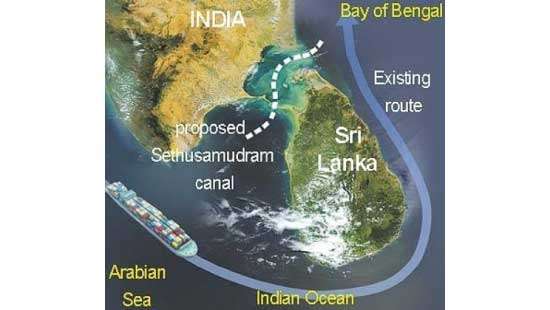
Synopsis:
The Sethusamudram Ship Canal Project (SSCP), aimed at creating a direct shipping route between India’s east and west coasts, poses serious environmental, economic, social, and legal risks. The project threatens the ecologically sensitive Gulf of Mannar and Palk Strait, home to endangered species and vital marine resources. Economically, the canal offers minimal benefits while incurring high maintenance costs, and it risks displacing local fishing communities. Culturally, it threatens the sacred Rama Sethu” site, sparking religious opposition. The project also raises international concerns, especially with Sri Lanka, over potential environmental damage.
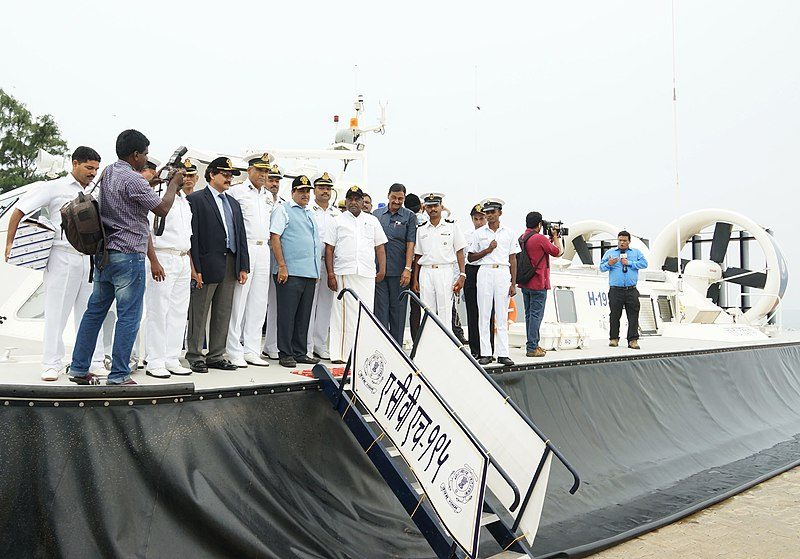
Minister Nitin Gadkari inspects the Sethusamudram project site by Hovercraft, accompanied by key officials including Shri A. Subbiah, IAS, Chairman of Tuticorin Port Trust and Sethusamudram Corporation Limited. The project, established in 2005, serves the Tamil Nadu region and aims to create a navigational canal between India’s east and west coasts.
The proposed Sethusamudram Ship Canal Project (SSCP), which seeks to carve a navigational route through the Gulf of Mannar and the Palk Strait, aims to connect India’s east and west coasts.
While touted as an economic boon that would reduce travel time for ships, the project raises profound environmental, economic, social, and legal concerns that could have devastating and irreversible consequences for the region. Given its scope and potential impact, this project warrants critical scrutiny and reconsideration, particularly in light of its ecological, cultural, and geopolitical ramifications.
The Gulf of Mannar and the Palk Strait are among the most ecologically sensitive areas in the world, home to over 3,600 species of plants and animals. These include endangered species like sea turtles, whales, dolphins, and the dugong (sea cow), all of which play crucial roles in maintaining the region’s delicate ecosystems. The construction of an 83 km deep-water channel through this biologically rich marine area would pose a significant threat to this unique biodiversity.
Dredging the sea bed to create the channel could stir up sediments and potentially release harmful toxins that have been trapped in the sea floor for years, thus adversely affecting marine life. The proposed dredging could also lead to the destruction of coral reefs, which are already suffering from the effects of ocean acidification. Moreover, alterations in water temperature, salinity, and nutrient flows could destabilize the entire ecosystem, leading to coastal erosion and a potential collapse of vital marine habitats. Such disruption could result in the loss of numerous species that depend on these ecosystems for survival.
The Gulf of Mannar and the Palk Strait also support important marine resources, such as fish, crustaceans, mollusks, and seagrasses, which are vital for both the marine ecosystem and local livelihoods. The region’s mangrove forests and seagrass beds serve as important breeding and feeding grounds for a variety of marine species, including juvenile fish. For many local fishing communities, these resources are not only part of the region’s biodiversity but also essential to their way of life. The potential disruption of these ecosystems due to the canal’s construction would threaten the region’s biological wealth and the sustainability of local economies that depend on these natural resources.
The economic arguments supporting the SSCP fall short when closely examined. While proponents suggest that the canal would save significant time for ships by offering a shortcut between India’s east and west coasts, shipping experts argue that the benefits are minimal. The narrow, shallow nature of the proposed waterway would require ships to slow down drastically, negating any time savings. Furthermore, the canal would require continuous dredging to keep it navigable, imposing substantial ongoing costs that would likely outweigh the marginal economic benefits.
A study by the National Environmental Engineering Research Institute (NEERI) in 1988 highlighted the technical challenges and environmental risks associated with the project. Dredging and maintaining the canal would be a financial burden on the Indian government, with no guarantee of positive returns. Moreover, local fishing communities that rely on the region’s marine resources for their livelihood would be disproportionately affected. The displacement of these communities and the degradation of local ecosystems could result in severe socio-economic consequences, exacerbating existing regional inequalities.
The SSCP poses significant social and cultural challenges, particularly for local communities. The canal’s proposed route would disrupt the Rama Sethu,” a structure of limestone shoals that holds immense cultural and religious significance for Hindus. Believed to be the remnants of the bridge constructed by Lord Rama in the epic Ramayana, the Rama Sethu is a sacred site for millions of Hindus. The potential destruction of this landmark has sparked widespread opposition from religious groups, including petitions to halt the project on religious grounds.
Beyond the cultural implications, the project threatens the livelihoods and traditional ways of life of local fishing communities. Displacement and the disruption of fishing resources would affect these communities’ ability to sustain themselves, pushing them further into poverty and social instability. As noted by S.C. Withana and C.V. Liyanawatte of the Sir John Kotelawala Defence University, the construction of the SSCP would create significant social upheaval in a region already grappling with socio-economic challenges.
The SSCP has wider geopolitical implications, particularly for India’s relationship with Sri Lanka. While the canal is proposed to be built within India’s territorial waters, Sri Lanka has raised serious concerns about its environmental impact. Given the proximity of the canal to Sri Lanka’s coast, the project’s environmental consequences do not respect national borders. In 2005, Sri Lanka called for the establishment of a joint Indo-Sri Lankan mechanism to monitor the project’s impact, but these concerns have largely been ignored by the Indian authorities.
Sri Lankan experts, such as Withana and Liyanawatte, have criticized the Environmental Impact Assessment (EIA) conducted by India for neglecting to incorporate the latest scientific studies on sediment dynamics and marine resource depletion in the Palk Bay. The absence of a collaborative, cross-border environmental and social impact assessment undermines the principles of international cooperation outlined in the United Nations Convention on the Law of the Sea (UNCLOS), which mandates that states should ensure their activities do not cause harm to neighboring countries’ marine environments.
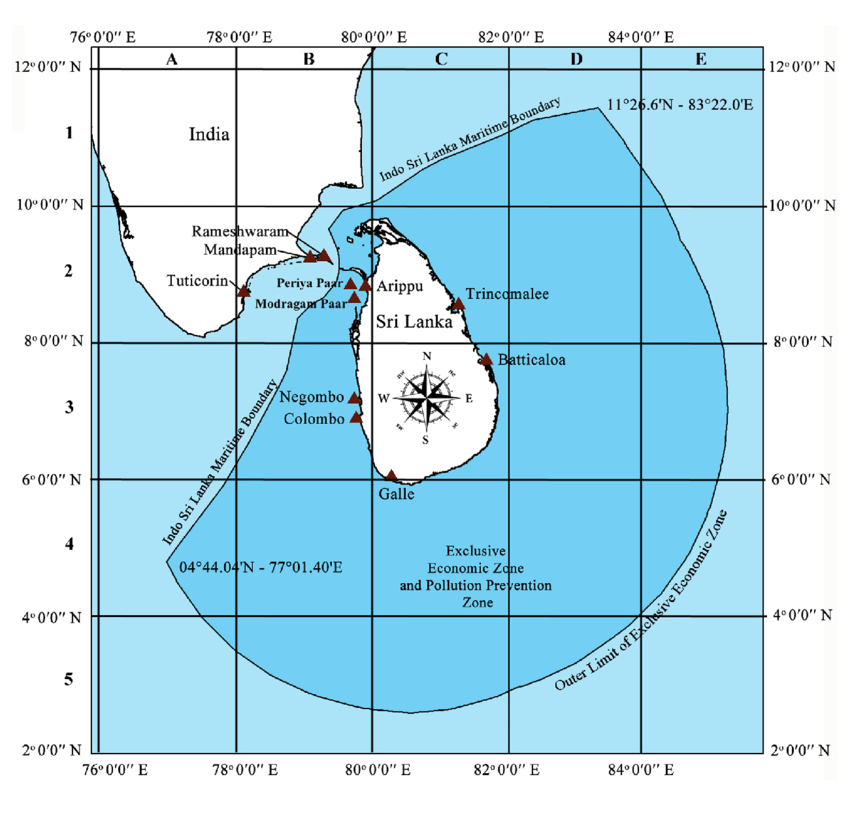
The project’s impact extends far beyond the immediate vicinity of the canal, especially with regard to the high tide line, which could have significant consequences for both Sri Lanka and India.
Rising sea levels, coupled with changes in salinity and the release of toxins from disturbed sediments, can drastically affect rivers in both nations. Sri Lanka has an estimated 103 rivers, and these river systems, such as the Mahaweli, Kelani, and Walawe Rivers, could experience a rise in salinity, leading to disruptions in freshwater availability and negatively impacting agriculture, fisheries, and local populations. In India, rivers like the Godavari, Krishna, and Cauvery may also face the threat of saline intrusion, compromising their ecological balance and sustainability for agriculture.
Moreover, the canal’s construction could damage nearby rivers, bays, and coastal areas by altering sediment flows and water currents. The total length of Sri Lanka’s coastline is 1,340 km, and its territorial waters extend up to 22 km from that shore to cover a total area of about 21,500 km². The Exclusive Economic Zone (EEZ) extends outward 370 km from the shore, covering an area of about 510,000 km² of the Indian Ocean. These delicate coastal ecosystems could be severely impacted by the changes in water flow and sediment deposition caused by the canal’s construction. The disruption of sediment transport could damage bays, beaches, and the coastal environment, leading to long-term ecological degradation.
Additionally, increased salinity and the release of toxic sediments could cause significant social and economic changes. The livelihoods of thousands of people in coastal regions, particularly those dependent on fishing and agriculture, would be endangered. Communities along these rivers may suffer from a lack of freshwater resources, resulting in intensified poverty, displacement, and migration. The social unrest caused by these changes could destabilize local economies, leading to long-term socio-economic upheaval.
The canal’s underwater current system could have unpredictable consequences on the global marine environment. Alterations in sea flow patterns could affect marine currents that regulate weather systems, fish migration, and global climate. Such shifts could disrupt marine ecosystems around the world, impacting fishing industries and biodiversity in far-flung areas. The full scope of the canal’s impact on the world’s oceans cannot be overstated, and its potential for cascading negative effects across multiple ecosystems is profound.
Sri Lanka could invoke UNCLOS to seek redress for the environmental degradation caused by the canal. As per Article 194(2) of UNCLOS, India is obligated to take measures that do not result in pollution or damage to Sri Lanka’s marine environment. Failure to address these concerns could lead to legal disputes, as seen in the 2003 case between Malaysia and Singapore over land reclamation. Sri Lanka could, if necessary, take the matter to the International Tribunal for the Law of the Sea (ITLOS) for binding decisions.
The Sethusamudram Ship Canal Project is fraught with significant environmental, economic, social, and legal challenges that cannot be overlooked. The project poses an existential threat to one of the world’s most biodiverse marine ecosystems, risks exacerbating socio-economic inequalities, and threatens to destabilize India’s geopolitical relations with Sri Lanka. The financial cost of the project, coupled with the marginal benefits it would provide, makes it an unwise and unsustainable investment.
In light of these considerations, the implementation of the SSCP should be reconsidered. Authorities must explore alternative solutions that prioritize the preservation of the region’s natural resources, the protection of local communities, and the safeguarding of international relations. The future of the Gulf of Mannar, the Palk Strait, and the surrounding regions depends on a balanced approach that recognizes the interconnectedness of environmental, economic, social, and geopolitical factors. Only by fostering dialogue, collaboration, and long-term sustainability can India and Sri Lanka ensure that their shared natural heritage is protected for future generations.
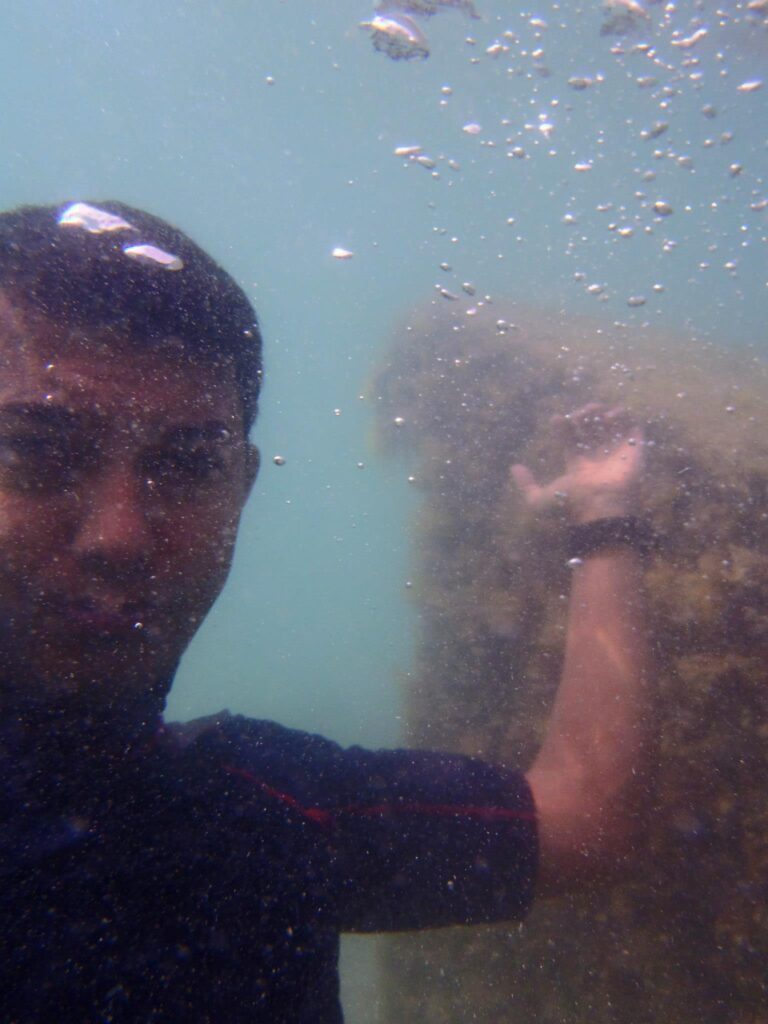
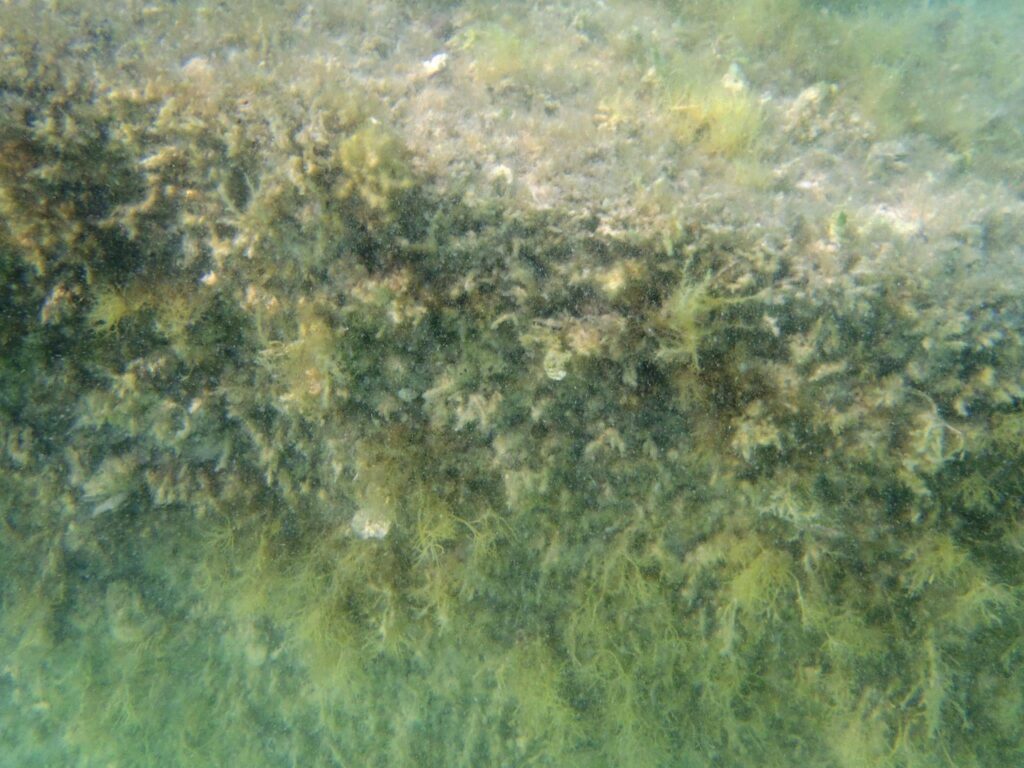

Sustainability and Marine Life Impact (Photo Date: August 10, 2013): Large-scale construction projects like the Dubai Eye raise concerns about long-term environmental sustainability. Without proper mitigation, such projects can disrupt local ecosystems. Noise from construction and plumes from dredging can force marine animals, such as fish, to avoid affected areas. Dredging vessels, using equipment like backhoe or suction tools, disturb seabeds, potentially harming marine habitats and species, especially in biologically sensitive regions.
As a deep-sea diver and beach field supervisor with over 25 years of experience in beach and marine environments, I have spent countless hours underwater, observing the beauty and fragility of marine ecosystems. During this time, I’ve witnessed firsthand the environmental damage caused by human activities such as dredging and construction projects. I’ve seen coral reefs, once teeming with life, now reduced to barren, bleached structures. I’ve encountered seagrass beds destroyed by dredging, leaving behind lifeless patches of sand where marine species once thrived.
These personal experiences have shaped my understanding of the delicate balance that exists beneath the surface and the profound impact such projects can have on our oceans. The potential damage from the Sethusamudram Ship Canal Project is a matter of great concern. The dredging and disruption of these ecosystems could have far-reaching consequences, not only for marine life but also for the livelihoods of local communities who rely on these resources. My firsthand knowledge compels me to speak out and oppose this project before irreversible damage occurs.
The British envisioned a navigational canal through the Gulf of Mannar to strengthen their control over Indian waters, enhance trade efficiency, and secure their maritime dominance in the region.”
By Palitha Ariyarathna
Former Beachfield and Life Safety Officer and Deep Sea Diver
Note:
Geopolitical – This Article is Based on Research Writing
References:
· S.C. Withana & C.V. Liyanawatte (2005) – Highlight environmental and social concerns of SSCP, focusing on sediment dynamics and marine biodiversity.
· NEERI Report (1988) – Discusses technical challenges and environmental risks of SSCP, especially from dredging and canal maintenance.
· UNCLOS Article 194(2) – Emphasizes states’ obligations to prevent transboundary pollution, relevant to Sri Lanka’s concerns over SSCP.
· Sri Lanka Ministry of Environment (2005) – Addresses risks to coastal waters, including coral reefs and marine habitats.
· Sri Lanka Coast Conservation Department (2011) – Highlights risks to Sri Lanka’s coastline and Exclusive Economic Zone (EEZ) from the SSCP.
· Sri Lanka Geological Survey & Mines Bureau – Provides insights into sediment transport and coastal dynamics in the Gulf of Mannar.
· WWF India (2005) – Discusses environmental impacts on the Gulf of Mannar, highlighting risks to endangered species.
· NIO Report (2010) – Assesses the effects of dredging on salinity and marine ecosystems in the Palk Strait.
· ITLOS – Legal perspectives on cross-border environmental disputes under UNCLOS.
· Sri Lanka Department of Fisheries (2010) – Discusses potential damage to fisheries from SSCP-related changes in marine environments.
· EFL Sri Lanka (2010) – Assesses the irreversible ecological damage to the Gulf of Mannar from large infrastructure projects.
’PROPOSALS FOR A NEW CAA ACT ‘’
January 3rd, 2025Sarath Wijesinghe President’s counsel, former Ambassador to UAE and Israel former Chairman Consumer Affairs Authority and President Ambassador’s Forum UK/SL and Solicitor in United Kingdom and Wales
Current Legislation
Current legislation on consumer law and practice is inadequate, insufficient and ineffective and as a result the citizen suffers from all corners and the life is day bey day become harder due to the inadequacies on law and procedure. No changes have been made on the law and procedure since the inception of the enactment in the year 2003 in setting up the act no 9 of 2003 which is a mixture of USA, Canadian, Australian and English expected to be effective on competition law and based on the network of consumer organization. To the utter disappointment neither the competition law principles nor the network of the consumer organization’s net work has not been materialized and effect and effectiveness of the law and procedure based on regularization has a failure and a nonstarter. If one is critical of the current legal basis it is the duty of the critic to suggest better alternatives to the citizen aggrieved and pressed by the trader, industrialist, regulator and the rest of the population.
Proper trade policy and new consumer act
it is a necessity for a country to possess a proper trade policy and an effective implementation of a protective measure for consumer which is considered to be the citizen of any country not properly organized in Sri Lanka. The current system is to be completely changed to meet the challenges of the current trends due to changes of trade and economic structure ever changing. Naturally the trader and industrialist is always prune to work for maximum profits and it is the duty of the regulator (governance) to adopt measures to protect the citizen which is effectively done in other aorta sf the world. In the United Kingdom the legal system of protecting the consumer is effective and advance followed by India adopting same or similar principles and guidelines which is an ideal system for Sri Lanka too to follow.
Way forward
Though the CAA act envisages formation the network of the consumer organization it is not implemented properly due to the inefficiency of the CAA which needs drastic changes and compete overhead of the system. The \minister of trade is a go getter and entotic but lacks knowledge and proper advice and guidance. He is an in ‘’Ivory tower’’ assuming that he knows the subject and depends on the officials surrounded the mistake generally committed by his predecessors. Way out for success and so simple and Strater forward. Take a step back words and with his education the university stud the subject carefllly and seek advice of experts and professionals generally yes men in any governances. and not necessarily the government officials around any Minister, and start the programmer with the professionals and academic’s at OPA and other local and international organizations. There is a classic opportunity on 15th March 2025, which is the world Consumer Day to start with harnessing and getting assistance of the OPA, BASL, and Consumer Organizations.
Suggest to incorporate consumer ombudsman and consumer courts in the new act
These two principles are successfully implemented in India with the help of the judiciary and governance promoting judicial activism and public interest litigation linked to consumerism, with advanced competitive law system and trade policy and active trade ministry unfortunately lacking and ineffective in Sri Lanka.
Author could be contacted on Sarath dw28@gmail.com and for references read price control 10th June 1916/consumer courts Hyde Park interview by Indeevari on U Tube/Consumer Ombudsman Ceylon Today 25.10.24/12.12.24 main challenge on consumerism Lanka Web/ How to protect consumer12.4.2018 Lanka web/ 2.1.23 price control telegraph/ and many other that could be browsed from the internet on published articles by the author in various journals and papers.
DRS, Snicko, Hot Spot, Hawkeye & Umpire’s call Explained
January 3rd, 2025Pale Blue Thoughts
Umpire Decision Review System in Cricket Watch “DRS, Snicko, Hot Spot, Hawkeye, Umpire’s call and Player Referral’ explained in a YouTube presentation
Watch “DRS, Snicko, Hot Spot, Hawkeye, Umpire’s call explained and Sri Lankan lawyer Senaka Weeraratna identified as the world’s first person to conceive and publish internationally (in 1997) the concept of ‘ Player Referral” which is the true underlying basis of the Umpire Decision Review System ( UDRS or DRS).
Controversy surrounds Health Minister’s comments at Maharagama Apeksha Hospital opening (Video)
January 3rd, 2025Courtesy Hiru News
A controversy has erupted following Health Minister Nalinda Jayatissa’s remarks at the opening ceremony of the children’s bone marrow transplant unit at Maharagama Apeksha Hospital. The unit, the first of its kind in a government hospital, was built with donations from the Ruhunu Kataragama Maha Devalaya, amounting to Rs. 176 million, and with labor contributions from the Air Force.
Minister Jayatissa’s comments have drawn strong criticism, with many parties questioning the health system’s ability to effectively manage public donations amidst ongoing crises in the sector. Critics argue that health authorities should be held accountable for the management of such contributions, especially in light of the current challenges faced by the healthcare system.
The opening ceremony on January 2nd has sparked a significant opposition to the Minister’s statements, further fueling the controversy surrounding the event.
ඇමති නලින්දගේ කතාවට පාර්ශව රැසකින් විරෝධය(වීඩියෝ)
January 3rd, 2025උපුටා ගැන්ම හිරු පුවත්
රුහුණු කතරගම මහා දේවාලයේ ධන පරිත්යාගයෙන් ඉදිකෙරුණු මහරගම අපේක්ෂා රෝහලේ ඇට මිදුලු බද්ධ කිරීමේ ළමා ඒකකය විවෘත කිරීමේ උත්සවයේදී සෞඛ්ය අමාත්ය නලින්ද ජයතිස්ස පළකළ අදහස් සම්බන්ධයෙන් සමාජය තුළ මතභේදයක් උද්ගත වී තිබෙනවා.
පාර්ශව රැසක් පෙන්වා දෙන්නේ, අර්බුද රැසකට මුහුණ පා ඇති මෙරට සෞඛය පද්ධතියට ජනතාවගෙන් ලැබෙන පරිත්යාග නිසි පරිදි කළමනාකරණය කරගත නොහැකිනම් එහි වරද සෞඛ්ය බලධාරීන් භාරගත යුතු බවයි.
මෙරට රජයේ රෝහලක් තුළ ඉදි වූ පළමු ළමා ඇට මිදුලු බද්ධ කිරීමේ ඒකකය මහරගම අපේක්ෂා රෝහලේ දී ඊයේ (02) විවෘත කෙරුණා.
රුහුණු මහා කතරගම දේවාලයට ලැබුණු ආධාර මුදල් රුපියල් මිලියන 176ක් වැයකොට ගුවන් හමුදාවේ ශ්රම දායකත්වයෙන් ඉදිකළ එය විවෘත කිරීමේදී සෞඛ්ය අමාත්යවරයා පළකළ අදහස් සම්බන්ධයෙනුයි මෙසේ දැඩි විරෝධයක් මතුවෙමින් තිබෙන්නේ.
කෙසේ වෙතත්, අමාත්යවරයාගේ ප්රකාශය සම්බන්ධයෙන් පාර්ශ්ව රැසකින් එල්ලවන්නේ දැඩි විරෝධයක්.
Urgent Foreign Office ‘high threat’ warning at Brit holiday hotspot -Sri Lanka
January 2nd, 2025By Hannah Giacardi & Annabal Bagdi Courtesy .mirror.co.uk
The Government has updated its terror advice to Brits heading to Sri Lanka, warning terrorist groups ‘are likely’ to carry out attacks

The Foreign Office has warned Brits travelling to Sri Lanka that a terror attack is likely
UK holidaymakers are being warned of a potential terror threat in Sri Lanka. The Foreign Office has stated that terrorist groups ‘are likely’ to target the popular tourist hotspots. British travellers could be at risk in areas such as beaches, bars and restaurants. Those travelling to Sri Lanka are advised to avoid crowded public places and remain vigilant of their surroundings.
On November 14, the Foreign, Commonwealth and Development Office (FCDO) issued an update on terrorism in Sri Lanka, stating: “There is a high threat of terrorist attack globally affecting UK interests and British nationals, including from groups and individuals who view the UK and British nationals as targets.”
They further advised: “Stay aware of your surroundings at all times. UK Counter Terrorism Policing has information and advice on staying safe abroad and what to do in the event of a terrorist attack.”
They also added: “Terrorists are likely to try to carry out attacks in Sri Lanka. Find out how to reduce your risk from terrorism while abroad. Avoid crowded public places. Stay aware of your surroundings at all times, keep up to date with local media reports and follow the advice of local authorities.”
The Foreign Office has updated its travel advice to certain destinations owing to the increased global tensions resulting from the continuing conflict between Israel and Palestine. According to the FCDO: “The current conflict in Israel and the Occupied Palestinian Territories has led to heightened tensions around the world.
They warned that terror groups like Al-Qaida and Daesh are urging their followers to launch attacks in the wake of the strife, stating: “Terrorist groups such as Al-Qaida and Daesh, have called on their supporters to carry out terrorist attacks in response to the conflict. The conflict could also motivate individuals to carry out attacks.”
They further cautioned travellers that deliberate or haphazard attacks may target communities and interests linked to Jewish, Muslim, Israeli, or allied nations, explaining: “Terrorist attacks could target Jewish or Muslim communities, or the interests of Israel and its allies. Attacks could also be indiscriminate and occur without warning.”
Reflecting on past atrocities, the Foreign Office said that over 250 lives were lost in a series of devastating terrorist actions on Easter Sunday in 2019. The attacks targeted three churches and three hotels across Sri Lanka, hitting Colombo, Negombo and Batticaloa, with eight British nationals among the casualties.
https://www.mirror.co.uk/lifestyle/travel/urgent-foreign-office-high-threat-34365790
Drug shortages: The most serious symptom arising from several causes
January 2nd, 2025By Raj Gonsalkorale
It takes nine months to complete the drug procurement process, thus there is no immediate solution to address various glitches in the system. In order to address the importance of tackling the root causes of the issue and introducing a comprehensive plan to address it, we have to study the problem, identify the factors that sustain it, and present a clear plan for its resolution. If the public sees that we are genuinely working on solutions and we communicate a plan, they will support it,” Deputy Minister of Health Dr Hansaka Wijemuni
The Sri Lanka Medical Association says that the countries total pharmaceutical expenditure covering both state and private sectors in 2022 was estimated at LKR 163 billion per annum, and about LKR 58 billion for the state sector and LKR 105 billion for private sector (https://slma.lk/wp-content/uploads/2023/05/newsletter_APRIL_
2023_PROOF_compressed.pdf). However, despite this, drug shortages and out of stock situations persist depriving patients of a fundamental human right.
Drug shortages and being out of stock of drugs is commonly understood as a supply issue. However, even if the supply side was perfect and worked efficiently and effectively, it will only supply the items and quantities of drugs that were demanded. If demand computation was inaccurate, what is supplied will be inaccurate as the supply side is only geared to supply what is demanded. Quantifying demand is a complex issue as many factors have direct and indirect linkages to the demand for drugs. However, it is critical to be as accurate as possible with the quantification of demand for drugs. If this is not done, the result is not only shortages of some drugs but also an excess stock of some others. Often, there is significant wastage of funds provided for drug procurement as these excess stocks expire before use and large amounts of money which could have been used to procure drugs that are in short supply, is wasted. In some countries this waste is estimated to be more than 30% of the drug budget.
It is not uncommon for health authorities in many developing countries to address the symptoms or effects of several causes that create issues such as drug shortages, overlooking the causes. Such a reaction is understandable especially where acute shortages of essential drugs are concerned and where emergency procurement of such drugs could be a necessity. However, it is also not uncommon to create drug shortages by design, and resort to emergency procurement as such a practice presents opportunities to deviate from standard government procurement procedures and buy drugs at exorbitant prices. Such procurement obviously benefits those responsible for creating shortages.
Drug procurement is only one component of a medical supply system. There are several other directly and indirectly linked components in the supply chain. Quality assurance, inventory management, store keeping and stock management, transportation, morbidity data analysis, clinical assessments and drug prescriptions, monitoring unforeseen disease outbreaks and seasonal morbidity patterns are some of these. The entire system operates as a chain of activities, each interlinked, and inter dependent. Consequently, if one activity in the chain is inefficient, ineffective and sub optimal, it effects the performance of the next activity that follows. Consequently, the entire chain malfunctions.
Although there is no starting point in a chain, in a medical supply chain, forecasting demand for drugs could be considered the starting point, as the end objective of the exercise is to supply what has been forecast as demand. As stated earlier, it is logical therefore that the success of a medical supply system rests largely, although not exclusively, on accurate demand estimations that have relevancy to patient needs as determined by medical practitioners.
An efficient and effective information system is vital in a medical supply chain as such a system could provide information needed for decision making within the key components of the chain. It is imperative of course for the Information to be accurate as inaccurate information will lead to incorrect decisions.
In terms of decision making, particularly regarding which drugs to procure and how much of such drugs should be procured, different methods could be adopted based on accurate information on usable hand stock availability (without counting expired, quality not assured or damaged stock), morbidity forecasts and priorities, availability of funding etc.
The WHO essential drugs classification, rules such as the Pareto rule where the number of drugs costing a major component of the budget (as a general rule, 80 percent of a drug budget goes for 20% of drugs although this rule can have variations), rationalization of the formulary which can reduce the number of similar drugs being imported or manufactured to treat similar diseases identified in a Pharmacology Classifications of Drugs (Drug Classifications). Classification means grouping medications by similarities. For example, it is based on medical value of drugs and the risk of inappropriate or misuse.
In Sri Lanka such a classification was at the center of drug policies formulated by an expert committee led by late Professor Senaka Bibile in 1972 during the government led by Mrs Sirimavo Bandaranaike. These policies led to the formation of the State Pharmaceuticals Corporation of which Professor Bibile was the first Chairman.
These policies witnessed the drastic reduction in number of drugs in the national formulary and systematic rationalization of prescribing habits.
The requirement, for the first time, to import and distribute drugs by their generic names rather than their brand names, was another major revolutionary step taken by Professor Bibile and the expert committee and this saw the ability for an increased number of overseas manufacturers noted for their excellence in manufacturing generic drugs, to take part if worldwide tenders invited by the State Pharmaceuticals Corporation and offer considerable reductions in price of drugs.
While many developing countries and the WHO adopted these policies, Sri Lanka subsequently veered away from them after the election of the new government in 1977 which introduced an open economic policy resulting in deviation from the Bibile policies. Although many Presidents and Prime Ministers who succeeded Mrs Bandaranaike have all vowed to reintroduce the Senaka Bibile policies, none have delivered on their promises.
As stated in the Wikipedia, the Sri Lanka experience became a model for the rest of the world. The policy was supported by the World Health Organization and other United Nations agencies with enormous benefit to Third World countries. The United Nations Conference on Trade and Development Secretariat examined the Sri Lankan experience, concluding that an analysis of the Sri Lankan model could give other developing countries an insight into ways of formulating, developing and implementing integrated national pharmaceutical policies. With Bibile’s assistance, it published “Case Studies in the Transfer of Technology: Pharmaceutical Policies in Sri Lanka”. This document has proved to be a very valuable guideline for developing countries intending to initiate pharmaceutical reforms. Translated into other languages, it may be found with health planners of almost every Third World country”.
While it may not be possible or even feasible now to wind back to the entirety of the policies of 1972, from a broader perspective, the key policy of rationalization of the National Formulary and how it applies to the public sector and the private sector needs to be considered. While this policy seems to operate to some extent for the public health sector, it does not seem to apply for the private sector which is responsible for a significant component of drug imports to the country. Rationalization of drug imports for the private sector and reduction in the number of similar drugs under pharmacological groupings is something that needs to be considered by the NPP government if they are keen on re visiting the Senaka Bibile policies.
The Deputy Ministers statement that In order to address the importance of tackling the root causes of the issue and introducing a comprehensive plan to address it, we have to study the problem, identify the factors that sustain it, and present a clear plan for its resolution”, is clearly what is needed to develop a plan of action with immediate and short term solutions, and medium to long term solutions.
Drug shortages in the country have made headlines for a long time. Emergency procurement has happened on numerous occasions. Even Ministers of Health reportedly visited one or two countries to undertake such emergency procurement! Clearly, the root causes have neither been investigated nor addressed even if some causes had been identified.
So, as the Deputy Minister has stated, the problem must be studied, meaning, an assessment has to be carried out of the medical supply chain to identify the root causes that result in drug shortages. It is understood that a recent study has been done by the health department with technical assistance and funding by WHO/ADB.
This could be used and its findings and recommendations considered by the Minister and Deputy Minister for the health department to develop a plan of action to avoid/minimise drug shortages and drug out of stock situations. As stated earlier in this article, the direct and indirect links within the supply chain which impacts on the accuracy of demand quantification needs to be clearly understood and attended to in developing a plan of action.
When one refers to drug shortages, these relate to shortages in public hospitals which are supplied by the state while private hospitals do their own procurement or are supplied by private pharmacies and other importers. It is interesting to note that many private pharmacies operate outside public hospitals which often are out of stock of some key drugs.
It is very common for public hospital patients to be given prescriptions by government medical practitioners to buy such drugs from private pharmacies. Besides doing this for drugs that are out of stock, it is possible that it is done for drugs which are not stocked in public hospitals as they are outside the formulary of the health department but prescribed by doctors as a drug of choice for some health conditions. In this regard, the role played by private sector marketing personnel in promoting particular drugs that are outside the national formulary should not be underestimated. While the State owned and run pharmacy outlets, the Osu Sala’s, as well as Osu Sala franchises operate in the market, the retail market is dominated by the privately owned and run pharmacies who can source many drugs that are outside the national formulary.
Fixing the drug shortage and being out of stock of drugs is a complex issue as its causes lie in several areas. However, shortages arise from the inability to supply the demand that has been worked out and quantified. In saying this, other key factors such as the criticality of quality assured drugs being imported and released to the public, and maintenance of quality throughout the supply chain including in storage locations is vital as use of drugs that are substandard has far reaching effects on patients and the supply chain.
As stated in the abstract of a paper titled Substandard drugs: a potential crisis for public health byAtholl Johnston and David W Holt (https://pmc.ncbi.nlm.nih.gov/articles/PMC4137817/# :~:text =Substandard %20medicines%20are%20widespread%20and,or%20additional%20illness%20in%20individuals), poor-quality medicines present a serious public health problem, particularly in emerging economies and developing countries, and may have a significant impact on the national clinical and economic burden. Attention has largely focused on the increasing availability of deliberately falsified drugs, but substandard medicines are also reaching patients because of poor manufacturing and quality-control practices in the production of genuine drugs (either branded or generic). Substandard medicines are widespread and represent a threat to health because they can inadvertently lead to healthcare failures, such as antibiotic resistance and the spread of disease within a community, as well as death or additional illness in individuals. This article reviews the different aspects of substandard drug formulation that can occur (for example, pharmacological variability between drug batches or between generic and originator drugs, incorrect drug quantity and presence of impurities). The possible means of addressing substandard manufacturing practices are also discussed. A concerted effort is required on the part of governments, drug manufacturers, charities and healthcare providers to ensure that only drugs of acceptable quality reach the patient”
In a nutshell, this summarises the quality issue pertaining to drugs, and the impact on the health of patients, but also on the supply chain, specifically on the demand that had had been forecast and how it could change due to effects arising from consuming substandard quality drugs, and also the inability to use drugs that are determined as substandard, and eventually, the impact on what is being supplied. Predesigned and planned introduction of sub-standard quality drugs is an inhuman and unjust practice and as the above abstract points out, it is unfortunately not an uncommon phenomenon. The increasing availability of deliberately falsified drugs, and substandard medicines reaching patients because of poor manufacturing and quality-control practices is something that needs to be arrested by authorities.
As outlined in this article, many factors contribute to the inaccuracies in demand forecasting which then leads to drugs being out of stock, drug shortages, excess stock of some drugs and wastage that follows due to expiry prior to use. To avoid or minimise this, the focus has to be on the accuracy of demand forecasting and ways and means of achieving this goal. It is no doubt a complex exercise, but unless it is done, the medical supply chain will continue to be dysfunctional and drug shortages will continue to make headlines.
2024 කුඩු පට්ටම් වූයේ වර්ගවාදී ව්යාපාර මිස ජාතිකවාදී ව්යාපාරය නොවේ
January 2nd, 2025– දිල්රූක් කන්නන්ගර
ජාතිකවාදය (nationalism) යනු උතුර, දකුණ, නැගෙනහිර සහ බටහිර යන සතර දිග්භාගයම එක්සේසත් කිරීමයි. මෙය 2024 මහා චන්දේදී මනාවට සිදුවුනා. අධිරාජ්යවාදීන්ට එරෙහි ජාතික ව්යාපාරය මෙන්ම 2024 චන්දය ජයගත් පක්ෂය සිංහල, දෙමළ සහ මුස්ලිම් ජන එකමුතුවෙන් රාජ්ය පාලනය දිනා ගත්තා. ඊට වැඩි ජාතික ව්යාපාරයක් 15 වන සියවසේ සිට තිබී නැත. දැනට ඇත්තේ ජාතිකවාදී (රටේම සහයෝගය දිනා ගත හැකි) පක්ෂ දෙකක් පමණි. ඒ සජිත් ප්රමුඛ සජබ පක්ෂයත් අනුර ප්රමුඛ ජාජබ පක්ෂයත් පමණි.
වර්ගවාදය (racism) යනු තනි ජන වර්ගයක් පමණක් පිනවීමයි; තනි ජන වර්ගයක චන්දෙන් පමණක් පාර්ලිමේන්තුවට රිංගීමයි. 2024 කුඩු පට්ටම් වූයේ එවැනි තනි ජාතියක, වර්ගවාදී පක්ෂ කිහිපයක් පමණි. එහෙත් වර්ගවාදී පක්ෂ සම්පූර්ණයෙන්ම අතුගෑවී යනවා වෙනුවට JR ගේ බහුබූත සමානුපාතික චන්ද ක්රමයට සහ ජාතික ලැයිස්තු පස්සා දොරට පිං සිද්ද වන්නට වර්ගවාදී පක්ෂ සාමාජිකයන් කිහිප දෙනෙකුට පාර්ලිමේන්තුවට රිංගා ගැනීමට හැකි විය. සජබ සහ ජාජබ හැරුනුකොට ඉතිරි සියලු පක්ෂ තනි ජාතියක චන්දයෙන් යාන්තම් පාර්ලිමේන්තු ගිය පක්ෂයි. සිංහල පමණක් රටක් නොමැති නිසා සිංහල ජාතිකවාදය කියා දෙයක් නැත. දෙමළ පමණක් රටක් නැති නිසා දෙමළ ජාතිකවාදය කියා දෙයක්ද නැත. ඇත්තේ සිංහල ජාතිවාදය සහ දෙමළ ජාතිවාදය පමණි. මෙය ශ්රී ලාංකික ජාතිකවාදයට විරුද්ධව ක්රියාත්මක වේ.
ශ්රී ලාංකිකයන්ට අවශ්ය වන්නේ සියලු ජන වර්ග වලට අයත් ජන සහභාගීත්වයෙන් වන එක ජාතික ව්යාපාරයක්ද නැතහොත් තනි ජාතික වර්ගවාදී ව්යාපාර සමූහයක්ද යන්න තීරණය කල යුතුව ඇත. 2024 දී නම් එම තීරණය ඉතා පැහැදිලිව පිළිබිඹු විය.
මෙමගින් අදහස් වන්නේ බොරුවට ජාතිකවාදී ලේබලය අලවාගත් තනි ජාතික චන්ද පදනමක් ඇති වර්ගවාදී ව්යාපාර රටට/ජනතාවට අනවශ්ය බව නොවේ. 1921 සිට වරින් වර වර්ගවාදී පක්ෂ උතුරේත්, දකුණේත් රජ විය. එය ජනතා මතය අනුව සිදුවේ. සිංහල ක්රමයට උතුර සහ නැගෙනහිර විරුද්ධ වන්නා සේම දෙමළ ක්රමයට දකුණ සහ බස්නාහිර විරුද්ධ වේ. 2024 එකමුතු කමින් සුවිශේෂී වූ සේම මීළඟ චන්දය යළිත් ජාතිවාදී සහ වර්ගවාදී පක්ෂ වලට වාසිසහගත විය හැක. 2024 සුන්නත්ධූලි වී ගිය වර්ගවාදී පක්ෂ වලට සැමදාම රජයන්නට නම් දූපත ජාතිය අනුව බෙදා තනි ජාතික රටවල් තුනක් සෑදිය යුතුය. නොඑසේනම් ජාතිකත්වය යනු සමස්ථ දූපතම තනි පක්ෂයක ජයට උරදීමයි. එය කල හැක්කේ සජබ (ප්රධාන විපක්ෂය) සහ ජාජබ (ආණ්ඩු පක්ෂය) පක්ෂ දෙකට පමණි. වෙන කිසිම පක්ෂයකට ජාතික පදනමක් නැත; ඇත්තේ තනි ජාතියක/වර්ගයක/ගෝත්රයක චන්ද පදනමක් පමණි.
උතුරු – දකුණු එකමුතුව සඳහා 1977 JR ඇටවූ බහුබූත චන්ද ක්රමය වෙනුවට යළිත් ඊට පෙර පැවතී චන්ද ක්රමය සුළු වෙනස්කම් ඇතුළුව ක්රියාත්මක කළ යුතුය. රටේ සියළුම පළාත්වල, වෙන් වෙන් වශයෙන් ඒ ඒ පළාතේ අඩුම තරමින් 10% ක චන්දයක් වත් දිනා ගත නොහැකි පක්ෂ වලට පාර්ලිමේන්තු ආසන හෝ ජනාධිපති පදවිය හිමි විය යුතු නැත. මෙමගින් ජාතිකත්වයෙන් හෙබි උතුර-දකුණ යා කරන පක්ෂ පමණක් සිරිලක පාලනය කරනු ඇත. එකමුතුකම රජයනු ඇත. ගෝත්රික පක්ෂ වලට වැට බැඳෙනු ඇත. 2024 දී සුන්නත්ධූලි වී ගිය වර්ගවාදී පක්ෂ දුහුවිලි කැට සේම පවතිනු ඇත.
The Globalized Elite Are Perpetuating Local Neo-Colonial Plunder in Globalisation
January 2nd, 2025by Dev Chandrasekhar Courtesy Countercurrent.org
In the decades since the formal end of colonialism, nations across the Global South have proudly waved the banner of independence, self-reliance, decolonization, and now—deglobalization. The rhetoric of national empowerment, however, generally masks the perpetuation of colonial-era economic structures and cultural impositions.
Local elites are replacing foreign powers as the primary beneficiaries and arbiters of national identity.” Ironical, because many of these elites have profited from the earlier decades of globalization, having formed international connections and amassed wealth through global networks. Their calls for economic nationalism and cultural authenticity often serve as a smokescreen for maintaining their privileged positions simultaneously within both local and global power structures. This effectively perpetuates and reinforces systems of inequality and suppression of local populations, all under the guise of decolonization.
Congo: Crushing Poverty amid Resource Wealth
The Democratic Republic of Congo presents perhaps the starkest example of this phenomenon. Despite its vast mineral wealth – it’s crucial for modern technology– the country remains one of the poorest in the world. The push for Congolisation” of the mining industry has largely resulted in opaque deals between politically connected individuals and multinational corporations, Few benefits trickle down to the Congolese people.
Congo’s situation epitomizes several key issues:
- The exploitation of natural resources under the guise of national development
- The concentration of wealth among a new class of elites, rather than broad-based development
- Continued partnerships with multinational corporations, despite claims of increased local control
- The ongoing marginalization of the most disadvantaged communities, particularly in mining regions
Bolivia: Economic Nationalism leads to Political Elites
Even in Bolivia, where an indigenous-led government under Evo Morales explicitly championed decolonization, the reality has fallen short of the rhetoric. The nationalization of key industries was hailed as a victory for sovereignty, but it appears to have primarily benefited a new class of indigenous and mestizo political elites. Export-oriented, elite-profiting extraction continues to be prioritized over the interests of local communities.
Bolivia’s experience highlights:
- The use of nationalist rhetoric to justify policies that primarily benefit a select few
- The challenges of balancing national development with the rights and interests of indigenous populations
- The complexities of resource nationalism in a globalized economy
India: Contradictory Narratives and Appropriations
India, often hailed as the world’s largest democracy, provides a particularly complex example of the challenges of decolonization. The country’s Make in India” campaign, launched in 2014, was ostensibly aimed at boosting domestic manufacturing and creating jobs. In reality, it has disproportionately benefited a few large old-economy” conglomerates.
Beyond economic policies, India’s decolonization narrative is fraught with contradictions:
- The New Education Policy (NEP), introduced in 2020, claims to promote a more holistic and culturally rooted approach to learning. However, critics argue that it reinforces existing inequalities and promotes a particular ideological vision of Indian culture and history.
- The push for Hindi as a national language, despite India’s rich linguistic diversity, and the proposed Uniform Civil Code, while presented as a step towards national unity and gender equality, risks overriding the diversity that reflect India’s multicultural heritage.
- The overhaul of India’s criminal procedure codes introduces new draconian measures which clearly limit civil liberties and bypass due process—a recurring theme going back to Pre-Independence India.
- The takeover of forests in central and eastern India and the Andaman Islands, ostensibly for development and national security, threatens the millennia-old livelihoods and cultures of indigenous populations.
Top of Form
Bottom of Form
Top of Form
Bottom of Form
True decolonization means embracing plurality and equity
Tying these diverse cases together is a common pattern—of local elites leveraging the rhetoric of decolonization and national development to consolidate their own power and wealth, often at the expense of broader societal interests. The challenge, then, is to move beyond surface-level changes and performative nationalism towards genuine structural reforms. This requires not just replacing foreign control with local faces, but reimagining economic systems that prioritize broad-based development and true community empowerment.
We must hold our leaders accountable – in Kinshasa, La Paz, Abuja, or New Delhi — and demand more than just the appearance of change. For genuine decolonization and equitable development, we must insist on policies that respect diversity, protect the rights of marginalized communities, and ensure that the benefits of development are shared equitably among all citizens—no matter in which country..
Dev Chandrasekhar advises decision-makers on Big Picture narratives and strategy
Why Sharma, Kohli and Khawaja should retire after the Sydney Test Match starting tomorrow.
January 2nd, 2025Muralidaran Ramesh Somasunderam
Sharma has weaknesses that he has developed, which are not playing within the V and not going forward or back precisely when playing his defensive strokes both on the front and back foot. Also he is not very fit physically and tactically is making mistakes when captaining the Indian national cricket team. He therefore is holding a position for an up and coming player for example Gill who was dropped to give place for Sharma should have played and hopefully learnt from his mistakes from the previous Test Match, which Gill played. So the time has come for Sharma to retire as his reflexes are not the same as five or ten years ago.
Kohli has always had a weakness in regard to bowlers targeting a fourth stump line to him. This has been significantly increased with lack of form and age. He also does not believe in playing in regard to the V and takes many deliveries from off stump and plays them on the onside. This is fine when in good form, but when things are tough he should be going to the basics and knowing where his off stump is, which he seems to not know at present especially and keeps making the same mistake by playing at deliveries, which he should be leaving alone. Again the time has come for him to retire from Test Match Cricket and allow a young player with promise and form to take his place. It is very important that a quality player such as Kohli to realize and know when to retire. This is paramount in my view.
Khawaja also should retire from Test Match cricket as his relaxes are not the same as it was in the past as he is 38 years of age, and he does not move forward or back precisely when playing defensively in particular. He plays from the crease so to speak, which has caused his downfall on many occasions in this current Test Match series against India. Khawaja also opens up when playing defensively on the back foot. These weaknesses have not been addressed by Khawaja or the batting coach of the Australian team to date. So much so that Khawaja has become a liability, as he also does not rotate strike regularly and he is not a very good runner between wickets historically, including presently. In conclusion, as Sydney was his first State where he played his First Test Match against England, I believe it will be fitting for him to call it a day in Sydney in the final Test Match against India starting tomorrow.
Khawaja was given the opportunity to graduate at the Cricket Academy in Adelaide where he lived the game of cricket for three years, but yet he came out with significant weakness, such as his stance which is too front on, his grip on the bat is U grip rather than a V grip which traditionalist opts. He does not have a top hand grip so his drives through the off side do not have great timing like having a traditional V grip. He is more a front on player rather than a side on traditional player, so if there is any movement off the deck and in the air he is a candidate to get caught behind the wickets. He is more of an onside player rather than traditional left handers who poses great cover drives for example Gower or Hussey who had great cover drives.
Sharma and Kohli were brought up in lower turning wickets and they did not graduate like Khawaja from the Cricket Academy. Both Sharma and Kohli have great hands and are good at turning the balls or deliveries to leg, but have weakness as indicated above as they did not graduate from a living academy such as Khawaja had the privilege in Adelaide.
Colombo: half a million people without electricity due to high costs
January 2nd, 2025by Arundathie Abeysinghe Courtesy PIME Asian News
Utilities have been suspended for non-payment of bills, yet another consequence of the economic crisis that has gripped Sri Lanka for three years. To cope with the situation, demand for solar panels has also increased, but the authorities have been forced to issue a warning to prevent fraud by unauthorised companies.
.jpg)
Colombo (AsiaNews) – More than half a million families in Sri Lanka have been forced into darkness after 505,949 consumers were suspended for non-payment of bills, reported by Sanjeeva Dhammika, secretary of the Electricity Consumers’ Association (ECA).
Citing data from the Ceylon Electricity Board (CEB) during a press conference in the capital, Colombo, the secretary emphasised the need for government measures to help consumers, who are struggling to cope with the high cost of living.
Apart from private households, power supplies were also disrupted in the first half of 2024 at 8,579 factories, 2,090 places of worship, 353 state properties and over 1.1 million other places.
By 2023, the CEB and the Lanka Electricity Company Limited (LECO) had suspended 965,566 and 98,834 supplies respectively, affecting more than 1.06 million out of seven million users.
Sri Lanka is trying to recover from the worst economic crisis since its independence, and many citizens, such as Kapurubanda Jayasekera, 72, Ranmenika Appuhamy, 68, and Hector Wijepala, 65, residents of Malabe, are in desperate situations.
‘We are forced to spend nights at relatives’ houses because the electricity has been disconnected due to unpaid bills of between five thousand and ten thousand rupees (equivalent to EUR 16 and 32) accumulated over two or three months. We had to borrow at high rates to pay the bills. We are unable to buy essential food and medicine and may have to sell the few possessions we have, such as a table and chairs,’ they told AsiaNews.
In Grandpass, a suburb of Colombo, Jeyalakshmi Selvarajah, 55, and Arul Gnanaprgasam, 53, find themselves in a similarly difficult situation: ‘It is completely unreasonable to charge three thousand rupees to restore the electricity supply, when it used to cost only 200 rupees. We are surviving on just two meals a day and have pawned jewellery and sold furniture to meet the expenses. How can we afford such high figures without a fixed income?’
Dhammika argues that consumers should benefit from a 58% share of the profits generated by the CEB. Meanwhile, rising electricity costs have stimulated interest in sustainable energy solutions, in particular the installation of solar panels on roofs. The programme has gained considerable popularity, especially as of 2022, due to its low maintenance costs.
However, the Sustainable Energy Authority (SLSEA) was forced to issue a warning to property owners and institutions to check the legitimacy of service providers before installing solar panels. A warning issued in response to an increase in complaints of fraud by unlicensed companies.
According to the SLSEA, only suppliers registered with the body can carry out installations that comply with technical and regulatory standards. ‘Imports or installations outside of registered suppliers are not permitted.
Users can consult the official list on our website to ensure the regularity of installations,’ SLSEA sources said. This list has been made available to help consumers make informed choices and ensure compliance with safety standards.
Shavendra denies foreign embassy used him as cat’s paw during Aragalaya
January 2nd, 2025By Shamindra Ferdinando Courtesy The Island
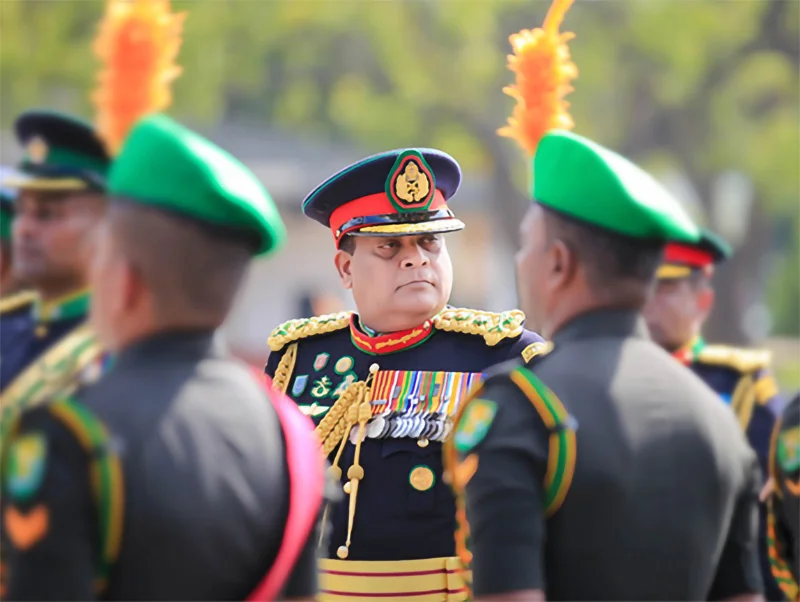
General Shavendra Silva inspects a farewell parade in his honour at ‘Home of Gajaba’ at Saliyapura, Anuradhapura, on Dec 29, 2024, on the eve of his retirement. He was the first Gajaba Regiment officer to serve as Commander of the Army (August 2019 to May 2022) as well as the first Gajaba officer to ascend to the post of Chief of Defence Staff (January 2020 to December 2024) (pic courtesy CDS Office)
Responds to GR on the eve of his retirement Pays glowing tribute to Wijaya Wimalaratne
Outgoing Chief of Defence Staff Gen. Shavendra Silva has finally responded to the former Commander-in-Chief of the armed forces and President Gotabaya Rajapaksa’s high profile accusations with regard to his failure to suppress the violent Aragalaya protest campaign (March 31, 2022, to July 14, 2022) that forced the elected President out of office in July 2022.
The former General Officer Commanding (GoC) of the celebrated 58 Division (formerly Task Force 1) declared that he was not bent on betraying the state nor being a cat’s paw of a foreign power nor served the interests of a foreign mission in Colombo.
The Gajaba Regiment veteran said so in a farewell message issued on the eve of his retirement on Dec. 31, 2024.
Gotabaya Rajapaksa in his memoirs ‘Conspiracy to oust me from presidency’, launched in early March, 2024, questioned the conduct of the then Commander of the Army General Silva who also served as the Chief of Defence Staff (CDS).
Accusations were made against the US and India by National Freedom Front (NFF) leader and former Minister Wimal Weerawansa in ’09: The Hidden Story’ with regard to the overthrowing of President Gotabaya Rajapaksa.
Commenting on the threat on the then Premier Mahinda Rajapaksa’s life at the height of Aragalaya, General Silva reminded critics that he deployed the Air Mobile Brigade to rescue the Fifth Executive President who had been trapped inside Temple Trees by marauding mobs laying siege to it.
In an obvious reference to the violence and counter-violence that had gripped Bangladesh last year, General Silva stoutly defended his decision not to use force to crush the civil protest campaign. Had that happened, the country would have been turned into a hell, General Silva declared, emphasising that in his capacity as the Army Commander, troops were directed to use minimum force.
General Silva alleged that those who wielded political power, at that time, had failed to comprehend his strategy. The hero of many a battle found fault with the then government for removing him from the post of Army Commander on May 31, 2022, and appointing him as the CDS, with effect from June 01, 2024, seven months before his scheduled retirement.
President Gotabaya Rajapaksa promoted Maj. Gen. Vikum Liyanage to the rank of Lt. Gen. and appointed him the Army Commander.
General Silva stressed that at the time President Gotabaya Rajapaksa had to flee the country, he was away on official business as the CDS.
Declaring that his 41-year military career couldn’t be challenged by anyone under any circumstances, General Silva paid a glowing tribute to the late General Wijaya Wimalaratne, the founding father of one of the foremost fighting regiments for facilitating his career. Recalling that he joined the Army at a time the deaths of soldiers was routine, the brave frontline officer found fault with the disorganised and illogical security policy of the then government.
General Silva proudly recalled that he was the first officer to be taken to the Gajaba Regiment as a Second Lieutenant.
Referring to major ground offensives conducted in the Northern theatre leading to the Eelam War IV, General Silva said that Yal Devi operation conducted in late 1993 was the only one he didn’t participate. Yal Devi, launched from Elephant Pass, resulted in considerable losses to the Army, in terms of both men and material, and was called off by the then Army Chief Lt. Gen. Cecil Waidyaratne.
Making reference to his role in leading the Air Mobile Brigade in saving what he called the Muhamalai national front of which ¾ had been brought under enemy control, General Silva declared that he was the only officer holding the rank of Second Lieutenant or the equivalent rank in other forces to receive gallantry medals Weera Wickrema, Rana Wikrama and Ranashura simultaneously.
Shavendra Silva was promoted to the rank of Brigadier in 2007, the year the then Army Chief Lt. Gen. Sarath Fonseka opened another front in the Vanni theatre.
General Silva said that he was tasked to spearhead Task Force 1 (TF 1)after its original commander Brigadier Chagi Gallage fell sick. The outgoing CDS briefly mentioned the major victories achieved by TF 1 later named 58 Division on both the Vanni west and east before the Division reached Vellamullivaikkal.
The former Army Chief said that if the great role played by his Division in the eradication of the LTTE couldn’t be properly recorded, it would be a tragedy of immense proportions. The CDS stressed that his Division, having launched offensive operations on the Mannar front in late 2007 fought its way to Vellamullivaikkal – a distance of about 200 kms overcoming fierce resistance.
General Silva talked proudly of his tenure at the UN as Sri Lanka’s No 02 there with the focus on his role in paving the way for the deployment of an SLAF squadron, consisting of six helicopters in the Central African Republic, and setting up of a military hospital in South Sudan.
President Maithripala Sirisena appointed Shavendra the Army Commander on August 19, 2019, and President Gotabaya Rajapaksa made him Acting CDS with effect from 01 Jan., 2020.
යහපාලන ආණ්ඩුවේ FCID හිටපු ලොක්කා රවීට රු.ලක්ෂ 750ක වංචා චෝදනාවක්… නාමල්,ජානකී,පියුමාලිත් පෝලිමේලු
January 2nd, 2025උපුටා ගැන්ම ලංකා ලීඩර්
කොළඹ ක්රිෂ් ගොඩනැගිල්ලේ නිවාස 5ක් මිලදීගෙන ඇති ව්යාපාරිකයෙක් අපරාධ පරීක්ෂණ දෙපාර්තමේන්තුවට පැමිණිල්ලක් ඉදිරිපත් කර තිබේ.
ඒ, පසුගිය යහපාලන ආණ්ඩුව සමයේ ක්රියාත්මක පොලිස් මූල්ය අපරාධ විමර්ශන ඒකකයේ(FCID) ප්රධානියා ලෙස කටයුතු කළ, එවකට ජ්යෙෂ්ඨ නියෝජ්ය පොලිස්පති රවී විද්යාලංකාරට එරෙහිවය.
රවී විද්යාලංකාර තමාගෙන් රුපියල් ලක්ෂ 750ක් ලබාගෙන, එම මුදල වංචා කළ බව පවසමින් මෙම ව්යාපාරිකයා අදාළ පැමිණිල්ල ඉදිරිපත් කර තිබේ.
ඊට අමතරව හිටපු ක්රීඩා ඇමැති නාමල් රාජපක්ෂ, ජානකී, පියුමාලි ඇතුළු පිරිසක්ද මෙම ගැටලුවට සම්බන්ධ බවද ව්යාපාරිකයා ජනමාධ්ය හමුවේ ප්රකාශ කළේය.
වීඩියෝව නරඹන්න…
India funds rehabilitation of Sri Lanka’s Karainagar Boatyard
January 2nd, 2025Courtesy Adaderana
A Memorandum of Understanding (MoU) has been signed between India and Sri Lanka for rehabilitation of the Karainagar Boatyard in Northern Province of Sri Lanka with grant assistance from the Government of India to the tune of LKR 290 million.
The MoU was signed and exchanged by High Commissioner of India to Sri Lanka Santosh Jha and the then High Commissioner of Sri Lanka to India Kshenuka Dhireni Senewiratne on December 16, 2024.
Issuing a statement, the Indian High Commission in Colombo said the project envisages rehabilitation of Karainagar Boatyard of the Cey-Nor Foundation Ltd, incorporated under the Ministry of Finance, Planning and Economic Development and operating under the Ministry of Fisheries, Aquatic and Ocean Resources.
The project will cover civil works and procurement including installation of plant, machinery, equipment, material, services etc. Once fully operational, the rehabilitated boatyard will augment livelihood opportunities of local fishermen, create more job opportunities in the area including through small establishments around the boatyard, and help enhance the supply of quality fisheries products, the statement added.
With a development cooperation portfolio with Sri Lanka of over USD 5 billion, India’s people-centric development assistance initiatives in virtually all major sectors are making a tangible difference to the daily lives of the people of Sri Lanka across all the 25 districts of the country, the Indian High Commission noted.
Notable past projects in the Northern Province include construction and renovation of over 41000 houses; a state-of-the-art Cultural Centre at Jaffna as a reconciliation project; removal of wrecks and dredging at Kankensanthurai Port; construction and repairs at numerous schools and hospitals across Jaffna, Kilinochchi, Mullaithivu, Vavuniya; restoration of Thiruketeeswaram Temple; distribution of significant quantities of assistance to the agricultural community, as well as fishing community including boats, nets, outboard motors, freezers, etc; among numerous others, the statement highlighted.
Former MP J.R.P. Suriyapperuma passes away
January 2nd, 2025Courtesy Adaderana
Veteran Sri Lankan politician and former Member of Parliament J. R. P. Suriyapperuma has passed away.
He was aged 96 at the time of passing.
Suriyapperuma has previously served as the chief organiser of the the Sri Lanka Freedom Party (SLFP) for the Dedigama electorate in the Kegalle District.
Health sector to get highest-ever fund allocation through 2025 Budget – Minister
January 2nd, 2025Courtesy Adaderana
Minister of Health and Mass Media Dr. Nalinda Jayatissa said the highest-ever allocation of funds for the health sector will be made in this year’s budget proposal.
Dr. Jayatissa revealed this today (02), while speaking at the inauguration of the first and only bone marrow and hematopoietic stem cell transplant unit in a government hospital, established at the Apeksha Cancer Hospital in Maharagama.
This was made possible through the financial support of the Ruhunu Maha Kataragama Devalaya and the dedicated labor contribution of the Sri Lanka Air Force (SLAF).
The Ministry of Health is usually a place where any government will provide funds if asked. More funds are allocated from the Treasury every year to the Health Ministry than even the ‘Kataragama Deviyo’. But this year, the highest amount of funds ever allocated for the Ministry of Health in history will be set aside in the budget”, the Minister noted.
The Minister highlighted the ongoing support the Ministry receives, both locally and internationally, to further strengthen the health sector, stating, The Ministry of Health is backed not only by local tycoons but also by foreign and international institutions at times. What we aim to do is systematically and strategically deploy all these provisions,” he explained.
Furthermore, Dr. Jayatissa emphasized that the development initiatives would no longer be driven by political considerations.
From now on, we cannot cater to anyone’s sentimental desires based on political expediency. We are implementing these developments as part of a national plan that spans the next 20 years,” he affirmed.
While acknowledging that many NPP Members of Parliament may have aspirations to upgrade their local hospitals, the Minister stressed the importance of aligning those ambitions with national priorities.
The first and only Bone Marrow and Hematopoietic Stem Cell Transplant (HSCT) Unit in a government hospital in Sri Lanka for children with cancer was inaugurated at the Apeksha Cancer Hospital in Maharagama today (Jan. 02).
AN OPEN LETTER to President Anura Kumara Supporting the Question by Shenali Waduge
January 1st, 2025Asoka Weerasinghe (Mr.) 2066 Kings Grove Crescent . Ottawa . Ontario , K1J G1 . Canada
I January 2025
OPEN LETTER
Rt. Hon Anura Kumara Dissanayake
Leader of the National People’s Power (NPP)
President of Sri Lanka
President’s Secretariat
Colombo 1
Sri Lanka
1st January 2025
Dear President Dissanayake::
Re: the article by SHENALI D. WADUGE (28 December 2024) ‘ANURA KUMARA AS JVP LEADER & ANURA KUMARA AS PRESIDENT – WHERE, WILL HE TAKE SRI LANKA?
This interesting and valid article was crowned with colour photographs of you with the Indian President and the Highest Representatives of the US and China, in Sri Lanka.
Embedded in the article she states “....While the old guard disappointed the nation by the selfish governance, how far a new & inexperienced Parliament can handle the hawks & eagles both locally and internationally has to be a cause for concern.” I endorse that statement to be absolutely correct.
I mentioned my concern to you in my letter of December 10, 2024, in which I said: “I also want you to be aware of the Greeks who will come to you bringing Gifts. Be careful as you are precious to the people at home and abroad….” Greeks especially wearing silk turbans.
I notice that the first photo crowning that article is of you with India’s President shaking hands.The rightful thing to do but I cringed. This is the President of the same India who trained the Tamil Tigers In 32 military camps and sent them back to destabilize Sri Lanka in jackboots, khaki fatigues and cradling Kalashnikovs like babies in their arms, and with garlands of live bullets around their necks as if doing their Haro-hara Kavadi dance entering a sacred Kovil.
But then all that happened in the 1970s, and 80s. Perhaps the brotherly love of good neighbours have reformed themselves to be loving, caring and spoon-feeding Love to their younger Brother.
But I am going to take this opportunity to inform you of part of my compendium that your “research staff” (NOT of the Ministry of Foreign Affairs) could brief you after reading about the Once-upon-a-Time India’s brotherly love on its southern “Tear drop” neighbour..
These are letters authored by me to expose the flip side of India’s involvement in the Tamil Eelam War, which was a necessary evil, to inform of my TRUTH to Sri Lanka-Watching Canadians who had been brainwashed by the Canadian-separatist Tamils and their sympathizing bloc-vote soliciting, Canadian Liberal, Conservative and NDP parliamentarians, and newspapers to provide the flip side of the TRUTH of the Eelam War. And the meddling India’s involvement which Sri Lanka’s High Commission in Ottawa shied away to talk of , due to Diplomatic neighbourly niceties … ” no you don’t ruffle India’s’ Lord Vishnu’s-peacock feathers which has a tangible connection with the divine.”
Here are 20 from over hundreds of them.
1. Separatist terrorists rend peaceful isle of Sri Lanka by Asoka Wereasinghe, THE WINDSOR STAR, Monday, September 10, 1984′
2. Meddling In Sri Lanka by Asoka Weeeasinghe THE GLOBE & MAIL, Toronto.8 September, 1984
3. Sri Lanka’s Ethnic Strife – India’ Role by Asoka Weerasinghe, THE OTTAWA CITIZEN, December 14, 1984
4. Neighbourly Relations by Asoka Weerasinghe,THE GLOBE & MAIL, Monday, January 28,1985
5. Tamil Tigers by Asoka Weerasinghe, THE OTTAWA CITIZEN, Friday 15, 1985
6, Sounds familiar by Asoka Weerasinghe, THE GLOBE & MAIL, Friday , July19, 1985
7. Tamil Problem is also India’s by Asoka Weerasinghe, THE GAZETTE, Montreal ,Monday July 22, 1985
8, Sri Lanka’s fears by Asoka Weerasinghe, THE OTTAWA CITIZEN,Thursday, August 8, 1985
9. It takes two to feud by Asoka Weerasinghe, THE GLOBE & MAIL, Wednesday, March 26, 1986
10. Sri Lankan woes by Asoka Weerasinghe, THE OTTAWA CITIZEN , Monday, May12, 1986
11. Sri Lanka horror by Asoka Weerasinghe, THE OTTAWA CITIZEN, Friday, May 23, 1986
12. Sri lanka blood by Asoka Weerasinghe,THE OTTAWA CITIZEN, Thursday, May 29,1986
13. Lankan strife by Asoka Weerasinghe, THE OTTAWA CITIZEN, Friday, June 27,1986
14, Tamils blamed by Asoka Weerasinghe, THE OTTAWA CITIZEN, Thursday , July 3, 1986
15. Maintain friendship with Sri Lanka by Asoka Weerasinghe , THE EVENING TELEGRAM , Newfoundland,.
Thursday, October 16, 1986
16. Indian move by Asoka Weerasinghe, THE OTTAWA CITIZEN, Tuesday, December 2, 1986
17. Tamil bases by Asoka Weerasinghe,THE OTTAWA CITIZEN, Friday, December 19, 1986
18. Tamils return home by Asoka Weerasinghe,THE GLOBE & MAIL, Monday, March 9, 1987
19. Lankan record by Asoka Weerasinghe, THE OTTAWA CITIZEN, Friday, March 13, 1987
20. Lankan murders by Asoka Weerasinghe, THE OTTAWA CITIZEN, Frid, May1, 1987
Dear President Anura Kumara’
May the New Year bring you warmth, love, light, wisdom, health, and strength to guide you along your visionary path to positive and successful destinations.
I hope my 1970s and 80s compendium will make you understand the Once-upon-a-time neighbour, India, who tried to destabilize your wonderful sovereign nation.,Sri Lanka, who was under stress for 30 long bloody years, in which your armed forces won the Eelam War on 18 May 2009. They gave back 20 million of your people their Right-to-Life which had been hijacked for 30 years by the Tamil Tiger terrorists..
Theruwan saranai
Sincerely,
Asoka Weerasinghe (Mr.)
Ottawa, Canada
The Greatest Hero of Our Time: A Tribute to General Shavendra Silva on His Retirement
January 1st, 2025Dilrook Kannangara
The most decorated military officer of the Sri Lanka army has retired from all military posts after 41 years of service to the nation. These years saw most violence in the island nation. He was also one of only two four-star Generals of the army. He commanded not only the 58th Offensive Division of the army during the Humanitarian Operation (2006-2009) but also simultaneously commanded the Commando Regiment. A tremendous achievement. He made the most contribution to the 2009 military victory over Tamil terrorism, thanks to which close to 4,000 Sri Lankans of all ethnic groups get to live every passing year.
The youngest ever Brigadier to command an army Brigade in Sri Lanka won the hearts of the Sri Lankans since 2007 during the Humanitarian Operation. His tiger-like eyes captivated them; his achievements won praise from defense commentators and the public. His delicate military maneuvers around sensitive areas during the war showed his incomparable military skills and restraint that must come with great power and professionalism.
His services to the nation didn’t end with the war. In 2010 he was appointed to the UN Office in New York which did a great service to the nation in dispelling false allegations against the military. In 2019 under his leadership Sri Lanka successfully overcame the COVID-19 pandemic despite multiple blunders and delays by politicians.
General Shavendra Silva is known in military circles as an upright professional who always upheld the rule of law. This won him praise from many sections. His role in the 2022 people’s uprising is commendable. He was the army commander until May 31, 2022. He was then promoted to the Chief of Defense Staff role which is a ceremonial role. The power transfer from elected president to an appointed president in July 2022 happened after this event. Sadly, politically motivated people blame the General for not using violence, bloodshed and war crimes against unarmed civilians in order to protect a political clan which the people rejected in total by then. Firstly, Shavendra was not the army commander then and secondly no order was given by the Commander of Tri-Forces (the president) or the defense minister (the president once again) to shoot unarmed civilians. Shavendra and the then army commander acted well within the orders (or lack of orders) as they should.
As it happens always in Sri Lanka, politics sours everything. Achievements of General Shavendra Silva in this context only amplifies them. As he wrote in his parting letter, Shavendra has every right to indescribable bliss he feels at each sunrise. It comes with the knowledge that his action and the action of the military continue to save 11 lives each day; lives that would have been lost untimely in the north and the south, both military and civilian, had the war continued.
Shavendra leaves big shoes to fill. Sri Lanka may not find a comparable replacement for decades to come. We wish General Shavendra Silva the very best and thank him for his selfless service to the nation.
REVISITING EDIRIWEERA SARACHCHANDRA’S ‘MANAME’ Part 7
January 1st, 2025KAMALIKA PIERIS
Theater enthusiasts in the newly independent states of South Asia were finding it difficult, if not impossible, to move away from the proscenium arch” theatre introduced by the western rulers. There were two types of theatre going on, traditional and modern, rural and urban. The main challenge faced by them in the 20th century was how to combine these two into a single theatre style.
India’s Theatre of Roots” was trying from 1960s to develop a modern dramaturgy based on the indigenous tradition. The first successful effort, Hayavadana by Girish Karnad, a Kannada language play with music, dance and drama based on Yakshagana appeared only in 1972. Sarachchandra’s Maname appeared long before this, in 1956.
Sarachchandra in Sri Lanka was the first dramatist who was able to find a successful solution to this post colonial issue, said K.N.O. Dharmadasa. Sarachchandra was the first to overcome this obstacle. [1] In Maname we saw traditional theatre fully transformed into a modern work of art.
No other folk theatrical form in the region had been fully transformed into a modern work of art before Maname in 1956. Therefore Maname was of momentous significance in the annals of South Asian theatre, said Dharmadasa . The birth of Maname is of world significance, he added.
The explosive new direction Sarachchandra gave to the Sinhala theatre with his experimental work in Maname was a high point not only in Sarachchandra’s creative career[2] but also in the history of modern Asian theatre. But it is doubtful whether the importance of this achievement has been understood by Sri Lanka dramatists, even today, observed Michael Fernando(2018).[3]
In the 1940s an attempt was made in the Colombo University by Prof. E.F.C. Ludowyke to introduce European theatre to the local audience. Ludowyke got down a theatre director from Europe, Jubal, to direct one of these plays. Several European works were translated and staged with great skill by Sinhala actors. Sarachchandra was part of this group. He translated and directed plays by Moliere and Chekov. ‘
Sarachchandra soon realized that an authentic Sinhala theatre could not be developed in this manner, reported Dharmadasa. European plays were unable to bring to our audiences an artistic experience which could penetrate deep into their minds, Sarachchandra said. A national theatre could not be developed on comedies alone, either.
Sri Lanka needed a serious theatre that could satisfy an audience with good taste. a truly indigenous theatre must address deep aspects of the human condition, and provide a soul stirring experience penetrating deep down into the very bone marrow, said Sarachchandra.
By 1952 Sarachchandra decided that the modern dialogue play in Sri Lanka had come to a dead endsaid Michael Fernando. Sarachchandra started to look for a traditional dramaturgy through which serious problems could be discussed on stage. He did a thorough study of the indigenous theatre in Sri Lanka and wrote it up in The Sinhalese Folk Play, (1953). He attended performances of thovil, kankariya, gammadu, sokari, kolam and nadagam.
My view (Kamalika Pieris) is that many aspects of our traditional culture are theatrical anyway, whether we realize it or not. The rituals are pure theatre, that is if you can stay awake to watch and if you do not get bored halfway. The demons, in their masks, are expected to make a dramatic impact, that is part of the cure .They cannot just sit with the mask on. There is plenty of dialogue in our folk theatre and it is left to the speakers to make it interesting.
There is performance elsewhere too. In the paddy field, the ‘hoo’ is meant to be heard miles away. Kavi are usually sung out loud, full throated. The kavi maduwa of the Udarata king was a performance. Udarata and Ruhunu dance are martial and dramatic, not slow, graceful and anemic. Ruhunu dance is in my view very aggressive, probably very difficult too.
The drummers do not simply make a noise, they project. Look at their foot movements and the toss of the head when they drum in formation. Raban playing is joyous and vigorous, not solemn and boring. In my view, Sri Lanka is ideal for experimenting with traditional forms to make new theatre. Sarachchandra was in the correct place at the right time.
In 1954 Sarachchandra had an opportunity to travel to the USA via India and Japan to observe theatre. He did not find any serious theatre in India, but was attracted by the Noh and Kabuki traditions of Japan. Sarachchandra would surely have known of Noh and Kabuki long before he visited Japan. The performances he saw could not have been a surprise. I think ( Kamalika Pieris) that the performances he attended showed him something he did not expect. That traditional Japanese theatre was popular with the contemporary Japanese audience. They found it very palatable. If that was so in Japan, why not in Sri Lanka.
For his first try at a modern-cum-traditional play, Sarachchandra decided on the nadagama tradition. Sarachchandra had seen nadagama at first hand, he knew the form intimately and was comfortable with it. [4] He opted for the Sindu nadagama style for his play and for the story he selected Chulla Dhanuddara Jataka with its complex theme. He added a chorus and used very refined language.
A Note” written by Sarachchandra was handed to the audience on the first night, November 3, at the Lionel Wendt Theatre. In this A Note to the Production” , Sarachchandra stated ” the aim of this experiment is both to explore potentialities a traditional form may possess in the search for an indigenous tradition in drama as well as to bring to light another type of play which may be enjoyed on its own merits.”
Maname had never been a sindu nadagama before. Sarachchandra’s Maname was therefore an original creation. It was a modern work presented to a modern audience by a modern dramatist, said Sarath Amunugama. It was considered an outstanding work. It had depth. It had a complex theme which could be analyzed in various ways. It had appeal. Sarachchandra’s poetic language and music still enthrall his audiences, said Ranjini Obeyesekere, in 2014.
Sarachchandra was able to find a new dramaturgy based on the folk tradition of Sri Lanka with the production of his play Maname” in 1956, said Michael Fernando. With this production he introduced to Sri Lanka a dramaturgy that could overcome the limitations of the Western naturalistic theatre and the moral values which were prevalent in the contemporary Sri Lanka society. He further developed this dramaturgy in his later play Sinhabahu.
Fernando said that Sarachchandra was able to invent a dramaturgy that can be compared with the epic theatre introduced by Brecht. He was able to identify the epic elements that were inherent in Asian theatre.
When one compares him with other great 20th century experimental dramatists of the world it is clear that very few had the linguistic, intellectual and creative skills he possessed. He was philosopher, academic, researcher, novelist, short story writer, literary/theatre/social critic, and last but not least, a great poet, Michael said.
Sarachchandra was conversant with Western and Eastern languages such as English, Sanskrit, Pali and Sinhala. (I wish to add that he would also have studied Latin and Greek in school.) His Ph.D from University of London was not in literature, it was in philosophy. His thesis was on”‘ Buddhist Psychology of Perception”
The importance of Sarachchandra is that he was able to find solutions to all or many of these challenges faced by contemporary world theatre in the context of Sri Lankan theatre. In this sense Sarachchandra can be considered as one of the most effective experimental dramatists anywhere in the world, said Michael Fernando.
But he is not well known in the world. The main reason for this is that he wrote and directed plays in the Sinhala language, which is used only in Sri Lanka . This writer( Michael Fernando) also has some doubts about whether Sarachchandra himself was aware of his importance as one of the greatest experimental dramatists of the 20th century, said Michael Fernando. ( Continued)
[1] KNO Dharmadasa, Island, 4 and 5 June 2013 https://thuppahis.com/2013/06/28/maname-in-retrospect-homage-to-the-pioneers-of-1956/
[2] Ranjini Obeysekera https://thuppahis.com/2014/06/10/ediriweera-sarachchandra-a-renaisance-man/
[3] Michael Fernando https://www.colombotelegraph.com/index.php/sarachchandra-of-sri-lanka-among-20th-century-experimental-dramatists/#google_vignette
[4] Sarath Amunugama Maname mathak vee
Education Policy
January 1st, 2025Sugath Kulatunga
Sri Lanka does not possess an abundance of physical resources for large-scale industrial development but is blessed with ample human resources. It is on this comparative advantage that the country has to develop its economy. Education is the driving force with which the optimal benefit could be derived from this rare advantage and is the key to developing competitiveness and excellence. High-performing countries in the Far East considered relevant education as the foundation of economic development and social advancement. They focused on developing human capital in science and technology and vocational skills as they are pivotal to economic development.
It is most encouraging that on the 27th December at the Bandaranaike memorial International Conference Hall, Prime Minister Dr. Harini Amarasuriya had stated: For a country, a nation, or a society to develop, it requires individuals with diverse skills. Our government is committed to ensuring that no one is left behind in the education system. Youth must acquire skills that are directly relevant to achieving full employment, and we must foster a workforce with entrepreneurial capabilities. This approach will help bridge the skills gap between the labor market and the youth community.”
This is a significant departure from the traditional educational policies practised in the country since its independence. It is a radical measure after Kannangara Reforms of 1947. of aligning the educational system with the needs of the market. The 1944 the Kannangara education reform was a landmark event in education policy in the country. It was radical and futuristic. Other than ‘free education from preschool to University ‘ Kannangara Committee proposed:
Establishing three types of schools – Secondary, Senior, and Practical Schools,
- Introducing Vernacular medium of instruction at Primary level and bilingual or English,
- Medium schools for Junior Secondary level and English schools for Senior Secondary and higher education.
The Committee believed that although the educational system should be closely related to the present needs and conditions it has also to be planned with due regard to all possible lines which future development is likely to take. The development of education must not only keep pace with a country’s advance but should definitely contribute to accelerating the pace of the advance.”
But in the implementation and subsequent years the need for education policy to be attuned to future needs was ignored. The concept of Practical Schools was not pursued seriously. It was limited to Farm Schools and Technical colleges. Even one of the prominent members of the Committee Sir Ivor Jennings had doubts about the country needing a large number ie. 15 % of Schools leavers every year with commercial and technical qualifications. He did not see any evidence that the Island is likely to be able to absorb even half that number.
The result was that the SL school education system became ‘tutories’ preparing students for examinations based on the British system. The Universities too concentrated on general education producing a large number of unemployable graduates. The existing plicy makers and practioners in education did not deviate from their comfort zone of general educaion and only made improvements of the syllabuses in the school curiculums.
An attempt to introduce an element of practical education in the form of the NCGE for School leavers during the government of Mrs. Bandaranayake was scrapped by the next government falling back on the SSC. While SL deliberately ignored technical education with independence India established in 1950 five Institutes of Technology (IITs) in the main States of the country. These IITs were modeled on the best examples of higher technical education from Germany, Russia, the United Kingdom, and the United States. They have been the cutting edge of technology development in India and are highly recognized internationally. Many of the CEOs of leading high-tech firms like Google, Infosys and IBM are alumni of the Indian IIts.
In many countries vocational and technical education are combined as Tve. That gives vocational education better acceptance. Even in Sri Lanka it would be better if Technical Education is brought under the Prime Minister in combination with the present portfolio of Vocational Education. It will remove the bias against vocational education as handwork (Athweda).
An education policy not aligned with technology and industrial policies of the country would be irrelevant, unimportant and an expensive luxury. It creates more problems of unemployment, dissatisfaction and social disharmony than positive outcomes. It is not surprising that there is no coherence among these policies as Sri Lanka does not have an Industrial Policy or a Technology Policy. An integrated policy package of these three vital policies is the pressing need of SL at this moment.
The fast-paced evolution of technology necessitates a workforce that can adapt to new tools, platforms, and methodologies. Integrating education with technology ensures that students and workers are equipped with relevant skills such as Digital literacy,Programming and data analytics and Problem-solving using AI and machine learning, Industrial policies aligned with technological advancements can drive the adoption of these skills in industries, fostering a seamless transition from education to employment.The synergy of education and technology nurtures innovation which is the driving force of development In just a few decades, South Korea has transformed itself from an underdeveloped nation to an industrialized country exporting high-technology products (Domjahn 2013, p. 16). Much of this development has been attributed to improvements in the country’s education system. Various South Korean and international scholars (Ellinger and Beckham 1997; Han 1994; Kim 2000) have credited the nation’s economic success to an efficient education system that provides the quality workforce necessary for economic expansion. /Users/sugath/Desktop/h https:/www.researchgate.net/publication/284831895
China,Republc of Taiwan is an Island smaller than Sri Lanka with a similar population. Before the 1980s it was a predominantly agricultural economy. Today it is a high-tech powerhouse leading the world in a number of high-tech industries. It has a per capita income of 36, 000 dollars. At the beginning of the 1980s, Taiwan increased the ratio for senior vocational schools and general high schools to 7:3. By 2012 there were 155 senior vocational schools, 14 junior colleges, and 77 universities/colleges of science & technology, totaling 246. It is the education system that has sustained the significant development of this small nation.
It is fervently urged that the proposed visit of the President to China be made use of to canvas for the establishment of a Chinese Technical University in Sri Lanka. Establishing a Chinese tech university or collaborations with existing institutions can provide advanced technical education and skill development opportunities for Sri Lankan students in fields such as AI, robotics, cybersecurity, and telecommunications.
China is a global leader in several tech sectors. A tech university can facilitate the transfer of cutting-edge technologies, helping Sri Lanka modernize its industries. Such a university could act as an innovation hub fostering startups and entrepreneurship in Sri Lanka. Such umniversity couldbe located in the PortCity.
The Oya Madu debacle
January 1st, 2025Chanaka Bandarage
At the moment at least 60 elephants are stranded in Oya Madu area including in the NLDB farm.
These elephants are the subjects of a drive from Thalawa, Galgamuwa, Thambuththegama areas. To please the villagers in those areas, the authorities chased them out of those areas.
They consist of mainly female elephants that live in herds with calves.
They are so precious. We must protect them at every cost.
The Wildlife officials state that they are repatriating ‘problematic’ elephants’ to Wilpattu National Park (elephants who roam the villages of Anuradhapura and Kurunegala).
Some say through instinct these elephants followed the ancient Elephant Corridors and reached Oya Madu.
Obviously, the farmers in Oya Madu are now protesting.
The elephants now seem settled in Oya Madu. Rather than harassing them further, they must be allowed to remain in the farm (this 2000-acre farm is a recent establishment, prior to that it was thick jungle).
Wilpattu is tiny now (again due to deforestation), how can it hold a very large number of new elephants?
Trying to plant most of the Anuradhapura and Kurunegala elephants in Wilpattu is not a bright idea.
The authorities seem to confine the elephants only to the established National Parks like Yala, Wilpattu, Uda Walawe, Wasgamuwa etc? If that is the case, it will mark the end of the Sri Lankan elephant.
Usually an elephant walks scores of kms a day.
Elephants are very intelligent creatures. The wildlife officials must know that the elephants will never travel a route that they want them to travel.
Relocating wild elephants to new jungles faraway is a humongous task. This exercise causes enormous stress to the elephants. As a result they could become injured/sick/violent. The babies could get very traumatized.
Of course, it is an herculean task for the ground level staff. Their lives are in distinct danger.
Why did the Department of Wildlife Conservation embark on such a difficult/impossible project? Who advise them?
Empirical evidence shows that elephants who are forcibly planted in new environments will always return to their previous environments.
We all know the story of the majestic Tusker Panamure. In 1959, the authorities tried to chase away hundreds of wild elephants in Embilipitiya, Rakwana areas to Uda Walawe National Park. It was a very traumatic experience for the wild elephants. In that exercise, ‘Panamure’, the lead elephant showed real leadership and bravery.
It seems the wildlife officials have not learnt a lesson?
Because they destroy crops and cause other damage, everyone blames the elephants and other wild animals. Many now want these animals (thankfully not the wild elephants) slaughtered.
This shows our lack of fresh thinking and compassion.
We do not seem to have other solutions than the easy method available– slaughter.
It is the humans that encroach into jungle land, not vice versa.
Today there is very little genuine jungle area left for the wild elephants and other animals to roam. It could be around 12% of the country’s total land mass (in 1948, it was 49%).
The Agriculture Minister in the Parliament stated that farmers can do whatever they like to resolve the wildlife menace in their own compounds. Effectively, he was sanctioning the killing of these precious animals.
It is very easy to obtain an air rifle now.
Some Youtubers are demanding that monkeys should be killed en mass immediately.
What is happening to this Buddhist country? Like the writer, there are many in this country that not only refrain from killing animals, they do not even eat animal flesh. That is the Buddhist practice we have in this country.
According to Buddhism (and some other religions), all beings have a right to life.
Will killing the wild animals permanently solve this problem? Definitely No.
It is a very cruel way of trying to solve a complex problem.
These creatures have been here much before us.
There are some foreigners living here (and some locals too) who love the taste of wild animal meat – monkey, wild boar, peacock, porcupine, rabbit etc. Since we are so cash trapped, are we trying to create a new bush meat market?
Real human – elephant conflict arose as a result of the Accelerated Mahaveli Program of 1978. After 1994, the conflict grew rapidly. True governments spent large amounts of money to solve the problem, but most of these projects were failures.
This current Oya Madu operation is an extremely expensive exercise.
Again, it seems the new rulers too do not have a sustainable solution to the problem. They try to make things upside down. Oya Madu is an example.
Trying to meddle with the natural environment is a foolish thing. The Accelerated Mahaveli Program effectively ‘killed’ the Mahaveli river. Due to the build up dams (numerous) and the diversion itself, Mahaveli has lost water. One could visibly see this in Polgolla, Thennekumbura, Kundasale areas. The large, shark-like fish (some capable of growing to over 8 feet in length) are no more. They have become extinct.
The last thing the authorities must do is to effect experiments with the nature. This includes the wildlife.
Again, farmers constantly encroach into jungle areas. They are so greedy for land. As a result, when the elephants arrive in farmers’ lands, they blame them. This is the case in regards to other wild animals too.
Politicians – no matter which party they belong to pay a blind eye to this because it is the people who vote for them, not wild animals.
In the human – elephant conflict the governments have always taken the farmers’ side. They show a clear bias for them. This is not how developed western nations behave.
Farmers who encroach jungle land, those who commit illegal deforestation and indiscriminate killing of wild animals must be brought before justice. Unfortunately, this is not happening well.
Instead, we try to take revenge from wild animals. There is so much animosity against wild animals these days.
The stolen jungle lands by farmers must be reverted to jungle. They amount to thousands of acres.
Rather than decreasing, the governments must try to increase the country’s forest cover.
Erecting strong electric fences is one solution. Farmers who try to electrocute elephants using high voltage lines must be prosecuted and given long jail sentences.
In Himachal Pradesh sterilization of wild monkeys has been a success.
Of course these methods are expensive and time consuming (for vote grabbing, our governments want to show quick results).
Sterilization is a good method for Sri Lanka.
India will never sanction the slaughter of its wildlife.
The government wants more tourists to visit Sri Lanka; the tourists want to see wild elephants and other wildlife. At the same time, the government indirectly promotes the harassment and slaughter of wild animals.
The government wants the cake and eat it too.
Too Many Chief Cooks Making the “Stone Soup”. Not Enough Indians!
January 1st, 2025Prof. Hudson McLean
Too Many Chief Cooks Making the Stone Soup”.
Not Enough Indians!
Oh Sorry! There is Vivek Ramaswamy!
But He Looks Like a Vindaloo Man!
Donald Trump was elected the President, has some experience at McDonalds!
But Elon Musk is acting like the Chief Cook & the Bottle Washer! Above the President. He Fears Not!
The Richest SuperMan is Not Frightened of MAGA!
Elon with his Powerful MEGA Dollar Punch, Donald Trump although President, must watch both his Trumpet Step & the Dongle Lips!
In the meantime, Federal Reserve Chair Jerome Powell in a press conference Wednesday reminded markets, Who’s Boss!! —— ME!:
Then the LBGTQ Lost their skirts & pants!
Do you agree with Donald Trump announcement that there in the USA, will be Two Genders, recognised as only Male & Female?
Is there Any Need For Russia – Ukraine War Now?
In Simple Terms, Russia Started the Illegal Land-Grab and Now Wants to End the War! No Winner!
Outside USA, guns galore with both war-weary Russia & Ukraine feeling the artillery should belong to yesterday, both acting like two orchestras without the Conductor!
The main issue is that Ukraine is now Redundant as a key country for NATO. The two Gems Finland & Sweden joined the NATO giving the best trained professional fighting forces with state-of.the-art weaponry and funding.
The Battle of the MAGA & MEGA!
MAGA Warriors now have to listen to MEGA Rich led by Elon Musk playing his Trumpet whilst kicking the drums concurrently!
Elon Musk ‘melts down’ after underestimating wrath of MAGA trolls.
No Person is Safe in USA!
Triple The Security Detail!
Main Agenda for Battle in 2025!
Nett Worth – Immigration – Civil War with GOP – MAGA-verse over H-1B Visa’s.
Trump Team is based on their Nett Worth!’
No Money? No Honey! OK?
Immigration?
Most Americans are Immigrant!
Should All be Kicked Out including Donald Trump?
Civil War with GOP?
Trump Wants War.! Divide & Rule!
MAGA-verse over H-1B Visa’s.
MAGA is History.
Trump Style – As the sun rises, so do new decisions!
I wish You All the
Greatest in Peace, Health & Prosperity
for You & Your Family
during 2025 & Beyond”
Express Your Opinion – Read What Others Say!
The Independent Interactive Voice of Sri Lanka on the Internet.
Please visit -: http://www.lankaweb.com/
Auschwitz to Gaza: The War Against International Law
January 1st, 2025Lawrence Davidson Courtesy Counterpunch

Gate in Auschwitz II-Birkenau – CC BY 3.0
At Home and Abroad
Police in America need a great deal of reform, a project that translates to freeing them from the racist nature of U.S. culture while tying them more firmly to the culture of civil and human rights. Not easy, but certainly a worthwhile task compared to maintaining the present situation. Here is another perspective: what would happen if all the police in the country just disappeared or were defunded”? Almost certainly the result would be a breakdown of order. Actually, according to the philosopher Thomas Hobbes, this would be an absolutely worse case scenario, because just about anything is better than anarchy, which he likens to a war of all against all. Putting a deeper analysis of Hobbes aside, I am going to assume that most readers would agree with him—though perhaps not with his soft spot for dictatorial substitutes (see his seminal work, Leviathan).
Ok. Let’s now transfer that second perspective—anarchy in one society—to the international order. Actually, we are close to this very situation. What rules and regulations that exist to, supposedly, put limits on the behavior of states have been eroding for at least the last fifty years. Indeed, the U.S., acting out in places as disparate as Vietnam and Iraq has shown how great powers” can thumb their virtual noses at the legal foundations of civilization. Just as an aside, the U.S. is also the Dorian Grey of great powers.” This is because while behaving barbarically, the United States claims to represent the very model of enlightened behavior. Other great powers” such as Russia and China have played their own roles in this plague of barbarism, but the U.S. displays the most hypocrisy.
This being the case, is it any surprise that it is Washington’s primary client state—namely Israel—that is now pulling down the whole fragile structure of international law and order—and doing so with the steadfast help of America and other Western states?
Irony
There is much irony here, for the nature of Israeli behavior that is presently threatening international law reflects anarchistic Nazi behavior in the 1930s and 1940s. We remember Nazi Germany for two main reasons: (1) The waging of war not in self-defense but for the sake of territorial expansion. The Nazis justified this aggression mainly with the concept of Lebensraum”, the acquisition of territory for colonization by an expanding, racially superior, German population. And what of the native populations of these conquered areas? (2) The answer to this question constitutes the second reason we remember the Nazis. These populations were slaughtered—partially through the massive aerial bombardment and executions of civilians within occupied territories. Unique, as of yet, to the Nazis was the institution of the mechanized mass murder in concentration camps. Of course, the main, but not only, victims of these camps were Europe’s Jews.
So how does today’s behavior of Israel, backed by its patron the United States, remind us of the Nazi disruption of international order? (1) Israel has evolved—driven by the very logic of Zionist ideology—to proclaim itself a state of Jewish supremacy. As described by B’Tselem, Israel’s own human rights organization, Israel seeks Jewish supremacy from the Jordan River to the Mediterranean Sea.” Today, we call this apartheid which international law and convention has designated a crime against humanity.” (2) Since its inception, Israel has coveted all the land of Biblical Israel, i.e. Gaza, the West Bank and other parcels of territory, as divinely designated lebensraum” for the Jewish people. Presently, the ethnic cleansing of the Gaza Strip is being done in preparation for Israeli colonization. (3) That ethnic cleansing is perpetuated primarily by massive bombardment from the air and artillery barrages that reenact both the Nazi tactic of blitzkrieg and the U.S. tactic of shock and awe.” (4) While there has not been a literal replication of the Nazi concentration camps, Israel did transform the Gaza Strip into the world’s biggest open air prison.” And then, following the October 7, 2023 Palestinian act of resistance, they transformed the Strip one more time into a simulation of the last days of the Warsaw Ghetto—also destroyed (in 1943) by the Nazis for an act of resistance. (5) Finally, please note that all of the above are acts of the Israeli state and its Zionist supporters, and not of the Jewish people as a whole. The effort by Israel to identify all Jews with both its ideology and its crimes is the equivalent to the Nazis going to war in the name of all Germans. Neither claim is true.
On a Knife’s Edge”
There are plenty of authoritative statements as to the consequences of Israeli actions on international law and order. For instance, the 20 November 2024 comments of Francesca Albanese, the UN special rapporteur on the situation of human rights in the Palestinian territories occupied since 1967. Albanese said, The failure of the world’s states to stop Israel’s ‘colonial erasure’ of the Palestinian people is putting international justice on the edge. We might lose what we have, what we have built .… International law is on a knife’s edge.” On 3 December 2024, Ramzy Baroud, a well respected American-Palestinian journalist and writer, observed that until the recent behavior of Israel made clear that state’s true nature, the West had accepted the entire Israeli political discourse [that] situated [the Zionist state] within western priorities and supposed values: civilization, democracy, enlightenment, human rights and the like.” As a consequence the international legal system has historically failed to hold Israel … accountable to international law.” This includes the utter failure of the international community to stop the grisly genocide in the [Gaza] Strip.” UN Secretary General Guterres has concluded that the catastrophe in Gaza is nothing less than a complete collapse of our shared humanity.”
Baroud did note that belatedly, it turned out that the international system has a pulse, after all, though faint, but is enough to rekindle hope that legal and moral accountability are still possible.” He was speaking here of the judgments rendered by the International Court of Justice (ICJ) and International Criminal Court (ICC). The former laid down the high probability that Israel was committing genocide in Gaza—a conclusion supported by evidence brought to the court by South Africa and others, as well as by almost every reputable human rights organization on the planet. The ICC citing this evidence, has issued arrest warrants for the responsible Israeli leaders. Thousands of their soldiers are also under investigation. It will be a long time before any of these folks enjoys a vacation abroad (except perhaps to the U.S. or Hungary) without risking arrest.
Nonetheless, no state is militarily seeking to stop Israel’s ongoing slaughter. If the Israelis rein in their hubris and stay home, their leaders and soldiers may never be brought to justice. The Israelis are betting that time will erase their sins. As David Ben Gurion said (yes, he really did say this), the old [Palestinians] will die and the young will forget.” It is a silly assumption. Just ask young Jews worldwide if they have forgotten the Holocaust. The U.S. government may be hoping for the same pseudo remedy.
Corrosive Blowback
There is another consequence to be considered, particularly as regards Israel’s patron, the United States. As we know, again quoting Ramzy Baroud, the U.S. itself is an unrepentant violator of human rights” and that is perhaps why the American government finds it easy to maintain a strong position in defense of Israel, shaming the ICC for the warrants.” You will remember the observation that this position entails an enormous level of hypocrisy. It turns out that such hypocrisy can be domestically corrosive.
There is such a thing as the Leahy Law, named after former Vermont Democratic Senator Patrick Leahy. Passed in 1997, it prohibits the U.S. Government from using funds for assistance to units of foreign security forces where there is credible information implicating that unit in the commission of gross violations of human rights.” This law restricts both the State Department and the Department of Defense. Thus, Washington’s material support of Israel while its military simultaneously carries out genocide in Gaza, violates federal law. And, they are doing this under orders of an imperial presidency.
There are corrosive consequences of this obvious hypocrisy and flagrant official disregard of U.S. law. Now, federal and local governments seem perfectly willing to abrogate the Constitution on the urging of Christian fundamentalists and Zionist ideologues. As a consequence the Constitutional rights of free speech and assembly are being selectively suppressed. Authorities are shutting down the non-violent protests and arresting young idealists (mostly students), faculty, and many others dedicated to civil and human rights, as well as those who are personally impacted by Israel’s slaughter: Palestinian Americans and American Jews who are horrified at what the Israelis are doing in the name of their religion. And, just as shamefully, university administrators have sold out their educational principles for the donors’ modern equivalent of thirty pieces of silver. More generally, it would seem there is a steady move worldwide to the authoritarian right, including in the United States. This movement tends to align with Israel and the Zionists and therefore, the corrosive effects are likely to get worse before it gets better.
Conclusion
Let’s give the final word to an Israeli journalist, one of the very few who sees and understands what the Zionist state” has really wrought: Gideon Levy, writing in Haaretz (23 December 2024).
Levy notes that this year marks the 80th anniversary of the liberation of the Nazi concentration/death camp at Auschwitz, situated in today’s Poland. He then informs us that the Israeli Prime Minister, Benjamin Netanyahu, will not be attending because there is an ICC warrant for his arrest for perpetrating war crimes. Levy contextualizes this ironic situation as follows: The distance between Auschwitz and Gaza, with a stopover in The Hague [where the ICC holds court], is still enormous, but it can no longer be argued that the comparison is preposterous …. [In fact] one realizes that this distance is shrinking by the day …. And when ethnic cleansing is carried out in northern Gaza, followed by clear signs of genocide throughout the Strip, the memory of the Holocaust is already roaring.”
Levy’s conclusion is that this is a result of a decision Israeli leaders made long ago. With the defeat of the Nazis and the liberation of death camps such as Auschwitz, the Jews were given a choice between two legacies: Never again, the Jews will never face a similar danger, or – Never again, no one in the world will ever face a similar danger. Israel clearly chose the former option, with a fatal addition: After Auschwitz, Jews are permitted to do anything.” And they have done so by a Zionist inspired 75 years of harassment and persecution of the Palestinian people. As a consequence, Israel is now a pariah state,” its Prime Minister is a war criminal, and one realizes that the distance” that divides the practices of the Nazis from those of Netanyahu’s Israel is shrinking by the day.”
Levy’s observations can stand as an epitaph for the illusions of Zionist Israel and its American patrons. It may also introduce us into another historical era of barbarism such as the 1930s and 1940s and thus be an epitaph for international law and order and human rights as well.
Lawrence Davidson is a retired professor of history at West Chester University in West Chester, PA.
https://www.counterpunch.org/2024/12/31/auschwitz-to-gaza-the-war-against-international-law/
Ex-Prezs’ security: ‘Security is not a privilege’
January 1st, 2025BY Buddhika Samaraweera Courtesy The Morning
- MR’s camp to challenge in SC citing security being distinct from privileges
- States no objection to reduction of privileges including vehicles/pension
The Government should first distinguish between privileges and security for former Presidents and avoid making decisions solely based on financial factors, said the Spokesperson for former President Mahinda Rajapaksa, attorney Manoj Gamage.
Recently, the National People’s Power Government revised former Presidents’ security arrangements by reducing the number of Police officers in their security details and withdrawing the assigned military personnel.
Speaking to The Daily Morning, Gamage said that they would challenge the Government’s decisions regarding Rajapaksa’s security arrangements in the Supreme Court (SC) within a week, adding that the necessary legal consultations have already been completed.
The privileges and security of former Presidents are two different things. There is no issue in reducing privileges such as vehicles and the pension. But, security is not a privilege – it is about someone’s life. How can security be reduced? Some countries spend billions and trillions to protect certain individuals. Security decisions should always be based on threat levels, not financial considerations,” he said.
He also said that they would present all evidence to the SC to prove that Rajapaksa’s security is at risk when legal proceedings pertaining to the matter commence. Noting that it is the Government’s responsibility to provide security for former Presidents, even if they refuse it, he said: Rajapaksa is the President who ended the civil war. Former President Chandrika Bandaranaike Kumaratunga survived a suicide bomb attack and lost an eye. Former President Ranil Wickremesinghe could also argue his role as a leader who made decisions during the war. When incumbent President Anura Kumara Dissanayake retires, he too should have adequate security. We all know that even individuals involved in organised crime or the drug trade are given security while in remand custody. So, how can anyone deny security to former Presidents?”
Speaking in the Parliament recently, Public Security Minister Ananda Wijepala said that the Government had decided to withdraw all tri-forces personnel assigned to former Presidents’ security, and this decision was put into effect early last week. Consequently, only the specified numbers of police officers remain in their security details. Henceforth, security arrangements for former Presidents are to be adjusted based on biannual threat assessments, with the Government aiming to save around Rs. 1,200 million annually by making these changes. Furthermore, henceforth, Special Task Force security will only be provided to the sitting President and Prime Minister.
නිලන්ති කොට්ටහච්චිට අත්පොඩියක් ගහමු!
January 1st, 2025කතුවැකිය උපුටා ගැන්ම අරුණ පුවත්
ගල් පැළෙන බොරුවලින් පිරුණ ඇඩ්වෙන්චර් ඔෆ් බාරොන් මැංචෝසන් නම් පොතේ පරිවර්තනයක් මැංචෝසන් චාරිකා නමින් සිංහලයෙන් තිබේ. ආදි කාලයේ සිට ගජබින්න අසා ඉන්නට මිනිසා තුළ තිබෙන ආසාවට ගැළපෙන අයුරින් ලියා ඇති මැංචෝසන් චාරිකා පොතේ එන්නේ හරි හතරැස් ගජබින්නය.
මැංචෝසන් සාමිවරයා තම දිව දෙකේ අශ්වයා සමග හිම වැටෙන කාලයක ගමනක් යයි. රෑ බෝවෙද්දී නිදා ගන්නට තැනක් සොයන මැංචෝසන් හිමෙන් ඉහළට මතුව තිබෙන කුරුසයක අශ්වයා ගැට ගසා ඈතට ගොස් නිදාගෙන රැය පහන් කරයි. පසුදා උදේ නැගිට බලන මැංචෝසන්ට අශ්වයා පල්ලියක වහලේ මුදුනේ තිබෙන කුරුසයේ එල්ලී ඉන්නා අයුරු පෙනෙයි. මැංචෝසන් පෙරදා රැයේ සුසාන භූමියක තිබෙන කුරුසයක කණුවකැයි සිතා අශ්වයා බැඳ තිබෙන්නේ පල්ලියක වහල මුදුනේම තිබෙන කුරුසයේය. පල්ලිය වැසෙන්නට තරම් උසට ද හිම වැටී තිබෙන නිසා මැංචෝසන් සාමිට පල්ලිය හඳුනා ගන්නට බැරිය.
දුරාතීතයේ සිටි මිනිස්සු මෙබඳු ගජබින්න සහිත කතා ප්රශ්න නොනගාම අසා උන්නෝය. සතයක් හෝ කෝපි උගුරක් දුන්නොත් ගල් පැළෙන බොරු කතා කියන මිනිස්සු ගම්වල සිටි බවට සාක්කි මාර්ටින් වික්රමසිංහගේ ‘‘අපේ ගම’’ කතා පොතේ එන අන්දෝ අයියා හෙවත් බේගල්ය. ආචාර්ය උපාධි තබා මළ පොතේ අකුරක්වත් නොදත් ගැමියන් නම් මේ බේගල් හෙවත් ගල් පැළෙන බොරු විශ්වාස කළේ නැත. ඔවුන් ඒවා ප්රශ්න කළේ ද නැත. අමු බොරු කියා සිනාසී හිත හදා ගත්තේය. ඒවා ප්රශ්න නොකළේ ප්රශ්න කළොත් කතාවල රහ අඩුවෙන නිසාය.
රටතොට දියුණුවෙත්ම බේගල්ලා මැංචෝසන්ලා බඳු මිනිස්සු වඳව ගියෝය. බේගල්ලා මැංචෝසන්ලා වඳවී ගියත් ගල් පැළෙන බොරු කීමට පිරිසක් භාර ගත්හ. දැන් ගම්මුන්ට, රට්ටුන්ට මතු නොව උගතුන්ට, වියතුන්ට ආචාර්ය, මහාචාර්යවරුන්ට බේගල් කියන්නේ දේශපාලනඥයෝය.
රටට නිදහස ලැබෙන්නත් පෙරාතුව කාලයේ ධනේෂ්වර කඳවුරේ දේශපාලනඥයෝ ප්රජාතන්ත්රවාදය වෙනුවෙන්ද, සමාජවාදී පක්ෂවල දේශපාලනඥයෝ නිර්ධන පන්තිය වෙනුවෙන්ද බේගල් කියන්නට පටන් ගත්හ. සමසමාජ පක්ෂ ආණ්ඩුවක් පිහිටවූවොත් රුවන්වැලි සෑය ඇතුළු දාගැබ් බිමට සමතලාකොට ආගම දහම වනසන බව යූ.එන්.පී. නායකයෝ එදා කීහ. ඒ බොරුව ඔවුන් කීවේ ප්රජාතන්ත්රවාදය වෙනුවෙනි. ඩී.එස්. සේනානායක ප්රමුඛ යූ.එන්.පී. ආණ්ඩුව ඉඟිනියාගල, ගල්ඔය බඳු වාරි ජලාශ හදා ගොවි ජනපද පිහිටුවා ඒවායේ ජනතාව පදිංචි කරන විට ‘‘කාක්කෝ තරම් ලොකු මදුරුවෝ ඉඟිනියාගල ඉන්නේ. ඕවායේ ජනතාව පදිංචි කරවන්නේ මැලේරියාව හැදිලා මැරෙන්න.’’ යැයි සම සමාජ, කොමියුනිස්ට් පක්ෂ මහා බේගලයක් ඇද බෑහ. එය නිර්ධන පන්තියේ විමුක්තිය උදා කිරීම සඳහා වාමාංශික පක්ෂවල උගතුන් කියා පෑ බොරුවකි. ප්රජාතන්ත්රවාදය වෙනුවෙන්ද නිර්ධන පන්තියේ විමුක්තිය වෙනුවෙන්ද බොරු කියමින් ආ දේශපාලනයට 1965 සිට ජනතා විමුක්ති පෙරමුණ ද දායක වූයේය.
‘‘උං අම්මා තාත්තාටත් සහෝදරයා කියලා කියන්නේ. මේ චේ ගුවේරා ආණ්ඩුවක් ආවොත් වයස හැටට වැඩි සියලු දෙනා මරනවා.’’
හැත්තෑ එකේ කැරැල්ල කාලේ ආණ්ඩුව පැතිරූ මේ බේගලය හොඳට වැඩ කළේ ය. ගම්මු චේ ගුවේරාකාරයන් කියා අඳුනාගත් තරුණයන් ඉන්නා තැන් ගැන හමුදාවට ඔත්තු දුන්නේ පෝලිමේ ගොසිනි. ඒ ප්රජාතන්ත්රවාදී රජය රැක ගැනීම වෙනුවෙන් ආණ්ඩුව එදා කියූ බේගලයකි.
ඇල්ල – වැල්ලවාය පාර පුළුල් කර තාර දමන විට රෝහණ විජේවීර කීවේ ‘‘මේ පාර හදන්නේ ඇමෙරිකන් යුද ප්ලේන් බාන්න. ජනතා විමුක්ති පෙරමුණ විප්ලවය කරනකොට ඇමරිකන් ප්ලේන් මෙහෙ බාලා ඇවිත් අපට පහර දෙන්නයි යන්නේ’’ කියාය.
එය නිර්ධන පන්තියේ ආයුධ සන්නද්ධ ව්යාපාරය වෙනුවෙන් කියැවුණ මළ මිනී හිනස්සන බේගලයකි. මැංචෝසන් පන්නයේ අන්දො අයියා කියන ජාතියේ බේගල් කාලානුරූපව පරිණාමය විය. ඇල්ල – වැල්ලවාය පාර මහා පරිමාණයෙන් හදන්නේ ඇමරිකන් යුද ගුවන් යානා බාන්නට යැයි විජේවීර එදා කියූ ආකාරයටම දක්ෂිණ අධිවේගී මාර්ගය හැදීමෙන් තලගොයි, මොනරු වාහනවල හැපී විනාශ වෙතැයි ඔවුනගේ මෑත කාලීන නායකයෝ කීහ.
මේ බේගල් ජාතික නායකයන් විනාශ කළේ ය. හැත්තෑව හැත්තෑ හත ආණ්ඩුවේ වෙළෙඳ ඇමැති වූ ටී. බී. ඉලංගරත්න සීනි, පිටි, පරිප්පු, උම්බලකඩ, කරවල ඇතුළු භාණ්ඩ ආනයනයන් රජයෙන් කරන්නට පටන් ගත්තේ මිල පාලනය කිරීමටය. එයින් කුපිත වූ ආනයනකරුවෝ ටී. බී. ඉලංගරත්න කොමිස් ගහන බවත්, ස්විට්සර්ලන්තයේ හෝටල්ද, ගෙවල්ද තිබෙන බවත් ප්රචාරය කළෝය. ආනයනකරුවකු ස්විට්සර්ලන්තයෝ හෝටලයකට ගිය ගමනකදී පිළිගන්නා කවුන්ටරය උඩ ටී. බී. ඉලංගරත්නගේ ඡායාරූපය එල්ලා තිබෙනු දැක මේ කවුදැයි ඇසූ විට ‘මේ අපේ බොසා’ යැයි පිළිගැනීමේ නිලධාරියා උත්තර දුන් බව යූ.එන්.පී. මැතිවරණ වේදිකාවල කියැවිණ. එහෙත් ස්විට්සර්ලන්ත හෝටලයේ එබන්දක් දුටු එකෙක් නොවීය. සතියට දින තුනක් හෝටල්වල බත් විකිණීම තහනම් කළ මැතිනිය හෝටලයක පැවැති මංගල්යයකට සහභාගි වී දිවා භෝජනය ගන්නා ඡායාරූපයක් පළ කළ ආණ්ඩු විරෝධී පත්තරයක්, ‘‘බත් තහනම් දාටත් මැතිනිය හෝටලයේ බත් කෑ හැටි’’ කියා ප්රවෘත්තියක් පළ කළේ මැතිනිය බත්කෑවේ මඟුල් ගෙදරක බව සඟවාලමිනි. මේ ප්රවාද නිසා සිරිමාවෝ මැතිනිය දේශීය ආර්ථිකයක් නිර්මාණය කරන්නට දරන උත්සාහය අමතක කළ ජනතාව තමන්ට පෝලිම් යුගයක් ඇති කර සිරිමාවෝද, පවුලේ අයද සැප විඳින බව විශ්වාස කළහ. ජාතික නායකයන් විනාශ කළ බොරුව දැන් ඉතාම සංකීර්ණ භයානක එකක් බවට පරිණාමය වී තිබේ. දැන් මේ රටේ ඕනෑම පාලකයෙක් පාලනය අවසන් කරන්නේ මිනීමරුවෙක්, සමූල ඝාතකයකු වශයෙනි. රටේ තීරණාත්මක මෙහෙවරකට යොමු වන ඕනෑම නායකයෙක්. මාකෝස්ලා, ඉඩිඅමීන්ලා ගණයට වට්ටවනු ලැබෙයි.
සෑම සංවර්ධන ව්යාපෘතියක්ම හොරාකෑමකැයි සිතන තත්ත්වයට ජනතාව පවත්ව හිඳිති.
අතීත ගැමියෝ බේගල් කතා ප්රශ්න නොකළේ ඒවා ප්රශ්න කළොත් තමන් විඳින කවට රසයට බාධා වෙන නිසාය. දැන් ජනතාව මේවා ප්රශ්න නොකරන්නේ ප්රශ්න කළොත් තමන් සිත් ගත් දේශපාලන පක්ෂයට කෙළවෙන බැවිනි. ඉඳින් එබඳු ජනතාවක් ඉන්නා රටක ඇත්ත ඇති හැටියෙන් කීවේ නිලන්ති කොට්ටහච්චි මන්ත්රිවරිය පමණකි.
‘‘ප්ලේන් එකකින් රාජපක්ෂලා ඩොලර් උගන්ඩාවට ගෙන ගියා කියලා මම කීවේ ඒක බොරුවක් බව දැනගෙන.’’ ඒ ඇයගේ කුලුඳුල් බවය. ඕනෑම ඇත්තකට බොරුවක් කියන්නත්, ඕනෑම බොරුවක් ඇත්තකැයි කියන්නත් ජනතාවට නිදහස තිබෙනවා යැයි යළිත් ඇය කීවේ කුලුඳුල් නොව තුන් කුලුඳුල් දැරියක් ලෙසය.
තමන්ගේ අසහාය නායකයා සතුව හොරකම් කළ වුන්ගේ ෆයිල් කැබ් රථයක් පිරෙන්න තිබෙන බවත්, ඇස්පියාගෙන ඇද්දත් ඒ ඕනෑම ෆයිල් එකක දැවැන්ත හොරකමක ලියවිලි තිබෙන බවත් නායකයා ඉන්ද්රජාලිකයකු සේ ප්රකාශ කර තිබියදී මන්ත්රිවරිය මෙසේ කීම ගැන කවුරුත් දොස් නගති.
ආණ්ඩුවකට, සංවිධානයකට, පුද්ගලයකුට ආදී වශයෙන් පනත්වල වචන යොදන හැටියට විධිමත්ව වචන යොදමින් ඇය කළේ මෙතෙක් තමන් බලය ගන්නට ආ මාවත සූත්ර ගතකර පෙන්වීමය. අපි බොරුවට මොනතරම් වහල් වී තිබෙනවාදැයි පෙනෙන්නේ එම පක්ෂයේ ඇත්ත කියූ එකම තුන් කුලුඳුල් දැරියට පක්ෂ භේදයකින් තොරව ගල් ගහන නිසාය.