SOLUTION FOR GARBAGE PROBLEM GONE INTO “ DUSTBIN” ??

June 24th, 2016

Dr Sarath Obeysekera 

Rain came and went ,Then Floods came and gone .Garbage heap in Metthotamulle was washed down ruining houses and created health hazard

Megapois had mega  plans to solve the problem .Called Requests for Proposals from bidders to submit investment proposals to treat the garbage and generate power .

All of them asked government to pay a tipping fee” for taking in the garbage for treatment as the investment is quite high .

In other countries the state pays the companies for receiving the garbage as the state can collect money from households by way of charging higher rates .

Megapois is reluctant to pay a tipping fee and no investor will come

Let us wait for the next monsoon and ever growing mountain OF  Meethotamulle which is an eyesore will become a monument of stupidity,shortsighted policies and ignorance of the ministers and managers in Megapolis .

One day it will collapse and come down like the mountains in Aranayake or even explode like Salawa ( due to Meethane gas generated inside the heap) and burry the poor and we will declare a week of national mourning.

Dr Sarath Obeysekera

Putin on Brexit: No one wants to support weak economies

June 24th, 2016

 RT

Russian President Vladimir Putin says ‘Brexit’ is the choice made by the British nation and is a comprehensible one, as no one wants to feed weak economies.” Russia has not and does not plan to interfere with the results of the referendum, he added.

I think it’s comprehensible why this happened: first, no one wants to feed and subsidize poorer economies, to support other states, support entire nations,” the Russian president said at the Shanghai Cooperation Organization summit in Tashkent.

Apparently the British people are not satisfied with the way problems are being solved in the security sphere, these problems have become more acute lately with the migration processes,” Putin said, suggesting the second reason for the British people to have voted ‘out.’

The Russian president’s comments come in reply to UK Prime Minister David Cameron’s claims that Putin would be happy if the UK left the EU.”

The president says such claims were an ill-posed attempt to influence the general opinion of the British public.

But as we see now, even claims like these have not had the effect desired by those who made them. No one has the right to make claims on Russia’s position, especially after the votes were counted. This is nothing but an example of a low level of political culture,” Putin said.

Russia analyst Martin McCauley believes that naming Russia and Vladimir Putin as part of the reason for the Brexit can be explained by the fact that the UK government is reluctant to face the truth and acknowledge its own failures in economic, social and political areas.

They have to find a bad guy, they have to find a reason why they lost. It becomes a blame game and therefore Vladimir Putin is a bad guy in Europe, and therefore he is the first one you blame instead of looking at the reasons for the defeat,”McCauley told RT.

READ MORE: ‘Shocked’ MPs react to British PM David Cameron’s Brexit resignation

The Russian head of state noted that Moscow has never interfered with the British referendum and never made any statements on the matter.

I believe we acted rather tactfully, watching the situation closely, but never interfering with the process. We’ve never even tried to affect it,” Putin added.

The president also said the British referendum will undoubtedly have consequences, but at the moment it is hard to tell whether these will be good or bad.

For the UK, Europe and for [Russia] this referendum is sure to have consequences […] of a global sort. They are inescapable. There will be both positive and negative ones.

The markets will surely lose ground, they have done so already, but in the midterm everything will be restored, surely,” Putin predicted.

He added however, that the UK citizens’ choice resulted from the British authorities’ “arrogance and a shallow approach to solving pivotal issues.”

[Brexit] will not lead to any sort of a global catastrophe. Certainly, we will monitor the situation and if need be adjust both our economic policy and our relations with European partners,” Putin continued.
He also said that Russia is ready to start a functional dialogue concerning mutual sanctions, and if the EU will make concessions, Russia will do the same.

I don’t think [Brexit] will influence our relations with the EU concerning sanctions. We were not the ones who started the sanctions in the first place, we only answered the actions taken against our country,” he stated.

President Putin linked the results of the British referendum to the high concentration of power within the EU structure.

The percentage of mandatory decisions made by the European Parliament is larger than that of mandatory decisions made by the High Council of the USSR concerning its member-republics. This means that the powers are highly concentrated within [the administrative body of the EU],” the Russian president said.

Perhaps some are satisfied with this state of affairs, some do want to move along this road of dissolving the national borders, but some don’t. As the referendum results have shown, the majority of Britons don’t want to follow this path,” Putin added.

The great betrayal .

June 24th, 2016

By Charles.S.Perera

Sri Lanka  in 2005 after 57 years of Independence  elected Mahinda Rajapakse as the President of Sri Lanka.  That was a great decision taken by the people of Sri Lanka to elect a great patriot, a national leader of affectionate qualities, a gentleman one could be proud  to have as the President. He had a vision of what he wanted Sri Lanka to be.  He improved on the national socialist plan of the late S.W.R.D.Bandaranaike. Mahinda Rajapakse  did not want to build Sri Lanka on any foreign model.  He wanted Sri Lanka developed as it is, to be an example for other  developing countries.

When he was elected President, he inherited Sri Lanka in the grip of a group of ruthless Tamil terrorists.  In addition he had  very unfriendly Western Countries ferociously opposed to independent development of third world countries outside Western influence. The western media called him a hawkish  politician.  On the contrary Mahinda Rajapakse is  a humanist and a fighter for human rights, believed  in independent Sovereign rights of developing nations.

He knew that the West  does not take kindly to national leaders who want to develop their countries independent of Western domination. The glaring instances of the victims of  this Western prejudicial arrogance  are Cuba, Iran, Chili, Guatamala Congo etc. Therefore he had to be cautious even in dealing with terrorism that was festering the country’s progressive growth.

However, he had to settle terrorism first. He therefore tried to contact the terrorists for a negotiated settlement of their problems adhering to Western democratic norms. But as Tamil terrorists did not want any peaceful settlement but were determined to have their way to divide Sri Lanka by force, Mahind Rajapakse decided to deal with them the way they wanted it.

Though the odds were against a military intervention to eliminate terrorism, he decided to go ahead against the advice  of the Americans and the West, who were acting in favour of the Tamils settled in large numbers in their countries.

Mahinda Rajapkse a determined leader  knew that the correct way to bring about peace and develop the country at the same time was to plan  a strategy of development and act accordingly without changing it to suit what ever interfering foreign forces.  That was how Mahinda Rajapkse, a great leader that he was  brought peace to Sri Lanka, and was able at the same time to  develop the country modernising it in a short time, as no one ever thought it was possible.

However, Mahinda Rajapakse  wanted a little more time to maintain the momentum of development to bring Sri Lanka in par with developed Nations of the world. In that he miscalculated  his chances of success, and decided to call for an early Presidential elections.  He believed that the satisfied people who were already enjoying a higher standard of living thanks to the changes he had been able to bring about  despite a higher cost of living  due to market exigencies, would re-elect him for another term.

Unfortunately, the people decided otherwise. The Tamils and Muslims stood together against the Sinhala Buddhists to tip the scale against Mahinda Rajapakse. Mahind Rajapakse lost the Presidential election and with it the Sinhala Buddhists lost a rare leader that made them proud to be Sri Lankans.

Mahinda Rajapakse was undoubtedly a great leader of rare qualities who followed the path traced by his erstwhile elder S.W.R.D.Bandranaike. He was respectful of the  thoughts of Anagarika Dharmapala and gave an impetus to Buddhism converting  his official residence-Temple Trees every full –moon day ,  a centre for the emanation of  the discourses of the Buddha by eminent Buddhist Monks. Some affectionately speak  of  him as a reincarnation of  King Dutugamunu.

But what have we got in place of the great leader the President  Mahinda Rajapakse ?

We have got Maithripala Sirisena a most ungrateful man of this century, a great betrayer of Sri Lanka ? Maithripala Sirisena  inspires nothing. He is a political pawn in the hand of a cunning and ambitious man- Ranil Wickramasinghe the leader of the UNP- the party against which SWRD Bandaranaike organised the SLFP. SLFP now led by Maithripala Sirisen has become today a political party for corrupt  self-seeking individuals  to stay in political powr.

Maithripala Sirisena distorts SLFP with a politically inexperienced Duminda Dissanayake as its General Secretary,  insulting the memory of the late SWRD Bandaranaike the father of the SLFP.

Maithripala Sirisena is so weak that he had to consent to let Ranil Wickrmsinghe swear in un-Constitutionally as Prime Minister , when there was already the Prime Minister D.M. Jayaratne of the former government, which had not been dissolved. Maithripala Sirisena on the instruction of Ranil Wickramasinghe and Chandrika Kumaratunga promised to bring the individuals making up the SLFP consent  to have a national government of SLFP and UNP.

But the resulting national government led  by Ranil Wickrmasinghe is  a strong UNP Government with the Finance Minister from the UNP and a man obedient to Ranil Wickramasinghe the Speaker of the Parliament. Ranil Wickramasinghe  allowed a Tamil politician who was brought in  to form the TNA by the terrorist leader Prabhakaran as the Leader of the Opposition.

That appointment of Sampanthan of TNA as the leaer of  the Opposition  was also un- Constitutional, but the Speaker Karu Jayasuriya an obedient coterie of Ranil Wickrmasinghe , followed his masters instructions, and refused to accept the alternative leader proposed by the Joint Opposition which had more Members of Parliament than the TNA. That is Maithripala Sirisena’s and Ranil Wickramsinghe’s respect for democracy.

Maithripala Sirisena will go down history as the traitor of the Sinhala Nation who helped the local enemies of Sri Lanka,-Ranil, Chandrika , and Muslims  to sell the nation to the local Tamil separatists, their sympathisers the Tamil diaspora, India and the West.

Maithripala Sirisena  was in the SLFP long enough to have known  that Ranil Wickramasinghe and Chandrika Kumaratunga were the local agents of the West. The West was determined to oust Mahinda Rajapakse  and his  government so that they could  replace Mahinda Rajapakse with one of their local agents manoeuvrable  by them.

But  either  Sirisena was ignorant of all those matters going on behind scene  or  his mind is so small that he cannot see that he is being used as a cat’s paw by the Ranil-Chandrika duo. Sirisena is so grateful to Ranil and Chandrika for having enabled  him to become  the President that his loyalty to them is eternal.

Sirisena was attracted by  the proposal made by  Ranil Wickraamasinghe and Chandrika Kumaratunga to be the common Presidential candidate of the opposition to become the President of Sri Lanka.  He considered turning traitor to his country, and the political party of which he was the general secretary for 40 odd years  was worth it, if he could become he President of Sri Lanka..

But now Sirisena  speaks shamelessly ill of  his former political  leader Mahinda Rajapakse  relating  difficult times he had with him, and his fear that he would have been buried in an unknown cemetery if he had lost the Presidential election, to justify his quitting the party and an uncomparable political leader- Mahinda Rajapakse, who modernised Sri Lanka hoping to gradually turning it to a small country not second to any other developed country  in the West.

Perhaps Sirisena was not aware to what extent Ranil and Chandrika were cunning to make use of  him to come to political power themselves and make  him  their puppet once he was elected as the President. It is now quite apparent  that Sri Lanka is not run by Maithripala Sirisena as its President but by Ranil Wickramasinghe and Chandrika. Maithripala is  quite satisfied making speeches visiting  foreign countries to meet foreign leaders, shake their gloved and ungloved hands and be photographed with them.

In the meantime the Tamils are having a whale of a time making their political plans and readying themselves to set up their own  Tamil Eelam. This situation is similar  to that of  the terrorist Prabhakaran building his arsenal and the terrorist force after signing a CFA with Ranil Wickramsinghe and participating in  the so called peace talks in foreign countries agreed to by  the terrorists, supported by  the Norwegian Eric Solheim.

While all that is going on in the North,  Maithripala Sirisena who is politically naïve has only the desire to wipe out  the name of Rajapaksas from the name board of  Sri Lankan political  leaders. Along with Maithripala Sirisena are the other members of  SLFP basking in the dim light of Maithripala Sirisena’s not so bright political star, enjoying the ministerial bonanzas and all the perks that go with it.

These self seeking SLFPers do not care what may happen to Sri Lanka to morrow which is in the hands of Ranil and his UNP coteries, and not at all in the hands of the traitor Maithripala Sirisena who ha been conveniently parked into a Presidential Palace with his SLFP sprites keeping  him happy doing things to please him.

Maithripala Sirisena asks for nothing better.  He is happy calling himself the leader of the SLFP, and tell his little sprites that he will not allow Ranil Wickramasinghe and the UNP rule the country,  but he  with his SLFP sprites will be doing that. But in the meantime knowingly or unknowingly Maithripala Siriseana is only helping UNP to rule the country without even consulting him.

Ranil and the UNP will be writing the new Constitution for Sri Lanka and sign the agreements with India for the ECTA and  to construct  the Hanuman Bridge.  Maithripla Sirisena cannot say no to Ranil Wickrmsinghe because it is he who made it possible for him to be the President of Sri Lanka.

In the meantime the bones of the late Mr.S.W.R.D.Bandaranaike must be rattling in his grave as Maithripala Sirisena has made SLFP a partner of the UNP- the policies of which SWRD opposed and formed the SLFP only  as a barrier against UNP taking Sri Lanka away from Independence and development.

SWRD with his  SLFP brought to independent Sri Lanka a spirit of national socialism, brining back the cultural and national values lost under colonialism. He gave a proper place to Sinhala Language , Buddhism and even the national dress. It was Mahinda Rajapaksa and not his daughter Chandrika Kumaratunga that stepped into continue SWRD Bandaranaikre’s progressive policies.

Today  we have the SLFP  supporting the policies of UNP , the very policies opposed by  SWRD Bandaranaike, who resigned  from the UNP to  set up his own party the SLFP against UNP.

Maithripala Sirisena nominally the President of the SLFP has today subordinated SLFP to UNP .  Maithripala Sirisena is in fact promoting UNP to which he is grateful for having made of him the  President of Sri Lanka.

Sirisena is being used by Ranil Wickramsingh and Chandrika Kumaratunga  calling the government a  National Government, but carry out proWestern and pro Indian policies of UNP. The Government of  Maithripala Sirisena and Ranil Wickramasinghe has taken a complete U turn making Sri Lanka   a colony of the West, dependent on the West.

What is national about the Maithripala-Ranil-Chandrika government is only the National dress worn by Maithripala Sirisena  amoung the UNP Ministers- the Black Sahibs, dressed  in  very English Coats and trousers.

UNP will do lot of damage to Sri Lanka  as it had done before, like the Indo-Lanka pact signed by J.R.Jayawardhan with Rajiv Gandhi  of India, CFA signed by Ranil Wickrmasinghe with Prabhakaran- the Tamil terrorist, and arming the terrorists by R.Premadasa.

Maithripala Sirisena will be instructed by Ranil and Chandrika to keep the SLFP Ministers under control,  to enable him to sign the ECTA and sign the agreement to construct the Hanuman Bridge  with India, and present a new Constitution to Sri Lanka.  Sirisena will obediently send out stricture to the members of the SLFP to obey Ranil Wickrmasinghe and  fall in line as  it happened  on the No Confidence motion against the Finance Minister Ravi Karunanayake.

Maithripala Sirisena will also obediently re appoint the Governor of Central Bank for a further period, and ask the SLFP Ministers  and some of the obedient UPFA Parliamentarians not to raise objections.

This most calamitous situation could be stopped only by the ouster of both the President Maithripala Sirisena and the so called National Government along with Ranil Wickramasinghe and the UNP.  If that would not happen then we have to prepare ourselves o say good-bye our  unitary Sri Lanka.

For the people of Sri Lanka to have voted against Mahinda Rajapkse at the Presidential election  on the 8th January,2015 was the  great betrayal. The result of it would be that generations to come will suffer, and Sri Lanka will never be again what it was before the 8th January ry,2015.

Sri Lanka Missing Persons Office – Steps to be taken before establishing any war crimes court

June 24th, 2016

Shenali D Waduge

The Government of Sri Lanka is to open a Missing Persons Office. This is a golden opportunity for everyone who publicized figures as dead or missing to now come out and name the numbers they gave or the sources from whom they got the numbers. Thereafter it is imperative to log who they are, when and how they died. It is only after any consideration can be made whether there are even grounds to carry out any war crimes courts. Until such time the GOSL must refuse to agree to any type of war crimes investigations.

The Missing Persons office must carry out the following procedures.

Step 1 – Make a public announcement (international & local) calling for all those who quoted missing/dead to log the names with them or the sources from whom they quoted with a deadline to produce the names. Given that they died before or by May 2009 there should be no difficulty in giving the names.

  • Every individual / organization / media entity / foreign envoys / foreign parliamentarians or UN official putting their name and quoting figures as dead or missing must now give the names of the dead or list the sources from whom they quoted.
  • The Office of Missing Persons must include the names of each of these entities, and detail the dates they made the allegations and the links to the public statements they made regarding the missing/dead.

Step 2 – The Office of Missing Persons tabulates the details

It is essential that the Office of Missing Persons have with them the National Birth & Death registrars per district/province as well as census/grama niladari and census lists to validate the submissions. Official name change list must also be available with the Office (double check people who have legally changed their names)

  • Names of the Missing or Dead (with their birth certificate to establish that they were actually born!)
  • Their age
  • Categorize them – Baby/infant / between 10-18/ student / graduate / public servant / private sector employee / by livelihood / LTTE cadre/child soldier/civilian combatant/involuntary civilian combatant or unknown
  • NIC of the Missing or Dead
  • Address of the Missing or Dead
  • Closest living relative of the Missing or Dead
  • Rough date/year the person went missing or died & location
  • The last person who saw the ‘missing’ or ‘dead’ (date and location last seen)
  • If the person went ‘missing’ has an entry been made with the police? If so certificate of proof to show that police entry was made.
  • If the person is dead – the death certificate
  • Crucial to tabulate all of the 5000 missing soldiers whose details their families have already sent to the UNHRC though the office is mum on action regarding their disappearance.

Step 3 – For names given as dead – Period they died

The ‘missing’ or ‘dead’ are likely to cover various periods. Therefore it is crucial that their names are tabulated to the period they went missing or are dead.

  • 1980s – as a result of JVP killings or as a result of UNP extra judicial killings
  • Killings and disappearances by Indian Peace Keeping Force (will cover Sinhalese, Muslims and Tamils)
  • Killings and disappearances by LTTE during ceasefires/peace talks with LTTE
  • Disappearance & Missing during the last phase

Step 4 – For names given as dead – How did they die / when & where

  • How many died from Fatigue / weakness without food etc
  • How many died from injury (gunshot or accidental)
  • How many died due to old age or natural causes
  • How many birth delivery deaths
  • How many suicides (given LTTE had cyanide capsules it would be good to ascertain how many actually took the capsules when they realized they were cornered.
  • How many died during hostilities if they were civilian combatants (Note: LTTE women’s wing leader Thamilini’s book clearly says that civilians were trained and sent to combat and many died in battle as their basic training was not enough)
  • How many died from LTTE gun fire when civilians were fleeing LTTE control?
  • How many died from Sri Lanka Air Force shelling / Sri Lanka Army fire
  • How many died as armed combatants in civilian clothing while engaged in hostilities with SL Forces (we are yet to know how many LTTTE cadres died in civilian clothing. We do know that all 12,000 LTTE cadres who surrendered to the SL Army were wearing civilian clothing)
  • How many died as armed combatants in LTTE uniforms
  • Where did they die (which area)
  • When did they die (a specific date and month – this will ascertain whether these died during the last stages or earlier)

Step 5 – Verification of names given with Foreign Nations

  • The Missing Persons Office must next verify with foreign missions and compare their name list with those who have either applied for asylum, arrived as refugees or under any other reasons for this will prove that they are neither ‘missing’ nor ‘dead’.
  • This is extremely important because recently a pro-LTTE foreign lady who is referred to as ‘comrade’ by LTTE fronts recently said that there are over 40 ex-LTTE exiles who are willing to testify only to foreign judges? They need to first answer how they escaped, when did they escape, who helped them to escape before speaking to anyone and moreover why foreign judges? Do these exiles now speak only foreign language!

Step 6 – Assessing the findings

It is only after the Missing Persons Office has been able to tabulate all these details they will know

  • The period that people went ‘missing’ or ‘dead’
  • Categorize them as Civilians – Part-time Civilian Combatants – LTTE Combatants
  • Whether they died from collateral damage – battle fire
  • How many accidentally/naturally and how many were killed by LTTE & how many died from Sri Lanka Armed Forces firing or others
  • It is this last question that is crucial for if the figures boil down to a countable number of sporadic cases (as per venue of death) and more importantly by whom (LTTE or SL Army) there is no argument for war crimes under command accountability which is what the whole purpose of the calls for war crimes investigations are all about.
  • If there are sporadic cases of misadventure the Sri Lanka Military has military courts to conduct cases and soldiers if found guilty can be punished and have been punished in the past.
  • The Sri Lankan legal structure can also carry out trials against LTTE and accuse any LTTE leader or cadre of crimes in abstentia while also questioning those that are linked to LTTE.

All this can be done without any hybrid courts, foreign judges or any of the recommendations being pushed all of which have conveniently ignored answering or providing answers to any of the above questions. All they seem to want to do is to start a court and work backwards or make an allegation and use all their powers to prove their allegation as correct even fabricating evidence by bringing in ‘witness protection’ and withholding identity for 20 years.

Just imagine the status quo when false allegations are made and hidden witnesses are brought in to substantiate the false allegation and an innocent man is not only sentenced as a war criminal but is imprisoned and then we have to wait 20 years when the witness can come out to say he/she was coerced into giving statements and by which time the perpetrators of these fictions may be dead. What is the damage the entire system of lies would have done especially to the innocent soldier, his children and family who would be looked down by society for a crime he had never committed. Have people seriously thought about this aspect of injustice they are contriving to create?

Let us not forget that the OHCHR has already carried out 2 investigations and have not produced any concrete evidence to showcase war crimes as the gravity of the term denotes. Individual misadventures cannot slap an entire country & its national army as committing war crimes. Then there is also the illegality of the UNSG report being used as the foundation for Resolutions and questions why the UNSG or the UNHRC are not tabling these reports at the UN General Assembly or the UN Security Council IF grave war crimes have been committed.

All this does raise why the same groups of people are insisting on war crimes investigations only against one party (SL Armed Forces). The news of UN Secretary General removing Saudi Arabia from its shamelist following threats by Saudis to cease all funding for UN programs makes us to now wonder whether the LTTE diaspora who are regular VIP visitors to the UN/UNHRC have had a hand in influencing the calls for such a court especially since many of these entities are charities that fund or function closely within the UN system. https://www.lankaweb.com/news/items/2016/06/13/if-un-admits-saudi-financial-pressure-led-to-removal-of-saudi-from-child-killer-list-did-ltte-fronts-pay-un-to-bring-war-crimes-charges-only-on-sri-lankas-soldiers/

The citizens of Sri Lanka find this notion unacceptable and will not allow such a ruling on an army that not only defeated an internationally proscribed LTTE movement but while doing so saved close to 300,000 Tamils (some of whom were LTTE cadres in civil – an army that saved close to 300,000 countable people while accusing the same army of killing ghost figures is unethical and unfair) Not a single military in the world with all their sophisticated weaponry have been able to defeat a terrorist movement that had air, ground and sea capabilities as well as a thriving international network of legal and illegal activities which have bought foreign MPs and silenced many who are in the seats of power with the strength of their funding.

Shenali D Waduge

Fundamental Rights Application filed against GOSL by Dr. Gunadasa Amarasekera for failure to translate OISL report in Sinhala & Tamil language

June 24th, 2016

Shenali D Waduge

Dr. Gunadasa Amarasekera deserves kudus from both Sinhalese and Tamils. He has come forward to file a case on behalf of over 90% of Sri Lanka’s population. What the GOSL overlooked and ignored Dr. Gunadasa Amarasekera has done in filing a public & personal interest case against the GOSL for failing to translate the OISL report into both Sinhala and Tamil while the Secretary to the President who represents the Head of the Executive Branch and the Foreign Minister under whose ministry the UNHRC Resolution was co-sponsored will now have to respond.

Dr. Gunadasa Amarasekera is a novelist author of over 25 books, a cultural critic, a commentator on national issues and he is also the recipient of the State National’ award for his writings in the Sinhala language.

Dr. Gunadasa Amarasekera says his Fundamental Rights under Articles 10, 12(1), 12(2), 14(1)(a), and 14(1)(g) have been violated.

  • There is no official Sinhala translation of the report of the investigation done by the OHCHR known as the OISL report claiming that war crimes have been committed during the last phase of the war.
  • The Foreign Ministry co-sponsored the Resolution of September 2015 endorsing without qualification the conclusions and recommendations of the OISL Report while the Secretary to the President who represents the head of the executive branch must take ultimate responsibility for all activities of the State including the Ministry of Foreign Affairs. The question is why was there no official Sinhala and Tamil translation of the OISL report so that the general public could read the gravity of its contents.

In Sri Lanka only a small handful speak English. Sinhala and Tamil are the mother tongue of the citizens. The population are majority Sinhala speaking while close to 20% are Tamil speakers. When a document is released pertaining to the national security, national affairs of the country, it is the right of any citizen to know what is inside that document. If the document is made available to only English speaking handful, how fair is that is the crux of Dr. Gunadasa’s petition.

The case resurrects grave injustices committed by the GOSL. Not only did the Ministry of Foreign Affairs provide a 2 page response to the OISL report but agreed to co-sponsor the resolution accepting the contents of the report which claimed that the GOSL had committed grave crimes and called for a hybrid court to try the perpetrators with the OHCHR head going beyond his mandate by questioning Sri Lanka’s judicial system.

These developments were taking place without the citizens knowing the gravity of matters because the report was not translated to Sinhala or Tamil. People had no means to assess the allegations contained in the report while in October 2015 the Prime Minister had gone on an official visit to Japan to seek assistance from the Japanese Government to initiate prosecutorial and/or judicial mechanisms recommended in the resolution A/HRC/30/L.29. Thereafter a Japanese prosecutor Moto Noguchi had arrived in Sri Lanka to help set up the mechanisms. He was not heard of again probably because he knew there was no case for war crimes!

The GOSL in January 2016 commissioned a Task Force on Reconciliation comprising Pakaisothy Saravanamuthu and Manori Muttetuwegama and the following month the OHCHR head arrived and later issued a statement on war crimes calling for prosecutions.

The Petitioner also says that it was through the newspapers he found out in May 2016 that the Prime Minister had held a conference at Temple Trees announcing that the GOSL had decided to initiate judicial mechanisms recommended by the OHCHR investigation but will have ‘local judges’.

The petitioner has filed the case because the UNHRC will meet in July 2016 and the GOSL is expected to report on the progress made.

Dr. Gunadasa Amarasekera is voicing our own exasperations at how the GOSL has casually agreed to pursue special prosecutorial and judicial mechanisms to try persons who have acted in the service of the country in particular the national defense of the country and against threats to the sovereignty and territorial integrity of Sri Lanka. Dr. Amarasekera cites this as a grave personal concern. Dr. Amarasekera shares with many the views that the national defense has to be conducted within the bounds set by domestic while keeping to international law wherever applicable. The argument he says is that the persons levelling allegations must have a prima facie credible and worthy reason for prosecutorial and judicial mechanisms.

Dr. Amarasekera’s petition is important because he is appalled at the manner that the GOSL has committed itself while keeping the majority populace in the dark as they have neither read nor understood the contents and the gravity of the document to which the GOSL has accepted in word and content.

The petition is being filed to demand the GOSL to make available the official Sinhala and Tamil translation of the OISL for in not doing so the petitioners fundamental rights afforded to him by the Constitution of Sri Lanka has been violated.

Violation of Article 10 – Freedom of Thought

Violation of Article 12(1) and 12)2) – Administrative language being in Sinhala or Tamil. It is discriminative to make a report available only in English.

Violation of Article 14(1)(a) – Freedom of Expression

Violation of Article 14(1)(g) – Freedom to engage in his occupation. In the absence of an official Sinhala Tamil translation he and fellow writers are unable to comment and have to rely on their own translations and these may lead to occupational hazards if translated wrongly.

Similarly, the lack of Sinhala and Tamil translations is the key reason why the people have not arise against the OISL report. If they knew the contents of the report the public would have questioned the government. Moreover, the Tamil speaking public would also understand the situation better. Apart from a handful of power hungry Tamil politicians the general Tamil public want to live in peace with the Sinhalese and Muslims. Groups of Tamil youth have come out to say that they need houses and jobs and education for their children not to divide the nation. These messages are being blocked from public domain by a handful of English speakng people and English speaking/writing media.

The GOSL must now take action and the OHCHR must withhold its demands from the GOSL until such time the GOSL makes available the Sinhala and Tamil translations of the oISL report to the public. When OHCRH has been chirping about transparency and accountability it is the least it can do now that a grave error has occured on the part of the GOSL.

In essence what Dr. Amarasekera says in his FR application is that due to the lack of a Sinhala translation of the OISL report dated 16 September 2015 his fundamental rights have been violated and appeals to the Court of Sri Lanka to direct the respondents to produce official Sinhala and Tamil translations of the OISL report and make it public to all the people as well.

Shenali D Waduge

Eighteen months of yahapalanaya: In retrospect

June 24th, 2016

By Prof. G. L. Peiris Courtesy The Island

As the yahapalanaya government reaches the significant milestone of a year and a half, it is, perhaps, a worthwhile exercise to look back on the performance of an administration which held out abundant promise to the public on multi-faceted “Change”, and to assess the degree of fulfilment of that promise. Daily events involving almost every identifiable group across the country’s social spectrum now provide ample testimony to a deep sense of disillusionment; and it is timely at this point to examine the root causes of this disenchantment and to ask why this feeling is so pervasive.

I. Perceived Lack of Consistency and Direction

This is a fundamental factor, especially in respect of investment which is, of course, dependent on well-founded and sustained confidence. Constant shifts in direction, reflected in statements at the highest levels of government, lurching this way and that, in ad hoc response to pressures of the moment, are clearly destructive of that confidence.

About 70% of the Budget proposals presented to Parliament by the Minister of Finance in November last year have been superseded by subsequent proposals and other developments, even though these departures have so far not secured Parliamentary endorsement. There are, at this moment, serious issues as to not just the morality but the legality of taxes which the public are currently paying without the approval of Parliament, vested as it is by the Constitution with the control of public finance.

The Prime Minister has announced that the Capital Account will be liberalized, and all exchange control restrictions removed, before the end of this year, only to have an inconsistent statement made soon afterwards by the Finance Minister. For several months the Prime Minister has been speaking of a Capital Gains Tax, the mention of which – without any indication of the mechanics of it, including rates and time-frames – has gravely deterred investors, in the absence of a precise and ascertainable statutory text. For months this will remain in the realm of speculation. On 1st April, VAT began to be levied, until the relevant circular was withdrawn later on the very same day. For two months VAT was levied on the private health sector, but it has now been announced informally that this will in part be withdrawn, and the resulting loss of revenue recouped from other sources. Emphatic assertions that there will be no VAT on water, have been honoured in the breach. The resulting picture is one of total confusion.

II. Expediency: The Basis for Allocation of Functions

One of the reasons for this state of affairs, although by no means the sole cause, is the assignment of Ministerial functions with no regard for principle or sound policy. How does one begin to justify the logical aberration of a Finance Minister denied control of the Central Bank and the State Banks? The former institution, contrary to explicit provision in the Finance Act, has been taken over by the Prime Minister, while the latter function has become the responsibility of another Minister. Coherence, then, is a distant dream.

Internecine warfare destroys whatever effectiveness would otherwise have remained. An extreme instance is the Ministry of Fisheries and Aquatic Resources, of which the Minister is the General Secretary of the ruling Alliance. His power base in Tangalle is exactly the same as that of his Deputy Minister; and they represent different political parties vying with each other for conferment of jobs, welfare benefits and other forms of largesse on their respective supporters prior to the holding of local government and other elections. The public were treated to the spectacle of the Deputy Minister bitterly complaining in public, before television cameras, that no worthwhile functions are assigned to him, eliciting from the Cabinet Minister a spirited response threatening to withdraw even the few functions which he had delegated to his Deputy.

Another Deputy Minister, in two interviews recently published in the print media, declared that he had no work to do in his Ministry, while the Cabinet Minister (according to the Deputy) has no interest in the work of the Ministry other than in foreign travel.

The lines of demarcation of functions among Cabinet Ministers, State Ministers and Deputy Ministers are grotesquely blurred. Many have threatened to resign unless their problems are resolved immediately. Amidst all this conflict and confusion, the inevitable casualty is, of course, the public, in whose service all these functionaries are supposed to be appointed and supported out of Treasury funds.

III. Pressure the Only Means of Getting the Right Thing done

This is all too evident in many sectors of the government. The most obvious instance is that of the upcoming reappointment of the Governor of the Central Bank. There has been widespread criticism of this appointment from the very outset, with increased momentum on account of the highly controversial issue of Treasury Bonds on two occasions. The point hardly needs emphasis that, like Caesar’s wife, the Governor of the Central Bank must be unreservedly above reproach, with his integrity unimpugned from any quarter, given the crucial nature of his functions vis-a-vis monetary policy and even the country’s currency notes. And yet, every sinew is strained with no semblance of embarrassment until literally the last moment to keep this official in office. The Central Committee of the SLFP, the Opposition, a large swath of the business community, academics, professionals and civil society organizations have all united in vehement protest against reappointment. It is the sheer intensity and continuity of this pressure which, hopefully, will prevail in the end.

IV Growing Recourse  to Self-Help

In view of the visible breakdown of government machinery, the public have felt the need on many occasions, in a spirit of despair, to rely on their own strength, without depending on resources and facilities which ought to be provided by the State. In the immediate aftermath of the Salawa blast, the electronic media carried harrowing images of the people affected, and their shrill complaint that no government assistance was forthcoming, even (in their own words) to give them a drink of water. The government’s dominant concern, on the very next day, was to open the Colombo-Avissawella road, to create the illusion that normalcy had been restored, and all was well. The sequel to this was that the affected residents themselves, without a roof over their heads, had to take to the streets to forcibly close the road and to demand that someone in authority should address their plight.

Similarly, victims of the recent flood waters are still lamenting that government intervention has been tardy and haphazard, with grossly inadequate co-ordination, and that their woes would have been considerably worse, had it not been for the voluntary assistance made available to them on an extensive scale by temples and churches, media institutions, a host of civil society activists and a caring public.

V. Loss of Morale in the Public Service

It is understandable that an overwhelming sense of inhibition has gripped the public service, treated as they are to the spectacle of their peers being regularly hauled up before numerous tribunals, typically outside the country’s institutional framework, to defend themselves against allegations in respect of official action taken by them, consequent upon direction by political authority, to which they were subject at the time. Some have had to endure the anguish and humiliation of interrogation, arrest, imprisonment and other forms of harassment, necessitating time spent and expenditure incurred in court houses, commissions and lawyers’ chambers. The natural inclination, under these circumstances, has been to evade responsibility and pass the buck whenever possible.

This trend has been aggravated by another factor, especially regrettable. This consists of discrimination and invidious preference. The most telling instance relates to events subsequent to the recent order by the Attorney-General for the arrest of five former officials of the Sri Lanka Tourism Promotion Authority. One of these is an officer working in a senior capacity in the Prime Minister’s Office. A statement was made by the Prime Minister on the floor of Parliament, in answer to an Opposition Member, that the government had directed the Attorney-General to reconsider his decision on this matter.

The clear implication is that, like the Chancellor’s foot, the rules applicable and the criteria applied will vary imaginatively, depending on the personalities involved and the attendant circumstances. The governing yardstick, it seemed apparent, was access to influence and proximity (or lack of it) to the centres of power. The message transmitted to the rank and file of the public service is a singularly unwholesome one: those bereft of this kind of privilege and having no option but to fend for themselves, are tempted to distance themselves as much as possible from assumption of responsibility, in the interest of a hassle-free retirement. No wonder, then, that atrophy and gridlock are the necessary outcome.

VI Absence of Problem  Solving Machinery

Recurring events in the past few weeks demonstrate distressingly the reasonableness of the lament that decision making and implementation on the ground are at an all time low. Many projects are on auto-pilot, with no one ostensibly in charge or effectively in control. When a grievance is articulated, success often depends on muscle.

Problems are left to fester, with the accretion of bitterness, and demands are forced on the authorities at the eleventh hour, when breakdown is imminent. Striking trade union officials on the roof of buildings in the Port of Colombo, owners of retail shops closing down their establishments in protest and producing the spectre of a ghost town, students resolutely facing Police tear gas and water cannon , as well as customs, the railways, the postal department, the Ceylon Electricity Board, the plumbago mines, private buses, the airport, even employees at railway crossings, and a miscellany of other services, have all had the experience that proper and systematic attention to grievances is an unattainable dream, in the absence of agitation and “direct action”, inimical to the public wellbeing.

VII Opacity of Decision Making and Policy Formulation

A great deal of disturbance interrupting the orderly life of the community is the result of secrecy enveloping the decision making process in vital sectors. This is well illustrated by the ongoing controversy about the proposed ETCA with India. There is now emerging a consensus among an impressively wide array of professional bodies in Sri Lanka – the like of which I have not seen during the last two decades – that a clear policy framework pertaining to international economic agreements must be formulated before individual treaties, giving rise to wide reaching consequences for our nation, are signed.

The root cause of distrust and suspicion is the lack of authentic information regarding what is proposed. In the case of ETCA, an eight page document has been replaced by a succinct, one-page note, again as the consequence of escalating agitation, but there remains a deplorable lack of clarity. The much vaunted right to information must be respected, and applied, not by precept alone but by example.

VIII Idealism and Ethical Aspiration

These values principally underpinned the impetus for Yahapalana in January last year. The inspirational mainsprings of the movement nurtured by the Late Venerable Maduluwawe Sobitha Thera laid stress on eradicating the ingrained sense of cynicism which permeated our political culture. Those who had invested their zeal, and indeed their reputations, in this endeavour found themselves aghast at the degree of self-indulgence which found expression in the desire of those occupying the seats of power to help themselves to more than 1.1 billion rupees of public funds for the purchase of brand new luxury vehicles.

The features that were strikingly insensitive about this exercise were, firstly, the context in which this was embarked upon, when the country was grappling with the twin calamities of the recent floods and the Salawa explosion and, secondly, the arrogant and unrepentantly self-serving tone of the purported justification which was offered to an enraged public. The harm inflicted on Yahapalanaya is incalculable.

IX Collapse of Vital Institutions

The eighteen month tenure of the current administration saw the collapse of institutions, pre-eminent among them, the Parliament of the country. The nation was appalled to witness violence in the Chamber, culminating in bloodshed. The result of a vote on a Supplementary Estimate, which entailed the appropriation of public funds under the rubric of Parliament’s inalienable responsibility to control public finance, was wrongly announced. It was declared that the Vote had been carried, although subsequent examination of CCTV footage, at the strident behest of the Opposition, revealed that there had in fact been a tie. A Vote of No-Confidence in the officer responsible in terms of the Standing Orders, the Secretary-General of Parliament, proposed by the Opposition, has been disallowed on the basis of a decision by a Parliamentary Committee in which the government, naturally, has a built-in majority.

X Contradictions Verging on Incoherence:

The Case of Foreign Policy

Government policy in core areas has been contradictory, to the point of incoherence. The case of foreign policy springs to mind.

The Government of Sri Lanka, on 1st October 2015, co-sponsored in the Human Rights Council in Geneva a Resolution which “noted with appreciation” the Report of the High Commissioner for Human Rights on Sri Lanka. Contained in the Report was the explicit conclusion that there are “reasonable grounds to believe” that the Sri Lankan Armed Forces carried out “unlawful killings in a widespread manner”, that there were “long standing patterns of arbitrary arrest and detention” by our security forces, that “brutal use of torture” had been resorted to by them and that they were also guilty of “rape and other forms of sexual violence”. Altogether beyond belief, this is the Report which the Government of Sri Lanka “noted with appreciation” and thereby commended to other national delegations for acceptance.

Furthermore, the Government committed formally and solemnly in Geneva to the establishment of a judicial mechanism for war crimes, which included participation by “Commonwealth and other foreign judges, defence lawyers and authorized prosecutors and investigators”.

We now have the extraordinary situation that the Government feigns ignorance of its own Resolution and tries to persuade the people of our country that it is implacably opposed to key elements of its initiative. This is, surely, straining credibility beyond all acceptable limits.

(Concluded)

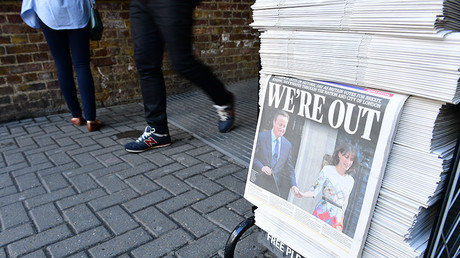
Brexit: David Cameron to quit after UK votes to leave EU

June 24th, 2016

BBC News

Prime Minister David Cameron is to step down by October after the UK voted to leave the European Union.

Mr Cameron made the announcement in a statement outside Downing Street after the final result was announced.

He said he would attempt to “steady the ship” over the coming weeks and months but that “fresh leadership” was needed.

The PM had urged the country to vote Remain, warning of economic and security consequences of an exit, but the UK voted to Leave by 52% to 48%.

England and Wales voted strongly for Brexit, while London, Scotland and Northern Ireland backed staying in.

UKIP leader Nigel Farage hailed it as the UK’s “independence day” but the Remain camp called it a “catastrophe”.

The pound fell to its lowest level against the dollar since 1985 as the markets reacted to the results.

Flanked by wife Samantha, Mr Cameron said he had informed the Queen of his decision to remain in place for the short term and to then hand over to a new prime minister by the time of the Conservative conference in October.

It would be for the new prime minister to carry out negotiations with the EU and invoke Article 50 of the Lisbon Treaty, which would give the UK two years to negotiate its withdrawal, he said.

“The British people have voted to leave the European Union and their will must be respected,” said Mr Cameron. “The will of the British people is an instruction that must be delivered.”

Full Report

http://www.bbc.co.uk/news/uk-politics-36615028

A separate country for Tamils is unintelligible

June 23rd, 2016

By L.K.N. Perera (LLB, Cey) Courtesy Ceylon Today

The Leader of the Opposition, Sambandan’s recent justification of the LTTE’s struggle to form an Eelam State and the unanimously passed resolution in the Northern Provincial Council, to form an autonomous State in the Northern and Eastern Provinces needs the immediate attention of peace loving members of all communities. Simultaneously, it was reported that terrorist leaders such as Nagulan, who were responsible for mass murders and believed to have been killed in the last war, are now surfacing one by one! Also, it was reported that the Labour Party in England has already given an assurance to the Tamil Diaspora that they would support self-determination in a separate State!

It is unfortunate that none of the academics in our Universities, who are paid from public funds and who are more qualified to answer this baseless Eelam theory, have failed to respond to Sambandan’s and Wigneswaran’s utterances to date. Equally, all the learned members of Sri Lanka Branch of the Royal Asiatic Society have hopelessly failed to pay any attention to this important issue. The worst being the prominent figures of Hela Urumaya or National Freedom Front, who were hell bent on protecting the interests of Sinhalese. They have failed to expose the bogus nature of the Eelamists, for a separate State and to elucidate to the International Community the actual history of Sri Lanka.

A careful analysis of Sambandan’s justification and approval of the LTTE’s activities clearly shows that it was an approval of the late Prabhakaran’s inhuman terror campaign that last for nearly thirty years. The irony is that Sambandan seems to have forgotten the misery of his own people during the war.

Irrational Statements by Sambandan

He seems to approve:

  1. a) The killing of thousands of innocent civilians by bomb attacks.
  2. b) The attack on the sacred Temple of Tooth Relic at Kandy
  3. c) The attack on innocent Buddhist Pilgrims and killing of 200 pilgrims at the sacred Jaya Sri Maha Bodhi at Anuradhapura.
  4. d) The setting up of detention camps to confine and restrain thousands of innocent Tamils who opposed Prabhakaran’s tyranny of inhuman treatment and killing
  5. e) Slaughtering of 600 Sinhala Police Officers who surrendered during R. Premadasa Regime.
  6. f) Approval and justification of the brutal assassination of his own leader, the late Amirthalingam; murdering of the Indian Prime Minister Rajiv Gandhi and Sri Lankan President R. Premadasa.
  1. g) Killing of Politicians such as Duraiappah and the gunning down of Dr. Rajini Thiranagama by her own students.

Surely, it has to be the present regime’s duty to probe all the atrocities of the LTTE too, and bring to book all those who were responsible for mass inhuman activities, at a time when the present government is probing the actions of the Sri Lankan Army Intelligence Units who fought tooth and nail and brought peace to all communities in Sri Lanka. This would be the only process which could put a halt to those extremists of both sides (Sinhala and Tamil) who would be able to set fire to Sri Lanka. Equally, it becomes the bounden duty of the present regime to probe the brutal killings of eminent figures such as Amirthalingam and Dr. Rajini Thiranagama, the Senior Lecturer of Medical Faculty of Jaffna, as one of the first steps in bringing peace to Sri Lanka.

Sansoni Commission Report

When one peruses the role of Sambandan in the Seventies, as elicited in the Sansoni Commission Report, Sambandan’s justification on the activities of terrorists is nothing new to him. He has been one of the leaders who advocated violence to Tamil youth in the seventies as revealed in the Sansoni Commission Inquiry Report. Leaders of his calibre were always behind the atrocities committed by the LTTE, tacitly approving the bomb blasts and approving mass murders, but never speaking a word to condemn such brutalities.

Before delving into the question of whether Eelam is a myth or not, I would like to pose the under mentioned questions to Messrs. Sambandan, Wigneswaran or any other high ranking officials in the TNA, TULF; any other learned member of the Tamil Diaspora, or even directly to Ms. Jayalalithaa or Mr. Karunanidi, to justify their Tamil Eelam Theory:

(1) If Tamils had their own kingdoms in the North and East, please explain as to why Robert Knox, who was arrested in Kottiar (near Trincomalee), was handed over to Kandyan King, instead of being taken to Jaffna, the so called Capital of Eelam!

(2) What explanations have you on the Vallipuram Gold Plaque, which categorically confirms that the Sinhala King named Wasabi, was ruling Jaffna too, even before the 2nd Century BC.

Continued on Tomorrow

A separate country for Tamils is unintelligible -Sinhala King Vasabha Ruled Jaffna Before 2nd Century BC  – Part II

June 23rd, 2016

By L.K.N. Perera (LLB, Cey) Courtesy Ceylon Today

Before delving into the question of whether Eelam is a myth or not, I would like to pose the under mentioned questions to Messrs. Sampanthan, Wigneswaran or any other high ranking officials in the TNA, TULF; Any other learned member of the Tamil diaspora, or even directly to Jayalalithaa Jayaram or Muthuvel Karunanidhi, to justify their Tamil Eelam Theory:

  • If Tamils had their own kingdoms in the North and the East, please explain as to why Robert Knox, who was arrested in Kottiyar (near Trincomalee), was handed over to the Kandyan King, instead of being taken to Jaffna, the so called Capital of Eelam?
  • What explanations have you on the Vallipuram Gold Plate, which categorically confirms that the Sinhala King named Vasabha, was ruling Jaffna too, even before the 2nd century BC?
  • Do you have any explanations for the existence of three Buddhist Pagodas in the Delft Island and Buddha Foot Prints and caskets found in the Jaffna Peninsula, which were exhibited at the Jaffna Museum?
  • How about the Kantharodai Buddhist Temple at Chunnakam, which is described as Kaduruboda Temple at Hunugama in the Mahavamsa?
  • Historical records in British Museums confirm that most of the Tamils in North and the East were brought to Sri Lanka by the Dutch and British for the purpose of cultivating Tobacco. At first the Dutch brought Tamil workers from India for Tobacco cultivation. These are facts what the Sri Lankan Government should publish and make public even at this late stage
  • Do you know anything about King Gajabahu’s wars in South India, which are illustrated in detail in the Mahavamsa as well as in South Indian Stone Inscriptions?
  • Do you have any answers to the question of the Dutch visiting the Kandyan King to obtain a legal title, and subsequently entering into a Treaty called Tennekumbura Treaty in 1766?
  • Are you aware of the antediluvian nature of the Sinhala language compared with the Tamil language, which is said to be of “recent origin” as stated by Professor Neelakanta

Sastri?

9)   What have you got to say about the non-selection of Tamil language by Americans    as an ancient language and the selection of Sinhala Language as one of the oldest languages? It is appropriate to mention here that Sinhala Language was chosen by them after critical examination as one of the few oldest languages in this world and was displayed on the moon.

10) Do you disregard the contents in the ‘Mahavamsa,’ which is recognized by eminent historians the world over as the only book that describes a continuous history of a country for a period of well over 2000 years? One has to bear in mind that Mahavamsa stories are corroborated by Stone Inscriptions not only in Sri Lanka but in South India too.

(11) Have you read Professor Neelakanta Sastri’s book on ‘South Indian History’ in which he describes the history of South India with no reference whatsoever to a Tamil Homeland in Sri Lanka?

paperimage01

Origins

The origin of the Sinhala language dates back to the Anglo Saxon age. Unlike Tamil, Sinhala is an Indo-Aryan Language. The History of Sinhala Language is divided into several eras, such as present day Sinhala, Mediaeval Sinhala and Ancient Sinhala. From there it goes to Prakrit, Sanskrit and to Indo-Aryan, and finally to the Anglo Saxon family. German Professor Wilhelm Geiger found similarities in Sinhala and the German language. Therefore, Sinhalese have an inborn right to seek assistance from the UK and Germany to protect and save their brethren (Sinhalese) from the grip of Eelamist Tamils, who have become a nuisance and annoyance.

Eelamist claim for an independent state or province, based on a non-existent Eelam State! The so-called “Eelam State” does not contain any historical or archaeological evidence either in Sri Lanka or in India. It is only the Tamil politicians who propagate this myth. Stone Inscriptions found in the North and East bear crystal clear evidence to prove it was Singhalese kings who ruled North and East areas in our history.

The Portuguese came to Sri Lanka in the 15th century. Prior to Portuguese occupation in Jaffna, the representatives of Kotte Kings ruled Jaffna; Prince Sapumal was the last in line, in 1412 AD, to become the last Sinhalese ruler in Jaffna.

Had there been Tamil kingdoms in the North and East in Sri Lanka, as claimed by R. Sampanthan, surely there should be some evidence of Tamil stone inscriptions to that effect along with archaeological evidence! But the sad part is that there isn’t a single piece of an archaeological evidence about the so called ‘Tamil Kingdoms’ in the North and the East, but the existence of three ‘Dagabas’ (dome-shaped buildings erected as a Buddhist shrines) in the Delft Island is clear proof to confirm the existed Sinhala Kingdoms from time immemorial.

The most unreasonable claim in this ‘Eelam’ theory for a separate homeland for Tamils is merely because the inhabitants in these areas at present are majority Tamils. By the same token Tamils do have the sacred right to live in any part of Sri Lanka; regrettably the Sinhalese, being the majority in Sri Lanka, are denied that right to live in densely populated Tamil areas in the North and the East, except in the South along with both Tamils as well as the Muslim community. The other obnoxious factor in this Eelamist theory is their reticence and refusal to mention anything about a homeland for Sinhalese who are the original inhabitants in this Island. The fact that Sinhalese have a well established and continued history for a period of well over Two Thousand Five Hundred (2500) years has been completely ignored by the founders of this so called Eelamist theory.

S.J.V. Chelvanayakam

Primarily, it was the late S.J.V Chelvanayakam who propagated this myth among the Tamils while ignoring the historical rights of Sinhalese to the North and East. He paid no heed whatsoever to archaeological evidence manifestly available in those two provinces. His only consideration was the majority number of Tamils living in those two provinces. Moderates like Duriappah, Mayor of Jaffna, were gunned down at the very beginning with the blessings of TULF leaders. Other leaders of Tamil Community such as Amirthalingam, Sivasubramaniam and Sampanthan followed Chelvanayakam with the full knowledge that their claim for an independent State in the North and the East has no justifiable historical basis.

They based their Eelamist theory mainly on the majority number of Tamils living in the North and the East. Current population was the only criteria that mattered to them. It is rather unfortunate that none of the Sinhala leaders have challenged these Tamil leaders over their unjustifiable claim. Instead, all leaders in successive governments have granted their demands, one by one while the JR Government went to the extent of accepting the North and the East as their traditional homelands, ignoring the rights of the Sinhalese communities who lived in those two provinces.

The following passage extracted out of an article written by M. Sivasithambaram, who was one time President of TULF shows as to how they justified Tamil Eelam State in the Northern and Eastern Provinces. His stand has been that by becoming the majority in an area could name such area as a homeland.

In the Sunday Observer on 26 September 1993, the late Sivasithambaram, President, TULF wrote: ‘It is also significant to note people in Jaffna, Vavuniya, Mannar, Batticaloa and Trincomalee voted for the candidates of Tamil Parties, i.e. the Tamil Congress, the Federal Party and TULF. In the face of all these, a person with even the meanest intelligence will accept that North and East are the Traditional Homelands of the Tamils and Muslims“.

The irony is that during his lifetime when Prabhakaran chased the Muslims out of the North, Sivasidambaram or Sampanthan or any other hierarchy in TULF had no guts to speak out, except to remain silent!

Needless to say that the so-called Eelamist theory is a draconian notion! It ignores the basic rights of other communities. For instance, under Eelamist theory, Muslims in Kashmir Province have the right to demand a separate homeland in that Province because they are the majority at present. Towards the latter part of this century the Tamils in the UK or Canada might claim their right to self-determination highlighting the areas they predominantly reside. At this rate in the future they are bound to assert their right to the towns like London or Birmingham in the UK and certain provinces in Canada as their homelands, once they become the majority living in those areas.

It is regrettable that both, the present as well as former government machinery, have failed to counter these bogus claims. Professor G.L. Peiris, the former Foreign Minister, is directly responsible for the present situation. He failed miserably to counter this false propaganda work of the Tamil Diaspora at that time. During his period he conducted only pedagogue discussions rather than countering false propaganda.

As a result of removing History, as a subject form the school syllabus in the seventies, by former Prime Minister Sirimavo Bandaranaike, on the advice of Minister of Education at that time Badiuddeen Mohamed, today the younger generation of Sinhalese and Tamils are denied learning the real and true history. It is a sad affair, indeed, that many Sri Lankans, irrespective of their communal backgrounds are ignorant of the factual history of this country as a result of such unforgivable policies.

The myth of an Eelam State, which never existed, propagated by the Tamil politicians, who live in the lap of luxury in Colombo, misled the youth in the North to join a war. The irony is that not a single child of these champion Tamil leaders joined the war and died in battle but it was only the ordinary Tamil youth who sacrificed his life at the instigation of these politicians.

Sinhala as well as Tamil politicians equally forced the poor to have their education in Sinhala or Tamil languages while they (politicians) sent their children to Sorbonne, Oxford and other universities abroad. History has begun to repeat again where politicians are adopting the same attitude of dragging the innocent youth from both sides to a new war, not for any other reason but for their own survival or existence. Readers of this article are advised to examine the Sansoni Commission report for better understanding as it explains the hypocrisy of several politicians who dragged the Tamil youth into the last war.

Dragging the Sri Lankan Security Forces into a long drawn out 30-year-old war was an unwise decision taken by the late R. Premadasa. The JR government handed over the war to the Indian Army, which was able to keep the Sri Lankan Army out of war; a blessings in disguise! However, during the occupation of Sri Lanka by the Indian Army to support the Sri Lankan efforts against the LTTE manoeuvres, not a single soldier was reported dead! However, when R. Premadasa came to power his ill-advised battalion of henchmen made the Indian Army to leave Sri Lanka making Premadasa believe that the conflict was an internal matter and the Sri Lanka Government should be able to resolve it without outside assistance.

Being convinced, R. Premadasa is alleged to have given assistance to the LTTE in various forms to fight against the Indian Army, which ultimately cost him his own life. If JR’s policy was allowed to continue, experts say the Army would not have had to face such a number of casualties in the war.

The role played by the JVP in sending the Indian Army back is also questionable. The leaders of the JVP surely cannot escape from the responsibility of dragging the Sri Lankan Army into this war costing 30,000 (thirty thousand) deaths in all three forces unnecessarily. The JVP poster campaign to chase the Indian Army out, labelling them as ‘a Monkey Army’ too may have encouraged Premadasa to make such a stupid decision. The JVP, in addition to their poster campaign, as far as I could remember, got involved in killing one or two members of the Indian Army by sporadic attacks which were reported in the media those days. Needless to say it was an indirect support given to President R. Premadasa to hand over the war to Sri Lankan Army. During that time newspaper reports indicated that when dead bodies of Indian soldiers reached their homes, the Indian general public went against the LTTE and diminished their support greatly. If the Indian Army were to have continued with the war, surely people in Tamil Nadu would have openly opposed LTTE atrocities rather than supporting them.

The Writer is an Advocate, Labour Consultant, Ex-Judicial Officer.

Ex-President, Lanka Academic Association.

Vice President Seruwila Chaityawardena Samithiya

lknperera@gmail.com

Constitutional reform- Dismantling the last few Buddhist countries- the National Flag & the Anthem

June 23rd, 2016

Ramanie de Zoysa

The Constitution of Sri Lanka is being changed to reflect the findings and recommendations of PRCCR committee that received public opinions from less than .017% of Sri Lanka’s 21m population. Of this miniscule sample of 3655 submissions received, at least 70% were signed by Tamils and Muslims – among them well known foreign funded NGOs that worked tirelessly for regime change. The participation sample size is even smaller when you consider that quite a significant number of respondents did not seem to be bona fide citizens of the country but global Tamil Eelamist organisations and global wahabi fronts, pushing agendas with self interests that are harmful to Sri Lanka and are internationally funded. Many among the fronts are not even citizens of Sri Lanka. These alien views have weighted the process unduly in favour of the dismantling of the Sinhala Buddhist identity of the country.

What are missing are the views of the remaining 99.983% of the population which comprises of ordinary Sinhala masses and minority citizens who are not politically motivated.

First items on the chopping block are the sacred trinity of the country; namely, the National flag, National Anthem and Citizenship.

The National Flag

According to the report, the committee has come up with three alternative recommendations on what the National Flag of Sri Lanka should look like:

  1. the flag needs to stay clear of depicting any ethnic identity, (proposed by committee members Harini Amarasuriya, Navaratne Banda, Elankovan, Kusum Kumara, Vijesandiran and Selvakkumaran); or
  2. must reflect ethnic unity (Thavarajah); or
  3. keep the National flag in its current form (rest of the committee)

The majority of the committee members seem to have decided to go with the third option of keeping the flag in its current form, perhaps with the knowledge that such an action will eliminate a violent reaction from the non-participating 99.983% of the population- the real citizens. However, there is no guarantee that the majority view will prevail when PM Wickremasinghe pushes these reforms through the Parliament. Minority backed Yahapalanaya has proved beyond the slightest doubt that they have no respect for majority rule which is the core principle of democracy.

Let us ponder on this issue of the National flag. Why does Sri Lanka have a National flag? Why does every other country have a National flag? The answer must be that a country needs a flag as a visual representation of its origins, ethos and the culture that distinguishes it from other nations.  It instils pride in our hearts. Since time immemorial, flags were heralded by armies going to war with an enemy; not because the flags were helpful as weapons or because it could save your life from the enemy arrow (or the bullet). People carried the flag as a visible motivational tool that also proclaimed their strength of conviction. The flags allowed warriors to be conscious at all times what they were fighting for and what they may die for! The flag also showed the enemy who you were and sent the message that you were up to the task and prepared to die fighting for your flag- your identity and your country.

Sri Lanka’s flag from the time of ancient Sinhala kings was the lion flag; that is a history that spans thousands of years.

SLFlagold

An incredible number of Sinhala people died defending the lion flag throughout that history. The flag is just a piece of cloth only for those who have never had to fight for it, never shed blood or tears for it and those who are genetically pre-disposed to treachery. To a true citizen of a country the National flag is as warm and as precious as the blood of the warriors that was shed in order to protect it. That is why countries around the world respect safeguard and uphold their flags; not tinker with it for frivolous reasons.  Minorities may come and go – but you will not see any self-respecting country change their flag to wipe out the symbols that represent those who died fighting for it or add new symbols to depict every immigrant that enters the country. For instance, the UK and US flags do not include any symbols to represent the vast number of ethnically diverse immigrants on their flag. If such an ‘equalisation’ process was carried out on every country in the world today the National Flags of all countries will look exactly the because no country is mono ethnic 100%. Every country has a predominant or a founder race and religion, and minorities of all sorts. The United Nations will be flying 193 flags which look exactly like each other.

This is never going to happen- no self-respecting country will change their flag to appease minorities.

Different countries have different evolution patterns and histories. Some countries have a very long history of standing up to invasions and surviving more or less intact; like Russia, Japan and China- and of course our little Sri Lanka.

India (or what is left of it) is a country that did not survive the constant invasions. It first lost out to the moghuls. Beginning in the 12th century, several Islamic states were established in the Indian subcontinent. This process culminated in the Mughal Empire, which ruled most of India during the mid-16th to mid-19th centuries. The British conquest of India ended up in the division of the country into three: creating two new countries, East & West Pakistan. The remaining lands were pieced together to form a federal India.

India is living proof that carving out land to form new countries to appease aggressive minorities does not solve ‘problems’- in fact it is just the chopping off of your head to cure a headache. Having lost land to create two separate countries for the pre-independence Muslim minority, India today is still left with a burgeoning Muslim minority because not all the ‘unhappy’ Muslims left their stake in India and go populate the new country that they clamoured for.  When you allow what India allowed to happen what you end up with is a huge melting pot of racists and religious bigots all congregated in the newly created neighbouring country carved out of your land, while you are left with a whining minority (who did not leave when the new country was partitioned off but remained within country no 1) that supports the racists and religious bigots next-door while living within the country and constantly claiming discrimination.

Then again, to the south, India has the other minority problem; over 70 million strong Tamil Nadu factor waiting for opportunities to carve out another piece of the subcontinental geography for the Tamils. This is where India looks to Sri Lanka for redemption. If they can carve out Sri Lanka for the creation of an Eelam, India can gradually purge the Tamil sovereignty aspirations southwards to Sri Lanka via a quickly built sethu samudram bridge. What is noteworthy is that even after the decimation of the subcontinent, India did not change her flag that features the Ashok chakra- or her National Anthem sung in Bengali.

In countries such as the US, Australia and New Zealand the arrival of people mainly from Britain saw the creation of new countries totally different in demographic content. In the US and in Australia a near total annihilation of the natives resulted while the natives of New Zealand fared a lot better. Out of these three countries only New Zealand has an Anthem which consists of verse each  sung in English and Maori, primarily because there were enough Maori left after the arrival of white men to sing a National Anthem; this was not the case in the other two countries. The history and the background of these countries are such that their countries are ‘new’ and the rulers are the newly arrived immigrants- not the original inhabitants. New Zealand’s Anthem in two languages attempts to assuage the fears of native Maori that they have not been completely outwitted from the ‘ownership’ of the country. There is absolutely no commonality in the New Zealand situation with that of Sri Lanka.

Out of all the countries, it has always been Sri Lanka that has tinkered with the flag. In 1972 the Sirimao Banadaranaike government carried out the spineless act of inserting two stripes to the Sri Lankan flag – to represent the minority Tamils and Muslims.

SLFlagNew

If the changing of a flag to appease minorities ensures that the minorities feel ‘represented’ and start respecting the country’s flag and working for the betterment of the country, our minorities would be the happiest in the world! But, what happened? With half of the new flag now ‘depicting’ their identities, Sri Lanka’s minorities got even more unhappy since the 1972 changes to the flag. So unhappy since this show of ‘inclusiveness’ by Mrs Bandaranaike, that one of the minorities organised a meeting in Thimpu and signed the now infamous Vadukkodai Resolution during the same year, vowing to militarise themselves and wage war on the country! Now, Sri Lanka’s minorities want the lion and the four Bo leaves to be wiped out of the flag or as an alternative to include competing ethnic minority symbols in the flag. Appeasement only makes people more unhappy- not less. Once you start appeasing it is a case of wanting more, and more, and more; where does greed end? How long is a piece of thread?

It is a well-known, well accepted rule in life that one needs to earn one’s stripes; this applies to the minorities equally. Minorities should literally be given stripes (in the flag) only when minorities show allegiance and love for the country and its culture, protect it and defend it. Minorities that arm themselves to attack the country’s public installations, innocent civilians and the armed forces are not being good citizens- they should not be given stripes. Minorities that demand their own laws such as Thesavalamai and Sharia for their own ethnic/ religious groups and refuse to abide by the law that prevails in the country are not good citizens. Minorities that disrespect the National Flag, the National Anthem and refuse to learn the language of the country are not good citizens. Minorities that import alien cults from the places like the middle-east and destroy the existing culture of the country to install primitive, alien, desert lifestyles are not good citizens. Those who destroy national rain forests to create alien colonies stealthily settling illegal aliens to create hostile colonies are not good citizens. These minorities do not become good citizens because we bend over backwards to accommodate them.

When other countries hand out citizenship to aliens they take an oath- of allegiance to the National Flag, the National Anthem and the country. When will this ever happen in Sri Lanka? In Sri Lanka we have never enforced discipline and patriotism on the immigrants.

The National Anthem

Here is something else you never hear from anywhere in the world. The PRCCR report makes its recommendations regarding the National anthem from the position that the Sri Lankan State has already declared that the national anthem should be sung in both languages. Here is a ‘government’ that breaches its own country’s constitution. No government in any other country will get away with this type of treachery because the people will never allow it. But, in Sri Lanka the majority Sinhala have this unfortunate genetic disposition that we will put up with any disrespect anyone shows on the belief that by doing more and good to those who do bad things to us will ultimately lead to them realising the error of their ways and it will be the beginning of a beautiful friendship from then onwards! This is the cursed disposition that earns the Sinhala the description ‘idiots‘ (modayas).

The options discussed by PRCCR were whether the anthem should be sung in both Sinhala and Tamil and in what manner. Should there be two versions, one verse in Sinhala and one in Tamil, In Tamil areas the Tamil verse is sung first and in Sinhala areas the Sinhala verse should be sung first.

PRCCR made the following recommendations:

  1. Consider the clause on the National Anthem formulated in the Constitution Bill of 2000.
  2. Consider the clause on the National Anthem formulated in the Constitution Bill of 2000 while recognising the right to sing it in Sinhala and/ or Tamil.

What is the Constitution Bill of 2000 that the PRCCR report is referring to? It was a bill contemplated by Chandrika Kumaratunga in 2000 who attempted to bring this change at that time. Remember this was the time great defeats suffered by our armed forces through the mismanagement of the war by Kumaratunga and the morale of the people and the forces were rock bottom. The Tigers were winning.  The Bill says:

(1) The National Anthem of the Republic shall be “Sri Lanka Matha”, the words and music of which are set out in Part I of the Fourth Schedule.

(2) The Tamil language translation of the National Anthem shall be as set out in Part II of the Fourth Schedule”

So, this is the fruitioning of old frustrated Perumal agendas of cessation that are seeing the light of the day thanks to yahapalanaya, after all! Both Wickremesinghe and Kumaratunga are re-living the past and achieving what they failed to achieve in the past because the enraged people  kicked them out.  It is indeed time for the people to re-enact the past and put both these two traitors out of action for good!

What is the rationale here? The national anthem is not a song; it is a solemn acceptance of the sovereignty and authority of a country and a declaration of unfettered love and affection for that country. It is created by a suitably skilled artist of high standing and is sanctioned and protected by the constitution. It is not a baila or a sing-a-long to be translated into many languages or to have one or two verses sung in another language; it cannot have a kundumani, or a ‘muraga vadivela’ verse or two for heightened fun. You stand up to sing the National Anthem as it is prescribed in the constitution and/ or salute or have your hand on your heart while singing it! Racist Tamils in general have always refused to sing the National Anthem, disrespected the Sinhala language and poured scorn on our Flag!  They have in fact been disrespecting this country and all what it held sacred for a long time. Apart from a totally unusual character like Mr Kadiragamar, the general Tamil public have rarely shown allegiance to the country.  If any fool thinks that further appeasement of this uncivilised, ungrateful sons of Tamil Nadu are going to change their stripes just because we give away all we have got one by one, that fool deserves to sleep with Velu in Nanthikadal!

What the Tamils always have shown and what the Muslims are now beginning to show (since their population is reaching 10%) by rejecting the National Anthem, the National Flag and the Sinhala language is nothing more than civil disobedience. It is not a question of whether they don’t feel included in the flag because all their ‘symbols ‘ are not on the flag or whether they can’t understand the meaning of the National Anthem. There is nothing very difficult about learning the language of the majority. When our Tamils and Muslims  live in Canada they learn French, when they live in Germany they learn German, when they live in Norway or Denmark they learn Nordic languages or Danish and those in the UK, learn English. Sinhala is the only language these people have trouble learning despite living, owning, earning in Sri Lanka for several generations! Whose fault is this? It is the fault of the Sinhala and their apathy that allows people into the country without an oath of allegiance and not having laws that discipline the citizenry regarding discharging their responsibilities and showing respect to the country.

Take a very simple example. Both the Tamil and Muslim minorities are predominantly traders and business people. They sell to the majority Sinhala. How many shops in this majority Sinhala country do you see with signage displayed only in Tamil and English? This is not, and never has been a coincidence; it is by design. These businessmen are making a public statement. We hate your language; we spit on you! Take an example – Ranjanas, a shop selling sarees and other paraphernalia in the Fort for the last 60-70 years or more- the shop has always been carrying its signage in Tamil and English only- the newly opened several story shop in Bambalapitya is the same. However, these shops are teeming with Sinhala customers who understand neither Tamil nor English- spending their hard earned money, fattening up these very businesses that spit on them. Why? Because the Sinhalas do not respect themselves. We are prepared to wipe off the spit from our faces and crawl sheepishly in to a shop that disrespects us in order to buy a ‘nice’ saree or some trinket. Then again, we do not want to buy the same thing from the Sinhala trader because ‘he is so arrogant’; in other words we don’t want to see him getting richer than us in our own neighbourhood…”

Continued….

Ramanie de Zoysa


APROPOS OF CONSTITUTIONAL REFORMS

June 23rd, 2016

By Rohana R. Wasala

The armed terrorist struggle for creating a separate state in Sri Lanka was decisively defeated in 2009. But the separatist ideology is still very much alive and there are signs of it flourishing again. According to the US State Department the LTTE fronts active in that country continued their collection of funds for their activities through 2015, though the outfit still remains on its list of banned foreign terrorist organizations, so designated since August 10, 1997. Yet the Americans support the demand by expatriate Tamils, the TNA, and Tamil Nadu politicians that the government ‘demilitarize’ the north. Despite this, the Sri Lankan government lifted its ban on a few of these fronts in September last year. Chief minister Jayalalitha of TN has pledged to make one of her priorities the creation of Eelam in Sri Lanka that the terror leader Prabhakaran envisioned. (Jayalalitha very recently declared that she wants to pressurize the central government to get the island of Kachchativu returned to India; actually, India recognized Sri Lanka’s ownership of the uninhabited  island in 1974. She is now demanding its return because she thinks that the problem of Tamil Nadu fishermen having to poach in Sri Lankan waters will end with the possession of Kachchativu. But the truth is that those Indian fishermen penetrate much deeper into Sri Lankan maritime territory to steal the fish resources that rightfully belong to Sri Lankan fishermen, who are Tamil in that area.) Northern provincial council chief minister TNA’s Vigneshwaran charges that all governments in Sri Lanka since 1948 have committed genocide against Tamils. A set of some 15 proposals made by the NPC has no reference to the majority community, but seems to imply that it is impossible for minorities to live with them without special arrangements to look after themselves (hence probably the proposal for separate zonal councils for Tamils and Muslims). One proposal is that Sri Lanka be renamed The Federal Republic of Sri Lanka”; another is that the president be elected as per clauses 54-55 of the Indian constitution!  and Vigneshwaran proposes that Sri Lanka’s history be rewritten! A suggestion he is reported to have made in Jaffna recently before Swiss ambassador in Sri Lanka Heinz Walker-Nederkoorn is that the Swiss system of government be adopted by Sri Lanka (another of the 15 proposals referred to above), in spite of the fact that there is no rational basis for such a novelty to be introduced. Switzerland is a small landlocked country in Europe about two thirds the size of Sri Lanka. There are hardly any similarities between these two countries in terms of their geography, demography, history, economy, or culture, or in terms of the respective problems they face. Visiting dignitaries from the West go to Jaffna, no doubt, to inquire into the current situation there after their rescue from terrorism and the restoration of democracy to them, and we should thank them for their concern with the welfare of our people. But if they accept, without rational investigation, the myths that the racist politicians there entertain them with as if these narratives were gospel truth, then those visitors,  be they diplomats or something else, are doing a great disservice to the ordinary people of this country. Septuagenarian Vigneshwaran (77) himself grew up, studied, worked in the legal field  and finally retired as a supreme court judge, having lived in Colombo for most of his life to date among the allegedly ‘genocidal’ Sinhalese.

Of course, none of such racist Tamil politicians are talking too openly or too explicitly about separation at this stage. That will come later, as we may be sure, going by what we know about their traditional strategy of ‘a little now, more later’. They are only asking for a federal state at present, but the truth is that under the 13th amendment to the constitution (imposed on Sri Lanka by India in 1987), Sri Lanka already has a federal system of government. The northern and eastern provinces were temporarily merged in September 1988 and demerged from 1st January 2007 by the supreme court which declared the merger on the earlier occasion was illegal. But the Tamil racist politicians’ goal of a separate Tamil speaking sovereign state in the north and east of Sri Lanka is unmistakable. And this is what the reasonable majority of the multiethnic Sri Lankan population fear.

Probably, the PM and the President think that Vigneshwaran’s claims and proposals are too fantastic to be taken seriously. President Sirisena recently assured an increasingly sceptical public of his determination to put a final end to the Tamil separatist ideology. The vital question is: How? It is the general belief among common people that Mahinda Rajapaksa came very close to achieving this aim through equitable development across the country that would create an environment of economic growth and political stability, in which the demand for separation would die a natural death, but Mahinda was effectively checkmated by anti-nationalist forces working  according to a different agenda  that has nothing to do with Sri Lanka’s welfare. Though Mahinda had a well thought out plan of action to achieve what they call reconciliation through economic development and restoration of democratic governance which the LTTE had denied to the north for so many years, he was not allowed enough time and the peace of mind to realize his aims.

Clearly, Maithri wants to show that his aim is to produce a permanent solution through the peaceful means of a new constitution, now that he doesn’t have to worry about terrorism, which Mahinda eliminated. But the problem is how Maithri is going to succeed in forging a constitution that will be acceptable to all the communities, while preserving the unitary character of the nation state. The main reason for saying this is that, knowingly or unknowingly, he allowed himself to be used by local and foreign forces inimical to Sri Lanka who wanted to reverse the forward march of the country that was going apace under Mahinda’s leadership..

A glance at the 22 chapter final Report on Public Representations on Constitutional Reforms (May 2016) reveals the anti-majority bias of the proposed reforms: if the suggested recommendations are passed the new constitution will be more pleasing to foreign vested interests and separatists than to ordinary Sri Lankans. This is a contradiction of the basic principle that …the origin of power is in the people” which is stressed in the report by the PRCR Committee (appointed by Maithri). The commissioners observe ….we need to build consensus around the reforms and to engage actively with citizens to build support. For this, we need political leadership and imagination.” Can we be sure that a sufficient number out of the present lot in parliament are gifted with these qualities?

Despite the fact that we have locally no dearth of suitable constitutional experts, seasoned diplomats, and political scientists and distinguished legal consultants to serve in such a position, the government seems to have appointed a set of individuals to the PRCR committee who are relatively unknown or generally less known than those we would expect to be invited to perform that extremely important task in respect of Sri Lankan affairs. Of the two academics (political science) appointed, Professor Gamini Samaranayake, former chairman/UGC, hasn’t apparently taken part at all in its deliberations. Was it sickness or some other unavoidable circumstance that prevented him from doing so, or did he leave the committee deliberately over some disagreement with the others? There is no mention of or reference to the professor, except in the list of names of the members. He has not signed the final report either.

The report states that the members had to achieve much within a too short a time. The final product indeed shows signs of it having been rushed out.

I can’t predict how the majority community and the minorities in general will respond to its contents (by ‘contents’ I mean mainly, the public’s submissions under the different subjects to be covered in the constitution, and the committee’s recommendations based on them). There is no doubt that the recommendations are well meant within the parameters given by the powers that be, but they seem to have a tendency to represent the majority community as xenophobic, which it is not. That is how I feel as a layman who loves nothing but peace and prosperity to the people of his beloved homeland, but I hope that I am wrong in that negative impression about what could be basis for the future ‘supreme law of the land’.

In the view of the committee members, Sinhalese fears are a consequence of years of conflict and war in our country and the suspicion and mistrust it has engendered between communities”. How can the Sinhalese ignore the growing mass of evidence that suggests that the separate state concept is still alive. Have the commissioners considered in depth what led to conflict and war” in the first place? Don’t they recognize the fact that the communalist minority politicians behave in ways that exacerbate these feelings in the Sinhalese, who don’t usually think in terms of communalism? Instead, the commissioners blame the situation on what they call ethno-religious nationalism” of different groups (but, in terms of our experience, this phrase almost exclusively refers to Sinhalese Buddhists). The nationalism that the majority of Sri Lankans believe in embraces all the communities that live in the country; it cannot be described as exclusively ethno-religious. Sri Lankan nationalists are predominantly Sinhalese Buddhists, because numerically they form the majority. The Sinhalese who are nationalists are nationalists, not because they are ethnically Sinhalese, but because they are Sri Lankans. That Sri Lanka is their only homeland is also an indisputable fact. We have Sri Lankan nationalists too who are of other ethnicities and religious affiliations. Minority politicians who champion the rights of only their groups to the exclusion of others are actually communalist; in fact, there are minority politicians who are pro-national, and non-communalist. However, the ‘racist’ label is usually tagged on to those who dare to speak up for the rights of the Sinhalese majority even in their accustomed inclusive way (i.e. not forgetting about equal rights for others).

Chapter 20 of the report deals with the subject of  affirmative action and reconciliation”. The use of the phrase ‘affirmative action’ here is historically ironical. The ‘affirmative action’ measures introduced since 1956 to address the anomalies that the particularly dispossessed  Sinhalese majority had been subjected to in their only homeland during colonial times were later found problematic. Among the reforms suggested in Chapter 20, the rights of those with different sexual orientation” (commonly known elsewhere as LGBT – lesbian, gay, bisexual and transgender) form one item. Should a culturally sensitive piece of legislation like this be imposed on our rather conservative people? Not many are ready yet to stomach such ‘newfangled’ ideas as same-sex marriage. (Sex between two males would be treated with the same moral disapproval as it was in Victorian London in Oscar Wilde’s time (1854-1900), where homosexuality was condemned as gross indecency”. Though there is no question about the necessity of safeguarding the human rights of people of different sexual orientation, should this be included in the constitution in a hurry where more nationally pressing issues are crying to be resolved on a priority basis? For example, a more important issue than gay rights is the question of religious fundamentalism, esp. Christian and Islamic fundamentalism, both of which are threatening our society today. Fundamentalist ideologies of religions could lead to mutual exclusion. The recommendations in Chapter 4 might not be adequate to deal with the issues.

In Chapter 3, we have controversial submissions like this: .. refugees of Sri Lankan origin who had to leave the country due to war, terrorism and persecution and their offspring should be offered dual citizenship free of charge; registration of citizenship need (s) to be decentralized. …”. Such proposals will evoke conflicting responses from the majority and minority communities. Not all Sri Lankans left Sri Lanka for foreign destinations due to war, terrorism, and persecution”; most did so as economic refugees, exploiting temporary disturbances. The brief recommendations made in response to submissions including the above are: (a) To treat all Sri Lankan citizens equally whether one becomes a citizen by descent or registration, and (b) Those who become citizens by registration should take an oath of allegiance, which do not address the central issue. Of course, these recommendations will be debated during the actual constitution making. However, since the parliamentary composition of the ruling coalition does not reflect the relative strengths of the diverse shades of opinion (regarding the issues) that really exist among the general populace, how can the constitution makers ensure that no community is subjected to discrimination in terms of the supreme law of the land?

Annex G comprises a provisional list of public submissions. It lists 3655 individuals and organizations that made submissions. Looking at it one feels that only minorities including marginal groups among the majority Sinhalese seem to have taken these public consultations seriously. The majority Sinhalese seem to be sceptical about its mission, and they are least represented in it. Could this constitution making project succeed, I wonder?

The commissioners can only be expected to act on the assumption that the leadership that they say is essential is already available in the form of the ad hoc UNP-SLFP coalition that currently rules. But it seems that, in this alliance of incompatibles, united only by the common goal of pre-empting a return of Rajapaksa ascendancy, the actual power rotates round an axis that runs between Maithri as president on the one side, and the trio Ranil, Mangala  and Chandrika (as prime minister, foreign minister, and SLFP advisor, respectively) on the other. It is not strictly right to describe the present ruling alliance as a proper UNP-SLFP coalition, because only some SLFP MPs including defeated candidates among them have joined it. Almost all of the currently sitting SLFP MPs won their seats because of Mahinda, but now they have to repudiate him in order to please Maithri. It is quite clear that Maithri, who contested the presidential election as a party-less common candidate under the swan symbol having walked out of the SLFP in anger, readily accepted the leadership of the SLFP, having little moral or legal right to that post. Soon after marginally losing the presidential election, Mahinda let his successful challenger assume the leadership of the party in order to save it from the fate of immediately depleted parliamentary presence. It was due to his clever move that so many SLFPers were able to get into parliament at the August 17 election. The president could have dissolved parliament soon after the January 2015 presidential election if Mahinda insisted that the UPFA government continue to rule because they had the majority of seats. In such a situation the UNP would have won the election overwhelmingly. By appointing Ranil as PM, Maithri was fulfilling an earlier pledge to the former. I don’t think he will betray him for the rest of his term, especially because of the Rajapaksa factor.

SLFPers in the government are saying that they want to strengthen the SLFP that is supposed to be a partner of the ruling ‘national’ government, and their ultimate goal is to form an SLFP government in 2020. Will the UNP willingly allow that? Its leader Ranil is already PM, and it will be natural for him to aim at the presidency after Maithri’s term ends. For now, Ranil’s declared aim is to pass the new constitution, which seems to be designed to accommodate minority demands that are potentially injurious to the unitary status of the Sri Lankan state. The leadership that the members of the PRCR Committee say is needed is already there, as suggested before. But that is not the leadership that the country needs. The country needs a leader who can unite the different communities and save the country from being fragmented on ethnic lines, without surrendering our independence and sovereignty to aggressively interfering foreign powers.

These are my personal opinions. If you think they are worth supporting or attacking rationally, please do as you wish.

කොඳු බිඳනොගත් රාජ්‍ය නිලධාරීන් තවත් සිටී.. අගමැතිටත් ගණන් කියාදී විගණකාධිපති එයි..

June 23rd, 2016

lanka C news

කෙසේ වෙතත් අදාල හමුදා සඳහා විගණකාධිපතිවරයා පමණක් සහභාගී කරවාගෙන ඇති අතර මුදල් අමාත්‍යංශ ලේකම්වරයාද අගමැතිවරයා සමඟ සහභාගී වී ඇත.

පාර්ලිමේන්තුවේදී අනුමත කරන ලද ප‍්‍රමණයට වඩා ණය ගෙන ඇති බවට විගණකාධිපති වාර්තාවක් සකස් කලේ කෙසේදැයි එහිදී අගමැතිවරයා ඉතා තදින් විගණකාධිපතිවරයාගෙන් ප‍්‍රශ්ණ කර ඇත.

කෙසේ වෙතත් පිළිතුරු ලෙස විගණකාධිපතිවරයා ඉතා සෘඩුව පවසා ඇත්තේ තමන්ගේ වගකීම වන්නේ ගත් ණය නිවැරදිව වාර්තා කිරීම බවත් තමන් සහ දෙපාර්තමේන්තුව ඉතා ඉහලින් එම වගකීම ඉටු කර ඇති බවත්ය.

මේ වසරේ ගෙවන ලද ණයත් මෙම විගණනයට ඇතුලත් කර ඇත්දැයි අගමැතිවරයා විමසූ විට විගණකාධිපතිවරයා සඳහන් කර ඇත්තේ ‘ණය ගත් ඒවා සඳහන් කරල තියෙනව. ගෙවු නොගෙවු ඒවා වෙනම වාර්තාවක්. ගත් ණය කියන එකයි මගේ වගකීම’ කියායි. ‘මීට කලින් විගණකාධිපතිවරු එහෙම කරලා නැහැ’ අගමැති රනිල් කියා සිටිද්දී ‘ඒක මට අදාල ප‍්‍රශ්නයක් නොවෙයි. මගේ වගකීම මේ කරුණු හරියට වාර්තා කිරීම’ යයි පෙරලා විගණකාධිපතිවරයා සඳහන් කර ඇත.

කොඳු බිඳනොගත් රාජ්‍ය නිලධාරීන් තවත් සිටී.. අගමැතිටත් ගණන් කියාදී විගණකාධිපති එයි..

සාකච්චාව අවසානයේදී අගමැතිවරයා ‘ඔබතුමා රට ගැන හිතන්න අපි එයිඑම්එෆ් එකට මොකද කියන්නෙ’ යයි කියද්දී ‘මං රට ගැන හිතන නිසා තමයි මේ කරුණු හරියට වාර්තා කරන්නෙ. අයිඑම්එෆ් එකට කියන කතා මගේ වගකීමක් නොවෙයි’ යයි සැනෙකින් විගණකාධිපතිවරයා පිළිතුරු දී ඇත.

පාර්ලිමේන්තුවෙන් අනුමත වූ ණය ගැනීම් ප‍්‍රමාණය රුපියල් මිලියන 1,511,138ක් වන අතර රජය විසින් ලබාගෙන ඇති ණය ප‍්‍රමාණය විගණකාධිපති දෙපාර්තමේතුවට අනුව මිලියන රුපියල් 1,788,892කි.

මේ අතර මෙම හදිසි කැඳවීමට හේතු වී ඇතැයි වාර්තා වන්නේ මහ බැංකු අධිපතිවරයාට චෝදනා එල්ල වී ඇති බැඳුම්කර වංචාව සම්බන්ධයෙන් මේ දිනවල විගණකාධිපති දෙපාර්තමේන්තුව විසින් පරීක්‍ෂණ ආරම්භ කර ඇති නිසා බවයි.

විගණකාධිපති වාර්තාව අර්ජුන් මහේන්ද්‍රන් වරදකරුවෙක් කලහොත් කොප් කමිටුවට ඔහු වැරදිකරුවෙක් කරන්නට සිදුවන නිසා විගණකාධිපති වාර්තාව සුමට කර ගැනීමට බලාපොරොත්තු වන්නට ඇතැයිද වාර්තා වෙයි.

විගණකාධිපතිවරයාගේ මෙම එඩිතර හා සෘජු පෙනී සිටීම නිසා මේ වන විට විගණකාධිපති දෙපාර්තමේන්තුවේ නිළධාරීන් මහත් ප‍්‍රශංසාවෙන් සිය ප‍්‍රධානියා සම්බනධයෙන් අදහස් පල කරමින් තිබේ.

අගමැති රනිල් වික‍්‍රමසිංහ මහතා විසින් ඊයේ දිනයේ විගණකාධිපති ගාමිණී විජේසිංහ මහතා අරලියගහ මන්දිරයට කැඳවා තිබිනි. එම හමුව සඳහා නියෝජ්‍ය විගනකාධිපතිවරයා ඇතුළු විගණකාධිපති දෙපාර්තමේන්තුවේ ඉහල නිලධාරීන් කිහිප දෙනෙකු පැමිණ සිටියහ.

රතු පැත්තෙන්, කොල පැත්තෙන්, උතුරු පැත්තෙන් නෑ කිවුවට රජ්ජුරුවෝ හෙලූවෙන්.. – විමල් මැතිසබේ රත් කරයි..

June 23rd, 2016

lanka C news

පාර්ලිමේන්තුවේ පැවති තොරතුරු දැනගැනීමේ පනත් කෙටුම්පත පිළිබද විවාදයට එක්වෙමින් ඒ මහතා මෙසේ පැවසීය

‘‘අපේ රටේ බොහෝ වැදගත් ක්ෂේත්‍ර‍වලට අදාළ තොරතුරු අවිධිමත් ආකාරයට වුවත් හොදින් ගලාගෙන ගියා. මේ තොරතුරු දැනගැනීමේ පනත ගෙන එන්නේ, එසේ අවිධිමත් ආකාරයට ගලා ගිය තොරතුරු විධිමත් ආකාරයට ජනතාවට ලබාදීමට නම් ප්‍ර‍ශ්නයක් නැහැ. නමුත් රටේ අනාගතයට, අභිවෘද්ධියට තීරණාත්මකව බලපාන ක්ෂේත්‍ර‍ ගණනාවක තොරතුරු අවිධිමත් ලෙස දැන ගැනීමේ අයිතිය නැති කරලා අනෙක් ක්ෂේත්‍ර‍වලට අදාළ තොරතුරු විධිමත් ලෙස ලබා දීම පමණයි මෙම පනතින් සිදුවන්නේ.

රතු පැත්තෙන්, කොල පැත්තෙන්, උතුරු පැත්තෙන් නෑ කිවුවට රජ්ජුරුවෝ හෙලූවෙන්.. – විමල් මැතිසබේ රත් කරයි..

‘විදේශ ගිවිසුම් අවුරුදු 10ක් ඉකුත් වී ඇති වුවත් අවසන් වී නොමැති නම් හෙළිදරව් නොකළ යුතුයි‘ යන වගන්තිය මේ පනතේ තිබෙනවා. ජාත්‍යන්තර ගිවිසුම් කියන්නේ අපේ රටේ අනාගතයට ඉතා තදින් බලපාන ඒවා. ඉන්දු – ලංකා ගිවිසුම අපේ රටට ඉතා තදින් බලපෑවා. ඇමෙරිකා එක්සත් ජනපදය සමග ඇතිකර ගන්නා ගිවිසුම් අපේ රටට ඉතා තදින් බලපානවා. ඉන්දියාව සමග නුදුරේදීම අත්සන් කිරීමට නියමිත එට්කා ගිවිසුමත් අපේ රටේ අනාගතයට තදින් බලපානවා. අපේ රටේ සේවා ආර්ථිකය, රැකියා වෙළදපොළ සම්පූර්ණයෙන්ම ඉන්දියාවට බිලි දෙන ඒ ගිවිසුම පිළිබද තොරතුරු ලබා ගැනීමේ අයිතියත් මේ පනතේ සදහන් ඉහත වගන්තියෙන් අහිමි වෙනවා නම් මොකක්ද මේකෙන් රැකෙන තොරතුරැ දැන ගැනීමේ අයිතිය”

– අනුරුද්ද බණ්ඩාර

එට්කා ගිවිසුම වැනි ජාත්‍යන්තර ගිවිසුම් පිළිබද දැන ගැනීමේ අයිතිය පවා අහිමි කරන තොරතුරු දැනගැනීමේ පනතකින් සිදු වන්නේ මෙතෙක් පැවැති තොරතුරු දැනගැනීමේ අයිතිය පවා අහිමි වීම යැයි ජාතික නිදහස් පෙරමුණේ නායක විමල් වීරවංශ මහතා පෙන්වා දෙයි.

ගොවියා   කුඹුරෙන් ඉවත් කිරීමේ සැලැස්ම හෙළිවෙයි

June 23rd, 2016

මතුගම සෙනෙවිරුවන්

බත් කන මිනිසුන් සිටින රටක බත උපදනා තැන කුමක්දැයි කවුරුත් දැන ගත යුතුය. බත් ඉපදෙන්නේ කෑම මේසයේ කෑම පිඟානෙන් බව අනාගත තරුණ පරපුර කියන්නට ඉඩ ඇත. ජාත්‍යන්තර පාසල් පමණක් නොව නිදහස් අධ්‍යාපනයෙන් බිහිව සිටින උගත් තරුණ පරපුරද එසේ කියනු ඇත. මේ ඛේදවාචකයට යම් තරමක ඉතිහාසයක් තිබේ. කෘෂිකර්ම අධ්‍යාපනය විසින් කෘෂිකර්ම නිළධාරීන් බිහි කරන තැනට වැඩ කිරීම එක හේතුවකි. උගතා කුඹුරට බහින්නේ නැත. ඔහු ගොඩ සිට ගොවිතැන් කරන හැටි ගොවියාට කියා දෙයි. ගොවීන් ගේ පුතුන් සියල්ල උගත් පරපුරට එක් වීමෙන් පසු ගොවිතැන නිමා වනු ඇත.එවිට ඉන්දියාවෙන් හෝ වියට්නාමයෙන් හාල් ගෙන්විය හැකිය. අනෙකුත් ධාන්‍ය වර්ගයන්ද එලෙස ගෙන්විය හැකිය.

ගොවියාගේ මුල් ඉදිරීම පළමුවෙන්ම සිදුවනු දැකිය හැකි වන්නේ බස්නාහිර පළාත තුළිනි.ගම්පහ කොළඹ සහ කළුතර දිස්ත්‍රික්කයන් තුළ කුඹුරු හෙක්ටයාර් තිස්දාහකට(අක්කර හැත්තෑපන්දාහක්) ආසන්න සංඛ්‍යාවක් තිබේ. කෝට්ටේ යුගයේදී කොළඹ ගම්පහ ගොවිතැන් වලින් මුතු වැනි සහල් උපයා ගත් හැටි කියැවෙයි. වර්තමාන පාර්ලිමේන්තුව අවට තිබූ සාරවත් කුඹුර යායවල් අද දක්නට නැත.කෝට්ටේ ශ්‍රී ජයවර්ධනපුරය රැකගන්නට එදා එරාබහින හැල්කුඹුරු අවශ්‍යම විය. අද ඒ කුඹුරු සියල්ල වගුරු බවට පත් වෙමින් ඇත. නවසිය අසූව දශකයේ පටන් ඇතිවූ ආර්ථික පෙරළියෙන් නාගරික සභ්‍යත්වයට වහ වැටුණු බොහෝ පිරිස් ගම අතහැර කොළඹට සේන්දු වීමෙන් කොළඹ ආශ්‍රිත කුඹුරු ගොඩකර ගොඩනැගිලි ඉදි වූයේය. නිවාස පමණක් නොව කර්මාන්ත ශාලාද රජයේ කාර්යාලයන්ද ඉඳි වූයේය.පහත දැක්වෙන් වගුවෙන් පෙනෙන්නේ කොළඹ ගම්පහ කුඹුරු ප්‍රමාණය වසර විසිදෙකක් තුළදී අඩුවූ ආකාරයයි.දැන් කොළඹ දිස්ත්‍රික්කයේ ජනගහන පිටාරය වෙනත් දිස්ත්‍රික්කයන්ටද පැතිරී යයි. එයට විසඳුම නම් විධිමත් නාගරික සැලැස්මක් ක්‍රියාත්මක කිරීම බව නාගරික සංවර්ධන අංශ තේරුම් ගෙන තිබුණේ අනූව දශකයේදීය. බස්නාහිර පළාතම  ආවරණය කරමින් මහ නගර සැලැස්මක් ඇති කරන ලද්දේ එහෙයිනි.

දිස්ත්‍රික්කය 1980 යල 1980 මහ 2002 යල 2002 මහ
කොළඹ හෙක්.5773 හෙක්.7195 හෙක්.2070 හෙක්.4494
ගම්පහ හෙක්.9057 හෙක්.16897 හෙක්. 1727 හෙක්.9553
කළුතර හෙක්.17323 හෙක්.19811 හෙක්.13155 හෙක්.14805


2002 දී රනිල් වික්‍රමසිංහ රජය ගෙනා යලි පුබුදමු ශ්‍රී ලංකා වැඩසටහන මේ අවස්ථාවේදී සිහිපත් කළ යුතුය. එම සැලැස්ම තුළ කෘෂිකර්මයට හිමි තැන ඉතා විශේෂ වෙයි. කොළඹ කළුතර ගම්පහ යන දිස්ත්‍රික්ක වී වගාවෙන් ඉවත් කර රජරට පළාත පමණක් කෘෂිකර්මයට යොමු කිරීමේ සැලැස්මක් එහිදී සාකච්ඡා වුණි. ධාන්‍යාගාර සංකල්පය ලෙසින් එය එළි දුටුවේය. බස්නාහිර පළාතේ පවතින බොහෝ කුඹුරු ගොඩකර නාගරික සංවර්ධනයට යොමු කිරීම එහි අරමුණ විය.නමුත් රජය ඉක්මනින් පෙරළී ගියෙන් එම සැලැස්ම යට ගියේය. පසුගිය රජය කෘෂිකර්මය පිළිබඳ යම්කිසි අවදියකින් කටයුතු කළ බැවින් ගොවියාගේ උනන්දුව යම් තරමකින් ඉහළ නැන්විණි. රසායනික පොහොර සහානාධාරය අඛණ්ඩව සැපයීම ඊට එක් හේතුවක් වන්නට ඇත. 2002 වර්ෂයේ සිට ගොවිතැනින් ඈත්වූ කුඹුරු මේ නිසා නැවත අස්වද්දන්ට යෙදුණු බව පෙන්වා දිය හැකිය.  අපි වවමු රට නගමු මෙන්ම දිවිනැගුම වැඩසටහන් වලින්ද ඇතිවූ ප්‍රබෝධය මීට හේතුවන්නට ඇත.නමුත් මේ ලිපියේ මුලින් සඳහන් කළ සැබෑ හේතුන් ට විසදුම් සොයන්නට එම රජය සමත් වූයේ නැත.

වර්ෂය කොළඹ ගම්පහ කළුතර
2005 යල හෙක්. 2257 හෙක්. 3408 හෙක්.11446
         මහ හෙක්. 4592 හෙක්. 10170 හෙක්.13610
2012 යල හෙක්.906 හෙක්.3558 හෙක්.7216
         මහ හෙක්.4416 හෙක්10333 හෙක්.14074
2013 යල හෙක්.1374 හෙක්. 4713 හෙක්.6986
         මහ හෙක්.4062 හෙක්.11153 හෙක්.13582
2014 යල හෙක්.978 හෙක්.5012 හෙක්.6260
         මහ හෙක්.3726 හෙක්.10636 හෙක්.12691
2015 යල හෙක්.1302 හෙක්.4576 හෙක්.7755
         මහ හෙක්.3482 හෙක්.10974 හෙක්.12992


බස්නාහිර පළාතේ තිබූ කුඹුරු අස්වැද්දීම ක්‍රමානුකූලව අඩුව ගිය හැටි මේ වගුවෙන් පෙනේ. රෝගියෙකුට ඔක්සිජන් ලබාදෙන්නා සේ පොහොර සහනාධාරය නිසා යන්තම් පණගසා සිටියද මූලික රෝග බීජය ඉවත් නොකළෙන් ගොවියා ක්‍රමයෙන් වගාබිම් වලින් ඈත්ව ගොස් ඇත.

වර්තමානය වන විට පොහොර සහනාධාරය වෙනුවට ගොවියාට සෘජුවම මුදල් ලබාදීමේ ක්‍රමයක් ක්‍රියාත්මක වීම ආරම්භ කර ඇත.2016 අයවැය යෝජනා ක්‍රියාත්මකකිරීම පදනම් කොටගෙන 2016-03-19 දාතමින් යුතුව කෘෂිකර්ම අමාත්‍යංශයේ ලේකම් බී .විජේරත්න මහතා ගොවිජනසේවා දෙපාර්තමේන්තුව වෙත නිකුත් කරන ලද චක්‍රලේඛනය ( 2016 NSF̸ FCGC) අනුව මෙවර යල් කන්නයේදී එම මුදල් ගොවීන් ගේ බැංකු ගිණුම් වලට බැර කරන ලද්දේය.මෙම චක්‍රලේඛනයේ 3:12,3:13,7:1,7:2 වගන්ති අනුව මුදල් ලබාදීමේදී අධීක්ෂණ කාර්යය කළ යුත්තේ කෙලෙසකදැයි උපදෙස් ලබා දී ඇත. නමුත් 2016 -03-24 දින නැවතත් ඉතා හදිසියි යනුවෙන්චක්‍ර ලේඛනයක් නිකුත් කරමින් එම මුදල් වහාම ගොවීන්ගේ බැංකු පොත් වලට ප්‍රේෂණය කළ යුතු බවට උපදෙස් ලබාදී ඇත.නමුත් ප්‍රාදේශීය සංවර්ධන කමිටු වලදී පහළ මට්ටමේ ගොවිජන සේවා නිළධාරීන් සියල්ල මෙයට විරෝධය දක්වා ඇත. ඒ වෙනුවට ගොවිජන සේවා මධ්‍යස්ථාන වල තිබෙන ගොවිජන බැංකු වලට මුදල් බැර කළ යුතු බවට පවසා ඇත.එයට හේතුව රටේ විවිධ පළාත් වල යල් කන්නයේ ගොවිතැන් කරන කාලවකවානු වෙනස් වන බැවිනි.එහෙත් ඉහළින් ගන්නා ලද දේශපාලන තීරණයක් මත ඉහළට ලබාදෙන ලදගොවීන්ගේ නම් ලැයිස්තුව ප්‍රකාරව බැංකුවල ගිණුම් වලට මැයිමස වන විට මුදල් සෘජුවම ප්‍රේෂණය කර තිබේ.එසේ කර තිබෙන්නේ කිසිත් අධීක්ෂණ ක්‍රියාවලියක් සිදු නොකරමිනි.

. මෙහි ප්‍රතිඵළය කුමක්ද. යල් කන්නයේ සාමාන්‍ය වශයෙන් කුඹුරු හෙක්ටයාර් පහලොස්දාහක්   පමණ බස්නාහිර පළාතේ අස්වද්දන නමුත් වගාවී ඇත්තේ හෙක්ටයාර් දෙදහසකට අඩු සංඛ්‍යාවක් පමණකි.වැඩිමනත් කුඹුරු වගා කරන කළුතර දිස්ත්‍රික්කයේ හෙක්ටයාර් දහදාහකින් අස්වද්දා තිබෙන්නේ හෙකටයාර් හත්සීයක් බවට සංඛ්‍යා ලේඛන ලැබී ඇත.අප්‍රියෙල් මාසය පුරා පැවති අධික උණුසුම් කාල ගුණයත් වාර්ෂාව පමාවීමත් යන කරුණු මීට ප්‍රධාන වශයෙන් බලපාන්නට ඇති නමුත් තෙතමනය සහිත බස්නාහිර පළාතේ කුඹුරු වැඩ කරගන්නට බාධාවක් තිබුණේ නැත. මෙම ලිපිය ලියන මාගේ කුඹුර මා වැඩ කර අවසන් කලේ මැයි මස අවසාන සතියේදීය. මැයි මාසය පුරාවටම වරින්වර ඇතිවූ වැසි මගින් ප්‍රමාණවත් ජලය අප වෙත ලබා දී තිබුණි. මැයිමස අවසානය වන විටත් ගොවින්ගේ බැංකු පොත් වලට පොහොර සහනාධාර මුදල් බැර වී තිබුණි. එහි බලන්නට ලස්සන සිදු විම නම් කුඹුරු ගොඩකර තැනූ ඇතැම් ඉඩම් වල අයිතිකාරයන්ටද මුදල් ලැබුණු බවට වාර්තා වීමයි.නමුත් සියයට අනූවක්ම මෙවර කුඹුරු වැඩකිරීම අත්හළ බව ප්‍රකාශ කළ යුතුය.එය මෑත ඉතිහාසය තුළ කවරදාවත් සිදු නොවුණු දෙයක් බවද කිව යුතුය.

දැන් අප බලමු මීට තිබෙන රජයේ පප්‍රතිචාරය. රජයේ නිළධාරීන් පවසන පරිදි ලබා දී ඇති මුදල් ඊළඟ කන්නයේද භාවිතා කළ හැකිය. යම් කිසිවෙක් ඊළඟ කන්නයේද වගා නොකර හැරියහොත් ඔහු සහනාධාර ලැයිස්තුවෙන් කපා හරින බව ඉහළ නිළධාරීන් පවසා තිබේ.සැබවින්ම බස්නාහිර පළාතේ කුඹුරු වලින් බොහෝ කොටසක් යම් තරමකින් හෝ එරා බහින වගුරු ස්වභාවයක් ගන්නා කුඹුරු වේ. ඒවා එක් කන්නයක් හෝ අතහැරියහොත් නැවත අස්වැද්දීම ලෙහෙසි පහසු දෙයක් නොවේ.ට්‍රැක්ටර් හිමියන්ද එවැනි කුඹුරු වලට තම යන්ත්‍ර බැස්සවීමට මැලි කමක් දක්වති.එවිට සිදු වන්නේ සැබවින්ම කුඹුරු වැඩි ප්‍රමාණයක් පුරන් වන්නට ක්‍රමානුකූලව පත් වීමයි. අඬන්නට ඉන්නා පුද්ගලයාට ඇඟිල්ලෙන් ඇන්නා මෙන් රජයේ ක්‍රියාවලිය විසින් ගොවියා කුඹුරෙන් ඉවත් වීම සිදු වනු ඇත. මෙහි පිටිපස කුමන්ත්‍රණයක් පවතින බව සහතිකය.කුඹුරු හෙක්ටයාර් ලක්ෂයක පමණ කුඹුරු වීවගාවෙන් ඉවත් කළ යුතුයයි කෘෂිකර්ම අමාත්‍ය දුමින්ද දිසානායක මහතා කළ ප්‍රකාශයද සැකයට තුඩු දෙන්නකි.  සෘජු ලෙසින් කූඹුරු ගොඩකිරීමට ගියහොත් ජනතාව විරුද්ධවන බව යහපාලන රජය දනී. එම නිසා කුඹුර ගොවියාටම එපා වන තත්ත්වයට පත් වීමට නොහොත් ස්වභාවික මරණයක් අත් කර දීමට පසුබිම සැකසීම වඩා වාසි දායකය. සැබවින්ම මෙගා පොලිස් සැලැස්ම නැතහොත් බස්නාහිර මහනගර සැලැස්ම කරළියට එන්නේ ඉන් පසුවයි.

මතුගම සෙනෙවිරුවන්

HEALTH, EDUCATION AND PROVINCIAL COUNCILS.

June 23rd, 2016

KAMALIKA PIERIS

The subjects of Health and Education were devolved to the Provincial Councils in 1988. The transfer was not difficult. Both services had been successfully de-centralized decades ago, and it was these decentralized services that were transferred to the utterly unprepared Provincial Councils. Health and Education are specialized services, which were delivered by trained personnel  in  the  central government .The Provincial Councils   lacked  this  expertise and one survey concluded that the 13th Amendment when applied to health and education has ‘been a disaster’.

Before the 13th Amendment, the island had a decentralized education system, with educational regions and a good network of schools. After the 13th Amendment there were three central government ministries and nine provincial education ministries. There were Provincial boards of Education, Provincial Teachers service and a four tiered Provincial Education Authority as well.  All government pre-schools  and over 9000 primary and secondary government schools were handed over to the Provincial Councils. 328 national schools continued under the central government. Recruitment, transfers and discipline of teachers came under the Provincial Councils but   school principals were appointed by central government.

The Provincial Councils have not delivered a satisfactory education service.  327 schools   were closed by 2002.     In the Western province   alone, 129 closed by 2009. There were other issues. Southern Provincial Council owed salary arrears of more than Rs 275 million to 12,960 teachers in 11 educations zones in 2010. Western Province was short of nearly 1000 principals making it almost impossible to run the schools. There was a surplus of teachers in Kurunegala, while Puttalam had a shortage of teachers.

In the North Central province around 1500 teachers had got themselves transferred out of the province. 425 teachers in Sabaragamuwa had asked for transfers to Western province in 2003. Since most were science and maths teachers, about 100 to 150 schools in Sabaragamuwa will have to be closed down, ‘if they go’, informants said. Teachers could be transferred only if replacements were given, but central government could not transfer a teacher from a national school to a provincial school.  School principals faced political interference of a special sort.  A principal could find himself caught between the village politicos and Provincial Council politicians and yet have to follow education regulations.

Schools were subjected to term tests prepared by Provincial Education Departments. These term tests were full of serious errors and blunders.  The following were reported in 2009 and 2013.  Grade 11 Buddhism paper at Anamaduwa division in Puttalam was to have 40 questions but only 20 were given. Elsewhere students had been asked to answer 4 questions but only 3 questions were provided. .  For the    grade 6 Sinhala paper in North Central Province the answers came with the questions. In Southern Province also the answer sheet has been provided with the question papers.

Western Provincial Council found that the 16 locations where the term test papers were printed had no procedures to ensure secrecy. A laborer had sold some of the question papers. The excuse was lack of staff. There were only 200 staff, but 460 were needed, also the staff were recruited on temporary basis. In 2009, it was decided that central government would prepare the test papers, printing and distribution would be carried out by the Provincial Councils. No country in the world carries out term tests at provincial level as Sri Lanka is doing. This is ridiculous and should be abolished, said an educationist. Term tests should be set by the school.

‘The centralized system was far better than the PC system. Most people who have experience both will agree’ said another educationist.     However,   Provincial Councils are not giving in.  Provincial Chief Ministers conference of 2006 passed a unanimous resolution, against the decision to bring the Provincial Teacher service under the central government.

Sri Lanka’s health service was, from its inception, administered by the central government.  It was decentralized around 1954. Each region had a Superintendent of Health services (SHS) who did the transfers and also hospital repairs. He reported to the Director of Health Services in Colombo. Though decentralized, doctors, nurses and paramedical staff were transferable throughout the island, excess drugs in one hospital could be sent to another hospital, and infectious diseases could be controlled through all-island strategies.

After the 13th Amendment was passed, all hospitals other than teaching hospitals went to the Provincial Councils.  The curative services got divided but the preventive services, including the Medical Officers of Health (MOH) went completely to the Provincial Councils.  Each province had the following hierarchy: Provincial Minister of Health, Provincial Secretary of Health (who is a SLAS officer), Provincial Director of Health services, Deputy Director and several Regional directors. The Provincial Director reported to a SLAS (Sri Lanka Administrative service) officer, not to a medical person as in the centralized service. This massive increase in  the medical administration sector,  including cars, offices, and staff, added a huge extra sum to the  all ready overstretched   health budget of the central government .

The Provincial hospitals were heavily dependent on the central government for funds, drugs and staff.  Doctors in the provincial service remained a part of the all- island service and their salaries, transfers and training were looked after by the central government. They were members of GMOA. The Finance Commission which funded the Provincial Councils allocated money for hospitals based on the returns sent. ‘Government never gives what is asked’, one doctor complained.   Drugs were purchased by the central government and distributed to the provinces, according to the funding allocated to that province and the drug estimates they had sent.

The Provincial Councils have not provided a good   health service. In 2004 hospitals in Wayamba Provincial Council lacked ambulances and drugs. Anamaduwa hospital ambulances were generally out of order.  In 2012 Ginigathhena hospital   had only two doctors, the others had gone on transfer and were not replaced. There was also a lack of nurses and laborers.  In 2014 hospital employees in North Central Province staged a protest, demanding that their appointments be confirmed.

In an attempt to reduce costs, Sabaragamuwa Provincial Council had issued a circular ordering the staff to work only one Sunday a month. Extra duty time was also reduced to twenty hours.  Trade unions pointed out that doctors, nurses and other health workers   worked 60 to 70 hours owing to the severe dearth of hospital staff. ‘This showed how little the Provincial Council knew about hospital services’, the unions observed. ‘You cannot simply close a hospital on a weekend or take a Sunday off leaving patients unattended’.

The Provincial Councils ran their large hospitals so unsatisfactorily, that the central government was compelled to take over many of them. Central government took over Polonnaruwa, Chilaw, Gampola, Hambantota, Kantale, Ratnapura and Kegalle hospitals , with the consent of the Provincial Councils. Nuwara Eliya General Hospital was taken over in 2006 after a series of poor performance reports, which showed, among other things, an increase in maternal and infant mortality. Trincomalee General Hospital was taken over at the request of the Eastern Provincial Council.

Doctors had been asking central government to take over Anuradhapura hospital since 1994. Anuradhapura hospital, with 1348 beds, is the third largest hospital in Sri Lanka, after Kandy and Colombo. The takeover attempt in 2000 failed. Provincial Council refused to hand over.  In 2003, the doctors again urged the ministry to take over the hospital, saying the hospital had gone from bad to worse under the Provincial Council.  The Hospital did not have even the basic medicines. Surgeons could not operate since the operating theatres and the Medical intensive Care Unit were in a ‘state of continuous collapse’.  Air conditioning and lights did not function. There was a constant water leak.  The hospital had stopped conducting routine surgeries and only did emergency ones.  Some surgical cases were transferred to Colombo or Kandy. That was too far away. The Joint trade Union action committee of the hospital   exerted pressure (‘agitated’) and the North Central Province handed over the Anuradhapura General Hospital to the government in 2006. (http://www.island.lk/index.php?page_cat=article-details&page=article-details&code_title=138897)

SRI LANKA WILL BE JUDGED ON THE BASIS OF EVIDENCE GIVEN BY LTTE FIGHTERS !

June 23rd, 2016

By Keerthi Warnakulasuriya Sunday Diavina – 19th June    (translated by Ranjith Soysa)

The 32nd session of the UN Human Rights Commission was opened on 13th June 2016. Within 5 days of the inaugurating its activities 51 page review on Sri Lanka was submitted to the UNHCR by the organization called Truth and Justice.

This review was complied by pro LTTE ex official of the UN , Yasmin Sooka. She had been involved in pro LTTE efforts to bring discredit Sri Lanka since  2009 and had furnished 5 reports against Sri Lanka previously. She presented her latest report at the Royal Institute of the UK and two  INGO activists from Sri Lanka were in the audience, namely Sheriff Savier and Sureka Nava. Former , Ambassador for the USA in Sri Lanka, Stephen Rapp was also a participant. Sooka ‘s misleading report EXPOSED  a secret which was hidden by the UN officials to date.

It became very clear that the persons who gave evidence as to the crimes said to have been committed by the Sri Lankan defense forces were NONE OTHER THAN THE LTTE ACTIVISTS THEMSELVES.  Yasmin Sooka had traveled to the UK, France, Germany, Switzerland, and Norway and had met the LTTE activists and had obtained statements from them against Sri Lanka.She has cited names of 75 persons who gave evidence and out of this, 54 persons were well known  LTTE cadres, They were from the LTTE military brigades such as Radha, Sonia.

Pandithan, Imran and others were members of the LTTE intelligence unit, TOSI , Nidarshnam, LTTE TV service and  were activists in the LTTE political fronts.  Some of these persons were ‘considered’ missing or dead by   many sources and it was revealing information to know that they were actually living!

In the final analysis, the majority of the persons who have given evidence to Darusman Committee- whose names are not made known- and to Yasmin Sooka are NONE OTHER THAN THE LTTE ARMED CADRES AND THEIR COLLEAGUES !!!

What is the moral right of the UNHRC that can be derived from their deceitful attempt to gather evidence against Sri Lankan defense forces based on statements issued by the LTTE’s terrorist fighting units? If we accept this scenario one has to question whether Seyd Hussain, the Human Rights Commissioner will accept evidence given by Talibah and ISIS terrorists too?

It is expected that the High Commissioner will table his report on Sri Lanka on 29th June. Many of the Western countries and expatriate pro-LTTE Tamil organizations are demanding that a hybrid court be initiated to investigate Sri Lanka. But, the Sri Lankan President has rejected this model. Yet, the Transitional Govt of the Tamil Eelam chief Rudrakumarn is insisting on hybrid courts and had sent a team of 6 international judges to Geneve to pursue their objective. In addition , the present chief minister of the Northern Province and his followers have retained the American solicitor Francis Boyle to fight for the hybrid courts.

Many  Western countries have provided asylum status to a number of LTTE fighters.  The UK has given protection to well known 41 LTTE carders while Switzerland , France and Norway have accepted 21, 9 and 4 LTTE ers respectively. These countries have failed to identify these terrorists thus violating the UN ‘s anti-Terrorism Resolutions. The fact that the Embassies and the High Commissions of these countries have worked in hand and glove with the LTTE  to issue visas to the terrorists is very clear.

Finally , we have to await to find whether the UNHCR  will bow to the pressure brought in by the 7 international judges or will decide on their own the course of action to be followed regarding the obvious but one sided allegations confirmed by the LTTE fighter cadres.


BOAT BUILDING -UNWANTED CHILD ?????????? Government has not understood the potential in developing boat building Industry

June 23rd, 2016

Dr Sarath Obeysekera

Open letter to the Prime Minister .

Opening ceremony of the Boat Show to be held in October 2016 has been held yesterday in the Cineman Grand Hotel .

Boat Show is organized by the BTTI-Boat Building Technology Institute  which is the brain child of a prominent boar builder who has dome a yeoman service to this Industry –Mr Neil Fernando  .

Ministers involved in development and Investment should HAVE  attended the ceremony, but the only minister who understand  was the value of developing the business ,Hon Minister of Fisheries Mahinda Amaraweera . ( many ministers were invited )

Ministers heading Industry ,Investment ,Strategic development who should be leading the development of boat building Industry may  have considered that this Industry does not need their support

Private sector is struggling to survive as the government is not giving any support what so ever to help the Industry due to ignorance.

This industry can bring much benefit to the country by way of exporting assembled, manufactured  yachts ,fishing boats and other vessels ,and yet the decision makers have to understand  the importance and potential of developing the same by providing relied in taxes and cutting bureaucratic approvals processes to establish boat building yards  .

I myself as an investor is struggling to get a simple approval to commence a Boat Building Yard in Galle where many organization listed below have become stumbling blocks to start the project

One agency wants to pass the buck to other agency and I have met many ministers to get a kick start the fishy Business !

It is over many months and I have still at sailing off point to commence the yard

I have written numerous articles and letters  about the need to have a centralised coordination committee to gather all agencies such as ,CEA ,CCD ,MEEPA ,UDA ,METROPLIS ,FISHERY MINTSRY ,CUSTOMS .SLPA,NAVY  and LOCAL AOUTHOTITIES and manage the approvals to start new boat building projects right around the island .

You will be really surprised that this industry is still governed by Wild LIFE Laws in Sri Lanka ,which has nothing to with ocean of fishing Industry !!!!!!

Therefore  my plight has been like playing celo /violin to a deaf elephant !,—- I mean the real elephant but not the elephants who govern the country !

Budget proposal were put forward in 2016  and if the finance  minister can tell us what incentives have been given to the boat  builders to develop the same , I will cut by most  critical organs” ( many politicians have promised to cut the bellies and throats hence there is no much left to cut!) to prove that I am right .

Ministers have memories like fish  ..You know what I mean

Dr Sarath Obeysekera

MEGAPOIS, CENTRE FOR DEVELOPMENT STRATEGIES ,INDUSTRIAL DEVELOPMENT BOARD AND MUCH NEEDED COORDINATION FROM CENTRE……Need of the hour .

June 23rd, 2016

Dr Sarath Obeysekera

Almost 18 months since the new regime came to power ,and both UNLP’ers .SLFP ,JVP and JOC all in similar frequency Vis a vis failures of development drive and the management of the proposed development  gaols and plans .None of them are talking good about the progress and yet expect something to happen like a last minute goal in a decisive foot ball match.

Having involved in public and private sector for many years in Sri Lanka and Abroad I would like to propose following .

Honourable Prime minister to appoint committees and execution team targeted for  development , and give excessive powers to give instructions to all State Agencies to cut the red tape and assist in the development drive

Teams with a Dynamic head for following sectors to be appointed which are of priority for  the development . ( It does not have to be a Harvard trained!)

Fishery Sector

Road /Transport Sector

Health Sector

Port/Airport Development

Housing Sector

Plantation Sector

Town Development

Environment sector /Garbage disposal

Etc etc

Prime minister should hold a meeting every week with the participation of Finance  Minister with few dynamic secretaries to review the progress and give orders for  execution  as planned

All heads of state agencies should attend the meeting and undertake to provide their concurrence in order to allow commencement of the development project .

Any unnecessary objections should be overruled at this meeting and make provisions to grant approval within a short period

Current haphazard way of making decisions should be stopped and I am sure within next two years country will back to high development gear

Final advice is to disband FCID because the name gives shivers to many state officers ( who are reluctant to execute any order)  and may  establish a new Unit with a more friendly name such as WARWY ( We ARe Wathing You )!!!!!!!!

Dr Sarath Obeysekera

SRI LANKA -WAR ON TERROR REVISITED

June 23rd, 2016

By Shamindra Ferdinando

Unresolved Indo-Lanka issues

 SPECIAL REPORT : Part 127

One-time head of the Law Faculty, University of Colombo, Dr Nirmala Chandrahasan last Thursday (June 16) called for tangible action on the part of the Sri Lankan government to bring in Sri Lankan refugees, living in India, particularly in the state of Tamil Nadu.
 Dr Chandrahasan estimated the number of Lankan refugees in India at the peak of the conflict at 200,000.
The appeal was made over seven years after the successful conclusion of the war with the annihilation of the LTTE leadership.
The distinguished law academic insisted that special arrangements should be made to facilitate the return of refugees. Dr Chandrahasan was addressing a forum on India-Sri Lanka relations in the 21st century, organised by the Bandaranaike Centre for International Studies (BSIS).
 The BCIS as well as the Lakshman Kadirgamar Institute (LKI) should at least now initiate a comprehensive study on the conflict and the circumstances under which it was brought to an end. Such a study is required, especially against the backdrop of the proposed war crimes probe, in accordance with a Geneva resolution, co-sponsored by Sri Lanka, last October.
 Indian High Commissioner, Y.K. Sinha addressed the gathering at the onset of the forum. Former President Chandrika Bandaranaike Kumaratunga was among the audience.
Dr Chandrahasan, the author of “Maritime Boundaries in the Indian Ocean” Sri Lanka and the Law of the Sea., explained a range of facilities provided by the Tamil Nadu administration to the Sri Lankans while underscoring the pivotal importance of bringing them back to post-war Sri Lanka. The internationally recognized academic stressed that those who had sought refuge in India didn’t have the means to seek sanctuary elsewhere. In addition to the refugee issue, Dr Chandrahasan discussed issues pertaining to Indo-Lanka maritime issues. She left out the simmering poaching, issue caused by Tamil Nadu fishing fleet.
WOT 2
 Dr Chandrahasan addressed the gathering after Sri Lanka’s former High Commissioner in New Delhi, Professor Sudharshan Seneviratne, delivered a brief lecture on some aspects of Indo-Lanka relations. However, Chandrahasan and Seneviratne, a former Professor of Archaeology and former Director General of Central Cultural Fund refrained from at least referring to India’s intervention here. Perhaps, they felt that it wasn’t the place to take up the issue. (The text of Prof. Seneviratne’s speech is on page 2 of Midweek)
 The Question and Answer session, too, essentially showed Sri Lanka in bad light in respect of Sri Lanka foreign policy, or lack of it.
J.N. Dixit, who had been Indian High Commissioner in Colombo, during eelam war I, in his memoirs blamed the then Prime Minister Indira Gandhi for military intervention here. (Makers of India’s Foreign Policy: Raja Ram Mohun Roy to Yashwant Sinha launched on January 1, 2004)
In fact, Dixit, who also functioned as Foreign Secretary, held Gandhi responsible for two major foreign policy blunders – namely the military intervention, in Sri Lanka, in the early 80s, and New Delhi’s ambiguous response to the then Soviet invasion of Afghanistan in Dec. 1979.
 Strangely, Sri Lanka, or any major political party here has ever commented on Dixit’s assertions, though he launched his memoirs over a decade ago. There should be a full disclosure of Indian intervention here to facilitate post-war reconciliation process. New Delhi can never absolve itself of its culpability for death and destruction here as well as the assassination of one time Premier Rajiv Gandhi on the night of May 21, 1991.
 Indo-Sri Lanka relations, in the 21st century, cannot be dealt with leaving out unprecedented Indian intervention in Sri Lanka during the previous century. A bloody war caused by Indian interference was brought to an end in early this century. Sri Lanka sustained a massive combined security forces campaign until troops, on the Vanni east front shot dead LTTE leader Velupillai Prabhakaran on the banks of the Nanthikadal lagoon.
 While academics discuss Indo-Lanka relations, the latter is facing a UN war crimes probe under the supervision of the Geneva-based United Nations Human Rights Council (UNHRC).  IT WOULD BE IMPORTANT TO STRESS THAT THE ALLEGATION ON THE BASIS OF WHICH UNHRC ADOPTED RESOLUTION HAD NEVER BEEN VERIFIED IN ANY COURT OF LAW AND STILL REMAIN UNSUBSTANTIATED.
Interestingly, India, responsible for causing war here today represents the UNHRC comprising 47 countries. While high profile push for war crimes probe gathers momentum, Sri Lanka is depicted as a country hell-bent on driving Tamils out, over seven years after the end of the conflict. Unfortunately, the government seems not to be interested in countering propaganda efforts meant to deceive the world. Those loyal to former war-winning President Mahinda Rajapaksa have pathetically failed to promote Sri Lanka’s interests though they routinely referred to the Geneva issue at various media briefings.
India needs to be told that it couldn’t forgive herself for plunging Sri Lanka into a crisis by various investments such as recent restoration of Alfred Duraiappa stadium.
It would be pertinent to examine the recent incident, in Indonesian waters, involving a group of persons claiming to be Sri Lankan Tamil refugees against the backdrop of Dr Chandrahasan calling for a stepped up government efforts to bring back refugees from India. Contrary to Dr Chandrahasan’s assertions, at least a section of the Sri Lankans, domiciled in India, are seeking to reach Australia by boat. The recent incident in the Indonesian waters is a case in point.
Indonesia late last week dropped a plan to escort the trawler carrying 44 Australia-bound asylum seekers back to international waters after repairing the vessel.
The group had been stranded for about a week at the waters off Lhoknga coast in Aceh Besar, Aceh, following engine failure. Indonesia declared that it would be up to the asylum seekers to decide where they wanted to go.
The Sri Lankan asylum seekers travelled for nearly three weeks in the trawler bearing an Indian flag.
An influential section of the media reported the group of asylum seekers leaving Sri Lankan shores though the trawler actually left Tamil Nadu. Those who had been in it were certainly not Sri Lankan refugees of recent origin. Sri Lanka Navy headquarters confirmed the voyage certainly did not begin in Sri Lanka.
The London headquartered Amnesty International issued a statement urging Indonesia to accommodate the refugees. Indonesia ignored the plea. Indonesia went to the extent of firing warning shots to force some persons who had disembarked to return to the trawler before it was escorted back to international waters.
Those who had been forced back to international waters could be among Sri Lankans categorized as missing during the conflict. As they had been in India before undertaking the recent hazardous journey to Australia, New Delhi would be able to shed light on their identities. It would be of pivotal importance to establish their date of arrival in India, particularly whether they moved across the Palk Strait after the conclusion of the conflict, in May, 2009.
Amnesty International, in a statement, suggested that the latest batch of asylum seekers might have fled Sri Lanka in the wake of a spate of arrests carried out last April under the Prevention of Terrorism Act (PTA). The human rights watchdog made no reference to the arrests made close on the heels of recovery of explosives including a suicide jacket in Chavakachcheri, Jaffna, during the last week of March.
The writer has earned the wrath of the government for his reportage of the Chavakachcheri explosives haul leading to a spate of arrests in both northern and eastern provinces and the possibility of former members of the LTTE planning to cause mayhem. Both Criminal Investigation Department (CID) and the Colombo Crime Division (CCD) recorded statements from the writer close on the heels of the government closing down the Police Media Spokesman’s Office. The unit remains closed.
 The Tamil National Alliance (TNA), which recognized the LTTE as the sole representative of Tamil speaking people in the run up to Eelam War IV (August 2006 to May 2009) and remained committed to the LTTE macabre cause, until the very end, reiterated the call for a hybrid war crimes court in accordance with the Geneva resolution, adopted last October. The four-party TNA comprises the Illankai Thamil Arasu Kadchi and three former terrorist groups, sponsored by India, namely the TELO, PLOTE and EPRLF.
Jaffna District MP and attorney at law, M.A. Sumanthiran, made representations on behalf of the TNA at the Congressional caucus briefing on June 14. Obviously, Sumanthiran’s opinion tallied with that of UK based Suren Surendiran, spokesperson for the influential Global Tamil Forum (GTF). The Island received Sumanthiran’s statement on the night of June 16, hours after the forum on India-Sri Lanka relations in the 21st century ended. MP Sumanthiran dealt separately with several critical issues. Let me reproduce MP Sumanthiran verbatim to highlight Sri Lanka’s predicament as the UNHRC prepares to receive an oral statement on the situation in Sri Lanka next week.
On the role of the Government of India: “This particular Indian Government has also reiterated to us their role in exercising those good offices that brought them to sign the (Indo-Lanka) Accord continues. India in a sense signed the Accord on behalf of the Tamil people. It was not necessary for a neighbouring country to sign an accord with Sri Lanka providing for power sharing and one unit of devolution and so on. It’s in the context of serious violence that was being perpetrated against the Tamils in Sri Lanka and that also had a long history culminating in the very serious one that happened in 1983 and the fleeing of refugees to India. Even today there are 168,000 Sri Lankan Tamil refugees who are living in South India. So it’s a legitimate concern of India – that India under-wrote this agreement on behalf of the Tamil people. But international politics – what it is today – may not show India directly dictating as what it were, what should happen in Sri Lanka. That is not how things are done. But India’s legitimate concern continues to remain in enforcing all of the provisions of the Indo-Lanka Accord.”
On the role of the US: “I think the US has played a very significant role already in the resolutions that it mooted in the UN Human Rights Council encouraging changes, and therefore must continue to play that role. It is true that there has been a significant change, a monumental change as described by the Ambassador, but the foot must not be taken off the pedal too early. For the simple reason that we have seen change, as a result of some pressure, some encouragement, some nudging and those must continue… Our plea to the US Government would be don’t express satisfaction too early as there is still a lot to do during that phase.”
On international involvement in the accountability process: “If you ask me about international involvement in the accountability process, as far as I know the Government has not said ‘no’ to international involvement. All the multiple voices that you talk about say ‘international involvement – yes, but not judges’. Now I take great exception to that, because as I said at the beginning, the text of the 2015 Resolution is a negotiated text. We asked for (an) international inquiry, and we settled for a hybrid model. So that was negotiated with the Government of Sri Lanka. And having compromised and settled to a model which in the Resolution doesn’t merely say hybrid but explains in detail judges, prosecutors, defence attorneys and investigators, it obviously means judge qua judges, prosecutors qua prosecutors, so on and so forth. So it does not mean (for) judges to be advisors or judges to be involved in some other capacity. And that was well understood. I was personally involved in the negotiations, with the United States of America also participating in that particular process. There were some doubts created, as to whether the Constitution of Sri Lanka would allow for foreign nationals to function as judges and we went into that question, clarified it, and said yes they can and that is how that phraseology was agreed upon. And so, to us having negotiated and compromised and agreed that there would be a hybrid tribunal to try these mass atrocities, it is not open for the Government now to shift its stance and say ‘well, international involvement yes, but it’s in a different form, now…’. That is not acceptable to us at all. And we have said this. Quite openly I have spoken in Parliament at least two or three times and the Government has not contested me on that. We have said it to the President when he called for an all party conference on the implementation on the UN resolution, and he has not contested us on that. But as you say, in the public there are different voices that we hear. So we are concerned as much as people are, with regard to this particular issue, wondering if the Government is shifting its stance. However, such a mechanism has not been brought about as yet. So we will wait until we reach that particular point of setting up a court of the Special Counsel’s office and so on and so forth and insist that every word, and spirit, in that resolution will be complied with.”
 Of course, MP Sumanthiran conveniently forgot that India had caused a hellish situation on the ground here in the 80s to pave the way for the Indo-Lanka Accord, in July, 1987. New Delhi transformed several Tamil armed outfits to deadly fighting machines in the 80s before one of them (the LTTE) eradicated the rest to emerge as the single most powerful organization here. India forced the Indo-Lanka Accord on Sri Lanka to thwart the then JRJ government eradicating the group. Having deployed the Indian Army (July 1987-March 1990) here, India established an illegal Tamil National Army (TNA) to protect EPRLF-led puppet North-Eastern provincial administration before quitting North-East Sri Lanka. The rest is history.
Had the LTTE survived the war on the Vanni east front and somehow reached an understanding with the government of Sri Lanka, it wouldn’t have been subject of discussion at Geneva. The TNA wouldn’t have had an opportunity to participate in the Congressional caucus briefing on June 14. In fact, the TNA would have remained under the LTTE’s firm control and the GTF not formed at all. The GTF came into being in February, 2010, in the wake of the LTTE annihilation. Prabhakaran wouldn’t have seen a requirement for such a groping if he wielded military power and the TNA-GTF combination would never have become a reality.

  ECIAL REPORT : Part 126

By Shamindra Ferdinando

Close on the heels of former Indian Prime Minister Rajiv Gandhi’s assassination on the night of May 21, 1991, in Tamil Nadu, the then government of India sought Sri Lanka’s assistance to verify the identity of the woman suicide bomber Dhanu (not her real name) as well as that of Pakiachandran alias Sivarasan, the leader of joint LTTE-Indian team tasked to carry out the operation.
Then President Ranasinghe Premadasa’s government swiftly responded to India’s request for assistance. Sri Lanka fully cooperated with India in spite of the absence of a formal agreement on such matters.
It would be pertinent to examine Sri Lanka’s support in respect of India’s efforts against the backdrop of Sri Lanka deciding to establish Office of Missing Persons (OMP) in accordance with a resolution adopted at the Geneva-based United Nations Human Rights Council (UNHRC) on Oct 1, 2015.  Sri Lanka’s efforts cannot succeed unless foreign governments shared information in respect of those who had secured citizenship after having entered respective countries both through legal and illegal means.
The Foreign Ministry on behalf of the government on June 7, 2016 declared that various Presidential Commissions had received over 65,000 complaints in respect of missing persons. The FM statement dealt with complaints received since 1994.
The post-cabinet media briefing was told of the decision to amend the Registration of Deaths (Temporary Provisions) Act, No. 19 of 2010 to enable the issuance of Certificates of Absence.
The FM said: “The suffering and distress of the families of those missing is exacerbated as, at this point in time, the government does not recognize the status of missing persons. This means that the families of missing persons face a range of practical issues including inability or difficulty in facilitation of property transfer and ownership, applying for compensation, qualifying for social welfare payments and pensions and accessing frozen assets. Although a number of ad hoc measures have been attempted in the recent past, they have failed to successfully address issues faced by the families of the missing.”
The FM added: “Certificates of Absence have been used in a number of countries with a high incidence of missing persons and has been considered as an effective interim measure that balances the psychological and practical needs of family members and loved ones without dismissing the need for active investigation into cases of missing persons.”
However, the Paranagama Commission placed the number of persons categorized as missing since 1983 at over 19,000. Retired High Court judge Maxwell Paranagama politely declined to comment on the sharp discrepancy in the numbers quoted by his commission and the government. The Island raised the same issue with the National Peace Council (NPC) as the prominent NGO recently placed the number of missing at 20,000. Responding to The Island query in respect of varying figures propagated by interested parties, Dr Jehan Perera on behalf of the NPC said: “The NPC quoted the most reliable and recent figure which was given by the Paranagama Commission on Missing Persons, and which is about 19,000 complaints. It is very important to ascertain what the correct number is.  This is why we need a Truth Commission with persons who are credible and trusted by all sides. This is also why we may need to bring in international persons or third parties whom all sides find acceptable.  Whether the number is 20,000 or 65,000 or less than that it is important to find a number that people can accept on all sides. Or else we will be arguing about numbers and not dealing with the issues of accountability, responsibility why these disappearances occurred at all.”
Having destabilized Sri Lanka through terrorism in accordance with New Delhi’s objectives, the regional power had no option but to seek Sri Lanka’s help to investigate Gandhi assassination. Confirming the identities of key players involved in the assassination plot required Sri Lanka’s assistance.
Soon after the assassination, India sent a group of personnel from the Special Investigation Team (SIT) of the Central Bureau of Investigation (CBI) to Colombo. The Indian team included no less a person than D.R. Kaarthikeyan, head of the investigation. India made available photographs of the suspected assassin as well as kurta pyjama clad man to Sri Lankan police as the two governments cooperated closely in a bid to establish the LTTE’s role in the assassination. SIT personnel were flown to Palaly and from there escorted to a house where Sri Lankan authorities believed the suicide bomber lived. Although, information provided by the then government of Sri Lanka in respect of the suicide cadre whom the Sri Lankan police identified as Sundari had proved wrong, Sri Lanka cooperated fully with the Indian investigation.
Sri Lanka confirmed the identity of kurta pyjama clad man as one-eyed Sivaraja Master alias Sivarasan of the LTTE. His LTTE name was Raghuvaran. Sri Lanka provided a range of information regarding LTTE operations in Tamil Nadu. Sri Lanka never hesitated in providing the required assistance to India whenever the SIT got in touch with authorities in Colombo. In early 1992, President Premadasa’s government facilitated India’s efforts to establish Sivarasan’s identity through DNA testing. Sri Lanka obtained blood samples of Sivarasan’s mother, Sivapackiyam Chandrasekeran and brother, Ravichandran and passed them over to India. India successfully matched DNA profiles of one-eyed Jack prepared from blood and tissue collected from his body with those of his mother and brother. Sri Lanka also provided SIT photographs of Sivarasan and other documents available with the Registration of Persons, Colombo.
 Sri Lanka also facilitated Indian government pronouncements in respect of Velupillai Prabhakaran and Pottu Amman as accused in the Gandhi assassination. The international community never acknowledged the pivotal role played by Sri Lanka in the successful Indian investigation into the first suicide attack on its soil. The probe and the subsequent prosecution of LTTE personnel and their Indian associates cleared possible foreign government involvement in the conspiracy.
In addition to Sri Lankan government backing, India also received assistance from various armed Tamil groups operating in Colombo and Tamil Nadu to establish the LTTE’s involvement in the assassination. Sivarasan had been an employee of the Ceylon Electricity Board (CEB) and initially served the Tamil Eelam Liberation Organization (TELO) before switching allegiance to the LTTE. Sivarasan had been among those who received combat training in India in the early 80s. Having lost an eye in early 1987 during a confrontation with the military, he was among those airlifted to India by the IPKF soon after the signing of the Indo-Lanka Accord in July 1987.
Sri Lankan and Indian authorities believed that the suicide cadre Dhanu was actually Kalaivani alias Akino, a daughter of Tamil nationalist Rajaratnam who passed away in Chennai way back in 1975. The SIT thoroughly investigated the possibility of the suicide bomber being Rajaratnam’s youngest daughter from his second marriage. However, Rajaratnam’s second wife and the second daughter (also a fighting cadre of the LTTE) maintained that Akino was killed in a confrontation with the Sri Lankan Army on Sept 8, 1991. Akino who had held the rank of ‘Captain’ was among seven female LTTE cadres killed on that day according to the LTTE’s ‘diary of heroes.’
 The LTTE never revealed the real identity of the woman suicide bomber. But, if Akino had actually carried out the suicide attack, Gandhi’s assassin was 23 at the time she gave her life for Prabhakaran’s macabre cause.
Now that India had endorsed the Geneva as a member of the 47-nation body, it would be New Delhi’s responsibility to assist Sri Lanka track down those who had been categorized as missing. The Indian High Commission in Colombo didn’t respond to The Island query whether New Delhi would share information available with her agencies with the proposed OMP. Can Sri Lanka be deprived of international assistance to help address a major accountability issue. The Report on the Second Mandate of the Presidential Commission of Inquiry into Complaints of Abductions and Disappearances especially referred to foreign governments refusing to share information, thereby undermining its efforts.
Sri Lanka’s fresh efforts will certainly suffer a debilitating setback in case foreign governments continued to decline to share information citing domestic laws.
Let me briefly discuss three cases to highlight the pivotal importance of the OMP being given the much needed international assistance. One-time US Ambassador in Colombo Robert O Blake and several other international organizations and a section of the media accused the Directorate of Military Intelligence (DMI) of killing Thayapararajah during the second week of September, 2009. Allegations persisted though Thayapararajah’s body was never found. Accusations persisted until Thayapararajah was taken into custody in May 2014 after entering Tamil Nadu illegally. The former head of Vanni Tech set up in Kilinochchi during Norway-arranged Ceasefire Agreement (CFA) is still languishing in an Indian jail. Thayapararajah’s case is certainly not an isolated incident. Perhaps, Thayapararajah can help Sri Lanka to identify a network/s responsible for facilitating clandestine entries into India. Thayapararajah had never been wanted in Sri Lanka on terrorism charges though he chose to flee the country clandestinely with his wife and children. Had they died on their way to Tamil Nadu by boat due to some mishap, they, too, would have been in the list of the disappeared.
 Sri Lanka should seek an opportunity to interview Thayapararajah without further delay. In spite of defeating the LTTE in May 2009, Sri Lanka never made a genuine effort to examine accountability issue until former President Mahinda Rajapaksa appointed an International Advisory Council (IAC) headed by Sir Desmond Silva, QC to assist the Paranagama Commission.
Case No. II is equally interesting. Australia admitting that it issued a new passport to leader of the Frontline Socialist Party Kumar Gunaratnam in the name of Noel Mudalige. Although a large scale issuance of passports bearing new identities to those seeking political asylum on various grounds is common knowledge, the admission by former Australian High Commissioner in respect of Kumar Gunaratnam now behind bars in Sri Lanka surprised many. But, she had no option but to acknowledge Australia’s role due to circumstances beyond her control. This was during 2013.
 The third example underscores the absurdity of some accusations pertaining to missing persons. Former LTTE combatant Jesuthasan Antonythasan who had been listed among the disappeared starred in Dheepan which won the Palme d’Or award at the 68th Cannes film festival in May 2015. Antonythasan was introduced there as a Sri Lankan novelist and former child soldier. Interestingly, Antonythasan played the role of a former LTTE cadre who had fled the country. The former LTTEer was portrayed as a person with battlefield experience. Antonythasan had reached France during 1993 using a fake passport via Thailand and was given political asylum.
The media quoted the award winning ex-LTTEer as having said: “I came to France because at the time I was able to only find a fake French passport and not a fake British or Canadian passport,” Anthonythasan said, noting how difficult it had been to learn the French language. He declared that it would still be dangerous for him to return home.
Officially in 2009 the civil war came to an end. However even today there are still armed attacks against minorities in Sri Lanka,” Antonythasan was quoted as having said.
“Even today, we don’t know how many prisoners of war were captured by the government, we have no real information.”
Now that the government has placed the number of missing over 65,000 on the basis of complaints received by presidential commissions since 1994, for the first time the total number of missing is far more than the number allegedly killed by the Sri Lankan military during the final phase of the Vanni offensive (March 2007 to May 2009).
Anthonythasan refrained from mentioning who forcibly conscripted him at the age of 16 to fight for terrorists.
France subsequently experienced the folly of accommodating various undesirable elements within EU borders. Terrorists having citizenship of EU member states massacred 130 persons in coordinated attacks in Paris. Subsequently, terrorist struck in Belgium. In fact, LTTE operation directed against Rajiv Gandhi and Paris massacre can be compared.

The Paranagama Commission, in its second mandate report emphasized the requirement to inquire into specific complaints in respect of disappearances during the final phase of the war. The Commission recommended a judge-led investigation into this incident is necessary and indeed the Commission has already taken steps to appoint an Investigative team that has begun its work in relation to this incident. The Commission said: “We have made a finding that there is a reasonable basis to believe, having heard evidence on this issue, that these individuals may have been executed.”

The Commission also referred to several other disappearances, including those levelled by Yasmin Sooka, Executive Director of the Foundation for Human Rights in South Africa and former UN Adviser on Post-war Accountability issues in Sri Lanka alleging 110 disappearances on 18 May 2009

The Commission, too, referred to the Thayapararajah disappearance in Sept 2009 and re-emergence in Tamil Nadu in May 2014.

The Paranagama Commission alleged that foreign governments had declined to assist its efforts to locate missing persons due to their strict domestic laws.

Utilization of civilians by LTTE Intelligence admitted

 Thamilini’s revelations reverberates

SPECIAL REPORT : Part 125

By Shamindra Ferdinando

Subramanium Sivagami, alias ‘Colonel’ Thamilini’s book Oru Koorvaalin Nizhalil  translated into Sinhala as Thiyunu Asipathaka Sevana Yata (In the Shadow of a Sharp Sword), discussed an issue hitherto conveniently ignored by those who had been wanting the government to address the grievances of Tamil speaking people. Senior lecturer, Saminadan Wimal, translated Oru Koorvaalin Nizhalil into Sinhala, free of charge.
It would be pertinent to mention that many believed Thamilini had been killed during the last major LTTE offensive action at Anandapuram, Puthukudirippu, in April, 2009. In fact, a section of the Tamil, English and Sinhala media speculated about Thamilini’s fate against the backdrop of four top commanders, of Sothiya and Maalathy fighting formations, being among over 500 dead during three days of fighting. Veteran Canada-based journalist, D.B.S. Jeyaraj, in a special report, titled Top Tiger leaders killed in a major debacle for LTTE, posted on April 6, 2009, referred to an unconfirmed report, regarding Thamilini’s death.
Thamilini dealt with severe difficulties, experienced by those civilians, who had been used by the Intelligence Wing, of the LTTE, to facilitate operations in areas under government control. The LTTEer alleged that those who should have been concerned about persons, and families, involved with the Intelligence Wing, had forgotten them.
Those who had been demanding to know the truth were strangely silent on ‘Colonel’ Thamilini’s revelations, though Oru Koorvaalin Nizhalil was launched’ in Kilinochchi’ on March 19, 2016. The Sinhala version was launched at the Sri Lanka Foundation Institute (SLFI) on May 13, 2016.
Prem Dissanayake published the book.
‘Colonel’ Thamilini’s husband, Jeyakumaran Mahadevan, a British national, of Sri Lankan origin earned the wrath of an influential section of Tamil politicians, as well as the Tamil Diaspora for releasing controversial memoirs. Perhaps Mahadevan couldn’t have launched Thamilini’s memoirs if not for the support received from veteran film maker, Dharmasiri Bandaranayake, one of the strongest critics of the Sri Lankan military. Dharmasiri Bandaranayake and Mahadevan had first met in London, in 2007, at the height of eelam war IV.
Mahadevan’s father had died, at the hands of the LTTE, in Jaffna, and he fled Sri Lanka, following the July 1983 violence, directed at Tamil civilians by the military as well as state backed mobs, in the wake of the Tinnaveli, Jaffna massacre which claimed the lives of 13 soldiers.
 The Island dealt with several aspects of Thamilini’s revelations on May 25, 2016, and June 1, 2016. Having perused the Sinhala version twice, the writer felt the Tamil media, as well as those hell bent on hauling Sri Lanka up before a hybrid court, as agreed in Geneva last Sept/Oct will not under any circumstances accept Thamilini’s version of events. Thamilini had been blunt in her assertions, revelations and claims. She convincingly contradicted others, in respect of the LTTE exploiting the Norway-arranged Ceasefire Agreement (CFA), signed in Feb, 2002, to prepare for war, assassination of Foreign Minister Lakshman Kadirgamar, on the night of August 12, 2005, as well as the utilization of civilians in operations carried out by the Intelligence Wing. However, Thamilini didn’t make reference to a single assassination carried out by the LTTE Intelligence Wing.
Thamilini’s admission that civilians, living in areas under government control, had been used by the Intelligence Wing should be examined against the backdrop of high profile assassinations carried out over the years in the South and former Indian Prime Minister Rajiv Gandhi on the night of May 21, 1991 at Sriperumbudur, South India. The LTTE hit squad, responsible for Kadirgamar’s assassination, used his neighbour Lakshman Thalaisingham’s residence. Thalaisingham, a former Royal College cricketer, and company executive, claimed that he wasn’t aware of a hit squad using the unoccupied upstair room of his house.
There had been many instances of the LTTE Intelligence Wing utilizing Tamils, living in the south. Thamilini referred to many women being detained for supporting the LTTE. Having met many such detainees, during her detention in Colombo, she shared her experience.
Thamilini succumbed to cancer last October.
The New Indian Express quoted activist Thyagarajah Nirosh as having asserted that Thamilini had played into the hands of the international community which has been saying that both the armed forces and the Tigers committed war crimes.
Nirosh felt that Thamilini might have written the book, under duress, as she was in a Lankan prison and had undergone army-organised “rehabilitation” for four years. The activist wasn’t alone in propagating that the book was written under duress.
Nirosh also suspected that new material might have been inserted to suit the Lankan government’s interest, after her death. The New Indian Express interviewed Nirosh immediately after the launch of ‘Oru Koorvaalin Nizhalil,’ in Kilinochchi, with the participation of over 100 rehabilitated LTTE personnel. The four-party Tamil National Alliance (TNA) boycotted the event. However, those casting aspersions on Thamilini had conveniently forgotten that she was dead at the time of the Kilinochchi launch. Even if she had been under pressure of the military and or for some other reason decided to expose the LTTE, she couldn’t have compelled Mahadevan to go ahead with the project. After having played a critical role, in the campaign against what they repeatedly called the Rajapaksas’ dictatorship, leading to the January, 2015 revolution, Dharmasiri Bandaranayake and his friends would never have cooperated with the military. In fact, such an allegation is an affront to Bandaranayake whose scathing attacks on the previous administration facilitated Maithripala Sirisena’s victory at the January, 2015, presidential polls.
Addressing the launch at the SLFI, Bandaranayke referred to various attempts meant to sabotage the project. Bandaranayake recalled, what he called, ‘Mahason Balakaya’ threatening him with death and severe criticism of him for over a month, after a decision was made to launch the Sinhala translation. Bandaranayake emphasized that they courageously campaigned against the war risking their lives. The film maker declared that they used both cinema and drama to campaign against the war. Bandaranayake recalled the circumstances under which they exploited the Norway-arranged CFA to show Trojan Kanthawo at Webmadi, Jaffna, in 2003. Bandaranayake had first met Saminadan Wimal during his visit to Jaffna, in 2003. Thamilini had been among those LTTEers at the showing of Trojan Kanthawo at a school at Wembadi. Subsequently, both Trojan Kanthawo and Maname had been shown in Trincomalee. An irate Bandaranayake said that he was called an LTTEer for many years.
 Bandaranayake revealed that he had not been aware of Mahadevan marrying Thamilini until the former sought his support to secure the best possible medical advice for his wife.
 Among the audience was Dr Mahendra Perera who caringly treated her. A section of the media, and racists, reacted angrily to Thamilini receiving treatment at the Maharagama cancer hospital. On the day, following her death, a section of the media reported her passing away in a derogatory manner, Bandaranayake complained. Thamilini’s body was taken to Kilinochchi without being embalmed.
 Bandaranayake said that he didn’t care about media criticism, including Tamilweb attack, in India. The film maker strongly criticized Divaina for challenging his efforts to reveal the truth. The renowned director said that Thamilini’s memoirs would be the beginning of what he called literature on the eelam war. “Recently, my son, with the intervention of Rupavahini, did a book on a suicide cadre to highlight his experience,”
Bandaranayake denied any government involvement in his project.
Those who had been opposed to Thamilini’s book castigated Bandaranayake but they never bothered to peruse it. Thamilini had done much more than those opposed to the LTTE to counter Tamil Diaspora allegations. Bandaranayake strongly denied accusations by the LTTE rump, and LTTE sympathizes, that they had included information to tarnish the image of the LTTE. Saminadan Wimal and Gamini Viyangoda too addressed the gathering.
Thamilini discussed the life of those women who had been captured by the military during clashes, on ground, as well as sea.
Thamilini’s version of events exposed those who threw their weight behind the LTTE as long they felt the organisation could achieve its military objectives at any cost. They remained committed to the eelam cause until the very end. Obviously, they believed in a successful LTTE counter attack, on the Vanni east front, though the top LTTE leadership by January 2009, knew the imminent collapse of the organization. Thamilini expertly dealt with the rapid collapse of the group’s fighting capability.
Thamilini also exposed the very angry reaction of those who had backed the LTTE and represented its interests after they learnt of her surrender to the Army on May 16, 2009. Thamilini talked bitterly of them accusing her of surrendering to the Army with a large amount of money and then helping the military to identify many members of the organisation at welfare centres in Vavuniya. Thamilini explained how some Tamils hated her for not dying on the Vanni battlefields where many of her senior colleagues perished. Thamilini alleged that it’s those who couldn’t bear the LTTE’s humiliating defeat.
Having joined the LTTE, on July 29, 1991, Thamilini had served both combat and political units until her surrender on May 16, 2009. At the time of her surrender, she functioned as the head of the Women’s Political Wing. Thamilini revealed the circumstances where, under Velupillai Prabhakaran’s personal intervention, those engaged in political work were sent for weapons training. Thamilini had joined the 21 batch of women cadres sent to Sothiya Regiment in April 1992. Thamilini’s memoirs also dealt with her first meeting with Prabhakaran before she received weapons training.
Thamilini talked of the Directorate of the Military Intelligence (DMI) infiltrating the Vanni during CFA. The LTTEer discussed her chance meeting with an army officer whom she previously knew as a journalist from Colombo who had conversed with LTTEers in Tamil. Thamilini also bitterly commented on those Tamils who worked with the Army and especially one who mocked surrendered LTTE cadres by displaying newspapers announcing the death of Prabhakaran. Thamilini expressed shock at the behaviour of those who collaborated with the Army.
Thamilini has given the military an opportunity to examine some critically important events afresh. The arrest and execution of one-time Prabhakaran’s deputy, Mahattaya, on a charge of being an agent of India’s premier intelligence agency, Research and Analysis Wing (RAW), should be re-examined against the backdrop of Thamilini’s revelations. Contrary to previous reports which dealt with the arrest of Mahattaya, Thamilini declared the top Tiger was taken in by Soosapillai Joseph Anthonydas, better known as Colonel Sornam. The arrest was made at Mahatatya’s camp, situated at Manipay, in the Jaffna peninsula.
Thamilini explained a series of changes implemented, at the behest of Prabhakaran, immediately after Mahattaya’s arrest. With the removal of Mahattaya, Prabhakahan brought in the then Jaffna District Special Commander, Dinesh (S.P. Thamilchelvam), as Mahattaya’s replacement. Thamilchelvam played a significant role in Prabhakaran’s strategy until the Air Force blasted his hideout, at Kilinochchi, on the morning of Nov 2, 2007. Following his death, the LTTE conferred its highest military rank Brigadier to Thamilchelvan.
Thamilini confirmed that members of the LTTE political wing had been directly engaged, even in high intensity battles. Thamilini herself had been involved in the devastating LTTE offensive directed at the Pooneryn-Nagathevanthurai bases, in early Nov. 1993. Her revaluation that LTTE Intelligence Wing leader, Pottu Amman, had been assigned by Prabhakaran to coordinate the operation underscored the significance of the intelligence leader’s capabilities. Thamilini discussed with administration Pottu Amman issuing instructions to those preparing to overrun the Pooneryn-Nagathevanthurai bases. Among those 1,000 wounded, during the three-day battle, were Sornam and Political Wing leader Thamilchelvan. Thamilini also revealed those assigned to the Political Wing receiving lectures at the Jaffna University. They had an opportunity to receive lectures on the LTTE’s history, liberation struggles in various parts of the world and various other relevant subjects.
 Thamilini also dealt with the contentious issue of rape and sexual harassment by the military. She unreservedly condemned those who had been propagating that almost all women, taken into custody by the military, had been raped or molested. She lashed out at those propagating lies at the expense of female cadres at all levels who risked their lives for the organization. She alleged that bodies of those who had been sexually abused were shown seeking political advantage.
 She complained bitterly about the women navy officer responsible for carrying out body checks at Welikada. She described the body check cruel and disrespectful whereas she basically commended the conduct of officers and men responsible for accepting surrendering LTTE cadres.
As pointed out by Gamini Viyangoda, those who fought against the LTTE, too, should have the courage to critically examine the past, accept wrongdoing on the part of the government and explore ways and means of taking remedial measures. Thamilini obviously had the strength to record her experience, during her 18-year long stay with an organization which was at one time considered militarily undefeatable. Mahadevan, Dharmasiri Bandaranayake, Saminadan Wimal, and all those who contributed to the release of Thamilini’s memoirs, should earn the respect of all for going ahead with the project knowing very well it will weaken war crimes allegations against Sri Lanka. Those who criticize the Sirisena-Wickremesinghe government for not safeguarding the interests of the military should be ashamed of themselves for not forcefully taking up Thamilini’s revelations. None of those members of parliament, loyal to former President Mahinda Rajapaksa, had referred to Thamilini’s revelations so far, much to the disappointment of patriotic people. They had so far ignored some of the most crucial post-war revelations, made by a person who had been on the front throughout the campaign.

LTTE’s rapid collapse after Kilinochchi debacle through the eyes of Thamilini

 SPECIAL REPORT : Part 124

Vidusha ordered to shoot surrendering civilians

Commander of the Malathy Regiment, Vidusha, had started to cry as soon as she saw ‘Colonel’ Thamilini walking towards her. The chance meeting had taken place at Sugandipuram, one of the last remaining LTTE bastions, east of the Kandy-Jaffna A9 road. ‘Colonel’ Thamilini quoted Vidusha as having told her that she was embarrassed when she thought of the organisation’s conduct. Vidusha had revealed receiving instructions from the top leadership to shoot those wanting to surrender to the army below their knees. Although, she had resented the directive, she instructed some cadres of the situation. They had told her how could they shoot their relatives and it was better to shoot themselves.
‘Colonel’ Thamilini quoted Vidusha as having told her regretfully the situation the organisation had fallen to by ordering mass scale shooting of civilians.
By Shamindra Ferdinando
Subramanium Sivagami alias ‘Colonel’ Thamilini’s Thiyunu Asipathaka Sevana Yata (In the Shadow of a Sharp Sword), the Sinhala translation of Oru Koorvaalin Nizhalil, intimately dealt with the final phase of the war on the Vanni east front.
Thamilini, who had served the front line LTTE fighting formations before being appointed leader of the Tiger Women’s Political Wing, discussed Intelligence Wing leader Pottu Amman’s ridiculous efforts to halt advancing government forces. Senior LTTE commanders had been extremely angry over a spate of directives, issued by Pottu Amman, without taking into consideration severe difficulties experienced by fighting formations. Pottu Amman had earned the wrath of fellow commanders for ignoring the plight of the fighting formations, close on the heels of the LTTE being forced to abandon Kilinochchi, during the first week of January, 2009.
Those who had been demanding to know the truth were strangely silent on ‘Colonel’ Thamilini’s first hand account, though Oru Koorvaalin Nizhalil was launched in Kilinochchi on March 19, 2016. The Sinhala version was launched at the Sri Lanka Foundation Institute (SLFI) on May 13, 2016.
‘Colonel’ Thamilini’s husband, Jeyakumaran Mahadevan, a British national of Sri Lankan origin, earned the wrath of an influential section of Tamil politicians, as well as Tamil Diaspora, for releasing shocking memoirs.
By January, 2009, several fighting formations had been engaged in large scale offensive operations, on the Vanni east front. The military had eradicated the LTTE fighting cadre, in the Vanni west, and the remaining units surrounded in the Vanni east, across the Kandy-Jaffna A9 road. But the LTTE continued to resist in spite of rapidly losing its capacity to face the army.
Much to the anger of fellow field commanders, Pottu Amman had positioned disabled cadres with explosives, to thwart the army advance on Puthukuduirippu, the main LTTE bastion, east of A9. At the behest of Pottu Amman, disabled cadres had carried out suicide attacks on troops advancing on Puthukuduirippu. The LTTE Intelligence Wing leader had also ordered Black Tigers to mount claymore mine attacks. ‘Colonel’ Thamilini declared that a large number of LTTE cadres had perished during the final phase of an unwinnable war.
‘Colonel’ Thamilini inferred that Pottu Amman had the blessings of LTTE leader Velupillai Prabhakaran. She quoted Prabhakaran as having declared that he would ensure that the Black Tigers would be the most powerful weapon of the weak community.
Both Prabhakaran and Pottu Amman believed the army could be halted by carrying out mass scale suicide attacks. Referring to a Black Tiger suicide attack mounted during the first week of February, 2009, on the 59.3 Brigade, south of Puthukuduirippu, ‘Colonel’ Thamilini acknowledged the group lacked the wherewithal to halt the army. She said that the global community had been both suspicious and shocked over the collapse of what it had hitherto believed was a very powerful organisation. ‘Colonel’ Thamilini asserted Prabhakaran’s unilateral decisions caused massive destruction to the Tamil-speaking people.
Although, Prabhakaran had faulted Pottu Amman for constantly complaining against other senior commanders, including Karuna, he didn’t obviously intervene. Commander of the Malathy Regiment, ‘Colonel’ Vidusha had expressed disappointment with regard to Pottu Amman’s conduct, Thamilini quoted ‘Colonel’ Vidusha as having told her, at a medical facility, at Iranapalai, that she lost even the little bit of respect she had for Pottu Amman for not taking stark ground realities into consideration. Thamilini had met ‘Colonel’ Vidusha shortly after the latter had met Prabhakaran, in the company of Pottu Amman, during the final phase of fighting on the Vanni east front.
‘Colonel’ Thamilini succumbed to cancer, in Oct, 2015. Perhaps, her revelations should be examined by the Geneva-based United Nations Human Rights Council (UNHRC) pursuing war crimes investigation, in respect of offensive action, on the Vanni east front, as well as the government. The government should seriously consider seeking the expertise of the Paranagama Commission, including its international experts, to examine the LTTEers’ claims and assertions. The government shouldn’t ignore an opportunity to produce an add-on to the Paranagama Report. The Paranagama Commission’s legal advisory council comprised Sir Desmond de Silva, QC (UK), Professor Sir Geoffrey Nice, QC (UK), and Professor David M. Crane (US). The team received the support of several experts, including retired Maj. Gen. John Holmes, one-time Commanding Officer of the elite Special Air Services (SAS).
‘Colonel’ Thamilini’s revelations sent shock waves through those who had been propagating war crimes allegations. Her memoirs should be examined against the backdrop of the UN declaring, in March, 2011, that those who accused the previous government of war crimes wouldn’t be subjected to cross examination, under any circumstances, until 2031 (UNSG’s Panel of Experts Report, March 31, 2011). A second inquiry, on the basis of which UNHRC adopted a Resolution on Oct. 1, 2015 paving the way for a hybrid court, too, refrained from revealing the identities of those who made unsubstantiated allegations. Colombo-based foreign-funded civil society organizations, promoting accountability process, should reveal their stand on the deceased Tiger’s memoirs published by her husband with the support of veteran film maker, Dharmasiri Bandaranayake, who openly campaigned to end the Rajapaksa administration.
‘Colonel’ Thamilini dealt with the last meeting, attended by heads of all formations and units engaged on the Vanni east front, during March 2009. Held at a camp, at Puthukuduirippu, once considered the most vital high security zone in the North, the meeting revealed the imminent collapse of the organization’s conventional fighting capability. Having summoned senior colleagues, for a final briefing, Pottu Amman admitted that the LTTE could achieve battlefield victory only through a miracle. ‘Colonel’ Thamilini quoted Pottu Amman as having said that victory was no longer a reality. Having warned them that those LTTE personnel who surrendered to the army, along with civilians, would be shot by the security forces the moment they admitted being members of the organisation, Pottu Amman again reiterated only a miracle could save them. The LTTE Intelligence Wing Leader had ordered them to destroy all documents in their hands. ‘Colonel’ Thamilini briefly explained the deep mental trauma as senior commanders resented talking with each other. The top level grouping conveniently failed to discuss the issue of the large group of wounded LTTE personnel.
There hasn’t been a previous detailed account of what took place, on the Vanni east front, after troops secured Kilinochchi. Thamilini described the final counter offensive, launched by the LTTE, during the first week of April, 2009, leading to the loss of over 600 cadres, including several senior personnel. According to ‘Colonel’ Thamilini, senior commander Bhanu had conducted the operation, in the Anandapuram area, east of Puthukudirippu operation, which lasted three days before troops brought the situation under control. Those who survived fled leaving both the dead and the wounded, as all organised resistance crumpled.
‘Colonel’ Thamilini confirmed Wikileaks report pertaining to the LTTE conducting all its operations from among the civilian community in the wake of the organisation losing Kilinochchi. Diplomatic cables, originating from US embassies, quoted top ICRC official as having confirmed that the LTTE positioned itself among civilians. In spite of realizing that resistance couldn’t be sustained, Prabhakaran and Pottu Amman engaged in desperate measures to thwart the army advance. The organisation ordered forced conscription and execution of those who had quit the LTTE. The LTTEer alleged that Voice of Tigers (VOT) engaged in propaganda meant to convince the population that external assistance was on its way while, on the ground people struggled to secure approval to go on board ICRC ships operating between Puthumathalan and Pulmoddai.
It would be pertinent to stress that the government allowed the evacuation of those who had been wounded on the Vanni east front, with an Indian medical team positioned in Pulmoddai, north of Trincomalee to receive them. The UNSG’s Panel of Experts (PoE) referred to the ICRC operation in its report released on March 31, 2011. The PoE declared that the LTTE prevented wounded cadres from leaving the area, in ICRC – run ships.
‘Colonel’ Thamilini’s reference to the deployment of the navy, off the Mullaitivu coast, during the final phase of the offensive highlighted the crucial role played by the Navy ably commanded by Vice Admial Wasantha Karannagoda. The LTTEer recalled leader of the Women’s Wing of the Sea Tigers Purni (a close relative of TULF leader A. Amirthalingam) confiding in her the inability of Prabhakaran and his chief lieutenants to escape by sea, due to heavy navy deployment. ‘Colonel’ Thamilini had received information, from Purni, in this regard, on the evening of May 15, 2009, at Mullivaikkal. Thanks to VA Karannagoda, the writer had an opportunity to visit the naval cordon, off Mullaitivu-Chalai, during the last week of April, 2009. The navy sustained the operation until the army overran the remaining LTTE – held territory on the Vanni east front. VA Karannagoda threw the sea cordon in the wake of the then Army Chief Lt. Gen. Sarath Fonseka declaring that Prabhakaran could escape by sea.
‘Colonel’ Thamilini’s sentiments clearly reflected the pathetic situation experienced by the once powerful LTTE combat formations. The LTTE lacked the wherewithal to breakthrough army lines, nor a plan to take care of those who had been wounded in battle. ‘Colonel’ Thamilini asserted that the top leadership had decided to leave them to face the army, while a selected few escaped. Reference to well-known Sothiya Regiment underscored the crisis. By the third week of May, 2009, there had been only a few left of the Sothiya Regiment, then deployed at Mullivaikkal. A conversation between Sea Tiger commander Sri Ram and ‘Colonel’ Thamilini also revealed the collapse of their fighting capability. By then, the top leadership had abandoned civilians though it resorted to violence to stop them surrendering to the army.
Having joined the LTTE for a period of 18 years, Thamilini surrendered to the army, on May 16, 2009, several hours before Prabhakaran made an abortive bid to escape.
Wikileaks,  Stockholm-based author, Mark Salter (To END A CIVIL WAR; NORWAY’S PEACE ENGAGEMENT IN SRI LANKA), serving diplomat Dr Chanaka Thalpahewa (NORWEGIAN INVOLVEMENT IN THE SRI LANKAN PEACE PROCESS), Norwegian  report (PAWNS OF PEACE : EVALUATION OF NORWEGIAN PEACE EFFORTS IN SRI LANKA) and the Paranagama Commission (REPORT ON THE SECOND MANDATE OF THE PRESIDENTIAL COMMISSION OF INQUIRY INTO COMPLAINTS OF ABDUCTIONS AND DISAPPEARANCES) dealt with the situation on the front, during the final phase of ground operations.
Unfortunately, the war-winning Rajapaksa government ignored the need to conduct a thorough examination of events leading to the conflict with the focus on eelam war IV (August 2006-May 2009). Had the administration undertaken such an inquiry, the LTTE rump, the Tamil Diaspora and Western powers wouldn’t have been able to propagate that the government of Sri Lanka engaged in systematic crimes. The previous government had been so foolish it didn’t even bother to examine Wikileaks until the Legal Advisory Council, and other foreign experts, joined the Paranagama Commission. The Norwegian evaluation too took Wikileaks into consideration. Wikileaks revealed the ICRC admitting the army paying a heavy price on the Vanni east front due to them taking the civilian factor into consideration.
‘Colonel’ Thamilini reminiscences about war weary people along with LTTE cadres surrendering to the army. They had walked along the Mullivaikkal road and passed Wattuwakal bridge to reach what ‘Colonel’ Thamilini called Mullaitivu central area. The army had been advancing towards Mullivaikkal on both sides of the road, leaving people to walk towards Mullaitivu central area. The army had made special arrangements to receive those entering into the area under their control. Arrangements that had been in place highlighted their readiness to accommodate large groups of people, including LTTE combatants. ‘Colonel’ Thamilini appreciated the army having made prior arrangements to ensure the safety and security of those surrendering as the fighting entered the final stage.
The LTTEer explained the transfer of people and LTTE cadres from Mullaitivu to Omanthai in buses escorted by the army. Thiyunu Asipathaka Sevana Yata and Oru Koorvaalin Nizhalil discussed a situation hitherto neglected by the Tamil community. Those who had been demanding accountability, on the part of the government, never acknowledged efforts made by the army to safely receive Tamils on the Vanni east front. The LTTEer had been lucky to meet her mother and accompany her to Omanthai.
Strangely, the JOINT OPPOSITION, loyal to former President Mahinda Rajapaksa, is yet to comment on revelations made by ‘Colonel’ Thamilini. The grouping obviously lacked a strategy to collect information which can be used to defend the military.
Most importantly in spite of her being part of the top command and control structure of the LTTE, ‘Colonel’ Thamilini never made any reference to the group planning to surrender to the army. Her version of events, leading to the group’s annihilation, revealed Prabhakaran and his sidekick Pottu Amman acting recklessly and foolishly in the wake of the debilitating setback, suffered at Kilinochchi, during the first week of January 2009. ‘Colonel’ Thamilini asserted that the LTTE never had a chance to recoup, following the Kilinochchi defeat. According to ‘Colonel’ Thamilini, there had never been a serious attempt to reach an understanding with the government and obviously Prabhakaran and his close associates believed in fleeing Vanni leaving even the wounded behind. Wartime US Defence Advisor in Colombo Lt. Colonel Lawrence Smith, in early June, 2011, in Colombo, declared that there had never been an agreement between the government and the LTTE for the latter to surrender. The official dismissed reports pertaining to LTTE Political Wing seniors, Nadesan and Pulithevan, reaching an understanding in this regard during the final phase of fighting. An exclusive report on statement made by the US official was denied by the then US State Department Deputy spokesperson Mark C. Toner.
 Toner declared:  Well, just to clarify, the U.S. did decline invitations to participate in that conference as either a conference speaker or panellist. My understanding is that the defense attaché was there as an observer and a note taker. His comments reflected his personal opinions. There’s no change in the policy of the United States, and his remarks do not reflect any change in our policy.
The US was embarrassed. The previous government acted as if nothing happened. It was busy hiring expensive US PR firms to enhance its image.
 SPECIAL REPORT : Part 123

By Shamindra Ferdinando

The launch of ‘Thiyunu Asipathaka Sevana Yata’ (In the Shadow of a Sharp Sword), Sinhala translation of ‘Oru Koorvaalin Nizhalil’, life story of high ranking LTTE cadre, Subramaniam Sivakamy alias ‘Col’ Thamilini, took place at the Sri Lanka Foundation Institute (SLFI) on May 13, 2016.
 ‘Oru Koorvaalin Nizhalil’ was launched on March 19, 2016, in Kilinochchi, a one-time LTTE bastion.
 Her husband, Jeyakumaran Mahadevan, British national of Sri Lankan origin, earned the wrath of an influential section of Tamil politicians, as well as Tamil Diaspora, for releasing the book. They made a desperate bid to thwart the revelations, made by Thamilini, one of those senior personnel who had access to LTTE leader Velupillai Prabhakaran and top battlefield commanders, throughout the eelam war IV.
 The police, too, strongly opposed the release of ‘Oru Koorvaalin Nizhalil’ on the basis it included Thamilini in LTTE uniform. The police obviously didn’t realize the importance of revelations as well as assertions made by Thamilini in her previous capacity as the Women Political Wing leader.
 Thamilini’s memoirs rattled those who had been demanding accountability on the part of Sri Lanka for alleged atrocities committed by the military, during the eelam war IV. Thamilini set the record straight in respect of the collapse of the Norwegian-led peace process, leading to the resumption of the war (2006), assassination of Foreign Minister Lakshman Kadirgamar (August, 2006), execution of one-time LTTE Deputy Commander Mahatattaya (early ‘90s) and circumstances leading to Mahinda Rajapaksa’s victory at the Nov. 2005 presidential polls.
 Thamilini also revealed the unprecedented crisis caused during a crucial stage of the Vanni war in areas under LTTE control, by troops mounting devastating operations behind the Tiger lines. Acknowledging that the LTTE had suffered a massive setback, due to operations carried out by troops, within the area under its control, Thamilini revealed the group could never overcome the threat.
 In spite of strong opposition, Mahadevan went ahead with the book launch, at Kilinochchi, followed by a well-attended event in Colombo, this month. The Tamil media largely ignored the event. A section of the Colombo-based diplomatic community, too, conveniently remained silent.
Veteran filmmaker, Dharmasiri Bandaranayake, who had played a significant role in the high profile political campaign to thwart President Mahinda Rajapaksa’s bid to secure a third term, at the January, 2015 presidential polls, facilitated Mahadevan’s efforts. Bandaranayake is on record as having stated that Thamilini and Mahadevan undertook the book project on a request made by him soon after the former LTTE cadre was diagnosed with cancer. Bandaranayake appealed ,not to consider the release of Thamilini’s memoirs as a wrongdoing on his part. Mahadevan and Bandaranayake should be commended for going ahead with the release of ‘Oru Koorvaalin Nizhalil’ and its Sinhala translation, regardless of concerns expressed by various interested parties.
 The writer was among those who had been invited for the book launch in Colombo, attended by many civil society activists.
 Thamilini’s revelations disputed those who had wanted to blame the Sri Lankan government for undermining the Norwegian peace process, thereby causing over 40,000 civilian deaths.
 Thamilini died, in mid-October, 2015, of cancer. She had begun writing her memoirs, months before she was diagnosed with cancer, and her work would have probably remained unpublished if not for Mahadevan’s controversial decision.
Key revelations
Thamilini made a spate of significant statements and assertions in respect of the conflict. Let me examine Thamilini’s claims against the backdrop of the Geneva-based United Nations Human Rights Council (UNHRC) adopting a resolution in Oct. 2015, to set up a hybrid mechanism to inquire into war crimes allegations.
LTTE-TNA partnership
 The strategic war-time partnership between the LTTE and the then five-party Tamil National Alliance (TNA), headed by Trincomalee District Parliamentarian R. Sampanthan, currently the Leader of the Opposition, had been one of the most important statements made by Thamilini. She expertly dealt with Velupillai Prabhakaran ensuring the TNA’s victory, at the April, 2004, parliamentary polls, to influence the decision-making process in parliament. Thamilini discussed the LTTE-TNA partnership, amidst crisis caused by Karuna Amman deserting the organization, along with thousands of cadres from the Eastern Province. Thamilini confirmed the damning declaration made by the EU Election Observation Mission, regarding the LTTE-TNA alliance, in rigging the April 2004 parliamentary polls in the Northeast.
Prabhakaran on CFA
 Thamilini dealt with Prabhakaran’s decision to exploit the Oslo-arranged CFA to rapidly enhance the group’s conventional fighting capability, in preparation for the final war. She quoted the then LTTE Political Wing leader, S.P. Thamilchelvan, as having told senior cadres, close on the heels of the finalization of the CFA, preparations for war should be made in spite of the CFA. Thamilchelvan had shared Prabhakaran’s opinion that peace talks had been meant to deceive, what he called the outside world, whereas they should prepare for war. Prabhakaran wanted those responsible for recruitment of fresh cadres to target Tamil-speaking youth, living in areas under government control. Prabhakaran’s direction should be examined in the wake of the CFA giving them access to the government-held area. Thamilchelvam pointed out that the LTTE had plenty of weapons and immediately needed fresh cadres to exploit the situation.
Thamilchelvan had repeated Prabhakaran’s decision to resume war even before the group officially quit the negotiating table in April, 2003, at a meeting held at the LTTE Peace Secretariat.
 Kadirgamar’s assassination
‘Oru Koorvaalin Nizhalil’ confirmed Prabhakaran ordering the assassination of Foreign Minister Lakshman Kadirgamar in the wake of the Oslo-led Sri Lanka Monitoring Mission (SLMM) alleging CFA violations by both parties. Thamilini quoted Prabhakaran as having confirmed the LTTE carrying out the assassination, on the night of August 12, 2005. Interestingly, the Sinhala translation of ‘Oru Koorvaalin Nizhalil’ was launched two days after former Justice Ministry Secretary Dr Nihal Jayawickrama raised the issue of Kadirgamar’s assassination. Delivering Dr P.R. Anthonis memorial lecture, titled ‘Healing the nation: A question of leadership’, at the Sasakawa Hall auditorium, Dr Jayawickrama said Kadirgamar’s killing had been still classified and shrouded in mystery. Dr Jayawickrama made the statement in respect of the former Foreign Minister’s assassination immediately after accusing the previous government of carrying out 300 political killings during 2005, and 700 extra-judicial killings in 2006 and 2007. Both Prabhakaran and Thamilchelvn believed that Kadirgamar’s assassination proved their ability to strike deep within the enemy territory. They also asserted that the EU proscribing of the group in the immediate aftermath of Kadirgamar’s assassination reflected the international community recognizing the group military power. According to Thamilini, the LTTE had been blinded by its perceived military capability, hence provoked the military. The top LTTE leadership strongly believed in a swift and decisive war could lead to their victory. (In his first interview with the media, Kumaran Pathmanathan told the writer the LTTE believed that the Army could be overwhelmed in two years. The Directorate of Military Intelligence allowed the interview in July, 2010)
LTTE backing for MR
 Prabhakaran had felt that victory for Mahinda Rajapaksa would pave the way for the LTTE to resume war. The LTTE believed Rajapaksa would act recklessly. The LTTE resumed claymore mine attacks, in the North, within weeks of Rajapaksa being sworn in as the President. Thamilchelvan had revealed the LTTE leader’s assertion at a meeting attended by section heads in the run-up to the presidential polls, in Nov. 2005. Prabhakaran had asserted that the LTTE could certainly emerge victorious in case of a fresh war, and election of Rajapaksa was a prerequisite for such an eventuality. However, Thamilini refrained from discussing the part about the TNA directing Tamil speaking people not to exercise their franchise in support of either Mahinda Rajapaksa or Ranil Wickremesinghe at the behest of the LTTE. Mark Salter’s ‘To End a Civil War: Norway’s Peace Engagement in Sri Lanka,’ too, discussed the northern Tamils boycott. Salter alleged that Rajapaksa had bribed the LTTE to prevent Tamils from exercising their franchise at the crucial polls.
Sornam causes Mavilaru crisis
 Thamilini discussed the circumstances leading to eelam war IV, in the wake of Prabhakaran approving Trincomalee District LTTE commander Sornama’s move to close the Mavilaru sluice gates, in mid-2006. Sornam believed that he could successfully deploy artillery pieces. The battle for supremacy in Trincomalee, ended with the LTTE experiencing a debilitating setback. Thamilini blamed Prabhakaran for declaring his commitment to a military solution at his heroes’ day speech, in late Nov. 2006, in spite of the heavy defeat, in Trincomalee. She also accused Prabhakaran of totally ignoring the changing international environment. Thamilini revealed that she had heard Sornam’s failed strategy from Trincomalee District political leader Elilan (missing husband of Northern Provincial Council member Ananthi Sasitharan) during the war.
Mahattaya and Karuna
The veteran LTTEer compared the disappearance of Mahattaya, in the early 90s, after being accused of working with premier Indian intelligence agency, the Research and Analysis Wing (RAW), and the rift between Prabhakaran and experienced battlefield commander, Karuna, credited with spearheading conventional fighting units in the Vanni region. According to her, both incidents greatly disturbed the organization and caused irreparable damage. The LTTE accused Mahattaya of conspiring with the RAW to assassinate Prabhakaran at the opening of a memorial hall, built at Kodikamam, in memory of those who had perished during the 1991 assault on the strategic Elephant Pass base. The LTTE claimed that the RAW planned to use a Tiger working for the Indian spy network to kill Mahattaya, thereby paving the way for him to take over the leadership. The LTTE Intelligence executed scores of cadres, including those holding senior command positions, for being allegedly involved in the conspiracy. The executed included a Susilan, who had driven away a tank, captured during the LTTE attack on the Pooneryn army base, in Nov. 1993, to the LTTE-held area. Thamilini declared that the way the organization had moved against Karuna reminded her of the Mahattaya episode and the circumstances under which the LTTE wiped out rival Tamil organizations. Thamilini questioned the validity of accusations, including conspiracy against the leader, misappropriation of funds and sexual misconduct directed at various personnel, over the years.
P’karan on Pottu Amman
Thamilini revealed about Prabhakaran faulting his dreaded Intelligence Chief Pottu Amman for constantly complaining against other senior commanders, including Karuna. Prabhakaran had commented about Pottu Amman’s conduct during a meeting with Thamilini and front line commander Durga of the women fighting cadre. At a different occasion, Durga had expressed disappointment with regard to Pottu Amman’s conduct amidst growing difficulties on the Vanni front as troops relentlessly advanced, in spite of fierce resistance offered by LTTE units. Thamilini quoted Durga as having told her that she lost even the little bit of respect she had for Pottu Amman for not taking stark ground realities into consideration. Thamilini had met Durga shortly after the latter had met Prabhakaran in the company of Pottu Amman during the final phase of fighting, on the Vanni east front.
P’karan admits defeat
Soon after losing Kilinochchi, in early January, 2009, Prabhakaran admitted that he couldn’t do anything to reverse the ground situation, Thamilini revealed how she was told of Prabhakaran’s plight by a well-recognized fighter who had been a bodyguard to Thamilselvan. Prabhakaran had said that he was helpless though many believed he had the wherewithal to change the ground situation. By early 2009, the LTTE had lost the capacity to conduct a large scale offensive operation to regain Kilinochchi. Subsequently, Prabhakaran had told Durga that 25,000 trained cadre and ammunition for artillery pieces were required to regain Kilinochchi. However, many believed that the LTTE would allow the Army to move into Kilinochchi before launching an all-out attack. Canada-based journalist D.B.S. Jeyaraj claimed in Dec 2008, powerful LTTE forces would annihilate the Army on the Vanni east front.
Target assassinations
Thamilini also examined targeted assassinations, carried out by Army units, operating in areas under LTTE control. In spite of knowing that the Army was hunting for senior LTTEers, including Prabhakaran, the organization couldn’t overcome the problem. Special security measures taken to neutralize the threat posed by the Army had been in vain. Thamilini disclosed how she experienced a claymore mine attack, directed at a senior LTTE leader along the Puthukudirippu-Oddusudan road. The blast had been directed at a vehicle at close proximity to the road leading to Prabhakaran’s base.
 Senior LTTE commander Balraj escaped a similar claymore mine attack along the A9 road.
 Thamilini revealed the crisis faced by the organization due to a strategic bombing campaign carried out by the Air Force. The Air Force had caused heavy losses to the LTTE and eroded its capacity to launch a major offensive action, contrary to lies propagated by interested parties. Thamilini said that the Air Force carried out accurate bombing of identified targets, including those frequented by senior leaders, including Prabhakaran.
Awaiting TN intervention
Thamilselvan’s successor Nadesan strongly felt that Tamil Nadu could influence New Delhi to intervene in Sri Lanka to arrange a ceasefire. According to Thamilini, Nadesan had believed in Indian intervention until the collapse of LTTE resistance, on multiple fronts, in the Vanni battlefield. Having failed to secure Indian intervention, the LTTE made a last ditch attempt to flood advancing troops by blasting the anicut of the Vishvamadu tank. Thamilini alleged that heavy artillery and air strikes on LTTE artillery pieces, positioned on the Vanni east front, including Wallipuram and Devipuram, had caused a massive number of deaths among civilians. Thamilini asserted that due to wrong decisions taken by the LTTE leadership the entire Vanni population, trapped on the Vanni east front, faced annihilation. Thamilini had met Nadesan on May 13, 2009, for the last time. Thamilini claimed that Nadesan hadn’t confidently discussed the possibility of Indian intervention. Thamilini felt that Nadesan had wanted to reveal something serious though he refrained from doing so and the meeting concluded in the wake of the area coming under artillery fire.
Top LTTE leadership’s bid to escape
 Contrary to repeated claims by the previous government that heavy weapons hadn’t been used during the final phase, the Army fired artillery at the area under LTTE control even during the last few days of the offensive. Thamilini recalled the area under heavy artillery fire on May 15, 2009, four days before fighting ended on the Vanni east front. Head of Sea Tigers’ Women Wing, Purni had confided in Thamilini that Prabhakaran and several other senior commanders were trying to smash through Army defences after having crossed the Nanthikadal lagoon in small boats. According to Purni, Prabhakaran’s contingent planned to reach the sea through the jungles. Another woman fighter had told Purni and Thamilini that her lover too confirmed the plan. The revelation meant, the LTTE leadership planned to desert the fighting cadre and those who had been wounded in battle.
 Prabhakaran made his attempt in the early hours of May 17, 2009. Within 24 hours Prabhakaran and some of his close associates died in combat.
 Thamilini’s work sheds light on the LTTE and particularly its conduct after signing of the CFA in Feb. 2002. Her memoirs clearly contradict those who had been working overtime to blame the Sri Lanka state for resumption of war in Aug. 2006. No other LTTE leader who had been with the fighting cadre, during the final phase of the conflict, made such revelations. It would be the responsibility of the government and the military to verify Thamilini’s version of events as Sri Lanka faces the Geneva gauntlet.
 Thamilini’s version of events, I believe, is as important as former Indian High Commissioner J.N. Dixit’s memoirs ‘Makers of India’s Foreign Policy: Raja Ram Mohun Roy to Yashwant Sinha’ launched during 2004. The writer had dealt with Dixit’s memoirs on more than one occasion and discussed the matter on other media. In short, Dixit faulted the then Indian PM Indira Gandhi for intervening in Sri Lanka for external and domestic reasons causing massive death and destruction in a neighbouring country…..

අප අතරින් වියෝ වූ වෛද්‍යවරුන් ගැන කෙටි සටහනක්

June 23rd, 2016

වෛද් රුවන් එම් ජයතුංග 

වෛද්‍ය ජයලත් ජයවර්ධන මහතා මට හමු වන්නේ  1999 වසරේදී පමණය​. ළමා මනෝ විද්‍යාව පිළිබඳව මා විසින් ලියන ලද පොතක් සම්බන්ධයෙන් වෛද්‍ය  ජයලත් ජයවර්ධනට රූපාවාහිනී වැඩසටහනක් කිරීමට අවශ්‍ය වූ අතර ඔහු විසින් කරගෙන යන ලද අයි.ටී.එන් වෛද්‍ය හමුවට  එතුමා මට ආරාධනා කලේය​.

2002 වසරේදී කිලිනොච්චියේ ළමුන් සඳහා මනෝ විද්‍යාත්මක සායනයක් පැවැත්වීම සඳහා ඔහු මා ඇතුළු තවත් වෛද්‍යවරුන් කිහිප දෙනෙකුගේ සහාය පැතුවෙන් අප කිලිනොච්චියේ කොටි පාලන ප්‍රදේශයට ගියෙමු. කිලිනොච්චියේ පිහිටි ළමා නිවාසයකදී යුද්දය නිසා කායිකව මානසිකව ආබාධිත වූ දෙමල දරුවන් මම දුටුවෙමි. සමහර ළමුන් තුල පශ්චාත් වියසන ක්ලමථ අක්‍රමතා ලක්‍ෂණ හඳුනා ගත හැකි විය​. මෙම ළමා නිවාසය පාලනය කරන ලද්දේ කොටි සංවිධානය විසිනි. එම නිසා මෙම ළමුන් පසු කාලයක ළමා සොල්දාදුවන් ලෙස යුද බිමට යවන්නට ඇති බව මට සිතේ. පශ්චාත් වියසන ක්ලමථ අක්‍රමතාවයෙන් පෙලන ළමුන් මරාගෙන මැරෙන මිනිස් බෝම්බ බවට ඉතා ලේසියෙන් පරිවර්තනය කල හැකිය​.

RIP

දකුනේ දේශපාලකයන් සමහරක් වෛද්‍ය ජයලත් ජයවර්ධනට කොටි ලේබල් ඇලවූහ​. එහෙත් මට සිතෙන්නේ සත් භාවයෙන් වන්නියේ ජනතාවට උදව් කිරීමට ඉදිරිපත් වූ වෛද්‍ය ජයලත් ජයවර්ධනව කොටින් විසින් තමන් ගේ වාසියට පරිශ්‍රීලනය කල බවයි.  වන්නියේ ජනතාව වෛද්‍ය ජයලත් ජයවර්ධනට ගරු කල අයුරු මා දෙනෙතින් දුටුවෙමි. ද්‍රවිඩ සිවිල් වැසියන් ඔහුව පිලි ගත්තේ ඉතා උණුසුම් අයුරෙනි. වෛද්‍ය ජයලත් ජයවර්ධනගේ අකල් වියෝව  ලංකාවේ වාර්ගික සංහිඳියාවට වූ බලවත් පාඩුවකි.

විශේෂඥ මනෝ වෛද්‍ය   ඩී.වී.ජේ හරිස්චන්ද්‍ර මහතා මට මුලින්ම හමු වූයේ 1998 දී යූතනේසියාව (Euthanasia ) හෙවත් අනායාස මරණය  පිළිබඳව  වෛද්‍යවරුන්ට දේශනයක් කිරීමට මීගමුව බ්‍රවුන්ස් බීච් හෝටලයට පැමිනි අවස්ථාවේදීය​.  එදින එතුමා ඉතා හරබර දේශනයක් කලේය​. එසේම කරාපිටිය රෝහලේ එතුමාගේ වාට්ටුවේ පවත්වන සයිකෝ ඩ්‍රාමා හෙවත් ප්‍රතිකාරාත්මක මනෝ නාට්‍යය නැරඹීමට මට ආරාධනා කලේය​.

විශේෂඥ මනෝ වෛද්‍ය   ඩී.වී.ජේ හරිස්චන්ද්‍ර මහතා මගේ පොත් අතරින් යුද ආතතිය පිළිබඳ ලියා තිබෙන ග්‍රන්ථ වලට කැමැත්තක් දැක්වීය​. සමහරක් විට රූපාවාහිනී වැඩසටහන් වලදී මෙම පොත් වල අඩංගු වූ කරුණු (මගේ නම සඳහන් කරමින් ) පෙන්වා දුන්නේය​. තමන්ට වඩා කණිෂ්ඨ වෛද්‍යවරයෙකුගේ දෙයක් අගය කිරීමට ලංකාවේ බොහෝ වෛද්‍ය විශේෂඥයන් පැකිලුනද එතුමා තුල එම කුහක දුර්ගුණාංගය නොවීය​. මේ නිසා විශේෂඥ මනෝ වෛද්‍ය ඩී.වී.ජේ හරිස්චන්ද්‍ර මහතා දිවයින් මානසිකත්වයෙන් මිදුණු විද්වතෙකු ලෙස මම දකිමි.

වෛද්‍ය ඩී ජේ එල් සිරිවර්ධන  මහතා මුහුණ සහ හකු පිළිබඳ විශේෂඥ වෛද්‍යවරයෙකු විය​. එතුමා මට මුණ ගැසෙන්නේ කොලඹ යුද හමුදා රෝහලේදීය​. ඉතා නිවුනු ගතිගුණ තිබූ විහිළු තහළු කිරීමට කැමති වෛද්‍ය ඩී ජේ එල් සිරිවර්ධනගේ විචිත්‍ර සිනහව මට තවමත් මතකය​.

වෛද්‍ය ඩී ජේ එල් සිරිවර්ධන ඊලාම් යුද්දය නිසා මුහුණ ප්‍රදේශය තුවාල වූ සොල්දාදුවන් රැසකට ප්‍රතිකාර කලේය​. එසේම උපදේශනය සඳහා මට රෝගීන් යොමු කලේය​. මේ හැර මගේ පොතකටද එතුමා විසින් පෙරවදනක් සපයා තිබේ. එතුමාගේ වියෝව පුද්ගලිකව මෙන්ම පොදුවේ වෛද්‍ය ක්ශේත්‍රයට සිදුවූ පාඩුවක් ලෙස මම දකිමි.

ඒ කාලයේදී විශේෂඥ නිර්වින්දන වෛද්‍ය ගැවින් අමරසිංහ මහතා මට නිතරම යුද හමුදා රෝහලේ වෛද්‍ය නිලධාරී නිල නිවස්නයේ මුණ ගැසේ. ඔහු විවේක අවස්ථා වලදී බිලියඩ් සෙල්ලම් කිරීම කලේය​. එසේම යුද්ද කාලයේදී සොල්දාදුවන්ට ප්‍රතිකාර කිරීමේදී විශාල සේවයක් එතුමා කලේය​. වෛද්‍ය ගැවින් අමරසිංහ මහතා නොසිතූ අවස්ථාවකදී අප අතරින් වියෝ විය​

වෛද්‍ය කර්නල් ටී. ඒ දයාරත්න මහතා  සුන්දර මිනිසෙකි. ඔහු කණිෂ්ඨ වෛද්‍යවරුන්ට සෑම අයුරකින්ම උපකාර කලේය​. කුහක කම් බෙලි කැපිලි , කේලාම් කීම් යන දුර්ගුනයන් ගෙන් තොරවූ වෛද්‍ය කර්නල් ටී. ඒ දයාරත්න මහතා ජීවිතය වින්දනය කලේය​. සාදයකදී වෛද්‍ය කර්නල් ටී. ඒ දයාරත්න නොමැති නම් එය මහා අඩුවක් විය​. වෛද්‍ය කර්නල් ටී. ඒ දයාරත්න මහතා මිය ගිය බව පණිවිඩය ලැබුනේ බොහෝ කාලයකට පසුවය​.

ශල්‍ය වෛද්‍ය විශේෂඥ බ්‍රිගේඩියර් සොයිසා මුල් කාලයේ මනෝ ප්‍රතිකාරයන් ගැන විශ්වාස නොකලේය​. පසුව ඔහුගේ රෝගීන් කිහිප දෙනෙකු තුල තිබූ විශාදය , කාංසාව නිසා හටගත් කායික රූපී ආබාධ මනෝ ප්‍රතිකාර හරහා සුව වනවා දැකීමෙන් පසු මා සමග මිත්‍ර විය​. වරක් යුද හමුදා රෝහලේදී මා විසින් පැවැත්වූ මනෝ ප්‍රතිකාර පිලිබඳ දේශනයකටද බ්‍රිගේඩියර් සොයිසා පැමිනියේය​. එම දේශනයේදී මම රෝගියෙකුව මෝහනය කලෙමි.  පසු දිනෙක මට බ්‍රිගේඩියර් සොයිසා ඉන්ටකොන් හෝටලයේදී පැවති වෛද්‍යවරුන් ගේ ගේ සමුළුවකදී හමු විය​. එහිදී බ්‍රිගේඩියර් සොයිසා මාව හිටපු සෞඛ්‍යය අමාත්‍යවරයෙකු වූ වෛද්‍ය රංජිත් අතපත්තු මහතාට හඳුන්වා දෙමින් මා රෝගියා මෝහන ප්‍රතිකාර මගින් සුවපත් කල අයුරු විස්තර කලේය​.

බ්‍රිගේඩියර් සොයිසා රෝගී සත්කාරයේ කැපවී යෙදුනේය​. රෝගී සත්කාර මඟ හැරුනහොත් ඔහු කාර්‍යමණ්ඩලයට දෙහි කපයි. එසේම තම සේවා මුරය අවසන් කොට ගෙදර යමින් සිටියදී ගිලන් රථයක් එනවා දුටුවහොත් ඒ පසු පස ගොස් රෝගියා ගැන සොයා බලා අවශ්‍ය ප්‍රතිකාරයක් වහාම ලබා දේ. ඔහුගේ වියෝව යුද හමුදා රෝහලට වූ බලවත් පාඩුවකි.

ඉහත නම් සඳහන් වෛද්‍යවරු  පුද්ගලික මෙන්ම වෘත්තීය දිවියේදී  මට මුණ ගැසුනු වෛද්‍යවරු වූහ​. ඔවුන් මිය ගියද ඔවුන් පිළිබඳ මතකය මිය ගොස් නැත​.

වෛද් රුවන් එම් ජයතුංග 

Sri Lanka to set up Office of Missing Persons – Now log the names of 40,000 ‘missing’ or ‘dead’  

June 22nd, 2016

Shenali D Waduge

An excellent opportunity has now arise to catch red handed every person who ranted about 40,000 to 100,000 being dead. They have for years been going on and on about these ‘missing’ or ‘dead’ numbers without so much as producing a single name. Now the ball is in their court to prove their allegations by giving the names and details of the dead. The allegation of war crimes against a country and its national army rests on this crucial argument of proving that this quoted figure was ‘killed’, isolated cases cannot warrant war crimes against a state or its army. Isolated cases have to be proved and the soldier must be charged by a military court and sentenced if found guilty. This is where the calls for hybrid or any such other courts gets thrown to the dustbin as thus far there is nothing substantial in the UNHRC investigation report to concretely prove war crimes as per international charter were committed. So far other than well-funded campaigns and well-funded mouthpieces nothing substantial has been put out.

Here are the people who will need to now come out and produce the names of the dead from the ‘sources’ they claim to have got the figures. These are just a handful of examples given to show that anyone can throw numbers but now they are cornered to prove the numbers they have been quoting.

If none of the below can produce names and details of the dead the farce behind the war crimes must end. No court can commence until a name list is produced to show that people have been killed. To claim war crimes it must also be proved that orders were given to kill. Collateral damage or civilian combatants dying during hostilities cannot be included as war crimes. Also if individual soldier misadventures have taken place these also must be proved and thereafter a military court must take punitive action following investigations.

The GOSL has no moral right to agree to any court with international or local judges without proof of war crimes being committed. Why should all laws and even the Constitution be changed just to spend years and money to see if war crimes have been committed? Those who claim war crimes were committed by quoting dead figures must now come out and in the least produce the names of the dead. It is only then that the country should agree to move to stage 2. If cases produced with evidence are related individual soldier misadventures then a military court suffices to take action against them. A country or its national army cannot be slapped with war crimes charges for a handful of sporadic individual misadventures. It is hilarious to agree to implement hybrid courts when so far nothing has been proved with evidence except for a well-funded propaganda of numbers without names. First investigate the UNHRC report. Demand UNHRC to table it in the UNGA or UNSC.

US former envoy Robert Blak

  • quoted 40,000 dead to the US Congressional Hearing, now he needs to come out with the names of these dead.

Gordon Weiss

  • Name the 10,000 to 40,000 civilians you said were killed The sixteen-week siege led to the deaths of between 10,000 and 40,000 people.”

Siobhain McDonagh (UK Labor MP for Mitcham and Morden)

  • Declared 100,000 dead and 40,000 as civilians. How she counted the dead from UK is baffling but giving benefit of doubt its now her opportunity to name these 40,000 dead.

Amnesty International

  • in a report titled ‘When will they get justice? Failures of Sri Lanka’s Lessons Learnt and Reconciliation Commission’ published in 2011 quoted 10,000 civilian deaths later to extensively quote 40,000 – now name them.

Charles Petrie

  • Reviewing UNSG’s report 2012 came up with another figure 70,000 totally ignoring the UN Representative office figure of 7721. Petrie please produce the names of these 70,000 dead.

The University Teachers for Human Rights-Jaffna in a Special Report no. 32 of 10 June 2009 and Special Report No 34 of 13 December 2009 placed the dead between 20,000-40,000

  • This group must now produce the names they claim to be dead.

Times of London

  • Extensively quoted 20,000 dead – its now time for this newspaper to produce the names or the sources.

Bishop of Mannar, Rayappu Joseph

  • claims 147,000 as missing (It is strange that he has not placed one single name of the missing with the Commission though he can rally numerous priests to sign letters and send to the UNHRC calling for international investigations against Sri Lanka. http://tamilguardian.com/article.asp?articleid=13890

 Alan Keenan the Project Director of International Crisis Group Sri Lanka

  • placed civilians killed in the Vanni between 40,000 – 147,000 – now he must come out with the names of the dead.

The Guardian editorial

  • (Sri Lanka: Evidence that won’t be buried(June 15, 2011),) – 40,000 – so let’s see the Guardian name the dead

Editorials by The Times and The Sunday Times 

  • in late May 2009 related investigations the papers had conducted that revealed more than 20,000 Tamil civilians were killed in the final battle – OK, now prove it.

Those quoting numbers have close association with LTTE fronts

Gordon Weiss

from late 2010 if not earlier, Gordon Weiss has been drawn increasingly closer to the networks of the Tamil Australian lobby associated with the LTTE in the past and with the politics of the Global Tamil Forum’s radical arms today.”(Prof. Michael Roberts)

https://www.lankaweb.com/news/items/2015/09/12/the-truth-lies-of-gordon-weiss/

Siobhain McDonagh

Amnesty International

The University Teachers for Human Rights-Jaffna

Bishop of Mannar, Rayappu Joseph

  • Bishop of Mannar Rayappu Joseph – opened Eelam House in UK, he allowed LTTE to use Madhu Church, he allowed LTTE to run a radio station from inside the Church

This is a great opportunity to corner all the liars. Anyone can throw numbers, now they must come clean and name those they claimed were either missing or dead.

It is also wise to have the national list of dead also kept in case to double check the names as people who have died decades earlier may get their names re-entered into this list of ‘dead’ or ‘missing’.

Shenali D Waduge


I never said Mahinda siphoned off money – Rajitha

June 22nd, 2016

Adaderana

I never said that former President Mahinda Rajapaksa siphoned off money, Minister Rajitha Senaratne says.
The observation was made at a press conference held in Colombo this afternoon (22).
I asserted that Rajapaksas were behind this, and as well as it was those who were around him involved in this,” he added.
Former President Rajapaksa earlier said that he will cut his throat if the authorities find evidence to prove this.
They say I have stolen $18 billion, but if they find evidence of even $1, I will cut my throat,” he said in an interview with Jeff Kingston for the Japan Times.

– See more at: http://adaderana.lk/news.php?mode=beauti&nid=35776#sthash.k60RotBu.dpuf

Rigged Olympics: How US Hegemony Killed an Ancient Sports Icon

June 22nd, 2016

Dilrook Kannangara

After proof of athletes taking banned performance enhancing substances and allegations of state support for it, Russia has been banned from contesting in the Olympics. This is an absurd decision. Just because a few athletes used banned performance enhancing substances with possible state support, it shouldn’t result in disqualification of the entire team. That is against what Olympics stands for. This is yet another US hegemonic ploy to isolate Russia.

By removing Russia from Olympics, USA achieves many objectives. It complements economic and political isolation of Russia. This was done by the EU, Canada and Japan at the behest of USA. Now this ugly tactic has spread to sports as well. This is not the first time US hegemon fell on Olympics. In 1980, USA and its allies boycotted Moscow Olympics over naïve allegations. That places USA in a worse position than Hitler who despite his furious intolerance of certain people, allowed the event to proceed without boycotts in 1936. Soviet Union retaliated by boycotting the 1984 Games held in USA.

The second objective is to ensure USA wins most gold medals and come on top. Olympics gold medal tally is a symbol of global power since the Cold War. After topping the tables in 2008, China is set to repeat a strong performance and USA will likely fall behind. By removing Russia, USA has ensured it will grab most gold medals that would otherwise go to Russia. This way USA will overtake China.

Further, the ridiculous decision to ban Russia still allows Russian athletes to compete under different banners! As many Jamaican, Eastern European and even Asian athletes are poached by USA over the years, it will get Russian athletes to contest for US and EU countries. It will only expand their tally of gold medals.

These low-grade tactics indicate the desperation USA is in when the world swiftly goes past it. Today USA is a waning power. It tries every trick in the book to remain relevant. It is determined to drag its allies down with it. Germany and France have boldly rejected to be parts of the US hegemon in confronting Russia. EU is already suffering loss due to economic sanctions on Russia and Russian sanctions on them. US allies pay a very heavy price for doing its bidding. US hegemon is seen in the Baltic Sea, Black Sea, Mediterranean Sea, Artic Ocean, East China Sea and South China Sea. These moves are aimed at provoking Russia and China for war. However, if such a war ensues, USA and allies will be the losers. All empires fall and USA is no exception. The question is when. The conduct of USA today very closely resembles the conduct of Germany in early 1940s.

THE “PROVINCIAL COUNCILS”

June 22nd, 2016

KAMALIKA PIERIS

The Provincial Councils were set up in February 1988, under the Provincial Councils Act no 42 of 1987, as a requirement of the 13th Amendment to the Constitution.  Each province had a Governor, Chief Minister and Councilors. The Governor, appointed by the President, ranked above the Chief Minister. Governor could take decisions without consulting the Chief Minister or the Provincial Council. His decision was final and could not be questioned in court.  He could   summon the Provincial Council and   the Provincial Council had to obey. The Council could not discuss his actions, or introduce any draft statutes relating to finance, or make a request from central government for money, without the recommendation of the Governor.

The administration of the island was now divided into three segments, Provincial Councils List, reserved list and concurrent list.  The reserved list, with subjects like defense and foreign policy was for the central government. Subjects in the concurrent list were shared by central government and Provincial Councils.

The Provincial Councils list contained   subjects   which should have stayed under central control. They are land, police, public order, and local government.  Other subjects including health, education, agriculture, irrigation, rural development, roads, electricity (apart from the national grid), ancient and historical monuments and records other than those declared to be of national importance, were also given to the Provincial Councils. Provincial Councils controlled banks, corporations, insurance and financial bodies relating to their subjects. A separate provincial administration was created, with a Provincial public services Commission for each province. A good part of the administration of the island was now with the Provincial Councils and not the central government.  Since Provincial Councils could enact statutes for their subjects, they had partial sovereignty.

The Provincial Councils have been charged with poor management  and lack of foresight regarding their subjects. . They made a mess of health and education. They have failed in transport, agriculture   and cooperatives, too. Western Province Transport authority, for instance,    had not implemented the Supreme Court order to introduce time tables for bus operators.  Private bus owners want the 13th Amendment repealed, saying it had created a chaotic situation in the entire transport sector and caused serious problems.  However, Provincial Councils have no intention of giving in. They objected to the National Transport commission   issuing permit for inter provincial bus routes, without getting the consent of the relevant Provincial authorities.

Wayamba   Cooperative rural Bank which was once profit making was now in debt. Elections to cooperatives were regularly postponed. Large reservoirs, over 25 acres come under the central government but small ones are under the Provincial Councils. Most reservoirs therefore come under the Provincial Councils. About 10,000 or so of them are neglected, say farmers. Provincial Councils say they do not have adequate funds and therefore work on the smaller tanks get delayed. Wayamba Provincial Council had started to renovate 90 ‘lakes’ in 2004, but they started at the wrong time, in rainy season and used up all the money. Farmers were stranded.

Before the 13th Amendment, agricultural extension work was carried out by the Department of Agriculture at Gannoruwa. They had been doing it for years  and had the necessary expertise,   facilities, service input, planting materials and research capability.  But extension work is now a ‘devolved’ subject under the Provincial Councils and the central department does not want to ‘touch it’ .  Since the Provincial Councils have no idea how extension work should be planned and implemented either, the farmer is deprived of the extension service he used to get. Agricultural extension work is now a mess, with the Provincial Councils in charge, said Ranjit Mulleriyawa

The Provincial Councils have under them 330 local government institutions, including 18 municipal councils, 42 urban councils, and 270 pradeshiya sabhas. Finance Commission reported that in 2007 the Provincial Councils had not given funds to the local government organizations under them.  In 2009 Finance Commission said   Provincial Councils had sought billions of rupees to pay the salaries of the local government staff.

Provincial Councils have ‘created confusion’ in the local government administration   and local administration is ‘in shambles in most parts of the country,’ say observers. Provincial Councils have introduced complicated procedures for them.  In the case of stamp duties, fines and court fees,   local government has to submit a claim by Municipal Commissioner, or Secretary, Urban Council. Claim had to be forwarded within a set period, accompanied by a certificate from the Registrar General, giving date of each payment levied and date of its remittance to the Provincial Council.  For court fines and penalties,   claim had to state the Ordinance and Act under which such fines and penalties had been imposed. ‘This seems a planned maneuver, to hijack the monies due to the local governments,’ said one observer.

The Provincial Councils   depend heavily on the grant given by central government.  Very little revenue is raised directly by them. That revenue comes from local taxes such as turnover tax, vehicle registration, land transfers, including stamp fees, traffic offenses fines, court fees and arrack license.  The money given by central government was usually inadequate, sometimes also not fully used, but it was huge. The Provincial Councils had collectively requested over Rs 116 billion for recurrent expenditure alone for 2009.

Most of the money went on the Provincial Council itself. Staggering sums were spent on the buildings which housed the Provincial Councilc.  Ministers and councilors demanded staff, mobile phones, fuel allowances and pensions. Cars, official residences and other symbols of prestige got priority. In 2012, each minister got a monthly salary of 63,000, monthly fuel allowance of 800 liters of petrol, personal staff of 10, peons, drivers, clerks. Two fixed line telephones, with user limit of Rs. 10,000 a mobile with monthly  limit of Rs 5000 and a  Rs 1000 month entertainment allowance. Councilors got salary of Rs 30,000 250 liters or more petrol, entertain allowance of 500/- and Rs 5000 transport allowance.

Each Provincial Council   had over 100 staff grade officers and over    500 clerical and technical staff.  In 2009, Western Provincial Council had 52,068 employees and Central Provincial Council   had 41,525 employees.  Finance Commission said over 75% of the money allocated to Provincial Councils went on salaries, wages, over time, holiday payments and other allowances. This, it was pointed out, had been done earlier,   for school teachers for instance, by one department in Colombo.

We should find out  the amount  of public funds spend on Provincial Council for  elections, salaries, monies spend on the councilors ,  payments to personal staff, putting up   the Provincial Council buildings, and  how much has been spend on the welfare of the public. A study will show that most of the money went on the Provincial Council expenses, not for the people, said S.L. Gunasekera.

Provincial Councils have   added another set of politicians, to the ones we already have,  say the public. It has given  a new set of  opportunities to  politicians and political parties.  Only the politicians and their kith and kin and hangers on have benefited.” They have   engaged in high corruption and feathered their own nests. They have exploited and destroyed the economy and the environment. They have   been guilty of acts of violence. A councilor had hit a man with the butt of a gun for asking directions to a funeral.  At the Western Provincial Council meeting, December 2012, there was a brawl and some members had their noses and ears bitten.

Provincial Councils were declared to be a ‘colossal waste of funds’   involving expenditure which could be put to better use.  They have added to the number of persons in the public sector and created another, huge bureaucratic layer to the one we already have. There are allegations of Irregularities, fraud, misappropriation of funds. ‘It has become essential to bribe the Provincial Councils to get anything done.’ Provincial Councils have provided no service to the people  and have not benefited the public. Can anybody show that they are better off with the Provincial Council system than they were before? Most of the Provincial Councils are not effective. ‘Those working in them are fed up’. They have now managed to earn the contempt of everybody  and deserve to be abolished. That will result in a massive saving.

The Provincial Council system has been roundly condemned as a costly, useless white elephant.  A ‘white elephant’ is something which costs a lot, is of no use, but cannot be got rid of.  The Provincial Councils are not innocent ‘white elephants’. They are dangerous. They were custom designed to break up the country in a manner which would prevent it from ever re-uniting again. Depicted as an egg, in a cartoon, Sri Lanka was told, I am going to make an omlette out of you.” Can I become an egg again?” asked Sri Lanka. Answer, no.  This was during the ‘union of regions’ phase. One critic said the PC system has done much more damage to this country than the executive presidency. We can easily do without Provincial Councils. . Why doesn’t anybody challenge the Provincial Councils system in courts?  (http://www.island.lk/index.php?page_cat=article-details&page=article-details&code_title=140049)

Indian scribe elected to global investigative forum

June 22nd, 2016

By Our Correspondent

Guwahati: New Delhi based senior journalist Syed Nazakat has been elected to the board of directors of Global Investigative Journalism Network (GIJN), a Washington DC based international media body.

Nazakat ran unopposed to become the representative for the Asia Pacific region and he would serve a two-year term in the forum.

Besides Asia/Pacific, the GIJN reserves board seats for Europe, Africa, Middle East/North Africa, North America and Latin America.

New Delhi. Syed nazakat, Specail Correspondent, The week. Photo by Aayush Goel

New Delhi.
Syed nazakat, Specail Correspondent, The week.
Photo by Aayush Goel

Mentionable is that the GIJN, which  is an international association of more than 100 media organizations from over 50 countries, regularly holds conferences, conducts trainings, provides resources & consulting to strengthen & promote the watchdog reporting across the globe.

GIJN’s second Asian investigative journalism conference is scheduled to  be held in Kathmandu on 23-25 September 2016.

Nakazat is an award-winning Indian journalist and editor-in-chief of the Centre for Investigative Journalism, a non-profit organization founded to promote the cause of watchdog journalism in the country. In

2015 he also set-up a data journalism start-up called DataLEADS which conducts data analysis, boot camps and also runs India’s first data-driven website dedicated to healthcare reporting, called Health Analytics India. He has more than 16 years of experience across broadcast, print and online journalism, and reported from over 25 countries.

The other board members of the GIJN include Eva Jung (senior journalist from Copenhagen), Anton Harber (journalism faculty at Witwatersrand University, Johannesburg), Carlos Eduardo Huertas (director of CONNECTAS, America), Oleg Khomenok (media advisor of Internews Network, Ukraine), Bruce Shapiro (executive director of Dart Center for Journalism & Trauma, Columbia University) and Margo Smit (ombudsman at Dutch public broadcaster NOS).

Land dispute in Panama

June 22nd, 2016

RANJITH SOYSA

According to reports the Police is planning to evict 50 odd farmer families from Panama if they do not vacate the lands occupied before 30th June 2016

It is indeed an act of cruelty by the Police and the other authorities for not allowing the peasant families to continue their activities on their ancestral lands which they have been occupying from the time of 1848 rebellion against the British colonialists. The Cabinet recently approved the release of the land to these families in February 2015, but, a powerful garment factory businessman/ politician in the area is determined to build a 5 star luxury hotel in the land and is dictating terms to the Police and the other government agencies to evict the poor farmers.

It has to be mentioned that the Pottuvil Police filed action against the occupants –case no 8455/PC/2009 -and the Pottuvil courts issued a judgement on 06-05-2015 saying that the petitioner –the Police- failed to prove that the land occupied by the parties was a forest reserve and the Court rejected the Police claims and allowed the occupants to continue their stay in the subject land. Yet. the Police was reactivated by the unseen forces and again filed a case on 26-11-2015 against these occupants. The Court again rejected the Police action by stating that it is wrong/illegal to file action repeatedly citing the same offense regarding which the Court has previously issued a judgement. Further, the Court stated that such action tends to waste the time of the respondents and affect adversely their day to day activities. The Court also mentioned that a person’s the right to live has to be protected and advised the Police not to violate the basic human rights through wasteful efforts.

The respondents appealed to the Human Rights Commission and the investigation report HRC/AM/105/10/B/OT was issued on 27.08-2010.  This report also accepted that respondents should be allowed to occupy and engage in farming activities and if they have to be evicted it is necessary that a proper, government approved procedure should be used.

The Police is attempting again  to take action, if the occupants do not leave from their land on or before 30 June 2016.in spite of two judgements already given in favor of the poor. Such a repulsive series of illegal activities against these poor occupants of Panama land is nothing but the violation of their of basic human rights.

The ordinary people are watching the situation with immense interest to see whether the justice will prevail.

RANJITH SOYSA


Contemporary Issues

June 22nd, 2016

By Dr. Tilak S Fernando Courtesy Ceylon Today

A drastic social and cultural revolution has taken place in Sri Lanka over the past few decades; with peoples’ attitudes, culture, the calibre of the rulers and politicians, school teachers, parents and students alike, have taken a three hundred and sixty degree turn towards the depreciation of the social fabric of the country. The present day children will never be able to fathom the difference between now and the bygone era. The new generation may call it simply a ‘fantasy’. The modern child will not be able to envision the difference between now and then, even when explained to them in detail about the freedom, enjoyment, discipline and parental bond that once existed. Regrettably, the modern child has no time to relax in a proverbial scenario of  ‘Work while you work. Play while you play. This is the way to be happy and gay,’ what parents of the older generation used this rhyme to inculcate into the young minds.

In the bygone era there were special ‘School Drills’ with the participation of the local police where an experienced traffic police officer visited schools and gave a ‘pep’ talk to the children, regularly, explaining how to cross roads by looking to the right first, then to the left and once again to the right and advised them always to walk on the right hand side of the road etc.

Contrary to the present day trend, many children used to walk to their nearby schools in the past, but today a new industry has taken root with a ‘school-van culture’ where hundreds of passenger vehicles are to be seen blocking all the parking areas around Colombo schools as they keep their parked vehicles from morning until the schools close in the afternoon to take the children back.

This, in a way, is a loss of revenue to the Colombo Municipal Council because these stretches of roads not only become congested with traffic but the Council is losing a considerable amount of money in the absence of any parking meters or parking attendants overseeing this problem. Other motorists also get caught in the trap and are inconvenienced by not being able to find adequate parking areas due to such selfish parking attitudes by school van drivers.

Breakdown of discipline

 What is seen today is the change of attitudes of young school children to a greater extent on roads or in public transport, especially after school hours. Gangs of noisy, boisterous and quite undisciplined youngsters are seen. Those children who travel by vehicles too, show no discipline either, or pay any attention to their own lives, when they walk abreast on the road engaged in loud chattering and disregarding any on coming traffic or while crossing the roads!

In a sense the teachers have lost control of their students today. Those who belonged to the ‘old school mind-set’ regarded a schoolteacher as a second parent where his/her responsibilities lie in inculcating discipline while moulding the young to be intelligent, educated and responsible citizens of the society. This concept seems to have been permanently erased from the social fabric in Sri Lanka at present with the modern trend of tuition classes, seven days a week, where children have no free time at all except ‘studying’ and doing home work, which according to psychologists tend to affect young minds!

Accusation

Some sections of the society point a finger and allege that a certain section of the present day teachers are neglecting their duty and ignoring all concepts, morals, traditions and are hopelessly letting down the noble meaning of the teaching profession by ‘doing a shabby job’ during school hours. The motive, it is alleged, is that of earning an extra buck by instilling in the young minds of the students as well as parents to have extra tuition classes and earn a good sum free of income tax! Any bystander near one of those ‘sophisticated’ private tuition classes on a Saturday morning would be amazed to see large numbers of children coming out of such private tuition classes like a flock of sheep!

The latest tool for advertising such tuition classes has become the television where the TV companies pay no heed either; their sole aim is increasing their advertising revenue! The six million dollar question is how on earth these tuition masters manage to impart their knowledge to such unprecedented numbers in a large hall (using microphones and speakers mounted in the hallway)! The modern teacher is described in the Urban Dictionary as “a person who cares enough about abusive and ungrateful teens to work for crappy pay and long hours while hoping someday students mature enough to realise how lucky they are to have someone who cares a shit about them“.

Computers

With the advent of the microchip age present day child spends most of his/her time at computers either playing games or engaged in chatting with others. One may call it ‘advancement’! Apart from children, most of the offices in Sri Lanka are now equipped with television sets which distract the staff discharging their official responsibilities for a salary they earn at the end of each month.

These TV sets which are switched on during office hours cause the staff to constantly divert their attention by tempting them to view news bulletins, watch their favourite teledrama or glue to the box whenever there is a cricket match until their eye balls become hexagonal! Sri Lanka may be perhaps the only country where this type of facility has been extended to the staff during office hours because generally in other countries the TV sets are mounted in rest rooms, conference rooms, cafeterias and in the Manager’s room to monitor the progress of the institution. Rather than TV sets many suggest installation of CCTV cameras would help to get the message across to the staff that they are being monitored!

The other side of the coin is the absence of computer facilities in vital offices such as in police stations where police staff have to use the old typewriters that belonged to the ‘hanamitiyugaya! (great grandmothers’ era), causing the public to spend hours on end when they visit a police station to lodge a simple complaint because everything has to be logged on to a book by a policeman in written form using blue and red pens, and then sent to a typist at the station, a copy of which is usually available to the complainant the day after by paying an allocated fee. These are the areas where computers could be utilised to a maximum as police stations are inundated with the public arriving with their whines which need to be logged in. Now that the Sinhala fonts are available on computers it does not mean that only English educated PCs should be employed to do the job at the reception area.

Computers are seen better utilised in some of the busy offices such as the Dept of Immigration and Emigration where hundreds of people flock every day to either obtain new passports or renew passports or visitors coming to extend their visas. Same could be said about the Ministry of Transport and Vehicle licensing and driving licence issuing offices where the advanced technology is utilised to a maximum for the convenience of the general public, such as the ‘drive in service’ to obtain the revenue licence, which helps not only to maintain electronic records (rather than piling up hundreds of hand written ledgers) as well as giving a quick turnaround to customer service!

Surely what is the need to have a television set at every office, glaring at the members of staff? It is much better, as critics suggest, to invest that amount of money to install CCTV cameras where the head of department will be able to clearly see the progress of his office staff at a glance, as much as if any member of staff is getting up to any monkey pranks during office hours such as playing computer games or becoming Face Book fanatics!

tilakfernando@gmail.com

The NPC Resolution and Constitutional Changes Irrationality and Dangers of Federalism in Sri Lanka:

June 22nd, 2016

M.L.WICKRAMASINGHE

The Public Representations Committee on Constitutional Reform in Sri Lanka has published its report. The Northern Provincial Council (NPC) adopted a resolution on constitutional changes. Although presented unconstitutionally NPC proposal  should be studied. It is the responsibility of all Sri Lankan citizens belonging to all ethnic groups and political ideologies to begin discussions on various new Constitutional proposals placed on the Table and voice their opinions as the final version would vitally affect the future of their children and grand children. This short article is a contribution to that public dialogue on the NPC proposals done without rancor and undue emotion based on rational arguments and empirical evidence.

The NPC resolution among many other demands reportedly calls for a fundamental change in the system of governance from unitary to federal; an amalgamation of the north and east; establishment of a North Eastern State Assembly; and an autonomous area for Muslims in the N-E state, and for Tamils in the Hill country; and a substantial reduction of the powers of the Sri Lankan Central Government.

In short what NPC demands is a federal system in which territory is singularly defined and demarcated by ethnicity and language. Federalism has different forms. A researcher on federalism, Henry Hale, of Indiana University, USA, states: An ethnofederal state is a federal state in which at least one constituent territorial governance unit is intentionally associated with a specific ethnic category (Henry E. Hale, Divided We Stand: Institutional Sources of Ethnofederal State Survival and Collapse,” World Politics, Vol. 56, 2004, p. 167). Hence what NPC desires is a sub-type of federalism and technically named ‘ethnofederalism’ or ethnic federalism.

Research Evidence: High Risk and Low Risk Ethnic Configurations

Research has shown that there are two demographic phenomena that transform ethnofederalism into a high risk operation, at times even encouraging secession. The first is called ‘cumulating ethnic cleavage’ configuration , and the second ‘core ethnic region’ configuration. In applying ethnic conflict concepts to decide  whether federalism is appropriate for Sri Lanka or not, one needs to understand the above  two demographic concepts.

In analyzing the concept of ‘cumulating ethnic cleavage’ it will be easier, first, to understand its opposite concept, i.e. the ‘cross-cutting ethnic cleavage’. In a cross-cutting scenario, the dominant ethnic group gets ‘substantially divided ’ by religion, etc. or by the presence of other multiple smaller linguistic groups. For example when a dominant ethnic group in a specific area gets compartmentalized by two religions in a substantial manner, the dominant ethnic group loses its monolithic nature, as the differing world-view of the two religious groups cross -cuts the common ideology of the dominant ethnic group. This results in the dominant ethnic group experiencing reduced capacity for lobbying on behalf of the ethnic group as well as being mobilized by ethnic politicians for extremist agendas including the mounting of a challenge on the Central Government. Thus a ‘cross-cutting cleavage’ situation has considerably low risks with regard to promoting secession. 

In the ‘cumulating ethnic cleavage’ situation, the regionally dominant ethnic group does not get divided as above in any substantial manner by religion or other socio cultural factors. The division when it happens is low in magnitude, and leaves the monolithic nature of the dominant ethnic group largely intact. This type of cleavage basically increases and reinforces the power of the dominant ethnic group. The extremist ethnic politicians would find a ‘captive audience’ for manipulation and marketing of ethnic separatism against the Central Government. Therefore ‘cumulating ethnic cleavage’ is a high risk ethnic configuration for a Country as it could foster separatist tendencies, especially under an ethnofederal form of government.

The Indian Context :  A Low Risk  Ethnic Configuration and A Powerful Centre

In this regard it may be appropriate to attempt to understand the Indian context. Professor Ashutosh Varshney of Brown University, USA in article titled ‘ How Has Indian Federalism Done? Published in the Journal ‘Studies in Indian Politics’ by Sage Publications in 2013, (ashutoshvarshney.net/wp-contents/files_mf/ howhasindianfederalismdone.pdf) analyses the effects of both cross-cutting and cumulating cleavages on India and concludes that A major reason for the success of Indian federalism, if not the only one, has to do with the country’s ethnic configuration. Indian identities tend to crosscut, instead of cumulating”.

He explains that in the vast majority of Indian States the existent geographical concentration of language and tribe is cross-cut by  religion (he also mentions the two other cross-cutting factors, existence of a multitude of smaller language groups, and caste) thus substantially reducing the ….. political potential that language (or for that matter, tribe) might theoretically create for brinkmanship on the part of a state”.

Cumulating cleavage is, however, a different kettle of fish and Varshney points out that ‘cumulating cleavages’ has prompted attempts at secession even in India. Fortunately for India the ‘cumulating cleavage’ situation exist only in a small number of States- Punjab, Kashmir, and about four States in the tribal areas in the north-east such as Assam, Nagaland, Mizoram etc. All these states launched campaigns to break away from India and confirmed the theory that- federal units with ‘cumulating ethnic cleavages’ are high risk locations for separatist movements. India battled and won against a projected separatist ‘Khalistan’ at immeasurable cost to the Indian political leadership. Kashmir is still experiencing separatist intensions and tensions. In some of the north-eastern tribal States in India, separatist sentiments still lurk beneath the surface.

However, India was able to meet this limited challenge thanks to the foresight of founding fathers such as Pundit Nehru and Dr. Ambedkhar. When crafting the Constitution they created a strong Central Government with comprehensive powers for dealing with secession including even powers for taking over State Governments when they cross the red line. They also comprehensively strengthened the protection of fundamental human rights protection through the Constitution which is seen as a significant supportive constitutional mechanism for managing perceived or real ethnic bias.

It is primarily the preponderance of the demographic phenomenon of ‘cross-cutting ethnic cleavage’ within the vast majority of States in India, the strong powers of the central Government, and effective constitutional support for protecting fundamental human rights that consolidated the integrity of India and ensured comparative ethno-linguistic harmony. Federalism is a side-show.

Sri Lanka: Two High Risk Ethnic Configurations and the Proposed Ethno-Federalism

Where does Sri Lanka belong in this ethnic cleavage continuum? Ashutosh Varshney, Sol Goldman Professor of International Relations and Social Science at Brown University, USA (in the earlier referred to article) provides an answer to this all important question for us Sri Lankans. Sri Lanka is a classic case of cumulative cleavages. Tamils are not only religiously distinct from the Sinhalese, but also linguistically and racially”.

The second risk factor that researchers on federalism have identified is (called) the ‘core ethnic region’ principle.  Henry Hale in another article titled ‘Ethnofederalism: Lessons for Rebuilding Afghanistan, Preserving Pakistan, and Keeping Russia Stable’ published in 2001, defined core ethnic region as- the uniting of the dominant ethnic group into a single core ethnic region” that possesses clear superiority in population”. A few other internationally accepted definitions added  the second  dimension that need to be met to call a territorial area as ‘a core ethnic region’- that the region proposed as the federal unit  need to be recognized  or perceived to be the ‘ethnic homeland’ of the dominant ethnic group that inhabit that area.

The NPC federal resolution refers to the combined northern and eastern provinces as the proposed future federal unit. The Tamil population is quantitatively superior in the north and the east and the region is perceived to be the ‘traditional homeland’ as reported to be included as a political principle in the Preamble to the NPC resolution (although the ‘Tamil homeland hypothesis’  had been proved wrong by internationally renowned academicians such as Professor K.M.de Silva and Professor G.H. Peiris). Hence the proposed federal unit of the north and east fits nicely with both dimensions of a ‘core ethnic region’ and is a high risk factor for ethnic harmony, reconciliation and integrity of the Country.

Hale points out that that inclusion of a ‘core ethnic region’ in an ethnofederal Union may lead to failure as shown through research: a preliminary survey of all ethnofederal regimes throughout the world since 1950 reveals that all cases of ethnofederal implosion have involved a core ethnic region”. …….. This is because its very existence as a core ethnic region creates the potential for the rise of the type of dual-power situation”. A dual power centre being born in a State would inevitably begin to compete with the Centre as politicians, especially ethnic based politicians would attempt to gain popularity by deliberately playing the ethnic political card against the Centre.

The eminent Sri Lankan lawyer President’s Counsel late Mr.H.L.de Silva explained this same phenomenon, without referring to any theory of ethnic conflict, but possibly by observing what was happening in Sri Lanka over decades through his legal practice. He pointed out this phenomenon in around 2003 in an article named ‘The Peace Process: Are ill-conceived understandings reached at negotiating table?’He stated that there could be a danger to the integrity of the countrywhere devolution of power is to a territorial unit defined on ethnic lines”.

Thus international experience and local wisdom point out that proposed N-E State would expose the country to separatist tendencies as the two demographic phenomena  (i) cumulating ethnic cleavage and (ii) core ethnic region are stark features in the  federal territorial governance unit proposed by the NPC.

Conclusion

However, by no means is the above statement an argument to say that ‘it is a bad thing to have such cumulating homogeneity in a particular geographic or administrative area’ per se. There is nothing inherently wrong with such homogeneity, when they are naturally formed.

The purpose in presenting the demographic phenomenon of core ethnic region is to illustrate that empirical research had proved that core ethnic regions can catalyze separatist tendencies in ethnofederal systems, and, therefore the Constitutional Framers, have a distinct responsibility to craft a Constitution that would avoid even the smallest risk to maintenance of peace, reconciliation and country’s territorial integrity.

Research indicates that ethnofederalism is a high risk enterprise when associated with either demographic configuration of ‘cumulating ethnic cleavage’ or ‘core ethnic region’. The proposed N-E State has both characteristics. The above discussion on the situation of Sri Lanka in the backdrop of international research findings clearly illustrate that it is irrational and dangerous to change the government structure in Sri Lanka from a unitary form to a federal form either in name or in spirit.

(The writer is an ex-Journalist, Communication Researcher and a Retired Officer of the International Civil Service.) 

හෙළ අටුවා පෙරළා බුදුදහම රැකි බුද්ධඝෝෂ හිමියෝ

June 22nd, 2016

සුජීව දිසානායක උපුටා ගැන්ම දිවයින

ක්‍රි.ව. 5 සියවස පමණ වන විට ථෙරවාදි බුදුදහම ප්‍රබල අර්බුදයකට මුහුණදී තිබුණි. ඒ මහායාන ආගමික සංකල්පයන්ගෙන් ථෙරවාදය ගිලගැනීමයි. ක්‍රි.ව. 01 සියවසේ කණිෂ්ක දවස කාශ්මීරයේදී පවත්වන්නට යෙදුණු සිව්වන ධර්ම සංගායනාවත් සමග සංස්‌කෘත භාෂාව අන් කවරදාටත් වඩා බුදුදහම ආක්‍රමණය කරන්නට විය. මේ නිසා බුදුදහම ආශ්‍රිතව තිබූ පාලි භාෂාවට ප්‍රබල තර්ජනයක්‌ මතු විය. මතු වූ මේ තත්ත්වයෙන් බුදුදහම හා ඒ ආශ්‍රිත සාහිත්‍යය රැකගැනීමට ඉදිරියට ආ යතිවරයකු ලෙස බුද්ධඝෝෂ හිමියන් හඳුන්වාදිය හැක. ඉන්දියාවේ සිට ලංකාවට ක්‍රි.ව. 5 සියවසේ මුල් භාගයේදී පමණ මහානාම රජ දවස උන්වහන්සේ පැමිණි බව දැනට පිළිගන්නා මතයයි. උන්වහන්සේට දැනගන්නට ලැබුණු ආකාරයට ථෙරවාදී බුදු දහම මෙරට මේ අවධියේදී ආරක්‍ෂා වී තිබිණි. ඒ ආශ්‍රිතව පොතපත පාලියට පරිවර්තනය කර ගන්නේ නම් බුදුදහම තවත් දිගු කලක්‌ වැජඹෙන බව උන්වහන්සේට සිතෙන්නට ඇත. එම නිසා එම සිංහල පොතපත පාලියට පෙරලීමේ අරමුණෙන් උන්වහන්සේ මෙරටට පැමිණියහ.

හෙළ අටුවා පාලියට පෙරලූ බුද්ධඝෝෂ හිමියන් පිළිබඳ තොරතුරු දැනගැනීමට අපට සාහිත්‍ය මුලාශ්‍ර ගණනාවක්‌ භාවිත කළ හැකිය.

ෆ ධර්මකීර්ති හිමියන් රචනා කළ මහා වංසය හෙවත් චූල වංසයේ ෂ කාණ්‌ඩය.

ෆ බුද්ධඝෝසුප්පත්තිය නම් කෘතිය

ෆ බුද්ධඝෝෂ හිමියන් විසින් රචනා කරන ලද අටුවා ග්‍රන්ථ මෙහි සමන්තපාසාදිකාවට ඉතා වැදගත් තැනක්‌ ලැබිය යුතුය.

ෆ බුද්ධඝෝෂ හිමියන්ගේම විසුද්ධි මාර්ගය නම් කෘතිය.

ෆ සද්ධම්සංගන, ශාසන වංසදීපනි, ගන්ධවාස යන කෘතින්

ෆ අග්නිදිග ආසියාතික රටවල පවතින ජනප්‍රවාද යනාදිය මෙහිදී ඉතා වැදගත් වේ.

උපත( ලංකා ඉතිහාසයේ රචනා වී ඇති අට්‌ඨ කතාවන්ගෙන් හරි අඩකට ආසන්න ප්‍රමාණයක්‌ රචනා කරන ලද උන්වහන්සේගේ උපත පිළිබඳ මතවාද කීපයක්‌ දැකිය හැකිය.

1. බුද්ධඝෝෂ හිමියන් උතුරු ඉන්දියාවට සම්බන්ධකම් ඇති ගයා ප්‍රදේශයේ උපත ලද බව යන මතය. ලංකාවේ මහා වංසයටත් බුද්ධඝෝසුප්පත්තියටත් අනුව උන්වහන්සේ බුද්ධගයාවේ බෝමැඩ ආශ්‍රයේ උපත ලද බ්‍රාහ්මණ දරුවෙක්‌ බව මහාවංසය වාර්තා කරයි.

“බෝධි මණ්‌ඩ සමීපස්‌මිං

ජාතො බ්‍රාහ්මණ මාණවෝ”

(එකල දඹදිව බෝමැඩ වෙත උපන් බ්‍රාහ්මණ මානවකයෙක්‌)

මහා වංසය – 3 පරිච්ඡේදය

2. අග්නිදිග ආසියාතික රටක්‌ වන බුරුමය නම් වූ රටේ පෙදෙසක උන්වහන්සේa උපත ලැබූ බව යන මතය. බුරුමයට සබඳතා ඇති පඨම රාජවංස නමැති ඉතිහාස ග්‍රන්ථයේ මුන්වහන්සේ බුරුමයේ ඉපිද මහබෝධි මැඩ සමීපයේ කලක්‌ වැඩවාසය කර පසුව ලංකාවට පැමිණ අටුවා ග්‍රන්ථ සම්පාදනය කොට සුධම්ම පුරයට වැඩමකරන ලද බව සඳහන්ය.

පාලි සාහිත්‍යය 171 පිටුව

3. දකුණු භාරතය හා සම්බන්ධ කිසියම් ප්‍රදේශයක බුද්ධඝෝෂ හිමියන් උපන් බවට ඇති මතය. මේ මතයට එළඹීමට ඇත්තේ බුද්ධඝෝෂ හිමියන්ගේම අදහස්‌ මිස වෙනත් ඒවා නොවේ. නමුත් මේ මතය අද වන විට මතවාදයන්ට හසුවූ ප්‍රධාන කරුණක්‌ බවට පත්ව ඇත. මේ මතවාදයන්ට අනුව බුද්ධඝෝෂ හිමියන්ගේ උපත දකුණු ඉන්දියාව යන්න සැක සහිතය. බුද්ධඝෝෂ හිමියන්ගේ කෘති ගණනාවක දකුණු ඉන්දියාව හා සම්බන්ධ ස්‌ථාන නාම ඇත. මයුරදේව පට්‌ටනය, කාන්තිපුරය, නාගපට්‌ටන, යන ස්‌ථානයන් දකුණු ඉන්දියාව හා සම්බන්ධිතය. මේ නාමයන්ද උන්වහන්සේගේ කෘති තුළ දැක්‌වෙන කරුණු ද පදනම් කරගෙන දැනට ඉතිහාසඥයන් පිළිගන්නේ උන්වහන්සේ දකුණු ඉන්දියාවේ උපන් අයකු බවයි. දැනට පිළිගන්නා මතය වන්නේ බුද්ධඝෝෂ හිමියන් දකුණු ඉන්දියාවේ ආන්ද්‍රd දේශයේ උපන් අයකු බවයි.

නාමය හා ගෝත්‍රය

බුද්ධඝෝෂ හිමියන්ට එම නාමය ලැබුණ ආකාරය පිළිබඳව ද විද්වතුන් අතර මෙන් සාහිත්‍ය පොතපතේද විවිධ අදහස්‌ ඉදිරිපත්ව ඇත. මහාවංසය හෙවත් චූල වංසයේ ෂ කාණ්‌ඩය පවසන්නේ උන්වහන්සේට බුදුන්ට සමාන කටහඬක්‌ තිබූ නිසා එම නාමය ලැබුණු බවයි.

“බුදුන්ගේ සෙයින් ගැඹුරු හඬ ඇති හෙයින් බුදුහු සේ පොලෝ තලෙහි පතළ යසස්‌ ඇති වී උහු බුද්ධඝෝෂ යයි ව්‍යවහාර කළහ.”

(මහාවංසය 38 පරිච්ඡේදය)

බුද්ධඝෝසුප්පත්තිය නම් කෘතිය වෙනම අදහසක්‌ ඉදිරිපත් කරයි. හෙතෙම දෙව්ලොව වසන සමයේදී ද ඔහුගේ නම ඝොස වූ හෙයින්ද මොහු උපන්දා එම ගම ප්‍රීති නාදයෙන් ගිගුම් ගත් හෙයින්ද මේ නම ඇතිවී යයි මේ කෘතියේ සඳහන් වෙයි.

බුද්ධඝෝෂ හිමියන් තමන් රචනා කරන ලද විසුද්ධි මාර්ගය නම් කෘතියේ සඳහන් කරන්නේ එම නාමය තමන්ට ගුරුවරුන් තබන ලද්දක්‌ බවයි.

“ගරූහි ගහිත නාමධෙයෙHන” -විසුද්ධි මාර්ගය

බුදුන් පිරිවන් පෑම ක්‍රි. පූ. 543 දී සිදුවූ අතර උන්වහන්සේගේ උපත ක්‍රි.ව. 5 සියවස තුළ සිදුවූයේ නම් කාල පරාසය වසර 1000 කි. එතෙක්‌ බුදුන්ගේ හඬ ඇසුන කෙනෙක්‌ ජීවත්වීම ආශ්චර්යෙනුත් ආශ්චර්යකි. එසේ නම් මහාවංස කතුවරයා දක්‌වන අදහස පිළිගැනීම කෙසේවත් කළ නොහැකිය. මේ ග්‍රන්ථකරුවන් දෙදෙනාම විශාල වැරැද්දක්‌ කර ඇති බව පෙනේ. මේ අර්ථ කථනයන් නිසා සාමාන්‍ය සිදුවීමක්‌ අද්භූත සිදුවීමක්‌ බවට පත්ව ඇත. කෙසේ වෙතත් බුද්ධඝෝෂ හිමියන්ගේ ගෝත්‍රය පිළිබඳ සොයා බැලීමේදී උන්වහන්සේ බ්‍රාහ්මණ ගෝත්‍රයට අයත් පුද්ගලයෙක්‌ වීම දැනට පිළිගන්නා සත්‍යයයි. බුද්ධඝෝෂ නම නිසා උන්වහන්සේගේ ගෝත්‍ර නාමය අභාවයට යන්නට ඇත. ඉහතින් සාකච්ඡා කරන ලද ආන්ධු දේශය මෙතුමාගේ උපන් බිම නම් බ්‍රාහ්මණ සම්බන්ධය පිළිගත යුතු වන්නේය. ආන්ධු දේශය ආරම්භයේ සිටම බ්‍රාහ්මණයන් හා සම්බන්ධ වන්නේය. එසේ නම් ආන්ධු දේශයේ උපන් බුද්ධඝෝෂ හිමියන්ද බ්‍රාහ්මණ වංශිකයෙක්‌ බව පිළිගත යුතුය.

ජීවත් වූ කාලය

බුද්ධඝෝෂ හිමියන් පිළිබඳ තොරතුරු අධ්‍යයනය කිරීමේදී උන්වහන්සේ ජීවත් වූ කාලය පිළිබඳව ද නිශ්චිත නිගමනයක්‌ දීම අපහසුය. උන්වහන්සේගේ උපත ක්‍රි.ව. 5 සියවස ආරම්භයේදී සිදුවන්නට ඇතැයි සිතිය හැක.

උන්වහන්සේගේ ළමා කාලය, පැවිදි ජීවිතයේ ආරම්භය පිළිබඳ තොරතුරු ලබාගැනීම අපහසුය. ලංකාවේ චුල වංසයට අනුව උන්වහන්සේ ක්‍රි.ව. 5 සියවසේ 03 දශකය තුළ මෙරටට පැමිණෙන්නට ඇත. ඒ වනවිට මෙරට බලය දරන ලද්දේ මහානාම රජුය.

“ප්‍රඥ මිහිදු මහතෙරුන් විසින් සිංහල භාෂාවෙන් කරන ලද ශුද්ධ වූ සිංහලාතාර්ථ කතා තොමෝ සිංහලයන් කෙරෙහි වැටෙයි තෙපි එහි ගොස්‌ ඒ අසා මාගධී නිරුක්‌තියට පෙරළව්. ඕ තොමෝ සියලු ලොවට හිත ඵලවන්නී වේ” යයි මෙසේ වදාළ සේක. මෙසේ වදාරණ ලදින් ප්‍රසන්න වූ මහ නුවණ ඇති ඒ තෙමේ ඉන් පිටත්ව මෙම රජු දවස ලක්‌දිව් පැමිණි සේක.”

(මහා වංසය 38 පරිච්ඡේදය)

නමුත් මහාවංසය මතය සනාථ කිරීමට පශ්චාත් කාලීන කිසිදු මූලාශ්‍රයක තොරතුරු නැත. අඩුම තරමින් දඹදෙණි යුගය තුළ රචනා වූ පූජාවලියේද එවන් කරුණක්‌ සඳහන් වන්නේ නැත. අනෙක්‌ විශේෂ කරුණ වන්නේ බුද්ධඝෝෂ හිමියන්ගේ කිසිදු ග්‍රන්ථයක මහානාම රජු පිළිබඳ සඳහනක්‌ කරන්නේ නැත. එහෙත් සමන්තපාසාදිකාවේ හා ධම්මපදට්‌ඨකතාවේ එන ගාථා අතර රජුන් දෙදෙනෙකුගේ නම් සඳහන් වේ. ඒ

1. සිරිනිවාස සිරිපාල

2. සිරිකුඩ්ඩ යන රජවරුන්ය.

නමුත් මේ නම් භාවිතා කළේ කවුරුන්ද යන්න සැක සහිතය. මහාචාර්ය ජී. පී. මලලසේකර මහතා පවසන්නේ මේ නම් දෙක මහානාම රජුට භාවිත වූ අපර නාමයන් වියහැකි බවයි. බුද්ධඝෝෂ හිමියන් මහානාම රජ දවස ලංකාවට එන්නට ඇතැයි සිතන්නෝ බී. සී. ලෝ මහතා, කෝසම්බි පඬිතුමා යන්නවුන්ය. උන්වහන්සේ මහානාම රජුට පෙර දවසක එන්නට ඇතැයි සිතන්නෝ බී. එම්. බරුවා මහතා, මහාචාර්ය පොල්වත්තේ බුද්ධදත්ත හිමියන් වැන්නවුන්ය. බුද්ධදත්ත හිමියන් තම මතය ඉදිරිපත් කරන්නේ බුරුමයට අදාළ සාහිත්‍ය පොතපත පදනම් කරගෙනය. මහානාම රජ දවස ලංකාවට පැමිණි පාහියන් හිමි දන්ත ධාතුව පිළිබඳ කරන අති විස්‌තරාදිය බුද්ධඝෝෂ හිමිගේ කෘතිවල දක්‌නට නැත. එසේ වී ඇත්තේ ඇයිද යන්න ගැටලුවකි. දළදාව ලංකාවට රැගෙන ආවේ කිත්සිරිමෙවන් දවසය. එසේ නම් බුද්ධඝෝෂ හිමි මේ පිළිබඳව තම කෘති තුළ වාර්තා නොකළේ මන්ද? එසේ නම් බුද්ධඝෝෂ හිමි කිත්සිරිමෙවන් රජ දවසට පෙර ලංකාවට පැමිණියේද? නමුත් මහාවංසය පැහැදිලිවම පවසන්නේ මහානාම රජ දවස උන්වහන්සේ ලංකාවට පැමිණි බවයි.

බුද්ධඝෝෂ හිමියන් මහාථූපය පිළිබඳ තම කෘති වල විස්‌තර කරනු දැකිය හැක. නමුත් දළදාව පිළිබඳ අවම විස්‌තරයක්‌වත් ඇතුළත්ව නැත්තේ ඇයි. පාහියන් හිමියන්ගේ වාර්තාව තුළ දඹදිව සිට ලක්‌දිවට වැඩම කළ තෙර නමකගේ ධර්ම දේශනයක්‌ පිළිබඳ සඳහනක්‌ කොට ඇත. ඇතැම් විට එම තෙරනම බුද්ධඝෝෂ හිමියන් විය යුතු බව ආනන්ද මෛත්‍රිය හිමියන් “පාහියන් ගමන් විත්ති” නම් පොතේ සඳහන් කර ඇත. බුද්ධඝෝෂ හිමියන් දීපවංසයෙන් උපුටා ගත් ඇතැම් කොටස්‌ තමන් රචිත විනය පිටකයේ අටුවාව වන සමන්තපාසාදිකාවට යොදා ගෙන ඇත. මේ අනුව ඉතිහාසඥයන් නිගමනය කරන්නේ අනිවාර්යයෙන්ම බුද්ධඝෝෂ හිමියන් දිපවංසය රචිත කාලයෙන් පසුව ලංකාවට පැමිණෙන්නට ඇති බවයි.

බුද්ධඝෝෂ හිමි සිරිනිවාස නම් රජෙකු පිළිබඳ තම කෘතියේ සඳහන් කරයි. තමන් සමන්තපාසාදිකාව රචනා කළේ සිරිනිවාස රජුගේ විසිවන වර්ෂයේදී ආරම්භ කොට විසිඑක්‌ වන වර්ෂයේදී අවසන් කළ බව දක්‌වයි. නමුත් කතුවරයා ධම්මපදට්‌ඨ කතාවේදී සඳහන් කරන්නේ සිරිකුඩ්ඩ නම් රජෙක්‌ පිළිබඳවය. මේ දෙදෙනාම එක්‌ අයෙක්‌ද? නැත්නම් දෙදෙනෙක්‌ ද යන්න ගැටලුවකි. මහාවංසයට අනුව මහසෙන් රජුගෙන් පසු වසර 21 ක්‌ රජ කර ඇත්තේ පහත සඳහන් රජවරුන්ය.

1. කීර්ති ශ්‍රී මේඝවර්ණ හෙවත් කිත්සිරි මෙවන් රජු

(ක්‍රි.ව. 303 – 331)

2. බුද්ධදාස රජු (ක්‍රි.ව. 340-368)

3. උපතිස්‌ස රජු (ක්‍රි.ව. 368-410)

යන්නවුන්ය. මේ අනුව වර්තමානය වන විට බුද්ධඝෝෂ හිමියන් ලක්‌දිවට පැමිණි කාලවකවානුව පිළිබඳ අර්බුදයක්‌ ඇති බව පෙනේ. කෙසේ වෙතත් කිව හැක්‌කේ බුද්ධඝෝෂ හිමියන් දීපවංසය රචනා කළ කාලයත් මහා වංසය රචනා කළ කාලයත් අතරතුර ලංකාවට පැමිණි බවයි.

බුද්ධඝෝෂ හිමියන් ලක්‌දිවට වැඩම කළේ ඇයි

ක්‍රි.ව. 4-5 අතර කාලයේදී මෙරටට වැඩම කළ බුද්ධඝෝෂ හිමියන් එසේ මෙරටට පැමිණීමට ප්‍රධාන හේතුව වන්නට ඇත්තේ කුමක්‌ද? මේ පිළිබඳව මහාවංසය මෙන්ම බුද්ධ ඝෝසුප්පත්තිය යන කෘති දෙකම ඉදිරිපත් කරන තොරතුරු සමාන වේ.

මහා වංසයට අනුව බුද්ධඝෝෂ හිමියන් ලංකාවට පැමිණ ඇත්තේ රේවත නම් හිමිනමකගේ මගපෙන්වීම යටතේය.

“රේවත ස්‌ථවිර තෙමේ ඒ දැක උන්වහන්සේට වදාරන සේක. මෙහි පෙළක පමණක්‌ පරම්පරානීතය මෙහි අටුවා තැන් එසේම නානාප්‍රකාර ආචාර්යවාදයේද නොවෙති. තුන් සංගායනාවට නගන ලද බුද්ධ වචනද ශාරිපුත්‍රාදී මහතෙරුන් විසින් වදාරන ලද කතාවත මාර්ගය ද මොනවට බලා ප්‍රඥ මිහිඳු මහතෙරුන් විසින් සිංහල භාෂාවෙන් කරණ ලද ශුද්ධ වූ සිංහලාතථ කතා තොමෝ සිංහලයන් කෙරෙහි වැටෙයි. තෙපි එහි ගොස්‌ ඒ අසා මාගධි නිරුක්‌තියට පෙරළව්. ඕ තොමෝ සියලු ලොවට හිතඵල වන්නීවේ යයි මෙසේ වදාළ සේක.”

මහා වංසය – තිස්‌අට පරිච්ඡේදය

(227-232 – ගාථා)

බුද්ධ ඝෝසුප්පත්තිය නම් කෘතිය මෙම සිදුවීම වාර්තා කර ඇත්තේ මෙසේය.

“බුද්ධඝෝෂ භික්‍ෂු තෙමේ එක්‌ දිනක්‌ හුදකලාව ඉන්නේ දැනුමෙන් අධිකතර තමන් වහන්සේද උපාධ්‍යායන් වහන්සේ දැයි සිතී උපාධ්‍යාය තෙරුන් ඒ සිතිවිල්ල දැන බුද්ධඝෝෂ භික්‍ෂුවගෙන් ඒ ගැන විමසි. බුද්ධඝොෂ තෙමේ වික්‌ෂෝපයට පැමිණ සමාවන්නැයි උපාධ්‍යය තෙරුන්ගෙන් ඉල්ලා සිටියේය. උපාධ්‍යය තෙර “මා සමාවනු කැමති නම් ලක්‌දිවට ගොස්‌ බුද්ධ වචනය පාලියට නගාගෙන එවයි කීයේය.”

ෂෂ පරාක්‍රමබාහු රජු විසින් රචනා කරන ලද විසුද්ධි මාර්ග සන්නසේත් වාචිස්‌සර හිමියන් රචනා කරන ලද විනය විනිච්චය ටීකාවෙත් සඳහන් වන්නේ මුන්වහන්සේ භාරතීය භික්‍ෂුන්ගේ ඇරයුම් පිට මෙරටට පැමිණි බවයි.

මේ කතා පුවත් තුළින් තහවුරු වන කරුණු කිහිපයකි. බුද්ධඝෝෂ හිමියන් ඉන්දියාව නම් රටෙන් මෙරටට පැමිණි බව නිශ්චිතම කාරණාවකි. අනෙක්‌ නිශ්චිත කරුණු නම් උන්වහන්සේ මෙරටට පැමිණෙන්නට ඇත්තේ සිංහල අටුවා ග්‍රන්ථ පාලියට පරිවර්තනය කිරීමට බවයි.

බුද්ධඝෝෂ හිමියන් ලක්‌දිවට පැමිණෙන අවධිය වනවිට උතුරු ඉන්දියාවේ ථෙරවාද බුදුදහම විවිධ අර්බුදයන්ට මුහුණදී තිබිණි. නමුත් මේ වනවිට දකුණු ඉන්දියාව තුළ බුදු දහම යම් ප්‍රබෝධයකට ලක්‌ව තිබිණි. එලෙස දකුණු ඉන්දියාව තුළ බුදුදහම යම් දියුණුවක්‌ ලබද්දී එයට අදාළ පෙළ අටුවා පිළිබඳ උනන්දුවක්‌ එහි භික්‍ෂුන්ට තදින් දැනුණි. ඒ වනවිට ඒවා ආරක්‍ෂා වී තිබුණේ ශ්‍රී ලංකාව තුළය. ඒවා මාගධි නිරුක්‌තියට පරිවර්තනය කිරීම සඳහා බුද්ධඝෝෂ හිමියන් මෙරටට පැමිණි බව මෙතුළින් ප්‍රකාශ කළ හැක. අනෙක්‌ අතට දකුණු ඉන්දීය භික්‍ෂුන්ට ථෙරවාදය මනාව දකුණු ඉන්දියාව තුළ ස්‌ථාපිත කිරීමේ අවශ්‍යතාවය සපුරාලීම සඳහා මුන්වහන්සේ ලක්‌දිවට වැඩම කරන්නට ඇත යන්නද සිතිය හැකිය.

කෙසේ වෙතත් බුද්ධඝෝෂ හිමියන්ගේ කාර්යය අති දැවැන්ත සමාජ සත්කාරයක්‌ වූ බව නම් අවිවාදිතය. තම කාලය, ශ්‍රමය, ජීවිතය පවා උගසට තබා නන්නාදුනනා ප්‍රදේශයක්‌ කරා උන්වහන්සේ පා තබන්නේ තමන් වෙනුවෙන් නොව සමස්‌තයා වෙනුවෙනි. මේ නිසා මුන්වහන්සේගේ ග්‍රන්ථකරණය සාංඝික වුවකි. කෙසේ වෙතත් බුද්ධඝෝෂ හිමියන්ගේ චරිත කතාව බොග්ගලිපුත්තතිස්‌ස තෙරුන්ගේ කතාවටත් නාගසේන හිමියන්ගේ කතාවටත් සමාන කිරීමට උත්සාහ ගත් බව පැහැදිලිය.

බුද්ධඝෝෂ හිමියන්ගේ සාහිත්‍යය සේවාව

ක්‍රි.ව. 4 ත් 5 ත් අතර කාලයේ ලංකාවට එන්නට ඇතැයි අනුමාන කරන බුද්ධඝෝෂ හිමි මෙරට අට්‌ඨ කතා රචනයේ ප්‍රධානියා බව අනිවාර්යයෙන්ම කිව යුතුය. මෙරට ඉතිහාසය තුළ රචනා වී ඇති අට්‌ඨ කතාවන්ගෙන් අටකටත් වඩා වැඩි ප්‍රමාණයක්‌ රචනා කර ඇත්තේද මුන්වහන්සේය.

බුද්ධඝෝෂ හිමියන් අතින් රචනා වන්නට ඇතැයි සැලකෙන කෘති මෙසේය.

1. විසුද්ධි මාර්ගය

2. විනය පිටකයේ අටුවාව වන සමන්තපාසාදිකාව

3. දීඝ නිකාය අටුවාව වන සුමංගල විලාසිනිය

4. ම-ජිම නිකාය අටුවාව වන ප්‍රපන්ඡ සුදනිය

5. සංයුක්‌ත නිකාය අටුවාව වන සාරත්ථප්පකාසිනිය

6. අංගුත්තර නිකාය අටුවාව වන මනෝරථපුරණිය

7. ධම්මපදට්‌ඨ කතාව

යනාදිය මුන්වහන්සේ අතින් නිශ්චිතවම රචනා වන්නට ඇතැයි පිළිගැනෙන කෘති වන්නේය.

1. විසුද්ධි මාර්ගය

බුද්ධඝෝෂ හිමියන් විසින් රචනා කරන්නට යෙදුන ග්‍රන්ථ අතරින් පළමුවැන්න වන්නේ මෙයයි. එය උන්වහන්සේ ලංකාවේදී ලියූ ප්‍රථම ග්‍රන්ථය ද වන්නේය. මේ කෘතිය තුළින් උන්වහන්සේ මුළු පාලි සාහිත්‍යයටම ආලෝකයක්‌ ලබාදීමට සමත්ව ඇත්තේය. මෙය බෞද්ධ ඉතිහාසය තුළ අපට හමුවන ආදිතම වූත් සම්භාව්‍ය වූත් බෞද්ධ විශ්වකෝෂය ලෙස හඳුන්වා දීමට පුළුවන. මෙහි සමස්‌ත ත්‍රිපිටක මාලාවම අන්තර්ගත කර තොරතුරු රචනා කර ඇත. ඇතැම් ඉතිහාසඥයන් පවසන්නේ බුද්ධඝෝෂ හිමියන් මෙන් වෙනත් කිසිදු පෙරදිග වැසියකු අතින් මෙවන් විශිෂ්ට ගණයේ කෘතියක්‌ බිහිවී නොමැති බවයි. මහාවංසය හෙවත් චුල වංසයේ පළමු කාණ්‌ඩය බුද්ධඝෝෂ හිමියන් මෙරටට පැමිණ මහාවිහාරයට ගොස්‌ හෙළ අටුවා ඉල්ලු මොහොතේ එහි භික්‍ෂුන් උන්වහන්සේට පැවරූ කාර්ය විස්‌තර කරන්නේ මෙසේය.

“සියලු සත්පුරුෂයන් නිවාස වූ මහා විහාරයට පැමිණි සේක්‌කු මහාපදන් කොට ගොස්‌ සංගපාල තෙරුන් කෙරෙන් සිංහල අටුවා කතා හා ථෙරවාදයන් සර්වප්‍රකාරයෙන් අසා මේ තෙමෙම ධම්මස්‌වාමිහුගේ අභිප්‍රායයි නිශ්චය කොට එහි සංඝයා රැස්‌කරවා අටුවා කරන්නට මට සියලු පොත් දෙවයි කීහ. සංඝ තෙමේ ඒ තෙරනු විමසනු සඳහා උන්වහන්සේට ගාථා දෙකක්‌ දෙන්නේ තොප සමර්ථ බැව් මෙහි දක්‌වවා ඒ දැක සියලු පොත් දෙමුයි දිනී. ස්‌ථවිර තෙමේ අටුවා සහිත තුන් පිටකය සමාසචාරයෙන් එහිම සංගාන කොට විසුද්ධි මාර්ගය කළේයි.

මහාවංසය දක්‌වන විස්‌තරයට අනුව බුද්ධඝෝෂ හිමි විසුද්ධි මාර්ගය නම් පොත තුන්වතාවක්‌ ලියන ලද්දක්‌ බව පෙනේ. අවස්‌ථා දෙකකදීම එම පොත දෙවිවරුන් විසින් අතුරුදන් කර ඇත. කතුවරයාගේ රචිත කෘති තුනේම අර්ථයෙන්ද ග්‍රන්ථයෙන්ද පූර්වාපර වශයෙන්ද ථේරවාදයෙන්ද පෙළින්ද පදයෙන්ද ව්‍යංජනයෙන්ද පොත් තුනම එක සමාන වූ බව චූල වංස කතුවරයා වාර්තා කරයි.

විසුද්ධි මග්ගය යනු කිසිදු ත්‍රිපිටක ග්‍රන්ථයක අටුවාවක්‌ නොවේ. එය සමස්‌ත ත්‍රිපිටක මාලාවම ආශ්‍රය කරගෙන ලියන ලද්දකි. විසුද්ධි මග්ගය දෙස බලන විට එය ස්‌වතන්ත්‍ර නිර්මාණයක්‌ බව අවිවාදිතය. තවත් සමහරක්‌ උගතුන්ගේ අදහස වී ඇත්තේ බුද්ධඝෝෂ හිමියන් විමුක්‌ති මාර්ගය ටැම් ග්‍රන්ථයක්‌ මේ සඳහා ආධාර කර ගත් බවයි. එය අභයගිරි නිකායිකයන් විසින් රචනා කරන ලද්දක්‌ ලෙස සලකනු ලැබේ. විමුක්‌ති මාර්ගය අභයගිරිත කෘතියක්‌ නම් විසුද්ධි මාර්ගය මහා විහාර කාතියක්‌ බව පිළිගැනීම සාධාරණය. විසුද්ධි මාර්ගයේ ශීල, සමාධි, ප්‍රඥ යන ගුණයන්ද විග්‍රහ කෙරේ.

සමන්ත පාසාදිකාව

බුද්ධඝෝෂ හිමියන් විනය පිටකය අළලා ලියන ලද්දේ මේ කෘතියයි. මෙහි බාහිර නිධාන වර්ණනා නමින් වූ කොටස සාමාන්‍ය අට්‌ඨකතාවල ප්‍රථමයෙන් අන්තර්ගත වේ. මේ කොටස තුළ මෙරට ඉතිහාසයට අදාළ කරුණු ගණනාවක්‌ දැකිය හැකිය. මහාවංසය හා වෙනත් මුල්කාලීන මුලාශ්‍ර වල දක්‌නට නොමැති කරුණු රාශියක්‌ සමන්තපාසාදිකාව තුළ දැකිය හැකිය. විනය පිටකයේ එන ගාමයන්නට බුද්ධඝෝෂ හිමියන් නියාම අර්ථ කථනය ඉදිරිපත් කරයි. ගම යනුවෙන් අදහස්‌ කරන්නේ භූගෝලීය ඒකකයක්‌ බව උන්වහන්සේ පවසයි. ගම පවුරකින් වට කළත් නැතත් මිනිසුන් එහි වාසය කලත් නැතත් එය ගමක්‌ බව මුන්වහන්සේ වාර්තා කරයි. මලය දේශයේ තිබෙන්නාක්‌ මෙන් එක කුටියක්‌ හෙවත් එක ගෙයක්‌ තිබෙන ප්‍රදේශයක්‌ වුවත් ගම නමින් ගණන් ගත යුතු බවත් බුද්ධඝෝෂ හිමියන් පවසා ඇත. මෙවන් තොරතුරු මෙරට වෙනත් කිසිදු මුලාශ්‍රයක සඳහන් වන්නේ නැත.

කතුවරයා සමන්තපාසාදිකාව රචනා කිරීමට බොහෝ පොතපත ඇසුරු කළ බව පෙනේ. එහිදී කතුවරයා ඒ ඒ අයගේ අදහස්‌ ඉදිරිපත් කොට අවසානයේ තම මතය ඉදිරිපත් කරයි. එම සංකල්පය විද්‍යානුකූලව අදහස්‌ ඉදිරිපත් කිරීම හා සම්බන්ධව ඉතා වැදගත් ප්‍රකාශයකි. කෙසේ වුවද සමන්තපාසාදිකාවේ කලාතුරකින් වැරදි සහගත කරුණක්‌ අන්තර්ගත වුවද එය කෘතියට බලපෑමක්‌ කර නැත්තේය.

සමන්තපාසාදිකාව බුද්ධඝෝෂ හිමියන්ට අයත් නොවන කෘතියක්‌ බවට බී. සී. ලෝ නමැති මහතා වඩාත් සාධාරණ තර්කයක්‌ සමග මතයක්‌ ඉදිරිපත් කර ඇත. විසුද්ධි මාර්ගයට වඩා සමන්තපාසාදිකාවේ භාෂාව දියුණු බව ඒ මහතාගේ තර්කයයි. ඔහුගේ අනෙක්‌ මතය වන්නේ සමන්තපාසාදිකාව තුළ විසුද්ධිමග්කය පිළිබඳවත් බුද්ධඝෝෂ හිමියන්ගේ අනෙක්‌ කිසිදු කෘතියක සමන්තපාසාදිකාව පිළිබඳ සඳහන් නොවීමත්ය. නමුත් මේ මතය පිළිගන්නේ නැත.

වෙනත් කෘති

බුද්ධඝෝෂ හිමියන් සමන්තපාසාදිකාව හා විසුද්ධි මාර්ගයට අමතරව තවත් අටුවා ගණනාවක්‌ සම්පාදනය කර ඇත. විසුද්ධි මාර්ගය උන්වහන්සේගේ පළමු කෘතිය වන අතර අනෙක්‌ ඒවා රචනා කරන ලද අනුපිළිවෙළ පෙළගැස්‌වීම තරමක්‌ අපහසුය. මහාචාර්ය ගුණපාල මලලසේකර මහතා පවසන්නේ සමන්තපාසාදිකාව මුන්වහන්සේගේ දෙවන කෘතිය බවයි. නමුත් සමන්තපාසාදිකාව තුළ ප්‍රපන්චසුධනි නම් ග්‍රන්ථය පිළිබඳවත් සුමංගල විලාසිනිය පිළිබඳවත් තොරතුරු සඳහන්ව ඇත.

දීඝ නිකාය වෙනුවෙන් රචනා කරන ලද සුමංගල විලාසිනියද ම-ජිම නිකාය වෙනුවෙන් ලියූ ප්‍රපඤ්ච සුදනියද සංයුක්‌ත නිකාය වෙනුවෙන් ලියූ සාරත්ථප්පකාසිනියද අංගුත්තර නිකාය වෙනුවෙන් මනෝරථ පූරණියද නිකාය සතරේ අටුවාවන් ලෙස පෙන්වා දීමට පුළුවන. බුද්ධඝෝෂ හිමියන් රචනා කරන ලද මනෝරථ පුරණිය පිළිබඳව උන්වහන්සේ මෙසේ දක්‌වයි.

“මාගේ සියලු ආගම අටුවා ලිවීමේ මන දොල පිරුණු හෙයින් මේ අටුවාව මනෝරථපුරණ නම් වේ.”

මෙතුළින් පෙනෙන්නේ බුද්ධඝෝෂ හිමියන්ගේ අටුවා ග්‍රන්ථ අතර අවසන් අටුවාව මෙය විය යුතු බවයි. මුන්වහන්සේ රචනා කරන ලද අට්‌ඨ කතා අතර අවසන් අට්‌ඨ කතාව වූයේ ධම්මපදට්‌ඨ කතාවයි.

මේ ප්‍රධාන අටුවාවන්ට අමතරව බුද්ධඝෝෂ හිමියන් තම දැනුම භාවිතයට ගෙන තවත් අටුවා ග්‍රන්ථ කීපයක්‌ සම්පාදනය කර ඇත. කංඛාවිතරණිය

පරමත්ථජෝතිකා

අත්ථසාලිනි

සම්මෝහ විනෝදනි යන අට්‌ඨ කතාවන්ද මුන්වහන්සේ නිර්මාණ අතර වෙතැයි අනුමාන කරයි.

“තමන් විසින් කරන ලද්දේ හෙළ අටුවා පාලියට නැඟීම පමණක්‌ බවත් එසේ කිරීමේදී මහා විහාරයේ චිරාගත සම්ප්‍රදායට පටහැනි නොවන පරිදි අනවශ්‍ය විස්‌තර හා පුනරුක්‌තිද ප්‍රස්‌තුතයට අදාළ නොවන කරුණුද අත්හල බවත් බුද්ධඝෝෂ ස්‌ථවිරයෝ තම කෘති ගැන සඳහන් කරමින් ප්‍රකාශ කරති.”

(ශ්‍රී ලංකාවේ ඉතිහාසය ෂ කොටස අනුරාධපුර යුගය (පිටුව – 222) අධ්‍යාපන ප්‍රකාශන දෙපාර්තමේන්තුව)

පාලි සාහිත්‍ය රචනා කරන පොල්වත්තේ බුද්ධදත්ත හිමියන් තම කෘතියේ සඳහන් කරන පරිදි බුද්ධඝෝෂ හිමියන් තම අරමුණ ඉටුවූ පසු හෙළ අටුවා සියල්ල මහසෑ මළුවට ගෙනවිත් ඒවා ඇතෙකුගේ උසට ගොඩගසා ගිනිතබා විනාශ කළ බව වාර්තා කරයි.

මහනුවර යුගයේ රචිත රාජාවලිය බුද්ධඝෝෂ හිමියන්ගේ පැමිණීම හා රචිත ග්‍රන්ථ පිළිබඳ කරනුයේ මෙවන් විවරණයකි.

“ඔහු මල් මාහානාම රජ විසි අවුරුද්දක්‌ රාජ්‍ය කළේය. එකලට බුද්ධඝෝෂ නම් අටුවා කර්තෘන් වහන්සේ දඹදිව සිට මේ ලංකාද්වීපයට වැඩ බුදුන් වදාළ දෙලක්‍ෂ පන්සැත්තෑ දහස්‌ දෙසිය පනස්‌ ග්‍රන්ථ සංඛ්‍යාවක්‌ ඇති ආගමට තුන්ලක්‍ෂ එක්‌සැට දහස්‌ සත්සිය පනස්‌ ග්‍රන්ථ සංඛ්‍යාවක්‌ පමණ අටුවා කතා ලියා ආගමයෙහි පහන් නැගූ සේකැයි දත යුතුයි.”

(රාජාවලිය ඒ. වී. සුරවීර පිටුව 201)

බුද්ධඝෝෂ හිමියන් විසින් රචනා කරන ලද විසුද්ධි මාර්ගය හැරුණු විට අනෙක්‌ කෘති දෙකද අපට දක්‌නට ලැබුණේ නම් උන්වහන්සේගේ කවිත්වය තවත් විද්‍යමාන වනු ඇත. Æණෝදය හා අත්ථසාලිනි නම් ග්‍රන්ථද්වය උන්වහන්සේ ඉන්දියාවේදී රචනා කළ බව කියවේ. මේ ග්‍රන්ථ 03 ම උන්වහන්සේගේ ස්‌වාධීන නිර්මාණ වන්නේය.

බුද්ධඝෝෂ හිමියන් ඉදිරියේ තිබුණේ අතිශය භාරදූර කාර්යයකි. එය උන්වහන්සේ අභියෝගයක්‌ කර ගත්තේ නැත. අප බුද්ධඝෝෂ හිමින්ගේ චරිතය තුළින් ගත යුතු ආදර්ශය එයයි. බුද්ධඝෝෂ හිමියන් තමන් ඉදිරියේ වූ අභියෝගය ජයග්‍රහණය කිරීම පැසසිය යුත්තකි. මේ චරිය දෙස බලද්දී පෙනි යන්නේ බුද්ධඝෝෂ යනු ජාත්‍යන්තරකරණිය වූ භික්‌ෂු චරිතයක්‌ බවයි. ථෙරවාදී බුදුදහම මහායාන බලපෑම්වලින් ආරක්‌ෂා කරගැනීමට උන්වහන්සේ ගත් ක්‍රියාමාර්ග බෞද්ධ ඉතිහාසයේ වෙනත් කිසිදු ග්‍රන්ථ කතුවරයෙක්‌ ගත් බවට සාධක නැත. වර්තමානයේ අපද කටයුතු කළ යුත්තේ තමන් වෙනුවෙන් නොව සමස්‌තය වෙනුවෙන් බව බුද්ධඝෝෂ හිමිගේ චරිතය අපට කියාපායි. එය අද අප ආදර්ශයට ගත යුතු නොවේද?

සුජීව දිසානායක

දහම නොදැන අටුවාචාරීන් වහන්සේලාට ගරහන්නෝ සාහසිකයෝය…

June 22nd, 2016

රාත්මලාන ධර්ම පර්යේෂණාලයේ හෑගොඩ විපස්‌සී හිමි

බුදුරජාණන් වහන්සේ දේශනා කළ ශ්‍රී සද්ධර්මය ත්‍රිපිටකයේ සඳහන් වෙනවා. අභිධර්මය ඇතුළු විවිධ සූත්‍ර ඇතුළත් මෙහි තුන්පිටකය සමඟ නිතැතින්ම කියෑවෙන ග්‍රන්ථාවලියක්‌ තියෙනවා. එය අප හඳුන්වන්නේ අටුවාව ලෙසයි.

මෙය පාලි භාෂාවෙන් හඳුන්වනු ලබන්නේ අට්‌ඨ කතා ලෙසයි. පාලි භාෂාවෙන් අට්‌ඨ කතා යන්න අටුවා” ලෙස ව්‍යවහාරයට පැමිණ තිබෙනවා. බුද්ධ දේශනාව ආශ්‍රයෙන්ම අටුවාව ගොඩනැගී තිබෙනවා. ඇත්ත වශයෙන් අටුවා පිළිබඳව අවබෝධයක්‌ නොමැතිව තුන්පිටකයේ බොහෝ දේ තේරුම් ගත නොහැකියි. අටුවාව ග්‍රන්ථාරූඪ කිරීමට හේතුවත්, එය ලිවීමට අත්දැකීමුත් ගොඩනැඟී තිබෙන්නේ බුදුරජාණන් වහන්සේගේ දේශනා පදනම් කරගෙනයි. එය බොහොම පැහැදිලි කාරණයක්‌.

අටුවා ලිවීමට හේතුව කුමක්‌ද?

පෙළේ (තුන් පිටකයේ) තියෙන අමාරු පද, අපහසු සංකල්ප තවදුරටත් පැහැදිලි කරන, විවරණය කරන, ප්‍රකට කරන ග්‍රන්ථාවලිය අටුවාව ලෙස තවදුරටත් හඳුනාගැනීමට පුළුවන්.

අටුවාවේ තියෙන්නේ අටුවාව. එය ලියූ අයගේ අදහස්‌ නොවේ. අටුවාවේ තියෙන්නේ බුදුරජාණන් වහන්සේ දේශනා කළ ධර්මයම පදනම් කරගෙන, ඒවා ස්‌ඵුට කර දක්‌වමින් යම් කරුණක්‌ තහවුරු කිරීමයි මෙහිදී සිදුවන්නේ. නූතනයේ නම් විවිධ වෛවාරණ බණ අසන්න පුළුවන්. සමහරු දේශනා කරන්නේ පල්හෑලි පමණයි. ඒ අය කරන්නේ කටට එන දෙයක්‌ කීම හෝ ප්‍රකාශ කිරීම පමණයි.

එහෙත් අප රටේ එදත් අදත් ධර්මය, විනය, විකෘති නොකර ව්‍යක්‌ත ලෙස ධර්මය දේශනා කරන ධර්මධර, උගත්, පණ්‌ඩිත ස්‌වාමීන් වහන්සේලා සිටිනවා. උන්වහන්සේලා ධර්මය දේශනා කරනු ලබන්නේ මාතෘකාවකට අනුවයි. නිදසුනක්‌ ලෙස එවැනි හිමිනමක්‌ කර්මය ගැන දේශනා කරනවා කියමුකෝ. එවිට උන්වහන්සේලා කර්මය” පැහැදිලි කිරීම සඳහා සූත්‍ර පාඨ, ගාථා උද්ධෘත කොට දක්‌වමින් අහවල් තැන මෙහෙමයි සඳහන් වෙන්නේ යනුවෙන් දේශනා කරනු ලබනවා. ඊට අමතරව තවත් කරුණුත් පැහැදිලි කරනු ලබනවා. එම ක්‍රමය තමයි අටුවා යන්නෙන් අදහස්‌ කරනුයේ. අටුවාව යනු ඉතාම ශාස්‌ත්‍රීය විවරණයක්‌.

අටුවාවක්‌ නිර්මාණය කරන්නේ කෙසේද කියා දීඝනිකායේ ටීකාවේ සය විදිහක්‌ සඳහන් කරනවා.

අථවා ඒහි අකාරෙහි

සංවණණ්‌නා සාතබ්බා සච්චන්ධතෝ,

පදතෝ, පදවිභාගතෝ, අත්ථතෝ,

අනුයෝගතෝ පරිහාරනෝ චාති”

සච්චධතෝ යනු නිදානය ඉදිරිපත් කිරීමයි. නිදානය යන්න සූත්‍ර නිදානය සහ අට්‌ඨකතා නිදානය යනුවෙන් කොටස්‌ දෙකකට වෙන් කෙරෙනවා. යම් සූත්‍රයක්‌ අර්ථ නිරූපණය කිරීමේදී එය කවදා කොතැනකදී කවුරුන් අරභයා දේශනා කළේද යන්න පැහැදිලි කිරීම සූත්‍ර නිදාන වේ. විනය ශික්‍ෂා පදවලදී, විනය පැනවීමට හේතුව, කාටද? කුමක්‌ නිමිති කරගෙන ද යන්න පැහැදිලි කිරීම යන්න අට්‌ඨ කතා නිදානය ලෙස හඳුන්වනු ලබනවා.

දෙවැනි ක්‍රමය පදතෝ” ලෙස හඳුන්වනු ලබනවා. බුදුරජාණන් වහන්සේ දේශනා කළ පාලි පාඨවලින් උපුටා ගන්නා ලද කොටස්‌වල අර්ථය පදයක්‌ පාසා පැහැදිලි කිරීම පදතෝ” ලෙස සැලකෙනවා.

යං කදාචි කරහචි දීඝස්‌ස

අද්ධුqතෝ අච්චයේන සංවම්මති”

මෙය දීඝනිකායේ බ්‍රහ්මජාල සූත්‍රයේ තියෙන පාඨයක්‌.

බුදුරජාණන් වහන්සේ දේශනා කළ මෙම පාඨය අටුවාවේ මෙසේ පැහැදිලි කරනු ලබනවා.

යංකි නිපාතමත්තං, කදාචිති

කිස්‌මිඤ්චි කාලේ

කරහචි”ති තස්‌සේව වේ මචනං,

දීඝස්‌ස අද්ධුqතනෝති

දීඝස්‌ස කාලස්‌ස අච්චයෙතානි

අනික්‌කමෙන සංවට්‌ටකීතී

විනස්‌සති”

දීඝනිකායේ අප ඉහතින් සඳහන් කළ සූත්‍රය අටුවාව අනුව විස්‌තර කරන්නේ මෙසේයි.

එම විවරණයට අනුව යං” යනු නිපාත පදයකි. කරහචි යනු යම්කිසි කාලයක්‌ යන්නයි. දීඝස්‌ස අද්ධුතෝ යනු දීර්ඝ කාලයක්‌ අවෑමෙන් යන්නයි. සංවම්මතී යනු විනාශ වීම යන්නයි.

මෙලෙසයි අටුවාව විස්‌තර කරනු ලබන්නේ, මෙහිදී පද විග්‍රහයට භාවිත කරනු ලබන්නේ අටුවාචාරීන්ගේ විග්‍රහ නොවෙයි. ඒ සඳහා භාවිත කරනු ලබන්නේ බුදුරජාණන් වහන්සේම දේශනා කළ වෙනත් වෙනත් සූත්‍රවල තියෙන අදහස්‌.

තුන්වැනි ක්‍රමය පද විභාගයයි. (පද විභාගතො)

පෙළෙහි (ත්‍රිපිටකයෙහි) එන පාඨවල නිවැරැදි අර්ථ අවබෝධ කරගැනීමට ව්‍යාකරණය, රචනා ක්‍රම ගැන දැනීමක්‌ අවශ්‍යයි. පද විභාගයෙන් සිදු කෙරෙනුqයේ එම පැහැදිලි කරගැනීමයි. අදාළ පද නාම පදයක්‌ද? ආඛ්‍යාන පදයක්‌ ද? නිපාත පදයක්‌ද? උපසර්ග පදයක්‌ ද? සමාන පදයක්‌ද? තද්ධිත පදයක්‌ද? නාම පදයක්‌ ද? යනාදී වශයෙන් පවතින ව්‍යාකරණමය පදනමයි පද විභාගයෙන් සිදුකෙරෙන්නේ.

මොග්ගල්ලාන පඤ්චිකා නම් ග්‍රන්ථයෙහි මෙසේ සඳහන් වෙනවා.

යො නිරුක්‌තිං ජනානි

ජනානි පිටකත්තයං

පදෙ පදෙ විකචෛයH

වනෙ අන්ධ ගජෝ විය”

මෙහි තේරුම මෙසේයි.

යම්කිසි කෙනෙක්‌ ත්‍රිපිටකය දැනගත්තත් නිරුක්‌තිය (පද විභාගය) දන්නේ නැති නම් මහා වනාන්aතරයකට වන්a අන්ධ ඇතකු සේ පදයක්‌ පදයක්‌ ගාණේa හැකිළෙනවා.

අන්ධ ඇතෙක්‌ වනාන්තරයේ ගමන් කරද්දී සිදුවන්නේ කුමක්‌ද? අර ගහේ හැප්පෙනවා. මේ ගහේ හැප්පෙනවා. මහා අවුලෙන් අවුලට පත් වෙනවා.

ඒ නිසා බුදුරජාණන් වහන්සේ දේශනා කළ ධර්මයන් අවබෝධ කරගැනීමට පද විභාගයන් දැනගත යුතුයි. ව්‍යාකරණය මොකක්‌ද? සමාස පදයක්‌ද? නාම පදයක්‌ද? මොන විභක්‌තියේ යෙදුණු පදයක්‌ද? යනාදී වශයෙන් අවබෝධයක්‌ නොමැතිව පාලි පාඨයන්ගේ අර්ථයන් විස්‌තර කරගන්නේ කෙසේද? ඒ නිසයි පද විභාගතෝ යන ලක්‍ෂණය අටුවාවේ විස්‌තර කරන්නේ.

හතරවැනි ලක්‍ෂණය අත්ථතෝ නම් වේ. අටුවාවේ ප්‍රධානම කාර්යභාර්ය වන්නේ මෙයයි. වචනවල සහ සංකල්පවල නිවැරදි අර්ථය පැහැදිලි කිරීම මින් අපේක්‌ෂා කරන අතර අටුවාචාරීන් වහන්සේලාගේ ප්‍රධානම කාර්යය වන්නේත් මෙයයි.

අටුවා රචනා කිරීමේදී අටුවාචාරීන් වහන්සේලා භාවිත කරන්නේ උන්වහන්සේලාම හදාගත් වචන නොවේ. බුදුරජාණන් වහන්සේ යම් සූත්‍රයක්‌ දේශනා කර අදහසක්‌ ඉදිරිපත් කර තිබේනම් එම අදහස තහවුරු වන තවත් සූත්‍ර පාඨ උපුට උපුටා දැක්‌වීමකුයි අටුවාවෙන් සිදු කෙරෙන්නේ.

එවං මේසුතං එකං සමයං භගවා… යනාදී වශයෙන් පවතින වචන බෞද්ධයන්ගේ කටට හොඳට හුරුයි. මෙහි යෙදෙන එවං කියන නිපාත පදයට අර්ථ කීපයක්‌ යෙදෙන බව අටුවාවල දක්‌වනවා. එවං කියන පදය උපමා, උපදේශ, සතුට, ගැරහීම්, පිළිගැනීම්, ආකාර නිදස්‌සන, අවධාරණ යනාදී අර්ථවල යෙදන බව බුද්ධඝෝෂ හාමුදුරුවෝ අටුවාවල පැහැදිලි කර තිබෙනවා. එනිසා බොහොම පැහැදිලියි එවං යන්න අටුවාචරීන් වහන්සේලාගේ වචනයක්‌ නොවේ. එය බුදුරජාණන් වහන්සේ දේශනා කළ වචනයක්‌. එවං ජාතෙන මච්ෙච්න කත්තබ්බං කුසලං බහුං” යන්නෙන් අදහස්‌ කරනුයේ උපමාවක්‌. මේ අයුරින් එවං යන පදය විවිධ අර්ථයන් යෙදනවා. එසේ එවං යන්න විවිධ තැන්වල යෙදෙන බව අටුවාචාරීන් වහන්සේලා පෙන්වා දෙන්නේ බුදුරජාණන් වහන්සේ විවිධ සූත්‍රවල දේශනා කළ පාඨ, සූත්‍ර උපුටා දක්‌වමින්.

අටුවාවේ පස්‌වැන ලක්‌ෂණය වන්නේ අනුයොගතෝ – පරිහාරතෝ යන්නයි.

මෙය අප පැහැදිලි කරන්නේ ග්‍රන්ථයක උපුටා දැක්‌වීමක්‌ ඇසුරින්. පාලි අට්‌ඨ කතාවන්හි පිළිබිඹු වන ව්‍යාකරණ සම්ප්‍රදාය” යනුවෙන් මහාචාර්ය වෑගම පියරතන හාමුදුරුවෝ ලියූ පර්යේෂණාත්මක ග්‍රන්ථයේ අනුයෝගතෝ – පරිහාරතෝ යන වචන දෙක විස්‌තර කරනුයේ මේ ආකාරයෙන්.

අර්ථකථන ශිල්පීය ක්‍රමයෙහි විවේචනය කිරීමේ අංශය අනුයෝග හා පරිහාර යනුවෙන් කොටස්‌ දෙකකි. අනුයෝග ක්‍රමය යනු ප්‍රශ්න ඉදිරිපත් කිරීම හෝ ප්‍රශ්නවල වැදගත්කම විවේචනාත්මකව පරීක්‍ෂා කිරීමයි. පරිහාර යනු එබඳු ප්‍රශ්නවලට පිළිතුරු සැපයීමයි”

…. මේ ආදී වශයෙන් උන්වහන්සේගේ අගනා ග්‍රන්ථයේ මේ පිළිබඳව තවදුරටත් විග්‍රහ කර තිබෙනවා.

දැන් අප උපාසක” යන නිතර යෙදෙන පදය ගැන මඳක්‌ විමසා බලමු. කවුද උපාසක කිය්නේ, කුමන කරුණක්‌ නිසාද උපාසක කියන්නේ, උපාසකගේ ශීලය කුමක්‌ද, ආජීව කුමක්‌ද, ඉන් සිදුවන්නේ මොනවගේ විපත්තිද? යනාදී වශයෙන් ප්‍රශ්න කර කර පිළිතුරු සැපයීම අනුයෝග පරිහාරතෝ යන අටුවා ක්‍රමවේදයේ ලක්‌ෂණයයි. මේ ආකාරයේ ධර්මානුකූලව ඉතාමත් විශිෂ්ට ආකාරයට අටුවාවන් රචනා කර තිබෙනවා.

අටුවා ගැන සඳහන් කිරීමේදී මේ ගැනත් මතක්‌ කළ යුතුයි. තමන්ට අභිමත පරිදි අටුවාවල අදහස්‌ ඉදිරිපත් කරන්න කාටවත් බැහැ. එය ඉදිරිපත් කළ යුත්තේ ශාස්‌ත්‍රීය ක්‍රමයකටයි. අටුවා පද ඉදිරිපත් කරන ශාස්‌ත්‍රීය ක්‍රම හතරක්‌ තියෙනවා.

සුත්ත, සුත්තානුලෝම, ආචාර්යවාද, අත්තනෝමතික යනු එම ක්‍රමවේද හතරයි.

ඉදිරිපත් කරන දේ සූත්‍රයට ගැලපෙනවද (සුත්ත), එයට අනුකූල වේද (සුත්තානුලෝම) විවිධ ආචාර්යවරුන්ගේ මතවාද මොනවාද (ආචාර්යවාද) සහ තමන්ගේ අදහසට (අත්තනෝමතික) ගැලපේද යන්න අටුවා විවරණය කෙරෙන ශාස්‌ත්‍රීය ක්‍රමවේදය ලෙස හඳුන්වා දී තිබෙනවා.

කෙසේ වුවත් බුද්ධඝෝෂ හාමුදුරුවෝ අත්තනෝමති යන්න විග්‍රහ කළ අයුරු අටුවාවේ දැක්‌වෙන්නේ මෙහෙමයි. අටුවා විවරණය කරන ක්‍රම අතරින් අත්තනෝමතිය ඉතාම දුර්වල එකක්‌. ඊට වඩා ආචාර්යවාදය හොඳයි. ඊටත් වඩා සුත්තානුලෝමය හොඳයි. සියල්ලටම වඩා වැදගත්ම, බලවත්ම දෙය නිවැරදිම දෙය සූත්‍රයි. (සුත්ත) එනම් බුදුරජාණන් වහන්සේ වදාළ දේශනාවයි.

මෙම විග්‍රහය දෙස බැලීමේදී පෙනී යන කරුණක්‌ වන්නේ අටුවා විවරණය ශාස්‌ත්‍රීය ක්‍රමවේදයකට මෙන්ම ඉතාමත් නිහතමානීව කළ දෙයක්‌ බවයි. මෙය පුළුල් ලෙස සාකච්ඡා කළ යුතු මාතෘකාවක්‌ වුවත් ඒ පිළිබඳව මෙම ලිපියෙන් ඒ ගැන දීර්ඝ ලෙස සාකච්ඡා කිරීමට අප බලාපොරොත්තු වන්නේ නැහැ.

කෙසේ හෝ වේවා අප උත්සාහ කළේ අටුවාවේ ස්‌වරූපය කෙබඳු ද යන්න පාඨකයා දැනුවත් කිරීමටයි. ඒ පිළිබඳව ගැඹුරු ශාස්‌ත්‍රී විවරණයකට යැමට මේ මොහොතේ අපි බලාපොරොත්තු වන්නේ නැහැ.

ප්‍රාණඝාතයක්‌ වීමට නම් කරුණු පහක්‌ සම්පූර්ණ විය යුතුයි. එම අංග පහක්‌ සම්පූර්ණ විය යුතුයි කියන කතාව කියන්නේ කවුද? එය අටුවාචාරීන්ගේ අදහසක්‌. බුද්ධඝෝෂ හාමුදුරුවෝ උන්වහන්සේ ලියූ දීඝ නිකායේ අට්‌ඨ කථාවේ. මඡ්Cධිම නිකායේ අට්‌ඨ කථාවේ, ඉථි උත්තක අට්‌ඨ කථාවේ ආදියේදී ප්‍රාණඝාත අකුසලය සිදුවීමට සම්පූර්ණ කළයුතු අංග පහ මොනවද කියා දක්‌වා තිබෙනවා.

පාණේ, (ප්‍රාණියකු වීම), පාණසඤිකා (පණ ඇති බව දැන ගැනීම), වධක ෙච්තනා (මැරීමේ ෙච්තනාව) උපක්‌ක්‍රමෝ (මැරීමට උපක්‍රම යෙදීම), තේන මරණං (මරණයට පත්වීම) යන කාරණා පහ සම්පූර්ණ වුවහොත් ප්‍රාණඝාත අකුසලය සිදුවන බව සඳහන් වෙනවා.

තොටගමුවේ ශ්‍රී රාහුල හිමියන් කාව්‍යසේකරයේදී මෙය කවියට නගා තිබෙනවා.

සතකු බව දැනුම ද

මරණව සිත් පයෝග ද

දිවි යනු සියත බද

පසැගතිය යෙත් පළමු සික පද

ප්‍රාණඝාතයක්‌ සිදුවීමේදී අංග පහක්‌ සම්පූර්ණ විය යුතු බව බුදුරජාණන් වහන්සේ සෘජුව දේශනා කර නැහැ. නමුත් විවිධ සූත්‍රවලදී

මෙහි ලක්‍ෂණ දක්‌වා තිබෙනවා. අටුවාචාරීන් වහන්සේලා කළේ මේ සියලු දේ සමෝධානය කර මූලික අදහසක්‌ ගෙන මෙම සංකල්පය ඉදිරිපත් කිරීමයි. මේ අයුරින්ම අනෙකුත් පන්සිල් පද සඳහාද සම්පූර්ණ විය යුතු අංග දක්‌වා තිබෙනවා. මෙම අංග දක්‌වන්නේ අටුවාචාරීන් වහන්සේලායි.

අටුවාව යනු බුදුරජාණන් වහන්සේ දේශනා කළ විවිධ සූත්‍රයන්, ඒවා එකතු කර එක අදහසක්‌ ඉදිරිපත් කිරීමයි. මේවා සිංහල භාෂාවේදී හෙළටුවා වශයෙන් තිබුණා. හෙළටුවා 28 ක්‌ තිබුණ බව පර්යේෂණවලදී හෙළිවී තිබෙනවා. නමුත් එය උපකල්පනය කළ දෙයක්‌ යෑයි ඇතැම් ආචාර්යවරු පවසනවා. කෙසේ නමුත් මහා අට්‌ඨ කතාව, මහා පච්චරිය අට්‌ඨ කතාව, කුරුන්දි අට්‌ඨ කතාව යනුවෙන් හෙළටුවා කොටස්‌ තුනක්‌ තිබුණු බව බුද්ධඝෝෂ හාමුදුරුවන්ගේ අට්‌ඨ කතාවල සඳහන් වෙනවා.

හෙළ අටුවාවන් රචනා කර තිබුණේ පාලියෙන් හෙළටුවා පාලි ටිකක්‌ හඳුනා ගැනීම සඳහා මේ ආකාරයෙන් ඉදිරිපත් කිරීමට පුළුවන්.

යොගෙ සොහෙවදානකි උපද්දවභි නම්, සාමාවතිය, වත්ථු නාම පඨමංයි මහ අටුවාති ආ බැවින් අප්පමාදති පණ්‌ඩිතහ ජෙනෙ මාරස්‌ස පුප්ඵෙවදානකි. පුප්ඵ අකුසල සාලිත්ථක සිස්‌සේ යන්න භක්‌කාරක ලතකසිප ලකුණ්‌ටතො වදානකි. රැස්‌ස නැමි රහදො වදානකි ආවාටහි නම්

අටුවා ඇදුරන් අතර මුල් තැන හිමිවන්නේ බුද්ධඝෝෂ හාමුදුරුවන්ටයි. උන්වහන්සේ ලංකාවට පැමිණ පාලි අට්‌ඨකතා ග්‍රන්ථ රචනා කළ කාලය අටුවා කාලය වශයෙන් සලකනවා. ඒ අනුව බලන කල බුද්ධඝෝෂ හාමුදුරුවෝ ලංකාවට වැඩම කළේ ක්‍රි.ව. 5 වැනි සියවසේ. ඒ කාලයේ රජකළේ මහානාම රජතුමා. බුදුගොස්‌ හිමියන් ලංකාවට වැඩම කරන්නට පෙර මෙහි වැඩම කළ බුද්ධදත්ත හාමුදුරුවෝ මහා විහාරික හාමුදුරුවරු ඇසුරු කරමින් අටුවාකරණයේ නියෑළුණා. එහෙත් සාර්ථක වූයේ නෑ. අටුවා ලියන ලද්දේ බුද්ධඝෝෂ හිමියන් පමණක්‌ නොවේ. ධම්මපාල හිමි, උපසේන හිමි මහානාම හිමි ඒ අතර සිටිනවා. කෙසේ වුවත් බුද්ධඝෝෂ හාමුදුරුවො තමයි වැඩියෙන්ම අටුවා රචනා කළේ.

මෙම අටුවාවල සමකාලීන අදහස්‌ තියෙනවා. ශ්‍රී ලංකා ඉතිහාසයෙත් එය තියෙනවා. මිහිඳු හාමුදුරුවෝ ශ්‍රී ලංකාවට වැඩීම ගැන සමන්ත පසාදිකාවේ සඳහන් වෙනවා. ඒ වගේත් ලස්‌සන උපමා කතා එහි සඳහන් වෙනවා. පපඤaඤසෝදනිය අට්‌ඨ කතාවෙහි සදහන් වෙනවා ශ්‍රී ලංකාවේ භික්‍ෂූන් වහන්සේලා 39 ක්‌ දර කඩන ගෙවිලියක්‌ කියූ ගීතයක්‌ අසා රහත් වුණා කියලා.

නමුත් අටුවා ගැන මොලොව හසරක්‌ නොදන්න ඇතැම් ගිහියෝද සිවුරු පොරවා ගත් ඇතැම් පැවිද්දොaද අටුවාචාරීන් වහන්සේලාට බණිනවා. නිග්‍රහ කරනවා. මේවා මහා අපරාධ. අටුවාවේ තියෙන ශාස්‌ත්‍රීය ස්‌වභාවය නොදැන, නූගත්කම නිසාම ඔවුන් කියන දේ නිසා අපේ බෞද්ධයන් නොමඟ යන්න පුළුවන්. එනිසා අටුවාචාරීන් වහන්සේලාට නිග්‍රහ කරන මෙම අයගෙන් ප්‍රවේශම් වෙන්න කියලා අප බොහොම කාරුණිකව බෞද්ධයන්ගෙන් ඉල්ලා සිටිනවා.

අටුවාචාරීන් වහන්සේලා නොවන්න බෞද්ධාගම තේරුම් ගන්න බැරිවෙනවා. ථෙරවාද සම්ප්‍රදාය කියන්නේ අටුවාවයි. අටුවාව කියන එක දැකලවත් නොමැති, අටුවාවක්‌ කවදාවත් නොකියවපු එක්‌තරා අන්තවාදී කණ්‌ඩායමක්‌ බුද්ධඝෝෂ හාමුදුරුවන් ඇතුළු අටුවාචාරීන් වහන්සේලාට දිගින් දිගටම බැණවැදීම අපි දකින්නේ සාහසික අපරාධයක්‌ ලෙසයි.

සාහසික” යන්නේ තේරුම නපුරු යන්නයි. ඒ වගේම නපුරු අපරාධ කරන්නා යන අර්ථයත් එහි ගැබ්වී තිබෙනවා. එනිසා අටුවාවට චෝදනා කරන අපහාස කරන අය සාහසික අපරාධකරුවන් ලෙසයි, ඉතිහාසගත වන්නේ.

සංයුක්‌ත නිකායේ තුදු බ්‍රහ්ම සූත්‍රයේදී බුදුරජාණන් වහන්සේ මෙසේ දේශනා කර තිබෙනවා. පුරිසස්‌සහි ජාතස්‌ස තුඨාරි ජායතේ මුෙ€ යාය ජිJදති අත්තානං බාලෝ දුබ්භාසිතං භණං

මෙලොව උපන් මෝඩයාගේ මුඛයේ (කටේ) පවතිනුයේ කෙටේරියකි. නපුරු වචන කියන පුද්ගලයා තමාට කියන දේවලින් විනාශය ළඟා කර ගනී.

ඒ වගේම නින්දා තුළ යුත්තාට ප්‍රසංසා කරනවා නම්, ඒ වගේම ප්‍රශංසා කළ යුත්තාට නින්දා කරනවානම් ඔහු කටින් පව්රැස්‌ කරන්නෙක්‌.

යෝ නින්දියං පසංසති තං වා නින්දති යෝ පසංසියෝ විචිනාති මුෙ€න සෝ කලිං කාලිනා තෙන සුඛං න විJදති

මේ අයුරින් පව් රැස්‌ කරන්නාට යම් අයෙක්‌ අනුබල දීමත් පාපයක්‌.

බුදුදහමට එරෙහි විශාල අභියෝග තිබෙනවා. බුදුදහමට එරෙහි විවිධ කුමන්ත්‍රණ තියෙනවා. අටුවාචාරීන් වහන්සේලාගෙන් බෞද්ධ ශාසනයට සිදු වූ, සිදු වන සේවය නොදැන මේ කුමන්ත්‍රණකරුවන්ගේ ඉත්තන් වී සිටින්නන්ගෙන්ද බෞද්ධ ශාසනය පිරිසිදු කර ගැනීමේ යුග කාර්ය භාරයක්‌ අපට තියෙනවා. 2600 ශ්‍රී සම්බුද්ධත්ව ජයන්තිය සමරන මේ මොහොතේ අපේ බෞද්ධයන් මේ පිළිබඳවත් හොඳ සිහියෙන් සිටීම ඉතාම වැදගත්.

ප්‍රධාන පාළි අට්‌ඨකතා

1 අංගුත්තරනිකායට්‌ඨකථා (මනොරථ-පූරණී), බුද්ධඝෝෂ හිමි,

2අපදානට්‌ඨකථා (විසුද්ධජනවිලාසිනී)

3 ඉතිවුත්තකට්‌ඨකථා (පරමත්ථදීපනී) ධම්මපාල හිමි

4උදානට්‌ඨකථා (පරමත්ථදීපනී) ධම්මපාල හිමි

5 ඛුද්දකපාඨට්‌ඨකතා (පරමත්ථජොතිකා) බුද්ධඝෝෂ හිමි

6 චතුභාණවාරට්‌ඨකථා (සාරත්ථසමුච්චය)

7 චරියාපිටකට්‌ඨකථා (පරමත්ථදීපනී) ධම්මපාල හිමි

8 ජාතකට්‌ඨකථා බුද්ධඝෝෂ හිමි

9 ථෙරගාථාට්‌ඨකථා (පරමත්ථදීපනී) ධම්මපාල හිමි

10 ථෙරීගාථාට්‌ඨකථා (පරමත්ථදීපනී) ධම්මපාල හිමි

11 දීඝනිකායට්‌ඨකථා (සුමංගලවිලාසිනී) බුද්ධඝෝෂ හිමි

12 ධම්මපදට්‌ඨකථා බුද්ධඝොෂ හිමි

13 ධම්මසංගනී අට්‌ඨකථා (අත්ථසාලිනී), බුද්ධඝෝෂ හිමි

14 නිද්දේසට්‌ඨකථා (සද්ධම්මපඡ්ජොතිකා) උපසේන හිමි

15නෙත්තිප්පකරණට්‌ඨකථා ධම්මපාල හිමි

16 පඤaචප්පකරණට්‌ඨකථා බුද්ධඝෝෂ හිමි

17 පටිසම්භිදාමග්ගට්‌ඨකථා (සද්ධම්මප්පකාසිනී) මහානාම හිමි

18 පාතිමොක්‌ඛට්‌ඨකථා (කංඛාවිතරණී) බුද්ධඝොස හිමි

19 පෙතවත්ථු අට්‌ඨකථා (පරමත්ථදීපනී) ධම්මපාල හිමි

20 බුද්ධවංසට්‌ඨකථා (මධුරත්ථවිලාසිනී) බුද්ධදත්ත හිමි

21 මඡ්Cධිමනිකායට්‌ඨකථා (පපංචසූදනී) බුද්ධඝොස හිමි

22 විභංගට්‌ඨකථා (සම්මොහවිනොදනී) බුද්ධඝෝෂ හිමි

23 විමානවත්ථු අට්‌ඨකථා (පරමත්ථදීපනී) ධම්මපාල හිමි

24 විසුද්ධිමග්ග, බුද්ධඝෝෂ හිමි

25 සංයුත්ත නිකායට්‌ඨකථා, බුද්ධඝෝෂ හිමි

26 සමන්තපාසාදිකා, බුද්ධඝෝෂ හිමි

27 සුත්තනිපාතට්‌ඨකථා, බුද්ධඝෝෂ හිමි

රාත්මලාන ධර්ම පර්යේෂණාලයේ
හෑගොඩ විපස්‌සී හිමි


Copyright © 2026 LankaWeb.com. All Rights Reserved. Powered by Wordpress