Death of Dr. Lilaknath Weerasinghe – an outstanding Buddhist Leader of Sri Lanka

October 13th, 2015

Senaka Weeraratna

Dr Lilaknath Weerasinghe, M.B.B.S., F.R.C.S., F.C.S.S.L.,General Surgeon, Kandy Teaching Hospital and former President of SUCCESS Sri Lanka (Jayagrahanaya) passed away at a private Hospital in Kandy on the evening of October 11, 2015. He was 69 years old at the time of his death.  

He was born on Nov. 18, 1945. His home town was Navimana, Matara and was a member of family of nine children.

He was the President of SUCCESS Sri Lanka which has earned a strong nationwide reputation for regularly conducting several social service activities for low income groups in remote areas of the country.  SUCCESS Sri Lanka has established sister organisations in Colombo, Kurunegala, Ganemulla, Tambuttegama, Nawalapitiya, Medabowala and Moragolla among others.

The name SUCCESS denotes Secretariat for Upliftment and Conservation of Cultural, Educational and Social Standards of Sri Lanka. It is a registered charity organization, registered under section 31(9) a of Act 28 of 1979 gazette as a charity on 7.4.1995.

Dr. Lilaknath Weerasinghe performed a heroic service for the cause of the Buddha Sasana during his lifetime.  He attended several International Buddhist Conferences of the World Fellowship of Buddhists (WFB) in recent years in Bangkok, Yeosu (South Korea) and Baoji (China) as a delegate of SUCCESS and made a vital contribution towards strengthening ties between the Buddhists of Sri Lanka and the larger Buddhist world.

His remains are kept in his private residence at 148 / 94, Kandy View Gardens, Mahanuwara.

The funeral will be held on Wednesday, October 14, 2015. Cremation of the remains will be at 4.00 p.m. at the Mahaiyawa Cemetery, Kandy.

He leaves behind his wife and two daughters (both medical doctors currently in UK).

May he attain the supreme bliss of Nibbana.

Senaka Weeraratna

lilaknath

Left to Right 


Sena Dumbarange, Dr. Lilaknath Weerasinghe, Ven. Medagama Dhammananda Thera, 

Dr. Saman Nanayakkara and Dr. Jeewaka Bandara of the SUCCESS Sri Lanka ( Mahanuwara chapter) at the 

World Fellowship of Buddhists Conference held in Baoji, China in October 2014.

 EXTREMISM AT EXTREME

October 13th, 2015

ALI SUKHANVER

What else one could expect from a political leader whose identity in politics is nothing but religious extremism. Michael E. Miller of the Washington Post says in a recent article, The issue of ‘beef ban’ has raged in India for years. Since Prime Minister Narendra Modi came to power, however, incidents have increased, as they tend to do whenever a conservative government has been in power. Modi is a Hindu nationalist who, as chief minister of Gujarat state, presided during religious riots in 2002 in which more than 1,000 people — most of them Muslims — were killed. For years afterwards, Modi was blocked from visiting the United States because of his role in the riots.” The Washington Post narrated the details of a shameful incident in which a fifty years old Muslim Mohammad Akhlaq was brutally murdered by a wild mob in India on 30th September, ‘Mohammad Akhlaq was in bed when the mob arrived. The commotion began in the distance, but crept closer and closer like encroaching thunder. Suddenly, there was a pounding at the door. Then the door broke inwards and men dragged the 50-year-old farmer from his sheets and into the street. They beat him with bricks found underneath his own bed; beat him until the bricks broke in their hands; beat him until Mohammad Akhlaq was dead.’ The murder of Mohammad Akhlaq has put a big question mark on India’s claim of being a secular state. India is in no way a secular state; it is purely a Hindu state where Muslims, Christians or any one following a different religious philosophy is not allowed to live peacefully. Mohammad Akhlaq’s brutal murder at the hands of Hindu extremists has once again proved that India is not a secular state.

Today India’s total population is somewhere around 1.3 Billion. Eighty percent of this population consists of Hindus. Roughly 250 million Indians belong to other religions including 25 million Christians and up to 140 million Muslims approximately. Most of the Hindus avoid beef for religious reasons particularly when they are in India. To them cow is a sacred animal and their religion does not allow them eat the meat of this sacred animal. But for the remaining twenty percent population cow is simply an animal whose milk and meat both are nourishing and delicious. The Hindu extremists are so narrow-minded and prejudiced that they compel and force the non-Hindus to respect and honour an animal which is popular throughout the world for its milk and beef. In other words the Hindu extremists expect others to follow and obey the Hindu philosophy whereas they themselves neither respect nor honour other religions. We have a very horrible example of the Babari Masjid which was demolished by the Hindu extremists in 1992 and further a large part of the land of this mosque was handed over to the Hindus for construction of temple. More than 2000 people lost their lives as a result of several months of inter-communal riots between Hindu and Muslim communities after this demolition. In short whatever happened to Mohammad Akhlaq is neither strange nor unexpected. It is the tradition of the Hindu extremists to crush anyone whom they feel weak and helpless. Today the most frequently asked question all over the world is; what was the crime of Mohammad Akhlaq for which the Hindu extremists punished him but no one in India has any answer to this question.

Another important thing that must be kept in mind is that all Hindus in India are neither extremists nor narrow-minded; there are so many Hindus who are kind-hearted, loving and caring for the people belonging to other communities but unfortunately such Hindus themselves are helplessly frightened at the hands of the extremists. Though life had never been comfortable and safe for the minorities in India but the situation has worsened more after Modi’s coming into the rule. For the Muslims living in Gujrat, the horrible role played by Modi would always remain horribly unforgettable. Even in the Indian Occupied Kashmir most of the people are of opinion that their lives have become more painful and pathetic after Modi’s becoming Prime Minister. They say it seems that Modi’s only aim and objective of life is to crush Muslims and all other minorities living in India. Inwardly and outwardly he is an extremist and he always seems proud of being the representative of the extremist Hindus. The people of India will have to get rid of Modi if they want to be known as the citizens of a secular country.

1815 පාවාදීමට එහාගිය ජිනීවා පාවාදීම-ජනාධිපති නීතිඥ මනෝහාරද සිල්වා

October 13th, 2015

ඉතිහාසය පුරා ලංකාවට එරෙහි වාර්තා නිකුත්වූ නමුත් ලෝකයේ කිසිම රටක් මෙතෙක් නොකළ ආකාරයෙන් එම වාර්තාව කිසිදු සංශෝධනයක් නොකර රජය පිළිගෙන ඇති බව පෙන්වාදෙන ජනාධිපති නීතිඥ මනෝහාරද සිල්වා මහතා එය 1815 සුද්දන්ට මෙරට පාවාදීමට එහාගිය පාවාදීමක් බව යුතුකම සංවාද කවය සංවිධානය කළ සම්මණ්ත්‍රණයකට එක්වෙමින් පැවසීය.

https://youtu.be/stT1_uevXcY

UNCHR and Sri Lanka – How predicament set off hybrid resolution

October 13th, 2015

Wendell W Solomons 

A diplomatic and media movement was carried out for years by the West to tarnish Sri Lanka’s Rajapakse-led government. However, in a January 2015 poll — by his own design or through other circumstances — Mahinda Rajapakse suddenly dropped out of government office .

The incoming Western-oriented UNF government could now be injured by the agenda which was being staged via the UNCHR in Geneva. Therefore the West had to keep its UNF ally from being burnt in a calamity meant for the previous Rajapakse government.

The US stepped forward to lead out of the predicament. The State Department was, however,  unable to eat its own words to rework its Sri Lanka policy speedily . So It was left to compose an amateur, hodgepodge new agenda to protect its UNF ally at the UNCHR conference in September 2015.

The UNF has now to convert Disneyland-like narrative into policy in Sri Lanka. The narrative, however, conflicts with law and Constitution so clearly that individual members of the UNF government have spoken to tone down the mix-up which the originators had termed ‘hybrid.’ On October 12 a declaration by 71 university academics appeared in “The Island” newspaper and saw the hybrid as a muddle.


Politicians, beware!

October 13th, 2015

By Dr Upul Wijayawardhana Courtesy Island

It is a fact of life that indiscretions in the past, even minor or may even be trivial, might raise its’ ugly head and threaten the present or even shatter the dreams of the future. It is also true to say that in spite of their renowned thick skins, politicians more than any other, are susceptible to this phenomenon as well illustrated by recent happenings, both in Sri Lanka and the United Kingdom.Some are crafty enough to weather the storm but not all are lucky; some tainted even after death.

The enthusiasm of the widely hailed election of President Sirisena, in January, quickly turned in to a ‘soda-bottle enthusiasm’. Judging by recent reports like the request for colossal sums of money for the repair of residences, he seems no different from his predecessors, having started doing just the opposite of what he promised, the only difference being that he is never short of fancy excuses. ‘Maitri’ in name only but vengeful in action, he displayed his true nature during the last election campaign when he went all out to stop his predecessor from gaining any position of power even to the detriment of his own party.

Mahinda Rajapaksa, no saint by any description, pushed him to the brink exposing his true nature. Anyone with even a pinch of common-sense would have understood and endorsed his action, had he refused to give SLFP nomination to Mahinda Rajapaksa but having given the nomination, which his progressively reducing band of admirers will claim to be an act of ‘maitri’, he worked against his own party in spite of his promises and the expected neutrality of the incumbent President. Many a commentator will jump up to point out that previous Presidents used the government machinery to the full in furthering party politics but he is no ordinary President; one the electorate preferred to a President who has a unique record, the only leader in the world to comprehensively defeat, militarily, a ruthless terrorist group.

Well, all that is history and we are reminded of the golden rule: beware of politicians because their primary interest is themselves. It is tragic that politicians forget that they have to beware of history, if not anything else. Admittedly, it is too early to pass judgement on President Sirisena but speaking to his ardent supporters I cannot help but notice the waning enthusiasm. What a pity, ‘yahapalanaya’ seem to be deflating fast!

The banner headline in the ‘Daily Mail’, Tory supporting second biggest-selling British daily newspaper, in late September shocked many a British reader; ‘PM SAVAGED BY TOP BRASS’. David Cameron is under attack by his own people but looks as if he has a lot of luck left, still; he certainly would not have got the mandate to form a majority Tory Government in May had the ‘Daily Mail’ started serializing the biography written by Lord Ashcroft before the last general election. Lord Ashcroft, one of the biggest donors of the Conservative party, is no doubt venting his frustrations at not being given a senior cabinet position in the previous Cameron administration but some of the disclosures are very damaging.

Perhaps, David Cameron was reluctant to make Lord Ashcroft the Defence Secretary, which he aspired to, because of Lord Ashcroft’s ‘non-dom’ status to avoid paying British taxes but what is damaging is the revelation that Cameron was aware of the ‘non-dom’ status long before he admitted publicly. Lord Ashcroft implies that David Cameron advised him to keep it a secret till after 2010 elections.

One of the cruel pastimes of the British high-society that was banned by Tony Blair’s government is fox hunting. Gentleman on horses, sounding horns, gallop round the countryside with hounds that seek and tear to pieces foxes, which they claim is an sport that ‘manages’ the fox population. One of the first things Cameron was very keen to do on re-election was lifting this ban but he was defeated in the Parliament. Lord Ashcroft has included photographs of Cameron taking part in a fox hunt, which explains his enthusiasm to lift the ban!

There are some unsubstantiated hilarious incidents mentioned as well. It is claimed that Cameron had to insert his private parts into the mouth of a dead pig’s head as part of an initiation ceremony to an exclusive club in University. Our having to kneel before our seniors and drink Epsom salt out of a sewn-off top of a human skull, during the ‘rag’ when we joined the Medical Faculty, pales into insignificance when compared to this act of lunacy. There are accusations of drug-fuelled parties as well.

There are many, many allegations but, to me, the most serious is the criticism of his actions in Libya. In spite of the repercussions already seen, to match Tony Blair’s invasion of Iraq with George W Bush seems to have been an obsession of Cameron. He chose to go to Libya against all advice. It is stated that General Sir David Richards, the Chief of the Defence Staff, had commented; “We never analysed things properly. We didn’t understand the tribal dimension. I kept saying there was a large tribal element to Libya and it kept being ‘pooh-poohed’. It is also stated that during the Libyan campaign, the General had occasionally clashed with Cameron and in one meeting he told the PM that being in the Combined Cadet Force at Eaton was not a qualification for running the tactical detail of a complex coalition war effort. Cameron, more than any other, is responsible for the present chaos in Libya with the resultant inflow of refugees across the Mediterranean.

Leon Brittan, who was Home secretary in Margaret Thatcher’s government and dubbed by some as ‘Thatcher’s bully of miners’, together with a number of other VIIP including those high up in security services, was accused of child sex-abuse and rape charges and it is claimed that there was a cover-up during Thatcher’s times. Metropolitan Police is still investigating these allegations and the latest news is that, though the police had cleared Leon Brittan of the rape charges, he was not informed of it before his death in January this year. A recent investigative programme on BBC revealed that claims of sexual abuse against him started as a joke. It is quite possible that a politician who served the country with distinction went to his grave with an unjust taint.

Yet another politician, who drew a lot of coverage of late in the British Media, is the late Sir Edward Heath who was Prime Minister of UK from 1970 -74 and died in 2005. In addition to being a politician he was renowned to be a good musician and a keen yachtsman. Heath never married and there had been rumours about his sexuality. Heath was also among those with Leon Brittan being accused of being in a paedophile ring. Some media claimed that a ‘madame’ in a brothel has stated that she has provided children to Heath; she went public denying this but admitting that she provided ‘gay men’ for him. It is very likely that Edward Heath was the first gay Prime Minister of the United Kingdom but he could not admit it as, at that time, homosexuality was illegal. Perhaps, he could have had a ‘sham-marriage’ but was too honest to do that, unlike some of our politicians.

Politicians: beware – even death cannot prevent mud-slinging.


Foreign participation in ‘domestic mechanism’ confirmed Weliamuna reiterates Lanka lacks expertise to investigate ‘system crimes’

October 13th, 2015

By Shamindra Ferdinando Courtesy Island

Attorney-at-law J.C. Weliamuna yesterday confirmed that there would be international participation in the proposed domestic court to inquire into accountability issues in Sri Lanka.

Addressing the media at the Information Department, Weliamuna said that Parliament would have to make the required amendments to pave the way for international participation in the process. He said that a hybrid court would have been much better where the addressing of the issues was concerned, but the recently adopted Geneva resolution co-sponsored by the government of Sri Lanka had promised on less intrusive mechanism.

The Information Department organised the briefing in collaboration with the state-run Rupavahini.

Weliamuna was flanked by Deputy Foreign Minister Dr Harsha de Silva.

Weliamuna, a former head of the Transparency International, Sri Lanka insisted that Sri Lanka needed foreign expertise to meet the challenging task of inquiring into accountability issues. Post-war Sri Lanka required international expertise though some extremists sought to cause chaos. Quoting from the recently released UN report that dealt with Sri Lanka, Weliamuna said that the local judiciary lacked the capacity to investigate system crimes.

Weliamuna described a spate attacks on places of religious worship during the previous government as system crimes. The lawyer pointed out that the international community couldn’t be expected to have faith in Sri Lankan judiciary when Sri Lankans themselves lacked faith in it.

Weliamuna insisted that the country could have avoided international intervention had the army swiftly responded to allegations against it. The lawyer stressed that the army couldn’t ignore the need to address accountability issues on its own. Commenting on the role played by the Tamil Diaspora as regards the Geneva project, Weliamuna said that it wasn’t an exclusive Tamil Diaspora campaign. Many had contributed to the far reaching changes that had been brought in the wake of the January 8 revolution.

Referring to war crimes investigations undertaken in other countries, Weliamuna pointed out that instead of those who had fired weapons persons giving orders had been investigated. The attorney-at-law explained foreign expertise in investigating serious crimes with the help of latest technology.

Weliamuna said that the international community would have gone ahead with an international investigation if not for the change of government in January. According to him, international action wouldn’t have been deterred by protests here.

Weliamuna also insisted that the domestic law was superseded by international laws. The domestic law, he explained was a part of the international law and therefore there couldn’t be any justifiable reason to resist an international role in the proposed investigation.

The lawyer said that terrorism and the issue of human rights weren’t domestic issues. Weliamuna pointed out that Sri Lanka had been ready to secure international support to eradicate LTTE terrorism but when it came to human rights successive governments had taken an entirely different stand. The Maithripala Sirisena-Wickremesinghe government had acted decisively to change that situation, Weliamuna said.

Weliamuna dismissed the previous government’s claim that China and Russia could always use their veto power to protect Sri Lanka. That was nothing but a myth, Weliamuna said.

Weliamuna cited the then United Nations Human Rights Commission initiating an investigation into South Africa’s apartheid regime as an example of UN intervention. The UN intervened in South Africa and set up an investigation outside that country in spite of strong objections from the US and the UK. But, the UNHRC move received the backing of China, Russia, Germany, France and several other countries.

Weliamuna stressed that there was absolutely no dispute over the need to eradicate the LTTE. “Sri Lanka paid a huge price in its war against the LTTE. But that shouldn’t be reason for justifying excesses.”

Weliamuna lambasted the previous government for not implementing the recommendations by the Lessons Learnt and Reconciliation Commission (LLRC). He alleged that not even 10 per cent of the recommendations had been properly implemented. The previous government also interfered with the Udalagama Commission and gone to the extent of using the then Attorney General to challenge the Commission. Weliamuna said that the Udalagama report too hadn’t been released so far and was gathering dust like other reports.

He said the previous government had even denied visas to foreign judges and acted contrary to international laws and obligations.

Weliamuna and Dr Harsha de Silva admitted that though they worked together they had differences. Weliamuna said that he felt the government should endorse the Rome Statute whereas the new government believed otherwise. The previous government and the new government both were reluctant to ratify the Rome Statute to pave the way for Sri Lanka accepting the International Criminal Court.

The UN has recommended that Sri Lanka sign the agreement without delay.

Weliamuna also called for the abolition of the Prevention of Terrorism Act (PTA).

Make Desmand Silva report public soon – Gammanpila

October 13th, 2015

Daily News

Pivithuru Hela Urumaya General Secretary Udaya Gammanpila yesterday demanded the government to make the report of Sir Desmand Silva Q.C. public soon. He was speaking at a press conference in Colombo yesterday

Gammanpila commended the Prime Minister’s announcement that he would table the Udalagama report and Paranagama report in Parliament on October 20. He said the report prepared by Sir Desmand Silva, an expert in the investigation of war crime charges, will help us in facing the international community at this juncture.

Former Minister DEW Gunasekera said the the accused has become the complainant through the recent resolution adopted at the UNHRC.

He said the Sri Lankan government has become a concerned party of this resolution. The governent has fallen into the prey of US Secretary of State John Kerry and Samantha Power.

Parliamentarian Dinesh Gunawardena and Wimal Weerawansa also spoke.


එළියකන්ද වද කඳවුරේ සේවය කරන ලද මගේ රෝගියා

October 13th, 2015

වෛද් රුවන් එම්. ජයතුංග

වධහිංසනය යනු මානව හිමිකම් උල්ලංඝණය කෙරෙන ඉතාම දරුණු අවස්ථාවලින් එකකි. සාමාන්‍යයෙන් වධහිංසනය යන්න හඳුන්වනු ලබනුයේ, පාපෝව්චාරණයක් ලබාගැනීම වැනි අරමුණක් සඳහා දඬුවමක්, තැතිගැන්වීමක් හෝ බලහත්කාර කමක් හෝ ඕනෑම ආකාරයක වෙනස්කමි කිරීමක් පදනමි කරගත් ශාරිරික හෝ මානසික අන්දමින් කිසිවෙකුහට දුකක් හෝ වේදනාවක්, වේතනාත්මකව පමුණුවන ඕනෑම ක්‍රියාවක් වශයෙනි.

වධහිංසනය යනු වින්දිතයාට පමණක් නොව අපරාධකරුට ද අනර්ථයක් සිදුකරන දෙපැත්තම කැපෙන අසිපතකි. වධහිංසනය පමුණුවන බොහෝ අය විවිධ මානසික අපගමනයන්ගෙන් පෙළෙන අය වන අතර, බොහෝවිට ඔවුහු පරපීඩාකාමී තෘප්තියක් ලබති. පමුණුවන්නාගේ චිත්තවේගී අවශ්‍යතාවයන් වධහිංසනය මගින් එක්තරා දුරකට සන්තර්පනය වන අතර, ඔහු සිය කැමැත්තෙන්ම මෙම ක්‍රියාකාරකම්වල යෙදේ. ඔවුන් සහවේදීතාවයෙන් ඌණවන අතර, වින්දිතයාගේ දුක්බර වේදනාත්මක ප්‍රතික්‍රියා, විලාප හා ආයාචනා ඔවුනට බලාධිකාරී හැඟීමක් හා උචිචභාවයේ වින්දනයක් ලබාදේ.

eliyakanda

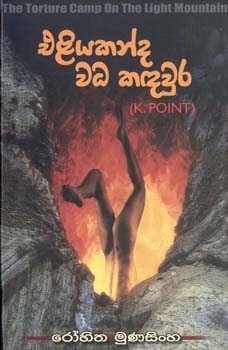
රෝහිත මුණසිංහ විසින් රචිත එළියකන්ද  වද කඳවුර නම් කෘතියෙහි එලියකන්ද වධකාගාරයේ (කේ පොයින්ට්) ප්‍රශ්ණ විචාරක විසින් සියැසින් දුටු සාක්ෂි තුලින් දකුණු සිරිලක තුල 1988-89 කාලසීමාව තුලදී උපයෝගී කරගත් වධහිංසන ක්‍රම ගැන ප්‍රත්‍යක්ෂ රචනයක් ඉදිරිපත් කර තිබේ. රැඳවියන්ව නිතර දෙවේලේ ශාරීරික පීඩාවලට හා අවමානයට පාත්‍රකරන ලද අතර, බොහෝ අයගේ මිත්‍රයින්ව මරාදමා ඇත්තේ ඔවුන් ඉදිරියේම ය. ‛කේ පොයින්ට්’ වධකාගාරයෙන් පලාගිය හෝ නිදහස ලැබූ අය තවමත් අනේක මානසික ව්‍යාධිවලින් පෙළෙති.

 මනෝ ප්‍රතිකාර සඳහා 2002 වසරේදී විශේෂඥ මනෝ වෛද්‍ය නීල් ප්‍රනාන්දු මහතා විසින් මා වෙත යොමු කරන ලද සාමාන්‍ය සෙබල XX2 88/89 කැරලි සමයේදී   එළියකන්ද -කේ පොයින්ට් කඳවුරේ රැඳවියන් ගෙන් ප්‍රශ්න කිරීම් කරන්නෙකු මෙන්ම වදකයෙකු  වශයෙන් සේවය කලේය. රැඳවියන්ට ශාරීරිකව පහරදීම, දැල්වෙන දුම්වැටිවලින් ඔවුන්ව පිලිස්සීම, දරුණු වේදනා ඇතිකරන අයුරින් ඔවුන්ගේ ලිංගේන්ද්‍රය ලාච්චුව තුලට දමා වැසීම සහ සමහර අවස්ථාවලදී මරණ දඞුවම්  ක්‍රියාත්මක කිරීමට ඔහු විසින් සිදුකර තිබේ.

වසර එකහමාරක් පමණ මෙම කඳවුරේ සේවය කල මොහුට උතුරේ පිහිටි හමුදා කඳවුරකට ස්ථාන මාරුවක් ලැබී තිබේ. 1992-1993 කාලසීමාව තුලදී ඔහුගේ මානසික සෞඛ්‍යය මැලවන්නට පටන් ගෙන තිබේ. තමා වධබන්ධනවලට ලක් කල අය වේදනාවෙන් කෑගසනවා ඔහුට ඇසෙන්නට පටන් ගැනුනි. සාමාන්‍ය සෙබළ XX2 දරුණු කෝපයෙන් පෙලුන අතර, නිරන්තරයෙන් සිදුවන ශාරිරික පරිභව නිසා ඔහුගේ බිරිය හා දරුවන් ඔහුව හැර ගියහ. ඔහු කීප වරක්ම සියදිවි නසා ගැනීමට තැත් කලේය. 

2002 වසරේදී පවත්වන ලද මනෝවිද්‍යාත්මක  වෛද්‍ය පරීක්ෂණ හා විස්තරාත්මක සායනික පිලිවිසීම් වලින් පසු ඔහු ‛පශ්චාත් ව්‍යසන ක්ලමථ අක්‍රමතාවයෙන් (PTSD) පෙලෙන බවට විනිශ්චය විය.  සාමාන්‍ය සෙබළ XX2 ආක්‍රාන්තිය, සිහිනෙන් බියවීම, භීතිකා, සමුද්දේශ පිලිබඳ අදහස්, මායාදර්ශණ හා කම්පනයට අදාළ විවිධ රෝග ලක්ෂණවලින් පෙලුනි. කේ පොයින්ට් කඳවුරේ සිද්ධීන් අමතක කර දැමීම සඳහා ඔහු තදින් මත්පැන්වලට ඇබ්බැහිව සිටියේ ය.  

රෝහිත මුණසිංහ විසින් ලියන ලද ‛ එළියකන්ද  වද කඳවුර’ නම් කෘතියෙහි සඳහන් බොහෝ විස්තර මෙම සෙබළාගේ මතකයට සමගාමි විය. මලකඳන් බැහැර කිරීම සඳහා යොදාගන්නා ලද ඩබල් කැබ් රථයේ වර්ණය ගැන විමසූ විට සාමාන්‍ය සෙබල XX2 නිවැරදි පරිදි පිළිතුරු   දුන්නේය​. (එය කහ වර්ණයෙන් යුතු ඩබල් කැබ් රියක් බව ඔහු කීවේය​) 

පශ්චාත් ව්‍යසන ක්ලමථ අක්‍රමතාවයෙන් සහ සයිකෝසියාවෙන් ( මෙම තත්වය Kessler’s Phenomena ලෙස හැඳින්වේ) පෙළුණු මෙම රෝගියා තුල පැවති දිවි තොර කර ගැනීමේ යොමුව නිශේදනයට සහ සහ පශ්චාත් ව්‍යසන ක්ලමථ ලක්‍ෂණ අවම කර ගැනීමට ඖෂධ සහ මනෝ ප්‍රතිකාරයන් යොදා ගැනිනි. 

(මෙම කථාව මා පවසන්නේ කැරළි සමයන්හි දරුණුු ක්‍රියා සඳහා   යොදා ගන්නා දුප්පත් සහ අඩු අධ්‍යාපනයක් ඇති සමාජමය වශයෙන් කිසිම පිළිසරණක් නොමැති සෙබළුන්  අපවිත්‍ර වැඩ  කර ගැනීමෙන් පසුව දැහැටි කූරු මෙන් නොසලකා හරින  පාලකයන් සිටින රටක ඔවුන්ට පසු කාලීනව අත් වන ඉරණම පිළිබඳව පාඨකයන් දැනුවත් කිරීමටය​. වද බන්ධයට ලක් වූ සැකකරුවන් මෙන්ම මොවුන් ද වින්දිතයෝ වෙති)

China keeps former Sri Lankan president Mahinda Rajapaksa in frame

October 13th, 2015

This article appeared in the South China Morning Post print edition

Beijing’s special envoy took the unusual step of meeting with Rajapaksa last week – official visits are usually limited to government figures.

If a picture is worth a thousand words, this one was particularly eloquent. Adding a fresh twist to what would otherwise be a plain vanilla diplomatic visit by the Chinese special envoy to Sri Lanka last week, former China-friendly president Mahinda Rajapaksa tweeted a picture of himself posing with the Chinese special envoy.

An endorsement of sorts of an old friend in trouble, the picture signalled Beijing’s willingness to keep its options open in the strategically important Indian Ocean nation.

It was also a departure from Beijing’s usual outreach as Chinese envoys are known to restrict their interaction to government figures. The current leaders often complain that China had no channels of communication with them when they were in the opposition.

“This is the first time the Chinese have contacted Rajapaksa since he lost the election in January,” his spokesman Rohan Welivita told the South China Morning Post. “It was a courtesy call.”

Government officials refused to respond when asked if they were aware of the meeting.

Beijing dispatched Vice-Minister of Foreign Affairs Liu Zhenmin to Colombo as special envoy to mend relations between the two countries, strained since Rajapaksa’s shock defeat in January. The new government has put several Chinese-funded infrastructure projects on hold, most notably a giant reclamation project called Colombo Port City that was inaugurated by President Xi Jinping in September.

At a press conference on Friday before leaving Colombo, Liu said he had a “highly successful” trip, meeting the president, the prime minister and the foreign minister. There was no mention of Rajapaksa. Liu’s unannounced meeting with the former leader was in keeping with his low-key trip.

Though Liu told reporters that the Sri Lankan government had assured him they will break the stalemate over Colombo Port City and other projects, he also let known his impatience.

“I joked with the Sri Lankan leaders that they have taken eight months for government transition, now they must not take eight months to restart the projects,” he said.

Executives connected to the stalled Chinese projects have expressed similar impatience to the Post over Sri Lanka’s pro-tracted electoral process that has seen two elections in eight months, even though there are signs the government is sincerely trying to put some of the projects back on track.

For Rajapaksa, too, the meeting delivers a boost at a difficult time. His attempt to resurrect his career by trying to return as prime minister in August’s parliamentary elections did not go anywhere.

The government has also brought several corruption and criminal charges, including money laundering and the use of death squads, against him and his family.

But down as he is, Rajapaksa still enjoys the support of a section of his United Peoples Freedom Alliance, which is split between his and President Maithripala Sirisena’s camps. The Sirisena camp has joined Ranil Wickremesinghe’s single-largest United National Party to form the national government.

“Without Rajapaksa, there is no opposition,” said Paikiasothy Saravanamuttu, executive director of the Centre for Policy Alternatives, on the curious situation of the county’s two main parties being in the same government.

“If he gathers support and steam and the government lacks coherence, the opposition can get back on.”

And as China looks to get back on in Sri Lanka, Rajapaksa is a hedge it can hardly afford to ignore.

Judiciary desecrated: ‘darkest day’ in Parliamentary democracy

October 13th, 2015

Courtesy The Daily Mirror

October 16, 1980, the ‘darkest day’ represented yet another blow to parliamentary democracy in Sri Lanka when Madam Sirimavo Bandaranaike, the world’s first head of state who made a tremendous contribution for the development of international relations by hosting the then powerful 86-nation  NAM’s Summit, was deprived of her civic rights and unceremoniously expelled from Parliament.  It was seen by the international community as the beginning of declining of good parliamentary governance and desecration of hallowed precincts of judiciary in Sri Lanka.

‘Judiciary’s capability’
Prime Minister Ranil Wickremesinghe, noted in his address to the National Management Conference a couple of weeks ago, on placing an international judicial mechanism above the domestic judicial process with the involvement of foreign judges, foreign prosecutors and lawyers to address the accountability issues during and after the last stage of the war, said  that it was the independence of Sri Lanka’s judiciary and not its military that the international community was concerned about. He emphasised,that the problem that kept haunting repetitively in Geneva, of war crimes leveled against us was not the atrocities of the armed forces, but the Judiciary’s capability to hold an unbiased domestic hearing.

Interference or undermining the position of judiciary progressed unabated for 40 years since Felix Dias Bandaranaike became Minister of Justice in Sirimavo’s ‘70-’77 Cabinet. He attempted to introduce politically committed judges to highest courts, especially during its final three years in office, thereby the first seeds were sewn.  President J R Jayewardene took over the reigns from Sirimavo in 1977, and continued what Felix started and struck the foundation of the rule of law and the independence of the judiciary; coincidentally, both were sons of honourable Judges of the Supreme Court.

JR, in early 1978, introduced a paper titled Special Presidential Commissions of Inquiry Bill, and subsequently placed a proposal to deprive Sirimavo of her civic rights which was passed in Parliament on October 16, 1980. On both occasions uncle Dickey required his 28 year-old nephew and fresher in the House, Ranil to raise his ‘innocent hand’, who was ignorant of the future repercussions and the adverse consequences on international community’s assessment of our ‘human rights’ status; reputation on non-interference in Judiciary and our ‘Judiciary’s capabilities’.

For the benefit of the new generation; here we discuss the distasteful saga of ‘JRJ  vs Sirimavo-1980’, and the process of judicial manoeuvering and political manipulations practiced in carrying out the political  faux pas of  post-independent Sri Lanka.

The fear factor
With his years of experience, JR knew that in the future people would rally round Sirimavo, who was gifted with the charisma that he totally lacked: a fear, somewhat similar to the leaders endure in the current scenario. This most influential and dangerous opponent had to be distanced from the political arena if the UNP rule was to be continued unobstructed; JR concluded.  Further, removing Sirimavo from political activity, the divisions within the SLFP would be aggravated. The old-fox in his own incomparable style planned out his strategy and started working on it. Accordingly, within a few months of assuming office the UNP drafted the Special Presidential Commissions of Inquiry Law No. 7 of 1978 and got it passed apparently to guarantee cleanliness in public life. The sole objective of this cowardly, post facto legislation was the removal of Sirimavo Bandaranaike from the political landscape. On March 29, 1978, the President appointed a Special Presidential Commission consisting of two Supreme Court judges and a member of the lower judiciary to inquire and report on several matters stated in a warrant that covered  the Sirimavo headed United Front government of 1970-77.

The new Constitution drafted single-handedly by his brother HW and adopted on 7th September 1978, provided a valuable opportunity to the President to manipulate the judiciary as per his whims and fancies.

Sirimavo was indicted, and was summoned  before the Commission installed at Queen’s Club, Bullers Road, to answer charges of abuse and misuse of power and corruption. Her lawyers challenged the jurisdiction of the Commission on several grounds seeking a Writ of Prohibition from Appeal Court.  Sirimavo attended the sittings but did not remain there. Withdrawing from the proceedings of the Commission she made a lengthy statement saying that she had rational grounds to believe that no practical purpose would be served by appearing in it and that she honestly believed it would not be a fair trial. The SPC continued proceedings ex parte.

The team of lawyers that prosecuted Sirimavo before the Commission was led by A.C. De Zoysa, whose opening address was more of a vituperative speech fitting for a political platform than for a commission of inquiry. He made accusations against Sirimavo Bandaranaike, but failed to lead evidence.  Government’s  media machinery gave wide publicity to it through the state  controlled newspapers and the only electronic media, the SLBC; the idea was to create a public antipathy against her in preparation for an impending cause of action.  A superior Courts may invalidate the laws and rules of the legislature, if found incompatible with a higher norm. Accordingly, the Court of Appeal granted a Writ against the Commission that the SPC inquiry Law was not retrospective in its function.  Therefore an inquiry of a period before the enactment of the law was beyond its jurisdiction.

The Appeal court decision did not in any way deter the fortitude of JR. He came back with characteristic viciousness and speed. Two bills labelled as being Urgent” were swiftly presented and hurried through Parliament; the first nullifying the Court of Appeal verdict and the second for an amendment to the new Constitution.  The amendment, the first of its kind was made retroactive from 7th September 1978, deprived the higher Courts of its jurisdiction in any future writ applications!  A. Amirthalingam, Leader of the Opposition, speaking on the two bills said, …it is deplorable, the amendment has retrospective effect and, worse still, annulled a decision of the Appeal Court; in doing so government was setting Parliament up as a court above Supreme Court.” – Hansard; Nov 10. 1978

In September 1980, the Commission found Sirimavo guilty of abuse or misuse of power in of six of the ten counts made against her. The Special Presidential Commissions of Inquiry in terms of Section 9 of the Act recommended imposition of civic disability and consequent expulsion from the Parliament. At the cabinet meeting, Gamini Dissanayake, Ananda Tissa de Alwis and S Thondaman spoke against imposing civic disabilities on Sirimavo. Sir John Kotalawala, the 85 year-old ailing ex-Prime Minister, personally made representations on behalf of her; but JR was adamant.

The President was engaged in an exercise of demoting, promoting and even discontinuing Judges of  SC and the High Court; he taught a lesson to the Court of Appeal bench  who allowed Sirimavo’s writ application, by nullifying their verdict through the Parliament. JR also conveyed  an indirect but clear message to the rest of the gentlemen of  judiciary when good fortune awaited the three members of the Special Presidential Commission, who recommended Sirimavo’s  exit from politics.  Justice Weeraratne was placed 5th in the hierarchy, a jump of 4 places, and Justice Sharvananda  leapt from fourteenth to sixth position that helped him to become CJ before his retirement, which did not end there; he was made the Governor of Western Province on retirement. The other, the DC judge was honoured with a Court of Appeal posting, a ‘hop-step-and-jump’ over many senior colleagues in High Courts.

Participating in the debate on expulsion, Mr. Amirthalingam, leader of the Opposition and TULF stated that, …the only forum before which political offences of this type can be agitated is the forum of the hustings. The people have given the verdict. People have returned Mrs. Sirimavo Bandaranaike to this House. You must respect the judgment passed by the masses of Attanagalla. You have no right now to sit in judgment on what the voters of Attanagalla have done. Retrospectively and retro-actively you are creating offences and are meting out punishment  which are not in keeping with the fundamental rights you have guaranteed and which are a violation of the Universal Charter of Human Rights”.

One of the core values of the justice system, the ‘Principle of Judicial Independence’, has been subjected to vandalism. Two presidents driven by unquenchable thirst for power and backed by Parliamentary 2/3 majority,  JR and MR continued their disrespect for the independence of the Judiciary and rule of law tampering and tinkering with Constitutional procedures.  They manoeuvered legislator, judiciary, and Constitution, especially during the first 17 and the last 11 years from 1978 to 2014.  Sirimavo took oaths as the PM of Sri Lanka in 1994, when the SLFP led People’s Alliance was back in the saddle, and this happened during the lifetime of J. R. Jayewardene, proving that no political movement with a mass base and charismatic leadership can be destroyed by attacking a leader; a lesson our politicos will never learn.

Ranil Wickremesinghe, the well-read politician
It is an irony of fate that, Prime Minister Ranil Wickremasinghe, who voted in favour of  interference with judiciary at 28 years happens to be the only legislator who remains in the present Parliament out of the 139 who voted with him. [R Sampanthan, Leader of Opposition, who voted against the resolution is the only other MP present today] PM Ranil is an internationally recognized mature politician, who tells us about the international community’s  poor assessment of our Judiciary. Could he convert the hallowing precincts of our judiciary back into its glorious times? A new judiciary guided by norms and principles which are above the reach of statute and legislature [the politician], and judges entrusted with formal, dignified authority and duty previously denied.  It was Rosalie Silberman Abella, Justice, Court of Appeal for Ontario, who said, People elect legislators who enact the laws they think the majority of their constituents want them to enact, and appoint judges who are expected to be independent from those legislators and impartial in determining whether the legislature’s actions meet constitutional standards. When the legislature’s decision to entrench rights and extend a constitutionally guaranteed invitation to the courts to intervene when legislative conduct is not demonstrably justified in a democratic society. In enforcing the Charter, therefore, the courts are not trespassing on legislative authority; they are fulfilling their assigned democratic duty to prevent legislative trespass on constitutional rights.”—In her Keynote Address– Osgoode Hall, Law School York University- April 7, 2000.

On the ‘darkest day’ she faced with bravery and equanimity the ‘unjust, unfair, and revengeful’ act by her opponent.  Sirimavo made a short farewell speech and left her seat amidst cat-calls and indecent remarks from some government members; the expelled world’s first woman Head of  State was leaving the chamber unaccompanied as the other six SLFP MPs boycotted the sittings; it was S Sivasithamparam and A. Amirthalingam, the two gentlemen parliamentarians who rose from their seats to escort her out of  the floor of the House.

Sirimavo Ratwatte Bandaranaike, who survived  a Coup d’e `tat and imminent death in 1962,  and was politically murdered by the Government on 16th October 1980, passed away peacefully on 10th  October 2000, after casting her vote at Nittambuwa.  – See more at: http://www.dailymirror.lk/91031/judiciary-desecrated-darkest-day-in-parliamentary-democracy?#sthash.K9fEx9F9.dpuf

Health insurance made affordable to all Sri Lankans via ATL’s ‘Suwasiri’

October 13th, 2015

Courtesy Daily Mirror

ATL’s (Amãna Takaful’s) latest product ‘Suwasiri’, has made its mark in the insurance industry, as the most affordable health policy available in the market.

This competitively priced, comprehensive insurance plan was designed as part of ATL’s ongoing efforts to remain ‘open to all’ and provide all segments of society with a suitable health insurance solution.

While good health is a blessing, an illness can occur when it is least expected, and the financial burden of dealing with such unforeseen events can be overwhelming.

The ‘Suwasiri’ health policy provides an annual insurance cover of Rs. 100,000/= for as little as Rs. 2,222/= per year. ‘Suwasiri’ covers administrative fees, doctor consultations as well as medication costs.

The policy also covers the cost of hospitalization, surgery, medical treatment, medicine and any medical investigations that are required to determine treatments for ailments.  The policy truly offers peace of mind and fulfils a long felt need in the Sri Lankan market. Commenting on ATL’s ‘Suwasiri’, Safwan Hilme – Manager, Business Development, Medical Takaful stated, At ATL we strive to continuously meet the needs of our customers.

In times of poor health, the ‘Suwasiri’ health insurance policy will assist policyholders and their loved ones by covering the cost of hospitalization and by providing them with other important benefits. The health of our valued customers is extremely important to us and we firmly believe that with today’s rising medical treatment and hospitalization costs, Sri Lankans from all walks of life, should have access to a health insurance policy.” The consequence of not having a medical insurance policy is that one will have to dip into savings, borrow or use the money set aside for other specific requirements, to meet unforeseen medical expenses. We encourage everyone to consider insurance as the solution and use their savings to achieve more important things in life.” Hilme further stated. The ‘Suwasiri’ policy addresses the challenges that people face when unexpected medical emergencies occur.

Amidst the increasing cost of medical care, hospitalization and treatments, the ‘Suwasiri’ health insurance policy from ATL is a perfect solution for Sri Lankans seeking affordable security and comfort in times of medical uncertainty.  ‘Suwasiri’ provides additional benefits such as a cover forward charges in private hospitals for up to 10 days. Theatre charges, surgeons’ fees, anaesthetists’ fees as well as specialist charges are all included in the cover for Sri Lankan’s who are 18 to 55 years of age. Additionally, ‘Suwasiri’ covers examinations fees, x-rays, scans and MRIs. A cover for hospitalization is also provided. If hospitalization occurs at a government hospital a cash grant of Rs. 500/= per day is provided for a maximum of 21 days including expenses for prescribed medicine that has to be purchased.

Customers can sign up for this policy through the company’s branch network or by calling 011 750 1000 for more information. ‘Suwasiri’ bagged the bronze award in the ‘Product of the Year’ category, at the Sri Lanka Islamic Banking and Finance Industry awards 2014, for its innovative and unique features and benefits. ATL has been recognized for its innovation and quality of service for decades and operates on the principle of bringing people together through mutual sharing.

ATL during its journey of 15 years has been successful in establishing a strong position for the concept of Takaful amidst stiff competition from established conventional players. One of the few ISO certified insurance operators in Sri Lanka, ATL operates across 27 branches and is set to expand its footprint further. ATL continuously reaches out to customers from all segments of society and offers innovative and state-of-the-art insurance products that are convenient, affordable and reliable.

The company recently transferred its Family Takaful (Life insurance) business to ATL Life Limited which is now operating as a separate business entity.  As part of its commitment to remain ‘open to all’, ATL serves all communities and employs a multi-ethnic team across its network.

The company was also recently upgraded by the Lanka Rating Agency to a rating of BBB/P3/Stable and recently achieved ISO 9001:2008 re-certification.

– See more at: http://www.dailymirror.lk/91019/health-insurance-made-affordable-to-all-sri-lankans-via-atl-s-suwasiri?#sthash.tiT3aaI9.dpuf

Cairn India plans to exit Sri Lankan gas block: Reports

October 13th, 2015

Courtesy moneycontrol.com

Cairn India is planning to exit its Sri Lankan gas block after two discoveries it had made were found to be commercially unviable, says report.

Cairn, whose main asset are the oilfields in Barmer district of Rajasthan, will relinquish the 2,912 sq km block SL-2007-01-001 in the Mannar basin after expiry of exploration period at end of October, sources privy to the development said.

The company has so far drilled four wells on the block and discovered gas reserves in two of them. But the discoveries were assessed to be commercially unviable. It has therefore decided not to enter the development phase after the end of exploration period this month end, they said. The discoveries had established hydrocarbon prospectivity for Sri Lanka, which does not produce any oil or gas and is dependent on imports from nations like Saudi Arabia for its needs. Cairn Lanka, a wholly-owned subsidiary of CIG Mauritius Pvt Ltd under Cairn India, held 100 percent interest in the block.

Its Phase-1 exploration resulted in two gas discoveries CLPL-Dorado- 91H/1z and CLPL-Barracuda-1G/1. After this it drilled two more exploration wells as part of Phase-II. The fourth well encountered high quality reservoir sands, which were water bearing. The company thereafter reached an assessment that the discoveries will not be commercially viable to produce, they said. Cairn had in its financial results for the quarter ended March 31, accounted for a one-time, non-cash impairment charge on acquisition goodwill for the the SL 2007-01-001 block.

“Exceptional item in Q4 FY15 pertained to impairment loss of Sri Lanka amounting to Rs 505 crore (gross of tax) leading to a negative profit after tax (or loss) for the quarter of Rs 241 crore,” the company had said on April 23 announcing the financial results for January-March quarter. The charge was triggered by the fall in crude oil prices, which declined 43 percent in the past year. Cairn India has a portfolio of nine blocks – one block in Rajasthan, two on the west coast and four on the east coast of India, and one each in Sri Lanka and South Africa. Oil and gas is being produced from Barmer, Ravva in KG basin and Cambay off the Gujarat coast.

‘Hybrid court ‘order’ in an international relations theory framework

October 12th, 2015

By Dr. Kamal Wickremasinghe Courtesy Island

The Prince was also showing the tip of a ‘stick’ to Sri Lanka by recommending to the United Nations system and all member states should initiate investigations and prosecutions against Sri Lankans under the doctrine of universal jurisdiction.The neocons and their lapdogs at the UN have found the Sri Lankan government delegation they had to deal with, the foreign minister in particular a ‘babe in the woods’.

The recently released UN report that accuses Sri Lanka of “crimes of interest to the international community” such as war crimes and crimes against humanity recommends the establishment of a special hybrid court, integrating international judges, prosecutors, lawyers and investigators, as an essential step towards delivering justice.Prince Zeid Ra’ad Zeid al-Hussein, the United Nations High Commissioner for Human Rights who announced the order described the report on Sri Lanka including the setting up of a hybrid court of the kind as “rather unique”.

The Sri Lankan government, as well as its new foreign minister in particular, has hailed the role played by the US, Sri Lanka’s chief accuser of heinous war crimes since 2009, to apparently “tone down” the findings of the report in favour of Sri Lanka, as well as to grant us the concession of getting away with a hybrid court of the type ordered. So pleased was the foreign minister that he enthusiastically supported and jointly sponsored the fresh draft resolution moved by the US at the United Nations Human Rights Council (UNHRC) on Sep. 30. All current indications are that the Sri Lankan government is enthusiastically embracing the proposed hybrid mechanism involving significant foreign involvement, labelling it a ‘domestic mechanism’ for political expediency.

The government is yet to address how to deal with road blocks such as the Article 4 of Sri Lanka’s Constitution which lays down that the judicial power of the people shall be exercised by Parliament through the courts, tribunals and institutions created and established, or recognised by the Constitution, or created and established by law. The fact that the concept of “hybrid” courts does not appear to have got a guernsey by the drafters does not appear to concern the new regime at this point in time; granting constitutional recognition to the proposed mechanism under these circumstances would be a ‘neat trick’!

President Maithripala Sirisena, Prime Minister Ranil Wickremesinghe and Foreign Minister Mangala Samaraweera are each giving fresh literal meaning to the notion of “brown nosing” in meekly accepting this Trojan horse of a proposal as a wise foreign policy decision.They seem to be rationalising their acceptance as a requisite foreign policy decision to ‘mend fences’ with the West.

Numerous commentators have analysed the UNHRC report including its would-be future repercussions on the sovereignty and integrity of the Sri Lankan state. The purpose here is to throw some light on the appalling levels of ignorance which seems to form the basis of the new government’s enthusiasm for the report and the UNHRC ‘order’: the government’s position reminds of the quip by François-Marie Arouet (better known as Voltaire) that “more often a stupidity is repeated, the more it gets the appearance of wisdom.”

A sensible analysis of the mechanisms being deployed by the American and European neocon forces—otherwise known as the international community—takes us to the realms of theories of international relations that attempt to examine state behaviour: for the purposes here, suffice it to know that such analysis is typically based at systemic level – assuming that characteristics of the international system govern state behaviour, with the power of a state within the system being the key variable – and at state level that attempts analysis in terms of cultural characteristics of every state, defined by the unique historical legacy, the religious and social traditions, and the economic and geographic nature of the state.

The secret of success of American neocons in gaining global domination over the last 60-70 years can be explained by their mastery of state level analysis of international behaviour to an art form, coupled with the deployment of subtle techniques to influence and change unique traditions of individual states to serve ‘their’ purposes rather than pursuing the national interest of the state in question. Now, we move on to the particular techniques the neocons employ to direct policy in countries that interest them.

Few Sri Lankans today may be aware of the existence of the Fabian Society, Britain’s oldest political think tank or its ideology, aims, influence and power: Founded in 1884, the Fabian Society continues to be at the forefront of developing political ideas and public policy for global consumption. Some early notable Fabians included Karl Marx’s eldest daughter Eleanor Marx, prominent British socialist, theosophist Annie Besant, and Irish playwright George Bernard Shaw.The Fabian Society however, has become synonymous with the names of two young Colonial Office clerks Sidney Webb and Sydney Olivierwho joined the Society in 1885 at Bernard Shaw’s invitation.

The Fabian Society derives its name from the third century BC Roman general Quintus Fabius-made famous by his strategy of delaying a frontal attack on the invading Carthaginian Hannibal’s army until the right moment. Fabians, unlike Marxists, claimed to be pursuing a similar gradual, non-revolutionary transition to socialism globally. They named their technique‘evolutionary socialism’ and proposed to use the power of local government and trade unionism to effect change.

Many Fabians played in the foundation of the British Labour Party in 1900 and four Fabians, Beatrice and Sidney Webb, Graham Wallas, and George Bernard Shaw founded the London School of Economics (LSE) with a bequest of £20,000 left to the Fabian Society for “propaganda and other purposes” by the architect Henry Hutchinson.

The LSE flourished and continued to associate with Fabian academics including Harold Laski (the godfather of Sri Lanka’s LSSP), the social administrator Richard Titmuss and economist Brian Abel-Smith. Many of the reforms of the 1945 Labour government of Clement Attlee had been first developed in Fabian essays or pamphlets.

Since its early stage however, the Fabian Society has attracted attention due to its controversial attempts to hide the true purpose and meaning of its mission. The most stunning choice of a ‘wolf in sheep’s clothing’ as the Fabian Society’s coat of arms certainly would not have helped their image. Their policy of ‘permeation’, of existing institutions, parties and Parliament by its members and supporters in order to carry out social and economic reforms drew equal suspicion – with purist users of the English language suggesting the word “Infiltration”! The strategy of “permeation” was used successfully by the Fabians by getting elected to various governing bodies from the London County Council to the House of Commons.

At the same time, they were found to have close associations with the South African mining companies owned by the then notorious Milner Group, like the Anglo American Corporation that owned half of the world’s newly mined gold and De Beers Group who held a virtual monopoly on the price and marketing of diamonds,and other key resource companies controlled by the Milner Group and its associates such as British Petroleum (BP), Royal Dutch Shell, and Standard Oil. The same interests also controlled banking and finance through a worldwide network of financial firms. The Fabians faced accusations of modelling itself on the Milner Group’s British South Africa Company, cynically aiming to capture the heart and mind of the unsuspecting masses.

A review of the rise of Tony Blair within the British Labour Party structure and his subsequent performance in delivering Britain to serve the global agenda of the neocons help confirm the initial suspicions of the ‘true colours’ of the Fabians and their agenda.

In the 1990s the Fabian Society came to be a major force in the so-called modernisation of the British Labour Party, developing many of the ideas that would later characterise New Labour; They introduced Tony Blair, son of a known Conservative to the Labour ranks and built a coalition of voters under ‘A New Constitution for the Labour Party’, helping Labour to its historic 1997 victory. After Tony Blair’s landslide victory in 1997, over 200 Fabians sat in the House of Commons, including many of the Cabinet.

The 2006 opening of a famed stained glass window designed by Bernard Shaw, showing Fabians “Sidney Webb and ER Pease… helping to build the new world” at the LSE drew the attention of many a sceptic.

The Fabian methodology of gradual permeation of a nation’s fears, concerns and deeply held beliefs provide a possible platform for the critically analysis of the UNHCR order to create hybrid courts in Sri Lanka.They would have fully gauged the fierce resistance within the mainstream Sri Lankan population to any kind of war crimes inquiry against those who saved them, after 30 years of suffering. America found that the barrier put up by the last regime against international intervention too formidable, especially with the ultimate support that would have come from China and Russia. So, the current ‘compromise’ engineered by the US and European neocons following the January regime change is designed to break the will of the nation in a measured way: that is the reason for a hybrid rather than a full international inquiry!

To a lesser extent would be America’s contingency-led need to ‘course correct’ their position on Sri Lanka, led erroneously by overbearing former agents like Robert O. Blake, Patricia A. Butenis and Michelle Sisson, aided by the pro-Israeli lobby at the State Department constantly scanning the world looking for diversions from Israeli atrocities.

The reasons for the order given by the Prince such as: “the unfortunate reality is that Sri Lanka’s criminal justice system is not yet ready”; “the absence of any reliable system for victim and witness protection; the inadequacy of Sri Lanka’s domestic legal framework to deal with international crimes of this magnitude; and the high levels of mistrust in State authorities and institutions by broad segments of Sri Lankan society” are all puerile and contrived to make Sri Lanka swallow a pill it does not require.

The Prince was also showing the tip of a ‘stick’ to Sri Lanka by recommending to the United Nations system and all member states should initiate investigations and prosecutions against Sri Lankans under the doctrine of universal jurisdiction.The neocons and their lapdogs at the UN have found the Sri Lankan government delegation they had to deal with, the foreign minister in particular a ‘babe in the woods’.

Face the reality – Village Headman’s team – totally incompetent

October 12th, 2015

Talk of the town

This ignorant  ‘expert’ (see  article below) cannot maintain that things have not improved with MS’s antics.

Incompetent Cabinet with one time dress designer as Minister of Foreign Affairs who is losing his way week to week, Losing friendship with China,  Pakistan, Russia,  Not daring to sack Central Bank chief, Sacking the CJ without a proper procedure, mounting an ever large cabinet,  appointing corrupt individuals as chit MPs ignoring the procedure and ignoring the pre election list and then elevating them to Cabinet, totally haphazard decision making without Cabinet discussion or consensus.  One sided investigations by the special division of the PM wasting  money to sling mud at opponents yet failing to trace the $ 18 Billion ManSam promised to recover.

We have a record of extra judicial activities like most other countries,  Coup in ’62,  Dodampe Mudalali,  many deaths in JVP insurrections, Batalanda torture camp, unusual constitution of ’77 with all power to executive, awards to policemen who beat up politicians and throw stones at CJ’s house, murder of Richard de Zoysa, many terror gangs in the Bandit queen time.  Still we reached a short happy period after demolishing terrorism.  It is laughable to see today Yahapal folks like unemployed son representing SL at UN and another unemployed daughter presiding at Kachcheri meeting.
World will continue to be a nasty place, laws apply differently to rich and powerful US UK Israel or Saudi Arabia and we should not be fooled to think that sucking up to them  is not going to bring us eternal joy.
See the examples of eternal boot lickers Liberia and Sierra Leone.

Subject: We Have to face reality

රුසියාවයි, චීනයයි අපි බේරගත්ත කියලා
අපිට හැමදාම ගමේ චණ්‌ඩිය වගේ ඉන්න බෑ
– ආණ්‌ඩු පක්‍ෂයේ මන්ත්‍රී, ජනාධිපති නීතිඥ ආචාර්ය ජයම්පති වික්‍රමරත්න

ශ්‍රී ලංකාව පිළිබඳ එක්‌සත් ජාතීන්ගේ මානව හිමිකම් කොමිසමේ යෝජනාව එළිදක්‌වා මේ වන විට දින කිහිපයක්‌ම ගත වී ඇතත්, මේ දක්‌වා දේශපාලන භූමියේ ප්‍රධාන මාතෘකාව බවට පත් වී තිබෙන්නේ එකී වාර්තාවේ අන්තර්ගතය පිළිබඳවමය. එම යෝජනාවට එරෙහිව ඉදිරිපත් වී ඇති කරුණු කාරණා පිළිබඳව අප ආණ්‌ඩු පක්‍ෂයේ මන්ත්‍රී ජනාධිපති නීතිඥ ආචාර්ය ජයම්පති වික්‍රමරත්න මහතාගෙන් විමසා සිටි අතර, එම කරුණු පිළිබඳව වික්‍රමරත්න මහතා දැක්‌වූ අදහස්‌ පහත පරිදි වේ.

ප්‍රශ්නය – එක්‌සත් ජාතීන්ගේ මානව හිමිකම් කොමිසම විසින් මෙරට පිළිබඳව ඉදිරිපත් කරන ලද යෝජනාවලිය පිළිබඳව මේ වන විට බරපතල විවේචන එල්ල වෙමින් පවතිනවා. එම පසුබිම තුළ ඔබ මෙම යෝජනාවලිය දකින්නේ කෙසේද?

පිළිතුර – යුද්ධය පැවැති කාලයේදීත් එහි අවසන් අදියරේදීත් ඉන් පසුවත් සිදු වූ බව කියන සිදුවීම් පිළිබඳව දිගටම චෝදනා තිබුණා. එම චෝදනා එල්ල කළ සමහර අය චිත්‍රපටිත් නිෂ්පාදනය කළා. ඒ වගේම එම චිත්‍රපටිවල සත්‍ය විකෘති කර ඇති බවටත්, එම චිත්‍රපටිවල අසත්‍ය තොරතුරු තිබෙන බවටත් චෝදනා එල්ල වූවා. ලෝකයේ බොහෝ ගැටුම් වලදී මෙන්ම අපේ රටේ තිබුණ ගැටුම පිළිබඳවත් නොයෙකුත් චෝදනා තිබෙනවා. රජයේ හමුදාවලට පමණක්‌ නොවෙයි, එල්.ටී.ටී.ඊ. සංවිධානයටත් රජය සමඟ කටයුතු කළ සංවිධානවලටත් මෙම චෝදනා එල්ල වී තිබෙනවා. එම චෝදනා ලේසියෙන් බැහැර කරන්න බැහැ. උදාහරණයක්‌ විදියට සඳහන් කරනවා නම් කාම්බෝජයේ කෙමරුච් පාලන කාලයේදී සිදුÊවූ බවට චෝදනා එල්ල වී ඇති මානව හිමිකම් කඩවීම් පිළිබඳව මේ දක්‌වා නඩු විභාග පවතිනවා. එරට ඒ සඳහා විශේෂ අධිකරණ පිහිටුවා තිබෙනවා. එරට නීතියට අනුව එම අධිකරණ පිහිටුවා තිබෙන එම අධිකරණවල විදේශීය විනිසුරුවන් සිටිනවා. අපගේ රටේ ශ්‍රේෂ්ඨාධිකරණයේ විනිසුරුවරයකු ලෙස මෙන්ම පසුව බ්‍රිතාන්‍යයේ මහ කොමසාරිස්‌ ලෙස කටයුතු කළ නිහාල් ජයසිංහ මහතා එම අධිකරණයේ විනිසුරුවකු ලෙස කටයුතු කරනවා.

විශේෂයෙන් ම ගැටුමක ප්‍රතිඵලයක්‌ ලෙස යම් පුද්ගලයකු මරණයට පත් වුවහොත්, අතුරුදන් වුවහොත් එම සිදුවීමට ගොදුරු වන පුද්ගලයාගේ ඥාතීන්ට අයිතියක්‌ තිබෙනවා තම ඥාතියාට මොකද වුණේ කියන එක දැන ගැනීමට. ඒක අපි බලාපොරොත්තු විය යුතුයි. එම තත්ත්වය අප උතුරු නැඟෙනහිරදී පමණක්‌ නෙවෙයි, 1971 දීත්, 87 – 90 කාලයේදීත් අපට මතකයි.

සමහර මවුවරුන් කඳවුරුවලට පවා ගිහින් හඬා වැළපුණා. පල්ලෙකැලේ එක මවක්‌ තමන්ගේ පුතා හමුදා කඳවුරේ කම්බි වැටෙන් එහා සිටිය බව දැක්‌ක බව ප්‍රකාශ කළා. නමුත් එම තරුණයාගේ ඥාතීන් ඔහු මරපු බව ප්‍රකාශ කළා. මෙයින් පැහැදිලි වන දේ තමයි මෙබඳු සිදුවීම් ඇති වූ පසු, එහි අවසානයක්‌ (ජකදිමරු) දකින්න තිබෙන අවශ්‍යතාවය. ඒ වගේම මේ වගේ දේවල් නැවත නොවෙන්න කළ යුත්තේ කුමක්‌ද යන්න සලකා බැලීම සඳහාත් ඊටත් එහා ගිහින් දඬුවම් ලබාදීම අවශ්‍ය බව ප්‍රකාශ වන අවස්‌ථාත් තිබෙනවා. ඒ වගේ විවිධ හේතු නිසා මේ වගේ ඉල්ලීම් ඉදිරිපත් වනවා. ඒ වගේම දේශපාලනමය කරුණු කාරණා දෙස බලා මෙබඳු ඉල්ලීම් ඉදිරිපත් කරන අයත් සිටිනවා. මෙරට ප්‍රමුඛතම වාමාංශික නායකයකු වන ඩිව් ගුණසේකර මහතා ප්‍රකාශ කරල තිබුණා. මානව හිමිකම් කඩවීමක්‌ සිදු වී ඇත්නම් ඒවා පිළිබඳව සොයා බැලිය යුතුය කියලා. අපගේ යුද්ධය අවසන් වීමෙන් පසුව අපට අවස්‌ථාව ලැබුණ දේශීය යාන්ත්‍රණයකින් ඊට ප්‍රතිචාර දක්‌වන්න. 1971 ප්‍රේමවතී මනම්පේරි සිදුවීම වගේම ක්‍රිෂාන්ති කුමාරස්‌වාමි වගේ උදාහරණ අපට තිබෙනවා. නමුත් එවකට තිබූ රජය අවාසනාවකට වගේ යුද්ධය තමන්ගේ දේශපාලන වාසියට යොදා ගත්තා පමණයි. එම පසුබිම තුළ පැවැත්වූ ඡන්දයෙන් සමානුපාතික ක්‍රමය යටතේ කවදාවත් නොලැබෙන ජයක්‌ ලැබුවා. ඊට පසුව එම බලය පාවිච්චි කරල පාර්ලිමේන්තුවේ 2/3 ක බලය හදාගත්තා. දැත ශක්‌තිමත් කරන බව ප්‍රකාශ කරමින් විධායක ජනාධිපති ධුරය තවදුරටත් ශක්‌තිමත් කරල ලෝකයේම ශක්‌තිමත් විධායක ජනාධිපති ධුරය ඇති කළා.

එම ආණ්‌ඩුව කටයුතු කළේ ගමේ චණ්‌ඩි කටයුතු කරනව වගේ. ලෝකය සමගම රණ්‌ඩු කරන්න පටන් ගත්තා. මම හිතන්නේ ඒක තමයි කරපු ලොකුම වැරැද්ද.

යුද්ධය අවසන් වූ ගමන් මේ රටට ආපු බැං කී මූන් සමඟ ඒකාබද්ධව කළ ප්‍රකාශයෙන් මේ ප්‍රශ්න පිළිබඳව සොයා බලන්න එකඟ වූවා. පළමු මානව හිමිකම් යෝජනාවෙන් ලංකාවට විශාල ඉඩක්‌ දුන්නා. නමුත් කාලයත් සමගම එම තත්ත්වය නැතිකර ගත්ත. ඒ සඳහා ගමේ චණ්‌ඩියකු වගේ කටයුතු කිරීම බලපෑවා.

අපි ජීවත් වන්නේ දූපතක වන්න පුළුවන්. ඒ වගේම මහද්වීපයකට සම්බන්ධ නැති බවත් ඇත්ත. එසේ වුවත් අපි ජාත්‍යන්තර වශයෙන් වගකිවයුතු සාමාජිකයෙක්‌. අපි ලෝකයේ මානව හිමිකම් පාර්ශ්වකරුවකු වී තිබෙනවා. ඒවාට අපගේ අත්සන් බලෙන් අරන් නැහැ. ඒවායේ පාර්ශ්වකරුවකු වී තිබෙන්නේ අපගේ ස්‌වාධිපත්‍ය බලය පාවිච්චි කරලා. ඒ වගේම ජාත්‍යන්තර නීති වගේම සම්ප්‍රදායනුත් තිබෙනවා.

2009 දී ජාත්‍යන්තර වශයෙන් අපට තිබුණ ආකල්පය අපි නැතිකර ගත්තා. දැන් ප්‍රශ්නය ඔඩුදුවලා. එම නිසා තමයි ජාත්‍යන්තර පර්යේෂණයක්‌ දක්‌වා ප්‍රශ්නය දුරදිග ගියේ. නමුත් ජනවාරි 08 ඇති වූ වෙනස නිසා යළිත් අපට ජාත්‍යන්තර හොඳ හිත ඇති කර ගන්න පුළුවන් වී තිබෙනවා. ඒ සඳහා ආණ්‌ඩුව සංහිඳියාව සඳහා මෙවැනි ගැටුම් යළි ඇති නොවීම සඳහා ගත යුතු පියවර තියල තිබෙනවා. ඒ සම්බන්ධයෙන් එතරම් ලොකු ප්‍රශ්න නැහැ.

නමුත් අපරාධ සහ ජාත්‍යන්තර වශයෙන් පිළිගන්නා අපරාධ සිදුවූවා කියන එක ගැන තමයි ප්‍රශ්න මතු වී තිබෙන්නේ. 2009 පසු ලංකාවේ ප්‍රජාතන්ත්‍රවාදී ආයතනවලට ඇති වූQQ බලපෑම හේතු කොට ගෙන ලොකු සැක සංකා ඇති වී තිබෙනවා. ලංකාව තු=ළදීත් එම තත්ත්වය ඇති වී තිබෙනවා. ශිරාණි බණ්‌ඩාරනායක මහත්මිය ව්‍යවස්‌ථාවට පටහැනිව නඩු තීන්දු නොසලකා ධුරයෙන් ඉවත් කළා. ඊට පසුව එම ධුරයට පත් කළේ කැබිනට්‌ මණ්‌ඩලයේ ප්‍රධාන නීති උපදේශකයා. එම නිසා ලංකාව තුළත් අධිකරණය තුළින් යුක්‌තිය ලැබේද යන කාරණය පිළිබඳව සැක සංකා ඇති වූවා.

මූලික අයිතිවාසිකම් විෂය සහ නඩු පිළිබඳව මට විශේෂ උනන්දුවක්‌ තිබෙනවා. මම එය අධීක්‍ෂණය කළ විෂයක්‌. ඉස්‌සර සේවාදායකයකු පැමිණ අදාළ කාරණය ඉදිරිපත් කිරීමෙන් පසු 50% කට වඩා ඉඩක්‌ තිබෙන බව පෙනෙනවා නම් අපි උපදෙස්‌ දෙනවා එහෙනම් උසාවි යමු කියලා. නමුත් 2013 න් පසුව ඇති වූ තත්ත්aවය නිසා 50% ක තිබූ අවස්‌ථාව 75% දක්‌වා ඉහළ ගියා. 75% ක අවස්‌ථාව නැති නම් උසාවි ගියේ නෑ. ආණ්‌ඩුවට හිතවත් නීතිඥයන් පවා සිටියේ එම ස්‌ථාවරයේ. ඒ වගේම නීතිපති දෙපාර්තමේන්තුව පිළිබඳ ප්‍රශ්න මතුවූවා. නීති කෙටුම්පත් දෙපාර්තමේන්තුව පවරා ගත්තා ජනාධිපති ලේකම් කාර්යාලය යටතට. එම තත්ත්වය යටතේ දේශීය ක්‍රමය පිළිබඳව විශ්වාසයක්‌ තිබුණේ නැහැ. එම නිසා තමයි ජාත්‍යන්තර පරීක්‍ෂණයක්‌ කළ යුතු බව යෝජනා වූයේ. ජනවාරි 08 වෙනස සිදු නොවුණා නම් එය සිද්ධ වෙනවා. එම නිසා තමයි අපිට දෙමුහුන් අධිකරණයක්‌ පිහිටුවන ලෙස ඉල්ලා සිටියත් පසුව අපගේ කොන්දේසියට එකඟ වූයේ.

මෙම කාරණයේදී අපට තිබෙන විශේෂඥ දැනුම මදිවෙන්න පුළුවන් අත්දැකීම් නැති වෙන්න පුළුවන්. එම නිසා අපට අත්දැකීම් නැති ක්‍ෂේත්‍රවලදී විදේශීය සහාය ගන්න පුළුවන්. නමුත් අපගේ ආණ්‌ඩුක්‍රම ව්‍යවස්‌ථාවට අනුව තමයි ඒක කරන්නේ. එම නිසා අපගේ පරමාධිපත්‍යයට හානියක්‌ නොවන පරිදි එබඳු විශේෂඥ උපදෙස්‌ ගැනීමේ වරදක්‌ නෑ.

ප්‍රශ්නය – අපගේ රට රෝම ප්‍රඥප්තියට අත්සන් නොකරපු නිසාත්, අපගේ රටේ සිදුවූ බව කියන යුද අපරාධ විභාග කිරීම සඳහා එක්‌සත් ජාතීන්ගේ ආරක්‍ෂක මණ්‌ඩලයේ යෝජනාවක්‌ සම්මත වී නොමැති නිසාත්, අපගේ රටට එරෙහිව කිsසිදු ක්‍රියාමාර්ගයක්‌ ගැනීමට එක්‌සත් ජාතීන්ගේ මානව හිමිකම් කොමිසමට නොහැකි බව මෙම යෝජනාවට එරෙහිව අදහස්‌ දක්‌වන පාර්ශ්වයන් ප්‍රකාශ කරනවා. ඔවුන් වැඩිදුරටත් ප්‍රකාශ කරනවා ජනවාරි 08 සිදු වූ වෙනස නිසා ඇමරිකාවට මෙරට ආණ්‌ඩුව ලවා එම කටයුත්ත කිරීමට හැකි වූ බව, ඒ පිළිබඳව ඔබේ අදහස කුමක්‌ද?

පිළිතුර – අපි රෝම ප්‍රඥප්තියට අත්සන් නොකරපු නිසා අපගේ පුරවැසියන් ජාත්‍යන්තර අපරාධ අධිකරණය හමුවට ගෙනියන්න බෑ. එසේ කළ හැක්‌කේ එක්‌සත් ජාතීන්ගේ ආරක්‍ෂණ මණ්‌ඩලයේ යෝජනාවක්‌ සම්මත කර ගැනීමෙන් පමණයි. දැන් එබඳු ප්‍රශ්න පැන නඟින්නේ නැහැ. මොකද මේ වන විට මෙරට මානව හිමිකම් තත්ත්වය සහ අපේ ප්‍රජාතන්ත්‍රවාදී ආයතන පද්ධතිය ශක්‌තිමත් වීම හේතුවෙන් තවදුරටත් ජාත්‍යන්තර ප්‍රජාව අපි පිළිsබඳව ජාත්‍යන්තර අධිකරණවලට යැම හෝ අලුතින් අධිකරණ පිහිටුවීමට උත්සාහ දරන්නේ නැහැ.

ප්‍රශ්නය – අපට එරෙහිව එක්‌සත් ජාතීන්ගේ ආරක්‍ෂක මණ්‌ඩලයට යෝජනාවක්‌ ගෙන ආවොත්, රුසියාව සහ චීනය එයට එරෙහිව නිෂේධ බලය පාවිච්චි කරනවා. එම පසුබිම තුළ අපගේ පුරවැසියන් ජාත්‍යන්තර අපරාධ අධිකරණය හමුවට ගෙනියන්නේ කෙසේද?

පිළිතුර – අපි කොහොමද උපකල්පනය කරන්නේ හැමදාම රුසියාව සහ චීනය අපට පක්‍ෂව කටයුතු කරාවි කියලා. ලිබියාවේ ගඩාෆි රුසියාවට සහ චීනයට පක්‍ෂව කටයුතු කළා. එහෙම නම් කොහොමද ලිබියාව ජාත්‍යන්තර අධිකරණයට රැගෙන ගියේ.

ප්‍රශ්නය – ලිබියාව, යුගොස්‌ලාවියාව වැනි රටවල් පිළිබඳව එක්‌සත් ජාතීන්ගේ ආරක්‍ෂක මණ්‌ඩලයේ යෝජනාවක්‌ සම්මත වී තිබුණා. ඒ අනුව තමයි ස්‌ලබොදාන් මිලසොවිට්‌ අත්අඩංගුවට ගැනීම සහ ලිබියාවට බෝම්ම දැමීම සිද්ධ කළේ. නමුත් එම සිදුවීම්වලින් පසුව රුසියාව ප්‍රකාශ කර තිබෙනවා නැවත එබඳු කටයුතු සඳහා සහාය නොලැබෙන බව.

පිළිතුර – ඒක වෙනම කතන්දරයක්‌. ඔය රටවල ස්‌ථාවරයන් සෑම දාම එකක්‌ වන්නේ නෑ. ජාත්‍යන්තර සාධක මත ඔවුන්ගේ ස්‌ථාවරයන් වෙනස්‌ කරනවා. අපට එරෙහිව ඉතාම නරක වාර්තාවක්‌ ආවා නම් තත්ත්වය වෙනස්‌ වන්න ඉඩ තිබුණා. නමුත් දැන් එම ප්‍රශ්නය පැන නගින්නේ නැහැනේ. දැන් අපි එයින් ගැලවී තිබෙනවා.

රුසියාවයි, චීනයයි අපි බේරගන්නවයි කියලා අපිට හැමදාම ගමේ චණ්‌ඩියා වගේ ඉන්න බැහැනේ. වෙනත් ද්විපාර්ශ්වීය සම්බාධක ඇති වෙන්න පුළුවන්. පොදුරාජ්‍ය මණ්‌ඩලයේ අපගේ සාමාජිකත්වය පිළිබඳ ප්‍රශ්න ඇති වෙන්න පුළුවන්. අධිකරණයෙන් ගැලවීම නොවෙයි එකම කාරණය. ජාත්‍යන්තර වශයෙන් අපි නරක ළමයෙක්‌ බවට පත් වුවහොත් වෙනම ප්‍රතිඵල ඇති වෙන්න පුළුවන්.

ප්‍රශ්නය – මානව හිමිකම් කඩකිරීම පිළිබඳව බරපතලම චෝදනා තිබෙන්නේ ඇමරිකාවට. ඔවුන් තමයි අපට එරෙහි යෝජනාවේ පිටුපස සිටින්නේ. ඔවුන් කොහොමද අපේ රට නරක ළමයෙක්‌ කරන්නේ.

පිළිතුර – ඔය අපට බණ කියන රටවල් සහ අපිව ආරක්‍ෂා කරන්න හදන රටවල් වත් මානව හිමිකම් රකිනවද? රුසියාවේ සහ චීනයේ මානව හිමිකම් වාර්තා නරකයිනේ. අපට විරුද්ධව කටයුතු කරන අයගේ වගේම අපිට උදව් කළ අයගෙත් මානව හිමිකම් වාර්තා හොඳ නෑ. එම කාරණයට මම සම්පූර්ණයෙන් ම එකඟයි.

එම නිසා අපට තිබෙන්නේ මානව හිමිකම් කඩන රටවල උදව්වෙන් බේරිලා ඉන්න එක නොවෙයි. අප කළයුත්තේ සමස්‌තයක්‌ ලෙස මානව හිමිකම් රකින රාජ්‍යයක්‌ ලෙස ලෝකයේ පිළිගැනීමට ලක්‌වන සේ කටයුතු කිරීම.

සාකච්ඡා කළේ
එරික්‌ ගාමිණී ජිනප්‍රිය


War crimes probe Gotabhaya speaks out


by Shamindra Ferdinando  October 6, 2015, 12:00 pm Courtesy Island

Mangala Samaraweera had been Sri Lanka’s Foreign Minister at the time the LTTE resumed hostilities, in Dec, 2005. Having helped the then Premier Mahinda Rajapaksa to win the Nov. 2005 presidential polls, Samaraweera accepted the vital foreign ministry portfolio.

In accordance with an understanding, with Western powers, President Rajapaksa, soon after assuming presidency, reiterated his commitment to the Oslo-led peace process underwritten Co-Chairs, namely the US, EU, Japan and Norway. Regardless of the government’s commitment, the LTTE gradually stepped-up attacks. The Rajapaksa administration struggled to cope up with the rapidly deteriorating situation.

The LTTE rammed a navy Fast Attack Craft (FAC), off Trincomalee, in early January, 2006.

In late April, the LTTE made an abortive bid to assassinate the then Army Chief Lt. Gen. Sarath Fonseka, in April, 2006.

In August, 2006, the LTTE launched eelam war IV with coordinated attacks in the Northern and Eastern Province. The LTTE smashed through the heavily fortified Jaffna frontline. The government launched a major counter offensive in the Eastern Province to bring the LTTE stronghold, Sampur, under government control. The liberation of Sampur was the first major government success. Close on the heels of the Sampur success, as well as a successful counter attack on the northern front, Foreign Minister Samaraweera reiterated the government’s commitment to a Norwegian peace initiative.

Addressing the Colombo based diplomatic community, on Sept. 8, 2006 Minister Samaraweera stressed the responsibility on the part of the government to meet the LTTE challenge. Addressing the Colombo-based diplomatic corps, Minister Samaraweera said: “I must note here that while, the government would like to show the LTTE that any military aggression, on their part, would entail military costs to them, the government remains committed to the Norwegian arranged Ceasefire Agreement and is vigorously continuing with the constitutional reforms process.”


On behalf of President Rajapaksa, Minister Samaraweera offered to resume immediate negotiations to work out a truce (Forces seize Tigers’Jaffna frontline with strap line…any military aggression on their part would entail military costs to them-Foreign Minister Samaraweera-The Island, September 11, 2006).     However, Minister Samaraweera had been severely critical of the Rajapaksas, especially the then Defence Secretary, Gotabhaya Rajapaksa, over the way he prosecuted the of war. Rajapaksa and Samaraweera clashed over the former’s decision to close down the Muhamalai entry/exit point until the successful conclusion of the war, in the northern theater.

Samaraweera switched his allegiance to the UNP, early 2007. Having joined the UNP, Samaraweera waged war on the Rajapaksas for years until he returned to the Foreign Ministry last January. Samaraweera consolidated his hold as he received the same portfolio after the UNP victory at the Aug. 17 parliamentary polls.

Samaraweera, in his capacity as the Foreign Minister on September 14, 2015 declared during the General Debate of the 30th Session of the UN Human Rights Council Geneva: “Defeating terrorism in Sri Lanka was a necessity. Today, we have greater freedom to deal with the causes of terrorism and engage in nation-building and peace building as a result of the cessation of hostilities. The armed forces of our country have been hailed in the past for their discipline and professionalism. However, the reputation of the vast majority of the armed forces was tarnished because of the system and culture created by a few in positions of responsibility.”

President Maithripala Sirisena made an equally important declaration, on September 30, 2015, at the recently concluded United Nations General Assembly New York. For some strange reason, the Sri Lankan media largely ignored President Maithripala Sirisena’s statement as regards the conclusion of the conflict here.

Declaring that Sri Lanka had defeated one of the world’s most ruthless terror outfit, President Maithripala Sirisena said that his country’s experience could be shared by other developing countries, affected by terrorism. Sri Lanka was prepared to engage in an active dialogue with those affected countries and would continue to campaign against terrorism.

The President said that all forms of war and terrorism were a disgrace to humanity. “Whatever their root cause may be, the challenge of this era is to find ways and means of defeating such brutality against humanity. Resorting to terrorism, as a means to solve grievances, as well as action taken to eliminate terrorism, can create problems. Sri Lanka succeeded in eliminating terrorism, which continues to throttle other developing countries, extending from Asia to Africa and Latin America.”

In the wake of Geneva adopting a resolution meant to pave the way for powerful war crimes court to inquire into accountability issues, it would be pertinent to examine the statements made by FM Samaraweera and President Maithripala Sirisena, in Geneva and New York, respectively.

The writer sought former Defence Secretary Gotabhaya Rajapaksa’s assessment regarding a UN mandated fresh investigation into accountability issues here. The Gajaba Regiment veteran strongly opposed an external investigation into Sri Lanka’s war which he quite rightly believed was an internal matter. However, the former Defence Secretary now faced the prospect of a no holds barred judicial investigation never held in this part of the world. It would be pertinent to mention that former US Ambassador in Colombo, Ms Patricia Butenis, called Gotabhaya Rajapaksa a war criminal in a classified diplomatic cable originating from Colombo on January 15, 2010. Butenis also named President Mahinda Rajapaksa, General Sarath Fonseka and Basil Rajapaksa as war criminals.

The following is excerpts of a brief interview with former Defence Secretary Rajapaksa:

Q: Do you really believe the proposed judicial mechanism can help address accountability issues?

A: Execution of surrendering LTTE cadres during the last phase of the offensive on the Vanni east front was one of major accusations directed at the army. Widely dubbed the white flags killings, the allegation brought the Sri Lankan Army to disrepute. There had never been an agreement or an understanding between the government and the LTTE for the latter’s surrender though various interested parties alleged execution of surrendering persons. The proposed court call the then Norwegian Ambassador in Colombo Tore Hattrem (present State Secretary at the Norwegian Ministry of Foreign Affairs) to verify accusations. Hattrem was in Colombo during the 2007 to 2010 period. On the night of May 16th, 2009, Hattrem visited me at my official residence, Baudhaloka Mawatha, where he claimed that LTTEer Pulithevan had offered to surrender along with some other cadres and their families as all senior leaders were dead by then. Hattrem had been in touch with Pulithevan over the phone. However, arrangements couldn’t be made for the surrender as Hattrem failed to get in touch with Pulithevan to know the identities of those willing to surrender. Primary objective of an investigative judicial mechanism is to verify accusations made by various parties.

Q: Who wanted to establish the identities of those wanting to surrender?

A: That decision was mine. In fact, Hattrem sent me an sms informing me of his inability to get in touch with Pulithevan, hence the effort couldn’t proceed. Several hours later, the LTTE made its last desperate bid to breakthrough the army cordon, leading to some of the fiercest fighting during the closing stage of the war. Perhaps, the LTTE wanted to deceive us by offering to surrender while finalizing plans for their final assault. The then head of the ICRC delegation, Paul Castella, can also help ascertain efforts made by concerned parties to arrange surrender of hardcore terrorists. They probably believed we would lower the guard on the front on the basis of their offer to surrender. In fact, US diplomatic cables, originating from its mission in Colombo, released by Wiki Leaks, referred to discussions among the Norwegians, the US, us and ICRC regarding a possible surrender though agreement couldn’t be reached. Those who had been engaged in discussions can be summoned by the much touted war crimes court. Wiki Leaks identified all foreigners involved in talks, therefore there can not be any difficulty in establishing the truth. Norwegian State Secretary Tore Hattrem at the Norwegian Ministry of Foreign Affairs can help verify unsubstantiated accusations regarding ‘white flag’ massacre.

Q: Do you think those demanding accountability, on the part of Sri Lanka, failed to take into consideration vital information in the public domain?

A: A Norwegian investigation into their role in peace initiatives here, during the 1997-2009 period, examined a series of Wiki Leaks cables. The Norwegian report, released in late 2011, acknowledged the examination of US cables pertaining to Sri Lanka. Those responsible for the report admitted that they couldn’t study all cables. Will the proposed war crimes court accept Wiki Leaks cables?

Former Defence Secretary Rajapaksa recalled a note, dated Feb. 16, 2009, sent to Basil Rajapaksa by Norwegian Ambassador Tore Hattrem expressing concern over the fate of those trapped on the Vanni east front. Hattrem’s note to Basil Rajapaksa revealed Norway’s serious concern over the LTTE’s refusal to release the civilians. The following is the Norwegian note, headlined ‘Offer/Proposal to the LTTE’, personally signed by Ambassador Hattrem:” I refer to our telephone conversation today. The proposal to the LTTE on how to release the civilian population, now trapped in the LTTE controlled area, has been transmitted to the LTTE through several channels. So far, there has been, regrettably, no response from the LTTE and it doesn’t seem to be likely that the LTTE will agree with this in the near future.”

The military brought the war to a successful conclusion, less than 100 days later.

Former Defence Secretary Rajapaksa said: “The Norwegian envoy was writing to Basil Rajapaksa on behalf of those countries trying to negotiate a ceasefire between the government and the LTTE, to facilitate the release of civilians, held hostage by the latter. None of those shedding crocodile tears for trapped civilians dared to at least issue a statement requesting the LTTE to release civilians. In fact, the international community knew the LTTE was preventing civilians from taking refugee in the government-held area.”

The war veteran said that the war time UN mission in Colombo could explain to the war crimes court the circumstances under which the LTTE detained Tamil speaking UN employees for helping civilians to escape. When the issue was raised at the UN, in April, 2007, the UNGS spokesperson admitted that their Colombo mission deprived New York of information regarding the unprecedented development. During the latter stages of the fighting, the LTTE thwarted UN attempts to evacuate all local UNP workers as well as those employed by INGOs and their families, the former Defence Secretary said.

Q: The Global Tamil Forum (GTF) declared that the proposed war crimes court fell far short of their expectations. However, the GTF which is closely working with some Western powers in the human rights issue, asserted that the proposed court could do the needful? What is your take on that?

A: Nothing can be as important as placing all available information, pertaining to the conflict, before the proposed war crimes court. The UN can do away with its confidentiality clause to pave the way for the court to summon all those who had directed accusations against the government of Sri Lanka. Now that we are not in power, there can not be any excuse for them to take cover behind the confidentiality clause meant to prevent verification of accusations contained in the Darusman report for a period 20 years from the date of its release. Darusman report was made public, in March, 2011. Let the Diaspora produce witnesses before the court and prove accusations. People have forgotten that the proposed court is coming into being on the basis of unsubstantiated allegations. Three consecutive Geneva resolutions, in 2012, 2013 and 2014, with the third one paving the way for an external investigation, brought immense pressure on Sri Lanka. Unfortunately, none of the accusations were verified. Any statement supportive of Sri Lanka or seemed contrary to the project undertaken by those who couldn’t stomach the LTTE’s defeat, were conveniently ignored. The international community turned a blind eye to war time US Defence Attache Lt. Colonel Lawrence Smith assertion that there was no basis for accusations regarding battlefield execution of surrendering LTTE cadres. Smith declared that there had never been an organized attempt by the LTTE to surrender. The US statement was made in June, 2011, over two years after the conclusion of the conflict. Smith wouldn’t have made that statement lightly as he was fully aware of war crimes accusations made by various parties. The bottom line is that none of those responsible for Geneva resolutions, an external war crimes report, or the proposal for war crimes court, bothered to inquire into Smith’s statement. In fact, Lt. Colonel Smith’s statement confirmed Tore Hattrem assertion that the surrender of LTTE personnel couldn’t take place due to his inability to contact Pulithevan. It is important to keep in mind that Lt. Colonel Smith was giving a public opinion on an extremely crucial matter over two years after Hattrem’s move. There is no doubt that the US official know about Hattrem’s efforts as throughout that period Norway and US coordinated efforts to work out an LTTE surrender. The plan could have succeeded if not for the LTTE’s stubbornness.

Q: Will you cooperate with the forthcoming investigation?

A: Former President resorted to military action in the wake of the collapse of peace initiatives. The government even accepted Norwegian supervised talks, outside the country, though those who had backed my brother’s candidature, at the Nov, 2005, presidential polls, strongly opposed to the move. The Norway-led Sri Lanka Monitoring Mission (SLMM) blamed the LTTE for initiating major offensive action, in August, 2006. The government didn’t have any other option but to fight for survival. We kept New Delhi informed of the action being taken to neutralize the LTTE threat. At the conclusion of the war, in May, 2009, we were accused of massacring over 40,000 civilians during he final phase of the battle. In my former capacity, as the Defence Secretary, I would like those demanding accountability on our part to specify the so-called final phase. Is it a reference to the period (January 1, 2009, to May 19, 2009) after the army liberated Kilinochchi? British media outfit, Channel 4, Darusman and several other organizations placed the number of persons killed over 40,000, whereas the British parliament was told on September 15, 2011, the killing of 100,000 persons, both civilians and combatants during January-May 19, 2009 period. But strangely, the UK headquartered Amnesty International, also in September, 2011, estimated the number of persons killed at 10,000. How could these be such vast discrepancy in the number of dead? A confidential UN report, that dealt with the situation in the Vanni (August 2008 to May 13, 2009), placed the number of dead at 7,700. But the UN report is yet to be released. Let the proposed court examine all relevant information/evidence to help verify accusations. Thanks to Wiki Leaks, we know that ICRC told US in June 2009 that the Sri Lankan Army could have finished off the LTTE much faster if the civilian factor wasn’t taken into consideration. ICRC quite rightly asserted that the SLA could have minimized its losses had it ignored the civilian factor though it chose not to. We lost nearly 6,000 officer and men during the eelam war IV. Of them, about 2,400 died during January -May 2009 on the Vanni east front. Such heavy losses were evidence of fierce LTTE resistance. Hope, the forthcoming inquiry will help establish the number of LTTE cadres dead.


වත්මන් බුදු දහම තුලින් ලාංකේය සමාජ පරිහානියට පිළිතුරු දිය හැකිද?

October 12th, 2015

දර්ශිත පුස්සේවෙල.

රටේ බහුතරය බෞද්ධයෝ වුවද සිදුවන මිනීමැරුම්,සොරකම්,මංකොල්ල කෑම්,ස්ත්රී දූෂණ වලට වගකිවයුතු බහුතරයද බෞද්ධයෝය. බොරුව දරුණු ලෙස සමාජගත වී ඇත.එය කෙතරම්ද කිවතොත් මිනිසුන් ඇත්ත කියා කියන්නෙද බොරුය.මේ සියල්ල දෙස ඉවසීමෙන් බලා සිටින විට යමක් හැඟේ.එනම් මේ බුදුන් දේශනා කල දහමේ යම් අඩුවක් නිසා සිදුවන දෙයක්ද?එසේත් නැතිනම් අප අසන දහමේ අඩුවක් නිසා සිදුවන දෙයක්ද?යන සැකයයි.එහෙත් බුද්ධිමත්ව කල්පනා කිරීමෙන් හා  වත්මන් බුදු සසුන දෙස බලන කල වැටහෙන සත්යය නම් මෙහි ඇත්තේ බුදුන් දේශනා කල දහම  නිවැරදි ලෙස සමාජගත නොවීමේ අඩුව හා වෙනුවෙන් වූ බහුතරයක් භික්ෂූන් වහන්සේලා  තම යුතුකම එක හෙලා පැහැර හැරීමයි.මෙය අප බෞද්ධයින් වශයෙන් කොතරම් සැඟවීමට උත්සහ කලද,සාධාරණීයකණය කිරීමට උත්සහ කලද යථාර්තය මෙයයි.නමුත් මතක තබාගත යුතුයහියන් හෝ වේවා භික්ෂූන් හෝ වේවා වැරැද්ද, වැරැද්දමය.එය බුද්ධ නීතියයි.සංයුක්ත නිකායේ දෙවන පටිපදා සූත්රයේදි බුදුන් වහන්සේ මේ බව ඉතා පැහැදිලිව දක්වා ඇත.

අද පන්සල්වල සිදුවන්නේ හුදෙක් ආමිසය පමණි.ආමිසය සිදුකල යුතුය.එහෙත් ගැටළුව නම් ආමිසය සිදුවන තරමට ප්රතිපත්ති පූජාවන් සිදුනොවීමය.මිනිසුන්ගේ හිත නිවන දහමක් අද පන්සලෙන් සමාජගත වන්නේ නැත.මිනිසුන්ගේ චින්තන ප්රවාහය වෙනස් කරන දහමක්,මිනිසුන් තුල චිත්ත පුනරුදයක් ඇති කරවන දහමක් සමාජගත වන්නේ නැත.මව මරණ චින්තනය,පියා මරණ චින්තනය අද වෙනුවට සමාජගත වී ඇත.මේ චින්තනය වෙනස් කිරීමට නම් රට තුල දාර්ශනික ප්රබෝධයක් ඇති විය යුතුය.6වන පරාක්රමබාහු රජතුමා රට එක්සේසත් කල පසු රටේ විශාල දාර්ශනික ප්රබෝධයක් ඇතිවිය.සාහිත් ප්රබෝධයක් ඇති විය.සංදේශ කාව් බිහිවිය.තොටගමුවේ ශ්රී රාහුල හිමියන්  වැනි මහා උගතුන් බිහිවී විශාල සමාජ විපර්යාසයන් සිදු විය.දුටුගැමුණු රජතුමා රට එක්සේසත් කල පසු රටේ දාර්ශනික ප්රබෝධයක් ඇති විය.එහි සිහිවටන අදටත් අනුරාධපුරයේ රුවන්වැලි සෑය තුලින් දැකගත හැක.මතක තබාගත යුතුය,රුවන්වැලි සෑය යනු හුදු ගඩොල් ස්මාරකයක් නොවේ.එය එදා දස දහස් ගණන් ජනයා අතර ආධ්යාත්මික සංහිදියාව එක් රොක් කිරිමට හේතු වු තැනකි.එහෙත් අද අවාසනාවක මහත නම් රට එක්සේසත් වුවද රටේ දාර්ශනික පුනරුදයක්, ප්රබෝධයක් වෙනුවට රට පුරා අපරාධ රැල්ලේ සීඝ් වැඩි වීමක් දැක ගැනීමට තිබීමයි.මේ සියල්ලටම හේතුව රට තුල දහම නිවැරදි ලෙස ස්ථාපනය නොවීමයි.ධර්මය යනු හුදෙක් පොත්පත්වල ඇති කතාන්තර නොවේ.මිනිසුන්ගේ හිත සුවපත් කරන ක්රමයක් කියා දිය යුතුය,කාම ආශාව නැති කරන ක්රමයක් කියා දිය යුතුය.එහෙත් අද බොහෝමයක් භික්ෂූන් වහන්සේලා දන්නේ කවි බණ,ජාතක කතා කියමින්,බෝධි පූජා පවත්වමින්,පළතුරු පූජා,මල් ලක්ෂයේ පූජා පවත්වමින් කාලය ගතකිරීමටයි.තවත් පිරිසක් ජාති ආලය ඉහෙන් කනෙන් වැක්කෙරෙන ගානට දේශපාලනය කරමින්,ජාතීන් අතර ආරවුල් මතභේද අවුලුවමින් කාලය ගත කිරීමයි.භික්ෂුව දේශපාලනය නොකල යුතුය.බුදුන් වහන්සේ කිසිම තැනක භික්ෂුවට දේශපාලන කල යුතු යැයි අනුදැන වදාරා නැත.එය බුද්ධ නීතියට පටහැනිය.භික්ෂූන් දේශපාලනය කිරීමේ ආදීනව මෙවර පැවති මහමැතිවරණයේදි ඔබට පසක් වන්නට ඇත.බුද්ධ නීතියට අවනත නොවන නීචයන්ට සොබාදහම විසින් නියම පිළිතුරක් මෙවර මැතිවරණයේදී ලබාදුනි.එසේම තවත් පිරිසක් පන්සල්වල නායක අනුනායක පදවි දරමින්,රැකීරක්ෂා කරමින්,දේපළ භූදල් බලා ගනිමින්,අඹුදරුවන් නඩත්තු කරමින්,සාම්ප්රදායික වරප්රසාද භුක්ති විඳින පූජක පැලැන්තියක් ලෙස නඩත්තු වෙමින් සිටී.ඔවුන් විසින් තම සුඛ විහරණය උදෙසා රටේ දේශපාලුවන් සමග එක්වී දේශපාලන රැකවල් ලබමින් පස්කම් සැප හරි හරියට භුක්ති විඳි.අද රටේ සිදුවන බොහෝමයක් අපරාධවලට තරුණ,තරුණියන් ගොදුරු වී ඇත්තේ ඇයි?අද පන්සලට තරුණ පිරිස එකතු වන්නේ නැත.අද ධර්ම ශාලාවේ ධර්ම සාකච්ඡා නැත.එදා අපේ වියත් යතිවරු සිවුරට පවා වාද කලහ.ඉස්පිල්ල ඇලපිල්ලට  පවා වාද කලහ. තුලින් රට තුල විශාල දාර්ශනික ප්රබෝධයක් ඇති විය.එහෙත් අද පන්සලේ ඇත්තේ ග්රාම සේවක කාර්යාල,මරණාධාර සමිති,ටියුෂන් පන්ති,ප්රජා ශාලා පමණි.බණ කියන වේලාවට නමට පමණක් සීමාවූ බණ මඩු පමණි.

නමුත් රට තුල සත්යවාදී මුණිවරු පහළ වනවිට,සත් කියන වියත් යතිවරයන් වහන්සේලා පහල වනවිට උන්වහන්සේලා ධර්මයේ සූක්ෂම තැන් පෙන්වා දෙන විට,මිනිසුන්ට දුක නිවෙන දහමක් දේශනා කරනවිටඔන්න බුද්ධ ශාසනේ විනාස වෙන්න යනවලා,ඉක්මට අවදි වෙයව්කියා කෑ ගසන්නට නම් ඕනෑ තරම් චීවරධාරීන් පඳුරකට ගල් ගැසුවත් මේ ලංකාවේ සිටි.මේ සිදුවන්නේ කුමක්ද?රට තුල චින්තන ප්රවාහය උඩු යටිකුරු කරන,සත්යවාදීන් පහල වන විට ඔවුනට එලව එලවා පහර දීමය.කඩු පොලු,මුගුරු රැගෙන ඔවුන් මර්ධනය කරති.මතක තබා ගත යුතුය.ලෝකයේ මෙතෙක් පහල වු සත්යවාදී දාර්ශනිකයින් බොහෝ දෙනෙක් මෙලොව හැර ගියේ සත්යය වෙනුවෙන් සටන් කල නිසාය.සොක්රටීස්ට වස පෙව්වේය,බෲනෝ ගිනි තබා මැරුවේය.මේ මා පෙර කී සාම්ප්රදායික වරප්රසාද භුක්ති විඳින පූජක පැලැන්තියේ පූජකයින්ට තම වරප්රසාද අහිමි වේ යැයි බිය නිසා සිදුවු දේවල්ය.එහෙත් මේ ඒවාට රැවටිය යුතු කාලයක් නම් නොවේ.මේ ජාතිය,මේ උතුම් බුදු දහම තව දුරටත් රැක ගෙන ඉදිරියටම ගෙන යායුතු නම් සත්යය රජකරන බොරුවට ඉඩ නොදෙන මිනිසුන්ගේ හිත නිවන් දහමක් දෙශනා කරන මුණිවරයන් වහන්සේලා වට ආධ්යාත්මික ශක්තිය එක්කාසු කිරීම අවශ්යයෙන්ම කල යුතුවේ.

බෝසතාණන් වහන්සේ ඒදා නේරංජනා නදිය වෙත ගොස් උඩුගං බලා යන පාත්රය දෙස බලා තම චින්තන ප්රවාහය උඩුගං බලා වෙනස් කල නිසා උන්වහන්සේට එදා බුද්ධත්වය පසක් විය.ජාති,ජරා,ව්යාධි,මරණ අවබෝධ විය.එය එසේ නම් සාම්ප්රදායික  චින්තන ප්රවාහයෙන් මිදී පටිසෝතගමී ආර්ය මාර්ගයට අප අනුගත නොවන තාක් අපට මේ මර උගුලෙන් ගැලවිය නොහැක.


Now, 71 university dons come out openly against UNHRC resolution

October 12th, 2015

Courtesy Island

Close on the heels of a statement issued by 41 university academics supporting the recent UNHRC resolution on Sri Lanka, more than 70 scholars have now come out vehemently opposing it.

The dons describing themselves as ‘Responsible and concerned group of senior academics in the Sri Lankan University System’ opposed to the resolution, including about 30 professors, have written to President Maithripala Sirisena, Prime Minister Ranil Wickremesinghe, Opposition Leader R. Sampanthan, the UNHRC and ambassadors accredited to Sri Lanka, explaining their position.

Following is the full text of their letter:

“In respect of the Resolution of the UN Human Rights Council On Sri Lanka We, the undersigned being the responsible and concerned group of senior academics in the Sri Lankan University System wish to express our strong displeasure on the aforesaid Resolution and its suggested “foreign mechanism” and bring the same to the attention of the world community regarding the grave danger to Sri Lanka’ s national interest, arising from the Resolution co-sponsored by the government of Sri Lanka (GOSL) and adopted by the UN Human Rights Council on 1st October 2015.

Some of the main grounds for our grave concern are as follows:

  1. The Resolution “notes with appreciation” the Report of the Council and ‘encourages” Sri Lanka to implement the recommendations contained in the Report. One of the main findings in the Report is that there are “reasonable” grounds for believing that the Armed Forces of Sri Lanka were responsible for widespread killings of civilians, systemic rape and gender based violence, kidnappings, disappearances and abductions, putting them into deliberate starvation and recruitment of children for deployment in war. In this context, as GOSL “co-sponsored” the said Resolution, the Member States that expressed their objective and rational views on this matter in previous occasions were deprived of the opportunity to express their objective assessments on the said Resolution and has thereby created an unprecedented situation where the world bodies deem to give way to the pressures of the Member States with vested interest.
  1. It is also noted with strong displeasure that the responsibility of deciding the guilt or innocence of the legitimate National Armed Forces of Sri Lanka as per the said Resolution falls on a “judicial mechanism”, which involves “Commonwealth and other foreign judges”. Accordingly, foreign individuals will be involved as judges, prosecutors and investigators etc.

We are of the view that this is entirely unconstitutional as per the existing Articles of the Constitution wherein it expressly provides that the judicial sovereignty rests with the people and it is inalienable and indivisible.

We are convinced that this is entirely incompatible with our national sovereignty and self-respect and also grossly unfair by the Armed Forces that achieved the defeat of terrorism in our country.

  1. The Resolution, echoing findings that call for the introduction of new criminal offences into our legal system giving retrospective effect. These did not exist as criminal offences at the time of the Internal armed conflict.

In the light of above mentioned facts, the suggested course of action, which is contrary to the accepted local and international legal principles and more importantly the cardinal premises of non-intervention with the domestic affairs of Member States as enshrined in the Charter of United Nations have been made utterly meaningless.

For all these reasons, we are of the view that the said Resolution causes graver harm to the already existing national conciliation, peaceful co-existence, ethnic harmony and progressing economy than creating any better conditions in our country.

For all these reasons, we believe that the resolution inflicts grave harm on our country, and we call on government not to proceed with its implementation.

Thank you,

Yours sincerely,

Dr Channa Jayasumana

Secretary,

National University Teachers Association Sri Lanka

The signatories to the letter are:

Name University

1 Prof. Iduragare Dharmarathana Thero Kelaniya

2 Prof. Wawwe Dhammarakkhitha Thero Buddhist and Pali University

3 Prof. Therele Dhammarathana Thero Kelaniya

4 Dr. Bamunugama Shanthawimala Thero Peradeniya

5 Dr. Maduruoye Dhammissara Thero Kelaniya

6 Dr. Medagoda Abhayatissa Thero Sri Jayewardenepura

7 Dr. Moragollagama Uparathana Thero Buddhist and Pali University

8 Dr. Kapugollawe Anandakiththi Thero Kelaniya

9 Ven. Walapane Gnanasena Thero Kelaniya

10 Prof. Ranjith Senaratne Ruhuna

11 Prof. Upali Amarasinghe Kelaniya

12 Prof. Sisira Siribaddana Rajarata

13 Prof. Krishantha Abeysena Kelaniya

14 Prof. M.D.Lamawansa Peradeniya

15 Prof. Vijitha Nanayakkara Peradeniya

16 Prof. Ranjith Premalal de Silva Peradeniya

17 Prof. Sarath Lekamwasam Ruhuna

18 Prof. S. Subasinghe Ruhuna

19 Prof. Gamini Fonseka Ruhuna

20 Prof. Rohan Rajapakse  Ruhuna

21 Prof. L.P. Jayatissa  Ruhuna

22 Prof. P. Hewage  Ruhuna

23 Prof. Swarna Piyasiri Ruhuna

24 Prof. Sudantha Liyanage Sri Jayewardenepura

25 Prof. Mala Amarasinghe Kelaniya

26 Prof. Priyani Paranagama Kelaniya

27 Prof. Deepika Amarasinghe Kelaniya

28 Prof. Wimaladharma Abeyewickreme Kelaniya

29 Prof. Kshanika Hirimburegama Colombo

30 Prof. Janitha Liyanage Kelaniya

31 Prof. Thilak Attanayake Wayamba

32 Prof. Yasanjalee Jayathilake Sri Jayewardenepura

33 Dr. Ravindra Lokupitiya Sri Jayewardenepura

34 Dr. Prasad Jayaweera Sri Jayewardenepura

35 Dr. Wasantha Devasiri Ruhuna

36 Dr. Suneth Agampodi Rajarata

37 Dr. Lakshman Jayaratne Colombo

38 Dr. Achala Jayathilake Colombo

39 Dr. C. Pushpakumara Moratuwa

40 Dr. Ajith Dissanayaka Kelaniya

41 Dr. KM Chandimal Kelaniya

42 Dr. Udaya Samarathunga Kelaniya

43 Dr. W.P. Wijewardhana Rajarata

44 Dr. J.M.S.B. Jayasundara Rajarata

45 Dr. Channa Jayasumana Rajarata

46 Dr. Buddhika Abeyrathna Rajarata

47 Dr. H.M.W.A. Herath Peradeniya

48 Dr. Bharatha Dodankotuwa Peradeniya

49 Dr. Nayana Liyanaarachchi Ruhuna

50 Dr. Pushpika Jayawardena Ruhuna

51 Dr. Chandana Wickremarathna Ruhuna

52 Dr. Champa Wijewickrema Ruhuna

53 Dr. Eisha Waidyarathne Ruhuna

54 Dr. Dimuthu Piyaratne Ruhuna

55 Dr. Saman Ediriweera Ruhuna

56 Dr. Jeewanie Jayasinghe Arachchige Ruhuna

57 Dr. Abhaya Balasuriya Rajarata

58 Senior lecturer Puspika Masakorala Peradeniya

59 Senior lecturer Mahendra  Gunawardane Kelaniya

60 Senior lecturer Nemsiri Jayathilake Open University

61 Senior lecturer Raja Gunaratne Open University

62 Senior lecturer Sumedha Weerawardhana Peradeniya

63 Senior lecturer Mahinda Pathirana Sabaragamuwa

64 Senior lecturer Jayaprasad Welgama Sabaragamuwa

65 Senior Lecturer R.K.D. Randeni Rajarata

66 Senior Lecturer M.H.J.P.Gunaratne Rajarata

67 Senior Lecturer Sudath Senarath Kelaniya

68 Senior Lecture Harsha Darmapriya Kelaniya

69 Senior Lecturer Gunapala Ratnesekara Sri Jayewardenepura

70 Lecturer Nilantha Dissanayaka Buddhist and Pali

71 Lecturer Vindhya Weerawardana Kelaniya

http://www.island.lk/index.php?page_cat=article-details&page=article-details&code_title=133342

අපට විදෙස් ගිණුම් කිසිවක් අපට නෑ.. රත‍්‍රන් අශ්වයින්, හෙලිකොප්ටර්, ලැම්බොගිනි පන්නයේම බේගලයක්…

October 12th, 2015

– BBC

ඔහු මේ බව කියා සිටියේ හිටපු ප්‍රභූවරයෙකුගේ පුත්‍රයෙකුට අයිති විදේශීය බැංකු ගිණුමක් අත්හිටුවීම සඳහා අධිකරණ නියෝගයක් ලබා ගැනීමට යන බවට පළ වී තිබූ මාධ්‍ය වාර්තාවලට ප්‍රතිචාර දක්වමින්.

‘මගේවත් මගේ සහෝදරයන්ගේවත් මගේ දෙමාපියන්ගේවත් කිසිම ගිණුමක් පිටරට නැහැ. අපිට තියෙන වත්කම් මැතිවරණ කොමසාරිස්වරයාටත් පාර්ලිමේන්තුවටත් හෙළි කරලා තියෙන්නේ. මේක ද්වේශ සහගත ලෙස අපිට මඩ ගහන්න කරන දෙයක්.’ නාමල් රාජපක්ෂ මන්ත්‍රීවරයා පැවසීය.

නමුත් මේ පිළිබඳව අදහස් දක්වමින් රාජිත සේනාරත්න අමාත්‍යවරයා කියා සිටියේ හිටපු ප්‍රභූවරයෙකුගේ පුතෙකුට හිමි බැංකු ගිණුමක ඩොලර් බිලියනයකට අධික මුදලක් තිබෙන බවට ඩුබායි බැංකුවක ඉහල නිලධාරීන් මේ වන විට සනාථ කර ඇති බවයි.

අපට විදෙස් ගිණුම් කිසිවක් අපට නෑ.. රත‍්‍රන් අශ්වයින්, හෙලිකොප්ටර්, ලැම්බොගිනි පන්නයේම බේගලයක්…

‘ඒ වගේම මේ ප්‍රභූවරයාගේ තවත් පුතෙකුත් ක්‍රීඩා කරලා ප්‍රතිකාර ලබා ගැනීම සඳහා මේ රටටම යාමට අවසර ඉල්ලා තිබුණා අපේ ජනාධිපති තුමාගෙන්. ඒ අවසරය ලබා දුන්නා ප්‍රභූවරයාම කතා කලාම. ඒ අනුව ගිහිල්ලා ඒ ගිණුම් තවත් රටකට මාරු කළැයි කියන කතාව තමයි තිබුණේ.’ ඇමතිවරයා පැවසීය.

විදේශ රටවල බැංකු ගිණුම් ඇති බව පවසමින් තම පවුලට අපහාස කිරීම සඳහා සාවද්‍ය ප්‍රචාර ගෙන යන බවත් එවැන්නක් තිබේ නම් ඒ බව ඔප්පු කරන ලෙසත් නාමල් රාජපක්ෂ මන්ත්‍රීවරයා අභියෝග කරයි.

‘මැතිවරණ කාලේ අපිට රත්තරන් අශ්වයෝ හිටියා, හෙලිකොප්ටර් තිබුණා, ලම්බෝගිනි වාහන තිබ්බා. ඒවා එකක් වත් ඔප්පු කර ගන්න බැරි උනා. රටේ අපරාධ රැල්ලක් යනවා. කාන්තාවන්, පොඩි ළමයි ඝාතනය වෙනවා. මේවා වසන් කර ගන්න පුළුවන් එකම ක්‍රමය තමයි රාජපක්ෂලා හොරු කියා කියා අපේ පස්සෙන් යන එක.’ හිටපු ජනාධිපතිවරයාගේ පුත්‍රයා පැවසීය.

රජයට එල්ල කරන මෙම චෝදනාව රාජිත සේනාරත්න ඇමතිවරයා හමුවේ තැබූ විට ඔහු අභියෝග කර සිටියේ ඒ පිළිබඳව පරීක්ෂණ කරන ඇමරිකානු ආයතනයේ වාර්තා අනුව නීතිමය පියවර ගන්නා විට හැකි නම් ඒවා අසත්‍ය බවට ඔප්පු කර පෙන්න වන ලෙසයි.

– BBC


Khalifa of Islam address Dutch Parliament.

October 12th, 2015

By A. Abdul Aziz.

 According to media reports, on 6 October 2015, World Head of the Ahmadiyya Muslim Community, the Fifth Khalifa (Caliph), His Holiness, Hazrat Mirza Masroor Ahmad, delivered an historic address at a special session of the Standing Committee for Foreign Affairs at the Netherlands National Parliament in the country’s capital city of Den Haag (The Hague) in front of an audience of more than 100 dignitaries and guests.

Upon arrival at 4.35pm (local time), Hazrat Mirza Masroor Ahmad was greeted by Harry van Bommel (Member of the House of Representatives and Deputy Chairman of the Standing Committee for Foreign Affairs), who escorted His Holiness to the Committee Room.

The formal session commenced as Mr van Bommel welcomed His Holiness to Parliament and introduced the committee members.

He also welcomed various foreign Parliamentarians, Ambassadors of State and dignitaries representing countries including Albania, Croatia, Ireland, Montenegro, Spain and Sweden.

Thereafter, Hazrat Mirza Masroor Ahmad delivered the keynote address during which he deemed the threat to the world’s peace and security to be the critical issue of this era.

His Holiness gave solutions to the problems faced by the world based on the teachings of the Holy Quran. He also called on world powers to support less economically developed nations and to refrain from exploitation.

Speaking about the increasing lack of peace in the world, Hazrat Mirza Masroor Ahmad said:

In today’s world we see that certain issues are constantly being highlighted and labelled as the most significant problems of our time. If we analyse the situation objectively, we realise that world peace and security is indeed the most critical issue of our time. Unquestionably, with each day that passes the world is becoming increasingly unstable and dangerous and there are a number of potential causes of this.”

 His Holiness said there were various factors affecting the world’s peace and security, including worldwide economic instability; a lack of justice and trust between governments and members of the public; and the increasing discrepancy between developed and developing nations.

The religious leader said that neither Islam, nor any other religion, could be blamed for the violent acts of extremists.

His Holiness stated that the notion that the Holy Quran or the Prophet of Islam (peace be upon him) ever advocated any form of extremism or terrorism was an injustice of the very highest order”.

Referring to the Ahmadiyya Muslim Community’s unwavering commitment to peace, Hazrat Mirza Masroor Ahmad said:

I, and indeed all true Ahmadi Muslims, are not amongst those people who are creating or partaking in today’s disorder and unrest. Rather, we are the people who desire peace in the world. We are the people who seek to heal the world. We are the people who seek to unite mankind. We are the people who seek to transform all hatreds and enmities into love and affection. And most certainly, we are the people who make every possible effort towards establishing world peace.”

 Hazrat Mirza Masroor Ahmad continued:

As a religious leader, I wish to say that instead of blaming and provoking one another, we should focus upon building true and long-lasting world peace.”

Later, Hazrat Mirza Masroor Ahmad cited a number of Quranic verses, which proved that Islam stood for religious freedom and universal human rights.

His Holiness also explained that the wars fought by the Holy Prophet (peace be upon him) and the early Muslims were entirely defensive in nature and were fought in order to protect the principles of freedom of religion and belief.

Hazrat Mirza Masroor Ahmad said:

In chapter 2, verse 194, Allah has commanded Muslims that they are not permitted to engage in any battle or war where religious freedom already exists. Therefore, no Muslim country, group or individual has the right to engage in any form of violence, warfare or lawlessness, either against the State or its people.”

 Hazrat Mirza Masroor Ahmad continued:

Quite simply, in Europe and in the West, the governments are secular and so a Muslim can never have the right to violate the laws of the land, to violently oppose the government or to instigate any form of rebellion or insurgency.”

Speaking about the paramount importance of justice in international relations,

Hazrat Mirza Masroor Ahmad said:

Islam teaches that in all circumstances, no matter how difficult, you must remain firmly attached to the principles of justice and integrity… The truth is that sustainable peace can never be established until there is justice at every level of society.”

 Referring to Islam’s commitment to universal religious freedom, Hazrat Mirza Masroor Ahmad said:

In truth, Islam guarantees the freedom, liberty and protection of the people of all religions. Islam protects the right of every individual to follow his or her own chosen path or belief.”

 Reiterating his concern about the world’s security, Hazrat Mirza Masroor Ahmad said:

The world stands in desperate need of peace and security. This is the urgent issue of our time. All nations and all peoples must come together for the greater good and unite in their efforts to stop all forms of cruelty, persecution and injustice perpetrated in the name of religion or in any other way. This includes the mockery of any religion which can incite frustrations and resentment and of course also includes the hateful activities of extremist groups who are falsely justifying their evil acts in the name of religion.”

 Concluding, His Holiness called on the major powers to desist from all forms of exploitation of weaker nations.

Hazrat Mirza Masroor Ahmad said:

Today, we are seeing many first-world countries increasing their investments in the poorer and developing nations. It is imperative that they act with justice and seek to help those nations and not merely utilise their natural resources and cheap labour forces for their own national gains and profit-making.”

 Hazrat Mirza Masroor Ahmad continued:

They (affluent nations) should seek to re-invest the majority of what they earn in poorer countries and use the wealth to help the local people develop and to flourish. If the developed countries act in this way, it will not just be of benefit to the poorer nations but will prove mutually beneficial. It will increase trust and confidence and remove frustrations that are building up. it will be a means of improving the local economies and so in turn will elevate the world’s economy and financial health.”

 Following the conclusion of his address, members of the Standing Committee were given the opportunity to ask His Holiness his views on a range of issues, including religious freedom, freedom of speech, the refugee crisis and the persecution of the Ahmadiyya Muslim Community.

Later, His Holiness personally met various dignitaries and guests and was also given a tour of certain historic rooms within the Parliament.

On 5 October 2015, His Holiness was interviewed by the Dutch News Agency, Omroep Gelderland.

Asked about changes in the perception of Islam amongst Western society in the 60 years since the Mobarak Mosque in Den Haag (The Hague) was opened, His Holiness said that during the past six decades people had drifted away from religion and this was not limited to Islam.

However, His Holiness said that there was a growing perception that Islam was the root cause of today’s problems and conflicts but that this notion was entirely wrong.

His Holiness said that whilst Muslims had moved away from the true teachings of their faith, the religion in its original form was a means of uniting society, rather than dividing it.

Hazrat Mirza Masroor Ahmad said:

In reality, the Holy Quran is a beacon of peace and we Ahmadi Muslims are striving to portray Islam’s true teachings throughout the world. Each year hundreds of thousands of people are joining the Ahmadiyya Muslim Community from all parts of the world.” 

 Asked whether he was fearful of anti-Islamic groups or individuals, Hazrat Mirza Masroor Ahmad said:

I am not at all fearful of those who are against Islam. Every person has a right to an opinion or viewpoint, however a person does not have the right to claim he understands what another person believes in better than they do. Furthermore, there are now even non-Muslims who are defending Islam. For example, just last week the journalist Ed West wrote a very good article in the Evening Standard about our Community entitled ‘Our own London caliphate is doing nothing but good’.”

 Regarding the concept of Jihad, Hazrat Mirza Masroor Ahmad said:

Muslim extremists are entirely misconstruing the concept of Jihad. In today’s world true Jihad is to spread the peaceful of teachings of Islam, which are of love and compassion. If Islam is being attacked now it is through the media and through literature and so Muslims should defend Islam through the media and by publishing articles explaining the true teachings of the religion.”

Upon being asked if he ever became frustrated upon seeing the deteriorating state of the world, Hazrat Mirza Masroor Ahmad said:

No matter what, we will always continue in our mission to spread the true teachings of Islam and one day we hope to win the hearts of people through love.”

Regarding the increasingly tense political and security situation in Syria, Hazrat Mirza Masroor Ahmad said:

I have said for many years that it was a mistake to assume everything in the world was fine after the conclusion of the Cold War. Today we are seeing opposing blocs and alliances forming and so there is a risk of the situation escalating into another world war.”

Puppet leaders of our protectorate

October 12th, 2015

Courtesy The Nation

Sri Lanka’s de facto colony status is complete with the hybrid courts that are to be established under terms of the UNHRC resolution of which Sri Lanka was a co-sponsor. Local prosecutors and judges are being deemed to be incompetent, and local legal systems deemed inadequate. But the deeper implications are in the handing over of the country on a platter to foreign interests. This is from a political dispensation that alleged this country had been colonized by the Chinese.

Those who think that the hybrid courts are a staple part and parcel of international oversight mechanisms, should disabuse themselves of such a notion by familiarizing themselves with what all this entails

Those who think that the hybrid courts are a staple part and parcel of international oversight mechanisms, should disabuse themselves of such a notion by familiarizing themselves with what all this entails. Hybrid courts have been in operation in Kosovo, for instance, which was a region so destabilized, that it was once under direct UN administration.

It seems that the effective blackmail of Sri Lanka by the powerful actors of the UN system was complete with Sri Lanka co-sponsoring a UNHRC resolution which will set up hybrid courts | (Pic by Presidential Media Unit)

It seems that the effective blackmail of Sri Lanka by the powerful actors of the UN system is now complete. Roughly, that system of blackmail operated something like this: Sri Lanka should accept foreign intervention, which the hybrid Courts are a form of, or else the U.S. and it’s powerful allies would ram home the narrative that 40,000 people were killed during the last phase of hostilities in 2009, and aim for sanctions or worse.
The so-called Sri Lankan Government’s labored version of events since the Geneva deliberations last month, is that the soldiers who were to be prosecuted got a reprieve now that there is a domestic mechanism, albeit one that includes foreign prosecutors. The nervousness of the key State potentates advancing this point of view shows in the amount of cutouts of Maithripala Sirisena that were strung up on lampposts to herald his arrival from Geneva.

The Asipatha CutsDespite the lame attempts to shame the previous dispensation into believing that it alienated the international community (with the president feeding David Miliband hors d’evours of manioc in Embilipitiya),without these hybrid courts, Sri Lankan soldiers would not have run the risk of being ‘found accountable’ in international prosecutions. The Security Council vetoes etc. would have seen to that.

It is now beyond debate that Sri Lanka is a complete satrapy – a satellite state administered from Western capitals. A price was paid by the administration for enlisting US government support in defeating the former president, and that was to cede the country as a colony.

It is a colony, if the President so called and his Prime Minister so called does the domestic housekeeping functions such as deciding on which date the local government elections are held, but if all the important decisions are taken in Washington, the country is at best a protectorate.

The capitulation in Geneva is the first overt act since independence by which the country has been potentially been made a colony, and is comparable to the ceding of Ceylon to the British on March 2nd 1815.

This is how Veres Otiloia describes the central plot of MJ Coetzee’s novel, Waiting for the Barbarians:

‘Set in a small frontier town of a nameless Empire, Waiting for the Barbarians tells the story of the town’s Magistrate whose easy and peaceful life is disturbed when the Empire orders Colonel Joll of the Third Bureau to check and inspect the Magistrate’s work and the town’s life.’

The law officers of this land have been rudely rounded up, and they have been told that they have to cede their Authority to the higher powers who come in the form of international and Commonwealth prosecutors and judges.

The acts of commission of the current leadership fall into the rubric of impeachable offenses, and this has already been stated by Opposition parliamentarians.

Subjecting the domestic legal processes to the indignity of international prosecutors so called, may be unconstitutional and an act of treason, but, there has been a nonchalant response on the part of the so called watchdogs of the nation, Champika Ranawaka and the Ven Rathana Thera etc., It is dodgy for them to rationalize.

The nature of the work to be carried out by the international prosecutors is largely irrelevant when on principle it has been accepted that Sri Lanka would accept the diktat of the colonizer, and incorporate R2Pby ceding a part of the judiciary to international actors. This signals the beginning of the decline down the slippery slope. The country has been handed over. The rationale may be though not publicly articulated, that it is the only way of averting the blackmail.

But the capitulation was unnecessary. Key members of the UN Security Council are already standing by Sri Lanka, despite the fact that the Sri Lankan leadership does not stand by itself. This brings rich irony to the accusations about Miliband being fed a dinner of
manioc in Embilipitiya.

There is no Sri Lankan Foreign Office today whether manioc is on the menu or not. Any interested interlocutor would have to look for the Sri Lankan Foreign Office in the lobby rooms of Capitol Hill.  The desire also to sacrifice members of the armed forces to facilitate this pantomime is risible. All this has been accomplished with gay abandonment of any fealty to principle, or what is right.

In general, leaders of satrapy states are looked at as doormats to be dispensed of when the bidding of the overlord State is fulfilled. Until then these puppets on a string would be humored and plied with wine, blandishments and awards. But the day of ignominy may be far away on that front; it usually takes more than a lunar cycle for the imperialist power to spit out the regime it consumed for breakfast.

But back home, the ignominy is complete. This bunch of traitors has stamped themselves indelibly as the worst since some Ceylonese elite helped satisfy the colonial ambitions of Imperial Britain in 1815.

Tame our politicians – Country needs a constitution to

October 11th, 2015

By Cecil Atukorale (LLB Col.) – Courtesy The Nation

Whatever the form of Government, a monopoly of power in State would be the end of all civilised politics, whether it be the presidential executive or parliamentary executive.
Constant experience has shown us that every man/woman invested with power is apt to abuse it to carry his/her authority as far as it will go. The more politicians want power, less it is about principles. As such the existence of a constitution does not mean automatically that there also exists a democratic system to go along with it.

At all stages of constitution making in the past, our politicians have acted very rashly towards people. What we hear today is considered with what we remember from yesterday. Democratic essence of a party is to be judged not by its slogans and programs, but by its practical policy in dealing with the major issues of public life. To see what is what in the fight between parties, one must not take the words at their face value, but must study the actual history of the parties, must study not so much what they say about themselves as their deeds the way in which they go about solving various political problems and their behaviour in matters affecting the vital interest of the various classes of societies, peasants, workers, landlords and businessman
The trouble with our politicians is they seem to think that people are not good political reformers, and therefore a Constituent Assembly or Parliamentary Select Committee like thing must pioneer for them and even over them. In their opinion, constitutional issues should be of concern to the professional politicians only and the views and opinions of the detached citizens are not worthwhile. 62

After all, politicians are politicians by whatever name you call it. In the art of deceiving people, they have no equals. People are merely asked to submit their proposal to a relevant select committee or Constituent Assembly, showing that they are being heard. Accordingly, voters should entrust a Member of Parliament with full authority, and give him full scope to use it. More often than not, they are intolerant of any disagreement from the voter, who is very enthusiastic about democratic constitutional reforms. Thus, the fate of the people is decided without their active participation and the public interest is virtually ignored. This is what constitution making means to our politicians in this country.115
Constitution can also be distinguished in terms of the manner of their introduction:
Prepared draft is presented for discussion either to Parliament ( as in Sri Lanka for example in 1978 ) or to a specially formed Constituent Assembly ( Sri Lanka 1972) or is voted on directly in a General Referendum as happened in France in 1958. Views  of the Referendum appears at first sight  to be a democratic method, but in fact electors only can accept or reject, but don’t have the right to introduce amendments. Furthermore, as the voters are ignorant it is sometimes difficult for them to evaluate such a complex document as Constitution. It is not surprising that the so- called referendum has led to the adoption of extremely undemocratic constitutional measure to usurp the legislative power as happened in Sri Lanka in 1982 under the JR Jayewardene regime. However, the ruling classes often seek to avoid greater public participation on matters pertaining to constitution making; whereas during the colonial days when the Donomore and Soulbury commissions made its recommendation for constitution-making, they toured the country and gave the people a broader public hearing. In the post independent era, constitutions were made according to the whims and fancies of power-crazy politicians to match their petty political interests. Thus, in 1972, we got an almighty Parliament which could make man a woman and woman a man.

In the context, are we not justified if we were to say almighty Parliament is more dangerous than the executive presidency? This was nowhere more marked than when we look at the rash manner in which parliament itself passed a motion in 1975 extending the duration of parliament from 5 to 7 years, with no mandate from the people. In that situation people were helpless.

As regards the idea of abolishing executive presidency to replace it with a parliamentary executive, we have to say the same thing. It will be a remedy worse than the disease for our power crazy politicians are susceptible to bribery and corruption. It is completely absurd to think that the executive presidency has given rise to the constitutional excesses eroding democratic values. The defect in our executive presidency is to be found not in the powers of the executive presidency, but elsewhere. It is the lack of direct democratic checks and balances in the Constitution that has engendered a situation like this. In this country, people are granted the sole right to decide once in 5 years who is to represent them in Parliament. Though, he is elected by the vote of the people he is not bound by the will of the people. As a case in point, we cite the recent crossovers of members from one party to the other in disregard of the people’s will. In a situation like this, the voter is helpless. They are viewed in the law as the representatives of the nation and cannot be recalled by their own electorate before the expiry of their terms of office even if the electors have lost their confidence in them. It is here that we need to have embodied in our future constitutions some direct checks and balances like recall, Initiative and referendum to curb such power abuses. These checks are a means of enabling the people to review the actions of the Legislature. They are meant to compel the Legislature to share its power with the people – for it was feared that if the legislature were given unrestrained power the dictatorship of the parties would result in a distortion of the wishes of the people.

When President JR Jayewardene made this constitution, we were then told that he had taken some cue from the US Constitution and in the context we have to make reference to the US Constitutional System as well. The upkeep of the US congress in 1984 lost 1700m USD. That is just 3m USD for any congressmen. 55

Our elected representatives in Parliament are also entitled to some such privileges like duty-free luxury cars , subsidised meals, foreign trips, housing allowance and the like under our Constitution as well, despite its poor performance in our national politics. See Article 68 of the Sri Lankan Constitution. Though our politicians are highly lamenting over the power vested in the Executive President, they have no such lamentation as regards the benefits and privileges now being enjoyed by them at a high cost to the State coffer.
The frequent repeal of one Constitution and its replacement by another of the same social content serves no purpose either to the country or to the people. To understand systematic changes since 1972, it is essential to give a brief outline of the political reforms in this period. Soulbury Constitution was touchable by the people though it was prepared by foreign constitutional law experts. Under Article 14 of the Soulbury Constitution, any citizen could institute action against any miscreant who sits or votes in Parliament if such person is not fit to be elected to Parliament. Under the post-independent Republican Constitution that situation changed. See Article 13 and Article 100 of the 72 and 78 constitutions respectively. The phrase any citizen was replaced with the phrase Attorney General in our later constitutions. Now Attorney General is the sole authority to deal with such matters. Now the citizen has no right to intervene for such matters.

Politicisation of the public service is a legacy we inherited from the post independent Constitutions. Compare Article 51 of the Soulbury Constitution with that of Article 106 and Article 59 of the 72 and 78 constitutions respectively.

Again as regard the issue of University Education, our campus student are groping in the dark not knowing the reality. They have read the country’s constitution in vain. This is what Article 21(3) says about the University Education. In this article University include any Institution of Higher education. It is the constitutional interpretation term given to University in this country. As such, all other interpretation given to it any other statute or law should be read subject to that constitutional interpretation.

One of the most obnoxious provisions found in the present Constitution is its Article 154 which deals with State auditing. This article has been framed in such way that after misappropriation of state funds, any corrupt politician can escape liability. See Article 154 (1) (2) (3) of the present Constitutions. This Article empowers the ministers to appoint its own auditors to audit the accounts of their respective ministries in consultation with the Finance Minister. Further Article 154 (3) says  ‘ the Auditor General shall also perform and discharge such duties and functions as may be prescribed by Parliament by law.

What this country actually needs is a law-governed society where the State as is instrument should strictly by the law establish be and not the other way round. It is this constitutional loop-hole that has been made use of by all corrupt ministers ever since 1978 up to this date, though the rulers in the present government are silent about this vital point. Who is going to fool whom?

Geneva 2015 was not inevitable

October 11th, 2015

By Dr. Dayan Jayatilleka Courtesy The Nation

As the UK Permanent Representative explicitly stated when addressing the Human Rights Council on Oct 1, the US-UK resolution is firmly founded upon Zeid al Hussein’s report. As Zeid al Hussein made amply clear in his video statement to the Council a day earlier, Sept 30, his report contains at its core, the conclusion that war crimes, system crimes, of such magnitude and extent, were committed during our war that our judicial mechanism does not have the capacity to deal with them! Thus Zeid’s Report damns our war of self-defense, territorial reunification and liberation from terrorism; our contemporary history and our achievement as a society, a people that successfully resisted and prevailed over fascist secessionism.

This Report is the foundation of the US resolution which Sri Lanka embraced. The US resolution is based on the need to implement the recommendations of Zeid’s Report and to report back to the council on the progress of implementation. The Government of Sri Lanka has actually joined in welcoming Zeid’s dishonest, dangerous text and has promised to implement it. No ethical edifice can be erected upon such a morally-warped foundation.

The resolution affirms the need for the participation of Commonwealth and foreign judges, prosecutors, defense attorneys and investigators in the Sri Lankan judicial mechanism, including the new Office of the Special Counsel (read ‘Special prosecutor’) promised by Foreign Minister Samaraweera.

In other words, those who went through untold hardship and made untold sacrifices to rid this country from the dragon of terrorism will be investigated, prosecuted and judged for their pains, and by foreigners together with collaborationist Sri Lankans.  Those who rid the nation and the region of the Pol Pot of South Asia” to use the words of Pulitzer prize winning New York Times journalist John F Burns, are going to be given the joint special tribunal treatment that the UN and Kampuchea have given Pol Pot’s Khmer Rouge!
Our government has agreed to non-retention i.e. the purging of all those in the military who may be credibly implicated” through an independent administrative mechanism”, of serious violations of human rights. That means that they do not have to be proven guilty in a court of law. That also doesn’t mean only the human rights of innocent, non-combatant civilians. That means that if a member of the military is credibly implicated by an independent administrative mechanism of the serious violation of the human rights of a Black Tiger, he will no longer be retained in the armed forces!

This is the model the US adopted in Iraq after they invaded and occupied it: The disastrous de-Baathification of the Iraqi armed forces. Sri Lanka, a nation that triumphed over terrorism and preserved its sovereignty, and the Sri Lankan military that defeated one of the toughest irregular fighting forces on the planet, are now voluntarily submitting to the treatment that a defeated, invaded, occupied nation and military receive at the hands of its conquerors. We won a war, but we are being treated, are letting ourselves be treated, and are actually welcoming our treatment as if we lost the war. Today, the Tigers in France and Germany and those who march with Tiger flags in London and Toronto must feel as if they won and we lost.

The model of a Special Court and a Special Counsel’s (i.e. Prosecutor’s) Office with international participation is usually implemented pursuant to a Security Council resolution. In Sri Lanka’s case there was no such resolution, and any attempt would have been vetoed by our firm friends Russia and China. Here we are implementing it only because our government has consented to do so.

Furthermore this model is installed in failed states and/or states in which peace has been obtained through foreign or UN mediation. Here it is sought to be implemented in and upon a state that is a far from failed state, and is a state that succeed in defeating a powerful secessionist terrorist threat which many, far better endowed states have failed to do!

None of this was inevitable. The Government had other options. This government could have easily refrained from embracing Zeid al Hussein’s dastardly-toxic report. Instead it could have presented the final report of the International Advisory Committee to the Paranagama Commission, authored by Sir Desmond de Silva. It could have asked the Council for time to study the Zeid Report and requested the Council to study the Sri Lankan counter-report.

It could have leveraged the anti-terrorist global atmosphere currently resurgent due to the ISIS threat, and pointed out that we should not be punished for having defeated a dangerous threat, and that the consequences of terrorism are visible before our very eyes in the Middle East today, and that the only thing that prevented Sri Lankan from being another Syria, Libya or Iraq is that we defeated terrorism.

The Sri Lankan government could have ‘kicked the can down the road’ till the next session and used that time to undertake a credible purely domestic process as recommended by the LLRC as well as the Paranagama-Desmond de Silva Report.

The Government chose not to do so, and chose instead to embrace the Zeid Report and the US-UK resolution which is based upon it. The Govt. didn’t even try to negotiate the best possible deal for Sri Lanka. What the Wickremesinghe Government has done is enact in Geneva the diplomatic equivalent of the outrageous CFA and Chandrika’s ghastly PTOMS. 100

Of course the Government, while being primarily responsible for the treacherous sellout in Geneva, is not the only player that is culpable. The ghastly, disgraceful October 1,2015, outcome at the UNHRC was not inevitable.

It was not inevitable, firstly, because, as stated above, the new government had plenty of other options.It was not inevitable, secondly, because as the October 1, 2015 US Resolution clearly states in its preambular paragraph 3, it is based upon the UNHRC resolutions of 2012, 2013 and 2014, while it also states that the OISL report flowed directly from the resolution of 2014. This is accurate.There is no mention whatsoever of the UNHRC Resolution of May 2009 because that was a clear cut victory for Sri Lanka and gave no purchase or traction for the US moves against us. In short the US resolution and the Zeid Report were in no way traceable to 2009 but were on a continuum with and were made possible by, the serial defeats incurred by the Rajapaksa administration in Geneva in 2012-2014. The Rajapaksa administration need not have dismantled the victory of May 26-27, 2009 in Geneva, which was a Great Wall in defense of this country, its sovereignty, its military, and the historical and international verdict of the just character of our war of liberation.

Therefore, while the Wickremesinghe government is primarily responsible for the Geneva 2015 disaster, secondarily responsible is the Rajapaksa administration which managed through a March of Folly in foreign policy and diplomacy in the post war years (especially its second term), to throw away the near two thirds majority in the Council which we obtained in May 2009, representing the massive global coalition we had built there, a mere six years ago.

Morally, however, the Rajapaksa administration is far less culpable than the Wickremesinghe one, because there is a world of difference between, one the one hand, folly based on the weaknesses of arrogant ignorance and sheer incompetence, and on the other, conscious capitulation, witting collaborationism and cold-blooded treason. 47
How can this submission to a lacerating process conceivably help reconciliation? The Treaty of Versailles was imposed upon a defeated Germany and the reaction it spawned was horrendous. What if the humiliating conditions of the Treaty of Versailles were sought to be imposed upon a victorious state and nation? In Sri Lanka, there can be no North-South reconciliation at the expense of South-South harmony.

NJC expresses regret at Govt.’s decision on UNHRC resolution

October 11th, 2015

By The Nation Online

The National Joint Committee (NJC) has issued a statement expressing regret at the initiative taken by the Government of Sri Lanka to co-sponsor the resolution at the United Nations Human Rights Council (UNHRC) in Geneva together with the United States.

The full text of the committee’s statement is given below:

STATEMENT OF THE NATIONAL JOINT COMMITTEE ON THE RESOLUTION CO-SPONSORED BY THE USA AND THE GOVERNMENT OF SRI LANKA

The National Joint Committee observes with regret the initiative taken by the Government of Sri Lanka (GOSL) to co-sponsor a resolution together with the USA;

  1. recognizing with appreciation the oral update presented by the High Commissioner to the Human Rights Council at its twenty-seventh session, the report of the Office of the High Commissioner for Human Rights on promoting reconciliation and accountability in Sri Lanka and the report of its investigation on Sri Lanka requested in Human Rights Council resolution 25/1 including its findings and conclusions.
  1. to commit the GOSL to cooperate with unspecified special procedure mandate holders” of the UN,
  1. to request the UN High Commissioner on Human Rights to keep on assessing Sri Lanka on the implementation of his recommendations,
  1. to establish a Judicial Mechanism with a special counsel” to investigate allegations of Human Rights violations and introduce a Judicial system with foreign judges defense lawyers and other unspecified prosecutors and investigators to allow trial and punishment of those responsible for crimes under the general principles of law recognized by the community of nations”,
  1. to compel the GOSL to devolve power and to ensure” that all Provincial Councils, are able to operate effectively, in accordance with the 13th amendment to the Constitution
  1. to review the existing Public Security Ordinance and to repeal the Prevention of Terrorism Act.

Every sovereign country has the right to enact its laws and establish a structure of Government with a judicial system of its choice according to the mandate given by its people. Sri Lanka has shamelessly handed over that inalienable right of its people to these foreign intruders and aggressors.

The Resolution commits Sri Lanka to implement the 13th amendment to the Constitution which was forced on us by the Government of India in 1987 under the purported Indo-Sri Lanka accord. This accord was signed under the threat of invasion by India. The 13th amendment to the Constitution was not fully implemented by any Government, since its adoption, as the respective Governments opposed the implementation of the provisions relating to Police Powers to establish a police force under the control of the Chief Minister as it was a threat to our national security concerns. It is this 13th amendment that allows amalgamation of the Northern and Eastern provinces of Sri Lanka in recognition of a separate territorial entity for Tamils on the false basis of an exclusive Tamil homeland. It is also this same 13th amendment that provides for a separate Police Force for the North and other provinces equipped with arms, ammunition and explosives which will operate under the control of its Chief Minister. The 13th amendment restricts Police officers of one province entering another province, even in pursuit of criminal elements (Item K of the Reserved List). The 13thamendment has taken away the rights of the GOSL to repeal or replace laws enacted by a Provincial Council in the same way it could do with regard to its own laws. Even the investigation and prosecution of offences with regard to its ordinary citizens cannot be done by the GOSL, but by this pseudo Police force controlled by the Chief Minister. Even the National Police force is expected to be ordinarily in plain clothes within a province.

We note that the TNA has welcomed the passage of this resolution. The TNA statement expresses gratitude to the co-sponsors of the resolution for engaging with the TNA and accommodating their concerns and views. They have all the reasons to be so happy.

In the very first paragraph of the operative part of the resolution, Sri Lanka as a co-sponsor, has with approval, taken cognizance of the;

  • the oral update presented by the High Commissioner to the Human Rights Council at its twenty seventh session,
  • the Report of the Office of the High Commissioner for Human Rights on promoting reconciliation and accountability in Sri Lanka, and
  • the Report of the Investigation on Sri Lanka requested in HRC Resolution 25/1 including its findings and conclusions.

This means that apart from the matters set out in the Resolution, the GOSL has agreed with the findings and conclusions of the aforementioned reports  in addition to the oral updates made at the 27th session. Therefore it is necessary to have a closer look at this investigative report to ascertain the extent to which this country has been betrayed by our own Government.

  1. Recognition and agreement of the GOSL with the Report of the OHCHR investigation on Sri Lanka
  1. Establishment of a Hybrid Court.

Item No.20 of the Recommendations of the Report provides as follows;

Adopt specific legislation establishing an ad hoc hybrid special court, integrating international judges, prosecutors, lawyers and investigators, mandated to try war crimes and crimes against humanity, including sexual crimes and crimes committed against children, with its own independent investigative and prosecuting organ, defence office, and witness and victims protection programme. Resource the court so that it can effectively try those responsible.”

Although much was said about the Government’s achievement of removing the requirement of setting up of a hybrid court the fact is that theGovernment has in fact agreed to all the findings and recommendations of the OHCHR Report which specify the requirement of having a Hybrid Court with international judges, prosecutors, lawyers and investigators mandated to try war crimes and crimes against humanity. Therefore although there is no reference to a hybrid court” in the resolution per-se, the GOSL has accepted such an arrangement with the adoption of the UN Investigative Report, which provides for a hybrid court”. In any event the resolution itself provides for one without the label of a hybrid court” as it accommodates foreign judges, lawyers and prosecutors.

  1. Compelling Sri Lanka to invite OHCHR to establish a full fledged country presence to monitor Human Rights situation and Invite special procedure mandate holders and others to Sri Lanka.

Item Nos.3 and 5 of the Recommendations of the Report provides as follows;

Item No.3:

Invite OHCHR to establish a full-fledged country presence to monitor the human rights situation, advise on implementation of the High Commissioner’s recommendations and of all HRC resolutions, and provide technical assistance”.

Item No.5:

Ensure full cooperation with the Special Procedures of the Human Rights Council. Invite the Special Representative of the Secretary-General on conflict related sexual violence and the Special Representative of the Secretary-General on Children and Armed Conflict, the Special Rapporteurs on extrajudicial killings and torture, the Working Group on Arbitrary Detention and other relevant Special Procedures mandate holders to make early country visits”.

These recommendations will accommodate a full-fledged secretariat in Sri Lanka to oversee the internal affairs of Sri Lanka. We need to look at this proposal in the context of UNHRC arrogating to itself, matters far beyond the mandate they have received. OHCHR investigation on Sri Lanka derives its mandate from the Human Rights Council resolution 25/1 to undertake a comprehensive investigation into alleged serious violations and abuses of human rights and related crimes by both parties in Sri Lanka”. However the UN has embarked upon a journey to devolve political powers and to oversee the working of the 13th amendment and the Provincial Councils established under it. The proposed country presence” is nothing but an attempt to have a supervisory mechanism over the Government of this country.

Through this resolution, the GOSL has thus allowed these foreign elements to interfere with the internal affairs of Sri Lanka.

  • Compelling to initiate action to review decisions of the Supreme Court.

Item No.8 of the Recommendations of the Report provides as follows;

Initiate action to seek Supreme Court review of its decision in the Singarasa case [NallaratnamSingarasa v. Attorney General, SC Special App (LA) No.182/99 decided on Sept 15, 2006] to affirm the applicability of international human rights treaties in domestic law and reinstate the competence of the UN Human Rights Committee to consider individual complaints”.

The OHCHR has the audacity to call upon the Supreme Court of Sri Lanka to review its judgments entered upon the exercise of judicial power of the people of this country.

  1. Suspending military personnel on mere suspicion pending investigation.

Item No.9 of the Recommendations of the Report provides as follows;

Issue clear, public and unequivocal instructions to all branches of the military and security forces that torture, rape, sexual violence and other human rights violations are prohibited and that those responsible, either directly or as commander or superior, will be investigated and punished. Subject to due process, anyone suspected of being involved in such acts should be immediately suspended until an effective investigation has been completed. Order an end to all surveillance, harassment and reprisals against civil society actors, human rights defenders and journalists”.

The report recommends the suspension of members of our security forces, even before an investigation is commenced, on a mere suspicion. This is against due process and accepted standards of judicial procedure. It is apparent that whenever their Special Procedure Mandate Holders raise some suspicion, the GOSL, even before an investigation has commenced, would be obliged to suspend members of our security forces. The report requires Sri Lanka to end all surveillance. Every country has the right to have its surveillance mechanisms in place to meet their national security concerns. To end such surveillance is a serious threat to the sovereignty and territorial integrity of Sri Lanka.

  1. Repeal/Review of Prevention of Terrorism Act / Public Security Ordinance.

Item No.16 of the Recommendations of the Report provides as follows;

Initiate a high level review of the Prevention of Terrorism Act (PTA) and its regulations and the Public Security Ordinance with a view to their repealand the formulation of a new national security framework fully complying with international law”.

Under the 13th amendment to the Constitution the Executive President could intervene when a Provincial Council is conducting its affairs against the provisions of the Constitution in a manner detrimental to the affairs of the State only if the provisions of the Public Security Ordinance is in force (vide Article 154 L, 154 J and 154 K of the Constitution).

This proposal is made to cripple the ability of the GOSL to safeguard the sovereignty and territorial integrity of Sri Lanka.

  1. Re-hearing of concluded cases by courts of law.

Item No.24 of the Recommendations of the Report provides as follows;

Review all cases of detainees held under the PTA and either release them or immediately bring them to trial. Review the cases of those convicted under PTA and serving long sentences, particularly where convictions were based on confessions extracted under torture”.

This recommendation is made on the false assumption that our Judiciary has convicted all LTTE suspectson confessions made by them which are not voluntary, and that the judiciary has shirked their duty in examining the voluntariness of any confessions.

  • Dispensing with the current Presidential Commission on Missing Persons on the basis that it is not credible.

Item No.25 of the Recommendations of the Report provides as follows;

Dispense with the current Presidential Commission on Missing Persons and transfer its cases to credible and independent institution developed in consultation with families of disappeared”.

The UN wants the GOSL to dispense with the presidential commission and replace it with an institution in consultation with families of disappeared”. On what basis is the UN objecting to a lawfully appointed commission operating in Sri Lanka? The objection to the presidential commission is only because of the well analyzed report of Sir Desmond Silva QC which has exposed the Darusman Report and the conduct of the members of his team in submitting a false and biased report against Sri Lanka, and the demand of the Tamil diaspora against the report of Sir Desmond Silva QC.

  • Misrepresentation of facts in the Report of the OHCHR investigation on Sri Lanka

To begin with this report is based on false, misplaced and erroneous assumptions and facts. The report whilst ignoring centuries of suppression and violations of human rights of the Sinhalese by Colonial powers, complains that the GOSL has since independence marginalized and alienate the Tamil minority”. Why is it that the High Commissioner when describing the contextual background omits the atrocities committed by these western powers against the Sinhala majority? It says that we have engaged in majoritarian politics”. One might ask what type of politics is practiced in all those western countries including the U.K.? Sri Lanka has guaranteed equal protection of the law to all its citizens and even non-citizens in its constitution with provision to enforce them in a Court of law.

Just to give one example of the numerous false assertions made in this report is the allegation that 3000 Tamils were killed in the July 1983 riots. This assertion is absolutely false. This figure of 3000 Tamils being killed in July 1983 was concocted by C. V. Wigneswaran the Chief Minister of the Northern Provincial Council in his resolution titled Sri Lanka’s genocide against Tamils” calling for an international investigation few months ago. The GOSL in July 2001 appointed a Commission of Inquiry headed by no lesser person than SuppiahSharvananda, a former Chief Justice of Sri Lanka. This Commission of Inquiry released their report in September 2002. The report records at page 36 referring to the 1983 riots that the Government acknowledges death toll of nearly 350 in all, but Tamils claim the number of deaths to be over a 1000. We have no basis to report on the number of deaths or extent of damage to properties with any degree of accuracy”. The claim made by the Tamils before the said Commission multiplying the Government figures three-fold claiming the death toll to be over a thousand was exaggerated by Wigneswaran to be 3000 deaths, a figure SuppiahSharvananda was not ready to accept. The UN has obviously picked this figure from Wigneswaran’s resolution that fabricated the figures. This demonstrates to what extent the United Nations High Commissioner for Human Rights has deliberately tinkered with the true facts. These figures could have easily been ascertained from the published report of SuppiahSharvananda.

The irony of this whole exercise is that the High Commissioner claims that witness statements and other confidential material stored in OISL’s archives are classified as strictly confidential details which could reveal the identity of victims or witnesses such as names, dates and places have been omitted in many cases described in the report in order to ensure that the victims, witnesses and their families cannot be identified”. If the Commissioner could have made false assertions in this manner, what kind of confidence then one could place on the facts and figures the High Commissioner has placed in his report, in the absence of any source from which he gathered this information, the world is called upon to sit in judgment against Sri Lanka without even disclosing the source of that information. The unfortunate thing is that the GOSL did not contradict any of these figures when the report was placed before the council.

  1. Report of the Office of the High Commissioner for Human Rights on promoting reconciliation and accountability in Sri Lanka

The aforementioned report recommends that the Human Rights Council establish an international inquiry mechanism to further investigate the alleged violations of International Human Rights and Humanitarian Law and monitor any domestic accountability process” (vide paragraph 74). In addition to this recommendation, twelve other recommendations have been made in the said report which commits the GOSL to repeal the Prevention of Terrorism Act, to undertake criminal and forensic investigations with international assistance and to engage the civil society which in effect are NGO’s funded by the western powers [vide paragraph 75 (i)]. The most preposterous recommendation is to have a national day of commemoration and allow individual and group commemorations for memorialization (sic) for the victims of the war. This is nothing but to perpetuate the Maha-veeru ceremony conducted by the LTTE and its leader VellupillaiPrabhakaran.

The report in its conclusion states that Sri Lankan Courts have been compromised by politicization and interference by the Executive. The report further states Cases or presiding magistrates and judges are often transferred from one court to another, thereby delaying judicial proceedings”. This statement is a contemptuous remark on the Sri Lankan Judiciary and most specifically on the Chief Justice, which is unwarranted and uncalled for. It is pathetic that the GOSL had appreciated the findings and recommendations of this report.

  1. Oral update of the High Commissioner for Human Rights

In paragraph 04 of the transcript of the said oral update, it is stated the office has repeatedly been accused in Sri Lankan media of lack of transparency for not revealing details of its investigation team or its sources, but such confidentiality will be a necessary measure to protect anyone who provides information to the investigation as well as to ensure the integrity of the investigation itself”. The GOSL has accepted this position when it co-sponsored the resolution moved by the USA. If any credible investigation or trial is to take place, the persons against whom allegations are made are entitled to know and should be provided with the authenticity and the source of the allegation and any evidence available against him. No suspect can expect a fair trial without knowing the identity of the witnesses who would testify against the suspect. It is unfortunate that the GOSL has decided to accept this unreasonable position not to disclose the evidence to the persons against whom that evidence will be used.

It is with utmost regret that we mention that a campaign is being floated by the GOSL informing the public that there wouldn’t be a hybrid court”, but only a local truth commission in the line that had been established in South Africa after dismantling the apartheid regime. Unfortunately the truth is exactly the opposite. The first operative paragraph of the resolution which approves the High Commissioner’s report of Investigation on Sri Lanka provides nothing but for a hybrid court” and we regret such misrepresentation of the truth, this is nothing but intellectual dishonesty.

Dr. PiyasenaDissanayake, Secretary, National Joint Committee.

Manohara de Silva, President’s Counsel,

Neville Ladduwahettiy,

Dr. Mrs. A. M. Ladduwahetty,

Nimal Jayawardena,

Dr. AnulaWijesundera,

Lt Col (Retd.) Anil Amarasekera,

Bernard Kulathilake,

Gamini Gunawardena,

Major General (Retd.) Lalin Fernando

Dr Gunadasa Amarasekera

Dr Wasantha Bandara

Dr Gevindu Kumaranatunga

Prof Shanika Hiruburegama

Dr Hema Gunathilaka

Tissa Devendra

Ruhunu Mithuru Sansadaya

Mr Chula Boange

Mr Suriya Gunasekera

Mr Gallage Punyawardena

A Lesson for Cowardly Lankan Leaders from Nepal in Constitution Making

October 10th, 2015

Dilrook Kannangara

After eight (8) years of deliberations, the Nepali parliament has finally approved its Constitution. Going by modern democratic standards, it is a fairly progressive constitution. Indian ethnic groups that are minorities in Nepal protested against it. India also protested against it claiming it doesn’t represent the interests of minorities. These minority groups live in larger numbers in India.

Failing to make an impact, India made a strong protest with a dictate of seven (7) amendments. However, Nepal didn’t collapse under pressure as it stood its ground.

All must hail Nepali leaders’ courage, commitment to democracy and exercising Nepal’s right of self-determination. After all, they are elected to serve Nepali national interests, not Indian interests.

There is a crucially important lesson for cowardly Sri Lankan leaders who are unwilling to touch the Indian imposed 13A (13th amendment) to the Constitution. India imposed it under similar conditions claiming it is a ‘political solution’ to the problems facing the island nation’s Tamil minority numbering close to 3 million today. India is home to Tamils with over 72 million centralised in the south Indian state of Tamil Nadu.

13A is a recipe for disintegration, Indianisation and ethnic polarisation of the Sri Lankan society. It imposes the Indian governance model, which is based on ethnic enclaves. In India, people of a particular ethnic group is concentrated in a state (a territory). It is not the case in Sri Lanka where most Tamils living outside the north and east. 13A has created friction and conflicting interests in governance. It also imposed the Tamil language as an official language of Sri Lanka. It is absurd to recognise Tamil as an official language of Sri Lanka with a Tamil population of just 3 million when India doesn’t recognise it as an official language despite its Tamil population of 72 million.

13A was imposed in 1987 and all executive presidents have lived through it. Yet none had the courage to repeal it. Jayawardana, Premadasa, Wijetunga, Kumaratunga, Rajapaksa and Sirisena ruled the country since then but crumbled under Indian threats. Time to time India dictates the Lankan government to fully implement 13A. Sri Lankan leaders comply. As a result, Sri Lanka continues facing the separatism threat and Indianisation threat constantly despite winning the war against Tamil terrorists. Most hilarious is some Lankan leaders calling themselves heroes!

Sri Lanka must learn a lesson from Nepal and change its constitution to meet national interests of Sri Lanka and its people as a whole. There should not be constitutional provisions to appease minorities.

If concerned of Indian ethnic communities in neighbouring countries, India should take them into India. Interfering in other nations ridicules India’s often-challenged claim to be the ‘world largest democracy’. In fact, it has conducted as the world’s largest dictatorship. Germany invaded neighbouring countries during WW2 ostensibly to protect their German minorities. The world has not taken kindly to such invasions.

Sri Lankans must act more decisively against India-appeasing leaders. None of them deserves to be called heroes.

Sri Lanka does not need hybrid courts when the culprits sit in judgement

October 10th, 2015

Shenali D Waduge

The UN keeps telling us that our local mechanisms are not good enough, our judiciary is not competent enough and our people are not good enough. Just who do these UN officials think they are pointing fingers when they can’t even put their own house in order. Sadly, we have a government that bows into submission every time a foreigner enters the scene and is ever ready to prostrate before them in agreement. Shouldn’t we be evaluating how successful these international tribunals are and more importantly ask ourselves why we should succumb to allegations that are created and promoted by the very fronts that are banned under UNSC Resolution 1373 and who are VVIP guests inside the UN?

Special International criminal tribunals were established by the UN in Yugoslavia and Rwanda. In 2003 the International Criminal Court was established. The ICC currently has an annual budget of over $140m (£90m) and 766 staff. Since its inception, its estimated expenditure has been around $900m (£600m).With only one completed trial to show for a decade of effort and expenditure, the ICC has faced regular criticism that it sucks

Congolese militia leader Thomas Lubanga, and argue that it has cost X millions, would be both unfair and misleading.

Special courts known as hybrid courts were created for Sierra Leone, Cambodia, East Timor and Lebanon.

ICTY – Tribunal for the former Yugoslavia

  • In May 1993 UN’s 1st war crimes court and 1st tribunal since the Nuremberg and Tokyo tribunals was created by the UN Security Council in accordance with chapter VII of the UN Charter. ICTY officially shuts down in 2016.
  • The ICTY has taken 23 years, 4500 witness testimonies, costing $2billion and only 161 indictments!
  • Legal scholar Robert Hayden says that the ICTY has spent $14m per individual trial!
  • ICTY did not take up atrocities committed by NATO. ICTY is accused of selective bias in choice of indictments and attempts to re-write history of Yugoslavia conflict.
  • ICTY was used to cover up western-influenced military policies.
  • ICTY prosecutor Carla Del Ponte declared ‘NATO is not under investigation by the Office of the Prosecutor’
  • Case against Serbian leader Milosevic went for 4 years but he died in prison in 2006 (official stand was heart attack but rifampicin was found in his blood) Milosevic was refused the right to defend himself.
  • Croatia’s top generals, Ante Gotovina and Mladen Markac, who had been convicted by the ICTY on extensive war-crimes charges relating to Croatia’s 1995 victory offensive, were acquitted on appeal and went home free men. Momcilo Perisic, who was Serbia’s top general convicted on numerous counts, he went home on appeal. Stanisic and Franko Simatovic had to be released because the 3 judges could not tie the men directly to war crimes.
  • Serbian politician Vojislav Seselji voluntarily turned himself in 2003 and for 10 years waited to be put on trial while a Bosnian Muslim General convicted of war crimes against Croats and Serbs was given a state funeral with full military honors in 2010!
  • Allegations of massacres exceeding 100,000 on ethnic Albanians was given global coverage. US FBI claimed it was the ‘largest crime scene in the FBI’s forensic history’ – funnily enough only 3000 bodies were exhumed in the ‘mass graves’ drama that hit mainstream media. Even the ICTY had to announce in 2000 that the ‘mass graves’ was only 2788 victims!

UN’s international Criminal Tribunal for Rwanda (ICTR)

  • Has spent £1 billion much of it donated by Western countries including Britain and only 43 are behind bars!
  • 20 years of arguments, It took 8 years to find 2 guilty of inciting genocide in 2011 after their arrest in 1999 but the Tribunal’s appeal judges threw out their convictions because of ‘errors’ in the initial judgement. So much for competency that Zeid was boasting about! 12 others indicted have also been freed.
  • The cost per person for the court’s 92 indictees is higher than £11 million each. The victims believe that instead of these trials the money could have been given to the victims directly.
  • The ICTR promised in 1994 to indict 700 politicians, government officials, priests (The pastor of a Pentecostal church in Kent, Celestin Mutabaruka, is alleged to have led Hutu militias, armed with spears and machetes, that hacked Tutsis to death and gouged their eyes out) and journalists accused of orchestrating the genocide when 800,000 people were killed in 100 days. 700 became 300 and then just 92 people. Noteworthy is that Jean Kambanda the ex-PM pleaded guilty to genocide.
  • The informal courts ran for about 10 years, between 2002 and 2012 and some 1.9 million people appeared before locally elected judges. Rwanda’s president, Paul Kagame, estimated that gacaca courts had cost his country about $40m, compared to the $1.7bn spent by the ICTR. http://www.theguardian.com/world/2014/apr/02/rwanda-genocide-fight-justice

Cambodia

  • There was much hype about ‘appalling genocide’ but after 8 years and spending $200million only 5 indictments were served and only 1 convicted. So much for justice!
  • The mainstream newspapers called it Cambodia’s Killing Fields with allegations of 1.7million slaughtered by the Khmer Rouge in the mid-1970s by Pol Pot.
  • In 2006 the UN created Extraordinary Chambers in the Courts of Cambodia to investigate crimes against humanity formed as a hybrid tribunal comprising international and domestic law and proceedings heard by foreign and Cambodian judges.

Special Court for Sierra Leone

  • Sierra Leone became independent in 1961 after 153 years of colonial occupation. UN established a Peace Keeping Mission in 1999 but collapsed in 2000 and led to the military intervention by UK & UN deployment.
  • Special Court for Sierra Leone was created by an agreement between the UN and the Government of Sierra Leone in 2002 http://www.sc-sl.org/LinkClick.aspx?fileticket=CLk1rMQtCHg%3d&tabid=176
  • 65 hectare court complex was built – maintenance of the compound currently costs $1,066,300 annually another tax burden!
  • prosecution lawyers most of them are from the United States
  • judges are from countries that have close ties with the US or the US have direct influence over
  • under Article 2(2)(a), the agreement says that a trial chamber will be made up of three judges where one shall be appointed by the Government of Sierra Leone and two judges appointed by the Secretary-General, upon nominations forwarded by States, and in particular the member States of the Economic Community of West African States and the Commonwealth, at the invitation of the Secretary-General.”
  • in 2006 Charles Taylor was transferred to an International Criminal Court chamber in The Hague
  • Special Court for Sierra Leone found Charles Taylor guilty of aiding the RUF during the Sierra Leonean Civil War on 26 April 2012 and was sentenced to 50 years in prison in UK
  • The Court spent up to $23 million on every defendant
  • The Court trained members of the police force who, back in the real world, still struggle to live on $30 a month
  • The Special Court’s brand of justice has been irrelevant to the lives of ordinary people.
  • The ICTY was established to deter future crimes – that didn’t happen, indictments in Bosnia didn’t prevent atrocities in Kosovo while indictments for Kosovo didn’t stop atrocities in Sudan nor even in Libya and now Syria.

Special Court for Lebanon

  • In January 2007, the Special Tribunal for Lebanon (STL) held its opening session in The Hague to try in absentia the suspects (all of them members of Hezbollah) in the Feb. 14, 2005, bombing that killed Hariri and 21 others
  • the court, officially launched in 2009, was preceded by a U.N. investigation set in motion by Security Council Resolution 1595.
  • The court issued warrants in 2011 for Mustafa Badreddine, Salim Ayyash, Hussein Oneissi, and Assad Sabra – evidence against the four suspects appears to be largely based on analysis of mobile phone networks.
  • The tribunal was requested by the government of then–Prime Minister Fouad Siniora, a dedicated U.S. ally quick to pin the blame on Syria. Syria says assassination was part of an Israeli and US conspiracy.
  • The year after the Syrian withdrawal, the Israeli military attacked Lebanon for 34 days and killed approximately 1,200 people, most of them civilians.
  • In September 2005, four former pro-Syrian Lebanese officers were arrested at the request of the U.N. International Independent Investigation Commission for their suspected role in the assassination.
  • most of the STL’s top judges hail from countries that categorize Hezbollah as a terrorist organization
  • STL has simply absolved itself of challenges to its legitimacy – The [STL] trial chamber dismissed all the motions of the defense counsel, who argued that the tribunal was set up illegally, violates Lebanese sovereignty, has selective jurisdiction and does not guarantee the accused a right to fair trial.”
  • when the Lebanese parliament failed to ratify the creation of the STL in 2007, the U.N. invoked Chapter 7 of its charter to sidestep the uncooperative state. (This happens to be the same chapter that authorizes military force to uphold U.N. decisions.)
  • The head of the Special Tribunal for Lebanon (STL) [official website] has rejected two motions requesting the disqualification of judges on the grounds of bias.
  • 4 years of international investigation has already cost $325 million
  • 49% of the court is to be funded by the Lebanese government – a country with a poverty rate more than 60% can do far more with this money than wasting it on a court and judgements that are biased.

Special Court East Timor

  • Amnesty International on August 27 called upon the UN Security Council to immediately set up an international criminal tribunal with jurisdiction over all crimes committed in East Timor between 1975 and 1999.
  • However, East Timorese President José Ramos-Horta, the founder of the Revolutionary Front for an Independent East Timor (Fretilin), which led the independence movement declared both as a human being, victim and head of state, is that we, once and for all, close the 1975-1999 chapters of our tragic experience and forgive those who did harm to us.”
  • At a more local level, more progress was made. The UN Special Panel for Serious Crimes in East Timor was established by the UN Transitional Administration in East Timor (UNTAET) to try serious criminal offences that occurred during 1999. This hybrid East-Timorese-international tribunal convicted 84 individuals, but most of them were low-level defendants – not high-ranking commanders
  • Over 75 per cent of the people indicted remain at large and only one person is in prison in East Timor for crimes committed in 1999.
  • In January 2000, the UN International Commission of Inquiry on East Timor submitted its report to the UN Secretary-General. The commission concluded that Indonesian armed forces were responsible for patterns of gross violations of human rights which… took the form of systematic and widespread intimidation, killings and massacre, humiliation and terror, destruction of property, violence against women and displacement of people.” The Commission recommended that the UN establish an international human rights tribunal.
  • The Indonesian government passed a law in 2004 creating a national Truth and Reconciliation Commission (TRC) to begin to confront past abuses, but the law was severely flawed.
  • In January 2006, former East Timorese President Xanana Gusmao handed a report of the East Timorese Commission for Reception, Truth and Reconciliation to UN Secretary General Kofi Annan.
  • The report estimates that between 84,000 and 183,000 people were killed between 1975 and 1999, and that 90 per cent died from hunger and diseases as a result of Indonesian repression.
  • There was no sovereign East Timor when the Tribunal was created. East Timor became independent only in May 2002 (Portuguese occupied, 24 years under Indonesian occupation and then 2 ½ UN administration) UN ended its Mission in May 2005. The relationship with Indonesia and East Timor is somewhat like Sri Lanka’s & India!

The East Timor, Cambodia and Sierra Leone were hybrid courts. Kosovo too followed a similar model. Hybrid courts are those that combine international and national element. East Timor became the 1st model of a hybrid court. All 3 crimes plus the Tribunals for Yugoslavia and Rwanda occurred before the entry of the Rome Statute and the ICC. Therefore, the ICC does not have jurisdiction over these 3 crimes. The 3 hybrid courts were created by a special agreement between UN (the same scenario being attempted through the GOSL) However the ICC Statute is clear that state judicial authorities have primary responsibility for prosecuting and punishing international crimes.

One reason for the hybrid tribunals were to cover crimes committed prior to the ICC if so why are Sri Lanka’s foreign affairs and legal teams not producing LTTE’s roots and India’s role?

Hybrid tribunals were suggested in environments where domestic systems had collapsed. Sierra Leone and Cambodia had made requests. There is no such scenario in Sri Lanka and moreover it is a fact that UN and foreign interference through the LTTE did not reduce but helped flame the conflict as enough of examples are available to showcase links with NGOs, the Church, foreign governments, foreign parliamentarians, foreign media with LTTE and LTTE diaspora.

However hybrid courts do not have direct authoritative backing of the Security Council. The hybrid courts will apply both domestic and international law, combine international and domestic personnel and judges and employ both domestic and international lawyers (which is probably why Sri Lanka’s lawyers are looking at the lucrative deals they can land if chosen and answers the silence of the USAID run Bar Association)

The issue at hand for the Sri Lankan populace is why should the Sri Lanka army be put on trial when the UN and world bodies ignored 30 years of LTTE terror and kept mum about India’s role in starting armed militancy?

From the resolutions and the manner that the UNHRC has been carrying out itself it is clear that the LTTE’s foreign backers are very much in control of and steering international opinion and orchestrating how and what and who is to be tried. In such a scenario the Sri Lankan public wishes to play no role in handing over the forces who eliminated terrorism enabling 20million people to live without the fear of bombs/suicide missions going off. That for us is far more important than some TRUTH that obviously is unlikely to come and has been shown very clearly by the failed Tribunals and Hybrid Courts held so far.

Given that we are not exaggerating in saying UN is a puppet of the West whereas the UNHRC heads speaks of ‘patterns of atrocities’ and attempts to create a picture of crimes being done planned and schemed what we say taking all the tribunals as examples is that the crisis in Yugoslavia, Rwanda, Sierra Leone, Lebanon including Sri Lanka were all perpetrated indirectly by the West helped by satellite prostitute states using armed militancy to gain a foothold into these nations and create a Western base whereby they could influence the region/continent and trade lanes. Until this aspect key to any TRUTH mechanism is allowed to be established there is little point in going after the sprats when the sharks are still lose and very much part of the whole problem.

The present government should be well aware of these scenarios without blindly walking into trouble and taking the entire nation with them because they seek revenge against their political opponents!

Shenali D Waduge

Yugoslavia – http://www.iacenter.org/folder04/myths.htm

Rwanda – http://www.globalresearch.ca/the-us-was-behind-the-rwandan-genocide-installing-a-us-protectorate-in-central-africa/18540

Cambodia – How Thatcher helped Pol Pot https://www.greenleft.org.au/node/53763

East Timor – US approved Indonesia’s invasion of East Timor https://www.wsws.org/en/articles/2001/12/kiss-d19.html

Sierra Leone – Britain’s military intervention in Sierra Leone part of a new “Scramble for Africa”  https://www.wsws.org/en/articles/2000/05/sier-m20.html

Kosovo – http://www.globalresearch.ca/kosovo-s-mafia-state-and-camp-bondsteel-towards-a-permanent-us-military-presence-in-southeast-europe/30262

Lebanon – The real aims of the US-backed Israeli war against Lebanon https://www.wsws.org/en/articles/2006/07/leba-j21.html

Hela Atuwawa -‘ තනි මම කුම් කරම් ජාතිය කල පවට’

October 10th, 2015

“සිංහලයා මෝඩයා – කැවුම් කන්න යෝදයා”

“සිංහලයා මෝඩයා – කැවුම් කන්න යෝදයා” මේ උපහැරණය සිංහල ජාතිය පිළිබඳව අප රට යටත් විජිතයක් බවට පත්කරගෙන සිටි බටහිරයින් දුන් චරිත සහතිකයකි. එමෙන්ම “සිංහලයන්ට සියල්ල මතකයේ ‍රැ‍ඳෙන්නේ එක සතියක් පමණකි” යයි කියමින් සිංහලයින්ට චරිත සහතිකයක් දුන්නේ පිරබාහරන් (මැතිතුමා?) විසිනි. “සිංහලයින් කෙලෙහි ගුණ නොදත් ජාතියක් බවත්, තමන්ගේ මෘත කලේබරයවත් ලංකාව දෙසට හරවන්න එපා” යයි කීවේ මේ ශ්‍රී ලංකාවේ ජාතික හා බෞද්ධ උන්නතිය වෙනුවෙන් මහත් කැප කිරීමක් කළ අනගාරික ධර්මපාල තුමන්ය.

තවත් චරිත සහතික, අ‍ටුවා-ටීක අවශ්‍ය නැත. ලක්ෂ 48ක් පමණ ඡන්දදායකයන් පිරිසක් හැර අවශේෂය තමන්ගේ රට-ජාතියට වඩා, තම්න්ගේ බඩ-වියත අගනා බව අපහට තේරුම් කර දී ඇත.
ඉතින් රට ජාතිය ගැන සිතනා, කෙලෙහි ගුණ දන්නා ලක්ෂ 48ක් වූ අප සියල්ලන් ද වෙන්නේ කුමක්දැයි විමසිල්ලෙන් බලා සිටිනවා හැර අන් කුමක් කරන්නද…?

https://www.facebook.com/100010231741498/videos/vob.100010231741498/110590432625348/?type=2&theater

https://www.facebook.com/100010231741498/videos/110590432625348/

October 10 marks the 15th death anniversary of Sirimavo Bandaranaike – Buddhist Diplomacy in PM Sirimavo Bandaranaike’s Foreign Policy won World Respect for Sri Lanka

October 10th, 2015

by Shenali D. Waduge

No post – independent Government won as much global plaudits for Sri Lanka’s foreign policy as during the time when Mrs. Sirimavo Bandaranaike was Prime Minister. The country witnessed a string of foreign policy successes one after the other mainly during her first two terms of office i.e. 1960 – 1965, and 1970 – 1977.  What was the basis of her foreign policy?

In her own words The Buddhist principles ‘pancha seela’ governed the tenets of our foreign policy and we made the world aware of this praiseworthy principle”. Mrs. Sirimavo Bandaranaike’s successful intervention on behalf of the Colombo powers to mediate in the Sino – Indian war which erupted in October 1962 helped ‘to build the image of Buddhist Sri Lanka as a force for ‘ahimsa’, for peace and goodwill in the world’ (refer  Sirimavo Bandaranaike, the world’s first woman Prime Minister by Maureen Seneviratne).

Her unqualified achievements in the international arena can be remembered with pride and deserve to be used even now as yardsticks for review and re- direction of Sri Lanka’s current ‘foreign policy’ given Asia’s current importance.   

World’s First Woman Prime Minister

The bravado with which surrounds a personality in the form of Sri Lanka’s and the World’s First Woman Prime Minister is nothing that can be said enough to keep the memory of her service to Sri Lanka and the world alive. A hallmark of her leadership was that she knew what she wanted to do, she ensured she had the right advice coming from advisors knowledgeable enough and people who gave advice placing the interest of the country first. She had a group of learned men and women who ensured some of the decision she took elevated Sri Lanka, small as it was, high up on the international podium. Never did she dilute or compromise the nation’s Buddhist identity instead she aligned it to her foreign policy tying up the countries of Asia whilst also carving out a group of nations that would not be part of any Cold Wars.

When the visiting Thai Prime Minister, Ms Shinawatra in her address to the Sri Lankan Parliament opened her speech by stating I am deeply honored to be addressing the same Parliament, where the world’s first female Prime Minister Sirimavo Bandaranaike once led the government” that shows Mrs. B as she was fondly known is still remembered and respected the world over.

Her leadership showed that even without academic qualifications, common sense and national pride suffices to lead a nation surrounding oneself with patriotic advisors who put country first.

Leader of the Non – Aligned Movement

Her destiny was enshrined becoming the world’s first woman Prime Minister as well as the first woman chairperson of the Non-Aligned Movement and becoming the people’s choice 3 times as the country’s Prime Minister. She took small Sri Lanka to be referred to as a ‘mighty atom’ on international podiums for the manner she worked towards safeguarding the world from nuclear wars, Cold War conflicts, championing the Non – Aligned Movement, policy of nationalization. Sri Lanka was one of the founding 25 nations that created the Non-Aligned Movement.

Her decisions showed she had pluck, it depicted she knew what was needed for the country and the ordinary people. Of course, media was and is quick to scoff at her policies simply because it did not serve western interests. Had her policies continued Sri Lanka would have been a self-sufficient nation moving towards manufacturing instead of the buy and sell, and ‘waiting on others’ servile and menial mentality that we continue to suffer from getting us or the country nowhere.

Her qualities are what any world leader would be in awe of. Not many has a pluck to rally up her advisors, obtain from them their point of view and then boldly decide on the course of action to be taken. Once a decision was taken Mrs. B. would never bow down to pressures or allow herself to be manipulated by self-serving sources. It was that firmness in her that won her the respect of the world and the world’s leaders. These are lessons that subservience and playing the good guy or ‘man for all seasons’ part in a play will simply equate to be taken as weakness in the eyes of one’s adversaries. Mrs. Bandaranaike on the other hand won friends all over the world. Her sternness and forthrightness made sure she was treated with respect by the Arab and the non-Arab world. To this day Pakistan still speaks fondly of Mrs. B. She was showered with gifts from West and East and the BMICH stands tall as just one such token of appreciation from the Government of China. These gifts came not with any exchange or by handing over of any piece of real estate of Sri Lanka. The respect was by virtue of her sheer leadership and integrity.

Heralding Buddhist diplomacy and carving a relationship with India

The simple manner she carved ties with India was seen in the manner when she first took office as Prime Minister in July 1960. She says in her memoirs:

Shortly after I was elected PM in 1960 Nehru extended an invitation to me and my children to come to India for a holiday on a pilgrimage. I requested that it should not be an official visit as I was still in mourning and I did not wish to attend functions and parties, which is normally extended to heads of governments.

We visited Madras, Bangalore, Mysore before going to Delhi and from Delhi we visited the Buddhist shrine Buddha Gaya, Saranath, Sanchi, Ellore. We did all this by a special plane sent by Nehru to Sri Lanka to take us.

While in Delhi we were his guests at his official residence. ‘Teen Murti’ which is now the Nehru Museum.

His (Nehru) last visit to Ceylon was in 1962 at my special invitation to open the Bandaranaike Ayurvedic Research Centre at Nawinna. It was very gracious of him to accept my invitation at that time because it was during the Sino-Indian war.

He just came for one night. He said in his speech at the opening that he came in spite of the busy schedule at home because it was in memory of his friend SWRD. That was a great gesture on his part to have come in spite of the fact that India was in the midst of a war with China. He was accompanied by his daughter Indira”. (Memoirs of Madame Sirimavo Bandaranaike – Sunday Observer) 

Sirima1

Family Friends: Indira Gandhi, Prime Minister S.W.R.D. Bandaranaike, Sirima Bandaranaike, Prime Minister Jawaharlal Nehru, Anura, Chandrika and Sunethra.

Sirima2

With Pandit Jawaharlal Nehru

http://www.rootsweb.ancestry.com/~lkawgw/sirimavo.htm

The invitation from Nehru enabled Mrs. B. to take her 3 children on a Buddhist pilgrimage to India and it opened the window for Nehru to invite her and her family to Teen Murti where she befriended Indira Gandhi, her sons Rajiv and Sanjay and that secured the friendship that has now unfortunately become so hostile in nature.

She never betrayed Buddhism for any multicultural slogans for she knew that any foreign policy cannot omit or distance the cultural identity of a civilization that was over 2500 years and people who had built up that unique Buddhist civilization.

Friendship with India without compromising Sri Lanka’s national interest

What we need to reiterate repeatedly is that she held friendships with Nehru, Indira Gandhi and Lal Bhadur Shastri while not compromising Sri Lanka’s national interest. Sri Lanka’s national interest was never taken as discussion for any deals between the two nations and having made that clear India did not make any covert or overt plans to do otherwise. What happened thereafter is what we need to ask ourselves.

She took under her wing the roles of Prime Minister, Minister of Defense and External Affairs which epitomized her desire to combine the 3 forces to place Sri Lanka on the world map and that she did with panache. She ensured she had the best of advisors around her – men of gut, learned men and men who knew what best served the interest of nations and not outsiders.

Some of these erstwhile and respected advisors included: Felix R. Dias Bandaranaike, N. Q. Dias, Tissa Wijeyeratne,Nissanka Wijeyeratne, A. B. Perera, R. S. S. Gunawardena, M. D. D. Peiris, Gamini Corea, Vernon Mendis, among others.

  1. Q. Dias – The Prophet” The Tsar” – Sri Lanka’s Clausewitz – a Brief Sketch

Sirima3

N.Q. Dias

Neil Quintus “N.Q.” Dias, CCS was a powerful civil servant. He served as the Permanent Secretary of Defence and Foreign Affairs and the Registrar General. Dias also served as the Ceylon’s High Commissioner to India from 1970 to 1972. He was the founding President of the Government Services Buddhist Association.

On 5th October 1954, an organisation by the name of Public Services and Local Government Services Buddhist Societies Federation was established with the participation of the representatives of 23 Buddhist Societies in Government Departments. It was the first time in the history of the Public Service in Sri Lanka that such a Buddhist organization was established. Among the key office bearers elected on that day were; N.Q.Dias, who was the then Registrar General as President, Gunaseela Vithanage an Accountant as Secretary, and Ven.Madihe Pannaseeha Nayake Thero,as one of the Patrons.

At the next meeting held three months later, it was decided to (1) agree on a standardized national dress (2) compile a list of Arya Sinhala names and (3) to request the Government to declare Poya day a public holiday. As a result of this agitation the four Poya days of the month were declared public holidays with effect from 1st January 1966 by the Government of Mr. Dudley Senanayake.

L.H. Mettananda, leader of the Bauddha Jatika Balavegaya (BJB) and N.Q. Dias may well be regarded as the two leading Buddhist activists of the immediate post – independence period.

N.Q. Dias had vision, foresaw scenarios and had the conviction to follow through on what needed to be done. He was the first public servant to don the national dress instead of western attire. It was in 1963 that he foresaw that an armed rebellion would emerge and in preparedness planned to establish a chain of military camps to encircle the Northern Province up to the Eastern Province citing national security. He prophesied that India would stoke a Tamil uprising in Sri Lanka and Tamil Nadu would be the source for illicit arms and thus he realized the naval capacity of Sri Lanka needed to be developed inclusive of fast boats – we know how far the dvoras helped in the final war in 2009. Had it not been for N Q Dias’s foresight the Government would not have had military camps in the Northern Province set up to quell uprisings and the LTTE.

Sir Lalitha Rajapakse – gentleman politician

Sirima4

Sir Lalitha Rajapakse

http://www.dailynews.lk/2012/05/05/fea05.asp

He was the 1st leader of the Senate, founding father of the Colombo Plan and one of the 6 signatories of the National Flag Committee Report, as well as Ambassador to France in 1965 and High Commissioner to UK in 1967. He also served 2 cabinets as Minister of Justice and was known as one of the leading Appeal Court Lawyers. He gave up practice to become President of the All Ceylon Buddhist Congress from 1960-63.

Sir Lalitha Rajapakse was one of the most eloquent and polished speakers that the All Ceylon Buddhist Congress was fortunate enough to have as its President. Though he was not a part of the Government at that point of time (1960 – 1963), his speeches and writings while holding that office contributed substantially towards making Buddhist public opinion, together with L.H. Mettananda and the BJB, who were quite vociferous in leading protests against Catholic Action and the persecution of Buddhists in Vietnam by the Ngo Dinh Diem regime.

Mrs. Bandaranaike was very much influenced in her policy and decision making by these Buddhist protest campaigns.

  1. S. S. Gunawardena

It was because Mrs. Bandaranaike had erudite advisors that she was able to champion the cause of fellow Buddhists in other nations. Her bold stance on behalf of the 80% Vietnamese Buddhists who were subject to persecution under the US backed Catholic puppet regime of Ngo Dinh Diem, led to her instructing R. S. S. Gunawardena to speak on behalf of the Buddhists of Vietnam at the UN which led to a UN fact finding mission headed by Gunawardena being sent to Vietnam in October 1963 and this is a key reason that led to President Kennedy deciding to depose Ngo Dinh Diem. This was one example how her stature rose by virtue of the competent advisors that she kept.

This photo was taken when a Parliamentary Delegation from Ceylon visited President Kennedy at the White House in 1962.

Sirima5

Photo; Left to Right; Mr. C.P.De Silva (seated), Dr. N.M Perera, Mr. R.S.S. Gunawardane, then Sri Lanka rep at UN, Sir Razeek Fareed and Mr. J.D. Weerasekara then MP for Kotmale.

http://www.lankanewspapers.com/news/2011/6/67783_space.html
The Buddhist diplomacy that prevailed during the hay day of Mrs. Bandaranaike is nothing that can be mentioned in a few words. Sri Lanka gained great prestige throughout the entire world. Its identity was clearly established while the other ethnicities and religions were afforded their own freedoms but Buddhism was never bartered and none of her advisors even thought of doing so. Instead they used Buddhism to place Sri Lanka high up on the international platform which gained respect for Mrs B as well as the entire nation.

We need as a matter of high priority key officials in the public service that have the professionalism, the eloquence and the integrity of Mrs B’s close advisors.  Their absence today in key Ministries, Buddhist Diplomacy handling and Foreign policy making is deeply felt throughout the country.

 Shenali D Waduge 

A Short History of U.S. Bombing of Civilian Facilities

October 10th, 2015

By Jon Schwarz  Courtesy Information Clearing House

October 08, 2015 ”

Information Clearing House” – “The Intercept” –   On October 3, a U.S. AC-130 gunship attacked a hospital run by Médecins Sans Frontières in Kunduz, Afghanistan, partially destroying it. Twelve staff members and 10 patients, including three children, were killed, and 37 people were injured. According to MSF, the U.S. had previously been informed of the hospital’s precise location, and the attack continued for 30 minutes after staff members desperately called the U.S. military.

The U.S. first claimed the hospital had been collateral damage” in an airstrike aimed at individuals” elsewhere who were threatening the force.” Since then, various vague and contradictory explanations have been offered by the U.S. and Afghan governments, both of which promise to investigate the bombing. MSF has called the attack a war crime and demanded an independent investigation by a commission set up under the Geneva Conventions.

While the international outcry has been significant, history suggests this is less because of what happened and more because of whom it happened to. The U.S. has repeatedly attacked civilian facilities in the past but the targets have generally not been affiliated with a European, Nobel Peace Prize-winning humanitarian organization such as MSF.

Below is a sampling of such incidents since the 1991 Gulf War. If you believe some significant examples are missing, please send them our way. To be clear, we’re looking for U.S. attacks on specifically civilian facilities, such as hospitals or schools.

Matt_Bors-1

Illustration: Matt Bors

Infant Formula Production Plant, Abu Ghraib, Iraq (January 21, 1991)

On the seventh day of Operation Desert Storm, aimed at evicting Iraq military forces from Kuwait, the U.S.-led coalition bombed the Infant Formula Production Plant in the Abu Ghraib suburb of Baghdad. Iraq declared that the factory was exactly what its name said, but the administration of President George H.W. Bush claimed it was a production facility for biological weapons.” Colin Powell, then chairman of the Joint Chiefs of Staff, chimed in to say, It is not an infant formula factory. It was a biological weapons facility — of that we are sure.” The U.S. media chortled about Iraq’s clumsy, transparent propaganda, and CNN’s Peter Arnett was attacked by U.S. politicians for touring the damaged factory and reporting that whatever else it did, it did produce infant formula.”

Iraq was telling the truth. When Saddam Hussein’s son-in-law, Hussein Kamel, defected to Jordan in 1995, he had every incentive to undermine Saddam, since he hoped the U.S. would help install him as his father-in-law’s successor — but he told CNN there is nothing military about that place. … It only produced baby milk.” The CIA’s own investigation later concluded the site had been bombed in the mistaken belief that it was a key BW [Biological Weapon] facility.” The original U.S. claims have nevertheless proven impossible to stamp out. The George W. Bush administration, making the case for invading Iraq in 2003, portrayed the factory as a symbol of Iraqi deceit. When the Newseum opened in 2008, it included Arnett’s 1991 reporting in a section devoted to — in the New York Times’ description — examples of distortions that mar the profession.”

Air Raid Shelter, Amiriyah, Iraq (February 13, 1991)

The U.S. purposefully targeted an air raid shelter near the Baghdad airport with two 2,000-pound laser-guided bombs, which punched through 10 feet of concrete and killed at least 408 Iraqi civilians. A BBC journalist reported that we saw the charred and mutilated remains. … They were piled onto the back of a truck; many were barely recognizable as human.” Meanwhile, Army Lt. Gen. Thomas Kelly of the U.S. Joint Chiefs of Staff said: We are chagrined if [civilian] people were hurt, but the only information we have about people being hurt is coming out of the controlled press in Baghdad.” Another U.S. general claimed the shelter was an active command-and-control structure,” while anonymous officials said military trucks and limousines for Iraq’s senior leadership had been seen at the building.

In his 1995 CNN interview, Hussein Kamel said, There was no leadership there. There was a transmission apparatus for the Iraqi intelligence, but the allies had the ability to monitor that apparatus and knew that it was not important.” The Iraqi blogger Riverbend later wrote that several years after the attack, she went to the shelter and met a small, slight woman” who now lived in the shelter and gave visitors unofficial tours. Eight of her nine children had been killed in the bombing.

Al Shifa pharmaceutical factory, Khartoum, Sudan (August 20, 1998)

After al Qaeda attacks on U.S. embassies in Kenya and Tanzania in 1998, the Clinton administration targeted the Al Shifa factory with 13 cruise missiles, killing one person and wounding 11. According to President Bill Clinton, the plant was associated with the bin Laden network” and was involved in the production of materials for chemical weapons.”

The Clinton administration never produced any convincing evidence that this was true. By 2005, the best the U.S. could do was say, as the New York Times characterized it, that it had not ruled out the possibility” that the original claims were right. The long-term damage to Sudan was enormous. Jonathan Belke of the Near East Foundation pointed out a year after the bombing that the plant had produced 90 percent of Sudan’s major pharmaceutical products” and contended that due to its destruction tens of thousands of people — many of them children — have suffered and died from malaria, tuberculosis, and other treatable diseases.” Sudan has repeatedly requested a U.N. investigation of the bombing, with no success.

Train bombing, Grdelica, Serbia (April 12, 1999)

During the U.S.-led bombing of Serbia during the Kosovo war, an F-15E fighter jet fired two remotely-guided missiles that hit a train crossing a bridge near Grdelica, killing at least 14 civilians. Gen. Wesley Clark, then Supreme Allied Commander Europe,called it an unfortunate incident we all regret.” While the F-15 crew was able to control the missiles after they were launched, NATO released footage taken from the plane to demonstrate how quickly the train was moving and how little time the jet’s crew had to react. The German newspaper Frankfurter Rundschau later reported that the video had been sped up three times. The paper quoted a U.S. Air Force spokesperson who said this was accidental, and they had not noticed this until months later — by which point we did not deem it useful to go public with this.”

Radio Television Serbia, Belgrade, Serbia (April 23, 1999)

Sixteen employees of Serbia’s state broadcasting system were killed during the Kosovo War when NATO intentionally targeted its headquarters in Belgrade. President Clinton gave an underwhelming defense of the bombing: Our military leaders at NATO believe … that the Serb television is an essential instrument of Mr. Milosevic’s command and control. … It is not, in a conventional sense, therefore, a media outlet. That was a decision they made, and I did not reverse it.” U.S. envoy Richard Holbrooke told the Overseas Press Club immediately after the attack that it was an enormously important and, I think, positive development.” Amnesty International later stated it was a deliberate attack on a civilian object and as such constitutes a war crime.”

Chinese Embassy, Belgrade, Serbia (May 7, 1999)

Also during the Kosovo war, the U.S. bombed the Chinese embassy in Serbia’s capital, killing three staff and wounding more than 20. The defense secretary at the time, William Cohen, said it was a terrible mistake: One of our planes attacked the wrong target because the bombing instructions were based on an outdated map.” The Observer newspaper in the U.K. later reported the U.S. had in fact deliberately targeted the embassy after discovering it was being used to transmit Yugoslav army communications.” TheObserver quoted a source in the U.S. National Imagery and Mapping Agency” calling Cohen’s version of events a damned lie.”Prodded by the media watchdog organization Fairness and Accuracy in Reporting, the New York Times produced its own investigation finding no evidence that the bombing of the embassy had been a deliberate act,” but rather that it had been caused by a bizarre chain of missteps.” The article concluded by quoting Porter Goss, then chairman of the House Intelligence Committee, as saying he believed the bombing was not deliberate – unless some people are lying to me.”

Red Cross complex, Kabul, Afghanistan (October 16 and October 26, 2001)

At the beginning of the U.S-led invasion of Afghanistan, the U.S. attacked the complex housing the International Committee of the Red Cross in Kabul. In an attempt to prevent such incidents in the future, the U.S. conducted detailed discussions with the Red Cross about the location of all of its installations in the country. Then the U.S. bombed the same complex again. The second attack destroyed warehouses containing tons of food and supplies for refugees. Whoever is responsible will have to come to Geneva for a formal explanation,” said a Red Cross spokesperson. Firing, shooting, bombing, a warehouse clearly marked with the Red Cross emblem is a very serious incident. … Now we’ve got 55,000 people without that food or blankets, with nothing at all.”

Al Jazeera office, Kabul, Afghanistan (November 13, 2001)

Several weeks after the Red Cross attacks, the U.S. bombed the Kabul bureau of Al Jazeera, destroying it and damaging the nearby office of the BBC. Al Jazeera’s managing director said the channel had repeatedly informed the U.S. military of its office’s location.

Al Jazeera office, Baghdad, Iraq (April 8, 2003)

Soon after the start of the U.S.-led invasion of Iraq, the U.S. bombed the Baghdad office of Al Jazeera, killing reporter Tarek Ayoub and injuring another journalist. David Blunkett, the British home secretary at the time, subsequently revealed that a few weeks before the attack he had urged Prime Minister Tony Blair to bomb Al Jazeera’s transmitter in Baghdad. Blunkett argued, I don’t think that there are targets in a war that you can rule out because you don’t actually have military personnel inside them if they are attempting to win a propaganda battle on behalf of your enemy.”

In 2005, the British newspaper The Mirror reported on a British government memorandum recording an April 16, 2004, conversation between Blair and President Bush at the height of the U.S. assault on Fallujah in Iraq. The Bush administration was infuriated by Al Jazeera’s coverage of Fallujah, and according to The Mirror, Bush had wanted to bomb the channel at its Qatar headquarters and elsewhere. However, the article says, Blair argued him out of it. Blair subsequently called The Mirror’s claims a conspiracy theory.” Meanwhile, his attorney general threatened to use the Official Secrets Act to prosecute any news outlet that published further information about the memo, and, in a secret trial, did in fact prosecute and send to jail a civil servant for leaking it.

Palestine Hotel, Baghdad, Iraq (April 8, 2003)

The same day as the 2003 bombing of the Al Jazeera office in Baghdad, a U.S. tank fired a shell at the 15th floor of the Palestine Hotel, where most foreign journalists were then staying. Two reporters were killed: Taras Protsyuk, a cameraman for Reuters, and Jose Couso, a cameraman for the Spanish network Telecinco. An investigation by the Committee to Protect Journalists concluded that the attack, while not deliberate, was avoidable.”

This story has been updated to include the April 8, 2003, attack on the Palestine Hotel in Baghdad.

Jon Schwarz – Before joining First Look, Jon Schwarz worked for Michael Moore’s Dog Eat Dog Films and was Research Producer for Moore’s Capitalism: A Love Story. 

He’s contributed to many publications, including The New Yorker, The New York Times, The Atlantic, The Wall Street Journal, Mother Jones and Slate, as well as NPR and Saturday Night Live.”


ASHOKA – An Emperor to emulate

October 10th, 2015

King Ashoka, the third monarch of the Indian Mauryan dynasty, has come to be regarded as one of the most exemplary rulers in world history. The British historian H.G. Wells has written:

” Ashoka (264 to 227 B.C.), one of the great monarchs of history, whose dominions extended from Afghanistan to Madras… is the only military monarch on record who abandoned warfare after victory. He had invaded Kalinga (255 B.C.), a country along the east coast of Madras, perhaps with some intention of completing the conquest of the tip of the Indian peninsula. The expedition was successful, but he was disgusted by what be saw of the cruelties and horrors of war. He declared, in certain inscriptions that still exist, that he would no longer seek conquest by war, but by religion, and the rest of his life was devoted to the spreading of Buddhism throughout the world.He seems to have ruled his vast empire in peace and with great ability. He was no mere religious fanatic. For eight and twenty years Asoka worked sanely for the real needs of men. Amidst the tens of thousands of names of monarchs that crowd the columns of history, their majesties and graciousnesses and serenities and royal highnesses and the like, the name of Asoka shines, and shines, almost alone, a star. From the Volga to Japan his name is still honoured. China, Tibet, and even India, though it has left his doctrine, preserve the tradition of his greatness. More living men cherish his memory to-day than have ever heard the names of Constantine or Charlemagne”

http://yquotes.com/h-g-%28herbert-george%29-wells/152920/

Indian writer Gita Mehta (1995) suggests that contemporary nuclear-bomb possessing India can profitably emulate Ashoka’s example:

” Peaceful coexistence, religious tolerance, social welfare, ecological responsibility, education, impartial justice, respect for all living things-is it possible that these were practiced over such a huge land mass occupied by so many millions of people two-and-a-half millennia ago? And if they were possible then, why can’t they be practiced now? The question is still asked in modern India (and by India’s neighbours)”

Ashoka

http://www.newworldencyclopedia.org/entry/Ashoka

asokak1

The National Emblem of India is a representation of the Lion Capital of Ashoka, erected around 250 B.C.E.

Ashoka the Great (304 B.C.E. – 232 B.C.E.; also known as Asoka, Sanskrit: अशोक, Aśoka; pronounced Ashok, even though there is an ‘a’ at the end) was the ruler of the Maurya Empire from 273 B.C.E. to 232 B.C.E. After a number of military conquests, Ashoka reigned over most of South Asia and beyond, from present day Afghanistan in the north to Bengal in the east, and as far south as Mysore. An early supporter of Buddhism, Ashoka established monuments marking several significant sites in the life of Shakyamuni Buddha, and according to Buddhist tradition was closely involved in the preservation and transmission of Buddhism.

The name ‘Ashoka’ translates as without sorrow” in Sanskrit. Ashoka was the first ruler of ancient Bharata (India), after the famed Mahabharata rulers, to unify such a vast territory under his empire, which in retrospect exceeds the boundaries of the present-day India.

The British author H. G. Wells (1866-1946) wrote of Ashoka: “In the history of the world there have been thousands of kings and emperors who called themselves ‘Their Highnesses’, ‘Their Majesties’ and ‘Their Exalted Majesties’ and so on. They shone for a brief moment, and as quickly disappeared. But Ashoka shines and shines brightly like a bright star, even unto this day” (1922).

Contents

[hide]

Ashoka renounced violence and introduced a policy that established welfare as a right for all citizens; he promoted religious tolerance and core universal values including respect for all life, for parents, for teachers and the importance of spiritual awareness. He combined inner with outer morality and wanted to establish a more just and spiritual society. Ashoka’s concern for animals and for the environment—as well as for the disadvantaged and for prisoners—expressed itself in practical welfare provisions. In Ashoka’s opinion, justice had to be seen to be done.

Ashoka is revered as a hero by many; although, like other rulers, his own early career caused the death of thousands—many by his own hand—including his own siblings. H. G. Wells’ tribute, however, accurately expresses a fair assessment of Ashoka’s enduring and valuable legacy, which is consistent with Wells’ own deeply held conviction that our true nationality is humankind. Ashoka’s reign, said Wells, for eight-and-twenty years was one of the brightest interludes in the troubled history of mankind.”

The transformation of character and morals that Ashoka underwent serves as testimony to the degree that such change for the good is possible. Cruelty, jealousy, and power for power’s sake are not character traits that are set in stone, and human personality can undergo radical transformation.

Historical Sources

Information about the life and reign of Ashoka comes primarily from a relatively small number of Buddhist sources. In particular, the two Pāli chronicles of Sri Lanka (the Dipavamsa and Mahavamsa) provide most of the currently known information about Ashoka. These Therevadin (School of the Elders) texts date from the fifth century C.E. and emphasize Ashoka’s role in sending Buddhist missionaries far and wide, including his own son and daughters to Sri Lanka. Additional information is contributed by the Edicts of Ashoka, whose authorship was finally attributed to the Ashoka of Buddhist legend after the discovery of dynastic lists that gave the name used in the edicts (Piyadasi, meaning good looking” or favored by the Gods”) as a title or additional name of Ashoka Mauriya.

When James Princep (1799-1840), a British civil servant in India who also was Secretary of the Asiatic Society of Bengal, first deciphered one of the inscriptions in 1837, he thought they referred to an unknown king named Piyadasi. It was as late as 1915 that the identification with Ashoka (as suspected earlier) was proven when another inscription clearly bearing Ashoka’s name was discovered. Another account, not always identical with the Pali version, is found in an earlier text the Ashokaavadaana (Story of Ashoka”), a first-century C.E. Sanskrit work that was twice translated into Chinese: the A-yu wang chuan (c. 300 C.E.) and the A-yu wang ching (c. 500 C.E.). These texts stress Ashoka’s role in encouraging lay Buddhism (and therefore seems to represent Mahayana interests) and also explores his relationship with the monastic community (the sangha). Its account of Ashoka’s conversion (see below) is also different from the Pali version. Mahayana (Greater Vehicle) Buddhism gives more scope to lay participation than does the School of the Elders, for which the full-time ascetic life of a Bhikkhu is the ideal.

Later scholars have tended to question the degree to which Ashoka identified himself fully with the Buddhist tradition. The only sources of information not attributable to Buddhist sources—the Ashokan edicts—make only a few direct references to Buddhism, despite many references to the concept of dhamma (Pali) (Sanskrit: dharma). Some interpreters have seen this as an indication that Ashoka was attempting to craft an inclusive, poly-religious civil religion for his empire that was centered on the concept of dharma as a positive moral force, but which did not embrace or advocate any particular philosophy attributable to the religious movements of Ashoka’s age (such as the Jains, Buddhists, orthodox Brahmanists (see Hinduism, and Ajivikas). Others point out that his aim was to inform ordinary people of the reforms he was instituting, and to encourage them to live more moral and spiritually aware lives. He deliberately used simple language, and had no interest or purpose in delinetaing complex Buddhist philosophy. His commitment to Buddhist was shown by his convening the third Buddhist Council in 250 B.C.E. with the aim of reconciling different schools of thought.

Most likely, the complex religious environment of the age would have required careful diplomatic management in order to avoid provoking religious unrest. Modern scholars and adherents to the traditional Buddhist perspective both tend to agree that Ashoka’s rule was marked by tolerance towards a number of religious faiths.

Early life

Ashoka was the son of the Mauryan emperor Bindusara by a relatively lower ranked queen known as Dharma. Ashoka had several elder siblings and just one younger sibling, Vitthashoka. Because of his exemplary intellect and warrior skills, he is said to have been the favorite of his grandfather, Chandragupta Maurya, who founded the dynasty in response to the need for greater unity among the previously independent city states of India following Alexander the Great‘s invasion of 327 B.C.E. The empire reached its zenith during Ashoka’s rule. According to legend, Ashoka recovered his grandfather’s sword after Chandragupta Maurya cast it away before embarking on life as a Jain ascetic.

Rise to power

Developing into an impeccable warrior general and a shrewd statesman, Ashoka went on to command several regiments of the Mauryan army. His growing popularity across the empire made his elder brothers wary of his chances of being favored by Bindusara to become the next emperor. The eldest of them, Prince Susima, the traditional heir to the throne, persuaded Bindusara to send Ashoka to quell an uprising in the city of Taxila in the northwest province of Sindh, of which Prince Susima was governor. Taxila was a highly volatile place because of the warlike Indo-Greek population and mismanagement by Susima himself. Different militias had formed, causing unrest. Ashoka complied with his father’s request and left for the troubled area. As news of Ashoka’s visit with his army trickled in, the revolting militias welcomed him and the uprising ended without a fight (the province revolted once more during the rule of Ashoka, but this time the uprising was crushed with an iron fist).

Ashoka’s success made his stepbrothers more wary of his intentions of becoming the emperor, and more pressure from Susima led Bindusara to send Ashoka into exile. He went into Kalinga (Orissa) and stayed there incognito. There he met a fisherwoman named Kaurwaki, with whom he fell in love; recently found inscriptions indicate that she went on to become his second or third queen.

Meanwhile, there was again a violent uprising in Ujjain. Emperor Bindusara summoned Ashoka back after an exile of two years. Ashoka went into Ujjain and was injured in the ensuing battle, but his generals quelled the uprising. Ashoka was treated in hiding so that loyalists of the Susima group could not harm him. He was treated by Buddhist monks (Bhikkhus) and nuns (bhikkunis). This is where he first learned the teachings of Buddha, and it is also where he met Devi, who was his personal nurse and the daughter of a merchant from adjacent Vidisha. After recovering, he married her. It was quite unacceptable to Bindusara that one of his sons should marry a Buddhist, so he did not allow Ashoka to stay in Pataliputra and instead sent him back to Ujjain, this time as provincial governor. Many regarded Buddhism’s rejection of class and caste as socially dangerous, and its denial of the authority and role of the Brahmans (the highest class in Hindu society) also undermined the social system of the time.

The following year passed quite peacefully for Ashoka, and Devi was about to deliver his first child. In the meantime, Emperor Bindusara died. As the news of the unborn heir to the throne spread, Prince Susima planned the execution of the unborn child; however, the assassin who came to kill Devi and her child killed his mother instead. As the folklore goes, in a fit of rage, Prince Ashoka attacked Pataliputra (modern day Patna), and beheaded all his brothers, including Susima, and threw their bodies in a well in Pataliputra. At that stage of his life, many called him Chanda Ashoka” (meaning murderer and heartless Ashoka”).

After ascending the throne, Ashoka expanded his empire significantly over the next eight years. The empire grew from the present-day boundaries of Bangladesh and the state of Assam in India in the east to the territory of present-day Iran and Afghanistan in the west; from the Palmir Knots in the north to the almost peninsular part of southern India. This would be the greatest geographical expansion of the Mauryan Empire and one that has arguably remained unmatched in Indian history.

Conquest of Kalinga

While the early part of Ashoka’s reign was apparently quite bloodthirsty, he became a follower of the Buddha’s teaching after his conquest of Kalinga, on the east coast of India in the present-day state of Orissa. Kalinga was a state that prided itself on its sovereignty and democracy; with its monarchical-cum-parliamentary democracy, it was quite an exception in ancient Bharata (India), as there existed the concept of Rajdharma, meaning the duty of the rulers, which was intrinsically entwined with the concept of bravery and Kshatriya dharma (the duty of the warrior class, expounded by Krishna in the Bhagavad Gita).

The pretext for the start of the Kalinga War (265 B.C.E. or 263 B.C.E.) is uncertain. One of Susima’s brothers might have fled to Kalinga and found official refuge there. This enraged Ashoka immensely, and he was advised by his ministers to attack Kalinga for this act of treachery. Ashoka then asked Kalinga’s royalty to submit before his supremacy. When they defied this diktat, Ashoka sent one of his generals to Kalinga to make them submit.

The general and his forces were, however, completely routed through the skilled tactics of Kalinga’s commander-in-chief. Ashoka, baffled at this defeat, attacked with the greatest invasion ever recorded in Indian history until then. Kalinga put up a stiff resistance, but was no match for Ashoka’s brutal strength. The whole of Kalinga was plundered and destroyed: Ashoka’s later edicts say that about 100,000 people were killed on the Kalinga side along with ten thousand from Ashoka’s army; thousands of men and women were deported. At the time, Ashoka possessed the largest standing army of his day—600,000 infantry, 30,000 cavalry, and nine thousand war elephants.

Conversion to Buddhism

The Pali Version

As the legend goes, one day after the war was over, Ashoka ventured out to roam the city and all he could see were burnt houses and scattered corpses. This sight made him sick and he cried the famous quotation, “What have I done?” The brutality of the conquest led him to adopt Buddhism and he used his position to propagate the relatively new philosophy far and wide, sending missionaries as far as ancient Rome and to Alexandria in Egypt. The fact that Buddhist missionaries reached Egypt has even led to speculation that similarity between Jesus’ teaching and Buddha’s may be due to Jesus’ having encountered these monks (see discussion in Bennett 2001, 67-68; 207-208; 322; 339-340). It has been suggested that the pre-Christian ascetics, known as the Therapeutae derived their name from Therevada. From that point Ashoka, who had been described as “the cruel Ashoka” (Chandashoka), started to be described as “the pious Ashoka” (Dharmashoka). He made Buddhism his state religion around 260 B.C.E. He propagated the Vibhajyavada school of Buddhism (from Vibhaajja, analysis”; and vada, the precursor of Therevada Buddhism) discussion and preached it within his domain and worldwide from about 250 B.C.E. Some sources indicate that he had actually called himself a Buddhist two years before the war.

Ashoka’s New Imperial Policy

Emperor Ashoka undoubtedly has to be credited with the first serious attempt to develop a Buddhist polity, this putting into practice the Buddha’s own advice on kingship and government contained in the Dasa Raja Dharma, including the following ten precepts:

Buddha’s ten precepts
* be liberal and avoid selfishness,
* maintain a high moral character,
* be prepared to sacrifice one’s own pleasure for the well-being of the subjects,
* be honest and maintain absolute integrity,
* be kind and gentle,
* lead a simple life for the subjects to emulate,
* be free from hatred of any kind,
* exercise non-violence,
* practice patience, and
* respect public opinion to promote peace and harmony.

Ashoka published 14 edicts, as the basis on his new policy. These were:

  1. no living being were to be slaughtered or sacrificed.
  2. humans and animals are to be provided medical care throughout his territory.
  3. every five years his monks would tour the empire teaching the dharma.
  4. all should respect parents, priests and monks
  5. prisoners must be humanely treated.
  6. concers regarding the welfare of his people must be reported to him at all times no matter where he is or what he is doing.
  7. since all religions desire self-control and purity of heart, all are welcome.
  8. he prefers to give to monks and Brahmans and to the needy than to receive gifts from others.
  9. reverence for the dharma and a proper attitude towards teachers is better than marriage or other worldly celebrations.
  10. glory and fame count for nothing if his people do not repect the dharma.
  11. giving the dharma to others is the best gift anyone can have.
  12. Whoever praises his own religion, due to excessive devotion, and condemns others with the thought “Let me glorify my own religion,” only harms his own religion. Therefore contact (between religions) is good.
  13. conquest by the dharma is superior to conquest by force but if conquest by force is carried out, it should be ‘forbearance and light punishment’.
  14. he has written his edicts so that people might act in accordance with them (summary of the 14 major rock edicts based on Dhammika’s translation, 1993).

Ashoka replaced conquest by force with what he called conquest by righteousness” (dhammavijaya). He was possibly the first monarch to renounce violence, yet he remained a powerful and influential king, although the empire did decline after his death.

Propagation of Buddhism
asokak2.png

The Great Stupa at Sanchi, India, a Buddhist monument built by Ashoka the Great in the third century B.C.E.
asokak3.png

Silver punch-mark coins of the Mauryan empire bear Buddhist symbols such as the dharma wheel, the elephant (previous form of the Buddha), the tree under which enlightenment happened, and the burial mound where the Buddha died (third century B.C.E.)

Ashoka is mainly remembered in the ancient texts as a patron of Buddhist missionary endeavor. His son Venerable Mahinda and daughter Sanghamitta, a Bhikkuni (whose name means “friend of the Sangha”), were also prominent in this cause, establishing Buddhism in Ceylon (now Sri Lanka) and taking copies of the Pali canon of Buddhist scripture (the Tipitaka) with them, which was formalized at the third Buddhist Council convened by Ashoka. Ashoka built thousands of stupas and Viharas (monasteries/temples) for Buddhist followers. Some of his missionary monks may have been Greek. The Stupas of Sanchi are world famous and the stupa named Sanchi Stupa 1” was built by Emperor Ashoka (see photo).

Did you know?

Ashoka played a critical role in developing Buddhism into a world religion

During the remaining portion of Ashoka’s reign, he pursued an official policy of nonviolence (ahimsa). Wildlife became protected by the king’s law against sport hunting and branding; even the unnecessary slaughter or mutilation of animals was immediately abolished. Limited hunting was permitted for consumption reasons, but Ashoka also promoted the concept of vegetarianism. Ashoka also showed mercy to those imprisoned, allowing them outside one day each year. He attempted to raise the professional ambition of the common man by building universities for study (including provisions for women to study) and water transit and irrigation systems for trade and agriculture. He treated his subjects as equals, regardless of their religion, political leanings, or caste. The kingdoms surrounding his, so easily overthrown, were instead made to be well-respected allies.

Ashoka’s role in helping to spread Buddhism cannot be underestimated. Bhikkunis in Sri Lanka today trace their lineage right back to Ashoka’s daughter and to the retinue of nuns who traveled to Sri Lanka with her. Although the order had a thousand-year absence in Sri Lanka, it was preserved in Korea and Japan and re-introduced into Sri Lanka in the last century. Sri Lanka remains one of the most important Buddhist societies today and a center of Buddhist scholarship. Had Ashoka not helped to spread Buddhism beyond India, it may not have survived, as it was largely disappearing from India (until re-introduced in the modern period) in the eleventh century C.E. (with the exception of the area of East Bengal bordering on Burma). Instead, it spread to China, Japan and beyond. Origen refers to Buddhist missionaries reaching England. Buddhism may not have reached China until the first century C.E., but there are stories of one of Ashoka’s missionaries visiting China. The revival of interest in Buddhism in India is also attributable to Ashoka, since it was the rediscovery of his edicts that helped to stimulate interest.

Ashoka is acclaimed for constructing hospitals for animals and renovating major roads throughout India. After his change of heart, Ashoka came to be known as Dhammashoka (Sanskrit, meaning Ashoka, the follower of Dharma”). Ashoka defined the main principles of dharma (dhamma) as nonviolence, tolerance of all sects and opinions, obedience to parents, respect for the Brahmans and other religious teachers and priests, liberality towards friends, humane treatment of servants, and generosity towards all. These principles suggest a general ethic of behavior to which no religious or social group could object. Indeed, from his twelfth edict, Ashoka appears to have pioneered not only inter-religious dialogue but also the concept that all religions share common truths and values.

Some critics say that Ashoka was afraid of more wars, but among his neighbors, including the Seleucid Empire and the Greco-Bactrian kingdom established by Diodotus I, none could match his strength. He was a contemporary of both Antiochus I Soter and his successor Antiochus II Theos of the Seleucid dynasty as well as Diodotus I and his son Diodotus II of the Greco-Bactrian kingdom. His inscriptions and edicts demonstrate that he was familiar with the Hellenic world (some were written in Greek) but he was never in awe of it. His edicts, which talk of friendly relations, give the names of both Antiochus of the Seleucid Empire and Ptolemy III of Egypt. The fame of the Mauryan Empire was widespread from the time that Ashoka’s grandfather Chandragupta Maurya defeated Seleucus Nicator, the founder of the Seleucid Dynasty. Some of the information we have on Mauryan history is from the work of Greek historians and writers. As a result of Alexander the Great‘s imperial and cultural project, the world of India and the Hellenic world were now linked—and to a certain degree, shared a common view of the wider world both inhabited.
asokak4

A fragment of the sixth pillar of Ashoka, now in the British Museum

The Pillars of Ashoka at Sarnath are the most popular of the relics left by Ashoka. Made of sandstone, these pillars record the visit of the emperor to Sarnath, in the third century B.C.E.. In translating these monuments, historians have learned the bulk of what is assumed to have been true fact of the Mauryan Empire. It is difficult to determine whether certain events ever happened, but the stone etchings depict clearly how Ashoka wanted to be thought of and how he wanted to be remembered. Most of the pillars on which his edicts were inscribed are between 40 and 50 feet tall and weigh up to fifty tons each. They have been found in about thirty locations in modern-day India, Nepal, Pakistan, and Afghanistan.

Ashoka’s own words as known from his edicts are: “All men are my children. I am like a father to them. As every father desires the good and the happiness of his children, I wish that all men should be happy always.” Certainly, Ashoka’s dharma was intended to be a polity around which all in his heterogeneous kingdom could unite, and it has something in common with Akbar the Great‘s sulh-i-kull policy of a later but not dissimilar time.

The Sanskrit Version
asokak5.jpg

Ashoka’s first rock inscription at Girnar

The conversion account contained in the Ashokaavadaana does not refer to the Battle of Kalinga and appears more mythical than the aforementioned account; however, it contains interesting details about Ashoka’s practice of Buddhism. In this text, a Buddhist monk named Samudra appears at what he thought was a palace in Ashoka’s capital, but was in fact a new building dedicated to the art of execution,” asking for alms” only to become potential victim of a strange transaction that allowed the palace’s builder, Chandagirika, to kill whoever was first to step through the door. This young man had always delighted in torturing and killing and had already callously dispatched his own parents. Samudra was the unfortunate person. Chandagirika agreed to a seven-day delay when the monk, who feared death, begged him for mercy. Meanwhile, a youth and one of the women of the royal household caused some offense to Chandagirika, who ordered their execution. He then had their bodies ground … with pestles in an iron mortar before Samudra.” Witnessing this horrible execution, Samudra suddenly realized the truth of the Buddha’s teaching of impermanence and gained enlightenment, becoming an arhat (liberated being). The next morning, the time for his own execution arrived but he was calm and fearless, detached from his physical self. He said to Chandagirika, True my night of ignorance has cleared and the sun of my good fortune is at its height. You may do as you wish, my friend.” The executioner was quite unmoved, and threw Samudra into a cauldron of water and blood. However, as hard as Chandagirika tried to light a fire underneath the cauldron, he could not do so. Looking into the cauldron, he was amazed to see Samudra calmly sat on a lotus. He immediately went to find Ashoka, so that he too could see this miracle, which hundreds of people also came to see. Samudra realized that the time was ready for Ashoka to become a Buddhist, which the text explains:

Miraculously, Samudra floated up in the air and stunned the monarch.

For from half his body water poured down;

from the other half fire blazed forth;

Raining and flaming, he shone in the sky.

Ashoka folded his hands and asked to be initiated into the mysteries of the Dharma. Thus, Ashoka converted to Buddhism, becoming a lay-devotee (upasaka). Samudra also informed Ashoka that the Buddha had predicted that a king would arise who would build 84,000 stupas to contain his bodily relics, but instead the emperor had built a Palace of Execution. Ashoka then begged for forgiveness, and took the three refuges” by which one becomes a Buddhist (refuge in the Buddha, in the dharma and in the sangha). He also promised to build stupas to house the sacred relics. Then, the monk vanished. As Ashoka was about to leave himself, his executioner challenged him that his boon had not been granted and that he still had the right to execute the first person who had entered the Palace. Surprised that his servant apparently intended to execute his king, Ashoka replied that since Chandagirika had in fact entered before him, it should be him who dies. Chandagirika was duly executed (he was not last man to be killed by Ashoka’s orders, but later Ashoka forbade all executions) and the palace of horrors (described as paradisal hell in the text) was destroyed.

The text continues with the story of how Ashoka recovered the relics from eight previously built stupas, and constructed the new ones as he had promised. On one occasion, in order to earn some merit (to recover from some sort of ailment) he traveled his realm incognito as a mendicant, experiencing the life of a monk. The phrase yam me samghe upeti, which translates as going to the Sangha,” has led some scholars to claim that Ashoka became a full-time mendicant, but it probably implies that he visited and spent time listening to the monks. It is said that Ashoka venerated monks, which his retinue thought inappropriate for a king. He donated generously to the Sangha. Both conversion stories record that Ashoka underwent a change of heart that involved repudiation of slaughter and a new commitment to peace, and to the precepts and teachings of Buddhism.

Death and legacy

Emperor Ashoka ruled for an estimated forty years, and after his death, the Mauryan dynasty lasted just fifty more years. Ashoka had many wives and children, but their names are unknown except for a small number. Mahinda and Sanghamitta were twins born by his first wife, Devi, in the city of Ujjain. He had entrusted to them the job of making his state religion, Buddhism, more popular across the known and the unknown world. They went to Sri Lanka and converted the king, Devanampiva Tissa, the queen, and their people to Buddhism. Some rare records speak of a successor of Ashoka named Kunal, who was his son from his last wife, but his rule did not last long after Ashoka’s death.

Ashokan pillar at Vaishali, Bihar, India

The reign of Emperor Ashoka Maurya could easily have disappeared into history as the ages passed by, and would have, if he had not left behind a record of his trials. The testimony of this wise king was discovered in the form of magnificently sculpted pillars and boulders with a variety of actions and teachings he wished to be published etched into the stone. What Ashoka left behind was the first written language in India since the ancient city of Harappa. Rather than Sanskrit, the language used for inscription was the current spoken form called Prakrit.

In the year 185 B.C.E., about fifty years after Ashoka’s death, the last Mauryan ruler, Brhadrata, was brutally murdered by the commander-in-chief of the Mauryan armed forces, Pusyamitra Sunga, while he was taking the Guard of Honor of his forces. Pusyamitra Sunga founded the Sunga dynasty (185 B.C.E.-78 B.C.E.) and ruled just a fragmented part of the Mauryan Empire. The empire’s decline is mainly attributable to the weak leadership that succeeded Ashoka’s rule, but several other factors also contributed. These include the deskilling of the military, which lost their jobs under Ashoka’s policy and were subsequently unable to offer adequate defense. The large administration required strong leadership and when this was not forthcoming, provinces tended to assert independence from the center. Also, the Brahman priests had been sidelined by Ashoka’s Buddhist policy but after his death worked to undermine this, which encouraged civil war. Ashoka’s time had been one of unification, bringing small kingdoms together; it was followed by a time of fragmentation. Not until some two thousand years later under Akbar the Great and his great-grandson Aurangzeb would as large a portion of the subcontinent again be united under a single ruler.

When India gained independence from the British Empire it symbolically adopted Ashoka’s emblem for its own, placing the dharma wheel that crowned his many columns on the flag of India of the newly independent state. Ashoka’s non-violence was also revived during the independence struggle against the British, by the nationalist leader and Hindu philosopher Mahatma Gandhi.

In addition to his legacy as probably the first Buddhist king and as one of the pioneers of an alternative approach to governance, Ashoka was an efficient administrator. His empire was divided into five provinces, with capitals at Taxila, Ujjain, Tosali, Suvarnagiri and Patilaputra. A kumara (prince) governed each province. These were sub-divided into groups of several villages. Each village was headed by a Gramika. At the center, ministers of state (mantris) dealt with the judiciary matters and taxation. Ashoka issued Sasanasad (ordinances). However, he appears to have listened to people’s concerns and consulted not only his ministers but common people as well. He was very concerned that justice was fair, and he made the system much more open than it had been before. Death sentences were commuted. Time was allowed for appeals. He wrote:

I even go this far, to grant a three-day stay for those in prison who have been tried and sentenced to death. During this time their relatives can make appeals to have the prisoners’ lives spared. If there is none to appeal on their behalf, the prisoners can give gifts in order to make merit for the next world, or observe fasts.” (Pillar Edict Nb4; S. Dhammika)

Public funds were spent on major projects, including agriculture to feed the poor, to dig wells, and also to plant trees so that people could benefit from the shade they gave in the hottest conditions. Art and culture flourished (both show signs of Greek and Persian influence) and both were conscripted to help the spread of Buddhism. He provided free medical care for people and animals. From 399 to 414 C.E., the Chinese scholar Fa-Hien traveled to India in search of great Buddhist books of discipline. He reported seeing works of art, rock cut caves, palaces, and exemplary buildings from Ashoka’s period. There appears to have been a sophisticated civil service. A characteristic of Mauryan art was the mirror-like finish to the pillars, which has survived centuries of exposure to wind and sun.

Ashoka combined personal and state ethics and tried to bridge divides in his multi-cultural empire. He wrote, “You Are True to Your Own Beliefs If You Accord Kindly Treatment to Adherents of Other Faiths. You Harm Your own Religion by Harassing Followers of Other Creeds” (Emperor Ashoka, Rock Text 3). He believed that his code of reverence and compassion was based on universal values. His fourteen-point code aimed to hold inner morality and outer action in harmony. He turned away from the kingship of power, compulsion and self-interest, and dared to believe that he could construct a different kind of kingdom based on causing no one harm. It has been suggested that no greater or better kingdom has yet been known among men. In Kalinga Rock Edict One, he instructed his judicial officers, warning them that they would not be promoted unless they furthered his desire:

All men are my children. What I desire for my own children, and I desire their welfare and happiness both in this world and the next, that I desire for all men. You do not understand to what extent I desire this, and if some of you do understand, you do not understand the full extent of my desire.

Indian writer Gita Mehta (1995) suggests that contemporary nuclear-bomb possessing India can profitably emulate Ashoka’s example:

Peaceful coexistence, religious tolerance, social welfare, ecological responsibility, education, impartial justice, respect for all living things-is it possible that these were practiced over such a huge land mass occupied by so many millions of people two-and-a-half millennia ago? And if they were possible then, why can’t they be practiced now? The question is still asked in modern India. (25)

References

  • Bennett, Clinton. In Search of Jesus: Insider and Outsider Images. New York and London: Continuum, 2001. ISBN 0826449166
  • Mehta, Gita. Ashoka: Beloved of the Gods.” Tricycle: The Buddhist Review Winter 1998: 21-25.
  • Strong, John S. Legend of King Asoka. Delhi: Motilal Banarsidass. Second edition, 2002. ISBN 8120806166
  • Swearer, Donald. Buddhism and Society in Southeast Asia. Chambersburg, PA: Anima Books, 1981. ISBN 0890120234.
  • Wells, H. G. Asoka” (chapter 29). A Short History of the World. New York: Macmillan, 1922.

External links

All links retrieved November 15, 2012.

Credits

New World Encyclopedia writers and editors rewrote and completed the Wikipedia article in accordance with New World Encyclopedia standards. This article abides by terms of the Creative Commons CC-by-sa 3.0 License (CC-by-sa), which may be used and disseminated with proper attribution. Credit is due under the terms of this license that can reference both the New World Encyclopedia contributors and the selfless volunteer contributors of the Wikimedia Foundation. To cite this article click here for a list of acceptable citing formats.The history of earlier contributions by wikipedians is accessible to researchers here:

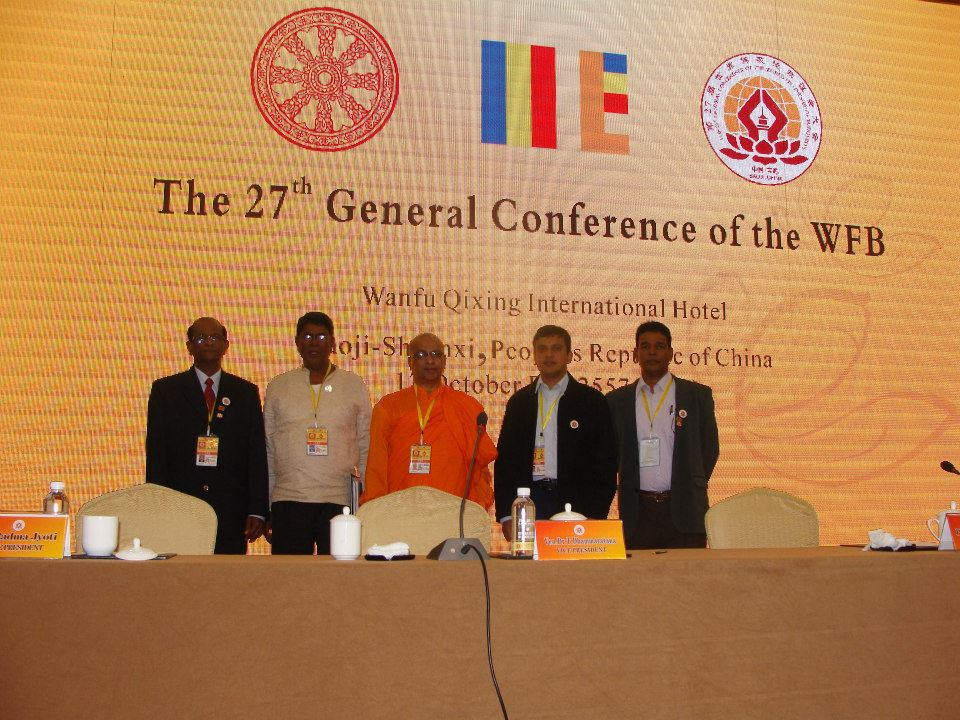
Iraqis Look to ‘Hajji Putin’ to Save Them From ISIL

October 10th, 2015

Courtesy Sputnik News

Following the success of the Russian airstrikes in Syria, and Washington’s failure to do so thus far, Iraqis are looking for new ways to wipe out the self-proclaimed Islamic State terrorist group. Many are calling for the assistance of “Hajji Putin.”

 With Russian missile strikes dealing significant damage to IS infrastructure in Syria, many Iraqis are beginning to question the effectiveness of the US-led coalition.

“I have been waiting for Russia to get involved in the fight against Daesh,” Mohammed Karim Nihaya, a painter living in Baghdad, told Agence France-Presse, using the Arabic acronym for ISIL.

“They get results. The United States and its allies on the other hand have been bombing for a year and achieved nothing.”

As he spoke, Nihaya applied the finishing touches to a portrait of Russian President Vladimir Putin.

He’s not the only one. Putinmania has swept across the Iraqi population.

“We should give Putin Iraqi and Syrian citizenship because he loves us more than our own politicians,” Mohammed al-Bahadli, a student in Najaf, told AFP.

“Muslims bomb us because we are Rafidha,” said Saad Abdullah, an Iraqi store owner, using a term employed by IS to refer to Shiites.

“Meanwhile Putin, who is an Orthodox man, is defending us…Maybe he really is a Shiite and we didn’t know it.”

The Russian president has also become a bit of an Iraqi Internet celebrity, with some circulating rumors that Putin may be able to trace his roots back to the Middle East.

While in no way accurate, the story suggests that Putin’s father was an Iraqi grocer, who because of specializing in figs – tin” in Arabic – he became known as “Abu Tin.” Moving to the Soviet Union after World War II, he married “a blonde Russian girl” and named their child Abdulamir.

From there, Abdulamir Abu Tin was russified to Vladimir Putin.

The fiction proves the endearing support by the Iraqi people for the Russian airstrikes, and for “Putin the Shiite.”

“I thank Putin because he convinced me to stay in Iraq,” said Ali al-Rammahi, an Iraqi cab driver. “Hajji Putin is better than Hussein Obama.”

On Wednesday, Iraq’s defense and security committee indicated that it may ask Russia for air support in combating IS, according to committee head Haqim Zamli.

“Iraq may turn to Russia with a request to conduct airstrikes against the positions of Islamic State militants in Iraq if Russia is successful in Syria, that is if the airstrikes are effective and actual, and if we see that Russia [is operating] effectively in Syria,” Zamli told Sputnik.

The Russian Defense Ministry has not responded to those claims, as it has not yet received a formal request from the Iraqi government.

Read more: http://sputniknews.com/middleeast/20151008/1028235236/Hajji-Putin.html#ixzz3oAPdpgJQ

Chemistry is applied in energy saving cooking then to stop smell depositing while cooking

October 10th, 2015

Dr Hector Perera    London

Even in cooking chemistry is applied. Remember your kitchen is a kind of real chemistry laboratory.  All the cooking ingredients are nothing but chemicals that is vegetables, chickens, fish or even beef are nothing but complicated chemicals and they are mixed with a number of other chemicals such as in spices and subjected for heating to get cooked. The heating helps to break bonds so that new bonds are formed during cooking. One of the process used is reflux it has many usage in chemistry. It is commonly used in distillation processes. It is also used to catalyse chemical reactions. It also allows heating for a long without losing the volatile reactants and products. Refluxing helps speed up chemical reactions without having it evaporate or explode. By cooling the vapours before it escape the system, the apparatus is able to not only maintain a constant volume of solution but also induce reactions.

Chicken and beef curry

What do we add in making a normal chicken or beef curry? I am sure you all know the list of spices but let me write it again, chillies, cumin seeds, coriander, turmeric powder, cinnamon, cloves, cardamom, curry leaves, pandam leaves, lemon grass, ginger, garlic, onions, nutmeg, pepper, green chilies and some oil. All these ingredients have very complicated organic chemicals which have been identified by many instrumental analysis including by nmr [nuclear magnetic resonance] analysis. One might not use all of them but most of them are used in very careful amounts.

Some British TV chefs add them carelessly, no qualitative or quantitative idea. I have seen these kinds of careless cooking in British TV cooking programmes. All the spices have plenty of chemicals and Cinnamon has 18 organic chemicals. They act as antioxidants, antifungal and antibacterial potentials of volatile oils, not forgetting there are plenty of medicinal values as well such as lowering the high blood pressure, reducing the cholesterol levels. So next time you will think twice in eating any spicy food. When you think about the benefits of spicy food, I am sure you would look out for spicy food, not just fish and chips. This is just one spice now you can imagine the number of organic chemicals in other spices. I am not going to list them all here but the idea was to point out that there are a number organic chemicals in spices. Adding spices in food have a number of health benefits as well apart from the taste and flavour.

When we mix the ingredients with chicken or beef or any other food then once they are on the fire, those chemicals tend to slowly come out and react with the food and some escape on to the top of the food container. If the fire was too high, some chemicals escape without reacting properly with the food.

As mentioned before the spices and ingredients have a large number of organic chemicals with very low boiling points. A condenser is an apparatus or item of equipment used to condense (change the physical state of) a substance from its gaseous to its liquid state. In the laboratory, condensers are generally used in procedures done with organic liquids brought into gaseous state through heating with or without lowering the pressure (applying vacuum) though applications in inorganic and other chemistry areas exist.

It also allows heating for a long time without losing the volatile reactants and products. Refluxing helps speed up chemical reactions without having it evaporate or explode. By cooling the vapours before it escape the system, the apparatus is able to not only maintain a constant volume of solution but also induce reactions.

Reflux means to heat your mixture and have a condenser on top. When there is a lid on the cooking pan with a slightly semi-circular hood shape, it help to recondense some of the volatile chemicals so that they fall back to the container and react again. This helps the volatile chemicals to get absorbed into the food in the cooking pan but most of the chefs including our Sri Lanka ladies let those chemicals evaporate into the air without reusing them.

Mind you some Sri Lanka ladies let them deposit on their hair, hands, face and on other open parts of the body, then on clothes, may be a secret beauty therapy, if not why would they keep opening the boiling chicken or fish curries? The answer is to shower with chemicals. Honestly they love chicken cologne and curry cologne. They would never tell you the reason because it is a traditional secret beauty therapy. The reason why we have this is because we need to heat the mixture to cause the reaction to occur, because more heat into system allows the molecules to overcome the energy barrier and make new bonds or break bonds depending on what you’re doing.

But, this heat that you’re adding is evaporating the solvent then the curries run dry quickly and eventually burn the whole thing. You don’t want your solvent to go away so your reflux condenser will cool the vapour of the solvent and turn it back to liquid, which will drip down and essentially you don’t lose any solvent at all. In the case of cooking, some of those volatile chemicals come from the ingredients you add to cook. I am sure some of you understand that the cooking ingredients do not absorb to the food as soon as they are added, it takes time. When a curry is boiling some of those volatile chemicals from the ingredients escape as vapour, certainly piggy back with water molecules.

 Is there any science in British TV cooking?

Most of the British TV chefs without knowing the science of cooking, they just let those chemicals escape without making use of them that means they just cook without a lid on the pan. They are under the impression if they covered the cooking pan, the camera cannot see what is happening so they keep the lid open and cook. I think what a stupid way to cook. In the meantime lots of chemicals escape without reacting with the food. I wonder if they thought that the ingredient vapours must be allowed to evaporate and allowed some of them to get deposited on them while cooking. They are not thinking with respect to science and not applying any science in cooking. In that case they are no better than our Kussi Ammas in Sri Lanka. I much appreciate their effort to cook very tasty food even with such difficulties.

 Which lady would like to cat walk like a Tandoori Chicken?

The time has changed, no more firewood stoves, gas and electricity are there to cook, modern apparatus to cut, slice and grind, ovens and micro waves so why not make the most of these facilities by adding a little bit of science to save energy.  As I mentioned before I have this scientific energy saving cooking technique to save about 60% energy wasted in cooking and also save any cooking aroma depositing while cooking. Which lady would like to cat walk like a Tandoori chicken after cooking, no one, why not use my scientific method to stop it. I didn’t keep the secret, I have revealed the method for the benefit of the public in live cooking demonstrations in several TV channels in Sri Lanka but not in England, perhaps they don’t eat rice and chicken curries unlike in Sri Lanka. The one I did with Sirasa TV allowed me 45 minutes to demonstrate the technique systematically for the benefit of the public. The TV presenter lady Juliana and the gentleman Sameera even helped the public immensely who telephoned while cooking, then we even answered their questions about cooking. Save energy in cooking, stop burning money, stop cooking aroma depositing while cooking by using my scientific energy saving cooking, if not carry on Charlie. Your comments are welcomed perera6@hotmail.co.uk


Copyright © 2026 LankaWeb.com. All Rights Reserved. Powered by Wordpress