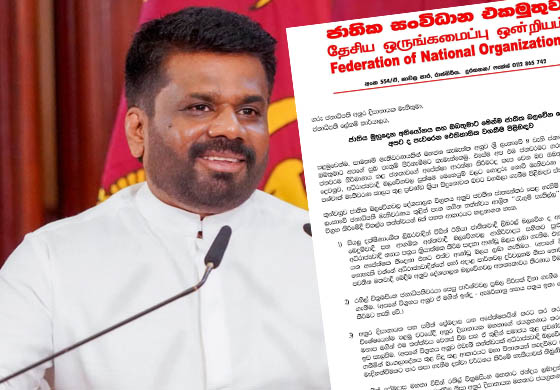
AKD’s protest vote and Sajith Premadasa’s own goal

October 1st, 2024

Courtesy The Daily Mirror

The presidential election’s outcome has been described in flowery language: A vote for system change, the rejection of the old regime, a clarion call against corruption and cronyism, a vote against the sale of national assets, and so on. 
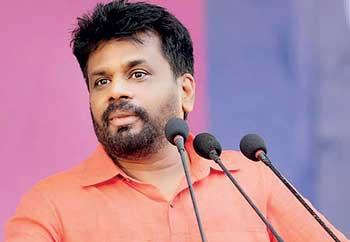
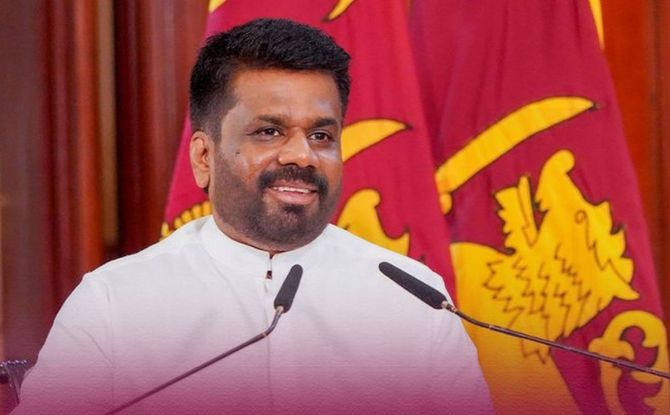
President Anura Kumara Dissanayake

All that is true to a certain degree, but they still miss the wood for the trees. The risk of these feel-good assessments is that they could also delude the election winner. To explore the danger of misreading an election mandate, look no further than the Yahapalanaya’s and Maithripala Sirisena’s victory over the Mahinda Rajapaksa regime. Sirisena won the election, thanks to sound electoral arithmetic, riding on the overwhelming minority vote, even though he lost the South by half a million votes. However, his backers misread the election results as a vote against Rajapaksa’s infrastructure development projects and suspended almost all major loan-funded projects to appear to be delivering on their mandate. That was the beginning of the end for the Yahapalanaya and also the end of a decade of sustained economic growth. 


The commentators call it a vote for change or a system change. Every time voters change a government, they surely vote for a change. When the Sri Lankans elected Mahinda Rajapaksa in 2005, they voted for a change (from Chandrika Kumaratunga’s more elitist rule); when they voted for Sirisena, they voted for a change. When they voted for Gotabaya Rajapaksa, they voted for a change. So is now when they have voted for the presidency of Anura Kumara Dissanayake. 


But that does not tell the whole story. There are a few reasons as to why.


First, the distribution of votes across the three main candidates would reveal the perceived change has been endorsed by only 43% of the Sri Lankan voters, whereas 57% voted for the other candidates, including an overwhelming over 50% to the UNP and SJB candidates.


Protest vote


Second, leave aside the majority who did not vote for the AKD’s presidency, but what is the primary driver that guided the voter who voted for him?


 A cursory glance at the 2019 presidential election would tell what guided the vote for Gotabaya Rajapaksa: Islamobohia,  Sinhala Buddhist supremacy in its heightened paranoia, dynastic allure and conspiracy theories that exploited the worst of humankind. 


A similar look at this election would reveal what guided the vote:  anger and despair. The vote for Anura Kumara Dissanayake, more than anything else, was a protest vote. People aired their anger through their vote to the AKD. All other much-hyped electoral promises, though influential in glueing some of these voters, were not the primary catalyst, which, I repeat, is the anger. 


To know the intent of the protest vote, one should look into who exactly these voters were overwhelmingly. By and large, they are rural and urban Sinhalese poor and lower middle class-  the same demography that elected Gotabaya Rajapaksa in the previous election. They then took the brunt of the economic crisis. They were angry at their predicament and those responsible for it. Their anger is the catalyst of the vote and AKD’s election victory. More than any other party, the JVP and NPP exploited and capitalised on the popular public anger at the economic crisis, just like Gotabaya Rajapaksa did with the public anger and anxiety over the Easter Sunday attacks.  
Anura Kumara Dissanayake managed to obtain approximately 4.5 million of previous Gotabaya Rajapaksa voters. It does not look like their vote was guided by a dawn of moral conviction, effecting an overnight shift from dynastism to good governance. Rather, AKD gave them an avenue to vent their anger by voting for the NPP. 
The NPP and JVP should now be very cautious that the Rajapaksas’ with a fresh round of racist conspiracy theories, could win back this electorate at the opportune time. 


Rejection of the old guard?


Some have conveniently described the election outcome as a rejection of the traditional establishment or the old guard. But there is a hitch. The traditional establishment – UNP’s Ranil Wickremesinghe and SJB’s Sajith Premadasa combined, polled 1 million more votes than Anura Kumara Dissanayake. Collectively, they obtained just 300,000 votes short of Gotabaya Rajapaksa’s mammoth electoral tally in 2019.


I would love to see the rejection of the old guard in their rent-seeking ugliness. But the numbers disprove that eventuality- though it is fair to say a sizeable swath of the voters, though not the majority, had rejected the traditional status quo of politics for the first time. 


Similarly, it is inspiring to say that the voters cast their vote against corruption, cronyism, and the sale of state assets. 


But, an overwhelming 57 per cent of voters did not buy in that line of election promises. That may explain their different priorities and assessments, though the vast majority, including those who didn’t vote, would support a campaign against corruption. 


The government could have one obvious advantage by coming to terms with the nature of its mandate. That would give it a greater leeway in governing the country and preclude it from some of the most abhorrent forms of economic populism, including some mentioned in its election manifesto. Gotabaya Rajapaksa succumbed to that temptation. He justified his tax reliefs on his campaign promises and set off the country’s economic free fall. 


Premadasa’s own goal


Third, the protest vote itself did not make Anura Kumara Dissanayake the winner. Sajith Premadasa did. In his hurry to become President, he undercut not only Ranil Wickremesinghe but also a total of 6.6 million voters who voted for him and Ranil Wickremesinghe. That is 1 million more votes than the tally of Anura Kumara Dissanayake.
Anura Kumara Dissanayake didn’t win.  Sajith Premadasa handed over the election to him that a united UNP-SJB candidate could have won on a platter.


Why find fault with Premadasa? Why not Wickremesinghe? Because after stabilising the economy that was in free fall, Ranil Wickremesinghe has a greater and justifiable claim to be the candidate for the presidency than Sajith Premasada.  


A little gratitude and commonsense could have averted the mutually assured destruction of Premasada and Wickremesinghe and could also have made  Premadasa the prime minister. But he put his oversised ego before the country. 


 The rest of the party leaders of the SJB were not oblivious to what was in the making, but they could not inject a degree of common sense into their leadership. That might explain a far deeper and far darker rot in the party than one meets the eye.   Personal vindictiveness and petty score setting are currently obstructing talks for a common opposition alliance – Premadasa’s acolytes want Wickremesinghe to give up the leadership of the UNP as a precondition. That again reveals a party and its leadership devoid of reality. That should also make voters, including most of us, who hold strong reservations about the NPP, wonder about the worthiness of the SJB under its current form as an alternative to the NPP juggernaut at the general election.  


A common sense approach would be to build an alliance, defend the majority vote polled in the presidential election, and potentially form a government. But again, Premadasa has put his ego before the party and, perhaps, the country.


The SJB and the UNP lost momentum when they lost the presidential election, which generally set the trajectory of the outcome of the general election. But, there is much that can still be salvaged. But, it is becoming increasingly likely that the same blunders will be repeated, and it would, yet again, decide the general election against the SJB.
Growth in Sri Lanka vs. Governmental Expenditure

September 30th, 2024

by Prof Sunil J. Wimalawansa

Considering what has happened over the past few decades, it is no surprise that people do not want to see disruptive politicians who once governed the country returning to power. This sentiment is reflected in the over 4.7 million voters (out of 6.9 million) who previously voted for the former President but have now supported the current President, Anura Kumara. This is a clear objection and a mandate to keep them out and initiate a complete system change. Additionally, those who voted for the current President on September 21st, along with a growing number of others, are advocating for legislation that would permanently disqualify corrupt politicians from holding any elected or appointed positions in the future.

Changing Voters Behaviour and Necessary Changes

Most voters expect the new government to introduce enforceable legal restrictions to prevent the nomination of individuals who have harmed the country and its people. While opinions may vary, the basic qualifications voters hope for include disqualification for those involved in financial scandals, misappropriation of public funds, violence, criminal records, or indictment for unethical business practices. People with ties to the country’s bankruptcy deemed untrustworthy and should also be ineligible for nominations or any appointment.

There are other criteria that may be controversial but should be debated and evaluated for the betterment of the nation in the longer term. For example, an age range (e.g., 35 to 75 years at the time of nomination) and a requirement for a university degree, and elimination of those with criminal complaints or convictions. These may be unpalatable for some, and others consider it discriminatory, but one should consider what is best for the country.

To prevent politicians from becoming entrenched and ineffective, a term limit on any elected political position should be introduced. If such policies are adopted, more than half of the current parliamentarians would be disqualified from holding or submitting nominations for government positions—an efficient way to remove them. Most voters hope this will become a reality.

The focus on sustainable growth

The new government should publish immediate, medium-, and long-term economic policies with clear plans detailing how it intends to generate the foreign exchange needed to repay loans, run the country without accruing additional debt, and import essential goods not produced domestically. With the right strategies and a potential restructuring of the IMF loan, perhaps transferring it to a friendly, sympathetic country like Japan, this can be achieved without raising taxes and further burdening the population.

Besides, the government must facilitate and incentivize the growth of value-added exports like graphene oxide and enriched minerals, while implementing sustainable financial and developmental practices. This should include systematically expanding tourism (including ethical medical tourism) and renewable energy sources to reduce dependence on imported fuel and strive for self-sufficiency in energy, essential food, and medicine.

To illustrate its ability to control the situation, the government must also develop a concrete plan to support the growth of small and medium-sized businesses, encourage exports, simplify regulations, and consider tax cuts. While tourism should be developed, it must be done systematically—not haphazardly, as was the case with previous governments. Additionally, the government should avoid relying solely on tourism for economic stability, as it is vulnerable to uncertainties stemming from the rapidly changing world order, travel restrictions, and external economic shocks.

Reduction of government size and expenses

Import restrictions are crucial for reducing the budget deficit and should prioritize promoting fuel-efficient vehicles. In addition, the large contingent of seized high-engine capacity (e.g., V8 engines) government vehicles should be auctioned for export purposes to generate foreign currency. It is essential to ensure that no further import-related commissions or major financial scandals occur. Appointing a committee of genuine experts with a clear timeframe to identify the root causes of financial failures across various sectors—economic, social, and embezzled public funds should go in parallel.

Appointing such commission/committees with retired subject matter expert executives with no conflicts of interest should be empowered to develop a plan for holding responsible individuals accountable and recovering siphoned assets and funds is vital. This commission should work with established international authorities to return those assets to the treasury.

Reduction of ministers and parliamentary seats via the new constitution

It is estimated that reducing the number of ministers and ministries to 20 by amalgamating similar functions without appointing deputy- or state ministers, would eliminate unnecessary expenditures. With the abolition of redundant (and duplicate) provincial councils could each save over a trillion rupees in the next four years. These savings alone would be sufficient to pay off the government’s internal Rupee debt.

Additionally, each ministry should be provided with a modest budget without the option of receiving additional rescue funds. Ministries must adhere to the discipline of living within their allotted annual budget. The failure to do so must lead to losing his position. With re-districting (through the new Constitution) and by reducing the number of members to less than 100, parliament can be run more efficiently with half the current cost. 

Curbing Wasteful Foreign Travel:

Most foreign travel by politicians and administrators does not bring significant value to the country. Therefore, such travel must be minimized and funded strictly through each ministry’s budget, not by foreign embassies, as was previously done, where taxpayers covered expenses. Haveing an independent committee with executive power to approve or deny,” all foreign travel of Government Servants is an effective way of minimizing this wastage.

For a bankrupt country, there is no need for ceremonial openings and lavish events to be conducted at taxpayer expense—they are highly inappropriate. Besides, it is irrational to invite politicians for such constructions, that were funded by taxpayers. Savings from these reductions can be redirected to critical areas like modernizing agriculture, education, research and development, and improving indispensable infrastructure, which are essential drivers of the country’s economy.

Accountability and Enforcement of Laws:

It is the fiscal responsibility of the new government to enforce personal answerability of all ministries, government departments, and state own enterprises and hold them legally and financially accountable. It must be mandated that all state-owned enterprises operate without incurring losses, failing which senior administrators must be terminated at the end of the year. Achieving this requires learning from rapidly developing emerging economies and implementing proper oversight, including mandatory annual audits and robust reporting mechanisms, and enforcing laws.

Cutting Down Government Expenses:

Despite pressure from the public, unions, and NGOs, government expenditure must be reduced. The current government is highly inefficient despite operating at approximately 50% overcapacity. Government departments are both top-heavy and bottom-heavy, with the middle management—the segment that contributes the most to any department’s functioning—shrinking relatively. This has led to rampant inefficiency. Thus, it is not surprising its ineffectiveness, which also allows opportunities for bribery.

Therefore, a program should be implemented to gradually reduce the size of the government , including the over-blown military by eliminating 40% of non-productive positions. Such would make operations more cost-effective and accountable. There is absolutely no justification for expanding the government; instead, public sector jobs must be restricted, and the private sector should be encouraged to expand to foster job creation across the country.

The new government must uphold its election promises without exceptions by focusing on eliminating corruption at every level.  This includes re-establishing independent committees and commissions with legal powers to prosecute, establishing sustainable economic policies and practices, limiting the number of ministers and ministries, reducing perks that ordinary citizens do not enjoy, and ensuring that ministers and government administrators are held accountable. This will become easier if NPP gains the majority in the next parliament.

Should Sri Lanka Join BRICS -vs- Dollar-Euro-UK Sterling?

September 30th, 2024

Prof. Hudson McLean

Read the Facts & Figures.

The Bottom Line is-: 

How will BRICS Membership Benefit Sri Lanka Economy in the Short-Term to Climb Out of the Hangmans Noose?

How Would a New BRICS Currency Affect the US Dollar? (Updated 2024)

https://www.nasdaq.com/articles/how-would-new-brics-currency-affect-us-dollar-updated-2024

On 1 January 2024, BRICS – the intergovernmental organisation comprising Brazil, Russia, India, China and South Africa – admitted four new members: Egypt, Ethiopia, Iran and the United Arab Emirates.

https://www.europarl.europa.eu/thinktank/en/document/EPRS_BRI(2024)760368

GDP by Country

GDP by Country – Worldometer

GDP by Country – Worldometer Countries in the world ranked by Gross Domestic Product (GDP). List and ranking of GDP growth, GDP per capita an…

The Grass is Greener on the Other Side of the Fence!

Express Your Opinion – Read What Others Say!
The Independent Interactive Voice of Sri Lanka on the Internet.

Please visit -: http://www.lankaweb.com/

බදු ආදායම තවත් 4%කින් වැඩි කරන්නැයි IMF දන්වයි…

September 30th, 2024

උපුටා ගැන්ම ලංකා සී නිව්ස්

රටේ දළ දේශීය නිෂ්පාදිතයෙන් 11% ක මට්ටමේ පවත්නා රාජ්‍ය බදු ආදායම 15% ක් දක්වා තවත් 4% කින් වැඩි කරන ලෙස ශ්‍රී ලංකා ආණ්ඩුවට ජාත්‍යන්තර මූල්‍ය අරමුදල මෙයට පෙර කර තිබූ නිර්දේශය ක්‍රියාත්මක කිරීමේ වගකීම වත්මන් රජයට පැවරී ඇතැයි බ්‍රිතාන්‍ය ගුවන්විදුලිය (BBC) විශේෂ වාර්තාවක් පළ කරමින් පෙන්වා දී තිබේ.

පසුගිය වසරේ පැවති ආණ්ඩුව විසින් බදු අනුපාත ඉහළ දැමීමෙන් පසුව උපයන විට ගෙවීමේ බද්දෙන් ලද ආදායම (2023 දී) රුපියල් බිලියන 144 කි.

එහෙත් රජය එම බද්දෙන් ලබා ගැනීමට අපේක්ෂා කළේ රුපියල් බිලියන 100 ක ආදායමකි.

රුපියල් බිලියන 44 ක් වැඩිපුර එම බද්ද මගින් 2023 දී රජය උපයා තිබුණු බවද එම වාර්තාව කියයි.

ජනාධිපතිගේ සෑම පත්කිරීමකම අවුලක්.. සමහරුන්ට නඩු.. සමහරු අධිකරණවලින් දඬුවම් ලබලා..

September 30th, 2024

උපුටා ගැන්ම ලංකා සී නිව්ස්

අනුර දිසානායක මහතා ජනාධිපතිවරයා ලෙස පත්වීමෙන් පසු කරන කරන සියලුම පත්වීම් වල යම් ප්‍රශ්නයක් තිබෙන බව හිටපු පාර්ලිමේන්තු මන්ත්‍රී අජිත් පෙරේරා මහතා සඳහන් කරයි.

ඒ ඇතැමුන්ගේ චරිතය සම්බන්ධ ප්‍රශ්න ඇති බවත්, ඇතැමුන් අධිකරණ හරහා දඬුවම් ලබන පුද්ගලයන් බවත්, සමහර පුද්ගලයන් අධිකරණවල නඩු පවතින පුද්ගලයන් බවද හෙතෙම පෙන්වා දෙයි.

ඒ අනුව ඉදිරි පාර්ලිමේන්තු මැතිවරණය වන විට ඔවුනට දැනට ඇති සියයට හතළිස් දෙකේ ඡන්ද ප්‍රමාණය ද නැති වනු ඇති බව තමන් විශ්වාස කරන බවත් ඔහු පැවසුවේය.

රනිල් වික්‍රමසිංහ මහතාගේ වැඩපිළිවෙල අකුරක්වත් නෑර ඉදිරියට ගෙන යන කණ්ඩායම සිටින්නේත් අනුර දිසානායක මහතා සමගත පැවසූ ඔහු ‘රනිල් කියන්නෙත් අනුර.. අනුර කියන්නේ රනිල්’ යයිද කියා සිටියේය.

පානදුර ප්‍රදේශයේදී මාධ්‍ය අමතමින් හෙතෙම මෙම අදහස් පළ කරන ලදි.

ජනපති අනුර තනතුරු දෙන්නේ හිතවතුන්ටද..

September 30th, 2024

උපුටා ගැන්ම ලංකා සී නිව්ස්

ඇතැමෙකු චෝදනා කරන්නේ, නව ජනාධිපතිවරයා ඔහුගේ හිතවතුන් රජයේ තනතුරුවලට පත් කරන බව ය.

මීට පෙර සිටි පාලකයින්ගේ පත් කිරීම් විවේචනයට ලක් කරමින් බලයට පැමිණි ජනාධිපතිවරයෙකුගෙන් එවැන්නක් අපේක්ෂා කළ නොහැකි බව ඔවුන්ගේ අදහස යි.

ජනතාව නව ජනාධිපති අනුර කුමාර දිසානායකට ඡන්දය දුන්නේ පැවති දේශපාලන සංස්කෘතිය වෙනස් කිරීමට,” බව අමාත්‍ය විජිත හේරත් පවසයි.

ඔහු ඒ බව ප්‍රකාශ කළේ, පසුගිය දා ශ්‍රී ලංකා වරාය අධිකාරියට ගොස් නිලධාරීන් හමු වූ අවස්ථාවේදී ය.

රටේ ජනතාව නව ජනාධිපතිවරයාට ඡන්දය දුන්නේ, මේ රටේ මෙතෙක් පැවතිච්ච දේශපාලන සංස්කෘතිය වෙනස් කරන්න. දේශපාලන සංස්කෘතිය වෙනස් කරනවා කියන්නේ, දේශපාලනඥයින්ගේ විතරක් නෙවෙයි. නිලධාරීන්ගේ පැත්තෙනුත්, රටේ ආයතනවලත් ඒක වෙනස් විය යුතු යි.”

අමාත්‍ය විජිත හේරත් එසේ පැවසුව ද, වත්මන් ජනපති අනුර කුමාර දිසානායක බලයට පත්වීමෙන් පසු කරන ලද පත් කිරීම් විමසා බැලීමේදී ඔහු විශ්වාසවන්තභාවය පදනම් කරගෙන මිතුරන්ට තනතුරු දී ඇති බවක් නිරීක්ෂණය වන බව ශ්‍රී ජයවර්ධනපුර විශ්වවිද්‍යාලයේ දේශපාලන විද්‍යා මහාචාර්ය විශාඛා සූරියබණ්ඩාර පවසයි.

ඇය පෙන්වා දුන්නේ, ජනාධිපති ලේකම්වරයා පත්කිරීම පවා ප්‍රශ්නසහගත බව ය.

දැන් ජනාධිපති ලේකම් පත් කරපු එකෙත් අවුලක් තියෙනවා. කෙනෙක් තර්ක කරන්න පුළුවන් ඉස්සරත් ඔයිට වඩා වැරදි සිද්ධ වුණා කියලා. ඒත් කලින් හිටිය කට්ටිය කරපු වැරදි නොකරන්න නේ මේගොල්ලෝ ආවේ,” මහාචාර්ය විශාඛා සූරියබණ්ඩාර පැවසීය.

ඇය පෙන්වා දුන්නේ, විශ්වාසවන්ත බව කියමින් මිතුරන් තනතුරුවලට පත්කිරීමෙන් කාර්ය ශූර රාජ්‍ය සේවයක් පවත්වාගෙන යා නොහැකි,” බව ය.

විශ්වාසවන්ත අය දානවා කියල කියනවා. විශ්වාසවන්ත අය කියන්නේ මිත්‍ර සංග්‍රහ, ඥාති සංග්‍රහ නම් එතකොට රාජ්‍ය සේවයක් මොකට ද? රාජ්‍ය සේවයේ ඉතා ම කෘතහස්ත මිනිස්සු ඉන්නවා නේ. සමහර අය දේශපාලන පළිගැනීම්වලට ලක් වෙලා තමන්ගේ හැකියාවන් පෙන්නගන්න බැරුව ඉන්නවා. ඒ වගේ අයව අරගන්නෙ නැතුව, ඒගොල්ලන්ට යම්කිසි අවස්ථාවක් දෙන්නෙ නැතුව කාර්යශූර රාජ්‍ය සේවයක් කොහොම ද පත්වාගෙන යන්නේ?”

මේ පත් කරපු සමහර අය ශ්‍රේණි අනුව පහළ මට්ටම්වල ඉන්න අය. ඒක සාර්ථක වෙයි ද?” මහාචාර්යවරිය ප්‍රශ්න කරයි.

ජනාධිපති ලේකම් ධූරයට පත් කෙරුණු ආචාර්ය නන්දික සනත් කුමානායක ශ්‍රේණි මට්ටමින් පහළ අයෙකු බවත්, ඔහුට වඩා ජ්‍යේෂ්ඨ නිලධාරීන් සිටියදී එම පත්කිරීම සාධාරණ නොවන බවත් මහාචාර්ය විශාඛා සූරියබණ්ඩාර පවසයි.

මේ අතර, ඔහු කැලණිය විශ්වවිද්‍යාලයේ අධ්‍යාපනය ලබද්දී අනුර කුමාර දිසානායකගේ මිත්‍රයෙකු බවට ද ඇතැම් මත පළවී තිබේ.

කෙසේ වෙතත්, එහි සත්‍යාසත්‍යතාව තහවුරු කර ගැනීමට හැකි වූයේ නැත.

මේ අතර, ජනාධිපති මාධ්‍ය අධ්‍යක්ෂ ජනරාල් ධූරයට වෛද්‍යවරයෙකු පත් කිරීම සම්බන්ධයෙන් ද විවිධ අදහස් පළවෙමින් තිබේ.

එම ධූරයට පත් කරන ලද නජිත් ඉන්දික වෛද්‍යවරයෙකු බවත්, මාධ්‍ය ක්ෂේත්‍රය සම්බන්ධයෙන් ඔහුට අත්දැකීමක් නොමැති බවත් ඇතැමෙකුගේ අදහස යි.

රජයේ රෝහල් කිහිපයක වෛද්‍යවරයෙකු සහ ආයතන භාර වෛද්‍ය නිලධාරියෙකු ලෙස ඔහු සේවය කර තිබේ.

රජයේ ප්‍රවෘත්ති දෙපාර්තමේන්තුව පවසන්නේ, වෛද්‍ය නජිත් ඉන්දික ශිෂ්‍ය ක්‍රියාකාරිකයෙකු සහ දේශපාලන ක්‍රියාකාරියෙකු ද වූ බව ය.

මහාචාර්ය විශාඛා සූරියබණ්ඩාර නගන චෝදනා සම්බන්ධයෙන් බීබීසී සිංහල සේවය ජනාධිපති මාධ්‍ය අධ්‍යක්ෂ ජනරාල් වෛද්‍ය නජිත් ඉන්දිකගෙන් විමසීමක් කළේ ය.

ඔහු ප්‍රකාශ කළේ, ඕනෑ ම ආණ්ඩුවක් තනතුරු සඳහා පත්කිරීමේදී තමන්ට විශ්වාසවන්ත සුදුසුකම් සහිත පුද්ගලයින් තෝරා ගන්නා බව ය.

කිසි ම කෙනෙක් ජනාධිපති ලේකම් විදිහට පූල් එකේ ඉන්න ජ්‍යෙෂ්ඨ ම කෙනා දැම්මෙ නෑනෙ. ජනාධිපති ලේකම් හරි, අග්‍රාමාත්‍ය ලේකම් හරි, අමාත්‍යංශ ලේකම්වරු හරි ගත්තොත් ජනාධිපතිවරයාට අලුතින් පත්වුණා ම තමන්ගේ කාර්ය භාරය වඩාත් ම හොඳට කර ගන්න පුළුවන් කෙනාට, සුදුසුකම් තියෙන දේශපාලකයින්ට විශ්වාස කෙනෙක් තමයි, හැම දා ම ජනාධිපති ලේකම් බවට පත් වෙන්නේ. සුදුසුකම් නැත්නම් ප්‍රශ්නයක්. මොක ද අපි දන්නෙ නැති කෙනෙක් දාගෙන වැඩ කරන්න බැහැ නේ,” ජනාධිපති මාධ්‍ය අධ්‍යක්ෂ ජනරාල්වරයා සඳහන් කළේ ය.

ඔහු ප්‍රකාශ කළේ, සුදුසුකම් සහිත පුද්ගලයින් තනතුරුවලට පත් කළ බව ය.

ජනාධිපති ලේකම් ගැන දේශපාලන විශ්වාසයක් තියෙන්න ඕනෙ, කරන වැඩේ කරන්න පුළුවන් කියලා. ඉතින්, සුදුසුකම් සපුරපු අයගෙන් ඒ පදනම මත තමයි මේ පාරත් පත් කරලා තියෙන්නේ. එහෙම පත් කළොත් විතරයි, වෙනසක් කරන්න පුළුවන්.”

තනතුරුවලට පත්කිරීමේදී කිසිදු නීති රාමුවක් උල්ලංඝණය කර නැතැයි ද වෛද්‍ය නජිත් ඉන්දික පැවසීය.

කිසි ම නීති රාමුවක් උල්ලංඝණය කරල නෑ. කිසි ම ක්‍රියාපටිපාටියක්, කිසි ම ධූරාවලියක් උල්ලංඝණය කරල නෑ. මුළුමනින් ම ක්‍රමවේදයට අනුකූලව පත් කිරීම් කරල තියෙන්නේ. ලේකම්වරු පත් කර ගන්නකොට හැම ආණ්ඩුවක් ම කළා වගේ ම සුදුසුකම් තියෙන අයගෙන් තමන්ට විශ්වාසවන්ත අයට ප්‍රමුඛත්වයක් දීලා තියෙනවා.”

රජයේ අලුත් පත්වීම් ලබා දීමේදී හිතවතුන්ට ප්‍රමුඛත්වය දීම නතර කරන බව කී වත්මන් රජය ඊට ප්‍රතිවිරුද්ධ ලෙස ක්‍රියාත්මක වෙමින් පවතින” බව හිටපු පාර්ලිමේන්තු මන්ත්‍රී නීතිඥ අජිත් පී. පෙරේරා පවසයි.

ඔහු පෙන්වා දුන්නේ, නව පත්කිරීම් රැසක් සම්බන්ධයෙන් ගැටලු පවතින” බව ය.

පත්කිරීම් ගොඩක් හිතවතුන්ට දීලා තියෙන බවක් පේනවා. ඊට අමතරව අමාත්‍යංශ ලේකම්වරුන් පත් කිරීමේදී ළබැඳියාවන් අතර ගැටුමක් දක්නට ලැබෙනවා. ඊට අමතරව, විවිධ චෝදනා එල්ල වූවන් තනතුරුවලට පත් කරලා තියෙනවා. ජනතාව ඡන්දය දුන්නේ, කලින් හිටපු ජනාධිපතිවරු කරපු වැරදි කරන්න නෙවෙයි. කුසලතා මත පදනම්ව තනතුරු පිරිනැමීමට නව නායකයා කටයුතු කළ යුතු යි.”

මේ සම්බන්ධයෙන් විකල්ප ප්‍රතිපත්ති කේන්ද්‍රයේ විධායක අධ්‍යක්ෂ ආචාර්ය පාක්‍යසෝති සරවනමුත්තු අදහස් දක්වමින් ප්‍රකාශ කළේ, නව පත්වීම් ලබා දීමට පෙර මීට වඩා සැලකිලිමත් විය යුතු බව ය.

දෙතුන් දෙනෙකුට චෝදනා තියෙනවා. නමුත්, ගොඩක් ප්‍රතිසංස්කරණ කරන්න යන අලුත් ආණ්ඩුවකට වැඩ කරන්න වෙන්නේ ඒගොල්ලන්ට විශ්වාස කරන්න පුළුවන් අයත් එක්ක. හැබැයි පත් කරන්න ඉස්සෙල්ලා හරියට විභාග කරල බලන්න ඕනේ, ළබැඳියාවන් අතර ගැටුමක් තියෙනවා ද? වගේ කරුණු ගැන. ඒවා හොයලා බලලා තමයි පත් කිරීම් කරන්න ඕනේ.”

කෙසේ වෙතත්, මේ වන විට එල්ල වන චෝදනා සැලකිල්ලට ගනිමින් ඉදිරියේදී නිවැරදිව කටයුතු කරනු ඇතැයි තමන් විශ්වාස කරන බව ද ඔහු ප්‍රකාශ කළේ ය.

මං හිතන්නේ ආණ්ඩුව දැන් මේ විවේචන දැකලා ඉදිරියට යනකොට පරිස්සම් වේවි.”

මේ වන විට ජනාධිපති අනුර කුමාර දිසානායක විසින් නව පත්කිරීම් රැසක් සිදු කර තිබේ.

ජනාධිපති ලේකම්, අග්‍රාමාත්‍ය ලේකම්, අමාත්‍යංශ රැසක ලේකම්වරුන්, පළාත් ආණ්ඩුකාරවරුන්, වැඩබලන පොලිස්පති, රජයට අයත් මාධ්‍ය ආයතනවල සභාපතිවරුන් ඒ අතර වෙති.

– BBC

මෙරට බැංකු පද්ධතිය කඩා වැටීමෙ අවදානමක්.. ආර්ථිකය අනතුරක.. අධිකරණයට වාර්තාවක්..

September 30th, 2024

උපුටා ගැන්ම ලංකා සී නිව්ස්

යුක්ක්‍රේන, ඉන්දීය සහ බල්ගේරියන් සයිබර් අපරාධකරුවන් රටට ඇතුළු වී කරන මුදල් වංචා හේතුවෙන් මෙරට බැංකු පද්ධතිය කඩා වැටී ජාතික ආර්ථිකයට විශාල බලපෑමක් එල්ල විය හැකි බව රහස් පොලිසිය කොළඹ ප්‍රධාන මහේස්ත්‍රාත් තිළිණ ගමගේ මහතාට (30) දැනුම් දුන්නේය.

අන්තර්ජාලය හරහා සිදුවන වංචා හේතුවෙන් මෙරට බැංකු පද්ධතිය කෙරෙහි ජනතා විශ්වාසය බිඳ වැටීමට හැකියාව ඇති හෙයින් එම සයිබර් අපරාධකරුවන්ගේ ජාලය පිළිබඳව විශේෂ විමර්ශනයක් කරන බව දැනුම් දුන් රහස් පොලිසියේ අන්තර්ජාල ආවේක්ෂණ විශේෂ බුද්ධි ඒකකයේ නිලධාරීන් මෙම අපරාධයට සම්බන්ධ සයිබර් අපරාධකරුවන් බව කියමින් අධිකරණයට ඉදිරිපත් කළ යුක්‍රේන ජාතික තරුණයින් දෙදෙනෙකු රිමාන්ඩ් බාරයේ රඳවා තැබීමට මහෙස්ත්‍රාත්වරයා නියම කළේය.

මෙලෙස රිමාන්ඩ් බාරයට පත් කරන ලද්දේ ප්‍රධාන පෙළේ පෞද්ගලික බැංකුවක සංවත්සරය වෙනුවෙන් ත්‍යාග ලබාදෙන බවට සහ ඔන්ලයින් ආදායම් මාර්ග හඳුන්වා දෙන බවට ‘ෆෙස්බුක්’ සහ ‘ටෙලිග්‍රැම්’ ඔස්සේ දැන්වීම් ප්‍රචාරය කර රුපියල් ලක්‍ෂ 36කට අධික මුදලක් වංචා කළැයි කියන හරුනොව් නිකිතා සහ සෙවෙට්ස් ලිබොමීර් නැමැති යුක්‍රේන ජාතික තරුණයින් දෙදෙනෙකි.

බුද්ධිමාල් රුබේරු
ADA

Political Maturity? Ranil’s Honourable Exit and NPP’s Reciprocal Approach

September 30th, 2024

Courtesy The Daily Mirror

I hope you will carry this child even more safely than I did,” Ranil said, expressing hope that the new president would resolve the country’s remaining challengesThe then NPP leader, now the President, appealed to the North/East electorate to join forces with voters in the south to push for systemic changeWith a focus on collective problem-solving, Sri Lanka could build a stronger economy, improve its social services, and address longstanding issues 

Chathuranga Abeysinghe, Executive Committee member of the National People’s Power, appeared on a TV talk show last Tuesday, where he expressed appreciation for former President Ranil Wickremesinghe’s efforts in leaving the Treasury in a stable financial condition. Abeysinghe noted that Wickremesinghe’s prudent fiscal management ensured that the incoming administration, led by President Anura Kumara Dissanayake, would have adequate financial resources to maintain government operations without facing immediate economic difficulties. He emphasised that such a gesture demonstrated Wickremesinghe’s sense of responsibility toward the country’s well-being, regardless of his political standing.
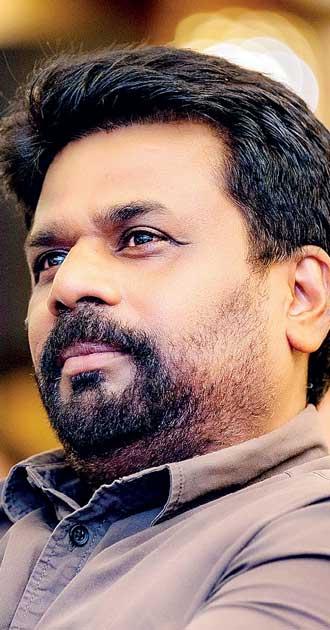
President Anura Kumara Dissanayake
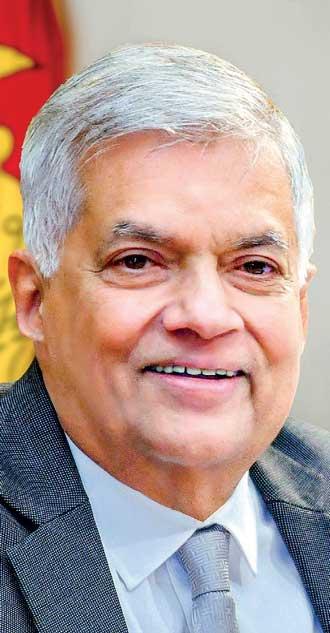
Former President Ranil Wickremesinghe 
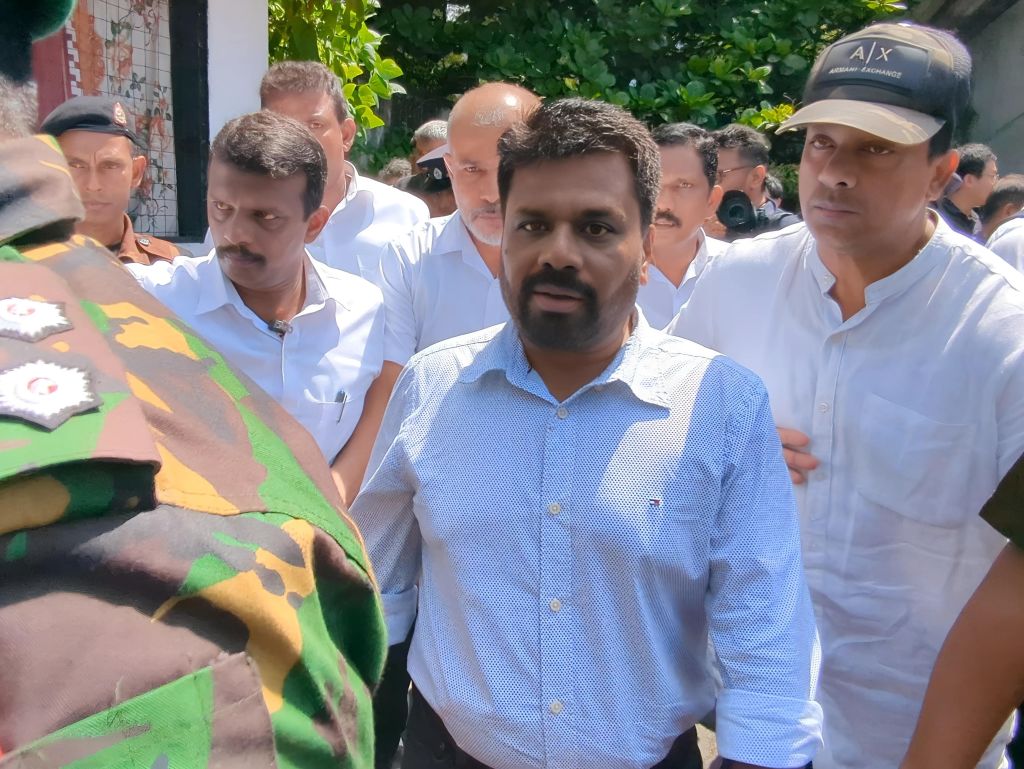
In addition to the stable state of the Treasury, officials from the Ministry of Power and Energy also informed President Dissanayake that Sri Lanka currently has sufficient fuel reserves to meet the nation’s consumption needs. This assurance further highlighted the careful planning during Wickremesinghe’s administration, which left the incoming government with a manageable energy situation, a critical factor considering the ongoing global fuel crises. These developments provided the new administration with a stronger platform to build on as they work towards addressing the remaining challenges facing the country.

Another critical issue is the recovery of assets allegedly stolen by the Rajapaksas. According to the same NPP spokesman, the files in their possession indicate that these assets are valued at $10 billion—(three times the amount of the IMF loan the country is currently struggling to secure). As promised, addressing this matter should be a top priority for the new administration.

Ranil Wickremesinghe, who lost the presidential election, delivered an emotional farewell after serving 26 months as Sri Lanka’s president. 

Grusha, Michael and Rope Bridge

Wickremesinghe often referenced Bertolt Brecht’s The Caucasian Chalk Circle’s  servant-girl Grusha’s role during his presidency, using the metaphor of somebody else’s child” to describe the difficult task of leading Sri Lanka. Just as in Brecht’s play, where a child is entrusted to the one most capable of caring for it, Wickremesinghe saw himself as a caretaker during a critical period, even though the country was NOT HIS BABY” politically. This allegory highlighted the selfless duty he felt in navigating the nation through its economic crisis, even as he prepared to hand over leadership. Azdak, with profound wisdom, declared Grusha to be Michael’s true mother—not through blood, but through love and sacrifice. He understood that it was devotion, not biology, that qualified her to raise the child, and he gently urged her to take him into her care.

Yet, our own Azdaks” seem to have different intentions. They seek validation elsewhere, prioritising power over compassion. Our modern Azdaks appear more focused on the change” they anticipated, that is vital for a brighter future.

I hope you will carry this child even more safely than I did,” Ranil said, expressing hope that the new president would resolve the country’s remaining challenges. Despite finishing third in the election with only 17% of the vote, Wickremesinghe promised his continued service to Sri Lanka, whether in power or not.

He acknowledged that the IMF-backed austerity measures, though unpopular, were necessary to stabilise the economy. He pointed to the rise in Sri Lanka’s foreign reserves from USD 20 million to USD 5.7 billion as one of his administration’s key accomplishments.


The election results suggest that minorities have limited confidence in the new president’s ability to address their concerns


SJB and Vote Counting Drama

The SJB’s missteps continued as two outsiders, who had only joined the alliance at the final moments, accompanied the party’s secretary in leading a delegation to the Election Commission on Sunday evening. This occurred just as the Commission had successfully concluded the vote-counting process and was preparing to announce the winner. The delegation complained that the counting process, particularly the tally of preference votes, was flawed and insisted that the results could not be accepted. In an attempt to stir public opinion, they also held a media conference to amplify their grievances, despite the commission’s completion of a transparent and orderly election process.

Such unnecessary acts will hamper emerging new political culture of collaboration and respect between opposing parties. For too long, the political landscape has been dominated by animosity and hostility between rival parties, hindering progress and creating divisions that stymied national growth. However, recent shifts in attitude—where parties are willing to focus more on constructive dialogue, policy-based debates, and mutual respect—signal a promising future for the country.

A shift away from the traditional adversarial politics and towards a more cooperative approach could pave the way for more stable governance, where ideas are exchanged for the betterment of the people rather than for party gains. When political parties prioritise national interest over personal or party agendas, the entire nation benefits. A government that welcomes input from Opposition parties is likely to be more balanced and inclusive, leading to policies that address a broader range of issues and represent a wider demographic. 

The then NPP leader, now the President, appealed to the North/East electorate to join forces with voters in the south to push for systemic change. However, they did not heed this call, as reflected clearly in their voting patterns. The election results suggest that minorities has limited confidence in the new president’s ability to address their concerns. Now, the president and his administration must face the tough realities ahead and demonstrate that socialism is viable in practice.

If Sri Lanka continues to foster this new political culture, where opposing parties collaborate to address the country’s most pressing challenges, the bright future that everyone envisages could soon become a reality. Such a transformation could bring about the stability, progress, and unity that have long eluded the nation, marking a turning point in Sri Lankan politics and ushering in an era of sustainable development, peace, and prosperity. 

Controversial High-profile Appointments

President has stirred a controversy with two appointments in his administration. The appointment of   President’s Secretary, has raised eyebrows due to the selection of a relatively junior figure within the administrative hierarchy, bypassing more experienced candidates. The second, even more contentious, is the appointment of a former police officer as Secretary to the Ministry of Law and Order. This individual still faces unresolved legal allegations casting a shadow over his suitability.  These decisions may lead the public to perceive these actions as unfavorable, echoing the practices of previous regimes, which were often criticised for prioritising loyalty or convenience over merit and integrity. This perception could undermine the president’s promise of change and reform.

With a focus on collective problem-solving, Sri Lanka could build a stronger economy, improve its social services, and address longstanding issues such as ethnic reconciliation, all within a framework of good governance. The key to this vision is the continuation of this new attitude—where political opponents are viewed as contributors to a shared national project, not as enemies to be defeated at all costs. If maintained, this attitude will allow the country to progress faster and more efficiently, achieving the change and future that so many have long desired.

kksperera1@gmail.com

Balancing Pragmatism and Ideology in India-Sri Lanka ties

September 30th, 2024

Authors : Harsh V. Pant | Aditya Gowdara Shivamurthy  Courtesy Observer Research Foundation 

Since Anura Kumara Dissanayake of the Janatha Vimukthi Peramuna (JVP) was elected as the ninth executive president of Sri Lanka, there is speculation about the new government’s foreign policy. Given the economic and geopolitical scenario, pragmatism is likely to take precedence — Sri Lanka will continue to balance between India and China. The new dispensation’s quest for good governance and reforms will also likely benefit India in the long run.

At its inception in the 1960s, the JVP was a staunchly anti-Indian organisation with its Marxist and Sinhala nationalist ideology. Fighting Indian expansionism” in South Asia was one of its core ideological themes. Its first insurrection against the Sri Lankan State in 1971 ended quickly, with India stepping in to secure the Colombo airport and conducting maritime patrols at the request of the Sri Lankan government. However, the second insurrection, between 1987-1990, became even more anti-Indian with the JVP criticising the Indo-Lanka accord that permitted the deployment of Indian Peace Keeping Forces (IPKF) in Sri Lanka.

Given the economic and geopolitical scenario, pragmatism is likely to take precedence — Sri Lanka will continue to balance between India and China.

While the JVP renounced its armed struggle and entered mainstream politics in 1994, it remained a non-traditional choice. It was during the economic crisis and the 2022 Aragalaya movement that Dissanayake emerged as a popular choice for a populace disenchanted with traditional elites. JVP’s rising popularity compelled India to enhance its engagements with the party. The unpredictability of the elections also meant that India maintained engagements with all the key contenders. Delhi invited Dissanayake on an official visit, even as external affairs minister S Jaishankar and national security advisor Ajit Doval met Sri Lankan leaders across party lines in the run-up to the elections (including the JVP).

India’s pragmatic engagement is part of its Neighbourhood First policy and Security and Growth for All in the Region (SAGAR) vision. As Sri Lanka’s geopolitical significance increases, India has pushed for connectivity to further its leverage. In fact, during the island-nation’s recent economic crisis, India stepped in to offer assistance of $4 billion. As a result, India will be managing and upgrading airports and maritime ports in Sri Lanka, developing the Trincomalee region, and investing in renewable energy projects, oil refineries, an energy grid, and a bi-directional petroleum pipeline. Multiple Indian firms have expressed interest in investing in Sri Lankan State-owned enterprises (SOEs), and India and Sri Lanka are also discussing a land bridge and the Economic and Technology Cooperation Agreement (ETCA).

On their part – the JVP understands that Cold War-era alliances and affiliations make little sense in the contemporary world order. This realisation existed even before the elections and underpinned its outreach towards India. It recognises that India’s geopolitical clout and economic growth will help the country recover and strengthen its economy. Several promises in Dissanayake’s manifesto, such as developing Sri Lanka into a maritime hub, a port and trading hub, and a regional logistics management hub, will depend on the latter’s connectivity with India. Dissanayake wants to improve tourism and information technology revenues for which India will again prove to be an important country. It is this growing importance of connectivity and economic leverage that has prompted JVP to be sensitive to India’s concerns. Its manifesto specifies that the country’s land, sea, and air spaces will not be permitted to threaten or risk the national security of any country, particularly India.

Several promises in Dissanayake’s manifesto, such as developing Sri Lanka into a maritime hub, a port and trading hub, and a regional logistics management hub, will depend on the latter’s connectivity with India.

That said, the new government will balance relations with China, too. Beijing will even attempt to enhance its relationship, leveraging the new regime’s Communist leanings. Dissanayake had visited Beijing before he visited Delhi; several high-level Chinese delegates had also visited him before the elections. As the world’s second largest economy and one of the biggest lenders to Sri Lanka, Beijing will continue to engage with the government to further its interests in the Indian Ocean. This capacity to invest and assist will continue to woo an economically recovering Sri Lanka.

But having won the election with strong rhetoric on transparency and accountability, the government’s balancing will be subject to more pressure. Dissanayake aims to promote a rigorous and transparent tender process for all foreign investments, avoid privatisation of critical SOEs, conduct detailed debt audits on foreign loans, and enact legal action against those misusing these loans. On a short-term basis, this will be challenging current Indian and Chinese competition for a stake in crucial SOEs, and their investments . The call to suspend the Adani energy project is a case in point.

However, in the longer term, scrutinising loans and the new investment conditions (if implemented) are not likely to go down well with Beijing, which has exploited systemic loopholes, promoting corruption, and opaque loans. On the contrary, this could be more beneficial for India and its like-minded partners who are genuinely interested in strengthening institutions and promoting transparency and accountability in the country’s governance.


This commentary originally appeared in Hindustan Times.

From Protests to Power: Anura Kumara Dissanayake’s Journey as Sri Lanka’s First Leftist President

September 30th, 2024

Courtesy D.D.News India

It is more than two years since the Aragalaya Protests shook Sri Lanka to the core. Aragalaya means Struggle in the Sinhala language.

The imagery of people storming the Presidential Palace and hoisting the Sri Lankan national flag, amid slogans of ‘Gota Go Home’, is fresh in the minds of many, in this island nation of 23 million people. Gota is the nickname of the then President, Gotabaya Rajapaksa. He fled the country in the wake of the Aragalaya Protests, and, resigned afterwards.

Cut to 2024.

The Aragalaya sweeps a bearded, 55-year-old son of a labourer into power.

Anura Kumara Dissanayake, a self-avowed Marxist. The leader of the Janatha Vimukthi Peramuna or People’s Liberation Front and the Jathika Jana Balawegaya, an alliance of political parties and trade unions. Dissanayake was born on 24 November 1968. A.K.D., as he is popularly known, has humble origins. He went to a Government-funded school. Got a degree in physics. Worked as a tuition teacher. Sold toffee and cigarettes on trains. Became a student-leader. (He counts Che Guevara among his heroes.) Got elected to the J.V.P.’s central committee in 1997; became a lawmaker in 2000; and served as agriculture minister between 2004 and 2005 in a coalition government headed by President Chandrika Kumaratunga. Dissanayake became the leader of J.V.P. in 2014. He contested for President in 2019, when he finished third with only 3 per cent votes.

Dissanayaka’s party, the J.V.P., was formed in 1965. It led two rebellions, in 1971, and, 1987. In fact, he was a student-leader at the time of the second, armed, insurrection. This was around the time of the 1987 India – Sri Lanka Peace Accord. The two revolts left more than 80-thousand people dead. The J.V.P. has since claimed to have renounced violence. The party entered democratic politics in 1994. Dissanayake apologised for the violence unleashed by the party.

The J.V.P. was a peripheral player in Sri Lanka’s politics for the longest time. It won only four per cent of the votes in the 2020 parliamentary election. The party has only three lawmakers in the 2 hundred and 25-member legislature. But Dissanayake’s and the J.V.P.’s popularity soared in the wake of the Aragalaya Protests.

There are many firsts here. It was the first presidential election since the 2022 economic crisis. Dissanayake is Sri Lanka’s first Leftist President. Dissanayake is the first President to win the lowest number of votes. Just over 42 per cent. That led to the counting of people’s second preference votes. Consequently, it was the first time a second round of counting took place. Dissanayake is also the first political leader who does not belong to the political elite or a dynasty. Many see his win as a breath of fresh air in Sri Lankan politics. A fresh start. A new beginning. After years of political and economic tumult. Someone who can restore public faith in politics.

Dissanayake has sought to temper expectations from him though. He says he does not have a magic solution to problems. He says he is as common a citizen as any other Sri Lankan, with strengths and limitations. There are things he knows and things he doesn’t. And he says that his responsibility is to be part of a collective effort to end this crisis.

There is one dream our people see every new day the sun rises. That is ‘tomorrow will be better than today!’ However, you and I have both learned for many years that this is just a dream. Opportunism, the greed for power, and authoritarianism have hindered our country’s progress. But now we have our final opportunity which cannot be missed. Let us unite to create a thriving and beautiful country that embraces diversity,” he says.

Dissanayake retains the common touch. He has ordered the police to re-open two roads – the Sir Baron Jayathilake Mawatha and Janadhipathi Mawatha, near the President’s House, to the public. He has increased the fertiliser subsidy for paddy farmers from 50 dollars to 84 dollars with the effect from 1 October, for the September 2024 to March 2025 period. And he has promised to cut taxes, fight corruption and reduce the cost of living.

In a televised address on 25 September, Dissanayake spoke about his plans for resuming talks with the International Monetary Fund to advance Sri Lanka’s 2.9 billion-dollar bailout programme. Sri Lanka declared bankruptcy in 2022. It suspended repayments on 83 billion dollars in domestic and foreign loans. A severe shortfall of dollars spun the country’s economy into a deep financial crisis. The foreign-exchange crisis led to a shortage of essential commodities such as food, medicine, fuel and cooking gas. Inflation soared, to a high of 70 per cent in September 2022.

Bhavani Fonseka, a lawyer and human rights activist, says that the economic crisis and what led to the people’s movement are key indicators that people wanted a change. That message was very much articulated in 2022 in wanting to see a change in political culture, culture which kind of saw high corruption and nepotism. And that seems to have been captured in the messages and the manifestos of the N.P.P. (National People’s Power) and the Anura Kumara Disssanayake campaign slogans. So really, it’s kind of tapping into what people were feeling in 2022, and really capturing the people’s imagination that change is possible with this new formation that is the N.P.P.”

Dissanayake has softened some of his policies in the past few years. For instance, his N.P.P. alliance espouses a middle ground. He believes in an open economy, and, is not totally opposed to privatisation. He has vowed to press ahead with the I.M.F. rescue-package, but, modify its terms in order to deliver tax-cuts to his people.

Fonseka says, (The) international community is looking to this new president as to how he governs, what is his foreign policy. But considering the economic crisis, considering we are dependent on international assistance, I can’t see the N.P.P. and the president being able to take sides. So, he will be taking a very pragmatic approach, at least for the next couple of months. How things play out in 2025 and beyond is to be seen. But I think at the most immediate he is going to take a very practical approach.”

Dissanayake’s priorities are to renegotiate the bailout agreement with the I.M.F. and make austerity measures more bearable for the poor. He faces a number of key challenges, though. First and foremost, economy and growth. Dissanayake will have to ensure the economy returns to sustainable and inclusive growth. He will have to re-assure local and international markets. He has to attract investors. He also has to help a quarter of Sri Lanka’s 23 million population climb out of poverty. Then there are the issues of I.M.F. programme and taxation. Dissanayake has to hold discussions with the I.M.F to reduce taxes and free up public revenue for tax relief and investment.

But questions remain.

— Why is he tight-lipped about his stance on key issues concerning the ethnic Tamil population in the North and East?

— Does he support the implementation of the 13th Amendment to the Sri Lankan Constitution?

— The 13th Amendment flows from the India – Sri Lanka Peace Accord of 1987. Among other things, it calls for devolution of police and land powers to the Tamil minority.

— Or will he allow his predominantly Sinhala political base to get the better of him?

— What will be his Government’s foreign policy be towards India?

— And will he allow his ideological moorings to shore up ties with China?

India is Sri Lanka’s biggest neighbor. China is its largest bilateral creditor. Both India and China are competing for influence in Sri Lanka. India’s Prime Minister Narendra Modi says he looks forward to working closely with Dissanayake. Dissanayake visited India in February and held talks with India’s External Affairs Minister S. Jaishankar and National Security Adviser Ajit Doval. Dissanayake has sought to allay concerns about the J.V.P.’s historical anti-West and anti-India stance. He used his inauguration speech to reject power-divisions in the world, and, pledged to work with all other countries for the benefit of his own.

Our country needs international support. We expect that whatever the divisions in the international community to deal with countries, we get the best deal. We are not a state that needs to be isolated in the world. We are a nation that must go forward hand in hand with the international community. We will not hesitate to take decisions to achieve this,” says Dissanayake.

Analysts say that Sri Lanka and Dissanayake, can ignore India only at their own peril. The logic of interdependence will ensure that the ties do not go off-kilter. India was quick to bail Sri Lanka out with billions of dollars is assistance. New Delhi’s Neighbourhood First Policy has ensured that India is the first responder in times of crises. India says that it does not expect all its neighbours to necessarily adhere to what India considers as being better for them. In the real world, countries make their own choices, and, they find a way to adjust and work together.

Dissanayake has called a snap, parliamentary, election on 14 November. He hopes to ride the wave of approval, and, consolidate power in the Parliament. The lack of numbers in Parliament has meant that Dissanayake has not been able to name a proper Cabinet. He named Prof. Harini Amarasuriya as Prime Minister with five portfolios.

Vijitha Herath was given charge of six ministries, including foreign affairs. And Dissanayake kept key ministries, such as, finance, defence and energy for himself. Despite his executive powers as the President, fulfilling his pro-poor campaign promises of reducing taxes and freeing-up public revenue for tax-relief and investment will prove difficult without backing from Parliament.

That is not all. Passing a budget will be hard without support in Parliament. But, there’s a catch. If the snap election throws up a verdict similar to the presidential poll, then Sri Lanka will have a co-habitation government, with the President and Prime Minister from different parties. He needs a minimum of 113 seats to gain power in Parliament. For which he will have enlist the support of the minorities, including Tamils.

I’m cautiously optimistic that the president and those around him have heard the loud calls of the people. The call for a system change. Whether they are able to deliver considering the multiple challenges before them is the big question,” says Fonseka.

President Dissanayake has his task cut out for him. Can he deliver? Will he be able to balance ideological compulsions, domestic reforms, and, geopolitical pulls and pressures? We will know in the months ahead.

By: Ramesh Ramachandran (Senior Consulting Editor and presenter with D.D. India)

‘Cancelling Adani Project Not Good Sign’

September 30th, 2024

By ARCHANA MASIH Rediff News

‘If there is a push towards a Marxist oriented government it will be dangerous.’
‘We have seen this in Nepal and Myanmar and it will be a concern for India if it is surrounded by countries with such political dispensations.’

IMAGE: Sri Lankan President Anura Kumara Dissanayake. Photograph: Kind courtesy Anura Kumara Dissanayake/X

“There is concern about his political inexperience. Sri Lanka’s executive president has enormous political, security and criminal powers. Dissanayake’s comments on establishing independent institutions are a very good sign because so far, previous presidents failed to do that,” observes Asanga Abeyagoonasekera author of Teardrop Diplomacy, China’s Sri Lanka Foray, and three other books on Sri Lanka.

Abeyagoonasekera is a senior fellow and executive director of the South Asia Foresight Network at the Millennium Project in Washington DC, and a technical advisor to the International Monetary Fund where he contributed to Sri Lanka’s IMF Governance Diagnostic Report 2023.

In the concluding part of a telephone interview with Rediff.com‘s Archana Masih, Asanga Abeyagoonasekera discusses Sri Lanka’s new experiment with a Left-leaning president and some lessons from the past.

More like this

As India watches, China grows powerful in Sri Lanka

‘AKD Will Balance India and China’

Why have the voters of Sri Lanka voted for a Marxist political outlier as their president?

If you look at the voting pattern after the Easter Sunday terror attacks, people have voted for only one factor — security.

This time, the main theme was economic hardship. People are suffering because of inflation, high prices and taxes. Poverty is a serious issue which we highlighted in the SAFN report (extrenal link).

The JVP’s Marxist-Leninist ideology managed to capture the pressing economic issues at the grassroots.

Sponsored

I agree with Dr Paikisothy Sarvanamuttu’s assessment that people were angry because of the high prices. The voter was emotionally driven and angry, and wanted to vote out of the establishment and try a new experiment.

The JVP has never been in power and has only three seats in the parliament — all this is a first in Sri Lankan history.

It will be interesting to see how Anura Kumara Dissanayake brings in the JVP’s reformist agenda in keeping with its Marxist background.

What is the most important takeaway of the result?

It is a volatile situation which will reflect on the parliament elections. I doubt they will be able to get a two-thirds majority like Gotabaya Rajapaksa.

Since the vote share of Ranil Wickremesinghe’s and Sajith Premadasa’s together is more than President Dissanayake’s, do you think he will have a tough time getting his candidates elected to parliament?

Yes, people have made an interesting comment on social media that you are not appointed on your [JVP] vote, but our vote. It is a cautionary note which suggests that the JVP has to navigate the reformist ideas.

The people who have voted for them understand the dangers, and hence are cautious.

We had projected three scenarios in the SAFN report:

  • The government would lose.
  • The people were angry against the establishment, and wanted a new one.
  • People wanted to sustain the liberal democratic, market oriented-model proposed by Sajith Premadasa.

The results show that the second scenario had greater appeal with the people.

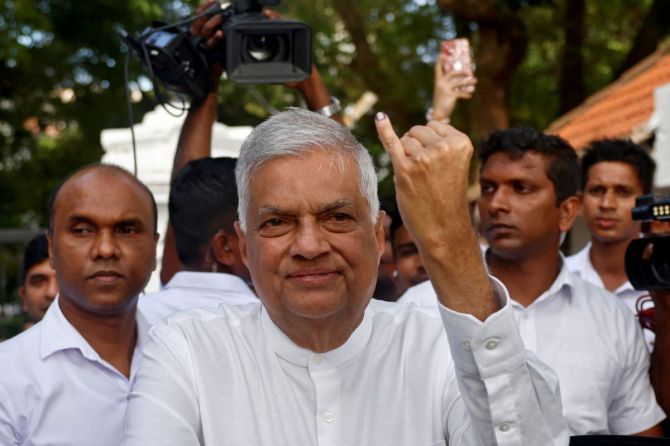
IMAGE: Sri Lanka’s then president Ranil Wickremesinghe shows his ink-marked finger after casting his vote at a polling station in Colombo, September 21, 2024. Photograph: Dinuka Liyanawatte/Reuters

Have people have forgotten the horrors inflicted by the JVP, or are most Sri Lankans too young to remember all that violence?

I think most were born after the JVP insurrections and that’s why a large percentage of floating votes went to it. But I’m not sure whether people have forgotten.

Some researchers say that it’s in the past, but the foundational structures of such parties are built on those values.

So we have to watch and see how political parties interact with the polity as well as the people.

I don’t buy the argument that people have forgotten the 30 year civil war or the JVP insurrections, but they want to see a beginning.

Even when Maithripala Sirisena came to power, people voted for him because they thought it was new beginning and he was a very popular figure in the first few months.

Sri Lankans like new beginnings.

Can the Dissanyake government control inflation and continue the economic stability brought in by Wickeremsinghe is something we’d have to see when Dissanayake has a functioning government after the election.

What will happen if his candidates do not win a sizable number of seats in parliament?

A hung parliament will be a hurdle in implementing policies, passing bills and bringing major reforms.

The pattern in Sri Lanka is that whoever is the president, the people vote for that particular party. But this time the issue is that the Opposition has also got a significant number of votes.

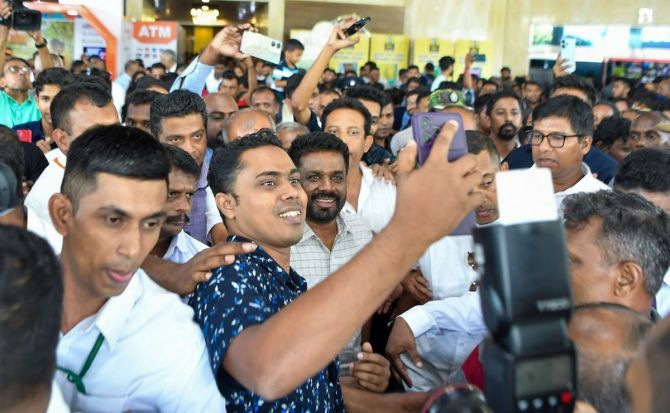
IMAGE: Anura Kumara Dissanayake clicks a selfie with supporters. Photograph: Kind courtesy Anura Kumara Dissanayake/X

What of the entrenched players in Sri Lankan politics? Will Wickeremsinghe and the Rajapaksa brothers disappear into the sunset?

I’m not sure that they will disappear.

Namal Rajapaksa entered the presidential race though his political advisors would have indicated that he would not win because of the unpopularity of the Rajpaksas.

But do remember that Sri Lanka and South Asia have seen swings where unpopular leaders who made mistakes and blunders have become popular again.

So, Namal would want to be around, but Sajith Premadasa is far ahead in terms of political maturity. It depends on the political events that unfold.

It is quite difficult for the Rajapaksas because of people’s anger over corruption.

Anura Kumara Dissanayake has said he would expose the corruption and arrest them. He might want to take up some cases under the framework of the law and disburse them before the general election to show his capability.

There is also concern about his political inexperience. Sri Lanka’s executive president has enormous political, security and criminal powers. Dissanayake’s comments on establishing independent institutions are a very good sign because so far, previous presidents failed to do that.

There was a heavy politicisation of the bribery commission which we have highlighted in the governance diagnostic report. There’s a lot to be taken from that report and the Sri Lankan government has pledged to implement those recommendations.

Let us see.

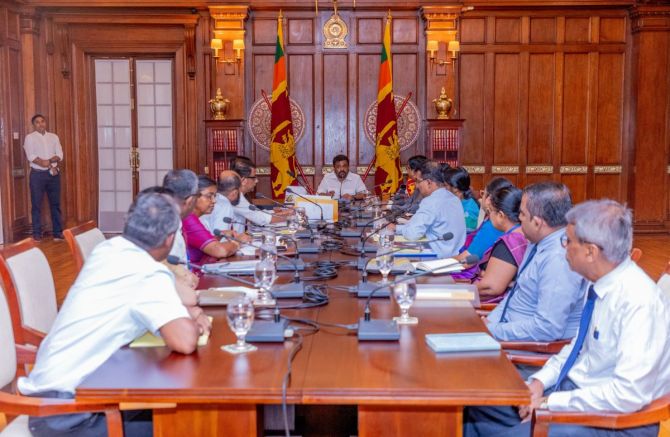
IMAGE: Anura Kumara Dissanayake chairs a meeting with officials. Photograph: Kind courtesy Anura Kumara Dissanayake/X

Has the people’s movement that threw out the Rajpaksas dissipated or will we see more political players emerge from that movement in the future?

Anura Kumara Dissanayake managed to capture the leadership gap created by the movement. He is seen as one of the owners of that movement. He was welcomed at the protest site.

I don’t see any protest emerging again because people are more concerned about the economy.

Wickremesinghe also got a sizable number of people’s votes which shows there was a positivity towards the economic stability created by him.

Do you see Dissanayake governing in the manner of the leftists who have governed, say, Brazil or Bolivia?

The Marxist foundational factor does matter. The party does play a significant role. If there is a push towards a Marxist oriented government it will be dangerous.

We have seen this in Nepal and Myanmar and it will be a concern for India if it is surrounded by countries with such political dispensations.

If Dissanayake works on the Marxist agenda with inward economic policies, then the entire reformist agenda that they were preaching would have been for a political game.

We have seen such cases in other countries and are cautious of this experiment.

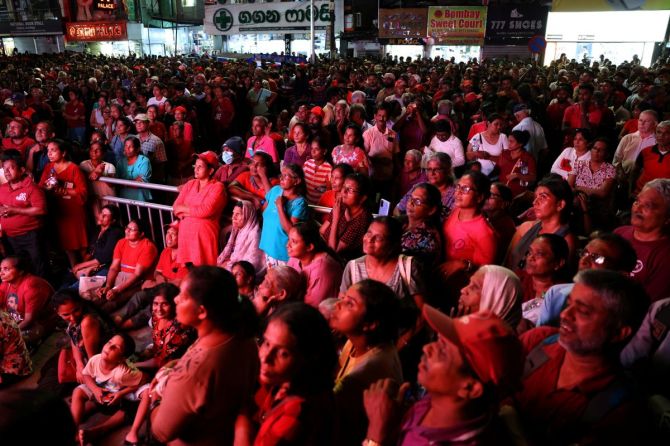
IMAGE: Supporters watch as Anura Kumara Dissanayake, leader of the National People’s Power alliance, speaks at an election campaign rally ahead of the presidential election in Colombo, September 18, 2024. Photograph: Dinuka Liyanawatte/Reuters

What chances do you give Dissanayake’s success as president?

He will be a successful president if he implements his reformist agenda and ideas.

Cancelling the Adani project or other major projects does not send a good sign.

The president has to have a more holistic picture.

Sri Lanka has gone through this in the past. Gotabaya Rajapaksa cancelled and banned chemical fertiliser and moved the country to organic only agriculture overnight. [The move in 2021 led to soaring prices and economic catastrophe in Sri Lanka.]

When I interviewed Gotabaya few months ago about this for my book, he blamed external factors and ill advice from advisors.

Dissanayake has to take careful decision taking the macro view otherwise he would have serious issues, just like Gotabaya.

Gotabaya’s presidency is also a lesson to many leaders in South Asia, not only in Sri Lanka. 6.9 million people voted for him, much more than Anura Kumara Dissanayake. He had a two thirds majority parliament, but was the shortest serving president.

Dissanayake’s reform agenda is promising, he has mentioned public private partnerships which is a good sign. We have to see if he will embrace liberal values and democratic norms that he has said he would.

Feature Presentation: Aslam Hunani/Rediff.com

Can Sri Lanka’s new leader Dissanayake reverse the country’s decline?

September 30th, 2024

Hamzah Rifaat Courtesy TRTWorld

The pro-Marxist official faces the daunting task of addressing a severe economic crisis while uniting a divided nation.

Sri Lanka's newly elected President Anura Kumara Dissanayake reads a document after being sworn in as president at the Presidential Secretariat, in Colombo, Sri Lanka, September 23, 2024. / Photo: Reuters
ReutersSri Lanka’s newly elected President Anura Kumara Dissanayake reads a document after being sworn in as president at the Presidential Secretariat, in Colombo, Sri Lanka, September 23, 2024. / Photo: Reuters

In a sharp rebuke to dynastic rule in Sri Lanka, voters recently elected Anura Kumara Dissanayake, a working class, neo-Marxist leader and head of the National People’s Power. His victory with 42 percent of the vote comes as the island nation struggles with significant economic and social turmoil.

This resulted in the ousting of the Rajapaksa rule which includes former President Gotabaya, his brother and Prime Minister, Mahinda and Finance Minister, Basil Rajapaksa in a 2022 uprising.

Two years on, Sri Lankans are hungry for change and have pinned their hopes on Dissanayake as a potential saviour. Yet, he remains an untested commodity in Sri Lankan politics, despite his leftist, anti-elitist and anti-corruption agenda.

The question is: can he steer Sri Lanka out of its current economic crisis and deliver for the people? The outlook is uncertain.

Decades of mismanagement

For Dissanayake, there is a steep slope ahead.

Adding to that is the existence of bloated, loss-making state-owned enterprises and the economic effects of the decades-long war between the Lanka Tamil Tiger Eelam militant group and the Sri Lankan government, which hampered foreign direct investment. Also, Sri Lanka’s liberalisation drive in 1977 failed to implement the necessary requirements for a market-oriented economy.

The Rajapaksa era however, made it worse.

As foreign debt soared in 2019, the Russia Ukraine conflict hiked prices of basic commodities and the COVID-19 pandemic contracted industries such as fishing and agriculture, the administration responded with several policy blunders.

This includes tax cuts affecting fiscal policy or governmental spending and taxation to influence the economy, and opposition to an International Monetary Fund’s (IMF) bailout plan to heal the economy. The result was soaring prices and fuel shortages which led to a nationwide movement against corruption, mismanagement and nepotism.

Dissanayake has pledged to reverse the mistakes made during Rajapaksa’s tenure.

IMF lifeline

There is a problem, however.

Sri Lanka’s economic future is dependent on the completion of an IMF program previously negotiated by former President Ranil Wickremesinghe, who served for two years following Rajapaksa’s ousting.

Under the program, Sri Lanka can only prevent a future default if it reduces public debt to nearly all of its GDP and ensures that a significant portion of government revenue is directed at debt servicing. In simple terms, this means that the government must use the revenue it generates to pay back its debt obligations rather than spend on public welfare.

This presents a challenge for Dissanayake who has promised to provide relief by widening welfare spending programs and slashing taxes.

As a result, Dissanayake opposes the IMF deal and claims that the fund only seeks to bail out corrupt regimes. He has vowed instead to renegotiate the program by making austerity measures more bearable for the poor.

This promise brings his egalitarian agenda in direct conflict with Sri Lanka’s IMF targets and the nation’s plan to get its finances back on track.

Take cases in other developing countries as an example. Satisfying IMF conditions entails implementing austerity measures with side effects such as higher inflation affecting the public. In Pakistan’s case, the country’s recently concluded IMF loan stipulates conditions such as preventing the government from subsidising the energy sector.

However, the measures Dissanayake seeks to implement come at a heavy cost. Spending on welfare programs negatively impacts budget deficits in the absence of market reform and prevents government revenue from being channelised towards debt servicing.

This heightens the risk of default which means that Sri Lankans would once again confront rising fuel prices, food shortages, a collapse of domestic industries and lower income levels.

Domestic political costs

The political costs of Dissanayake’s decisions will be high.

APPeople transport their vegetables purchased at a market place in an auto rickshaw in Colombo, Sri Lanka, Friday, June 10, 2022. The country is facing its worst economic crisis in recent memory (AP Photo/Eranga Jayawardena).

Essentially, Dissanayake must walk a tightrope and chose between either fulfilling the IMF’s conditions and alienating his supporter base on one hand, or living up to his pro-poor policies and alienating the IMF on the other. Neither choice is easy as in both cases the Sri Lankan public could suffer.

His “people-centric” approach must also be implemented in substance. While he campaigned on boosting Sri Lanka’s domestic industries, he has simultaneously sought energy cooperation with India (a key creditor to Sri Lanka during the 2022 economic crisis), to invest in infrastructure in the island.

For Sri Lankans hoping that his government generates domestic employment and promotes domestic industrial development for poverty alleviation, lack of prioritisation from Dissanayake is a potential cause for disillusionment.

Buddhist nationalism

Economic recovery in Sri Lanka also depends on social cohesion. For Dissanayake, the key challenge there is to address prevalent Sinhalese Buddhist nationalism, which has simmered during the Rajapaksa era.

The ideology considers the island’s Sinhalese Buddhist majority population as a dominant race at the expense of minorities such as Tamils, Muslims and Christians. It was weaponised by politicians such as Junius Jayewardene to target Tamils in the early 1980s and in 2018 by the Bodu Bala Sena (BBS), a Buddhist extremist organisation which used it to target Muslims during the 2018 riots.

,,

In short, Dissanayake must adopt pragmatism on economics in Sri Lanka and heal community misgivings through politics of accommodation.

While Dissanayake has called for unity among all religious and ethnic groups in Sri Lanka, his previous Janatha Vikumthi Peramuna (JVP) party which is now part of the NPP, campaigned on a Sinhalese nationalist platform and has a fractious relationship with Tamils.

Also, while campaigning in 2024, he rejected devolving centralised power to the north and east of the island, where the majority of Tamils live. On the question of Indian Tamils living in Sri Lanka, his JVP previously denounced them as a “fifth column” and an instrument of Indian expansionism.

For him to bury the hatchet, Dissanayake must do more to accommodate Tamil grievances, including spearheading investigations into human rights abuses committed against them by the Sri Lankan army during the war. Also, his approach towards the country’s Muslims, who have been targeted by far-right Buddhist extremists, must be different from Rajapaksa, with measures such as banning the BBS put in place.

In short, Dissanayake must adopt pragmatism on economics in Sri Lanka and heal community misgivings through politics of accommodation.

Only then can he reverse Sri Lanka’s decline.

President faces a problem common to many developing nations: Austerity imposed by the West

September 30th, 2024

Courtesy The Daily Mirror

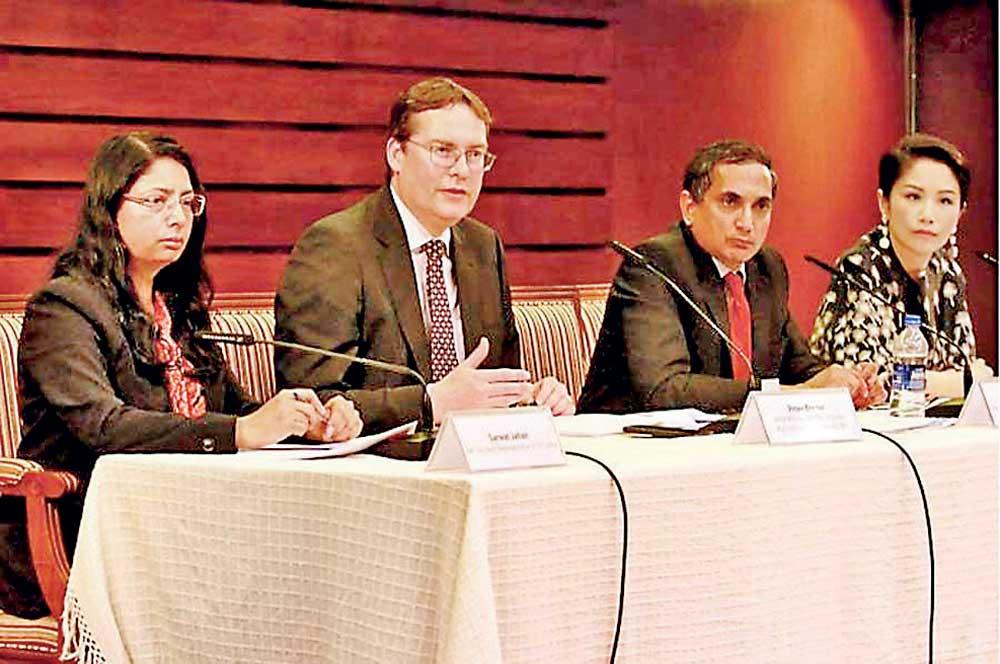
The International Monetary Fund delegation addressing the media in Colombo


Dissanayake is going to have to walk a tightrope. For a country and people that are going through the worst phase of dispossession since independence, international solidarity should mean providing space for rebuilding the country


Sri Lanka is at a historic juncture. Faced with its worst economic crisis since the Great Depression and having defaulted on its external debt for the first time, the country recently saw unprecedented protests demanding systemic change. The former president Gotabaya Rajapaksa was literally chased away in 2022, as protesters stormed his residence and swam in his pool. The political parties and their offshoots that have ruled the country since independence are unravelling. Take Anura Kumara Dissanayake. He polled just 3.8% of the vote during the previous presidential election in 2019. This week, he was sworn in as president.   

Two major insurrections 

The new president belongs to the Janatha Vimukthi Peramuna (JVP) party and leads the new centre-left National People’s Power (NPP) coalition. The JVP engaged in two major insurrections in the early 1970s and late 1980s, which resulted in the loss of tens of thousands of lives – mass violence was committed by both the JVP and the state. But the party has come a long way from its mix of revolutionary Marxist-Leninism and Sinhala ethno-nationalism, having moved into the centrist mainstream. From its roots in the rural south of the country, the party remoulded its base in the suburbs and small towns and even wooed the middle classes by taking up the issue of corruption. Its electoral capture of state power was contingent on the unprecedented economic crisis, as it waited patiently for the political winds to turn.   

Yet its victory comes during unenviable times, as the bankrupt country is subject to severe austerity measures in line with the conditions of an agreement with the International Monetary Fund (IMF), the Washington-based financial institution that has long promoted social welfare cuts on developing countries in the name of the free market.  

The previous government did not even consider negotiating terms with the IMF. It was all too willing to grovel before the global powers and ran the economy adhering to the benchmarks and recommendations of western institutions. These economic policies benefited the elite in the country, while the burden from the rise in VAT, the market pricing of energy, the halving of real wages for many and the cost of living doubling have all hit working people. Domestic debt restructuring, pushed by the international bondholders – consisting of large hedge funds and other financiers – was also needed to satisfy the IMF’s debt sustainability analysis (DSA). This now means the retirement funds of working people, such as garment workers and tea pluckers, over the next 16 years are going to lose half their value. Meanwhile, wealthy investors in the financial sector have got away scot-free, with their investments untouched.  

The central challenge before Dissanayake is getting a better IMF agreement. And it is this tension between a new president who seeks social change and the old IMF, which remains committed to the interests of global finance and markets, that is likely to play out in the weeks and months ahead.   

Defaulting again

Sri Lanka is heading for parliamentary elections in seven weeks, and it is Dissanayake’s strength in parliament, and the national consensus he can forge, that will determine his bargaining power with the IMF and the extent to which he can keep the elite in the country at bay.  

At the heart of any renegotiation are the IMF’s targets. According to these, Sri Lanka must get its public debt down to 95% of GDP and must spend 4.5% of GDP annually in external debt servicing once the IMF programme is finished. This amounts to 30% of all government revenue going on servicing debt – a great scenario for Sri Lanka’s creditors, particularly international bondholders to whom $12.55bn is owed. But with little debt relief, the reality is that Sri Lanka could end up defaulting again.   

In this context, there is mounting pressure on Dissanayake to stay the course with the IMF. From the elite in the capital, Colombo, to the western media, there is much talk that a former Marxist cannot work with the IMF and manage the economy. This amounts to a kind of sabotage. It is important to point out here that while the so-called IMF bailout” amounts to just about $60m a month for the duration of the programme, Sri Lanka’s foreign earnings (exports, service earnings and worker remittances) every month now are about 30 times that amount, at $1,800m. In other words, the president will not be sticking to the IMF programme for its funds, but due to international political pressure and the fear of isolation.   

There are lessons to be learned from elsewhere here – notably Kenya. Its president, William Ruto, was elected in 2022, a year after an IMF agreement, and the red carpets were eventually rolled out for him in Washington for sticking to the neoliberal programme. Yet within two years, massive protests against austerity and state repression have marred the country. In Sri Lanka, as in about 70 developing countries around the world in debt distress, the same questions arise. Do they continue to mortgage their national policies to the bondholders and the IMF, or do they seek alternative avenues of development finance and negotiate their way out of the crippling IMF programmes?   

Dissanayake is going to have to walk a tightrope. For a country and people that are going through the worst phase of dispossession since independence, international solidarity should mean providing space for rebuilding the country. For if Dissanayake fails to carry the citizenry, the xenophobic and polarising forces that ravaged Sri Lanka for decades will be waiting in the wings.  

(The writer is a political economist and senior lecturer at the University of Jaffna, Sri Lanka)
Courtesy : The Guardian  

No change in decision not to re-conduct Grade Five scholarship examination

September 30th, 2024

Courtesy The Daily Mirror

Colombo, September 30 (Daily Mirror) – There is no change in the decision not to re-conduct the Grade Five scholarship examination, Examination Commissioner General Amit Jayasundara said.

He made this comment while addressing the media at a media conference held this evening.

He also said that it was decided to give free marks to the three questions that had come out in such a way as to do justice to the children.

Meanwhile, the Commissioner General said the examination of the answer scripts of the suspended examination will begin very soon.

Accordingly, the results are expected to be released before the start of the new school term, he added.

Fuel prices slashed, no change in 95 Octane Petrol

September 30th, 2024

Courtesy The Daily Mirror

The Ceylon Petroleum Corporation (CPC) announced that it will reduce the prices of fuel from midnight today. 

Under the new pricing, Petrol Octane 92 will see a reduction of Rs. 21, bringing the price down to Rs. 311 per litre. 

Auto Diesel will also see a reduction of Rs. 24, making the new price Rs. 283 per litre while Super Diesel will be reduced by Rs. 33, bringing the price to Rs. 319 per litre.

A litre of Kerosene will be reduced by Rs.19 and the new price will be Rs. 95

However, there will be no price revision on Petrol Octane 95

Only one independent candidate declared expenses thus far, No major party stated yet: EC

September 30th, 2024

Courtesy The Daily Mirror

Colombo, September 30 (Daily Mirror) – Only a single independent candidate of the Presidential Poll 2024 has declared his campaign finances, whereas no major party had stated their election expenses by the end of September, having nine of 21 days of the grace period to declare expenses had lapsed by yesterday, the Daily Mirror learns. 

Independent candidate M. Premasiri Manage, who contested under the symbol ‘Spectacles’ had declared his campaign finances to the Election Commission of Sri Lanka (ECSL) by September 30th, yet adhering to the newly passed law of Regulation of Election Expenditure Act No.3 of 2023.

A senior Election Commission official told the Daily Mirror today that no other candidate including any of the major political parties contested for the polls had declared their income or expenses during the election thus far. 

According to the Regulation of Election Expenditure law, which was passed in January 2023 and was tested for the first time during the 2024 Presidential Poll, a candidate or the party represented by him or her should declare their campaign finances within 21 days of the conclusion of the election to avoid legal action. 

Since September 21st the day of the Presidential Election, the ECSL announced that every candidate should declare their campaign finances by October 12 or that legal action would be sought through the police and the Attorney General. 

Under the provisions in the act, a party with its candidate should submit two separate expenditure lists, which are stated as 40% of campaign finances to be declared by the party and 60% of the expenses to be stated by the candidate itself. 

The official said that they have made several written reminders to all the independent candidates and the parties to declare their finances before the stipulated date of October 12th and had received a response from independent candidate Manage. 

Meanwhile, National People’s Power (NPP) Executive Council Member Bimal Rathnayake had inquired about the details of filing their expense declaration. 

The official said the candidates in their financial declaration report should state their election campaign income including donations and their expenses including publicity and propaganda supported by an affidavit. 

As per the spending limit set by the ECSL a candidate or party could spend only Rs.109 per each registered voter in the country and a total of Rs.1.8 billion.

NPP Govt. abandons plan to privatize SriLankan Airlines

September 30th, 2024

Courtesy The Daily Mirror

* Says it should remain with state for tourism promotion

* Plans for new management improvement

Colombo, September 30 (Daily Mirror) – The National People’s Power (NPP) government led by President Anura Kumara Dissanayake is to abandon initial plans by the previous rule to sell off or divest the cash-strapped SriLankan Airlines, an official said.

The previous government initially planned the sale process of the national carrier through the State-Owned Enterprises Restructuring Unit . After that the former Cabinet said it abandoned the sale process and decided to look at an alternate model to divest the airline.

However, the Chairman of the NPP Economic Council Prof. Anil Jayantha said the government believes that the national career should remain with the state given its significance for the development of tourism. He said the airline would not be sold off or divested as a result.

He said a new model for the improvement of its management would be considered instead.

The previous Cabinet agreed to take over debts of US $ 510 million debts of the national carrier in a move to attract a private investor. It originally decided to sell at least 51 per cent of the state-owned carrier.

High-level IMF team to visit Sri Lanka this week

September 30th, 2024

Courtesy Adaderana

A high-level team of the International Monetary Fund (IMF) led by its Director of the Asia Pacific Department, Krishna Srinivasan, is scheduled to visit Colombo from October 02 to 04 to meet with President Anura Kumara Dissanayake and Sri Lanka’s new economic team. 

The high-level delegation is visiting the island to discuss latest economic developments and economic reforms under Sri Lanka’s economic program supported by the IMF, according to a spokesperson for the global lender.  

A high-level IMF team led by Krishna Srinivasan, Director for the Asia Pacific Department, will be visiting Colombo October 2-4 to meet with President Dissanayake and the new economic team to discuss latest economic developments and economic reforms under Sri Lanka’s economic program supported by the IMF. The team will communicate at the end of the visit,” the spokesman said. 

ජගත් ජනපතිට දාපු සද්දය මෙන්න – ඇත්ත ජනාධිපති වෙන්නේ සජිත්ලු…

September 30th, 2024

තැන තැන ගාල් කළ වාහන පැදපු අයගේ ලිස්ට් එක මෙන්න – Hiru News

September 30th, 2024

Hiru News

President’s Office clarifies regarding vehicles parked near Presidential Secretariat

September 30th, 2024

Courtesy Hiru News

The President’s Office has clarified concerns regarding the vehicles parked near the Presidential Secretariat in Colombo. According to the statement, 107 vehicles handed over to the Presidential Office after the appointment of the new President are temporarily parked outside the Secretariat premises under police protection.

These vehicles were not assigned to regular staff but were provided to the private staff of the former President during his tenure, as per Article 41(1) of the Constitution. The vehicles were parked outside due to the lack of space inside the Secretariat.

The President’s Media Division further clarified that the vehicles were not displayed intentionally and are being allocated for essential services as per President Anura Kumara Dissanayake’s directive. A full list of the vehicles and the individuals they were assigned to has been released.

https://drive.google.com/file/d/1PgypmeDuMfNqv7Pl4sb8k6Dc8WUCRcD4/view

Sri Lanka Presidential Elections: Has Protest Vote brought Yahapalana 3 to power?

September 29th, 2024

Shenali D Waduge

Anura Kumara Dissanayake representing the JVP-NPP becomes the 9th President of Sri Lanka. Ironically, the majority of votes that crowned him President was from disgruntled 4.5million plus SLPP voters who were part of the 6.9million voters that brought Gotabaya Rajapakse to power in 2019 & was overthrown by the very groups that the sitting President was steering in 2022. Sri Lanka has no shortage of political dramas. If we thought we had seen intrigues in parliamentary democracy after Ranil Wickremasinghe was rejected by voters in August 2020 & after a year of wrestling, returned to Parliament securing the sole national list seat given to the UNP in 2023 & within less than a year became the Prime Minister in 2022 & thereafter the President in July 2022, the outcome in 2024 takes the cake!

The wrath of the voters

Throughout the election campaign & even prior a slogan spread across society was the need for a wenasa” or change” – it was soon parroted by all. This was combined with the demand to capture the thieves and end corruption. How easily this could be done, was never thought, forgotten too was how yahapalana regime change came with ending corruption” & recovering stolen wealth” which only ended up in teams enjoying a nice holiday courtesy the tax payers to all corners of the world & returning without finding any stolen wealth! In fact, in one of his last speeches to the public, the incumbent president declared that the government of Gotabaya Rajapakse was not responsible for the economic crisis, thus negating his own narrative that had been one of the key reasons for the 2022 ousting of the President. Some of the expats screaming about corruption are also guilty of sending money to Sri Lanka through undial & hawala system as are some local businesses. Nevertheless, unlike Bangladesh a democratic coup did take place using corruption” slogan no different to how it was used in 2015 as well. This was a repeat performance to bring a co-collaborator of that coup to power.

The mentality of revenge & hate has become a key to steering voter sentiment through well-choreographed media campaigns & key political figures. These drained into the minds of people successfully enabled the transfer of votes to bring about an anticipated victory which however went to the 2nd count & resulted in the victor obtaining less than 50% of the votes and being rejected by the main minority.

The promise of salary increase did not sway public sector votes. The voting pattern of North East saw no change. In fact, the former President found out once again that he could never get elected to the office of President. While the elected President found out he became President from the votes of the party (SLPP) he was attacking for over a decade!

The ignorance of the voters & their inability & lack of critical thinking & analytical skills as well as linking Sri Lanka’s politics with external interferences & pressures & understanding the dynamics at play is also a key reason for the failure of voters to be able to vote wisely. This ignorance will no doubt will be used in future election campaigning as well.

Does corruption exist only in Sri Lanka? Are only the MPs corrupt? Do only MPs take bribes? What about the givers? Are they as guilty as the takers? How corrupt is the 1.4million Public Service as against the 225+1 Parliament? How corrupt are those in the corporate sector in particular the top companies that secure underhand deals through Public Sector & Political connections? What about the media & their role in steering voter sentiment via sensationalism, are they not equally guilty? If there is to be any change wenasa” shouldn’t all the entities linked to corruption be under the same lens of scrutiny or does it only have to be targeted politicians? Is this corruption in reality a witch hunt based on political bias where every political party lands their opponents in prison for corruption”? Is this what the voters also want to see? Are voters of a political party happy to see only their opponent MPs in prison? Is this the norm of good governance” to be followed?

Protest Vote – Voter Revenge Culture

An ugly precedent has been created primarily via psychological operation using social media & funded electronic media campaigns where owners are aligned to a political party, breed in the minds of voters the need to cast their vote based on hate / revenge completely ignoring the suitability of candidates or party, what they promise to fulfil via their manifestos & whether they can assure to protect some non-negotiable factors that concern the Nation (Not compromising National Security / Maintaining the Unitary Status of Sri Lanka / Foremost place historical held by Buddha Sasana / Protecting National Assets & Resources & Safety of the People of Sri Lanka). Manifestos have become simply a coffee table souvenir which 99% voters do not read. We saw this revenge emerge during the 2015 regime change, thereafter again in 2019 & 2020, it reached unsavory heights in 2022 where democracy was dumped opting for jungle law and it re-emerged again in 2024.

The ruthlessness has been such that the very force that brought GR to power completely deserted its party in 2024 to put their eggs to put a new President in power. JVP leader would never have come to power without the 4.5m SLPP votes he received in 2024.

Similarly, the clash of egos resulted in the inability of Ranil Wickremasinghe & Sajith to team up as the grand old party to contest as President & PM which would have easily brought victory. What cannot be ignored is that in terms of agenda there is no difference in UNP-SJB or JVP if NPP liberal wing have its way in the new government & decision making.

With each revenge vote, the governance has been declining, the economy has been declining & society shockingly is also in decline both morally & intellectually. They say revenge returns with karma & it is most likely that karma will not be kind when it comes back to haunt those that cast vote for revenge. Sadly, the Nation will have to bear the brunt until a righteous leader eventually takes over. The culture of revenge politics must end for us to really develop.

Political partys are happy to work with the formula of being thrown out of power & then returning to power and forming alliances to fool the masses with no comprehensive national plan or policies! The voters have to shoulder responsibility for this culture, politicians have got used to.

Never forget or undermine role of invisible” external forces

Much as we boast of the democracy” that prevails, we cannot ignore aspects like Cambridge Analytica that facebook was found guilty of filtering people’s psyche and subtlety brainwashing their opinions. Social media though used by only 8million (34% population) has been playing a key role since 2015 & surged during the 2022 aragalaya which was to be the 1st Bangladesh but was foiled. These platforms are generally controlled by external forces via locals that are employed by them. The West’s divide & rule policies continue. This is how parties suddenly split & new leaders emerge. All are either pawns or become pawns to remain in power. Even voters become pawns if they fall prey to the calculated propaganda via communication channels that are controlled by these invisible external forces.

Nevertheless, even with 42% of votes, a new President sits in power. He deserves a chance. All the rhetoric in Parliament while in the Opposition is now put to the test. People are watching & waiting results. Just as the President while in Opposition made demands for action & results, he too is now tasked to deliver results. These should not follow the same template but attempt to create proper policy & rule-based orders, some immediate appointments however have raised eyebrows but the President will find out sooner than later, appointing controversial or people with conflict of interest is to his disadvantage and will boomerang on public perception with time.

No doubt, the President is riding a thin line as ground realities are opposite to what he perceived while sitting in the Opposition. One has to be in the hot seat to find out! The foreign media have not helped either dubbing him Marxist” and Left-aligned” though in his inaugural address he neither mentioned the founder of his party nor the sacrifices thousands of youth made in taking an anti-Indian stand against the Indo-Lanka Accord of 1987.

No doubt the future of his party will be decided, which is probably why a new entrant in the form of NPP was plugged to it, just as SLFP was broken to form SLPP and UNP was broken to form SJB. In short what it reveals is the liberal foxes have crept into all of the political parties as sheep to advance agendas of external forces. This is the newest threat to all of the political parties in Sri Lanka.

What’s left to be seen is whether the new government is the new Yahapalana 3 – the new appointments, alliances after new Parliament sits will confirm this.

Shenali D Waduge

The Masquerade of Tagging & Taming Marxists

September 29th, 2024

e-Con e-News

blog: eesrilanka.wordpress.com

Before you study the economics, study the economists!

e-Con e-News 22-28 September 2024

Sri Lanka has elected a Marxist’, ‘Leftist’ & ‘Socialist’ & ‘Communist’ executive president: The capitalist media keeps slobbering these labels out with studied stupefaction and saturated headlines to anybody who cares heed them. We do not have to guess what they will blurt out next. Happy endings are not their style – no matter what their bedtime stories and teleology promise about the ‘ever-after’ & ‘hereafter’.

     They are of course eager to erase: that Sri Lanka has also long been ruled by governments purporting to be ‘Left’, and including self-determined & party-affiliated ‘Communists’ ‘Marxists’ & ‘Socialists’ of more varieties than the English could ever dream of in their philosophies & newsrooms. Undermining them one by one: They wish to put an end to all this for all time.

     So what are the merchant capitalists cooking up now? Why is Germany’s Friedrich Naumann Foundation for Freedom, more recently fingered in the coup in Peru, so interested in our upcoming ‘economic battles’? Germany after all is the birthplace of Karl Marx. Is this why? What then happens when history refuses to end, and keeps going?

     ee has noticed how fat our ee Economists section has become over the last few months and years. Sri Lankans are even being harangued about how we have abandoned ‘race’ & ‘religion’ in these elections and have now – thank their god – finally focused on economic issues.

     As a result, there appears to no end to the drivel dished out by experts, homegrown and imported, offering their panaceas, elixirs and other ointments to ‘revive’ Sri Lanka’s economy. Many of these so-called ‘homegrown’ experts are draped in export-quality fineries, but underneath….whoa? (see ee Comments).

     We have pointed out how Sri Lanka, well used to the thalagoya and kabaragoya, land and water monitors, has also had to endure: class monitorswar & peace monitorsUN & election monitors, the latest crowd of monitors being ratings agencies, which operate like heart monitors, shooting up & down, manufacturing suspense. One minute Bloomberg cries out: ‘Sri Lankan bonds slide as election result puts IMF loan at risk.’ Next minute: ‘Moody’s ratings: Gives optimistic update on AKD Presidency: We do not expect significant disruption to the country’s reform agenda or macroeconomic policies.” Perpetual price disturbance is the rater’s game, but it is no way to run a country. 

     In the Bloomberg story, however, we learn, ‘”A Dissanayake win is the worst possible outcome for Sri Lanka’s bonds,” Tellimer strategists Hasnain Malik & Patrick Curran wrote in a note Sunday.’ It turns out that Tellimer is owned by India Ports Global Limited (IPGL) a wholly owned subsidiary of Sagarmala Development Co, which is under India’s Ministry of Ports, Shipping & Waterways!

     So, why would India’s Ministry of Ports, Shipping & Waterways froth and foam so? Well, as the presidential election grew closer, the NPP began to take on many national concerns, associated with the dreaded pohottuva government, even driving up to the Dalada Maligava. One of those concerns was the protection of energy sovereignty, and Adani’s wind power projects (see ee Focus, Lasanda Kurukulasuriya).

*

• This ee also reproduces Chandrasena Maliyadde’s rather rollicking rollout of the causes of Sri Lanka’s economic distemper. Rather than mumbling out such widely promoted symptoms like corruption etc, Maliyadde, once Secretary to the Ministry of Plan Implementation, first reels out ‘statistics – that are only next to damned lies’ – yet reveal: Sri Lanka is ‘a rather underdeveloped country’.

     For even as Sri Lanka can proudly claim the highest indices in South Asia like ‘life expectancy’, and ‘human capital’, at the same time, the Western Province’s share of the GDP is 40% and all other 8 provinces share 60%. 30% of the population lives below the poverty line, with the richest 20% owning 50% of national income, and the top 1% owning 31% of the wealth and the bottom 50% owning 4%. Maliyadde thus makes a distinction between development and growth. He points out that much of the analysis of Sri Lanka focuses on numbers and arithmetic, rather than human beings. He points to the need to show how the fruits of growth are generated & distributed – yet he fails to even mention once the need for modern industrialization, which alone can take us beyond ‘debt traps’ (see ee Focus)

*

• The current expectation is that once the new NPP government kickstarts ‘debt’ negotiations, with the IMF, World Bank & Asian Development Bank: their controller, the USA, will block Sri Lanka’s access to investment, and prevent essential projects and initiatives, on some pretext or other, unless the country further implements imperialist dictat. The new President will then have to navigate all the IMF’s roadblocks and landmines, involving banking, debt management, financial management, economic transformation, and electricity acts, etc.

*

‘Over 60 questionable bills were rushed through Parliament

by an illegitimate government, creating further complexities

needing immediate attention.’ (Charith Gunawardena)

*

‘Ranil has left enough checkpoints in the economic front…

to impose fiscal discipline in the executive & the legislation’

(Sujata Gamage)

*

Each failure to adhere to their demands, will ensure the new President faces the same turmoil as was dished out to topple previous national leaders. So, have they been lured into another trap? The US, after all, is expert at waging wars, forever wars, hybrid wars, cold & hot wars…

*

Let’s take a hint about the oncoming plot from economist WA Wijewardena. After a decade or more of columns offering weekly anodynes about good governance and rule of law, WAW suddenly exclaims: ‘AKD’s top priority should be to appease a population boiling from within.’ Boil. Boil. Toil & Trouble!

     Meanwhile, one losing presidential candidate was urging the diplomatic corps and military chiefs to call for a curfew. Well, this is what the Sunday Times (linked to the last President’s kin) splutters out shocked. This same oh-so-English Sunday Times cast casteist cattiness at the very same candidate.

     Then we find out from another columnar economist, Sirimal Abeyratne, that the ‘Friedrich Naumann Foundation for Freedom in Colombo is concerned about the ‘‘economic battle’ that Sri Lanka must win after the Presidential Elections’. Abeyratne believes any promise of ‘economic normalcy is based on a frightening assumption, while many are not even aware of how frightening it is’ for people assume, ‘there will be ‘no external shocks’ in front of us.          

     Abeyratne is the very embodiment of that Dutch painting called The Scream. Abeyratne wrings his hands as he strives to keep his head from blowing off, yelling about:

‘There is no reason to say that there won’t be another pandemic… a

global security threat affecting our tourism incomes & worker remittances.

There could be an escalation of ongoing wars out there, or an economic

shock in the US or the EU; what about a major cyber-attack or a global

energy crisis or any other external shock that can have a significant

adverse impact on our economy? They are external shocks!’

(see Post-Election Economic Battle

& Friedrich Naumann, ee Economists)

*

Well. Well. Well. How fragile we suddenly turn out to be. What is cute is this Friedrich Naumann Foundation for Freedom. FNFF operators seem to pop up in the strangest places at the eeriest moments. The foundation is named after one of those proto-Nazi Germans who ‘mapped a pre-war roadmap for imperialism’ in the early 20th century.  And more recently ‘Naumann ‘has been fingered for promoting coups in Peru, Honduras, Venezuela, etc.

     In 2013, the CID investigated the Naumann Foundation, operating in Sri Lanka since 1974, for going ‘beyond its legal limitations in Sri Lanka’, after conducting workshops for opposition parties, and funding then opposition UNP leader Ranil Wickremasinghe’s foreign tours & political activities. A funder of Transparency International (TI) and thinktank Marga, etc, Naumann also sponsored US Advocata’s ‘Let’s Reset Sri Lanka‘ ReformNow Conference at the BMICH, in August 2022, in the wake (sic!) of the aragalaya, which demanded ‘Unlocking Land for Development, selling off national industries (SoEs, SriLankan Airlines), stripping Samurdhi (welfare), and dismantling labour laws (so-called flexibility).

     Abeyratne’s enthusiasm was therefore further triggered, when the outgoing President Ranil’s prolific Media Division (PMD) on election day, perhaps in contravention of election laws, got Abeyratne together with Borah merchant and US Advocata chairman Murtaza Jafferji to ‘circulate their views’. Borah scion Jafferjee seemed to have disappeared from public view, after he was appointed after the aragalaya by then-PM-&-Minister of Finance Ranil Wickremasinghe to form an ‘Economic Stabilization Dialogue’ between the Ministry of Finance & ‘independent’ economists.

     There’s an irony in all this. There are rumors being spread that the agents of the English & US multinational corporations – the cosmopolitan comprador bourgeoisie in Sri Lanka, who are largely non-Sinhala Buddhist, like the Borahs, Sindhis, Memons, Parsis and Chettiars, as well as the Muslim & Christian merchants & financiers – having long funded Sri Lanka’s bourgeois parties, this time also heavily funded the NPP to draw them away from their JVP roots, and turn them into ‘the alternate party of the compradore bourgeoisie’. Most prominent among them are supposed to be Soli Captain, with his son Rusi, the biggest shareholders in Sri Lanka, including John Keells, the son of Ken Balendran, while their economics consultant is another former director of Keells, Indrajit Coomaraswamy.

     Hanif Yusoof, recently appointed Western Province governor, is linked to Expolanka, a front for the Japan import mafia. He is also linked to Mustafa Cassim, founder of Roar, a major disseminator of aragala videos. Yusoof is also linked to Osman Kassim who supposedly introduced Islamic banking to Sri Lanka., and founded Amana Bank, and also was a chairman of Expolanka…

*

_________

Contents:

Clarification on  paying of Motivation Incentive Allowance to tri forces personnel

September 29th, 2024

Press Release Ministry of Defence  – Media Centre

It has been noted that some media and social media platforms have reported that the motivation incentive allowance paid to  tri forces personnel attached to VIP security details have been stopped.

However, the Ministry of Defence in a letter to tri forces commanders informed that this allowance of tri forces personnel in security details of former VIPs will not be paid as they will not be involved in such duties from 22 September 2024 onwards. As such the allowance will only be paid only till 22 September 2024.

The Ministry of Defence further says that this allowance paid for tri forces personnel attached to security details of the Chief of Defence Staff, tri forces commanders and former Presidents has not been stopped.

ජාතිය මුහුණදෙන අභියෝග විසඳීමේ ඓතිහාසික වගකීම පෙන්වා දෙමින්, ජනපති අනුරට ජාතික සංවිධාන එකමුතුවෙන් ලිපියක්

September 29th, 2024

උපුටා ගැන්ම  ලංකා ලීඩර්

ජාතිය මුහුදෙන අභියෝගය සහ ජාතික බලවේගවලට  පැවරී ඇති ඓතිහාසික වගකීම පිළිබඳව පැහැදිලි කරමින් ජාතික සංවිධාන එකමුතුව මගින් ජනාධිපති අනුර කුමාර දිසානායක මහතා වෙත ලිපියක් යොමුකොට තිබේ.

ජනතා විමුක්ති පෙරමුණ නැමැති දේශපාලන ව්‍යාපාරය විසින් ගොඩනගා ඇති අතීත උරුමය සහ ජාතික බලවේගවල අපේක්ෂා අතර ගැටුමක් නැති නමුත් ජාතික ජන බලවේගය නැමැති දේශපාලන ව්‍යාපාරයට වෙනත් කඳවුරු වලින් සම්බන්ධ වී හෝ සම්බන්ධ කර ඇති පුද්ගලයින් සහ ජාතික බලවේග අතර මතවාදී ගැටුම් පැවතිය හැකි බවත් එම ලිපියේ දක්වා තිබේ.

එහෙත් ඓතිහාසික ජාතික ව්‍යාපාරයක් ලෙස ජනාධිපතිවරයාට ඡන්දය ලබා දුන් ජනතාවගේ ප‍්‍රජාතන්ත‍්‍රවාදී අයිතියට ගරු කරන බවත්, ඔවුන්ගේ යුක්ති සහගත අපේක්ෂා වෙනුවෙන් පෙනී සිටින බවත් එම ලිපිය මගින් කරුණු සඳහන් කර ඇත.

සවිස්තරාත්මක ලිපිය පහළින්…

ගරු ජනාධිපති අනුර දිසානායක මැතිතුමා, 
ජනාධිපති ලේකම් කාර්යාලය,

ජාතිය මුහුදෙන අභියෝගය සහ ඔබතුමාට මෙන්ම ජාතික බලවේග ලෙස අපට ද පැවරෙන ඓතිහාසික වගකීම පිළිබඳව

පළමුවෙන්ම, සාමකාමී මැතිවරණයකින් මහජන කැමැත්ත අනුව ශ‍්‍රී ලංකාවේ 9 වැනි ජනාධිපතිධුරයට පත්වූ ඔබතුමාට අපගේ සුබ පැතුම් පිරිනැමීමට කැමැත්තෙමු. එසේම අප එම ජනවරමට ගරු කරන අතර එම ජනවරම නිර්මාණය කළ ජනතාවගේ අපේක්ෂා ආරක්ෂා කිරීමටද කැප වෙන බව ඔබතුමාට දන්වා සිටිමු. දෙවනුව, අධිරාජ්‍යවාදී බලවේගවල සූක්ෂම මෙහෙයුම් වලට ගොදුරු නොවී මැතිවරණ ක‍්‍රියාවලිය තුළ සහ පශ්චාත් මැතිවරණ කාලය තුළ ප‍්‍රචණ්ඩ ක‍්‍රියා සිදුනොවන බවට වගබලා ගැනීම පිළිබඳව ස්තුතිවන්ත වෙමු.

තුන්වනුව ජාතික බලවේගවල දේශපාලන විග‍්‍රහය අනුව පවතින ජාත්‍යන්තර පෙළ ගැසීම් වලට සාපේක්ෂව ශ‍්‍රී ලංකාවේ ජනාධිපති මැතිවරණය තුළින් පැන නගින තත්ත්වය ආශ‍්‍රිත ‘‘රැගුම් සැකිල්ල’’ හෙවත් ‘‘සෙනාරිය’’ විග‍්‍රහ කිරීමේදී විකල්ප තත්ත්වයන් 6ක් පහත ආකාරයට හඳුනාගත හැක.

1) සියලූ දක්ෂිණාංශික ලිබරවාදින් විසින් ඊනියා ජාතිකවාදී ලිබරල් බලවේග ද ඇතුළත් වන ආකාරයට බෙදුම්වාදී සහ ආගමික අන්තවාදී බලවේගවල ආශිර්වාදය සහිතව පුළුල් පෙරමුණක් මගින් අධිරාජ්‍යවාදී න්‍යාය පත‍්‍රය ක‍්‍රියාත්මක කිරීම සඳහා ආණ්ඩු බලය ලබා ගැනීම. එනම් රනිල්, සජිත්, නාමල් යන අපේක්ෂක තිදෙනා එකට එක්ව ආණ්ඩු බලය ලබා ගැනීමය. (අපගේ විග‍්‍රහය අනුව එය කළ නොහැකි වන්නේ අධිරාජ්‍යවාදීන්ගේ හෝ අදාළ පාර්ශවල දුර්වලකම නිසා නොව ඓතිහාසිකව රට තුළ පවතින මතවාදී බෙදීම අනුව දේශපාලන බලවේගවල අනන්‍යතාවය තීරණය වීම නිසාය.)

2) රනිල් වික‍්‍රමසිංහ ජනාධිපතිවරයා සෙසු පාර්ශ්වවල ප‍්‍රබල පිරිසක් දිනා ගැනීම මගින් ආණ්ඩු බලය ලබාගැනීම. (අපගේ විග‍්‍රහය අනුව ඒ මගින් ඉන්දු – ඇමරිකානු න්‍යාය පත‍්‍රය ඉතා කෙටි කලකින් අවසන් කිරීමට හැකි වේ.)

3) අනුර දිසානායක සහ සජිත් පේ‍්‍රමදාස යන අපේක්ෂකයින් කරට කර තරග වදින තත්ත්වයක් තුළ විශේෂයෙන්ම පළමු වටයේදී අනුර දිසානායක මහතාගේ ජයග‍්‍රහණය කරන තත්ත්වයක් තුළ දෙවන මනාප මගින් එම තත්ත්වය වෙනස් වීම සහ ඒ තුළින් සමාජය තුළ ප‍්‍රචණ්ඩ ගැටුමක් නිර්මාණය වීමට ඉඩ සැලසීම. (අපගේ විග‍්‍රහය අනුව එවැනි තත්ත්වයක් අධිරාජ්‍යවාදී බලවේග විසින් තම වාසියට යොදා ගනිමින් බංගලාදේශය තුළ සිදු කළ ආකාරයට මහා විනාශයක් කැඳවීමට සහ එම තත්වය ජාත්‍යන්තර මැදිහත්වීමකට පාර කපා ගැනීම දක්වා වර්ධනය කිරීමේ හැකියාවක් තිබුණි.)

4) සජිත් පේ‍්‍රමදාස මහතා විසින් රනිල් වික‍්‍රමසිංහ මහතාට ඡුන්දය ලබාදුන් අති බහුතරයකගේ දෙවැනි මනාපය ලබාගැනීමට අසමත්වීම නිසා අනුර දිසානායක මහතාට ජයග‍්‍රහණය හිමිවීම.

 5) අනුර දිසානායක මහතා 50%කට වැඩි ඡුන්ද ලබා ගැනීම මගින් බහුතර කැමැත්ත මත පැහැදිලි ජයක් ලබා ගැනීම. (අපගේ විග‍්‍රහය අනුව බහුතර කැමැත්ත යන්න සාපේක්ෂව අර්ථකථනය කිරීමට සිදුවේ. ඊට හේතුව 20% ඡුන්දදායකින් ඡුන්දය ප‍්‍රකාශ නොකිරීම තුළ ජයග‍්‍රහකයාට ලැබෙන්නේ සමස්ත ඡුන්දදායකයන්ගෙන් 40%ක කැමැත්ත පමණක් බවය.)

6) සජිත් පේ‍්‍රමදාස මහතා 50%කට වැඩි පැහැදිලි ජයක් ලබා ගැනීම (අපගේ විග‍්‍රහයන් අනුව විශේෂයෙන්ම උතුරු සහ නැගෙනහිර ප‍්‍රදේශවල සහ කඳුරට ඡුන්දය භාවිතා කිරීමේ ප‍්‍රවණතාවය අනුව ඔහුට අධිරාජ්‍යවාදී න්‍යාය පත‍්‍රය ක‍්‍රියාත්මක කිරීම සඳහා ප‍්‍රබල බලපෑමක් ඇතිවේ)

ඉහත 6 වැනි ‘‘සෙනාරිය’‘ අනුව ජාතික බලවේගවලට සජිත් පේ‍්‍රමදාස මහතාගේ පාවාදීම්වලට එරෙහිව බහුතර සිංහල බෞද්ධ බලවේග පෙළගැස්විය හැකි බවට න්‍යායාත්මක විග‍්‍රහයක් ඉදිරිපත් කළ හැක. නමුත් ප‍්‍රායෝගිකව ගත්විට සජිත් පේ‍්‍රමදාස මහතා විසින් සෙසු ප‍්‍රතිගාමී මෙන්ම යම් ප‍්‍රගතිශිලී බලවේග වල සහාය ලබා ගනිමින් අධිරාජ්‍යවාදී න්‍යාය පත‍්‍රය කෙටි කලකින් අවසන් කිරීමේ හැකියාව තිබෙන බව තේරුම් ගැනීම අපහසු නැත.

ඒ අනුව පහත සඳහන් හේතු මත ඔබතුමාගේ ජයග‍්‍රහණය පිළිබඳව අප සතුටු වන අතර ඔබ වෙත පැවරී ඇති ඓතිහාසික වගකීම ඉටු කිරීම සඳහා ඔබට ඡුන්දය ලබා දුන් ජනතාවගේ මතයට ගරු කරන බවද ඔවුන්ගේ සැබෑ අපේක්ෂාවන් වෙනුවෙන් පෙනී සිටින බව ඔබතුමාට ඉතා  ඕනෑකමින් දන්වා සිටිමි.

1) එදා 2002 දී රනිල් වික‍්‍රසිංහ මහතා අගමැතිවරයා ලෙස සටන් විරාම ගිවිසුමට මුවාවී ජාත්‍යන්තර ගිවිසුමක් මගින් බෙදුම්වාදීන්ට තාවකාලික ආණ්ඩුවක් නමින් ඊළාම් රාජ්‍යයේ පූර්ව බල ඒකකය පිහිටුවීමට ක‍්‍රියා කළ අවස්ථාවේදී ඔබතුමා, සෝමවංශ අමරසිංහ මහතා සහ විමල් වීරවංශ මහතා ඇතුළු ජනතා විමුක්ති පෙරමුණේ නායකයින් මහත් කැපවීමකින් කටයුතු කර එම දුෂ්ඨ පාවාදීමේ උත්සාහය පරාජය කිරීම. (නෝර්වේ රාජ්‍ය විසින් සූඩානය බෙදා වෙන්කර එම ජනතාව මරා ගැනීමට සැලැස්වීම සඳහා යොදාගත් සැලසුම සහ ශ‍්‍රී ලංකාව බෙදා වෙන් කිරීම සඳහා යොදා ගත් සැලසුම සෑම අතින්ම සමාන වුවද එකම වෙනස වූයේ ජනතා විමුක්ති පෙරමුණ මෙන් බෙදුම්වාදී විරෝධී ශක්තිමත් දේශපාලන ව්‍යාපාරයක් සුඩානයේ ක‍්‍රියාත්මක නොවීමය.)

2) අධිරාජ්‍යවාදී න්‍යාය පත‍්‍රයට එරෙහිව ක‍්‍රියාත්මකවීමේ දී එදා ජනතා විමුක්ති පෙරමුණ සුළුතරයේ ආසාධාරණ ඉල්ලීම් වලට වඩා බහුතරයේ සාධාරණ ඉල්ලීම් සැලකිල්ලට ගනිමින් ජාතික බලවේග සමග සන්ධාන ගතවීම සහ ඒ මගින් රට තුළ බෙදුම්වාදී විරෝධී මතවාදය තහවුරු කිරීම.

3) ඊට පෙර ඉන්දු – ලංකා ගිවිසුමට එරෙහිව 1987 දී ජීවිත පරිත්‍යාගයෙන් මහා වන්දියක් ගෙවීම මගින් පූර්ණ ෆෙඩරල් රාජ්‍යයක් බිහිකිරීම වැළැක්වීම නිසා අද වනතුරු 13 වැනි සංශෝධනය සම්පූර්ණයෙන්ම බලාත්මක කිරීමට කිසිදු පාලකයෙකුට ධෛර්යක් නොමැතිවීම සහ එම ගෞරවය ඔබගේ පුරෝගාමී නායකයන්ට හිමිවීම. (එම පරිත්‍යාගයේ තරම අනුව ජාතික ජන බලවේගය නමින් අද එකතු වී සිටින එදා ඔබගේ පුරෝගාමී නායකයින්ගේ න්‍යායාත්මක ඉගැන්වීම් වලට විරුද්ධ මත දරන පිරිස් වල බලපෑම්වලට යටත් වීම සඳහා ඔබතුමාට ලැබෙන හෘද සාක්ෂියේ අවකාශය සීමා සහිතවීම)

4) ජනතා විමුක්ති පෙරමුණ යනු සංවිධානයක්, පක්ෂයක් හෝ යම් නායකයන්ගේ ප‍්‍රතිරූප අභිබවා යන සමාජ මනෝභාවයක් වන බැවින් සහ එම සමාජ මනෝභාවය අප රටේ සභ්‍යත්වයේම දිගුවක් වන බැවින් ඔබට ඡුන්දය ලබා දුන් අති බහුතරය එම මනෝභාවයට ගරු කිරීම නිසා ඔබතුමාට මනාපය පළ කරන බව පැහැදිලිව දැක ගත හැකි වීම. එම සමාජ මනෝභාවය පදනම් වන්නේ අප රටේ ඓතිහාසික සභ්‍යත්වය, විශේෂයෙන්ම බුද්ධ වචනය මතය. එනම් අධර්මයෙන් ජීවත්වීම සහ ධර්මයෙන් මරණයට මුහුණ දීම යන විකල්ප අතරින් ‘‘ධර්මයෙන් වන මරණය උතුම්වේ’’ යන බුද්ධ වචනය මතය. (එම නිසා ඔබට හෝ ජනතා විමුකිත් පෙරමුණ නැමති දේශපාලන ව්‍යාපාරයට අප රටේ ඓතිහාසික සභ්‍යත්වයට එරෙහිව කටයුතු කිරීමේ ඉඩක් නැත.)

 5) ඔබට ඡුන්දය ප‍්‍රකාශ කළ සමාජ ස්ථරයන් අධ්‍යයනය කිරීමේදී පෙනී යන ආකාරයට ඔබගේ ජනවරම නිර්මාණය කරනු ලබන්නේ බලවේග රාශියක එකතුවක් මගිනි. එනම් ජවිපෙ අතීත උරුමයට එනම් ඉහත සඳහන් කළ සමාජ මනෝභාවය සමඟ ඥාන්තීත්වය සහිත පිරිස්, බෙදුම්වාදී යුද්ධය පරාජය කිරීම සඳහා ජීවිත සහ අතපය දන් දුන් මිනිසුන්ගේ ඥාති පරම්පරාවන්, හොරකම, දූෂණය, වංචාවට එරෙහිවන සහ මහා සමාජ පරිවර්තනයක අපේක්ෂාවන් සහිත තරුණ පරපුර, සමාජවාදී සිහින දකින අහිංසක වැඩිහිටියන් ආදී වශයෙන් එම ජන්ද පදනම බහු පාර්ශවීය වීම.

ඒ අනුව කෙටි කාලීනව ඔබට චතුර්විධ අභියෝගයකට මුහුණ දීමට සිදුවන බව අපගේ පිළිගැනීම වේ.

1) රුසියාවට එරෙහිව යුක්රේන යුද්ධය සහ චීනයට එරෙහිව දකුණු චීන මුහුදේ ආරම්භ කිරීමට නියමිත යුද්ධය මෙන්ම ඇමරිකානු ගෝලීය ආර්ථික සහ මූල්‍යමය බිඳවැටීම තුළ ඉන්දු – ශ‍්‍රී ලංකා ආර්ථික ඒකාබද්ධ කරන උපාංග වලට සහ එට්කා ගිවිසුමට එකඟ වීම සඳහා මෙන්ම ඇමරිකානු සෝෆා විසුමට එකඟතාවය ලබා ගැනීම සඳහා ප‍්‍රබල බලපෑමක් එල්ල වීම.

2) පවතින ආර්ථික අර්බුදයෙන් ගොඩ එම සඳහා කෙටිකාලීන විසඳුම් නොමැති වීම සහ ගොඩනැගී ඇති ඉහළ මහජන අපේක්ෂා ඉටු කිරීම සඳහා පවතින දුෂ්කරතාවය. විශේෂයෙන්ම ඉතා ඉහළ මහජන අපේක්ෂා ගොඩනැගී ඇති තත්වයක් තුළ අපේක්ෂා භංගත්වය නිසා ඇති වන මහජන අසහනය ද වැඩිවේ. (එම මහජන අපේක්ෂා ඉටු කිරීම සඳහා බරපතළ උපායමාර්ගික හැරවුමක් අවශ්‍ය වුවද ඔබ විසින් ඉදිරිපත් කළ ප‍්‍රතිපත්ති ප‍්‍රකාශය තුළ හෝ ඔබගේ ජාතිය ඇමතීමේ කතාව තුළ එවැනි ප‍්‍රවේශයක් හඳුනාගත නොහැක.)

3) ජනතා විමුක්ති පෙරමුණ විසින් ඓතිහාසිකව ඉටුකළ භූමිකාව සහ ඉහත සඳහන් සමාජ මනෝභාවය පිළිබඳ ගැඹුරු අවබෝධයක් නොමැති පිරිස් වලට ජාතික ජන බලවේගයේ නායකත්ව භූමිකාවන් හිමිවීම තුළ අතීත උරුමය සහ වර්තමාන බලවේග අතර ගැටුම සමනය කිරීම හෙවත් අතීත උරුමය ආරක්ෂා කිරීම සහ ඊනියා නව පැරෂූට් නායකයින් මෙල්ල කිරීම.

4) ඔබතුමාට ඡුන්දය ලබාදී ඇති ජනතාව පැතිරී ඇති ආකාරය සිතියම් ගත කිරීමේදී අධිරාජ්‍යවාදී බලවේග, විශේෂයෙන්ම ඉන්දියාව විසින් මෙහෙයවනු ලබන ඡුන්ද ලක්ෂ 10-15ත් අතර ප‍්‍රමාණයක්

ලැබී ඇත්තේ ඔබට නොව වෙනත් පාර්ශ්වයකට බව පැහැදිලිව පෙනී යයි. එසේ ඔබට ලබාදෙන බවට ව්‍යාජ ලෙස පොරොන්දු වී එහෙත් ඔවුන්ගේ ඡුන්ද පොදිය ඔබට වඩා බෙදුම්වාදී, ජාතිවාදී සහ අගමික අන්තවාදී ඉල්ලීම්වලට සංවේදී අපේක්ෂකයෙකුට ලබාදී ඇති තත්වයක් යටතේ එම බලවේගවල අපේක්ෂා සහ ඔබට සැබෑ ලෙසම ඡුන්දය ලබාදුන් රටේ බහුතර ජනතාවගේ අපේක්ෂා අතර ගැටුම කළමනාකරණය කිරීම.

ඔබතුමාගේ නායකත්වය ප‍්‍රමුඛ ජනතා විමුක්ති පෙරමුණ නැමැති දේශපාලන ව්‍යාපාරය විසින් ගොඩනගා ඇති අතීත උරුමය සහ ජාතික බලවේගවල අපේක්ෂා අතර ගැටුමක් නැත. නමුත් ජාතික ජන බලවේගය නැමැති දේශපාලන ව්‍යාපාරයට වෙනත් කඳවුරු වලින් සම්බන්ධ වී හෝ සම්බන්ධ කර ඇති පුද්ගලයින් සහ ජාතික බලවේග අතර මතවාදී ගැටුම් පැවතිය හැක. එහෙත් ඓතිහාසික ජාතික ව්‍යාපාරයක් ලෙස අප ඔබට ඡන්දය ලබා දුන් ජනතාවගේ ප‍්‍රජාතන්ත‍්‍රවාදී අයිතියට ගරු කරන අතර ඔවුන්ගේ යුක්ති සහගත අපේක්ෂා වෙනුවෙන් පෙනී සිටින බවට නැවත වතාවක් ඔබට සහතිකයක් ලබාදීමට කැමැත්තෙමු.

ඒ නිසා විවිධ බලපෑම් හේතුවෙන් සකස් කරන ලද බව පෙනෙන ඉතා කුඩා පිරිසක් විසින් පරිහරණය කරන ලිඛිත ප‍්‍රතිපත්ති ප‍්‍රකාශයක කුමන වචන හරඹයක් සඳහන් වුවද ඒවා විග‍්‍රහ කර ගත යුත්තේ ඔබතුමාගේ පක්ෂයේ ඓතිහාසික උරුමයට සහ මහජන අපේක්ෂාවලට සාපේක්ෂව බවද අපි කල්පනා කරමු. එම නිසා ඔබට කොන්දේසි පැනවීමට අප කල්පනා නොකරන බව සඳහන් කරමින් රට තුළ ආර්ථික සහ දේශපාලන අර්බුදය උස්සන්න කිරීමට හේතු වූ සහ අනාගතයේ සමස්ත රාජ්‍ය සහ සමාජය බිඳවැටීම වැළැක්වීම සඳහා පහත සඳහන් පොදු මහජන අපේක්ෂා සැලකිල්ලට ගන්නා ලෙස ඉතා  ඕනෑකමින් ඉල්ලා සිටිමි.

 1) බෙදුම්වාදයට ගොදුරුවන වර්තමාන පළාත් සභා ව්‍යුහය වෙනුවට ප‍්‍රාදේශීය මට්ටමට උපරිම වශයෙන් පරිපාලන බලතල විමධ්‍යගත කෙරෙන පළාත් හෝ දිස්ත‍්‍රික් සංවර්ධන සභා ව්‍යුහයක් හඳුන්වාදීම සහ සිංහල, දෙමළ, මුස්ලිම් සියළු ජන කොටස්වලට මනුෂ්‍යයන් ලෙස  සමානව සැලකීම සහතික කරන අයිතිවාසිකම් කොමිසමක් හඳුන්වාදීම මෙන්ම පාලකයින්ගේ අත්තනෝමතික තීන්දු පාලනය කළ හැකි ප‍්‍රතිපාදන සහිත නව ව්‍යවස්ථාවක් සම්මත කරන තෙක් වෙනත් ජනාධිපතිවරු අට දෙනෙකු විසින් ධෛර්යමත් නොවූ ආකාරය 13 වැනි සංශෝධනය සම්පූර්ණයෙන්ම බලාත්මක නොකිරීම සහ ඊට අදාලව පැහැදිළි ප‍්‍රතිඥාවක් ඡන්දදායකයන්ට ලබාදීම.

2) සත්‍ය සෙවීමේ නාමයෙන් බෙදුම්වාදී මාර්ග සිතියමට අනුව රට තුළ ජාත්‍යන්තර මැදිහත්වීමකට ඉඩ සලසන සත්‍ය සෙවීම සහ ප‍්‍රතිසන්ධාන කොමිසම පිහිටුවීමට අදාල නීතිය සම්මත නොකිරීම සහ ඒ වෙනුවට දැනටමත් දන්නා සත්‍ය නැවත සොයා ගැනීමට අවශ්‍ය වේ නම් ඒ සඳහා ජනාධිපති කොමිසමක් පත්කිරීම. ඊට අමතරව ශ‍්‍රී ලංකාවේ ආරක්ෂක හමුදාවලට එරෙහිව විවිධ ජාත්‍යන්තර ආයතන සහ බලවේග විසින් එල්ල කරනු ලබන යුද අපරාධ චෝදනා නිශේධනය කිරීම සඳහා ස්වභාවික යුක්තිය නාමයෙන් ප‍්‍රති උත්තර බැදීම.

3) 2017 විදේශ විනිමය පනත සහ 2023 මහා බැංකු පනත අහෝසිකර පූර්වගාමීව පැවැති නීති අත්‍යවශ්‍ය සංශෝධන සහිතව නැවත බලාත්මක කිරීම මගින් විදේශ විනිමය සහ රාජ්‍ය මූල්‍ය අර්බුදයට ප‍්‍රතිඵලදායක විසඳුම් ඉදිරිපත් කිරීම සදහා පදනම දැමීම.

4) බලශක්ති පද්ධති ඒකාබද්ධකරණය ඇතුළු ආර්ථික ඒකාබද්ධකරන උපාංග වලට එකඟ වීම මගින් සහ එට්කා ගිවිසුම අත්සන් කිරීම මගින් ශ‍්‍රී ලංකාව ඉන්දියාවේ 29 වැනි ප‍්‍රාන්තය බවට පත් කිරීමේ ඓතිහාසික වරද සිදු නොකිරීම.

5) සෝෆා ගිවිසුමට එකඟතාවය පළ කිරීම මගින් ශ‍්‍රී ලංකාව නමැති ස්වාධීන රාජ්‍ය ඇමරිකානු හමුදාවන්ට සේවා සපයන දූපතක් බවට පත් කිරීමේ මහා පාවාදීමට ඉඩ නොතැබීම.

6) ආර්ථික පරිවර්තන පනත, රාජ්‍ය මූල්‍ය කළමනාකරණ පනත සහ රාජ්‍ය ණය කළමනාකරණ පනත නැමැති ජාත්‍යන්තර මූල්‍ය අරමුදලට අවශ්‍ය ආකාරයට ආර්ථිකය අත්තනෝමතික ලෙස ඒකාධිපතිකරණය කිරීම සඳහා සම්මත කළ පනත් ත‍්‍රිත්වය අහෝසිකර පාර්ලිමේන්තුව සතු නීති හැදිමේ බලය සහ මුදල් බලය ආරක්ෂා කිරීම.

7) ජාත්‍යන්තර ගිවිසුම් අත්සන් කිරීම සඳහා එල්ල වන බලපෑම්වලට මුහුණ දීම සඳහා ජාත්‍යන්තර

ගිවිසුම් වලට අදාළ මහජන වගවීම සහතික කිරීමට අදාළව ( ඕස්ටේලියානු ආදර්ශය අනුව සහ 1971 එක්සත් ජාතීන්ගේ මහා මණ්ඩලයේ 2832 යෝජනාව අනුව ඉන්දියානු සාගරය සාම කලාපයක් කිරීම සඳහා වන ශ‍්‍රී ලංකාවේ රාජ්‍යයේ වගකීම නීතිගත කිරීමට අදාලව නව නීතියක් සම්මත කිරීම.

8) උපායමාර්ගික වශයෙන් වැදගත් රාජ්‍ය ආයතන විකුණා දැමීම මගින් රාජ්‍යය පාරාධීනත්වයට නතු කිරීම වැළැක්වීම සඳහා සිංගප්පූරු ආදර්ශය අනුව රාජ්‍ය ඒකාබද්ධ සමාගමක් සහ ස්වෛරී අරමුදලක් පිහිටුවීම.

9) අධිරාජ්‍යවාදී බලවේගවල මැදිහත්වීම මත ඉතා සැළසුම් සහගතව දියත්වන සමාජය දෘෂ්ඨිමය වශයෙන් සහ සංස්කෘතික වශයෙන් බිඳවැට්ටවීම මෙන්ම පවුල සහ සංඝ සමාජය යන ඓතිහාසික සමාජ සංස්ථා බිඳවැට්ටවීම සහ සමාජය ප‍්‍රචණ්ඩකරණය කිරීම යන චතු’ර්විද උපායමාර්ගික ප‍්‍රවේශය තවදුරටත් දිරි ගැන්වෙන ආකාරයට සමලිංගික චර්යාවන් අතිශෝක්තියෙන් ප‍්‍රචලිත කිරීම සහ ගණිකා වෘත්තිය නීතිගත කිරීම ආදී අප රටේ ඓතිහාසික සභ්‍යත්වයට පටහැනි ක‍්‍රියාමාර්ගවලට ගොදුරු නොවීම.

10) දේශීය නිෂ්පාදන පද්ධතිය බිඳවැට්ටවීමට සහ රටේ ආර්ථිකය පරාධීනත්වයට නතු කිරීමට හේතු  වී ඇති වෙළඳාම ප‍්‍රචලිත කිරීම සහ පාරිභෝගිකයාට සහන ලබාදීම නාමයෙන් පවත්වාගෙන යන කූඨ ලෙස ආනයන ප‍්‍රචලිත කිරීමේ ක‍්‍රියාවලිය හරහා සමස්ත රටේ ආර්ථිකය ජාවාරම්කාර ආනයනකාර අතලොස්සක් විසින් හැසිරවීමේ ක‍්‍රියාවලිය සම්පූර්ණයෙන්ම කණපිට හරවන දැඩි ආරක්ෂණවාදී ප‍්‍රතිපත්තියක් නීතිගත කිරීමෙන් තොරව හුදු පැළැස්තර ඇලවීම මගින් දේශිය කර්මාන්තකරුවා සහ ගොවියා ආරක්ෂා කළ නොහැකි බව පිළිගැනීම.

මෙම මූලික කරුණු වලට අමතරව ඔබගේ ආණ්ඩුව විසින් සැලකිල්ල යොමුකළ යුතු ජාතික සංවිධාන විසින් සකස් කළ හැට වැදෑරුම් සමාජ සම්මුතියේ පිටපතක් ඔබතුමාගේ අවධානය සඳහා යොමු කරමි.

අවසාන වශයෙන්, සංස්කෘති ස`ගරාවට දස වසරක් පිරීම නිමිත්තෙන් 1962 දී පළකරනු ලැබූ විශේෂ කලාපයට ‘‘මෙරට අනාගතය බාරගන්නේ උගත් ගැමි පරපුරයි’’ යන ශිර්ෂය යටතේ මා විසින් සැපයූ ලිපියක මා සඳහන් කළේ ප‍්‍රභූ පැළැන්තිය සතු රාජ්‍ය පාලන බලය ග‍්‍රාමීය උගත් නිර්ප‍්‍රභූ තරුණයින් විසින් අත්පත් කර ගත යුතු බවය. එම අනාවැකිය සහ අපේක්ෂාව සඵලවීම පිළිබඳව මාගේ පුද්ගලික සතුට ප‍්‍රකාශ කිරීමටද මෙය අවස්ථාවක් කර ගනිමි. එසේම එම සතුට කොපමණ කාලයක් පවතිනවාද යන්න තීරණය වනු ඇත්තේ ඔබතුමාට ඡුන්දය ලබාදුන් ජනතාවගේ අපේක්ෂා පිළිබඳව ඔබතුමා සංවේදී වන ප‍්‍රමාණය මත බවද දනිමි. කෙසේ වෙතත් ඔබතුමා වටා සිටින යම් ඊනියා නිරාගමික සංකල්ප පතුරවන අඳබාලයින් විසින් පනවනු ලබන මානසික බාධක නොසලකා දිවුරුම් දීමෙන් පසුව දළදා වහන්සේ වැ`දපුදා ගැනීමට තීරණය කිරීම තුළින් ඔබතුමා බලයට  පත්කළ බහුතර ජනතාවගේ හදගැස්ම පිළිබඳ ඔබතුමාට අවබෝධයක් තිබෙන බව පෙන්වීම ඉතා ධනාත්මක ප‍්‍රවනතාවයක් ලෙස සඳහන් කරමි.

මේ, වගට
ආචාර්ය ගුණදාස අමරසේකර
කැඳවුම්කරු
ජාතික සංවිධාන එකමුතුව 

දේශපාලනීයකරණය වී ඇති අධ්‍යාපන පද්ධතිය ඉන් මුදවා ගත යුතුයි-අග්‍රාමාත්‍යතුමිය

September 29th, 2024

අග්‍රාමාත්‍ය මාධ්‍ය අංශය

• දේශපාලනීයකරණය වී ඇති අධ්‍යාපන පද්ධතිය ඉන් මුදවා ගත යුතුයි.
• අධ්‍යාපනය පිළිබඳව විශ්වාසය ගොඩනැගීම අප රජයේ ප්‍රමුඛ වගකීමක්.
• රැකියාවට පමණක් නොව ගුණ ගරුක සමාජයක් බිහි කිරීමට හැකි වන පරිදි අධ්‍යාපන පද්ධතිය ප්‍රතිසංස්කරණ සිදු කළ යුතුයි.
• පවුලේ ආර්ථික මට්ටම දරුවන්ට ගුණාත්මක අධ්‍යාපනයක් ලැබීමට බාධාවක් නොවිය යුතුයි.
• අපේ ප්‍රතිපත්තියේ සඳහන් වී තිබෙන්නේ අධ්‍යාපනය සදහා දළ ජාතික නිෂ්පාදනයෙන් 6% ක් වෙන් විය යුතුයි කියන පදනමයි.

වසර 05 කට පසු දිවයින පුරා පිහිටි ජාතික පාසල් 396 හි විදුහල්පතිවරුන්ගේ සහභාගීත්වයෙන් විශේෂ වැඩමුළුවක් අද (28) කොළඹ ආනන්ද විද්‍යාලයේදී පැවැත්විණි. මෙම වැඩමුළුවේදී පාසල් මූල්‍ය කළමණාකරණය, ජාතික පාසල්හි ඉදිකිරීම් හා අලුත්වැඩියා කටයුතු, ජාතික පාසල් අධීක්ෂණය කිරීමේදී හඳුනාගත් පොදු කරුණු ඇතුලත්ව ජාතික පාසල් ශාඛාව විසින් සිදු කරන දැනුවත් කිරීම් සිදු කෙරිණි.

මෙම අවස්ථාව සඳහා ප්‍රධාන ආරාධිතයා ලෙස ගරු අග්‍රාමාත්‍ය ආචාර්ය හරිනි අමරසූරිය සහභාගී විය. එහිදී අග්‍රාමාත්‍යතුමිය ප්‍රකාශ කර සිටියේ දේශපාලනීයකරණය වී ඇති අධ්‍යාපන පද්ධතිය ඉන් මුදවා ගත යුතු බවයි. එතුමිය වැඩිදුරටත් ප්‍රකාශ කළ කරුණු මෙසේය.

‘‘පුනරුද යුගයක – පොහොසත් රටක් තුළ අපි සියලුදෙනාටම ලස්සන ජීවිත ලබා ගැනීමට, මෙම දැක්ම යථාර්තයක් බවට පත් කර ගැනීමට අධ්‍යාපනයේ ඇති වටිනාකම මෙම විදුහල්පතිවරුන් හොඳින් දන්නා දෙයක්. රජයක් ලෙස අධ්‍යාපනය වෙනුවෙන් දැක්විය යුතු සියලු සහයෝගයන්, මගපෙන්වීම් ලබා දීමට අප සූදානම්. අධ්‍යාපනය යනුවෙන් අපි බලාපොරොත්තු වෙන්නේ දැනුම පමණක් ලබා දීම නොවෙයි. ඉන් එහාට ගිය විශාල දැක්මක් අධ්‍යාපනය තුළ  තිබෙනවා. රැකියාවක් කිරීමට පමණක් අධ්‍යාපනය ලබා නොදී ගුණගරුක සමාජයක් බිහි කිරීමට මෙන්ම මේ රට භාරගත හැකි, මේ රට වෙනස් කළ හැකි මේ රට හදන්න නායකත්වය දිය හැකි පුරවැසියන් බිහි විය යුතුයි කියන විශ්වාසය සමග අපි අපේ අධ්‍යාපන ප්‍රතිපත්තිය සකස් කර තිබෙනවා.

පොහොසත් රටක් යනුවෙන් අපේ රජය හඳුන්වා දෙන්නේ ආර්ථික මට්ටමින් පොහොසත් වීම පමණක් නොවෙයි. සංස්කෘතික, සාරධර්ම, ආකල්ප සමග සෑම අතින්ම අපි පොහොසත් විය යුතුයි. එවැනි සමාජ තුළ අප සැමට  ලස්සන ජීවිත ගත කරන් පුලුවන්. අපි පුනරුද යුගයක් යනුවෙන් අදහස් කරන්නේ අලුත් ආරම්භයක් මේ රටට අවශ්‍යයි කියන එක. සාමූහිකත්වය, සහකම්පනය සහ නූතන ලෝකය තුළ අභිමානවත්ව ඉදිරියට යා හැකි පුරවැසියන් අපි බිහිකළ යුතුයි.  අපි යෝජනා කරන අධ්‍යාපන ප්‍රතිපත්තිය ඉලක්ක කර ගන්නේ මෙම අභිලාෂයන් ලගා කර ගැනීමටයි.

මේ වන විට සමාජය තුළ අධ්‍යාපනය පිළිබඳව විශ්වාසයක් නැහැ. අධ්‍යාපනය පිළිබඳව විශ්වාසය ගොඩ නැගීම අතිශයින්ම වැදගත්. කළකිරීමකින් සිටින ස්වභාවයක් තමයි දකින්න තිබෙන්නේ. පවතින අධ්‍යාපන ක්‍රමය තුළ දරුවන්, දෙමාපියන්, සමාජය සෑහීමකට පත් වනවාද, මේ සියල්ල ප්‍රශ්න බවට පත් වී තිබෙනවා. විභාගයක් නියමිත පරිදි පවත්වාගෙන යා හැකිද? විභාග ප්‍රථිපල පිළිබඳ විශ්වාසයක් ඇති කර ගත හැකිද? අධ්‍යාන ක්ෂේත්‍රයේ පත්වීම් හා ස්ථාන මාරුවීම් පිළිබඳව විශ්වාසය තබා ගත හැකිද? දරුවන් පාසලට ඇතුලත් කර ගැනීම සම්බන්ධව ඇති ක්‍රමවේදය සමාජයට විශ්වාසය තැබිය හැකිද? ක්‍රියාවලිය හා පද්ධතිය පිළිබඳව විශ්වාසයක් නැති වන අන්දමට දුර්වල කර තිබෙනවා. දේශපාලනීයකරණය වී තිබෙනවා.

මෙතනදී අධ්‍යාපන පද්ධතිය තුළ සේවය කරන ඔබ තුළ නොවේ එම වැරැද්ද තිබෙන්නේ. කාලයක් පුරා අධ්‍යාපනයට ලබා දී තිබෙන අඩු සැලකිල්ල, අධ්‍යාපනයේ වැදගත්කම, අධ්‍යාපනය රටක සංවර්ධනයේ මූලික තැනක් ගත යුතුයි කියන වගකීම තුළින් ක්‍රමානුකූලව රජය ඈත් වීම නිසා මෙම අර්බුදය නිර්මාණය වී තිබෙනවා. අධ්‍යාපනය දේශපාලනීයකරණය වී ඇති නිසා මෙම ක්ෂේත්‍රයේ සියලුම දෙනා පීඩාවට පත්ව ඇති බව අප දන්නවා. අපිට අවශ්‍යයි ඔබේ වෘත්තීමය ගෞරවය රැකෙන ආකාරයේ අධ්‍යාපන පද්ධතියක් ගොඩ නැගීමට. ඔබේ කාර්‍යභාරය ස්වාධීනව ඉටු කිරීමට අවශ්‍ය පරිසරය නිර්මාණය කර දීම අපේ අරමුණයි.

සෑම ආණ්ඩුවක්ම අධ්‍යාපන ප්‍රතිසංස්කරණ ගැන කතා කළා. එම ප්‍රතිසංස්කරණ ක්‍රියාවට නැංවීම තුළින්ම අධ්‍යාපන පද්ධතිය විශාල ව්‍යාකූලත්වයකට පත් වෙලා තිබෙනවා. අධ්‍යාපන පද්ධතිය බිද වැටීමට තවත් කාරණයක් වන්නේ එක් තැනකින් නියාමනය නොවීමයි. අධ්‍යාපන අමාත්‍යාංශය එකක් කියනවා. අධ්‍යාපන කොමිෂම තව එකක් කියනවා. ඇතැම් විට ජනාධිපති කාර්යාලයෙන් තවත් දේවල් කියනවා. මොන ප්‍රතිපත්තියද ප්‍රමුඛ විය යුත්තේ, මොන ප්‍රතිපත්තියද ක්‍රියාත්මක කළ යුත්තේ යන අපහැදිලිතාවය පහුගිය වසර ගණනාව තුළම තිබුණා. අපිට අවශ්‍යයි එම අපහැදිලිතාවයෙන් තොර අපි සියලුදෙනාට එකග වෙන්න පුලුවන්, සාමූහිකව ක්‍රියාත්මක කළ හැකි ප්‍රතිපත්තියක් ක්‍රියාත්මක කරන්න.

අපේ දේශපාලන ව්‍යාපාරය සාකච්ඡාවලට විවෘතයි, ඔබේ අදහස් වලට විවෘතයි. අපිට අවශ්‍යයි මේ රටේ තිබෙන අර්බුද සදහා කඩිනම් විසඳුම් සොයන ගමන් හොඳම අධ්‍යාපන ප්‍රතිපත්තියක් ක්‍රියාත්මක කිරීමටයි. නැවත මේ රට අර්බුදයකට නොයා ලෝකය තුළ පිළිගත් රටක් බවට පත් කිරීමට හැකි වන අධ්‍යාපන ක්‍රමයක් අපි සකස් කිරීමට කටයුතු කළ යුතුයි. අධ්‍යාපන ක්‍රමය තුළින් තමයි රටට අවශ්‍ය වටිනා පුරවැසියන් බිහි වෙන්නේ. රජයක් ලෙස අපි විශාල අවධානයක් අධ්‍යාපනය වෙත යොමු කරනවා. සංකල්පයක් පමණක් නොව ඒ සඳහා අවශ්‍ය මූල්‍යමය දායකත්වය අපේ රජයෙන් ලබා දෙනවා. ඒ සඳහා අපි බැදී සිටිනවා. අපේ ප්‍රතිපත්තියේම සඳහන් වී තිබෙන්නේ අධ්‍යාපනය සඳහා දළ ජාතික නිෂ්පාදනයෙන්  6% ක් වෙන් විය යුතුයි කියන පදනමයි. බිඳවැටුණු ආර්ථික අර්බුදය තුළ එකවර මෙය ක්‍රියාවට නැන්වීමට අපහසු වුවද ක්‍රමාණුකූලව අපි ඒ ඉලක්කය වෙත යනවා. අපේ අය වැය තුළ අධ්‍යාපනය සදහා විශේෂ අවධානයක් ලබා දෙනවා.

පවුලේ ආර්ථික මට්ටම දරුවන්ට ගුණාත්මක අධ්‍යාපනයක් ලැබීමට බාධාවක් නොවිය යුතුයි. දෙමාපියන්ට දරුවන්ගේ අධ්‍යාපනය වෙනුවෙන් වියදම් කරන්න තිබෙන මුදල එන්න එන්නම වැඩි වෙලා තිබෙනවා. නිදහස් අධ්‍යාපනය ඇති රටක මෙය කිසිසේත්ම පිළිගත හැකි දෙයක් නොවෙයි. නිදහස් අධ්‍යාපනය තිබුනද දෙමාපියන්ගේ ආදායමෙන් විශාල මුදලක් අධ්‍යාපනය වෙනුවෙන් වැය කිරීමට සිදුවී තිබෙනවා. අපි නිදහස් අධ්‍යාපනය තුළින් බලාපොරොත්තු වූ ප්‍රධානම දේ සිදු වන්නේ නැහැ. එනම් තමන්ගේ ආදායම දරුවන්ගේ අධ්‍යාපනයට සාධකයක් නොවිය යුතුයි කියන දේ ගිලිහී ගිහින්. නිදහස් අධ්‍යාපනය තුළින් මේ රටේ දහස් ගණන් බුද්ධිමතුන් බිහි වූවා. බොහෝ පිරිසකට ලෝකයේ ඉහළම තැන් සඳහා යාමට හැකි වූවා. නමුත් නැවත වතාවත් මුදල්, ගුණාත්මක අධ්‍යාපනයක් ලබා ගන්න සාධකයක් බවට පත් වී තිබෙනවා. එබැවින් අපි  පාසල් අතර අසමානතා වෙනස් කළ යුතුයි. දරුවන්ගේ අධ්‍යාපනය සඳහා වැය වන අධික මුදල් බරින් දෙමාපියන් නිදහස් කළ යුතුයි. දරුවා අධ්‍යාපනය සඳහා පාසලට භාර දුන් පසු දෙමාපියන් මැදිහත්වීම අවම කල යුතුයි. ඔවුන් නිදහස් කළ යුතුයි.  මෙම ඉලක්ක වෙත යාමට දායක වන අධ්‍යාපන පරිපාලනය, විදුහල්පතිවරුන්, ගුරුවරුන් වෙත ලැබිය යුතු පහසුකම් හා අවශ්‍ය පුහුණුව ලබා දීමට විශේෂ අවධානයක් ලබා දෙනවා. ලෝකයේ හොඳම අධ්‍යාපන ව්‍යුහය මෙහි හඳුන්වා දුන්නද එය ක්‍රියාත්මක විය යුත්තේ ඔබ හරහා. එය ඉටු කිරීමට නොහැකි බාධක ඉවත් කිරීම අපේ ප්‍රමුඛ අරමුණක්. මෙය සාමූහික ගමනක්. එක් පක්ෂයක්, එක් ආණ්ඩුවක් තනියම කළ හැකි දෙයක් නොවෙයි. ඒ සඳහා මම ඔබ සැමගේම සහයෝගය අපේක්ෂා කරනවා.’’

මෙම අවස්ථාවට අධ්‍යාපන, විද්‍යා හා තාක්ෂණ අමාත්‍යාංශයේ ලේකම් තිලකා ජයසුන්දර මහත්මිය, ජාතික පාසල් අධ්‍යක්ෂ හසිනි තලගල මහත්මිය ඇතුළු අධ්‍යාපන අමාත්‍යාංශයේ ජ්‍යේෂ්ඨ නිළධාරීන් පිරිසක් සහභාගී වී සිටියහ.

අග්‍රාමාත්‍ය මාධ්‍ය අංශය

Can Democracy Lean to the Left still Succeed with Corruption? Give the Rajapaksa the Credit where Credit is Due!

September 29th, 2024

Prof. Hudson McLean

Whatever mistakes the Rajapaksa brothers did during their tenure, one must agree and give Full Credit to Mahinda & Gotabhaya for eliminating the Tamil Tiger Terrorism from the Island without forgetting General Fonseka.

Yes the Corruption was rife and a few made millions whilst the poor became poorer.

The Right Wing leaning towards USA & EU led by the Ranil Wickramasinghe tenure, did not make the matters any better.

In my opinion, Sri Lanka as an ex.British colony perrhaps may follow the example set by Singapore which gained independence in 9 August 1965 whilst Ceylon gained independence in February 4, 1948.

When you look at Singapore and Sri Lanka, a blind can see the difference between the two Islands, which are pretty obvious. Both Islands were led by the British educated Prime Ministers.

Will the new President Anura Kumara Dissanayake make a difference during his tenure can only start with the Elimination of Bribery & Corruption, as done in Singapore.

Left or Right leaning but Remove the Corrupt Practices by setting examples of punishing the corrupt Politicians, Civil Servants, the Police, and Public Sector with Rigorous Prison Terms.  

Name & Shame the Legally judged Corrupt Rich by getting them to clean the streets!

Express Your Opinion – Read What Others Say!
The Independent Interactive Voice of Sri Lanka on the Internet.

Please visit -: http://www.lankaweb.com/

Ditching the Exorbitantly Privileged Dollar: An Independent BRICS Payment System for Global Trade

September 27th, 2024

Russia, together with BRICS countries, is working on creating its own payment system for the independent handling of all foreign trade, Russian President Vladimir Putin announced.

In cooperation with BRICS countries, we are working on creating our own payment and settlement system, which will create conditions for the effective and independent servicing of all foreign trade,” Putin said during the plenary session of the Russian Energy Week International Forum.

BRICS is an interstate organization established in 2006. As of January 1, 2024, Russia assumed the chairmanship of BRICS. This year, new members have joined the group – alongside Russia, Brazil, India, China, and South Africa, it now includes Egypt, Ethiopia, Iran, the UAE, and Saudi Arabia.

Putin further elaborated that BRICS sees its mission in combining economic potential and creating a space for mutually beneficial cooperation between countries.

BRICS, with Russia chairing the organization this year, sees its mission in combining economic potential and creating opportunities for all those interested in harmonious, mutually beneficial cooperation,” he said.

The president emphasized that this is about mutually beneficial cooperation. In other words, it’s in the common interests of our countries and peoples,” Putin clarified.

Some people think that they can use illegal sanctions against Russia to their advantage in the energy sector, Putin said.

The president called modern energy one of the key industries, a real foundation for global development, adding that its calm operation according to transparent and understandable rules, as well as the development of deposits, processing of resources, and uninterrupted supplies to the market create a solid foundation for economic growth, the social sphere, and improving the well-being of citizens.

Unfortunately, this truism is being taken less and less into account by those who have adopted the mechanisms of illegal sanctions and believe that they can use them to their advantage in the energy sector,” he noted.

Western elites are blocking access to the platform of fuel and energy technologies to undesirable countries, as they cannot cope with competition, the president pointed out.

Western elites believed that they could block access to these services to those countries that they dislike politically, thus putting them on the sidelines of progress, but in fact simply squeeze them out of the market. I think many people will agree with me that all these tools are used primarily as tools of unfair competition,” Putin said.

The West does not want competition because it cannot cope with it, it often loses in a fair fight, the president concluded.

The countries of the Global South with high birth rates will be the leaders in economic growth, President Putin noted.

The leaders in terms of [economic] growth rates, I want to emphasize this, namely in terms of rates, will be the states of the so-called Global South, where the GDP per capita is still low, the urbanization rate is quite low and the birth rate is high. These are primarily the countries of South and Southeast Asia, as well as Africa,” he said at the plenary session.

Putin went on to say that Russia is ready to strengthen the technological sovereignty of its partners in the energy sector.

Russia is ready to strengthen the technological sovereignty of its partners in the energy sector by forming full-fledged scientific and production chains,” he added.

BRICS sees its task in combining economic potentials, creating a space for mutually beneficial cooperation between countries.

BRICS — Russia is chairing this organization this year — sees its task in combining economic potentials, in creating a space of opportunities for all who are interested in harmonious, mutually beneficial cooperation,” Putin emphasized.

The global economic growth in the 21st century will be concentrated in BRICS countries and not in Europe or North America, Putin elaborated.

There is an emergence of multipolar models of development that are triggering a new wave of global growth for the entirety of the 21st century … The main growth will concentrate not in Europe and not in North America, which are gradually losing their positions in the global economy, but in the BRICS countries and in those states that want to join our group,” he noted.

The president added that the countries that aspire to join BRICS see prospects in an equal world as well as in respect of the countries’ national interests.

Russia embodies a fair energy transition in practice, unlike a number of Western countries that only use the green agenda, the Russian president added.

Our energy balance is one of the greenest in the world, this is an obvious fact. And unlike some Western countries that use the climate agenda to promote their essentially neo-colonial interests, we are putting into practice a fair, orderly energy transition,” he said.

Energy consumption in Russia will grow by an average of 2% per year by the end of this decade, Putin explained.

According to estimates, by the end of this decade, energy consumption in Russia will grow by an average of 2% – this is about the same indicator as in the whole world,” the president said, adding that this is clear sign of economic growth.

Russia is fulfilling its obligations to supply energy resources to the world market.

Russia fulfills its obligations to supply energy resources to the world market and plays a stabilizing role in it,” Putin said during the session, adding that energy supplies from Russia will help to balance world markets.

Russia remains one of the leading participants in the energy market despite difficulties, President Putin elaborated.

Despite objective difficulties, they are well known to everyone, in fact, everyone has difficulties, we have our own considerable difficulties, nevertheless, Russia remains one of the leading participants in the energy market in the world,” he mentioned.

Over the past two and a half years, Russian companies have been able to redirect oil and coal supplies, the president said, adding that friendly countries account for 90% of Russia’s energy exports.

If the share of the Asia-Pacific region in the country’s energy exports was previously approximately 39%, by the end of last year it had grown by one and a half times and already exceeded 60%, he said.

Deliveries via the Power of Siberia gas pipeline are increasing, and exports of liquefied natural gas [LNG] continue to grow,” Putin said, adding that Russia will continue to develop its technologies in the field of LNG.

Russia will continue to cooperate with partners within the framework of the OPEC+ and the Gas Exporting Countries Forum, Putin pointed out.

Russia plays a stabilizing role…, participates in such reputable formats as OPEC+ and the Gas Exporting Countries Forum… We will certainly continue this cooperation with our partners,” he said.

Read also:

Trump Is Urged to Limit Patent Rights on Ventilators, Treatments

It is necessary to prepare an updated energy strategy in the coming months and implement it step by step, the Russian president mentioned.

I remind my colleagues from the government: it is necessary to prepare an updated energy strategy in the coming months. And then implement it step by step, work on the priorities of long-term development of the domestic fuel and energy complex. Now, as far as I know, the parameters are being agreed upon in the government between departments,” he noted.

Russia must consolidate its global leadership in the nuclear sphere, this is one of the tasks within the framework of the new national project, Putin noted.

Within the framework of this national project, ambitious tasks will be set, namely, to consolidate Russia’s global leadership in the nuclear sphere. It is to consolidate world leadership, because now it, our leadership, is not global,” he said.

Another task within the framework of the national project was to ensure the technological sovereignty of Russia, and in all areas of the fuel and energy complex, Putin added.

Russia’s trade partners are interested in switching to national currencies to pay for Russian exports, Vladimir Putin mentioned.

There is a separate issue regarding financial infrastructure, specifically payments for Russian exports. There are certain difficulties here. In order to solve this problem, we are switching to deals in national currencies and our partners are very interested in that,” he noted.

We remind our readers that publication of articles on our site does not mean that we agree with what is written. Our policy is to publish anything which we consider of interest, so as to assist our readers  in forming their opinions. Sometimes we even publish articles with which we totally disagree, since we believe it is important for our readers to be informed on as wide a spectrum of views as possible.

Ditching the Dollar: Putin Announces Work on Independent BRICS Payment System for Global Trade

Metro is better  than Light Rail; and Sri Lanka’s Omnibus problem

September 27th, 2024

Chanaka Bandarage

It is refreshing that the Japanese government has announced considering the grant of a soft loan to build the Light Rail system from Malabe to Colombo (Stage 1).

Japan made the Light Rail offer to Bangladesh also. But, they requested for a Metro system and received it.

An underground Metro rail system like in New Delhi, Mumbai, Dhaka (Bangladesh), Kyiv is ideal for Colombo.

The advantage of Metros is that they are linked with the existing railway system.

The Metro can cover the whole of Colombo; also its suburbs – for eg. up to Kadawatha, Homagama, Jaela, Boralesgamuwa  and Panadura.

The Metro would solve Colombo’s traffic problem to a greater extent.

The writer acknowledges that a complete/very comprehensive  underground Metro rail project for Colombo will be extremely expensive. I am sure our friends – Japan, India, China, US and Europe will help.

In the long run, for growing Colombo, Metro is the best option.

Meticulous digging of the surface to create a very elaborate underground Metro network will be a humongous job. But, experts can do this.

Light Rail cannot solve Colombo’s transport problem. The traffic jams will still be there.

Mumbai and Bangkok are notorious for very bad vehicular traffic. They have some of Asia’s biggest traffic jams. And, they both have above the ground Light Rail.

In Russia, it is stated that when light rail lines run 20 trains per hour; a normal bus service runs 42 buses per hour.

During the Light Rail construction period (this will be considerable), the traffic problem from Malabe to Fort via Rajagiriya and Borella would increase by tenfold. This congestion will flow on to other parts of the City. 

Parts of Malabe to Fort roads are very narrow, the writer believes that Light Rail in some areas will run a single track on both ways, for example around Welikada flyover. Then, this would significantly reduce the number of Light Rail cars that can be operated. This means Light Rail will not be able to cater to a very large number of people.

Light Rail intends to acquire lots of land, including private land; but these are highly congested areas. And, they are very valuable land.  The owners will no doubt put up stern fights against the acquisitions. Simply, there is hardly any space available in Stage 1 for specific road widening.

Due to lack of sunlight the ground underneath the Light Rail concrete slab is always dark; also that valuable area is unproductive (note areas under Colombo flyovers – Dematagoda, Nugegoda, Dehiwala; under the Katunayake expressway in Ragama; under the Light Rail tracks in Mumbai/Bangkok). Light Rail introduces a new darkness to the environment; the brightness in the townships will end.

Large, dark swaths of land that lie under the giant concrete structures of the Southern and Katunayake expressways (due to lack of sunlight) are now unproductive and cannot be used for any purpose. They are eyesores too.

Any idea to extend the Outer Colombo Expressway linking it with the Southern, Katunayake, (and Kandy) Expressways is a good move. This will avoid the motorists driving long distances to reach the highway exits – Kottawa, Athurugirya, Kahathuduwa and Panadura.

Through the Outer Colombo Expressway, Motorists would be able to enter the Expressways from within Central Colombo. This is excellent.

The writer believes that electrifying our existing railway network is also important (at least from Fort to Polgahawela and Fort to Panadura). For how many more years do we intend to run Diesel trains?

Since Independence, the governments indicated their desire for this but no one had the audacity to undertake it. The environmental and economic benefits of train electrification are enormous. In South Asia, only India has electric trains. If we ask, India may help.

The best solutions to Sri Lanka’s massive traffic problem are to where possible widen existing roads, build new roads (underground/overhead roads/flyovers should be considered), open-up Expressways to more vehicle categories, ban parking on main roads (build multistorey/underground car parks), significantly improve the passenger bus/rail transport (encourage as much as possible people to give up cars/motorbikes) and the Colombo Metro. Introduction of small buses, in addition to existing large buses, is a good idea. Any opposition by private bus operators must be disregarded.

We have narrow roads/streets in Sri Lanka, especially in Colombo. Most were built during the colonial period. The buses that we have are very large. They are too big for the roads/streets. That is the main reason for the huge traffic jams and a large number of road accidents. The authorities must consider introducing smaller buses, like 26/18 seater buses, on some routes.  This will be in addition to the existing big buses. A blend of big and small buses is the best way forward. Small buses are ideal for night-time transport (then, the 103 Fort to Borella, 138 Fort to Homagama etc can be able to run until midnight). 

Sri Lanka is one country where public transport is run solely based on profitability. This is the problem of privatizing public transport foolishly (in the early 1980s).

Public transport must be people-focused. This is how they are run in developed countries.

Buses must be freely available at all times. Passengers must travel in comfort, without harassment – especially female passengers. Every effort must be made that every passenger will have a seat.

During the CTB days buses were run until late nights regardless of whether there were passengers or not. The rule of thumb is that when a bus (or a train) is run regularly for a long period of time, even if it is in the night, that route will attract passengers. What is required is strictly adhering to the timetable.

As they can be jampacked, private bus operators like big buses. They are money-making machines.

Their only focus is to increase passenger numbers. They jam pack.  They pay scant regard to passenger interests/comforts.

They keep buses parked at some bus stops for unbelievably long times to pick new passengers. This causes massive problems to commuters; but the operators know there is no one to properly check/complain to.

Another reason why they like big buses is that in the event of an accident most of the time their lives are safe; it is people in smaller vehicles/pedestrians that will die/suffer.

BIG FOCUS | ප්‍රසම්පාදන ක්‍රියාවලිය හරහා සිදුවන වංචා මැඬලීම

September 27th, 2024

Copyright © 2026 LankaWeb.com. All Rights Reserved. Powered by Wordpress