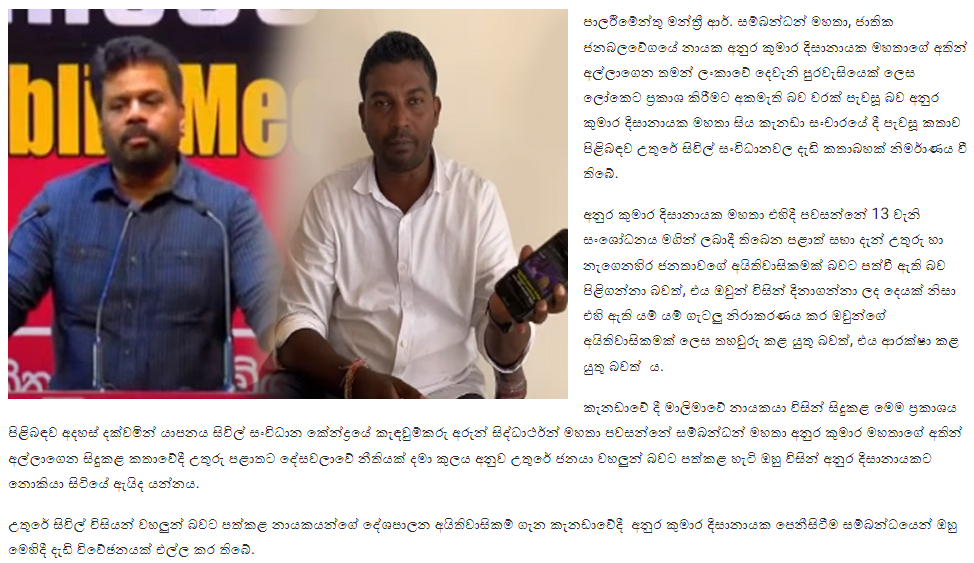
A meeting between Korean Prime Minister Han Duck Soo and his Sri Lankan counterpart Dinesh Gunawardena was held on Thursday (04) in Seoul.
During the discussion, the Korean Prime Minister asserted that many new job opportunities would be opened for Sri Lankans.
In addition to the labour force that provides jobs for agriculture, construction and other industries in his country, PM Han also mentioned the possibility of providing new jobs for health services and professional services.
He said that South Korea, as a member of the Paris Club, will always stand therein for Sri Lanka, which is recovering from the recent financial crisis, to successfully carry out its future activities.
PM Han requested to take measures to reduce the time for the preliminary work for future projects to be implemented while the currently agreed projects in the areas of renewable energy, fisheries sector and joint investment areas will be implemented without any change. Further, he pointed out the importance of enhancing the space for floating solar power installations.
PM Han added that the South Korean people are also very interested in visiting Sri Lanka and expressed his agreement to support the provision of more opportunities to visit Sri Lanka, which is one of the most attractive tourist destinations in the world.
When the Prime Minister of Sri Lanka was holding the portfolio of the Minister of Education, the move to include Korean Language as a subject in the curriculum was praised by the Korean Prime Minister.
The support given in the face of the Covid-19 pandemic was greatly appreciated.
The Korean prime minister added that these matters will also strengthen the relations between Sri Lanka and Korea that have existed for a long time.
The two leaders also discussed the further expansion of diplomatic relations.
Leading officials of the Government of Korea, and representatives of the Government of Sri Lanka, namely State Ministers Piyal Nishantha and Anupama Pasqual, MP Yadamini Gunawardena, Prime Minister’s Secretary Anura Dissanayake, Sri Lankan Ambassador to South Korea Savithri Panabokke, and Prime Minister’s Media Secretary Laith Rohan Liyanage also participated in this event.
In a significant development in Sri Lankan political circles, Members of Parliament from the “Nidahasa Janatha Sabha” and the “Samagi Jana Sandanaya” led by the SJB (Samagi Jana Balawegaya) have signed a Memorandum of Understanding (MOU). This agreement reflects a strategic move towards cooperation and collaboration between the two political factions.
The MPs involved in this MOU signing include: Prof. G L Peiris Dilan Perera Dr. Nalaka Godahewa Dr. Upul Galappaththi Wasantha Yapa Bandara K P S Kumarasiri These members of parliament, who had previously broken away from the Sri Lanka Podujana Peramuna (SLPP), chose to sit independently in Parliament under the banner of the Nidahasa Janatha Sabhawa.
The “Nidahasa Janatha Sabha” is a political faction led by these respected MPs. On the other hand, the “Samagi Jana Sandanaya,” under the leadership of the SJB, represents a significant opposition force in the Sri Lankan political landscape.
The formation of the ‘Samagi Jana Sandhanaya’ alliance signifies a new chapter in Sri Lankan politics, consolidating the strengths and resources of the SJB and the Nidahasa Janatha Sabhawa. This united front is poised to play a pivotal role as the main opposition force, advocating for policies that serve the interests of the people and addressing pressing issues facing the nation.
The signing of this MOU signals a mutual understanding and agreement on various political matters and strategies between the two groups. It highlights a shared vision for addressing key issues facing the nation and working towards common goals for the betterment of Sri Lanka and its people.
This alliance could have significant implications for the political landscape of Sri Lanka, potentially shaping the course of policies, reforms, and future electoral strategies. As these two factions join forces, their combined efforts and resources could lead to a stronger political presence and a more unified voice in Sri Lankan governance and decision-making.
When the skeletons came tumbling out after the Supreme Court demanded full disclosure in the electoral bonds scheme, it did not really surprise anyone.
The BJP exudes an almost contemptuous confidence that no revelations can derail its ultimate victory. Where does this confidence come from?
It is 2024 and among the BJP’s star campaigners in the high-stakes electoral battle in Maharashtra are Ajit Pawar and Ashok Chavan. But rewind to the 2014 and 2019 Lok Sabha campaigns and you will find that Ajit Pawar and Ashok Chavan figured prominently in the BJP’s campaigns then too.
Remarkably consistent, one might say. The only problem is that in 2014 and 2019, Pawar and Chavan were in the opposition and the BJP had grounded its entire campaign on their alleged venality, attacking them fiercely for being tainted” and the face of corruption”.
All it took for the two men to morph from tainted leaders to star campaigners was to swear allegiance to the BJP. In a normal democracy, one would call this opportunism, dishonesty, even brazen duplicity. But in the tumbledown democracy we now inhabit, it is called a masterstroke”. This doublespeak has been in evidence since 2014, when the saffron party came to power riding on the coattails of Anna Hazare’s anti-corruption movement, promising to wipe out graft and crony capitalism. And did anything but that in the 10 years following.
Thus, when the skeletons came tumbling out after the Supreme Court demanded full disclosure in the electoral bonds scheme, it did not really surprise anyone. How could it? A government that does not baulk at using Enforcement Directorate probes to arm-twist opposition party members is not likely to shy away from corporate extortion. What is surprising, however, is the sheer amount of money involved.
The roughly Rs. 12,000 crore received by political parties—with the BJP getting about 55 per cent—is many times more than that ever raised singly by other political funding routes. It added to the obscene amounts of money sloshing about in electioneering. The last Lok Sabha election cost Rs.60,000 crore, making it the most expensive one globally. This year, it is expected to double. Until the system changes, parties need funds to survive, but a party clearly needs much more than ordinary funds if it wishes to continuously engineer defections and neuter any opposition.
The BJP has concentrated on gathering majoritarian approval by manipulating religious sentiments to a degree where it deems both performance and an image of incorruptibility immaterial.”
The other point one notes is that it took six years for the Supreme Court to declare the scheme unconstitutional. This in effect amounted to giving one party a six-year lead to amass wealth. But the wealth was not required for electioneering alone; it yielded something much more important—influence. The last decade has been used to mobilise an unprecedented degree of clout and to wield it unerringly. To embed a certain belief system deeply into the political, social, and cultural fabric of the nation.
As the electoral bonds scheme unravels, what one notices is the almost contemptuous confidence the BJP exudes that no revelations can impact its ultimate victory. Where does this confidence come from? For one, from its control of mainstream media and democratic institutions, but even more importantly, from its belief that it no longer needs approval from democratic value systems. The party has concentrated on gathering majoritarian approval by manipulating religious sentiments to a degree where it deems both performance and an image of incorruptibility immaterial.
Add to this the continuing large-scale efforts to harvest data and information about various sections of the populace and the casual disregard with which the democratic and institutional carapace is being shrugged off and one sees a definite movement towards totalitarian control. This, however, might not be as inevitable as it is being subliminally suggested. After all, the important question remains. Will it really be that simple to mind-control what is easily one of the world’s most unbridled and tumultuous people?
Pathfinder Foundation renews call for establishing a marine research station
Now and then, Kachchativu island, lying halfway between the islands of Rameswaram (India) and Delft (Neduntheevu -Sri Lanka), has been hitting the news headlines. Mainly, such interests are evinced when several of the hundreds of Indian trawlers that cross the International Boundary Line (IMBL) three times a week and engage in bottom trawling in Sri Lankan waters get arrested for a variety of offences, including illegal entry into Sri Lankan waters, engaging in fishing without licenses and practising bottom trawling, which is an offence in Sri Lanka.
Compared with the regularity of these infractions, arrests are few and far between, and those arrested are released within weeks, if not days after court cases are completed in keeping with the country’s laws. Yet, egged by the fishing interests, Tamil Nadu politicians have made it a fine art to complain against arrests to New Delhi, demanding retrieval of Kachchativu, as if it would address the problem. While the eye of the storm remains on the island, the Indian public appears to be unaware that illegal fishing by Tamil Nadu fishermen covers a wide ark from Chilaw in the northwest of Sri Lanka to Mullaitivu in the east of the island, hundreds of kilometres away from Kachchativu. Nobody in India, either in New Delhi or Tamil Nadu, wishes to address the larger problem of illegal entry of Tamil Nadu fishermen into a foreign country, carrying out unlicensed fishing, and, in the process, damaging the fragile marine ecology by resorting to bottom trawling within Sri Lankan waters. Ironically, the Indian side, while demanding humanitarian treatment of its fishermen, seems to be oblivious to the denial of a decent livelihood to Sri Lankan fishermen in the north and the east of Sri Lanka, who are warned by their Indian counterparts not to venture into Sri Lankan waters three times a week, when they pillage their marine resources at will. Sri Lankan Tamil fishermen in the north and the east, being the real victims of the tragedy, ask in unison whether the continuation of this illegal practice for many decades is because New Delhi finds it easier to manipulate the Sri Lankan government than making Tamil Nadu fishermen comply with the bilateral and international agreements?
A new Indian RTI report on Kachchativu
The latest round of the controversy over Kachchativu started with a tweet by the Indian prime minister on March 31 referring to an RTI report provided to the BJP president of Tamil Nadu, which reportedly claimed that the Congress Party callously gave away” the island of Kachchativu in 1974. Indian External Affairs minister followed up on the matter and said that when drawing the maritime boundary in June 1974, Kachchativu was put on the Sri Lankan side.” Quoting relevant Articles of the agreement and a statement made by Minister of External Affairs Sardar Swaran Singh on July 23, 1974, he added that the exchange of letters between the two foreign secretaries on March 23, 1976, ensured that fishing vessels and fishermen of India and Sri Lanka would not engage in fishing in the historic waters, the territorial sea and the exclusive zones of the two countries without the express permission of the two countries.
He referred to continuous arrests of Indian fishermen and detention of their fishing vessels by Sri Lanka over the years, over which Chief Ministers of Tamil Nadu had repeatedly protested to New Delhi. It was evident that he was not making a case for reclaiming the island but striving to restore fishing rights around the waters of Kachchativu.” To strengthen his case, he quoted the legal opinions of former Indian Attorney General M C Setalvad (1958) and the Legal Advisor of the External Affairs Ministry, Dr. K Rao (1960), citing customary rights for Indians to fish around Kachchativu. However, what was not figured in the interview was that thousands of Tamil Nadu trawlers cross the IMBL and engage in fishing over a wide arc from Chilaw in the West to Mullaitivu in the East, covering more than 450 kilometres of Sri Lankan coastline!
Even if Sri Lanka were to concede fishing rights around the Kachchativu island as demanded, how India would prevent the pillage of natural resources by Indian fishermen beyond the shores of Kachchativu of its economically debilitated neighbour covering a vast stretch of coastline was not made clear. It is noteworthy that at least for the last twenty-five years, India has been pressing Sri Lanka for licensed fishing in these waters to facilitate the majority of its 4000-strong trawler fleet to continue bottom trawling in Sri Lankan waters, ignoring the illegality of that practice according to Sri Lankan law.
It may be recalled that in June 2011, the TN government led by Tamil Nadu Chief Minister Jayalalithaa filed a petition in the Supreme Court of India seeking to declare the 1974 and 1976 agreements unconstitutional. However, the Indian government objected to the TN government’s arguments, stating that No territory belonging to India was ceded, nor sovereignty relinquished, since the area was in dispute and had never been demarcated” and that the dispute on the status of the island was settled in 1974 by an agreement. Both countries considered historical evidence and legal aspects when arriving at the decision. The legality of the two agreements was confirmed in August 2014 by the Indian Attorney General Mukul Rohatgi, who represented the Centre. He told the Supreme Court bench led by Chief Justice of India R M Lodha, If you want Kachchatheevu back, you will have to go to war to get it back.”
When a previous RTI report was made public in 2015, the Indian side adopted the same position in 2011, that the two agreements did not involve acquiring or ceding territory belonging to India since the area in question had never been demarcated. Against this backdrop, it is not a surprise that three highly respected former Indian High Commissioners of India in Sri Lanka, Shivshankar Menon Nirupama Rao and Ashok Kantha, two of whom later functioned as foreign secretaries, came out publicly against the latest Indian claim over Kachchativu.
Pathfinder is aware that elections in Tamil Nadu at the state or national level are occasions when the issue of Kachchativu receives undue prominence, as happened in March when a report under RTI was released to Tamil Nadu BJP President K Annamalai regarding the 1974 decision of the Indira Gandhi government to hand over” the territory in the Palk Strait to Sri Lanka.
From a legal perspective, India did not hand over” Kachchativu to Sri Lanka as claimed by the Indian side, simply because the island concerned was not a territory owned by India. Both countries claimed the island, and Sri Lanka established that historically, cartographically, and legally, the island had been administered by Sri Lanka since the Portuguese period, going back to 1615.
Indian claims to Kachchativu rebuffed during the colonial period
It has been recorded that even during the colonial period, India made claims over Kachchativu. It will be recalled that an Indian delegation visited Sri Lanka in October 1921 to discuss the fisheries line between the two countries. At the meeting, the Indian side made a vain attempt to establish the fisheries line one mile east of Kachchativu so that the island would be located within India’s waters. B. Horsburgh, the Principal Collector of Customs, who had also been the Government Agent of the Northern Province of Sri Lanka and therefore thoroughly knowledgeable on the subject, threatened not to proceed with the conference if the Madras officials led by C W E Cotton continued disputing Sri Lanka’s sovereignty over Kachchativu seeking to stake a claim over the island[1]. Eventually, both sides agreed to set the fisheries line three miles west of Kachchativu, thus bringing the island firmly under Sri Lanka’s control.
Pathfinder is aware that records confirm that even after the independence of the two countries, India used to seek the approval of Sri Lanka to use the island as a bombardment target. In response to a request made by Indian High Commissioner V. V. Giri in August 1949, his Sri Lankan counterpart Kanthiah Vaithianathan responded that the suggestion made by the Indian side to the effect that Kachchativu was situated outside the territorial limits of Ceylon was not correct and that should the Royal Indian Navy desire to conduct fleet exercises as proposed, it will be necessary to obtain the permission of Ceylon Government to do so,” which response effectively ended the Indian request. Further, except for the claim made at the 1921 conference by the colonial officials of Madras, no other claim had been made by the Government of India until the mid-1950s. Therefore, it can be maintained that Sri Lanka’s sovereignty over the island was based on specific historical documentation, the consistent exercise of jurisdiction and physical control over the island.
The 1974 agreement was concluded after painstaking negotiations spanning the administrations of two Sri Lankan prime ministers, Dudley Senanayake (1965-1970) and Mrs. Sirima Bandaranaike (1970- 1977), during the tenure of Indian Prime Minister Indira Gandhi.
It is clear that the RTI episode was election-related propaganda activity, and the Indian side had decided to use the opportunity to obtain approval for licensed fishing in Sri Lankan waters. Against this backdrop, Sri Lanka must prepare itself to respond to future pressures and pleas from the Indian side for licensed fishing.
Establish a fisheries research station on Kachchativu
Meanwhile, Sri Lankan authorities should know that they have been idling for exactly half a century after Colombo established its sovereignty over Kachchativu. The island may be a barren piece of real estate in the eyes of Sri Lankan authorities. However, it is a strategically located island that can be put to productive use, considering that its vicinity is famous for fisheries resources. Overfishing and damaging the sea bed due to continuous bottom trawling could destroy the area’s marine environment, depleting the fish stock, mussels, sea cucumbers, and other aquatic organisms that need to be protected. Sri Lanka is yet to understand how it lost its centuries-old lucrative pearl fisheries breeding grounds in Mannar, for which the island was known for many centuries. Against this backdrop, authorities concerned, including the Ministry of Fisheries and Aquatic Resources, the National Aquatic Resources Research & Development Agency (NARA), and other relevant institutions, should come up with ideas on how to use the island by establishing a permanent marine research station on the island, a proposal made by the Pathfinder Foundation way back in 2017[2].
Meanwhile, Indian authorities and opinion makers should bear in mind that the fly in the ointment affecting cordial India-Sri Lanka relations is not Kachchativu, an issue that was conclusively resolved half a century ago, but the relentless attacks on the fisheries resources in the northeastern sea by Indian trawlers. New Delhi should take proactive measures to address the decades-long issue and not expect the problem to disappear on its own or, eventually, expect Sri Lanka to accept the inevitable, which will come at a considerable economic and political cost to the state. This certainly is not how bilateral relations between India and its neighbours should be conducted, particularly during an enlightened era when Indian leaders do their utmost to stabilize its neighbourhood and see them developing along with resurgent India.
The Sangha for Better Sri Lanka (SBSL) and the Global Tamil Forum (GTF) are saddened by the untoward incidents that took place during the Maha Shivaratri Event (March 8, 2024) at Vedukkunari Aathi Sivan Temple in the North of Sri Lanka.
On the Maha Shiva Rathri night (the most auspicious night in the Hindu calendar), in an alarming escalation of force, the security forces resorted to actions which included depriving the devotees of food, water and other basic necessities, and the forceful and humiliating manner in which the devotees including the temple priests were removed from the site and detained.
We are aware of the history of the conflict in this and other contentious areas which are often fuelled by the suspicions and fears among the minority communities about the broader state agenda of imposing majoritarian character, symbols and practices at the expense of their centuries old cultural traditions and practices. The Archaeology Department is often viewed as a tool to achieve this end. The courts, too, are subjected to unhealthy pressure and in the present crisis there are conflicting interpretations as to whether the night pooja was permitted or not – this in itself is an affront to those who have been following such religious practices over many years.
What was striking the most during the recent escalation was the excessive force and the humiliating treatment inflicted upon the devotees of a particular faith.
As the police couldn’t produce any evidence of damage at the site, and the fact that there was an existing legal determination that worshipping must be permitted and the release of all detainees by the judge is of great relief.
The oral statement by the UN High Commissioner for Human Rights, Volker Turk, presented earlier this month highlighted continuing abductions, unlawful detention and torture by the Security establishment and the present crisis appears to validate his strong concerns. Further, such occurrences go against the reconciliation agenda the government purported to promote, including by setting up a new Office for this purpose.
We are also concerned about the negative fallout such incidents can cause to the initiatives undertaken by SBSL and GTF for promoting religious harmony and understanding among all communities in Sri Lanka.
With the possibility of elections later in the year and the potential for interested parties to stir unrest for electoral benefits, we call upon all citizens of the country – including politicians, government officials, and the legal and security establishments – to take utmost precaution to avoid repeat of such incidents in the future.
In other progressive steps three of the SBSL Buddhist monks, Ven. Madampagama Assaji Tissa Thero, Ven. Kithalagama Hemasara Nayake Thero and Ven. Prof. Pallekande Rathnasara Thero met with the Minister of Buddhasasana, Religious, and Cultural Affairs Vidura Wickremanayake on 14 March. Apart from formally handing over the Himalaya Declaration, they also discussed some of the issues highlighted at the meeting with the Most Ven Nallai Atheenam Kurukkal in December 2023.
It is noteworthy to acknowledge that the SBSL monks visited the sites in January to see it for themselves where issues were identified, including the Thirukoneswarar Temple in Tricomalee, Kurunthoor Malai and in Kankesanthurai within the presidential palace compound which comprises two Hindu temples, namely Lingeswarar Kovil and Krishnar Kovil and a Samadhi (tomb or mausoleum) of Sadayamma Sadhu. The Minister assured the monks that he will assist in finding resolutions to these issues in the near future. On 10 January, at Kurunthoor Malai, with the assistance of the Governor for Northern Province, the monks were able to resolve the issue of water supply to a large part of agricultural land to which water supply was temporarily suspended.
On 12 March, Ven. Kalupahana Piyaratana Thero from the SBSL and Prakash Rajasunderam from GTF – Australia met with the United Nations Resident Coordinator Marc-André Franche in Colombo and formally handed over the Himalaya Declaration. Following the meeting, the UN Resident Coordinator tweeted Today, I received representatives from Sangha for Better Sri Lanka & Global Tamil Forum who shared their ‘Himalayan Declaration’ & plans for ‘National Conversation’. Look forward to further updates of their social & religious dialogue on reconciliation and respect for human rights”.
The third of the five proposed workshops as preparatory district level workshops to upskill coordinators for the National Conversation based on the Himalaya Declaration took place in Batticaloa, on Friday, March, 1 and Saturday, March, 2. Participants from four surrounding districts, namely, Polonnaruwa, Monaragala, Ampere and Trinocmalee also participated.
At the workshop in Batticaloa, thirty religious leaders of all faiths and some civil society members participated. Ven. Kalupahana Piyarathana Thero, Ven. Prof. Pallekande Rathnasara Thero, and Ven. Kithalagama Hemasara Nayake Thero were present and led the discussions on behalf of Sangha for Better Sri Lanka (SBSL). Global Tamil Forum (GTF) was represented by Velupillai Kuhanendran from the United Kingdom.
Visaka Dharmadasa’s Association for War Affected Women (AWAW) facilitated the gathering. Six statements in the Declaration found widespread acknowledgement among the participants. Professional facilitators Indika Perera, Nagaratnam Vijayskanthan and Jinadari Parameshwaram, who also provided translations.
The inaugural workshop was held in Kurunegala on February 9 and 10. At the Kurunegala workshop, participants included Gampaha, Anuradhapura and Puttalam as well. The second workshop was held at Kandy, where participants were from areas such as Mattale, Badulla, Ratnapura, Nuwara Eliya and Kegalle.
These planned workshops are aimed at training the proposed 150 interfaith clergy and civil society members, as coordinators. They will be the key resource persons who will facilitate the planned 25 districts conversations, in the coming months. These proposed five workshops will all be two days workshops, spread around the country.
Next workshop will be on 19 and 20 April in Galle which will have participants from Colombo, Kalutara, Galle, Matara and Hambantota. The final one will be on 26 and 27 April in Vavuniya, where participants from Jaffna, Mullaitivu, Kilinochchi, Mannar and Vavuniya will participate.
Each district will be represented by five inter-religious persons and a civil society member in total six per district. Therefore, from the 25 districts will be 150 coordinators. Once all five workshops are over, the national conversation will begin.
TomDispatch is distinctly a forever-war creation. When I began it almost 23 years ago, the U.S. had just invaded Afghanistan and, of course, there wasn’t the faintest sense that what had been launched then, in the wake of the 9/11 attacks on this country, would still be going on globally so many years later, or that, in all those years, the best-funded military on the planet would achieve so remarkably little (except perhaps in getting itself funded at ever more astronomical levels).
If, in fact, you had told me then that, by March 2024, the U.S. military would have been decisively defeated in Afghanistan, largely defeated in Iraq, and would never have managed to come anywhere close to eradicating the still-expanding terror groups on this planet in what was already (all too ominously) known then as the Global War on Terror, I doubt I would have believed you. If you had told me that, in March 2024, a newly formed junta in Niger (a country I then knew nothing about), five of whose members had been trained by the U.S. military, would be threatening to kick our forces out of their country because our war on terror had failed so dismally in the region, leaving behind an airbase built there for a genuine fortune, I would have thought you nuts.
And yet, here we are. As TomDispatch‘s Nick Turse — who, in all these years, has followed the grim war on terror into Africa in a way no other journalist has — suggests, it’s another one down for the home team (which has been all too far from home all too regularly since September 11, 2001). Consider his striking report just one more nightmare in the Global War That Never Ends, or GWTNE. Tom
Epic Fail
The New Junta in Niger Tells the United States to Pack Up Its War and Go Home
Dressed in green military fatigues and a blue garrison cap, Colonel Major Amadou Abdramane, a spokesperson for Niger’s ruling junta, took to local television last month to criticize the United States and sever the long-standing military partnership between the two countries. The government of Niger, taking into account the aspirations and interests of its people, revokes, with immediate effect, the agreement concerning the status of United States military personnel and civilian Defense Department employees,” he said, insisting that their 12-year-old security pact violated Niger’s constitution.
Another sometime Nigerien spokesperson, Insa Garba Saidou, put it in blunter terms: The American bases and civilian personnel cannot stay on Nigerien soil any longer.”
The announcements came as terrorism in the West African Sahel has spiked and in the wake of a visit to Niger by a high-level American delegation, including Assistant Secretary of State for African Affairs Molly Phee and General Michael Langley, chief of U.S. Africa Command, or AFRICOM. Niger’s repudiation of its ally is just the latest blow to Washington’s sputtering counterterrorism efforts in the region. In recent years, longstanding U.S. military partnerships with Burkina Faso and Mali have also been curtailed following coups by U.S.-trained officers. Niger was, in fact, the last major bastion of American military influence in the West African Sahel.
Such setbacks there are just the latest in a series of stalemates, fiascos, or outright defeats that have come to typify America’s Global War on Terror. During 20-plus years of armed interventions, U.S. military missions have been repeatedly upended across Africa, the Middle East, and South Asia, including a sputtering stalemate in Somalia, an intervention-turned-blowback-engine in Libya, and outright implosions in Afghanistan and Iraq.
This maelstrom of U.S. defeat and retreat has left at least 4.5 million people dead, including an estimated 940,000 from direct violence, more than 432,000 of them civilians, according to Brown University’s Costs of War Project. As many as 60 million people have also been displaced due to the violence stoked by America’s forever wars.”
President Biden has both claimed that he’s ended those wars and that the United States will continue to fight them for the foreseeable future — possibly forever — to protect the people and interests of the United States.” The toll has been devastating, particularly in the Sahel, but Washington has largely ignored the costs borne by the people most affected by its failing counterterrorism efforts.
Reducing Terrorism” Leads to a 50,000% Increase in… Yes!… Terrorism
Roughly 1,000 U.S. military personnel and civilian contractors are deployed to Niger, most of them near the town of Agadez at Air Base 201 on the southern edge of the Sahara desert. Known to locals as Base Americaine,” that outpost has been the cornerstone of an archipelago of U.S. military bases in the region and is the key to America’s military power projection and surveillance efforts in North and West Africa. Since the 2010s, the U.S. has sunk roughly a quarter-billion dollars into that outpost alone.
Washington has been focused on Niger and its neighbors since the opening days of the Global War on Terror, pouring military aid into the nations of West Africa through dozens of security cooperation” efforts, among them the Trans-Sahara Counterterrorism Partnership, a program designed to counter and prevent violent extremism” in the region. Training and assistance to local militaries offered through that partnership has alone cost America more than $1 billion.
Just prior to his recent visit to Niger, AFRICOM’s General Langley went before the Senate Armed Services Committee to rebuke America’s longtime West African partners. During the past three years, national defense forces turned their guns against their own elected governments in Burkina Faso, Guinea, Mali, and Niger,” he said. These juntas avoid accountability to the peoples they claim to serve.”
Langley did not mention, however, that at least 15 officers who benefited from American security cooperation have been involved in 12 coups in West Africa and the greater Sahel during the Global War on Terror. They include the very nations he named: Burkina Faso (2014, 2015, and twice in 2022); Guinea (2021); Mali (2012, 2020, and 2021); and Niger (2023). In fact, at least five leaders of a July coup in Niger received U.S. assistance, according to an American official. When they overthrew that country’s democratically elected president, they, in turn, appointed five U.S.-trained members of the Nigerien security forces to serve as governors.
Langley went on to lament that, while coup leaders invariably promise to defeat terrorist threats, they fail to do so and then turn to partners who lack restrictions in dealing with coup governments… particularly Russia.” But he also failed to lay out America’s direct responsibility for the security freefall in the Sahel, despite more than a decade of expensive efforts to remedy the situation.
We came, we saw, he died,” then-Secretary of State Hillary Clinton joked after a U.S.-led NATO air campaign helped overthrow Colonel Muammar el-Qaddafi, the longtime Libyan dictator, in 2011. President Barack Obama hailed the intervention as a success, even as Libya began to slip into near-failed-state status. Obama would later admit that failing to plan for the day after” Qaddafi’s defeat was the worst mistake” of his presidency.
As the Libyan leader fell, Tuareg fighters in his service looted his regime’s weapons caches, returned to their native Mali, and began to take over the northern part of that nation. Anger in Mali’s armed forces over the government’s ineffective response resulted in a 2012 military coup led by Amadou Sanogo, an officer who learned English in Texas, and underwent infantry-officer basic training in Georgia, military-intelligence instruction in Arizona, and mentorship by Marines in Virginia.
Having overthrown Mali’s democratic government, Sanogo proved hapless in battling local militants who had also benefitted from the arms flowing out of Libya. With Mali in chaos, those Tuareg fighters declared their own independent state, only to be pushed aside by heavily armed Islamist militants who instituted a harsh brand of Shariah law, causing a humanitarian crisis. A joint French, American, and African mission prevented Mali’s complete collapse but pushed the Islamists to the borders of both Burkina Faso and Niger, spreading terror and chaos to those countries.
Since then, the nations of the West African Sahel have been plagued by terrorist groups that have evolved, splintered, and reconstituted themselves. Under the black banners of jihadist militancy, men on motorcycles armed with Kalashnikov rifles regularly roar into villages to impose zakat (an Islamic tax) and terrorize and kill civilians. Relentless attacks by such armed groups have not only destabilized Burkina Faso, Mali, and Niger, prompting coups and political instability, but have spread south to countries along the Gulf of Guinea. Violence has, for example, spiked in Togo (633%) and Benin (718%), according to Pentagon statistics.
American officials have often turned a blind eye to the carnage. Asked about the devolving situation in Niger, for instance, State Department spokesperson Vedant Patel recently insisted that security partnerships in West Africa are mutually beneficial and are intended to achieve what we believe to be shared goals of detecting, deterring, and reducing terrorist violence.” His pronouncement is either an outright lie or a total fantasy.
After 20 years, it’s clear that America’s Sahelian partnerships aren’t reducing terrorist violence” at all. Even the Pentagon tacitly admits this. Despite U.S. troop strength in Niger growing by more than 900% in the last decade and American commandos training local counterparts, while fighting and even dying there; despite hundreds of millions of dollars flowing into Burkina Faso in the form of training as well as equipment like armored personnel carriers, body armor, communications gear, machine guns, night-vision equipment, and rifles; and despite U.S. security assistance pouring into Mali and its military officers receiving training from the United States, terrorist violence in the Sahel has in no way been reduced. In 2002 and 2003, according to State Department statistics, terrorists caused 23 casualties in all of Africa. Last year, according to the Africa Center for Strategic Studies, a Pentagon research institution, attacks by Islamist militants in the Sahel alone resulted in 11,643 deaths – an increase of more than 50,000%.
Pack Up Your War
In January 2021, President Biden entered the White House promising to end his country’s forever wars. He quickly claimed to have kept his pledge. I stand here today for the first time in 20 years with the United States not at war,” Biden announced months later. We’ve turned the page.”
Late last year, however, in one of his periodic war powers” missives to Congress, detailing publicly acknowledged U.S. military operations around the world, Biden said just the opposite. In fact, he left open the possibility that America’s forever wars might, indeed, go on forever. It is not possible,” he wrote, to know at this time the precise scope or the duration of the deployments of United States Armed Forces that are or will be necessary to counter terrorist threats to the United States.”
Niger’s U.S.-trained junta has made it clear that it wants America’s forever war there to end. That would assumedly mean the closing of Air Base 201 and the withdrawal of about 1,000 American military personnel and contractors. So far, however, Washington shows no signs of acceding to their wishes. We are aware of the March 16th statement… announcing an end to the status of forces agreement between Niger and the United States,” said Deputy Pentagon Press Secretary Sabrina Singh. We are working through diplomatic channels to seek clarification… I don’t have a timeframe of any withdrawal of forces.”
The U.S. military is in Niger at the request of the Government of Niger,” said AFRICOM spokesperson Kelly Cahalan last year. Now that the junta has told AFRICOM to leave, the command has little to say. Email return receipts show that TomDispatch’s questions about developments in Niger sent to AFRICOM’s press office were read by a raft of personnel including Cahalan, Zack Frank, Joshua Frey, Yvonne Levardi, Rebekah Clark Mattes, Christopher Meade, Takisha Miller, Alvin Phillips, Robert Dixon, Lennea Montandon, and Courtney Dock, AFRICOM’s deputy director of public affairs, but none of them answered any of the questions posed. Cahalan instead referred TomDispatch to the State Department. The State Department, in turn, directed TomDispatch to the transcript of a press conference dealing primarily with U.S. diplomatic efforts in the Philippines.
USAFRICOM needs to stay in West Africa… to limit the spread of terrorism across the region and beyond,” General Langley told the Senate Armed Services Committee in March. But Niger’s junta insists that AFRICOM needs to go and U.S. failures to limit the spread of terrorism” in Niger and beyond are a key reason why. This security cooperation did not live up to the expectations of Nigeriens — all the massacres committed by the jihadists were carried out while the Americans were here,” said a Nigerien security analyst who has worked with U.S. officials, speaking on the condition of anonymity.
America’s forever wars, including the battle for the Sahel, have ground on through the presidencies of George W. Bush, Barack Obama, Donald Trump, and Joe Biden with failure the defining storyline and catastrophic results the norm. From the Islamic State routing the U.S.-trained Iraqi army in 2014 to the Taliban’s victory in Afghanistan in 2021, from the forever stalemate in Somalia to the 2011 destabilization of Libya that plunged the Sahel into chaos and now threatens the littoral states along the Gulf of Guinea, the Global War on Terror has been responsible for the deaths, wounding, or displacement of tens of millions of people.
Carnage, stalemate, and failure seem to have had remarkably little effect on Washington’s desire to continue funding and fighting such wars, but facts on the ground like the Taliban’s triumph in Afghanistan have sometimes forced Washington’s hand. Niger’s junta is pursuing another such path, attempting to end an American forever war in one small corner of the world — doing what President Biden pledged but failed to do. Still, the question remains: Will the Biden administration reverse a course that the U.S. has been on since the early 2000s? Will it agree to set a date for withdrawal? Will Washington finally pack up its disastrous war and go home?
A NPP victory is highly likely in the forthcoming Presidential/Parliamentary elections. People are jubilant about this.
People will vote for NPP en-mass; this is for sure.
People’s only hope is that NPP will rescue them from the current social and economic plight and bring forth prosperity to them.
What people want is a political party that can rebuild this nation, not a one that will put it further down.
Since 1970 or so all parties have been extremely corrupt. In the past 30 years we have become one of the most corrupt countries in the world. Because the politicians are so corrupt, public servants emulate them. They also engage in all forms of bribery and corruption.
This phenomenon is in NPP’s favour as their leaders boast a good record in relation to honesty. Any doubt about same, people give JVP the benefit.
But, that record itself is not enough. Integrity, foresight, wisdom, empathy, patriotism etc are needed to run a country well.
In 2019 people voted for Gota resoundingly (69 million). They genuinely believed that he would fix the country’s problems and make it prosperous. Gota failed the people miserably; they threw him out within 2 years of coming to power.
Will the same fate fall upon the future NPP President and the NPP government? Let us hope not.
If it is a Yes, it will be disasterous for the nation – a loss for all people.
Let us hope that the NPP Presidency and its government will be a success. This paper is written in that good mindset.
This writer foresees some major practical problems that the NPP administration would face, thus pens them down herein:
NPP boasts that upon its current leader becoming the President, he will not rule the country alone but with his team. This is strange.
We have a Parliamentary Executive that consists of the President and the Cabinet. The topmost government officials can be considered as part of the Executive.
How does the NPP aspire to govern the country in such a surrounding? Why are they saying that rather than the elected, individual leader, the country will be run by a NPP leadership team.
It is true – this is how they run the party now.
Currently the NPP is run by its strong polity-bureau. It has a leader, but it is the Party’s Secretary that is most powerful. It is the Secretary not the Leader that selects the party’s Presidential candidate.
The method that the NPP adopts in Pelawatte will not work in Echelon’s Square.
We have an Executive Presidency. The President has enormous power – some are like dictatorial. If NPP tries to run the government the Pelawatte way, that will amount to violating our Constitution.
NPP wanting to run the country by a leadership team is China way, but we have an Executive government system which is French way. If NPP wants the former, they will have to introduce significant Constitutional amendments. People will not be in favour of such nonsense.
Does the current NPP leader think he does not have the ticker to be the country’s leader (run the country under his total command and control in true leadership spirit– this is what our Constitutions prescribes). If Yes, he is not leadership material .
NPP states that each of their Cabinet ministers (there will be about 25) will be advised by a team of experts (about 5 or 6 per Ministry). This sounds nonsensical.
In our current Westminster system Cabinet ministers run the ministries with the help of the deputy ministers, permanent secretaries and other high ranking government officials. The NPP must adapt this system. They cannot change things willy nilly.
Why do they want at least 150 cabinet advisers appointed? How much will this cost the taxpayer?
Appointment of these advisers (a new layer of administrators?) could be chaotic, duplicative and waste of money. Last thing the people want is another White Elephant.
In a democracy it is the elected representatives who run the administration; not their friends and cronies. If these advisors are so good (this is how the NPP describes them), why not try them as NPP election candidates and ask for the people’s vote?
We must not forget that Gota’s failures commenced from his failed fertilizer policy. A team of experts advised him that the country must disband chemical fertilizer, somewhat within 24 hours; and switch to organic farming. What our farmers had practised for so many generations was abruptly stopped by one Gota Order.
Gota’s expert agricultural panel mainly comprised of a medical doctor, a Buddhist monk, his agricultural minister (a former insurance agent) and a media tycoon. There were few expert agriculturalists in it.
NPP must learn from Gota’s mistakes. It must give regard to the proverb ‘too many cooks spoil the soup’.
We need a leader like Lee Kwan Yew. Our leader must know what is good and bad for the nation. He/she must always take decisions in the best interests of the country. US President Truman had the sign ‘the buck stops here’ placed on his desk.
What guarantee can the NPP give us that their President will govern the country with a NPP leadership team? Their President may abandon the promise and start to rule the country per the Constitution. The leader may say contrary to what was stated during the election time, he would adhere to the Constitution. This could cause a rift in the party, which will inhibit public good.
Empirical evidence shows that our Presidents have always deviated from promises that they make during election times. A lie practised by almost every President since 1994 is that once they come to power they would scrap the Executive Presidency. No one has struck to their promise.
Thus, we have been ruled by a bunch of liars for the last 30+ years.
How can such people who do not have genuine intent to serve the masses build a nation?
In developed countries leaders practice what they preach.
The current NPP leader states words to the effect that he is ashamed that Sri Lanka has thus far not produced a minority Prime Minister. Basically, he was saying that it is time for Sri Lanka to have a Tamil Prime Minister under his Sinhalese Presidency. It is probable that JVP’s powerful Tamil polity bureau member who heads the party’s up-country estate unions would be the NPP’s Prime Minister.
An alarming aspect is that this person has publicly stated words to the effect that it is time for the countrymen to forget ethnicity (race) and think Sri Lankan. He effectively wants the citizens’ race not being mentioned in the Birth Certificate.
Why should we hide our ethnic identity? This is bizarre.
He was preaching this to the Sinhalese in a Sinhala YouTube Channel. Has he ever stated this to his Tamil brethren both in the upcountry and the North/East? To the writer’s best knowledge – No.
In the said YouTube interview, he stated that ethnic identity of the upcountry Tamils must be protected and enhanced. Simply, he advocates double standards.
We must not forget that the country’s Sinhala numbers are declining rapidly. Although some foolishly boasts that Sinhala Buddhists are still about 70% of the population, the writer states it cannot be so. He believes this number now is about 65%.
A powerful section of the NPP seems wanting a female as their Prime Minister. A female JVP MP is also a possibility.
Thus, it is quite likely that the NPP’s Prime Minister will either be a male Tamil or a female Sinhalese.
NPP must have a policy of giving the country’s best positions to best persons. This must be done solely on merit, not on quota.
In relation to the Prime Ministership, it seems there are two NPP sections promoting two concepts. This can lead to chaos and animosity. Let us hope that such a situation would not arise.
NPP should sort out these differences/anomalies now. Otherwise, the country will suffer.
Also, the people must know in advance; they have a right to know.
NPP leader has demonstrated us that he is a strong Liberal. This is alright. But, his recent comments in criticizing the need to uphold traditions and values is a real cause for concern.
Unlike the US, Australia; we are a conservative society. People here know who they are/where they came from. We are proud of our culture, customs and traditional way of life. NPP must not try to change everything overnight. This is a civilization that has existed for 2500 years.
Sri Lanka is a country founded on a Sinhala Buddhist foundation. Sadly many Buddhist priests do not have the guts to say this openly. Several Muslim and Christian leaders (including the Cardinal) have been bold enough to state in public loudly that Sri Lanka is a Sinhala Buddhist country.
Accepting this does not mean others are 2nd class.
We all live like children of one mother. It should be that way.
Contrary to what Rohana Wijeweera, Somawansha Amarasinghe preached, the current NPP hates to believe Sri Lanka is a Sinhala Buddhist nation.
Will the NPP accept the fact that the Sinhalese have the right to live in the North and the East? We need answers to this question now.
Since recently, NPP leaders have started visiting/worshiping Buddhist temples. This is somewhat hilarious. It is well known that JVP has been an atheist party.
Are they doing this to canvass the Sinhala Buddhist vote? NPP must be upfront with the electorate.
We must not forget that JVP has been a marxist party.
NPP has been silent on its stance on the 9th Article of the Constitution. Prior to the election they must clearly articulate their position. Would they support the State giving patronage to Buddhism or not?
Would the NPP preserve the Article 9? People ought to know this.
NPP has slipped away from answering whether or not they would implement the 13th Amendment fully (giving land and police powers to provinces), or even give 13+. It is true that their only female MP in the parliament did state that they support the implementation of the 13A fully. This is an extraordinary statement on NPP’s behalf.
Up to what extent would they go in supporting the 13A or 13+?
The current NPP leaders must not forget that under Somawansa Amarasinghe’s leadership it worked hard to preserve the country’s sovereignty and territorial integrity. It was the JVP that challenged the merger of the Northern and Eastern provinces in the Supreme Court. The JVP was successful on that occasion.
Today’s JVP (NPP) policies are poles apart from that of Rohaha Wijeweera and Somawansa Amarsinghe. They are most attuned to the philosophies and concepts of the Peratugamis, Lionel Bopage, Jayadewa Uyangoda, Victor Ivan et al.
It is very good for the NPP to promise masses that under its regime all looted money ($) will be returned to Sri Lanka and the looters will be prosecuted. This is their strongest point.
This is the main reason why people will vote for them.
But, will they genuinely do this? If yes, what is their strategy in doing so. NPP must explain.
Ranjan Ramanayake stated ‘brother, all 225 are friends”. According to him, the JVP is included in the 225.
The NPP agrees that the IMF way is the only way; they say they will negotiate with the IMF and vary the terms and conditions to make them more people friendly. This explanation is not enough.
They must articulate what are the unfair IMF terms and conditions, and how they will include more favourable ones.
It is wise for the NPP to clear these practical problems that would pop under their future administration. They should do this now, in utmost good faith.
The Colombo High Court on Tuesday (02) rejected the bail application filed by the General Secretary of Bodu Bala Sena (BBS) General Secretary Ven. Galagodaaththe Gnanasara Thero, who was recently handed a 4-year rigorous imprisonment.
High Court Judge Aditya Patabendige conveyed the decision when the bail application put forward by the defense attorneys requesting the court to release their client on bail was taken up before the court on Tuesday morning.
On March 28, Judge Patabendige sentenced the BBS General Secretary to four years of rigorous imprisonment for the defamatory comments made against Islam in late 2016.
Gnanasara Thero had been accused of making defamatory comments against Islam during a 2016 media briefing convened with respect to the Kuragala Buddhist monastery, causing damage to national and religious harmony.
The judge had found the monk guilty of the two indictments filed by the Attorney General under the Penal Code. Accordingly, the accused was sentenced to two years of rigorous imprisonment for each indictment and was imposed two fines of Rs. 50,000 each. He also ordered that the two sentences be served separately.
Gnanasara Thero’s prison sentence will be extended by two more years in the event of his failure to pay the fine.
The case had been filed based on a complaint filed by former MPs Mujibur Rahman and Azath Salley.
A debate rages over if the SLPP must contest the presidential election or not. Contesting elections only to win them is a disastrous approach. Win or lose, the SLPP must contest the election and remain relevant. Otherwise, it will permanently slip from the top slot and will never be able to get up there again, especially so at the current and future political climate.
SLPP politicians must learn from the UNP. After the 2005 presidential election, UNP didn’t contest a presidential election. In 2010 and 2015 contesting it was outsourced to others and instead of the UNP they contested from the swan” symbol. In 2019 UNP allowed Sajith to contest it but Sajith chose to create his own party (SJB) to contest it. As a result, the UNP which was until recently the single largest political party in the country slipped from the top and was reduced to no elected members and just one national list seat. SLPP will collapse to that level if it evades contesting the presidential election.
SLFP also suffered albeit at a lower level from 1988 to 1993 when it refused to contest provincial council elections. A small breakaway party ate into the SLFP vote base as a result which kept it in the opposition longer than it should have. Things changed only when the PA (led by the SLFP) contested provincial council elections. Despite losing most provincial councils in 1993 and eventually securing just two and marginal support in another, PA came to the limelight which led to its parliamentary and presidential election wins a year later.
Ministers who want the SLPP to support Ranil instead of contesting the election have personal agendas. One of them has an ongoing court case involving extortion. If he does not support the current regime, he will end up in prison. That’s the only reason for him to discourage the SLPP from contesting the election.
SLPP should contest the presidential election, contest at the following parliamentary, provincial council and local government elections and remain relevant. Election fortunes will change as the next regime (just like the current one) will be unable to bring the nation out of the economic mess. The lull in economic troubles is only due to not repaying loans. These loans and their interest must be repaid starting later this year. Economic pain will emerge again.
Sajith and Anura are not the only champions of the youth” as they have passed Sri Lanka’s retirement age by now!
In a rapidly evolving digital landscape, a groundbreaking initiative is set to empower Buddhists across Sri Lanka. The upcoming mobile application, designed to protect Buddhist rights, promises to be a beacon of justice and advocacy. Here’s why this app matters:
Reporting Violations: The app provides a streamlined platform for reporting incidents that violate the sanctity of Buddha Sasana, Dharma, or the Sangha. Whether it’s an act of desecration, discrimination, or injustice, users can swiftly document and report violations. Legal Guidance: Backed by legal experts, the app ensures that aggrieved Buddhists receive accurate guidance. From understanding their rights to navigating the legal system, the app bridges the gap between faith and justice.
Community Unity: By fostering a sense of community, the app encourages Buddhists to stand together. It’s a collective effort to safeguard the teachings of the Buddha and uphold the principles of nonviolence (ahimsa). Metta in Action: The app embodies the spirit of metta (loving-kindness) by advocating for peace, tolerance, and respect. It’s a digital extension of the protect of compassionate teachings that have guided Buddhists for centuries. As we eagerly await the app’s launch, let us remain vigilant and committed to preserving the essence of Buddha Sasana. Stay tuned for updates, and may metta guide our path toward a just and harmonious society.
Remember, the strength of any movement lies in unity and informed action. May this app serve as a powerful tool in protecting Buddhist rights and promoting understanding
”9” The Republic of Sri Lanka shall give to Buddhism the foremost place and accordingly it shall be the duty of the State to protect and foster the Buddha Sasana, while assuring to all religions the rights granted by Articles 10 and 14(1)(e).
MP Yadamini Gunawardena stated that if the precious commitments of our people rendered in the past are not remembered again and again, the battles and legacies will be erased from the history books. He said this while attending the 52nd commemoration of the national hero Philip Gunawardena held at the Foundation Institute, Colombo (31.03.2024).
MP Yadamini Gunawardena addressing the gathering stated that, When Hon. Philip Gunawardena, who is remembered with respect even today as a national hero of the country who made many commitments for the achievements of the public not only in our country but also in many continents, was to enrol for higher education, Anagarika Dharmapala advised Hon. Philip Gunawardena’s father to direct young Philip Gunawardena to a place where he can gather experience to build a future Sri Lanka that can move forward by breaking down the barriers of imperialism. Accordingly, Hon. Philip Gunawardena gained experience at a young age in supporting the second revolution in Mexico together with veteran Professor Scott Nearing at the University of Wisconsin. But there was no end to his revolutionary struggles. While he was supporting the battles on the North American continent, he was pursued by the British secret intelligence service of Scotland Yard. That report was released after 40 years of Hon. Philip Gunawardena’s demise. There is more information in that report about how he went to the imperialists and challenged them and carried forward the fight for the freedom and rights of the people of the colonized countries like our country in Asia, Africa and South America. Philip Gunawardena fought fearlessly to fulfil the needs of the people of countries like ours. Likewise, it is recorded in this secret information that he had participated in the establishment of the first republic of Spain while being in the first revolutionary battle front in Spain. Even though he was educated in his mother tongue from the village temple and Boralugoda Kanishta Vidyalaya, he studied Spanish, French and English and gathered a wealth of experience by supporting the victories of battle fronts through these languages. He started the Surya-Mal movement in our country and worked with the left leaders to get the grand start of the freedom struggle. In the 1936 election, he contested the Avissawella electorate, which stretched from the far corner of the Kelani Valley to Colombo Port, and was elected to the State Council.
Hon. Philip Gunawardena was the first to command the British to go back immediately stating in the State Council that ‘You have no right to acquire the administration and rule this country because the British came as pirates’. That is why there were frequent oppressive incidents in the diplomatic journey he followed. The leaders were imprisoned. After breaking out of prison, they joined hands with the leaders of the Indian peninsula and became strong. Philip Gunawardena played a significant role in the freedom struggle of our country as well as in the freedom of the people of the region. By leading the anti-imperialist struggle, he launched a huge battle for the freedom of our Asian countries.
It is my duty to recall those events. If this is not done, the precious commitments of our country, struggles, and the legacies of our people may be erased from the history book, and buried in the sands of history. After independence, Hon Philip Gunawardena led the nationalisation movement. He wanted to prove that together with the general public of our country, they can build a national movement that can boost the national economy through their great creativity. Special mention should be made of the Bus Nationalisation and Harbour Nationalisation. Colombo Harbour was 126th port in the world at that time and 25 years after the nationalisation, was ranked 26th in the world. The nationalisation movement highlighted the strength of the people of our country. In the same way, the peasants of the country, who worked hard to transform the country into the granary of the East, had a problem of their rights to continue their cultivation. They had no support from the banking system. There was a period when the ordinary farmers of our country did not have a bank to obtain loan facilities. At that time, banking operations were done with selected persons. Hon. Philip Gunawardena brought to Parliament the bill to create the first national bank that can identify the needs of the ordinary people of the country. The first act is the Co-operative Development Bank Act, even though it is called the People’s Bank Act. This Banking Act is an act that has created an opportunity for the ordinary people of our country to negotiate with the world, to develop their business, and to deal within the struggling economy of our country. We need to think anew to reach development goals. These matters can be contributed to the way forward with the general public of our country by thinking creatively.” Prof. Ranil Senanayake, who delivered the Philip Gunawardena Commemoration speech said; Hon. Philip Gunawardena was a product of a time when the nation had focused on social upliftment as the development goal. That was the goal, not economic development, not the amount of money we can make or borrow. The social well -being was the goal. And this was reflected in the actions of Hon. Philip Gunawardena as he demonstrated to us. He is also remembered as the architect of the Paddy Lands Act, which brought relief to the tenant cultivator. He said that he will work with any group of people who are ready to develop this country, who were ready defend and the independence of this country, who are ready to serve the people of this county. Let it be any group of people. Most Ven. Itthepane Dhammalankara Thera presided over this event and President Ranil Wickremesinghe, Prime Minister Dinesh Gunawardena, Speaker Mahinda Yapa Abeywardena, former Presidents Mahinda Rajapaksa and Chandrika Bandaranaike Kumaratunga, family members Prasanna Gunawardena, Lakmali Gunawardena, former Speakers Chamal Rajapaksa, Karu Jayasuriya, and Basil Rajapaksa, Ministers and Parliamentarians, Ambassadors of many countries, intellectuals, and party members participated in this event.
Colombo, March 31: The British conquest of Ceylon from the Dutch in 1796 did not result in the wholesale dismissal of Dutchmen from the various institutions of the government. And the British too found it convenient to employ them.
The reasons for employing the Dutch were basically four: The first was the failure of the early British policy of employing British officials drawn from the Madras Civil service. It was from Madras that the military campaign to take Ceylon was launched and it was a group of Madras officials who called the shots in the first few years.
ADVERTISEMENT
But the Madras-systems introduced by Robert Andrews, the Superintendent of Revenue, were at odds with the Dutch systems that were in place in Ceylon at that time.
For example, the village headmen, who were all-in-all under the Dutch system, were divested of their traditional role and power. There functions were given to Indian Amildars” popularly dubbed Malabar Mudaliyars”. These were expatriate government-appointed revenue collectors. The side-lined village headmen deeply resented these. The new taxes levied by the British were also not liked by the locals.
In 1797, there was a general revolt in the island which made Robert Hobart, the Governor of Madras, set up an inquiry commission.
The second reason for employing Dutchmen was that many Dutchmen had remained in Ceylon even after the British took over. Many were working for the Dutch East India Company which ruled the island, or had lands and businesses. Many were married or had liaisons with local women and were rooted in Ceylon. Many were of mixed descent. Reportedly about 900 families had decided to remain in Ceylon. But they had to sign a document of loyalty to Britain.
The third reason was that many of the government records were in Dutch and court proceedings too were in Dutch.
The fourth reason was that the status of Ceylon was not clear in 1796 despite the fact that the British were the de facto rulers. Ceylon’s status was to be decided by events in Europe. It was only in 1802 that a decision to hand over the Dutch possessions in Ceylon to the British was taken as per the Treaty of Amiens. Given the possibility of Ceylon being returned to the Dutch, many Dutchmen decided to stay on in Ceylon.
Governor Hobart’s commission which inquired into the revolt of 1797, was headed by Brig,Gen. Pierre-Frederic de Meuron a Swiss mercenary who had earlier worked for the Dutch as commander of the Colombo garrison. The other members of the commission were Major Agnew (Madras service), Robert Andrews and the Galle collector Robert Alexander.
Hobart accepted Brig.Gen.de Meuron’s recommendation that Dutch officials be employed as they were seen to be deserving men”. According Dr. Upali C.Wickremeratne, the author of the Conservative Nature of the British Rule in Sri Lanka, ” the other recommendation of the commission was that the Dutch language should be used as the second official language as it was better understood in Ceylon than English.
The British did not even insist that the Dutch civil servants should take an oath of loyalty to England.
The second most important thing that the committee recommended was that in the Maritime Provinces, which the British had inherited from the Dutch, the status, duties and privileges of the Goigama and Vellala headmen of the villages must be restored. The implementation of the recommendations of the commission defused the crisis in Ceylon.
When Frederick North took charge as the first Governor of British Ceylon in 1798, he enthusiastically appointed Dutchmen to various posts. In the newly created Postal Department for example, 26 of the new recruits were Dutch. Seventeen of the recruits in the Survey Department were Dutch. The Malay Corps and the Ceylon Native Infantry set up by North, were officered by the Dutch.
But the top position in the various departments were given to the British. For example, the Surveyor General was Joseph Joinville. The same was true of the Corps of Engineers and of the medical services. But Dutch names appear in the top echelons of the administrative set up in Galle, Matara, Trincomalee and Meegamuwa.
There was a fair sized translation department in the government which was packed with the Dutch. Governor North set up land courts and civil courts. Here there were British judges from the Madras service as well as Dutch judges. The Secretary of the court and the court clerks and writers were Dutch as indeed most of the clerks in government service as a whole.
One of the reasons for employing the Dutch was the language of the courts and administration at that time was Dutch. After all, the Dutch had been ruling the Maritime Provinces from 1658 to 1796 and had instituted an administrative system on European lines.
But the wide use of Dutch was very disconcerting to the British. If there were no competent translators at a court, case files had to be sent to Colombo for translation. This made Governor North resolve to replace Dutch with English.
In desperation he once wrote: The necessity of carrying on the business of government in a foreign language and the difficulty of finding a sufficient number of persons at all acquainted with our own to keep the daily business from falling into arrears is by no means a trifling inconvenience.”
However, North was generally very accommodative to the Dutchmen. He had a deep sense of gratitude to them as they helped him run the administration during the transition period. In return, he protected them when his jealous British staff threatened them.
North felt closer to the Dutch also because both were against the Madras Civil Servants. Both felt threatened by them. North was not sent from Madras as Robert Andrews was, but from London.
In a letter to the East India Company’s Court of Directors dated January 30, 1800, North vented his feelings about Madras Civil Servants. He said: The systematic spirit of opposition and of hatred which has guided them in all their actions and which has made them turn every mark of confidence which I have shown them and every authority with which I have invested them into engines to discredit my person and to thwart my government.”
But North did not have much of a choice as there were not many public servants who were sent from London. It was only in 1802, when Ceylon was delinked from Madras and turned into a Crown Colony, that the Colonial Office began to send officers from Britain.
But North had one major difficulty with the Dutch civil servants. They refused to take the Oath of Loyalty to Britain probably. This was probably because they hoped that the Dutch would come back to rule Ceylon again. According to Dr. U.C. Wickremeratne, they did not approve of the changes in Holland brought about by the French Revolution. They were more nationalistic than the Dutch in Holland.
However, Sir Codrington Edmund Carrington was the Chief Justice of Ceylon he declared that the proceedings of the Court of Equity with Dutch judges would be invalid if they had not taken the oath of loyalty to the British monarch. Upon this ruling, North dissolved the court.
The Dutch clergy in Ceylon also proved to be recalcitrant. Three clergymen Schroder, Meyer and Phillipsz refused to comply with the rule to pray for the King of England. They said that they would incur the displeasure of their constituents if they did so.
Dr. Wickremeratne says that the clergymen persisted in their refusal till at least 1801 when North wrote to the Court of Directors saying that because of their obstinate refusal to pray for His Majesty he cannot allow them the exercise of any acknowledged authority in the country.”
But according to Dr.Wickremeratne, North did not replace them.
Other Dutch officials were more compliant. As the prospect of restoring Ceylon to the Dutch receded, Dutch officials became more tractable. North himself admitted that the opposition was much diminished” over time. The Dutch/Eurasian community, also known as Burghers, remained a key element in the British administration of Ceylon..
While responding to Prime Minister Narendra Modi’s Katchatheevu remark, Congress leader P Chidambaram on April 01 said that the PM should talk about the live issues. He also said that China has occupied 2,000 km2 of Indian territory and the Prime Minister gave a clean chit to China.He said, Honourable Prime Minister raked up an issue that was settled in 1974 and 1976. 50 years ago, we had acknowledged that the small island of 1.9 km2 fell on the Sri Lankan side of the International boundary line. That was after many years of negotiations. Now that was done in order to help 6 lakh Sri Lankan Tamils who are suffering in Sri Lanka without citizenship without human rights, without voting rights. Those Sri Lankan Tamils were brought back and settled in India, they have lived here for 50 years. Why is the PM raking up that issue. Why does he not talk about what happened in the last two to three years. China has occupied 2,000 km2 of Indian territory and the Prime Minister gave a clean chit to China…but the PM should talk about the live issue and the live issue is 2000 km2 of Indian territories occupied by China.”
Adding fuel to the Katchatheevu row, India’s Shiv Sena (UBT) leader Priyanka Chaturvedi shared an RTI reply of 2015 where it was mentioned that the Katchatheevu island was neither acquired nor ceded and that it lies on the Sri Lankan side of the India-Sri Lanka International Maritime Boundary Line.
In a post on ‘X’, Chaturvedi pointed out that the Ministry of External Affairs (MEA) should be able to address the discrepancies” in its RTI response in 2015 and its position in 2024.
Maybe @MEAIndia will be able to address these discrepancies in its RTI response in 2015 vis a vis 2024,” Chaturvedi said. This did not involve either acquiring or ceding of territory belonging to India since the area in question had never been demarcated. Under the Agreements, the Island of Katchatheevu lies on the Sri Lankan side of the India-Sri Lanka International Maritime Boundary Line,” the RTI reply which Chaturvedi said was from the MEA in 2015 read.
Chaturvedi claimed that the RTI reply was given when External Affairs Minister S Jaishankar was serving as the country’s Foreign Secretary. Alleging a difference in opinions she said, Today the Foreign Minister and yesterday the India PM claimed it has been ‘ceded’ So is the change in stance for their election politics or has Modiji made a case for Sri Lanka?”
Earlier in the day, Jaishankar had criticised the historic attitude of the Congress party towards the Katchatheevu island and said that Prime Minister Jawaharlal Nehru saw it as a ‘nuisance’. This is an observation by the then Prime Minister Jawaharlal Nehru in May of 1961. He says, he writes, I attach no importance at all to this little island and I would have no hesitation in giving up our claim to it. I do not like matters like this pending. Indefinitely and being raised again and again in parliament. So to Pandit Nehru, this was a little island. It had no importance. He saw it as a nuisance,” EAM Jaishankar said in a press conference.
However on Monday, India’s External affairs minister S Jaishankar lashed out at the Congress and DMK saying that the parties approached the Katchatheevu issue as though they bear no responsibility”. He emphasized on the matter that the public has the right to know how Katchatheevu was given away.
Addressing a press conference in Delhi, Jaishankar said, We know who did this, what we don’t know is who hid it. Public has the right to know how Katchatheevu island was given to Sri Lanka, why even the fishing rights of Indian fishermen were also given up in 1976 after giving an assurance to the Parliament that fishing rights of Indians in the 1974 agreement have been safeguarded.”
In 1974, India and Sri Lanka concluded an agreement where they drew a maritime boundary, and in drawing the maritime boundary, Katchatheevu was put on the Sri Lankan side of the boundary,” he added.
He further said that India needs to sit with Sri Lankan authorities and find a solution.
Highlighting the background of the issue, Jaishankar said, In the last 20 years, 6184 Indian fishermen have been detained by Sri Lanka and 1175 Indian fishing vessels have been seized, detained, or apprehended by Sri Lanka. This is the background of the issue that we are discussing.”
Calling it a live issue” and not something that surfaced suddenly”, Jaishankar said, The then CM of Tamil Nadu has written to me numerous times. And my record shows that to the current CM, I have replied 21 times on this issue. This is not an issue that has suddenly surfaced. This is a live issue.”
It is an issue that has been very much debated in parliament and in Tamil Nadu circles. It has been the subject of correspondence between the union government and the state government,” he added.
He also said, DMK questions handing over Katchatheevu to Sri Lanka, claims Tamil Nadu govt not consulted; fact is it was kept fully informed.”
Lashing out at Congress & DMK for their attitude towards the issue, he said, Congress & DMK have approached this matter as though they have no responsibility for this.”
As though the situation is for today’s central government to resolve, there is no history to this, this has just happened, they are the people who are taking up the cause; that is the way they would like to project it,” he added.
Earlier in the day, India PM Modi cited a Times of India report and slammed DMK on the Katchatheevu island issue, saying the new details emerging on the matter have unmasked” the party’s double standards.
The development comes a day after the Indian PM came down heavily on the Congress party and the DMK for giving away the Katchatheevu island to Sri Lanka during the tenure of the Indira Gandhi government in 1974. On Sunday, Prime Minister Narendra Modi said that the Katchatheevu deal has infuriated people, adding that the Congress can never be trusted.
Sri Lanka’s Tamil political parties plan to field a candidate from the minority community for the presidential election who would present a credible and acceptable political solution for them, a senior community leader has said.
Sri Lanka is set to hold the next presidential election in the last quarter of 2024. The next president would be elected by mid-November at the latest.
Addressing reporters at his residence in the eastern district of Trincomalee on Sunday, senior Tamil leader R Sampanthan said that Tamils would be well served in the forthcoming presidential election by supporting a candidate who would pledge to resolve all issues concerning the Tamil minority through an acceptable political solution.
Sampanthan said the political parties that form the Tamil National Alliance (TNA) have proposed to field a Tamil candidate. But the Tamils must understand that such a candidate would not be able to pull much support and as such the parties must decide on the best course of action, he added.
Sampanthan stressed that the candidate who would present a credible and acceptable political solution for the Tamils by the merger of north and east provinces should be the important political factor for the Tamils.
Asked if the Tamils were likely to extend support to the incumbent Ranil Wickremesinghe if he came forward to be a candidate, Sampanthan said it would depend on talks with him following his handing over of the nominations to contest the election.
In Sri Lanka’s presidential election history since 1982, Tamil candidates have contested the election but at most elections, they have by and large supported the opposition front-runner against the incumbent.
In a significant operation, the Police Narcotics Bureau (PNB) apprehended 8 suspects, including four officers of the Excise Department, for possession of 45kg of Kerala Cannabis in Chilaw.
The PNB, in a coordinated effort, conducted the operation resulting in the arrests of the suspects found in possession of the sizable quantity of illicit drugs. Additionally, a van belonging to the Excise Department was also taken into custody as part of the operation.
The arrests highlight the ongoing efforts by law enforcement agencies to combat the illegal drug trade and ensure the safety and security of communities. The PNB continues its vigilance against such criminal activities, working to dismantle drug networks and apprehend those involved in the trafficking and distribution of narcotics.
Further investigations into the case are underway to uncover the full extent of the operation and to bring those responsible to justice
By Kanishka Hevavisenthi – Courtesy Sunday Island of 31 March 2024
(Sena Thoradeniya’s Latest Work: Dumbara Rata: Volume I: Foundation Essays)
* Returning to Kandy in 1949 Minnette de Silva set up practice, away from Colombo but at the heart of traditional Lanka – the home of lacquer work, Dumbara mats and religious & feudal architecture”.
* The Hilton pays homage to the country’s culturally rich heritage with Dumbara-inspired motifs, a nod to the country’s traditional weaving craftsmanship…”.
* Clothing & accessories made from traditional crafts such as Dumbara weaving, Beeralu lace, batik….”
The Dumbara Valley in the Central Highlands of Sri Lanka is inextricably and umbilically inked with the hereditary craft of textile weaving . At least, in the minds of the ruling denizens of the country. These minds rarely venture South, East & North out of that constipated suburb of London (& now NY) known as Colombo, and if they do, it’s only to ensure their cut of the tea plucked, rubber tapped, coconuts husked, graphite mined & garments assembled, then exported, along with workers… after all these commodities have, of course, been duly hanged, dried, quartered & calculated.
Dumbara usually recalls some motif, some weave they may step on, or some cloth they may exotically incarcerate their bodies in, to claim some occasional fashion, a sarong or a scarf, to scale some sartorial bridge to the dominant though repressed national culture- the Barefoot School of faux adoration & patronization of handicrafts – who the children of this valley appear to be in no hurry to inherit. They have little idea of the role that the people of this quantum of geography have played and still play in the drama of all our lives.
Enter stage left then is critic and award-winning novelist, Sena Thoradeniya’s latest oeuvre Dumbara Rata: Vol. I published last week. This seminal work on Dumbara consists of four volumes and if we dare measure this initial salvo by its cover, it indeed promises to unleash grand fireworks of what he ventures as a new field of study- Kandyan Affairs”. The Kandyan Kingdom aka Sinhale spread to all corners of the country.
The book’s jacket designed by Nalinda Seneviratna (from a photograph taken by Divoj Savitha Thoradeniya, author’s grandson) displays an intriguing self-portrait” of King Kirthi Sri Rajasinghe (1742-81), drawn on a length of Dutch cloth, donated to the high priest of a Raja Maha Viharaya in Patha Dumbara.
Tradition declares the painting a self-portrait”, yet no historical records the king himself as an artist. Kirthi Sri Rajasinghe’s reign traverses the Dutch invasions, and midst these wars he is yet seen as a benefactor of such arts as the Kandyan countryside’s temple murals.
This self-portrait” has been conserved by the Viharaya’s present incumbent, entering the public domain for the first time. (Thoradeniya does not disclose the name of the Viharaya for its safety and the present custodian of it!). Colombo’s so-called art historians & those domiciled abroad and western – trained archeologists & anthropologists are not even aware that such art exists.
Thoradeniya, he himself a proud son of an ancient village in Patha Dumbara, restricts the initial scope of his Kandyan Studies to Dumbara. An administrative region in the ancient Kandyan Kingdom, Dumbara turns out to be an integral part of Kanda Uda Pas Rata, sometimes called Rata Paha or Rata Hatha. Heexamines Dumbara’s evolution in the ancient kadaim poth (boundary books)and lekam miti (land rolls/cadastral registers), and how Dumbara, HunnasgiriyaMountains, Mahaveli Ganga and Dumbara villages gain stature especially through folk poets. He provides valuable source material for Dumbara, and of the physical foundations of Dumbara, of Patha Dumbara (five divisions) and Uda Dumbara (six divisions), with detailed maps – topographical sheets prepared in the early 1900s, two Appendices, listing its ancient irrigation works so vital to the economy, the Colonial Project in Dumbara and the status of Dumbara after 133 years of British occupation, including a Bibliography.
Thoradeniya more recently exposed the forces behind the recent recolonization of the country – not as a struggle or a revolution but a counter-revolution. His 10-part essay titled KandyanChieftains Under the British” forms the foundation for his Kandyan Studies.
Volume 2 titled DumbaraHistorical Foundations” therefore promise exciting accounts of how Dumbara people fought against South Indian invaders such as Elara, stories of the Dumbara kings and how Dumbara people battled the English in 1818 and 1848, along the way debunking such anthropologists as Gananath Obeysekera’s myth-making that D’Oyly’s espionage work did not encoil Dumbara.
Volume 3, DumbaraEconomic and Social Foundations”examines lekam miti relevant to Dumbara,Dumbara villages, caste system, family names and personal names and its dialects. Most interesting are the accounts of land grab in Dumbara, plantation economy, how Grain Tax and other repressive taxes affected the Dumbara peasantry and of the collaboration of Kandyan chieftains with English rulers and plantation owners.
The final volume offers Dumbara Cultural Foundations”, the link between Dumbara and the Dalada, Dumbara temple paintings, Dumbara arts and crafts, folklore, gods and deities, ancient games and desserts, cultural expositions as Maname,Sandakinduru and Sokari; for the first time bringing into the public domain an ancient ola poetry book depicting the emergence of paththini halamba (Goddess Paththini’s anklet) from a stream in Patha Dumbara. Again, it’s unlikely our anthro-apologists have even considered such rarities.
Thoradeniya’s studies are vital, as our intellectuals love to clothe themselves in the latest of Europe’s epistemological fashions throwing around such words as feudal” when at least in its Marxist-Leninist sense, means an anterior pre-industrial capitalist epoch.
It ishoped a publisher will ensure the other three volumes will see not just the light of day, but the lights long after. The book written in Sinhala contains 270 pages, priced at Rs. 2500/= andavailable available at leading book shops.
By Palitha Ariyarathna Former Beachfield and Life Safety Officer
Based on Research Writing : Francis Scott Key Bridge collapse occurred on March 26, 2024, at 1:28 a.m. EDT (05:28 UTC). The incident took place across the Patapsco River between Hawkins Point and Dundalk, Maryland, United States. The collapse involved the main spans and the three nearest northeast approach spans of the bridge after the container ship Dali struck one of its piers.
In the early hours of Tuesday, tragedy struck the bustling city of Baltimore. The iconic Francis Scott Key Bridge, a vital transportation artery connecting communities, suffered a catastrophic collapse after being struck by a massive container ship. The impact was devastating, resulting in loss of life and significant disruptions.
The Incident
Date and Time: The incident occurred on a fateful Tuesday morning.
Cause: The container ship Dali lost power and collided with the bridge support at a speed of approximately 8 knots (about 9 mph).
Bridge Disintegration: The force of the collision caused a section of the bridge to disintegrate, plunging six workers into the dark waters below.
Fatalities: Despite search efforts, officials believe that none of the workers survived.
Port Closure: The collapse led to the closure of one of the country’s busiest ports.
The Vessel: Container Ship DALI
The vessel involved in this tragic event was the DALI, a container ship. Its lights were reportedly flickering before the collision, but the exact cause remains unclear. The impact with the bridge was catastrophic, highlighting the importance of safety measures and emergency response protocols in maritime transportation.
he MV Dali, a container ship involved in the tragic collision with the Francis Scott Key Bridge in Baltimore, was originally bound for Colombo, Sri Lanka. Departing from the Port of Baltimore in the United States, the ship carried a crew of 22 and two pilots on board. Unfortunately, its journey was cut short when it lost power and collided with the bridge, leading to the collapse that claimed lives and disrupted port operations. The Dali’s intended voyage to Sri Lanka was abruptly halted, leaving behind a devastating aftermath.
The MV Dali, a container ship that collided with the Francis Scott Key Bridge in Baltimore, was carrying a substantial cargo. Here are the key details about its cargo:
Persistent Contamination: Some hazardous materials remain in the environment for decades, causing ongoing harm.
Ecosystem Resilience: Recovery may take years, affecting ecosystem resilience and stability.
The X-Press Pearl disaster off the coast of Sri Lanka had devastating environmental consequences. Let’s delve into the impact:
Marine Plastic Pollution:
The ship carried approximately 1,680 metric tons of plastic pellets (also known as nurdles), which spilled into the Indian Ocean and along Colombo’s beaches.
These tiny plastic particles pose a significant threat to marine life. They can be ingested by fish, seabirds, and other organisms, leading to toxicity and bioaccumulation.
Wildlife Casualties:
Thousands of dead animals, including turtles, lionfish, and dolphins, were beached on the shores.
The loss of marine life disrupted the delicate balance of the ecosystem.
Economic Impact:
Fishers lost their income due to the contamination of fishing grounds.
The economic challenges posed by the pandemic were compounded by this disaster.
Uncertain Health Risks:
The chemical and polymer spill from the ship remains a concern. It included substances like caustic soda, nitric acid, and fertilizer.
The long-term effects on human health and the environment are still uncertain.
Corals and Biodiversity:
The probable leaching of chemicals into the ocean threatens the corals, fish, turtles, and other marine life that abound off Sri Lanka’s coasts.
Destruction of breeding grounds and habitat loss could have lasting consequences.
Challenges for Local Scientists:
Sri Lanka faces hurdles in assessing and mitigating the environmental damage due to economic and political challenges.
Ensuring compensation for environmental losses remains a complex task.
Lets Look at In summary about X-Press Pearl disaster:
Image Sri Lanka Ports Authority
the X-Press Pearl disaster is the worst ecological catastrophe Sri Lanka has ever faced, leaving a trail of plastic pollution, wildlife casualties, and uncertainty about the long-term effects.
While there is no concrete evidence of a hidden geopolitical agenda or conspiracy behind the Francis Scott Key Bridge collapse in Baltimore, some conspiracy theories have emerged. Let’s break down the situation:
NTSB Media Briefing – ”Francis Scott Key Bridge struck by Cargo Ship Dali” confirmed that 56 containers on the ship were carrying hazardous material, totaling 764 tons.
These containers included substances like corrosives, flammables, and miscellaneous hazardous materials. There’s also a possibility of class nine materials, which could involve lithium-ion batteries.
As investigations continue, our thoughts go out to the families affected by this devastating incident. The Francis Scott Key Bridge, once a symbol of connectivity and progress, now stands broken—a stark reminder of the fragility of infrastructure and the need for vigilance in ensuring safety.
May those lost rest in peace, and may we learn from this tragedy to prevent such disasters in the future.
By Palitha Ariyarathna
Former Beachfield and Life Safety Officer
Note: Geopolitical – This Article is a Based on Reserch Writing Based on historical datas on www. The actual incident may have different details and consequences.

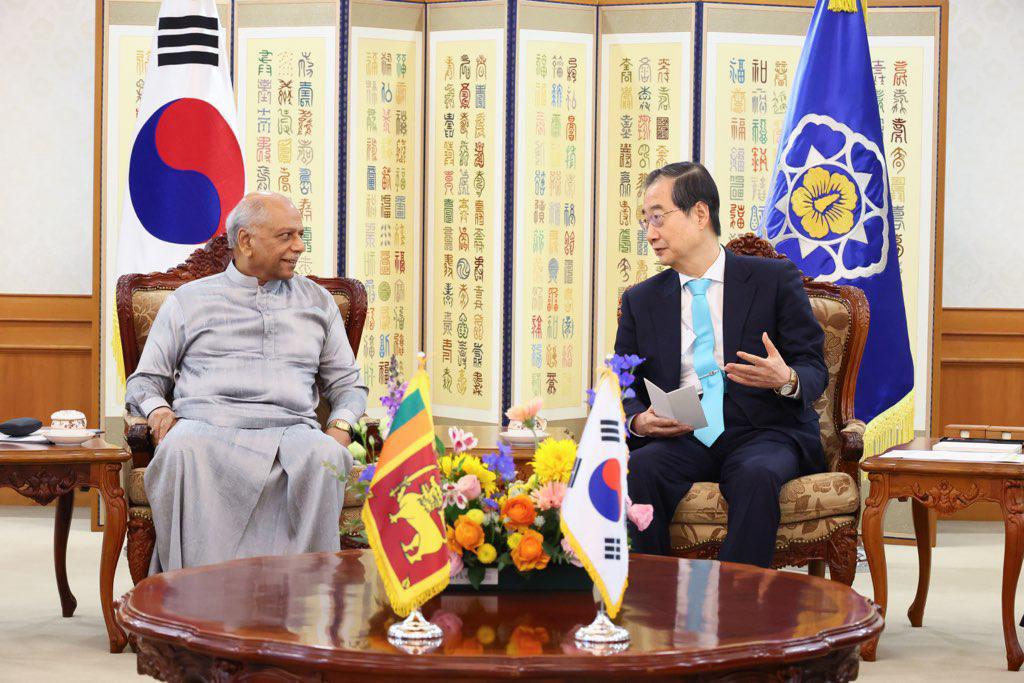
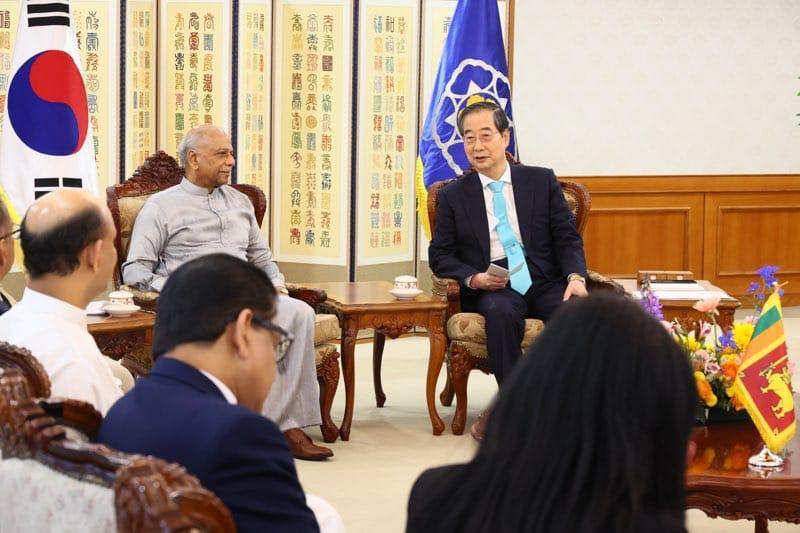
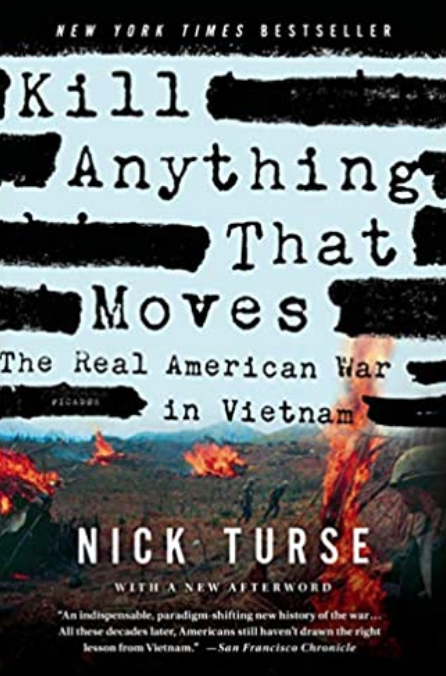
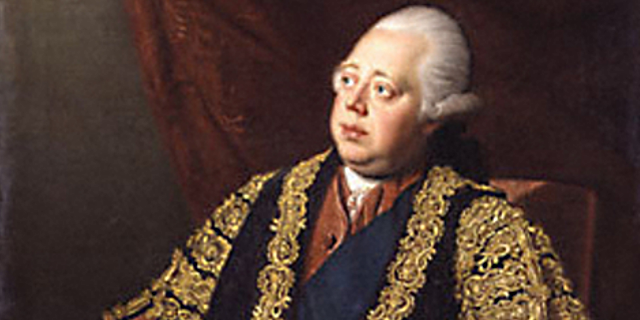
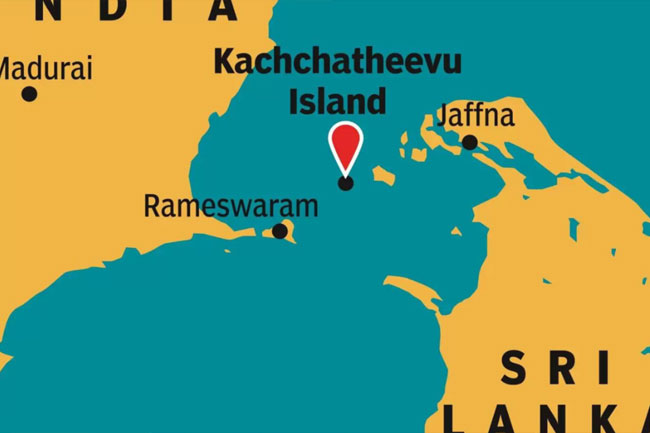
 2005 දී නෝර්වේ රාජ්යයේ මැදිහත්වීම හරහා ක්රියාත්මක කිරීමට උත්සාහ දැරූ ඊනියා සාම ක්රියාවලිය මගින් බෙදුම්වාදීන්ට තාවකාලික ආණ්ඩුවක් ලබා දී පසුව වෙනම රාජ්යයක් ලබාදීමේ ක්රියාවලිය අසාර්ථක වීමට ප්රධානතම හේතුවක් වූයේ පූජ්ය කොටපොල අමරකීර්ති නායක හිමි වැනි නායක හිමිවරුන්ගේ භූමිකාව නිසා බව මෙම ක්රියාවලිය මෙහෙයවූ පුද්ගලයන් පවසා ඇති බව දේශහිතෛෂී ජාතික ව්යාපාරයේ මහ ලේකම් වෛද්ය වසන්ත බණ්ඩාර මහතා පවසයි.


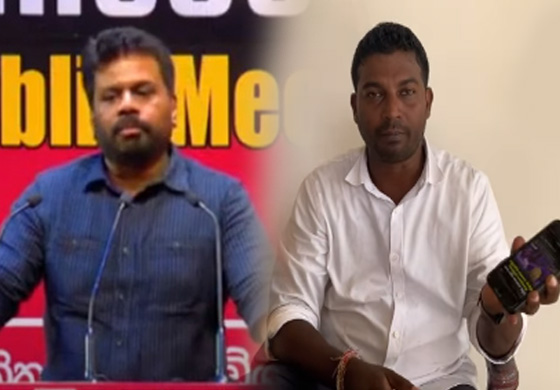 අරූන් ඔබ රටේ සමස්ත දේශපාලනය පිළිබඳව දරනා ආකල්පය කෙසේ වෙතත් උතුරේ දේශපාලනය පිළිබඳව ඔබ තරම් දන්නා කෙනෙක් උතුරේ නැති බවයි මගේ පෞද්ගලික හැඟීම.