The recent performance of the Sri Lankan cricket team at the T20 World Cup in the USA has sparked widespread disappointment and debate among fans and critics alike.
Many argue that the players have become complacent and corrupted by the high salaries they receive, despite their lacklustre performances.
This raises an important question: Should the remuneration of Sri Lankan cricketers be aligned more closely with the economic conditions of the country?
The Current Scenario
Sri Lankan cricketers enjoy considerable financial benefits, including high salaries, allowances, and fully covered expenses for travel, accommodation, food, laundry, and healthcare.
These benefits are provided by Sri Lanka Cricket (SLC), the governing body for cricket in the country.
In contrast, some of the nation’s highest-ranking officials, such as the Chief Justice and the Governor of the Central Bank, do not receive comparable compensation.
This disparity prompts a critical examination of the justification for such high payments to cricketers.
The Case for Revising Cricketers’ Salaries
Economic Context
Sri Lanka is currently facing significant economic challenges.
In such a context, it seems incongruous for cricketers to receive exorbitant salaries when many other vital sectors are underfunded.
Aligning the salaries of cricketers with the country’s economic reality could reflect a more equitable distribution of resources.
Performance-Based Compensation
High salaries should ideally correlate with high performance.
However, if cricketers’ performances are not meeting expectations, their remuneration should reflect this.
A performance-based pay structure could incentivise players to strive for excellence and ensure that they are rewarded commensurately for their contributions on the field.
Comparative Value of Roles
The roles of the Chief Justice and the Governor of the Central Bank are highly technical and require extensive expertise, experience, and dedication.
These positions have a direct impact on the country’s governance, legal framework, and economic stability.
While cricket is a source of national pride and entertainment, the responsibilities of these high-ranking officials are arguably more critical to the nation’s welfare.
Therefore, it is reasonable to question why cricketers should receive higher compensation than these key public servants.
A Proposed Pay Structure
To address these concerns, a revised pay structure for Sri Lankan cricketers could be implemented.
This could include:
Daily Allowances:
Paying a daily allowance of LKR 15,000 for overseas settings and LKR 10,000 for local settings.
This ensures that players are fairly compensated for their time and effort without receiving disproportionately high salaries.
Performance Bonuses:
Introducing performance bonuses based on individual and team achievements.
This could include rewards for winning matches, scoring centuries, taking wickets, and other significant contributions.
Basic Salary Adjustment:
Reducing the basic salaries of cricketers to align more closely with the economic conditions of the country, while still ensuring they are adequately compensated for their skills and dedication.
Attracting Talent and Preserving National Pride
Some may argue that lower salaries could deter talented players from pursuing cricket as a career.
However, the honor and prestige of representing the country should be a primary motivator.
Many young, talented players would still aspire to play for Sri Lanka, driven by national pride rather than purely financial incentives.
Conclusion
Revising the salary structure of Sri Lankan cricketers is not about diminishing their importance or contributions.
It is about ensuring fairness, accountability, and alignment with the country’s economic conditions.
By adopting a more balanced approach to remuneration, Sri Lanka can foster a more dedicated and performance-driven cricket team while ensuring that resources are allocated more equitably across all sectors.
This call for reform, if heeded, could restore the pride and performance of Sri Lankan cricket to its former glory.
The Institute of National Security Studies (INSS) organized a closed-door Round Table Discussion (RTD) on Sri Lanka’s Economic Security in 2024 – Evaluating the Outlook and Risks” on Thursday, the 06th June 2024, from 1600 to 1800 at the Nandimithra Auditorium, Ministry of Defence. Defence Secretary General Kamal Gunaratne graced the event as the Chief Guest.
Overlooking Director General and Acting Director (Research) of the INSS, Colonel Nalin Herath warmly received the Chief Guest to the discussion.
INSS, the premier think tank on national security established and functioning under the Ministry of Defence organized the RTD which brought together esteemed voices to deliberate on pressing thematical issues.
Dr. Ganeshan Wignaraja, Professorial Fellow in Economics and Trade at Gateway House (Indian Council Relations) and Visiting Senior Fellow at ODI, United Kingdom, moderated the session. Distinguished guest speakers for the event were Assistant Governor of the Central Bank of Sri Lanka Dr. Chandranath Amarasekara, Vice Chancellor and Chair Professor of Business Economics of the University of Colombo Senior Professor H.D. Karunaratne and Executive Director of the Centre for Poverty Analysis (CEPA) Dr. Herath Gunatilake.
Following an insightful introduction by the moderator, Dr. Chandranath Amarasekara initiated the presentation by examining the macroeconomic outlook and key points in the IMF program. He reflected on past social, political and economic challenges that impacted real GDP growth rates, macroeconomic stability, exchange rates and inflation. Senior Professor H.D. Karunaratne delved into medium-term challenges in educational reforms, the aging population and skill outmigration, highlighting issues in education quality, resource disparities and professional organization regulation.
Dr. Herath Gunathilaka focused on poverty resulting from crises, including insights on the ‘Aswasuma’ initiative as an alternative to the ‘Samurdhi’ program and the potential use of electricity consumption as a poverty indicator. During the Q&A segment, the audience posed pertinent questions, demonstrating their keen engagement. The speakers responded thoughtfully, addressing current and future concerns with factual analysis and pragmatic considerations.
The audience consisted of Navy Commander Vice Admiral Priyantha Perera, Air Force Commander Air Marshal Udeni Rajapaksa, Additional Secretary (Administration) Gaminie Mahagamage, Additional Secretary (Defence) Harsha Vithanaarachchi, Chief of National Intelligence Maj. Gen. Ruwan Kulatunga (Retd), Military Liaison Officer of the Ministry of Defence Maj. Gen. Dhammika Welagedara, former diplomats, economists, academics, researchers, policymakers, INSS Staffers and representatives from the Tri Forces and Police.
ISIS, as an ideology and group, has also attracted many crossovers: ideologically radicalised, predominantly youth, leaving behind more regional and hyper-local entities to join ISIS’s brand of pan-globalist jihad is a trend that continues even today.
The past half a decade has been tumultuous. A continuing global recovery from the pandemic. Geopolitical flashpoints such as wars in Ukraine and Gaza. The US left Afghanistan in 2021 as part of an exit” deal with the Taliban and maintaining minimum forces in both Iraq and Syria to counter the Islamic State (ISIS or Daesh in Arabic), signalling the end of the war on terror”.
This, however, does not mean that the threat of terrorism is over, or even diminished. At best, attention has moved to more pressing matters of the day, until the next attack. The recent arrest of four Sri Lankan citizens in Ahmedabad, Gujarat, piques interest.
The Sri Lanka story
The Gujarat Anti-Terror Squad (ATS) arrested the four people for allegedly having links to ISIS — more specifically the Afghanistan-Pakistan-based Islamic State Khorasan (ISKP) — and travelling to India with intent to conduct terror attacks. The Sri Lankans were reportedly moving on the orders of the pseudonymous Pakistani handler Abu Pakistani”. Sri Lanka’s security agencies also arrested another alleged local handler, Pushparaja Osman. The accused also reportedly explained that they were previously associated with the Sri Lankan extremist outfit National Thowheeth Jamath (NJT).
ISIS is not a group commonly equated for its presence in Sri Lanka, where over 70 per cent of the population is Buddhist. Muslims constitute less than 10 per cent and are a minority. But in 2019, several explosions ripped across the island nation’s capital, targeting churches and upscale hotels. Over 260 people were killed, and ISIS took responsibility, without providing any evidence of directly supporting the act of terror.
ISIS is not a group commonly equated for its presence in Sri Lanka, where over 70 per cent of the population is Buddhist.
Immediately after the Easter attack, links between the terrorists and certain entities in India’s southern states were highlighted. The leader of the Easter bombings ring, Zahran Hashim, was reportedly in touch with individuals in India via social media. Indian security agencies have since dismantled several self-styled pro-ISIS groupings across the country, but some much more specifically in the south.
Over the years, India has also taken back individuals from Gulf states who have been involved in extremist activities, including in favour of ISIS. A level of translucency remains on how these individual cases were approached legally. Much like other countries, many accused of supporting banned outfits like ISIS eventually were released from custody due to lack of evidence presented to the courts, or investigations hitting a dead end.
ISIS crossovers
The four arrested individuals from Ahmedabad and their history with NJT is not an anomaly. The decay of ISIS Central since 2018-19, which was at its territorial and ideological peak in Iraq and Syria under Abu Bakr Al Baghdadi, has not meant the group’s influence has debilitated. In fact, it has only been subsumed more aggressively by regional affiliates of the Islamic State, from those in Africa to the likes of Islamic State Khorasan operating in the political and theological crevasses between Afghanistan and Pakistan. While the regional wilayats look to exert more influence and power alike, ISIS central itself is also consistently looking to rebuild, forcing the US, for example, to maintain a minimal but visible military deployment in both Iraq and Syria as part of its anti-ISIS mission.
But ISIS as an ideology and group has also attracted many crossovers: ideologically radicalised, predominantly youth, leaving behind more regional and hyper-local entities to join ISIS’s brand of pan-globalist jihad is a trend that continues even today. For example, ISKP’s cadre base is ethnically diverse, ranging from Tajiks and Uzbeks to Uyghurs and Pashtuns. A few Indians have also been known to have joined the group. Most recently, an Indian-origin man from Kerala was arrested in the southern Afghan province of Kandahar, the Taliban’s ideological home. Sanaul Islam made his way across the Tajikistan-Afghanistan border, reportedly in an attempt to join ISIS.
An Indian-origin man from Kerala was arrested in the southern Afghan province of Kandahar, the Taliban’s ideological home.
Localised terror groups have much clearer political aims than say a pan-Islamist group such as ISIS. Unless these narrow political aims are shared in the same manner and depth, some radicalised, particularly those in their youth, tend to look for bigger and broader aims to satiate their ideological extremism. In this case, ISIS continues to represent, for some attracted to the group a globalist war for the protection of Islam.
This is represented through ISIS propaganda, where it criticises not only states like Israel, the US, and India for what they perceive as anti-Muslim agendas, but also aims Arab monarchies, and even the Taliban in Afghanistan, for working closely with states and entities perceived as being anti-Islam. For example, in its latest propaganda video release, ISKP has criticised the Taliban for taking developmental help from the United Nations and associated entities.
The Sri Lanka example highlights the disparity between the terror attacks that get appropriate international attention and those that don’t. A noted scholar of terrorism, Professor Rohan Gunaratna, recently wrote that Sri Lanka and its religious leaders and elites need to come to terms that there is an underbelly of radicalisation in the country.
Need for counter-terrorism cooperation in South Asia
However, beyond such issues that come under the ambit of a sovereign nation’s judiciary and law enforcement, there has been no institutionalisation of counter-terrorism cooperation in South Asia. In an ideal world, an organisation such as SAARC would host a robust counter-terror cooperative to discuss these issues. And an even further idealistic world, through such a regional entity, an India-backed and funded version of an intelligence-sharing apparatus such as the Five Eyes (made up of the US, Canada, the UK, Australia, and New Zealand) would be mobilised, excluding Pakistan and even Afghanistan for now.
Pakistan’s inability to clean up its own house and reorient its national identity away from an obsessive view of India’s downfall to its economic well-being has had regional-wide consequences.
Pakistan remains a huge hindrance to any such institutional undertaking in the region. A prime sponsor of cross-border terrorism as state policy, its designs have been detrimental to regional security for years. The fact that Pakistan today faces security challenges with a group such as the Taliban on the contested Durand Line showcases its myopia on what it has perceived as a useful tool against India’s rise for decades. Pakistan’s inability to clean up its own house and reorient its national identity away from an obsessive view of India’s downfall to its economic well-being has had regional-wide consequences. That today Islamabad, with a straight face, can raise the alarm of it facing a terrorism threat is worthy of the Oxford Dictionary re-defining the term irony” in its pages.
Finally, the Sri Lanka case, and the arrests in Ahmedabad, highlight that the pro-ISIS threat has a strong probability of often slipping under the radar. India should look to build a regional mechanism, focusing on most border states, to debate countering terrorism under one roof. Even as the world remains distracted between pandemics and warfare, from Ukraine to Gaza, or big power competition between the US, China, and Russia, the threat of terrorism has only abated, or depleted, till the next large-scale attack occurs.
This commentary originally appeared in India Today.
In this last in my series of nitrogen articles, I turn to the question if we can do without synthetic nitrogen fertilizers.
The Sri Lanka case – not an organic case
You have probably heard the story about how Sri Lanka turned organic” and that it ended in a disaster (if not, you can read here or here). This is taken as a proof of that organic farming, or any other farming system that rejects the use of chemical fertilizers is bound to fail. Still, you can’t draw any such conclusion from the failure of a ban on imported fertilizers in Sri Lanka. The rationale for the ban was mainly to save money as the country was in a desperate financial crisis. Since 1962, successive governments provided fertilizer subsidies in various forms. In 2019, the rate of fertilizer subsidy provided to paddy farmers was approximately 86% and it ranged between 48% – 88% for other crops. In 2020, fertilizer subsidy was provided for all crops at a subsidized rate. From mid – 2020, for the first time in history, fertilizer was provided free of charge for paddy up to a cultivation extent of 5 acres. This led to that more than half of the agriculture budget was spent on fertilizer subsidies (Weerahewa et al 2021). International fertilizer prices also started to climb rapidly towards the end of 2020. In 2021, the country found itself in a financial crisis and needed to cut spending drastically and among other measure, president Gotabaya Rajapaksa announced a ban on the import of agrochemicals. Almost overnight, farmers who were used to get fertilizers virtually for free could no longer use any. Clearly, not even an organic agriculture fanatic would recommend such a strategy for converting a whole country into organic.
Sri Lanka is rather a showcase for how not to convert or transition (the term more often used in North America) to organic. It is also an example for how many statements about the implication of a conversion to organic agriculture are produced. You take an existing farming system and quit the use of synthetic fertilizers and pesticides – the yield will drop dramatically depending on the baseline, the crop and many other factors. In the worst cases (in some pest stricken horticulture crops grown in huge monocultures) yields will go to zero, in some cases there will be hardly any effect (low intensity polycultures). But you can’t change one thing in an ecological system. The whole system will have to change if you exclude chemical fertilizers.
Organic, regenerative, agroecology, permaculture…
In this article, I will use organic” as shorthand for an agriculture system that works with natural processes without the use of agro-chemicals. There are competing” concepts such as regenerative agriculture, permaculture, agroecology. Many proponents of any of these claim that their concept is superior to the others. I will not go into any detailed argument about the strengths and the weaknesses of the concepts (I will quite soon write an article about it). I have used regenerative” as more or less synonymous to organic” for more than a decade already, and on my own farm I apply permaculture principles to a rather large extent. The social/political component of agroecology is good and largely missing in the other concepts. Having said that, organic is the only concept that consistently rejects the use of chemical fertilizers.* So the question boils down to if organic agriculture can feed the world”, even though I resent the question because it implies that who gets to eat is about production, which it is not.
Luis and Maria Vieria practice organic, regenerative, agroecological permaculture in Mato Grosso, Brazil, photo: Gunnar Rundgren 2011.
Researchers say no…
Pietro Barbieri and colleagues concludes, in an article in Nature food 2021, that in a fully organic world food production would go down with 36 % of dietary energy needs with nitrogen shortage the key determining factor. Protein would not be a problem though.
A third paper on the possibility to reshaping the European agro-food system published in One Earth (2021) by a team headed by Gilles Billen claims that Europe can be self-sufficient in a fully organic diet, with a huge reduction in the consumption of animal products.
All three papers are, quite naturally, based on modelling and the results are basically determined by the input data as well as the assumptions made and constraints imposed.** Knowing these assumptions and constraints it becomes considerably easier to understand the difference in results and conclusion. The main difference between Barbieri et al (Global organic impossible) on the one hand and Morais et al (Global organic possible) and Billen et al (Europe organic possible) on the other is that Barbieri et al assume fewer and less effective mitigating measures. Billen et al assume substantial recycling of waste from food system and a tripling of biological nitrogen fixation. Morais et al count on a rather radical improvement in nitrogen use efficiency, covering around half of the anticipated nitrogen shortfall and improved/increased biological nitrogen fixation for most of the rest.
In my view, all three papers have some weaknesses (it would be strange if they hadn’t). Barbieri et al apply a far too static perspective on the response of farmers and society. This is unrealistic and undermines their main conclusion – that organic can’t feed the world. It is quite obvious that large-scale recycling of waste from the food system, including human excrements, would be a necessity in a 100 % organic scenario. Also, their projected increase in biological nitrogen fixation is just 4%, why so little is not explained.
In the paper of Billen et al, I am a surprised that they don’t include the opportunity to expand grassland areas or intensify grassland use. In many parts of Europe huge tracts of grasslands have been abandoned the last century and in many parts grazing is underutilized because it is cheaper to buy feed than to use grazing and to breed monogastric animals instead of ruminants. They assume, instead, a 46% decrease in the production from grasslands. That may be a realistic assumption for grasslands which today are fertilized with synthetic N with no other changes in management. But in many European countries just a small fraction of the permanent grasslands receives any fertilizers (in Sweden it is even prohibited to spread fertilizers on permanent grasslands).
All three papers also discuss diets, which is quite natural as diet is just the other side of production. Obviously, diets will change with a production system without N-fertilizers, in the same way (but in an opposite direction) as diets have changed dramatically with N-fertilizers. See more below.
My reading of the three articles demonstrate quite well that models of this kind shouldn’t be referred to as evidence of that one or the other opinion is correct. Food and agriculture systems are far too complex to allow for such conclusion. One change, such as the elimination of synthetic nitrogen triggers a cascade of changes, which in turn cause new changes. Emergent properties, such as soil fertility, are not easily captured in models.
I say yes
Having farmed organically for more than forty years, I can agree with the basic tenet of all three articles; that N-supply is a major challenge for organic. Of course, if you grow vegetables, fruits and berries, pests can be a bigger challenge some years for some crops. Under some circumstances phosphorus or potassium supply can also be a problem. With bad management, also weeds can cause severe crop losses.
Don’t we need more animals if there were no N-fertilizers?
There is a common misunderstanding that without chemical fertilizers we would need more animals to get sufficient manure. But there would actually be fewer animals in an agriculture system without chemical fertilizers. If you go back and check the graph in the first N-article I think you will understand why, there will simply be less feed produced. We could do with more grazing ruminants in a scenario without chemical fertilizers, but we could certainly not feed the same number of chicken and pigs that are fed today, or feeding ruminants on grain. The reason for this is that the current number of chicken and pigs as well as cattle in feedlots are dependent on feed crops grown with N-fertilizers.
Without N-fertilizers we would not be able to feed the same number of animals. But ruminants can graze on land that is not fertilized and they can be integrated in the production system in a way that makes them net contributors of food and nutrients to the whole system. Pigs, and to a more limited extent chicken, can also play a beneficial part of the food system if they are eating leftovers and by-products or feed themselves in niches on or off the farm. But their numbers will certainly be fewer than today. Even if there would be fewer animals as a global average, in many places there will be more animals as animals need to be integrated in all local agro-ecosystems.
The availability of an almost unlimited supply of nitrogen has clearly steered the food system in a certain direction that goes all the way from how we (don’t) handle human waste to an enormous increase of the consumption of chicken. Clearly it is totally impossible to take this system and just exclude nitrogen fertilizers. But farmers and societies will adapt and adjust to new conditions. The changes needed include, but are not limited to:
Recycling of organic waste from all parts of the food system, including human excrements.
Reducing food waste.
Integration of livestock and crop production.
Increased focus on a living soil/soil health.
Considerable use of permanent, non-fertilized grasslands. This doesn’t necessarily mean expansion of grasslands, but rather better use.
Expanded use of biological nitrogen fixation through, among others, the cultivation of leguminous plants. This is not limited to peas and beans for direct human consumption but also clover and alfafa for forage, the growing of leguminous plants as cover crops or living mulches and leguminous trees in forest gardens, permaculture, silvopastoral or agroforesty systems.
Adaptation of diets to what works well in an organic production system and to higher prices of food.
Many of the measures needed have been common practices for centuries. A circular food economy is nothing new but rather standard practice for centuries, now discarded by the capitalist market-economy. Global flows of nutrients are largely incompatible with the closing of the nutrient cycles. That doesn’t only apply to trade in feed for animals but equally for food to people. These changes will, in turn, trigger new changes. This points to a relocalization of the food system. In the end, in the same way as the current food system is both a driver and a result of a capitalist industrial civilization, another food system points toward another society. More expensive food also points towards increasing self-provisioning of food. Some measures will happen as a result of changes in costs.
As food will be more expensive, food waste will be lower, something that has been apparent during the last years’ food inflation in Europe. Similarly, as feed crops will increase considerably in price and nitrogen become more valuable livestock production will shift back to land-based integrated systems. On a practical level, the recycling of human waste is the most challenging as it is linked to basic infrastructure that is very slowly changed and where the investments need to be made by other (estate owners and local governments) than those benefitting (the farmers). As you can see from the graph in the second N-article human waste and food waste together emit nitrogen corresponding to almost one third of the current supply of N-fertilizers. Eliminating losses and recycling the rest (without contaminating it) is crucial.
What shall we eat?
By and large, many food systems research papers and reports have their focus on consumption and prescribe certain diets as being sustainable or in some other way preferable. In my view that is putting the wagon before the horse. The food system is not consumer driven, but producer driven. All through history, people have eaten what could be produced. Which is the obvious reason for why diets have differed enormously over the planet. Therefore the right question is not what we shall eat but rather what we can eat.
The notion that there is one good global diet with largely the same composition is socially, culturally and ecologically inappropriate. On the contrary, the diet should be adapted to what can readily be produced locally – I talk about a landscape diet”. In the case of temperate Europe, I envision a diet with a big role for ruminant meat and milk, potatoes and grain with a lower consumption of pork, chicken, vegetable oil***, exotic fruits and delicate vegetables (tomatoes, lettuce etc.) and a higher consumption of pulses, coarse vegetables (onions, cabbages and root crops) compared with today.
Enough for 10 billion?
Well, I don’t know. There are limits for any system. There are also limits for how many people that can be fed by conventional agriculture and for how long. The discussion is in any case far too simplistic with a growing population being seen as taken for granted, despite the fact that under most of humanity’s history populations have been stable or fluctuating rather than constantly growing. It is quite obvious that there are a number of socio-economic factors regulating the size of population and that the exponential growth of population is just a part of the same system of growth in the economy, with capitalism as the main driver. Population growth has also slowed down rapidly lately, even if the inertia in the system (those giving birth today were born 20-40 years ago) makes it less apparent. My guess is that the population will start to decline within a couple of decades, for a number of reasons linked to the limits to growth as well as cultural factors linked to modernity.
Will it be good for the environment?
Yes, without doubt it will reduce all the many negative impacts associated with N-fertilizers. Among the three research articles discussed above, Barbieri et al project a 77% reduction of N losses to the ecosystems while the main focus of Billen et al is to reduce N losses to the biosphere and their results show a reduction to the half of current emissions. According to Morais et al, N losses can be reduced with 70% and greenhouse gas emissions can be halved in a fully organic scenario.****
The only potentially negative environmental impact would be an increased land-use. Having said that, there is no automatic chain linking lower yields to higher land use. Regionally, e.g. in Brazil, we can see agriculture expansion being linked to increasing yields. The main factor regulating land-use is which use is profitable, possible and legal. In general, the land-sparing argument for intensification is flawed.
Will the poor starve?
The linkages between agriculture production, agriculture prices, food prices and the access to food for poor people are many and complex. One can certainly not suggest that an increased production and low prices are good for the poor. If so, there would be no hungry people on the planet. I did write an article on the subject not long ago, so instead of repetition, here is the link.
The great transition
The discussion about nitrogen in the food system is quite similar to the discussion about fossil fuels in the human civilization, and they are closely related as N-fertilizers are made with fossil fuels. I see both fossil fuels and N-fertilizers as essential components of the Great acceleration. Both are also closely linked to population growth and capitalism. All of that will change.
* I am aware of that there are many organic farms which are not ideal and that are based on massive inflow of manure from conventional farming systems. After all I was a founder of the Swedish organic certification program, KRAV, and also the president of IFOAM for five years.
*** It will be hard to produce rape seed (canola), sunflower and soybean oil in the quantities needed in Europe and olive oil has too narrow climate demands to expand considerably from the 2% share of global vegetable oil production it has now. Less fat and more animal fat in the diet is the most likely solution in Europe – which was the situation just 50 years ago in any case, when butter, tallow and lard where the main fat sources.
**** All three papers use IPCC standard emission factors which actually are misleading when it comes to N2O emissions. Nyameasen et al (2021) concludes that the IPCC default emission factors overestimate N2O-N emissions from organically managed pastures in temperate climates. Rafique et al (2011) establish that N2O emissions on grazed pastures in Ireland increase exponentially with N-input so that an unfertilized grassland emit around 1.5 kg N2O per hectare, when fertilized with 100 kg N the emissions are 2.2 kg per hectare while a rate of 300 N gives 6 kg of emissions and 400 kg N leads to emissions above 9 kg per N2O per hectare. The emissions from unfertilized grasslands are basically background emissions that should not be counted as emissions at all as all natural ecosystem also emit similar quantities of N2O. A meta-analysis of 422 studies of nitrous oxide emissions from land fertilized by animal manure or chemical fertilizer revealed that emissions are considerably lower than the IPCC standard emission factors for manure and considerably higher for chemical fertilizer (Anaïs et al 2017). Under low availability of inorganic N, soils can even under certain conditions act as a N2O sink (Chapuis-Lardy et al 2007).
Former Inspector General of Police (IGP), Chandra Fernando says that it cannot be expected that the political groups who have engaged in violent political activities in the past will not resume such activities in the future.
He stated this while speaking during a press conference held today (13), with the participation of other retired high-ranking police officers including former IGPs and DIGs.
Fernando further stated that although the government carried out rehabilitation programmes to a large extent after the 1971 insurrection and though everyone believed that the insurrection would end with that, unfortunately, the violence returned in 1989 destroying lives and properties in the country.”
We then thought it was all over, but unfortunately, 91 houses were destroyed in one night on the 9th of May, 2022 by an organized group. Therefore when things like this happen, will this not happen in the future as well?” he said.
President Ranil Wickremesinghe has appointed a Committee of Inquiry to investigate the actions taken by the State Intelligence Service (SIS), Chief of National Intelligence (CNI), and other relevant authorities concerning prior intelligence received about the bomb attacks on April 21, 2019. This decision follows the findings of the Final Report of the Commission of Inquiry, dated January 31, 2021, which highlighted that Indian Intelligence agencies and other sources had provided advance warnings about the impending attacks.
The Committee of Inquiry will be chaired by Ms. A.N.J. De Alwis, Retired Judge of the High Court. Other esteemed members of the committee include SLAS special grade Officer Ms. K.N.K. Somaratne and Senior Lawyer Mr. W.M.A.N. Nishane, AAL. The committee’s mandate includes examining whether adequate actions and measures were taken by the SIS, CNI, and other relevant authorities based on the prior intelligence and evaluating the sufficiency of these measures.
Additionally, the committee will investigate the circumstances surrounding the Directorate of Military Intelligence’s (DMI) initial belief that the Vavunathivu killing of two police officers on November 30, 2018, was connected to the LTTE. This belief was held for four months before suspects with alleged links to the National Thowheed Jamath (NTJ) were identified.
A compact disk containing the Final Report of the Commission of Inquiry on the Bomb Attacks of April 21, 2019, has been provided to the committee. The President has authorized the committee to inquire relevant officials and examine pertinent documents to thoroughly investigate these matters.
Ms. Sarathanjali Manoharan, Senior Assistant Secretary to the President, will serve as the Secretary to the Committee of Inquiry. The committee is expected to submit its report, including findings and recommendations, to the President by September 15, 2024.
Colombo, June 12 (Daily Mirror) – The International Monetary Fund (IMF) has approved the second review of the country’s programme, Minister Ali Sabry said.
“The IMF’s approved the 2nd review of Sri Lanka’s programme. This achievement is a testament to our dedication to driving forward economic reforms and securing a prosperous future for all Sri Lankans. Onward and upward,” Ali Sabry said.
The IMF Board met today to discuss the second review for the Extended Fund Facility (EFF) marking a significant milestone for the country’s economic recovery process.
General Kamal Gunaratne, the Defence Secretary as the Author of the Deegawapiya Aruna Trust and First Trustee, presided over a press briefing at Sri Sambodhi Viharaya, Colombo yesterday (June 11), on the enshrining ceremony of the Sacred Relics and Treasures in the hemispherical dome of the ‘Deegawapiya Stupa’ as well as the opening of the newly constructed Shrine Hall, Pilgrims Rest and Alms Hall on July 14.
The restoration work of the Deegawapiya Stupa, which is considered one of the sixteen sacred sites, commenced in view of revisiting the former glory of Deegawapiya, under the supervision and guidance of Defence Secretary General Kamal Gunaratne, is still underway with the labour support and financial contributions of the Tri Forces, Civil Security Department (CSD) and the devotees.
All arrangements have already been made for the opening of the newly constructed Shrine Hall, Venerable Daranagama Kusaladhamma Memorial Pilgrims Rest’ which consists of 20 rooms with 04 spacious halls and the Alms Hall in line with the Sacred Relics and Treasures enshrining ceremony on July 14.
The Buddhist TV channel has extended great support in financing the construction work of Deegawapiya Stupa. On this occasion, the Director of Finance and Administration of the Buddhist TV channel Mahesh De Alwis, symbolically handed over a cheque of an additional 25 million rupees to the Defence Secretary with a view of sponsoring further future restoration work.
As the construction work of the hemispherical dome of ‘Deegawapiya Stupa’ has almost been completed, the Buddha statues and relic caskets to be enshrined in the Stupa on July 14, symbolically handed over to the philanthropists Mr Jayantha Ratnapriya and Mrs Padmini Gamage who were present with their families.
The Chief Prelate of Deegawapiya Raja Maha Viharaya Ven. Mahaoya Sobhitha Thero, the Chief Prelate of Sri Sambodhi Viharaya Colombo Ven. Boralande Wajiragnana Thero, Director of Archeology Department (Architecture Conservation) Prasanna B Ratnayake, Director – Media and Media Spokesman of the Ministry of Defence Colonel Nalin Herath, representatives of Media and devotees were also present at the occasion.
Ukraine Says Some of Its F-16 Fighter Jets Will Be Stored Abroad
Putin has previously warned that Russia could target bases in NATO countries if they’re hosting warplanes that are being used in Ukraine
June 10, 2024
A senior Ukrainian Air Force official said Monday that Ukraine plans to keep some of the Western-provided US-made F-16 fighter jets that it will receive at foreign military bases to protect them from Russian strikes, an arrangement that risks provoking Russian attacks on NATO territory.
There are a certain number of aircraft that will be stored at secure air bases, outside of Ukraine, so that they are not targeted here,” said Brig. Gen. Serhiy Holubtsov, the chief of aviation in Ukraine’s air force. And this will be our reserve in case of need for replacement of faulty planes during routine maintenance.”
Russian President Vladimir Putin and other Russian officials have previously warned that NATO bases housing Ukrainian jets that are being used in the war could be potential targets.
If they are stationed at air bases outside the Ukrainian borders and used in combat, we will have to see how and where to strike the assets used in combat against us,” Putin said last year, according to The Associated Press. It poses a serious danger of NATO being further drawn into the conflict.”
Putin and Russian Foreign Minister Sergey Lavrov have also noted that F-16s are capable of carrying nuclear weapons. Lavrov warned last year that Russia would view them as a nuclear threat. The Netherlands recently announced that it would allow Ukraine to use the F-16s it provides in strikes on Russian territory.
According to AP, Belgium, Denmark, the Netherlands, and Norway have pledged up to 60 F-16s for Ukraine, but none have been delivered so far. The first planes are expected to arrive this summer, and Ukraine may only receive six at first due to delays in training pilots.
We remind our readers that publication of articles on our site does not mean that we agree with what is written. Our policy is to publish anything which we consider of interest, so as to assist our readers in forming their opinions. Sometimes we even publish articles with which we totally disagree, since we believe it is important for our readers to be informed on as wide a spectrum of views as possible.
——————————————————————————————————
100,000 form red line” around White House to protest US support of Israel
12/06/2024
A hundred thousand people descended upon Washington DC to surround the White House with a miles-long red line”, later forming a People’s Court” to try Biden and Netanyahu for genocide
by Natalia Marques Jun 10. 2024
The ruling class, they’ve shown us that they have no red line,” said Lamees M, an organizer with the Palestinian Youth Movement, opening a rally of over 100,000 people in front of the White House in the capital of the US on Saturday, June 8. They will bankroll the murder of 40,000 Palestinians. They will provide cover for the wholesale destruction of the entire Gaza Strip. They’ll provide the blueprint for the mass displacement of over a million Palestinians, and then send bombs to rain down on people in their tents of refuge.”
Over 200 organizations came together to hold the demonstration and to organize dozens of buses to bring demonstrators from all over the country to converge in Washington DC. 1,000 protesters traveled overnight from Tampa, Florida, and more protesters came from as far away as Detroit, Iowa, and Kentucky. Convening organizations included the Palestinian Youth Movement, National Students for Justice in Palestine, The People’s Forum, Al-Awda: The Palestine Right to Return Coalition, US Palestinian Community Network, and the ANSWER Coalition.
Earlier on June 8, Israel once again dropped bombs on the Nuseirat refugee camp, in a so-called rescue operation.” Zionist forces rescued” four hostages, but in the process killed 274 Palestinians and injured over 698 more—all using US-made bombs.
As tens of thousands, young and old, representing a multitude of nationalities, gathered at Lafayette Square in front of the White House, the overwhelming mood was one of outrage that the government of the United States has thus far refused to abandon its unconditional support for Israeli genocide.
Demonstrators formed a red line” around the White House, a miles-long red banner, parts of which were inscribed with the names of the 40,000 Palestinians killed by Israel in the ongoing genocide since October.
The demonstrators were denouncing Biden’s previous claims that the invasion of Rafah by Israel would be a red line for his administration, even threatening to withhold weapons shipments when Israel was still threatening to invade.
I made it clear that if they go into Rafah—they haven’t gone in Rafah yet—if they go into Rafah, I’m not supplying the weapons that have been used historically to deal with Rafah, to deal with the cities—that deal with that problem,” Biden said during a CNN interview on May 8.
But Israel has since invaded, perpetrating massacre after massacre in Rafah using US-made weapons—resulting in no material policy changes from the Biden administration. The US continues its decades-long policy of sending arms to Israel to carry out the systematic destruction of Palestinian life.
Peoples Dispatch spoke to Mohammad from the Palestinian Youth Movement (PYM), who said that the ruling class are not the ones that set the red lines. The working class people of this world are the ones that set the red lines.”
Mohammad also spoke at the rally in Lafayette Square as a representative of PYM, speaking to the state of the larger struggle for Palestine within the diaspora since October. The people of Gaza, the popular cradle, exists as the mark by where we should always measure ourselves. And for that reason, we cannot allow ourselves to succumb to despair, to succumb to defeatism,” he said, speaking to those gathered at the square.
We merely exist as one front of many,” Mohammad continued. We have shut down streets, we have shut down bridges, airports, train stations… this has never happened in the history of empire for a very long time. Day in and day out, we organize to clog the arteries of imperialism, here within the belly of the beast.”
Later on in the day, thousands gathered on the other side of the White House, to hold a People’s Court of Justice trying Benjamin Netanyahu, Yoav Gallant, Joseph Biden, Lloyd Austin, Anthony Blinken, as well as the states of the US and Israel, with the crimes of genocide, war crimes, and crimes against humanity.
To all of the people of conscience who are entering into the People’s Court, we welcome you to your rightful place in history as the judges of what is right and wrong,” said Layan Fuleihan, Palestinian organizer and Education Director at the People’s Forum.
Attendees at the People’s Court heard testimony directly from Gaza, read by Palestinian organizers. These included a testimony from a 13-year-old Palestinian girl who lost both her parents and her siblings in an Israeli bombing on December 11, 2023, in which only she and her brother survived with significant injuries. She is now sheltering at an UNRWA school at Nuiserat camp, which has been bombed several times by Israeli forces. Our life in the shelter is difficult. Everyday I have to go up and down the stairs many times, which is very difficult with my injuries,” read the testimony. I miss coming back from school and finding my mother preparing food, and eating together. But my mother was martyred. The occupation killed her, and left me to continue my life without her.”
The People’s Court concluded with finding all the accused parties guilty of genocide, war crimes, and crimes against humanity.
Peoples Dispatch spoke to Brian Becker, executive director of the ANSWER Coalition, who explained the significance of thousands of working people coming together to put the powerful on trial. This is a rare moment for people who come to a mass demonstration in Washington, DC, to have as a concluding event, the testimony of international lawyers, human rights lawyers, legal scholars on the direct testimony from people in Gaza themselves about war crimes, crimes against humanity and crimes against peace,” Becker said.
Becker also spoke to the significance of the current stage in the movement for Palestine in the United States, eight months into the genocide, highlighting that more and more people, now think that the Israeli narrative is false.”
We have created this consciousness…all of the groups in the movement who have been in the streets, using all kinds of tactics to show protest, to show opposition, to show struggle. People’s consciousness changes when they are in struggle. When they are in struggle, they open their minds to new ideas. And that’s what we’re witnessing in the United States.”
Colombo, June 12 (Daily Mirrro) – Three eminent environmentalists together with the Bishop of Mannar Rev. Fr. Bastian have filed a fundamental rights petition before the Supreme Court against the procurement and construction of the proposed 250 MW Mannar Wind Power Project in Mannar that is reported to have been awarded to Adani Green Energy Pte. Ltd.
The petitioners Rohan Pethiyagoda, Prof. Nimal Gunatilleke, Prof. Sarath Kotagama and Bishop of Mannar Rev. Fr. Bastian filed this petition as a public interest litigation naming 67 parties including the Cabinet of Ministers, the Sri Lanka Sustainable Energy Authority (SLSEA), the Central Environmental Authority, the Board of Investments, the Ceylon Electricity Board, the Public Utilities Commission of Sri Lanka and the Attorney General as respondents.
The petition raises concerns regarding the credibility of the Environmental Impact Assessment (EIA) carried out in respect of the project, the role played by the SLSEA, raises certain procedural issues in the awarding of the purported contract, and questions the characterisation of the project as a Government-to-Government deal. It also calls into question the basis for the negotiated tariff to be fixed at USD 8.26 cents per kilowatt-hour for a period of 20 years when the EIA conducts its assessment based on a cost of USD 4.6 cents, potentially causing considerable financial loss to the country and a burden on consumers.
In seeking their relief, the petitioners pray that the Supreme Court declare that there is a violation of the fundamental rights of the petitioners and citizenry at large, declare that the decisions made to award the project to Adani as wrongful, and calls for any consequential actions undertaken, to be declared illegal.
The petition states that the case has been filed to further the national interest, to preserve and protect public property, including the environment, flora and fauna, public finances and to safeguard the rights and freedoms of the public of Sri Lanka and its future generations.
Sri Lanka will be able to further strengthen its ties with Malaysia, with the Cabinet of Ministers this week giving the nod to commence the negotiations for a free trade agreement (FTA) between the two countries.
The proposal for the FTA was presented to the Cabinet by President Ranil Wickremesinghe.
The approval was granted with the Cabinet recognising the importance of export-oriented foreign direct investments, diversification of exports and expansion of market access for goods and services, to regain economic stability in the country.
Malaysia is the 34th export destination and fifth import origin for Sri Lanka, according to the Export Development Board (EDB).
Total exports to the country in 2023 were valued at US $ 58.34 million, while imports totalled US $ 736.39 million.
Moreover, exports to Malaysia increased 11.51 percent year-on-year, according to the EDB.
The main export products include petroleum oils, tea, textile, garments and industrial gloves.
Malaysia is also a key member of the Association of Southeast Asian Nations and Regional Comprehensive Economic Partnership, which signifies its status as a strong and strategic economy. (NR)
By P.K.Balachandran/Daily Mirror Courtesy NewsIn.Asia
Colombo, June 11: Having taken a firm decision to include nuclear energy in its mix of energy sources, Sri Lanka is now well on the way to harnessing it. Literature on the subject shows that the benefits of going for nuclear energy outweigh the drawbacks, and external finance will not be a problem.
The Sri Lanka Atomic Energy Board (SLAEB) Chairman Prof. Rexy Denzil Rosa has said that Sri Lanka has identified nuclear energy as a clean and green energy source to fulfil future electricity demand. In March 2024, the Sri Lankan cabinet committed the country to a nuclear power program.
The International Atomic Energy Agency (IAEA) says that Sri Lanka is pursuing nuclear power to increase its low carbon power production, tackle Climate Change and increase energy security.
Safety Main Criterion
A team from the IAEA did a review of potential sites for a nuclear power plant from the safety perspective, from May 30 to June 5. The Site and External Events Design Review Service (SEED) mission of the IAEA reviewed Sri Lanka’s adherence to IAEA guidelines on site selection, including exclusion and screening criteria.
The SEED mission was carried out at the request of the Government and hosted by the SAEB under the purview of the Ministry of Power and Energy. The team comprised three experts from Canada, Pakistan and Turkiye, and an IAEA staff member. The survey also involved scientists from the Geological Survey and Mines Bureau (GSMB), Central Environmental Authority (CEA) and the Department of Geology of the University of Peradeniya.
According to the IAEA, Sri Lanka has identified six candidate sites”” from three regions, including Pulmoddai in the Eastern Province which is known for its mineral sands. In the next phase, which is ongoing, IAEA will evaluate, compare and rank the candidate” sites. The final SEED mission report will be delivered to the Government within three months.
Need for Nuclear Power
In 2022, President Ranil Wickremesinghe exhorted Sri Lankans to seriously think about nuclear power” to overcome power shortages. SLAEB chairman Prof. Rosa had said that Russia, US, Denmark and China had offered help to set up a Small Modular Reactor (SMR) that would cost about USD 2 billion.
India too had offered such help. In 2015, Prime Minister Narendra Modi and the then Sri Lankan President Maithripala Sirisena jointly resolved to facilitate cooperation in the transfer and exchange of knowledge and expertise, sharing of resources, capacity building and training of personnel in peaceful uses of nuclear energy.”
The two leaders also resolved to facilitate enhanced cooperation in the areas of radioactive waste management, disaster mitigation, and environmental protection. It was reported that, in the long-term, India might be able to sell small-scale nuclear reactors to Sri Lanka which plans for production of 6,000 MW nuclear power by 2031.
The Small Medium Reactor (SMR), which produces around 100 Mw. is believed to be inherently safe” and with minimal risk,” SLAEB chairman, Prof. Rosa, was quoted as saying. He expected the Sri Lankan plant to be offshore barge-based. He also said that Russia had agreed to take back the nuclear waste, which, he added, was the reason for considering the proposal.
Advantages
Justifying the decision to go nuclear, Prof. Rosa said that solar and wind are good but are intermittent, unstable, and seasonal.” If Sri Lanka is to give up coal by 2030, as planned, it has to go nuclear, he reasoned. Other justifications cited were a lower running cost, the necessity to refuel only every two or three years, and the ability to supply electricity to consumers at a lower price.
According to a report from the U.S. Office of Nuclear Energy, nuclear power plants require less maintenance and are designed to operate for longer stretches before refuelling (typically every 1.5 or 2 years).
Safety Concerns
The safety of nuclear power generation and its economic advantages were discussed in detail in a 2018 paper by Mahesh N. Jayakody and Jeysingam Jeyasugiththan of Colombo University and Prasad Mahakumara of the Government of Sri Lanka. Their study noted that while the installation cost of nuclear plants would be high, nuclear plants are marked by low maintenance costs and a minimum adverse environmental impact.
On safety, which is a major concern in Sri Lanka, the authors maintained that the evolution of nuclear power plant technologies had made reactors very safe and protected from human error. And in the long run, nuclear energy would work out to be cheaper, the authors said, and recommended the Russian VVER-1000 and the American AP-1000 models based on Pressurised Water Technology (PWR).
According to Physics World, nuclear power is ‘hundreds of times’ safer than coal, gas and oil. On the danger from nuclear waste, the website www.world-nuclear.org says: The amount of waste generated by nuclear power is very small relative to other thermal electricity generation technologies; nuclear waste is neither particularly hazardous nor hard to manage relative to other toxic industrial waste.”
A US Office of Nuclear Energy (USONE) report of 2021 said nuclear plants have the highest ‘capacity factor’ (maximum capacity) compared to any other energy source.
Nuclear plants are producing maximum power more than 92% of the time during the year. That’s about nearly two times more than natural gas and coal units, and are almost three times or more reliable than wind and solar plants,” it said.
Russia’s Pre-eminence
Russia dominates the world market in nuclear material. Kristyna Foltynova of Radio Free Europe says that European nations are unable to stop the import of Russian nuclear material even amid the war in Ukraine.
The same goes for uranium enrichment, the next step in the nuclear cycle. According to 2018 data, Russia once again was responsible for the largest share about 46%,” the Radio Free Europe researcher said.
According to the latest available data, the European Union purchased about 20% of its natural uranium and 26% of its enrichment services from Russia in 2020. The US imported about 14% of its uranium and 28% of all enrichment services from Russia in 2021,” Foltynova stated.
Russia is considered the world leader in the export of nuclear plants. According to Foltynova, between 2012 and 2021, the Russian nuclear company, Rosatom, initiated the construction of 19 nuclear reactors. Fifteen of these were abroad.
The Russian TVEL Fuel Company is presently the only authorised supplier of fuel needed for VVER-440s, Foltynova points out. Russia is also able to supply High-Assay Low-Enriched Uranium (HALEU), which is a type of fuel that will be needed for more advanced reactors that are now under development by many companies in the US.
According to Bloomberg, Russia’s nuclear fuel and technology sales abroad rose more than 20% in 2022, quoting data compiled by the UK’s Royal United Services Institute
Russian Package Deal
One of the reasons many countries want to cooperate with Russia (even defying US sanctions) is that it offers a ‘package solution’.
Russia will not only build a nuclear plant and supply fuel, but it also trains local specialists, helps with safety questions, runs scholarship programmes and disposes of radioactive waste,” Foltynova points out. Sri Lanka has been offered such assistance according to SLAEB Chairman Prof. Rosa.
Russia also offers attractive loans, which are backed by government subsidies and cover at least 80 per cent of construction costs. Russia has already lent USD 10 billion to Hungary, USD 11 billion to Bangladesh and USD 25 billion to Egypt to build nuclear power plants,” Foltynova says.
Russia has also signed MOUs with at least 30 countries, mostly in Africa.
Two Ahmadis were fatally shot on 8th June 2024 at Saad Ullah Pur, District Mandi Bahauddin. The victims were Ghulam Sarwar, Son of Bashir Ahmed of 62 years of age and Mr. Rahat Ahmad Bajwa, Son of Mushtaq Ahmad Bajwa of 30 years of age have been fatally shot around noon in two separate attacks. One killer arrested is a student at a local Madrassah, who allegedly has confessed to killing two Ahmadis for reasons of faith. The Anti-Ahmadiyya hate campaign in Pakistan is at an all-time high. As per the law, those who incite hatred and violence against the peaceful Ahmadiyya Community should be brought to justice.
Reports further say, Mr. Ghulam Sarwar was on his way back home after offering the Zuhr (mid-day) prayers at an Ahmadiyya place of worship when the alleged killer opened fire at him near his house where he died on spot. In a span of 20 minutes when Mr. Rahat was returning to his house from catering Centre (Pakwan Centre) he owned which is situated at the local Bus stop, he was also fatally shot by a student from the madrassah in the local village. A killer, who has been arrested by the authorities is allegedly identified as one Syed Ali Raza of 16-17 years of age. He is a student at a local Ahle Sunnat Madrasa. The killer has allegedly confessed to the Police regarding the motivation behind these killings as faith based. Mr. Ghulam Sarwar was 62 years old. He was into farming. He has left behind a widow and 6 Children as mourners. Mr. Rahat Ahmad Bajwa was running a restaurant. He has left behind a widow and 2 young daughters as mourners.
The Spokesperson of the Ahmadiyya Community Pakistan Amir Mahmood while condemning this heinous act of murder has stated that there is an instant need of bringing those responsible to accountability for instilling the narrative of hatred in the youth against Ahmadis. The perpetrators behind this hate campaign are evident. Why is the Government not taking any action against them? He asked.
The Spokesperson of the Ahmadiyya Community has demanded that the Government should put an end to the hate campaign against Ahmadis in Pakistan and bring the perpetrators of the deceased Mr. Ghulam Sarwar and Mr. Rahat Ahmad Bajwa to accountability.
The international community must urge the Pakistani government to safeguard the rights of Ahmadis and ensure justice for the victims. Likewise, Pakistani authorities must recognize the need to curb the culture of hate speech and promote a culture of harmony. The time to act is now; silence and inaction will only perpetuate the cycle of violence and hatred
Source: Human Rights Section of the Ahmadiyya Muslim Foreign Missions Office, United Kingdom.
Let’s delve into a discussion based on the quote provided.
Throughout time, these barbaric invaders have thought, within the bellies of mothers residing in the border villages of Sri Lanka, unborn children awaited birth like a football. They were snatched up amidst the dawn, while the sword’s edge was raised against the milk-fed infants. As they step into a world devoid of empathy, they continue to deceive nations while brandishing the Eelam flag. They stand disciplined, showing a facade of civility, steadfast to the Eelam anthem. However, what we must heed without panic is this: how can there be a discipline devoid of humanity in this world?” -Pro. E. Perera
The quote seems to call for action against ruthless terror activities that result in the killing and massacre of innocent civilians in border village areas. It also mentions standing against the use of fake agendas by groups like the LTTE (Fake Liberation Tigers of Tamil Eelam). Through the propaganda machine of sports in these days. Let’s elaborate on these points and draft an article condemning such terror activities and the manipulation of agendas for violent ends.
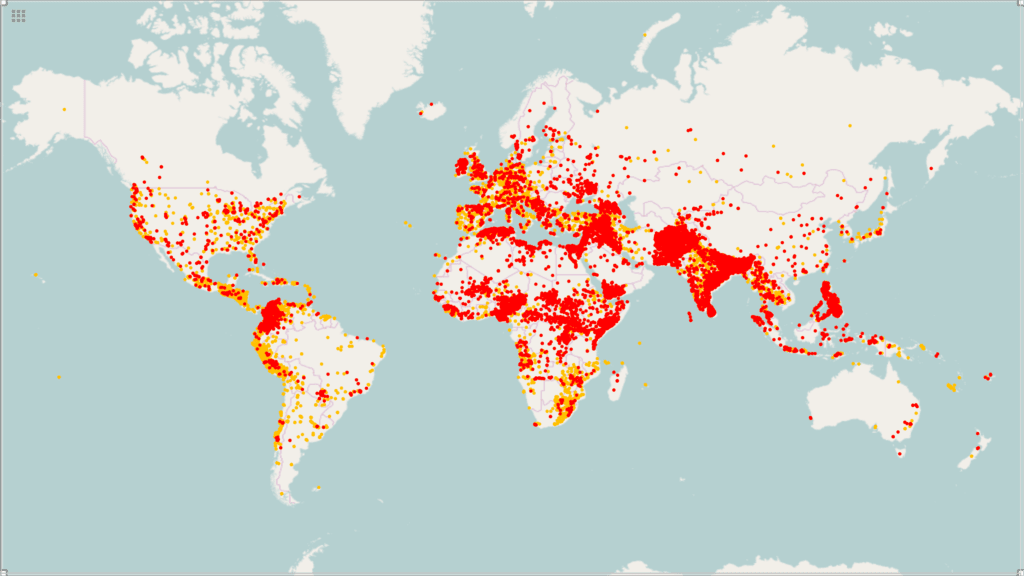
Image From Wikimedia Commons, the free media repository Terrorist incidents map of the world 1970-2015 Only
In recent times, the world has witnessed the horrifying consequences of ruthless terror activities carried out by extremist groups in border village areas. These acts of violence have left a trail of devastation, with innocent civilians becoming the primary victims of senseless bloodshed and massacre. It is imperative for the international community to stand united against such heinous acts and work towards eradicating the menace of terrorism from our societies.
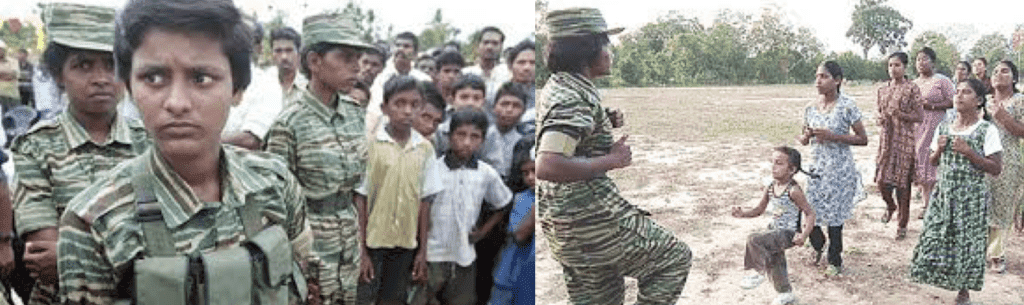
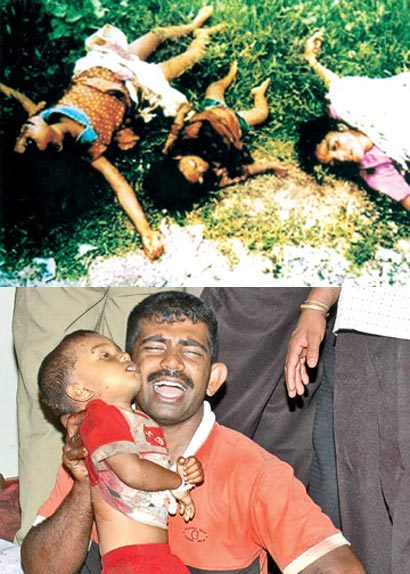
Image by onlanka: The LTTE started as a Tamil liberation movement but evolved into the most disciplined and nationalist of Tamil militant groups, advocating separatism by the mid-1980s. However, attempts to portray them as anything less than a brutal terrorist organization are futile. Evidence of LTTE atrocities over the years speaks for itself.
One of the most notorious examples of such terror organizations is the Liberation Tigers of Tamil Eelam (LTTE). For decades, the LTTE has been responsible for perpetrating violence and instigating conflict, particularly in the region of Sri Lanka. Under the guise of fighting for Tamil rights, the LTTE has orchestrated numerous attacks, targeting civilians and causing widespread destruction. Their tactics have included suicide bombings, assassinations, and other forms of brutality aimed at instilling fear and chaos.
What makes the situation even more alarming is the manipulation of agendas by groups like the LTTE/Extrime Base Diaspora . They exploit legitimate grievances and grievances of marginalized communities to further their own violent objectives. By hijacking noble causes and distorting them to justify their acts of terror, these groups betray the very principles they claim to champion. The use of fake agendas not only undermines the credibility of genuine movements for social justice but also prolongs conflict and suffering.
It is crucial for the international community to recognize the danger posed by such organizations and take decisive action to combat their influence. This requires a multi-faceted approach that includes diplomatic efforts, intelligence cooperation, and targeted counter-terrorism operations. Additionally, efforts must be made to address the root causes of extremism, including poverty, inequality, and social exclusion, which often serve as breeding grounds for radicalization.
Moreover, it is incumbent upon governments to uphold the rule of law and protect the rights of their victims without resorting to heavy-handed tactics that exacerbate tensions and fuel further violence. By promoting dialogue, reconciliation, and inclusive governance, societies can undermine the appeal of extremism and foster a culture of peace and tolerance.
In conclusion, the ruthless terror activities perpetrated by groups like the LTTE cannot be tolerated or justified under any circumstances. The international community must stand in solidarity with the victims of terrorism and work together to confront and defeat this scourge. By rejecting violence and extremism in all its forms and upholding the principles of justice and humanity, we can build a safer and more secure world for future generations.
LTTE (Liberation Tigers of Tamil Eelam) war. The conflict officially ended on May 18, 2009, when the Sri Lankan military defeated the LTTE, resulting in the death of the LTTE leader Velupillai Prabhakaran.
Terrorists may target sporting events to attack the youth for several reasons. Firstly, these events symbolize unity, joy, and national pride, making them prime targets to disrupt societal harmony. Secondly, the mass gatherings associated with sports events provide opportunities for terrorists to cause mass casualties and generate widespread panic. Additionally, young people represent the future and are symbols of hope and vitality. Targeting them can deeply impact society, creating a sense of vulnerability and despair. Furthermore, attacks on sporting events receive significant media coverage, amplifying the terrorist act’s impact and spreading fear. Finally, terrorist groups may exploit these events to spread their propaganda and recruit new members. By targeting the youth, they aim to radicalize individuals and advance their extremist ideologies. Overall, attacking young people at sporting events serves the strategic objectives of terrorists by sowing fear, causing disruption, and garnering media attention for their extremist agendas.
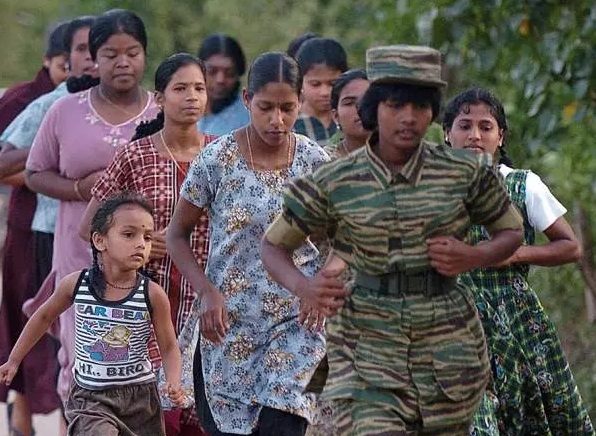
Image by telibrary -TAMIL EELAM WOMEN
It is time for the world to heed Dr. E.Perera’s call—to stand against the tyranny of terror and the manipulation of agendas. Diplomatic efforts must be bolstered, intelligence networks strengthened, and counter-terrorism operations intensified. But beyond the realm of geopolitics lies a deeper truth—a truth that demands introspection and action.
In sports, it is imperative to uphold the spirit of unity and inclusivity, fostering an environment where individuals from diverse backgrounds can come together in friendly competition. Allowing the display of flags associated with terrorist groups not only contradicts these principles but also risks promoting divisive and extremist ideologies. Therefore, it is essential to prohibit the use of flags affiliated with terrorist organizations during sporting events to ensure that the focus remains on sportsmanship, respect, and camaraderie.
The article is not intended to accuse anyone involved in sports but to highlight the unfortunate consequence of falling under false geopolitical terrorist agendas.
June 10, 2024 – Minister of Labour and Foreign Employment Manusha Nanayakkara, currently in Geneva to attend the Annual International Labour Conference (ILC) of the International Labour Organization (ILO), held a significant meeting this morning with the Director-General of the ILO, Mr. Gilbert F. Houngbo, at the United Nations Headquarters.
Minister Nanayakkara was accompanied by Sri Lanka’s Permanent Resident Representative to the UN, the Additional Secretary of the Ministry of Labour and Foreign Employment, Mr. Balasubramaniam Vasanthan, the Commissioner General of Labour, Mr. Jayasundara, and Advisor cum Private Secretary to the Minister, Mr. Shan Yahampath. The meeting also saw the presence of Ms. Chihoko Asada-Miyakawa, the Assistant Director-General and Regional Director for Asia and the Pacific of the ILO.
During the meeting, Minister Nanayakkara presented several key initiatives and ongoing projects by the Ministry of Labour and Foreign Employment, highlighting Sri Lanka’s commitment to improving labor standards and employment conditions.
Key Discussion Points:
Ratification of ILO Conventions:
The Minister discussed the progress towards ratifying the Work in Fishing Convention (C188). The Ministry of Fisheries has addressed identified gaps, and the government expects to ratify the convention soon.
Provisions in the new Employment Act aimed at combating discrimination, workplace violence, and protecting domestic workers were elaborated.
Plans to ratify the Occupational Safety and Health Convention (C155), Domestic Workers Convention (C189), and Violence and Harassment Convention (C190) were also outlined.
Social Security Policy:
The policy includes unemployment benefits, maternity benefits, and employment injury insurance. Minister Nanayakkara highlighted that ILO’s assistance is needed to strengthen this framework.
National Labour Market Information System (NLMIS):
An update was provided on the development of the NLMIS, which aims to address existing gaps in the labor market by providing comprehensive data and insights.
Labour Market Recovery and Transformation Strategy (LMRTS):
Launched on May 21, 2024, with ILO’s support, the LMRTS focuses on job creation, skills upgrading, and institutional reforms. An inter-ministerial high-level committee will be appointed to monitor and implement this strategy.
Mr. Houngbo expressed his admiration for the progressive work undertaken by Sri Lanka’s Ministry of Labour and Foreign Employment. He specifically commended the recent 70% salary increment for plantation sector workers and noted the adherence to the ILO’s principle of social dialogue during this process.
Additionally, Minister Nanayakkara discussed an upcoming collaborative effort with the ILO and the International Organization for Migration (IOM) to train care workers. This initiative aims to increase female workforce participation, eliminate gender-discriminatory practices, and ensure decent work conditions for women in Sri Lanka.
Minister Nanayakkara’s discussions and presentations at the ILC underscore Sri Lanka’s ongoing commitment to labor reforms and international cooperation to enhance workforce employment standards and social protection.
General Sir John Kotelawala Defence University (KDU) which is functioning under the purview of the Ministry of Defence clarifies regarding the admission of civilian students to the MBBS Degree Programme of KDU.
MBBS Degree Programme conducted by the Faculty of Medicine of KDU was commenced in the year 2009 mainly to cater to the need of lack of Medical Doctors in the Armed Forces of Sri Lanka. However, with the gradual fulfillment of the requirements of the Armed Forces, KDU started admitting civilian students to the MBBS Degree Programme who are children of expatriates of Sri Lanka bringing much needed foreign exchange to the country, from the year 2013.
Further, in 2017 a total of 864 civilian students registered for the MBBS Degree Programme at the South Asia Institute of Technology and Medicine (SAITM) were absorbed into the KDU. Further, in 2022, 87 civilian students were sent from the University Grants Commission for the MBBS Degree Programme to resolve an issue that arose as a result of change in admission criteria/ policy of the National Universities.
Accordingly, a total of 1337 civilian students had been admitted to the MBBS Degree Programme of KDU and of them 828 students have graduated since 2018 up to 2023. If the opportunities available at the Faculty of Medicine of KDU, after enlisting the required number of Medical Officer Cadets of the Armed Forces, are not utilized effectively, the financial investments, infrastructure facilities and human resources of the Faculty of Medicine and the University Hospital (UHKDU) will be in vain, while the country is facing severe shortage of medical professionals.
The Cabinet of Ministers made a Policy Decision on 08th April 2024 to grant approval to admit domestic civilian students for the MBBS Degree Programme on fee levying basis from the year 2024. Accordingly, an advertisement calling for applications from potential candidates with local G.C.E (Advanced Level) qualifications or equivalent foreign examination qualifications such as Cambridge, Edexcel and such other examinations was published on the University website on 19th April 2024 and in National Newspapers in Sinhala, Tamil and English Languages on 21st April 2024.
The above advertisement indicated inter alia the eligibility criteria and the closing date of application. Consequently, a total of 956 applications were received by the closing date and the List of such Applicants was published on the University website with their Z-scores or results of foreign examinations.
After screening the said applications, out of 868 eligible candidates, a total of 242 were shortlisted by the ‘Admissions Committee’ to attend the Aptitude Test. Candidates with local G.C.E. (A/L) results were shortlisted using the minimum Z- score published by the UGC for entry to MBBS Degree Programme in other State Universities in the year 2021, which is 1.4059. Candidates with foreign examination qualifications were shortlisted using the minimum grades obtained as A, A and B. Number allocated for each category was determined based on the proportion of applications received. Accordingly, 216 and 26 candidates became eligible from the two categories respectively.
The Aptitude Test comprising three (03) components i.e. Paper 1 comprising Multiple Choice Questions (MCQs) on Subject Knowledge, Intelligence Quotient (IQ) and General Knowledge, Paper 2 on English Language and Paper 3 on Psychometric Assessment, were conducted on 14th May 2024 at the University premises, and a total of 203 candidates (183 from local G.C.E A/L and 20 from foreign qualifying examinations) appeared for the Aptitude Test. Those candidates were called for the Structured Interview which was held on 20th, 21st and 22nd May 2024. Accordingly, 158 with local G.C.E A/L qualifications and 20 with foreign examination qualifications appeared for the Structured Interview.
The Interview Panel, approved by the Board of Management of KDU, comprised representatives from the University Grants Commission and Sri Lanka Medical Council, as observers, in addition to the internal staff members of KDU. At the Structured Interview, marks were allocated as 90% to G.C.E A/L or Foreign Qualifying Examination results and 10% to other achievements such as nationally recognized sports activities and proven leadership qualities and abilities.
The details of Eligibility Criteria for applying to the MBBS Degree Programme at KDU, composition of the Admissions Committee, Structure of the Aptitude Test, Composition of the Interview Panel and Allocation of Marks for Final Selection are published on the University website.
The details of candidates selected to follow the MBBS Degree Programme at KDU and the Agreement containing the conditions which the selected candidates are required to enter with the University at the time of registration have also been published on the University website.
In the light of the above stated clarification, it would appear that the KDU has taken every possible measure to avoid any irregularity in selection of candidates and also to uphold the principle of good governance by ensuring openness, transparency and accountability in the selection process.
Moreover, if any candidate is found to have provided false information, after selection, the University will take steps to terminate such candidate’s studentship in accordance with the terms of the Agreement entered into between the candidate and the University.
KDU Administration assures the candidates and their parents, medical professionals, university community and the general public that the process of admission of civilian students to the MBBS Degree Programme of KDU, was fair, reasonable and lawful.
As approved by the Board of Management of KDU, the interview Panel for selecting civilian candidates for MBBS degree program at General Sir John Kotelawala Defence University is comprised of internal Staff Members and representatives from University Grant Commission and Sri Lanka Medical Council as observers. However, representatives of the Sri Lanka Medical Council didn’t take part in the interview process.
Written by Rajesh Kurup Courtesy The Financial Express
This offer is significantly lower than the tariffs from existing renewable and traditional energy sources in the country, which range from 8.75 to 26.99 cents, according to a compilation of power tariffs.
Adani Group, which is setting up two wind power projects in Sri Lanka totaling 484 MW, has offered to provide renewable power at LKR 24.75 per unit (about 8.25 cents), much lower than existing tariffs in the country.
This offer is significantly lower than the tariffs from existing renewable and traditional energy sources in the country, which range from 8.75 to 26.99 cents, according to a compilation of power tariffs.
The Sri Lankan government has entered into a 20-year power purchase agreement (PPA) with Adani Green Energy (AGEL) for power from the wind farms in Mannar and Pooneryn. AGEL is the entity through which the Indian conglomerate is setting renewable power projects in Sri Lanka.
In November, AGEL announced plans to make an initial investment of $750 million to set up the wind farms in Sri Lanka and export power to India, in addition to supplying it within the island nation. This arrangement is similar to an agreement AGEL has with Bangladesh, where it supplies power from India.
The projects in Sri Lanka are expected to commence operations within two years from the date of approvals.
For Sri Lanka, these projects will help meet the country’s power demand, which is projected to grow at an annualised rate of about 5%. Additionally, they will support the country’s sustainability goal of achieving 70% renewable energy generation by 2030 and carbon neutrality by 2050.
The Adani project will also displace fossil fuel imports worth $270 million annually.
AGEL, in which French energy giant TotalEnergies holds a 19.7% stake, has set a target of 45 GW of renewable energy capacity by 2030 to cut emissions and help India meet its carbon neutrality target. AGEL currently has 8.3 GW of operational renewable energy capacity, with another 12.118 GW nearing construction or under execution.
Oman, represented by the Ministry of Agriculture, Fisheries and Water Resources, and Sri Lanka, represented by the Ministry of Agriculture and Plantation Industries, signed a Memorandum of Understanding (MoU) in the field of Agriculture.
It was signed by Ahmed Ali al Rashdi, Ambassador of Oman to Sri Lanka, and Mahinda Amaraweera, Sri Lankan Minister of Agriculture and Plantation Industries.
SJB Leader SajithPremadasa in a recent election pledge to the people of Sri Lanka where he highlights plans to engage with India’s top 500,000 firms could be an unsubstantial proposition.
While he encourages existing investors to bring friends and partners who are yet to take a chance on SL he pledges to act as catalyst and facilitator for valuable investments which is all very good but where was he when the Presidency was offered to him on a platter but declined, paving the way for present President Ranil Wickremasinghe to step into the slot and initiate phenomenal changes which not only changed the composition of Sri Lanka from being a country on a downward spiral on the road to economic and financial disaster but also sustained the world’s confidence particularly the West that he was a man of vast leadership capability and someone who is assertive and forthwith driving away many fears the country harboured in times of adversity.
One can hardly be presumptious about the role Premadasa would play as National Leader by comparison with Ranil Wickremasinghe as his pledge whichs at this time seems rather hollow with an acumen far below that of the President whose success lies in his capacity to make judicious decisions and win over the confidence of many who have despaired over the situation in Sri Lanka and today in Sri Lanka there is hardly any other individual who could be as assertive as he is where the people should be thankful to him for having delivered at least for now that the country is stable in a manner of speaking and that he could be relied upon to deliver the needs of Sri lanka in a vortex of near impossible circumstances where all else seems hollow rhetoric by anyone else in the political spectrum.
When Opposition leader and Samagi Jana Balawegaya (SJB) leader Sajith Premadasa urges top Indian companies to invest in Sri Lanka promising stability and growth if he wins the upcoming Presidential election it seems he has stolen a page out of the Wickremasinghe Agenda who seems to have already fortified the issue on similar terms with the rapport he has built up with India especially after the Indian president Mody’s recent election victory where caution is need about what concessions need to be granted India with out compromising integrity and too much leeway for India which could always be perilous from many perspectives if certain protocols are not adhered to and it takes someone with political savvy to maintain this and be aware of it.
It should not be a random invitation for Indian companies towards uncontrollable investment which could easily lead towards difficult circumstances as history has proved and the Indians ever so glad to be granted ‘ Carte Blanche’ to a free run of industrial Sri Lanka where they call the shots! It could be a downright dangerous venture which in the long run could prove to be regrettable.
Premadasa’s pitch despite assurances to potential investors that his administration would create a favourable business environment does not necessarily mean an end to the nation’s financial issues where to the contrary it could easily compound them for very obvious reasons as learned from the past.
Although it may seem like there is a lot of darkness which it really is, the aim to create a silver lining in a few more months according to Premadasa who has neither substantiated the securities that are need for such a venture nor the areas in which he intends to conduct them, the task seems an improbable one.Premadasa highlighted his plans to actively engage with the top 500,000 companies in India, inviting them to set up operations in Sri Lanka which does not have a popular mandate towards guaranteed success by virtue of what may seem reckless rather than judicious.
We will ensure that stability with growth will be the order of the day,” Premadasa said, promising a bright future for Indian investments in Sri Lanka under his leadership which of course is rhetoric in an election year.
In the overall scheme of things such ventures probably need consensus through a referendum perhaps or best handled by the President who is a taskmaster of navigating through situations that need judicious aforethought so as not to imperil the delicate balance which now exists between stability and growth planning for the future despite the creativity of the scheme which could be more destructive and detrimental to the country if viewed objectively relative towards the annexation of territory by India!!.
Sri Lanka has qualified for direct Group D in 2024 format based on the the results it has achieved in the previous world cup, At that time, SL was demoted to associate level to become eligible for the qualifying rounds, In that scenario, under the captaincy of Dasun Shanaka, SL fought with vigor, skills and great leadership. It had to compete with Nepal, Scotland, Namibia, UAE, Oman, Ireland, West Indies, Zimbabwe, Kenya, Hong Kong. Sri Lanka completed the qualifying stage and advanced to World Cup team, with 2 other teams of the Associate Group.
From the disastrous situation of being downgraded to associate stage, to advance to the final rounds in 2021 by SL was a great
“On the 26th of May, the Uganda Buddhist Centre celebrated Vesak Day with the ordination of 12 children as novice monks and the inauguration of phase one of the Sangha Building. H.R.H William Gabula Nadiope IV of Busoga Kingdom (The Kyabazinga) graced the occasion as Chief Guest, joined by dignitaries such as His Excellency Veluppilai Kananathan, the Sri Lankan High Commissioner to Kenya, and Ronald Kalema, the Mayor of Katabi Town Council. Venerable Bhikkhu Buddharakkhita delivered a speech on the significance of Vesak Day, likening it to Christmas Day for Christians, emphasizing the Buddha’s message of ‘avoiding evil, doing good, and purifying the mind.’ The Sangha Building, upon completion, will serve as a residence for 54 monks from across Africa, spreading the peaceful message of Dhamma.”-Image: Ugandabuddhistcenter.org
In a groundbreaking fusion of spiritual traditions, Venerable Bhante Buddharakkhita, a pioneer in African Buddhism, is cultivating a harmonious blend of Buddhist principles with the rich tapestry of traditional African wisdom in Uganda. His visionary approach promises a future where Africa reaps the benefits of embracing Buddhism while staying deeply rooted in its own cultural heritage.
Bhante Buddharakkhita’s journey to establish Buddhism in Africa has been marked by resilience and determination. Despite initial challenges and cultural barriers, he founded the Uganda Buddhist Center, becoming one of the first African Buddhist monks on the continent. His mission, fueled by a deep connection to Buddhist teachings and a desire for spiritual growth, has since blossomed into a vibrant community hub.
At the core of Bhante Buddharakkhita’s vision lies a profound belief in the transformative power of Buddhism to enrich lives and foster inner peace. By intertwining Buddhist philosophy with African cultural norms, he seeks to create a synergy that enhances both spiritual practice and daily living. This integration offers Africans a pathway to connect with their spiritual essence while navigating the complexities of modern life.
Central to Bhante Buddharakkhita’s teachings is the concept of interconnectedness, a cornerstone of both Buddhism and many African belief systems. He emphasizes the unity of all beings and the interdependence of existence, echoing the sentiment of ubuntu—a philosophy deeply ingrained in African societies. Through this lens, Buddhism becomes not just a spiritual path but a holistic framework for understanding and engaging with the world.
Moreover, Bhante Buddharakkhita’s efforts extend beyond spiritual enrichment to encompass community development and social welfare. Through initiatives such as providing clean water, empowering women, and promoting education, the Uganda Buddhist Center serves as a beacon of compassion and service to its surroundings. In doing so, it exemplifies the altruistic values inherent in Buddhist teachings while addressing pressing social needs in the local context.
As Buddhism takes root in Africa, there emerges a profound sense of gratitude towards the pioneers who paved the way for its spread. The first Buddhist monks who ventured into African soil, braving challenges and misconceptions, deserve recognition for their courage and dedication. Their legacy inspires a commitment to upholding the principles of Buddhism with integrity and compassion, ensuring that its benefits are accessible to all who seek them.
Looking ahead, the fusion of Buddhism and African traditions holds immense promise for the continent’s spiritual and cultural landscape. By embracing Buddhism’s timeless wisdom while cherishing their heritage, Africans can forge a path towards holistic well-being and societal harmony. Through the guidance of visionaries like Bhante Buddharakkhita, Africa stands poised to embark on a journey of self-discovery and collective transformation, guided by the light of wisdom and compassion.
In deep reverence for the Dhamma and the profound teachings of the Buddha, let us reflect on the timeless wisdom encapsulated in his message. With boundless compassion and unwavering insight, the Dhamma illuminates the path to liberation, guiding us towards the cessation of suffering and the realization of true peace.
To Bhante Buddharakkhita, a beacon of light on the journey of Dhamma in Africa, we offer our heartfelt gratitude. With humility and gratitude, we extend our deepest appreciation for your unwavering dedication, your tireless efforts in spreading the teachings of the Buddha, and your embodiment of Metta, compassion, and wisdom.
May your noble endeavors continue to flourish, inspiring countless souls to walk the path of Dhamma with courage and compassion. In honoring your legacy, we pledge to uphold the principles of the Dhamma, nurturing harmony, understanding, and spiritual growth in Africa and beyond.
The Buddhist Five Precepts are guiding principles that encourage moral conduct and ethical living. They are:
Refrain from harming living beings: This precept emphasizes non-violence and compassion towards all living creatures. It encourages us to respect and protect the lives of others, fostering harmony and empathy in our interactions.
Refrain from taking what is not given: This precept promotes honesty and integrity in our actions. It teaches us to respect the property and possessions of others, cultivating a sense of trust and fairness in our communities.
Refrain from sexual misconduct: This precept encourages us to engage in relationships that are based on respect, trust, and mutual consent. It promotes the importance of maintaining wholesome and harmonious relationships, fostering emotional well-being and social cohesion.
Refrain from false speech: This precept emphasizes the importance of truthfulness and integrity in our communication. It encourages us to speak with honesty, kindness, and mindfulness, promoting trust and understanding in our interactions with others.
Refrain from intoxicants: This precept advises us to avoid substances that cloud the mind and lead to heedless behavior. By cultivating mindfulness and clarity of mind, we can make wise decisions and act with awareness, promoting mental clarity and spiritual growth.
These precepts resonate with the hearts of African people because they reflect universal values that are deeply ingrained in African cultures and traditions. Concepts such as compassion, honesty, respect for life, and community harmony are central to many African belief systems. The Five Precepts offer a framework for embodying these values in everyday life, fostering personal well-being, social cohesion, and spiritual fulfillment.
The colossal failure of not a single opinion poll predicting accurately the result of the Indian parliamentary election, the greatest exercise in democracy in the world, raises the question whether the importance of opinion polls is vastly exaggerated. During elections two types of opinion polls are conducted; one based on intentions to vote, published during or before the campaign, often being not very accurate as these are subject to many variables but exit polls, done after the voting where a sample tally of how the voters actually voted, are mostly accurate. However, of the 15 exit polls published soon after all the votes were cast in the massive Indian election, 13 vastly overpredicted the number of seats Modi’s BJP led coalition NDA would obtain, some giving a figure as high as 400, the number Modi claimed he is aiming for. The other two polls grossly underestimated predicting a hung parliament. The actual result is that NDA passed the threshold of 272 comfortably, there being no landslide. BJP by itself was not able to cross the threshold, a significant setback for an overconfident Mody! Whether this would result in less excesses on the part of Modi, like Muslim-bashing, remains to be seen. Anyway, the statement issued by BJP that they would be investigating the reasons for failure rather than blaming the process speaks very highly of the maturity of the democratic process in India.
I was intrigued by this failure of opinion polls as this differs dramatically from opinion polls in the UK. I never failed to watch ‘Election night specials’ on BBC; as the Big Ben strikes ‘ten’ (In the UK polls close at 10pm} the anchor comes out with Exit polls predict that …” and the actual outcome is often almost as predicted. However, many a time opinion polls conducted during the campaign have got the predictions wrong. There are many explanations for this.
An opinion poll is defined as a research survey of public opinion from a particular sample, the origin of which can be traced back to the 1824 US presidential election, when two local newspapers in North Carolina and Delaware predicted the victory of Andrew Jackson but the sample was local. First national survey was done in 1916 by the magazine, Literary Digest, partly for circulation-raising, by mailing millions of postcards and counting the returns. Of course, this was not very scientific though it accurately predicted the election of Woodrow Wilson.
Since then, opinion polls have grown in extent and complexity with scientific methodology improving the outcome of predictions not only in elections but also in market research. As a result, some of these organisations have become big businesses. For instance, YouGov, an internet-based organisation co-founded by the Iraqi-born British politician Nadim Zahawi, based in London had a revenue of 258 million GBP in 2023.
In Sri Lanka, opinion polls seem to be conducted by only one organisation which, by itself, is a disadvantage, as pooled data from surveys conducted by many are more likely to reflect the true situation. Irrespective of the degree of accuracy, politicians seem to be dependent on the available data which lend explanations to the behaviour of some.
The Institute for Health Policy’s (IHP) Sri Lanka Opinion Tracker Survey has been tracking the voting intentions for the likely candidates for the Presidential election. At one stage the NPP/JVP leader AKD was getting a figure over 50%. This together with some degree of international acceptance made the JVP behave as if they are already in power, leading to some incidents where their true colour was showing.
The comments made by a prominent member of the JVP who claimed that the JVP killed only the riff-raff, raised many questions, in addition to being a total insult to many innocents killed by them including my uncle. Do they have the authority to do so? Do extra-judicial killings continue to be JVP policy? Do they consider anyone who disagrees with them riff-raff? Will they kill them simply because they do not comply like one of my admired teachers, Dr Gladys Jayawardena who was considered riff-raff because she, as the Chairman of the State Pharmaceutical Corporation, arranged to buy drugs cheaper from India? Is it not the height of hypocrisy that AKD is now boasting of his ties to India?
Another big-wig comes with the grand idea of devolving law and order to village level. As stated very strongly, in the editorial Pledges and reality” (The Island, 20 May) is this what they intend to do: Have JVP kangaroo-courts!
Perhaps, as a result of these incidents AKD’s ratings has dropped to 39%, according to the IHP survey done in April, and Sajith Premadasa’s ratings have increased gradually to match that. Whilst they are level pegging Ranil is far behind at 13%. Is this the reason why Ranil is getting his acolytes to propagate the idea that the best for the country is to extend his tenure by a referendum? He forced the postponement of Local Governments elections by refusing to release funds but he cannot do so for the presidential election for constitutional reasons. He is now looking for loopholes. Has he considered the distinct possibility that the referendum to extend the life of the presidency and the parliament if lost, would double the expenditure?
Unfortunately, this has been an exercise in futility and it would not be surprising if the next survey shows Ranil’s chances dropping even further! Perhaps, the best option available to Ranil is to retire gracefully, taking credit for steadying the economy and saving the country from an anarchic invasion of the parliament, rather than to leave politics in disgrace by coming third in the presidential election. Unless, of course, he is convinced that opinion polls do not matter and what matters is the ballots in the box!
ALL CITIZENS must denounce the ugly manner 2 bills attempted to sneak in LGBTQIA ideology & legalize homosexuality in Sri Lanka plus open a Commission to get funds from overseas and punish those who oppose LGBTQIA
* The Gender Equity Bill was challenged in SC led by Mr. Manohara de Silva with ACBC as petitioners & SC gave an excellent judgement which is applicable to the next Bill which was taken up for 2nd reading but delayed due to key points raised by MP Admiral Sarath Weerasekeraa
* Women’s Empowerment Bill has nothing about empowering women but includes craftily inserted wordings applicable to legalizing LGBTQA – this must be condemned by all.
* Then there is the Dolawatte’s Private Members Bill which seeks to repeal 365 and 365A of the Penal Code which allows sex with minors & removes the crime of indecency for public display by homosexuals — how can a father submit a Bill seeking to have sex with children & allowing public display of homosexuality. Are these the people we send to parliament?
The Women’s Empowerment Bill is the dangerous bill that is upcoming & must be stopped & not allowed to be passed because the points raised in the judgement on the Gender Equity Bill is relevant to the Women’s Empowerment Bill as well.
Please share & ensure MPs that you know do not jeopardise the future of children
There are people in the top posts who are homosexual/lesbian – being one hasnt denied them their positions & because they are one hasnt removed them of their positions. They can do what they like in private but legalizing and publicizing it cannot be allowed. We have a culture to protect and we do not need lifestyles of nations who have hardly a history of 250 years to change our culture which spans over 2500 years.
They lay the foundation by making innocent demand” for homosexual rights
Thereafter, these innocent demands” are infused with western funds/diplomatic pressures to expand their movement
They will next demand legalizing LGBTIQA Marriages
They will next demand allowing LGBTQIA couples to adopt normal children
These normal children do not live in a normal mother-father family, and are groomed to become homosexual or transgender themselves, they may even become their sexual partners.
Teaching small children LGBTQIA subjects may result in them experimenting & becoming addicted to a sexual lifestyle they cannot leave.
Surgeries to change sex after encouraging children to turn from a girl to a boy & a boy to a girl – children become a tool of Big Pharma to make money
Children who are operated to change sex are put on hormone therapy, puberty blockers and post-surgery medications which they must take for life. Who will pay for these?
Do these children know they can never have normal sex after changing sex by operation?
Taking medications for life, realizing they cannot have normal sexual relations, distancing from family all lead to anxiety, depression, having to take more drugs to deal with depression & the build up hatred for the world
In the end these children are full of hate & depressed & often take their lives because a trend ruined their life.
We do not want to see this fate befall any of Sri Lanka’s children.
In the West, parents of children who have fallen prey to all of the above are now coming out in numbers & demanding reversal of the laws that enabled these sex changes.
Let us not make the same mistake.
The Gender Equity Bill which sought to legalize LGBTQIA was rejected by the Supreme Court
The Women’s Empowerment Bill which is also craftily trying to do same must BE REJECTED BY ALL MPs. They are also fathers and mothers. Do they want their children as well as children of others to face the same fate?
‘Before you study the economics, study the economists!’
e-Con e-News 02-08 June 2024
Next year will be the 100th anniversary of the so-called ‘Chetty Crisis’ of 1925, when a Chettiar moneylending firm collapsed in Lanka, and English banks stopped all loans to Chettiars. They, in turn, foreclosed on Sinhala borrowers. ‘Many local landowners lost property to Chettiars, with many a Ceylonese debtor jailed.’ So the story goes… It was a harbinger of the 1929 US Wall Street collapse and depression – capitalism would have to be resurrected again by another ‘World War’.
Meanwhile, the colonial import-export plantation oligarchy, and the international capitalist infrastructure like the World Bank & IMF which would go on after 1945 to uphold such a wasteful archaic and crisis-ridden system, continues to this day.
*
England’s King Charles this week especially thanked ‘Sikh, Muslim & Hindu soldiers’ (in that order) who had been killed defending London during WW2. This ‘multicultural message’ was especially transmitted by their ‘ethnic media’ outlets across the planet. He understandably forgot to mention his Hanoverian relatives who were collaborating with Nazi Germany at the same time. But he also forgot to add Buddhists and the rest of the 10,000s Sri Lankans also recruited as workers & soldiers. Of course, he couldn’t very well recall Gratien Fernando, who was among the only soldiers officially executed for mutiny against English colonialism during that English war in Asia.
It is yet another English war to be remembered if only because, despite their rhetoric on free trade every now and again, they happily restricted imports & exports, wages & prices (including guaranteed fertilizer & minimum prices to cultivators), guaranteeing food rations, etc. A war where the English & their allies are trying hard to forget how they in reality were rescued by the Red Armies of the USSR & China.
*
ee recalls the 1925 Chettiar Crisis because great silences deafen and reverberate as great changes are being pronounced & sparked, and it’s not just electrical charges, and selling off national lands & seas. The government is going to sell 20% of the shares of such State banks as the Bank of Ceylon (BoC) and People’s Bank (PB). This should further close off rural people’s access to affordable credit, alongside hikes in interest rates. This should throw (mainly female) borrowers deeper into the armpits of private loansharks. We shall however expect more glossy advertising promising gender equality, columns deploring abuse and lack of diversity, and headlined random news about crime rates, which like prices, are always rising.
The People’s Bank (PB) was primarily set up to serve the cooperative sector & rural agricultural communities. Multipurpose Cooperative Societies (MPCS) are today facing bankruptcy due to the programmed failure of the PB, whose job it has been to closely supervise and control the rural banking system, recalls Tennakoon Rusiripala (see ee Focus).
*
‘For those who have grown up in a village,
going to the village Multipurpose Cooperative Society (MPCS) was
part & parcel of life. Apart from the temple, it was the other focal point
of the village, where the entire village came together…
Cooperatives can also be called the most localized administrative
structure, and representatives are elected by ballot…
There should be more MPCS-owned filling stations,
so the local community itself can monitor the distribution of fuel….’
– Pramod de Silva, Sunday Observer, 3 July 2022,
Enhancing the Co-operative Movement (see ee Agriculture)
*
The current hijacking of the State banks to prevent ‘lending to the productive sectors of the economy’ is therefore not just any story – but the story. It is perhaps not new, or news, but harks back to the colonial policy of preventing investment in modern industry, and then to keep undermining any ensuing attempts to enable productive investment.
*
The credit structure in Sri Lanka remained monopolized by ‘European institutions’ (plantations!) and was operated to aid European investors in the export structure. The ‘indigenous capitalist class’ had to rely on European commercial banks or moneylending Chettiars. A Ceylon Banking Commission report followed the 1925 ‘Chettiar crash’, and a colonial state-sponsored Bank of Ceylon was set up in 1938. The Chettiar bankers responded to their diminished role by capturing political power among the local Tamils and Indians, by sponsoring visits by Mahatma Gandhi and Jawaharlal Nehru, etc.
But as Philip Gunawardena, Minister of Agriculture & Food (1956-59) came to note early on: The Bank of Ceylon was strangled by the colonial office at its birth, to be ‘controlled by prosperous lawyers and other sharks’. ‘The People’s Bank, the so-called successor to the Cooperative Development Bank, established in 1961, became more or less a commercial bank.’ The Agricultural & Industrial Corporation kept fragmenting important land and capital assets, by selling to speculators, aided by the-then Minister of Finance. The Cabinet was also unwilling to hand over the monopoly of importing fertilizer to the Cooperative Wholesale Establishment (CWE). 5 big firms monopolized fertilizer pricing as well as the lowering of quality: Colombo Commercial Co, Baur & Co, Shaw Wallace & Co, Moosajee, etc. And yes, they’re all still around!
*
‘Institutions catering for long-term credit require more funds
as their loans are not recovered within a year…
the main source of finance in the rural sector
are the private loan agencies, individual moneylenders,
landlords & merchants. In Ceylon, the debts from private sources…
could be traced to ‘undesirable sources’ where the rates of interest
charged are usurious! The tenant, without an effective cultivation committee,
and without a multipurpose cooperative that could provide credit,
was helpless, and had to fall back on the landlords.’
(ee, 8 Augst 2020)
Which is why Multi-Purpose Cooperative Societies bloomed under Philip Gunawardena, and why he was made to resign after insisting on a rural development bank as Minister of Agriculture & Food in 1959, just before SWRD Bandaranaike was assassinated. Which brings us to the latest machinations to preempt a representative government:
*
‘President Wickremesinghe deployed the military & the police,
including the Special Task Force (STF), on July 22, 2022,
to clear the Presidential Secretariat of protesters. And all those
who were threatening to die for the ‘system change’,
they were ostensibly clamouring for, simply vanished into thin air.
How convenient! And how conveniently US Envoy
Julie Chung’s trap, too, shut on behalf of Aragalaya?’
– Shamindra Ferdinando, ee Quotes
*
2022 is another number and name for the return of the IMF, and with a vengeance! Though they have never really left. All these moves to further weaken such institutions as the State banks may explain: the ‘sudden provocation’ by an unnamed external authority to ‘reform’ theseState-owned Banks (SoBs). Such critics of the SoBs highlight the non-performing loans (NPLs) made to State-owned Enterprises (SoEs). None of these supposed SoB defects are new. It is also not clear if many of these SoEs are really money losers at all. And it turns out this ‘sudden provocation’ may be due to the ‘IMF/World Bank /Hired Advisory Firms and/or some such agency’.
Of course, they would rather ignore all those bad loans made to private corporations: Many banks & finance companies are involved in the import of foreign machines & parts. Hence, the unrelenting media clamor, that foreign exchange be spent on importing cars – some even invoking the tenets of ‘free trade’. This is not just grim satire, but a komedy of kanatte (as indeed Sri Lanka is a famed graveyard for old Japanese engines).
And where are these banks’ gains invested? The People’s Bank, despite objections by staff, invested in finance company LOLC’s Browns Investments growing sugarcane in Sierra Leone! (Browns at that time recalled how they generate more than 2/3rds of their profits from their overseas ventures, and ‘the group has always been fortunate to have the banks in Sri Lanka backing them’ (see ee Agriculture, Browns’ Sunbird leads African entry). LOLC is backed by all the so-called US and Euro ‘development banks’. It is no surprise therefore that the grower Browns has indeed grown, recently declaring itself the world’s largest tea producer after taking over a Unilever Lipton’s operation in Kenya. Meanwhile, Sri Lanka is supposedly encoiled in Geneva and entrapped on Wall Street.
*
‘Debt restructuring is fraught with difficulties
given the different interests of the multilateral agencies,
‘Without external debt restructuring, you can’t get the next tranche.
China has to sign a document, the Paris Club has to sign a document,
& India has to sign a document. But that has not happened: They want
to see what the deal is with the ISB holders. In my view, the proposals made
by the ISB holders don’t look at all beneficial to the public of Sri Lanka.’
– CTC MP Harsha de Silva, ee Economists, Middle Class Disappearing
*
As if with eyelids splayed out and cut, the country is being forced to gape at a long drama being dragged out in the drag of ironed suits and skirts and uniforms embarking and disembarking at airports and ports to headlines dancing, Will s/he? Won’t s/he? There’s the question of the constantly dangled IMF’s continuously withheld largesse. There’s the delightful possibility of merchant-dominated elections (the country’s most popular national sport!). It’s all a murder-romance comedy-mystery epic & soap opera (scripted & sponsored by the usual soap importers).
17th Coming of the Savior – The IMF is, after all, a US-dominated institution, and this is our 17th dalliance with the number crunchers of revolving-door Washington & Wall Street. China is asking, why everyone who is involved in this game cannot be treated the same? ‘China controls just 6% of IMF voting shares despite contributing to 18% of global GDP.’ So what’s the big deal? Apparently, all this has to be examined midst the US & their imperialist cohorts seeking to maintain colonial dominance in the Indian & Pacific Oceans.
The capitalist Anglo-Saxon mass media responds to criticisms by turning any & all accusations around on the victim. A prerogative of victory. Savages & Cannibals? That became us. Slavers? In the end, we became slavers too. Drug dealers? We that too. So we can be anything they want us to be?
‘Debt Trap’ was popularized as an English term, especially by Cheryl Payer’s 1974 book The Debt Trap: The IMF & the 3rd World, to illustrate an IMF process to entrap countries, and profit US multinationals. Come the 21st century, the multibarrel English media saturated the term, along with ‘colonial’ & ‘imperialist’ to stick it onto China.
‘Overcapacity’ has taken over from ‘Debt Trap’ as the latest ideological weapon in the USA’s Biden-Trump trade war against China. They wish to blame China’s industrial subsidies and production capacity for the US’ trade deficit and their supposed inability to reindustrialize their own economy. In this week’s ee Focus Shiran Illanperuma observes, ‘Western imperialism is in crisis and can no longer sustain the position of its old labour aristocracy.’ The charge of ‘Chinese overcapacity’ serves a dual purpose. The Western ruling class uses this to deflect criticism of its own capitalist policies in order to scapegoat China for the supposed destruction of its industrial base. It also allows that same ruling class to resort to protectionism & subsidies on behalf of monopoly capitalists.
Illanperuma concludes: ‘For its part, China is developing technologies that are crucial for the future of humankind. It has done so while the ruling elite in the West gamble away wealthproduced by workers through stock buybacks & real estate speculation. It is up to the Western Left to organize workers against imperialism and anti-China chauvinism, and to fight to liberate the productive forces necessary to address the socioeconomic & ecological challenges of this century.’ (see ee Focus)


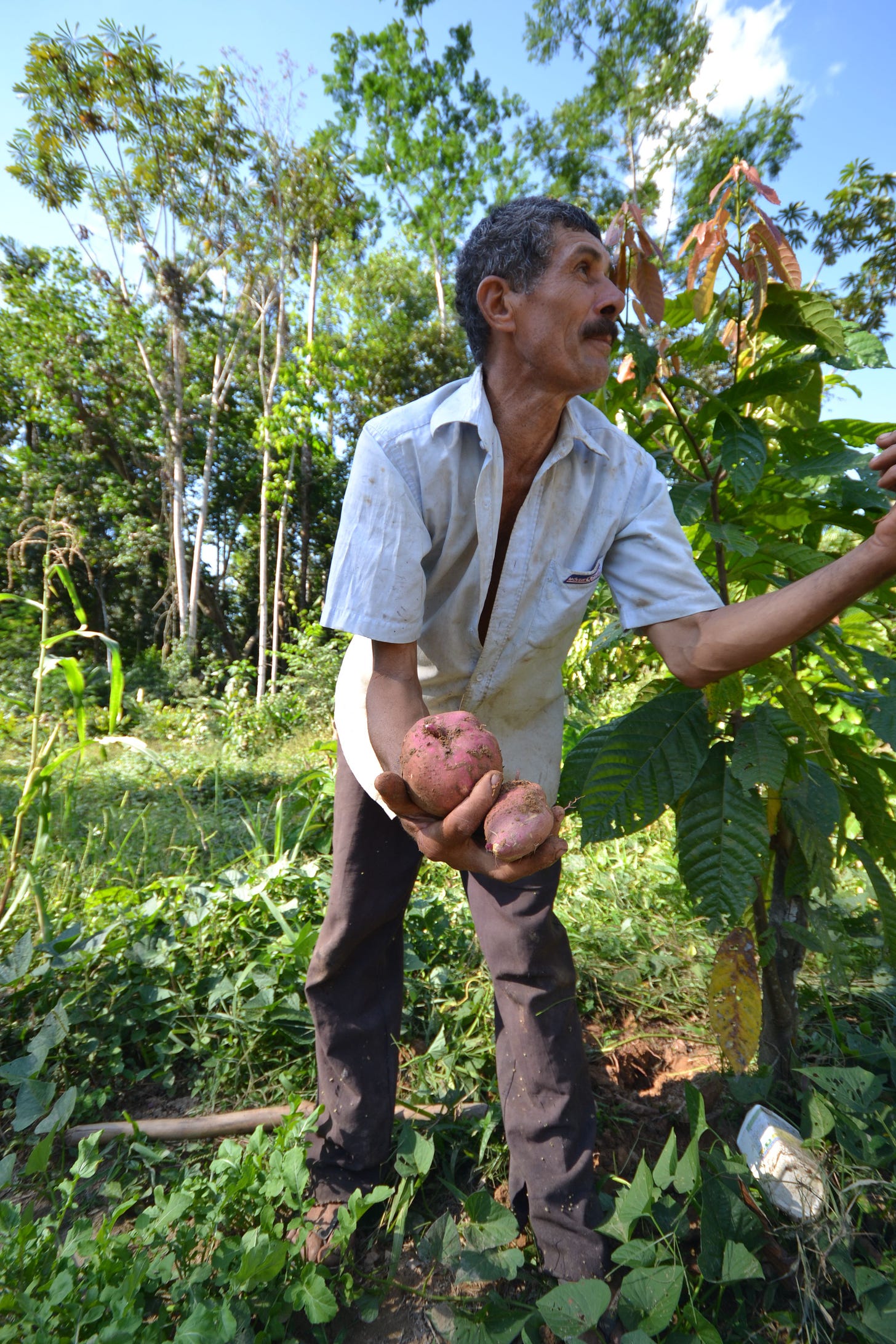
 Sri Lanka will be able to further strengthen its ties with Malaysia, with the Cabinet of Ministers this week giving the nod to commence the negotiations for a free trade agreement (FTA) between the two countries.