කොළඹ කැලඹුව මෙහෙයුම…”ඇත්ත කියපං… මෙච්චර සල්ලි මොකද ?” සැකසහිත 30 දෙනෙක් කොටුවෙති

December 23rd, 2023

1,676 more drug suspects nabbed during operation ‘Yukthiya’

December 23rd, 2023

Courtesy Adaderana

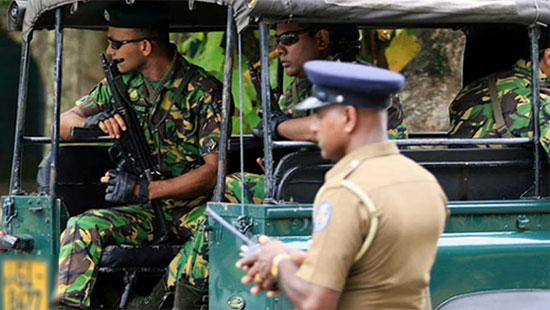
In continuation of the special island-wide operation ‘Yukthiya’ (Justice) to crack down on narcotics, Sri Lankan security forces have arrested scores of more suspects in a 24-hour mission ending at 12:30 a.m. on Saturday (Dec.23).

The Ministry of Public Security said a total of 1,676 suspects were arrested during this period.

Financial asset investigations have been initiated on 45 suspects and 112 individuals have been sent for rehabilitation. Additionally, detention orders were secured against 119 suspects.

The drugs impounded during the special island-wide operations include:

• 692g of heroin
• 393g of methamphetamine (‘Ice’)
• 42.1kg of Cannabis
• 20,615 narcotic pills 
• 235,680 Cannabis plants
• 534g of Hash
• 11kg of ‘Mawa’

Since the special raids were kicked off under the operation ‘Yukthiya’ on December 17, the security forces personnel have made more than 11,500 arrests and seized large consignments of narcotics.

Meanwhile, the Illegal Assets and Properties Investigation Division of the police have confiscated assets worth millions of rupees belonging to notorious criminal figures and drug traffickers.

Edward Henry Pedris

December 22nd, 2023

Chanaka Bandarage

Impressions

It is good that the government has decided to conduct a study on Edward Henry Pedris, moreover about his tragic death in 1915.  The significance is that this will be done more than 108 years after his death.

Even belatedly, the gruesome and heinous atrocity committed by the British must be exposed.

If the study reveals Pedris’ heroism and the true circumstances of his death, his relatives would receive solace and comfort.

Paradoxically, Edward Henry Pedris is one of Sri Lanka’s least recognized National Heroes. 

True a statue of him was unveiled by the then Prime Minister Premadasa in 1987, and a playground and a stadium were named after him on that same day; very little national level commemoration of this Great hero takes place in the country. There is scant discourse about his heroism among the populous and his brave life story has been taken away from school history books.

Is this because he was never a politician and did his struggles against the British on his own, solitarily? Also, that the Pedris family has not sought publicity about their dead member?

Pedris was only 27 when he died. He was killed (murdered?) by the British Colonial Administration at Welikada Prison, on the charges of High Treason, Attempted Murder, Wounding with intent to Murder and Shop Breaking.

Here is his story:

Edward Henry Pedris was a young man born into an elite Sinhala Buddhist family.  His father, Duenuge Disan Pedris, a native of Galle was a very wealthy businessman, who among other business ventures had shops in Pettah. Pedris was educated at Royal and St Thomas’ colleges. He represented both Royal and St Thomas’ at cricket.  He must be the only person to have represented both schools in Royal- Thomian cricket matches.

Young Pedris was an excellent marksman and he was enlisted as a commissioned officer of the Colombo Town Guard. At the time of his death he held the rank of Captain. Prior to his death he was de-commissioned by the British rule in Sri Lanka.

Pedris excelled in horse riding too. He had a wide knowledge about horses. A Russian Prince from the Tsar dynasty  had presented him a horse named Rally”.  Pedris rode this horse with the composure of a Prince, and the British and their Sinhalese cohorts hated this.

An incident happened on 1 June 1915, near Pedris’ shop in Main Street, Pettah, where a Muslim gang had advanced towards him to attack him or set fire to his shop.  During this time the Sinhala – Muslim riots had erupted in many parts of the country. Pedris had come out of the shop with a gun and had fired six shots into the crowd. No Muslims were killed or injured except the Police Constable Senevirathne who was injured in the head.

There had been absolutely no other involvement of Pedris in the riots though allegations were made in the trial that he had instigated a mob to travel from Peliyagoda to Colombo to attack Muslims.  Pedris in his defence stated that he as a Commissioned Officer settled certain disputes between the Sinhalese and the Muslims.

The riots had been very brutal with over 100 Muslim deaths mainly in Gampola, Kandy and Mathale. The Police and the military had shot dead over 100 Sinhalese who were accused of killing Muslims and looting Muslim shops.

To Pedris’ utter misfortunate during this time he and his family had come to the adverse attention of the British authorities. Pedris had left an arrogant lifestyle and the British and their Sinhalese cohorts fiercely despised him.

Prior to the 1915 incident, there had been several clashes of young Pedris with the British hierarchy. In one incident, at a Cinema Hall a white man had demanded that Pedris gave him his seat.  Pedris had refused and belittled the British saying that he had paid for his seat.

It is fair to infer that news about young Pedris’ arrogance towards the British had reached the top echelons of the British administration, including Governor Sir Robert Chalmers. 

Chalmers, a racist, was an introvert and a recluse.  He was ruthless in eliminating his enemies.  Under his command, Brigadier Malcolm went on a killing spree of Sinhalese in areas where the riots took place – notably in Colombo and the upcountry. 

Chalmers is notorious for taking vengeance from his enemies.

He had a grudge with Anagarika Dharmapala:

Chalmers once invited Dharmapala to attend his office; when Dharmapala visited, Chalmers purposely kept him waiting for more than 2 hours. 

Dharmapala – a firebrand in his own right, was furious. During the meeting Dharmapala complained to Chalmers that he too was a busy man and Chalmers should have stuck with the set time. 

Dharmapala remonstrated that Chalmers deliberately wasted his valuable time and that he had no confidence in Chalmers.  Despite Chalmers’ request to stay, Dharmapala left the office without completing the meeting. 

This was like a slap on Chalmers’ face,  his staff witnessed what happened.  Chalmers never expected  that type of bravery from a Sinhalese; at  that time the whites sometimes considered the locals as a species of sub-human.  

When Dharmapala was imprisoned in 1915 over the Sinhala- Muslim riots, it was done under the direct order by Chalmers.

It was Governor Stubbs who released Dharmapala in early 1920s.

When the riots happened, Dharmapala was not even in Sri Lanka, he was in India.  Until the release, Dharmapala was held under house arrest in Calcutta.  He was the longest held political prisoner over the riots.

The objective was to teach him a lesson – that he should not quarrel with the British hierarchy (Chalmers on this occasion), and that he will curtail his anti-imperialistic struggle/rhetoric against the British (Anagarika Dharmapala is considered Sri Lana’s Mahatma Gandhi).  

In 1915, Chalmers was basically scared that the Sinhalese would use the riots to overthrow the colonial administration. During this time the World War 1 was in full swing. The British suspected that there were prominent Sinhalese businessmen in Colombo who had close trade links with Germans. It was believed that Pedris family was one. 

Over the riots, two of Edward Henry Pedris’ cousins – Albert and Edwin Wijesekera, who were leading businessmen, were taken into custody and imprisoned in Jaffna. 

When the riots occurred, the German cruise ship  ‘Emden’ had berthed in Colombo and Colombo businessmen had conducted trading  with it.

It is believed that Sir Solomon Dias Bandaranaike, the Maha Mudaliyar, father of SWRD Bandaranaike, was not in good terms with the Pedris family and he may have had a part in creating the ill feeling between the British administration and Pedris family.  Except hearsay, there is no concrete evidence to prove this. Bandaranaike was the Chief Advisor and Chief  Native Interpreter to the Governor.  Basically, he held the highest native position under the British administration. Prior to him his uncle had also held the same or similar position for the British administration.

Governor Chalmers and the Inspector General of Police, Herbert Layard Dowbiggin, were adamant that Henry Pedris must die.  They wanted to use Pedris to teach other national leaders a lesson. Pedris was seen as an easy, soft target.

A military court, comprised of three military judges was convened and Pedris was tried on 1 July 1915; a death sentence was passed on him on the same day.  He did not have appeal rights.  A request for clemency was made to King George V by the family and several others but that was rejected.

On 7 July 1915 Pedris was killed by a firing squad. 

Even immediately prior to his death, Pedris showed bravery.   

After he was sentenced to death, he demanded that he should be shot by a Punjabi firing squad, and not by a white British firing squad.  He stated that Punjabi soldiers were Non-Christian and Asian. His request was granted.  A Punjabi firing squad was rushed to Sri Lanka from India.

When blindfold was afforded to him, Pedris rejected it.  He faced death without any fear.  Until he was twice shot to death, he held his head high.

A remarkable incident took place at the time of the execution. The Additional District Judge of  Colombo, Arthur Charles Allnut, a graduate of the Oxford University and a member of the Ceylon Civil Service, had ordered that the 86 Sinhala Buddhist nationalists who were detained in Welikada Prison at that time (over the Sinhala/Muslim riots) should witness the shooting of Pedris.  Thus they were lined up in the verandah outside of the  L-Hall of Welikada Prison, and were compelled to watch Henry Pedris being shot to death.  Among the inmates were DS Senanayake, DR Wijewardane, FR Senanayake, Edwin Wijeyeratne, DB Jayathilaka, Dr Cassius Pereira, Dr WA De Silva, ET De Silva, FR Dias Bandaranaike, Dr CA Hewavitharana (Anagarika Dharmapala’s brother), H Amarasuriya, AH Molamure and AE Goonesinghe.

The cream of the country’s nationalist leaders was arrested. This is evidence that the British were using the Sinhala – Muslim riot as a pretext to punish them.  Furthermore, the immense fear that the British had that attempts may be made during that time to overthrow the regime.

Even a person with no legal knowledge would realise that Pedris had done nothing to commit High Treason.  Basically, he had done no offence to deserve such a harsh punishment – the death sentence.

Pedris was buried in Borella Kanaththa. The father, who owned several burial plots in Borella Cemetery managed to bury him in one of those plots.  The British was unaware of this. Later, the family built a large commemoration plaque in his memory. It is stated that it exists to this day.

Pedris’ father died as an extremely dejected man. His main hope was that his son would take over his vast business empire one day.  That dream was shattered.  He lost his two sons-in laws as they were also incarcerated in Welikada and Jaffna jails. The parents out of their own money built Isipathanarama Viharaya in Colombo 5 (Isipathana Road) and offered it to Maha Sangha. They did many other meritorious  deeds – constructing a Pilgrims Rest in Polonnaruwa was one. The mother, Mallino,  died as a Dasa Sil Upasikawa. In 1920 she gifted valuable land to Mallikarama Temple in Dematagoda. This is a major Buddhist temple in Dematagoda today.

BUDDHIST VIHARAS AND EELAM Part 12 A1

December 22nd, 2023

KAMALIKA PIERIS

The Tamil Separatist Movement tried to use the laws of the country, to stop Kurundi from blossoming forth as a new venue for   Buddhist pilgrims.  Tamil Separatist Movement filed cases in the Magistrate court and Supreme Court against the archaeological work at Kurundi Vihara.  

 TNA MP M. A. Sumanthiran filed a petition in the Supreme Court in August 2021 against the commencement of excavations at the Kurundi Vihara in Mullaitivu, which he called the largest Buddhist shrine in the Northern Province. Prime Minister Mahinda Rajapaksa, Minister of State Vidura Wickramanayake and Commissioner General of Archaeology Prof. Anura Manatunga were named as respondents.

Following this, the Buddhists also turned to the law. They ignored the Magistrate courts which have no authority to deal with the actions of the Department of Archaeology and focused on the Supreme Court instead. There are several cases pending in Supreme Court, submitted by them.

None of these cases have gone to trial yet. There is nothing in the public domain about them either.  There should be more publicity for these cases. The judgments should be given in the media.  The public should attend the hearings to show support for Kurundi. It will not be difficult to collect a group of Buddhists for this.

The law appears to    favor Kurundi, not the kovil.  The Constitution of Sri Lanka (1978) carries special mention of Buddhism. Clause 9 of the Constitution states:  The Republic of Sri Lanka shall give to Buddhism the foremost place and accordingly it shall be the duty of the State to protect and foster the Buddha Sasana, while assuring to all religions the rights granted by Articles 10 and 14(1)(e).

 In 1994, Supreme Court expanded on what is meant by Buddha Sasana”. The Supreme Court in SC Determination 1/94 (1994) held that  The expression ‘Buddha Sasana’ is wider than ‘Buddhism’ and includes the entireestablishment together with objects and places of religious practices and worship of Buddhists”. The term Buddha Sasana could be extended to include Maha Sangha, archaeological sites, villages, lands and the properties feeding Buddhist temples and vihara. Supreme Court also said that it is mandatory for the country to be under the authority of a central Government in order to give full effect to Article 9. [1] Kurundi vihara has been declared a registered temple by the Ministry of Buddha Sasana.

Buddhist ruins considered to be of archaeological value are governed by the Antiquities Ordinance No 9 of 1940, amended by Act no 24 of 1998 and Act no 12 of 2005. There are several clauses in the Antiquities Ordinance which can be used against the so-called Kovil at Kurundi. The Antiquities Ordinance says:

Clause 33.  The Director-General of Archaeology may- (a) with the approval of the Land Commissioner, or (b) if approval is refused by the Land Commissioner, with the approval of the Minister to whom the subject of State lands is for the time being assigned, declare, by notification published in the Gazette, any specified area of that land to be an archaeological reserve for the purposes of this Ordinance

Clause 31. Any person who- (a) willfully destroys, injures, defaces or tampers with any protected monument or any ancient monument on State land; or (b) does in, upon, to, near or in respect of any ancient monument which is held sacred or in veneration by any class of persons, any act which wounds or offends or is likely to wound or offend the religious susceptibilities of the class of persons by whom such ancient monument is held sacred or in veneration, shall be guilty of an offence and shall, notwithstanding anything to the contrary in any other written law, be liable on conviction after summary trial before a Magistrate to a fine not less than fifty thousand rupees and not exceeding two hundred and fifty thousand rupees or to imprisonment of either description for a term not less than two years and not exceeding five years or to both such fine and imprisonment

Clause 34. Every person (other than the Director-General of Archaeology, or a person acting under and in accordance with his directions) who- (a) clears or breaks up for cultivation or cultivates any part of an archaeological reserve, or (b) erects any building or structure upon any such reserve, or (c) fells or otherwise destroys any tree standing on any such reserve, or [ 5, 12 of 2005] (d) otherwise encroaches on any such reserve, shall be guilty of an offence and shall, on conviction after summary trial before a Magistrate, be liable to a fine not less than one thousand rupees and not exceeding five thousand rupees or to imprisonment of either description for a term not exceeding three months or to both such fine and imprisonment, and the Magistrate may, in addition to passing any such sentence, make order that such person shall be forthwith ejected from such reserve

Clause 15C. Notwithstanding anything to the contrary in the Code of Criminal Procedure Act, No. 15 of 1979 or any other written law, no person charged with, or accused of an offence under this Ordinance shall be released on bail. 

P.N. Mandawela, former Director of Archaeology, speaking at a discussion on Kurundi  said that when the Department of Archaeology   wishes to declare any area as an archaeology reserve, the Department must first obtain the consent of the Land Commission, and then it must issue a Gazette declaring that land to be an archaeology reserve. The reserve thereafter belongs permanently to the state. There is no provision in the law to give it back.

An archaeological reserve is a protected area.  A person can enter an archaeology reserve only with the permission of the Director of Archaeology .It is a   criminal offence to enter, to destroy the artifacts and structures or even cut down a tree on that site, said   Mandawela  

The administration of an archaeology reserve falls within the purview of the Central Government and not the Provincial government.  This is stated in the Ninth Schedule to the Constitution.

An archaeology reserve needs a buffer zone beyond the boundary. The Antiquities Ordinance does not have provision for a buffer zone but there is provision for a buffer zone in the law relating to Monuments. A group of buildings, like at Kurundi, can also be classed as a Monument. Director, Archaeology has the   authority to control activity in the buffer zone. It is now time to declare the buffer zone for Kurundi said Archaeology Department officials. Once that it done, the Department can issue regulations for the entire area.  (Continued)


[1] https://www.dailymirror.lk/opinion/The-Significance-of-Article-of-the-Constitution-Should-or-could-it-be-removed-/172-140765

BUDDHIST VIHARAS AND EELAM Part 12 A2

December 22nd, 2023

KAMALIKA PIERIS

The West passed its first regulation on religious sites in 1935. World War I was over and World War II was looming. The Treaty on the Protection of Artistic and Scientific Institutions and Historic Monuments, known as the Roerich Pact, was signed by the states of the Pan-American Union in 1935.

Article 1 of the 1935 Roerich Pact says the historic monuments, museums, scientific, artistic, educational and cultural institutions shall be considered as neutral and as such respected and protected by belligerents. The same respect and protection shall be accorded to the historic monuments, museums, scientific, artistic, educational and cultural institutions in time of peace as well as in war.

The 1954 Hague Convention for the Protection of Cultural Property in the Event of Armed Conflict is the main international instrument for the protection of cultural property during armed conflicts.  Cultural property includes museums, libraries, archives, archaeological sites and monuments, both religious and secular.

The Hague Convention is about   cultural property in time of war, but it can be extended to times of peace as well. It is absurd to suggest that religious sites must be protected in war so that they can be destroyed when peace comes.

The Hague regulations were revised in later years.  Article 53 of Geneva Protocol 1 (1977) prohibited any hostile act directly against historical monuments, works of art or places of worship.  Protocol 2   demanded that inventories of cultural sites be prepared during peace time. Also a competent authority responsible for the safeguarding of cultural property be set up.

The revised   Hague regulations also stipulated respect for cultural property. Countries should not permit any form of theft, pillage, misappropriation or any acts of vandalism directed against cultural property. They must refrain from reprisals as well.

The international community decided that an intentional attack on a place of worship or cultural property may be considered a war crimeThe agency assigned to judge war crimes is the International Criminal Court, Hague.

TheInternational Criminal Court, Hague has jurisdiction over war crimes committed against cultural property in international and non-international armed conflict. The first prosecution under this statute was for destroying   sacred mausoleums at Timbuktu,   Mali in 2012.

 The Statute of the International Criminal Court, adopted by the UN Diplomatic Conference of Plenipotentiaries on the Establishment of an International Criminal Court, Rome, 17 July 1998, said: Pursuant to Article 8(2) (b) (ix) and (e) (iv) of the 1998 ICC Statute, intentionally directing attacks against buildings dedicated to religion, education, art, science or charitable purposes, or  historic monuments … constitutes a war crime in both international and non-international armed conflicts.

The UN is mainly interested in the religious rights of minorities and religious discrimination against a religious group but in the process religious sites also get a mention. Article 18 of the International Covenant on Civil and Political Rights (ICCPR) enshrines the right to manifest religion or belief in a community with others, including in worship.  And this included the building of places of worship.

Article 4 of ICCPR says all States should take measures to combat religious intolerance in legislation and all aspects of life including civil, economic, political, social and cultural life. Article 6 indicates that freedom of religion includes the freedom to establish and maintain places   of worship. States must ensure that religious places, sites, shrines, and other symbols are fully respected and protected, including when vulnerable to desecration or destruction.

UN Declaration on the Elimination of All Forms of Intolerance and of Discrimination Based on Religion or Belief(1981) Article 4: All States should take measures to combat religious intolerance in legislation and all aspects of life including civil, economic, political, social and cultural life.Article 6: The right to freedom of thought, conscience, religion or belief includes specific freedoms, beginning with the freedom to worship or assemble.

UN Resolution 55/254 of 31 May 2001, entitled Protection of religious sites”, says that religious sites are representative of the history, social fabric and traditions of people and should be fully respected as such. The Resolution condemns all acts or threats of violence, destruction, damage or endangerment, directed   against religious sites. (Clause 1)

On 21 January 2021 the UN passed Resolution 75/258: Promoting a culture of peace and tolerance to safeguard religious sites A/RES/75/258.   This resolution condemnsall acts or threats of violence, destruction, damage or endangerment, directed against religious sites and denounces any moves to obliterate or forcibly convert any religious site. (Continued)

Col. Macgregor Shares REAL REASON Ukraine Will Collapse!

December 22nd, 2023

Colonel Douglas MacGregor and Stephen Gardner update on the Russia Ukraine war news as well as the Israel Gaza situation. They discussed various geopolitical issues in the current global landscape. Ukrainian President Zelensky’s claims that Putin and Russia could be behind attacks on Israel raise questions about the motivation behind these statements—whether to demonize Putin, shift attention to Ukraine, or hold any truth. Despite millions of Ukrainians fleeing, and 500,000 Ukrainian soldiers killed or injured, Zelensky remains confident in winning the war against Putin, prompting speculation about his true beliefs or potential use of acting skills. Concerns about NATO’s influence on Zelensky’s decisions arise, particularly in the context of ongoing war dynamics. General Michael Flynn’s prior investigation into military money laundering, coupled with the Pentagon’s admission of an inability to account for $3 trillion, raises questions about financial transparency in military operations. Zelensky’s claims of multiple assassination attempts and statements about Ukraine’s right to take out Putin are scrutinized for their accuracy and potential impact on the conflict. The escalation of drone attacks on Kiev by Russia prompts considerations about the frequency of capital attacks in ongoing conflicts and the potential motivations behind such actions. The aftermath of the October 7 attack on Israel raises concerns about increased threats to US military bases worldwide as the Israel-Gaza situation persists. Saudi Arabia’s warning to wake up the Middle East against Israel if attacks continue is evaluated for its credibility and potential consequences. Retired Army Colonel Karl Nell’s call for transparency in government, CIA, and UFO programs adds an unconventional dimension to the conversation, questioning the existence of secret knowledge and off-world technology. The age of military leadership comes under scrutiny as the discussion shifts to the potential risks of an 81-year-old commander in chief leading the military. Prime Minister Benjamin Netanyahu’s statement on hostage negotiations prompts inquiries into the participants and negotiation terms. Senator Lindsay Graham’s aggressive stance on attacking Iran and supporting Israel raises concerns about his influence on military decisions and the potential for a larger Middle East war due to Israel’s actions in Gaza. SEO keywords in this video: Colonel Douglas MacGregor, Zelensky, Putin, Ukraine, NATO, General Michael Flynn, money laundering, Pentagon, assassination attempts, Russia, drone attacks, Kiev, US military, Israel-Gaza, Saudi Arabia, Middle East, Retired Army Colonel Karl Nell, government transparency, CIA, UFO programs, off-world technology, age of military leadership, Benjamin Netanyahu, hostage negotiations, Senator Lindsay Graham, Iran, Middle East war, global geopolitics, military influence, financial transparency, war dynamics, global conflicts, October 7 attack, geopolitical issues, international relations, secret knowledge, military bases, crisis management, political statements, conflict resolution, international negotiations, Col. Douglas Macgregor, Stephen Gardner, Israel, Russia, Arabs, Allahu Akbar, Hamas, sleeper cells, Belarus, Ukraine, war, stalemate, Putin, health, propaganda, contacts, military intelligence, Janet Yellen, fund wars, fake money, IDF, ground attack, diplomacy, Turkey, Jordan, Zelenskyy, ally, danger, fighter jet, China, international waters, provoke, Persian Gulf, oil, protect, intimidate, Israel, Gaza City, hostages, land war, hot war, United States, Middle East, attack on Israel, Qatar, Iran, Hezbollah, Hamas, intelligence background, globalism, 9/11, CIA, FBI, Homeland Security, sleeper cells, illegal crossings, border security, religious fever, free borders, Henry Kissinger, Southern border, immigration, variants of COVID, screening for ideas, George W. Bush, cold-blooded killers, negotiation with terrorists, former President, National Security, News Nation, Criminal Justice, TikTok, Instagram, The Unexpected Spy, correspondent, adjunct professor, Texas Christian University, counterterrorism, US terrorists list, policy decisions, invasion, property rights, human safety, ownership, former FBI agent, former CIA operative, hot war in the Middle East, Palestinian rallies, globalism and world commerce, international relations, negotiation with terrorist organizations, national security threats

Scott Ritter: Hamas TRAPPED Saudi Arabia like an ANIMAL!!

December 22nd, 2023

Mazen Canada

https://youtu.be/MsBapjaiAJg

Deegawapiya Sacred Relics to be arrived at ‘Sri Sumana Saman Dewalaya’, Rathnapura

December 22nd, 2023

Ministry of Defence  – Media Centre

The relics unearthed from the Deegawapiya site during the excavations and the Crest-Gem, which are in exposition around the island to provide the devotees with an opportunity to pay their homage will be brought to ‘Sri Sumana Saman Dewalaya’, Rathnapura on Sunday (Dec 24).

The devotees have the opportunity to worship the Sacred Omniscient Relics and Crest-Gem at ‘Sri Sumana Saman Dewalaya’, Rathnapura on December 24, 25 and 26. Subsequently, the procession carrying the ‘Crest-Gem’ and ‘Sacred Omniscient Relics’ is scheduled to arrive at ‘Vidyawardhanaramaya’, Kuruwita on 27.

Eventually, arrangements have been made for the exposition of these revered articles at ‘Vidyawardhanaramaya’, Kuruwita on December 27 and 28 and at ‘Madarasingharamaya, Eheliyagoda on 29 and 30.

Further, the devotees have the opportunity to support this meritorious act by making financial contributions to the restoration project while worshipping the Sacred Omniscient Relics and Crest-Gem of the Deegawapiya Stupa.

මනුෂගෙන් මහින්දට මුද්දරයක්

December 22nd, 2023

Manusha Media

කම්කරු දෙපාර්තමේන්තුවට වසර සියයක් සම්පූර්ණවීම නිමිත්තෙන් නිකුත් කරන ලද සියවස් සමරු මුද්දරය ඊයේ (21) එළි දක්වනු ලැබූ අතර එහි පළමු මුද්දරය හා මුල් දින කවරය කම්කරු හා විදේශ රැකියා අමාත්‍ය මනුෂ නානායක්කාර මහතා විසින් 1994 වසරේ සිය 2000 වසර දක්වා කම්කරු ඇමැතිවරයා වශයෙන් කටයුතු කළ හිටපු ජනාධිපති මහින්ද රාජපක්ෂ මහතා වෙත ප්‍රදානය කරනු ලැබුවේය.

කම්කරු දෙපාර්තමේන්තුවට වසර සියයක් සම්පූර්ණවීම නිමිත්තෙන් පාසල් මට්ටමින් මුද්දර නිර්මාණ තරගයක්  පවත්වා තිබූ අතර එම තරගයෙන් ජයගත් හොරණ තක්ෂිලා මධ්‍ය විද්‍යාලයේ පී.ජී.ඩී. අදීෂා සෙව්නුලි දියණියගේ නිර්මාණය මුද්දරය සදහා යොදාගෙන තිබුණි. එහි දෙවැනි ස්ථානය දිනාගත් එම විද්‍යාලයේම සෙනුලි බිහන්ගා විජේසේකර දියණියගේ නිර්මාණය මුල් දින කවරය ලෙස යොදාගෙන තිබුණි.

මෙරට කම්කරු ක්ෂේත්‍රයේ ප්‍රගමනය උදෙසා කටයුතු කළ සියලු දෙනා වෙනුවෙන් මෙම මුද්දරය සහ මුල් දින කවරය නිකුත් කරන බව කම්කරු හා විදේශ රැකියා අමාත්‍ය මනුෂ නානායක්කාර මහතා මෙහිදී සදහන් කළේය.

කම්කරු දෙපාර්තමේන්තුවට වසර 101ක් ගතවීමට පෙර නව රැකි රක්ෂා පනත ගෙන එමින් මෙරට කම්කරු ක්ෂේත්‍රය උඩු යටිකුරු කිරීමට කටයුතු කරන බවත්, මෙතෙක් කම්කරු ක්ෂේත්‍රයේ පැවති අඩුපාඩු සියල්ලටම විසදුමක් සහ ශ්‍රමයට නිසි ගරුත්වයක් ලබාදීමට නව රැකි රක්ෂා පනත මගින් අවකාශය උදාවන බවද අමාත්‍යවරයා පැවසුවේය.

නූතන වැඩ ලෝකයට ගැලෙපන ශ්‍රමිකයින් නිර්මාණය වන, ව්‍යවසායකයින් හා ආයෝජනවලට හිතකරවීමත් සමග ශ්‍රමිකයින් ආරක්ෂා කරන හා ඔවුන්ගේ සමාජ සුබසාධනය පුළුල් කරන යුගයකට ගමන් කරමින් සිටින බවද, නව රැකි රක්ෂා පනත මගින් දියුණු රටක් බිහි කිීමේ මූලික පියවර තබන බවද අමාත්‍යවරයා කීවේය. ඒ සදහා සියලු දෙනාගේම සහායද අමාත්‍යවරයා ඉල්ලා සිටියේය.

මෙම අවස්ථාවට එක්ව සිටින හිටපු ජනාධිපති මහින්ද රාජපක්ෂ මහතා කම්කරු ප්‍රඥප්තිය ගෙන ඒම නිසාම ඇමැතිධූරයෙන් ඉවත් කිරීමට ලක්වූ දක්ෂ නායකයෙක් බවද ලාබාලම කම්කරු ඇමැතිවරයා ලෙස ඔහු තැබූ වාර්තාව තමන් විසින් බිද දමා ඇති බවද වැඩිදුරටත් අදහස් දැක්වූ මනුෂ නානායක්කාර මහතා පැවසුවේය. 

United Nations Economic Commission for Africa hails Sri Lanka’s robust policies of Blue and Green Economy

December 22nd, 2023

Courtesy APO Group Africa News Room

The UN Under-Secretary-General recognized the commitment of Sri Lanka to contribute significantly to global efforts to limit global warming to 1.5 degrees Celsius

ADDIS ABABA, Ethiopia, December 22, 2023/APO Group/ — 

On 19 December 2023, Ambassador Extraordinary and Plenipotentiary of the Democratic Socialist Republic of Sri Lanka to the Federal Democratic Republic of Ethiopia and the Permanent Representative to the African Union (AU), K.K. Theshantha Kumarasiri, presented his credentials to United Nations Under-Secretary-General and Executive Secretary of the United Nations Economic Commission for Africa (UNECA) Claver Gatete accrediting the former as the Permanent Observer of Sri Lanka to the United Nations Economic Commission for Africa (UNECA), which was held at the Headquarters of UNECA in Addis Ababa, Ethiopia.

The Ambassador further emphasized Sri Lanka’s commitment under the new foreign policy initiative of ‘Look Africa’ to foster mutually beneficial bilateral trade

At the outset, Ambassador Kumarasiri conveyed cordial greetings from Sri Lanka and congratulated Claver Gatete for a successful tenure as the newly appointed Executive Secretary of UNECA. The Ambassador expressed Sri Lanka’s anticipation of further consolidating its cooperation with UNECA in areas of mutual interest, particularly trade and investment relationships as well as cooperation in the Indian Ocean as the current Chair of the Indian Ocean Rim Association (IORA). As Sri Lanka’s Permanent Representative to the African Union and the newly appointed Permanent Observer to UNECA, Ambassador Kumarasiri briefed the Under-Secretary-General on Sri Lanka’s most recent economic policy reforms, particularly measures taken in maintaining the macroeconomic stability of the country.

While accepting the credentials of Sri Lanka’s Permanent Observer, the Under Secretary General projected expanding relations of UNECA with Sri Lanka among the several multitudes, concentrating primarily on the policies of Blue and Green Economy, which are mutually beneficial. Amongst the many focuses brought up for discussion, Executive Secretary Gatete concentrated on collaboration towards capacity development, infrastructure investment and joint research projects between Sri Lanka and UNECA. With respect of the Climate Justice Forum (CJF) hosted at COP 28, in Dubai and Sri Lanka’s proposal to establish the International Climate Change University (ICCU) in Colombo for capacity building and advancing research, the UN Under-Secretary-General recognized the commitment of Sri Lanka to contribute significantly to global efforts to limit global warming to 1.5 degrees Celsius. Accordingly, Executive Secretary emphasized the necessity of establishing a wider partnership and collaboration on the carbon credit initiative and the facades on climate action.

With respect to Sri Lanka’s investment in Africa, the Under Secretary General was briefed on the intended membership of Sri Lanka in the African Development Bank (ADB) as a non-regional Member State in view of taking part in activities of ADB Group in Africa particularly in the green energy. Similarly, the Executive Secretary outlined the on-going process of implementing the African Continental Free Trade Area (AfCFTA) in view of eliminating barriers to trade in Africa and also boosting intra-Africa trade. The Executive Secretary stressed the potential of expanding bilateral and regional trade under AfCFTA.

The Ambassador further emphasized Sri Lanka’s commitment under the new foreign policy initiative of ‘Look Africa’ to foster mutually beneficial bilateral trade, investment and people-to-people ties with the African continent. In this respect, Executive Secretary Gatete who has visited Sri Lanka quite a number of times reiterated his commitment to work with Sri Lanka to further strengthen the long-standing people-to-people ties between Sri Lanka and Africa while enhancing e the knowledge of Sri Lanka among African nations.

Distributed by APO Group on behalf of Ministry of Foreign Affairs – Sri Lanka.

Sri Lanka’s Big Opportunity

December 22nd, 2023

Anna Bjerde  World Bank Managing Director of Operations Courtesy World Bank Blogs

A Sri Lanka market. Photo by Eddy Billard on Unsplash

Last month, I visited Sri Lanka for the first time and saw a nation at a crossroads, emerging from a deep crisis and determined to make a real effort to implement changes.

What struck me the most was the resilience of the Sri Lankan people, from the strong and inspiring women leaders and entrepreneurs shattering stereotypes to the farmers who are investing their earnings from sustainable farming practices back into their communities while battling climate change or the doctors who are looking ahead by investing in preventing healthcare.

I also witnessed the strides Sri Lanka has made in stabilizing the economy. Yet, much remains to be done to chart a better future for all Sri Lankans. While Sri Lanka has a unique opportunity to implement deep and permanent structural reforms that may be difficult under normal circumstances, the window of opportunity is narrowing.  But Sri Lanka cannot afford another crisis of this magnitude and must transform its economy while making growth more inclusive.

I’ve been reflecting on the experience of countries that have successfully weathered an economic crisis and the lessons they hold for Sri Lanka. I see five main areas for concerted action.

First, maintain macroeconomic stability to support investment, trade, and growth. Sri Lanka is a highly indebted nation, with public debt far exceeding the size of the economy. It is critical to finalize external debt restructuring to restore debt sustainability and boost confidence. This needs to be complemented by fiscal consolidation, including mobilizing more taxes, making better spending decisions, and improving the governance of public finances. This, in turn, can create the fiscal space to invest in people and infrastructure. This is possible. In the past, Sri Lanka’s tax revenue collection was close to 20 percent of GDP, compared to just 7.3 percent in 2022.

Second, protect the poor and vulnerable as the country emerges from the crisis. A lot has been done over the past 18 months to consolidate social assistance programs, expand coverage, enhance targeting and delivery, and improve governance and transparency. This includes the rollout of a new social welfare payment program, Aswesuma. Although there have been challenges with the implementation of the new beneficiary registry, the government is working to ensure social protection helps the most vulnerable Sri Lankans during shocks. This includes women, whose unemployment rate is twice that of men, making them far more vulnerable to the impacts of crises. Beyond social assistance, women also need equal opportunities to join the workforce, which would boost economic growth and household incomes.

Third, generate jobs by creating conditions for investment and trade, incentivizing exports, and integrating into global value chains. To encourage investors, Sri Lanka can take a page out of East Asia’s playbook by liberalizing trade, eliminating import restrictions, and pursuing stronger regional and bilateral trade agreements.  Our analysis shows that the country’s untapped export potential for merchandise is about US$10 billion annually. Delivering on this could double exports, create more than 140,000 jobs, and help put the country back on a sustainable growth path. Sri Lanka can also increase private investment by restructuring state-owned enterprises and divesting from non-strategic ones. This will help foster competition, create more jobs, and drive improvements in service delivery.

Fourth, pursue energy and agricultural sector reforms to drive a resilient and inclusive recovery.  The power sector has been marred by financial losses, blackouts, and opaque procurement processes. The current energy sector reforms – including the unbundling of the Ceylon Electricity Board and cost-recovery energy pricing – aim to address these issues and ensure energy security and affordability. At the same time, the shift toward renewable energy, energy efficiency, and regional power integration can reduce dependence on imported fossil fuels and lower energy costs. With respect to agriculture, I saw first-hand in Thirappane and Rajangana the strong contribution it makes to both livelihoods and exports. Yet, the sector suffers from low productivity and is highly vulnerable to climate change and natural disasters. To modernize agriculture, Sri Lanka needs to adopt climate-smart technologies, as well as strengthen value chains, linkages between farmers and markets, and quality standards. For example, I visited a school in the North Central Province dedicated to climate-smart agriculture. The school, the first of its kind in South Asia, conducts training programs for farmers, 40 percent of whom are women. Such initiatives empowering farmers with knowledge and practical training should be scaled up. Taken together, these actions can boost agricultural output, rural incomes, and export competitiveness in a country where 80 percent of the population lives in rural areas.

Fifth, strengthen governance and address corruption to instill public confidence and improve service delivery. Sri Lanka has a complex and fragmented public sector, which faces challenges in accountability, coordination, performance, and transparency. To improve governance, Sri Lanka can modernize institutions, digitize procurement and service delivery, strengthen policy and planning processes, and enhance monitoring and evaluation systems. This will combat corruption and fraud, and foster a culture of integrity, openness, and participation.

While these five areas look promising on paper, coordinationcapacity, and communication – the three Cs”– will be critical for effective reform implementation. Closer coordination across government– including the Ministry of Finance, Central Bank, Line Ministries, and Parliament – is paramount for the delivery of the reforms. Capacity strengthening is critical to drive the reform agenda and improve governance. Communication is the cornerstone of any successful reform process, as citizens need to understand what is being asked of them, key stakeholders need to be engaged, and a platform must be available to receive and address grievances. The World Bank and other development partners are working closely with the government to ensure that these three Cs have the commitment and resources needed to succeed.

Attempted trafficking of Lankans: NIA takes over probe

December 22nd, 2023

By Toby Antony Courtesy The New Indian Express

In recent months, NIA has launched probes into multiple human trafficking incidents in Tamil Nadu and Karnataka. 

nia_raids

Express News Service

KOCHI:  Suspecting links to the Liberation Tigers of Tamil Ealam, the National Investigation Agency (NIA) has launched a probe into two cases relating to the attempted human trafficking of Sri Lankan nationals from Kollam.

Last month, the Ministry of home affairs had ordered NIA to take over the probe into the cases registered at the Kollam East and Pallithottam police stations. The case registered at Pallithottam has 13 accused persons while the one at Kollam East has 11. The cases pertain to the police intercepting two batches of Sri Lankan nationals from the Vadi Harbour and the Ambadi Lodge, Beach Road, in Kollam district on September 5 and 6 in 2022. 

The Sri Lankan nationals had planned to sail to Canada for which they had contacted several fishing vessel operators. The 24 persons arrested, including two children, had arrived in Kollam from refugee camps in Nagapattinam, Vellore, Chennai, Thiruvenlveli, Trichirapalli and Dindigul. Some of them had arrived from Sri Lanka and stayed in Tamil Nadu before moving to Kollam, after paying money to agents.

They were later granted bail by the Kerala High Court, and some continued to stay at rehabilitation centres in Kerala while some were sent back to the refugee camps in Tamil Nadu. However, NIA decided to take over the probe on the suspicion of LTTE involvement.

In recent months, NIA has launched probes into multiple human trafficking incidents in Tamil Nadu and Karnataka. 

It is suspected that people associated with LTTE are coordinating the trafficking attempts. NIA had arrested some persons from Karnataka and Tamil Nadu who maintained close contacts with former LTTE members,” a police officer said.

Modi’s Flawed Foreign Policy

December 22nd, 2023

By AAKAR PATEL Courtesy Rediff.com

We should reassess what India’s role in the world is and whether we are doing the right thing for ourselves, notes Aakar Patel.

IMAGE: Prime Minister Narendra D Modi addresses the Meri Maati Mera Desh-Amrit Kalash Yatra in New Delhi, October 31, 2023. Photograph: ANI Photo

India abstained from calling for an end to violence in Gaza to avoid upsetting America.

India was told by the new Maldives leader to remove our soldiers from that country.

Qatar sentenced eight Indian Navy veterans to death.

Sri Lanka allowed a Chinese spy ship to dock in Colombo despite India’s objections.

Bhutan said it was about to conclude boundary negotiations with China, including on Doklam.

Nepal cannot use its new Gautam Buddha airport because India doesn’t allow overflight of large planes.

Canada said it would not be able to normalise visas for Indians till 2024.

These things happened in the space of a few days.

All South Asian nations except India voted to end the violence in Gaza, including Nepal, Sri Lanka and Bhutan, which traditionally votes with India.

The 70 Indian military personnel in the Maldives who will now return maintain radar stations and surveillance aircraft, and Indian warships help patrol Maldives’ exclusive economic zone.

The reason we have been told to go is that the Maldives wants to favour China.

Whether we are running a successful foreign policy, as fans of the foreign minister believe, or we are ruining India’s global reputation, as some of us think we are doing, is not important to debate.

This is because views are set in stone since we are in the tenth year of the Modi years and there is sufficient evidence to convince someone one way or another.

What is more interesting is to examine what the Modi government’s foreign policy actually is and what it is intended to achieve.

In 2014, the BJP manifesto said it would ‘strengthen SAARC’ and India’s states ‘will be encouraged to play a greater role in diplomacy’.

For instance, Punjab, which overwhelmingly suffers when Canada visas are affected, would caution Delhi on foreign policy.

In 2019, both these references were eliminated. No fresh text replaced it, but those who study foreign policy praised a new approach that they saw coming together.

This approach comes from a series of speeches made by EAM S Jaishankar on things as diverse as China’s rise to power, India’s lost decades, the Mahabharata, maritime power and the Covid pandemic.

These assorted speeches were compiled into a book, called The India Way: Strategies for an Uncertain World. What are these strategies?

First, Jaishankar assumes that the US and Europe will continue to look inward (his book was published just before Trump lost), while China would continue to rise.

This would open the space for countries like India to be opportunistic in their engagements with the world and they did not need consistency.

What India wanted was a ‘multi-polar Asia’ — meaning one in which India could claim parity with China.

Many balls would need to be kept in the air (Jaishankar has a fondness for stock phrases) and India would handle them with dexterity.

This was opportunism but that was all right because opportunism was India’s culture.

The Mahabharata’s lessons, Jaishankar says, are that deceit and immorality are merely to ‘not play by the rules’.

Drona’s demanding of Eklavya’s thumb, Indra’s appropriation of Karna’s armour, Arjuna using Shikhandi as a human shield, these were but ‘practices and traditions’.

Inconsistency in policy was not only fine but required because ‘obsessing about consistency’ made little sense in changing circumstances.But what was such a doctrine to be called?

In a speech he made where he first laid out this doctrine of opportunism and inconsistency, Jaishankar said it is hard to give it a name.

He takes up and discards the phrases — ‘multi-alignment’ (‘sounds too opportunistic’) and ‘India first’ (‘sounds self centred’).

He settles at ‘advancing prosperity and influence’, which he says is accurate but admits is not catchy.

He believes some name for it will eventually come if it is pursued long enough, because part of the challenge is that we are still in the early phase of a major transition.

Perhaps that is so.

Another reason that he was unable to come up with a name for it as clean and understandable as, say, ‘non-alignment’, could be that this was no real foreign policy at all.

The problems that have been listed at the top of this article reflect this lack of coherence and effectiveness.

Buying cheap Russian oil when nobody is stopping you from doing so is not a foreign policy, but it was praised as being that.

A rotating presidency of the G20 was not an achievement, but that is how it was sold to Indians.

What interested the prime minister, and what made for pageant and ceremony, was being passed off as something meaningful.

It is not easy to escape the conclusion that Jaishankar provided the sophistry to cover what was essentially random and directionless Modi behaviour passing off as foreign policy strategy.

Jaishankar says that this nameless policy of his is intended to achieve four outcomes.

Greater prosperity at home; Peace on the borders; Protection of Indians; Enhanced influence abroad.

Once again, there is no point is going through what is happening on the borders or on prosperity.

The issue is whether, having examined what we have tried to achieve and looking at what results around us, we should reassess what India’s role in the world is and whether we are doing the right thing for ourselves.

Aakar Patel is a columnist and writer and you can read Aakar’s earlier columns here.

US Insurrection Act: Obnoxious law Sri Lankan policymakers unaware of

December 22nd, 2023

BY Daya Gamage Foreign Service National Political Specialist (rtd) US Department of State Courtesy The Island

During the summer of 2020, protests against police violence and racial injustice erupted throughout the United States. May 25, 2020-death of George Floyd, a Black man who died in police custody, renewed the people’s outrage regarding police treatment of Black Americans and caused protests and demonstrations to erupt across the nation. Over 10,000 demonstrations by millions of protesters occurred across nationwide in a mobilisation estimated the largest mass movements in American history.

More than ninety-five percent of the protests remained peaceful, then-President Donald Trump delivered a speech during the height of the protests in which he threatened to deploy the United States military and quickly solve the problem”. The comment referred to the President of the United States’ unilateral power to invoke the Insurrection Act, send in active duty military to quell the mass agitation.

The Executive branch of the United States along with many Members of the Legislature considered these protests not as an expression of anger and opposition to human rights violation but as an insurrection.

What’s discussed in this write-up is the use of a draconian law that has given despotic powers to the Executive Branch headed by the president: The Insurrection Act, an Act authorising the deployment of the military in case of mass agitations often described by authorities as insurrections to suppress such events.

The Insurrection Act describes itself as Be it enacted by the Senate and House of Representatives of the United States of America in Congress assembled, That in all cases of insurrection, or obstruction to the laws, either of the United States, or of any individual state or territory, where it is lawful for the President of the United States to call forth the militia for the purpose of suppressing such insurrection, or of causing the laws to be duly executed, it shall be lawful for him to employ, for the same purposes, such part of the land or naval force of the United States, as shall be judged necessary, having first observed all the pre-requisites of the law in that respect.

The importance, at this time, of ‘disclosing’ or ‘revealing’ that the United States has such a ‘draconian’ law that facilitates the deployment of the armed military to suppress mass agitations mostly connected with civil rights abuses, racial discrimination and socio-political issues is when the American ambassador to Sri Lanka Julie Chung, on many occasions, agitated Sri Lanka to either repeal or amend the Prevention of Terrorism Act (PTA). In the United States, instead of finding solutions to the outcry of the masses, these outcries are labeled as insurrections to deploy the armed military, which the American authorities have done in the past.

This writer found appropriate and vital to ‘disclose’ or ‘reveal’ the existence of a draconian law in the United States as the Sri Lankan policymakers and lawmakers have not shown any signs or indication that they were aware of the existence of such a law in the American statute books.

This writer who had a very long service with the Government of the United States as a Foreign Service National Political Specialist thought this was an opportune time to bring this issue to the forefront so that when Sri Lankan policymakers and lawmakers next meet American diplomatic representatives in Colombo they could raise the existence of the Insurrection Act when the later raise issues connected to the PTA as well as human rights.

In a forthcoming analytical-investigative book, Defending Democracy: Lessons in Strategic Diplomacy from US-Sri Lanka Relations, this writer along with another retired Senior Foreign Service and Intelligence Officer of the U.S. Department of State Dr. Robert Boggs discloses how the US foreign policy approaches largely harmed Sri Lanka, and the inability of the policymakers and lawmakers of Sri to comprehend their own country’s socio-political-economic development and structure, along with covert and overt US foreign policy decisions. Such an understanding and gained knowledge would have helped to have a better rapport and fruitful dialogue with the United States while safeguarding the sovereignty and independence of Sri Lanka.

The Insurrection Act authorises the president to deploy military forces inside the United States to suppress rebellion or domestic violence or to enforce the law in certain situations. The statute implements Congress’s authority under the Constitution to provide for calling forth the Naval and Armed Forces of the United States to execute the Laws of the Union, suppress Insurrections and repel Invasions.”

Crucial provisions of the Insurrection Act are in Sections 251 through 254 in the Title of the United States Code, some of them being as follows:

251. Federal aid for State governments Whenever there is an insurrection in any State against its government, it shall be lawful for the President to, upon the request of its legislature or the executive if the legislature cannot be convened, call forth such of the militia of the other States, in the number requested by that State, and use such of the land or naval forces of the United States, as he considers necessary to suppress the insurrection.252. Use of militia and armed forces to enforce Federal authority .

Whenever the President considers that unlawful obstructions, combinations, or assemblages, or rebellion against the authority of the United States, make it impracticable to enforce the laws of the United States in any State by the ordinary course of judicial proceedings, it shall be lawful to call forth the militia of any or all the States, and use of the land and naval forces of the United States, as he considers necessary to enforce those laws or to suppress the rebellion.

253. Interference with State and Federal law The President, by using the militia or the land and naval forces of the United States, or both, or by any other means, it shall be lawful for the President and it shall be his duty to take such measures as he considers necessary to suppress, in a State, any insurrection, domestic violence, unlawful combination, or conspiracy, if it—

(1) so hinders the execution of the laws of that State, and of the United States within the State, that any part or class of its people is deprived of a right, privilege, immunity, or protection named in the Constitution and secured by law, and the constituted authorities of that State are unable, fail, or refuse to protect that right, privilege, or immunity, or to give that protection; or

(2) opposes or obstructs the execution of the laws of the United States or impedes the course of justice under those laws.

254. Proclamation to disperse

Whenever the President considers it necessary to use the militia or the armed forces under this chapter, he shall, by proclamation, immediately order the insurgents to disperse and retire peaceably to their abodes within a limited time.

Section 251 allows the president to deploy troops if a state’s legislature (or governor if the legislature is unavailable) requests federal aid to suppress an insurrection in that state. This provision is the one that has most often been invoked.

While Section 251 requires state consent, Sections 252 and 253 allow the president to deploy troops without a request from the affected state, even against the state’s wishes. Section 252 permits deployment in order to enforce the laws” of the United States or to suppress rebellion” whenever unlawful obstructions, combinations, or assemblages, or rebellion” make it impracticable” to enforce federal law in that state by the ordinary course of judicial proceedings.”

Section 253 has two parts. The first allows the president to use the military in a state to suppress any insurrection, domestic violence, unlawful combination, or conspiracy” that so hinders the execution of the laws” that any portion of the state’s inhabitants is deprived of a constitutional right and state authorities are unable or unwilling to protect that right. Presidents Dwight D. Eisenhower and John F. Kennedy relied on this provision to deploy troops to desegregate schools in the South of the United States after the Supreme Court’s landmark decision in Brown v. Board of Education. Most famously, Presidents Eisenhower, Kennedy, and Lyndon B. Johnson all invoked the Insurrection Act during the civil rights movement to enforce federal court orders desegregating schools and other institutions in the South.

The Insurrection Act was invoked in 1992, when the governor of California requested military aid from President George H.W. Bush in response to civil unrest in Los Angeles that followed the acquittal of four white police officers charged with beating Black motorist Rodney King.

The second part of Section 253 permits the president to deploy troops to suppress any insurrection, domestic violence, unlawful combination, or conspiracy” in a state that opposes or obstructs the execution of the laws of the United States or impedes the course of justice under those laws.” This provision is so confusing and difficult to understand that it cannot possibly mean what it says, or else it authorises the president to use the military against any two people conspiring to break federal law.

The US Congress and the Supreme Court have failed to provide adequate checks on the president’s domestic military power, to determine the source of this power, and to accurately describe the limits of the president’s power under the Act. By failing to adhere to the conception of military involvement in domestic law the United States is left vulnerable to serious abuses of power for the sake of expediency.

Professionals who are concerned about the draconian nature of the Insurrection Act propose that Sections 252 and 253 of the Insurrection Act should be amended to require additional checks and a method for obtaining independent approval for the mobilisation of armed forces within the United States. The power to use federal troops within a state against the state’s will should not be conditioned upon the discretion of a single individual the President; this is an opinion widely expressed by legal luminaries.

Texas A&M University School of Law student Jeremy C. Campbell in a very erudite presentation to his law school journal said: Sections 252 and 253 of the Insurrection Act should be amended to require additional checks and a method for obtaining independent approval for the mobilisation of armed forces within the United States. The power to use federal troops within a state, against the state’s will, should not be conditioned upon the discretion of a single individual. Any proposed amendments should leave the president’s power to request the use of federal troops and to retain or delegate command of those troops, once approval is received, intact.

The importance of the Congress to have the authority to curb presidential authority by requiring congressional approval before the president invokes the Act has been widely discussed, and the motive of this write-up is to show Sri Lankan policymakers and lawmakers the draconian power the President of the United States has under the Insurrection Act. What is been ‘disclosed’ and ‘revealed’ to Sri Lankan lawmakers and policymakers who maintain constant rapport with American diplomats is the existence of a law which lets the president to deploy the military domestically and use it for civilian law enforcement and the urgent need of reform.

Both the (U.S.) Insurrection Act and (Sri Lanka) Prevention of Terrorism Act can then be discussed on equal terms.

The Insurrection Act is a model of how not to draft major legislation. Key terms like insurrection” and rebellion” are left undefined. The language is so outdated that no modern American can be sure of its meaning. The few times the law was reformed, it was changed to give the president more power rather than less. And courts have interpreted it to grant the president exclusive and unreviewable authority to decide whether the conditions to deploy the military have been met.

At a time when there is a strong possibility that former president Donald Trump could win a second term at 2024 November elections and enter the White House February 2025, the Washington Post on 6 November 2023 ran a chilling piece about Trump’s plan for a second term. It starts: Trump and his allies have begun mapping out specific plans for using the federal government to punish critics and opponents should he win a second term, with the former president naming individuals he wants to investigate or prosecute and his associates drafting plans to potentially invoke the Insurrection Act on his first day in office to allow him to deploy the military against civil demonstrations.”

(The writer is a retired Foreign Service National Political Specialist of the U.S. Department of State).

Island-wide operation ’Yukthiya’ nets over 10,000 suspects

December 22nd, 2023

Courtesy The Daily Mirror

Colombo, Dec 22 (Daily Mirror) – A total of 10,456 suspects have been arrested as of today in the island-wide special operation ‘Yukthiya,’ launched last Sunday to curb drug-related and underworld activities.

The Public Security Ministry said that 517 of these suspects are under further investigation with detention orders in place.

Initiated on December 17, the week-long operation by the police, STF and other security forces has yielded significant results. 

As of 12:30 am today, police have seized 7.7 kgs of heroin, 3.9 kgs of Ice, 227 kgs of cannabis, 546,040 cannabis plants, 105 kgs of Mawa, 35 kgs of Ash, 551grams of hashish, 3 kgs of Thule, 520 grams of Kush and 44,267 narcotic pills.

Also, 106 suspects are under investigation for illegal assets, and 886 drug addicts have been directed to rehabilitation centers. 

The Police Narcotics Bureau and the Special Bureau have arrested 885 suspects out of 4,665 individuals listed as Island Re-convicted criminals.

In addition, a number of vehicles and properties acquired through illegal means by underworld criminals have been seized.

Building Bridges: China’s ongoing commitment to combat kidney disease in Sri Lanka

December 22nd, 2023

Courtesy The Daily Mirror

Colombo, Dec 22 (Daily Mirror) –  Chinese Ambassador Qi Zhenhong said that his country will continue to provide firm support to the China-Sri Lanka Joint Water Technology Research and Demonstration Center.

Making his remarks at the signing ceremony of the tri-partite agreement among the Chinese Academy of Sciences, Ministry of Water Supply and Estate Infrastructure Development of Sri Lanka and the University of Peradeniya recently, the ambassador said a lot of people in Sri Lanka are suffering from the chronic kidney disease of unknown origin (CKDu), and the Chinese government and people feel for them.

The project proposals related to the prevention and treatment of chronic kidney disease put forward by Sri Lanka have received positive responses and strong support from the Chinese government.

So far, China has assisted in the construction of three projects to prevent, treat, and trace the cause of chronic kidney disease of unknown origin in Sri Lanka, including water supply pipeline network project, kidney disease hospital, and the China-Sri Lanka Joint Water Technology Research and Demonstration Center (JRDC). And the total investment of these projects is more than 2 billion RMB. The Kandy North –Pathadumbara Integrated Water Supply Project ensures drinking water safety for nearly 500,000 people. In Polonnaruwa, we have established the largest kidney disease hospital in South Asia, providing the most advanced kidney disease diagnosis and treatment facilities,” he said.

Prof. Wei Yuansong of Chinese Academy of Sciences said, In August 2013, it was the first time for us to know the burning issue of Sri Lanka–Chronic kidney disease with unknown etiology (CKDu), and since then we have begun the road to cooperation between China and Sri Lanka. Based on our cooperation with the Ministry of Water Supply and the University of Peradeniya, the China-Sri Lanka JRDC focuses on researches on causes studies of CKDu, improvement of drinking water and water environment, and joint research and talent cultivation. The cooperation of the JRDC have been included in the joint statement of the China and Sri Lanka governments twice in 2016 and 2023, respectively. The China-Sri Lanka JRDC is growing upunder China’s One Belt, One Road” initiative and has achieved a breakthrough from 0 to 1. Today the signing of the tripartite agreement is the best commemoration of the 10th anniversary of the One Belt, One Road” initiative, and marks the new stage of the JRDC. In the future, we will continue to actively promote China-Sri Lanka water science and technology cooperation with support from two countries to make the JRDC a leading center and benefit more people in two countries,” he said.

විෂ බුද්ධට අනුබල දුන් ඔහුව නිර්මාණය කල කල්ලිය ගැන අනාවරණය.

December 22nd, 2023

Karma

මොහු බේරාගැනීමට ආ මේ භික්ෂුව කව්ද? මානසික විකෘතිතාව කුමක් ද? මෙහු ගැන සියළු පැටිකිරිය ගැන උසාවියේදී හෙළි වූ කරුණු මෙවන් එකකට සමාජය කලබන්න තරම් බෞද්ධයා දුර්වල ද —– සිංහල දෙමළ මුස්ලිම් ඇතුළු සියලු ජාති වර්ග එකට ඒකීයත්වයෙන් කටයුතු කළ ද මේ වන විට සිංහල බෞද්ධයන්යාට විරුද්ධව බොහෝ බලවේ බලවේග කරලියට පැමිණ ඇත. එසේ කරලියට පැමිණ ඇති බලවේගයන් අතර ක්‍රිස්තියානි සංවිධාන හාරසිය කට වඩා සහ මුස්ලිම් සංවිධාන බොහොමයක් වැඩ කටයුතු ආරම්භ කොට ඇත. එසේ දියත් වූ එක්තරා වැඩපිළිවෙලක ප්‍රතිඵලයක් ලෙස #විශ්වබුද්ධි නමින් චීවරධාරී අයෙකු වේශයෙන් කටයුතු කළ පුද්ගලයෙක් කරළියට පැමිණ තිබිණි. ඒ අනුව පසුගිය දින කිහිපයෙහි මෙම පුද්ගලයා ගිහි ඇඳුම් අඳිමින් වීඩියෝ නිකුත් කොට ඇති අතර එයින් පැහැදිලි වන්නේ බෞද්ධ මිනිසුන්ගේ මෝඩ විශ්වාස නිසා ඔහු භික්ෂුවක ලෙස සිවුරු පාටින් රෙදි පෙර වීම නිසා සිතාගෙන ශෙයා කරමින් සහ ඊට විරුද්ධව බොහෝ අපහාස උපහාස කරමින් කටයුතු සිදුකර ඇති බවයි. මේ අනුව ක්‍රියාත්මක වන බොහෝ මාධ්‍ය පිටු ගණනාවක් ද දක්නට ඇත. ඉන් එකක් ලෙස පූස් බුද්ධා නමින් හඳුන්වන පේජයයි. ඒ අනුව මෙසේ කාමුක අදහස් සමාජගත කරමින් සහ බුදු දහමට එරෙහිව සාධනීය අදහස් ලෙස ගෙනහැර දක්වමින් ඇතැම් කාරණා සමාජ ගත කිරීමෙන් ඔවුන් බලාපොරොත්තු වන්නේ බුදුදහමට ලංකාව තුළ පවතින තත්ත්වය විනාශ කර දැමීමටය. මේ සම්බන්ධව බෞද්ධයින් අවදි විය යුතු අතර සිංහල බෞද්ධ යන නාමය පවා පිළිකුල් කරන බොහෝ පිරිසක් අද සිංහල බෞද්ධයා සමගම එකතු වී අපගේ ආගමට දහමට ජාතියට වින කටිමින් සිටි.

Tik tok එකේ පිස්සු නැටු හොර භික්ෂුව විශ්ව බුද්ධ ඇතුළට දැම්මේ මම

December 22nd, 2023

The Sri Lankan Economy in the Doldrums-All due to following the IMF.

December 21st, 2023

By Garvin Karunaratne Ph.D. Michigan State University Former SLAS, Government Agent, Matara

In the Seventies, the IMF took on the new role of prescribing the path to be taken by the Third World countries to run their economies. This was the Structural Adjustment Program the IMF foisted on every country that sought financial help. President Ronald Regan and Prime Minister Margaret Thatcher under the advice of Professor Milton Friedman of the Chicago School of Economics built up the Structural Adjustment Programme and the task of introducing it to the Third World countries was entrusted to the IMF.

In the Early Seventies, the Oil Sheiks increased the price of oil threefold and many countries had to flock to the IMF for help. The IMF was the institution established by the United Nations to help and guide all countries in financial matters.

Since gaining independence the Third World Countries had to manage their finances. The incoming foreign exchange, mainly from exports, was carefully collected and spent with great care, firstly for essential goods and items that were required for national development. I speak through sheer experience. I was in 1970, in charge of allocating foreign exchange for small industrialists in Sri Lanka. We registered them after inspection where we carefully looked into what they produced, and whether it was required for our country. In case their production required any item imported- raw material or machinery, an allocation of foreign exchange was allowed. We were extremely strict and one SLAS officer was sacked for making a fraudulent allocation. Anyone could apply for foreign exchange for travel or imports. Each case was looked into in detail by the Controller of Exchange of the Central Bank. No allocation of foreign exchange was made for foreign studies unless the study could not be done in the country or the study was required for national development. A budget deficit was not heard of. It was a strictly controlled situation because the country had to manage with the foreign exchange it could collect. We had no other option whatsoever.

Countries had two budgets, a Foreign Exchange Budget and a Local Currency Budget. The foreign exchange budget had to manage all our foreign expenditure, within the incoming foreign exchange while the Local Currency Budget was managed with tax collection supplemented by printed local currency

The IMF Model- the Structural Adjustment Programme, liberalized the use of foreign exchange. The IMF prescribed that the countries should allow anyone any amount of foreign exchange for everything luxury travel, for importing anything, for foreign studies, and advised the countries to borrow foreign exchange if the country could not meet the demand. The IMF initially, gave loans at low interest and even gave periods of grace, when no repayment was charged. This helped the countries to meet the additional demand, and the leaders did not care about borrowing because they may not be in charge when the loans had to be repaid. President Jayawardena who agreed to our following this method is responsible for starting a process that will eventually make our country bankrupt. All succeeding Presidents have followed this method and have gradually increased the foreign debt. When President Gotabhaya left our foreign debt was $ 56 billion. I am dead certain that today the foreign debt has increased to over $ 60 or even $ 70 billion as we are yet borrowing to live- like getting in foreign oil giants to come and sell oil and petrol and we will of course be indebted to them. It is unfortunate that our leaders do not have the brains to understand basic facts.

Treasury Secretary Mahinda Siriwardena says of our financial crisis:  At the root of this crisis are long-standing structural weaknesses in Sri Lanka’s economy.”(FT:19/12/23). The structural weakness was created at the end of 1977, when Sri Lanka agreed to follow the IMF”s Structural Adjustment and commenced allowing people to use foreign exchange freely and met this with loans. Before that, there was no structural weakness as we spent the foreign currency we collected.

Even a small commercial entrepreneur, a sweets peddler on the street, will know that this Model of extravagant spending, without matching the expenses to what is available is a guaranteed recipe for disaster, but the IMF bluffed its way through, by retaining the likes of erudite professionals like Joseph Stiglitz and Jeffery Sachs, with whom no one could ever argue and win.

The IMF laid down various conditions that had to be followed.

The conditions laid down were carefully decided to help the Developed Countries. Paul Volker tells us of how the conditionality was decided.  As Chairman of the Federal Reserve, along with administrative colleagues, major foreign Central Banks and especially the IMF, could arrange stop gap official financing and set out appropriate conditions for the heavily indebted borrower countries (determined) out of our common concern about threats to the American and the global banking system”(From Banker to the World)(From my book:How the IMF Sabotaged Third World Development:Kindle/Godages)

The funds obtained on loan was actually used to pay the debts and because the debts were to the IMF and financial institutions of the Developed Countries the foreign exchange that came in was shunted back with profits (the interest), back to the Developed Countries. However the country’s books recorded the loan as a debt and this is the how the foreign debt has ballooned.

Imports were not to be controlled. We even imported Kiri Ala this year!

The incoming foreign exchange was to be collected by the banks and disbursed to applicants. The banks were to decide the exchange rate at which they would buy and sell the foreign exchange that came into the country. It was no longer to be controlled by the Government. It was supposed to be done by the process of supply and demand, but because the relaxed use of foreign exchange caused a great demand and when the supply was short, the local currency was inevitably devalued. Devaluation meant that all exports were discounted to the amount of the devaluation. In 1978 Sri Lanka devalued the Rupee by 101%. (Rs. 15.70 to Rs. 31.50) Devaluation also meant that the Country had to pay 101% more for imports. In 1978 our Rupee was valued at Rs 15.70 to the Sterling Pound. Today(2023) the value of the pound is Rs 401.. Over the period 1978 to today(2023).Our Rupee has been devalued from Rs 15.70 to Rs 401. This extent of massive devaluation tells us the poverty that has beset Sri Lanka purely by following the IMF’s Structural Adjustment.

A High-interest rate was enforced. This meant that entrepreneurs in the country had to obtain loans at high-interest rates. In Sri Lanka, when this Neo-Liberal- Free Trade Model was enforced, the bank loan rate was raised to 25%. The local entrepreneurs could not compete with the imports that came in without paying tariffs or paying low tariffs. The result was that local entrepreneurs gave up their businesses. Instead, they found easy money by depositing the money in Fixed Deposits. Imports took the place of local production and this increased the debt of the country. This was advantageous to the Developed Countries because they found buyers for their manufactures.

The Private Sector was enthroned as the engine of growth and the Public Sector activities were abolished. The problem is that the aim of the Private Sector is to gain the maximum profit while the aim of the Public Sector is the development of the Country. It is the activities of the public sector that created development and with this one shot the IMF has effectively banned future development. Naturally, the last real development program Sri Lanka had was the Divisional Development Councils Programme of 1970 to 1977, where I myself played a cardinal role as the Government Agent of the Matara District. . Since then we have not had a single development programme. I have been telling this again and again. It is up to the IMF to insist that Sri Lanka have a new development programme to make what we need.

Every country had built up a commercial infrastructure to enable development. This included guaranteed prices for producers, subsidies for producers, and loan schemes to spur production and these had to be abolished. In Sri Lanka, this included the Marketing Department that offered high prices for vegetables and fruits and simultaneously conducted sales at fair prices to consumers through a network of small shops in he City of Colombo to avoid inflation. The aim of the Marketing Department was to break even and therefore kept a margin of around 15% to cover cost of transport and wastage, while the Private Sector traders kept a margin of 100%. It also ran a Cannery that purchased stocks of fruits and produced jam, food preparations and juice, making the country self sufficient achieved within three years(1956 to 1959).thereby saving foreign exchange spent for imports. There was the Cooperative Wholesale Establishment that purchased essential items abroad and sold keeping a low margin to avoid importers charging high prices. The Small Industries Department had a Textile Department that imported cotton yarn and guided handloomers to get into production. It also provided expertise for cooperative powerlooms to make fabric. We achieved self sufficiency in making textiles. Thus Sri Lanka had a developed textile industry. This entire commercial infrastructure necessary for national development was abolished at the instance of the IMF on the grounds that the Public Sector should not deal with commerce. This was inimical for development..

The IMF advised us to obtain Foreign Investment. Currently the Third World Countries are bending backwards to entice foreigners to invest in Sri Lanka.. . One area of Foreign Investment is Water. In Ghana, Opening up water services for investors mean that foreign companies come in, establish water storage and purification systems and sell water to the people. They(foreign companies) collect profits for ever. This is the process set up by the IMF for capital(foreign exchange ) to flow back from the Third World to the Developed Countries. Five miles on the Gampola Nuwara Eliya Road a foreign investor is building a small hydro scheme.

Water services and purification systems are simple well known devices that can be easily set up by local entrepreneurs, but the locals are not provided with inducements like tax haven periods and loans at reasonable interest to get into business.” What has happened when foreign investors invest in water is that the local resource of water too has been converted to foreign exchange to flow from Sri Lanka to the Developed Countries!

Third World countries have enticed McDonalds, Pizza Hut and such Multinationals to come in. They bring in a small sum of foreign exchange initially, get into local trading and take away the profits for ever in our dollars, without paying any taxes. Local entrepreneurs are not offered the tax free havens and at the moment bank interest is at high interest.

Overall all the economies of the Third World got restructured and foreign exchange flowed from the Third World Countries to the Developed Countries.

Tremendous funds were sent out of the Third World countries to the Developed Countries. The debt service alone flowing from Developing Countries to the Developed Countries amounts to $ 600 billion annually. This amounts to five times the Aid budget. The WTO’s Agreement on Intellectual Property (TRIPS) collects $ 60 billion annually. (Jackson Hickel: ‘Aid in Reverse: How Poor Countries develop Rich Countries’, in Global Policy(newleftproject.org)

The IMF when confronted with the fact that following their Model of Development meant that the countries became indebted and could no longer continue to exist, came up with the Heavily Indebted Poor Counties Initiative (HIPC), by which they wrote off some debt, but also compelled the countries to open their economies further for exploitation by investors. When the IMF forgave the foreign debt of Ghana the new conditionality enforced the privatization of water services and opening up of agriculture for foreign companies. Though Ghana was given a reprieve of $ 4 billion in 2006, the liberal economy without exchange controls and free imports meant that by 2011 the foreign debt had ballooned to $ 13.4 billion.”

Thus as far as Third World countries are concerned foreign investment bore a negative result.

On the whole every aspect of the IMF Model caused poverty in Third World countries and created a situation where foreign exchange flowed from the Third World back to the IMF and the Developed Countries.

Yet the IMF holds on to this Neo liberal-Free Trade Model, because the aim of the IMF is to make our countries indebted. It is upto the IMF to understand their mistake and provide a growth strategy. The single strategy used by the IMF is to impose Austerity, which only brings about a transfer of riches from the poor in that country to the rich. The rich are supported as their life style and mode of living- purchase of luxury cars and luxury items, travel, sending their offspring for foreign education and holidays all create a flow of foreign exchange from the Third World countries to the Developed Countries.

This is not a Model for Development; instead it is a Model designed to make the Third World countries indebted , create the flow of foreign exchange from the Third World countries to the Developed Countries, in short to make the Third World countries ‘colonies’ of the Developed Countries.

Isn’t it sad that the IMF despite its failures over the past four decades has failed to find an algorithm to bring about growth and prosperity. My book: How the IMF’s Structural Adjustment Destroyed Sri Lanka(2022) and my earlier three books documents this story of how the Third World countries were gradually brought under the IMF control. Their Neoliberal Model of Development actually enriched the Developed Countries at the cost of Third World Countries.

It is upto our leaders to ensure that loans are obtained for development purposes only and not used to provide for luxury living, the import of luxury cars and luxury travel all for the rich.

Following the IMF Model of Development will soon take Third World countries to their grave.

The IMF has to admit that their Neoliberal Model of Development has totally failed. The IMF should actively search for a development paradigm that will bring about growth, incomes to the people and alleviate their poverty. Let me hope that while giving Sri Lanka the $ 3 billion tranche the IMF will also insist that Sri Lanka will immediately advise the Government to implement a production creation cum poverty alleviation programme like the DDCP Programme of 1970-77.

It is high time that the IMF realizes that their Structural Adjustment Programme actually structures Third World economies to become more indebted, to become bankrupt and also creates poverty. Is it not sad that IMF experts fail to understand this basic fact. My four books critiquing the IMF and the World Bank prove this fact to the hilt.

It is also sad that none of our Universities teach, research and study how the IMF has actually ruined all Third World countries by making them indebted. It is hoped that at least one of our Universities will teach, research and actually build up a new paradigm for development.

Garvin Karunaratne, Ph.D. Michigan State University

Former SLAS, Government Agent, Matara, garvin_karunaratne@hotmail.com

21/12/2023

Author of

Microenterprise Development..The way out of the IMF Stranglehold, Sarasavi 1997

How the IMF Ruined Sri Lanka and Alternate Programmes of Success, Godages, 2006

How the IMF Sabotaged Third World Development, Godages/Kindle 2017

How the IMF’s Structural Adjustment Destroyed Sri Lanka., Godages , 2022

Maithri Panagoda book launch

December 21st, 2023

Senaka Weeraratna

In October 2022, Maithri Panagoda (Partner) published Pursuing a Vision of Justice”, a collection of 25 essays by judges, academics, historians, diplomats, friends, and family. The book, which was officially launched last year in the NSW Parliament House, shares stories from Maithri’s early years in Sri Lanka and his 45-year legal career in Australia. 
 
Her Excellency the Honourable Margaret Beazley AC KC, Governor of NSW, Supreme Court Justice Dina Yehia SC, and Carroll & O’Dea Lawyers former Managing Partner Michael O’Dea KCSG, AM spoke at the launch. 
 
Please watch the recently made available video of the launch.

SLPP’s duty is to ensure government’s stability till next elections: MR

December 21st, 2023

Courtesy The Daily Mirror

Colombo, Dec. 20 (Daily Mirror)- Sri Lanka Podujana Peramuna (SLPP) leader Mahinda Rajapaksa, in a statement, said that President Ranil Wickremesinghe has successfully restored law and at this moment, and hence the primary duty of the SLPP is to ensure a stable government until the next national elections.

Former President Rajapaksa who elaborated on the tax policy said every member of the public should pay special attention to the tax policy and the past economic practices of the political party they vote for.

As elections draw closer, once again we see attempts to hustle people blindly and unthinkingly in various directions through ramped up propaganda and social media hysteria,” he added.

Around 40 professional associations and trade unions representing vital sectors of the economy and the public services have been agitating for a reduction in income taxes for many months. In the meantime, the high tax burden has precipitated an exodus of educated and highly trained professionals from the country giving rise to a new crisis. Following increases in the VAT through the budget for 2024, tax policy is set to become a major political issue in 2024.

The call to reduce taxes is based on solid economic principles. When taxes are low, both individuals and corporations have more money to spend and invest and this acts as a driver of the economy. Low taxes was a cornerstone of my government’s policy and it made a major contribution to the unbroken nine year economic boom that this country experienced between 2006 and 2014.

So as not to burden the people with taxes, my government of 2006-2014 restricted the overall year on year increase in government tax revenue to around Rs. 100 billion a year. Through careful economic management, my government reduced the debt to GDP ratio from 90% at the end of 2005 to 69% at the end of 2014 thus ensuring the feasibility of the low tax regime.

However, over the past several years there have been well-funded propaganda campaigns promoting a headlong and mindless opposition to everything even remotely associated with the name ‘Rajapaksa’ including the low tax policy. In order to blacken the very concept of low taxes, some even claimed that the Rajapaksa-led governments reduced taxes to help cronies. That is an outright lie. Tax exemptions can be granted only under laws like the Board of Investment Act and the Strategic Development Projects Act in order to attract investors for specified projects.

After 2015, the low tax regime was rejected in favor of a high tax regime. Unsurprisingly, Sri Lanka’s growth rate declined precipitously after 2015 ending up at 0.2 below zero by 2019. Due to bad economic management, the period from 2015 to 2019 saw an increase taxes while at the same time experiencing a precipitous increase in foreign debt. When I was voted out in January 2015, the outstanding International Sovereign Bond debt was only USD 5,000 million. The Gotabaya Rajapaksa government of 2020-2022 paid off USD 2,500 in outstanding ISBs which means that only USD 2,500 million in ISBs now remains from my era.

Over USD 10,000 million in new International Sovereign Bonds were taken between 2015 and 2019.  Hence we still have an outstanding ISB stock of USD 12,500 million. It was this USD 10,000 million in new ISBs taken between 2015 and 2019 that broke the back of our economy. When the Covid-19 pandemic struck Sri Lanka a few months after I became Prime Minister at the end of 2019, we wrote to the IMF in March 2020 asking for emergency assistance. The IMF wrote back saying that our debt levels disqualifies us from their emergency relief package.
 
They then proposed a raft of conditions that would qualify us for IMF assistance but those conditions would have made it impossible for us to face the Covid-19 threat in the manner that we did in 2020 and 2021. The present government is now implementing stringent conditions as part of an IMF programme. Thus one thing led to another, finally resulting in a situation where we now see top professionals holding multiple university degrees and professional qualifications agitating on the streets, demanding a reduction in taxes.

The SLPP which I lead is a part of the government. However the present Head of the Government and Head of State is the leader of a different political party with different policies. In a situation where this country was faced with complete anarchy, Parliament elected a President to serve the remainder of former President Gotabaya Rajapaksa’s term. The new President successfully restored law and order to the country. He is now directing government policy as the Executive President. At this moment, the primary duty of the SLPP is to ensure a stable government until the next national elections.

In future, every member of the public should pay special attention to the tax policy and the past economic practices of the political party they vote for. As elections draw closer, once again we see attempts to hustle people blindly and unthinkingly in various directions through ramped up propaganda and social media hysteria. Whatever decision the people make at the next elections should be based on rational thinking, proper facts and correct data. We are still living through the consequences of January 2015 and this country cannot afford another mistake like that again,” he said.

’We’ll take care of you before seven Poya days’, underworld figure threatens Minister Alles

December 21st, 2023

Courtesy The Daily Mirror

Colombo, Dec.21 (Daily Mirror) Public Security Minister Tiran Alles has received a threatening call from an overseas underworld figure following a media briefing at the Presidential Media Centres on the progress of the island-wide special operation, Yukthiya” (Justice).

Shortly after the briefing concluded, Minister Alles reportedly received an anonymous call, suspected to be from an overseas criminal. The Minister reportedly activated the speakerphone, allowing a media secretary to record the entire conversation.

The caller began by questioning the Minister’s remarks during the media conference, where the minister allegedly hinted at using maximum force against underworld criminals interfering with the police operation. Minister Alles told that he would not hesitate to resort to stringent measures if the underworld posed a threat to the police.

In a chilling turn of events, the caller issued a threat against the Minister’s safety, vowing to “take care of him” within seven poya days.

Minister Alles also responded, “I will finish this in two, not seven poyas. I am committed to doing whatever is necessary.”

As the conversation escalated, the caller elaborated on weapons and recounted previous incidents involving criminal casualties. Minister Alles, however, maintained his focus on the legality of the operation, stating, “I am conducting this operation within the bounds of the law. Regardless of the pressure, I will persevere and take necessary actions.”

During the media brefing, Minister Alles declared an unwavering commitment to continuing the operation to suppress drug trafficking and underworld activities in the country, regardless of external pressures.

Sri Lanka declares pause on foreign research vessels for one year

December 21st, 2023

Courtesy The Daily Mirror

Colombo, Dec 19 (Daily Mirror) – Amid geopolitical strain, Sri Lanka has decided to have a one year moratorium in allowing foreign vessels in conducting research in the country’s territorial waters, a minister said.

The government has taken such a decision and communicated it to the relevant countries. The decision has been taken in the wake of China seeking permission to berth yet another research vessel in Sri Lanka’s waters in January, next year.

Chinese Survey and Research Vessel Shi Yan 6 docked at Sri Lanka’s Colombo port in October despite India’s objection and carried out research activities along with the National Aquatic Resources Research and Development Agency (NARA) on the water column of the Indian Ocean.

Foreign Minister Ali Sabry told Daily Mirror that the government had announced a twelve-month moratorium on research vessels from any country starting from January, next year.

That is for us to do some capacity development so that we can participate in such research activities as equal partners,” he said.

Sri Lanka is also facing elections next year and seeking to act without antagonizing any country in its dealings with matters of geopolitical significance.

Besides, Sri Lanka has also evolved the Standard Operating Procedure (SOP) for foreign military vessels and aircraft arriving in the country. The minister said the guidelines set under the SOP had been sent all the countries that deployed their vessels to Sri Lankan waters during the last ten years.

“Lakshapthiye Dhamma” nabbed with 2,5000 intoxicating pills

December 21st, 2023

Courtesy Adaderana

Moratuwa Police today (Dec.21) apprehended a suspect who was in possession of intoxicating pills.

The suspect was taken into custody based on intelligence information received by the Officer in Charge (OIC) of the Crimes Unit of Moratuwa Police.

The 30-year-old was tackled when he had made an attempt to flee from the backdoor as soon as the police officers entered his house located on Jubilee Road, Lakshapathiya in Moratuwa.

A total of 2,500 intoxicating pills were found inside his bag.

The suspect was identified as Dhammika Priyankara alias Lakshapathiye Dhamma” who had been wanted by the police and evaded arrest.

During interrogations, he has divulged more information about his drug peddling activities which targeted locations closer to schools.

Sri Lanka’s inflation climbs to 2.8% in November

December 21st, 2023

Courtesy Adaderana

The overall rate of inflation as measured by the National Consumer Price Index (NCPI) on Year-on-Year basis was recorded at 2.8% for the month of November 2023, the Department of Census and Statistics (DCS) revealed in its latest report

This is an increase of 1.8% in comparison to the NCPI-based inflation of 1.0% recorded in October 2023.

Meanwhile, the Food-Inflation in November 2023 increased from -5.2 to -2.2% from October to November 2023, while the non-food inflation increased to 7.1% from 6.3% which was recorded in the month of October.

The NCPI for all items for the month of November 2023 is 206.0, which is an increase of 2.4 index points or 1.19 percentage compared to October 2023 for which the index was 203.6. This increase represents an increase in expenditure value of Rs. 1231.49 in the market basket”.

The increases in index values were reported for Vegetables (0.62%), Rice (0.14%), Sugar (0.09%), Coconuts (0.06%), Big onions (0.06% ), Green chilies (0.06%), Red onions (0.05%), Limes (0.03% ), Coconut oil (0.02%), Potatoes (0.02%), Mysore dhal (0.01%), Tea dust/leaves (0.01%) and Fresh fruits (0.01% ). However, decreases in index values were reported for Fresh fish (0.19%), Chicken (0.08% ), Dried fish (0.07%), Eggs (0.07%), Green gram (0.02%) and Chili powder (0.01%).

The increases in index values of non-food groups in November 2023 compared to the previous month was mainly due to the price increases in groups of items ‘Housing, Water, Electricity, Gas and Other fuels’ (Materials for the Maintenance and Electricity bill) (0.53%) and ‘Restaurants and Hotels’ (0.02%). However, price decreases in groups of items were reported for ‘Transport (Petrol) (0.08%), ‘Alcoholic Beverages, Tobacco and Narcotics’ (Beetle leaves) ((0.02%) and ‘Health’ (Spectacles) (0.02%). Further, very slight price decreases were reported in groups of ‘Clothing and Footwear’, Furnishing, Household equipment and Routine household maintenance’, ‘Recreation and Culture’ and ‘Miscellaneous Goods and Services’. 

Meanwhile, the price indices of ‘Communication’ and ‘Education ‘groups remained unchanged during the month, the according to the report.

බුදු දහමහමට නිගරු කළ TIKTOK විශ්ව බුද්ධගේ – ගිණුමට ලක්ෂ ගණනක් මුදල් බැර කරලා

December 21st, 2023

Reducing the tax burden

December 20th, 2023

Mahinda Rajapaksa M.P. Leader Sri Lanka Podujana Peramuna

Around 40 professional associations and trade unions representing vital sectors of the economy and the public services have been agitating for a reduction in income taxes for many months. In the meantime, the high tax burden has precipitated an exodus of educated and highly trained professionals from the country giving rise to a new crisis. Following increases in the VAT through the budget for 2024, tax policy is set to become a major political issue in 2024.

The call to reduce taxes is based on solid economic principles. When taxes are low, both individuals and corporations have more money to spend and invest and this acts as a driver of the economy. Low taxes was a cornerstone of my government’s policy and it made a major contribution to the unbroken nine year economic boom that this country experienced between 2006 and 2014. So as not to burden the people with taxes, my government of 2006-2014 restricted the overall year on year increase in government tax revenue to around Rs. 100 billion a year. Through careful economic management, my government reduced the debt to GDP ratio from 90% at the end of 2005 to 69% at the end of 2014 thus ensuring the feasibility of the low tax regime.

However, over the past several years there have been well-funded propaganda campaigns promoting a headlong and mindless opposition to everything even remotely associated with the name ‘Rajapaksa’ including the low tax policy. In order to blacken the very concept of low taxes, some even claimed that the Rajapaksa-led governments reduced taxes to help cronies. That is an outright lie. Tax exemptions can be granted only under laws like the Board of Investment Act and the Strategic Development Projects Act in order to attract investors for specified projects.

After 2015, the low tax regime was rejected in favor of a high tax regime. Unsurprisingly, Sri Lanka’s growth rate declined precipitously after 2015 ending up at 0.2 below zero by 2019. Due to bad economic management, the period from 2015 to 2019 saw an increase taxes while at the same time experiencing a precipitous increase in foreign debt. When I was voted out in January 2015, the outstanding International Sovereign Bond debt was only USD 5,000 million. The Gotabaya Rajapaksa government of 2020-2022 paid off USD 2,500 in outstanding ISBs which means that only USD 2,500 million in ISBs now remains from my era.

Over USD 10,000 million in new International Sovereign Bonds were taken between 2015 and 2019.  Hence we still have an outstanding ISB stock of USD 12,500 million. It was this USD 10,000 million in new ISBs taken between 2015 and 2019 that broke the back of our economy. When the Covid-19 pandemic struck Sri Lanka a few months after I became Prime Minister at the end of 2019, we wrote to the IMF in March 2020 asking for emergency assistance. The IMF wrote back saying that our debt levels disqualifies us from their emergency relief package.

They then proposed a raft of conditions that would qualify us for IMF assistance but those conditions would have made it impossible for us to face the Covid-19 threat in the manner that we did in 2020 and 2021. The present government is now implementing stringent conditions as part of an IMF programme. Thus one thing led to another, finally resulting in a situation where we now see top professionals holding multiple university degrees and professional qualifications agitating on the streets, demanding a reduction in taxes.

The SLPP which I lead is a part of the government. However the present Head of the Government and Head of State is the leader of a different political party with different policies. In a situation where this country was faced with complete anarchy, Parliament elected a President to serve the remainder of former President Gotabaya Rajapaksa’s term. The new President successfully restored law and order to the country. He is now directing government policy as the Executive President. At this moment, the primary duty of the SLPP is to ensure a stable government until the next national elections.

In future, every member of the public should pay special attention to the tax policy and the past economic practices of the political party they vote for. As elections draw closer, once again we see attempts to hustle people blindly and unthinkingly in various directions through ramped up propaganda and social media hysteria. Whatever decision the people make at the next elections should be based on rational thinking, proper facts and correct data. We are still living through the consequences of January 2015 and this country cannot afford another mistake like that again.

Mahinda Rajapaksa M.P.

Leader

Sri Lanka Podujana Peramuna

BUDDHIST VIHARAS AND EELAM PT 11D.

December 20th, 2023

KAMALIKA PIERIS

You Tube talk shows focused on the rivalry at Kurundi.  Each talk show began with an account of the history of the Kurundi monastery and then went on to the Kovil story. Through these talk shows and the daily news broadcasts the public was fully informed of the history of Kurundi and the protests at Kurundi.

Many YouTube presentations show viewers the full extent of the Kurundi monastery area. In one presentation the camera took you along the road to Kurundi. It was very steep at the last part. Viewers were shown the extent of the Kurundi ruins. The camera circles the stupa, then the pilgrimage, then shows the other ruins, including the moonstone. This is an excellent coverage of the area for those who cannot go there.[1]

Several videos present the Kurundi case to the viewers. They highlight different aspects of the Kurundi issue. Ven. Medagoda Abeyaratne gave an excellent introduction to Kurundi. He urged Buddhists to visit Kurundi. [2] Bauddhaloka Foundation launched a series of talks on Kurundi.  These were very factual and good, especially the presentations by the Department of Archaeology.[3]Lankadeepa Rathu Katta also carried out an excellent interview on Kurundi.[4] 

Mahinda Palipane, a lecturer at Sabaragamuwa University, spoke about Kurundi on his channel Insights with Mahinda”,   on June   12, 2023. This was a very instructive presentation.  He started with the Jaffna peninsula. He showed that the correct name for the Jaffna peninsula was Nagadipa or Nakadiva. Jaffna was Buddhist, he said.

He drew attention to the Vallipuram manuscript found there in 1936. He gave the available historical information on Kurundi, citing Mahavamsa, Manorathapurani, and the British findings. Kurundi was deserted in the 13th century, he said. There were no Tamil Buddhists, he said, this is a new idea. Kurundi confirms that the northeast was Sinhala Buddhist [5]

News channels featured Kurundi,  specially the demonstrations against Kurundi. Ada Derana 6.55 news on   June 17, 2023, had a special feature on Kurundi giving the key information on Kurundi that the public wished to know. This would have helped entrench the matter in the minds of viewers as the late evening broadcast has a large audience.

This clip featured Santhabodhi explaining about the Hindu Kovil at Kurundi. In 1980 or so, the pilgrimage had been covered with soil and only the stone pillars were visible, he said. Tamil Separatist Movement has put a roof on these pillars and installed a Trisula.  When the Department of Archaeology was informed, they prohibited entry as this was an archaeology and forest reserve.

 When we came in 2018, continued Santhabodhi, the whole area was a dense forest. Once we started work on the stupa, the Tamil Separatist Movement decided that they too wanted to worship there and talked of a Hindu Kovil. Meke thiyenna thanikara Demela bedum vadaya,” Santhabodhi said. [6]

Madhura TV on  2022-07- 20  had a very good discussion on the subject. The panel consisted of two lawyers, Sarath Silva ( former Chief Justice}and Sudath Jayasundera with Ven. Santhabodhi. Santhabodhi gave a clear account of the work at Kurundi, how it had started, and how it was progressing. The panel noted that monuments identified by the Department of Archaeology came under the control of the Central government and not Provincial Council.

Then the discussion gathered momentum. Kurundi has now become political.  How did that start, the panel asked. Santhabodhi described the different encounters with Tamil protestors, in 2018 and 2022 and the various obstructions he faced.  They said we were going to create a vihara and have Sinhala settlements there. There was no need to create a vihara, it is already there”, he observed.

The  Kovil story was dismissed. The panel laughed over the fact that the Tamils had said the  Yupa gala was a Siva Lingam and the Korawak gala was worshipped in the ‘Kovil’. What about protection for the Sangha, asked Sarath Silva, with meaning. Santhabodhi said he thought he was safe.  

Santhabodhi invited the public to support Kurundi. The Tamils are attacking Kurundi because it is isolated. It would be good if we could have two busloads of visitors regularly. He gave his mobile number and said that Kurundi had a Facebook page, and Web page and was on YouTube. [7].

YAKK production gave its  You Tube clip the heading කුරුන්දි විහාරය මේ තරම් වැදගත් වෙන්නේ ඇයි? එහි සුවිශේෂි කථාව මෙන්න.The speaker referred to  EW Adikaram’s reference to Kurundi attakatha, said that the trident and Kovil were set up only in 1980, and announced ‘they can slap an anti-Tamil Jativadi label on me if they wish. I hope the government will take some action on this matter. [8]

The marathon three-hour YouTube discussion presented by the IAHS, on 6.8.2022 had a mix of speakers.  It featured specialists, non-specialists, and also amateurs who, in my view,  should not have been allowed to join the discussion.[9]The discussion went in various directions, with a mix of correct and incorrect information, glibly trotted out, confusing the viewers, and in my view, creating a dithering audience incapable of deciding anything positive about Kurundi.

This discussion showed how ignorant the public was regarding Eelam and the politics of the  Tamil Separatist Movement. This ignorance was shocking.  Some speakers thought that the Tamils who opposed Kurundi did so very innocently. This was only a problem of communication, nothing more, they said. The Tamil public will cooperate once they are given the correct information. We should explain matters to them. Kurundi issue must be reported in all three languages, they said. [10].

Santhabodhi who had been listening intervened at this point. He was not scheduled to  speak.  Most people had left the discussion by then. However, it is on YouTube, at https://www.youtube.com/watch?v=ZiqG8CFJ6c4&t=321s the time stamp for his speech is 3.12.59.

Santhabodhi ‘s intervention is  very important.  It is more important than the rest of this over long discussion. Santhabodhi was clearly appalled by the naïve statements he was hearing. He cut in and stated very firmly, I have listened to  this discussion. The speakers  have no practical  familiarity with the situation at Kurundi. Colombo thinks the  Tamils  are like us, very approachable, and nice. They only need to be spoken to. That   is not so. Their interest in Kurundi is political. It is  a part of their Eelam  strategy.

 It is a waste of time talking to them,  Santhabodhi continued. They are not interested. They were not interested even in listening to the explanation of the Director of Archaeology, who arrived to settle a protest. They want control of  the land and they want to  eliminate the Buddhist presence in the north. That is all.

 They say Sinhala Buddhist talk is over this is now ours.” Forget heritage management, said Santhabodhi bluntly  to the IAHS audience. It is useless taking about heritage with them. This is Politics.

Santhabodhi also made  two  other observations which are not usually emphasized in the ethnic issues debate. He said that   the Tamil MPs  were not the only persons working towards Eelam. The Tamil officers working in the government and provincial offices in  the district, were also working toward Eelam.

Santhabodhi also  observed that  the  Tamil public is very   scared of the Tamil officials and Tamil  politicians. Both groups,   politicians and officials,   are directly associated with  the Separatist Movement  and they hold  the power in the district. So the public will not oppose them.

Santhabodhi  also pointed out, to  whoever was listening to him, that University of  Jaffna has  also joined the game. An academic was sent to Kurundi to  report  on  Kurundi. That academic had   said that there was no point in denying the existence of Kurundi vihara. We  should say it is Tamil Buddhist and keep the Sinhalese out. Jaffna University  undergrads  had  gone in  a mass to protest  at  Vadunagala, were there was another tussle  going on , between temple and kovil, added Santhabodhi . ( Continued)


[1] https://youtu.be/yQuRSRHX2dI

[2] https://www.youtube.com/watch?v=GCa5v-VmbGI

[3]  https://youtu.be/QSdj7YRjbDM and https://youtu.be/fWzG_tMaPM4

[4] https://youtu.be/cfNqAwzR1Og

[5] https://www.youtube.com/watch?v=gg2Y5Bf7s34 .

[6] https://youtu.be/rYUgeq1alzg

[7] https://youtu.be/axpLwBPfbr8

[8] https://youtu.be/4BZtR4v4zN0

[9]  https://www.youtube.com/watch?v=ZiqG8CFJ6c4&t=321s [

[10] https://www.youtube.com/watch?v=ZiqG8CFJ6c4&t=321s

Special Referendum at national intermediate level.

December 20th, 2023

Sugath Kulatunga

In our democracy the People can use the power of franchise in selecting a government only once in 5 years unless the Parliament is dissolved earlier. In between elections the voice of the People is muted. This makes them to resort to enraged demonstrations and Aragalayas. The government also takes decisions on conjecture. A typical guesstimate decision was the overnight ban on chemical fertilizer.  It was done with good intentions on the advice of a small coterie of pseudo experts, not anticipating an adverse response from the farmers. What the country needs is a mechanism to consult the People and for the People to show their response at an intermediate level between the Parliament and the grassroot constituency. In the current context public opinion on the increase in VAT could be tested in an intermediate referendum.

As provided by Article 4 of the Constitution the Sovereignty of the People shall be exercised and enjoyed at every Referendum by every citizen who has attained the age of eighteen years.

The Directive Principles of State Policy given at Article 27. (4)  calls for the State to strengthen and broaden the democratic structure of government and the democratic rights of the People by decentralizing the administration and by affording all possible opportunities to the People to participate at every level in national life and in government.

By Article 86, The President may, submit to the People by Referendum any matter which in the opinion of the President is of national importance and subsection (2) enables the Parliament by law to provide for a register of electors to be used at a Referendum.

Thus, it is clear that the Parliament can create a register other than the National Register of Electors of the Commissioner of elections to conduct a special Referendum. Such a limited Referendum was envisaged for the merging of the Northern and Eastern Provinces.

A national Referendum is costly and time consuming and is a burden on the economy. Sri Lanka already has a democratically elected wide base that can be used for special referenda. The Pradeshiya Sabha and Local Government bodies in the country will have a revised representative membership of around 5000 members. This grassroot group mirrors the will of the People and can be utilized as the constituency for special referenda. Such elections could be conducted at the district level within two weeks of its approval by Parliament. In order to reduce any economic and social ill effect no election meetings, demonstrations and posters should not be allowed other than publicity over print and electronic media.

It is for the constitutional lawyers to consider these facts and institutionalize a national intermediate level to gauge the will of the People. It would be democratic to provide for the Parliament to invoke a special referendum with the approval of a 50% majority of all members of the Parliament.

Declaring Bankruptcy on April 12, 2022 Was Merely Accepting the Fact and Moving On

December 20th, 2023

Dilrook Kannangara

Excessive devotion to a person leads to irrational behavior. Doctors and ambulance staff around the world experience assault from loved ones of deceased patients for merely pronouncing the patient dead. Some people irrationally believe that the dead are still alive until pronounced dead by a doctor, so it is the fault of the doctor! This is the same mentality of some Lankan politicians and their supporters. They argue that the April 12, 2022 declaration of bankruptcy was the root cause of bankruptcy! Such irrational people cause more harm than good to the nation. They should stick to what they are skilled at and not venture into economic matters.

Sri Lanka was well and truly bankrupt by January 2022 when its foreign reserves fell dangerously low after the repayment of an ISB bond loan in the same month against expert advice. For the first time in the history of Sri Lanka, foreign reserves fell to zero useable reserves just a few months later. It didn’t happen suddenly; it was a long time coming. Sri Lanka’s foreign reserves were $8.6 billion in November 2019 and within just 2 years and 2 months fell to near zero. This is a great mystery as since 2020 the country was under severe import restrictions. What happened to that $8.6 billion within just 26 months?

Other signs of bankruptcy were also up on the horizon. Credit rating agencies kept downgrading Sri Lanka’s credit rating. That was for good reasons as the nation’s foreign reserves kept depleting. Instead of fixing the problem, responsible people for it confronted credit rating agencies! Again, totally irrational behavior. Another sign of bankruptcy before it actually materialized was the very large amount of money-printing since 2020. It was unprecedented even in Lankan standards. Someone had assumed that if money was the problem the solution was to print more money!

Severe restrictions on agrochemicals since 2021 was another sign of impending bankruptcy. Although the government concocted the organic yarn for public consumption, the decision to restrict agrochemicals was due to decreasing foreign reserves. Other factors of production including oil and gas, spare parts and electronics were also restricted to save decreasing foreign reserves. However, the government kept paying billions of dollars in loan interest and repayments leading to bankruptcy.

https://theconversation.com/how-did-sri-lanka-run-out-of-money-5-graphs-that-explain-its-economic-crisis-187352

What is worse is when factors of production are restricted it collapses the economy and the country can never overcome bankruptcy. The only way to overcome bankruptcy was to stop repaying loans and instead paying off trade creditors (for oil, gas, vehicles, spare parts, agrochemicals, etc.).

Approaching Bangladesh and other poor countries for short term loans in 2021 was yet another sign of bankruptcy. Getting a loan from Bangladesh was unthinkable until 2021.

Economics experts who have educational qualifications in economics and experience in economics consulting warned the government to seek a debt restructure and stop repaying debt since 2020 as the nation was heading towards total bankruptcy and anarchy. However, the government paid no heed. Instead, the government listened to soothsayers, unqualified talkers of economic affairs and politicians.

Comparing Sri Lanka with Pakistan (which did not declare bankruptcy) is foolish. Pakistan’s comparable credit ratings were Caa3 (Moody’s) and CCC+ (S&P) whereas for Sri Lanka they were Ca (Moody’s) and SD (S&P). Caa3 is a better score than Ca and CCC+ is a much better score than SD. Clearly Sri Lanka was bankrupt and Pakistan was not.

By declaring bankruptcy (accepting reality), Sri Lanka recovered. Today foreign reserves are $3 billion thanks to sensible action including debt restructuring. In percentage terms that is the highest increase in foreign reserves the country has ever seen. Had it traded in bankruptcy without declaring it, no foreign seller would sell anything to Sri Lanka which would have taken the nation back to Stone Age without fuel, agrochemicals, medicines, etc.

Another unwise argument is the decision to float the Sri Lanka rupee. The decision to devalue the Sri Lanka rupee was taken in March 2022 when the country could not afford to sustain it by wasting meagre dollars. It was not a decision imposed by anyone but by necessity. It is similar to a parent telling his child that they can no longer afford a private education due to money problems. If a currency is not floated, the government has to keep selling its dollar reserves and buying rupees in the international market. The moment the government runs out of dollars, the rupee must be either floated or allowed to totally crash. Those were the only options available. Between a total crash of the local currency and a float, the latter was obviously better.

Finally, people should not trust politicians who are responsible for bankruptcy (Supreme Court decided so) and politicians who supported those politicians who caused bankruptcy. They are part of the problem. They are not the solution and can never be the solution. All they can do is to blame each other (despite the Supreme Court decision) and hide their culpability. People should learn economic matters from economics experts and from their own learning.

However, remarkably Sri Lankans seem to have known these facts deep inside them despite not knowing the names of economics concepts. People knew about gravity long before Newton though they did not name it or theorize it. Systematically people got rid of specifically those responsible for Sri Lanka’s bankruptcy and anarchy 18 months before the Supreme Court decided on exactly the same set of culprits. It is called collective conscience – a key and one of the oldest economics theories – The Division of Labour in Society”, Émile Durkheim, 1893. That is truly remarkable!


Copyright © 2026 LankaWeb.com. All Rights Reserved. Powered by Wordpress