Merge Sinhala Majority Villages in the East with Nearby Provinces Without Using them as Political Pawns

December 30th, 2023

Dilrook Kannangara

Since 2009 ethnic Sinhalas in the East have been totally neglected. Politicians who entered parliament from the East by exploiting the miseries of ethnic Sinhalas there have since settled comfortably in Colombo. Eastern Sinhalas have become mere political pawns used at elections and dumped thereafter. Their suffering must be maintained in order to win their votes for the SLPP. If they stop suffering, racism cannot be sold to them during election time. This is why they are condemned to suffer by all political parties.

I have suggested a workable, simple and effective solution to resolve their problems for good. However, opportunistic Sinhala politicians who thrive on the tears and blood of helpless Sinhala people in the East do not agree with it.

Merge Sinhala majority villages in the East with Badulla and Polonnaruwa Districts. That fixes all their problems. Of course, some villages cannot be merged with the adjoining provinces due to distance. They need other solutions. However, most Sinhala villages can be merged with adjoining Sinhala majority provinces. Most matters relating to grassroots levels are handled by the Provincial Council. Since the Eastern Provincial council was always under racist political party members, justice and fairness cannot be expected from them.

Sinhalas in the East must not be used to hold the fort”. They cannot. The best way to ensure the actual geographical locations they are in are held is to merge these areas into adjoining Sinhala majority provinces. Losing the Eastern provincial council is not a problem as it is only a demarcation on a map. There is no real demarcation on ground.

Unless this proposed solution is implemented, the actual geographical locations Sinhalas live in the East (irrespective of what province these areas come under) will be lost for good. That will be a grave sin that cannot be repaid for generations by politicians who won Eastern Sinhalas’ votes.

විසඳුම – සාම්පුර්

December 30th, 2023

චානක බණ්ඩාරගේ

ආසියාවේ වැඩිම විදුලි බිල ඇති රට ශ්‍රී ලංකාවද?

ගල් අඟුරු වෙනුවට ජලය, ඩීසල්, සුළං, සොලාර් මඟින් විදුලිය ජනනය කරන්නෙමු යයි කීම අසම්පූර්ණ  කථාවකි.

ලොව කිසිම දියුණු රටක් ජලය, ඩීසල්, සුළං, සොලාර් වලින් පමණක් සිය විදුලිබල සැපයුම සම්පුර්ණ කරගෙන නැත. නව සීලන්තය හැර දියුණු සෑම රටකම ගල් අඟුරු බලාගාර ඇත, නැත්නම් න්‍යෂ්ටික විදුලි බලාගාර ඔවුන් සතුව පවතී.

ශ්‍රී ලංකාවේ විදුලි බල ප්‍රශ්නයට හොඳම විසඳුම ගල් අඟුරු වලින් ක්‍රියා කරන සාම්පුර් විදුලි බලාගාරය බව ස්ථිරයි (හෝ වෙනත් ස්ථානයක ස්ථාපිත කරන). තවදුරටත් එම ආධාරය ඉන්දියාවෙන් ලැබෙදැයි අවිශ්වාසය.  නමුත්, ශුර නායකයෝ මෙවන් ආධාර ලබාගන්නා හැටි දනිති.

ඒ කෙසේවෙතත් අපේ වියදමින් හෝ කෙසේ හෝ  සාම්පුර් සදා ගනිමු. ඉන්පසු විදුලිය ගැන බියක් නැතිව රට වැසියන්ට ජීවත් වීමට ඉඩ ලැබෙනු ඇත.

ගල් අඟුරු වලින් වැඩ කරන තනි නොරෝච්චාලේන්  පමණක් මෙගා වොට් 900ක්   ජනනය කරනු ලැබේ.  සාම්පුර් ධාරිතාවය මෙගා වොට් 500කි. මෙය මෙගා වොට් 1,000කට පමණවත් වැඩි කිරීමට කටයුතු කල හැක.

’climate change’ (දේශගුණික විපර්යාස) සංකල්පය යටතේ සාම්පුර් සාදනවාට විරුද්ධව යම් යම් ජාත්‍යාන්තර බලපෑම් පැමිණිය හැක.

චීනය සහ ඉන්දියාව තවමත් නව ගල් අඟුරු බලාගාර විශාල ලෙස හදති – දළ වශයෙන් වසරකට නව ගල් අඟුරු බලාගාර 50 – 100 පමණ.  

2023 ඩුබායිහි  පැවතී ගෝලීය climate change සමුළුවේදී ඔවුහු ඒ බව යලි සපථ කළහ. සෙසු ලෝකයා ඔවුනට එදිරිව කථා කලේ නැත. ඒ, ඔවුන් බලවත් සහ ජාත්‍යාන්තරව ඉහළින් සිටින රටවල් නිසාය.

ලෝකයේ සියළු රටවල් – විශේෂයෙන්ම මෑතදී චීනය සහ ඉන්දියාව, දියුණු වුයේ ගල් අඟුරු බලාගාර නිසාය.

නැවතත්, නව ගල් අඟුරු බලාගාරයක් නොමැතිව ශ්‍රී ලංකාව ඉදිරියට යනවා බොරුය.

‘global warming’ යන තර්කය අසමත් වූ  පසු බටහිර රටවල් දැන් එය climate change කියා නම වෙනස් කර සිටිති.

climate change අප රට ඇතුළු ලෝකයට ඇත්තකි. අපිට ඇද හැලෙන දැවැන්ත වර්ෂාවෙන්ම එය විද්‍යමාන වේ. මිට වසර දහයකට පෙර එවැනි දේශගුණික විපර්යාස මෙරට සිදු නොවුණි.

1970/80/90 දශකවල වර්ෂාව නොමැතිව සෑම වසරකම අප තදින්ම බැට කෑවෙමු. මෙම වසරේ (2023) මැද භාගයේදී (අප්‍රේල් – අගෝස්තු), යම් ප්‍රදේශවල තද නියං ඇති විය.

සැමදා මේ ආකාරයට වැස්ස වසී යයි සිතීම අනුවණ කමකි. climate change නිසා දිගු නියං කාළයන් අප රටේ පැමිණිය හැක. දැන් අහස කඩා ගෙන වැස්සත් ඒ වටිනා වැසි ජලය නව වැව් තැනීම වැනි දේ වලින් වියළි කාලයේදී ප්‍රයෝජනයට ගන්නා ක්‍රම ගැන රජයන් උනන්දු නැත. දැන් වසින වැසි ජලය මුහුදටය. ඕස්ත්‍රේලියාව වැනි රටවල සෑම නිවසකම පාහේ විශාල ප්‍රමාණයේ Rain Water Tank එකක් තිබේ.

ලෝකය තුල හුදු ෆොසිල් ෆියුඑල් දහනය නිසා වායුගෝලයේ CO2 ප්‍රතිශතය ඉහල යාමෙන් climate change සිදු වෙනවාය කියා ස්ථිරවම කියන්නේ කෙසේද?

ස්වභාව ධර්මය විසින් කාලගුණ විපර්යාස අවුරුදු මිළියන ගණනක් තිස්සේ සිදු කර ඇත. ඩයිනෝසොරස් මෙලොවින් නැතිවී ගියේ ස්වභාව ධර්මයාගේ මෙවන් ක්‍රියා නිසාය.

මෙවන් කාලගුණ විපර්යාස ඉදිරියටත් සිදු වනු ඇත – දැන් සිදු වෙමින් පවතින climate change ද එවැනි දෙයකි. එය ලෝකයේ පරිනාමයයි.

climate change  වාදීහු දැනට පවතින මේ climate චේන්ජය ගල් අඟුරු, දැවී තෙල් භාවිතය නිසා සිදුවෙනවාය කියා – මේ දේවල් තහනම් කළ යුතු යයි ලෝක මතයක් සාදා ගෙන ඇත. අප වැනි දුප්පත් රටවල් ඒවා භාවිතා කිරීමෙන් ඔවුහු වළකත්.

අප තව එක් ගල් අඟුරු බලාගාරයක් සැදුවා කියා ලෝකයේම ඌෂ්ණත්වය ඉහල යයිද?

climate චේන්ජය  අද මුදල් උපයන ‘මාෆියාවක්’ බවට ද පත්ව ඇත. CNN, BBC, ABC, බටහිර හරිත පක්ෂ climate change සංකල්පය වවා ගෙන කන අයයි. විකල්ප මතයක් ඉදිරිපත් කිරීමට ඔවුහු කිසිම අවස්ථාවක් නොදෙති.

ඔවුන්ගේ සංකල්පය විවේචනය කරන්නන් climate change deniers වශයෙන් ඔවුහු අපහාසයට ලක් කරත්.

සාම්පුර් ගල් අඟුරු බලාගාරය සෑදු පසු සාධාරණ මුදලට, ඕනෑතරම් විදුලි බලය තිබෙන නිසා සීග්‍ර ආර්ථික දියුණුවක් ඇති වනු ඇත. ඉන්දියාවට කෙසේ වෙතත් මාලදිවයිනට හෝ අපට විදුලි බලය විකිනීමට හැකි වෙනු ඇත.

සාම්පුර් වලින් රටේ යම් විදුලි අතිරික්තයක් ඇති වනු ඇත. මේ අතිරික්ත විදුලිය ශ්‍රී ලංකාව දකුණු ආසියාවේ බිට් කොයින් කැනීමේ මධ්‍යස්ථානය බවට පත් කර ගැනීමට යොදවා ගත හැකි වනු ඇත (bitcoin mining). මේ මඟින් ශ්‍රී ලංකාව ධනවත් රටක් බවට පත් කර ගත හැක. කසකස්තානය මේ දේ දැන් වැඩියෙන්ම කරයි.

චීනය, ඉන්දියාව (ශ්‍රී ලංකාව) වැනි රටවල් ගල් අඟුරු බලාගාර නිපදවා ඒ මඟින් විදුලිය ජනනය කර තම රටවල් දියුණු කරනවා දැකීමට බටහිර දියුණු රටවල් (විශේෂයන්ම මහා බ්‍රිතාන්‍යය, යුරෝපය) අකමැතිය. යුරෝපයේ අද ගල් අඟුරු ආකාර හිස්ය. ගල් අඟුරු අවසන් වී ඇති මහා බ්‍රිතාන්‍යයේ නිව් කාසල්, දකුණු වේල්ස් වැනි ප්‍රාන්ත අද රැකියා විරහිත ප්‍රශ්ණයෙන් ඉහලටම පැමිණ ඇත.

ධනවත් රටවල් ඔවුන්ගේ ගල් අඟුරු විදුලි බලාගාර නොවසත්. ඒවා දිගටම පවත්වා ගෙන යත්.

නමුත්, අපට අළුත්  ඒවා ඉදි නොකරන්නැයි ඔවුහු කියති. සිරිසේන ජනාධිපතිතුමා ඒවා ඉදි නොකරන්නමැයි කියා ජාත්‍යන්තරයට සපථ කර මෙරටට පැමිණ ඇත. මෙය සිය ශූර නායකත්ව නොහැකියාව සහ රටට ආදරය නොකරණ බව ප්‍රදර්ශණය කිරීමකි.

බොහෝ ධනවත් රටවල දැන් න්‍යාෂ්ටික  විදුලි බලාගාර ද ඇත. අපට න්‍යෂ්ටික තාක්ෂණය නැත, නොමැති වීම හොඳය. චෙර්නෝබිල්, ෆුකුශිමා වැනි අනතුරක් ශ්‍රී ලංකාවේ සිදු වුවහොත් – අතපසු වීම් වැඩි අප රටේ මෙවැන්නක් පහසුවෙන් සිදු විය හැක – රටේ මුළු ජනගහනයම වාගේ මිය යා හැක.

බටහිර යුරෝපා, ඇමරිකාව වැනි රටවලට දැන් අපට විකිණීමට ගල් අඟුරු නැති නිසා  ඔවුන් විසින් නිපදවන අධි වියදම් වූ  සුළං මාපක, සොලාර් පැනල්, විදුලි, න්‍යාෂ්ටික බලාගාර, විදුලි ජෙනරේටර් ආදිය ගන්න යයි ඔවුහු අපට කියති.  ඉන්දියාවද මේ දේම අපට කරයි – ඒ වෙනුවෙන් අදානිව මෙහි එවයි; නමුත් ඉන්දියාව නව ගල් අඟුරු බලාගාර දිගටම ඉදි කරයි.

අද මන්නාරමේ වටිනා ඉඩම් අක්කර සිය ගණනක් සුළං මාපක ව්‍යාපෘති උදෙසා යට කොට ඇත. මේවයින් උත්පාදනය කරන්නේ සොච්චම් විදුලි බලයකි.

ලෝක ඌෂ්ණත්වය ඉහල යන්නේ ගල් අඟුරු දහනය නිසා පමණක් නොවේ. තෙල්/ගෑස් දහනය, කැලෑ කැපීම නිසා ලොව ඌෂ්ණත්වය ඉහල යනු ලැබේ. තවත් බොහෝ හේතු සාධක ඇත.

2023 ඩුබායි සමුළුවෙන් පසුත් ඇමරිකාව, කැනඩාව, මහා බ්‍රිතාන්‍යය මහා පරිමාණයෙන් තම තෙල් ගවේෂක කටයුතු – ගොඩබිම සහ මුහුදේ සිදු කරනු ඇත. ඒවා වැඩි සීග්‍රත්වයෙන් කරනු ඇත. රුසියාව, නෝර්වේ වැනි රටවල් ආර්ටික් කළාපයේ මුහුදු පත්ලද හාරා තෙල්, ගෑස් තව තවත්  එලියට ගනිති. ඉදිරියටත් ගනු ඇත. සෞදි ආරාබියාව, කුවේට්, ඕමාන්, එක්සත් අරාබි එමීර් වැනි රටවල් බොර තෙල් නිපදිවීම නතර කරන්නේ හෝ අඩු කරන්නේ නැත. අන්තිම තෙල් බිංදුව දක්වා ඔවුන් භුමිය හාරනු ඇත. චීනය, ඇමරිකාව, ඕස්ත්‍රේලියාව තවදුරටත් ගල් අඟුරු නිපදවනු ඇත, විකුණනු ඇත. ඕස්ත්‍රේලියාව  අද ඉතා විශිෂ්ට ගනයේ clean coal නිපදවයි. බ්‍රසීලය සහ ඉන්දුනිසියාව අඩු මිලට ගල් අඟුරු විකුණන රටවල් වේ.

ඩුබායි සමුළුවෙහි වුනු පොරොන්දු රටවල් විසින් මීළඟට එන 2024, 2025, 2026 සමුළු වලදී නැවතත් ශපත  කරනු ඇත. නමුත් ඒවා ක්‍රියාවට නැංවීම ඉතාම අල්පය. එය මේ සමුළුවල ඉතිහාසයයි. ශූර නායකයෝ මේ බව දනිත්.

සමුළු වලට සහභාගී වෙමින්, ජාතින් අතර සුහදතාවය වර්ධනය කරමින් අප අපේ ගමන යමු.

දුප්පත් කමින් අඩියේම සිටින අප (දැන් බංකොලොත්) ලෝක ඌෂ්ණත්වය වැඩි වීම නතර කිරීම වෙනුවෙන්ය කියා ගල් අඟුරු මුළුමනින්ම ප්‍රතික්ෂේප කිරීම මෝඩ දෙයකි. ජාත්‍යන්තරයට ගොස් එවැනි දෙයකට ප්‍රසිද්ධියේ සපථ වන්නේ මෝඩ නායකයෝය.  

ජාත්‍යාන්තරය සතුටු කිරීම නොව රට දියුණු කිරීම අප නායකයන් විසින් කළ යුතුවේ.

අපේ නායකයෝද ශී ජින් පිං, මෝඩි වැන්නන් මෙන් කටයුතු කල යුතුය

ලොව බොහෝ රටවල් නව ගල් අඟුරු විදුලි බලාගාර අදත් තනයි.

සුළං මාපක සහ සෝලර් පැනල් මඟින් අපේ අනාගත විදුලි බල ශක්තිය නිපදවා ගනිමු යයි වැනි කැප වීමක් ලෝකයා හමුවේ  අප කිරීමෙන් පලයක් නැත. නැවතත්, දරිද්‍රතාවයට පහතටම අප දැන් වැටී ඇත. ධනවත් රටවල් කරන දේ අපට කළ නොහැක.

ත්‍රී වීලය යනු දුප්පතාගේ වාහනය නම්, ගල් අඟුරු යනු දුප්පතාගේ විදුලි ප්‍රශ්ණයට හොඳම විසඳුමයි.  ඉදින්, අප එයින් බැහැර වන්නේ කීම?

මුළු ශ්‍රී ලංකාවටම අද ඇත්තේ සුළං මාපක විදුලි බලාගාර 16කි. ඒ සියල්ලෙන්ම නිපදවුණු ලබන්නේ මෙගා වොට් 230ක් පමණ වූ සුළු විදුලි බලයකි. මේ බලාගාරවල වාර්ෂික නඩත්තු වියදම වැඩිය. මේවා සුළඟේ වේගය බිදින නිසා වායු ඌෂ්ණත්වය වැඩිවී වාතයේ කාර්බන් ඩයොක්සයිඩ් (CO2) ප්‍රතිශතය ඉහල නංවයි. ‘green house’ ගෑස් නිපදවනවාට අමතරව බොහෝ සුළං බලාගාර අධික ශබ්ධයක් විහිදුවයි. සුළං බලාගාර ඉදිකිරීමට ඉතා විශාල භුමි ප්‍රමාණයක් වැයවේ. ඒවා උස් භුමි ද විය යුතුය. හොඳින් සුළං ලැබෙන ප්‍රදේශ විය යුතුයි.

සොලාර් පවර් බලාගාරවල තත්ත්වයද එසේමය. ශ්‍රී ලංකාවේ දැනට තිබෙන සොලාර් පවර් ෆාර්ම් 5න් නිපදවන්නේ මෙගා වොට් 143ක පමණ ඉතා සුළු විදුලි බලයකි. මෙවාට විදුලි බලය නිපදවන්න හැකි වන්නේ සූර්යයාගෙන් එන ඍජු හිරු එළියෙන් පමණය. දැන් වර්ෂාව වැඩි නිසා ඍජු හිරු එලිය ඉතා අඩුය. සොලාර් ෆාර්ම් ඉදිකිරීමේ වියදම් ඉතා අධිකය. සවි කරන්නන්ට විශේෂඥ දැනුමක්  තිබීම ඉතා අවශ්‍යයි. සොලාර් පැනල් පිටරටින් ගෙන්විය යුතුය, ඒවා ඉතා  මිල අධිකය. හිරු එලිය අඩු/නැති දිනවල මේවා විදුලිය උත්පාදනය කිරීමට විදුලි බලය අවශ්‍යවේ.

සුළං සහ සොලාර් කුඩා ව්‍යාපෘති වශයෙන් යම් ප්‍රදේශවලට විදුලිය උත්පාදනය කිරීමට යොදා ගත්තාට කමක් නැත. සොලාර් පැනල් හොඳින් හිරු එළිය පතිතවන ප්‍රදේශවල නිවෙස් ඒකක ආලෝකමත් කිරීමට කදිමයි.  නමුත් මුළු රටක, අති විශාල වූ විදුලි බල ඉල්ලුම ඒවාට සැපයිය නොහැක.

ජල විදුලිබලාගාර අසාර්ථක බව මුළු ලොවම දැන් පිළිගෙන ඇත. කළින් කීවාක් මෙන්, මෑතක සිට අධික වර්ෂාවක් ශ්‍රී ලංකාවට පතිත වේ. මෙය ජල විදුලි උත්පාදනයට මහත් වාසියකි. නමුත් කවදා නියඟයක් පැමිනෙන්නේදැයි කිසිවෙකුටත් කිව නොහැක. ඉදිරි කාල වලදී අනිවාර්යයෙන්ම නියං සමයන් පැමිණෙනු ඇත. අනික, ජල විදුලි බලාගාරවලින් උත්පාදනය කල හැක්කේ සොච්චම් විදුලි බලයකි.  

බිලියන ගණනින් වියදම් කර මහවැලියෙන් දැවැන්ත ජල විදුලි බලාගාර 8ක් තනුවෙමු – වික්ටෝරියා, කොත්මලේ, ඉහල කොත්මලේ, රන්දෙනිගල, උමා ඔය, රන්ටැඹේ,   බෝවතැන්න, මොරගහකන්ද, නිලාඹේ  ඒවා වේ. ඒ සියල්ලෙන්ම ජනනය කරන්නේ මෙගා වොට් 957ක විදුලි බලයකි (තනි නොරෝච්චෝලේ ධාරිතාව).

මහවැලි ජල විදුලියෙන් අප රටට පමණක් නොව ඉන්දියාවටද විදුලි බලය විකුණන බවට එදා පාලකයෝ වහසි බස් දෙඩූහ. මහවැලියෙන් සිදුවූ ඉඩම් විනාශය, පරිසර හානිය කියා නිම කල නොහැක. මහවැලියෙන් එළි කරන ලද කැලෑ භුමි ප්‍රමාණය හෙක්ටයාර 256,000ක් පමණ වේ. මෑතකදී නිම කරන ලද මොරගහකන්ද නිසා සමහරවිට ඊටත් වැඩි විය හැක. අලි- මිනිස් ගැටුම ස්ථිර ප්‍රශ්නයක් බවට පත් කලේ  මහවැලියයයි.  මහවැලිය නිසා ආදීවාසීහු ආගිය අතක් නැති වුහ.  ශ්‍රී ලංකාවේ දේශපාලනයේ  මහා පරිමාණ මුදල් වංචා කිරීම, කොමිස් ගැහිලි, පටන් ගැනුනේ මහවැලියෙනි.

මහවැලි හැර සෙසු ජල විදුලි බලාගාර වලින්ද නිපදවන්නේ කුඩා මෙගා වොට් විදුලි බලයකි – සමනල (124), කැනියන් (100), කුකුලේ ගඟ (80), ලක්ෂපාණ (75), මස්කෙළිය (60), කාසල්රි (50), නොර්ටන් (50).

ජල විදුලිබලාගාර එම ජල මුලාශ්‍රවල සිටින සතුන්ට ඉතා අහිතකරය. ජල විදුලි බලාගාර නිසා අවට ජලයේ ඔක්සිජන් ප්‍රමාණය අඩුවේ. මේ නිසා ජල  ජීවින් එම ජලයෙන් අතුරුදහන් වී යයි. ජල මුලාශ්‍ර මැදින් යොදන කොන්ක්‍රීට් ඇනිකට් වැනි බාධක නිසා මාළුන්ට වතුරේ නිදහසේ පීනා යා නොහැක. විශේෂයෙන්ම ඔවුන්ගේ අභිජනන කටයුතු වලට බාධා සිදුවේ.  පොල්ගොල්ල, වික්ටෝරියා සෑදීමට පෙර කටුගස්තොට, පේරාදෙණිය, ලේවැල්ල, නත්තරම්පොත, තෙල්දෙණිය වැනි ප්‍රදේශවල මහවැලි ගඟේ ජල මට්ටම සෑම විටම ඉහලටම පිරී තිබුන බවත්, මෝරුන් තරම් ලොකු මත්ස්‍යයන් සිටි බවත් පැරැන්නෝ පවසත්. අද තැන්නේකුඹුර පැත්තේ මහවැලි ගඟේ වතුර නොමැතිව ගල් තට්ටු පෑදී ඇත.

අද පෞද්ගලික ජල විදුලි බලාගාර බොහෝමයක අයිතිකරුවන් දේශපාලනඥයන් සහ විදුලි බල මණ්ඩලයේ උසස් නිලධාරීන් යයි කියත්.

ජල විදුලි බලාගාරයක් තනනවා කියා කැළණි ගඟේ කිතුල්ගල ‘white water rafting’ ජල ක්‍රීඩාව නවතන තැනට කටයුතු සිදු කෙරිණ. මෙම ජල ක්‍රීඩාව සඳහා ලෝකයේ ඇති හොඳම ස්ථානයකි මෙය.

ඉහත සඳහන් ජල විදුලි බලාගාරවලට අමතවර අපට තාප විදුලිබල මධ්‍යස්‌ථාන කිහිපයක් තිබේ. මේවායින් ප්‍රාමාණික විදුලි බලයක් ජනනය කරගන්නෙමු. කැළණිතිස්ස (මෙගා වොට් 360), නව කැළණි තිස්ස (මෙගා වොට් 172) ඒවායින් ප්‍රධානය. නමුත් ඒවාට අවශ්‍ය ඉන්ධන (ඩීසල්) සහ ගෑස් වෙනුවෙන් අප වියදම් කරන්නේ ඉතාම අධික මුදලකි.

මෙගා වොට් 300ක් ජනිත කරන කෙරවළපිටිය ස්වභාවික ද්‍රව වායු බලාගාරය ඉතා හොඳය. ද්‍රව වායු ගල් අඟුරු වලට වඩා ඉතා මිළ අධිකය.

නිෂ්පල ලෙස දීර්ඝ කරන ලද අධිවේග වලට මුදල් වියදම් කරනවාට වඩා කලයුතු ව තිබුනේ සාම්පුර් වැනි අත්‍යාවශ්‍ය දේ සෑදීමයි.

ද්‍රනේජ් (drainage) මළාපවාහණ පද්ධති

තවත් අත්‍යාවශ්‍යම  දෙයක් වනුයේ මහ නගරවල (නුවර, අනුරාධපුරය, මීගමුව, ගාල්ල, මාතර, කුරුණෑගල, මඩකලපුව, පුත්තලම වැනි) ද්‍රනේජ් (drainage) මළාපවාහණ පද්ධති ඉදි කිරීමයි. මේ පහසුකම අද ශ්‍රී ලංකාවේ තිබෙන්නේ කොළඹ සහ යාපනය මහ නගර සභා ප්‍රදේශවල පමණි. එදා, සුද්දා විසින් ඒවා ස්ථාපනය කර ගිය හෙයිනි.

ද්‍රනේජ් පද්ධති ඇතිවිට නළ මඟින් මළාපවාහන කෙලින්ම ගැඹුරු මුහුදට බැහැරවේ. නව තාක්ෂනය අනුව  බොහෝ විට මේ අපද්‍රව්‍ය ප්‍රතිචක්‍රීකරණය කර ඒවායින් බල ශක්තිය (විදුලි බලය) නිපදවනු ලැබේ.

එවිට, නිවෙස්වල වැසිකිලි වලවල් කැපීම අනවශ්‍යවේ. මළාපවාහන නිවසේ ඉඩමේ පොලව යට එකතු කර තබා ගැනීම නගරබද/ගම්බද සෞඛ්‍ය සම්පන්න ජීවිතයකට අහිතකරය. වැඩි වර්ෂාව ඇති විට මේ වැසිකිලි වලවල් ඉතා ඉක්මනින් පිරී අපද්‍රව්‍ය මතුපිටට පැමිණේ; මේවා පෑගීමෙන්, ස්පර්ශ කිරීමෙන් බොහෝ රෝගාබාධ ඇතිවේ/පැතිරේ.

බොහෝ දියුණු රටවල ප්‍රධාන නගරවල ද්‍රනේජ් ක්‍රමය ක්‍රියාත්මක වේ. 

WAR ON CRIME, DRUGS AND THE UNDERWORLD

December 30th, 2023

Sarath Wijesinghe President’s Counsel (LLM International Law (UCL)), former Ambassador to UAE and Israel, President of the Lanka Ambassador’s Forum – United Kingdom, Former Chairman of The Consumer Affairs Authority, Solicitor in England and Wales.

War on drugs and organized crime
The war on drugs has recommenced once again. On previous occasions, successive leaders of the country started campaigns on drugs, bribery, corruption, and more, including the underworld. However, these efforts have been short-lived with no long-term results. We wish and hope that the same fate will not be the end result of this attempt; however, only a few will disagree. Those against the move would include drug dealers, the underworld, bribe-takers, godfathers of the underworld, and politicos who protect them.
What prompted the Minister and acting IGP to take these drastic steps suddenly is not our concern. It is a good deed that should have been started long ago, as the cancer has set into the entire body, possibly via body politics. It continues freely with blessings from organized wrongdoers in the backseat. How long this would continue is uncertain, as this is not the first occasion such public shows have started on previous occasions. The line minister and the acting IGP have enemies and many issues following them from courts, civil society, and media, which is normal when such a campaign is carried out. Whatever the reason may be, the right-thinking citizen approves whoever takes such steps.
There was a news clip in the media of people on the road requesting Hon. Sagala Ratnayaka as well as the line minister, Hon. Tiran Alles, and the acting IGP not to stop the campaign against the underworld and drug dealers in white collars or white clothes of politicos common man has identified as the godfathers mostly benefited, who are still in hiding. All peaceful and peace-loving citizens are on pins, fearing for their lives and property, with no relief and no hopes in sight. Uncertainties are affecting the life of the citizen, the image of the country, and the economy, already in the lowest ebb with inflation and the rising cost uncontrolled due to weak governance.
Common men or neighbors fear to complain about the culprits out of fear of death, as they show no mercy to informants, and the punishment is quick and severe—certain death and massacre of the family with no hesitation, as human value is so cheap. It is as easy as a contract killing promptly executed by drug addicts pleading for more drugs.
Despite the intentions of the initiative, the project (“Yukthiya”) program justice has given some relief and hope to the citizens in fear of underworld infighting, drug peddling, ransom in all scales, daylight robbery, and killings on the road, victimizing the young and old equally. We are not alone, as many countries go through the same or similar fate in different ways and degrees on various levels. The Philippines is a country that suffers from the same fate, and President Rodrigo Duterte took tough and drastic steps to fight against drugs and crime directly connected to law and order. This has shattered the peace and peaceful living of the citizens, followed by criticism worldwide, yet no solutions are given or proposed.
The USA, Nigeria, many Latin American and Asian countries, including India, Pakistan, Afghanistan, and others, go through the same fate, helpless with no solution in sight. The fight against it is not local; it involves a powerful worldwide network with shipping airlines and worldwide organized crime groups and lords. The menace has spread and rooted far and wide with serious consequences in all corners of society, as citizens have now felt through experience that has reached their doorstep.
No one is safe at home or on the road due to theft and robbery committed by criminals, mostly drug addicts seeking drugs. Murders of innocent civilians are frequently reported in the media, often with a note indicating that a drug addict is responsible for the crime, which has become a common feature. Killings occur regularly in broad daylight on the roads, many of which remain untraced and
unresolved. Yet, detailed investigations reveal that drug addiction is often a root cause at a certain stage of the crime.
Among hundreds of tragic stories, one notable case involved an 11-year-old student who stole money from the class teacher to purchase the drug Ice. The police questioned the student until the person who introduced the student to addiction as part of his business was traced, leading to a thorough investigation. These incidents are occurring near schools, targeting long-term soft targets, highlighting the gravity of the dangers faced by society.
Crime, the underworld, and the drug trade are interconnected, demonstrating an elegance and connection to each other. All these activities involve networks and organizations, generally linked to each other in some form or another. The drug trade and the underworld are criminal activities with local and international networks connected to each other, involving substantial sums of money. All these networks are equally powerful.
The drug trade is an internationally powerful enterprise with drug-producing countries and a network of distribution via air, sea, land, and various other means, including links to human smuggling and the transmission of parcels and posts through modern IT developments. Drug lords often find safe havens with the enormous sums accumulated from drug sales, notably in Dubai, where investments of black money and living illegally are possible. Some operate from Dubai, India, and the West due to the inefficiency of Sri Lankan governance and officers, as well as gaps in the legal system, making the governance incompetent or unwilling to introduce and implement necessary measures.
Power and Links Worldwide
The drug trade is a powerful global phenomenon, especially in certain countries and regions where governments seem helplessly resigned to the situation. In Sri Lanka, we presume that the issue has escalated to a point requiring hard, honest, and definitive steps to curb or, at the very least, minimize the spread of this virus. The civil society is of the view that it may already be too late for the fight against drugs, which is directly connected to bribery and corruption, always backed by corrupt politicians without whom the drug trade would not survive.
The news on the fight against drugs is both worrying and horrifying, considering the scale of drugs and properties involved. This is obviously only a small fraction of the
sums possibly collected and continuously received through sea, air, and various other channels, with the leaders remaining elusive and showing no signs or clues of their whereabouts. Certainly, this illegal trade cannot flourish without the direct and indirect involvement of political godfathers playing a safe game with enormous sums in the system, of which only a minute fraction has been uncovered.
Despite the organized suppression initiated by the minister in charge and the acting IGP, the surge in killings, drug trade, and underworld activities continues unabated. Media and social media often report killings on the road by rival groups and the flourishing drug trade, indicating the internalization of the underworld with full cooperation and support from the drug and underworld lords, directly or indirectly through various means. Enormous sums illegally accumulated are showcased in the media, such as the recent finding of 3000 million in property and funds within a span of six days.
Drug and Underworld Lords, Corrupt Politicians, and Government Servants, and Security Forces
These groups, individually and collectively, are responsible for the misery and the plight of the unsafe, uncertain, and pathetic situation endured by citizens in their day-to-day lives. There are no signs of a promising future or a secure future for the country and the children whom they love dearly. The machinery employed in the fight against drugs and crime, allegedly involving corrupt politicians, security forces, and government servants known to be corrupt and inefficient, is a sad but true story that needs improvement and reform.
According to the Minister of Justice, 45% of the confiscated drugs are alleged to be converted into flour while in police custody. This revelation is both worrying and surprising. Additionally, 40,000 samples are awaiting orders for destruction, which may also possibly be turned into flour sooner or later, indicating the extensive reach and prevalence of the issue. This is a classic example of corruption and an inefficient mechanism through which the eradication process should be implemented.
The security forces fall under departments headed by politicians, forming part of the most inefficient government servants—a frustrated and dissatisfied group led by
corrupt politicians, indicating the magnitude of the struggle for justice and “Yukthiya.”
International Network on Air, Sea, Land, Cyber, and Others
The international network dedicated to various types of drugs is strong and organized, representing one of the most lucrative trades led by superpowers. It extends to many other crimes, such as human trafficking, gold and counter-smuggling, trade dealings, and modern high-tech practices like easy cash, commonly used by drug peddlers and ransom-takers. The international network of Sri Lankan governance appears to be weaker than the drug network, akin to the case of the LTTE network being stronger than the UN’s anti-terror campaign.
Detections at airports in various ways serve as proof of the large-scale illegal import of drugs, with culprits varying their strategies by exploiting the power of bribery and corruption, as seen in other parts of the world where the international network is actively operating. Illicit drug trade via the sea is facilitated in an island nation like Sri Lanka, where fishing is a major trade and proximity to India provides opportunities for communication with other sailors. The substantial bribery and corruption in the drug trade are capable of influencing the crews of ships and boats with large sums.
Despite media publicity on combating the drug trade and the underworld, there seems to be a lull in the rate of killings and illicit drug trade. However, it is uncertain how long this stability will last, given the existence of a worldwide network with over 30 culprits stationed in Dubai, India, and many other countries, actively collaborating with the local network. This extends to remand prisons, where easy cash and various other means are employed. It is high time to dismantle both the local and international networks with the assistance of states, international organizations, and like-minded citizens worldwide. Every citizen must be active and vigilant in the fight against drugs and the underworld.
While recent efforts have resulted in a temporary decline in the rate of killings and illicit drug trade, the sustainability of this progress remains uncertain. The presence of a well-established global network, with key players stationed in various countries, continues to exert influence locally, even within the confines of remand prisons.

A world at crossroads: Seeking peace in times of turmoil

December 30th, 2023

by A. Abdul Aziz

As the world immerses itself in festive celebrations, a stark and harrowing contrast unfolds in the Holy Land. Here, there are no holidays, no family gatherings, only the relentless reality of conflict — a new year dawning much like the last. This scene of strife is not isolated; as we witness the turmoil in Ukraine, where the echoes of war reverberate, and the protracted suffering in Yemen, it becomes clear that the shadows of conflict are cast wide across our world.

While the West bedecks its streets with lights and nativity scenes, reimagining the ancient town of Bethlehem, the true Bethlehem endures a far different story. It is a narrative not of joy but of survival amidst unyielding strife. The shadow of the Israel-Hamas conflict looms large, with peace remaining an elusive hope.

In these trying times, the words of Hazrat Mirza Masroor Ahmad, Supreme Head (Khalifa) of the World wide Ahmadiyya Muslim Community in Islam ring with profound resonance. He has solemnly warned time and again that the emerging political and economic landscape is pulling us towards another World War, underscoring the urgent need for nations to recognise their Creator and fulfil His rights and the rights of His creation to avert such a calamity. 

More recently, in his Friday sermon of 15 December, he urged Ahmadi Muslims: 

Continue to pray for the Palestinians. The extent of the oppression they are facing is reaching new heights, and it is, in fact, increasing day by day. May Allah Almighty create the means to seize the oppressors and bring relief to the oppressed Palestinians. May Allah Almighty also grant wisdom and understanding to the Muslim countries, so that their voices may unite and they strive to fulfil the rights of their Muslim brethren.” [Amin.]

Then again, in his Friday sermon on 22 December 2023, he said:

As I have been urging prayers for the Palestinians, pray that Allah the Almighty grants the world the ability to take genuine practical steps against oppression. Some voices have started to rise, and people are acknowledging and saying, ‘”This is indeed oppression.’ However, it seems that everyone is intimidated by the Israeli government or perhaps the Western world is inherently opposed to Muslims. Due to this hatred, they wish that the oppression of Muslims does not end, or perhaps the efforts that should be made are not being made in the right manner. They fail to see the innocent children, the oppressed women, and the elderly who are suffering under this tyranny. We cannot place much trust in them, but we should continue our efforts, keep advising them, and persist in our prayers.”

Thus, Ahmadiyya khalifa continues to advocate for Muslim nations to unite and amplify their voice against the Israeli government’s oppression. This path to unity is complex yet crucial, mirroring the struggles in other regions worldwide, where internal and external conflicts, from the Caucasus to the Horn of Africa, from the Great Lakes of Africa to the streets of Haiti, challenge communities and nations alike. A concerted effort from Muslim countries on the global stage could markedly shift the discourse towards justice and peace, in line with Islamic teachings.

In these tumultuous times, Ahmadiyya Head’s continuous guidance serves as a vital beacon for us Ahmadi Muslims, emphasising the necessity of steadfast prayer and a strong commitment to justice, not only for the Palestinians enduring oppression but for all those suffering under the shadow of conflict worldwide. His words are also an impetus for active engagement in raising awareness about the plight in the Holy Land and beyond. Hence, as Ahmadi Muslims, it is our responsibility to continue our fervent prayers as well as educate others through dialogue and outreach.

As the festive season ensnares many in the allure of consumerism, our focus as Ahmadi Muslims turns towards a more reflective path, especially as the New Year approaches. We are on the cusp of a familiar and cherished tradition in our Community (Jama’at), the congregational tahajjud  (a prayer after night prayer till pre-dawn prayer) observed on New Year’s morning across the Ahmadiyya Mosques the world over. As we enter the New Year, amidst these reflections, our hearts also turn towards the Annual Convention  (Jalsa Salana Qadian 2023), a spiritual gathering echoing the same message of peace, unity, and devotion. Let this congregational prayer and our participation in events like Qadian Convention (Jalsa Salana) fortify our resolve to not only raise awareness about the challenges in the Holy Land but also to actively contribute towards creating a world where the names of Allah and His Holy Messenger Muhammad (PBUH) reign supreme in every heart and where justice and tranquillity are not mere aspirations but tangible realities for all.

Source: Al Hakam – London.

Health Min. calls for report on patient’s death due to apparent ‘carbon dioxide’ administration

December 30th, 2023

Courtesy Adaderana

Minister of Health Ramesh Pathirana has called for a report from the Director of the Colombo National Hospital on the death of a patient, which is linked to the ostensible administration of high levels of carbon dioxide.

Recently, reports were rife that a patient under medical care at the Colombo National Hospital was mistakenly administered carbon dioxide instead of oxygen, leading to his death.

ඔක්සිජන් වෙනුවට කාබන්ඩයොක්සයිඩ් ? රෝගී කාන්තාව ට මරු කැඳවූ ජාතික රෝහලේ සිදුවූ වැරදීම ?

Sri Lanka’s tourist arrivals cross 200,000 in December; highest monthly figure in 4 years

December 30th, 2023

Courtesy Adaderana

Sri Lanka has seen more than 200,000 tourist arrivals in the month of December alone, Tourism Minister Harin Fernando said in a post on the social media platform X.

He noted that this is the highest number of monthly tourist arrivals the country has recorded over the past four years.

Figures in the weekly summary report published earlier by Sri Lanka Tourism Development Authority (SLTDA) mentioned that 1,476,951 tourists have visited the island between December 01 and 28.

As such, the total number of tourist arrivals Sri Lanka has registered between January 01 and December 28 currently stands close to 1.5 million, at 1,466,556.

The Tourism Minister said the original target the government had set in January was to reach 1.5 million tourist arrivals by the end of 2023.

Sri Lanka saw only 719,978 tourist arrivals in the year 2022.

No government can deviate from current IMF path: CB Governor

December 30th, 2023

By Nishel Fernando Courtesy The Daily Mirror

Colombo, Dec 30 (Daily Mirror) – Central Bank Governor Dr. Nandalal Weerasinghe said yesterday any government could renegotiate the programme with the International Monetary Fund (IMF) but it would be required to follow the path chosen currently to get international support.

Addressing a press conference, he said if the chosen path is broken, no support will be forthcoming internationally.

The IMF programme began on September 1, last year. After disbursing the first tranche, it’s again negotiated what our commitments are before disbursing the next tranche. So, it will be a continuous process of renegotiation to change policies in a timely manner, whatever the government is in power for the next four years. There are no restrictions for that. But, the key element is we need to move forward with the programme in order to obtain international support,” he said.

He said the foreign governments and other commercial entities are extending the debt relief only on the understanding that this programme is moving forward.

We need to go in this direction, during this period of 10 years of debt restructuring. If that changes, they can also change their decision on the debt relief. So if this is broken, they can say we don’t support this any more. We will have to repay $6 billion per year in debt repayments,” he said.

His remarks came in the wake of certain political leaders, including Opposition Leader Sajith Premadasa vowing to renegotiate the IMF agreement in case they get back to power.

යුක්ති දැලට පැටලුණු අවුරුදු 23නේ කෙළි පොඩ්ඩ 

December 30th, 2023

උපුටාගැණීම අද දෙරණ

SMALL AND MEDIUM ENTERPRISES -THE BACKBONE OF A NATION

December 29th, 2023

Sarath Wijesinghe President’s Counsel (LLM International Law (UCL)), and Harini Premaratne LLB of West End Law Centre, Hulftsdorp, Colombo, Sri Lanka

Necessity for Any Nation, Regardless of Magnitude and Size
Small and medium enterprises are a necessity for any nation, developed or developing, serving as the cradle of economic activity in motion. Economic activity is managed by private and state sectors, with the private sector generally being the engine of any economy across most sectors. It plays a crucial part in the development and prosperity of the country, contributing to the global economic movement and serving as an incubator for upcoming emerging economies. SMEs are enterprises managed by small or big entrepreneurs or groups in various sectors, generally starting as village-based but later emerging as leading entrepreneurs. The definition is more complicated and comprehensive, depending on the country, size, the nature of enterprise investment capacity, and the number engaged.
The success of SMEs is proof of the necessity and usefulness of the economy, especially in emerging economies with an educated and enterprising labor force, such as Sri Lanka, which has internationally proven its capabilities by employing 10% of its population overseas, indeed a great achievement. SMEs play a pivotal role, constituting 75% of businesses and contributing to 52% of the GDP, with a significant presence in the employment sector in SME establishments. In the USA, 40% of GDP comes from SMEs.
Definitions and Guidelines
Each country and institution provide varied interpretations and guidelines for defining SMEs, yet the principle of the concept and applicability may be similar. This ranges from a village agricultural enterprise, a dental practice, a small bar, to a huge setup like Hayley’s and leading banks that started as small enterprises, such as George Steuart’s business in the 1800s, now a leading business leader in Sri Lanka.
The role of SMEs is varied and versatile, with the potential to be converted into large firms of innovative enterprise, initially with few employees and small capital but with a large vision. The role of human capital is crucial so that initial losses and difficulties can be absorbed, playing a vital role in any economy at any given time. The Export Development Board (EDB) requires SMEs to have a capital of 4 million and 50 employees, a very moderate, loose, and flexible requirement. The World Bank suggests the number of employees to be 49, and some banks expect fewer than 300 employees, which is reasonable and affordable for any SME engaged in innovations and productions in specific areas, promoting production, development, and the economy of a nation, contributing to the GDP.
SMEs are easy to initiate and manage, flexible with fewer complications and a limited staff aiming for achievements primarily based on human capital, as seen in SMEs in Israel, which can be used as a model to be studied and an example to be followed as successful ventures. Israel had 625,267 businesses, with 97.5% being with 60,000 created each year, as sole partnerships converted to limited enterprises with the help of the state, ever prepared to assist and promote.
Israel as a Role Model
Israel has direct links with the USA for exposure, especially in innovations and the hi-tech sector. The new innovators in Israel are generally backed by ‘ISMEA,’ the SME authority in Israel, showcasing the state’s active and supportive role toward innovators and entrepreneurs. Despite ongoing wars with neighbors, Israel continues to progress with developments and innovations, considering them essential for safety, protection, and overall development. With no natural resources, the country relies on scientifically based innovative human resources, transforming a barren land into a leader in agriculture and innovations. Israel guides world powers on technology, applying 95% technology in agriculture and utilizing ‘Kibutths’ (communes adopted by Israel since its creation in 1948 through dedication, innovations, and visions by visionary leaders) as incubators and mini SMEs.
SMEs are employed by nearly every nation in the development of their economies, serving as a medium and cradle for the development process led by innovators and entrepreneurs with a vision for both business and the nation. Indonesia boasts 295,270 SMEs per 1,000, spread countrywide, contributing to developments across various sectors as an emerging economy that utilizes SMEs as a vehicle. In Australia, 47 million enterprises exist, with 98% of businesses in the hands of SMEs during their initial stages. Meanwhile, 40% of the GDP in the USA is attributed to well-organized SMEs backed by the state. Across Asia, 90% of businesses are products of SMEs, contributing to the region’s economic growth and flourishing economy in the journey of the tiger.
Developments in Other countries
This is common in the EU, with 99.8% of businesses being SMEs, and many other countries exhibit a similar trend. London alone boasts one million SMEs, while Northern Ireland has around 121,800. Asia collectively has 71 million, and the UK has 5.6 million SMEs, contributing to the 90% worldwide businesses that fall under the SME category of 400 million worldwide. This indicates the widespread integration and utilization of the SME concept across the globe.
The critical question lies in whether and to what extent Sri Lanka is capitalizing on this successful opportunity for its benefit. Are there innovative and productive ways to apply this concept for the nation’s success? Sri Lanka can learn valuable lessons from countries like Thailand and Vietnam, where SMEs act as a vehicle for breaking cultural barriers and village backwardness, fostering entrepreneurship throughout the country. Collaboration with media, educational institutions, government outlets, chambers of commerce, and other groups is essential, all aiming at common goals for development and prosperity.
Way Forward
It’s time for Sri Lanka to emulate the achievements of other nations by leveraging the concept and application of SMEs for societal benefit. This involves fostering innovations, hard work, vision, and strategies based on a network of easily set up and maintainable SMEs. These businesses prove productive with a small capital, a limited number of employees, and less complicated infrastructure, thanks to their flexible mechanisms. State supervision, guidance, and organization can create a network linking to the worldwide SME network, enhancing the current structure to be more comprehensive and workable with aims and strategies developed by both state and private establishments.
However, SMEs face financial difficulties of a volatile and uncertain nature, particularly in unexpected circumstances on the financial and economic front. The issue of “Perata Executions” – the execution of the recovery process without going to court based on agreements entered into with establishments – has raised concerns. The recent judgment on a shortcut to loan recovery has resulted in the loss of existence for 1,188 SMEs, while 89% of micro and small SMEs are victimized in the recovery process under the Banking Act No. 430 of 1988 and the Recovery Loans Act No. 4 of 1990 to 1900 special provisions in force.
It’s crucial to note that 1.3 million SMEs, employing 2.2 million employees and contributing 50% to the GDP, need improvement in organization and protection for the sake of economic progress. The 1,200 “parate executions” have dealt a blow to SMEs in the recovery process from Covid-19 and the financial crisis. It is timely for the state to formulate a new vision, strategy, and plan of action for the urgent promotion of this concept as an essential need.
There should be a concerted effort by all state and private sectors, led by chambers of commerce and bodies like the EDB promoting exports and agriculture using SMEs as a medium. It’s time for Sri Lanka to actively participate in the worldwide SME chain, contributing to the process of global development and prosperity with joint strategies.

Sarath Wijesinghe President’s Counsel (LLM International Law (UCL)), former Ambassador to UAE and Israel, President Lanka Ambassador’s Forum – United Kingdom, Former Chairman of The Consumer Affairs Authority, Solicitor in England and Wales, and Harini Premaratne LLB of West End Law Centre, Hulftsdorp, Colombo, Sri LankaThe author can be reached at sarathdw7@gmail.com.

Deegawapiya Sacred Relics exposition to continue in ‘Sabaragamuwa’ with the dawn of New Year

December 29th, 2023

Ministry of Defence  – Media Centre

The relics unearthed from the Deegawapiya site during excavations and the Crest-Gem, which are in exposition around the island to provide devotees the opportunity to pay homage, are expected to be placed at Sri Sumanaramaya, Deraniyagala on December 31, ushering blessings on the Sabaragamuwa Province.

The Sacred Relics and the Crest Gem will remain at Sri Sumanaramaya, Deraniyagala on December 31 and January 01 for public veneration providing opportunity for devotees to obtain blessings of these revered articles during the dawn of New Year.

Later, the exposition will be moved to ‘Sri Swarnawalukaramaya’, Ruwanwella on January 2 and 3, and then to ‘Kabulumulla Rajamaha Paththini Dewalaya’, Karawanella on 4 and 5 and thereon to ‘Sri Susilodaya Maha Piriwen Viharaya, Dehiowita on 6 and 7.

Devotees have the opportunity to support the restoration work of the Deegawapiya Stupa by making financial contributions while worshiping the Sacred Omniscient Relics and Crest Gem of the Deegawapiya Stupa.

Prime Minister welcomes new Indian High Commissioner and assures continuous cooperation

December 29th, 2023

Prime Minister’s Media 

New Indian High Commissioner Santosh Jha called on Prime Minister Dinesh Gunawardena at the Temple Trees today (December 29). They held a detailed discussion on economic ties and cooperation between the two countries and examined ways and means of expediting the proposed joint projects.
They discussed the possibility of more Indian investments in the energy sector including solar and wind power, joint projects on Trincomalee oil storage tanks, ports, railways and other sectors.
The Prime Minister thanked India for the assistance provided to Sri Lanka to face the current economic crisis by extending debt restructuring facilities and providing relief material, food and medicine and also for the support given to obtain the IMF package to solve liquidity issues.
New High Commissioner Jha, recalling his tenure in Sri Lanka from 2007 to 2010 and said he consider it a great privilege to be in Colombo once again to work for further strengthening bilateral friendship and cooperation. He stressed the need for early steps to implement India-Sri Lanka Economic Partnership Vision and the 14-point program agreed by the leaders of the two countries.
My mission is to work with the people of Sri Lanka, for the benefit of Sri Lanka, under the guidance of Sri Lankan leadership,” he declared. He assured that Indian expertise will be extended to Sri Lanka for its plans for digital infrastructure development including introducing digital IDs for every citizen and for development of IT education.
MP Yadamini Gunawardena, Secretary to the Prime Minister, Anura Dissanayake and Deputy High Commissioner Satyanjal Pandey, Counsellor of Indian High Commission, Eldoss Mathews were also present during the meeting.

What the international community’s silence over Israel’s colonial violence has reaped in Gaza

December 29th, 2023

by Ramona Wadi Courtesy Middle East Monitor

Palestinians, living in the Bureij Refugee Camp, leave their homes with their belongings to proceed towards the city of Deir al-Balah following Israeli Forces' asking them to leave the camp in Bureij, Gaza, on December 22, 2023. [Ashraf Amra - Anadolu Agency]

Palestinians, living in the Bureij Refugee Camp, leave their homes with their belongings to proceed towards the city of Deir al-Balah following Israeli Forces’ asking them to leave the camp in Bureij, Gaza, on December 22, 2023. [Ashraf Amra – Anadolu Agency]

facebook sharing button
twitter sharing button
reddit sharing button
whatsapp sharing button
email sharing button
sharethis sharing button

We cannot let the idea take root that an efficient fight against terrorism implies to flatten Gaza or attack civilian populations indiscriminately,” French President Emmanuel Macron stated a week ago. Israel, he said, should: Stop this response because it is not appropriate because all lives are worth the same and we defend them.”

Macron should be stumbling over his words. Early on, he was one of the first leaders to express complete support for Israel’s security narrative and was completely cognisant of the fact that the Israeli prime minister intended to flatten Gaza and attack civilian populations. This means that for Israel, France and the international community, all lives are not the same and not all lives are equally defended.

As Israel plans to forcibly transfer Palestinians to the Sinai and expects the international community to collaborate by taking in Palestinian refugees for resettlement in host countries, the lack of action over Israel’s ethnic cleansing plans mirrors the path taken during the 1948 Nakba, when Israel was rewarded with recognition as a state after it forcibly displaced 750,000 Palestinians to replace them with settler-colonists. In real-time, and as more details of Israel’s atrocities come to light, the United Nations (UN) is merely using Gaza as a talking point from a distance, repetitively stating that the forced transfer of a civilian population constitutes an international law violation. That much is obvious – does the UN require a round of applause for stating basic facts?

Read: Israel’s butcher’s bill is growing as never-ending conflict beckons

The 51st state? The US continues to shield Israel at the UN – Cartoon [Sabaaneh/Middle East Monitor]

Euro-Med Monitor has published a report that calls for the investigation of organ theft from killed Palestinians after medical professionals found several corpses were missing vital organs. Israel has been suspected in the past of organ theft due to its policy of holding the bodies of killed Palestinians in the Cemetery of Numbers in subfreezing temperatures, thus preserving the corpses. A CNN report dating back to 2009 states that organs were: Harvested from Palestinians and foreign workers.”

Among the more visible atrocities was the rounding up of Palestinian civilians on a football field in Gaza, which even mainstream media picked up. However, Sky News, for example, included a disclaimer beneath the video: The IDF has told Sky News the individuals detained are treated in accordance with international law.” Where is it inscribed in international law that stripping detainees naked, torturing them and summarily executing them is permissible? At this point, who is still taking the IDF’s rhetoric seriously? Either idiots or willing collaborators.

Take this video, where an Israeli soldier brags about killing a twelve-year-old girl and jokingly laments that there are no babies left to kill in Gaza. Are there any forthcoming excuses from entities and individuals supporting Israel’s ethnic cleansing? The IDF’s standard statements can no longer pose as a veneer for Israeli colonial violence, whether this is committed by the state’s institutions or individual acts. And international silence has been so consistent that the parameters for what constitutes a human rights violation or, indeed, a war crime have been expanded beyond recognition.

What we are witnessing in Gaza must not be separated from the UN’s deafening silence since 1948.

60.5% of households in Sri Lanka reported decrease in monthly income due to crisis

December 29th, 2023

Courtesy NewsIn.Asia

Dec 29 (AdaDerana) – The economic crisis has left a profound impact on household finances, influencing both income and expenditure significantly, a survey conducted by the Department of Census and Statistics (DCS) has found.

The study titled Household Survey on Impact of Economic Crisis – 2023, also found challenges have prompted households to make strategic adjustments and implement coping mechanisms to navigate these trying times. 

Accordingly, a majority, comprising 60.5% of households, have reported a decrease in their total income, while 5.6% experienced an increase, and 33.9% saw no change despite the crisis.

During the income decline, households have employed various coping strategies, with 6.6% turning to secondary jobs or additional income sources. Notably, 73.6% did not adopt specific coping strategies. The economic crisis also led to changes in household expenditure, with 3.6% reporting a decrease, 91.1% indicating an increase, and 5.3% noting no change.

The survey report mentioned that the reasons contributing to decreased monthly expenditure were diverse, with 77.0% aligning expenses with reduced income. Among those reporting increased monthly expenditure, 99.1% cited rising food expenses as a significant factor. A substantial 97.2% of households employed at least one coping strategy to manage their expenditure, showcasing the diverse approaches taken to address financial challenges.

Amid one of the most challenging economic crises in Sri Lanka since gaining independence in 1948, the nation’s struggles began with the Easter Sunday attacks in 2019 and were compounded by the COVID-19 pandemic. 

The government responded with various measures to stabilize the situation. However, the economic downturn had a tangible impact on households, revealing the true extent of the crisis. Sri Lankan families faced numerous challenges in managing daily activities, including income constraints, meeting commitments, and ensuring the well-being of family members. 

Recognizing the importance of understanding household coping mechanisms, the Department of Census and Statistics initiated a comprehensive survey which aims to offer a detailed account of the strategies households employ to navigate economic challenges.

Attached below is the full report:

https://www.scribd.com/embeds/695270051/content

Rural youth breathe fresh life into Sri Lanka

December 29th, 2023

Courtesy ifad.org

©IFAD/Ruvin de Silva

Around the world, young people are bringing their ambition for success to rural communities. Meet two young rural entrepreneurs in Sri Lanka who are making a difference. 

Magical mushrooms 

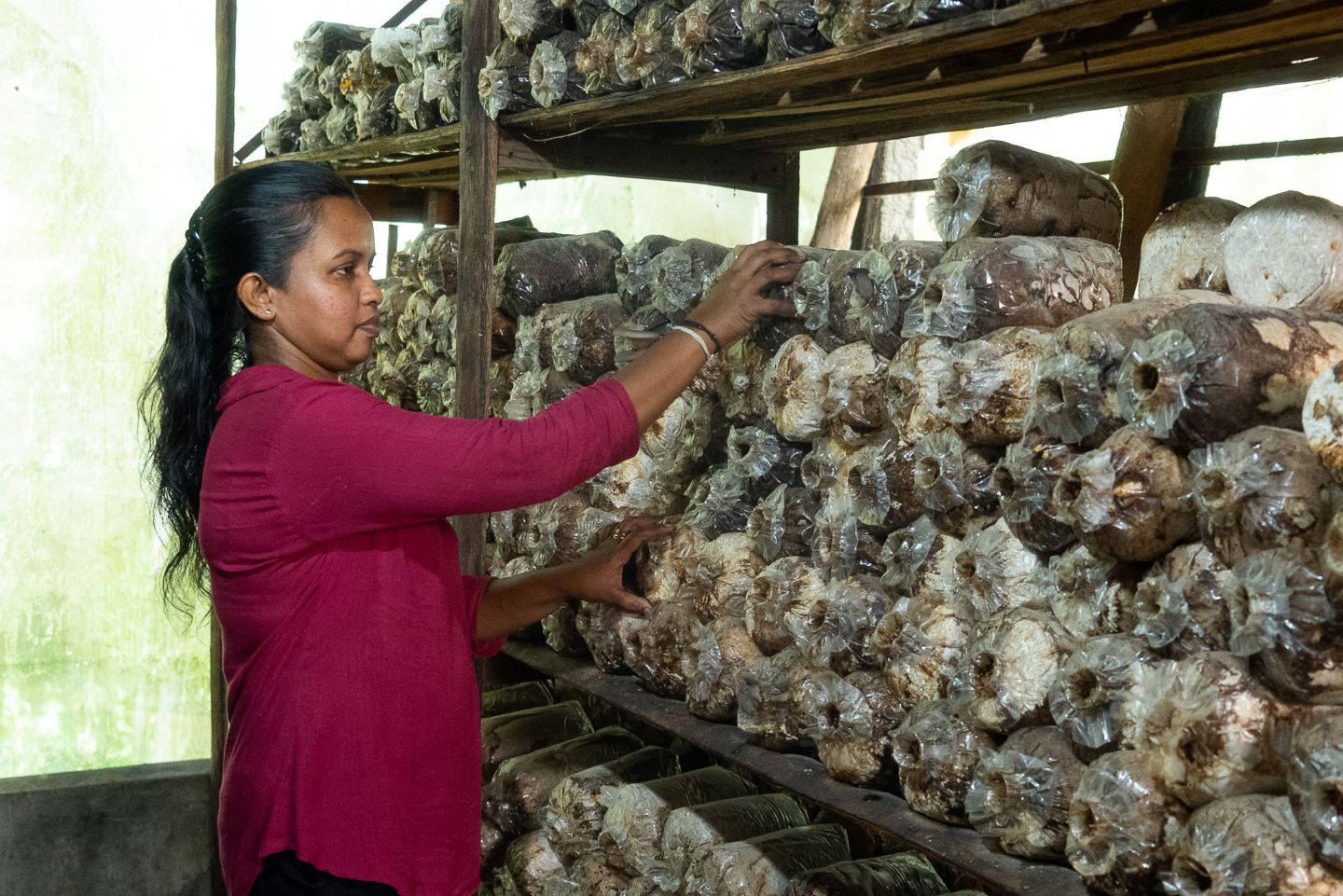
Nadeeshani took over her family business and expanded it. © IFAD/Ruvin de Silva 

When Nadeeshani was a child, she was fascinated by her parents’ mushroom farm, housed in a tiny mud hut. She dreamed of taking over from them and, after completing her schooling, she did. 

I became an entrepreneur because I didn’t want to work for anyone else,” says Nadeeshani. Thanks to a boost from the IFAD-funded STaRR project, she has kept the independence she dearly values. 

STaRR links rural entrepreneurs to training and finance. For example, Nadeeshani obtained loans from the state-owned Regional Development Bank, enabling her to double or sometimes even triple her production. She tapped into distribution chains and expanded her sales from small retail stores to national supermarkets. 

She also grew her range of products. Before, she sold four types of mushrooms, but now she prepares mushroom pickles, crisps and koki, a mushroom-flavoured biscuit. By adding value, she is bringing in higher returns and hopes to buy equipment to produce koki in larger quantities. 

Heavier rains caused by climate change have increased mushroom production, sometimes leaving Nadeeshani with more than she can sell. To prevent wastage, she has invested in a dryer to preserve the mushrooms. 

For Nadeeshani, the lesson is clear. Young women should get more involved in the agriculture business,” she says. There are always people like me around to help them become successful.” 

Her parents and sisters are helping her manage her growing business, and although their life revolves around mushrooms, they still look forward to a plate of delicious fungi, each done a different way.

Drive to succeed 

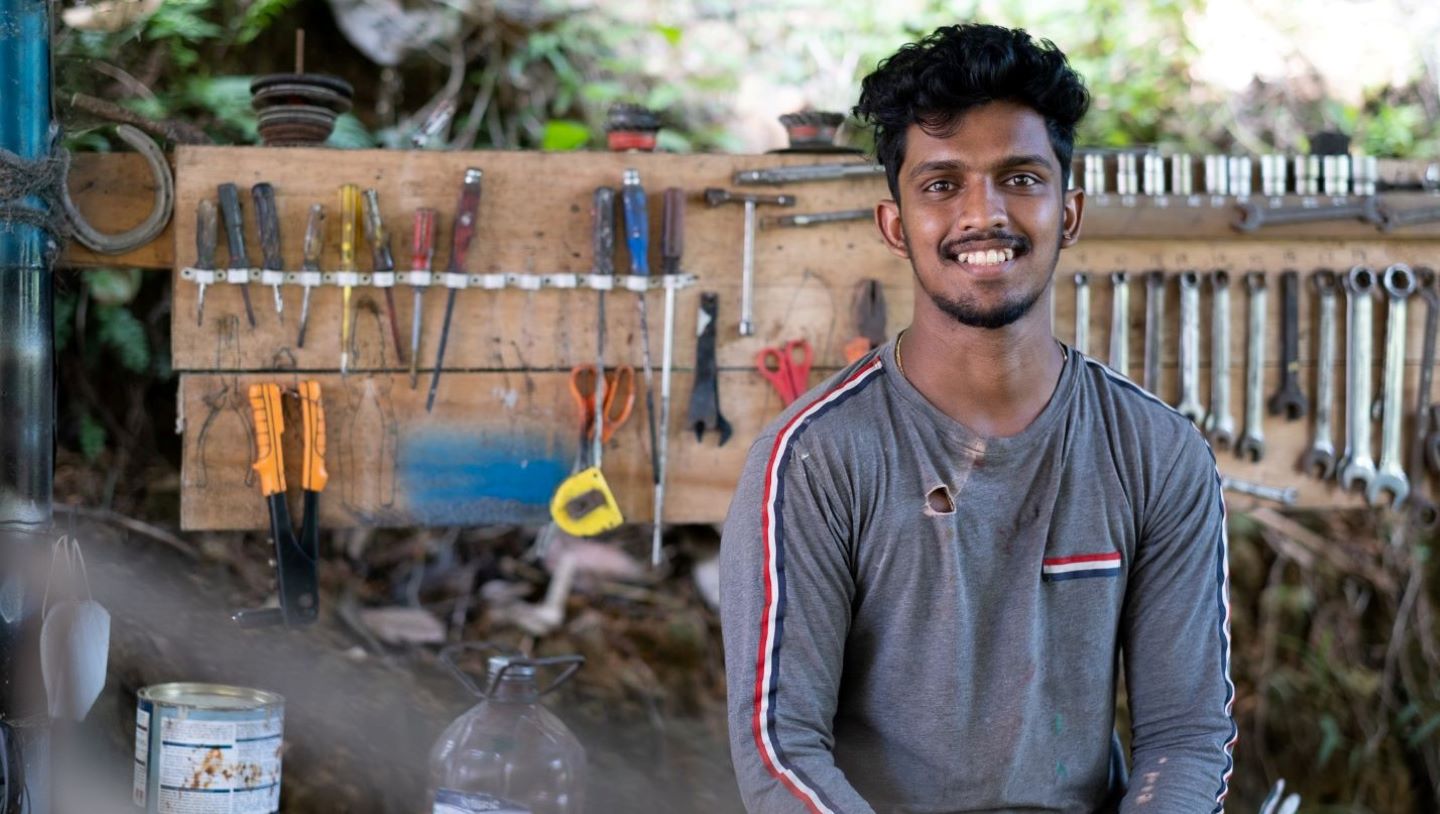
Thanks to a loan, Supun earns triple the amount he used to make. © IFAD/Ruvin de Silva 

Twenty-five-year-old Supun Gamlath lives with his parents, sisters and a grandmother on their small family farm in southern Sri Lanka. His family has long been involved in agriculture, but the young college graduate wanted to take his career in a different direction, without having to leave his rural home. 

Supun found work painting cars, but it wasn’t until he applied for a loan through STaRR that he became the proud owner of his own garage, where he paints cars and motorcycles, making them good as new.  

Thanks to the loan, he invested in equipment, like a compressor and a polishing machine, which help him provide quality services to his clients and grow his business. 

But it’s the simple things that have enabled Supun’s business to flourish. Nobody likes their vehicle getting wet in the rain,” he says. Now that I have a bigger roof, that doesn’t happen anymore! I get more work and therefore more income.” 

These days, Supun earns up to triple the amount he used to before STaRR – and he has plans to do more. Instead of outsourcing small vehicle repairs, he wants to invest in equipment to do these himself.  

He’s also busy training other young people in his garage, managing his business profile on Facebook and spending his leisure time swimming off Sri Lanka’s famous beaches. And whenever he’s needed, he’s always ready to lend a hand on his parents’ farm. 

Dynamic young people, like Nadeeshani and Supun, are crucial contributors to prosperous rural communities that can sustainably feed the world and keep their families resilient to shocks.

BJP president J.P. Nadda to release commemorative stamp in recognition of Indian-origin Tamils in Sri Lanka

December 29th, 2023

Courtesy The Hindu

The stamp is meant to recognise their contribution in establishing the island nation’s plantation industry and other infrastructure.

In possibly a first-of-its-kind initiative, BJP president J.P. Nadda will be releasing a commemorative stamp in recognition of the toil” of the Indian-origin Tamil community in Sri Lanka in establishing the plantation industry and other infrastructure in that country, 200 years after they first arrived there. The event will be held at the BJP’s headquarters in New Delhi on Saturday with the commemorative stamp to be received by Senthil Thondaman, governor of the Eastern Province of Sri Lanka.

Putting out a statement giving details of the event, BJP Tamil Nadu president K. Annamalai said that Prime Minister Narendra Modi considered Sri Lanka as a civilizational twin for India”. The commemorative postal stamp marking 200 years since the Tamil community of Indian origin arrived in Sri Lanka is a recognition of their toil in establishing the plantation industry and other infrastructure in Sri Lanka after being despatched to Sri Lanka by the British”.

He further said that Mr. Modi has earnestly undertaken several initiatives to ensure the welfare and development of the Indian Origin Tamil community in Sri Lanka” ever since he assumed office in 2014.

He added that the Modi government had sanctioned 14,000 houses in addition to setting up other facilities in areas where the Tamil population resides.

Furthermore, owing to India’s neighbour-first policy, about $4 billion worth of financial aid was extended to Sri Lanka when the country reeled from an unprecedented economic crisis,” he said.

Prime Minister Modi is untiringly delivering support to aid the wellbeing of lakhs of Indian-origin Tamils in the island country and the BJP has been striving to ensure their prosperity,” he said in his statement.

The event also assumes importance in the backdrop of the start of the second Kashi-Tamil Sangamam being held in Varanasi and Prime Minister Narendra Modi’s own trip to Tamil Nadu and Lakshadweep in the new year.

CBSL’s inability to control economy ‘main reason’ for collapse – Minister Wijeyadasa (English)

December 29th, 2023

Ada Derana

Colombo’s consumer price inflation increases to 4% in Dec.

December 29th, 2023

Courtesy Adaderana

Colombo’s consumer price inflation increases to 4% in Dec.

Sri Lanka’s overall rate of inflation measured by Colombo Consumer Price Index (CCPI) on year-on-year basis has increased to 4.0% in December from 3.4% in November.

Meanwhile, food inflation increased to 0.3% in December 2023 from -3.6% in November 2023, the Census & Statistics Department (DCS) said in its latest release.

Meanwhile, the year-on-year inflation of the non-food group dropped to 5.8% in December from 6.8% in November.

For the month of December, the contribution to inflation by food commodities was 0.10%, while the contribution of non-food items was 3.90%. The DCS said this was mainly due to the increases in value change in groups of housing, water, electricity, gas & other fuels, education, clothing & footwear, alcoholic beverages, tobacco & narcotic, recreation & culture, health and miscellaneous goods & services. 

A decrease in value change was reported for the groups of transport, furnishing household equipment and routine household maintenance, restaurants and hotels and health. Further, a very slight price increase was reported in group communication during the month.

The CCPI is an economic indicator constructed to measure inflation which is defined in percentage change in the CCPI over the year. There are two measures of inflation in general use. One measure is the year-on-year base or point-to-point inflation (the percentage change in the CPI during the last 12 months). The other measure is ‘moving average inflation’ (the percentage difference between the average price index of the last 12 months and the average price index of previous 12 months).

Colombo Consumer Price Index – December 2023 by Adaderana Online on Scribdhttps://www.scribd.com/embeds/695526158/content?start_page=1&view_mode=scroll&access_key=key-yNenhGvqTGfKpiFBysQt

IMF agreement must be continued under any government – CBSL Governor

December 29th, 2023

Courtesy Adaderana

Governor of the Central Bank of Sri Lanka (CBSL) Dr. Nandala Weerasinghe has emphasised the importance of the continuity of the Extended Fund Facility (EFF) agreement with the International Monetary Fund (IMF).

Speaking at a special briefing held this afternoon (29 Dec.), Dr. Weerasinghe explained that the EFF programme should continue for the next four years, under any government, in order to get the debt relief and international financial support required.

He warned that unilateral withdrawal from the IMF-EFF agreement will result in severe implications.

Dr. Weerasinghe was addressing a press briefing convened at the Central Bank premises on the Financial Stability Review (FSR) of 2023.

The CBSL recently released its report on FSR for 2023 which highlighted that although it is expected that the existing macro-financial vulnerabilities would dissipate in the period ahead, with the envisaged improvements in the macroeconomic front, continued advancement along the policy reforms agenda envisaged in the IMF-EFF agreement is essential to direct the economy and the financial system into stable grounds. 

In this vein, the report read: 

Any deviation from this path would bring detrimental and irreversible consequences to the financial system and the economy, though moving along this arduous and narrow path is challenging. The instigation and operationalisation of strong and appropriate frameworks that proactively address vulnerabilities and implementation of timely, well sequenced, and consistent policies is also crucial to ensure the stability of the Sri Lankan financial system.

As the economy undergoes a monetary policy easing cycle, the credit cycle is expected to enter an expansionary phase, in which macroprudential concerns could build-up. The Central Bank commits to monitoring these developments closely and implementing necessary policy actions to mitigate systemic risks and ensure financial stability through macroprudential interventions”

Thai PM to travel to Sri Lanka to sign FTA in February

December 29th, 2023

Courtesy Adaderana

Thailand’s Prime Minister Srettha Thavisin is scheduled to travel to Sri Lanka to sign a free trade agreement (FTA) in February 2024 after the successful conclusion of the latest round of negotiations between the two countries, Bangkok Post reported.

Chotima Iemsawasdikul, the Director General of Thai Commerce Department’s Department of Trade Negotiations, has told the media on Thursday (Dec.28) that Sri Lanka hosted the 9th round of trade negotiations from December 18-20. It was attended by Auramon Supthaweethum, the Director General of Thailand’s Department of Business Development and advisor to FTA negotiation team.

Negotiations for the free trade agreement between Sri Lanka and Thailand resumed in November after being put on hold for 4 years consequent to the Covid-19 pandemic and ongoing restructuring of Sri Lanka’s state-owned entities.

Iemsawasdikul stated that the latest round of talks have agreed on the rules on trade, services, investments and economic cooperation.

Citing Iemsawasdikul, Bangkok Post said the Commerce Ministry would submit the results of the negotiations to the Thai Cabinet for approval before PM Thavisin travels to Sri Lanka to ink the agreement in February, on the invitation of President Ranil Wickremesinghe.

Iemsawasdikul told media that Sri Lanka plays a significant role in maritime freight in the Indian Ocean, and it is home to abundant natural resources such as gemstones, graphite, and aquatic animals, adding that many industries in Thailand would benefit from the FTA, including those in the automotive, fashion, gems, metal, electronic items, machinery, rubber gloves, pet food, and corn.

The FTA will also benefit from service firms, including those in finance, insurance, tourism, and research and development.

From January to October 2023, the value of bilateral trade between Thailand and Sri Lanka was worth USD 320.37 million.

Thailand exported goods worth USD 213.49 million, while it imported goods worth USD 106.88 million from Sri Lanka.

‘Yukthiya’ operation: 1,400 more individuals nabbed with drugs

December 29th, 2023

Courtesy Adaderana

During the ongoing ‘Yukthiya’ operation, the security forces personnel have arrested over 1,400 more suspects on suspicion of drug peddling.

As such, a total of 1,467 more drug suspects have been placed under arrest within a 24-hour window ending at 12:30 a.m. today (Dec.29).

According to the Public Security Ministry, detention orders were secured for 56 suspects for further interrogations. Another 51 were sent to rehabilitation centres.

Meanwhile, 164 individuals who were on the list of Island Re-convicted Criminals are also among the recent arrestees.

Further, 460g of heroin, 653g of methamphetamine (‘Ice’), 3.63kg of cannabis, 562 narcotic pills and 103,793 cannabis plants were seized in the anti-drug operation.

Alarm raised as more than 87,000 dengue cases reported in 2023

December 29th, 2023

Courtesy Adaderana

Over 10,000 cases of dengue infections have been recorded in the month of December alone, bringing the total number of infections reported in 2023 to 87,078.

Accordingly, 10,600 novel dengue cases were witnessed within this month alone, with the highest number of infections being recorded from the Colombo, Gampaha and Kalutara districts, as per health officials.

From the 87,078 dengue cases, 39,543 cases were registered in the Western Province.

Accordingly, Gampaha District saw 18,401 dengue cases, while Colombo District was not too far behind, with a total of 16,020 cases. The Kalutara District followed with 5,122 cases in total. Meanwhile, several cases were also observed from the Puttalam and Kandy districts.

It was also reported that three persons, including a university student and a 11-month-old infant died of dengue fever over the past few days.

Meanwhile, a total of 62 MOH areas have been categorized as ‘high-risk’ zones.

Poet, & Astrologer Martin Jayawardena no more.

December 28th, 2023

Garvin Karunaratne, former GA Matara 

I fist met Martin when I was appointed the Government Agent at Matara in March 1971.

A Senior Clerical Officer in the Katcheri, his work was impeccable,

Martin was more a poet. He could turn a stone to gold- detail anything in an amazing manner that evoked a catharsis within seconds in a listener. It was a gift that very few have.

On may an occasion when we trio- Martin, Sumane and I together tried hitivana kavi, the crown went to Martin, followed by Sumane with me straggling far behind. .

Sumane was no other than Sumanapala Dahanayake, the member of parliament for Deniyaya, who within two and a half weeks established Coop Crayon, making crayons that were sold islandwide, the crown of the Divisional Development Councils Programmre of 1970-1977- the last real development programme we had. I remember Martin sang a verse on Coop Crayon too. Sadly that has left my memory.

Martin was gifted with the knack to turn a ordinary scene into a glorious vendetta, and one would be borne away into the clouds.

Sadly I left all of them for studies overseas. Life takes its own course, heedless, and I lost touch with Martin and other officers whom I came to love and whose association I cherished when I once adorned the desk at Matara. That was my decade stint overseas

Back in the saddle in Sri Lanka in the Eighties, I plod on whenever I heard of any of my officers who gave a gleaming touch to my administrative life- Once I heard that Martin lived somewhere in Uyanwatta, Matara and I traced him to a gleaming small abode and then I found him, now more an astrologer.

Thence whenever I came to Sri Lanka, a telephone call and I met Martin several times. He was then an acclaimed poet, an astrologer.

Life nevertheless, takes its own course and we live and depart, make friends, admire and loose touch. Martin however, was no passer bye. He did distinctly contribute to Mother Lanka, greater as a Poet.

May his path in Samsara be happy and bountiful.

Garvin Karunaratne,

former GA Matara 28/12/23

His funeral ceremony is at Jayaratnes Kanatta, 29 th. Dec. eve

ප්‍රීමා සමාගම ජනාධිපතිවරුන් තිදෙනකු අවනත කර ගෙන ලංකාවේ පිටි ඒකාධිකාරය ලබා ගත්තේ මෙහෙමයි

December 28th, 2023

Kaarige Channel Eka | Dharmasri Kariyawasam

ප්‍රීමා පිටි සමාගම සහ ශ්‍රී ලංකා ආණ්ඩුව අතර අත්සන් කරන ලද ගිවිසුම් පිළිබඳ කතාව මෙරට දේශපාලනයේ දූෂිත ස්වභාවය පෙන්වන කැටපතක් වැනි ය. ‘අනික් අතට රජය ව්‍යාපාර කිරීමෙන් ඉවත් විය යුතු ය’ යන ඊනියා මතය අඵියෝගයට ලක් කරන උත්ප්‍රාසාත්මක නාටකයක් වැනි ය. ජේ.ආර්. ජයවර්ධනගේ සිට මහින්ද රාජපක්ෂ දක්වා ආ දූෂිත දේශපාලන ගමනේ ආරම්භක අවස්ථාව පිළිබඳ නිශ්චිත උදාහරණයක් වන මේ සිද්ධිය මෙවර කාරිගෙ චැනල් එකේ වීඩියෝවට තේමා වෙයි.

ගෝටා පැන්නූ බැසිල්ගේ කුමන්ත‍්‍රණය දිලිත් හෙලි කරයි…

December 28th, 2023

උපුටා ගැන්ම ලංකා සී නිව්ස්

රට තුළ ආර්ථික අර්බුදයක් නිර්මාණය කරමින් ගෝඨාභය රාජපක්ෂ මහතා එළවා දැමූයේ බැසිල් රාජපක්ෂ මහතා විසින් ඔහු රටේ ජනාධිපතිවරයා වීමට බව බව මවුබිම ජනතා පක්‍ෂයේ නායක දිලිත් ජයවීර මහතා පවසයි.

එහි ප්‍රතිඵලය ලෙස අවසානයේ රනිල් වික්‍රමසිංහ ජනාධිපතිවී පොදු ජන පෙරමුණ සහ ජාතිකවාදී කඳවුර විනාශයට පත්වුණු බවත් හෙතෙම කියා සිටී.

බැසිල් රාජපක්ෂගේ කුමන්ත්‍රණය හේතුවෙන් අපේක්ෂා භංගත්වයට පත්වූ පොහොට්ටුවේ සාමාජික පිරිසක් අද වන විට අනුර දිසානායක ප්‍රමුඛ ජාතික බණබලවේගය සමග එක්වී සිටින බවත් ඒ මහතා  සඳහන්  කරයි.

ඔහු මෙම අදහස් පල කරන්නේ අන්තර්ජාල නාලිකාවක සාකච්චාවකට එක්වෙමිනි.

5 key takeaways on regional cooperation in South Asia in 2023

December 28th, 2023

CECILE FRUMAN Courtesy WorldBank Blogs

Trucks at the Benapole-Petrapole border between Bangladesh and India.
Trucks at the Benapole-Petrapole border between Bangladesh and India. Photo: Nusrat Nahid Babi, World Bank

Of my travels across South Asia this year, my visit to the living roots bridges in Meghalaya, India, stood out for its uniqueness. The roots of the rubber fig trees—planted on either side of the river— intertwine and are carefully crafted by the Khasi people into natural bridges. The more these bridges are used, and the more pressure applied on them, the sturdier they become. These bridges are symbolic of regional cooperation efforts in #OneSouthAsia, where despite external pressures and strains, cross-border ties are strengthening in many areas. Looking back on 2023, here are 5 key takeaways on regional cooperation in South Asia :

  1. Energy cooperation is moving ahead. This year there were small, but sure steps towards a regional electricity market. India opened doors to the neighboring countries including Bangladesh, Bhutan, and Nepal to buy and sell power in the real time energy market via the India Energy Exchange. This allows countries to trade electricity closer to real time as and when available and required. Nepal is the first South Asian country to participate, where it can sell 44 MW of power in real time. India and Nepal also agreed on a long-term plan to purchase 10,000 MW of power from Nepal in the next 10 years. The momentum of the India-Sri Lanka interconnector—which will link the national grids of India and Sri Lanka—has picked up.  In response to the Government of Sri Lanka, the World Bank will support preparatory and analytical studies for the interconnector. Once operational, the interconnector will open opportunities for market-based trading between India and Sri Lanka as well as the rest of the region. A regional electricity market will increase synergies among clean energy resources, allow the region to tap its immense hydropower potential, especially in Nepal and Bhutan, and ensure low-cost energy access in South Asia. At the World Bank, we estimate that it can lead to a 4.5% reduction of CO2 emissions by 2035, and potentially yield up to $17.4 billion in cumulative economic benefits in 2023-2035.
     
  2. There were many fresh starts in regional trade and connectivity.  The Akhaura -Agartala rail link between India’s northeastern state Tripura and Bangladesh was inaugurated this year, and Bangladesh gave India access to its Chattogram and Mongla ports for transit and cargo vessels, pushing regional connectivity in the Bay of Bengal area. India and Sri Lanka revived their ferry service after 40 years, while India and Nepal renewed the Treaty of Transit,  giving Nepal access to India’s inland waterways along with agreements for new rail links. India and Bhutan also agreed to bolster regional connectivity with a focus on the first-ever rail link between Assam and Bhutan, and on upgrading border post infrastructure. Bangladesh and Bhutan signed a transit agreement enabling Bhutan to use Bangladesh’s roads, waterways, railways, airways, and seaports for its third-country trade. Our Accelerating Transport and Trade Connectivity (ACCESS) program facilitates cross-border trade and connectivity with support to improved and modernized transport, border, and customs infrastructure, digital systems, and processes in the sub-region, with a focus on Bangladesh, Nepal and Bhutan.  During my visit to South Asia’s largest border posts between Bangladesh and India — Benapole-Petrapole post — I saw the impact that delayed border crossings have on trade and, on the upside, the potential to accelerate trade via digitization and modernization of key processes.
     
  3. In the face of crisis, the neighborhood responds. This year I traveled to Sri Lanka a few times, and the conversations about regionalism have been encouraging. Much of the credit goes to the neighborhood’s response to Sri Lanka’s economic crisis and recovery. India provided multi-pronged assistance of about $4 billion, while Bangladesh provided a loan of $200 million. The region’s role in Sri Lanka’s crisis recovery and its continued economic growth has become central as the country looks to renegotiate Free Trade Agreements with the neighborhood and beyond, improve access to regional markets, increase the volume of trade processed in its ports, and boost regional investments.  The idea of neighborhood first” resonated in many instances, and some of these examples of neighborhood collaborations have been also illustrated in our Good Neighbors Series.  
  1. Climate cooperation is imperative. South Asia’s climate vulnerability remains high and even this year, extreme climate events like floods and soaring temperatures continued to hit the region. There is a greater consensus on the need to work together on climate and environmental issues. This year, in partnership with the UK’s Foreign, Commonwealth and Development Office, we launched the Resilient Asia Program, which is a $65 million program over the next eight years to accelerate transformational and collaborative climate action in South Asia, with an initial focus on air pollution management, disaster risk management, thermal cooling, biodiversity conservation in the Sundarbans, and transboundary water cooperation. Given the spatial interdependence of air pollution, we are working with the countries of the Indo-Gangetic Plain to foster collaborative action on air quality management. Our analysis estimates that collaborative approaches cost almost 45% less and will achieve more effective air quality results.
     
  2. There are many new and exciting opportunities for cooperation.  At the World Bank, we have extended our operational approach for regional integration, cooperation and engagement, (RICE) through 2025.  Our work is venturing into new areas of cooperation including higher education and pandemic resilience and response. Among South Asian countries, cooperation in the areas of digital connectivity, digital infrastructure, and cross-border digital payments is moving fast.  We continue to support networks, platforms, and enhanced engagement with our stakeholders and development partners to find ways to synergize and scale our efforts for greater impact and results. With support from our development partners, the UK’s Foreign, Commonwealth and Development Office, and Australia’s Department of Foreign Affairs and  Trade, our portfolio of analytical work, 20 projects and close to $5 billion in financing directly contributes to the World Bank’s vision to end poverty on a livable planet.

As the year closes, there is much to celebrate on the regional cooperation front, but a lot more to accomplish ahead.  In 2024, let’s continue to build bridges that will be resilient and will stand the test of times—a lesson well learnt from nature and its fascinating living roots bridges.

Economic crisis takes its toll on education, DCS survey reveals

December 28th, 2023

Courtesy The Island

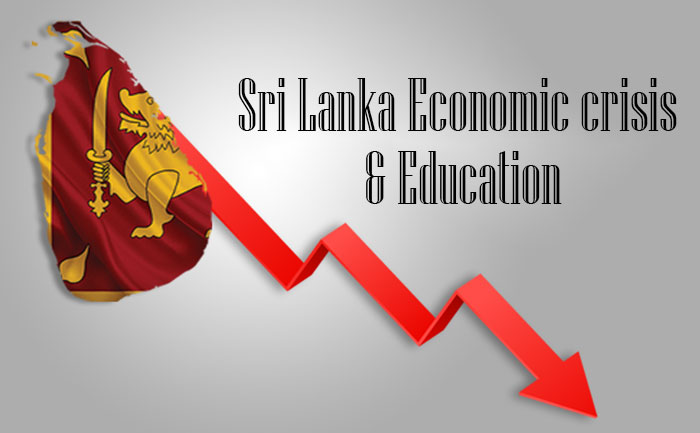
Education of about 54.9 percent of Sri Lankan students has been affected by the economic crisis since March 2022, the latest Household Survey on Impact of Economic Crisis – 2023 by the Department of Census and Statistics reveals.

Out of the respondents surveyed 93.5 percent have adopted at least one strategy to counter the impact of the economic crisis on schooling.  The primary strategy adopted by the majority of individuals affected by the economic crisis (53.2 percent) was to reduce their expenditure on new stationery. 44.0 percent of individuals have cut down on buying new uniforms or stopped purchasing them altogether. Reducing the frequency of attending private tuition classes or shifting to online classes, too, is a commonly adopted strategy with 40.6 percent and 28.1 percent of respondents opting for those measures, respectively.

60.5 percent of households have experienced a drop in their total household average monthly income. Nearly half of the employed individuals have encountered changes in their main jobs due to the economic crisis. 47.3 percent experienced work breaks or temporary absence. 48 and 45.8 percent of respondents experienced reductions in working hours or cuts in pay or allowances and income loss, respectively.

14.2 percent of individuals engaged in economic activities faced job loss due to the impact of the economic crisis. Higher percentage of males (18.4 percent) who lost either their primary or secondary jobs due to the economic crisis compared to females (8.3 percent). 60.5 percent of income earners reported a decrease in at least one income source. 36.6 percent said there was no change in income during the crisis. Income has increased only for 3.4 percent of income earners.

60.5 percent of households experienced a decrease in their total income. Only 5.4 percent of families reported an increase in income. 48.7 percent said it was due to reduced working hours, 31.7 percent put this down to decrease in customer attendance. 22.9, 19, 16.5 and 15.1 percent of households experienced a decrease in come due to job loss, had to resign / temporarily suspended; increase in prices of seeds, animal feed, fuel, fertilisers; depreciation of seeds, animal feed, fuel, fertilisers etc., and because product could not be sold as per usual, respectively. 8.4 percent of families also reported problems in hiring workers, tools, and equipment. 73.6 households have ‘done nothing’ to adopt for the impact of the economic crisis on household income, the survey found.

Meanwhile, 91.1 percent of households indicated that their expenditure had increased. 99.1 percent of respondents said this was due to the increase in food expenses. Transport (83 percent), health expenses (73.2 percent) and educational expenses (51.8 percent) too had increased.

Approximately 97.2% of households employed at least one coping strategy to manage their household expenditure. 75.2 percent reported a change in diet, while 46.4 percent reported reduced savings or spending their savings. 21.3 percent of respondents have taken loans, sold or mortgaged properties.

Measles raises its head again: Health Ministry all out to eradicate it

December 28th, 2023

Courtesy The Island

Dr. Palitha Mahipala

By Rathindra Kuruwita

Health Secretary Dr. Palitha Mahipala said on Thursday that over 700 cases of measles had been reported since May 2023, mostly from the Colombo District.Gampaha, Kalutara, Galle, Matara, Kandy, Jaffna, Kurunegala, and Ampara were among the districts affected by the spread of measles, Dr. Maheepala said.

In 2019, the World Health Organization (WHO) declared Sri Lanka had successfully eradicated measles with the help of a successful vaccination campaign.The Health Ministry has initiated an immunisation campaign in the districts where the measles cases had been reported, Dr. Maheepala said.

We have reached out to WHO experts in South Asia for advice. We also took advice from the national advisory committee on immunisation. We have decided to give an extra dose of the Measles, Mumps, and Rubella (MMR) Vaccination to infants between six and eight months in the the districts where measles cases have been reported,” he said.

Moreover, children aged between nine months to 15 years who have not received the MMR Vaccination could get vaccinated from 06 January 2024, Dr. Mahipala said.

The Health Ministry would establish 1,600 clinics across the country for vaccinating children, Dr. Mahipala said.Dr. Mahipala said due to the COVID-19 pandemic, the immunisation coverage had suffered a setback and that may have led to re-emergence of measles.

BUDDHIST VIHARAS AND EELAM Part 12B.

December 27th, 2023

KAMALIKA PIERIS

Kurundi vihara has the distinction of being Sri Lanka’s first contested Buddhist site. That is due to the kovil-temple” tug-of-war going on at the site, thanks to the Tamil Separatist Movement.  The kovil announcement got a lot of publicity, mostly negative. The skeptical   public wanted to know exactly when this ‘ancient’ kovil had been built at Kurundi. The answer was, in the 1980s.

The Kurundi Vihara Development Committee, set up by Cyril Matthew reported in 1981 that a kovil had been set up at Kurundi. They wrote to the government saying that a kovil had been erected at the pilimage site with concrete floor, roof and trident. They attached a photograph and asked that the kovil be removed. But the Eelam war intervened.  Kurundi was used as a bunker by the LTTE.

Santhabodhi said, in 1980 or so, the pilimage had been covered with soil and only the stone pillars were visible. Tamil Separatist Movement has put a roof on these pillars and installed a trisula (trident). When the Department of Archaeology was informed, they prohibited entry as this was archaeology reserve.

When we came in 2018, continued Santhabodhi, the whole area was dense forest. Once we started work on the stupa, the Tamil Separatist Movement decided that they too wanted to worship there and talked of a Hindu kovil. Meke thiyenna thanikrana demela bedum vadaya,” Santhabodhi said.

If there had been an ancient kovil at Kurundi, then there must be archaeological evidence of that kovil. There is no evidence to show an ancient kovil, but plenty of evidence to show that there was a large Buddhist monastery at Kurundi, dating from Anuradhapura times.

Further, if there was a kovil then there should be a road, or evidence of a road, leading to the kovil. There was no such road. Kurundi villagers when interviewed admitted that there was only a footpath to Kurundi.

 There was no clear access to Kurundi, when I first went there, recalled Santhabodhi. There were two footpaths and a stream to cross. The hillside was thick with trees and undergrowth.Santhabodhi and his group had to follow animal tracks up the hill. There were huge holes dug all over the place at Kurundi, said Santhabodhi. 

The difficult terrain shows that Hindus never went there. There was no road, and the place was uncleared . If  as the Tamil Separatist Movement says, there was popular kovil there, then there would at  least have been a good road.

 Santhabodhi was not the first monk to come to Kurundi in modern times. Kanakaraja Vijaya Kumar, a farmer resident near  Kurundi,  recalled that  prior to 1982, there was a Buddhist monk residing at Kurundi.  LTTE  killed him. The presence of this monk was also corroborated by other  interviewees.

 Baskaran Susila Devi also said that there was a  Buddhist monk at Kurundi.  There were two other persons to see to his needs.  This monk was about 45 years old.   He was there for about 4 months. He was given Dane regularly by the villagers. Susila had offered alms to him.   He had visited Susila’s house for Dane and was given curd and other food. She had done this regularly.

The ad hoc Hindu kovils set up in the north  and east, including Kurundi, are not well set up Hindu temples. There is no lingam, only a trident and the kovil is shoddily constructed. These ‘kovils’  are planted in the heart of a  Buddhist ruins,  in the case of Kurundi, in the pilimage. The intention is not to set up a proper kovil.  The intention is to claim the site for the Hindus, if the Buddhists  arrive. The intention was to create contested sites.

The Contested site” stunt  is part of the modus operand of the Tamil Separatist Movement. . The Tamil Separatist Movement had  planned this  long ago. They had explored the Buddhist ruins of the north and east  during the Eelam war. It was not possible to destroy all the Buddhist ruins they found, so they hit on another tactic.

Hindu symbols were introduced into Buddhist ruins located in the north and east.  This was usually    confined to a Trident , the  symbol of Siva. Ellawela Medhananda found plenty of  trisulas in his exploration of Buddhist ruins in the east.

  Then when the Buddhists arrived and   excavation began on a Buddhist ruin, the Tamil Separatist Movement would be able to  announce that  the site was     that of an ancient Kovil, not a Buddhist temple. This was a planned operation, to order to create a series of contested sites in the north and east.

At Kurundi Tamil Separatist Movement carried out its usual trick of installing a trisula in the heart of a Buddhist ruin    and then   howl that this was an ancient Hindu kovil. Kurundi became a contested site  leading to  political fears. Authorities feared that   contested sites like Kurundi could lead to an ethnic riot.

Regardless of who is   right and who is wrong, it is best to deal with Kurundi carefully. The north and east are sensitive territory,  competing interests must be  managed carefully, said analysts. Buddhists awake! – Save Kurundi!’ may become a launching pad warned Harindra B. Dassanayake  and Rajni Gamage

The columnist Cassandra wrote,  The Island of Tuesday August 22 sent warning signals, down Cassandra’s spine. It said Possibility of communal riots over temple”. It’s about the Kurundimale temple in Mullaitivu. Buddhist monks and devotees started arriving at the temple to conduct religious rituals. The worst was that the Pongal celebrations of the people in the vicinity were disturbed.

The monks who gathered religious fanatics and trouble makers deliberately chose the time at this dicey venue.  It is a place sited on a volcano of racial tension. This is another example of totally misguided Buddhist enthusiasm. Sacrilegiously using the name of the Buddha and his Dhamma, overzealous monks, knowing full well what horrendous calamities could result, go headlong into rousing religious tensions. Needless to say, such action should be stopped and such monks stymied radical Buddhism lives on, fired by monks who are anything but Buddhist clergy, concluded Cassandra.

Island  editorial   said in June 2023: the writ of the state, we believe, must run in all parts of the country, and national heritage sites must be traced and conserved or restored wherever they are located. This task should be left to heritage management experts, who alone are capable of handling such sensitive issues carefully.

The Kurundimale heritage site has given rise to a huge controversy for political and religious reasons, and only a scientific approach to the problem can help find a workable solution. Let an expert committee consisting of senior archaeologists drawn from the national universities and heritage management experts be set up to study the Kurundimale site and determine the extent of land necessary for its restoration or conservation and how that task should be carried out to the satisfaction of all stakeholders, concluded Island editorial.

There was a second site where excavation work started in the same year as Kurundi that is Rajagala in Ampara. Rajagala archaeological site is only second to the Mihintale monastery in Anuradhapura.  It spreads over 1,600 .  It consists of more than 600 prehistoric ruins, monuments and artifacts, and nearly 100 of them are ancient stupas. It contains the  ancient Ariyakara Viharaya built between 116 and 109BC.

Rajagala conservation started  in the same year as Kurundi. Work on Rajagala  started in 2018, jointly  by  Department of Archaeology  and University of Sri Jayewardenepura. However  Rajagala  conservation was never interrupted  by the Tamil Separatist Movement. The reason is that the Tamil Separatist Movement decided several decades ago,   to drop Ampara from its Eelam grab.  I was present at a talk where this was publicly  announced in the 1990s.

Many Buddhist sites, not  only Rajagala , have been restored  by the Archaeology Department  over the  years, during British rule and after,  for decades without  any  fuss. So why this sudden fuss over Kurundi.

The clash is due to the location of Kurundi. Kurundi is located at a critical point in the Eastern Province, where the north and east come together. Mullaitivu is the district that connects the north and east. The Tamil Separatist Movement has recognized the danger.

Kurundi is  a very serious  threat to Eelam, because of its strategic position in the East of Sri Lanka said the Tamil Separatist Movement .  Mullaitivu is the district that connects the north and east. Changing its  ethnic composition can forever prevent the merger of these two provinces, said the  Tamil Separatist Movement ” ( continued)

Ahmadiyya Muslim International Annual Convention (Jalasa Salana) in Qadian, India.

December 27th, 2023

Press Release by A. Abdul Aziz, Press Secretary, Ahmadiyya Muslim Jamaát – Sri Lanka.

128th Annual Convention (Jalasa Salana) of Qadian (Punjab, India) is being held on 29th, 30th and 31th, December, 2023.

Thousands of Ahmadi Muslims from all over the world attending this three day convention which will be chaired by President, Ahmadiyya Muslim Jama’at, India.

Hazrat Mirza Masroor Ahmad, Supreme Head of the world-wide Ahmadiyya Muslim Community will address the convention on 31st Dec.2023 at 5.00 P.M. Sri Lankan Time,  from London via MTA (Muslim TV Ahmadiyya International).

A delegation from Sri Lanka Ahmadiyya Muslim Jama’at is also attending the convention. Religious scholars from the Community and various faiths also delivering speeches on various topics

The main objective of the convention, inter alia,  is to promote peace in the world, to project the pristine teachings of Islam and to promote the bond between human beings and Allah. Likewise safeguarding the rights of women, guaranteeing the human rights and so on.

Qadian is the birth place of Hazrat Mirza Ghulam Ahmad – the Promised Messiah and Imam-al-Mahdi.

Buy mobile phones only if approved by TRCSL

December 27th, 2023

Courtesy The Daily Mirror

Colombo, Dec. 27 (Daily Mirror) – The Telecommunications Regulatory Commission of Sri Lanka (TRCSL) today announced that people should only buy mobile phones that have been approved by the Commission.

Addressing the media TRCSL Deputy Director of Compliance, Ms. M. Pathirana, requested consumers check the IMEI number to verify the phone they are hoping to buy has TRCSL approval.

The IMEI number is displayed on the cover of the mobile phone box. People can check the validity of the IMEI number by sending an SMS to 1909 (IMEI (space) 15-digit number and sending it to 1909). An instant reply message will be received stating whether the mobile phone is registered or not.

She requested that consumers buy only TRCSL-approved phones to prevent falling into trouble.


Copyright © 2026 LankaWeb.com. All Rights Reserved. Powered by Wordpress