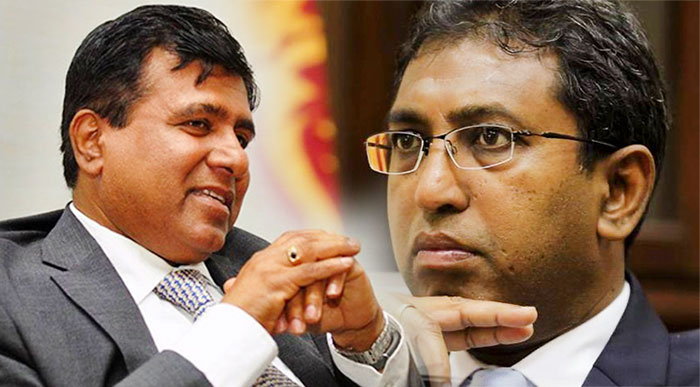
Pathikada: IMF’s Taxes explained by Vijitha Herath

October 19th, 2023

Dilrook Kannangara

Sri Lankan people are also parasites to an extent. 

Sri Lankans pay Ethiopian level of very low taxes (9% of the economy) but expect a Swedish level of welfare (they pay 32% of the economy as taxes)!

Indian IIT

October 19th, 2023

Sugath Kulatunga

It is good news that the President is keen on establishing a branch of an Indian IIT in Kandy. It appears that Prime Minister Modi has agreed to support the Chennai IIT to launch the project. It is never too late, but the President should not consider that one IIT is the panacea for all the IT backwardness of the country and a magic wand to provide productive employment to all our school leavers. While a workforce with IT skills can act as a magnet for foreign investment the need is for a comprehensive transformation of the education system to meet the demands of the presence and the future.

Mr. Wickremasinghe was our Minister of Education in 1980. This was the time that the East Asian Tiger economies were making radical changes in their systems of education to meet the emerging needs of industrialization and economic development. They used education to spur growth, create jobs and raise productivity. In these countries Education was a primary driver of their long-term development strategy and was a high priority for policy makers. There was strong alignment in their growth strategy, labor market needs, and education policies.”

But at that time in the 80s Mr.Wickremasinghe as Minister of Education or as the Minister of Industries was not cocerned in the developments taking place in those fast growing economies. Neither did the Ministry bureaucracy interested in learning from the experience of these countries. Our diplomatic representatives in those countries followed the philosophy of the three wise monkeys of ‘no seeing, no hearing, no speaking’, while enjoying their perks. The think tanks of the Central Bank and the Academics of the Universities were not different.

An attempt to introduce an element of change in the school education system in the form of the NCGE for School leavers was made during the government of Mrs. Bandaranayake but was scrapped by the next government falling back on the British based system of Ordinary Level and Advanced level certification. While SL deliberately ignored technical education, after independence India established in 1950 five Institutes of Technology (IITs) in the main States of the country. These IITs were modeled on the best example of higher technical education from Germany, Russia, the United Kingdom, and the United States. They have been the cutting edge of technology development in India and are highly recognized internationally. There was a strong demand for IIT alumni in the Silicon Valley. IITs are considered one of the great gifts to India by Prime Minister Nehru.

More @ https://wordpress.com/read/feeds/125965271/posts/4948849284

https://wordpress.com/read/feeds/125965271/posts/4948849284

CEOs of many tech multi nationals like google,infosys,Sun Micro Systems and Twitter are IIT graduates. India depends on IIT alumni to provide technological solution to the future world. Recently Prime Minister Narendra Modi called on the global alumni base of Indian Institutes of Technology (IITs) to come up with viable technological solutions for the emerging new world technology order post the Covid-19 pandemic.

This writer having worked in India and was familiar with the contribution of the IITs to India has in the past recommended that Sri Lanka establishes an Institute of Technology in collaboration with one of the Indian IITs.

(On a personal Note) : In the early 2000 this writer was associated with an Indian investor in an attempt to launch a Colombo Institute of Technology with inputs from IIT Chennai and IIT Bangalore. Their staff would have served as visiting lecturers and maintain the high standards of the Indian institutions supplemented by local professionals. We were in the process of identifying local resource persons and a suitable building for the proposed Institute. When in April of that year the Elephant Pass was captured by the LTTE, and they advanced up to the gates of Jaffna. In that tense juncture a conceited MP of the TNA rhetorically advised  the government to be ready with 40,000 body bags implying that the LTTE would wipe out the SL Army in Jaffna. It was then the gossip that if that happened no Tamil would be spared in Colombo. The Indian investor naturally got cold feet and flew back overnight to India. That was the fate of the proposed Colombo Institute of Technology.

A single IIT is not a solution to produce the manpower to fulfill the future needs of the economy and attract investors. It could of course become a model for changing the education system in our universities. The crying need is to revamp the education system to meet the present and future needs of the economy of the county and provide productive and gainful employment to our school leavers.

South Korea transformed itself in a few decades from an underdeveloped nation to an industrialized country exporting high-technology products (Domjahn 2013, p. 16). Much of this development is attributed to improvements in the country’s education system. South Korea placed education at the center of its long-term development strategy, Various South Korean and international scholars (Ellinger and Beckham 1997; Han 1994; Kim 2000) have credited the nation’s economic success to an efficient education system that provides the quality workforce necessary for economic expansion.

Taiwan ROC” is an Island smaller than Sri Lanka with a similar population. Before 1980s it was a predominantly an agricultural economy. Today it is a high tech powerhouse leading the world in a number of high tech industries. It has a per capita income of 36, 000 dollars. At the beginning of the 1980s, Taiwan changed its education policy radically, gave priority to technical education and increased the ratio for senior vocational schools and general high school to 7:3. By 2012 there were 155 senior vocational schools, 14 junior colleges, and 77 universities/colleges of science & technology, totaling 246. It is the education system that has sustained the significant development of this small nation. According to the Minister of Education in Taiwan Technical and vocational education has played a decisive role by nurturing the range of human resources required for our basic national infrastructure and for promoting economic development, and contributed enormously to bringing about what has been acclaimed as Taiwan’s economic miracle”. (Se-Hwa Wu, PhD Minister, MOE.)

The education policy must be an integral component of the industrial and technological policy of the nation. We do not have even an independent policy of any of these elements. It is useful to have the agricultural policy also included in this policy package. In the Far Eastern economies the education system was geared to support the implementation of these integrated policies. In general STEM education was emphasized. At the same time structure of the education system was overhauled for the delivery of education including vocational training. Youth unemployment is a problem which confronts every government. In Sri Lanka unemployability of youth produces by the present system is a serious problem mainly due to the neglect of vocational education and training.

The German dual system offers a very practical approach to skill development,

covering initial vocational education and training, further vocational education

and training, careers, employability, occupational competence and identity.

Thanks to the dual system, Germany enjoys low youth unemployment and high

level skills.

In Germany, about 50 percent of all school-leavers undergo vocational training

provided by companies which consider the dual system the best way to ac-

quire skilled staff. it is a highly regulated and well-regarded system whereby young people learn through a mix of ‘on-the-job’ training as well as in the classroom. Typically, learners will spend 70% of time in the workplace and 30% at college.”

Sri Lanka should learn from the successful educational systems of the Far East as well as in countries like in the West.

ව්‍යවස්ථාවත් සමග සෙල්ලම් කළහොත් ලෙල්ලම් වෙයි

October 19th, 2023

මතුගම සෙනෙවිරුවන්

          උසාවියක විනිශ්චය ආසනය ඉදිරියට පමුණුවන චූදිතයෙකුට චෝදනාවන් ඉදිරිපත් කල විට ඔහු එය නොදැන සිටීම නිදහසට කරුණක් නොවේ යන්න සාමාන්‍ය පිළිගැනුමයි.වරදක් කල පසු දැන හෝ නොදැනීම යන්න උසාවියට වැදගත් නොවේ. ඒ නිසාම වින්දිතයන් විසින් තමන් වෙනුවෙන් කතා කිරීමට නීතිඥයන් ඉදිරිපත් කරති. අදාල චෝදනාවෙන් නිදහස් කර ගැනීමට අවශ්‍ය නීතිය ගැන ඔවුහු විනිශ්චය කාරවරයා ඉදිරියේ තර්ක කරනු ලබයි. සැබවින්ම සාමාන්‍ය ජනතාව අතරින් බහුතරයක් නීතිය දන්නේ නැත. නීතිය පිළිබඳව සාමාන්‍ය දැනීමක්වත් ලබා දෙන පාසලක් රටේ නැත. ඒ අනුව නීතිය නොදැනීම යන්න පැහැදිලි සත්‍යයකි. එසේ නම් ඒ පුදගලයන්ට දඩුවම් පැමිණවීම කෙතරම් සාධාරණද යන්න කල්පනා කල යුතුය. පනත් මගින් හෝ දණ්ඩ නීති සංග්‍රහය තුළ පවතින නීතිවලට අමතරව මේ රටේ මූලික නීතියක් වෙයි. ඒ ආණ්ඩුක්‍රම ව්‍යවස්ථාවයි. විධායකය ව්‍යවසථාදායකය සහ අධිකරණය පැවැත්විය යුතු ආකාරය එහිදී විග්‍රහ වේ.පාර්ලිමේන්තුව විසින් පණවනු ලබන නීති ආණ්ඩුක්‍රම ව්‍යවස්ථාවට පටහැනි නම්  ඉහල අධිකරණයකට පැමිණිලි කොට තර්ක කොට ඒ ප්‍රතිපාදන වෙනස් කිරීමේ බලයක් ජනතාවට තිබේ. නමුත් එතනදීද විනිශ්චයකාර තුමා ඉදිරියේ කරුණු දක්වන්නේ තීතිඥයන් විසිනි. නොදන්නා ආණ්ඩුක්‍රම ව්‍යවස්ථාවක් ගැන කතා කිරීමට සාමාන්‍ය ජනතාවට නොහැකිය.

   මෙම මූලික නීතිය මේ වන විට 21 වතාවක් සංශෝධනය කර තිබේ.ඒ සෑම විටකම ඒ වෙනස් කම් සම්බන්ධව ජනතාව දැනුම්වත් වූයේ නැත. විශේෂයෙන්ම 13 වන ව්‍යවස්ථා සංශෝධනය ගෙන එන ලද්දේ ඉන්දීය බලහත්කාරය මතය. එකල පැවති ජේ.ආර්. ජයවර්ධන මහතාගේ අත කරකවා බිය පත් කර ඔහු ලවා සම්මත කරවන ලද මූලික නීතිය මගින් ලංකාවට පළාත් සභා ව්‍යුහයක් ආදේශ කරන ලදී. උතුර සහ නැගෙනහිර පළාත් වල අයිතිය වෙනුවෙන් සටන් වැද සිටින ත්‍රස්තවාදී සංවීධානයක් වූ කොටි සංවිධානයද ඔවුනට අනුබල දුන් විදේශ රටවල්ද මේ යෝජනාව ගෙන ඒ මට දහිරිය දෙන ලදී. දෙමළ ජනතාවට අවශ්‍ය බලය ලබා දීම මෙහි අරමුණ වුවද සාමාන්‍ය දෙමළ ජනතාවට ලැබුණු බලයක් නැත. ඒ වෙනුවට කොටි සංවිධානයේ දේශපාලන සංවීධානය වූ ටී.එන්. ඒ.පක්ෂයේ අනුගාමිකයන් හට බලය ලැබුණි. නැතිනම් දේශපාලනය කිරීමට බලය ලැබුණි. ඒ ආකාරයටම දකුණේ දේශපාලන පක්ෂ වෙතද බලය ලැබුණි. තම පක්ෂයේ රැළි සඳහා ජනතාව බස් වල පටවා ගෙන පැමිණීම ද පෝස්ටර් ගැසීමටද පළාත් සභා වලට වෙන් වන මුදල් වලින් කොටසක් මංකොල්ල කෑමටද මහ ඇමතිට අවශ්‍ය වාහන පාවිච්චි කිරීමටද තිබෙන ඉඩකඩ විශාල නිසා පාර්ලිමේන්තුව නියෝජනය කරනු ලබන කිසිම දේශපාලන පක්ෂයක් පළාත් සභා අහෝසි කරලීමට පක්ෂ නැත.

         මේ තත්වය දඩමීමා කර ගන්නා උතුරේ දේශපාලන පක්ෂ  වර්තමානයේ පත්වන සිංහල නායකයන් ට බලපෑම් කරමින් උතුරේ බෙදුම්වාදී ප්‍රවණතාවයන්ට අවශ්‍ය පහසුකම් ලබා ගනිති.චන්ද ප්‍රතිශතය වෙනස් කර ගැනීම දෙමළ රාජ්‍ය භාෂාව කිරීම පොලිස් හා ඉඩම් බලතල ලබා ගැනිමට උත්සාහ කිරීම. උතුරෙන් සිංහල හා මුස්ලිම් ජනතාව එළවා දැමීම ආදී තත්වයන් නිර්මාණය වීම නිසා පළාත් සභාව රටට මර උගුලක් වී තිබේ. විශාල මුදල් කන්දරාවක් නිකරුණේ නාස්ති වී යෑම මෙහි ප්‍රතිඵලයයි.මේ වෙනස් කම් පිළිබඳ උනන්දුවක් ජනතාව තුළ නැත. ඔවුන් බහුතරයක් තමන්ගේ පක්ෂය අනුගමනය කරන පිළිවෙත අනුගමනය කරති. පක්ෂයේ අනුගාමිකයන් වශයෙන් පුද්ගලිකව ඔවුන් ලබන වර ප්‍රසාදයන්ට ගිජු වී මූලික නීතියේ රටට නොගැලපෙන වෙනස් කම් දෙස නොදුටුවා සේ සිටිති.

        මේ වන විට රටේ සම්පත් බහුතරයක් විදේශයන්ට පාවා දී සිටින වත්මන් ජනපතිවරයා  කටයුතු කරන විට මූලික නීතිය නොදත් රටේ නීතිය නොදත් ජනතාව  නිහඬව බලා සිටිති. තමන්ගේ පක්ෂය විරුද්ධ වන්නේ නම් පමණක් පෙළපාලි යති.ව්‍යවස්ථාදායක සභාවන් ගැන කොමිෂන් සභාවන් පිළිබඳ පාර්ලිමේන්තුව තුළ පණ්ඩිත කතා කියමින් ජාත්‍යන්තරයට ඇමතූ වත්මන් ජනපති වරයා. අද ව්‍යවස්ථා දායක සභාවත් කොමිෂන් සභාත් නොසලකා හරිමින්  ව්‍යවස්ථා විරෝධි ව කටයුතු කිරීම පාර්ලිමේන්තුවට දැනෙන්නේ කෙලෙසදැයි විමසුවහොත් ලැබෙන උත්තරය නම් පක්ෂය තීරණය කරන දේට පිටින් යෑමට නොහැකි බව පැවසීමයි.ඒ නිසා ව්‍යවස්ථාව පිළිබඳ ගෞරවයක් නැති එය නොපිලිපදින මිනිසුන් සහ දේශපාලනඥයන් සිටින යුගයක ඒ ව්‍යවස්ථාවටම නවතම කෑලි එල්ලා ඇතැම් විට විෂ මරා ඉදිරිපත් කිරීම විහිලුවට කාරණයකි. හිටපු ජනපති ගෝඨාභය රාජපක්ෂ විසින් ඔහුගේ පාලන කාලය තුළදී නව ව්‍යවස්ථාවක් කෙටුම්පත් කිරීමට කමිටුවක් පත් කර තිබුණි. රොමේශ් ද සිල්වා මහතා ගේ ප්‍රධානත්වයෙන් රැස්වුණු ඒ කමිටුව විසින් සකස් කර ලද වාර්තාවද ජනපති වරයාට භාර දී තිබුණි. නමුත් හිටපු ජනපති වරයා එය ජනතාව වෙත ඉදිරි පත් නොකළේය.හේතුව අපි නොදනිමු. මීට කලින් රනිල් වික්‍රමසිංහ හිටපු අගමැතිවරයා විසින් පත් කරන ලද ජයම්පතී වික්‍රමරත්න කමිටු වාර්තාව නම් සමාජ ගත වී ඒ පිළිබඳ මහත් ආන්දොලනයක් ද ඇති විය.

          මේ කියන ව්‍යවස්ථාව සකස් කර තිබුණේ ඉංග්‍රීසි භාෂාවෙනි. එහි සිංහල පරිවර්තනයක් ලබා දීමටද කමිටු සාමාජිකයන් අසමත් වී තිබුණි. එවැනි අවස්ථාවක පසුගියදා එය ජනගත කරලීමට රැස්වුණ විට එහි අඩංගු කරුණු පිළිබඳ දැඩි විරෝධයක් එල්ල විය. අවසාන මොහොත දක්වා එහි සත්‍ය පිටපත ජනතාව වෙත ඉදිරිපත් නොවුණු අවස්ථාවක එවැනි විරෝධයක් මතුවීම ස්වභාවිකය. එසේම ඒ පිළිබඳ යම් සංකථනයක් පැවැත්වේ නම් ඊට කලින් එහි සිංහල සහ දෙමළ පිටපත් සමාජය වෙත් මුදා හැර තිබිය යුතු වෙයි. එසේ නොවූ  විට මෙය ව්‍යවස්ථා සෙල්ලමක් විනා වෙනත් යමක් නොවන බවට සමාජ මතයක් ඇති වීම ස්වභාවිකය. ඉදිරි වර්ෂයේ දී පැවැත් වීමට නියමිත ජනපතිවරණය අවලංගු කර ව්‍යවස්ථාව වෙනස් කර අගමැති රටේ නායකයා කරලීමේ නව ව්‍යවස්ථාවක් කරළියට පැමිණෙන වගටද මේ අතර ආරංචියක් වෙයි.එහි අරමුණ නම් වත්මන් ජනපති වරයා අගමැති වී නාමික වශයෙන් තමන්ට හිතවත් පුද්ගලයෙකු ජනපති බවට පත් කර ගැනීමයි. 1978 ව්‍යවස්ථාවේ බොහෝ සංශෝධන ගෙන එන ලද්දේ පක්ෂ වලට හෝ විධායකයට අවශ්‍ය පරිදි බලය සීරු මාරු කර ගැනීමටයි. මේ තත්වය නිසා ව්‍යවස්ථාව පීලිබඳ තිබෙන ජනතා විරොධය දිනෙන් දිනම උත්සන්න විය. එසේම ජනපති ක්‍රමය පීලිබඳවද විශාල විරෝධයක් උත්සන්න විය.රටට ගැලපෙන ව්‍යවස්ථාවක් සම්පාදනය කර ගැනීමද එහි තුළ තිබෙන විධායකය රටට ගැලපෙන ආකාරයට සකස් කර ගැනීමටද තවමත් අසමත්ව තිබෙන්නේ පෙර කී පරිදි බලය සීරු මාරු කර ගැනීමට වලිකන ආත්මාර්ථකාමී දේශපාලනඥයන් සහ පක්ෂ දේශපාලනය විසින් රටට දායාද කරන ලද බල පොරය බව කිව යුතුයි.

     ජනපති ක්‍රමය රටට අවශ්‍ය බල යන්ත්‍රණයකි. සිංහල බෞද්ධයන් ගේ මුදුන්මල්කඩ වන දළදා වහන්සේ පිළිබඳ භාර ධූර වගකීමද රටේ ආරක්ෂාව පිළිබඳ භාර ධූර වගකීමද පැවරී තිබෙන්නේ රටේ නායකයා වෙතය. එවැනි නායකයෙකු පත් විය යුත්තේ සමස්ත දිවයිනේම ජනතාවගේ චන්දයෙනි. නැතහොත් පෙර සිරිත පරිදි රාජකීය පවුල් වලිනි. එලෙස ජනතා සම්මතයෙන් පත් වූ රාජ්‍ය නායකයාට තිබෙන බලතල සම්මත ව්‍යවස්ථාවෙන් සහ චාරිත්‍ර ව්‍යවස්ථාවලින් බැඳී පවතී. මල්වතු නායක ස්වාමීන් වහන්සේ විසින් පැල්ක් ආණ්ඩු කාරයාට පැවසූ පරිදි රජෙකුට හිතූමතේ කටයුතු කරන්නට නොහැකිය. ඔහු පෙර සිරිත මගින් සහ දශ රාජ ධර්ම වලින් බැඳී සිටිති. එසේ නොකළහොත් තමන්ගේ  හිස සත්කඩකට පැලේ යැයි විශ්වාසයක් පැරණි සිරිත් වල තිබුණි. ඉදින් ජනපතික්‍රමය පිළිබඳ අපට බියක් ජනිත කර තිබෙන්නේ රටේ ස්වාධීනත්වය ශූන්‍ය කොට රට බෙදුම්වාදයට ඇදගෙන යන චන්ඩාලයන් විසිනි. අගමැතිවරකුට මේ බර දරන්නට නොහැකිය.පාර්ලිමේන්තුව ජනතා පරමාධිපත්‍යට යටත් නොවේ.එය යටත් වන්නේ නොපෙනෙන දෙවියෙකුටයි. එසේම සල්ලි වලට විකිණෙන පාර්ලිමේන්තුවකට ඒ බර දරන්නටද නොහැකිය. ඒ නිසා යම් කිසිවෙකු ජනපකි ක්‍රමය අවලංගු කර අගමැති ක්‍රමය ඉදිරියට ගෙන ඒමට තැත් දරන්නේ නම් ඔහු රට ආගාධයකට රැගෙන යයි. ඒ නිසා ව්‍යවස්ථාව සමග අනවශ්‍ය සෙල්ලම් නොකර විදේශ බලවේගයන්ට එරෙහි සටන ශක්තිමත් කර ගැනීම අද දවසේ වගකීම බව පැහැදිලිව සඳහන් කළ යුතුය..

මතුගම සෙනෙවිරුවන්

Passenger Files Rs 10 Cr Lawsuit Against Vistara for ‘Pain, Humiliation, Endangerment’ Faced by Mother, Sister

October 19th, 2023

Courtesy News18

A passenger filed a Rs 10 crore lawsuit against Vistara for the pain, humiliation and endangerment” faced by his ailing mother and sister. The man, identified as Mudhit Gupta, alleged that he had requested wheelchairs for his ailing mother and sister, but the airline did not provide this assistance and later, in a cruel blow”, offered vouchers worth Rs 1,000 as compensation”.

In his lawsuit, Gupta has also highlighted the need for improved medical aid and passenger care in the airline industry. He said, as per rules, the airline must provide wheelchair assistance when requested.

Gupta alleged that his 81-year-old mother and sister, who is suffering from acute rheumatoid arthritis and a neuropathy disorder, did not get wheelchair assistance on their way to Colombo. The family had planned a round trip to Colombo to celebrate the 81st birthday of Gupta’s mother. He, his sister, brother and his wife as well as their two children had booked business class tickets and requested wheelchair assistance for the mother and sister.

But, Gupta said, their expectations of a safe and comfortable journey were not met as a series of distressing events unfolded at the beginning of their journey. The ordeal began when no wheelchairs were provided to assist his ailing sister and mother. On top of that, the flight was also delayed, he said.

Perhaps, the most cruel blow was the compensation of vouchers worth Rs 1,000 that the airline offered on email. Is there a price to this humiliation and discomfort?” Gupta asked.

The lawsuit seeks redress for the pain, humiliation and endangerment faced by my sister and highlights the urgent need for improved medical assistance and passenger care within the airline industry,” he added.

A cry for Gaza, and for our loss of humanity

October 19th, 2023

by Amal de Chickera Courtesy The Island

War in Gaza

At the very centre of the catastrophe, are the people of Gaza themselves, caged in, bombed out, starved, parched, killed. Palestinians in the West Bank and East Jerusalem, the Palestinian diaspora, Israeli allies who are anti-occupation, anti-authoritarianism and pro-peace, citizens of the world with a conscience – all of us are shaken to our core. Helpless, we watch genocide play out on our tv screens, cheered on by warmongers, as those calling for peace, freedom, proportionality and respect of international law are attacked, doxed, criminalised.

I am a Sri Lankan human rights lawyer and activist, now living in London. My work is predominantly on the right to nationality and the rights of stateless people. I am writing this piece because my conscience doesn’t allow me to stay silent. I don’t have a big platform but I will use what platform I have to stand in solidarity with victims of senseless violence, terror and criminality. My own lived experience of growing up with Sri Lanka’s civil war, and my work experience on statelessness globally, shapes my perspective on this catastrophe.

Hopefully my reflections will bring some comfort or clarity to those who read this.

Lessons from Sri Lanka

I belong to the ethnic majority Sinhala community of Sri Lanka, though I’m from a Christian religious minority. There’s no denying my privilege which is rooted in language (English speaking), geography (Urban, Colombo), family and ethnicity. My parents are well respected for their work in peace and social justice, and it was this family grounding which shaped who I am. Without attempting to make any comparisons between Sri Lanka and Palestine/Israel, here are some insights from Sri Lanka which I’d like to share:

Navigating the deep polarisation in Sri Lankan society was extremely difficult. As a Sinhalese who rejected and fought against structures of discrimination and violence that predominantly targeted Tamils and Muslims, I felt deep anger and shame towards the ethno-nationalist views that pervaded Sinhala society and the Sri Lankan state. But I also knew that my privilege was rooted in this very reality, which meant that whatever threats my family or Sinhala colleagues and friends endured, they simply paled into insignificance when compared to the risks taken by Tamil and Muslim compatriots and friends.

I empathise and stand with Israeli citizens who reject the occupation, the colonialist expansionist project and who are committed to fighting rising authoritarianism in their country. I understand how difficult a dance this can be, calling out bigotry among family and friends, finding ways to grieve loved ones who are victims of violence – while always being mindful of sinister agendas to weaponise your grief to further the very things you are fighting against.

I learnt that the self-serving logic of violence only enriches the powerful, only justifies the otherwise unjustifiable, and only causes deep pain,s suffering and harm to our communities. The tragedy of seeing my country being reduced to a cheap parody of itself – watching the evening news and comparing the number of casualties in order to claim another day of ‘victory’ – will always stick with me. I am aware that as the language and logic of violence become the norm, the risks of standing with the oppressed or speaking the language of reconciliation, justice and peace only heighten. We then sometimes engage in self-censorship or are pressurised into caveating ourselves – to fit into a discourse framed and policed by those who espouse ethno-nationalism. Sometimes we succumb to the pressure – we don’t say what’s on our minds, or we say it differently.

For anyone feeling this way today, who are self-censoring for fear of being doxed and of reprisal, I say, don’t be hard on yourself. Self-care is a crucially important skill that we need to learn, and re-learn, and re-re-learn. Sometimes, the odds are stacked so heavily against you, that you just cannot risk the fallout. This is ok. The fact that you go through this thought process is important. Preserve yourself, refresh, renew and find another way.

The reduction of discourse into absolute, polarised binary opposites is another huge challenge. As George Bush famously said, ‘you are either with us, or against us’. The ‘terrorist’ label is used by warmongers and supremacists as an argument clincher, a conversation ender, a moral higher ground claimed, completely obtuse to the sewer we’ve thrown ourselves into and are burrowing deeper into still. In Sri Lanka, all Tamils and those fighting for social and political justice, were expected to denounce the terrorism of the LTTE, before they would be allowed to speak. This is a performative, reductionist nonsense, which is both intellectually and morally dishonest. The requirement stemmed from the racist viewpoint that all Tamils were presumed to be terrorists (or terrorist sympathisers), who therefore had to first redeem or distance themselves in order to be viewed as legitimate. This was, of course, both a trap and a deflection. A trap because it disregarded the complex history of state violence and structural discrimination against minorities which had brought us to where we were; a deflection because it then set up the discourse to focus on the terrorism of the LTTE.

Today, commentors are expected to preface any statement with a condemnation of Hamas atrocities. As the Palestinian ambassador to the UK has articulately conveyed in several interviews, the very premise of this question must be rejected. What is particularly galling, is that these types of questions are repeatedly put to people with proven track records of anti-violence and working for peace in extremely challenging circumstances, while those who openly espouse supremacist and genocidal agendas are rarely asked the same.

I’ve also seen the ultimately terrifying force that an unconscionable state can unleash on an impoverished, traumatised and terrified community, trapped and targeted by the very state that claims its mission is humanitarian. Truth and meaning are among the first casualties of war. This was true of Sri Lanka, as it is true of Palestine/Israel. Dehumanising the ‘enemy’ is an essential prerequisite for the barbarity that follows. But dehumanisation isn’t a one-way street. The more violence is justified, tolerated and cheered, the more that suffering is ignored, minimised and gaslit, our collective humanity suffers. The sequence of events and the narrative that the Sri Lankan state built, culminating in the horrific end-stages of the war, was a deeply dishonest one, which mainstream society bought into. It was also ‘allowed’ by an international community that was ultimately complicit through its failure to do everything possible to prevent the committing of atrocities against Sri Lankan citizens.

Look for the voices that speak against the grain. Israelis whose loved ones were killed, who denounce Israel’s vengeance filled indiscriminate retaliation. Palestinians who have endured multi-generational trauma but still see all taking of life as tragedy. The cry for peace and justice, for preserving the sanctity of life, which is all around us, but on a frequency that isn’t being picked up by a media that legitimises violence and war.

Lessons from statelessness

My work on statelessness has also given me a range of perspectives and experiences. It cannot go unsaid that Palestinians are perhaps the largest stateless community in the world. The establishment of Israel in 1948 marked the beginning of the ethnic cleansing, forced displacement, and statelessness of Palestinians. The ongoing Israeli settler-colonialism and occupation of Palestine deny Palestinians their collective national rights and the right to self-determination, leaving millions of Palestinian stateless. Ironically and tragically, Palestinian statelessness was born out of centuries of racism, antisemitism, pogroms and citizenship stripping against Jewish people in Europe, that culminated in the holocaust, one of the lowest points of our humanity.

The crimes of the Israeli state have ratcheted up under its current far-right government. The crime of apartheid, the expansionist and violent settlement project, and the Israeli state’s complete control over all facets of Palestinian lives from the mundane to the extreme are all well documented; even as this government openly attacks democratic institutions in Israel, violently dismantling citizen protests. This administration has openly and unashamedly articulated its genocidal intent, and is now following its words with actions. There is no scenario in which a serious and honest assessment of the situation can overlook this reality.

So, here we have a situation in which a people, made stateless, dispossessed of their lands and ghettoised, are now being indiscriminately attacked in the pursuit of the genocidal ideology of an authoritarian and extremist group that has grabbed power in Israel. The world – led by powerful countries such as the US and the UK – is looking on, cheering, and vilifying anyone who shows the temerity to stand for humanity.

Again, while a direct comparison should be avoided, the genocide of the Rohingya gives us some perspective. All aspects of Rohingya lives were controlled by the illegitimate military Myanmar state, which ghettoised the community, subjected it to extreme forms of cruelty, violence and restrictions that became normalised in the eyes of the world over time. They were stripped of their nationality and made stateless. They were dehumanised to the extent that UN agencies and world leaders even refused to use the name ‘Rohingya’ when speaking of them. The ground was laid and genocide followed. After the fact, there was plenty of handwringing, feigned surprise and faux solidarity by the very actors who had the information and the power to prevent this tragedy.

On Palestine today, it’s more than silence. It’s the shameless endorsement of the narrative of a regime that is not even pretending to hide its genocidal intent. It’s giving them carte blanche to kill. It’s – at best – talking about ‘humanitarian corridors’ and access to relief, as if somehow, it is more humane to tend to the wounded and feed the starving so they can be made ‘fit enough’ to again be indiscriminately attacked and killed. When the only appropriate response is calling for an immediate cessation of violence, the moral contortionism displayed by world leaders is abhorrent.

Statelessness exists because of state violence. And State violence is easier to perpetrate (and justify) against stateless people. This is a self-fulfilling cycle, which can only be broken through intervention by a responsible, principled international community. While the obligation to prevent genocide is unqualified and absolute, there’s an argument to be made that this obligation is even sharper when the victims are stateless.

This is larger than our views

I know where I stand on the Palestinian issue – the right to statehood, the right to self-determination, an end to occupation, and the opportunity for Palestinian people to build lives of dignity, without outside interference or control. I also know there are sensible and good people who have very different views. This is not about reaching consensus on resolutions to this deeply entrenched and polarising multi-generational crisis; certainly not in the heat of this catastrophe.

This is about something much more fundamental. It is about the lives of people, which once lost can never be regained. It is about the irreparable trauma of those who remain. It is about hundreds of thousands of children who cannot make sense of the language defying terror they face. It is about those in high office publicly calling Palestinians animals and pursuing their collective punishment in the most violent and indiscriminate ways, simply for existing and desiring freedom.

This is a struggle to preserve the floor, or even the basement, of our humanity. Whatever our political views, whatever our perspective, whatever lived experience we carry with us, if we cannot do everything in our power to resist this, our humanity too will be lost.

Do what we can

Catastrophes of this nature are so huge, that it is easy to be completely overwhelmed into a state of helplessness, paralysis and depression. I have been navigating these feelings and emotions for the last several days. And so, I try to pick myself up and do what I can. And that raises the question, what can we do?

We all have our spheres of influence – some relatively small, some quite significant. Our families, work-spaces, political representatives, communities etc. We can try our best to push the needle of change through these spheres, by speaking, educating, standing up. My experience is that many such attempts will be shut down, but nonetheless, it is important to persevere.

If you know anyone impacted, either directly or indirectly, reach out to them and show solidarity. It can be incredibly isolating to endure trauma and grief, particularly in societies which are indifferent or hostile to experiences and viewpoints that contest dominant narratives.

We need to educate ourselves on the histories of the conflict and the experiences of those who have fought for justice and peace on all sides. Resist the temptation to reduce intergenerational traumas to polarising slogans. Search for and amplify the voices that simmer just under the surface, that have been suppressed because they counter the logic of violence, colonialism and occupation.

I would like to conclude by sharing the words of two colleagues and friends I am in close touch with:

They’re all in one room on the 3rd floor of the building so when they bomb, they die first thing all together”

A Palestinian friend with family in Gaza

I’m really scared, they are gonna wipe out Gaza”

An Israeli friend who works for peace and against the occupation

I want to believe that our collective humanity has the power to save us form ourselves.

But I am shaken to the core.

Defusing Mid-East blood-letting calls for impartial stance

October 19th, 2023

Courtesy The Island

Suffering Palestinians in the present Gaza violence

The current, harrowing blood-letting in the Middle-East could be regarded as an acid test of the fair-mindedness and impartiality of not only the immediate parties and stakeholders to the conflict but also those of the entirety of the international community. In fact, the perpetuation of the conflict testifies to the inability of the key adversaries to the dispute to overcome some lingering misperceptions and prejudices that they have had about each other over the decades. These negative attitudes have, in turn, helped shape the core issues in the conflict.

Transcending these mind-barriers has emerged as a key challenge, among other crucial requirements. While the forging of an immediate ceasefire in the Middle East is the most urgent requirement, the world community would sooner rather than later need to grapple once more with the gut issues to the conflict which have proved unresolvable over the decades.

There is a general tendency, in mainly the South, to view the Israelis as the ‘villains of the piece’, and very destructive and obdurate ones at that, but if some progress is to be made towards resolving the Middle East imbroglio by political means, this perception would need to be eased off minds and hearts.

If the Israelis are being seen as ‘land-grabbers’, then, it renders it incumbent on impartial students of the conflict to investigate as to whether this description has a substantial basis to it.

To begin with, as indicated in this column last week, the Israelis, no less than the Palestinians, have been a dispossessed people. History bears this fact out. From ancient times, the Jewish people in the Middle East region, have been more an enslaved and conquered community rather than a free one. Biblical history, for one, gives proof of this. The Jews did occupy territories of their own in what is described today as the Middle East, but they were often defeated in war and taken into slavery by some of the big powers of those times; the Egyptians and Assyrians, for example.

This does not give the Israelis priority rights over land in the Middle East of today, but it would prove sensible to bear in mind that they too have a case of landlessness, so to speak, to consider. Overall, it is a democratic solution that takes into consideration the legitimate needs of the communities or ethnicities concerned that would lay the basis for a political solution to the conflict, but simplistic labeling of the social groups concerned would prove highly counter-productive in the peace-building effort. This is a cardinal requirement in this connection that deserves recognition and fulfilment.

However, going forward, it would prove conducive to a political solution to recognize that the Israelis, no less than the Palestinians, are a nation. That is, they bear a distinct cultural and religious identity, for instance, that entitles them to an independent state. It is this principle that lends legitimacy to the ‘Two State’ solution. It is Israeli nationhood that provides legitimacy to the Balfour Declaration of 1917 as well, which essentially makes a case for a ‘National home for the Jewish people.’

The ‘Two State’ formula has won recognition from considerable sections of the world community over the years as a sound enough basis for a political solution in the Middle East but it is plain to see that it is yet to be accepted by the entirety of the Palestinian polity or even the totality of the Israeli state. However, the fact is that the ‘Two State’ solution has won wide recognition as a viable solution and has played a substantial role in the formation of the Palestinian Authority in the West Bank, which until about 30 years ago was another storm centre in the Middle East conflict.

As mentioned by this columnist previously, what remains to be done is for the main stakeholders to the conflict, including the UN, to help demarcate acceptable geographical boundaries for the envisaged ‘Two States’. Needless to say, this has proved the main stumbling block to working out of a mutually-acceptable Middle East solution.

The immediate priority, though, for the international community is to put a halt to the unfolding and mind-numbing violence centred on the Gaza strip. Needless to say, the ordinary people on both sides of the divide are suffering ineffably and all sections seeking to play a positive role in the region are obliged to give of their best to end the suffering of the relevant civilian populations.

In fact, peace negotiations are unthinkable in the present, unprecedented blood-letting. Accordingly, ending the violence in the Middle East emerges as the foremost priority for the world community. It stands to reason that the longer this task is delayed, the less amenable will be the main sides to political negotiations, given that animosities would grow exponentially within the main groups in proportion to the violence unleashed.

At the time of writing, the news is that US President Joe Biden would be undertaking a visit to Israel with the express intention of helping to open a ‘Humanitarian Corridor’ in the areas of violence. This is to enable the civilians of the Gaza to be provided food, medicine and other forms of material assistance.

The US initiative is bound to win wide approval but the Biden administration is also obliged to bring pressure on the Netanyahu government of Israel to seek a political solution to the conflict. The US should also look to end the Israeli naval blockade on the Gaza, given that the suffering of Palestinian civilians needs to be ended.

Equally importantly, the Biden administration should seek to contain the expansion of Israeli settlements in currently contested territories. If the US and other allies of Israel are looking to give the ‘Two State’ solution a chance, what are described as Jewish settlement activities need to be brought under control. This will render easier the demarcation of permanent land boundaries of the envisaged two states. In fact the freezing of Jewish land settlements would be key to reducing hostilities between the adversarial sides.

However, the road ahead to peace in the Middle East is an extremely rocky one. All external quarters, with an interest in the wellbeing of the Middle East, would need to play a highly constructive role in the region if a negotiated solution is to be made possible. The external backers of the adversaries are specially obliged to enable their sides to see the merit in a political solution, rather than a military one. The latter approach, it ought to be clear now, could only bring the sides closer to mutual-annihilation.

Sri Lanka reaches IMF staff-level agreement on first review

October 19th, 2023

Courtesy Adaderana

The International Monetary Fund (IMF) team Sri Lankan authorities have reached a staff-level agreement on economic policies to conclude the first review of the 48-month EFF-supported program.

Accordingly, Sri Lanka will have access to SDR 254 million (about US$330 million) in financing once the review is approved by IMF Management and IMF Executive Board.

Macroeconomic policy reforms are starting to bear fruit and the economy is showing tentative signs of stabilization,” the IMF team said in the end-of-mission statement. 

Sustaining the reform momentum and addressing governance weaknesses and corruption vulnerabilities are critical to put the economy on a path towards lasting recovery and stable and inclusive growth.”

However, it noted that the completion of the review by the IMF’s Executive Board requires the implementation by the authorities of all prior actions, and the completion of financing assurances reviews.

After constructive discussions with the authorities in Colombo and during the Annual Meetings in Marrakech, IMF Senior Mission Chief for Sri Lanka Mr. Peter Breuer and Deputy Mission Chief Ms. Katsiaryna Svirydzenka issued the following statement:

The IMF team reached a staff-level agreement with the Sri Lankan authorities on the first review under an economic reform program supported by a 48-month Extended Fund Facility (EFF) arrangement . The arrangement was approved by the IMF Executive Board for a total amount of SDR 2.3 billion (about US$3 billion) on March 20, 2023.

The staff-level agreement is subject to the approval by IMF management and the IMF Executive Board in the period ahead, contingent on: (i) the implementation by the authorities of all prior actions; (ii) the completion of financing assurances reviews, which will include confirming whether adequate progress has been made with debt restructuring to give confidence that the restructuring will be concluded in a timely manner and in line with the program’s debt targets.

Upon approval by the IMF Executive Board, Sri Lanka would have access to SDR 254 million (about US$330 million), bringing the total IMF financial support disbursed under the arrangement to SDR 508 million (about US$660 million).

The authorities remain committed to the ambitious reform agenda under the EFF and their reform efforts have been commendable, including rapid disinflation and a significant fiscal adjustment expected by the end of this year. Program performance at end-June was satisfactory, with all quantitative performance criteria for end-June met, except the one on expenditure arrears. All indicative targets were also met except the one on tax revenues. Most structural benchmarks were either met or implemented with delay by end-September 2023. Notably, the authorities published on time the Governance Diagnostic Report . Sri Lanka is the first country in Asia that has undergone the IMF Governance Diagnostic exercise. Progress is still ongoing on the revenue measures to support the fiscal consolidation during 2024 in line with program parameters.

The economy is showing tentative signs of stabilization. Inflation is down from a peak of 70 percent in September 2022 to 1.3 percent in September 2023, gross international reserves increased by $1.5 billion during March-June this year, and shortages of essentials have eased. Despite these early signs of stabilization, full economic recovery is not yet assured. Growth momentum remains subdued, with real GDP in the second quarter contracting by 3.1 percent on a year-on-year basis and high-frequency economic indicators continuing to provide mixed signals. Sri Lanka’s external position has weakened as a result of prolonged debt restructuring discussions, and reserve accumulation has slowed in recent months. Agreeing on debt treatments consistent with restoring debt sustainability quickly will be key to resolving uncertainty that is constraining Sri Lankan businesses and external financing.

Sustaining the reform momentum is of paramount importance in steering the economy towards a sustained recovery and fostering stable, inclusive economic growth. We welcome the authorities’ commitment to increase revenues and signal better governance by adopting needed tax measures, strengthening tax administration, and actively eliminating tax evasion. Maintaining cost recovery in fuel and electricity pricing helps mitigate fiscal risks arising from state-owned enterprises. Further strengthening the social safety net remains critical to protect the poor and the vulnerable. While inflation has decelerated faster than expected, continued monitoring is warranted to help anchor inflationary expectations and support macroeconomic stability. Against continued external uncertainty, it remains important to rebuild external buffers through strong reserves accumulation.

Following the authorities’ domestic debt operation, the critical next step is to secure an agreement with official creditors on a debt treatment consistent with the IMF Executive Board-approved program parameters and debt targets. We have taken note of a tentative agreement between Sri Lanka and the Export-Import Bank of China and look forward to analyzing the details when we receive them. We urge all official creditors to move forward and agree on an appropriate debt treatment in line with the financing assurances they provided. We understand negotiations between commercial creditors and Sri Lanka are ongoing and emphasize the need to restore debt sustainability in a robust manner. Delays risk worsening the economic outlook for Sri Lanka, widening its financing gaps, hindering its return to sustainable growth, and thereby reducing its capacity to repay.

The authorities’ commitment to implement key recommendations of the recently published Governance Diagnostic Report is a welcome step. Concrete steps towards addressing corruption risks and strengthening accountability will be essential for rebuilding economic confidence and making growth more robust and inclusive.

The IMF team held meetings with President and Finance Minister Ranil Wickremesinghe, Central Bank of Sri Lanka Governor Dr. P. Nandalal Weerasinghe, State Minister Shehan Semasinghe, Secretary to the Treasury K M Mahinda Siriwardana, and other senior government and CBSL officials. The IMF team also met with Parliamentarians, representatives from the private sector, civil society organizations, and development partners.

The team would like to thank the authorities for the excellent collaboration and constructive discussions.”

President Ranil meets China’s Vice PM; highlights Sri Lanka’s aspiration for FTA

October 19th, 2023

Courtesy Adaderana

Chinese Vice Premier Ding Xuexiang expressed profound gratitude for Sri Lanka’s enduring support through the historic Rubber-Rice Agreement with the People’s Republic of China. He emphasized that the Chinese people will always remember this gesture of goodwill and assured that China remains committed to extending its supportive hand to Sri Lanka.

The bilateral discussions between President Ranil Wickremesinghe and the Chinese Vice Prime Minister Ding Xuexiang took place in Beijing this afternoon (19). During this meeting, the Chinese Vice Prime Minister reaffirmed China’s unwavering support for the development of the Colombo Port City and Hambantota Port within the framework of the Belt and Road Initiative”. He also expressed confidence in the successful realization of both projects under the leadership of President Ranil Wickremesinghe.

President Ranil Wickremesinghe underscored the historical significance of the China-Sri Lanka Rubber-Rice Agreement, the first foreign commercial agreement entered into by Sri Lanka. He underscored the importance of establishing new commercial relations that align with the shared principles of both nations.

The President expressed deep appreciation for China’s invaluable support in the face of the economic challenges confronting Sri Lanka. He emphasized the enduring and strengthened friendship between Sri Lanka and China, particularly under the leadership of President Xi Jinping.

President Ranil Wickremesinghe emphasized Sri Lanka’s commitment to preserving the identity and peace of the Indian Ocean region, advocating for the prevention of any power struggles in the area.

President Wickremesinghe further highlighted Sri Lanka’s aspiration to enter into a free trade agreement with China. He also pointed out that Sri Lanka is actively pursuing membership in the Regional Economic Relations Organization (RCEP).

At the conclusion of the discussion, the Chinese Vice Prime Minister hosted a dinner for the delegation led by President Ranil Wickremesinghe.

The delegation included Foreign Minister Mr.Ali Sabry, Presidential Senior Adviser on National Security and Chief of Presidential Staff Mr. Sagala Ratnayaka, Central Bank Governor Dr. Nandalal Weerasinghe, Presidential Adviser Mr. Saman Athavudahetti Ministry of Foreign Affairs Chief Alliance Officer Mr. Senarath Dissanayake, Head of the Sri Lankan Embassy in Beijing Mr. K.K. Yoganandan, Presidential Private Secretary Ms. Sandra Perera and Presidential Director of International Affairs Mr. Rishan de Silva.

Sri Lanka’s biggest lesson from economic crisis was fiscal discipline – Ali Sabry

October 19th, 2023

Courtesy Adaderana

Sri Lanka’s Minister of Foreign Affairs Ali Sabry has emphasised the need for Sri Lanka to make the ‘right calls’ concerning important investment decisions, one year after Sri Lanka saw its worst, most unprecedented crisis.

On the lessons learned during the economic crisis and political turmoil the nation faced over an year ago, the Minister noted that the ‘biggest lesson’ learned was that on fiscal discipline, and monetary policies that are not only consistent but also pragmatic.

You can’t continue to maintan a welfare state without having a steady revenue stream. That means fiscal discipline”, he said, during an exclusive interview with Channel News Asia (CNA).

Meanwhile, speaking on China’s investments in Sri Lanka thus far, and their role and relationship with the country during its time of crisis, Minister Sabry reasserted that China’s investments in Sri Lanka remain integral.

In 2009, when we defeated LTTE we were in need of massive investments and we didn’t only invite the Chinese, we made it open to the whole world, so some of the other countries wanted to wait and see, but China took the risk and invested and we are grateful for that”.

Speaking further in this regard, he explained that Sri Lanka’s next phase of development is growth-oriented, which calls for more investments.

I think amongst the major players right now in the world, China has a hefty pocket, they are waiting for investments and we are a strategic part of their BRI initiative. So for us, Chinese investments are important and we look forward for that investment,” he said in this regard.

In response to a query on recent controversies surrounding China’s Belt and Road Initiative (BRI), and allegations that it is being used by China as a tool to create debt traps for its recipients, the Sri Lankan Foreign Minister refuted these claims, questioning the logic and practicality behind China intending to create such ‘debt traps’.

What are they going to achieve out of the debt trap? If you put your money into a country as investments, obviously you want returns. So if you want returns, you want to see that that country succeeds”, he argued.

The Minister explained, however, that while it is his personal opinion that China does not intend to create such debt traps, the areas in which one should invest in and the priorities in this regard are sometimes overlooked.

Thus, he stated that while, in hindsight, certain choices and decisions made by Sri Lanka with regards to investments are regretful in the context that they could have invested elsewhere, where there would have been better returns in the long-run, it is important now for the country to make the right calls in this regard.

I think Sri Lanka is very clear right now. We will no longer go and borrow money, what we are asking for is investment, partnership and opportunities to grow together”, he assured.

Further commenting on Sri Lanka’ past investments towards infrastructure, Sabry acknowledged that while infrastructure is important, industries, too, must be invested in so as to ‘manufacture’ the economy. Industries should come up, so that these infrastructures could support this (manufacturing) process, but unfortunately that process did not take place in Sri Lanka”, he said. 

Concluding his interview, the Foreign Minister asserted that while Sri Lanka is content to be ‘in the middle’, continuing to refrain from choosing sides, they will not allow anyone to use our backyard to threaten any other country or to build their military bases”.

He noted, however, despite the country’s strong stance in this regard, Sri Lanka will continue to have strategic and transparent relationships with all countries.

All countries are important for us, and our relationship is very transparent, and we have always asked for a peaceful settlement of all disputes”, Minister Sabry concluded.

Framework agreement signed for $1.56 bn Phase 2 development of Colombo Port City

October 19th, 2023

Courtesy Adaderana

Key players in the development of Colombo Port City have finalized a groundbreaking USD 1.565 billion deal in Beijing, advancing phase two development of the Colombo Port City, encompassing the Marina Project, Marina Hotel, and Colombo International Financial Centre (CIFC) Project.

Accordingly, the corporation framework agreement was signed by Port City Economic Commission, China Harbour Engineering Company, Browns Investments and Hunan Construction Investment Group for the phase 2 development of the Colombo Port City project in Beijing on Tuesday (17).

The total investment value would be around USD 1.565 billion with the agreement covering the development of the Marina Project and Marina Hotel Project and the Colombo International Financial Centre (CIFC) Mixed Development Project. 

The agreement has been signed by the Chairman Port City Economic Commission, Dinesh Weerakkody, Chairman of China Harbour, Tang Qiaoliang, Director of Browns Investment, Kamantha Amarasekera and Chairman of Huan Construction Investment Group, Cai Dianwei.

The investment also includes the construction of an International Financial Center and the investment would be around USD 500 million. The construction is scheduled to begin early next year. A five star hotel too would be included under this investment. In addition to this development, the next mega break though would be the opening of the duty free complex within the Port City by the end of the year which is tol be operated by a Singaporean firm.

Chinese Finance Minister assures extensive commitment to enhance Sri Lanka’s credit optimization

October 19th, 2023

Courtesy Adaderana

The Chinese Finance Minister, Mr. Liu Kun, has reaffirmed China’s commitment to extend comprehensive support for the implementation of a medium-term and long-term program that is mutually beneficial to both parties and aimed at optimizing Sri Lanka’s debt.

The Chinese Finance Minister conveyed this commitment during bilateral discussions held this morning (19) in Beijing with President Ranil Wickremesinghe, who is currently on a four-day official visit to China, the President’s Media Division (PMD) reported.

Minister Liu Kun emphasized that China has a profound understanding of the economic challenges confronting Sri Lanka and commended the progress and measures Sri Lanka has taken thus far to address the on-going economic crisis. Furthermore, he expressed China’s unwavering commitment to providing robust support for the enhancement of the necessary infrastructure crucial for Sri Lanka’s development.

The Chinese Finance Minister also highlighted the in-depth discussions that transpired regarding financial interactions between Sri Lanka and China, underscoring the collaboration with international organizations closely associated with China, aimed at furnishing additional support to Sri Lanka, it added.

President Ranil Wickremesinghe expressed his profound appreciation for China’s consistent support as Sri Lanka endeavours to overcome economic challenges. Discussions also delved into the program designed to spur economic recovery and foster the creation of a competitive, digitally advanced and environmentally friendly economy in Sri Lanka.

In attendance during this meeting were Minister of Foreign Affairs Ali Sabry, President’s Senior Adviser on National Security and Chief of Staff Sagala Ratnayaka, Central Bank Governor Dr. Nandalal Weerasinghe and President’s Private Secretary Ms. Sandra Perera, according to the PMD.

Is Sri Lanka YOUR MOTHERLAND or simply the LAND OF YOUR BIRTH?

October 18th, 2023

Shenali D Waduge  ශාසනාභිමානි-දිරියවනිතා-දේශශක්ති 

It is a simple question but holding a wealth of meaning & essentially answers and distinguishes those that naturally come forward to defend the nation & those who chose not to. Some leaders are born, some are made by circumstance & rise to the occasion but inherently they do so because somewhere embedded inside their being, they regard the nation as their motherland. Just as a mother lovingly raises her child, turning blood to milk, nurturing the child in the formative years and together with the father instilling values, culture & good qualities, the same is passed on from the child to his/her child & the circle continues. It is the handful of people who treat the land as their mother, who come forward to safeguard & protect that land. There is no doubt about this. Sadly, it is those who cherish the land & who come forward to defend it who end up sacrificing their life & are unable to serve the nation further. Those that don’t cherish the land, remain to do more damage. This is the irony & challenges the nation faces. This land should only belong to those who love & defends the land & who cherish the land to be nurtured for the future generations.

When South Indian invaders attempted to take over the land – it was those who regarded this land as their motherland who came forward to defend it.

When Western Christian invaders landed with Bible in one hand & sword in the other – it was again those who regarded this land as their motherland who braved their weapons to engage the enemy & died sacrificing their life to safeguard their motherland.

When JVP, LTTE took up arms against the land, it was brave sons & daughters who enlisted to fight for their land & defeat the enemy. This they did in May 2009 but not without sacrifice. Their proud parents who have lost their loved ones take solace in the fact that their child fought for his motherland & became a son of the soil. Those of us who did not adorn the uniform but also feel for our motherland, every time a soldier’s sacrifice is being commemorated share that pang of pride alongside his parents. It is a feeling that those who don’t love their motherland can never understand. It is those who love their motherland who even living oceans away & return to their home, feel a sense of belonging and feel to take part in acts of kindness & generosity towards others who are less privileged. That thought to help automatically emerges from their love for their motherland. When they depart to return to their other home, they leave with a heavy heart because their real heart is in their motherland. Only those who love their motherland can understand the feelings of such people.

Those who love their motherland always think of ways they can help or ways their motherland can be improved. They don’t think twice about coming forward when the nation needs them. These are the special people who make a nation meaningful. In the past these great sons of the soil created our civilization, built marvels & left us what we term our heritage. This heritage is what tourists arrive to see and it is to protect this heritage that those who love this motherland file cases to safeguard the sites and appeal to fellow citizens to join their cause. From doctors, professionals, lawyers, accountants, engineers, armed forces, police, farmers, teachers to even the roadside cleaner there are those who love this land as their mother & those who regard this simply as a place they were born into.

Who are those who were born on this land & they feel nothing beyond their name on the registration form or birth certificate. They feel no affinity to protect or defend the land they were born in because they feel no emotional attachment. It may be as a result of their upbringing, the environment they grew up in, their schooling or simply because it is not in their DNA. These are the handful who become easy prey to external elements who fish for people to lure to their initiatives to destabilize Sri Lanka. The lack of affinity makes them not care to defend the nation, they are not bothered who takes over the resources & assets, they view these as unimportant as they have no emotional attachment to them. They become the mouthpieces for external forces inside Sri Lanka. There are another lot of chest beaters who claim they love their motherland” but this lot are equally dangerous as those who do not love the land.

Those that feel nothing beyond being born in Sri Lanka, will not line up to join the police or armed forces to protect the sovereignty of Sri Lanka. They may decide to join believing it is their right to join but not with intention to serve the nation. Such people are not bothered to fulfil their duties to the nation, they will only make demands for their personal rights and these demands will be endless. Nothing makes them happy, they simply demand more and more. They do not even feel a pang of guilt that they are not fulfilling their duty to the nation, they simply believe that their birth is sufficient for them to get the maximum out of the country for themselves. Such is the mentality of people who share none of the sentiments felt by people who feel this land is their motherland.

Those who feel for their motherland are today worried – they know their land is under threat. They fear the outcome of the sale of national assets & resources, they foresee the dangers of foreigners taking over the airports, ports & harbors as well as even state buildings. They understand the outcome of illegal immigrants from unmonitored sea-rail-road links with a nation that helped birth & foster 30 years of terror. They realize how education system has been compromised to denationalize our people and programs to make sure children & youth who love this land are not nurtured by teaching false history & bogus reconciliation/multicultural themes’.

Those who love their land are ever ready to defend it, that feeling flows in their blood, their adrenalin pumps when patriotic songs are heard, they take joy when our sons & daughters gain local & international fame (for the right reasons – not those who win accolades for going against the nation) and they worry over the future. These are the unsung heroes & heroines of this land but the divine forces that protect this nation know who they are & will protect them. They must be identified & given more prominent roles because it is only they who can rebuild this nation.

Those who regard this land as only their birthright – should never be given any stake in this land because they have done no service to it, they have not defended it, they have not protected it & they do not care to nurture it for future generations.

Have you identified which category you belong?

Shenali D Waduge

ශාසනාභිමානි-දිරියවනිතා-දේශශක්ති 

Doctor, my feet and ankles are getting swollen. What can I do?

October 18th, 2023

Harold Gunatillake 

Doctor, my feet and ankles are getting swollen. What can I do?
What is the most common cause of leg
swelling?
In older adults is what we call venous
insufficiency.” The second most common
cause of leg swelling is a reaction to certain
medications.
When you remove your socks and shoes at the end of the day and detect swelling around your ankles and feet, you need to worry about it. Travelling by plane for long hours and not moving your legs is an acute problem. In some situations, this can be due to DVT, meaning that the deep veins in your calf muscles become clogged up
https://youtu.be/9ofc6yBFlos
with clots due to a lack of peripheral pumping action in the calf muscles, or may be due to a condition called ‘lymphatic stasis’ meaning that the extra-cellular fluid is not being returned from the dependent areas, It is essential to move your ankles whilst being seated on the plane to prevent such episodes.
Today’s discussion concerns leg, ankle, and foot swelling due to more chronic conditions and prevention and control.
When your feet, ankles and legs get swelled mildly as a daily event, the most common situation may be drug-induced.
Most of you may be on Amlodipine, a calcium channel blocker prescribed for your high blood pressure, especially if given high doses such as 10 mg daily.
In such a situation, wearing compression socks or elevating your legs is best to help with swelling from amlodipine.
Or, you may be on Gabapentin, a medication used to treat nerve pain from shingles, seizures and restless legs syndrome.
You may be prescribed Pioglitazone, also called Actos, or rosiglitazone or Avandia, for type 2 diabetes. Leg swelling is a well-known side effect of these medications. These drugs have a greater risk of having heart failure, too.
Talk to your healthcare provider if you experience swelling while taking pioglitazone or rosiglitazone. They may be able to help switch you to a different diabetes medication.
If you take Non-steroid anti-inflammatory drugs for arthritic pain, the long term may cause water retention, leading to swelling in the legs and ankles. If you have kidney problems, you should avoid taking these drugs.
Ladies taking birth control pills also get water retention, which may show up as swelling in the legs or ankles.
When taken long-term, steroids are prescribed for asthma, chronic obstructive airway disease, and severe allergic reactions, another cause of water retention and leg swelling.
For many people, swelling from a medication isn’t severe and will typically go away once you stop taking it. Depending on the medication, lifestyle changes or lowering your dose may help if it’s something you need to take long-term.
Other causes of leg, ankle and foot swellings, or oedema, may be standing or sitting in the same position for too long.
Eating too much-added salt in your food can give rise to leg swelling.
Being overweight could cause leg swelling.
More severe causes of leg swelling come with your kidney, liver or heart disease.
If you have had coronary heart disease treated with stents, you must take special precautions to avoid further damage to the heart muscles. If you continue your happy, enjoyable lifestyle, you may have a condition called CCF or congestive heart failure. This is a sign that your heart muscles do not have the strength to pump blood from the heart’s lower chambers efficiently.
People with heart failure tend to retain fluid. This appears as swollen ankles and legs because of excess fluid building up. You may notice that your shoes don’t fit and socks appear tight or leave a prominent indent above the ankle.
When the right side of the heart (right ventricle) starts to fail, fluid collects in the feet and lower legs. Puffy leg swelling (oedema) is a sign of right heart failure, especially if the oedema is pitting oedema. With pitting oedema, a finger pressed on the swollen leg leaves an imprint.
Early symptoms of heart failure are breathlessness on exertion, fatigue, rapid or irregular heartbeat, exhausting exercise, and leg swelling.
It would be best if you saw your cardiologist soon, as it is a serious situation, to salvage yourself from your serious situation.
Now, let’s discuss how you could get leg swelling due to kidney issues.
As the kidney function begins to fall, sodium retention causes swelling in your shin and ankles. In short, any person noting new onset leg or foot oedema should get an immediate evaluation of their renal function after visiting a nephrologist.
Damage to the tiny filtering nephrons can result in nephrotic syndrome; declining levels of the protein albumin in your blood and increasing levels in the urine can cause fluid to build up and result in oedema, most commonly around the ankles and feet.
Let’s discuss how you could get leg swelling due to liver disease.
Cirrhosis slows the regular flow of blood through the liver. This increases pressure in the vein that brings blood to the liver, causing swelling in the legs and abdomen. The increased pressure in the portal vein can cause fluid to accumulate in the legs, called oedema, and ascites in the abdomen.
In Stage 3, cirrhosis of your liver, caused by severe liver scarring, may cause more liver damage symptoms, including jaundice, weakness, fatigue, appetite and weight loss, abdominal bloating, and oedema in your extremities.
In most chronic illnesses that cause leg swelling, only symptomatic medication is available to make you feel comfortable, and a complete cure is impossible.
I advise that preventive measures are best taken, as it is impossible to complicate the process in this day of ‘indulged’ living.
I hope this video article is helpful. Goodbye for now, until we meet again

සත්‍ය ධර්මය 3 – සත්‍ය ධර්මය විවර විය – නිවන් දකින ප්‍රතිපදාව

October 18th, 2023

තිස්ස ගුණතිලක

දුක ඇතිවීමට හේතුව ‘තන්හාව සහ අවිද්‍යාව’ ලෙස සද්ධර්මයේ සඳහන් වෙයි.  මෙය බුද්ධ වචනයයි.

තන්හාව යනු ‘ඇලීමයි’ නැතහොත් දුක ඇතිවන්නේ ‘අල්ලාගැනීම’ නිසයි. එසේනම් දුක නැතිකිරීමට ‘අතහැරිය’ යුතුය. මුළු සද්ධර්මය තුලම ප්‍රකට වන්නේ මෙම ‘අතහැරීමයි’. සත්වයා උපන්දා සිට මේ මොහොත දක්වා පැමිනි ‘සංසාර ගමනේදී’ මුළු භාහිර ලෝකයම චෛතසිකව හා භෞතිකව අල්ලාගෙන සිටියි. භෞතිකව අල්ලාගත හැකි දේ භෞතිකවත් අනිකුත් සියළුම දේ චෛතසිකවත් අල්ලාගත් ඔබ ඒ සියල්ලම අතහැරීමට සූදානම් නම් ඔබට නිවන් දැකිය හැකිය. අතහැරීමට සූදානම් නැතිනම් ඔබට නිවන් දැකිය නොහැකිය. සරලම දේ මෙයයි (simple as that).

නිවන යනු අතහැරීම පමනමයි. සද්ධර්මය තුල ප්‍රතිපදාව (තිපරිවට්ටයේ දෙවන අනුපිලිවෙල) යනු  අතහැරීම ප්‍රගුණකරන ප්‍රායෝගික කලාවයි.

අපට හමුවන හා අප පරිහරනය කරන සියල්ලම ‘භාහිරය’යි. ඔබ හිදගන්නා පුටුව, කියවන පොත, ඔබ ඇතුළු පවුලේ සාමාජිකයින්, ඇසුරු කරනා සියළුදෙනා, ගහකොල සතා සීපාවා, ගලනා ගඟ, හමනා සුලඟ, ආලෝකය හා වාතය ඇතුළු අවකාශය ආදි සියල්ලම ‘භාහිරයයි’.  මෙම භාහිරය අනාත්මීය ස්වභාවයෙන් පවතී. අනාත්මීය භාහිරය යනු චෛතසිකයෙහි ගින්නක් ඇතිනොකරන යතාර්ථයයි නැතහොත් ‘ස්වභාවධර්මයි’.

මෙම අනාත්මීය භාහිරයට අපත් ඇතුලත්වන අතර එය අපෙන් ස්වායත්තව පවතී. එනම් අප නැතිවුනත් භාහිරය පවතී. 

note: නිවන් දැකීමට අනාත්මීය භාහිරයක් පවතින බව පිලිගත යුතුය (accept). මක්නිසාද යත් නිවන යනු අනාත්මීය භාහිරය හා බද්ධ වීමයි. එසේ අනාත්මීය භාහිරය හා බද්ධ වී නිවන් දැකීමට නම් භාහිරයක් පැවතිය යුතුමය. ඔබ අනාත්මීය භාහිරයක් පවතින බව පිලිනොගන්නා තාක්කල් නිවනේදී බද්ධවීමට ඔබට ‘තැනක්’ අහිමිවනු ඇත.

විඤ්ඤාණ මායාවට හසුවුන සත්වයා භාහිරයේ පවතින අනාත්මීයවූ සියල්ලටම වටිනාකමක් (නන්දියක්) එකතුකර භාහිරයේ අනාත්මීයව පවත්නා සියල්ලටම ඇලීමක් (හෝ ගැටීමක්) ඇතිකරගනී. භාහිරයේ පවතින සියල්ලම දෙයක් යමක් කෙනෙක් (ආත්මීය) කරගන්නවා යන ක්‍රියාවලිය මෙයයි. සද්ධර්මය තුල ‘භවය (becoming)’ සකස්කිරීම ලෙස දැක්වෙන්නේ මෙම ක්‍රියාවලියයි.

‘නන්දිරාගය ඇතිකරවන තෘෂ්ණාව’* යනුවෙන් ධම්මචක්කපවත්වන සූත්‍ර දේශනාවේ දැක්වෙන ‘සමුදය සත්‍යය’ මෙයයි. භාහිරය දෙයක් යමක් කෙනෙක් සේ දැකීම/දැනීම  ‘අවිද්‍යාව’යි. 

උදාහරනයක් ලෙස; වර්ණ රූපයක් ලෙස භාහිරයේ පවතින ජීවීන්, ‘අම්මා’ හෝ ‘දරුවා’ ලෙස දැකීම විඤ්ඤාණ මායාව නිසාත් අවිද්‍යාව නිසාත් සිදුවන්නකි. මේනිසා එම ජීවීන් කෙරෙහි වටිනාකමක් හා ගින්නක් (නන්දියක්, කම්පාවක්) ඇතිවී ඇලීමක්/තෘෂ්ණාවක් ඇතිකරගනී, එනම් නැති භවයක් සකස්කර ගනී. ඒ නිසාම භාහිරයේ පවතින ජීවීන් ‘මගේ අම්මා, මගේ දරුවා’ වන ආත්ම දෘශ්ඨිය (මම) ඇතිවී සත්ව තෙමේ දුකට පත්වෙයි.

සත්වයා උපන් දා පටන් මේ මොහොත දක්වා මෙසේ යතාර්ථයක් නොවන භවයක් සකස්කරමින් ආත්ම දෘශ්ඨිය (මම) තරකරමින් නැති දුකක් විදී.

ප්‍රතිපදාව හා පාරමිතා

නිවන් දකින ප්‍රතිපදාවට අවතීර්ණ වීමට ඔබ යම්කිසි තත්වයන් කීපයක් සම්පූර්ණ කලයුතු වෙයි. උදාහරනයක්‍ ලෙස කර්ම-විපාක දෘශ්ඨිය ඇතුළු සියළුම දෘශ්ඨින් වලින් මිදිය යුතුය (සංමා දෘශ්ඨී), සිත එකාග්‍රතාවයකට (control & tame) එලඹීමට නොහැකි බව අවබෝධ කලයුතුය (සංමා සති, සංමා සමාධි). මෙය අවබොධකල  සිද්ධාර්ථ තවුසා ආලාර කාලාම උද්දිකාරාම පුත්‍රයන් අසල කල සමත භාවනාව අතහැර ඉන් ඉවත්විය. අනාත්මීය භාහිරයක පැවතීම පිලිගැනීම ආදීවූ තත්වයන් සම්පූර්ණ කලයුතුය 

මෙසේ අවශ්‍ය තත්වයන් (preconditions) සම්පූර්ණ කිරීම සද්ධර්මය තුල හමුවන ‘පාරමිතා’වයි.

භාහිරයේ පවතින යතාර්ථය දැකිම ප්‍රතිපදාවේ පලමු පියවරයි. භාහිරයේ පවතින කිසිම දෙයක ඇල්මක් (හෝ ගැටීමක්) ඇති නොවන ස්වභාවය සිහියට හසුකරගත යුතු වෙයි. භාහිරයේ පවතින අනාත්මීය ස්වභාවය (අනිච්ච ස්‍වභාවය) අවබෝධ කරන ඔබ එහි සුඤ්ඤතාවය (දෙයක් යමක් කෙනෙක් නැති ස්වභාවය) දකියි.  මෙසේ ලෝක සංඤ්ඤාවම සුඤ්ඤකරන ඔබ මුළු භාහිරය කෙරෙහිම තිබූ ඇලීමේ පලක් නැතිබව දකියි. සුඤ්ඤවූ කිසිවකට තවත් ‘ඇල්මක්’ කුමකටද? මෙතෙක් කලක් ඔබ අල්ලාගෙන සිටි ලෝක සංඤ්ඤාව ඇතිකරන මුළු භාහිරයම (ග්‍රාම, ආරණ්‍ය, පෘතුවි හා ආකාස සංඤ්ඤාවම) දැන් ඔබට අතහැරීම පහසුය. දැන් ඔබ මුළු ලෝකයම චෛතසිකව අතහරියි. ඔබ සක්කාය දෘශ්ඨිය, සීලබ්බතය හා විචිකිච්චාව ප්‍රහාණය කරයි. 

Note: සුඤ්ඤතාවය දැකීම/අවබෝධය තුල එනම් දෙයක් යමක්‍ කෙනෙක් නැති තැන උදාහරනයක්‍ ලෙස සොරකම් කිරීමට යමක් හෝ සොරකම් කිරීමට කෙනෙක් හමුනොවෙයි. එනම් ධර්මාවබෝධය තුල සීලය යල්පැන ගිය, අර්ථ ශූණ්‍යය (obsolete) තත්වයට පත්වෙයි. දැනුම අවබෝධයක් බවට පත්වී විචිකිච්චාවද දුරුවෙයි. මෙසේ චෛතසික අත්හැරීම තුල තුන් සංයෝජනයම එකවර ප්‍රහීණවී ඔබ සෝවාන් තත්වයට පත්වෙයි. චෛතසික අතහැරීම තුල අතහැරීමේ පලමු පියවර ඔබ සම්පූර්ණ කරයි.

ලක්ෂසංඛ්‍යාත භික්ෂූණ්වහන්සේලා පහසුවෙන්‍ කරන්නාක් මෙන් අතහැරීමේ දෙවන පියවර භෞතික අතහැරීමයි. යම්කිසි අවබෝධයක්තුල සාසනගතවන භික්ෂූන්වහන්සේලා පලමුව භෞතික අතහැරීමද දෙවනුව විපස්සනාව වැඩීමෙන් චෛතසික අතහැරීමද සිදුකරයි. තවමත් රහතන්වහන්සේ කෙනෙක් අපට හමුනොවන්නේ චෛතසික අතහැරීමට අත්‍යාවශ්‍ය විපස්සනාව වෙනුවට ඔවුන් බුදුන්වහන්සේ අනුදැන නොවදාල සමත භාවනාවක් කරපින්නාගෙන වාසය (විහරති) කරන බැවිනි. ඔවුන් විපස්සනාව ගුරු කොට ගෙන වාසය කරයි නම් අද සෝවාන් හා රහත් භික්ෂූණ්වහන්සේලා සුලභවනු ඇත.

සති බොජ්ජංගය වඩා සිහියෙන් කෘත්‍ය ඤාණය විචාරන (ධම්මවිචය බොජ්ජංගය) විට ඉතිරි බොජ්ජංග (බොජ්ජංග පබ්බය) නිරායාසයෙන් පහලවී නිවන ෂාක්ශාත්වන අයුරු lankaweb අඩවියේ මින් පෙර පලවූ ‘සත්‍ය ධර්මය – සත්‍ය ධර්මය විවර විය’ ලිපි මාලාවෙන් පැහැදිලි කිරීමට උත්සාහ කලෙමි.

tgunite@tpg.com.au

තෙරුවන් සරණයි.

තිස්ස ගුණතිලක

2023 ඔක්තොබර් 19 වනදා

භුමි පුත්‍රයන් පාවාදෙන ඔය ව්‍යවස්ථාවෙන් වැඩක් නැහැ | අළුත් ව්‍යවස්ථාව හදනකොටම කිවා

October 18th, 2023

Ceylon Diary – SBPC Official Channel

දේශමාන්‍ය ආචාර්ය සුදත් ගුණසේකර (ශ්‍රී.ලo.පසේ) මහනුවර සිංහල බෞද්ධ ජෙස්ඨ පුරවැසියන්ගේ සංවිධානයේ සභාපති හා සිරිමාවෝ බණ්ඩාරනායක අගමැතිනියගේ හිටපු ස්ථිර ලේකම් මහතාසමග සාකච්චාව මෙහයවිම දේශබන්දු ,දෙශාභිමානී සුර්ය වංශ රත්න විභූෂණ පාලිත ආරියරත්න විසින්

Xi says China will remove all restrictions on foreign investment in the manufacturing sector

October 18th, 2023

Courtesy NewsIn.Asia

Beijing, October. 18 (Xinhua): Chinese President Xi Jinping on Wednesday announced eight major steps China will take to support high-quality Belt and Road cooperation.

First, China will build a multidimensional Belt and Road connectivity network, Xi said in a keynote speech at the opening ceremony of the third Belt and Road Forum for International Cooperation (BRF).

The country will speed up high-quality development of the China-Europe Railway Express, participate in the trans-Caspian international transportation corridor, and host the China-Europe Railway Express Cooperation Forum, the president said.

He noted that China, together with other parties, will build a new logistics corridor across the Eurasian continent linked by direct railway and road transportation.

We will vigorously integrate ports, shipping and trading services under the ‘Silk Road Maritime,’ and accelerate the building of the New International Land-Sea Trade Corridor and the Air Silk Road,” he said.

Second, China will support an open world economy, with its total trade in goods and services expected to exceed 32 trillion U.S. dollars and 5 trillion U.S. dollars respectively in the 2024-2028 period, Xi said.

He said the country will establish pilot zones for Silk Road e-commerce cooperation, and enter into free trade agreements and investment protection treaties with more countries.

The country will remove all restrictions on foreign investment access in the manufacturing sector, he said.

Efforts will be made to further advance high-standard opening up in cross-border service trade and investment, expand market access for digital and other products, and deepen reform in areas including the state-owned enterprises, digital economy, intellectual property and government procurement, the president noted.

The country will hold the Global Digital Trade Expo annually, he said.

Third, China will carry out practical cooperation for the BRI. The country will promote both signature projects and small yet smart” livelihood programs, the president said.

He vowed more financing support for BRI projects on the basis of market and business operation, noting that the China Development Bank and the Export-Import Bank of China will each set up a 350 billion yuan (48.75 billion U.S. dollars) financing window, and that an additional 80 billion yuan will be injected into the Silk Road Fund.

China will carry out 1,000 small-scale livelihood assistance projects, and enhance vocational education cooperation through Luban Workshops and other initiatives, Xi said, adding that more efforts will be taken to ensure the safety of BRI projects and personnel.

The CEO Conference held during the forum saw the conclusion of agreements worth 97.2 billion U.S. dollars, he said.

Fourth, China will continue to promote green development. The country will further deepen cooperation in areas such as green infrastructure, green energy and green transportation, and step up support for the BRI International Green Development Coalition.

China will continue to hold the BRI Green Innovation Conference, and establish dialogue and exchange mechanisms for the solar industry and a network of experts on green and low-carbon development,” Xi said.

He added that China will implement the Green Investment Principles for the Belt and Road, and provide 100,000 training opportunities for partner countries by 2030.

Fifth, China will continue to advance scientific and technological innovation. China will continue to implement the Belt and Road Science, Technology and Innovation Cooperation Action Plan, and hold the first Belt and Road Conference on Science and Technology Exchange, noted Xi.

The country will also increase the number of joint laboratories built with other Belt and Road parties to 100 in the next five years, and support young scientists from other countries to work on short-term programs in China, he said.

China will put forward the Global Initiative for Artificial Intelligence (AI) Governance at this year’s forum. We stand ready to increase exchanges and dialogue with other countries and jointly promote the sound, orderly and secure AI development in the world,” Xi said.

Sixth, China will support people-to-people exchanges. China will host the Liangzhu Forum to enhance dialogue on civilizations with BRI partner countries, the president said.

In addition to the Silk Road International League of Theaters, the Silk Road International Arts Festival, the International Alliance of Museums of the Silk Road, the Silk Road International Alliance of Art Museums, and the Silk Road International Library Alliance that have been set up, China has also launched the International Tourism Alliance of Silk Road Cities, according to Xi.

China will continue with the Chinese government scholarship Silk Road Program, he noted.

Seventh, China will promote integrity-based Belt and Road cooperation.

Together with its cooperation partners, China will release the Achievements and Prospects of Belt and Road Integrity Building and the High-Level Principles on Belt and Road Integrity Building, and establish the Integrity and Compliance Evaluation System for Companies Involved in Belt and Road Cooperation, Xi announced.

We will also work with international organizations to carry out research and training on promoting integrity in Belt and Road cooperation,” he said.

Eighth, China will strengthen the institutional building for international Belt and Road cooperation.

China will work with its BRI partner countries to strengthen the building of multilateral cooperation platforms covering energy, taxation, finance, green development, disaster reduction, anti-corruption, think tank, media, culture and other fields, Xi said.

China will continue to host the BRF and establish a secretariat for the Forum, he said

China and Sri Lanka’s debt restructuring

October 18th, 2023

by Arundathie Abeysinghe Courtesy PIME Asia News

A series of preliminary agreements have been signed with the China Exim Bank. An intervention with a double value: to recover as much as possible, given that China is Sri Lanka’s main creditor, and to increase ties with the country in an anti-India perspective

Colombo (AsiaNews) – China is trying to take a leading role in the debt restructuring process of Sri Lanka: the China Exim Bank has in fact entered into a series of preliminary agreements to support Colombo in repaying its debt.

Although Beijing is Sri Lanka’s largest creditor – the island nation owes China around billion – it had previously remained in the shadows and initially played an observer role during Sri Lanka’s debt restructuring negotiations, while Japan, France and India – the other major creditors – had formed a common platform for talks with the government.

Sri Lanka’s objective is to have the executive committee of the International Monetary Fund (IMF) authorize the next tranche of financing of approximately 334 million dollars to be disbursed following an agreement reached between Sri Lanka and China.

Sri Lanka is currently grappling with its worst post-independence financial crisis after its foreign currency fell to record lows, forcing the island nation to default on its external debt in May 2022.

According to senior officials of the Ministry of Finance of Colombo, “the agreement will facilitate approval by the executive board of the International Monetary Fund, including the disbursement of the next tranche of financing of approximately 334 million dollars”.

The deal with China Exim Bank covers a total of .2 billion in outstanding debt. Based on this news, a debt rework between Sri Lanka and countries including Japan, India and France is also expected this week, which constitutes a key step towards restoring Sri Lanka’s long-term debt sustainability and will open up the path to a prompt economic recovery.”

Mayantha Tennakoon, an academic and economic analyst, revealed to Asia News that according to official statistics released by the Ministry of Finance, Sri Lanka’s total external debt at the end of March 2023 stood at 36.4 billion.

According to the IMF’s debt sustainability goals, Sri Lanka plans to reduce its overall debt by almost billion. Sri Lanka is asking its foreign creditors for a 30% haircut. Of this, .3 billion was bilateral debt, .3 billion was multilateral debt to institutions such as the World Bank and the Asian Development Fund, and approximately .7 billion was commercial debt consisting primarily from sovereign bonds”

The smiling face of Chinese interests in the Indo-Pacific: David Cameron

October 18th, 2023

Courtesy Politico

Former British PM promotes controversial Colombo Port City project at investment conference in the Middle East.

LONDON — It is a multi-billion-dollar plan to build a metropolis in the Indo-Pacific which critics fear may one day act as a Chinese military outpost.

Now the vast Colombo Port City project has a new champion — former British Prime Minister David Cameron.

Cameron has been enlisted to drum up foreign investment in the controversial Sri Lankan project, which is a major part of Xi Jinping’s Belt and Road Initiative — China’s global infrastructure strategy — and is billed as a Chinese-funded rival to Singapore and Dubai.

Cameron flew to the Middle East in late September to speak at two glitzy investment events for Colombo Port City, having visited the waterside site in Sri Lanka in person earlier this year.  

His spokesperson said the former PM had had no direct contact with either the Chinese government or the Chinese firm involved. But Cameron’s lobbying for the scheme has drawn severe backlash from critics, who say his activities will aid China in its geopolitical ambitions.

Former Conservative Party leader Iain Duncan Smith, who was sanctioned by Beijing for criticizing its human rights record, said: Cameron of all people must realize that China’s Belt and Road is not about help and support and development, it’s ultimately about gaining control — as they’ve already demonstrated in Sri Lanka.

I hope that he will reconsider the position he’s taken on this.”

Tim Loughton, another Tory MP sanctioned by China, said: The Sri Lankan project is a classic example of how China buys votes and influence in developing countries and then sends the bailiffs in when those countries can’t keep up the payments.”

Cameron should be working to help wean vulnerable countries off Chinese influence and debt rather than tying them in more tightly.”

At the roadshow

Dilum Amunugama, Sri Lanka’s investment minister who attended the investment events in the UAE last month, told POLITICO he believed Cameron was enlisted to convince Western investors to put their money into the project.

Amunugama was at two events where Cameron spoke — one in Abu Dhabi with an audience of 100, and one in Dubai with an audience of 300.

The main point he [Cameron] was trying to stress is that it is not a purely Chinese project, it is a Sri Lankan-owned project — and that is the main point I think the Chinese also wanted him to iron out,” Amunugama said.

Cameron is in charge of drumming up investment into the Chinese-funded Colombo Port City project | Ishara S. Kodikara/AFP via Getty Images

The Sri Lankan minister said the decision to enlist Cameron was taken by the Chinese company, not the government.”

Cameron’s office said his involvement was organized by the Washington Speakers Bureau, a D.C.-based agency that books guest speakers for corporate events.

His spokesperson said: David Cameron spoke at two events in the UAE organized via Washington Speakers Bureau (WSB), in support of Port City Colombo, Sri Lanka.

The contracting party for the events was KPMG Sri Lanka and Mr Cameron’s engagement followed a meeting he had with Sri Lanka’s president, Ranil Wickremesinghe, earlier in the year.

“Mr Cameron has not engaged in any way with China or any Chinese company about these speaking events. The Port City project is fully supported by the Sri Lankan government,” his spokesperson added.

The spokesperson declined to say how much Cameron was paid for his time. Cameron traveled to Sri Lanka in January and visited the development, but his office said that he did so as a guest of the president and that there was no commercial aspect to that trip.

Mired in controversy

The Colombo Port City project has been controversial since its inception.

It was unveiled in 2014 by China’s Xi and Sri Lanka’s then-president, Mahinda Rajapaksa. Three years later, Sri Lanka handed it over to Chinese control after struggling to pay off its debt to Chinese firms.

Multiple concerns have been raised about the project, including its environmental impact; U.S. warnings it could be used for money laundering; and fears that it will ultimately be used as a Chinese military outpost.

Analysts have warned repeatedly that China is using the project to extend its strategic influence in the region. Beijing has already used the nearby Hambantota port — also funded by Chinese loans — to dock military vessels.

The main developer behind the Colombo Port City Project, CHEC Port City Colombo Ltd, has pumped in an initial $1.3 billion. Its ultimate owner is the China Communications Construction Company, a majority state-owned enterprise headquartered in Beijing.

Golden era no more

As prime minister, Cameron and his Chancellor George Osborne famously heralded a golden era” of U.K. relations with China. Since leaving office in 2016, the ex-PM has come under heavy scrutiny over his lobbying activities, including for the now-collapsed finance company Greensill Capital.

The ex-PM has come under scrutiny for his lobbying activities, including for the now-bankrupt company Greensill Capital | David Hecker/Getty Images

For a period Cameron was also vice-chair of a £1 billion China-U.K. investment fund. The U.K. parliament’s intelligence and security committee said this year that Cameron’s appointment to that role could have been “in some part engineered by the Chinese state to lend credibility to Chinese investment.”

Sam Hogg, a U.K.-China analyst who writes the “Beijing to Britain” briefing, said: As the ISC pointed out, China has a habit of utilizing former senior-ranking politicians to give credibility to their companies and projects.

At a time when the Belt and Road Initiative is under intense scrutiny ahead of its 10th anniversary next week, Cameron’s involvement will raise a few eyebrows.”

Luke de Pulford, executive director of the Inter-Parliamentary Alliance on China, added: We can’t have a situation where the EU and U.S. are so concerned about the Belt and Road Initiative that they’re pumping billions into alternative projects, while our own former PM appears to be batting for Beijing.”

Former UK Prime Minister David Cameron highlights Colombo Port City’s crucial role

October 18th, 2023

Courtesy Hiru News

Former British Prime Minister David Cameron emphasized the pivotal role of Colombo Port City in Sri Lanka’s economic prosperity during his participation in a promotional event in Dubai. The event’s theme underscored the investment opportunities in the “Now is the time to invest in the port city of Colombo, Sri Lanka.”

It is a multi-billion-dollar plan to build a metropolis in the Indo-Pacific which critics fear may one day act as a Chinese military outpost.

Now the vast Colombo Port City project has a new champion — former British Prime Minister David Cameron.

Cameron has been enlisted to drum up foreign investment in the Sri Lankan project, which is a major part of Xi Jinping’s Belt and Road Initiative “China’s global infrastructure strategy” and is billed as a Chinese-funded rival to Singapore and Dubai.

Cameron flew to the Middle East in late September to speak at two glitzy investment events for Colombo Port City, having visited the waterside site in Sri Lanka in person earlier this year.

His spokesperson said the former PM had had no direct contact with either the Chinese government or the Chinese firm involved.

Dilum Amunugama, Sri Lanka’s investment minister who attended the investment events in the UAE last month, told POLITICO he believed Cameron was enlisted to convince Western investors to put their money into the project.

Amunugama was at two events where Cameron spoke ” one in Abu Dhabi with an audience of 100, and one in Dubai with an audience of 300.

The main point he [Cameron] was trying to stress is that it is not a purely Chinese project, it is a Sri Lankan-owned project — and that is the main point I think the Chinese also wanted him to iron out,” Amunugama said.

Cameron’s office said his involvement was organized by the Washington Speakers Bureau, a D.C.-based agency that books guest speakers for corporate events.

His spokesperson said: “David Cameron spoke at two events in the UAE organized via Washington Speakers Bureau (WSB), in support of Port City Colombo, Sri Lanka.

The contracting party for the events was KPMG Sri Lanka and Mr Cameron’s engagement followed a meeting he had with Sri Lanka’s president, Ranil Wickremesinghe, earlier in the year.

“Mr Cameron has not engaged in any way with China or any Chinese company about these speaking events. The Port City project is fully supported by the Sri Lankan government,” his spokesperson added.

The spokesperson declined to say how much Cameron was paid for his time. Cameron traveled to Sri Lanka in January and visited the development, but his office said that he did so as a guest of the president and that there was no commercial aspect to that trip.

The Colombo Port City project has been controversial since its inception.

It was unveiled in 2014 by China’s Xi and Sri Lanka’s then-president, Mahinda Rajapaksa. Three years later, Sri Lanka handed it over to Chinese control after struggling to pay off its debt to Chinese firms.

Multiple concerns have been raised about the project, including its environmental impact; U.S. warnings it could be used for money laundering; and fears that it will ultimately be used as a Chinese military outpost.

Analysts have warned repeatedly that China is using the project to extend its strategic influence in the region. Beijing has already used the nearby Hambantota port — also funded by Chinese loans — to dock military vessels.

The main developer behind the Colombo Port City Project, CHEC Port City Colombo Ltd, has pumped in an initial $1.3 billion. Its ultimate owner is the China Communications Construction Company, a majority state-owned enterprise headquartered in Beijing.

Sri Lanka must declare itself a Buddhist State with Buddhism as State Religion

October 17th, 2023

Shenali D Waduge

Before anyone takes out all the denigrative words & phrases in the dictionary, it would be wiser for them to check out where a God is officially referred in the Constitutions of other states that have a shorter history than Sri Lanka. In the name of God the Father, the Son & the Holy Spirit” has been used in legal documents in the Western world & continue to do so. All Treaties began with an invocation of God. The Federal Constitutions of the US all use year of our Lord” & reference to God as Almighty. Likewise all of the majority Muslim nations too make no apologies when declaring their supreme is Allah. Why is it wrong for only Sri Lanka not to seal its Buddhist heritage that is far longer than the West or Muslim nations.

God is mentioned in the Constitutions of the following countries:

Algeria, Antigua & Barbuda (Supremacy of God”), Albania (faith in God”), Australia (blessings of the Almighty God”), Argentina (invoking the protection of God”), Bahamas (respect for Christian values” Supremacy of God”), Brazil (Protectiono f God”), Canada (Canada is founded upon principles that recognize the supremacy of God”), Cook Islands (name of God, the Almighty”), Fiji (blessings of God”), Georgia (proclaim this Constitution before God”), Germany (responsibility before God”), Greece (name of the Holy & Consubstantinal”), Hungary (role of Christianity in preserving nationhood”), Indonesia (grace of God Almighty”), Liberia (gratitude to God for our existence”), Madagascar (belief in God the creator”), Nicaragua (belief in God”), Norway (our values remain from our Christian & humanist heritage”), Papua New Guinea (Christian principles… under the guiding hand of God”), Paraguay (pleading to God”), Peru (invoking Almighty God”), Poland (believe in God”), Russia (belief in God”), Rwanda (trusting in God Almighty”), Samoa (is a Christian nation”), South Africa (May God protect our people”), Sweden (Grace of God Almighty”), Switzerland (in the name of Almighty God”), Ukraine (our responsibility before God”), Vanuatu (faith in God & Christian principles”), Venezuela (invoking protection of God”),

The Irish Constitution invokes God & Jesus in its Preamble & is cited in Supreme Court rulings too. Canada too mentions God in the preamble to the Canadian Charter of Rights & Freedoms.

Bahrain (in the name of God”), Bangladesh (in the name of Allah”), Iran (Islamic Republic”), Kuwait (in the name of Allah”), Mauritiana (Omnipotence of Allah”), Pakistan (sovereignty over the entire universe belongs to Allah”), Philippines (Almighty God”), Tunisia (in the name of God”)

There are 46 majority Muslim countries of which 23 declare Islam as State religion in their constitutions. Afghanistan, Algeria, Bahrain, Bangladesh, Brunei, Egypt, Iran, Iraq, Jordan, Kuwait, Libya, Malaysia, Maldives, Mauritania, Morocco, Oman, Pakistan, Qatar, Saudi Arabia, Somalia, Tunisia, the United Arab Emirates, and Yemen.

The official motto of US is In God we trust” since 1956. It appears on all US currency. US is a created country alienating & discriminating those that lived on that land for centuries. Yet, a 2003 poll by US Today/CNN/Gallup claim 90% Americans support inscription In God we Trust”. Govt institution also display it. It appears above the rostrum of the Speaker in the House of Representatives. It is now mandatory in public schools even at State level. Inspite of objections, the US highest court continues to uphold the constitutionality of the phrase in God we trust”. The US likes to show the world it is secular” but when God we trust is on all currency & mandatory on public places – how can it be called secular simply because the word God is not mentioned in the Constitution. Official holidays are all Christian.

In UK – oath taking phrase is I swear by Almighty God that I will be faithful and bear true allegiance to His Majesty King Charles, his heirs and successors, according to law. So help me God” – even non-Christians have to declare this oath!

Anyone arguing Sri Lanka should not be a Buddhist nation must first explain why it is ok for the above nations to be Christian/Islamic !

The irony is that the very nations that promote the new façade of multiculturalism” have entrenched Christianity/Islam as their State religion but present the notion that they are secular” and use their media to fool the world. It is without a doubt, these states give prominence to Christianity/Islam while other faiths do not enjoy privileges anywhere near those that the non-Buddhists enjoy in Sri Lanka.

The current Israeli-Palestinian issue has brought out the hypocrisies of the countries that promote secularism” multiculturalism” human rights” – all are simply in voice claiming to stand with Israel”. The question is not about who is right or wrong, but when we know innocent people on both sides are dying & suffering, how wrong is it for the powerful western nations to claim to side with just one party! This incident has exposed them badly and strengthens Sri Lanka’s case.

Sri Lanka’s Buddhist heritage is not a religion, it’s not even a philosophy, essentially there is no proper word suited to describe the doctrines that Buddha covered in his teachings – he was the world’s first psychologist, the world’s first doctor, the world’s first teacher, the world’s first economist and many more. All that the western world claims to have invented” was spoken about by Buddha first. This was why his teachings spread to all corners of the world without a need for any sword or forced conversions. It was after forced conversions that humanity began to decline.

It was during the times where people lived by Buddha’s principles that our civilization thrived with great marvels, great leaders with humane & compassionate people. Today, we are living in a capitalist materialistic world where only the fittest can survive. No one cares about the weaker, in fact depopulation agendas specifically target the old, the weak & the poor. Humans have become plagued with barbarian mindsets. These are times that Buddha’s discourses and thoughts provide self-salvation & these are reasons why many across the western world are embracing Buddha, realizing they do not require to convert or pay tithe. There is a path that they are welcome to follow and that path has no discrimination, no agendas. Buddhism is not about simply rituals or ceremonies. Of course the Sinhala civilization that adopted Buddhism merged customs & rituals. Yet, the social contract of pansil” taken by all Buddhists in the morning & evening is the most powerful contract & to be regarded as possessing a far greater role than any piece of paper that declares laws & regulations. The social contract of pansil pledges people in thought & deed and this is what needs to be harnessed extending thereafter to other realms. It is this key factor that is being subtly targeted by tapping weak Buddhists to destroy Buddhism from within & funding external entities to equally destroy Buddhism in a two-prone attack. Why are there so many well-funded initiatives against Buddhism/Buddhists & Buddhist clergy? It is because those that fund them see Buddhism as a threat & wish to nullify this using our own & whatever methods possible (cartoons/trumped up allegations/calculated framing etc).

Nevertheless, when nations that distanced itself from Buddhism is now using it as a soft power diplomatic tool, the power of what is inherent in Buddhism cannot & should not be erased by any new constitution or foreign funded initiatives.

If Buddhism was state religion prior to invader rule & lasted well over 2500 years, even followed by South Indian invaders during their rule, while even the 3 western colonial rulers also accepted its place, shouldn’t the bhoomiputhrayos seal Buddhism as State Religion of Sri Lanka? They most certainly, should!

Shenali D Waduge

දවසේ ප්‍රවුර්තිය 17.10.2023.

October 17th, 2023

දේශමාන්‍ය ආචාර්‍ය සුදත් ගුණසේකර.මහනුවර

අපි පාර්ලිමේන්තුව කියලා නඩත්තු කරන්නේ මීහරක් ගාලක්.රටේ හැම හොරකම් මුල එතන –  thukvitharak mehemath Lankaawak !

Inbox

DAMITHA SENEVIRATNE

මහජන බැංකුව ඔවුන්ගේ රුපියල් මිලියන 54,000 (බිලියන 54) ණය බොල් ණය ලෙස කපා හැර තිබේ. පසුගියදා මහජන බැංකුවේ සභාපති සුජීව රාජපක්ෂ කෝප් කමිටුව හමුවේ මේ බව හෙළි කළේය.

ඔබ මුදු, මාල, කරාබු උකස් කර ගත් ණය හෝ ඔබ ගත් කුඩා ව්‍යාපාර ණය, නිවාස ණය හෝ වෙනත් එවැනි ණය කපා හැර තිබේ?

ණය කපා හැරීමට වාසනාවන්ත වූ දස දෙනෙකුගේ නම් සහ කපා දැමූ ණය මුදල් ප්‍රමාණය මෙන්න

01. යශෝධා සමූහය – රුපියල් මිලියන 24000 කි.

02. දයා ගමගේ. එජාප භාණ්ඩාගාරික – රුපියල් මිලියන 2647 කි.

03. අර්ජුන් ඇලෝසියස් – රනිල්ගේ මිත්‍රයෙකි. – රුපියල් මිලියන 3242 කි.Mahabenku Adipathige Bena Treasury bondwalin  maah bankuw sudda karapu miniha)

04. Grand Mountain හෝටලය – මාතලේ මහජන පෙරමුණේ හිටපු නියෝජ්‍ය අමාත්‍යවරයෙකි. – රුපියල් මිලියන 3685 කි.

05. CML.MTD.  කණ්ඩායම් ව්‍යාපාර – රුපියල් මිලියන 5028 කි.

06. Huravi International සමාගම. – රුපියල් මිලියන 2521 කි.

07. නවලෝක සමාගම – රුපියල් මිලියන 1442 කි.

08. මිහින් ලංකා සමාගම රාජපක්ෂලා හැදූ – රුපියල් මිලියන 2566 කි.

09. සතොස.(රජයේ  ) – රුපියල් මිලියන 5443 කි

10. ශ්‍රී උපකරණ මූල්‍ය. – රුපියල් මිලියන 3173 කි

මේ සියලු සමාගම් දේශපාලනඥයන් සමඟ සෘජු හෝ වක්‍ර සබඳතා පවත්වයි. බොහෝමයක් ණය ලබාදී ඇත්තේ නිසි ඇප නොමැතිවය. ඔබට…?

දර්ශන තන්ත්‍රිගේ”

සිවිල් පුරවැසි අරගල ව්‍යාපාරය”

මේ පිළිබඳ අදාල පාර්ශව්යන්ගෙන් පහත සඳහන් ප්‍රශ්න මම අසමි

පාර්ලිමේන්තුව මේ ගැන ගණුලබන තීරණය කුමක්ද kaThaakaranavaa vitharadha?

ජනාධිපතිවරයා සහ රජය මේ ගැන ගන්නා තීරණය කුමක්ද

මහජන බැංකුවේ සභාපති සුජීව රාජපක්ෂට සහ ඊට වගකිවයුතු අයට එරෙහිව ගනුලබන තීරණයක් කුමක්ද 

 මේ සභාපතිවරයා සහ ඊට වගකිවයුතු අයට එරෙහිම නීති මඟින් ක්‍රියා කරන්නේ නැත්තේ ඇයි

මේ සභාපති වරයා සහ ඊට වගකිවයුතු අයට දෙන දඬුවක කුමක්ද

ඒ සියලුදෙනාම ජාතික ලැයිස්තුවෙන් පාර්ලිමේන්තුවට පත්කරගමුද

මේ සභාපතිවරයා රටේ ඊලඟ ජනාධිපති කරමුද.මන්ද ඒ සඳහා අව්ශ්‍ සියලුම සුදුස්කම් siyalla ඔහු  සතුව ඇතිබැවිණි

මෙහෙමත් හොරගුහා පාර්ලිමේන්තු ලෝකයේ තව තිබේද?

නිරීක්ෂණ

මේ රටේ හැම මහජන ආයතනකම පාඩු ලබන්නෙ සහ විනාශවන්නෙ මෙවැනි දේශපාලන හෙන්චයියන් සහ හොරුන් ඒවා බාරව සිටීමට පත් කරාන් නිසා නොවේද. නරින්ට කුකුල් කොටුව බාරදුන්නාම මෙහෙම වෙන එක පුදුමයක් නොවේ.ඇපනැතිව කොහොමද ණය දුන්නේ

යෝජනා

මුන් ඔක්කොම වහාම අත් අඩන්ගුවට ගෙන ඊට සබන්ධ දෙශපාලකයින්ද හඳුනාගෙන උන් සියළු දෙනාටම එරෙහිව වහාම නීති මඟින් ක්‍රියා කළ යුතුයි.

ඔවුන්සතු මෙරට පිටරට ඇති සියළු දේපල රාජසන්තක කළයුතුයි

මුන් ජීවිතාන්තය දකවා හිරේ නොදා (එතකොට මුන් මැරෙනකම් අපි තවත් උන් නඩත්තු කලයුතු නිසා) වහාම මරණ දඬුවම කිරියාත්මක කොට සමාජයෙන් මුන් තුරන් කළ යුතුයි.

මේ හොරුන්ට උදව කර ඇති දේශපාළුවන්ද හඳුනාගෙන උන්ගේ සහ මුන්ගේ හත්මුතු පරම්පරාවේ එකෙකුටවත් මේ රටේ දේශපාලනය හෝ රජයේ රැකියාවක් කිරීම තහනම්කොට ගලේ කොටා තැබිය යුතුයි.

“Françafrique”, the Dirty Business of Empire and Moscow’s Man on the Spot in Africa

October 17th, 2023

By Alfred McCoy    Courtesy tomdispatch.com

One of modern history’s major empires is falling apart right now, right before our eyes. Yet precious few in the media have reported on this extraordinary event, much less offered any analysis of its implications for the fast-changing shape of global power.

Over the past 60 years, France has used every possible diplomatic device, overt and covert, fair and foul, to incorporate some 14 African nations into a neocolonial imperium called Françafrique” — a vast region covering a quarter of Africa and stretching for nearly 3,000 miles from Senegal on the Atlantic coast to Chad in the continent’s center.

While the rest of that continent frequently suffered from wars, coups, and chronic instability, Françafrique long enjoyed comparative peace. By dispatching paratroopers from its many African bases (or secret agents for the occasional assassination), Paris provided a rough version of stability — even if at the price of endemic corruption, entrenched autocratic rule, and deep economic exploitation. Recently, however, a rising nationalist consciousness in many of those relatively new countries has begun chafing against that European land’s repeated transgressions of their sovereignty. As French colonial and post-colonial dominance over this vast region moved ever deeper into its second century, unease bordering on open hostility against that country’s presence began to build.

In less than a year, in fact, the sudden withdrawal of French troops from individual African nations has turned into a full-blown retreat from much of the region. As terrorists affiliated with ISIS first became active in 2014, France deployed some 5,000 elite troops for Operation Barkhane in collaboration with six nations of Africa’s arid Sahel region, the strip of territory extending across the continent, largely south of the Sahara Desert.

Yet just last December, French troops left the Central African Republic after Paris decided that the local government there was complicit in an anti-French campaign allegedly steered by Russia.” In February, Burkino Faso’s new military government simply expelled French forces and hailed its new strategic partnership” with Russia. And in August, following back-to-back coups in Mali, that country’s ruling junta grew resentful of the 2,400 French troops stationed there and forced them to withdraw into neighboring Niger, which became the new main base for their operations in the Sahel region. Then, last month, French President Emmanuel Macron was forced to announce that he was pulling his troops and his ambassador out of Niger as well. After seizing power in July, that country’s new military junta had demanded just such a French departure and, to drive the point home, closed its airspace to France. Imperialist and neocolonialist forces are no longer welcome on our national territory,” the junta announced.

Amid such geopolitical upheaval, a most unlikely man from Moscow appeared on the spot in 2017. His name — now all too well known — was Yevgeny Prigozhin, founder and commander of a notorious mercenary army, the Wagner Group. As the French retreated slowly and exceedingly reluctantly from their post-colonial imperium, Wagner began moving in, becoming Moscow’s surrogate in an ongoing great-power contest for influence and control in Africa.

By the time in late 2022 that France’s failing nine-year effort to secure the Sahel was drawing down, Wagner’s forces were already operating secret gold mines in Sudan, running the largest gold mine in the Central African Republic with projected revenues of $100 million annually, and had earned $200 million since 2021 providing security for Mali, a land roiled by Islamist rebels. In March, Washington warned Chad’s president that Wagner mercenaries were plotting to assassinate him and were also preparing Chadian rebels to attack from their bases in the Central African Republic. After the July coup in Niger, cheering crowds were seen waving (as well as wearing) Russian flags. And as 1,500 French troops and that country’s ambassador were being withdrawn, Niger’s new military leaders promptly contacted Wagner for support, expanding Russia’s sphere of influence in the French imperium it was fast supplanting.

The strategic implications of this shift, should it continue, are potentially profound. As the NATO alliance moved ever closer to Russia’s sensitive western border in the 1990s, Moscow reacted early in this century (prior to the invasion of 2022) with repeated interventions in Ukraine, launched special operations to secure its allies in Central Asia, and, above all, engaged in a little understood geopolitical flanking maneuver across two continents.

The thrust of that move started in 2015 when Moscow leapfrogged over the NATO barrier of Turkey to open a massive air base at Latakia in northern Syria. Soon, Russian planes had reduced rebel-held cities like Aleppo to rubble. In 2021, leapfrogging again, this time over the close American ally Israel, Russia began supplying Egypt with two dozen of its advanced Sukhoi-35 jet fighters so its airmen could compete with Israelis flying advanced American F-35 fighter planes, which Washington refused to supply to Cairo. Completing Moscow’s southern push in the region, Russian President Vladimir Putin began building upon their shared interests as oil exporters to try to befriend Saudi Arabia’s functional leader, Prince Mohammed bin Salman, becoming so close by late last year that Western observers began to express concern about the possible loss of a key ally.

The final geopolitical pivot in Russia’s recent maneuvering proved particularly controversial and so initially remained significantly covert: the Wagner Group was used to extend Russia’s influence country by country, deal by dirty deal, across the Sahel. Should this process continue successfully into the near future, Moscow will have flanked Europe (and so the U.S. as well) by forming a geopolitical arc of influence sweeping south through the Middle East and extending west across the whole of the Sahel that stretches from the Red Sea to the Atlantic Ocean.

For this maneuver to succeed, however, the end of French neocolonialism proved crucial. To appreciate the historical significance of the impending fall of Paris’s post-colonial empire, it’s important to understand something of its tangled history — otherwise it would be hard to grasp the full import of Yevgeny Prigozhin’s extraordinary role as the man on the spot in extending Russia’s influence into Africa for the first time since the Cold War.

The Hidden History of Françafrique

As the bitter, bloody French colonial war in Algeria was winding down to defeat in 1960, President de Gaulle realized that the age of empire was ending and used his enormous prestige to grant independence to 14 West African nations. Yet his move was far from altruistic. As part of his vision of France as an independent global power, he began working to create a post-colonial sphere of influence by subsuming the new nations into an exclusive French zone called Françafrique.  

While de Gaulle’s visionary rhetoric inspired an independent foreign policy, his man of the shadows,” presidential adviser Jacques Foccart, built a full-scale covert apparatus for a post-colonial imperium that became the dark underside of the grand Gaullist state. During his service under Gaullist governments from 1960 to 1997, the shadowy Foccart used the state’s clandestine agency, Service de Documentation Extérieure et de Contre-Espionnage, to maintain a deft, delicate synergy between metropolitan power in France and covert control of Francophone Africa. As head of de Gaulle’s political party and architect of its secret services, he would become the key link between the French executive and Françafrique’s African leaders, whom he personally selected, befriended, and defended with covert action.   

At the moment of independence in 1960, Foccart bound all of those former colonies (except Guinea) to Paris by defense agreements that granted France military bases and the right of armed intervention in each country. In the process, he also developed treaties meant to secure strategic materials (cobalt, copper, oil, and uranium) from those countries, as well as a common currency pegged to the French franc that would ensure control of their economies.   

Under this postcolonial iteration of informal empire, French troops shuttled in and out of West Africa, conducting more than 40 military interventions between 1960 and 2002, while maintaining a permanent presence at a half-dozen military bases on the continent. Although the rest of Africa suffered 188 coup attempts from 1956 to 2001, the readiness of the French military to quash any such effort provided Françafrique with what political scientist Crawford Young called an effective inoculation against conspiracies” and so minimized and even controlled coups. Despite vivid personality cults, systemic corruption, and state terror, French complicity in all of the above assured its African allies of an extraordinary political longevity — exemplified by Omar Bongo who ruled Gabon for more than four decades.

With its lucrative oil concessions and its full integration into Foccart’s network, the exemplary state in Françafrique was undoubtedly Gabon — an unbearably poor country of 500,000 people that was surprisingly rich in natural resources. Three years after independence in 1960, as the country’s president lay dying of cancer in a Paris hospital, Foccart picked Omar Bongo, a veteran of French intelligence with no political base, as the ailing president’s running mate in the next election. That ticket then captured 99.5% of the vote, assuring that Bongo, though still just 31 years old, would succeed the president at his death six months later.   

As Gabon’s political opposition revived in 1971, Foccart’s office dispatched the infamous mercenary Bob Denard as a technical adviser” to President Bongo. Not surprisingly, when an influential opposition leader arrived home one night from the movies, an assassin stepped from the shadows and killed him, also wounding his wife and child. His body was never recovered.

During the long years of his rule, French officials enabled Bongo’s graft, making him a principal shareholder in that country’s lucrative Elf-Total oil company and facilitating illicit payments to him — estimated at $111 million a year — that were only exposed at the 2003 corruption trial of the company’s chief executive.   

When he died in 2009 after a rule of 42 years, London’s Telegraph reported that he had looted revenues from the nation’s 2.5 billion barrel oil reserve to become one of the world’s richest men,” while elevating corruption to a method of government.” His son Ali-Ben Bongo succeeded him as president, inheriting, along with his siblings, 39 luxury properties in France worth $190 million and a country with a third of its population living on two dollars a day.

The son continued many of his father’s policies, including ruthlessly rigging the 2016 election by enforcing a 99% turnout in key districts. In August, however, after one too many rigged elections and amid an eruption of coups across the region that marked the fading of France’s post-colonial power, Ali Bongo was finally toppled by a military coup, ending a dynasty that had lasted nearly six decades.

Advent of Moscow’s Africa Man

To challenge that French post-colonial imperium built by cunning, corruption, and covert skullduggery, Moscow needed an operative who could match Jacques Foccart’s legendary mastery of the dirty business of empire, measure for measure. And it found him in the person of Yevgeny Prigozhin, one of those quixotic, improbable adventurers who, over the past two centuries, have served as the vanguards of new forms of empire.   

Who was that extraordinary individual whose personal initiative shook up the world order in Africa, establishing a Russian mercenary troop presence and ties to governments in at least seven African countries? Emerging from Soviet prisons after a 10-year term for a teenage mugging spree, Prigozhin rose, through Vladimir Putin’s patronage, from a hot-dog vendor on the streets of St. Petersburg to a millionaire caterer for Russian schools and troops.

In 2014, his Wagner group of mercenaries first appeared as the shadowy little green men” during the Russian seizure of Crimea and then moved on to Syria where they engaged in a war of atrocities. Between conflicts, his troll army fired off disinformation barrages meant to influence the 2016 presidential elections in the United States. As French influence in the Sahel was challenged by terrorist groups, Prigozhin inserted his Wagner mercenaries into the fissures being opened by the ending of Paris’ post-colonial empire and turned those cracks into gaping holes.

When in 2022, as the first year of the Ukraine war was ending with Russian troops suffering demoralizing defeats at Kharkiv and Kherson, Prigozhin expanded his Wagner Syrian and African franchises to Ukraine, fielding some 50,000 convicts as troops for Putin’s military, a force that took heavy casualties while winning the battle for the devastated Ukrainian city of Bakhmut. Instead of celebrating his victory, Progozhin was growing ever more dissatisfied with Russia’s military chiefs.

These are Wagner lads who died today,” he shouted on camera while pointing at a pile of corpses. Those bastards who don’t give us ammunition, we will fucking eat their guts in fucking hell!” Within weeks his war of words had escalated into open conflict in Russia itself. In late June, Wagner’s troops were suddenly on the road to Moscow — smashing through barriers, shooting down Russian aircraft, and raising doubts about Vladimir Putin’s grip on power.  

Flailing desperately to survive after defying Putin and halting the advance of his troops on Moscow, Prigozhin returned to Africa, landing in his private jet at Bangui, the capital of the Central African Republic where his Wagner Group has gold mines and a security contract. After a private meeting with that country’s president on August 18th, he flew on to Mali and drove out into the desert where he produced what would turn out to be his last video ever. Holding an assault rifle, he proclaimed: The Wagner PMC [private military company] makes Russia even greater on all continents, and Africa more free.” Five days later, his private jet crashed on a flight from Moscow, killing Prigozhin and everyone else on board.

Even though Prigozhin was undoubtedly assassinated (like so many of Putin’s critics), his extraordinary relationship with Africa highlights an overlooked aspect of modern empires in what still passes for the post-imperial age. Despite the oft-cited role of military power in creating and maintaining them, individuals have often emerged from the covert realm to play surprisingly significant parts in the making of the post-modern version of empire.

Instead of the gentlemen adventurers of the British imperial age, our modern analogues are usually, like Prigozhin, covert operatives, often from anything but gentlemanly backgrounds. And count on one thing: as the struggle to shape and control northern Africa continues through what will undoubtedly be countless new chapters, Prigozhin will not be the last of those extraordinary secret agents, those men on the spot, who leave their fingerprints on the crime scenes of world history.

Elusive Two State Solution: Greed Breeds Misery

October 17th, 2023

Dilrook Kannangara

There is no way India, Pakistan and Bangladesh could have existed as one independent nation. They did the right thing by partitioning it ultimately into 3 nations. Similarly, there is no way Israelis and Palestinians can coexist as one nation. A two-state solution was proposed for Israel and Palestine. Though parties have agreed to in principle, they sharply differ on borders. Both sides want more. Due to this greed the two-state solution remains elusive. It costs both sides dearly in terms of blood and treasure. The never-ending Israel-Palestine conflict rages on without an end.

Sanity must prevail to overcome man-made problems in that part of the world and move forward toward beneficial nations for both parties.

Funnily enough Sri Lankans have also been harping on the two-state solution for Israel and Palestine! It is easier said than done. When the problem is someone else’s advice takes the form of philosophical abstracts. But when the problem is yours, the solutions are more practical. Sri Lanka’s internal conflicts have killed approximately 200,000 since 1948. Since 1948 close to 130,000 Israelis and Palestinians have been killed from conflict. Two-state solutions were proposed for Sri Lanka too but were rejected by both parties. Both wanted more land. One side wanted the entire island while the other wanted more than their equitable share. Although Sri Lanka managed to overcome its own terrorist threat, not for long. It came up again in 2019 and given significant global financial support, it is a matter of time since Sri Lanka is also turned into another war zone. Still, most Sri Lankans don’t support the two-state solution. As such how can they expect Israelis and Palestinians to support a two-state solution.

It seems to be the destiny of small nations with large ethnic diversity. They are doomed to suffer poverty, war and hopelessness by the actions and greed of their own people funded and instigated by external parties.

As Israelis and Palestinians fight over a religious shrine holy to both, Sri Lankans fight over religious shrines holy to both major ethnic groups. All parties have only grabbed on to the symbolic significance of those shrines and have forgotten about the substance of why they became sacred in the first place. If giving up certain burdens gives peace and prosperity, they must be given up. That’s what all teachings preach.

Nations never visited by major religious and spiritual leaders do very well in terms of peace and prosperity.

In memory of Jackson Anthony

October 17th, 2023

By Rohana R. Wasala

Aba – the mega Sinhala movie  Aba, the mega Sinhala movie directed by the versatile filmmaker Jackson Anthony, constitutes an impressive cinematic adventure for both its creators and its audiences.

The film is a historical epic based on an independent and informed reconstruction of the Pandukabhaya story found in  The Great Chronicle (the Mahavansa) of the Sinhalese. While providing a valuable opportunity for a delightful engagement of the aesthetic sense of  the many local and foreign cinema-goers  that it is sure to attract, it will boost the morale of the Sri Lankan  people by dramatizing a most plausible explanation of their truly heroic origins, controversial though this may prove.   However, I personally believe that Jackson Anthony is as much concerned with maintaining a reasonable balance between the commercial success of his film and its artistic excellence as with ensuring, within permissible limits,  the historical accuracy and verisimilitude of the details presented, and that, if this is truly the case, there is nothing blameworthy about it. Aba can legitimately claim the status of epic cinema.

Dealing with the childhood and adolescence (the early years of  life from birth to the age of sixteen) of the title hero, the film presents human drama on a magnificent scale. Its production costs are a staggering (for a developing country like ours) 60 million rupees. The filmmaker has gone to great lengths in his attempt to choose the right location for shooting his epic venture, and to construct the appropriate sets so as to create the feel and atmosphere of the 5th century BCE Lanka.

The historical setting is rendered further captivating by the addition of rich fantasy. The drama that is acted out against this backdrop is  an  imperial conflict (because it concerns a matter of royal succession) that determines the course of  the history of a whole country and its people. This central conflict is between Pandu Aba, the royal prince condemned to death even before his birth, and his murderous challengers who are none other than his own uncles. (In media releases before the launch of the film Jackson Anthony was careful to stress the fact that this conflict was not between two ethnic groups, but between two clans or tribes for supremacy.)

To create an authentic representation of the progress of events resulting from this discord the filmmaker uses a very large cast of ordinary people in supporting roles with the main cast comprising  well over  ten actors of  established fame.  These epic features of the film are complemented by an enchanting musical score by a reputed musician and fascinating dance sequences by an acclaimed choreographer.   Drama in this case involves the precarious survival of Aba the young prince in the face of repeated attempts made on his life by his uncles hell-bent on murdering him in order to thwart the course of destiny predicted for their nephew that he would, on coming of age, kill all of them to become king; but the protection afforded by his natural and supernatural guardians makes possible the successful completion of  his education and military training under the Brahmin tutor Pandula.   The clash that occupies the whole film is that between Pandu Aba who represents the dominant native  tribe the Yakkhas and  his uncles, the brothers of his mother who are actually considered as foreign invaders. Pandu Aba’s miraculous survival and his triumphal emergence out of a dangerous childhood into promising adulthood as a patriotic warrior in the end mark the resolution of the central conflict. Historically, the real struggle between the uncles and the nephew starts only after this and is outside  the scope of the film Aba. However, the events covered in the film determine the direction of the nation’s history, which confirms the epic character of Aba, the movie.   For most non-Sri Lankans the film’s appeal may be almost entirely due to its high cinematic quality, its magical fantasy, spectacle, music, and pageantry.

Local audiences, however, will find something strongly inspiring in it in addition to its unmistakable art. The excellent quality of the film results from the effortless assimilation of its central message into the complex art that it bodies forth. It is because of this that they walk out of the cinemas after the show with their minds imbued with a sense of pride in being  native to this country.   It is ennobling for us to realize that we have a far more heroic, honourable ancestry than the traditionally claimed ‘Aryan’ roots (though the ‘Hela’ language most probably acquired its Indo-European character as a result of north Indian influence including conquest).

The founders of our nation stood up to foreign invaders from India and prevailed. Pandukabhaya  (Pandu Aba) was the heroic warrior prince who saved the country from continued foreign domination and brought the various tribes together to forge a single nation.   This, of course, runs counter to the Mahavansa tradition according to which Prince Vijaya from north India was the progenitor of the Sinhalese race. What Jackson Anthony has in effect done  is a kind of ‘deconstructing’ (to use the term in an informal sense) of the Pandukabhaya account of the Mahavansa.   There cannot be any doubt in the minds of those who have done even a cursory reading of the Mahavansa that its author Thera Mahanama meant it to be  a record of what was then popularly believed to be the history of the island from the arrival of the north Indian conqueror to the 5th century CE when the book was composed in fulfillment of a royal commission given by King Dhatusena. It is true that it could be regarded as  a work of literature: a poem in the Pali language conforming to the rules of a specific literary genre that originated in India; it can also be described as a historical religious poem that enumerates the services of the pious monarchs of Lanka to the Buddhist church.   However, the Mahavansa cannot be dismissed as mere fiction. It is a sophisticated work that grew out of previous similar works and contemporary oral traditions as the author himself hints at the beginning.

When shorn of literary embellishments and other elements of poetic license – determined in part most probably by deliberate design as the work was commissioned by the king in a time of trouble due to external threats to the state, the Mahavansa is revealed to have a solid factual base. With all its shortcomings as history the Mahavansa remains a cherished national monument.   In the opinion of a fair number of authoritative scholars the details of the Pandukabhaya legend in the Mahavansa suggest the likelihood that there was a struggle between the native royals and the successors of the conqueror Vijaya, who were Indian aliens.

  In prelaunch comments on Aba in the media Jackson Anthony has made his patriotic goal clear: to serve the country of his birth by providing “a cinematic insight into the perennial question that has plagued the Mahavansa”. The question relates to the mystery about the identity of Pandukabhaya’s father.   Jackson Anthony the historian explains for us the genealogy of Dutugemunu, the warrior prince from Ruhuna who rid the country of foreign rule in the 2nd century BCE thus: Dutugemunu’s father was Kavan Tissa, Kavan Tissa’s Gothabhaya, Gothabhaya’s Yathala Tissa, Yathala Tissa’s Mahanaga, Mahanaga’s Mutasiva, and Mutasiva’s Pandukabhaya, and poses the question as to who Pandukabhaya’s father was.

  The filmmaker’s self-assigned patriotic mission is, as stated above, to stimulate a creative insight into the question through the medium of cinema. Says Jackson Anthony, “In this endeavour we shall strive to reawaken the origins of the illustrious Royal Dynasty of the Ruhuna, which is shrouded in mystery and has been a subject of great debate and controversy. As is fashionable among some academic and scholarly circles, it is inappropriate to consider as myths, the stories or legends revealing the birth of a nation, be they orally carried or recorded.

The enduring historic and human relationships ingrained in those legends, tales or stories, have a timeless and universal value. We are strongly persuaded to believe that our cinematic effort to bring forth this exposition involving an epochal event, (the) birth and the childhood of Pandukabhaya that occurred about 2300 years ago in the history of this nation – will help instill a great measure of positive thinking into our present-day society whose consciousness has been unremittingly ravaged by centuries of colonial bondage and such other disconcerting experiences”.  

  Although there is a gap of sixteen centuries between the Mahavansa and the film Aba, in terms of topicality in their respective periods they have great affinity with each other. The Mahavansa was composed when the country was facing the threat of foreign invasion. The film Aba has a similar relationship to the current situation in the country embattled with a separatist terrorism. Hence both  are of great national significance. In spite or rather because of this, there is the possibility of adverse criticism leveled against Jackson Anthony’s attempt as being an exercise in tribalism, as it is usual in Sri Lanka nowadays for any talk of  patriotism to be reviled as an advocacy of racism. However, there is nothing in the film that any section of the Sri Lankan community could take exception to, for it speaks for the whole country.

  Turning now to the entertainment aspect, the artistes and the technical staff should be commended for a job well done. Malani Fonseka (as Bhaddakachchayana, the Sakyan princess who is brought to Lanka to be consecrated queen to King Panduvasudeva), Ravindra Randeniya (Brahmin Pandula who trains Pandu Aba), Sabitha Perera (Unmaada Chitthra, the last and eleventh child, and the only girl born to Bhaddakachchayana), Kanchana Kodituwakku (Diga Gamini who secretly visits the well-guarded Chitthra), and Neil Alles (Panduvasudeva, the third and youngest son of King Vijaya’s brother Sumitta, sent to Lanka to succeed Vijaya as the latter had no son of his own to be his heir) – all these act with a clear conception of their roles. Bimal Jayakody and Wasantha Moragoda play convincingly the deeply emotional roles of the two apparently very popular Yaksha generals Chitthra Raja and Kalawela put to death by Panduvasudeva for failure to protect Unmaada Chitthra being secret allies of Diga Gamini. The young duo Saumya Liyanage and Dulani Anuradha – obviously well trained in fighting and dancing –  bring to life the roles of Habara and Gumbaka Butha who are entrusted with the task of conveying the royal baby to Doramandalawa, by putting up a spirited performance. Jackson Anthony’s son Sajitha Anutthara plays the title role of Aba, Pandukabhaya. Music is by Nadeeka Guruge,  photography by Suminda Weerasinghe and choreography by Chandana Weerasinghe. 

The lyrics are by Professor Sunil Ariyaratne. I wish to reserve special praise for Jackson Anthony for his rare creativity and unmatched versatility.  The common English idiom ‘Jack of all trades (master of none)’ usually applied to a person who can do many different jobs, but none of them so well, could be given an absolutely positive twist in the case of our Jackson Anthony thus: ‘A Jack of all trades, and master of many’.  He is an actor, a director, a singer, a scholar, a scriptwriter, a novelist, a lyricist, an explorer, a traveler, and a communicator par excellence.

Rohana R. Wasala (The original review of Jackson Anthony’s mega Sinhala cinematic creation ABA {2008} reproduced above was first published in the SATmag supplement of The Island on September 6, 2008. The text is unchanged. It remains the same as it was written fifteen years ago.)

2023 පොලිස්පති කුසලාන පොලිස් ශිෂ්‍ය භට කදවුරේ ත්‍යාග ප්‍රධානෝත්සවය

October 17th, 2023

මාධ්‍ය අංශය, මහජන ආරක්ෂක අමාත්‍යාංශය

2023 පොලිස්පති කුසලාන පොලිස් ශිෂ්‍යභට කදවුරේ ත්‍යාග ප්‍රධානෝත්සවය මහජන ආරක්ෂක අමාත්‍යාංශයේ ලේකම් වියානි ගුණතිලක මහතාගේ ප්‍රධානත්වයෙන් කලුතර පොලිස් විද්‍යාලයේ දී 2023.10.16 වන දින පැවැත්විණි.

2023 පොලිස්පති කුසලාන, ජාතික ශිෂ්‍යභට කදවුර දින 07 ක් පුරා කළුතර පොලිස් විද්‍යාලයේ පැවති අතර ශ්‍රී ලංකාවේ පලාත් 09 නියෝජනය කරමින් පාසැල් 49 ක පොලිස් ශිෂ්‍යභට බාලක බාලිකාවන් 1,225 ක් සහභාගී විය.

මෙම කදවුරේ සමාප්ති උළෙල 2023.10.16 දින පැය 0830 ට මහජන ආරක්ෂක අමාත්‍යංශයේ ගරු ලේකම් වියානි ගුනතිලක මහතාගේ ප්‍රධානත්වයෙන් උත්කර්ෂවත් අන්දමින් පැවැත්වින. මෙම අවස්ථාවට පොලිස්පති චන්දන වික්‍රමරත්න මැතිතුමන් ඇතුළු ජ්‍යෙෂ්ඨ පොලිස් නිලධාරීන්, ශිෂ්‍යභට බලකායේ ජ්‍යෙෂ්ඨ නිලධාරීන් ඇතුලු සම්භාවනීය අමුත්තන් රාශියක් සහභාගී විය.

 
මෙම උත්සවයේ අති දක්ෂතම බාලක ශිෂ්‍යභට ඛණ්ඩය ලෙස ලෙස මාතලේ ශාන්ත තෝමස් විද්‍යාලය තේරීපත් වූ අතර අති දක්ෂතම බාලිකා ශිෂ්‍යභට ඛණ්ඩය ලෙස කුලියාපිටිය සුරදූත බාලිකා විද්‍යාලය තේරීපත්ව පොලිස්පති කුසලාන හිමිකර ගන්නා ලදී.

Here are the key leaders joining the Belt and Road forum and their wish lists to Beijing

October 17th, 2023

By SIMINA MISTREANU Courtesy abc news

China is hosting its third international forum centered around President Xi Jinping’s signature policy, the Belt and Road Initiative, which over the past 10 years has built infrastructure across continents, burdening some smaller countries with debt.

FILE - Russia's President Vladimir Putin arrives at Beijing Capital International Airport to attend the third Belt and Road Forum in Beijing, Tuesday, Oct. 17, 2023. Putin landed in Beijing on Tuesday, on his first trip outside the former Soviet Union since the International Criminal Court issued a warrant for him in March over his alleged involvement in the mass abduction of children from Ukraine (Parker Song/Pool Photo via AP, File)
FILE – Russia’s President Vladimir Putin arrives at Beijing Capital International Airport to attend the third Belt and Road Forum in Beijing, Tuesday, Oct. 17, 2023. Putin landed in Beijing on Tuesday, on his first trip outside th…Show moreThe Associated Press

BEIJING — China is hosting its third international forum centered around President Xi Jinping’s signature policy, the Belt and Road Initiative, which over the past 10 years has built infrastructure across continents, burdening some smaller countries with debt.

The forum brings a flurry of diplomacy to Beijing, including at least 20 heads of state and government, mostly hailing from developing markets in Southeast and South Asia, the Middle East, Africa and Latin America.

Here are some key leaders visiting Beijing and an overview of their countries’ involvement in the Belt and Road projects.

RUSSIAN PRESIDENT VLADIMIR PUTIN

Russian President Vladimir Putin landed in Beijing on Tuesday, on his first trip outside the former Soviet Union since the International Criminal Court issued a warrant for him in March over his alleged involvement in the mass abduction of children from Ukraine.

Putin’s visit underscores China’s economic and diplomatic support for Moscow amid the isolation brought by its war in Ukraine. In an interview with Chinese state media ahead of his visit, Putin described BRI projects – which the U.S. has called a debt trap” for smaller countries – as China’s desire for cooperation” in the global arena.

Russia has been aiming to redirect trade toward Asia after being shut out by the European Union over its Ukraine war. China-Russia trade soared 30% in the first half of the year and is expected to exceed $200 billion this year, according to the Russian government. One of Russia’s priorities in terms of joint infrastructure projects with China is building the Power of Siberia-2 pipeline, which is set to traverse Mongolia and enable Moscow to sell more natural gas to China.

SRI LANKAN PRESIDENT RANIL WICKREMESINGHE

Sri Lanka, along with Zambia, is one of the countries that have defaulted on their debt to China and other international lenders. The country’s former president, Gotabaya Rajapaksa, stepped down in July 2022 amid protests over soaring inflation and a severe economic crisis. Sri Lanka had accessed Chinese financing to build highways, a port, an airport and a coal power plant, raking in $7 billion in debt. As part of its efforts to repay Beijing, Colombo handed it over control of a strategic port, in a move often referenced by BRI critics as an example of China’s debt trap” diplomacy.

Last week, Sri Lanka reached an agreement with the Import-Export Bank of China to cover about $4.2 billion of that debt as part of a broader restructuring plan involving deals with other international creditors including India and Japan.

Sri Lankan President Ranil Wickremesinghe, who took office last year, is attending the forum as part of his first official trip to China. He is expected to hold a bilateral meeting with Xi.

KENYAN PRESIDENT WILLIAM RUTO

One of the key BRI projects in Africa is the Mombasa-Nairobi Railway, extending for 592 kilometers (368 miles) and connecting Kenya’s largest port to its capital. Opened in 2017, China touts the project as a success story, saying it has supported Kenya’s economic growth. But work on a second section of the railway, which was meant to reach neighboring Uganda and serve other landlocked countries halted after Kampala pulled out and opted instead for a partnership with a Turkish firm. Kenya owes about $6 billion to China, according to national data. President William Ruto is expected to explore funding options for the remaining section of the railway during the Belt and Road summit.

INDONESIAN PRESIDENT JOKO WIDODO

In Southeast Asia, one of the most prominent BRI projects has been the construction of a high-speed 142-kilometer (88-mile) railway linking Indonesia’s capital, Jakarta, to the economic hub of Bandung. Indonesian President Joko Widodo inaugurated the $7.3 billion China-funded project earlier this month.

He is expected to meet Xi and discuss a plan to extend the railway by about 700 kilometers (435 miles) to the city of Surabaya, as well as new potential investments in renewable energy projects and trade.

HUNGARIAN PRIME MINISTER VIKTOR ORBAN

Hungarian Prime Minister Viktor Orban is the only E.U. head of state or government to attend the Belt and Road forum. Hungarian media reports last month suggested a Chinese-backed railway project connecting Budapest with Belgrade has hit snags and China would halt funding. Chinese Foreign Minister Wang Yi earlier this month told his Hungarian counterpart the project would continue as planned.

Orban’s participation as the sole E.U. leader at the event comes in contrast with the 2019 edition of the forum when then-Italian Prime Minister Paolo Gentiloni attended right as Italy had formally joined the initiative. Italy this year signaled its intention to drop out of the scheme as major China-backed infrastructure projects haven’t materialized, while Italy’s trade deficit with China has more than doubled, to 48 billion euros (around $50 billion), since 2019.

ARGENTINA’S PRESIDENT ALBERTO FERNANDEZ

Argentina’s President Alberto Fernandez also arrived in Beijing on Tuesday. Argentina is one of the countries that joined the BRI relatively recently, in 2022, seeking Chinese investment in areas such as railways, nuclear energy, solar and hydropower, agriculture and digital infrastructure. Argentina has asked China to fully finance a new $8.3 billion nuclear power plant.

China’s focus in Latin America lies in green technology and the extraction of minerals, according to experts. Chinese companies are involved in dozens of lithium extraction projects in Argentina and Chile, according to research by Facultad Latinoamericana de Ciencias Sociales in Buenos Aires.

China to work with international organizations, other creditors to help resolve Sri Lanka’s debt problems: Foreign Ministry

October 17th, 2023

By Global Times

Chinese Foreign Ministry spokesperson Wang Wenbin Photo: mfa.gov.c

Chinese Foreign Ministry spokesperson Wang Wenbin Photo: mfa.gov.c
China will continue to support its financial institutions in actively negotiating with relevant parties, and is willing to work together with relevant countries and international organizations to assist Sri Lanka in addressing its difficulties, easing its debt burden and achieving sustainable development, Chinese Foreign Ministry spokesperson Wang Wenbin said on Tuesday.

Responding to media questions regarding the help China has provided for Sri Lanka’s debt restructuring and the progress of the debt resolution work, Wang said: “As a friendly neighbor and sincere friend, China closely follows the difficulties and challenges Sri Lanka faces and has been providing assistance within its capacity for Sri Lanka’s economic and social development.”

From last year, Chinese financial institutions have maintained close communication with relevant parties on Sri Lanka debt, actively engaged in bilateral negotiations, timely provided financing support to Sri Lanka, and helped Sri Lanka secure loans from the International Monetary Fund.

Chinese financial institutions, as observers, have participated in the creditors meetings, maintained friendly communication with other creditors, and shared progress on debt resolution.

In late September, the Export-Import Bank of China, as an official creditor, reached a preliminary agreement with Sri Lanka on the disposal of Chinese debt.

Wang said: “We are pleased to see that other creditors are now discussing debt resolution plans for Sri Lanka,” while highlighting China’s stance in providing support to its domestic financial institutions in negotiating with relevant parties over the matter.

“We also call on multilateral institutions and commercial creditors to participate jointly in Sri Lanka’s debt restructuring and share responsibilities fairly,” the spokesperson said.

China and Sri Lanka have long maintained a close relationship of mutual support and understanding, regardless of how the international situation changes.

However, since Sri Lanka fell into an economic crisis, some Western forces have been seeking to undercut China-Sri Lanka bilateral ties with the “debt trap” and other narratives.

Speaking to the Global Times in an previous interview, Ali Sabry, Sri Lanka’s foreign minister said: “I think some media outlets use it to advance their agendas…Chinese investment was and has been very important to us. Sri Lanka had been depressed for 26 years. No investment was forthcoming. Everybody was adopting an empty approach, but the Chinese investment came and propelled the growth in Sri Lanka. Therefore, we are very grateful for that.”

Regarding the country’s economic problems, Sabry said there were multiple factors including bad policies, the pandemic and global geopolitical tensions.

“We are not going to blame somebody else for that and we need to take ownership of that. We had serious policy deficiencies. We are now addressing those issues, overcoming them, and getting back to a sustainable way forward,” Sabry said.

Global Times

Indonesia Accepts Sri Lanka’s Proposal for Preferential Trade Agreement

October 17th, 2023

Courtesy Temco

TEMPO.COJakarta – Indonesian President Joko Widodo or Jokowi welcomed Sri Lanka‘s desire to establish a preferential trade agreement or PTA with Indonesia. Jokowi made the statement during bilateral talks with President Ranil Wickremesinghe on the sidelines of the Belt and Road Forum in Beijing, China, on Tuesday, Oct. 17.

According to the Palace’s Press Bureau, the trade volume between Indonesia and Sri Lanka declined by 27.5 percent in 2022. Therefore, joint efforts are needed to increase the value of trade between the two countries,” as read in the press statement released by the Presidential Secretariat without elaborating on the details.

PTA is a trade bloc that gives preferential access to certain products from participating countries. This is done by reducing, but not eliminating, tariffs. It is the initial stage of economic integration.

During the meeting, Jokowi also asked Sri Lanka to revoke its policy of banning the import of Indonesian palm oil, underlining that palm oil is the country’s leading commodity produced by paying attention to environmental standards.

I propose the establishment of a special mechanism to reopen access to the Indonesian palm oil market in Sri Lanka,” Jokowi said.

Sri Lanka banned the import of palm oil, including from Indonesia, in April 2021, a decision that then-president Gotabaya Rajapaksa said was aimed at ridding the country of palm oil plantations and consumption.

Additionally, Jokowi and Ranil also discussed cooperation in the blue economy and other areas, including the procurement of train cars and electronic passport printing.

Relevance of the Indian Ocean Rim Association

October 17th, 2023

By P.k. Balachandran Courtesy Ceylon Today

The 23rd Council of Ministers (COM) Meeting of the Indian Ocean Rim Association (IORA) was held in Colombo on 11 October. Sri Lanka took over the Chair of the IORA from Bangladesh and will be in charge till 2025. India will be the Vice-Chair during this period.  

The theme of the Meeting was: Strengthening Regional Architecture: Reinforcing Indian Ocean Identity.”  This is significant because the Indian Ocean has to see itself as a distinct geo-political, geo-economic and geo-strategic entity. For that, it has to have an identity and an appropriate architecture to sustain that identity.

The IORA has been striving hard, against the odds, to attain these objectives since its founding in 1997.

Currently, there are 23 Member States in IORA. They are Australia, Bangladesh, Comoros, France/Reunion, India, Indonesia, Iran, Kenya, Madagascar, Malaysia, the Maldives, Mauritius, Mozambique, Oman, Seychelles, Singapore, Somalia, South Africa, Sri Lanka, Tanzania, Thailand, United Arab Emirates and Yemen.

The IORA has 10 Dialogue Partners: China, Egypt, Germany, Italy, Japan, the Republic of Korea, Russia, Turkey, the United Kingdom and the United States of America.

It also has two Specialised Agencies: The Regional Centre for Science and Technology Transfer (RCSTT) based in Tehran, Iran; and the Fisheries Support Unit (FSU) based in Muscat, Oman; and has two Observers, the Indian Ocean Research Group (IORG) and the Western Indian Ocean Marine Science Association (WIOMSA).

The IORA countries encompass about a third of the world’s population; account for about 10%  of the global Gross Domestic Product (GDP); and 40% of the world’s trade passes through the Indian Ocean.

The IORA consists of coastal States bordering the Indian Ocean. It brings together representatives of governments, businesses and academia to promote cooperation and closer interaction among them.

Objectives

The objectives of the IORA are: (1) To promote sustainable growth and balanced development of the region and the Member States; (2) To focus on those areas of economic cooperation which provide maximum opportunities for development, shared interest and mutual benefits; and, (3) To promote liberalisation, remove impediments and lower barriers towards a freer and enhanced flow of goods, services, investment, and technology within the Indian Ocean rim.

Decisions are consensus-based, evolutionary and non-intrusive. There are no laws and binding contracts. Co-operation is based on principles of sovereignty, equality, territorial integrity, political independence, and non-interference in the internal affairs of Member States, peaceful coexistence and mutual benefit.

The IORA Charter explicitly excludes bilateral and other issues likely to generate controversy that become obstacles or impediments to regional cooperation. Co-operation within the Association does not prejudice the rights and obligations of the Member States within the framework of other economic and trade cooperation arrangements. It does not seek to be a substitute but tries to reinforce, be complementary to and consistent with, the bilateral, plurilateral and multilateral rights and obligations of Member States, in line with an open regionalism approach.

The IORA’s apex body is the Council of (Foreign) Ministers (COM) which meets annually. A Committee of Senior Officials (CSO) meets biannually to review and prioritise IORA’s activities.

The Association has Functional Bodies. These are: (1) Indian Ocean Rim Academic Group (IORAG);(2) Indian Ocean Rim Business Forum (IORBF); (3) Working Group on Trade and Investment (WGTI); (4) Working Group on Women’s Economic Empowerment (WGWEE); (5) Working Group on Maritime Safety and Security (WGMSS); (6) Working Group on Disaster Risk Management (WGDRM) (7) Working Group on the Blue Economy (WGBE); (8) Working Group on Science Technology and Innovation (WGSTI); (9) Core Group on Tourism (CGT); (10) Core Group on Fisheries Management (CGFM).

The other pan-regional grouping in the IOR is the Indian Ocean Naval Symposium (IONS) which provides a valuable forum for networking and dialogue among the region’s navies. Its working groups promote dialogue on humanitarian assistance and disaster relief, maritime security and information sharing and interoperability. It is also encouraging its members to sign up for a Code for Unplanned Encounters at Sea (CUES) that may help reduce the risk of accidental conflicts between naval vessels.

The Annual Budget of the Secretariat is based on annual membership contributions by the Member States. 

India’s Commitment 

In his statement to the media at the 23rd Foreign Ministers’ Meeting on Wednesday, the Indian External Affairs Minister Dr. S. Jaishankar spoke about India’s commitment to the IORA.

 India’s commitment is to the well-being and progress of nations of the Indian Ocean, including as a first responder and a net security provider. It draws on India’s broader vision of an Indo-Pacific that is built on a rules-based international order, rule of law, sustainable and transparent infrastructure investment, freedom of navigation and over-flight, and sincere respect for sovereignty and territorial integrity, Jaishankar said.

At the initiative of India, IORA’s outlook on the Indo-Pacific was adopted by the 22nd Council of Ministers’ Meeting. We will again endeavour to give it practical shape in the days ahead.”

The Indian Ocean is not only a significant body of water but also a crucial economic and strategic corridor, playing a key role in the development and prosperity of the nations around it and beyond it. India’s message of ‘Vasudhaiva Kutumbakam’ or ‘the world is one family’ can act as a binding force for IORA Member States.”

The IORA brings together 23 Member States, including India, with a shared goal of harnessing the immense potential of this region for the benefit of all. India, with its extensive coastline, maritime interests, and historical ties, fully appreciates the importance of fostering collaboration and dialogue in the Indian Ocean.”

Our commitment to the IORA is deeply rooted in the principles of peaceful coexistence, shared prosperity, and regional collaboration. For Member States to grow and prosper, development challenges must be continuously and effectively addressed. In particular, we should cooperate on various aspects of the maritime economy, resources, connectivity and security,” Jaishankar said.

Dangers

Pointing out some dangers lurking in the background, the Indian Minister said: We should be equally clear where the dangers are, be it in hidden agendas, in unviable projects or unsustainable debt. Exchange of experiences, sharing of best practices, greater awareness and deeper collaboration are part of the solutions.”

India views the IORA as a platform for promoting sustainable development, economic growth and prosperity, and stability in the region. As the Vice-Chair of IORA, India will work on consolidating and streamlining efforts to promote cooperation in the realms of the 6 priority areas and 2 cross-cutting themes of the IORA, with particular emphasis on maritime safety and security, and blue economy. We seek to engage our fellow Member States and partners to develop mutually beneficial initiatives.”

Strategic Competition 

Strategic competition in the IOR is growing and will likely contribute to an ever more unstable regional order, points out Dr. David Brewster, a Senior Research Fellow with the National Security College, Australian National University, an expert on the Indian and Pacific Oceans.

The IOR also faces a growing list of environmental security threats — including overfishing, loss of fish stocks, climate change and natural disasters  that can further exacerbate strategic competition.”

The maritime realm is particularly demanding of regional cooperation. A boat used for illegal fishing can just as easily be used to smuggle arms, drugs or people. The vast size of the Indian Ocean also demands a cooperative response to threats,” he points out.

The construction of naval bases by several external powers is also worrying,” Dr. Brewster says.

The vast distances across the ocean, its diversity and the limited resources of most States inhibit sustained engagement. As a result, the IOR lacks the supporting institutions that can help create consensus on security-related issues,” he says.

A major flaw in the IORA is that it is plagued by limited interest from its members, a lack of resources and limited outcomes that adversely affect its credibility,” Dr. Brewster points out.

Sounding a note of warning, he says: IORA is increasingly attracting interest from extra-regional players that want to build their regional influence. The grouping has or will likely receive cash funding from China, a German political foundation and France. This increased interest benefits IORA, although there is also the possibility that some extra-regional powers may seek to manipulate the grouping for their own ends.”

By P.K. Balachandran

Current Status of the Bilateral Relationship with China and its Impact on Investments – Part I

October 17th, 2023

By Dr. Palitha Kohona Courtesy Ceylon Today

China has been a major investor in Sri Lanka. In fact, after the brutal conflict with the terrorist LTTE was successfully ended in 2009, China became the main source of foreign direct investments (FDIs) in the country at a time when more traditional sources of investments could not or did not wish to invest in Sri Lanka. Our infrastructure, highways, ports, airports and water supply projects, which required restoration or construction, all benefited from Chinese funding. China stepped onto the plate like a true friend when others hesitated.

Today our investment climate is not the same. The financial crisis, the social unrest of last year, the perceived instability, etc, have all contributed to creating a negative environment and a lack of confidence in Sri Lanka in the investor mindset. The Embassy worked very hard to restore the confidence of the Chinese investor community. We noted that the Sri Lankan economy was gradually regaining its strength. Opportunities to address trade and investor conferences in Beijing, Shanghai, Shenzhen and the other provinces were used regularly to convey a positive message about Sri Lanka. TV and print media opportunities were exploited extensively, with major articles appearing in all the key Chinese and English language media, including in Hong Kong and Singapore. Still, some hard work remains to be done with the Chinese financial institutions.

The visits of Foreign Minister Ali Sabry and the Treasury Secretary to Beijing helped tremendously. I am pleased to say that China Harbour and Hunan Construction have committed to invest USD 1.2 billion in the Colombo Port City (CPC). SINOPEC has plans for a multi-billion dollar investment, including in an oil refinery in Hambantota. CZK has declared its intention to establish a major gem trading centre at the CPC. China Great Wall, CIDCA and Wuhan University were exploring a multi-million dollar investment in a high-tech University which can still be resuscitated. Sinopharm had plans to establish a pharmaceutical, mainly vaccine, packing plant in Sri Lanka. Chinese solar and wind power companies have recently expressed considerable interest in Sri Lanka’s renewable energy sector, including solar panel fabrication. Talks are continuing on a complex Light Rail Project. With further effort, we should be able to encourage these corporate giants to locate some of their overseas investments in Sri Lanka.

Electric vehicle manufacturers have begun to evince considerable interest in the assembly and manufacture of vehicles in Sri Lanka, not only for the local market but also to target the regional markets. Chinese tour operators, including the major cruise lines, were beginning to look at Sri Lanka as a desirable port of call in their itineraries. This is an area of significant potential which must be exploited more by Sri Lanka.

Similarly, with the predicted surge in demand for strategic minerals, Sri Lanka should be able to exploit the potentialities of the marketplace more aggressively. According to the Energy Transitions Commission, a think-tank, by 2050 the world will require 15 times today’s wind power, 25 times more solar, a tripling of the grid size and a 60-fold increase in the fleet of Electric Vehicles (EVs). By 2030 copper and nickel demand could rise by 50-70%, cobalt and neodymium by 150%, and graphite and lithium six- to seven-fold. All told, according to the International Energy Agency, a carbon-neutral world in 2050 will need 35m tonnes of green metals a year. Adding aluminium and steel, etc, demand between now and then is expected to exceed 6.5bn tonnes. Sri Lanka possesses high-grade graphite and silica.

I had begun to discuss with Chinese telecom giants to enhance their perception of Sri Lanka as a potential investment hub. The critical thing at the moment is to encourage confidence in our economy and the predictability of our investment climate in the minds of Chinese companies. This will require not only getting the technical message right but also creating a higher comfort level for the investor community at the political level.

The Impact of Chinese Investments on Sri Lanka

Chinese investments in the post-conflict period contributed tangibly to Sri Lanka’s impressive economic performance in those years when our economy became one of the most admired in Asia. Funds poured into our stock market. A number of critical infrastructure projects were launched and completed. The impact of these on the long-term economic stability and development of Sri Lanka as a modern State with a dynamic economy would be crucial. Investments in public goods have resulted in long-term substantial benefits in many countries. The highways linking Colombo with the Bandaranaike International Airport and distant Hambantota Port have considerably improved the speed of transportation of people and goods between those cities, not to mention the savings on fuel and convenience. Today people drive from Colombo to Galle for Sunday lunch. A modern State needs effective and efficient transportation links. The transformation that China itself has achieved after building its stunning 42,000 km of high-speed rail network and the multi-lane highway system which crisscrosses this large country while refining its road and bridge building and tunnelling technology is simply breathtaking.

The entry of Sinopec into the petroleum retail business, petroleum refining and bunkering and the Chinese solar and wind power generation companies into the renewable energy market of Sri Lanka will be a game changer.

Of course, criticisms largely based on political convenience and prejudice have sprouted on occasion, mainly in the Western media. The costs of borrowing and the borrowings themselves have come in for negative comments. This cannot be avoided in the fractious democracy that prevails in Sri Lanka and the Western media which relishes opportunities for pouring scorn on China. I am confident that in the long run, these criticisms will become muted as the benefits of these developments begin to have wider economic and social impact and be appreciated.

Chinese funding for development projects has come mainly from loans, some of it on concessional terms. The long-term sustainability and viability of these developments, especially the CPC and the Hambantota Port, will depend on our ability to generate adequate confidence in the investor community that Sri Lanka is a trustworthy long-term partner and encourages them to invest in Sri Lanka. We need to be more proactive in this area considering that investors have other options and competing States are also seeking to woo the same investors. We need a multifaceted approach to create a better investor-friendly environment which provides assurances of predictability and transparency of our laws and policies, the strength and certainty of our politics, the sympathy of our political and social environment, and the security provided by our investment regime.

The media has an important role to play in this respect. The legal and regulatory structures governing both the CPC and Hambantota Port are rapidly falling into place. Once a critical number of major investments are attracted, it is likely that they will be a catalyst for many other investors from around the world to exploit the opportunities that Sri Lanka provides, including our excellent relations with the West and India, our literate and flexible workforce and our welcoming nature. Considering that Chinese companies (and East Asian) are influenced by considerations other than pure economic advantage in their decision-making processes, e.g. feelings of trust and confidence (guanshi), the cultivation of these aspects will also be important. The Government must continue to aggressively promote a positive image of Sri Lanka as a destination for FDIs.

The Debt Trap – Fact or Propaganda?

The Chinese role in Sri Lanka’s debt is grossly exaggerated and exploited mischievously for political advantage. Research done by the Kadirgamar Institute suggests that it is around 10% of Sri Lanka’s entire debt burden. Some, using complex criteria, have suggested a higher figure. It is likely that the percentage is lower today given the infusions of large dollops of aid by India in the last two years. We have also begun to repay some of the funds borrowed, including to Bangladesh and India.

Sri Lanka’s debt was being effectively managed until the country was devastated by a combination of converging economic storms and China was not responsible for any. The Easter terrorist attack of 2019, the unprecedented and crippling Covid-19 pandemic, the consequent decimation of our tourism industry which had contributed over 10% of our national income and provided employment to over one million, directly and indirectly, the reduction of remittances by expatriate workers, the contraction of the global economy coupled with mismanagement and a culture of borrowing for consumption had all contributed to the unprecedented economic crisis that froze economic activity in the country.

However, due to the stringent remedial measures adopted by the government in the past eighteen months, Sri Lanka is showing signs of recovery much earlier than anticipated and to the surprise of the international community. The IMF has expressed confidence in Sri Lanka’s recovery efforts. The approval by the IMF of a USD 2.9 billion bailout package has contributed to enhancing a positive image of Sri Lanka’s economy. Much more work remains to be done in reforming the economy and more hardship and sacrifices will require to be endured in the short and medium term. A concerted and carefully planned effort needs to be made to further increase exports and attract more FDIs. In this respect, China remains a crucial partner. Sri Lanka also must continue to explain its efforts to the international community.

Sri Lankan Businesses in China

Sri Lankan businesses operating in China can do much better. To begin with, the efforts of the Embassy have generated considerable political goodwill for Sri Lanka in China. Sri Lanka is recognised as a close friend and a strategic partnership is in place. There has also been a steady enhancement of Sri Lanka’s image in the host country as well with repeated articles and reports in the social and print media and TV appearances by Ambassador Dr. Palitha Kohona. These have been very important enabling factors in facilitating the success of our businesses in China and these need to be exploited more by the business community. Unfortunately, compared with other competing countries, we have not been sufficiently active in leveraging our natural advantages, especially our warm political relationship.

China is considered to be the most lucrative consumer market in the world with the Chinese Government actively promoting consumption as a key part of its economic strategy, both domestically produced and imported goods. Imports of consumables exceed USD 750 billion annually and are growing. The Chinese Government promotes import expos designed to encourage importers of foreign goods to access the domestic market. These expos create significant opportunities to showcase our products and enable foreign businesses to interact with and develop local business contacts, if necessary, with government assistance.

While some Sri Lankan businesses operate in China, they are by no means a major factor in the marketplace. While branding is considered important in attracting Chinese consumers, our brands have a long way to go. More effort needs to be made by Sri Lankan brands, especially on social media to popularise themselves. Our tea exporters have made a significant impact on the Chinese marketplace. Sri Lankan rubber products and coconut products are beginning to compete well. While Sri Lankan gems are sought after, it is doubtful whether they are making a sufficient contribution to Sri Lanka’s national income.

While the massive Chinese market can absorb more than what our nascent businesses can supply, there is a disappointing and perceptible reluctance among Sri Lankan businesses to adopt a cooperative approach. They could also benefit from targeted government assistance.

China also applies stringent border controls for products entering the domestic market, including phytosanitary, labelling packaging and coding requirements. Many would consider these to be unreasonable barriers. Rich developed countries have opened up the Chinese market for their products through concerted lobbying and even legal action at the World Trade Organization (WTO). Poor developing countries, with limited diplomatic and legal resources, do not enjoy such luxuries. China itself could assist developing countries which are seeking to access the Chinese market.

While the Sri Lankan Embassy has proactively sought to raise the awareness of Sri Lankan exporters to these challenges, the message is seeping through only slowly. The Embassy has consistently sought to encourage the Chinese authorities to adopt a more sympathetic approach to Sri Lanka. It is also important to recognise that Sri Lankan black tea, our gems, especially the blue sapphires, coconut products, some marine products, rubber products, etc enjoy considerable consumer acceptance and sell very well in China. Our market share can be increased dramatically if these products secure easier access. Sri Lankan seafood will find a ready market in China. But the approval to export a wider range needs to be secured.

Sri Lankan authorities need to recognise the vast opportunities presented by the Chinese marketplace and proactively assist exporters to access the almost limitless possibilities available, including by assisting businesses to participate in the export-import fairs, providing training on entry requirements and using every prospect to improve and promote Sri Lankan products. A comprehensive well thought-out plan needs to be formulated.

The Chinese consumer is more attuned to social media promotions and online buying. The former Ambassador achieved celebrity status in China through his participation in live-streaming sessions and celebrity cooking events. There are lessons to be learned from the way countries like Australia, New Zealand, France, Germany, Japan, Indonesia, Thailand, etc promote their products in China.

In addition to the factors discussed above, there appears to be a reluctance among our business community, in general, to engage with the Chinese business community. This psychology, influenced by a history of dealing with the West, appears to condition our business mindset. In China, like in most of East Asia, building personal relations is essential to develop business relations. (Referred to as guanshi). Developing trust and confidence takes time and effort. As one highly respected Australian Diplomat once observed, you have to drink copiously and eat prodigiously, at considerable risk to your health before you begin to make an impact in the East. In the East, personal relations play a much greater role in nurturing business relations than in the West. A bureaucracy like ours, conditioned to engaging other parties through anonymous notes, will find it difficult to develop sustainable and trusting relations.

The language is also a critical factor. The Chinese tend to shy away from foreign languages in general, including English. Being familiar with the Chinese language or obtaining professional assistance readily opens many doors.

Many countries which have concluded bilateral Free Trade Agreements (FTA) with China have done marvellously in accessing the Chinese market. Among them are New Zealand, Australia, the ASEAN countries, and even geographically distant countries such as Chile and Cyprus. The exports of these countries have expanded dramatically in range and value. China is Australia’s largest export destination and biggest source of foreign students despite ongoing political tensions. Australia has an effective bilateral FTA, an investment promotion and protection agreement and a double taxation agreement in place with China.

About the author:

Dr. Palitha Kohona is a former Ambassador of Sri Lanka to China.

(To be continued)

By Dr. Palitha Kohona


Copyright © 2026 LankaWeb.com. All Rights Reserved. Powered by Wordpress