The Great Chronicle of Sri Lanka, the Mahavamsa”, has been listed among the 64 new items of documentary heritage inscribed on the United Nations Educational, Scientific, and Cultural Organisation’s (UNESCO) Memory of the World (MoW) International Register in 2023.
It is one of the world’s longest unbroken historical accounts, and the first of its kind in South Asia, initiating a mature historiographic tradition, presenting Sri Lanka’s history in chronological order from the 6th Century Before the Common Era (BCE) to 1815 CE. The authenticity of the facts provided in the document has been confirmed through archaeological research conducted in Sri Lanka and India. It is an important historical source in South Asia containing crucial information about the lifetime of the Buddha, the emperor Asoka, and the rise of Buddhism as a world religion. The document played a significant role in popularising Buddhism in South East Asia and contributed singularly to the identity of Asoka in Indian history. The existence of a number of manuscripts of the Mahavamsa in several countries as well as the transliteration and translation of the text to several South East Asian and European languages stand testimony to its immense historical, cultural, literal, linguistic, and scholarly values.
The Memory of the World Register lists documentary heritage that has been recommended by the International Advisory Committee and endorsed by the Director General of UNESCO as corresponding to the selection criteria regarding world significance and outstanding universal valu
President Ranil Wickremesinghe assured that the restructuring of domestic debt will have no impact on the membership balance of any public funds, including the Employees’ Provident Fund (EPF). He emphasized that the rate of return for superannuation funds will not be affected in any way.
Furthermore, the President stated that the restructuring of domestic debt will not pose any threat to the stability of the country’s banking system, whether it be public or private banks. He specifically mentioned that the deposits of more than 50 million bank depositors will remain unaffected, and there will be no changes to the current interest rates paid on bank deposits.
President Ranil Wickremesinghe also announced that proposals for restructuring both foreign and domestic debt will be presented to the Cabinet tomorrow (28). The President made these statements while inaugurating the Gampaha District Secretariat Administrative Complex, ‘Laksiyane Mandiraya,’ which has been constructed with the aim of providing efficient and regular government services to the people of the Gampaha district. The complex, with an expenditure of nearly Rs. 4 billion, stands at seven stories tall.
It was highlighted that Sri Lanka’s total public debt, comprising both domestic and foreign debt, amounted to $83,700 million by the end of 2022, representing 128.3% of the Gross Domestic Product (GDP). Of this amount, the foreign debt totalled $41,500 million, accounting for 63.6% of the GDP. The President also noted that the domestic debt at that time stood at $42,100 million, which constituted 64.6% of the GDP.
The President highlighted the urgency of restructuring the country’s debt, stating that without such measures, the public debt would exceed 100% of the GDP by 2035. He emphasized that foreign creditors have already expressed their agreement to participate in the debt restructuring process.
To ensure debt sustainability in Sri Lanka, the President emphasized the need for restructuring both external and domestic debt.
Acknowledging the significant burden carried by foreign creditors, he mentioned that the country is set to receive 17 billion US dollars from them in the next five years. The President emphasized the importance of local creditors also contributing to this effort.
The proposed debt restructuring plan has been designed with the primary objective of safeguarding the public’s bank deposits. The President underlined the responsibility of protecting the depositors of all banks regulated by the Central Bank.
He assured that the proposed domestic debt restructuring method poses no harm to bank depositors and will not lead to a collapse of the banking system. On the contrary, it will pave the way for a restructuring process that can rebuild the economy.
The President further stated that the country’s economic recovery, reduction in interest rates, the government’s ability to provide subsidies easily, and the reduction of both domestic and foreign debt burden in the next decade will yield positive results benefiting the people of the country.
During his official visit to France, the President engaged in discussions with Commonwealth Secretary General Patricia Scotland, International Monetary Fund Managing Director Kristalina Georgieva, Netherlands Deputy Prime Minister and Finance Minister Sigrid Kaag, American Treasury Secretary Janet Yellen, and Japanese Foreign Minister Yoshimasa Hayashi regarding foreign debt restructuring. The President highlighted the progress being made in Sri Lanka’s financial sector during these discussions. He expressed satisfaction that they were all eager to assist in reversing the crisis in Sri Lanka and affirmed their commitment to contribute significantly to the country’s economic recovery.
The President also said that during a recent telephone conversation with the Indian Finance Minister, Mrs. Nirmala Sitharaman, she had expressed her country’s intention to positively contribute to Sri Lanka’s debt restructuring and economic stability. The President said that he would hold detailed discussions on the matter during his upcoming visit to India.
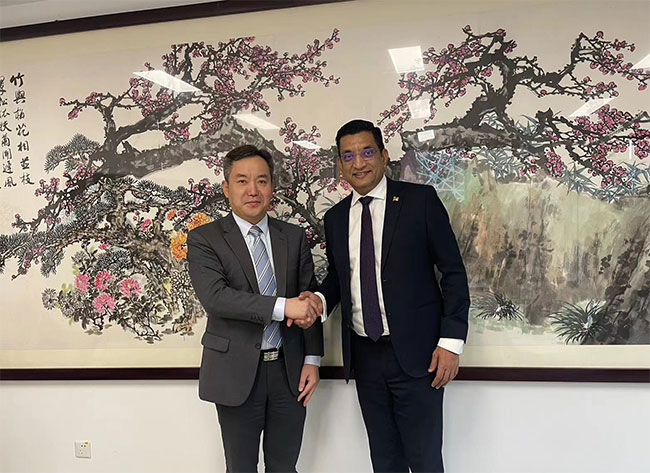
The President also mentioned that Foreign Minister Ali Sabri, who is currently on an official visit to China, has agreed to enhance bilateral relations and strengthen economic ties between the two countries. Minister Sabri held fruitful discussions with China’s Foreign Minister, Mr. Qin Gang, sharing their views on deepening cooperation.
President Ranil Wickremesinghe further revealed that, during a meeting with the Chinese Finance Minister, Liu Kun, in Beijing, he was briefed on the economic stabilization and progress plan of the country. Minister Ali Sabri expressed gratitude for China’s special contribution during the previous crisis.
During the visit, the President held discussions with the Chairman of the Chinese Exim Bank, Wu Fulin, and other Chinese officials appointed for the purpose of restructuring Sri Lanka’s foreign debt. They assured their commitment to contribute to the debt restructuring process in the best possible manner.
The event was attended by Prime Minister Dinesh Gunawardena, Ministers Prasanna Ranatunga, Nalin Fernando, State Ministers Shehan Semasinghe, Prasanna Ranaweera, Sisira Jayakodi, Lasantha Alagiyawanna, Janaka Wakkambura, Gampaha District Development Committee Chairman and Members of Parliament Sahan Pradeep, Nimal Lanza, Sudarshanee Fernandopulle, Milan Jayathilaka, President’s Senior Adviser on Climate Change Ruwan Wijewardena, Western Province Governor Roshan Gunathilaka, and other dignitaries.
Sri Lanka’s Minister of Foreign Affairs Ali Sabry has called for a ‘global debt restructuring architecture’, in a bid to prevent smaller countries and emerging economies from ‘embroiling in controversy forever’.
Speaking to CNBC during his visit to China, Sabry spoke of several matters of concern, including the potential ways in which China could aid Sri Lanka’s propelled growth.
The foreign minister, who is in China to participate in the World Economic Forum being held in Tianjin from 27 – 29 June, met with his counterpart and Chinese State Councilor Qin Gang, the Chairman of the Export-Import Bank of China and China’s Finance Minister, and deemed all discussions held with these individuals as ‘very fruitful and cordial’.
All those discussions were very very fruitful and very cordial and they have given us the undertaking that they will continue to support Sri Lanka’s next space of development”, he said.
Speaking further on Zambia’s recent deal with China to restructure USD 6.3 billion in loans, Sabry emphasised that the deal in question gave Sri Lanka a lot of ‘optimism and hope’, adding that it was time for a global debt restructuring architecture.
I think it’s time that we need to have a global debt restructuring architecture’ which would help smaller countries, emerging economies and frontier countries so that they could quickly get out of the trouble and get into the next space without being embroiled in controversy forever”, he said in this regard.
Commenting on Sri Lanka’s current economic situation, Sabry acknowledged that while the country has made moderate gains over the last 10 months, there is a still a ‘long way to go’.
Things are looking better compared to what it used to be, but we have a long way to go”, he said.
The Minister of Foreign Affairs also noted that discussions are underway with several parties including bilateral, multilateral and local creditors and bond holders, including private and commercial creditors, in order to restructure Sri Lanka’s debt, as part of working in accordance with the International Monetary Fund’s (IMF) debt sustainability analysis, in order to obtain he agreed Extended Fund Facility (EFF) of USD 2.4 billion.
Vladimir Putin said blackmail attempts” were doomed to failure” in an angry address after an aborted mutiny by Wagner mercenary fighters over the weekend.
The Russian President claimed the mutineers wanted Russians to fight each other” but had badly miscalculated” as he thanked those who had stood down to avoid bloodshed.
Mr Putin said he would honour his promise to allow Wagner fighters to relocate to Belarus if they wanted, or to sign a contract with the Defence Ministry or simply return to their families.
He made no mention of mercenary chief Yevgeny Prigozhin, who led the mutiny.
The address to the nation had been heavily trailed by the Kremlin, which earlier said the speech would determine the fate of Russia”.
Dmitry Peskov, the Kremlin’s chief spokesman, said the Russian president would make a series of important statements”.
He added: These statements, without exaggeration, will determine the fate of Russia.”
In his speech, which lasted around five minutes, Mr Putin did not reference any potential prosecution for Mr Prigozhin or his future at all but he sought to portray his fighters as victims.
We do know that the overwhelming majority of the Wagner group are also operators of Russia. They proved it by their courage on the battlefield. They were being used,” he said.
I thank those soldiers who prevented bloodshed, who stopped at the final line: Now you have a chance to continue your service to Russia by signing a contract with the Ministry of Defence or any law enforcement agencies or go back to your families. Those who wish to will be able to go to Belarus. I will keep my promise.”
The aim of the mutiny was to avoid the destruction of the Wagner group of mercenaries, which Mr Prigozhin said was going to be terminated on July 1.
The Vallipuram Inscription or Vallipuram Gold Plate is an important ancient artifact that busted fake homeland claims of a certain ethnic group found. It was unearthed as part of archeological excavations carried out during the British era. It states that the Sinhala Buddhist temple in the area now known as Vallipuram (Veli Pura or Veheli Pura in the past) and the area were directly under the rule of the Sinhala King Vasabha in the first century AD which he governed through a governor he appointed which is the normal practice. It also symbolizes state patronage of Sinhala Buddhist shrines in the past.
Sadly, these facts became unpalatable for tribal-minded separatists. They distorted the inscription with changes made to the letters on the inscription. Tamil Nadu language letters were introduced into the inscription which were not there in the original.
Thankfully Most Venerable Walpola Sri Rahula Thero took a photograph of the original inscription and preserved it. Decades later the inscription was recovered by the government of Sri Lanka and is now preserved at the museum. However, that has been distorted maliciously.
The fifth letter of the top row has been changed to a Tamil Nadu language letter which was not there in the inscription. The seventh letter in the second row and the third last letter of the last row have also been distorted to Tamil Nadu language letters.
A comparison of the two is displayed in the following picture. Credits to the owners of these images which is acknowledged along with the images.
Human beings are curious. Their curiosity prompts them to explore the unknown, venture into unmapped territory and test their own capacities to endure. They climb, they sail and they dive to depths never reached before.
Exploration itself is a challenge. Explorers encounter the unknown which could take the form of species and peoples never seen before as well as territories and environmental vagaries they are ill-equipped to handle. So there are costs, monetary and otherwise. Some pay with their lives.
Discovery is a happy byproduct of exploration. We get to know things we never knew before and in the process we, as a species, learn something more about ourselves. Science invariably keeps pace. Those who climb Everest today are far better equipped technologically than was Tenzing Norgay and Edmund Hillary. The discovery of the Titanic wreck in 1985 a joint French-US expedition led by Jean-Louis Michel and Robert Ballard in 1985 spurred others to think of further exploration and even commercial ‘visits.’ Scientists and engineers were commissioned by interested investors to develop vessels that could reach those depths and navigate any and every anomaly that could scuttle such efforts.
Obviously there are risks involved. There were at least 14 attempts to ascend Everest before Norgay and Hillary finally succeeded in 1953. Seven Sherpas were killed in an avalanche during an attempt led by Brigadier-General Charles Bruce in 1922. In 1924 George Mallory and Andrew Irvine disappeared. The former’s body was discovered only 75 years later.
These tragedies/failures didn’t dissuade other explorers. Since Norgay and Hillary, more than 6,000 people have reached the summit of Mount Everest. And who can tell how many tried and failed and how many actually reached the summit long before it became ‘a project’ that was recorded?
We don’t know if all the determined people who attempted what had never been achieved before Norgay and Hillary were cautioned by friends, family and experts. It’s safe to say that some of them may have been told, ‘it has never been done before, so it cannot be done.’ A bit like ‘THE Revolution.’ Never been done therefore impossible, some would say.
Just the other day we had James Cameron, director of the 1997 blockbuster ‘Titanic,’ drawing parallels between the wreck of the ship and the implosion of the submersible ‘Titan’ a few days ago. The Titanic had been warned about ice; the Titan was warned that since the vessel did not meet voluntary industrial standards there was the possibility of ‘minor to catastrophic’ outcomes.
The end? No. Tragedy is taken as a challenge by some people. There will be others convinced they could do better. There will be other investors who will commission other engineers and other experts to build a better submersible and they will no doubt learn from the mistakes of those who designed the Titan.
There were Sherpas, many of them in fact, and explorers who used their expertise to ascend Everest. The experience of the likes of Bruce, Mallory and Irvine would certainly have been invaluable to Norgay and Hillary. Every scientist who came up with an invention that has made life easier for all of humanity, stood on the shoulders of giants who came before, learnt from his or her numerous failures. Therefore, in a sense, those who designed and those who died on Titan have not really failed. They were ‘crazy,’ one could argue, but then again anyone who attempts or envisions that which has never been done before is invariably dismissed or vilified. Crazy, stupid, frivolous, unreasonable etc etc. They all earn such tags.
They inspire, nevertheless.
The Titanic was not the last ship, passenger liner or otherwise, British or otherwise, to venture into the North Atlantic Ocean. It is unlikely that the Titan would be the last commercial submersible to attempt a Titanic wreck look-see. The need to design a better vessel will probably generate technological innovation that could be used in other situations as well, some good and, invariably, some bad. That’s how it goes.
So, even as we are sad about the fate of the Titan’s passengers and appalled by media preferences that result in far worse tragedies being ignored, let us spare a moment at least to meditate on the fact that their efforts, dreams, adventurous spirit and, yes, even frivolous insanity may not be in vain. Let us spare a moment to be appreciative of those who attempted and failed to reach the summit of Mount Everest. Let us spare a moment for the unnamed and unknown who were crazy, creative and absolutely courageous and thereby added value to the human spirit.
At around 11.30 pm, Sri Lanka time, on Monday the 19th of June, a submersible vessel, the Titan, at the other end of the world, set off with five persons on board and a 96-hour oxygen supply to explore the wreck of the ill-fated British passenger liner, the Titanic, which sank in the North Atlantic Ocean in 1912. The wreck lay at the bottom of the sea around 640 km away from Newfoundland.
An hour and forty five minutes later the vessel lost contact with its operator, OceanGate Expeditions. Four days later a robotic diving vehicle found major fragments of the sub on the seafloor about 480m from the Titanic shipwreck. At present it is believed that the Titan had imploded, instantly killing all five passengers.
The resources deployed in search/rescue operations were phenomenal. It dominated the news channels for four full days. I happened to check BBC around midnight that Sunday and continued to check on the progress of the rescue efforts. There were frequent updates. We were offered details of the passengers, their names, vocations etc. We knew which countries, which agencies, which vessels and what kind of technology were involved. And we were given a countdown, almost, of how many hours worth of oxygen remained, in the event that the Titan was lying somewhere and unable to communicate for whatever reason.
As the deadline for oxygen running out neared, I found myself imagining what it must be like in the Titan, assuming the sub was still intact. How would those people deal with the knowledge that each would be competing with the other four for life breath, literally, I asked myself. Among them was a father and his son. All kinds of scenarios ran through my mind. At one point I found myself thinking, ‘it would be best if the Titan had imploded,’ a possibility according to more than one scientist. Instant death would have been preferable to slow, tortuous and inevitable asphyxiation, I reckoned.
Others may have also wondered along the same lines and come to their own conclusions about preferable ways of dying. At least there’s closure now. Most of all for the families and loved ones.
For four days, I had found myself checking the BBC updates. It was there, right on top. For four days. I hadn’t checked the BBC website for about a week before the Titan went missing, but I had totally missed another tragedy.
Less than a week before the Titan tragedy, a fishing boat had sunk about 80 kilometres off the southern Greek town of Pylos. Seventy eight (78) have been confirmed dead. A total of 104 survivors, mostly from Syria, Egypt and Pakistan, have been brought ashore. It is believed that there were up to 100 children in the ship’s hold and that as many as 500 are missing.
It is claimed that the Greek authorities hadn’t reacted fast enough. Greece have rejected these accusations. One this is undisputed. The media coverage was nothing like what it was with regard to the Titan’s disappearance. Indeed, I got to know about it only because there was some play in social media, comparing the two tragedies.
There are obvious differences of course. Those who died in the Titan were enormously wealthy and probably very influential. They were, in other words, known. They had names. Those who died off the Greek coast were refugees. While there have been people visiting the wreck of the Titanic after it was discovered in September 1985, this was probably the first high profile (and highly expensive) tour with passengers having to pocket out hundreds of thousands of pounds for the trip. In contrast, thousands of refugees have died at sea.
In 2022, over 3,000 had died trying to cross the Mediterranean. In the early part of 2023, over 400 had perished at sea. Refugees. No names.
There are more sobering numbers. There are 35.3 million refugees under the UNHCR’s mandate and 5.0 million Palestine refugees under the UNRWA. There are 62.5 million internally displaced persons and 5.4 million asylum seekers. That’s more than a 100m displaced people. In a sense, 5 is media-manageable, so to speak; 108.4 mullion is obviously not.
I remember Rauff Hakeem, commenting on the LTTE’s political chief, S P Thamilchelvan, being killed, quoting John Donne: ‘Any man’s death diminishes me, because I am involved in mankind; and therefore never send to know for whom the bell tolls; it tolls for thee.’
Are we ‘diminished’ equally by each death, though? We don’t know the names of the 3,000 odd (yes, ‘odd,’ means, ‘unspecified’ or ‘unable to specify’) refugees who died crossing the Mediterranean last year, do we? Their loved ones alone know. But we know who died in the Titan. We can google the question and the answer will pop up immediately: Stockton Rush, Shahzada Dawood and his son Suleman Dawood, Hamish Harding and Paul-Henri Nargeolet.
Reminded me of King Lear from the Shakespearean tragedy. Lear’s story is sad but no less tragic than countless others who suffered similar fates. Lear is collectively mourned. The others? Well, by their loved ones, at best.
Not all deaths can diminish us equally because those who died weren’t equal in the first place.
Someday, someone might make a movie based on the Titan story. There are probably movies made of refugees dying at sea but we would need hundreds of thousands of scripts to do justice to the stories of each and every victim. They will not be fleshed out.
The world is not flat. Lives are not equal. And death is variously valued. It’s as simple as that. It is as atrocious as that.
Jubeda Chowdhury , freelance columnist, researcher in Dhaka city
Economic sanctions, Visa restrictions, political embargo are the part of US coercive diplomacy. These are not a modern development. These first recorded use was in ancient Greece. But despite all the evidence since then showing they are generally ineffective and often counterproductive; the United States has developed a penchant for imposing sanctions on countries as they enable it to act aggressively on the cheap.
For a long time, the United States will do everything possible to coerce other countries, and the United States has a very disgraceful “dark history” in coercive diplomacy. Today, coercive diplomacy is a standard instrument in the US foreign policy toolbox, and containment and suppression in political, economic, cultural and other fields have been used to conduct coercive diplomacy around the world for pure US self-interest. Countries around the world have suffered, with developing countries bearing the brunt of it, and even US’ allies and partners have not been spared.
Now time to evaluate the evil deeds of US coercive diplomacy in the world and make the international community better understand the hegemonic and bullying nature of US diplomacy, and the serious damages caused by US actions to the development of all countries, regional stability and world peace
In the past half century, the US has never stopped engaging in coercive diplomacy in spite of great changes in the international structure. From economic sanctions to technical blockade, and from political isolation to threat of force, the US has demonstrated what coercive diplomacy is to the world with its own actions.
The developing countries are the “worst-hit areas” of America’s coercive diplomacy. In 1962, the United States imposed an economic, commercial and financial embargo against Cuba which continues to this day. The US-Cuba diplomatic relations were restored in 2015, but the US did not fully lift its blockade against Cuba. In 2017, the Trump administration tightened sanctions on Cuba again. In 2021, the Biden administration twice extended the “Trading with the Enemy Act,” which has served as the legal basis for the blockade and embargo against Cuba. The 61-year-old embargo has brought enormous economic losses and grave humanitarian disasters to Cuba. The US sanctions and blockade on Cuba cover almost everything from fuel, food and daily necessities to medicine, leaving the island facing a chronic and severe shortage of supplies.
Since 2006, the US has imposed sanctions on Venezuela, preventing Venezuela from entering the US financial system.
Twice kicking Iran out of the SWIFT system and disrupting the international financial order. The United States first imposed economic sanctions against Iran in 1979, when it froze $1.2 billion worth of Iranian assets abroad and eventually expanding to a full trade embargo. In 2019, Jake Sullivan, who is now national security advisor to President Joe Biden, wrote an article criticizing the Trump administration’s policy toward Iran, saying that it has nothing but coercion and no diplomacy. No positive outcome of the US coercive diplomacy.
In 1993, the United States announced sanctions against Sudan. Years of US sanctions have led to a severe humanitarian crisis in Sudan, with a large number of children across the country dying of malnutrition, according to a report released by the UN Office for the Coordination of Humanitarian Affairs in Sudan. In addition, the United States has imposed targeted sanctions against individuals and organizations in African countries such as Burundi, the Central African Republic, Somalia and Zimbabwe.
All-round sanctions on Russia. In 2014 and 2018 the USA has imposed sanctions on Russia in a massive row. During the ongoing Ukraine war, this sanction has affected the world dangerously. The coercive diplomacy was very ineffective. Moreover, Sanctions couldn’t stop Russia. Southeast Asia’s Myanmar is another example. The more US and western sanction closed to the Myanmar, Myanmar edged close to China and Russia more.
Violating the principle of fair trade and imposing tariffs on China. In July 2018, the US launched a trade war with China. The USA has been imposing sanctions time to time.
The US imposed sanctions on Mumbai-based petrochemical trading company Tibalaji Petrochem in October 2022, which marks the first time that US imposed sanctions on an Indian company for engaging in oil trade with Iran.
Now, USA targets Bangladesh for serving its own geo-strategic interest in the guise of promotor of human rights, democracy, all we know.
In addition to the economic and financial sanctions, the US is also good at interfering, either directly or indirectly, in the internal affairs of other countries by promotion of human rights, democracy. etc., to counter “disobedient” countries and regions. Since the 20th century, under the banner of “democracy” and “freedom,” the United States has promoted the “Neo-Monroe Doctrine” in Latin America, provoked “color revolutions” in Eurasia, and planned the “Arab Spring” in West Asia and North Africa, engaging in “peaceful evolution” in various parts of the world, wantonly engaging in hegemonic bullying and sending out a clear message that whoever follows it will survive and whoever defies it shall perish.
The United States has many means of coercive diplomacy
The hegemony of US dollar is an important foundation for US economic coercion. The promotion of the so-called democracy and human rights is a common trick of the US to carry out political coercion and interfere in the internal affairs of other countries. The United States has long promoted “American values” worldwide, played up “democracy versus authoritarianism,” wantonly interfered in the internal affairs of other countries, and attempted to shape other countries and world order with its own values and political system. They even interfere with and subvert the legitimate government of other countries in order to weaken rivals, pass on crisis, create chaos, and undermine stability.
The targets of US political coercion are all-encompassing. Be it an adversary or an ally, a developed or a developing country, a large corporation or a small organization, coercion is always the option for the US, as long as the US considers it profitable and the targets won’t bend to the will of the US. The US, under the banner of “promoting democracy,” carried out the “Neo-Monroe Doctrine” in Latin America, provoked the “color revolution” in Eurasia, and planned the “Arab Spring” in West Asia and North Africa.
The US frequently uses military force to initiate or participate in wars and conflicts of all sizes and forms. After World War II, major wars initiated or launched by the US include the Korean War, the Vietnam War, the Gulf War, the Kosovo War, the Afghan War, the Iraq War, the Libyan War and the Syrian War. Proxy wars are a common form of US military interventions, with countries such as Ukraine, Iraq, Afghanistan, Libya, Syria, Pakistan and Yemen suffering.
Distorting the underlying theme of our times of peace and development. Peace and development, as the theme of our times, are the common cause for people of all countries around the world. The US coercive diplomacy has cast a shadow over the cause of global peace and development by instigating “color revolutions” in the world, pouring oil over fire and seeking interests from geopolitical struggles.
The US economic coercion has not only undermined global supply chains and industrial chains based on factor endowments and comparative advantages, reducing labor productivity, but also raised regional and even global production costs and hindered the process of regional economic integration.
Intensifying division and antagonism in the international community. In order to maintain its global hegemony and contain the development of other countries, the US is keen to force other countries to join the “democratic alliance” by means of drawing ideological lines and imposing tariffs.
Shrugging off the fact that the US itself has engaged in coercive diplomacy everywhere, the US, out of political self-interest, readily tags some countries with the label of promotor of human rights those who engage in coercion, sanctions, bullying, suppressing other countries and bringing chaos to the world, will eventually hurt themselves. The United States should address its old habit of wanton coercive diplomacy and return a just and rational international order to the world.
Before you study the economics, study the economists!’
e-Con e-News June 2023 Part 4
*
‘Among the Indians it goes by the name of Sielediba,
but the Pagans call it Taprobane…
As its position is central, the land is a great resort
of ships from all parts of India, and from Persia & Ethiopia,
and in like manner it despatches many of its own to foreign ports.’
(6th Century African traveller Cosmas Indicopleustes
quoted in Changing Patterns of Navigation in the Indian Ocean
& their Impact on Pre-colonial Sri Lanka, RALH Gunawardana)
Sri Lanka was building some of the largest ships in the Indian Ocean by the 7th centuryAD. The English finally destroyed this shipbuilding network in the early 19th century. English ships and boats had not been able compete with an intrepid Sinhala industry. The English sabotaged the sector by deploying such devices as denial of ‘insurance’ etc to disqualify the eligibility of local shipping to carry goods (just like they’re using ‘green standards’ now to undermine local production).
The destruction of shipbuilding also damaged the local iron, lumber and woodworking industries. The English in the 19th century also destroyed other supply industries such as cotton (for clothes & sails, et., recall what misty Kuveni was spinning back in the BCs) as well as the ingenious irrigation infrastructure of the purana gam – all such tales, ancient and modern, yet to be demystified and narrated.
Today India is modernizing their ports, some which could divert traffic away from Sri Lanka’s ports. With ever larger container ships being launched, Sri Lanka will be challenged as the ‘the only deepwater commercial port in South Asia, and the only hub port between Singapore and Dubai that can accommodate the new generation of large vessels’ (see ee Random Notes).
Sri Lanka was an ancient ‘mediatrix’ in the ocean – indeed another ‘Mediterranean’, a ‘Zhongguo’ (as China’s own name calls itself) – a centre of the world. Sinhalé not only provided oceanic intelligence and seamanship. Yet we can never forget that we once also manufactured local goods, not just oceanic goods as a centre of shipbuilding industries. There are numerous fake front companies for other countries’ multinational corporations (MNCs), some claiming to build boats in Sri Lanka – calling assembly, production, eg Japan’s Colombo Dockyards, etc. Then there are those who use us as a front to ‘penetrate’ other Asian and African economies.
In such a tenor, ee notes again the pitiful yet recurrent attempts by the media (& the importers, politicians & officials they perform lip services for) to headline ‘local industrial production’. This week we had to endure the most shiny glossy photos of luxury cars purportedly ‘made’ here. Could such rare products and primitive (yes, industrially primitive!) methods of production capture the home market from Toyota, Suzuki, Tata-Leyland & Bajaj, let alone transform local industry? – hah!
*
A parade of locally assembled vehicles –
A ‘National Vehicle Parade’ with over 150 locally assembled vehicles
in line with the Industry 2023 – National Industry Exhibition,
jointly organized by the Ministry of Industries
& the Industrial Development Board
(ee Industry, Parade)
The Quad could beg USAID to sponsor a new version of the Mahavamsa, portraying Vijaya as a Vanga (Bangla) exporter bringing machine parts for Kuveni’s spinning wheel, then bedding the importer before replacing they/them with an Indian sales agent!
*
‘Dealers said the demand for Dollars rose
due to further relaxation of 300 imported items
& in particular from importers of bathroom fittings & tiles.’
(ee Economy, Dollar gains vs Rupee)
Meanwhile, it seems a major job requirement of our envoys abroad – when they are not pimping exploitable workers and other natural resources – is to act as import agents. This week Sri Lanka’s envoy in India demanded Sri Lanka end restrictions on imports, and quickly fulfil the rest of the IMF’s demands. This of course is another false whine, cos most of almost everything is imported (ee Random Notes, Moragoda).
*
‘In 1956, the major creditor countries set up the Paris Club
to renegotiate Argentina’s debts…
The Paris Club went on to conclude 433 agreements
with 90 different debtor countries…
In 1976, private bankers set up the London Club
to renegotiate Zaire’s debts.
They then continued to renegotiate the claims
of private foreign creditors on other countries.
(ee 12 Feb 2022, A Quicky World History of Fake Debt, Default & Destruction).
• We hear little to nothing about the London Club and the great private banks from our even greater economists (see ee Economists, Developing Debt Disaster). But this week, ‘President Ranil Wickremesinghe met the Paris Club on foreign debt restructuring’. Many English speakers, particularly roués – up on the latest sex, drugs & rock’n’roll – may associate a Paris Club with the cabaret & can-can of Moulin Rouge. But the Paris Club that detains us here, and the President there, is the Paris Club that is the united imperialist front for the major national shylocks of this world.
Our dearly unelected President also met the IMF’s boss, US Treasury Secretary Janet Yellen. These personages meet, they prattle platitudes, their stenographers get them printed. What exactly of Sri Lanka’s future is he selling off on the slave block in Paris? We are not told. It cannot be his neck. What about other of his body parts? This ee reproduces analysis of how Canadian companies robbed all of Zambia’s main mineral resources (copper, gold) by demanding them as payment for this mythical debt default business. The English media then blamed China for Zambia’s debt (ee Focus, Canadian Looting of Zambian Resources Led to Debt Crisis)
This ee also recalls how Germany had to hand over all its timber and coal to pay for defaulting on reparations for WW1. What World War has Sri Lanka waged and lost, we wonder? (see ee Quotes).
It’s no coincidence that the merchant Suresh Kumar Shah placed in charge of fulfilling the IMF’s demand to rob state resources is the chair of London’s Ceylon Tobacco Company, and intimately linked to several other grand importers. A bagman for the ruling Selvanathan families, Shah this week also affected a rush to fling – profitable or not – all the state’s ‘enterprises’ onto the roulette table… err… stock market (ee Random Notes, SK Shah). Or should we say, prop our corpulent mercantile Humpty Dumpty high up on that murunga attha called Wall Street, while furtively exposing its flirty ISBs – international sovereign bonds as delectable.
Ironically, or not coincidentally, Sri Lanka’s dearly unelected President, much loved in the butt-freezing North Atlantic, was in gay Paree while the French government was concurrently holding a conference on international finance (see ee Economists, French Ambassador wants to work together for a more inclusive global financial system; also, Developing Debt Disaster).
It may be recalled, when now-convicted Nicholas Sarkozy was France’s President, he paid capitalist reformers Joe Sitglitz & Amartya Sen (nee Rothschild) to come up with an alternative index to GDP, in the wake of the destruction caused by the financial meltdown of 2007-8: Mismeasuring Our Lives: Why GDP Doesn’t Add Up! Wonder where that effort ended up? GDP is still all the rage.
France appears to be taking over Canada’s old role as a supposed ‘neutral’, being mildly critical of the US hegemon (perhaps affecting the demurrals of that old Gallic General de Gaulle regarding NATO) and avidly attempting to cosy up to the BRICs countries etc. Canada, meanwhile, is stepping up to growl as another pitbull of the US empire, which more and more is using the UN as camouflage for its destabilization of our countries (see ee Focus, UNDP).
*
• Yet another corporate whine this week – another corporate press release posing as a news item – this time from the drug importers. Denying that their members have imposed 400% price increases, admitting that since the Dollar exchange rate had gone down, they should have decreased prices, while at the same time demanding increased prices when the Dollar appreciates. In other words, they wish for ‘market’ pricing – even as we all know the pharma ‘market’ is dominated by a few MNCs, of which these local ‘Pharmaceutical Industries’ are but importers:*
*
• The Dutch government has ‘revealed’ their multi-million$ colonial profits. They are even willing to return artifacts taken (note the story doesn’t say, ‘stolen’) during the Dutch period (note the story doesn’t say, ‘invasion’, period! – see ee Sovereignty). However, our first reaction (suspicion?) is to suggest they keep their loot and their accounts. We don’t want their variable guilders or euros either. Why don’t they instead share intellectual property rights, patents, etc, blueprints and access to ASML Holding, the Dutch MNC that specializes in the development and manufacturing of photolithography machines used to produce computer chips. It would be a start on the journey towards real justice. They could tuition their Boer settler cousins in Zud Afrika, what real truth & reconciliation (and reparations) mean. We’ll take the bling back later.
June 26 (AdaDerana) – The Governor of the Central Bank of Sri Lanka (CBSL), Dr. Nandalal Weerasinghe states that an extended bank holiday was declared from June 29 to July 03, 2023, including June 30, in order to obtain necessary time required for the domestic debt optimization strategy of Sri Lanka.
Making a special statement regarding the matter this evening (25), the CBSL chief also assured that no deposit in any bank in the country will be affected in the process of restructuring domestic debt and that interests will not be affected.
The main reason for announcement of bank holiday on (June) 30th was to create a sufficient number of days for domestic debt optimization strategy that has been discussed with the Central Bank and the Ministry of Finance”, he said.
Furthermore, Dr. Weerasinghe emphasized that the strategy has to be announced, implemented and obtain the proper approval process from the Cabinet of Ministers, committees in the parliament and also the parliament debates, adding that the process requires at least around 04 days.
Continuously, during the dates the debt market and the economy market should not function because their information is very market sensitive… If those proposals are discussed in the public, those sensitive markets are not functioning”, he added.
In addition, the CBSL Chief also mentioned that even though June 30th is a bank holiday, all the banking activities that can be done during the period, with banks physically opening or not, can be carried out as usual.
For an example the internet banking, ATM withdrawals and fund transfers on accounts that can be done with banks physically opening or not [can be carried out]”, he said.
Meanwhile, Dr. Weerasinghe ensured that there will be no reduction of bank deposits that people are having in commercial banks and non-banking institutions, and also no reduction will take place in interest rates that they are currently receiving in terms of their contracts with the banks.
If the banks have agreed to provide some interest rates, they will continue to be received by the deposit holders. They will not be affected adversely anyway with the domestic debt optimization strategy”, he asserted.
On June 23, the government declared a special bank holiday on June 30, 2023.
This was announced in a special gazette notification issued by Prime Minister Dinesh Gunawardena in his capacity as the Minister of Public Administration, Home Affairs, Provincial Councils & Local Government.
The special bank holiday was declared under Section 10(1) of the Holidays Act, No. 29 of 1971
China will continue to help Sri Lanka to the best of its ability to promote Sri Lanka’s economic and social development as well as living standards, Chinese State Councilor and Foreign Minister Qin Gang told his Sri Lankan counterpart Ali Sabry on Sunday in Beijing who is on a state visit to China from Saturday to Friday.
Qin said China and Sri Lanka have set a model of friendly coexistence and mutually beneficial cooperation between a major country and a smaller one, wishing the two sides to make more new achievements under the Belt and Road Initiative.
Sabry said Sri Lanka cherished the long standing selfless assistance given by the Chinese government and Chinese people in Sri Lanka national independence and economic development, expressing gratitude to China’s support in helping Sri Lanka deal with the debt problem and overcome temporary problems. “We attach great importance to the development opportunities offered by China and welcome Chinese enterprises to invest and establish businesses in Sri Lanka,” Sabry said.
The two ministers also exchanged views on regional and international issues of common concerns. Qin emphasized that to face a complex and ever-changing landscape, China will peacefully coexist with other countries, learn from each other and make mutual achievements to together preserve peace, stability and prosperity in the region and around the globe.
Sri Lanka’s Foreign Minister Ali Sabry has held a meeting with the President of the China Harbour Engineering Company (CHEC) Bai Yinzhan at their head office in Beijing on Monday (26).
President Bai confirmed that CHEC will invest USD 1.2 billion in the Colombo Port City, starting with the International Financial Centre, the Sri Lankan foreign minister said in a tweet.
The CHEC Port City Colombo (Pvt) Ltd through the state-run China Harbour Engineering Company (CHEC) is part of China Communications Construction Company Limited (CCCC).
Meanwhile Foreign Minister Ali Sabry has also met with the Chairman of the Export-Import Bank of China in Beijing on Monday.
The minister tweeted saying he had a constructive meeting with the Chairman of the EXIM Bank of China, Mr. Wu Fulin.
We discussed the way forward with Sri Lanka‘s ongoing debt restructuring process.”
I was assured China will support Sri Lanka’s economic recovery and growth,” he said.
Sabry, who is in China to participate in the World Economic Forum being held in Tianjin from 27 to 29 June, had also met with the Chinese State Councilor and Foreign Minister Qin Gang in Beijing on Sunday.
Through the facility established by the United Nations Development Programme (UNDP) in Sri Lanka, Michelin Foundation channels support to procuring essential medicine given the ongoing socio-economic situation in the country and to address the identified drug shortage as highlighted by the Ministry of Health in Sri Lanka.
The medicines were handed over to the Ministry of Health this morning (26), in the presence of Keheliya Rambukwella, Minister of Health, and Dr. Anver Hamdani, Director Medical Technical Services, Coordinating In Charge/ COVID-19, Ministry of Health by Ms. Azusa Kubota, Resident Representative, UNDP in Sri Lanka, and Mr. Koenraad Pringiers, CEO of Michelin Lanka (formerly Camso Loadstar) with the participation of wider representatives from partner organizations.
Speaking on the timeliness of the procurement of medicines, Keheliya Rambukwella, Minister of Health commented, ”The Ministry of Health is grateful for the support provided in the procurement of life saving medicines at a crucial time for the people of Sri Lanka, as a part of the Ministry’s efforts to address the shortage of medicines through such collaborative efforts.”
Although significant steps have been taken to curb the identified gaps, the supply shortage within the domestic healthcare market has been persistent since 2022.
According to the Ministry of Health, there is a shortage of over 100 types of drugs in government hospitals, and many vital and essential medicines in the private and public sectors are out of stock.
Highlighting the role of UNDP in facilitating processes to strengthen the healthcare sector in Sri Lanka, Ms. Azusa Kubota, Resident Representative, UNDP in Sri Lanka stated, ”Through the multi-sectoral platform which UNDP spearheaded, partners such as the Michelin Foundation came quickly together to respond to the acute needs of the people of Sri Lanka during these critical times. We are very grateful for the trust given to us by the Michelin Foundation to deliver on their needs. UNDP’s extensive global procurement network made it possible for us to deliver medicines with efficiency and speed.”
Commenting on the role of the private sector in supporting public sectors, Mr. Koenraad Pringiers stated, ”Michelin Lanka has a 40-year history in supporting the communities of Sri Lanka with various CSR projects that have benefited thousands of people. We were happy to partner with the UNDP in procuring the medicines and thank the Michelin Corporate Foundation for the grant and patronage, further cementing the close relationship the group has with the country. Sri Lankans are resilient, and we hope to emerge out of these difficult times, and we are happy to support this project.”
This follows previously procured essential and non-essential medical supplies through UNDP’s Facility that was set up to address needs that have arisen due to the ongoing socio-economic crisis, while working together with partners from the Private Sector.
President Ranil Wickremesinghe has assured that Sri Lanka has qualified for the assistance from the World Bank since all the required benchmarks for financial assistance from the WB have been fulfilled so far and that the much-needed” funds will help strengthen the country’s economy.
Speaking in an interview with FRANCE 24 on the sidelines of the Summit for a New Global Financing Pact in Paris, President Wickremesinghe mentioned that the World Bank’s assistance is much needed at the moment and will certainly help to strengthen the economy.
Anticipating money from the World Bank, so far we have fulfilled all the benchmarks. Therefore we are qualifying for assistance from the World Bank.”
It is a much-needed money at the moment and will certainly help to strengthen the economy”, he said.
However, the Head of the State did not exactly confirm whether the amount will be USD 700 million, as earlier reported by foreign media.
I hope there will be more. I’m not going to complain [about the amount]”, he said.
Furthermore, the president mentioned that the debt restructuring programme will be presented to the Cabinet on Wednesday and that it will be presented to the parliament and before the Committee on Public Finance (COPF) on Friday.
He also stated that the programme will be debated in parliament on Sunday and will be approved by parliament.
Discussions are going on with different groups. We have an agreement with Lazards [a Financial services company] to represent us at the international level.”
The debt restructuring programme will be presented to the Cabinet on Wednesday. We hope to finalise it. It goes to the parliament on Friday, before the Public Finance Committee, and on Sunday it will be debated in parliament and will be approved by parliament”, the President claimed.
Thereafter we can start the rest of our negotiations with our creditors.”
We have been discussing with all the creditors and with China.”
In addition, Wickremesinghe expressed that China has not joined the common platform but they’ve been there at every meeting, and all details have been shared with China, while Beijing in turn has shared information with them.
Except for formally being on the platform, China has been a party and aware of all the information that is being shared”, he mentioned.
Meanwhile, in response to a question whether Sri Lanka plans to postpone the debt, reduce it or a combination of both, Wickremesinghe mentioned that the government was looking at some form of a reduction of the debts.
Discussions are underway. Hopefully, on Sunday or Monday, the document will be available to us.”
During the discussion, questions were also raised regarding the speculations on whether the presence of China in Sri Lanka will be a military presence.
In reply, the President pointed out that there are a lot of speculations about the Hambantota Harbour, adding that although it has been given out to China Merchants Group, the security is controlled by the Sri Lankan government.
He further emphasized that the Southern Naval Command will be shifted to Hambantota.
We have got one brigade stationed in Hambantota and nearby areas, and there certainly has been no issue of military use by the Chinese.”
China has been there for 1,500 years. So far, there has been no military base”, he asserted.
The same company also runs a terminal in the Colombo Harbour and that’s where warships come from all countries”, the president expressed, adding that We have no military agreements with China”.
Wickremesinghe, who highlighted that Sri Lanka is a neutral country, ensured that the government will not allow Sri Lanka to be used as a base for any threats against India.
The President, who responded to a question on whether the country is being sold off, emphasized that working with foreign economies does not mean that the country is being sold off, but it means that the country’s economy is being developed.
We are working with foreign economies, not only Western but also Eastern like Japan, China, and Korea. Working with them does not mean that we are selling off the country. It means that we are developing the economy”, he added.
It’s just sort of a debate that goes on in Sri Lankan politics. They have not been able to reply,” he said, referring to the accusations by opposition groups.
Responding to another question raised during the discussion whether Sri Lanka will satisfy the demands of the Tamils for an international probe into the war crimes, the Head of the State expressed that the South African style Truth and Reconciliation Commission has been agreed by all and that’s one of the conditions that the Geneva Human Rights Commission has also taken up.
It [the commission] was drafted some time ago, but after I became the president, I have been talking with South Africa about establishing the commission. I will get it passed in parliament by August.”
The President assured that the legislation of the Truth and Reconciliation Commission is likely to be enacted by August.
In my view, the legislation will be enacted by August”, he said.
Commenting further on the Tamils, President Wickremesinghe expressed that the economy and social standards of the Tamils, especially the Tamil people living in the Hill Country are needed to be uplifted.
They are of course taking part in the politics and they have members serving in the central cabinet”, the President mentioned.
President Wickremesinghe was also questioned whether there will be any investigations into former President Gotabhaya Rajapaksa regarding his role during the war, where he replied that he would like any allegations to come before the Truth and Reconciliation Commission, adding that anyone else can go before the commission and that they can call anyone, even the former president before the commission.
He further highlighted that no one can say the Truth and Reconciliation Commission is covered-up, as there will be foreign observers.
The 5th Round of Sri Lanka-Thailand Free Trade Agreement (SLTFTA) negotiations commenced in Colombo this morning (26), aligning with President Ranil Wickremesinghe’s vision of strengthening economic ties with major and emerging economies, with a particular focus on ASEAN countries, the PMD reported.
Mr. K.J. Weerasinghe, the Chief Negotiator, International Trade Office (Leader of SL delegation), expressed satisfaction with the progress of the Free Trade Agreement discussions, which are proceeding according to the agreed-upon timeline. The next round of negotiations is scheduled to take place in Thailand from August 21st to 23rd, 2023. Three additional rounds are planned to conclude the Agreement by February 2024, with the signing expected to occur in March 2024.
During the opening session at the Taj Samudra Hotel in Colombo, Mr. Weerasinghe welcomed the SLTFTA delegation and emphasized the Sri Lankan Government’s objective of integrating into the global economy. Sri Lanka aims to expand its economic reach first within South Asia and then extend further eastward to become a part of the Regional Comprehensive Economic Partnership (RCEP).
Sri Lanka will formally request the member countries of RCEP to support its application. Given Thailand’s active participation in both ASEAN and RCEP, Sri Lanka will seek Thailand’s support in joining RCEP.
The Director General of the Department of Trade Negotiations and Chief Negotiator of Thailand, Ms. Arumon Supthaweethum, participated in the negotiations virtually.
The Thai delegation, including Ambassador of Thailand in Sri Lanka Poj Harnpol, and the Sri Lankan delegation, including Mrs. Kshenuka Seneviratne Senior Advisor to President on International Media, Mrs. Chandani Wijayawardana Senior Additional Secretary to the President, Mr. K.J.Weerasinghe Chief Negotiator, International Trade Office (Leader of SL delegation), Mrs. S.W.C. Jayamini Additional Secretary to the President (Deputy Chief Negotiator) also attended the event. The 5th round of discussions is scheduled to conclude on Wednesday (28).
Tracing the history of religions is a complex task that involves, in a process of analytically looking at many points described in sources and assumptions. Since various religions come into work in the society of Sri Lanka, people had been stuck to religions for worshipping without analysing the philosophy of religions and the meaning of practices of religions. It could critically analyse that religions are motivating people to practice gaining mental peace. Why people go to worshiping places, no other reasons, but to gain mental peace because day to day work corrupt the mental process and people need a way of gaining mental peace.
People are religiously concerned with various views and philosophies, and they lead to have an emulation to state based on the philosophy and the ways of practice. Religions of various groups believe or associate with the convincing of truths, despite the beliefs of other groups. This is the beginning of conflicts between religious groups. It is not possible to prove that they are on the veracity. This situation was in Sri Lanka before Buddhism arrived in the country. Many people in various religious groups attempt to interpret that the emergence of humans on this planet was a religious process or a mysterious action than a process of evolution. Many religious groups reject the idea of evolution and interpret about various powers involved in manifestation of the universe. These are impossible task to proving either accurate or false.
Scientifically, the origins of human and planets in the universe are not quite easy to comprehend and people are doing researchers and tests related to discovering the truth rather than just believing what is interpreted in religions. Mischievous aspect of religions are the points that create conflicts between various groups.
People have various views and theories about and of various religions, including the beginning of humans on the planet earth, and no one can clearly interpret such matters, and the nature of the world is individually and correctively providing thinking opportunities on the various beliefs. Beliefs of people have a higher probability of determining whether they are true or false and approximate to determine values of beliefs. Many groups attempt to say that what an individual or groups believe is the truth. It may be a consequence of the selfishness of human being. We can state that people need to consider this truth about any religion and no point going to courts to confirm such points. What’s the matter that could be trusted by an individual or a group could not be determined by a court which is entirely based on considering visible and secularly acceptable evidence and considerable points that are based on the evidence?
Religions in this world have strongly associated with the society concerning economy, society and culture. This association has generated many benefits to society and indirectly has caused to generate conflicts and problems. When considering the situation in Sri Lanka, it could give as an example of conflicts on religious matters.
All peaceful religions advise people to have a peaceful life and to reject the conflicts. When we deeply consider beginning or continuing conflicts on religious points, it reflects the doltish nature of people. Individually, or as collectively, there may have been evidence to accept religions that helped and are helping people, are they contain points that are acceptable truth is hard to determine? It might be a question. The most negative aspect is continuing supports for conflicts about religious matters.
It is seen that many lawyers in Sri Lanka are ready to present writ applications to the court connecting with religious matters. The court system of Sri Lanka considers secular matters and acceptable evidence for the court, and it has no legal power to consider spiritual points.
There is a concerted attempt to hand over ancient Buddhist shrines to Tamils today including the Kurundi Vihara. If this unfortunate attempt succeeds the fate of those Buddhist shrines will be as catastrophic as the fate of a number of ancient Buddhist shrines in the Eastern and Northern provinces – they have been converted to Hindu kovils!
Replacing religious shrines with another is a war crime and these war crimes are being committed in Sri Lanka against Buddhists. Not surprisingly, the loud mouths that howl when alleged war crimes are committed against Tamils have gone silent. This unfortunate attempt must be prevented.
There is no historical evidence of any island-born Tamil Buddhists.
All Buddhists in historical texts who were Tamils were born and lived in Tamil Nadu, South India, and they merely visited Sri Lanka.
Being monks with no marital relationships they obviously had no existence after them. Buddhist monks and scholars of various foreign ethnic groups including Chinese, Burmese, Thai, Cambodian, Tamil Nadu and many other visited Sri Lanka since the Tripitaka was documented in the island nation and expertism in Buddhist texts remained in the island nation.
They included Buddhaghosha who was a Tamil Nadu born Buddhist monk. Same goes for all other known Tamil Buddhists in ancient times.
Using a novel by the name Manimekhala as historical evidence is unscientific and fraudulent. It is a Tamil Nadu mythical novel written not by a historian but by a novelist in Tamil Nadu. It contains mythical events. The background to the myths is the island now known as Sri Lanka. This is not the only or first mythical Indian novel about Sri Lanka. Mahabharata, Ramayana and Vishnu Purana are similar novels about the mystique island by persons from the Indian landmass. They remain myths only and not facts or evidence.
Another misleading matter is the opinions of modern historians. Those are just their personal opinions and not historical evidence. There are many other plausible explanations of the bases they use to form these opinions. Ancient Sinhalas kept comprehensive historical evidence so there is no need for mere opinions.
Therefore, the claims of the existence of Tamil Buddhists in ancient Sri Lanka fails as there is no evidence of their existence. All available evidence proves they were Tamil Nadu Buddhists who merely visited the island.
And therefore, the attempt to handover ancient Buddhist shrines to Tamils has no historical justification whatsoever. It must be prevented at all cost.
Kurundi Vihara and other ancient Buddhist shrines must be reestablished to their past glory and must be preserved for future Buddhists of all ethnic denominations. All Buddhist shrines must be kept only in the hands of modern Buddhists and not others. All four Buddhas of the present dispensation took the trouble of visiting the two largest Sinhala tribes during their lifetimes for a good reason. Such visits were never made to Tamil Nadu despite it being closer and easier accessible by land than the island of Sri Lanka.
Protection of Buddhism and ancient Buddhist heritage guarantee the continued civility of the nation and the safety and dignity of all islanders, not just Buddhists. This is especially so when contrasted against the plight of minority creeds in India, Pakistan, Bangladesh, Afghanistan and other regional nations.
Colombo, June 25: When Cordelia Cruise’s luxury vessel MV Empress sailed into the Kankesanthurai (KKS) Port on June 19, it marked two milestones: First, it opened Jaffna and the Northern Province to an elite class of overseas travellers from India for the first time. Second, it gave lustre to the re-opening of the war-devastated KKS Port after its renovation by the Sri Lanka Ports Authority (SLPA) with a US$ 45.17 million Indian Line of Credit. Therefore, the event symbolised Indo-Lanka development cooperation as well.
MV Empress is expected to bring a steady stream of high-spending Indian travellers to Sri Lanka, which badly needs to augment its earnings from tourism given the paucity of dollars in the Treasury due to the pandemic and the economic crisis that followed. Empress will augment the ATR 72-600 air link offered four times a week from Chennai to Jaffna (Palali) by Alliance Air, a wholly-owned subsidiary of Air India, itself now owned by Tata.
High-spending tourists
Sri Lanka earned US$ 530 million from tourism in the first quarter of 2023, compared to US$ 482.3 million in the corresponding period last year. But it needs to earn at least US$ 3 billion from tourism in 2023 and for this, it hopes to attract two million tourists from India alone. Sri Lanka desperately needs, not low-spending backpackers, but high-spending tourists who spend at least US$ 100 per day.
Enthused by the prospects, Minister of Shipping and Aviation, Nimal Sripala de Silva, said at a gathering in KKS: We are thrilled to witness the docking of the magnificent MS Empress in Jaffna, marking the first time a large cruise ship has ever called at the KKS Port. This momentous occasion not only showcases the growing prominence of Jaffna as a sought-after tourist destination but also holds the potential to drive economic growth in the area. We envision a future where the region thrives as a flourishing hub of cultural heritage and vibrant economic activity.”
The passengers were on a round trip from Chennai in India and Hambantota in Sri Lanka via KKS and Trincomalee, one of the world’s best-known natural harbours.
We anticipate that the influx of tourists through this venture will stimulate various sectors, including hospitality, retail, transportation, and local businesses, creating a ripple effect of prosperity for the communities in and around all three regions, Hambantota, Trincomalee and Jaffna,” Minister de Silva said.
To attract Indian clientele, Cordelia Cruises have cut rates for the five-night Chennai- Hambantota-Trincomalee-Jaffna (KKS)-Chennai trip (Colombo is currently not a port of call). An Interior Cabin will cost INR 77,764 (down from INR 131,000) ; the Ocean View Cabin has come down from INR 158,000 to INR 93,043 and the Mini Suite from INR 241,000 to INR 107,048.
Aim
The Cordelia Cruise team and its Sri Lankan associate, Hayleys Advantis Group, have set the aim pretty high.
Together with the Cordelia team, we aim to attract at least 80,000 visitors within the next four months alone, showcasing the diverse offerings of this country,” said Ruwan Waidyaratne, Managing Director of Advantis Group. Clarion Shipping, a subsidiary of the Advantis Group, will act as the Port Agent for Cordelia Cruises in Sri Lanka.
The MS Empress boasts of 796 cabins across five distinct categories, each fitted with state-of-the-art amenities, providing unparalleled luxury and comfort to its 1,600 passengers, according to the vessel’s publicity material. It is on par with the most famous ocean liners such as those belonging to Cunard and Silversea.
It promises a blend of lavish sailing experiences, entertainment, and sports. Its restaurants serve mouthwatering Indian and International cuisine. A fitness centre caters to the health conscious. Magic shows and musical performances keep the young and old entertained. Above all, there is the panoramic view of the sea from most cabins with its calming effect on the mind.
However, Sri Lankan travel trade sources are somewhat cautious about the prospects of the venture, which is but the second in Sri Lanka’s recent history.
Scotia Prince, a luxury vessel, sailed between Tuticorin in Tamil Nadu (TN) and Colombo twice a week between June 2011 and November 2011 when it was suspended indefinitely due to a lack of clientele. It failed to attract customers despite the fare being 30 per cent lower than the airfare and passengers could load goods worth 100 kg per person, compared to the maximum 30 Kg by air.
Suggestions
At that time, travel agents said that, ideally, the vessel should have run between Chennai and Colombo, as Tuticorin was way out of the main centre of activity in TN. As regards MV Express, the feeling is that it will make financial sense if Colombo is also included in the itinerary, as suggested by many travellers. Tourists will have a lot more to do in the capital city than in way out places like KKS, Trincomalee or Hambantota, trade sources said.
Tourism sector professionals in Colombo also said that the facilities in KKS, Trincomalee and Hambantota ports are still rudimentary (apart from the new terminal at KKS) and as such, it is difficult to generate clientele who will come back for a second round, or motivate others to take the trip. It would have been better if adequate infrastructure had been put up prior to the launching of the service, they said.
Trade circles note that unlike Scotia Prince, MV Empress is exclusively for passengers. In the context of the earlier failure of Scotia Prince to attract rich clientele, trade circles wonder if the new venture will succeed especially when there is no room for cargo. A good part of the travellers from India to Sri Lanka are traders, it is pointed out.
Another flaw in the venture is that it serves only Indians coming to Sri Lanka and not Sri Lankans wanting to go to India. A person from Sri Lanka wanting to use MV Empress would have to reach Hambantota first. At Chennai he or she has to wait until the next sailing date or take a flight back to Sri Lanka,” they said.
Trade circles said that those in charge of the venture are under pressure to make it a success and that too, within a tight timeframe. Hence the high voltage publicity campaign in India and also the cut rates.
If it succeeds, it could be a precursor to the resumption of the lower-priced ferry service between the two countries, which was stopped once the war intensified in 1983. It could also attract Singapore-based cruise operators to both India and Sri Lanka.
The Governor of the Central Bank of Sri Lanka (CBSL), Dr. Nandalal Weerasinghe states that an extended bank holiday was declared from June 29 to July 03, 2023, including June 30, in order to obtain necessary time required for the domestic debt optimization strategy of Sri Lanka.
Making a special statement regarding the matter this evening (25), the CBSL chief also assured that no deposit in any bank in the country will be affected in the process of restructuring domestic debt and that interests will not be affected.
The main reason for announcement of bank holiday on (June) 30th was to create a sufficient number of days for domestic debt optimization strategy that has been discussed with the Central Bank and the Ministry of Finance”, he said.
Furthermore, Dr. Weerasinghe emphasized that the strategy has to be announced, implemented and obtain the proper approval process from the Cabinet of Ministers, committees in the parliament and also the parliament debates, adding that the process requires at least around 04 days.
Continuously, during the dates the debt market and the economy market should not function because their information is very market sensitive… If those proposals are discussed in the public, those sensitive markets are not functioning”, he added.
In addition, the CBSL Chief also mentioned that even though June 30th is a bank holiday, all the banking activities that can be done during the period, with banks physically opening or not, can be carried out as usual.
For an example the internet banking, ATM withdrawals and fund transfers on accounts that can be done with banks physically opening or not [can be carried out]”, he said.
Meanwhile, Dr. Weerasinghe ensured that there will be no reduction of bank deposits that people are having in commercial banks and non-banking institutions, and also no reduction will take place in interest rates that they are currently receiving in terms of their contracts with the banks.
If the banks have agreed to provide some interest rates, they will continue to be received by the deposit holders. They will not be affected adversely anyway with the domestic debt optimization strategy”, he asserted.
On June 23, the government declared a special bank holiday on June 30, 2023.
This was announced in a special gazette notification issued by Prime Minister Dinesh Gunawardena in his capacity as the Minister of Public Administration, Home Affairs, Provincial Councils & Local Government.
The special bank holiday was declared under Section 10(1) of the Holidays Act, No. 29 of 1971.
Dramatic events started to unfold in Russia on Friday, as the Wagner leader Yevgeny Prigozhin launched a mutiny against Russia’s military leadership.
Russian President Vladimir Putin faced the most serious challenge to his long rule on Saturday when the leader of the Wagner mercenary group vowed to topple Moscow’s military leadership.
Yevgeny Prigozhin, 62, released a series of messages from late Friday into Saturday claiming that he and his troops had entered the southern Russian city of Rostov-on-Don and taken control of its military sites.
That sparked a series of extraordinarily fast-moving events, with the private army initially threatening to march on Moscow before Prigozhin suddenly announced a pullback.
Here is what we know so far:
What started the rebellion?
For months, Prigozhin has been locked in a power struggle with the Russian military’s top brass, blaming them for his troops’ deaths in eastern Ukraine.
He has repeatedly accused them of failing to equip his private army adequately and of holding up progress with bureaucracy, while claiming victories won by Wagner as their own.
On Friday, Prigozhin’s anger appeared to boil over as he accused Moscow’s military leadership of ordering strikes on Wagner camps and killing a large number of forces.
He said they had to be stopped and vowed to “go to the end”, and later claimed his forces had downed a Russian military helicopter.
Hours later, Prigozhin said he had military sites in southern Russia’s Rostov-on-Don “under control”.
The private military force reportedly then advanced on, with the governor of the Lipetsk region, whose capital is about 420 kilometres (260 miles) south of Moscow, saying the troops were “moving across” the territory.
But just as suddenly, Prigozhin announced that his troops were turning back to avoid spilling blood.
His fighters also began withdrawing from Rostov-on-Don.
Putin has called the Wagner mutiny a “deadly threat” to Russia and urged the country to unite.
Branding the action by the Wagner mercenaries as “treason”, he vowed “inevitable punishment”.
Security was tightened in Moscow and in several regions such as Rostov and Lipetsk, and travel restrictions were imposed in Kaluga region, south of the capital.
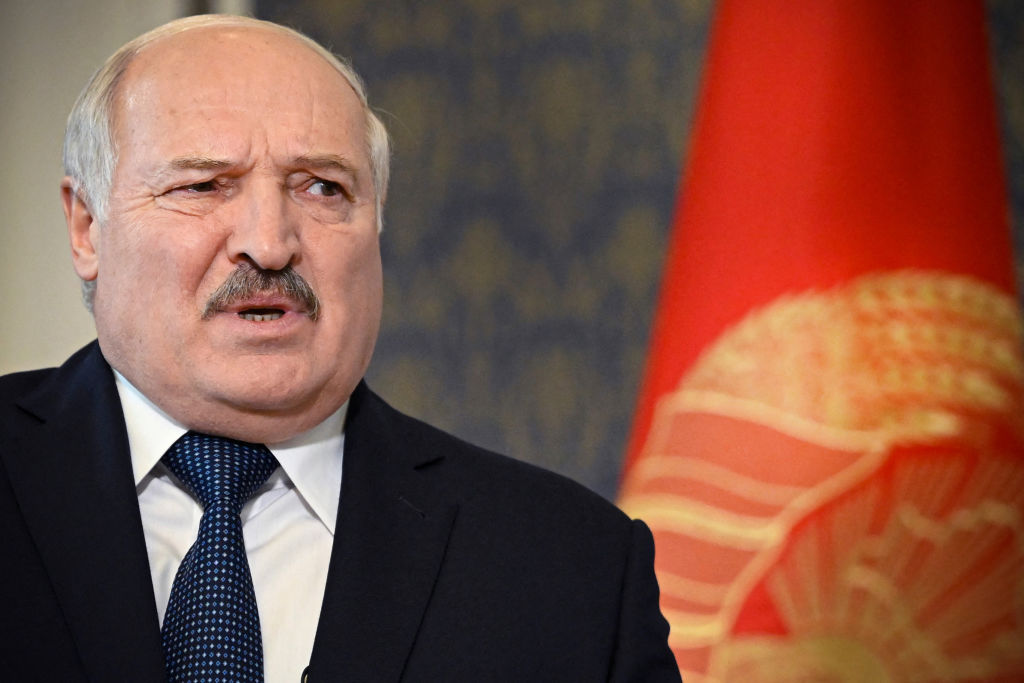
More crucially, he also phoned his ally, Belarus leader Alexander Lukashenko, who hours later announced that he had negotiated a deal with Prigozhin to stop the Wagner troop movement and de-escalate tensions.
The private army has been involved in conflicts in the Middle East and Africa, though it has always denied involvement.
Prigozhin last year admitted that he had founded Wagner the group, recruiting the soldiers from Russian prisons in exchange for amnesty.
In eastern Ukraine, the mercenary unit has been spearheading Russia’s costly battles.
It had been at the forefront of the months-long assault for Bakhmut in eastern Ukraine, capturing the site for Russia, but at huge losses.
What is next for Wagner?
Under the deal negotiated under the mediation of Lukashenko, the Kremlin said that Prigozhin would leave for Belarus, and that a criminal case against him would be dropped.
Members of Prigozhin’s paramilitary forces who joined what Moscow described as an “armed rebellion” would not be prosecuted, the Kremlin added.
The Wagner rebellion marked the biggest challenge yet to Putin’s long rule and Russia’s most serious security crisis since he came to power in 1999.
It threatened to divert Russian attention and resources away from the battlefields in Ukraine, at a time when Kyiv is in the midst of a counteroffensive to seize back territory.
Amid the dramatic events in Russia, Ukrainian forces launched several new offensives on their eastern front, claiming more ground.
Deputy defence minister Ganna Malyar said Ukrainian forces assaulted Russian lines near the towns of towns of Orikhovo-Vasylivka, Bakhmut, Bo?danivka, Yagidne, Klishchivka and Kurdyumivka, and made “progress in all directions”.
Zelensky has also ramped up his call for Western allies to “provide all the weapons necessary for defence”.
But following the pullback deal with Wagner, the Kremlin said the episode would not affect its military offensive in Ukraine.
The significance of Saturday’s events was also not lost on Ukraine’s allies, with the leaders of the United States, France, Germany and Britain holding talks over the fast-moving developments.
Three thousand elite Chechen troops took up positions in Moscow early on Saturday morning to defend the Russian capital against advancing mutineers from the Wagner mercenary group, the Chechen state broadcaster “Grozny” said on Saturday night.
“The fighters have been at their positions in Moscow since early morning and are ready to carry out any order from Commander-in-Chief of the Russian Armed Forces Vladimir Putin,” it said on Telegram.
On Saturday afternoon, Wagner leader Yevgeny Prigozhin agreed to call back his armed convoy approaching the capital with the aim of toppling the military leadership, under an agreement brokered by the president of Belarus.
The feud between Wagner chief Yevgeny Prigozhin and Russia’s military top brass had boiled over Saturday, with mercenaries capturing a key army headquarters in southern Russia and then heading north to threaten the capital.
Peskov also said it was “out of the question” that Wagner’s aborted rebellion would impact Russia’s campaign against Kyiv.
The mercenary Wagner group on Saturday began pulling back fighters and equipment from the southern Russian city of Rostov-on-Don, after its leader Yevgeny Prigozhin halted the fighters’ march on Moscow.
An AFP reporter at the scene saw a tank, several cargo trucks and several minivans carrying fighters leave the military headquarters the group had occupied earlier.
Dozens of residents in the southern Russian city of Rostov-on-Don on Saturday were chanting “Wagner! Wagner!” outside the military headquarters that had been captured earlier by the rebel mercenary group.
As night fell, dozens of locals gathered near the military office to express support for Wagner, after its chief Yevgeny Prigozhin had said he would stop the group’s march on Moscow and turn back.
The leader of the Russian mercenary group Wagner has halted a planned offensive on the capital Moscow to “avoid bloodshed”, Belarus’s president has claimed, after an armed uprising by in Ukraine and Rostov-on-Don threw the country into chaos.
Belarusian leader Alexander Lukashenko said Saturday he had negotiated with Wagner chief Yevgeny Prigozhin an end to the movement of Wagner forces inside Russia in order to deescalate the situation.
“Yevgeny Prigozhin has accepted the proposal of Belarusian President Alexander Lukashenko on stopping the movement of armed individuals from the Wagner group on Russian territory and further steps on deescalating tensions,” Lukashenko’s press service said in a statement.
It comes after the group seized a key military base on Saturday, just as Kremlin chief Vladimir Putin’s vowed to defeat the revolt and head off the threat of civil war.
The governor of the Lipetsk region, whose capital is just 420 kilometres (260 miles) south of Moscow, said Wagner’s private military force was “moving across” the territory and urged civilians not to leave their homes.
In the capital, the mayor urged Muscovites to stay indoors and declared Monday a day off work.
Meanwhile, Ukraine said on Saturday that unrest in Russia spurred by an armed mutiny of the private Russian Wagner group presented an opportunity for Kyiv, weeks after announcing a counter-offensive against Russian positions.
Earlier on, President Putin has vowed “decisive actions” early on Saturday as a tense standoff unfolded in the southern Russian city of Rostov-on-Don, which Russian authorities previously said was “an armed rebellion” by the outspoken mercenary tycoon Prigozhin.
In a five-minute televised address, Putin called the situation in Rostov-on-Don “a stab in the back of our country and our people”.
Militia leader Yevgeny Prigozhin who turned his Wagner force against the military leadership in Moscow, will leave for Belarus and a criminal case against him will be dropped, the Kremlin said Saturday.
“Avoiding bloodshed, internal confrontation, and clashes with unpredictable results was the highest goal,” Kremlin spokesman Dmitry Peskov told reporters.
Under the agreement, brokered by Belarusian President Aleksander Lukashenko, Wagner fighters will not be prosecuted, Peskov added. “We have always respected their heroic deeds at the front.”
“An agreement has been reached that Wagner would return to its bases,” Peskov said, adding that those fighters who had not participated in the rebellion would be allowed to formally join the Russian army.
Prigozhin called off his troops’ advance toward Moscow on Saturday, pulling Russia back from its most serious security crisis in decades.
According to Belarus news agency, the President of Belarus has informed the President of Russia about the results of negotiations with the leadership of PMC Wagner”.
Vladimir Putin thanked Belarus strongman Alexander Lukashenko after the chief of Wagner announced he was turning around his forces, The Russian president expressed support and thanked the Belarusian counterpart for the work he had done.”
Belarus has in the past been one of the Russia’s main supporters with an active role is Russia’s aggression on Ukraine.
The chief of the rebel Wagner mercenary force threatened to march on Moscow on Saturday before announcing a stunning pull-back, saying he did not want to spill blood.
According to the United Arab Emirates’ news agency, the UAE is following “with great concern” the situation in Russia and calls for de-escalation and self-restraint. The statement issued by the Ministry of Foreign Affairs stressed the need to respect the rules and principles of international law.
The UAE has drawn criticism in the past for failing to condemn the Russian invasion of Ukraine. The Gulf country is one of Russia’s major allies in the middle east.
The slogan of the 2022 aragala activists was against corruption” and the allegation of collapsing the economy”. These chants were parroted by a majority of youth who were cheered by groups of elite personalities at Galle Face Green adding a colorful presence to the media reports transmitted internationally. Little did these youth know that the corporates that were present at the aragala, even encouraging their staff to attend, were actually part of the problem, if not the main cause of the problem.
Mismanagement of Sri Lanka’s economy is to be put to the doorstep of all governments & unplanned open economy commenced in 1977 is one of the key faultlines. Open” was connoted to mean everything foreign and little or no place was given to encouraging innovative entrepreneurship within Sri Lanka except for a handful of lucky one’s who excelled because of the shenanigans of political connections.
Nevertheless, the fault lay in thinking that Sri Lanka’s business could thrive only from foreign investments & investors. How far these investors and investments have actually helped Sri Lanka’s economy or even socio-politically is important to statistically find out against all of the incentives, tax holidays and other handouts given for the upfront investment” shown on paper. Why could same incentives not be offered to local SME’s by successive governments and make them shareholders in Sri Lanka’s development?
Be that as it may, with open economy came the LTTE and those years were periods of bombs, suicide missions and ambulances carrying dead soldiers. It was also a period where JVP were equally running amok and the entire state apparatus was held to ransom from both North & South. Many seem to have forgotten this gruesome period.
We have also forgotten the imbalance in our national profit-loss sheet and presume everything to be attributed to corruption. Ever since 1977 our revenues have been lesser than our expenditure, our imports more than our exports & to bridge this gap, governments have turned to taking loans & people & corporates have always demanded luxury imports to satisfy their needs & any decision to prevent such has always led to companies either sponsoring regime change or not supporting elections. This is the ugly side of politics that get little attention. The role of companies and business tycoons in sponsoring elections & their demands thereafter is little discussed or debated. It is a key reason why political parties can never implement what they present on their manifestos.
Identify the groups that openly supported the maithri-palanaya. It was during this period that for no reason $12.5billion ISBs was taken & no one knows what was done with this money. The Hambantota Port was given for 99 years to China, no one knows what happened to this money. A string of dangerous Acts were passed including the co-sponsorship of the UNHRC resolution unfairly insinuating crimes by our war heros. It was immediately after regime change that the international architect of coloured revolution landed in Sri Lanka who also has stakes in the pharmaceutical companies manufacturing vaccines for covid. It was also in 2017 that the Foreign Exchange Act was changed allowing companies to open foreign accounts and keep their money overseas. All this taken together – with repayment of ISBs falling in 2020, with Sri Lankan companies not bringing back their profits to the tunen of $53billion, the covid & associated losses to state coffers took place. How many are able to understand this larger picture?
People have forgotten – Covid, lockdowns, foreign remittances declining, job losses, govt expense increasing to take care of covid patients buy vaccines and run various covid centres across Sri Lanka. Tourism came to a virtual halt and that meant revenues also came to nought. Ironically, the President who is accused of collapsing the economy came to power in November 2019, in March 2020 the country faced lockdowns, only in September 2021 that everything returned to normal though no one thought to take stock of the situation that led to decline in foreign reserves.
Then gas cylinders started to explode, hiccups in corporate controlled food supplies, medicines & other essentials and even probable sabotage in state apparatus. These are centainly case studies to ascertain whether these incidents were natural or manmade and part of what was to lead to public unrest & public outcry & eventual public protest.
It is a good time to ask if the very companies that parked their profits overseas were the one’s that stalled supplies of essentials to the people to anger them and spur them to protest at the grounds where some of these top personalities were present to cheer the people on.
Much of the money that came to support the aragalaya was via undial & hawala systems made worse by aragala asking expats not to send money home foolishly implying that the govt was stealing money sent to personal accounts. People actually fell for these silly canards & so-called intellecuals and ‘educated’ were seen promoting this notion as well. The arguments and topics that surfaced during the aragalaya seriously questioned the quality of Sri Lanka’s education system & the end-products though some of the main players were all foreign educated!
Somehow the corporate controlled media are not giving emphasis to the fact that $53billion is kept in overseas banks & not brought back to Sri Lanka. Some of these very businessmen were seen holding placards at the protest site demanding Sri Lanka go to IMF for the paltry $2.9billion in tranches with conditions.
We have to wonder where is the patriotism in the companies/businessmen that are keeping their profits overseas to the tune of $53billion if not more and remaining mum & not even coming forward as a group to negotiate to provide what Sri Lanka has begged from the IMF with conditions?
Why hasn’t the elite business community come forward to bail out Sri Lanka, where they have prospered? Why are some of these companies now selling their business units to foreign companies/govts & opening new business units overseas?
Have people looked at the figures?
$2.9billion in tranches from the IMF with conditions
$53billion belonging to elite Sri Lankan companies being kept overseas without depositing in Sri Lanka because of the 2017 Foreign Exchange Act.
The question is why is the Governor Central Bank or the current Govt not making any efforts to nullify the 2017 Act and demand the companies to bring back what they are keeping in overseas bank?
The aragala activists claim to know everything about the political landscape to be pointing fingers at all & sundry but why are they not highlighting this $53billion kept in overseas banks and demanding this money be brought back & even protesting for it to be brought back?
Why are they not protesting against the elite businesses keeping this colossal amount overseas?
Where is the aragalaya against the business community to return the $53billion?
Alas! What conventional wisdom do we see of five men in a boat all a glee for a boat ride costing a million and quarter but ignoring warnings, they’ve gone to their slaughter in a cramped up space as adventurers full of spirit and such wanderers.
The pressure imposed reality beguiles
the depth of many sunken miles
The world is agog over such naivete
as though the proximity of a sunken wreck fraught with danger of a broken deck and floating ballast,did they forget the veritable deathtraps that repose and hardly worth the view up close the frantic rescue efforts now in place will they succeed or sanity displace?
COLOMBO, June 23 (Reuters) – Sri Lanka is set to start bartering tea to Iran next month in lieu of $250 million owed for oil, a Sri Lankan official told Reuters on Friday, as the crisis-hit country tries to lift sales to a key market and protect its forex reserves.
The barter was agreed in 2021 for oil imported in 2012, but the exchange was delayed after Sri Lanka’s unprecedented dollar shortage last year plunged the economy into its worst financial crisis in more than seven decades.
“This is very timely for us because we get access to an important market and both Iran and Sri Lanka can trade without relying on dollars,” Sri Lanka’s Tea Board Chairman Niraj de Mel told Reuters.
“The agreement was to send $5 million worth of tea each month for 48 months but we plan to start with about $2 million per month.”
Globally popular Ceylon Tea is Sri Lanka’s highest foreign exchange-earning crop, brewing $1.25 billion for the cash-strapped country last year, according to government data.
Iran has been one of Sri Lanka’s main tea buyers but exports have fallen steadily from $128 million in 2018 to $70 million last year as U.S. sanctions on Iran hit trade.
A significant share of Sri Lanka’s tea is now shipped to Iran via the United Arab Emirates (UAE), official data shows, with the UAE more than doubling its tea imports from Sri Lanka to $118 million last year from $48 million five years ago.
Under the barter programme, state-run Ceylon Petroleum Corp that bought the oil will give rupees to the Tea Board to ship tea via Sri Lankan exporters.
Iranian tea importers will then pay riyals to the National Iranian Oil Company, de Mel said.
“We are awaiting the final documents and hope to start exports from July,” he added.
Sri Lanka’s foreign exchange reserves grew to $3.5 billion at the end of May – a 14-month high – helped by increased remittances and tourism inflows after securing a $2.9 billion bailout from the International Monetary Fund.
(Reporting by Uditha Jayasinghe Editing by Krishna N. Das and Peter Graff)
Gilles,D., Hugh T .(1986). Nietzsche and Philosophy. The Journal of Religion, Vol. 66, No. 4 pp. 455-456.: The University of Chicago Press
Nietzsche, Friedrich. Beyond Good and Evil. Translated by Walter Kaufmann. New York: Vintage Press, 1966.
Nietzsche, Friedrich. On Truth and Lie in the Extra-Moral Sense.” In The Portable Nietzsche, edited and translated by Walter Kaufmann. New York: Viking Press, 1954.
Nietzsche, Friedrich. The Antichrist . In The Portable Nietzsche, edited and translated by Walter Kaufmann. New York: Viking Press, 1954.
Nietzsche, Friedrich. The Birth of Tragedy. In The Birth of Tragedy and Other Writings, edited and translated by Ronald Speirs. Cambridge: Cambridge University Press, 1999.