
සින්හල බෞද්ධ ජාතික උරුමයන් සහ අනන්යතාව රැකගැනීමටනම් වහාම ක්රියාත්මක වන පරිදි පහත දැක්වෙන පියවරයන් ගත යුතුය
June 20th, 2023දේශමාන්ය ආචාර්ය සුදත් ගුණසේකර. මහනුවර.
1505න් ආරම්භවී මේ දක්වා සින්හල ජාතියට අහිමිවීගොස් ඇති වසර 2500 කට අධික ඉතිහාසයේ ලාන්චනය වන සින්හල බෞද්ධ ජාතික උරුමයන් සහ අනන්යතාව රැකගැනීමටනම් වහාම ක්රියාත්මක වන පරිදි පහත දැක්වෙන පියවරයන් ගත යුතුයයි මම යෝජනා කරමි.
1505 සිට මේ රට පුරා වෙනස්කොට ඇති සහ අලුතෙන් තබා ඇති සියළුම විදේශීය පුද්ගල නාම ඇතුළ, ස්ථාන, ගන්ගා, මාර්ග,නගර, ආයතන,ජනපද සහ ගොඩනැගිලි ආදී සියළුම නාම 1505 න් පෙර තිබුණු නාම බවට වහාම හැරවිය යුතුය. මන්ද කඩිනමින් එසේ නොකළහොත් මේ රටේ ඉන්නේ පෘතුගිසි, ඉන්ග්රීසි, දකුණු ඉන්දීය සහ අරාබිකරයේ ජාතීන් සහ මේ රට සෑදී ඇත්තේ එකී රටවල කෑළිකීපයක් එකතුකිරීමෙන් යයි ලෝකයා සිතිය හැකි බැවිනි.
පූර්ණ නිදහස්, නිවහල් සින්හල ජාතියේ පුනරුත්ථානය පටන්ගත යුත්තේ එතැනිණි.
මෙම ක්රියාවළියේ ආරම්භය මේ රටට පූර්ණ දේශපාලන නිදහස ලබාගත් 1972 සිදුකළ පරිදි පාර්ලිමේන්තුව, යළිත් ජාතික රාජ්ය සභාව නමින් නම්කොට ආරභ කරමු.
ඊ ලඟට එහි සියලු තනතුරු, ආයතන සහ අන්ශ යනාදිය සින්හලෙන් නම්කරමු. එහිදී ජනාධිපති ළකිසුරු නමින්ද කැබිනට එක අමාත්යමන්ඩලය ආදි වෂයෙන් නම්කළ යුතුයයි මම යෝජනා කරමි. මේ සඳහා විද්වත් මණ්ඩලයකින් උපදෙස් ලබාගත යුතුය.
එසේම දෙමළ සහ මුස්ලිම් සුළුජන කොටස් සහ ත්රස්ථවාදීන් විසින් විනාශකොට, වෙනස්කොට ඇති සියළුම පුරාවිද්යාත්මක ස්ථාන පුනරුත්ථාන කොට ඒවාට පෙර රජදවස දී තිබුණු භූමි ප්රමාණයන් සහ වරප්රසාධ සියල්ල ආපසු ලබාදිය යුතුය. ඒවා වෙනස්කොට ඇති පුද්ගලයින්ට එරෙහිව අදාල අනපනත් යටතේ දඬුවම් ලබාදියයුතුය. එසේම දෙමළකරණය සහ මුස්ලිම් කරණයකොට ඇති සියළුම ගම් ස්ථානනාම හා පූජා භූමීන්ද ඒවායේ පැරණි නම්වලින් හැඳින්විය යුතුය.
එසේ කිරීමෙන් පසු දෙමාපියන්විසින් දරුවන්ට තබන නම් හැර සෙසු සියළුම නම් කිසියම් විශේෂ හේතුවක් මත වෙනස් කිරීමට අවශයනම් ජාතික රාජ්ය සභාවට ඒ ගැන යෝජනාවක් ඉදිරිපත්කොට ඒ සඳහා රාජ්යසභාවේ පූර්ණ අනුමැතිය ලබාගත යුතුය.
පිටරටක ආයතනයක් මෙහි පිහිටුවන සෑම අවස්ථාවකදීම ආයතනයේ නමට ඉදිරියෙන් – ශ්රී ලන්කා යනුවෙන් සඳහන් කළයුතුය.
මෙම ක්රියාවළිය අවසානයේ එම වෙනස්කම් ඇතුලත්කොට ඒවා භූමියේද, සිතියම් සහ සහ ලේඛණ වලද ඇතුලත් කළයුතුය.
මෙම කටයුත්තට උපදෙස් ලබාගැනීම සඳහා සඳහා පුරාවිද්යා චක්රවර්ති ගරු එල්ලාවල මේධානන්ද හිමියන්ගේ ප්රධානත්වයෙන් කමිටුවක් පිහිටවිය යුතුයයිද මම රජයට යෝජනා කරමි.
ශ්රී ලංකන් ගුවන් සේවය අදත් ප්රමාදයි – කොරියානු රැකියා සදහා ශ්රමිකයින් යැවීමට නොහැකිවේ
June 20th, 2023Manusha Media
දිගින් දිගටම ශ්රී ලංකන් ගුවන් සේවයේ ප්රමාදය කොරියානු රැකියා සදහා ශ්රමිකයින් යැවීමටත් ගැටලුවක් වෙනවා – කම්කරු හා විදේශ රැකියා අමාත්යවරයා අවධාරණය කරයි
කොරියානු රැකියා සදහා පිටත්ව යන ශ්රමිකයින් ගමන් ගන්නා ශ්රී ලංකන් ගුවන් සේවයට අයත් යූ එල් 470 දරණ ගුවන් යානය අද දිනයේදීත් පැය 12ක් පමණ ප්රමාදවීම නිසා එම ශ්රමිකයින් කණ්ඩායම අද දිනයේදී කොරියාව බලා පිටත් කර යැවීමට නොහැකිවූ අතර කොරියාව බලා ශ්රමිකයින් රැගෙන යන ශ්රී ලංකන් ගුවන් සේවයට අයත් ගුවන් යානා දිගින් දිගටම මේ ආකාරයට ප්රමාද වීම නිසා කොරියානු රැකියා සදහා ශ්රමිකයින් පිටත් කර යැවීම බරපතල ගැටලුවක් බවට පත්ව තිබෙන බව කම්කරු හා විදේශ රැකියා අමාත්ය මනුෂ නානායක්කාර මහතා පවසයි.
කොරියානු රැකියා සදහා පිටත්ව යන 800 වැනි කණ්ඩායම ලෙස මෙම කණ්ඩායම දකුණු කොරියාව බලා පිටත් කර යැවීමට අවශ්ය සියලුම කටයුතු ශ්රී ලංකා විදේශ සේවා නියුක්ති කාර්යාංශය විසින් සූදානම් කර තිබුණි. කොරියාවේ ධීවර ක්ෂේත්රයේ රැකියා සදහා ශ්රමිකයින් පනස් දෙදෙනෙක් මේ ආකාරයට පිටත්ව යාමට නියමිතව සිටි නමුත් ශ්රී ලංකන් ගුවන් සේවයේ ප්රමාදය නිසා ඔවුන් අද දිනයේදී කොරියාවට නොඑවන ලෙසට කොරියානු මානව සම්පත් දෙපාර්තමේන්තුව ශ්රී ලංකා විදේශ සේවා නියුක්ති කාර්යාංශයට දැනුම්දී ඇත.
පසුගිය මැයි 23 වැනිදාද මේ ආකාරයට ශ්රී ලංකන් ගුවන් සේවයට අයත් ගුවන් යානයක් ප්රමාද වූ අතර එම ගුවන් යානයෙන් කොරියාව බලා පිටත්ව යාමට නියමිතව සිටි ශ්රී ලාංකික ්රශ්රමිකයින් කොරියාවට භාරගැනීම එරට මානව සම්පත් දෙපාර්තමේන්තුව ප්රතික්ෂේප කළේය. ශ්රී ලංකා විදේශ සේවා නියුක්ති කාර්යාංශයේ මැදිහත්වීම මත එම ශ්රමිකයින් ජුනි 4 වැනිදා කොරියාව බලා පිටත් යැවීමට කටයුතු කළ නමුත් එදිනද එම ගුවන් යානය පැය දෙකක් පමණ ප්රමාද වී තිබ්නි.
මේ ආකාරයට කොරියානු රැකියා සදහා ශ්රමිකයින් රැගෙන යන ශ්රී ලංකන් ගුවන් සේවයට අයත් ගුවන් යානා ප්රමාදයට පත්වීම බරපතල තත්වයක් වන අතර මේ නිසා කොරියානු රැකියා සදහා ශ්රී ලාංකික ශ්රමිකයින් යොමු කිරීම බරපතල ප්රශ්නයක් බවට පත්ව තිබෙන බව අමාත්යවරයා අවධාරණය කරයි.
මේ සම්බන්ධයෙන් අවධානය යොමු කරමින් තීරණ ගැනීම සිදුවන බවද මනුෂ නානායක්කාර අමාත්යවරයා තරයේ අවධාරණය කර සිටී
The Universes (Alamin) in the Holy Quran
June 20th, 2023Mohammad Abdullah
The universes (alamin) that are mentioned in the Quran are discussed below under the following headings:
i. Samawaat
ii. Jannaat
iii. Different Universes
iv. Super Space and Barzakh
v. Araf, Channels, and Sidratul-Muntaha
vi. Illiyin and Sijjin
vii. Arsh.
Only The Almighty , The All-Wise, The Omniscient Allah knows the real facts of the universes. We may estimate some little facts based on the islamic divine book Al Quran. We may consider some facts from the Hadith of Prophet Muhammad (PBUH).
Samawaat
This universe, where we are living now, is called “Samawaat” in the Quran. Samawaat means Skies. The study of the Quran reveals that the space of the universe is shaped into seven spherical waves, one inside another—like the peels of onion. These waves of space are skies. Each sky contains innumerable galaxies. We are in the First (Innermost) Sky. The space though waved is continuous. One does not have to believe the existence of skies blindly. Several recent observations indicate that the skies should exist—though the theories have not been developed to harness the idea in the books of science [The skies are deliberately discussed in Section-7 of Chapter-2].
Jannaat
The Jannaat is a separate universe altogether. The hint of its location is given in the following verses: ―Be quick in the race for forgiveness from your Lord Allah and for a Jannaat whose width is that of the ‗Skies and Lands‘ (this universe), prepared for the righteous…‖ [Al Quran 3:133] ―Race to forgiveness from your Lord and the Jannaat, the width of which is as the width of the ‗Sky and Land‘ (this universe)‖ [Al Quran 57:21] (https://quran.com/57/21?translations=48,84,17,101,20,85,18,41,95,19,22)
According to the above verses, the width of the Jannaat is equal to the width of this universe (Samawaat). If two entities are equal in width, one cannot remain inside another. So, the Jannaat and the Samawaat are two separate universes. Holy Bible gives similar indication: “Because only a few will be saved, God created two universes, instead of only one” – 2 ESDRAS 7:50, Holy Bible (GNB) (https://www.bible.com/bible/69/2ES.7.50.GNTD)
Some say that the Time began at the Big Bang, and that there is nothing beyond the Big Bang, and so on, because they do not know. Allah is ever living, and He has other creations at the outside of this universe.
Separate Universes
The following factors confirm that the Jannaat and the Samawaat are two separate universes: Factor 1: Separate by Origin From the Big Bang, ultimately from the Big Bounce, this universe (Samawaat) has been created, not the Jannaat. ―Do not the unbelievers see that the Skies and the Lands (this universe) were joined together before We clove them asunder‖ [Al Quran 21:30] According to the above verse, there were lands (dusts and asteroids) in the initial universe. So, the universe started from a Big Bounce; and in light of the Quran, we are living in the 2nd Cycle (figure below).
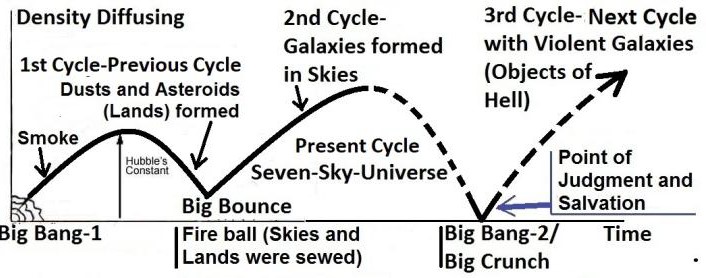
FIGURE 1.1: The Quran‘s Model of Cyclic Universe (https://www.alqurantafsir.com/_files/ugd/185ca2_7f5703f8d041449193e0fa01e706ef46.pdf)
The cycles are described below: Only almighty Allah knows the real facts of the universes. We may just estimate.
1st Cycle: The universe started from the Big Bang-1. It produced hydrogen and helium (smoke) mainly. The space was uniform (single-sky-universe), and the smoke spread evenly throughout the space..
Allah infused gravitational force into the universe / smoke: ―Moreover, infused His force (thumma istawa) into the Sky (ila i-samai) while it had been smoke…‖ [Al Quran 41:11]
The gravitational force started contracting the universe. The contracting universe produced reasonable amounts of heavier elements, at least up to silicon. The heavier elements produced dusts and asteroids (lands).
2nd Cycle: Ultimately, the contracting universe had a Big Bounce, and the universe restarted as a seven-sky-universe (Present / 2nd Cycle). “The Big Bounce is a hypothesized cosmological model for the origin of the known universe. It was originally suggested as a phase of the cyclic model or oscillatory universe interpretation of the Big Bang, where the first cosmological event was the result of the collapse of a previous universe…” – WIKIPEDIA, The Free Encyclopedia
In the expanding seven-sky-universe, the galaxies could rapidly form. The long
lasting stars and planets formed in the galaxies directly from the elements up to silicon (elements heavier than silicon or so formed later in the stars). 3rd Cycle: This universe will collapse again into a Big Crunch and will restart (Big Bang-2) after the Judgment and Salvation: ―On the day when We will roll up the Skies (present universe) like the rolling up of the scroll for writings (Big Crunch); as We originated the first creation (Big Bang-1), We shall reproduce it (Big Bang-2)—a promise on Us; surely We will bring it about.‖ [Al Quran 81:104]. In the third cycle, the sinners will be scattered in the galaxies. The galaxies are objects of hell. [The matter is deliberately discussed in Sections 4 and 10 of Chapter-21.] A Creator is not essential for a cyclic universe. The cycles of expansion and contraction may be going on forever. So, a cyclic universe may be eternal. But, the Quran indicates that the universe is cyclic. However, it clearly mentions that Allah created the universe at the beginning of the previous cycle. So, the Samawaat and the Jannaat are separate creations by origin and evolution.
Only The Almighty , The All-Wise, The Omniscient Allah knows the real facts of the universes. We may estimate based on the islamic divine book Al Quran. We may consider some facts from the Hadith of Prophet Muhammad (PBUH).
Factor 2: Different Destiny The Jannaat is everlasting according to the Quran and Hadith. So, the Jannaat cannot exist inside a universe that will collapse by rolling up its Skies: ―On the day when We will roll up the Skies (Samawaat / this universe) like the rolling up of the scroll for writings…‖ [Al Quran 21:104] ―All that on it will perish, but will abide the Face of thy Lord, full of Majesty and Honor.‖ [Al Quran 55: 26–27] The Jannaat cannot be a one-inside-another anti-universe as well, because if the universe collapses, the anti-universe too will collapse. So, the Jannaat is altogether a separate universe, existing beyond this universe (Samawaat). Factor 3: Different Nature We live in a protected planet. So, we do not understand how violent the universe (Samawaat) is! The fluctuating high-pitch sounds we hear while tuning a radio-set originate in gigantic explosions occurring in distant galaxies and quasars. The entire space is showered with harmful radiations. Nothing can remain unchanged. It is a dangerous place indeed. It cannot be a home of peace and eternal salvation. (https://www.alqurantafsir.com/_files/ugd/185ca2_7f5703f8d041449193e0fa01e706ef46.pdf)
The universe (Samawaat) is timed. Here aging and ultimate death / decay are inevitable. But, according to the Quran and Hadith, the Jannaat is evergreen by nature. So, these have to be separate universes. Factor 4: Homes of Jinns and Humans This universe (Samawaat) contains roughly six times more dark matter than matter. So, bulk of the universe is not sensible to us, and only a tiny Earth is useful. It is not our universe; it belongs to the anti-creatures like the jinns, created from anti-matter.
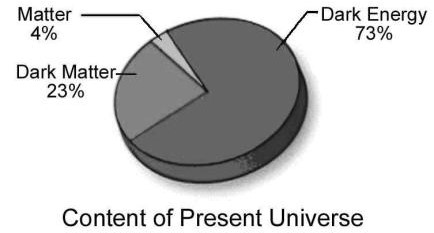
FIGURE 1.2: Matter and Dark Matter The jinns are intelligent anti-creatures. They are living in this universe from their inception. They are created suitable for this universe. They are sometimes called Sons of the Skies (Samawaat / this Universe). This universe (Samawaat) is their home universe.
Primarily, Allah settled Adam and Eve in the Jannaat. So, it is obvious that He created them suitable for the Jannaat. The Jannaat is our home universe. There are billions of peaceful planets, full of water. The Believers will be taken back to the Jannaat after the Judgment. The Disbelievers will be live in this universe (Samawaat) full of violent galaxies and fire. Before the creation of this universe (Samawaat), Allah created a huge quantity of water to produce the planets of the Jannaat mainly. [The Jannaat is deliberately discussed in Section 23 of Chapter 3]
Arsh
The Arsh is beyond the Super Space, holding the universes.
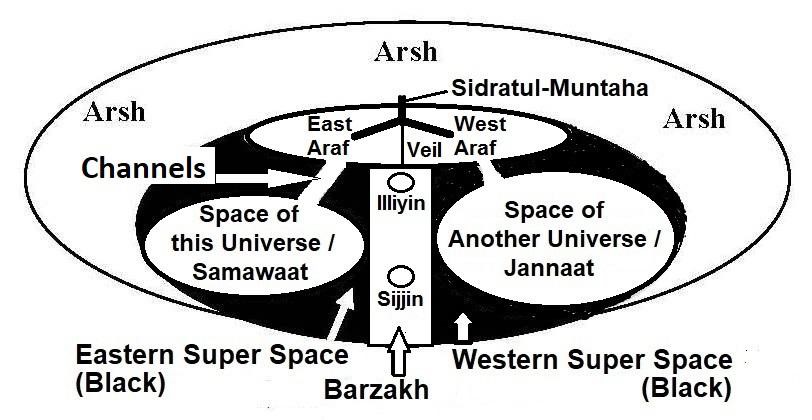
FIGURE 1.3: Likely disposition of universes Allah has an exclusive domain in the Arsh. He comes out of the domain by extending His Kursi (Thorne): (https://www.alqurantafsir.com/_files/ugd/185ca2_7f5703f8d041449193e0fa01e706ef46.pdf)
Abu Dharr Al Ghifari narrates that the Prophet (pbuh) said, ‗By Him in whose hand is my soul, in comparison to the Kursi, the seven skies and lands (this universe) is nothing but like a ring thrown in a desert, and certainly the hugeness of the Arsh over the Kursi is like the desert over that ring.‘ [Tafsir Ibn Katheer]. There are many angels as well. They are commonly called the Angels of Arsh. The Pen, Disc, and related systems are in the Arsh. The Arsh is the Headquarters of Allah. [Arsh, Kursi, Pen, and Disc are deliberately discussed with references in Section-9 of Chapter-6] 1c-v. Super Space and Barzakh All creations, except the Arsh, are located in the Super Space. The Super Space is divided by a super barrier (Barzakh) into two parts: the Eastern Super Space and the Western Super Space. The Barzakh is a space with different nature where matter cannot survive. However, the light can pass through the Barzakh, as in the Night Journey, Prophet (pbuh) saw some planets of the Jannaat from an object of the Seventh Sky. Due to the Barzakh, one cannot go from one universe to the other except through special channels:
―O ye assembly of jinns and men, if it be ye can pass beyond the boundary of the ‘Skies and Lands’ (this universe), pass ye! Not without authority shall ye be able to pass!‖ [Al Quran 55:33] The Samawaat (this universe) is located in the Eastern Super Space and the Jannaat is located in the Western Super Space. 1c-vi. Araf, Channels, and Sidratul-Muntaha There is a huge land called Araf below the Arsh. ―Araf means ―Elevated Land.
The Araf may be considered as the third universe. It is the preliminary sanctuary of the universal angels. The Araf is divided by a Veil into two parts: the Eastern Araf and the Western Araf. The Eastern Araf is extended into the eastern Super Space, and the Western Araf is extended into the western Super Space. See figure 1.4. [The Araf is deliberately discussed in Section-9 of Chapter-6] https://www.alqurantafsir.com/_files/ugd/185ca2_7f5703f8d041449193e0fa01e706ef46.pdf
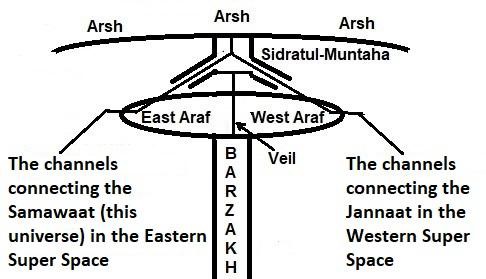
https://www.alqurantafsir.com/_files/ugd/185ca2_7f5703f8d041449193e0fa01e706ef46.pdf
FIGURE 1.4: Barzakh and Channel ―Lord of the two Easts and the two Wests. Then which of the favors of your Lord will ye deny?‖ [Al Quran 55:17-18] In above verse, two Easts are the Eastern Araf and the Samawaat that are located in the Eastern Super Space; two Wests are the Western Araf and the Jannaat that are located in the Western Super Space. The Eastern Araf connects the Samawaat (this universe) by a pair of channels, and the Western Araf connects the Jannaat by another pair of channels. In the Night Journey (Miraz), Prophet Muhammad (pbuh) saw these channels. The accompanying angel called the channels as the ―Channel of Light‖ and the ―Channel of Darkness‖. Prophet Muhammad (pbuh) moved into the Eastern Araf through one of these channels. [The channels are deliberately discussed in Section-9 of Chapter-6]
(https://www.alqurantafsir.com/_files/ugd/185ca2_7f5703f8d041449193e0fa01e706ef46.pdf) The Sidratul-Muntaha is hanging over the Araf from the Arsh. It looks like an up-side-down plant with two main branches. One branch connects the Eastern Araf, and another branch connects the Western Araf. Thus, the Sidratul-Muntaha works as the communication hub of the universes. It controls the transfer of creatures, matter, and information. Prophet Muhammad (pbuh) moved into the Arsh and later into the Jannaat through the Sidratul-Muntaha. The Sidratul-Muntaha does another important job. An angel cannot go out of the universe for which it is created. The instructions coming down from the Arsh are passed to the angels through Sidratul-Muntaha. An angel cannot learn at its own. Sidratul-Muntaha infuses information into the angels, and redesigns them to perform their tasks. The Sidratul-Muntaha is based on divine servers and has related systems to do these. Prophet Muhammad (pbuh) saw that the angels were falling on the leaves of Sidratul-Muntaha for being designed and tasked. [The Sidratul-Muntaha is discussed with references in Section-9 of Chapter-6] The Arsh is connecting the universes by Sidratul-Muntaha and Channels. See figure 1.3. 1c-vii. Illiyin and Sijjin The Illiyin and the Sijjin are located inside the Barzakh. See figure 1.3. These are holographic worlds of the dead humans.
The Illiyin is for the people destined to the Jannaat. It is in the high Barzakh closely below the Araf. The Sijjin is in the deep Barzakh. It is for the people destined to the hell. See figure 1.3. A dead human is recreated virtually with his soul (nafs), genome code, and memories that are collected and stored by the angels. The virtual human is then projected into a holographic world (Illiyin or Sijjin) where other dead humans are already living their virtual lives. They will remain in the Illiyin or Sijjin until the Day of Resurrection. The souls (nafses) are corrected and further developed in the virtual life. [The Illiyin and the Sijjin are deliberately discussed in Chapter-83] https://www.alqurantafsir.com/_files/ugd/185ca2_7f5703f8d041449193e0fa01e706ef46.pdf
NATO’s big gamble in Ukraine has failed
June 20th, 2023By Zorawar Daulet Singh and posted on Money Control, June 3, 2023.Courtesy New Cold War
Fifteen months into the biggest land war in Eurasia since the Second World War, the tables have turned. US and NATO began with a confidence that a proxy war was the only way to roll back Russian influence in Europe. It was aimed to cut Russia down to size and snuff out the incipient multipolar order.
On paper it was an ingenious, if diabolical, strategy. Ukrainian blood and NATO weapons would be more than a match for Russia. At the very least, western policymakers surmised, Russia would be bogged down in another protracted ‘Afghanistan’ or ‘Vietnam’ for years, while America would swoop across the world as a rejuvenated superpower.
The opposite has occurred. On every front in this proxy war – it is more apt to classify the conflict as a limited great power war – US goals have fallen short.
The US’s Weak Hand
The international community has stayed scrupulously away from lining up behind the West. Other than its loyal G-6 states in tow, Washington has witnessed a resounding rejection of NATO’s plan to demonise and contain Russia.
The Global South has instead discovered an opportunity to advance their own interests and embrace a multipolar world order where weaker states can henceforth bargain for better deals with the major players. India’s foreign policy exemplifies this trend that can today be seen in South America, Africa, Middle East and even in parts of East Asia.
Great power geopolitical alignments have also shifted adversely. China – the swing power for the West – has barely budged its position. Since the outbreak of the Ukraine war, Washington has attempted to imagine cleavages between Moscow and Beijing that it could exploit for a new western rapprochement with China.
Senior US policymakers, including the President, along with a flurry of European leaders have attempted to court the Xi Jinping regime in an attempt to nudge China away from Russia. But to little avail. The Chinese seem unwilling to jeopardise their partnership with Russia. With their own potential flashpoint right under their nose in Taiwan, Beijing fears a similar fate for itself in the future.
Unanticipated Economic Blowback
The real trump card in Western hands has always been the economy: the legacy dominance of the US dollar, control over international supply chains, and the ability to arbitrarily impose collective sanctions and isolate a country. These are unique leverages that no other great power can claim to possess as of today. This is where the US truly felt it had the upper hand. It could not only destabilise Russia, perhaps even fatally, but also rewrite a new chapter on globalisation.
Yet shockingly again, and despite dramatically severing European energy and industrial linkages with Russia, the blowback to the West has been more severe than the intended impact on the Russian economy. European economies are reeling from inflation and the spectre of de-industrialisation, fueled by a supply side energy and commodity crisis caused by western sanctions.
Industrial giants like Germany have slumped into a recession. Economists can no longer deny just how critical the Russian commodity and energy link as well as market access was for European prosperity and industrial vitality.
How Russia Escaped, India Too
But how did Russia escape its own economic strangulation? Very simply, the non-western world did not commit hara-kiri. China and India along with several other developing economies quickly replaced western markets, providing not only a lifeline to Russian exports but also drew unusual growth benefits of their own from discounted crude oil.
Flushed with revenues, Moscow has been able to procure industrial components, machinery and consumer goods necessary for its basic economic stability. Trade with China is estimated to touch $200 billion in 2023, emulating a role played by Germany in the past.
As a consequence, Russia defied the double-digit recession forecast for it in 2022 by only contracting by 2.1 percent. Even the IMF projects positive GDP growth for the Russian economy in 2023 and 2024.
The War Theatre: Advantage Russia
Finally, it is in the war theatre itself where events have unfolded calling into question the entire geopolitical gamble of the West. After the initial phase when Russia received a rude shock about the full extent of NATO’s penetration and the systematic buildup of the Ukrainian armed forces since 2014, Moscow shifted to a strategy of attrition.
This meant occupying territory – usually the primary objective of a war – became less important (other than of course the ethnic-Russian dominated Donbass and Crimea) than degrading and destroying the NATO-built force inside Ukraine.
Classical war of manoeuvre with large tanks battles in vast open fields or direct assaults on entrenched Ukrainian positions – scenarios that NATO expected and trained the Ukrainian military for and for which it invested in major defence lines around the Donbass – were replaced by gruelling and bloody struggles for strategic cities and gateway towns.
Russia has prevailed in all these major urban battles that will help it secure eastern Ukraine. At the same time, Russia has used its offensive firepower to freely strike at military, logistic, high value infrastructure, and command and control targets across Ukraine including in Kyiv. Russia adapted to fight an intelligent and relatively low casualty war of its choosing and not the one NATO had planned to bog it down in.
Ukraine-NATO: Outmanned, Underprepared
A few themes are now increasingly clear. The bulk of the Ukrainian military force has been largely destroyed in the past 12 months of the war. The replacement units being inducted after the most recent round of NATO training in the UK and elsewhere cannot restore those massive losses.
The industrial capacity to wage a big and long war has been severely impaired, not just in Ukraine but in NATO. NATO countries have already sent over $70-80 billion worth of military equipment, with the lion’s share coming from the US. The real constraint now is western production capacity because NATO planners never anticipated a war with a peer competitor that might exceed a few weeks of intense combat.
To get a sense of the gap – Russia fires artillery rounds in an afternoon in Ukraine equivalent to at least two months of US production. NATO weapons systems that were fielded to alter the course of the war have come up short. The Russian military seems to be ahead of NATO on at least the following capabilities – air defence, electronic warfare, artillery/counter artillery, and hypersonic missiles.
The much-touted Ukrainian counter-offensive is likely to run into the famous monsoon season before it clashes with any Russian formations. What might follow after that is another gasp of NATO-fueled fighting before Russia inflicts its own counter-offensive.
The blowback in Ukraine is real and the most significant geopolitical trend of the past year.
Zorawar Daulet Singh is an award winning author and strategic affairs expert based in New Delhi. https://zorawardauletsingh.com/
DEVELOPING SCHOOL CLUSTERS OFFERING OUTCOME-BASED EDUCATION IN ELECTORATES
June 19th, 2023BY EDWARD THEOPHILUS
It is required that primary and secondary education in Sri Lanka must be reformed to offer outcome-based education, if there is a problem with lack of resources, cluster schools, 5 to 10 clusters in an electorate should be built to give justice to rural schools and improve the educational quality in regional level. The idea was in education reforms were at the beginning from late 1990s. It was successfully not implemented as the consultants appointed to develop policies were lacking the knowledge of outcome and competency-based education and training. They were trained in the education system that had been effective before 1930s.
Education offering methods for primary and secondary education in all countries in the world has been changed since the 1930s and policymakers agreed with the decision to offer Outcome Based Education, but it was not implemented successfully in Sri Lanka because consultants did not understand the significant of outcomes as well as how to construct outcomes and determine the achievement and certification of the achievement.
The tertiary education at TVET Technical Vocational Education and Training), and university levels need to offer competency-based training (CBT) and Research-Based Education in universities. How to offer a research-based education in universities, when there are conflicts in universities based on insignificant matters. Secondary schools need to offer Certificate 1 and 2 on TVET in accession to the general education. Education reforms in a broader way support training students for demanding skills, knowledge, and values. Sri Lanka’s society stuck with an education which is based on theoretical understanding and in the modern society needs skills and values to perform tasks.
Since its political independence in 1948, Sri Lanka began many education reforms, however, the attitude of people has not changed to get away from missionary education and always attempted to maintain the consistency of reforms to the Western system. Under administration of the State Council, Kannangara reforms came in effective despite the reform objectives, rural schools were not funded enough to give justice to rural community and education consultants who educated in Missionary religious Schools attempted to destroy Kannangara reforms as they were focused to upgrade the quality of rural people.
Major reason for unsuccess of reforms has been the consultants and leaders of reforms who had stuck with irrelevant politics in education policy development and many consultants were lack of understanding the required reforms. Buddhist education in rural level has been making justice, however they were not support to offer education in English medium and this weakness created a gap between education in Missionary and Buddhist Education. In history, Sri Lanka had universities based on Buddhist education.
The inequality in fund allocation in the past has mainspring for creating school clusters and operation of clusters need resources such as methods of teaching and training, assessment of students, transporting teachers and students from schools to principal schools of the cluster. Mobile resources such science labs, libraries and computers are essential and it attracts a large sum of funds.
Recently, the president expressed a vital aspect regarding the education management taking an example from American Education, which is not based on competitive exams, but a demonstration of skills and knowledge. Education reforms in Sri Lanka need consistent methods for educating kids, and the school clusters would solve the lack of resources.
Educating parents on the school clusters needs first, because they are stuck with knowledge-based education, and developing skills and values are vital to become good citizens and go overseas and work. Caste dictions in Sri Lanka have discouraged the achievements of skills in various fields. Skills, knowledge, values and experience in various trade areas would be factors for demanding reasons for people in overseas and educating these facts to parent will be supported to the improvement parent knowledge while effecting education reforms.
School clusters could be improved if the government supports to establish funds and allocate the financial resources to clusters.
India-Bangladesh-Nepal trilateral electricity diplomacy has a regional implication for South Asia
June 19th, 2023Mehjabin Bhanu Bangladesh
India’s efforts in recent years to establish greater energy connectivity with Bangladesh, Bhutan, Nepal and Sri Lanka have been successful.
India, Nepal and Bangladesh have finalized the draft of the Trilateral Power Trade Agreement. It is Delhi’s efforts to create more energy connectivity with neighboring countries.
The agreement, the first of its kind, has been agreed upon by the three countries and is expected to be signed in the coming months. The agreement is said to fulfill the long-standing demand of Nepal and Bangladesh.
When Nepali Prime Minister Pushpa Kamal Dahal visited Delhi in early June, Indian Prime Minister Narendra Modi unveiled India’s plans to export hydropower from Nepal to Bangladesh. It is reported that 50 megawatts of electricity will be the initial generation, with the potential to increase thereafter.
The deal is in line with India’s efforts in recent years to establish greater energy connectivity with Bangladesh, Bhutan, Nepal and Sri Lanka through power transmission networks and petroleum pipelines.
It also has an unstated objective of reducing its neighbors’ dependence on China. In the past India has shown more interest in power trade with neighboring countries under bilateral agreements.
The final form of new guidelines for cross-border trade in electricity in recent years have served as building blocks for new arrangements.
The project guidelines, developed after consultation with all stakeholders, also allow neighboring countries to participate in these power exchanges.
It enables a country like Nepal to transmit electricity from one region to another through India. The scheme has been drafted in such a way that power from any Chinese-funded power plant in the neighboring country cannot be traded through the Indian link.
In addition to building electricity transmission infrastructure in Nepal and Bangladesh, India has also helped build cross-border pipelines with both countries.
South Asia’s first cross-border petroleum pipeline connects Motihari in Bihar to Amlekunj in Nepal. It was built at a cost of 324 crore rupees. Launched in 2019, the project has provided 2.8 million metric tonnes of diesel to Nepal.
Both sides have also approved the construction of the second phase of the pipeline. Based on this, a second pipeline connecting India to Jappa N region in Nepal is to be constructed.
In March this year, India and Bangladesh launched a Rs 377-crore cross-border petroleum pipeline project.
It is expected to supply one million metric tonnes of diesel annually from Assam’s Numaligar refinery to the northern parts of the neighboring country. The length of this pipeline is 132 km and 127 km in Bangladesh.
During the economic crisis in Sri Lanka, part of India’s support worth $4 billion was seen as a project to help meet Colombo’s fuel and gas needs.
When petrol stations in Sri Lanka went down in June last year, India supplied fuel through Indian petrol stations. Sri Lanka and India have agreed to jointly develop oil-bearing farms amid growing concerns about China’s influence in Trincomalee.
Energy cooperation between Nepal and Bangladesh is one of the most promising areas of cooperation. Plans to make power an exportable good are outlined in Nepal’s 15th Five-Year Development Plan (2019-2024). Nepal plans to grow its 1,250 MW of electricity production to more than 5,000 MW within the next five years, making it an energy-surplus country. The goal of Bangladesh is to invest, produce, and import surplus energy from Nepal. The fact that Bangladesh and India use more electricity during the summer months, which is their busiest time of year, must be emphasized.
A trilateral energy sales and purchase agreement between Bangladesh, Nepal, and India are required for any Dhaka-Kathmandu power transaction to be implemented because Bangladesh and Nepal do not have a direct land link. Both parties have acknowledged that the trilateral agreement’s strategic component is vital; otherwise, electricity exports to Bangladesh would be only on paper.
Being a land-locked country, Nepal’s plan to export its electricity other than to India requires India’s close cooperation and partnership. According to the Central Electricity Regulatory Commission (CERC) of India, the Indian authority is allowed to do cross-border trade where India is involved. There is a specific provision of a tripartite agreement that allows the Indian authority to sign the framework of bilateral agreements between the government of India and the governments of the respective neighbouring countries. In other words, Bangladesh and Nepal need to sign bilateral agreements for cross-border electricity trade with India.
If India finally allows power corridor to Bangladesh to import electricity from Nepal, it will usher a new era of bilateral energy cooperation. Not only that, through Bangladesh, it can achieve its untapped opportunities of hydropower from the northeastern region. So, both Bangladesh and India should come forward to enhance their energy security based on reciprocity and enhance South Asian regional cooperation.
If the plan materialises, it will be Nepal’s first export of power to a third country other than India. Since November 2021, Nepal has been selling its excess power to the Indian market after the southern neighbour gave regulatory clearance.
In recent years, India has been prioritising regional integration among South Asian countries, excluding Pakistan. As per the joint vision statement on power sector cooperation between Nepal and India issued in April last year, the two countries agreed to expand sub-regional cooperation in the power sector among Bangladesh, Bhutan, India and Nepal (BBIN).
India and Bangladesh are committed to collaborating on regional connectivity projects such as the BBIN Motor Vehicles Agreement and the Kolkata-Silchar-Imphal-Dhaka Bus Service, for mutual benefit.
Bangladesh has set a target of covering 40 percent of its power generation with clean energy by 2041 and to import around 9000MW under regional and sub-regional cooperation. Nepal, which is increasing its generation capacity rapidly lately, stands ready to fulfil the part of clean energy needs of Bangladesh.
By the end of the current fiscal year 2022-23 in mid-July, Nepal’s power generation capacity is expected to reach 2,853MW, 4,507 MW by mid-July 2024 and 5,251MW in mid-July 2025, according to NEA. But domestic consumption is expected to be half of the potential generation by 2025 which forces Nepal to sell electricity abroad, it said.
In July 2018, Nepali government issued a white paper targeting the growth in power generation. As per it, Nepal aimed to generate 15,000MW of power in 10 years and 5000MW will be exported.
Nepal has gross hydropower potential of 72,544 MW from three river basins: Koshi, Gandaki, and Karnali which covers 94 percent of the total gross potential of the country, according to a study carried out by Nepali government in 2019.
According to Nepal’s energy ministry, Nepal and Bangladesh also agreed to make joint efforts to create a high level trilateral administrative mechanism between Nepal, Bangladesh and India to forge partnership in the areas of power trade, building cross border transmission infrastructure and overall cooperation in the power sector.
The Joint Steering Committee meeting also instructed the Joint Technical Team (Transmission) under high level mechanism, to explore options of cross border transmission lines to enable trading of power between Nepal and India and submit a report within six months.
The Joint Technical Team had earlier identified two routes—Anarmari (Nepal)-Panchagarh (Bangladesh), and Anarmari (Nepal) to Thakurgaon (Bangladesh) for dedicated transmission lines.
The total length of the first route is 49km, of which a 24km section falls within the Indian territory. The second route has an 83km length, of which a 33km section falls in Indian territory.
Bhetuwal, who was also a delegation member of Nepal, said that two sides now would explore three options of transmission infrastructure to enable trading of power between the two countries in the short, medium and long run.
They include: using existing India-Bangladesh cross border link, enhancing the capacity of existing Baharampur-Bheramara link between India and Bangladesh and developing Duhabi (Nepal)-Purnia (India) and Barapukuria (Bangladesh) transmission link.
During the meeting, the Bangladeshi side also notified Nepal that the Bangladesh Power Development Board would soon sign power sale agreement with GMR, India to sell 500MW of electricity from 900MW Upper Karnali Hydropower Project based in Nepal, according to Nepal’s energy ministry.
The Indian company is working to generate resources to develop a Nepal-based hydropower project and securing power sale agreement would be important for the company to conclude financial closure.
In early May, the Constitutional Bench of the Supreme Court had paved the way for the Indian company to work towards financial closure of the project enabling it to sign power sale agreement with Bangladesh entity after the court vacated earlier interim order against the Indian company.
The two countries also decided that the NEA and BPDB would sign a joint venture agreement within the next six months to develop the 683 MW Sunkoshi 3 hydropower project at the border of Ramachhap and Kavrepalanchowk districts of central Nepal, according to the energy ministry of Nepal.
Earlier, the two countries agreed to develop this project jointly but entities responsible for developing the project were not determined.
බුද්ධ ශාසනය සුරක්ෂිත කිරීම, රටේ තිරසර සංවර්ධනය සහ අධිකරණයේ ස්වාධීනත්වය සඳහා ආණ්ඩුක්රම ව්යවස්ථා සංශෝධන යෝජනා 5ක්.
June 19th, 2023නීතීඥ අරුණ ලක්සිරි උණවටුන B.Sc(Col), PGDC(Col)
1. ජනාධිපතිවරණයට ඉදිරිපත්වන අපේක්ෂකයා ජාත්යන්තර භාෂා 3ක් දැන සිටිය යුතු බව.
2. නීතිපති දෙපාර්තමේන්තුවේ වසර 5කට වැඩි කාලයක් සේවය කළ නීතීඥවරයෙකු අගවිනිසුරු ලෙස පත් කළ නොහැකි බව. (දැනට සිටින විනිසුරුවරු හැර)
3. නීතිපති දෙපාර්තමේන්තුවේ වසර 5කට වැඩි කාලයක් සේවය කර ඇති නීතීඥවරු 7කට වඩා ශ්රේෂ්ඨාධිකරණ විනිසුරුවරු ලෙස වරකට පත් කිරීම කළ නොහැකි බව.
4. ආණ්ඩුක්රම ව්යවස්ථාවේ 105.4 ව්යවස්ථාව මගින් පිහිටුවා ඇති බුද්ධ ශාසන අධිකරණයට විනිශ්චයකාර භික්ෂූන් වහන්සේලා මසක් ඇතුළත පත් කළ යුතු බවට ජනාධිපතිවරයාට නියම කිරීම.
5. සිංහල ආණ්ඩුක්රම ව්යවස්ථාවේ 9 වන ව්යවස්ථාව වාක්ය 2කින් ඇති ආකාරයට ඉංග්රීසි ආණ්ඩුක්රම ව්යවස්ථාවේ 9 වන ව්යවස්ථාවේ වාක්ය 2කින් නොදැක්වෙන දෝෂය නිවැරදි කිරීම.
http://neethiyalk.blogspot.com/2023/06/5.html?m=1
අරුණ ලක්සිරි උණවටුන B.Sc(Col), PGDC(Col) නීතීඥ නීති ග්රන්ථ කර්තෘ, මුද්රිත/විද්යුත් මාධ්ය ලේඛක සමායෝජක, වෛද්ය තිලක පද්මා සුබසිංහ අනුස්මරණ නීති අධ්යාපන වැඩසටහන.
දුරකථන 0342256066, 0712063394
පාසල් හැරගිය දරුවන් වෘත්තීය පුහුණුවට යොමු කරමින් ඔවුන් රැකියා අවස්ථා සඳහා යොමු කිරීමට කඩිනම් පියවර ගන්නැයි අග්රාමාත්ය දිනේෂ් ගුණවර්ධන මහතාගෙන් රාජ්ය නිළධාරීන්ට උපදෙස්.
June 19th, 2023අග්රාමාත්ය මාධ්ය අංශය
අග්රාමාත්යවරයා මෙලෙස උපදෙස් දෙනු ලැබූයේ 2023.06.19 දින මහරගම ප්රාදේශීය ලේකම් කාර්යාලයේ පැවති ප්රාදේශීය සංවර්ධන කමිටු රැස්වීම අවස්ථාවේදීය.
පාසැල් හැරයන දරුවන් පිළීබදව නිසි දත්ත වාර්තාවක් කඩිනමින් සකස් කර ඔවුන් නොමිලේ පුහුණු පාඨමාලා සඳහා යොමු කරන ලෙස අග්රාමාත්යවරයා මෙහිදී උපදෙස් දෙනු ලැබීය.
සාමාන්ය පෙළ සහ උසස් පෙළ අවසන්ව විවිධ හේතූන් මත පාසැල් හැරයන දරුවන්ට ඉදිරි අධ්යාපනයක් නොමැති වුවහොත් ඔවුන්ගේ පෞද්ගලික දියුණුව මගහැරී යෑම මෙන්ම සාමාජීය ගැටලු නිර්මාණය විමටද හේතු විය හැක. සාමාන්ය පෙළ දක්වා හෝ උසස්පෙළ දක්වා පාසැලේ ලියාපදිංචි වී සිටි දරුවන් පාසල හැරයාමේදි ඒ පිළීබඳ ප්රාදේශීය ලේකම් කාර්යාල මට්ටමින් වාර්තාගත වීම අත්යවශ්ය කරුණක් බව ද මෙම දරුවන් විභාගය නොකර හැරෙන මාර්ගය කුමක්ද, එසේ සිදුකරන්නේ කුමන හේතුවක් මතද යන්න සොයා බැලීම අනිවාර්ය බවද අග්රාමාත්යවරයා පෙන්වා දුන්නේය.
පාසල් හැරගිය දරුවන් වෘත්තීය පුහුණුවට යොමු කරමින් ඔවුන්ට රැකියා අවස්ථා ලබාගැනීම සදහා මගපෑදීමත්, නොමිලේ පුහුණු පාඨමාලා සඳහා යොමු කිරීම තුලින් ඔවුන්ගේ ඉදිරි අනාගතය සාර්ථක කිරීමට අවශ්ය පියවර ගැනීම සියලුදෙනාගේ වගකීමක් බවද අග්රාමාත්යවරයා මෙහිදී අවධාරණය කළේය.
මහරගම අපේක්ෂා රෝහලේ භික්ෂු වාට්ටුව වසාදැමීම නිසා උද්ගතව ඇති තත්වය පිළිබඳවද මෙහිදී වැඩි අවධානයක් යොමු කරනු ලැබූ අතර කඩිනමින් එම භික්ෂු වාට්ටුව නැවත විවෘත කිරීමට පියවර ගන්නා ලෙස අග්රාමාත්යවරයා මෙහිදී උපදෙස් දෙනු ලැබීය. මෙම අවස්ථාවට බස්නාහිර පළාත් හිටපු මහ ඇමති ඉසුර දේවප්රිය, බස්නාහිර පළාත් හිටපු මන්ත්රීවරුන් වන උපාලි කොඩිකාර, සලෝචන ගමගේ, මහරගම ප්රාදේශීය ලේකම් දිල්රුක්ෂී වල්පොල ඇතුළු රාජ්ය නිලධාරීහූ සහභාගී වූහ.
India and Sri Lanka agree to expedite establishment of smart classrooms in 200 schools in Galle District
June 19th, 2023Courtesy NewsIn.Asia
Colombo, June 19: The High Commissioner of India Gopal Baglay, and the Secretary, Ministry of Education, M.N Ranasinghe exchanged diplomatic notes on 19 June to fast-track the establishment of modern computer labs and smart Boards with Customized Curriculum Software in 200 Schools in Galle District.
Dr. Ramesh Pathirana, Minister of Industries and Plantation Industries was present on the occasion. Deputy High Commissioner Vinod K. Jacob and officials from the High Commission of India and the Ministry of Education also participated.
The exchange of notes will further streamline and expedite the implementation of the project, by aligning the procurement processes in accordance with the framework prescribed by the Government of Sri Lanka.
The Project, which is being implemented through a Government of India grant assistance, aims to improve digital literacy among students attending schools in the lesser privileged areas. This is one among several grant projects undertaken by the Government of India in the education sphere in Sri Lanka.
India’s overall development assistance to Sri Lanka currently stands at around USD 5 billion with nearly USD 600 million being in grants. Close to 65 grant projects have already been carried out across the 25 districts of the country and over 20 grant projects are at various stages of implementation.
The Indian Housing Project and the 1990 Suwaseriya ambulance service are among the flagship grant projects implemented by the Government of India in Sri Lanka.
බ්රිතාන්ය-ශ්රී ලංකා සබඳතා ප්රවර්ධනය කිරීමට බ්රිතාන්ය තානාපතිවරිය ගන්නාලද උත්සාහය අග්රාමාත්යවරයාගේ පැසසුමට
June 19th, 2023අග්රාමාත්ය මාධ්ය අංශය.
ශ්රී ලංකාව සහ බ්රිතාන්යය අතර මිත්ර සබඳතා ශක්තිමත් කර ගැනීම සඳහා දරන අඛණ්ඩ උත්සාහය වෙනුවෙන් අග්රාමාත්ය දිනේෂ් ගුණවර්ධන මහතා ධුරයෙන් සමුගන්නා බ්රිතාන්ය මහ කොමසාරිස් සාරා හල්ටන් මහත්මියට ස්තූතිය පුද කළේය.
අග්රාමාත්යවරයා මේ බව ප්රකාශ කළේ 2023.06.19 දින අරලියගහ මන්දිරයේ දී මහ කොමසාරිස්වරිය හමු වූ අවස්ථාවේදීය.
ශ්රී ලංකා සහ බ්රිතාන්ය ද්විපාර්ශ්වික හවුල්කාරිත්වය තවදුරටත් ශක්තිමත් කරනුවස් මහ කොමසාරිස්වරිය ගත් නොපසුබට උත්සාහය ප්රශංසනීය බව අග්රාමාත්යවරයා මෙහිදී සඳහන් කළේය. 2019 වසරේ සිට ඇය ගේ ධුර කාලය තුළ දී විවිධ ක්ෂේත්රවල නිරත වෙමින් එක්සත් රාජධානිය ශ්රී ලංකාවට ලබාදුන් සුවිශේෂී දායකත්වය ද ඇගයිමට ලක් කෙරිණී. දිනේෂ් ගුණවර්ධන මහතා, විදේශ කටයුතු අමාත්යවරයා සහ අධ්යාපන අමාත්යවරයා ලෙස කටයුතු කරන සමයේ මෙන්ම වර්තමාන අග්රාමාත්යවරයා වශයෙන් තම ධුර කාලය තුළ ලබාදුන් සහයෝගය දෙරට අතර ද්විපාර්ශ්වික සබඳතාවන්ට මහඟු ශක්තියක් වූ බව මහ කොමසාරිස් සාරා හල්ටන් මහත්මිය මෙම හමුවේ දී පැවසූවාය.
එක්සත් රාජධානිය මගින් ලබා දෙන සංවර්ධනය වෙමින් පවතින රටවල වෙළඳ යෝජනා ක්රමය (DCTS) යන තේමාව දරන GSP (වරණීය වෙළඳ) යෝජනා ක්රමයේ ප්රතිලාභී රටක් ලෙස ශ්රී ලංකාව නම් කිරීමට එක්සත් රාජධානිය විසින් ගන්නා ලද තීරණය පිළිබඳ අග්රාමාත්යවරයා සිය සතුට පළ කළ අතර එමගින් ශ්රී ලාංකේය අපනයන 92 % ක් සඳහා තීරු බදු සහන හිමි වීමට නියමිතය.
ණය ප්රතිව්යුහගත කිරීමේ ක්රියාවලිය සහ IMF අරමුදල් පහසුකම ලබාදීමෙන් පසු එක්සත් රාජධානිය විසින් නව ආයෝජන ව්යාපෘති ආරම්භ කරනු ඇතැයි ශ්රී ලංකාව බලාපොරොත්තු වන බව පැවසූ අග්රාමාත්යවරයා අධ්යාපන, බැංකු සහ මූල්ය සේවා, තොරතුරු තාක්ෂණ/ව්යාපාර කළමනාකරණය, සෞඛ්ය සේවා, හෝටල් සහ සංචාරක ව්යාපාරය වැනි අංශවල සිදුකරන එක්සත් රාජධානි ආයෝජන වැඩිකරන ලෙස මෙහිදී ආරාධනා කළේය.
මහ කොමසාරිස් ධුරයට සමුදෙන හුල්ටන් මහත්මියගේ ඉදිරි කටයුතු සර්වප්රකාරයෙන් සාර්ථක වේවායි අග්රාමාත්යවරයා සුභාශිංසන එක් කළේය.
මෙම අවස්ථාවට අග්රාමාත්ය ලේකම් අනුර දිසානායක මහතා ද සහභාගී විය.
අග්රාමාත්ය මාධ්ය අංශය.
Rohitha Bogollagama appointed as SL High Commissioner to UK
June 19th, 2023Courtesy The Daily Mirror
Former Foreign Minister Rohitha Bogollagama has been appointed as Sri Lanka’s High Commissioner to the UK with effect from 01 August 2023, sources said.
Drug bought through Indian Credit Line suspected to have caused two deaths
June 19th, 2023Courtesy The Daily Mirror
The anaesthetic drug suspected to have been the cause of two deaths that occurred at the Peradeniya Teaching Hospital has been received through the Indian Credit Line, Sri Lanka’s top drug regulatory body said.
According to Dr. Vijith Gunasekera from National Medicines Regulatory Authority (NMRA), drugs that were received through the Indian Credit Line had to be approved despite several of them not having been registered under the NMRA.
Given the foreign exchange crisis triggered by the economic crisis, Sri Lanka was in dire need of essential items including drugs. In that context, we were desperately dependent on loans given by various countries and organizations,” he explained.
As such, the relevant drug linked to the issue at the Peradeniya Hospital has been received through the Indian Credit Line,” he added.
Commenting on the quality failures on drugs, Dr. Gunasekera said quality failures could occur in any medicine as Sri Lanka is not equipped with the potential to test every batch of imported drugs.
Meanwhile, Peradeniya Teaching Hospital Director Arjuna Thilakarathna also confirmed to Daily Mirror that the relevant drug had been received through the Indian Credit Line and two deaths were reported after the use of the drug. However, the Health Ministry is conducting an inquiry into the incident to ascertain the cause of deaths.
On June 16 a patient undergoing treatment at the Peradeniya Teaching Hospital in the Kandy district had passed away after receiving the Indian-manufactured anaesthetic Bupivacaine. This news raised concerns as a pregnant woman had died at the same hospital just two months prior after being given a different Indian-made anaesthetic drug. As a precautionary measure, the Health Ministry had previously suspended the use of the latter drug in April.
In May 2023, Indian-made drugs once again made headlines when doctors at the general hospital in Nuwara Eliya, reported that several patients who had received Indian medicines after eye surgery had complained of visual impairment.
These incidents have brought the quality of imported drugs, as well as the responsibility of Sri Lanka’s national drug regulator, back to the national headlines.
India has been Sri Lanka’s largest supplier of medical supplies for several years, with nearly half of its pharmaceutical imports in 2022 coming from India.. This trading relationship has become increasingly crucial in the aftermath of Sri Lanka’s unprecedented economic collapse last year, which resulted in critical shortages, including medicines. Despite the country’s crisis, it has continued to procure essential medical supplies from India through the credit line offered by the Indian government as part of a nearly $4 billion assistance package. (Sheain Fernandopulle)
World Bank set to approve $700 mln for Sri Lanka next week – sources
June 19th, 2023Courtesy Adaderana
The World Bank is likely to approve $700 million in budgetary and welfare support for Sri Lanka at its next board meeting on June 28, sources told Reuters, the biggest funding tranche for the crisis-hit island nation since an IMF deal in March.
The economy of the country of 22 million is expected to shrink 2% this year before returning to growth next year, the government estimates, following last year’s record contraction of 7.8% after foreign exchange reserves hit record lows.
The International Monetary Fund approved a bailout of nearly $3 billion in March, which Sri Lanka expects will bring additional funding of up to $4 billion from the World Bank, the Asian Development Bank and other multilateral agencies.
Of the proposed World Bank funding, $500 million will be for budgetary support and is likely to come in two tranches of $250 million each, one of the sources, from the World Bank, said.
All four sources, from the World Bank and the Sri Lankan finance ministry, sought anonymity as they were not authorised to talk to the media.
The first tranche is likely to be disbursed immediately after board approval with the next possibly in October, as the bank watches the progress of Sri Lanka’s debt restructuring and the first review of the IMF programme, due in September, the World Bank source added.
The remaining $200 million will be earmarked for programmes to assist the poor, whose numbers have doubled to 25% of the population since the onset of the Indian Ocean nation’s worst economic crisis early last year, another World Bank source said.
Households that have registered for support will be ranked … and the lowest 2 million will be eligible for support,” the source added.
The World Bank and the finance ministry did not immediately respond to requests for comment.
Source – Reuters
-Agencies
Sri Lankan Rupee continues upward momentum
June 19th, 2023Courtesy Adaderana
The Sri Lankan Rupee has marginally appreciated today, based on the latest data regarding the buying and selling rates of the US Dollar released by the Central Bank of Sri Lanka (CBSL).
Accordingly, today’s (June 19) buying rate of the US Dollar has been reported at Rs. 297.53, while the selling rate of the US Dollar was recorded at Rs. 315.12, according to the CBSL.
On Friday (16), the buying rate of the US Dollar was registered at Rs. 300.51, while the selling rate was recorded at Rs. 319.66.
Drugs, Dollars & Prostitution: The Political Economy of Economists
June 18th, 2023e-Con e-News

‘Before you study the economics, study the economists!’
e-Con e-News June 2023 Part 3
*
The economist’s role became to ‘explore & explain’,
not to ‘uphold or condemn’– SBD de Silva, The Political Economy of Underdevelopment
*
‘We could export heroin and prostitutes’, wisecracked SBD de Silva, ‘to obtain foreign exchange. If it’s a dearth of foreign exchange that is the problem.’
Could such chambered commerce achieve much-touted ‘development’ goals?
SB was reacting to the media’s perennial persistence, that it is Dollars we desperately need most of all: Blah-blah-blah bleats the humdrum for FDI – foreign direct investment – to resolve Balance of Payments, Deficits, Debts. Blah-blah-blah…
‘Dollars for what?’ SB would ask, ‘To import more cars? For joyrides? Investment in what? In highways for joyrides? What about roads & highways to connect rural supplier & factory & distributor & research institute?’
SB made the transition on 15 June 2018. It is now 5 years. He was well aware we were speeding to this dead end. Long before we got here. Now the oligarchy wishes to extend the dead end, and even carpet it – with more Wall Street ‘infrastructure’ loans via the IMF. The import-export colonial plantation system, long dead, still rules. We are dead end too. Yet SB’s words still haunt and stir.
SB was not responding to the still-continuing aragala ululation that it is dollars that we lack, that we need more loans, preferably from the US Treasury’s IMF. SB has long turned into the corporeal dust that mingles twixt the monoxides that blow through Kalubovila.
Curiously, the private ‘fund managers’ who clogged the flow of Dollars last year, now tell us that the remittances of workers have increased. And yet, all we hear are prophecies of doom. Ominously, the (UNP-SJB) dispensers of the IMF’s explosive elixirs, keep repeating they are going to ‘look after’ the ‘poor’. And we know well what this means… So, there it is. ‘The poor will always be with us.’ Amen!
Rather than groan and grind teeth, what exactly do we need do of what needs to be done? This ee therefore points to the Communist Party of Sri Lanka’s Economic Strategy being rolled out on 03 July:
‘In 1957, the Provident Fund was given purely due
to a 3-month struggle conducted by the Communist Party.
Today the EPF has become the biggest fund in the whole of South Asia.’
– see ee Focus, The Communist Party’s Economic Strategy: DEW Gunasekara
*
• Not knowing the difference between the sex trade and modern industrial production is not just a perpetual pestilence afflicting the Sri Lankan media and intellectuals. SB, in the introduction to his classic, points to the ‘eminent’ English economist, Professor, ‘Baron’, Lionel Robbins, who in invoking ‘‘the economics of hired love’… blurred the social & moral differences between different types of productive activity, as for example, a brothel and a manufacturing enterprise’ (see ee Focus).
Robbins indeed profited, at least indirectly, from retail prostitution. SB recalled that the ‘Baron’ published an English state survey on the matter, whose title, Sitting on a Fortune, Robbins purchased after he interviewed the first ‘subject’ he ran into on a street corner. She told him, she had been working as a typist clerk for many years before she realized, ‘I was sitting on a fortune’.
Robbins’ hindsight haunts us more, for he was chair of the Economics Department at the London School of Economics (where SB acquired his PhD, whose thesis he soon recanted as fundamentally flawed!). Robbins’ Malthusian reduction of economics to ‘scarcity’ is reinforced in Sri Lanka’s high school curricula – O-Level & A-Level. In 1931, Robbins hired Austrian economist Friedrich von Hayek. Hayek’s utopian ideas of laissez faire and free trade are now pimped in Sri Lanka by all the empire’s thinktanks, economists and other hitmen. Apparently ‘Britannia rule[d] the waves,’ but permitted a ‘free and open’ Indian Ocean. 1796. 1815. 1818. 1848. 1878, 1915. 1948. 1971. 1980. 1983. 1987. All had no bloody ‘state’ behind its conspiracies and bloodlust…. or so the media proclaims. The colonialist Hayek – no doubt aching for a recently dismantled Austro-Hungarian empire – clearly had no need to state the obvious about the bellicose state of Europe’s states.
Underdevelopment, through its control of the ‘commanding heights’ of the economy, of technology and markets, had acquired an ‘automaticity’ (SB’s lovely word) in our world, that does not always require direct military occupation (unless you’re an upstartish Korea, Japan, Taiwan & Germany!), though there would be, and are, sporadic annihilations…
This ee reproduces some of the recent, though scant, recall about the legacy of SBD de Silva by other Sri Lankan scholars. This weekly ee itself was first prompted in 2018 due to our dedication to SB’s insights, which locate and examine Sri Lanka midst the colonial deindustrialization of much of the world.
Sri Lanka’s role as a drug entrepot (linked very much to the US wars on Afghanistan & Southeast Asia), and seller of unprotected workers abroad, has been accelerated since 1977. Yet deindustrialization certainly didn’t just begin in 1977. A proper political, economic and military plan and strategy for modern industrialization, like in the USSR or China, would never be willingly allowed. This ee records some of SB’s contributions to disassembling this state of Sri Lanka’s underdevelopment.
*
Before the [Dominion Status] Bill was introduced in the Imperial Parliament,
it was necessary that Ceylon should sign certain agreements with London.
– see ee Focus, Independence, the First Cabinet
Most accounts of the ‘independence’ London afforded (or ‘granted’) us, fail to reveal in clear language what these ‘certain agreements’ actually amounted to. The ‘certain agreements’ that ensured the continuation of the underdevelopment of a non-settler colonial state. Can the supernumerary English classes and departments (facilitated by the US World Bank & Brutish Council) tell us what the English of ‘Dominion Status’ and ‘Fully Responsible Government’ has really meant; tell us in condescending mathematics, beyond Oxford’s limited dictionaries?
In his classic (or should we mimic, ‘Epic, dude!’), SB recalls how England’s agency houses were allowed to flush capital from Sri Lanka even after 1948, even as they continued to exercise economic control over us.
*
• SBD de Silva had rejected the rushed attempt by Oxford University to publish his PhD thesis. In the Introduction to his book, eventually published (by Cambridge), he explains why he rejected his own PhD thesis (see ee Focus). ee mentions Oxford and Cambridge not to call down Anglo accolades on SB’s head. He was always quick to point out that Oxford and Cambridge had little to do with England’s industrial revolution. SB instead pointed to the mechanics’ institutes, etc.
As is said about SB: he saw it was better to know than to be known. And he wrote in order to express his thoughts best. For himself first. And then to ask another, if they too saw what he saw. And what he had seen was an import-export plantation economy, monopolized by merchants and moneylenders, that was underdeveloping the country. And this is what ee now sees too.
*
• In the end, SB saw that without an organized movement, no plan would be allowed or enforced that aims to invest and accumulate capital through modern industrial production. Firstly, most of our intellectuals, Left, Right and Neutered, have no idea what machine capitalism means. See how the pitiful media praises every other trader, who makes nothing, as an ‘entrepreneur’. Our scholars have even less idea about what machine socialism means. Our imported rock&rollers ‘rage against the machine’ – Luddite-like – even as they use the latest technology to broadcast their nihilistic & anarchistic nostrums.
No ‘independent researcher’ (Independent of what, we are tempted to ask? Independent like a Wall-Street addicted Central Bank?) has archived the experience and indispensability of socialist industrial strategies, both the splendid advances and bitter lessons. Nor will they be funded to do so. The preclusion of the role of Marx & Engels, let alone of the 20th century’s Lenin, Stalin & Mao in industrial development, have turned a hole in the head into a modern fashion statement in the Anglomanic hemispheres.
(When unable to avoid Marx, they turn him into an atheistic romantic anarchist, not as the incisive observer of machine capitalism, the promethean who sought to harness industrialization to serve human need).
Having bade ‘goodbye to the working class’, we are sold the latest of pre-used liberal panaceas, which may ultimately form the epitaph for a middle-class aragalaya:
Everything is allowed
Nothing is possible
Our History Our Heritage – Seruwila
June 18th, 2023BY SHENALI WADUGE
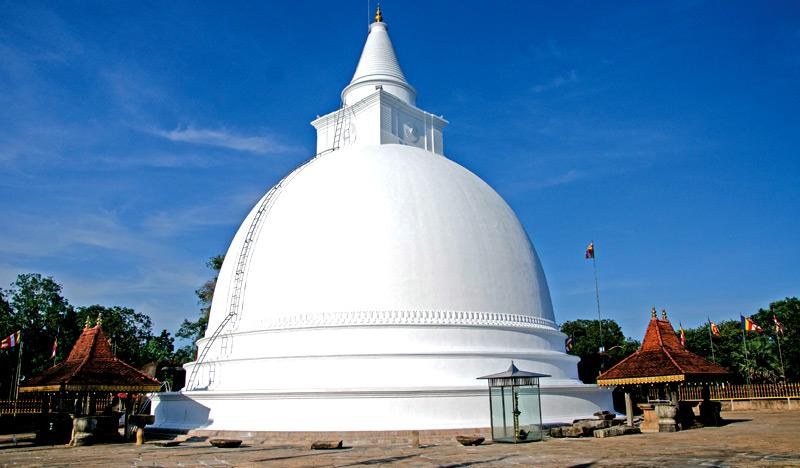
Are you aware that there is a lake that comes only 2nd to anothaththawila? It is majestic and sacred and that is none other than Seruwila located in Trincomalee District, East Sri Lanka. The lake is 7 ½ km in length, There are 3 historical accounts mentioning this lake.
- Sinhala dhathuwansaya
- Pali dhathuwansaya
- Jinakalimaliya
Why is this Seruwila so important? It can be seen to the naked eye. According to Dhathuwansa, Kavantissa Kings’ sister Princess Somadevi, Viharamahadevi’s brother Prince Giriabhaya came & settled in the town of Soma on the edge of Seruwila. It was in Soma town that Somawathi Seya was built. Archaeologists confirm that this is the Ruhunu Somawathiya known today as Wilgamvehera temple. It belongs to the Anuradhapura era & its dagoba architecture resembles the Ruwanweliseya.
Giriabhaya belongs to the Sakkya clan. Somadevi also belongs to the Ruhunu Sakkya clan. The Sakkya clan ruled the entire coastal belt of this island.
A place where Buddha offered flowers is located in Seruwila Mangala Maha Seya where remains of Buddha is enshrined. This is mentioned in the above 3 chronicles. The written history of Seruwila goes back to the time of kakusanda Buddha.Seruwila Maha Seya is to the East of the lake. To the north was the Sudukuda dagoba, this dagoba was bulldozed by extremists and has been turned into a kovil. These ancient sites belong to the Anuradhapura era & should be returned to its rightful owners. North West of the lake is Muttur where some ancient sacred antiquities have been. There are also some sel lipi found belonging to the Anuradhapura era. There are many caves too. These draw our attention to many chronicles about our ancient kings – King GIriabhaya, King Kavantissa, King Walagambha, Prince Dutugemunu, Prince Manabharana,

West of the lake is the Kiliveddy Bodiya a branch from the SriMahabodhi. This bodiya became victim of extremists who cut the bodiya in 1950s. This account is given in Cyril Mathews book which photos of the bodiya. Today in place of the bodiya is a kovil. Should this not be returned to the Buddhists?
To the South of the lake is found Kumbanachchi. This is an ancient & valuable Buddhist site.
South East of the lake is found Mahadatika Maha Naga – this is another ancient viharaya. The exact historical & archaeological importance of this site needs further investigation. This area was damaged by LTTE. Also near this site is where Princess Hemamala & Prince Dantha who travelled with Sri Daladawahanse and descended to lankapatuna. This place is also referred to by Tamils as Elankaturai. The number of antiquity sites and artefacts surrounding Seruwila is immeasurable. The rich history of this lake and the Sinhala Buddhist artefacts and antiquities surround Seru wila is something that needs to be treasured by all. Its historical significance must be valued by all & it must be preserved by all.
Sri Lankans must travel to see these ancient sites and take pride in them & affirm to help preserve and foster them. A country’s cultural heritage is valued by those who do not have a culture and ancient history to be proud of. The tourists that arrive and are awe-struck by our ancient treasures know the value of cultural heritage. It is time Sri Lankans also began valuing what is ours instead of trying to take over and replace ancient sites and aretefacts and create bogus history. This is where Sinhala & Sakkya clan merged to create the civilizational history. Be proud of our heritage & our history.
Arunasiri Kottegoda
Toxic Agriculture and the Gates Foundation: Beware of Gates bearing Gifts?
June 18th, 2023By Raj Gonsalkorale
As for food security, the foundation would do better by supporting agroecological (agrochemical-free) approaches to agriculture, which various high-level UN reports have advocated for ensuring equitable global food security. This would leave smallholder agriculture both intact and independent from Western agro-capital, something which runs counter to the underlying aims of the corporations that the foundation supports – dispossession and market dependency- Environmentalist Dr Rosemary Mason
What is Digital Agriculture? Digital agriculture is reported as the integration of digital technology into livestock and crop management and other processes related to cultivating and managing food resources. The term is often used to describe the different uses for the variety of data collected in this sector. But it’s also about how technology integrates and works throughout the supply chain, from seeds or farm animals to the consumer. It is also referred to as smart agriculture. Smart agriculture needs availability of internet continuously and the ability and familiarity with technology, equipment, and methods, and very importantly, the capacity to use these.
An article by Colin Todhunter titled Toxic Agriculture and the Gates Foundation which prompted this writing (https://www.counterpunch.org/2020/03/02/toxic-agriculture-and-the-gates-foundation/) is worth reading in full considering its importance in light of the Daily FT news items President Ranil Wickremesinghe and representatives from the Bill and Melinda Gates Foundation discussed the digitisation of data in Sri Lanka’s agricultural sector, according to the President’s Media Division” (https://www.ft.lk/ft_tv/Govt-discusses-digitisation-in-agricultural-sector-data-with-Bill-Gates-Foundation/10520-748944) and todays Daily FT news item that a delegation from the Bill Gates Foundation met with the President and other officials to discuss the modalities of assistance that the Foundation could provide towards the digital vision of Sri Lanka (Bill & Melinda Gates Foundation reassures support to Sri Lanka https://www.ft.lk/business/Bill-Melinda-Gates-Foundation-reassures-support-to-Sri-Lanka/34-749101). The news item states based on multiple conversations, with direct feedback coming from President Wickremesinghe, the Government and BMGF teams identified five concrete areas: agriculture, nutrition, financial inclusion, policy discussion and climate change. In agriculture, BMGF is supporting and aiming to formulate an Inclusive Digital Agriculture Transformation (IDAT) blueprint for Sri Lanka while in nutrition, BMFG has partnered with the World Food Program (WFP) to introduce rice fortification in chosen districts as a pilot project. The target impact is roughly around 265,000 school children which will reach over 1500 schools under this program.”
To the best of the writer’s knowledge, the digitalisation vision has not been discussed widely with relevant stakeholders. It is suggested that readers, the government, the Opposition and others who are stakeholders in digitalising agriculture read Colin Todhunters article in full to get a broader perspective of issues relevant to the involvement of the Gates Foundation in pursuing this vision. In saying this, no advocacy is being made against the Gates Foundation, but instead, advocating for appropriate technology for Sri Lanka and environmentally friendly inputs into the goal of achieving food security in the country. Social factors relevant to Sri Lanka too should be uppermost in pursuing this goal.
While there is no argument that better productivity and better utilisation of agricultural land is a must for the country’s food security, if agriculture is to be digitalised in Sri Lanka, thought has to be given as to how digitalised/smart agriculture will impact on the society and whether it will inevitably lead to commercialisation of agriculture which is not in the psyche of the rural folk in the country. Sri Lanka is primarily a rural based small holding agricultural economy, and commercialisation could involve the consolidation of small holdings and the gradual disappearance of the way of life of many Sri Lankans who are rural based. Consideration also has to be given in regard to the beneficiaries of digitalisation such as the industry that will be producing the technological inputs such as robots, drones etc. These are niche industries and probably will be for the foreseeable future, and consequently will be making substantial profits judging by what has been said about the robotics industry doubling their industry value to more than 10 billion US dollars in 5 years as stated in the Advanced Mobile Group website that notes the involvement of digitalisation and the increasing employment of technology in agriculture (https://www.advancedmobilegroup.com/blog/what-is-digital-agriculture-and-what-are-the-benefits,)
Artificial Intelligence is noted as being able to help professionals get the information they need quickly and avoid inefficiencies. Drones are becoming common in the agricultural industry with China, reportedly using them to survey 20 million hectares of cotton crops, observing things that humans on the ground may not be able to see. Drones are said to be employed to provide insights about harvest timing, irrigation, pest protection, and much more.
Cloud Connectivity, that uses real-time internet connection to offer farmers more flexible digital solutions and economies of scale. As many farmers aren’t connected at all, adopting cloud connectivity is a massive upgrade, Data Analytics, it’s mentioned that by 2025, the world will store 175 zettabytes of data. That’s a lot of information to digest. Fortunately, some innovators are creating robust solutions that help those in the agricultural industry collect, store, and make sense of data. One has to ask the question whether these are the futuristic approaches Sri Lanka should adopt and join the rat race, or whether it should look to alternate options more appropriate for the country.
The following excerpts from Todhunter’s article are quoted here. Hopefully those who disagree with the views expressed in the article will present their counter views so that a more informed decision could be taken on the digitalisation vision for Sri Lanka
- The Bill and Melinda Gates Foundation was launched in 2000 and has $46.8 billion in assets (December 2018). It is the largest charitable foundation in the world and distributes more aid for global health than any government. The Gates Foundation is a major funder of the CGIAR system (formerly the Consultative Group for International Agricultural Research) – a global partnership whose stated aim is to strive for a food-secured future. Its research is aimed at reducing rural poverty, increasing food security, improving human health and nutrition and ensuring sustainable management of natural resources.
- In 2016, the Gates Foundation was accused of dangerously and unaccountably distorting the direction of international development. The charges were laid out in a report by Global Justice Now: ‘Gated Development – Is the Gates Foundation always a force for good?‘ According to the report, the foundation’s strategy is based on deepening the role of multinational companies in the Global South.
- Polly Jones, the head of campaigns and policy at Global Justice Now, is quoted as saying The Gates Foundation has rapidly become the most influential actor in the world of global health and agricultural policies, but there’s no oversight or accountability in how that influence is managed. The foundation is relentlessly promoting big business-based initiatives such as industrial agriculture, private health care and education. But these are all potentially exacerbating the problems of poverty and lack of access to basic resources that the foundation is supposed to be alleviating.”
- Mark Curtis, author of a report by Global Justice Now titled ‘Gated Development – Is the Gates Foundation always a force for good? ‘describes how the foundation is working with US agri-commodity trader Cargill in an $8 million project to develop the soya value chain” in southern Africa. Curtis says Cargill is the biggest global player in the production of and trade in soya with heavy investments in South America where GM soya monocrops (and associated agrochemicals) have displaced rural populations and caused health problems and environmental damage”. According to Curtis, the Gates-funded project will likely enable Cargill to capture a hitherto untapped African soya market and eventually introduce GM soya onto the continent. The Gates foundation is also supporting projects involving other chemical and seed corporations, including DuPont, Syngenta and Bayer. It is effectively promoting a model of industrial agriculture, the increasing use of agrochemicals and patented seeds, the privatisation of extension services and a very large focus on genetically modified crops.
- Curtis says that what the Gates Foundation is doing is part of the Alliance for a Green Revolution in Africa (AGRA) initiative, and has been intervening directly in the formulation of African governments’ agricultural policies on issues like seeds and land, opening up African markets to US agribusiness. More than 80% of Africa’s seed supply comes from millions of small-scale farmers recycling and exchanging seed from year to year. But AGRA is promoting the commercial production of seed and is thus supporting the introduction of commercial (chemical-dependent) seed systems, which risk enabling a few large companies to control seed research and development, production and distribution.
- Environmentalist Dr Rosemary Mason notes that the Gates Foundation is reported to be collaborating in Bayer’s promotion of new chemical approaches” and biological crop protection” (i.e. encouraging agrochemical sales and GM crops) in the Global South. She goes on to state that after having read the recent ‘A Future for the World’s Children? A WHO-UNICEF-Lancet Commission’, she noticed that pesticides were conspicuous by their absence in the report authored by Professor Anthony Costello, director of the UCL Institute for Global Health. Although the Costello-led report mentions greater regulation of marketing of tobacco, alcohol, formula milk and sugar-sweetened beverages but no mention of pesticides. The Gates Foundation is a prominent funder of the World Health Organization and UNICEF. Gates has been the largest or second largest contributor to the WHO’s budget in recent years. His foundation provided 11% of the WHO’s entire budget in 2015, which is 14 times greater than the UK government’s contribution. Perhaps this sheds some light onto why a major report on child health would omit the effects of pesticides.
- UN expert on toxics Baskut Tuncak said in a November 2017 article in the Guardian: Our children are growing up exposed to a toxic cocktail of weedkillers, insecticides, and fungicides. It’s on their food and in their water, and it’s even doused over their parks and playgrounds. Many governments insist that our standards of protection from these pesticides are strong enough.
But as a scientist and a lawyer who specialises in chemicals and their potential impact on people’s fundamental rights, Tuncak begs to differ. Last month it was revealed that in recommending that glyphosate – the world’s most widely-used pesticide – was safe, the EU’s food safety watchdog copied and pasted pages of a report directly from Monsanto, the pesticide’s manufacturer. Revelations like these are simply shocking.”
- Tuncak rejected the idea that the risks posed by highly hazardous pesticides could be managed safely. He told Unearthed (GreenPeace UK’s journalism website) that there is nothing sustainable about the widespread use of highly hazardous pesticides for agriculture. Whether they poison workers, extinguish biodiversity, persist in the environment or accumulate in a mother’s breast milk, Tuncak argued that these are unsustainable, cannot be used safely and should have been phased out of use long ago. In his 2017 article, he stated: The UN Convention on the Rights of the Child, the most ratified international human rights treaty in the world (only the US is not a party), makes it clear that states have an explicit obligation to protect children from exposure to toxic chemicals, from contaminated food and polluted water, and to ensure that every child can realise their right to the highest attainable standard of health. These and many other rights of the child are abused by the current pesticide regime. These chemicals are everywhere and they are invisible.”
- Tuncak added that paediatricians have referred to childhood exposure to pesticides as creating a silent pandemic” of disease and disability. He noted that exposure in pregnancy and childhood is linked to birth defects, diabetes, and cancer and stated that children are particularly vulnerable to these toxic chemicals: increasing evidence shows that even at ‘low’ doses of childhood exposure, irreversible health impacts can result. He concluded that the overwhelming reliance of regulators on industry-funded studies, the exclusion of independent science from assessments and the confidentiality of studies relied upon by authorities must change. However, it seems that the profits of agrochemical manufacturers trump the rights of children and the public at large: a joint investigation by Unearthed and the NGO Public Eye has found the world’s five biggest pesticide manufacturers are making more than a third of their income from leading products, chemicals that pose serious hazards to human health and the environment.
- Dr Rosemary Mason refers to an analysis of a huge database of 2018’s top-selling ‘crop protection products’ which revealed the world’s leading agrochemical companies made more than 35% of their sales from pesticides classed as highly hazardous” to people, animals or ecosystems. The investigation identified billions of dollars of income for agrochemical giants BASF, Bayer, Corteva, FMC and Syngenta from chemicals found by regulatory authorities to pose health hazards like cancer or reproductive failure.
- This investigation is based on an analysis of a huge dataset of pesticide sales from the agribusiness intelligence company Phillips McDougall. This firm conducts detailed market research all over the world and sells databases and intelligence to pesticide companies. The data covers around 40% of the $57.6bn global market for agricultural pesticides in 2018. It focuses on 43 countries, which between them represent more than 90% of the global pesticide market by value.
- While Bill Gates promotes a chemical-intensive model of agriculture that dovetails with the needs and value chains of agri-food conglomerates, Mason outlines the spiraling rates of disease in the UK and the US and lays the blame at the door of the agrochemical corporations that Gates has opted to get into bed with. She focuses on the impact of glyphosate-based herbicides as well as the cocktail of chemicals sprayed on crops.
- Mason presents evidence that glyphosate causes epigenetic changes in humans and animals – diseases skip a generation then appear. However, the mainstream narrative is to blame individuals for their ailments and conditions which are said to result from ‘lifestyle choices’. Yet Monsanto’s German owner Bayer has confirmed that more than 42,700 people have filed suits against Monsanto alleging that exposure to Roundup herbicide caused them or their loved ones to develop non-Hodgkin lymphoma and that Monsanto covered up the risks. Mason says that each year there are steady increases in the numbers of new cancers and increases in deaths from the same cancers, with no treatments making any difference to the numbers; at the same time, she argues, these treatments maximise the bottom line of the drug companies while the impacts of agrochemicals remains conspicuously absent from the disease narrative.She states that we are exposed to a lifetime’s exposure to thousands of synthetic chemicals that contaminate the blood and urine of nearly every person tested – a global mass poisoning.”
Gates Foundation in perspective
Rosemary Mason says that as part of its hegemonic strategy, the Gates Foundation says it wants to ensure global food security and optimise health and nutrition. However, she alludes to the fact that the Gates Foundation seems happy to ignore the deleterious health impacts of agrochemicals while promoting the interests of the firms that produce them, but it facilitates many health programmes that help boost the bottom line of drug companies.
Health and health programmes seem only to be defined with certain parameters which facilitate the selling of the products of the major pharmaceutical companies which the foundation partners with. Indeed, researcher Jacob Levich argues that the Gates Foundation not merely facilitates unethical low-cost clinical trials (with often devastating effects for participants) in the Global South but also assists in the creating new markets for the dubious” products of pharmaceuticals corporations. And these aims have been part of a decades-long strategy where we have seen the strengthening of an emerging global food regime based on agro-export mono-cropping linked to sovereign debt repayment and World Bank/IMF ‘structural adjustment’ directives. The outcomes have included a displacement of a food-producing peasantry, the consolidation of Western agri-food oligopolies and the transformation of many countries from food self-sufficiency into food deficit areas.
While Bill Gates is busy supporting the consolidation of Western agro-capital in Africa under the guise of ensuring ‘food security’, it is very convenient for him to ignore the fact that at the time of decolonisation in the 1960s Africa was not just self-sufficient in food but was actually a net food exporter with exports averaging 1.3 million tons a year between 1966-70. The continent now imports 25% of its food, with almost every country being a net food importer. More generally, developing countries produced a billion-dollar yearly surplus in the 1970s but by 2004 were importing US$ 11 billion a year.
The Gates Foundation promotes a (heavily subsidised and inefficient – certainly when the externalised health, social and environment costs are factored in) corporate-industrial farming system and the strengthening of a global neoliberal, fossil-fuel-dependent food regime that by its very nature fuels and thrives on, among other things, unjust trade policies, population displacement and land dispossession (something which the Gates Foundation once called for but euphemistically termed land mobility”), commodity monocropping, soil and environmental degradation, illness, nutrient-deficient diets, a narrowing of the range of food crops, water shortages, pollution and the eradication of biodiversity.
At the same time, the foundation is helping powerful corporate interests to appropriate and commodify knowledge. For instance, since 2003, CGIAR (mentioned at the start of this article) and its 15 centres have received more than $720 million from the Gates Foundation. In a June 2016 article in The Asian Age, Vandana Shiva says the centres are accelerating the transfer of research and seeds to corporations, facilitating intellectual property piracy and seed monopolies created through IP laws and seed regulations. Besides taking control of the seeds of farmers in CGIAR seed banks, Shiva adds that the Gates Foundation (along with the Rockefeller Foundation) is investing heavily in collecting seeds from across the world and storing them in a facility in Svalbard in the Arctic — the ‘doomsday vault’.
The foundation is also funding Diversity Seek (DivSeek), a global initiative to take patents on the seed collections through genomic mapping. Seven million crop accessions are in public seed banks.
Shiva says that DivSeek could allow five corporations to own this diversity and argues: Today, biopiracy is carried out through the convergence of information technology and biotechnology. It is done by taking patents by ‘mapping’ genomes and genome sequences… DivSeek is a global project launched in 2015 to map the genetic data of the peasant diversity of seeds held in gene banks. It robs the peasants of their seeds and knowledge, it robs the seed of its integrity and diversity, its evolutionary history, its link to the soil and reduces it to ‘code’. It is an extractive project to ‘mine’ the data in the seed to ‘censor’ out the commons.” She notes that the peasants who evolved this diversity have no place in DivSeek – their knowledge is being mined and not recognised, honoured or conserved: an enclosure of the genetic commons.
This process is the very foundation of capitalism – appropriation of the commons (seeds, water, knowledge, land, etc.), which are then made artificially scarce and transformed into marketable commodities. The Gates Foundation talks about health but facilitates the roll-out of a toxic form of agriculture whose agrochemicals cause immense damage. It talks of alleviating poverty and malnutrition and tackling food insecurity but it bolsters an inherently unjust global food regime which is responsible for perpetuating food insecurity, population displacement, land dispossession, privatisation of the commons and neoliberal policies that remove support from the vulnerable and marginalised, while providing lavish subsidies to corporations.
The Gates Foundation is part of the problem, not the solution. To more fully appreciate this, let us turn to a February 2020 article in the journal Globalizations. Its author, Ashok Kumbamu, argues that the ultimate aim of promoting new technologies – whether GM seeds, agrochemicals or commodified knowledge – on a colossal scale is to make agricultural inputs and outputs essential commodities, create dependency and bring all farming operations into the capitalist fold.
On first reading Sir Edwin Arnold’s THE LIGHT OF ASIA – II
June 18th, 2023By Rohana R. Wasala Courtesy The Island
Edwin Arnold’s purpose in composing the epic The Light of Asia, then, was to give readers an unbiased idea about the exalted personality of prince Siddhartha and the general substance of his teaching. But he was not addressing this task in a religious cultural vacuum. He had to take care not to step too hard on the religious toes of his contemporary Christian compatriots. Undaunted by that challenge, Arnold opens his monumental epic with the line
‘The Scripture of the Saviour of the World’,
which was startling in its being used to mean the Buddha and his doctrine. It must have sounded very distasteful to the Christian readers of the West, because it was not about Christ, but about the little known Indian sage the Buddha. But then, it was a time of profound intellectual upheaval. The Age of Reason or the Enlightenment in Europe of well over one and a half centuries duration had preceded Charles Darwin’s revolutionary theory of biological evolution, that came to be known to the world through the publication of his epoch-making book ‘On the Origin of Species by Means of Natural Selection’ (1859). By that time the Buddha was not totally unknown in the West. Ideas of ancient Eastern philosophers like Confucius of China and the Buddha of Bharat (India) as well as thoughts of their Western counterparts like Plato had influenced European thinkers of the time such as David Hume, Emmanuel Kant, and John Locke who figured in the enlightenment movement in Europe that came to be called the Age of Reason (1685-1815). The growing scientific ethos among the people undermined traditional religion and the fast spreading general scepticism regarding long held beliefs dealt a severe blow on theistic religion. Edwin Arnoldl’s senior contemporary Matthew Arnold (1822-1888), in his dramatic monologue ‘Dover Beach’ (1867), could only hear the receding ‘Sea of Faith,’
Its melancholy, long, withdrawing roar
Retreating to the breath
Of the night-wind, down to the vast edges drear
And the naked shingles of the world.
The bleak barren desolate scene (with the ‘naked shingles of the world’: picture the wet pebbles on the indifferent beach constantly washed by the weeping waves) is a very depressing image of the uncertainty, the despair and the sadness that descended on a world that was losing the emotionally stabilising power of traditional religious faith. But it was also a time of bold inquiry and burgeoning hope. Edwin Arnold must have been emboldened by the existing zeitgeist of his time to shock his potential readers thus, only to offer them another more rational source of refuge to explore.
In terms of structure, The Light of Asia consists of eight cantos: Book the First, Book the Second, and so on up to Book the Eighth. The long epic poem employs the blank verse form, that is, lines of poetry without rhyme, that use a definite metre (a recurring pattern of rhythm) nevertheless. From the beginning to the end, the narrative is delivered in iambic pentameter lines (i.e., each line is made up of five metrical feet, each foot here being an iamb, that is, a foot consisting of a short syllable followed by a long syllable.Take any line from the poem, you can scan it into five iambic feet. But of course, occasionally, there are functional variations of the metre (as explained below). The opening line of Book the First (hence, of the whole poem) is ‘The Scripture of the Saviour of the World’, which can be scanned thus: The Scrip/ture of/the Sa/viour of/the World; the resulting stress pattern highlights the important words: Scripture, Saviour, World. The blank verse form more closely imitates the rhythm of natural speech than rhymed verse does, and, additionally, it makes for easy narrative continuity.
In Book the First, we are given the usual fictionalised narrative of how the Buddha-to-be descended from heaven to be born in the world of humans. Arnold recounts such details as Maya’s dream, its interpretation, and before all that, the ‘five sure signs of birth’ (which, though not specified in the poem, are equivalent to what we are familiar with as the Pas Maha Belum/the Great Fivefold Observation {kaalaya, deepaya, deshaya, kulaya, maata/time, land, state, caste, mother}) that preceded the Bodhisattva’s descent to the earth from ‘that sky’ (or the Tusita heaven according to Theravada Buddhist literature).
(Queen Maya)
Dreamed a strange dream; dreamed that a star from heaven –
Splendid, six-rayed, in colour rosy-pearl,
Whereof the token was an Elephant
Six-tusked, and white as milk of Kanadhuk –
Shot through the void; and shining into her,
Entered her womb upon the right…….
Thus was Siddhartha (the Bodhisattva/Buddha-to-be) conceived in his earthly mother’s womb. The birth takes place under a Palsa in the Palace-grounds in Kapilavastu (instead of under the shade between two Shala/Sal or cannonball trees on the way to Maya’s maternal home in Rajagriha/Rajgir, according to the story we know):
The conscious tree bent down its bows to make
A bower about Queen Maya’s Majesty;
And Earth put forth a thousand sudden flowers
To spread a couch……………
The narration of these miraculous occurrences which were claimed to have accompanied the birth of Siddhartha (‘All-Prospering’) did not spoil my enjoyment of the story, which was already known to me with similarly fantastic details, despite my then growing scepticism towards religion. People of different faiths usually adopt a healthy ‘suspension of disbelief’ when confronted with such fanciful accounts of events connected with the lives of religious figures that they adore, mostly because they are rational enough to read them as literature (a fact that Arnold himself was aware of and wanted his readers to understand as well).
The Queen mother dies seven days after the prince’s birth because she was ‘grown too sacred for more woe – And life is woe…………’
When old enough to learn all that a warrior prince should learn (for the Gautamas belonged to the warrior/military caste, Kshatriya), Siddhartha is entrusted to the wisest teacher available: Vishvamitra. But struck by the extraordinary precocity of his ‘softly-mannered, modest, deferent, tender-hearted…..’ royal charge, the old teacher
Prostrated before the boy; For thou”, he cried,
Art Teacher of thy teachers – thou, not I,
Art Guru. Oh I worship thee, sweet Prince!
The young prince also excelled in physical feats that formed a part of his training. He was a bold horseman and a skillful chariot driver. But he was so kindhearted that
Yet in mid-play the boy would oft-times pause,
Letting the deer pass free; would oft-times yield
His half-won race because his labouring steeds
Fetched painful breath; ……………………
One day while in play, Siddhartha’s cousin Devadatta shoots a swan with an arrow and the injured bird falls to the ground. Siddhartha picks it up, removes the dart, and applies a poultice of soothing herbs on the wound. Though Devadatta demands to have the bird that he has shot down, Siddhartha refuses to give it back. An unknown priest suddenly appears to mediate between the two cousins, and he hands the bird to Siddhartha, saying that ‘the cherisher of life deserved the living bird, and not its slayer’. When the father king looks for the mysterious priest to reward him, he finds that he has disappeared:
And someone saw a hooded snake glide forth, –
The gods come oft-times thus! So our Lord Buddh
Began his works of mercy………………
It is in Book the Second that Arnold is seen giving full play to whatever he imbibed from his literary-aesthetic interaction with the Gita Govinda of Jayadeva, which Arnold seems to have used as a model for his own poetic masterpiece. The absolute devotion to the Buddha that Arnold expresses as an imaginary Buddhist votary in the capitalised last lines of the poem quoted in the epigraph to this essay indicates that his discovery of Buddhism was indeed a life changing experience.
While continuing my own narrative here, I consider this point an appropriate place to say something again about the form of the epic poem we are having a glance at. Now, too rigid an adherence to a set metrical foot is boringly mechanical at times (See the second paragraph above). Poets avoid this by varying it according to the context (as Shakespeare did in his plays). For example, from Book the Second we have
‘But they/ who watched/ the Prince/ at prize/-giving
Saw and/ heard all/ and told/ the care/ful King’
Here, the first line is a perfect iambic pentameter line. In the second line, however, the first two feet are trochees, not iambs; in a trochee, in contrast to an iamb, the stress or accent falls on the first syllable: Saw and/heard all/…. The context in the poem is where some courtiers, who have been attending on prince Siddhartha during a festival of royal beauties arranged by his father the ‘careful’ (full of care, i.e., worried, anxious) king Suddhodana on the advice of his wisemen to distract his eighteen year old young son from a premature otherworldliness that they had observed in his demeanour, are reporting to the king a sudden brightening of the prince’s mood on seeing the beautiful princess Yashodhara. What the watchful guards saw and heard passing between the two (Siddhartha and Yashodhara) gladdened them: they had instantly fallen in love with each other.
Whereas every one of the other maidens who came to receive gifts from the prince that day, even the fairest one among them,
….stood like a sacred antelope to touch
The gracious hand, then fled to join her mates
Trembling at favour, so divine he seemed,
So high and saint-like and above her world,
Yashodhara alone ‘Of heavenly mould’
Gazed full – folding her palms across her breasts –
On the boy’s gaze, her stately neck unbent.
Is there a gift for me?” she asked, and smiled.
The gifts are gone”, the Prince replied yes take
This for amends, dear sister, of whose grace
Our happy city boasts”, therewith he loosed
The emerald necklet from his throat, and clasped
Its green beads round her dark and silk-soft waist;
And their eyes mixed, and from the look sprang love.
Those who stood nearest (the guards, no doubt) saw ‘the princely boy – Start, as the radiant girl approached….’ and they heard the sweet exchanges between the two instant lovers.
The brief break in the metre in the verse line that records this (‘Saw and/ heard all/ and told/ the care/ful King’) highlights their (the guards’) sudden joy and excitement at being finally able to bear the long awaited news of their happy finding to the fond father, the king they serve with so much love and loyalty.
This is a climactic moment of the whole scene (where the prince, set to choose his bride/his future queen consort, has just been rescued from his accustomed otherworldly melancholia). The king’s stratagem seems to be working. He wants his son to be a Chakravartin (lit. Turner of the Disc, a universal monarch) who will rule the world, not a holy man of wondrous wisdom. (As described in Book the First, these were the two alternative destinies that the dream-readers predicted for the baby conceived that night by Queen Maya. Ultimately, though,as we know, the king’s ambition for his son was not fulfilled. Siddhartha became Buddha instead of a Chackravartin.)
Long after Siddhartha attained Buddhahood, he is asked why thus his heart – Took fire at first glance of the Sakya girl”, and he recalls an earlier life long gone by as
A hunter’s son, playing with forest girls
By Yamun’s springs, where Nandadevi stands,
Sate umpire while they raced beneath the firs
……………………………………………..
One with fir-apples; but who ran the last
Came first for him, and unto her the boy
Gave a tame fawn and his heart’s love beside.
This is just like a scene from Jayadeva’s Gita Govinda. Krishna/Govinda plays with Radha in a forest glade on the banks of the very same Yamuna. It is one of the swooning love scenes between the resplendent Blue God Krishna (in the form of Govinda) and the radiantly fair human cowherdess Radha during their heavenly trysts that Jayadeva enacts for us in his poem. While giving his account of the Siddhartha Yashodhara romance, Arnold is trying to infuse his poem with a touch of the divine magic of Jayadeva’s poetry.
Father Suddhodana creates for his son ‘….. a pleasant prison-house – Where love was gaoler and delights its bars’. The poet beautifully paints how the prince gradually grows tired of those delights. Around the end of Book the Fourth, Siddhartha has decided to renounce everything and embark on his lonely search for the Truth as a mendicant recluse. Channa, his charioteer, asks him:
Wilt thou ride hence and let the rich world slip
Out of thy grasp, to hold a beggar’s bowl?
Wilt thou go forth into the friendless waste
That has this Paradise of pleasures here?
The Prince made answer, Unto this I came,
And not for thrones: the kingdom that I crave
Is more than many realms – and all things pass
To change and death………
The rest of the poem actualizes the ascetic Gautama’s painful exploration and his blissful ultimate discovery. Book the Seventh and Book the Eighth outline the doctrines of the Buddha as Edwin Arnold conceived of them in his essentially limited understanding of the Dhamma, which consisted of ‘the fruits of considerable study’ though.
Concluded
SRI LANKAN PRISONS SHOULD BE UPTO INTERNATIONAL STANDARD
June 18th, 2023By Dr Tilak S. Fernando
It was recently disclosed that Sri Lankan Prions should be called a persistent issue, but nothing has been done to make inmates comfortable tointernational standards. Today it is recorded that a 260 per cent increase in prisons, criticised as ‘dungeons’ and some over-crowded prisons, make the worst criminals.
Some International prisons, which are said to be in developed, counties such as the USA or Britain, humanely treat prisoners with separate rooms for inmates and library facilities with separate toilets and washrooms. After all, prisoners are also human beings made out of feelings, blood and bones. Just because they are tempted to be criminals or drug addicts, should they be treated crudely?
In some cases, toilet pans and wash basins are the same room where one sleeps on a mat on the ground. Mosquito-infested rooms make it worse for inmates. Although the writer has not visited any prison to see the prevailing conditions, he goes by what he hears. From the TV, he has seen how washing clothes is done and queuing up to get prisoner’s meals.
Prisons are meant to rehabilitate criminals and drug addicts.
If the prison sentence means rehabilitating them on the right path, it should be the opposite factor in Sri Lanka. It is why inmates sometimes turn to criminal activities such as climbing up to roofs of the prison block and doing other shady deeds. During the previous Government, a few inmates were targeted and shot at. In this way, how can prisons become rehabilitation units?
The Government has yet to decide not to build more prisons. If that is the case, the Government should reduce congestion in prisons, and minor offenders released, who cannot pay their fines. Overcrowding adds up to congestion, and feeding them costs so much. A state minister once suggested it, but for some reason, it was not implemented up to date. As a first step for offenders who could not pay their fines, actions should be taken against prisoners who could not pay their fines to be released from prison on any particular day, such as Independence Day, Vesak, Poson and any other special day.
Thriving Business from Outside
There is a thriving drug business directly from benind the Welikada Prison walls. It was highlighted in the Sri Lankan media recently how the drug Lords operate from behind the prison walls with links to their Sri Lankan drug Lords working from overseas countries and having direct links with their local agents. How many times corrections officers were involved with aiding and abetting drugs? Relations who visit to see prisoners should not be allowed to bring any parcels or packets. How many times do key prisoners or drug Lords found using mobile phones? What action have the authorities taken about it? It only has become a TV joke!
Corrupt officials everywhere
In prisons, with the help of corrupt prison officials, most guards continue with the drug business from behind the prison walls. Murders related to drug rivals are on the increase. Once, a High Court Judge was planned and murdered behind the prison walls in which he was assassinated by gunshot wounds on 20th November 2004. He was, at the time, 58 years old.
Today, many drugs (especially ICE) speedily spread among schoolchildren, which is highly dangerous and could affect the younger generation commencing from school. Many have killed their parents after taking this drug (particularly the drug (ICE). Moreover, lovers face death daily due to using sharp instruments on victims. The fact remains that once the person is puzzled by ‘ICE’, one does not know how he behaves.
If prisons are meant for rehabilitation, prisons have today become stores of criminal offences for which reasonable remedies need finding by the authorities.
tilakfernando@gmail.com
The war in Ukraine and the fight over raw materials
June 18th, 2023Gregor Link Courtesy wsws.org
The war in Ukraine is also a battle for raw materials. The country has large deposits of iron, titanium and lithium, some of which are now controlled by Russia.” That’s what the federally owned German foreign trade agency Germany Trade and Invest (GTAI) reported on its website on January 16 under the title Ukraine’s raw materials wealth at risk.”
There are trillions at stake. According to the GTAI, raw material deposits worth $12.4 trillion” remain beyond the control of the Ukrainian army, including 41 coal mines, 27 gas deposits, 9 oil fields and 6 iron ore deposits.” Ukraine has not only coal, gas, oil and wheat but also rare earths and metals—especially lithium, which has been called the white gold” of the transition to new energy and transportation technologies. The country accounts for around one-third of Europe’s explored lithium deposits.
Only the ignorant could believe that this is irrelevant to NATO’s war aims. It would be the first major war in over 100 years that is not about mineral resources, markets and geostrategic interests. The World Socialist Web Site has pointed out in previous articles that deposits of critical raw materials in Russia and China, which are essential to the transition to electric mobility and renewable energy, are an important factor in the war calculus of NATO states.
Yet they go unmentioned in the media’s round-the-clock war propaganda. The media wish the public to believe that NATO is waging this war to defend freedom” and democracy”—and that after bombing Afghanistan, Iraq, Libya and Syria back into the Middle Ages under similar pretexts.
Relevant trade journals, industry magazines and think tanks, on the other hand, rave about Ukraine’s mineral wealth and discuss how best to capture it. It was to this end that German Economics Minister Robert Habeck (Green Party) even traveled to Ukraine at the beginning of April with a high-ranking business delegation.
According to the industry magazine Mining World, Ukraine has a total of around 20,000 raw material deposits, of which only 7,800 have been explored. Numerous other articles and strategy papers openly state that this is what the war is about.
On February 24, 2022, the day of the Russian invasion of Ukraine, the largest German business magazine, Capital, published an article stating that Europe’s supply of raw materials” was threatened” by the Russian occupation of eastern Ukraine. Ukraine was not only the leading grain exporter” but also the largest EU supplier of iron ore pellets and a linchpin for Europe’s energy security.” Among investors, the magazine said, there is concern that the war will cut off exports of key raw materials.”
The GTAI article cited earlier reports that European steel mills were sourcing nearly one-fifth of their iron ore pellets from Ukraine in 2021. GTAI goes on to write that Ukraine is among the top ten producers of iron ore, manganese, zirconium, and graphite, and is among the world leaders in titanium and kaolin.” In addition to untapped oil and gas fields,” Ukraine’s lithium and titanium deposits, in particular, hold enormous potential” for the European economy. In 2020, production volumes amounted to 1,681,000 tons of kaolin, 537,000 tons of titanium, 699,000 tons of manganese and 49,274,000 tons of iron ore.
Lithium for electromobility and energy storage
The price of lithium has increased more than eightfold in the last decade and is the subject of intense speculation. The metal is of strategic importance to the major imperialist powers because it is used in lithium-ion batteries installed in electric vehicles and off-grid renewable energy sources, and is also needed for lightweight aluminum alloys in the aerospace industry.
The largest lithium deposit in Europe is located in the Donetsk Oblast in the middle of the embattled Donbas region, only kilometers from the front lines. An article in the Tagesspiegel, published two months after the Russian invasion, points to untapped lithium reserves of 500,000 tons in Shevchenko near Potrovsk and at least two other Ukrainian deposits.
Western companies and Ukrainian oligarchs were already fighting bitterly for control of this white gold” before the war. As the Tagesspiegel reports, Ukrainian businessmen” (who stood close to the Ukrainian government of the time under the oligarch Petro Poroshenko) with connections to Western mining companies obtained mining licenses, without a tender process, for the lithium deposit in Shevchenko as early as 2018.
The company in question, Petro Consulting—which was renamed European Lithium Ukraine” shortly before the war began—is expected to be bought out by the Australian-European mining company European Lithium once its access to Ukraine’s lithium reserves is secured.
In 2018, when the Ukrainian Geological Survey refused to issue a special permit” for Ukraine’s second largest lithium deposit at Dobra, likewise bypassing the tender process, Petro Consulting went so far as to sue the agency. After the Ukrainian Procurator General’s Office eventually launched an investigation into the allegedly illegal special permits, Petro-Consulting had its Shevchenko mining license revoked by the courts in April 2020 until further notice.
However, a spokesman for European Lithium told Der Tagesspiegel that the company bears no risk in connection with the Ukrainian deposits.” He expressed confidence that the projects would be made production-ready” after the end of the war.
Titanium for the Western arms industry
In a September 2022 article titled Ukraine’s Titanium Can Armor the West,” the transatlantic think tank Center for European Policy Analysis (CEPA) wrote: Support for Ukraine has been driven by strategic concerns and moral-political values. But long-term Western help should also be based on solid material interests.”
Ukraine’s substantial titanium deposits” are a key resource critical to the West” because the metal is integral to many defense systems,” such as aircraft components and missiles. Currently, the raw material for Airbus, Boeing and Co. is extracted in an expensive and time-consuming six-step process” from titanium ore, which until then had been sourced to a considerable extent from Russia. This dependence” on strategic competitors and adversaries” is unacceptable from the West’s point of view and can be ended with the help of Ukrainian resources:
For example, Dnipro-based Velta, the largest private exporter of raw titanium in Europe, has developed a new production system that bypasses the intensive process of producing titanium sponge and could supply the US and European defense and aerospace industries with finished metal. Given there are only five countries in the world actively producing titanium sponge —China, Russia, Kazakhstan, Japan and Ukraine — Velta’s technology could be a game changer for the supply chain by cutting reliance on Russia and China.
CEPA is funded by US and European defense contractors and lists as members of its scientific advisory board” Donald Trump’s National Security Advisor General H. R. McMaster, former German Defense Minister Annegret Kramp-Karrenbauer, former Swedish Prime Minister Carl Bildt and publicists Anne Applebaum, Francis Fukuyama, and Timothy Garton Ash among others.
The CEPA article continues, Reorienting titanium contracts to Ukraine would stimulate the country’s economy, even during wartime, not to mention during postwar reconstruction, and simultaneously strike another blow at Russia’s war machine.” The goal, it states, should be cementing Ukraine’s integration into Europe.”
A January 28, 2023 report in Newsweek reports, there is a nascent effort underway in the U.S. and allied nations to identify, develop, and utilize Ukraine’s vast resources of a key metal crucial for the development of the West’s most advanced military technology which will form the backbone of future deterrence against Russia and China.” The report adds, If Ukraine wins, the U.S. and its allies will be in sole position to cultivate a new conduit of titanium.”
Strategic raw materials partnership” between EU and Ukraine
The US and EU efforts to plunder Ukraine’s lithium and titanium deposits are part of the broader goal of tying Ukraine to the West as a strategic raw materials supplier. In particular, the EU is seeking to free itself from dependence on China—currently its most important raw materials supplier—against which the imperialist powers, especially the United States, are preparing to wage war.
On July 13, 2021, Ukrainian Prime Minister Denys Shmyhal and Maroš Šefčovič, Vice President of the European Commission, signed a Strategic Partnership on Raw Materials and Batteries” in Kiev to integrate critical raw materials and battery value chains.” Ukraine’s inclusion in the European Raw Materials Alliance (ERMA) and the European Battery Alliance (EBA) serves to bolster Europe’s resilience and open strategic autonomy in key technologies,” the EU Commission said.
Referring to the list of critical raw materials in the EU’s associated action plan,” Šefčovič told the press, 21 of these critical raw materials are in Ukraine, which is also extracting 117 out of 120 globally used minerals.” He added: We’re talking about lithium, cobalt, manganese, rare earths—all of them are in Ukraine.”
Following the signing, EU Internal Market Commissioner Thierry Breton, who is also responsible for the defense and space industries of EU countries, praised the high potential of the critical raw material reserves in Ukraine” that could help in addressing some of the strategic dependencies [of the EU].”
Speaking at Raw Materials Week in Brussels in November 2022, Prime Minister Shmyhal stressed that Ukraine is among the top ten producers of titanium, iron ore, kaolin, manganese, zirconium and graphite” and renewed his pledge to make the country an integral part of industrial supply chains in the EU.”
The EU’s strategic dependencies” are by no means limited to Russia or China and certainly not to Ukraine. A global race for strategic sources of raw materials has long since begun, in the course of which the US and the leading EU powers are attempting to divide among themselves the mineral resources and other resources of the weaker” states. Although they are jointly waging war against Russia in Ukraine, this inevitably exacerbates conflicts between themselves as well.
The escalation of the war in Ukraine shows that the ruling elites are willing to go to extremes to enforce their profit interests. Only the working class can put an end to permanent war and the prospect of devastating nuclear war by bringing the resources of the entire planet under its democratic control on the basis of a socialist program and holding war profiteers to account.
The Significance of Eid al-Adha and Qurbani for Muslims
June 18th, 2023Mohammad Abdullah
In the religion of Islam, the 12th and final month of the Islamic (lunar) year is Dhul Hijjah, which is an incredibly holy and sacred time. It is the month in which two significant events are observed: Qurbani and Eid al-Adha (sometimes called ‘big Eid’ or ‘greater Eid’). The two events are closely linked due to their consecutive timing.
Eid al-Adha is a three-day celebration that is not too dissimilar to Eid al-Fitr. It is a time for families and friends to come together, exchange gifts, eat food and pray together. Like Eid al-Fitr, Eid al-Adha is a celebration for completing a religious duty. In the case of Eid al-Fitr, the religious duty is Ramadan, and with Eid al-Adha, it is Qurbani.
Qurbani or sacrifice is an important act of worship. There were sacrifices in all ages since Adam (AS.). However, the method of obtaining it was not the same. Qurbani of Mohammadi in Shariah is Sunnah of Ibrahimi in Milla. This sacrifice came from there.
It is included in Shay’re Islam i.e. the symbolic precepts of Islam. Apart from this, arrangements are made to entertain the poor and the poor and the neighbours. Qurbani teaches unconditional obedience to Allah and His Messenger. In addition, there is a picture of sacrifice and abandonment for the sake of Allah Ta’ala.
Allah Ta’ala says, ‘So pray to your Lord Allah, and sacrifice (to Him Alone). .’ (Surah Kawsar, verse 2)
In another verse, “(O Messenger!) you say, My prayer, my sacrifice, my life, my death (i.e. my everything) are dedicated to Allah Rabbul Alamin, the Cherisher of the Worlds .” (Surah An’am, verse: 162)
There is wisdom and teaching in the slaughtering of animals for the sake of the love of Allah and the sacrifice and abandonment of all one’s illegitimate needs and animality. So from the sacrifice one should take the spirit and passion of suppressing evil instincts. Therefore, sacrifice includes the essence of worship, as well as the practice of piety.
Allah Ta’ala has said, ‘ Neither their flesh reaches Allah nor their blood; it is your piety that reaches Him. He has subjected these animals (to you) that you may magnify Allah for the guidance He has bestowed upon you. Give glad tidings, (O Prophet), to those who do good. ‘ (Surah Hajj, verse: 37) (https://myislam.org/surah-al-hajj/ayat-37/)
The main teaching of sacrifice is the acquisition of piety and reformation of the soul. Externally this state of mind of the sacrificer cannot be perceived. It is a personal matter. If a person’s heart is pure, then the whole body becomes pure.
Allah will judge the servant by looking at his heart. Qurbani is the perfect time to test how pure and beautiful one’s heart is to Allah. Sacrifices come and go; But what is the result of this in our personal and social life? Many times in my life I have celebrated the Eid of Sacrifice by sacrificing animals; But my sacrifice has been accepted? Have you thought about why not? What lessons have been learned from this?
Another lesson of Qurbani Eid is not to enjoy Eid alone. Eid means joy. Share your happiness with the poor. Trying hard to put a smile of happiness on their face as much as possible.
We should sacrifice our animal nature along with the animal sacrifice and vow that even after life we do not forget the lesson of sacrifice. Besides making life beautiful and happy by using the education of sacrifice. May Allah bless us. Amen.
The History of Qurbani
Qurbani is, as mentioned, a highly religious time. The story of Qurbani begins with the Prophet Ibrahim (AS).
The Qurbani Eid story recounts that Prophet Ibrahim (AS) had a dream, not once, but repeatedly where he was being asked by Allah (SWT) to sacrifice his son Ismail (AS). This was a test of love and submission towards Allah. He surrendered to Allah’s (SWT) command without hesitating and prepared himself and his son for sacrifice.
It is said that Prophet Ibrahim (AS) took his son to Mount Arafat to perform the sacrifice. He described his dream to his son upon reaching the mountain, to which his son obliged and echoed the same beliefs that this was an act of obedience towards Allah (SWT).
However, as he tied his son with a rope and was about to slaughter him, Allah (SWT) replaced Ismail (AS) with a ram, and Prophet Ibrahim (AS) slaughtered the animal instead. His son Ismail (AS) was standing perfectly fine right next to him, much to his disbelief.
How Muslims Give Qurbani
On the 10th day of Dhul Hijjah, Muslims all over the world perform the act of Qurbani where they slaughter an animal and celebrate the wonderful occasion of Eid al-Adha. They celebrate this devotion and belief of Prophet Ibrahim (AS) and Ismail (AS).
Every Muslim who is of age and who has the means to do so must give Qurbani, and when they sacrifice the animal, they must) do so in adherence to the following rules: (https://www.muslimaid.org/media-centre/blog/the-significance-of-qurbani/)
- Sheep and goats must be at least one year old
- Cows and buffalos must be at least two years old
- Camels must be at least five years old
In addition, all Qurbani animals must be in good health and must not:
- Be blind (missing a third of their sight or more), or missing an eye
- Be missing half or more of their teeth
- Be underweight/thin/lean
- Be lame/limping (they need to be able to walk to the place of sacrifice themselves)
- Have horns that are broken at the root
As well as the above rules, there are rules about how a Muslim should sacrifice an animal in order to give Qurbani. They must ensure:
- The slaughter knife is sharp so that unnecessary pain and suffering is avoided (it cannot be sharpened in front of the animal)
- No animal is slaughtered in front of another Qurbani animal
- They are at least present for the sacrifice if they do not have the knowhow to do it themselves
- They say the words Bismillah, wa Allahu Akbar” at the time of the slaughter
- The animal is not skinned until it is entirely cold
Why Do Muslims Have to Give Qurbani?
The Qurbani story is a remarkable illustration of unconditional love and commitment. It speaks volumes of faith and devotion towards the Almighty, in every sense. It represents Prophet Ibrahim’s (AS) and Ismail’s unmatched loyalty and fervour towards their religion and their Creator.
The significance of Qurbani in Islam holds great value and is an act of devotion towards Allah (SWT), but it is also an act of giving to others in their time of need. Traditionally, an animal that is slaughtered for Qurbani is divided into three shares: one share for the donor and their family, one share for the donor’s friends, and one share for someone in need.
බලය ලබාගැනීම සහ එහි රැඳීසිටීම සඳහා සුළු ජන ඡන්ද ලබා ගැනීමට තම මාතෲභූමියත්, එහි භූමිපුත්රයින් මෙන්ම වසර 2500 කට වැඩි අඛන්ඩ ප්රෞඩ ඉතිහාසයක හා සන්ස්කෘතියක උරුමයක් ඇතුළු ජාතියක සමස්ථ ශිෂ්ඨාචාරයම පාවාදෙන දේශපාලඥයින් සිටින ලෝකයේ එකම රට ශ්රී ලන්කාව
June 18th, 2023දේශමාන්ය ආචාර්ය සුදත් ගුණසේකර
මේ ලෝකයේ වසර 2500 කට වැඩි අඛන්ඩ ප්රෞඩ ඉතිහාසයක හා ශ්රේෂ්ඨ සන්ස්කෘතියක උරුමයක් සින්හල ජාතිය සතුව ඇතත් ඒ බවවත් නොදන්නා, බලය ලබාගැනීම සහ එහි රැඳීසිටීම සඳහා තම රටට හා ජාතියට වඩා සුළුජන ඡන්දයට ආදරය කරණ එසේම රට ජාතියට අබමල් රේණුවක ආදරයක් නැති, තමන් සින්හවන්ශිකයින්ගෙන් පැවත එන්නන් බවවත් නොදන්නා, දේශද්රෝහී, ජාතිද්රෝහී, බලලෝබී ආත්මාර්ථකාමී පාලකයින් විසින් සුළු ජන ඡන්ද ලබා ගැනීම සඳහා දේශයේ භූමිපුත්රයින් සහ තම රට පාවාදෙන ලෝකයේ ඇති එකම රට ශ්රී ලන්කාවය.
ක්රි. පූ.543 දි ආරම්භවු සින්හල ජාතිය සතුව මේ වන විට පොතේ සහ ගලේ ලිඛිත ඉතිහාසයේ සඳහන් පරිදි වසර 2566 ක අඛණ්ඩ මෙන්ම වර්ණවත් සහ ප්රෞඩ ඉතිහාසයක් ඇත. එසේම කි.පූ.307 මහින්දාගමනයෙන් ආරම්භවූ ලොව ඇති ශ්රේෂ්ඨතර ආගමවූ බුදුන්ගේ උතුම් දහම මත පදනම්වු අවිහින්සාවාදී විශිෂ්ඨ සන්ස්කෘතියකටද උරුමකම් කියන සින්හල බෞද්ධ ජාතියට වසර 2347 ක් පිරී ඇත.මේ අනුව පුරාණ ලෝකයේ චීන, ඉන්දීය වැනි පෙරදිග ශිස්ඨාචාරයන් මෙන්ම රෝම, ග්රීක් සහ ඊජිප්තු වැනි බටහිර ශිෂ්ඨාචාරයන් සමඟද කරට කර සිටි මේ රටේ සින්හල බෞද්ධ ශිස්ඨාචාරය වසර 2500 කට වැඩි ශ්රෙෂ්ඨ ශිෂ්ඨාචාරයකට උරුම්කම් කියන මේ මිහිපිට ඇති අද්වීතීය ශිෂ්ඨාචාරයන්ගෙන් එකකි. භාතිකාභය රජු දවස (ක්රි.පූ.38-66) රෝමයේ ඔගස්ටස් අධිරා ජ්යයා විසින් එන්ගලන්තය පරදවා යුධ සිරකරුවකු වෂයෙන් එහි රජු පෙරහැරේ ගෙනගිය අවස්ථාවේදි අප රටින් ආරාධිත රාජ්ය දූතයා වු ඇමතිවරයා, ඔගස්ටස් අධි රාජ්යයාගේ දකුණු පසින් වූ පළමු අසුනේ සිටි බවට වාර්තා වීමෙන්ම එවකට ලන්කා රාජ්යයට ජාත්යන්තරව තිබුණු පිළිගැනීම අපට වටහාගත හැක.
එහෙව් ජාතියකට අද රටක් නැත. රටට ජාතියක් නැත.ජාතිකත්වයක්ද, ජාතික අභිමානයක්ද නැත. ජාතියට හා රටට අනන්යවූ සන්ස්කෘතියක්ද නැත. එසේම සුවිශේෂී ජාතික අනන්යතාවක්ද නැත. ජාතික නායකයෙක්ද නැත. අද එය බහුජාතික, බහු භාසික, බහු ආගමික බහු සන්ස්කෘතික අච්චාරු රාජ්යයක් වෂයෙන් හැඳින්වේ. ගමේ සින්හල බෞද්ධ ගැමියන් හැර රටේ රාජ්ය නායකයාගේ පටන්, සෙසු සියළුදෙනාම ගිරවුන් මෙන් එයම පුනරුච්චාරණය කරත්.
ක්රි.පූ 3 වන සියවසේ මහින්දාගමනයෙන් ආරම්භවී සියවස් 26 ක් පුරා වැවයි දාගැබයි ගමයි පන්සලයි වටා ගොඩනැගුන සින්හල බෞද්ධ ශිෂ්ඨාචාරය සමස්ථ ලෝකයේම ඇති විශිෂ්ඨතම පැරණි ශිස්ඨාචාරවලින් එකකි.
එහෙත් ඒ කිසිවක් නොදන්නා, ඒ කිසිවක් අගය නොකරණ, තම බලය සහ පැවැත්ම ගැන පමණක් සිතන වසර 75 ක් තිස්සේ මේ රට විනාශකල තවමත් දිගටම එයම කරණ දේශපාලන බලය සහ ආත්මාර්ථය ගැන පමණක් සිතන, රට ජාතිය ගැන සිහිනෙන්වත් නොසිතන ආත්මාර්ථකාමී දේශපාලකයින් සිටින ලෝකයේ එකම රට බවට අද මේ රට පත්ව ඇත.
ඉරහඳ පායන තුරුම මේ රට එන්ගලන්තයේ යටත් විජිතයක් වෂයෙන් පවත්වාගෙන යාමට අවශ්ය සියලු ව්යවස්ථාදායක, විධායක හා අධිකරණ යාන්ත්රණයක්වු සෝල්බරී ව්යවස්ථාව නම්වු ඔවුන් විසින්ම එන්ගලන්තයේ සාදනලද යදමින් බැඳ මේ රටේ ඉතිහාසයේ කිසිදාක නොතිබුණු ජාති ආගම් භේධ එම ව්යවස්ථාවේම 29 වන වගන්තියෙන් ලක් පොලවේ පැළකොට වසර 133 ක රිජු යටත් විජිත පාලනය අවසන්කොට, තම පාලනක්රමයම ගෙනයාම සඳහා තවදුරටත් කොල්ලකෑමේ,සූරාකෑමේ සහ රාජ්ය පාලනයේ තෝණ්ලණුව තම අතේම තබාගෙන සියවස් 1 1/2 තිස්සේ, බුද්ධි ශෝධනය කොට මනාසේ පුරුදු පුහුණු කරණළද කලු සුද්දන් පිරිසකට ඔවුන් වෙණුවෙන් මේ රටේ පාලනය භාරදී වර්ෂ 1948 දී එන්ගලන්තයේ සුද්දෝ නැව් නැග ගියහ.
එකී රාජ්යපාලන ක්රමය අනුව තවමත් මේ රටේ ක්රියාත්මක වන විකුර්ති හා පජාතික රාජ්ය ප්රතිපත්ති තවදුරටත් ක්රියාත්මක කිරීමට පාලකයින්ට ඉඩදී දේශප්රේමී ජනතාව නිහඬව සිටියහොත් රටක් නැති, ජාතියක් නැති, ජාතික භාෂාවක් නැති, ජාතිකත්වයක් සහ ජාතික අභිමානයක්ද නැති, තමන්ගේමයයි අනන්යවූ සන්ස්කෘතියක්ද නැති, එසේම, තමනටය කියා සුවිශේෂීවූ ජාතික අනන්යතාවක්ද නැති ලෝකයේ ඇති එකම රට මේ රට බවටද ඉන්පසු වැඩි කළක් යාමට පෙර දෙමළ සහ මුස්ලිම් වර්ගවාදීන් විසින් මේ රට අත්පත් කරගැනීම නිසා මිහිපිටින් අතුරුදන්වූ තවත් එක් ජාතියක් බවට ද සින්හලයින් පත්වනු නො අනුමානය.
සුද්දන් මේරට ශාරීරිකව හැර ගිය 1948 න් පසු ගතවූ වසර 75 ක් වැනි ඉතා කෙටි කාලයක් තුලදී වසර 2566 ක් පැවති අභිමානවත් ජාතියකට හා රටකට මෙසේ වූයේ ඇයි?
ජාතිය ඉදිරියේ ඇති ඊළඟ ප්රශ්නය වණුයේ අතීතයේ සින්හල රජ දවසේ, ඉන්දීය සාගරයේ මුතු ඇටය, පෙරදිග ධාන්යාගාරය, මිහිබට සුරපුරය, උජ්වලිත ලන්කා, ධර්මධ්වීපය සහ බුදුන්ගේ දේශය වැනි විචිත්ර නම්වලින් හැඳින්වූ, දුටුගැමුණු, මහාපරාක්රමබාහු විජයබා සහ Father Fernao De Queiroz visin a man so warlike and valiant that so far as his person was concerned, he could be compared to Caesar at the same age, and to Alexander”. යනුවෙන් වීරාභිවන්දනය කරණලද සීතාවක රාජසින්හ වැනි නරපතීන් විසින් පාලනය කරණ ළද එසේම ඉතාලි ජාතික දේශගවේශකයකුවූ මාර්කෝපෝලෝ වැනි දේශගවේශකයින් විසින් එදා මෙහි සිට සුරලොවට ඇත්තේ ලීග 40 ක් යැයි කි මේ පින් බිම, අද දරිද්ර භාවයේ පතුළටම වැටී ලෝ වටා පොල්කටුව අතින් අරන් හිඟමනේ යන රටක් බවට පත්වී, මත්ද්රව්ය කාරයින්ගේ, දුෂිතයින්ගේ, පල්හොරුන්ගේ සහ මෝඩ පාලකයින්ගේ සුරපුරයක් බවට පත්ව අද මේ රට හා ජාතිය මෙවැනි අභාග්යසම්පන්න තත්වයකට ඇද වැටී ඇත්තේ ඇයි?එසේ වීමට හේතු මොනවාද? යන ප්රශ්නවලට පිලිතුරු සෙවීමේ එක් දේශප්රේමි ජාතිමාමක හා හුදකලා වෑයමකි මේ.
සම්බුදු පා පහසින් තෙවරක් පූජනීය වූ මේ පින්බිම සහ ජීවමාන බුදුන්ගේ ආශීර්වාද ලත් ලක්පොලව සිසාරා වෙහෙර විහාර, පන්සල් සාදවා, ජයශ්රී මහාබෝමැඩ ශාකා සිටුවා උතුම් බුදු දහම කිතු වසින්පෙර දෙවන සියවසේදි පළමුවරට ලේඛණාරූඩකොට, සින්හල ජාතිය විසින් වසර 2567 ක් පුරා දිවිහිමියෙන් ආරක්ෂාකළ, ආතර් ක්ලාක් වියතුන් විසින් ඔහුගේ ඩීප් රේන්ජ් නැමති කෘතියෙන් 2050 වනවිට ලෝකයේ ඉතිරිවන එකම ආගම වශයෙන් ප්රකාෂකළ බුදුදහම සහ බුදුසසුන දිවිහිමියෙන් ආරක්ෂාකළ සින්හල ජාතිය මෙන්ම සම්බුදු සසුනට දිවිහිමියෙන් ආදරය කරණ දෙශප්රේමී, ජාතිහිතයිෂී සියළුම සින්හලයින්ගේ දෑස් ඇරවීමට හා දැල්වීමට මෙම ලිපිය යෝධ ප්රදීපස්ථම්භයක් වේවායි මම ප්රර්ථනා කරමි.
මෙම අවාසනාවන්ත තත්වයට වගකිව යුත්තෝ
මා දකින අන්දමට මේ අවාසනාවන්ත තත්වයට මුලින්ම වගකිය යුත්තේ 1948 දී ඊණියා නිදහස නම්වූ ප්රෝඩාව භාරදෙන අවස්ථාවේදි එය භාරගත්තවුන් 1815 මාර්තු 2 දා භාරදුන් රට නොඉල්ලා සුද්දා විසින් දුන්, උන් නිදහසයයි කී ප්රෝඩාව ගෙඩිපිටින්ම භාරගත් පාලකයින්ය. අඩුම තරමින් 1815 දි මාර්තු ගිවිසුමෙන් සුද්දන්ට මේ රට භාරදුන් අවස්ථාවේදී තිබුණු රටේ නම වූ “සින්හලේ” සහ ජාතියේ නමවූ “සින්හල ජාතිය ” යන්න, අපගේම පාලන ක්රමයක් පිහිටුවා ගැනීමේ අයිතිය සහ භූමිපුත්රයින්ගේ 1815 අහිමිවූ භාෂාව සහ ආගමික අයිතීන් හෝ ලබාගතයුතුව තිබිණ. එසේම සුද්දන් විසින් 1840 න් පසු ඔවුන්ගේ තේ සහ රබර් වතුවල වැඩට ඉන්දියාවෙන් ගෙන ආ ලක්ෂ 12 ක පමණවූ දෙමළ කම්කරු හමුදාවද ඉන්දියාවට ආපසු යවා එම ඉඩම්වල හිස් භුක්තිය ඉල්ලා ගත යුතුව තිබිණ. අපට පෙර ඉන්ග්රීසීන්ගෙන් නිදහස්වු බුරුමය, ටැන්ගනිකාව ඇතුළු බොහෝ රටවල් වලට එසේ කිරීමට හැකිවූයේ නම් මේ රටේ පාලනය භාරගත් අයට එය කිරිමට නොහැකිවූයේ ඇයි?
පළමුවෙන්ම ඊට දියහැකි උත්තරයනම් එවකට මේ රටේ පාලනය භාරගත් දේශපාලකයින්ගේ නිවටකම සහ ඉන්ග්රීසීන් කෙරෙහි ඔවුන්තුල තිබුණ ගැතිකම සහ රට හා ජාතිය ගැන ඔවුන්තුල කිසිදු අවභෝධයක් හා හැඟීමක් නොතිබීම නොවේද. ඔවුන් එදා එසේ කළේනම් අද පවතින වතු දෙමල ප්රශ්නද මේ රටේ අභ්යන්තර ප්රශ්න වලට ඉන්දීය ඇඟිලිගැසීම්ද එසේම අපට හිසරදයක් බවට පත්ව ඇති ජාති, ආගම් හා භාෂා ප්රශ්නද කිසිවක් ඇති නොවණු ඇත.
දෙවන හේතුව වනුයේ1948 න් පසු අද දක්වාම මේ රට පාලනය කලායයි කියන සියලු දෙනාද ඒ අඩිපාරේම ගියා මිස ඒ කිසිවෙකුත් 1815 මේ රටේ පරම අයිතිකරුවන් වන සින්හලයින්ගේ වසර 133ක් තිස්සේ අහිමිවූ අයිතිවාසිකම් ලබාදීමට කිසිම පියවරක් ගත්තේද නැත, ඒ වෙනුවට ඔවුන් සියළු දෙනාම කලේ තරඟයට සුලුජන චන්දය ලාබාගැනීම සඳහා මේ රටේ උරුමකරුවන්වූ සින්හලයින් පාවාදෙමින් සුළුජන ඡන්ද වන්දනාවේ යාමය.
තෙවණුව 1505 සිටම පෘතුගීසි.ඕලන්ද සහ ඉන්ග්රීසි ආක්රමනිකයින්ගේ බලපෑම්වලට යටත්වූ එසේම ආර්ථික වාසි මෙන්ම පැවත්ම සඳහා ඔවුන්ගේ නම්ගම් සහ ආගම වැලැඳ ගත් අයගෙන් පැවත එන සින්හල වුවත් බෞද්ධ නොවන එම උප සන්ස්කෘතීන් වැළඳගත් එම උප සන්ස්කෘතියේම ජීවත්වන බටහිර ගැති පිරිස්ය. අල්මේදා,දොන් ජුවන්,පෙරේරා,ප්රනාන්දු කුරේ, සිල්ව, සොයිසා, පීරිස්, කොරෙයා, අන්ටෝනියෝ,අල්මේදා,ගබ්රියෙල්, සහ සිල්වා වැනි පෘතුගීසි නම් සහ ඩොන් සහ ඩෝන යන වාසගම් මෙන්ම ඇල්ෆ්රෙඩ්,අල්විස්,ඇලන්,රිචඩ්,මර්ටින්,නෙවිල්,මේර්ය්,මර්සි,හිල්ඩා,ස්ටැන්ලි.ඩේවිඩ්,ගබ්රියෙල්,මේරි.මයිකල්,ලෙස්ලි, ජුනියස් රිචඩ්,ජෙරල්ඩ්,ආතර්,ජේමිස් වැනි පුද්ගල නාම සහ කලම්බු, ජැෆ්නා, මැනා,නිගම්බු,චිලව්,ට්රින්කොමලී,බැටිකලෝ,ගෝල්,කේගෝල්,කන්ඩි, ඇඩම්ස්පීක්, ගෝල්පේස් වැනි පුද්ගල නාම සහ ස්ථාන නාම දකින කෙනෙකුට මේ රට එන්ගලන්තයේම කොටසකැයිද එසේම පෘතුගීසිකාරයින් සහ ඉන්ග්රීසීන් ජීවත්වෙන රටක් යැයිද සිතෙනු ඇත.ඊනියා නිදහස ලැබුණායයි කිය75 වසරක් ගතවීත් මේවා වෙනස් නොකොට මේ අවාසනාවන්ත යටත් විජිත මානසිකත්වය තවමත් පවත්වාගෙන යාමෙන්ම මේ රටේ පාලකයින්ගේ මානසික වහල් භාවයේ තරම පැහැදිලිවෙයි.
සිව්වණුව බටහිර අධ්යාපන ක්රමයෙන් භිවූ බුද්ධාගමට වඩා මාක්ස්වාදය ඇතුලු විවිධ මත වාදීන්ගේ ගොදුරු බවට පත්ව තම වේදිකාවල ලෙනින්,මාර්ක්ස් සහ ට්රොට්ස්කි වැන්නවුන්ගේ පින්තුරම ප්රදර්ශනය කරන තමාමුත් අන් කිසිවෙකු බුධිමතුන් නොවේ යන මතයේ සිට මේ රටේ ඉතිහාශය සහ සන්ස්කෘතිය නොදත් එලොවටත් නැති මෙලොවටත් නැති සන්ස්කෘතික වශයෙන් අතරමන්වූ පිරිස්ය.
අවසාන වශයෙන් මේ සියල්ලටම වැඩියෙන් මෙම තත්වයට වගකිවයුත්තේ එක් අතකින් තමන්ගේ රට ජාතිය හෝ ආගම සහ ඒවායේ වටිනාකම නොදන්නා සහ අනෙක් අතින් මේ සියල්ලටම වඩා තම දේශපාලන බලය රැකගැනීම සඳහා සුළු ජනකොටස්වල චන්දය වෙනුවෙන් රට ජාතිය පාවාදෙන ආත්මාර්ථකාමි දේශපාලන බඩවැඩියන් යන අයය.
රට හා ජාතිය ඉදිරියේ ඇති මේ මහා ව්යශනයෙන් රට ජාතිය බෙරා ගැනීමටනම් පලමුවෙන්ම කළයුත්තේ මේ සින්හල දේශය, හුදු දේශපාලන වාසි සඳහා පමණක්, දෙමළ මුස්ලිම් ප්රාන්තවලට නොබෙදා ඒකචත්ර සින්හල රටක් වශයෙන් ආරක්ෂාකොට ගැනීමය.
එසේ කිරීමේ ඒකායන මාර්ගය නම් මේ රට සින්හල බෞද්ධයිනේ රට. මේ රටේ ජාතිය සින්හල. සින්හලයින් හැරුණුකොට දෙමළ මුස්ලිම් වැනි සුළු ජනකොටස් සියල්ලම විදේශිකයෝය. එමනිසා මේ රටේ රට වැසිබව ලබා මේ රටේ ජාතිය වශයෙන් සිටීමට කිසිවෙකුට ඕනෑනම් ඉහතින් දක්වූ නිර්ණායකයන් පිලිගෙන සින්හල ඉගෙනගෙන පෙර රජ දවස සිදුවූ පරිදි සින්හල සමාජයට අන්තර්ග්රහනය විය යුතුය. එසේ නොකලහැකි සියළු දෙනාම මේ රටේ ඉල්ලන අයිතිවාසිකම් ලබාගතහැකි රටකට වහාම ගොස් එම අයිතිවාසිකම් ලබා ගන්නාමෙන් මම අභියෝගකරමි. ඒ අනුව සියළුම දෙමල මිනිසුන් හැකිනම් ඔවුන්ගේ මව් රට වන ඉන්දියාවට ගොස් ඉන්දීය ජාතිකත්වය සහ පුරවැසිකම ඇතුළු මේ රටේ දී ඉල්ලන අයිතිවාසිකම් එහිදි ලබාගන්නා මෙන්ද මම මම අභියෝගකරමි. මුස්ලිම් මිනිසුන්ට ද කිව යුත්තේ එයමය.
තව්දුරටත් 2020 මැයි 27 වනදින ලන්කාවෙබ් ප්රවුර්ති ජාලයේ මේ රට් කුමන රජයක් බලයට පත්වුවද …… අවිවාදයෙන් පිලිගතයුතු ජාතික සම්මුති මාලාවක්” යන මැය යටතේ පළවු ලිපියද කියවනමෙන් මම ඔවුන්ගෙන් ඉල්ලමි.
රටේ නම සින්හලේ/ශ්රී ලන්කා සහ ජාතිය සින්හල වශයෙන් සියලු දෙනාම පිළිගත යුත්තේ ඇයි?
වසර 2500 ඉක්මවු ඉතිහාශය පුරාම මේ රට ලෝකය පුරාම හැඳින්වූයේ, ලන්කා/ ලන්කාදීප කියා හෝ සින්හලේ කියාය.ජාතිය වූයේ සින්හලය. ක්රි. පූ. 307 මහින්දාගමනයේ සිටම රටේ සන්ස්කෘතිය වූයේ සින්හල බෞද්ධය.සුද්දන්ගේ යටත් විජිතයක්ව පැවැති 1815 -1972 දක්වා සිලෝන් (Ceylon) කියා එය හැඳින්වූයේද, සිනහ්ලයින්ගේ රට යන අරුතිනි. 1815 දී ඉන්ග්රීසීන්ට උඩරට ගිවිසුමෙන් භාරදුන්නේද සින්හලේ රාජධානියයි. සින්හලේ යන වචනය 1815 මාර් 2 දින උඩරට ගිවිසුමේ 13 තැනක සඳහන් වීමෙන්ම ඒ බව සනාථ වෙයි.මේ අනුව 1815 දක්වාම මේ රටේ නම වූයේ සින්හලේය. එසේම ජාතිය වූයේද සින්හලය. මේ කාලය තුලද දෙමළජනයා, මුස්ලිම් ලබ්ධිකයින් මෙන්ම තවත් විදේශිකයින් සුළු ජනකොටස් වශයෙන් තැනින් තැන සිටියද ඔවුන් සියළුදෙනාම හඳුන්වනලද්දේද සින්හලේ වැසියන් වෂයෙනි. එසේම සින්හලයින් වශයෙනි.එමනිසාම රට වැසියන් වශයෙන් ඔවුන් සියළුදෙනාද එදා සින්හලයින්ම වීය.අද මෙන් මේ රටේ එදා දෙමළ මෙන්ම මුස්ලිම් ජාතීන් සිටියේ නැත. කිසිවෙකු එසේ කී බවටද කිසිදු සාක්ෂියක් නැත. ඒ අනුව එදා දක්වාම ලොවපුරාම මේ රට හැඳින්වූයේ සින්හලේ කියාය. රටේ රටවැසියන් (පුරවැසියන් නොවේ) හැඳින්වූයේද සින්හලයින් වෂයෙන්මය.
සින්හලයින්ගේ රට යන අර්ථය ඇති සින්හලේ සහ ලස්සන රට සහ දූපත යන අරුත දෙන ලන්කා, ශ්රි ලන්කා සහ ලන්කාදීප යන අපර නම්ය. මේ නම් දෙකම ක්රිස්තු පූර්ව යුගයේ සිටම මේ රට හැඳින්වීමට භාවිතා කොට ඇති බව. මහා භාරතය, රාමායණය සහ ස්කන්ධ පුරාණය වැනි ඉන්දීය පුරාන ග්රනථ වලද, ඇතැම් අවස්ථාවලදී භාරත ඉතිහාසයේ ඌනතා පවා සම්පූර්ණකළ මහාවන්ශය, දීපවන්ශය වැනි ලාන්කික ඉතිහාශ ග්රන්ථ මේ නම් දෙකම භාවිතාකොට ඇත. මීට අමතරව ග්රීක ජාතිකයින් විසින් භාවිතා කළ තැප්රොබේන් (තම්බපන්නි ඇසුරෙන් සාදාගත්) ඇතුළු තවත් විවිධ නම් 21 ක් පමණ මේ රට හැඳින්විමට ලෝකයේ විවිධ ජාතින් විසින් යොදාගෙන ඇත. තප්බ්රොබේන් සහ ලන්කා යන වචන දෙක හැර අනෙක් සියල්ලම සින්හල මිනිසුන්ගේ රට යන අරුතෙන්ම තබා ඇත. ඒ සියළුම නාමයන් වලට මුල්වී ඇත්තේ සින්හලයින්ගේ රට(සින්හලේ), පොලවේ මැද පිහිටි රට (ලන්කා), (භූ මද්ධ්යයේ අන්කීයතිති ලන්කා) සහ ලස්සන රට සහ දිවයින යන නාමයන්ය. දෙමලුන් ඊළම් කියා කියන්නේත් සින්හලයින්ගේ රට යන්නමය, දක්ෂින භාරතයේ මේ නාමය දීර්ග කාලයක් තිස්සේ භාවිතා වී ඇත ලන්කාවේ දෙමළ ජනයා එය ඉලන්කයි කියා භාවිත කරත්.
කෝටි 7කට වැඩි දෙමළ වැසියන් සිටින, ඔවුන්ගේ අයිතිහාසික නිජ භූමිය වන තමිල් නාඩුවේවත් නැති දෙමල රාජ්යක් මේ සින්හලුන්ගේ රටේ තිබෙන්නේ කෙසේදැයි මම අසමි
(ඉලන්කයි තමිල් අරසු කච්චි කියනෙත්, සින්හලේ දෙමළ රාජ්ය පක්ෂය යන්නය). කෝටි 7කට වැඩි දෙමළ වැසියන් සිටින, ඔවුන්ගේ අයිතිහාසික නිජ භූමිය වන තමිල් නාඩුවේවත් නැති දෙමල රාජ්යක් මේ සින්හලුන්ගේ රටේ තිබෙන්නේ කෙසේදැයි යන්න පවා නොදන්නා දෙමල දේශපාලකයින් ජීවත් වන්නේ දේශපාලන මනෝ ලෝකයක බව ඔවුන්වත් නොදනිති. ඒ නිසා ඔවුන් මේ සින්හලුන්ගෙ ජන්ම භූමියට ඉලන්කයි කියාද, ඇතැම් මානසික විකුර්තිකාරයින් ඊලම් කියන වචනයේ තේරුමවත් නොදැන ඊලම් යනුවෙන් දෙමල මින්සුන්ගේ රටයයිද කියත්. සුද්දා සිලෝන් කියා කීවෙත් සින්හලයින්ගේ රට යන්නමය. ඊළම් මතවාදය පිළිගන්නා කැනඩාව වැනි බටහිර අධිරාජ්යවාදී රටවල් කියන හැටියට මේ රට ඊලම වුවහොත් වසර් 2500 කට වැඩි උරුමයක් ඇති, එසේම මේ රටේ සිෂ්ඨාචාරය බිහිකළ, එහි පරම උරුමකරුවන් වන සින්හලයින්ට මේ මිහිපිට රටක් නැතිවණු ඇත.
මේ රටේ ජාතිය සින්හල වෂයෙන් නීතිගතකළ විට ජාති භේද කතාව අවසන්වනු ඇත.
මා මෙසේ කියණුයේ උදේ සිට රෑ වෙනතුරුත් රූපවාහිනිය, ගුවන්විදුලිය හෝ වෙනත් ඔනෑම ජානමාධ්යයක් බැලුවොත්, අපට නිතරම ඇසෙන සහ පෙනෙණ දෙයක් වන ජාති භේධ, නැති ආගම් භේධ නැති කතාව රටේ රාජ්ය නායකයාගේ පටන් සම්ප්රදායක නායකයින් වන මහානයක හිමිවරුන් ඇතුළු දැන උගත් පඬිවරුන් සහ වියතුන් ආදී සියලු දෙනාගේ මුවින් කියවෙන සහ එසේම පෑණෙන් ලියවෙන බැවිනි. රූපවාහිනියෙන් පෙනෙන දෙයක් තමා ‘ජාතිභේධයක් සහ ආගම් භේධයක් නැතිව අපි කටයුතුකළ යුතුයි යන සම්පප්ප්රලාප දැන්වත් නතර කළයුතු කාලය පැමිණ ඇති බව පාඨකයින් දැන්වත් පිළිගත යුතුය.
1.අපි පළමුව ජාති භේද ගැන කතා කරමු. ජාතිභේධයක් ඇතිවීමට නම් කිසියම් රටක් තුල ජාතීන් කීපයක් සිටිය යුතුය. මා දන්නා තරමින් මේ රටේ ජාතියක් වෂයෙන් හැඳින්විය හැක්කේ සින්හල යින්ට පමණි.මන්ද මේ රටේ මුල් පදින්චි කරුවෝද, ශිෂ්ඨාචාරය බිහිකලෝද ඔවුන් නිසාය. එසේම කි.පූ 2 සිටම සියළුම පරසතුරු ආක්රමණ වලින් ජීවිත පරිත්යාගයෙන් ඉතිහාශය පුරාම මේ රට රැකගණු ලැබුයේද ඔවුන් නිසාය. ඒ අනුව මේ රටේ ජාතිය සින්හල වියයුත්තේ ඔවුන් පමණක් බව යුතුය.
ඉතිහාසයේ ආරම්ඹයේ සිට 1948 වතුරුම මේ රටේ වාසයකල සියලු දෙනාම හැඳිවූයේද සින්හලයින් වශයෙනි. මේ රටේ ජාතින් කීපයක් සිටී යන විෂබීජ සන්කල්පය රටේ ඉතිහාශයේ පළමුවරට බිහිකලේ සුද්දන් විසිනි. ඒ 1948 සෝල්බරී ව්යවස්ථාව නම්වූ මර උගුලේ 29වන වගන්තියෙනි.
මේ අනුව ඉතිහාසයේ වරන්වර ආක්රමනිකයින්,වෙළෙන්දන් ,හොර වැසියන් සහ සුද්දන් විසින් ඔවුගේ වැඩපලවල සහ තේ වතුවල වහල් මෙහෙයට 1840න් පසු ඉන්දියාවෙන් මෙහි ගෙනවිත් එක් අතකින් එන්ගලතයේ භාණ්ඩාගාරය තර කරමින් අනෙක් අතින් අවුරුදු පතා තමන් හම්බකරගත් සියළු දෙය රත්රන් බවට හරවා ඉන්දියාවට ගෙන ගොස් ඔවුන්ගේ මව් රට පොහොසත් කළ, 1948 දී සුද්ද්හන් මේ රට අත්හැර යනවිට මෙහි අතරමන්කොට ගිය එවකට බ්රතාන්යපුරවැසියන් වු ඉදීය සම්භවයක් සහිත පිරිසකට ඉන්දියාව විසින් වරන්වර කරණලද බලපෑම්නිසා මේ රටේ පුර වැසිකම ලබාගත් නමුත් කය මිස සිත මහි ණැති වතු දෙමල මිනිසුන් ඇතුළු තම අයිතිහාසික මව්බිම වූ ඉන්දියාවේවත් නැති ජාතිකත්වයක් ඔවුන්ට මේ සින්හල රටේ ඉල්ලන්නේ මොන පදනමක් මතද. දෙමළ මුස්ලිම් යන ජනකොටස් දෙකම මේ රටේ සුළු ජනවර්ග මිස ජාතීන් නොවේ. දෙමල ම්නිසුන්ට ජාතියක් වෂයෙන් උරුම කීමට හැක්කේ දකුණු ඉන්දියාවේ පමණි. ඒ වගේම මුස්ලිම් මින්සුන්ටද ජාතියක් වෂයෙන් පෙනීසිටිය හැක්කේ මුස්ලිම් ජාතියක් වශයෙන් පිළිගෙන ඇතිරටක පදීන්චි විමෙන් පමණි. එවැනි රටක් මේ ලෝකයේ කොතැනකවත් මා අසා නැත. තවද මුස්ලිම් කියන්නේ බෞද්ධ්,හින්දු වැනි ආගමික වර්ගීකරණයක් මිස ජාතියක් නොවේ.මුස්ලිම් කියා ලෝකයේ කිසිම රටක නැති ජාතියක් නිර්මාණය කිරීමට උත්සාහ කරන්නේ මේ රටේ පමණි.සමස්ථ අරාබිකරයේ හෝ මුස්ලිම්වරුන් ගේ රටවල් වන පකිස්ථානය,බන්ග්ලදේශය, මැලේසියාව, ඉන්දුනීසියා සහ මාලදිවයින වැනි කිසිම රටක හෝ ලෝකයේ වෙනත් කිසිම තැනක මුස්ලිම් නමින් ජාතියක් නැත. ඒ හැම රටකම ජාතිය හැඳින්වෙන්නේ එකී රටවල නමිනි. එසේ තිබියදි මේ සින්හල රටේ පමණක් ඔවුන් ජාතියක් වෂයෙන් හඳුන්වන්නේ කෙසේද. මා දකින අන්දමට මේ රටේ ඔවුන් ජාතියක් වෂයෙන් හඳුන්වන්නේ මෙම තත්වය නොදැන ඔවුන්ගේ චන්දය ලබගැනිමට වළිකන දේශපාලකයින් පමණි.
ලෝකයේ ඔනෑම රටක ඇත්තේ එක ජාතියක් පමණි.උදාහරණ යකට ජපානයේ ජපන්නු,කොරියාවේ කොරියන්වරු,චීනයේ චීන්නු,ඉන්දියාවේ ඉන්දියානුවන්, ඇමෙරිකාවේ ඇමරිකානුවන්, එන්ගලන්තයේ ඉන්ග්රීසින් සහ ප්රන්ශයේ ප්රන්ශ ආදි වෂයෙනි. මේ හැම රටකම විවිධ ජනවර්ග ජීවත් වෙන නමුත් ඔවුන් එම රට්වල්වල ස්වදේශිකයින් හා සම ජාතීන් වශයෙන් පෙනීසිටීමට අරගල කරණවාද. ඒ ඒ රටවලින් තමන්ට බිම් කොටස් ඉල්ලනවාද. එසේත් නැත්නම් එම රටවවල ජාතික ගීය මොවුන්ගේ භාෂාවලින් ගයන්ට කියනවාද. ඒ එක රටක් හෝ බහුජාතික, බහු ආගමික රටක් වෂයෙන් නීතිගත කොට තිබෙනවාද. එසේත්.නොමැතිනම් ඒ රටවල දේශපාලකයින් එසේ ප්රකාශකරණවාද.කරුණු එසේ තිබියදි මේ රටේ පමණක් මෙවැනි ඉල්ලීම් ඇතිවන්නේ ඇයි.
එසේම කි. පූ. 307 සිට අද දක්වාම පැවතෙන පරිදි බුද්ධාගම රාජ්ය ආගමකොට සෙසු ආගම් ඇදහීමේ නිදහස පමණක් නීතිගතකළවිට බහු ආගම් කථාවද අවසන් වනු ඇත
මේ රට තුල අද පවතින මෙම අවාසනාවන්ත තහ්වයට හේතු
ප්රධාන හේතුව මේ සින්හල බෞද්ධ රට විනාශකිරීම සඳහා බෙදා පාලනය කළ සුද්ධන්ගේ බෙදා පාලනය කිරීමේ අවෂ්යතාව තවමත් මෙහි ක්රියාත්මක වීමය.
දෙවැන්න මේ රට තම රටේ 29 වන ප්රාන්තයකොට ගැනීමේ කිසිදාක නොසන්සින්දෙන දේශපාලන දොළදුකින් පෙලෙන ඉන්දියාවේ බලපෑම්ය.
තෙවනුව මේ සියල්ලටම වඩා තමන්ගේ රට කුමක්ද, එහි භූගෝලය, ඉතිහාශය කුමක්ද, අපගේ සස්කෘතිය සහ ශිශ්ඨාචාරය සහ ඒවායේ වටිණාකම් මොනවාද, එසේම තම ජාතිය කුමක්ද,එසේම ජාතිකතවය, ආගම සහ උරුමයන් මොනවාද ඒවායේ වටිනාකම් මොනවාද කියාවත් අවභෝධයක් වර්තමාන පරම්පරාවට නැති කමය.
අනෙත් අතින් සුළුජන ඡන්දය නමැති මිරිඟුව පසුපස අන්ධයින් මෙන් දුවන තම බලය රැකගැනීම සහ අලුතෙන් බලය ලබාගැනීමේ නොසන්සිඳෙන දෙශපාලන බලතන්හා දොළදුකෙන් පෙළෙන තමන්ගේ රට, ජාතිය සහ ආගමට ආදරයක් නැහි දේෂප්රේමයක් මෙන්ම ජාති වාත්සල්යක් නැති සින්හල බෞද්ධ කමේ ඇති වටිනාකමවත් නොදන්නා එසේම රාජ්යපාලනයේ මූලික වගකීම් තුන වශයෙන් කෞටිල්යන් විසින් හඳුවාදුන් රක්ෂ, පාලන සහ යෝගක්ෂේම යන තුනවත් නොදන්නා බඩගෝස්තරවාදි දේශපාලනඥයින් සහ එවැනි දේශපාලන පක්ෂ පස්සේ අවිචාරයෙන් දුවන ඡන්ද දායකයින්ය.
අරගලයට කලින් මෙරට සංවිධාන 8කට ඩොලර් පොම්පකරලා
June 18th, 2023Lanka Lead News
ගාලුමුවදොර අරගලය සිදුවීමට පෙර විදේශයක සංවිධානයක් විසින් මෙරට සංවිධාන අටකට ඩොලර් මිලියන අටක අතිවිශාල මුදලක් ලබාදී ඇතැයි ජාතික පුවත්පතක් තොරතුරු හෙළිකරයි.
මෙම විදේශ සංවිධානයට සහාය වන එම සංවිධානය අයත් රාජ්යයේ තානාපති කාර්යාල තුළ සමාජ අඩවි ක්රියාකාරීන් 40 දෙනකුට පුහුණුවීමක් ලබාදී ඇති බවත් හෙළි වේ.
මේ අතර සංහිඳියා කටයුතු සඳහා යයි දක්වමින් එම විදේශ සංවිධානය ඩොලර් බිලියන 1 .6 ක් රාජ්ය නොවන සංවිධාන 10 කට ලබාදී ඇති බව ද වාර්තා වේ.
මෙම තොරතුරු වාර්තා වීමෙන් පසු මෙරට විවිධ සංවිධාන ලියාපදිංචිය අනිවාර්ය කිරීමට රජය තීරණය කර ඇති බවද සඳහන්ය.
Iranian project to build 120-MW power plant in Sri Lanka at final stages: Minister
June 18th, 2023Courtesy Iranian Labour News Agency
Iran’s Energy Minister Ali Akbar Mehrabian has said that a project to construct a 120-megawatt power plant by Iranian experts in Sri Lanka is at its final stages and will hopefully become operational in the near future.
The Iranian official was speaking in Tehran on Saturday during a meeting with Sri Lanka’s Minister of Irrigation Shasheendra Rajapaksa.
Mehrabian said that an Iranian company is conducting the project to produce 120 megawatts of electricity in Sri Lanka, adding that it will bring significant value added and will help develop cooperation between the two countries further.
He said that the project is at its final stages and could soon be inaugurated, without setting an exact date.
The Sri Lankan minister on his part expressed satisfaction with the development of ties with Iran and said that more projects could be launched in future in water and energy sectors.
Archaeological expert urges Tamil politicians to reach ‘fair agreement’ on Kurundi Viharaya
June 18th, 2023Courtesy Adaderana
Former MP Ven. Dr. Ellawala Medhananda Thera has refuted all claims that the Kurundi Viharaya in Mullaitivu is a kovil, asserting that the historical site is, in fact a temple.
Speaking at a special press conference held in this regard, the archaeological expert alleged that despite recent claims that there was once a kovil at the site at which the Kurundi Viharaya is located, there is no truth to them.
Excavations have proved that this is 100% a Buddhist temple. Despite this, however, we have gotten to know that certain individuals have fallen for these false claims, and are trying to distribute the land amongst area residents. This is wrong”, he said.
The monk further urged Tamil politicians to understand the reality of the situation, and to reach an agreement that is fair to all in this regard.
Ven. Dr. Ellawala Medhananda Thera’s statement was made against a backdrop in which several controversies surround the historic Kurundi Viharaya, while certain reports allegedly claimed that President Ranil Wickremeisnghe had plans underway to settle a group of Tamils within the land belonging to the temple.
The Secretary to the President, Saman Ekanayake, however, on 15 June informed Ven. Dr. Ellawala Medhananda Thero that the land belonging to the historical Kurundi Viharaya in Mullaitivu is a government land, and that no decision has been taken to distribute it to anyone.
Cabinet approves use of electric buses in Colombo city
June 18th, 2023Courtesy Adaderana
The Cabinet of Ministers has approved a proposal to operate electric buses within the city of Colombo, Transport Minister Bandula Gunawardena revealed.
Accordingly, he noted that the proposal was approved in a bid to reduce both, the environmental damage caused by exhaust fumes, and the impact of increasing fuel prices.
The solution for this is to convert all public transport mediums into electric vehicles. Not just buses, we are also trying to introduce electric three-wheelers, vans and trains”, the Minister said, adding that the private sector is likely to introduce an electric three-wheeler within this year.
Meanwhile, Gunawardena also stated that steps are being taken by the Sri Lanka Transport Board (SLTB) close down several loss-making depots across the country.
Why West wants the Buddhist establishment out as the nation’s top advocacy
June 17th, 2023D Rajaratnam
Month of May saw Lanka’s ever renewing political conversation tuning to a new subject. SLVLOG a you tube channel organised a stand-up comedy in a leading religious private school. Comedy topic : Buddhism and its affiliated nationalism. While the comedian ridiculed the nation’s piety and cultural values cemented for centuries the audience laughed scornfully. On surface appeared Zeitgeist embracing liberal ideals. Unsurprisingly Buddhist organisations and monks were quick to pounce on the incident demanding reprimand inflaming already heating religious tensions. Channel and It’s organises had affiliation to USAID and benefited from IREX MEND program. Later unravelled millions of rupees had been invested into project work. The comedian had previously even worked in USAID. The YouTube channel is an array of psychological warfare directed against Lanka since intensification of Geo-Strategic competition with China.
While many found a connection to United States or other Western sources of these Social media outfits, clandestine motive was mostly directed to local political contest or religious rivalry failing to comprehend why West wants the Buddhist establishment dethroned as the nation’s top advocacy to the society and the state. Lanka’s Civil War victory was primarily supported by ‘Sinhala Nationalism’ an Ideological strand that has its roots in freedom struggle. Many political analyst credit assistance provided by China, Russia, Iran, Libya and India as pivotal in this victory. It was Rajapaksa Government which enjoyed endorsement from the Buddhist advocacy that tilted the foreign policy into this path. To West nexus between the religious advocacy and the policy direction couldn’t be clearer. 1956 Bandaranaike government was brought into the power by same movement. Under him Lanka embraced Non-allied movement nationalising Trinco Port and Tank Farm tearing the 1948 Defence Agreement. Three years before signed Rubber Rice pact with China despite Nixon’s visit. Economic model pivot to socialism.Measures taken to unpick social stratification carefully built by British era albeit short sightedly espousing racial fervour. 1972 socialist government removed the umbilical code becoming a republic. On the other hand Western inroads often met with resentment as hostile to local culture. UK granted independence on the understanding nation would remain within the Western sphere. To former master this was a betrayal of trust. From this point alliance took keen interest in widening ethnic rift.
Conclusion of the Civil War only reminded the US failure of focus in the region. In its senate committee report drafted in 2009 Recharting US Strategy after the War” amply highlights the importance of the Island. Foreign policy advocacy saw earlier attempts to devolve power to counter the hostility stemming from nationalism as unfinished business. To this end it has brilliantly unified Media, Academia, NGO and Think Tanks to redefine the issue calibrating emerging threat to hegemony, then condescending a solution partnering with local fragmented fraternity (no disrespect to Tamil community). It is in here super power finds a comforting partnership of common enemy” with a determined view of transforming the nation. Opponents believe building a twin structure (or Federalism) is new name for the old craft of divide and conquer to keep the nation frail preventing a future regime aligning with a Western adversary complementing geo political road map in indo pacific. To them weakening the religious advocacy pillar is at the forefront of this game.
D Rajaratnam
ඉංග්රීසි ජාතික භාෂාව කිරීමට යාම ශ්රී ලංකාවේ දියුණුවටද? ඉන් බෙදුම්වාදය අවසන් වෙයිද? ආසියාවේ නේටෝවට ලංකාවේ බැඳීම වෙනුවෙන්ද?
June 17th, 2023නීතීඥ අරුණ ලක්සිරි උණවටුන B.Sc(Col), PGDC(Col)
ඉංග්රීසි ජාතික භාෂාව කිරීමට යාම ශ්රී ලංකාවේ දියුණුවටද? ඉන් බෙදුම්වාදය අවසන් වෙයිද? ආසියාවේ නේටෝවට ලංකාවේ බැඳීම වෙනුවෙන්ද? ඉංග්රීසි ජාතික භාෂාවක් කිරීමට යාම ගැන සාකච්ඡාවක් මේ දිනවල සමාජයේ පවතී. ආසියාවේ නේටෝවක් ගැනද සාකච්ඡාවක් ඇත. මේ කෙටි ලිපිය ඒ සම්බන්ධයෙන් ය.
1. වාහන වලින් ශ්රී අකුර ඉවත් කළා…
2. බලය බෙදන්න 13වන සංශෝධනය ගෙනාවා…
3. දෙමළ රාජ්ය භාෂාව කළා…
4. ජාතික ගීය දෙමළ භාෂාවෙන් ගායනා කළා…
5. 13 වන සංශෝධනයෙන් දකුණේ පළාත් 7ක පිහිටවූ අධිකරණ වලින් සිංහලෙන් නඩු විභාග කිරීම නීතියට පටහැනිව වැළැක්වූවා….
6. ශ්රී ලංකා නීති විද්යාලයේ සිංහලෙන් නීති අධ්යාපනය ලබා දීම වැරදි ලෙස නතර කළා…
7. රජයේ දේපල පුද්ගලීකරණය කළා…
8. ශ්රේෂ්ඨාධිකරණය ඉංග්රීසියෙන් පමණක් නඩු තීන්දු දුන්නා…
9. සිංහල ආණ්ඩුක්රම ව්යවස්ථාවේ 9වන ව්යවස්ථාව සහ ඉංග්රීසි ආණ්ඩුක්රම ව්යවස්ථාවේ
9 වන ව්යවස්ථාවේ ඇති වෙනස යටපත් කළා….
10. ආණ්ඩුක්රම ව්යවස්ථාවේ 105.4 ව්යවස්ථාවේ දක්වා ඇති බුද්ධ ශාසන අධිකරණ නොපිහිටුවා සිටියා…
ආසියාවේ නේටෝවක් පිහිටුවීම ගැන සාකච්ඡාවක් පවතින වර්තමාන සමයේ ශ්රී ලංකාවේ නීතියෙන් ඉංග්රීසි භාෂාව ජාතික භාෂාවක් කිරීමේ සාකච්ඡාවක් ඇතිවීම ආසියාවේ සාමයට ඇති බලපෑම පිළිබඳ ලෝකයේ ඇති ජාත්යන්තර භාෂා 6 සමගම සළකා බැලීම කළ යුතුය.
ඉංග්රීසි ජාතික භාෂාව කිරීමට යාම ශ්රී ලංකාවේ දියුණුවටද? ඉන් බෙදුම්වාදය අවසන් වෙයිද? ආසියාවේ නේටෝවට ලංකාවේ බැඳීම වෙනුවෙන්ද?
සිංහල බහුතරයගේ අයිතිවාසිකම් දෙමළ ජනතාවට මුවා වී ඉංග්රීසි අන්තවාදීන් අහිමි කිරීම වළක්වන තෙක් ශ්රී ලංකාව දියුණු කළ නොහැකිය. බෙදුම්වාදය අවසන් කළ නොහැකිය.
http://neethiyalk.blogspot.com/2023/06/blog-post_85.html?m=1
අරුණ ලක්සිරි උණවටුන B.Sc(Col), PGDC(Col) නීතීඥ නීති ග්රන්ථ කර්තෘ, මුද්රිත/විද්යුත් මාධ්ය ලේඛක සමායෝජක, වෛද්ය තිලක පද්මා සුබසිංහ අනුස්මරණ නීති අධ්යාපන වැඩසටහන. දුරකථන 0342256066, 0712063394
රජය සාර්ථක විසදුම් සමග අප ක්රමයෙන් එම අසීරු තත්ත්වයෙන් අත්මිදෙමින් සිටිනවා.-අග්රාමාත්ය දිනේෂ් ගුණවර්ධන මහතා
June 17th, 2023අග්රාමාත්ය මාධ්ය අංශය.
එදා දෙවෙනි ලෝක යුධ සමයේ අප මුහුණ දුන් දුෂ්කරතාවලට සමාන තත්වයකට අපගේ තරුණ ප්රජාව පසුගිය සමයේ මුහුණ දුන්නා.
රජය සාර්ථක විසදුම් සමග අප ක්රමයෙන් එම අසීරු තත්ත්වයෙන් අත්මිදෙමින් සිටිනවා.-අග්රාමාත්ය දිනේෂ් ගුණවර්ධන මහතා
අග්රාමාත්යවරයා මේ බව සඳහන් කළේ 2023.06.17 දින අරලියගහ මන්දිරයේ පැවති රොටරි ඉන්ටර්නැෂනල් හි 33 වැනි දිස්ත්රීක් අන්තර් ක්රියාකාරී සමාජයේ සම්මේලනය අවස්ථාවේදීය.
එහිදී අදහස් දැක් වූ අග්රාමාත්යවරයා –
අද අපගේ තරුණ ප්රජාව ඉතා අසීරු පෙර නොවූ විරූ අභියෝගයකට මුහුණ දෙමින් සිටිනවා. එදා දෙවෙනි ලෝක යුධ සමයේ අප මුහුණ දුන් දුෂ්කරතාවලට සමාන තත්ත්වයක් අද අපගේ තරුණ ප්රජාව හමුවේ උද්ගත වී තිබෙනවා. වර්තමාන ජනාධිපති රනිල් වික්රමසිංහ ප්රමුඛ ආණ්ඩුව එම අර්බුධකාරී වාතාවරණයට සාර්ථක විසදුම් අත්හදාබලමින් සිටින අතර අප ක්රමයෙන් එම අසීරු තත්ත්වයෙන් අත්මිදෙමින් සිටිනවා.
‘Service Above Self’ යන පරමාදර්ශය වෙනුවෙන් කැපවෙමින් ප්රජාවගේ ප්රයෝජනය සඳහා වටිනා ව්යාපෘති රාශියක් ක්රියාත්මක කරන සංවිධානයක් වන රොටරි ඉන්ටර්නැෂනල් හි 33 වැනි දිස්ත්රීක් අන්තර් ක්රියාකාරී සමාජය එහි සමාජීය වැඩසටහන් හරහා මිනිසුන් අතර වඩා හොඳ අවබෝධයක් ඇති කරනවා. එමගින් ලබා ගන්නා අන්තර්ජාතික පිලිගැනීම තරුණ ප්රජාවට මෙන්ම හ්රී ලංකාවටත් මහගු ප්රතිලාභයක්.
අන්තර් ක්රීයාකාරී සමාජ මගින් ඔබට යහපත් අරමුණක් සඳහා වෙනත් පුද්ගලයින් සමඟ වැඩ කිරීමට අවස්ථාව ලබාදෙනවා. එකිනෙකා අතර අවබෝධය පුළුල් කරන මෙවැනි ව්යාපෘති, සමාජ ක්රීයාකාරකම් ඉතා වැදගත් වන අතර තරුණයින් රොටරි වැඩසටහන්වලට සහභාගී වීමෙන් ඔවුන්ගේ ජීවිත වෙනස් මගකට යොමු කල හැකි වෙනවා. ඒ පන්නරය තුලින් බිහිවන ශක්තිමත් පුරවැසියා අප ජාතියේ ඉදිරි ගමනට ඉතා වැදගත් වෙනවා.
සෑම අන්තර් ක්රීඩා සමාජයක්ම ඔබේ පාසලට හෝ ප්රජාවට උපකාර වන එක් ව්යාපෘතියක් සහ ජාත්යන්තර අවබෝධය ප්රවර්ධනය කරන එක් ව්යාපෘතියක් වශයෙන් වසරකට සේවා ව්යාපෘති දෙකක් ක්රීයාත්මක කළ යුතුයි. මෙම සේවා ව්යාපෘති ඔබට මෙරට සහ විදේශයන්හිදී කටයුතු කිරීමට සහ අනෙකුත් තරුණ නායකයින් සමඟ සම්බන්ධ වන්න ඵලදායී ක්රමයක්.
විවිධ පසුබිම්, සංස්කෘතීන් සහ ආගම්වල පුද්ගලයින් අතර අවබෝධය ප්රවර්ධනය කරන බැවින් අන්තර් ක්රීඩා සමාජයකට සම්බන්ධ වීම ඔබේ තරුණ මනස අර්ථවත් බවට හැඩගැස්වීමට ජීවිතය වෙනස් කරන මගක්.
ඔබට සමාජ වගකීමක් තියෙනවා. ළමා නිවාසවල, අනාථ නිවාසවල, වැඩිහිටි නිවාසවල සහ පොදු ස්ථානවල පිරිසිදු කිරීම්, පාරිසරික ක්රීයාකාරකම්වලදී වැනි වෙනත් වැඩ කටයුතු තරුණයන් අතර සමාජ වටිනාකම් වැඩි දියුණු කිරීමට සමත් වෙනවා. බහුතරයකගේ නොදැනුවත්කම සහ ආත්මාර්ථකාමීත්වය නිසා තර්ජනයට ලක්ව ඇති අපේ පරිසරයට මේවායින් ආදරයක් ද ඇති කරනවා .
එවැනි අන්තර් සමාජ ක්රීයාකාරකම් මගින් නිර්මාණාත්මක නායකත්වය සහ පුද්ගලික අඛණ්ඩතාව වර්ධනය කිරීම නිවසේ සහ පවුලේ වැදගත්කම මෙන්ම අන් අයට උපකාර කිරීමේ අවශ්යතාවය සහ ස්වයං-සංවර්ධනය, කාල කළමනාකරණය සහ පුද්ගලික මූල්ය කළමනාකරණ හැකියාව පිළිබඳව දැනුවත් කිරීමක් ඇති කරනවා. සමාජයට සේවය කිරීම සඳහා ප්රයෝජනවත් වෘත්තීන් සහ අවස්ථාවන් ඒ තුළින් හදුනාගැනීමේ හැකියාව ඔබට ලැබෙනවා.
තවද, අන්තර් සමාජය ජාලකරණය හරහා බෙදාගැනීම සහ අන් අය පිලිබඳ සොය බැලීම හා පිහිටවීම ප්රවර්ධනය කරනවා. අන්තර් සමාජයන් හී අරමුණ වන්නේ සේවය සහ ජාත්යන්තර අවබෝධය සඳහා කැප වූ ලෝක සහයෝගීතාවයක තරුණයින්ට එකට වැඩ කිරීමට අවස්ථාවක් ලබා දීමයි. ලෝකය පිළිබඳ අවබෝධය පුළුල් කරන සහ හොඳ හිත ප්රවර්ධනය කරන ජාත්යන්තර සේවා ව්යාපෘති සංවර්ධනය කිරීමට මේවා ප්රයෝජනව. Interact Club යනු අන්තර්ක්රීයා සහ සමාජ වැඩ සඳහා සුවිශේෂී සංසදයක් මෙන්ම සදාචාරාත්මක වටිනාකම්, කුසලතා සහ තරුණ නායකත්වය වර්ධනය කිරීම සඳහා අගනා වේදිකාවක් බව මගේ හැඟීමයි. සාක්ෂරතාවය යන්න අද වන විට අප එදා ඇසූ සංකල්පයට වඩා එහා ගිය අරුතක් ඇති සංකල්පයක්. එමගින් ලිවීම , කියවීම පමණක් නොව ජාලගත වීමත්, තාක්ෂණය හා ඉදිරියට යාමත්, අන්තර් සම්බන්ධතාවය වැඩි දියුණු කර ගැනීමත් නිරූපණය වෙනවා.
පසුගිය වසරේ අන්තර් සමාජය වැඩසටහන් වලදී දක්ෂතා දැක් වූවන් වෙනුවෙන් සම්මාන පිරිනැමීමද මෙහිදී සිදුකෙරිණි.
මෙම අවස්ථාවට රොටරි ඉන්ටර්නැෂනල් හී 105 වැනි සභාපති කේ. ආර්. රවීන්ද්රන්, Interact Club හී වත්මන් සභාපති ඩේමියන් ඩීකෘස්, හිටපු සභාපති ජූලියන් ෆර්ඩිනෑන්ඩස්,යන අය සහභාගී වූහ.
අග්රාමාත්ය මාධ්ය අංශය.