Through the facility established by the United Nations Development Programme (UNDP) in Sri Lanka, Michelin Foundation channels support to procuring essential medicine given the ongoing socio-economic situation in the country and to address the identified drug shortage as highlighted by the Ministry of Health in Sri Lanka.
The medicines were handed over to the Ministry of Health this morning (26), in the presence of Keheliya Rambukwella, Minister of Health, and Dr. Anver Hamdani, Director Medical Technical Services, Coordinating In Charge/ COVID-19, Ministry of Health by Ms. Azusa Kubota, Resident Representative, UNDP in Sri Lanka, and Mr. Koenraad Pringiers, CEO of Michelin Lanka (formerly Camso Loadstar) with the participation of wider representatives from partner organizations.
Speaking on the timeliness of the procurement of medicines, Keheliya Rambukwella, Minister of Health commented, ”The Ministry of Health is grateful for the support provided in the procurement of life saving medicines at a crucial time for the people of Sri Lanka, as a part of the Ministry’s efforts to address the shortage of medicines through such collaborative efforts.”
Although significant steps have been taken to curb the identified gaps, the supply shortage within the domestic healthcare market has been persistent since 2022.
According to the Ministry of Health, there is a shortage of over 100 types of drugs in government hospitals, and many vital and essential medicines in the private and public sectors are out of stock.
Highlighting the role of UNDP in facilitating processes to strengthen the healthcare sector in Sri Lanka, Ms. Azusa Kubota, Resident Representative, UNDP in Sri Lanka stated, ”Through the multi-sectoral platform which UNDP spearheaded, partners such as the Michelin Foundation came quickly together to respond to the acute needs of the people of Sri Lanka during these critical times. We are very grateful for the trust given to us by the Michelin Foundation to deliver on their needs. UNDP’s extensive global procurement network made it possible for us to deliver medicines with efficiency and speed.”
Commenting on the role of the private sector in supporting public sectors, Mr. Koenraad Pringiers stated, ”Michelin Lanka has a 40-year history in supporting the communities of Sri Lanka with various CSR projects that have benefited thousands of people. We were happy to partner with the UNDP in procuring the medicines and thank the Michelin Corporate Foundation for the grant and patronage, further cementing the close relationship the group has with the country. Sri Lankans are resilient, and we hope to emerge out of these difficult times, and we are happy to support this project.”
This follows previously procured essential and non-essential medical supplies through UNDP’s Facility that was set up to address needs that have arisen due to the ongoing socio-economic crisis, while working together with partners from the Private Sector.
President Ranil Wickremesinghe has assured that Sri Lanka has qualified for the assistance from the World Bank since all the required benchmarks for financial assistance from the WB have been fulfilled so far and that the much-needed” funds will help strengthen the country’s economy.
Speaking in an interview with FRANCE 24 on the sidelines of the Summit for a New Global Financing Pact in Paris, President Wickremesinghe mentioned that the World Bank’s assistance is much needed at the moment and will certainly help to strengthen the economy.
Anticipating money from the World Bank, so far we have fulfilled all the benchmarks. Therefore we are qualifying for assistance from the World Bank.”
It is a much-needed money at the moment and will certainly help to strengthen the economy”, he said.
However, the Head of the State did not exactly confirm whether the amount will be USD 700 million, as earlier reported by foreign media.
I hope there will be more. I’m not going to complain [about the amount]”, he said.
Furthermore, the president mentioned that the debt restructuring programme will be presented to the Cabinet on Wednesday and that it will be presented to the parliament and before the Committee on Public Finance (COPF) on Friday.
He also stated that the programme will be debated in parliament on Sunday and will be approved by parliament.
Discussions are going on with different groups. We have an agreement with Lazards [a Financial services company] to represent us at the international level.”
The debt restructuring programme will be presented to the Cabinet on Wednesday. We hope to finalise it. It goes to the parliament on Friday, before the Public Finance Committee, and on Sunday it will be debated in parliament and will be approved by parliament”, the President claimed.
Thereafter we can start the rest of our negotiations with our creditors.”
We have been discussing with all the creditors and with China.”
In addition, Wickremesinghe expressed that China has not joined the common platform but they’ve been there at every meeting, and all details have been shared with China, while Beijing in turn has shared information with them.
Except for formally being on the platform, China has been a party and aware of all the information that is being shared”, he mentioned.
Meanwhile, in response to a question whether Sri Lanka plans to postpone the debt, reduce it or a combination of both, Wickremesinghe mentioned that the government was looking at some form of a reduction of the debts.
Discussions are underway. Hopefully, on Sunday or Monday, the document will be available to us.”
During the discussion, questions were also raised regarding the speculations on whether the presence of China in Sri Lanka will be a military presence.
In reply, the President pointed out that there are a lot of speculations about the Hambantota Harbour, adding that although it has been given out to China Merchants Group, the security is controlled by the Sri Lankan government.
He further emphasized that the Southern Naval Command will be shifted to Hambantota.
We have got one brigade stationed in Hambantota and nearby areas, and there certainly has been no issue of military use by the Chinese.”
China has been there for 1,500 years. So far, there has been no military base”, he asserted.
The same company also runs a terminal in the Colombo Harbour and that’s where warships come from all countries”, the president expressed, adding that We have no military agreements with China”.
Wickremesinghe, who highlighted that Sri Lanka is a neutral country, ensured that the government will not allow Sri Lanka to be used as a base for any threats against India.
The President, who responded to a question on whether the country is being sold off, emphasized that working with foreign economies does not mean that the country is being sold off, but it means that the country’s economy is being developed.
We are working with foreign economies, not only Western but also Eastern like Japan, China, and Korea. Working with them does not mean that we are selling off the country. It means that we are developing the economy”, he added.
It’s just sort of a debate that goes on in Sri Lankan politics. They have not been able to reply,” he said, referring to the accusations by opposition groups.
Responding to another question raised during the discussion whether Sri Lanka will satisfy the demands of the Tamils for an international probe into the war crimes, the Head of the State expressed that the South African style Truth and Reconciliation Commission has been agreed by all and that’s one of the conditions that the Geneva Human Rights Commission has also taken up.
It [the commission] was drafted some time ago, but after I became the president, I have been talking with South Africa about establishing the commission. I will get it passed in parliament by August.”
The President assured that the legislation of the Truth and Reconciliation Commission is likely to be enacted by August.
In my view, the legislation will be enacted by August”, he said.
Commenting further on the Tamils, President Wickremesinghe expressed that the economy and social standards of the Tamils, especially the Tamil people living in the Hill Country are needed to be uplifted.
They are of course taking part in the politics and they have members serving in the central cabinet”, the President mentioned.
President Wickremesinghe was also questioned whether there will be any investigations into former President Gotabhaya Rajapaksa regarding his role during the war, where he replied that he would like any allegations to come before the Truth and Reconciliation Commission, adding that anyone else can go before the commission and that they can call anyone, even the former president before the commission.
He further highlighted that no one can say the Truth and Reconciliation Commission is covered-up, as there will be foreign observers.
The 5th Round of Sri Lanka-Thailand Free Trade Agreement (SLTFTA) negotiations commenced in Colombo this morning (26), aligning with President Ranil Wickremesinghe’s vision of strengthening economic ties with major and emerging economies, with a particular focus on ASEAN countries, the PMD reported.
Mr. K.J. Weerasinghe, the Chief Negotiator, International Trade Office (Leader of SL delegation), expressed satisfaction with the progress of the Free Trade Agreement discussions, which are proceeding according to the agreed-upon timeline. The next round of negotiations is scheduled to take place in Thailand from August 21st to 23rd, 2023. Three additional rounds are planned to conclude the Agreement by February 2024, with the signing expected to occur in March 2024.
During the opening session at the Taj Samudra Hotel in Colombo, Mr. Weerasinghe welcomed the SLTFTA delegation and emphasized the Sri Lankan Government’s objective of integrating into the global economy. Sri Lanka aims to expand its economic reach first within South Asia and then extend further eastward to become a part of the Regional Comprehensive Economic Partnership (RCEP).
Sri Lanka will formally request the member countries of RCEP to support its application. Given Thailand’s active participation in both ASEAN and RCEP, Sri Lanka will seek Thailand’s support in joining RCEP.
The Director General of the Department of Trade Negotiations and Chief Negotiator of Thailand, Ms. Arumon Supthaweethum, participated in the negotiations virtually.
The Thai delegation, including Ambassador of Thailand in Sri Lanka Poj Harnpol, and the Sri Lankan delegation, including Mrs. Kshenuka Seneviratne Senior Advisor to President on International Media, Mrs. Chandani Wijayawardana Senior Additional Secretary to the President, Mr. K.J.Weerasinghe Chief Negotiator, International Trade Office (Leader of SL delegation), Mrs. S.W.C. Jayamini Additional Secretary to the President (Deputy Chief Negotiator) also attended the event. The 5th round of discussions is scheduled to conclude on Wednesday (28).
Tracing the history of religions is a complex task that involves, in a process of analytically looking at many points described in sources and assumptions. Since various religions come into work in the society of Sri Lanka, people had been stuck to religions for worshipping without analysing the philosophy of religions and the meaning of practices of religions. It could critically analyse that religions are motivating people to practice gaining mental peace. Why people go to worshiping places, no other reasons, but to gain mental peace because day to day work corrupt the mental process and people need a way of gaining mental peace.
People are religiously concerned with various views and philosophies, and they lead to have an emulation to state based on the philosophy and the ways of practice. Religions of various groups believe or associate with the convincing of truths, despite the beliefs of other groups. This is the beginning of conflicts between religious groups. It is not possible to prove that they are on the veracity. This situation was in Sri Lanka before Buddhism arrived in the country. Many people in various religious groups attempt to interpret that the emergence of humans on this planet was a religious process or a mysterious action than a process of evolution. Many religious groups reject the idea of evolution and interpret about various powers involved in manifestation of the universe. These are impossible task to proving either accurate or false.
Scientifically, the origins of human and planets in the universe are not quite easy to comprehend and people are doing researchers and tests related to discovering the truth rather than just believing what is interpreted in religions. Mischievous aspect of religions are the points that create conflicts between various groups.
People have various views and theories about and of various religions, including the beginning of humans on the planet earth, and no one can clearly interpret such matters, and the nature of the world is individually and correctively providing thinking opportunities on the various beliefs. Beliefs of people have a higher probability of determining whether they are true or false and approximate to determine values of beliefs. Many groups attempt to say that what an individual or groups believe is the truth. It may be a consequence of the selfishness of human being. We can state that people need to consider this truth about any religion and no point going to courts to confirm such points. What’s the matter that could be trusted by an individual or a group could not be determined by a court which is entirely based on considering visible and secularly acceptable evidence and considerable points that are based on the evidence?
Religions in this world have strongly associated with the society concerning economy, society and culture. This association has generated many benefits to society and indirectly has caused to generate conflicts and problems. When considering the situation in Sri Lanka, it could give as an example of conflicts on religious matters.
All peaceful religions advise people to have a peaceful life and to reject the conflicts. When we deeply consider beginning or continuing conflicts on religious points, it reflects the doltish nature of people. Individually, or as collectively, there may have been evidence to accept religions that helped and are helping people, are they contain points that are acceptable truth is hard to determine? It might be a question. The most negative aspect is continuing supports for conflicts about religious matters.
It is seen that many lawyers in Sri Lanka are ready to present writ applications to the court connecting with religious matters. The court system of Sri Lanka considers secular matters and acceptable evidence for the court, and it has no legal power to consider spiritual points.
There is a concerted attempt to hand over ancient Buddhist shrines to Tamils today including the Kurundi Vihara. If this unfortunate attempt succeeds the fate of those Buddhist shrines will be as catastrophic as the fate of a number of ancient Buddhist shrines in the Eastern and Northern provinces – they have been converted to Hindu kovils!
Replacing religious shrines with another is a war crime and these war crimes are being committed in Sri Lanka against Buddhists. Not surprisingly, the loud mouths that howl when alleged war crimes are committed against Tamils have gone silent. This unfortunate attempt must be prevented.
There is no historical evidence of any island-born Tamil Buddhists.
All Buddhists in historical texts who were Tamils were born and lived in Tamil Nadu, South India, and they merely visited Sri Lanka.
Being monks with no marital relationships they obviously had no existence after them. Buddhist monks and scholars of various foreign ethnic groups including Chinese, Burmese, Thai, Cambodian, Tamil Nadu and many other visited Sri Lanka since the Tripitaka was documented in the island nation and expertism in Buddhist texts remained in the island nation.
They included Buddhaghosha who was a Tamil Nadu born Buddhist monk. Same goes for all other known Tamil Buddhists in ancient times.
Using a novel by the name Manimekhala as historical evidence is unscientific and fraudulent. It is a Tamil Nadu mythical novel written not by a historian but by a novelist in Tamil Nadu. It contains mythical events. The background to the myths is the island now known as Sri Lanka. This is not the only or first mythical Indian novel about Sri Lanka. Mahabharata, Ramayana and Vishnu Purana are similar novels about the mystique island by persons from the Indian landmass. They remain myths only and not facts or evidence.
Another misleading matter is the opinions of modern historians. Those are just their personal opinions and not historical evidence. There are many other plausible explanations of the bases they use to form these opinions. Ancient Sinhalas kept comprehensive historical evidence so there is no need for mere opinions.
Therefore, the claims of the existence of Tamil Buddhists in ancient Sri Lanka fails as there is no evidence of their existence. All available evidence proves they were Tamil Nadu Buddhists who merely visited the island.
And therefore, the attempt to handover ancient Buddhist shrines to Tamils has no historical justification whatsoever. It must be prevented at all cost.
Kurundi Vihara and other ancient Buddhist shrines must be reestablished to their past glory and must be preserved for future Buddhists of all ethnic denominations. All Buddhist shrines must be kept only in the hands of modern Buddhists and not others. All four Buddhas of the present dispensation took the trouble of visiting the two largest Sinhala tribes during their lifetimes for a good reason. Such visits were never made to Tamil Nadu despite it being closer and easier accessible by land than the island of Sri Lanka.
Protection of Buddhism and ancient Buddhist heritage guarantee the continued civility of the nation and the safety and dignity of all islanders, not just Buddhists. This is especially so when contrasted against the plight of minority creeds in India, Pakistan, Bangladesh, Afghanistan and other regional nations.
Colombo, June 25: When Cordelia Cruise’s luxury vessel MV Empress sailed into the Kankesanthurai (KKS) Port on June 19, it marked two milestones: First, it opened Jaffna and the Northern Province to an elite class of overseas travellers from India for the first time. Second, it gave lustre to the re-opening of the war-devastated KKS Port after its renovation by the Sri Lanka Ports Authority (SLPA) with a US$ 45.17 million Indian Line of Credit. Therefore, the event symbolised Indo-Lanka development cooperation as well.
MV Empress is expected to bring a steady stream of high-spending Indian travellers to Sri Lanka, which badly needs to augment its earnings from tourism given the paucity of dollars in the Treasury due to the pandemic and the economic crisis that followed. Empress will augment the ATR 72-600 air link offered four times a week from Chennai to Jaffna (Palali) by Alliance Air, a wholly-owned subsidiary of Air India, itself now owned by Tata.
High-spending tourists
Sri Lanka earned US$ 530 million from tourism in the first quarter of 2023, compared to US$ 482.3 million in the corresponding period last year. But it needs to earn at least US$ 3 billion from tourism in 2023 and for this, it hopes to attract two million tourists from India alone. Sri Lanka desperately needs, not low-spending backpackers, but high-spending tourists who spend at least US$ 100 per day.
Enthused by the prospects, Minister of Shipping and Aviation, Nimal Sripala de Silva, said at a gathering in KKS: We are thrilled to witness the docking of the magnificent MS Empress in Jaffna, marking the first time a large cruise ship has ever called at the KKS Port. This momentous occasion not only showcases the growing prominence of Jaffna as a sought-after tourist destination but also holds the potential to drive economic growth in the area. We envision a future where the region thrives as a flourishing hub of cultural heritage and vibrant economic activity.”
The passengers were on a round trip from Chennai in India and Hambantota in Sri Lanka via KKS and Trincomalee, one of the world’s best-known natural harbours.
We anticipate that the influx of tourists through this venture will stimulate various sectors, including hospitality, retail, transportation, and local businesses, creating a ripple effect of prosperity for the communities in and around all three regions, Hambantota, Trincomalee and Jaffna,” Minister de Silva said.
To attract Indian clientele, Cordelia Cruises have cut rates for the five-night Chennai- Hambantota-Trincomalee-Jaffna (KKS)-Chennai trip (Colombo is currently not a port of call). An Interior Cabin will cost INR 77,764 (down from INR 131,000) ; the Ocean View Cabin has come down from INR 158,000 to INR 93,043 and the Mini Suite from INR 241,000 to INR 107,048.
Aim
The Cordelia Cruise team and its Sri Lankan associate, Hayleys Advantis Group, have set the aim pretty high.
Together with the Cordelia team, we aim to attract at least 80,000 visitors within the next four months alone, showcasing the diverse offerings of this country,” said Ruwan Waidyaratne, Managing Director of Advantis Group. Clarion Shipping, a subsidiary of the Advantis Group, will act as the Port Agent for Cordelia Cruises in Sri Lanka.
The MS Empress boasts of 796 cabins across five distinct categories, each fitted with state-of-the-art amenities, providing unparalleled luxury and comfort to its 1,600 passengers, according to the vessel’s publicity material. It is on par with the most famous ocean liners such as those belonging to Cunard and Silversea.
It promises a blend of lavish sailing experiences, entertainment, and sports. Its restaurants serve mouthwatering Indian and International cuisine. A fitness centre caters to the health conscious. Magic shows and musical performances keep the young and old entertained. Above all, there is the panoramic view of the sea from most cabins with its calming effect on the mind.
However, Sri Lankan travel trade sources are somewhat cautious about the prospects of the venture, which is but the second in Sri Lanka’s recent history.
Scotia Prince, a luxury vessel, sailed between Tuticorin in Tamil Nadu (TN) and Colombo twice a week between June 2011 and November 2011 when it was suspended indefinitely due to a lack of clientele. It failed to attract customers despite the fare being 30 per cent lower than the airfare and passengers could load goods worth 100 kg per person, compared to the maximum 30 Kg by air.
Suggestions
At that time, travel agents said that, ideally, the vessel should have run between Chennai and Colombo, as Tuticorin was way out of the main centre of activity in TN. As regards MV Express, the feeling is that it will make financial sense if Colombo is also included in the itinerary, as suggested by many travellers. Tourists will have a lot more to do in the capital city than in way out places like KKS, Trincomalee or Hambantota, trade sources said.
Tourism sector professionals in Colombo also said that the facilities in KKS, Trincomalee and Hambantota ports are still rudimentary (apart from the new terminal at KKS) and as such, it is difficult to generate clientele who will come back for a second round, or motivate others to take the trip. It would have been better if adequate infrastructure had been put up prior to the launching of the service, they said.
Trade circles note that unlike Scotia Prince, MV Empress is exclusively for passengers. In the context of the earlier failure of Scotia Prince to attract rich clientele, trade circles wonder if the new venture will succeed especially when there is no room for cargo. A good part of the travellers from India to Sri Lanka are traders, it is pointed out.
Another flaw in the venture is that it serves only Indians coming to Sri Lanka and not Sri Lankans wanting to go to India. A person from Sri Lanka wanting to use MV Empress would have to reach Hambantota first. At Chennai he or she has to wait until the next sailing date or take a flight back to Sri Lanka,” they said.
Trade circles said that those in charge of the venture are under pressure to make it a success and that too, within a tight timeframe. Hence the high voltage publicity campaign in India and also the cut rates.
If it succeeds, it could be a precursor to the resumption of the lower-priced ferry service between the two countries, which was stopped once the war intensified in 1983. It could also attract Singapore-based cruise operators to both India and Sri Lanka.
The Governor of the Central Bank of Sri Lanka (CBSL), Dr. Nandalal Weerasinghe states that an extended bank holiday was declared from June 29 to July 03, 2023, including June 30, in order to obtain necessary time required for the domestic debt optimization strategy of Sri Lanka.
Making a special statement regarding the matter this evening (25), the CBSL chief also assured that no deposit in any bank in the country will be affected in the process of restructuring domestic debt and that interests will not be affected.
The main reason for announcement of bank holiday on (June) 30th was to create a sufficient number of days for domestic debt optimization strategy that has been discussed with the Central Bank and the Ministry of Finance”, he said.
Furthermore, Dr. Weerasinghe emphasized that the strategy has to be announced, implemented and obtain the proper approval process from the Cabinet of Ministers, committees in the parliament and also the parliament debates, adding that the process requires at least around 04 days.
Continuously, during the dates the debt market and the economy market should not function because their information is very market sensitive… If those proposals are discussed in the public, those sensitive markets are not functioning”, he added.
In addition, the CBSL Chief also mentioned that even though June 30th is a bank holiday, all the banking activities that can be done during the period, with banks physically opening or not, can be carried out as usual.
For an example the internet banking, ATM withdrawals and fund transfers on accounts that can be done with banks physically opening or not [can be carried out]”, he said.
Meanwhile, Dr. Weerasinghe ensured that there will be no reduction of bank deposits that people are having in commercial banks and non-banking institutions, and also no reduction will take place in interest rates that they are currently receiving in terms of their contracts with the banks.
If the banks have agreed to provide some interest rates, they will continue to be received by the deposit holders. They will not be affected adversely anyway with the domestic debt optimization strategy”, he asserted.
On June 23, the government declared a special bank holiday on June 30, 2023.
This was announced in a special gazette notification issued by Prime Minister Dinesh Gunawardena in his capacity as the Minister of Public Administration, Home Affairs, Provincial Councils & Local Government.
The special bank holiday was declared under Section 10(1) of the Holidays Act, No. 29 of 1971.
Dramatic events started to unfold in Russia on Friday, as the Wagner leader Yevgeny Prigozhin launched a mutiny against Russia’s military leadership.
Russian President Vladimir Putin faced the most serious challenge to his long rule on Saturday when the leader of the Wagner mercenary group vowed to topple Moscow’s military leadership.
Yevgeny Prigozhin, 62, released a series of messages from late Friday into Saturday claiming that he and his troops had entered the southern Russian city of Rostov-on-Don and taken control of its military sites.
That sparked a series of extraordinarily fast-moving events, with the private army initially threatening to march on Moscow before Prigozhin suddenly announced a pullback.
Here is what we know so far:
What started the rebellion?
For months, Prigozhin has been locked in a power struggle with the Russian military’s top brass, blaming them for his troops’ deaths in eastern Ukraine.
He has repeatedly accused them of failing to equip his private army adequately and of holding up progress with bureaucracy, while claiming victories won by Wagner as their own.
On Friday, Prigozhin’s anger appeared to boil over as he accused Moscow’s military leadership of ordering strikes on Wagner camps and killing a large number of forces.
He said they had to be stopped and vowed to “go to the end”, and later claimed his forces had downed a Russian military helicopter.
Hours later, Prigozhin said he had military sites in southern Russia’s Rostov-on-Don “under control”.
The private military force reportedly then advanced on, with the governor of the Lipetsk region, whose capital is about 420 kilometres (260 miles) south of Moscow, saying the troops were “moving across” the territory.
But just as suddenly, Prigozhin announced that his troops were turning back to avoid spilling blood.
His fighters also began withdrawing from Rostov-on-Don.
Putin has called the Wagner mutiny a “deadly threat” to Russia and urged the country to unite.
Branding the action by the Wagner mercenaries as “treason”, he vowed “inevitable punishment”.
Security was tightened in Moscow and in several regions such as Rostov and Lipetsk, and travel restrictions were imposed in Kaluga region, south of the capital.
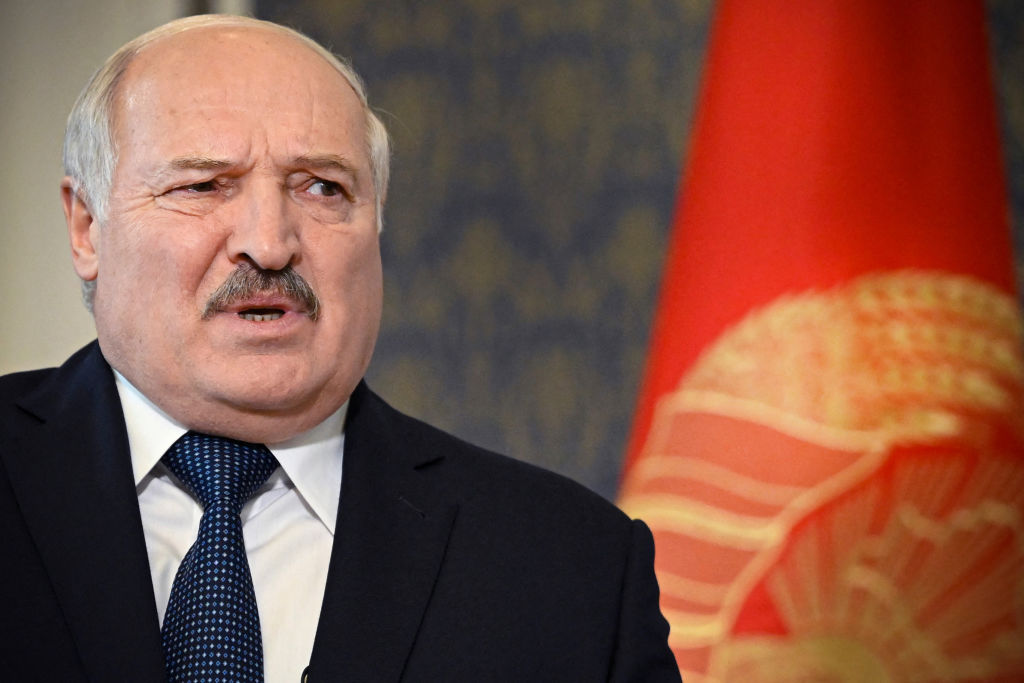
More crucially, he also phoned his ally, Belarus leader Alexander Lukashenko, who hours later announced that he had negotiated a deal with Prigozhin to stop the Wagner troop movement and de-escalate tensions.
The private army has been involved in conflicts in the Middle East and Africa, though it has always denied involvement.
Prigozhin last year admitted that he had founded Wagner the group, recruiting the soldiers from Russian prisons in exchange for amnesty.
In eastern Ukraine, the mercenary unit has been spearheading Russia’s costly battles.
It had been at the forefront of the months-long assault for Bakhmut in eastern Ukraine, capturing the site for Russia, but at huge losses.
What is next for Wagner?
Under the deal negotiated under the mediation of Lukashenko, the Kremlin said that Prigozhin would leave for Belarus, and that a criminal case against him would be dropped.
Members of Prigozhin’s paramilitary forces who joined what Moscow described as an “armed rebellion” would not be prosecuted, the Kremlin added.
The Wagner rebellion marked the biggest challenge yet to Putin’s long rule and Russia’s most serious security crisis since he came to power in 1999.
It threatened to divert Russian attention and resources away from the battlefields in Ukraine, at a time when Kyiv is in the midst of a counteroffensive to seize back territory.
Amid the dramatic events in Russia, Ukrainian forces launched several new offensives on their eastern front, claiming more ground.
Deputy defence minister Ganna Malyar said Ukrainian forces assaulted Russian lines near the towns of towns of Orikhovo-Vasylivka, Bakhmut, Bo?danivka, Yagidne, Klishchivka and Kurdyumivka, and made “progress in all directions”.
Zelensky has also ramped up his call for Western allies to “provide all the weapons necessary for defence”.
But following the pullback deal with Wagner, the Kremlin said the episode would not affect its military offensive in Ukraine.
The significance of Saturday’s events was also not lost on Ukraine’s allies, with the leaders of the United States, France, Germany and Britain holding talks over the fast-moving developments.
Three thousand elite Chechen troops took up positions in Moscow early on Saturday morning to defend the Russian capital against advancing mutineers from the Wagner mercenary group, the Chechen state broadcaster “Grozny” said on Saturday night.
“The fighters have been at their positions in Moscow since early morning and are ready to carry out any order from Commander-in-Chief of the Russian Armed Forces Vladimir Putin,” it said on Telegram.
On Saturday afternoon, Wagner leader Yevgeny Prigozhin agreed to call back his armed convoy approaching the capital with the aim of toppling the military leadership, under an agreement brokered by the president of Belarus.
The feud between Wagner chief Yevgeny Prigozhin and Russia’s military top brass had boiled over Saturday, with mercenaries capturing a key army headquarters in southern Russia and then heading north to threaten the capital.
Peskov also said it was “out of the question” that Wagner’s aborted rebellion would impact Russia’s campaign against Kyiv.
The mercenary Wagner group on Saturday began pulling back fighters and equipment from the southern Russian city of Rostov-on-Don, after its leader Yevgeny Prigozhin halted the fighters’ march on Moscow.
An AFP reporter at the scene saw a tank, several cargo trucks and several minivans carrying fighters leave the military headquarters the group had occupied earlier.
Dozens of residents in the southern Russian city of Rostov-on-Don on Saturday were chanting “Wagner! Wagner!” outside the military headquarters that had been captured earlier by the rebel mercenary group.
As night fell, dozens of locals gathered near the military office to express support for Wagner, after its chief Yevgeny Prigozhin had said he would stop the group’s march on Moscow and turn back.
The leader of the Russian mercenary group Wagner has halted a planned offensive on the capital Moscow to “avoid bloodshed”, Belarus’s president has claimed, after an armed uprising by in Ukraine and Rostov-on-Don threw the country into chaos.
Belarusian leader Alexander Lukashenko said Saturday he had negotiated with Wagner chief Yevgeny Prigozhin an end to the movement of Wagner forces inside Russia in order to deescalate the situation.
“Yevgeny Prigozhin has accepted the proposal of Belarusian President Alexander Lukashenko on stopping the movement of armed individuals from the Wagner group on Russian territory and further steps on deescalating tensions,” Lukashenko’s press service said in a statement.
It comes after the group seized a key military base on Saturday, just as Kremlin chief Vladimir Putin’s vowed to defeat the revolt and head off the threat of civil war.
The governor of the Lipetsk region, whose capital is just 420 kilometres (260 miles) south of Moscow, said Wagner’s private military force was “moving across” the territory and urged civilians not to leave their homes.
In the capital, the mayor urged Muscovites to stay indoors and declared Monday a day off work.
Meanwhile, Ukraine said on Saturday that unrest in Russia spurred by an armed mutiny of the private Russian Wagner group presented an opportunity for Kyiv, weeks after announcing a counter-offensive against Russian positions.
Earlier on, President Putin has vowed “decisive actions” early on Saturday as a tense standoff unfolded in the southern Russian city of Rostov-on-Don, which Russian authorities previously said was “an armed rebellion” by the outspoken mercenary tycoon Prigozhin.
In a five-minute televised address, Putin called the situation in Rostov-on-Don “a stab in the back of our country and our people”.
Militia leader Yevgeny Prigozhin who turned his Wagner force against the military leadership in Moscow, will leave for Belarus and a criminal case against him will be dropped, the Kremlin said Saturday.
“Avoiding bloodshed, internal confrontation, and clashes with unpredictable results was the highest goal,” Kremlin spokesman Dmitry Peskov told reporters.
Under the agreement, brokered by Belarusian President Aleksander Lukashenko, Wagner fighters will not be prosecuted, Peskov added. “We have always respected their heroic deeds at the front.”
“An agreement has been reached that Wagner would return to its bases,” Peskov said, adding that those fighters who had not participated in the rebellion would be allowed to formally join the Russian army.
Prigozhin called off his troops’ advance toward Moscow on Saturday, pulling Russia back from its most serious security crisis in decades.
According to Belarus news agency, the President of Belarus has informed the President of Russia about the results of negotiations with the leadership of PMC Wagner”.
Vladimir Putin thanked Belarus strongman Alexander Lukashenko after the chief of Wagner announced he was turning around his forces, The Russian president expressed support and thanked the Belarusian counterpart for the work he had done.”
Belarus has in the past been one of the Russia’s main supporters with an active role is Russia’s aggression on Ukraine.
The chief of the rebel Wagner mercenary force threatened to march on Moscow on Saturday before announcing a stunning pull-back, saying he did not want to spill blood.
According to the United Arab Emirates’ news agency, the UAE is following “with great concern” the situation in Russia and calls for de-escalation and self-restraint. The statement issued by the Ministry of Foreign Affairs stressed the need to respect the rules and principles of international law.
The UAE has drawn criticism in the past for failing to condemn the Russian invasion of Ukraine. The Gulf country is one of Russia’s major allies in the middle east.
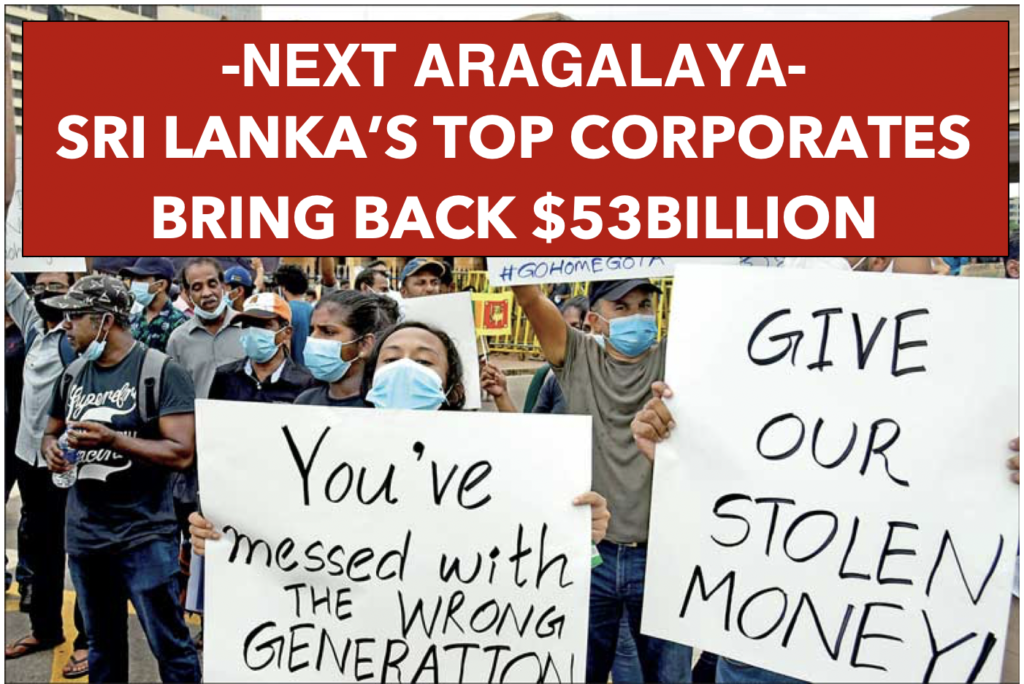
The slogan of the 2022 aragala activists was against corruption” and the allegation of collapsing the economy”. These chants were parroted by a majority of youth who were cheered by groups of elite personalities at Galle Face Green adding a colorful presence to the media reports transmitted internationally. Little did these youth know that the corporates that were present at the aragala, even encouraging their staff to attend, were actually part of the problem, if not the main cause of the problem.
Mismanagement of Sri Lanka’s economy is to be put to the doorstep of all governments & unplanned open economy commenced in 1977 is one of the key faultlines. Open” was connoted to mean everything foreign and little or no place was given to encouraging innovative entrepreneurship within Sri Lanka except for a handful of lucky one’s who excelled because of the shenanigans of political connections.
Nevertheless, the fault lay in thinking that Sri Lanka’s business could thrive only from foreign investments & investors. How far these investors and investments have actually helped Sri Lanka’s economy or even socio-politically is important to statistically find out against all of the incentives, tax holidays and other handouts given for the upfront investment” shown on paper. Why could same incentives not be offered to local SME’s by successive governments and make them shareholders in Sri Lanka’s development?
Be that as it may, with open economy came the LTTE and those years were periods of bombs, suicide missions and ambulances carrying dead soldiers. It was also a period where JVP were equally running amok and the entire state apparatus was held to ransom from both North & South. Many seem to have forgotten this gruesome period.
We have also forgotten the imbalance in our national profit-loss sheet and presume everything to be attributed to corruption. Ever since 1977 our revenues have been lesser than our expenditure, our imports more than our exports & to bridge this gap, governments have turned to taking loans & people & corporates have always demanded luxury imports to satisfy their needs & any decision to prevent such has always led to companies either sponsoring regime change or not supporting elections. This is the ugly side of politics that get little attention. The role of companies and business tycoons in sponsoring elections & their demands thereafter is little discussed or debated. It is a key reason why political parties can never implement what they present on their manifestos.
Identify the groups that openly supported the maithri-palanaya. It was during this period that for no reason $12.5billion ISBs was taken & no one knows what was done with this money. The Hambantota Port was given for 99 years to China, no one knows what happened to this money. A string of dangerous Acts were passed including the co-sponsorship of the UNHRC resolution unfairly insinuating crimes by our war heros. It was immediately after regime change that the international architect of coloured revolution landed in Sri Lanka who also has stakes in the pharmaceutical companies manufacturing vaccines for covid. It was also in 2017 that the Foreign Exchange Act was changed allowing companies to open foreign accounts and keep their money overseas. All this taken together – with repayment of ISBs falling in 2020, with Sri Lankan companies not bringing back their profits to the tunen of $53billion, the covid & associated losses to state coffers took place. How many are able to understand this larger picture?
People have forgotten – Covid, lockdowns, foreign remittances declining, job losses, govt expense increasing to take care of covid patients buy vaccines and run various covid centres across Sri Lanka. Tourism came to a virtual halt and that meant revenues also came to nought. Ironically, the President who is accused of collapsing the economy came to power in November 2019, in March 2020 the country faced lockdowns, only in September 2021 that everything returned to normal though no one thought to take stock of the situation that led to decline in foreign reserves.
Then gas cylinders started to explode, hiccups in corporate controlled food supplies, medicines & other essentials and even probable sabotage in state apparatus. These are centainly case studies to ascertain whether these incidents were natural or manmade and part of what was to lead to public unrest & public outcry & eventual public protest.
It is a good time to ask if the very companies that parked their profits overseas were the one’s that stalled supplies of essentials to the people to anger them and spur them to protest at the grounds where some of these top personalities were present to cheer the people on.
Much of the money that came to support the aragalaya was via undial & hawala systems made worse by aragala asking expats not to send money home foolishly implying that the govt was stealing money sent to personal accounts. People actually fell for these silly canards & so-called intellecuals and ‘educated’ were seen promoting this notion as well. The arguments and topics that surfaced during the aragalaya seriously questioned the quality of Sri Lanka’s education system & the end-products though some of the main players were all foreign educated!
Somehow the corporate controlled media are not giving emphasis to the fact that $53billion is kept in overseas banks & not brought back to Sri Lanka. Some of these very businessmen were seen holding placards at the protest site demanding Sri Lanka go to IMF for the paltry $2.9billion in tranches with conditions.
We have to wonder where is the patriotism in the companies/businessmen that are keeping their profits overseas to the tune of $53billion if not more and remaining mum & not even coming forward as a group to negotiate to provide what Sri Lanka has begged from the IMF with conditions?
Why hasn’t the elite business community come forward to bail out Sri Lanka, where they have prospered? Why are some of these companies now selling their business units to foreign companies/govts & opening new business units overseas?
Have people looked at the figures?
$2.9billion in tranches from the IMF with conditions
$53billion belonging to elite Sri Lankan companies being kept overseas without depositing in Sri Lanka because of the 2017 Foreign Exchange Act.
The question is why is the Governor Central Bank or the current Govt not making any efforts to nullify the 2017 Act and demand the companies to bring back what they are keeping in overseas bank?
The aragala activists claim to know everything about the political landscape to be pointing fingers at all & sundry but why are they not highlighting this $53billion kept in overseas banks and demanding this money be brought back & even protesting for it to be brought back?
Why are they not protesting against the elite businesses keeping this colossal amount overseas?
Where is the aragalaya against the business community to return the $53billion?
Alas! What conventional wisdom do we see of five men in a boat all a glee for a boat ride costing a million and quarter but ignoring warnings, they’ve gone to their slaughter in a cramped up space as adventurers full of spirit and such wanderers.
The pressure imposed reality beguiles
the depth of many sunken miles
The world is agog over such naivete
as though the proximity of a sunken wreck fraught with danger of a broken deck and floating ballast,did they forget the veritable deathtraps that repose and hardly worth the view up close the frantic rescue efforts now in place will they succeed or sanity displace?
COLOMBO, June 23 (Reuters) – Sri Lanka is set to start bartering tea to Iran next month in lieu of $250 million owed for oil, a Sri Lankan official told Reuters on Friday, as the crisis-hit country tries to lift sales to a key market and protect its forex reserves.
The barter was agreed in 2021 for oil imported in 2012, but the exchange was delayed after Sri Lanka’s unprecedented dollar shortage last year plunged the economy into its worst financial crisis in more than seven decades.
“This is very timely for us because we get access to an important market and both Iran and Sri Lanka can trade without relying on dollars,” Sri Lanka’s Tea Board Chairman Niraj de Mel told Reuters.
“The agreement was to send $5 million worth of tea each month for 48 months but we plan to start with about $2 million per month.”
Globally popular Ceylon Tea is Sri Lanka’s highest foreign exchange-earning crop, brewing $1.25 billion for the cash-strapped country last year, according to government data.
Iran has been one of Sri Lanka’s main tea buyers but exports have fallen steadily from $128 million in 2018 to $70 million last year as U.S. sanctions on Iran hit trade.
A significant share of Sri Lanka’s tea is now shipped to Iran via the United Arab Emirates (UAE), official data shows, with the UAE more than doubling its tea imports from Sri Lanka to $118 million last year from $48 million five years ago.
Under the barter programme, state-run Ceylon Petroleum Corp that bought the oil will give rupees to the Tea Board to ship tea via Sri Lankan exporters.
Iranian tea importers will then pay riyals to the National Iranian Oil Company, de Mel said.
“We are awaiting the final documents and hope to start exports from July,” he added.
Sri Lanka’s foreign exchange reserves grew to $3.5 billion at the end of May – a 14-month high – helped by increased remittances and tourism inflows after securing a $2.9 billion bailout from the International Monetary Fund.
(Reporting by Uditha Jayasinghe Editing by Krishna N. Das and Peter Graff)
Gilles,D., Hugh T .(1986). Nietzsche and Philosophy. The Journal of Religion, Vol. 66, No. 4 pp. 455-456.: The University of Chicago Press
Nietzsche, Friedrich. Beyond Good and Evil. Translated by Walter Kaufmann. New York: Vintage Press, 1966.
Nietzsche, Friedrich. On Truth and Lie in the Extra-Moral Sense.” In The Portable Nietzsche, edited and translated by Walter Kaufmann. New York: Viking Press, 1954.
Nietzsche, Friedrich. The Antichrist . In The Portable Nietzsche, edited and translated by Walter Kaufmann. New York: Viking Press, 1954.
Nietzsche, Friedrich. The Birth of Tragedy. In The Birth of Tragedy and Other Writings, edited and translated by Ronald Speirs. Cambridge: Cambridge University Press, 1999.
June 23 – In a determined push to address Sri Lanka’s debt crisis and foster reconciliation, President Ranil Wickremesinghe outlined plans to finalize the debt restructuring process by September. Collaborating closely with parliament, the President aims to develop a comprehensive strategy for resolving the nation’s financial burdens.
President Ranil Wickremesinghe participated in the 40th anniversary event of the International Democrat Union (IDU) in London on the 19th and the 20th of June and joining the forum with former Canadian Prime Minister (Conservative Party) Chairman of the IDU, Mr Stephen Harper, he explained the circumstances that paved the way for his presidency and the country’s journey towards economic recovery.
While debt restructuring remains a key priority, President Wickremesinghe noted that his primary focus lies in completing vital structural reforms. Aiming to accelerate economic liberalization and attract increased investments, which are intended to bolster Sri Lanka’s financial prospects and drive a more favourable balance of trade in the long term.
Amidst questions regarding the duration of the process, the President expressed confidence that substantial headway will be achieved by 2024. Building on prior initiatives as the former Prime Minister, President Wickremesinghe continues the progress made and engages with members of Parliament representing Tamil areas. Significantly, agreements have been reached on crucial issues, including the establishment of a truth and reconciliation commission, the drafting of legislation, and the presentation of a new anti-terrorist law to Parliament. Resolving the differences between the government and opposition on three major issues, one of them being the definition of terrorism, has been settled by a court ruling.
Furthermore, he said that efforts have been made to address land-related concerns in the North and East regions, with progress being made on settling these disputes. The Missing Persons Office has taken steps towards utilization, and discussions have yielded potential solutions, which have been shared with Tamil parties. President Wickremesinghe said he anticipates presenting a comprehensive process by the end of July, acknowledging the time required for the necessary legislative procedures.
Following are excerpts of the interview;
President Ranil Wickremesinghe;
If I look back to May-June last year, Sri Lanka was on the verge of chaos. No one seemed willing to take charge or show leadership. I found myself in a peculiar position. In the 2019 Presidential Election, our party wanted to adopt a populist approach, so they chose our deputy leader as their candidate. Unfortunately, as I had anticipated, he suffered a significant defeat.
Then the COVID pandemic struck, and in August 2020, we went ahead with the election. Personally, I believed that we should stick with the IMF program. This program, which we had initiated in 2016, required Sri Lanka to commit to a primary surplus and reduce subsidies. We diligently worked towards these goals, and by 2018, we managed to achieve a primary surplus of USD 300 million. While it was a modest amount, it gave us a starting point to build upon.
However, the new government that came into power subsequently decided to cancel the IMF agreement. It was at that point that I advocated for revisiting the IMF and requesting them to reinstate the agreement. Furthermore, I suggested that we explore other options to raise USD 5 billion.
During my tenure as Prime Minister, I had engaged in negotiations with the Japanese, Indians, and other parties for projects worth approximately USD 4 billion. Unfortunately, all those projects were ultimately cancelled. Despite this setback, some members of my own party believed that our approach was too narrow and opted for a populist stance, eventually breaking away from the party.
As a result, for the first time in history, my party was left with just one member in parliament, which happened to be me. Meanwhile, the breakaway faction had gathered 50 members.
On May 9 of the previous year, riots erupted, leading to the burning of the residences of 65 government members of parliament. Consequently, the Prime Minister at the time, Mr. Mahinda Rajapaksa, was compelled to resign. That night, I engaged in discussions with a government member to explore how I could be of assistance. The following day, the President reached out to the leader of the opposition and the leader of the breakaway faction, asking them to assume the position of Prime Minister. However, the leader of the breakaway faction declined the offer.
During this period, I had been advising the President to seek assistance from the IMF and the World Bank. Subsequently, the government insisted that I should become Prime Minister and nominated me for the position with their support. I expressed my concern about being the only member of the party and questioned the feasibility of having a Prime Minister under such circumstances. However, they reassured me that they would support me and initiated negotiations with the IMF.
In the previous year, our debt services amounted to approximately $8 billion. By April 2022, our financial situation had deteriorated to the point where we had to declare ourselves bankrupt. However, as we began to recover and the government started functioning, a wave of protests emerged. On July 9, a group of organizers managed to gather a significant number of people in Colombo, something unprecedented in scale.
Shockingly, these protesters went on to invade the official residence of the President. Faced with this unexpected threat, the President had to flee to the harbour and board a ship belonging to the Sri Lankan Navy. Later that afternoon, party leaders convened a meeting, during which they demanded the President’s resignation and proposed that I assume the role of acting President. However, the opposition insisted that I should also resign. I stood firm and reminded them that according to the constitution, a person with a majority vote in parliament must be found before I could resign.
Meanwhile, urged by some media outlets, the protesters targeted my house and set it on fire, assuming I would be compelled to leave.
However, I remained steadfast and refused to back down.
The following day, I was asked to resign, while some others advocated for the Speaker to take over. However, both propositions were rejected. I maintained my position and refused to resign.
On Monday, with the cabinet assembled, we held a televised meeting, while the President had already left the country for the Maldives. Meanwhile, the protesters resolved to seize the Prime Minister’s office and take control of Parliament.
Two days later, a fierce battle ensued outside the Prime Minister’s office, lasting approximately six to five hours. Despite the escalating situation, I refrained from ordering the use of firearms. Eventually, the protesters managed to break into the Prime Minister’s office, with the military accompanying them. In the afternoon, they began marching towards Parliament. Recognizing the gravity of the situation, I instructed the Chief of Defence to issue a statement, emphasizing that the protesters must not take over Parliament. The opposition leader supported this stance.
I then directed the army commander, reminding him of his responsibility to protect the parliamentary building. I stressed that we could deploy the best battalion in Sri Lanka, even without arms, to confront the protesters. Remarkably, the unarmed battalion successfully managed to quell the protests, but unfortunately, 24 soldiers were injured in the process.
At that moment, I realized that it was time for me to step in and assume control. The President had already submitted his resignation, yet nobody was willing to allow me to be sworn in as the acting president within any official buildings. I made a conscious decision not to utilize Parliament or the Chief Justice’s residence, nor any of the other buildings occupied by ministers. Instead, I had to resort to a family temple near my house. Early in the morning, I went to the temple, accompanied by the Chief Justice, where I took my oath of office. In order to maintain secrecy, the priest requested that the location of the temple not be disclosed. There was a photograph capturing the moment I was being sworn in, but the temple’s whereabouts remained unknown.
Soon after, we had to proceed with the presidential election. In the meantime, I took necessary steps to restore law and order. I firmly stated that these were not mere protests, but actions intended to overthrow the government and disrupt the Sri Lankan parliament. I had a responsibility to put an end to it.
Although a number of protesters were initially arrested, they were later released, which only served to embolden them further. Even the presidents of the Bar Association stood in solidarity with them. Recognizing the gravity of the situation, I consulted with the Attorney General and realized that the protesters were attempting to attack Parliament. As a result, I issued detention orders and apprehended two or three individuals. It was the only viable approach to address the escalating crisis.
Eventually, the Prime Minister’s office was cleared as the army intervened, followed by the clearance of the President’s office and residence.
When it came time for the election, the circumstances were quite peculiar. On one side, there was the government party led by the Rajapaksa clan, whom we were opposed to, and on the other side, there was the opposition. Surprisingly, I discovered that I had support from both the government party and the opposition, and they urged me to contest the election. Responding to their call, I entered the race and emerged victorious, winning by a margin of 135 votes. Once I assumed the presidency of Sri Lanka, I promptly issued an order prohibiting any form of demonstrations in the country for one week, aiming to restore peace and stability.
As a result of these efforts, we successfully managed to restore order. We reached out to the large number of individuals who were attempting to disrupt peace and sent them a message, urging them to support the government in its endeavour to re-establish law and order. The silent majority, including businesses and individuals in the villages, stood behind this cause, even if they may not have specifically supported me personally. Their support was for the restoration of law and orders itself.
Having achieved stability, I proceeded to take additional measures to address the prevailing economic crisis. One of our key decisions was to initiate negotiations with the International Monetary Fund (IMF).
I plan to finalize the debt restructuring after September. As I move forward, I will be working on Sri Lanka’s debt restructuring strategy with the parliament. However, my main focus is on completing the necessary structural reforms. I aim to promptly liberalize the economy and attract more investments to Sri Lanka. In the long run, it is crucial to have investments that will improve the balance of trade in our favour. So, why should this process take so much time? Nonetheless, I am confident that by 2024, we will have much greater control over the situation.
Mr Stephan Harper
And ultimately, what you’re conveying is, I believe, a message that applies to all of us. While the economic problems may vary in severity across our countries, challenges still exist. The only viable solution in the long run is a program driven by the private sector.
President Wickremesinghe
A market-oriented, credit-integrated growth strategy is the only available option. I genuinely believe there is no other solution, and this has been the case for thousands of years.
Mr Stephen Harper
Well, Winston Churchill famously remarked that all forms of government are dreadful, except for democracy. We observe that societies often experiment with socialism, protectionism, corporatism and populism until they ultimately realize that conservatism is the only path to economic growth. However, let’s shift gears because a significant portion of our discussion revolves around global affairs and foreign policy. While we represent a diverse group here, it is evident that we predominantly represent the Global North, whereas you hail from the Global South. Considering your geographical position, where do you envision Sri Lanka’s future foreign focus? Which countries serve as its strategic allies, and what risks do you anticipate in the upcoming phase?
President Wickremesinghe
Sri Lanka’s primary strategic allies in Asia are the Southern Asian region. Additionally, we maintain relationships with the Middle East, India, Japan, China, and Australia. Looking westward, we engage with Europe, the United Kingdom, Commonwealth countries, and South Africa.
Mr Stephen Harper
In a world where trade pressures, the on-going COVID pandemic, and especially the conflict in Ukraine, have contributed to a growing polarization or tension between the United States and its allies on one side, and China and its allies on the other, how does a country in your position, in terms of economic growth, position itself? Where do you see Sri Lanka fitting into this scenario, and how do you navigate the complexities that arise from such dynamics?
President Wickremesinghe
Essentially, our stance aligns with the Global South, and we emphasize sharing that perspective. Both the United States and China are crucial partners for us. Their involvements in the Pacific region and the Belt and Road Initiative, along with the ASEAN outlook on the Indo-Pacific, are all compatible. The rise of China has contributed to the rise of Asia, so it is vital for us to ensure China’s continued economic development. However, that alone is insufficient for our region. We also need ASEAN, India, and the Middle East to witness growth over the next 20 to 25 years. While we have managed to strike a balance by leveraging relationships with various countries, we also value our association with the United States. Sri Lanka’s foreign policy has consistently aimed to prevent the militarization of the Indian region, yet we have supported the United States from the very beginning. Currently, we are urging everyone to collaborate with us in Sri Lanka to assume the chairmanship of IORA (Indian Ocean Rim Association) to safeguard freedom of navigation in the Indian Ocean. Simultaneously, we advocate for freedom of navigation in the Pacific. The three main issues need to be addressed collectively rather than one dominating over the other. China must engage in constructive dialogue with African countries to resolve these matters and reduce tensions.
Mr Stephen Harper
I’d like to delve deeper into the China question. It is often emphasized that the United States is essential for our security while China’s support is critical for our economy. We have to navigate both relationships, and undoubtedly, Chinese investments and business have played a significant role in Sri Lanka. However, I’ve noticed substantial issues regarding the debt obligations left by China. Could you provide some insight into this matter?
President Wickremesinghe
China holds the position of being both the largest bilateral creditor and the largest debtor as a private investor. Initially, China was unsure about how to approach the debt restructuring. They took time, while the United States offered assistance, followed by Japan and India with a combined amount of 3.5 billion. We utilized approximately 2.5 billion, and the United States also provided support. This marked the beginning of our progress. We engaged with the Paris Club, excluding India and China initially, but later India joined. Meanwhile, we were engaged in discussions with China, which were complicated due to their party conference in November. Eventually, they decided to stand by us. Then, in Sri Lanka, we proposed the Common Platform and suggested India join the platform while China attended as an observer. They expressed their willingness to engage in bilateral discussions with us, but their primary focus seems to be on bilateral discussions with the International Monetary Fund (IMF). The IMF ensures all parties are informed and involved. Currently, we are working on the platform for creditors and engaging with China, but I cannot predict how this will work out with other debtor nations.
Mr Stephen Harper
I have two more questions, but we are running a bit behind schedule. However, I must ask you about an important point of discussion here, considering your unique perspective from the Global South. Your country has significant trade relations with both Ukraine and Russia. Could you elaborate on how you envision the desired outcome in this context?
President Wickremesinghe
When it comes to the majority of the Global South, we have chosen to stay out of this conflict. Some countries within ASEAN have taken positions, with some working actively, while others remain neutral. A few have voted in favour of the revolution. From the beginning, it has been our belief that this issue could have been resolved through peaceful means. Our primary goal is to prevent the conflict from escalating and to ensure a peaceful settlement. As someone mentioned before, history has shown that major wars often originate in Europe. Our commitment lies in supporting a peaceful resolution in Ukraine. The question remains about how we can achieve this and bring Russia to the negotiating table. President Ramaphosa has led a delegation to both Russia and Ukraine in an effort to facilitate dialogue. However, we have yet to witness the conclusion of these negotiations, which will undoubtedly require time. The conflict has had significant repercussions on countries affected by disruptions in fuel and food supplies.
Mr Stephen Harper
Under your predecessor’s regime, you have talked about war, you had civil war in Sri Lanka, and we all know how the predecessor’s regime ended. Given all the challenges, how do you promote reconciliation between the Tamil community and the country as a whole?
President Wickremesinghe
When I was the Prime Minister, I started the process, so I am continuing from where I have ended. I am speaking with the members of Parliament representing the Tamil areas and we have come to agreements on many issues. On the truth and reconciliation commission, the legislation has been drafted. On the new anti-terrorist law has been presented to the Parliament. There were three major issues difference between the government and opposition two of which have been resolved. The third one finally has been resolved by court as to what the definition of terrorism is. They were looking for my views, I said let the court decide and we will go along with whatever the court says. There was a question of lands being inquiring from the Tamils in the North and East. The land issue is been settled and the missing persons office is taking step to resolve the issue. We have gone through half of the issues and come up with the solutions which I have given to the Tamil parties.
The President Ranil Wickremasinghe, recently at an interview boldly made a statement which is of historical significance. He said that Thiriyaya, Muhudu Maha Vihraya and one Aloka Viharya in the south were light houses and the Ven monks who lived in these temples were the light house keepers.
Many Sri Lankan Buddhists believe that Girihandu Seya the shrine in Thiriyaya is the first temple to be constructed in Sri Lanka to pay homage to the Lord Buddha. According to Vinaya pitaka books, Nidhana katha and Maha Vagga, two Indian merchants Tapassu and Balluka who visited Sri Lanka built the temple enshrining a handful of hair relics of the Lord Buddha. This is also etched in an inscription in an 8th century epigraph found in the site stating that a shrine named Girikandicaitiya was built on the hilltop by a company of merchants led by Tapassu and Balluka. Therefore, at least from 8th century the shrine in Thiriyaya was recognized as a Buddhist temple.
The second shrine named by the President as a lighthouse is Muhudu Maha Viharya in Pottuvil district. According to the historical chronicles, the temple was built by King Kavantissa who ruled the Ruhunu kingdom in 205-161 BC to commemorate the arrival point of Princess Vihara Maha Devi, whose boat was swept ashore close to the present day Muhudu Maha Viharya. There are Buddha statues and Bodhi Sattva statues in this viharya and has been identified as a temple built by the king to pay homage to the Lord Buddha
The third temple mentioned by the President cannot be identified as the statement was not clear.
And , the President referred to the resident Ven Monks who were at Girihandu Seya and Muhudu Maha Viharaya as light house keepers.
However, the two temples, Girihanduseya in Thriiyaya and Muhudu Maha Viharya, in Pottuvil were built to pay homage by the Buddhists to the Lord Buddha and to say that these places were light houses deserves the bauble.
But, when one attempts to promote the precarious version of Ven monks as light keepers contrary to the responsible role played by the Maha Sangha in the history of our nation, is indeed irrational is like ringing the bell backwards
Acting Minister of Defence Hon. Premitha Bandara Tennakoon made a visit to the Indian Navy Submarine ‘INS Vagir’ at the Colombo port on Wednesday (Jun 21).
Minister Tennakoon was received by the Commander of the submarine, Commander Divakar S on his arrival at the jetty and later accompanied him to the Submarine.
During the hosted tour of the Submarine, the Minister was given a briefing on the technical and maritime capabilities of the vessel.
Commander of Western Naval Command Rear Admiral Suresh De Silva and Defence Advisor of the Indian High Commission in Colombo Captain Vikas Sood were also present during the tour.
In retrospect, the sad and sudden demise of the OceanGate Titan submersible in the dangerous swells of the Atlantic Ocean off Nova Scotia, Canada has shaken the world and left many wondering after reading the intricate details of preparation and the safety factors which do appear to have been left wanting and unprepared towards an imminent implosion, and for such a dangerous descent into the deepest ocean depths and whether it was worth the $ 250,000 per person and the multi billion dollar search and rescue that resulted all to no avail in the end beyond the folly of it all.
The Managing Director of the International Monetary Fund (IMF) Kristalina Georgieva has assured the institution’s commitment towards supporting Sri Lanka’s economic reforms.
Following her meeting with President Ranil Wickremesinghe, Georgieva assured that the IMF is committed to supporting the island nation’s economic reforms, in a bid to improve the living standards of Sri Lankans.
I warmly welcomed the strong ownership by the Sri Lankan government to address current economic challenges. We are committed to support Sri Lanka’s economic reforms to improve living standards for its people,” she said in a Twitter statement.
President Wickremesinghe arrived in Paris on Wednesday (21 June), on the invitation of his French counterpart, Emmanuel Macron, to address the World Leader’s Summit for a New Global Financing Pact on 22 – 23 June, which endeavours to garner cross-regional consensus among the international community to build a more inclusive, a more equitable international financial architecture with strong deliverables.
Accordingly, Wickremesinghe will speak at the Summit on Sri Lanka’s experience as a middle-income country and the challenges faced in dealing with international financial institutes with a severe economic crisis.
Sri Lanka’s experience is considered to be of particular relevance to the outcome of the Summit, especially in the context of the country’s recent success in debt discussions with the IMF and in progressing on the path to economic stability and recovery.
The other leaders of the round table speaking under this particular theme are President of Tunisia Kaïs Saied, Prime Minister of Rwanda Edouard Ngirente, Managing Director of the IMF Kristalina Georgieva, President of the African Development Bank Dr. Akinwumi A. Adesina, and the former President of Chad Mahamat Idriss Deby.
Heads of State and Heads of Government of countries across Europe, Asia, Africa and South America are scheduled to participate in the summit, in addition to heads of international organizations, multilateral financial institutions and other key stakeholders.
The French President Emmanuel Macron, UN Secretary General Antonio Guterres, Chinese Premier Li Qiang, German Chancellor Olaf Scholz, the South African President Cyril Ramaphosa, the President of Brazil Lula da Silva, the Prime Minister of Barbados Mia Mottley, and the President of Kenya William Ruto are among the world leaders scheduled to speak at the summit.
President Wickremesinghe is also due to meet several Heads of Government and Heads of Multilateral Institutions on the side-lines of the Summit to discuss issues of relevance.
The President and the First Lady Prof. Maithree Wickramasinghe will also attend an official dinner hosted by President Macron for Heads of State and Government participating in the Summit, at the Elysee on 22 June.
The First Lady Wickramasinghe is also scheduled to participate in an event hosted by the First Lady of the French Republic Brigitte Macron on 23 of June 2023.
Minister of Power and Energy Kanchana Wijesekera has revealed that the Indian energy company Petronet LNG has presented short-term solutions to meet the Ceylon Electricity Board’s (CEB) requirement for Liquefied Natural Gas (LNG).
Taking to Twitter, Wijesekera revealed that Petronet LNG presented immediate, albeit short-term, solutions for CEB’s LNG requirements this morning (22 June).
Accordingly, options for short-term solutions to reduce the cost of generation in the next 24 months from the 600+ MW of the LNG power plants available will be pursued, while a long-term plan for LNG is being finalised, the Minister said.
Wijesekera thanked the Indian High Commissioner Gopal Baglay for his efforts in this regard, and for organizing the discussion at which officials of the Indian High Commission in Sri Lanka (IHSL), the CEB, Petronet LNG, the Petroleum Development Authority of Sri Lanka (PDASL) and the Ministry were present.
Instructions have been issued to the Inspector General of Police (IGP) and other senior police officers to take immediate and stern legal action against violent crimes committed in both the Western and Southern provinces.
The relevant directive was issued by Public Security Minister Tiran Alles, during a special discussion with high-ranking police officers that took place on Wednesday (21 June).
Accordingly, Alles ordered that expedited action be taken against those involved in murders and other violent crimes in the Western and Southern provinces, while highlighting that that no one will be allowed to exert undue influence over such operations, as per the confirmation received by President Ranil Wickremesinghe.
Moreover, the Minister also in instructed to grant a grace period until 31 July to surrender all unauthorized and unlicensed firearms.
Upon the expiry of this grace period, however, Minister Alles noted that raids will be conducted by the intelligence units of the police in order to seize such unauthorized and unlicensed firearms.
During the discussion, IGP C. D. Wickramaratne attributed the recent spike in the number of murders and other violent crimes in the Western and Southern provinces to the inefficiency of certain senior police officers and the Officers-In-Charge (OIC) in these areas.
Responding to this, Minister Alles ordered the immediate transfer of the relevant police personnel, and that suitable officers be appointed to those positions.
Public Security Ministry’s Secretary Vyani Gunathilake, IGP C. D. Wickramaratne, Senior Deputy Inspector General (SDIG) of Police Deshabandu Tennakoon, Southern Province SDIG S.C Medawatta and Special Task Force (STF) Commander DIG Varuna Jayasundara were present at the discussion
Minister of Labour and Foreign Employment Manusha Nanayakkara says that special approval has been received to include the Japanese language into the school curriculum from the primary grades.
Speaking in the parliament today (22), Nanayakkara mentioned that this decision has been taken targeting the future Japanese job market.
Accordingly, necessary arrangements are already being prepared together with the Ministry of Education, in order to begin the process of teaching the Japanese language to school children, the minister emphasized.
The minister further asserted that a program has been launched to create a pool of 5,000 Japanese language trainees targeting the Japanese job market.
Travelers have suddenly become aware of a painful reality that the “Pearl of the Indian Ocean,” also known as Sri Lanka has a sad reputation as a terror haven in the past four decades, a sinister cohort of despots, bloodthirsty separatists known as Tamil tigers, Che Guevarists and crooked and power-drunk politicians who have come and gone while desecrating the Beautifu Island of Sri Lanka appear to be the reason.
And they have tarnished grossly her image, natural geographic beauty and all her embellishments, treasures such sapphires, rubies, topaz – and tea, one of the best crops in the world amongst other things typically and beautifully Sri Lankan by how some of them are given to violence at times over the pettiest of issues as an alarming spate of violence involving firearms and wanton murders as well as carefully orchestrated ones which are threatening to take over what many see as an idyllic getaway and need to be quelled towards posterity and the well being that draws multitudes of tourists before their enthusiasm to visit fades and with it the loss of vast sums of tourist income at a time when Sri Lanka needs it most.
Quoting from recent media reports aligned to the veritable truth”The country’s economic collapse, which has triggered an unprecedented popular movement and led to the flight of President Gotabaya Rajapaksa, marks a new stage in a long series of upheavals. It comes just three years after Sri Lanka was stunned by terrorist attacks. On Easter Day 2019, eight members of a suicide commando of Sri Lankan jihadists blew themselves up in Christian minority churches. The attack killed 268 people and injured 500.
Before the civil war (1983-2009) between the Sinhalese majority and the Tamil minority led Sri Lanka down the path of tragedy, this country of 22 million inhabitants was the envy of its South Asian neighbors for its relative prosperity and unspeakable beauty – Sri Lanka was nicknamed “the shining island.” Not to mention a system of parliamentary representation that has, throughout the country’s history since independence (1948), allowed for political alternation and so called real democratic interludes.” end quote
Categorically Sri Lanka has always been a historically turbulent country which has seen three phases of Colonization and uprisings of territory related aggression but remarkably the colonial eras never produced the extent of violence seen in present times and rather curiously the more recent uprisings are probably to blame for the influx of firearms and other weapons that prevail in the violence of today as on a daily basis one reads about the many murders, gang related violence and high crimes and misdemeanors worthy of any American crime hub where guns are out of control such as Chicago, Los Angeles, New York,Compton etc.and alarmingly seems to be on the increase and high time the Present Administration intervened towards quelling if not eradicating the problem which of course is a big ask where despite the many laws preventing weapons ownership, the illegal trade seems to dictate terms where many an ordinary individual as well as some higher ups including politicians and legislators also have easy access towards these weapons.
Hopefully Sri Lanka will not end up being a land of the armed and dangerous where the build up towards a tranquil and violence free Nation is surely the responsibility of the hierarchy with emphasis on the President and the Law Enforcement Agencies.
Sri Lanka inflation, based on National Consumer Price Index (NCPI), for May 2023 was recorded at 22.1%, as measured by the year-on-year change, the Department of Census and Statistics (DCS) revealed in its latest report.
This marks a slight drop in comparison to the headline inflation of 33.6% recorded in April 2023.
In comparison to 2022, the reported inflation for the month of May 2023 was mainly due to the higher price levels that prevailed in both food and non-food groups.
On a monthly basis, the year-on-year inflation of the food group dropped to 15.8% in May from 27.1% in April 2023. Meanwhile, the year-on-year inflation of the non-food group decreased to 27.6% in May 2023 from 39.0% in April 2023.
The contributions (year-on-year) to the inflation recorded in May 2023 from the food commodities and the non-food group stood at 7.27% and 14.88%, respectively in comparison to March 2022.