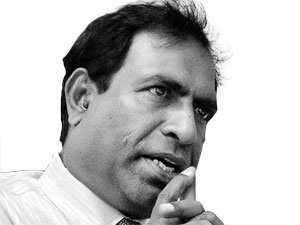
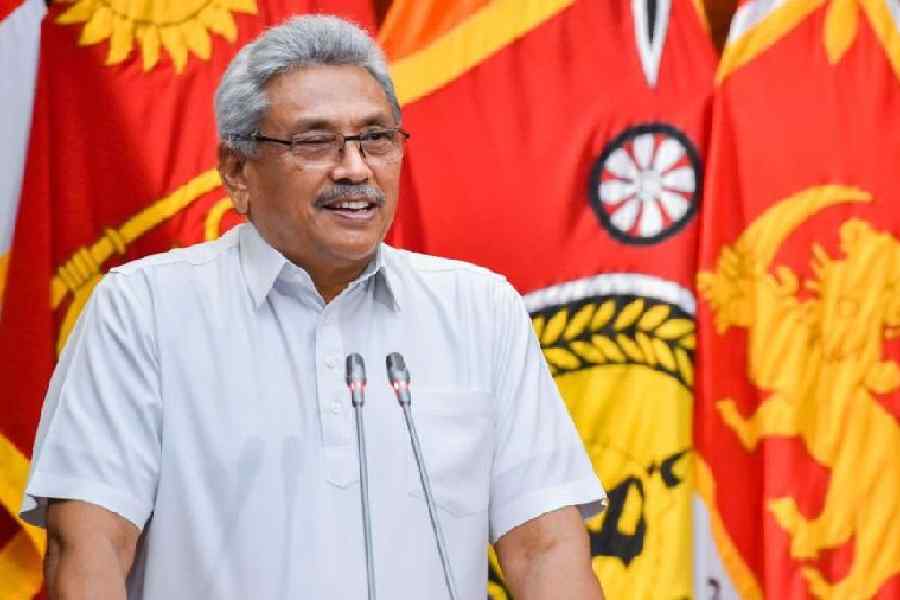
දයාන්ජයතිලක හා යාපනේ දෙමළ චේගුවේරා (Tamil Che Guvera & Dayan Jayatilleka)

April 21st, 2023

C. Wijeyawickrema, LL.B., Ph.D.

ලංකාවෙබ් වෙබ් අඩවියේ මගේ නමින් පලවන ලිපි රටේ අගමැති, ජනාධිපති වැනි අයගේ ඊමේල් ලිපින වලටද යැවීම මගේ පුරුද්දය. යාපනේ නැඟී එන දෙමළ චේ ගුවේරා කෙනෙක් පිළිඹඳව එසේ යැවූ ලිපියකට, LankaWeb – දෙමළ චේ ගුවේරා? (Tamil Che Guvera)  දයාන් ද සිල්වා (aka දයාන් ජයතිලක) විසින් දැක්වූ  ඊමේල්  ප්‍රතිචාරය මෙසේය

..This can only be said by someone who knows jack-shit about Che Guevara. If you want to learn about him, try reading this. Che’s Visage On The Shroud Of Time – Colombo Telegraph…”

ක්‍රිස්තියානි කළු සුද්දන්

දොන් ජුවන් ධර්මපාල, ලංකාවේ ප්‍රථම හා එකම කතෝලික රජු සමඟ 1551 සිට ලංකාවේ බෝවූ ක්‍රිස්තියානි පරම්පරවලින් පැවත එන, රටේ සිංහල බෞද්ධ ශිෂ්ටාචාරය විනාශ කිරීමට ක්‍රියාකරණ රෝසි බර්නැඩීන් සේනානායක, මිසිස් චන්ද්‍රිකා වැනි කල්ලියට වැටෙන  ක්‍රිස්තියානී-මාක්ස්වාදී කළුසුද්දෙක් වන දයාන් ඔහුගේ පොල්පරාල ඉන්ගිරිස් වලින් ගෙන එන මත හා තර්ක-විතර්ක වලට ඉංග්‍රීසියෙන් හා සිංහලෙන් අභියෝග කල කීප දෙනාගෙන් එක් අයෙක් වශයෙන් මෙම පිළිතුර ඔහුට දීම මගේ යුතුකම හා වගකීමය.

දයාන් විසින් අපට කියවන්නට කියන පොල්පරාල ලිපියට 2007 දීම කලම්බු ටෙලිග්‍රාෆ් සමහර පාඨකයින් දක්වා ඇති ප්‍රතිචාර දයාන්ට ඒ සම්බන්ධයෙන් මට දිය හැකි උත්තරයය. කියුබාවේ බොහෝ අයට නොතේරෙන එම ලිපිය නිසා කියුබාවට යෑමට නොමිලේ ටිකට් එකක්ද දයාන්ට එව්වා නිසැකය. දයාන්ගේ පොල්පරාල ඉන්ගිරිස් පිස්සුව ඔහු විසින් සිය <ශිෂ්‍ය> සජිත් ප්‍රේමදාසටද බෝකර අවසාන බව සජිත් ඉන්ගිරිස් කතාකර ඩොලර් ගේන බවට කරණ කතා වලින් එලිවේ.

ජෝෂප් ස්ටාලින් හා ජේසුස්

තමන් චේ ගුවේරාගේ අයිතිකාරයා නැත්නම් පොඩි මස්සිනා යයි සිතමින් ලියන දයාන් චේ ව ජේසුතුමාට සමානකරන්නේ මුහුණේ හැඩරුව පමණක් නිසා නොවේ. එහෙත් ඒ සමඟම චේ මිනීමරු ස්ටාලින් ඇදහූ අයෙක් බවද පවසයි! මෙවැනි අවුල් දයාන්ගේ ප්‍රසිද්ධ දේශපාලන ගේම් එකේ අංගයකි. කොටින්ම කියනවා නම් ඔහු ඩබල්, ට්‍රිබල් ගේම් කාරයෙකි. පාට වෙනස් කරණ කටුස්සෙක් මෙන් ඔහුගේ දේශපාලන හැසිරීමේ මට මතක ඉතිහාසය මෙසේය:

[…. සුදත්ත තිලකසිරි නමින් සිය මිතුරු මාක්ස්වාදී තිසරනී වෙනුවෙන් ලිපි ලියමින්- උතුරු නැඟෙනහිර පලාත් සභාවේ ඇමතිවරයෙක්ව සිටිමින්- වර්ධරාජා පෙරුමාල්ට කලින් ප්‍රේමදාසගෙන් ගැලවී ඉන්දියාවට පැන යමින්- ප්‍රේමදාසගෙන් අභය දානය ලබා ආපසු කොළඹට පැමිණ ඔහුට දාසයෙක් මෙන් සේවය කරමින්- අන්තිමේදී කැරකී කැරකී මහින්ද රාජපක්ෂට ඉංගිරිස් උගන්නන්නට පාත්වී 2009 යුද ජයග්‍රණයෙන් සුමාන දෙක තුනක් ඇතුලත 13-A+ පොරොන්දුවී ජීනීවා වලදී රට ජාතිය හා හසළක වීරයා වැන්නන් පාවාදෙමින්- ඒ නිසාම රක්ෂාවෙන් වහාම ඉවත් කිරීමකට මුහුණ දෙමින්- ඉන්පසු ගොටාගේ වියත් මඟට රිංගා ගැනීමට ගත් වෑයම වැරදී කොට උඩ යමින්-දැන් සජිත් ගේ දේශපාලන පුරෝහිතයා වෙමින් කල්මරමින් සිටින (විදේශ ඇමතිකම ගැන සිතමින් ඉන්නා) දයාන් ඔහුගේ නම වෙනස් කිරීමේ සිටම අවංකභාවයක් නැති පංචස්කන්ධයකි. රනිල් වික්‍රමසිංහ නම් පංචස්කන්ධයට මේ දයාන්ව අරහංය…..]

ලංකාවේ හැරල්ඩ් ලැස්කි

ලංකාවේ නමගිය කළුසුද්දෙක්වූ මියගිය කාලෝ ෆොන්සේකා ඔහුගේ මේ දයාන් බෑණාව හැඳින්වූයේ මොඩර්න් හැරල්ඩ් ලැස්කි කියාය (ඔහුගේ අනිත් බෑණා වූයේ කාඩ්බෝඩ් වීරයෙකුවූ සංඝසමාජයට පහර දුන් රංජන් රාමනායකය). මර්වින් සිල්වාගේ පුතා වශයෙන් කළු සුද්දන්ට ලබාගත හැකි උපරිම වාසි උඩ හැඳුන-වැඩුන දයාන් පොත් පත් කියවා ලබාගත් විශාල දැණුම් සම්භාරයක් ඇති පංචස්කන්ධයකි. එහෙත් ඔහු හැසිරෙන උද්දච්ච (arrogance) ආකාරය ඔහු ලබාගත් දැණුමට නිග්‍රහයකි. ඔහු විසින් කලයුතුව තිබුණේ අරුන් සිද්ධාර්ථ්ට චේ ගුවේරා කෙනෙක් විය නොහැකි කෙසේදැයි තර්කාණුකූලව පෙන්වාදීම මිස මාක්ස්වාදය නමැති ආගම ගැන දේශනාවක් කියවන්නට යයි දන්වා එවීම නොවේ.

සරදියෙල් හා චේ ගුවේරා

චේ ගුවේරා තවත් ජේසු කෙනෙක් යයි සළකණ දයාන් මෙන් වහල් මනසක් මට නැත. චේ ගුවේරා කවුදැයි ලංකාවේ ජනයා දැන ගන්නේ 1971 JVP කැරැල්ල කාලයේ සිටය. මේ වනවිට ලංකාවේ පොදු ජනයා චේව සළකන්නේ හිතට එකඟව, පීඩිත ජනතාව වෙනුවෙන් ක්‍රියකර සිය ජීවිතය එය වෙනුවෙන් කැපකල අයෙක් වශයෙනි. ලංකාවේ මාක්ස්වාදි පක්ෂ දේශපාලකයින්ගේ වංචා සහගත ක්‍රියාකලාපය ඉදිරියේ චේ ගුවේරා ගැන ජනයාට සිතෙන්නේ ඔහු රොබින් හුඩ් කෙනෙක් සරදියෙල් කෙනෙක් වැනිය කියාය. බෞද්ධ ධර්මයට අනුව චේ ගුවේරාත් දුර්වලකම්වලින් පිරි පංචස්කන්ධයක් පමණය. මෙවන් පසුබිමක් යටතේ යාපනේ අරුන් සිද්ධාර්ත් චේ ගුවේරාට සමාන කලේ පසුගිය දශක තුනක් තුල සිය වාසිය ගැන නොසිතා පීඩිත දුගී දෙමළ ජනයා වෙනුවෙන් ඔහු කරගෙන යන කැපවීම නිසාය. අරුන් යනු දයාන් මෙන් චපල, අවස්ථාවාදී චරිතයක් නොව, ඉතිහාසයෙන්, අත්දැකීමෙන් පාඩම් ඉගෙනගෙන, දුක් විඳ හිස ඔසවන ක්‍රමයෙන් වර්ධනයවන චරිතයකි. චේගේ ජීවිතයද මෙවැනි පරිණාමයකට ලක්වූවායයි මම සිතමි. සරදියෙල් ගැන සිංහල ජනයාට සිහියට නැඟෙන චිත්‍රය මෙන් දෙමළ චේ ගුවේරා යයි කීමෙන් අරුන්ගේ කැපවීම ගැන යම් චිත්‍රයක් ජනයාට මැවෙන්නේය.

සයිමන් බොලිවාර්-කැප්පෙට්ටිපොල මහ දිසාව- අනාගාරික ධර්මපාල-හසලක වීරයා

උදාහරණයක් වශයෙන් අරුන්, සයිමන් බොලිවාර්-කැප්පෙට්ටිපොල මහ දිසාව- අනාගාරික ධර්මපාල කෙනෙක් හෝ හසලක වීරයා වැන්නෙක් යයි කීමට මට නොහැකිය. මගේ සීමිත දැනුම අනුව අරුන්ට ගැලපෙන්නේ චේ ගුවේරාගේ නමය. දයාන්ගේ මිත්‍ර විග්නේශ්වරන් ප්‍රභාකරන් දෙමළ කැප්පෙට්ටිපොල යයි කියන්නේත්, ලක්ෂ්මන් වික්‍රමසිංහ බිෂොප්වරයා චෙල්වනායගම්ට දෙමළ මෝසස් යයි කියන්නේත් කැප්පෙට්ටිපොල දිසාව හා මෝසස් ගැන ඔවුන් දෙන්නාට තිබූ ආකල්ප නිසාය. යාපනේ ගාන්ධි යයි සැළකුණ චෙල්වනායගම් අන්තිමේදී ශිවකුමාර් නම් මිනීමරුවාගේ රූපයට මල් මාලයක් දමා ගාන්ධිව පාවා දුන්නේය. යාපනේ චේ ගුවේරා ලෙස අරුන් සිද්ධාර්ථ් නම් කිරීමට පෙඩරල්-ඊළම්කාරයින්, ඉන්දියාව, බටහිර රටවල දේශපාලකයින්, NGO මුදලාලිලා ප්‍රමුඛ රටේ සියළුම කළු සුද්දන් පිරිස් විරුද්ධ  වන්නේ ඇයි? දකුණේ සිංහලයින් (ආණ්ඩු) සමඟ සහයෝගයෙන් ක්‍රියාකිරීමට ගිය/යන අනිත් හැම දෙමළ පංචස්කන්ධයකටම ටැමිල් ට්‍රේටර් යයි හංවඩු ගැසු දෙමළ පෙඩරල් ඊළම් කාරයින් අරුන්ට එසේ අතනොගසන්නේ ඇයි?

Balkanization of Lanka

පොල්පරාල ඉන්ගිරිස් වලින් ලියමින් සජිත් සමඟ ඔහේ පාවෙමින් සිටිනවා හැර දෙයක් මේ දිනවල දයාන්ට නැත. රට කැඩීමේ ව්‍යාපාරයේ එක් පිළිකාවක් නම් මේ දයාන්ය. රට කැඩීමේ ව්‍යාපාරය යනු සිංහල බෞද්ධ ශිෂ්ටාචාරය, සිංහල ජාතිය, භාෂාව ලෝක සිතියමෙන් අතුගා දැමීමේ උත්සාහයමය. මාක්ස්වාදීන්, චන්ද්‍රිකා, රනිල්, සජිත්, ඩලස් හා කොළඹ තරුණ බෞද්ධ සංගමයේ (YMBA) සභාපති පවා දැන හෝ නොදැන මෙම උගුලට අසුවී සිටී. හාමුදුරුවරුන්ට බුද්ධාගම කියා දෙන බ්‍රදර් චාල්ස් තෝමස්, තමන් දෙමළ බෞද්ධයෙක් යයි කියාගන්නා සුරේන් රඝුවාන් වැනි ගේම්කාරයින් ඉදිරියේ අරුන් සිද්ධාර්ථ් ජනප්‍රිය වෙමින් සිටී. දයාන්ගේ දෙවියන්ගේ නම අරුන්ට ආරුඪ කිරීම ගැන දයාන් පරලවී සිටින්නේ ඒ නිසාය.

මෙම උගුලට, මෙම ව්‍යාපාරයට විරුද්ධව තනියෙන් බිම් මට්ටමින් දැනට සටන් කරණ එකම ද්‍රවිඩයා අරුන්ය. බොදු බල සේනාවේ ඥානසාර හිමියන් මෙන් අරුන්ද පාර්ලිමේන්තුවේ සිටිය යුතුය. දයාන් විසින් කල යුතු අරුන්ගේ මතවාදය සිය <හැරල්ඩ් ලැස්කි> මොළයෙන් පරාදය කිරීමය. නැතහොත් මගේ මුල් ලිපියට සාධාරණ පිළිතුරක් සැපයීමය. ඔහුට එවන් ආත්ම ශක්තියක් තිබේද?

Easter Sunday Attack Anniversary

April 21st, 2023

PRESS RELEASE Muslim Council of Sri Lanak

The Muslims of Sri Lanka stand in solidarity and brotherhood with the thousands of Christians
and Catholics who were affected by the dastardly terrorist attack on April 21st 2019. The
suspected terrorists were Muslims by name but Islam forbids suicide and killing innocent
civilians, hence Islam does not condone such acts of violence.

Overnight on April 21st 2019, the 2.1 Million Muslims in this country were considered as
terrorist suspects or their sympathisers. The Muslims have stood by the Catholic church in
demanding an independent inquiry to the Easter Sunday attacks in 2019, which many believe
is a politically motivated violence. We call upon H E President Ranil Wickramasinghe to release
all volumes of the PCOI report on the Easter Sunday attack to the general public. We also
demand the immediate arrest and bring to justice all who have been named in the PCOI report.
The arbitrary arrest of Muslim youth under PTA and ICCPR and the detention of some of them
continues to this day. No one has been found guilty after 4 years of investigation. The selective
use of PTA and ICCPR on innocent Muslim youth should be condemned by all civic conscious
citizens.

President Wickremesinghe in a special statement made on 18th July 2022 as Acting
President said he plans to obtain the assistance of the police and intelligence
services of the UK in order to complete the investigation into the Easter Sunday terror
attacks, as the lack of a proper investigation has meant that this issue is yet to be fully
resolved.” He had further said We must ensure that this is brought to an end, and there
should be a full scale impartial review of the material that is available.”

It is regrettable that nine months have lapsed since the above statement and we are yet to see
any meaningful effort by the Government to bring to justice the perpetrators of one of the
darkest days inSri Lankan history where over 350 were killed and over 500 were injured.
The Muslim Council of Sri Lanka calls upon the Government to: –
a. Immediately honour the statement made by President Wickramasinghe on 18th July
2022 to complete the investigation into the Easter Sunday terror attacks with the
assistance of Scotland Yard.
b. Immediate justice to be dispensed and compensation to be paid to the families of those
killed and injured in the Easter Sunday attacks irrespective of their race or religion.
c. Muslims arrested on suspicion under the PTA languishing in remand be investigated
immediately and released or granted bail.
d. A thorough investigation be carried out and arrest of those responsible for the wanton
destruction of Muslim property and compensation paid immediately in the aftermath of
the Easter Sunday attacks.

Hilmy Ahamed
Acting President
21/4/2023

President requests private sector to become ‘engines of growth’ in Sri Lanka’s economy

April 21st, 2023

Courtesy Adaderana

President Ranil Wickremesinghe has requested the private sector to submit proposals for becoming the engines of Sri Lanka’s economic growth. 

During his address at the Business Today Top 40 Awards Ceremony at the Presidential Secretariat in Colombo on Thursday (April 20), the Head of State highlighted the need for a strong, export-oriented economy.

He emphasized the importance of engaging in comprehensive economic and technological collaborations with India and negotiating entry into the Regional Comprehensive Economic Partnership (RCEP), while maintaining RCEP standards and remaining open to possibilities.

The President further emphasized the need for modernizing and updating traditional sectors such as agriculture, fisheries, logistics, and tourism.

Wickremesinghe also discussed the challenges that Sri Lanka faces this year and called for private-sector involvement in tackling these challenges.

He revealed that the government has set aside LKR 1 billion for Artificial Intelligence (AI) next year, with a focus on green energy technologies and renewable energy.

Wickremesinghe went on to outline the government’s plans to pursue the Comprehensive and Progressive Trans-Pacific Partnership (CPTPP) after RCEP, for which the government has already established criteria.

The event was attended by Ven. Uduwe Dhammaloka Thero, Deputy Minister Diana Gamage, Members of Parliament Vajira Abeywardena, Dayasiri Jayasekara, Udaya Gammanpila, Sarath Weerasekera, Premanath .C. Dolawatta, Senior Advisor to the President on National Security and Chief of Staff to the President Sagala Ratnayake, President’s Secretary Saman Ekanayake, Southern Province Governor Willie Gamage, Former Ministers John Amaratunga, Arjuna Ranatunga and Veteran Businessmen including Mathi Parthipan and Glenda Parthipan.

Former AG Dappula de Livera summoned to TID once again

April 21st, 2023

Courtesy Adaderana

Former Attorney General Dappula de Livera has been once again issued a summons to appear before the Terrorism Investigation Division (TID).

He was initially informed to make an appearance at the TID on April 19 to record a statement pertaining to his controversial comment on a massive conspiracy behind the 2019 Easter Sunday terror attacks.

However, the former Attorney General’s lawyer appeared before the TID on that day and submitted a seven-page legal objection on his behalf.

De Livera was then asked to report to the TID today (April 21), but he failed to comply with the summons.

It has been decided to notify the court if the former Attorney General fails to appear before the TID once again on April 24.
 
On 18 May, then-Attorney General Dappula de Livera claimed that there had been a conspiracy behind the series of bomb attacks that took place on 21 April 2019, killing 269 persons and injuring over 500 others.

Livera infamously handled the Easter Sunday inquiry right from the beginning while he served as the Solicitor General before being appointed as Attorney General on 29 April 2019, just eight days after the Easter Sunday attacks. 

He later retired on 25 May 2021, while acting AG Sanjaya Rajaratnam was appointed as his successor.

Sri Lanka to build South Asia’s largest logistics complex at Colombo Port

April 21st, 2023

Courtesy Adaderana

Sri Lanka has launched the project to build the largest commercial and logistics complex in South Asia in the Port of Colombo with an investment of USD 392 million.

Agreements for the construction and operation of the South Asia Commercial and Logistics Hub (SACL) as a 50-year Build Operate-Transfer (BOT) project were formally signed in Colombo by the representatives of the three investing entities.

Accordingly, China Merchants Port Holdings (CMPort) holds a 70% stake while Sri Lanka Ports Authority (SLPA) and Access Engineering PLC (Access) each hold a 15% stake in the venture/

A Public Private Partnership (PPP) project, the South Asia Commercial and Logistics will be built in the centre of the Colombo Port and will have 530,000 CBM of storage capacity via an eight-floor building.

The investment in the project is expected to bring in much-needed foreign investment into Sri Lanka.

The construction of the complex is expected to begin in the second half of 2023 with a target of completion by the end of 2025.

Adjacent to Port City and the CBD, it will be directly linked with the airport via the Port Access Elevated Highway.

The five million square foot complex will offer the full gamut of logistics related facilities and services such as Less than Container Load (LCL), Multi-Country Consolidation (MCC), Container Freight Station (CFS), general warehousing and various other value-added services.

A Spokesperson for CMPort said the project will result in an infusion of US$ 126 million in addition to an upfront payment of US$ 26 million after the agreement is signed.

The project is also expected to provide direct employment to a minimum of 1,800 people and create 10,500 other indirect job opportunities.

The project aligns with Sri Lanka’s national development strategy to transform the country into a major logistics centre, identified as a key sector and a driving force for economic development in the National Policy Framework (NPF) 2019. It will provide better logistics and warehousing facilities and services, enhancing the Port’s competitive advantage and consequently strengthening its Hub status.

The project will also improve the operational efficiency of the Port of Colombo and introduce leading-edge technology and innovation.

The Port of Colombo is currently ranked among the top 13 ports in the world in terms of shipping network connectivity.

Despite its ideal location on the international trading route, the Port still lacks a modern, state-of-the-art logistics facility, the Spokesperson said. At present, mainly loading and discharging of cargo is done at the Port of Colombo, with little value-added services being offered. SACL will change this landscape.

Additionally, since the Port of Colombo was declared as a Freeport by the Government of Sri Lanka, the project will enjoy the associated Freeport advantages in its operations, such as no customs clearance for transshipment and MCC cargo, resulting in reduced paperwork and associated costs.

The project also provides an ideal platform for the registration of hub companies – which will enjoy tax concessions in CIT, WHT, VAT, etc.

The project is expected to help the Port of Colombo to strengthen its competitiveness against other competing ports in the region.

Furthermore, the improved services and cost benefits provided by the project are expected to attract more business and container volumes to the Port of Colombo, benefitting all its terminals and generating higher revenues for the Port and port-related companies in Sri Lanka.

CMPort, the major shareholder in the South Asia Commercial and Logistics Hub, is the parent company of Colombo International Container Terminals (CICT) which manages the South Terminal of the Port of Colombo.

CMPort is the largest and a globally-competitive public port developer, investor and operator in China with investments in Mainland China, Hong Kong and overseas. CMPort has a port network portfolio spanning SO ports in 26 countries and regions.

Guided by the vision To be a world class comprehensive port service provider” and supported by its domestic, overseas and innovation strategies, CMPort strives to strengthen its core competencies in global throughput, port service and management.

“HISTORY OF SURGICAL SERVICES IN SRI LANKA FROM EARLIEST TIMES TO 2021” Part 5

April 20th, 2023

KAMALIKA PIERIS

The College of Surgeons of Sri Lanka celebrated its 50 anniversary, by publishing, History of surgical services in Sri Lanka from the earliest times to 2021.”  The title itself shows that the College recognizes the existence of   a surgical service in the island, before the arrival of modern surgery.

 The book does not go straight into the medical systems of ancient times. It first looks at the political history of the island.   The reader is quickly directed to the most important historical discovery in modern times, the new dates for the Anuradhapura civilization. The book said, ‘Recently between Thuparama and the twin ponds, in the old city of Anuradhapura,      an area of about 250 acres 30 to 35 feet deep revealed a city dated to have been in existence around 900-500 BC. The pottery excavated showed brahmi script. This confirms the existence of a culture that dates to a period before what was believed previously.

Two historians, K.M. de Silva and W.I. Siriweera   were invited to   write the political and social history chapters of this book.  K.M de Silva’s chapter on the political history of ancient and medieval Sri Lanka was written specially for the book. The historical information he gives is, of course, well known, but this chapter has three items which I have not seen anywhere else.

Firstly, there is a pie chart of the royal capitals of Sri Lanka, indicating the period of time for each capital, starting with Anuradhapura and ending with Kandy. I have not seen such a pie chart before. It is original and very instructive. Secondly this chapter has two maps which I have not seen before. One is a map of the route taken by Dutugemunu, when he advanced from Magama to Anuradhapura to oust Elara. The other is a map of Vijayabahu I   campaign, to oust the Cholas, illustrating the pincer movement used. Both seem to be original to this book.

The presentation by WI Siriweera on sanitation and health in ancient Sri Lanka is probably the most recent information on the subject. Siriweera says there were four kinds of hospitals in the Rajarata kingdom, monastic, lay, maternity and outdoor.

According to the Mahavamsa there were 18 hospitals in existence during the time of King Dutugemunu, stated Siriweera. The chronicles continuously record the building of hospitals up to 1186 AD. For instance, Kukurumahandamana pillar inscription at Vavuniya dated to Kassapa IV   refers to   hospitals. Kassapa V had built a royal hospital Rajavedahala”   on the ‘ceremonial street’.  There is a complete Vedasala or hospital complex at Mihintale.  Arankele monastery   had a large hospital for outdoor patients, dated tentatively to the late Anuradhapura period. Remains of hospitals belonging to the late Anuradhapura period were found in Mihintale, Anuradhapura, Medirigiriya, Dighavapi, and Dombegoda.  In Polonnaruwa, the Alahana complex   is dated to 12 century.   .A special category of servants were appointed to hospitals to prepare drugs and food.

There were other medical centers. Pandukabhaya built a hall for the sick, sothisala” and a lying in home, sivikasala” in Anuradhapura. Kiribatvehera inscription of Kassapa IV records a behetge named Bamunu Kumbura. .Vessagiri slab inscription of Dappula IV also talks of a behetge.

There was a state health service. During the time of king Sirisangabodhi (247-249) a physician was appointed to every ten villages. There were vedas (physicians) and a maha Veda (chief physician). The disorders that were recognized for which evidence is available are paralysis, eye ailments, insanity, indigestion, pregnancy complications, and children’s diseases. Sinhala physicians had used leeches before the Europeans. Physicians who specialized in treatment with leeches are mentioned in the inscriptions.

Siriweera summarized the knowledge on hygiene. There was a high standard of town hygiene, he said. Pandukabhaya set up a settlement of 500 scavengers outside Anuradhapura to clean the sewers of the city, remove dead bodies and maintain graveyards.

There was emphasis on personal hygiene as well. Rules of hygiene prescribed for monks in Mahavagga, Samantapasadika, and Sikkhavalanda vinisa would have been applicable to lay society too.They include regular bathing, brushing teeth,   cutting finger nails, cleaning and sweeping the habitat, and surroundings. Kandavuruda sirita (Dambadeniya period)   said the king should take exercise and that monks should perambulate.

Numerous old wells are found in the ruined cities of Sri Lanka .they have their sides built either of brick, rubble or slabs of granite. Well carved basins of stone for washing purposes are seen among the ruins of Anuradhapura and Polonnaruwa, continued Siriweera.

Technique of building toilets developed in stages. At Abhayagiri the toilets and baths were constructed away from the residence of the monks.  At Baddaseema pasada in Alahana Pirivena, Polonnaruwa they have been built adjoining the residence. Extra toilets were built with ring well pits in the periphery of the hospital at Alahana, most likely for staff and visitors.

The urinary pits show the attention paid by the construction engineers to sanitary care. Water and urine have been diverted from toilet of Badddhasima Pasada at Polonnaruwa through terracotta pipes into a separate septic pit while excreta was diverted to anther septic pit. A stone seat with a central hole with four short legs probably used as a commode is seen in the quadrangle of the Dalada Maligawa in Polonnaruwa.

 The colour photographs in this section call for special comment. I have not seen such a profusion of photographs in any history book. They are a varied, interesting collection.  The earliest  potsherd with writing, a  pillar edict,  a copper plate ,a sannasa,  a  restored Samadhi Buddha, Lankarama  temple , a moonstone,  the Vatadage, a  stone bridge,   map of ancient irrigation works,  Jaya ganga, the ancient sluice discovered at Maduru oya and   a beautiful panoramic shot of Kalawewa taking up the full width  of the page.

The History of Surgery has three chapters on surgery in ancient Sri Lanka. The first is ‘Surgical anecdotes from the Culawamsa’. This chapter starts with King Buddhadasa (337-365 AD). King Buddhadasa has practiced operative surgery. According to the Mahavamsa he had treated a snake that had a tumor in its belly.  King slit open the belly of the snake, took out the tumor, applied medicine to the wound and cured the snake.

Buddhadasa is also credited with impossible operations. Buddhadasa had performed an operation for correction of a mal position of a foetus. He had split the cranium of a patient and removed a toad who had grown inside it, then reconstructed the bisected cranium.  Surgeons did not think these operations were likely. 

The chapter then drew attention to Parakramabahu I (1153-1186) who it appears, knew medicine, a fact which is rarely mentioned in accounts of this king.  Mahavamsa says Parakramabahu I   had done a ‘ward round’ surrounded by physicians. He had checked on the medicine given to patients, instructed on mistakes made and by his own hand skillfully showed the use of instruments.

Parakrama Bahu had encouraged the medical service .To those discerning and skilful physicians who were quick at identifying illness and were well versed in textbooks of medicine Parakrama Bahu gave a stipend according to their expertise and made them practice their art day and night.

When Parakramabahu sent a military expedition to Burma, he also sent physicians and nurses. Different kinds of medicine were preserved in cow horns for healing of venomous wounds caused by poisoned arrows. Iron pincers were used to extract arrowheads which had pierced deeply. He also sent remedies for curing disease caused by infected water in swamps, said the Mahavamsa.

The second essay written by archaeologist Leelananda Prematilleke and surgeon Arjuna Aluwihare is on Alahana Pirivena, Polonnaruwa. This essay adds to the information already known about ancient hospitals.  Alahana was more elaborate than the hospital ruins found in Anuradhapura, said the authors. It was well landscaped, with medicinal trees. The hospital was cordoned off with a wall.  Building was designed   for maximum ventilation and free circulation of air within it. This was achieved by two open courts and windows.

At Alahana they found medicine grinders and a micro balance.   The micro balance indicated that strong medicines had been used. Medicine troughs were also found. The writers had much to say on the medicine troughs. These unique granite medicine bath tubs standing on a granite base have not been found in any other ancient civilization, they said.  They had human shaped hollows. 

The granite is carved to repeat the shape of the head, expand at shoulder and slightly tapering at the place where the hands end, thereby showing the perfect proportions of the human body. There is much scientific merit in this design as the patient could be immersed in it with the minimum amount of fluid.  These troughs were intended for immersion therapy.

But the most important find at Alahana were the surgical instruments unearthed there.  They include probes, forceps, scissors, scalpels and lances. Probes were of different sizes. Forceps were made out of bronze or iron with a small percentage of steel. Forceps with short, strong jaws were found, perhaps for arrow head removal. Fine jawed forceps were not found. 

The third chapter in the book was on Surgery and surgical training in ancient Sri Lanka”. For the first time ever, scattered references available in the ancient literature on operative surgery were gathered together   and placed on record. This is a significant addition to the knowledge of medicine in ancient   Sri Lanka.

The authors looked for information on the surgical techniques of ancient times. One statement on surgical training was found. In Visuddhimagga, Buddhagosa had made an observation on how surgeons were trained. Pupils are trained in the use of the scalpel by learning to make an incision on a lotus leaf placed in a dish of water, he said. They must make the incision without cutting the leaf in two or pushing the leaf into the water.

Several books on the art of healing have been written, said the History. The Bessajja Manjusa written in 13th century refers to   surgical topics such as   fistula,       carbuncle, bladder stone, fractures, goiter and surgical treatment for intestinal obstruction.

Kankavitarani referred to 8 kinds of surgical operations and provides a list of instruments for each type. They are use in excision, rubbing and scarification, in opening blood vessels and flesh, in incision and drainage of body fluid, in removing, scaling and probing. There was mention of small drilling needles   and needles used in puncturing. There was also mention of scissors, thorn removers and an axe like instrument used for splitting.

Sararta sangrahaya carried diagrams of instruments available at the time for specific procedures. Yogarnavaya and Prayoga –ratnavaliya referred to almost 20 surgical instruments. Lastly, Historical Manuscripts Commission, 1933 found dozens of medical manuscripts in personal collections and temples. Purana vihara Pelmadulla had a manuscript dealing with surgical operations, copied in Sinhala, in 1862

The book then looked at the health service during Portuguese and Dutch rule. In addition to the Dutch Hospital in Colombo which everybody knows about, this book also carried an account of the lesser known Dutch Hospital for Leprosy in Hendala, with a photograph attached.This hospital was started by the Dutch in 1708, because the daughter of Dutch governor Van Imhoff was a victim of the disease.

The book has looked in great detail at the provision of operative surgery in the state hospitals. The book does not discuss the emerging private  sector which is also providing valuable services in operative surgery today, in Colombo, and in the outstations,  notably Kandy and  Galle..the private sector is also manned by    locally trained, PGIM qualified  surgeons. While some  are  employed full time in these hospitals, state sector surgeons also operate in these hospitals. The private sector  helps to ease the burden on the state hospital sector and is entitled to recognition.

The History of Surgery  published by the College of Surgeons of Sri Lanka  is the   definitive history of modern surgery in Sri Lanka . It is a book that the College of Surgeons can be very proud of. It  is very accurate .  I tested it using some facts  which I knew first hand.

 It has been well researched and each chapter has a long list of references at the end. It is well produced, on  high quality paper, and at the grossly under priced rate of Rs 7,500 a very  worthwhile purchase. The book ends with the hope that in the future we will  be able to both innovate and lead the world in the management of  the common surgical disorders  we see in Sri Lanka .

History of Surgery  published  by the College of Surgeons of Sri Lanka, priced at Rs   7,500. is available at the College of Surgeons  office , No    6, Independence Avenue, Colombo 7. ( CONCLUDED)

Sadly 4/21 Will Not Be the Last of Its Kind as Underlying Problems Remain

April 20th, 2023

Dilrook Kannangara

Major problems, ailments and disasters brew slowly. There are unmissable signs of impending danger that are often disregarded for convenience. At other times humans simply do not want to hear them as they have enough on their plate. They wish the problems will go away or find an easy scapegoat. These are the very reasons why problems grow larger and more dangerous, to the extent they cannot be fixed.

The conditions that led to 4/21 terrorist attacks have not changed. It is impossible to prevent every such attack as that would require a mammoth size and omnipresent military which no nation has. Extremism has to be contained and reversed. Nothing has been done to do so in the island. For good reasons. Extremists both local and foreign don’t allow it. They threaten violence and economic trouble. The others of the same faith want it pushed under the carpet as their moderate stance will be exposed within their community which threatens them. When the dust settles, the victims are blamed for the crime! Interestingly it is also part of the extremist plan.

Peaceful means of diffusing extremism, keeping those elements under constant check and reversal of religious extremism are essential steps in overcoming this problem that is very real. If it is allowed to grow, the nation is headed to another long war or worse.  

Global Buddhist Summit in New Delhi

April 20th, 2023

Senaka Weeraratna

Today a Global Buddhist Summit was inaugurated in New Delhi by the Indian Prime Minister Shri Narendra Modi.

While the News is heart warming especially to Buddhists a content analysis of the Agenda of this Summit Conference is not. 

International Buddhist Conferences usually fail to address the problems of Buddhist minorities in the rest of the World. In fact these issues are deliberately avoided. 

While all Buddhist Countries officially grant recognition to the three major Monotheistic religions i. e., Judaism, Christianity, and Islam, there is no proper reciprocating. 

In Europe, only three Countries recognize Buddhism officially as a Religion, namely, Russia, Austria and Italy.

Not Britain. Not France. Not Germany.

In fact, both Buddhism and Hinduism are unrecognized officially as Religions in most parts of the world especially in the Western and West Asian countries.

These Buddhist Summit Conferences will lose their credibility before long if they show that they lack the spine and backbone to fight and champion  Buddhist Rights and give  voice to true Grievances of Buddhist Minorities in various parts of the world.

It is time to go beyond Buddhist Fellowship. There are other issues of equal importance that deserve close attention. 

Buddhist voices must be heard at Global level and in UN affiliated institutions, and the formation of a League of Buddhist Nations is long overdue.

Senaka Weeraratna

https://www.dailymirror.lk/article/Official-recognition-of-Buddhism-in-non-Buddhist-countries-122080.html

ප්‍රාතිහාරයක් බඳු මේ පොහොසත් මහ පොළොව ගොවිතැනින් සශ්‍රික කරන්න හැම රාජ්‍ය නිලධාරියෙක්ම  උදව්කළ යුතුයි.

April 20th, 2023

අග්‍රාමාත්‍ය මාධ්‍ය අංශය.

·        රජයෙන් වැටුප ගන්න සමහර නිලධාරීන් දුප්පතුන්ට  ආධාර දෙන සුබසාධක සමීක්ෂණ කටයුතු මග ඇරියා.   – අග්‍රාමාත්‍ය දිනේෂ් ගුණවර්ධන මහතා.

අග්‍රාමාත්‍යවරයා මේ බව ප්‍රකාශ කළේ අලුත් ගමක්- අලුත් රටක් ජාතික ඒකාබද්ධ සහභාගිත්ව සංවර්ධන වැඩසටහනේ බදුල්ල දිස්ත්‍රික් ප්‍රගති සමාලෝචන රැස්වීම 2023.04.20  දින බදුල්ල දිස්ත්‍රීක් ලේකම් කාර්යාලයේ පැවති අවස්ථාවේදීය.  

එහිදී අදහස් දැක්වූ අග්‍රාමාත්‍යවරයා –

රටක් හැටියට පසුගිය කාල පරිච්ඡේදයේ විවිධ ගැටලු වලට අපි මුහුණ දුන්නා. රාජ්‍ය සේවයේ සියලු දෙනා වගේම ගොවි ජනතාවත් ඊට ලබාදුන් සහයෝගය ඉමහත්. අද රට යළි හිස ඔසවා තිබෙනවා. නමුත් අභියෝග රාශියක් ජය ගැනීමටත් තිබෙනවා.

ඒ සඳහා දිස්ත්‍රික් සම්බන්ධීකරණ කමිටුව සුවිශේෂී මැදිහත් කරුවෙක් බවට පත්වෙනවා.

කේන්ද්‍රස්ථානය ලෙස ගෙන  එය පළාත් සභාවේ තිබෙන රාජ්‍ය අංශය සමග ඒකාබද්ධව මෙම කටයුතු සාර්ථක කරගැනීමටත් නාස්තිය අඩු කරගෙන ඵලදායිකත්වයට ප්‍රමුඛත්වය ලබාදීමටත් පියවර යුතුයි. ප්‍රාදේශීය සංවර්ධන කමිටු මහජන නියෝජිතයින්ගේ ප්‍රධානත්වයෙන් ක්‍රියාත්මක කෙරෙනවා. මේ වෙනකොට  ලංකාවේ පළාත් පාලන ආයතන සියල්ල විසිරී ගියා. ඡන්දය පවත්වන තුරු  ඒ කටයුතු වල ක්‍රියාකාරීත්වය  ඒකාබද්ධ විය යුතුයි.

නිලධාරීන් කවුරු වගකීම් දැරුවා දැරුවත් එය ඉෂ්ට කළ යුතුයි. කිසිම   නිලධාරියෙකුට එය ඉටු කරන්න බැහැ කියලා ප්‍රතික්ෂේප කරන්න බැහැ. කණගාටුයි කියන්න. මෑත දවස් වල සමහර නිලධාරීන් සුබසාධක සමීක්ෂණ කටයුතු මග ඇරියා.

රටේ පළාතේ  ගමේ ඉන්න දුප්පත්ම කෙනාට ආධාර දෙන්න තොරතුරු ටික අරන් දෙන්න බැහැ කියනවා. මේ අයත් රජයෙන් වැටුප ගන්නවා. අඩු ආදායම්ලාභීන්ට ලබාදෙන්න ජාත්‍යන්තර මූල්‍ය අරමුදල ඉදිරියට ශ්‍රී ලංකාවට විශාල ආධාරයක් දෙන්න බලාපොරොත්තු වෙනවා. බොහොම කණගාටුයි. එවැනි තත්ත්වයකින් කටයුතු කරන්න එපා. ගොවි ජනතාවට ගැටලූවක් තිබුණා. පොහොර ටික ගෙනල්ලා දීලා ගොවි ජනතාවට අවශ්‍ය සහන දුන්නා. ගොවි ජනතාව  ඒ අභියෝගය  බාරගෙන ඔබට අපට සතුටු විය හැකි සහලින්  ස්වයංපෝෂිත  අවස්ථාවකට රට පැමිණ තිබෙනවා. වී නිෂ්පාදනයෙන් සහ අතිරේක බෝග වගාවෙන් එක දිස්ත්‍රික්කයකට වැඩි අතිරික්තයක් තව දිස්ත්‍රික්කයකට තියෙනවා.  

මේ මහපොළොව මහා පෝසත් මහ පොළොවක්. මේක දුප්පත් මහ පොළොවක් නෙවෙයි. විශේෂයෙන් බදුල්ල දිස්ත්‍රික්කය. මේ මහ පොළොවේ ප්‍රාතිහාරයක් වගේ ගොවිතැන් කරන්න පුළුවන්. මේ හැම රාජ්‍ය නිලධාරියෙක්ම එකට උදව්කළ යුතුයි.   

වතුකරයේ තිබෙන ගැටළු විශේෂයෙන් මැදිහත් වී  විසඳීම සඳහා  කඩිනම් වැඩ පිළිවෙළක් අවශ්‍යයි. තරුණ තරුණියන්ගේ අනාගතය ගැන විශ්වාසය ලබා දෙන්න පුළුවන් සැලැස්මක් සකස් කර ක්‍රියාත්මක කිරීම ඉතාම අත්‍යවශ්‍යයි.

සියලු දේ රජයෙන් කරන්නට බැරි නම් ඒ මහා සම්පත සක්‍රීය කරන්නට පෞද්ගලික අංශය සහභාගී කර ගත්තට කමක් නැහැ.  රජය බොහෝ විට ආධාර දෙනවා. බැංකුවලින් ණය දෙනවා. රජය ඒ ණය බර කරට ගන්නවා. ගොවීන් කරන නිෂ්පාදනයෙන් සියයට 35ක් අපතේ යනවා නම් ඒ පිළිබඳ ගැඹුරින් තේරුම් අරගෙන කටයුතු කරන්න ඕන.

මේ රට ඔළුව උස්සන්න පුළුවන් රටක්.   මෙවැනි අර්බුදයට පත් වෙනත් රටවල් වලට වඩා ඉක්මනින් ශ්‍රී ලංකාවට අර්බුදයෙන් ගොඩ එන්න පුළුවන් කියලා ජාත්‍යන්තර සහයෝගය පළ කරා. මේ රටේ පුරවැසියන් හැටියට ඒ පිළිබඳ ආඩම්බර විය යුතුයි. විවිධ අඩුපාඩුකම් පිළිබඳ වාද විවාද විවේචන තියෙන්න පුළුවන්.  අපි එකඟවුණු ප්‍රධාන කරුණු සාර්ථක කර ගැනීම සඳහා අත්වැල් බැඳගෙන කැපවීමෙන් වැඩ කරමු.

අමාත්‍ය නිමල් සිරිපාල ද සිල්වා, ඌව පළාත් ආණ්ඩුකාර ඒ.ජේ. එම්. මුසම්මිල්, බදුල්ල දිස්ත්‍රික් සම්බන්ධීකරණ කමිටු සභාපති සුදර්ශන දෙනිපිටිය, රාජ්‍ය අමාත්‍යවරුන් වන තේණුක විදානගමගේ, චාමර සම්පත් දසනායක, අරවින්ද් කුමාර්, ජානක වක්කුඹුර, අශෝක ප්‍රියන්ත, රාජ්‍ය පරිපාලන අමාත්‍යාංශ ලේකම් රන්ජිත් අශෝක, බදුල්ල දිස්ත්‍රික් ලේකම්,  ජනාධිපති උපදේශක ආචාර්ය බී. එම්. එස්. බටගොඩ, ඌව පළාත් සභා සභාපති ඒ.එම්. බුද්ධදාස ඇතුළු රාජ්‍ය නිලධාරීන් සහ ප්‍රජා නියෝජිතයින් මෙම අවස්ථාවට එක්වූහ.

අග්‍රාමාත්‍ය මාධ්‍ය අංශය.

Moragoda meets with Chief Minister Conrad Sangma of Meghalaya State

April 20th, 2023

Sri Lankan High Commission in India

High Commissioner of Sri Lanka to India, Milinda Moragoda, met with the Chief Minister of Meghalaya, Conrad Kongal Sangma.

The meeting took place at the Chief Minister’s office in Shillong, in the northeastern state of Meghalaya. Moragoda was in Shillong as a guest of the Indian Space Research Organisation (ISRO) and the Government of Meghalaya. The discussion focussed on establishing a mutually beneficial framework for collaboration between Sri Lanka and Meghalaya in the spheres of tourism and value-added agriculture. The meeting was part of High Commissioner Moragoda’s ongoing programme to establish contacts with leaders at the state level for Sri Lanka. At the meeting, High Commissioner had invited Chief Minister Sangma to visit Sri Lanka at a mutually convenient time.

Meghalaya state under the leadership of Chief Minister Sangma has made great strides in protecting the environment by developing eco-tourism, and sustaining indigenous cultural practices and livelihoods. In addition, he has prioritized policies that support the development of local communities, particularly women. One of his initiatives included the securing of GI (geographical indicator) status for Lakadong turmeric which has a curcumin content of  9%, making it one of the finest varieties of turmeric available in the global market.  His launch of the up-market ‘Meghalayan Age’ sales outlet in Delhi is a public-private venture which has successfully helped create a wider market for Meghalayan products beyond the borders of the state, and established the Meghalaya brand, while supporting local community traditional practices and agricultural products.  His smart villages programme which is being supported by the University of California, Berkeley is another example of his forward-thinking policies.

දැනට පවතින නීති රාමුවට සංශෝධන ගෙන ඒමේදී ළමුන්ගේ ආරක්ෂාවට තිබෙන ආවරණය ඉබේම අහෝසි වෙනවා – ශර්මිලා ගෝනවෙල

April 20th, 2023

උපුටා ගැන්ම Lanka Lead News

දැනට පවතින 365, 365 (a) නීති රාමුවන්ට සංශෝධනයන් එකතු කිරීමේදී 1995 අංක 22 පනත යටතේ හඳුන්වාදුන් සංශෝධනයන් ස්වයංක්‍රීයව අහෝසි වන බවත්, ඒ අනුව ළමා අපයෝජන, අපරාධ ආවරණය ස්වයංක්‍රීයව අහෝසි වන බවත් සමාජ ක්‍රියාකාරිනීයක හා නාගරික මන්ත්‍රීවරියක වන ශර්මිලා ගෝනවෙල මහත්මිය පවසයි.

මේ පිළිබඳව ඇය පළකර ඇති අදහස් පහළින් දැක්වේ.

දැනට පවතින 365 ,365 (a) නීති රාමුවන්ට සංශෝධනයන් එකතු කිරීමේදී 1995 අංක 22 පනත යටතේ හඳුන්වාදුන් සංශෝධනයන් ස්වයංක්‍රීයව අහෝසි වනු ඇත. මෙම සංශෝධනයන් පිළිබඳ මනා දැනුමක් ඇති විද්වතුන්ගේ මතයට අනුව ළමා අපයෝජන, අපරාධ ආවරණය ස්වයංක්‍රීයව අහෝසි කරයි.

දැනට පවතින නීති වලට අනුව වයස අවුරුදු 18 ට වැඩි ඕනෑම පුද්ගලයෙකු වයස අවුරුදු 16 අඩු වූ දරුවකුට පවතින 365 අනුව අස්වාභාවික ක්‍රියාවන්” සිදු කරන්නේ නම් එය බරපතළ අපරාධයක් වන අතර දඬුවම් ලැබිය හැකි වරදකි. තවද 1995 අංක 22 දරණ දණ්ඩනීති සංග්‍රහය සංශෝධන පනත මගින් දඬුවම් වැඩි කරන ලද අතර ඊට අමතරව ළමා අපචාර සහ අපරාධ නඩු විධාන සංග්‍රහයේ දෙවැනි වගන්තිය ලෙස අර්ථ දක්වා ඇත.

කිසිදු විටක කෙනකුගේ වෙනස් වෙනස්” අභිමතයන් හෝ වෙනස් වෙනස්” ලක්ෂණයන් ඇති ප්‍රජාවකට ඇති එම වෙනස අභියෝගයක් වීමට හෝ අත් විඳීමට ඇති අයිතිය ඇහිරීමට මා කිසිවිටෙක දායක වන්නේ නැත.

අවශ්‍යතාවයන් හා අභිමතයන් සුරැකීමට නීති රාමු සම්පාදනය කිරීමේදී තවත් යහපත් අරමුණකින් රැකගත යුතු කොටසකගේ අයිතීන් හා ආරක්ෂාව අභියෝගයට ලක් වන්නේ නම් ඒ ගැන අවධානය යොමු නොකිරීමට හෝ පෙනි නොසිටීමට මාහට කිසිසේත්ම නොහැක.

එය තවත් අයෙකුගේ ප්‍රකාශන අයිතියක් යැයි අන් අය විසින් පිළිගැනීමට තරම් සංවේදී වනු ඇතැයි මා විශ්වාස කරමි.

තවද මා 2022 , මාර්තු මස සිට කිසිදු පක්ෂයක් සමග සම්බන්ද නොවු බව බහුතරයක් දන්නා කරුනක් වුවද මාගේ අදස් පළකිරිම පක්ෂක් සමග සම්බන්ද කර හුවා දැක්විමට ගන්නා බාල ක්‍රියාව හෝ උත්සහය පිලිබදව දරුවන් වෙනුවෙන් පෙනිසිටිමේ අයිතියක් ඇත්තේ තමන්ටම පමණක්යයි සිතනා ඇතැමුන් පිලිබදව ඇත්තේ කණගාටුවටක් පමණි.

මා පෞද්ගලිකව හෝ මා නියෝජනය කරන සංවිධානය විසින් දරුවන් වෙනුවෙන් ලබාදී ඇති දායකත්වය/ මැදිහත්වීම ප්‍රශ්න කර තිබුනත් මේ ඒ සදහා ප්‍රතිචාර දැක්විමට සුදුසු අවස්ථාවක් යැයි නොසිතුවත්, නැවුම්ව නගන හඩක් වුවද යහපත් දෙයක් වෙනුවෙන්නම් එය පිළිගැනිමට තරම් අපි නිහතමානී විය යුතුය.

පවතින නීතියක් මඟින් දරුවන්ට ලැබිය යුතුම වූ ආරක්ෂාව හා ආවරණය ගිලිහී යනවා නම් එය අනාගතයේ ලබාගැනිමට තැත් කරන දේට වඩා වැඩි දෙයක් අපිට අහිමි කරනවා ඇති බව මාගේ මතයයි.

මා විශ්වාස කරන්නේ දරුවන්ගේ අයිතිය රැකෙන මෙම නීති ආරක්ෂා කරමින් තවත් සුවිශේෂී ප්‍රජාවකගේ ආරක්ෂාව හා නිදහස තහවුරු කිරීම කළ යුතු බවයි. මේ උත්සාහය, මේ හඬ, ඒ වෙනුවෙන්!!

— ශර්මිලා ගෝනවෙල —

Agri. Secretary confirms request from private company to export monkeys to China

April 20th, 2023

Courtesy Adaderana

The Secretary to the Ministry of Agriculture, Gunadasa Samarasinghe, has confirmed China’s request to import 100,000 toque macaque monkeys from the cash-strapped island nation amidst protests from several environmentalists against the deal.

Speaking to Indian media, Samarasinghe said that a privately-owned animal breeding Chinese company, connected to zoological gardens, had made the request to his ministry.

We will not send the whole 100,000 in one lot. But we considered the request due to crop damages caused by the monkeys in several parts of the country. They will not be taken from conserved areas. The focus will be only in the cultivation areas,” Samarasinghe was quoted as saying by PTI.

Samaraisnghe’s statements come at a time where several environmental organisations and animal rights groups have raised deep concerns about the Sri Lankan’s government decision to export the endangered species to China.

The toque macaque monkey is endemic to Sri Lanka and classified as endangered on the International Union for Conservation of Nature (IUCN) red list, after they were recently removed from the list of protected species on the island.

Sri Lanka removed several species including all three monkey species in the country – namely tufted gray langur, purple-faced leaf monkey and toque macaque – from the protected list, taking into account the fact that monkeys have become a menace as they constantly damage the crops and forage the villages for food. This allows farmers to kill the animals which are not listed as protected.

However, conservationists took issue with the decision to export toque macaques, saying that they are sceptical that these animals are planned to be used for experiments in China as toque macaques show high genetic similarity to humans.

Meanwhile, the Chinese Embassy in Colombo said on Wednesday (19 April) that China’s wildlife authorities have clarified that they are not aware of any such request to export 100,000 toque macaque monkeys from Sri Lanka to a Chinese private company, adding that no such application has been received from any side.

– With input from agencies 

Party leaders back President’s move to make education an essential service?

April 20th, 2023

Courtesy Adaderana

Leader of the Sri Lanka Muslim Congress (SLMC) MP Rauff Hakeem says that there was a request by the political party leaders with regard to making paper-marking activities of examinations an essential service.

Speaking to the media following the party leaders’ meeting held today (April 20), the former minister mentioned that during the meeting, the decision of university lecturers to boycott the answer sheet evaluation activities of the 2022 G.C.E. Advanced Level Examination was also taken up.

 A question arose as to whether the President would perhaps make it an essential service. There was also a request among the party leaders to do so”, he said.

However, the MP further expressed that if necessary, the education service should be made an essential service and the paper-marking activities should be completed as soon as possible.

There was also strong criticism during the meeting of the attempts by university lecturers to win over their demands by holding students as hostages”, he added.

“THE HISTORY OF SURGICAL SERVICES IN SRI LANKA FROM EARLIEST TIMES TO 2021” Part 3

April 19th, 2023

KAMALIKA PIERIS

The History of Surgery published by the College of Surgeon of Sri Lanka (2022) has   provided a very positive picture of the role of our general surgeons. The first surgeons in the island were General Surgeons” who were expected to   deal with all surgical cases that came their way.  All surgical operations were done by them till the end of the 1950s when specialist surgeons started to appear. But some general surgeons had to carry on even after specialist surgeons made their appearance. As late as 1970, the general surgeon in Anuradhapura said he had to do a craniotomy for a head injury and had to deal with orthopedic complaints as well.

The College of Surgeons pointed out that the general surgeon was particularly skilled in assessing surgical patients on admission, and deciding on who needed urgent treatment, also the treatment required (triage). They also dealt skillfully with any surgical problems that arose in the hospital wards.   

In the early period, when there were no specialist surgeons, the general surgeons had voluntarily engaged in specialist surgery.  They did it as a service. This is not well known. The pediatric surgical service at Lady Ridgway Children’s Hospital in Colombo was for a long time run by general surgeons who agreed to operate there.

While serving at the Ratnapura Hospital in 1992 Dr. Wijaya Godakumbura had seen many patients who had serious burn injuries due to unsafe kerosene bottle lamps.He invented a safe bottle lamp where the kerosene did not leak out when toppled. He received the Rolex award for this in 1998. He used his Rolex award and other contributions to distribute one million of these safe low cost lamps to families in Sri Lanka.  Godakumbura received inquiries from all around the world for the lamp design which he shared freely.  He has given presentations on injury prevention at international conferences in many countries.  

The surgical service expanded during the seven decades after independence and   surgical treatment is within reach of even the poorest patient today, said the College of Surgeons, proudly. From 60 general surgeons in 1986 the state service had expanded to 176 general surgeons in 2019. 

The number of surgical units in hospitals had   also increased, over the years. The general surgical units in National Hospital Colombo were increased to 7 in 1958.  The quota of two general surgeons per provincial hospital was increased to   three general surgical units in the 1960s.  Base hospitals had only one surgeon till 2004,  this increased to two, but with only one operating theatre.

However, the figures given in the History of Surgery do not show a spectacular expansion. There is no huge leap in bed strength or surgeons. In 30 years, the number of surgeons in the Western Province only rose from 35 to 53     Beds in the surgical wards only increased from5627 in 1991 to 11,734 in 2019 for the whole island.  There has always been a shortage of surgeons, noted the History of Surgery 

Initially doctors had to go abroad at their own expense and qualify as surgeons. The cost was prohibitive and only those who could afford it were able to do so. They usually sat the exams of the Royal College of Surgeons, London, (FRCS) or the exams of Royal College of Surgeons, Edinburgh or Glasgow.

From 1947, the Primary FRCS exam was conducted in Ceylon. This was due to the   efforts of Sir Nicholas Attygalle who had successfully negotiated with the Royal College of Surgeons, London to obtain this. The exam was held at the Medical Faculty of the University of Ceylon. Candidates were examined jointly by the professors of the Colombo Medical College and examiners from London.  In 1960, the government   started to bear the cost of holding this exam in Sri Lanka, and the examinees did to have to pay anything.

Local training for surgeons, instead of London, came up for discussion in the 1970s. The desirability of locally trained surgeons, which had been tentatively suggested much earlier, now came into the open.

Dr Shelton Cabraal in his Presidential address to Sri Lanka Medical Association in 1974 said that specialist training in the west was unsuitable for two reasons, the disease patterns in the west were different to ours and their   theatre facilities were superior to what we had here. Therefore our doctors when they return find it difficult to work with the limited facilities in the provincial hospitals.  . Doctors should be trained in the environment in which they will be working and there is a clear need for local Post graduate medical training I advocated this when I was President of GMOA in 1958 but the younger doctors were against it,” Cabraal said.

In 1973, the Advisory Committee on Postgraduate Medical Education recommended to    the government that it should start to train medical specialists locally.The Postgraduate Institute of Medicine (PGIM) was set up for the purpose at the University of Colombo. In 1980 the government decided that the specialist qualifications given by the PGIM would be the only qualification recognized in the state health sector. The degree of Master of Surgery from the University of Colombo would be the sole qualification recognized for a surgeon in Sri Lanka. 

The Primary FRCS exam in Colombo was stopped    but those already possessing the FRCS continued to be recognized as surgeons. The transition took place smoothly observed the History of Surgery.   My own view was that the two qualifications should have run parallel for a few years, to give the local qualification time to develop.

The Board of Surgery of the PGIM was responsible for training surgeons.  There were nine specialties, offered by this Board, general surgery, gastro intestinal, oncology, urology, pediatric, plastic, cardiothoracic, vascular and neuro surgery.  General surgery had seven special interest areas which included breast surgery and trauma surgery. Trainees had to select one of these as a special interest.This gave the trainees a far better exposure to the specialties than they received in London, said the editors of the History of Surgery.  

The trainees were from the state sector and they continued to be paid while in training.  They only had to pay nominal amounts for registration, tuition and exams. Those who were successful at the first attempt had their exam fees refunded.

The training was carried out by the teaching staff of the universities and by consultants in the Ministry of Health. College of Surgeons has contributed to the PGIM training in various ways, including mock exams.  There had been continuous evolution of the exam structure and in 2015, the Board of Surgery   started to evaluate both the exam and   also its individual examiners.

The ready support given by the medical profession to this sudden transfer of qualifications from London to Colombo has not, in my view, received the appreciation it deserves. This venture, where the legislation preceded the training, instead of the other way round, would not have succeeded if not for the whole hearted support of the specialists who were already in service in Sri Lanka.

The examinations were   conducted at the Medical Faculty, Colombo jointly with examiners from the Royal College of Surgeons, London.     The written papers for the first MS Part 1 was held, under police guard at a neutral venue, the Agrarian Research and Training Institute, in Colombo as the GMOA was opposed to local post graduate qualifications. 

 There was also a period of compulsory training aboard. The initial preference was for training in UK, but later trainees went to Australia, Germany, Hong Kong and Singapore as well.  Placement was not easy and Sri Lankan doctors working abroad were extremely helpful in obtaining placements in their hospitals. Some of these doctors are mentioned by name in the book.

Local postgraduate training in surgery was an important factor in the development of surgery in Sri Lanka said the History of Surgery.  The general and specialized services expanded over the last four decades specifically due to the PGIM.  The brain drain of surgeons slowed down after the PGIM came in, because, among other factors, they could now practice the surgery that interested them.By 2019 PGIM had trained 269 surgeons in general surgery and 95 in orthopedics.  

The PGIM training in surgery is much in demand in the region and there are more than a dozen foreign students in the progamme. The PGIM could be an important regional   center in the future, said the History of Surgery. (Continued)

THE CEYLON COLLEGE OF SURGEONS “THE HISTORY OF SURGICAL SERVICES IN SRI LANKA FROM EARLIEST TIMES TO 2021” Part 4

April 19th, 2023

KAMALIKA PIERIS

Surgical specialties were introduced to the state health sector in the late 1950s. The General Hospital Colombo was the first to get permanent special units, such as a thoracic unit, observed History of Surgery. But some specialties were started in the provincial hospitals as well.  Doctors who had trained in specialized surgery abroad introduced these specialties to the provincial hospitals they were sent to.

 A cancer unit was started in Maharagama in 1958, thoracic unit in Ratnapura in 1958, plastic surgery unit in Kurunegala in 1971, Urology at Nawalapitiya in 1974 and gastro intestinal surgery at Base Hospital, Kuliyapitiya. General hospital, Kandy had an orthopedic unit in 1961, urology in 1968, neuro-surgery in 1972 and vascular surgery in 1974.

Specialist surgeons did not find it easy to establish their specialties in a hospital. The Ministry of Health sent them for training, appointed them as specialists on their return, got them the surgical instruments they asked for and then forget about them. The rest was up to the personal initiative of the surgeon. Urology is a good example.

Urology was established as a specialty in Sri Lanka in 1954 in the General Hospital, Colombo. Dr GN Perera was the sole urologist for the whole country at that time. He had just 10 beds, no house officers and had to share operating time with others. He faced resistance from the general surgeons at the beginning. Some even sought legal action against him for using general surgery procedures in his work.

 Dr. Lakshman Attygalle   who was appointed as urologist in Colombo in 1971 was also the sole urologist until he was joined by Dr Lalith Perera. Attygalle worked with only XRays to guide him, said the History of Surgery and his operation list sometimes had 30 patients. He had worked 3 operating tables at the same time.

Dr. AML Beligaswatte related the trials and tribulations he had to undergo to develop the urology unit in Kandy. The urology unit in Kandy was without a doctor till Beligaswatte returned in 1978. As usual, he was appointed without the infrastructure and facilities he needed, including supporting staff. He had to start from scratch.

Dr. Beligaswatte arranged with a colleague to share his clinic room in the OPD to set up a urology clinic but he had no operating theater facilities. A VVIP with a urological condition had been sent to him one day, and Dr.Beligaswatte had explained that he could not carry out the necessary surgery as he did not have the facilities. Within two months he had all the equipment he needed. Dr Beligaswatte found an empty ward occupied by bats. The Matron, male nurse and the administration officer had urged the Medical Superintendant of the hospital to release the ward for urology. Dr Mark Amerasinghe the Orthopedic surgeon gave him an afternoon session in the operating theatre.  

Until the PGIM came on the scene, there were only these three urological surgeons in the country, the two in Colombo and the one in Kandy and patients came from all over the island to these units.

Then In 1980, PGIM   started to train urologists.   Over 25 Urologists went on to open up urology units throughout the country.  Urology gained strength as a specialty and Sri Lanka Association of Urological surgeons was set up in 1999. It received the membership of Urological Association of Asia in 2003. 

But the surgeons continued to face the same difficulties and found solutions on their own.  In Kurunegala the urologist only had a single afternoon operating session a week but with the support of the anesthetist and nurses, he operated from 2 pm to 7 pm. The nursing staff were sent to Kandy for training in urology. The Inner Wheel club had helped to develop the urology ward and clinic in Kurunegala.

 At Karapitiya, Dr Himashi Kularatne was appointed Neuro surgeon in 1997. He had no beds, instruments or theatre facilities.  An American ship en route via Sri Lanka to US after the Gulf War in 1991 had donated some   hospital beds and other equipment. These had been dumped in stores and Himashi was able to find ‘some beds, mattresses, blood pressure apparatus, ophthalmoscope and some minor surgical instruments from this collection’.

The Ministry said it had no funds to develop the unit, but the Minister and the Director General of Health had helped   to get the rest of the       equipment needed. Karapitiya finally had a well equipped neurosurgery unit along with an intensive care unit and a new theatre. Himashi said he was the only neurosurgeon in the hospital and he had to work day and night through the year” to treat patients. All patients with head injury due to the Tsunami were treated in his unit, he recalled with much satisfaction.

Young trainees are now returning with skills   and the equipment to handle complex surgical problems observed History of Surgery.  the fibreoptic gastro duodenoscope, an instrument used to look into the duodenum, was introduced to Sri Lanka by DFDS Goonewardene who had trained in its use in Japan.

Dr K.L. Fernando performed the first laparoscopic   removal of the gall bladder, at Ragama using equipment purchased by him in Germany when training there. When I planned to return to Sri Lanka in 1992, I managed to buy most of the necessary equipment. A German surgeon helped me to buy hand instruments at a relatively cheap price.  I hand carried them back, he said.

 For the first operation everything was planned well ahead. Certain instruments I fabricated myself by altering old instruments. Crocodile forceps were fabricated by me. I could not bring back carbon dioxide insufflators which were costly.  I used the old hand operated ones which were available in Gynecology. I had brought two empty gas cylinders from UK which I used for this procedure and during the initial period I had to go to Ceylon Oxygen Company to fill them as the hospital did not have carbon dioxide.”

I made two big trays with aluminum sheet to sterilize the instruments, continued Fernando.  The video camera was inserted into a sterilized sheath made out of cloth by the operating theater sister.  I trained a few experienced   theatre nurses in what to expect and a final year medical student was taught how to hold the telescope during the procedure. The instruments were brought to hospital in my car and final year medical students helped to carry them to the operation theatre. After the first successful operation, Dr Fernando went on to train surgeons in both state and private sector in this procedure.

Dr Waruna Karunaratne, thoracic surgeon, trained in Germany.    On his return, in 2004, he was appointed to Welisara where he set up a thoracic unit.  His German contacts sent him equipment and also visited him to advice on the unit. Some of the equipment they sent was not allowed in by Sri Lanka Customs even after they were shown documents.

Similarly, Klinik Lowenstein had sent 80 electrically controlled beds free of charge to replace the beds at Welisara, but the Ministry had refused to pay the freight charges which were 1.2 million rupees and the beds went back. Each bed was worth two million and the beds were up to date, said Waruna.  It took a long time to persuade the Ministry to buy the thorascopic   instruments needed for Welisara, and Waruna was able to perform the first thorascopic surgery only in 2007.

One of the earliest surgical specialties available in Sri Lanka was heart surgery.  A T S Paul was sent for special training in thoracic surgery in UK. On his return he established a thoracic surgery unit at the General Hospital, Colombo in 1952,  the first such unit in Sri Lanka. For many years this was the only cardiothoracic unit in the island. Dr Paul also later designed a portable heart-lung machine and kidney dialysis machine

The first  closed heart surgery operations were done in 1953 in Colombo by Prof  Ric Husfeld, Professor of thoracic surgery in Copenhagen, Denmark, who was  visiting Sri Lanka  as part of a medical team sponsored by WHO. Open heart surgery followed thereafter, in the 1950s. it was reported that   between 1954 and 1975 625 cases of hole in the heart, were corrected. In 1968, the first intensive care unit in Ceylon was established by anesthetist Dr Thistle Jayawardene for taking care of these cardiac surgical patients.

 In 1961 Britain had offered Sri Lanka a heart-lung machine, but had decided to send a team to Sri Lanka first.The team had reported that there was friction between the two cardiac units in Colombo and suggested that the machine be offered to Singapore. The first heart lung machine came in 1966, donated by Lions Club. But this was not what the local surgeons wanted, so a machine was designed and built locally.

Heart surgery in Sri Lanka has received much praise. In 2008 US Cardiac Surgeon Dr J.R.Torstveit stated in an interview with the Daily News that Sri Lanka was on par with the best when it came to open heart surgery on children.  The success rate at Lady Ridgway Hospital had gone beyond 95 % which places it on par with the very best in countries like US and UK. This was attributed to the selfless dedication and commitment by both local doctors and authorities.

 In 2014 Consultant Cardiothoracic Surgeon Dr. Mahendra Munasinghe told Sunday Times, that Heart surgery in Sri Lanka has developed in leaps and bounds and now we are on par with any country, the country has the expertise and the technology to bring about satisfactory results in a variety of cases. He said that heart surgery has reached a high standard in the five Government cardiac- surgical units at the National Hospital in Colombo, the Kandy and Karapitiya Teaching Hospitals, the Lady Ridgeway Hospital for Children in Colombo and the Sri Jayewardenepura General Hospital.

 India did a survey of heart surgery inBangladesh, Bhutan, Nepal, Maldives, Pakistan and Sri Lanka and this was reported in Indian Heart Journal in 2017. It said that the approximate number of cardiac operations performed in Sri Lanka in 2016 is 5500. The number of operating surgeons is 24. The number of cardiac anesthetists and perfusionists is 21 and 48 respectively. There are 11 centers offering cardiac surgery in Sri Lanka. These centers are located in Colombo, Kandy, Galle and Jaffna. In 2016 the estimated Sri Lankan population is 21 million. That makes the number of cardiac operations around 265/million population, which is by far better than that of any other South Asian nation, including India. 

Sri Lanka has developed a   capacity for transplant surgery for kidney, liver and heart. This was probably a late development but it is available now, within limits. The start was at National Hospital, Colombo, but later transplant units were set up in Sri Jayewardenepura, Kandy, Peradeniya, Karapitiya and several private hospitals, reported the History of Surgery

Transplant surgery started due to the dedication of three doctors, H. Sheriffdeen, Rizvi Sherif and Geri Jayasekera. These three have not, in my view, received the recognition due to them for their successful introduction of transplant surgery in Sri Lanka.

In 1978, these three doctors, H.  Sheriffdeen, Riziv Sherif and Geri Jayasekera observed that patients were going to India for renal transplants. They discussed the possibility of setting up a renal transplantation programme in Sri Lanka. The aim was   to provide a service to patients,but   also raise the level of surgical expertise in the country and bring it in line with global standards.

This first venture into transplant surgery was carefully planned over a period of time. Sheriffdeen used his sabbatical leave to undergo training in renal transplantation in the UK and USA. Rizvi Sheriff set up the necessary dialysis unit in 1980-1985,   in the private sector at Lanka Medicare hospital first and later in the National Hospital, Colombo. Geri Jayasekera attended to his function in the matter.

 Sheriffdeen returned after training in 1981 and preparatory work for kidney transplant started. Several meetings and workshops were conducted to create awareness and train the support staff. A high level team was assembled for the first operation. This consisted not only of the  operating theatre team, but also specialists in pathology, hematology, microbiology and physiology.  A specialist on dialysis and technicians from a private lab were brought in. Nurses  were specially trained. The team also had an adviser on medico- legal issues.

  In 1985 the first living donor kidney transplant operation was successfully carried out by this team at Rutnams Private Hospital, Colombo as permission to carry out this operation in the National Hospital was denied. 

Two years later, National Hospital (NHSL) had its first kidney transplantation operation, done by the same team. First pediatric transplantation was also done at the NHSL by them in 1987. The NHSL continued to strengthen its transplant programme and in 1997 the first transplant using organs from brain dead person (cadaveric) was carried out there.

There were legal issues involved in transplant surgery.  The Sheriffdeen team lobbied the Minster of Health and obtained the Transplantation of Human tissues Act no   48 of 1987. With the development of transplant surgery, there was also the need to find donors, and doctors Island wide were   alerted about the need to obtain organs from brain dead persons.

The next hospital to move into renal transplant was predictably Kandy Teaching Hospital. Kandy has had a successful renal transplant programme said History of Surgery. The first live donor kidney transplant was done in Kandy in 2000. As at 2021 1286 live donor kidney transplants and 189 deceased donor kidney transplants have been performed   in Kandy.  The first 50 cadaveric cases when reviewed were found to be similar to other international series.The first  successful heart transplant was in July 2017 at  Kandy.  The first kidney pancreas transplant was also attempted in 2017 in Kandy.


 The first pediatric renal transplant program in the island was developed at Peradeniya Teaching Hospital    in 2004. And the first transplant was performed in the same year, said History of Surgery. As at 2021, the hospital had done 134 operations. There is a separate transplant ward in the hospital. Peradeniya teaching Hospital is recognized as the only unit that provides Pediatric kidney transplant service in Sri Lanka. 

The   Peradeniya surgeons said they developed this capability amidst many obstacles and difficulties, working without the necessary supporting facilities.  Patients were underprepared for the operation due to lack of facilities and their nutritional status was low.

The surgical team that pioneered this consisted of Oswald Fernando, MD Lamawansa and Chula Gunasekera. Oswald Fernando was the transplant surgeon at Royal Free Hospital London. He had been instrumental in getting our surgeons to London for training in transplant surgery. Dr Fernando led the  Peradeniya pediatric transplant operation. Dr Lamawansa had trained in pediatric transplant  at the Royal Free.  Dr Chula Gunasekera had seen to the pre-operative aspect. The Medical Faculty at Peradeniya greatly supported this venture. The History of Surgery mentions by name the academics who helped. The Faculty was very proud of its achievement in pediatric transplant surgery.

But not everybody was pleased. The Surgeon in charge of the Kandy adult transplantation programme, used his influence as President of the local branch of the GMOA to  persuade Peradeniya authorities and  the Ministry to order a  halt to the Peradeniya programme,  after the first successful transplant operation.

The Minster for Health, Nimal Siripala de Silva arrived to settle the matter. After listening to all parties at a “not so pleasant meeting” he decided to divide the   27 children who were awaiting operations, among the three hospitals  Lady Ridgway, Kandy and  Peradeniya which claimed that they  were capable of  doing transplants on children. Each hospital was allocated nine children each. But all 27 operations were performed at Peradeniya since the parents were not prepared to send their children to hospitals they were not familiar with.

Lastly, we come to liver transplants. The University of Colombo Transplantation unit performed the first successful liver transplant at NHSL in 2010.  One unique feature in this operation was that the surgical team had managed all aspects of patient care from pre –op to post –op, because there was nobody else who could undertake this.

University of Kelaniya Faculty of Medicine had established a dedicated liver unit which moved on to liver transplants. They did the first successful live donor liver transplant (LDLT) at Nawaloka Hospital in 2013.   In 2017, this team also did the first liver transplant for acute liver failure.  This was challenging surgery to perform in a starting programme said History of Surgery. In 2020 the team went on to perform 50 liver transplants, the highest in the island.  This included the first pediatric liver transplant in the country. The center then went on to train surgeons in liver transplant.   (Continued)

Origin of religions, cults and their conflicts

April 19th, 2023

Prof.  N.A.de S. Amaratunga 

The purpose of this article is to show how and why man created religion and how man himself is destroying it. Religion was created by man in his search for solutions to the human predicament, full of defilement, insatiable greed, uncontrolable hatred, ignorence, self-ego which caused immense mental dissatisfaction and sorrow. This problem was made worse by various physical and mental illnesses and natural evil. Early man was amazed, baffled and terrified by natural phenomena and evil. His inherent inquisitiveness and evolved intelect made him pry into nature and its mysteries and thus developed his science. His incessant feeling of dissatisfaction and suffering made him seek solace and thus devoloped religion. He worshipped natural phenomena like the Sun, trees, rocks and later he created deity. Several gods were worshiped in Mesopotamia including Anu the god of Heaven. In ancient Egypt a deity named Sobek with a crocodile head was created. Seals discovered in Indus Valley civilisation ruins show objects of worship like Pasupathi, fig tree, linga etc.

As the civilisations evolved the objects of worship also became more civilized so to speak. Greeks developed twelve gods, Zeus etc, to oversee different subjects. Vedic religion in India developed three gods responsible for the creation and destruction of the world. Pantheism which is the doctrine that propounds several gods and also the concept of identification of god with the universe developed in these cultures. In line with these thoughts arose the  Book of Genesis in  Palestine ascribed to Moses, the first book of the Hebrew religion which described the creation of the world and life in it. It also mentions Abraham who had the first humanity’s relationship with god and who is considered the founder of Judaism. Three religions Christianity, Judaism and Islam, with a common god, evolved from Abrahamic thought. Jesus Christ and Prophet Mohamed the founders of Christianity and Islam respectively are also humanity’s connections with god. Vedic culture in India also paved the way for the development of three religions Brahmanism which developed into Hinduism continuing the doctrinal essence of the Veda, Buddhism and Jainism which took different paths.

However, religions have not been able to subdue these defilement as religions broke up and fragmented. This fragmentation reflects the inherent defilement of man, his ego-centric nature, vileness, hatred, greed, and ignorence. Religious wars like the Islamic invasions, Crusades, in the name of religion stand in testimony to this evil nature of man. Entry of transcendentalism, substantialism and absolutism, which were rejected by Buddha,into Buddhism led to the develoment of Mahayana and Vajrayana and other esoteric schools with dubious doctrines. Hinduism broke up into four main branches and several sects due to difference of opinion on the deity. Islam also has two major branches and several sects. Christianity is divided based on Eastern and Western theology and within these divisions there are six branches. These branches are also broken up into several sects, Protestantism for example has seven sects and cults.

History is replete with conflict and violence among different sects of the same religion. Most destructive had been the European religious wars in the 16th, 17th and 18th Centuries after the Protestant Reformation in 1517 which disrupted the religious and political structure in Europe. The violence in Ireland is a more recent eruption of these conflicts.  Sectarian conflict and violence have been the bane of the Islamic world which still continues in the Middle East.

Cults such as Evangelism and Born Again Christianity are considered as showing a tendency to take its adherents towards the Dark Ages of the 500 CE to 1000 CE in Europe when there was no freedom of thought and as a result science was stagnant. Born-again practitioners believe they have a closer and intimate relationship with god through Jesus Christ. The potential danger of such beliefs is that it may foster a sense of moral superiority and exclusivity. Those who have had an intense conversion experience may believe they have an intimate connection with God that sets them apart from those without such experiences. That could lead to judgmental attitudes toward those who don’t share their beliefs.This attitude can be especially harmful when rejecting those who differ from oneself, such as members of different religious or cultural groups. Further Born-again Christianity can lead to a disconnection from the realities of our world. This disconnect from reality can lead to rejecting science, reason, and critical thinking, as these are seen as threats to one’s faith.

The danger of permitting religious cults to operate has been evident in many instances. For example Jonestown incident in 1978 where 918 people died due to the instruction of cult leader Jim Jones. The Solar Temple incident that resulted in mass suicide and homicide in France in 1994.  A Buddhist and Hindu cult Aum Shinrikyo led by Shoko Asahara used sarin to kill people in Tokyo in 1995. Sri Lanka had the horrible experience of Easter Sunday bombings perpetrated by an Islamic cult.

The activities of the cult churches may have contributed to the decline of Christianity in Europe. According to the most recent Pew poll, only 71 percent of Europeans still identify as Christian, though 81 percent were raised in the faith. Most are non-practicing. Among the young, the situation is worse. About 60% to 70% percent of young Europeans aged 16–29 identify with no religion, according to a St. Mary University study.

Currently in Europe a cold war is brewing between the main stream Christian church and other sects which are seen as unwelcome intrusion. In the last few years, animosity against evangelicals in Europe seems to be growing in the wake of the  suicides and homicides perpetrated by the Order of the Solar Temple, a new religious movement based on a mixture of esoteric ideas and apocalyptic expectations. Consequently the French government passed an “anti-cult” law in 1999 officially labeling evangelical groups as cults and sects. In October 2002, Belarus passed a strict new law targeting evangelicals and other minority faiths. Other European countries where anti-cult laws are being drafted, include: Germany, Austria, Belgium, Netherlands, Romania, Portugal, Spain and a few others. In most of these countries, there are efforts to categorize evangelical churches as “cults” (Griffith, 2023)

Importantly, considering the dangers of cults, what is happening in the US may be relevant. White evangelical Christians have declined by 37 percent, compared with 8 percent for White nonevangelical Protestants and 27 percent for White Catholics (Public Religion Research Institute). Though there is a general reduction in religiosity in the US there seems to be a trend of moving away from cults and towards conventional Christianity. Sri Lankans of all religions would do well to take cognizance of what is happening in the world in response to cults.

Prof.  N.A.de S. Amaratunga 

Vermicomposting යනු පස් පණුවන් යොදා ගනිමින් කාබනික අපද්‍රව්‍ය කොම්පෝස්ට් කිරීමේ ක්‍රියාවලියකි

April 19th, 2023

Sasanka De Silva Pannipitiya

Vermicomposting is a process of composting organic waste materials using earthworms. In this process, earthworms consume organic waste, such as food scraps, paper, and other plant-based materials, and then excrete it in the form of vermicompost, a nutrient-rich fertilizer that is beneficial for plants.

During the process of vermiculture, the earthworms consume the organic matter and break it down into smaller particles, which are then further decomposed by microbes in the worm’s digestive tract. The result is a nutrient-rich material that is beneficial for plants and soil health.

Vermicomposting can be done on a small scale, such as in a backyard composting bin, or on a larger scale, such as in a commercial composting operation. It is an environmentally friendly way to manage organic waste, and it produces a valuable resource that can be used to fertilize plants and improve soil health.

Vermicomposting has many benefits, including:

1.    Diverts organic waste from landfills: Vermicomposting is a way to manage organic waste and divert it from landfills. This reduces the amount of waste that ends up in landfills, where it can contribute to greenhouse gas emissions.

2.    Produces a nutrient-rich fertilizer: It is a nutrient-rich fertilizer that benefits plants. It contains high levels of nitrogen, phosphorus, and potassium, as well as beneficial microorganisms that can improve soil health.

3.    Improves soil health: The process can help improve soil structure, water-holding capacity, and nutrient availability. It can also increase soil microbial activity and biodiversity, which can lead to healthier plants.

4.    Reduces the need for chemical fertilizers: Because vermicompost is a natural fertilizer, it can reduce the need for chemical fertilizers, which can be harmful to the environment and human health.

5.    Lowers carbon footprint: By diverting organic waste from landfills and reducing the need for chemical fertilizers, vermicomposting can help lower the carbon footprint of agriculture and waste management.

Overall, vermicomposting is a sustainable and environmentally friendly way to manage organic waste and improve soil health.

There are a few potential disadvantages of vermicomposting that should be considered:

1.    Temperature and moisture requirements: Earthworms require a specific range of temperature and moisture conditions to thrive, and these conditions may not be easy to maintain in all environments. If the composting bin becomes too dry or too wet, or if the temperature is too hot or too cold, the worms may not survive or may stop processing the organic waste.

2.    Slow process: Vermicomposting is generally slower than other forms of composting, and it may take several months to produce a significant amount of vermicompost. This can be a disadvantage if there is a need for a large amount of compost in a short time.

3.    Requires careful management: It requires careful management to ensure that the worms are healthy and process the organic waste efficiently. This includes monitoring the temperature, moisture, and pH levels of the compost, as well as feeding the worms a balanced diet of organic matter.

4.    Potential odour and pest problems: If the composting bin is not properly managed, it can attract pests such as flies or rodents and produce unpleasant odours.

Despite these potential disadvantages, vermicomposting can still be a highly effective and sustainable way to manage organic waste and produce nutrient-rich compost. With proper management and care, these challenges can be minimized.

Vermicomposting යනු පස් පණුවන් යොදා ගනිමින් කාබනික අපද්‍රව්‍ය කොම්පෝස්ට් කිරීමේ ක්‍රියාවලියකි. මෙම ක්‍රියාවලියේදී, පස් පණුවන් කාබනික අපද්‍රව්‍ය, එනම් ආහාර කැබලි, කඩදාසි සහ අනෙකුත් ශාක පදනම් වූ ද්‍රව්‍ය පරිභෝජනය කරයි, පසුව එය ශාක සඳහා ප්‍රයෝජනවත් වන පෝෂක පොහොසත් පොහොරක් වන vermicompost ආකාරයෙන් බැහැර කරයි.

වර්මිකල්චර් ක්‍රියාවලියේදී, පස් පණුවන් කාබනික ද්‍රව්‍ය පරිභෝජනය කර කුඩා අංශු බවට බිඳ දමයි, පසුව පණුවාගේ ආහාර ජීර්ණ පත්‍රයේ ක්ෂුද්‍ර ජීවීන් විසින් ඒවා තවදුරටත් දිරාපත් වේ. ප්රතිඵලය වන්නේ ශාක හා පාංශු සෞඛ්යයට ප්රයෝජනවත් වන පෝෂක පොහොසත් ද්රව්යයකි.

වර්මිකොම්පෝස්ට් කිරීම ගෙවතු කොම්පෝස්ට් බඳුනක වැනි කුඩා පරිමාණයකින් හෝ වාණිජ කොම්පෝස්ට් මෙහෙයුමක් වැනි විශාල පරිමාණයකින් සිදු කළ හැකිය. එය කාබනික අපද්‍රව්‍ය කළමනාකරණය කිරීමට පරිසර හිතකාමී ක්‍රමයක් වන අතර, එය ශාක සාරවත් කිරීමට සහ පාංශු සෞඛ්‍යය වැඩි දියුණු කිරීමට භාවිතා කළ හැකි වටිනා සම්පතක් නිෂ්පාදනය කරයි.

වර්මිකොම්පෝස්ට් කිරීම ඇතුළුව බොහෝ ප්‍රතිලාභ ඇත:

1. කාබනික අපද්‍රව්‍ය කසළ ගොඩකිරීම්වලින් ඉවතට හරවයි: වර්මිකොම්පෝස්ට් කිරීම කාබනික අපද්‍රව්‍ය කළමනාකරණය කිරීමට සහ ගොඩකිරීම්වලින් බැහැර කිරීමට ක්‍රමයකි. මෙය හරිතාගාර වායු විමෝචනයට දායක විය හැකි කසළ ගොඩකිරීම්වලින් අවසන් වන අපද්‍රව්‍ය ප්‍රමාණය අඩු කරයි.

2. පෝෂක පොහොසත් පොහොර නිෂ්පාදනය කරයි: Vermicompost යනු ශාක සඳහා ප්රයෝජනවත් වන පෝෂක පොහොසත් පොහොරකි. එහි ඉහළ නයිට්‍රජන්, පොස්පරස් සහ පොටෑසියම් මෙන්ම පාංශු සෞඛ්‍යය වැඩි දියුණු කළ හැකි ප්‍රයෝජනවත් ක්ෂුද්‍ර ජීවීන් ද අඩංගු වේ.

3. පාංශු සෞඛ්‍යය වැඩි දියුණු කරයි: පාංශු ව්‍යුහය, ජලය රඳවා ගැනීමේ හැකියාව සහ පෝෂක ලබා ගැනීමේ හැකියාව වැඩිදියුණු කිරීමට වර්මිකොම්පෝස්ට් උපකාරී වේ. එමගින් පාංශු ක්ෂුද්‍රජීවී ක්‍රියාකාරිත්වය සහ ජෛව විවිධත්වය වැඩි කළ හැකි අතර එමඟින් සෞඛ්‍ය සම්පන්න ශාක ඇති කළ හැකිය.

4. රසායනික පොහොරවල අවශ්‍යතාවය අඩු කරයි: වර්මිකොම්පෝස්ට් ස්වභාවික පොහොරක් නිසා පරිසරයට හා මිනිස් සෞඛ්‍යයට අහිතකර රසායනික පොහොර අවශ්‍යතාවය අවම කර ගත හැක.

5. කාබන් පියසටහන අඩු කරයි: කසළ ගොඩකිරීම්වලින් කාබනික අපද්‍රව්‍ය හරවා යැවීමෙන් සහ රසායනික පොහොරවල අවශ්‍යතාවය අඩු කිරීමෙන්, වර්මිකොම්පෝස්ට් කෘෂිකර්මාන්තයේ සහ අපද්‍රව්‍ය කළමනාකරණයේ කාබන් පියසටහන අඩු කිරීමට උපකාරී වේ.

සමස්තයක් වශයෙන්, වර්මිකොම්පෝස්ට් කිරීම කාබනික අපද්‍රව්‍ය කළමනාකරණය කිරීමට සහ පාංශු සෞඛ්‍යය වැඩි දියුණු කිරීමට තිරසාර හා පරිසර හිතකාමී ක්‍රමයකි.

vermicomposting හි ඇති විය හැකි අවාසි කිහිපයක් සලකා බැලිය යුතුය:

1. උෂ්ණත්වය සහ තෙතමනය අවශ්‍යතා: : පස් පණුවන්ට වර්ධනය වීමට නිශ්චිත පරාසයක උෂ්ණත්ව හා තෙතමන තත්වයන් අවශ්‍ය වන අතර, මෙම තත්ත්වයන් සෑම පරිසරයකම නඩත්තු කිරීම පහසු නොවිය හැක. කොම්පෝස්ට් බඳුන අධික ලෙස වියළී ගියහොත් හෝ අධික ලෙස තෙත් වුවහොත් හෝ උෂ්ණත්වය ඉතා උණුසුම් හෝ අධික ශීතල නම්, පණුවන් නොනැසී පවතිනු ඇත හෝ කාබනික අපද්‍රව්‍ය සැකසීම නැවැත්විය හැකිය.

2. මන්දගාමී ක්‍රියාවලිය: වර්මිකොම්පෝස්ට් කිරීම සාමාන්‍යයෙන් අනෙකුත් කොම්පෝස්ට් වර්ග වලට වඩා මන්දගාමී වන අතර සැලකිය යුතු වර්මිකොම්පෝස්ට් ප්‍රමාණයක් නිපදවීමට මාස කිහිපයක් ගත විය හැක. කෙටි කාලයක් තුළ විශාල කොම්පෝස්ට් ප්‍රමාණයක් අවශ්‍ය නම් මෙය අවාසියක් විය හැකිය.

3. ප්‍රවේශමෙන් කළමණාකරණය අවශ්‍ය වේ: පණුවන් සෞඛ්‍ය සම්පන්න බව සහතික කිරීමට සහ කාබනික අපද්‍රව්‍ය කාර්යක්ෂමව සැකසීමට වර්මිකොම්පෝස්ට් සඳහා ප්‍රවේශමෙන් කළමනාකරණය අවශ්‍ය වේ. කොම්පෝස්ට් වල උෂ්ණත්වය, තෙතමනය සහ pH මට්ටම නිරීක්ෂණය කිරීම මෙන්ම පණුවන්ට කාබනික ද්‍රව්‍ය සමබර ආහාර වේලක් ලබා දීම මෙයට ඇතුළත් වේ.

4. විභව දුගඳ සහ පළිබෝධ ගැටළු: කොම්පෝස්ට් බඳුන නිසි ලෙස කළමනාකරණය නොකළහොත්, එය මැස්සන් හෝ මීයන් වැනි පළිබෝධකයන් ආකර්ෂණය කර ගත හැකි අතර, අප්රසන්න ගන්ධයන් ඇති විය හැක.

මෙම විභව අවාසි තිබියදීත්, කාබනික අපද්‍රව්‍ය කළමනාකරණය කිරීමට සහ පෝෂ්‍ය පදාර්ථවලින් පොහොසත් කොම්පෝස්ට් නිෂ්පාදනය කිරීමට වර්මිකොම්පෝස්ට් තවමත් ඉතා ඵලදායී හා තිරසාර ක්‍රමයක් විය හැකිය. නිසි කළමනාකාරීත්වය සහ සැලකිල්ලෙන් මෙම අභියෝග අවම කර ගත හැක.

Sasanka De Silva

Pannipitiya

අපි කලබල වුනේ මිනිස්සු ජීවත් කරවන්න – සිස්ටම් එක චේන්ජ් කරන්න

April 19th, 2023

Manusha Media

ඒත් සමහරු කලබල වෙලා තියෙන්නේ ජනතාව රවටන පටු දේශපාලනය තවදුරටත් කරන්න බැරි වෙන නිසා- අමාත්‍ය මනුෂ නානායක්කාර

මිනිස්සු ජීවත් කරවීමට, සිස්ටම් එක චේන්ජ් කිරීමට අපිට කලබලයක් තිබූ බවත්, ජනතාව රවටන පටු දේශපාලනය තවදුරටත් ඉදිරියට ගෙන යාමට නොහැකිවීම නිසා තවත් පිරිසක් කලබල වී ඇති බවත් කම්කරු හා විදේශ රැකියා අමාත්‍ය මනුෂ නානායක්කාර මහතා පැවසුවේය.

කලබලේ ඇයි දැන් රට පුරාත්, ලෝකය පුරාත් ගොස් කෑ ගසන්නේ රට එදා තිබුණ තත්වයෙන් අද තිබෙන තත්වයට ගොඩ නැගීම නිසා කලබල වී සිටින පිරිස් බවත් අද (19) උදෑසන පැවති ප්‍රවෘත්ති සාකච්ඡාවකදී අමාත්‍යවරයා පැවසුවේය

එහිදී වැඩිදුරටත් අදහස් දැක්වූ අමාත්‍යවරයා මෙසේද කීවේය.

ගිය අවුරුද්දේ මැයි මාසය වන විට රට තිබුණ තැන අපිට මතයිනේ. තෙල් නැති, ගෑස් නැති, පෝලිම්වල ගහගනිපු, සංචිත බිංදුවට වැටුන රටක ජීවත් වුන අපිට ඒ තැන ඉදලා රට අද තිබෙන තැනට අරගෙන එන්න අපිට කලබලයක් තිබුණා. මිනිස්සු ජීවත් කරවන්න අපිට කලබලයක් තිබුණා. මිනිස්සු පෝලිම්වල මිනිස්සු මැරෙන්නේ නැති තැනට අරගෙන එන්න අපිට කලබලයක් තිබුණා. වහලා දාලා තිබුණ පාසල් ටික විවෘත කරන්න අපිට කලබලයක් තිබුණා. නැවත අධ්‍යාපනය පටන් ගන්න අපිට කලබලයක් තිබුණා. වහලා තිබුණ විශ්ව විද්‍යාල යළිත් විවෘත කරන්න අපිට කලබලයක් තිබුණා. වහලා තිබුන සංචාරක හෝටල් යළි විවෘත කරන්න අපිට කලබලයක් තිබුණා. නීතිය හා සාමය ස්ථාපිත වූ රටක් නිර්මාණය කරන්න අපිට කලබලයක් තිබුණා.

දැන් මේ ගොඩක් අයට කලබලයක් ඇතිවෙලා තියෙන්නේ ඇයි?

විදේශ සංචිත ඩොලර් මිලියන 50ට විතර පහළ වැටිලා තිබුණේ. අපිට තිබුණේ රත්තරං ටික විතරයි. අද වන විට විදේශ සංචිත ඩොලර් බිලියන 2.3 දක්වා ඉහළ නංවාගැනීමට හැකියාව ලැබුණා. විදේශ ගත ශ්‍රමිකයා වගේම අපනයන කර්මාන්තකරුවා මෙසේ විදේශ සංචිත ඉහළ නංවා ගැනීමට උදව් කළා. රට රටවලට ගිහින් සල්ලි එවන්න එපා කියලා විදේශ ගත ශ්‍රමිකයින්ට කියද්දීත් විදේශ ගත ශ්‍රමිකයින් පසුගිය මාසයේදී විතරක් ඇමරිකානු ඩොලර් මිලියන 580ක් මේ රටට එව්වා. මේ මාස ගණනාව පුරා බිලියන ගණනක මුදලක් රටට එව්වා. අපේ රටේ මිනිස්සුන්ට බෙහෙත් ටික ගන්න පුලුවන් වුනා. අපේ රටේ මිනිස්සුන්ට බෙහෙත් ටික ගන්න පුලුවන් වුනා. අපේ රටේ දරුවන්ට නැවත පාසල් යන්න පුලුවන්කම ලැබුණා. අවුරුදු තුනකට පස්සේ අවුරුදු කන්න පුලුවන්කම ලැබුණා. මිනිස්සු ගම් බිම්වලට ගියා. සංචාරකයෝ ලංකාවට ආවා. අවුරුදු උත්සව නැවත පටන් ගත්තා. ලංකා බැංකුවේ ඒ.ටී.එම්. යන්ත්‍රවලින් විතරක් රුපියල් බිලියන 45ක් අවුරුදු සුමානයේදී විතරක් අරගෙන තිබුණා.

මේවා වන විට සමහරු බය වෙලා. ඒ නිසා තමයි කලබල වෙලා තියෙන්නේ.  අවුරුද්දට ඇති තරම් තෙල් ලැබුණා. ජනවාරි දෙවැනිදා ඩීසල් රුපියල් 15කින්, භුමිතෙල් රුපියල් 10කින් අඩු කළා. මාර්තු 29 වැනිදා පෙට්‍රල් රුපියල් 60කින්, ඩීසල් රුපියල් 80කින්, භූමිතෙල් රුපියල් 10කින් යළිත් පහළ දැමුවා. ලෝක වෙළදපොලේ තෙල් මිලත් එක්ක සමපාත වෙන්න තෙල් මිල අඩු කළා. ගෑස් මිල රුපියල් 1000කින් අඩු කළා. ජාත්‍යන්තර මූල්‍ය අරමුදලේ සහනය අපිට ලැබුණා. බංකොලොත් රටක් කියන තැනින් අපි මුදා ගැනීමට හැකියාව ලැබුණා. අයෝජකයෝ දැන් රටට එන්න පටන් අරගෙන තිබෙනවා. ආසියානු සංවර්ධන බැංකුව, පැරිස් සමාජය ලංකාවට උදව් කරන හැටි ගැන සාකච්ඡා කරනවා. අපේ කණ්ඩායම් ලෝක බැංකු කණ්ඩායම සමග සාකච්ඡා කරලා විශාල සහන රාශියක් ලබාගැනීමට කටයුතු කරනවා. ජපානය අපේ රට ඇතුළේ සංවර්ධන ව්‍යාපෘති ආරම්භ කිරීමට කටයුතු කරමින් තිබෙනවා.

කාබනික වගාවට ගිහින් ගොවීන් අමාරුවේ වැටිලා හිටියේ. පොහොර නැතිව හිටියේ. දැන් ගොවීන්ට පොහොර ලැබෙනවා. පොහොර ගන්න සල්ලි දෙනවා. පොහොර සහනාධාරය දෙනවා. ඒ විතරක් නෙමෙයි, පසුගිය මාස කිහිපය පුරා කරගෙන ගිය වැඩපිළිවෙලත් එක්ක සහල් අතිරික්තයක් රටේ ඇතිව තිබෙනවා. අද ගොවියට නියමිත මිල ලැබෙනවා. ජනතාවටත් අවශ්‍ය සහනය ලැබෙනවා. දුප්පත් ජනතාව සහල් කිලෝ 20 බැගින් ලැබෙනවා. සහනාධාර ලැබිය යුතු පුද්ගලයින් තෝරාගෙන සහන ලබාදෙනවා. අඩු ආදායම්ලාභීන් හදුනාගෙන බැංකු ගිණුම්වලට මුදල් ලබාදෙනවා

දරුවන්ට කිරිපිටි ටික ලැබෙනවා. කිරිපිටිමිලත් වේගයෙන් පහළ වැටෙනවා. දරුවන්ට පාසල් පෙළ පොත් ලැබෙනවා. පාසල් නිල ඇදුම් ලැබෙනවා. මේවා වන විට කලබල වෙනවා. මෙච්චර කල් ජනතාව ඉල්ලපු සිස්ටම් චේන්ජ් එක අපි දැන් කරනවා. රනිල් වික්‍රමසිංහ ජනාධිපතිතුමා පක්ෂ දේශපාලනය පැත්කට තියලා රට වෙනස් කරනවා. බදු ගන්න ඕන අයගෙන් බදු ගන්නවා. ලක්ෂයකට වඩා වැඩියෙන් ආදායම් ලබන අයගෙන් විතරයි බදු අය කරන්නේ. මේ රටේ අතලොස්සකගෙන් විතරයි බදු අය කරන්නේ. එහෙම තිබියදී වරායේ වැඩ නතර කරලා අපි බිලියන ගානක් රටට පාඩු කළා කියලා කියනවා. රට කඩාකප්පල් කරනවා. පාරට බැහැපු අයගේ පඩි කැපනෙවාද? උපයන විට බදු ගැපෙනවාද? රට සාමාන්‍යකරණයට ලක් වන විට සටන් පාඨ නැති වෙනවා. මේ සියලු දේවල් යථා තත්වයට පත් වන විට පාරට බැහැලා කෑ ගහන්න බැරි තත්වයක් ඇතිවෙලා තිබෙනවා.

පාසල් විවෘත කරලා අධ්‍යාපනය යථා තත්වයට පත් වන විට උත්තර පත්‍ර ඇගයීම් නතර කරලා රට තුළ නොසන්සුන්තාවයක් නිර්මාණය කරන්න හදනවා. විශ්ව විද්‍යාල ඇතුලේ අර්බුද හදනවා. දරුවන් තුළ, තරුණයින් තුළ අසහනයක් ඇති කරලා 88-89 කාලයේවගේම තරුණයින් එළියට ගන්න පුලුවන්ද බලනවා. හැම වෙලාවේම වෛරය, ක්‍රෝදය වපුරන කඩප්පුලි වැඩේ කරන්න හදනවා. නැවත අර්බුදයක් හැදීමේ කලබලය තමයි මේ ඇතිවෙලා තියෙන්නේ.

මහින්ද රාජපක්ෂට ඡන්දය දෙන්න කියන පොස්ටරේ ගහගෙන ආපු අය දැන් රට රටවල ගිහින් කතා කරනවා. ඒ අය තමයි දැන් කලබලයට පත් වෙලා තියෙන්නේ. වාමාංශික ව්‍යාපාරය කඩාගෙන වැටීම නිසා කඩප්පුලි වැඩ කරන තැනකට යන්න හදනවා. රාජපක්ෂලාට පෝස්ටර් ගහලා, ඒ අය ගෙනාපු, අවුරුදු 74න් බාගයක කාලයක් පාර්ලිමේන්තුව නියෝජනය කරන, පාර්ලිමේන්තුවෙන් පඩි අරගෙන, ඇමැතිකම් ගනිපු අය දැන් චෝදනා කරනවා. විශ්‍රාම වැටුප් ගන්න ගමන් චෝදනා කරනවා.

මේ රටේ ශ්‍රමයට ගැලපෙන වැටුපක් ගන්න පුලුවන්, සමාජ ආරක්ෂණ ක්‍රමවේදයක් හදන්න උත්සාහ ගනිපු හැම වෙලාවකම ඒවා කඩාකප්පල් කලේ මේ අය තමයි. රනිල් වික්‍රමසිංහ මේ රටේ ජනාධිපති වුනා නම් මේ සිස්ටම් එක චේන්ජ් වෙන්නේ මීට කලින්. රනිල් වික්‍රමසිංහ ජනාධිපති වුනානම්, දේශපාලනිකව ඔවුන්ට වන හානිය නිසා තමයි හැම වෙලාවකම ඔහුට විරුද්ධ පිලේ හිටගත්තේ. මේ සිස්ටම් එක චේන්ජ් වුනාම, අපේ රට දියුණු තත්වයකට පත් වුනාම ඇයි මේ කලබලේ කියලා ලෝක වටේ යන්න බැරි වෙන නිසා තමයි මේ අය කලබල වෙලා තියෙන්නේ. වැඩ කරන මිනිස්සුන්ට මිස බොරු කියමින් යන අයට, පච කියන අයට දැන් ඉඩක් නැතිවෙමින් යනවා. ඒ නිසා තමයි මේ අය කලබල වෙමින් තිබෙන්නේ.

මේ අය කප්පම් නොදෙන විට කර්මාන්ත ශාලා විනාශ කළා. රටේ ආර්ථිකය විනාශ කළා. රටේ යම් සංවර්ධනයක් කරන්න හදන විට, මිනිස්සු පාරට බස්සලා අර්බුද නිර්මාණය කළා. ලංකාවේ වාමාංශිකයෝ වර්ජනය කරන තාක් කල් සිංගප්පූරුවට දියුණු වෙන්න පුලුවන් කියලා ලි ක්වාන් යූ කිව්වේ මේ නිසා. ආර්ථික ගොඩ නැගීමට තිබුණ හැම වෙලාවකම ඒක නැති කළේ වෛරය ක්‍රෝදය වපුරලා. දැන් දුප්පත් මිනිස්සුත් බලාගන්න නිසා මේ අය කලබල වෙලා. තමන්ගේ දේශපාලනය මෙතැනින් එහාට කරන්න බැරි වෙන නිසා තමයි මේ අය කලබල වෙලා තියෙන්නේ.

අපිට මිනිස්සු ජීවත් කරන්න කලබලයක් තිබුණා. සිස්සටම් එක චේන්ජ් කරන්න අපිට කලබලයක් තිබුණා. ඇයි මේ කලබලේ කියලා අපිත් අහනවා. තමන්ගේ දේශපාලන අනාගතය මෙතැනින් ඉවර නිසා තමයි මේ අය කලබල වෙලා තියෙන්නේ. කැලෑ වලට ගිහින් උත්තර දීගන්න බැරිව ඉන්නේත් රට හදන මතයට, රට ගොඩ නගන මතයට බොහෝ දෙනා එකතු වෙන නිසා. මේවාට මුහුණ දෙන්න බැරිව තනිවෙලා ඉන්න අයත් කලබල වෙලා තියෙනවා. ජනතා විමුක්ති පෙරමුණේ අය, පෙරටුගාමී අය තමයි කලබල වෙලා තියෙන්. මිනිස්සු අන්දන දේශපාලනය කරන්න බැරි වෙන නිසා තමයි මෙ අය කලබල වෙලා තියෙන්න්.

Immigration Dept busts syndicate trafficking Sri Lankan kids to Europe

April 19th, 2023

Courtesy Malay Mail

KUALA LUMPUR, April 19 — The Immigration Department has busted a syndicate which used Malaysian international passports to smuggle Sri Lankan children to Europe, following the arrest of a local married couple.

Immigration director-general Datuk Ruslin Jusoh said the couple were nabbed last Wednesday (April 12) when they turned up at the Kuala Lumpur Immigration headquarters to get a Malaysian passport for a Sri Lankan child.

He said the ‘Bahnu Internationals’ syndicate made use of poor Malaysian parents with children under 12 to get the passports.

The syndicate would trick parents into bringing their child’s birth certificate to the immigration office on the pretext of wanting to make a passport for the kid, he added.

However, during the application process at the immigration counter, a Sri Lankan almost the same age as the Malaysian child would be ushered to the counter instead to get their fingerprint and photograph taken.

Once completed, the husband and wife, who are the syndicate’s masterminds, would act as a ‘transporter’ by bringing the Sri Lankan child with a Malaysian passport to Europe,” he said in a statement today.

He said the immigration officer processing the passport application that day suspected something amiss when the guardian looked significantly different from the child, who could not speak Malay.

He said it was learnt that the parents were paid RM500 for bringing their child to the immigration office.

Ruslin said initial investigations showed the syndicate received 30,000 to 50,000 euros for each Sri Lankan child taken to Europe on Malaysian passports.

Investigations are ongoing to find out how long this syndicate has been active and how many children were involved.

The couple, aged 37 and 26, were charged under Section 26A of the Anti-Trafficking in Persons and Anti-Smuggling of Migrants Act (ATIPSOM) 2007 in the Sessions Court here today.

The Immigration Department would like to advise the public not to be easily manipulated by offers and lies from such syndicates.

Anyone with doubts on immigration matters can refer to the department or obtain the latest information through its website and official social media accounts,” he said. — Bernama

I will not allow the education of children to be taken hostage – President

April 19th, 2023

Courtesy Adaderana

President Ranil Wickremesinghe today refused to allow the education of children to be taken hostage and said education would be made an essential service under emergency law if teachers refuse to return to paper-marking by next week.

No one is going to hold the education of children as hostage. That I am not allowing. That can’t be allowed,” he emphasized, addressing the progress review meeting of the Education Ministry at the Presidential Secretariat this morning (19).

The President said he is thinking of making education, especially examinations, a compulsory service or to also establish an examinations committee for the General Certificate of Education (GCE).

The President’s discussion with education officials focused on the prevailing issue concerning the delay in paper-marking of the 2022 G.C.E. Advanced Level examination due to teachers and university lecturers deciding to withdraw from those services.  

The President instructed the officials present to inquire from the Education Minister as to whether the university lecturers are willing to correct the papers or not. Why can’t you mark it with all the teachers available? Look if they don’t come they don’t come. That’s not an answer I can give in parliament. I am asking you give me an answer that I can tell the country and parliament,” he told the officials. 

He further said: Now if it’s marked by the teachers and not marked by the dons, what happens? Anyway the minister has now said there is a political force behind it. So now you have to go from there. If the FUTA says they are not a political force then it’ll get dragged on some more.”  

One is, I am thinking of making education, especially examinations, a compulsory service. Other can shout, in the country it will be the most popular thing. And then secondly, an exams committee. A G.C.E. exams committee. Both those I will put it by emergency and then you can bring the legislation.” 

So one of the two, tell me.”

All those who marked the papers last time must be available for service now. If not I will prosecute them and take their property off. So it’s not a question of moratorium, you’ll be bankrupt. That’s all.” 

You can’t stop the education of children, no? What nonsense is this?”   

So anyway work out one of the two and tell me. That’s all. By next week I must tell the AG to be ready with the emergency regulations. Let’s see which MP is going to vote against it. I’ll ask for a vote by name.” 

So, tell them these are the two options. If you don’t come back and want to have a confrontation, we are willing to come for a confrontation.” 

But no one is going to hold the education of children as hostage. That I am not allowing. That can’t be allowed.” 

Forget the labour law. Don’t worry of those. I want to start the exams and the schools, so don’t talk to me about the labour law. That’ll come later. Y’all must come up with a solution end of this week. If you don’t have one, I will take it up in Cabinet and then we will decide what to do.” 

Speak to the Minister. Then we will have a meeting this week and decide. Now the minister has also made a statement, we can’t go back on it. And we can only go forward.

Chinese Embassy responds to reports of exporting monkeys from Sri Lanka

April 19th, 2023

Courtesy Adaderana

The Chinese Embassy in Colombo says that the country’s wildlife authorities have clarified that they are not aware of the request to export 100,000 toque macaque monkeys from Sri Lanka to a Chinese private company and that no such application has been received from any side. 

Issuing a press release on the issue, the Embassy said it has noticed recent disinformation on local and foreign media about Sri Lanka to export 100 thousands” of endangered” toque macaque monkeys to a Chinese private company for experimental purpose”, as well as detailed clarifications by the Minister of Agriculture and the Cabinet Spokesperson of Sri Lanka thereafter. 

The Embassy said it has also checked with relevant authorities in Beijing. The Chinese National Forestry and Grassland Administration, the main government department supervising and managing the import and export of wild animals and plants, clearly clarified that it is not aware of the request and has not received such application from any side.” 

The Embassy further stressed that as a contracting party of Convention on International Trade in Endangered Species of Wild Fauna and Flora (CITES), China has already adopted its Wildlife Protection Law in 1988 with several amendments afterwards. 

The Chinese government always attaches great importance to wildlife protection and actively fulfill international obligations, which makes China one of top countries in the world in terms of wildlife protection legislation and law enforcement,” the release said.

Beijing’s rise leaves Paris Club of creditors struggling to find forum

April 19th, 2023

Courtesy Adaderana

The last time emerging markets faced a major debt crisis, in the 1990s, influential creditors, named after traditional centres of diplomacy and finance, could quickly gather in private to agree a solution.

These days, bringing together a more diverse group of lenders has proved a more cumbersome exercise.

The Paris Club’s members are the mostly western nations that used to dominate bilateral lending. But their contributions are dwarfed by China, which now lends more to the world’s poorest countries than all other bilateral creditors put together. The London Club of commercial banks has lost its relevance, with borrowers increasingly raising finance on bond markets.

These shifts have meant creditors’ positions are far less aligned. As Anna Gelpern, a senior fellow at the Peterson Institute for International Economics, puts it, new entrants are just not embedded” in the clubby set-up of the past.

What’s replaced the clubs is a blame game, where critics accuse China of lending on terms that give it hidden advantage over other lenders. As its loans have soured, the country has become an alternative lender of last resort, challenging the IMF and stymying restructuring negotiations by trying to impose its own terms.

For those in default — such as Zambia, Sri Lanka, Ghana and others — the lack of an informal club has meant debt restructurings have been frustratingly slow, taking years in some cases. More sovereign issuers are likely to suffer a similar fate soon as higher global borrowing costs and weak growth push them into insolvency.

Finding the right approach to break the debt deadlock will be hard to achieve, analysts said, with much depending on Beijing.

In the past week, it has appeared to soften its opposition to collegiate action. It may even have dropped its insistence that multilateral development banks should join other creditors in writing down the value of their loans. That proposal, which would raise the funding costs of the World Bank and other development banks, is widely seen as a non-starter by economists and western governments.

Such a change in China’s position, says Clemence Landers, senior fellow at the Center for Global Development think-tank, would be an important and long-overdue breakthrough”.

The Group of 20 large economies — of which China is a member — has come up with a Common Framework. However, only four countries have signed up: Zambia, Chad, Ethiopia and Ghana. In part, that’s because the framework obliges debtors to seek the same treatment from all creditors, including those in the private sector — something that many sovereigns are keen to avoid for fear of damaging their creditworthiness.

Bondholders, meanwhile, say they are being kept in the dark.

Kevin Daly, a director at Abrdn, an asset manager, says the IMF’s assessment of a debtor country’s needs should be shared with all creditors including bondholders from the start, and not only after bilateral creditors including China have reached a deal.

In Zambia, for example, he notes that, as creditors, bondholders are as big as Beijing. We’re trying to come up with ideas to speed things up but we lost months of lead time,” he said. Yet we’re not the ones who lent recklessly on opaque terms.”

Some say the recent leaking of the IMF’s criteria for a deal in Sri Lanka offers a precedent for greater transparency for the private sector. That bondholders got sight of what to expect early on with no harm done to the negotiations reinforces the case for making it a habit.

Another way of speeding things along would be to substantially increase the funding available from multilateral development banks, enabling them to provide more grants or concessional loans, rather than outright debt relief, to countries in distress. Ways of doing this are under active discussion.

In what looks like an attempt to revive the clubby meetings of the past, the IMF, World Bank and G20 have tried to corral all creditors into a new initiative. The Global Sovereign Debt Roundtable met in Washington last week — with both China and members of the Paris Club participating in the talks, alongside private-sector representatives.

Little progress was made. Even with more creditors around the same table, effective action will be slow. But for now, with no other workable solutions on offer, borrowers and lenders hope the forum will be given a chance to succeed.

Source – Financial Times
-Agencies

 MONEY EXPORTS: THERE IS NO INJUSTICE

April 18th, 2023

  BY EDWARD THEOPHILUS

      Many countries engage in animal exports for various purposes. Many Middle East countries import animal for various purposes such as getting meat, wools and skins and export of animal are major businesses and export of monkeys has no specific problems to Sri Lanka. It would be a business like in other countries export Sheep, Pigs. Cows and other animals for various economic purposes.

     Sri Lanka is also country like others and it has a right to export animals for economic purpose. Religious beliefs cannot prevent exporting monkeys and the issue in the country is the government should not do monkey business on this matter and should openly tell the public about how to treat exported monkeys. The other important matter is the government should respect the regulation relating to the transport of animals. Especially, the government should concern on the animal cruelty.   

CEYLON COLLEGE OF SURGEONS’ “HISTORY OF SURGICAL SERVICES IN SRI LANKA FROM EARLIEST TIMES TO 2021” (Part 1)

April 18th, 2023

KAMALIKA PIERIS

The first contemporary monograph on western medicine in Sri Lanka was C.G Uragoda’s History of medicine in Sri Lanka from the earliest times to 1948, issued as the centenary publication of the Sri Lanka Medical Association in 1987. It recorded the   development of western medicine during the Portuguese, Dutch and British occupation and discussed the treatment and control of select diseases such as malaria which were prevalent in that period. This book was immediately recognized as a landmark publication.

The Sri Lanka Medical Association  (SLMA) followed this up with History of Medicine in Sri Lanka: 1948-2018’ issued in 2018, edited by Iyanthi Abeywickrama,  Palitha Abeykoon, Philip Veerasingam and Lakshman Karaliadde. Two years before, in 2016 Hillary Coorey and Dileepa de Silva published ‘One hundred years of Dentistry in Sri Lanka’ placing on record the achievements of dentistry in Sri Lanka.

Pediatrician Manouri P Senanayake provided a history of pediatrics in her work Pediatrics and child care in Sri Lanka” (2007) .She described the development of pediatric services in the island, with special emphasis on Lady Ridgway Hospital. She records the work of Sri Lanka Pediatric Association and Sri Lanka College of Pediatricians, and gives a list of those who had held office in these organizations. The book also carried biographies of prominent pediatricians, complete with photograph. Manouri followed this up with Women in Pediatrics, eight portraits” (2 ed. 2011) recording the achievements of eight prominent female pediatricians in Sri Lanka.

Lastly, Ravindra Fernando provided a history of the National Poisions Information Centre, the first in South Asia, titled ‘Twenty years of disseminating lifesaving information’, published by the Centre in 2008.

In 2022, the College of Surgeons of Sri Lanka celebrated its 50th anniversary by publishing, a History of Surgical services in Sri Lanka from the Earliest Times to 2021.” This is the newest addition to the histories of medicine in Sri Lanka and a very valuable one.  

The book examines both schools of surgery known in Sri Lanka, the indigenous system practiced in ancient times and the western one which is practiced today.  It offers much new information on the ancient system of surgery and provides for the first time, definitive information on the western system which replaced it.  The information on modern surgery fills a large gap in the literature on western medicine, making it a significant addition to the history of medicine in Sri Lanka.

The book documents the evolution of modern surgery in Sri Lanka, from its beginnings, when surgeons worked with the limited resources and produced good results. The book then goes on to provide a comprehensive, up to date, account of the development of contemporary operative surgery in Sri Lanka, with special emphasis on the individual surgeons who pioneered the sub-disciplines and those who are carrying on the tradition today.

The College of Surgeons said it had several goals in mind when it planned this book. Firstly, to ensure that present day surgeons know about the past, secondly, to show the steady evolution of surgery amidst odds” to the intelligentsia as well as the doctors,  and thirdly, to show the range of sub specialties that are now available island wide and how they were developed.  That explains the size of the book.

The book is a large, heavy tome of over 500 pages, profusely illustrated with fine color photographs on quality paper, making it look like a coffee table book, which it is not. It   is a very comprehensive, reliable academic work, consisting of texts written by experts, collated and edited by Channa Ratnatunga, a former President of the College of Surgeons , and  winner of the Hallett prize (1969) and  Moynihan lectureship ( 1995) . It is a mammoth work and   a magnificent achievement.  The editor, Channa Ratnatunga and  those who assisted him must be congratulated on this document.

The compilation arose as we realized that with time, we were losing the memory of our surgical predecessors, who had contributed to the development of surgery in the country, said the Editor. Many of them were not only practicing surgical giants of their day, but also pioneers, teachers, trainers and role models to the next generation of surgical trainees. 

‘The giants of the past did not measure what they did, they worked with what they had, grasped new developments and worked for improvement.  We set an example to many other countries. They did what they could with whatever they had, at personal cost of time and family time. They also fought to improve the situation, said Arjuna Aluwihare, in his foreword. ‘Anesthesia was primitive, most facilities we enjoy today were non-existent, only the surgical skills of the surgeon enabled the patient to survive and recover’.

Earlier surgeons had only their five senses, to diagnose disease, but with experience they also developed a sixth sense in diagnosis and treatment, Shelton Cabraal observed in his Presidential address to Sri Lanka Medical Association (1974).

 The book carries substantial accounts of these surgeons. The first generation started with E.L. Koch (1838-1877) J.J. Loos, W.G. Rockwood, T.F.Garvin, H.G. Thomas, S.C .Paul, H.B. Mylvaganam and others ending with A.M. de Silva (1907-1940).  A M de Silva was known to the next generation of surgeons and they were able to say something about him.   PR Anthonis said A M de Silva, was a fine diagnostician and a great teacher.

The first surgeons had gone to Calcutta to study at Medical College, Bengal (est. 1835) then to Aberdeen or Edinburgh for postgraduate training.  On their return they were employed in Colombo and also posted to outstations such as Galle, Matara, Kalutara, Kegalle, Kandy and Jaffna.   

These surgeons kept records of their cases and presented them at meetings of the Ceylon Branch of the BMA (British Medical Association) held in Colombo. No one who looked at these reports can fail to be inspired by the achievements of the pioneer surgeons of this country. Working in remote places, they laid the foundations of sound surgical practice in Ceylon, said H.S. Kirthisingha.

The book carries descriptions of surgeries done in   colonial times. The first ever ovariectomy in the country was done by Dr P.D.Anthonisz In 1864, before a large audience.  He had also removed a thorny fish from a man’s throat, by going in through the side of the neck. The operation was acclaimed abroad, as no such operation had been attempted even in Europe. AM de Silva had removed a foreign body from the trachea of a patient using a magnet tied to a piece of string lowered into the trachea through a tracheotomy.

Surgery was reported from the outstations too. R.G Van Royen had removed a very large cyst at Haputale hospital in 1808 . Operations conducted between 1887 and 1890 were reported from Kalutara,  Galle,  Kegalle, Kandy,  Matara.The operations in those days had to be quick as chloroform, the anesthetic used,   was toxic to the liver. 

The book provides new information for the medical historian. Dr Nicholas Senn, Professor of Surgery at University of Chicago was in Ceylon in 1904 on a tour of inspection. He had  visited the General Hospital, Colombo and  described what he saw in  his work  Around the world via India, a medical tour” (1905). His  account is quoted in full in the book.

There are interesting extracts from the reminiscences of these surgeons. ATS Paul   had  recorded what he saw  in  the General Hospital Colombo  in the 1930s and 1940s.   Consultants wore waistcoats  despite the hot  weather,  said  Paul. Each week a day was  set apart  for operations of paying patients in an operating theatre specially reserved for them. It had marble flooring imported from Italy. There were only 10-20 medical students. They   were taught in the wards, there were no formal lectures.

When Milroy Paul  was stationed in Jaffna in 1931 , he found that the brass oil lamp  in the operating theatre was not to be used for operations. It must be kept intact for the annual audit. So no operations were performed at night. Milroy Paul   recalled that  surgical  gowns  were not sterilized, at that time,  they were dhobi washed and were worn before scrubbing..  

The book moves onwards from the British period to surgery in independent Sri Lanka .The first surgeons were General Surgeons” who were expected to   deal with all surgical cases that came their way.  They were sent to the provincial hospitals as well as the General Hospital, Colombo.   

 The book features, one by one, province by province, all the hospitals that offered general surgery. There is a descriptive note on each hospital and photographs of all the surgeons who are currently working there and those who were there in the past. There is also a brief account of the patterns of surgical disease  with comments on selected surgical conditions.

General surgery later gave way to surgical specialties.   The book allocates a separate chapter to each specialty, written by specialists in that subject.  The chapters follow a set pattern. How the specialty started, its entrenchment in Colombo and its development in each of the provinces. This is given in great detail, with much description, and includes a table which shows the expansion of the specialty in each province, by number of beds and number of surgeons. Every chapter carries biographical information on each of the surgeons,   past and present, who   practiced that specialty.

Some of the   chapters end dramatically with an eye catching map showing the surgeons available in this specialty in the island as at 2021. This is presented in a novel manner, with photographs of the surgeons, neatly blocked with arrows linking them to the province they are working in. This is original and very effective.

The book has a separate chapter  for  the teaching of surgery in the university .It has extensive sections on each of the university departments of surgery in Sri Lanka, located in the medical faculties of    University  of Colombo,  Peradeniya , Jaffna, Ruhuna, Kelaniya, Sri Jayawardenepura,  Rajarata,  Eastern, Wayamba and  the  Kotelawala Defense University. The history of each department of surgery, its beginnings,   subsequent development and the new services introduced to the hospitals by these departments are meticulously recorded.

The medical services which support surgery, Anesthesia, Intensive care, Blood transfusion, Imaging and   Pathology are also in the book. The history and development of each of these are given in great detail, including the doctors who worked in these departments. There are names, dates, quick description of services rendered by selected doctors accompanied by photographs.

The   nursing staff   are vital to the success of any surgical operation. They are not forgotten in this book. Among other references, there is special mention of an enthusiastic male nurse,  IWMP Wanigasuriya who was nurse in charge of the Endotherapy centre  in Colombo South Teaching hospital in 2001. He made an enormous contribution to the  development of the Centre and post graduate training. He had developed  a sustainable training program for endoscopy nurses. 

The editors have  used photographs, lists, tables and maps,  very cleverly  as a substitute for text. There is a  full list of the Sri Lanka surgeons invited to give the Hunterian Oration at the Royal College of Surgeons , London,  and those awarded the  Hallett prize. Historical information is also given via lists. There is a list of FRCS surgeons working in Colombo 1910-1948  and a list of the antiseptics available in 1946. For the  College of Surgeons, there is a list of the Orations given  ,winners of  awards  and even a list of  the names of the editors of its journal.

 Among the many tables in this book there is  one table showing the expansion of general surgeons in the public sector 1996 – 2019, another showing the provincial distribution of general surgeons  1948-2019   and a third table giving the number of beds in surgical wards, by district  1991- 2019.. 

The book ends with an extensive  account of the work of the College of Surgeons. The early history of the Association  is given. There is a chapter for each year, from 1971 to  2021, giving the names of President and  Council and the  main achievements for that year, with photographs. That section increases in size as it goes on, indicating that the College has  expanded its activities and is going from strength to strength. A  colour photograph of the staff  working  in the office of the College of Surgeons  is a nice touch.

The College of Surgeons was entrusted with the task of setting up the  SAARC Surgical Care Association .It did so successfully in 2002. The headquarters was to be in Sri Lanka and in 2012  the College  was able to set up a  SAARC SCA headquarters in a building owned by the College in Rajagiriya.  ( Continued)


“HISTORY OF SURGICAL SERVICES IN SRI LANKA FROM EARLIEST TIMES TO 2021”   Part 2   

April 18th, 2023

KAMALIKA PIERIS

 The History of surgery in Sri Lanka published by the College of Surgeons of Sri Lanka contains surgical information which will be greatly valued by the surgeons. But the book also contains information which will appeal to those interested in the history of medicine.

 The book is a gold mine of medical biography. The biographies are presented    in three clusters, 1860-1910, 1911-1948 and 1949-1975. These biographies are neat and well written.  The biographies focus on the professional career of the surgeon, not his personal life. They record the hospitals the surgeon worked in, appointments held and contributions made to surgery. Anecdotes and reminiscences from fellow surgeons, seamlessly woven together by the Editor, make these biographies come alive. Each biography has a pleasing photograph beside it.

The development of general surgery in Sri Lanka during this period is shown through the biographies in these three clusters. This is a clever double use of the biographies. We learn that it was R.L.Spittel who had introduced masks and gloves for the surgeons. Nicholas Attygalle was the first to train his assistants and registrars to conduct operations directly under his supervision. They went on to do major operations on their own.

The emphasis on biographies does not end with these three clusters. Biographies are woven into   the rest of the book. The sections on surgical specialties carry biographical information on each surgeon who worked in that specialty, in the early days and now. The section on provincial and teaching hospitals provide at least a mention of each of the surgeons who had worked there, at one time or another.

 In the section on undergraduate training, there is a detailed description for each university teacher, the date of joining the department, his academic achievements, including prizes and awards. There is a detailed description of the overseas training, special techniques learned are listed. The surgeon’s career in the state health service prior to joining the university is given. Many of the services introduced to the hospitals by the university departments of surgery are presented through biographies of the surgeons who worked there and are working there today, a clever strategy.

The tone in all these biographies is very generous. One surgeon was described as he is a popular trainer of postgraduate surgical trainees and a mentor to many of the unit’s younger surgeons.

In addition to these capsule biographies, the book makes special mention of one family which produced three generations of surgeons, the Jaffna Tamil family of surgeons, starting with W.T. Paul. WT Paul had trained in medicine under Samuel Greene in Jaffna. His son was S.C Paul, an outstanding surgeon of his time. He was First Surgeon in General Hospital, Colombo in 1908. S.C. Paul had got rid of all surgical instruments with wooden handles and replaced them with metal instruments which could be sterilized. There is a photograph of SC Paul’s his home, Rao Mahal in Ward Place built in 1901.

 SC Paul produced two sons, who were   outstanding surgeons, Milroy Paul and ATS Paul.  A T S Paul was a pioneer in cardiac surgery in Sri Lanka . Milroy Paul (1900-1989) was a brilliant and versatile surgeon. This book devotes several pages to him. He won many awards in London when he went there to study. He was the first Professor of Surgery at Ceylon Medical College, a position he held until his retirement. Milroy Paul had over 80 publications in prestigious peer reviewed journals.  He was the first Ceylonese to deliver the prestigious Hunterian Oration at the Royal College of Surgeons, London.  He was invited to do so three times. 

There were no pediatric surgeons at the time and Milroy Paul generously ran a pediatric surgical ward at Lady Ridgway Hospital Colombo, in addition to his work at General Hospital. He was on call for emergency surgery at Lady Ridgway Hospital, twice a week.  He had done post mortems on all fatal cases, much can be learnt from these, he said.

 Dr P.R.Anthonis (1911-2009) is given a whole chapter, the only surgeon to be recognized in this manner. It is also the only chapter with personal information, such as origins, education,   and marriage. Anthonis did not come from an affluent family. His father was a carpenter.  Father rose to be the supervisor of the carpentry workshop at Browns for the salary of fifty cents per day. Father had only a little English but was a voracious reader in Sinhala and composed refined poetry.

The Anthonis family lived in Bambalapitiya, in Colombo. Anthonis had learnt his first letters at the Dharmasalawa, later known as Vajiraramaya.  At that time Vajira Road was a narrow, gravel road with thick jungle all round. My brother, sister and I would walk barefoot to school. I wore a white sarong, he recalled. The family kept a cow. ‘We used to wake up at 4.30 am to feed the cow, he said. 

Anthonis has practiced as a surgeon for a record period of 70 years and had performed over a hundred thousand operations. He had kept a record of all his cases, in bound volumes listed by year. The account ends with the operation on Prime Minister SWRD Bandaranaike after he was shot in 1959. There was general agreement at the time that Anthonis had performed the operation very satisfactorily, though ‘the patient died’.

One of the striking features of this book, is the enormous number of photographs included in it .It is most unusual for a work of this type to have so many photographs of such clarity and good quality.

 The majority of the photographs are photos of surgeons.  They are part of the biographical slant in the book .But they are also cleverly used to function as lists. Instead of an inanimate list of names we have photographs of all the doctors who had worked in a specific hospital. A clever device.

For instance, there are two pages of photos of the surgeons of the   National Hospital, Colombo, those who are currently working there and those who were there in the past.  There are similar pages of photos for surgeons who had worked in the other hospital in Colombo District, at Kalubowila, Colombo North and Kelaniya.  There are similar photo galleries for the other provinces too.

The book also has many photographs of surgical equipment and surgical operations, which will be interest to the surgeons. There is a photo of the first Surgical Intensive Care unit at the General Hospital Colombo in 1968.  This was probably a significant advance.  There are some photographs of interest to the layman. My favorite is the lovely colour photograph of the  General Hospital, Colombo, in 1914, taken from a   postcard. It has a very ornate front.  A photo of the ‘kadamandiya’ where Karapitiya hospital was built is an unexpected inclusion in the book. (Continued)


Lucrative Employment Opportunities for Sri Lankan Skilled Workers in several Countries

April 18th, 2023

Manusha Media

Caregiver jobs in Japan and Europe – Hospitality industry jobs in England, Canada, Australia – Construction industry jobs in the Middle East
 
Agreement inked for a vocational training programme aimed at foreign employment
 
Labour and Foreign Employment Minister Manusha Nanayakkara said  his Ministry has been able to secure lucrative employment opportunities in several countries for skilled workers including caregiver jobs in Japan and Europe, hospitality industry jobs in England, Canada, Australia and Construction industry jobs in the Middle East.
 But the Minister lamented it has been difficult to find workers with necessary skills to meet this job demand.
The Minister said that to secure these job opportunities, the necessary skilled workers should be produced, and that an agreement will be made with the Vocational Training Authority to provide vocational training for youth aimed at foreign employment.
The Minister was speaking on the occasion of signing a memorandum of understanding between the Sri Lanka Bureau of Foreign Employment and the Vocational Training Authority this morning (18) to provide vocational training for youth aimed at foreign employment.
The Minister speaking at the event further said;
In accordance with this Memorandum of Understanding, the Sri Lanka Vocational Training Authority will train professionals with necessary skills for foreign employment, provide them with the national vocational qualifications and provide other professional certificates according to the guidelines provided by the Sri Lanka Bureau of Foreign Employment.
Priority will be given to workers who have received training from the Vocational Training Authority when providing foreign employment opportunities in the future.
According to this Memorandum of Understanding, registration of students for vocational training, the standard of training, skills and certification process will be done subject to the guidelines of the SLBFE.
Under the SLBFE Act, which functions under the Ministry of Labour and Foreign Employment, there is an opportunity to train workers
targeting foreign jobs. But training is not our main task. The main task of this institution is to regulate the field of foreign employment. Also, the welfare of expatriate workers and their family members becomes a major responsibility of this institution. The primary responsibility for training workers for employment is assigned to the Ministry of Education and to the Ministry of Vocational Training. So we took a decision to leave such matters in the hands of the vocational training institutes in the public sector and the private vocational training institutes recognized by the government. It will be implemented as a policy decision. We are paying more attention to the welfare and protection of expatriate workers and their families.
The Vocational Training Authority spends over three billion rupees for vocational training. Although the Sri Lanka Bureau of Foreign Employment received a lot of income through vocational training, we are now working with the Vocational Training Authority to produce workers with the necessary skills for foreign jobs and to produce the kind of vocational training needed by the labour market. When sending workers for foreign jobs, we had identified problems such as lack of training and necessary skills.
According to the agreement made with the Vocational Training Authority, it will be possible to produce a worker with necessary skills for foreign jobs.
From here on, the Foreign Employment Bureau will deal with the welfare and safety of the expatriate worker and also intervene in streamlining remittances sent by the expatriate worker in the correct way through legally accredited channels.
By May of last year, the amount of foreign reserves had dropped to about 200 million US dollars. We have been able to improve foreign reserves significantly now. Our goal was to bring 500 million US dollars a month to this country from foreign workers. Last month, we were able to bring in an amount of 580 million US dollars from overseas workers alone.
 Now the world’s labour market is demanding Sri Lankan workers. We have not been able to supply workers according to the demand of the world labour market. Today, we have not been able to send the required number of workers with Japanese language proficiency requested by Japan. We have not been able to send the required number of caregivers that Japan has requested. We have not been able to send the required number of workers to the hospitality sector in countries like England, Canada and Australia. We have not been able to fill the job orders we have got from Europe for caregivers. By the year 2030, there is a demand of 3.5 million nurses in the world’s labour market. We have not been able to meet the required numbers. There has been a great growth in the construction sector in Saudi Arabia. A large number of construction workers are needed for the Neom City project with an investment of five hundred billion dollars. There is a big demand for foreign workers in the IT sector in Japan.
There is a big demand for welders in South Korea. When we received these job offers, we faced difficulties in finding workers with necessary skills and experience. After working with the Vocational Training Authority and Korean Tech Institute, we have been able to send nearly four hundred people as welders to Korea. We will get job offers from Korea’s shipping industry and Japan’s shipping industry. During my visit to Japan last week, we were able to secure many job opportunities in the building maintenance service and construction industry. We will also get jobs in the aviation sector.
We expect the full support of the Vocational Training Authority to produce the workers with necessary skills for the foreign employment opportunities we receive.
 

Acting Chairman of the SLBFE Saminda Jayasekara and Chairman of Sri Lanka Vocational Training Authority Retired Air Vice Marshal Prasanna Ranasinghe signed the agreement on behalf of their respective institutions. Minister of Education Susil Premajayantha and Minister of State for Foreign Employment Promotion Jagath Pushpakumara were also present on this occasion.

Ghana first to approve ‘world-changer’ malaria vaccine

April 18th, 2023

By James Gallagher Health and science correspondent Courtesy BBC

Woman preparing malaria vaccine

Ghana is the first country to approve a new malaria vaccine that has been described as a “world-changer” by the scientists who developed it.

The vaccine – called R21 – appears to be hugely effective, in stark contrast to previous ventures in the same field.

Ghana’s drug regulators have assessed the final trial data on the vaccine’s safety and effectiveness, which is not yet public, and have decided to use it.

The World Health Organization is also considering approving the vaccine.

Malaria kills about 620,000 people each year, most of them young children.

It has been a massive, century-long, scientific undertaking to develop a vaccine that protects the body from the malaria parasite.

Trial data from preliminary studies in Burkina Faso showed the R21 vaccine was up to 80% effective when given as three initial doses, and a booster a year later.

But widespread use of the vaccine hinges on the results of a larger trial involving nearly 5,000 children.

These had been expected to take place at the end of last year, but have still not been formally published. However, they have been shared with some government bodies in Africa, and scientists.

I have not seen the final data, but have been told it shows a similar picture to the earlier studies.

Ghana’s Food and Drugs Authority, which has seen the data, has approved the vaccine’s use in children aged between five months to three years old.

Other African countries are also studying the data, as is the World Health Organization.

Prof Adrian Hill, director of the Jenner Institute at the University of Oxford, where the vaccine was invented, says African countries are declaring: “we’ll decide”, after being left behind in the rollout of Covid-19 vaccines during the pandemic.

He told me: “We expect R21 to make a major impact on malaria mortality in children in the coming years, and in the longer term [it] will contribute to overall final goal of malaria eradication and elimination.”

The Serum Institute of India is preparing to produce between 100-200 million doses per year, with a vaccine factory being constructed in Accra, Ghana.

Each dose of R21 is expected to cost a couple of dollars.

Adar Poonawalla, CEO of the Serum Institute, said: “Developing a vaccine to greatly impact this huge disease burden has been extraordinarily difficult.”

He added that Ghana, as the first country to approve the vaccine, represents a “significant milestone in our efforts to combat malaria around the world”.

ත්‍රස්ත විරෝධී පනත් කෙටුම්පත ගැන අධිකරණ ඇමතිගේ පැහැදිලි කිරීම

April 18th, 2023

උපුටාගැණීම  මව්බිම

ප්‍රධාන කරුණු දෙකක් පදනම් කර ගනිමින් ත්‍රස්ත විරෝධී පනත් කෙටුම්පත සම්පාදනය කළ බව අධිකරණ, බන්ධනාගාර කටයුතු හා ආණ්ඩුක්‍රම ව්‍යවස්ථා ප්‍රතිසංස්කරණ අමාත්‍ය ආචාර්ය විජයදාස රාජපක්ෂ පවසයි.

විජයදාස රාජපක්ෂ මහතා මේ බව සඳහන් කළේ, අද (අප්‍රේල් 18) පැවැති කැබිනට් තීරණ දැනුම් දීමේ මාධ්‍ය හමුවේදී ය.

රැඳවුම් නියෝග නිකුත් කිරීම සහ පාපොච්චාරණය මත චූදිතයන් වරදකරුවන් බවට පත් කර ගැනීම යන කරුණු දෙක මෙම කෙටුම්පත සම්පාදනය කිරීමේදී සලකා බලා ඇති බව ඔහු කියා සිටියේ ය.

රැඳවුම් නියෝග නිකුත් කිරීමේ බලය තියෙන්නේ ආරක්ෂක ඇමතිට රටේ ආණ්ඩුක්‍රම ව්‍යවස්ථා නීතියට අනුව ආරක්ෂක අමාත්‍යවරයා විය හැක්කේ ජනාධිපතිට විතර යි. එතකොට මේ තනතුරු දෙක ම දේශපාලන තනතුරු ඒ නිසා මෙම දේශපාලනඥයින් නිසා රැඳවුම් නියෝග නිකුත් කිරීම නිසා නීතිය අවභාවිත වෙනවා කියන චෝදනාව බරපතළ චෝදනාවක් විදියට තියෙනවා.

දෙවන කාරණය පාපොච්චාරණයන් මත චූදිතයින් වරදකරුවන් බවට පත් කිරීම. රටේ සාමාන්‍ය නීතිය යටතේ අපි පොලිසියට ගිහිල්ලා කිව්වොත් එහෙම මම අපරාධයක් සිද්ධ කළා කියලා පොලිස් නිලධාරියා එය පොලිසියට වාර්තා කළොත් කට උත්තරයක් විදියට සටහන් කළොත් ඒ වරද කළ බවට අධිකරණය එය පිළිගන්නවා හැබැයි ත්‍රස්තවාදය වැළැක්වීමේ පනත යටතේ පමණ යි.”

මෙම පනත මගින් රඳවා තබා ගැනීමේ නියෝග නිකුත් කිරීමේ බලය ආරක්ෂක අමාත්‍යවරයාගෙන් ඉවත් කර එම බලය නියෝජ්‍ය පොලිස්පතිවරයෙකුට ලබා දෙන බව විජයදාස රජාපක්ෂ මහතා මෙහිදී පැවසීය.

මෙහිදී මාධ්‍යවේදියෙකු මෙම පනත් කෙටුම්පත මගින් මාධ්‍ය මර්දනයක් සිදු වන බවට චෝදනා එල්ල වන බව ත් එය එසේ සිදු වන වාද යන්න පිළිබඳව මාධ්‍යවේදියෙක් මෙහිදී ප්‍රශ්න කර සිටියේ ය.

ඊට පිළිතුරු දෙමින් අමාත්‍යවරයා මෙසේ සඳහන් කළේ ය.

මෙතන අපි මාධ්‍ය සම්බන්ධව සඳහන් කරලා තියෙන්නේ ත්‍රස්තවාදී කටයුත්තක් වෙනුවෙන් මාධ්‍ය පෙනී හිටිනවා නම් ප්‍රචාරයක් දෙනවා නම් ඒක මේ පනතට ඇතුළු වෙනවා. හැබැයි පනතේ ම ව්‍යතිරේඛ අවස්ථා දීලා තියෙනවා. ඇත්තට ම ත්‍රස්තවාදී ක්‍රියාවක් තම යි ත්‍රස්තවාදයට පොළඹවන දෙයක් තම යි මාධ්‍යවේදීන් ප්‍රචාරය කරලා තියෙන්නේ. හැබැයි ඔහු එය ප්‍රචාරණය කරන වෙලාවේ එය ත්‍රස්තවාදී ක්‍රියාවක් බව නොදැන තමයි කරලා තියෙන්නේ. එහෙම අවස්ථාවකවත් මාධ්‍යවේදියෙක් එම පනතට යටත් කරන්න බැහැ .”

Certain political elements behind delaying A/L answer script correction: Minister

April 18th, 2023

Courtesy The Daily Mirror

An intelligence report revealed that certain extremist political groups wanted to promote extremist political ideologies by using the frustration of the youth by delaying the scrutinization of GCE (A/L) answer scripts, Education Minister Susil Premajayantha said.

After signing a Memorandum of Understanding (MoU) between the Vocational Training Authority (VTA) and the Sri Lanka Foreign Bureau of Foreign Employment (SLBFE) at the Bureau office in Battaramulla, he told the media that the intelligence report was released last week and that the report said that extremist political groups are trying to cause inconvenience among the youth who are in the 18, 19 and 20 age group by delaying the scrutinizing answer scripts.

https://youtu.be/A2q0LrdyGdI

The minister said that the teachers’ unions had agreed to the government’s program of scrutinizing answer scripts.

“We need 19,000 teachers to complete the task.” A/L practical tests have already begun, and teachers are already engaged in their duties. The Ministry had taken measures to minimise the delay in scrutinizing the answer scripts to some extent. We hope that the Federation of University Teachers’ Association (FUTA) will engage with the program soon,” he said.

“Political groups and unions must consider this a national constraint without considering their personal benefits. 350,000 students had faced the A/L examination, and 600,000 students were to face the Ordinary Level (O/L) exam. The O/L exam was postponed by the examination department by two weeks to create a gap between the two main examinations,” Minister Premajayantha said.

Therefore, the minister requested that the unions begin the work of scrutinizing answer scripts in the name of their children. (Chaturanga Pradeep Samarawickrama)

Railway Department to be made a corporation: Minister

April 18th, 2023

Courtesy The Daily Mirror

The government has initiated discussions for the conversion of the Department of Railways to a public corporation as part of the process of reforming the state-owned enterprises (SOEs), a minister said today.

A public corporation or a statutory corporation is operated on a commercial basis and governed by a chairman and director board. A department does not possess commercial qualities as such and is directly controlled by the government. Reforming the SOEs has been prescribed by the International Monetary Fund (IMF) to qualify for financial assistance to tide over the current economic crisis.

Transport and Highways Minister Bandula Gunawardane told Daily Mirror that the Department of Railways had been run at an annual loss of Rs.10 billion during the recent past years, and its commercial viability should be improved to make it more passenger friendly.

In 2021, the Department generated revenue of Rs.2.6 billion. However, Rs.2.3 billion had been spent for the payment of overtime work by the employees, and Rs. 2.7 billion for salaries,” the Minister said.

The Minister said he held talks with the rail trade unions representing engine drivers, station masters and guards, and got their positive responses to the proposed restructuring plan.

Sri Lanka has a rail network of around 1,500 kilometers. However, the Minister said some rails were as old as 50 years, and they should be replaced immediately.

We have placed orders for the import of 10,000 rails. The rails of the coastal line have to be replaced every five years. But it has not been done for the last ten or more years. Therefore, trains cannot speed up to Panadura on the southern coastal line. The speed limit has been restricted to 20 kilometres per hour,” he said. (Kelum Bandara


Copyright © 2026 LankaWeb.com. All Rights Reserved. Powered by Wordpress